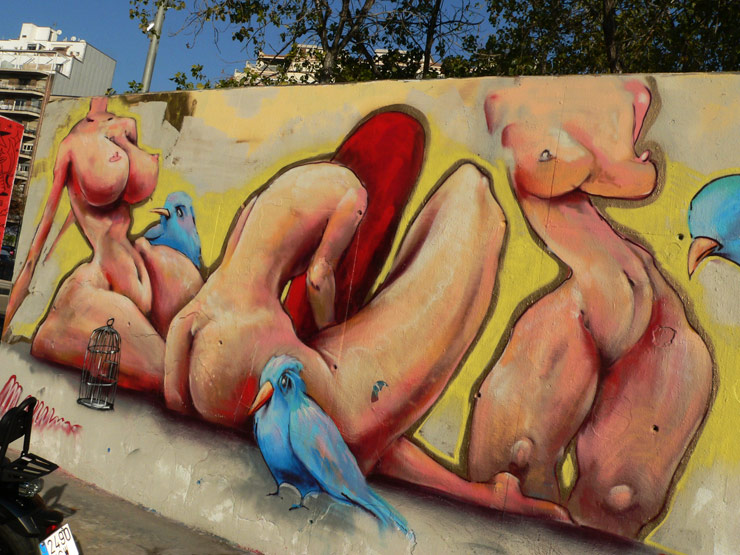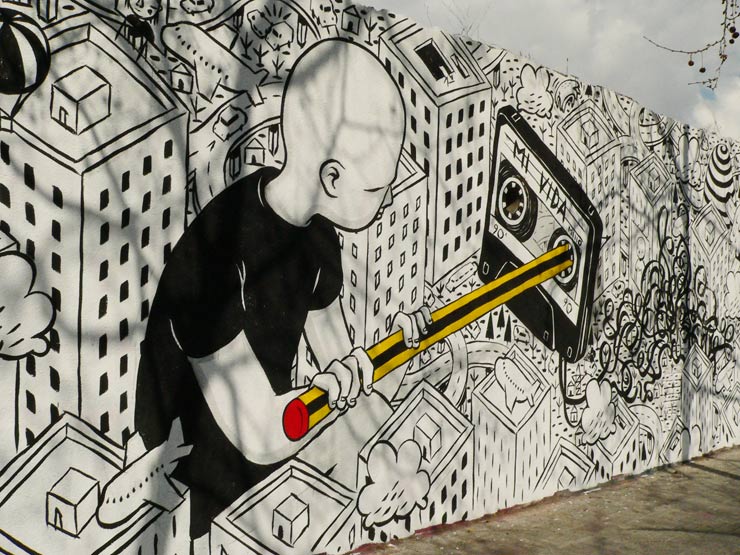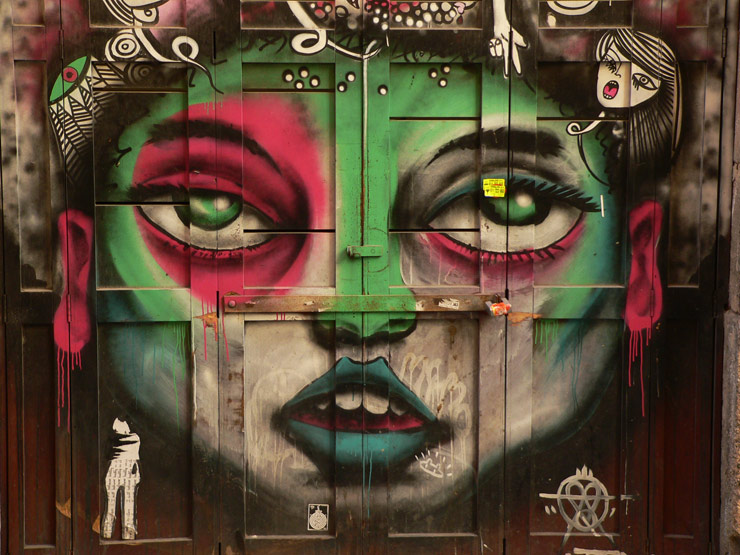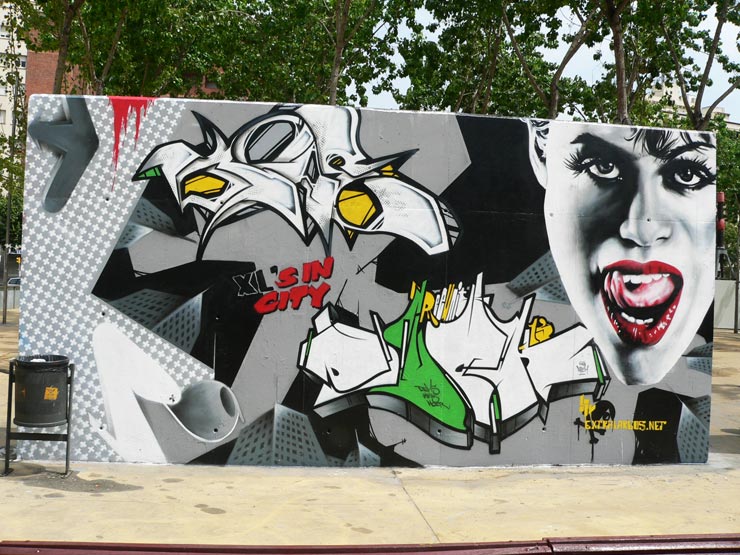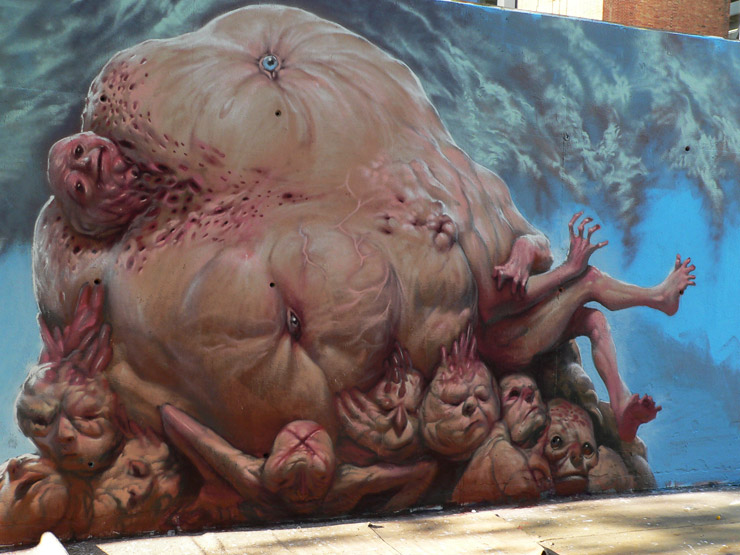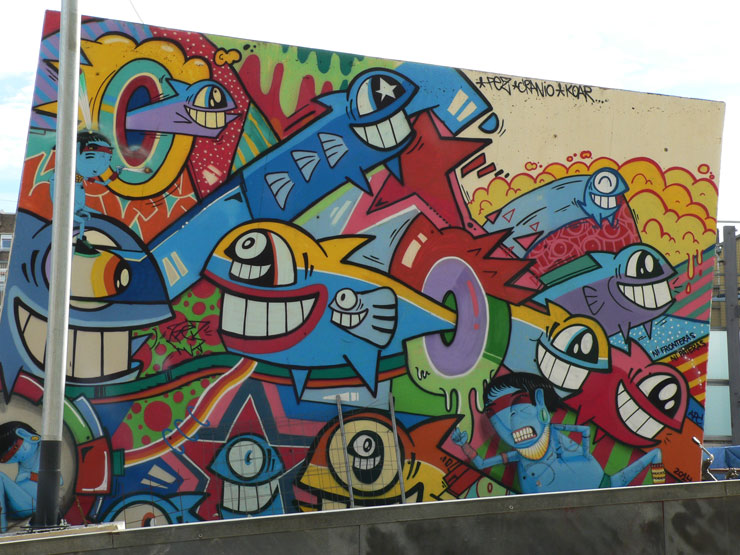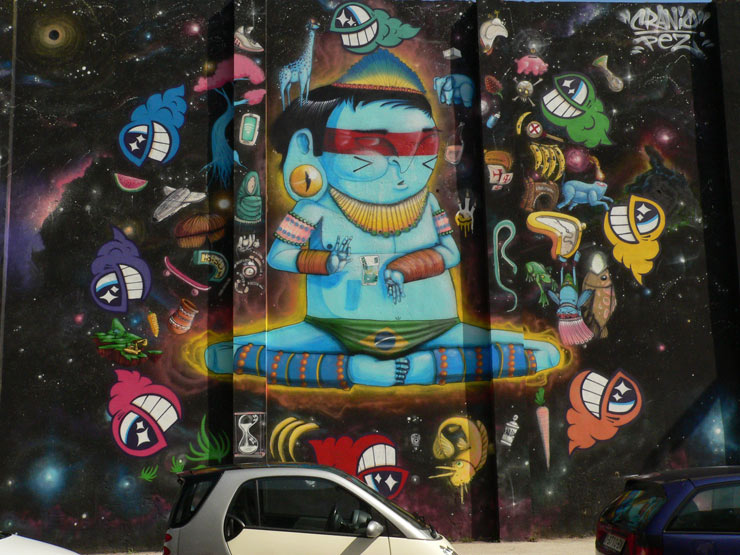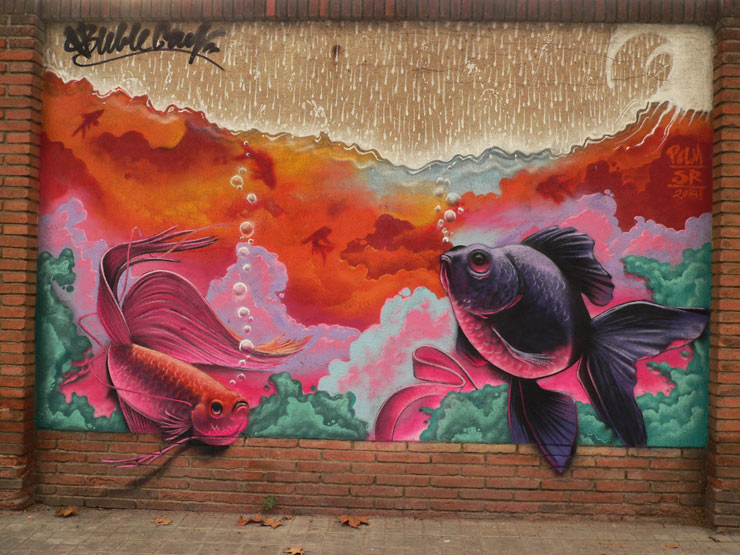
All posts tagged: lluis Olive Bulbuena

Characters Welcome: A Mural Gathering at Barcelona’s Can Batlló

Characters Welcome: A Mural Gathering at Barcelona’s Can Batlló

Barcelona’s Can Batlló is one of those places where street art makes immediate sense. A historic nineteenth-century textile factory in the working-class neighborhood of La Bordeta, the industrial complex has gradually been reclaimed by local residents and transformed into a lively community hub. Filled with workshops, artists’ studios, performance spaces, a library, gardens, cooperatives, and cultural organizations, the place always feels in motion—mid-step, en route. The murals here are part of that larger ecosystem, where culture is understood not as decoration but as something people make together.
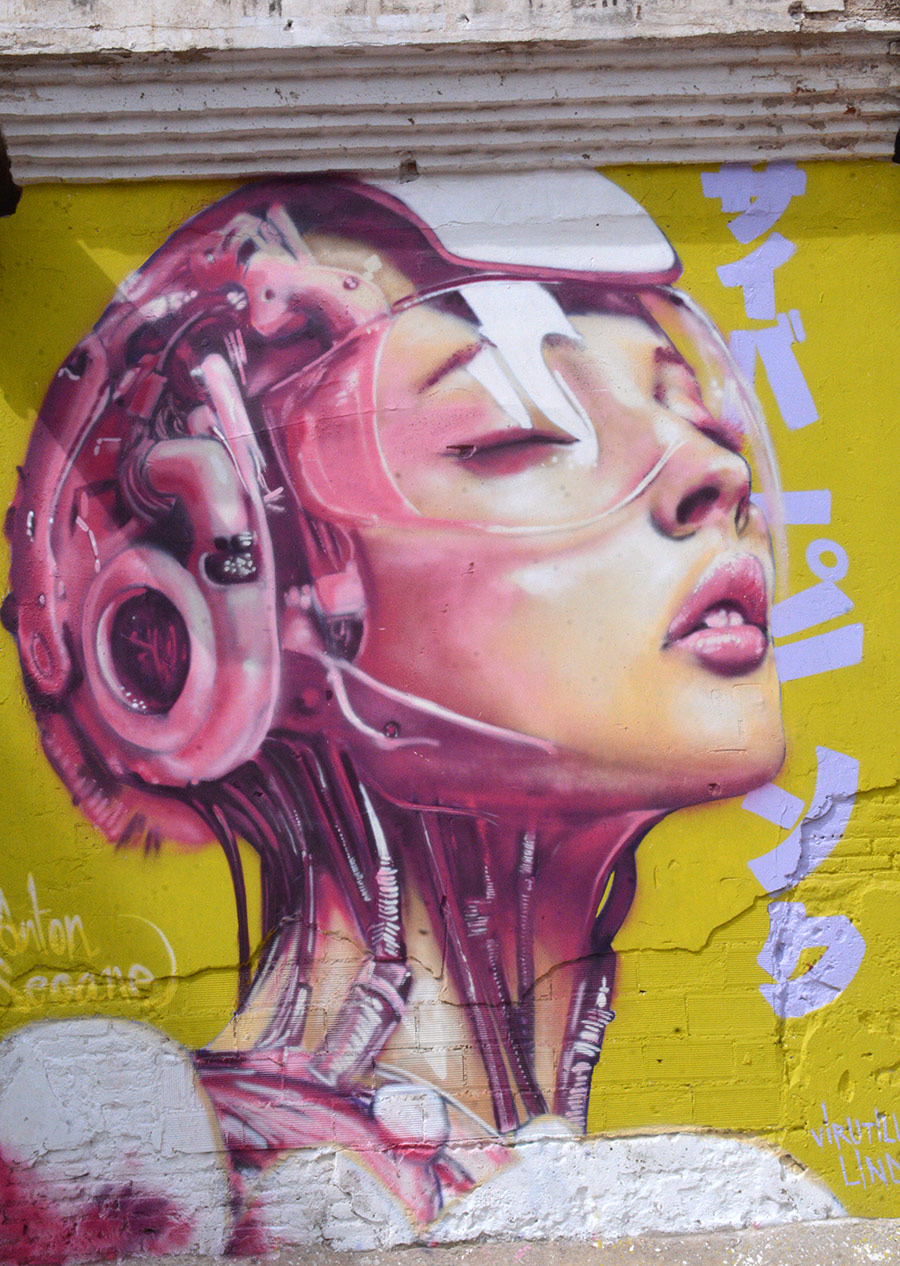
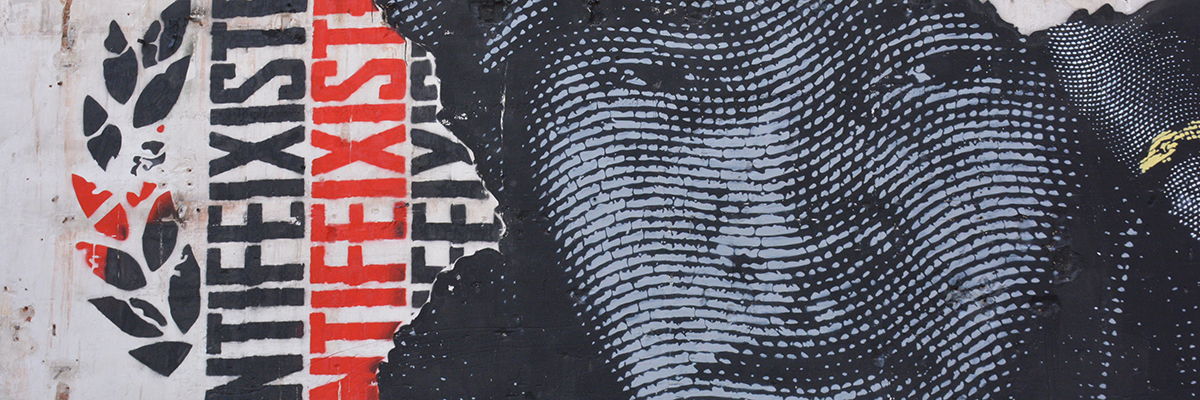
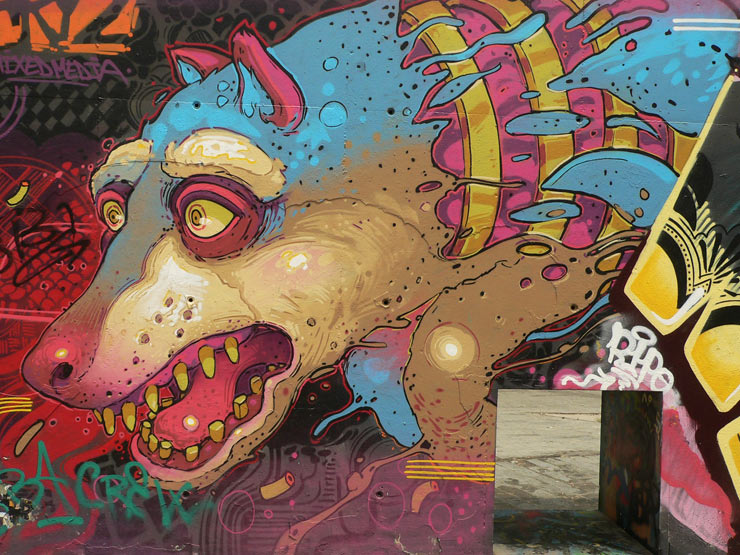
Anton Seoane / La Fabrica Rarita. Detail. Can Batlló, Barcelona. Spain. (photo © Lluis Olive Bulbena)

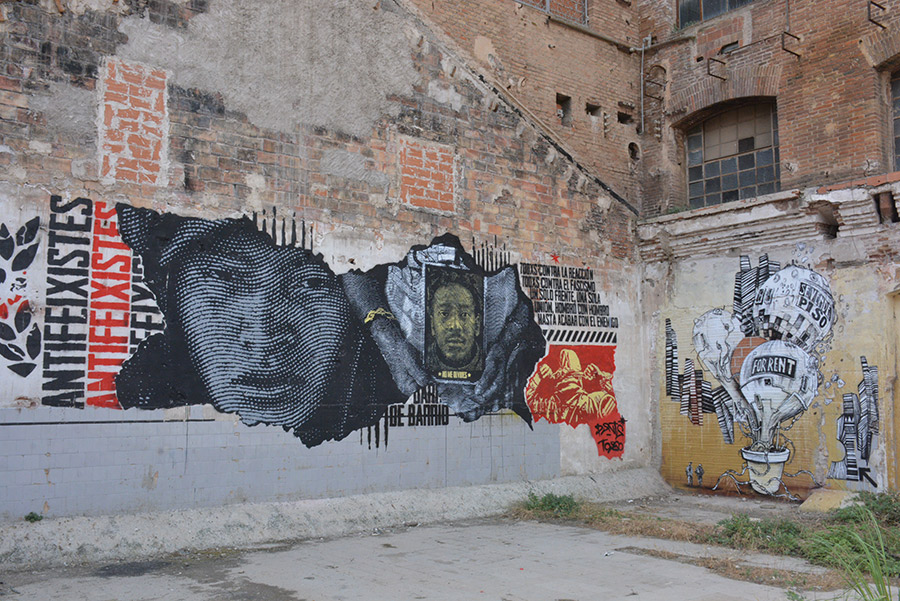
Courtesy of photographer Lluís Bulbena Olivas, we bring you recent walls organized through La Fábrica Rarita (F.R.U.T.A.), a creative collective based inside Can Batlló. Their recent “Anti-Aniversary” gathering brought together graffiti writers, muralists, illustrators, tattoo artists, musicians, and printmakers for a full day of collaborative painting, workshops, performances, and conversation.

A look through their Instagram quickly reveals that painting walls is only one part of what they do. Workshops in lettering, printmaking, illustration, music, and community arts sit comfortably alongside exhibitions and mural jams, reflecting an interest in building an active creative community rather than simply producing outdoor artworks.
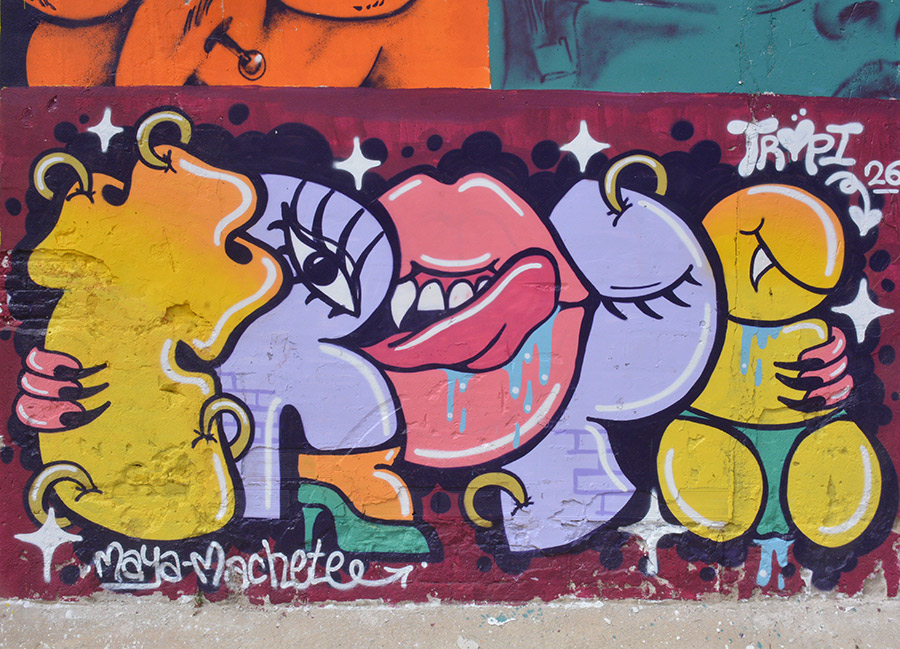
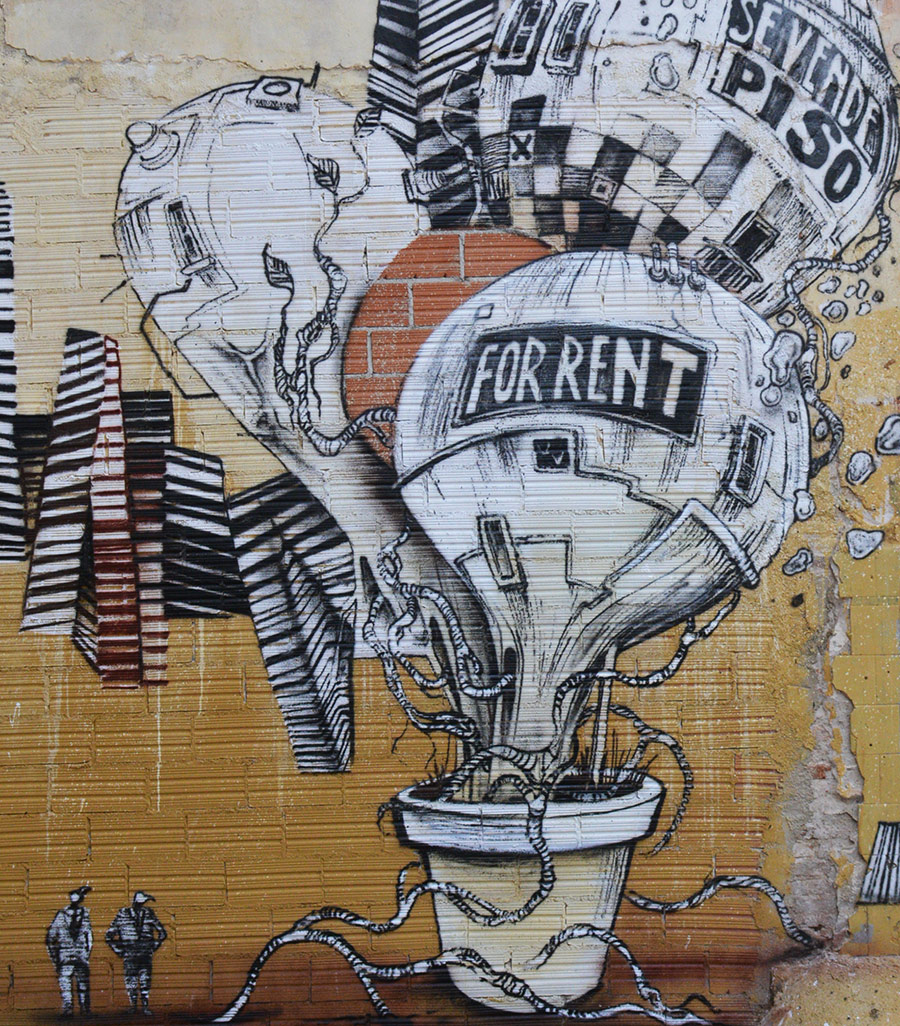
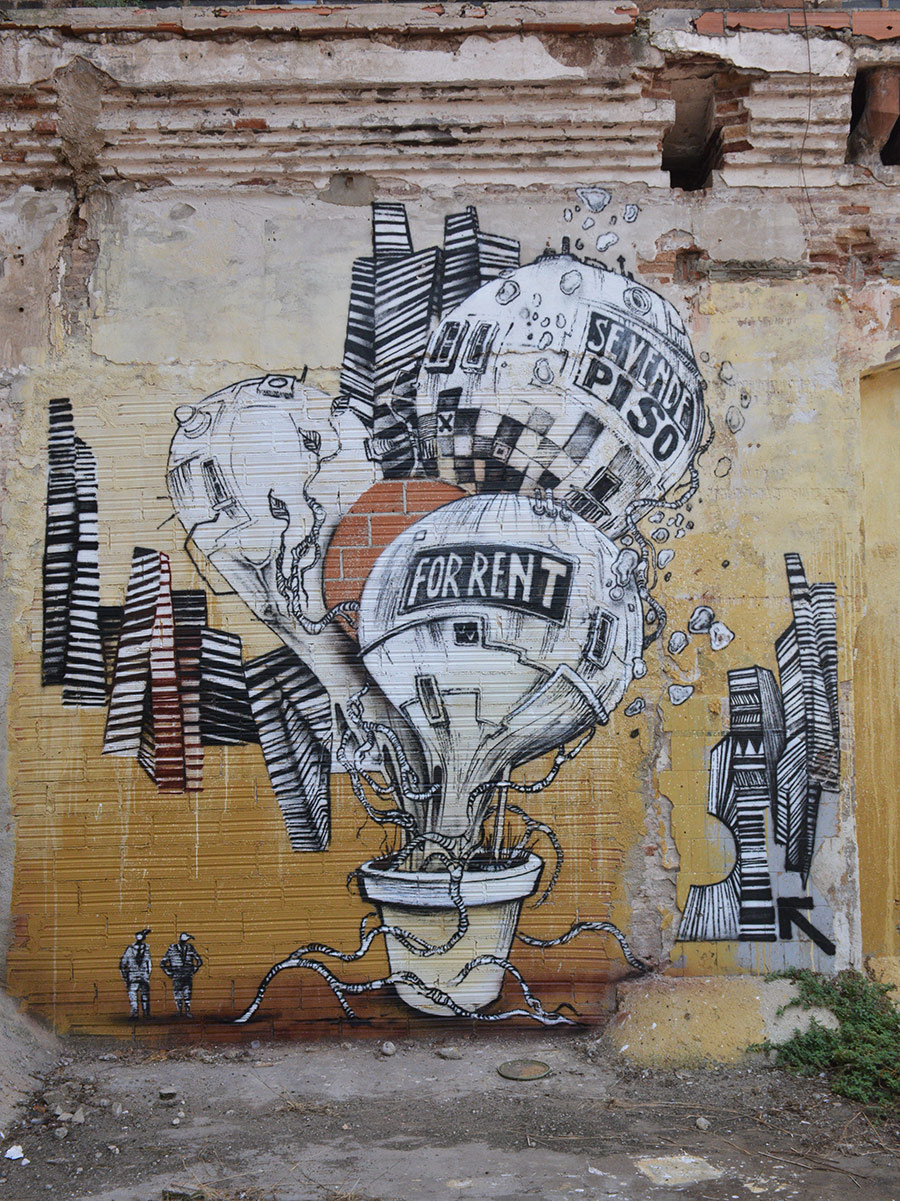
Tropidelia / La Fabrica Rarita. Detail. Can Batlló, Barcelona. Spain. (photo © Lluis Olive Bulbena)

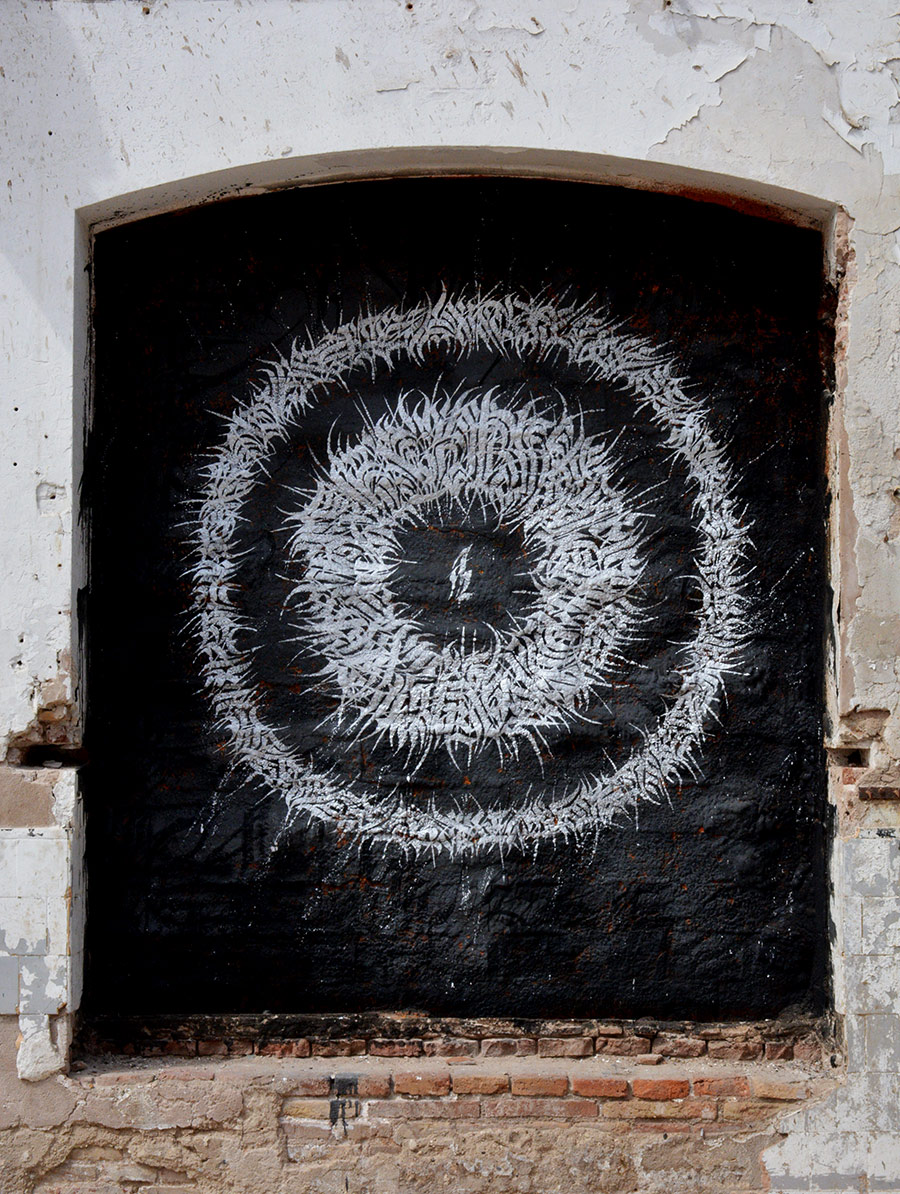
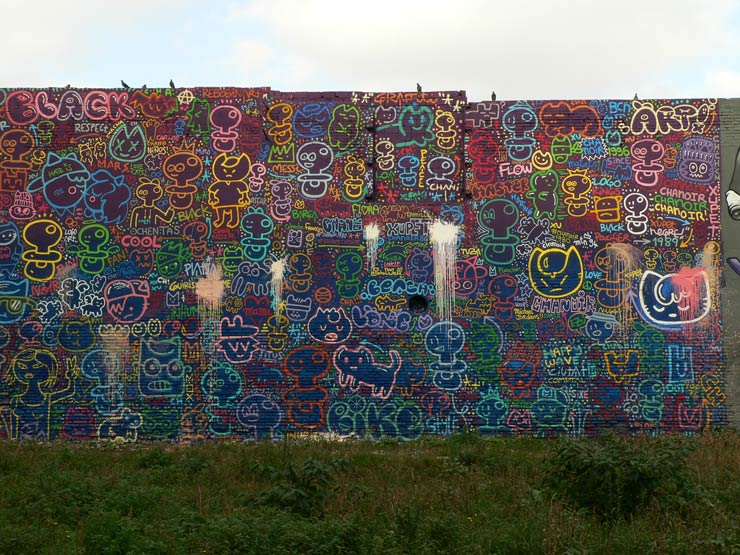
That community-minded approach may also explain the remarkable variety of characters appearing across these walls. Instead of straightforward portraiture or overt political slogans, artists imagine futuristic androids, cartoon eccentrics, graphic poster figures, and fantastical personalities that borrow from graffiti, comics, animation, manga, science fiction, tattoo culture, illustration, and graphic design.

Together they create a cast of invented inhabitants rather than documenting the neighborhood literally. There are political concerns close at hand—Barcelona continues to wrestle with questions of affordable housing, development, and the preservation of independent cultural spaces—but here those conversations often unfold indirectly. The emphasis is on creating a place where artists, neighbors, and visitors can gather, experiment, and contribute to a shared cultural life.

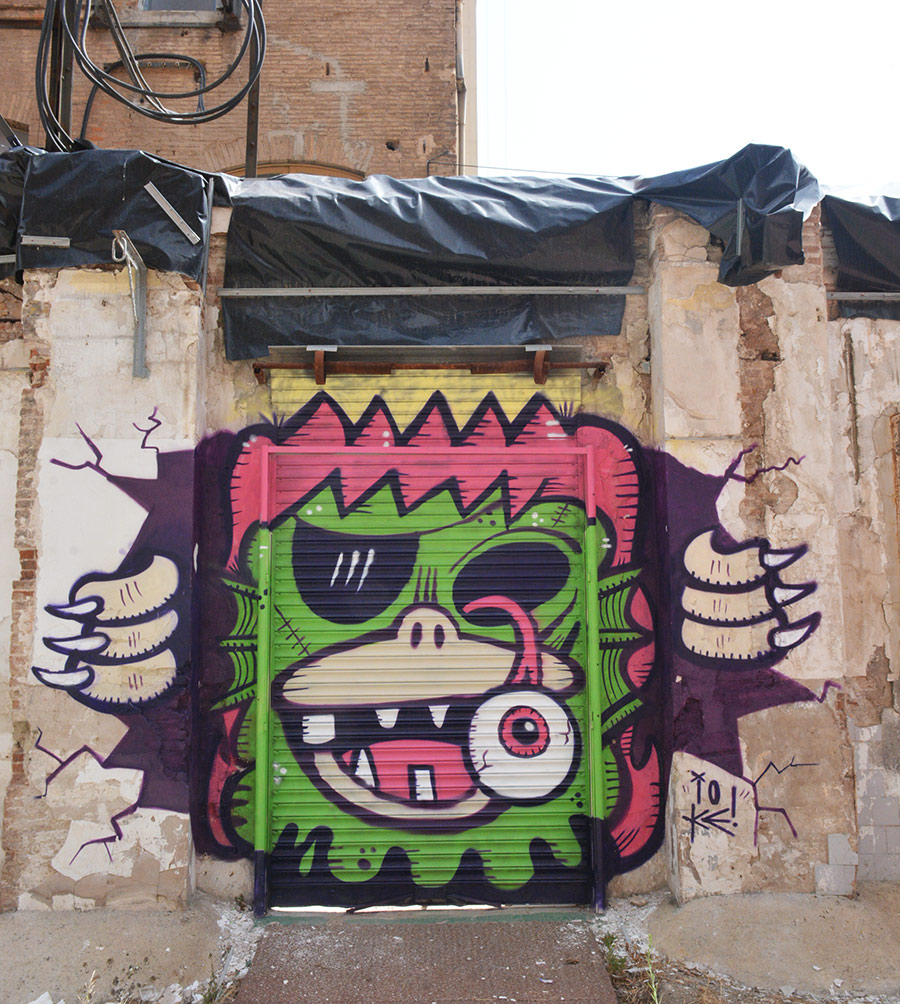
Tropidelia / La Fabrica Rarita. Can Batlló, Barcelona. Spain. (photo © Lluis Olive Bulbena)

That spirit extends beyond Can Batlló itself. La Fábrica Rarita is connected to Cultura de Base (Grassroots Culture Barcelona), a coalition of independent cultural organizations advocating for stronger support of community-led culture. Their recent Model de Cultura? working sessions brought together artists, associations, and neighborhood groups to tackle practical questions: how grassroots cultural spaces survive, how they can be governed transparently, how cultural rights can be strengthened, and how public policy might better support citizen-run initiatives.

Rather than staging another conference, the organizers structured the event as a series of working sessions intended to produce concrete proposals for Barcelona’s political leaders—a reminder that, here, culture is viewed not only as artistic expression but also as a form of civic participation.
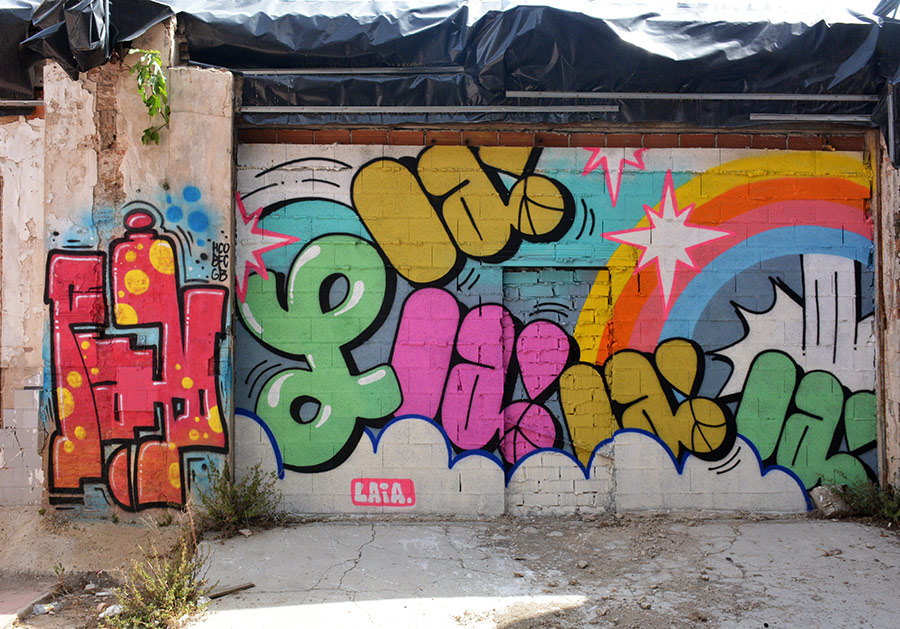
PAKO / Laia / La Fabrica Rarita. Can Batlló, Barcelona. Spain. (photo © Lluis Olive Bulbena)
RUGHY / La Fabrica Rarita. Can Batlló, Barcelona. Spain. (photo © Lluis Olive Bulbena)
IOKE / La Fabrica Rarita. Can Batlló, Barcelona. Spain. (photo © Lluis Olive Bulbena)
Maligna / La Fabrica Rarita. Can Batlló, Barcelona. Spain. (photo © Lluis Olive Bulbena)
Feoflip / La Fabrica Rarita. Can Batlló, Barcelona. Spain. (photo © Lluis Olive Bulbena)
Feoflip / La Fabrica Rarita. Detail. Can Batlló, Barcelona. Spain. (photo © Lluis Olive Bulbena)
Feoflip / La Fabrica Rarita. Can Batlló, Barcelona. Spain. (photo © Lluis Olive Bulbena)
Tosco69 / La Fabrica Rarita. Detail. Can Batlló, Barcelona. Spain. (photo © Lluis Olive Bulbena)
Tosco69 / Feoflip / La Fabrica Rarita. Can Batlló, Barcelona. Spain. (photo © Lluis Olive Bulbena)
ASEMIKA / La Fabrica Rarita. Detail. Can Batlló, Barcelona. Spain. (photo © Lluis Olive Bulbena)
La Fabrica Rarita. Detail. Can Batlló, Barcelona. Spain. (photo © Lluis Olive Bulbena)

Learn more:
Read more
Sebastien Waknine: “Learning from Migrants and Refugees” In Barcelona
Sebastien Waknine: “Learning from Migrants and Refugees” In Barcelona

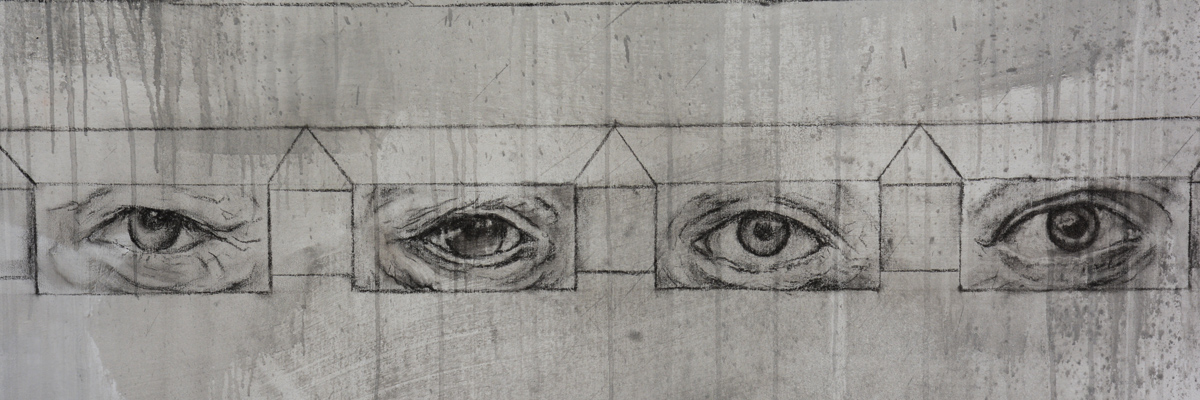
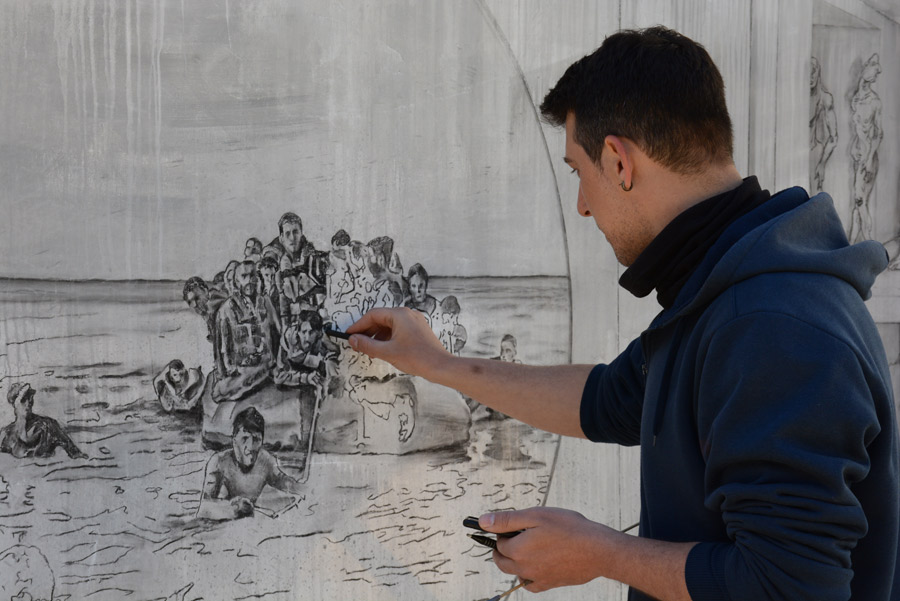
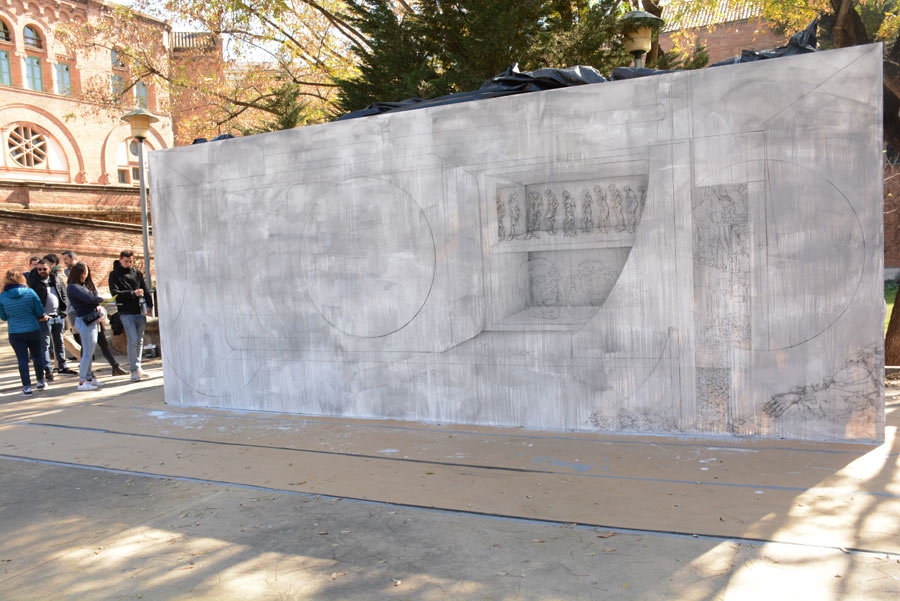
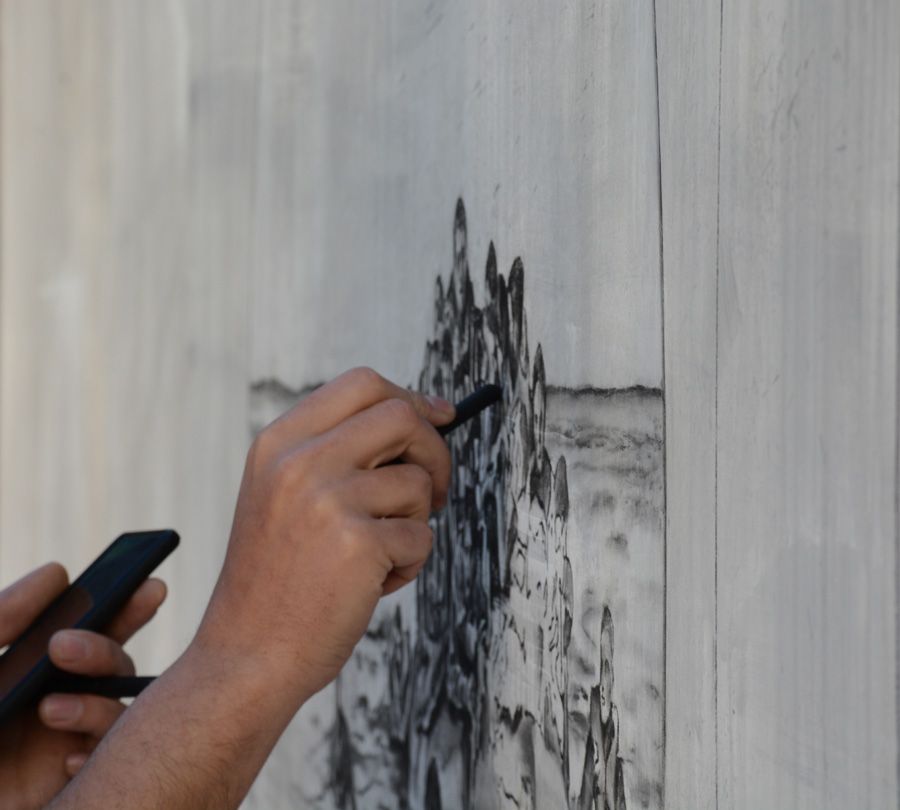
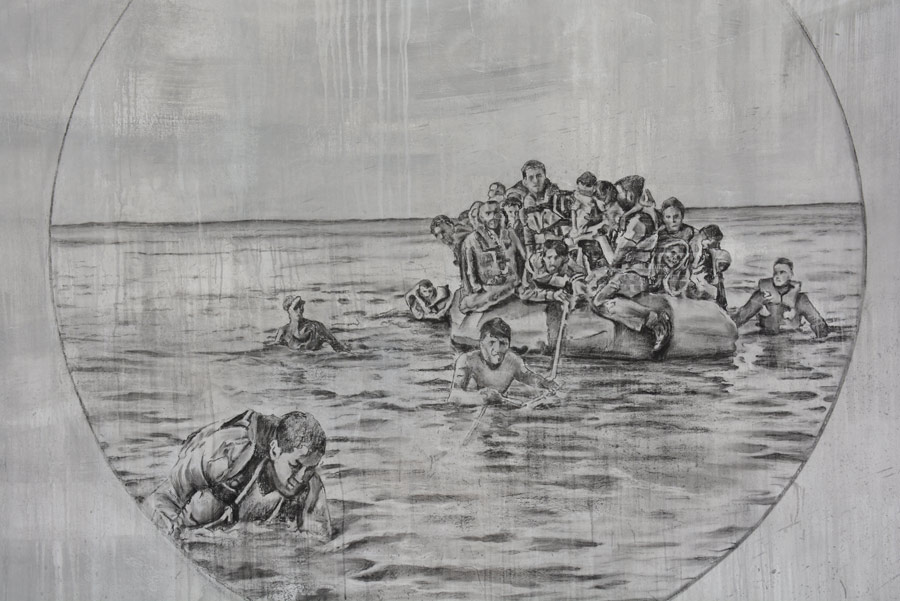
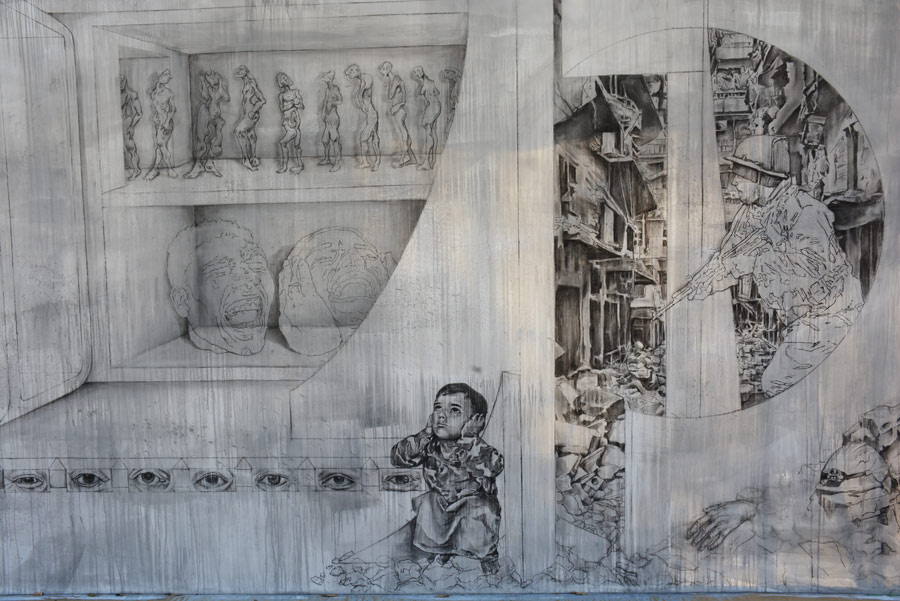
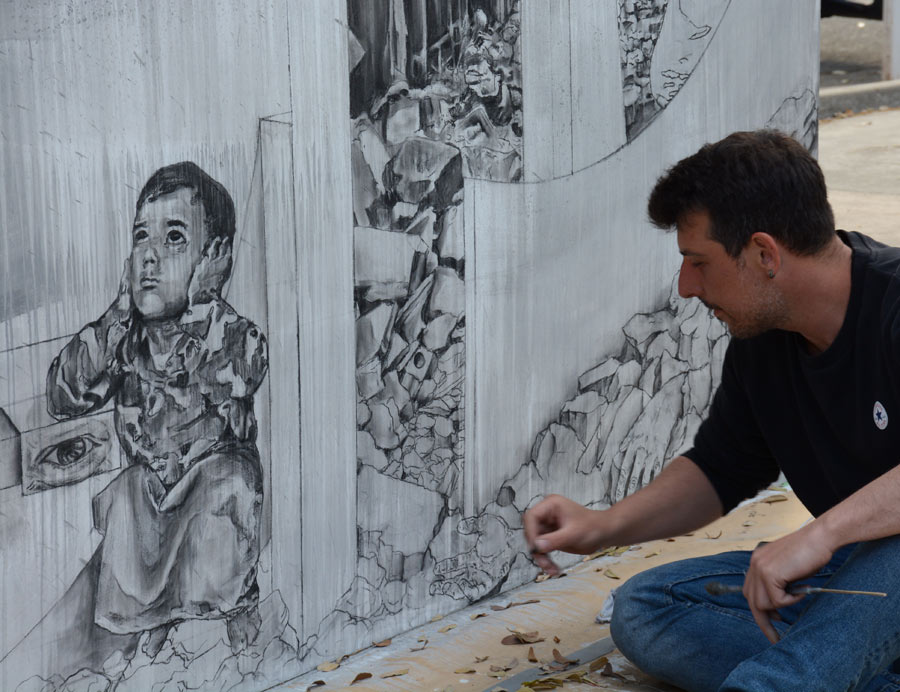
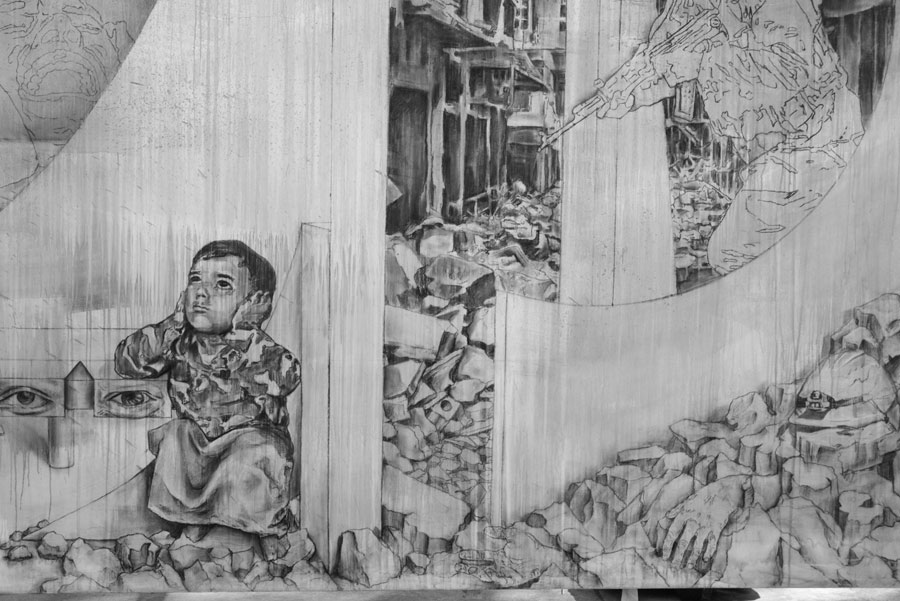
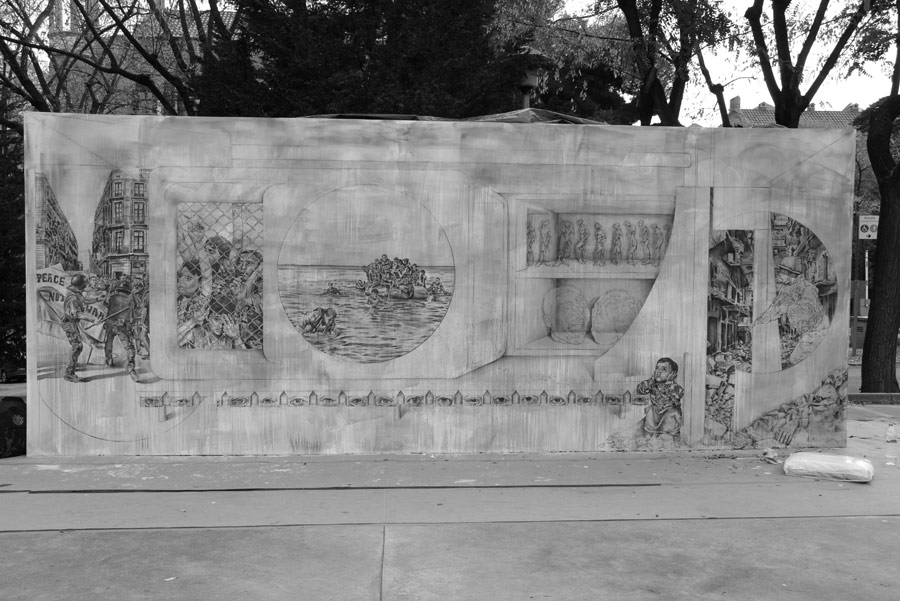
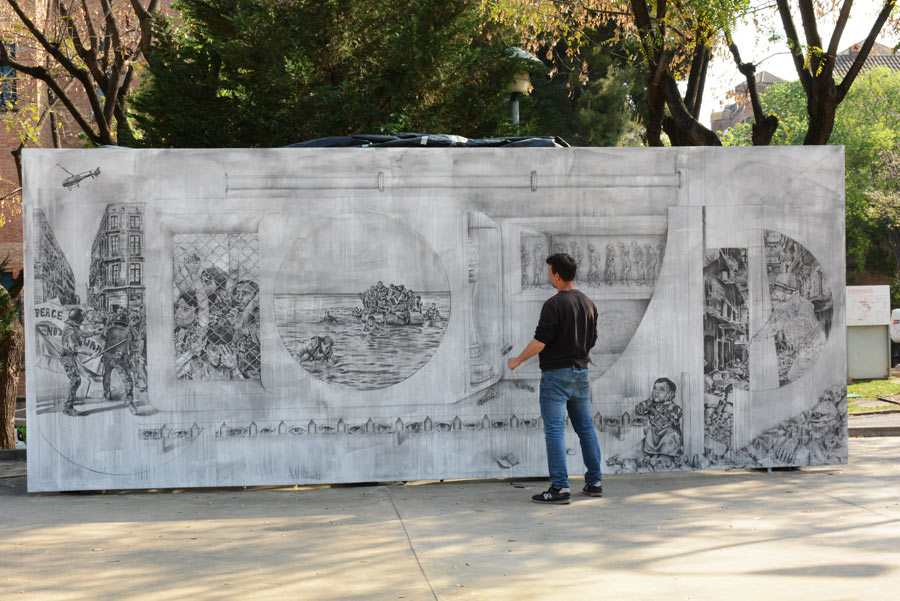
Owing to the scarceness of resources that are usually allotted to those who arrive as refugees, Street Artist and muralist Sebastien Waknine relies solely upon the thinnest piece of charcoal as he works on this new wall.

Sebastien Waknine. Barcelona, Spain. (photo © Lluis Olive)

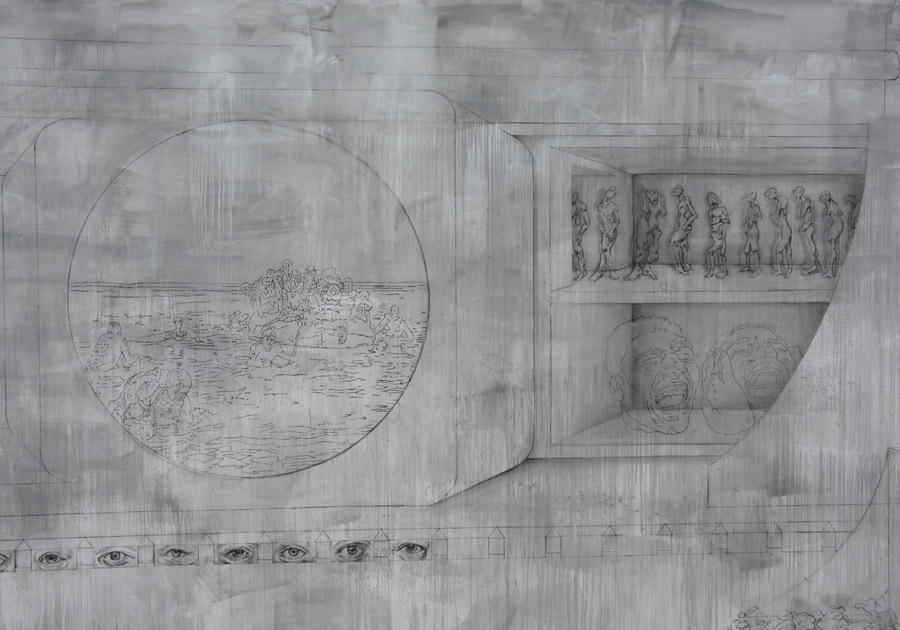
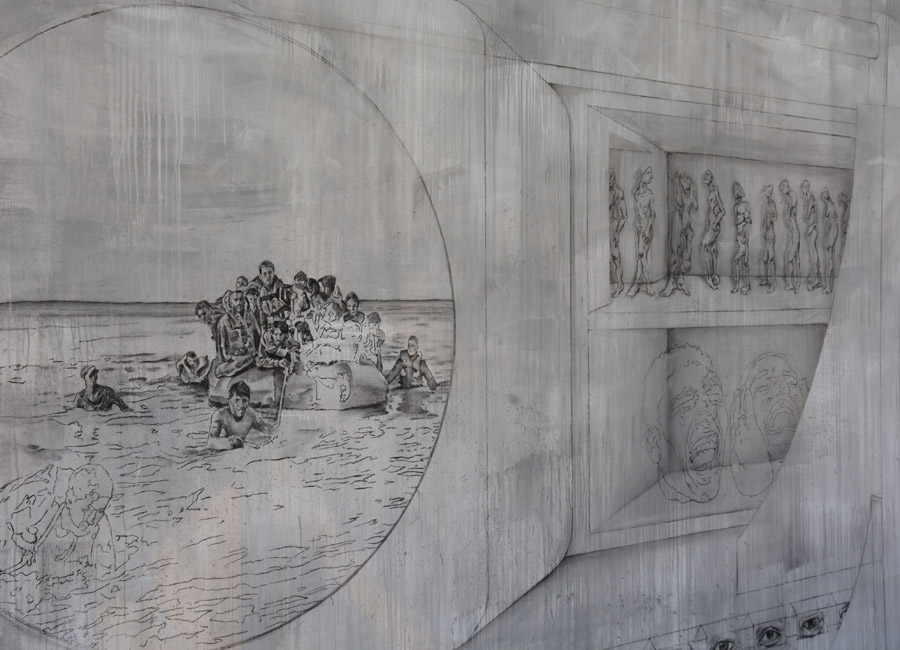
“Learning from Migrants and Refugees” is the name of the collection of scenes that document the situations that people can be in when escaping from strife and fear – the human aspect of appealing to the help of another society. After five weeks of intensive work, Waknine stood aside during a public introduction as a Syrian man held the microphone and described the scenes to an assemble crowd in Barcelona.

Sebastien Waknine. Barcelona, Spain. (photo © Lluis Olive)

Created in the gardens on the Hospital of Sant Pau in Barcelona, the mural was commissioned by the Universitat Autonoma de Barcelona and will be exhibited in various locations within the city of Barcelona.

Sebastien Waknine. Barcelona, Spain. (photo © Lluis Olive)

Organizers say that the mural highlights the journey of refugees from the ravages of war and poverty in their countries as well as the realities of their living conditions in their host countries.

It is an unusual technique for a public work these days, as many have become accustomed to the splashy nature of big murals and festivals that present them. Here the warmth of the rendering and the humanity conveyed in the faces and gestures is only magnified when one gets close enough, even intimate with, the artwork.

Sebastien Waknine. Barcelona, Spain. (photo © Lluis Olive)

The detached impersonal nature of war by drone has enabled such masses of people to be uprooted and chased from their lives – and a viewer may contrast the experience of the driver of that drone drawn in the sky with close-up terror of innocents whom Waknine depicts.

Clearly there is much for us to learn.

Sebastien Waknine. Barcelona, Spain. (photo © Lluis Olive)

Sebastien Waknine. Barcelona, Spain. (photo © Lluis Olive)
Read more
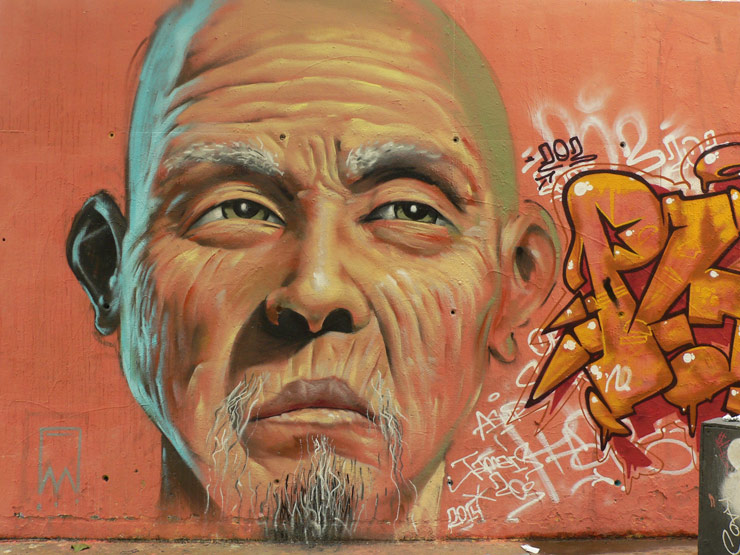
Barcelona Dispatch : A Street Art Survey From a Fan

Barcelona Dispatch : A Street Art Survey From a Fan

By his own account Lluís Olivé has been shooting images in the city of Barcelona for about 50 years; street scenes, demonstrations, parades, architectural details, tiles, iron work, doors, doorknobs, windows, and of course, graffiti and Street Art. Calling himself an amateur, Señor Olivé nonetheless has captured a lot of Barcelona’s changing Street Art scene in the last decade and shares a handful of his favorites from the 2,500 or so street art images he has shot in the city.

brooklyn-street-art-lluis-olive-bulbuena-barcelona-MAMM-2014-web

MAMM. Barcelona, Spain. (photo © Lluis Olive Bulbuena)

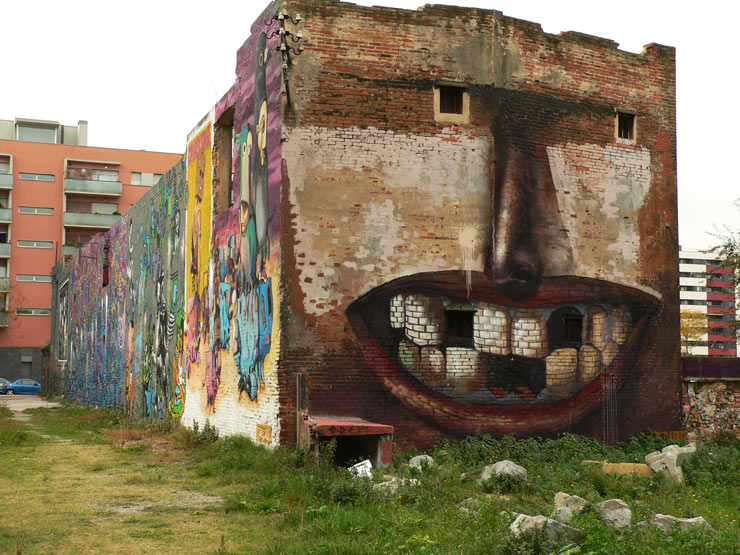
“My experience shooting graffiti began in 2005 when I discovered an aerosol painting of the face of a girl and I was so impressed by it that I began to look for more,” he says, describing how he was first bitten by the bug. “I started to tour around different neighborhoods and even though I lived 150 kilometers from Barcelona at the time, I took trips there as often as I could to take pictures of the graffiti and Street Art.”

brooklyn-street-art-lluis-olive-bulbuena-barcelona-ManuTwice-2014-web

ManuTwice. Barcelona, Spain. (photo © Lluis Olive Bulbuena)

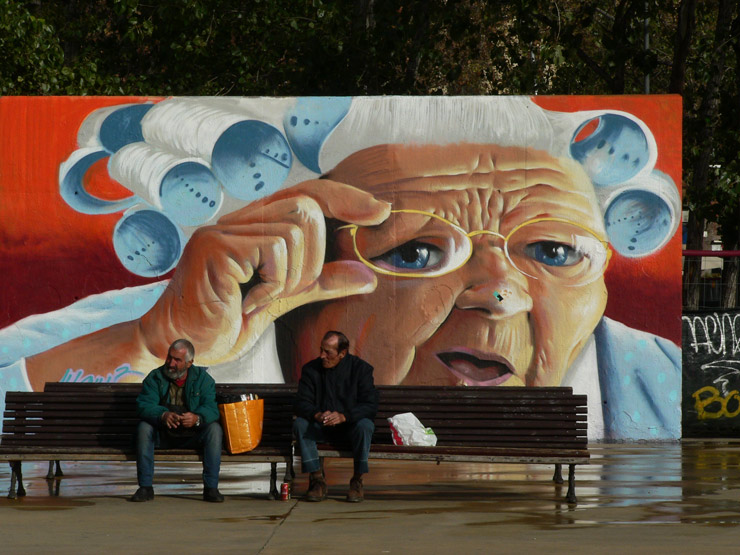
Since 2010 he has moved much closer to the city and thanks to the friendships he has formed  he says that artists have reached out to him to come and shoot their new work. He favors murals, portraits and faces, illustrations, photorealism and fantasy. Since he now lives closer to the art he has adopted an approach that is methodical. “I research on the internet, search certain hashtags, and check my email – I usually follow more or less known weekly ‘routes ‘,” he explains.

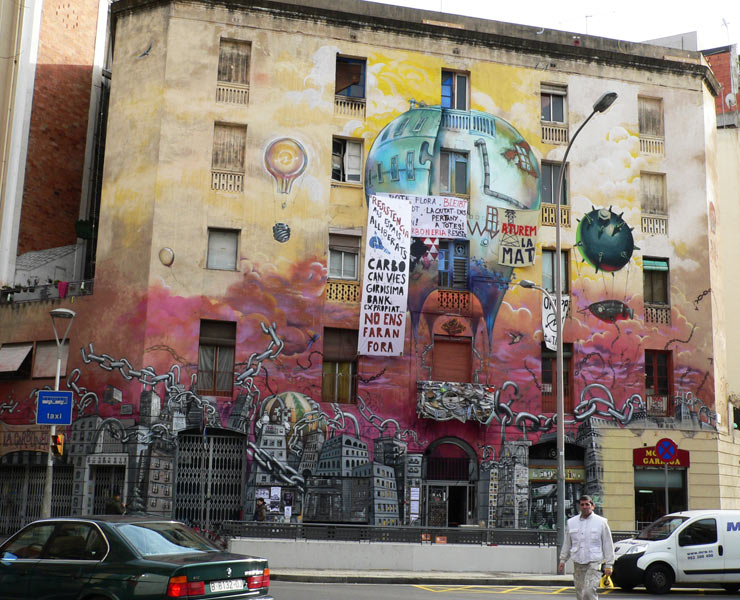
Unfortunately for Street Art fans like Olivé, the city has taken serious steps to limit organic street art in recent years. Areas of the city that once burst with thousands of murals, pieces, stencils, and wheatpastes had begun to attract tourists to an art scene that outshone many major cities but according to many artists the city and real estate industry saw new development opportunities and smothered a scene that had inspired books, websites, videos, galleries, and related cultural events.


brooklyn-street-art-lluis-olive-bulbuena-barcelona-PENAO-2014-web

Penao. Barcelona, Spain. (photo © Lluis Olive Bulbuena)

While the city’s clean-up efforts have spawned a criticism in certain quarters that the organic nature of the street art scene has been cynically expunged in favor of commercial retail stores and corporate dullness, municipal advocates respond that the city has also created “zones” for individual creativity to be expressed with little restriction.

Señor Olivé believes that both parties have a point. “Since I began taking photos in Barcelona I have seen a huge change from when I started – the amount of Street Art has decreased due to new municipal policies high penalties. But the city has also created 8 or 10 ‘approved’ zones for graffiti and the quality is often very good.”

brooklyn-street-art-lluis-olive-bulbuena-barcelona-MAMM-2013-2-web

MAMM. Barcelona, Spain. (photo © Lluis Olive Bulbuena)

One of his favorite sanctioned spots to shoot is in a park inaugurated in the 1990s where a light and power station once operated and where three tall chimneys from the previous century still tower as a reminder of the history of the city. “Jardines de las Tres Chimeneas” (Three Chimney Park) provides a number of paved skateboarding spots and walls specifically reserved for an ongoing graffiti exposition that is renewed weekly. The park has events including skateboard competions, electronic music performances and exhibitions of hip-hop and break dance.

He is retiring from his regular job this July and plans to take a trip to a number of cities in the US to celebrate with his wife, and to take photos.  He has a post-retirement photography plan already. “Starting this October I am planning a new project for myself to do a one-year weekly documentation of the ‘Tres Chimeneas’,” – perhaps to present in a gallery or some other formal venue.

And of course, there is still plenty of the unsanctioned stuff to shoot, it just may be a little harder to find…

brooklyn-street-art-lluis-olive-bulbuena-barcelona-millo-2015-web

Millo. Barcelona, Spain. (photo © Lluis Olive Bulbuena)

brooklyn-street-art-lluis-olive-bulbuena-barcelona-P-NITAS-2015-web

P.Nitas. Barcelona, Spain. (photo © Lluis Olive Bulbuena)

brooklyn-street-art-lluis-olive-bulbuena-barcelona-REEUNIT-2006-web

Reuunit. Barcelona, Spain. (photo © Lluis Olive Bulbuena)

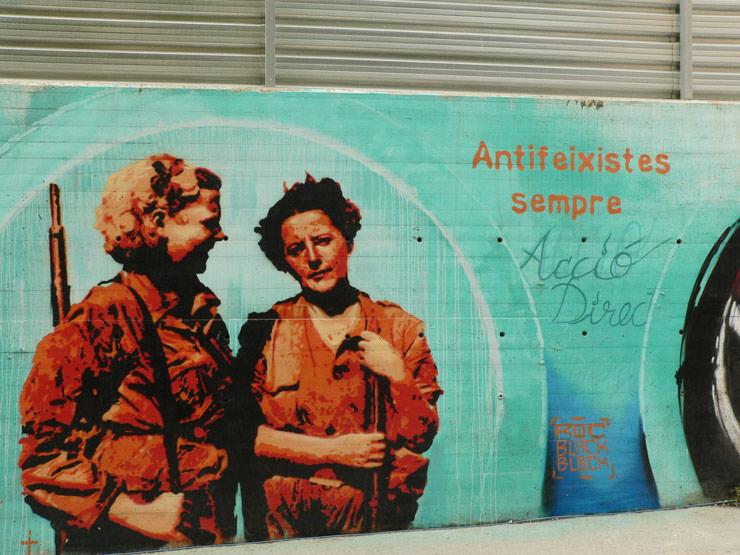
brooklyn-street-art-lluis-olive-bulbuena-barcelona-ROCBLACKBLOCK-2014-web

Roc BlacBlock. Barcelona, Spain. (photo © Lluis Olive Bulbuena)

brooklyn-street-art-lluis-olive-bulbuena-barcelona-Feo-Flip-roc-blackblock-2014-web

Feo Flip . Roc BlacBlock. Barcelona, Spain. (photo © Lluis Olive Bulbuena)

brooklyn-street-art-lluis-olive-bulbuena-barcelona-MARINO-2013-web

Marino. Barcelona, Spain. (photo © Lluis Olive Bulbuena)

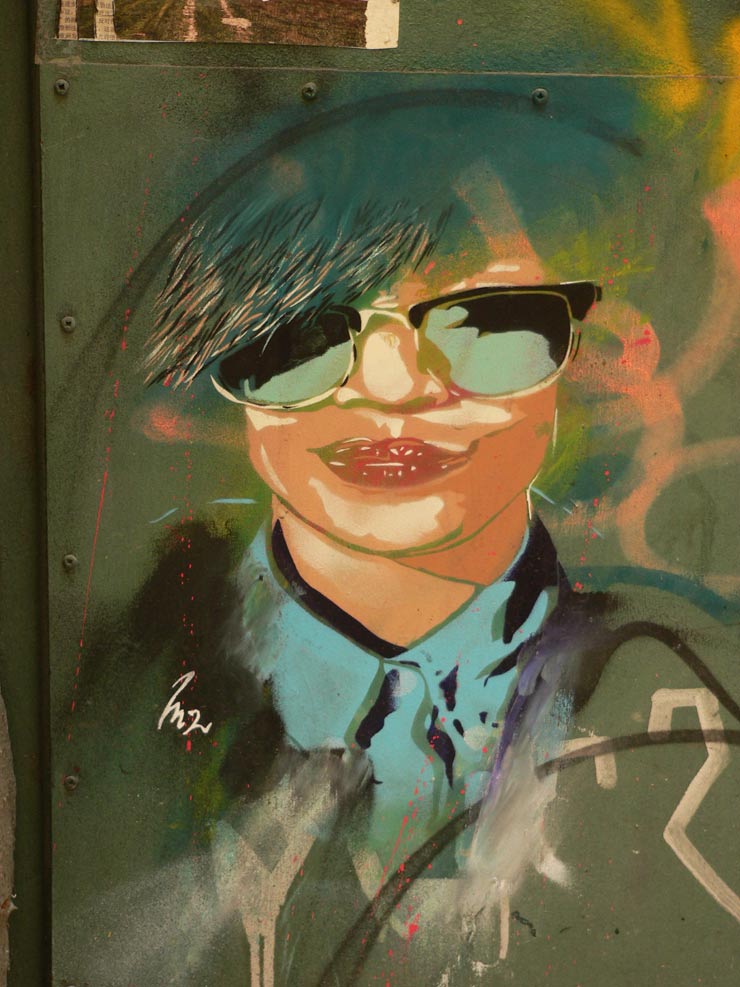
brooklyn-street-art-lluis-olive-bulbuena-barcelona-web

M2. Barcelona, Spain. (photo © Lluis Olive Bulbuena)

brooklyn-street-art-lluis-olive-bulbuena-barcelona-enric-sant-web

Enric Sant. Barcelona, Spain. (photo © Lluis Olive Bulbuena)

brooklyn-street-art-lluis-olive-bulbuena-barcelona-elpez-2014-web

El Pez. Barcelona, Spain. (photo © Lluis Olive Bulbuena)

brooklyn-street-art-CRANIO-ELPEZ-barcelona-2015-web

Cranio . El Pez. Barcelona, Spain. (photo © Lluis Olive Bulbuena)

brooklyn-street-art-lluis-olive-bulbuena-barcelona-PAMSR-2014-web

PAM SR. Barcelona, Spain. (photo © Lluis Olive Bulbuena)

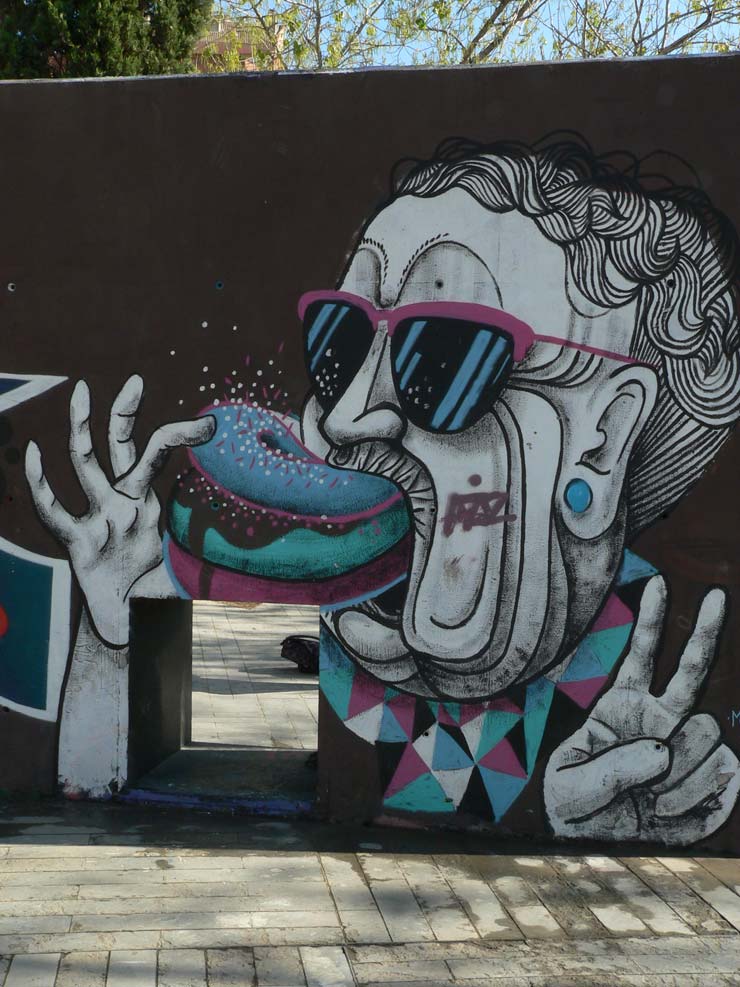
brooklyn-street-art-ARYZ-lluis-olive-bulbuena-barcelona-2010-web

Aryz. Barcelona, Spain. (photo © Lluis Olive Bulbuena)

brooklyn-street-art-CHANOIR-XUPET-lluis-olive-bulbena-barcelona-2014-web

Chanoir . Xupet. Barcelona, Spain. (photo © Lluis Olive Bulbuena)


<<>>><><<>BSA<<>>><<<>><><BSA<<>>><><<>BSA<<>>><<<>><><BSA

Please note: All content including images and text are © BrooklynStreetArt.com, unless otherwise noted. We like sharing BSA content for non-commercial purposes as long as you credit the photographer(s) and BSA, include a link to the original article URL and do not remove the photographer’s name from the .jpg file. Otherwise, please refrain from re-posting. Thanks!

<<>>><><<>BSA<<>>><<<>><><BSA<<>>><><<>BSA<<>>><<<>><><BSA


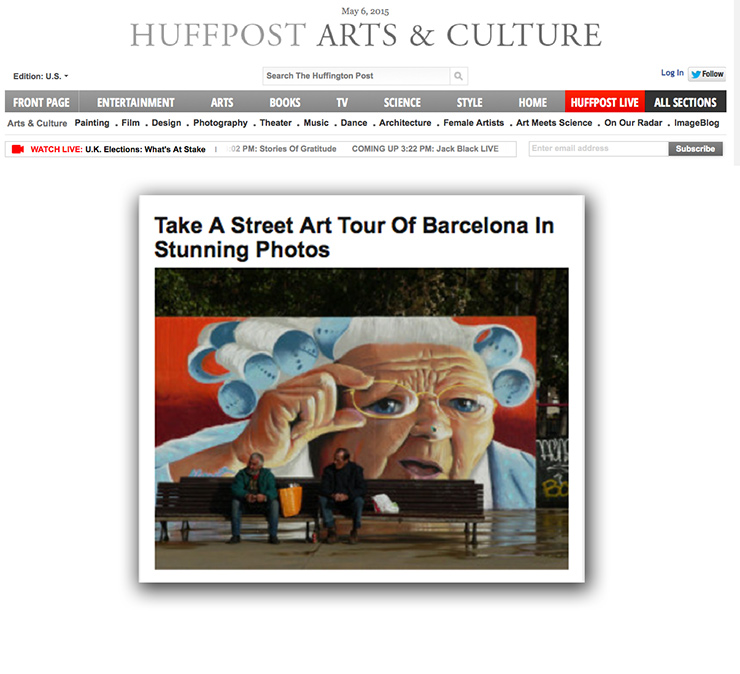
This article is also published on The Huffington Post

Brooklyn-Street-Art-Huffpo-Barcelona-740pxls-050615


Read more