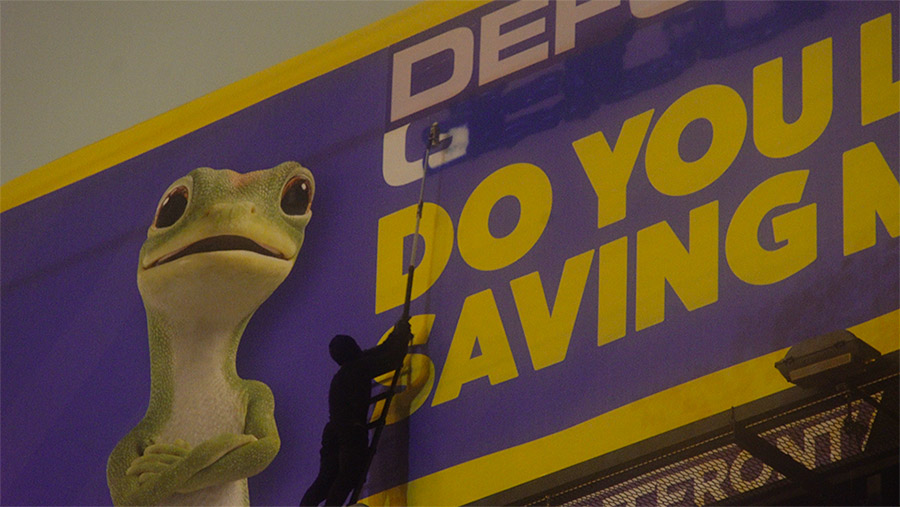
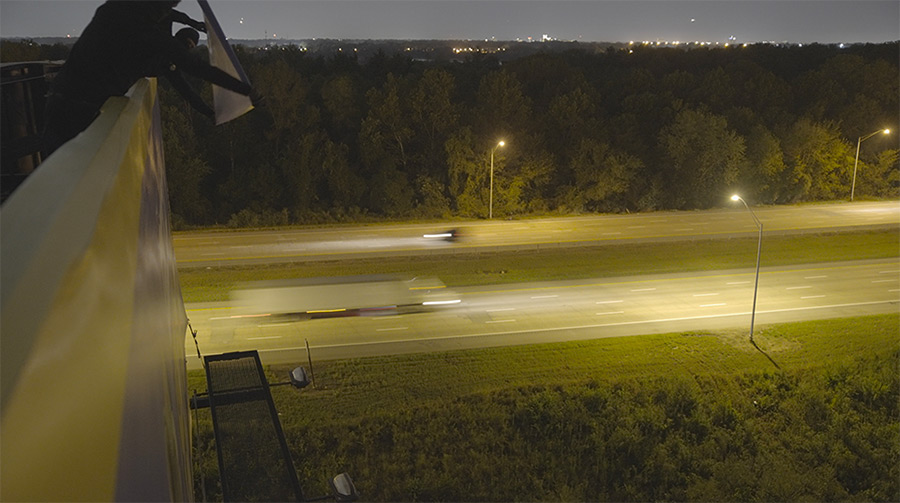
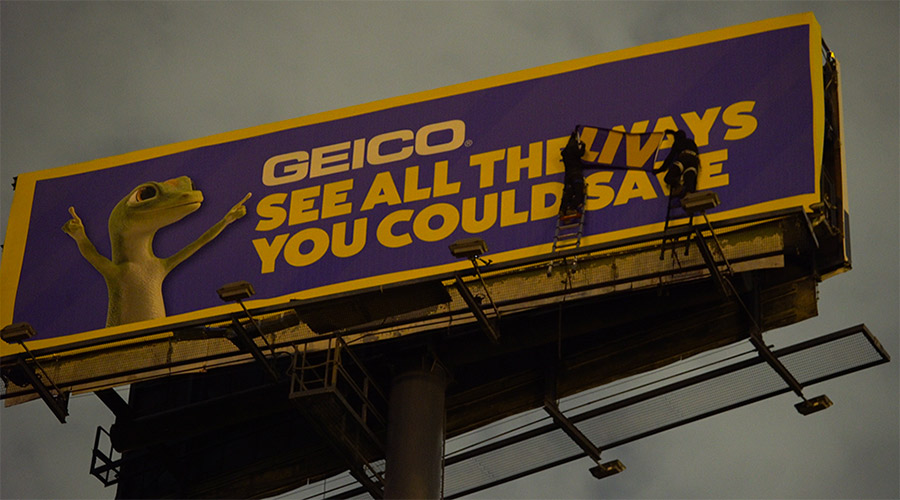
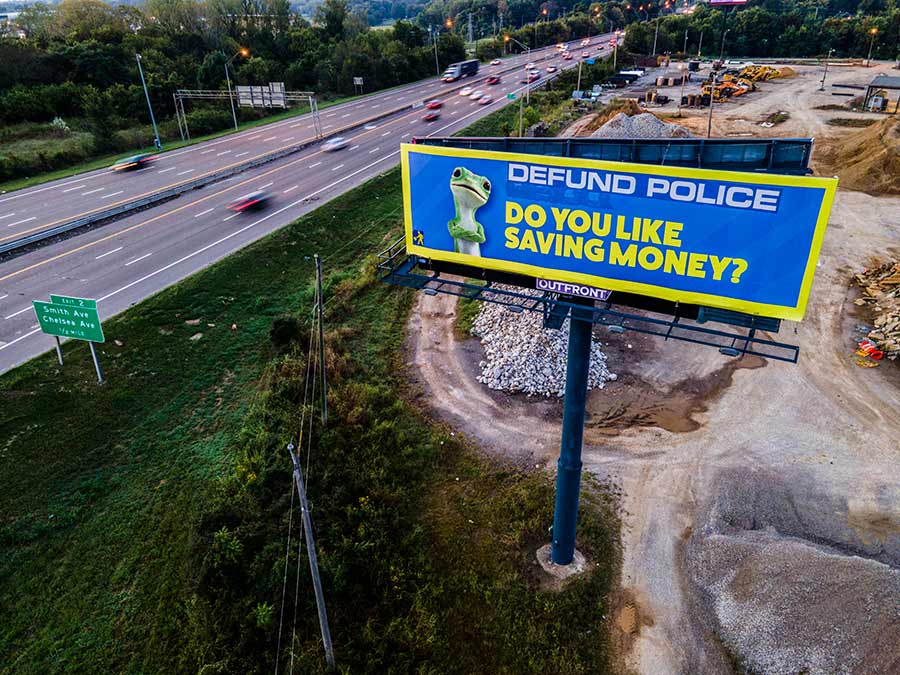
In an act of detournement worthy of the earliest billboard artists/activists and Letterists, last night the INDECLINE collective altered the text of two displays to make that elegant green gecko rally for pulling the plug on funding the boys in blue, according to the press release they sent out after pulling this artful dodge.
“When we talk about abolishing police, we mean it’s past time to reimagine the system in its entirety,” they say. “Remember, it was once impossible for many Americans to imagine a country not organized around slavery.”
Yes, many would take that point – and “Defund The Police” became a moderately catchy slogan during many marches for rights across the country over the last decade. Unfortunately, it’s a slogan that is confusing and counterproductive, possibly because the police provide valuable services to society as well.
Bashing the institution of police with a baton won’t solve our problems at their root, but pulling the plug entirely doesn’t exactly solve it either, does it? What’s that word everyone loves to use today, nuance?
In the meantime, the time-honored practice of hi-jacking billboards for political or social messages is alive and well.
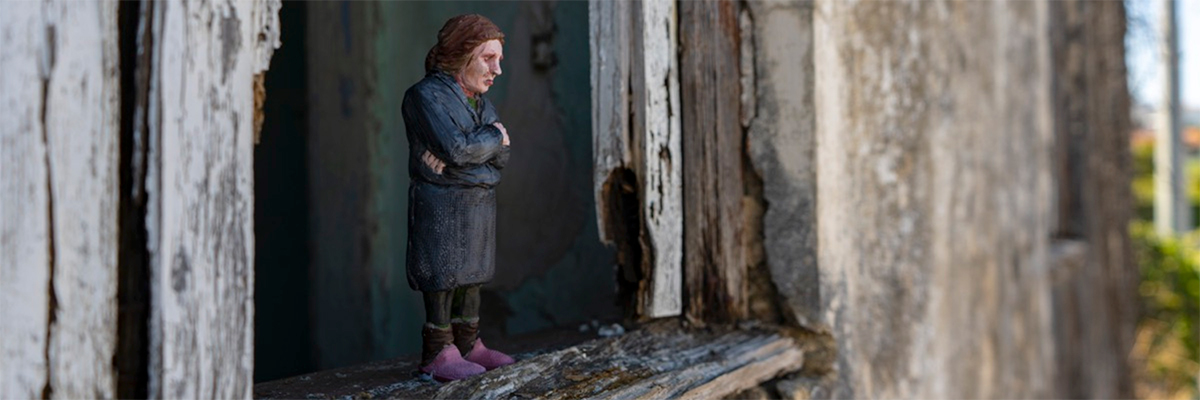
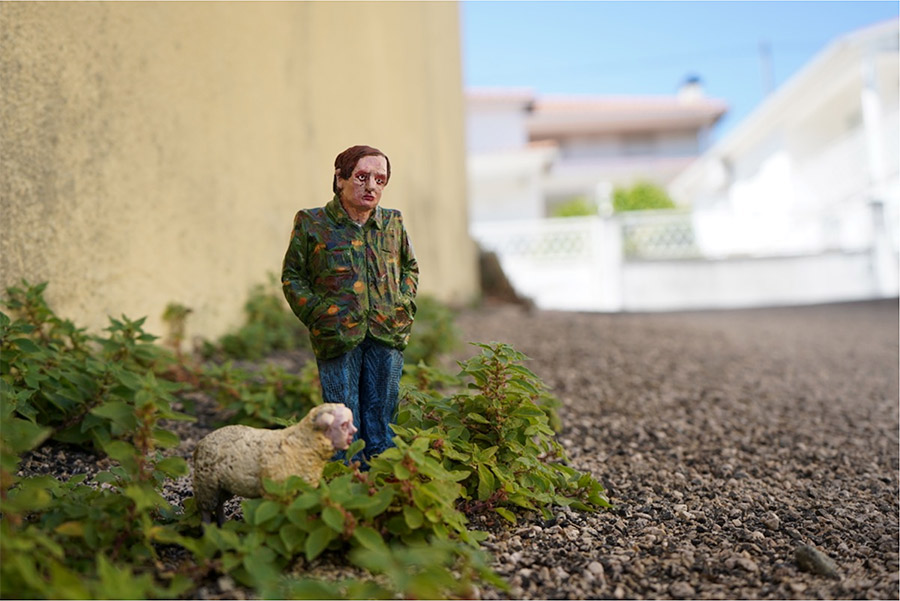
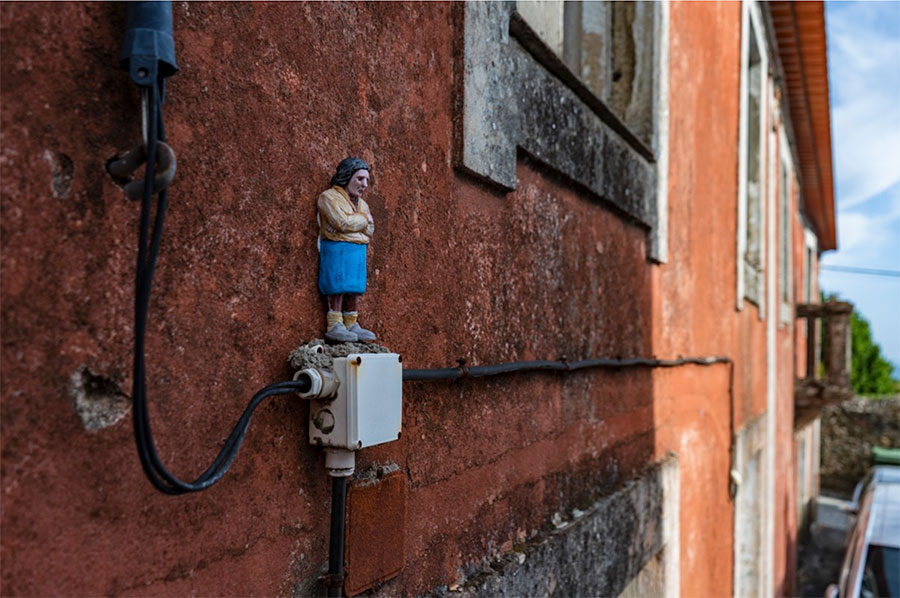
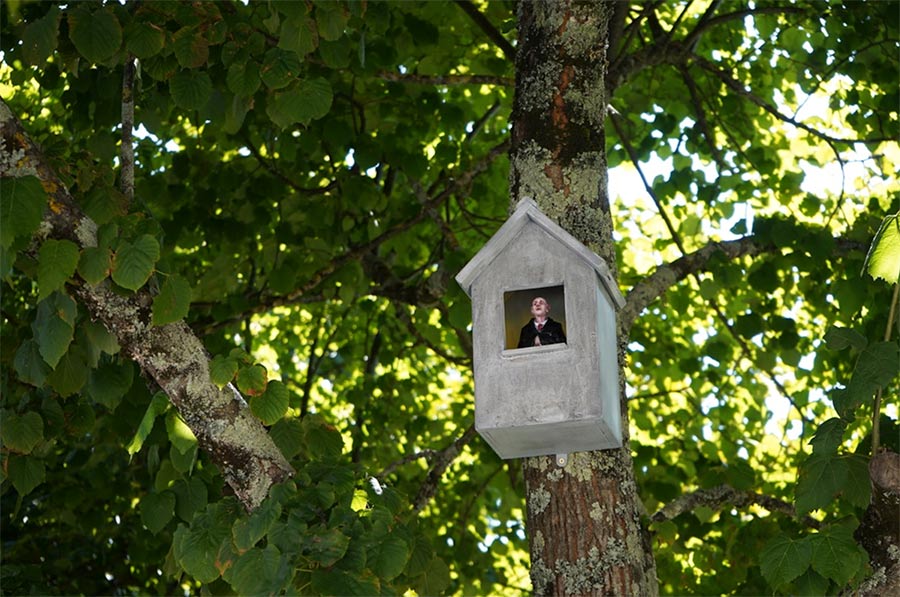
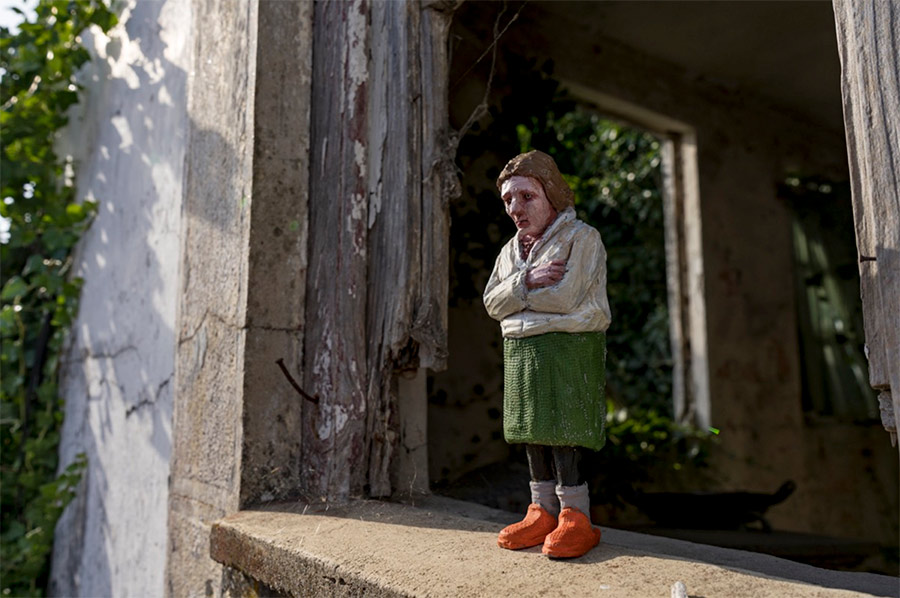
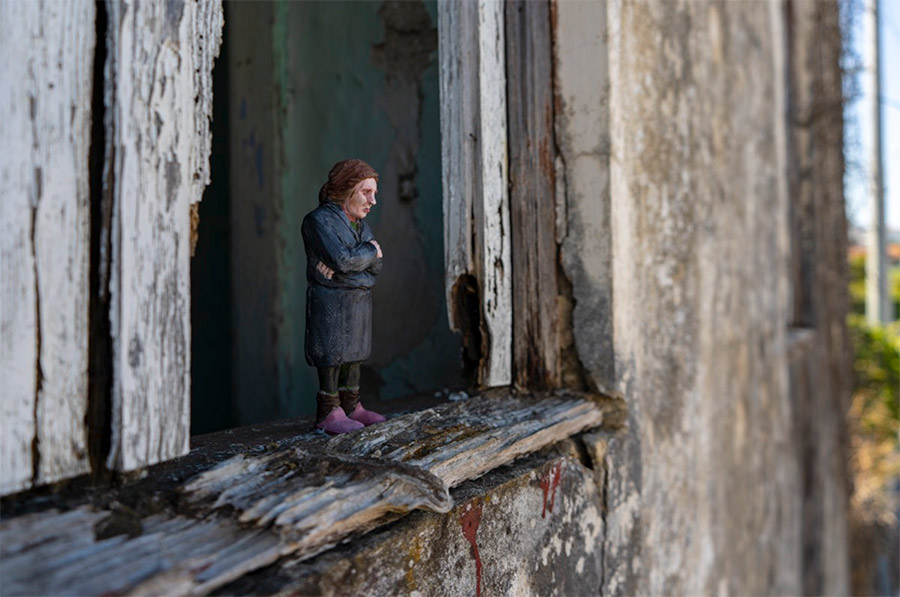
It’s a curious pleasure to meet some of the extended members of the Isaac Cordal businessmen after all these years, isn’t it? For a decade or so you’ve been seeing his balding men in rumpled suits installed on ledges and window sills – contemplating their ennui, reviewing their rotten deeds, realizing they had wasted their lives playing the stock market only to feel empty. Now it’s time to meet the family?
Now the Spanish street artist expands the circle as he attends the Fazunchar Festival in Figueiro dos Vinhos in Portugal, and you are seeing his new sculptures perched in new spaces throughout the village. “I have had the opportunity to add new neighbours,” he says.
Where is the inspiration for these new neighbors coming from? “I’ve been reflecting on the passage of time, emigration, the abandonment of the countryside, and the climate crisis among other issues,” he tells us.
And now we don’t know what other topic can follow that one, so…
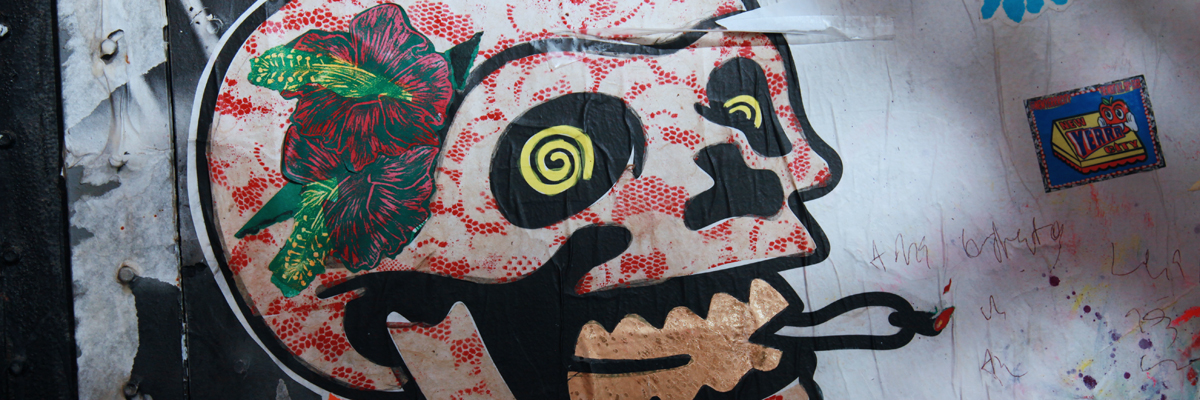
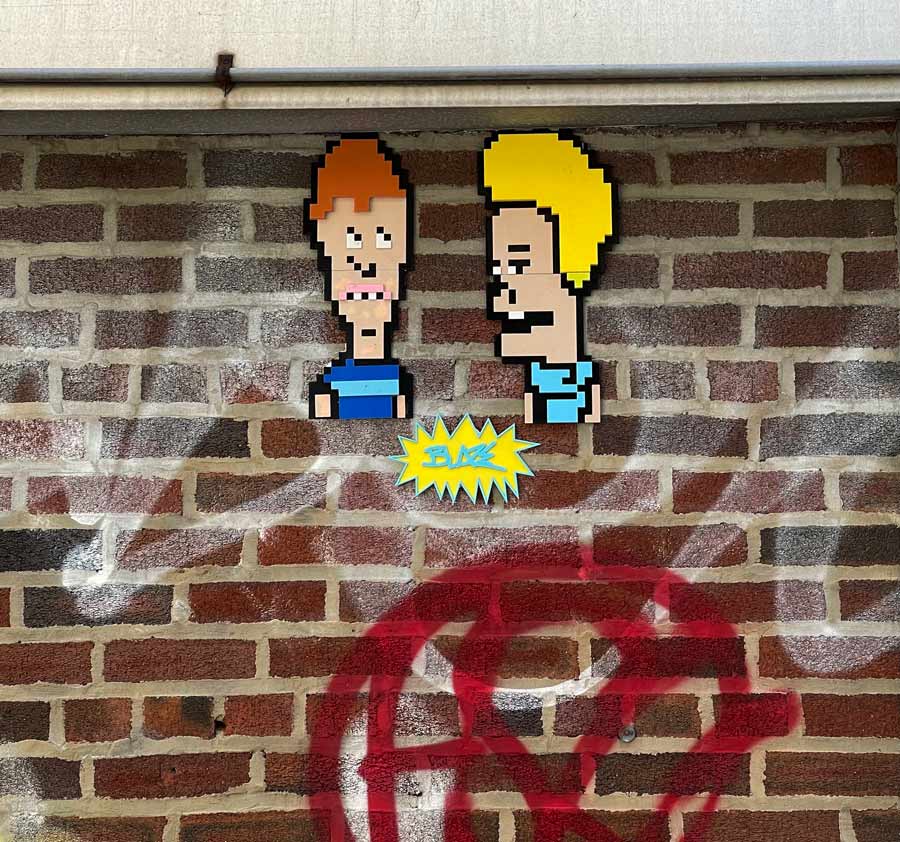
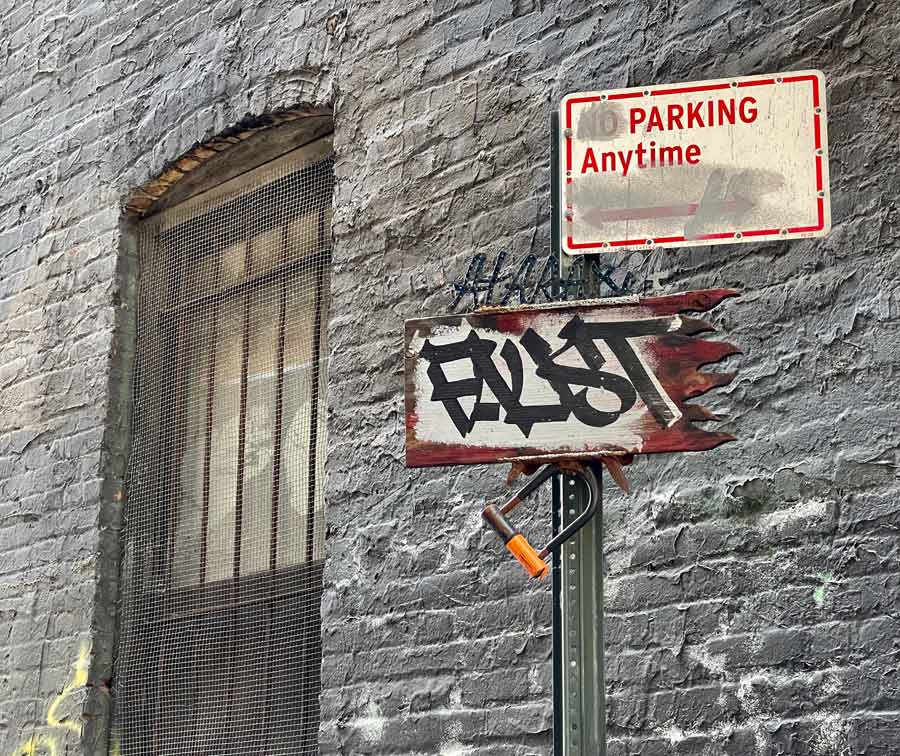
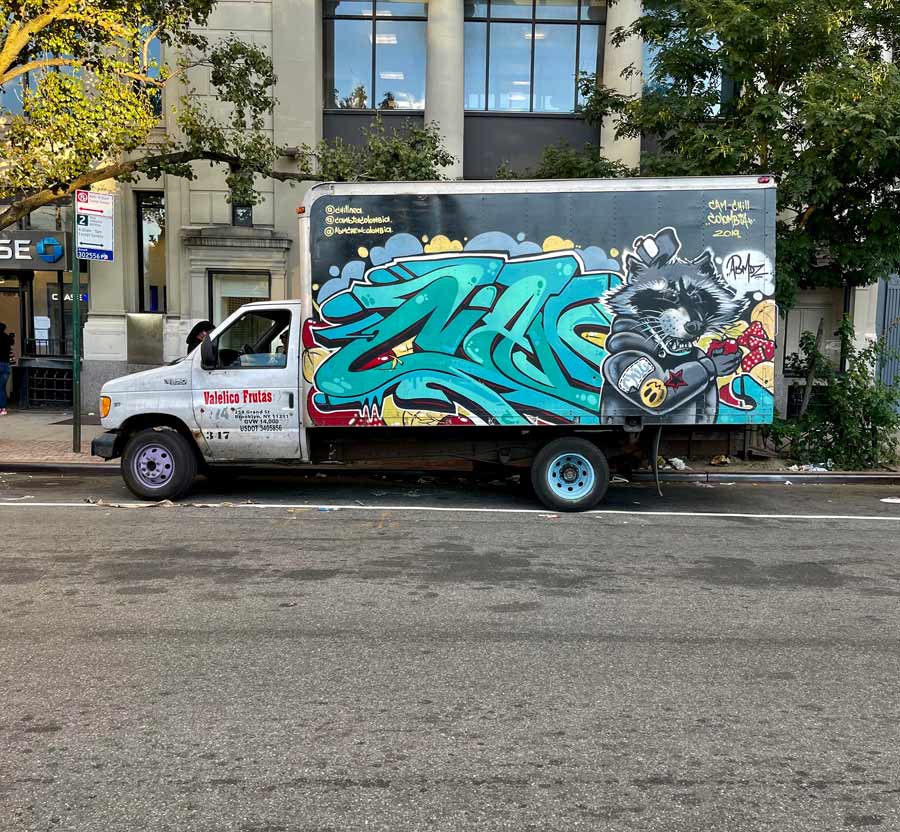
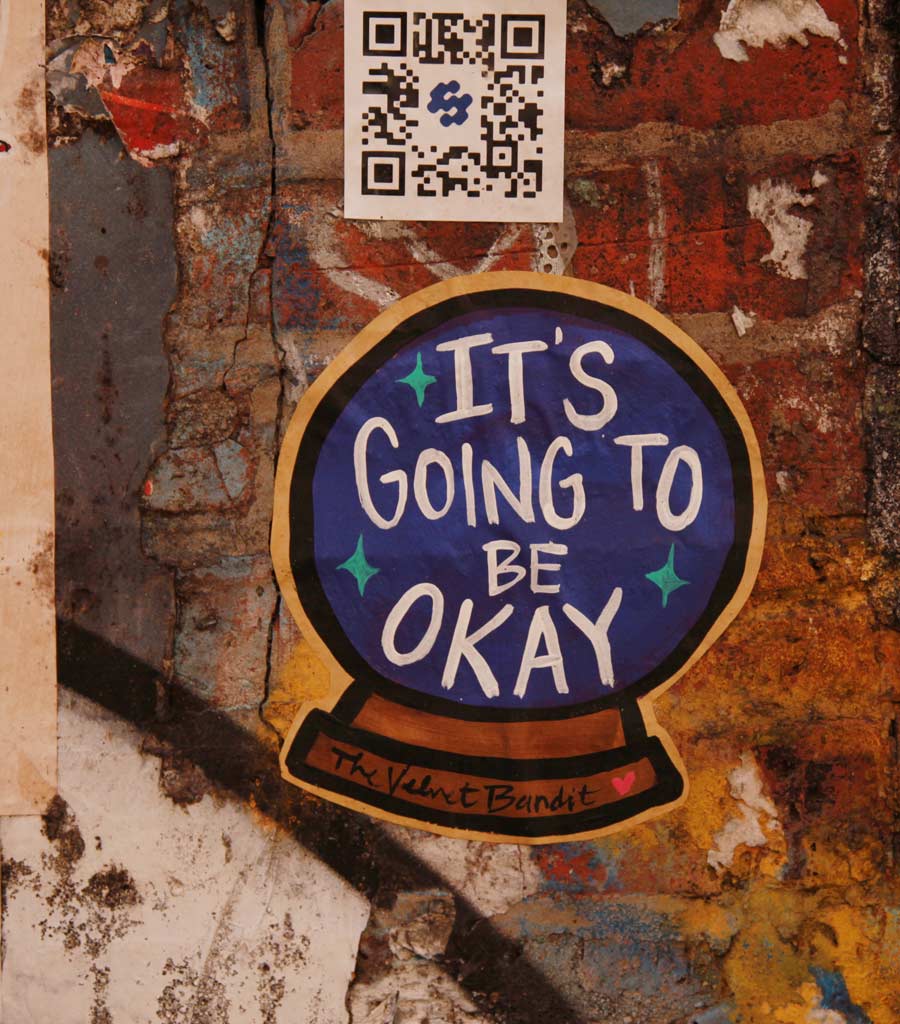
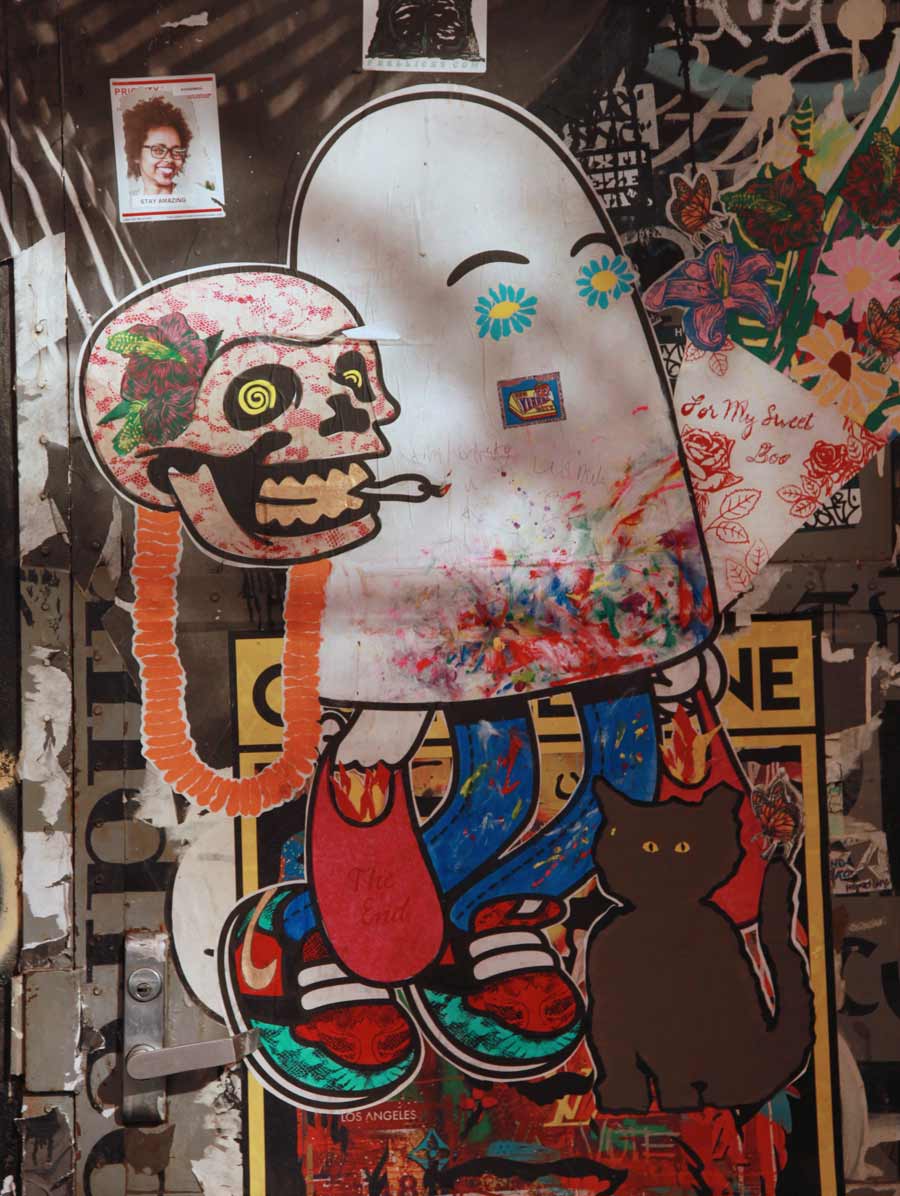
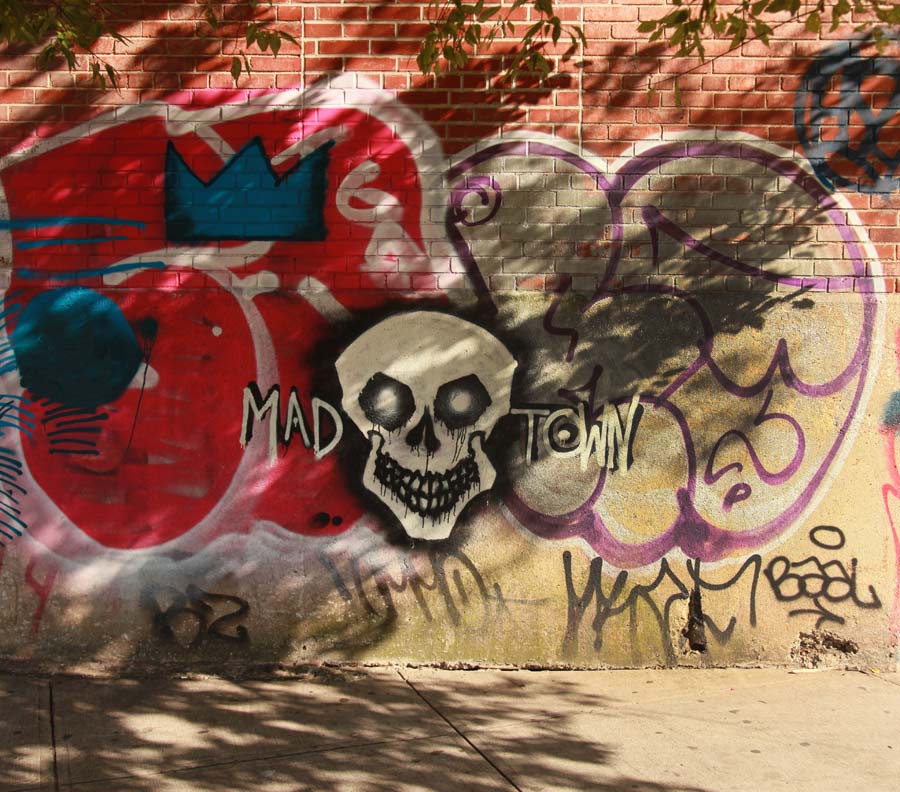
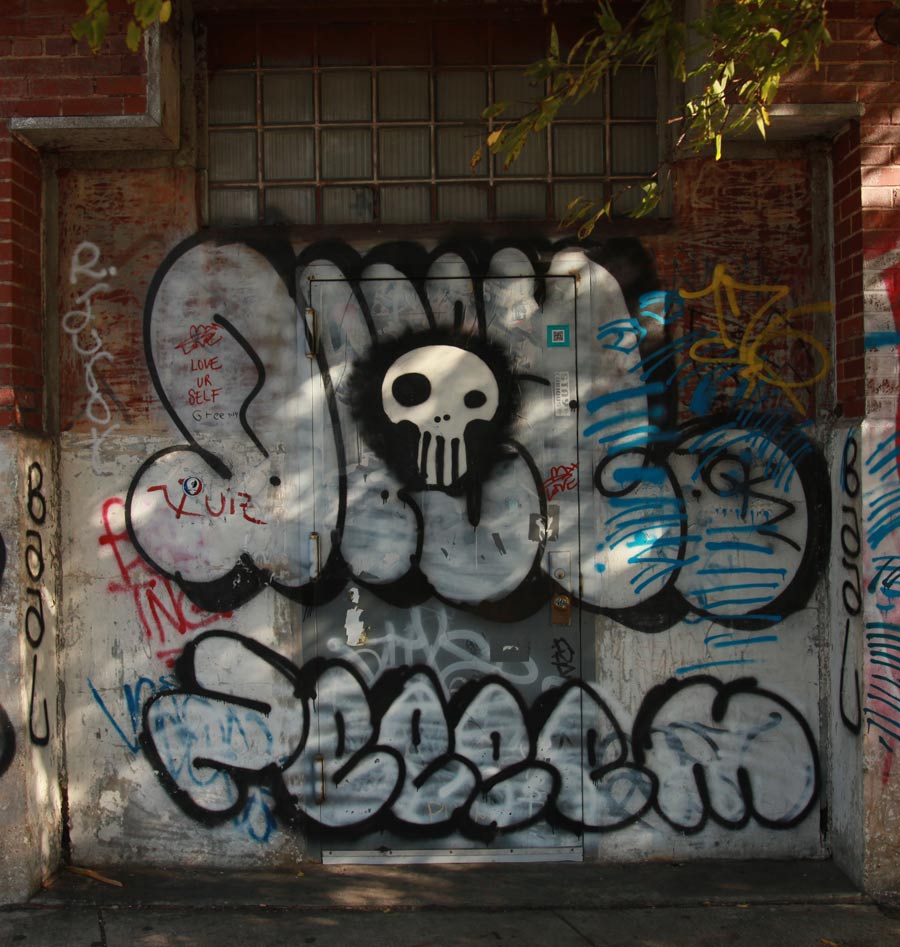
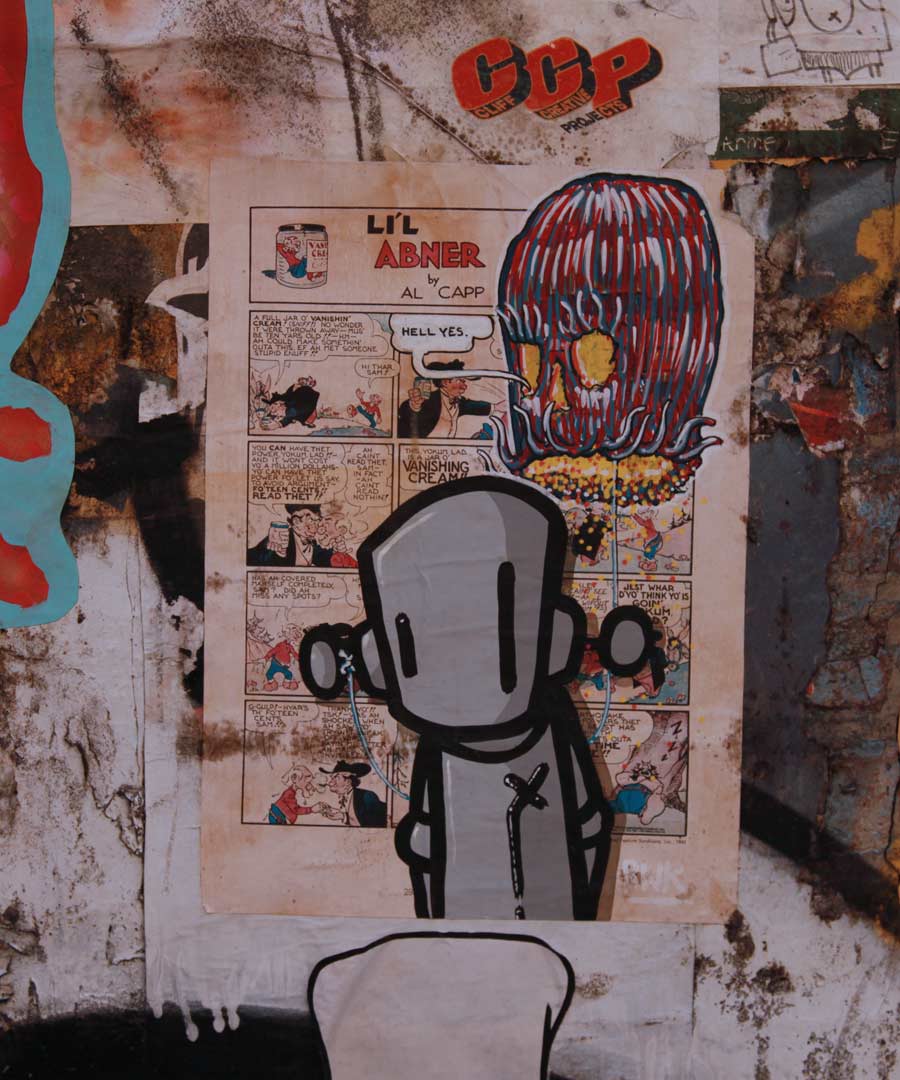
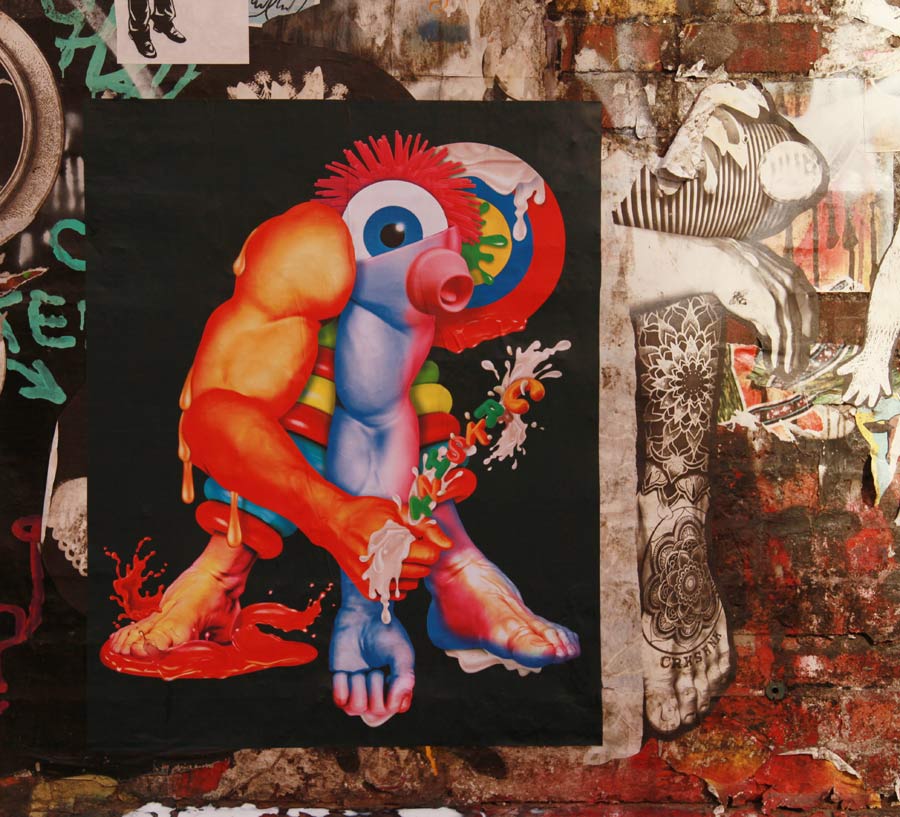
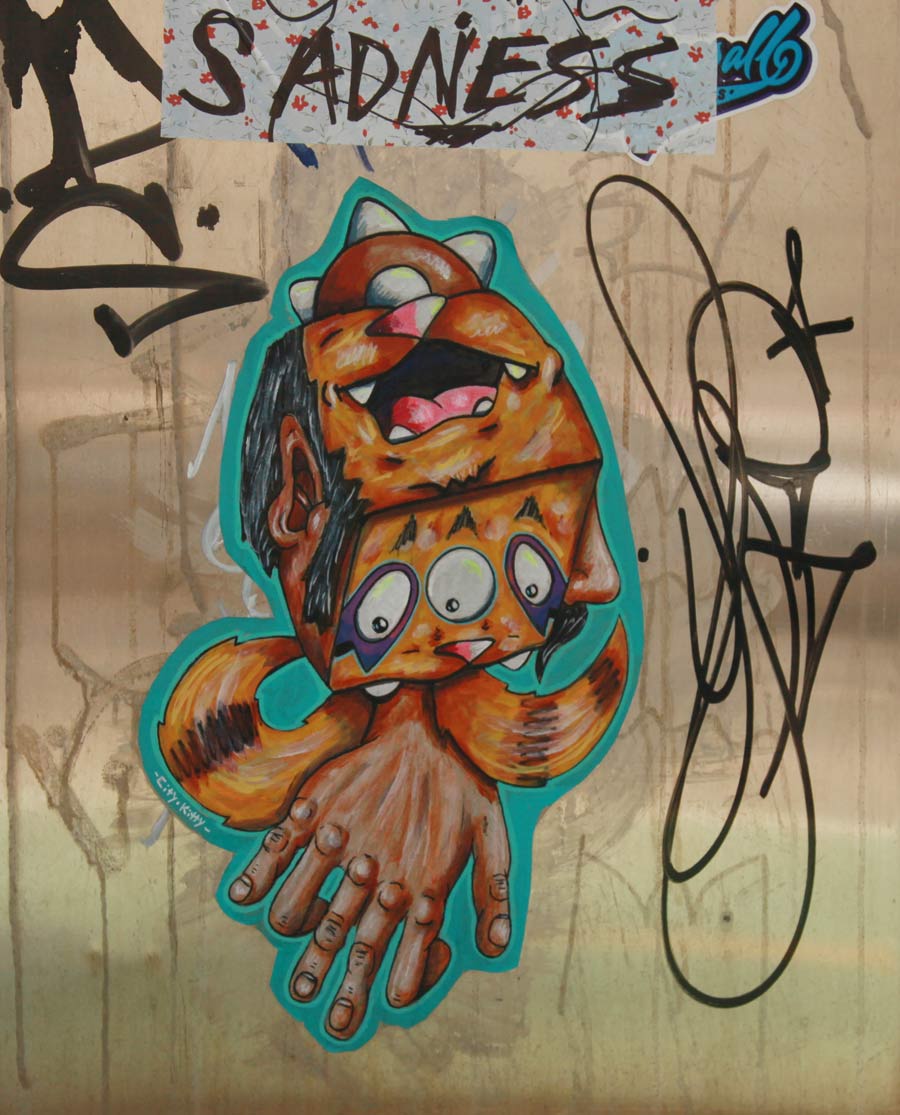
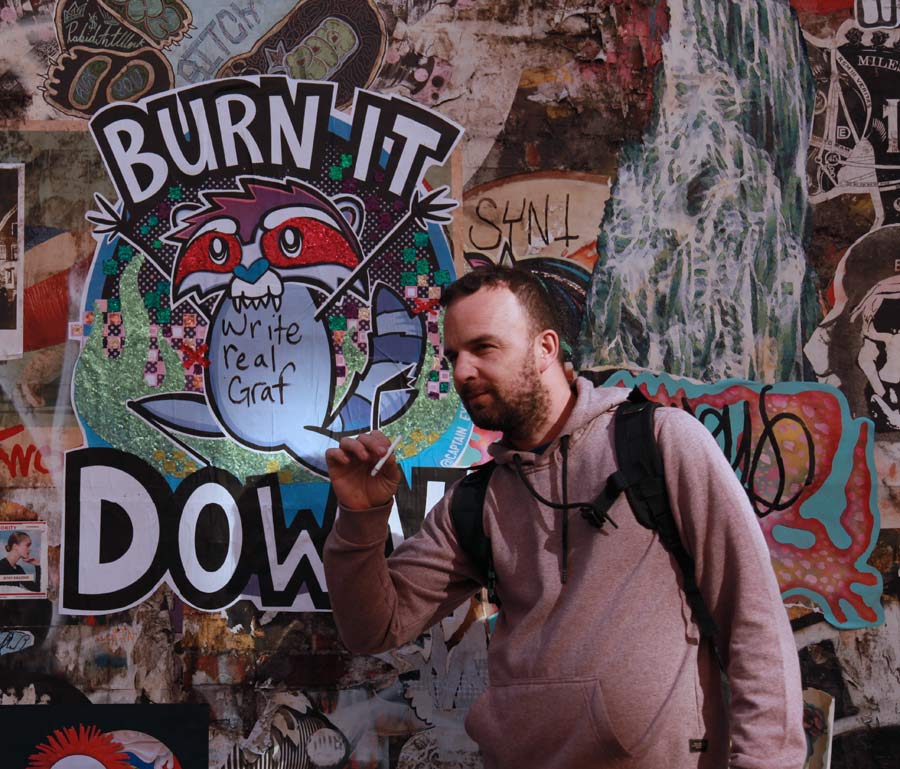
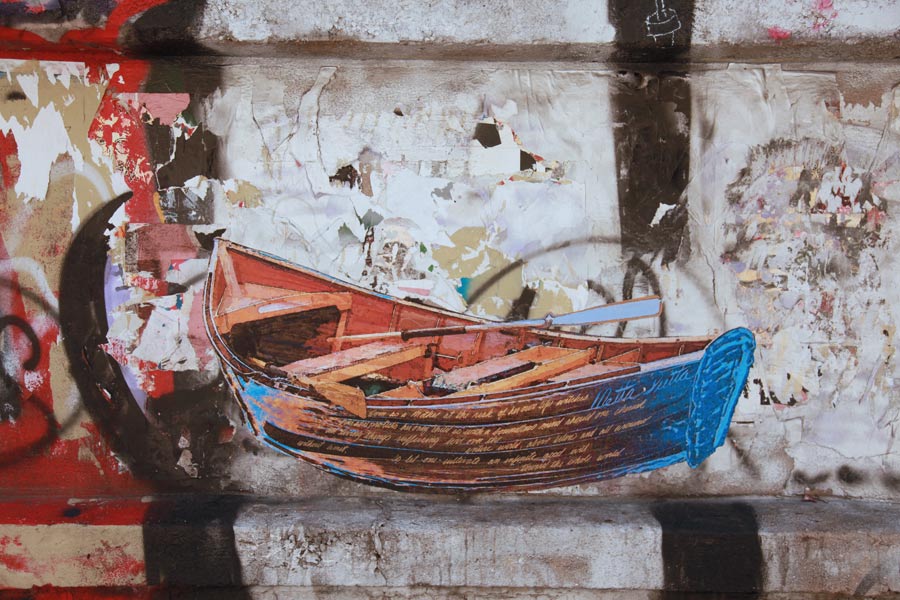
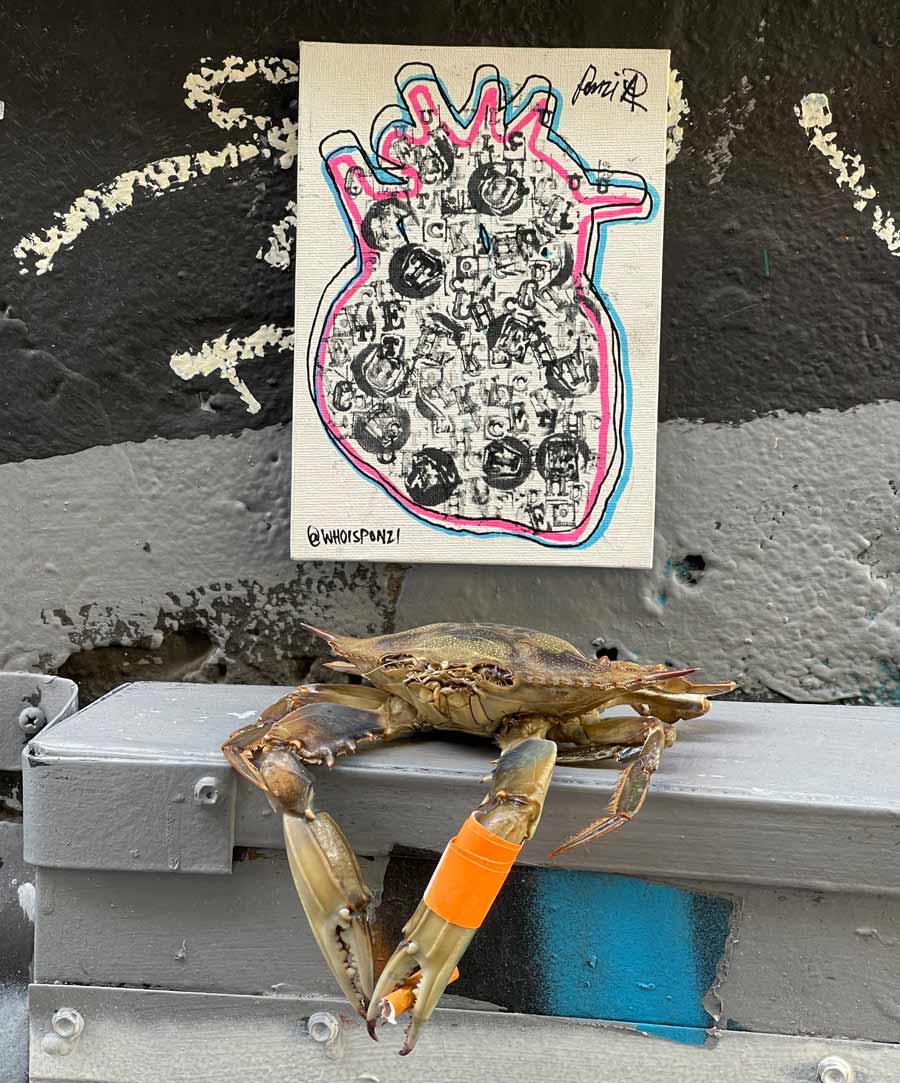
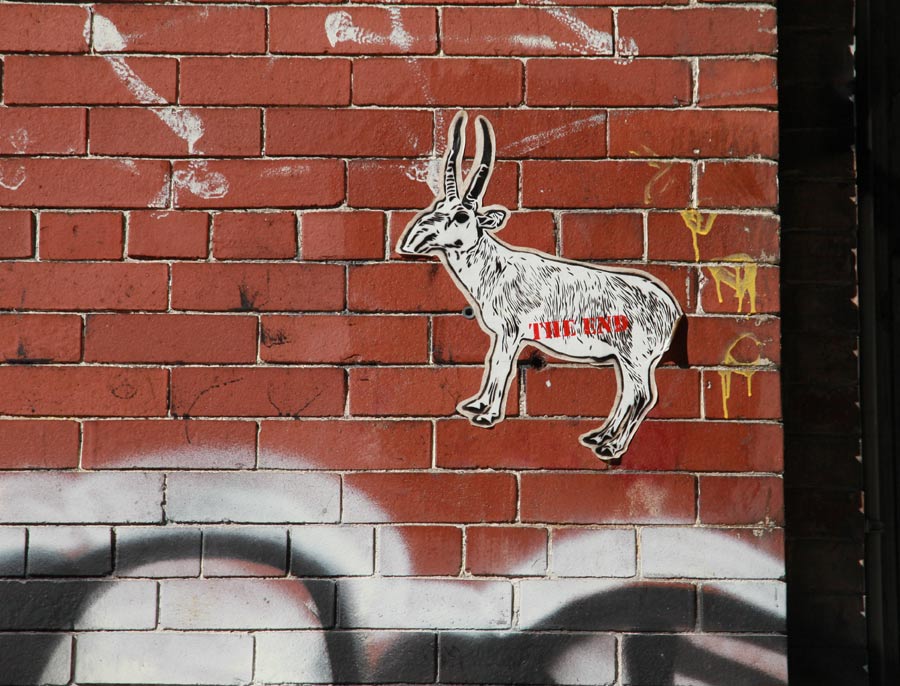
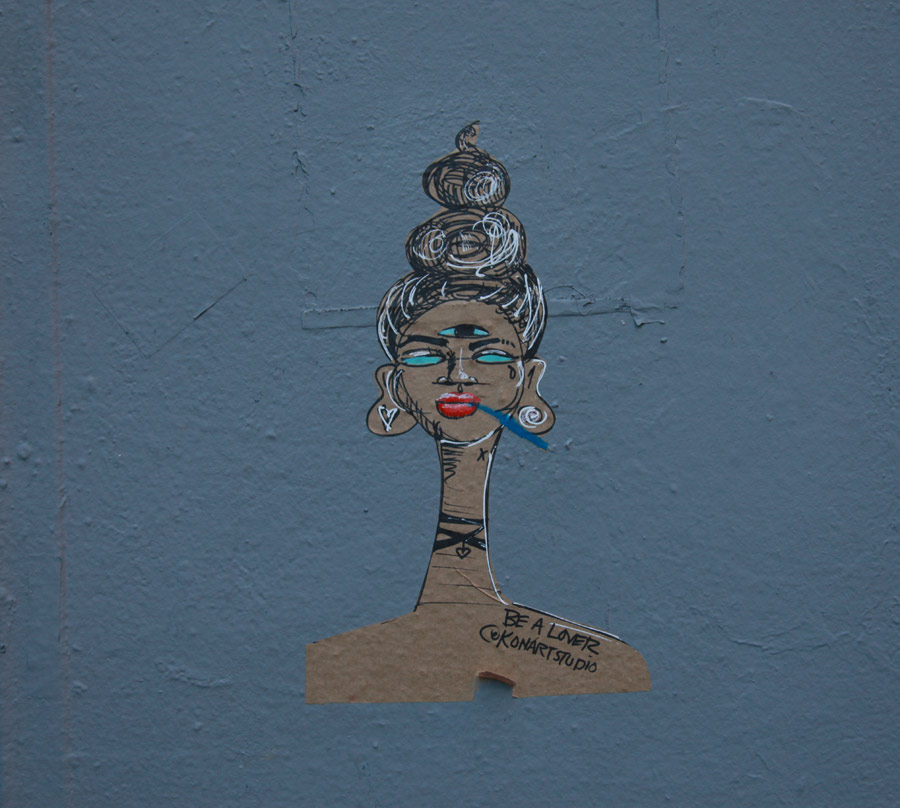
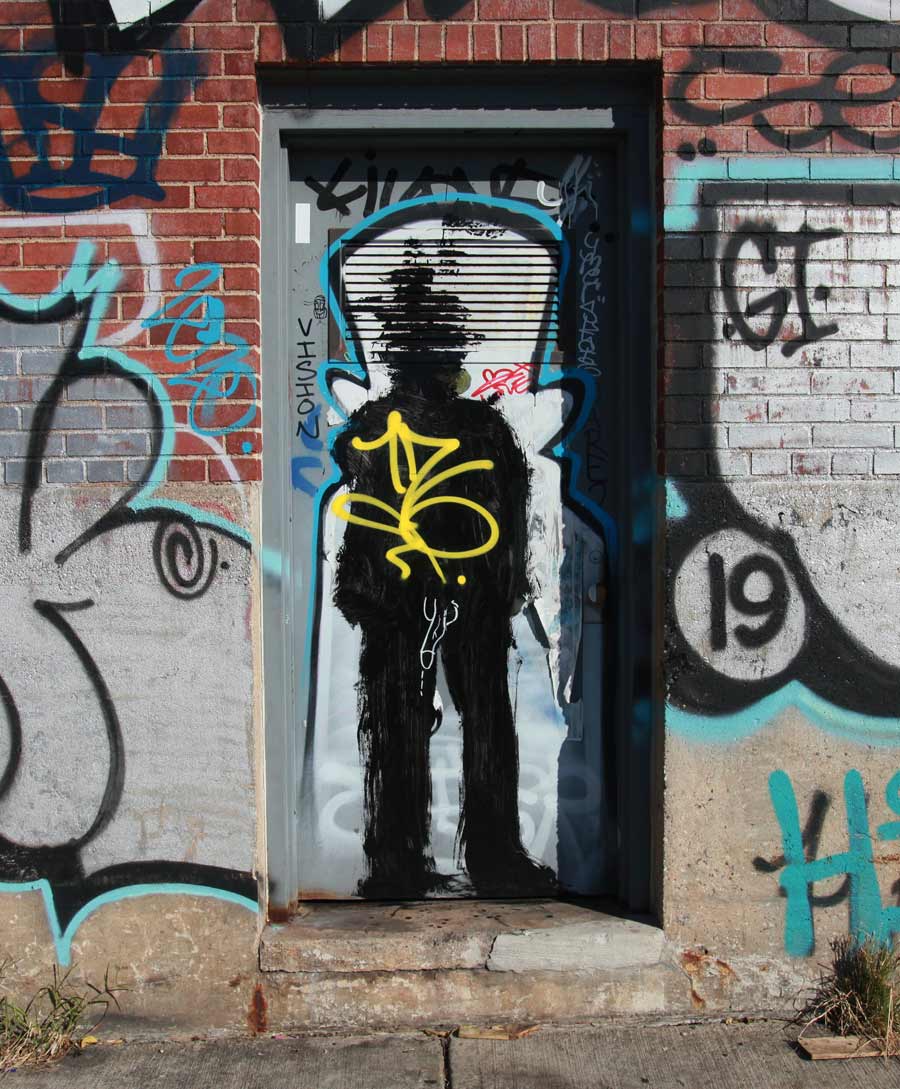
Here’s our weekly interview with the street, this week featuring Abby Goodman, BLAZE, Captain Eyeline, Chill, Chris RWK, City Kitty, CRKSHNK, Fake Hambleton, Faust, Invader, JJ Veronsis, Konart Studio, Lunge Box, Mad Town, Matt Siren, Modomatic, Royce Bannon, The Velvet Bandit, and Who is Ponzi.
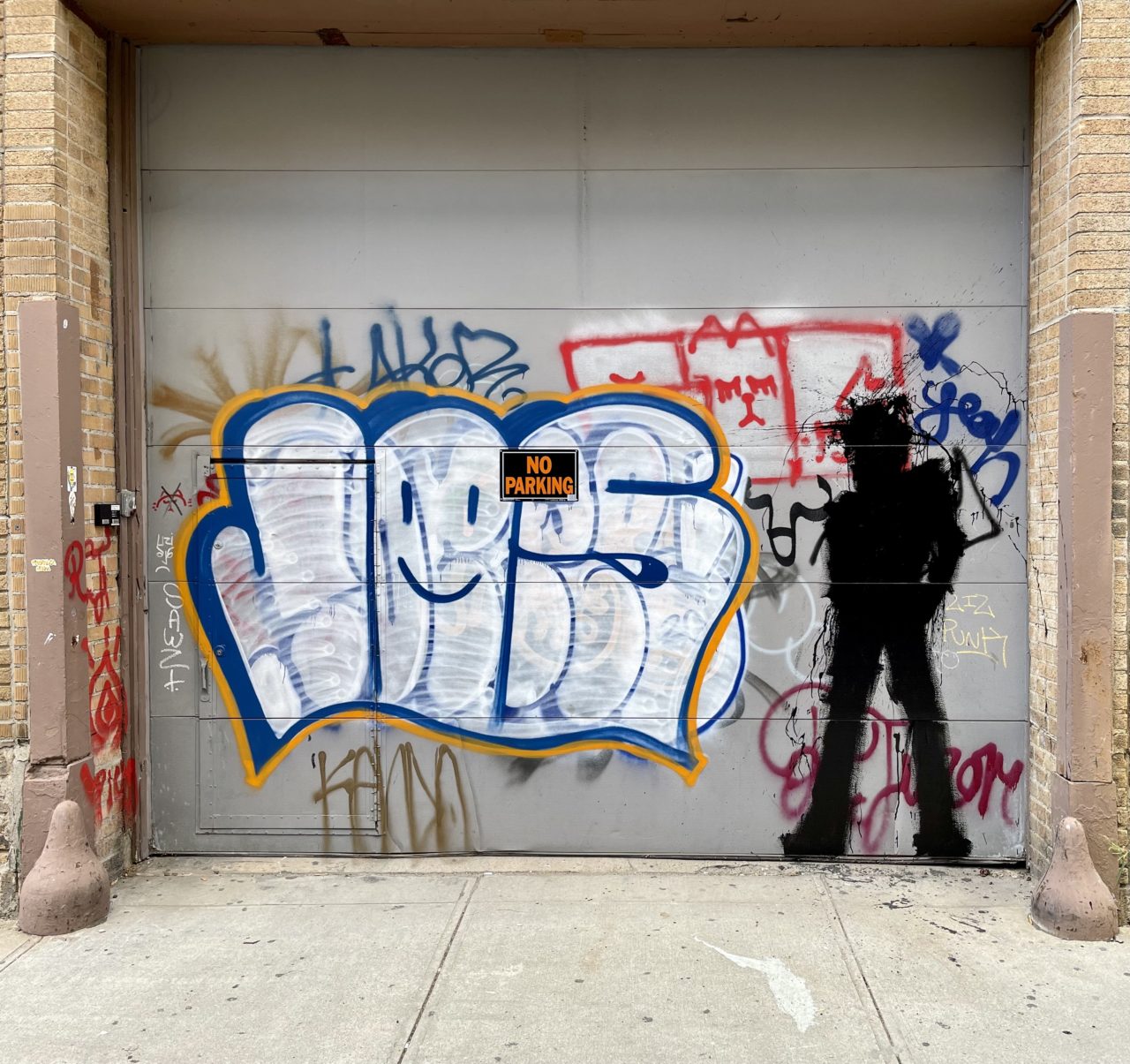
The series of #fakehambleton “Shadow Man” that have been appearing on the street of Manhattan (and in London) are attributed to a guy who goes by the name of Pablo who runs a mystery Hambleton “foundation”. He’s admitted to painting the fake Hambleton iconic figures on the streets of NYC. We believe this to be a marketing campaing. More on this @bkstreetart on Instagram.
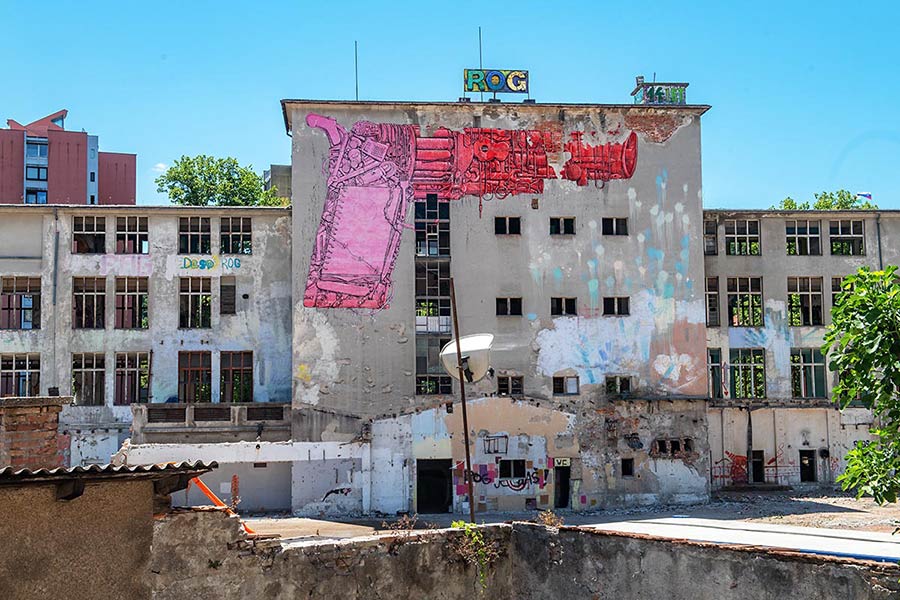
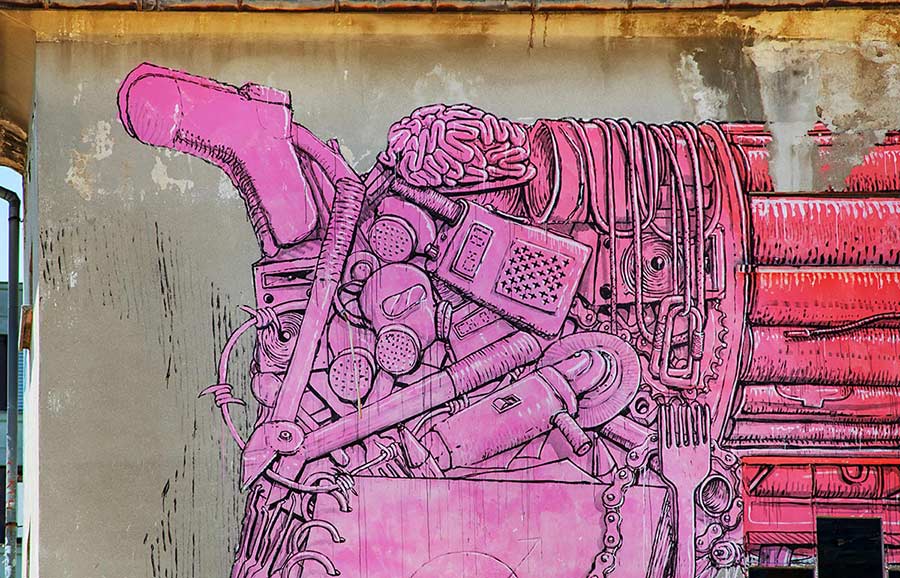
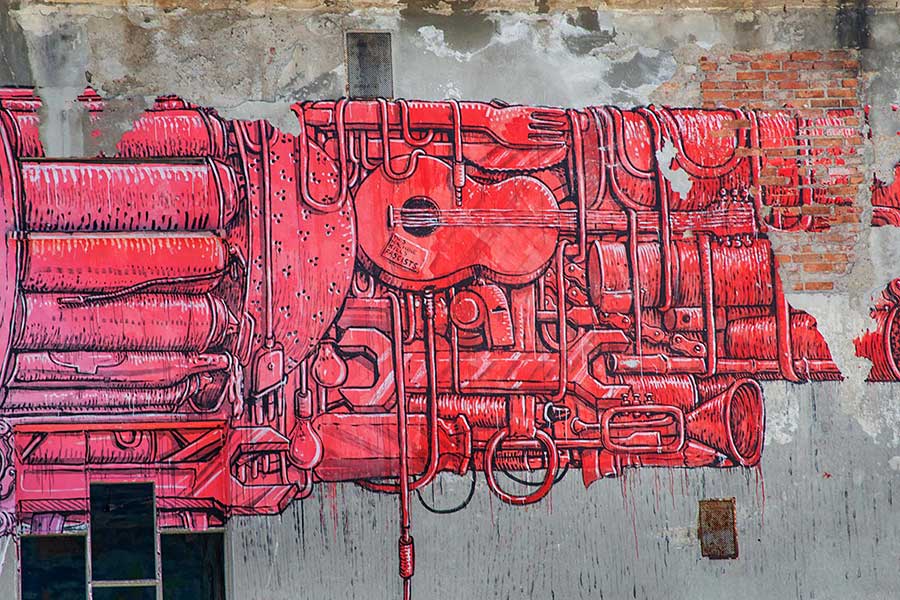
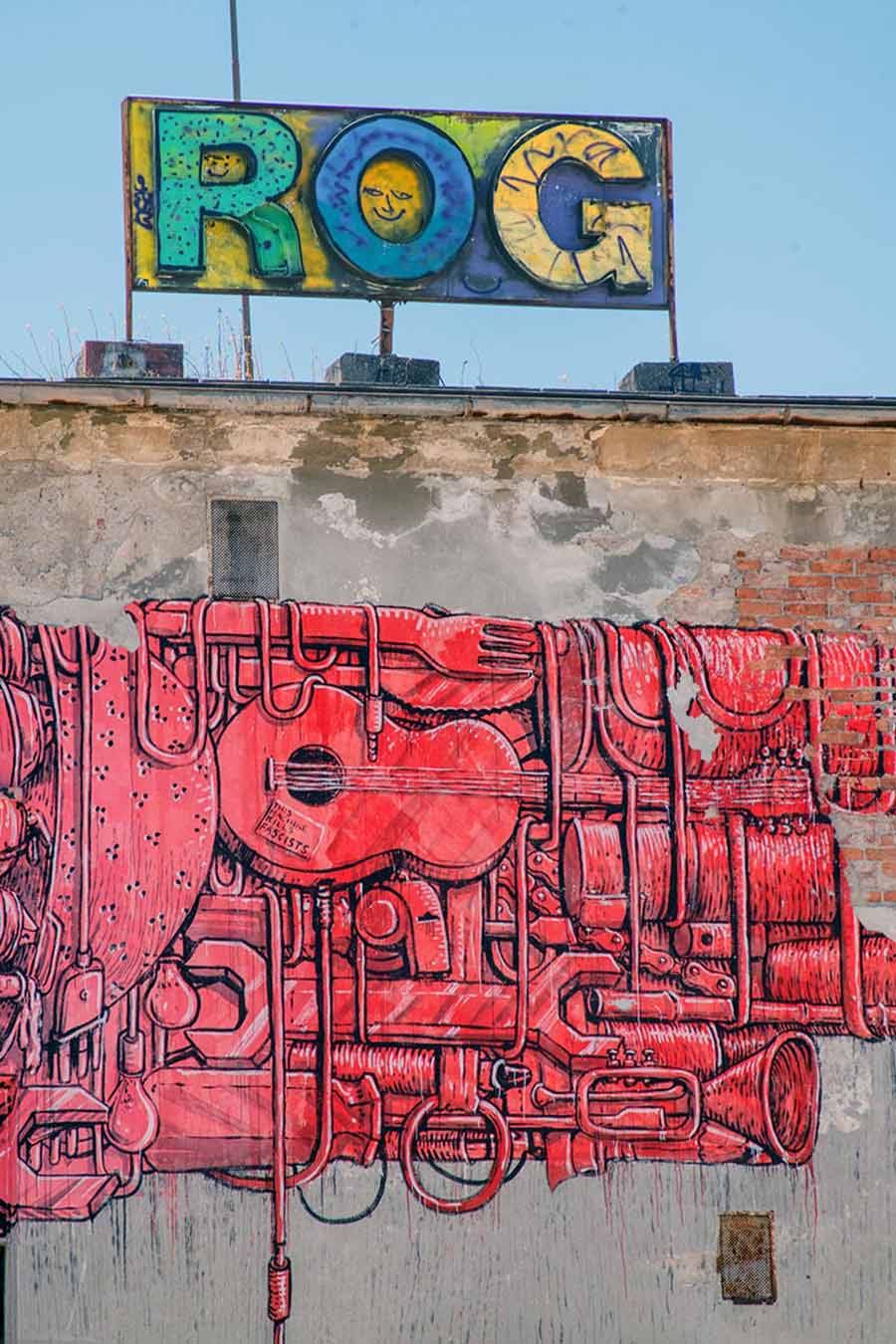
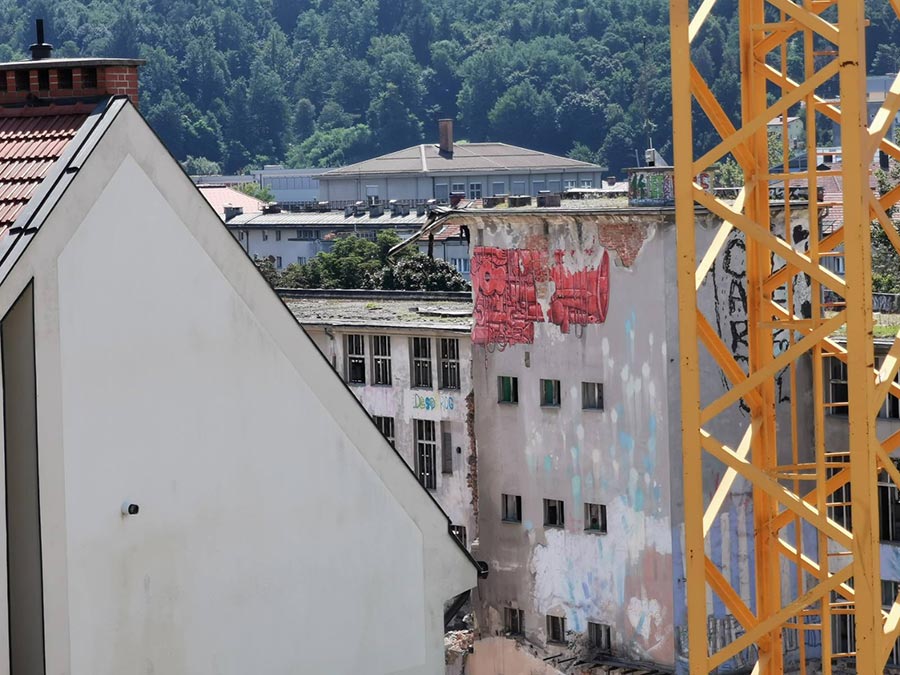
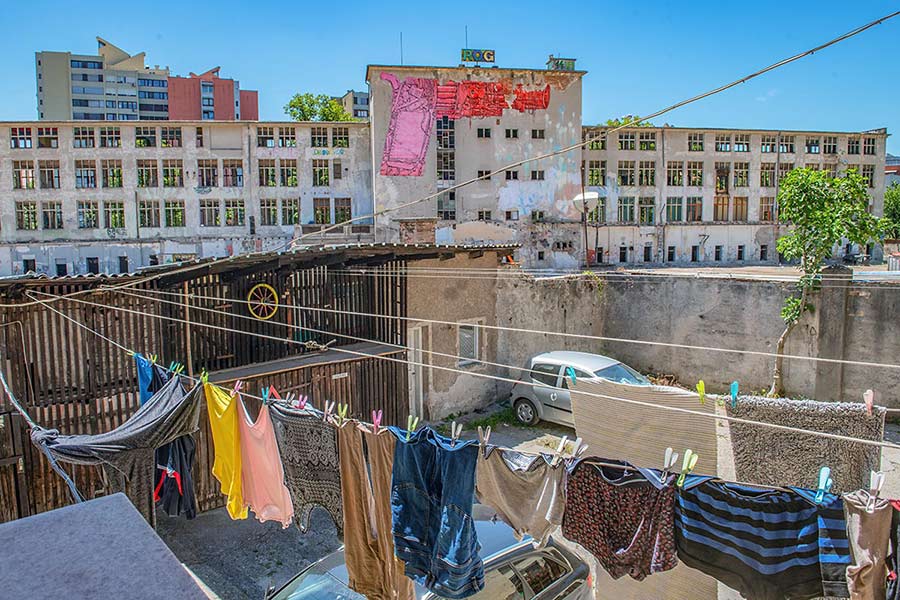
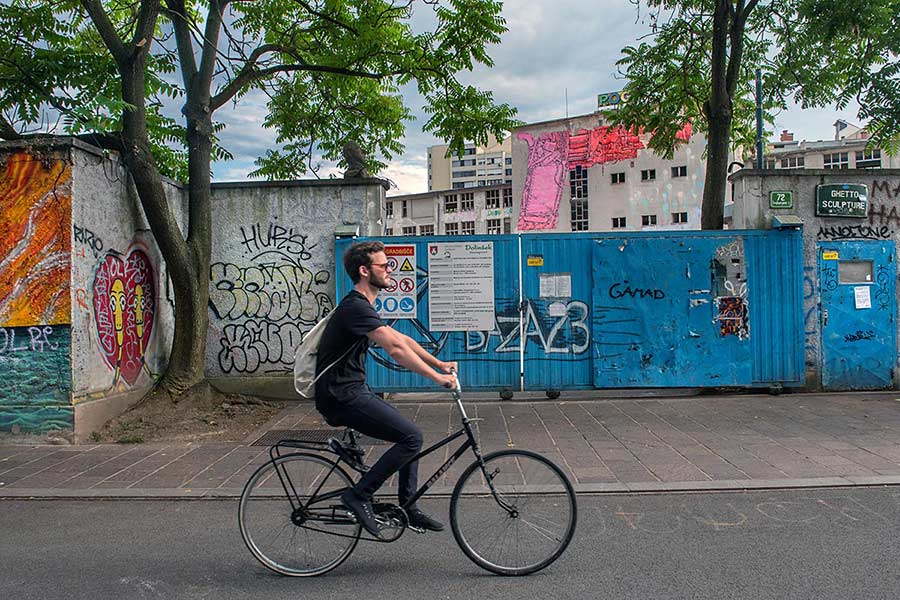
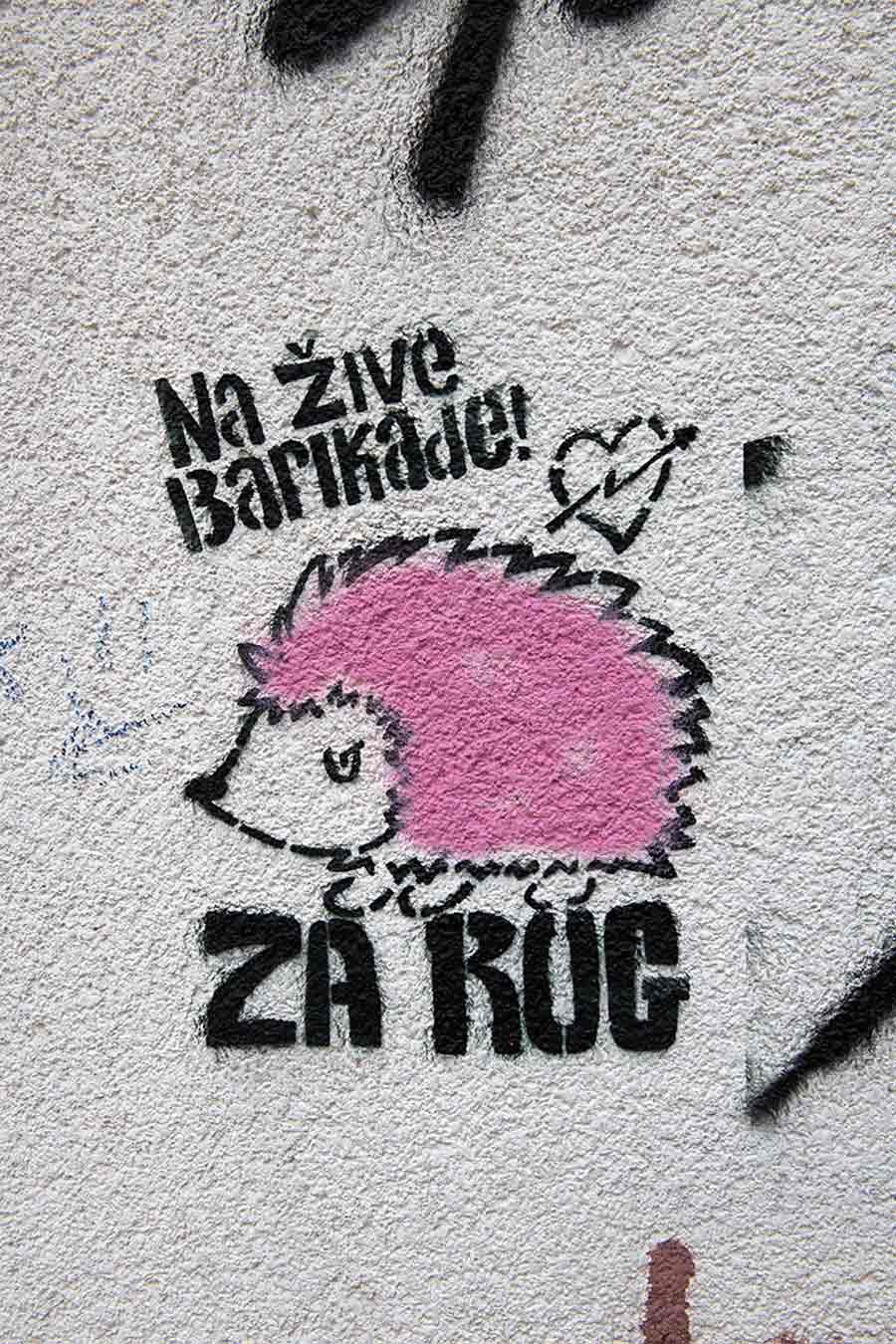
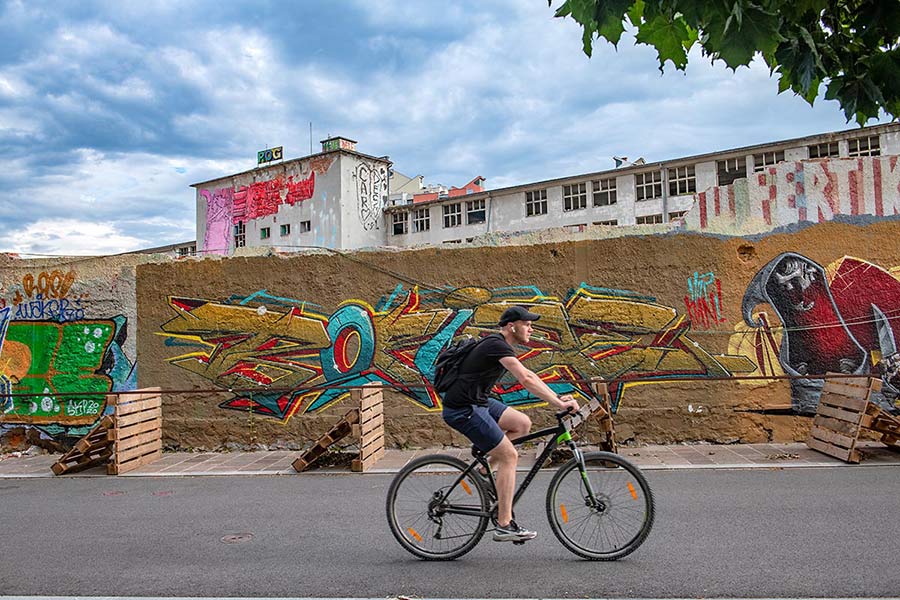
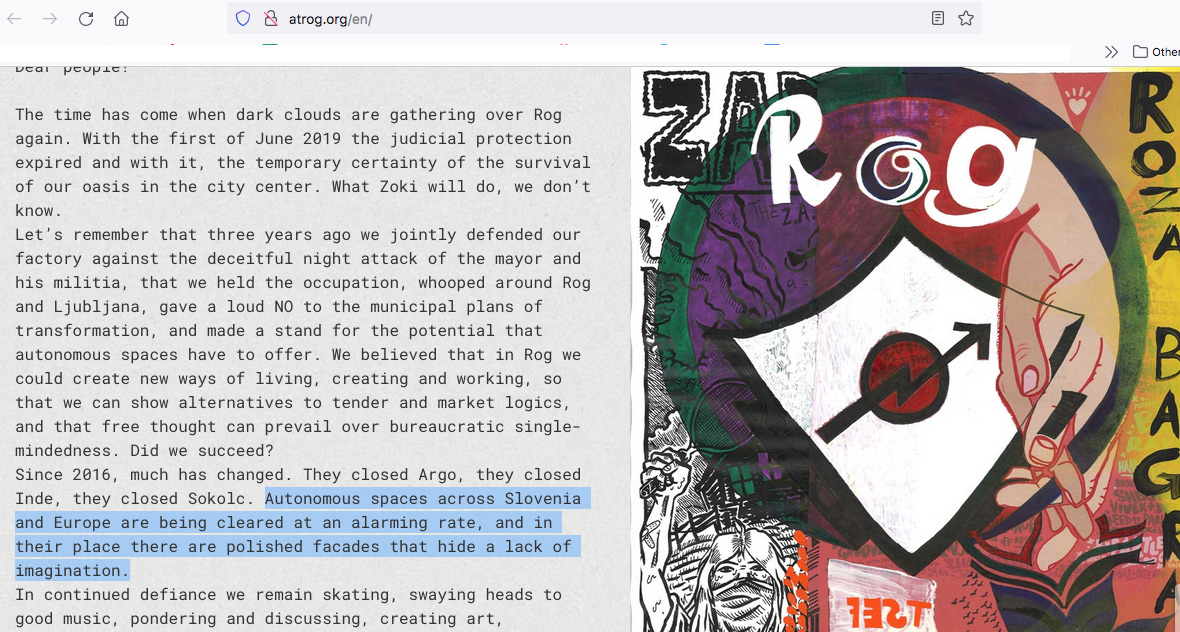
The brilliant illustrator of fantasy and firey allegory, BLU, championed the cause of the Rog Factory squat in Ljubljana, Slovenia, in 2016 with a centrally framed handgun in pink and red. In that heated moment the community of artists and activists had fended off developers, construction thugs, and even some kind of fascists attacking them or trying to chase them from the property.
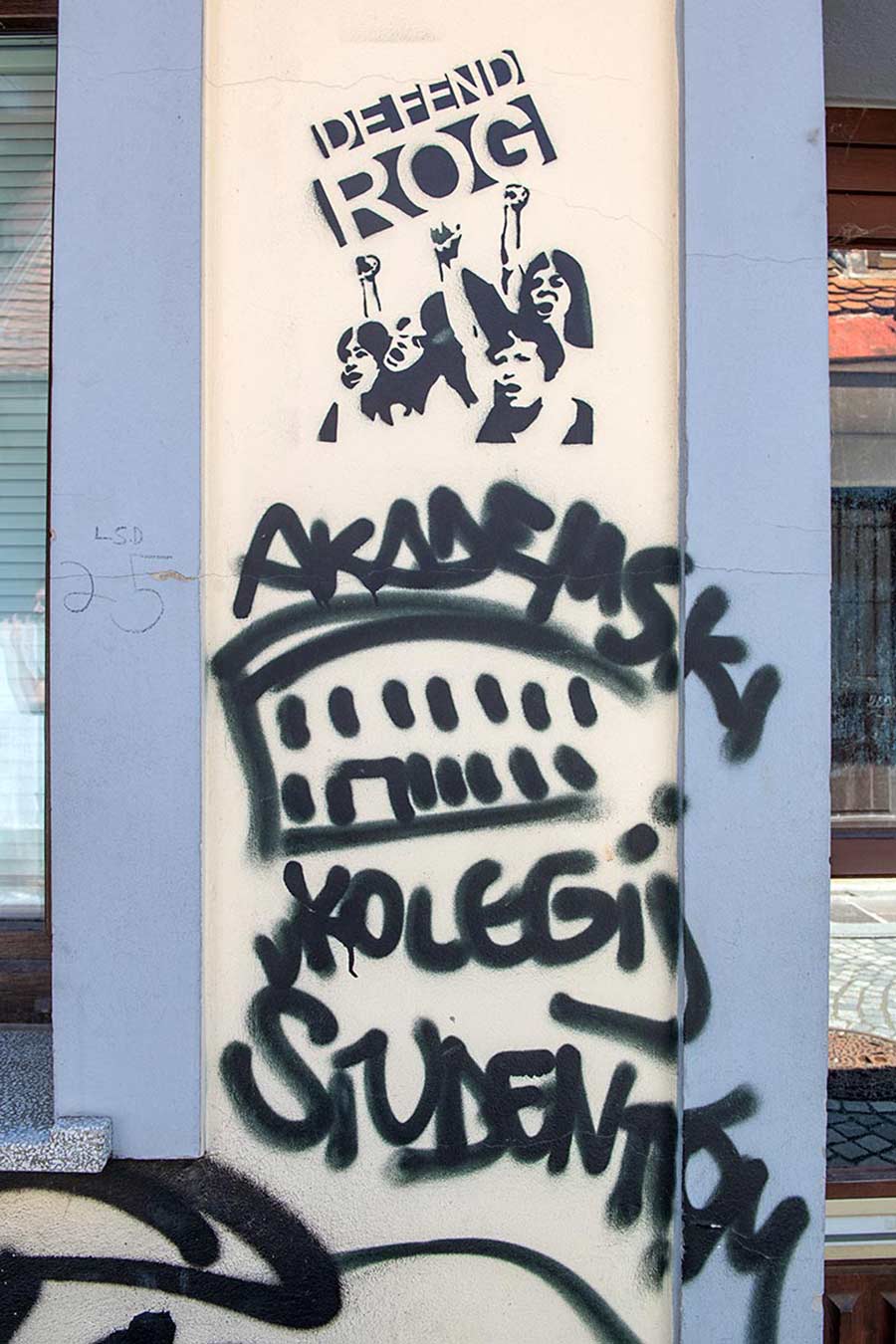
The encroachment of private capital on community spaces often provokes a rallying cry of artists like BLU, a never-ending battle to preserve human-scale projects that are full of idiosyncrasy, warmth, and democratic ideals – they may say. “Autonomous spaces across Slovenia and Europe are being cleared at an alarming rate,” says the Rog site, “and in their place, there are polished facades that hide a lack of imagination.”
As with all graffiti/street art/murals, we accept the fact that part of their definition implies ephemerality – but nevertheless, city dwellers also do become attached to it sometimes. Over time an artists’ work on the street, even if originally done illegally, can implicate itself into our lives, becoming part of our daily experience of a city, effectively defining it in some way.
That’s why the loss of this painting is worth noting – and why locals decided to let it go in style with a festive paint party. When gentrifiers floated the idea of preserving the work, BLU resisted vehemently, says photographer/ethnographer Martha Cooper, who documented the wall this summer. She tells us of a more jovial way concocted to bid “adijo” to BLU.
“So with Blu’s blessing,” she says, “some artists organized an effort to fire homemade bazooka paint guns to cover the mural. They had 7 guns and several hundred bullets filled with different colors of paint all greased up and ready to fire.” A splattered goodbye that again echoed the militancy that some feel about defending their squatter rights.
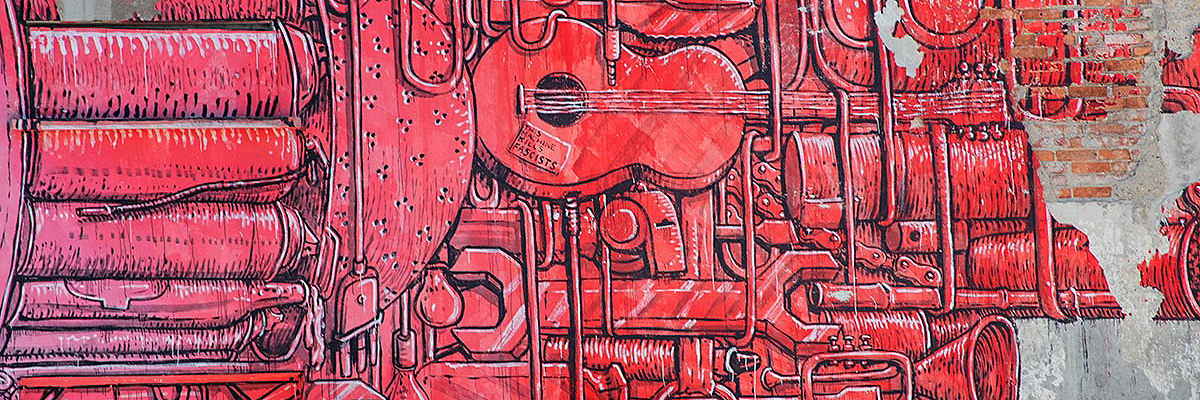
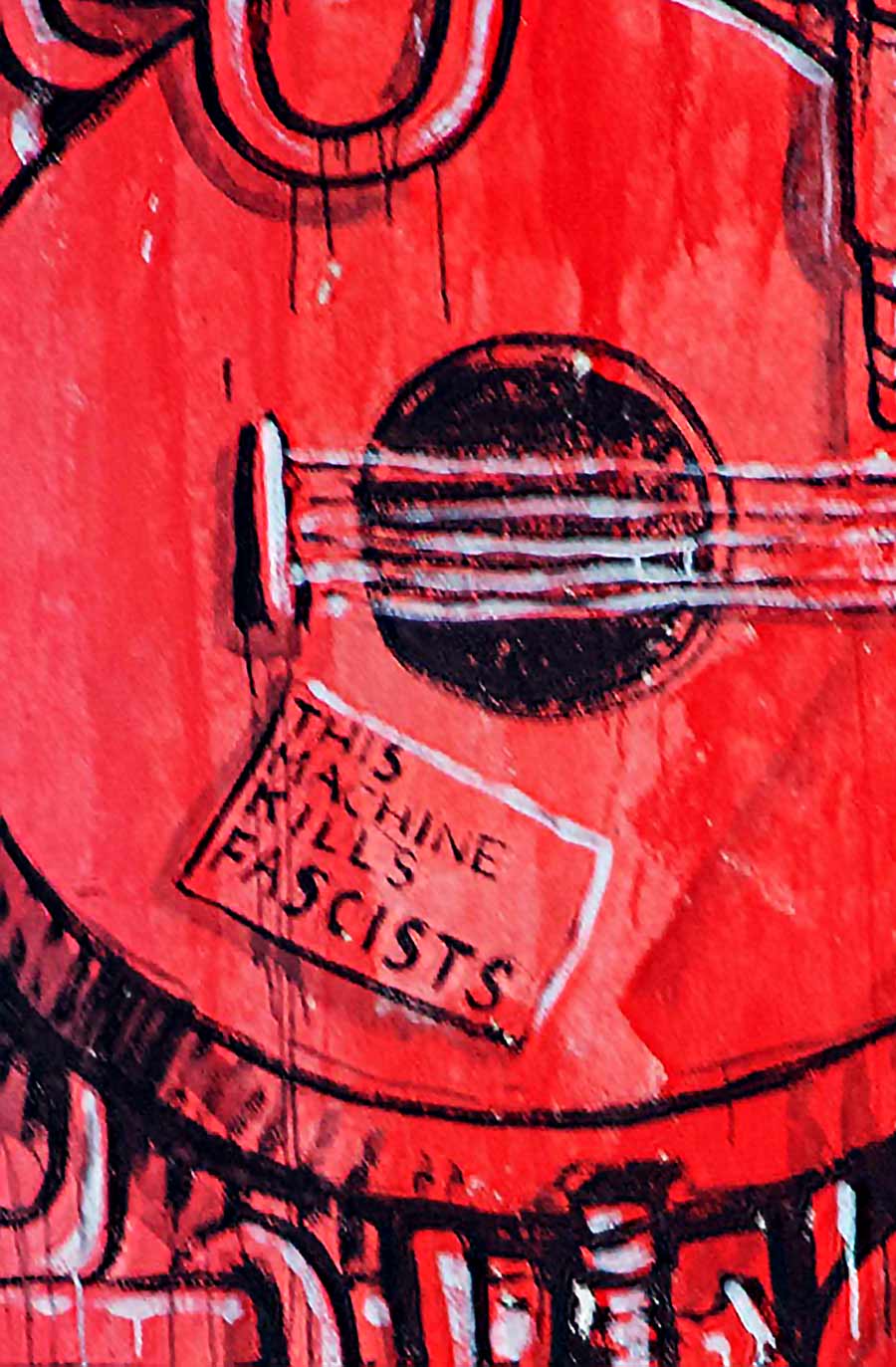
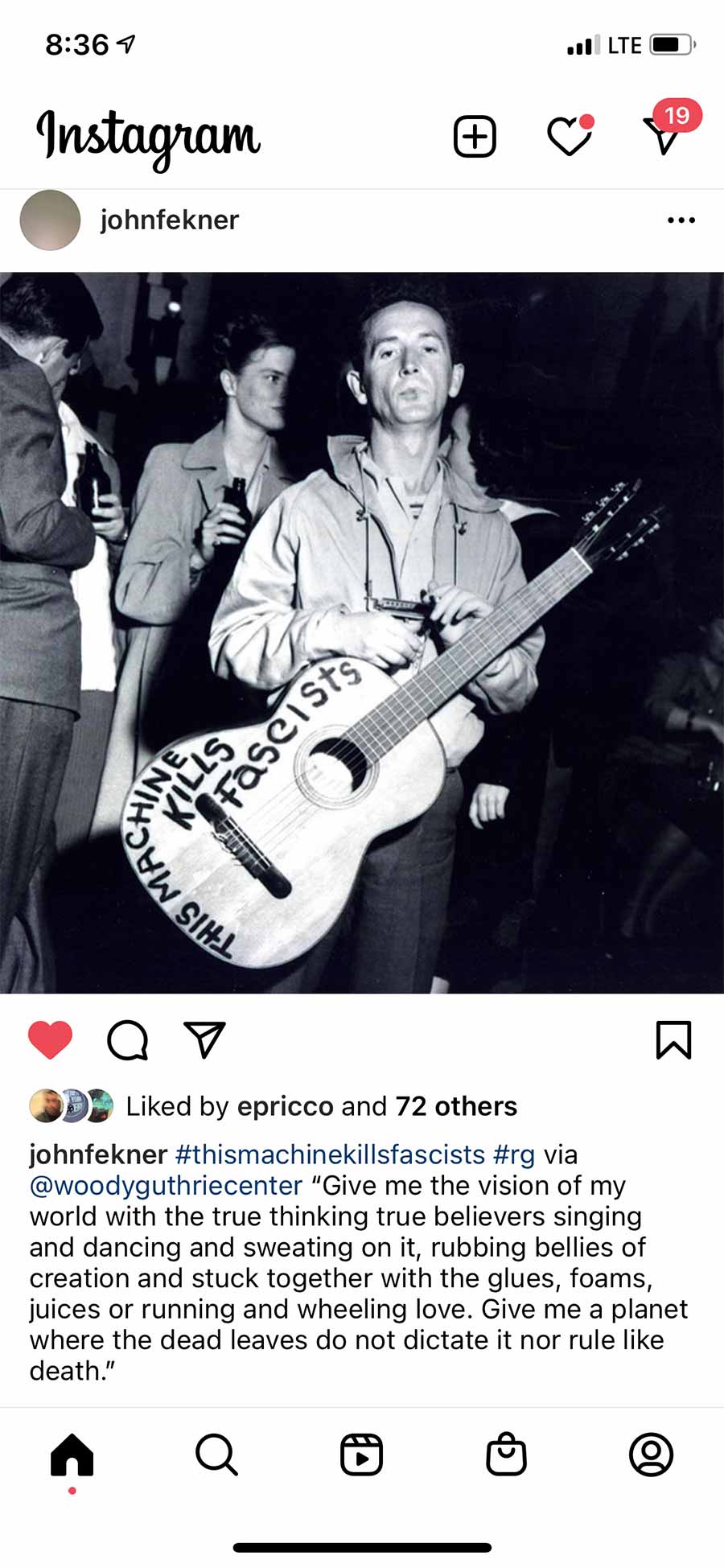
The plan was abandoned finally however due to a strong presence of security – and possibly because using guns, however playfully, could be misinterpreted and end badly, but we are surmising. After all, BLU’s “gun” was full of creative ways to dismantle the patriarchy, including an ode to Woody Guthrie’s guitar, and later on Pete Seeger’s banjo; an admonition to use art powerfully in a battle for people.
“I have photos of the gun mural which is composed of peaceful ‘weapons,’” Martha tells us. “There is an inscription on the guitar which says, ‘This machine kills fascists.’”
As the summer wound down, we heard from Sandi Abram, the Ljubljana Street Art Festival director. “The municipality has begun the demolition of the Rog Factory front facade, which means Blu’s mural will also be demolished probably by the end of the week.”
Our weekly focus on the moving image and art in the streets. And other oddities.
Now screening: 1. Nathan Paulin on a High Wire Between Tour Eiffel & Theatre National 2. Man on Wire. Twin Towers with Philippe Petit 3. Pejac: Apnea
BSA Special Feature: Nathan Paulin on a High Wire Between Tour Eiffel & Theatre National
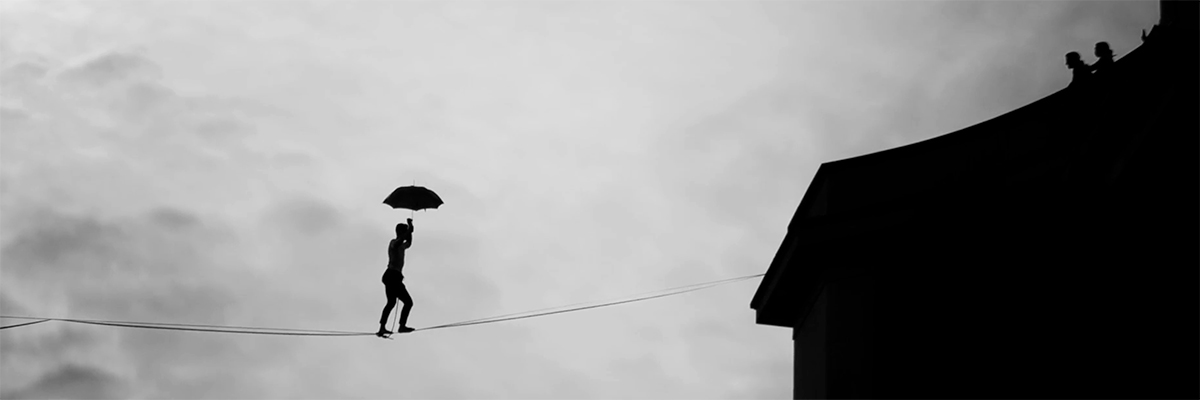
After gawking at the Arc de Triomphe here last week we wandered into one of our favorite outdoor arts – the tight wire walker, specifically Nathan Paulin, who walked above the crowds at the Eiffel Tower September 18th. A precursor perhaps to Parkour and more likely progeny of the circus, the art of walking high above the ground and risking life and limb and managing poetry at the same time is outrageous to some, sublime to others.
Nathan Paulin entre la Tour Eiffel and the Theatre National de Chaillot in Paris
Man on Wire. Twin Towers with Philippe Petit
In 1974, Philippe Petit, a 24 years old artist from France, performed what to this date we consider to be the most extraordinary unauthorized street art act ever pulled off in the world. On the morning of August 7, Mr. Petit walked across the Twin Towers on a high-wire without any safety precautions. No net, no harness. Just his mind, his balancing pole, and his body.
Mr. Petit’s meticulously planned stunt involved illegally rigging a 440-pound cable between the towers with the help of a small crew. He performed for 45 minutes at 1,312 ft (400 meters) walking 8 times back and forth along the wire, sitting, looking down, and waving to the stunned crowd below. Nobody will ever do that again. The Twin Towers are gone but Mr. Petit is still here, with us in NYC.
The Spanish street artist Pejac debuts a 45 piece collection of artworks for his show called APNEA in Berlin at the end of this month, his largest show to date.
“Most of the works were conceived while the world was holding its breath. APNEA for me means breathing again’’, Pejac comments in reference to both the pandemic and the title of his show. ‘‘During a time of lockdown, painting within the four walls of my studio felt like a liberation and a lifeline. APNEA represents this contradiction.’’
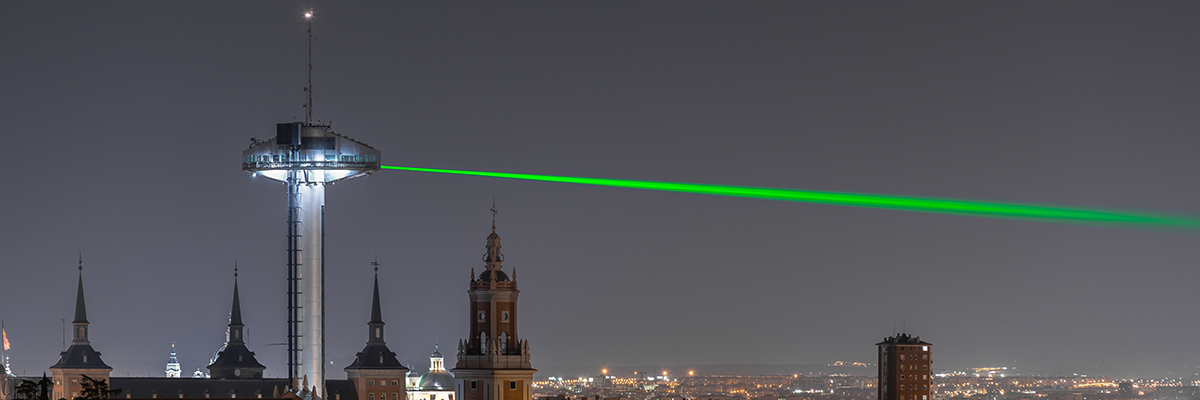
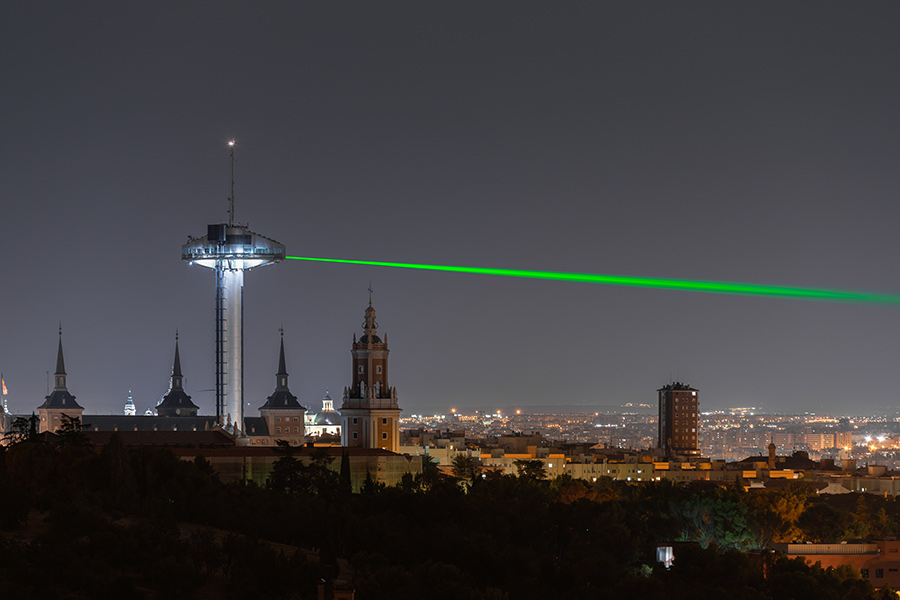
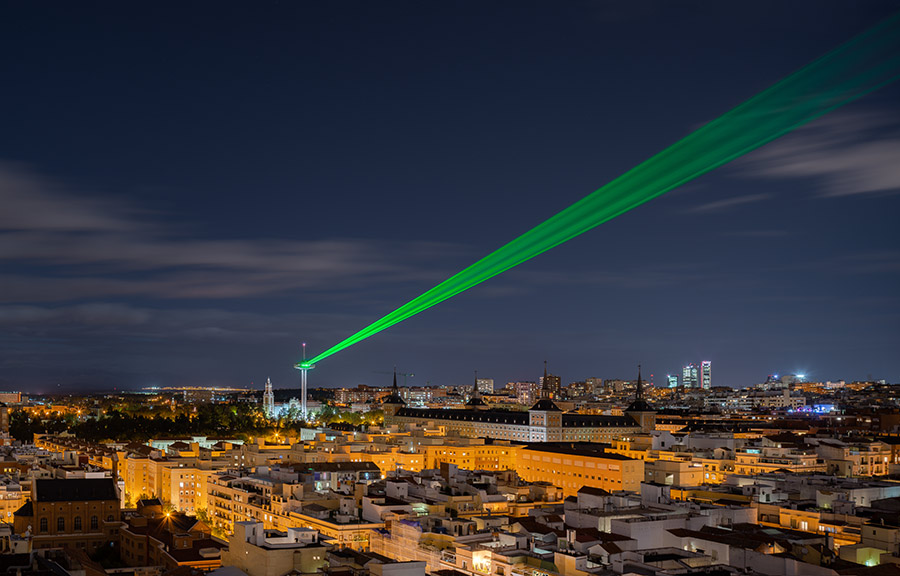
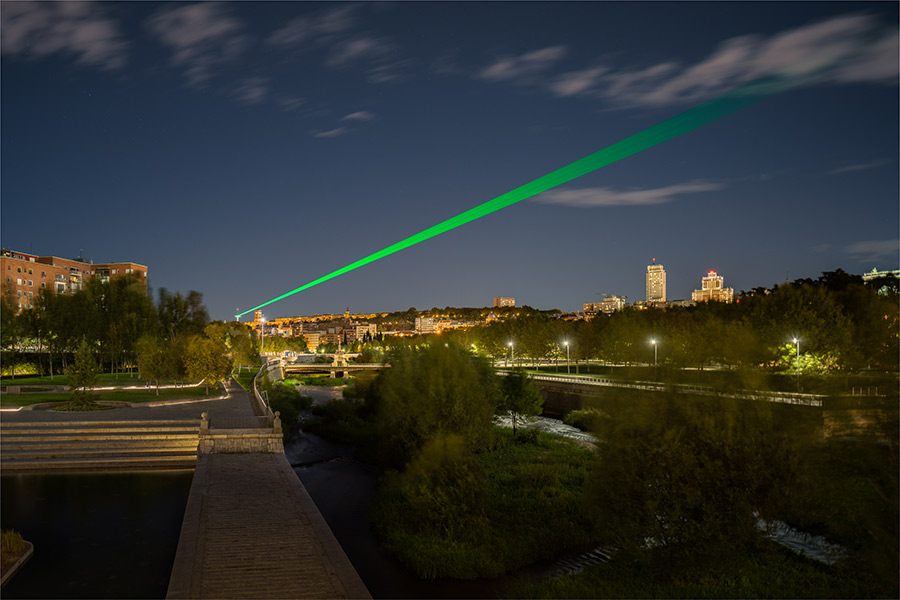
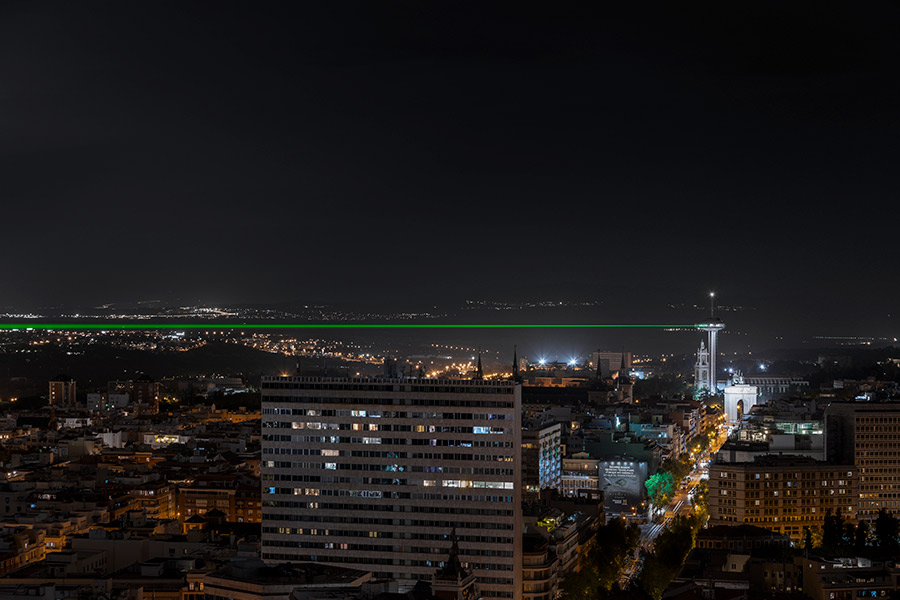
Spanish street artist SpY has been stretching the limits, blurring the lines, if you will, between street art, installation art, and creating “situations” in cities for the last decade. In this new shot across the sky in Madrid, he is decidedly not blurry, but laser-focused.
SpY. “Lighthouse”. Faro de Monocloa. Madrid, Spain. (photo Ruben P. Bescos)
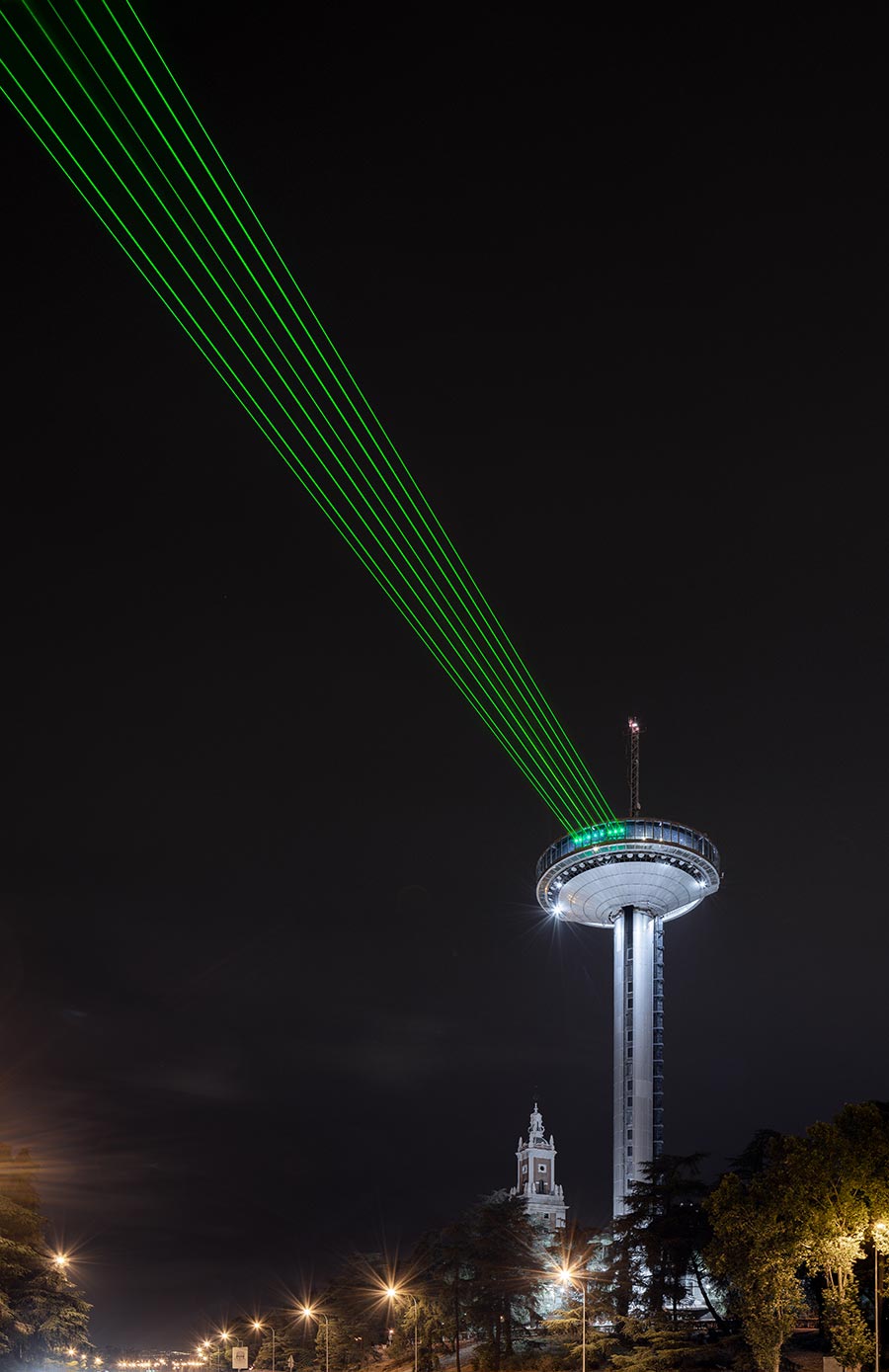
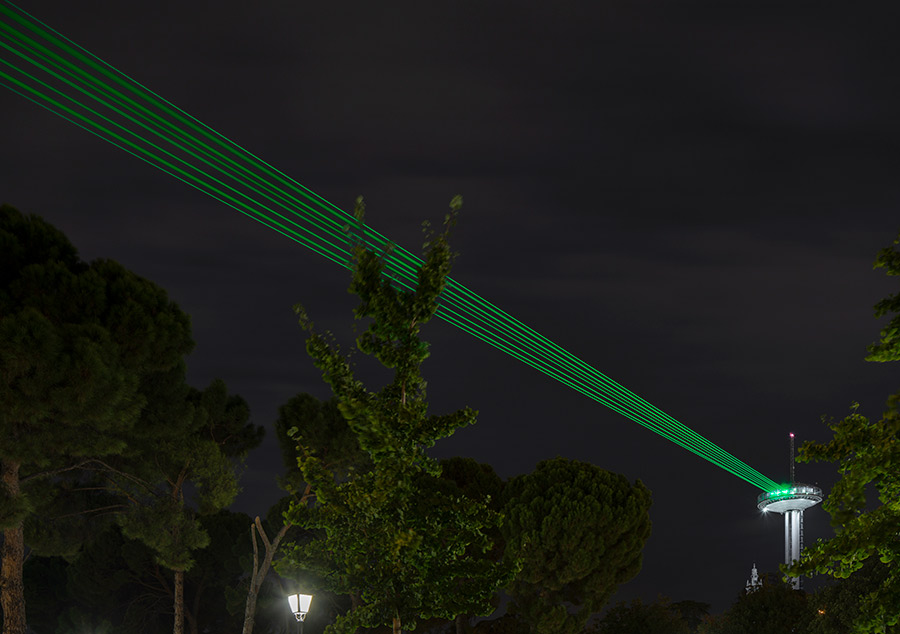
As dusk fell last week citizens saw his newest beams of light bursting from the iconic “Mirador de Moncloa”, causing some on social media to evoke Star Wars comparisons. Perhaps it was the green beams that recollect the early personal computers of all green text on black backgrounds, but to see them streaming steadily, connecting north and south across 10 kilometers, it redefined space and residents’ perceptions of it perhaps.
“The resulting light show is fascinating in its simplicity,” says the artist, “the 8 beams of green light crossing the dark sky, creating a poetic and surprising new visual landscape.”
SpY. “Lighthouse”. Faro de Monocloa. Madrid, Spain. (photo Ruben P. Bescos)SpY. “Lighthouse”. Faro de Monocloa. Madrid, Spain. (photo Ruben P. Bescos)SpY. “Lighthouse”. Faro de Monocloa. Madrid, Spain. (photo Ruben P. Bescos)SpY. “Lighthouse”. Faro de Monocloa. Madrid, Spain. (photo Ruben P. Bescos)SpY. “Lighthouse”. Faro de Monocloa. Madrid, Spain. (photo Ruben P. Bescos)
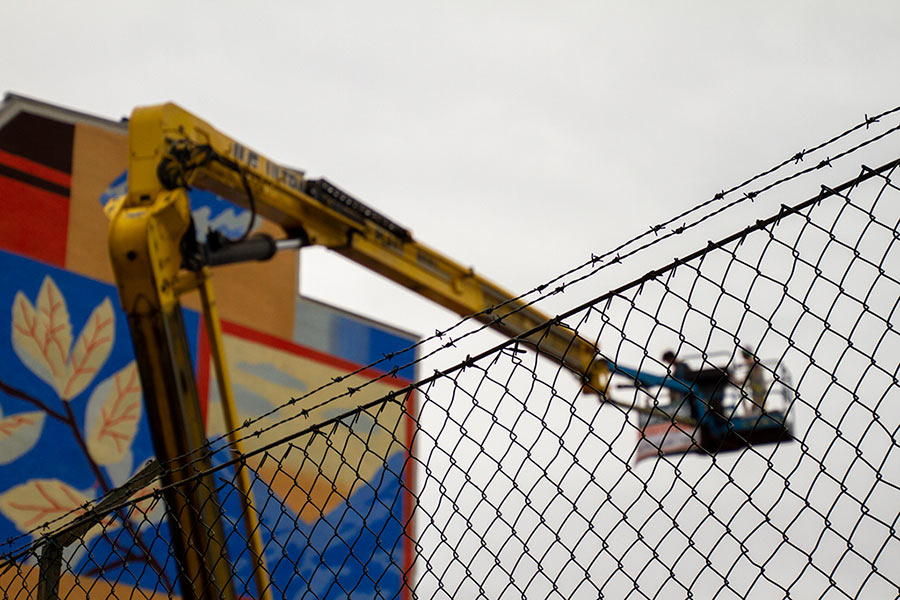
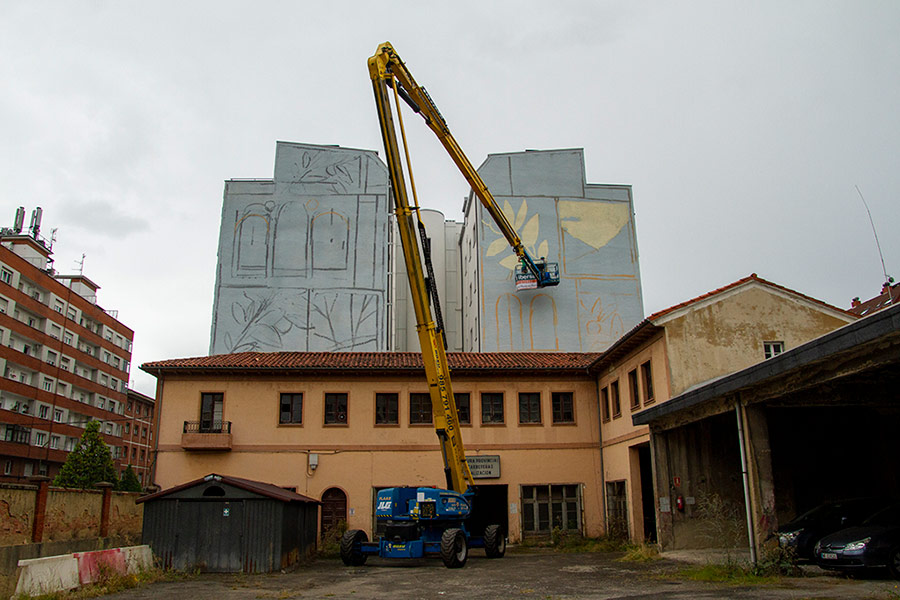
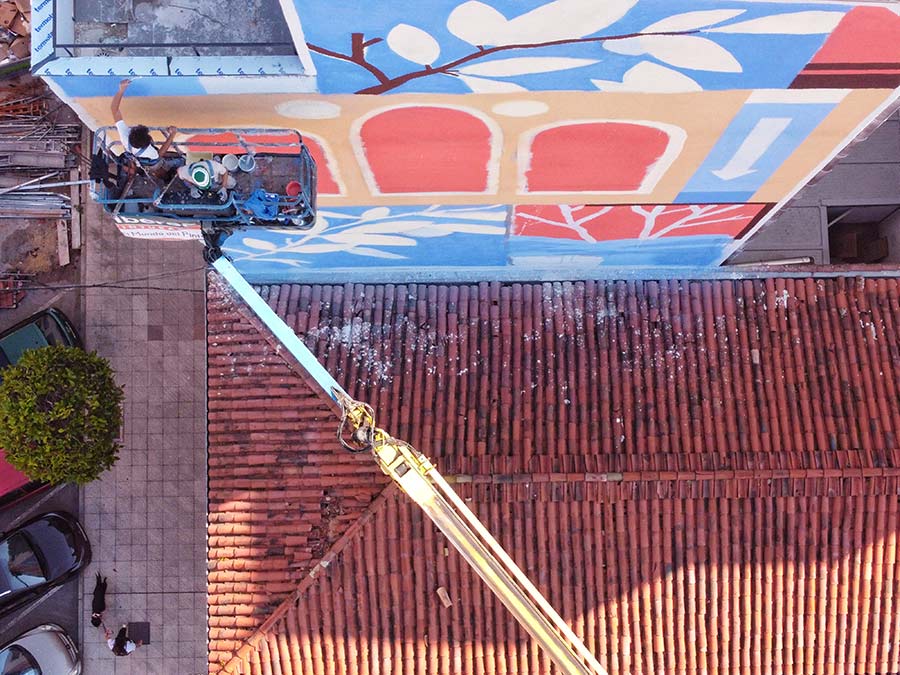
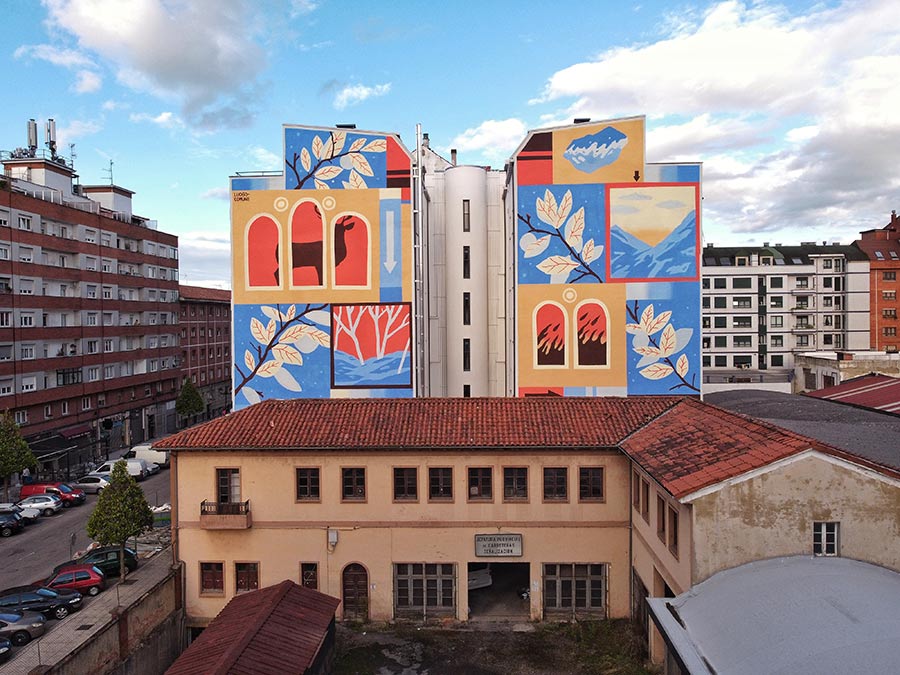
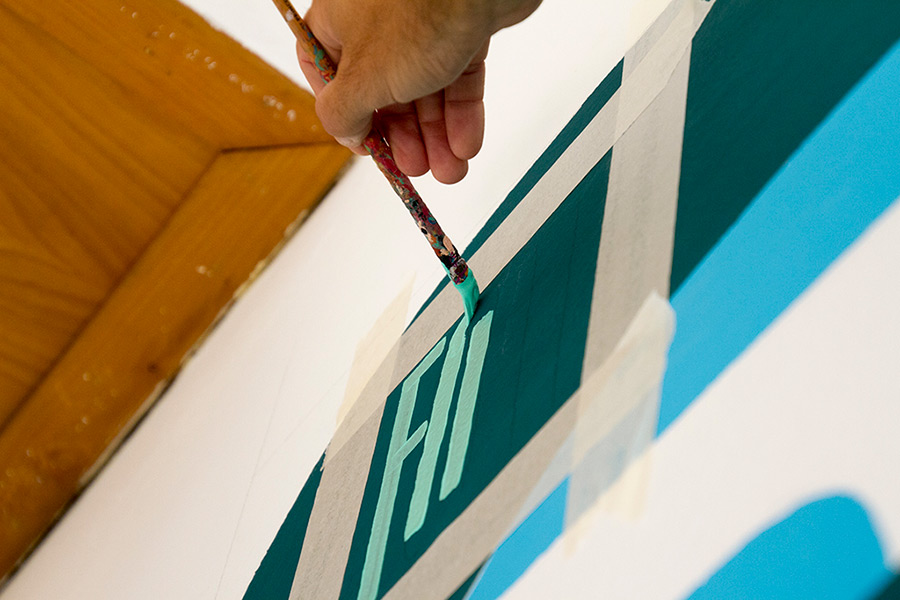
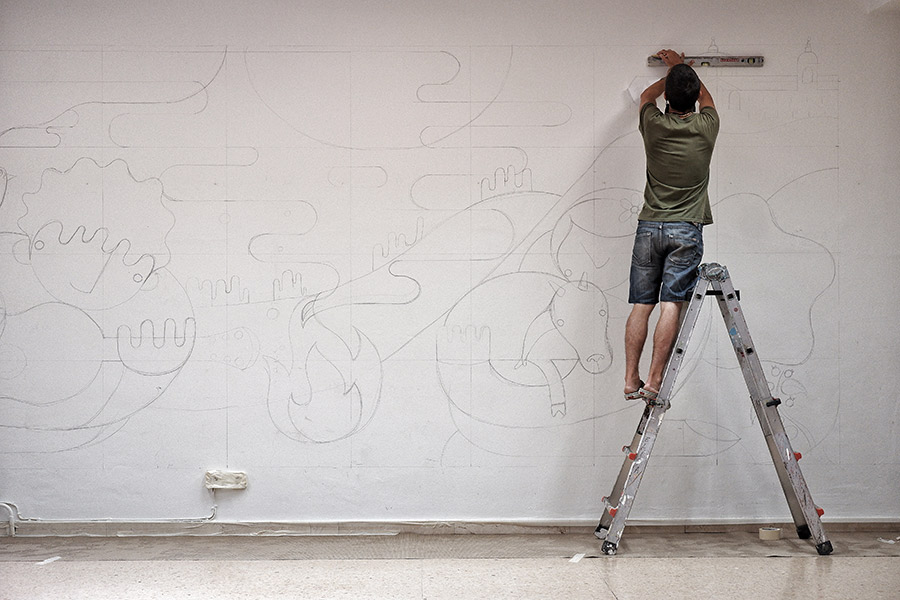
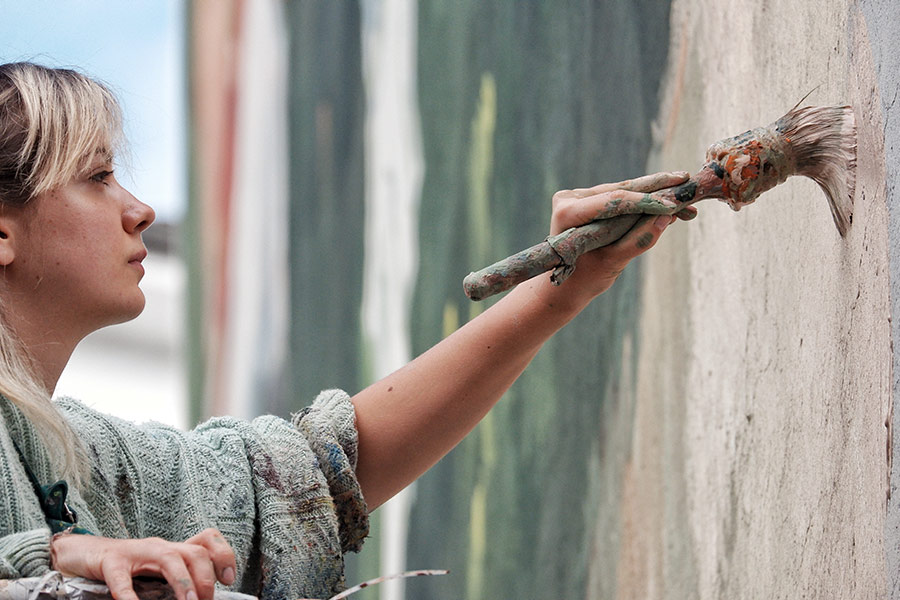
“Beyond the Mural” is the name of a tour program they had this year for the 5th Parees Festival in Oviedo (Asturias, North of Spain). The intention of the tour is to give people a unique up-close idea about what the process is for artists to create. Curious attendees had many questions along the way.
“Beyond the Mural” could also be an appropriate descriptor for the festival as a whole, which has not been content to merely trumpet the arrival of international street art stars with no connection to the culture. True, there are some celebrities mixed in during the five-year period of some thirty large-format murals by local, national, and international artists. Each of them pays tribute to Asturian characters or history and even spread to nearby towns such as Olloniego, Trubia, and Tudela Veguín.
Parees Fest has had many meaningful and lasting achievements in these five years – as evidenced by the number of neighbors, organizations, and specialists who get involved annually. It is a joint collaboration of artists and the community. The results are murals that are always tributes to Asturian characters, traditions, and events, in a unique mix of art and history.
After a severely restricted program in 2020 due to Covid, this year (Sept 13-19) the festival again invited local and foreign artists to focus on Asturian customs and characters, each following a participatory process with the mediation of the artists collective Raposu Roxu.
The themes and personalities grappled with by artists were varied, as are the styles represented on these facades of Oviedo; here you’ll see memories of mining, tambourines that fuse folklore and feminism, the famous Spanish singer and Asturia native Tino Casal, the scientist Margarita Salas and a historical tribute to the San Claudio Faience Factory. Organizers like to say the new works transfer decades of history to our present.
Read below the descriptions of various works as provided by the folks at the 5th Annual Parees Fest. Our special thanks to them and to photographers Fer Alcala and Mirahaciaatras, for sharing their great talents here with BSA readers.
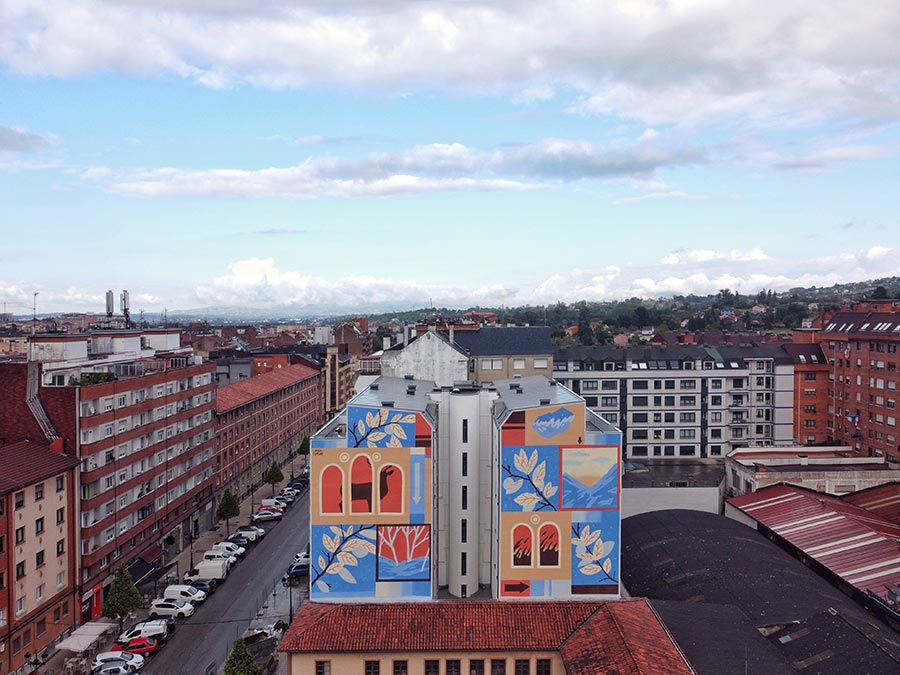
For this edition, the Italian Luogo Comune has painted a huge mural dedicated to Oviedo. The inspiration has been provided by citizen testimonies, the personal stories of dozens of people who participated in the campaign “What do you think makes the city of Oviedo special?”.
The answers to this question, launched by Parees Fest and the City Council’s Citizen Participation Area, were transferred to the artist, who has composed a work that combines history and nature, the pre-Romanesque past and the proximity of the mountain in its iconography.
Among Parees Fest’ Asturian themes, those with literary content stand out, such as the murals dedicated to Clarín or Dolores Medio.
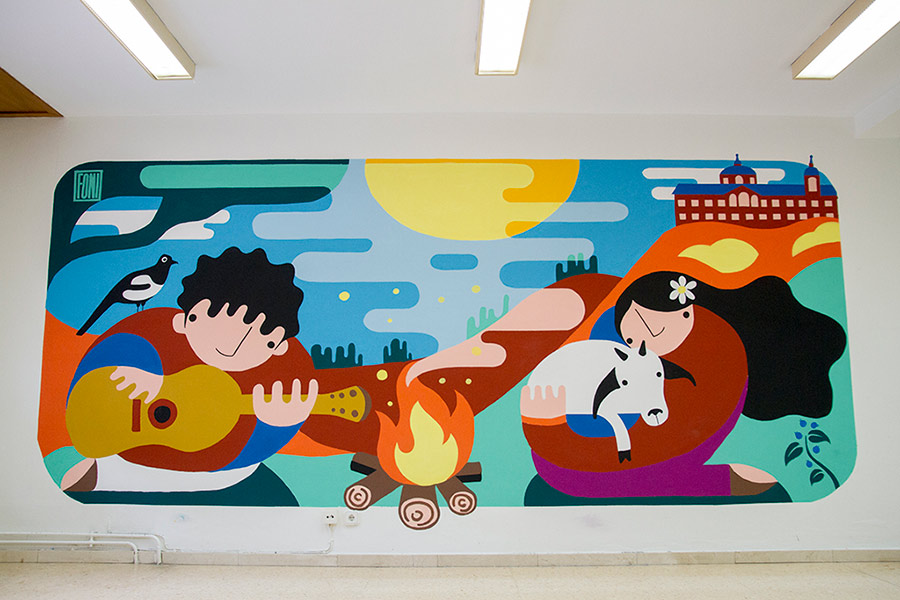
To illustrate the famous story “Montesín” by María Josefa Canellada, a philologist and one of the main Asturian writers of the last century, the Asturian artist Foni Ardao explored the tender relationship between the lost goat and her little caretakers.
A well-deserved honour to the first children’s book in Asturian, written in 1979, where we can see the goat Montesín in the arms of the girl, in the lands below l’Escorial, while the boy plays the guitar with his friend the magpie on his shoulder. Surrounded by nature and heated by a fire, the characters convey a lot of peace and sweetness.
Foni added to his mural a tribute to his mother, Margarita, who died just over a year ago, represented by the flower bearing her name in the girl’s hair.
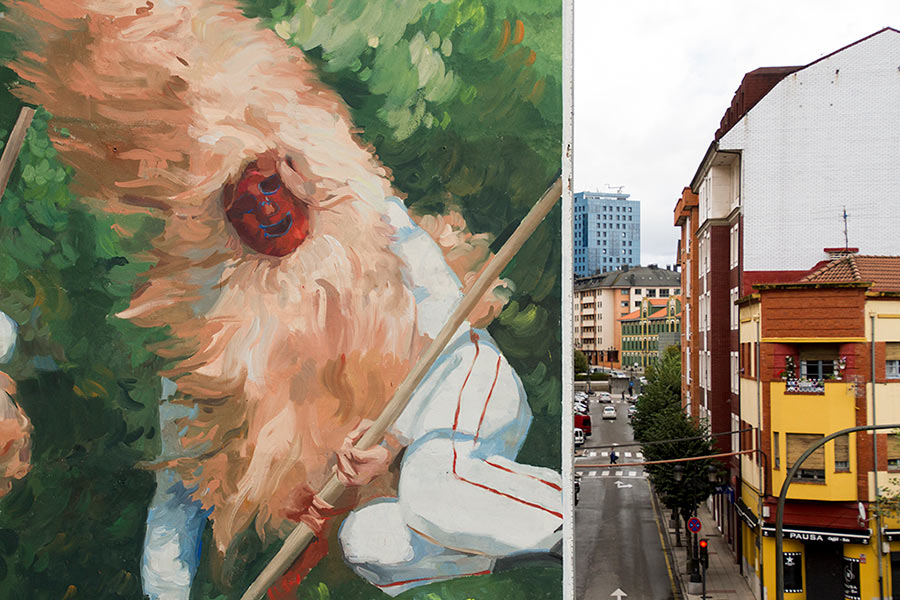
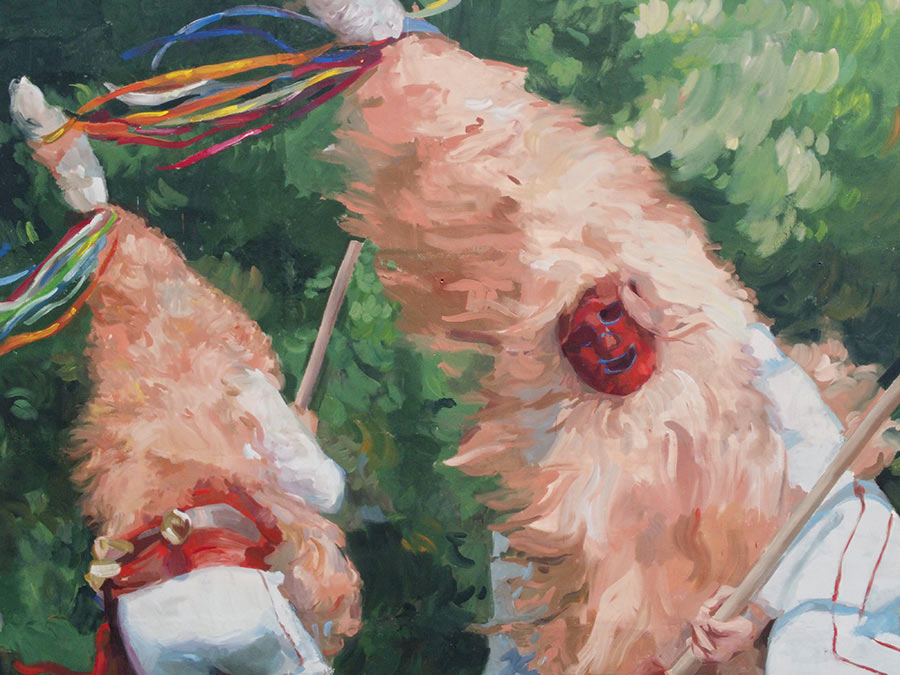
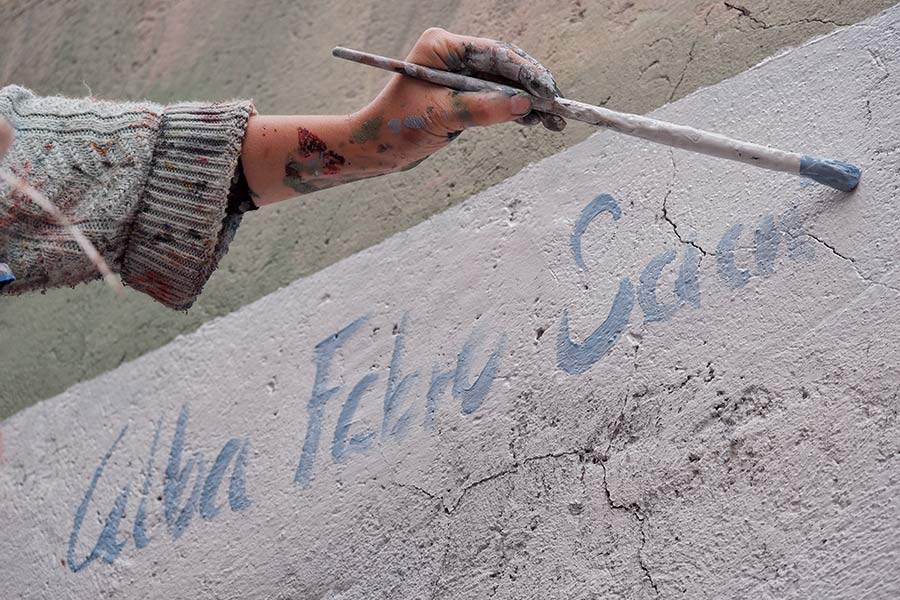
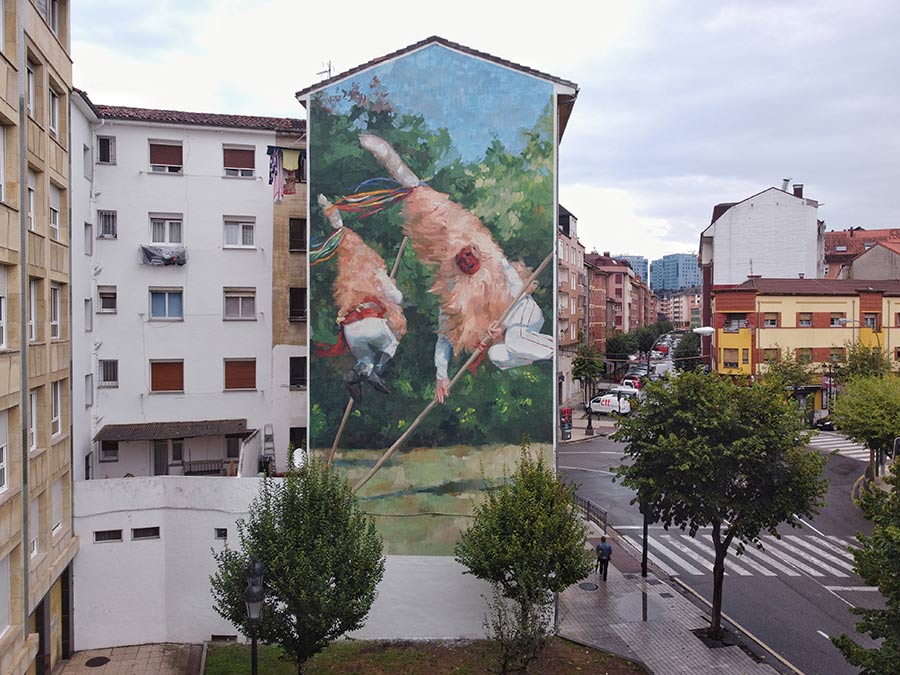
The Catalan artist Alba Fabre Sacristán created an exquisite impressionist mural, where light and movement draw the figure of two “Sidros” captured in full jump.
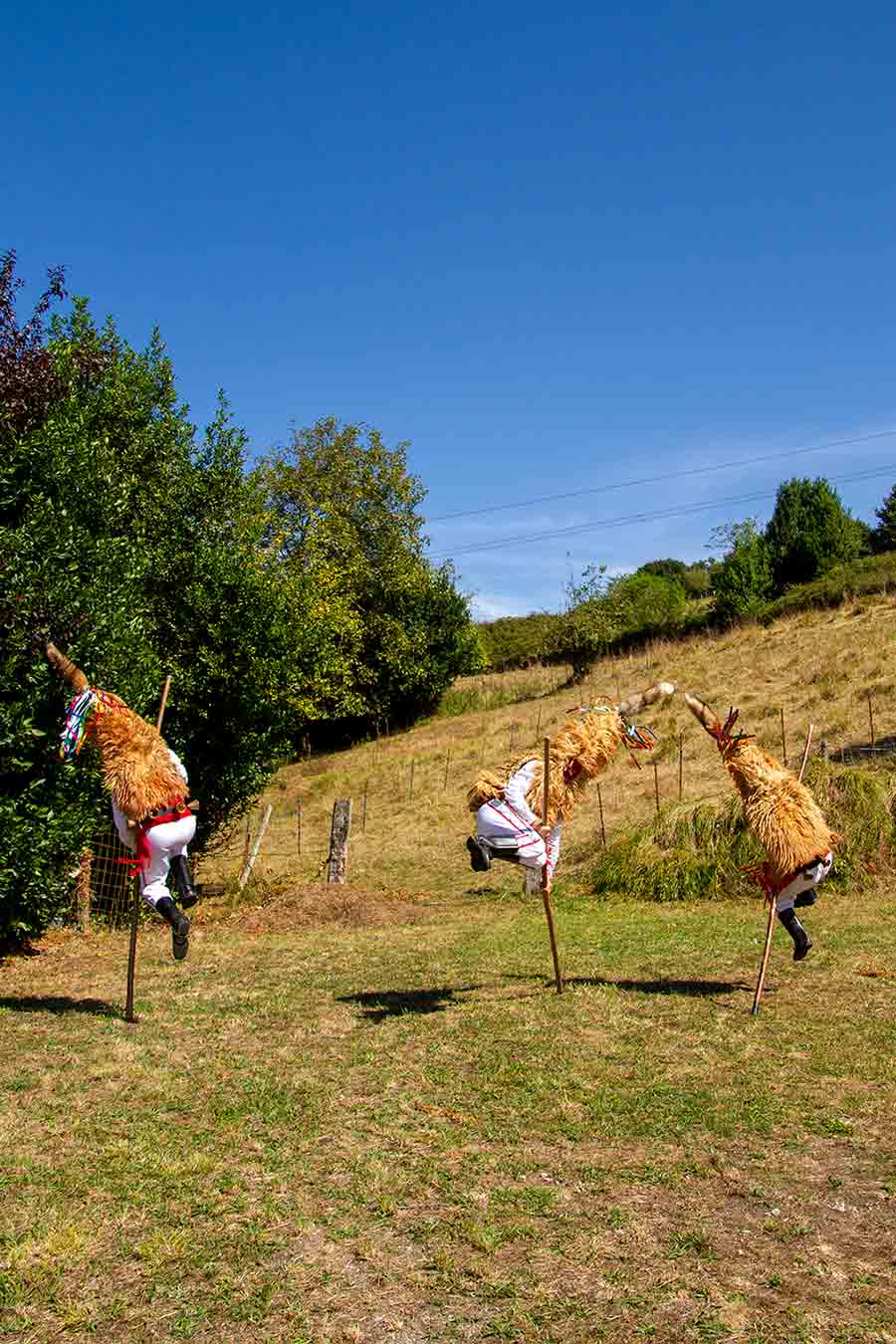
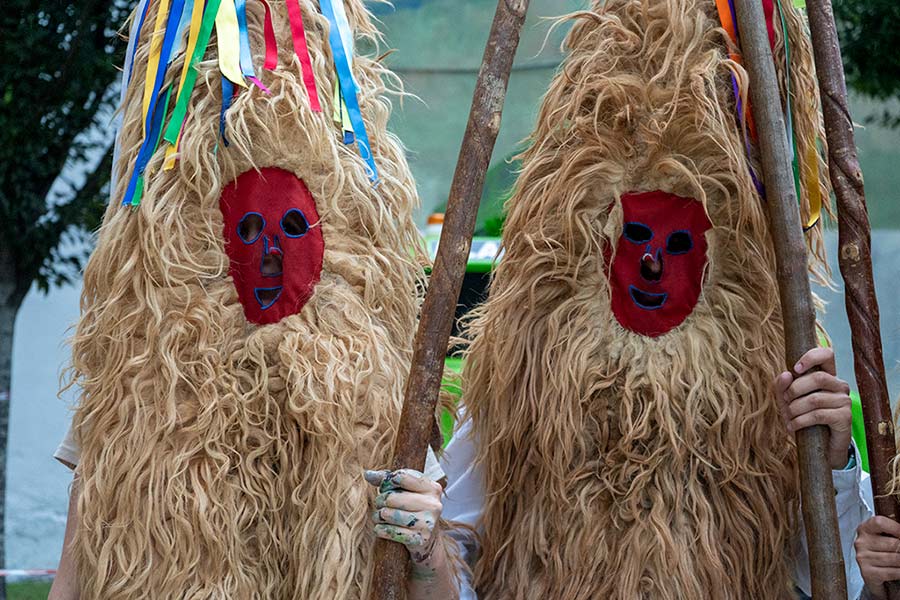
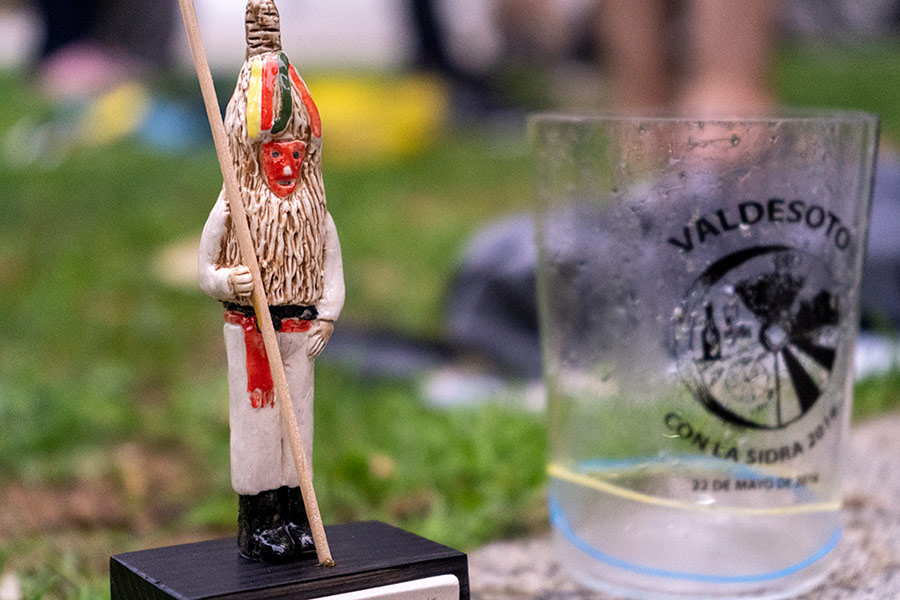
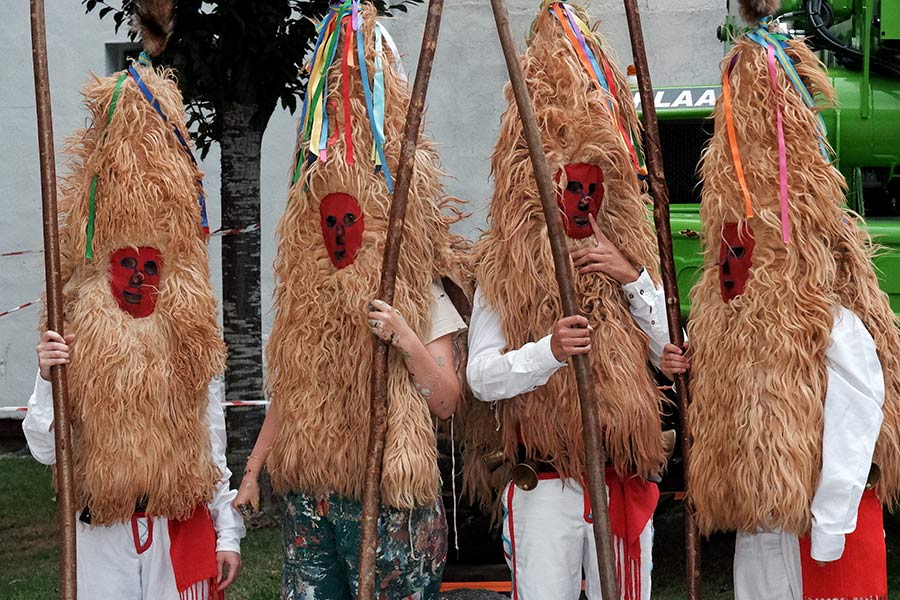
The “Sidros” and the “Mascaradas de Invierno” are Asturian and pagan traditions. Members of these groups (traditionally men, but some women can wear the costume since 2019) are celebrating jumping, dancing, making noise with cowbells, and with improvised sarcastic comedy about what happened in the village during the year. This ritual existed in various places, but almost disappeared with Franco.
It’s related to Winter’ solstice, fertility and the beginning of adulthood for young men. On the contrary of Carnival, masks are not to hide, but to show the archetypes of the characters of the comedy (the ugly ones, the handsome ones, animals, natural elements…)
The artist met the association Sidros y Comedies El Cencerru before, during and after the process of the mural in order she could perfectly understand the background and the stories behind theses costumes (she could even wear one and dance with the “Sidros”).
The Primitive “Camino de Santiago”, different from the busiest French Way, starts in Oviedo and takes pilgrims to Santiago de Compostela. In 2015, it was recognized by the UNESCO, along with the “Camino del Norte”, as a “World Humanity Heritage Site”, the highest distinction that a cultural asset can receive.
It is a magnificent route that crosses Asturias and Galicia, but is also known for its difficulty, due to the peculiarity of the landscape (all guides recommend an advanced level of hiking).
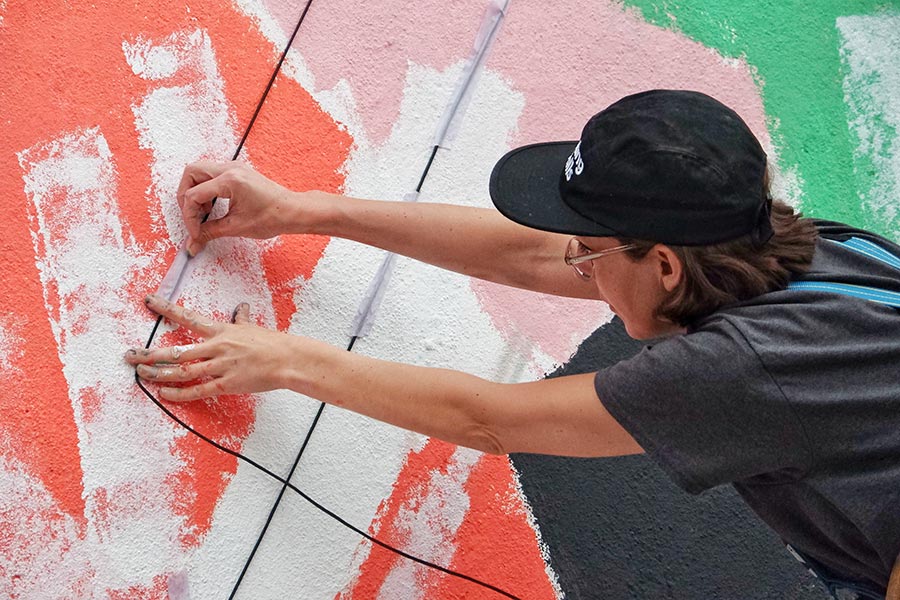
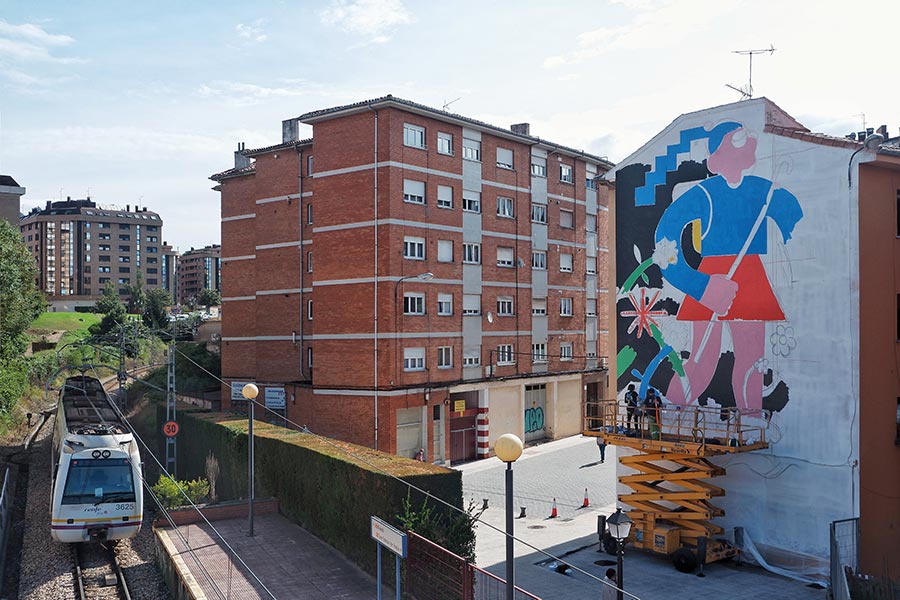
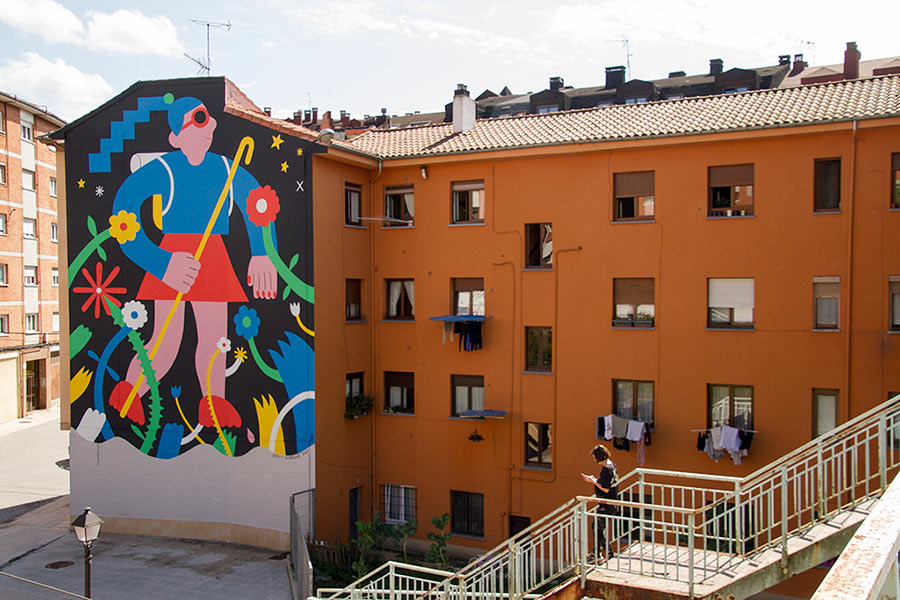
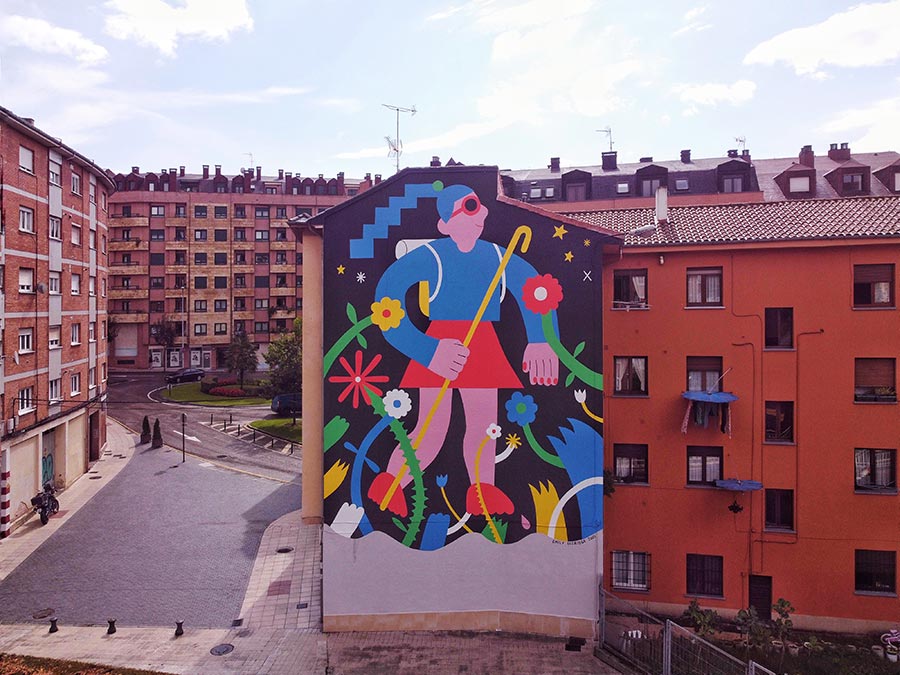
The American artist Emily Eldridge created after some meeting with historians a mural full of colours, representing a “modern” pilgrim, with a skirt and painted nails, walking happily towards her next stage. Perhaps a way to remember that, although originally those who ventured on the Camino were men and devotees, today it is also an international destination for all nature lovers.
In this portrait, you can see flowers, but also thorns, and a hairstyle in the shape of a ladder, which recall the beauty and harshness of this Camino.
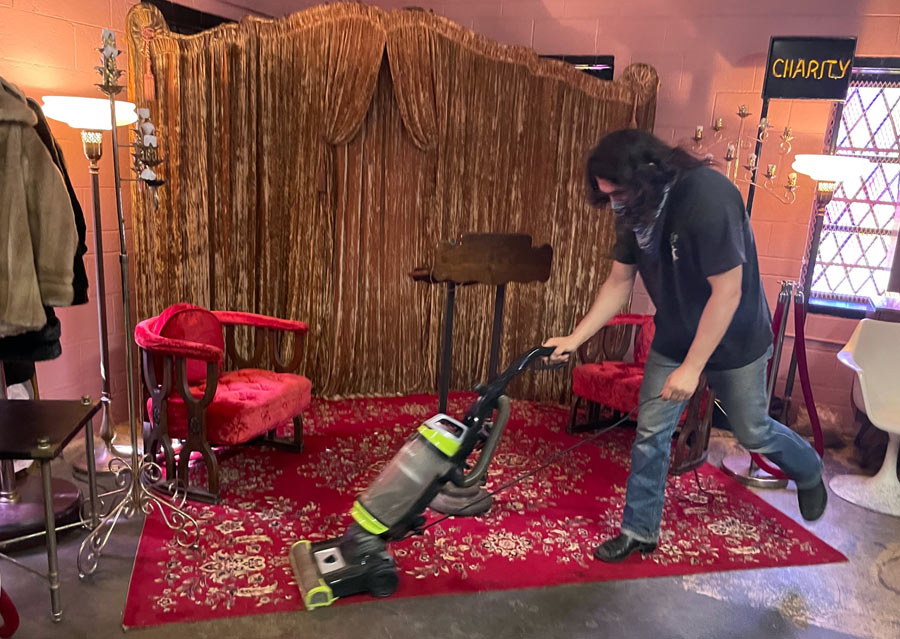
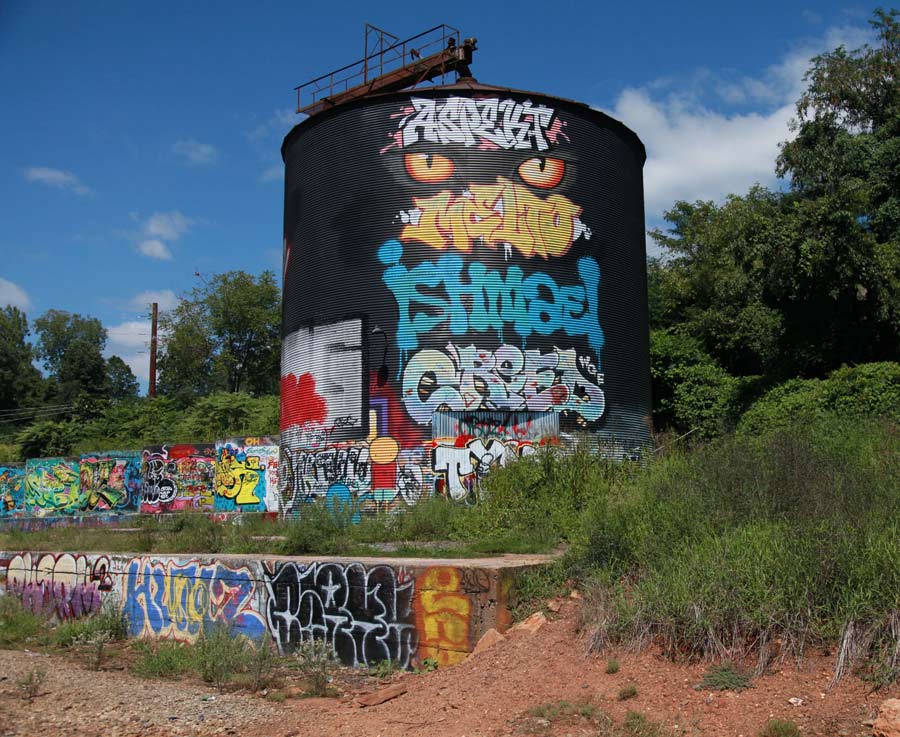
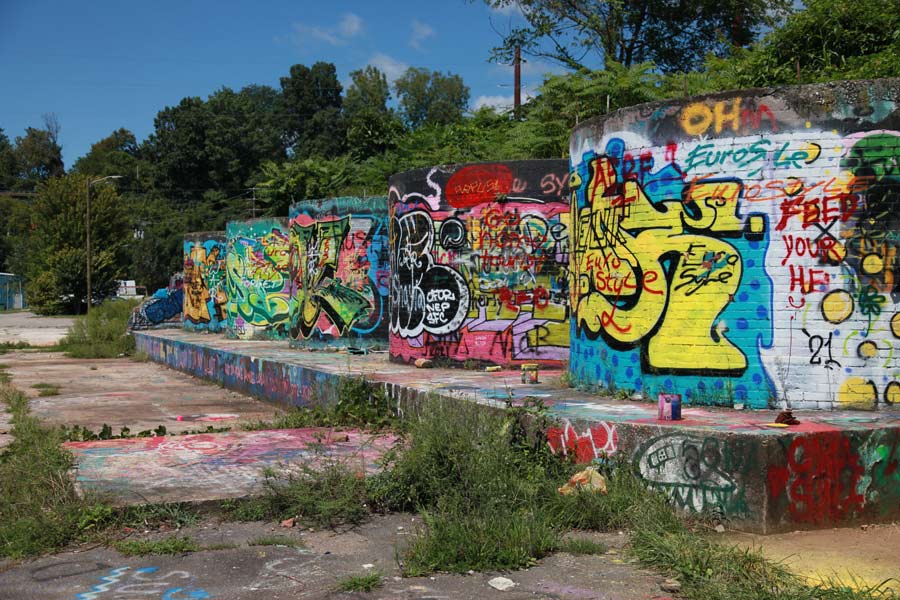
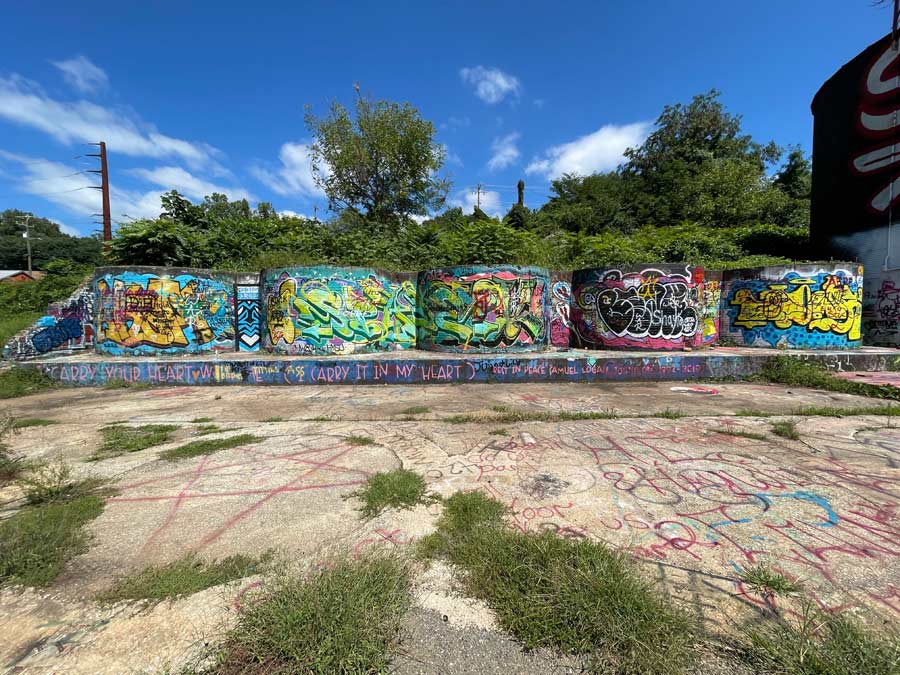
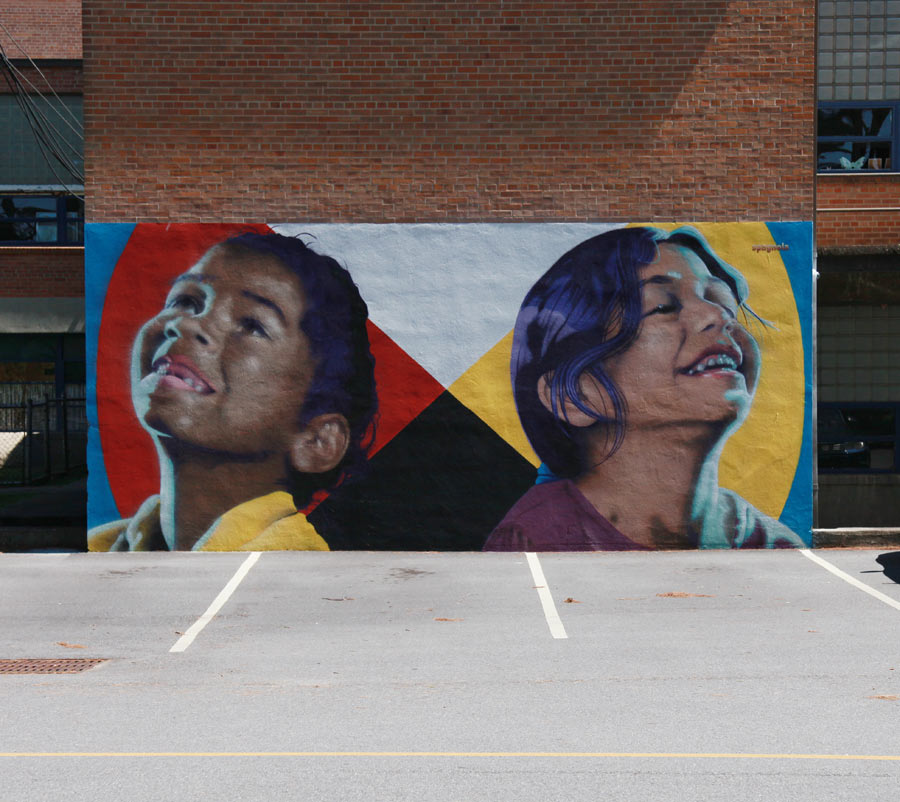
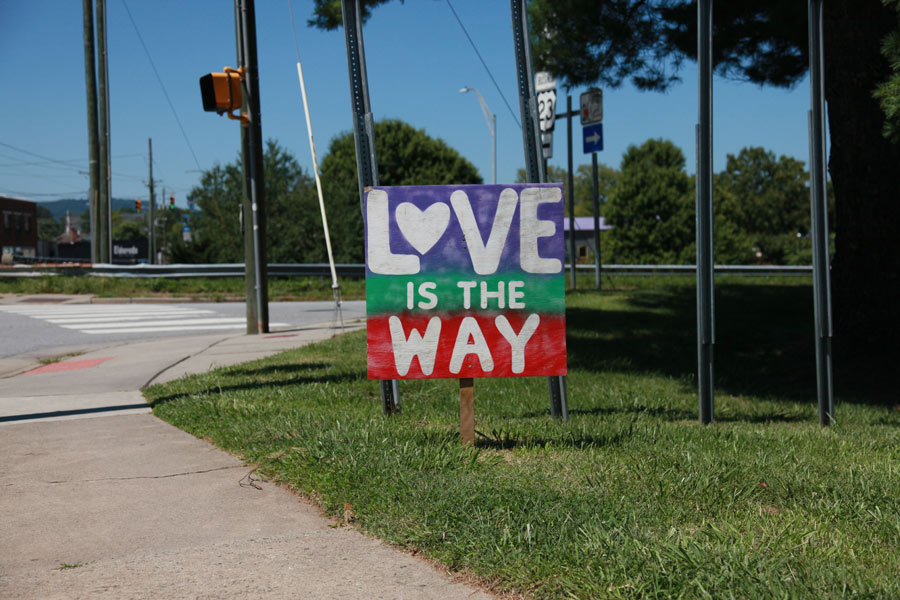
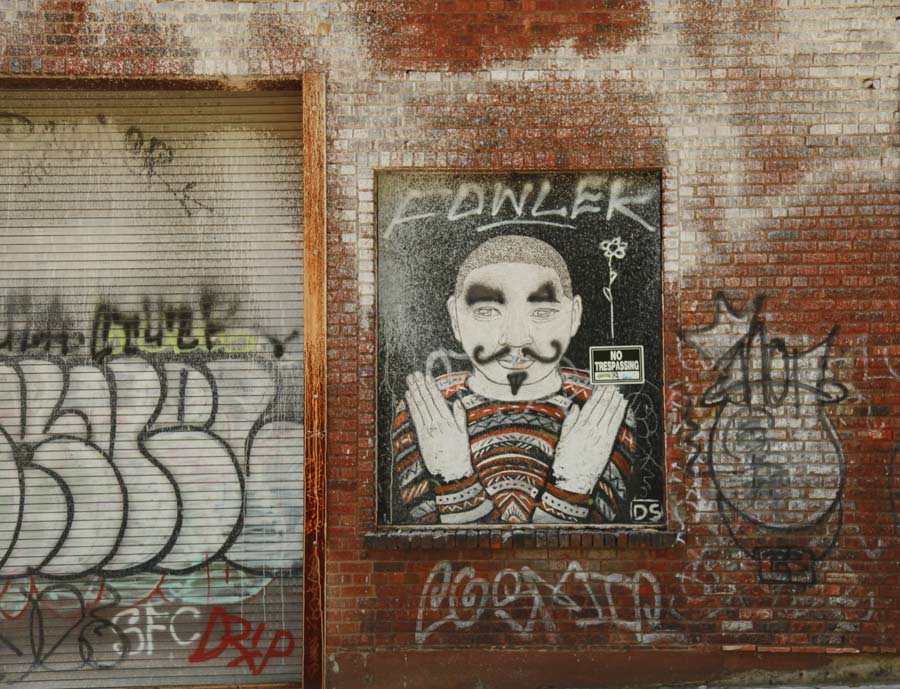
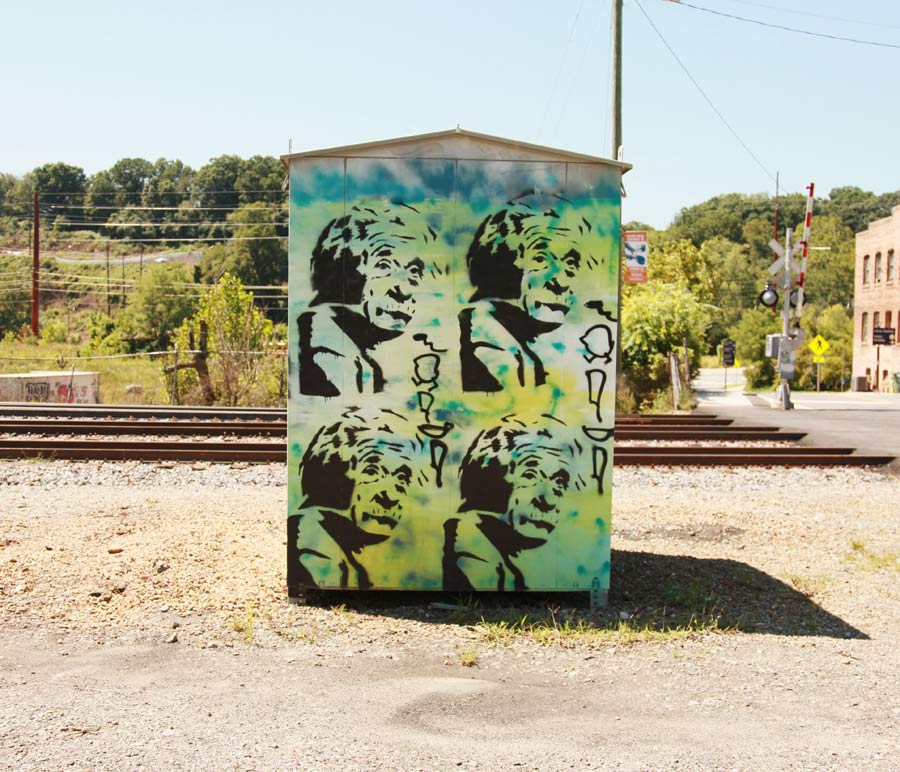
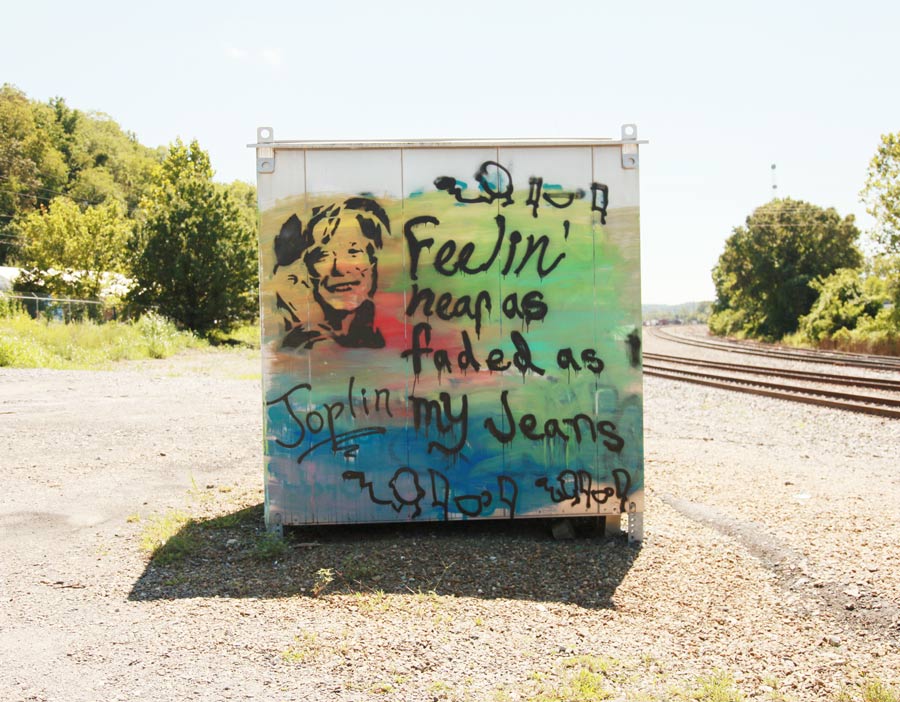
“I am not that, sir,” he answered, “I’m the vacuumer.” Our short tour ends abruptly as the loud whir of the cleaning machine rises to meet the southern-fried rock classic on the sound system here at Fleetwood’s in Asheville, North Carolina. Ours, and his, is a quick sweep through this small city of 90,000 in the Blue Ridge Mountains known for its progressive ideas, punk squats, Thomas Wolfe, and a harmonious alliance between sanctioned murals, organic street art, and graffiti.
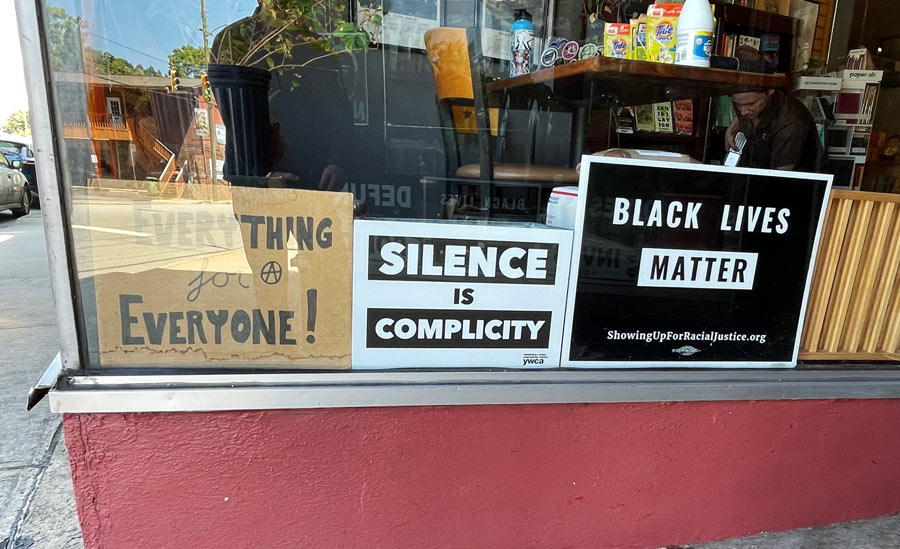
En route through town to the edge of the French Broad River, which flows 218 miles northeast from Rosman, NC up to Knoxville, Tennessee, we see the signposts of hippie/skater/crafter/artist community along the two laneway. Here’s a coffee shop, there’s an art gallery, over there is a radical bookstore with Black Lives Matter signs in the old plate glass windows.
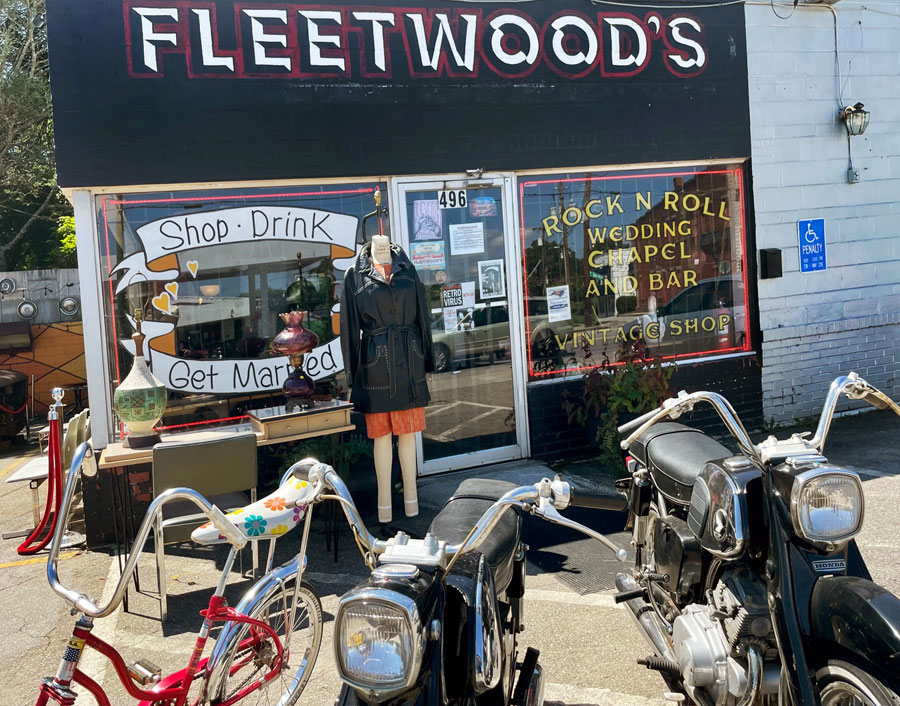
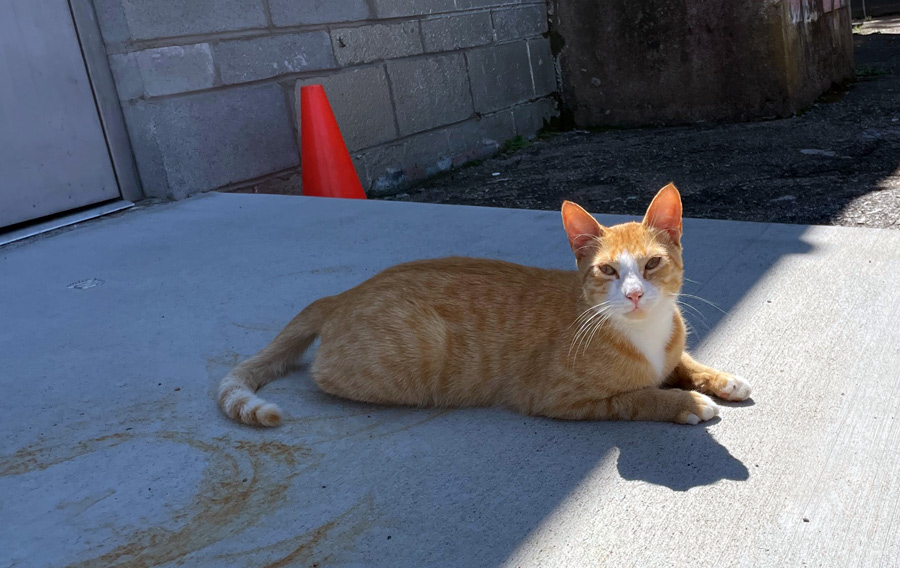
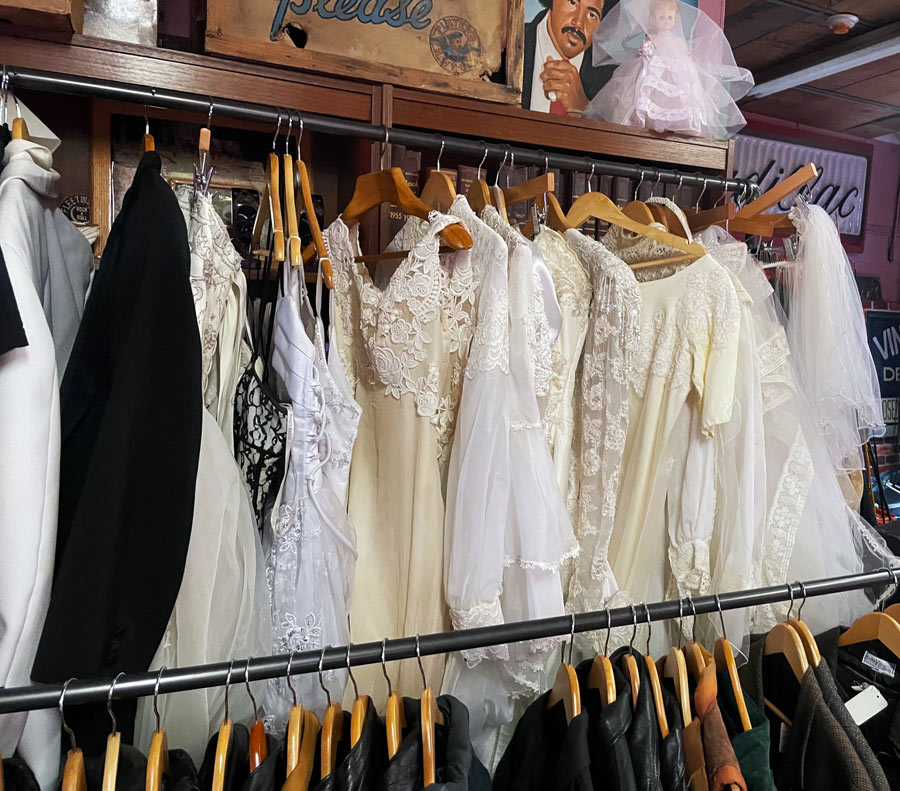
Here at Fleetwoods’, you can rummage around vintage ceramics and fur-collared coats, and belly up to the small bar, and of course, get married. Advertising itself out front as a Rock N Roll Wedding Chapel and Bar, they are happy if you come to shop, drink, and get married – after passing the motorcycles, banana seat bicycles, and long thin cat laying in the sun near the side door.
On one clothing rack near the gold velvet chapel, there is a wide selection of used wedding dresses to rent for the occasion.
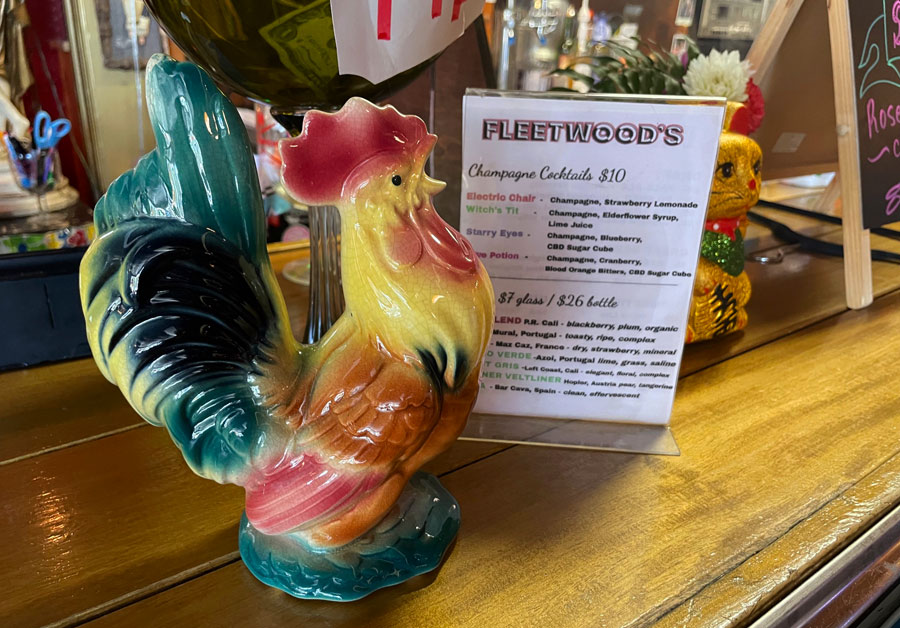
“Usually there’s a few a month,” says the friendly vacuumer. “Sometimes there’s a few a day. In fact, we got one coming up at 2 pm if you want to see it.” It’s certainly tempting, and the porcelain rooster on the bar points to the cocktail sign, where you can order an Electric Chair, Witch’s Tit, Starry Eyes, or, most appropriate, a glass of Love Potion, made of champagne, cranberry juice, blood orange bitters, and a CBD sugar cube.
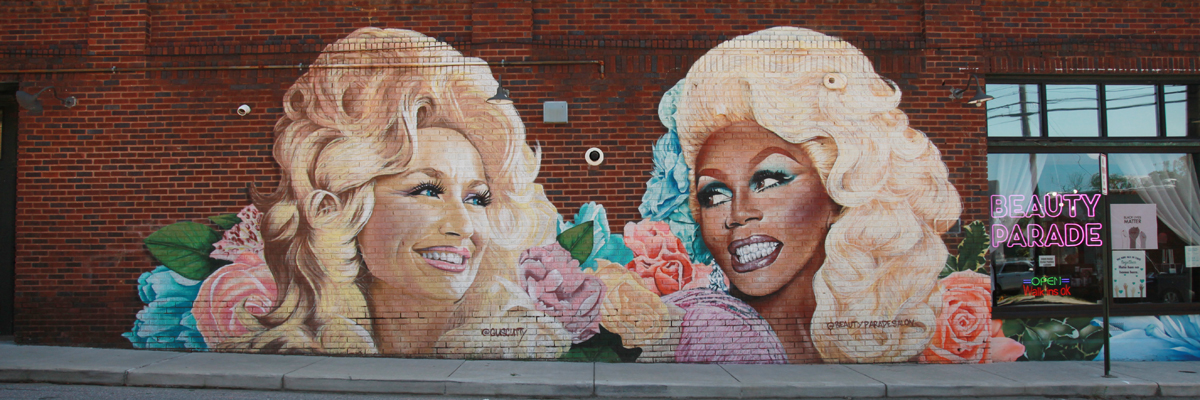
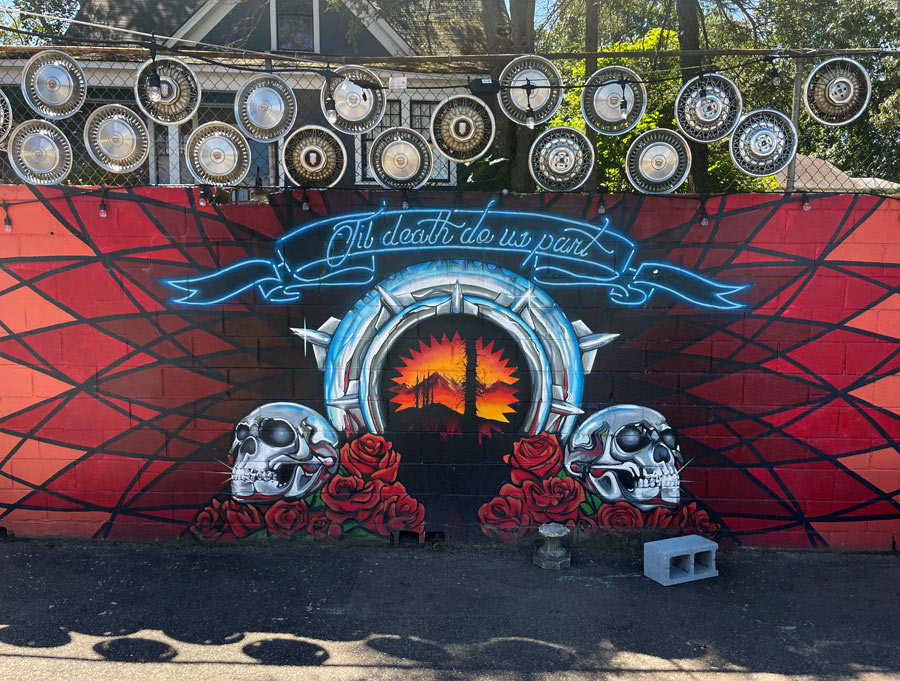
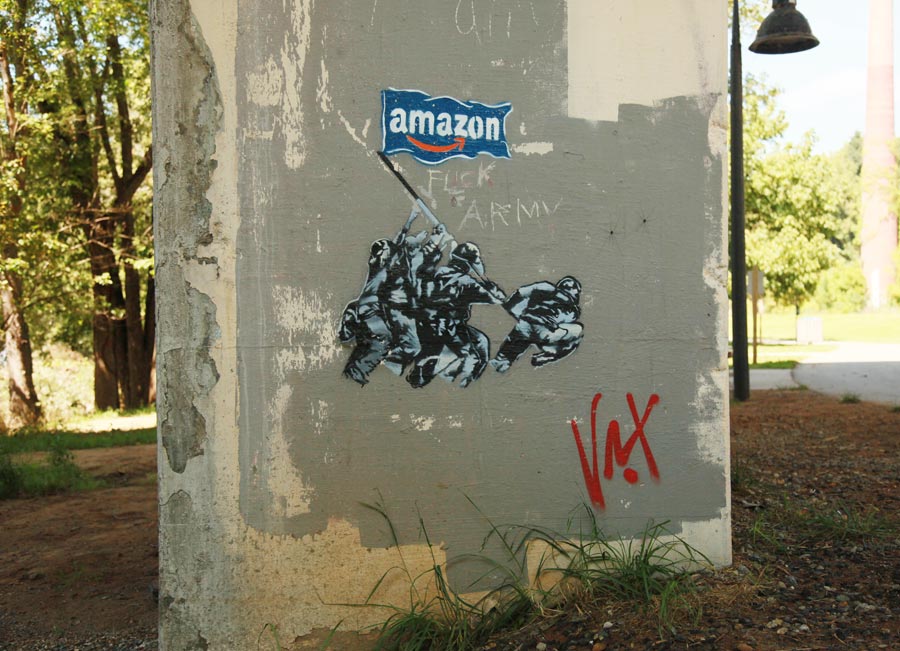
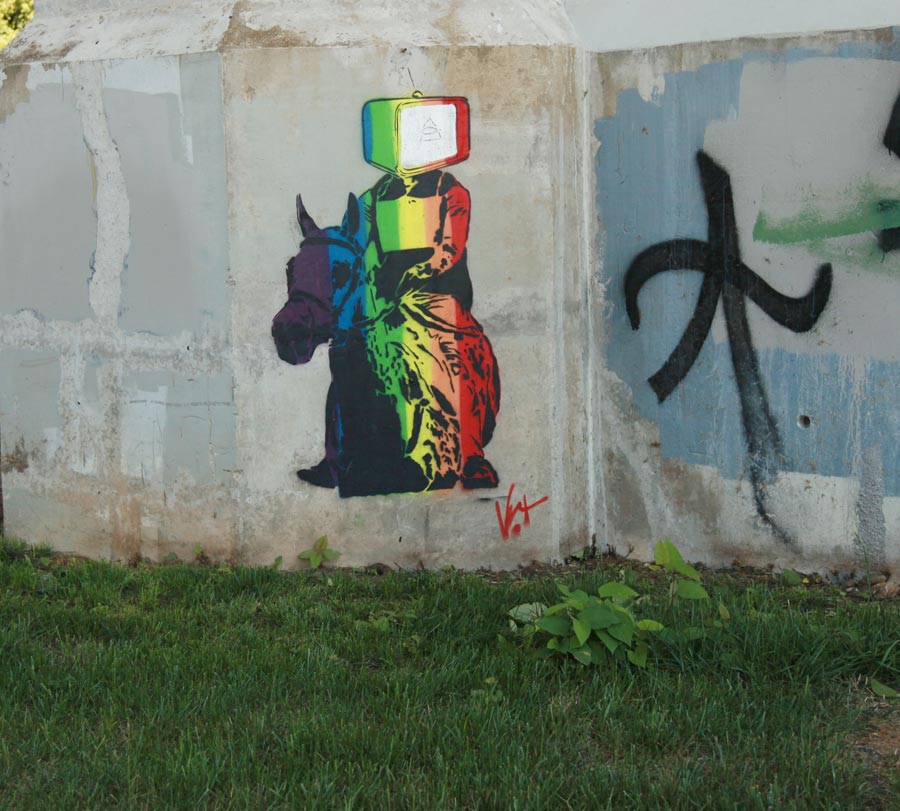
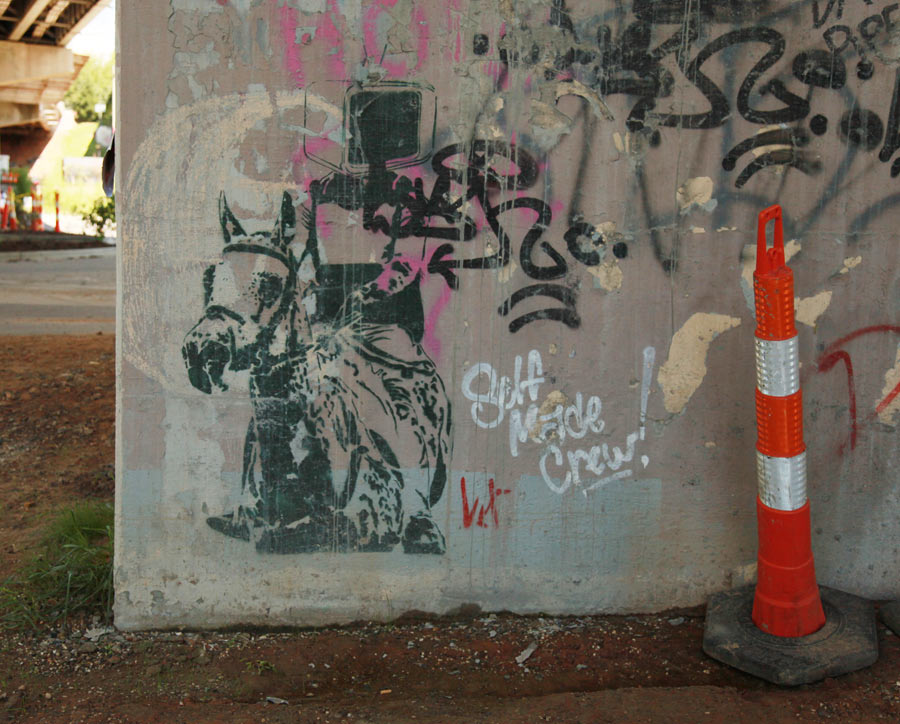
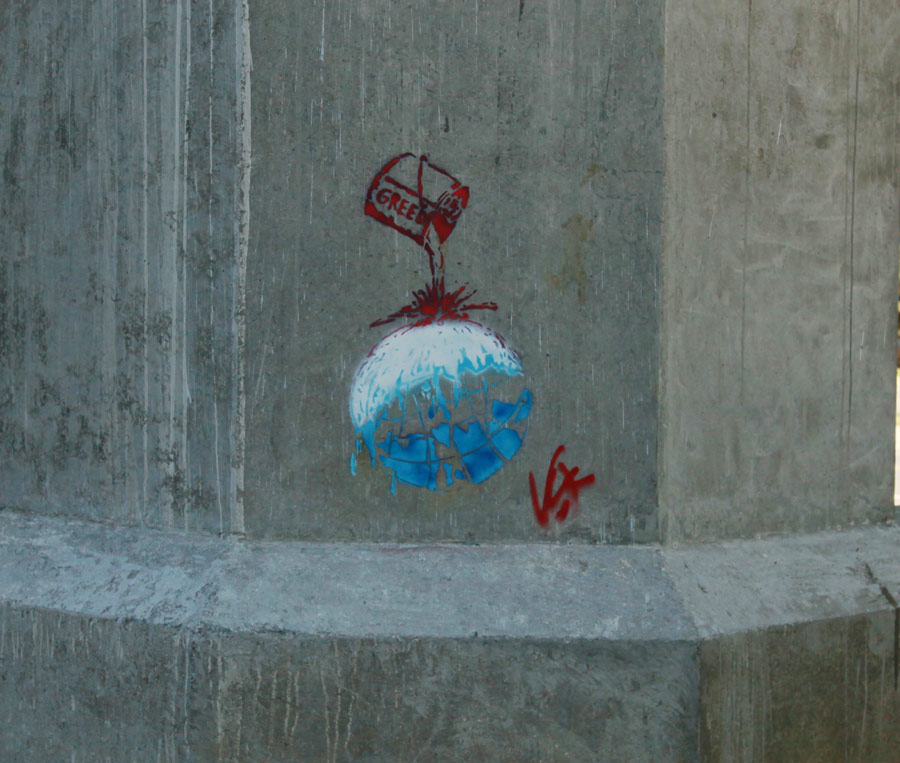
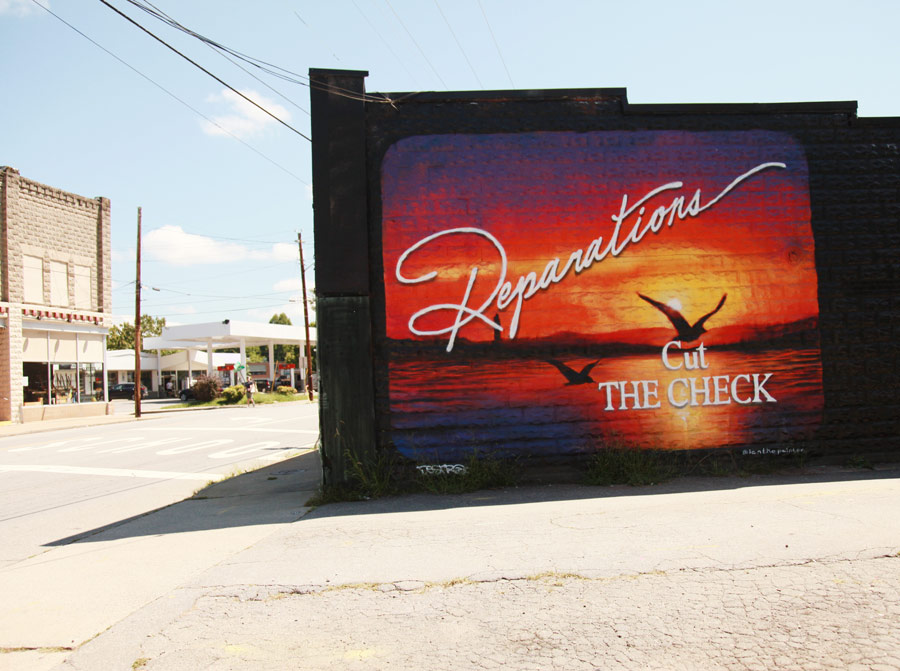
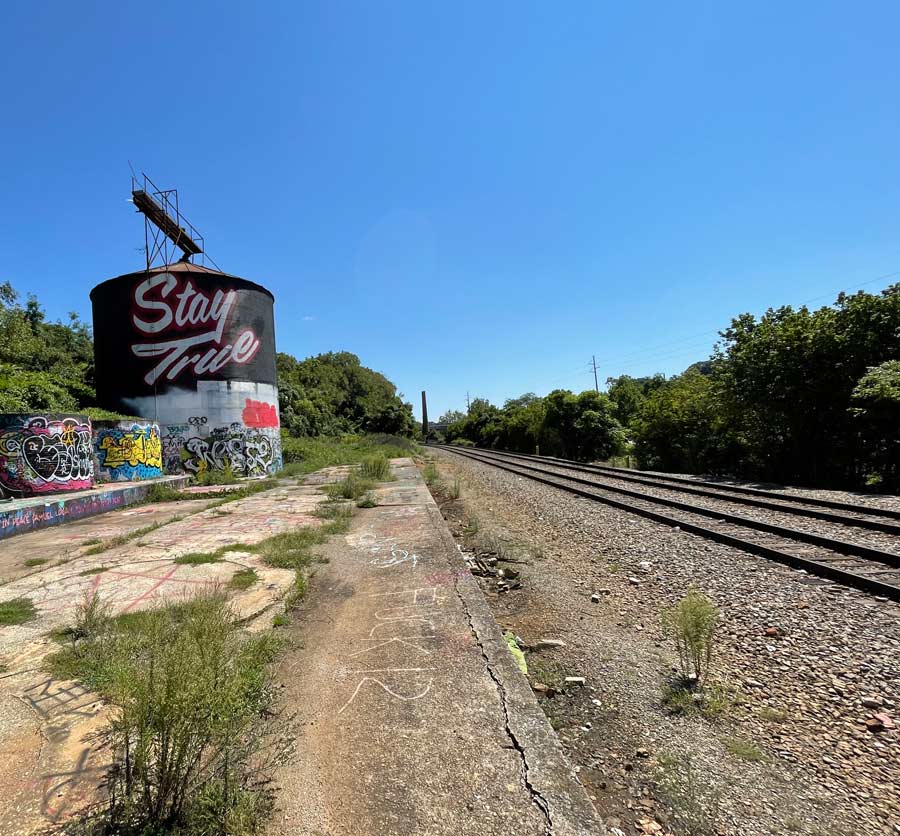
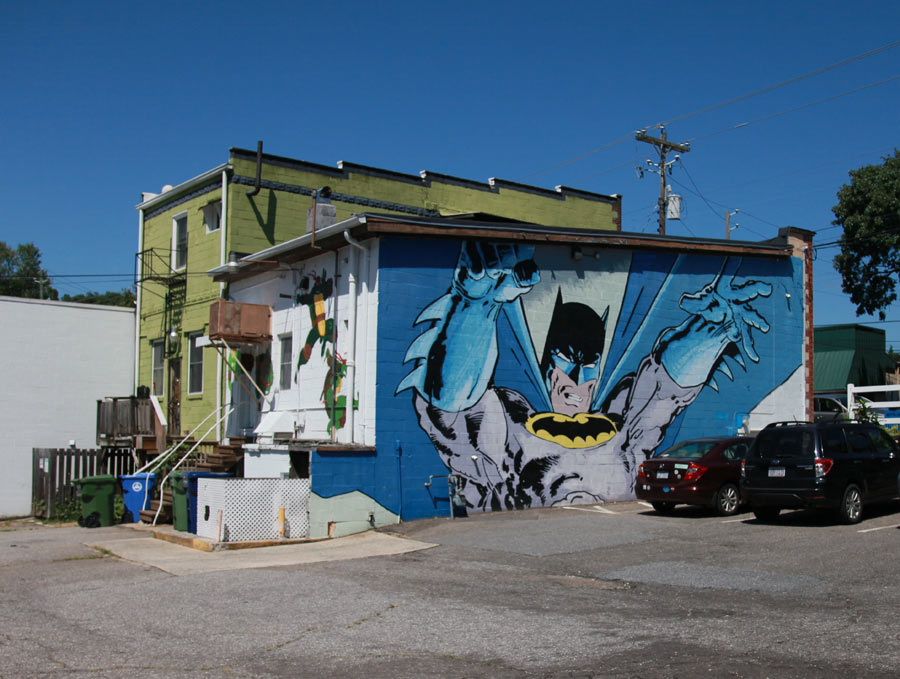
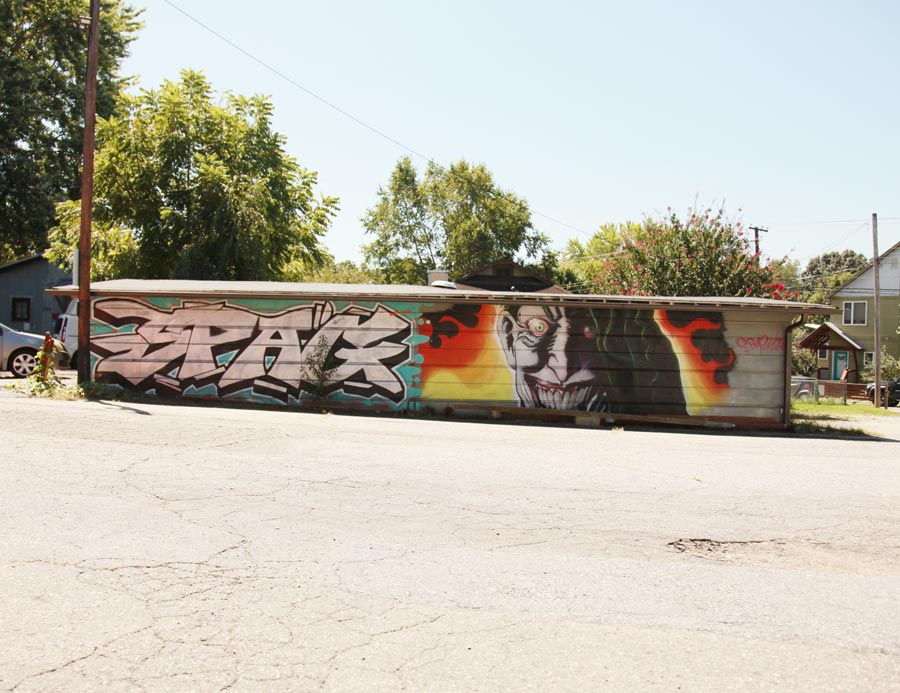
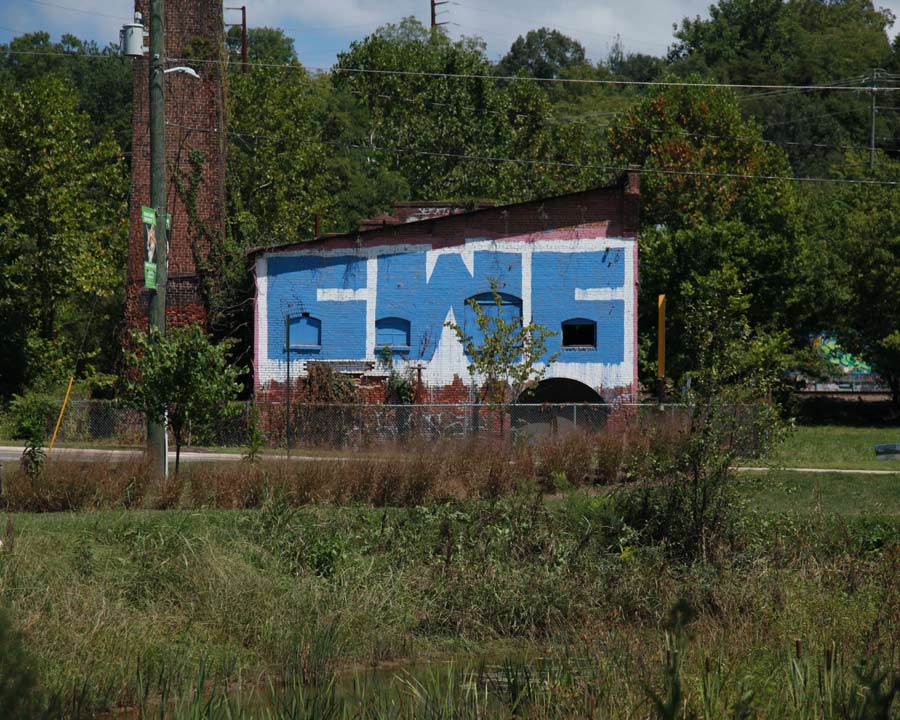
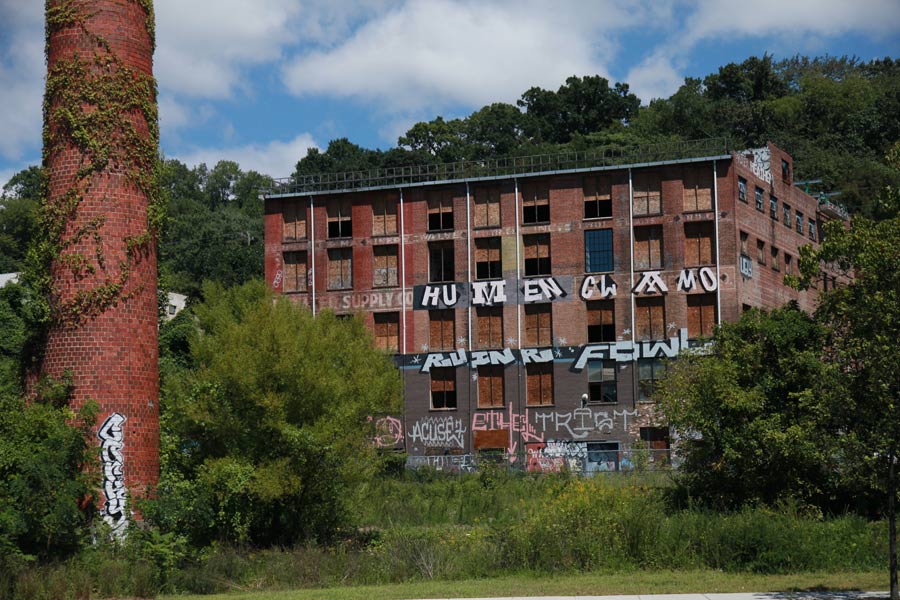
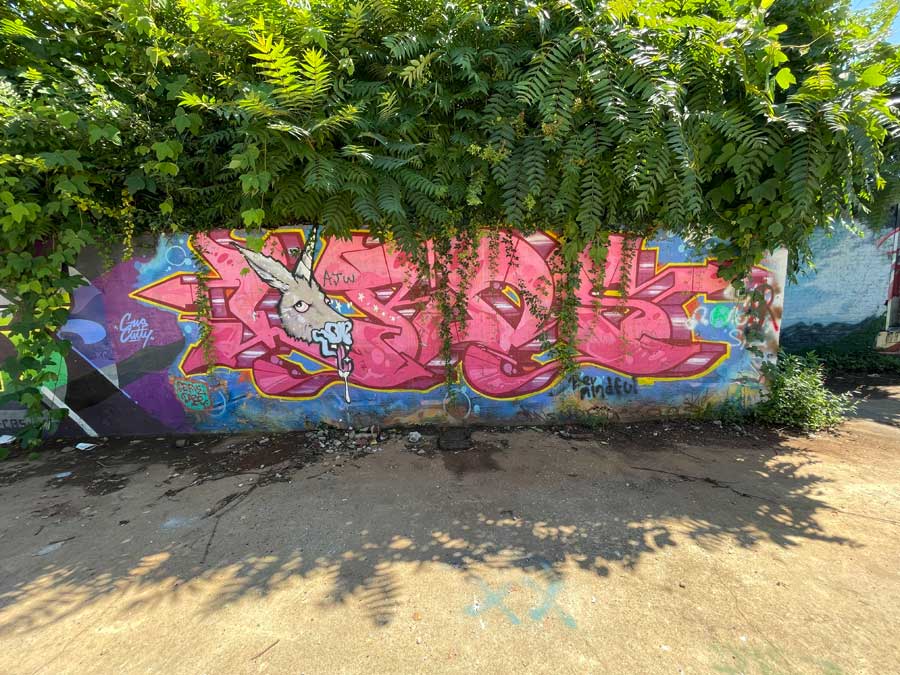
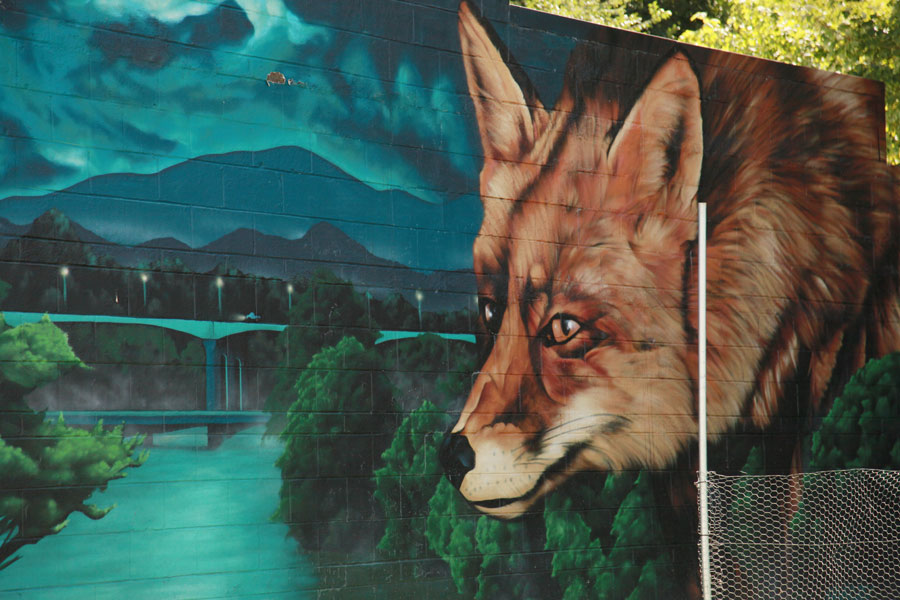
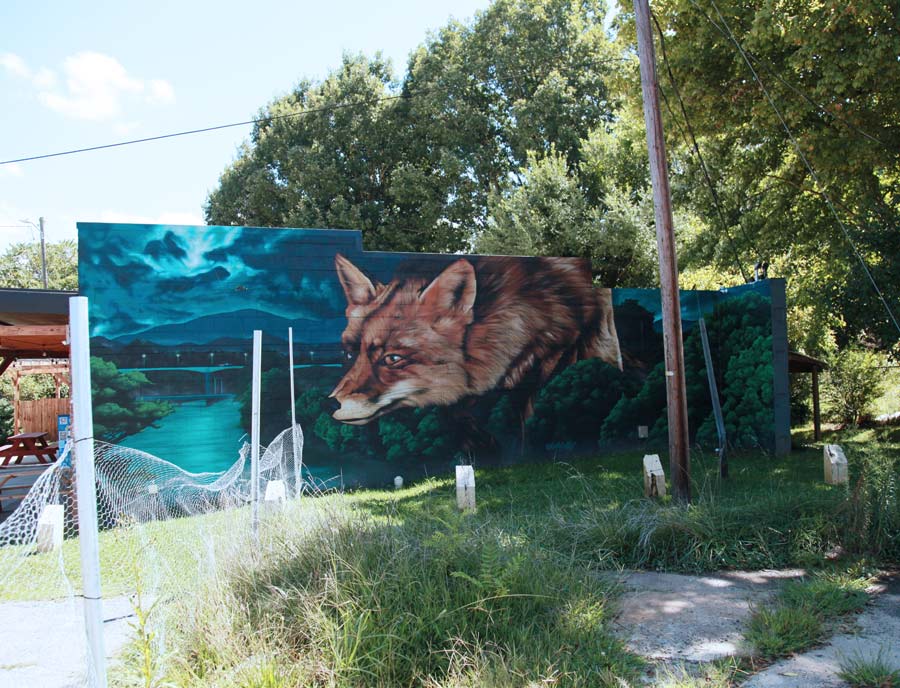
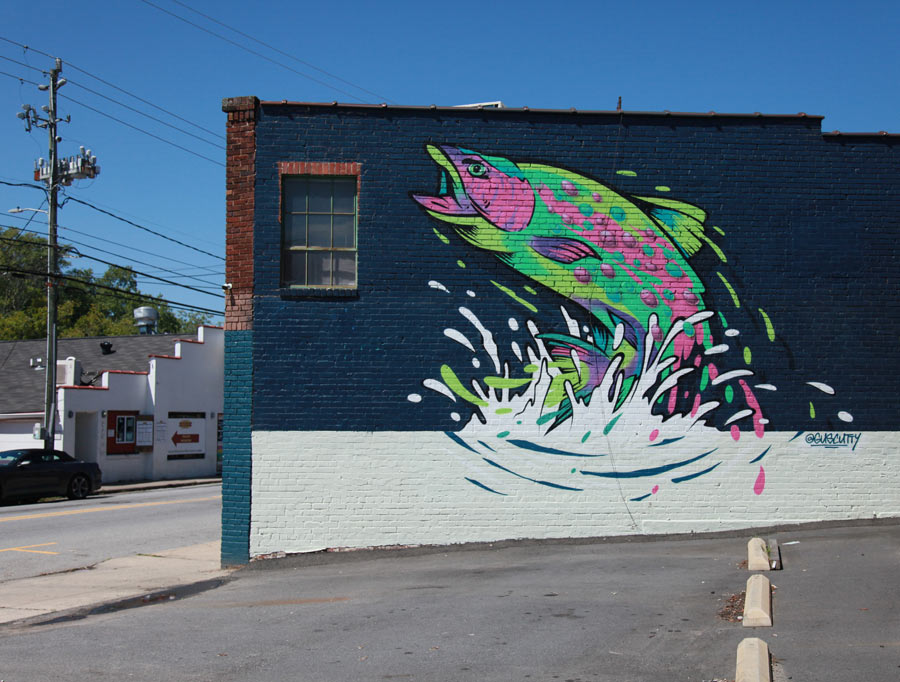
As sweet as that entreaty is, we hit the road and head for the hippies down by the river. We find old converted factories that now house artist studios, and galleries, and cleverly named eateries. It’s not as pretentious as it sounds – it’s actually a warm and welcoming vibe. We head for the railroad tracks and get lost wherever the graffiti gods lead us. We’re happy to find some splendid examples of style writing, some smart social critiques, and a number of political stencils with an attitude. Here are some of the findings, or as some here might say, “the pickens”, which were not slim!
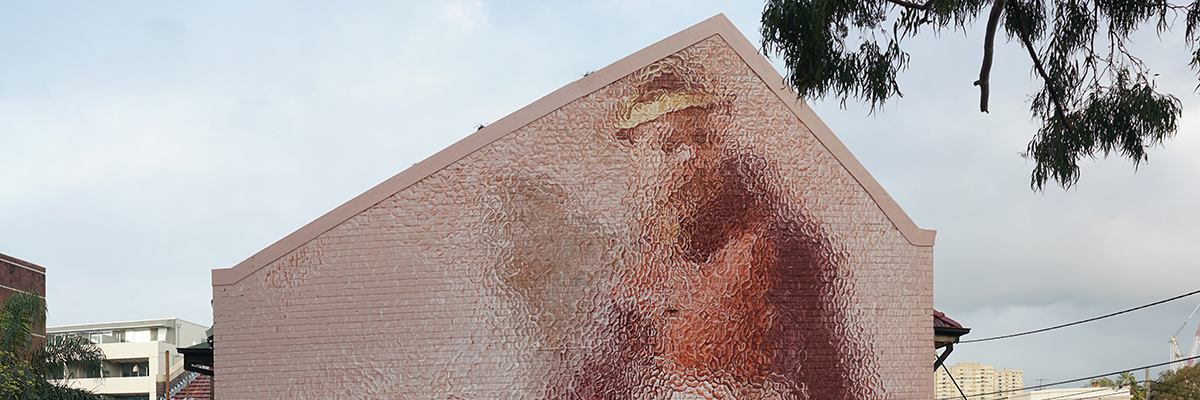
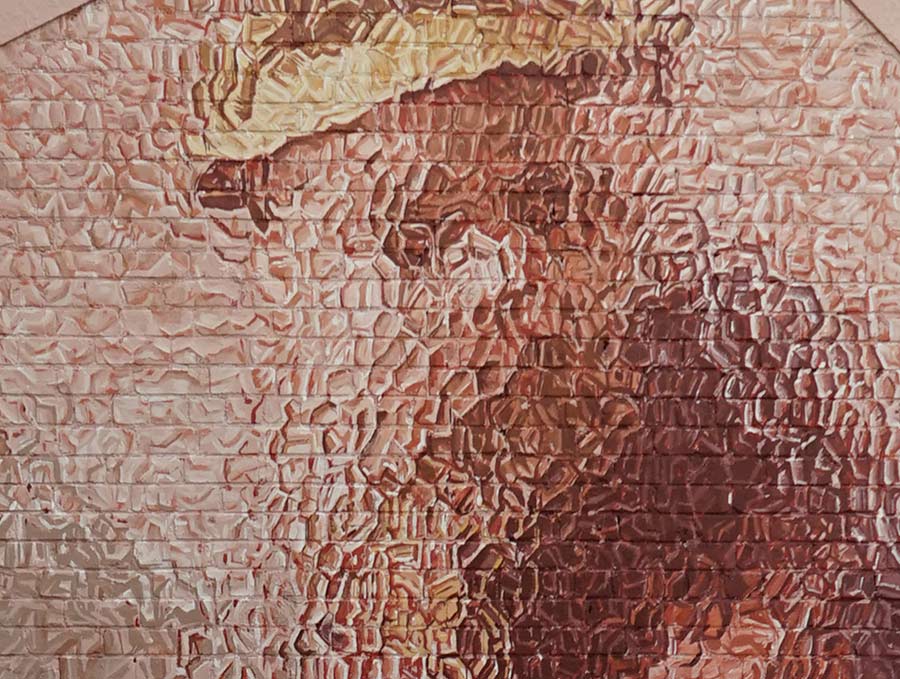
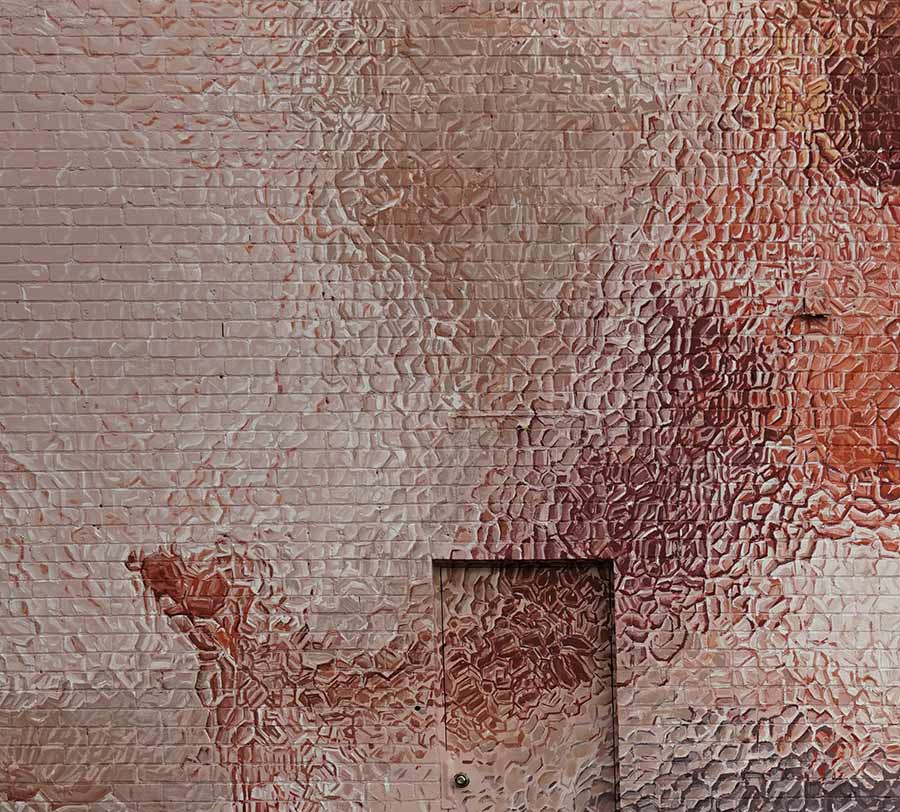
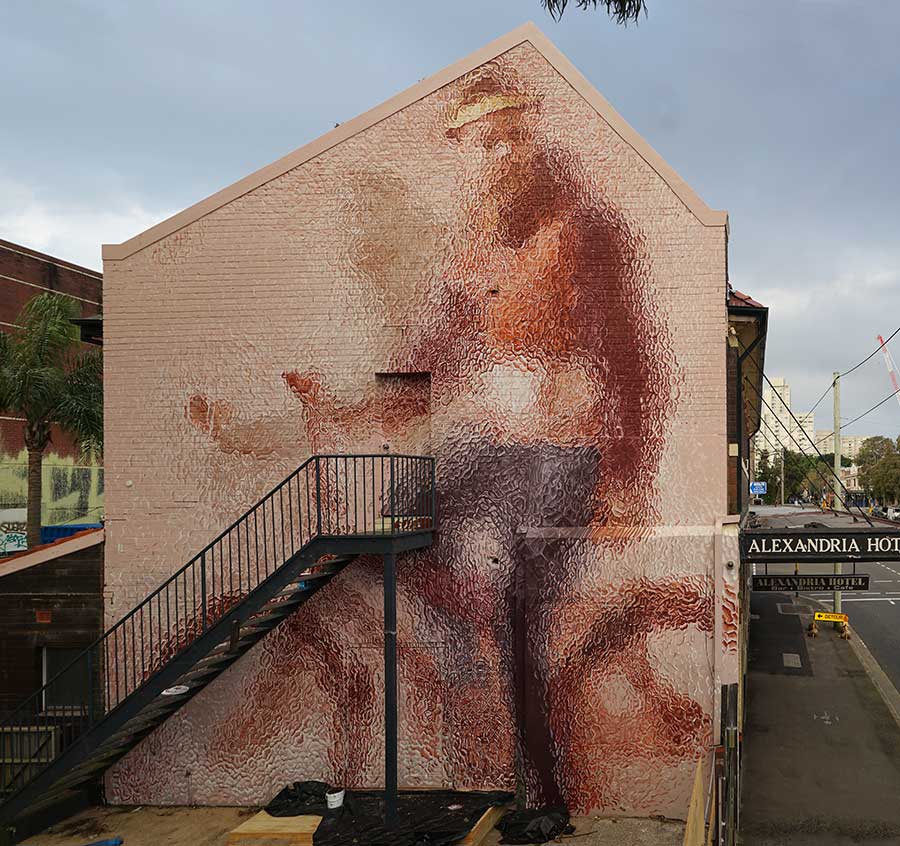
This relatively new beveled glass technique that Australian street artist Fintan Magee is using has reached an outstanding, almost psychedelic quality – bending light and visual perception in a way we’ve not seen. Here in Sydney his newest painting of the blurred figure of youth is present and immediate, yet hard to capture, somehow distant.
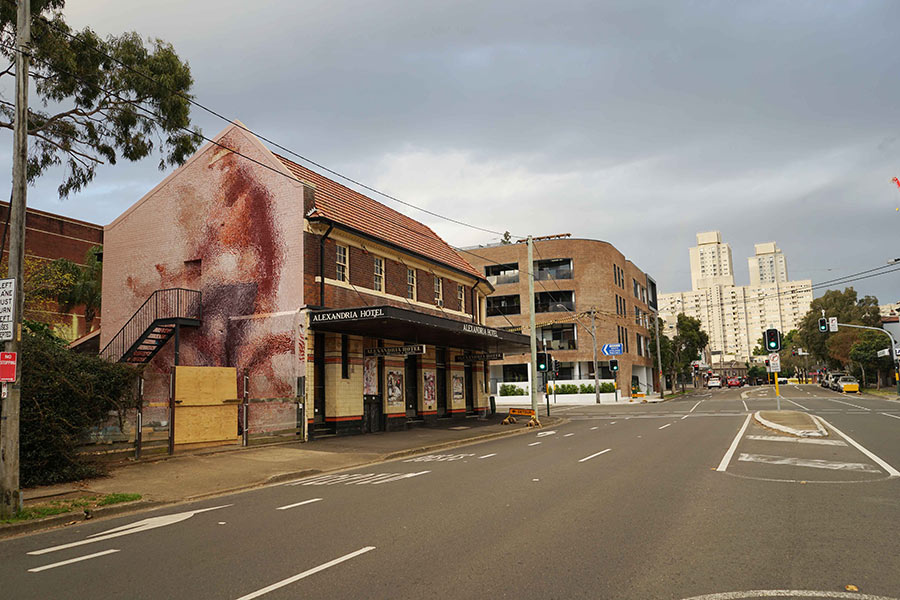
This new mural called “The Riders” on the Alexandria Hotel is meant to highlight the transient and quick nature of bicycle riders, young ones at that. The metaphor is a parallel for him to the rapid pace of real estate development in this city and others that easily displaces the families who live in some neighborhoods so they can collect large rents from the richer among us. In search of a quick buck, this kind of work is often aided by backroom dealing and ignorance of basic principles of urban planning.
He speaks of the fear and uncertainty that this rapacious development strikes in people’s lives, “leaving many low-income families worried they will be pushed out of the area.”
Another aspect of Sydney’s gentrification he says is that a new, richer, downtown center is developing that is only affordable by more established, older folks – discouraging the next generations from coming to the city to grow community and business prospects for the future.
“The cities working young are ignored by housing policy and pushed further into the suburbs, creating a disconnect between its most productive residents and economic opportunity.”
A pause. It’s unusual to feel this sense in this city – but it’s there – on a sunny day where the sky is clear of clouds and a flock of geese still waddles and honks in the tall weeds and garbage by the Wallabout Channel. Is it a pause of satisfaction at the end of a summer full of fun, or perhaps a calm resignation before a storm as businesses are staying closed or operating at reduced staff. And while the Federal Reserve and ECB and World Bank insist there is just a smidgen of temporary, transitory inflation, tell us why a pound of butter is $6.00 at the local deli, the average price of a used car is $25K, and shipping container prices have soared to $20K?
There is a steady number of new street art pieces going up on doorways, power boxes, and concrete walls, but they are competing all of the triumphal purple and blue and pink Morning Glories flooding fences and walls and garden gates in neighborhoods throughout Brooklyn – a most generous overflow that summer gives as a parting gift.
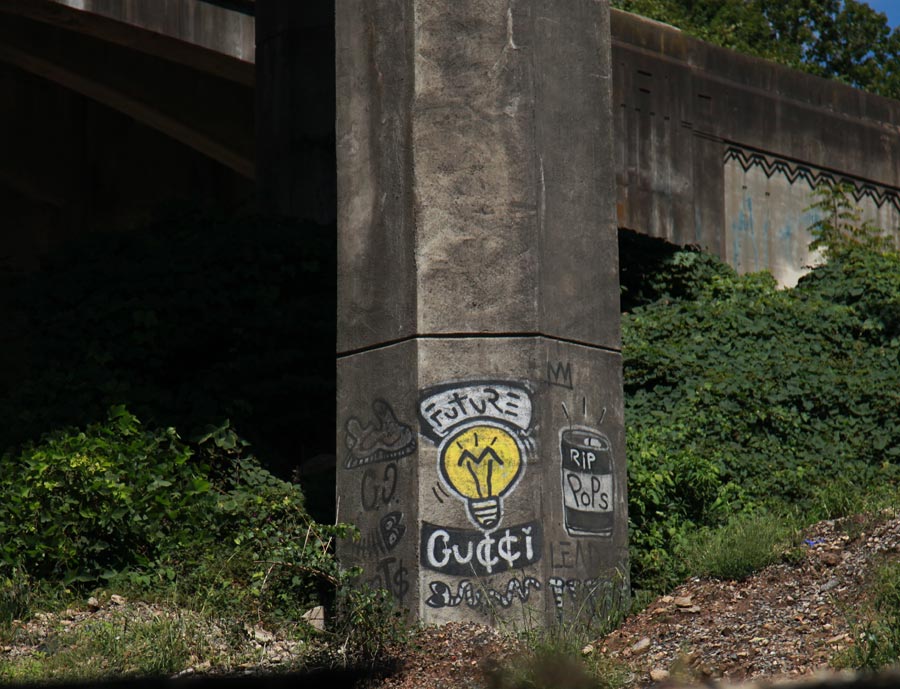
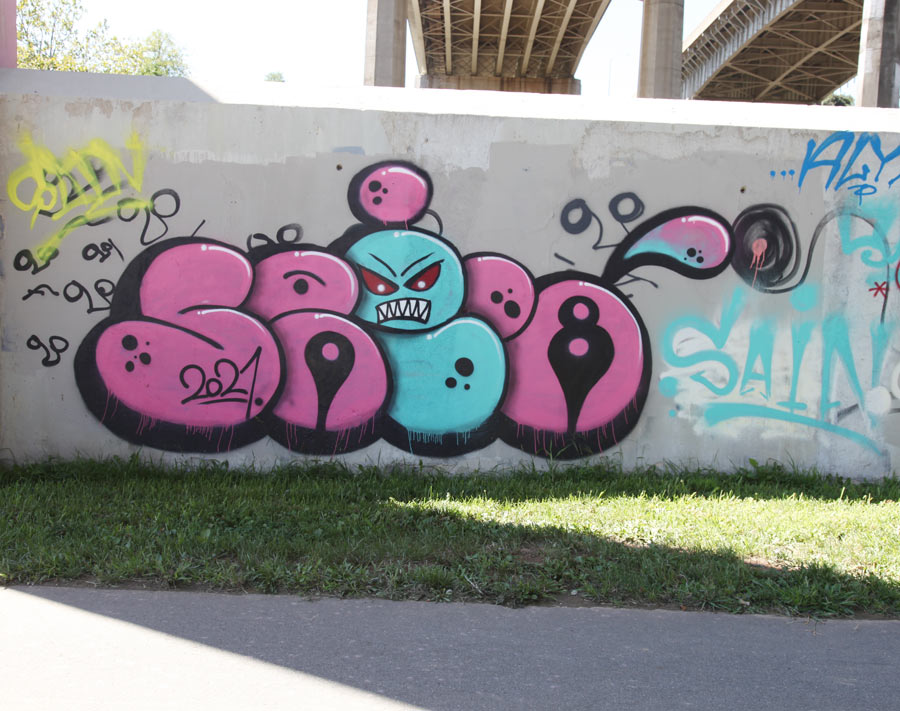
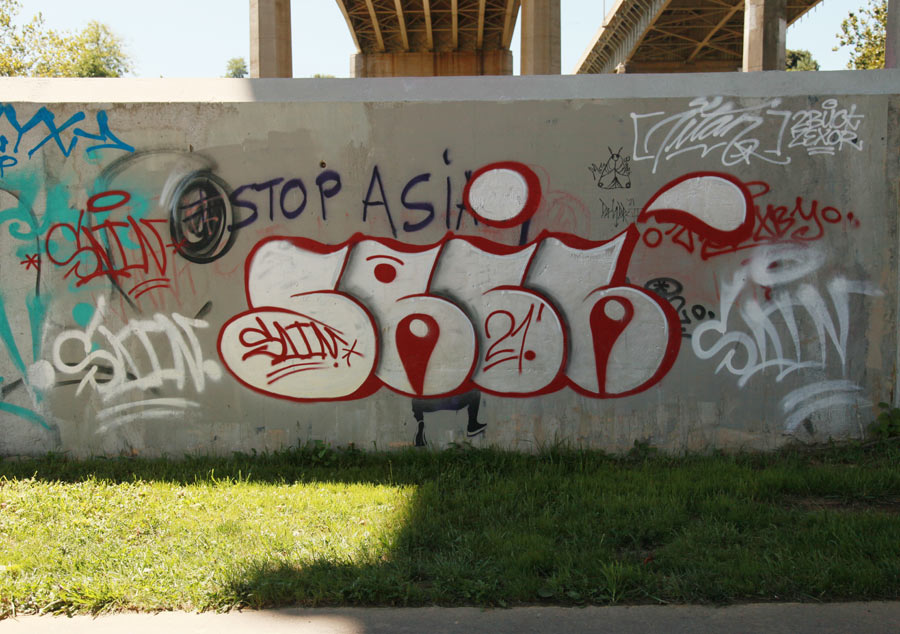
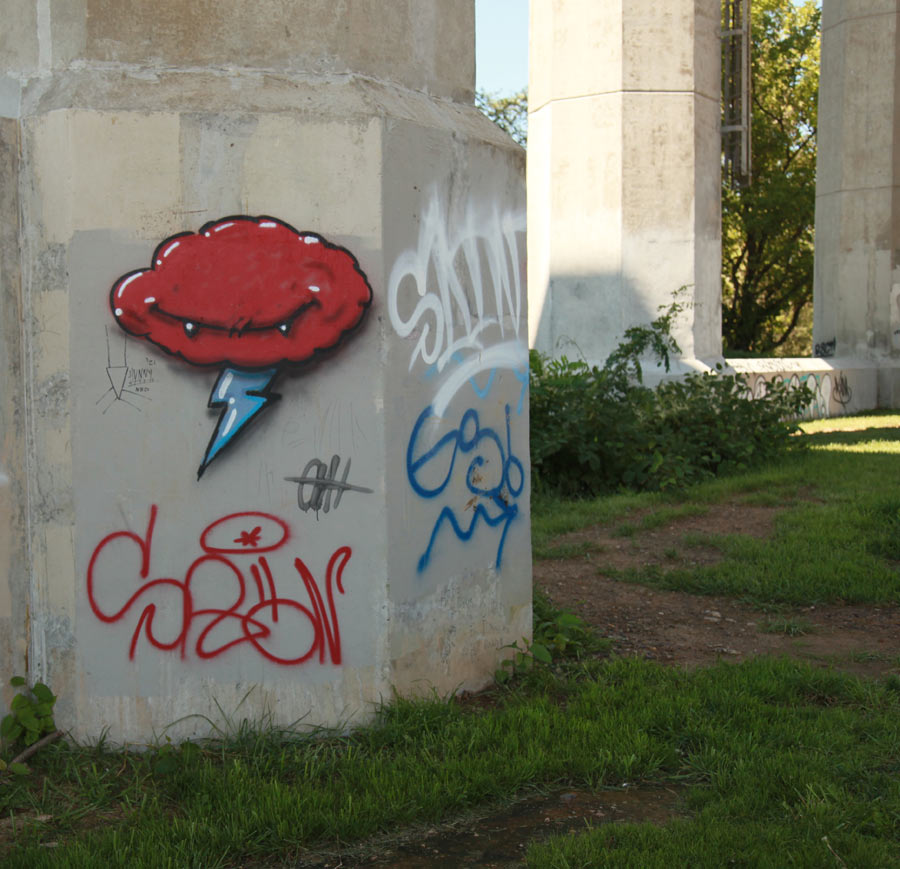
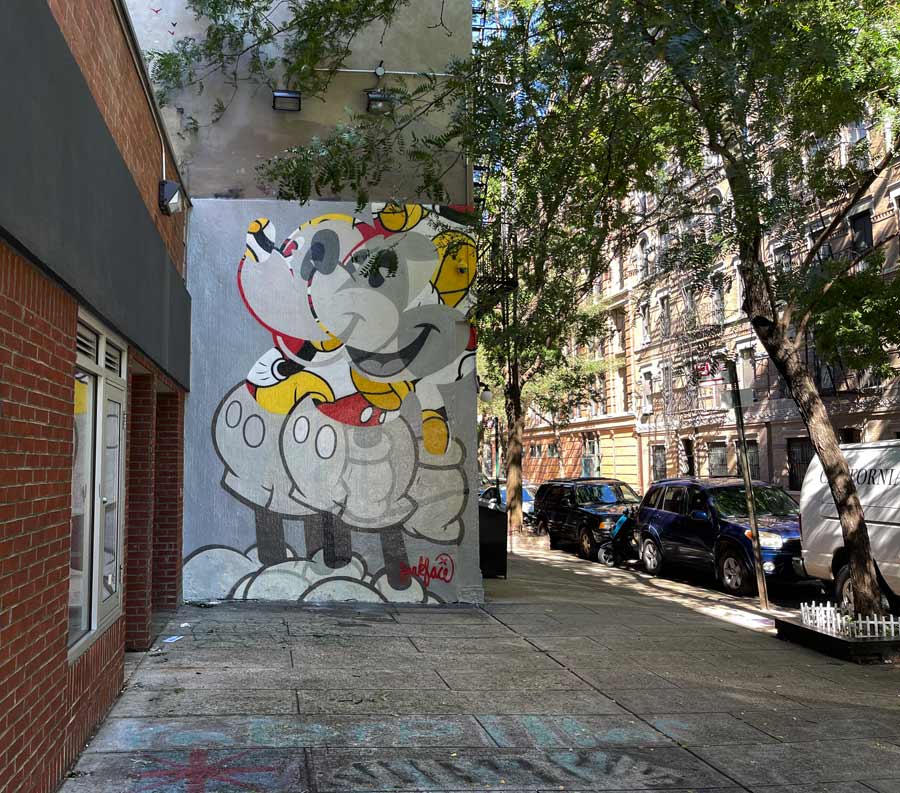
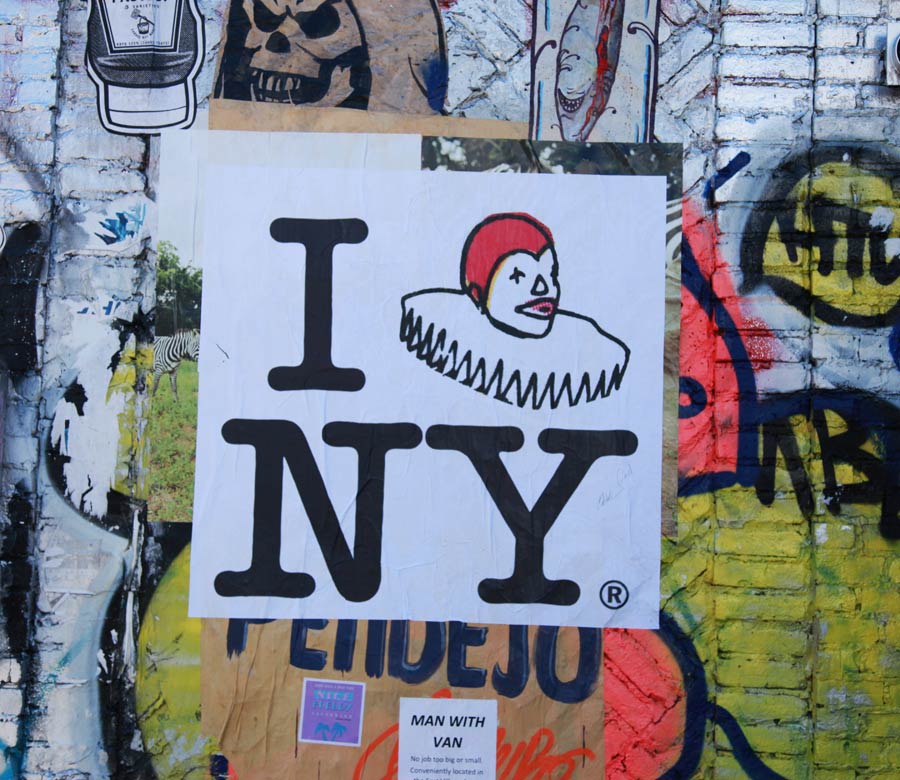
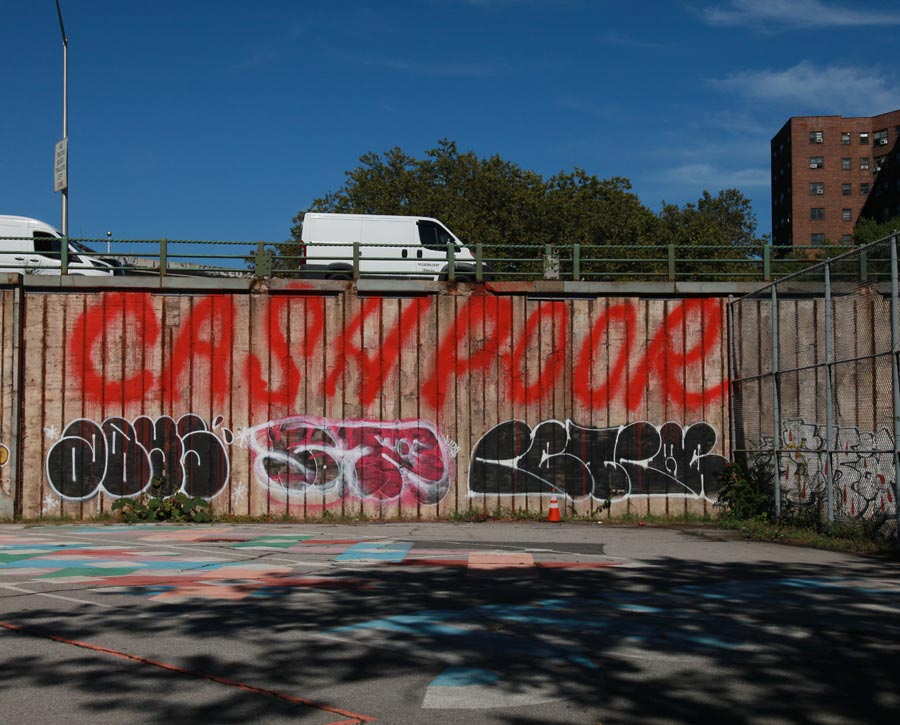
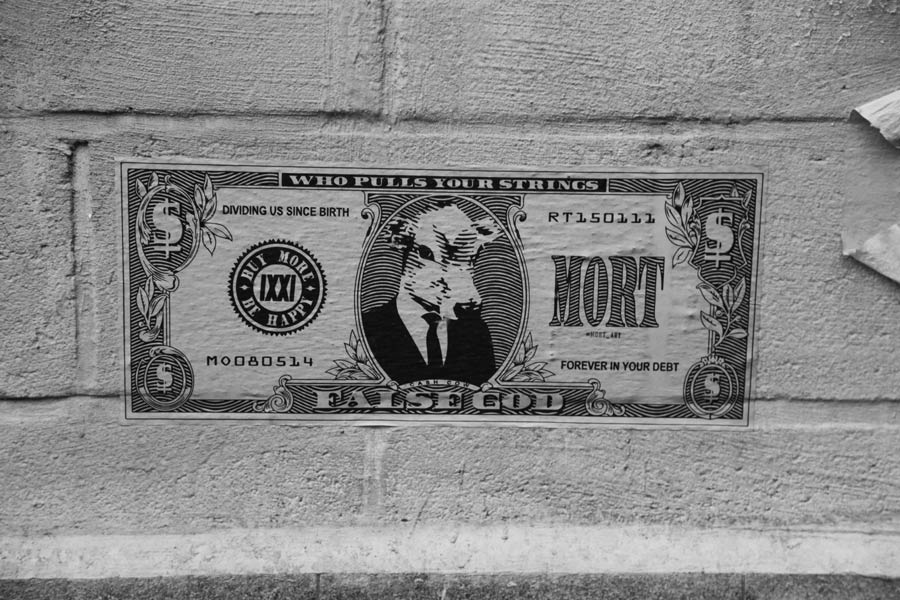
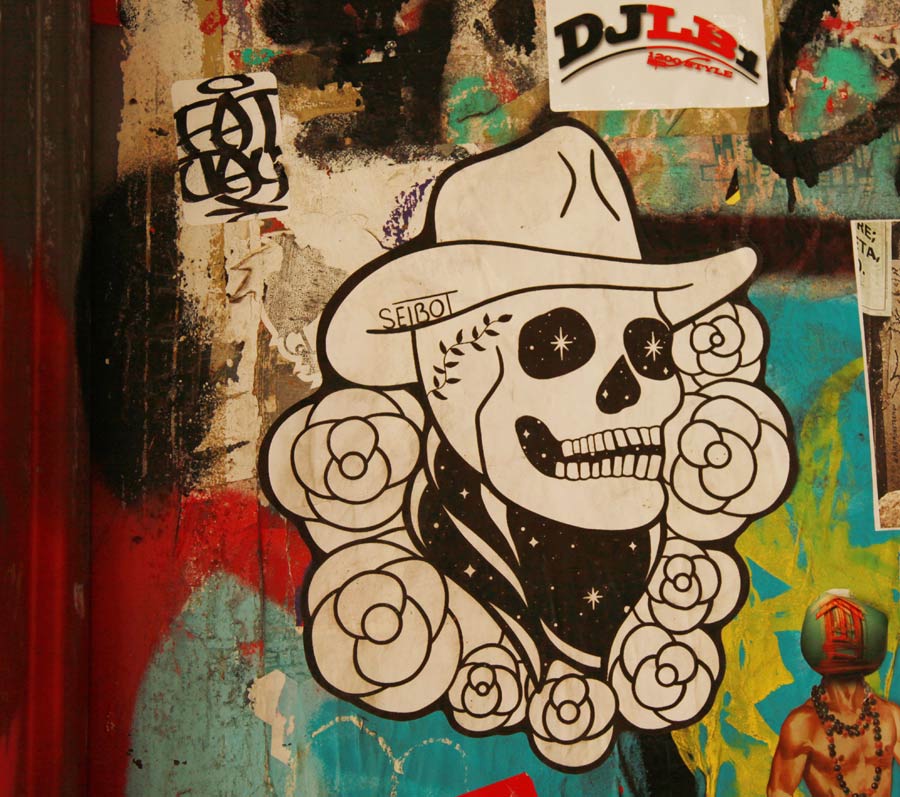
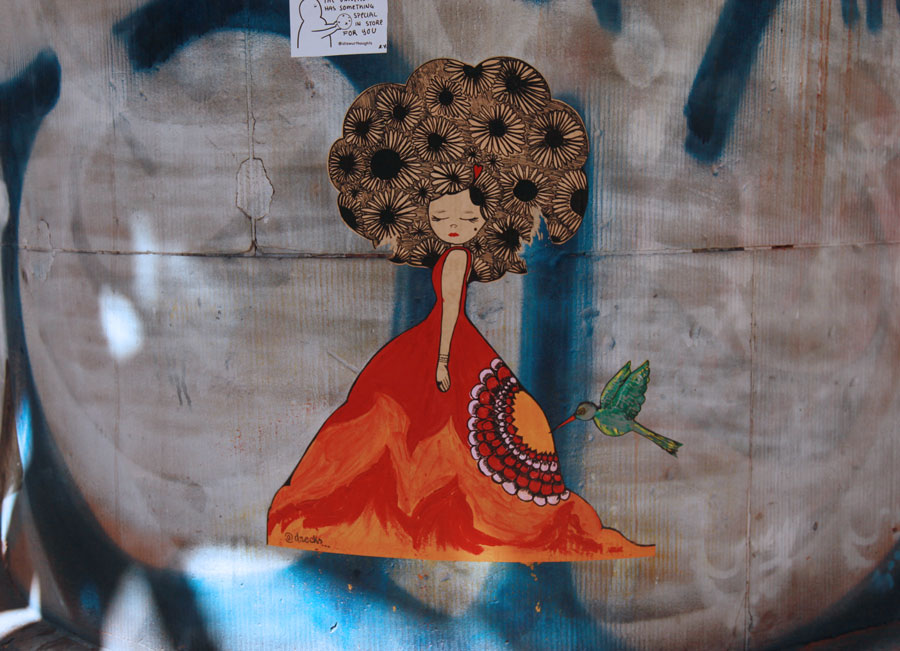
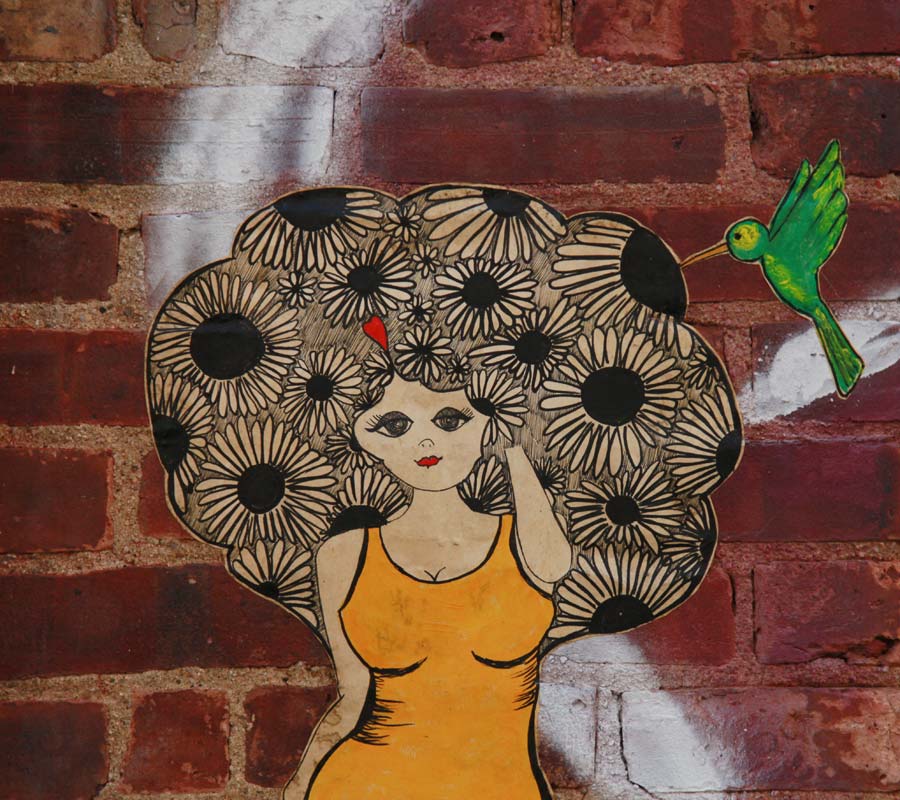
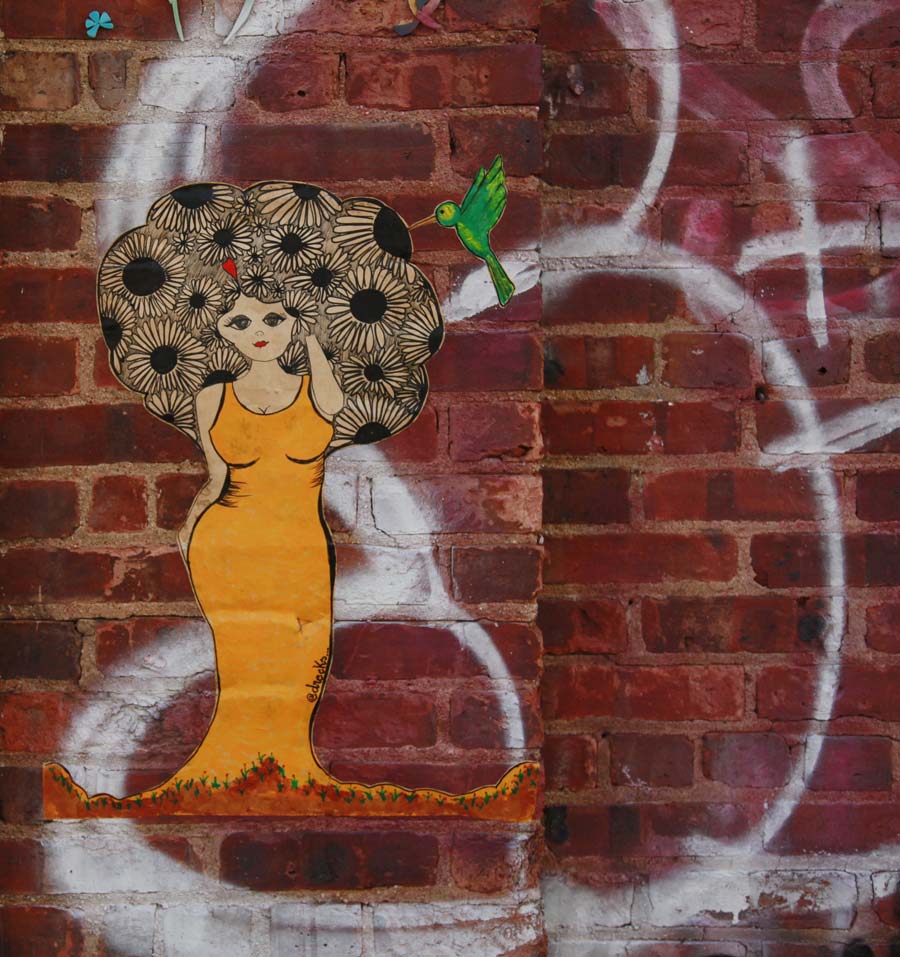
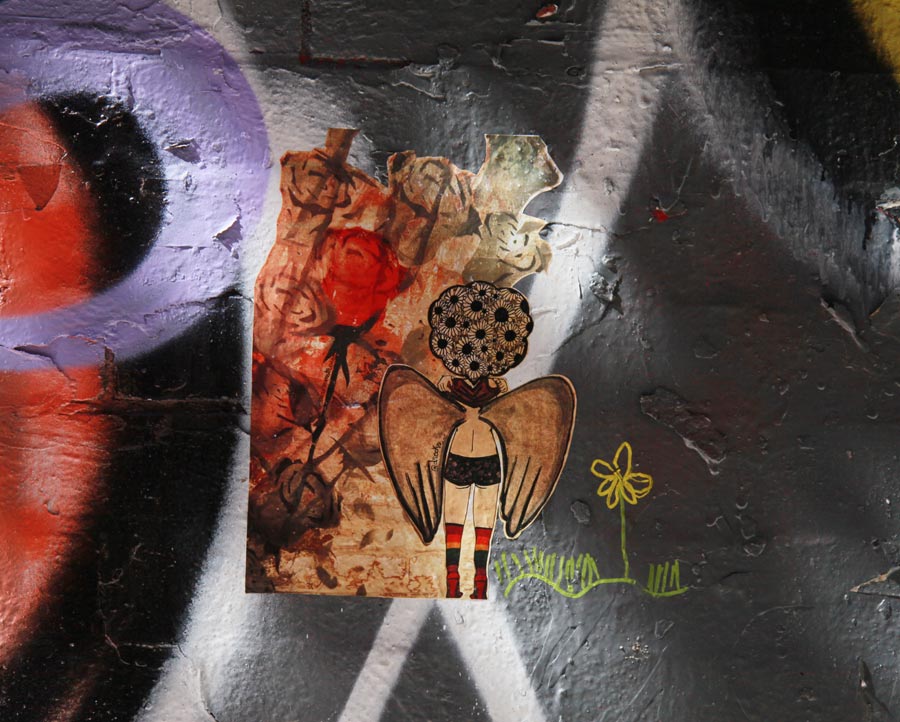
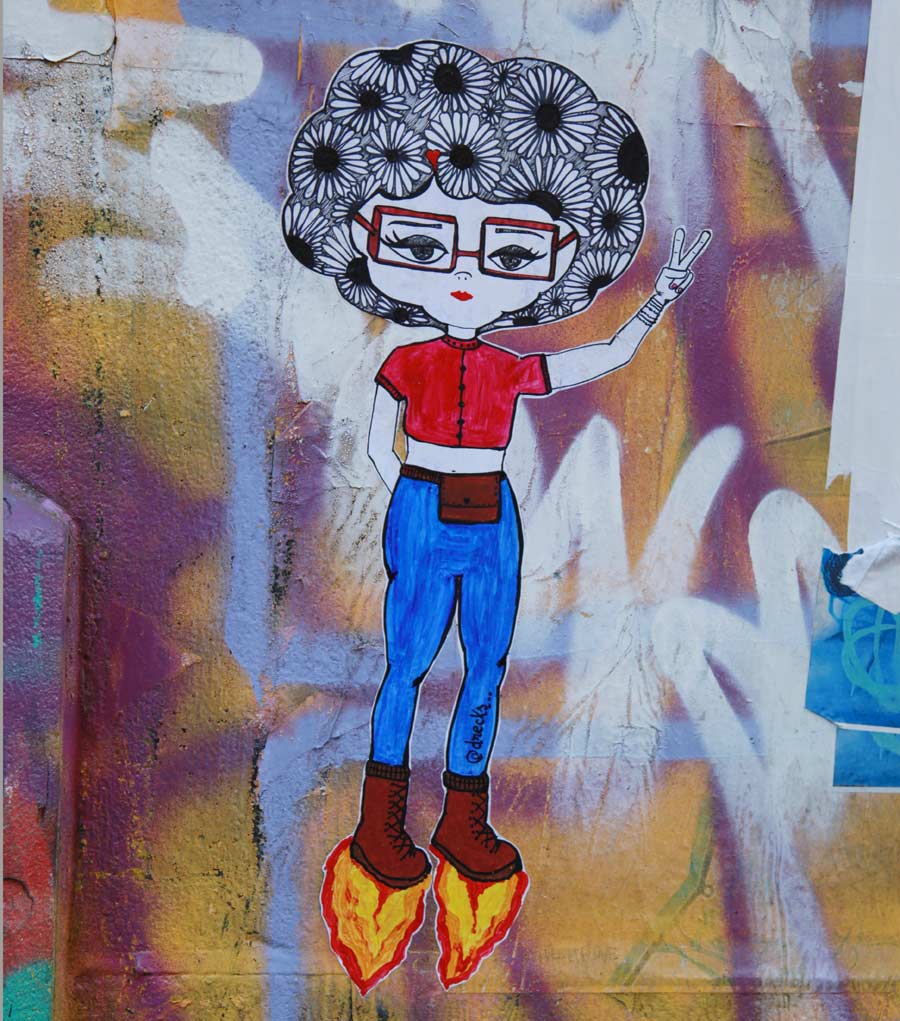
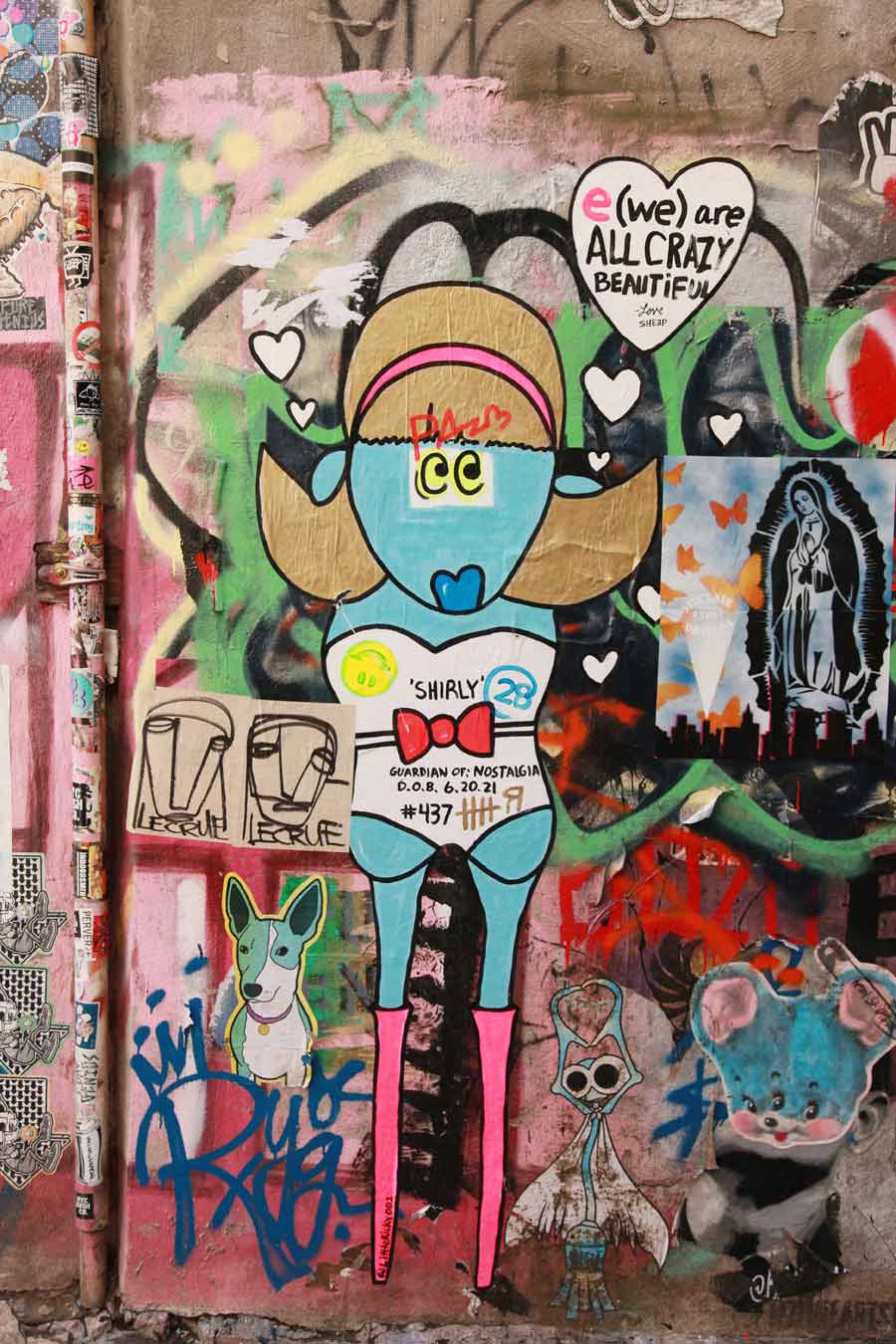
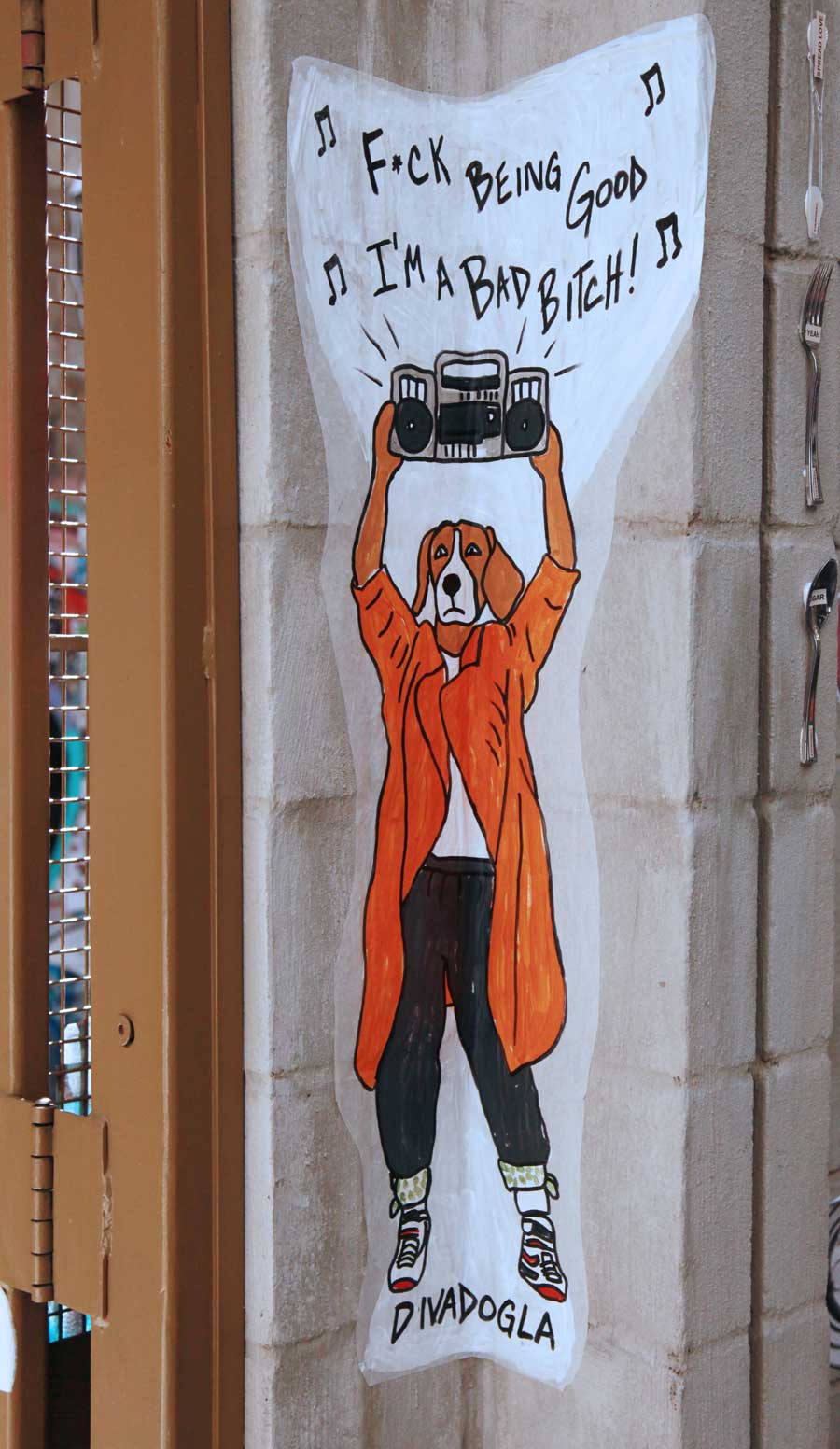
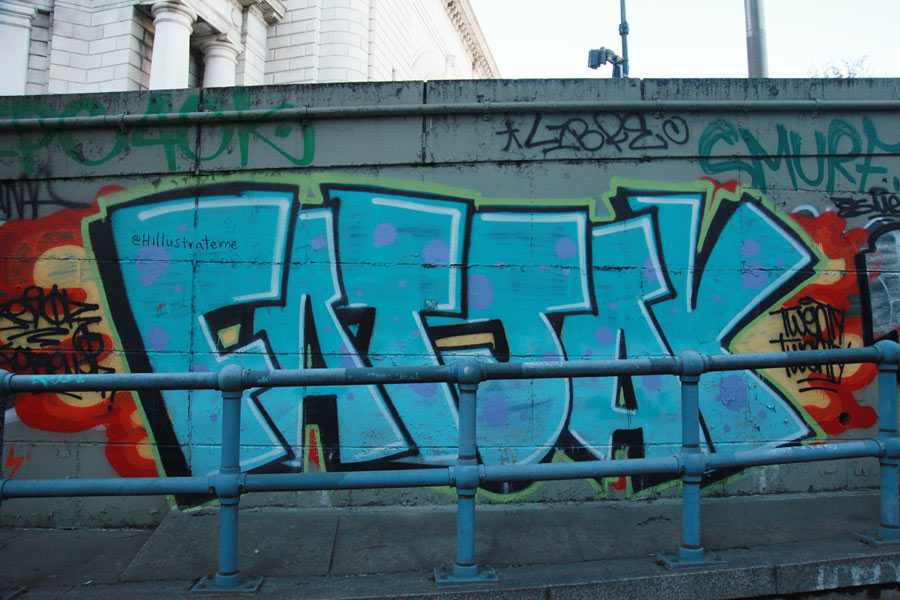
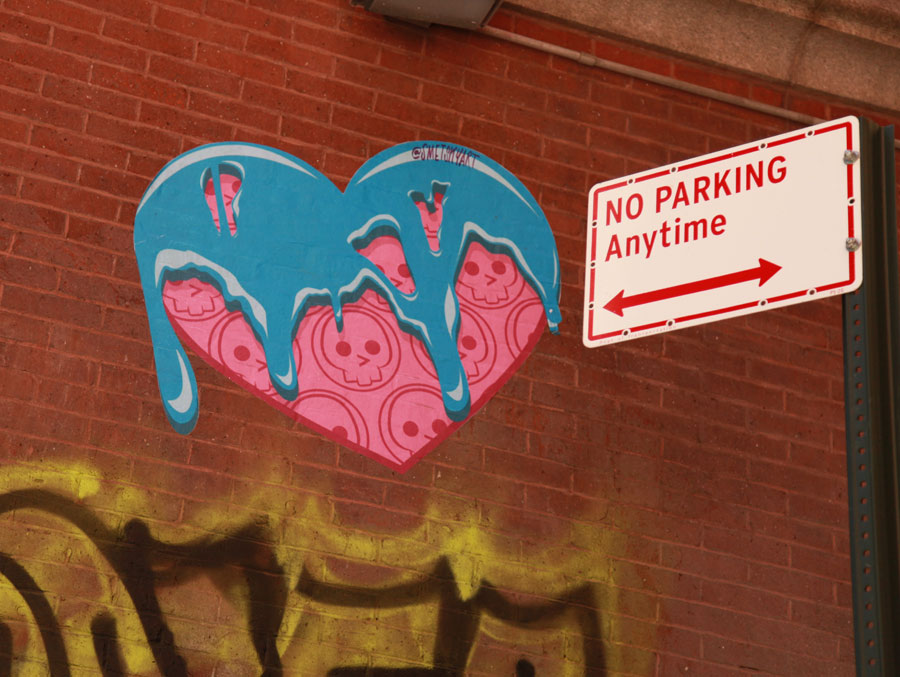
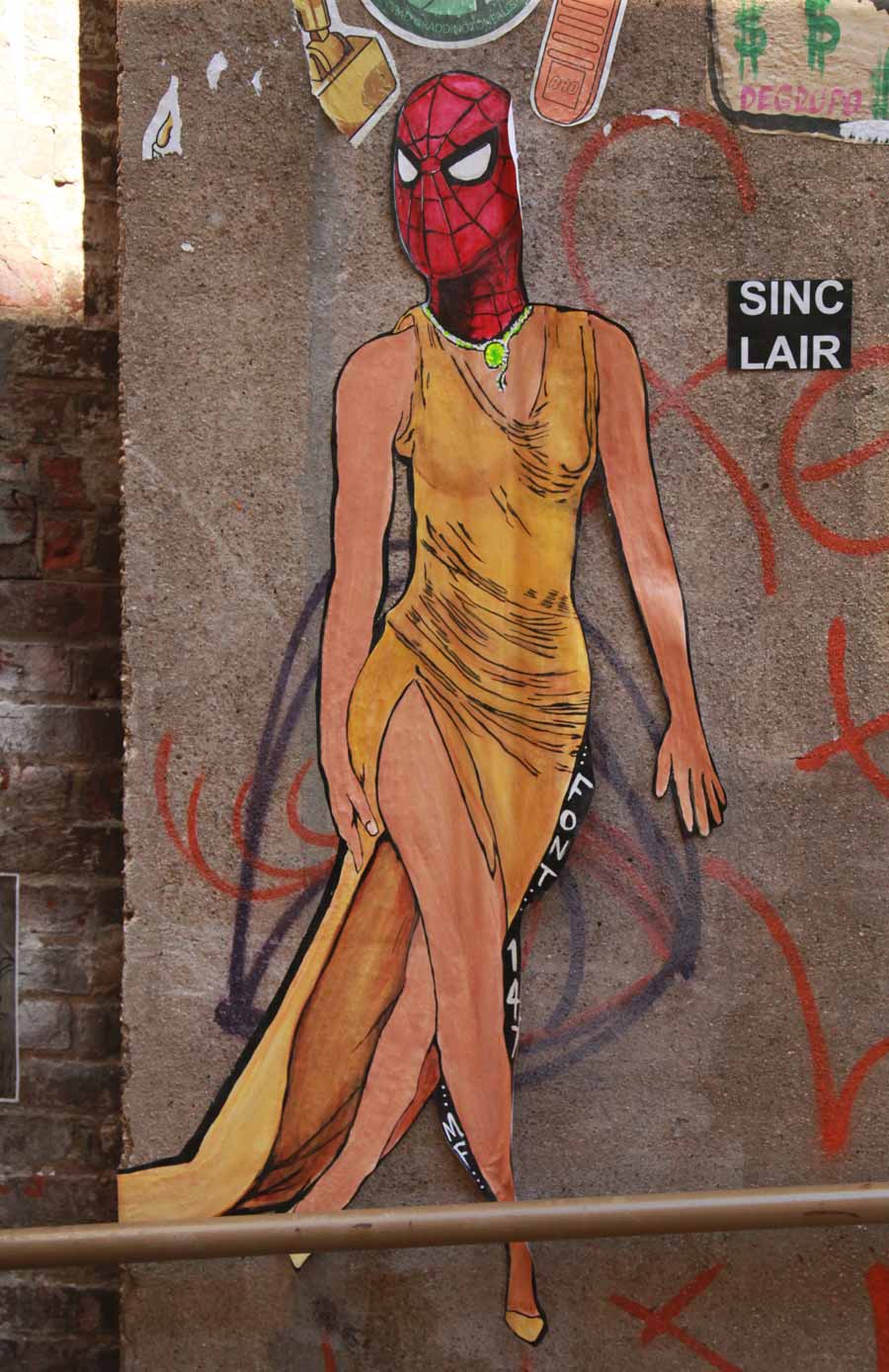
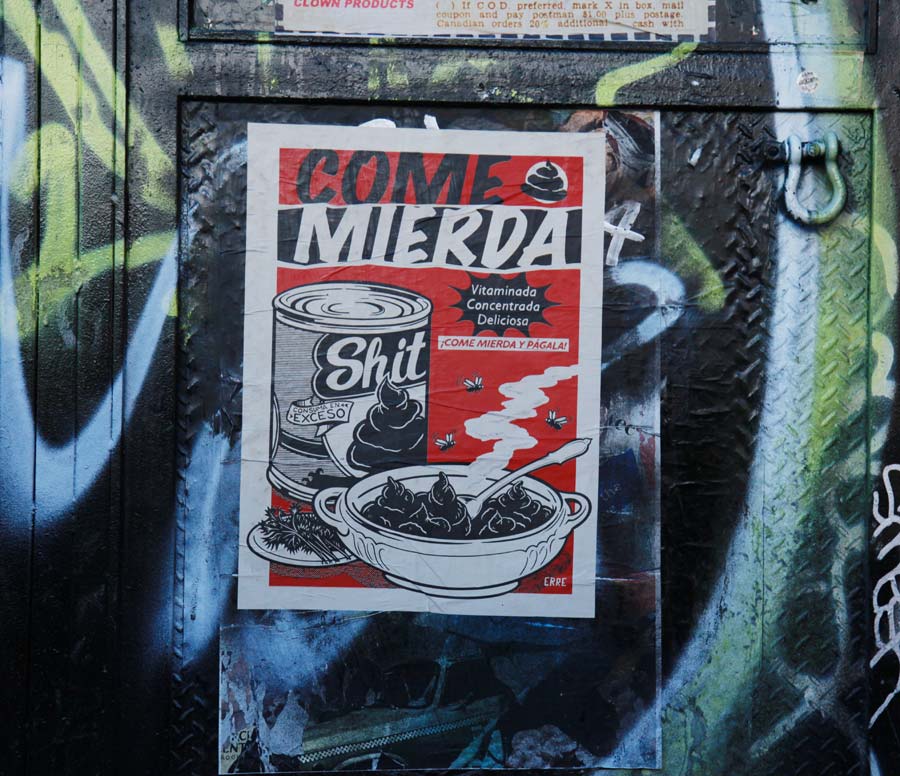
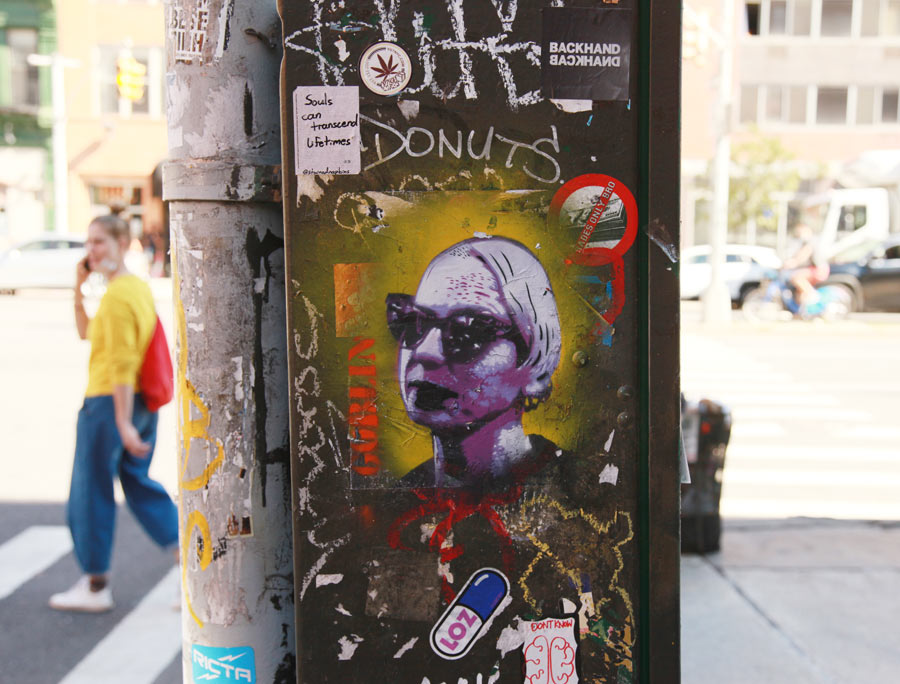
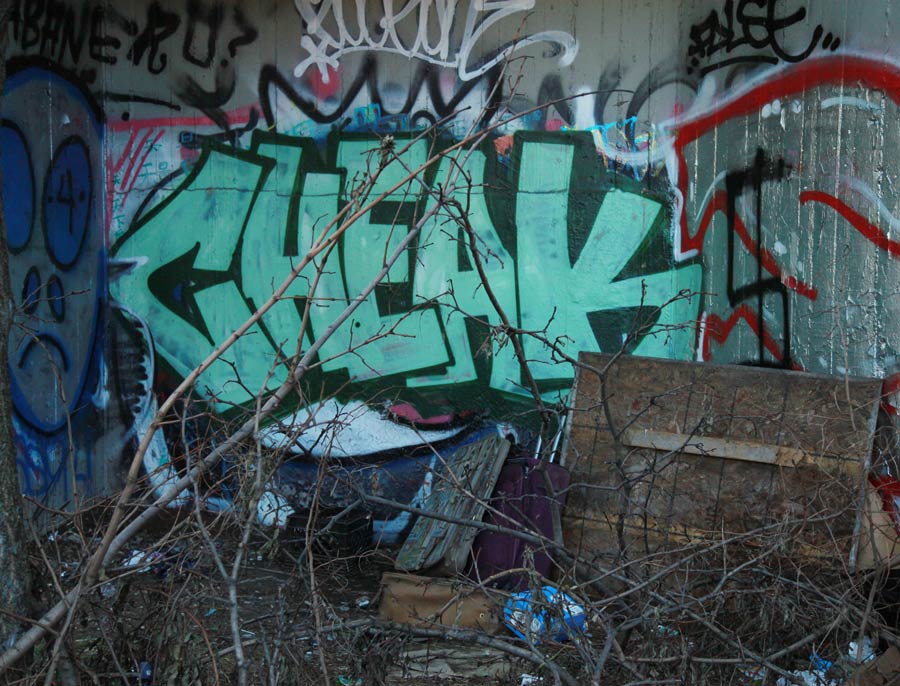
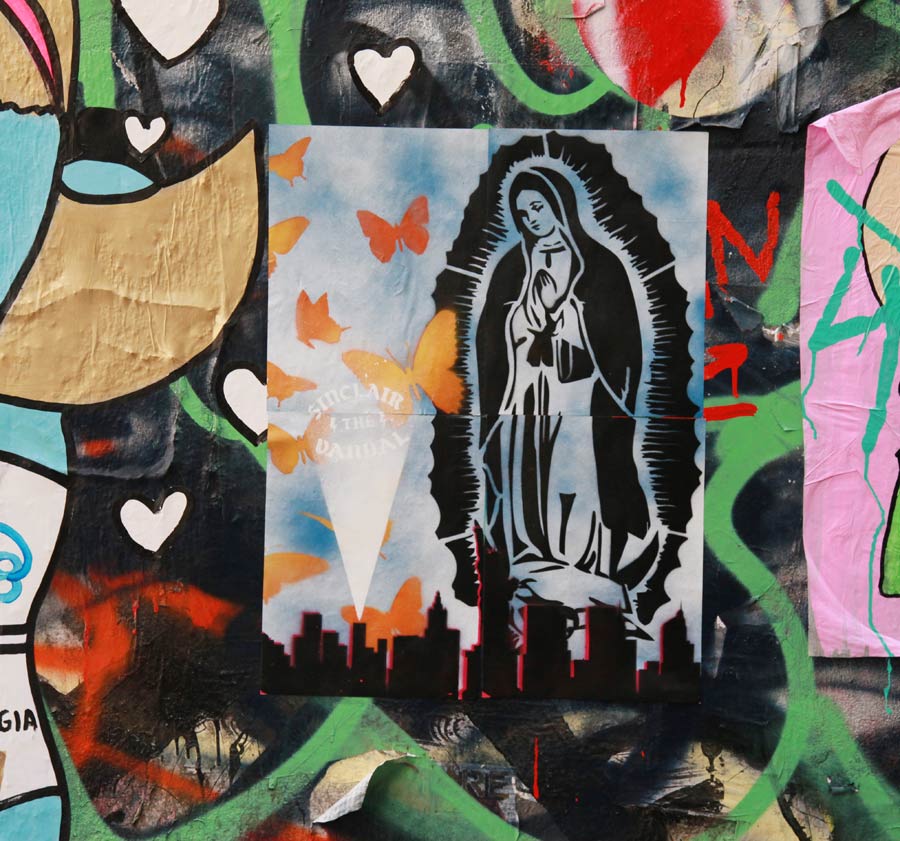
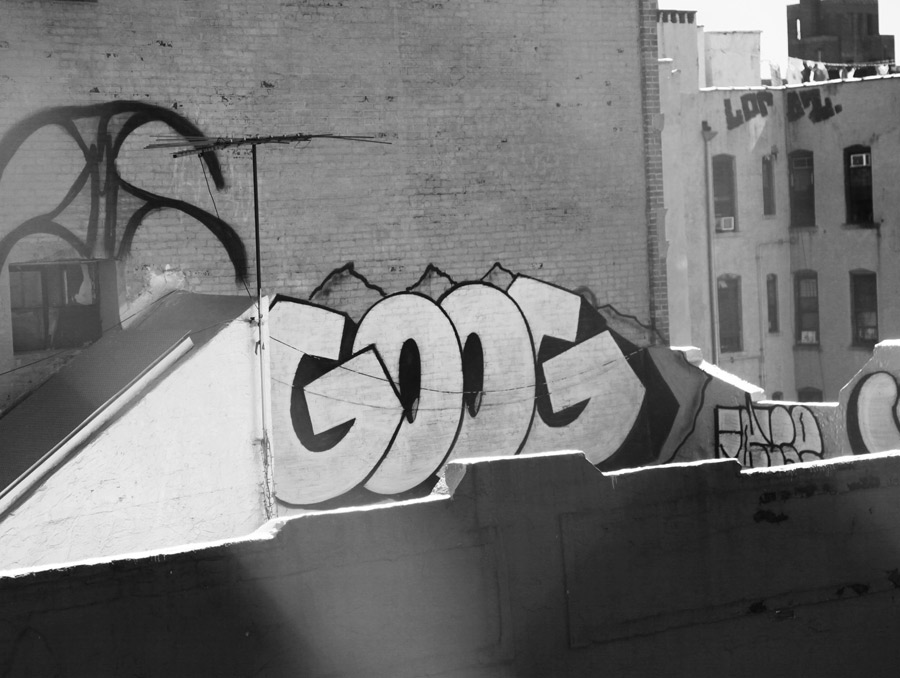
Here’s our weekly interview with the street, this week featuring Cssh4, Cheak, Clown Soldier, Diva Dogla, Drecks, ERRE, Fat Jak, Font 147, Goblin, Goog, JerkFace, Little Ricky, Mort Art, Praxis, Rambo, Seibot, Sinclair the Vandal, and Smetsky.
I am inhabited by a cry. Nightly it flaps out Looking, with its hooks, for something to love.
Sylvia Plath
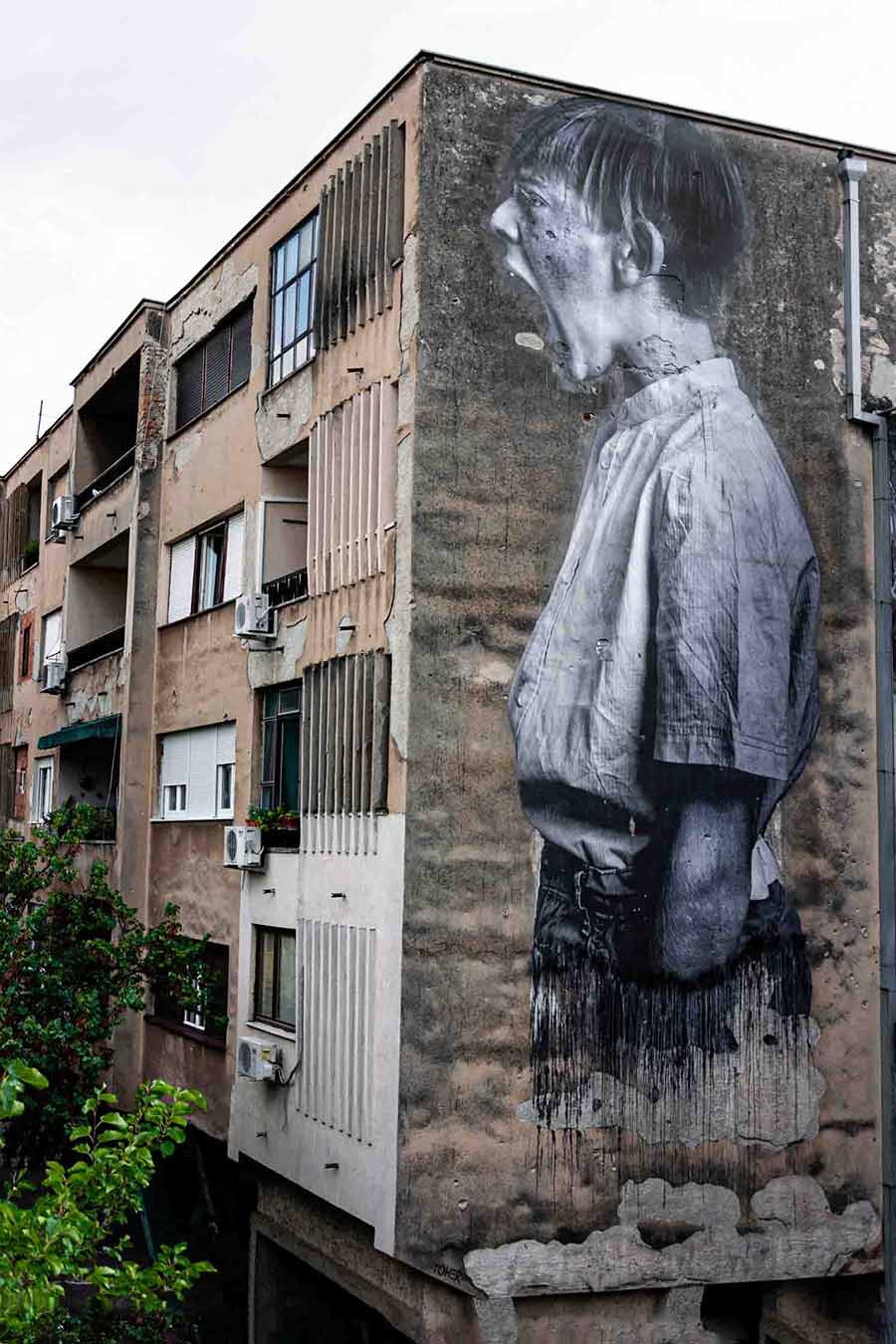
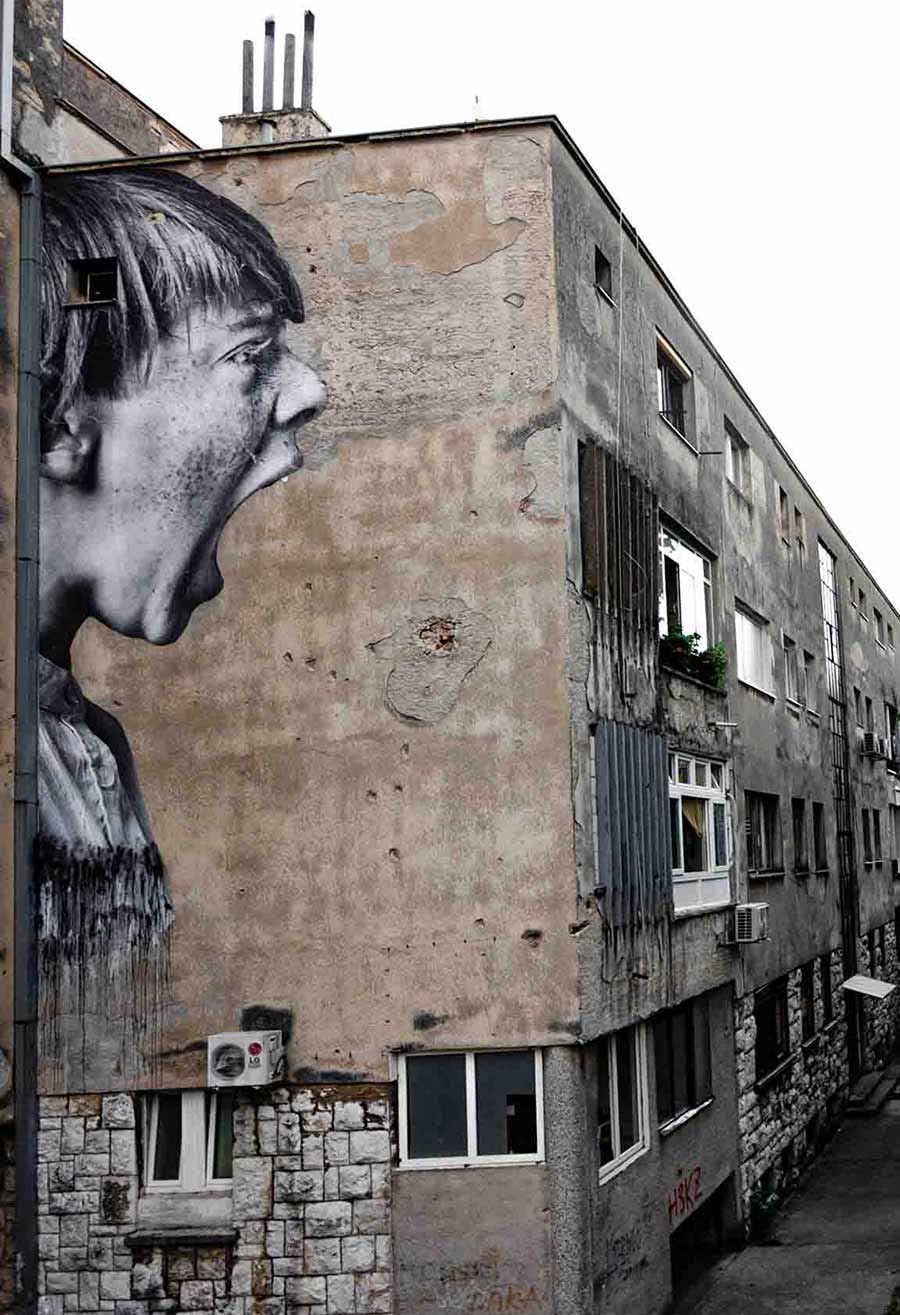
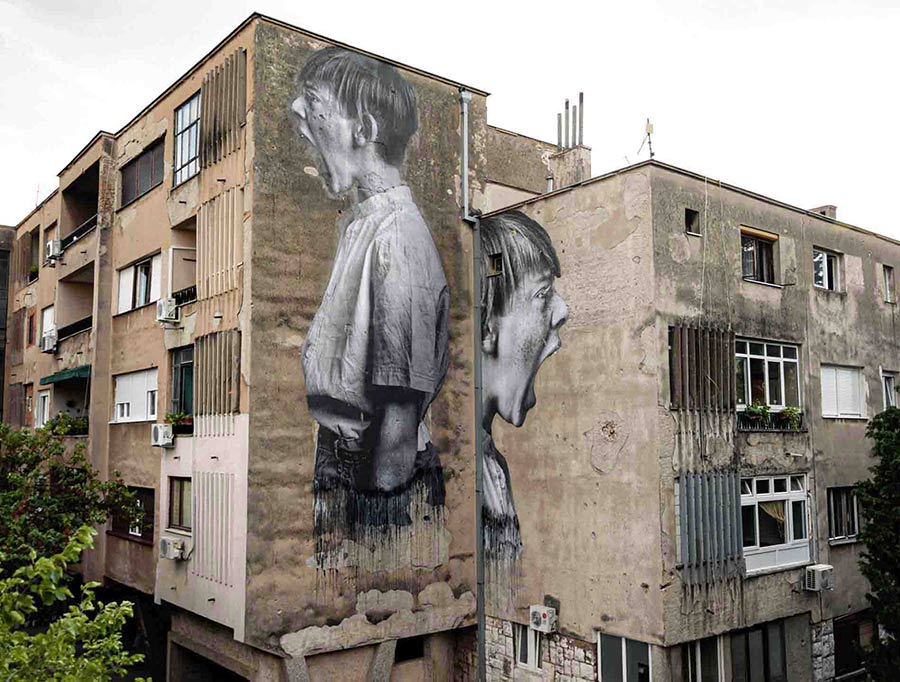
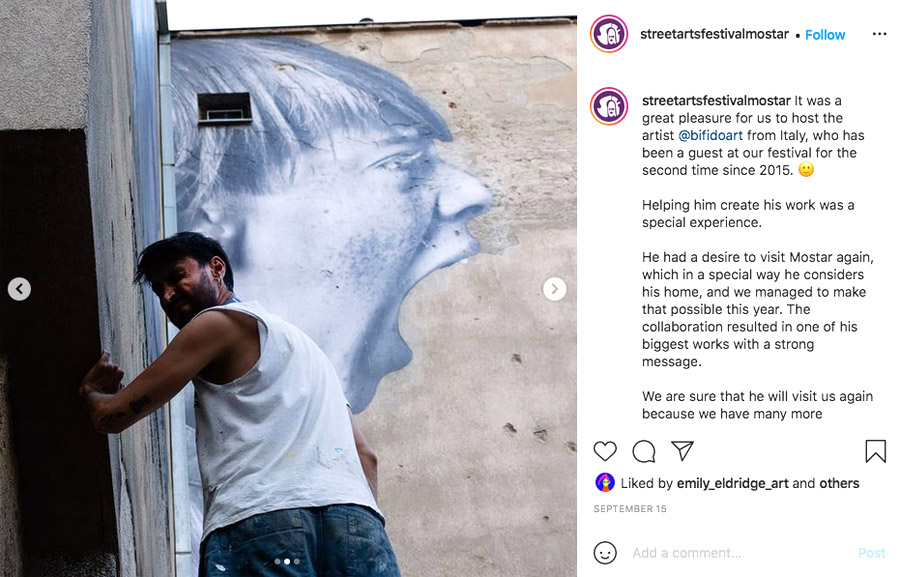
Street poet and street artist Bifido doesn’t mean to be morose, but here in Mostar he can’t help himself as he creates mirrored expressions of a sullen, ill-tempered youth on city streets. Part of the Bosnian /Herzegovinian street art festival named after this city of 113,000 Croats (48.4%), Bosniaks (44.1%), and Serbs (4.1%), the annual meeting of international and local artists produces a broad variety of artworks for the city.
Bifido. “Love Will Tear Us Apart”. Mostar, Bosnia and Herzegovina. (photo courtesy of the artist)
Bifido has been here before, and he says his feeling of ardor and confliction are hopelessly intertwined. “I have a special connection with this country,” he tells us of this city grown in the wake of and destruction of war; a gorgeous bridge now a symbol to many, one that rises over troubled waters. “I love Bosnia. I met her and I fell in love with her.”
The bridge, he says, is inhabited by an odd mix of memory, hope for the future, and questionable tourism trade that includes souvenir shops, odd perfumes, and “the most Bosnian thing you can find is the Ibrahimovic jersey (which is not Bosnian).”
Bifido. “Love Will Tear Us Apart”. Mostar, Bosnia and Herzegovina. (photo courtesy of the artist)
But above all else, for Bifido, is the feeling of this city he returns to, and the feeling of the river that runs through it, the Neretva.
“Neretva is for me a state of mind,” he says. “It is not a river, is liquid melancholy. Every day we spend a couple of hours together.” “This work is my tribute to this land. To this city. To all the people who live there. Even the most assholes. A cry melted along the tortured walls. Walls of inhabited houses, of empty houses. The cry of the invisible.”
Bifido. “Love Will Tear Us Apart”. Mostar, Bosnia and Herzegovina. (photo courtesy of the artist)Bifido. “Love Will Tear Us Apart”. Mostar, Bosnia and Herzegovina. (photo courtesy of the artist)Bifido. “Love Will Tear Us Apart”. Mostar Street Art Festival. Mostar, Bosnia and Herzegovina. (photo courtesy of the artist)
Our weekly focus on the moving image and art in the streets. And other oddities.
Now screening: 1. Christo and Jeanne-Claude, a Final Triumph in Paris
BSA Special Feature: Christo and Jeanne-Claude, a Final Triumph in Paris
Bet you are wondering when the big unveiling is! Dying to see what is underneath?
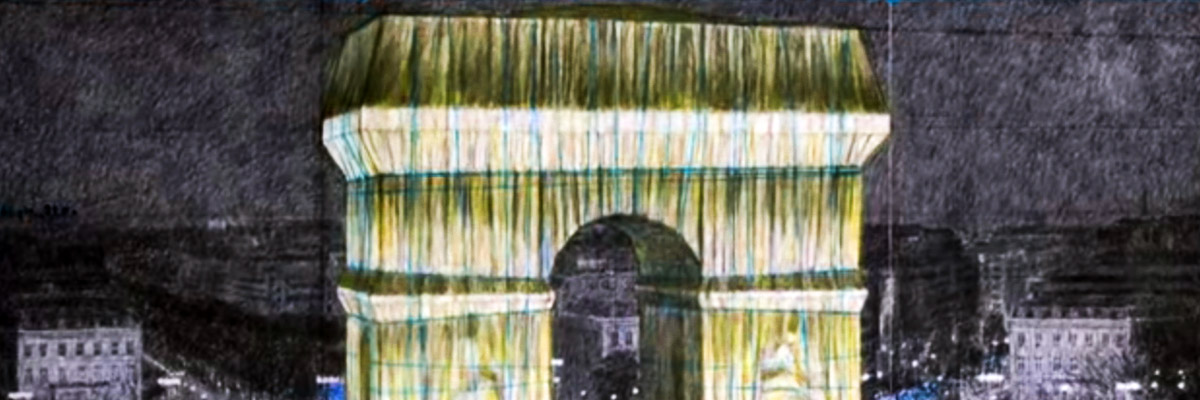
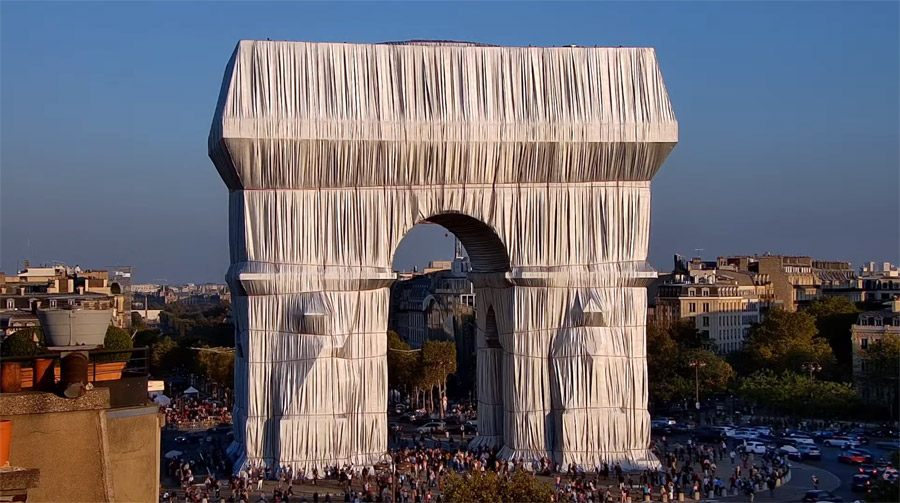
A tribute to the artists Christo and Jeanne-Claude, famous for their large scale, site specific outdoor installation, this is the final triumph! Or Triomphe, as you may wish.
Climbers, cloth, and red rope have encased the famous monument and star that lies at the center of twelve radiating avenues, L’Arc de Triomphe this month – a public celebration of the work of the two artists and their lifetime of work together.
Today we dedicate Film Friday to this project and the various ways it is being described and interacted with by the public.
Christo and Jeanne Claude: L’Arc de Triomphe Empaqueté.
Christo’s L’Arc de Triomphe | 60 Years in the Making
Visitors swarm wrapped Arc de Triomphe
Christo and Jeanne-Claude: L’Arc de Triomphe, Wrapped – Live View
 BROOKLYN STREET ART LOVES YOU MORE EVERY DAY