All posts tagged: Jaime Rojo

YZ Brings Classical Beauties to Streets of Berlin

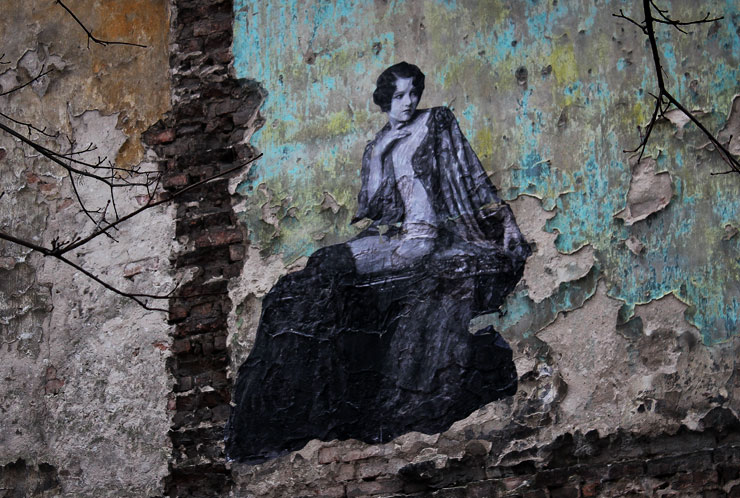
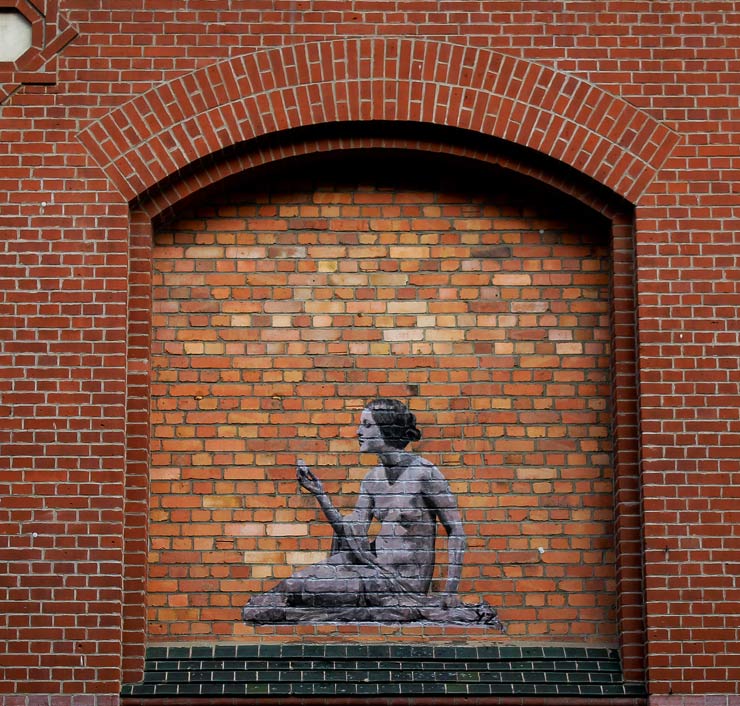
Early celluloid startlets dripping with liquid opulence meet classical greek heroines draped in clinging peplos with these quietly elegant wheat-pasted pieces by French Street Artist YZ in Berlin. Bringing her vintage view of high culture to sometimes very decayed and mottled walls of neglect, the contrast creates a vibrational effect for the passerby, who might wonder how they got there. The black ink on silk paper creations are hers, but the images are archetypes from the popular imagination about women and their perceived role in society as decorative objects.

“The images are meant to be of alternately fatal, dreamy or provocative women that challenge our stereotypes,” says YZ, “Women are beautiful, strong, and confident. They are capable of changing the world, as they proved during the last century.”

YZ (photo © Yseult – YZ)

YZ (photo © Yseult – YZ)

YZ (photo © Yseult – YZ)

Special thanks to Guillaume Trotin of Open Walls and the artist for sharing these exclusive images with BSA readers.


<<>>><><<>BSA<<>>><<<>><><BSA<<>>><><<>BSA<<>>><<<>><><BSA

Please note: All content including images and text are © BrooklynStreetArt.com, unless otherwise noted. We like sharing BSA content for non-commercial purposes as long as you credit the photographer(s) and BSA, include a link to the original article URL and do not remove the photographer’s name from the .jpg file. Otherwise, please refrain from re-posting. Thanks!

<<>>><><<>BSA<<>>><<<>><><BSA<<>>><><<>BSA<<>>><<<>><><BSA

Read more

“Self Destruction” and How & Nosm in San Francisco

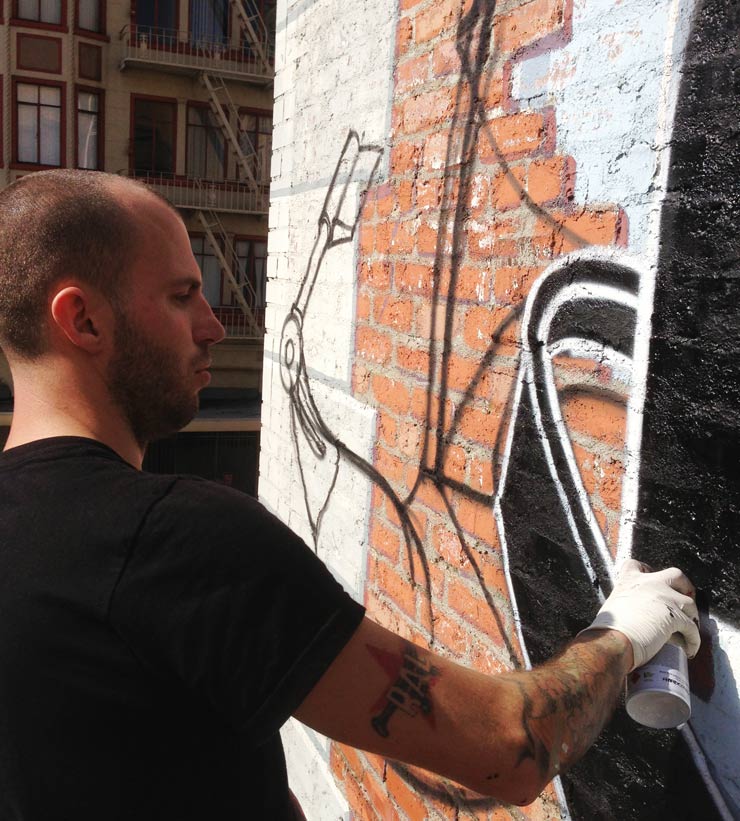
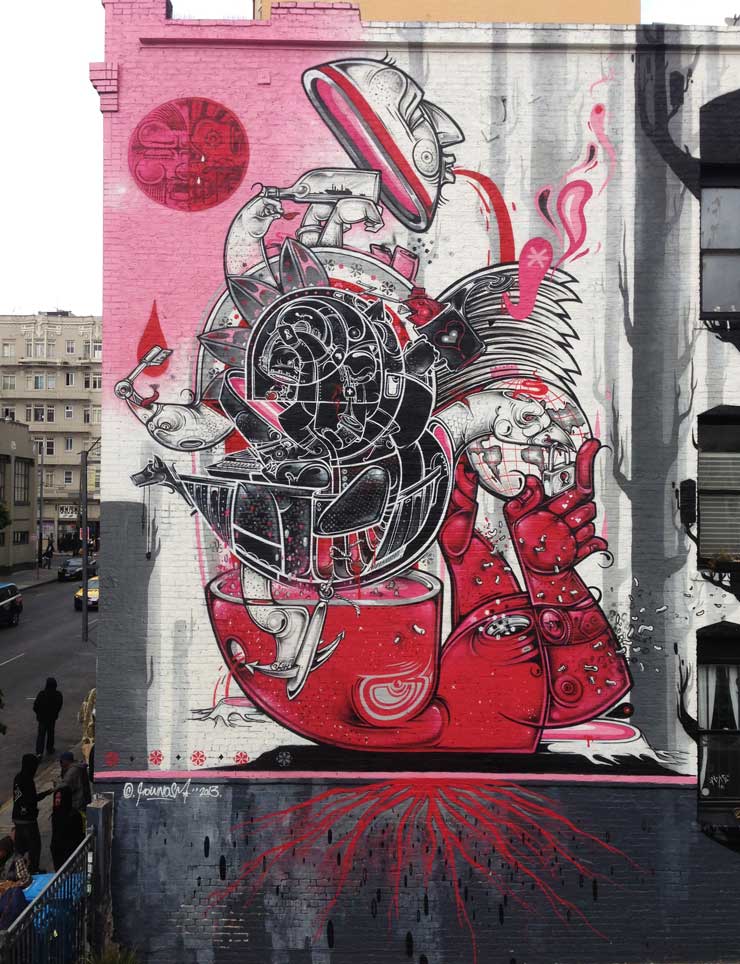
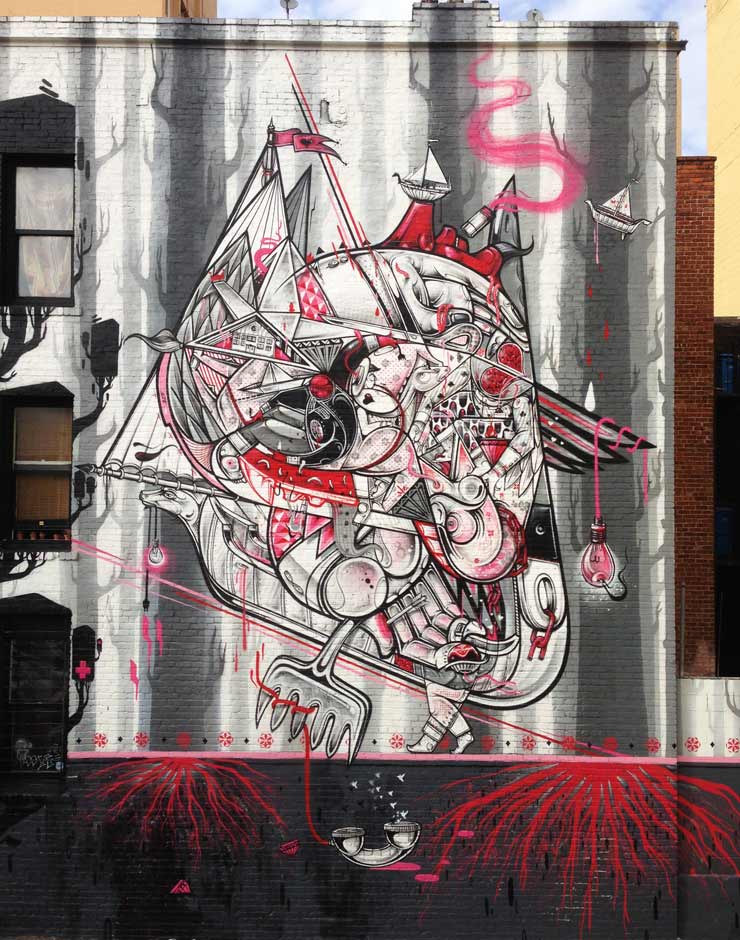
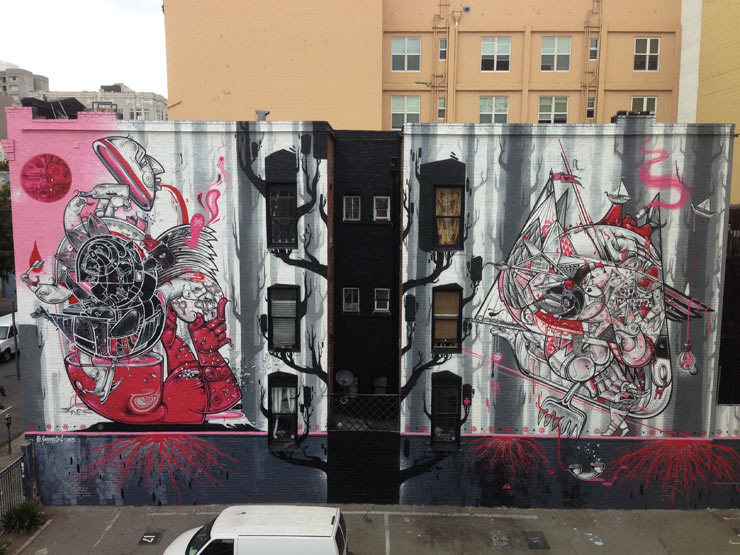
In San Francisco right now are How & Nosm, the Brooklyn based artists doing some work in a neighborhood known for serious drug related problems and violence. Tova Lobatz and Lauren Napolitano have invited the artists to participate in B.I.G. Projects, and the gents share these photos of their installation with us and with BSA readers.

The twins have said in the past that graffiti and their dedication to their art probably saved them from drugs, so they’re not passing judgement on people who have been caught up in the harmful cycles of addiction. The mural, entitled “Self Destruction”, is dedicated to the Tenderloin and was completed over the course of four days.

How & Nosm “Self Destruction” (photo © How & Nosm)

How & Nosm “Self Destruction”. Detail. (photo © How & Nosm)

How & Nosm “Self Destruction”. Detail. (photo © How & Nosm)

How & Nosm “Self Destruction” (photo © How & Nosm)

Learn more about B.I.G. Projects here


<<>>><><<>BSA<<>>><<<>><><BSA<<>>><><<>BSA<<>>><<<>><><BSA

Please note: All content including images and text are © BrooklynStreetArt.com, unless otherwise noted. We like sharing BSA content for non-commercial purposes as long as you credit the photographer(s) and BSA, include a link to the original article URL and do not remove the photographer’s name from the .jpg file. Otherwise, please refrain from re-posting. Thanks!

<<>>><><<>BSA<<>>><<<>><><BSA<<>>><><<>BSA<<>>><<<>><><BSA

Learn more about B.I.G. Projects here.

Read more
Studio Visit with MRKA : Graffiti and Branding

Studio Visit with MRKA : Graffiti and Branding

“Graffiti and branding are the same thing; One is legal and one is illegal.”

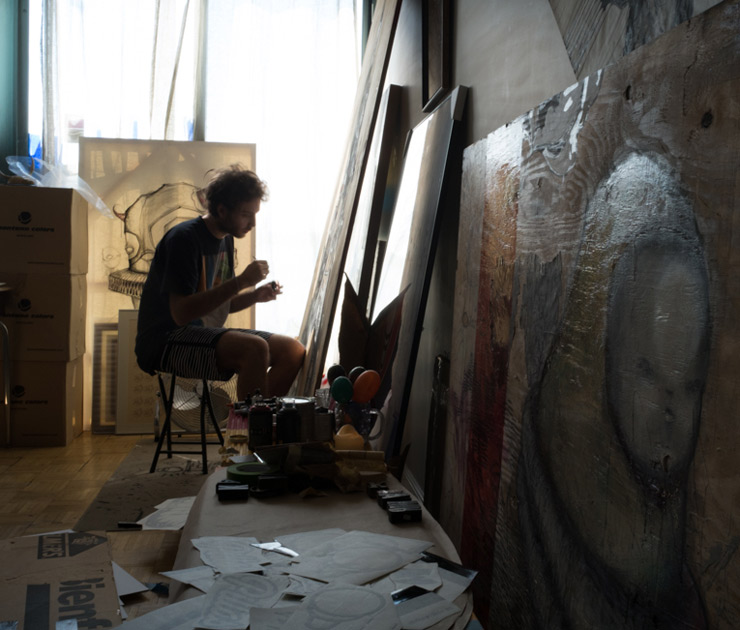
BSA Contributor Rosanna Bach visited MRKA for a studio visit and they talked about the intersections of the street, the Internet, branding, commercialism, and graffiti. Here is what she found:

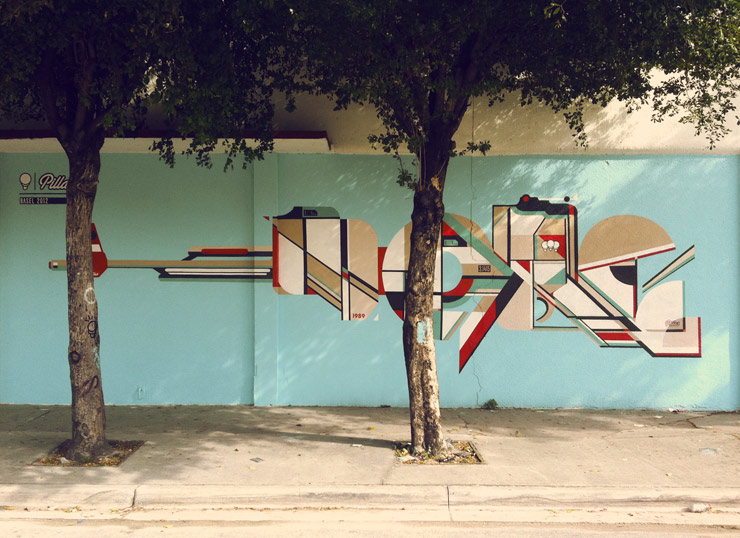
At 23, New York based Lucas Benarroch (MRKA) is like a lot of artists who started out writing in the streets – in his case the streets of Madrid. Often he collaborates with San Francisco based Nicolas Linares (NKO) and in 2010 they formed a duo called Pillasbros (or Pillas) and they have worked together on projects for “Secret Wars” in Brooklyn and in Wynwood, Miami. MRKA crisscrosses all mediums and medias as an outlet, whether it be his murals, graphic artwork or branding projects allowing his shapes, symbols and ideas to evolve organically.

“Machine Fun” by MRKA for Pillas. Wynwood, Miami. 2012 (photo © MRKA)

I arrive to his apartment/studio on a sunny morning and he opens the door fresh out of bed, but immediately gets into action mode. “I want to show this and this, and what if we take the photo over here? What do you think?”  I laugh. Inside the rather generic “cookie cutter” apartment I find a world of prints, paintings, and stickers…

Rosanna Bach: You work on the majority of your murals with NKO. Can you describe that working relationship?
MRKA:
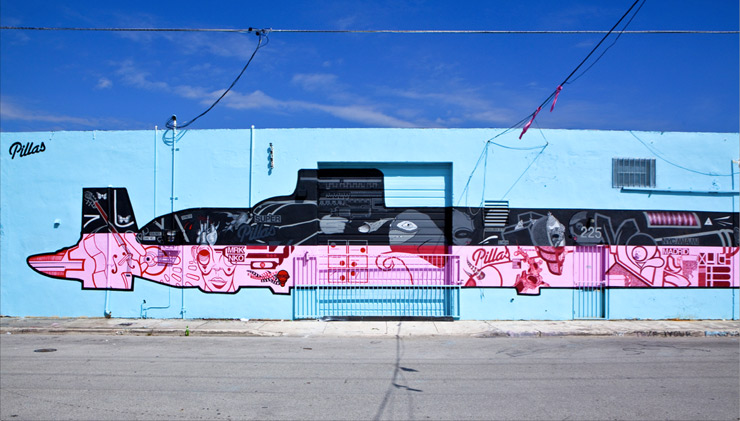
 I like to work with someone because there are two opinions. There are always two heads thinking about where to put the next shape or where to draw the next hand or tree. Our styles are completely different; He is more into characters and I’m more into texturing and geometries and the balance of the whole — and that’s what creates Pillas. I’m going a little more abstract, Nico keeps me more focused. He’s a serious man and I’m a little more distracted, so it’s a nice conjuncture of two styles. In terms of MRKA I don’t know if it’s a brand or just a lovely percussion instrument. I don’t know what it is yet. For now I’m just doing the projects I think are worth doing like the project for the Wutang Brand or the “Pillas Submarine” I painted with NKO in Miami last summer.

“Pillas Submarine” by Pillas (MRKA & NKO). Wynwood, Miami. 2012 (photo © Victor Alarcon)

Rosanna Bach: What makes a project worth doing?
MRKA:
 You have to think about if you’re motivated for it, if you’ll enjoy it or if it will be a pain. The relationship with the person you do the deal with is very important. I just put a MRKA on the cool shit that I do even if it’s commercial. Doing collaborations with commercial brands doesn’t bother me — That’s how the world works and you’ve got to eat. But you choose which brands you do and don’t want to work with. I mean why not? As long as you keep it personally artistic and you do what you want and not strictly what the brand wants, you’re good.

Rosanna Bach: Tell me, what’s the Maraca (MRKA) about?
MRKA:
 Just like people who have put their logo or their symbol or their icon all over the place — like “BNE” for example — it’s just a way to get attention from people. And then you can do whatever they want with it; in his case he built a water foundation.  The MRKA is used the same way. You see it on a coffee package or on a mural or on the Internet. It’s like a hashtag on Instagram — a way to link all your works. I mean I feel like social media stole tagging from graffiti…. basically it’s branding.

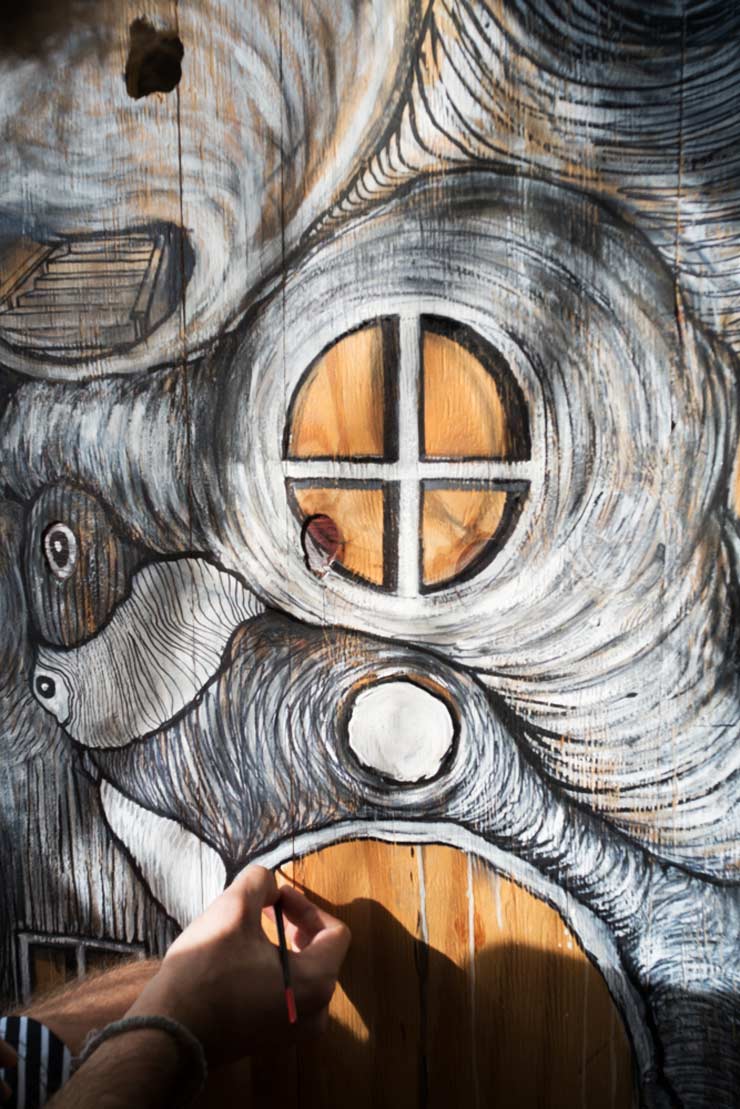
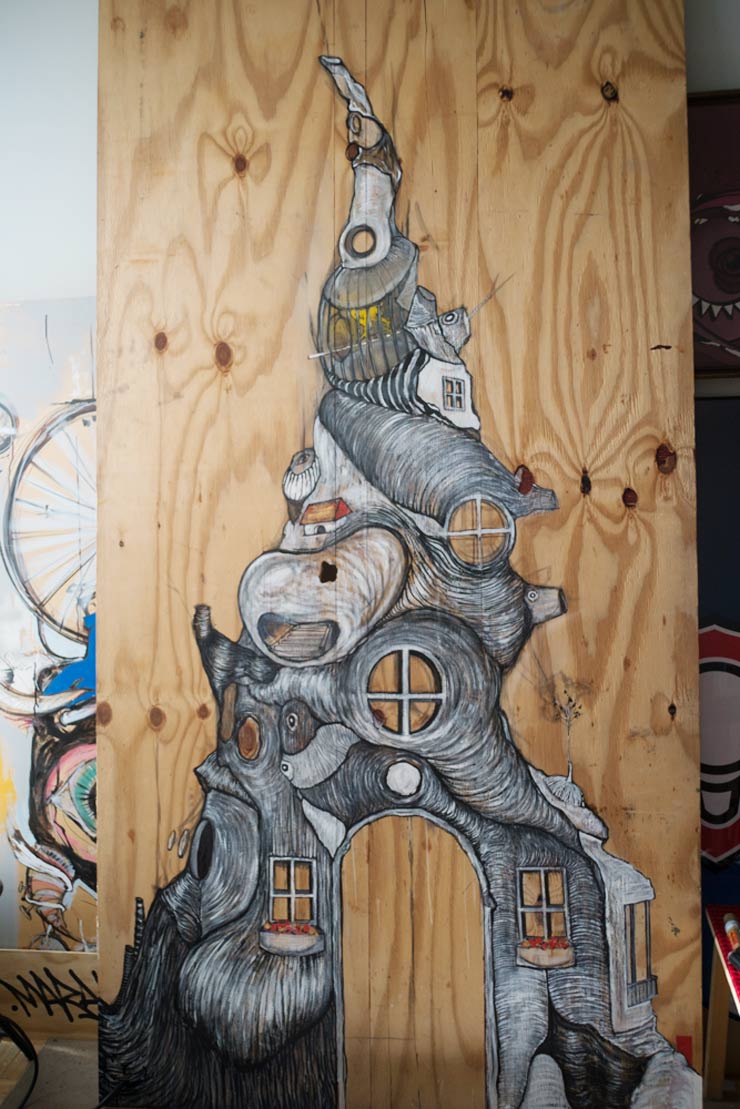
MRKA “His House”. Detail. (photo © Rosanna Bach)

Rosanna Bach: But branding for what exactly?
MRKA:
 Consciously or unconsciously you brand yourself little by little. It’s great when they find out your work is not just little stickers and little tags. It could bring you an exhibition with five screens or a mural in the Bronx. Graffiti and branding are the same thing; One is legal and one is illegal. I’m not sure which is which anymore since everything in this world crosses over these days. I’m mixing it. One guy told me today you have to focus, so I did the opposite. That is what a MRKA is. If you open it you’ll see all the sand inside, those grains are my ideas and my exhibits and the mailboxes I tag and all the things I wish to do. They just move around and shake and suddenly some of them get together to make a bigger noise…and that’s when the joy comes because something is born.

Rosanna Bach: So what would you say your work is about?
MRKA:
 It’s about seeing a final physical product of my idea (He smiles). I love seeing that physical thing after I had a dream or a thought and two days or a couple of months, maybe years later, it’s there. You make your own little world you try new techniques new materials. It’s like having a physical Facebook.

MRKA “His House” (photo © Rosanna Bach)

Rosanna Bach: Street or gallery? Does it matter?
MRKA:
 I don’t think much — just do what you feel like doing that day. Because if you obsess over street or gallery, artist or designer, matte or glossy — you end up doing nothing at all. Don’t think too much, just shake well.

Rosanna Bach: Some use it as a chance to cast an opinion outward into the world.
MRKA:
I don’t do that. Mine is straight art, I just do it in the street. Because it’s pure art. It’s not street art as something profound or subliminal. It s more related to graffiti as here I am and it s related to the fine art here I am but I m not just fucking up your wall I’m doing it here instead of on a canvas and I m going to share it with you. The street is cool because you can go huge and you don’t have to move it. There’s no secondary intention apart from this is what I do I hope you like it call me if you need anything.

Rosanna Bach: It is just as simple as that?
MRKA:
 It comes from inside. It comes from the desire to do things well and just doing in general. It’s a reflection of how I like geometry and balance and branding and graffiti and how I put it all together. It’s about making a shape recognizable. It could be a circle or a square, it could be anything, but it’s how you use it where it can become something good. How high can you get this symbol? – not in the sense of fame but in the sense of how much can it involve? I do all sorts of things within the same realm under this umbrella. My MRKA is as simple as that.

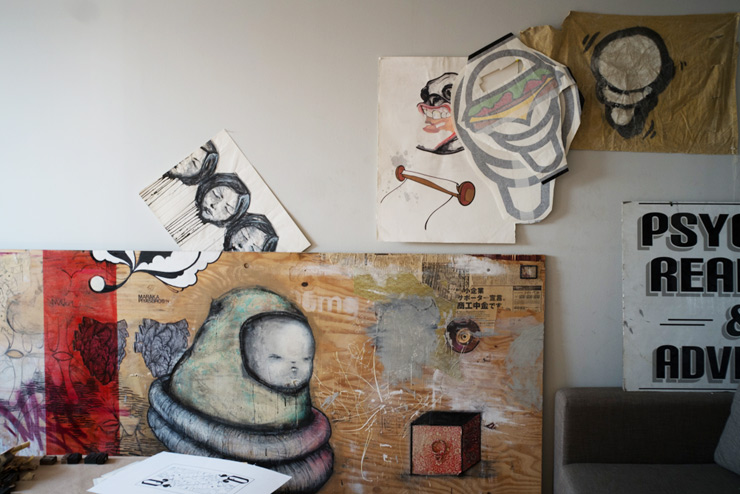
MRKA (photo © Rosanna Bach)

New drawings (in process) by Pillas (NKO + MRKA) (photo © Rosanna Bach)

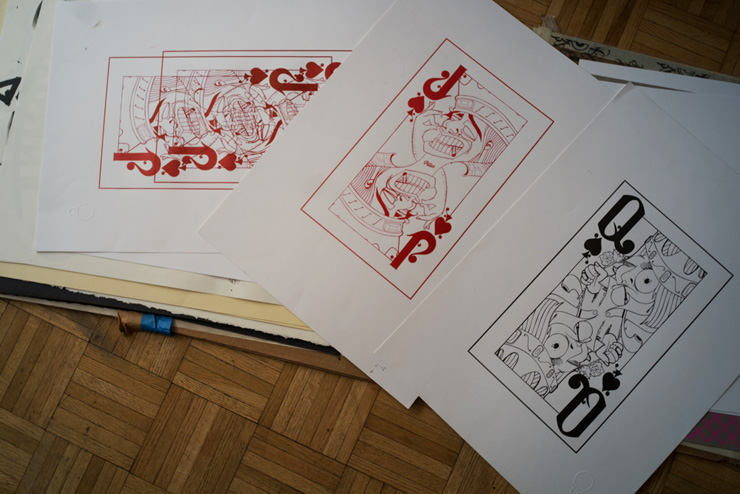
MRKA. Jack and Queen from Royal Flush Series. (photo © Rosanna Bach)

MRKA (photo © Rosanna Bach)

Links:

http://www.emerreka.com/

http://minimaldose500mg.com/

http://pillasbros.blogspot.com/

http://vimeo.com/mrka


<<>>><><<>BSA<<>>><<<>><><BSA<<>>><><<>BSA<<>>><<<>><><BSA

Please note: All content including images and text are © BrooklynStreetArt.com, unless otherwise noted. We like sharing BSA content for non-commercial purposes as long as you credit the photographer(s) and BSA, include a link to the original article URL and do not remove the photographer’s name from the .jpg file. Otherwise, please refrain from re-posting. Thanks!

<<>>><><<>BSA<<>>><<<>><><BSA<<>>><><<>BSA<<>>><<<>><><BSA

Read more
A Nice Gesture: HANDS Project In Barcelona

A Nice Gesture: HANDS Project In Barcelona

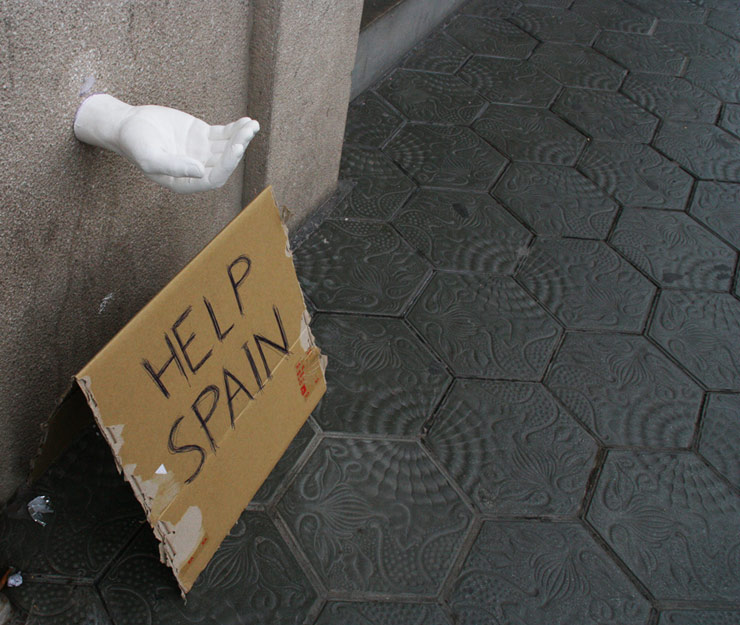
With the international banking crises continuing to force everyday citizens to suffer, Spain is one of the more recent “developed” countries being forced to cut programs and services for its people. Just this past Saturday tens of thousands of Spaniards marched through cities across the country to protest deep austerity, the privatization of public services and political corruption. With tens of thousands of closed businesses and an economy in severe retraction and cuts to education and health programs, the pain hits the youth particularly hard as 55% of people under the age of 25 are unemployed.

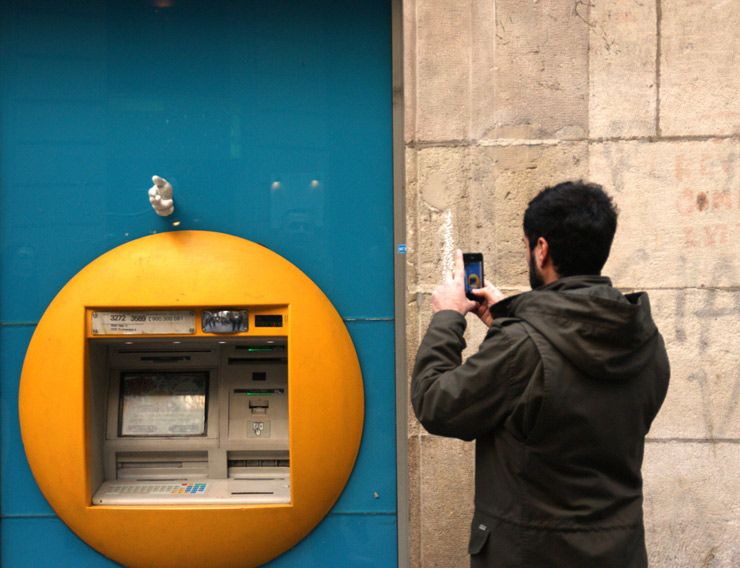
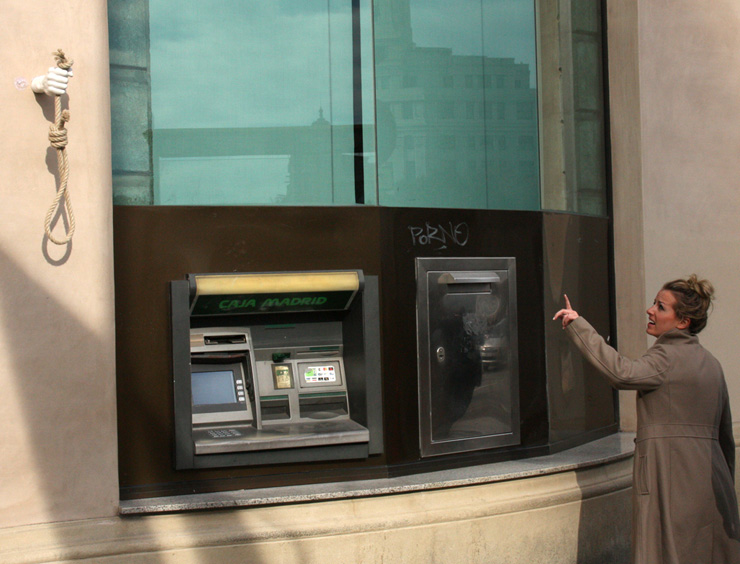
Octavi Serra, Mateu Targa, Daniel Llugany and Pau Garcia. “HANDS”. January, 2013. Barcelona, Spain. (photo © Pau Garcia Sanchez)

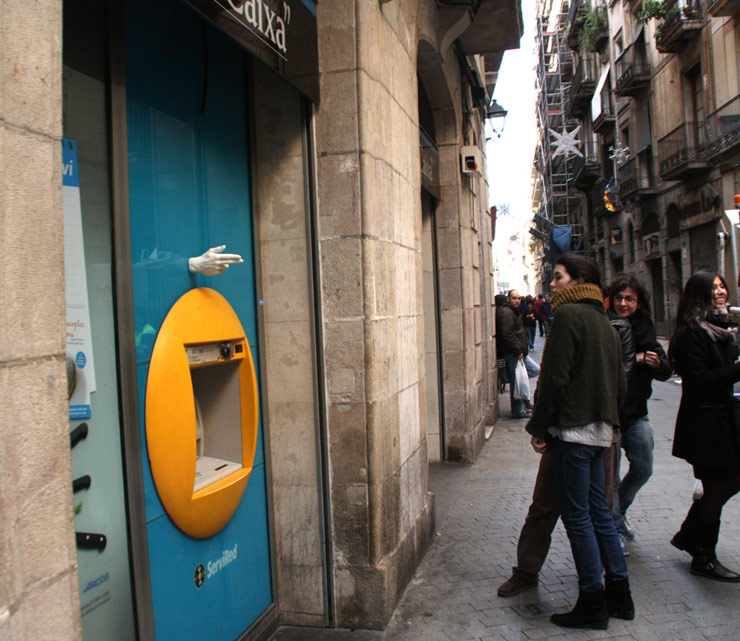
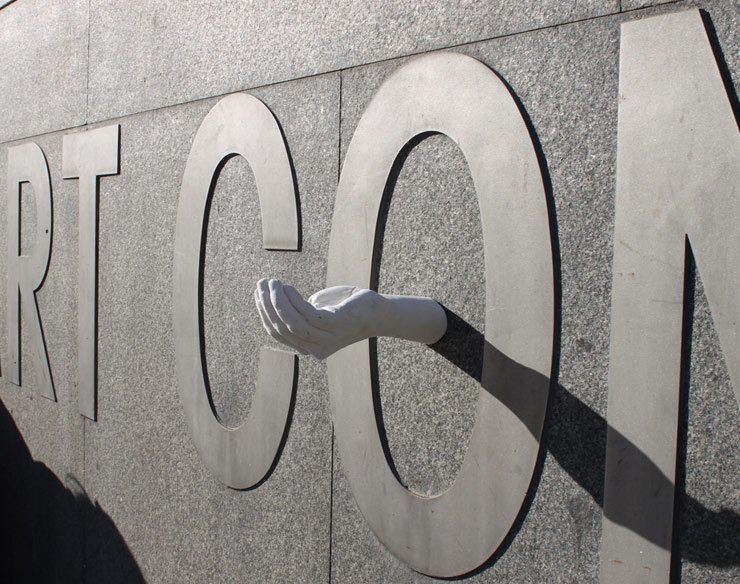
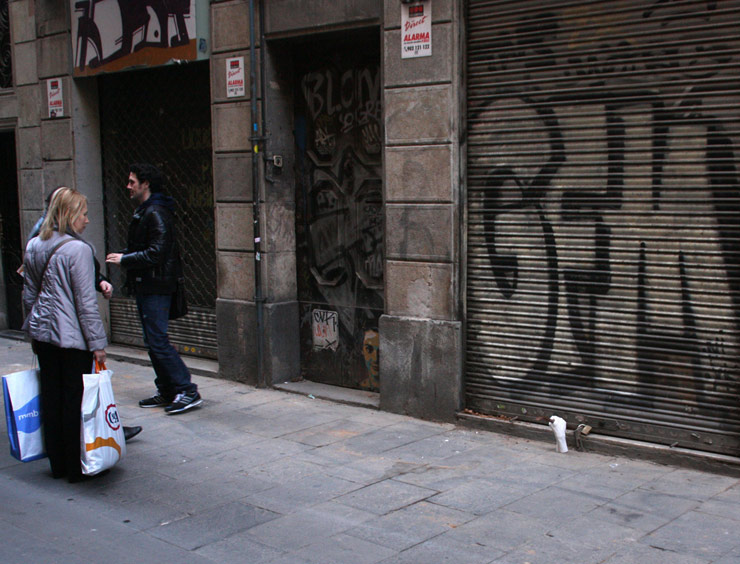
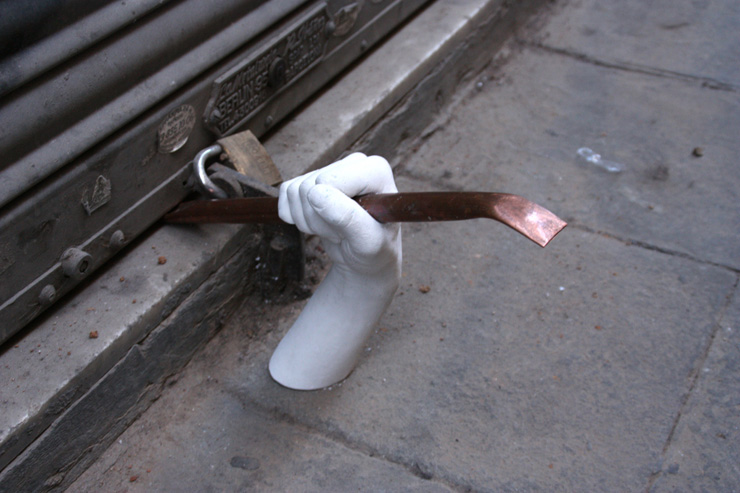
To reflect this environment on the streets, four artists have begun a Street Art installation in Barcelona that highlights the human aspect of the economic crisis using sculptures of hands strategically placed in the public sphere. The results of HANDS are subtle but effective, and many passersby interact with them, take photos of them, pose with them, stand and discuss these gestural conversation pieces. Poignant and pointed, the installations aim to help people draw the connection between the crisis and those who ultimately are responsible.

All involved in the field of visual arts, the artists who have a hand in HANDS are Octavi Serra, Mateu Targa, Daniel Llugany and Pau Garcia.  You may now applaud if you like.

Octavi Serra, Mateu Targa, Daniel Llugany and Pau Garcia. “HANDS”. January, 2013. Barcelona, Spain. (photo © Pau Garcia Sanchez)

Octavi Serra, Mateu Targa, Daniel Llugany and Pau Garcia. “HANDS”. January, 2013. Barcelona, Spain. (photo © Pau Garcia Sanchez)

Octavi Serra, Mateu Targa, Daniel Llugany and Pau Garcia. “HANDS”. January, 2013. Barcelona, Spain. (photo © Pau Garcia Sanchez)

Octavi Serra, Mateu Targa, Daniel Llugany and Pau Garcia. “HANDS”. January, 2013. Barcelona, Spain. (photo © Pau Garcia Sanchez)

Octavi Serra, Mateu Targa, Daniel Llugany and Pau Garcia. “HANDS”. January, 2013. Barcelona, Spain. (photo © Pau Garcia Sanchez)

Octavi Serra, Mateu Targa, Daniel Llugany and Pau Garcia. “HANDS”. January, 2013. Barcelona, Spain. (photo © Pau Garcia Sanchez)

Octavi Serra, Mateu Targa, Daniel Llugany and Pau Garcia. “HANDS”. January, 2013. Barcelona, Spain. (photo © Pau Garcia Sanchez)

Octavi Serra, Mateu Targa, Daniel Llugany and Pau Garcia. “HANDS”. January, 2013. Barcelona, Spain. (photo © Pau Garcia Sanchez)

Go to HANDS for more about this project.

Read more

Images of the Week 02.24.13


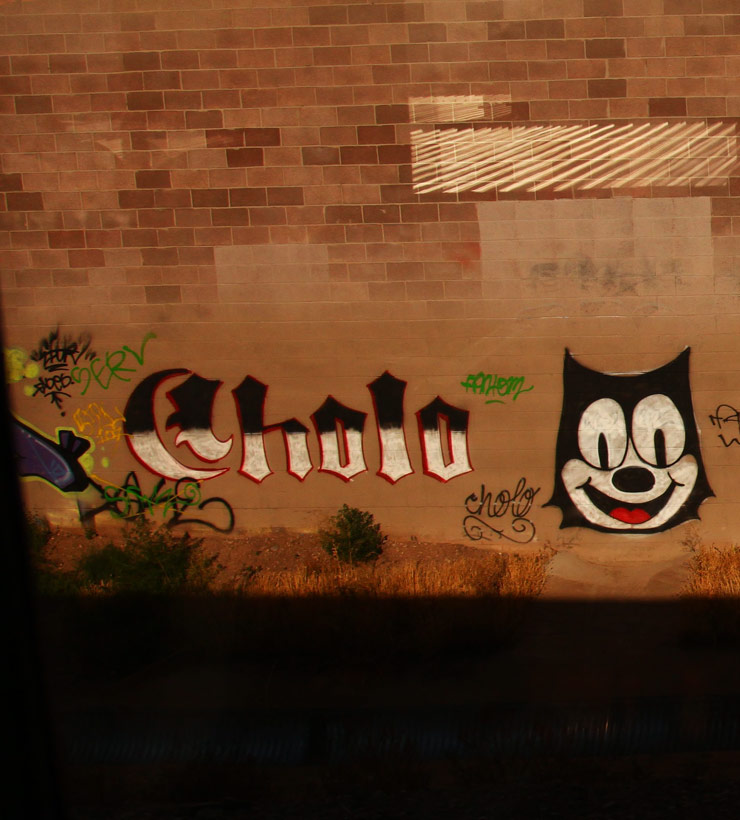
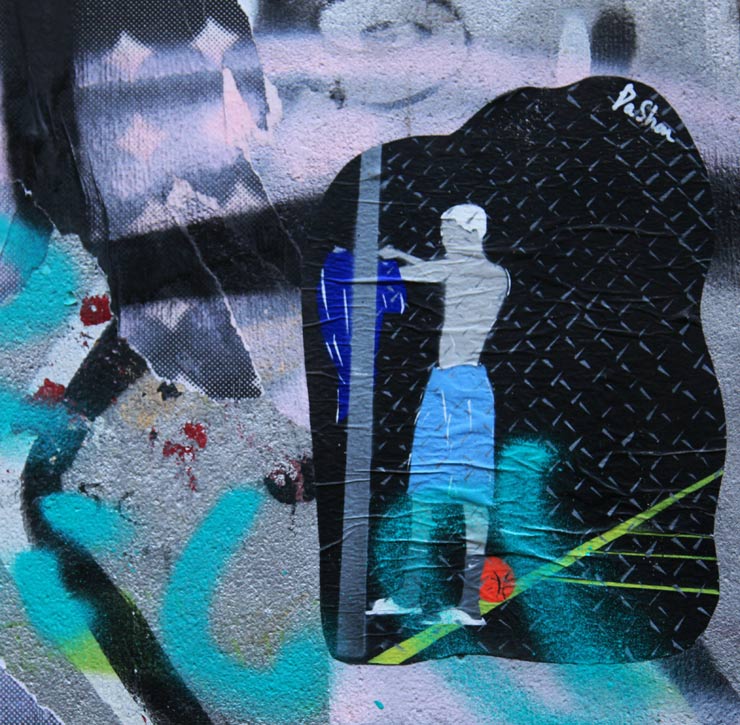
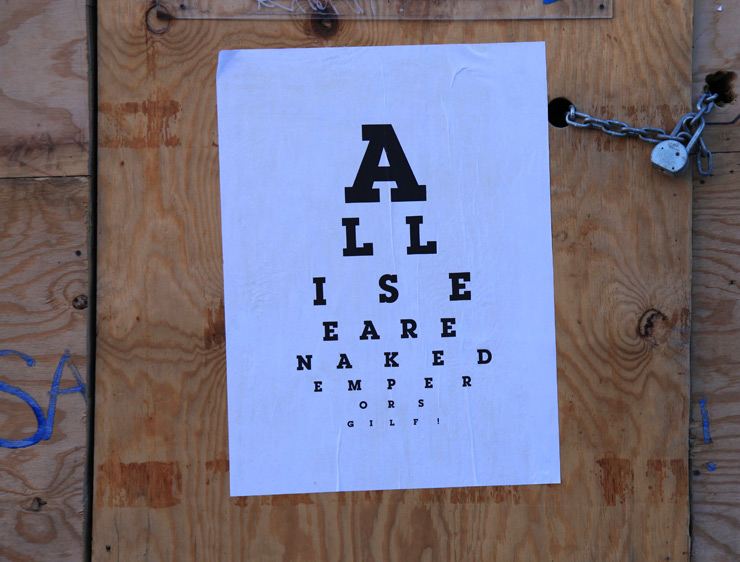
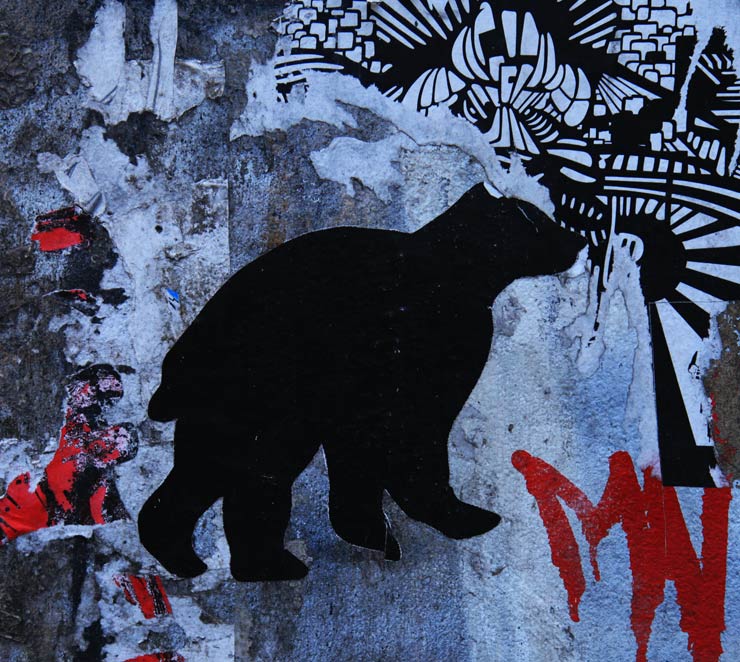
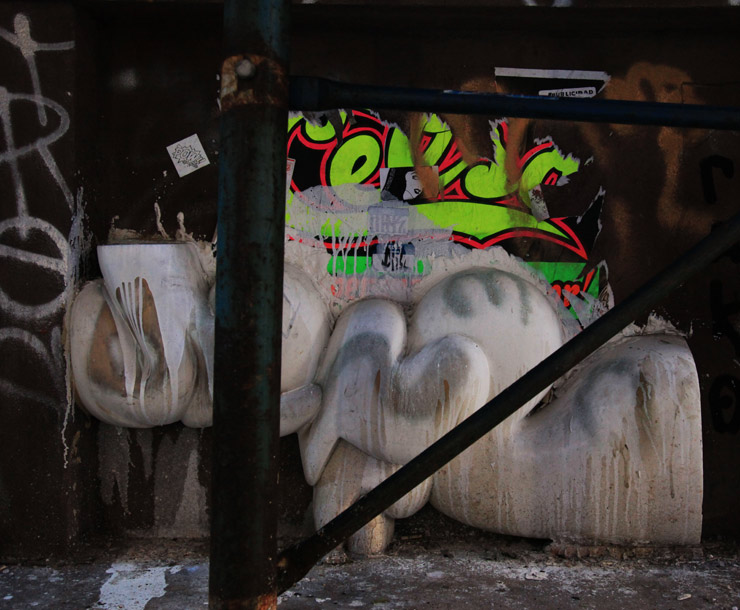
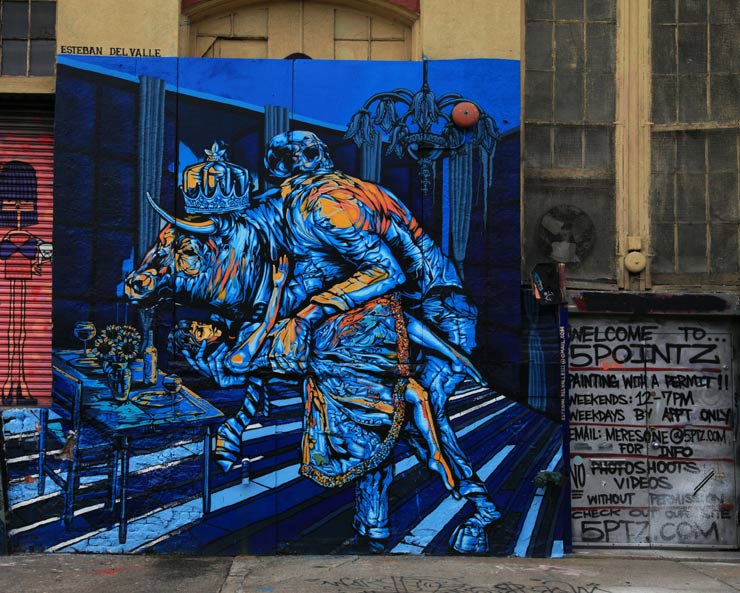
If you have a healthy attitude toward discovery you are always going to be entertained by the art that people are leaving on the street. You could say that right now abstract sculpture is showing up a little more, the animal kingdom is still out to represent, and in the face of all the large murals we’ve been seeing comes a variety of small works and one-offs by people with names or those who aren’t in it for the fame. Don’t try to make too much sense of it all, though, you’ll ruin it for yourself! Here’s our weekly interview with the street, this week featuring CB23, Cholo, Dashan, Esteban Del Valle, FLM, Gilf!, Mint & Serf, and Tripel.

Top image > Cholo (photo © Jaime Rojo)

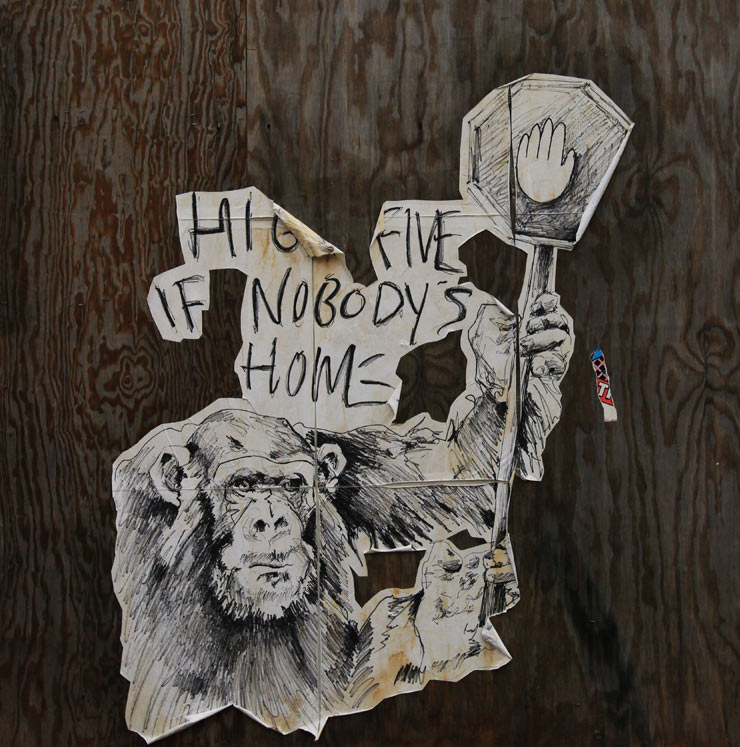
Artist Unknown (photo © Jaime Rojo)

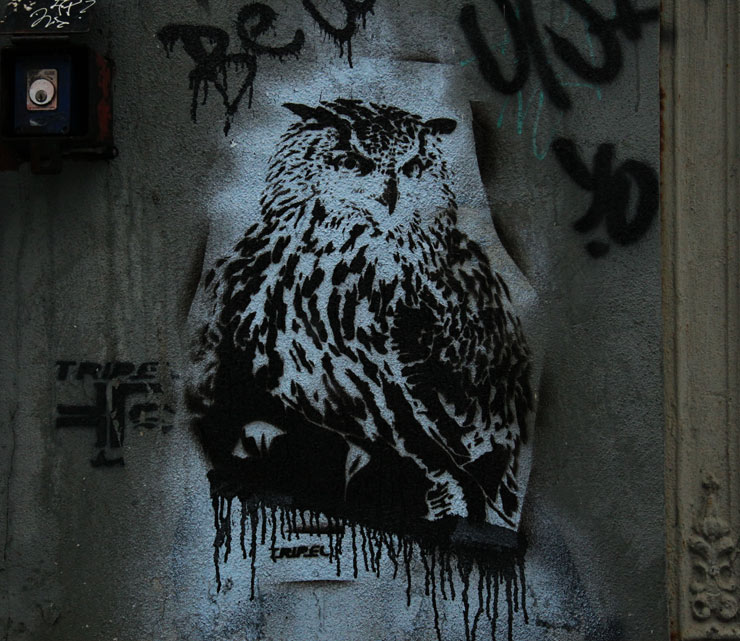
Tripel (photo © Jaime Rojo)

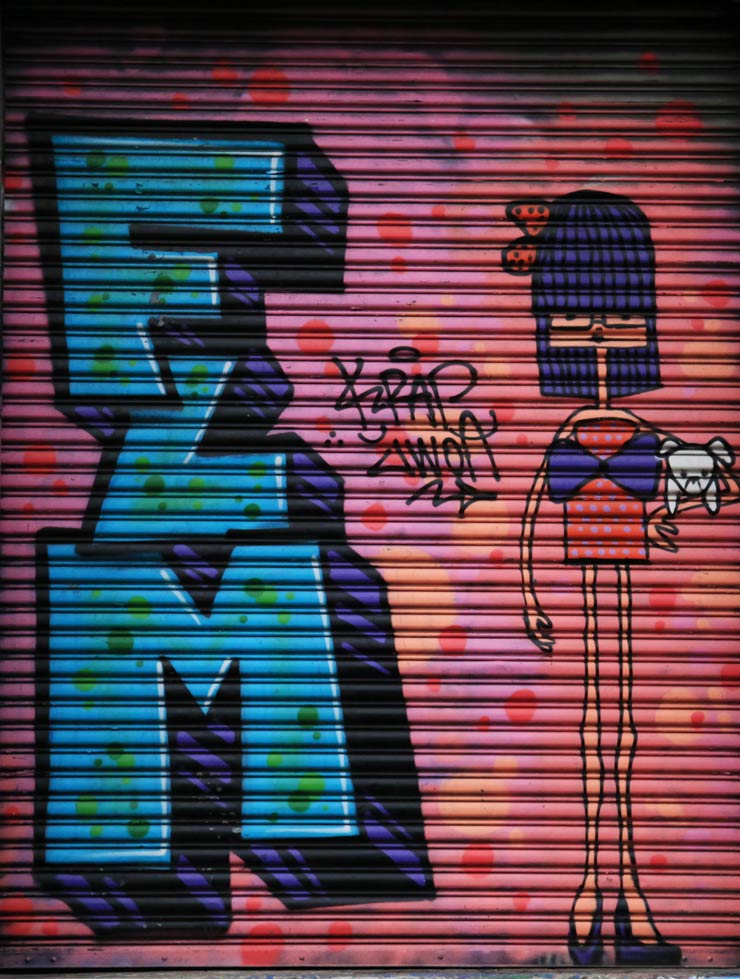
FLM (photo © Jaime Rojo)

FLM (photo © Jaime Rojo)

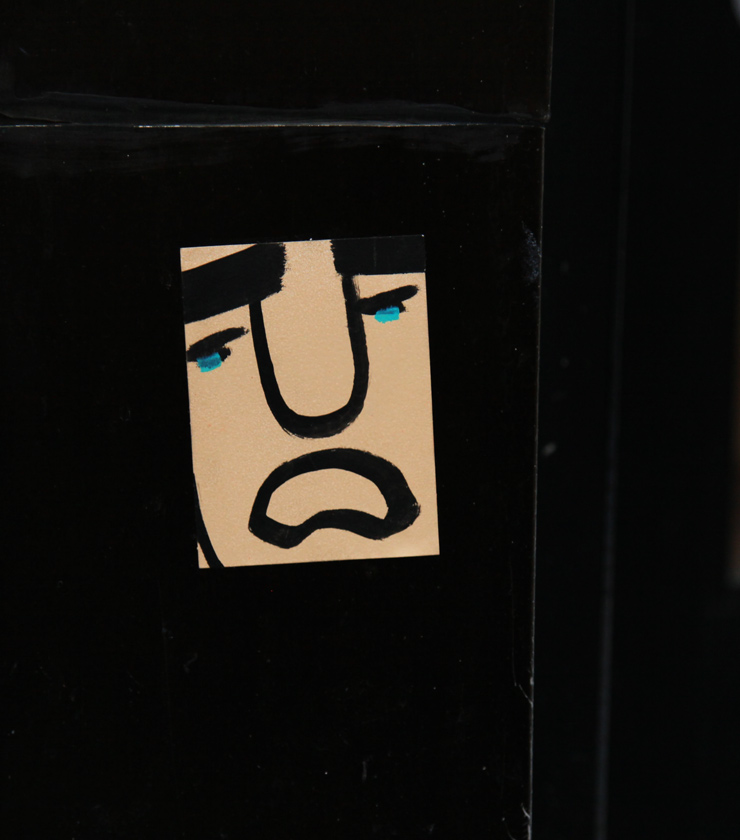
Artist Unknown (photo © Jaime Rojo)

CB23 (photo © Jaime Rojo)

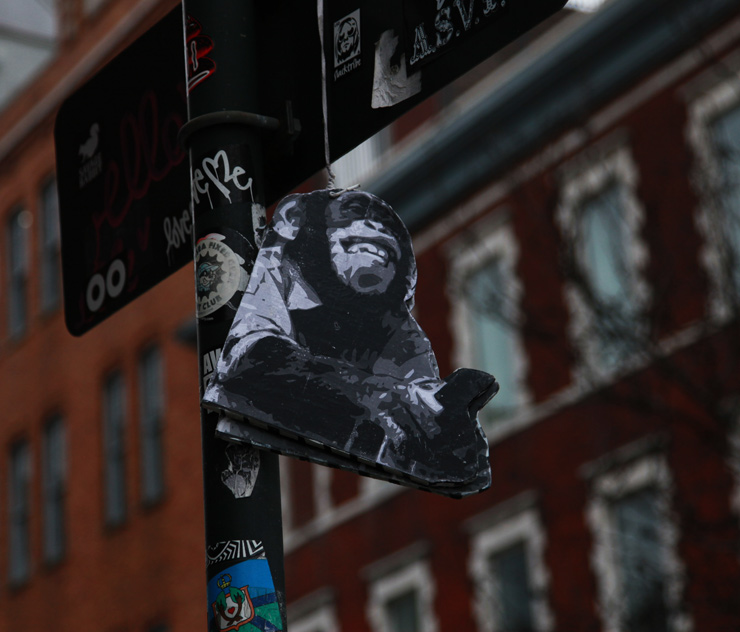
Artist Unknown (photo © Jaime Rojo)

Dashan (photo © Jaime Rojo)

Gilf! (photo © Jaime Rojo)

Artist Unknown (photo © Jaime Rojo)

Mint & Serf (photo © Jaime Rojo)

Artist Unknown (photo © Jaime Rojo)

Esteban Del Valle (photo © Jaime Rojo)

Untitled. Chinatown, NYC. February 2013. (photo © Jaime Rojo)

Read more

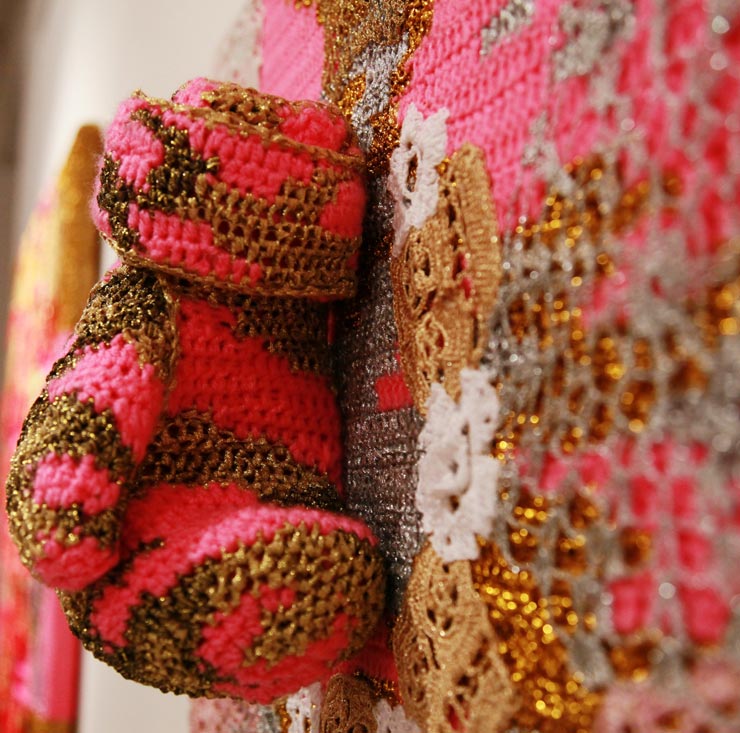
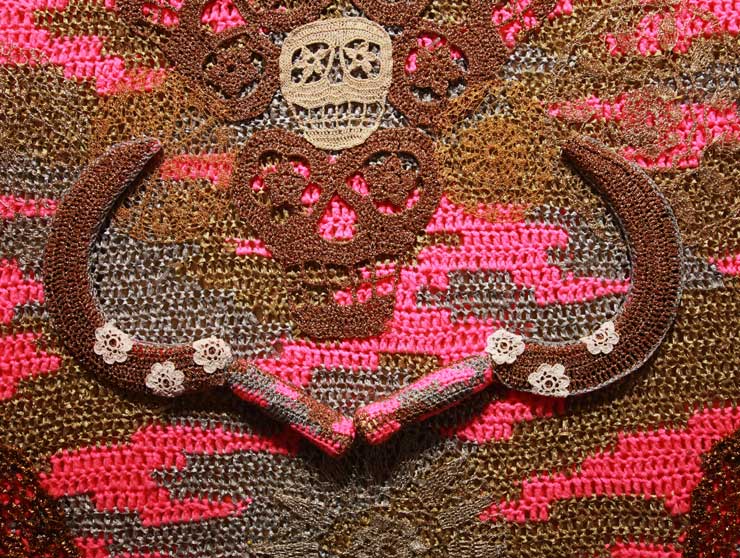
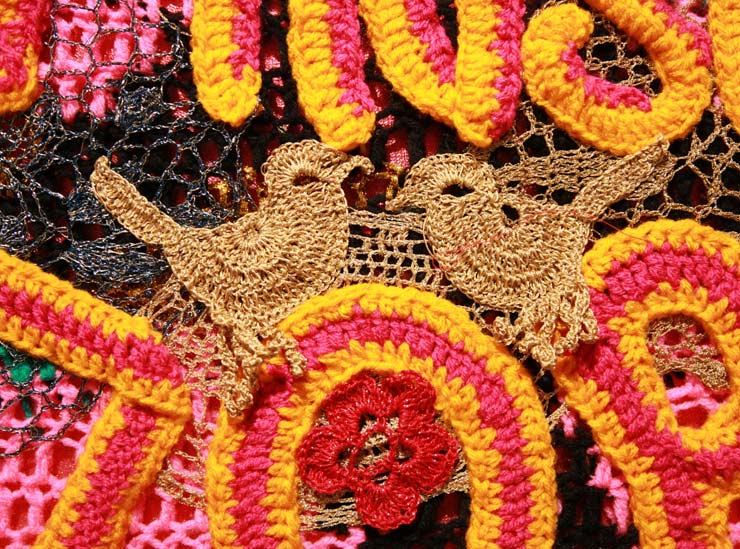
Olek Sneak Peek – It’s a Pink Crocheted World and “The End is Far”

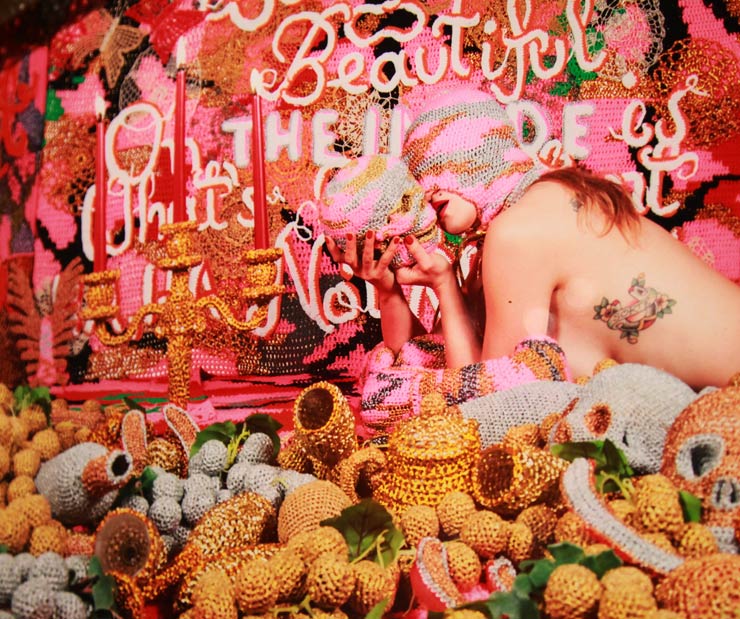
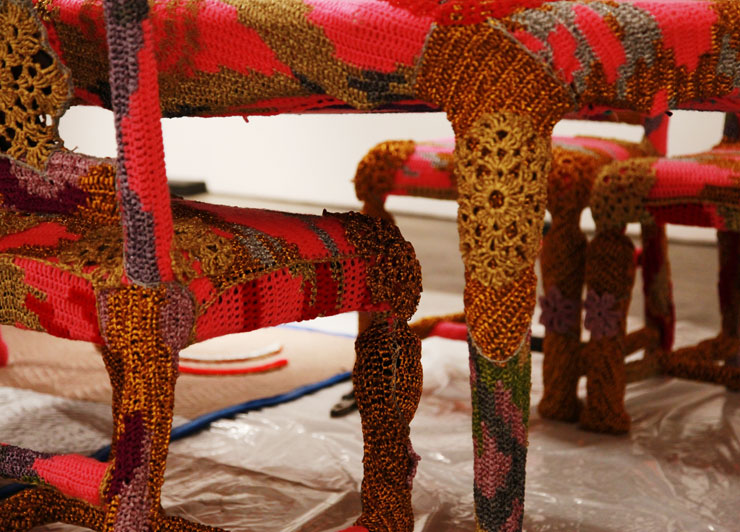
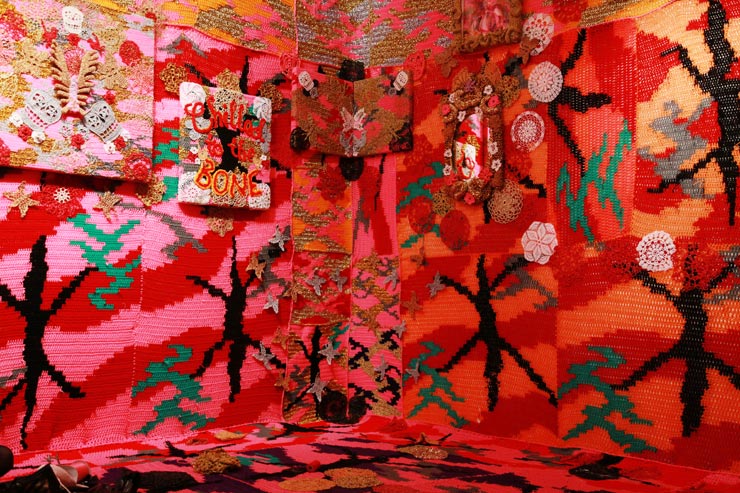
For those of us who follow this sort of thing Street Artist Olek has monopolized the category for D.I.Y. pink and purple camouflage crochet sculpture on the street.

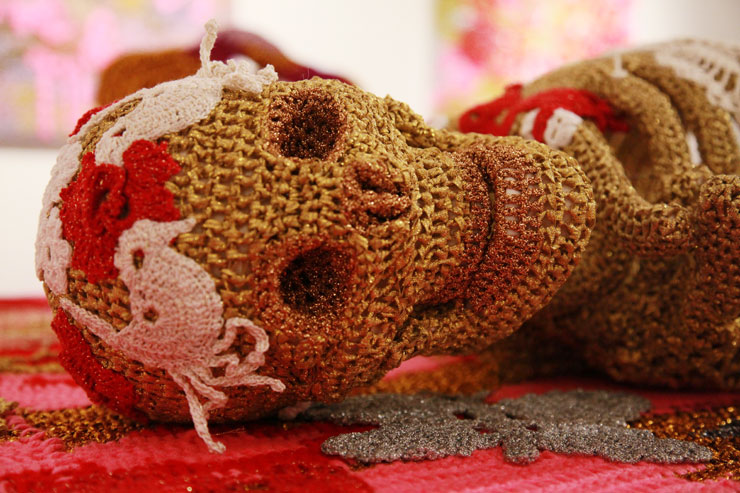
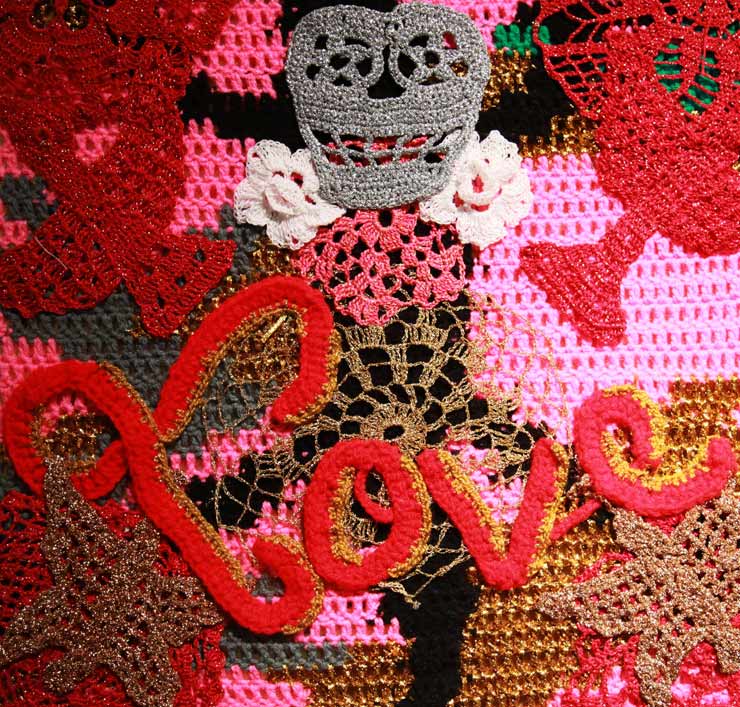
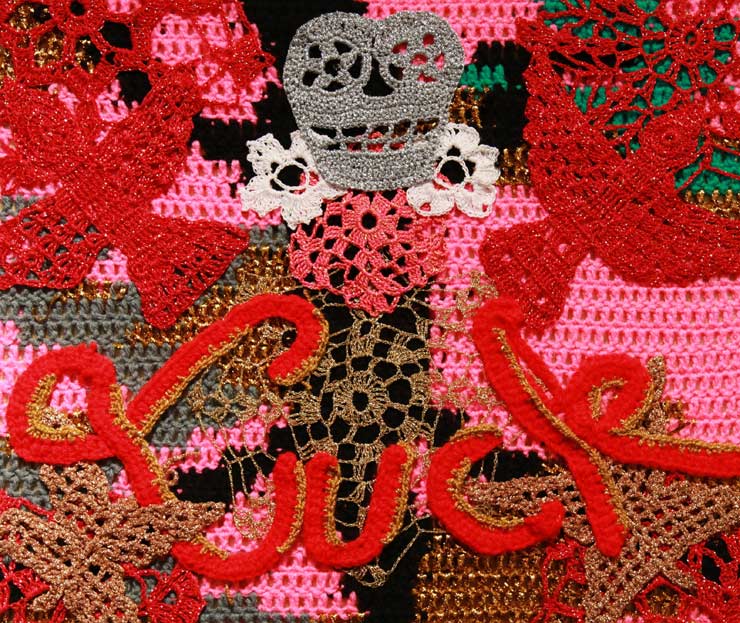
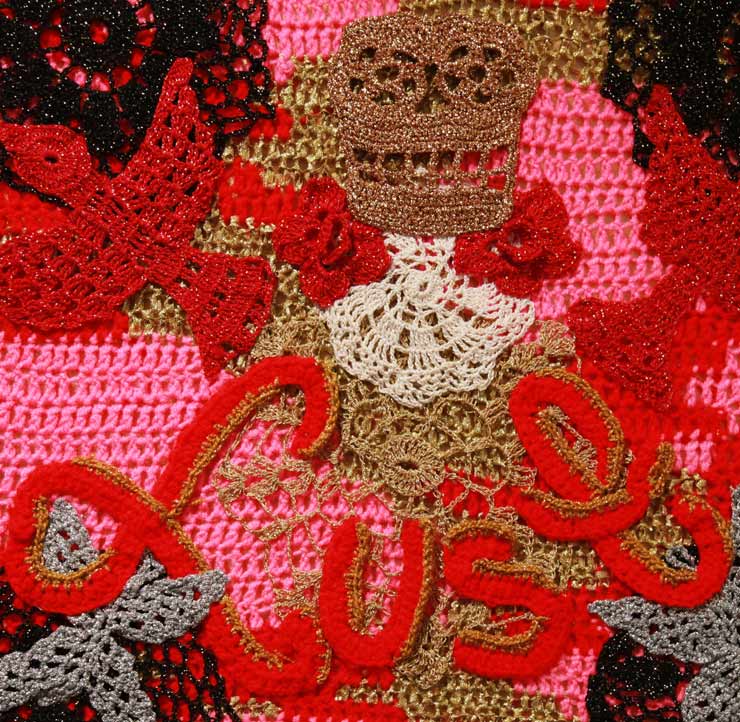
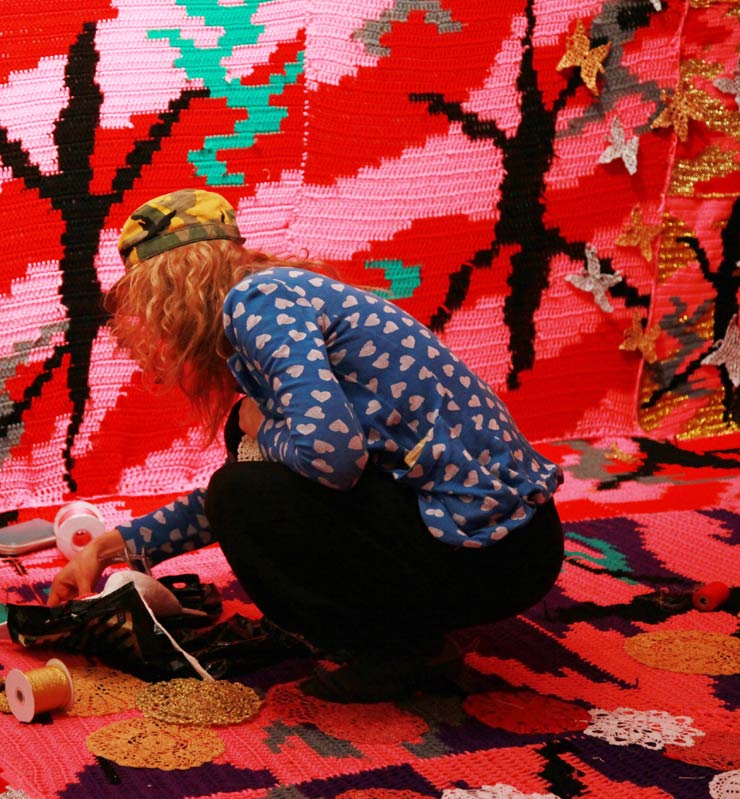
More later on that tip, but right now we want to share with you a BSA sneak peek of “The End is Far” as Olek races to completely cover the interior exhibition space for tonights’ opening at Jonathan Levine.

Call it a show about candy colored empowerment. Call her a force to reckon with, and possibly adore. And if you do, champagne and chocolate-dipped strawberries will be accepted.

OLEK  (detail of photo, re-shot © Jaime Rojo)

OLEK. Detail. (photo © Jaime Rojo)

OLEK. Detail. (photo © Jaime Rojo)

OLEK. Detail. (photo © Jaime Rojo)

OLEK. Detail. (photo © Jaime Rojo)

OLEK. Detail. (photo © Jaime Rojo)

OLEK. Detail. (photo © Jaime Rojo)

OLEK. Detail. (photo © Jaime Rojo)

OLEK. Detail. (photo © Jaime Rojo)

OLEK at work on her installation. Detail. (photo © Jaime Rojo)

OLEK. Detail. (photo © Jaime Rojo)

OLEK “The End is Far” Opens today at the Jonathan LeVine Gallery. Click here for more details.

<>>><><<>BSA<<>>><<<>><><BSA<<>>><><<>BSA<<>>><<<>><><BSA

Please note: All content including images and text are © BrooklynStreetArt.com, unless otherwise noted. We like sharing BSA content for non-commercial purposes as long as you credit the photographer(s) and BSA, include a link to the original article URL and do not remove the photographer’s name from the .jpg file. Otherwise, please refrain from re-posting. Thanks!

<<>>><><<>BSA<<>>><<<>><><BSA<<>>><><<>BSA<<>>><<<>><><BSA

Read more

BSA Film Friday 02.22.13


Our weekly focus on the moving image and art in the streets. And other oddities.

Now screening: En Masse X Musée des Beaux Arts de Montréal , Entes y Pesimo AKA Los Primos in Chile, and Jessy Nite in Hollywood: Diamonds….


BSA Special Feature:

En Masse X Musée des Beaux Arts de Montréal from Fred Caron

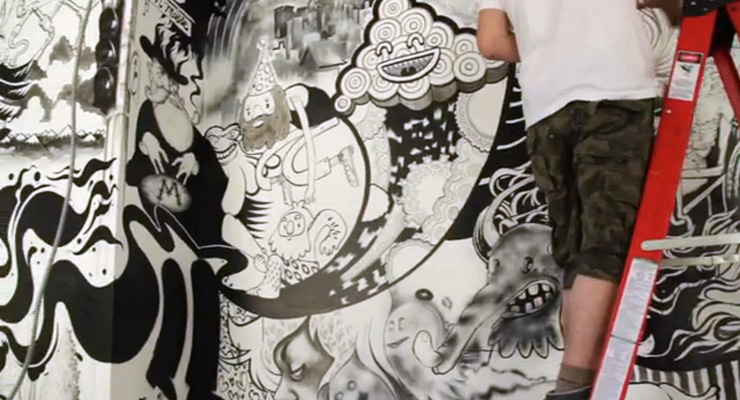
The Montreal Museum of Fine Arts invited the En Masse Project in for the creation of their new educational area, and here is a record of the installation by Fred Caron. Using only black and white, En Masse covered walls, ceilings, a hallway, and a staircase in the Museum as part of a new program of “educational zones” that offer free access and workshops to kids and their adults.

Artists include: Labrona, Tyler Rauman, Jason Botkin, Rupert Bottenberg, Fred Caron, Melissa DelPinto, Alan Ganev, Beef Oreo, Bruno Rathbone, Jason Wasserman, Peru143, Raphaële Bard, Ad Deville, MCBaldasseri, Dan Buller, Adam Vieira, Peter Ferguson, Carlos Santos, Katie Green, Cheryl Voisine, Tyson Bodnarhuk, Fred Casia, Dominic Brunette, Olivier Bonnard, Troy Lovegates, Lea Heinrich, Dave Todaro.

Entes y Pesimo AKA Los Primos in Chile

Here’s a video of Entes y Pesimo on their visit to Chile in November 2012.

Jessy Nite in Hollywood: Diamonds Are a Girl’s Best Friend…

Creating a Hollyhood Kaleidoscope for The Downtown Hollywood Mural Project in Florida, here is a sunny warm look of the installation in video edited and shot by Peter Vahan.

Read more

Street Art From Beijing and Robbbb

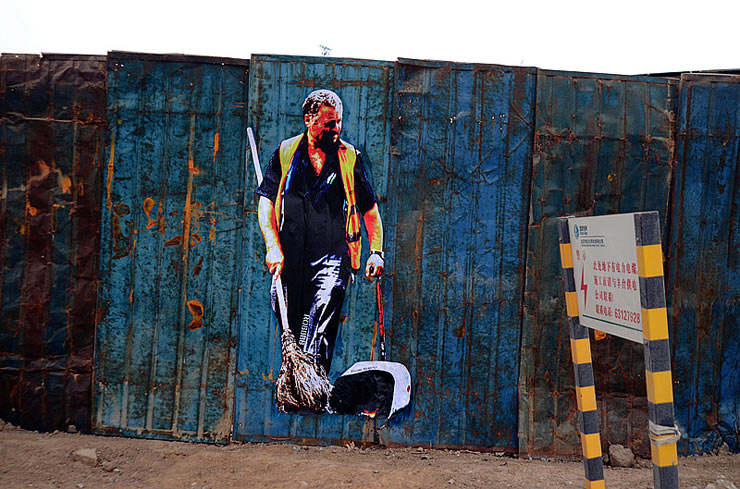
Street Artist Robbbb has some new neighbors posted in his city of Beijing, the three thousand year old Chinese capital metropolis of 20.6 million people. By wheat-pasting these still frame figures of unromanticized men, women, and children back onto the street where they travel, Robbbb calls attention to the every day person, and by doing so, somehow exults them. It’s an ephemeral art, but it lasts a little longer than the momentary flash of a person passing by and it give Robbbb an opportunity to look at and contemplate the lives of people in his city  and perhaps to give them the equivalent of a visual “shout out”.

“No matter what nationality, what identity, what gender or what age, I like depicting  figures from the city,” says the artist of his work.

Robbbb (photo © Robbbb)

Robbbb (photo © Robbbb)

Robbbb (photo © Robbbb)

Robbbb (photo © Robbbb)


<<>>><><<>BSA<<>>><<<>><><BSA<<>>><><<>BSA<<>>><<<>><><BSA

Please note: All content including images and text are © BrooklynStreetArt.com, unless otherwise noted. We like sharing BSA content for non-commercial purposes as long as you credit the photographer(s) and BSA, include a link to the original article URL and do not remove the photographer’s name from the .jpg file. Otherwise, please refrain from re-posting. Thanks!

<<>>><><<>BSA<<>>><<<>><><BSA<<>>><><<>BSA<<>>><<<>><><BSA

Read more

El Anatsui Shows Both “Gravity and Grace” in New York

Post industrial African urban pointillist El Anatsui is outside at The High Line in Manhattan and inside the Brooklyn Museum right now to offer “Gravity and Grace”, two characteristics one may associate with the man himself.

Using aluminum bottle caps and similar mass consumer materials from his home country of Nigeria, the Ghana-born Anatsui paints temporary organic facades, glittering curtains, crumpled moonscapes that bend clumsily and undulate gracefully.  So familiar has he become with his materials over his four decade career, Anatsui can create translucent scrims to peer through and reptilian skinned impressionist coats of armor, each bending and folding of the metal fabric in service of a multitude of imaginations.
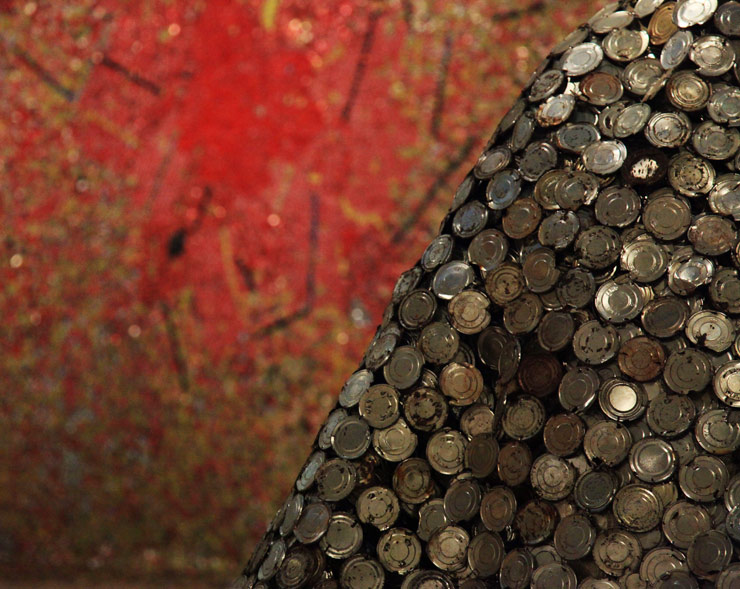
El Anatsui. “Peak”, 2010. Detail. (photo © Jaime Rojo)

“I have a desire to manipulate the material to get something else out of it,” he said during his recent talk with African art expert Susan Vogel and Kevin Dumouchelle, Associate Curator of Arts of Africa and the Pacific Islands at the museum before a capacity auditorium audience this month.

While speaking about his own approach to his practice, Anatsui showed a refreshingly straight forward investigative approach to his own process of discovery, perhaps explaining how such rigid materials are transformed by his hand into something flexible, malleable, free. “I have a feeling that artwork is a parallel of life, it is life itself. It is not something static. We are about changing, forever in a state of flux.  If that is the case then the artwork should be in a state of flux.”
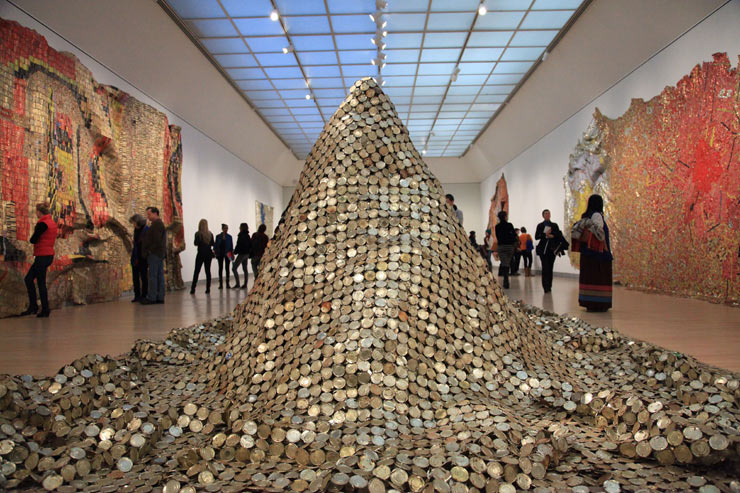
El Anatsui. “Peak”, 2010. “Earth’s Skin” 2007 on the left. “Gravity and Grace”, 2010 on the right. (photo © Jaime Rojo)

As he offers observations of his own culture and the effects of consumerism and globalism on it, he encourages you to take a hands-on approach to art making. A scholar and professor, El Anatsui’s practice has been rooted in the same D.I.Y. ethos that propelled many a street artist in the current global scene that emerged in the 2000s and 2010s.  Mining the diamonds in his backyard, El Anatsui models a personal mission that encourages artists to look at everyday consumer products and see their potential as high art, as vehicles for expression that go beyond craft making or green initiatives.

In an invitation to collaboration, El Anatsui appears to have a remarkably un-Diva-like disposition when it comes to how his work should be exhibited, inviting others to determine how to best display it according to their site-specific considerations. Speaking of his retrospective that ran from September through the end of 2012 at the Denver Art Museum, the artist expresses a gleeful sense of surprise at how curators there displayed his work. “I saw that they were able to mount some of the works very interestingly and they were able to give them shapes that I would not have thought about myself. “
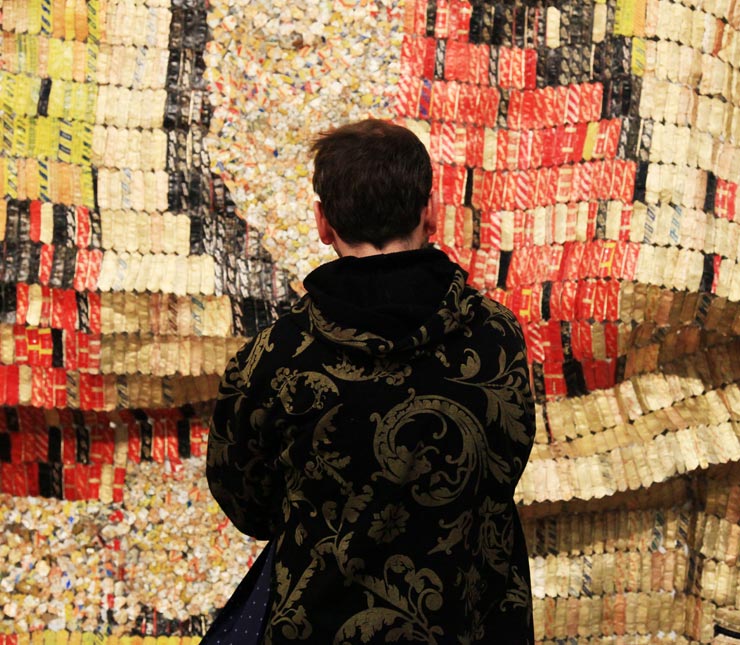
El Anatsui. “Earth Skin”, 20o7. Detail. (photo © Jaime Rojo)

Brooklyn’s curator Dumouchelle used that same freedom to formulate exhibition decisions as he mounted work in the varied spaces for this show – to great effect. Describing the rationale for some of his curatorial choices, Dumouchelle talked about it this way to the artist, “We were very inspired by your admonition to collectors and curators to take your work and use it to respond to the space and that’s really what happened with ‘Gli’,” one of the larger works in the show.

“We had this incredible 72-foot rotunda that is very rarely used for art, ” says Dumouchelle, “Very rarely do we have art of the scale that will actually fill that space, so we wanted to think about how best to make use of that space. ‘Gli’ is designed as this sort of architectural environment where you find yourself as a visitor immersed and sort of surrounded by these works and so we wanted to make full use of the drama of that space.”
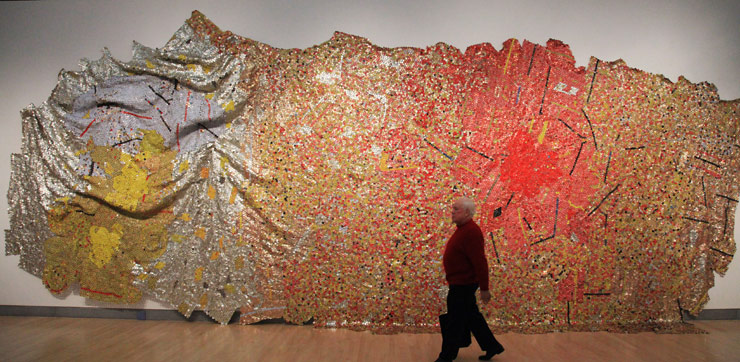
El Anatsui. “Gravity and Grace”, 2010. (photo © Jaime Rojo)

The work of El Anatsui is equally charged and effective inside the formal exhibition and outside on the street, and New Yorkers are treated for free to the latter through the summer with “Broken Bridge II”, a huge work suspended along a passage of The High Line in Manhattan. With threadbare and broken pieces disrupting the glistening grid-like patterning, there are striking similarities to the work he hung outside the Palazzo Fortuny during his famed splash at the 2007 Venice Biennial. A patchwork effect that he associates with frugality and poverty, free hanging portions of “Broken Bridge II” are fluttering and gently knocking in the East River breezes on The High Line. Similarly, you are reminded of “Ozone Layer”, an aluminum and copper wire piece hanging in the museum with some sections loosely fluttering and banging against one another in the small breezes created by fans mounted into the wall.

In a video for the exhibition El Anatsui appears to dismiss formal art training and relies upon his own conviction, “All the things I was taught about in art school – I set about subverting them,” he appears to say with aplomb.  With “Gravity and Grace”, viewers will experience some sense of awe and unexpected appreciation for ingenuity and revealed beauty; a confirmation that El Anatsui’s steadfast dedication to his own exploration and instincts has expanded the options for artists who will follow.
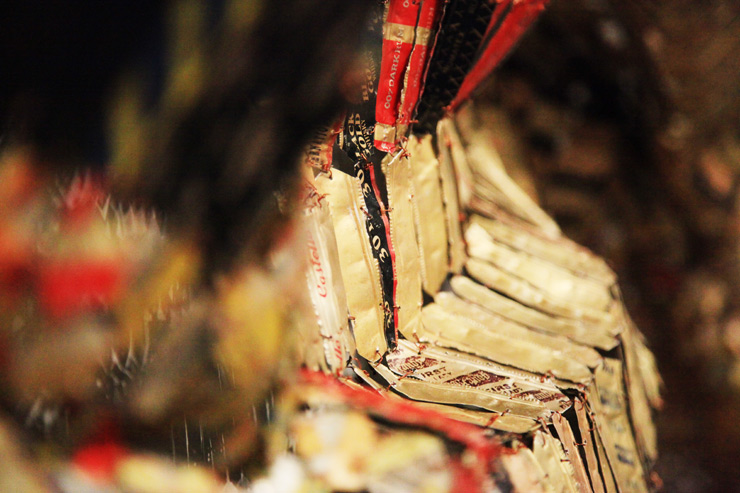
El Anatsui. “Earth Skin”, 2010. Detail. (photo © Jaime Rojo)
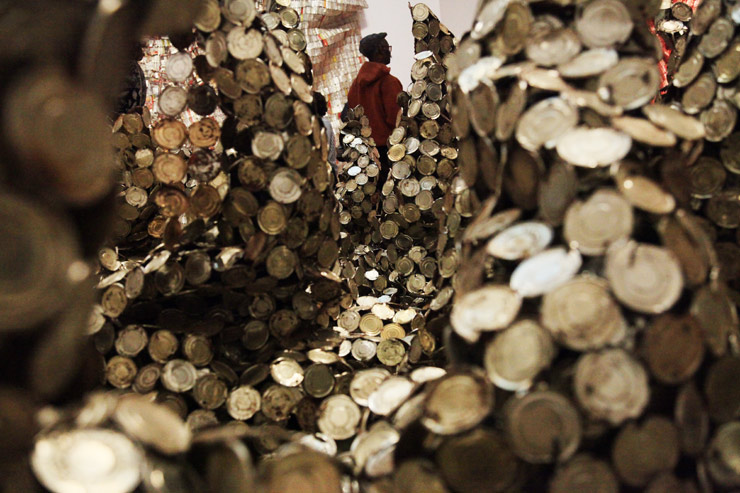
El Anatsui. “Peak”, 2010. Detail. (photo © Jaime Rojo)
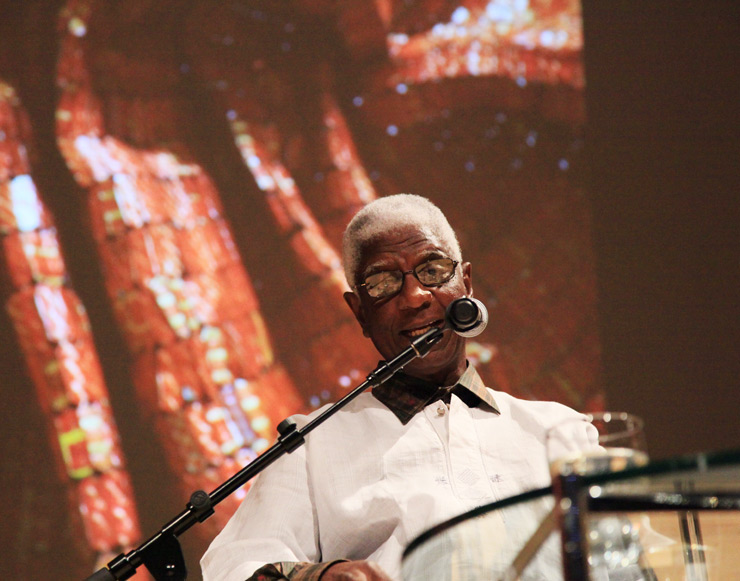
El Anatsui (photo © Jaime Rojo)
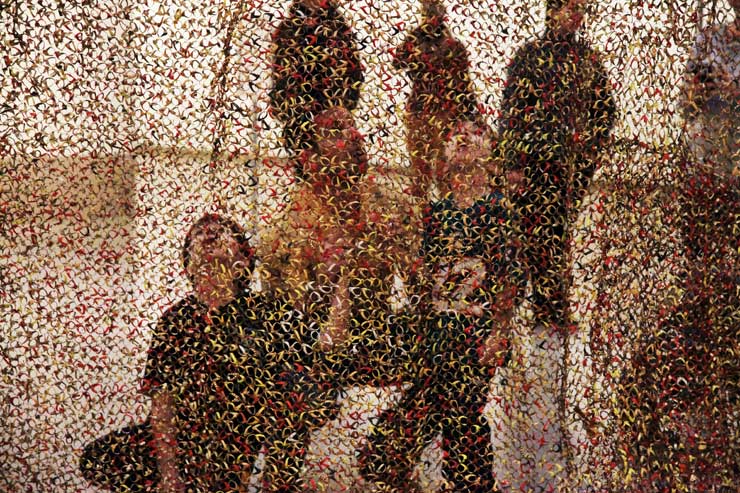
El Anatsui. “GLI (Wall)”, 2010. Detail. (photo © Jaime Rojo)
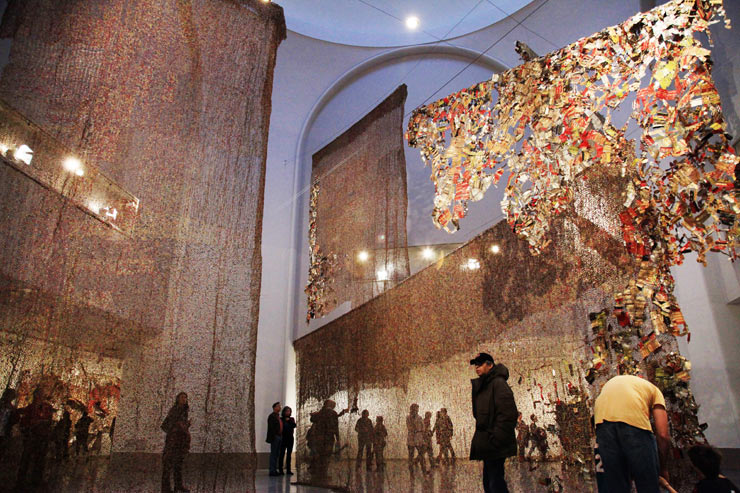
El Anatsui. “GLI (Wall)”, 2010. Detail. (photo © Jaime Rojo)
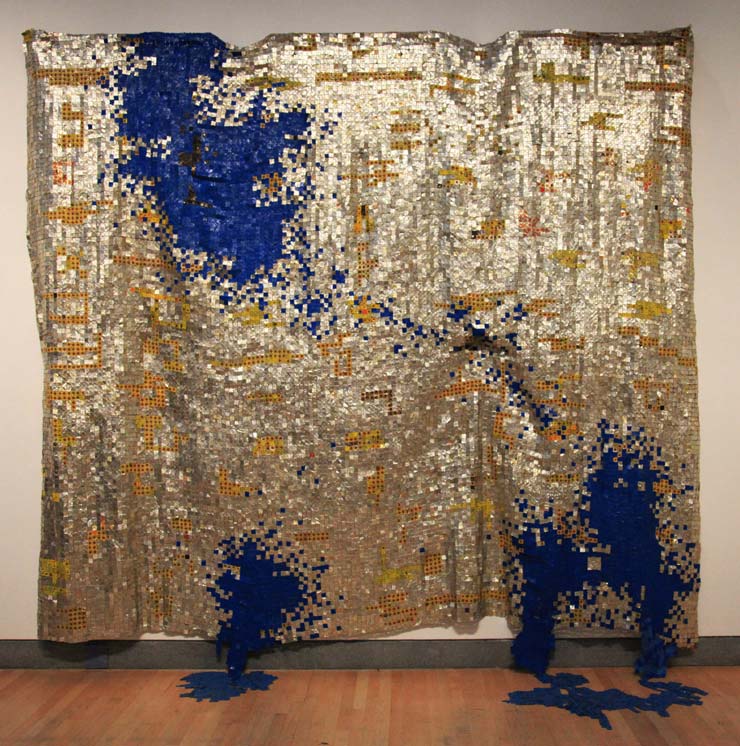
El Anatsui. “Ink Splash”, 2010. (photo © Jaime Rojo)
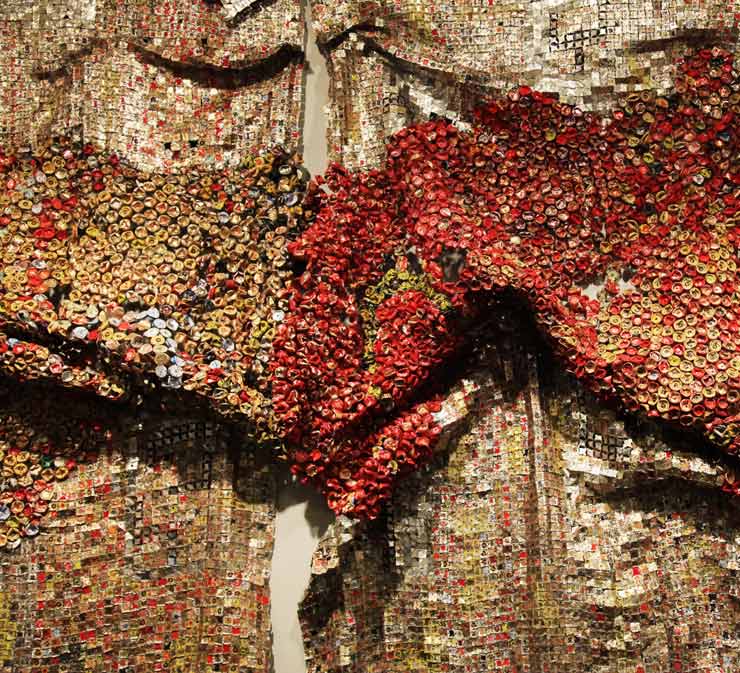
El Anatsui. “Drifting Continents”, 2009. Detail. (photo © Jaime Rojo)
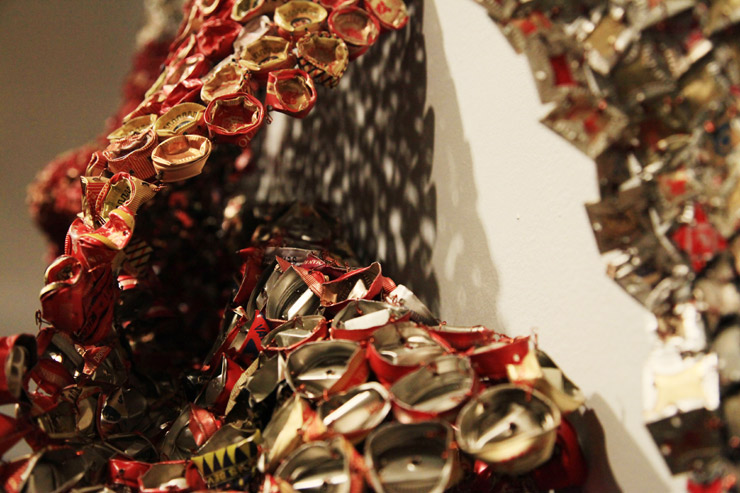
El Anatsui. “Drifting Continents”, 2009. Detail. (photo © Jaime Rojo)
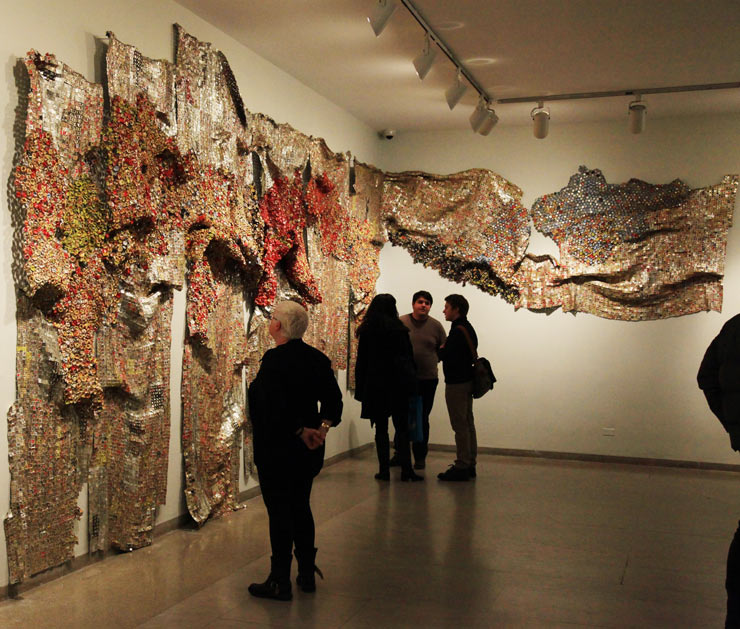
El Anatsui. “Drifting Continents”, 2009. (photo © Jaime Rojo)
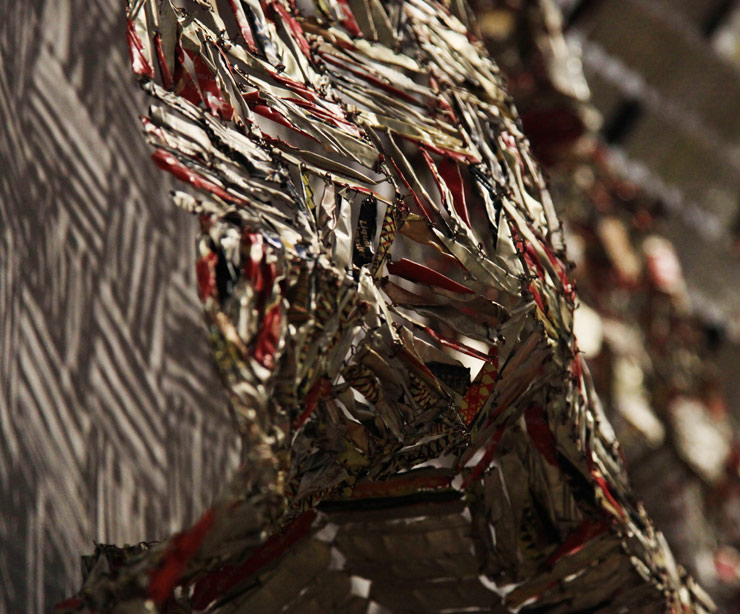
El Anatsui. “Ozone Layer”, 2010. Detail. (photo © Jaime Rojo)
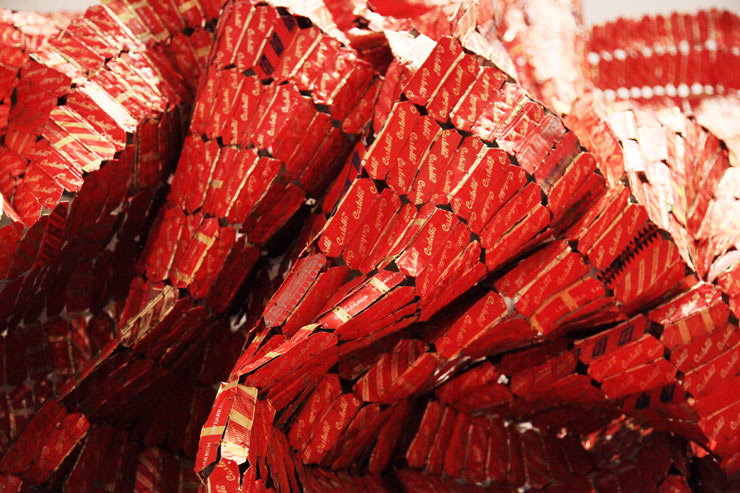
El Anatsui. “Red Block”, 2010. Detail. (photo © Jaime Rojo)
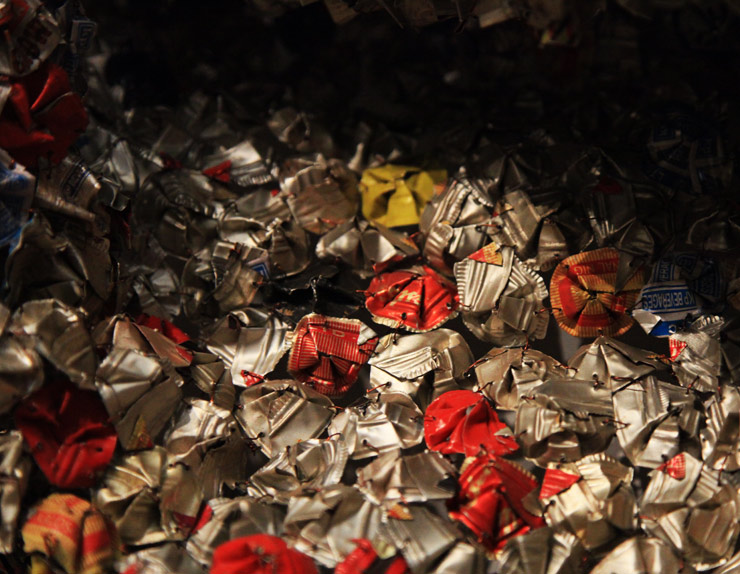
El Anatsui. “Amemo”, 2010. Detail. (photo © Jaime Rojo)
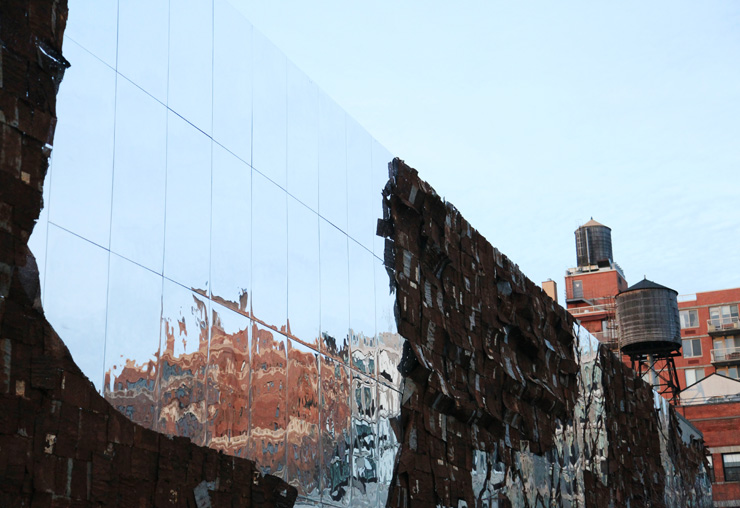
El Anatsui. “Broken Bridge II”, 2012. Detail. Currently on view at the High Line Park in NYC. (photo © Jaime Rojo)
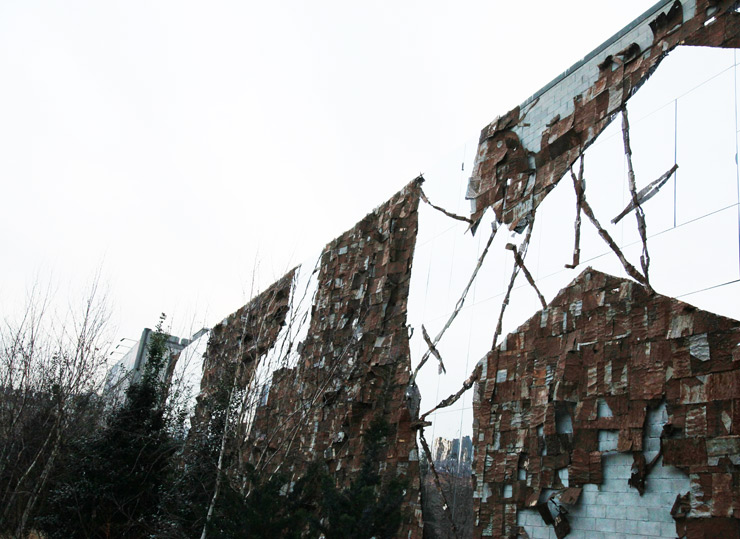
El Anatsui. “Broken Bridge II”, 2012. Detail. Currently at view on the High Line Park in NYC. (photo © Jaime Rojo)

For more information regarding the Exhibition “Gravity and Grace” at the Brooklyn Museum click here.

<<>>><><<>BSA<<>>><<<>><><BSA<<>>><><<>BSA<<>>><<<>><><BSA

Please note: All content including images and text are © BrooklynStreetArt.com, unless otherwise noted. We like sharing BSA content for non-commercial purposes as long as you credit the photographer(s) and BSA, include a link to the original article URL and do not remove the photographer’s name from the .jpg file. Otherwise, please refrain from re-posting. Thanks!

<<>>><><<>BSA<<>>><<<>><><BSA<<>>><><<>BSA<<>>><<<>><><BSA
 

Read more

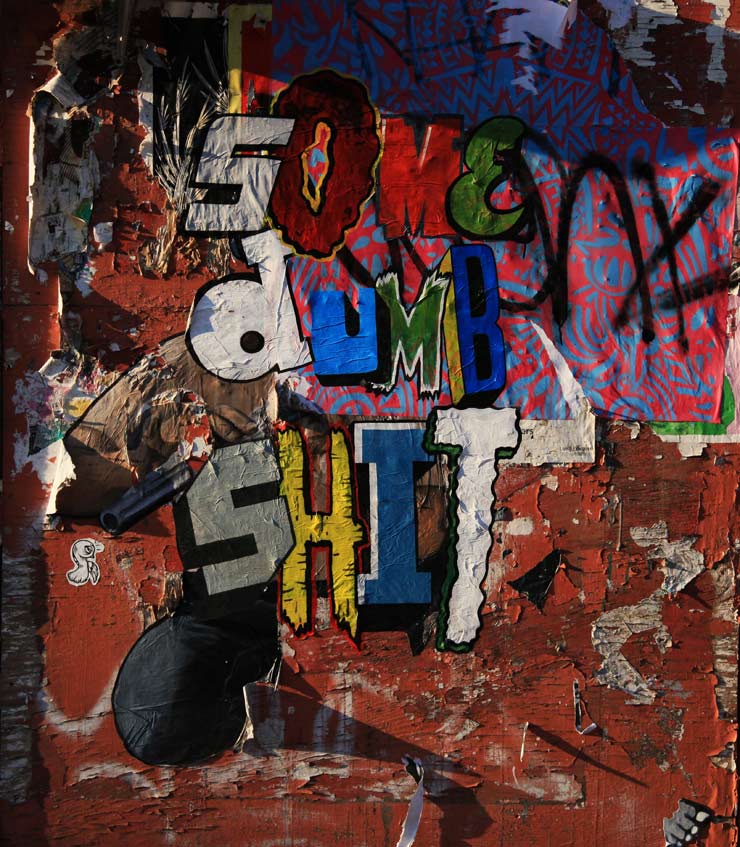
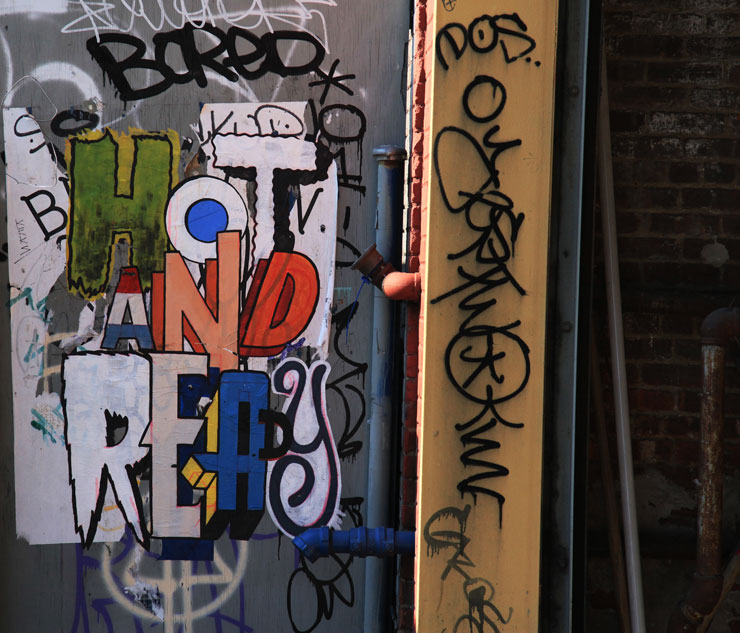
New Wheat-Pasted Letter Forms from El Sol 25

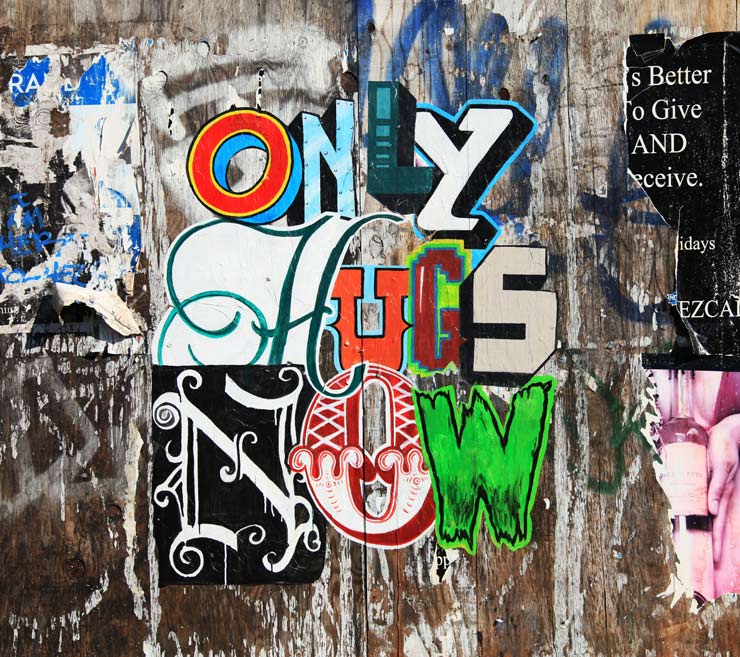
New text based stuff has been popping up that may remind you of ransom letters or a D*Face logo but it actually turns out to be Street Artist and former graff writer El Sol 25, who we are accustomed to seeing figurative painting mashups from. If you apply the same technique he favors of recombining heads, torsos, and limbs from various sources to create a new franken-form, it makes sense that this is how text would come out too. As with the other work, this appears to be entirely hand painted also. So, to review, these are hand-painted letter forms that are then wheat-pasted – is it a new category? Not exactly a piece is it? – and definitely not a tag.

El Sol 25 (photo © Jaime Rojo)

El Sol 25 (photo © Jaime Rojo)

El Sol 25 (photo © Jaime Rojo)

Read more

Kobra Pays Honor to Architect Niemeyer in São Paulo

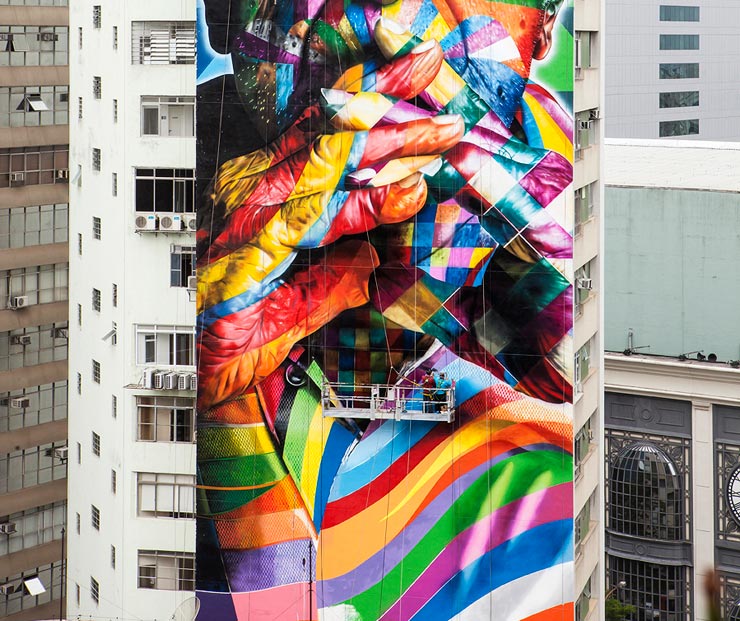
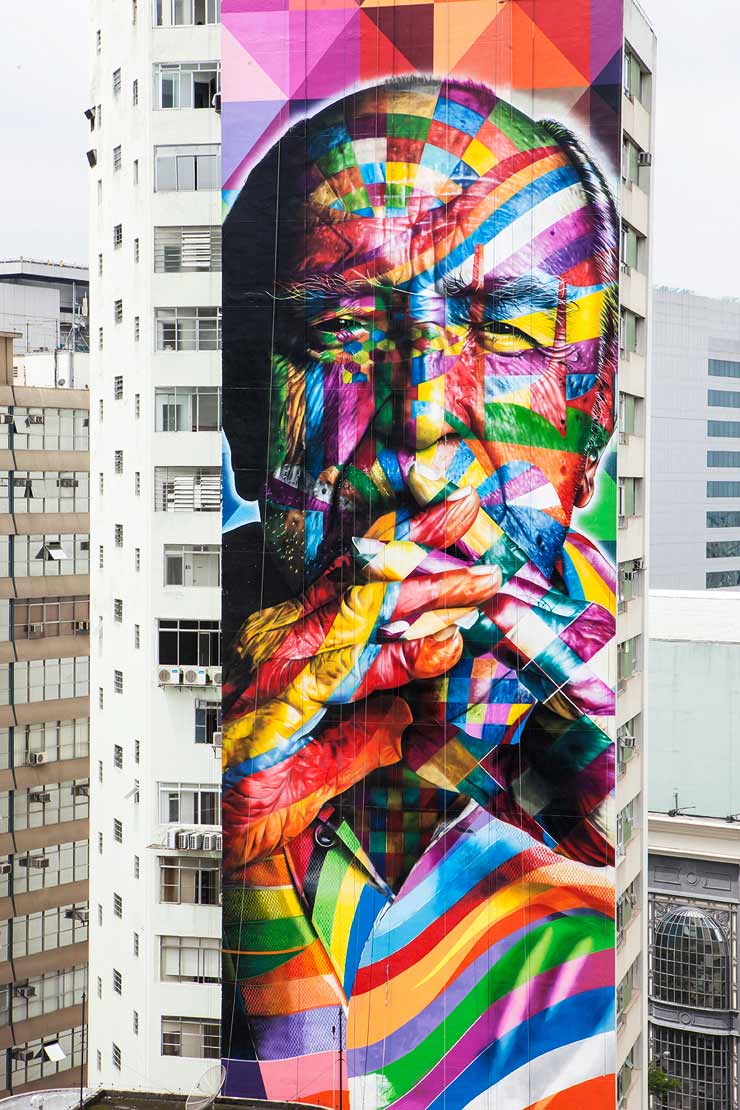
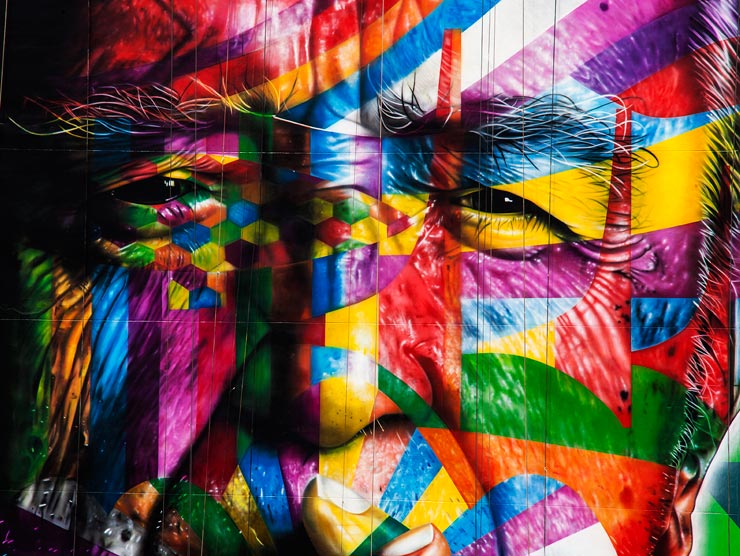
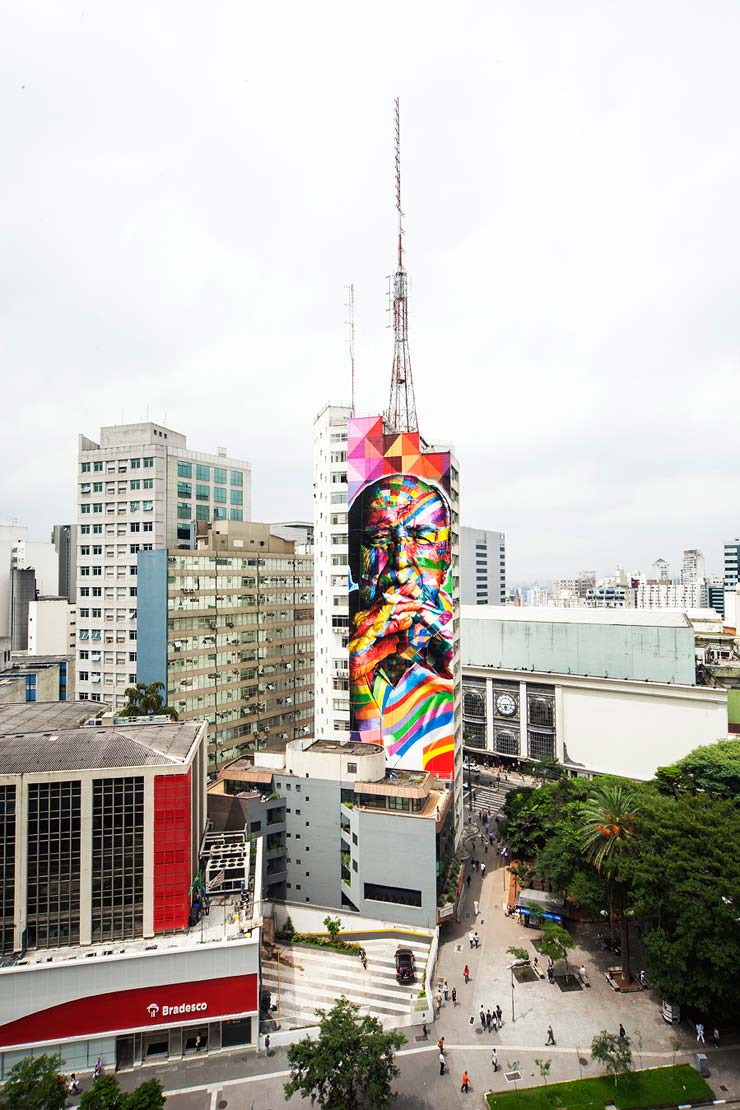
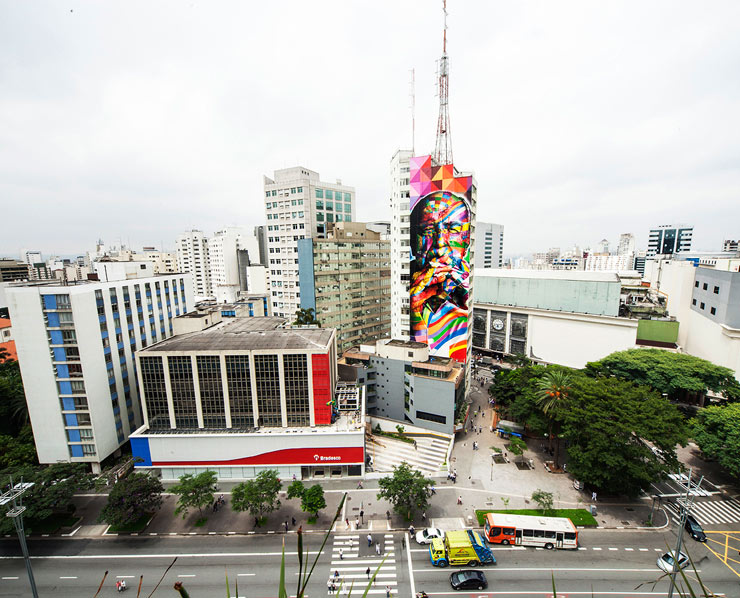
Brazilian Street Artist Eduardo Kobra and four other painters have been working six hours a day since January 14th to complete a 52 meter high mural that honors architect Oscar Niemeyer who passed away in December just days before his 105th birthday. Covering the entire side of a skyscraper on Paulista Avenue in São Paulo’s financial district, the artwork is inspired by Niemeyer’s architecture, his love of concrete and Le Corbusier.

If you look closely among the colorful forms that overlay the photo-realistic portrait, you’ll find that some of them are based on Niemeyer’s works. In this case, art on the street could not find a more fitting tributary than a modern architect who espoused populist sentiments that his field should serve everyone, not just the privileged few.

Eduardo Kobra. Installation in progress. São Paulo, Brazil. (photo © Alan Teixeira)

“Oscar Niemeyer was an important figure to us,” explains Kobra during a break from painting, as he talks about the Rio born citizen of the world and Brazils modernist icon, “The decision to paint this here reminds us of the importance of the several works he did in the city. Given their relevance even today, I think he deserved this great space on Paulista Avenue.”

The logistics and costs of this labor of love have been as great at the mural is high. Beginning in the early autumn, the process included getting permission from the building and city hall, placing the scaffolds, agreeing on and setting the design, and buying the paint. “In the end, the paperwork was the most difficult part and I wanted to get it all resolved so I could paint the mural,” explains the artist.

“Furthermore it was a very expensive project. The staff of the building gave us the paint, the André Art Gallery helped us with the equipment, there was a hotel near the building that hosted us and we also got a restaurant to help us with food. This project relied upon genuine cultural support and it could only happen  because of it,” says Kobra. “For this project we didn’t receive a penny of compensation – we are doing it for the pleasure of doing a job here at Paulista, the most important avenue in São Paulo.”


Eduardo Kobra. Detail. São Paulo, Brazil. (photo © Alan Teixeira)


Eduardo Kobra. Detail. São Paulo, Brazil. (photo © Alan Teixeira)

Eduardo Kobra. Detail. São Paulo, Brazil. (photo © Alan Teixeira)

Eduardo Kobra. Detail. São Paulo, Brazil. (photo © Alan Teixeira)


<<>>><><<>BSA<<>>><<<>><><BSA<<>>><><<>BSA<<>>><<<>><><BSA

Please note: All content including images and text are © BrooklynStreetArt.com, unless otherwise noted. We like sharing BSA content for non-commercial purposes as long as you credit the photographer(s) and BSA, include a link to the original article URL and do not remove the photographer’s name from the .jpg file. Otherwise, please refrain from re-posting. Thanks!

<<>>><><<>BSA<<>>><<<>><><BSA<<>>><><<>BSA<<>>><<<>><><BSA

Read more

Images of the Week: 02.17.13

Guess it shouldn’t surprise us when we find out that the sticker, wheat-paste, or mural we published of “Street Art” or graffiti actually turns out to be a logo or promotion for someone who is selling sneakers, t-shirts, lip-gloss, tampons, or toe fungus spray. That’s how people pay the rent, yo!

After all, we get press releases all the time from “Street Artists” who purport to get up all over the place in their home city of New Jesusville – but nobody we talk to has heard of them. Eventually word gets around and its not our business to trash people. And we all know at least one or two fine artists who have used the strategy of putting their stuff on the street to add some sort of “cred” to their “brand”. Fine. And look at the countless corporate names that have been inserting (or “integrating”) themselves into all manner of social/electronic media and “stories” in the last couple of years – just to leach off grassroots D.I.Y. culture and make the money and get the clicks but not actually support the art community that birthed it. It’s a complex story.

But it’s hard not to feel a little bit like you just got punked when you walk into a store and find the stuff you shot in a putrid garbage strewn alley is now silk-screened across a cheap flask or frisbee or truckers cap, giving it about as much meaning as a Kardashian wedding ring.

What are we going to do? Oh probably nothing – there is no purity test or reliable scale for measuring when someone has “sold out” and we don’t like pompous peeps who pretend otherwise. We’re just keeping an eye out, sister, and trying not to get fooled again.

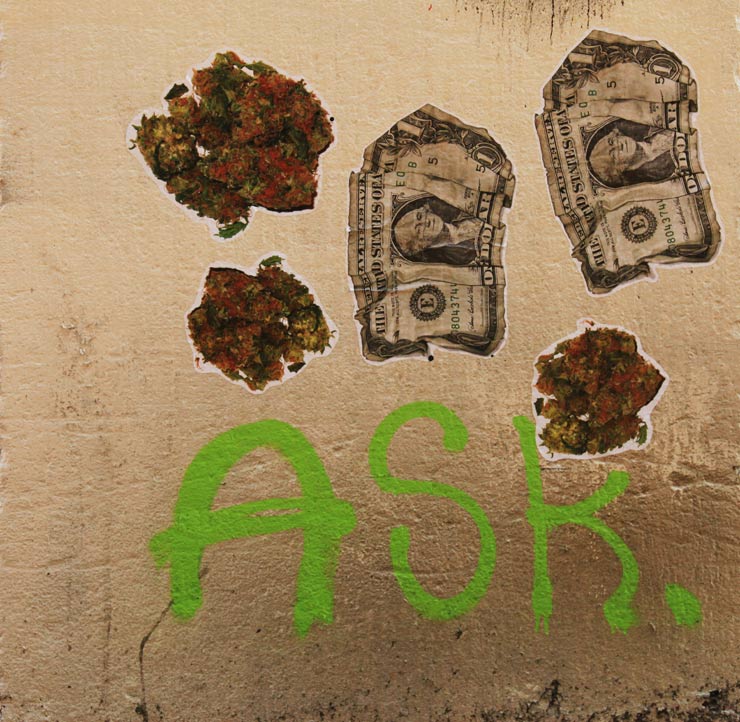
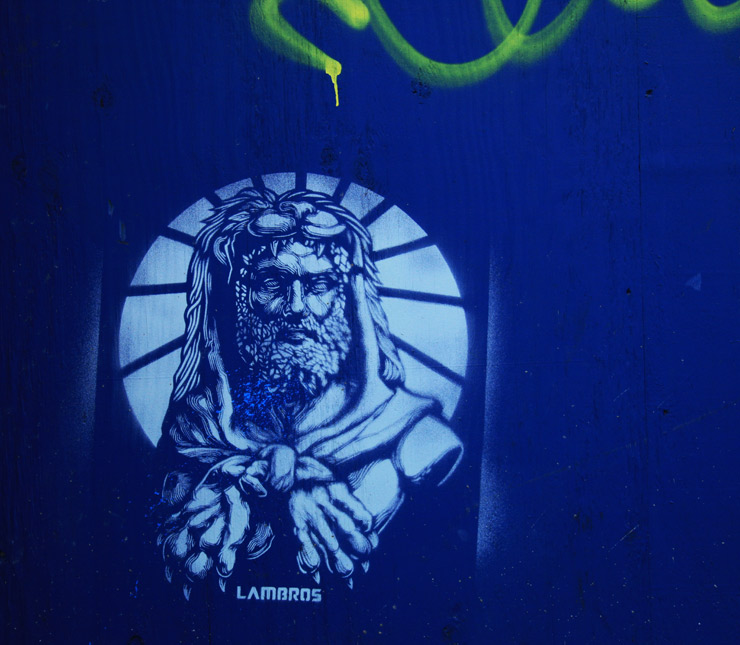
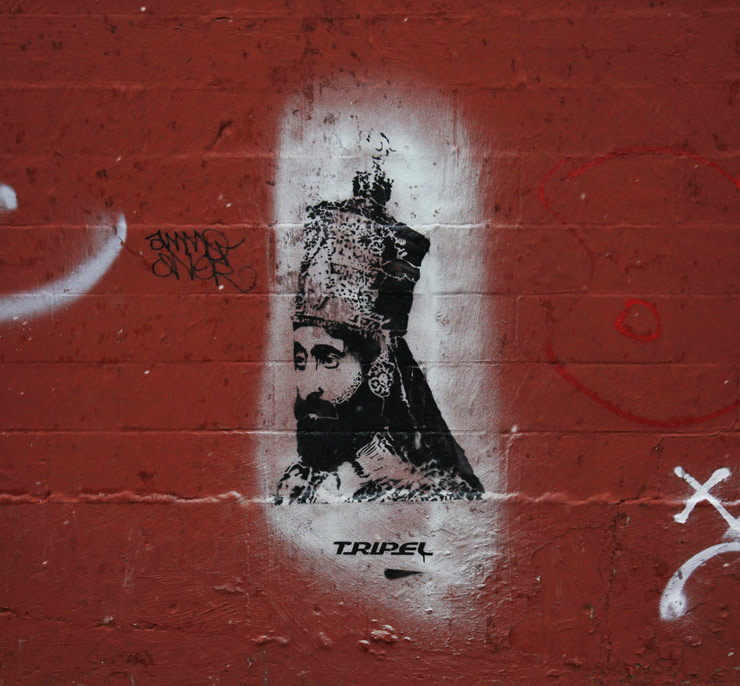
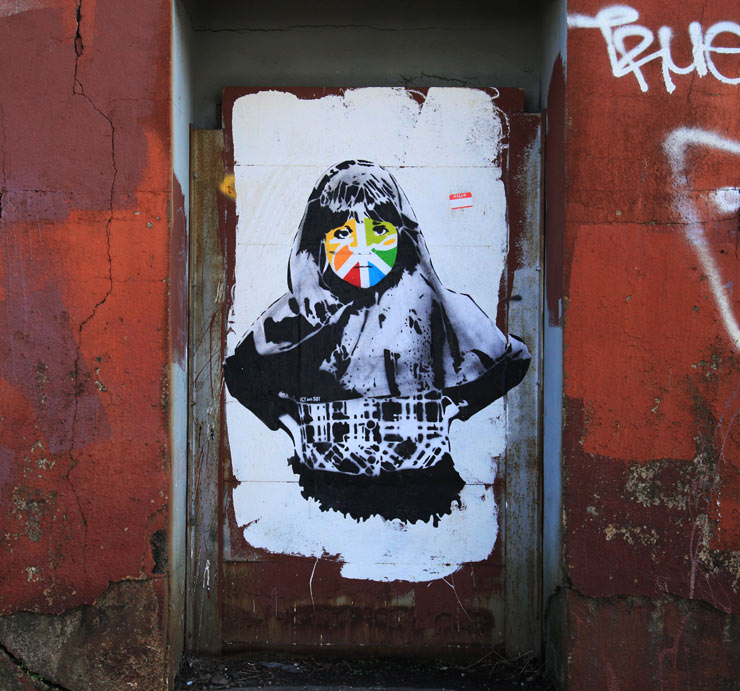
Here’s our weekly interview with the street, this week featuring Alinic, ASK, BAMN, Chris & Veng RWK, Gilf!, Icy & Sot, Lambros, Meer Sau, Mosstika, MUDA, Pixote, Tripel, and WD.

Top image > ASK (photo © Jaime Rojo)

Lambros (photo © Jaime Rojo)

Tripel (photo © Jaime Rojo)

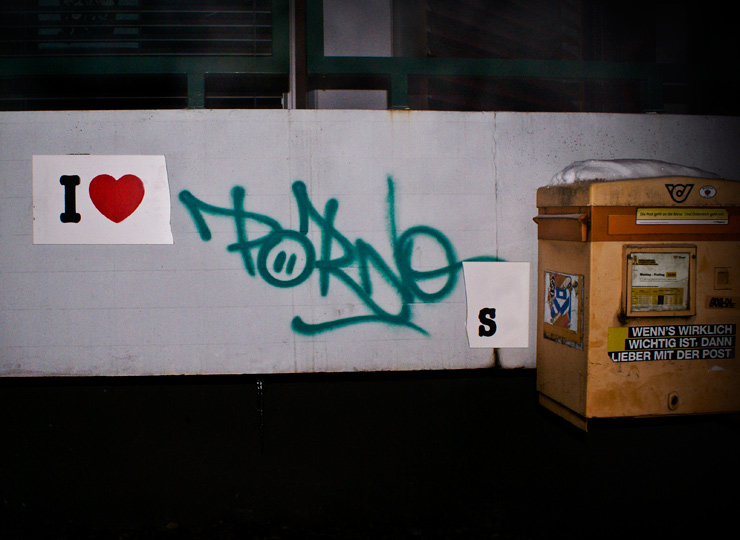
Meer Sau “I Love Porno” in Salzburg, Austria. (photo © Meer Sau)

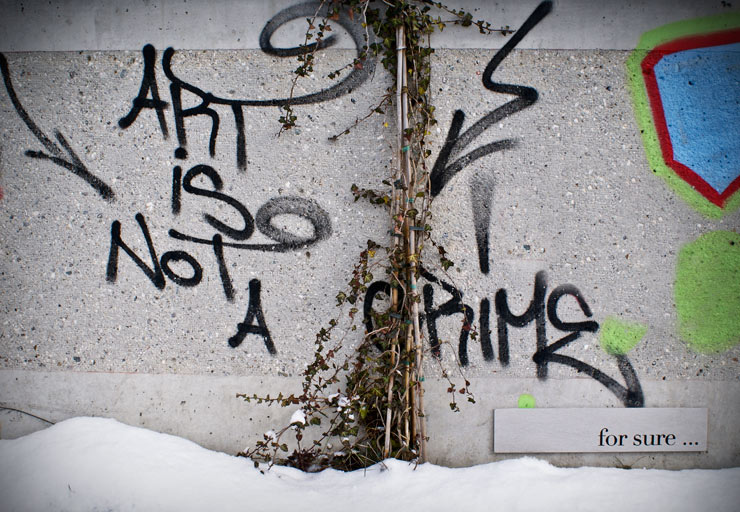
Meer Sau “Art is not a Crime” in Salzburg, Autria. (photo © Meer Sau)

MUDA (photo © Jaime Rojo)

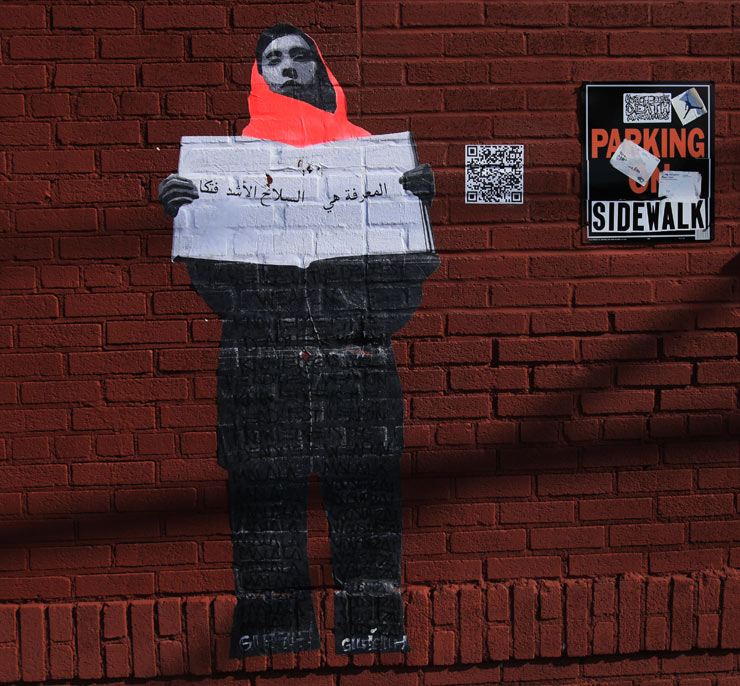
Gilf! Her tribute to Malala Yousafzai (photo © Jaime Rojo)

Icy & Sot (photo © Jaime Rojo)

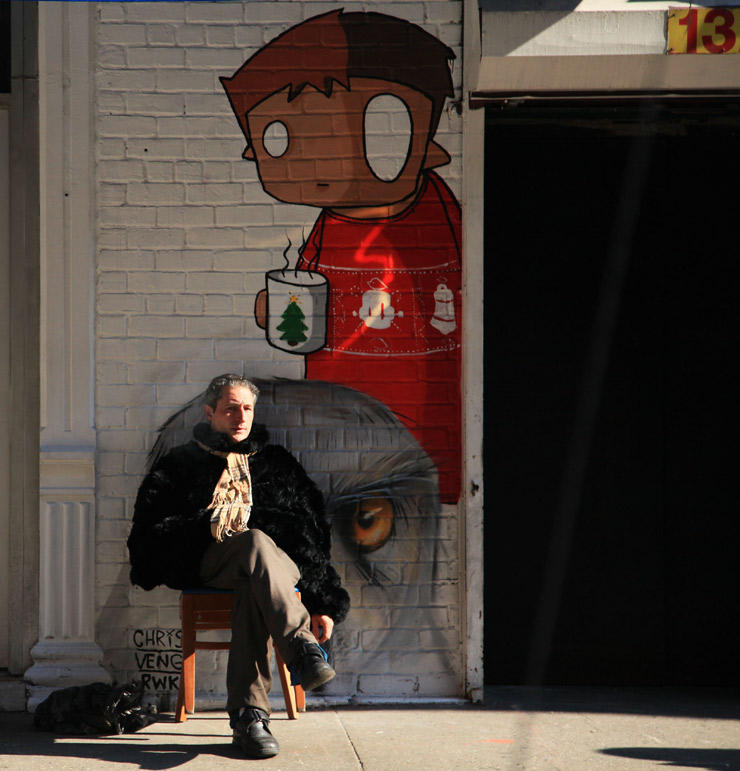
Chris, Veng RWK (photo © Jaime Rojo)

Bishop 203 (photo © Jaime Rojo)

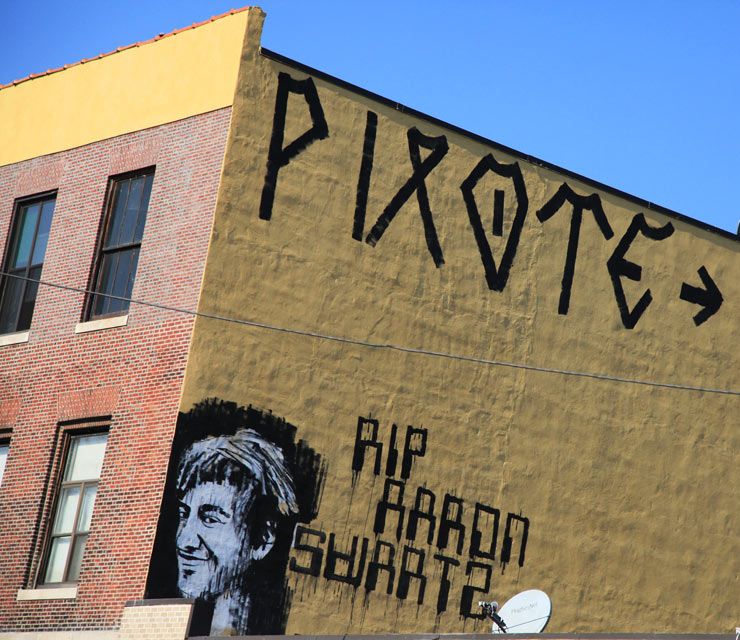
BAMN does a memoriam for Aaron Swartz. Pixote on top. (photo © Jaime Rojo)

Mosstika (photo © Jaime Rojo)

Alinic (photo © Jaime Rojo)

WD in Athens, Greece. (photo © Philipp Gor)

Untitled. Brooklyn, NY. Februray 2013 (photo © Jaime Rojo)

<<>>><><<>BSA<<>>><<<>><><BSA<<>>><><<>BSA<<>>><<<>><><BSA

Please note: All content including images and text are © BrooklynStreetArt.com, unless otherwise noted. We like sharing BSA content for non-commercial purposes as long as you credit the photographer(s) and BSA, include a link to the original article URL and do not remove the photographer’s name from the .jpg file. Otherwise, please refrain from re-posting. Thanks!

<<>>><><<>BSA<<>>><<<>><><BSA<<>>><><<>BSA<<>>><<<>><><BSA

Read more