Our weekly focus on the moving image and art in the streets. And other oddities.
Now screening :
1. Vermibus – In Absentia
2. Balú – Hutsean
3. Pati Baztán for Contorno Urbano 12 + 1 in Barcelona
4. Ai Weiwei: Human Flow. Trailer
5. Balloons Festoon the Ballet with Jihan Zencirli
BSA Special Feature: Vermibus – In Absentia
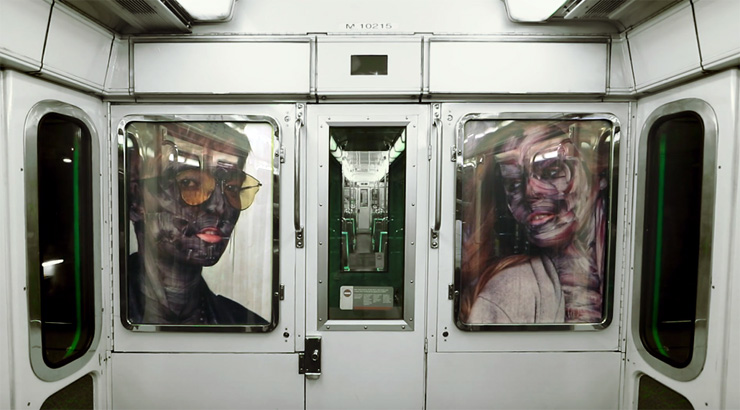
The Francis Bacon of advertising posters, Vermibus returns today in the Parisian Metro, solvent in hand. In such a fashionable city, where the image of beauty has been examined from every angle, it’s the visual pollution of consumerism that the Berlin-based artist targets. Shot in a very public series of venues, the Xar Lee directed video is significant for its absence of public, the intended audience for the beauty posters in this, their public space.
Hutsean – Balú
“Art is not in museums. Art is in all men and women,” proclaims Balú in tribute to Jorge Oteiza. The multidisciplinary artist from Basque country commissions his own intervention to honor this BAsque sculptor and thinker who has been a reference point for thought and art since Balú began his career. The intervention carried out in the Paseo Nuevo de Donosti, is located under the sculpture “empty construction” by Jorge Oteiza.
Pati Baztán for Contorno Urbano 12 + 1 in Barcelona
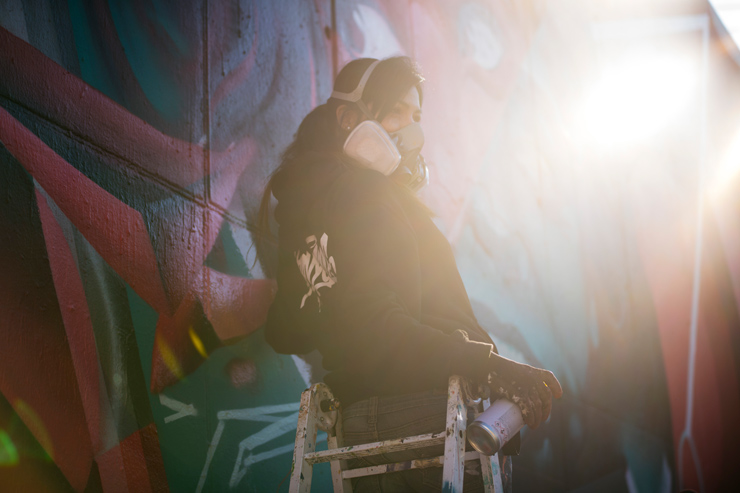
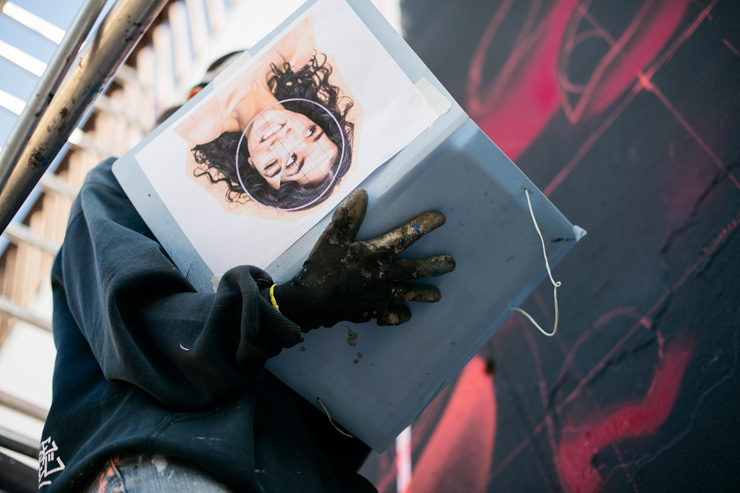
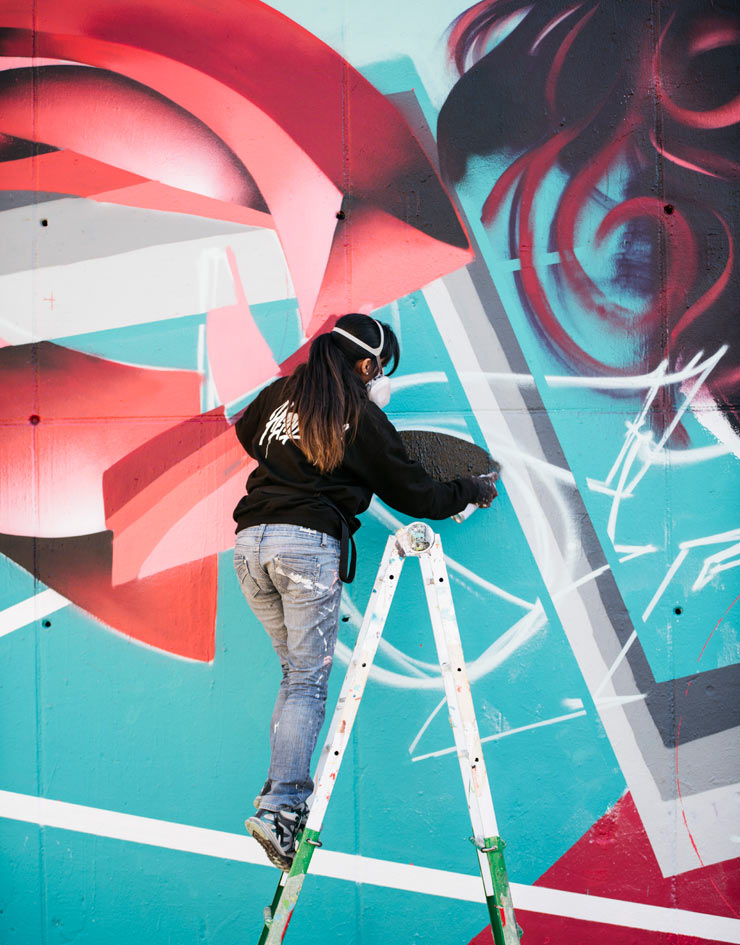
Pati Baztán takes special pleasure in savoring the color, the process, the materiality of her lifeblood. Here you can see the models of contemporary staking claim in the public sphere, asserting the massive blocks of color and volume as ends unto themselves, upending conventions of aerosol wizardry and defining a different approach to intervention.
Ai Weiwei: Human Flow. Trailer
Chinese contemporary artist and activist Ai Weiwei keeps the focus where governments and war profiteers would like to distract you from. When entire cultures are displaced, their lives made precarious, it is no longer simply geopolitical grabbing for resources – it is inhumanity. Ai Weiwei finds it and flows it into our midst.
Balloons Festoon the Ballet with Jihan Zencirli
Jihan Zencirli aka GERONIMO takes over the visuals with her ballooning imagination in the winter months at New York City Ballet for the sixth presentation of Art Series. Previous installations have featured notables like Faile,JR, Santtu Mustonen, and Dustin Yellen in the main atrium and onstage at Lincoln Center.
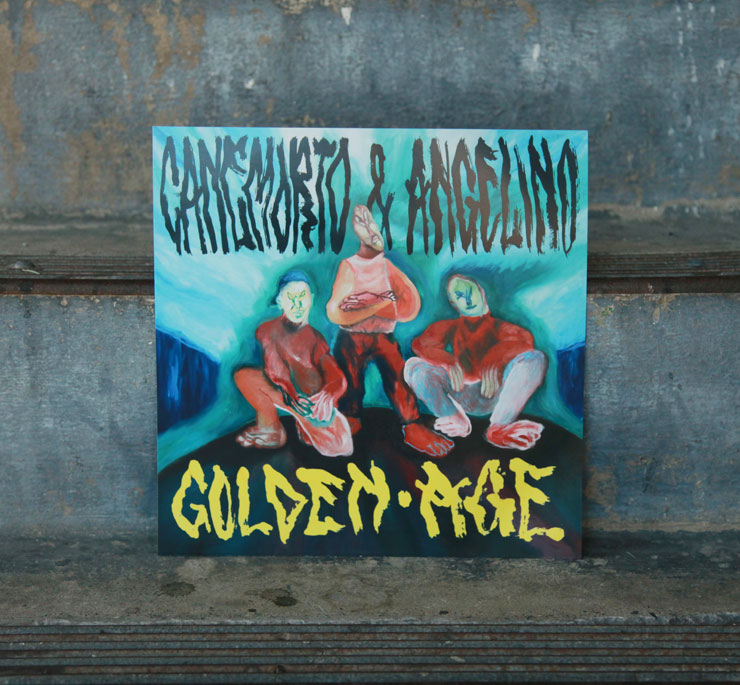
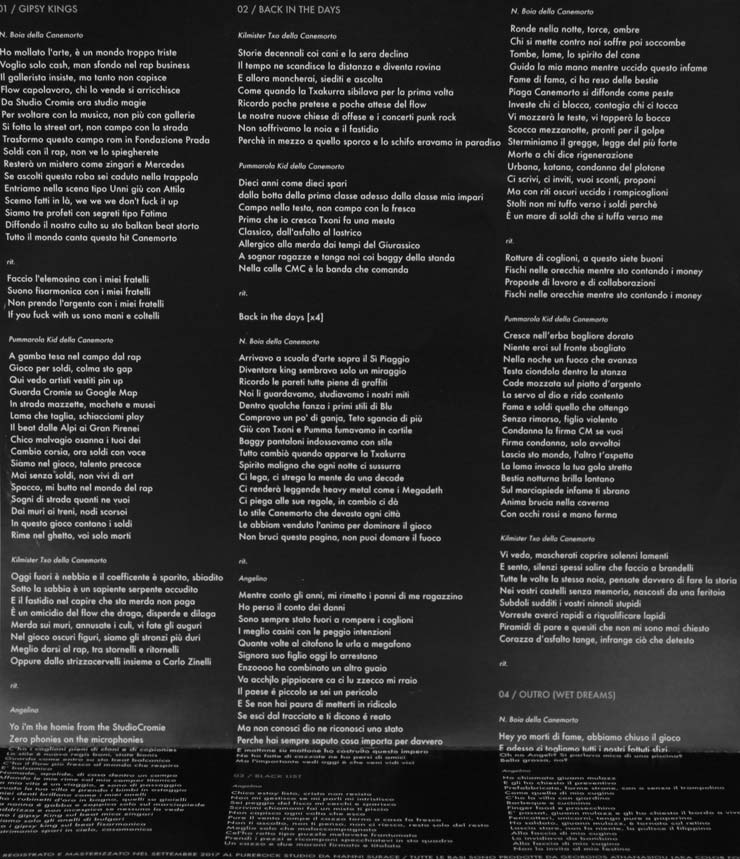
Not quite Domingo, Carreras, and Pavarotti but it’s still an historic achievement in the field of music. The inimitable trio of lively street canines known as Canemorto (dead dog) have just dropped a new track straight from Italy entitled “Gipsy Kings”, the eponymous single from their EP “Golden Age”, performed near the end of the mini-documentary below.
And now they’ve brought Angelino into their mix so you know its all FAME for the future with 4 MCs on the mic. Or, to paraphrase the lyrics, Canemorto with their homie from Studio Chromie gives you zero phonies on the microphoney. Talents like this rarely make it past security, let alone into the studio, so the howling results of this musical are remarkably fresh, painfully funny, and sometimes just painful.
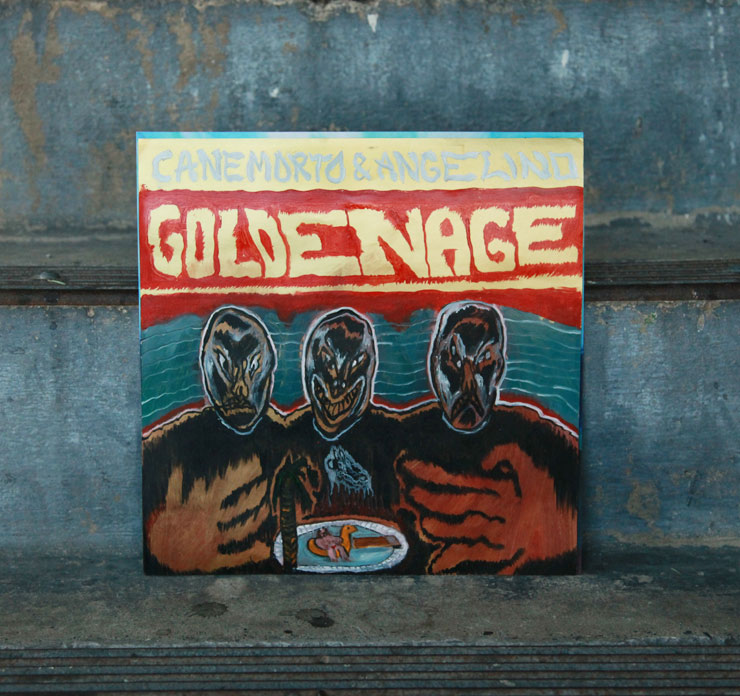
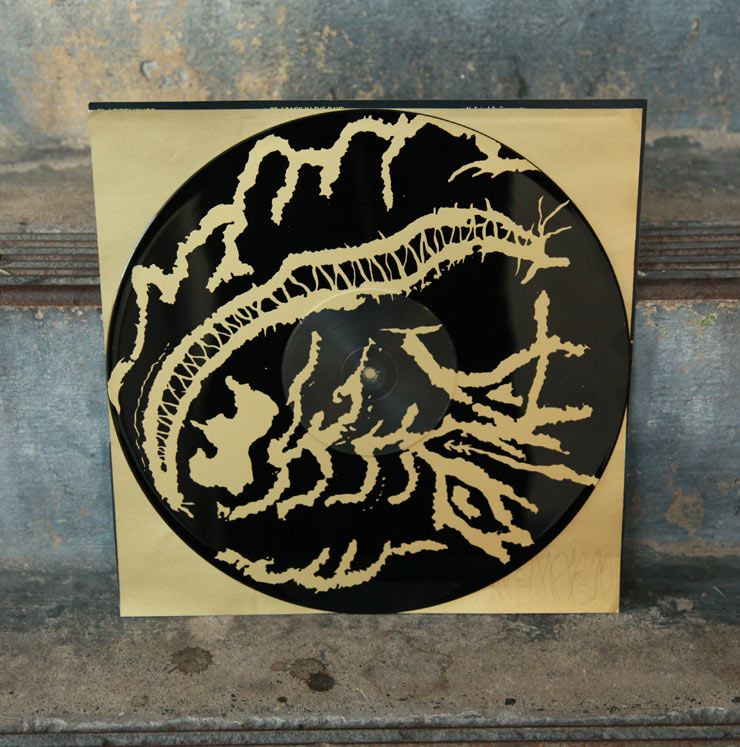
Seen here is the still-warm vinyl for all the old skool DJs rocking turntables, with a custom screen printed B side. For a frameable edition of the cover the artists have also dug deep in created custom painted versions. A new single to add to a list of musical contributions to the Street Art/graffiti world, surely a greatest hits collection is on the horizon as these neo-brutalists show their tongue-style is as slick as their handstyle.
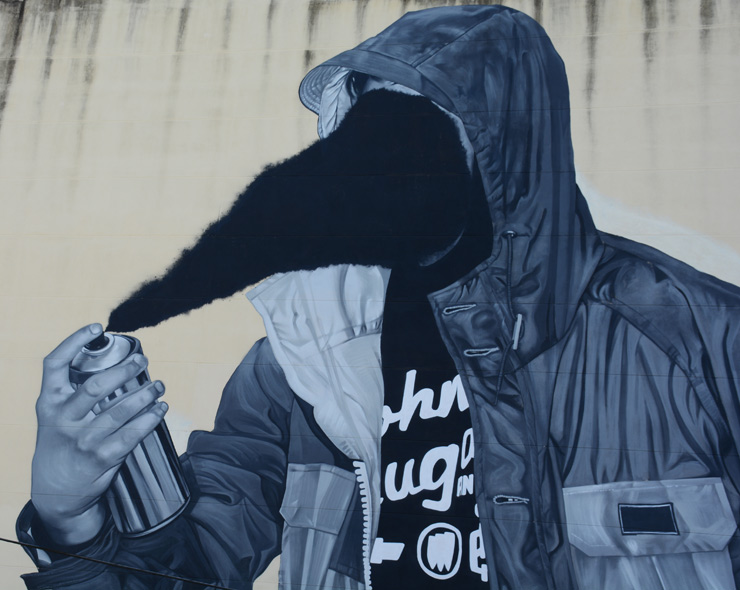
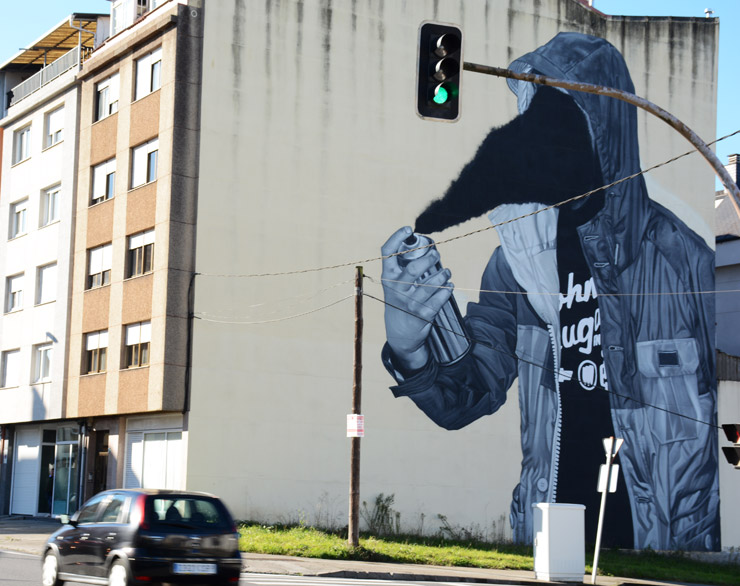
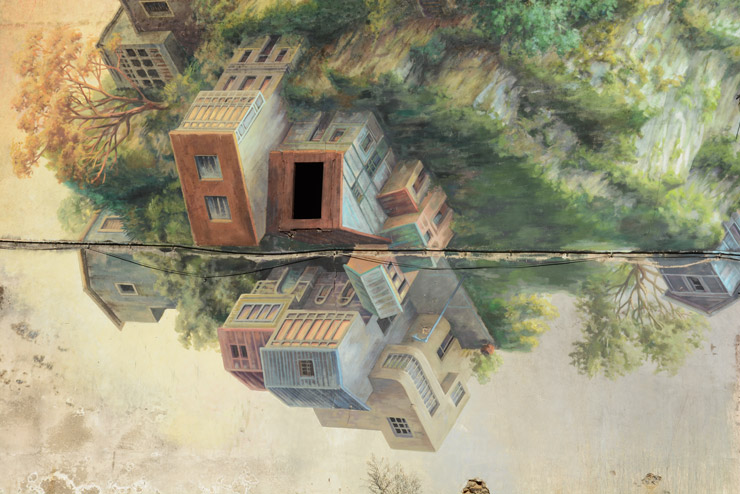
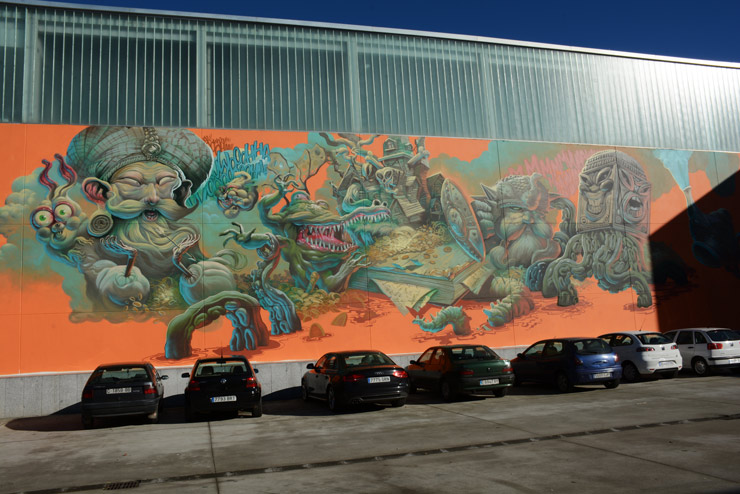
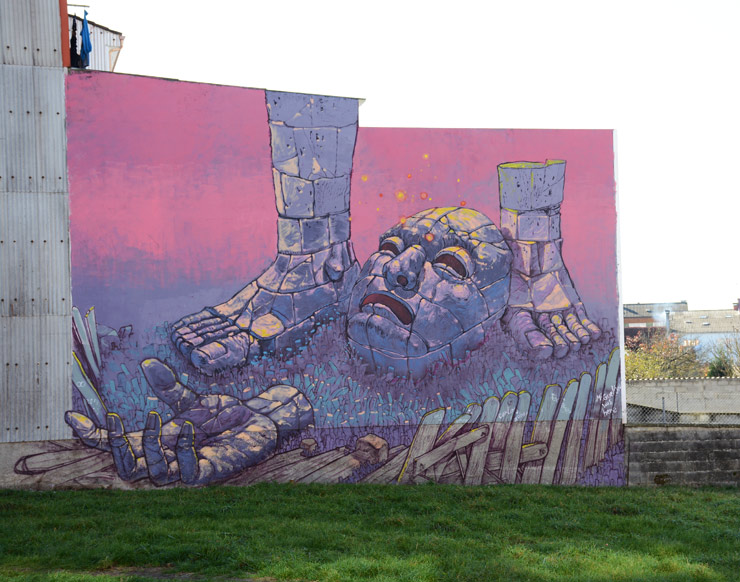
Sekone caught our eye in this Spanish Oceanside town of 36,000 recently with this mural that gets it all backwards – nevermind the handstyle.
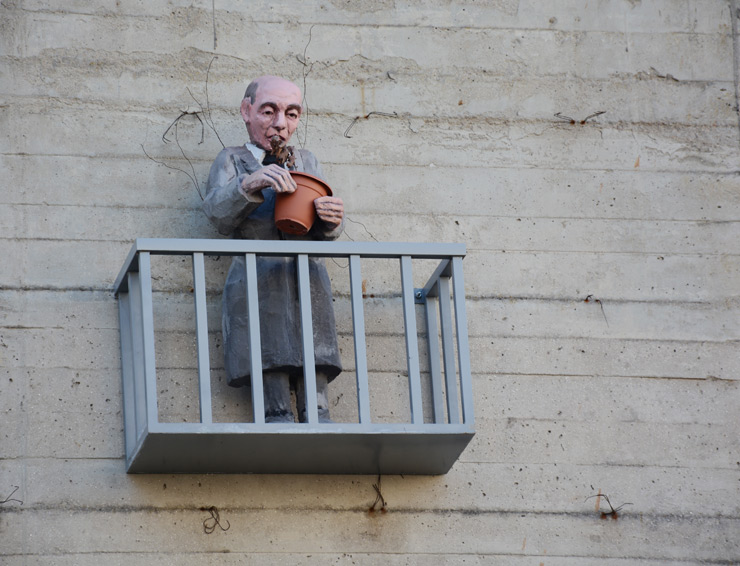
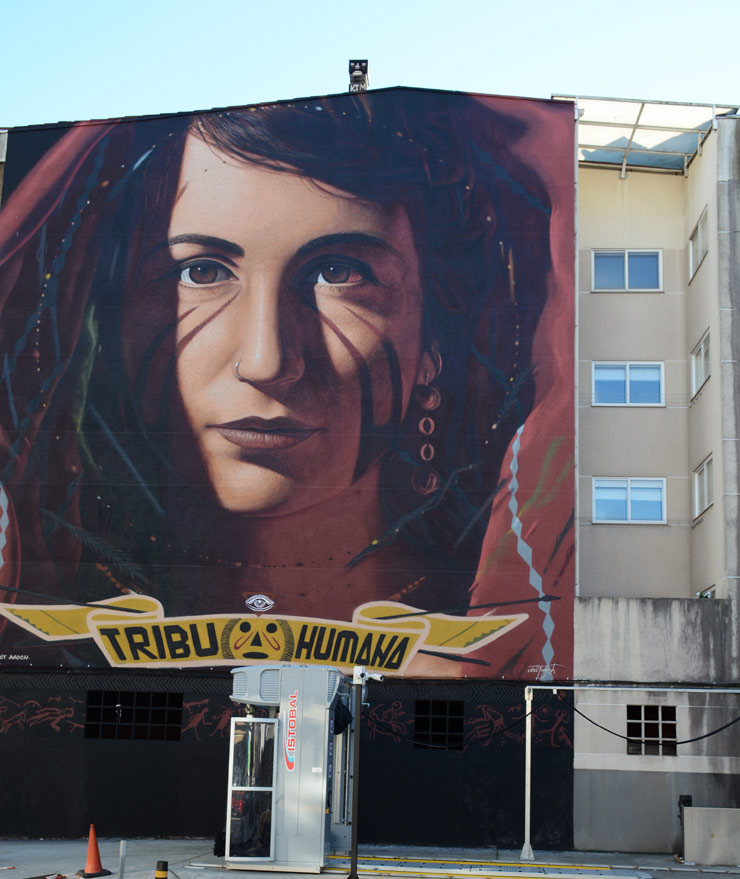
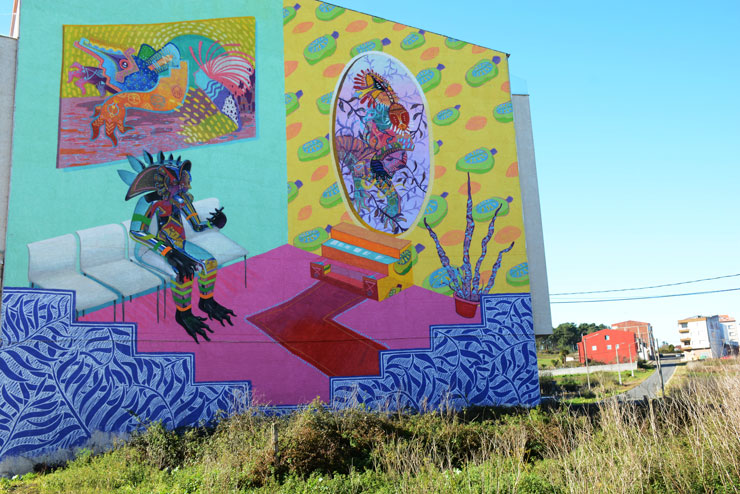
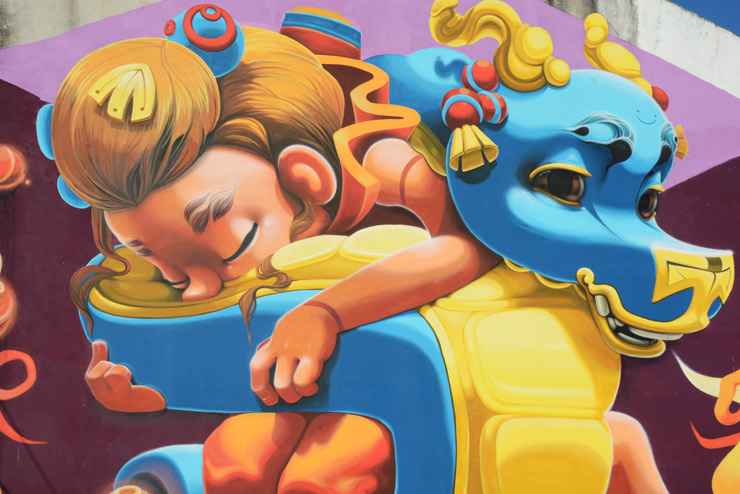
Carballo in Galicia on the northwest tip of Spain is home to the Rexenera Fest, a mural festival that gathers local and international urban artists like Curiot (Mexico), Sekone (Galiza), Pixel Pancho (Valencia), Jorit (Italy), Aryz, Isaac Cordal (Galiza), Cinta Vida (Catalunya, and AnimitoLand (Argentina). Now planning for a fourth year, the town is blessed with some high quality works and photographer Lluis Olive Bulbena shares some of the loot with BSA readers here today.
VALIENTE CREATIONS launches the 12+1 project in Sant Feliu – Proyect 12+1, urban art in Sant Feliu de Llobregat, Barcelona, Spain
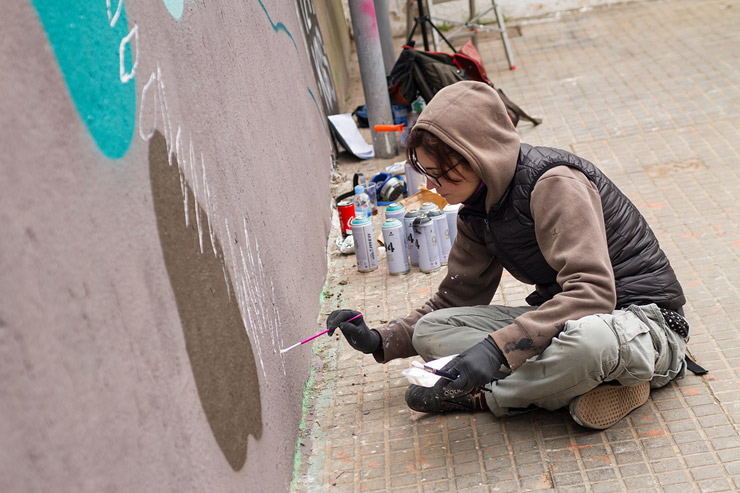
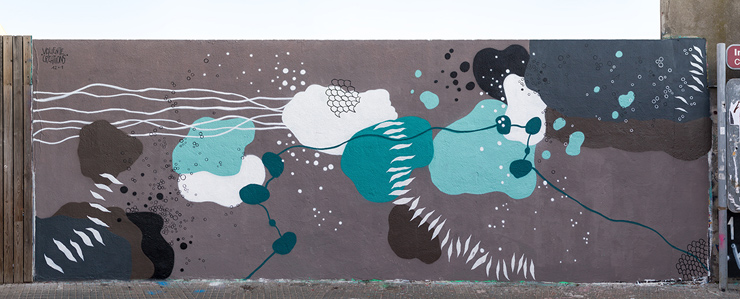
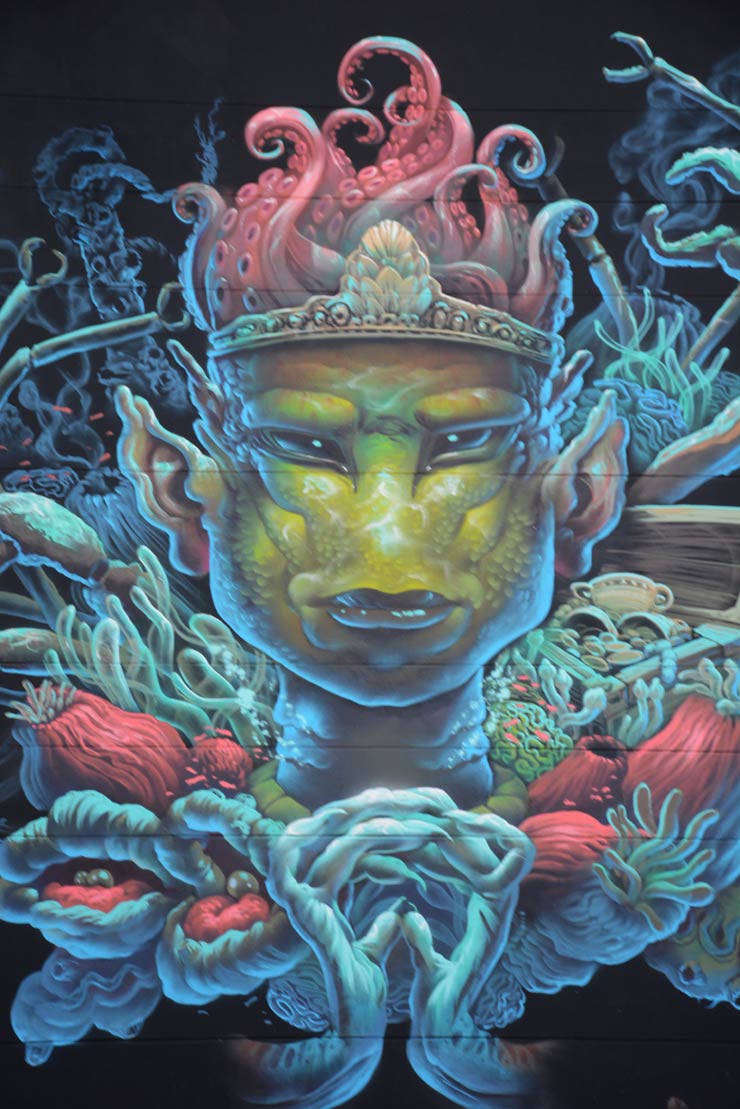
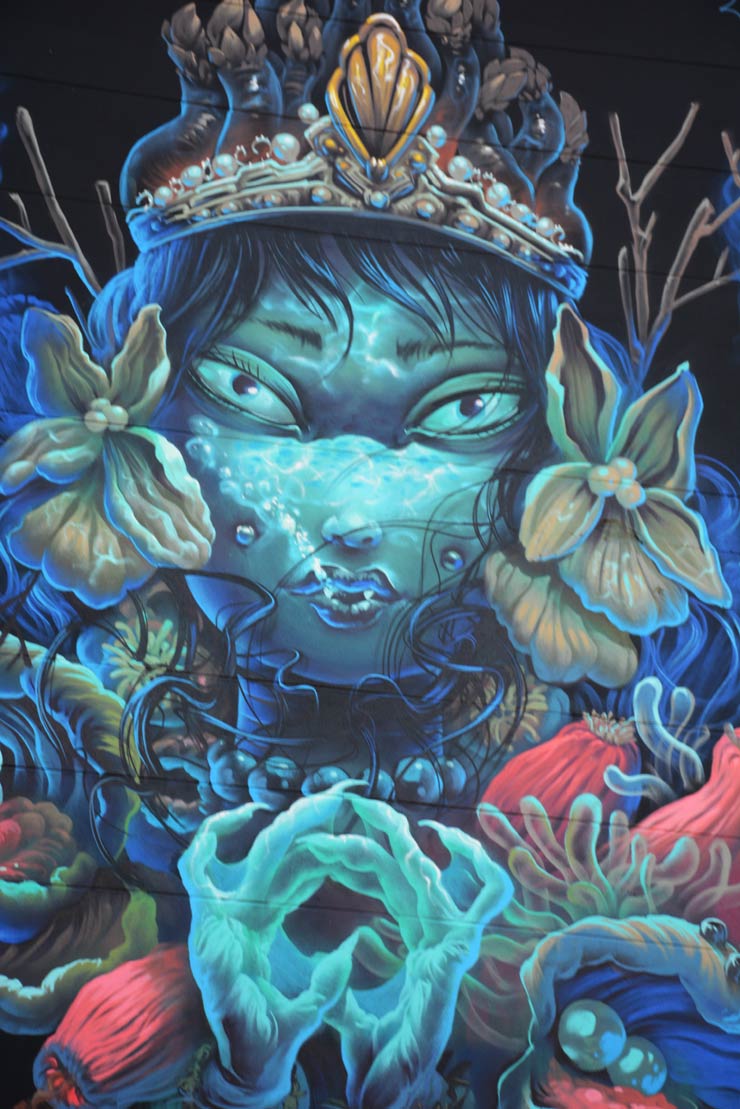
A teacher of drawing from Barcelona, Irene Valiente loves organic forms, especially those of an aquatic nature. So it makes sense that she dove right in to her mural for the 2018 premier of the 12+1 Project here in Sant Feliu this month.
Here are just a couple of new photos from her wall that interprets the amorphous shapes of the nearby swimming pool at the Sant Feliu Swimming Club. The formal painter is normally working on canvasses for exhibition in the gallery when not creating new murals on her city’s streets and she calls this one “Nare”, owing the Latin derivation of fleet.
When Street Art passes into the realm of public art it takes on the character of permanence that will withstand time. While that may happen with the occasional graffiti burner or mural, more conventional Street Art is illegal and will be crossed over by a rival or eroded by the elements.
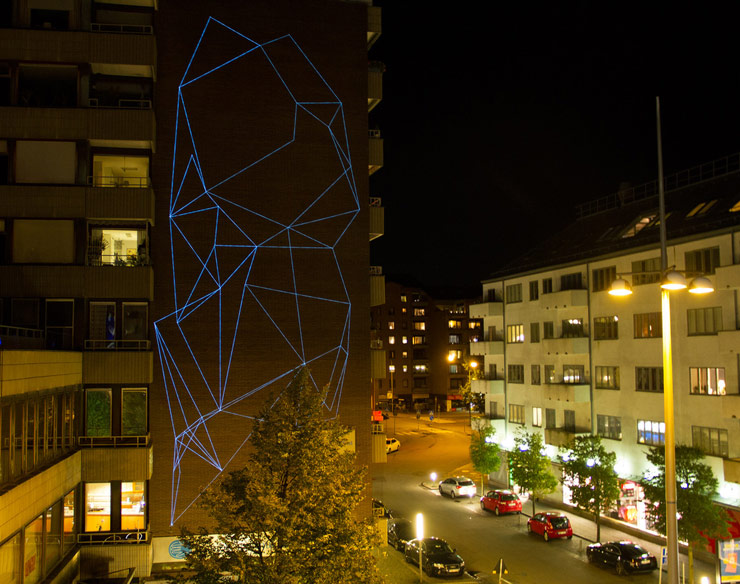
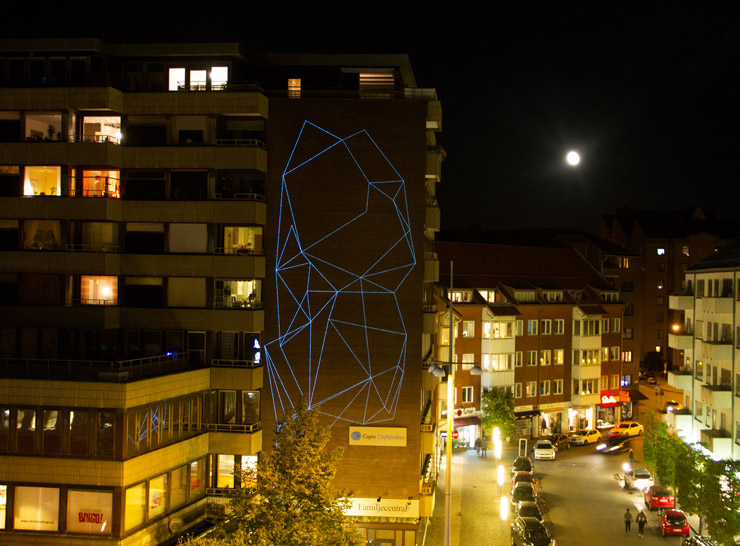
Spidertag, whose work we began documenting for you years ago when his tools were a hammer, nails, and yarn, has just created his first permanent mural in the city of Helsingborg, Sweden – and he’s more than pleased.
“I’m very happy cause it was a difficult one and a dream come true!” he tells us of the 300 meter long cable on the side of a multi-story building is meant to last for a number of years. The abstract geometry is best seen during nighttime hours, giving it an ethereal quality that occupies an area, rather than simply a wall. Spidertag says that he has his own special cables and this is the largest he’s done.
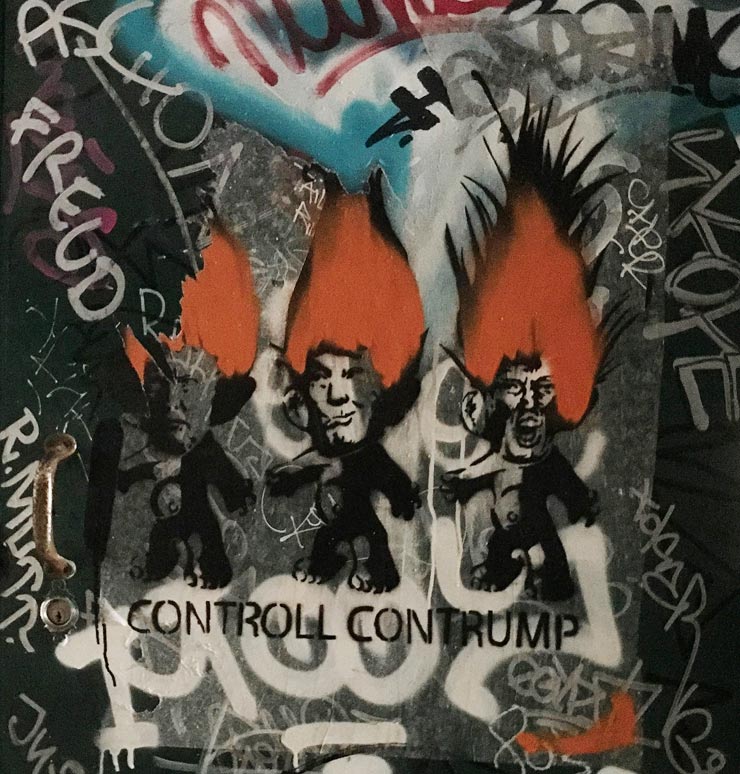
The streets across the US were again flooded with justifiably angry, determined women yesterday. Nothing we can say here will do justice to the enormity of the crowds protesting in 250 cities on the first anniversary of the inauguration, nor the range of political and social fronts that are being contested.
Clearly the world stage has been thrown off kilter by the the erosion of trust and confidence in this government, in the economy, in the fraying social fabric, the attacks on people and the earth. “The decline in confidence in the U.S. president has been severe in some countries since Trump took office on Jan. 20, 2017,” says FactCheck.org, and it “is especially pronounced among some of America’s closest allies in Europe and Asia, as well as neighboring Mexico and Canada,” the Pew Global Attitudes Project found. That’s in only one year.
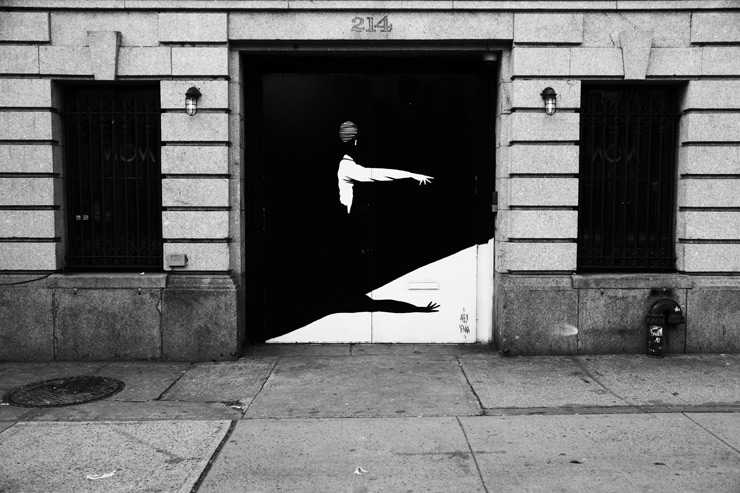
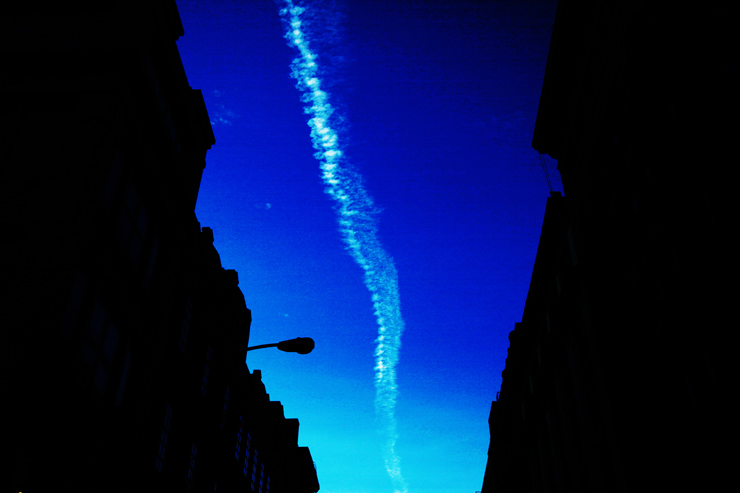
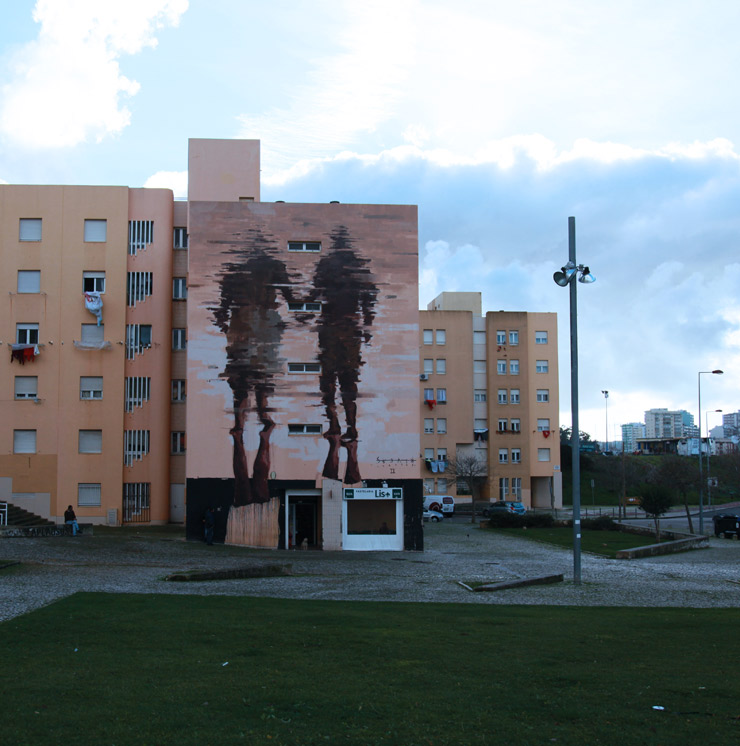
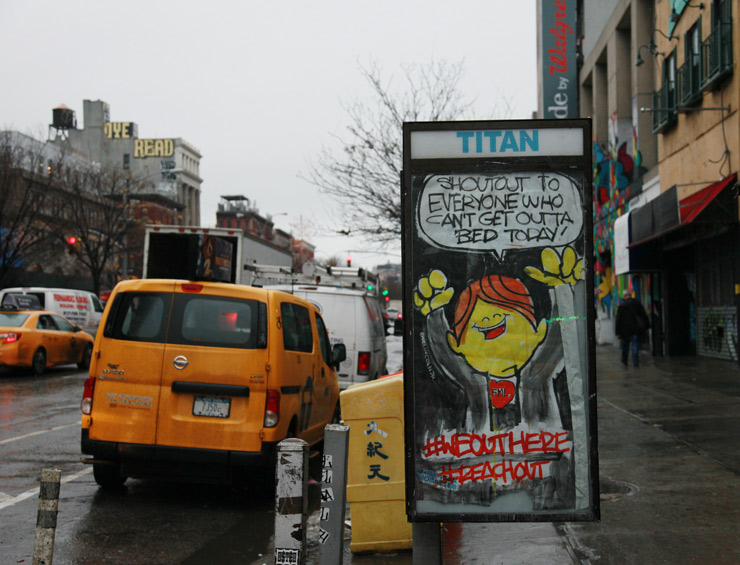
Today we chose the top image by Alex Senna to symbolize the people who are in the shadows who are hiding and who think we don’t know they are there and that no one is looking out for them. Immigrants across the country are being threatened, yet exploited day after day – afraid to go to the police or even hospitals when abused by employers, by family members, by misguided racists. We see you and we hear you. As a nation descended from immigrants, the indigenous, and the enslaved, we remember our history. Similarly, people who are being sex trafficked, or who are unable to speak up because of financial restraints, religious restraints, psychological restraints. We see you.
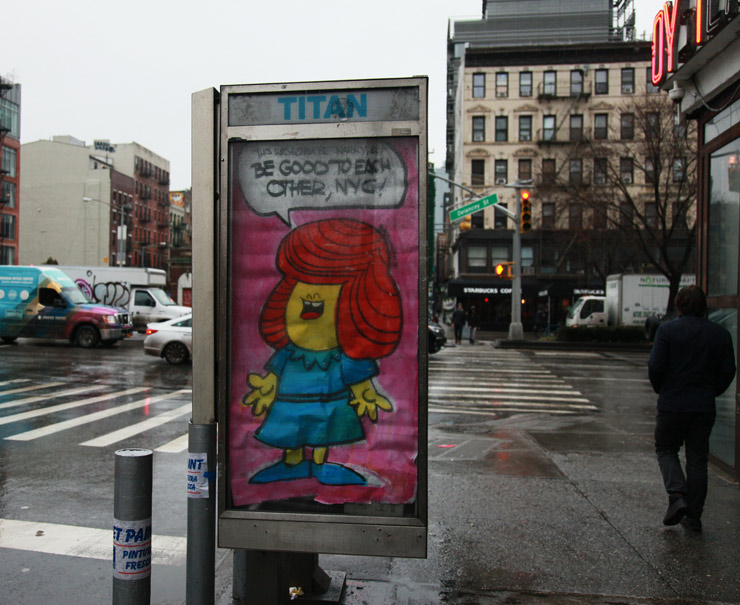
Heavy topics, but these are the streets, our streets, all of us. Roberta Smith said this week in The New York Times when reviewing the Outsider Art Fair; “Art Is Everywhere”. We’ll widen that sentiment and say that art is for everyone, and the street is more than ever a perfect place to see it.
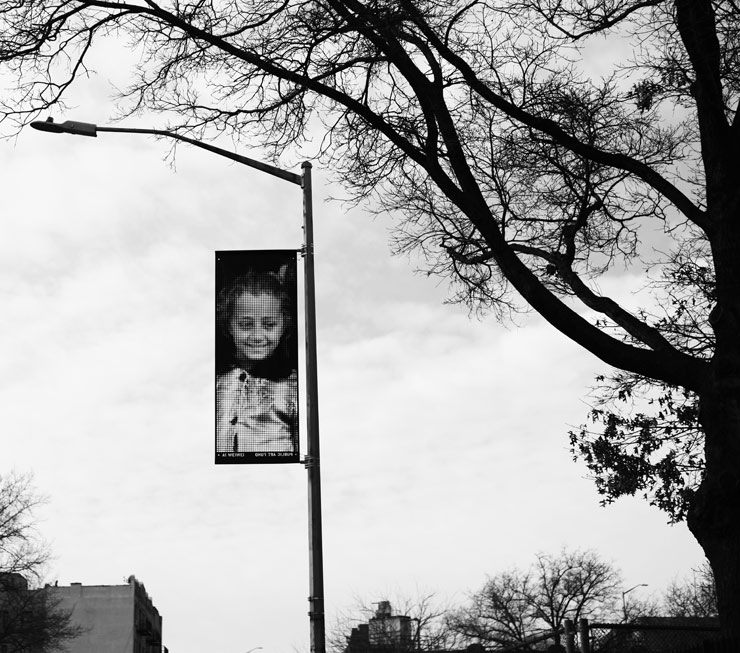
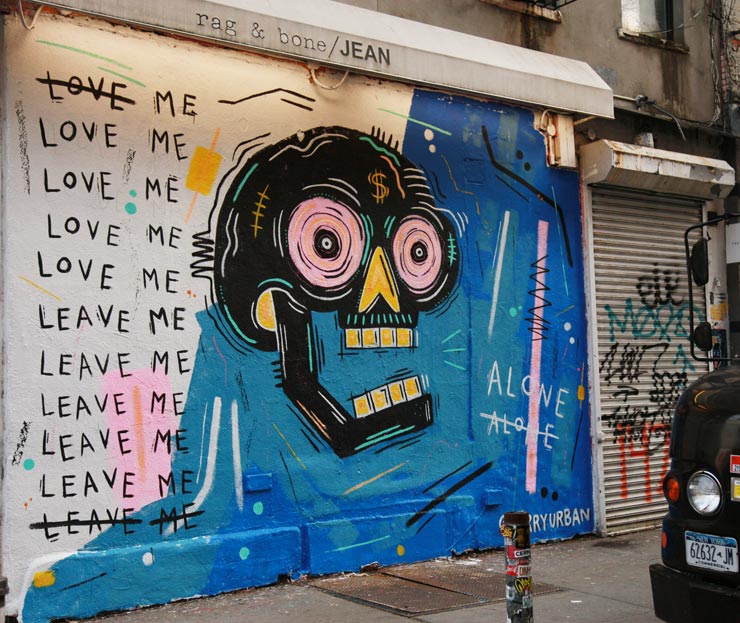
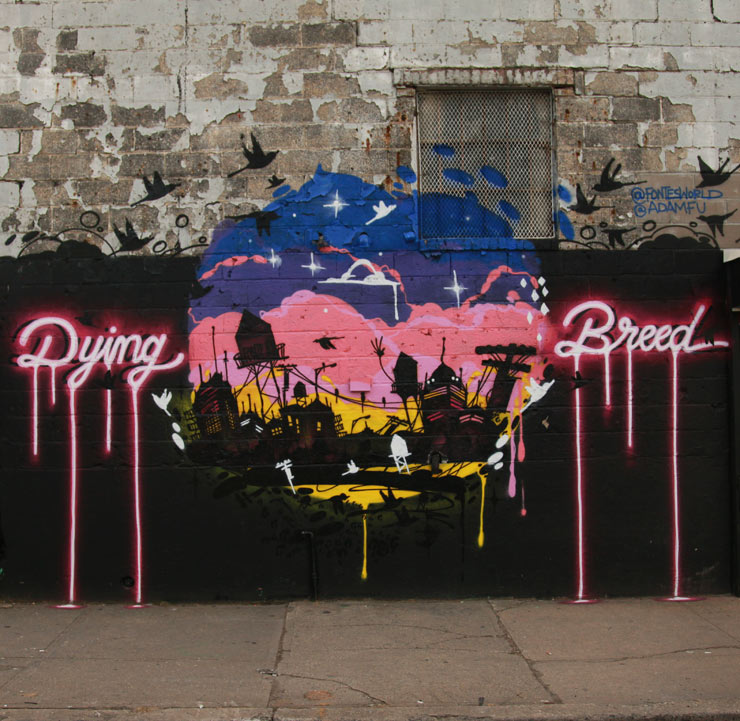
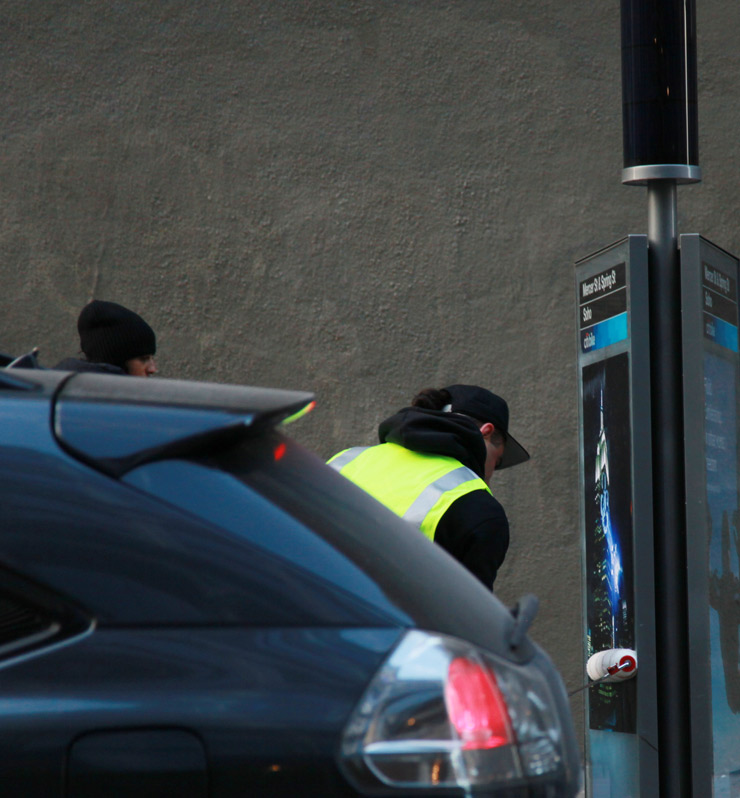
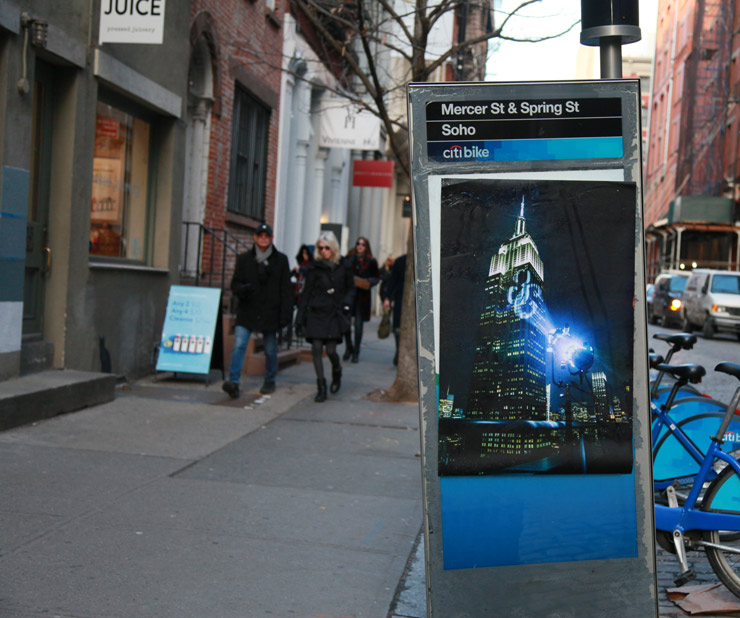
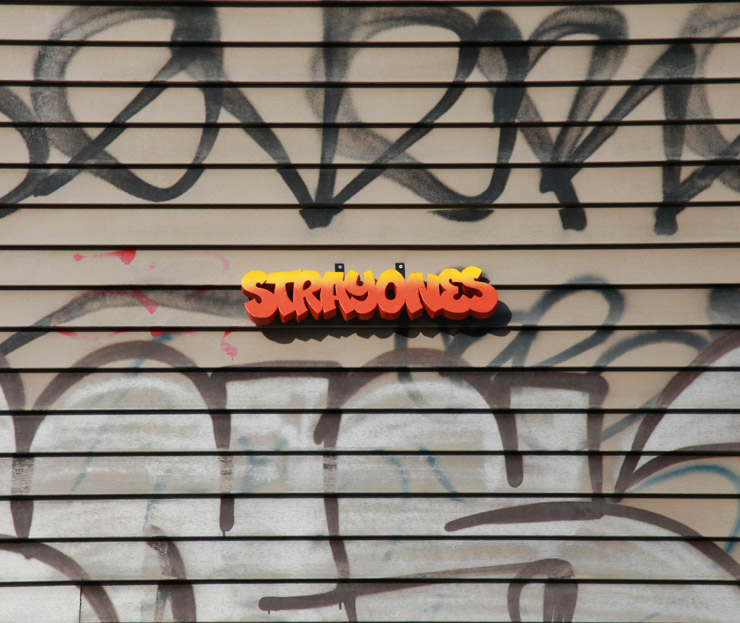
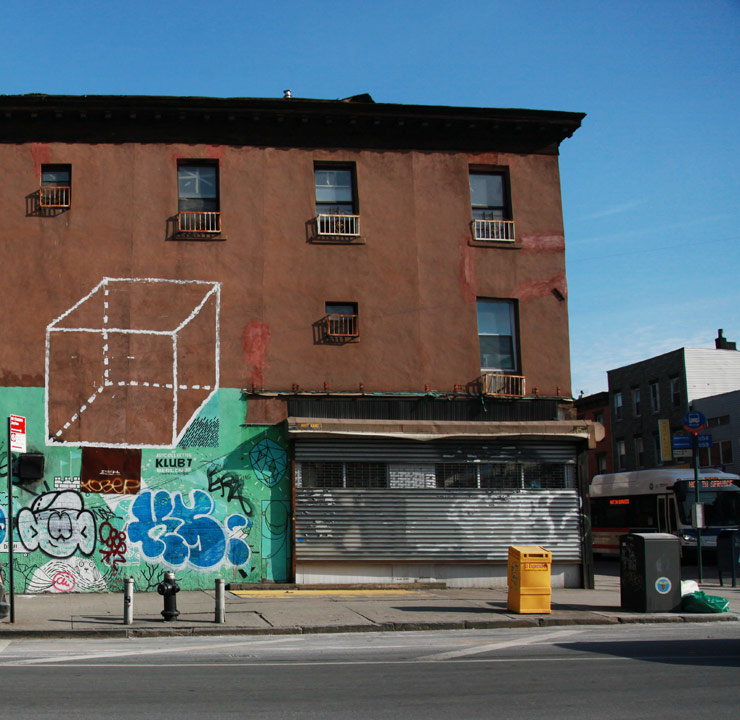
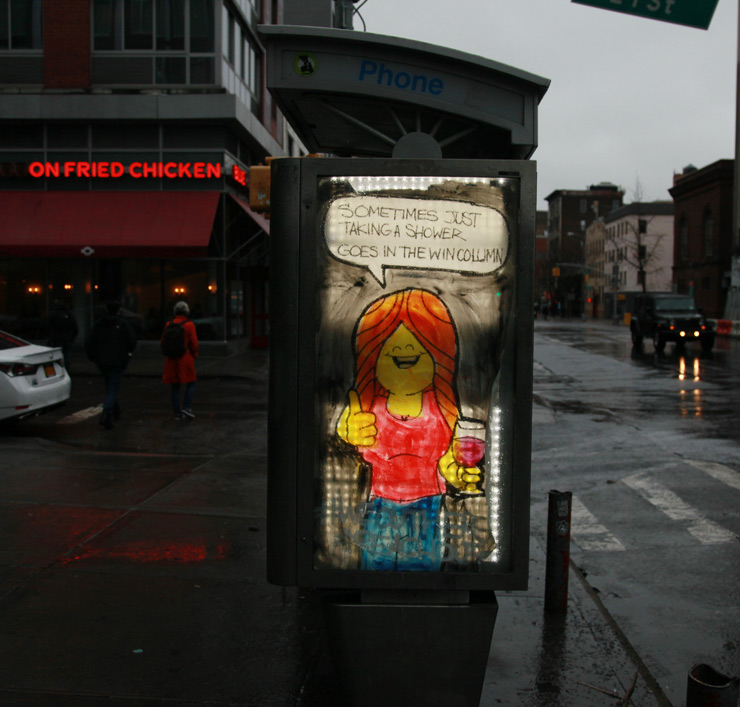
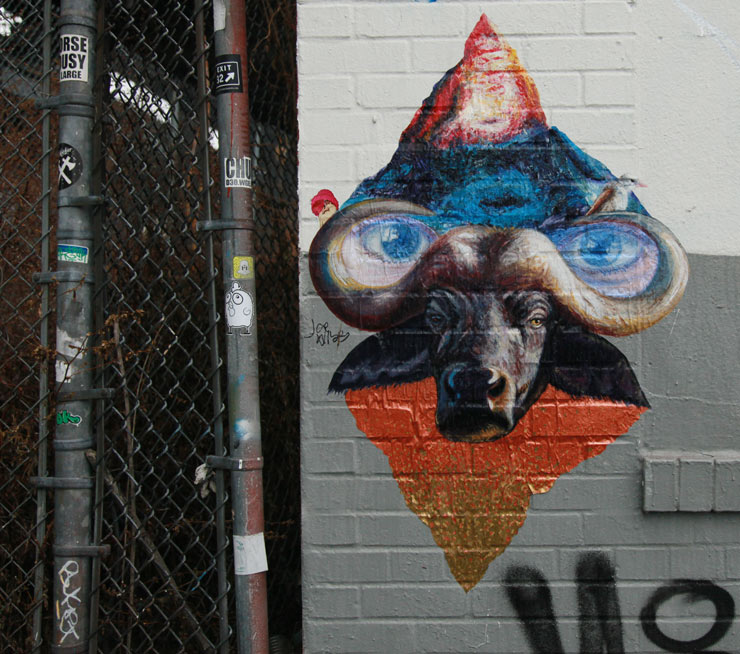
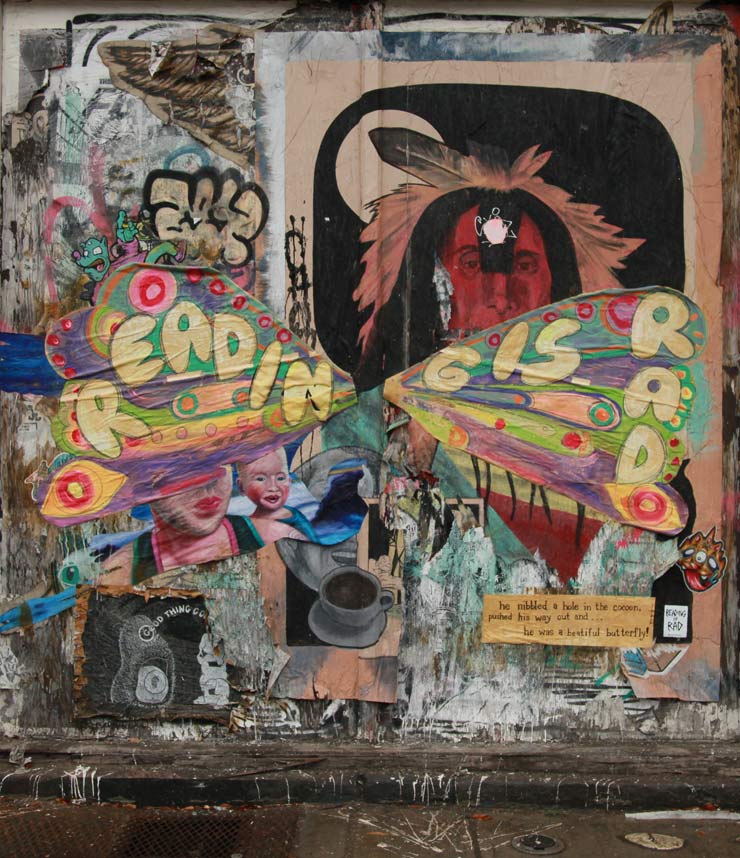
Here’s our weekly interview with the streets, this week featuring Adam Fujita, Ai WeiWei, Alex Senna, Cholula, Ernest Zacharevic, Fontes World, Mr. June, Retna, Roman, Stray Ones, Terry Urban, and Zola.
Our weekly focus on the moving image and art in the streets. And other oddities.
Now screening :
1. “While They Seek Solutions” by Vegan Flava
2. The Brooklyn Burrow: Episode 1. Iena Cruz
3. MOMO: A (brief) tour of the nomadic artist’s New Orleans Studio
4. 167 Art Project – Lecce, Italy.
BSA Special Feature: “While They Seek Solutions” by Vegan Flava
“The speed of ruin is just something else,” says Street Artist Vegan Flava, and it’s an exasperating realization. Extrapolated to thinking about the enormous war industry, and there is such a thing, you realize that pouring money year after year into ever more sophisticated and destructive weaponry only results in broken bridges, buildings, water systems, vital infrastructure, lives.
Construction, on the other hand, can be arduous and time consuming, takes vision, planning, collaboration, and fortitude. Like great societies.
How quickly they can be eroded, destroyed.
But since Vegan Flava is creating during this destructive enterprise, you get a glimpse into his creativity, and sense of humor. Similarly the psychographics of this story and how it is told reveal insights into the artist and larger themes.
“A drawing, an idea on a piece of paper, can swiftly grow into something larger, thoughts and actions leading to the next. But creating something is never as fast as to tear it to pieces. The speed of ruin is just something else,” he says.
The Brooklyn Burrow: Episode 1. Iena Cruz
“I don’t have a limitation on techniques,” says Iena Cruz in this new video of a series documenting the current Brooklyn scene. We’ve seen the artist changing his style gradually in shows and on the street for about five years now, and his curiosity for discovery is part of what defines his style- along with his color palette perhaps. Here director Brad Ford and Owly team document the creation and on-street reactions to Cruz’ 3-D version of the Stay Puft man from Ghostbusters.
MOMO: A (brief) tour of the nomadic artist’s New Orleans Studio
“I arrive with my best possible idea,” says MOMO, “and I hope people like it”. First seen here in Brooklyn and Manhattan a decade ago, the bright fire of MOMO’s mind continues to burn through technical and abstract experimentation on the street. Here he lends his talent to a brand for a commercial gig in a nicely filmed brief interview.
167 Art Project – Lecce, Italy.
Scenes from an Italian neighborhood here as the community mural project 167 Art brings Artez, Mantra, Bifido&Julieta XLF, and Chekos’art to create high quality compositions to a curious and appreciative audience. The technical skill, pacing, music, and video flourishes compliment the story – which necessarily is the people of the neighborhood and the artists laboring talents.
They’re not coming here to dine at the Olive Garden or take a tour through the Target.
They’re here for “Hello Dolly”, “Hamilton”, and “Cats”. They’re here for Billie Joel at the Garden, “Springstein on Broadway” and the “David Bowie” opening at the Brooklyn Museum. They’re here for the virtual reality exhibition “Celestial Bodies” at the Museum of Sex, Picasso and Marina Abramović at MoMa, and the 34,000 items in the Met’s Costume Institute. They’re here for Jazz at Birdland, punk at Manitobas, the singers at Joe’s Pub and dancing at “The Dirty Circus” party at House of Yes in Bushwick.
Whether its EDM or country music, Ai Wei Wei or Shepard Fairey, they’re reading about the arts from writers in the The New York Times, ArtForum, Hyperallergic, Time Out, The Village Voice, Daily News and right here.
The creative economy of artists, actors, dancers, musicians, photographers, curators, designers, art directors, architects, producers, writers, authors, painters, poets, coaches, trainers, teachers, filmmakers, lighting designers, stage designers, software programmers, prop makers, furniture designers, singers, chefs, hairdressers, makeup artists, fashion designers, and yes, Street Artists all are the contributors to the valuable cultural lifeblood of New York City.
And all of these people need a place to live and work, to create, to practice, to try and fail, and to try and succeed.
They also need to be able to pay the rent. That has been less and less and less possible in the last three decades at least with skyrocketing prices chasing low and medium income people from one neighborhood to the next.
These cultural creators have been moving from abandoned neighborhood to neglected neighborhood – in the process most often making the neighborhood more desireable – and then pushed out by the real estate investors. An effort to stem this unfair, brutal and insulting process, activists and artists created The Loft Law, which saved thousand artists in the 1980s and 1990s and it protected many Live/Work creative spaces and the cultural richness of the City that Never Sleeps. A second wave of Live/Work spaces were given protection via Albany in 2010 in a 2nd Loft Law that covers creatives who brought neighborhoods around the city like Williamsburg and Bushwick back to life as desireable creative meccas.
We’re writing to support all artists who give to this city and would like to assure that our elected officials, landlords, and the Loft Board remember their responsibility to respect and protect the rights of tenants, their families, their children, their grandchildren, brothers, sisters, aunts, uncles, mothers, fathers.
Many tenants in the last couple of years have questioned whether the protections afforded under the Loft Law are being run over roughshod or ignored altogether, according to many artists you’ll speak with. There are accusations that hard-won rules are being skipped over, artists are being coerced, that clearly defined processes are being foreshortened and rammed through without input.
It’s an old story, a swinging of the pendulum of justice toward the people and away from the people, but one that needs to be righted occasionally. At this moment, with the Mayor so clearly expressing a desire to protect the rights of the New York creative industry for affordable safe loft Live/Work spaces, it seems possible.
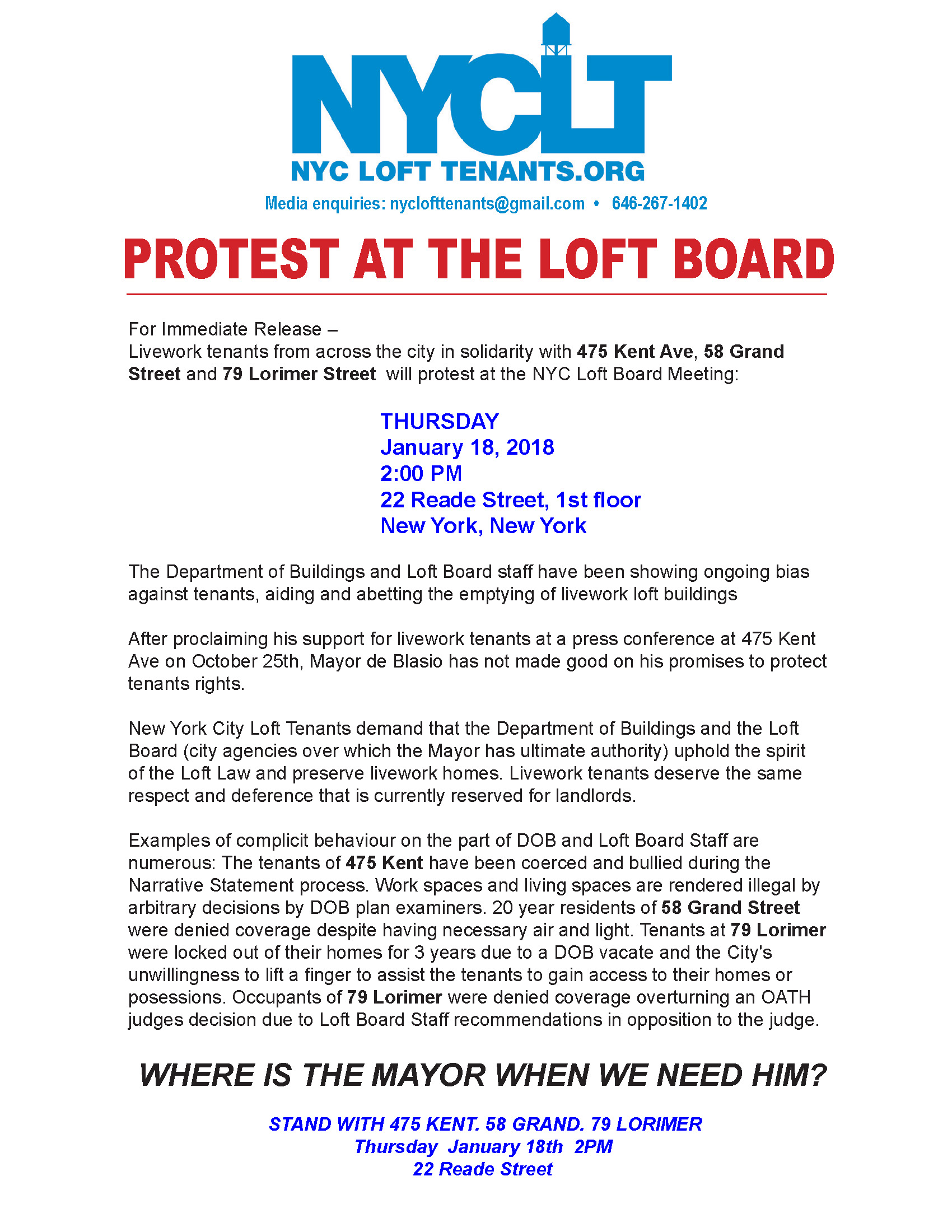
Here is the press release for a protest by 475 Kent tenants today at the meeting of the New York City Loft Board.
475 Kent tenants are asking that you ALL come out and support them. Loft Board Meeting 2:00 PM January 18, 2018
New York City Loft Board 22 Reade Street, 1st floor New York, New York
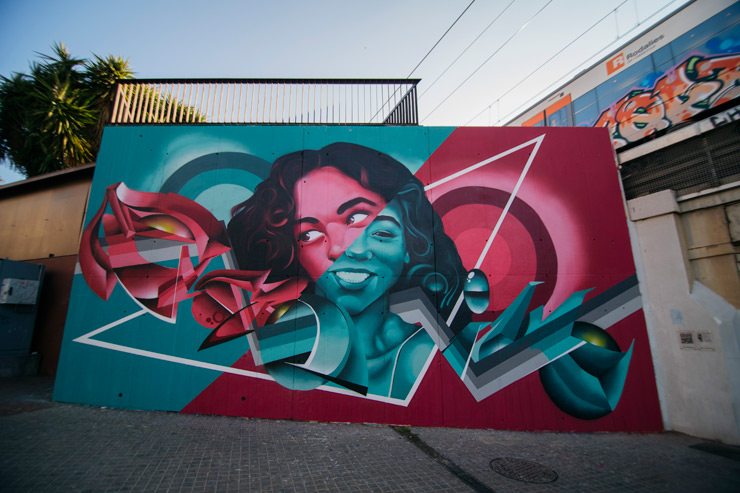
Graffiti writer/mural painter/graphic designer ZURIK is divided not just by her artist description but by her nationalities. Leaving Bogotá and moving to Barcelona is a big split as well and she’s still adjusting to the cultural differences between Spain and Colombia.
No wonder her new portrait is sliced in two! She calls it “Divided”.
“I dedicate 80% of my time to writing graffiti,” she says, and you can see that her tight lettering style is in development – exploring shapes, dimensions, fills, and contours. What is newer perhaps is her exploration of characters over the last couple of years, looking at faces and paying attention to proportions, colors and expression.
Here at the Contorno Urbano 12 + 1 wall in l’Hospitalet de Llobregat (Barcelona) you can see she’s using two colorways to emphasize the division that can live inside each of us; opposite emotions somehow complementing one another, hopefully not ripping you apart.
Adjusting to a new culture, invited to paint at graff/mural festivals and jams throughout the year, and now working commercially with some brands, it looks like Zurik knows how to pull it all together.
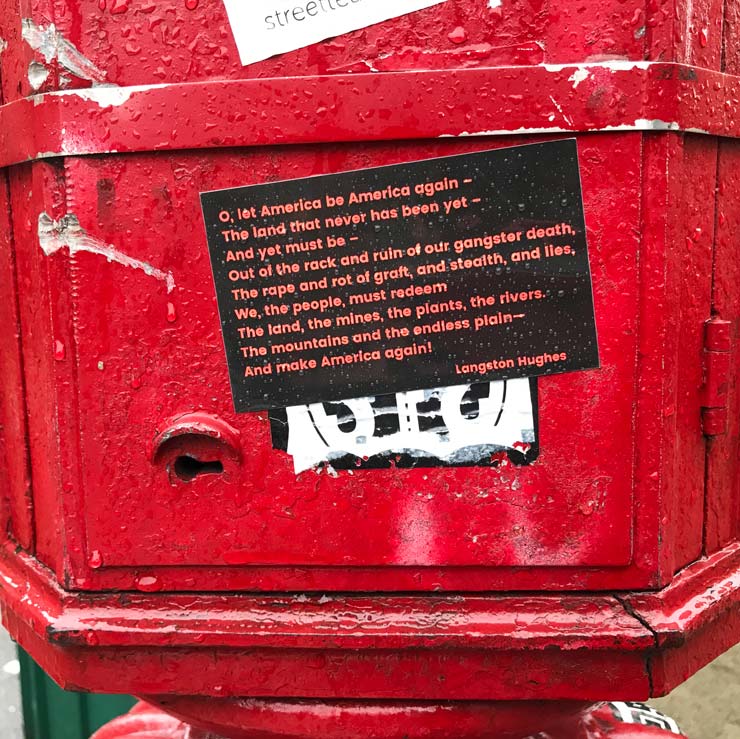
A celebrated American, the New York poet Langston Hughes, leads off this edition of BSA Images of the Week, with a firebox posting of a portion of his work “Oh Let America Be America Again.” A part of the Harlem Jazz Age that gave birth to a freedom of expression and heralded fame for many black and brown artists across artistic disciplines, it was Hughes that spoke to the depths and sorrows and aspirations of the human experience here with such poetry. We don’t know who brought his words to the street here, but the timing could not be better.
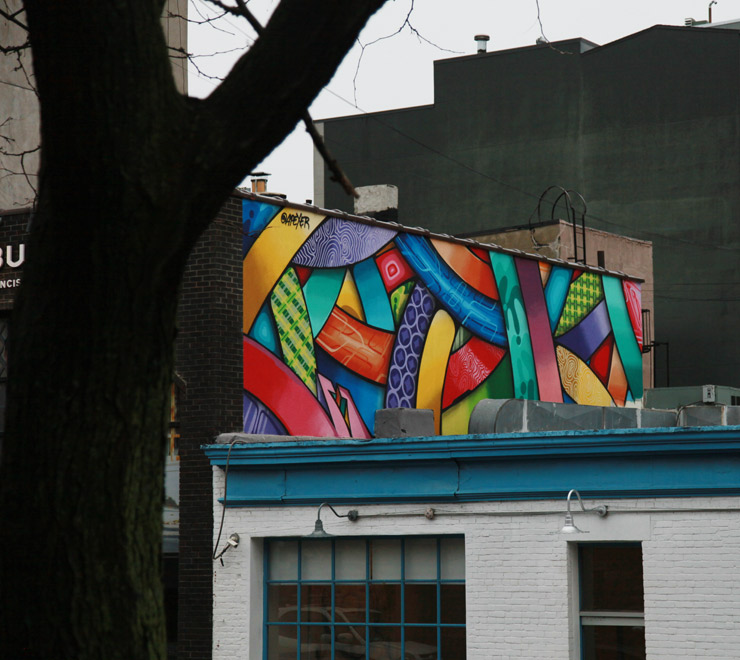
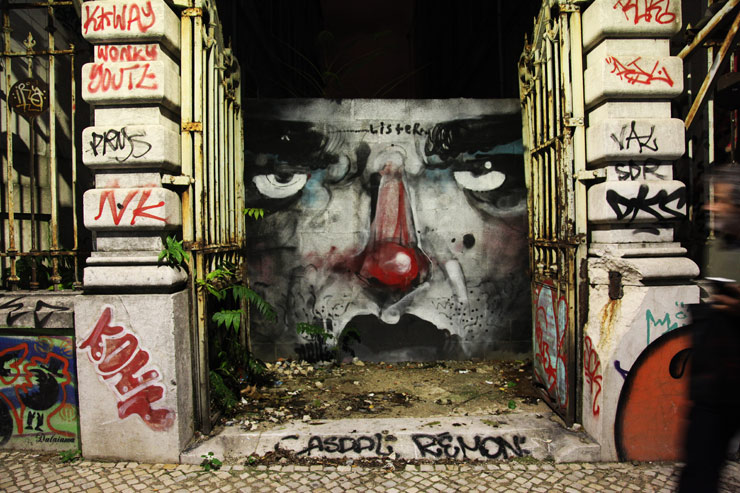
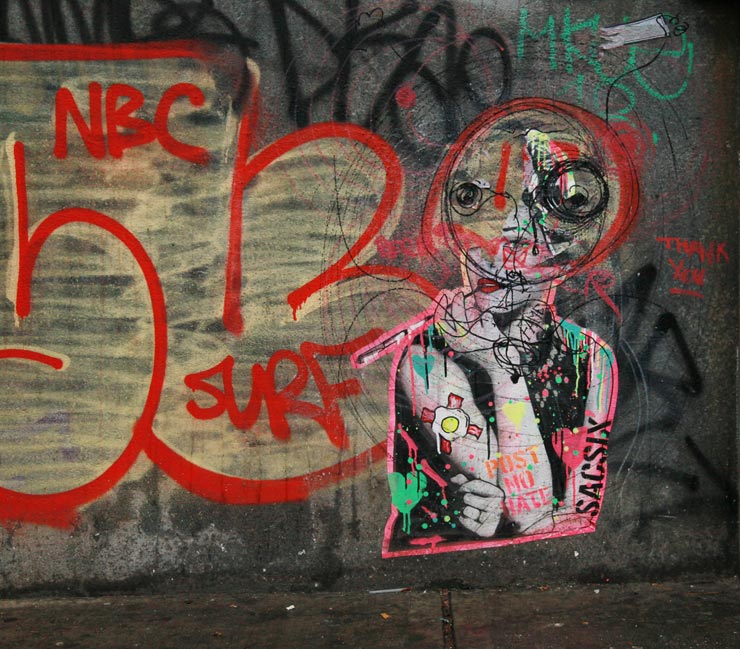
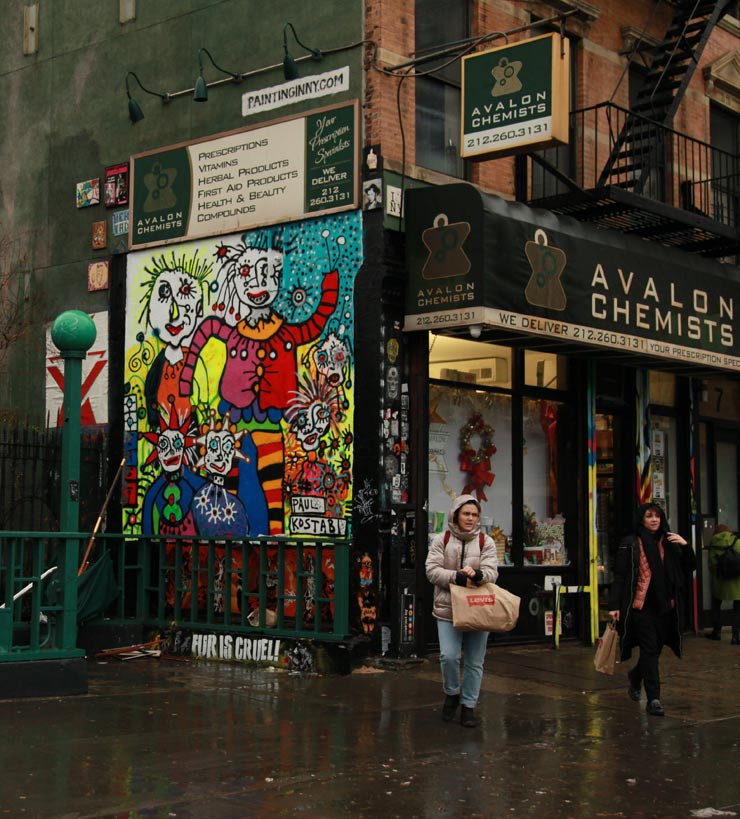
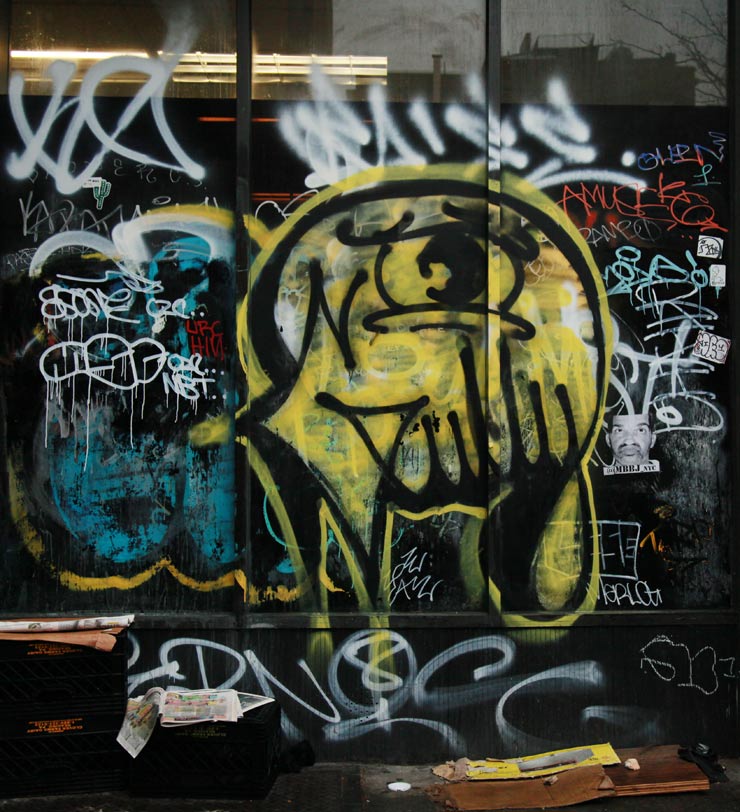
Here’s our weekly interview with the streets, this week featuring Abe Lincoln Jr., Anthony Lister, Apexer, Borondo, Katsu, Langston Hughes, Paul Kostabi, SacSix, and Willow.
Our weekly focus on the moving image and art in the streets. And other oddities.
Now screening :
1. “Aesthetic of Eas” A film by Kristina Borhes and Nazar Tymoshchuk / MZM Projects
2. 1UP CREW (ONE UNITED POWER) HAPPY NEW YEAR 2018
3. Patrick Hartl & Christian Hundertmark’s Exclusive Debut of “Layer Cake”
BSA Special Feature: “Aesthetic of Eas” A film by Kristina Borhes and Nazar Tymoshchuk / MZM Projects
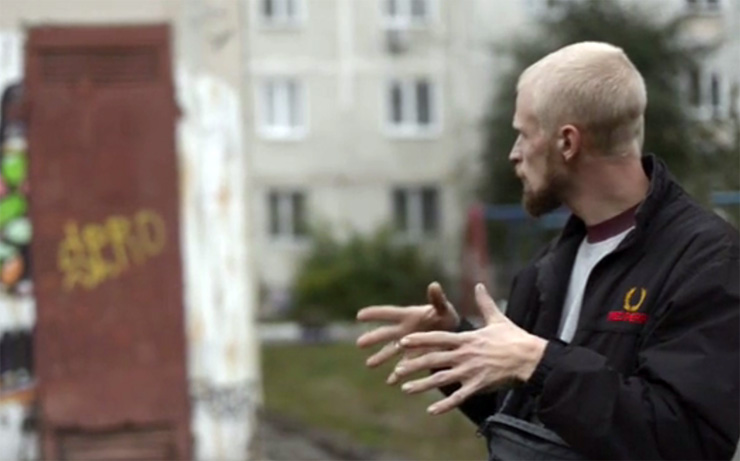
“We wanted everything to occur naturally in this movie. We wanted to achieve spontaneity,” say film makers Kristina Borhes and Nazar Tymoshchuk about their up close look at graffiti writer/abstract painter EAS. In this new film they have captured the creative spirit in action as unobtrusively as they could, allowing the artist to speak – in a way he never does, they say.
Today on BSA Film Friday we’re proud to debut this new portrait by three artists – one painter and two film makers – to encourage BSA readers to take a moment and observe, inside and outside.
The directors spoke with us about the making of the film, how they developed it, and how EAS works as an artist;
BSA: Can you talk a little about EAS and his painting history and what your connection to his work is? Kristina Borhes and Nazar Tymoshchuk: Eas started to paint graffiti in 2003. It was a classic graffiti, or at least “as classic as it could be” in Central Ukraine during early 2000’s.. He was truly addicted to lettering for more than decade, but then he started to feel entangled by the letters. Eas was confused by the the meaning of the letters, since all he wanted to do is to play with a shape, but not with the meaning. It was the moment when he made the step forward non-representational painting and became the part of East-European post-graffiti scene.
We’ve met Eas at “Black Circle” Festival in August 2015. It was a significant event for graffiti writers and graffiti-associated abstract painters, therefore we were doing our “field research” about the scene there. Even though, we were familiar with the style of Eas through the online platforms, it was the first time we saw him during the process of creation. At that moment, standing at the bottom of the swimming pool of abandoned Soviet health center and watching how the paint is splashing on the wall yet obeying the artist’s gesture; hearing the spray-can scratching the surface in order to make the finishing lines; experiencing the energy of desolated place released by Eas… At that particular moment we clearly decided that someday we will do the movie about this man. Probably, in his art, in his way of work, in his attitude and approach we felt the truthfulness which is unfortunately very rare in today’s urban and contemporary art.
BSA: How did you decide on the pacing of the film, which seems like it is suspended in a honey-like substance. KB and NT: Yeah, that was pretty much the idea. We wanted to create the feeling as if the time slows down. During those 15 minutes of film the audience should simply follow the tone of voice and deepen into the lines, the shapes, narration, to feel the depth of every word. Most likely, it’s just the way we experience the art of Eas by ourselves. If you will look at some of his artworks for a certain time you will feel how the image slowly absorbs you. We aimed to share this experience and the atmosphere which actually couldn’t be the same without the perfectly convenient soundtrack written by Berlin-based artist Shunsuke Hatori and performed by his band “SINSENSA”.
BSA: Did know that EAS was so verbally illustrative when describing his process before you began filming? KB and NT: Actually, we’re pretty sure that most of the people who know Eas in real life would be quite surprised by the openness of his narration. Eas is not much of a talker, he’s that type of the person who prefers to stay aside, alone with his thoughts and only the closest people around. Before the filming we thought that it’ll be our main challenge, well even Eas was thinking that way. Although, we believe that everything depends on the moment and the right approach. We spent a few days with Eas talking from morning till late night, we’ve met his family and even visited his grandmother. Our recorded interview lasts for almost 7 hours in overall. Frankly saying, it was an amazing experience and the real “hidden jem”. All that we wanted is to have the life talk and not the text prepared in advance. We were asking the hundreds of questions and he just had to answer it freely. That was the principle for this film. We wanted to have the spoken “flow”, just as he has it in painting. But we didn’t even expect that the “flow” will appear to be so candid, open and so truly poetical.
BSA: “When I feel good about the place it means the piece will be more accomplished. More complete” he says in the film. How did you and EAS locate the right location to do his work, and was it difficult to respect his space? KB and NT: This question hits straight to the point. To respect the space and not interfere with the “energy” between the wall and the artist during the painting process appeared to be our biggest challenge. We knew Eas and how sensitive he is regarding the “spiritual” part of the process. He will never tell that you’re distracting him, but it surely will affect the painting. None of us wanted it to be this way. That’s why it required the certain effort and respect from the both sides. Each of us did our best in order to keep the process as natural as it could be. And it seems like the spirit of the wall let us to capture the magic.
We wanted everything to occur naturally in this movie. We wanted to achieve spontaneity. Therefore, the searching for locations probably was the most interesting part. Together with Eas we were like stalkers, riding in the car through the forests, fields and villages around Kremenchuk city in search for a “zone”, a very special place which could be felt only by him.
“Aesthetic of Eas” is represented as an abstract in 5 sections. Each section (except the fifth, because it contains only artworks, not the process) is visualized by the different location and the fresh artwork in there.
First section “Place” was filmed in the village Andriyky, the village where the ancestors of Eas were living. His grandma still lives there, even though the place is almost a ghost village, only a few people are living there now. Most of the houses are abandoned. There are a lot of artworks made by Eas there. This place is exceptionally special for him.
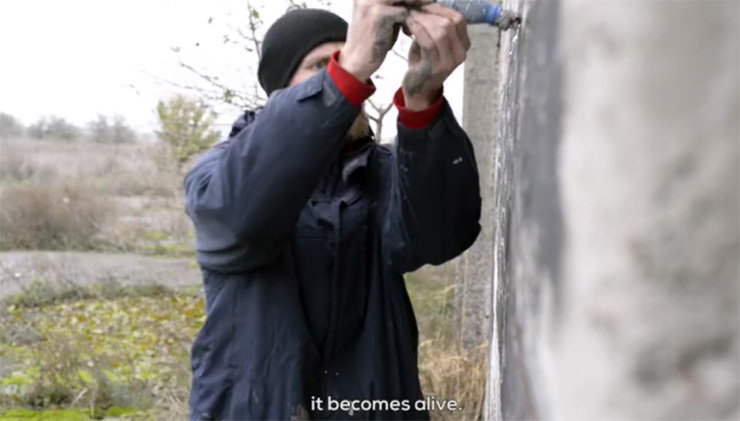
This year Eas had a special birthday gift in early October. He was hang-gliding over the fields near the city. From the sky he saw the abandoned building in the middle of the field. Surely, he wanted to discover it. This is what he proposed us to do together. After the long journey through the forest and fields we found this mysterious building. It was the abandoned airport Nedogarki. This place definitely has a character and Eas was so excited that he did two artworks there. “Wall”, the second section of the film shows the indoor artwork and the forth section “Line” is visualized by the outdoor artwork of abandoned airport.
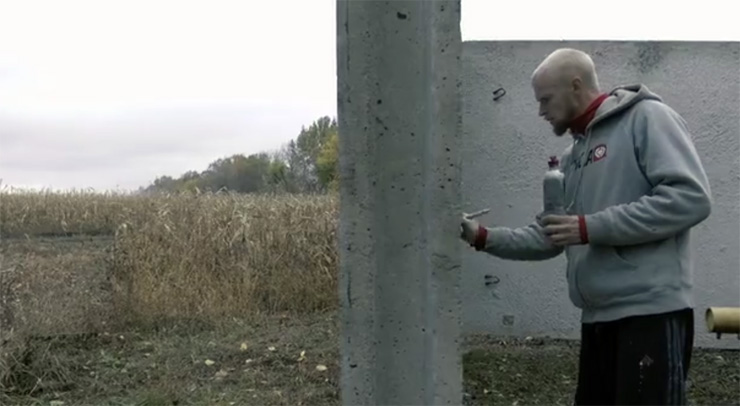
The place for the third section “Color” appeared accidentally in the middle of our journey around Kremenchuk. Eas noticed the concrete walls surrounded by the trees near the cornfield. It was a good example how places are finding him by themselves.
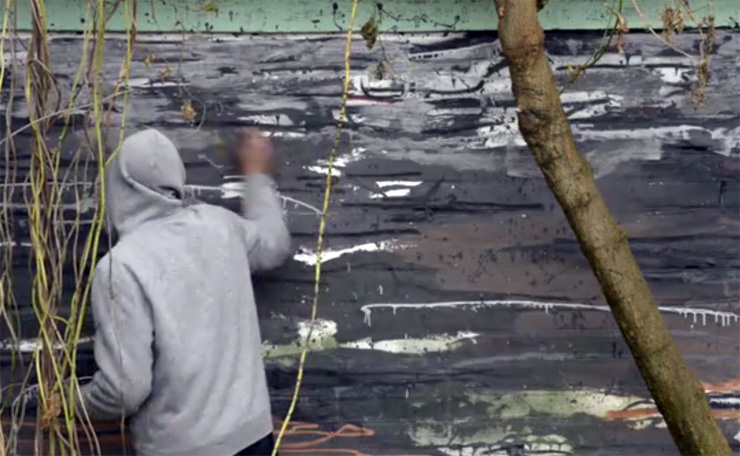
BSA: It looks like he creates some of his his own art instruments. What did you learn from watching his rhythm of painting and splattering and splashing color? KB and NT: Yeah, he’s very passionate about the new things and methods. The way how Eas works with the paint is truly mesmerizing. This is the main reason why we wanted to make a movie about him so badly. You just have to see it. The gesture, rhythm, concentration… As if he is a shaman during some mysterious ritual. At that moment you really start to think about spiritual, about the “inner necessity”, or “infinite abyss”, about expression over illustration and everything you’ve ever heard about the abstract.
Although, the most important thing is that he’s doing it not because he studied Kandinsky or Pollock, but because it really comes from the inside. You can say it by watching how purely spontaneous he is during the process of creation. Unlike the many urban and young contemporary artists Eas doesn’t do it as symbolic effort of made-up resistance, neither as pathetic attempt to proudly decorate another forsaken white cube, he just doing it, because he simply cannot not to do.
New Years celebrations in Berlin are unlike most other cities – with people exploding fireworks literally all over the entire city for hours. To add to the festivities the 1UP crew also added their own adornment to the trainline, in the middle of all the revelers and explosives.
Patrick Hartl & Christian Hundertmark’s Exclusive Debut of “Layer Cake”
The dynamic duo of Patrick Hartl & Christian Hundertmark have developed an artistic dialogue based in large part on a process of art-making that they discovered together.
Derived from the street practice of “going over” – which is normally looked upon as one artist dissing another – the two graffiti/Street Artists have refined the practice and turned it into a form to celebrate, to study, to appreciate, and turn on its head.
In this short teaser “Layer Cake” explains how it is made and gives a hint at a promising future for the artists who have challenged themselves to create something new together. We are sure there is much more to come!
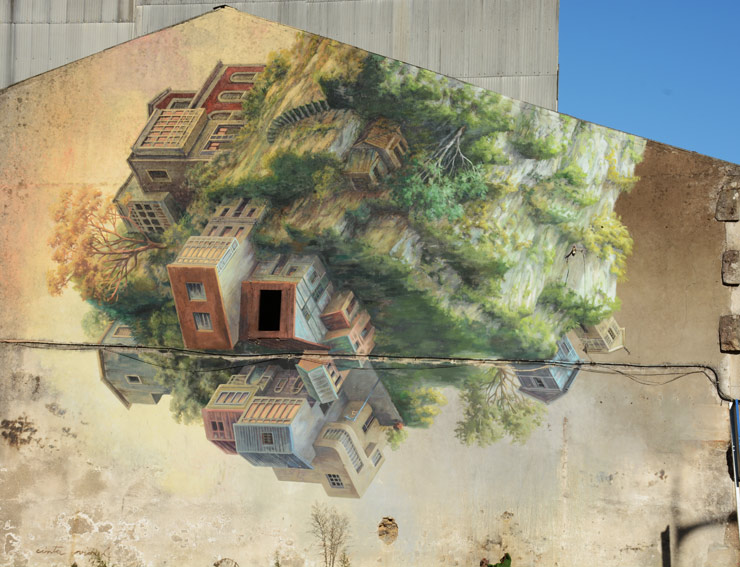
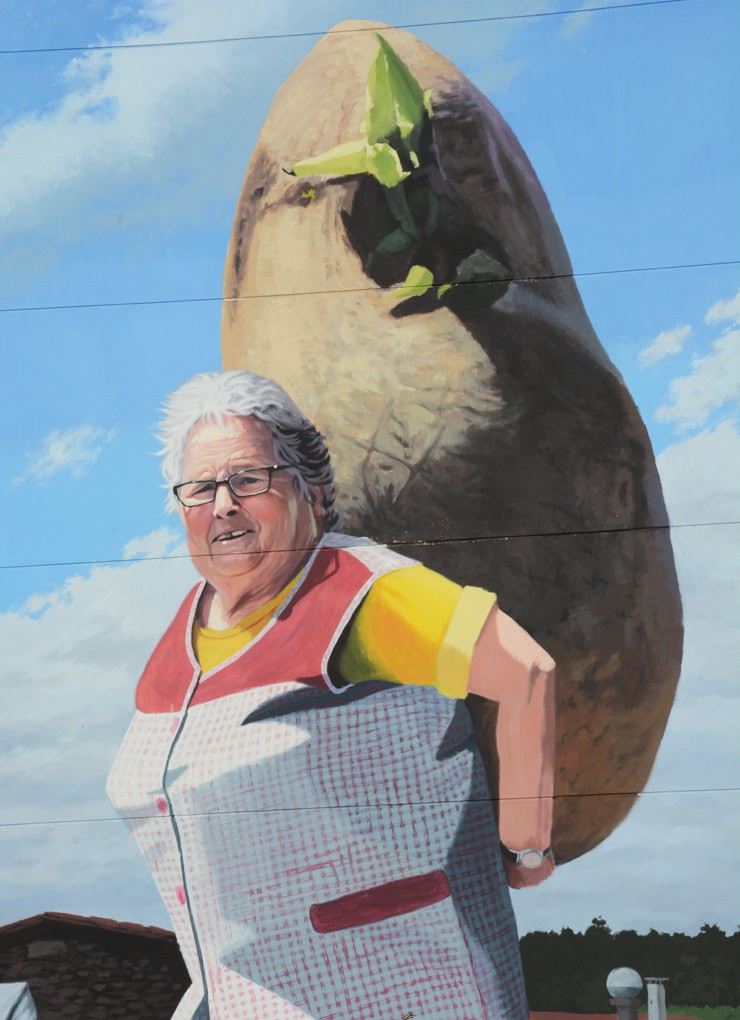
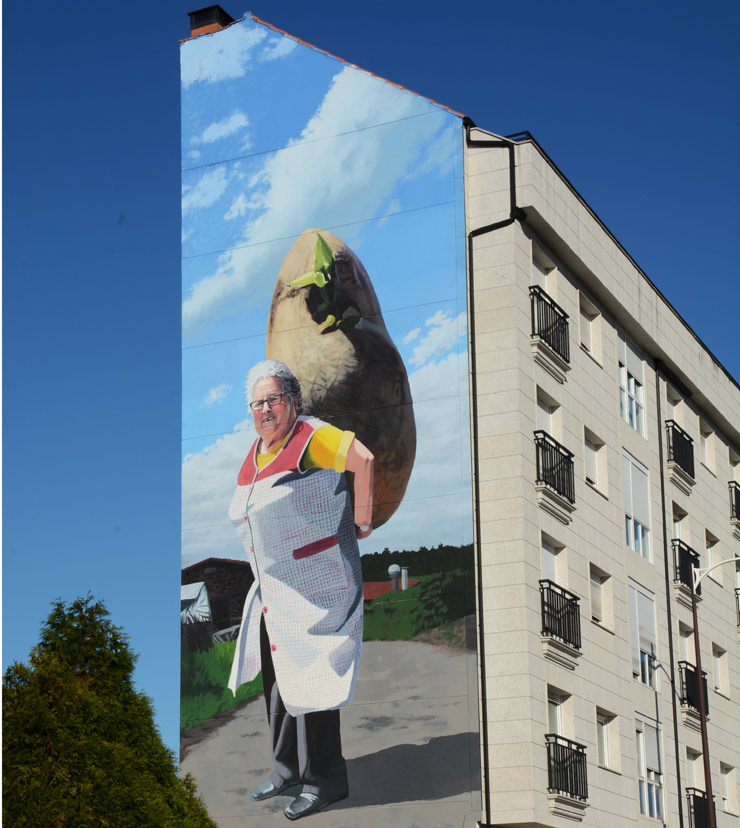
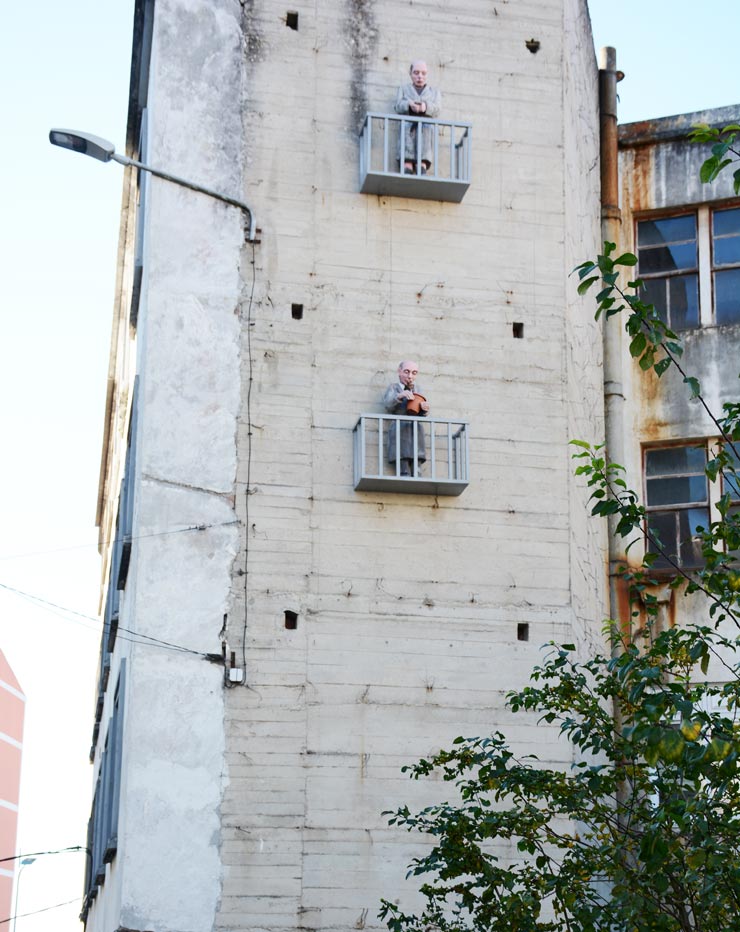
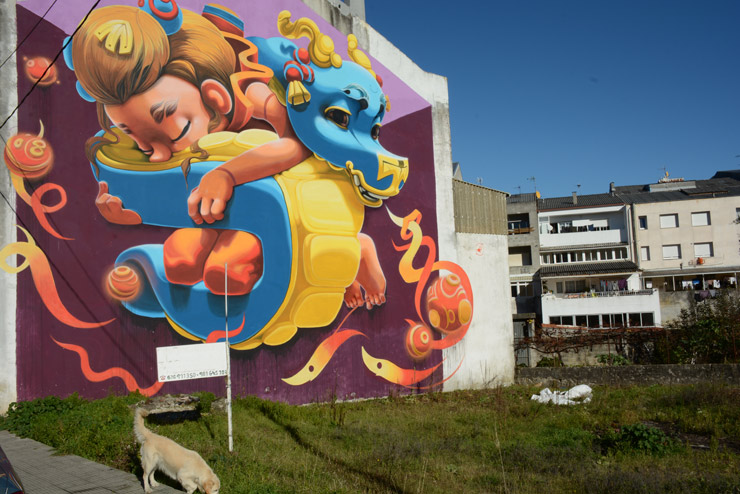
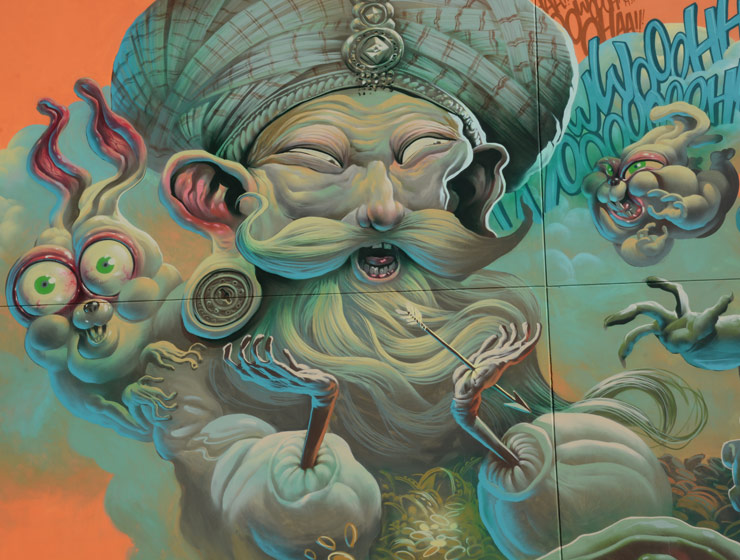
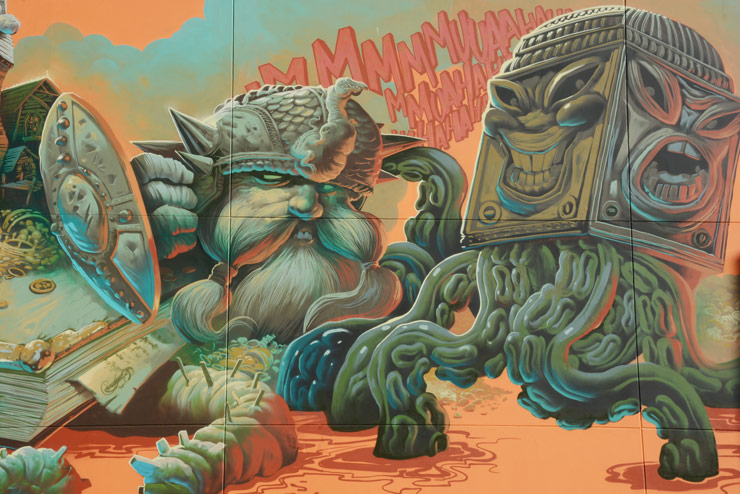
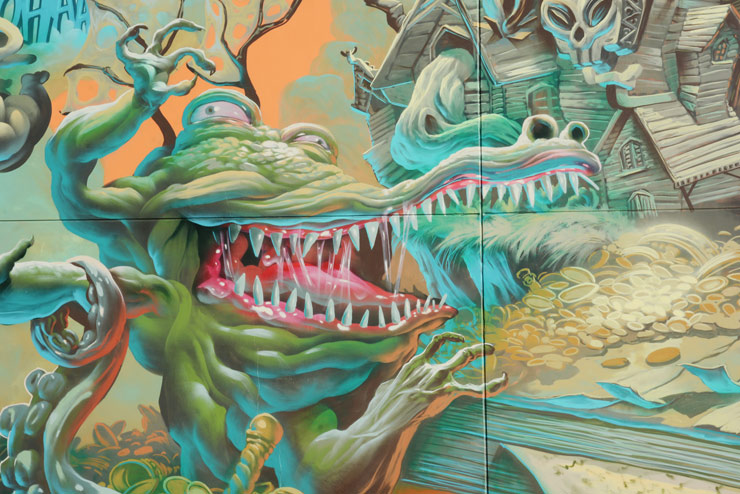
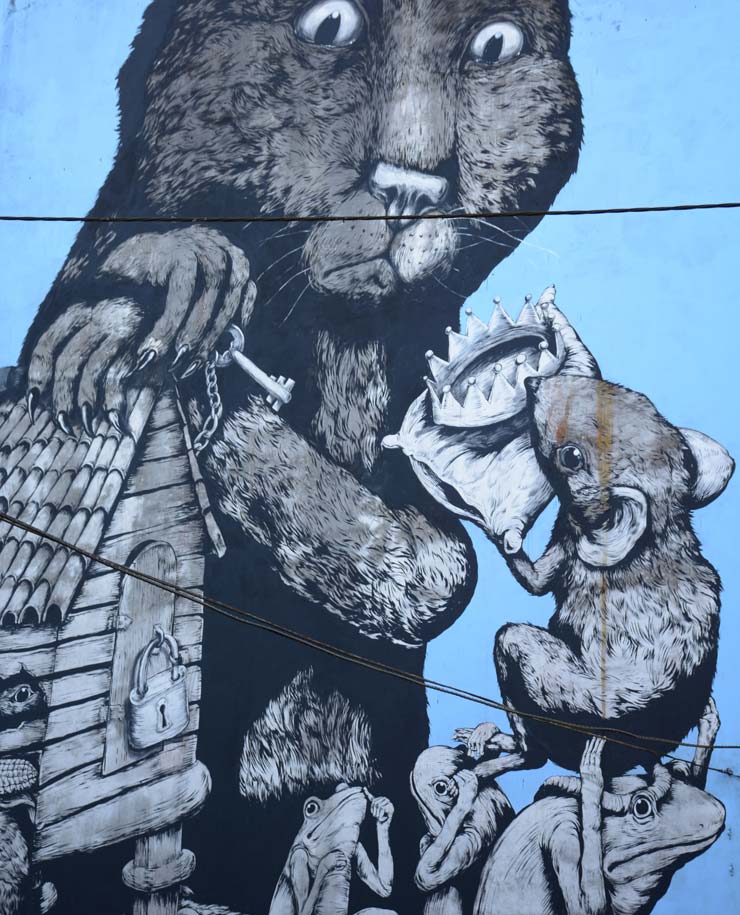
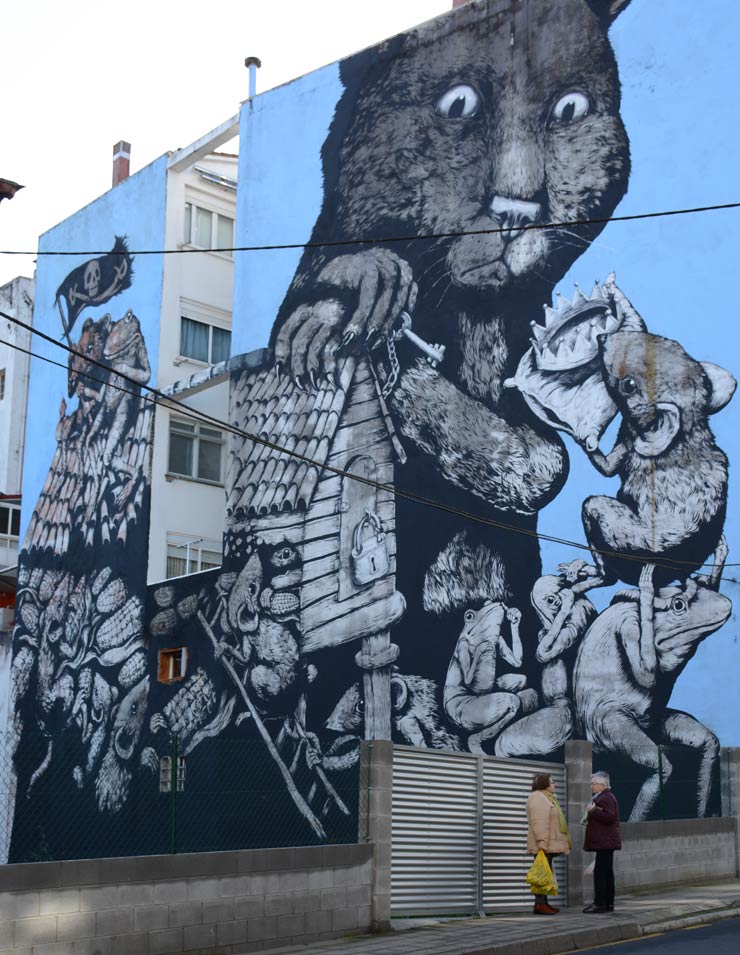
What’s for dessert? You may think of public mural festivals as the final dish that is pleasing to the eye and sweet beyond belief.
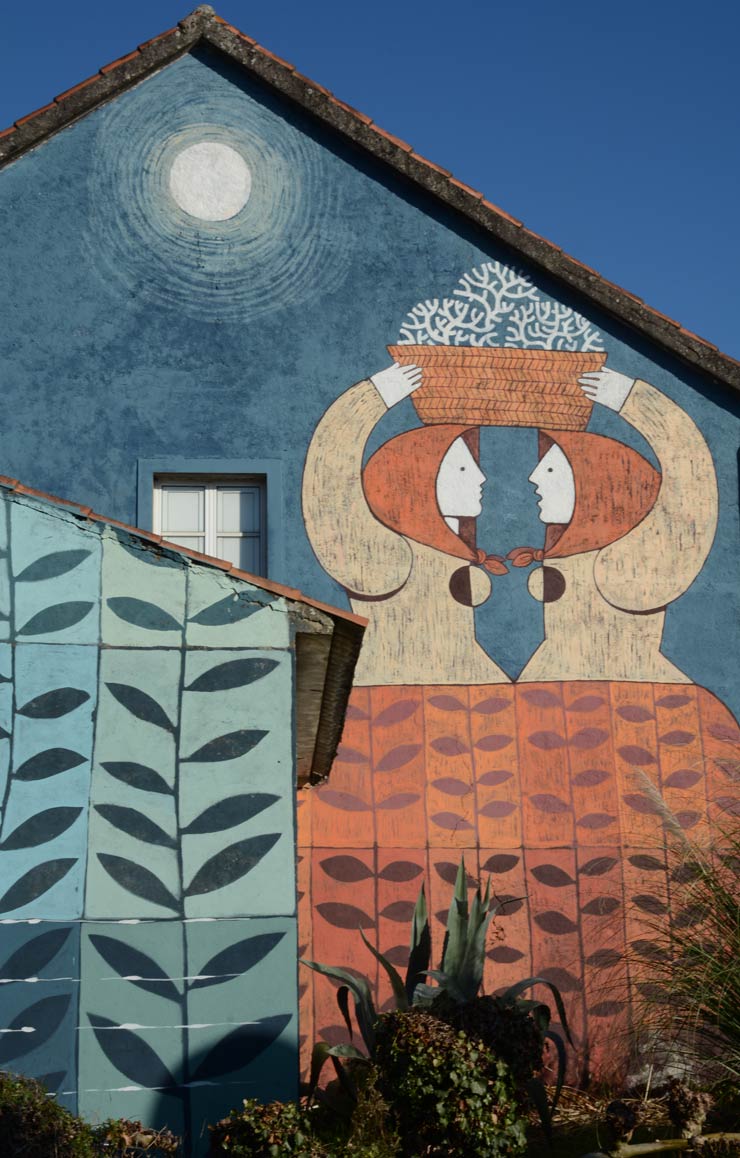
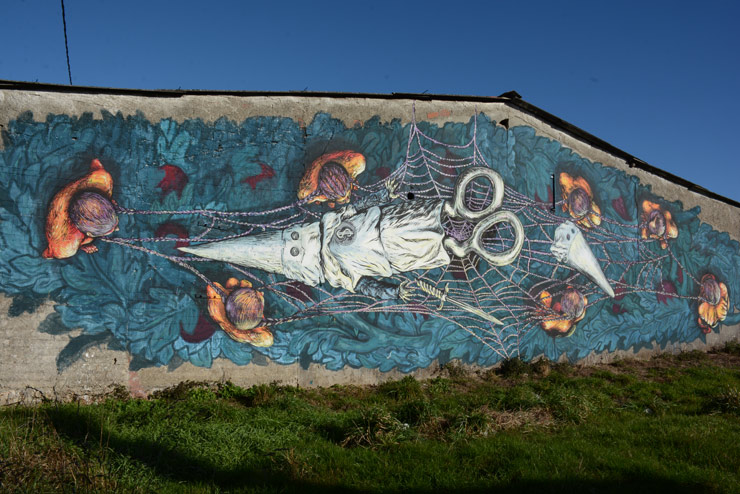
DESORDES CREATIVAS (Creative Desserts) is a festival of urban art in a city called Ordenes, about 40 kilometers north of Santiago de Compostela in northwest Spain’s Galicia region, and it has specialized in art of the finished mural for about a decade.
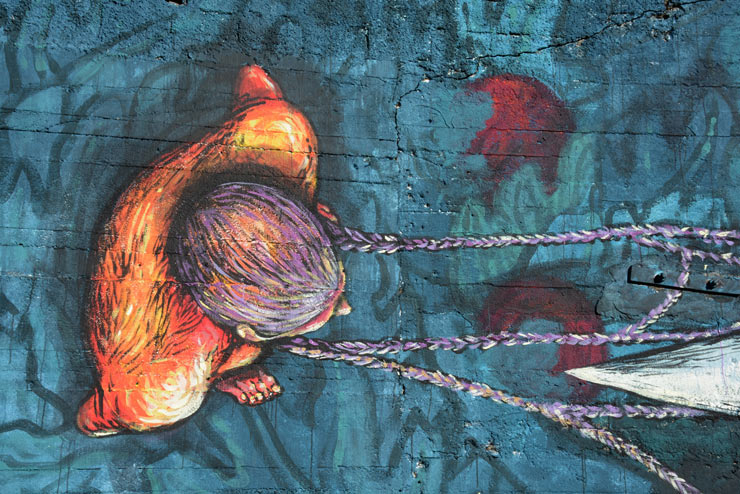
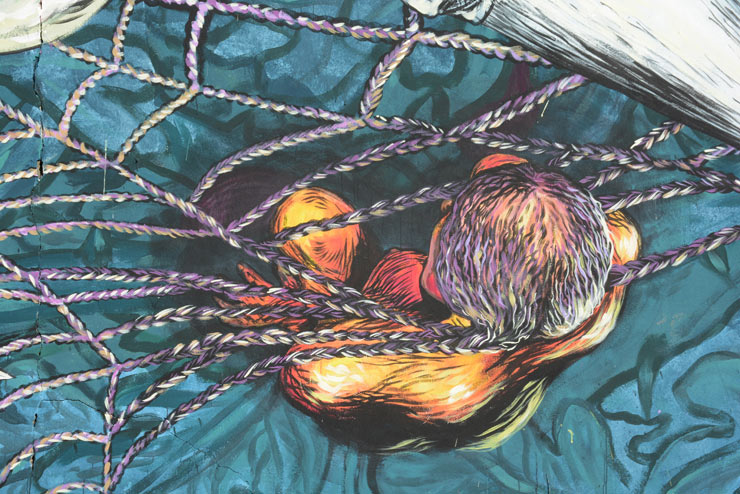
Organizers of the urban/suburban/almost rural festival in this city of 160,00 are proud to tell you that nearly 80% of the original murals since the beginning are still running, a testament to the regard the community has for the formal works. Today we have excellent images by photographer Lluís Olivé Bulbena to give you an idea of the quality of the works.
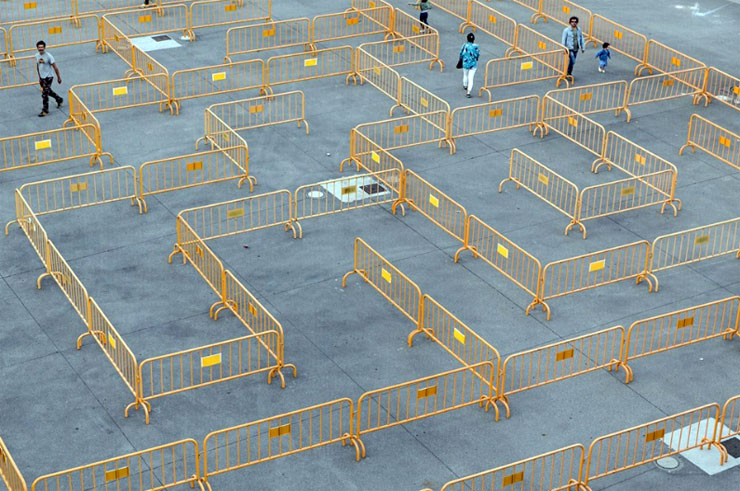
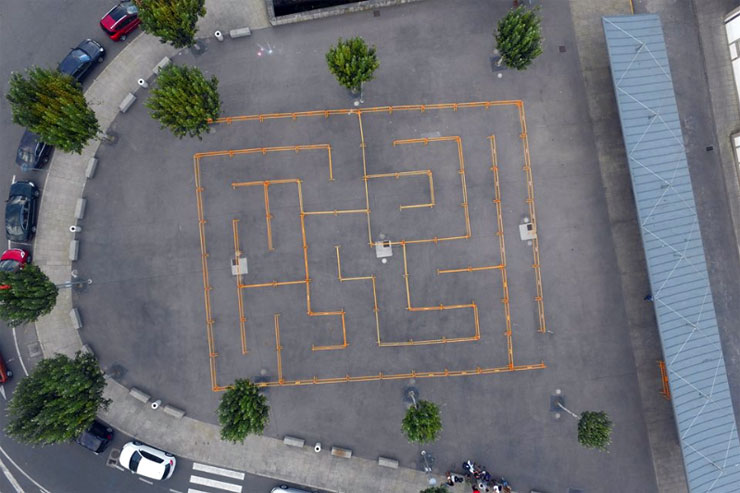
We appreciate the delicious and colorful murals of course, but for this years collection we also dig the installation of a nonsensical labyrinth in the middle of a public square by Madrid’s SpY – which isn’t as obvious when you are on the ground.
Instead the installation recalls endless lines at sundrenched summer music festivals or the Lisbon airport passport control that seem to actually get longer as time goes by. These photos from Desorders Creativas show that the SpY piece is also a happy diversion for many.
 BROOKLYN STREET ART LOVES YOU MORE EVERY DAY