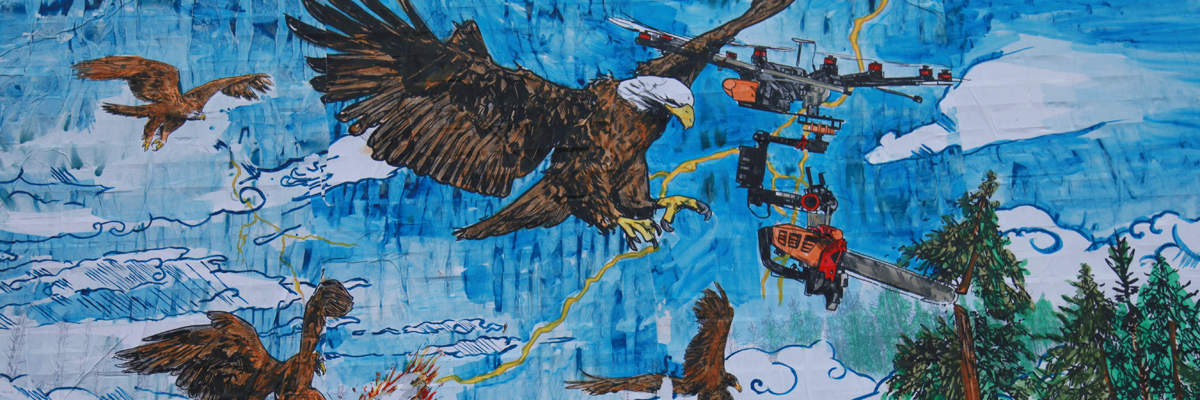
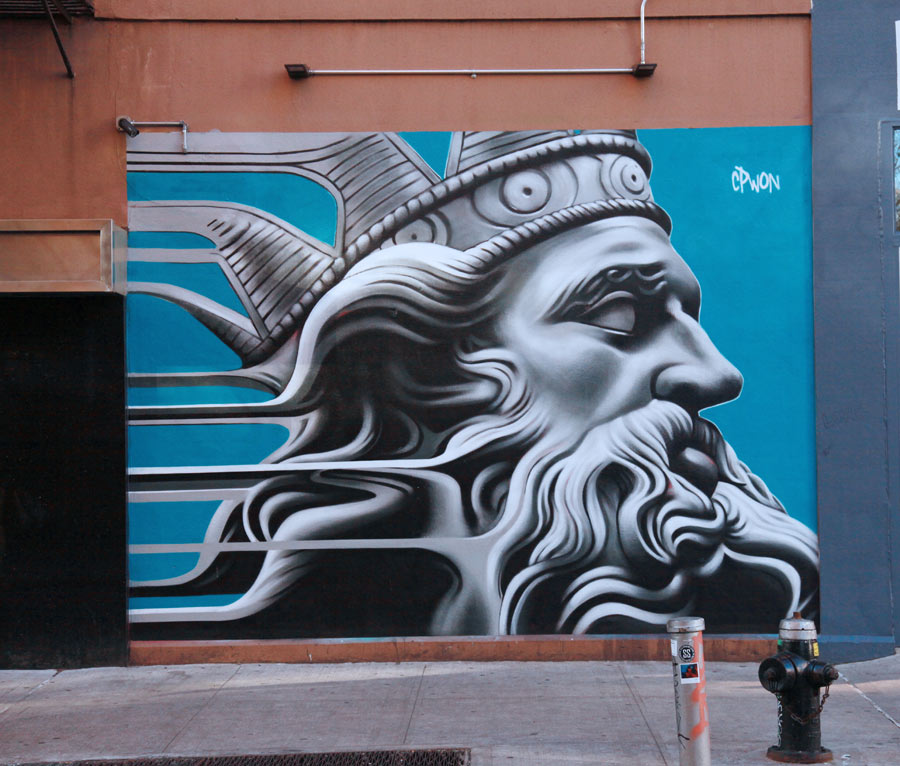
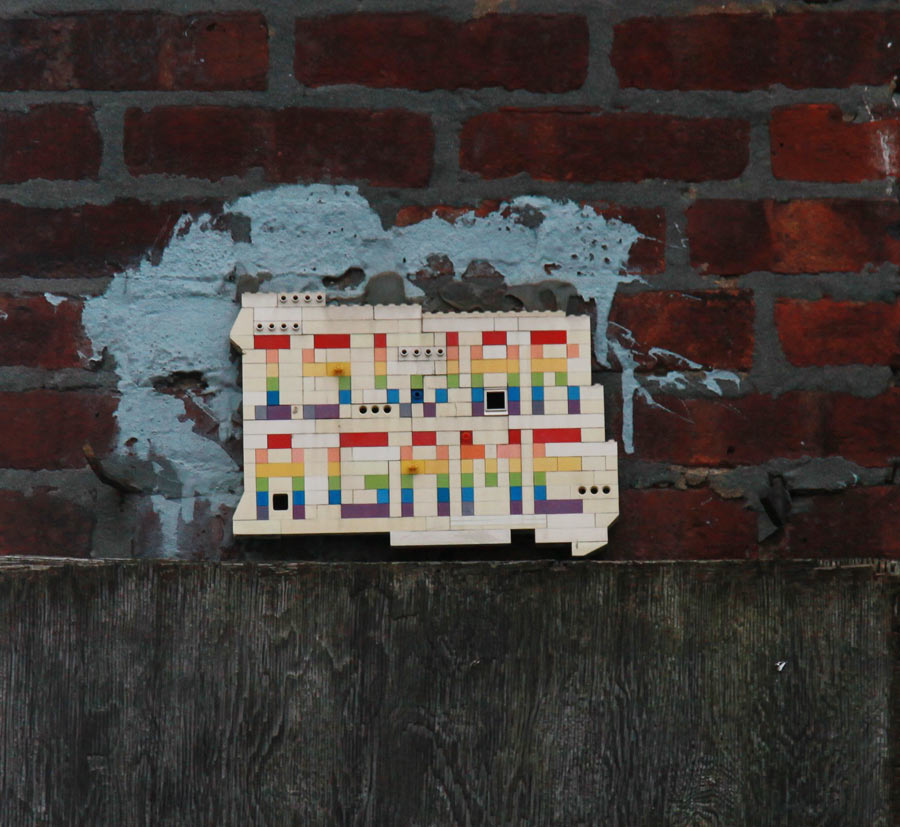
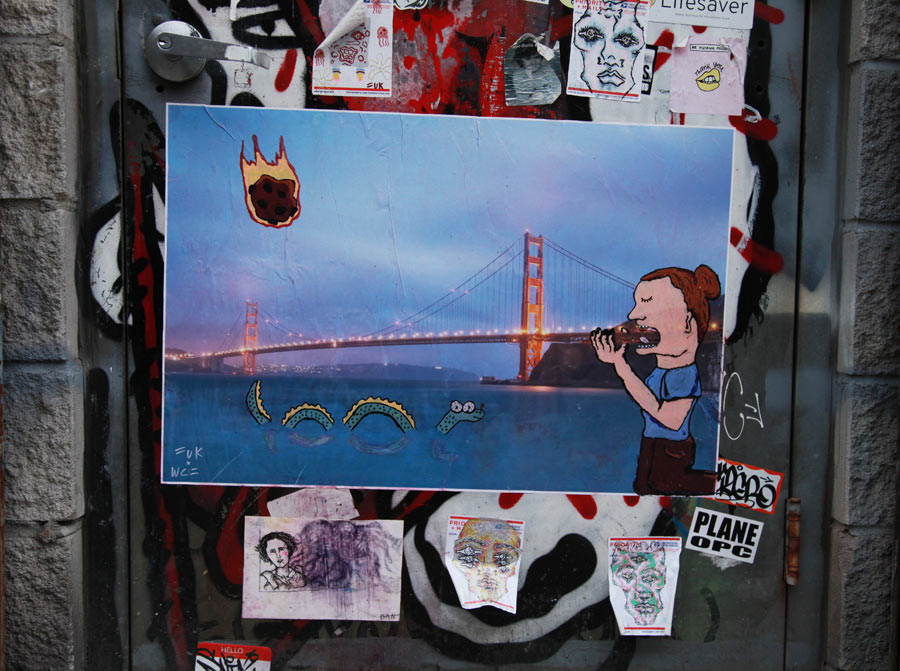
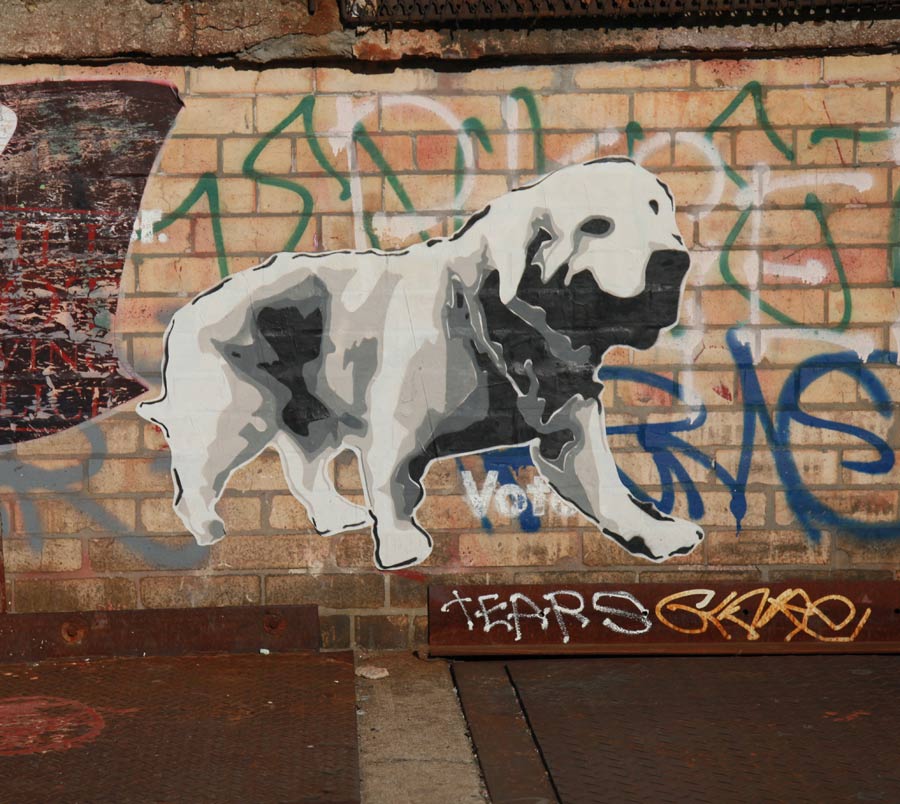
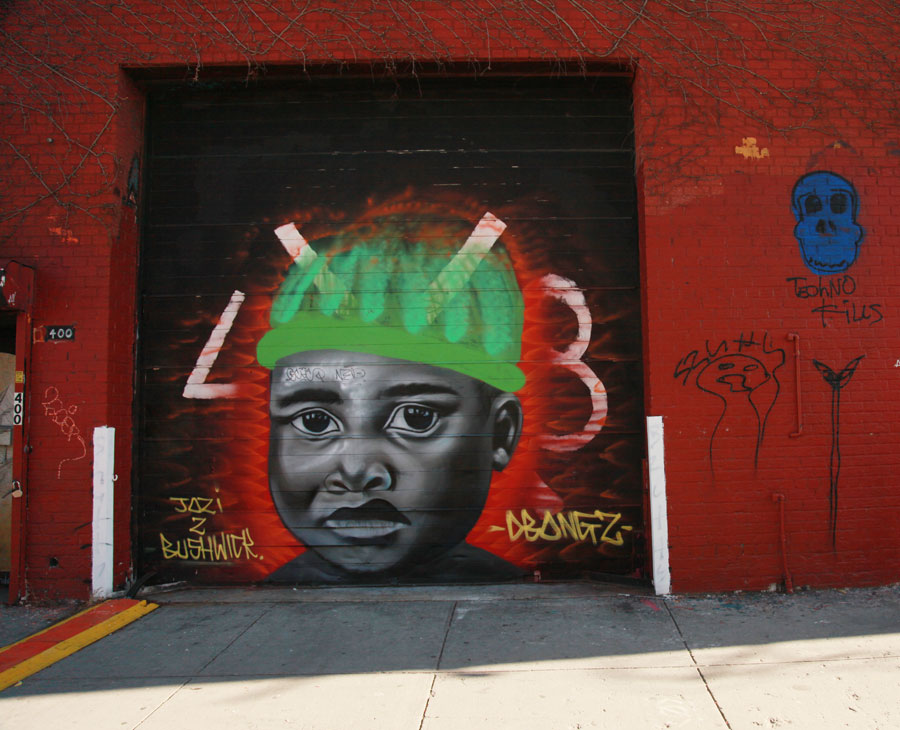
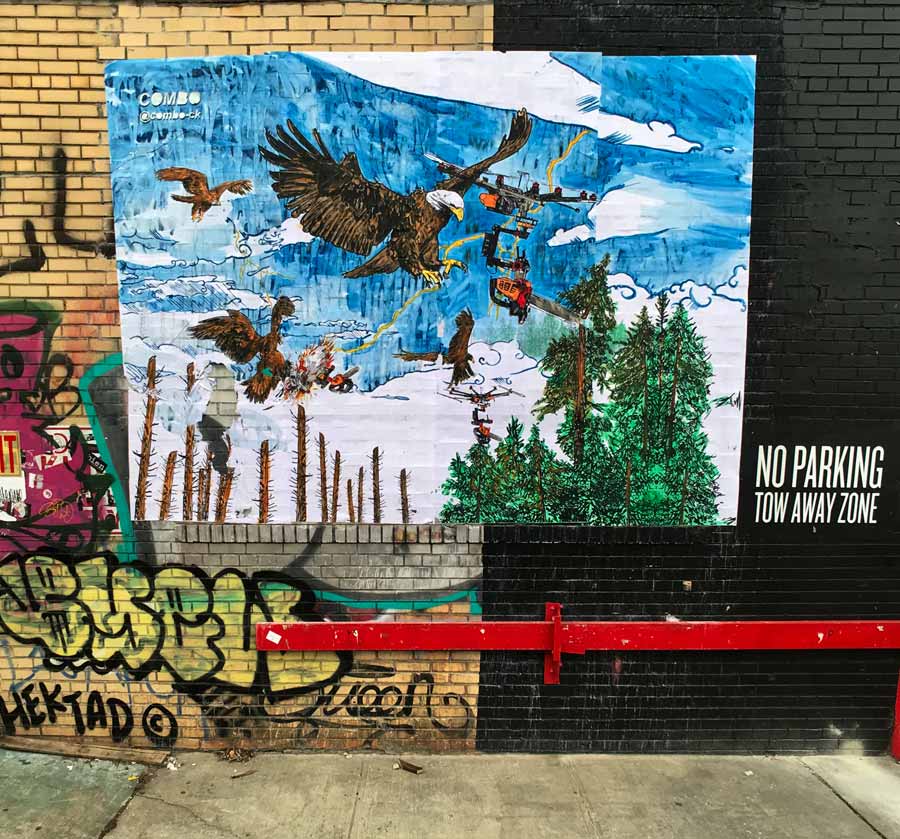
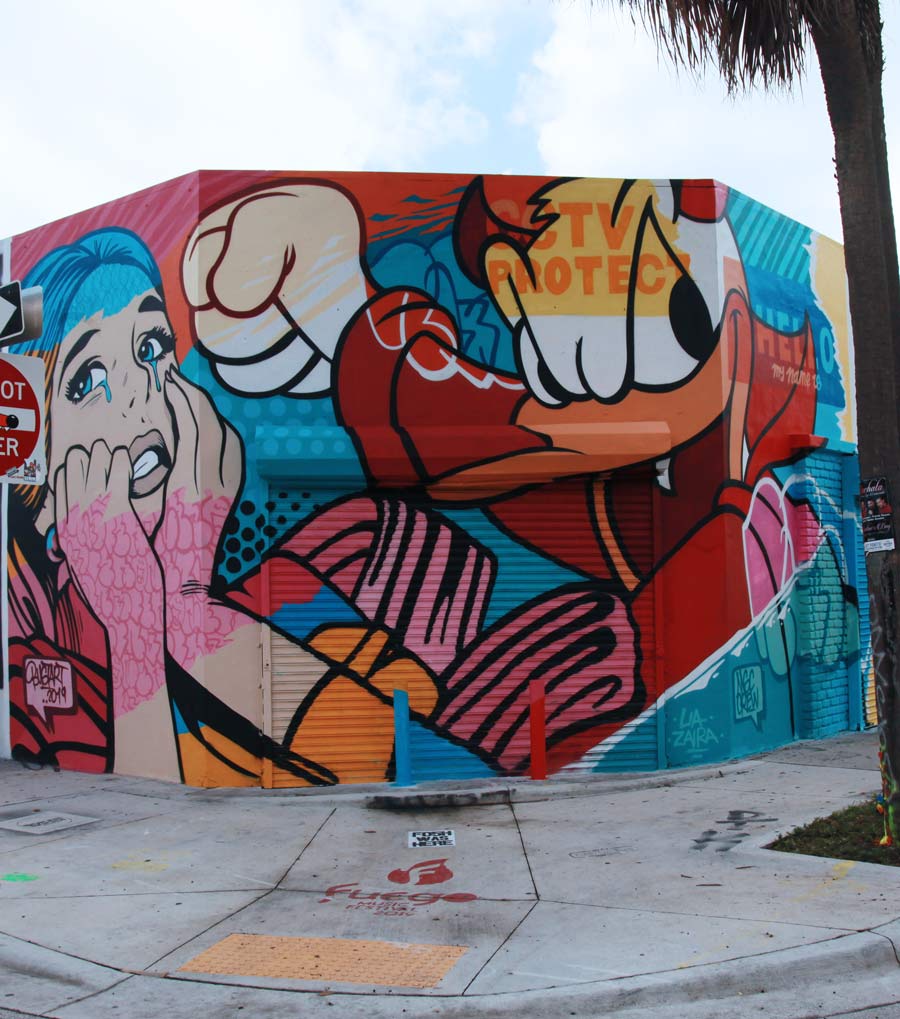
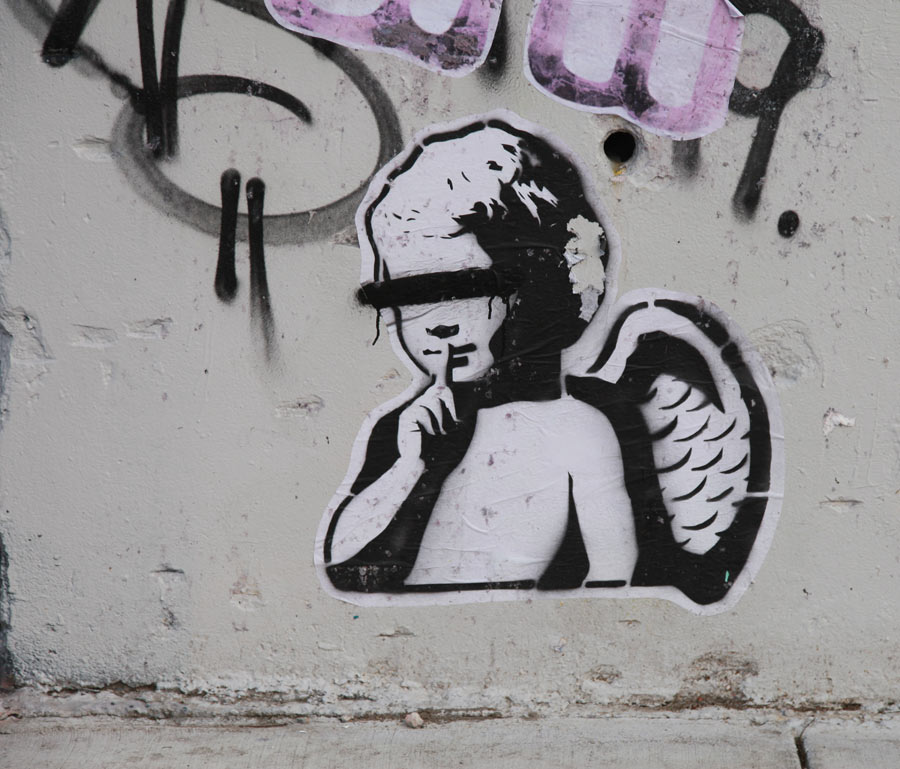
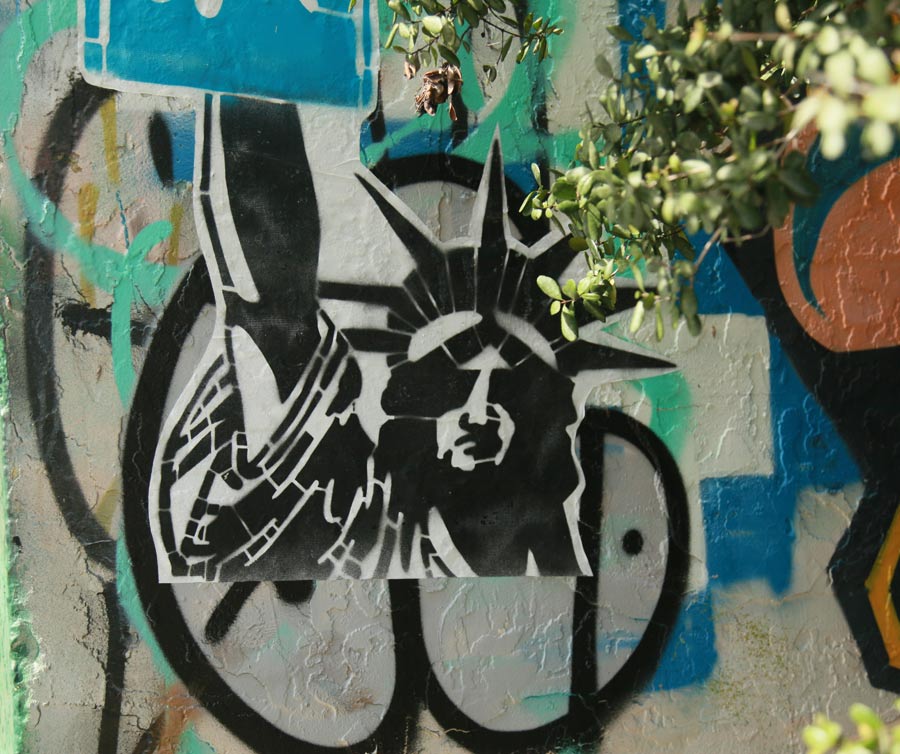
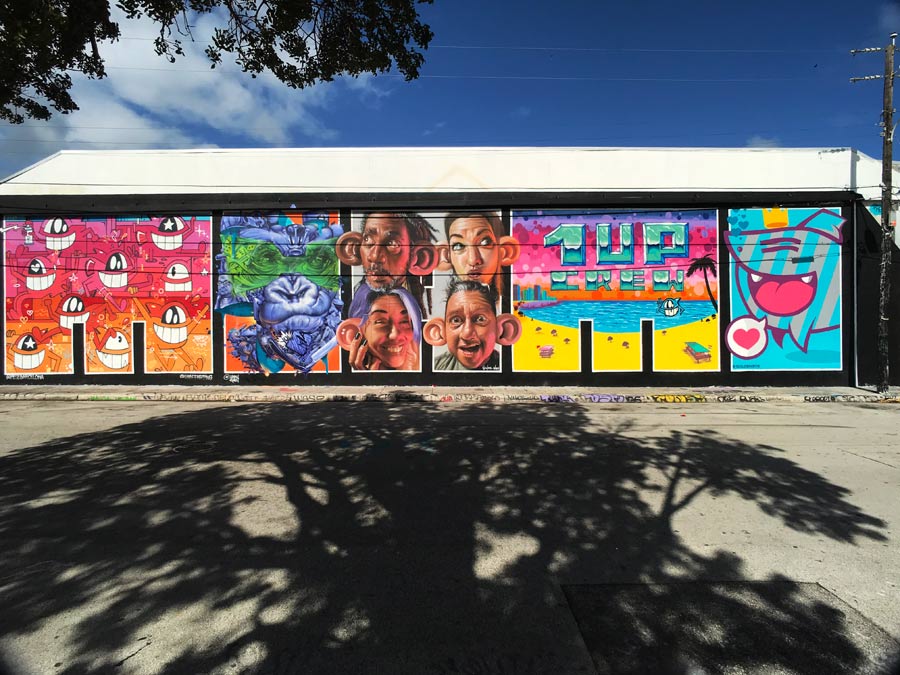
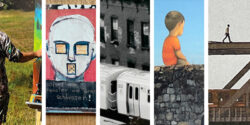
We’re up to our necks in deep frosty wind-whipping winter, and yet the Street Art right now is verbose, detailed, bright eyed, distinct, political, critical, stylish, dense, richly colorful.
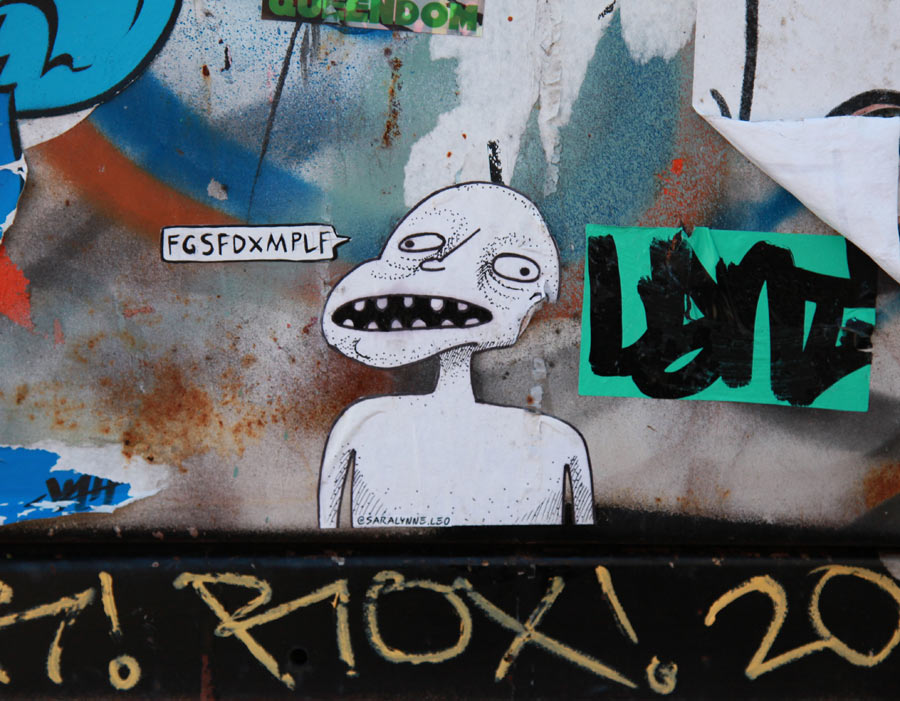
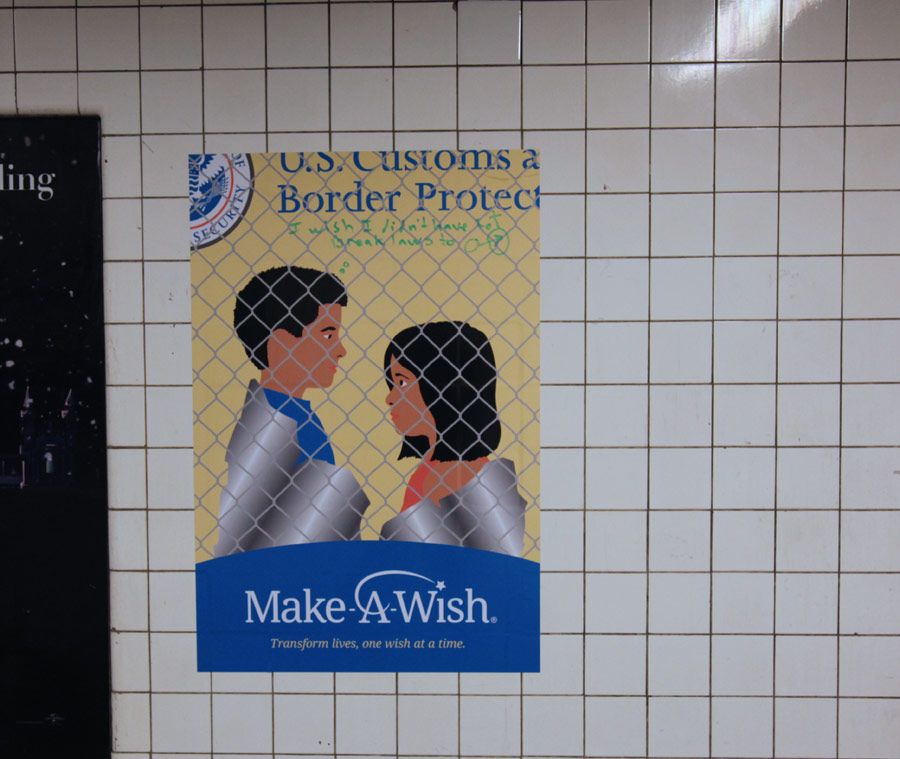
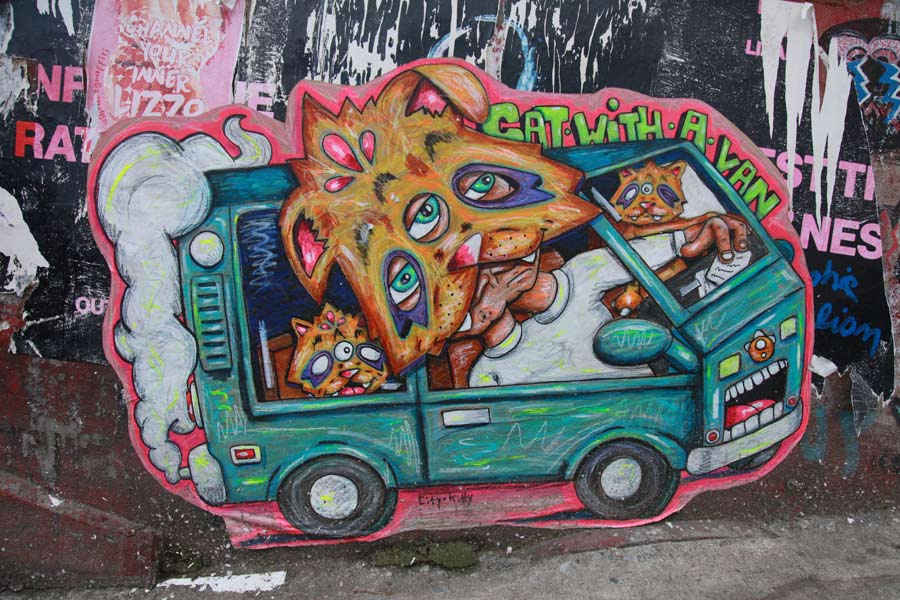
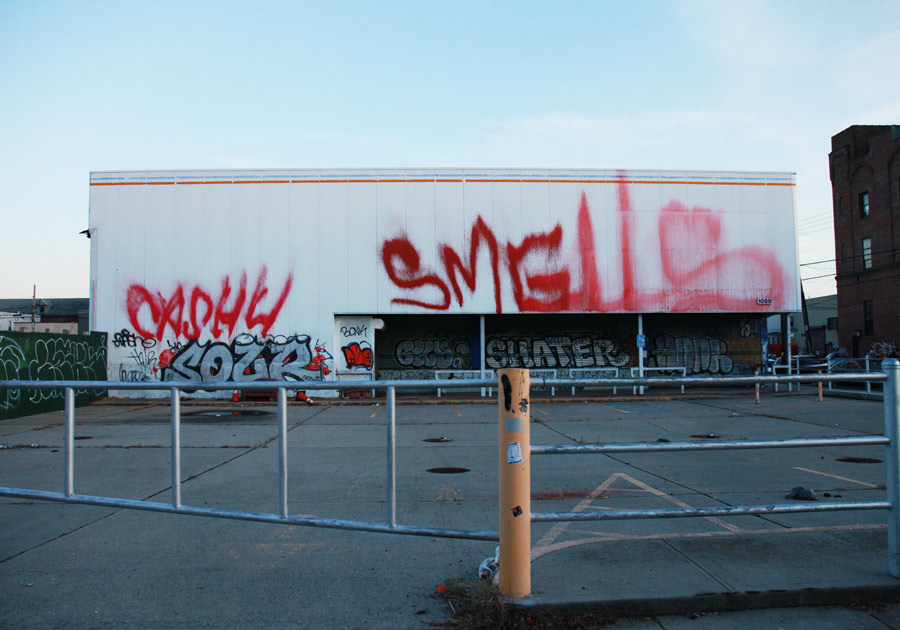
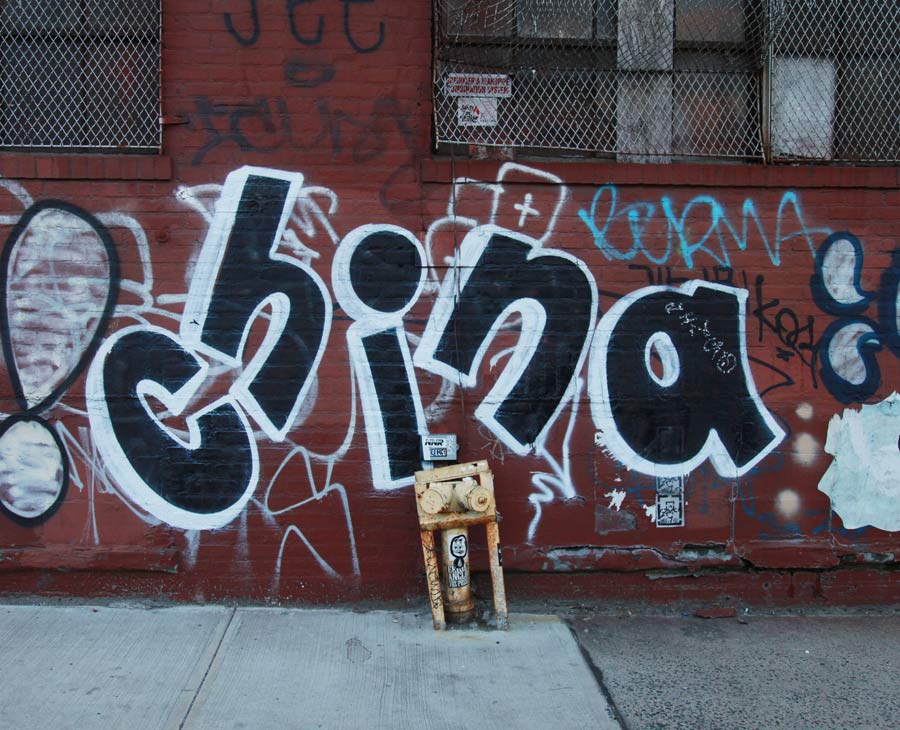
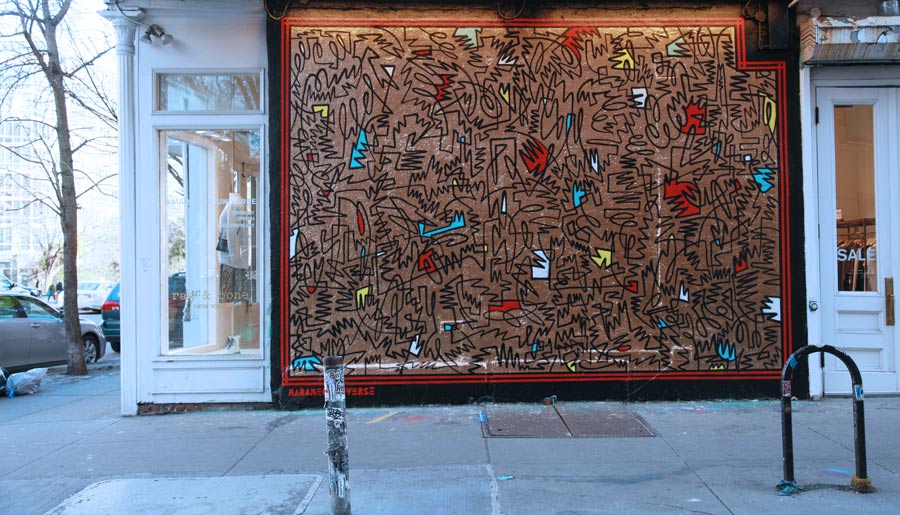
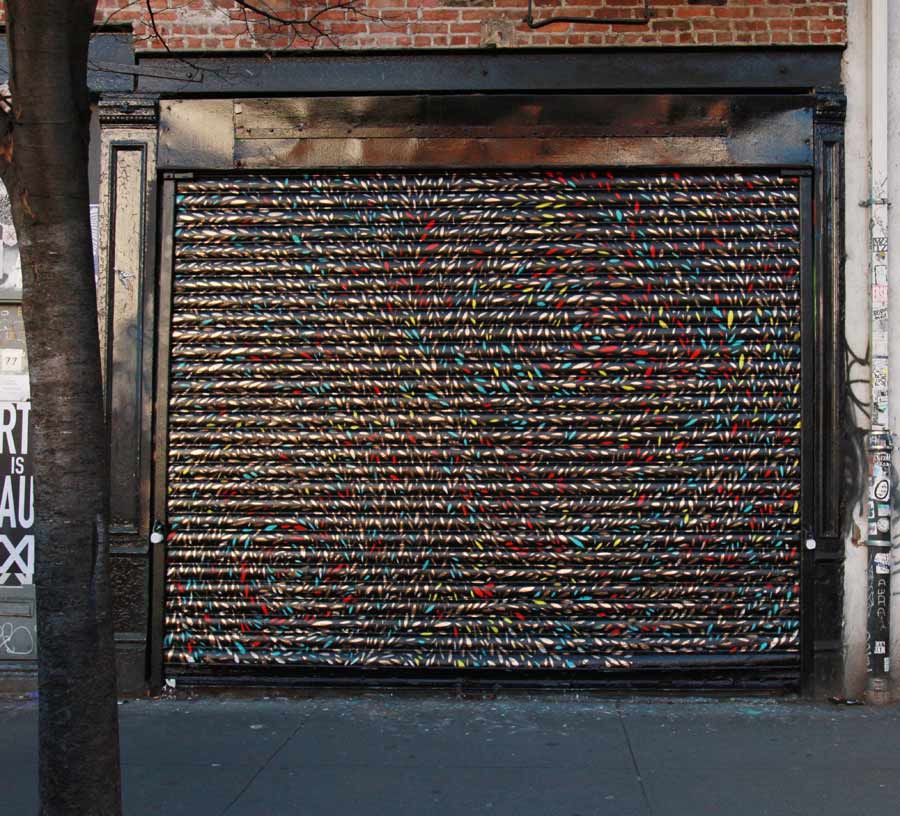
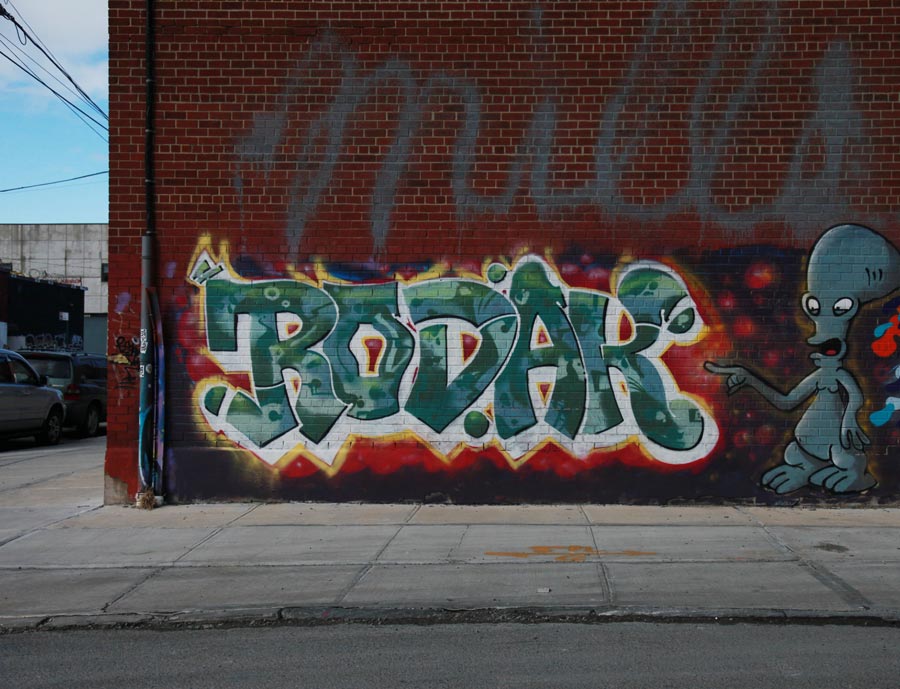
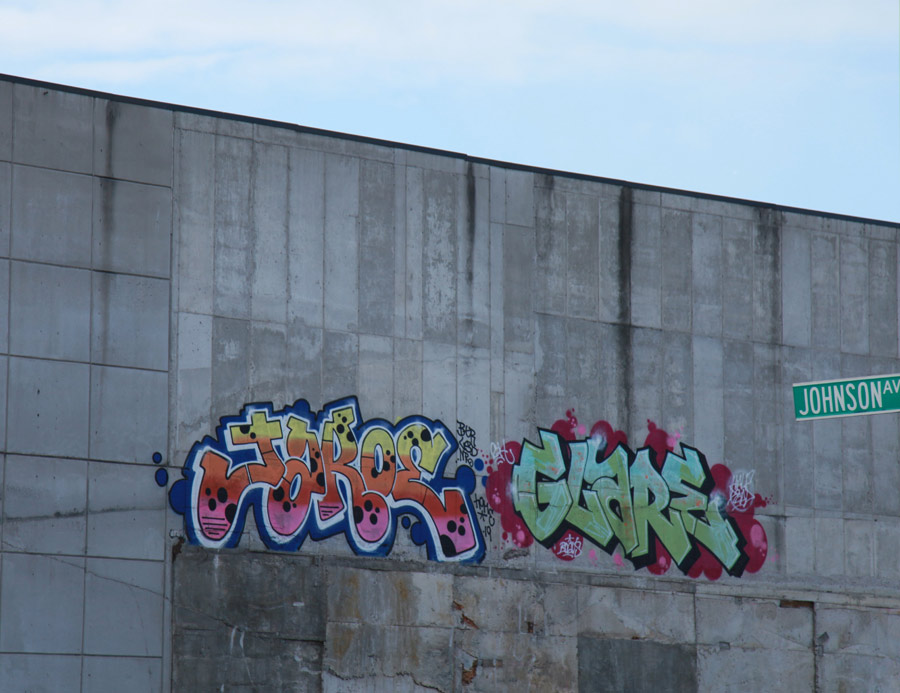
Here’s our weekly interview with the street, this week from Miami, and this time featuring Armyan, Captain Eyeline, Cash4, China, City Kitty, COMBO, CP Won, Food Baby Soul, Glare, Jaroe, Jaye Moon, Jazi, Marameo Universe, Plasma Slug, Rodak, Sara Lynne Leo, Smells, UK WC, and Winston Tseng.
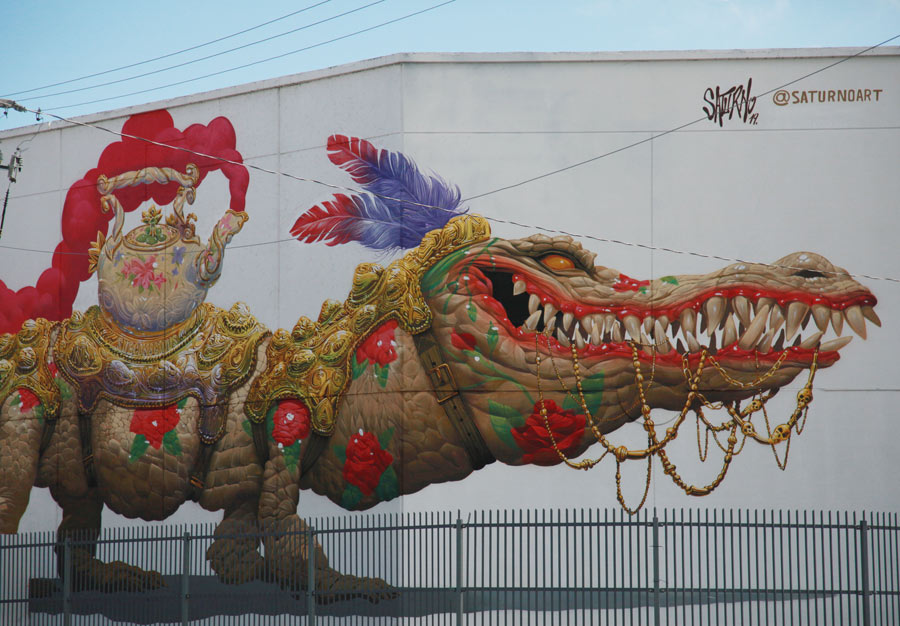
Miguel Ángel Sánchez AKA SATURNO is an artist from a small town near Barcelona in Spain. A self-taught painter and illustrator, he’s become a recognized name in the European graffiti scene since he began in 1995, biting off a bigger piece of fame with each project.
Since 2012 he’s developed his own, unmistakable style that frightens and thrills in equal measure, and he has been painting his fantastical creations on walls big and small across Europe. With an illustration style that boasts ultra-real monsters and characters of exaggerated proportions and serious high gloss, he’s led and collaborated on many commercial projects and brands in the last few years with fire-breathing success.
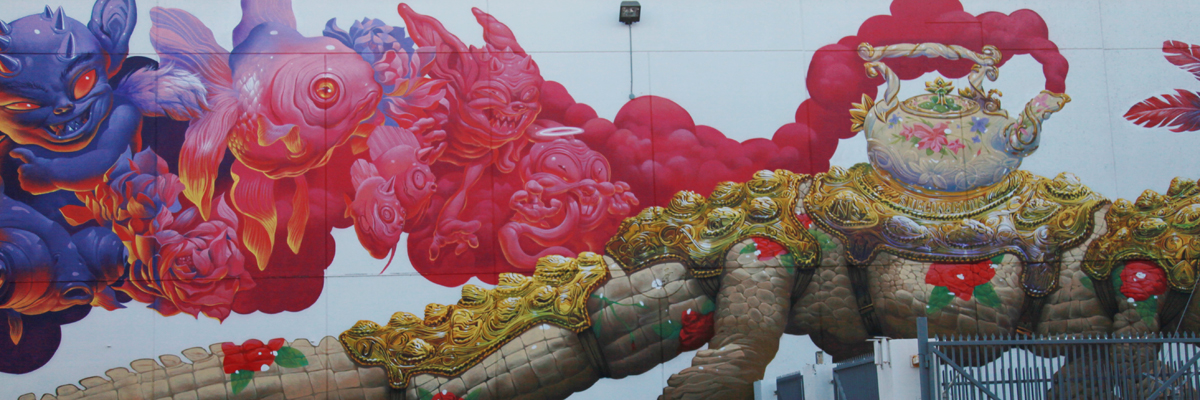
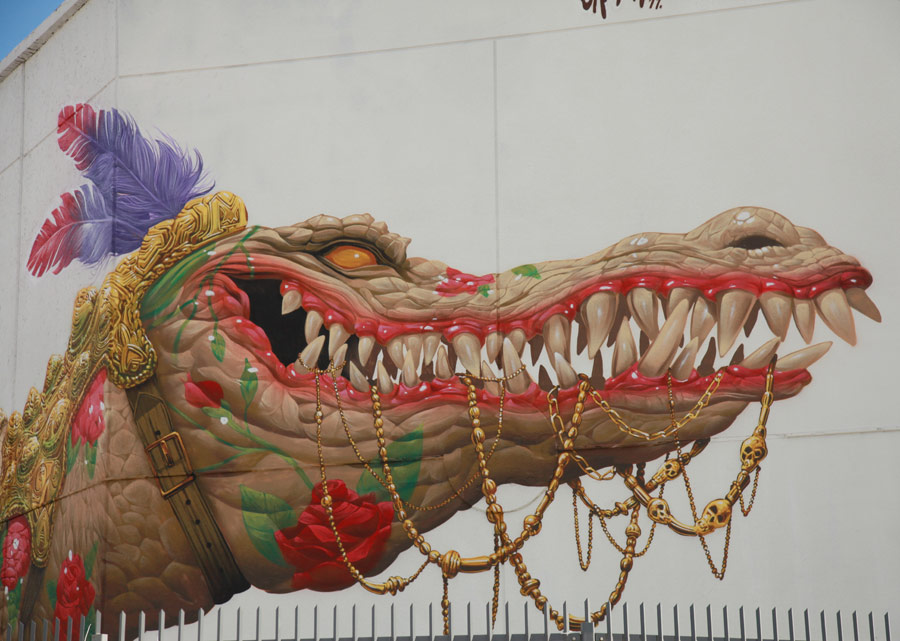
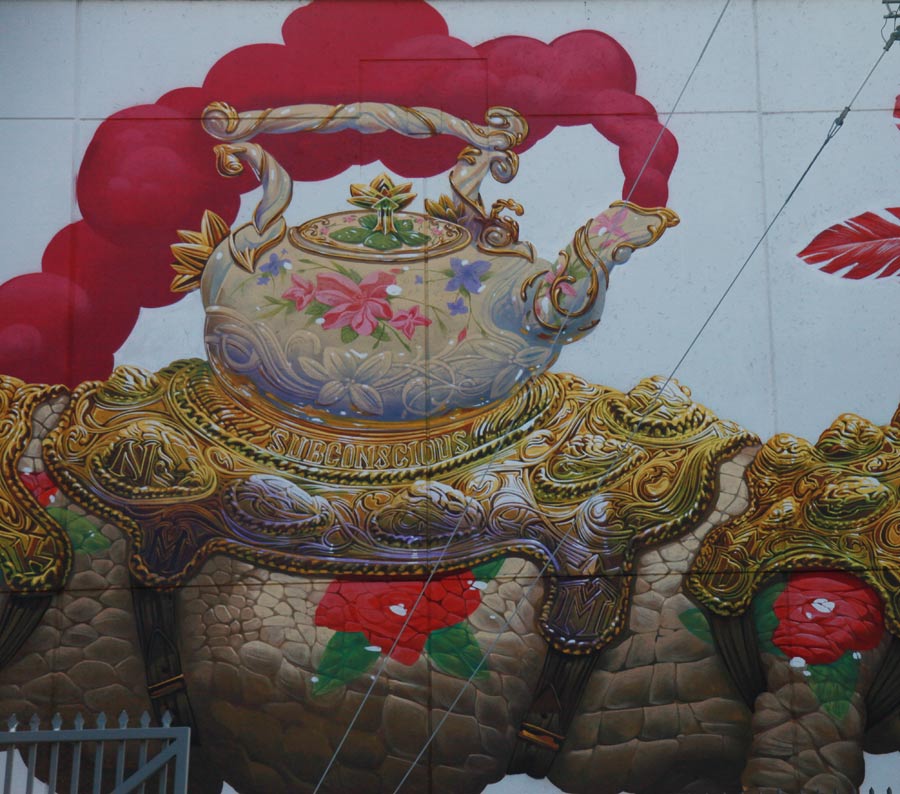
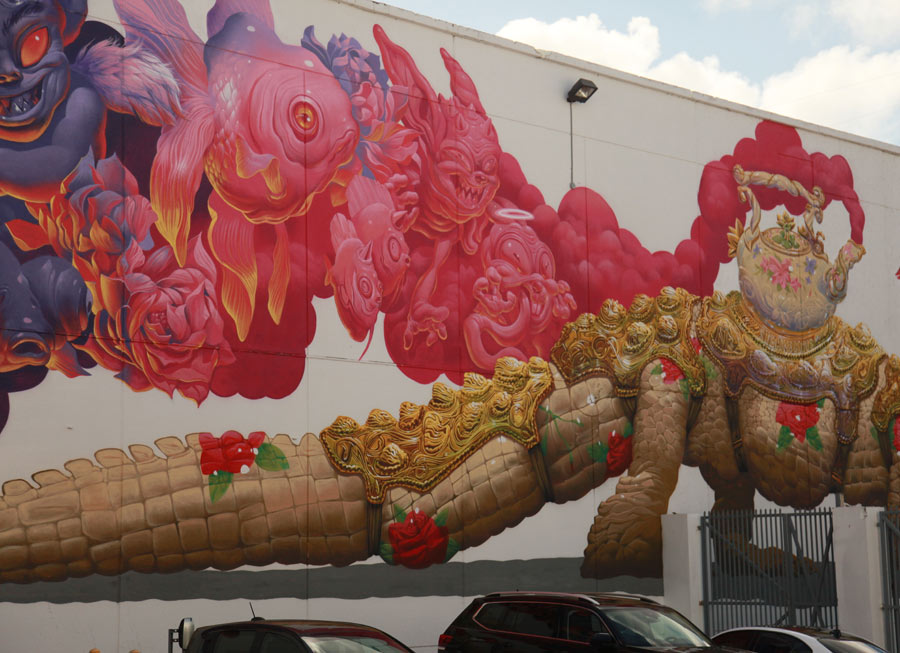
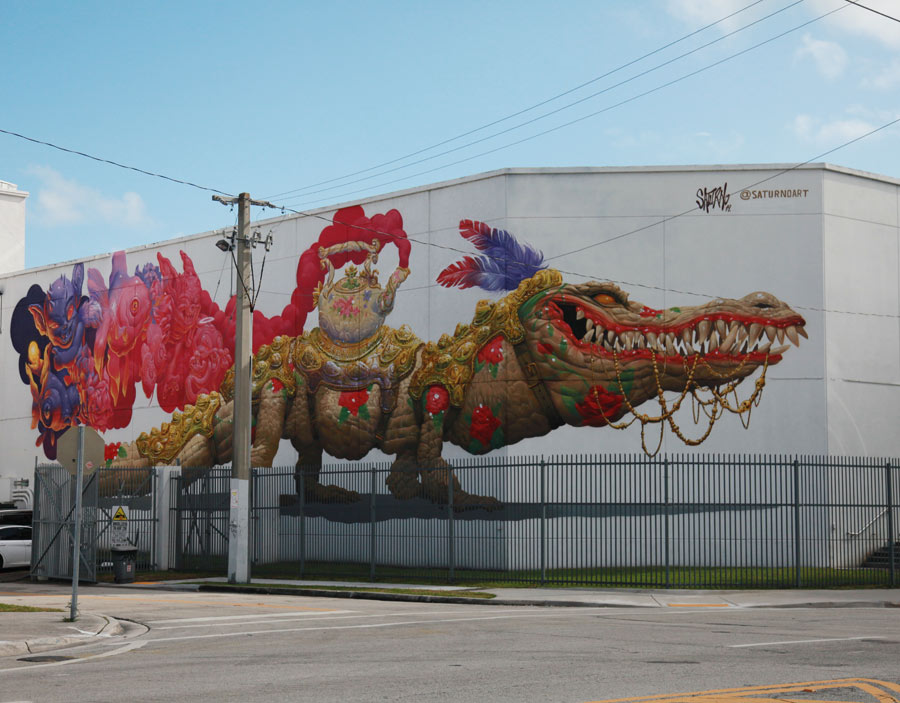
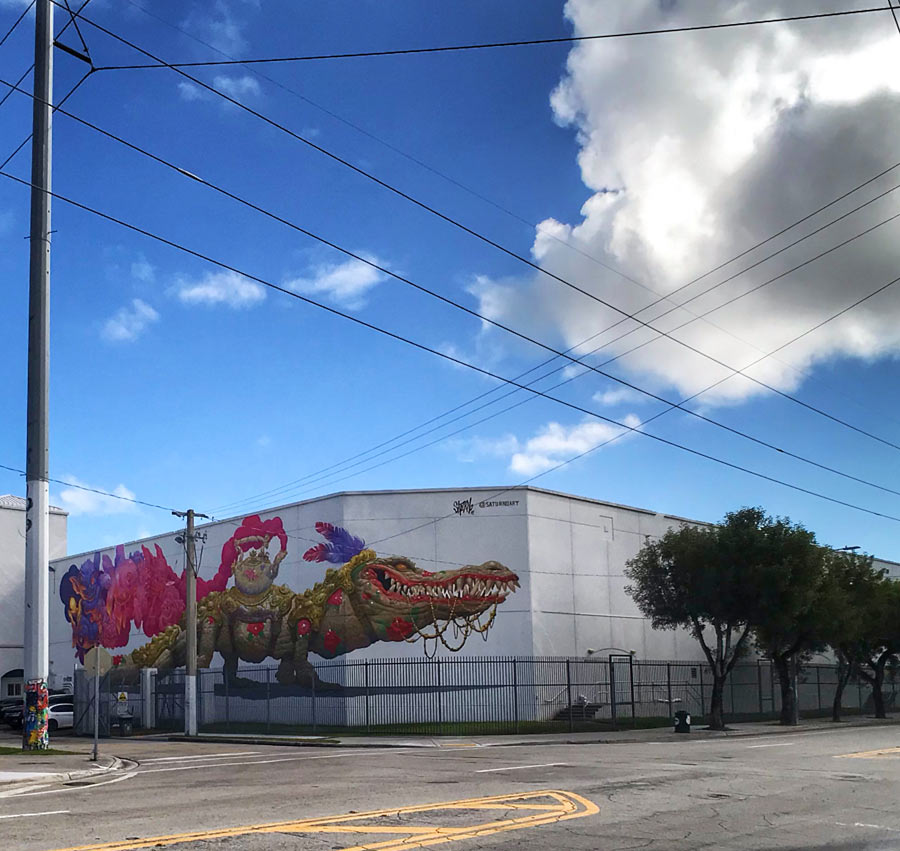
The 2019 edition of Art Basel/Wynwood this past December allowed him to showcase his imagination and skills in quite remarkable ways on a couple of murals in Wynwood, Miami. One, in particular, is this astoundingly baroque beast dressed in the finest regal threads, dripping jewels, and saliva with bulging eyes and a voracious appetite for consumption.
Fans say Saturno examines the subconscious and darker aspects of people and behaviors with his work – which may lead one to conclude that this epic character is a thinly veiled metaphor for opportunist alligators whom you may meet here who are trolling flamboyantly through this rapidly gentrifying neighborhood, regaling themselves with so many shiny baubles. Certainly this reptilian socialite is audacious and confidently showy, and Saturno has hit gold with a likeness that is both repulsive and compelling.
A
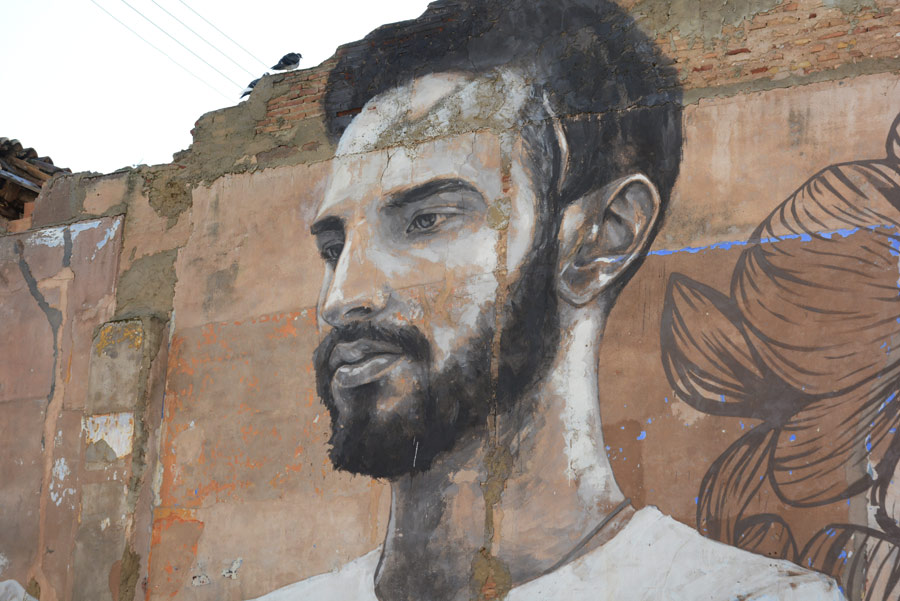
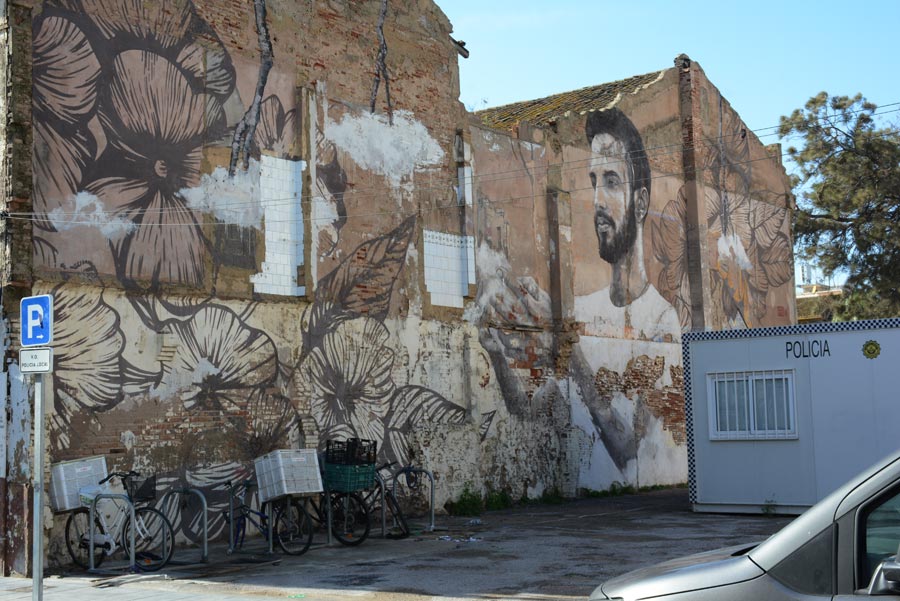
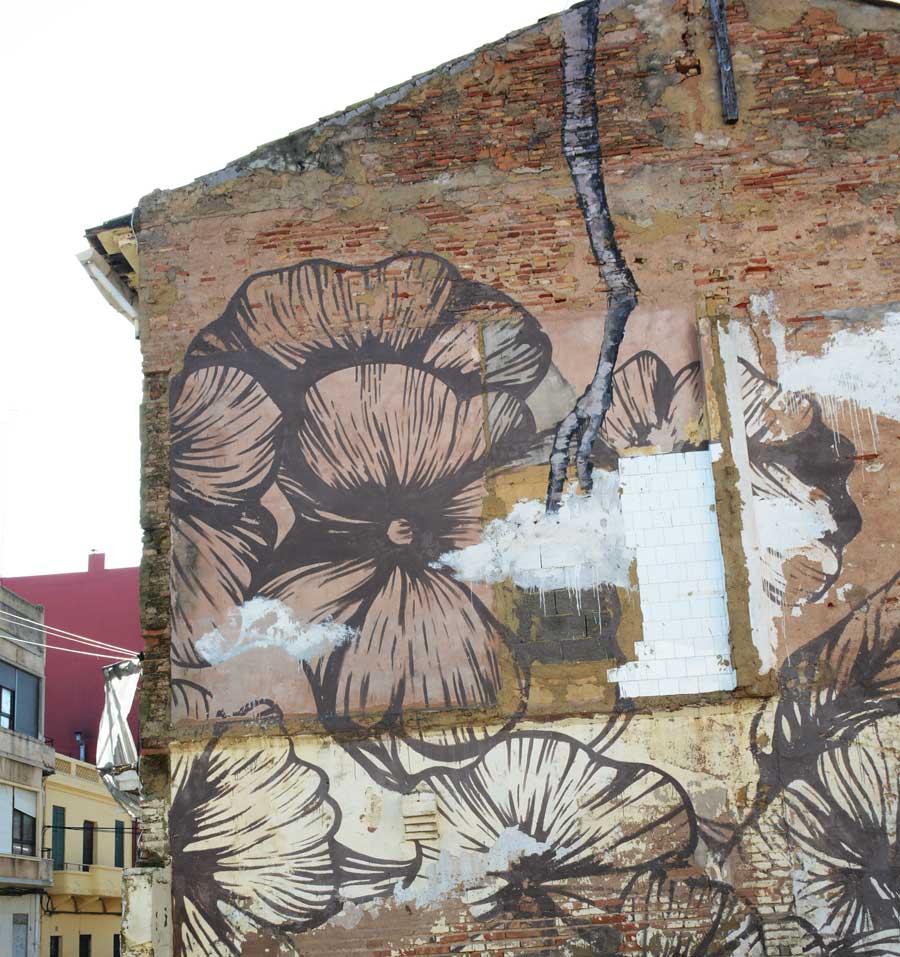
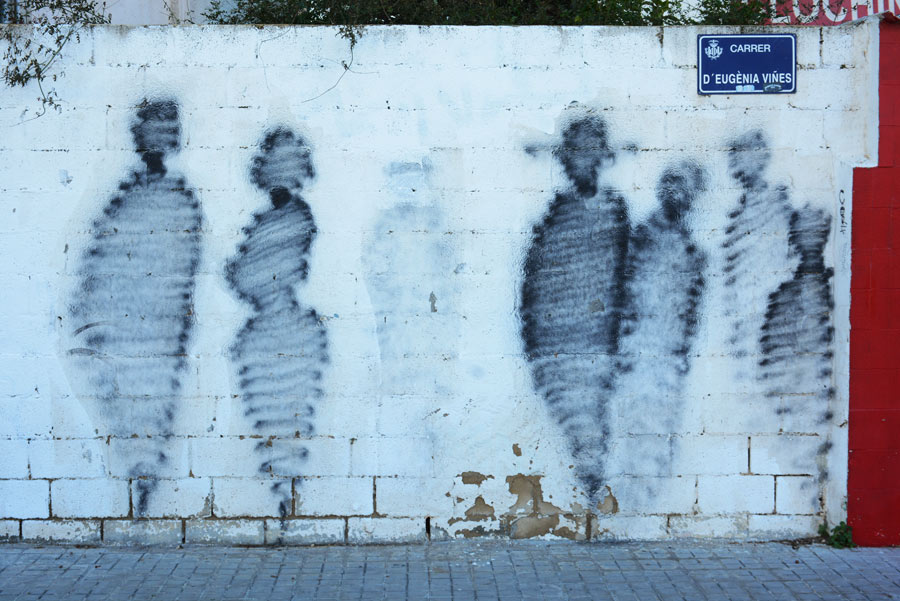
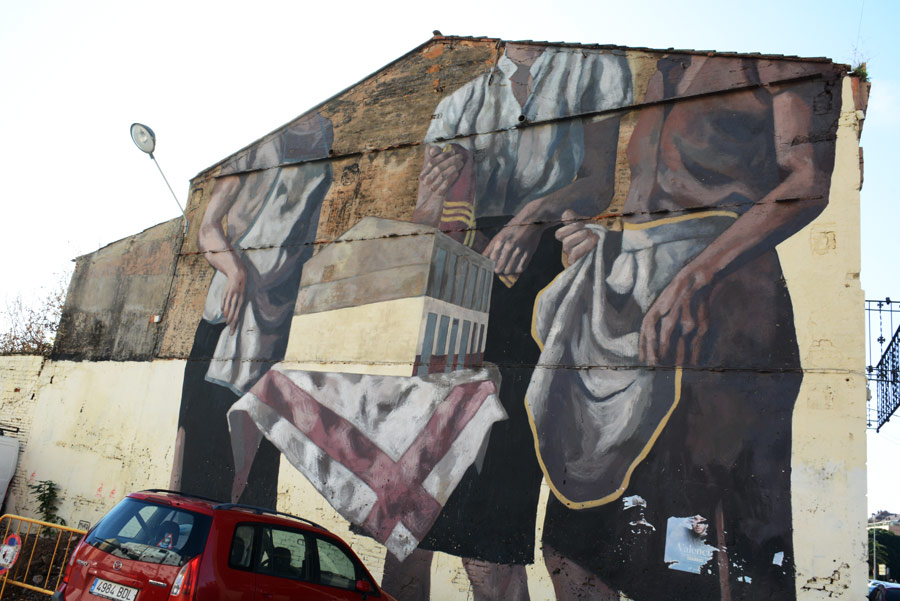
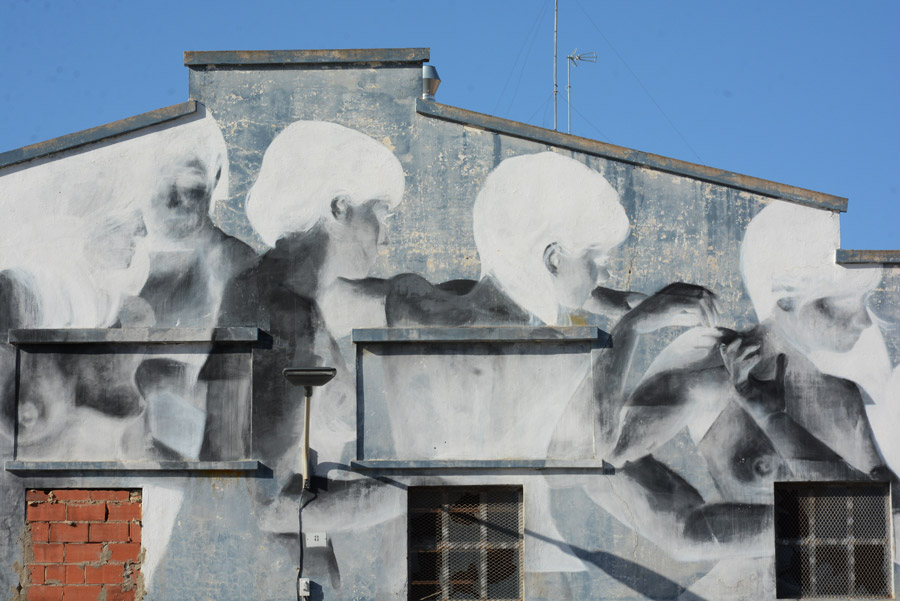
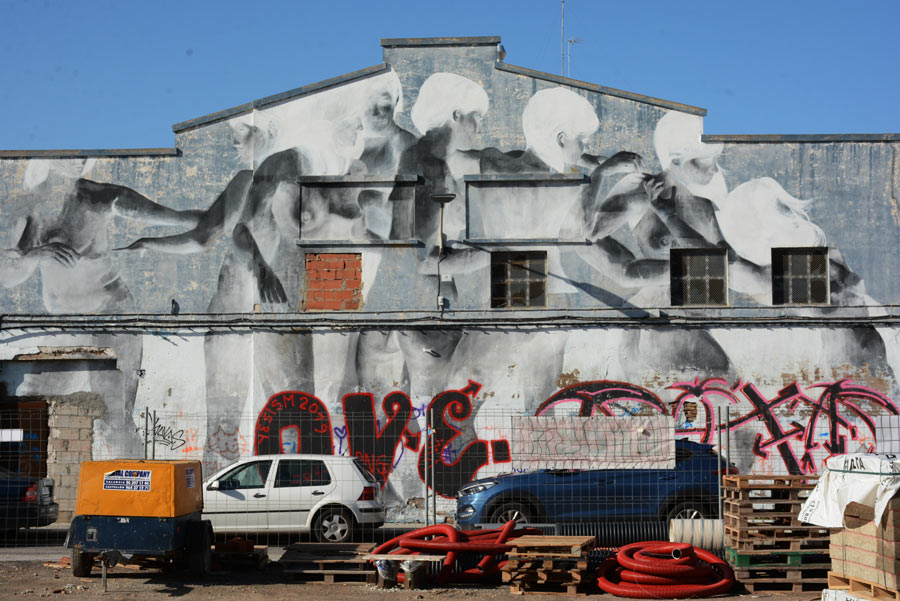
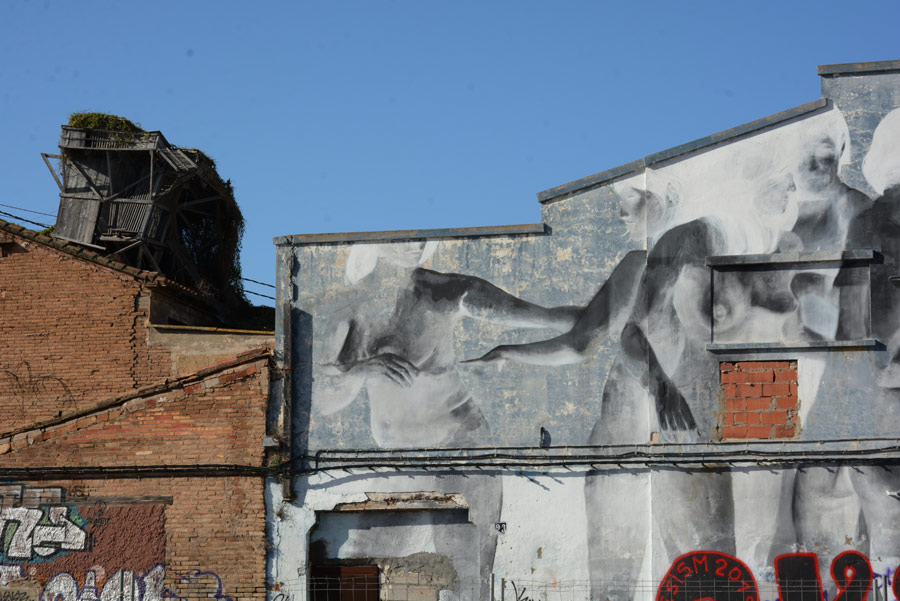
man of leisure these days, BSA contributor Lluis Olive-Bulbena took a three day
trip to Valencia, Spain to participate in the festivities of El dia del
Cabanyal.
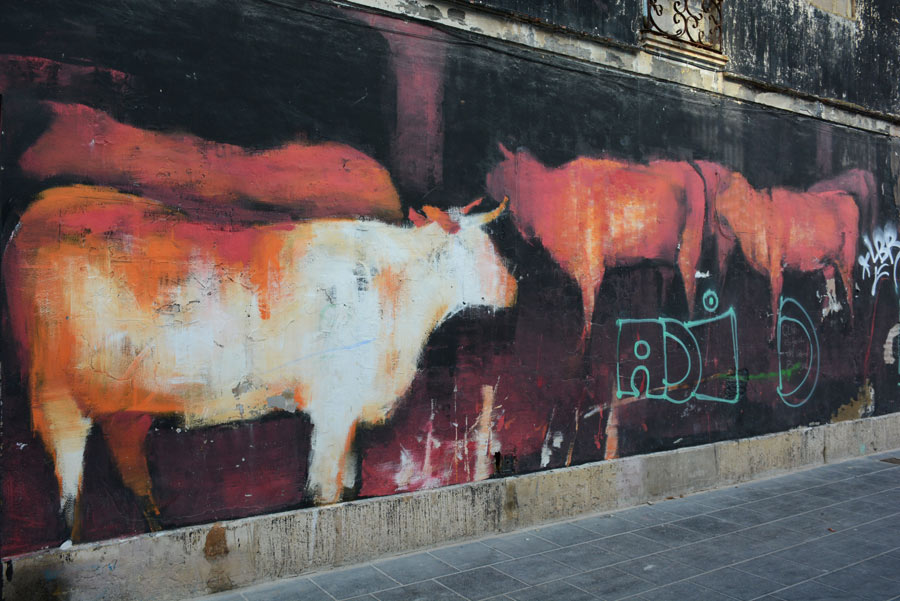
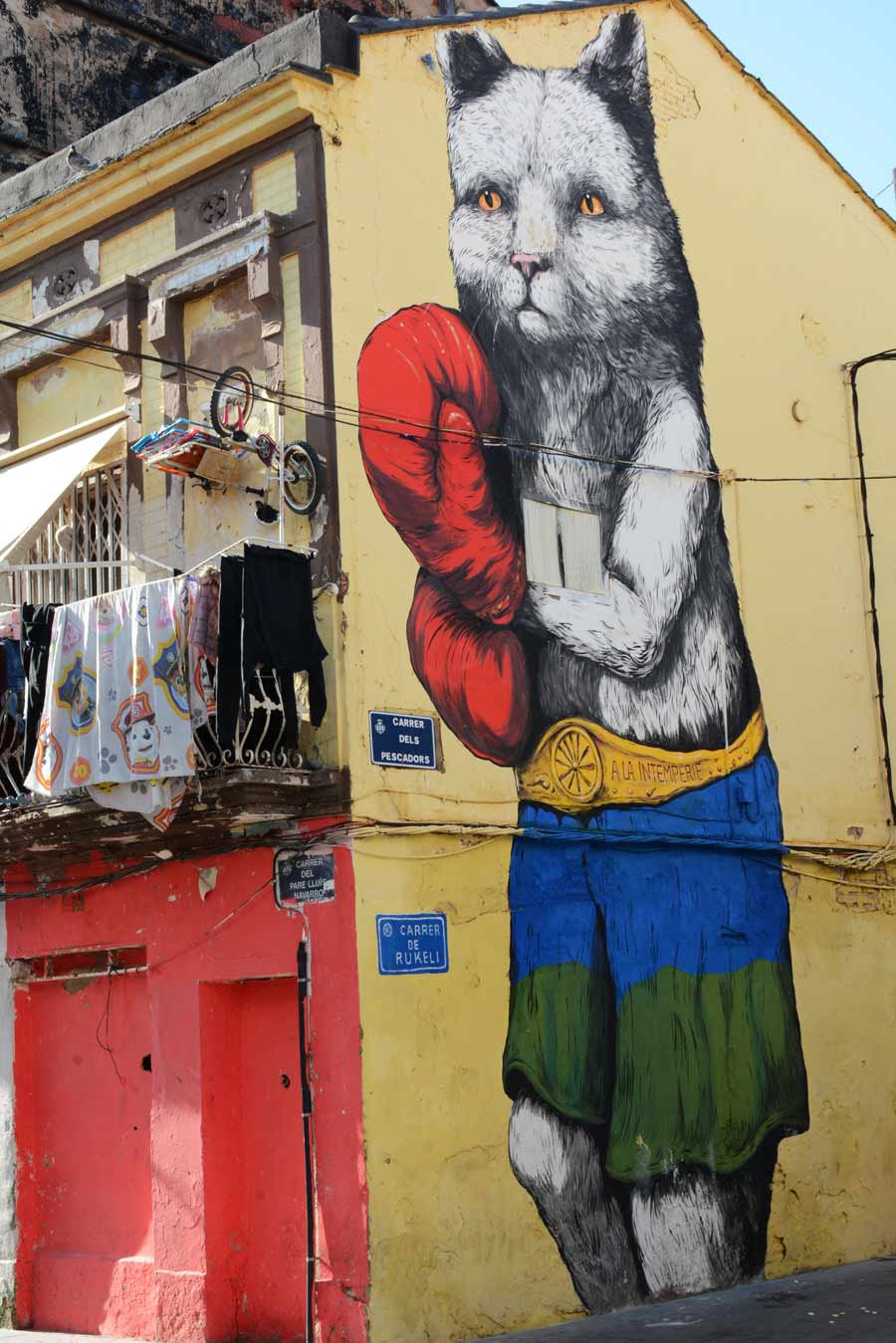
El Cabanyal is a 333 acre (134 hectares) neighborhood in the old part of the city by the Mediterranean Sea, backed by a series of sandy beaches and a palm treed promenade. Its name is derived by the complex of barracks along the shore where the fishermen used to live when the town was purely a fishing village.
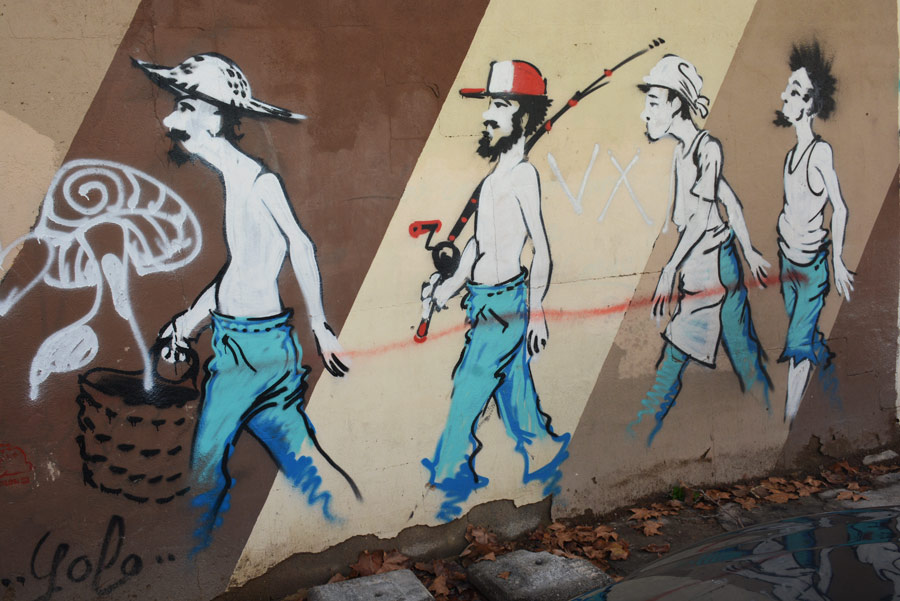
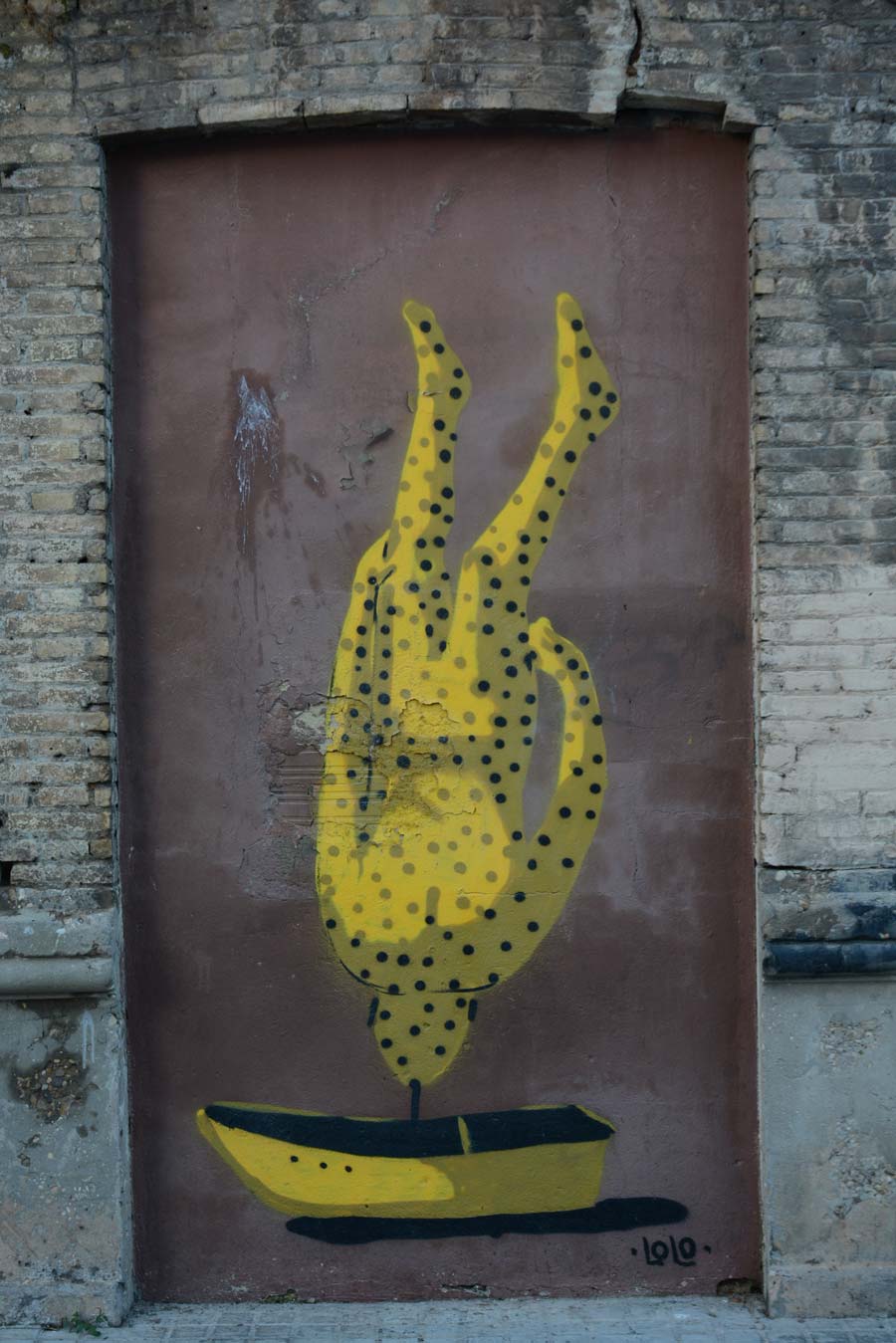
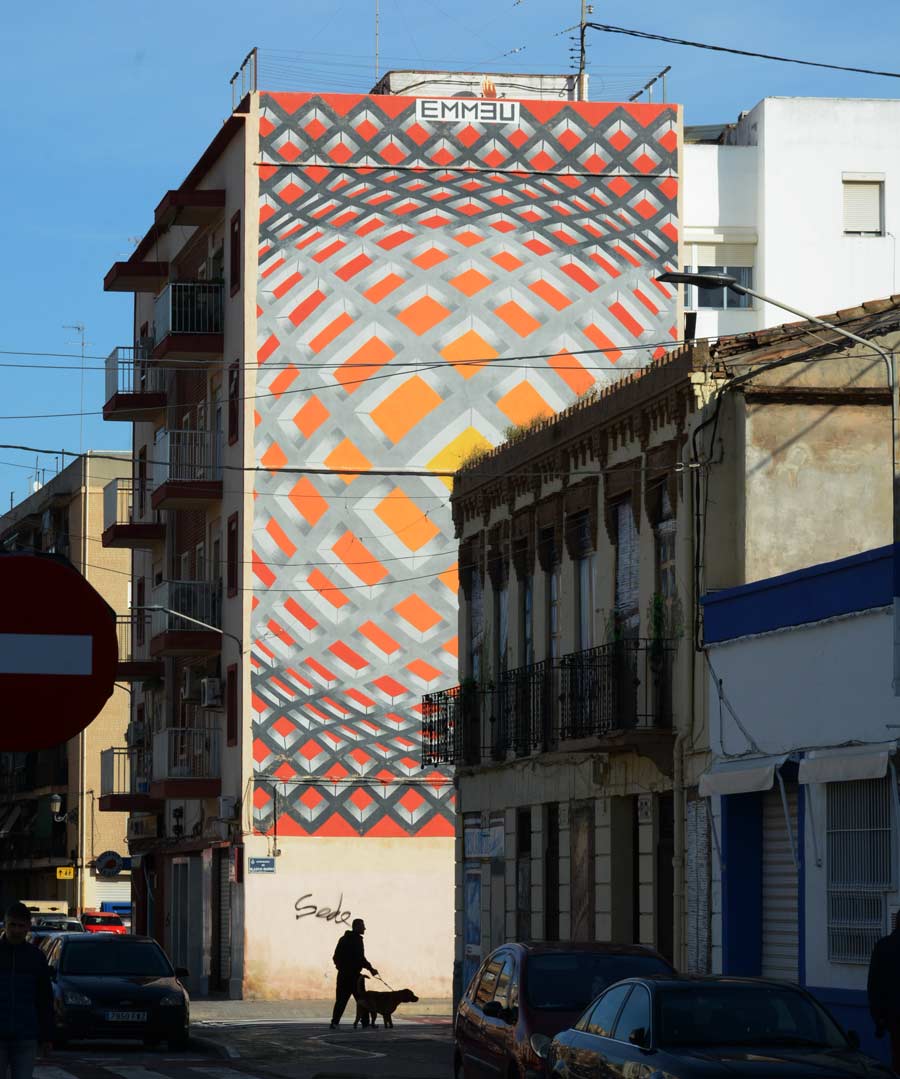
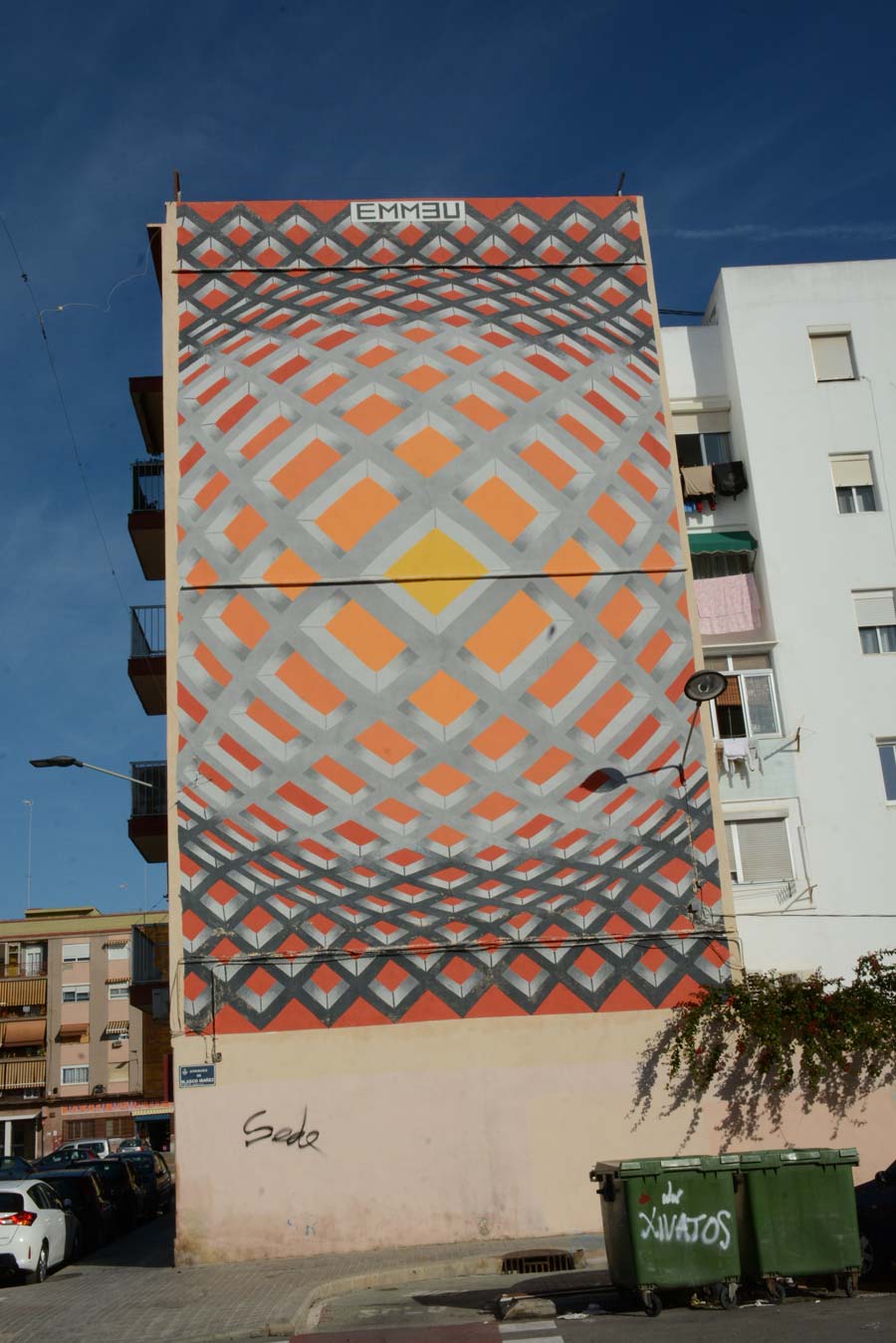
With the passage of time and change of the Spanish economy, El Cabanyal caught the eye of the leisure class who fill the streets with souvenir shops, cafes, and late-night clubs. The fishermen went someplace else. Not surprisingly perhaps, this tourist attraction is also a hot spot for Street Art – along with the greater city of Valencia for that matter.
We are told that many Street Artists have actually set-up studio here as well. Why not? The quality of life is nice, and the cost of living is much lower than in Barcelona and Madrid.
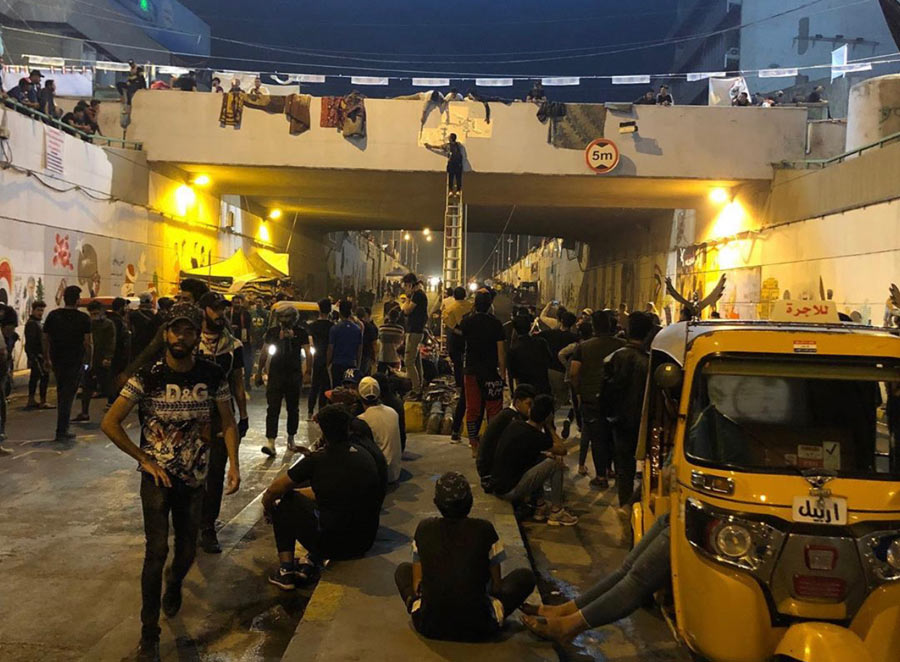
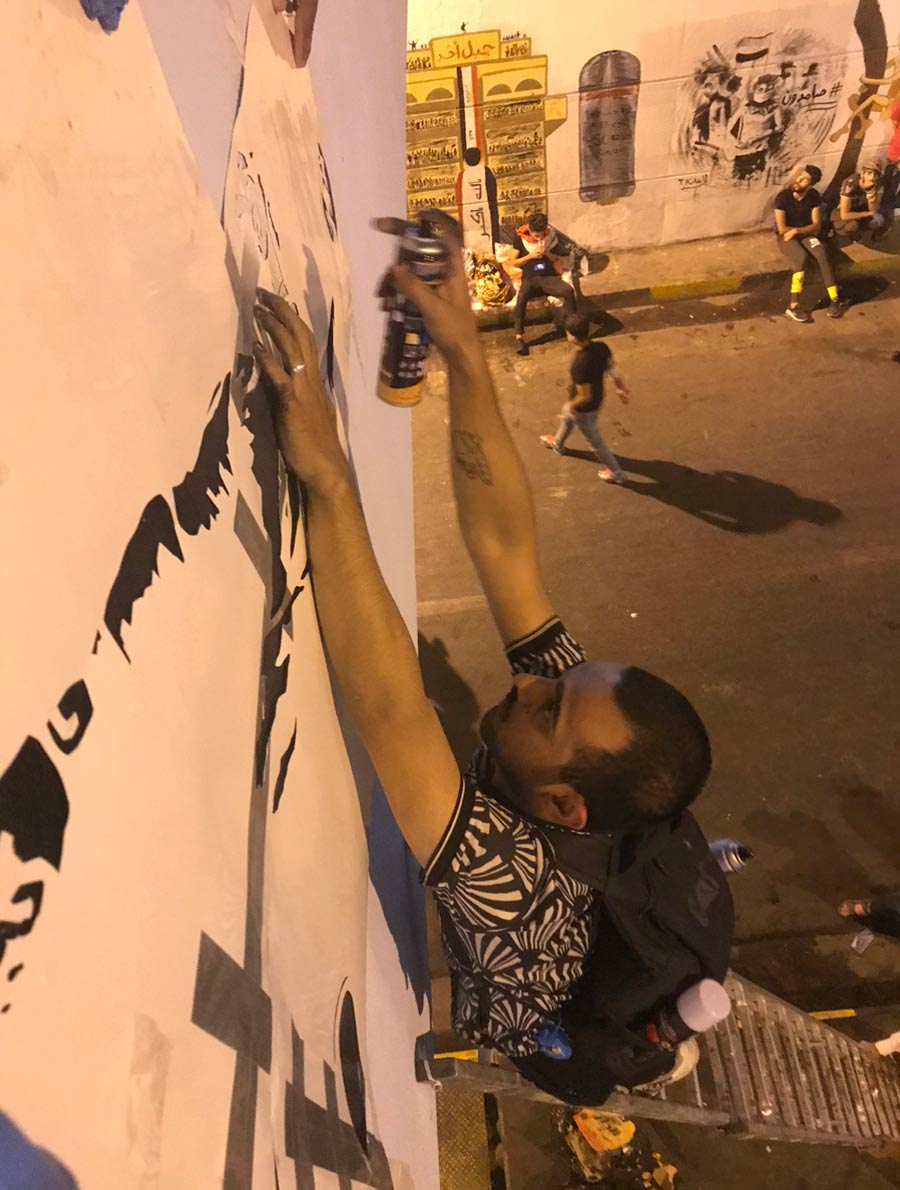
Amidst the fusillade of news from the Middle East these days, you may have missed that the young people of Baghdad in Iraq have been demonstrating in the streets against the government. They are fighting for pretty much the same thing that all people in every society eventually fight for – autonomy, fairness, freedom, liberty. Not surprisingly, Street Artists are helping give voice to the aspirations of the people, and possibly inspiration to them as well, with walls to the underpass into Tahrir Square serving as an open-air gallery of murals and slogans
Sajjad Abbas. Baghdad, Iraq. January 2020. (photo courtesy of the artist)
Artist and animator Sajjad Abbas says his artworks on the streets are addressing the desires voiced by the protestors, and giving voice to the fallen. “The main goal of the protest is the motto ‘نريد وطن ‘, which means ‘We want a homeland’,” he says. “It’s a motto that has a deep and clear meaning and indicates how open-minded the protests are. The protesters are also asking to isolate all the parties and to never elect them again.”
Sajjad Abbas. Baghdad, Iraq. January 2020. (photo courtesy of the artist)
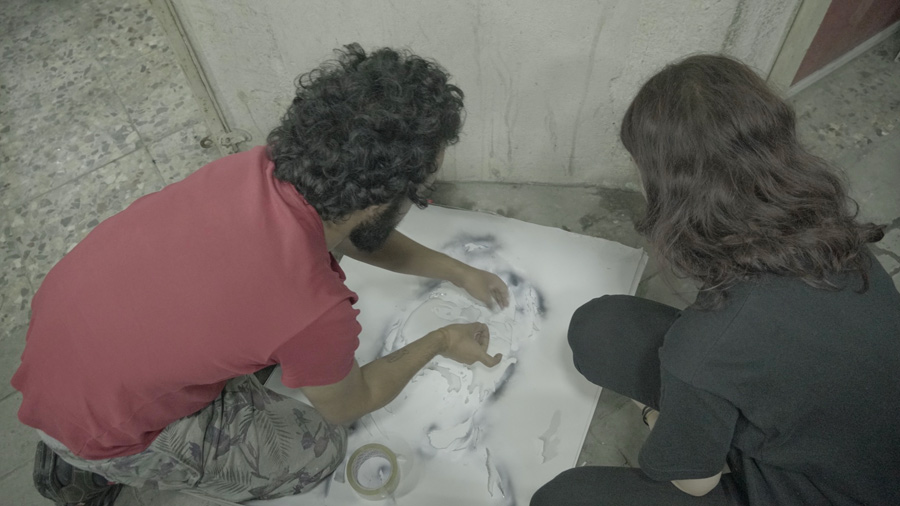
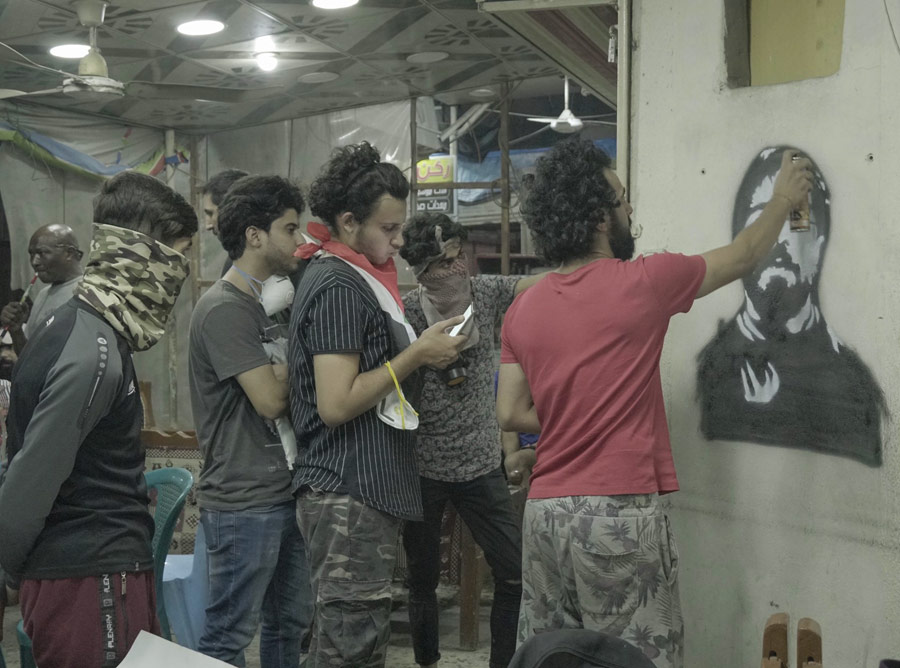
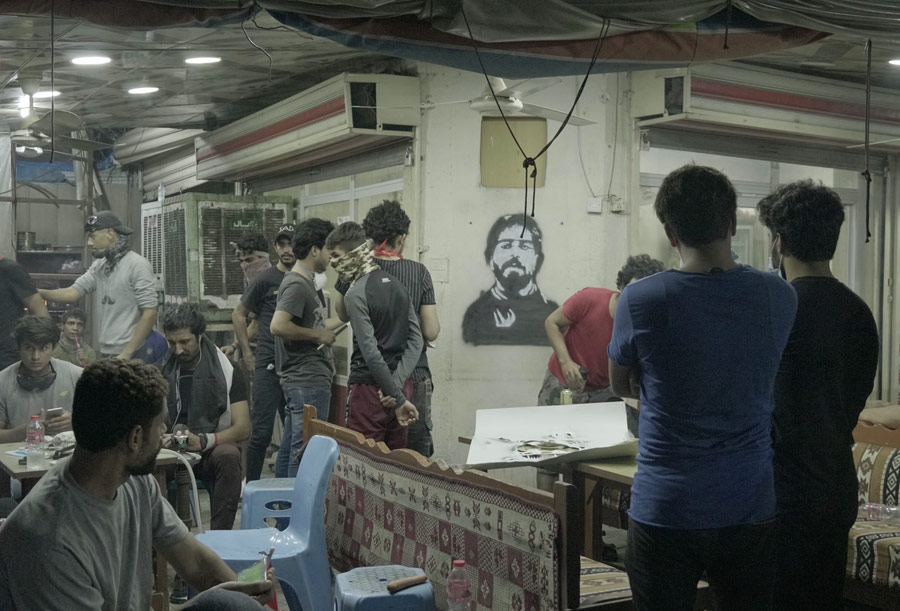
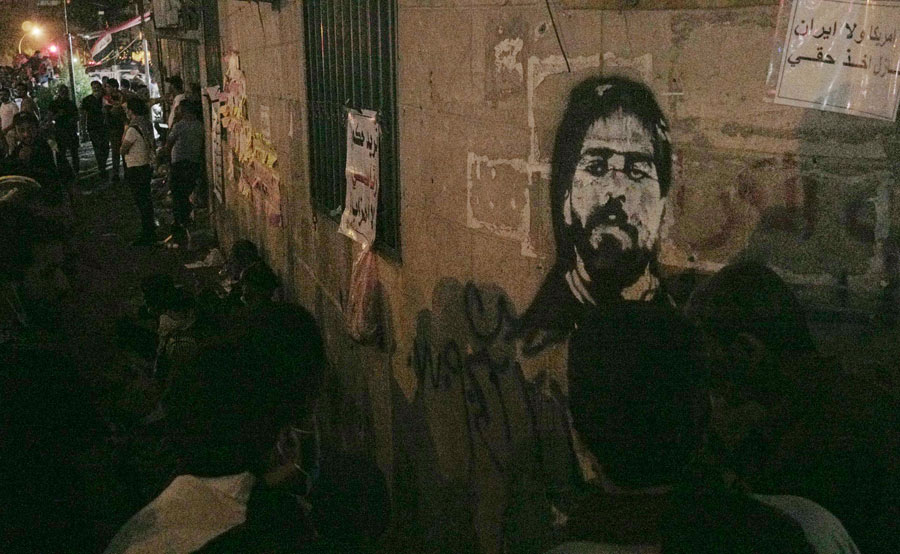
Today we have images from recent protests as well as a few stencils by Abbas. You may recognize a style common in Street Art with political or social critique in cities elsewhere during the last decade and a half. The energy that is evident in these scenes is full of anticipation and emotion, the desire to express serious dissatisfaction that is evident in many sectors. In the disordered street and cafe scenes, you can also see a singularity of determination by some, a collectivity among others.
Sajjad Abbas. Baghdad, Iraq. January 2020. (photo courtesy of the artist)
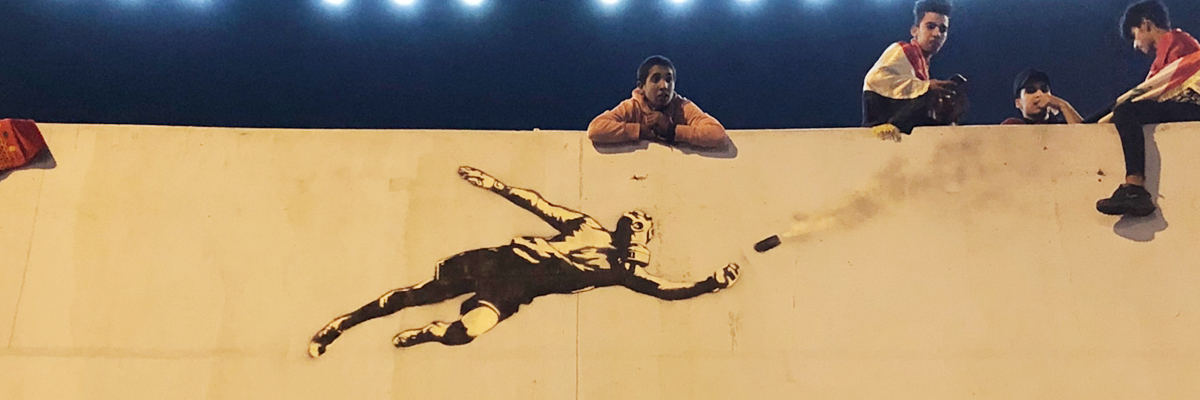
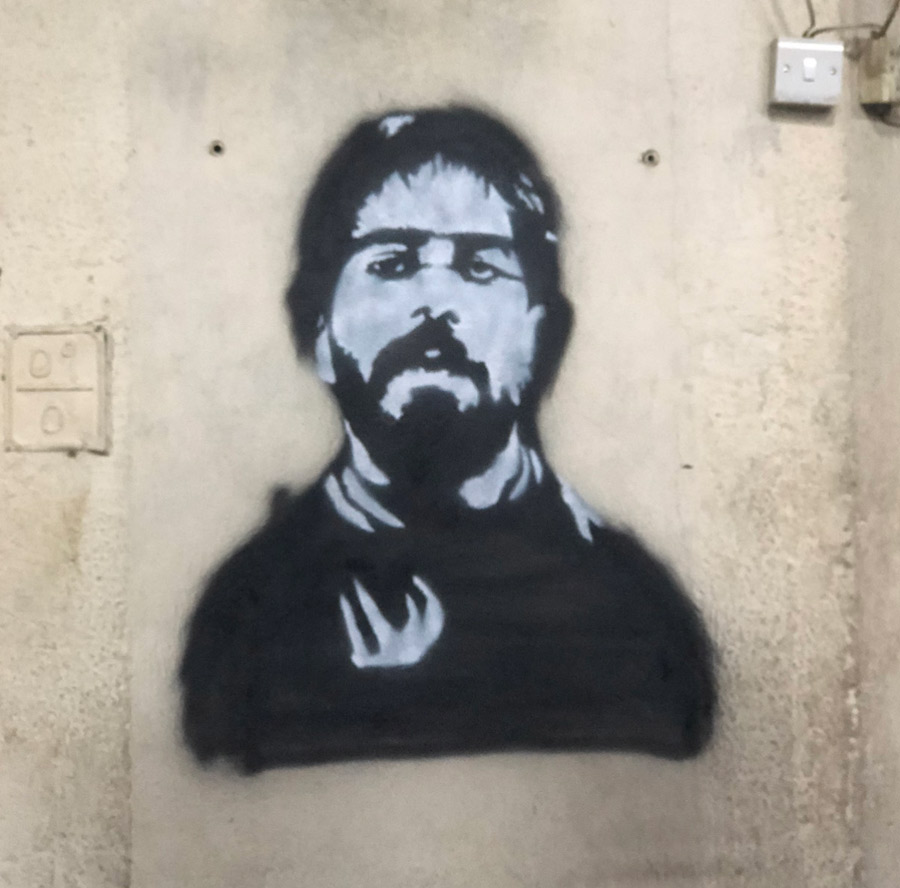
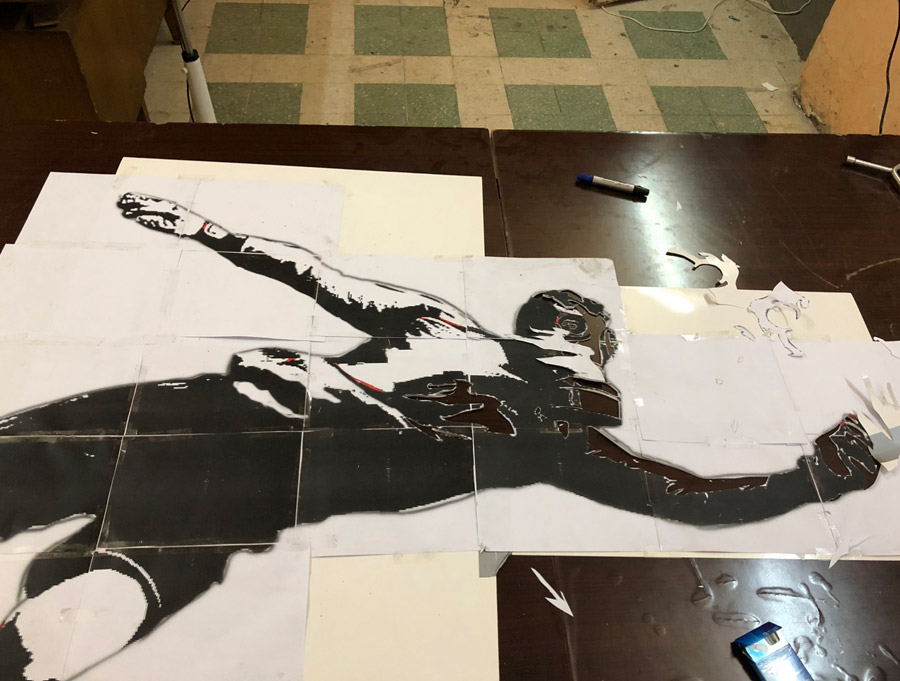
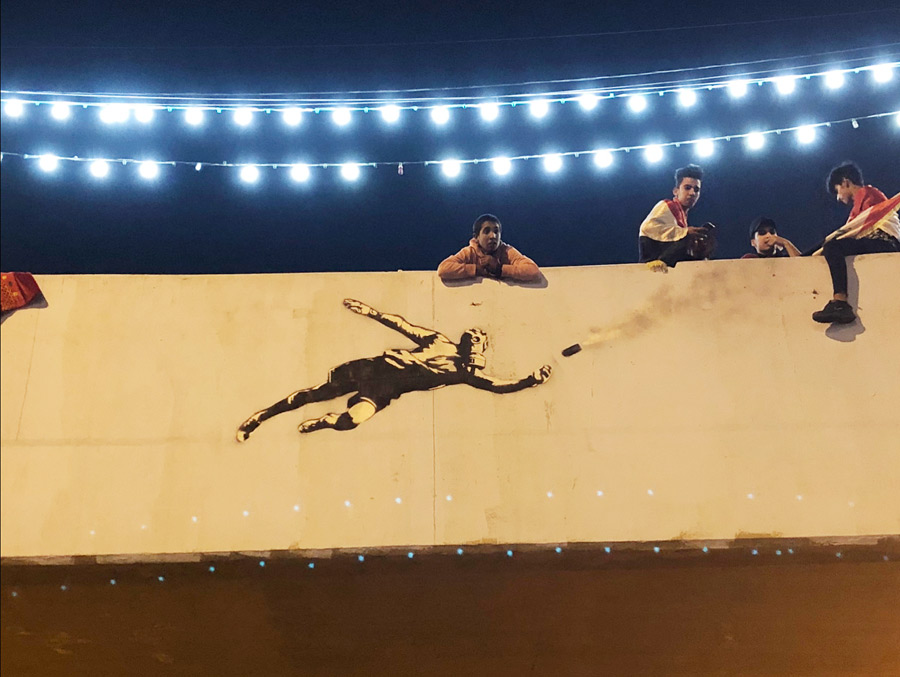
By creating a stencil portrait of one of the leaders who has been killed, a hero is being elevated – along with the values they are thought to have signified. Here you see an image of Safaa al-Sarai, one of the higher-profile activists/protesters whom news reports say was killed in October after getting hit in the head by a smoke grenade. In just a few short months his image on the street is transforming him to that of a martyr in popular culture and in memes – merging with imagery from sports culture as a protective goalie.
In fact, Safaa al-Sarai was a “goalie”, according to an account in the Times of London; “a human buffer armed with a wet sheet to intercept tear gas canisters aimed at protesters. ‘One hit the ground then bounced up into his head. He had a brain injury and was bleeding. They couldn’t save him,’ said his friend Hayder Alaa, a 21-year-old student.”
Sajjad Abbas. Baghdad, Iraq. January 2020. (photo courtesy of the artist)
We asked Sajjad Abbas about his experience as a Street Artist in Baghdad during these tumultuous demonstrations and about his opinion of the role of art and artist in the street.
Brooklyn Street Art:Can you describe the protests in Tahrir Square and what issues people are focusing on?
Sajjad Abbas: The protests in Tahrir Square are hard to describe. The young guys went out on the 1st of October in 2019. In the beginning, they were mostly from Sadr City. The government faced the protests during the most intense action and they killed lots of the protesters. They used live ammunition and there were snipers and they took the young guys’ lives.
Through this time, after that, all people were called for protests, a million people marched on October 25, 2019. Together they were protesting about religious and secular topics of many kinds.
Sajjad Abbas. Tahrir Sq. Baghdad, Iraq. January 2020. (photo courtesy of the artist)
BSA: Are the protesters mainly young people? SA: They are young guys who are tired of every chain that the politics and the religion men put on the people. They asked for a good life and freedom and presented their opinions to all the religious men and government people. This protest is against dirty government forces and the parties of the murders. Many of the protesters were killed and the government used smoke bombs and flash grenades as a way to kill. They threw these things directly at the protester’s heads, and some were injured pretty seriously, probably causing them a lifetime disability…
So far the government hasn’t answered protesters’ demands, but there has been murder and kidnapping.
Sajjad Abbas. Baghdad, Iraq. January 2020. (photo courtesy of the artist)
Most of the protesters are the new generation who were born in the early 2000s, but there are also different people from other age groups. What is good about the new protests is that there are also a big number of young females who were also in the protests – and they were in the front lines of the protest.
BSA: What is the name of the person in the stencil art with the beard? SA: The guy in this picture is Safaa Alsarai. He got killed in the protest after he got shot in the head by a smoking bomb.
Sajjad Abbas. Tahrir Sq. Baghdad, Iraq. January 2020. (photo courtesy of the artist)
BSA:Why is he important and what does he symbolize for Baghdadi people? SA: Safaa was a poet who also participated in many of the older protests. He was hoping that Iraq could become unified and be one and he was dreaming about making for Iraq an Iraqi country. Safaa became an icon for the revolution in all the cities in Iraq.
Sajjad Abbas. Tahrir Sq. Baghdad, Iraq. January 2020. (photo courtesy of the artist)
BSA: The figure with the mask looks like he is playing soccer. Is he catching a tear gas canister? SA: The guy is a goalkeeper (“goalie”) who is trying to catch the smoking bomb. In this tunnel, a team was created to shut down the smoking bombs that came at the protesters – after getting it away from the protests in the area above the tunnel.
BSA: Why is it important to use art in the streets for you? SA: It’s like drinking water… it’s an expression of existence. Using the art in the street is to clarify and express my ideas about the policies and social aspects of those policies. Street Art is a revolution – It’s an imperative way to share your ideas, and you should have a statement about the “system”.
Sajjad Abbas. Tahrir Sq. Baghdad, Iraq. January 2020. (photo courtesy of the artist)
Finding an inner sense of balance when living in the chaotic city is not easy, and you’ll have to be determined to achieve it after you’ve been pushed and pinched and insulted and assaulted – just on the way to work, or even the corner deli.
Traffic, construction, muffled train announcements, blaring radios, and boisterous conversations between Bernice and Brandon and Betty and Bernardo batter you from the time you leave your apartment until you arrive bedraggled and exhausted.
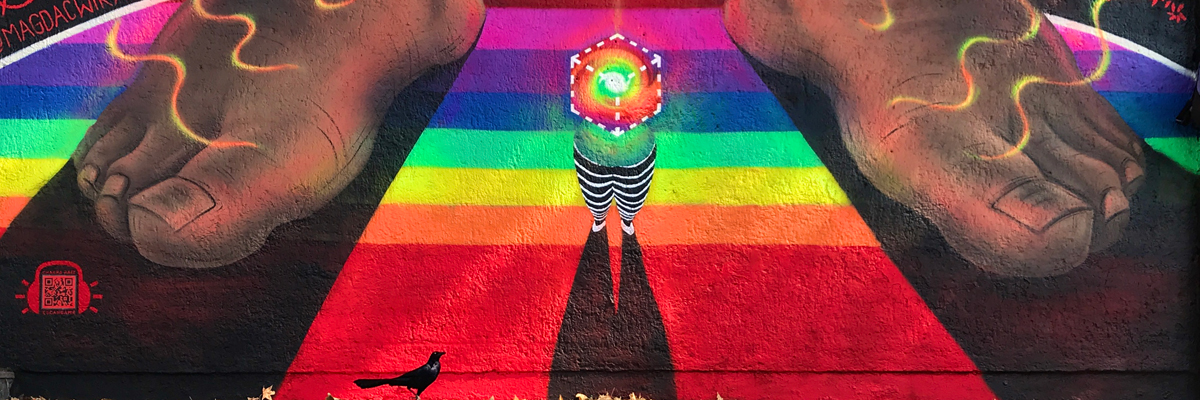
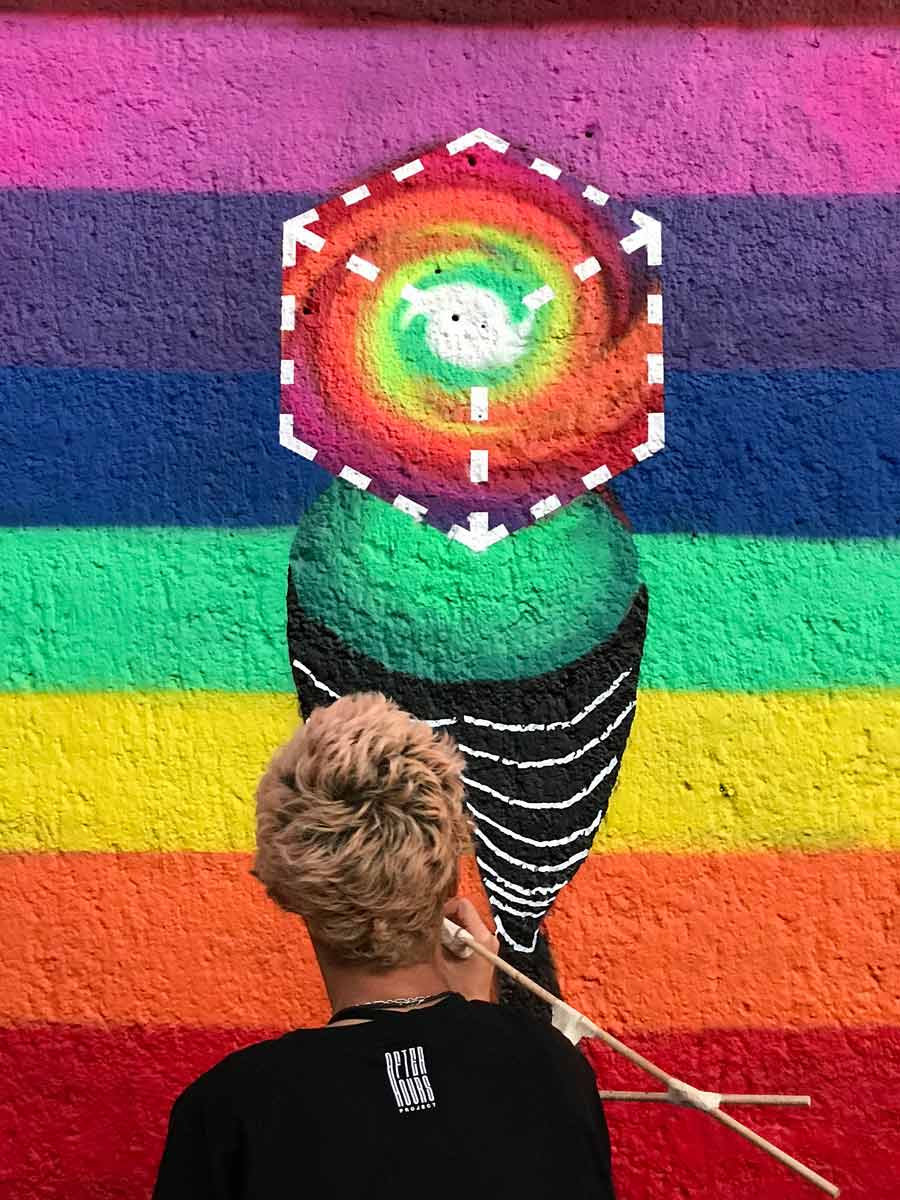
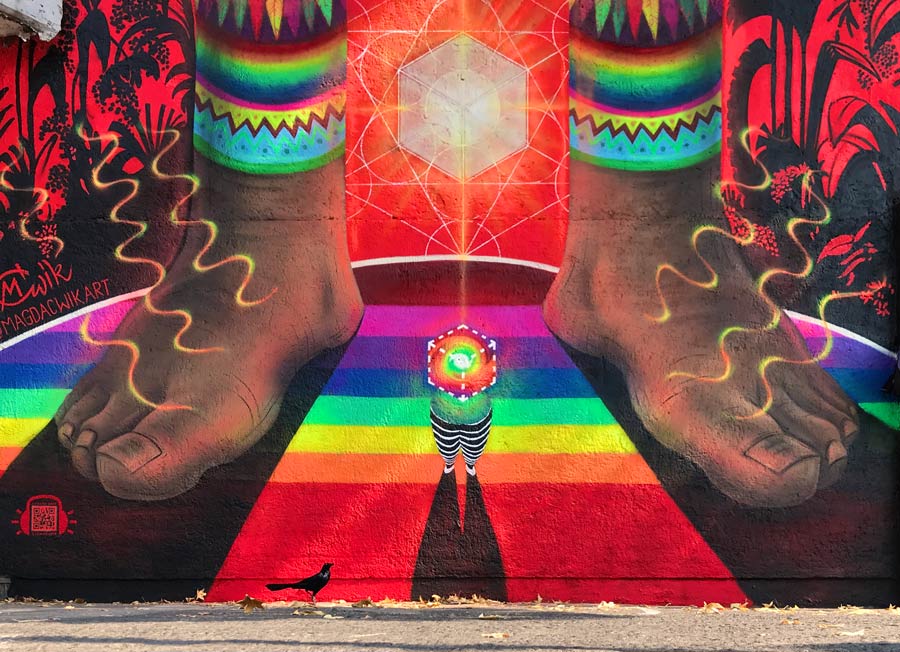
Magda Cwik. Vibraising – Root Chakra. After Hours Project. Mexico City. January 2020. (photo courtesy of After Hours Project)
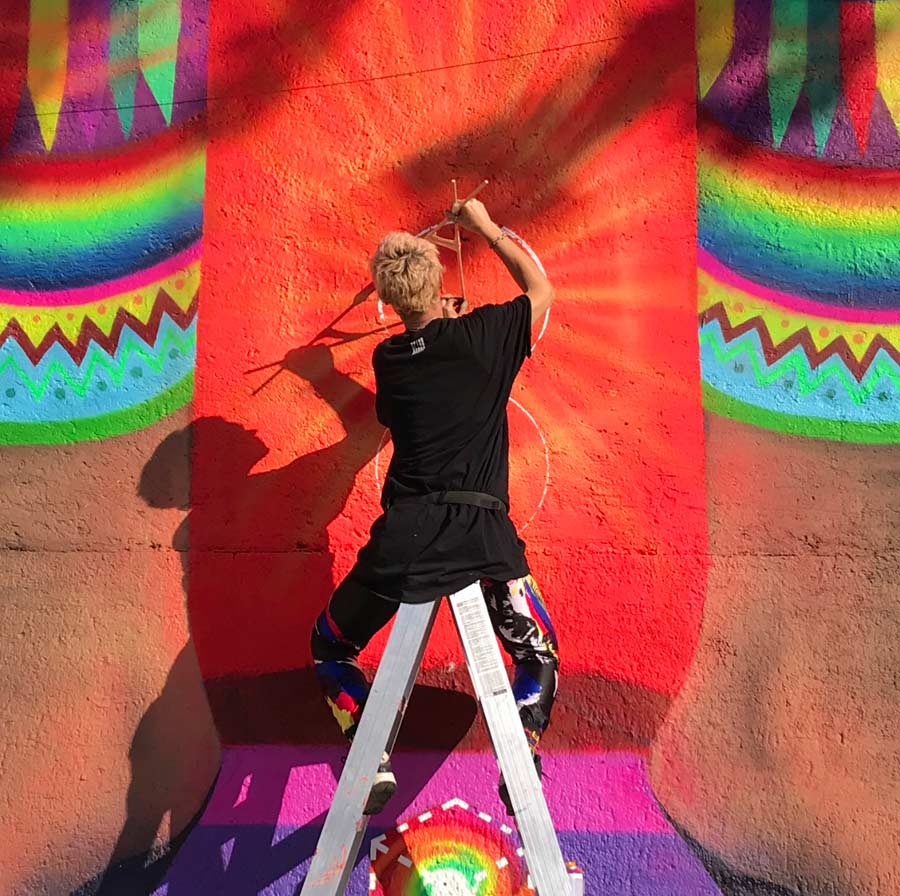
For Polish muralist Magda Cwik, the pursuit of balance
begins on a high note – and travels through your musical chakras. Here in the
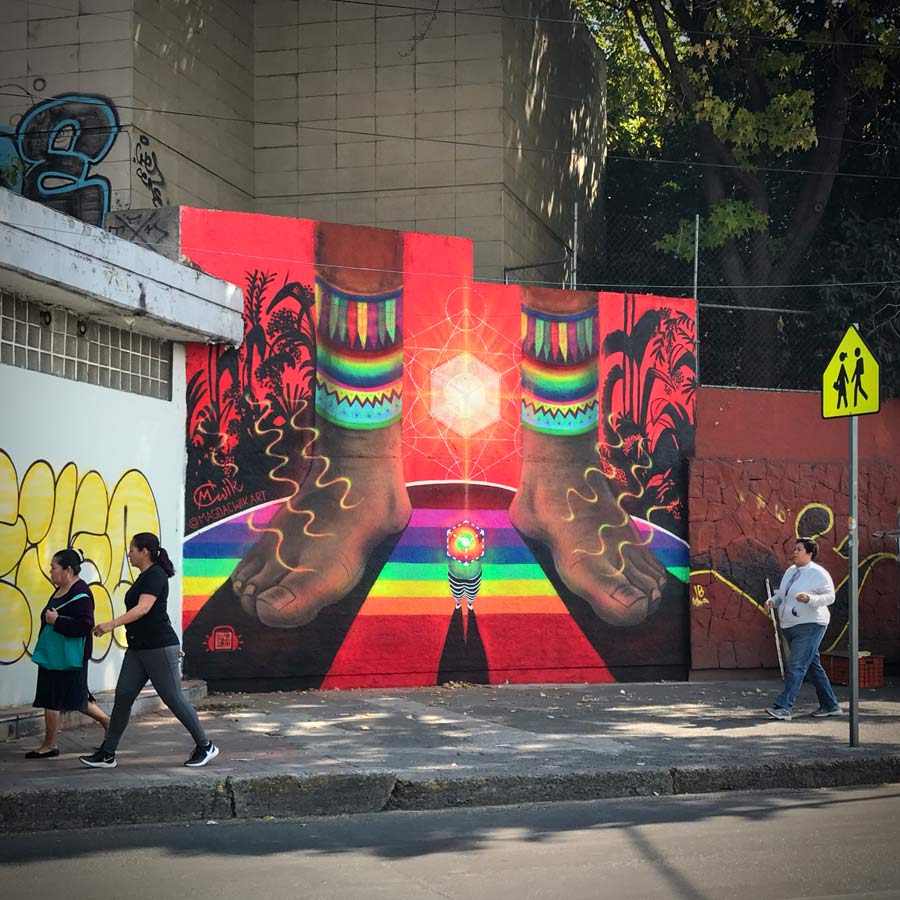
in Juárez neighborhood of Mexico City she has been painting a series of eight
murals which she intends to assist urban dwellers to live in balance –
including via their ears.
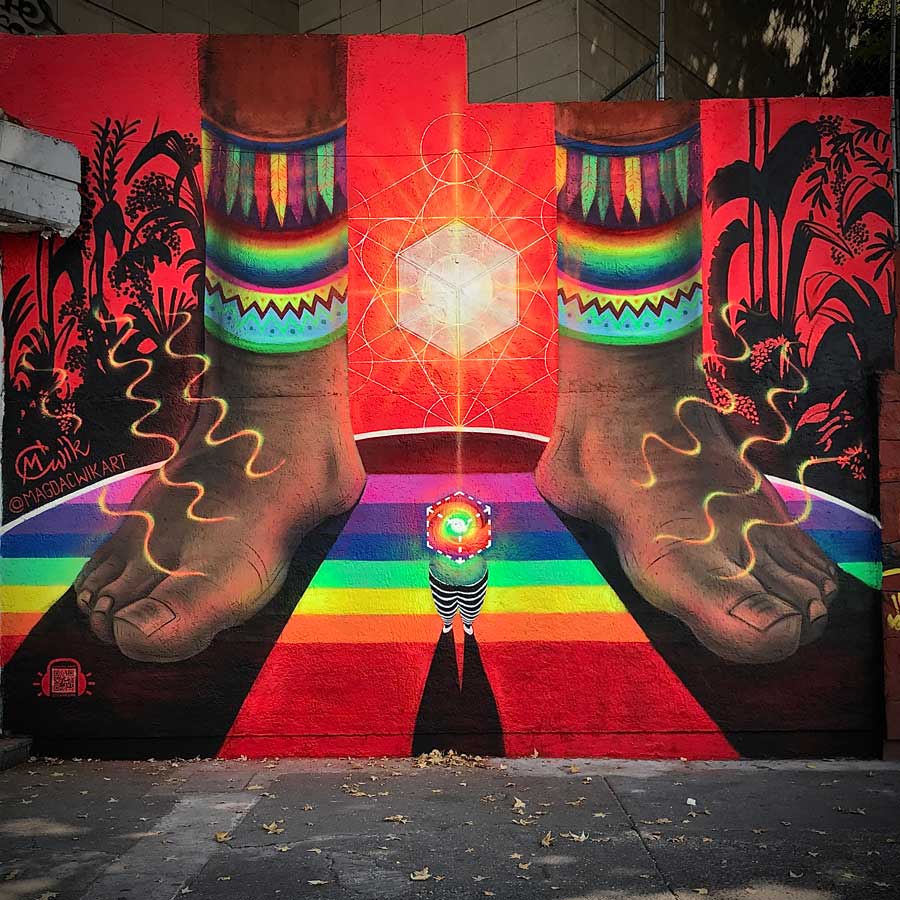
Magda Cwik. Vibraising – Root Chakra. After Hours Project. Mexico City. January 2020. (photo courtesy of After Hours Project)
“I combined specific colors, images, music and
intentions to rise up vibrations of people on the street,” she tells us of a
campaign she calls “Vibraising”. “The wall focuses on reactivation and
connection with Mother Earth and grounding,” she says, and she includes a QR
attached to the wall for you to scan and listen to music that corresponds to her
desire to help you rebalance.
“How
often do we walk with our bare feet to connect with Earth? Do we live in
harmony with Her?” she asks. “Earth provides us with everything we need to
sustain us if we live in balance. By connecting with Nature we can heal
ourselves, and listen to the teachings of our ancestors.”
Magda Cwik. Vibraising – Root Chakra. After Hours Project. Mexico City. January 2020. (photo courtesy of After Hours Project)
For one example of the music, you will here, below is a colorful world vibrating in the key of C (for the Root Chakra) by artist Stephen Mahoney (@dj_stephenmanhoney)
Magda Cwik. Vibraising – Root Chakra. After Hours Project. Mexico City. January 2020. (photo courtesy of After Hours Project)Magda Cwik. Vibraising – Root Chakra. After Hours Project. Mexico City. January 2020. (photo courtesy of After Hours Project)
It’s hard to even comment on this bellicose war-loving president and his military industry profiteers all ginning up a war against Iran – except to say, “Fool me once…”. Wait, how does that go again?
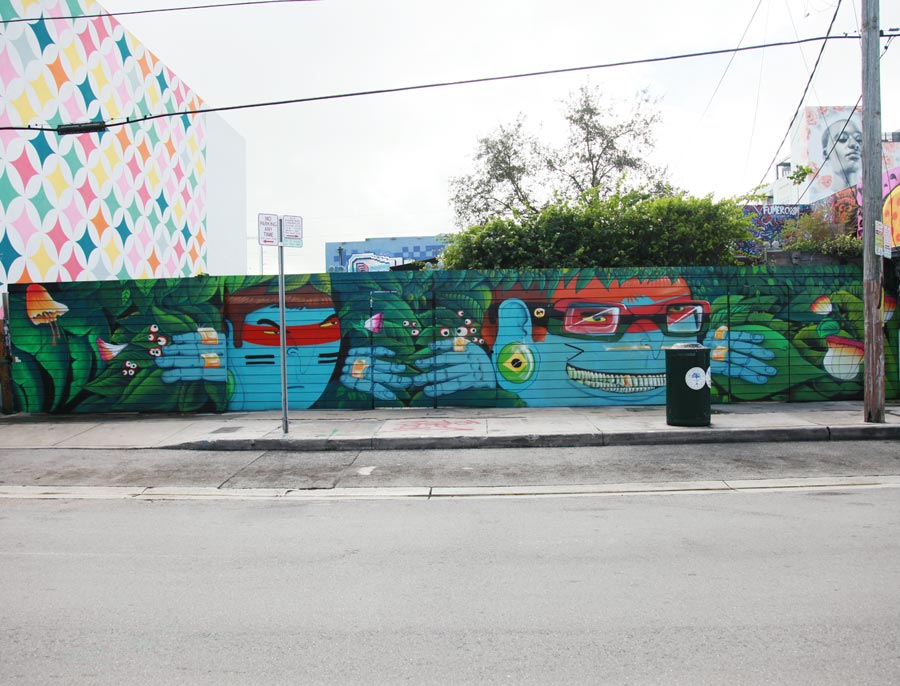
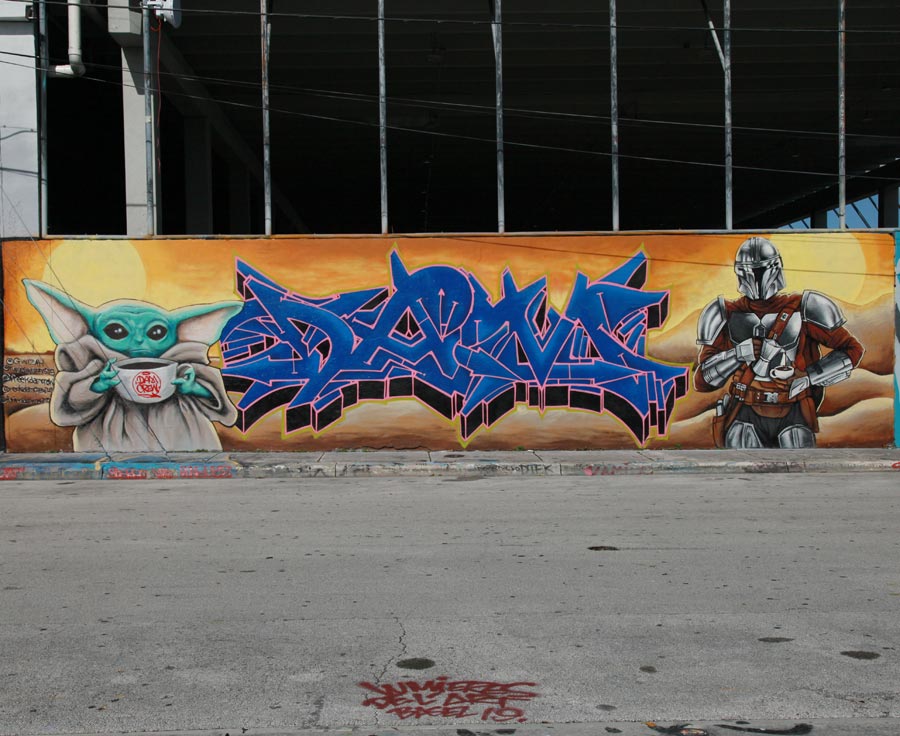
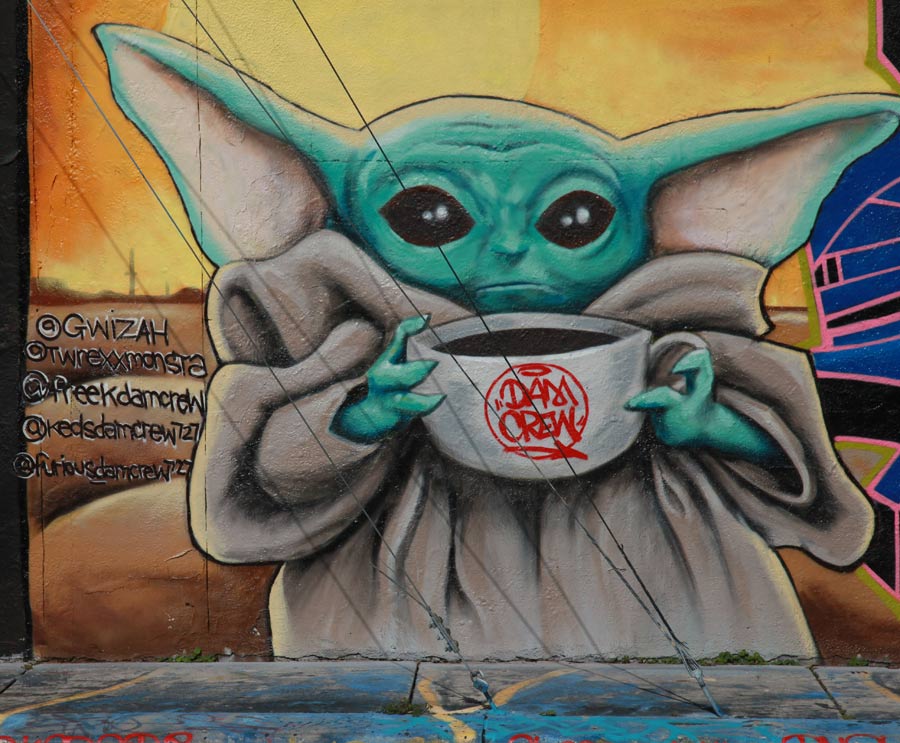
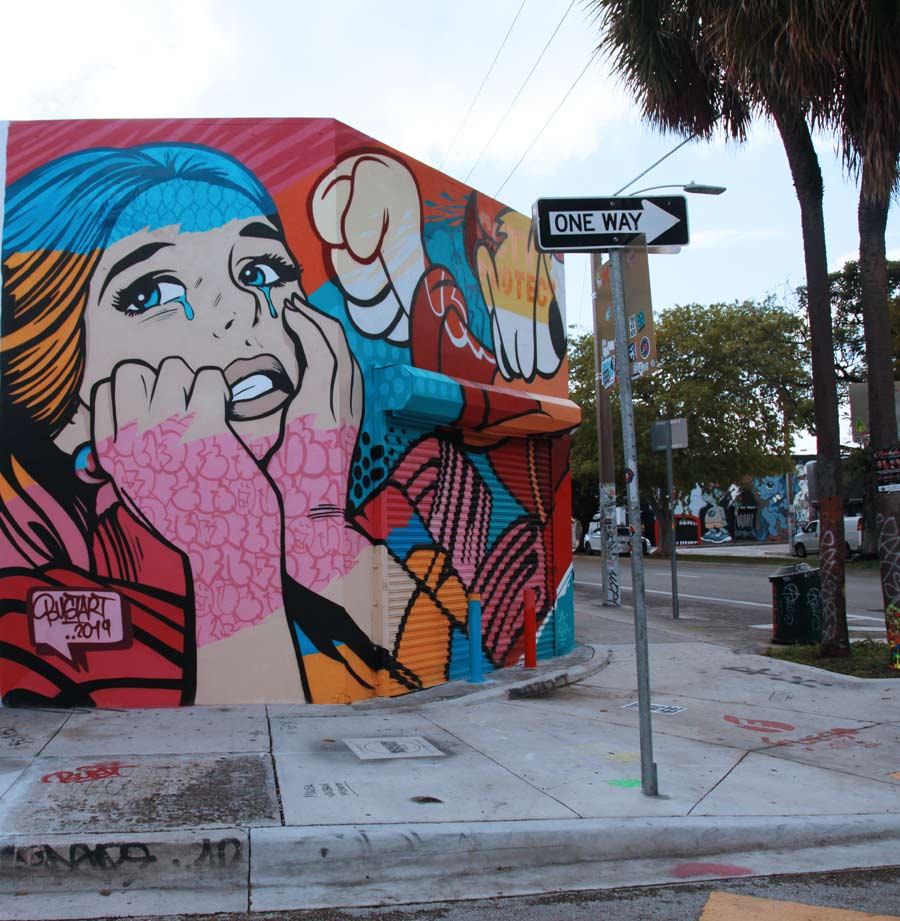
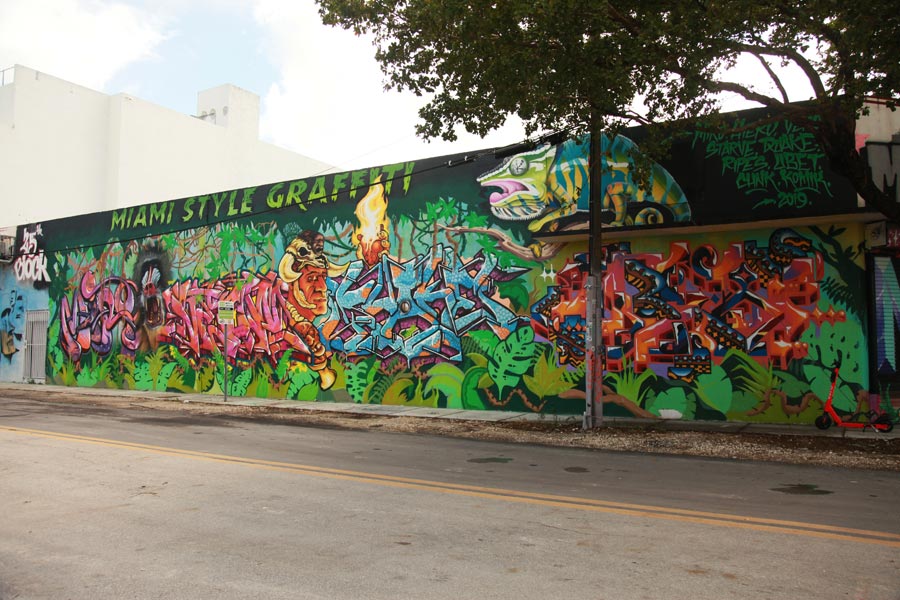
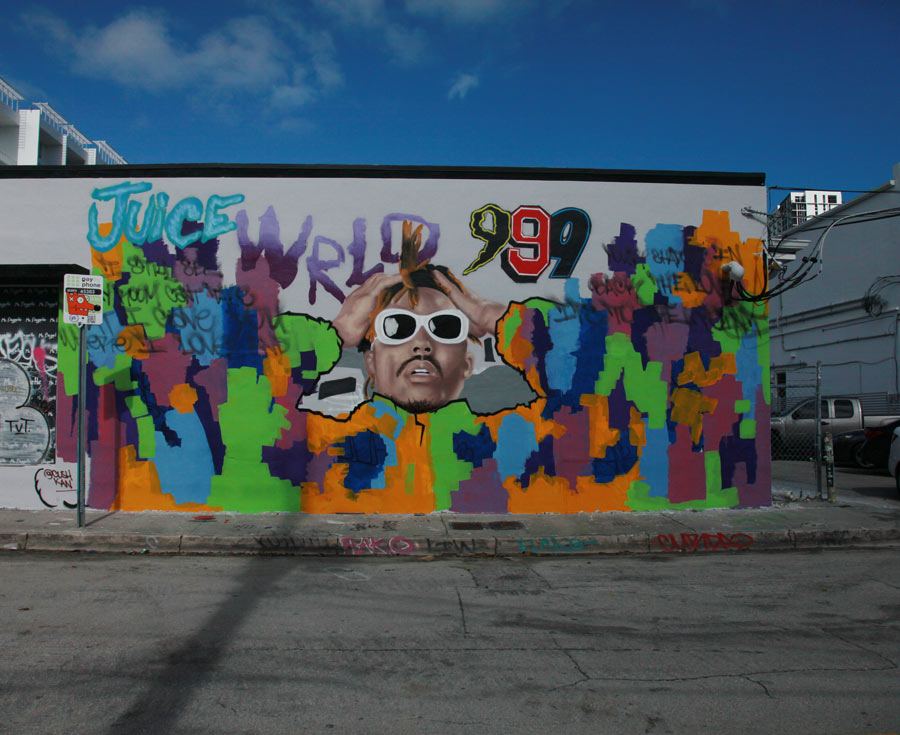
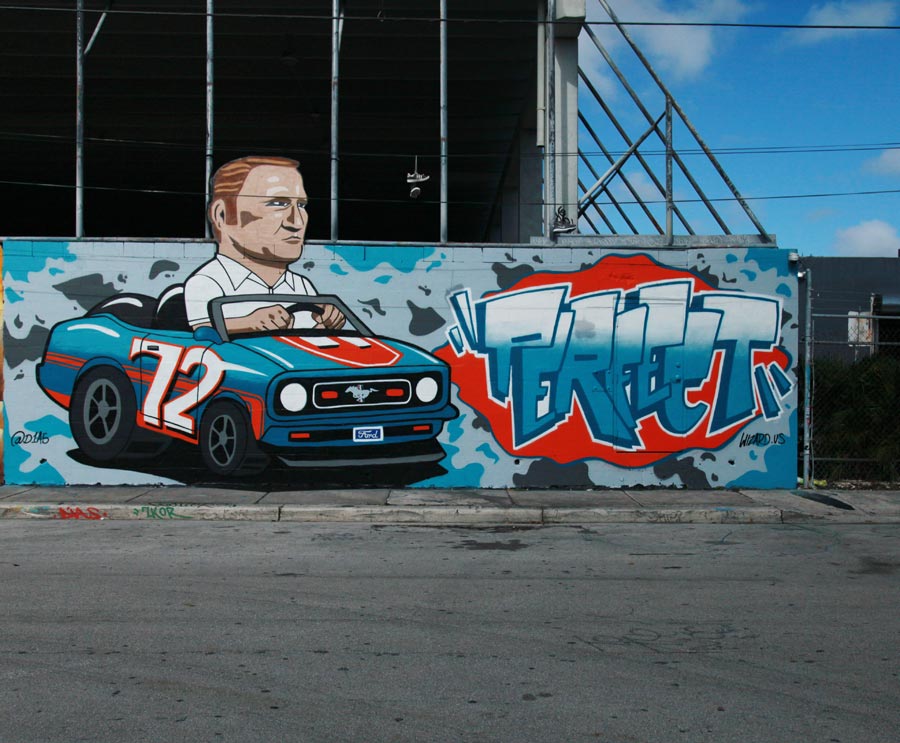
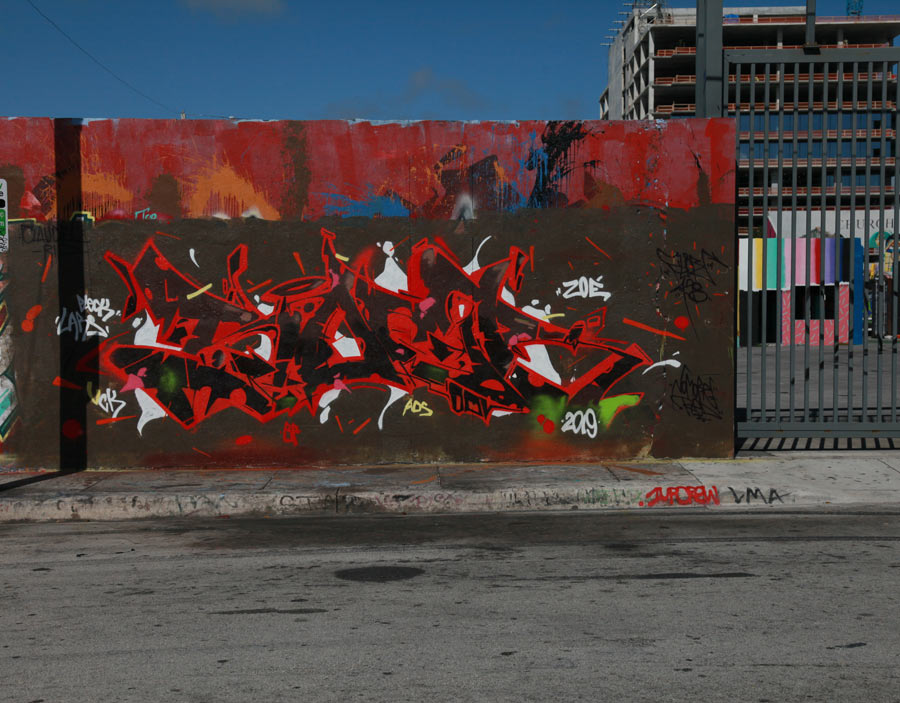
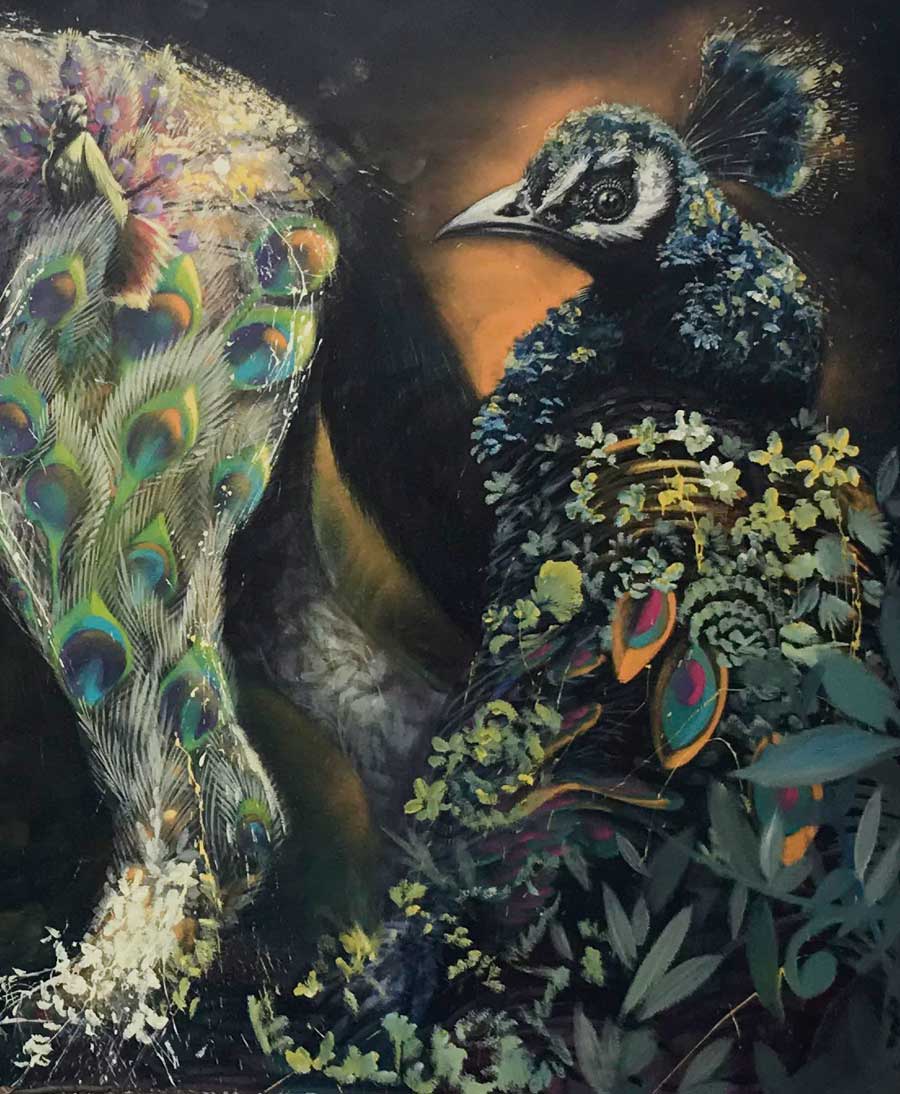
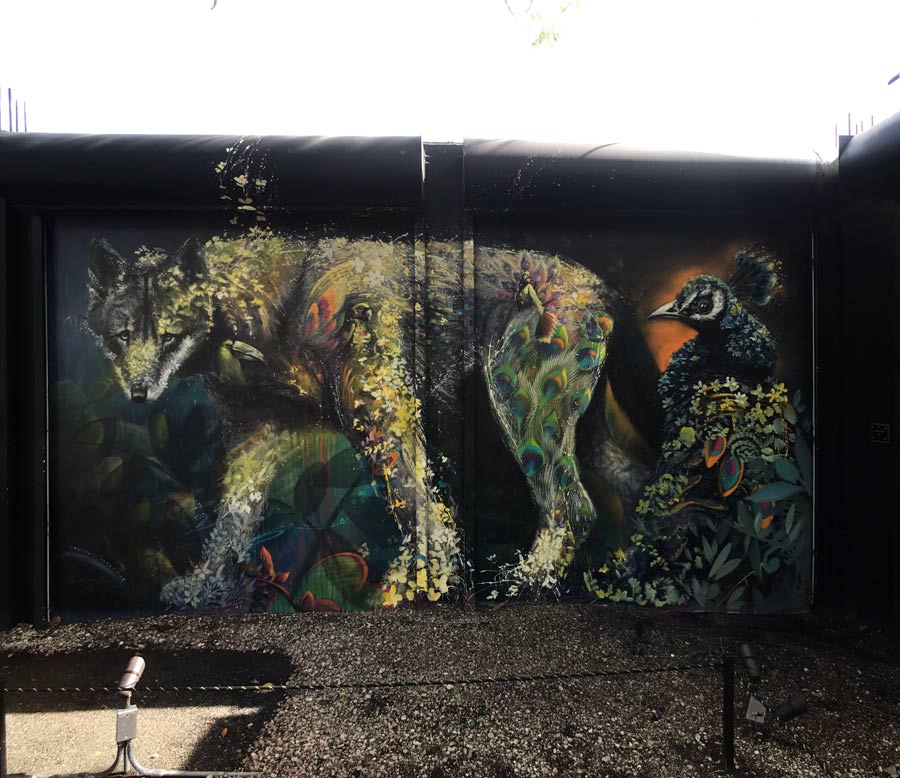
This week we take you back to the Wynwood neighborhood in Miami, where Primary Flight started a huge graffiti throwdown in the 2000s, later picked up by Tony Goldman to create Wynwood Walls. The current fare throughout the neighborhood is record-setting: from the sheer number of murals and art installations, to the parade of families and friends coming here to take tours and selfies. Catching a shot of a piece without people in the frame is like trying to run in between raindrops.
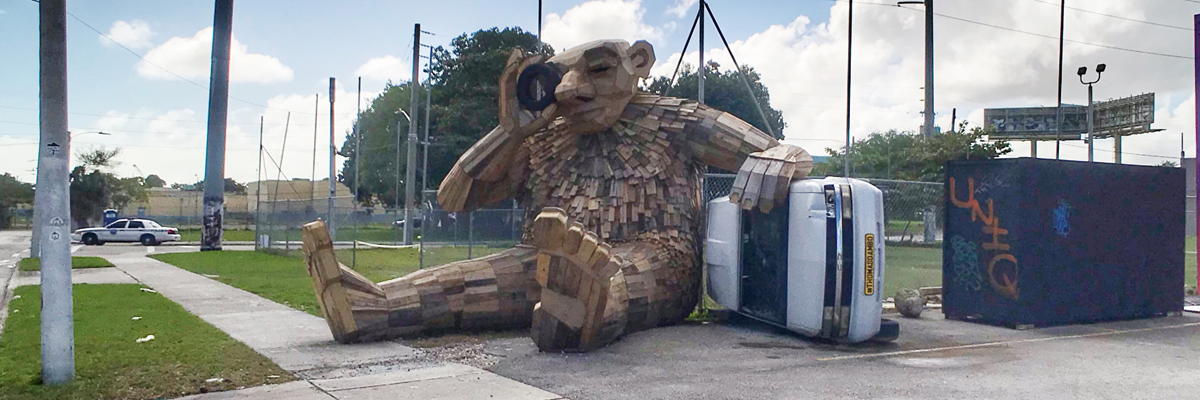
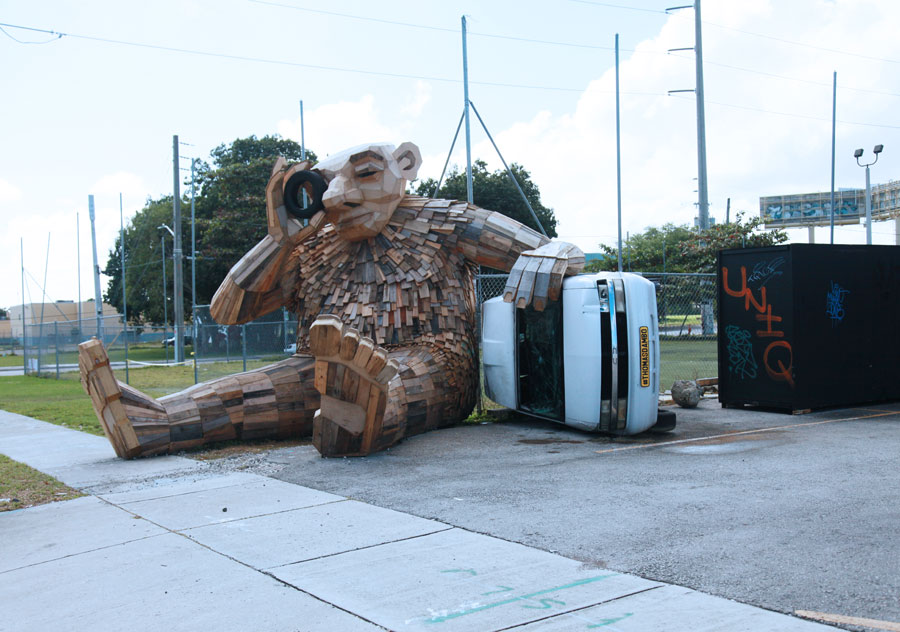
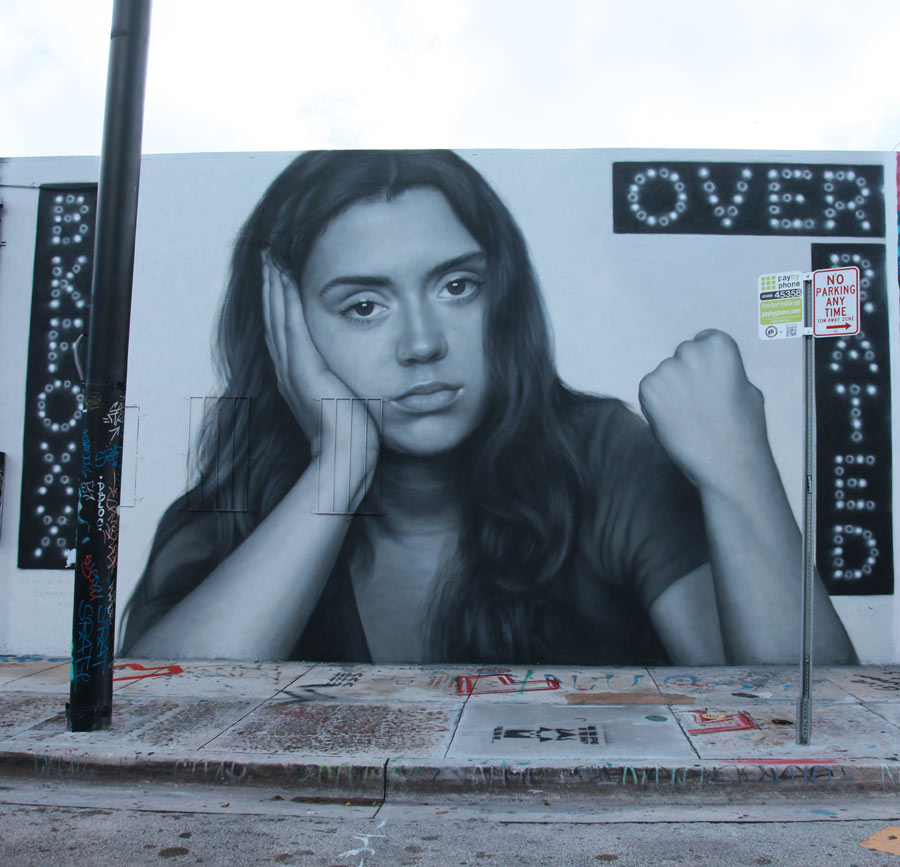
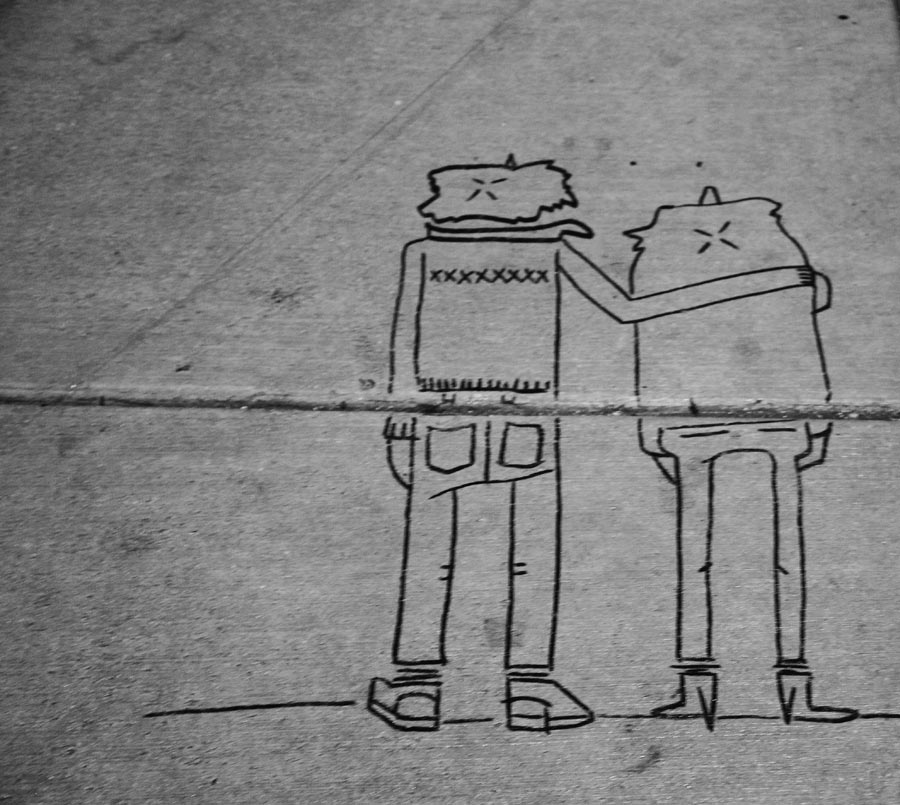
Here’s our weekly interview with the street, this week from Miami, and this time featuring 1UP Crew, BK Foxx, BustArt, Cranio, Cush Kan, Dam Crew, Dia5, Komik, Quake, Ripes, Sipros, Starve, Thomas Danbo, and Urban Ruben.
Our weekly focus on the moving image and art in the streets. And other oddities.
Now screening : 1. SpY / Full Story / Takin Over Public Spaces In The City 2. Matth Velvet. Parees Festival 2019 3. Bomb Shelter/Pete Kirill/Wynwood, Miami
BSA Special Feature: SpY Takes Over Public Spaces
The brilliant Spanish interventionist is profiled here by a brand – but its not obtrusively involved in the video. His approach to the city is educational, humorous, full of adoration and witty simplicity. A graffiti writer who challenged himself to interact with the public spaces in new ways, he credits those early years bombing with his heightened understanding of the urban environment, and how to skillfully disrupt it.
SpY / Full Story / Takin Over Public Spaces In The City
Matth Velvet at Parees Festival 2019
A new video from PareesFest 2019
featuring a painter on the wall, and demonstrating the entirely different
approach a mural is when realized with brushes. A tribute to historical
Olloniego mining, the artist is Matth Velvet and the video is by Titi Muñoz.
Bomb Shelter/Pete Kirill/Wynwood, Miami
Taking the trip local, Pete Kirill tells you about his project in Wynwood, Miami – a graffiti and art supply store, gallery, and community hub that is rooted in graffiti and of course spreads out far from there. A unique opportunity to see this transformed neighborhood through the eyes of Miami folks – a mini tour of one spot just after the deluge of art fans and tourists during Art Basel, which happens in Miami every year at the beginning of December.
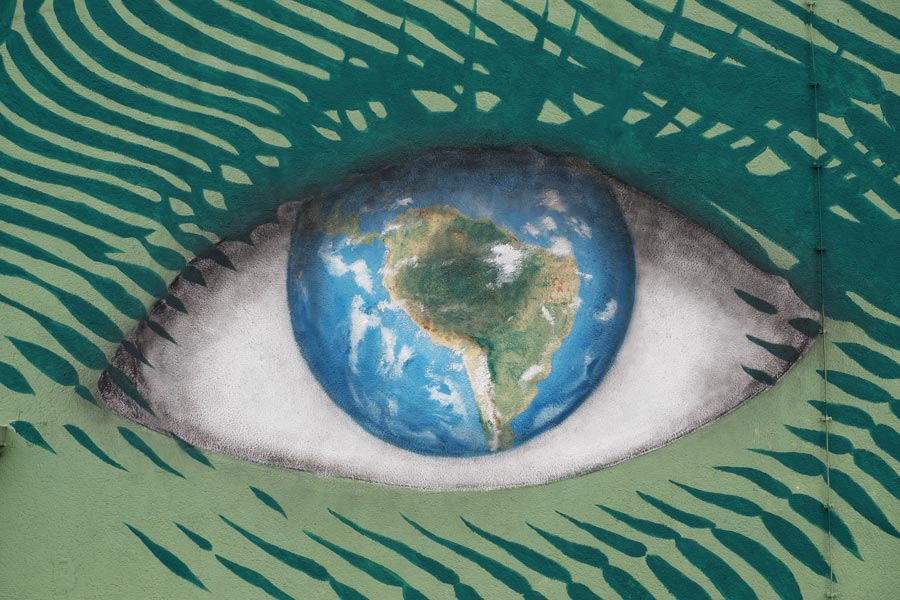
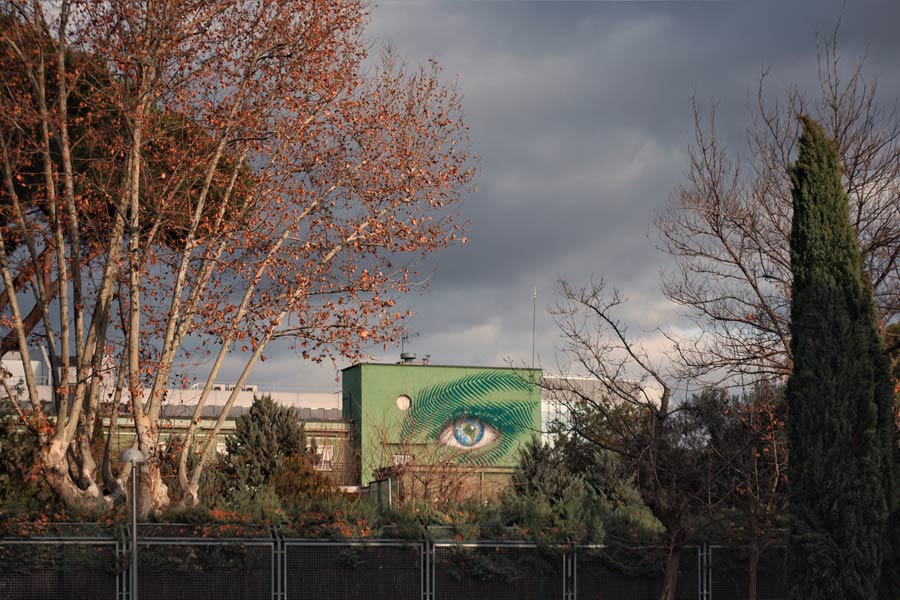
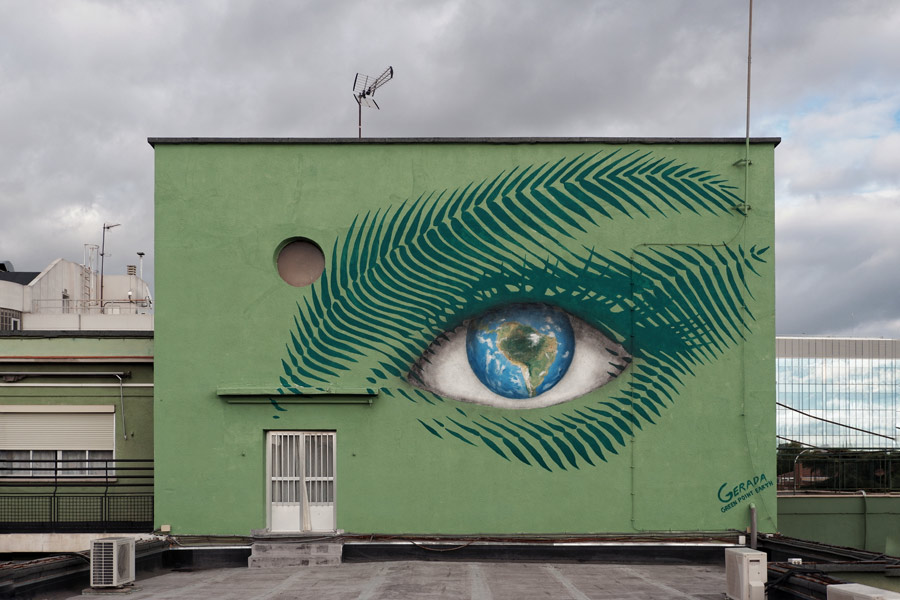
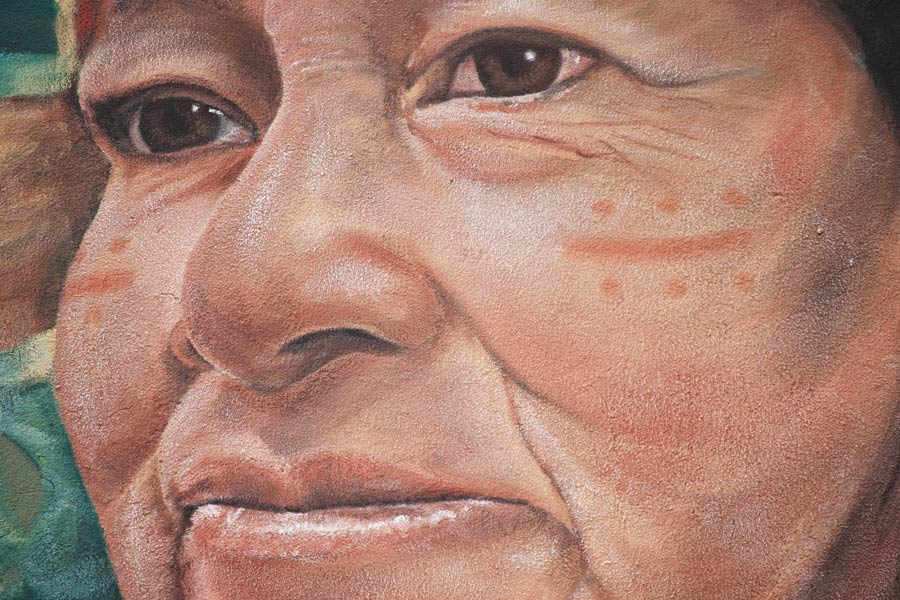
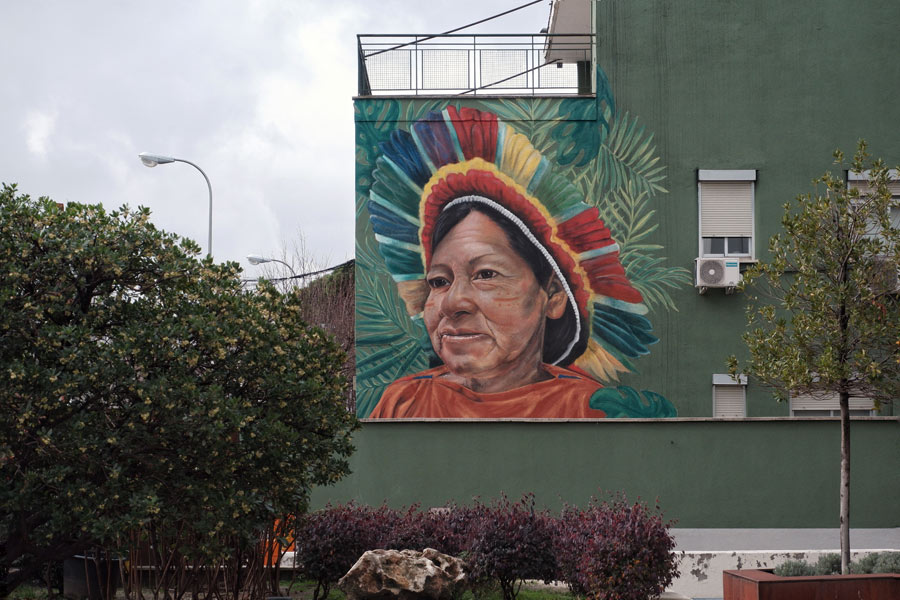
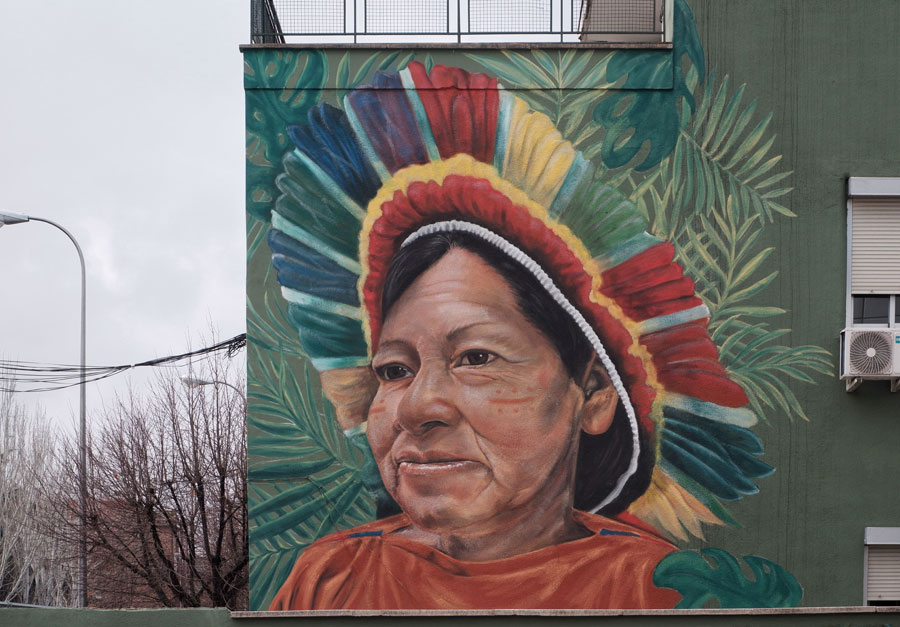
With the earth at the center of the eye, Jorge Rodriguez-Gerada tells us that the first of two murals he painted for the recent COP 25 conferences is called “Forest Focus.” As the world has been watching the largest forests of Australia burning this month, he clearly knows what we’re all facing.
“With an image of the world as the iris,” he says, “This mural has an artistic focal point that symbolizes the values set forth at the COP25 conference being held in Madrid.”
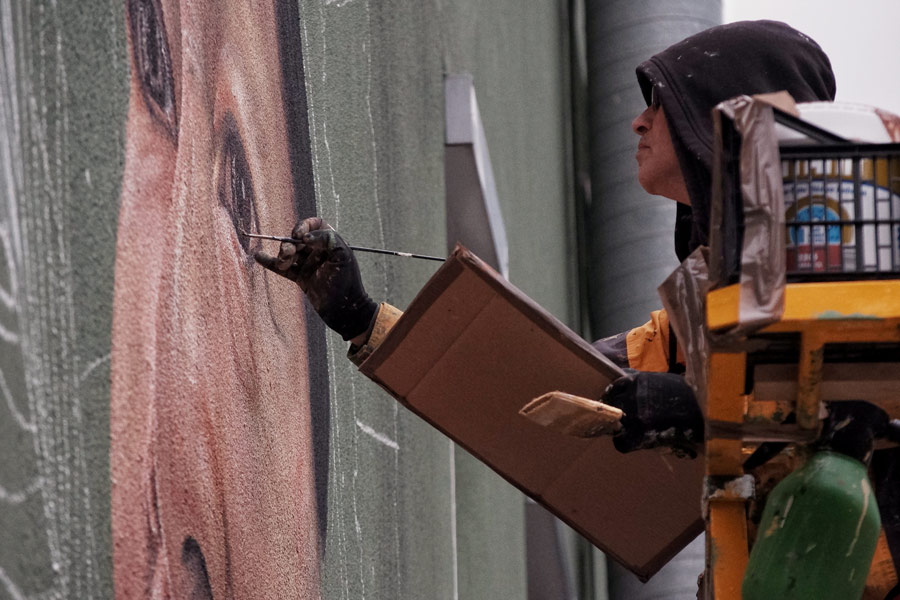
The Cuban-born Street Artist, now based in Barcelona, was partnering with a public art program/platform called GreenPoint EARTH during the United Nations Framework Convention on Climate Change (UNFCCC) conference, or COP 25 to create two new street art pieces.
Well known for his “Terrestrial Series” of artworks spread over masses of land that are visible by planes flying overhead, Rodriguez-Gerada blends social and ecological themes seamlessly with sometimes profound results.
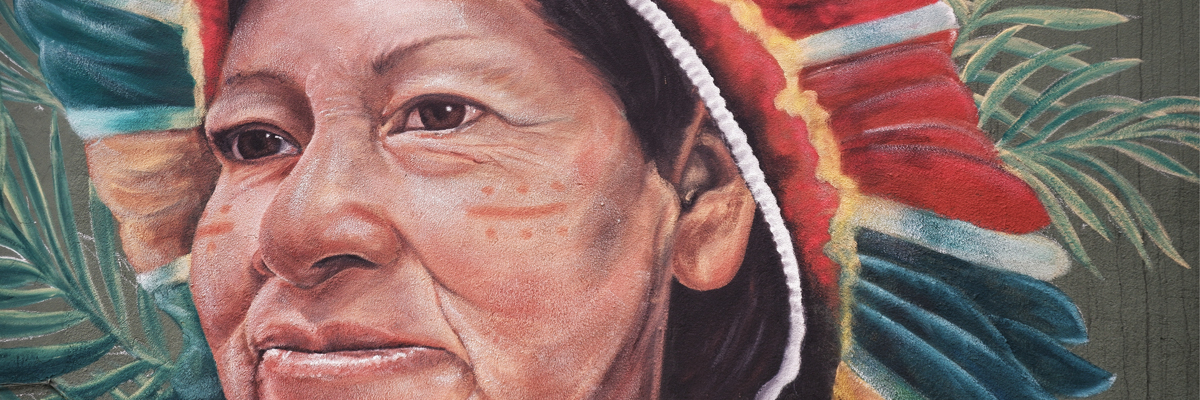
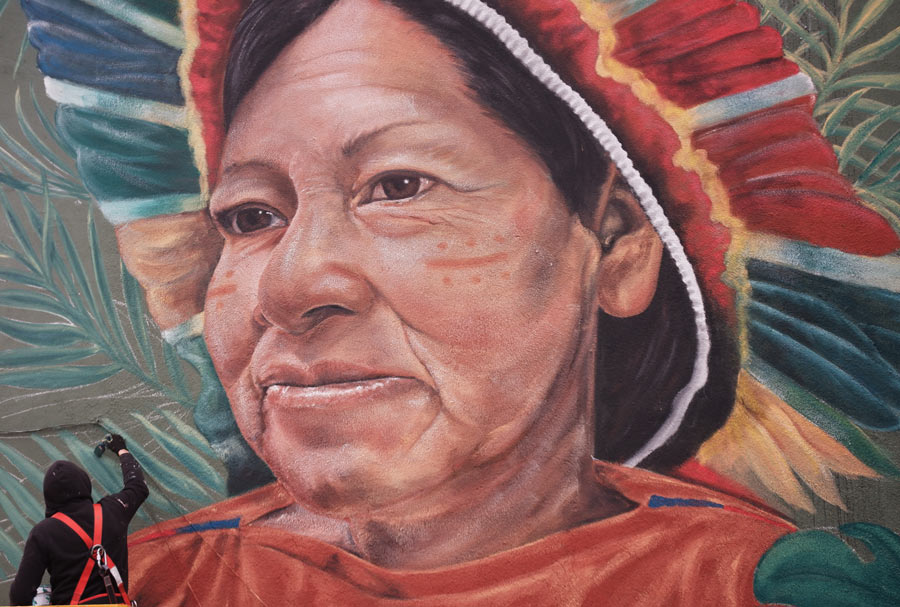
His second mural of the series is a portrait of Hilda Pérez, a person indigenous to Peru and theVice President of the National Organization of Andean and Amazonian Indigenous Women of Peru (ONAMIAP). The team says she was chosen to represent indigenous people because their voices are frequently marginalized in discussions about ecology and climate change, despite occupying 25-50 percent of the Earth’s land.
“We need to think of every tool in our toolkit because time is ultimately running out,” said Greenpoint Innovations founder Stephen Donofrio at a panel discussion with the artist at the Action Hub Event during the COP25.
He was speaking about the pivotal role that Street Art has been able to fill in education, as well as his own interest in partnering with artists and other collaborators to raise awareness for a myriad of environmental issues. “That’s why it’s really important that Chile/Madrid COP25 has this really strong message that it’s time for action.”
With
more plans to involve Street Artists around the world “to inspire climate action with
positive messages about the interconnected themes of nature, people, and
climate,” Donofrio says he believes that the
power of communication that Street Artists wield can be focused to make real,
impactful change.
“The connectivity is really important
in these projects to establish that we are dealing with globally challenging issues
that boil down to a really local consequence.”
What
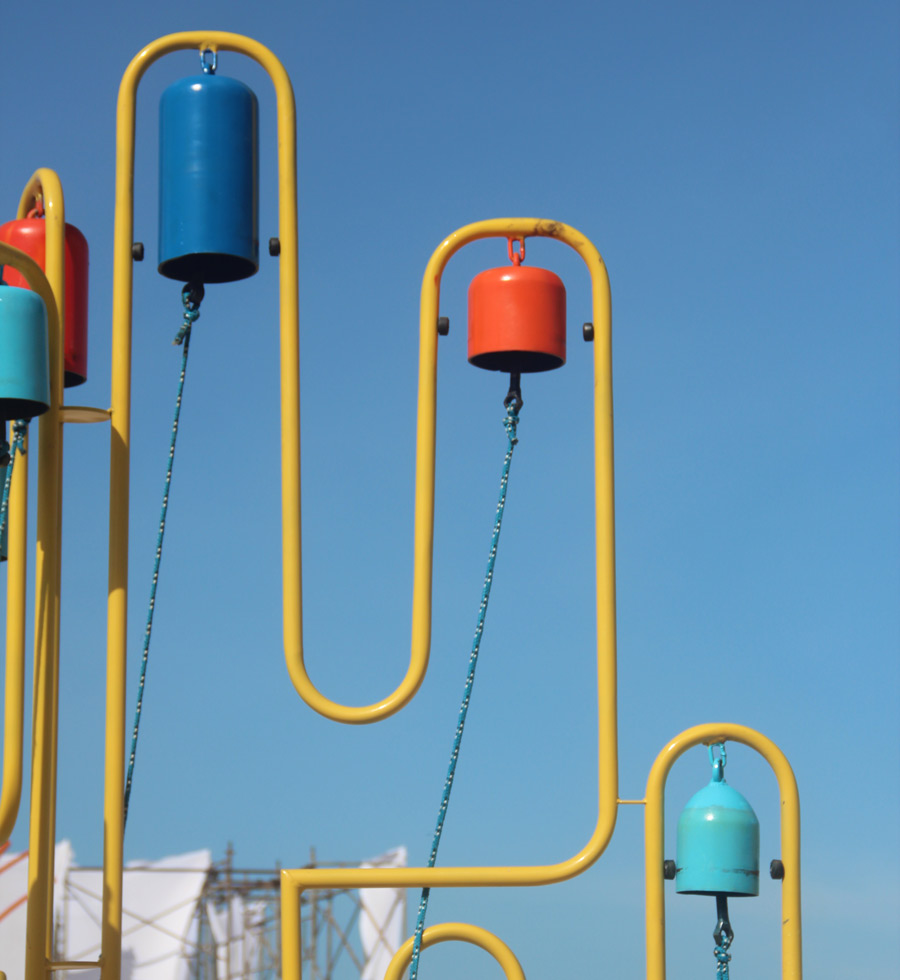
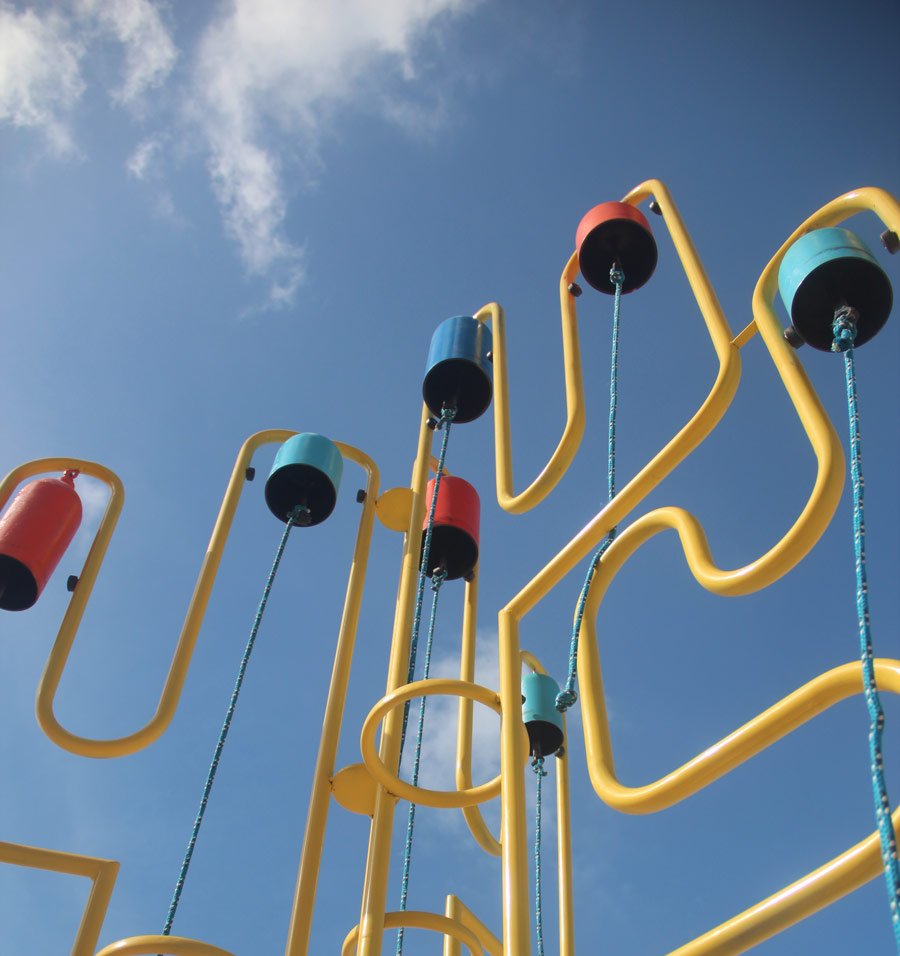
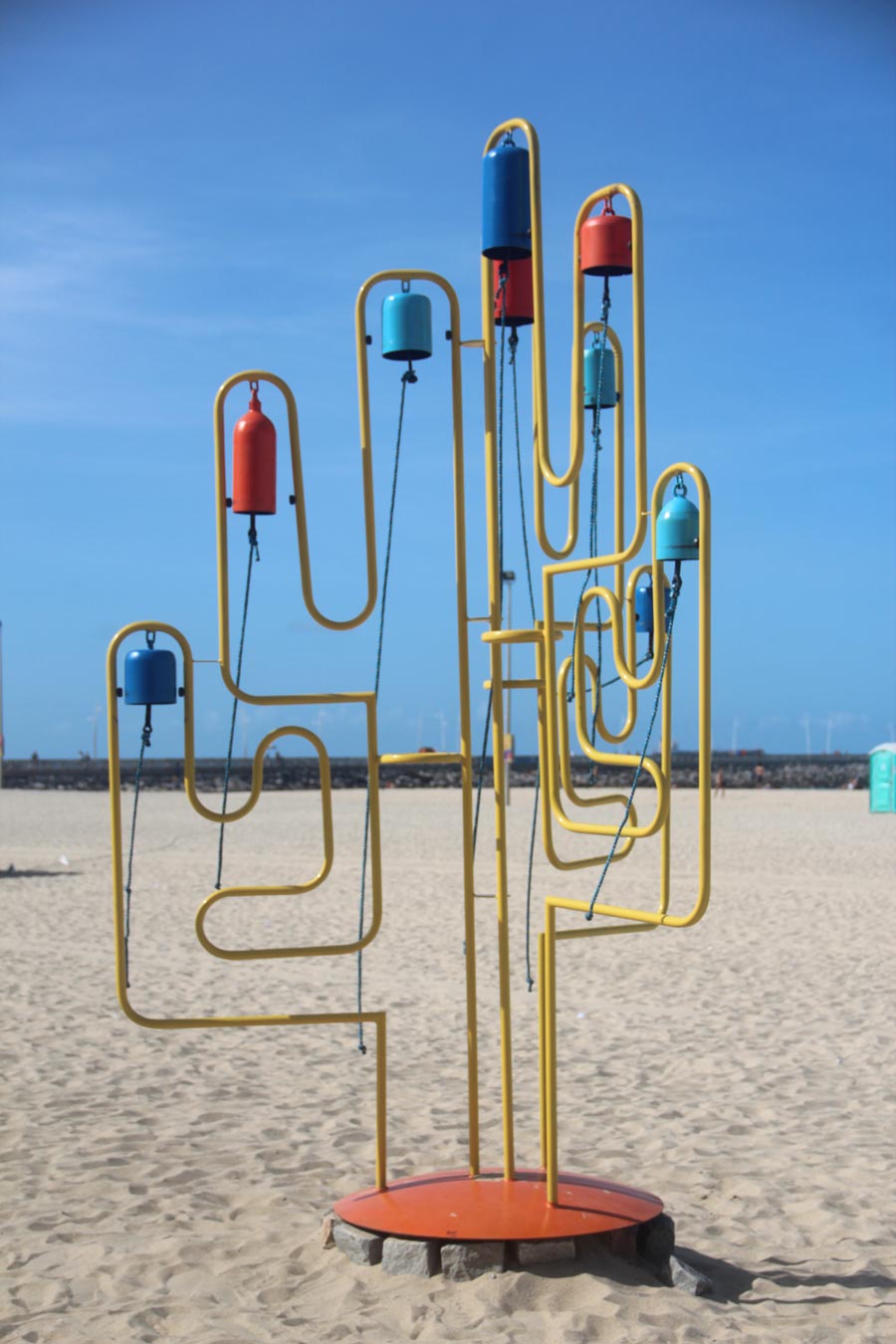
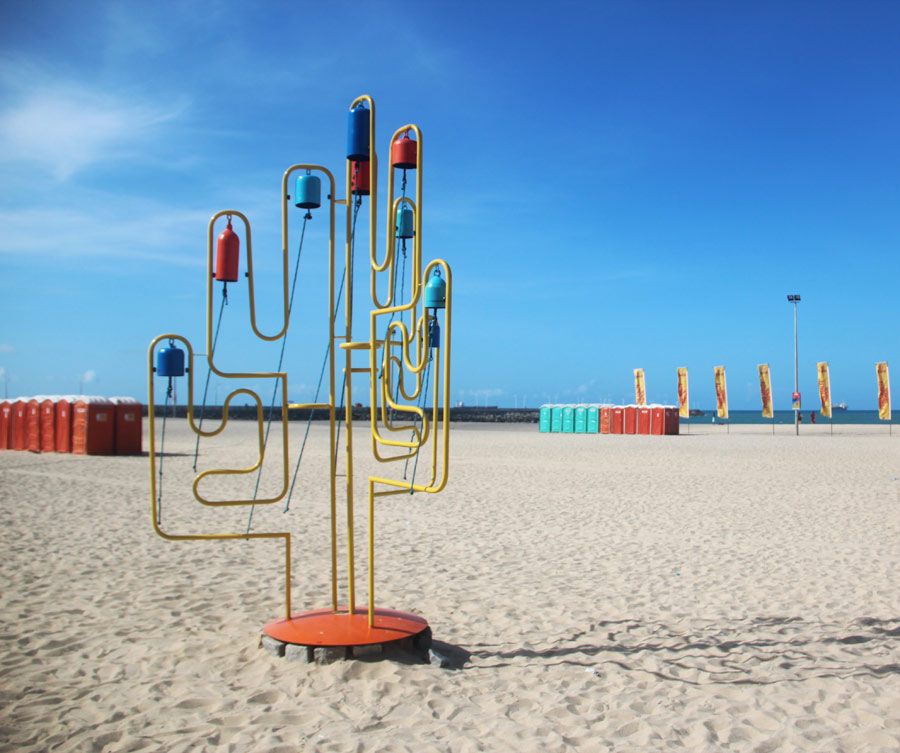
sound does a cactus make? What a ridiculous question.
And
you know the answer if you are on Iracema Beach that borders a neighborhood
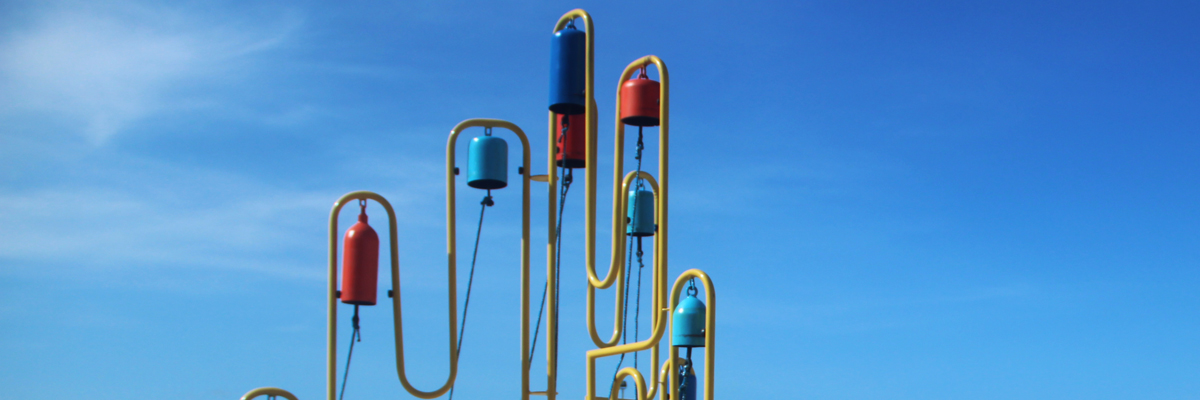
located in the Brazilian city of Fortaleza. The new sculpture cactus features bells
crafted from recycled old fire extinguishers of different sizes, says its
creator, the Street Artist and inventor of public art, Narcelio Grud.
People have been grabbing the ropes on this musical piece, each bell creating a different musical note. Mr. Grud has created many musical interventions of his own free will over the last decade that enable people to make music in public space – like the one at a bus stop a few years ago for example.
This one was installed during a big musical event called Férias na Praia de Iracema. It’s a free entrance music event organized by the local government, but you can still make your own music with Grud’s cactus anytime you like. It’s easy, says Grud,
“The bells are activated through the ropes attached to the bell clappers, allowing people to interact with the artwork.”
Programação de férias na Praia de Iracema terá atrações locais e nacionais #JornalJangadeiro-O Jornal Jangadeiro é exibido na TV Jangadeiro/SBT de segunda a sexta, a partir das 11h40 e às 19h15
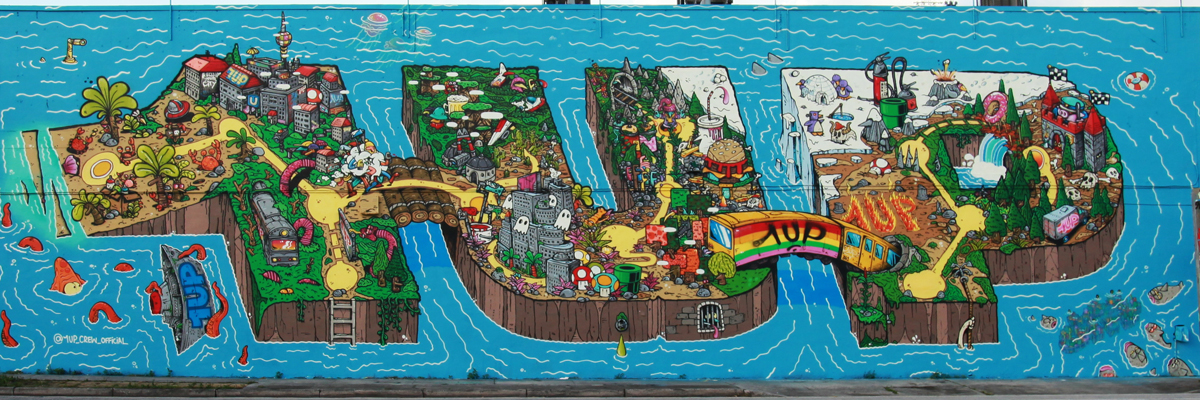
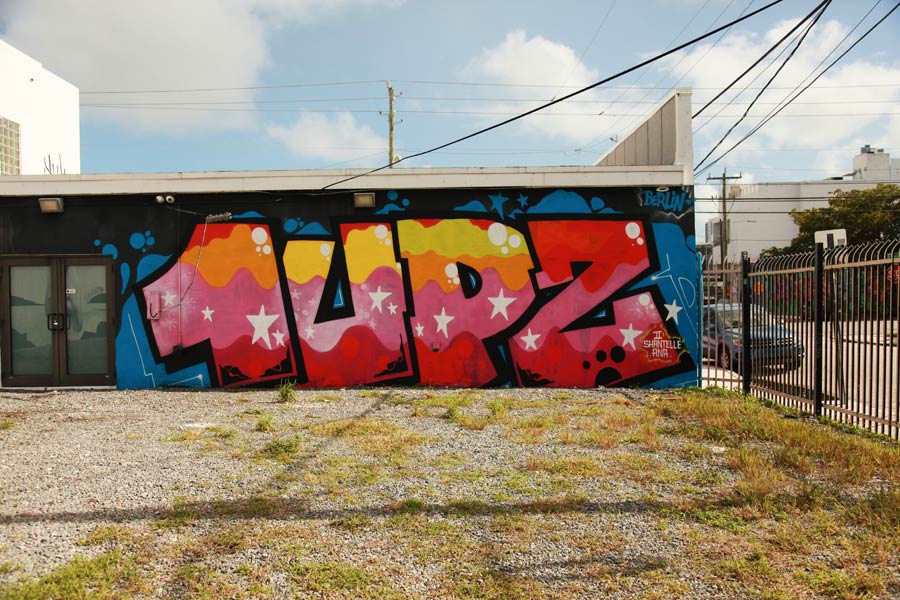
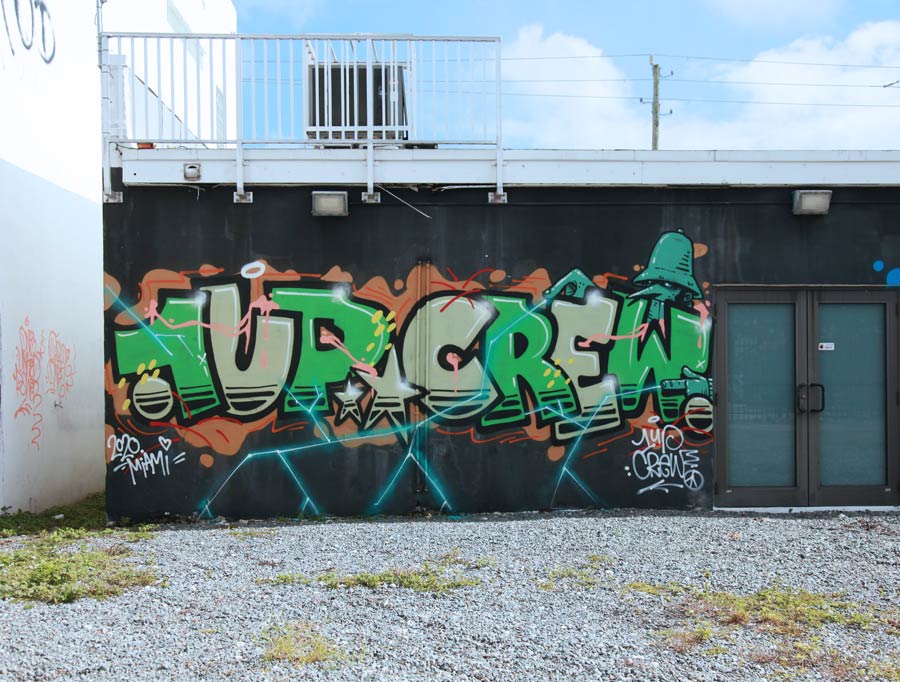
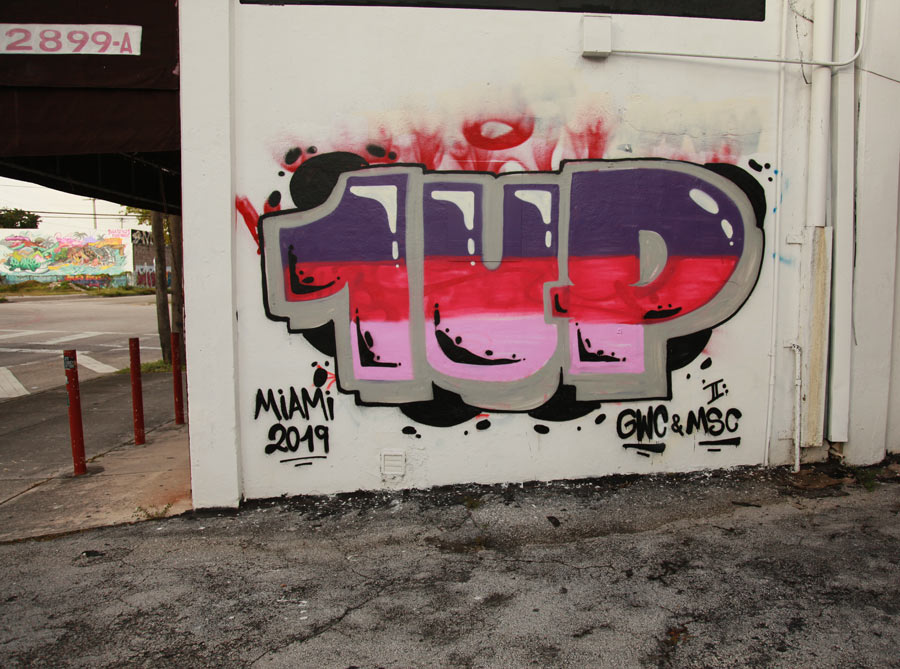
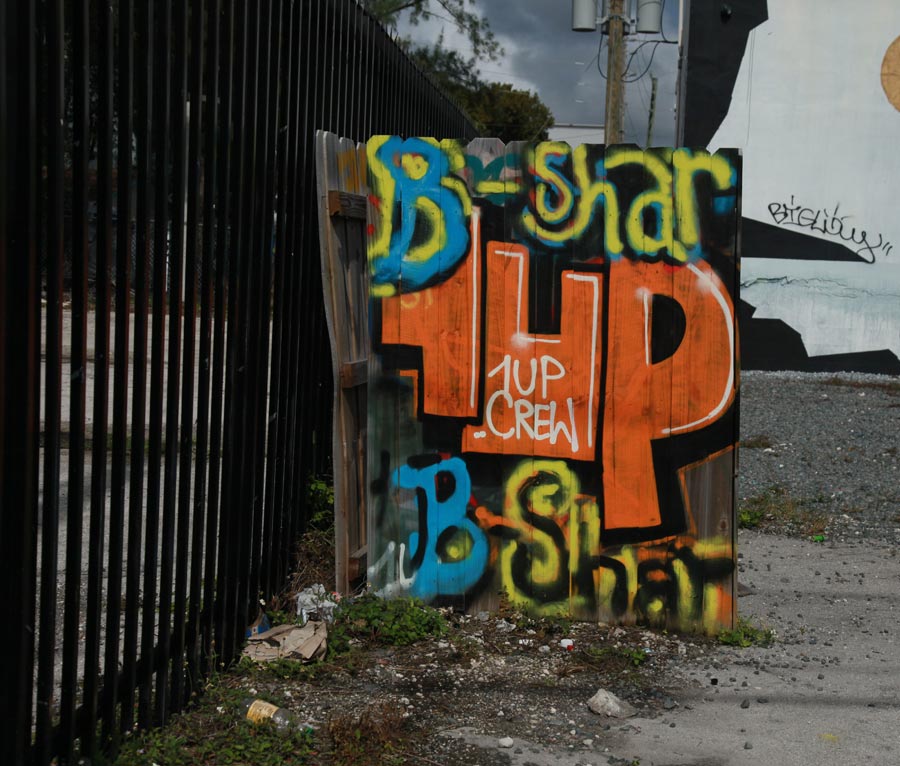
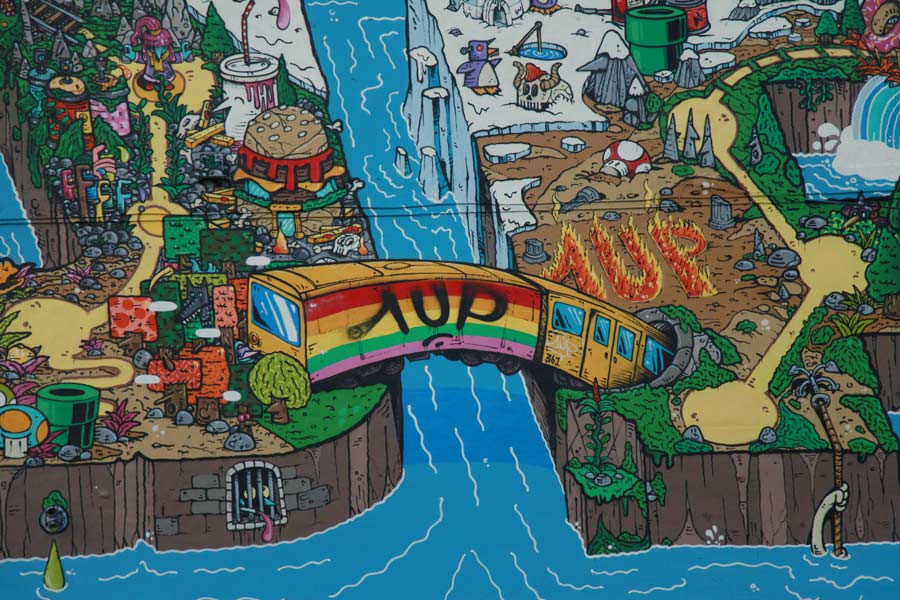
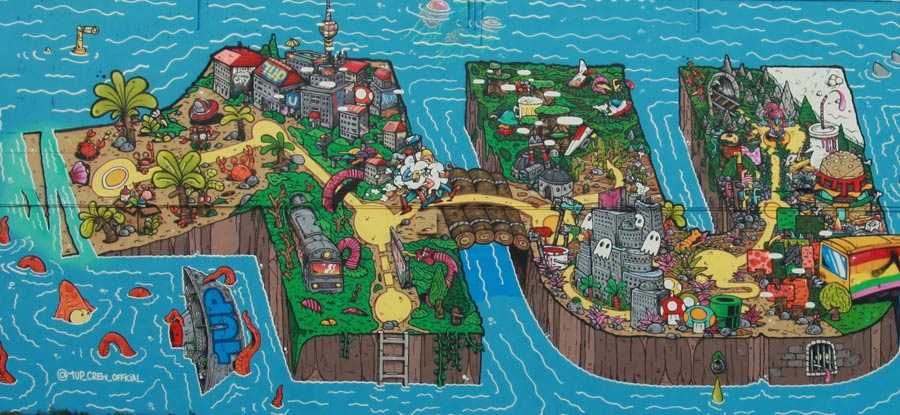
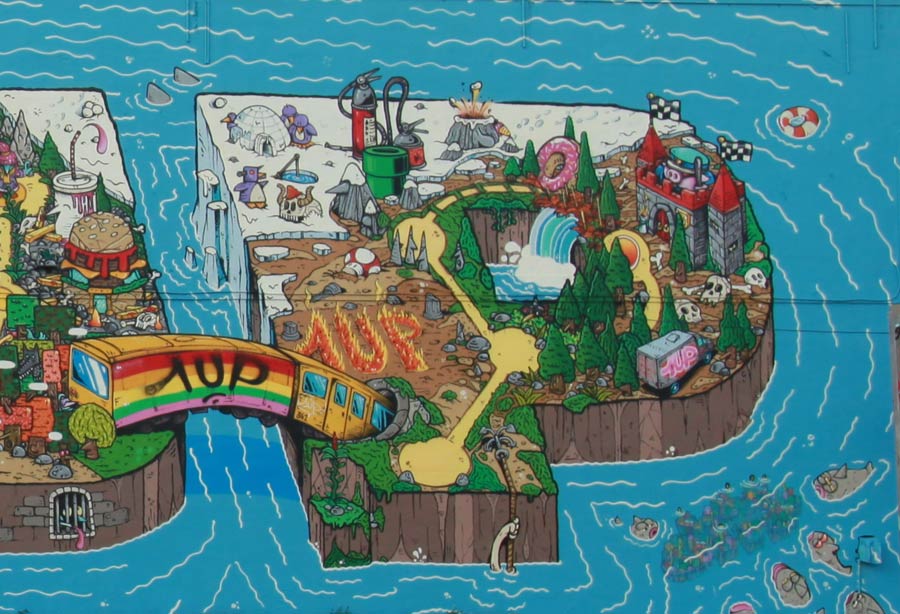
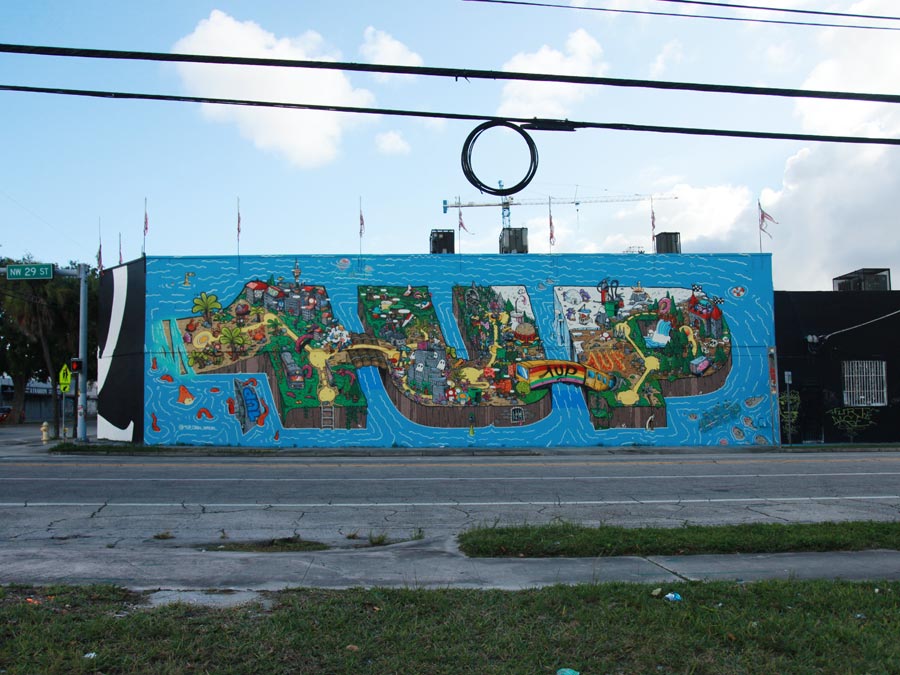
The ever-morphing conglomerate crew called 1UP appears and disappears in cities and countries across the world today, their tag aesthetics drawn from a smorgasbord of styles, rather than just one or two. On the radar, yet skillfully under it, the membership of this large team includes the raw and the polished, the illustrative and the calligraphic.
During Art Basel in December, it appears that a few writers of One United Power were in Miami outputting the simple one-color tags, tight bubbles and sparkling throw-ups, as well as full-blown productions that conjure other worlds and childhood fantasy-scapes.
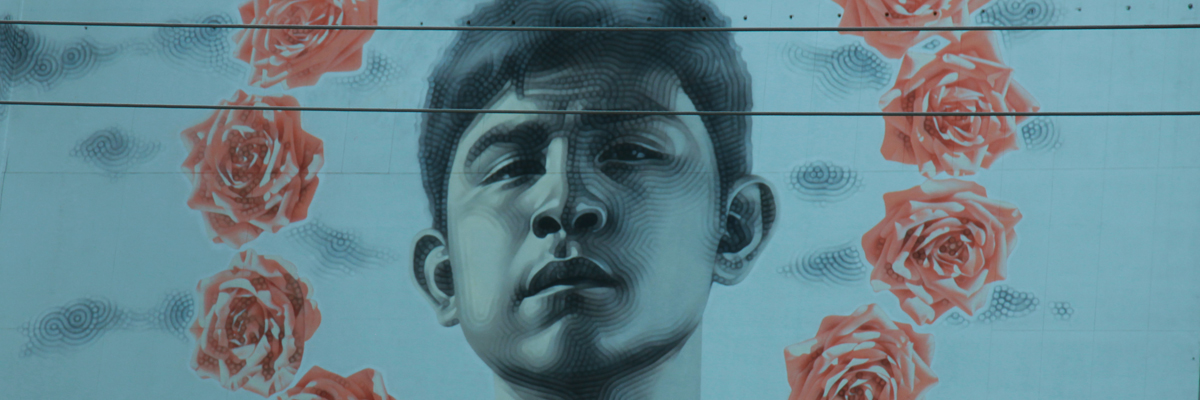
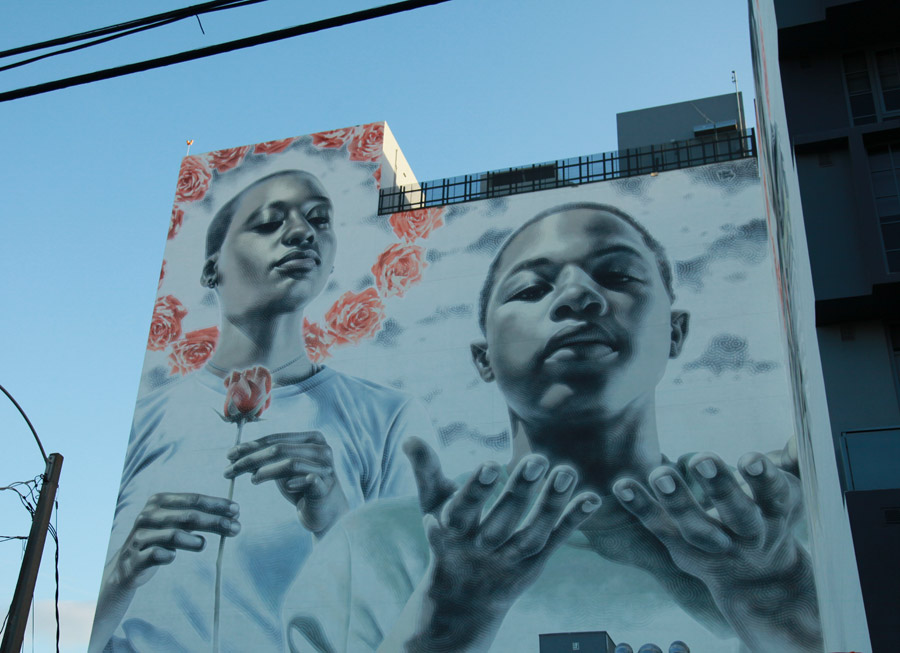
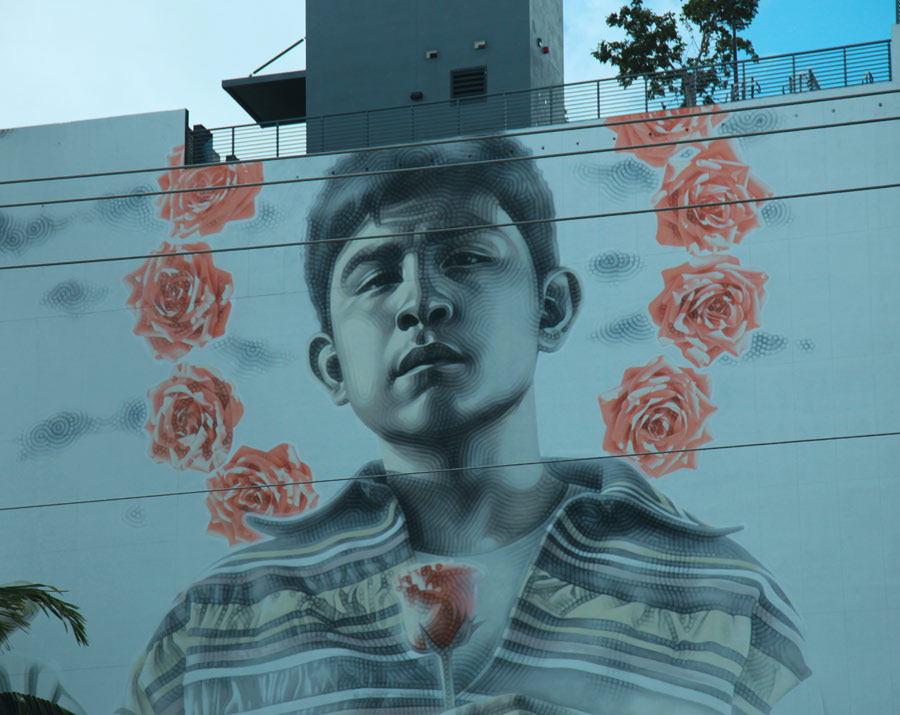
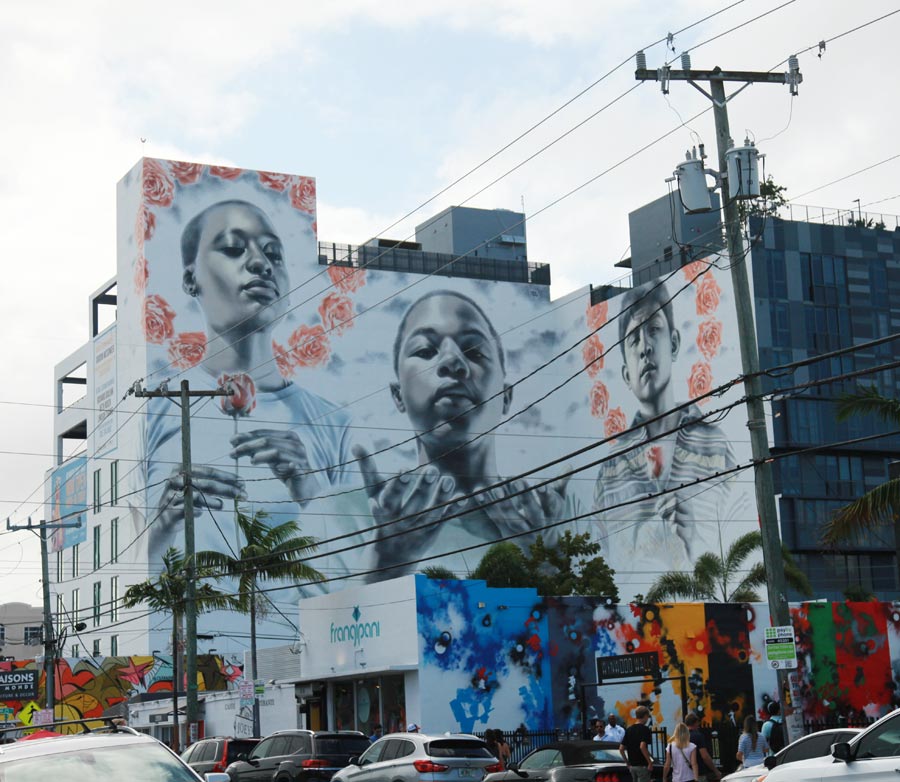
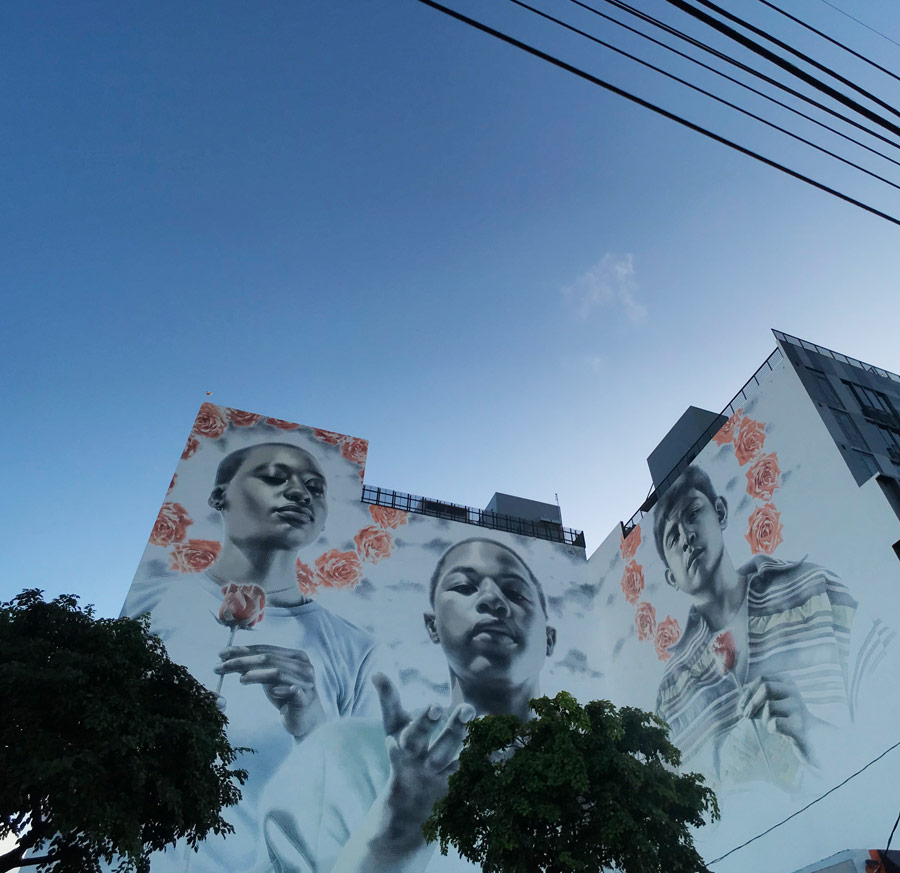
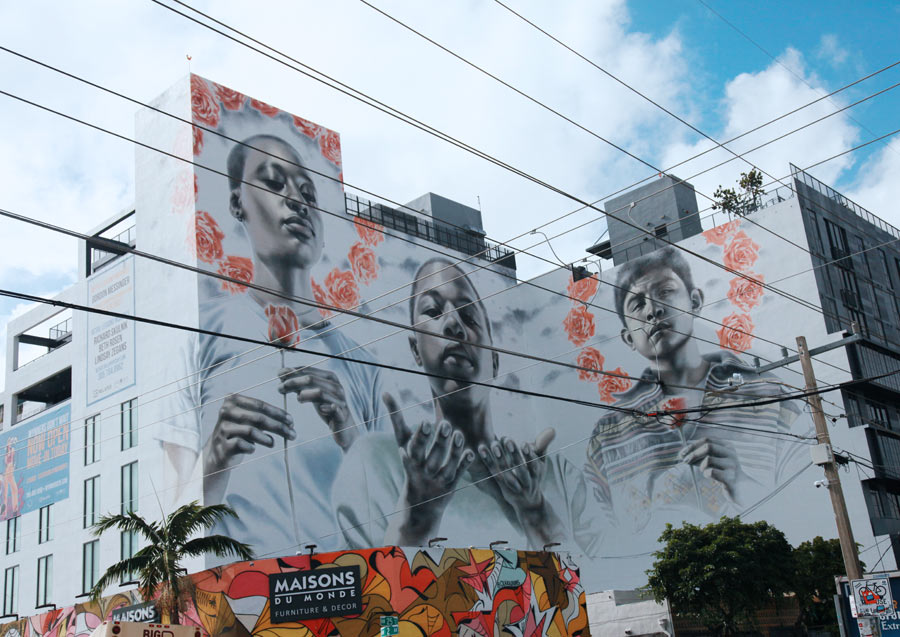
You can see Wynwood from Miami Beach now, thanks to new multi-story buildings sprouting up in this art-washed neighborhood, transforming its former glory into something far above you. Soaring upward a few stories are these three, painted by the west coast street artist Miles MacGregor, known as El Mac, who elevates the everyday hero once again on a large scale.
The new
apartment complexes like these are replacing the charming one story high stucco
“bodegas” and warehouses selling Chinese manufactured goods in bulk. The
young sitters appear to be of African and Latin ancestry and you are reminded
of America’s professed love of inclusivity and equality – not the class/wealth-based
exclusivity that is constantly hammered into our collective consciousness by
the relentless ads of luxury brands and lifestyle marketing that only a very
small fraction of the populous will ever own.
These
are soft-faced, serene-looking children; two of them holding a single rose and
one of them with his hands extended as if offering a prayer or beckoning you to
step into his world. Perhaps they are saints, but it is difficult to discern
what their role is. El Mac asks us to turn our attention to the experimental
novel ‘Beautiful Losers,” by Leonard Cohen.
“What is a saint? A saint is someone who has achieved a remote human possibility. It is impossible to say what that possibility is. I think it has something to do with the energy of love. Contact with this energy results in the exercise of a kind of balance in the chaos of existence. A saint does not dissolve the chaos; if he did the world would have changed long ago. I do not think that a saint dissolves the chaos even for himself, for there is something arrogant and warlike in the notion of a man setting the universe in order. It is a kind of balance that is his glory. …
Something in him so loves the world that he gives himself to the laws of gravity and chance. Far from flying with the angels, he traces with the fidelity of a seismograph needle the state of the solid bloody landscape.”
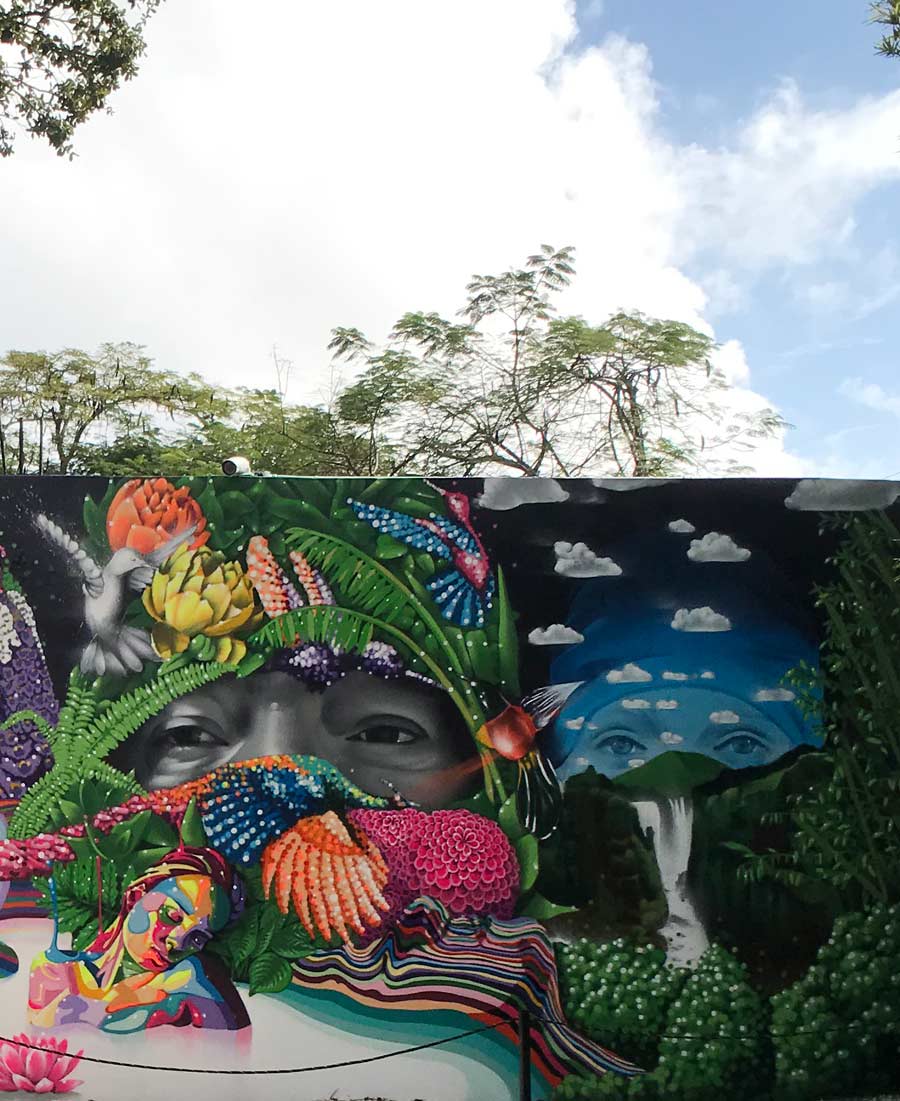
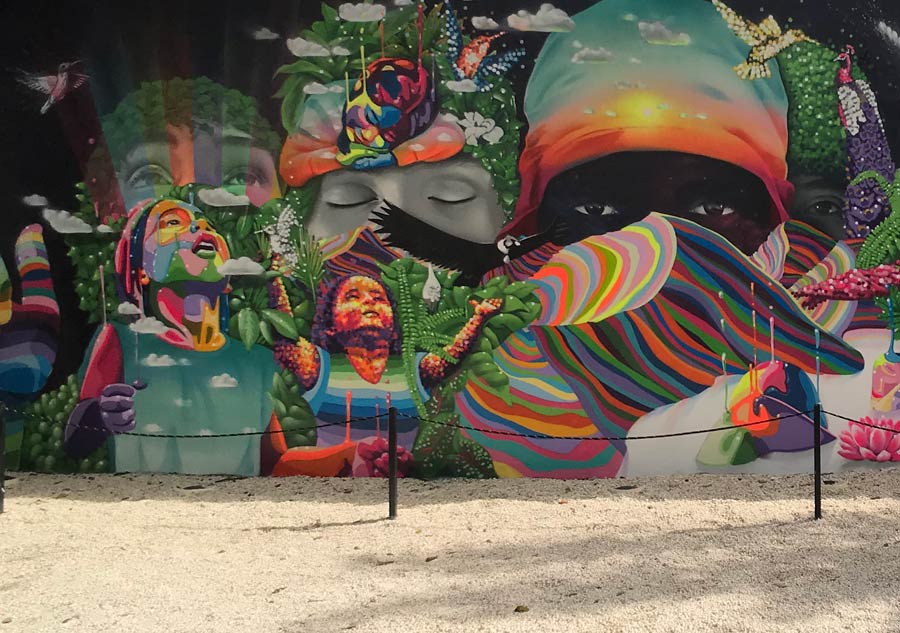
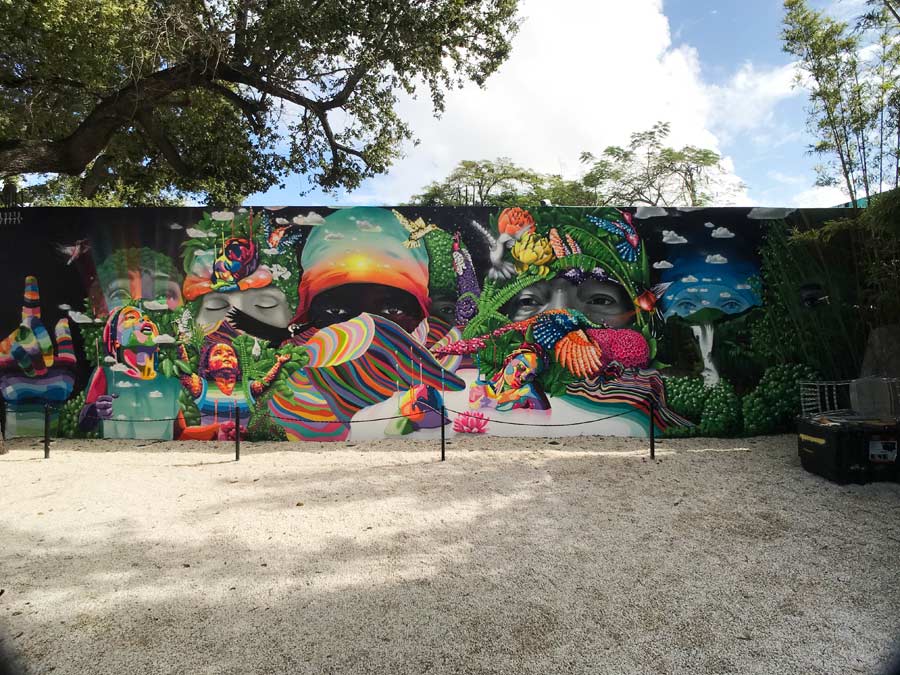
Welcome to Wynwood! – A little piece of chaotic urban paradise and real estate development that has blossomed into a mini-holy city for fans of murals.
The convergence of three events during the 2010’s – cheap digital camera phones, social media, and mural festivals – have created this intense and colorful tourist neighborhood in Miami during the same time. The sheer number of happy extended families, groups of friends, and couples in love all were converging on the evolving neighborhood to see art in the streets. They also take pictures with it, pose in front of it, buy refrigerator magnets of it, and listen to tour guides speak about it.
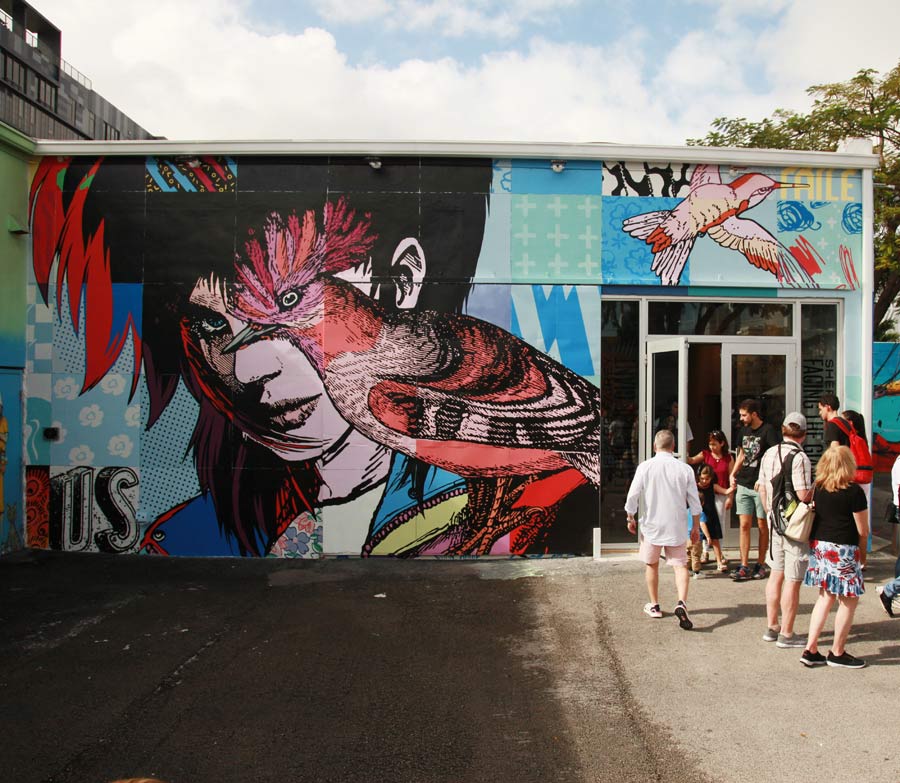
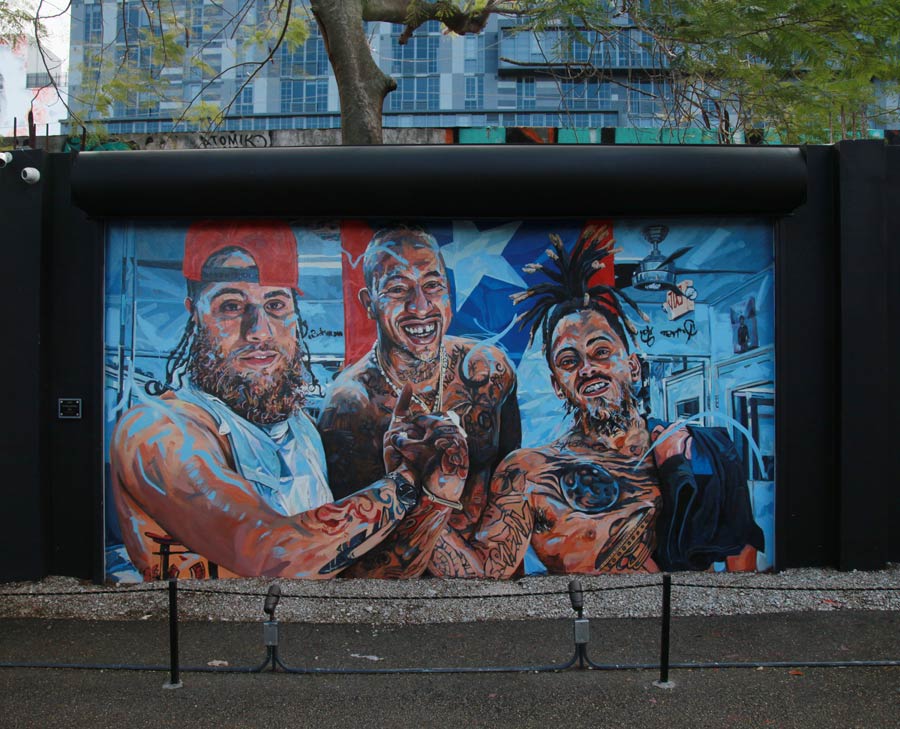
During a recent day in the Wynwood Walls compound, which is surrounded on neighboring streets with a plethora of other murals, unsanctioned Street Art, and graffiti, we saw a number of newly painted murals that have replaced others there. We also saw that a few of the old favorites have been reinvigorated. Here is just a handful of images of the action.
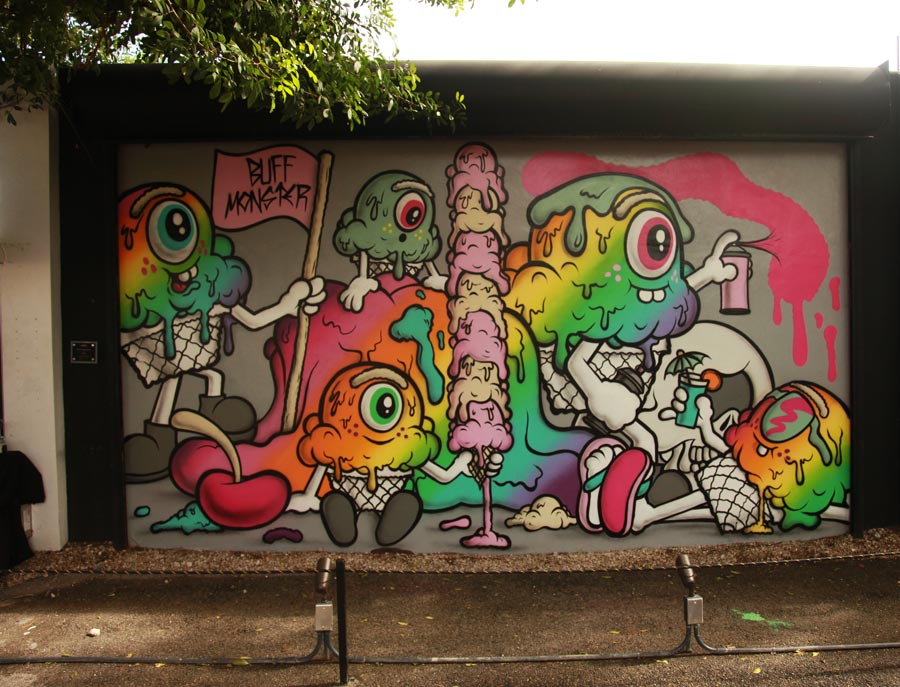
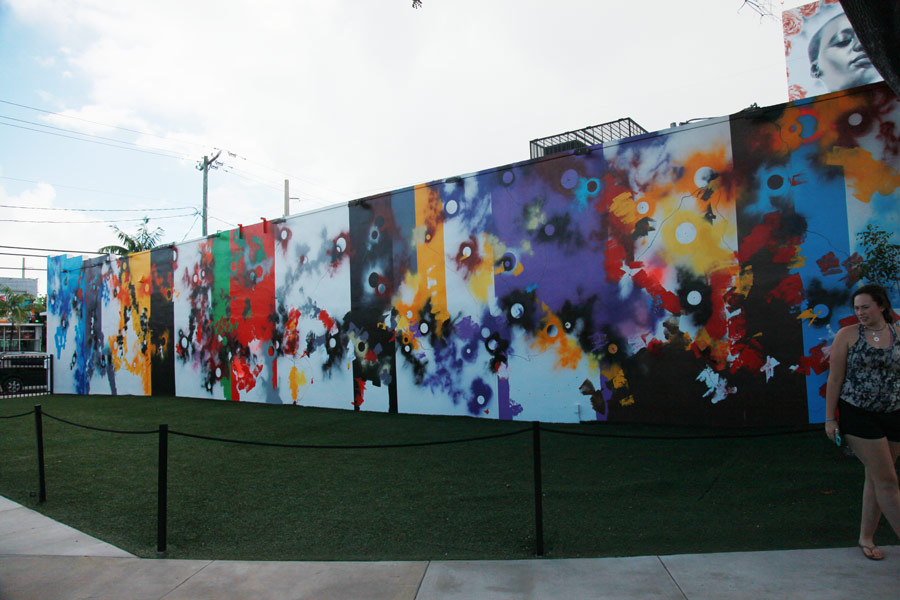
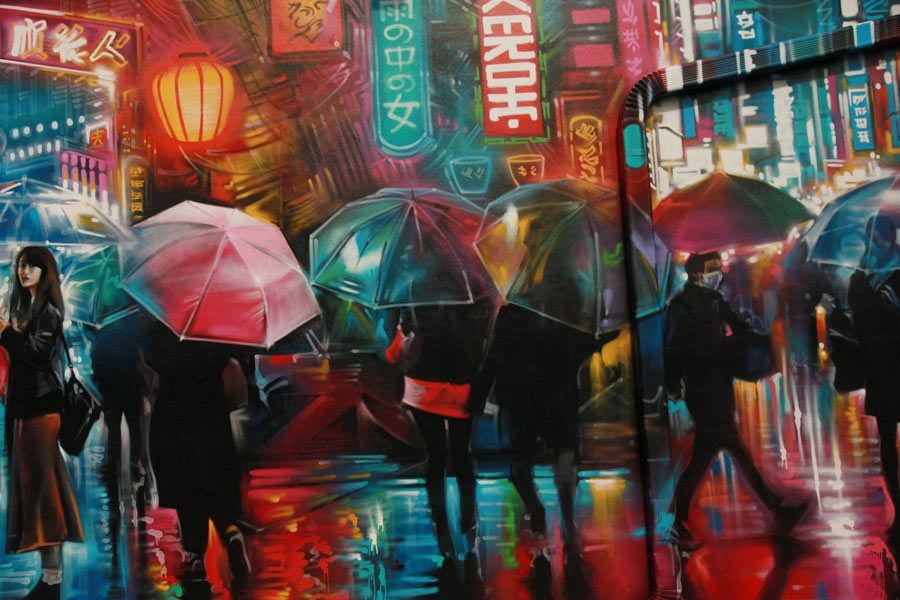
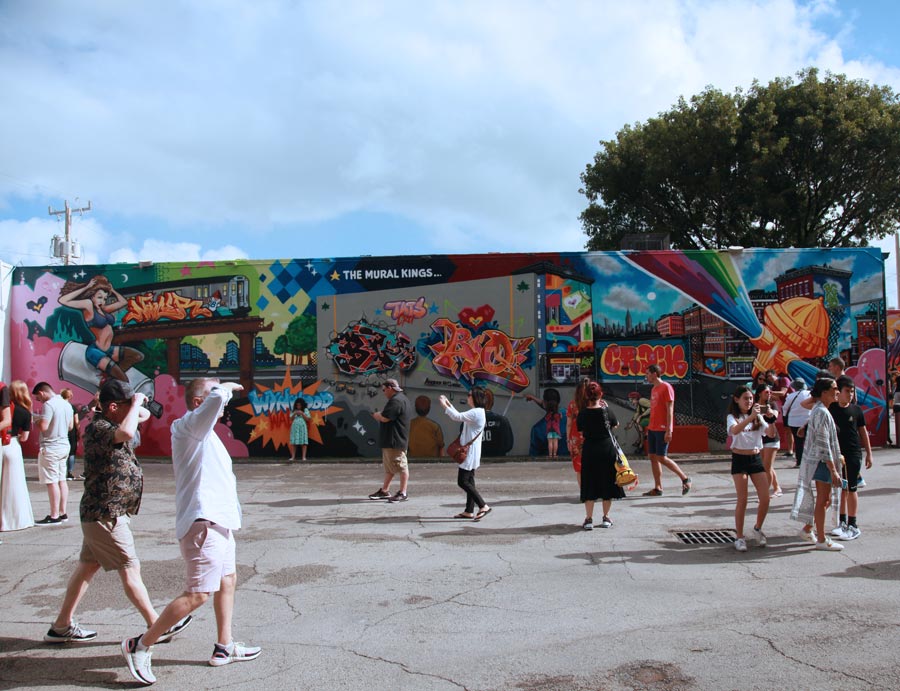
Here’s our weekly interview with the street, this week from Miami, and this time featuring Dasic Fernandez, Ernesto Maranje, Faile, Michael Vasquez, Buff Monster, Futura, Dan Kitchener, and Tats Cru.
 BROOKLYN STREET ART LOVES YOU MORE EVERY DAY