Our weekly focus on the moving image and art in the streets. And other oddities.
Now screening : 1. Vegan Flava – Signs on the Surface
BSA Special Feature: Vegan Flava – “Signs on the Surface”
Yes, we just passed the Easter/Passover holidays, and many parts of the Northern Hemisphere have already burst into Spring.
In Sweden, it takes a little longer to get to seeing flowers and new grass.
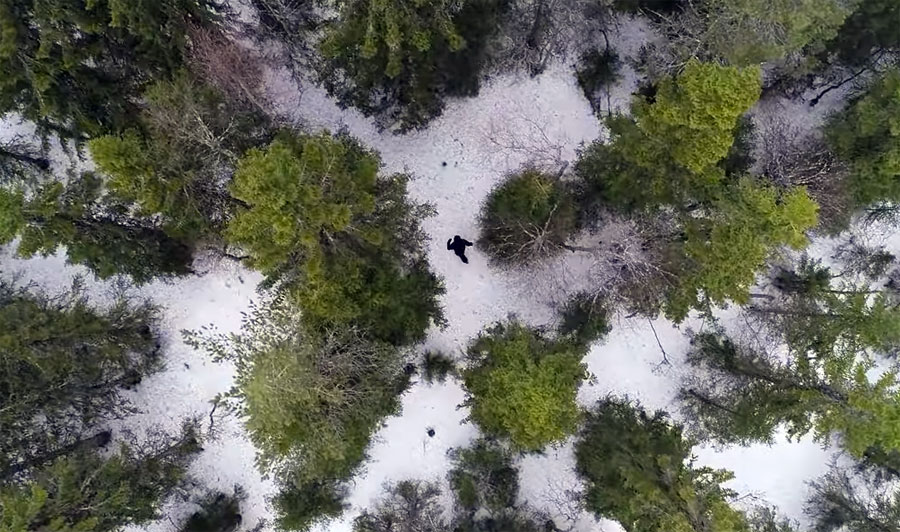
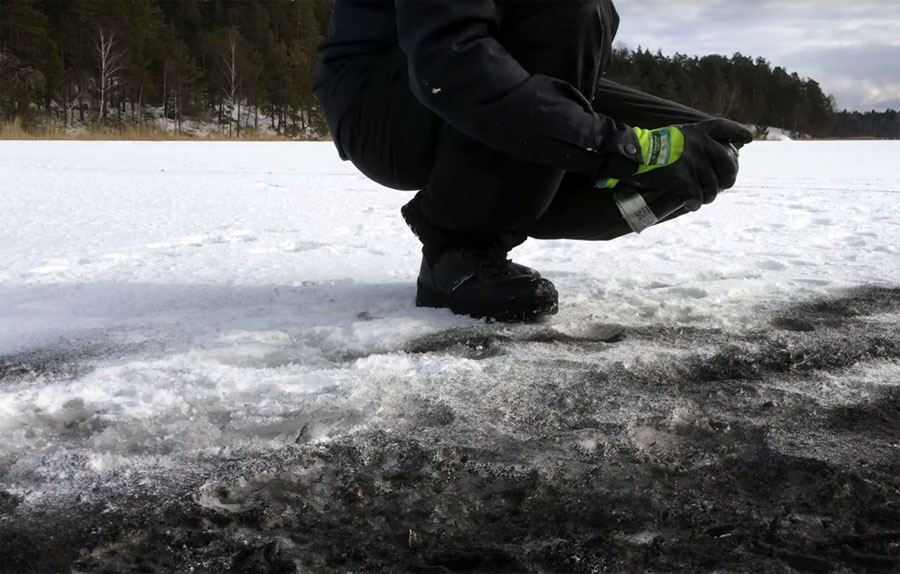
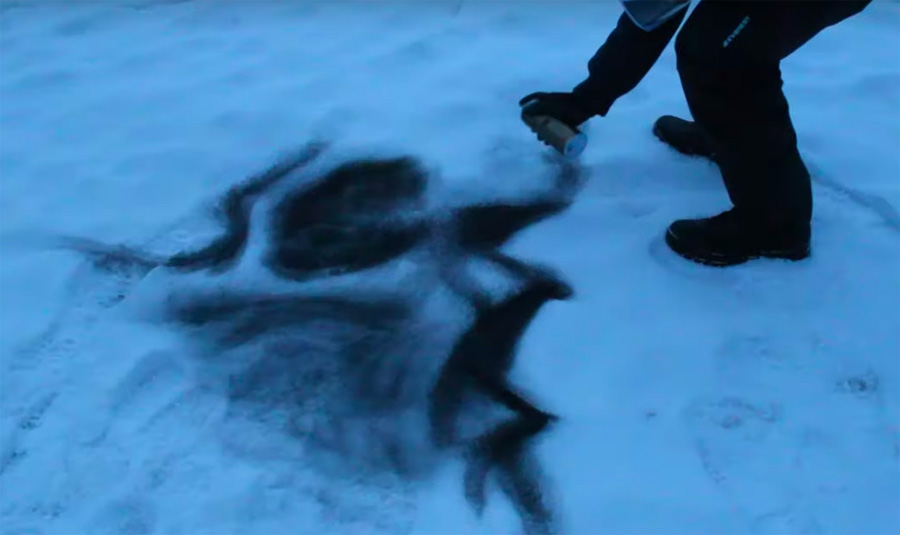
Street Artist Vegan Flava shares with us the product of a full winter of communing with a frozen lake – and finding a way to bring his street art skillz to the ice. Today in one video we present a sizeable compilation of various installations he did when the water was frozen, piled with snow.
He calls them “direct actions”.
“In these pieces I’ve mostly used biodegradeable chalk spray,” he says, “a shovel and ash on the ice and snow.” It’s good to know that he is caring for the earth while making his mark upon it.
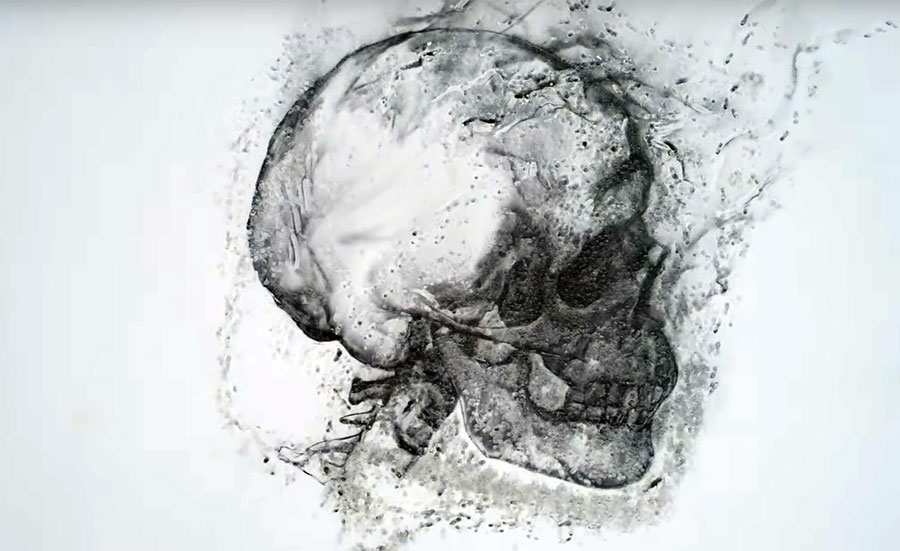
In an eerily familiar way, the experience of being out there feels like many people feel right now in quarantine – free with their expansive thoughts and ideas on a never-ending canvas, but not quite comforted. With each text message and skull rendering in the snow, these actually begin to look like graffiti tags, enormous hidden clues to a larger story.
HEAL – Human Earth Animal Liberation. It’s a big aspiration, writ large across this lake. This is just one of his texts, his poems, his urgent slogans.
“With
the winters’ first snowfall, billions of unique crystals fall in slow motion
and cover the landscape,” he says. “It looks like a gigantic sheet of paper. It
is beyond belief to be able to walk across the lake during the winter – the
same that we swim in during summer. If these phenomena weren’t real, I would
dream of things such as this and wish they existed.”
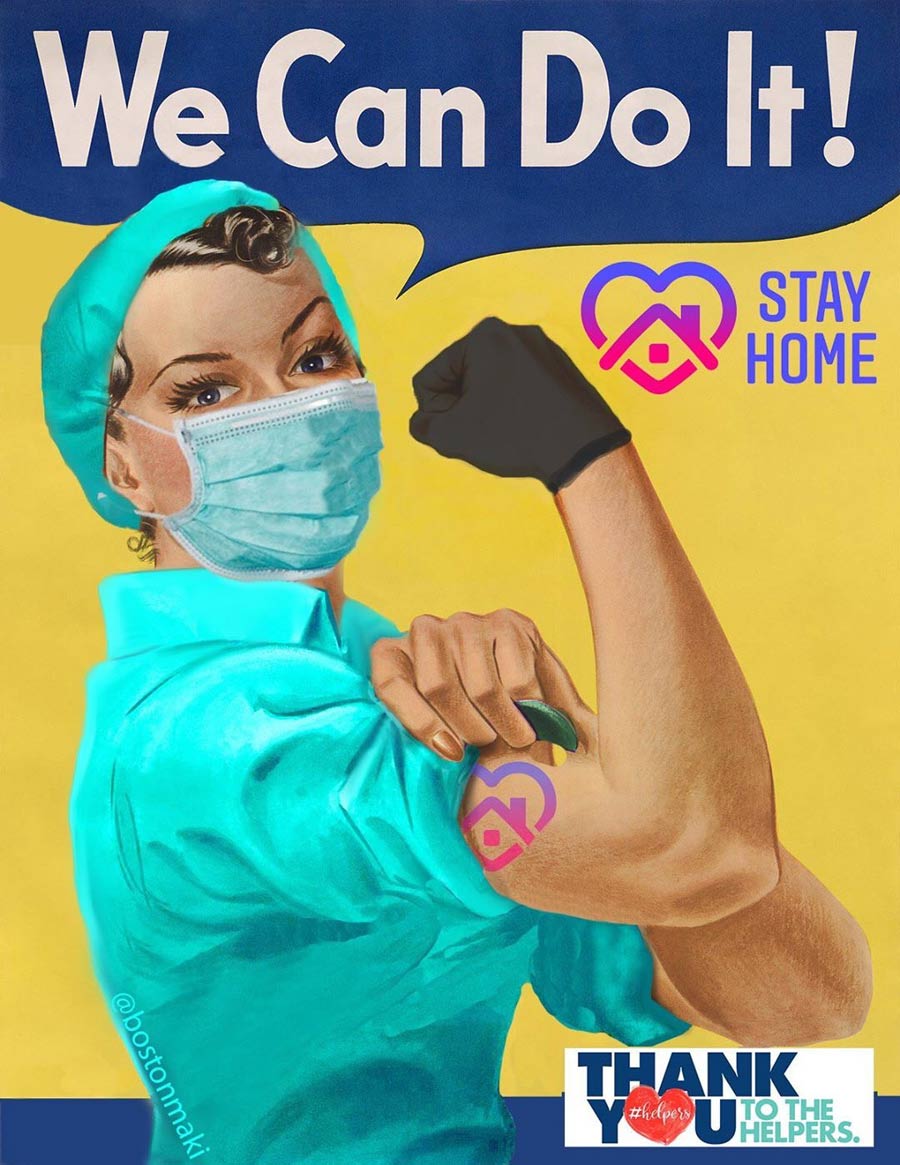
Rosie the Riveter has been working hard to raise awareness of political and social causes ever since the character was a propaganda tool for the “war effort” in WWII. The image of strength and defiance in the face of formidable foe, a symbol of women’s empowerment, this is an image that tells everyone to pull together.
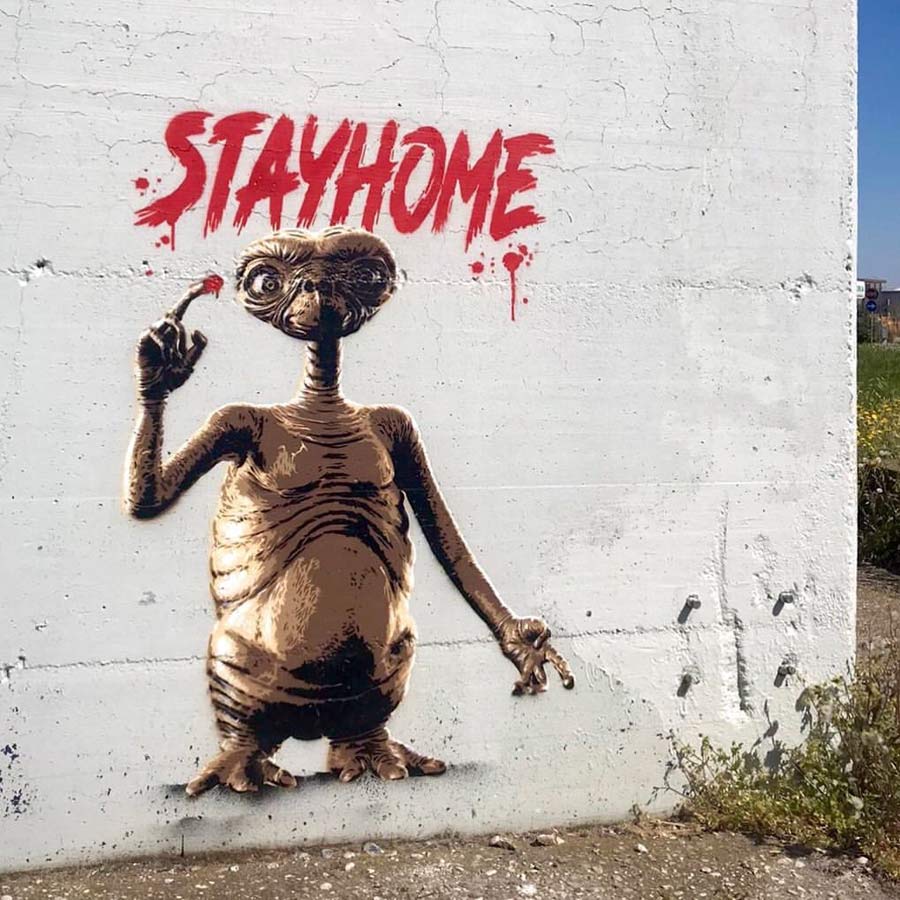
With a face mask and gloves, we admire her gusto and recognize that the burden of calamity often lands hardest on the working class and poor. Our sincere thanks to all the medical personnel who work so hard. Here re-interpreted by Maki from Boston, keep your eyes out on the street for this one. But really we should just STAY HOME.
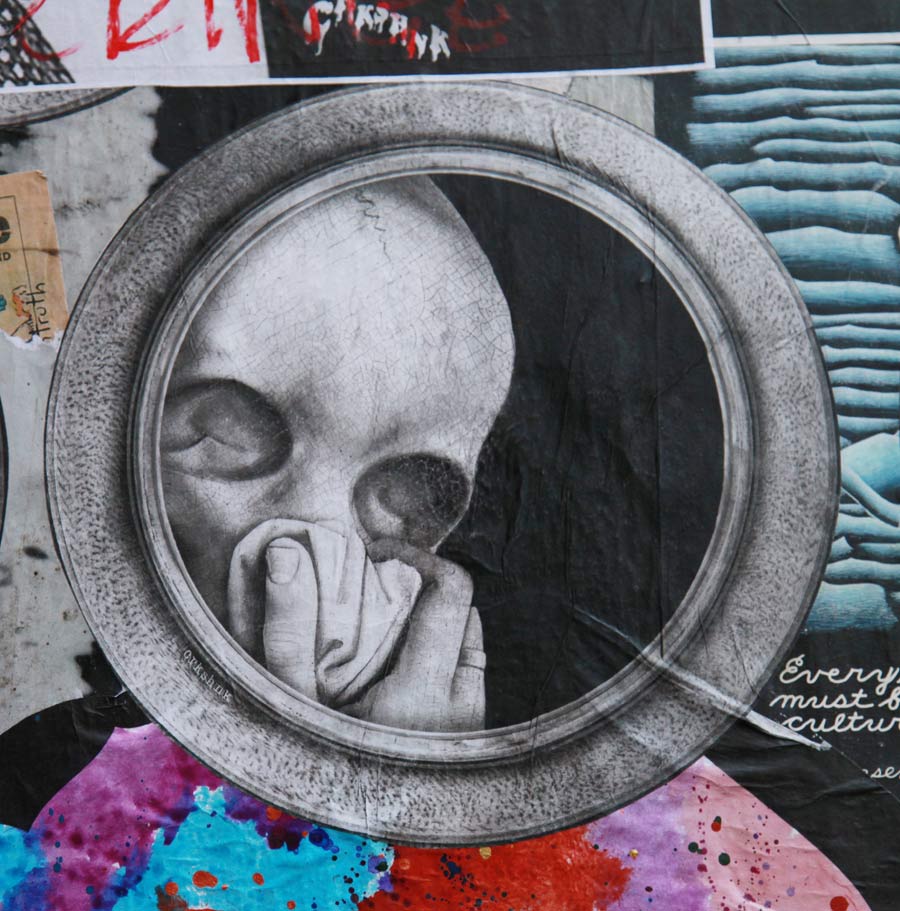
These portholes that pop up on walls in New York are often more spooky than you might expect; their framing so realistic, their contents so perplexing.
At first these inner views appear as a subtle shift from the windows, vents and grates that Street Artist Dan Witz has populated with his darkly realistic figurative paintings for many years, and these by CRKSHNK have a fictional character, a forlorn or puzzled demeanor.
Others veer off into science surreality, macabre, with mounds of flesh pocked with tufts of hair. Melted together and unhuman, they can be disturbingly sensual, sexual.
Here CRKSHNK implies that this married fellow doesn’t know that he’s already dead. Blowing his nose. Hoping this virus doesn’t get ’em.
Stay positive, stay strong, say a prayer for the families who have lost someone and the medical personnel who are working so hard. Happy Easter! Happy Passover!
When times are suddenly hard, you have to be creative.
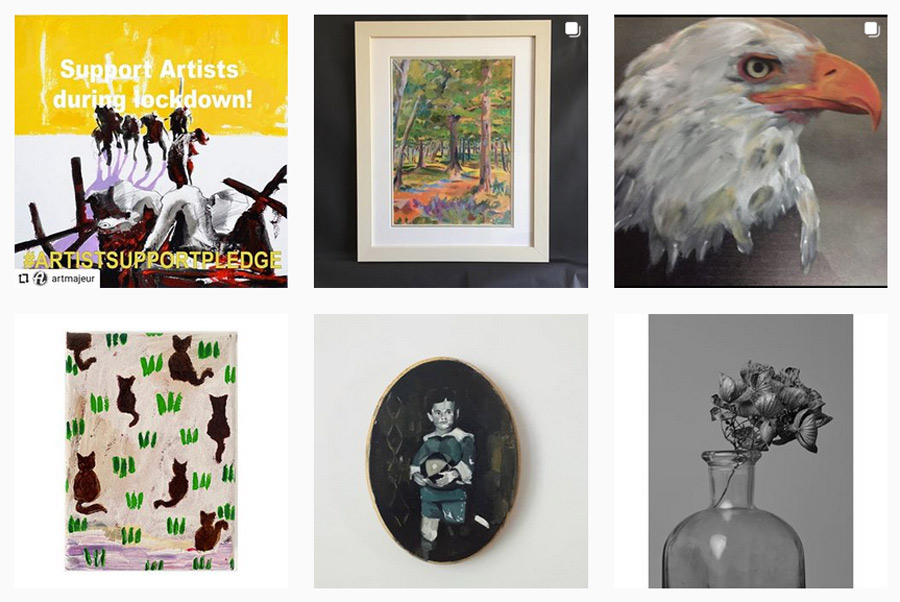
Many artists have gone without work in the last month across the US and Europe and elsewhere – their freelance jobs have dried up, their side hustle stopped hustling.
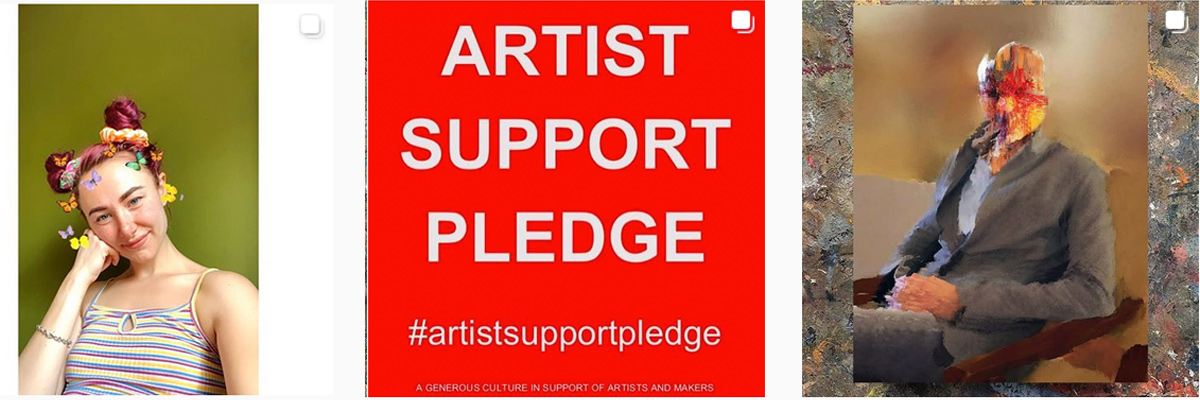
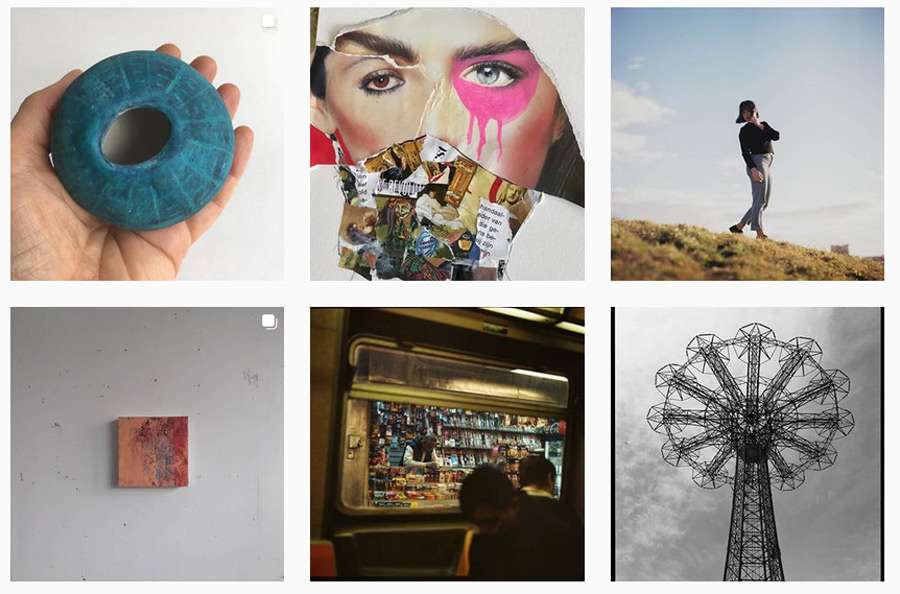
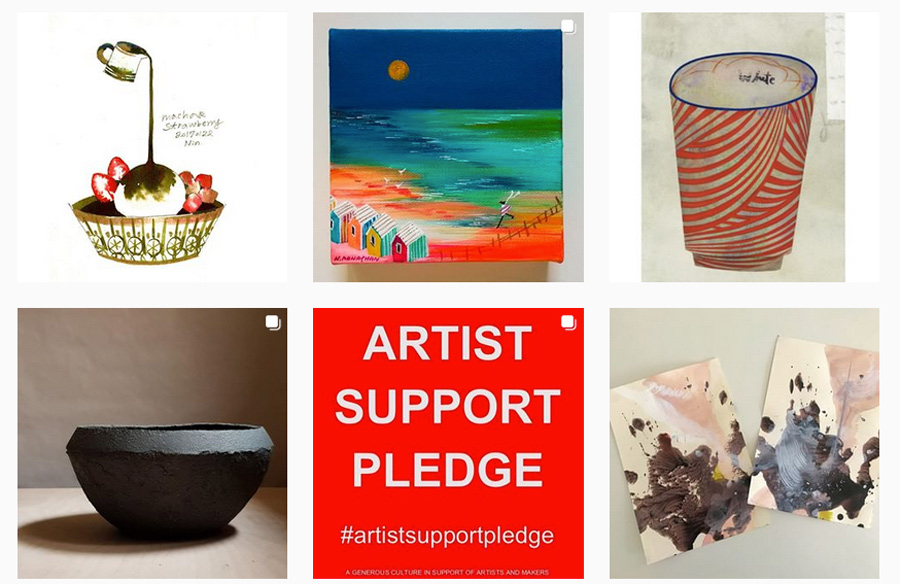
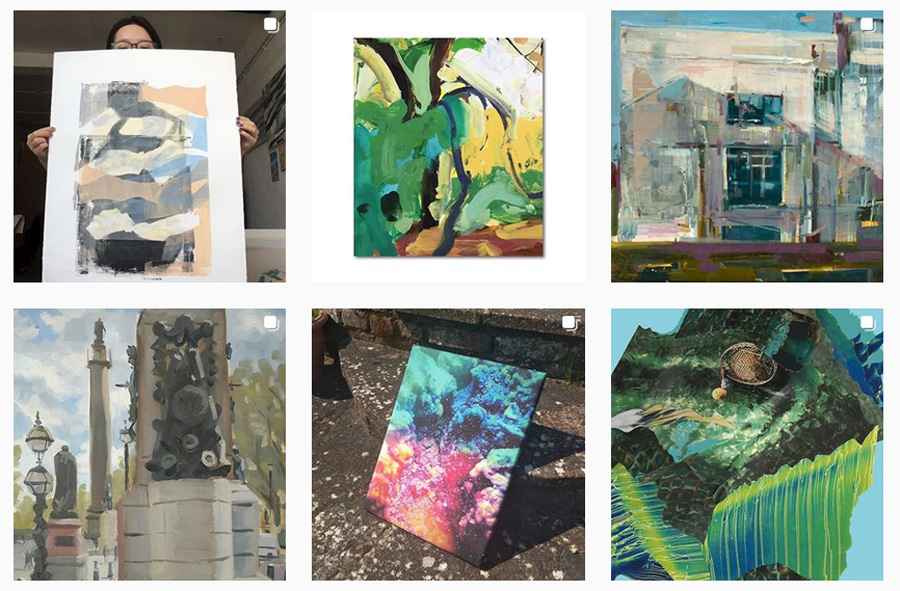
Artist Matthew Burrows from Sussex in England has come up with a way for a growing number of artists to band together and help one another, to alleviate a little of the financial insecurity, to gain greater exposure to potential buyers, and strengthen their personal networks with one another. What was initially a local effort appears to be successfully spreading internationally.
The ARTIST SUPPORT PLEDGE is not complicated and depends on the honor system. Post one of your works on Instagram for sale at 200 dollars (or Euros) and use the hashtag #artistsupportpledge. Every time your sales reach $1000, you pledge to spend $200 on another artists work.
This sounds like an excellent way to leverage support and circulate at least some wealth in the greater artist community. Also, there is nothing like have the great satisfaction of supporting one another, and feeling supported.
If you have $200 to buy art, we heartily encourage you to check out #artistsupportpledge today!
Our weekly focus on the moving image and art in the streets. And other oddities.
Now screening : 1. 2020 RPM / UNO
BSA Special Feature: 2020 RPM / UNO
An expert interconnector of textures and patterns of urban living and pop art sensibilities, the Italian Street Artist UNO captures the essence of his inside life during quarantine in a new brief video today.
A clicking time meter of life passing and the daily
benchmarks that give shape to one continuous life in captivity, it’s the
repetition that reveals the patterns, the subtle variations encoded in the DNA
of living.
Here’s UNO in Rome, spinning at 2,020 revolutions per
minute.
Always wanted to make suggestions to Okuda about his color choices? Interested in being an assistant painter in his Madrid studio? Wishing you had an opportunity to adult-color but are missing the actual coloring book?
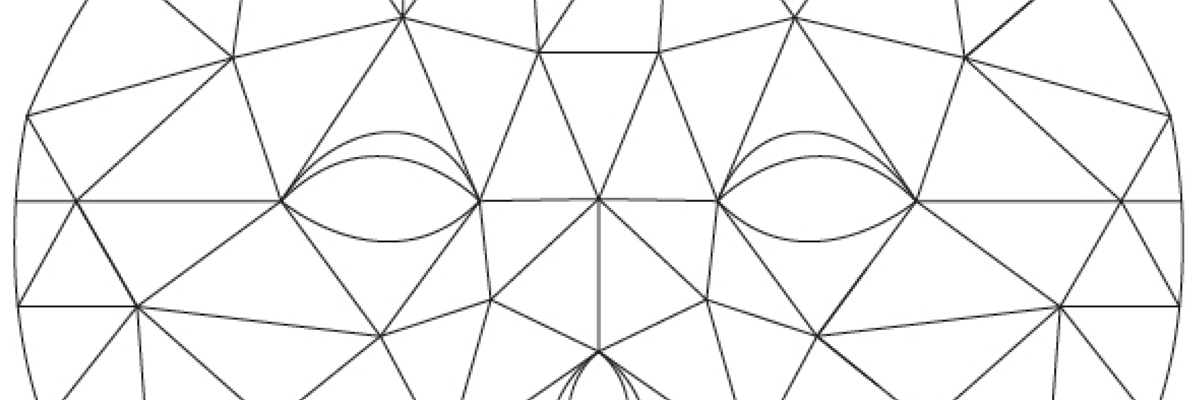
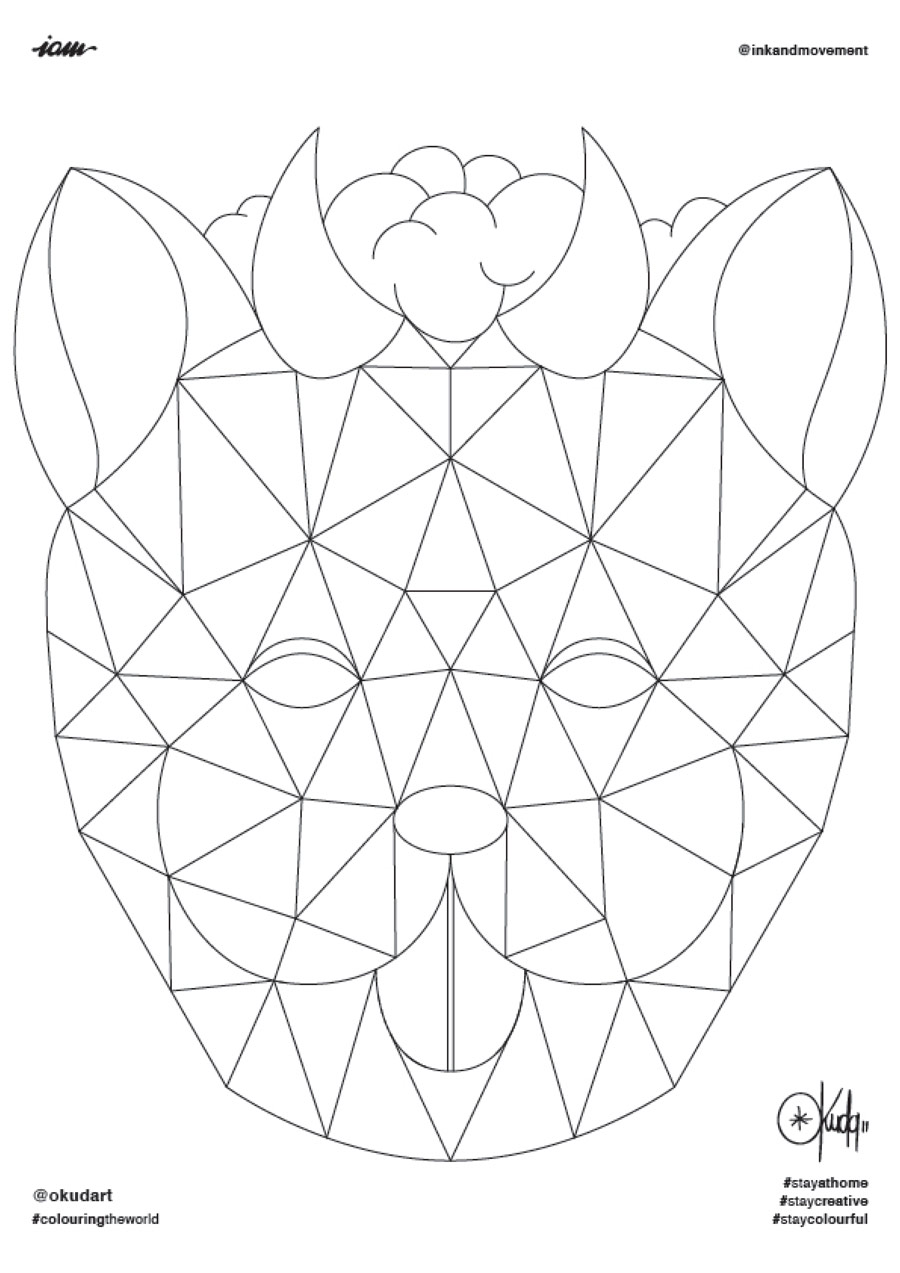
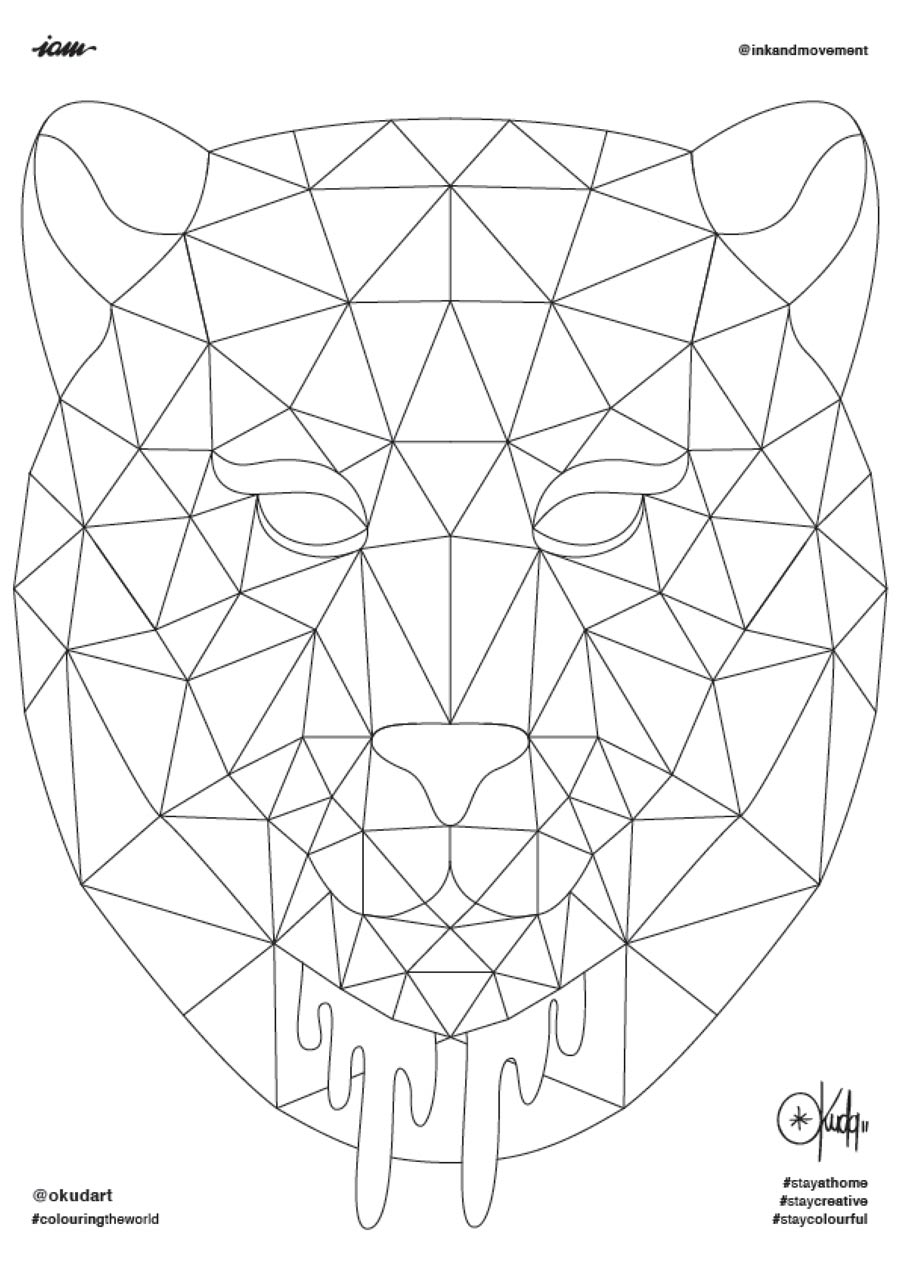
Have no fear Quarantennial! We have just the thing for you to download and print out and while away the hours. These are new polygonal spirit animals from Okuda San Miguel for you or the children in your home to create a mask with. Once you have finished coloring it and cutting it out, imagine the theatrical photos you can take around your bunker – not to mention the opportunity for role playing!
Ignited as a project with the Red Cross (please donate) the artist hope to bring color and positive vibes into your home. The learn more about his Colouring the World initiative, check out @inkandmovement on Instagram.
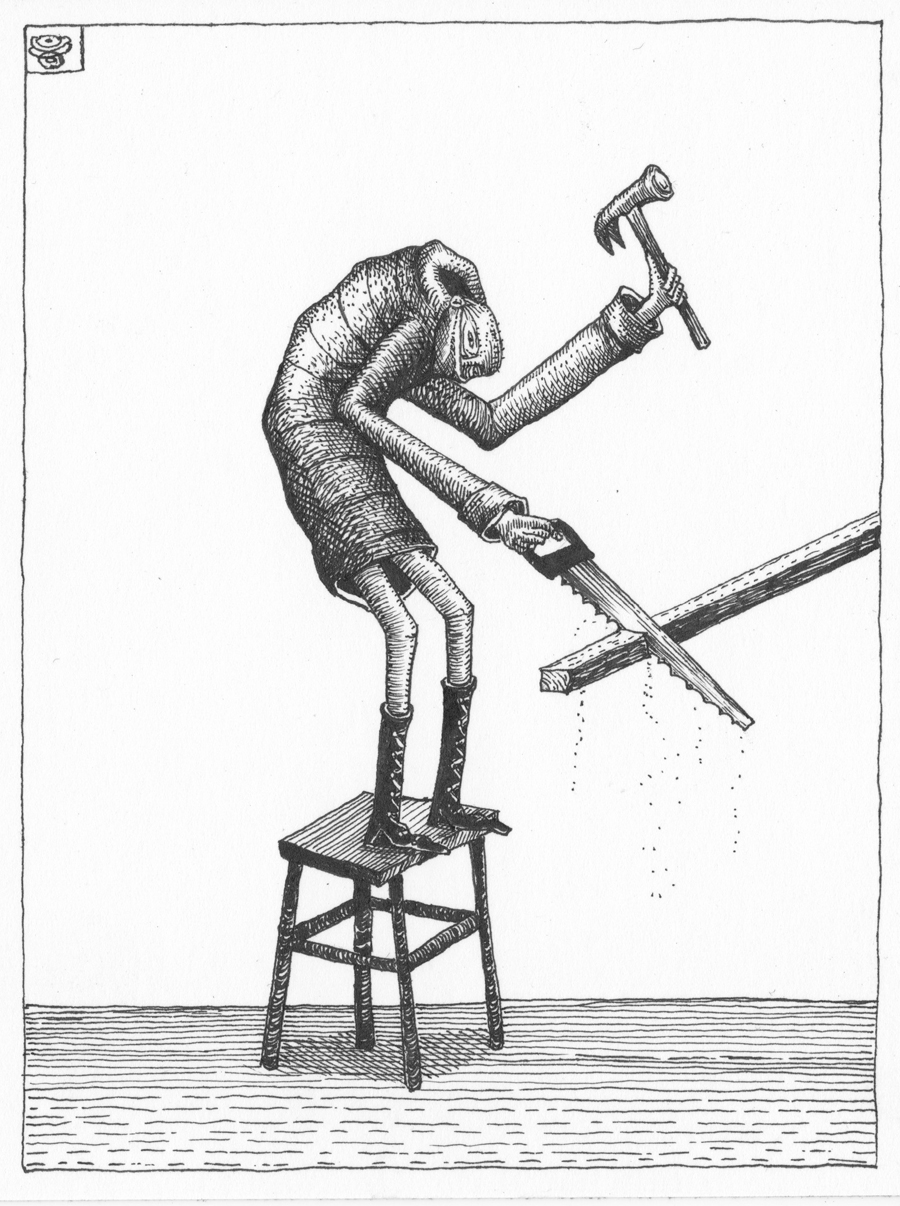
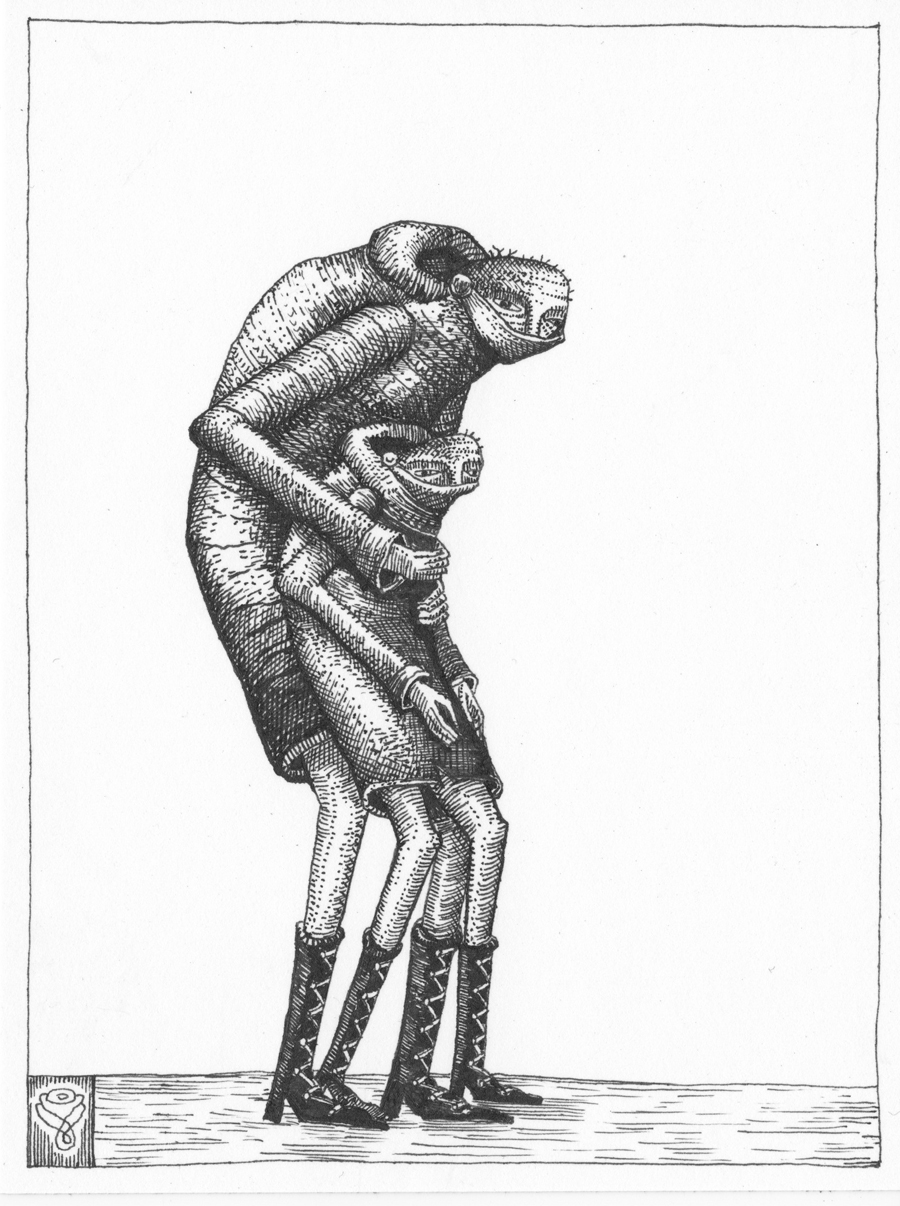
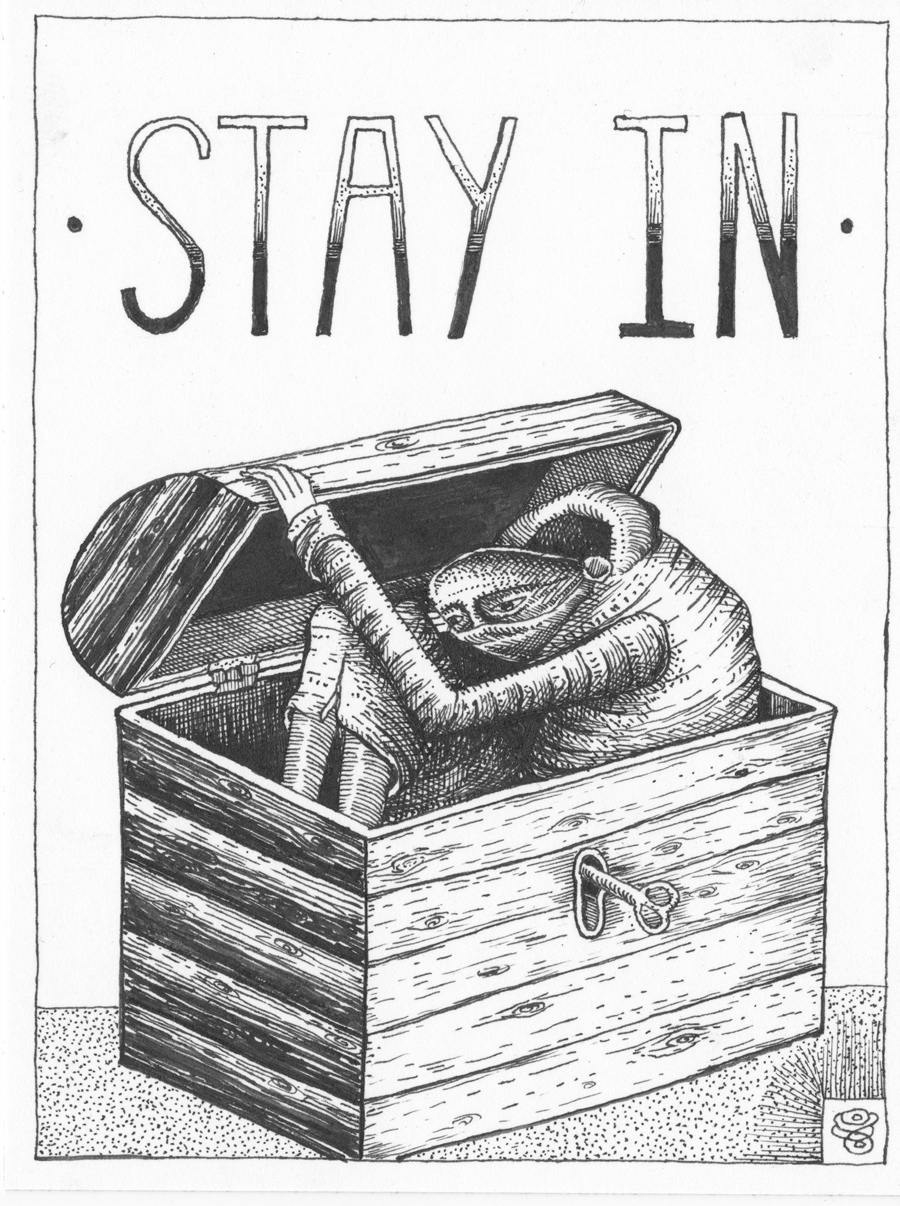
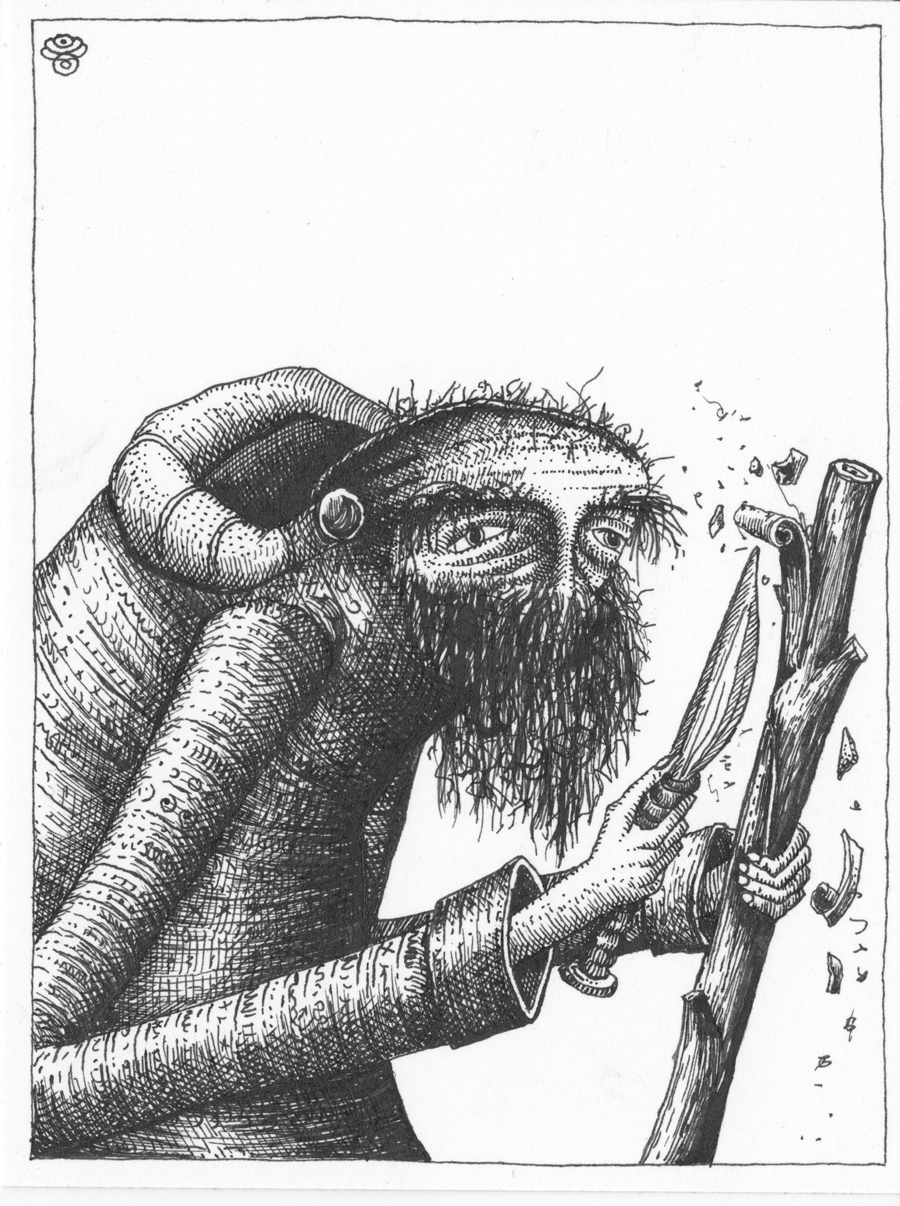
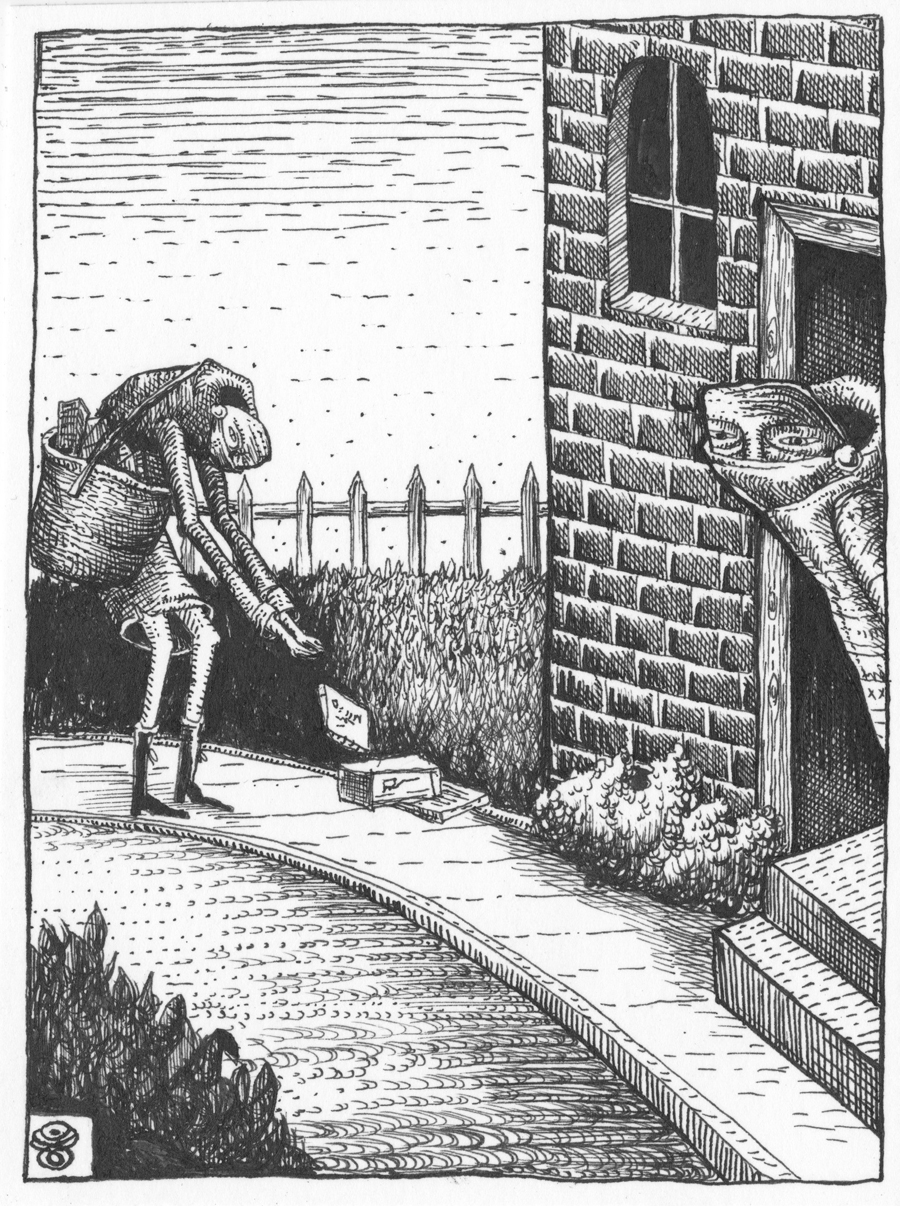
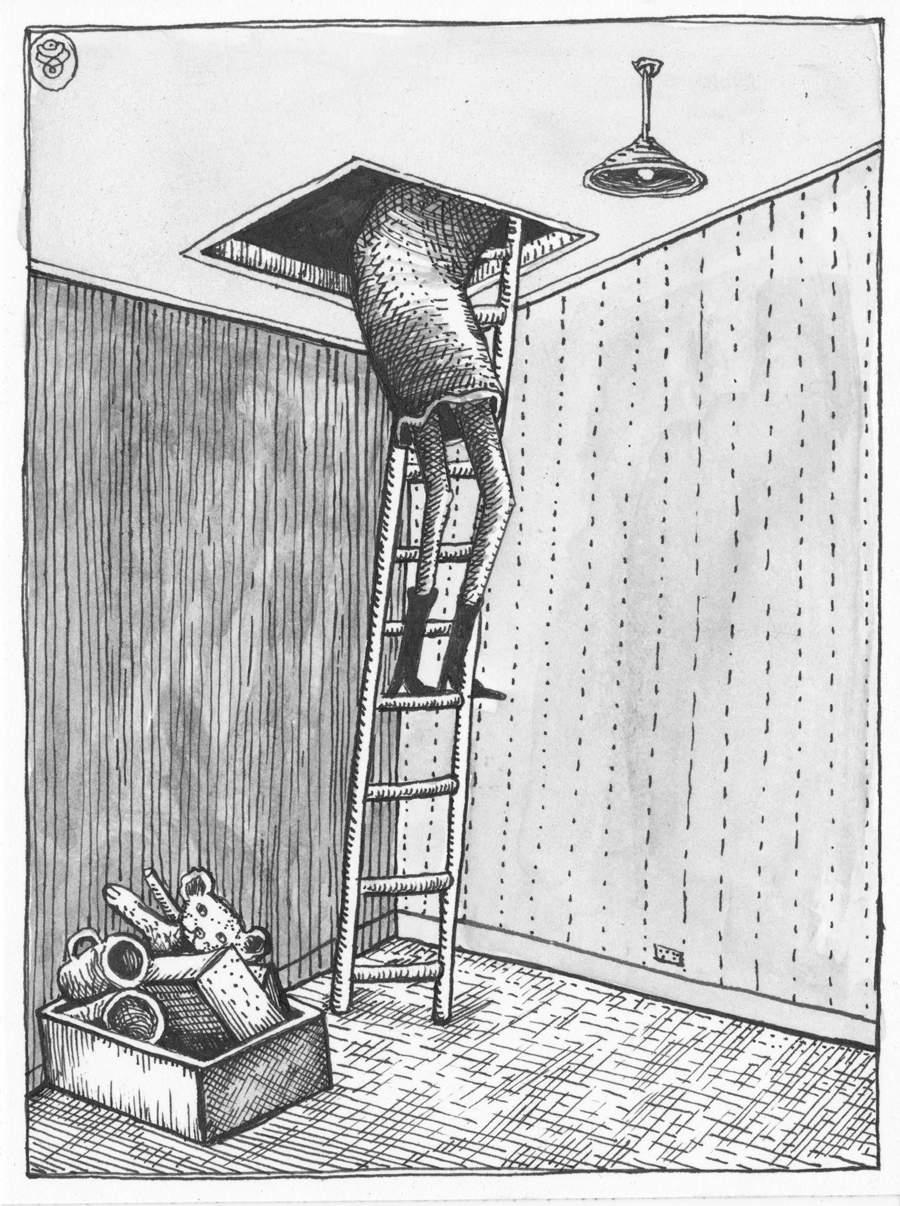
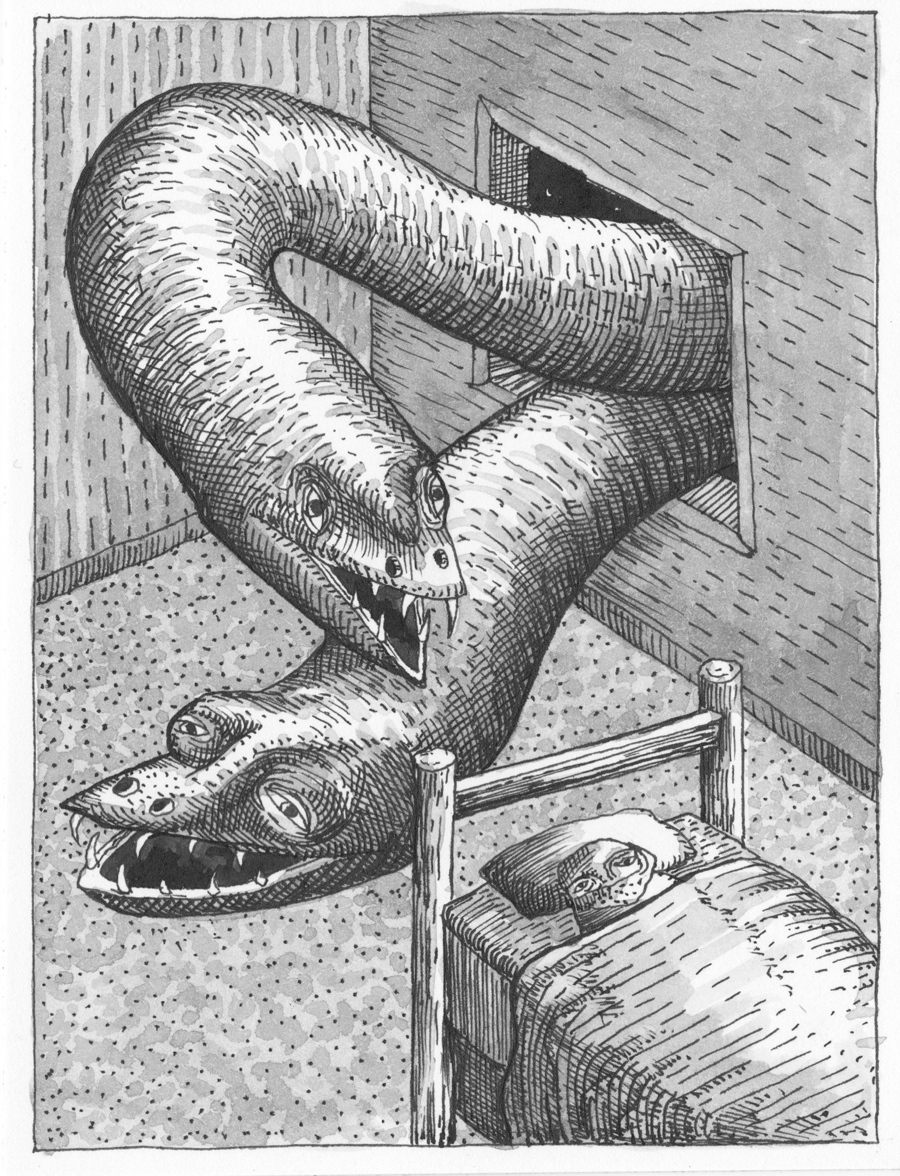
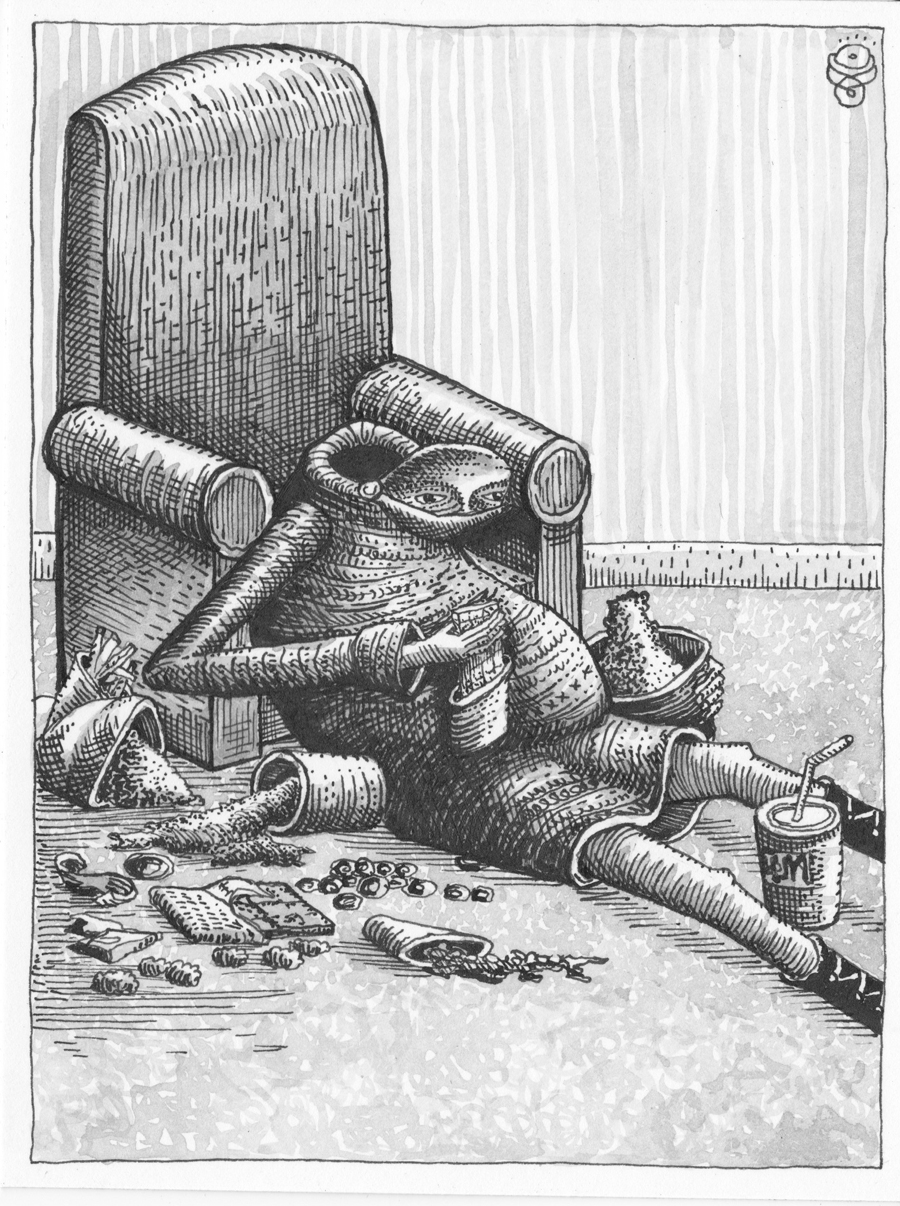
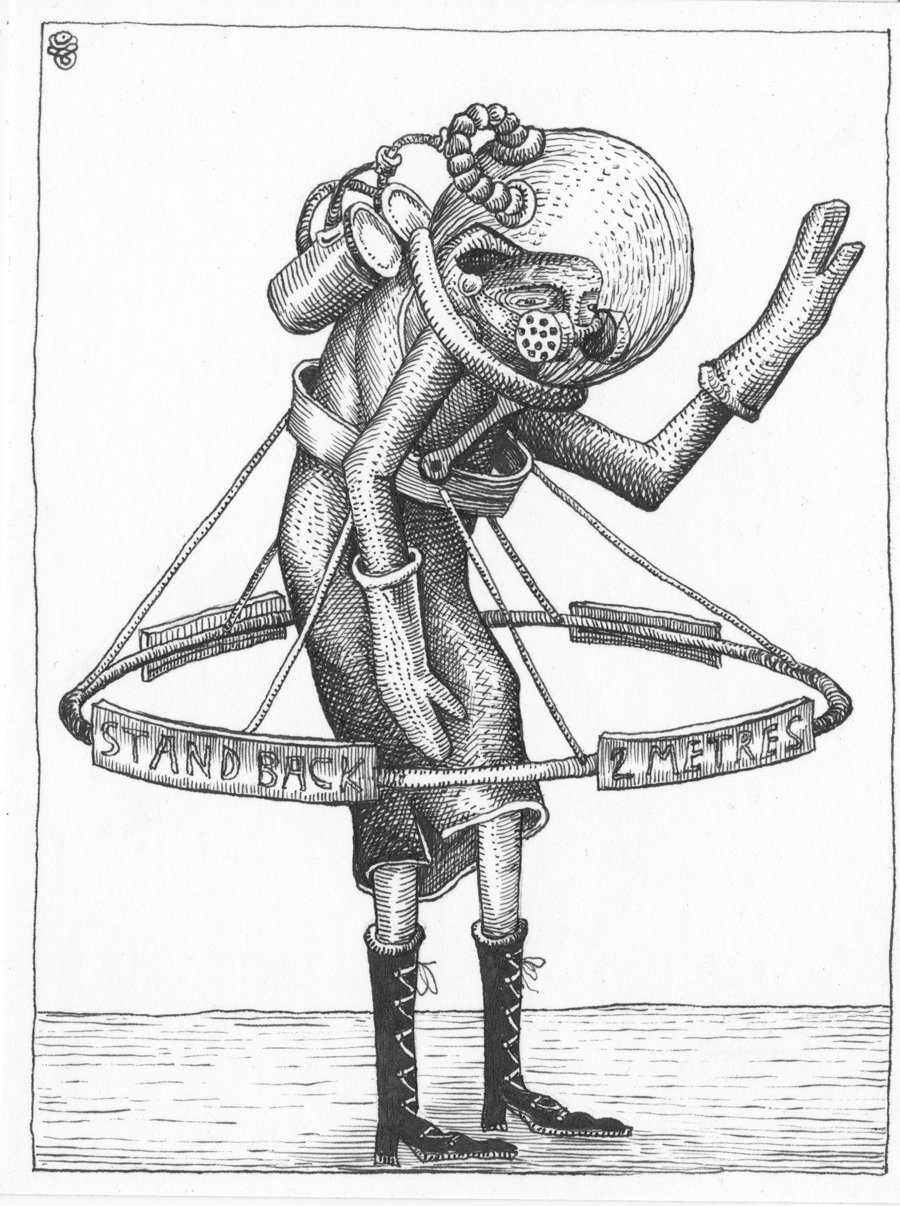
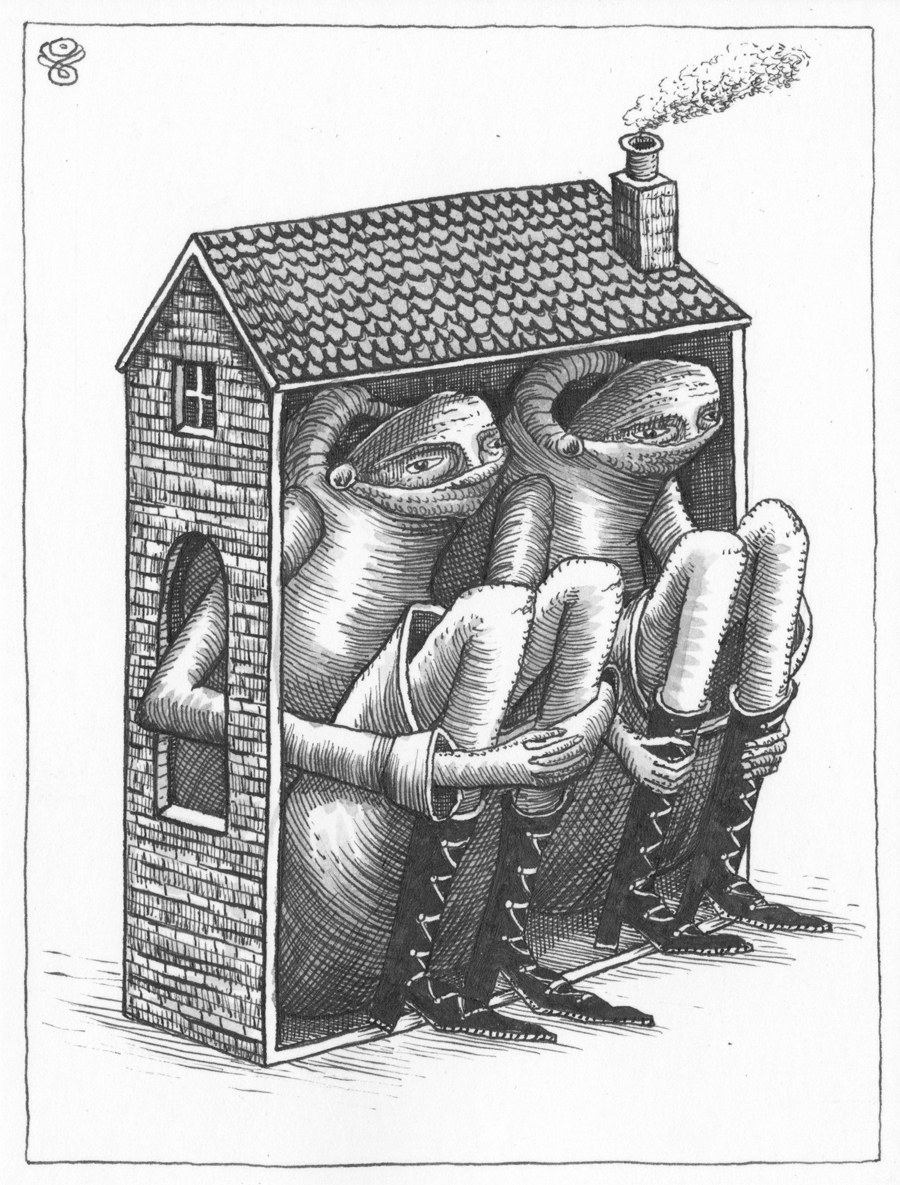
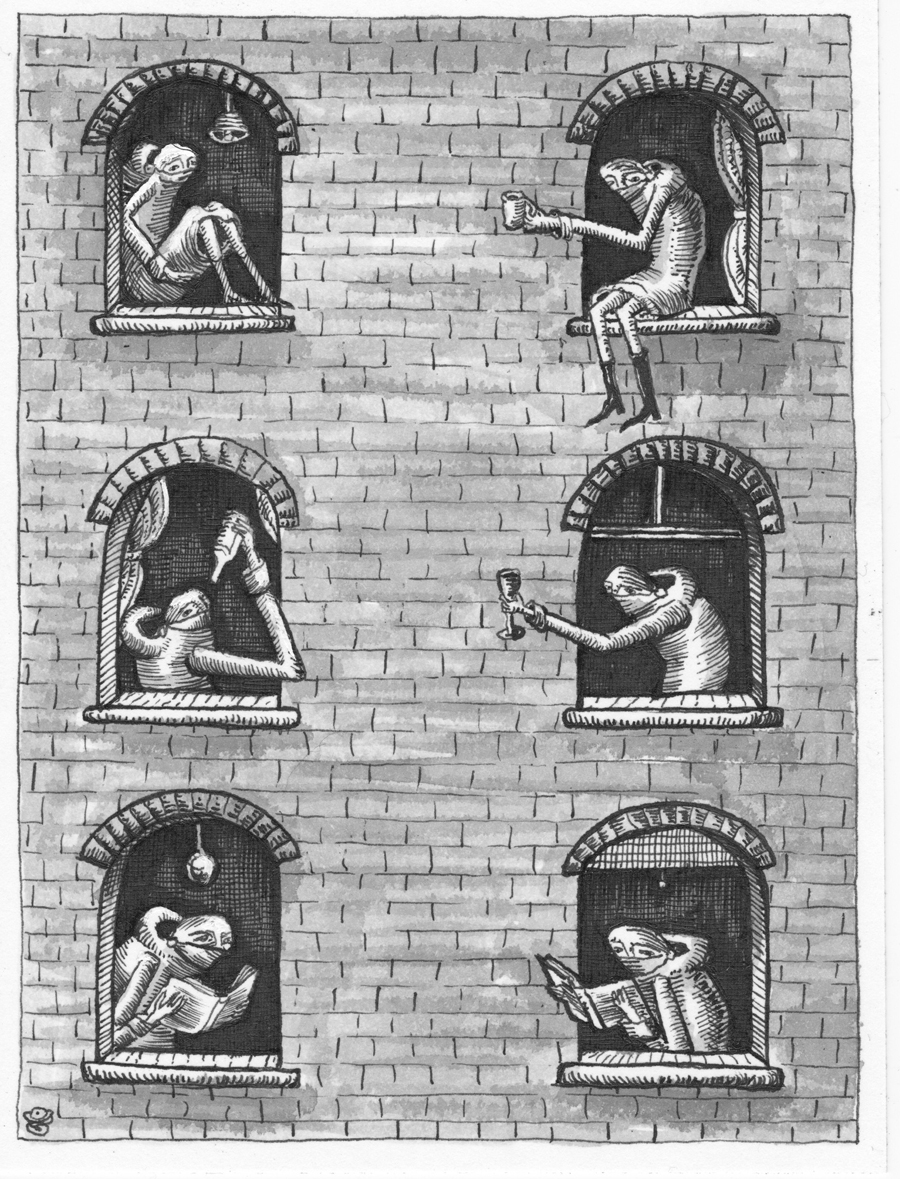
Your opportunity to put your creativity to the test is a daily undertaking these days thanks to unprecedented social and economic change – and a global health threat. London-based Street Artist and fine artist Phlegm says that he has been finding his balance while staying inside with his pregnant partner and two-year-old son – or at least trying to.
Balancing internal worries and turmoil with quotidian home responsibilities and family care, he says that finding a creative way to process his thoughts and feelings has been imperative in this period of self-isolation. The first step he realized is one that many of us have been learning – the value of implementing a routine.
“I
tried to take time out to do an hour of work a day but every time I tried to
engrave or do the very detailed work I realised my hands were shaking too
much,” he says. “So instead I thought maybe I can just paint and draw something
small and loose that’s kind of cathartic. I can use it to process my thoughts
like meditating.”
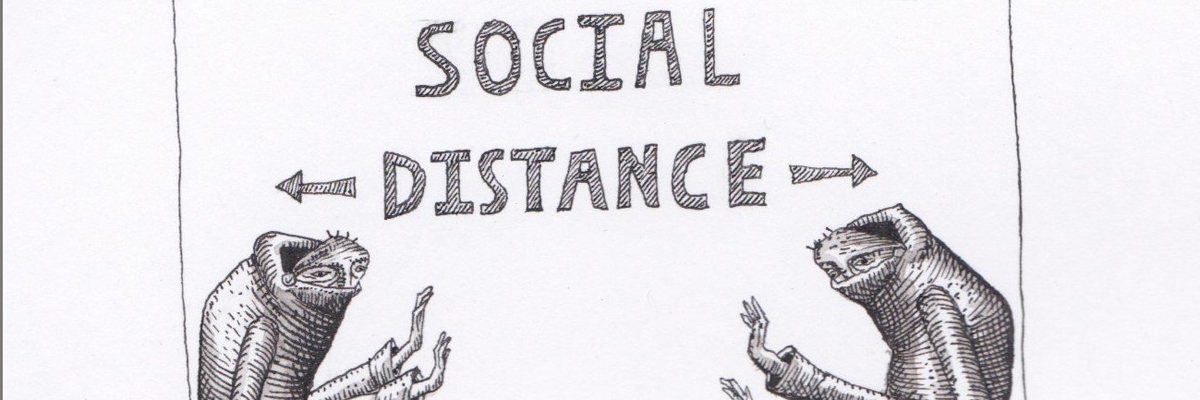
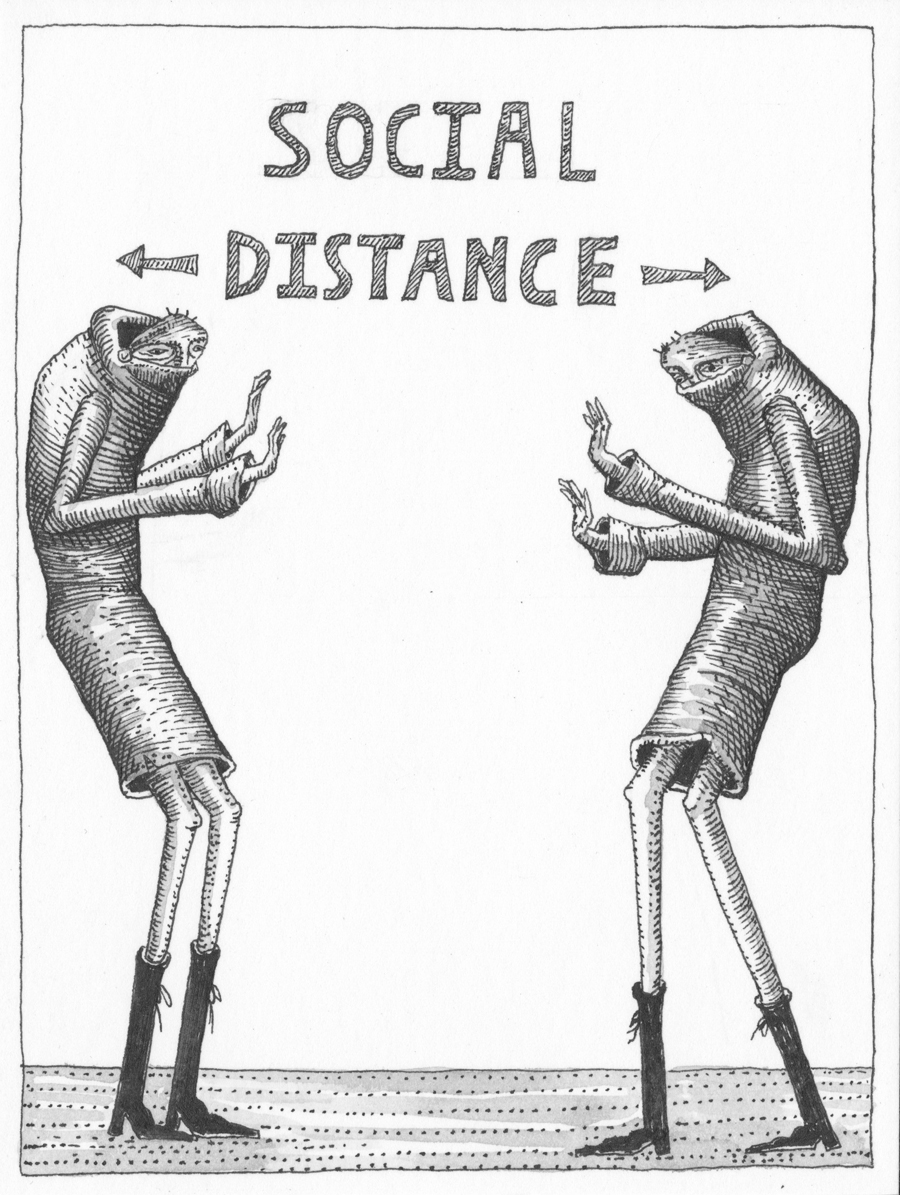
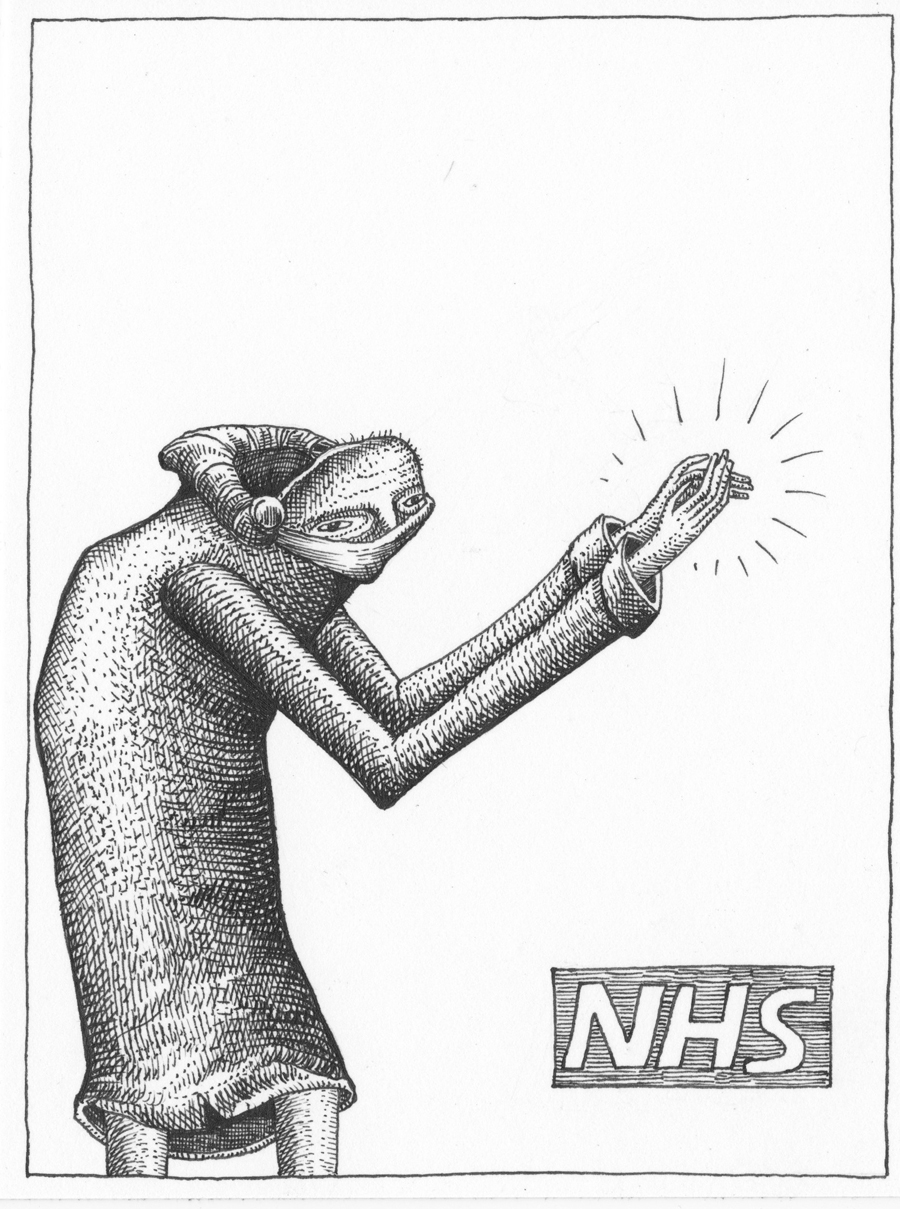
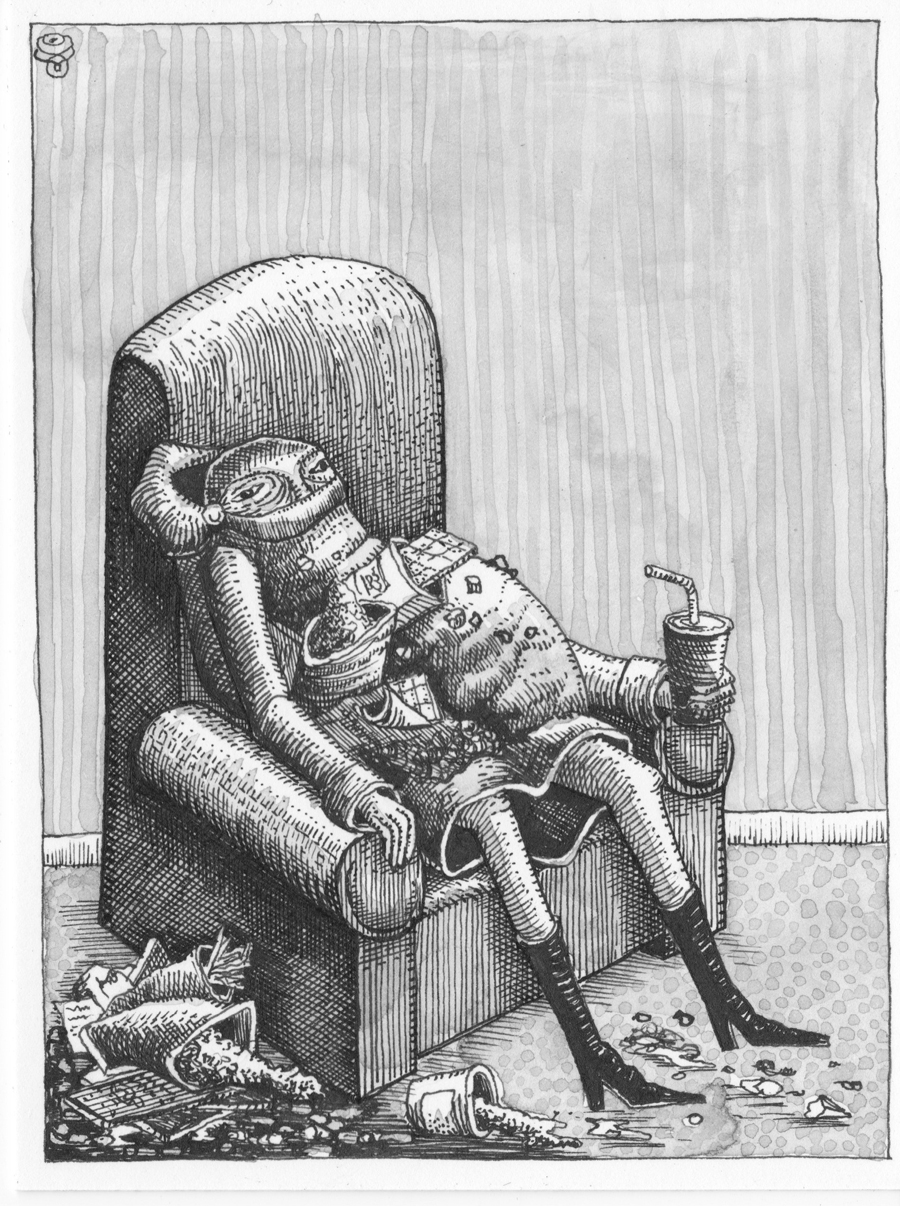
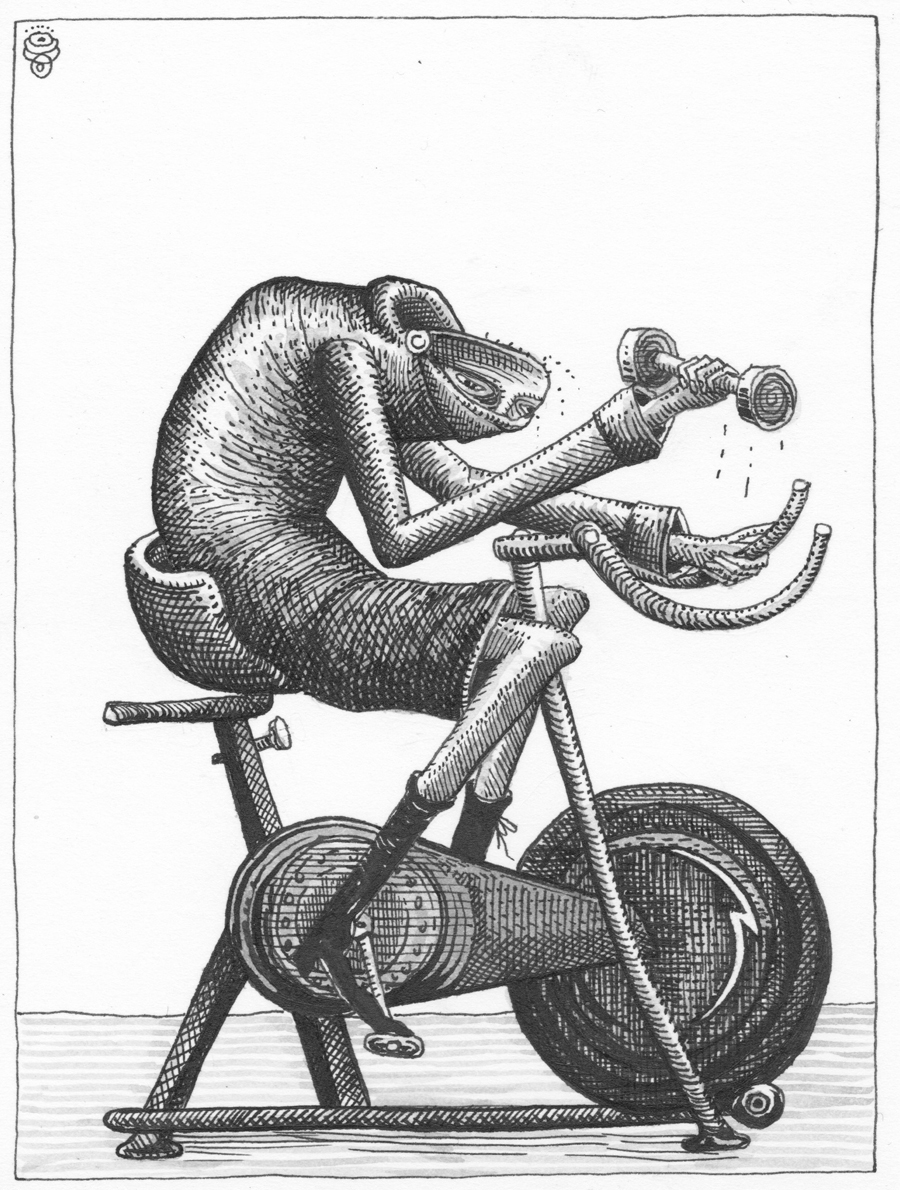
Luckily for fans of his darkly whimsical illustrations, Phlegm’s agile pace and his knack for spot-on allegory have kept up with the quickly changing news these last few weeks, addressing everything from fears of isolation to the comedy of social distancing and irrational hoarding — and the appreciation we all feel for those in the medical profession who are caring for our neighbors, friends, family, and each other.
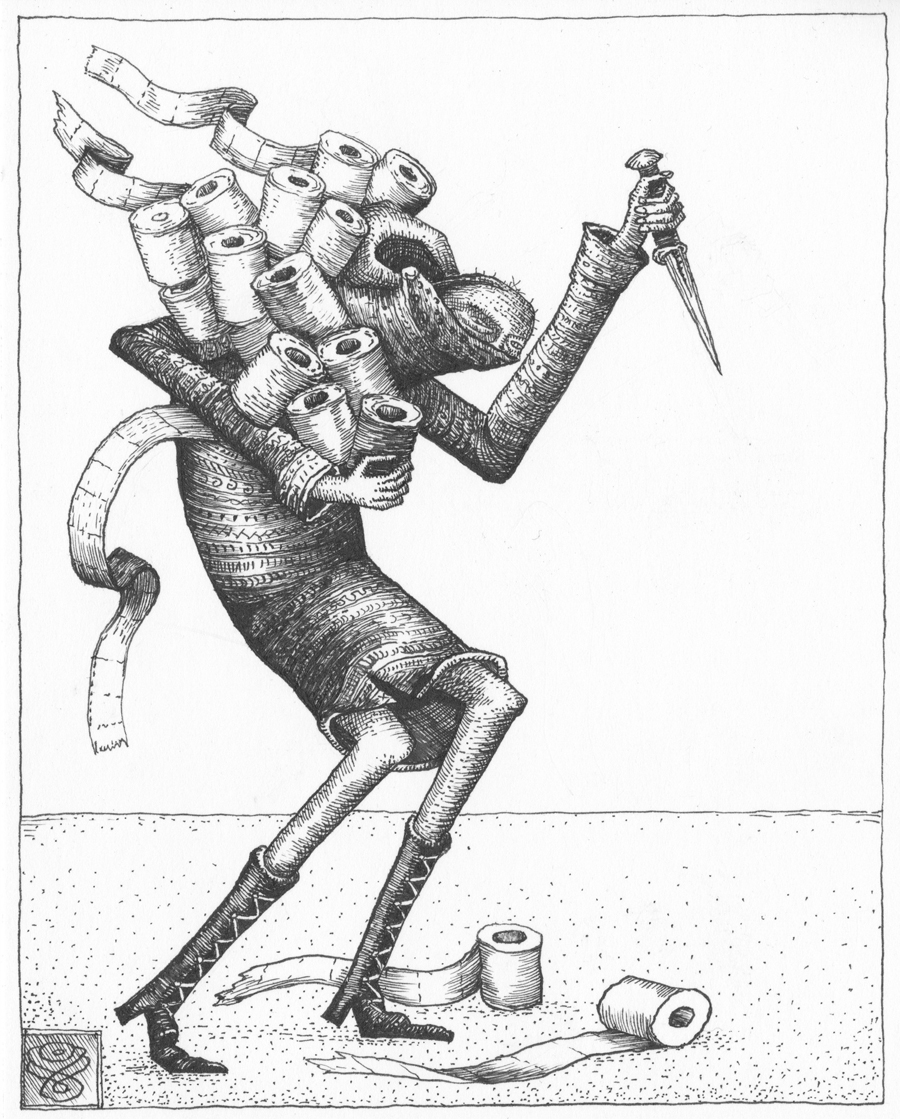
“We isolated fairly early because we saw things escalated pretty fast and with knowing little about how this could affect pregnancy we started about a week before the official lock-down in London,” he says in-between his sketching. “I think the first week I was entirely in fight or flight mode. Securing online weekly deliveries, clearing out the garden to make it toddler-friendly and just grafting every waking hour. By the second-week official lockdown was being talked about and people were just queuing for miles to get a year’s supply of toilet roll,” he says with only a little exaggeration.
Using his social media postings as daily communication with the greater world, one by one his monochromatic machinations of whimsy and everyday dilemmas assure you that your strange little thoughts and dramatic fears are, at the very least, normal.
“Maybe because it’s less isolating to feel the same feelings as a group and realise you’re not alone trapped in a personal hell. It now feels like a diary which is a bizarre mixture of banality and terror,” he says.
“I
try to keep the work honest and working every day helps. Emotions and actual
events are so fast-moving its best to just work day-to-day. Sometimes it’s the
very ordinary things that can carry a lot of emotional weight. The only thing
I’m trying to be aware of is that people are upset and vulnerable so I tend to
sketch out two or three a day and then choose one to ink up. This way I
can try and balance the humour with the fear.”
He says that he’ll continue this daily diary for the foreseeable future, giving you a peek into his state of being. His new practice is a genuine “live blogging” with illustrations that describe many powerful and banal aspects of our daily living that is turning long-term – a reflection of the inside life as well as the outside life.
“I
want to be realistic and honest, which at times has to include some very dark
days but I don’t want to fuel fears and negatively influence people. I
think humour is always helpful in times like these, to laugh and cry at the
same time. I think also something that happens in huge emotional events like
this is that our thoughts become so overwhelmed it’s impossible to express or
sort through any of it.”
“I
think art can sometimes just give you a place to put it all.”
The numbers of sick and dying continue to climb this week in New York, and so does our determination.
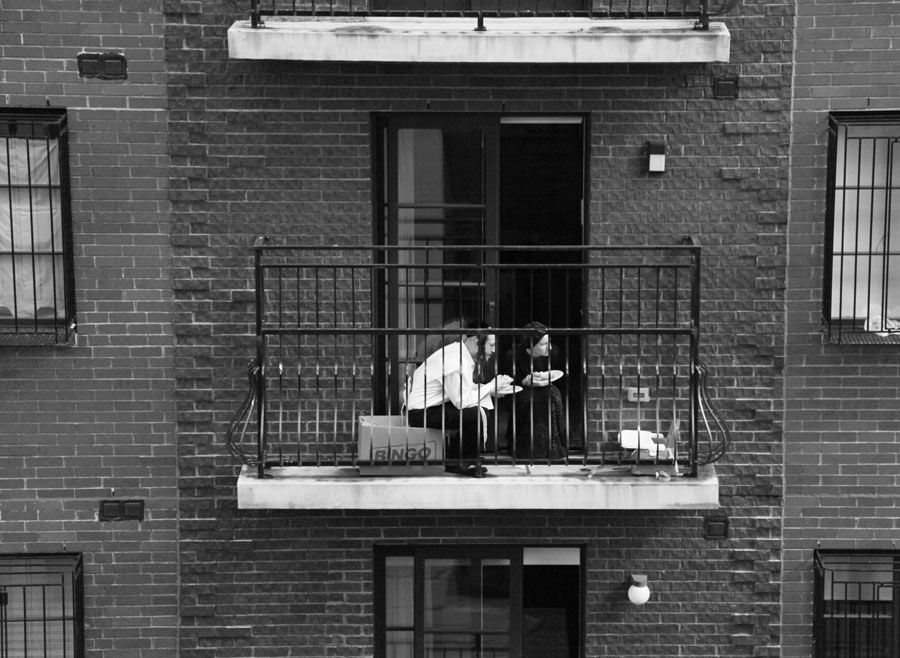
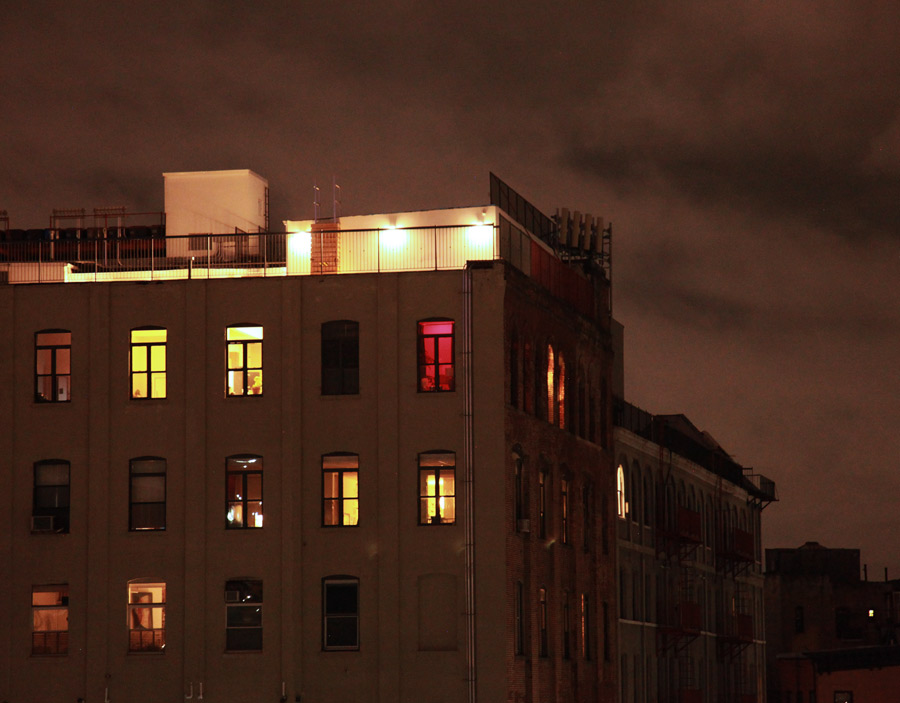
And our appreciation. Stuck inside a building full of artists and weirdos, we hang our heads and hands out the window to clap loudly at 7 o’clock, our Hasidic neighbors across the street gathered on their tiny verandas to do the same. United in our illness, fears, and pain, we are reminded of our common heroes; doctors, nurses, healthcare workers, grocery store workers, restaurant workers, truck drivers, sanitation workers, friends, neighbors and colleagues
“I keep a saucepan and spoon at my window to join in the 7 pm clapping every night,” says photographer Martha Cooper as she describes her solo venture out the window while her cat Melia most likely hides under the bed. “People have even started beating drums. Of course, I never cook in the saucepan but it was my dear mom’s and I remember her cooking in it so I think of her when I’m beating it.”
“The healthcare workers deserve more than applause,” she adds. Amen.
Also, applause can go to at least one landlord in the Williamsburg-Greenpoint neighborhoods of Brooklyn. Mario Salerno reportedly has waived the rent for April, relieving hundreds of people from fear and stress during this economic crash.
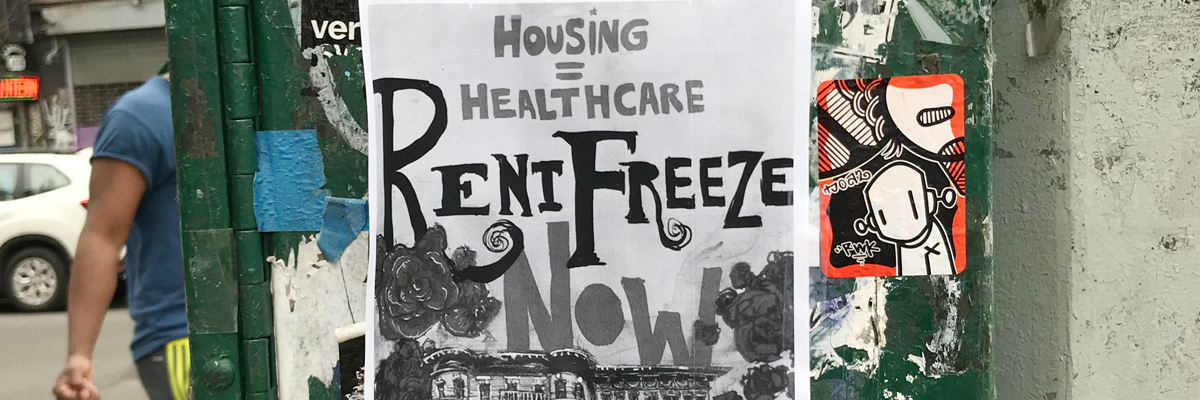
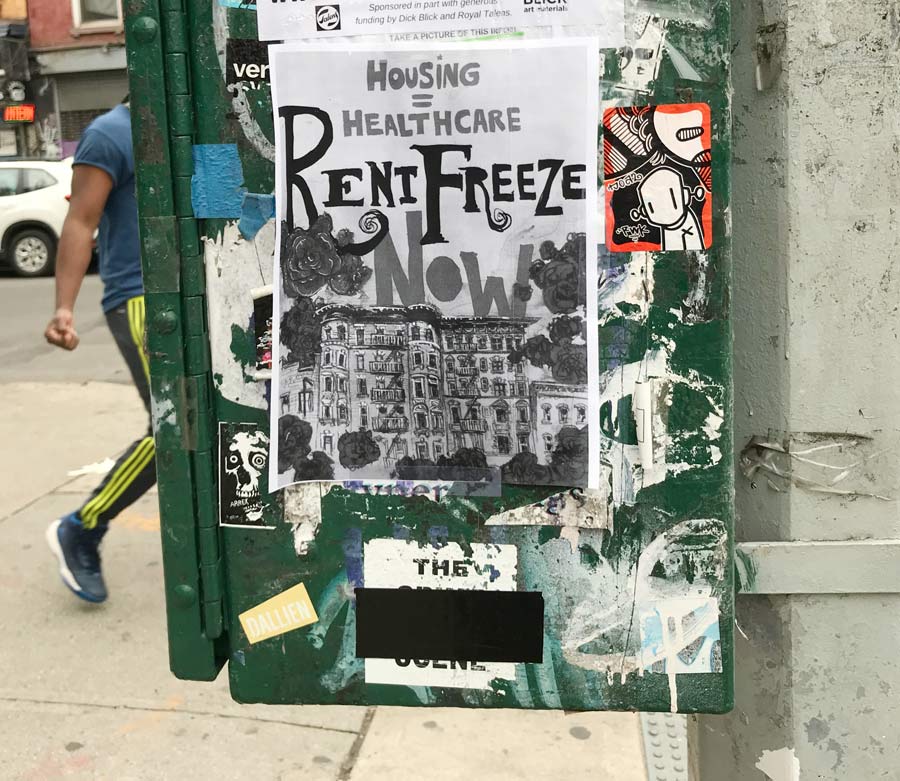
Bottom line is, we need BIG thinkers, BIG proposals, and BIG solutions for the hundreds of thousands of people who cannot pay the rent in this expensive city – and around the world. We need a Rent Forgiveness Jubilee, a Universal Basic Income and an actual Infrastructure building mass jobs program. The idea is not going to come from all the millionaires in the White House, the Congress, or the Senate. If people get desperate enough, these changes will be born from the street.
Let’s keep positive, safe, and strong as we weather what comes next.
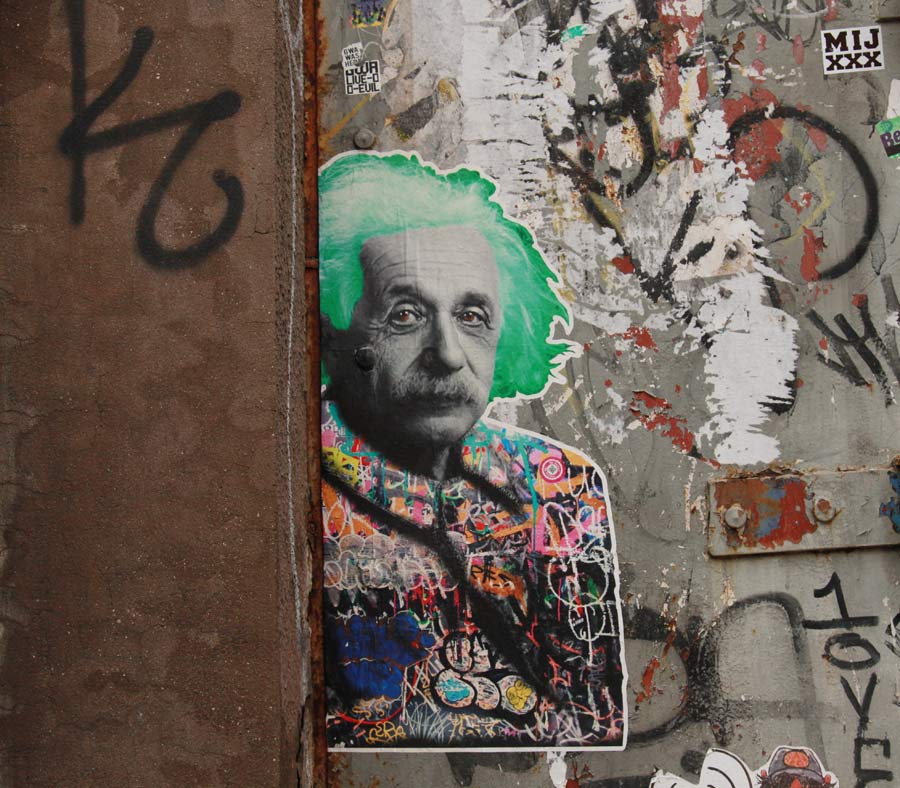
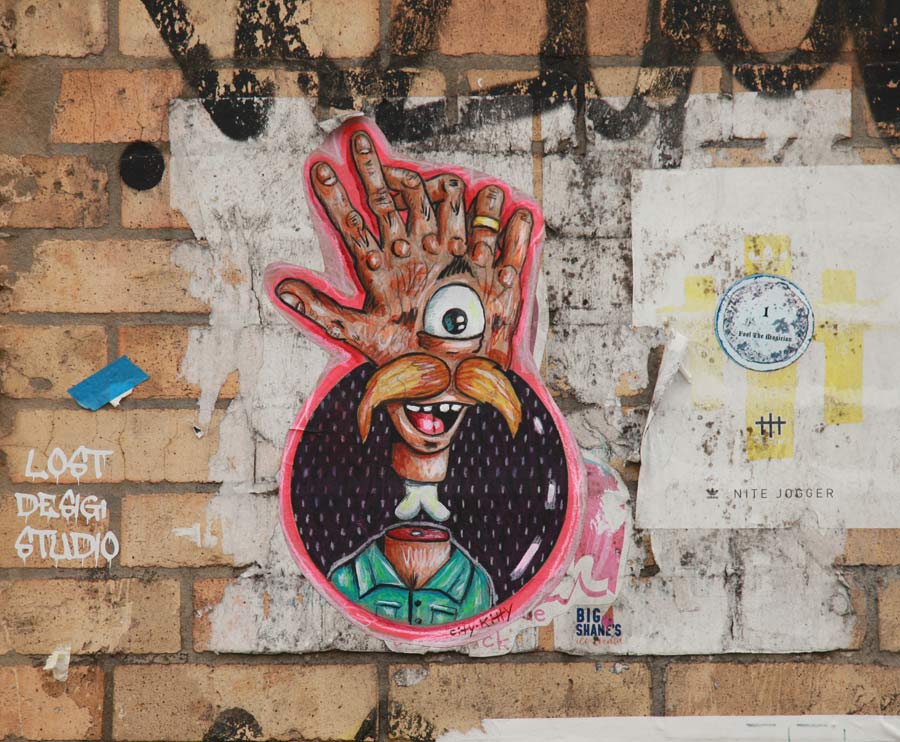
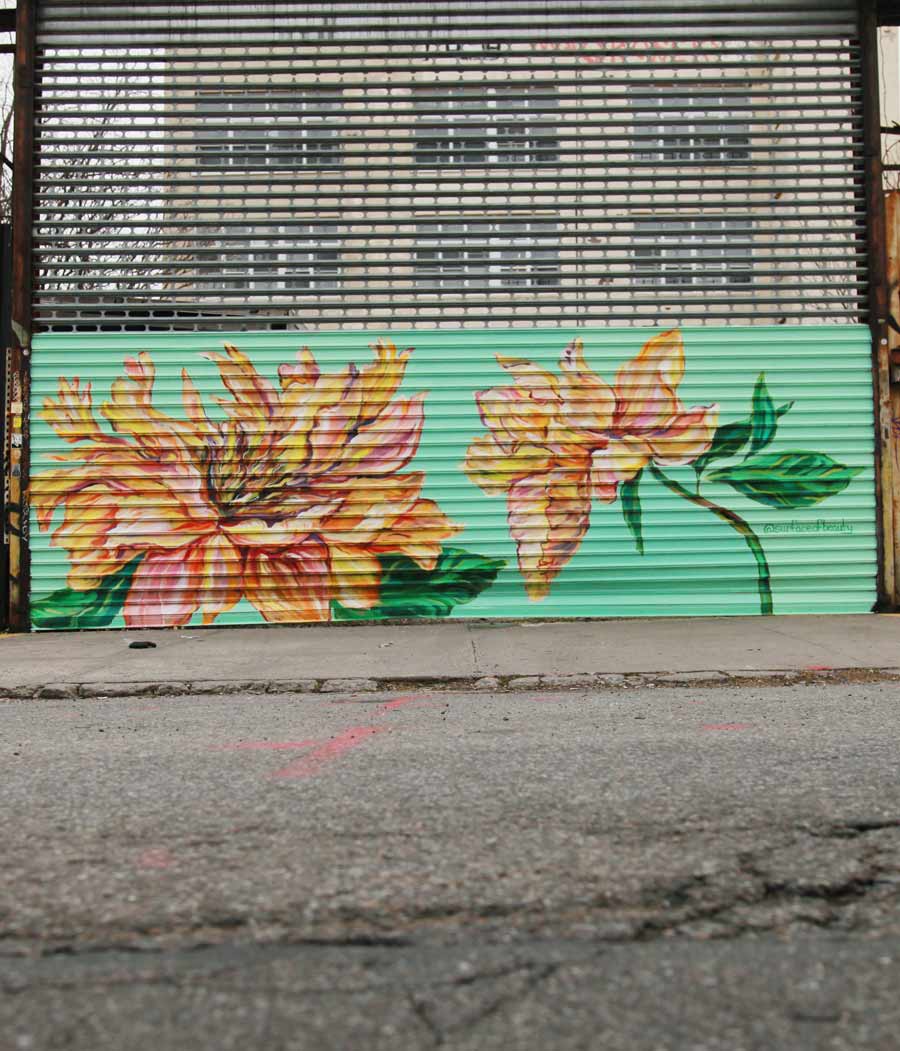
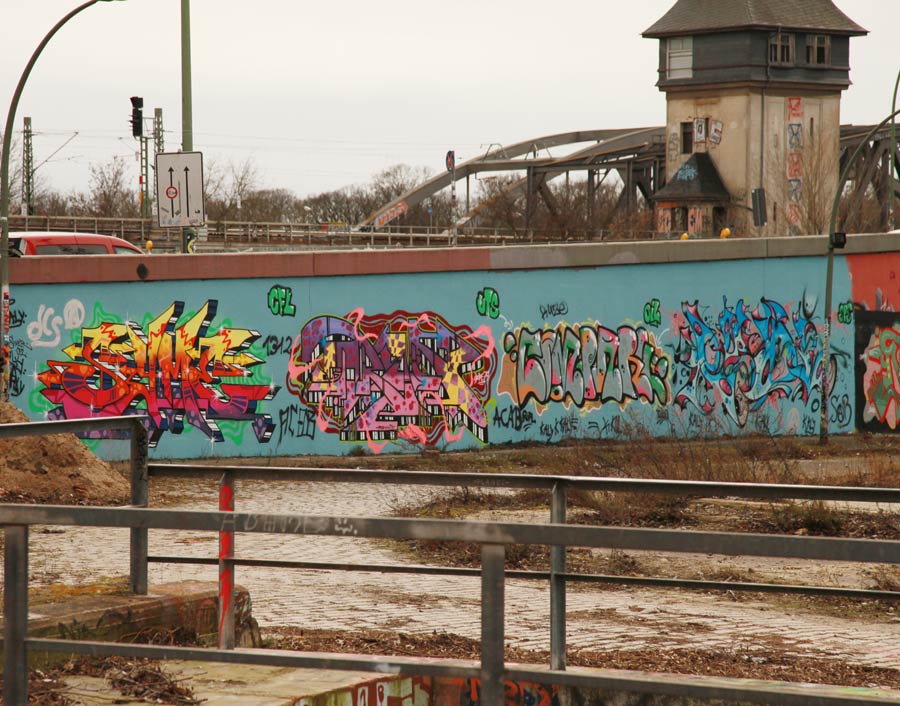
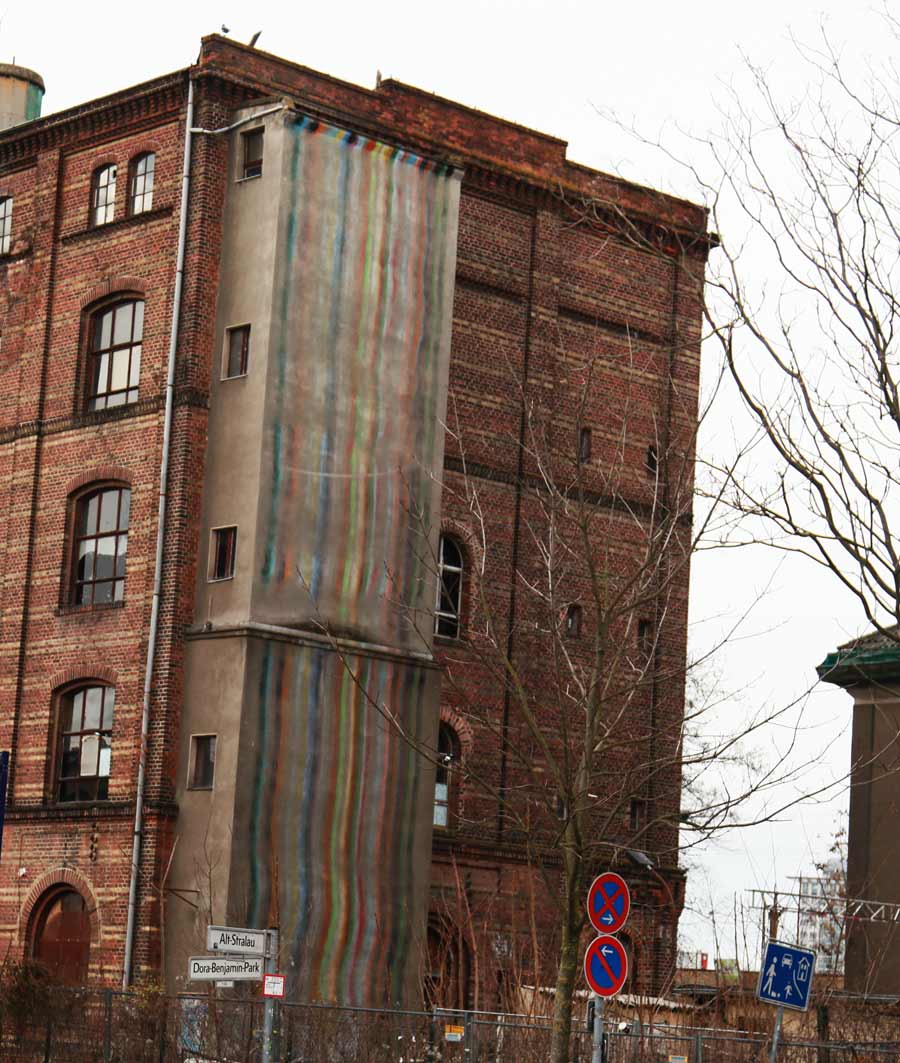
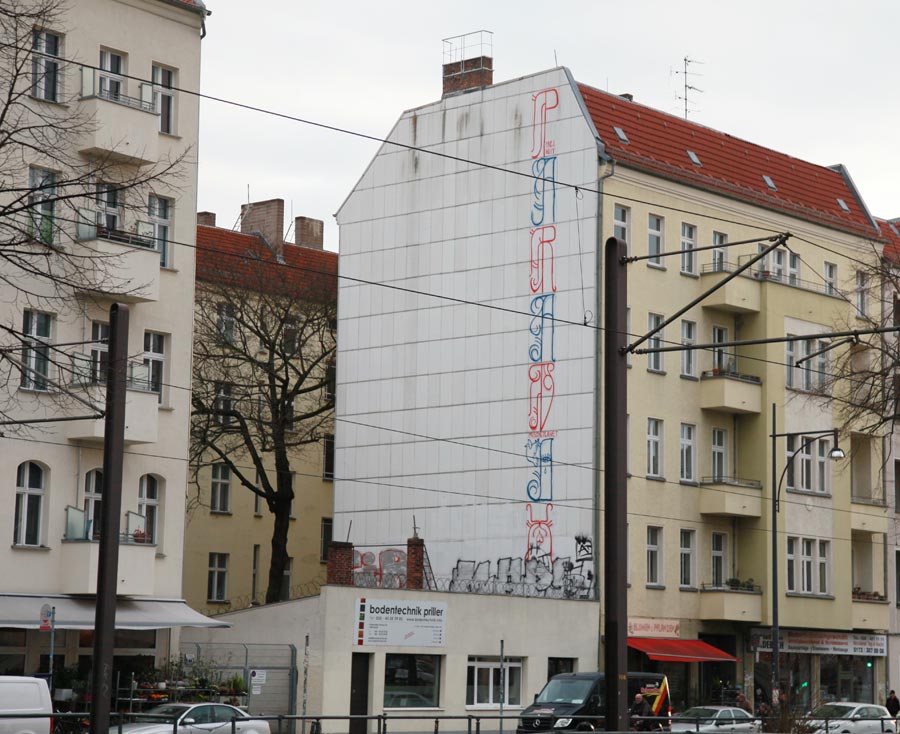
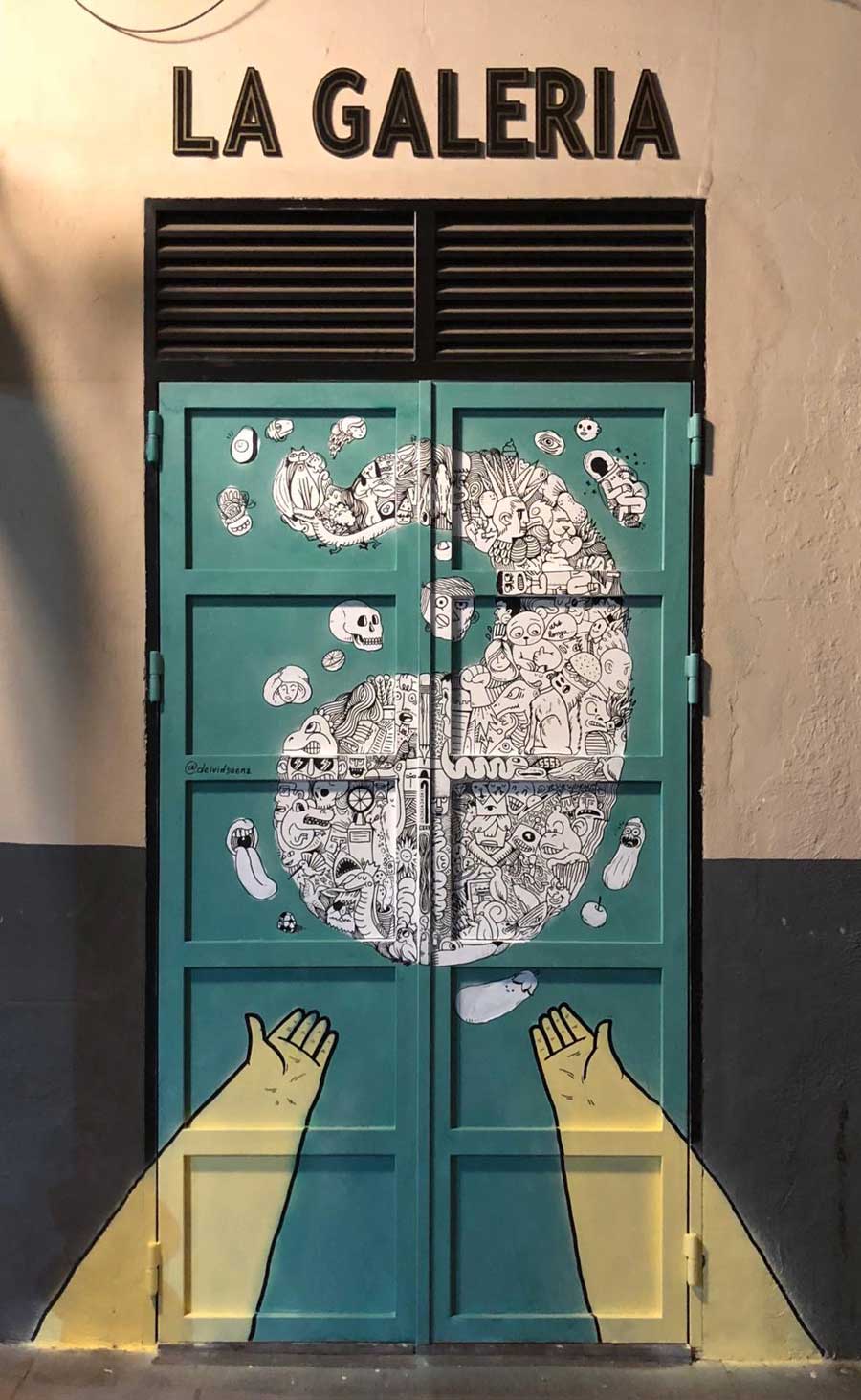
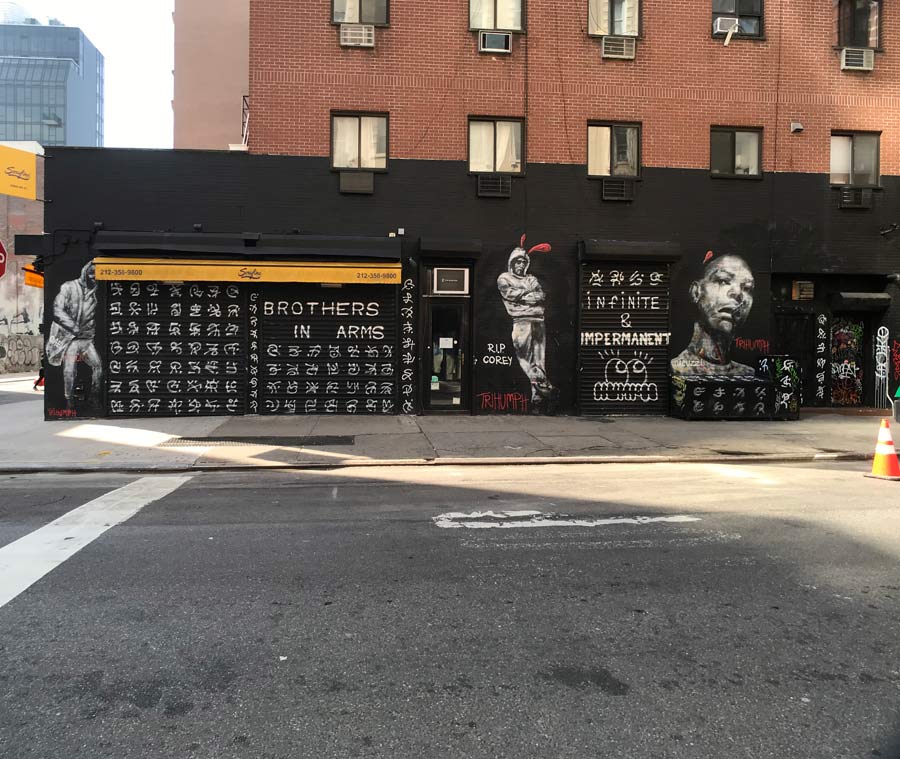
So here’s our weekly interview with the streets, this week featuring Berlin Kidz, Chris RWK, City Kitty, Darla Kitty, David Saenz, Food Baby Soul, Surface of Beauty, The Postman Art, TiHumph, Martha Cooper and TV Boy.
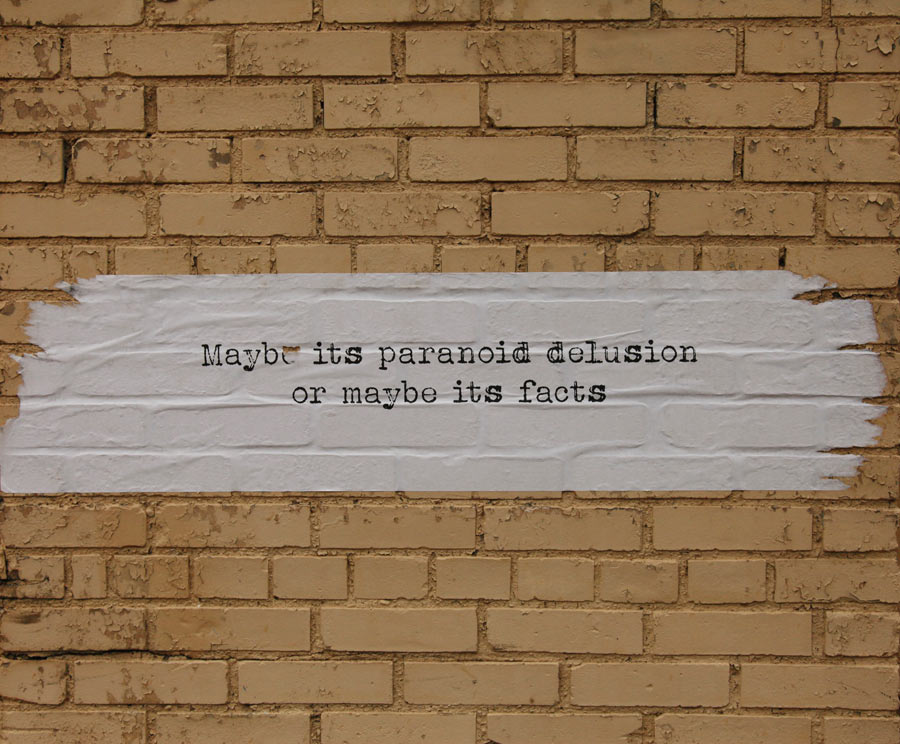
It involves taking advantage of a monstrous shock to our social and economic system while we are too preoccupied to stop them. People behind corporations actually “game” the future like this – methodically planning to force through changes to society that they always wanted but couldn’t find an acceptable justification for while you were looking. A crime committed right under your nose – while you are worrying about losing your job or paying your rent or your grandma getting sick from Covid-19.
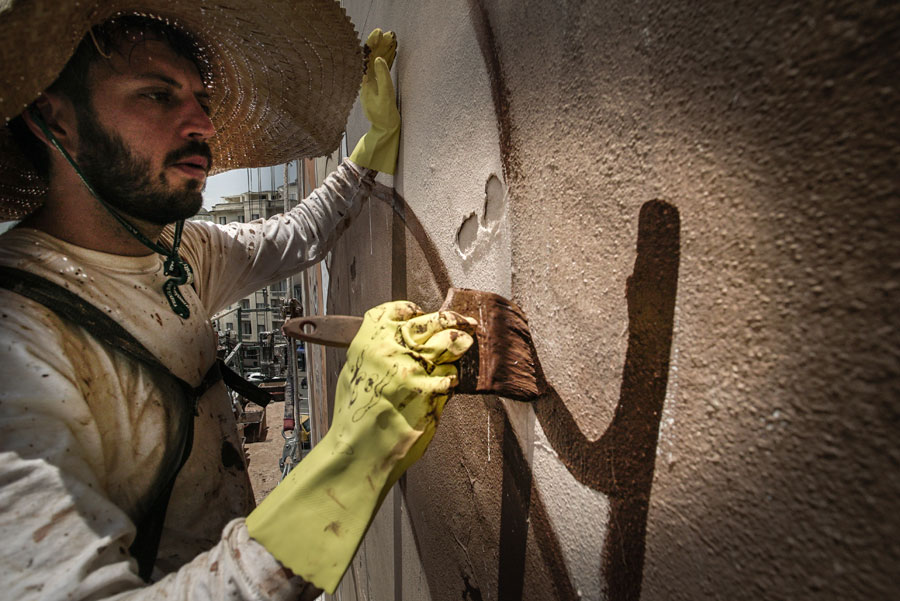
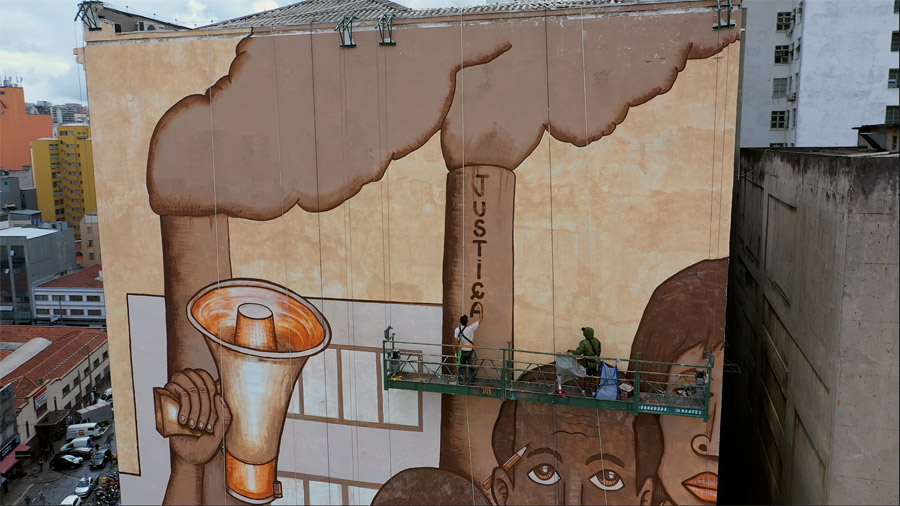
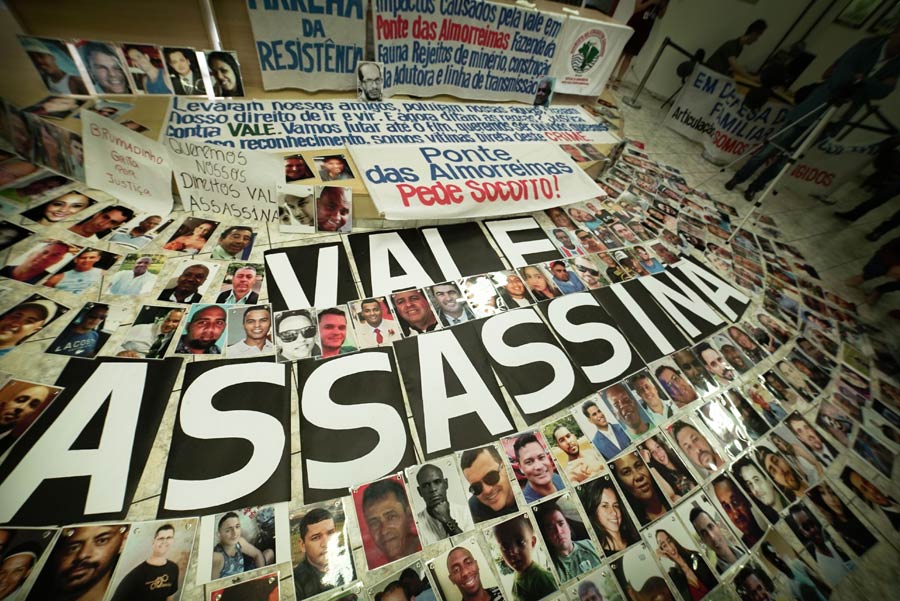
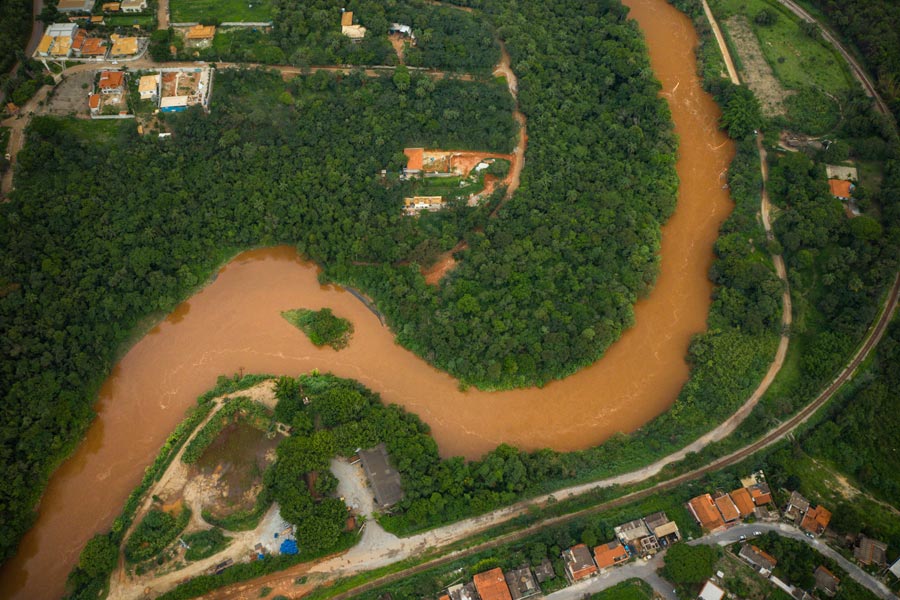
In the case of today’s story of a Brazillian Street Artist named Mundano, the earth, and soil that he used to paint his new mural comes from the region destroyed by a dam break of toxic sludge last January. With hundreds of townspeople and workers swept away by tens of millions of tons of toxic sludge and earth, the people of the area held searches for weeks after and had public meetings full of accusations and fury. They also had funerals.
A similar dam owned by the same company had failed only three years earlier, and many more dams like this are holding immense reservoirs, or poison underground lakes, across Brazil – each potentially breaking apart and poisoning land, water, wildlife, and communities for decades after.
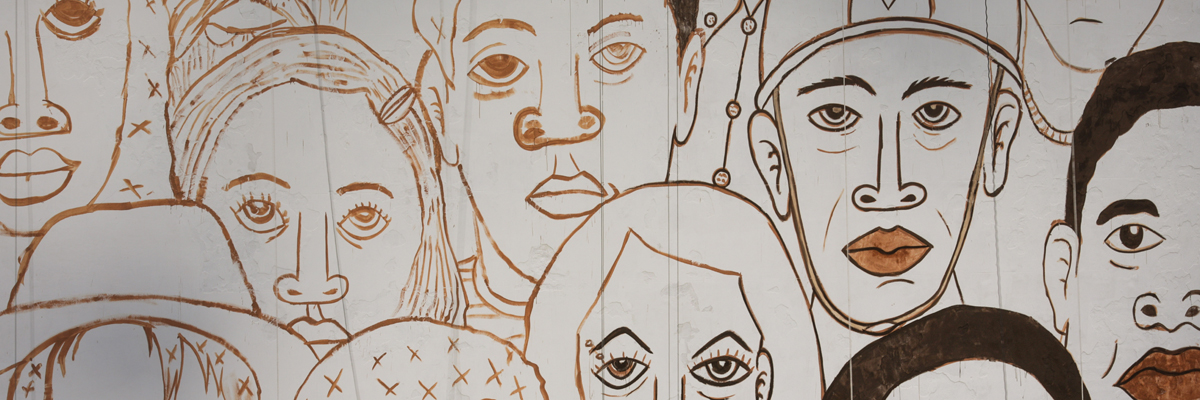
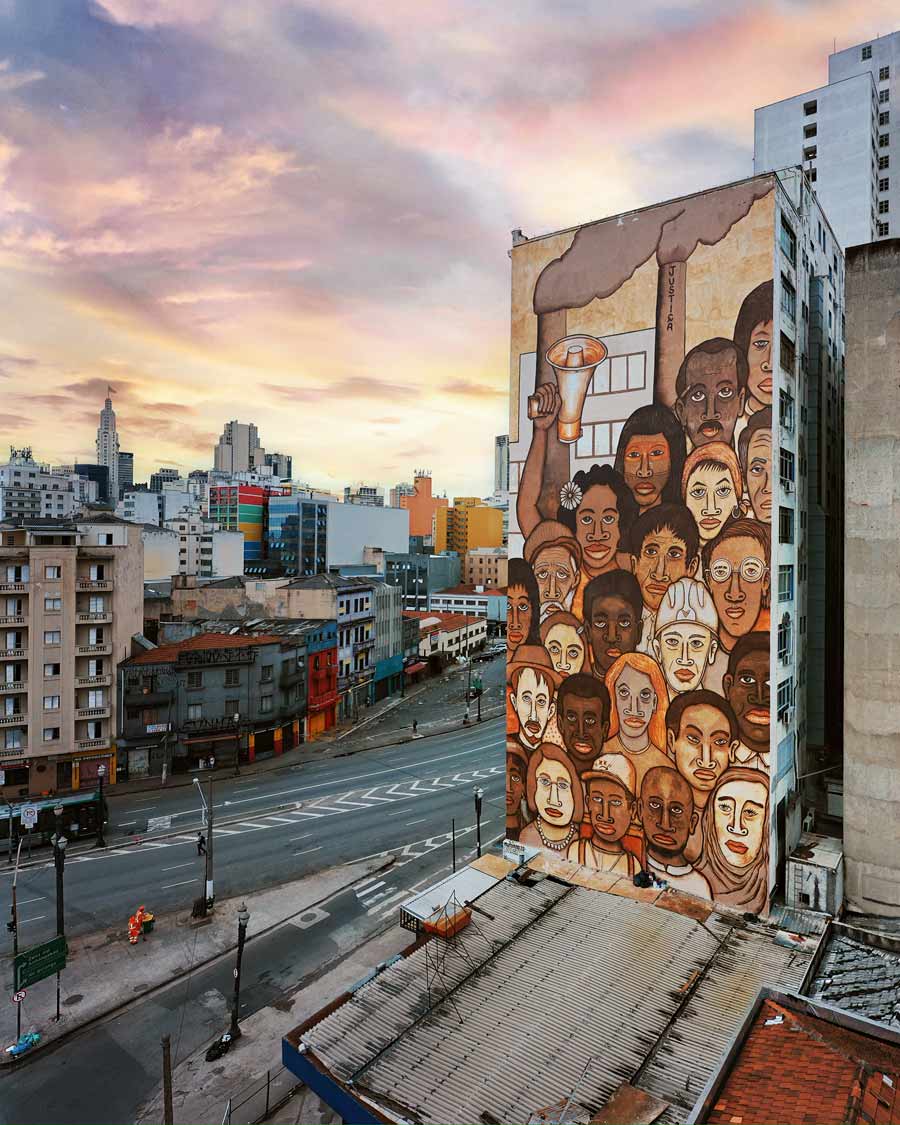
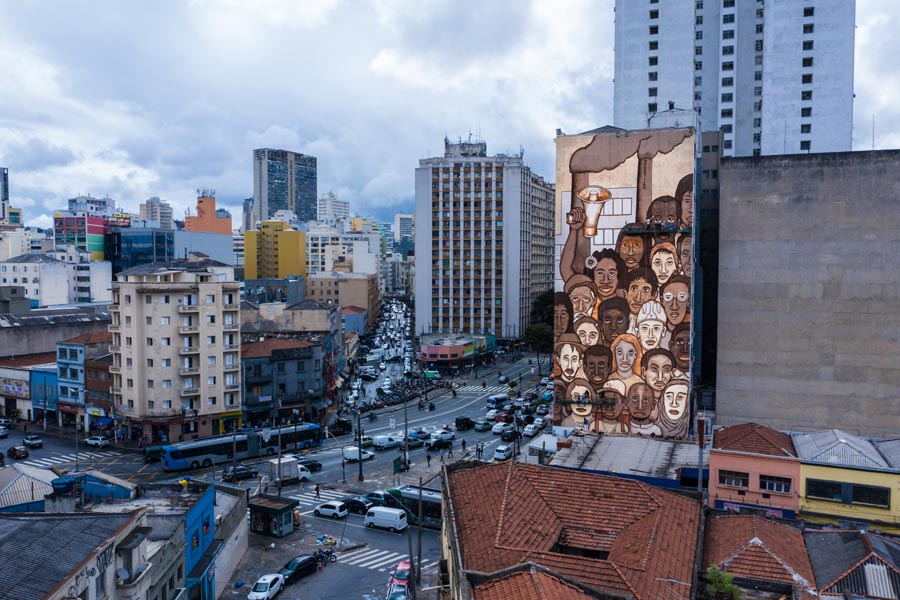
Mundano’s mural honors the workers killed in this man-made environmental disaster and he tells us that the 800 square meter piece references another painting Brazillian modernist called Tarsila do Amaral. Painted in 1933, her work titled “The Factory Workers,” depicts a sea of stern faces with gray clouds rising from factory smokestacks in the background. Mundano says he’s proud of his mural, of the mini-documentary here, and of his neighbors and country people who have raised attention to a situation that appears corrupt, and well, toxic to life.
“In January 2019, Brazil has suffered one of the worse environmental crimes of its history,” says Mundano, “when Vale do Rio Doce’s mining dam broke, contaminating the Paraopeba River with a sea of toxic mud, and killing everything that was in the way, including almost 300 people who lost their lives that day,” he tells us. We talk to him about artists using their work to educate and raise awareness to advocate for political or social change, a term often today called ‘artivism’.
Brooklyn Street Art:With reason, there’s a lot of anger against the government and the owners of the mine about this fatal catastrophe. How did you get involved? Mundano: The environmental and social causes are a big part of my activism or artivism, and I’ve always been a critic of the exploitation of lands for mining purposes. We have over 200 mining dams operating today in Brazil under the risk of breaking. In the last four years we had two of the biggest catastrophes of our country, both in the state of Minas Gerais; Mariana in 2017 and most recently in 2019 in the city of Brumadinho, where a “tsunami” of toxic mud contaminated the Paraopeba river with 12.7 million cubic meters of sludge, dragging everything that was on the way, including almost 300 people who lost their lives.
As an artivist it is really important for me to be present and see what happened with my own eyes, feel the pain of the victim’s families, follow closely to the inquiry and use the platform and reach that I have as an artist to help these people find justice, and most importantly to put pressure on governments and big companies so that they’re held accountable, preventing this from happening again.
Brooklyn Street Art:What is the role of an artist should be in his/her community? Should art respond to social needs? Mundano: For over 13 years now, I’ve been practicing artivism in several cities across the globe. My actions and the art I create need to have a bigger purpose. For me, art has the power of bringing reflection into society and impact people’s lives, make them think and reflect on their part in society. That’s how I see my art and how I believe I can contribute to bigger causes. I wouldn’t say it’s every artist obligation, but with these huge global challenges naturally we’re gonna need to become more artivists.
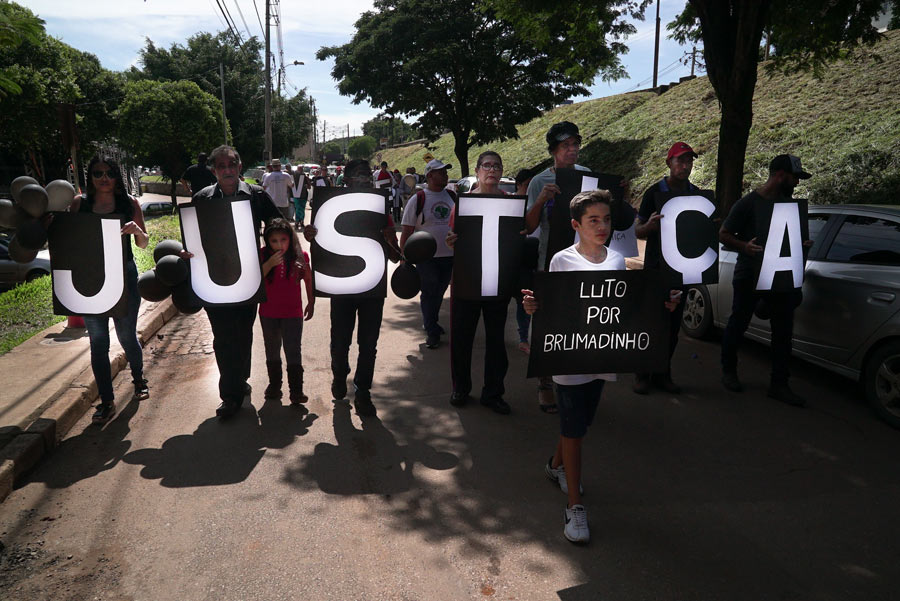
Brooklyn Street Art:The community felt betrayed and abandoned by those who were supposed to protect them. How did they get the strength to rise up and fight in the middle of their pain? Mundano: I can’t speak for them but I feel that they don’t have other options than to fight for their rights. Brazilians are quite resistant to adversities by nature. One of the main subjects of my work is the cactus, a plant that, like a big portion of our population, survives with little and still manages to share beauty with flowers to the world. It is hard to see a whole city and it’s people destroyed by such a horrible crime, yet, it was such a strong image to watch mothers, wives, sons, daughters, and friends united, marching a year later, screaming for justice, not giving up on the memories of their loved ones. That gave me strength and inspired me to create my biggest and most important work up until today to honor them.
Brooklyn Street Art:Your mural honors and remember those whose lives were lost. Yet there’s some poetic beauty in it with the pigments you used to paint it. You made the paint from the sediment in the river and the earth around it. What were your feelings as you were painting these people faces these materials? Mundano: The whole process of collecting the mud from the lakebed of Paraopeba River was delicate. I felt the need to talk to residents, local activists, and the families. It was important that I had their consent and that they understood my intentions. The mural was a way of keeping the subject alive, and to honor them in one of the biggest cities in the world, Sao Paulo. I believe that the respect I’ve shown was recognized as I started to receive messages from Brumadinho’s residents about the video, thanking me for the painting, and for me, that’s the biggest recognition of all, it made it all worth it.
 BROOKLYN STREET ART LOVES YOU MORE EVERY DAY