All posts tagged: Jaime Rojo

John Fekner: Working for “A Change” for Fifty Years

John Fekner: Working for “A Change” for Fifty Years

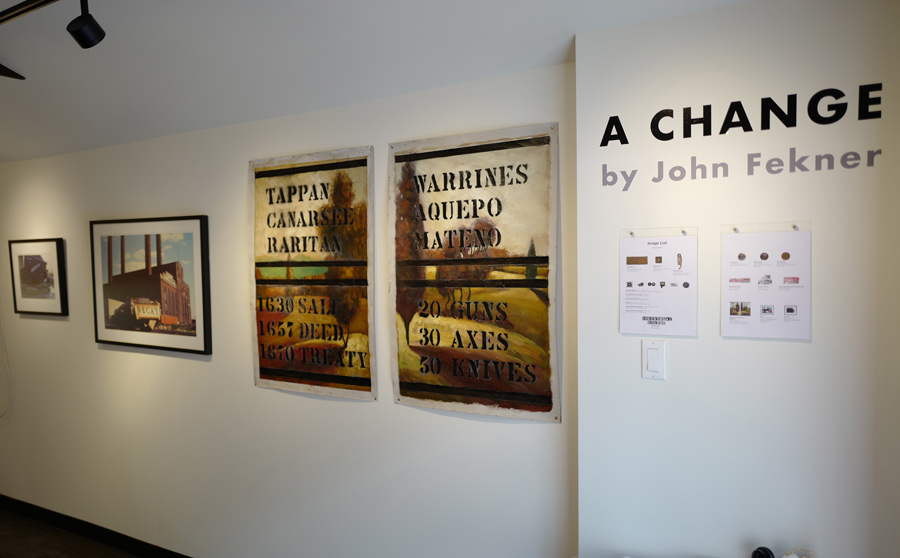
Street artist and conceptual artist John Fekner participated in student demonstrations and peaceful moratoriums in New York in the 1960s, with his first outdoor work completed in 1968. When younger generations of artists are feeling inflamed about this spring and summers’ demonstrations it is helpful to remember that artists of each generation have been a crucial part of many, if not most, movements of social and political change.
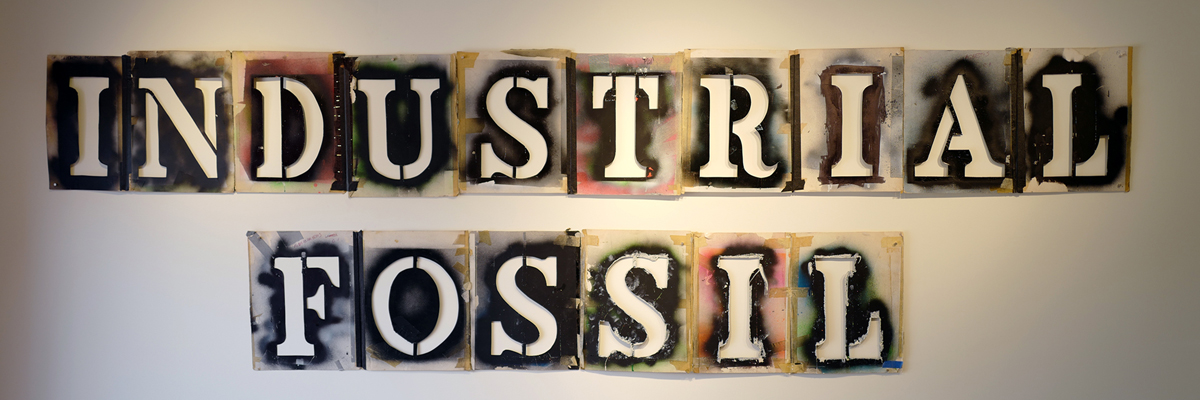
John Fekner. A CHANGE (photo © Icy & Sot)

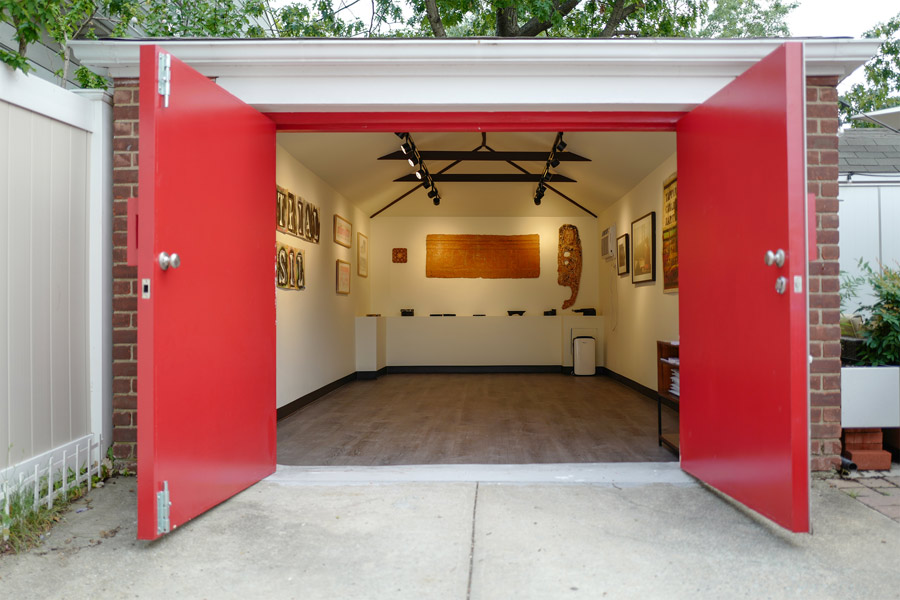
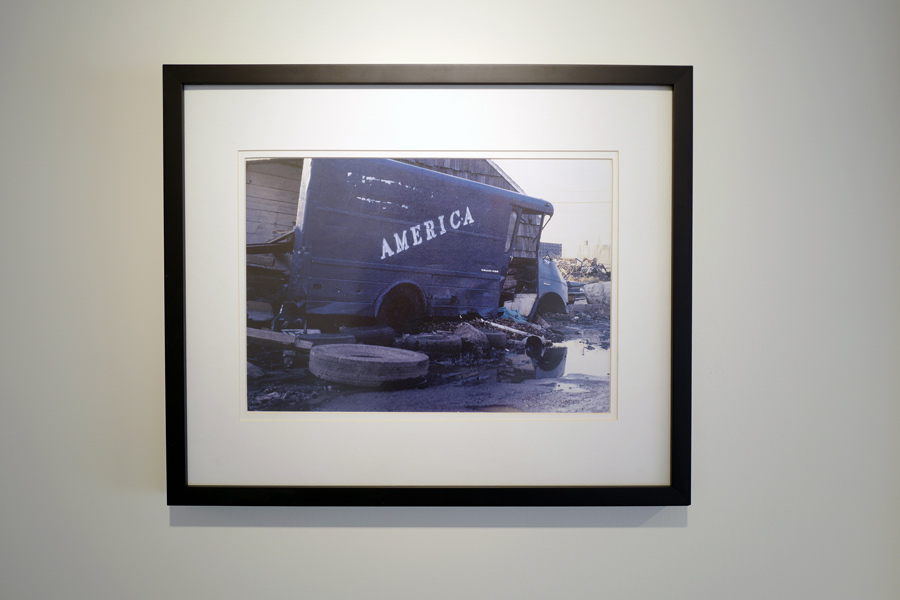
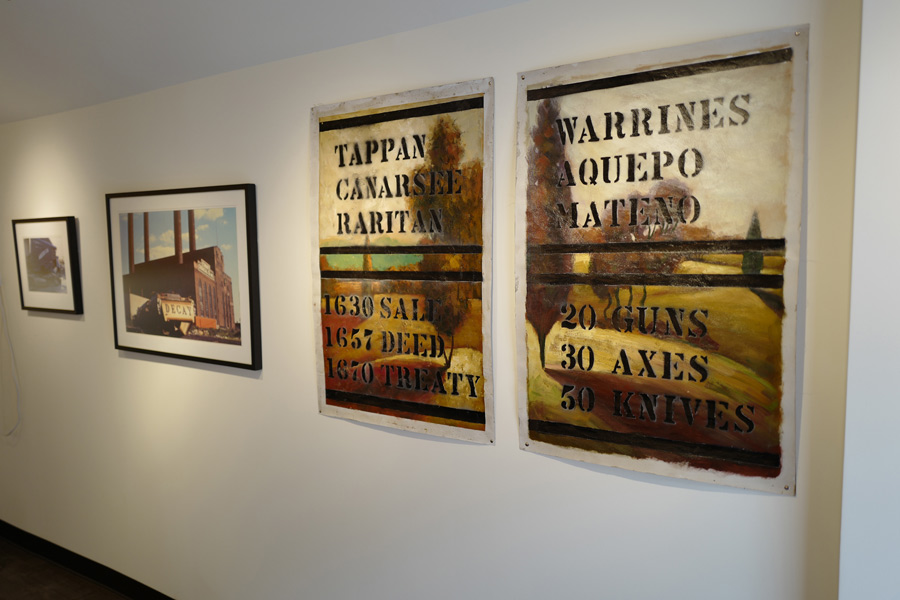
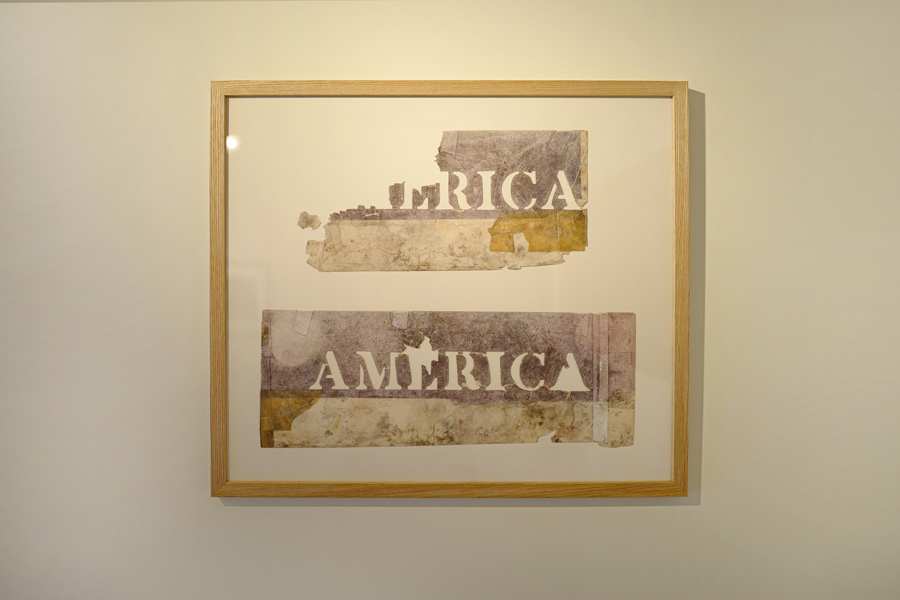
With his new mini-retrospective in a space limited by Covid-19 considerations the exhibition is available to see only by appointment in Bayside, Queens, you can see that Fekner’s dedication to drawing our attention to our behaviors as citizens, cities, politicians, and corporations lies at the root of his advocacy.
John Fekner. A CHANGE (photo © Icy & Sot)

Putting your mark on society is an ironic way of describing the literal act artists and vandals engage in when putting their work on the streets. While “getting up” for many is an act of self-promotion or marking of territory, Fekner has often used his spray paint and stencils to critique, to call-out the failure of societies to care or take responsibility for their actions or inactions, and may trigger you to bear witness.
John Fekner. A CHANGE (photo © Icy & Sot)

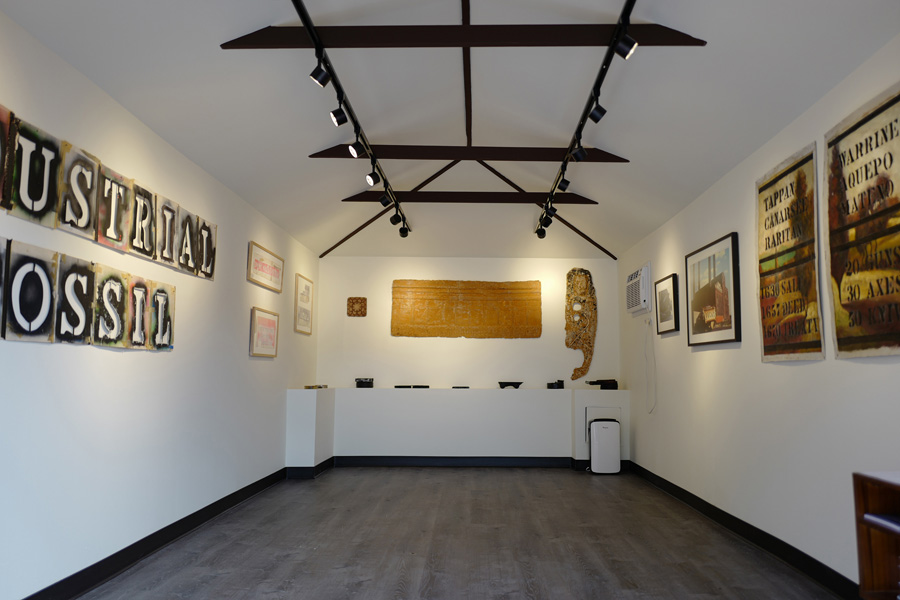
Spraying “DECAY” on a rusting hunk of detritus breaks through the psychological defense systems you may array against “seeing” history and outcome. A blunt aesthetic written in a large format makes an impression – the simple act of tagging objects and surfaces of industrial and urban neglect is radical, a defiant gesture that calls the state and the citizen to account. By drawing attention, even cryptically, you may cause one to question – or even to regard these layers of debris as violence toward others, toward the natural world.
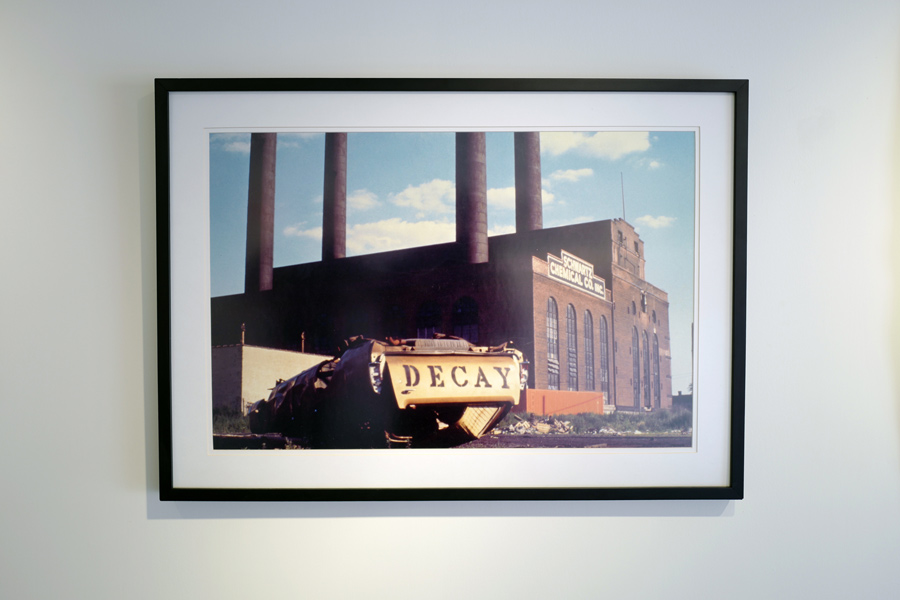
John Fekner. A CHANGE (photo © Icy & Sot)

For A CHANGE, the show takes his 1981 painting and applies it broadly to the running narrative throughout his work, as a proponent of self-reflection and advocate of positive change.

“The economic imbalance, the energy crisis, health insurance, pollution, and global warming increase exponentially every day,” Fekner says in an overview of the exhibition, “all compounded by the coronavirus pandemic. Many of our issues boil below the surface, making it convenient to turn a blind eye.”
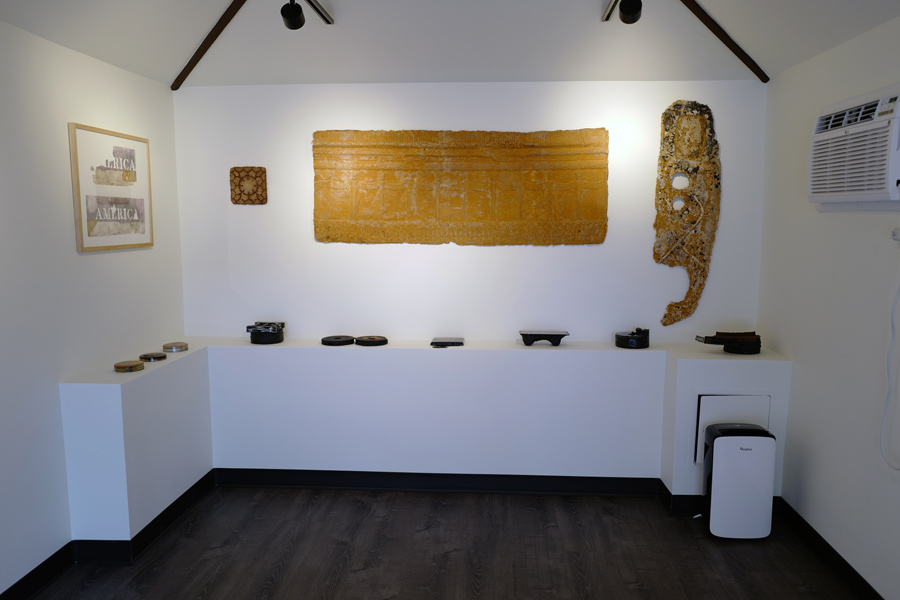
John Fekner. A CHANGE (photo © Icy & Sot)

Meticulously curated, the exhibition is showcasing a selection of Fekner’s paintings, mixed media sculpture, and ephemera as well as a “sampling of art objects, photographs, books, and a glimpse into Fekner’s personal archive spanning a fifty-year timeline,” viewers can get a broader overview of the artists’ sincere belief that his art in the streets has the power to affect the world. “Although some of the work is decades old, their relevance resonates today, maybe with even greater urgency,” says his description.
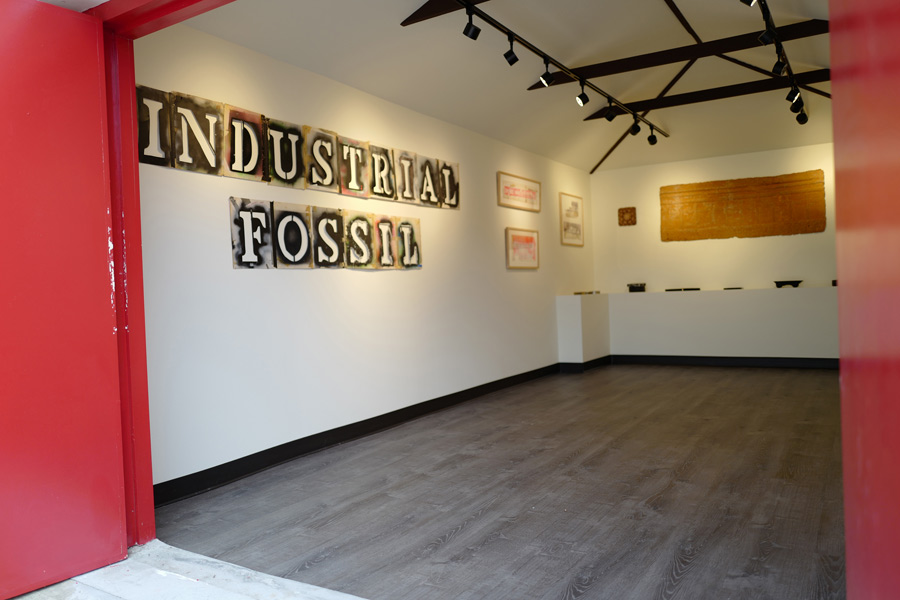
John Fekner. A CHANGE (photo © Icy & Sot)

BSA had the opportunity to ask Mr. Fekner about his work and worldview as we appear at a nexus of profound change.


Brooklyn Street Art: Looking back on the issues you contemplated fifty years ago, we can’t deny that things have indeed changed – but we are also discovering that things really didn’t change, especially when it pertains to race and poverty. How do you, as an artist confront this reality? Are you despondent? 

John Fekner: The greatest ferment of change, I believe, is the risks that people are willing to take in the face of tremendous setbacks. This has been true throughout history whether it’s the storming of the Bastille to the toppling of Confederate monuments. I’m heartened by the courage I see today and despondent art doesn’t help.
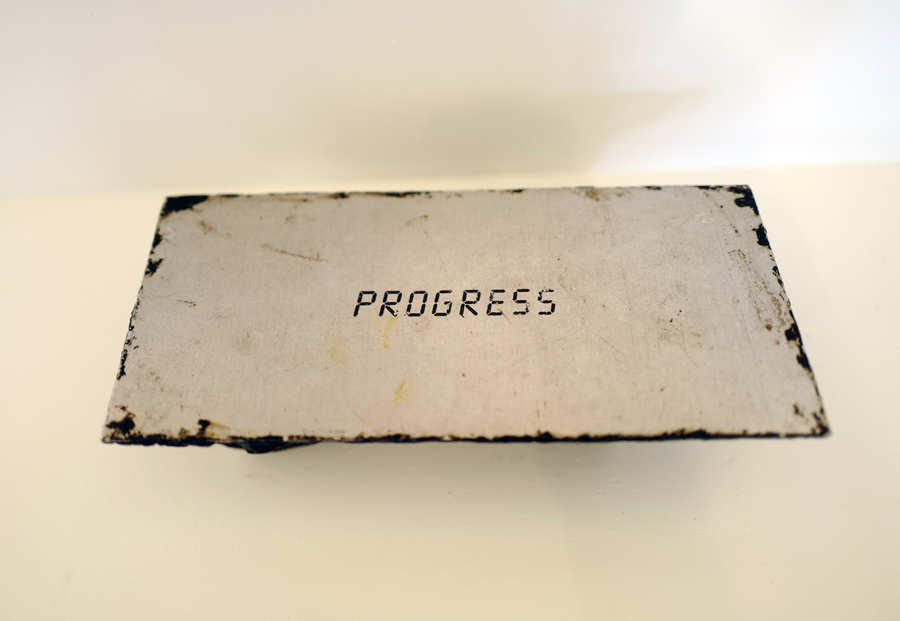
John Fekner. A CHANGE (photo © Icy & Sot)

BSA: What do you think about the concept of “voluntary human extinction”. Is it possible to just simply stop making more humans to save the earth?

John Fekner: I believe that optimism and the survival of the human race are hard-wired into our nature.
John Fekner. A CHANGE (photo © Icy & Sot)

BSA: Rich countries are on a heavy diet of “consumerism” fueled by the endless appetite of tech giants for quarterly profits to appease shareholders. People spend money they don’t have. Most people don’t have savings and live paycheck to paycheck. What went wrong?  

John Fekner: This is nothing new. The exploitation of the poor by the rich is the perennial struggle of humanity and will probably always be. There is no reason to stop fighting. We should never lose our courage and vigilance.

BSA: On Wednesday the CEO’s of Amazon, Apple, Facebook, and Google will testify before Congress. If you were the one asking the questions what would you ask them?  

John Fekner: The greatest safeguard of capitalism in our country has always been the resistance to monopolies. My question would be: ‘What are you going to do to insure that your companies don’t monopolize and dominate every market?’
John Fekner. A CHANGE (photo © Icy & Sot)

BSA: Can we still have hope? Is there still time to change course to save our communities?

John Fekner: If I didn’t have hope, I would stop making art.


Mr. Fekner asks us to “remind everyone they have to REGISTER in order to VOTE. Do It. Make A Change.”

  https://www.usa.gov/register-to-vote   https://www.usa.gov/register-to-vote
John Fekner. A CHANGE (photo © Icy & Sot)

Due to the pandemic, both the exhibition and talk will be by appointment only. Please email contact@garageartcenter.org to schedule.

The Garage Art Center, Inc.
26-01 Corporal Kennedy Street Bayside, NY 11360


Gallery Hours
Friday, Saturday, and Sunday 1 pm – 5 pm
(Opens during the exhibition only.)
Read more
BSA Images Of The Week: 07.26.20

BSA Images Of The Week: 07.26.20

Welcome to BSA Images of the Week.

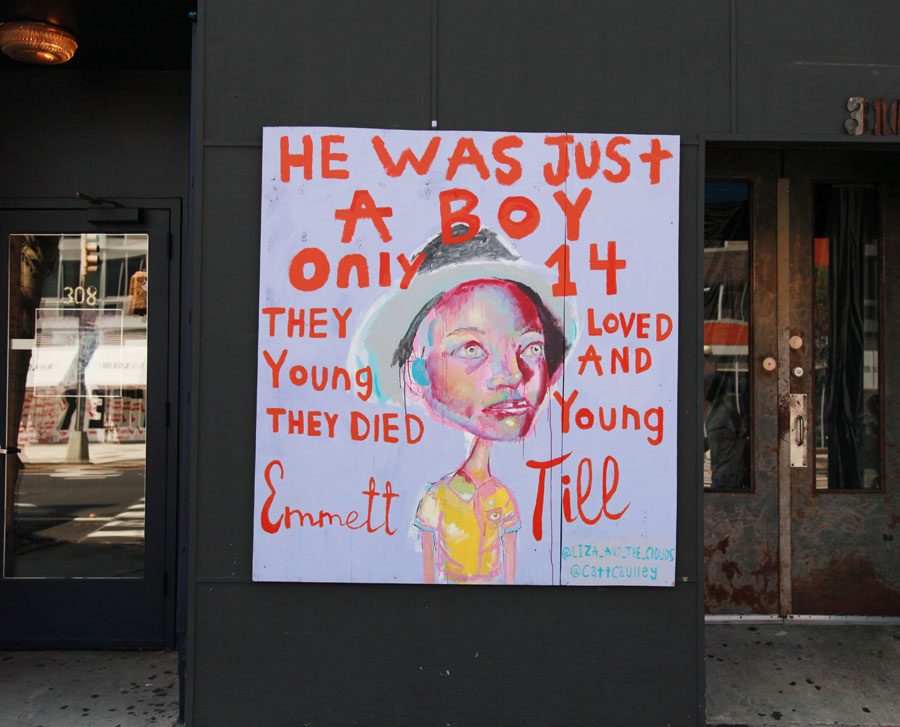
A painted portrait of Emmett Till, who would have turned 79 yesterday, leads the collection of images this week. A 14 year old sweet faced boy who was brutally mutilated and killed in Mississippi by white men in 1955 for allegedly flirting with a white woman. He was a year younger than representative John Lewis, who was eulogized rest yesterday in Alabama and will lay in state at the Capitol this week. Our legacy of racism haunts us just as abhorrently this summer as it did sixty-five years ago, two hundred years ago…

But in many ways, you have to suspect that these raucous cries are the dying wheezing of racists who have lost the argument and frankly demographics, and it frightens them. They know that the new generations don’t support them, actually resist against them, are determined to light a new path toward reconciliation and healing and equality.

Covid-19 is out of control in the United States thanks to the utter mis-management and lack of leadership in the country. Yesterday, “150 medical experts, scientists and other health professionals signed a letter organized by a prominent consumer group and delivered to government leaders Thursday calling for new shutdowns to bring case counts down and ‘hit the reset button’ to implement a more effective response.” They forecast that we are going to hit 200,000 deaths by November 1.”

Conversely, and indicative of how well Europe has been handling this virus, this week a Berlin court rules BDSM parlours can open as long as everyone wear masks.

As that showtune-singing satirist Randy Rainbow belted out this week, “We’re in Hell, We’re in Hell, We’re in Hell Hell Hell”.

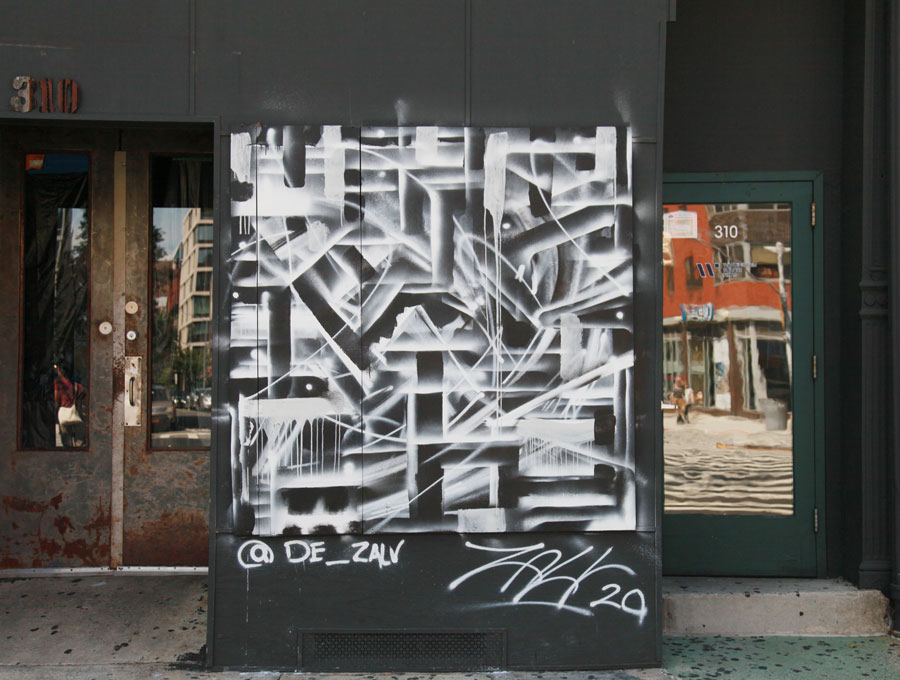
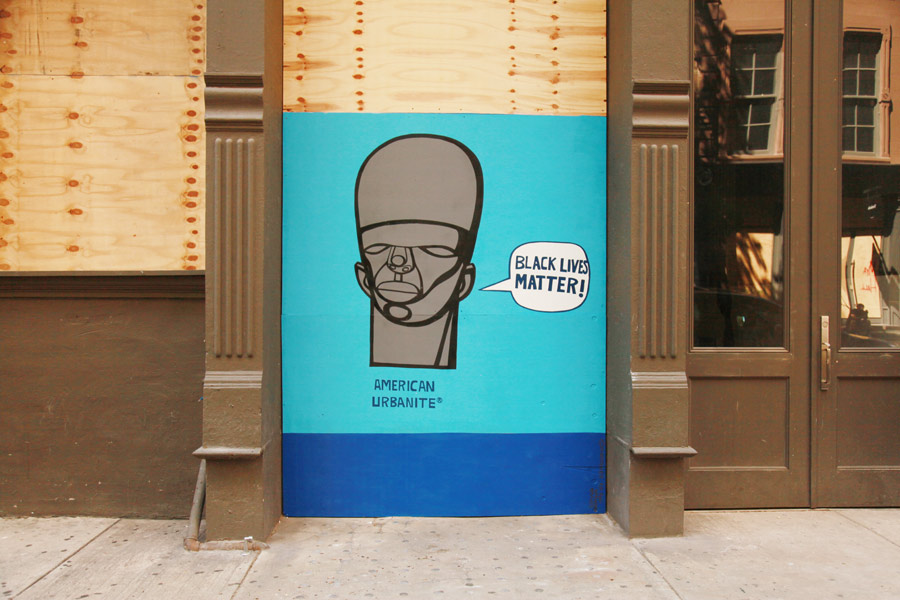
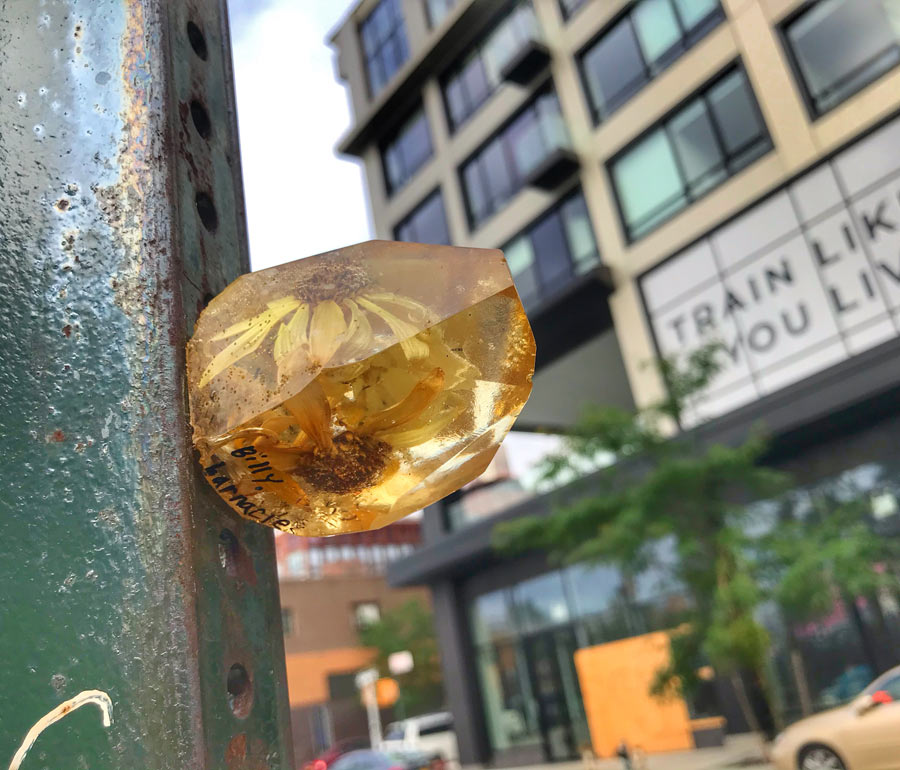
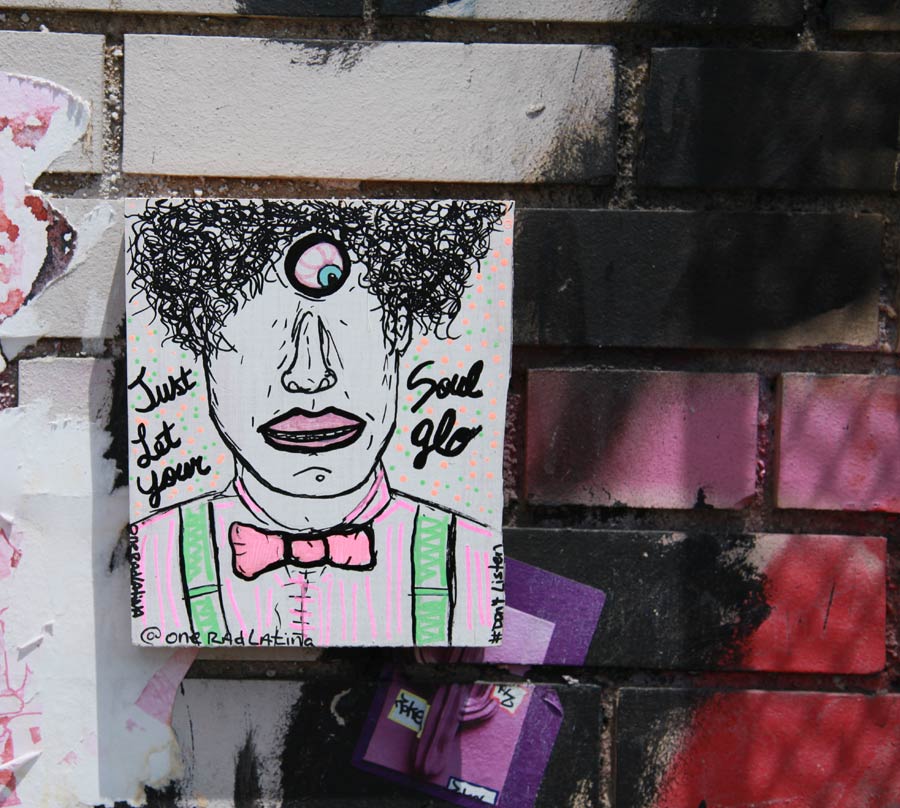
Here’s our weekly interview with the streets, this week featuring Almost Over Keep Smiling, Billy Barnacles, Catt Caulley, Dyne Elis, Knor, Koffee Creative, Liza and the Clouds, Lorena Tabba, Maya Hayuk, Oliver Rios, One Rad Latina, Ron Haywood Jones, Siva Stardust, Snoe, and Zalv.

Liza And The Clouds, Catt Caulley #blacklivesmatter (photo © Jaime Rojo)
Unidentified artist. #blacklivesmatter (photo © Jaime Rojo)
Maya Hayuk, Snoe. #blacklivesmatter (photo © Jaime Rojo)
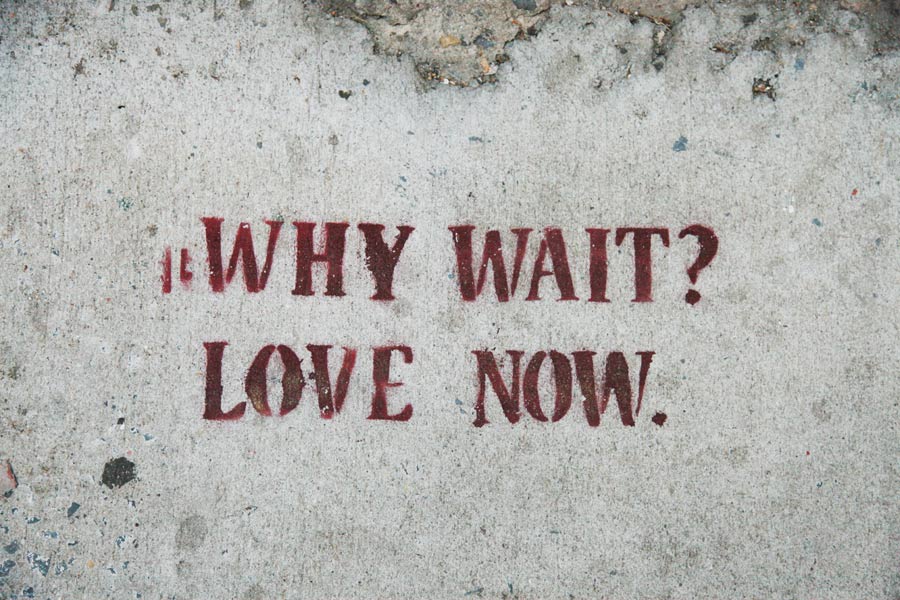
Unidentified artist (photo © Jaime Rojo)
Oliver Rios (photo © Jaime Rojo)
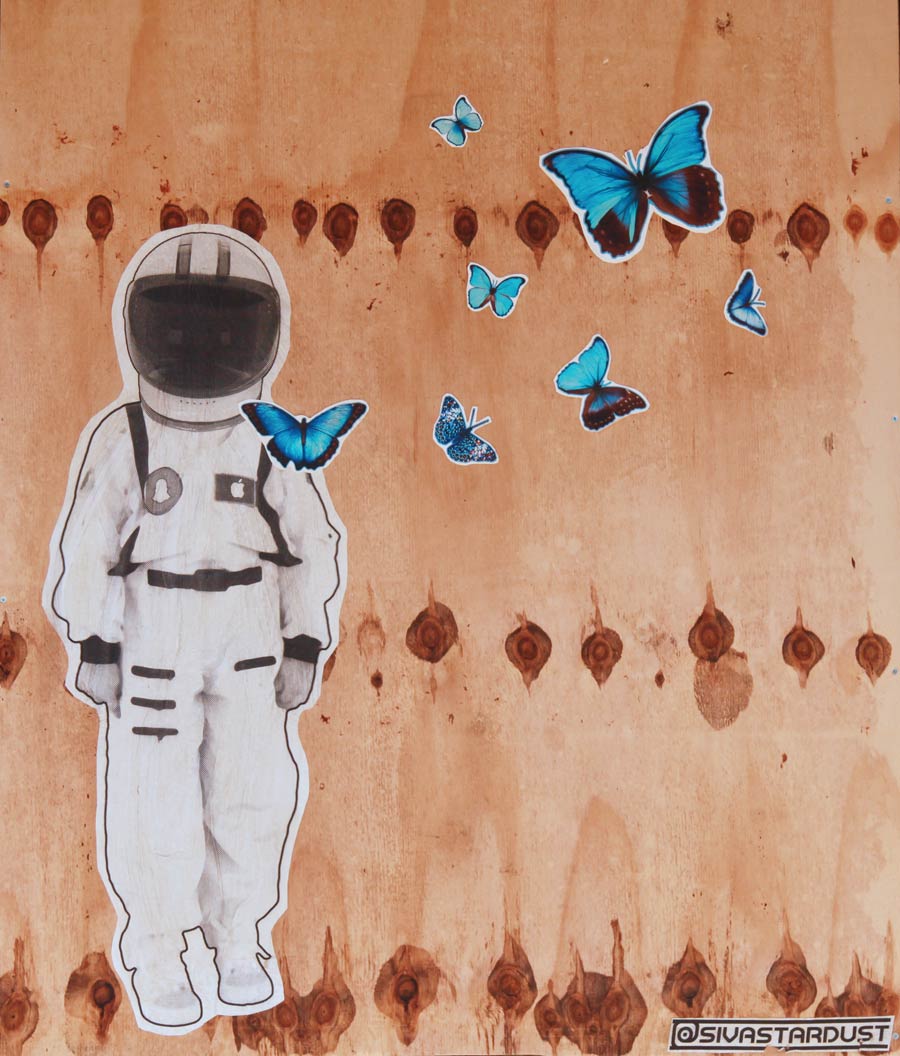
Siva Stardust (photo © Jaime Rojo)
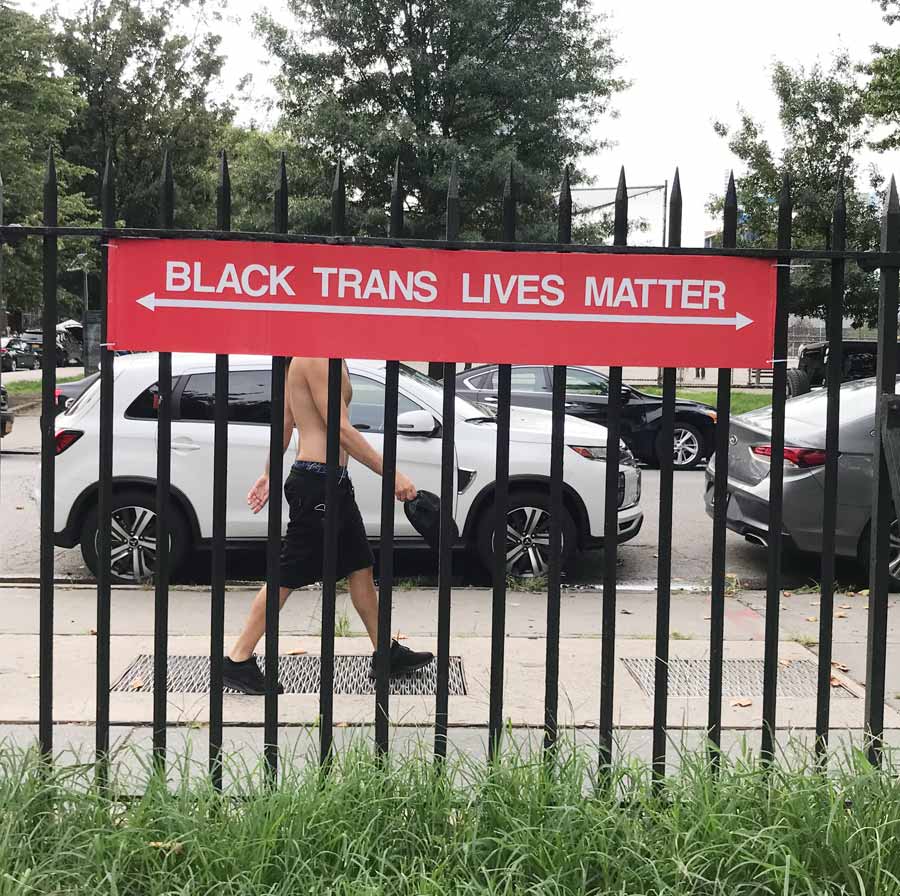
#blacktranslivesmatter (photo © Jaime Rojo)
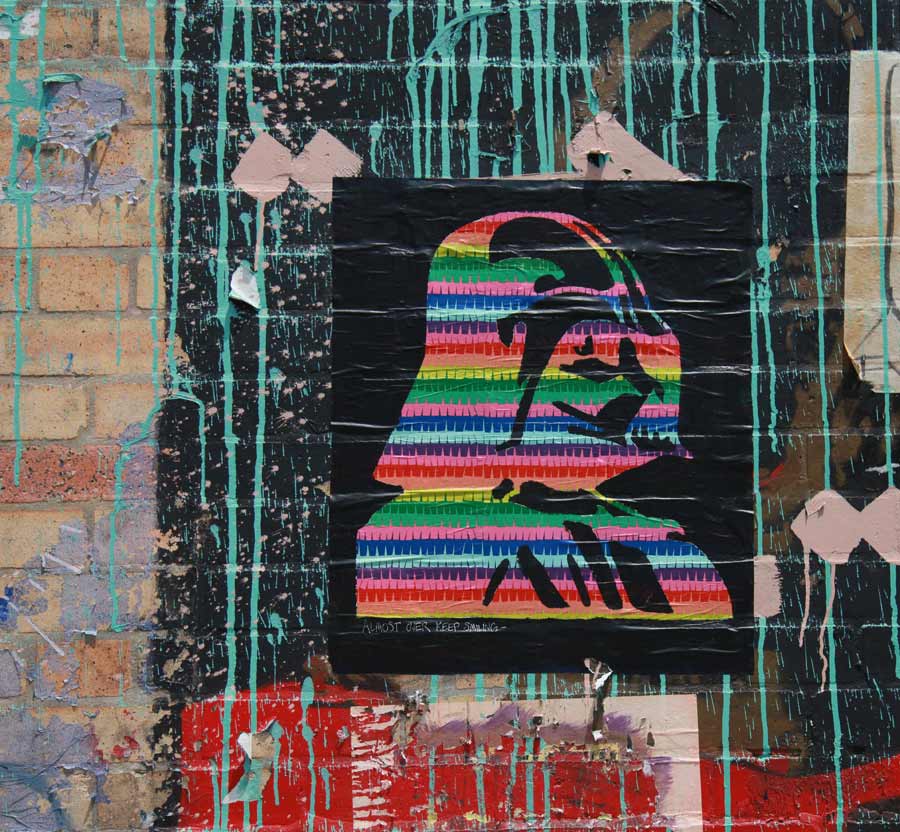
Almost Over Keep Smiling (photo © Jaime Rojo)
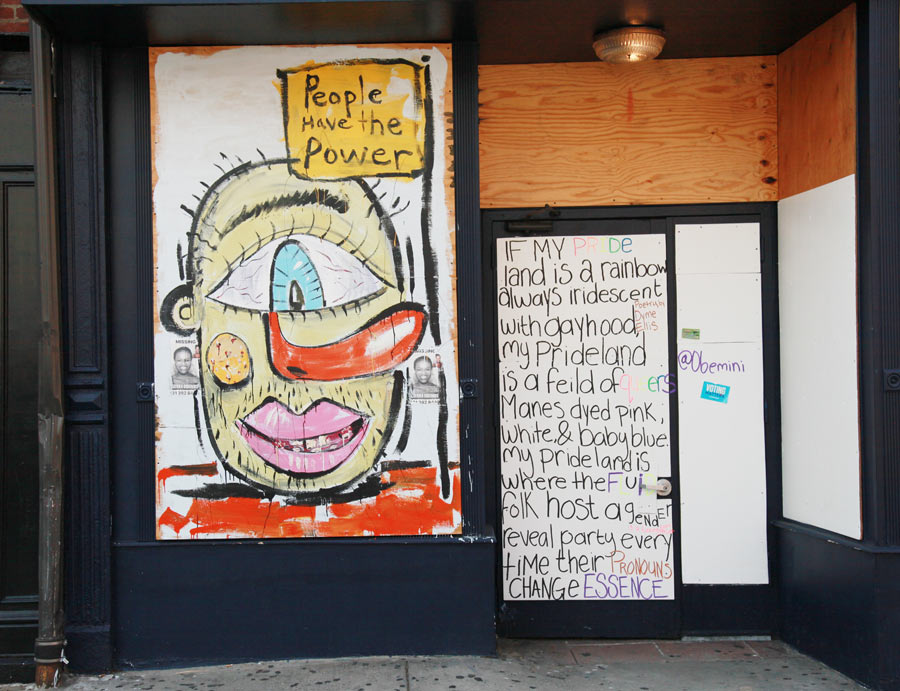
Unidentified artist on the left. #blacklivesmatter Poem on the right by Dyme Elis (photo © Jaime Rojo)
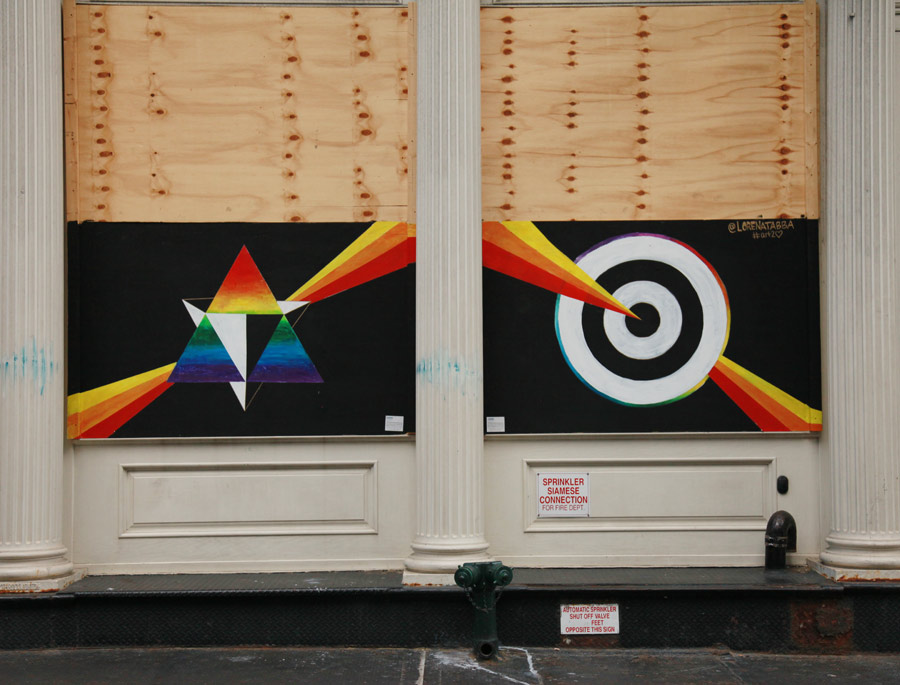
Is anyone else thinking about Pink Floyd right now? Lorena Tabba (photo © Jaime Rojo)
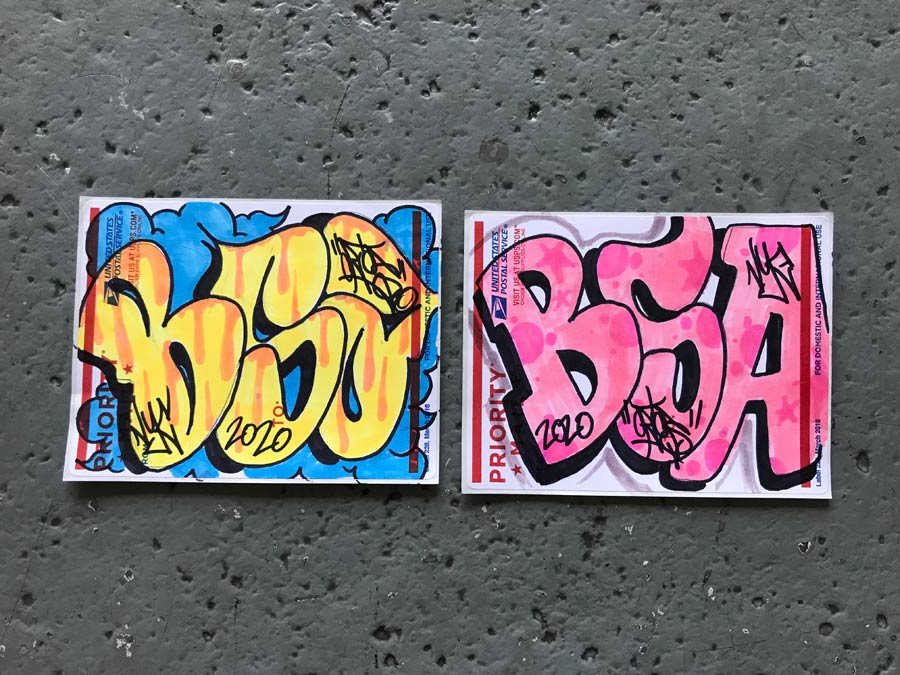
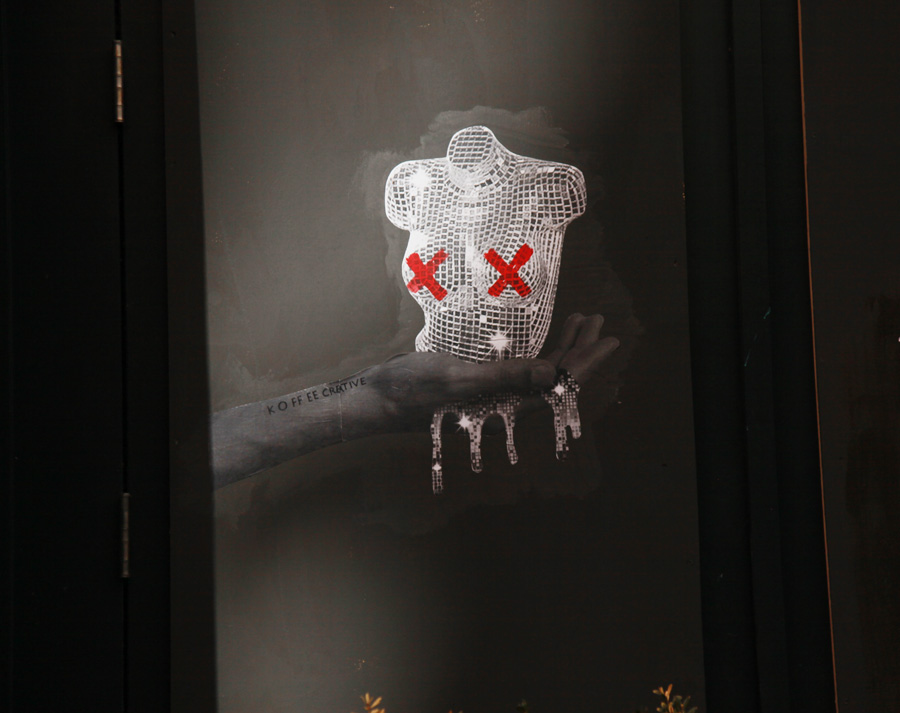
Koffee Creative (photo © Jaime Rojo)
Zalv (photo © Jaime Rojo)
Ron Haywood Jones brings his
American Urbanite to the street. #blacklivesmatter (photo © Jaime Rojo)
Billy Barnacle (photo © Jaime Rojo)
One Rad Latina (photo © Jaime Rojo)
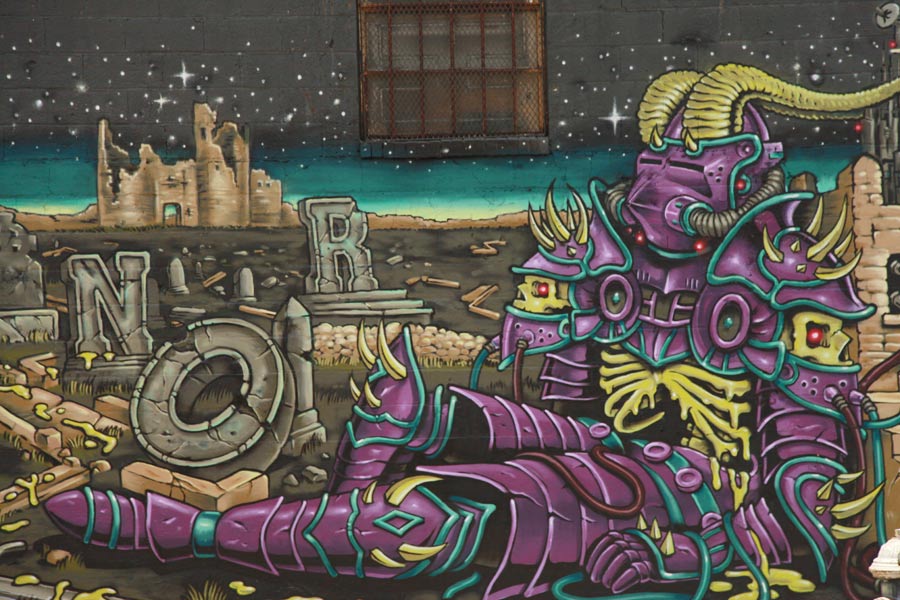
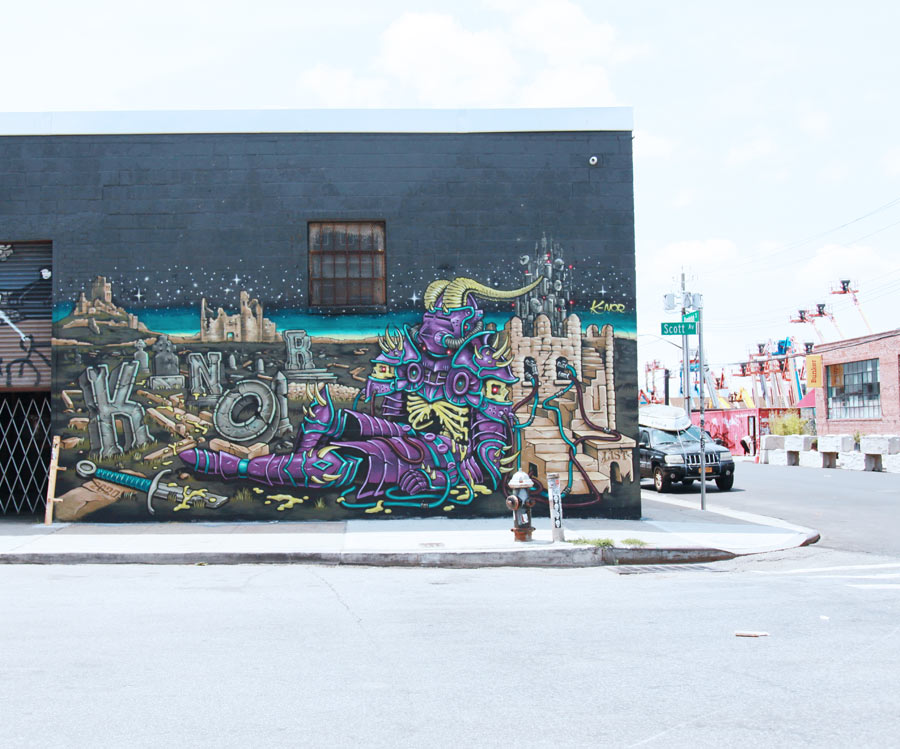
Knor. Detail. (photo © Jaime Rojo)
Knor (photo © Jaime Rojo)
Unidentified artist (photo © Jaime Rojo)
Read more
AKUT Remembers With Two Portraits in Mannheim: “Lest We Forget”

AKUT Remembers With Two Portraits in Mannheim: “Lest We Forget”

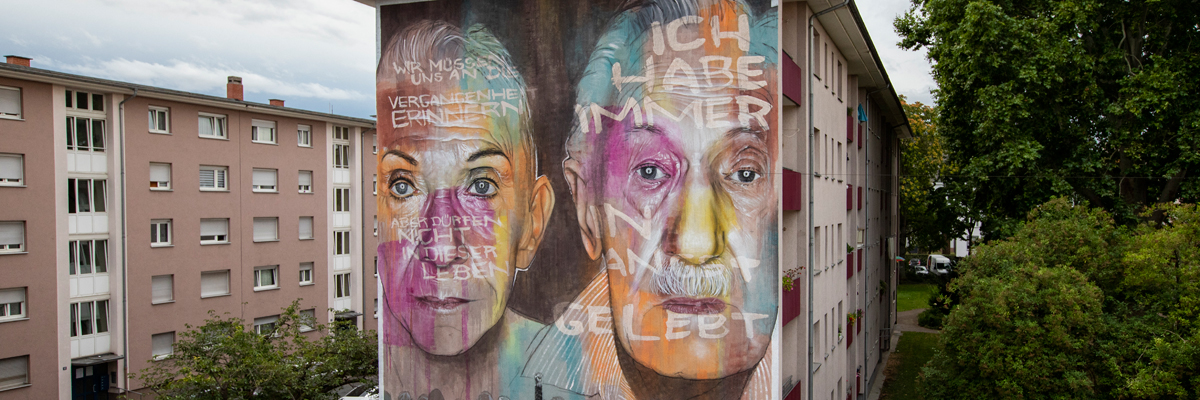
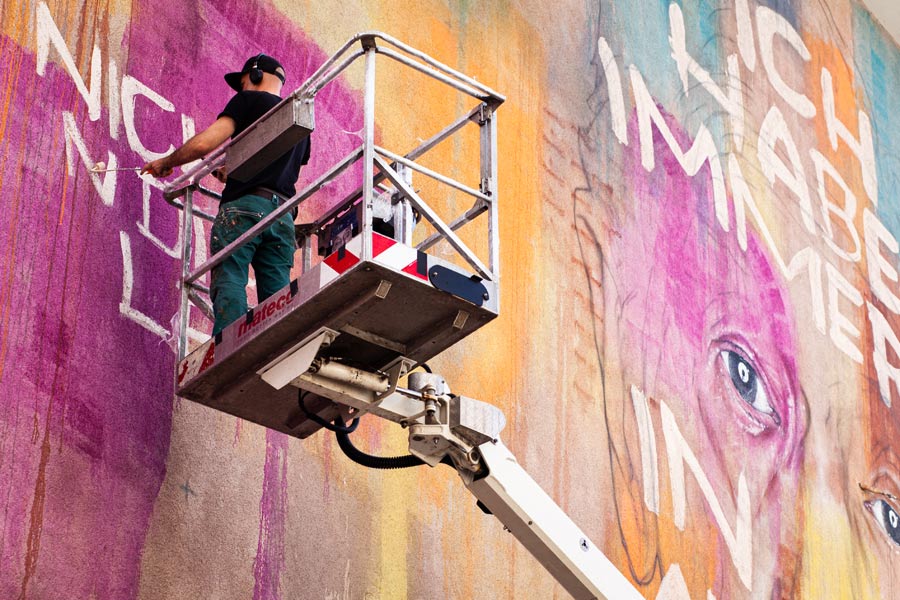
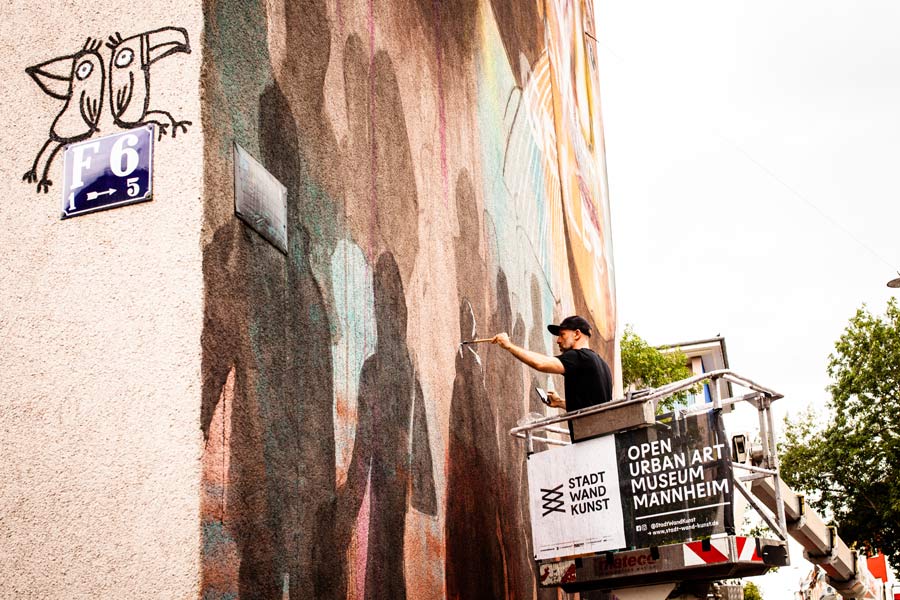
“I felt uncomfortable while confronting myself with the reports about the incidents every person has experienced,” says AKUT in his blog about the research he did into the Holocaust for his new project here.

“It’s unbelievable how one can ever cope with it – and it’s completely unacceptable that there are right-wing populists still gaining more support worldwide. One would think that we have learned from history, but present events prove us wrong regularly.”

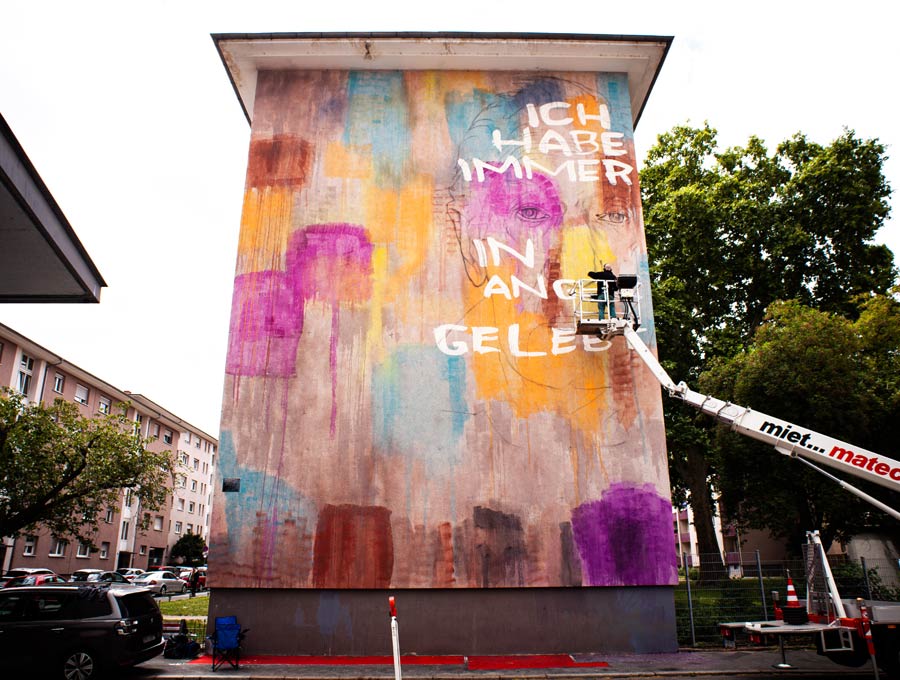
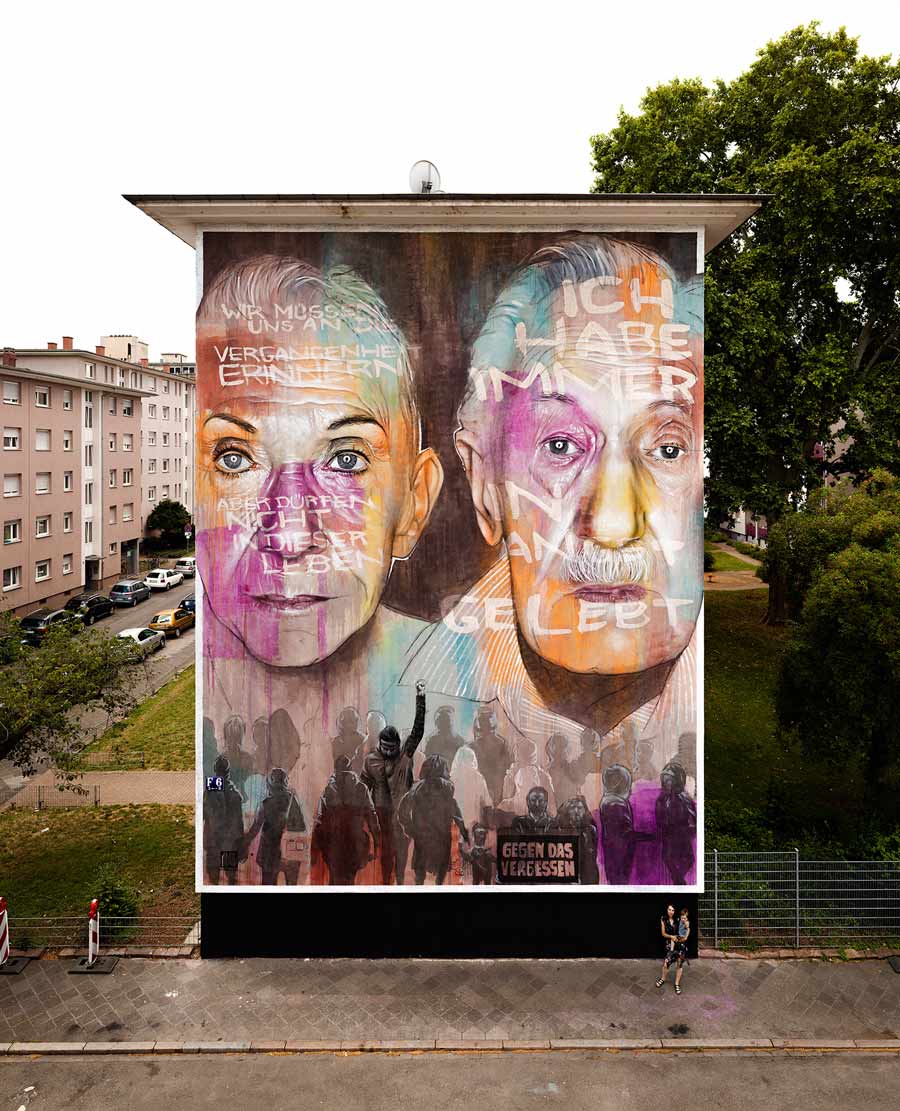
Falk Lehmann AKA AKUT. “Lest We Forget“. Stadt.Wand.Kunst. Mannheim, Germany. (photo courtesy of AKUT)

And here now we have two people whose photorealistic eyes we can look into. One is Horst Sommerfeld, a Polish national who lived in hiding in Berlin for two years before he and his whole family were caught and deported to Auschwitz-Birkenau. He was the only family member to live after being liberated by the US army in 1945.

Nonetheless, Mr. Sommerfeld reported, “I have always lived in fear,” before his death in 2019.

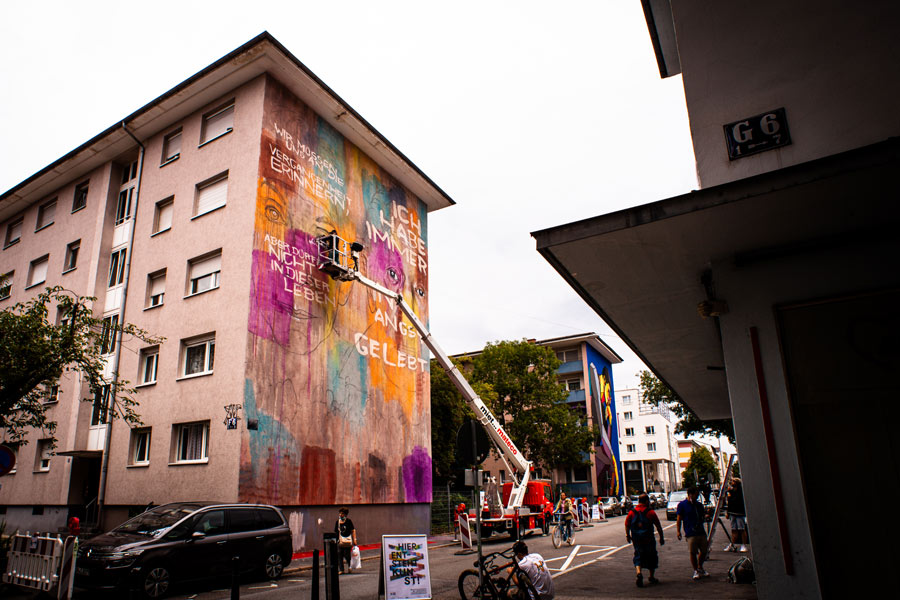
Falk Lehmann AKA AKUT. “Lest We Forget“. Stadt.Wand.Kunst. Mannheim, Germany. (photo courtesy of AKUT)

The other portrait is of Bella Shirin, a Lithuanian whose parents were survivors of the concentration camps of Dachau and Stutthof. While she is determined to live in the present, her own past is deeply impacted by her mother’s suicide in 1977 that occurred as a result of her experiences in the camps.

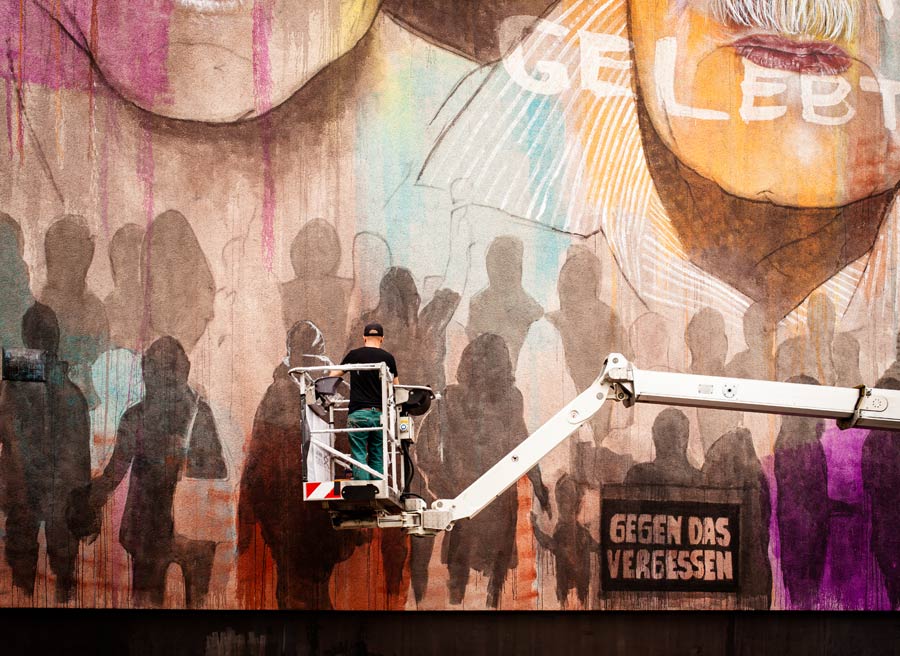
Falk Lehmann AKA AKUT. “Lest We Forget“. Stadt.Wand.Kunst. Mannheim, Germany. (photo courtesy of AKUT)

LEST WE FORGET is a multi-media project by the German-Italian photographer and filmmaker Luigi Toscano, who has met Holocaust survivors around the world including in the US, Germany, the Netherlands, Belarus, Ukraine, Israel and Russia since the early 2010s. This month a new mural by street artist/fine artist AKUT (Falk Lehmann) pays tribute to two persons directly and deeply affected by the events of the Holocaust.

Rising six stories in Mannheim, Germany, this is the 35th mural since 2013 as part of a program to convert underutilized walls into artworks, the first freely accessible museum for mural art in all of Baden-Württemberg.

Falk Lehmann AKA AKUT. “Lest We Forget“. Stadt.Wand.Kunst. Mannheim, Germany. (photo courtesy of AKUT)

“This expresses the different ways of dealing with their fates, which is certainly also directly connected to their respective personal stories,” says AKUT. “Horst was traumatized directly, whereas Bella has indirectly experienced trauma from her parents’ experiences.”

Falk Lehmann AKA AKUT. “Lest We Forget“. Stadt.Wand.Kunst. Mannheim, Germany. (photo courtesy of AKUT)
Read more
BSA Film Friday 07.24.20

BSA Film Friday 07.24.20

Our weekly focus on the moving image and art in the streets. And other oddities.

Now screening :
1. BustArt Says Goodbye to Berlin-Tegel
2. Transform the Tram Wait by MurOne in Barcelona

BSA Special Feature: BustArt Says Goodbye to Berlin-Tegel

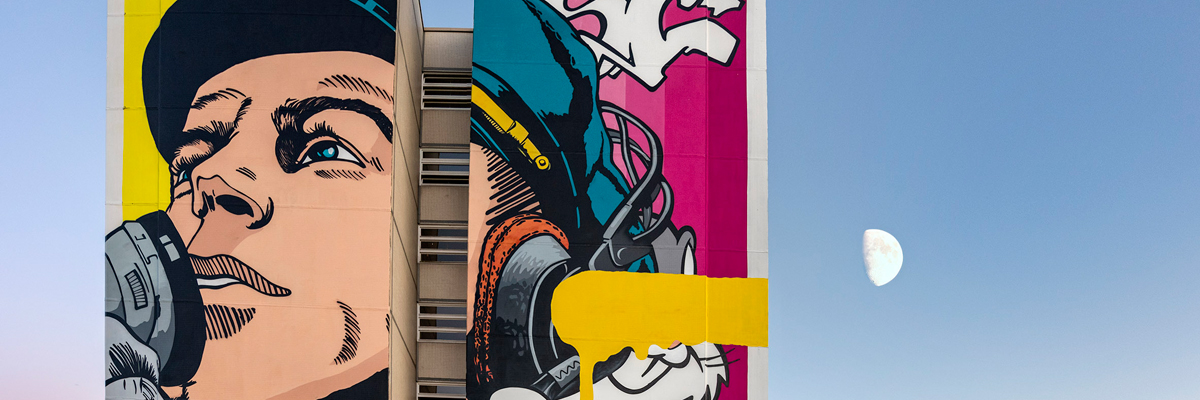
A museum curating in public space is not necessarily new. Many eyes are watching with great interest as this museum in Berlin begins an academic approach toward selecting artists and artworks in public space in Berlin as Urban Nation Museum grounds its projects in its community and local history. The new work by street artist and graffiti writer Bustart is a direct reference to the nearby Berlin-Tegel airport, which will be decommissioned later this year.

Part of the inspiration is from Otto Lilienthal, the German pioneer of aviation who became known as the “flying man”, now cast through a 1960s comic strip version of the modern hero gazing upward to witness the post-war middle class flying the friendly skies. In a twist of irony, most people in this neighborhood will probably enjoy their daily lives more now that the airport won’t be filling the air with the sound of roaring planes overhead, allowing them to listen instead to birds in the trees.

Art al TRAM by MurOne

“Cities have these rough and rigid spaces whose only purpose is to walk through,” says Marc Garcia, founder and director of Rebobinart, a Barcelona organization that brings artists to the urban environment – developing projects with social and cultural context considerations in public space.

MurOne’s new mural takes on the space where people wait for the tram – a nondescript netherworld, a metropolitan purgatory where you are nowhere, only between. The Cornellà Centre TRAM stop is transformed by the Spanish artist (Iker Muro) who has been making murals for almost two decades, combining figurative and abstract, fiction, oblique narrative and vivid color. It’s the city, and its yours while you wait to go to your next destination

Iker Muro is a Spanish artist and graphic designer who has been making murals in Spain and abroad since 2002. His work combines figurative and abstract art, conveying both tangible and fictional elements through vivid colours and figures influenced by the visual imagery in the cities where the artist paints.

“I believe that arriving in a place like this and finding a kind of art gallery is a reason for attraction,” says MurOne, “I feel motivated by these kinds of actions.”

Read more
Josep Fernandez Margalef x Rice Create Connection: “Esperança” (Hope) in Barcelona

Josep Fernandez Margalef x Rice Create Connection: “Esperança” (Hope) in Barcelona

Today we go to Barcelona in Spain, where the country held a memorial ceremony July 16 to honor more than 28,000 people who have died there from COVID-19. This new mural contemplates what it means to be connected, and considers what it takes to have hope.

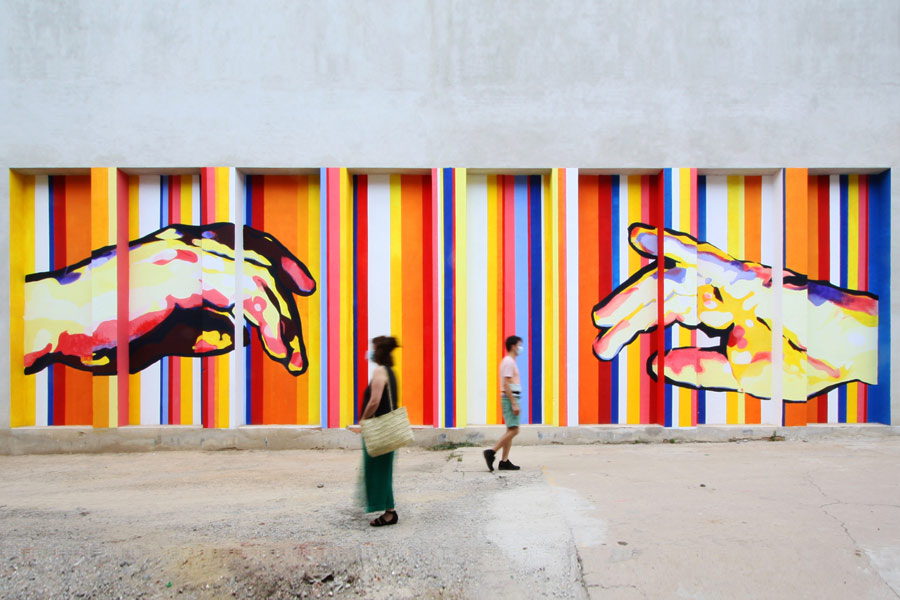
Utilizing the architectural barriers as metaphor for the obstacles to connection, artists Josep Fernandez Margalef and Rice created ‘Esperança’ (Hope) in the Granollers area of Barcelona.

“Even at a distance, hope acts as a power that can bring us closer to each other, helping us to  reach tomorrow. We honor connections, longing, and a feeling greater than ourselves when we are alone; love, friendship, and care all belong in this realm of being,” say the artists.

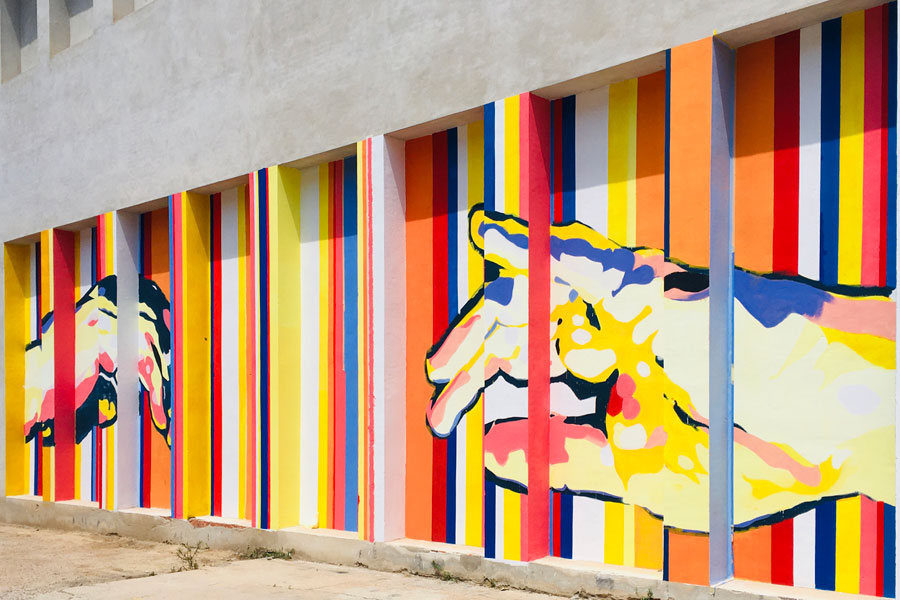
Josep Fernandez Margalef x Rice, ‘Esperança’. Barcelona, Spain. (photo © Josep Fernandez Margalef)
Read more
“Martha Cooper: Taking Pictures” : Retrospective Opens This October at Urban Nation Museum in Berlin

“Martha Cooper: Taking Pictures” : Retrospective Opens This October at Urban Nation Museum in Berlin


The URBAN NATION MUSEUM FOR URBAN CONTEMPORARY ART
presents a six-decade retrospective of Martha Cooper’s photographs.


MARTHA COOPER: TAKING PICTURES

October 2nd 2020 – August 1st 2021

Curated by Steven P. Harrington and Jaime Rojo


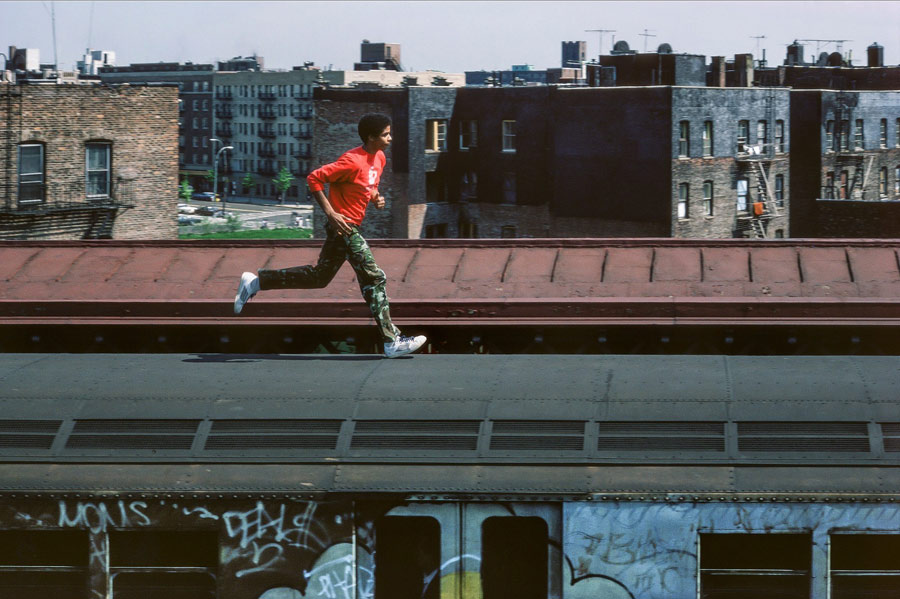
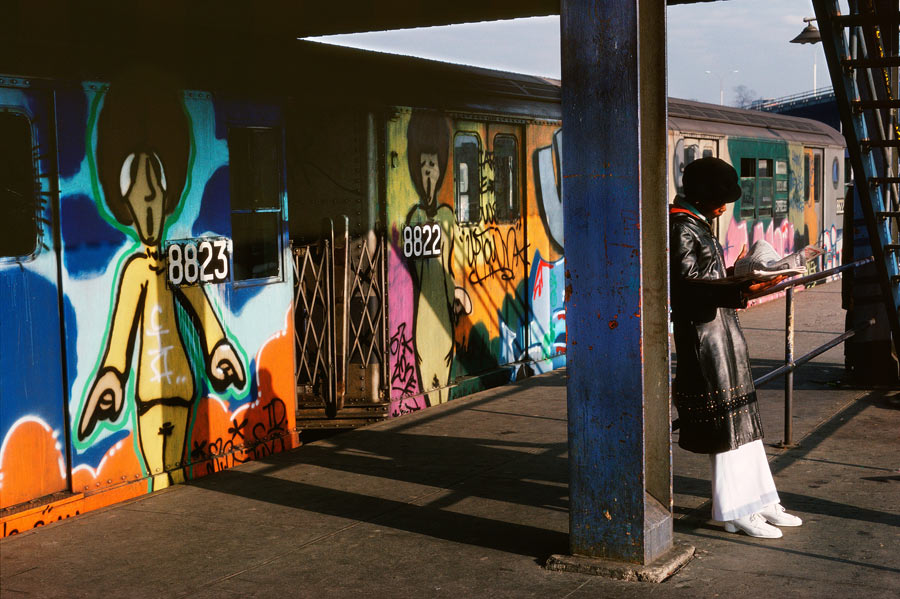
Skeme, the Bronx, 1982. Copyright Martha Cooper. 

Combining photographs and personal artifacts, MARTHA COOPER: TAKING PICTURES traces her life from her first camera in nursery school in 1946 to her reputation today as a world-renowned photographer.

This retrospective is the first documentary exhibition to be presented at the URBAN NATION Museum and it ushers in a new era for the museum under its new director Mr. Jan Sauerwald.

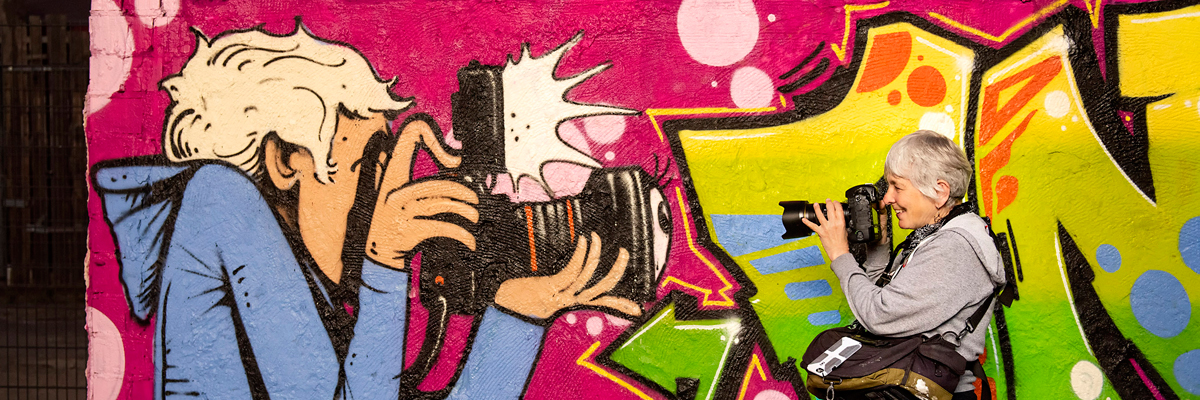
MARTHA COOPER: TAKING PICTURES presents the photographer’s versatile vision of the world, with creativity found on every corner. The exhibition opens with the images from Subway Art, her landmark 1984 book with Henry Chalfant, now credited with jump-starting the worldwide urban art movement. Martha’s photographs documented the secret subculture of writers and the coded artworks they created illegally on thousands of New York City trains.

Martha’s photographs are distinguished by their frank human vitality, with an eye to preserving details and traditions of cultural significance. Many of her photographs have become iconic representations of a time, place or culture. The exhibition will offer a rare insight into Martha’s archives through previously unpublished photographs, drawings, journals, articles, letters, and artifacts. As a lifelong and avid collector, her private trove of black books, stickers, Kodak film wallets and child-made toys will also be on display. Emphasis is placed on Martha’s extensive travels and the artistic friendships that she has fostered internationally.

180th Street Station Platform, the Bronx, 1980. Copyright Martha Cooper. 

Fans will recognize images from her books Hip Hop Files (with Akim Walta, 2004), Street Play (2005), We B*Girlz (with Nika Kramer, 2005), New York State of Mind (2007), Name Tagging (2010), and Tokyo Tattoo 1970 (2011). As an exhibition highlight, the original mock-up of her legendary book Subway Art (with Henry Chalfant, 1984) will be on display, as well as artworks from her personal collection including a pair of original paintings by graffiti king, Dondi.

A multi-channel video installation called “The Rushes” will debut in the exhibition by filmmaker Selina Miles, who directed the documentary Martha: A Picture Story and premiered at the 2019 Tribeca Film Festival in NYC.

An extensive section called “Martha Remixed” showcases the work of over 35 artists who have reinterpreted Cooper’s photographs or paid personal tribute with portraits in an array of styles and mediums and locations. Unique to the exhibition, visitors will see the new collaboration between Martha and multidisciplinary Lithuanian artist Ernest Zacharevic who will create a two-story mural onsite inside the museum.

“We were immediately excited to be given the opportunity to present the world’s first major retrospective of photographer Martha Cooper and to introduce her body of work to URBAN NATION Museum visitors. We are interested in focusing on Cooper’s photographic work and expounding on her working methods. In addition, we will present her worldwide collaborations with artists and protagonists of the street art and graffiti movement and provide audiences the opportunity to delve deeply into the cosmos of Martha Cooper’s work. We are delighted to be able to present and convey a unique compilation of photographs and artifacts from her personal collections.” – Jan Sauerwald, Director of the URBAN NATION Museum.   

Lower East Side, Manhattan. NYC, 1978. Copyright Martha Cooper.

Martha’s specialty is documenting artistic process in public space. Her formal training in art and ethnology set a unique template to better understand cultural practices and techniques and her friendships with artists gave her close and personal access to show materials, tools and techniques in detail as they evolve over several generations. As part of this larger practice, Cooper’s iconic photos of clandestine graffiti activities have proven to be a valuable record and an important key to understanding the story of the movement’s proliferation around the world.

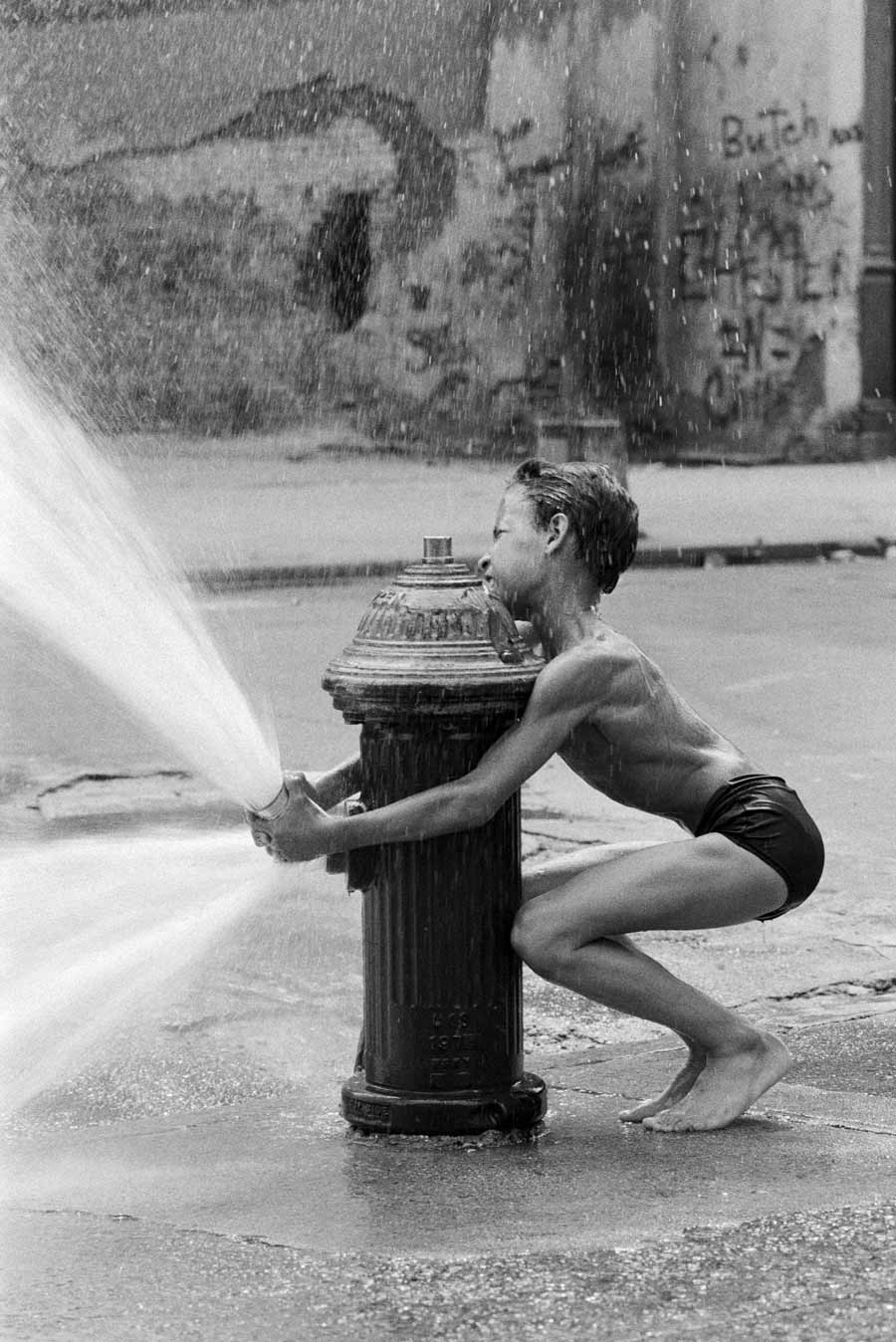
Martha’s curiosity has always driven her documentation. Her black and white photographs from her book Tokyo Tattoo 1970 (2011), represent her first foray into an underground art world and hidden practices. In Street Play she concentrated on the invincible spirit of city kids who are creatively rising above their bleak environment. Her photographs of 1980s breakers are the earliest published images of an unknown dance form at the time that became known as central to the definition of Hip Hop culture. As the first female staff photographer on the New York Post, Cooper sought out subjects to pursue independently. Her intrepid and sometimes risky pursuit of taking pictures has inspired many young people to pursue their own artwork and career paths. 

Exhibition curators Steven P. Harrington and Jaime Rojo (New York) have been curators and co-curators for the URBAN NATION Museum since 2015 (Project M/7 Persons of Interest, 2015, URBAN NATION opening exhibition UNique. UNited. UNstoppable., 2017). They are also founders and editors of the influential art site Brooklyn Street Art (BSA) since 2008, a respected daily clearinghouse of the global street art scene.

1UP Crew Mural. Detail. Urban Spree, Berlin, 2017. Copyright Nika Kramer. 

Martha’s style is to dive in and be fearless, immersing herself in the moment – and she’s been documenting what she finds around the world for six decades. That’s the attitude we took curating this exhibition, knowing that each element captured in her work is genuine and transient. It is our goal for visitors to be transformed by her unique eye for a historic preservation of the ordinary that is often exceptional – whether it is documenting the verboten process of making 1970s graffiti, capturing youths performing moves that were later called “breaking”, the inking processes of Japanese tattoo culture, or the ingenious games kids devised for play in New York’s abandoned neighborhoods,” say Harrington and Rojo about MARTHA COOPER: TAKING PICTURES.

MARTHA COOPER: TAKING PICTURES
Exhibition Opening
Friday, October 2nd, 2020, 8 pm

URBAN NATION MUSEUM FOR URBAN CONTEMPORARY ART
Bülowstraße 7, 10783 Berlin-Schöneberg

Interviews will be offered in prior with Martha Cooper, Curators Steven P. Harrington and Jaime Rojo, and Director of the URBAN NATION Museum, Jan Sauerwald. Requests can be send to pr@urban-nation.com

Read more
John Lewis Leader, Freedom Rider and Path Maker of Civil Rights Era Dies at 80

John Lewis Leader, Freedom Rider and Path Maker of Civil Rights Era Dies at 80

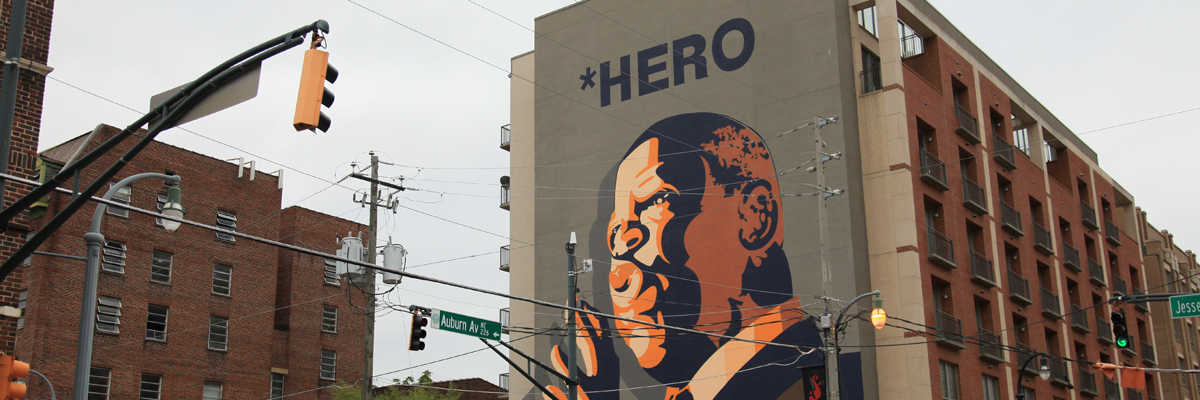
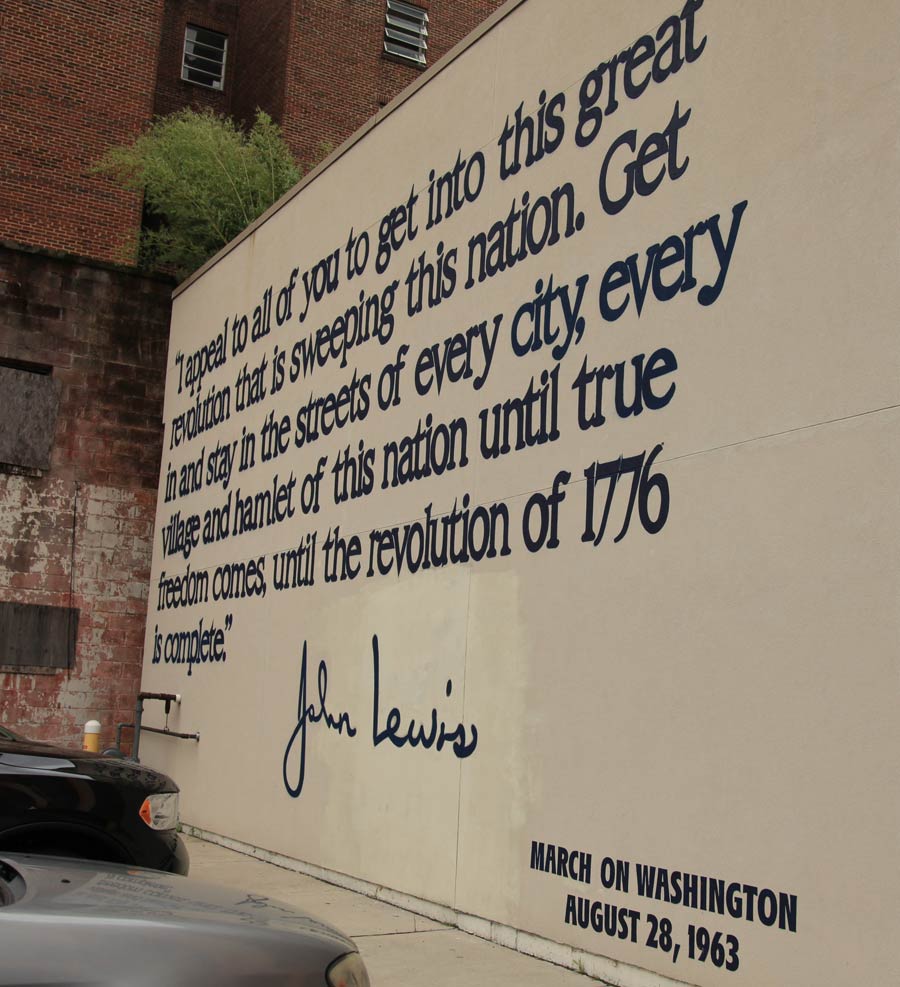
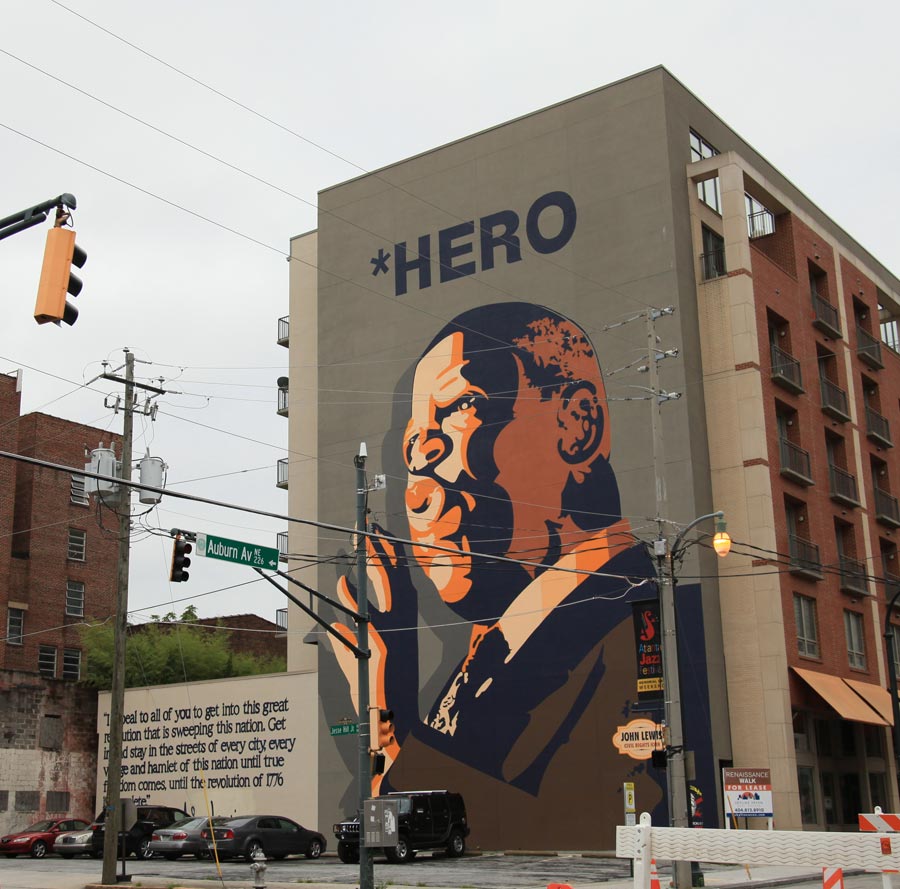
We post images from a mural in Atlanta photographed a number of years ago by Jaime Rojo, as we remember with admiration, gratitude, and respect Congressman John Lewis of Georgia.


“I APPEAL TO ALL OF YOU TO GET INTO THIS GREAT REVOLUTION THAT IS SWEEPING THIS NATION. GET IN AND STAY IN THE STREETS OF EVERY CITY, EVERY VILLAGE AND HAMLET OF THIS NATION UNTIL TRUE FREEDOM COMES, UNTIL THE REVOLUTION OF 1776 IS COMPLETE” – John Lewis, March on Washington, August 28, 1963

John Lewis. February 02, 1940 – July 17, 2020. Atlanta, Georgia. The Loss Prevention. (photo © Jaime Rojo)
Representative John Lewis, top left was arrested in Jackson, Miss., in May 1961 along with fellow Freedom Riders. They were swiftly convicted of disturbing the peace. (photo courtesy of Mississippi Department of Archives and History)
Read more
BSA Images Of The Week: 07.19.20

BSA Images Of The Week: 07.19.20

Welcome to BSA Images of the Week. The weather has been beautiful in NYC and the organic art popping up on the streets is still forcefully advocating for social and political solutions amidst great upheaval, even while…

Police groups want to paint a ‘Blue Lives Matter’ street mural in New York City, Federal officers are using unmarked cars to arrest Portland protesters, Trump Administration Strips CDC of Control of Coronavirus Data, Governor Cuomo Announces $1.5 Million for ‘Feeding New York State’ to Assist Food Insecure New Yorkers and State’s Farmers, 5.4 million have lost health insurance , Biden will not support Medicare for All and Liz Cheney joins forces with Nancy Pelosi to ensure taxes go to fund endless war in Afghanistan after 19 years.

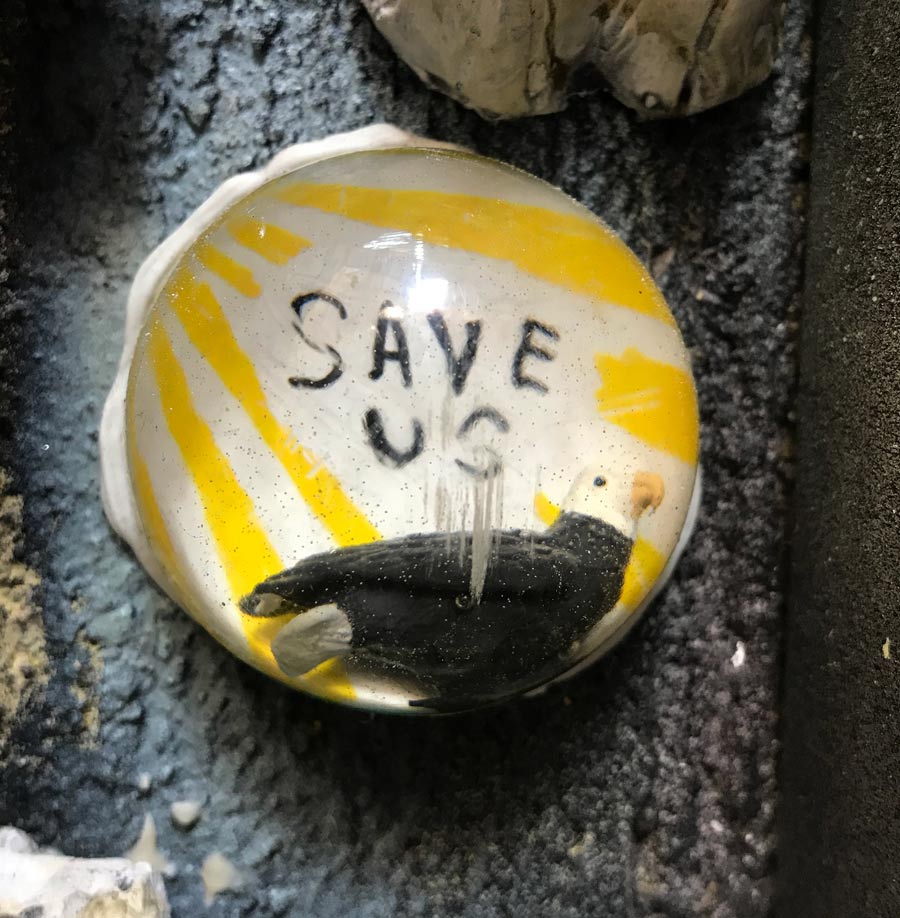
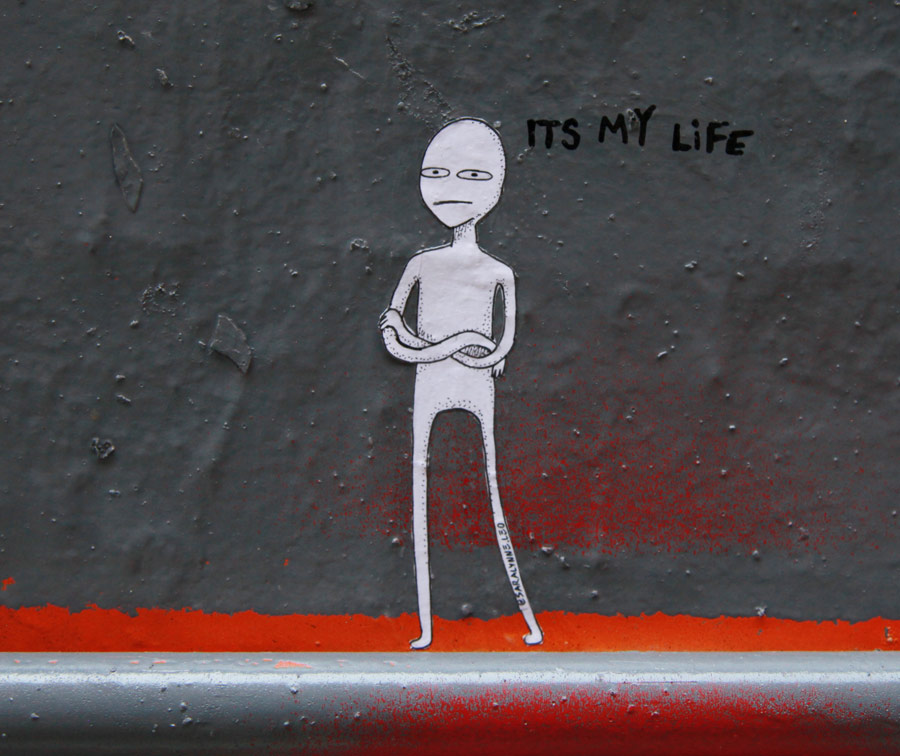
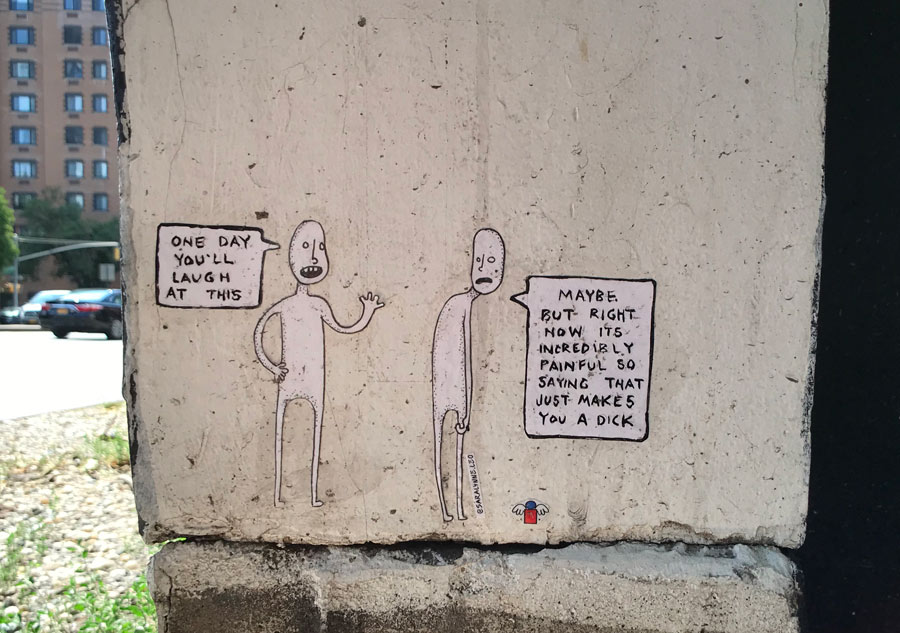
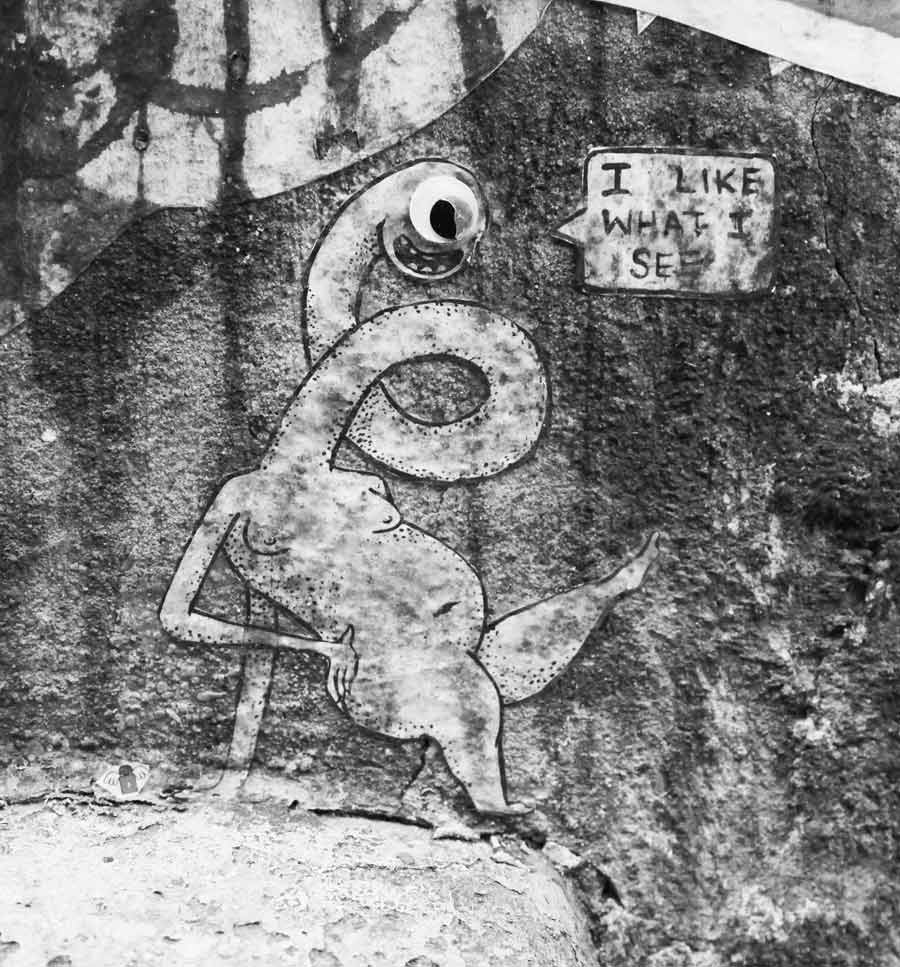
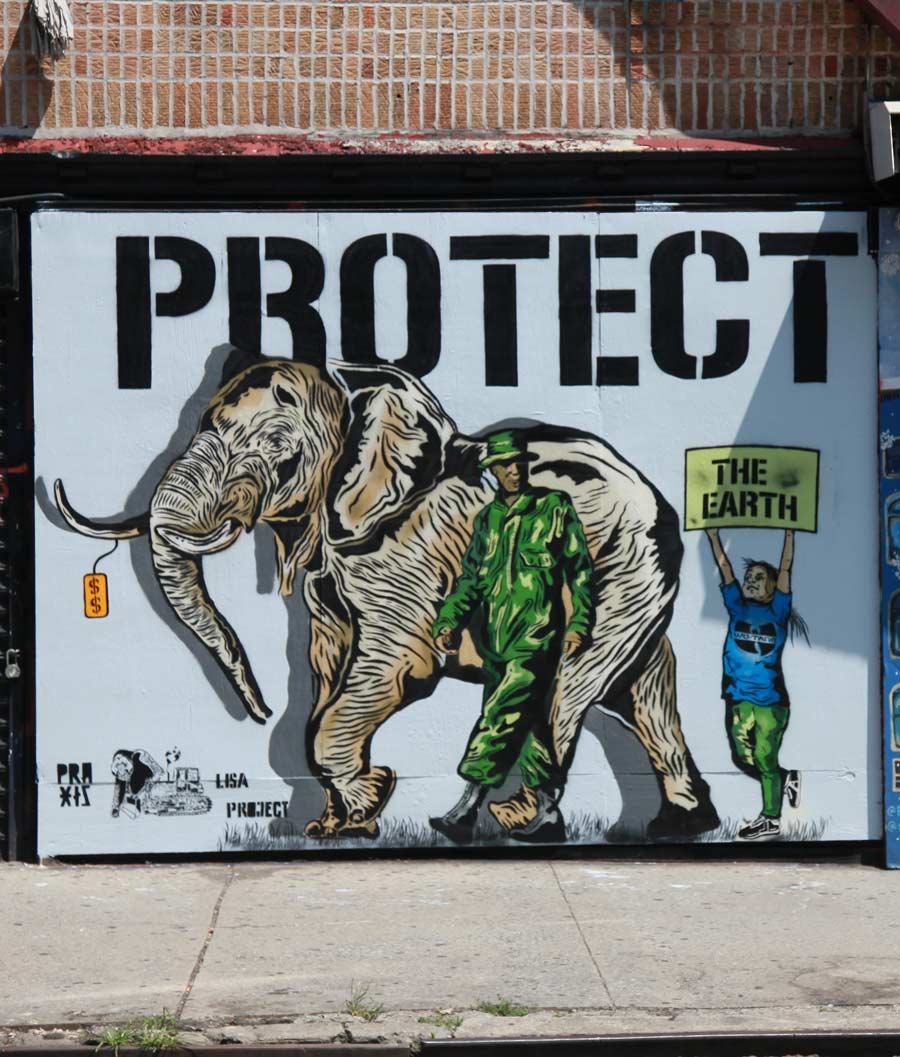
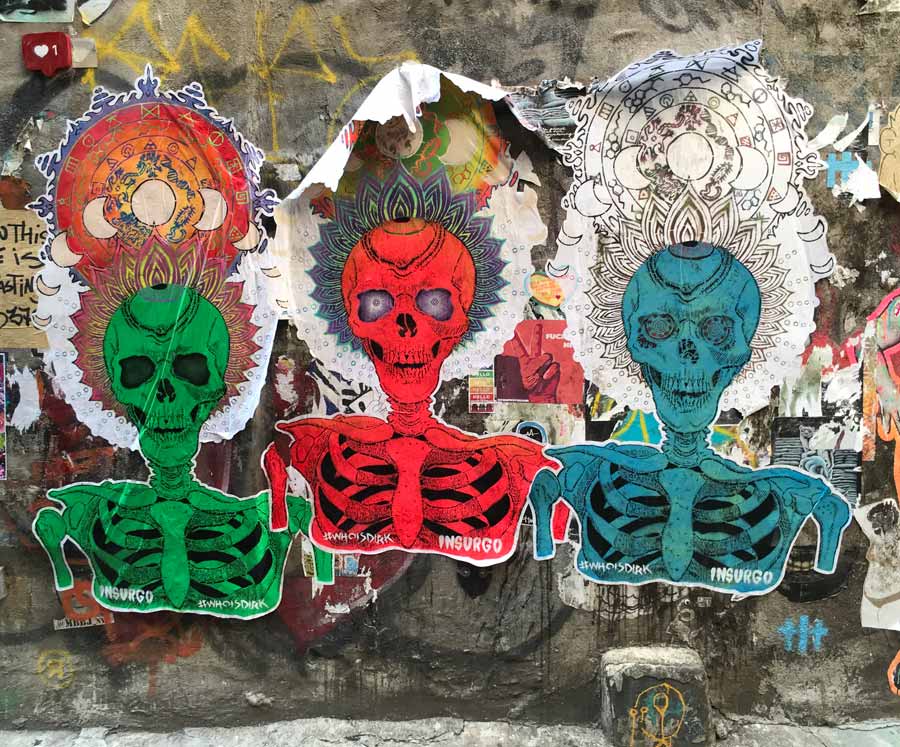
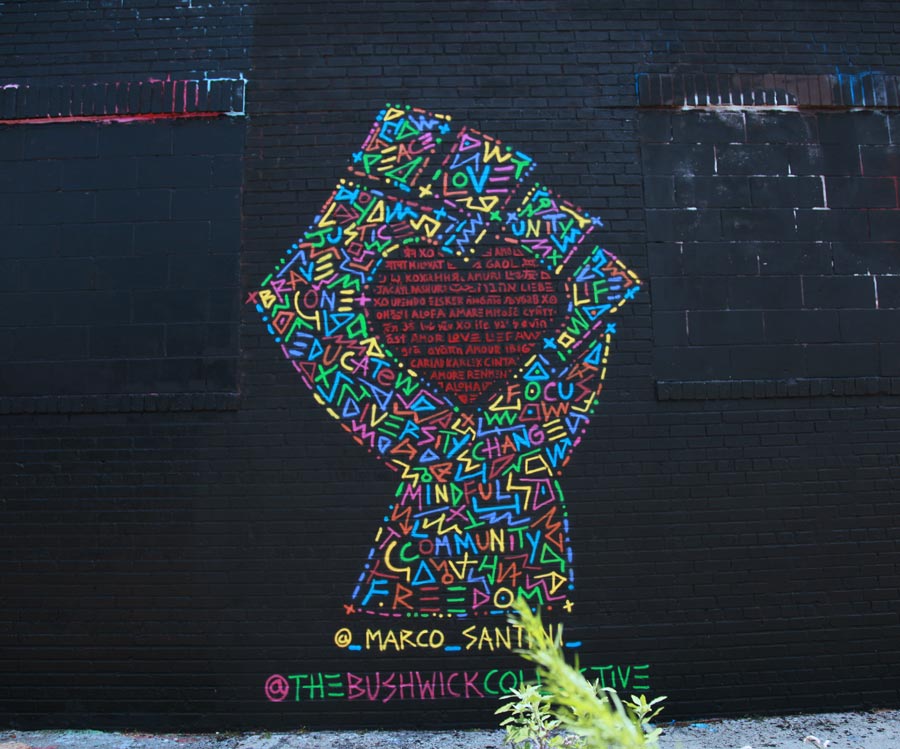
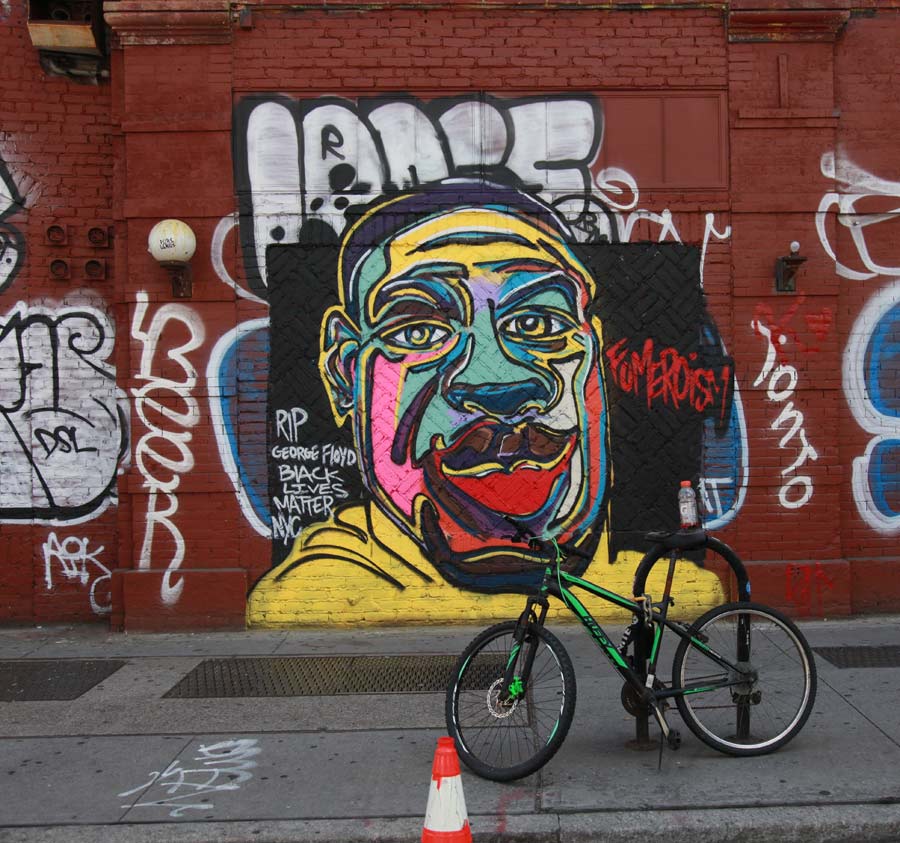
Here’s our weekly interview with the streets, this week featuring Adam Fujita, Almost Over Keep Smiling, Billie Barnacles, Black Lives Matter, Bosko, Detor, Downtown DaVinci, Eric Haze, Fumero, Insurgo, Marco Santini, Marina Zumi, Praxis VGZ, Sara Lynne Leo, and Who is Dirk.

“I consider this mural a gift to New York City and a gift to the world,” says Eric Haze of this design he created in response to the killing of George Floyd and the ensuing Black Lives Matter protests in our city and across many others. (photo © Jaime Rojo)
Unidentified Artist (photo © Jaime Rojo)
Adam Fujita (photo © Jaime Rojo)
July For Art . #blacklivesmatter (photo © Jaime Rojo)
#blacklivesmatter (photo © Jaime Rojo)
Billie Barnacles (photo © Jaime Rojo)
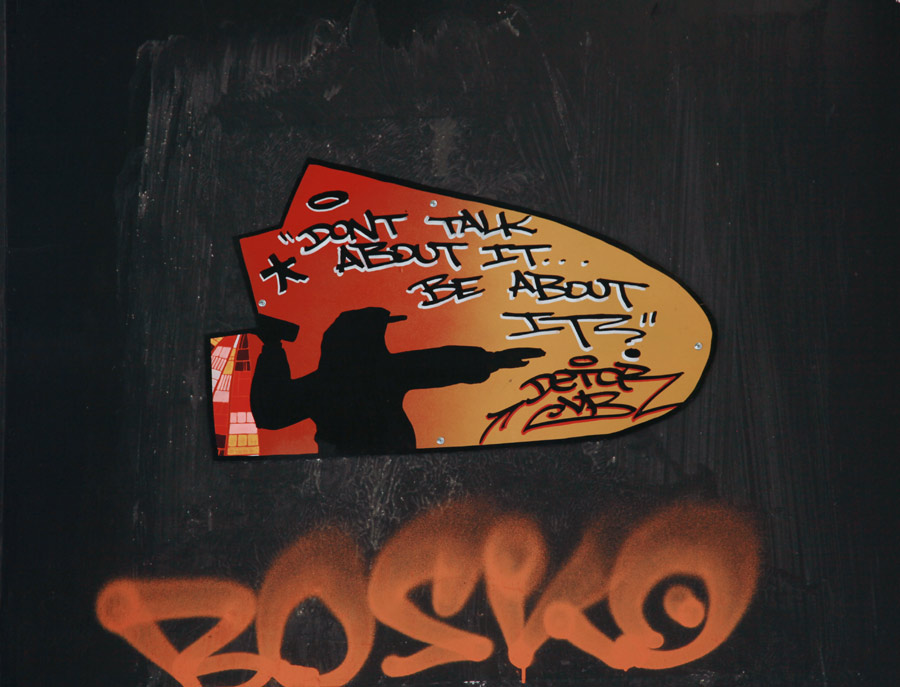
“Don’t talk about it…. Be about it ! ” Detor . Bosko (photo © Jaime Rojo)
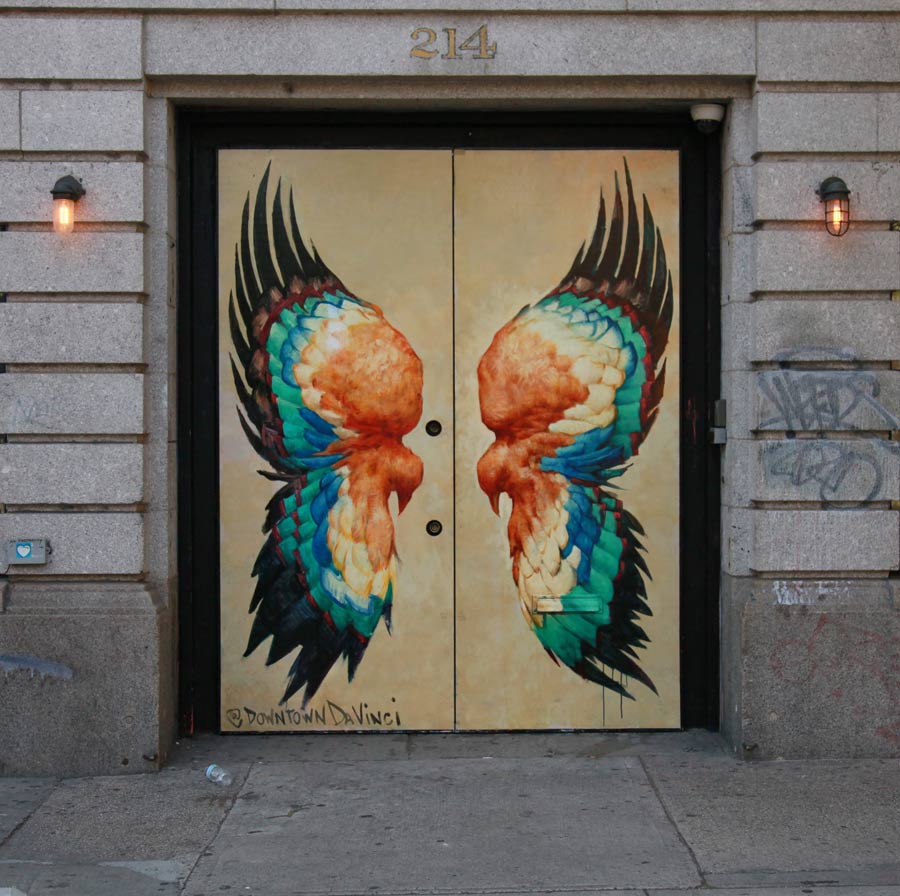
Downtown DaVinci (photo © Jaime Rojo)
Sara Lynne-Leo (photo © Jaime Rojo)
Praxis for The L.I.S.A. Project NYC (photo © Jaime Rojo)
Who Is Dirk . Insurgo (photo © Jaime Rojo)
Marco Santini for The Bushwick Collective (photo © Jaime Rojo)
Fumero (photo © Jaime Rojo)
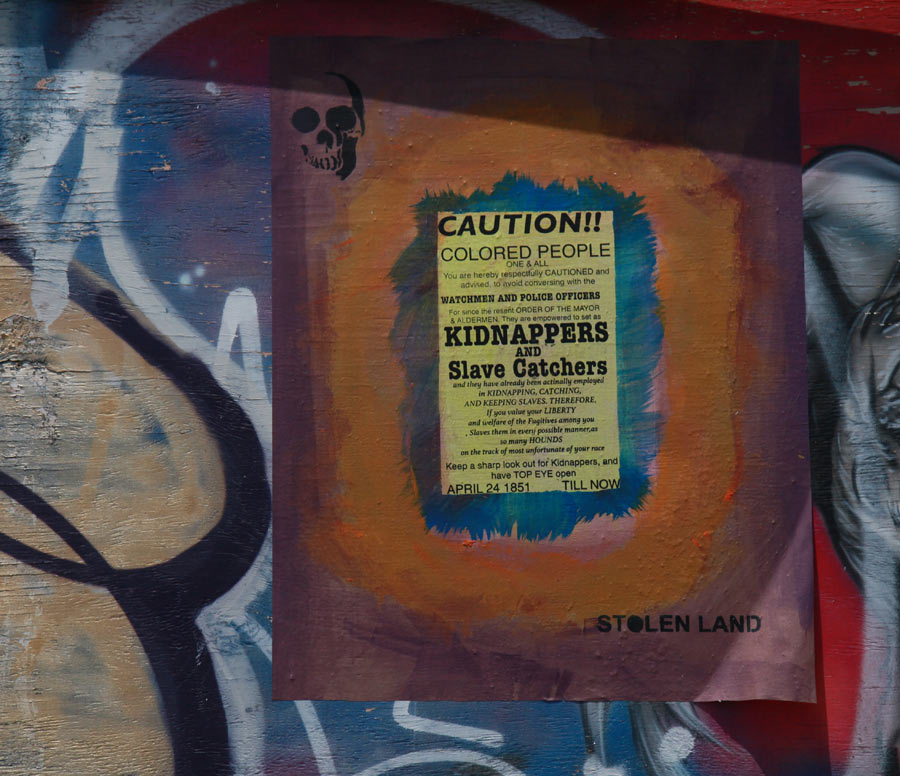
Almost Over Keep Smiling (photo © Jaime Rojo)
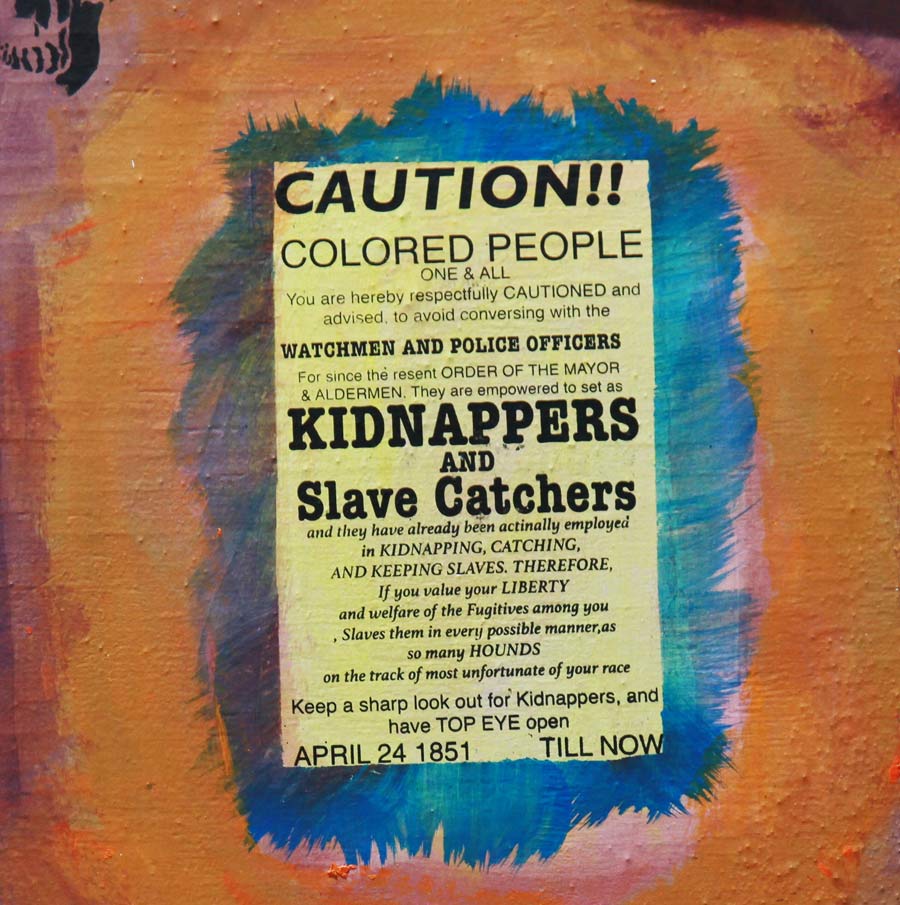
Almost Over Keep Smiling. Detail. (photo © Jaime Rojo)

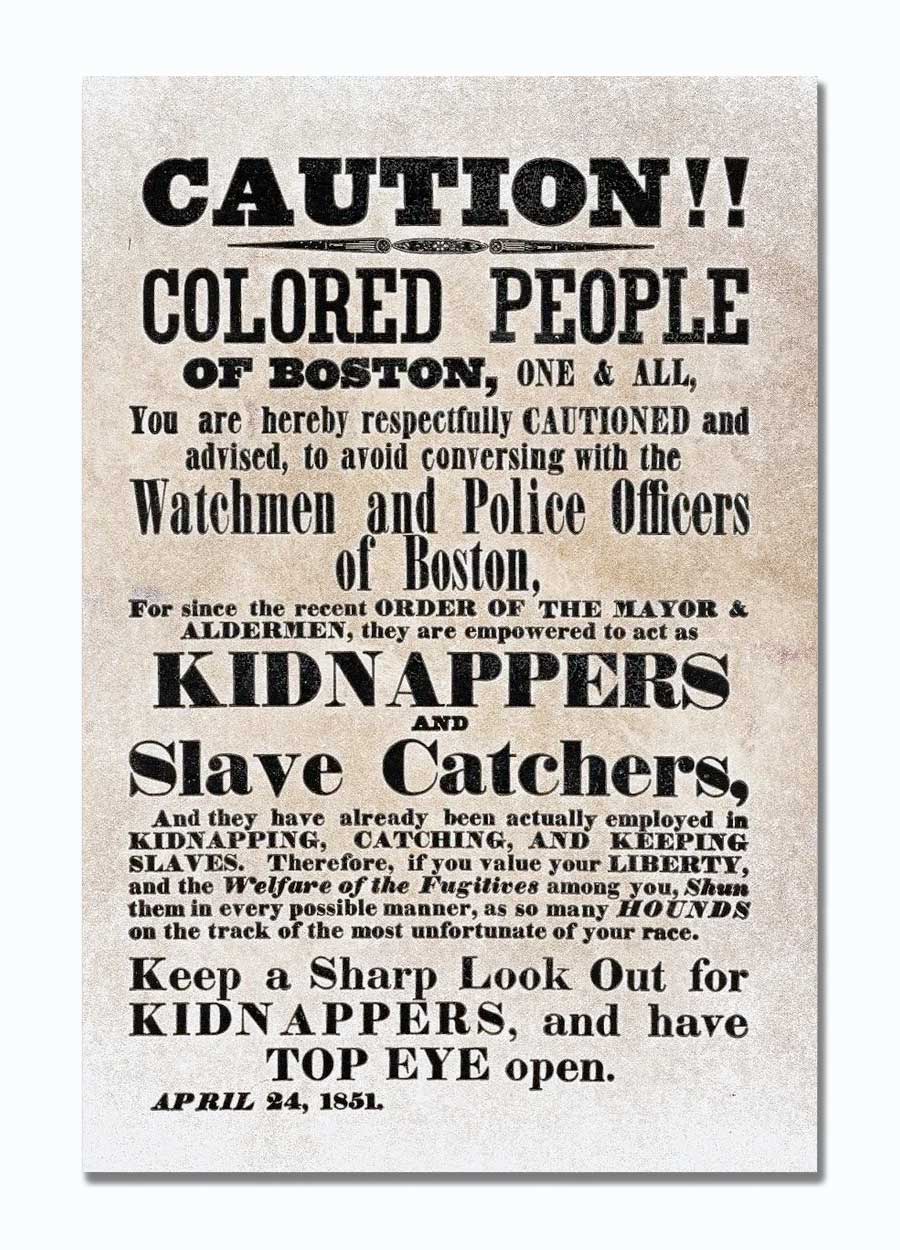
The New York street artist who works under the moniker “Almost Over Keep Smiling” reinterprets slightly this Boston warning poster telling anybody who was black in a “free” state like Massachusetts or New York to stay away from the police because the federal government had passed a law empowering people to capture them and return them to slavery.

From Wikipedia: The Fugitive Slave Act or Fugitive Slave Law was passed by the United States Congress on September 18, 1850,[1] as part of the Compromise of 1850 between Southern slave-holding interests and Northern Free-Soilers.

The Act was one of the most controversial elements of the 1850 compromise and heightened Northern fears of a “slave power conspiracy”. It required that all escaped slaves, upon capture, be returned to their masters and that officials and citizens of free states had to cooperate. Abolitionists nicknamed it the “Bloodhound Bill,” for the dogs that were used to track down runaway slaves.[2]

The Act contributed to the growing polarization of the country over the issue of slavery, and is considered one of the causes of the Civil War.

The original appearance of a poster in Boston looked like this.
Unidentified Artist (photo © Jaime Rojo)
Marina Zumi (photo © Jaime Rojo)
Untitled. Central Park, NYC. July 2020 (photo © Jaime Rojo)
Read more
BSA Film Friday: 07.17.20

BSA Film Friday: 07.17.20

Our weekly focus on the moving image and art in the streets. And other oddities.

Now screening :
1. Street Art For Sustainable Development

BSA Special Feature: Street Art For Sustainable Development

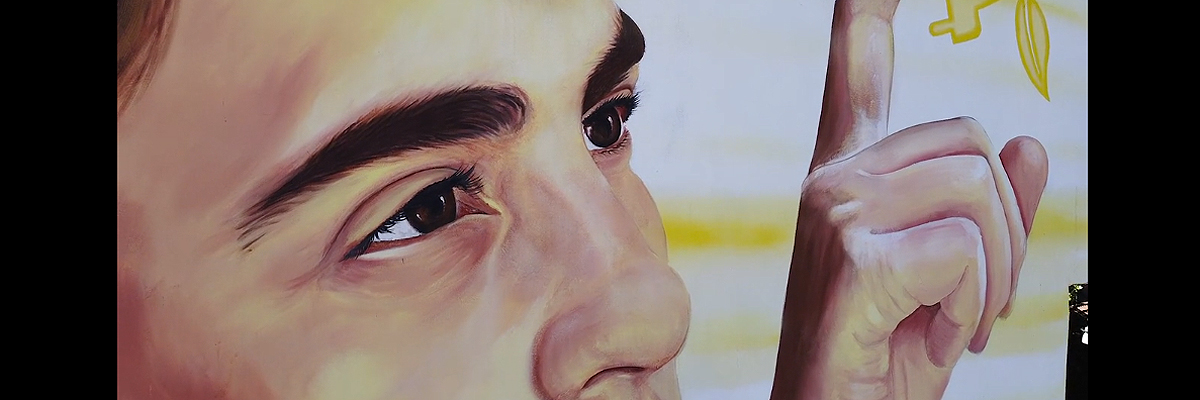
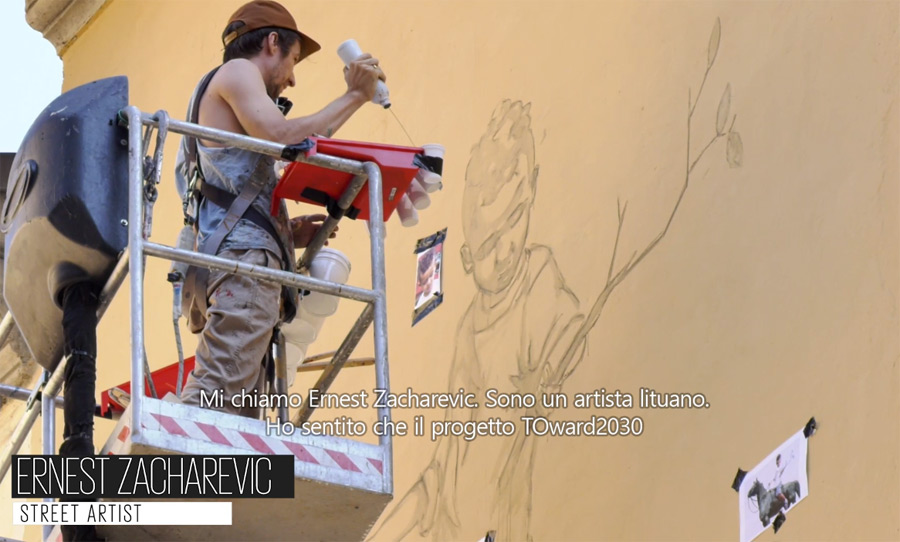
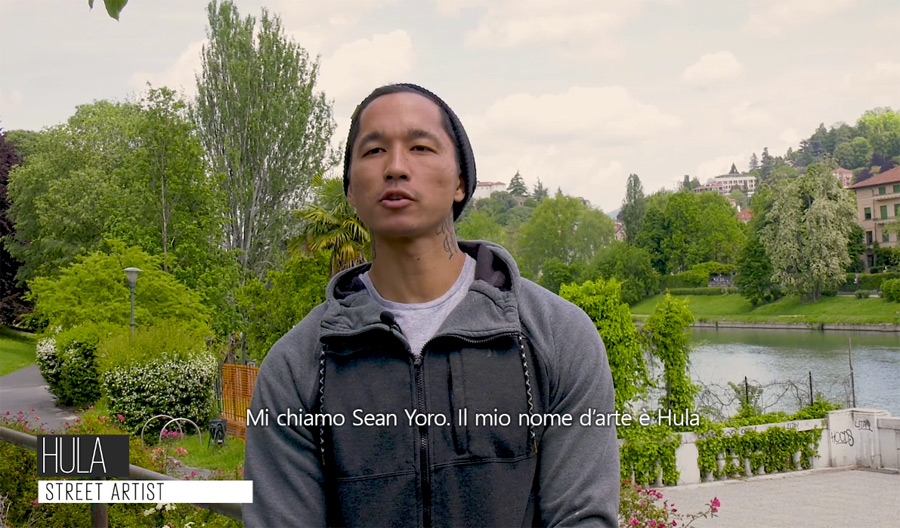
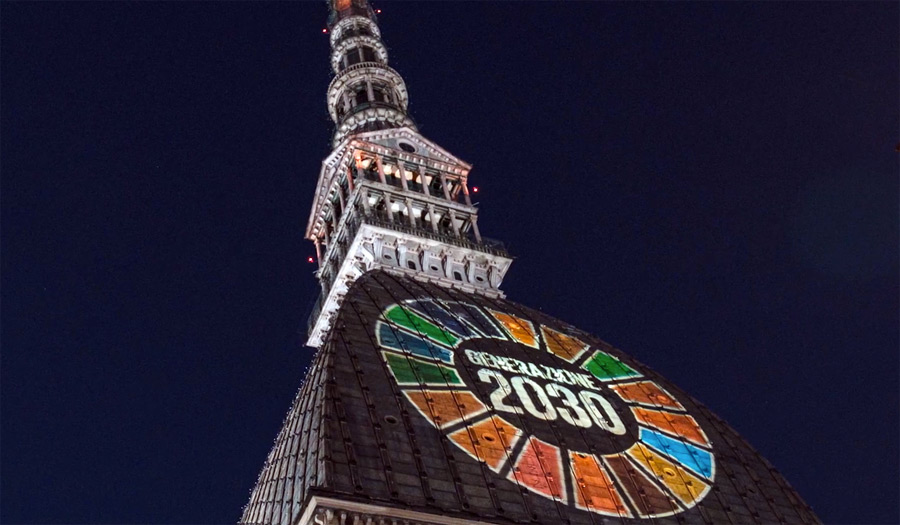
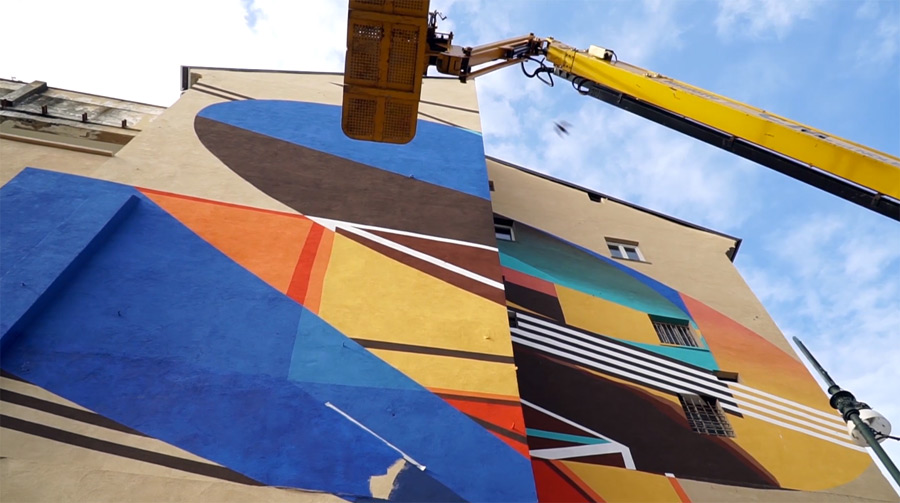
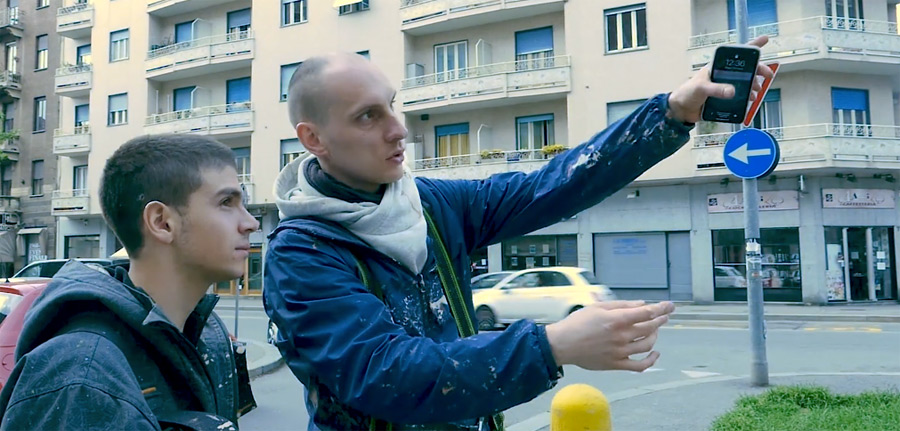
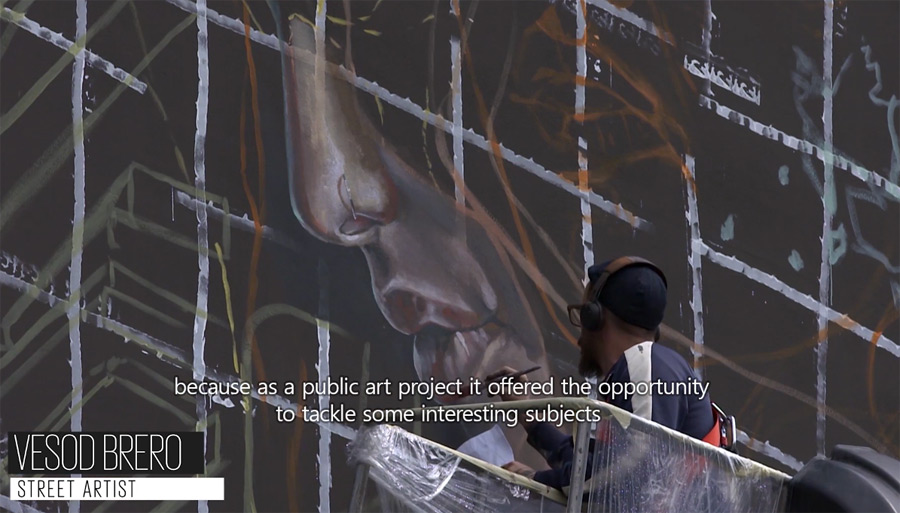
With the UN’s 17+1 Sustainable Development Goals and at least as many artists on hand to interpret them, the City of Turin has had a lot of new artworks on walls throughout the city.

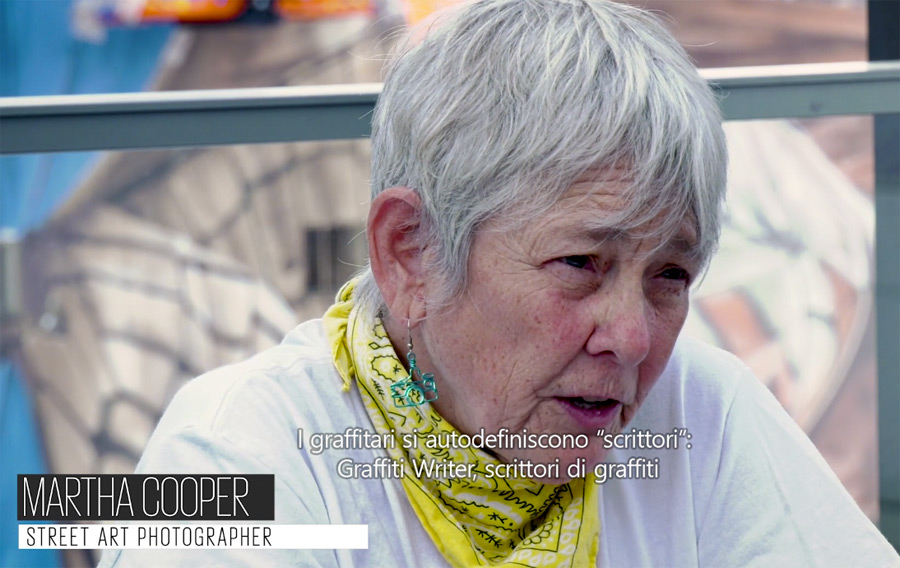
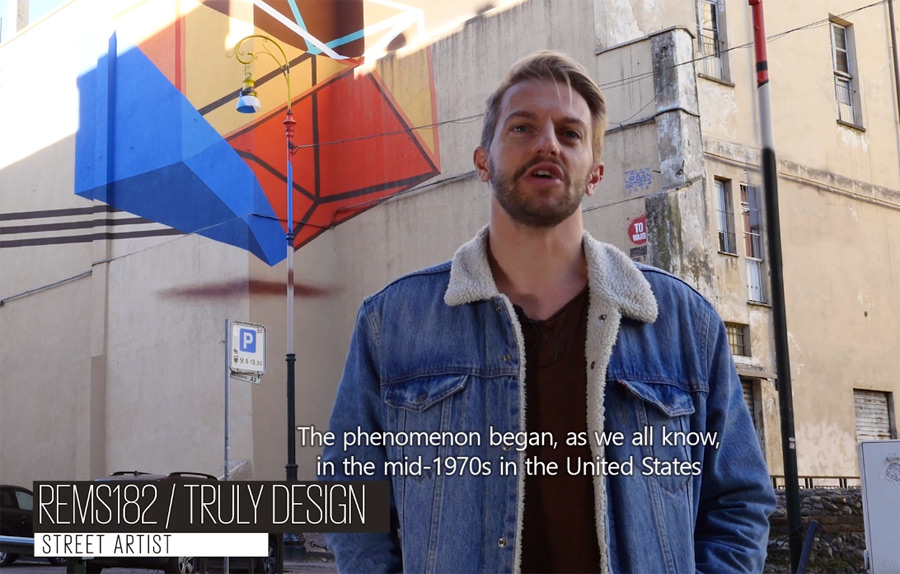
Tapping into a universal language of art and murals that has spread throughout cities around the world, this project imagines meeting all these goals by 2030. Here we present a short documentary that introduces the originators of this mural program, the artists who are painting, and the city of Turin.

Documentary: Street Art For Sustainable Development. Via Cinemage Studio

Read more
Replacing Sculpture, Claiming Public Space in Bristol; Marc Quinn & Jen Reid

Replacing Sculpture, Claiming Public Space in Bristol; Marc Quinn & Jen Reid

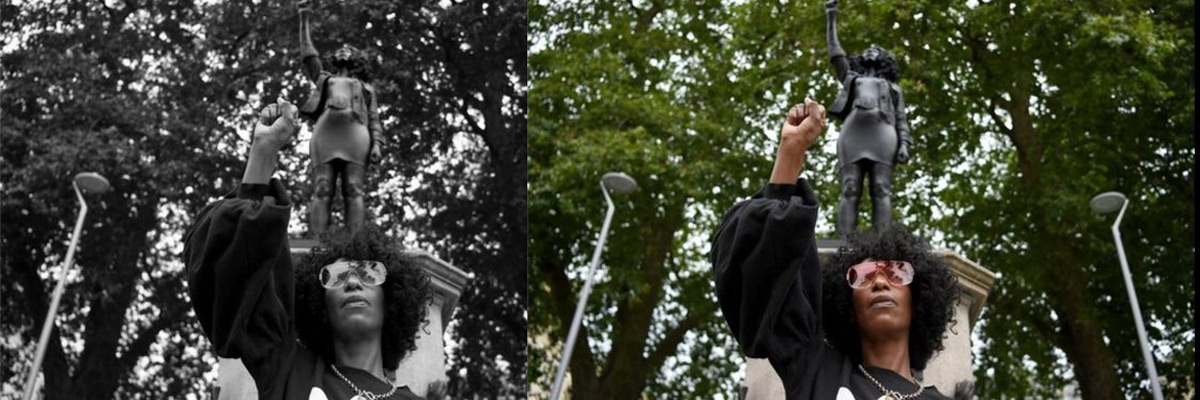
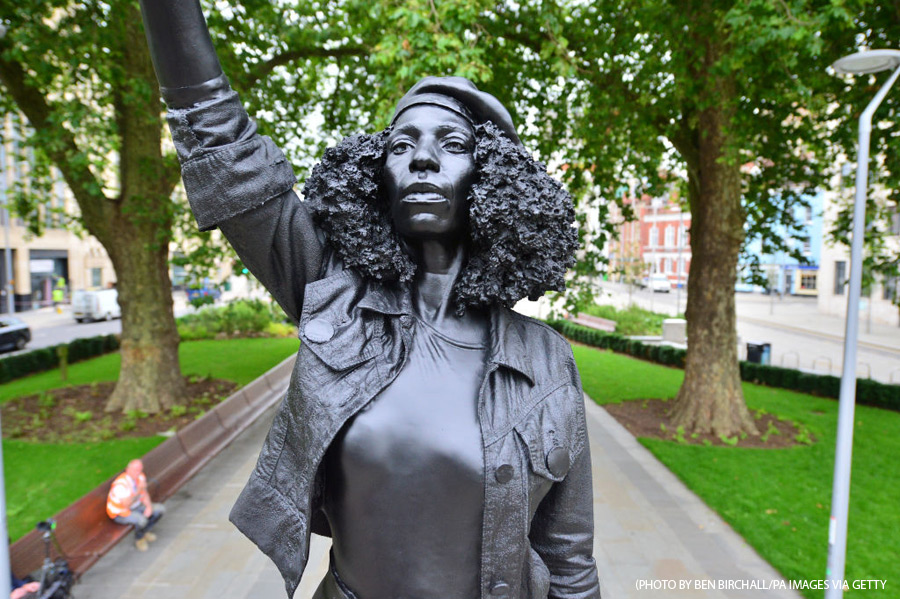
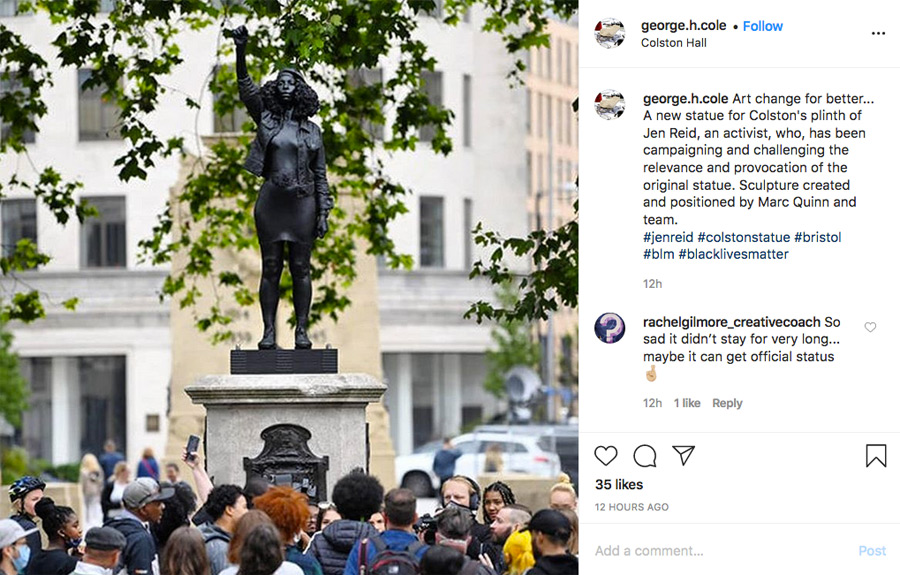
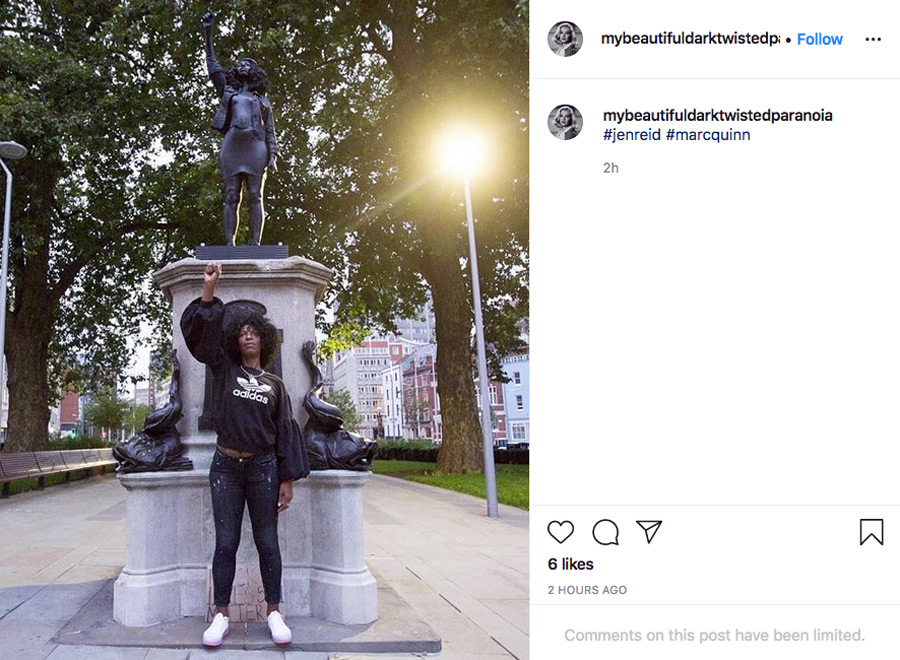
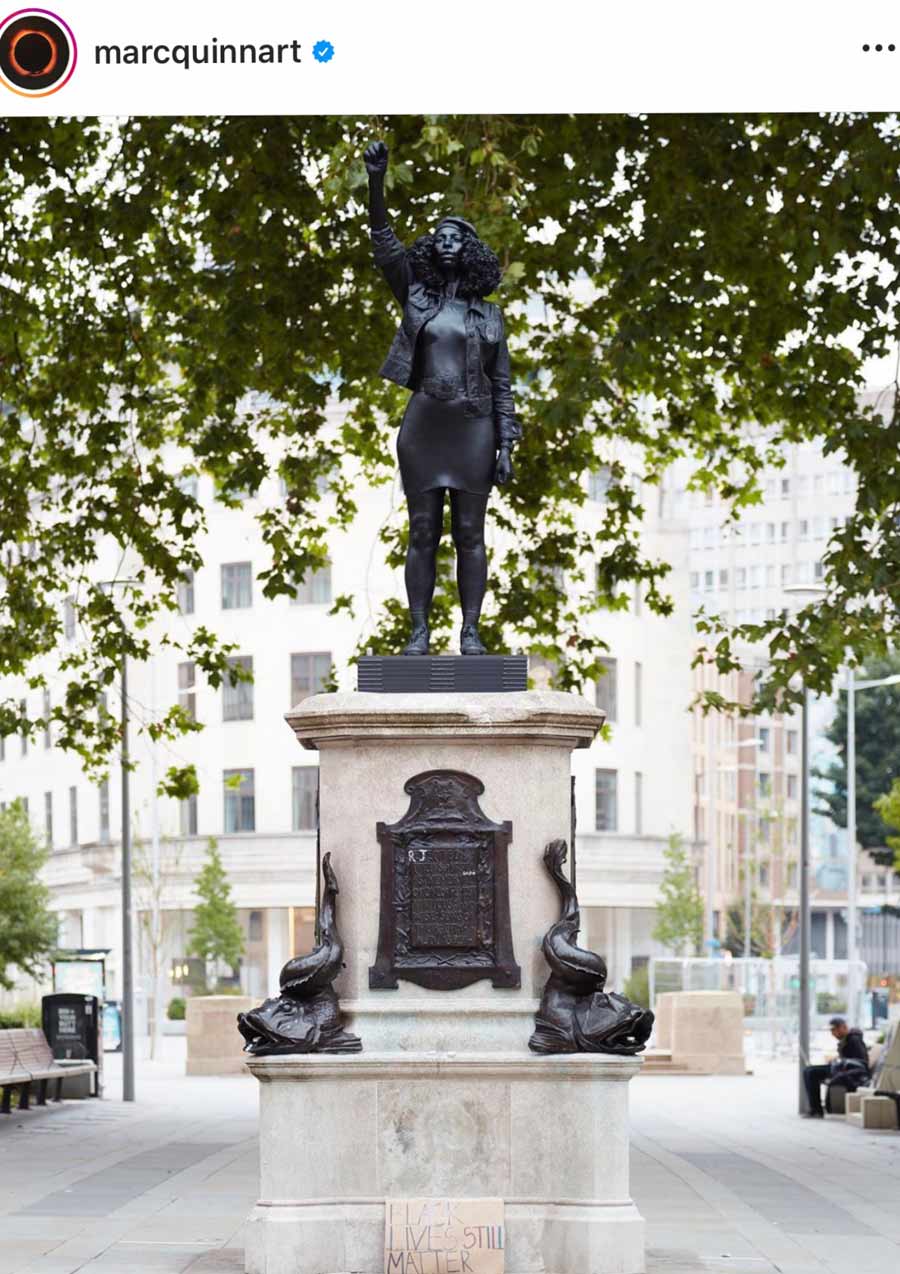
“When I was stood there on the plinth, and raised my arm in a Black Power salute, it was totally spontaneous, I didn’t even think about it. My immediate thoughts were for the enslaved people who died at the hands of (Edward) Colston and to give them power. I wanted to give George Floyd power, I wanted to give power to Black people like me who have suffered injustices and inequality,” says Jen Reid in an interview with DeZeen about this new piece called “A Surge of Power”.

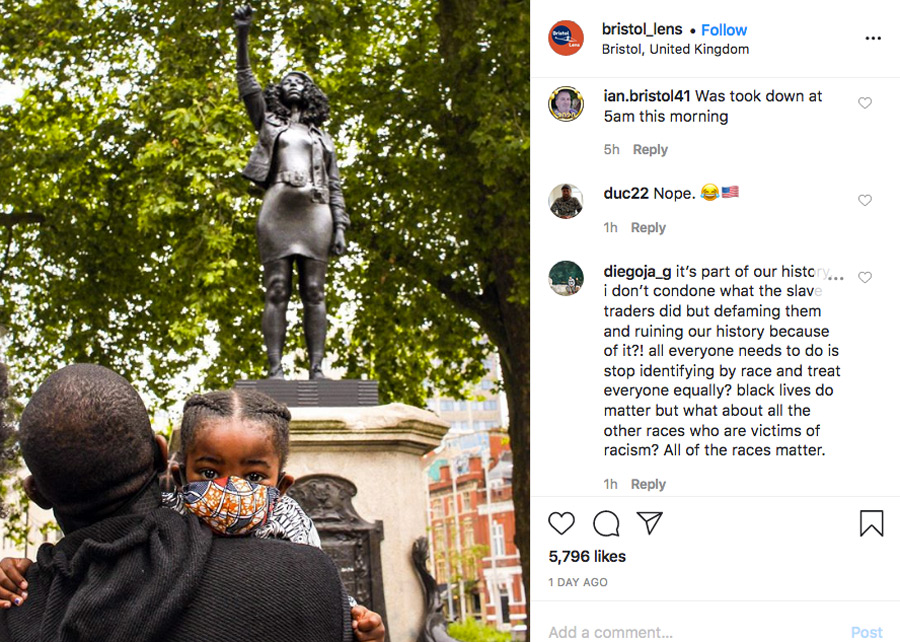
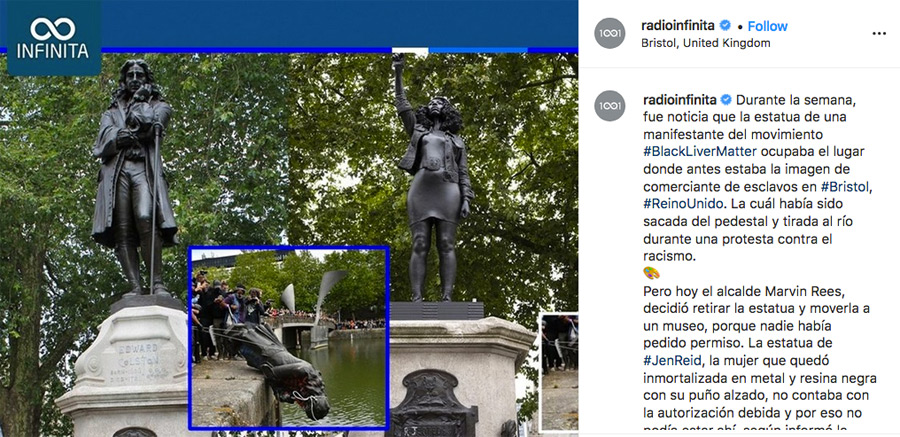
A remarkable substitution was placed here on July 15th, only 8 days after a sculpture of the slave trader Colston was toppled from the same place. Various publications give the previous occupant honorable descriptors like 17th/18th-century Bristol merchant and philanthropist – as if it is an act of magnanimous charity to be a philanthropist after you’ve made your money from extracting years of free labor from people whom you’ve enslaved.

Jen Reid had struck this pose atop the empty plinth and according to published accounts artist Marc Quinn shot a photo of her at that moment, black beret over voluminous locks, fist punching the sky. In consultation with Reid the artist created a monument to that moment – resin and steel cast from a 3D print. With a team of about 10 the new sculpture rose in the early morning hours.

Public space often affords artistic or aesthetic expression only for the privileged, the moneyed, those given permission by “experts”, or corporations who foist their message there. Street artists have been creating new monuments in the last decade and a half, often surreptitiously placing them overnight, sometimes so subtly that the new works don’t attract attention for many days. Once focused primarily on aerosol exclusively, this new generation consider a panoply of artful interventions and “culture jamming” to be as virile and pugnacious.

Here a glistening black heroic figure is well within the wheelhouse of Quinn, who is not considered as a street artist, per se. Moved by the message, he seized an historic moment to use the tools he is familiar with and the voice he wields to collaborate with someone else marching and living in the thick of the structural racism that is being protested, studied, acknowledged, denied.

When it comes to offering opinion about art in public space, it is not surprising how many people take responsibility or a sense of ownership of projects, feel personally gifted or wounded by the presence or absence of a sculpture. The removal of many public sculptures in the last months has thrown the conversations into tumult, raising topics previously squelched or avoided. In an era that is pregnant with the possibility of radical transformation, more people are invested across the culture than at any time in recent memory.

Up and on view only a day, the City of Bristol has removed this triumphant figure of Jen Reid. One wonders if these city leaders are always so rapid in their response to all of their duties. Considering the reports of positive reviews from a majority of passersby during the sculpture’s first day in public, snatching it from public space with such dispatch smacks of silencing speech – especially when you learn that the previous sculpture of Edward Colston – the deputy governor of the Royal African Company – had reigned freely over the spot for 125 years.

A disapproving couple lectures a group saying “You should be ashamed. It should be “All Lives Matter”, from Diologososoul on Instagram
Copyright @marcquinnart
Read more
Banksy Strikes Public Transport: Promotes Masks and Cites Chumbawamba

Banksy Strikes Public Transport: Promotes Masks and Cites Chumbawamba


Instagram commenter transparentlemon is irked by Banksy’s apparent defacement of the Tube. “I’m all for graffiti on walls of buildings that’s art,” he says on Instagram, “But on public transport that’s just vandalism”

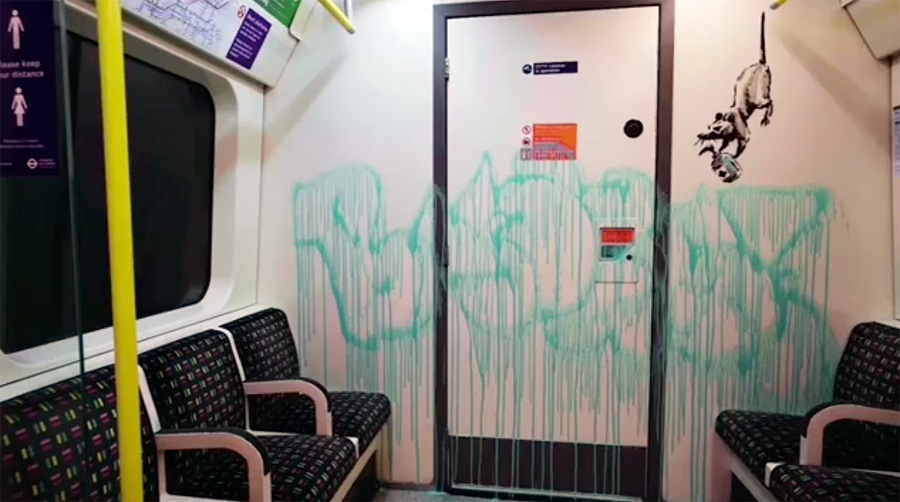
Oh dear. The Bristol born artist has built his entire career on mucking up public space with his clever observations, but somehow it is still grinding the gears of some peeps who think he might have veered too much into the “vandal” category on this one.

The commenter who self-describes as cultural_creative cannot contenance the idea that the anonymous do-gooding street artist has been fooled by the obviously Bill-Gates-funded conspiracy to take away people’s rights and force them to wear masks and get micro-chipped.

“I’m taking this subjectively..,” they write, “I refuse to believe @banksy would peddle government propaganda he’s too slick for that”

Meanwhile Instagrammer mria_nz is contemplating demographic clues left by Banksy’s sampling reference to the 90s tub-thumping anthem that critiqued and praised middle class banality; “caught the Chumbawamba reference! Is Banksy our age? Lol.”

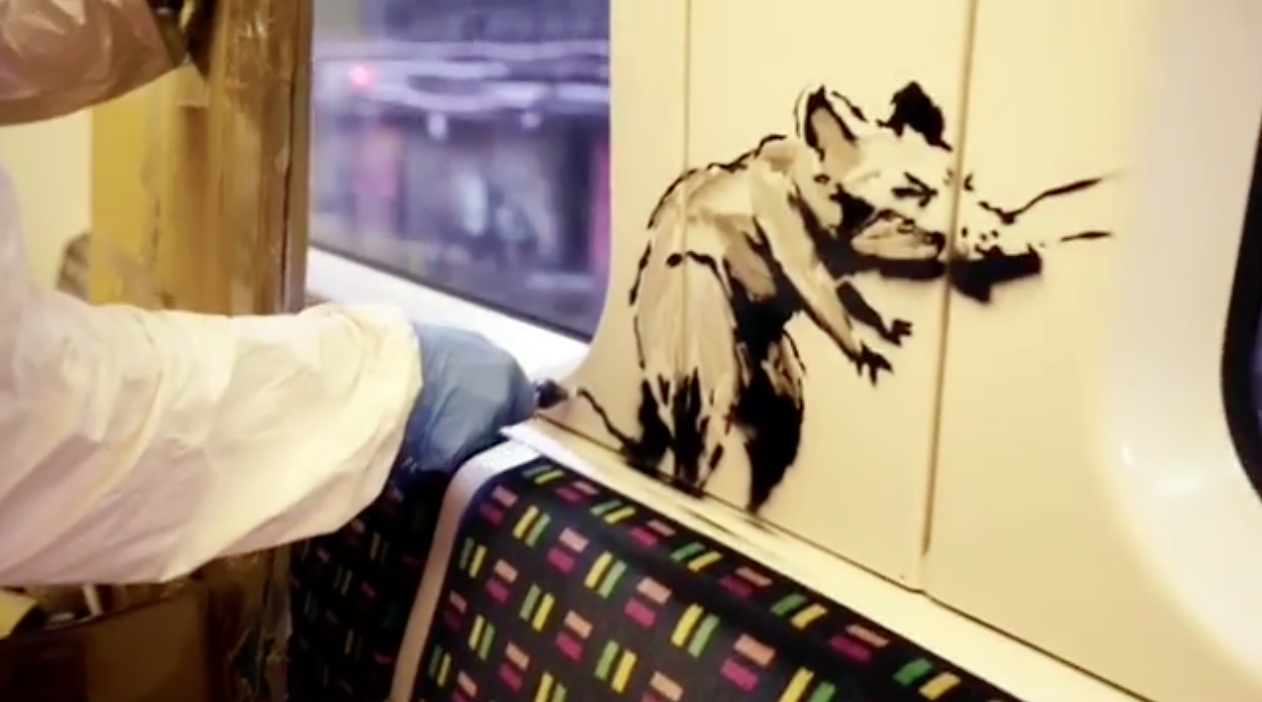
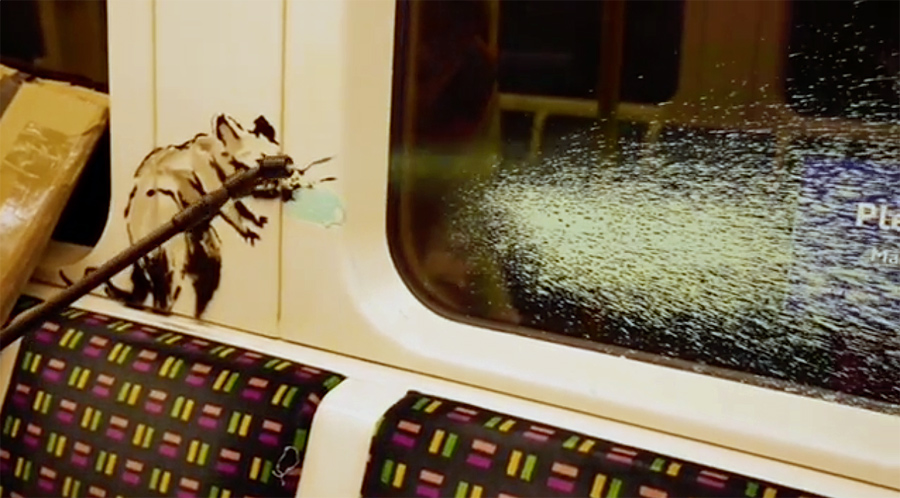
Yes, he’s done it again, Banksy, presenting his view on a topical topic using his preferred method of aerosol – and heavily edited video – posted to nearly 10 million fans.

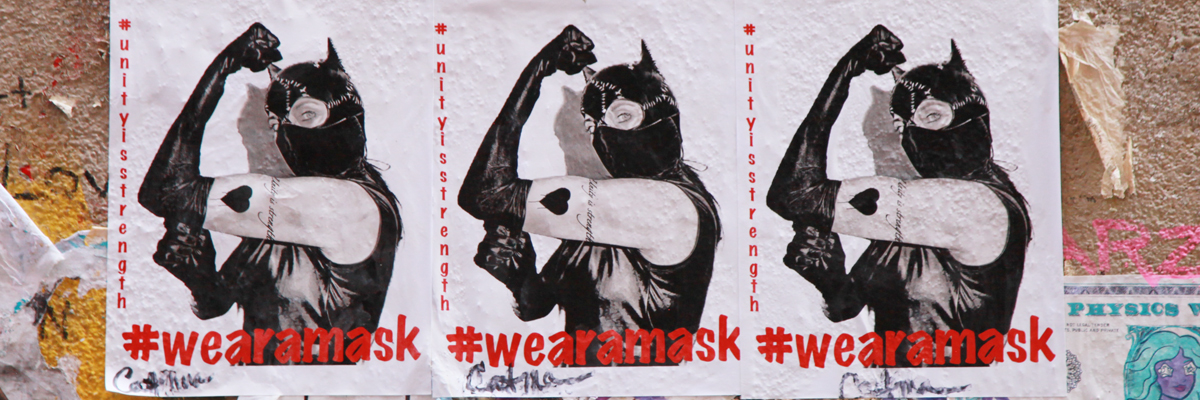
“if you don’t mask – you don’t get”, he calls it, a double negative that implies that wearing a mask will increase your chances for Covid-19? Surely not. Surely not?

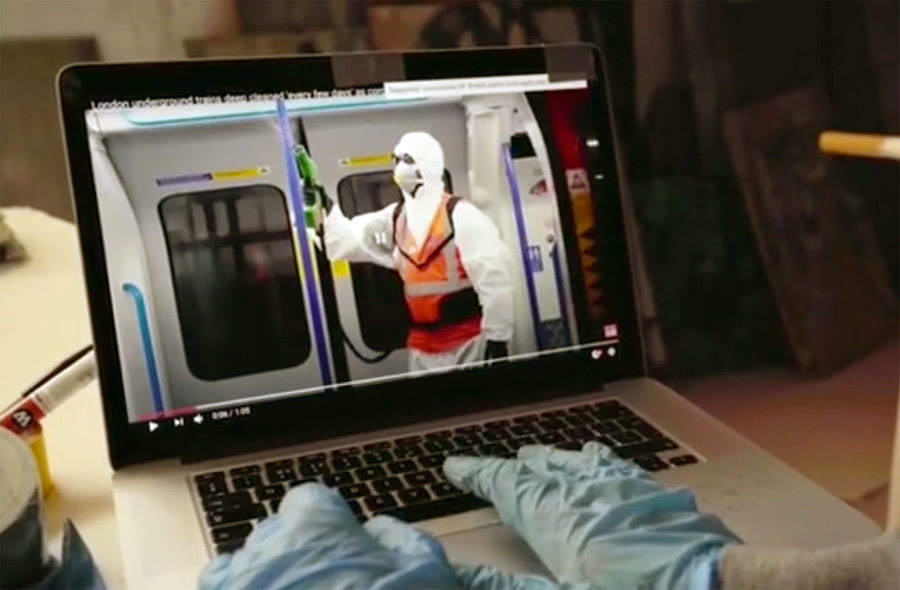
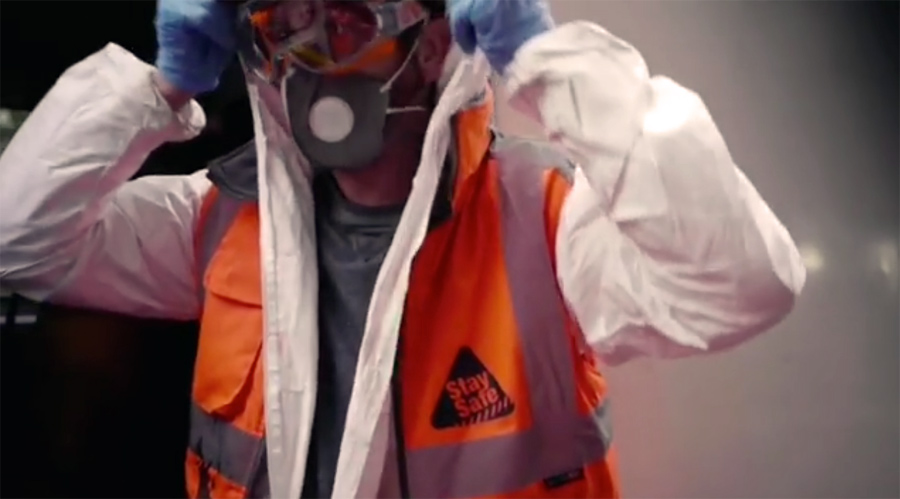
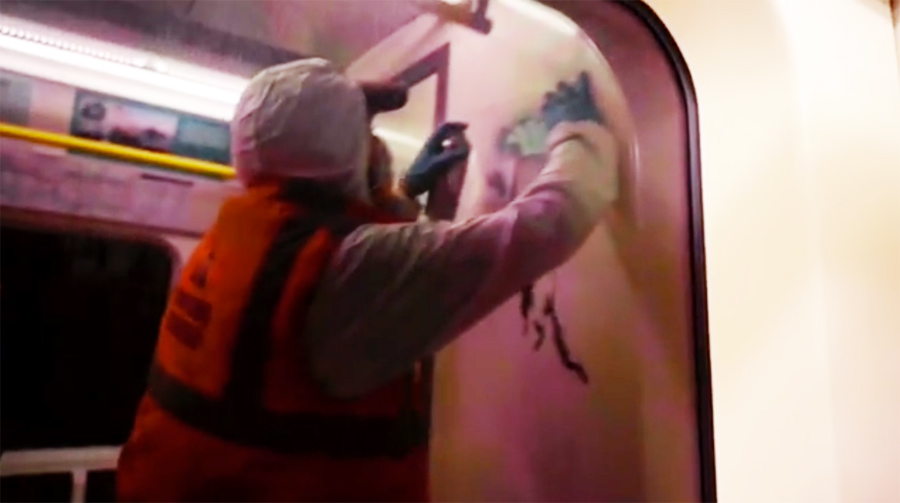
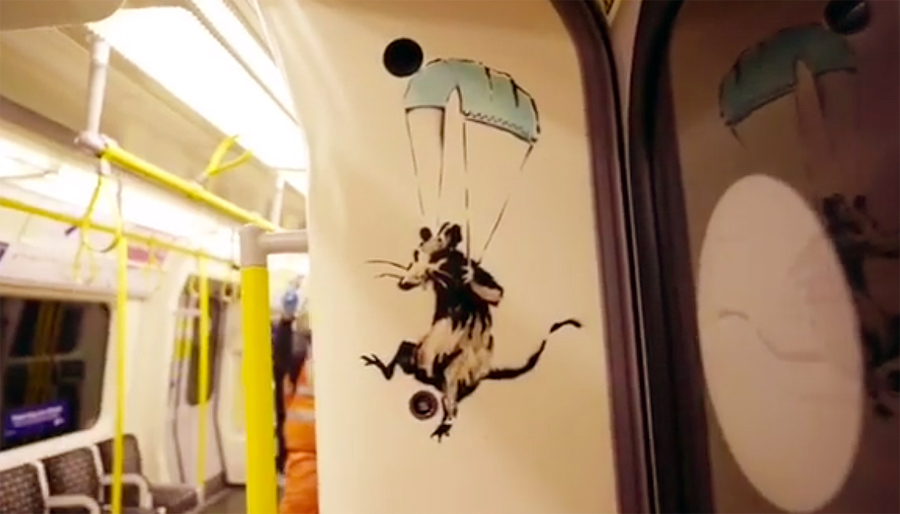
Posted on his Instagram account we see a video of a man, believed to be the elusive international man of mystery himself, wearing the ubiquitous protective cleaning gear of many public professionals and holding the sanitizer sprayer for quite a different task. The “cleaning” man proceeds to stencil several rats wearing masks and sneezing in full pandemic mode.  

View this post on Instagram

. . If you don’t mask – you don’t get.

A post shared by Banksy (@banksy) on

Read more
Vermibus: Variations of “ADAMANT”

Vermibus: Variations of “ADAMANT”

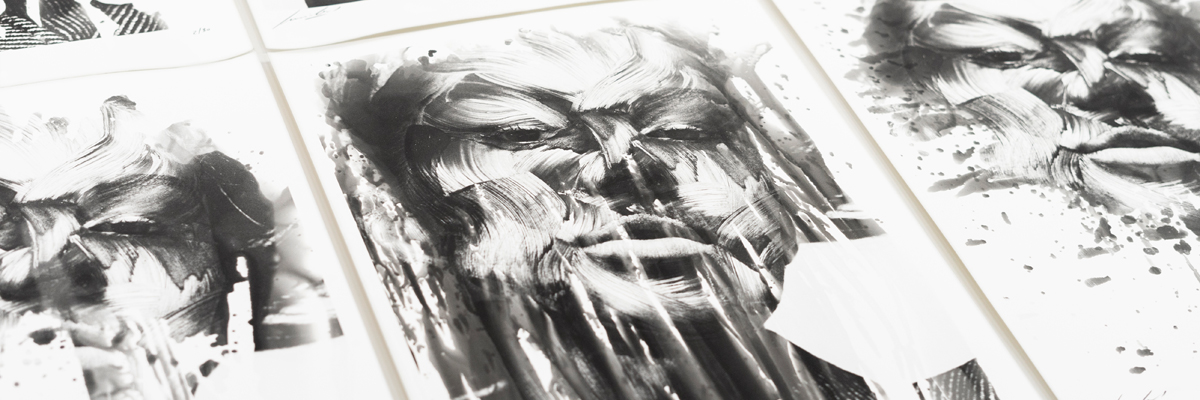
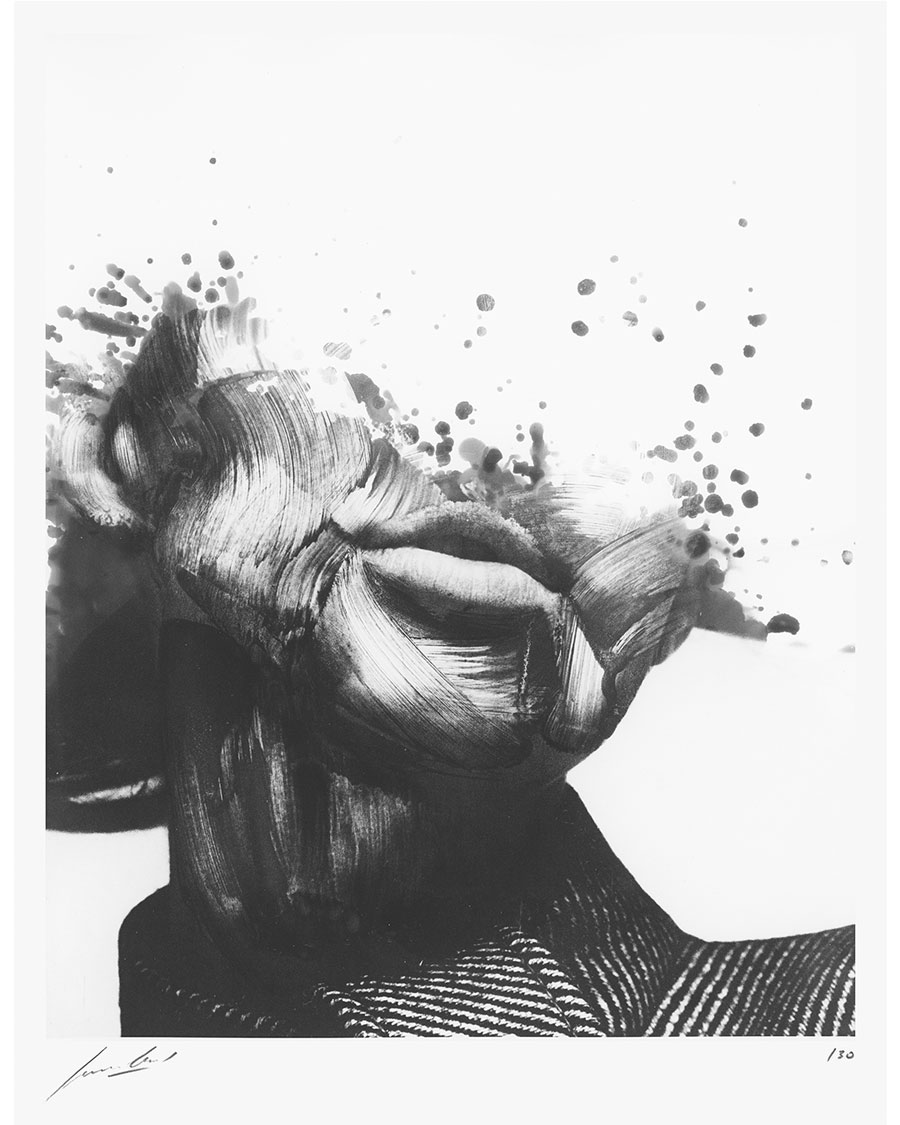
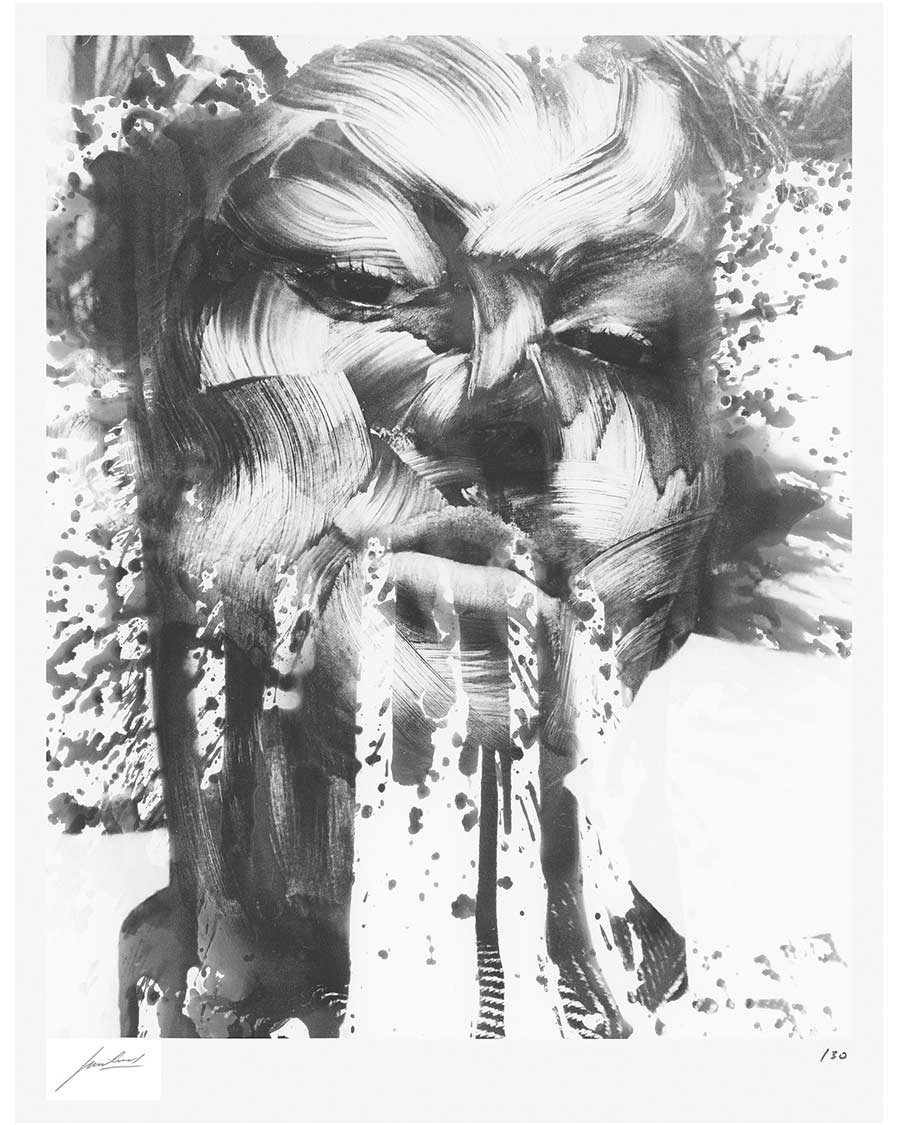
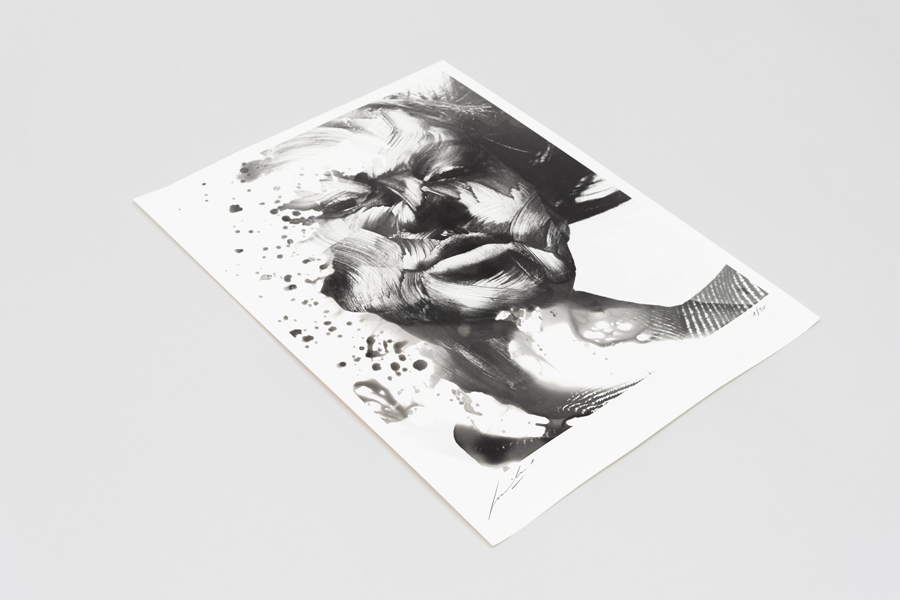
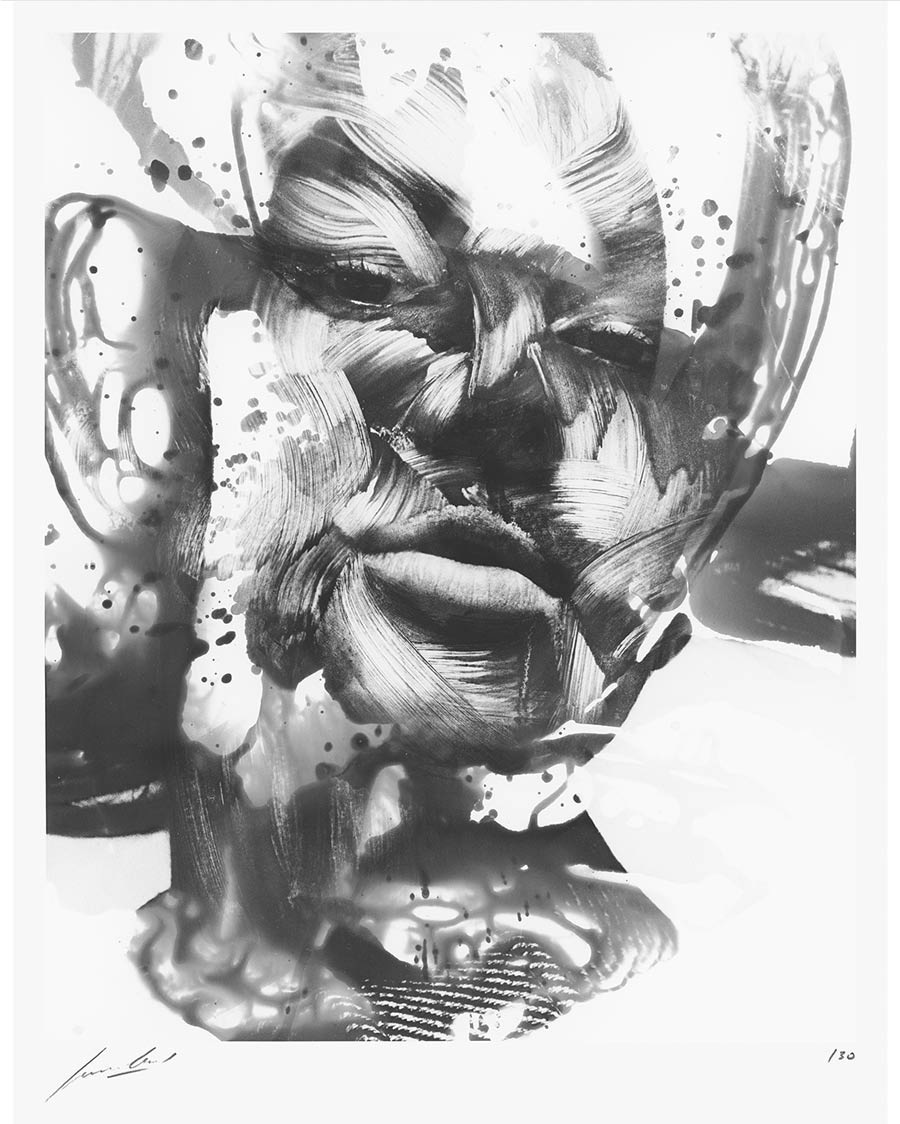
Stylish de-constructor/reconstructor Vermibus continues to refine his practice of image mutilation, sometimes superseding dreams and a couple of nightmares.

Vermibus. Variations of “Adamant” (photo © Vermibus)

It’s a discomforting experimental approach that began in earnest with the backlit bus stop ads for fashion and cosmetic brands; an aesthetic war against those who would presume to determine what beauty is by peddling their wares and worldview in public space. Somehow it turned gorgeous.

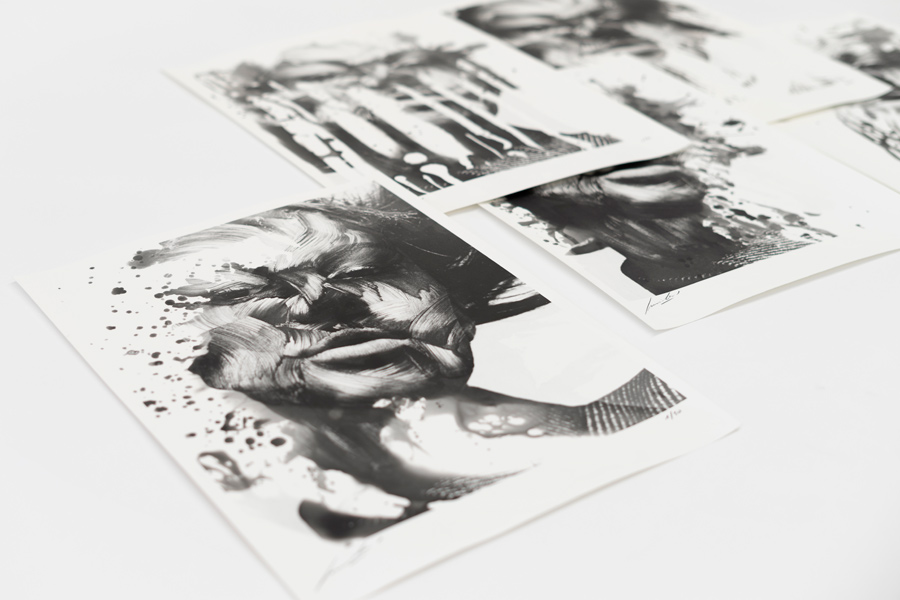
Vermibus. Variations of “Adamant” (photo © Vermibus)

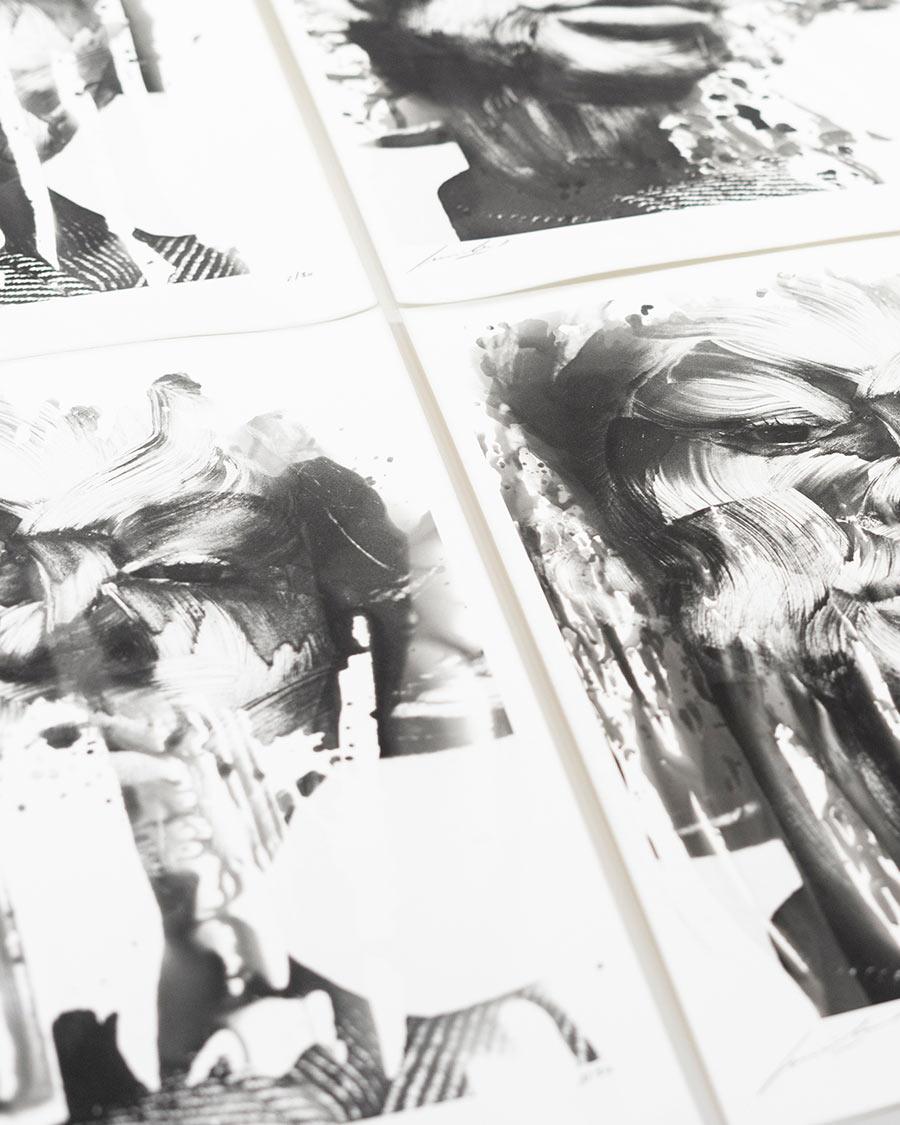
This week he releases a limited edition of “Adamant” an analogue print on baryt matt paper, signed and numbered. The experiment continues, and the results are glimpsed through a veil, speckled by city soot.

Vermibus. Variations of “Adamant” (photo © Vermibus)
Read more