 BROOKLYN STREET ART LOVES YOU MORE EVERY DAY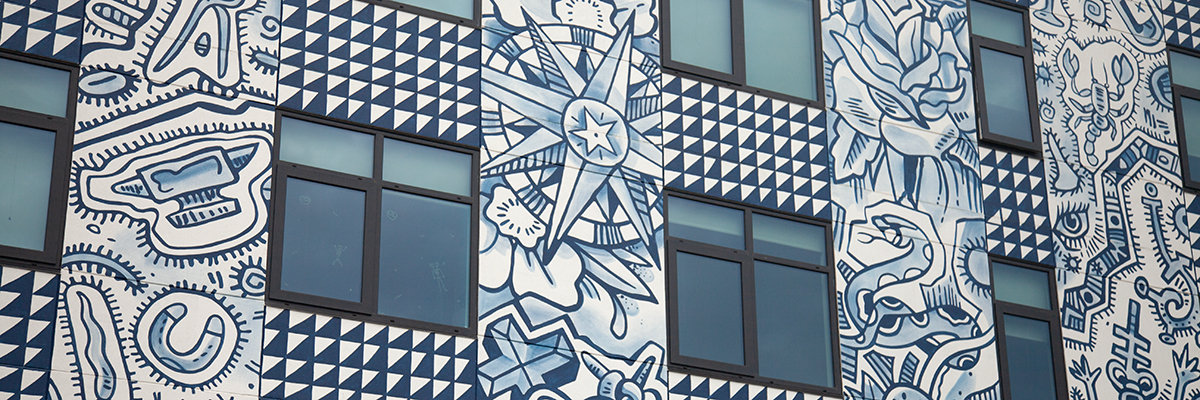
It’s hard enough to get the mayor to stop and look at your work on the street, let alone royalty.

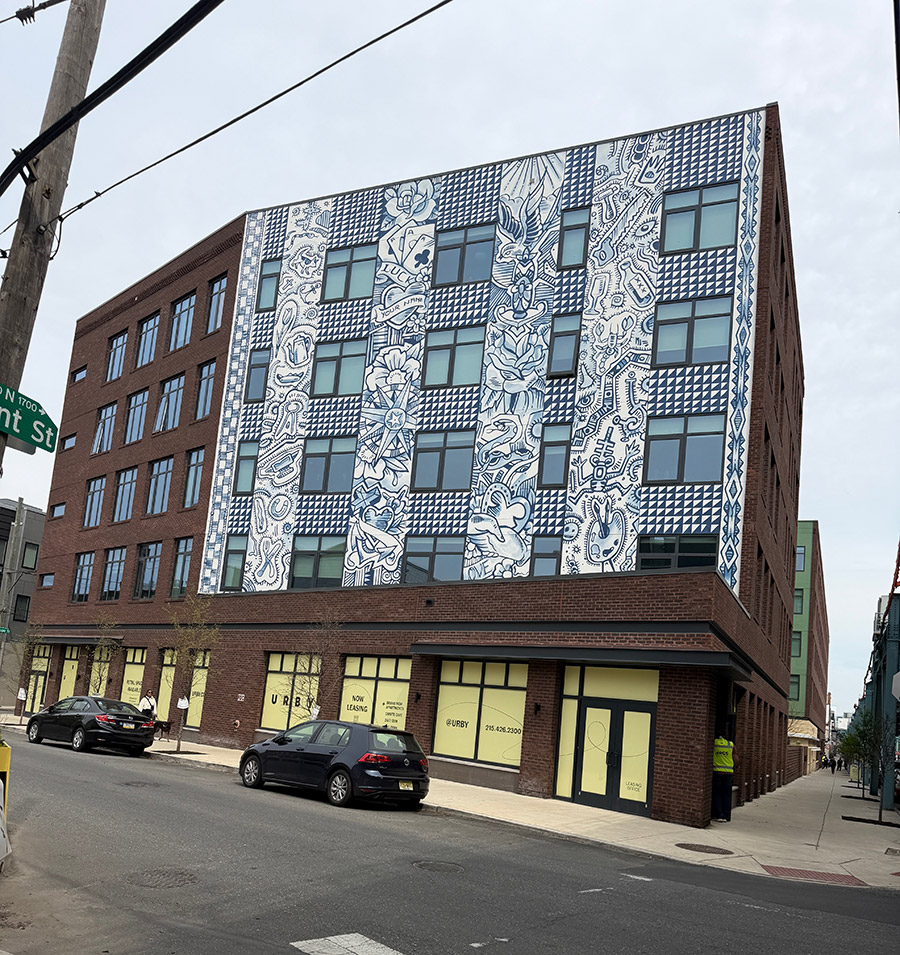
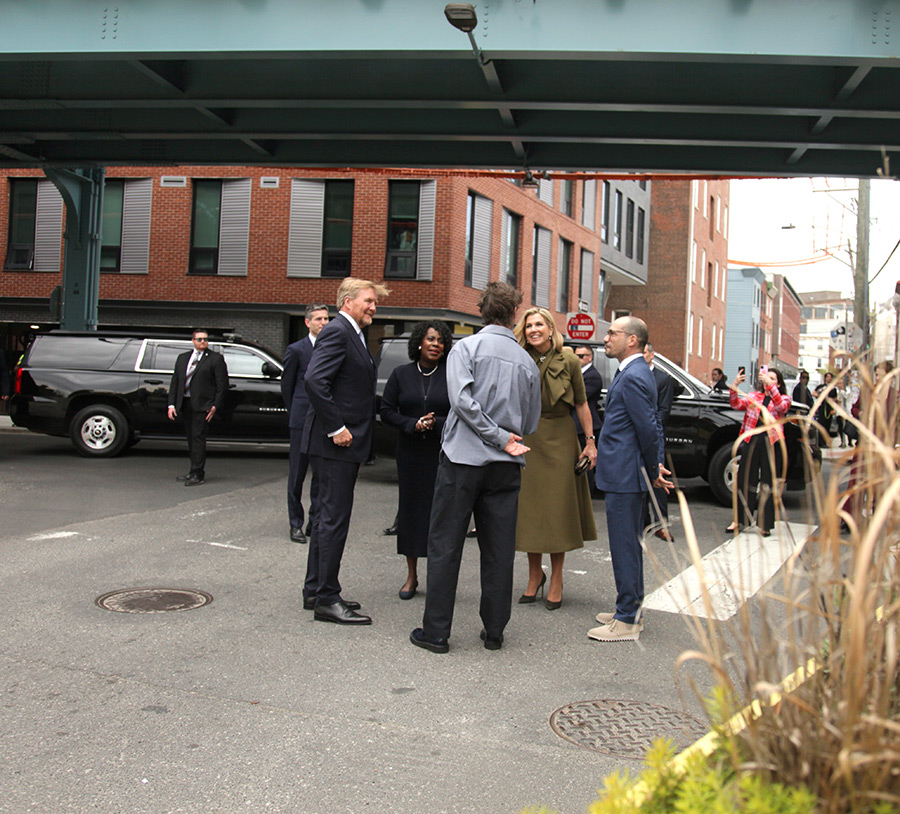
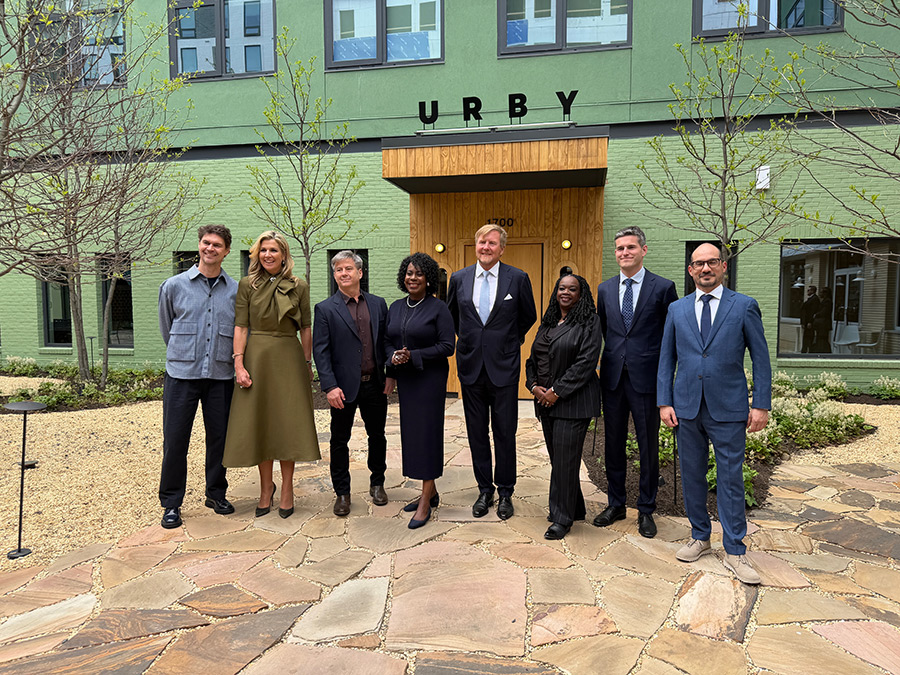
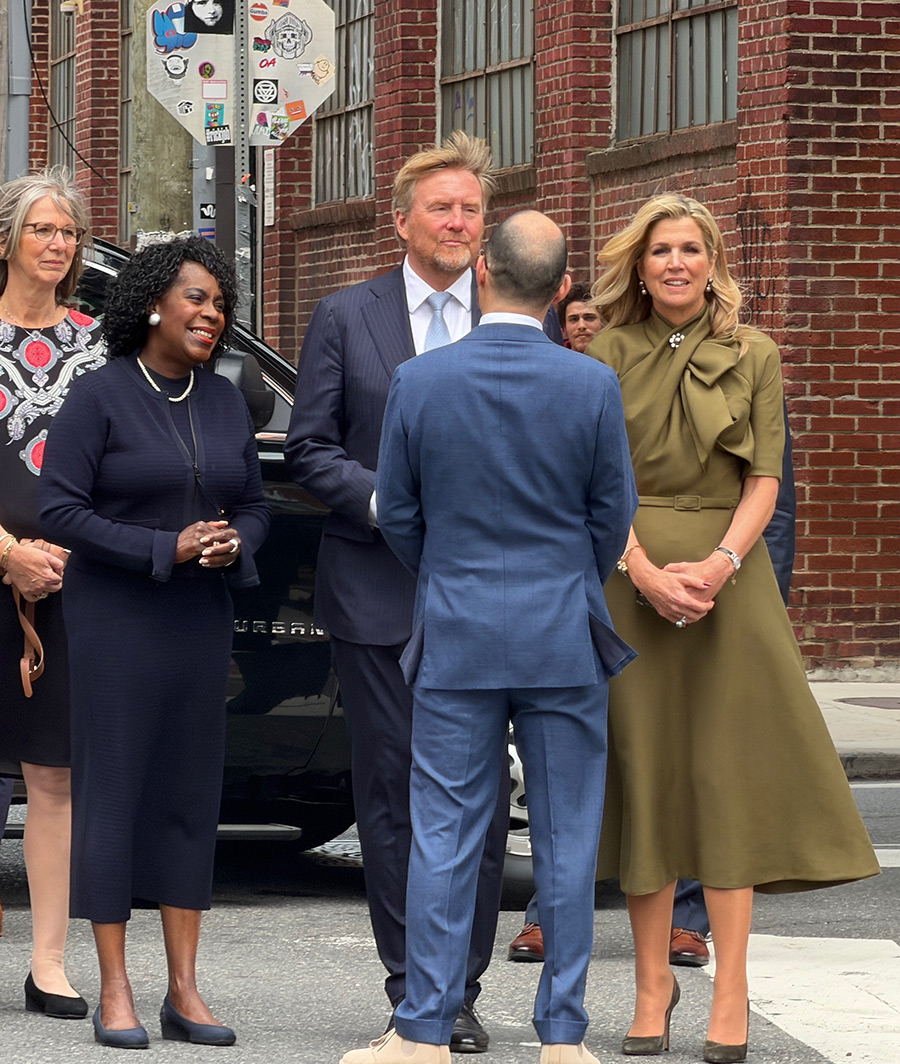
But in Philadelphia last week, a freshly painted façade in Fishtown managed exactly that, as the King and Queen of the Netherlands were guided through a new residential development to view Songlines for the City, a site-specific mural by Dutch tattooist and visual historian Henk Schiffmacher. The building itself—designed by Concrete—served as a convenient stage for a diplomatic visit highlighting Dutch–U.S. collaboration, with architecture and art presented as parallel languages of exchange.

Curated by Peter Ernst Coolen, founder of the STRAAT Museum and editor of Street Art Today, the mural draws a clear line between tattoo culture, graffiti, and street art—not as separate disciplines, but as overlapping systems of mark-making. Schiffmacher’s visual vocabulary—hearts, daggers, swallows, compasses—sits comfortably alongside the coded symbols and repetitions familiar to graffiti writers and muralists, each carrying meaning across bodies, walls, and time. The reference to “songlines” reinforces that continuity: a way of mapping experience through images that move from one surface to another. In that sense, the wall operates less as a singular artwork and more as a ledger of shared visual languages—tattoo flash, street iconography, and vernacular signs layered into a single composition.

The location matters. Fishtown didn’t become a destination because of new construction; its reputation took shape over the past fifteen years through a concentration of street art, murals, graffiti, music venues, and independent businesses that gave the neighborhood cultural visibility well before large-scale development followed. Organizations like Mural Arts Philadelphia formalized a mural presence across the city, while nearby artist-run spaces and studios—including Crane Arts and NextFab—have supported a broader ecosystem of artists, fabricators, and small creative enterprises. Alongside them, generations of graffiti writers and street artists—many working without permission—contributed to a visual language that still moves fluidly between walls, storefronts, and industrial surfaces.
That earlier wave of street work—legal and otherwise—helped define the neighborhood’s identity and drew attention to a part of the city long overlooked. What’s changed since is not the presence of art, but the context around it. Projects like this now arrive in a neighborhood where the aesthetic language of street culture is already established, even as the economic and social conditions continue to shift. In that sense, the mural sits inside an ongoing transition—less a starting point than another marker along the way.