All posts tagged: Caravaggio

Herr Nilsson: When Innocence Misbehaves Under the Bridge in Stockholm

Herr Nilsson: When Innocence Misbehaves Under the Bridge in Stockholm

Swedish street artist Herr Nilsson has long built his work around a deceptively simple collision: take characters and images associated with innocence, beauty, childhood, or cultural familiarity and let them misbehave, or worse.

Sweetness meets guns, alcohol, rebellion, and darker impulses; the joke lands first, but a certain discomfort is rarely far behind. His recent works around Stockholm continue that strategy, drawing on sources as different as Swan Lake, Winnie the Pooh, and John Bauer’s beloved fairy-tale princess Tuvstarr. What connects them is not simply provocation, but the idea of a familiar character breaking character—escaping the roles, behaviors, and meanings that have been assigned to them.

Several of these paintings have found an especially effective stage beneath a bridge at Lillsjön, a lake in Stockholm, where Nilsson uses the water itself to complete the composition. The setting is picturesque but shadowy, distorted reflections in currents, public yet protected. The reflections give his altered cultural icons a second life below the surface, opening the imagination for altered subrealities.

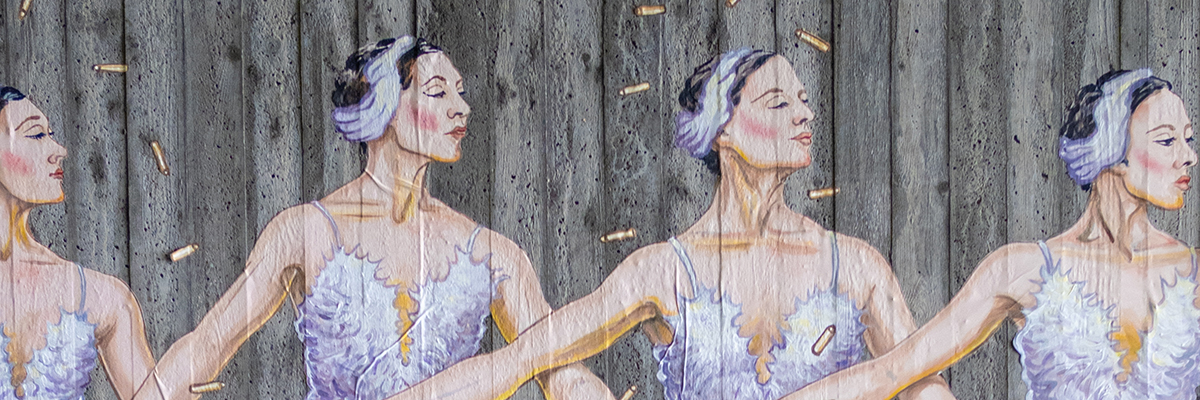
Herr Nilsson. Dance of the Little Swans. Detail. Lillsjön lake. Stockholm-Sweden. (photo © Herr Nilsson)

Here ballerinas perform Danse des petits cygnes while carrying and firing Kalashnikovs in a work responding to Russia’s invasion of Ukraine; Christopher Robin and Winnie the Pooh drift away from respectable expectations for a drunken day out; and Bauer’s once-innocent Tuvstarr returns as a figure who, in Nilsson’s telling, has simply had enough.

Taken together, the pieces suggest a recurring narrative of innocence confronted by the adult world—and familiar figures deciding, sometimes gleefully and sometimes angrily, that they are no longer going to behave as expected.

BSA: The Ballerinas. At a glance, this image appears straightforward. Four young dancers from the corps de ballet are seen performing the sequence “Danse des Petits Cygnes” from Swan Lake. On closer inspection, the viewer sees them locking arms and holding two fired war-grade weapons, AK-47s? Can you tell us what inspired you to combine these two seemingly different concepts into one? Are you speaking up against firearms violence? 

HN: Yes, they are AK-47 Kalashnikovs, and the ballerinas are performing Danse des petits cygnes, or Dance of the Little Swans, from Tchaikovsky’s Swan Lake. It is a very beautiful work, both visually and musically, and I got the idea for the painting while watching the ballet at the Stockholm Opera House with my daughter, who is a ballet dancer.

Herr Nilsson. Dance of the Little Swans. Lillsjön lake. Stockholm-Sweden. (photo © Herr Nilsson)

The painting is a comment on the Russian invasion of Ukraine. I wanted to create something beautiful and poetic while, at the same time, holding a sense of brutal and raging violence.

Some friends from Estonia, formerly part of the Soviet Union, visited me in my studio while I was working on the painting. They told me that there is a strong tradition in the Soviet Union, and now in Russia, of broadcasting Swan Lake on television and radio when a president dies or another major crisis occurs. My friends told me that it’s quite common that people in Estonia can say to each other, like an expression, that they are hoping to watch the Swan Lake on TV soon.

Also when independent Russian media outlets were forced to shut down following the 2022 invasion of Ukraine, including the TV channel TV Rain (Dozhd), they ended their final broadcast by playing Swan Lake.

Herr Nilsson. Skech for It’s Today My Favorite Day. Winnie the Pooh and Christopher Robin. (photo © Herr Nilsson)

BSA: Winnie the Pooh and Christopher Robin? Floating on a river, an inverted umbrella as a boat. They seem to be drunk. Do you wish to draw attention to youth drinking with this image? Underage drinking?

HN: It’s Today, My Favourite Day, featuring Winnie the Pooh and Christopher Robin, plays with roles and expectations, with the ways people are expected to act and behave. It is about rebelling against those expectations, or simply hiding away with your friends, having fun and party like a maniac.

Herr Nilsson. It’s Today My Favorite Day. Winnie the Pooh and Christopher Robin. Lillsjön lake. Stockholm-Sweden. (photo © Herr Nilsson)

BSA: This image shows a Non-binary or Gender non-conforming individual. They are nude; their right breast is exposed, and the primary symbol of anarchism, Circle-A, is drawn on what their left breast would have been. Their face is cast in shadow, looking down and mostly covered by an abundant cascade of blond hair. What’s the significance of this illustration? What inspired you to paint it? 

HN: Tuvstarr is based on a very famous and beloved Swedish painting by the artist John Bauer. You can see the original here: https://sv.wikipedia.org/wiki/Tuvstarr_%28sagofigur%29#/media/Fil:Ännu_sitter_Tuvstarr_kvar_och_ser_ner_i_vattnet.jpg

John Bauer was a famous Swedish painter and illustrator, best known for his atmospheric and mysterious fairy-tale illustrations in the children’s book series Bland tomtar och troll (Among Gnomes and Trolls), first published in 1913.

Herr Nilsson. Tuvstarr. Detail. Lillsjön lake. Stockholm-Sweden. (photo © Herr Nilsson)

One of his most iconic characters is Tuvstarr, an innocent fairy-tale princess who ventures into the forest and encounters representatives of the wild: the fairies, the Skogsrå (forest nymph), and the forest tarn. Along the way, she loses the three symbols of her royal dignity: her princess crown, her white dress and her gold necklace, ultimately ending up sitting beside a dark forest tarn, endlessly gazing into the water. Eventually, she disappears, leaving only a white flower behind.

In my painting, she is no longer quite so innocent. It is about having had enough, embracing the wild and rebelling.

Herr Nilsson. Tuvstarr. Lillsjön lake. Stockholm-Sweden. (photo © Herr Nilsson)

BSA: Is there a particular reason why you chose to place them under a bridge other than the resulting effect of seeing the image’s reflection on the water?

HN: Yes, I have painted three different motifs that needed a water reflection to complete the image. The atmosphere underneath that bridge is beautiful, but also dark and mysterious, which I found perfect for all three paintings.

It is a popular spot for walkers and runners who go around the lake Lillsjön, so the paintings are seen by many people. In Sweden, graffiti and street art are strictly forbidden in many places and are often removed within hours or days. The water beneath the bridge is quite deep, which gives the paintings some additional protection.

At the same location, back in 2017, I painted my own version of Caravaggio’s Narcissus, replacing Narcissus with Justin Bieber, sitting by the shore and staring at his reflection in the water. I have attached that painting in this email.

Herr Nilsson. Justin Bieber / Narcissus after Caravaggio. Lillsjön lake. Stockholm-Sweden. (photo © Herr Nilsson)

Read more
Images Of The Week: 03.30.14

Images Of The Week: 03.30.14

brooklyn-street-art-icy-sot-jaime-rojo-03-30-14-web

BSA-Images-Week-Jan2014

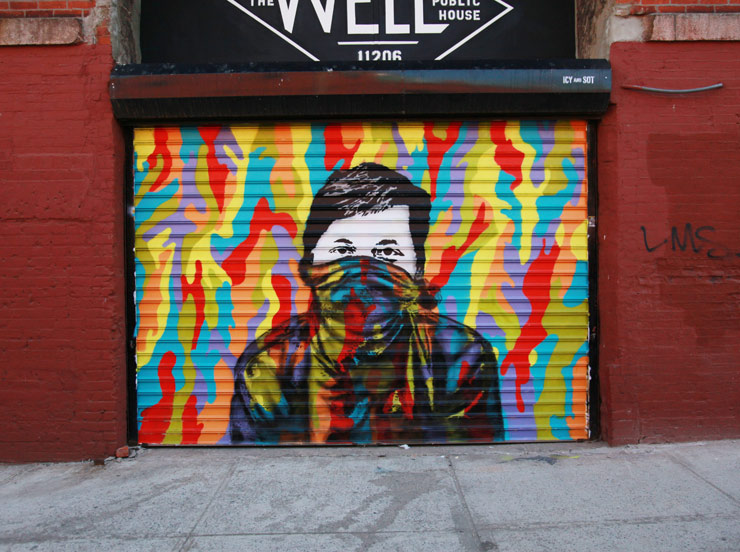
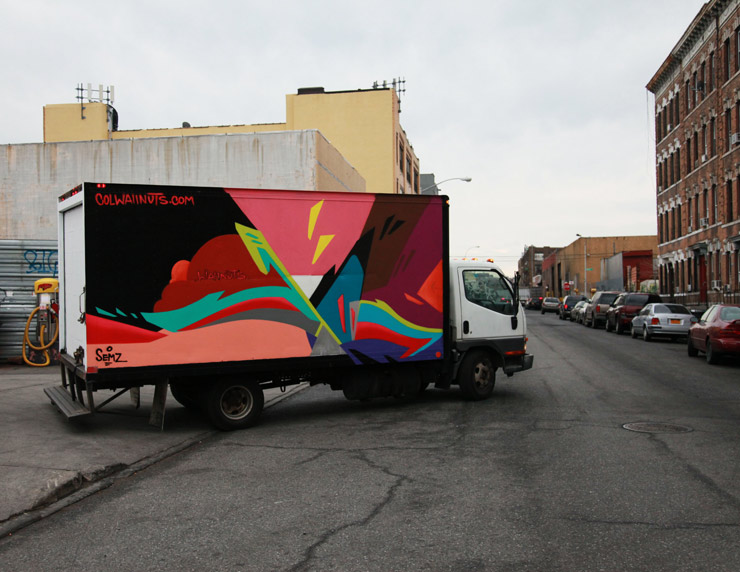
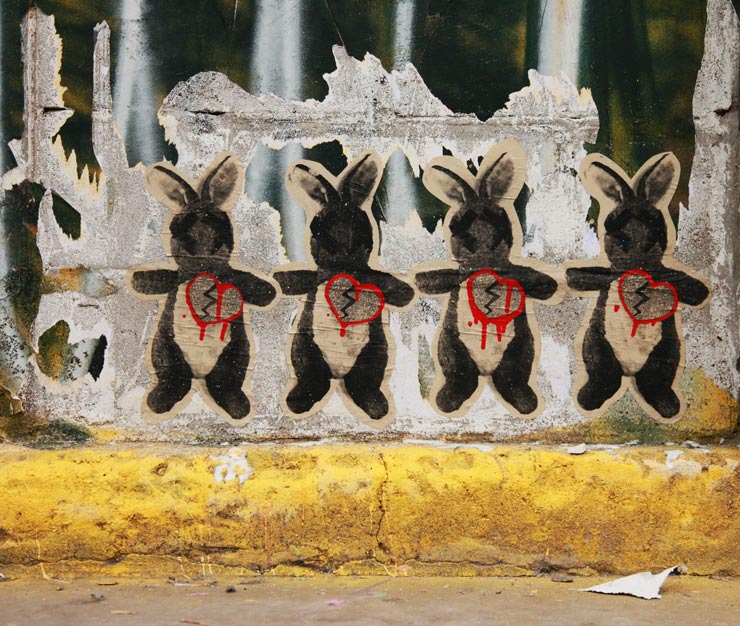
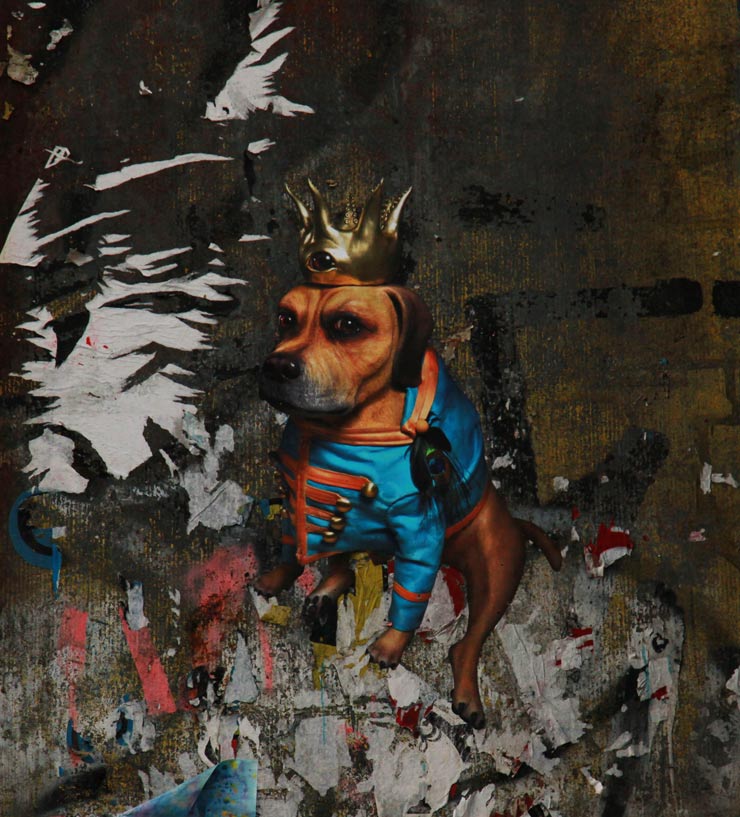
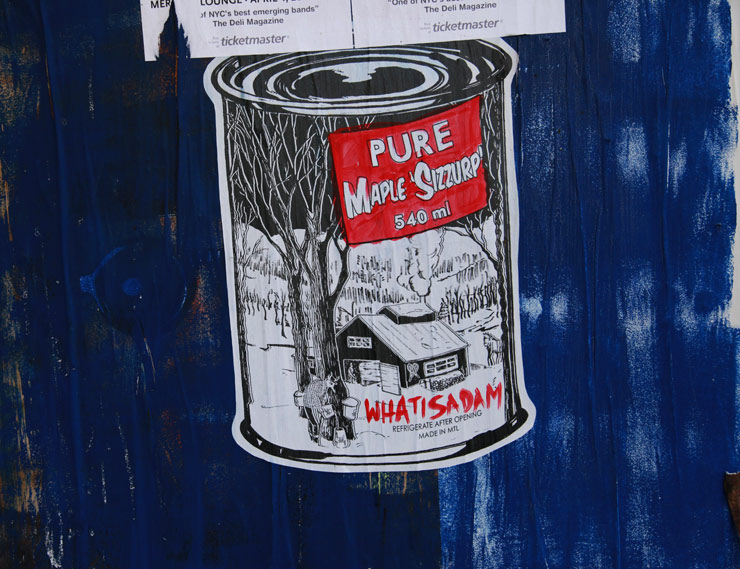
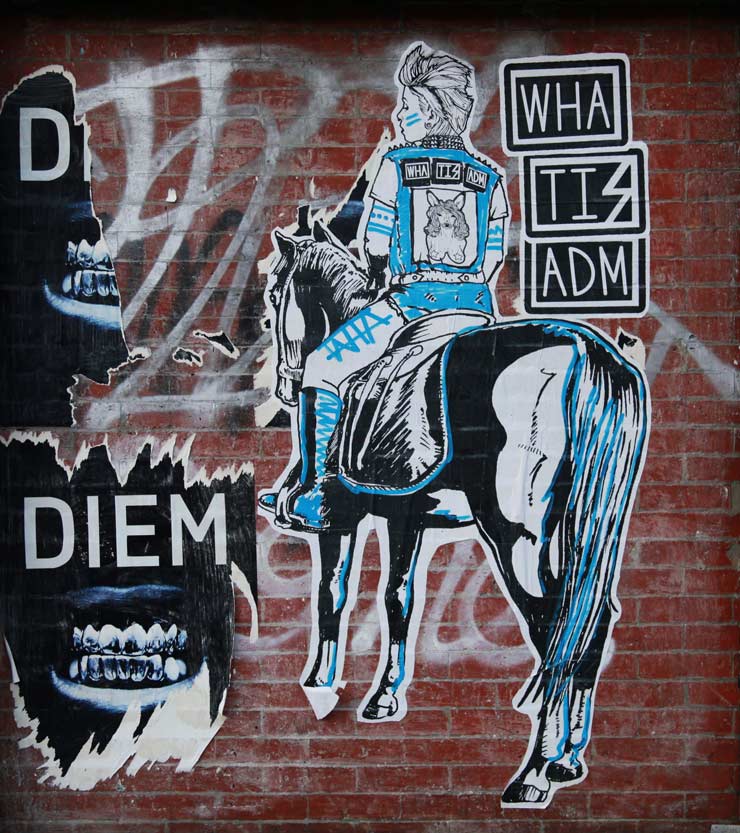
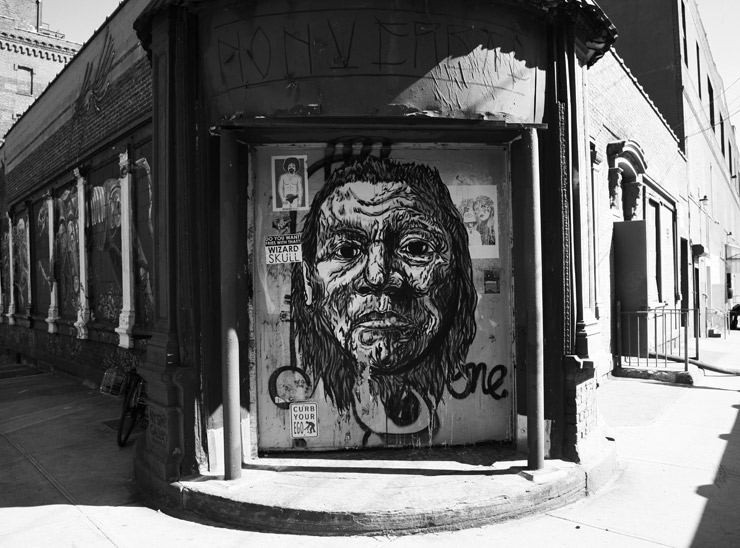
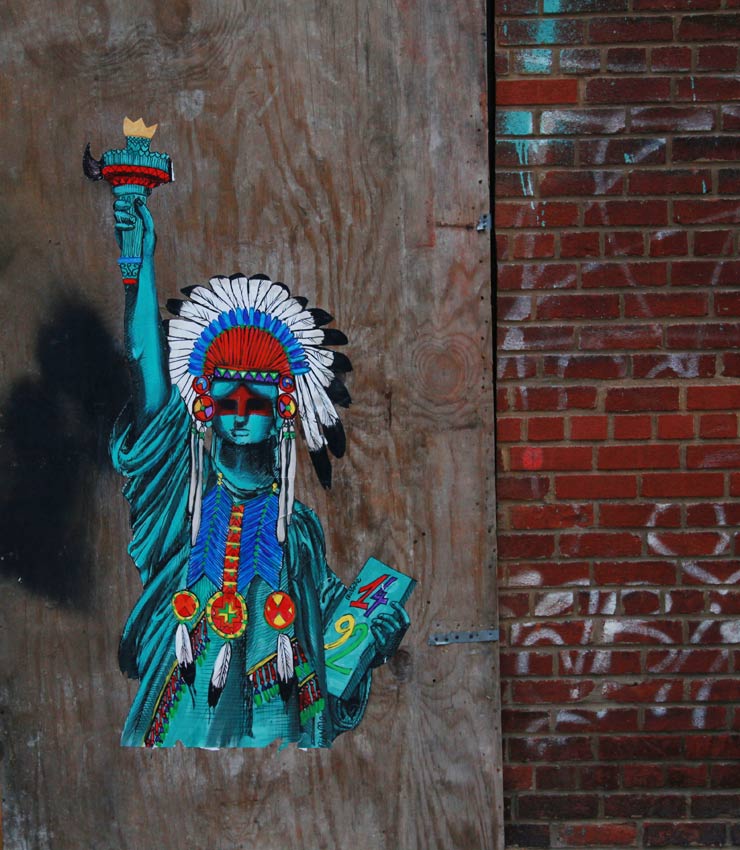
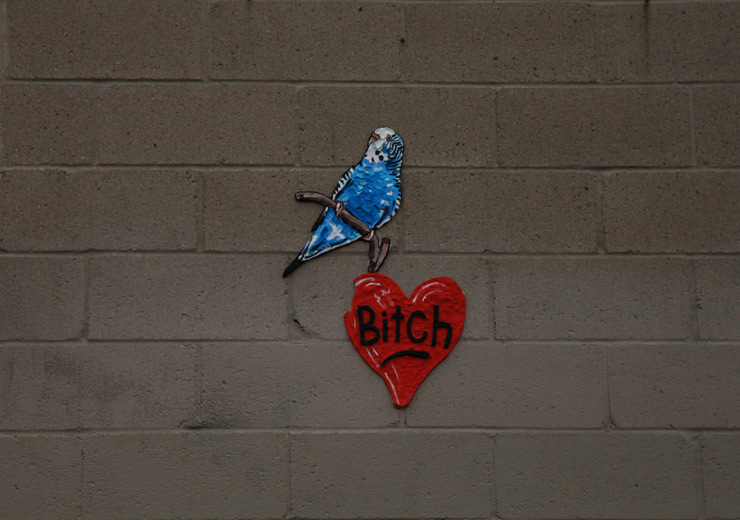
Here’s our weekly interview with the street, this week featuring Adam Dare, Bunny M, COL Wallnuts, Don’t Fret, Icy & Sot, JMR, John Ahearn, Judith Supine, Michael McKeawn, Miss Me, Mr. Toll, Paper Skaters, Pyramid Oracle, and What is Adam.

Top Image >> Icy & Sot (photo © Jaime Rojo)

brooklyn-street-art-judith-supine-jaime-rojo-03-30-14-web

Judith Supine (photo © Jaime Rojo)

brooklyn-street-art-col-wallnuts-jaime-rojo-03-30-14-web

Col Wallnuts (photo © Jaime Rojo)

brooklyn-street-art-adam-dare-jaime-rojo-03-30-14-web

Adam Dare (photo © Jaime Rojo)

brooklyn-street-art-jim-mckenzie-jaime-rojo-03-30-14-web

Jim McKenzie (photo © Jaime Rojo)

brooklyn-street-art-what-is-adam-jaime-rojo-03-30-14-web-1

What Is Adam (photo © Jaime Rojo)

brooklyn-street-art-what-is-adam-jaime-rojo-03-30-14-web-2

What Is Adam (photo © Jaime Rojo)

brooklyn-street-art-paper-skaters-jaime-rojo-03-30-14-web

Paper Skaters (photo © Jaime Rojo)

brooklyn-street-art-jmr-jaime-rojo-03-30-14-web

JMR for The Bushwick Collective (photo © Jaime Rojo)

brooklyn-street-art-pyramid-oracle-jaime-rojo-03-30-14-web

Pyramid Oracle (photo © Jaime Rojo)

brooklyn-street-art-john-ahearn-jaime-rojo-03-30-14-web

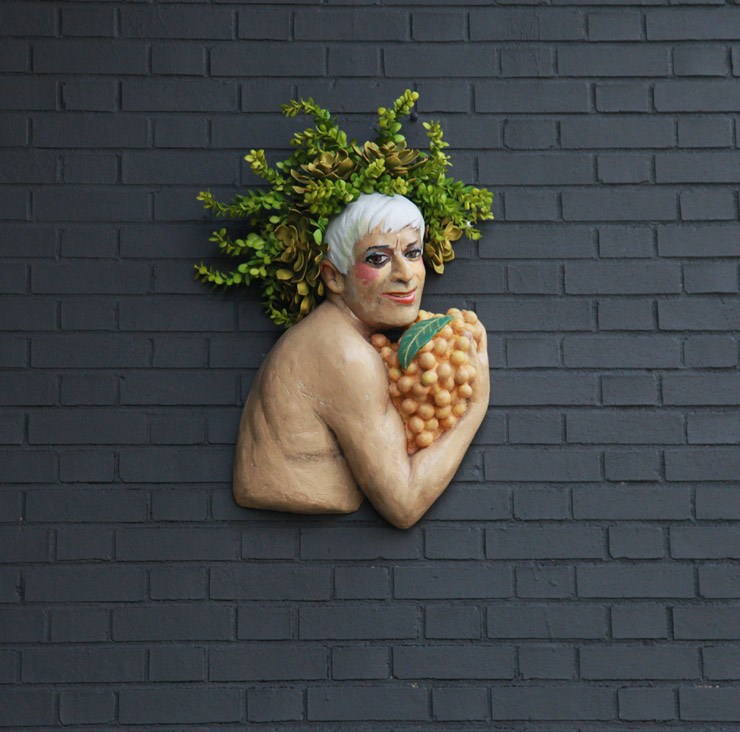
John Ahearn. Florant 2013. Plaster portrait of Florant Morellet, the colorful restaurant owner and business pioneer in the Meat Packing District of Manhattan installed at the High Line Park for the BUSTED Series. The portrait was inspired by the 16th century painting of Bacchus by Caravaggio. John Ahearn of course is a crucial link between public art and street art in New York and has been for thirty years or so, aligning his work and practice with actual people who live in our neighborhoods – especially in the Bronx. Mr. Florant, a longtime fixture and heart of the Meat Packing District, abandoned Manhattan for Bushwick, Brooklyn last year.  (photo © Jaime Rojo)

brooklyn-street-art-michael-mckeawn-jaime-rojo-03-30-14-web

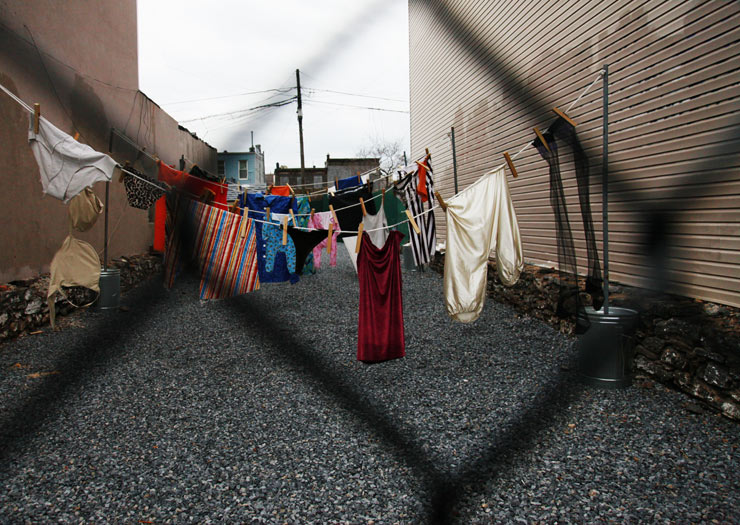
Michael McKeawn “Winter Laundry”. Look closely and you’ll see that this is an installation of rather large clothing. photo © Jaime Rojo)

brooklyn-street-art-miss-me-jaime-rojo-03-30-14-web-2

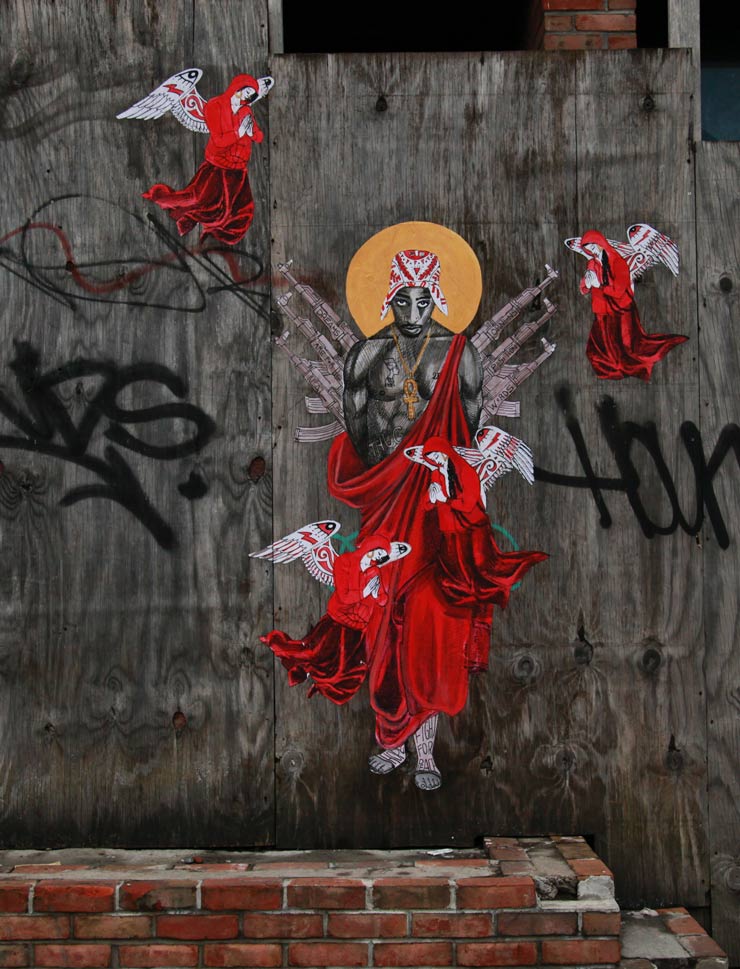
Miss Me produces a rather elaborate tribute to you know who. (photo © Jaime Rojo)

brooklyn-street-art-miss-me-jaime-rojo-03-30-14-web

Miss Me (photo © Jaime Rojo)

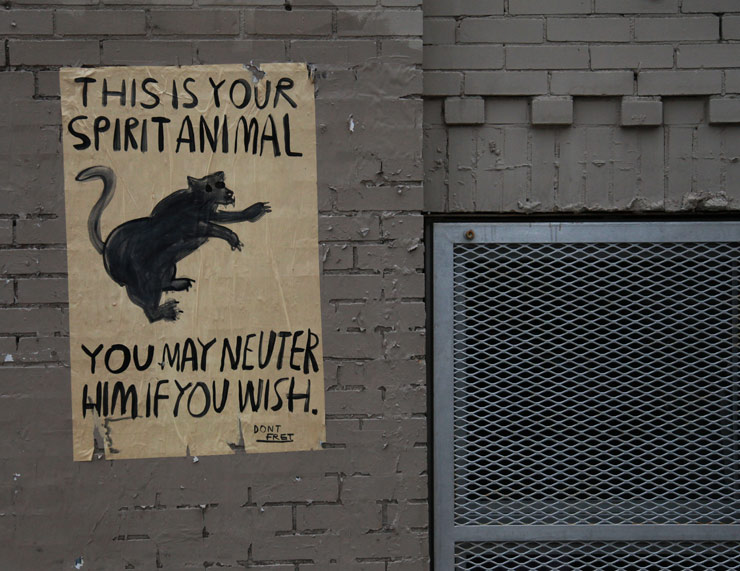
brooklyn-street-art-dont-fret-jaime-rojo-03-30-14-web

Dont Fret (photo © Jaime Rojo)

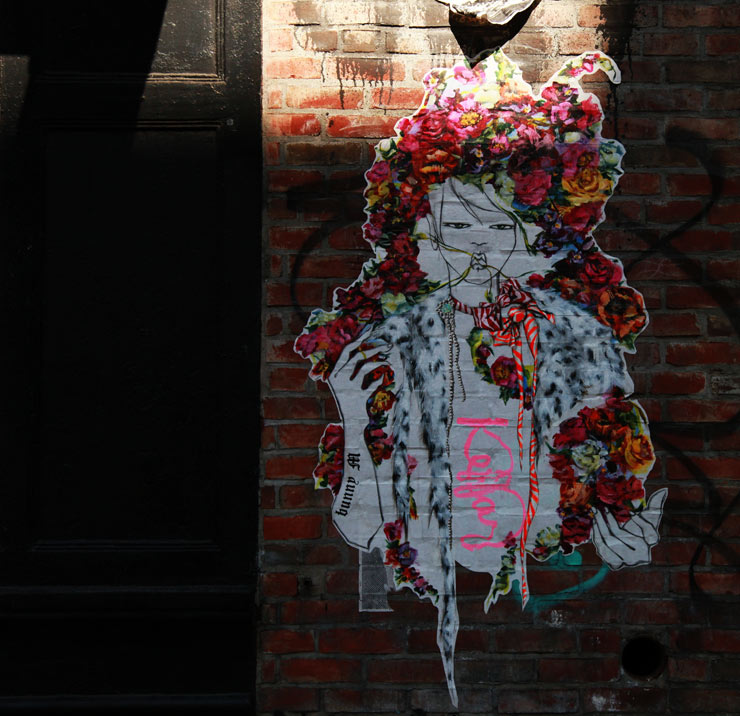
brooklyn-street-art-bunnym-jaime-rojo-03-30-14-web

bunny M (photo © Jaime Rojo)

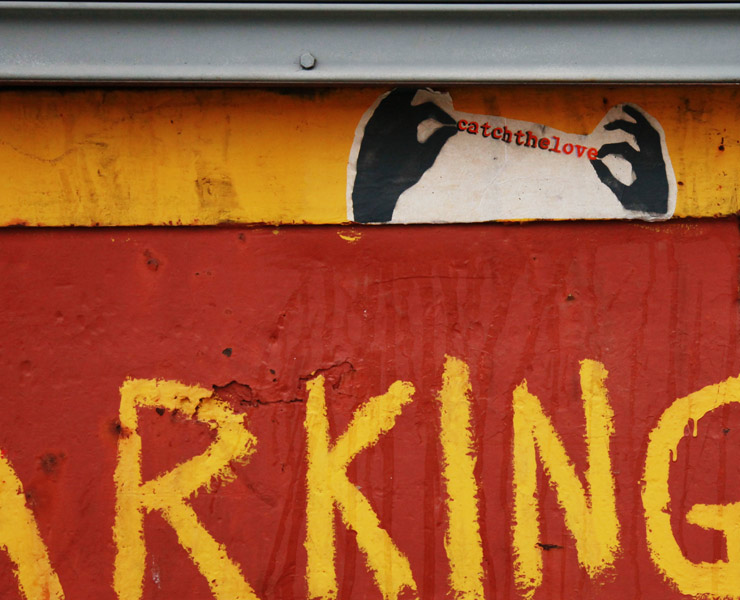
brooklyn-street-art-catch-the-love-jaime-rojo-03-30-14-web

Catch the Love (photo © Jaime Rojo)

brooklyn-street-art-mrtoll-jaime-rojo-03-30-14-web

Mr. Toll (photo © Jaime Rojo)

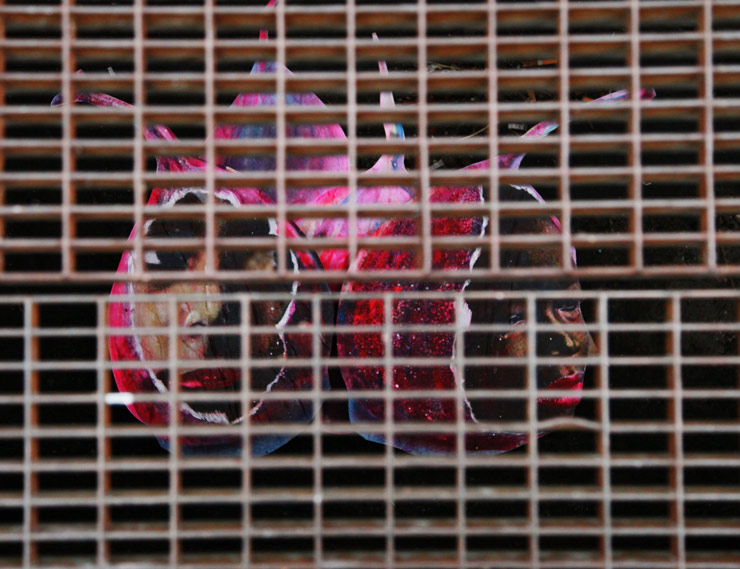
brooklyn-street-art-jaime-rojo-03-30-14-web

Untitled. East River, NYC. January 2014. (photo © Jaime Rojo)


<<>>><><<>BSA<<>>><<<>><><BSA<<>>><><<>BSA<<>>><<<>><><BSA

Please note: All content including images and text are © BrooklynStreetArt.com, unless otherwise noted. We like sharing BSA content for non-commercial purposes as long as you credit the photographer(s) and BSA, include a link to the original article URL and do not remove the photographer’s name from the .jpg file. Otherwise, please refrain from re-posting. Thanks!

<<>>><><<>BSA<<>>><<<>><><BSA<<>>><><<>BSA<<>>><<<>><><BSA

Read more

Street Artist Gaia: An “Urban Romantic” Re-combines History and Myth

Gaia in Brooklyn Studying End of World

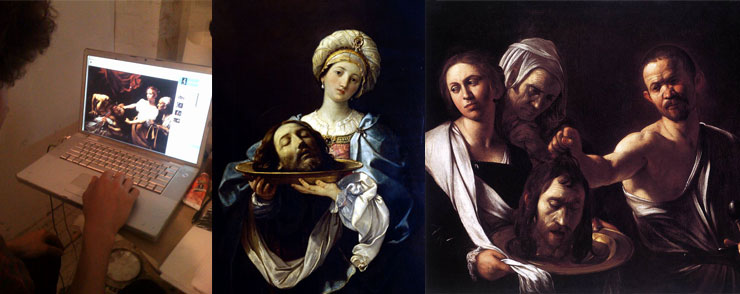
Gaia surfs for Italianate beheadings: Carvaggio and Guido Reni

Creating a new symbolic vocabulary based on fables, myths, and Biblical stories as well as his own imagination, Gaia plays with tropes and tangents in pursuit of enlightened understanding. A cultural omnivore of sorts, his own understanding is informed as much by Questlove as Caravaggio, Plato and Panda Bear, metaphor and M Arch, aerosol and oil paint. And linoleum. And wheat pastes. And colored pencils. Well past the digital dawn of all-things mashup, Gaia continues to mess with meanings and modalities in search of a new way to communicate messages that are as old as written history. For now his meme is the human cycle of creation and destruction, with an underlying preoccupation with the latter.

A recent visit to his studio space in Brooklyn finds Boy Wander with his laptop on a makeshift table and linoleum scattered across the floor. His new pieces for his show Saturday at Irvine Contemporary Gallery in Washington, DC nearly complete, Gaia talks about the vocabulary of his symbols and their evolving meanings.

Gaia
Above is the central trio for the new show.  “The Emissary” central figure, imploring us to pay attention, is book-ended by two versions of the be-headed Saint John, influenced by Caravaggio and Guido Reni.  Explains Gaia,  “And so the whole point of using St. John as a metaphor is that he was like a prophetic messenger who had foretold the coming of the Messiah and then of course he was decapitated. So it was the messenger foretelling the savior – and this is the emissary in the middle telling you to listen.  Basically it is to align them with these natural figures which are foretelling the end of the world and how to stop it – but not really.” Animal heads, which Gaia imbues with specific roles, are freely interchanged with human heads as symbols by way of telling a greater story. Gaia (photo © Jaime Rojo)

Gaia (Detai)
In the free-associating symbolism of Gaia, the rabbit head is a stand-in for the lamb of God. Gaia (Detail) (photo © Jaime Rojo)

Gaia (Detail)
In this version of St. John’s head being cradelled, it is interesting to note how Gaia incorporated the faux street art advertisement by musician Roger Waters that is part of a greater campaign of wheate-pasting on the street into the background. Gaia (Detail)  (photo © Jaime Rojo)

Gaia
Yes, this is the Lamb of God.  Gaia (photo © Jaime Rojo)

On the significance of animal heads and their interchangeability, “I wanted to work with these decapitated heads and mix with them with the animal and human heads – hybrids – so the animals are never out of the picture – so again it’s this message of the saviour being killed.  Like the thing that was going to save us is massacred by us.  So it’s like this cycle of saving, destruction, saving, destruction, not listening, listening. – these different prophecies”.

Gaia
“Grandfather”, the print. Gaia (photo © Jaime Rojo)

Gaia
Gaia Original Lino cut of “Grandfather” (photo © Jaime Rojo)

Gaia
“So this is a print that I had done for Just Seeds for their new project, and I figured it made sense for this show as well. It is regarding over-fishing.  So the whole thing is the fish circling, the hole is the fish that are missing, the human hand is holding a dead fish.”Gaia (photo © Jaime Rojo)
Even as war seems perennial, anyone with eyes can tell you that we are living in a darkened time of pushing the earth’s environment to a precipice, and with good reason the younger generations are taking it quite hard. A legacy of poisoned air, water and diminished resources is more frequently on their mind because that is the legacy that’s been left to them.  We talked with Gaia about his take on the state of the environment and how it influences him personally, thus creatively.

BSA: So what’s up with this preoccupation with death and destruction in your work?

GAIA: Well, yeah, death and destruction is just like my generations notion that the world is coming to an end and we have to fix something. We’ve inherited all of these problems.  “Global Warming” sort of came into being as a real conscious collective awareness as I was growing up. I remember it coming into being and it just taking over mine and my peers lives.  I remember (the movie) “Inconvenient Truth” was like the turning point and noone could stop thinking about it. It’s really just about this collective environmental consciousness that it’s inextricably bound to globalization and us not knowing how to necessarily leave that system, how to exit that circle.

BSA: It does seem like your generation is more aware and more concerned with the topic of environmentalism, environmental degradation, apocalyptic visions than any previous generations.

Gaia: Yeah but not necessarily doing anything about it.

BSA: No? There is not an activist sense?

Gaia: Yeah there is an activism but also there’s also a feeling of hopelessness as well. Just the fact that we don’t know how to deal with it.

BSA: How to turn the tide?

Gaia: Yeah how to turn the tide and also how to live alternatively so we’re not affecting the world negatively.

Gaia
In a direction most of his street art fans will be surprised by, Gaia is now grappling with oils, which he finds to be a challenge, but ultimately is pleased with the results. As in the rest of the show, the oils draw on themes of destruction, peace, and historical stories. “Gaia:  The presentation of the crime. Veronica washed Jesus’s face and his visage came out on the cloth. BSA: Is that a halo, a crown of thorns? Gaia: Yeah but it’s going to remain pretty ambiguous. Gaia (photo © Jaime Rojo)

Gaia
The hand of “Cease”, by Gaia (photo © Jaime Rojo)

Gaia
Gaia, “The bee is just the symbol of unity and cooperation but also obviously the bee is also is trying to make a comeback, hopefully.” Gaia (photo © Jaime Rojo)

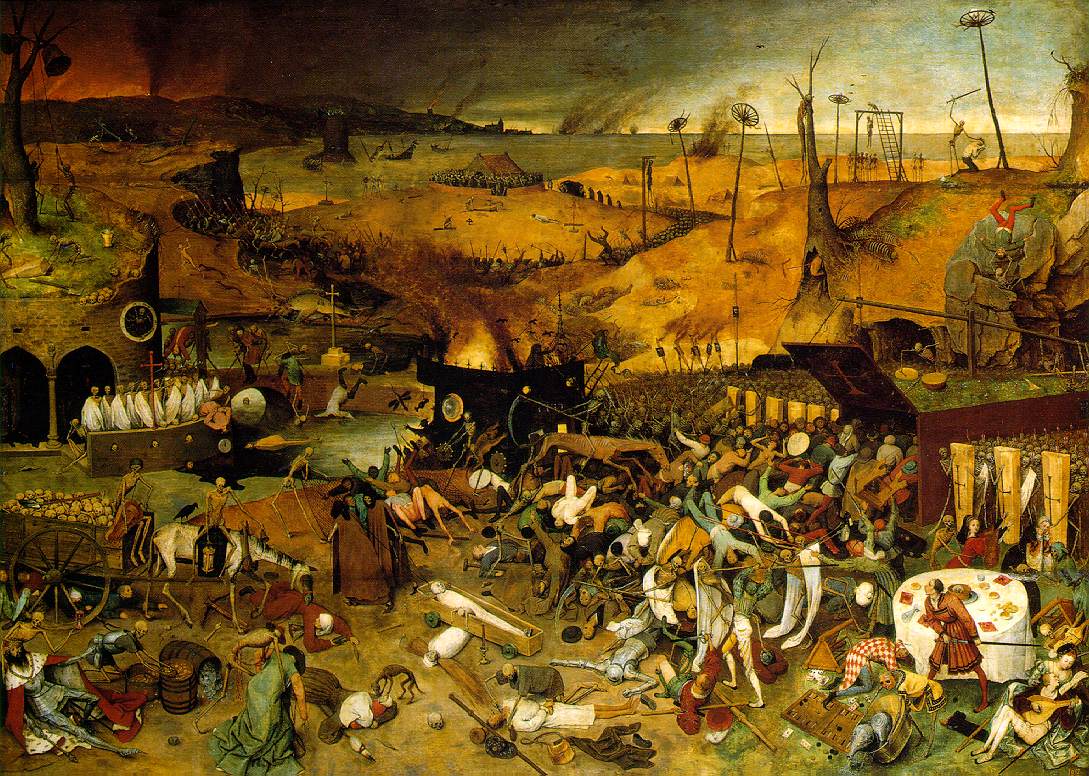
For Gaia, visions of cataclysm and brutality depicted in the paintings of Hieronymous Bosch and Bruegel the Elder provide hours of entertainment in their detail and somewhat matter of fact presentation of suffering . One favorite (below) is “The Triumph of Death”, by Flemish painter Pieter Bruegel the Elder.

death

Gaia
Gaia talks about his most important oil painting,  “The Rooster is the main messenger.  The animal is speaking to us and caring for us and guiding us. The Rooster is more like the presentation of what we have done.  He’s more of the guy who comes down and presents the crimes.  I feel like this is the most important piece of the show because it’s like the idyllic perfect image of destruction, how we envision the end of the world, and then the interior is the Utopian: the beautiful lurid color of sky.  It could be Revelation but it’s also the romance of escapism.”

***********************************************

Irvine Contemporary Art Gallery Presents: “Gaia: The Urban Romantic”

Read more