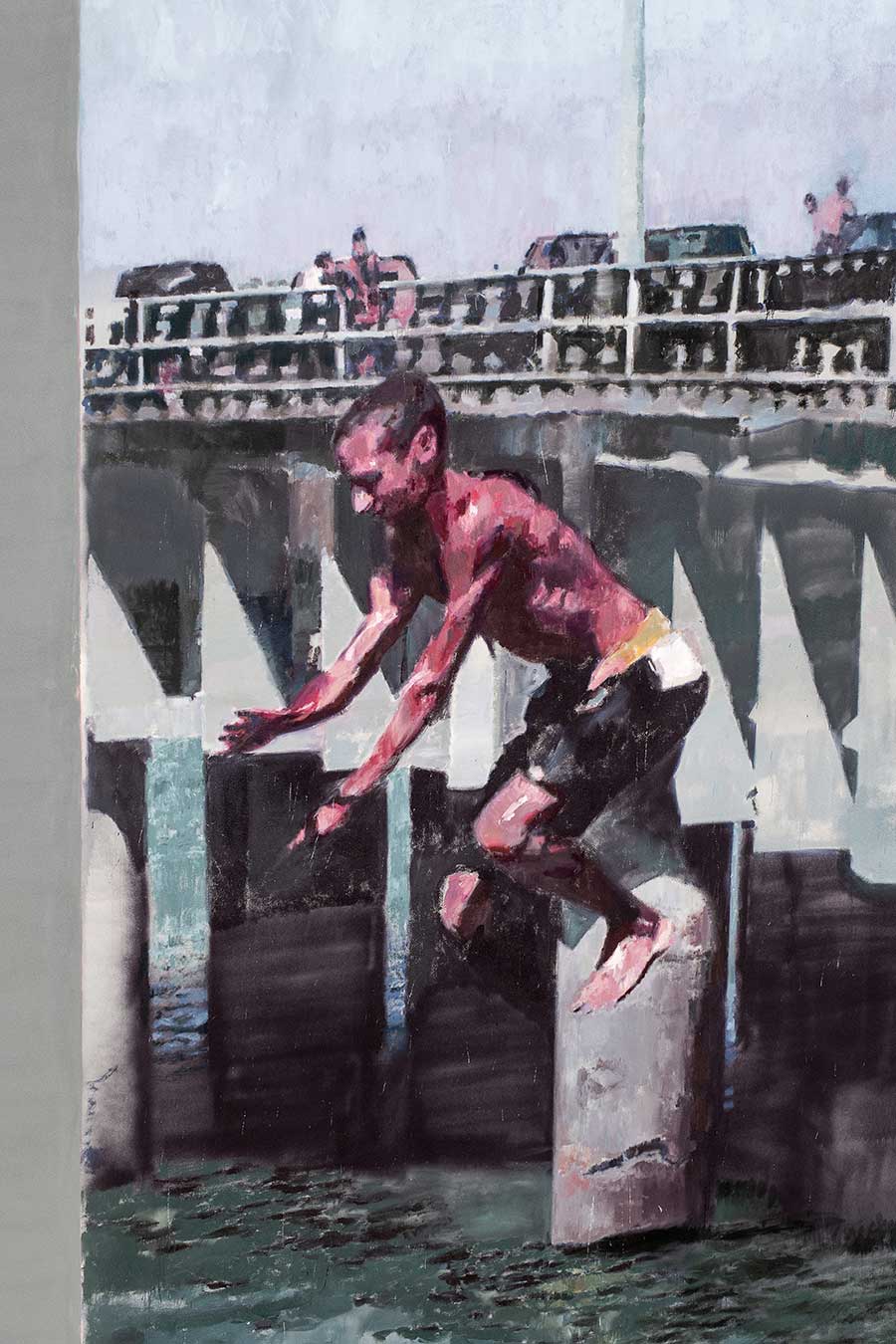
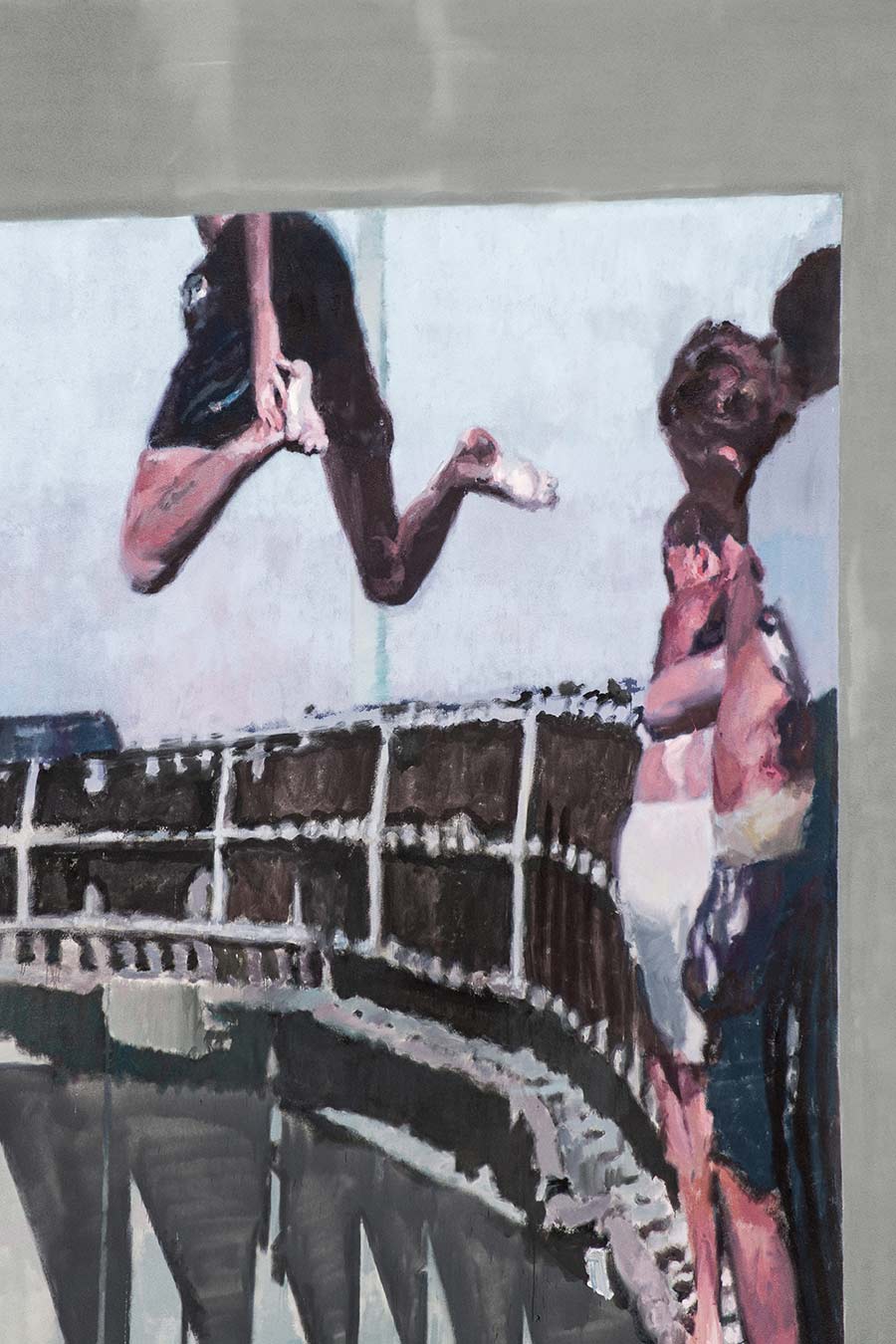
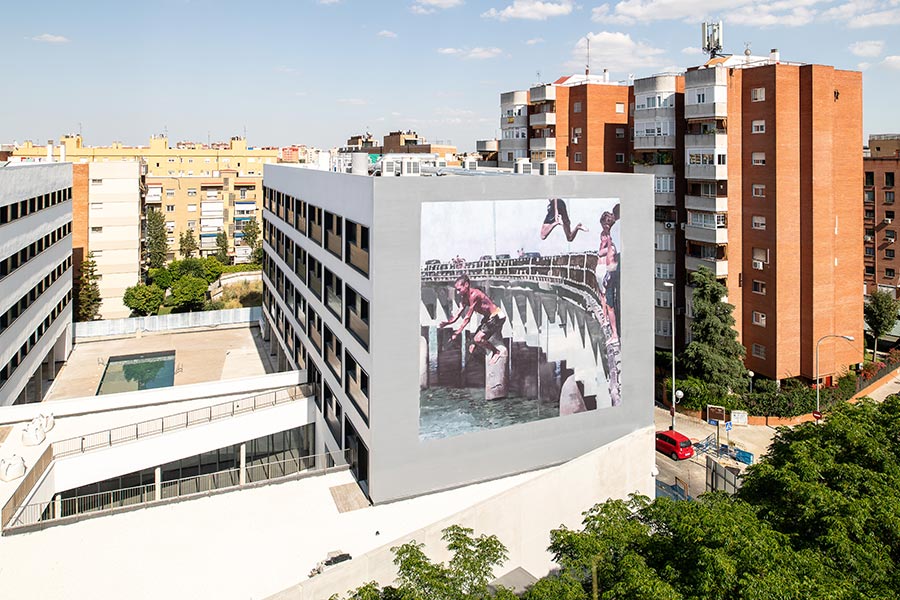
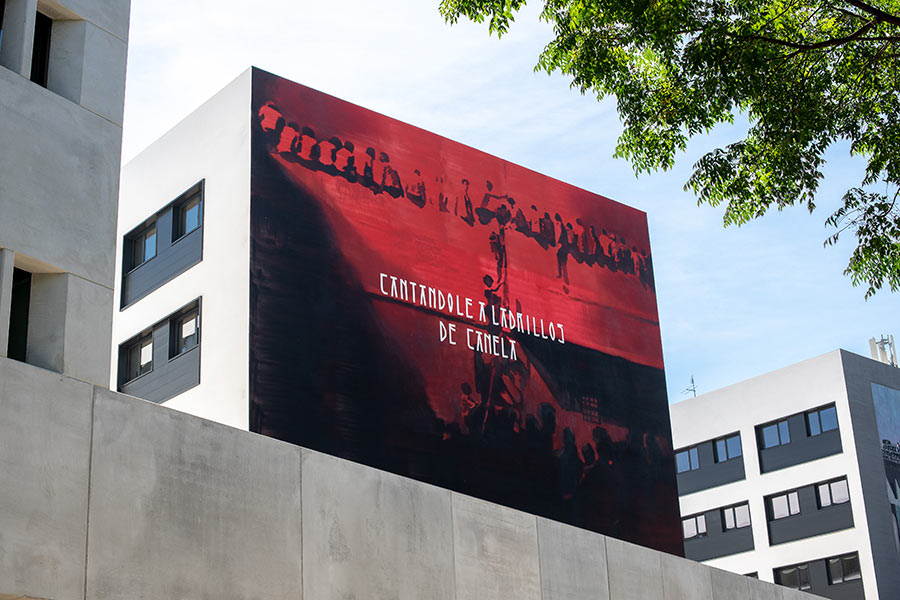
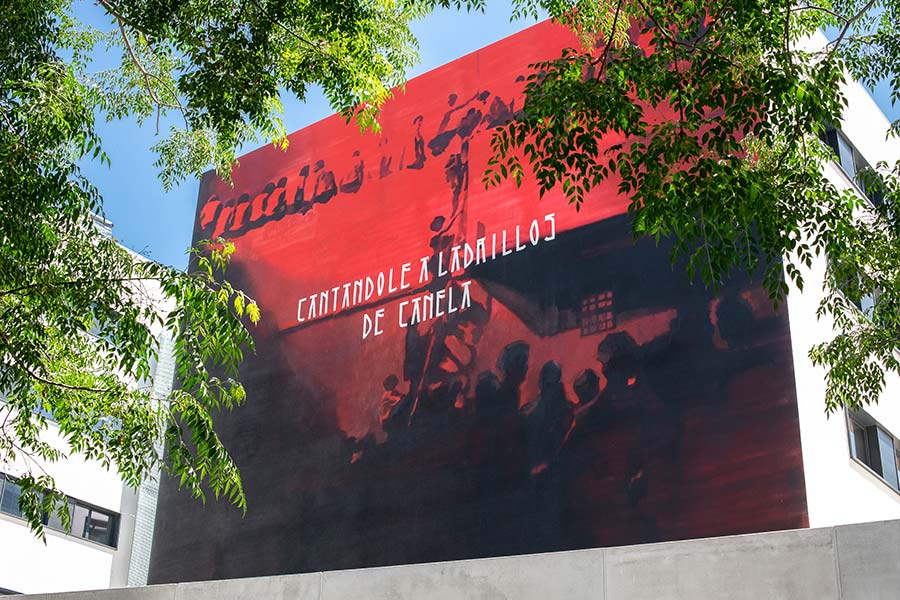
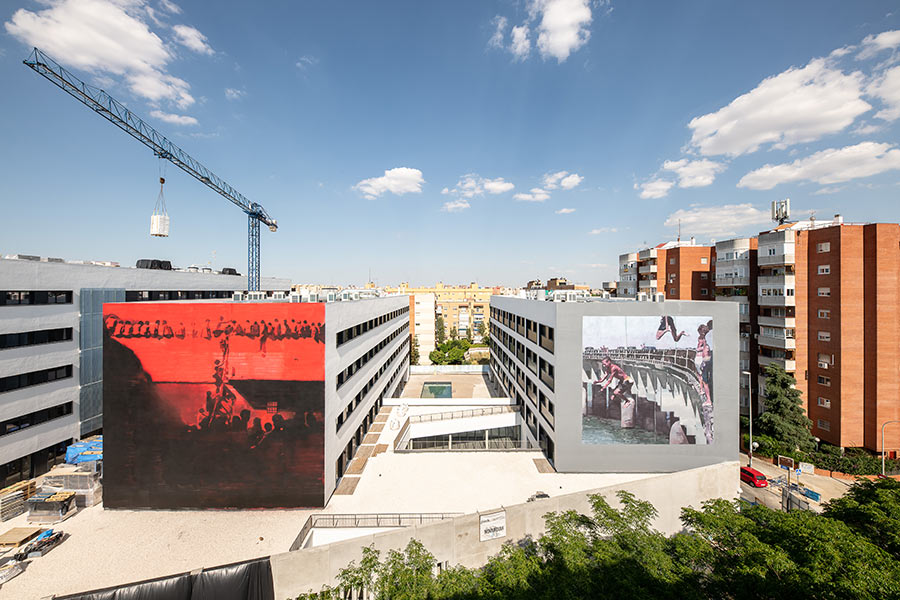
The unbridled joy and adventure of youth! Axel Void has captured both in this new street diptych in a Student dormitory in Seville, Spain, called Livensa Living Sevilla.
With roots in Haiti, Miami, and here in Andalusia, Void invites viewers to access their own childhood through distinct lenses that are at once nostalgic and contemporary by way of interpreting photographs of young daredevils jumping into the sea from the Carranza Bridge in Cádiz. The framing of the works is an outstanding example of working with the architecture to create works that strongly suggest much more to the surrounding community than their content.
Axel says that he hopes the murals inspire a certain spirit of the residence itself, connecting the future residents with the city and the students living there. With these new works, he is returning to his own roots, invoking the spirit of play and the natural and manufactured environment, highlighting the little things that enrich the quality of life in this region. The murals lie between Antonio Maura Montaner and Genaro Parladé streets.
Our weekly focus on the moving image and art in the streets. And other oddities.
Now screening: 1. Guido Van Helten – L’attesa – (The Wait) – 2017 2. “Spaciba” INO in Athens, Greece. 3. TrueSchool Hall of Fame via Dope Cans
BSA Special Feature: Guido Van Helten – L’attesa – (The Wait) – 2017
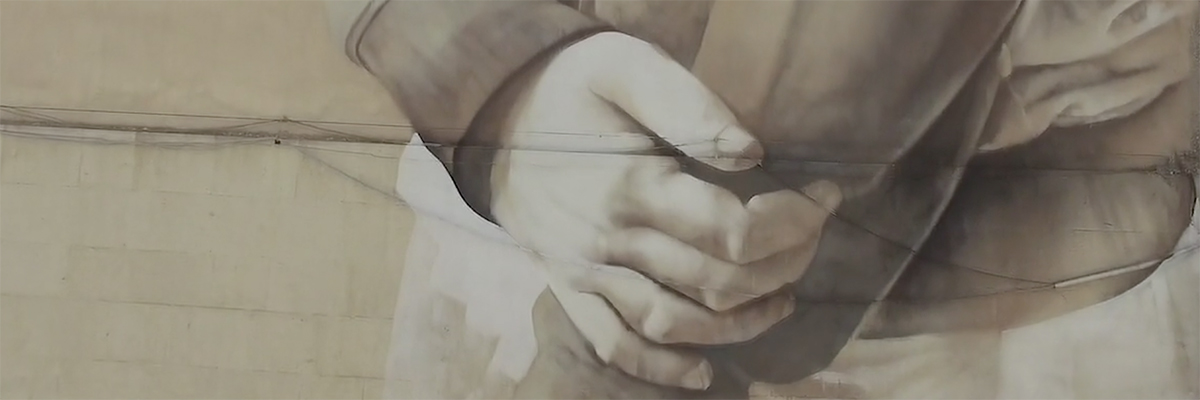
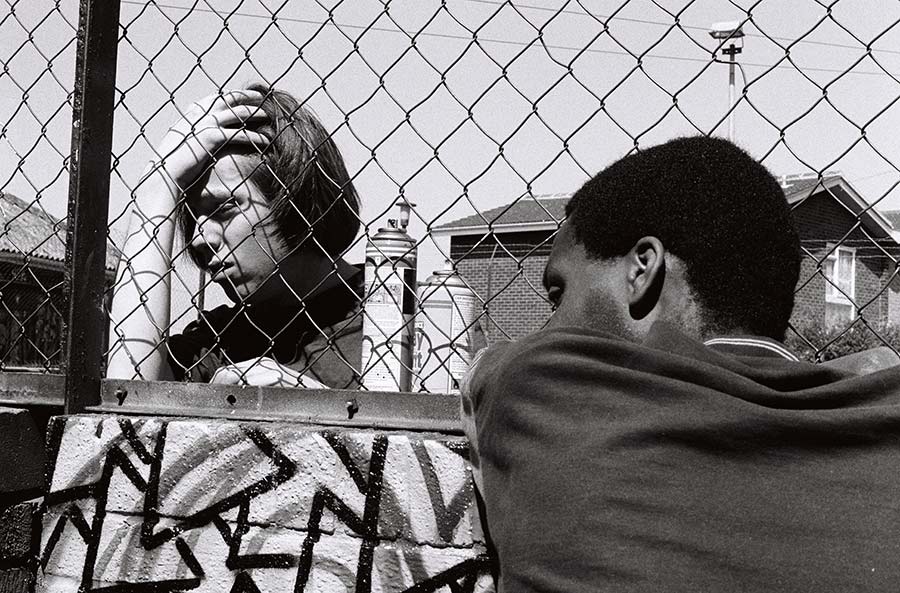
Today we look back a couple of years to a massive yet poignant project from artist Guido van Helten in Ragusa, Sicily where he honors the history of a modern place and an age-old practice of youth finding their own significant part of a city to meet up and socialize casually. Part of the third edition of FestiWall, a public art festival, he photographed friends and invited them to write their names in aerosol along the base of a wall while he painted their portraits above on a lift.
“It’s very much an expression of the young people and it is their space,” he says.
“I invited the class who I took photos of to write their names all along the base of that wall. It was a good symbol of them taking back the wall in that space.The wall is a popular space where people come to hang out so there is an energy in that wall and in energy of that space which I really enjoyed”
Guido Van Helten – L’attesa – (The Wait) – 2017
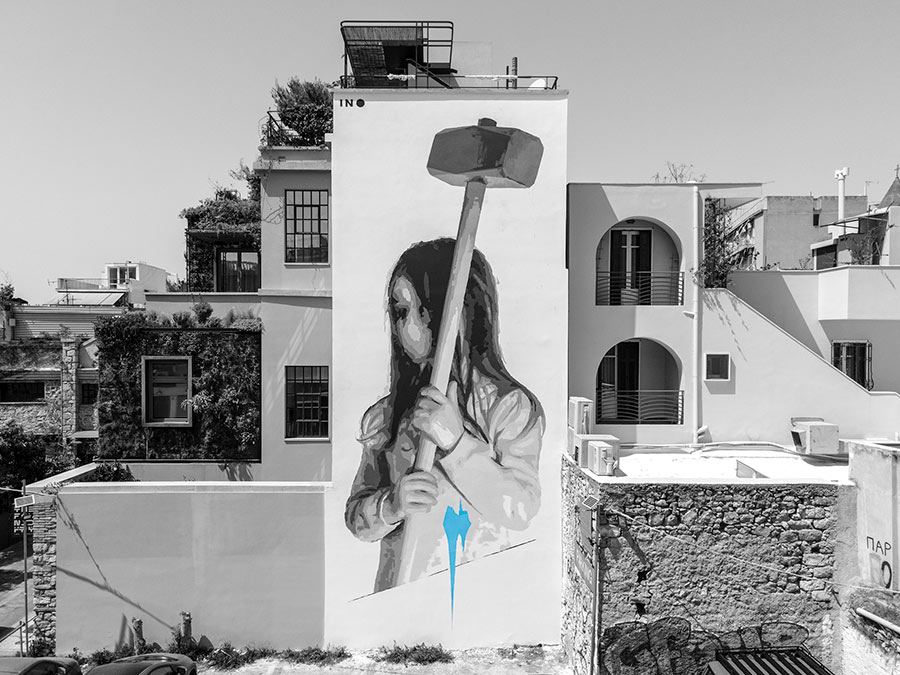
“Spaciba” INO in Athens, Greece.
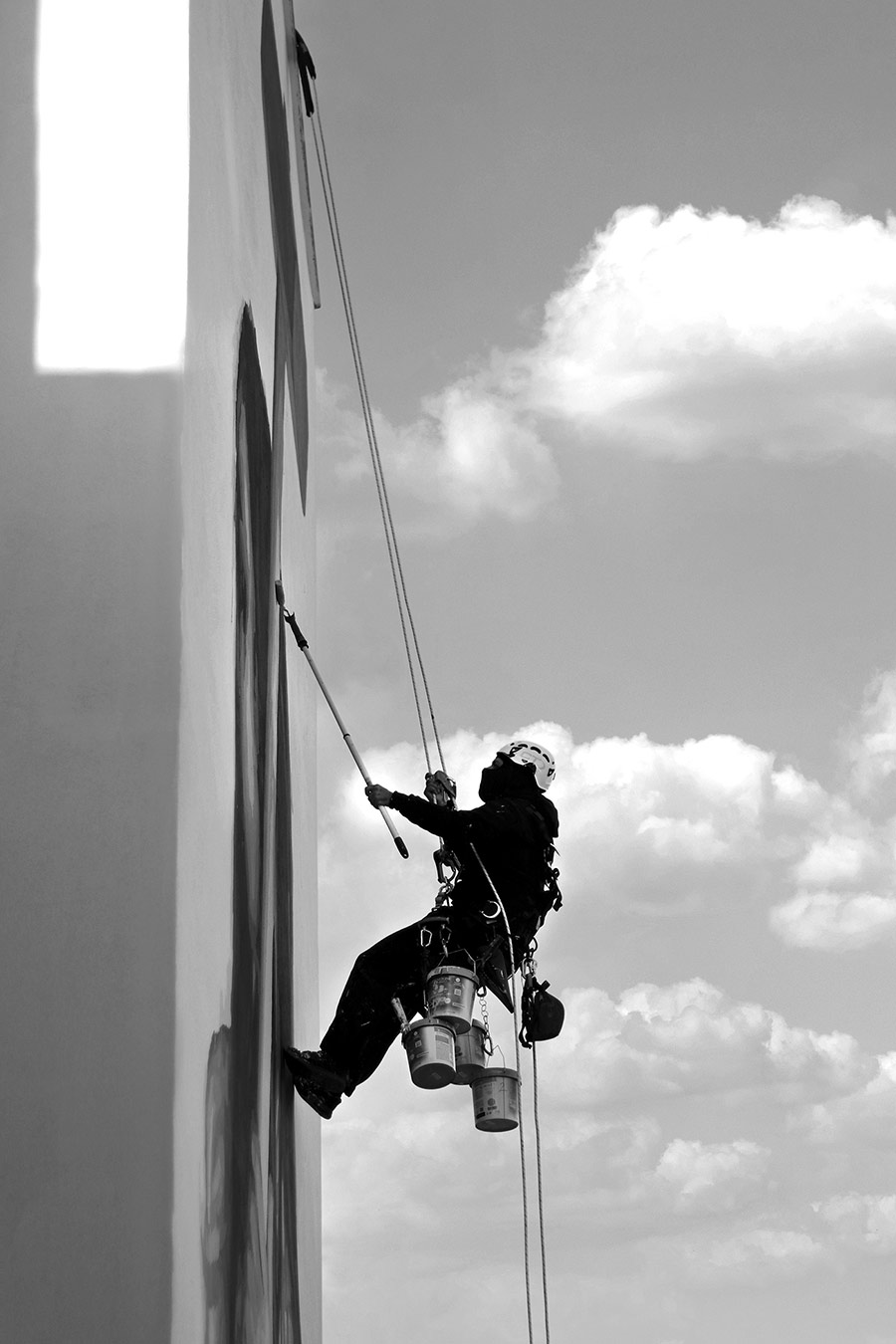
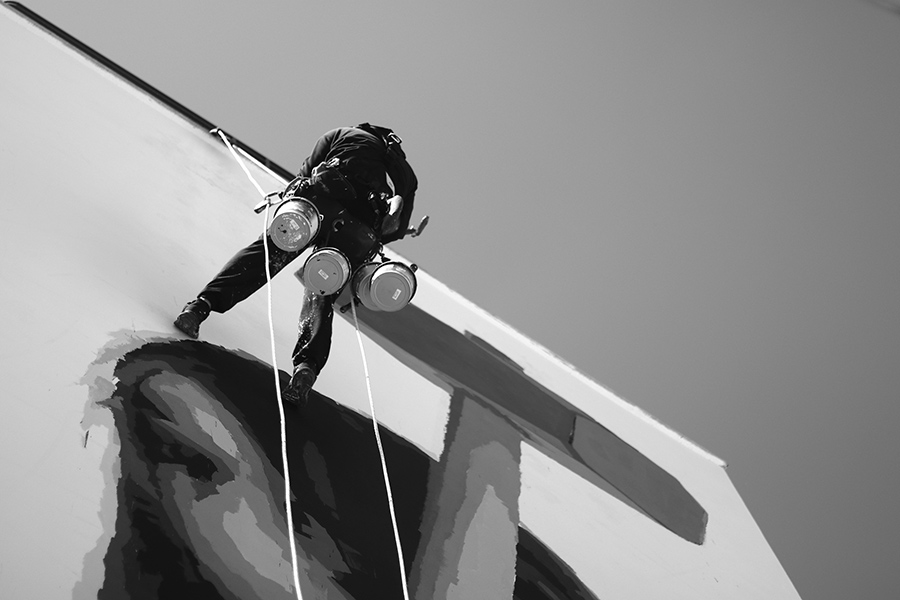
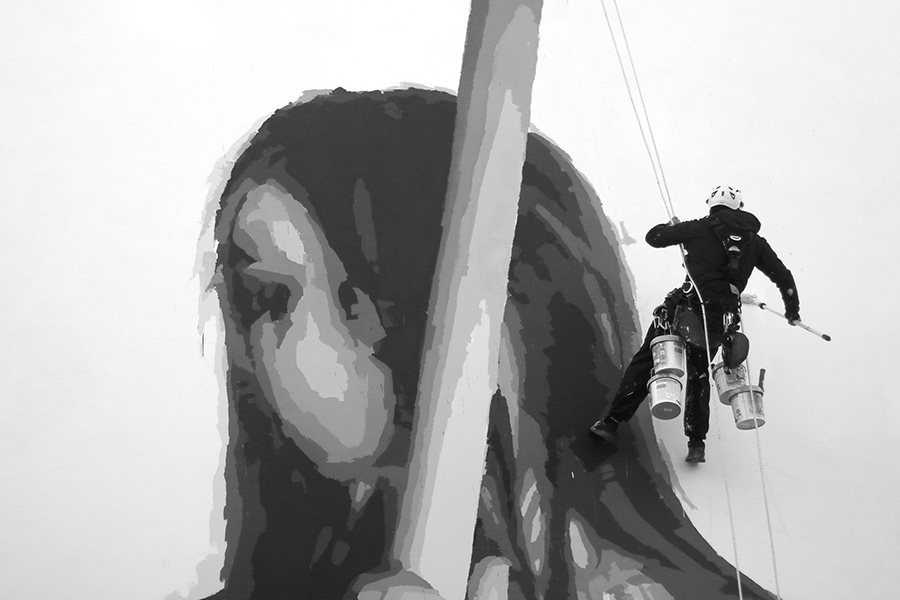
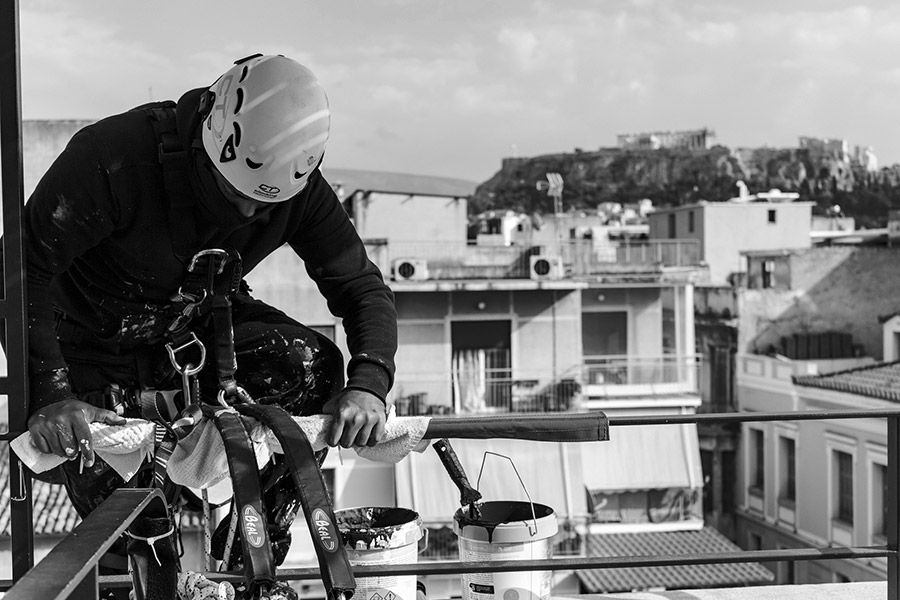
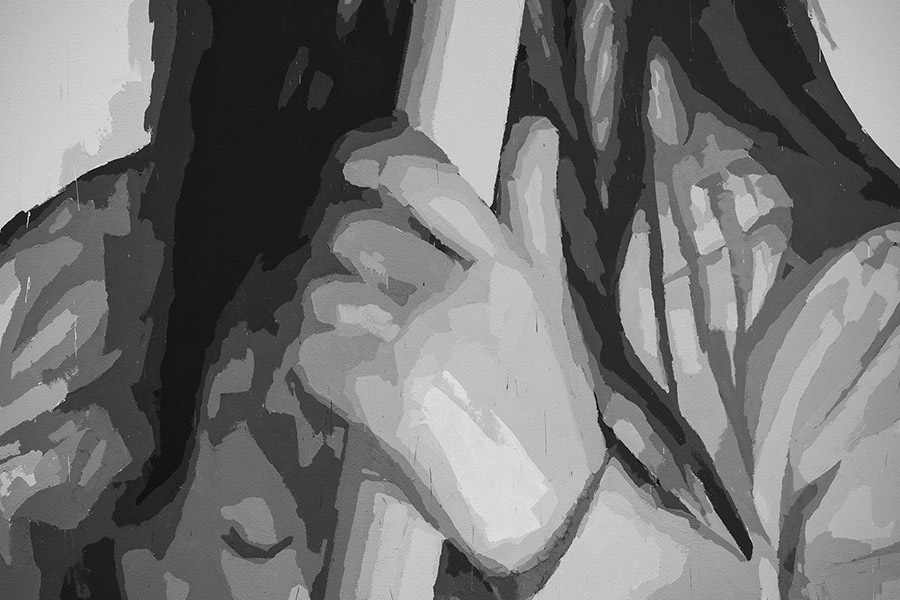
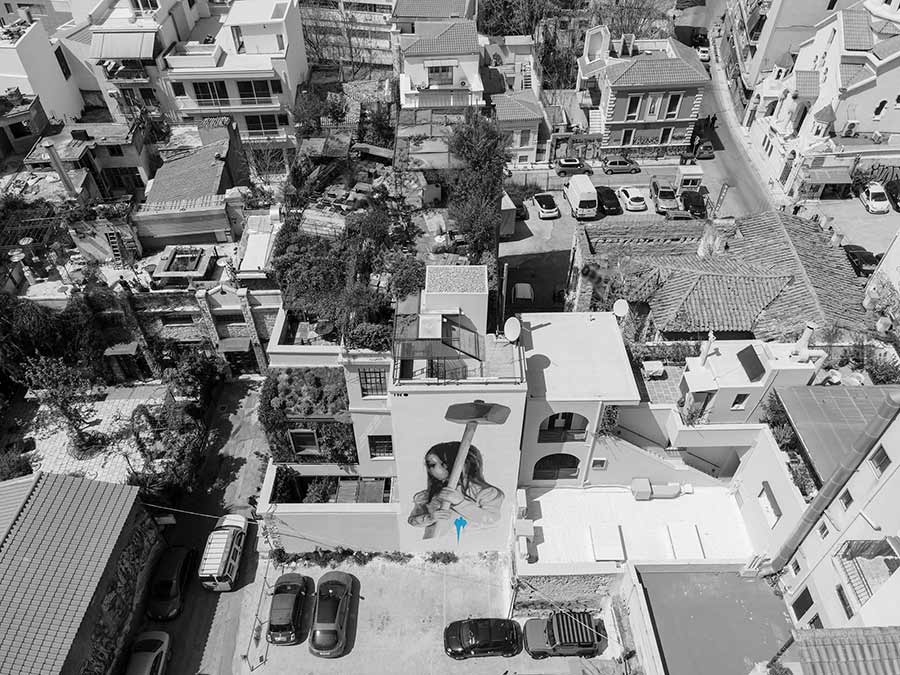
Accessing a difficult wall using only rope suspension, INO paints this Athens mural of young girl with a big hammer. He says it is a symbol of ” a new generation breaking barriers of equality.”
TrueSchool Hall of Fame via Dope Cans
A short Hall of Fame video with writers from Wrocław, Poland featuring Dope Cans Classic & Dope The Wall
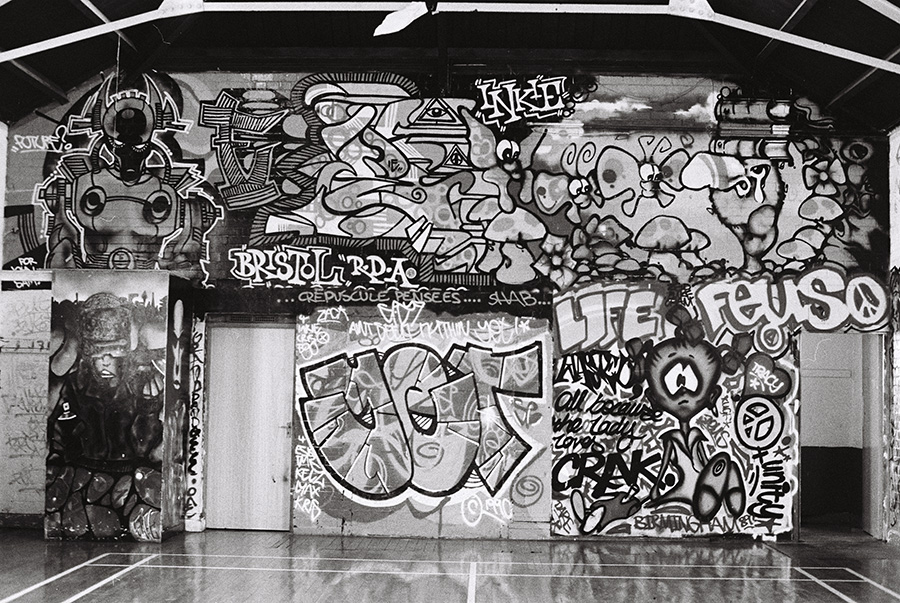
This Saturday marks the opening of an outstanding exhibition in Bristol, England documenting the pivotal role the city has played in the formation of street art from the 1980s to today. Entitled Vanguard Bristol Street Art: The Evolution and mounted at the Global Movement Bristol Museum’s M Shed, the show presents the view of this worldwide movement as seen through the birth and growth of Bristol’s scene from the perspective of artists singular voices rising together in a crescendo that shook the arena of public self-expression with maverick ideas and activist ideals.
Vanguard positions itself as an examination of artists creative response to Bristol’s “pioneering underground scene throughout the UK’s turbulent social and political history” with a focus on driving social change – one that influenced subsequent street artists everywhere.
Among the Bristolian and UK artists featured will be new works by Adam Neate, Andy Council, Antony Micallef, Bill Posters, China Mike, Conor Harrington, Dale VMN Collins (Dale Marshall), Dicy, Eko, Feek, Filthy Luker, Inkie, Lucas Price, Lucy McLauchlan, Matt Small, Mau Mau, Mr Jago, Paris, Rowdy, Sickboy, Swoon, Will Barras, and Xenz.
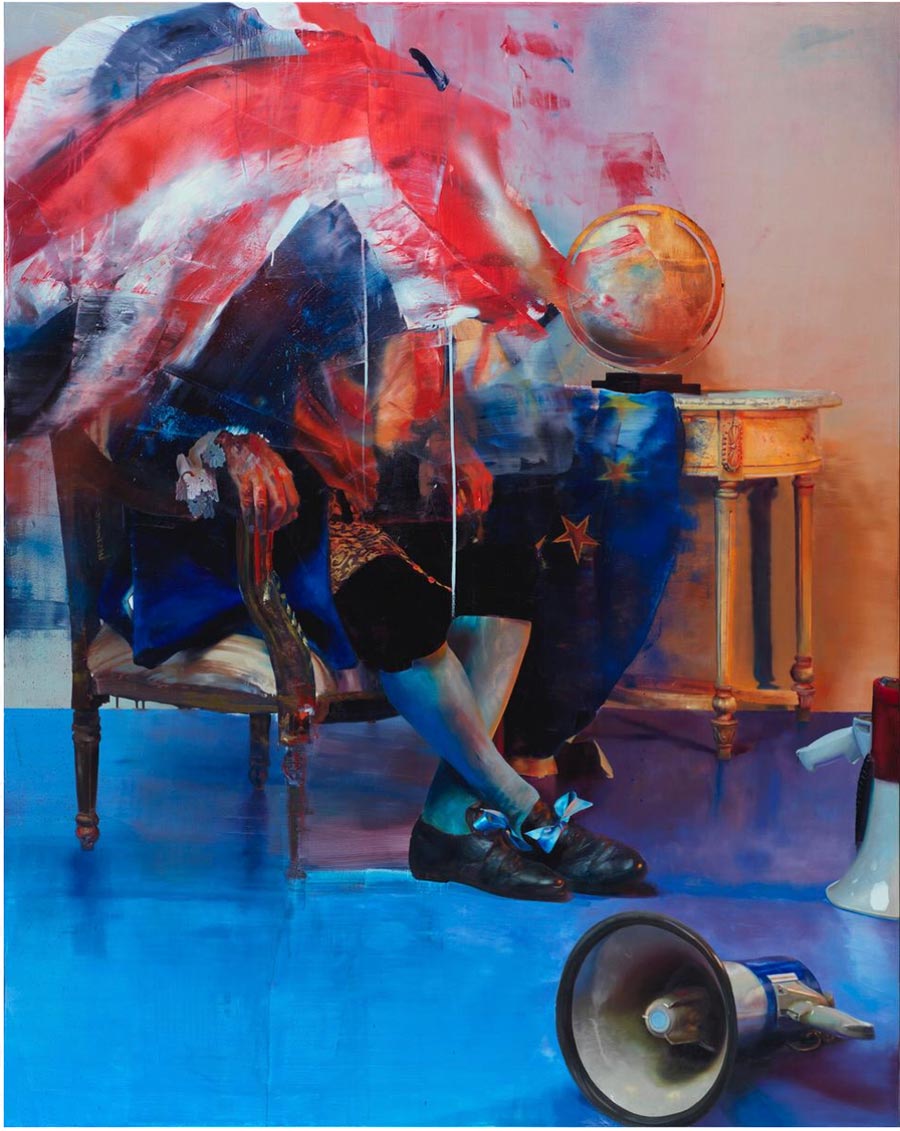
Conor Harrington (Irish, b.1980) The Blind Exit, 2020, oil and spray paint on linen, SIGNED, 250cm x 200cm (98.5in x 78.5in) (Image credit: Conor Harrington)
A trove of documentation presents times that provide context and insight into the wild, wooley, and ingenious artist works that shaped what was to come – including a five minute edit of the seminal film Wild Style by filmmaker Charlie Ahearn, and a new seven-minute film by Scottish filmmaker Doug Gillen. Additionally presented are unseen and classic images specific to the Bristol graffiti and street art scene by Henry Chalfant, Matthew Smith, Carrie Hitchcock, Yan Saunders, and Beezer, along with projections by Kineta Hill and Karen Dew.
Running through October 31st this year, the original works and memorabilia are key to understanding the events and socio/political arnarchistic framework that sparked and fueled what became known as the Bristol scene, replete with an accompanying book featuring worldwide academics, film directors, writers, artists, creatives and specialists and an exclusive album of tracks forming the roots of the Bristol Sound.
We’re pleased to offer a sneak peek of the show here today and we encourage you to make the trip to see what will undoubtedly be sited as an important exhibition – as we all continue our education about the pathways of the global evolution of street art.
Vanguard | Bristol Street Art: The Evolution of a Global Movement is kindly supported by Vans. Vanguard | Bristol Street Art: The Evolution of a Global Movement M Shed, Bristol, BS1 4RN Saturday 26 June 2021 – Sunday 31 October 2021 Admission £8 adult* / £7 concession* (*Tickets include £1 voluntary donation to Bristol Museums Development Trust)
Greek muralist INO just knocked out this huge wall in Athens and the results are smashing. With a theme of “Breaking Barriers of Equality”, he says, “I created a little girl with a huge hammer; symbolizing the new generation that is able to break stereotypes and bring a better future.”
Painted with acrylic ecologically friendly paint, INO also tried a technique that is uncommon for large murals like this – “I made the whole action with a new technique I am working on with ropes.”
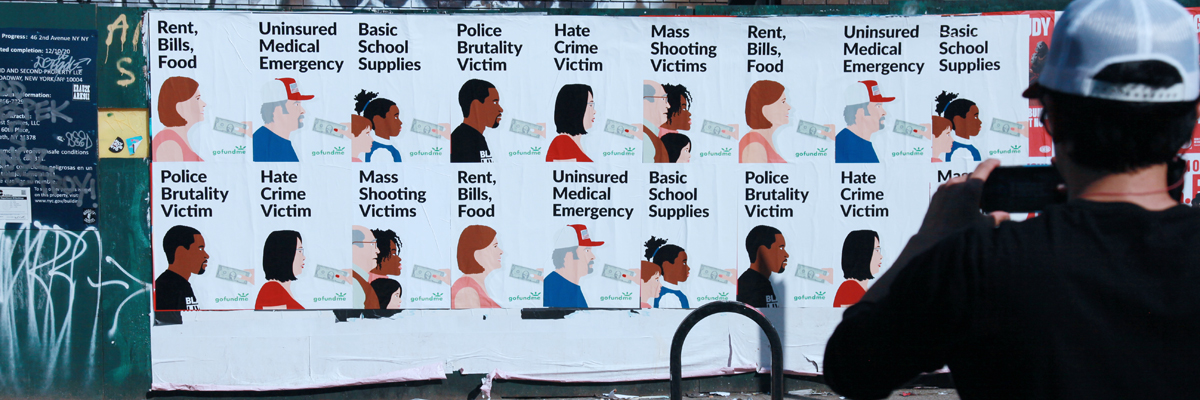
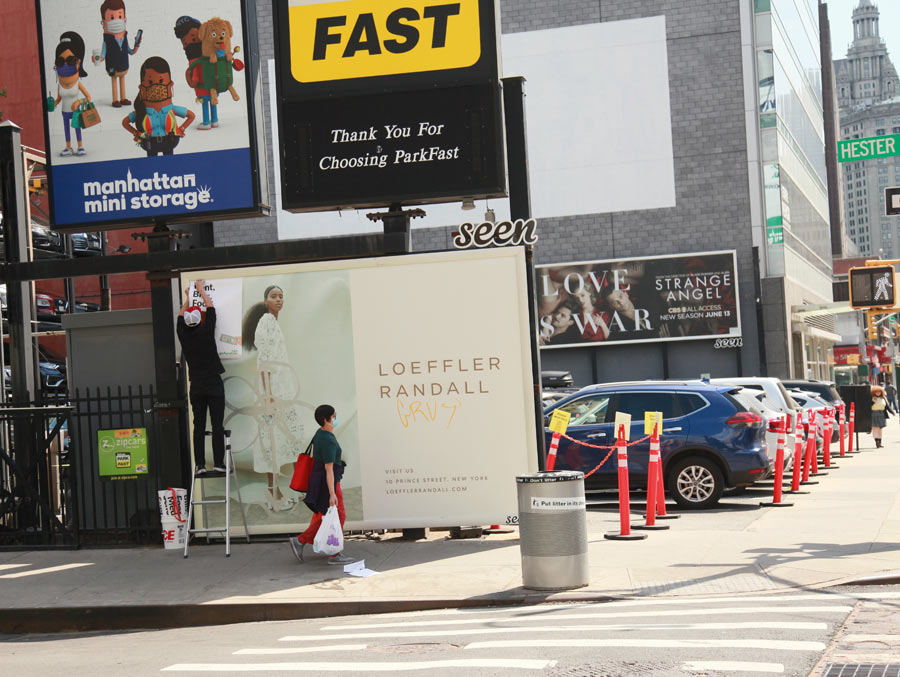
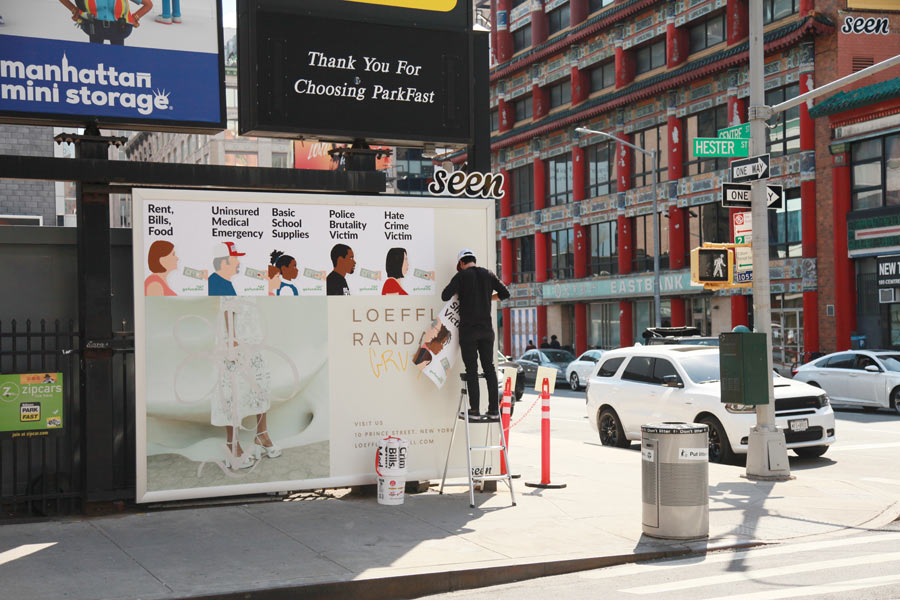
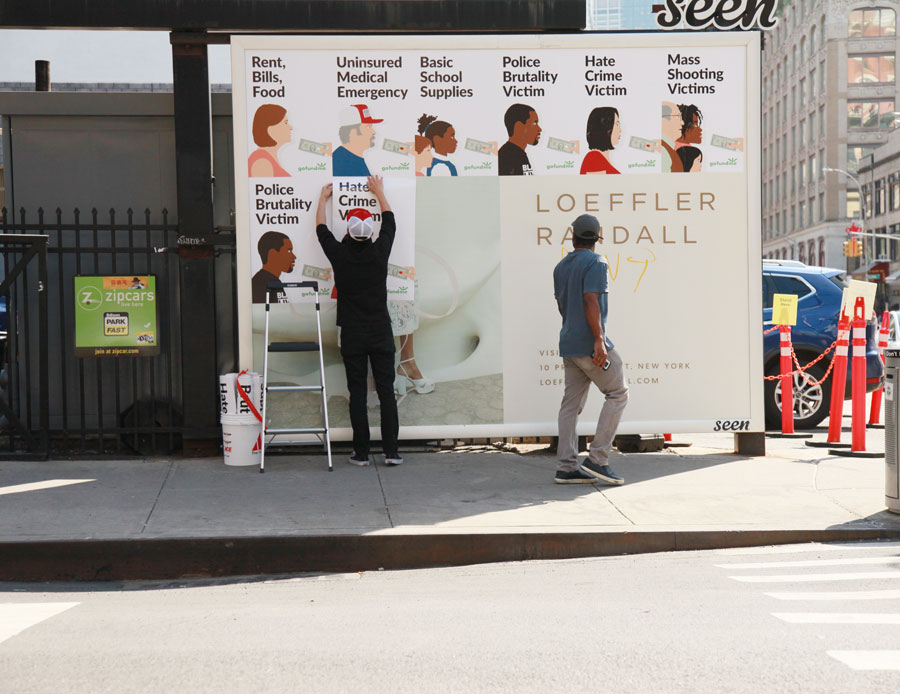
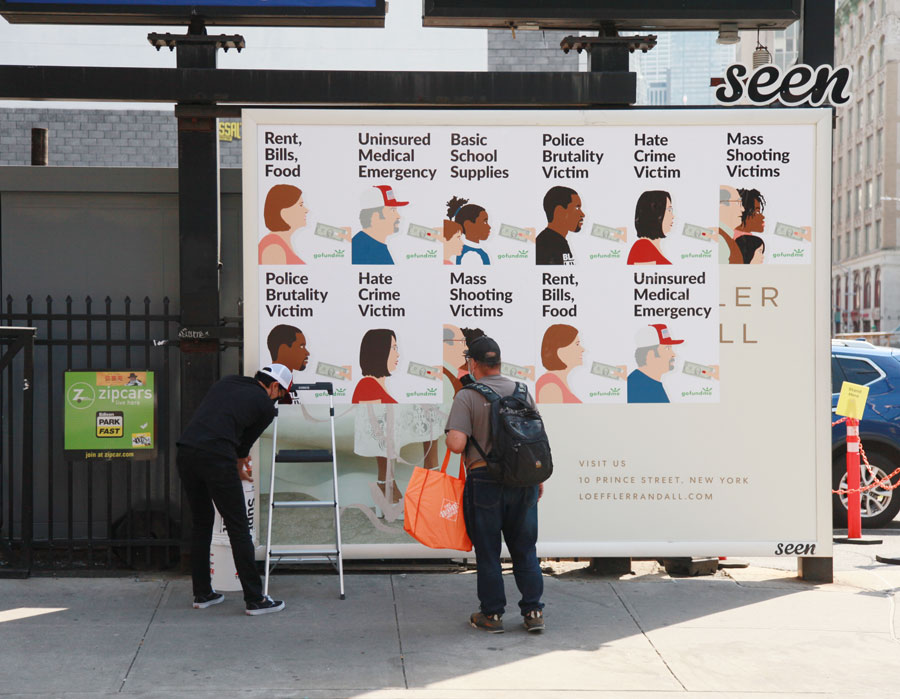
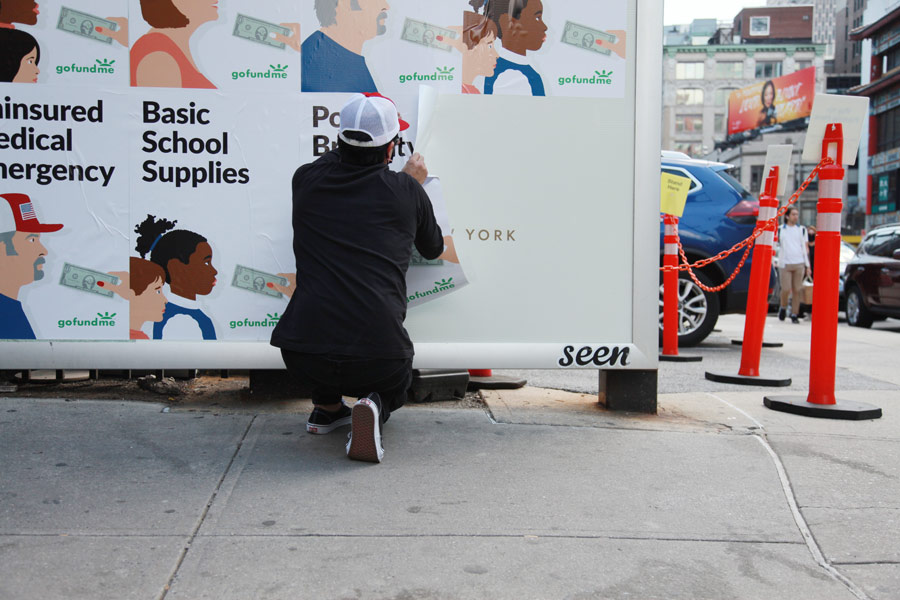
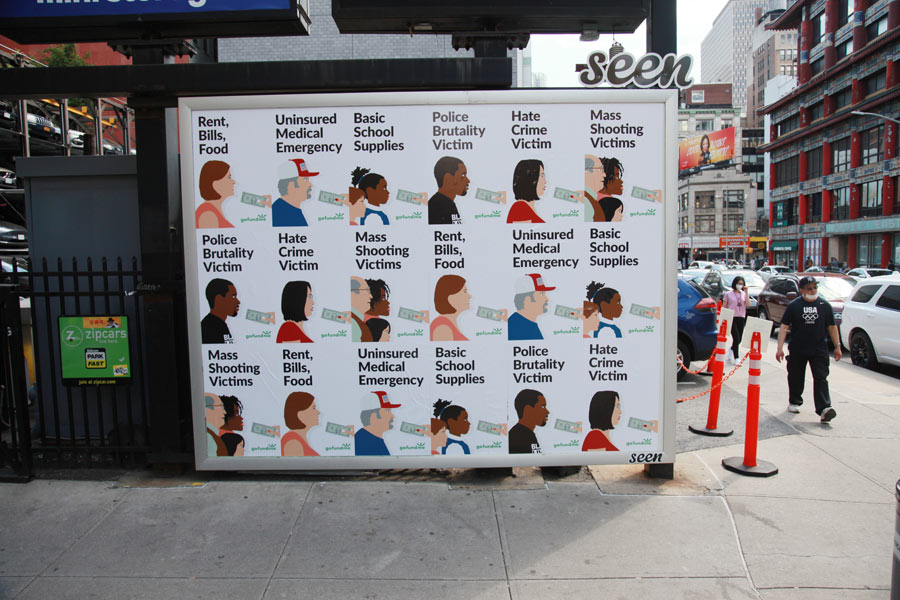
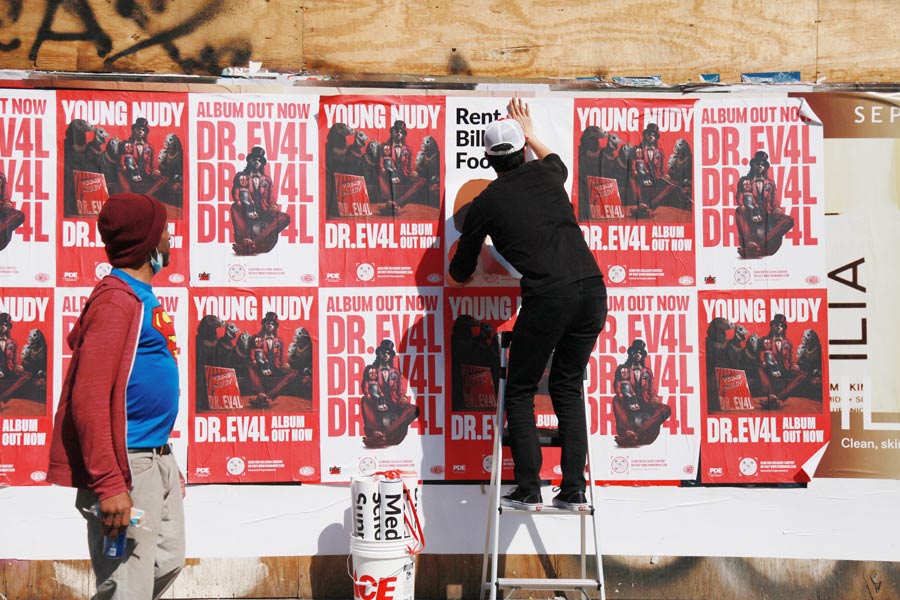
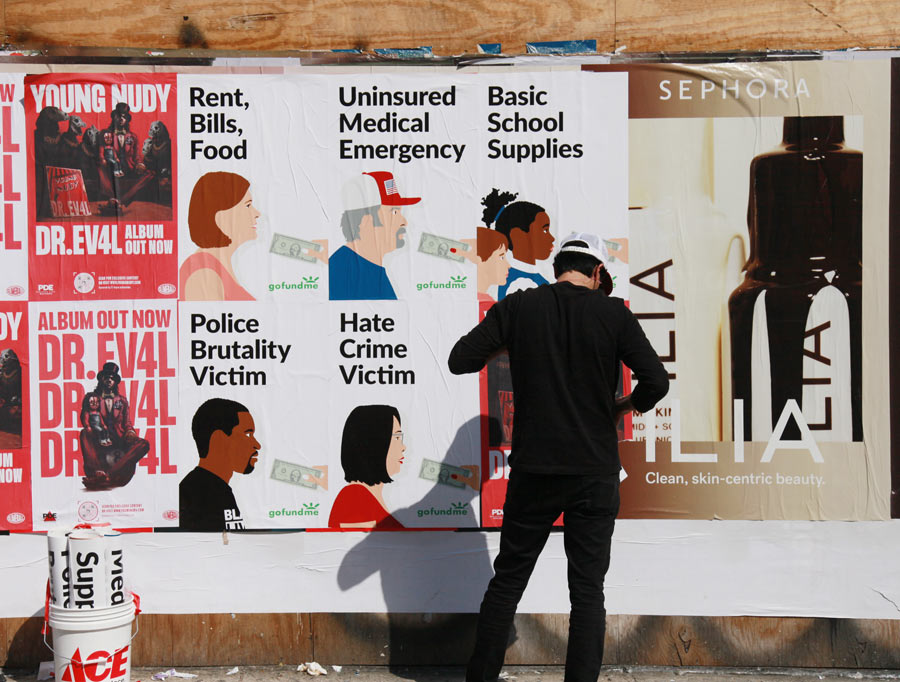
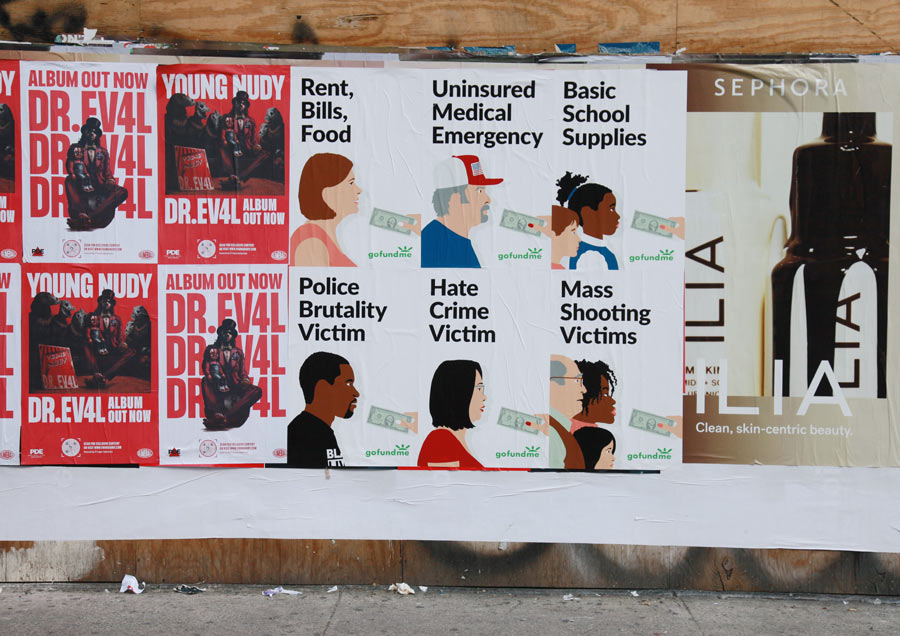
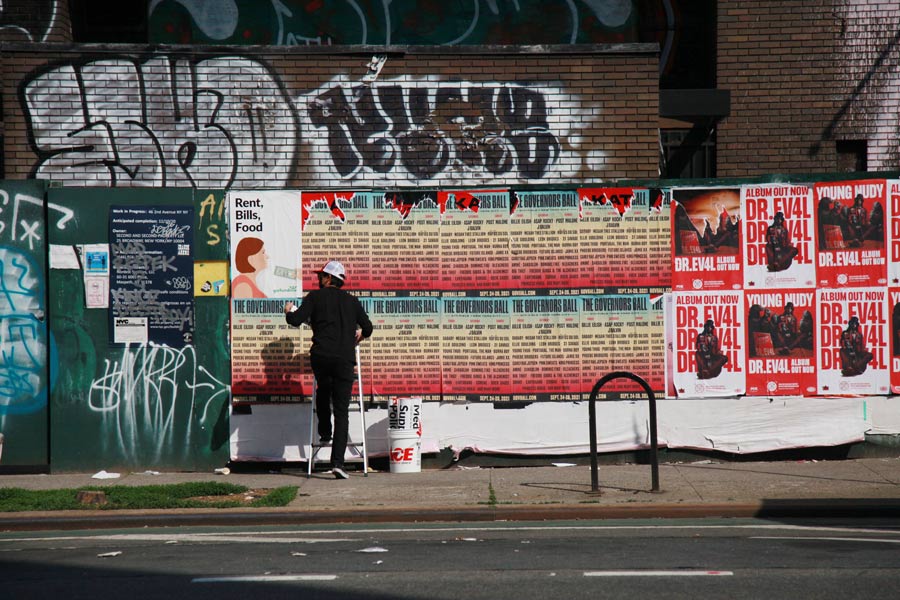
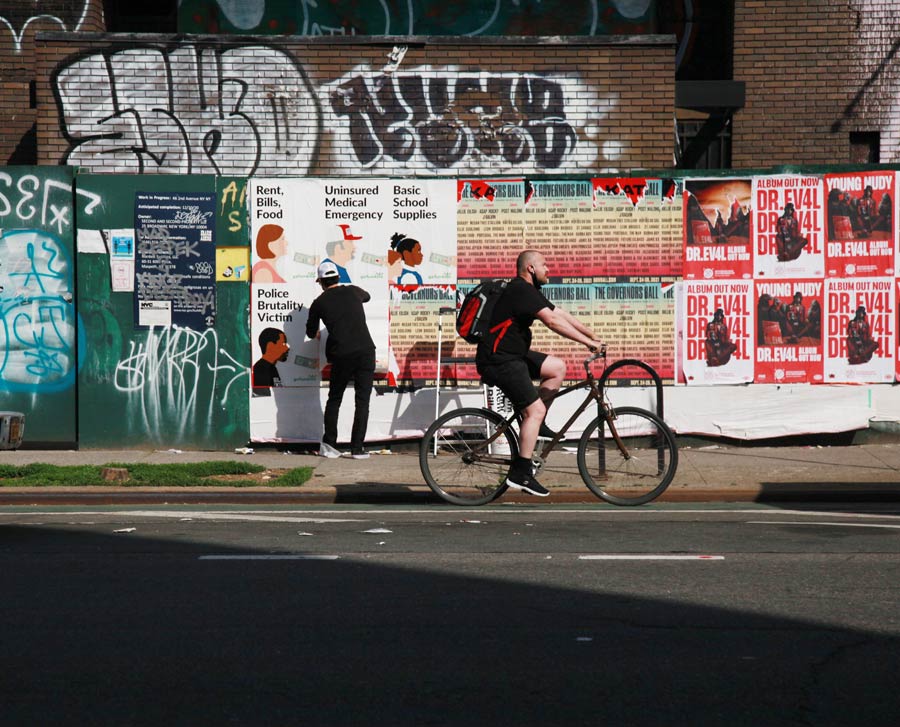
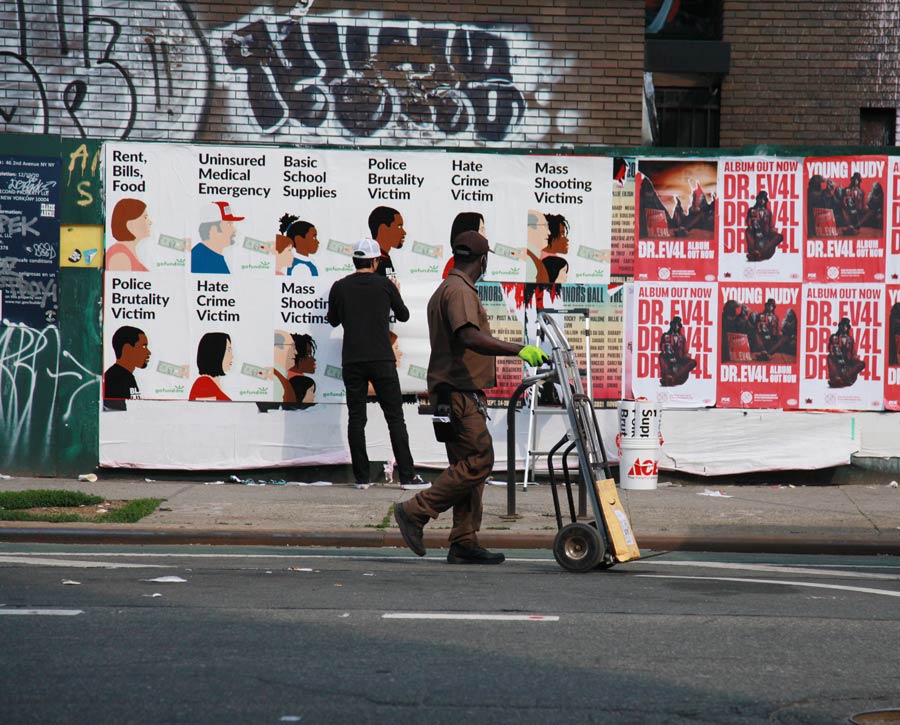
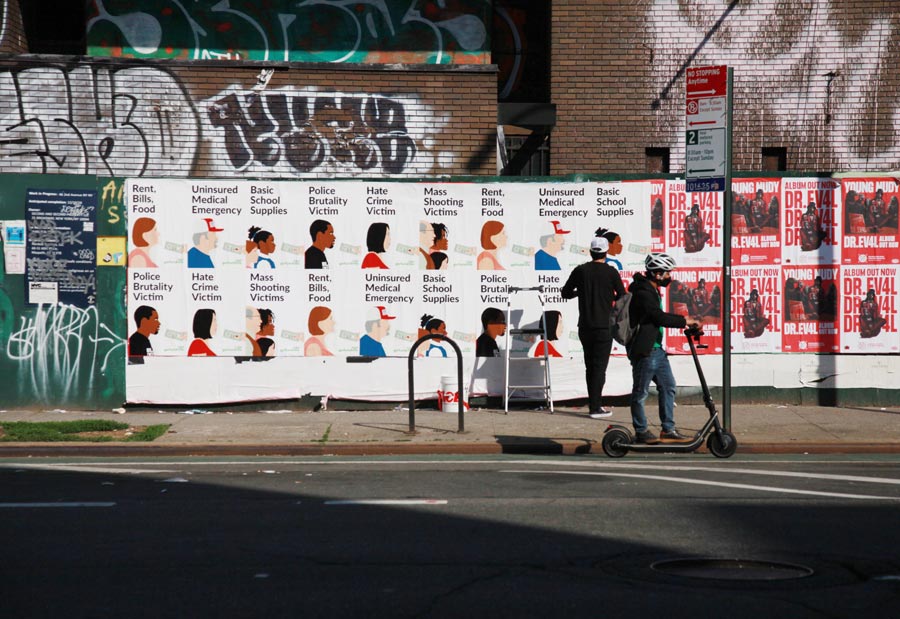
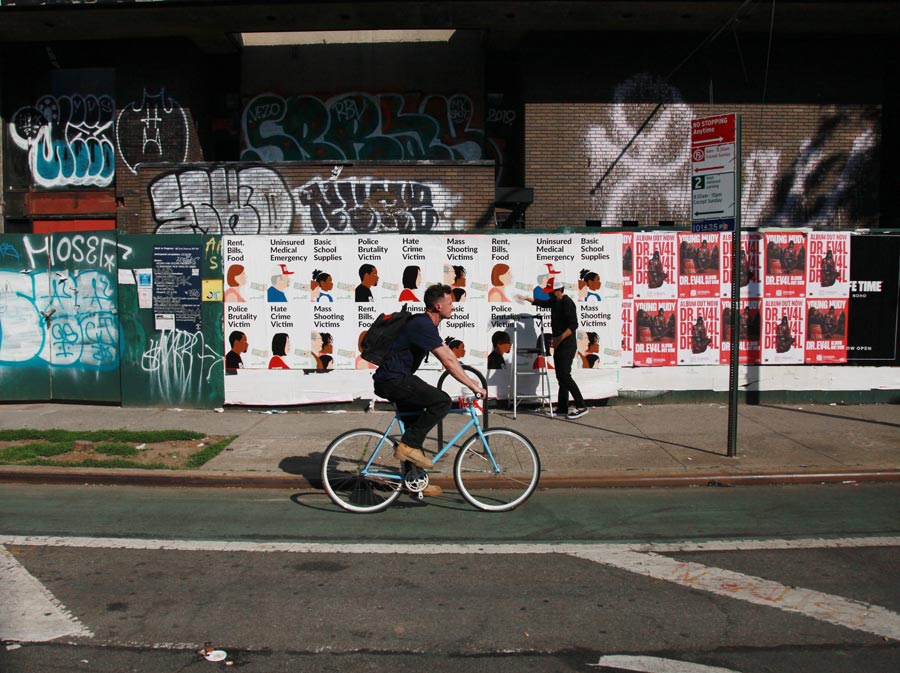
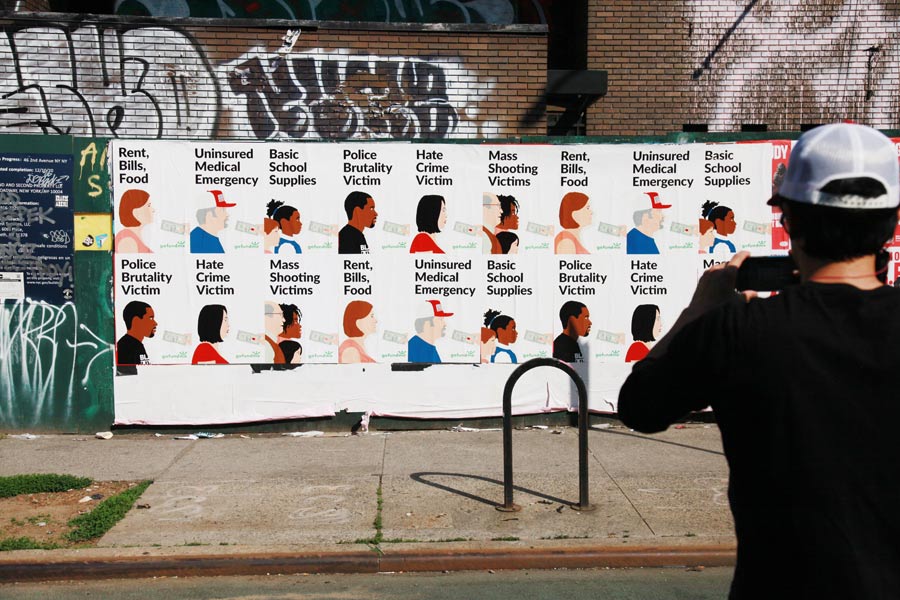
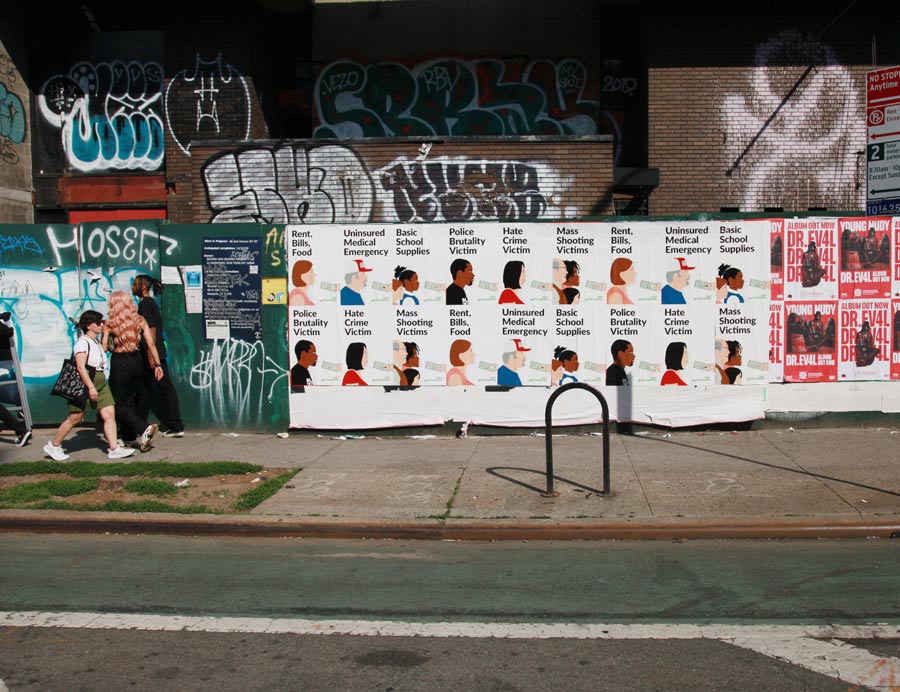
On a recent sunny May day, we followed street artist Winston Tseng to document his new series of posters installed on three locations in Manhattan. The series is titled “Money Fixes Everything.”
The flat and colorful 2-D illustration style of street artist/graphic artist Winston Tseng doesn’t scream social inequity and cultural insanity the way other graphic styles may. The graphic language is the 2-D, flat, icon-based vernacular familiar to phones and applications, a neutral and familiar reduction to precisely convey the visual elements necessary to infer more is there. Brilliantly pared and exacting in composition, a close look allows the viewer to unpack Tseng’s specific brand of critique – perhaps causing you to crack a smile, or roll your eyes, shake your head.
New York street artists have tackled social, political, religious, class, and structural systems of inequity in waves during street art’s newer rise to consciousness. Rather than using messages as a blunt instrument for screeds, you now see the subtle nature of messaging in Tseng’s work. Skilled in the unspoken and the finespun art of steering consumer pathways toward the adoption of products or services, Tseng uses these images on the street to evoke other concepts.
Tseng delivers in the common street form of wildposting, employing the familiar poster form as a vehicle on the street, piqued passersby’s interest with his razor-sharp perspective that digs into more complex themes. His own sense of activism is not necessarily vicious, but when he plucks the proper internal chord, he can produce a virulently strong reaction. He tells us that he savors every inflection.
Here, his new campaign parallels nicely with the unprecedented pumping of trillions of fictional dollars into the economy to prevent (some would say ‘exacerbate’) a potential domino-style collapse at this moment in history. He maintains that we need to examine this default response to many problems by simply throwing money at them. Tseng may be hinting that he doesn’t think this solution will work.
Winston Tseng spoke with Brooklyn Street Art about his approach, the context he is creating within, and what market he is smartly selling his ideas to.
Brooklyn Street Art:Do you have a name for this campaign? Winston Tseng: The name for the series is “Money Fixes Everything.” That’s obviously a sarcastic comment.
BSA:Well, sometimes sarcasm helps. WT: True, that’s true.
BSA: Can you talk about where you draw inspiration from? Current events? You obviously follow the news and media landscape… WT: Absolutely. I think I consume the news and the Internet the way many people do these days. I feel like it’s hard to turn away and hard to tune it out.
BSA:As you are watching current events and something catches your eye or ear, do you immediately make a concept of how that will look? What is the process? WT: I would say that I wish that it came to me quickly. Sometimes it does, but a lot of times it doesn’t. A lot of times, I feel like it comes in two parts. There is one part about essentially the topic that I want to capture, and ultimately I want the work to reflect the times that we are in. The other part is “how do I say it in a certain way, through my style, which is corporate advertising as a medium”- How do I say it in a way that gets the idea across in a manner that I like to express it in, which is toeing the line between being really blatant and be more subtle?
BSA: It looks like you try to strike a balance with humor in your work. I don’t know if that is intentional or it’s you, not knowing that you are funny. WT: I think I try to use humor; I don’t think I’m doing it in the funniest way because it is a bit of dark humor. I think the medium I use is a good way of getting peoples’ attention, getting them to tune in to the work I’m putting out there. I think humor is something that people are pretty receptive to.
BSA:It is interesting that you use corporate advertising as a model. At the same time,one could see it as a kind of political cartoon, although different perhaps from a typical New Yorker cartoon, for example. It appears as if you are trying to get the point across while poking a finger at the media and corporations. It is like three stones are being thrown at the same time.
WT: I think you’re right. For me, corporate advertising is really just a medium that helps get the message across. One because we are inundated with it, and because of that familiarity, unfortunately, we aren’t paying attention to it. Still, it is a way I can reach peoples’ attention. That said, the media isn’t really the message or part of the point. The corporation is definitely not always a target. More so, it’s just a way to register in people’s brains what the message might be. For example, in this latest series where I use “GoFundMe,” but it’s not a shot against “GoFundMe” really at all. I think what they are doing enables a lot of people to get help. It’s kind of weird that it is a for-profit company. But other than that, it’s more just about using “GoFundMe” as a quick way for people to put it together.
BSA: At other times, you really do go after, for example, the health industry and the banks. WT: True.
BSA:Corporations aren’t necessarily evil,but capitalism appears to have run amok. It looks like it has forgotten that it doesn’t have to be only for the few, but can be for everybody. For the new series, you were talking about people having enough food or money to buy it, people having enough money to buy insurance, people being able to be who they are on the street without being afraid of the reaction to the color of their skin or their country of origin or their ethnic background. There are so many topics right now that are just boiling, and it is rather overwhelming. Can you sleep at night?
WT: I think you hit it on the head, which is that this series allowed me to check a lot of boxes at once and to touch on a lot of subjects that have different causes and different route reasons why they exist in our society, and I guess the commentary that I am making and this one is that our solution right now is one of throwing money at it. It’s not really going to solve those problems systemically. This was a case, to your point, where I had a bunch of ideas of subjects that I wanted to address, and as it turned out, I could get them all done with one concept that checked off six subjects.
BSA:Also, you found a spot on a large wall where you could put 18 posters at once, mimicking what we see on the subway, where they plaster one entire subway car with the same ad campaign. In that way, you were taking a page from the advertising companies.
WT: Absolutely. I think it has been proven that repetition get messages across and, in this case, I think that if I put these posters one at a time on their own, a person might not get the full picture of what I’m trying to convey. It was important for this series to have a lot of posters together. The use of repetition is important because these are things that we constantly see in our society again and again. We see mass shootings; we see hate crimes; we see police brutality; we see people who are having financial problems. So the idea of the repetition is there also to support how it is occurring in our society.
BSA:So in the last few years since we first followed you on this ongoing project doing an installation like this,you have received some “cease and desist letters”?
WT: Yes, I have gotten a few “cease and desist“ from the companies that run these advertising spaces. They haven’t come directly from corporations.
BSA:Also, you have received some attention in other media. You received a write-up recently in Juxtapoz magazine, I believe. And so are you satisfied? I know your work is never done until it’s done. Have you gotten a level of satisfaction so that you can continue to do it? Have you become a little despondent and like “this is not working” or “this is not working”? Is your goal to do it for yourself, do it for others? Is your goal to change the world one person at a time. What is your goal?
WT: First and foremost, it’s mainly for me. I get either personal satisfaction or stress relief out of it. It’s a creative outlet. I think it is always encouraging. I always appreciate any sort of coverage or people sharing or commenting on social media. Ultimately what I’m trying to do is capture the times we are in to reflect our society. It is hard to know if I am doing that correctly or achieving that goal – so all of these other things are giving small confirmations along the way.
BSA:So they have asked you to stop using their furniture on the street to put your art?
WT: I haven’t responded. I don’t know that it warranted a response. I know what they want, and I’m not responding.
I think I won’t really know until later on when we can all look back and say, “this was what it was like back then. This is something that was happening. This is crazy; this is fucked up.” So I am definitely as motivated as ever before to keep doing this. To what end? I think it’s just the general idea that, if I can just capture this time at this moment, maybe in the future there will be some benefit. Not personally, not for me, as a society.
BSA:Does it bother you? WT: I think it varies depending on how serious it seems. I think it’s on a case-by-case basis.
BSA:Do you respond on social media? WT: No, I don’t. I don’t really engage. I don’t feel like it is an effective end to that.
BSA:We were first with you when you were doing this series, and there was one poster that generated many controversies, and I was surprised that it was the one that had a sports reference in it. WT: I don’t think that was the most controversial of those ones.
BSA:Let’s talk about it becauseit was a comment on Boston sports fans from our social media commenters, which seemed meant as a joke.
WT: That one, in my opinion, was what is the “lowest hanging fruit” and the least provocative. Again, I am trying to reflect the times or the sentiment or peoples’ attitudes. That’s not necessarily my personal opinion about sports, but it is a prevalent opinion that exists out there, especially in New York City, where there’s a rivalry with Boston sports. So that is not something that I created. I think the fact that it struck a nerve in either one of those cities among sports fans just kind of confirmed the concept behind it.
BSA:I thought it was funny the people who are into sports were so upset when they were other topics that were, in my opinion, more important – or at least ones that should be discussed more and in-depth. Those topics were kind of ignored because these fanboys were defending their teams. But it is interesting how passionate people get with those issues. Many people are interested in pulverizing you rather than debating issues. Many people who are there with personal attacks on social media are not there to debate the issue and to learn something about it, and come to a middle ground. They are there just to destroy you because they don’t want you talking about it.
WT: Yes, absolutely. I think that is the state of social media and the interactions between people who essentially don’t know each other in real life.
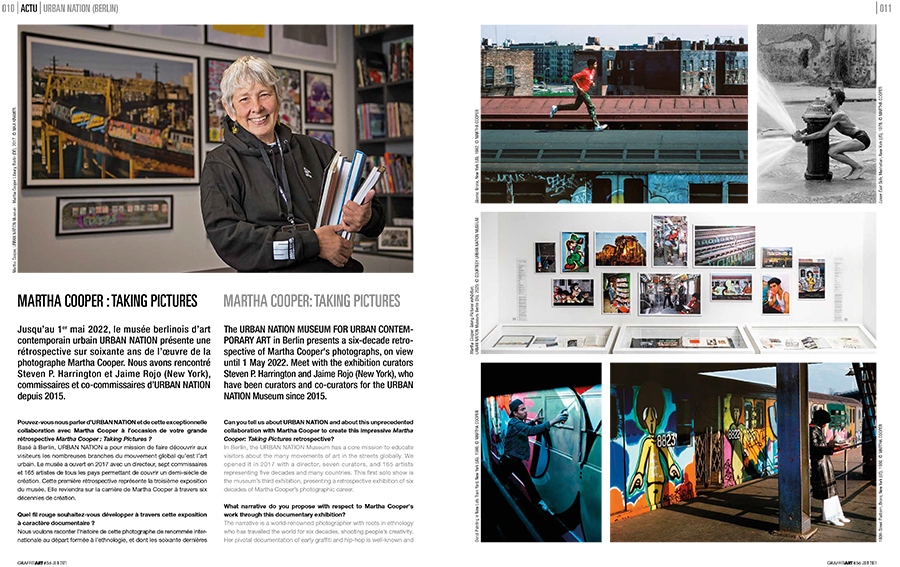
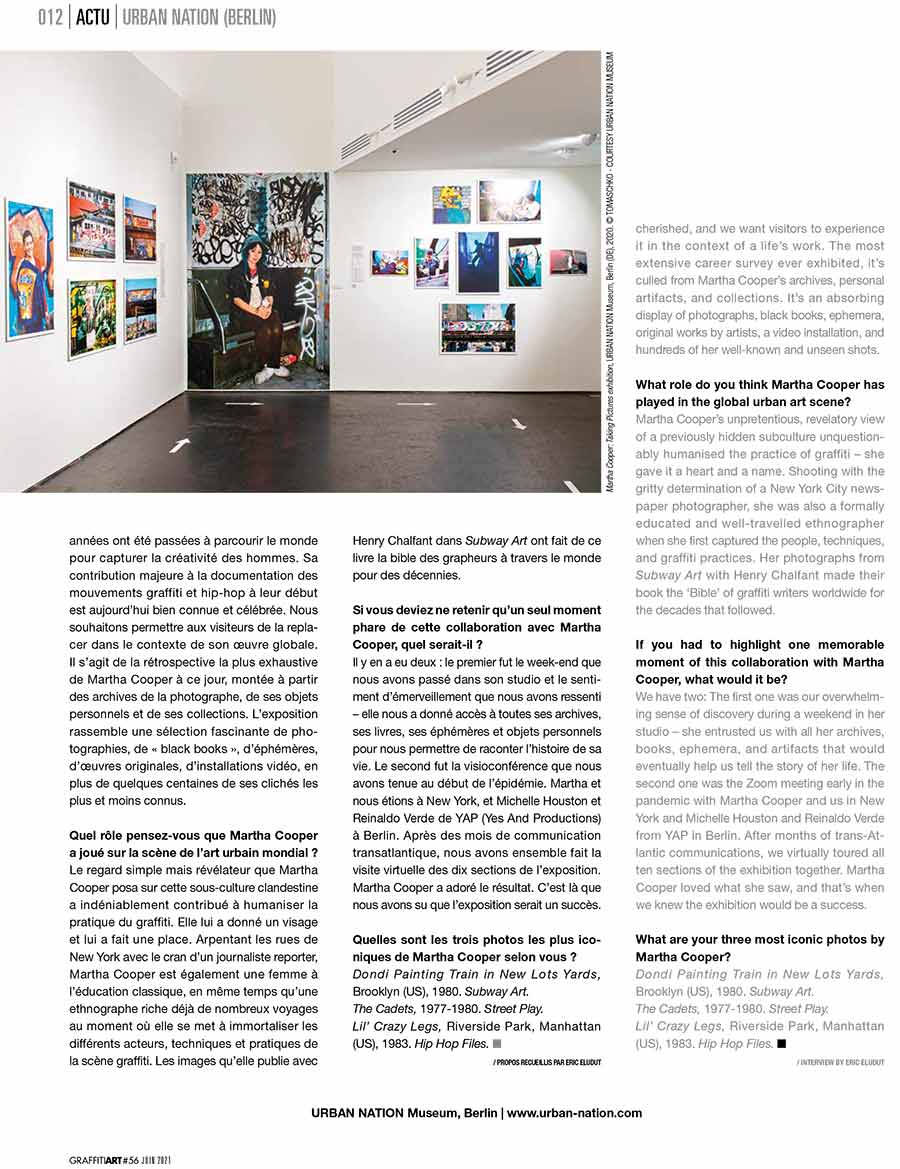
Graffti Art Magazine: Can you tell us about Urban Nation and about this unprecedented collaboration with Martha Cooper to create this impressive Martha Cooper: Taking Pictures retrospective?
Steven P. Harrington and Jaime Rojo: In Berlin, the Urban Nation Museum has a core mission to educate visitors about the many movements of art in the streets globally. We opened it in 2017 alongside a director, 7 curators, and 165 artists representing five decades and many countries. This first solo show is the museum’s third, presenting a retrospective exhibition of seven decades of Martha Cooper’s photographic career.
Graffti Art Magazine: What narrative do you propose with respect to Martha Cooper’s work through this documentary exhibition?
Steven P. Harrington and Jaime Rojo: The narrative is a world-renowned photographer with roots in ethnology who has traveled the world for 6 decades, shooting peoples’ creativity. Her pivotal documentation of early graffiti and Hip Hop is well-known and cherished, and we want visitors to experience it in the context of a life’s work. The most extensive career survey ever exhibited, it’s culled from Martha’s archives, personal artifacts, and collections. It’s an absorbing display of photographs, black books, ephemera, original works by artists, a video installation, and hundreds of her well-known and unseen shots.
Graffti Art Magazine: What role do you think Martha Cooper has played in the global urban art scene?
Steven P. Harrington and Jaime Rojo: Martha’s unpretentious, revelatory view of a previously hidden subculture unquestionably humanized the practice of graffiti – she gave it a heart and a name. Shooting with the gritty determination of a New York City newspaper photographer, she was also a formally educated and well-traveled ethnographer when she first captured the people, techniques, and graffiti practices. Her photographs from Subway Art with Henry Chalfant made their book the “Bible” of the graffiti writers worldwide for the decades that followed.
Graffti Art Magazine: If you had to highlight one memorable moment of this collaboration with Martha Cooper, what would it be?
Steven P. Harrington and Jaime Rojo: We have two: The first one was our overwhelming sense of discovery during a weekend in her studio – she entrusted us with all her archives, books, ephemera, and artifacts that would eventually help us tell the story of her life. The second one was the Zoom meeting early in the pandemic with Martha and us in New York and Michelle Houston and Reinaldo Verde from YAP in Berlin. After months of trans-Atlantic communications, we virtually toured all ten sections of the exhibition together. Martha loved what she saw, and that’s when we knew the exhibition would be a success.
Graffti Art Magazine: What are your 3 most iconic photos by Martha Cooper?
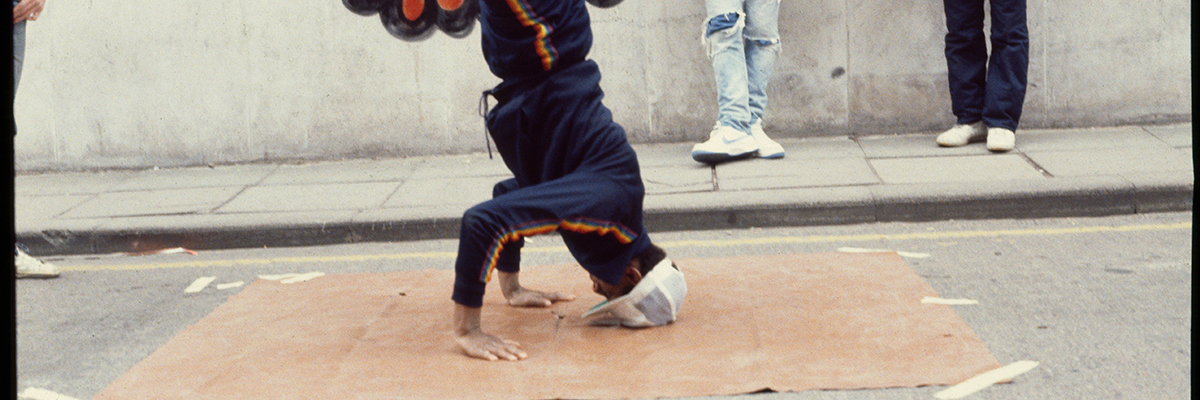
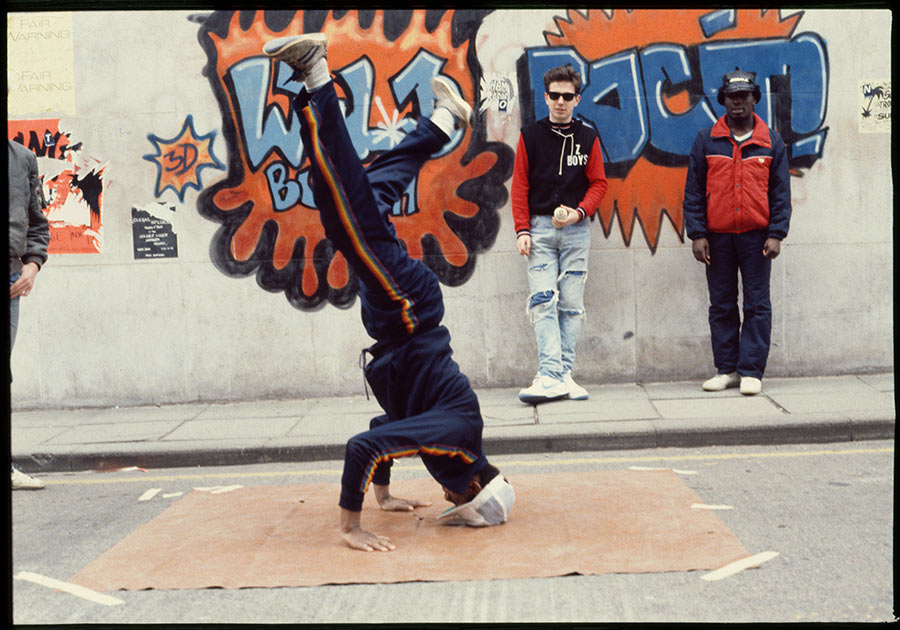
Steven P. Harrington and Jaime Rojo: It’s hard to choose but we might say 1. Dondi painting at the New Lots Train Yards in Brooklyn. 1980. 2. Subway Art “The Cadets” 1977-1980. 3. Street Play Lil Crazy Legs. Riverside Park, Manhattan. 1983. Hip Hop Files
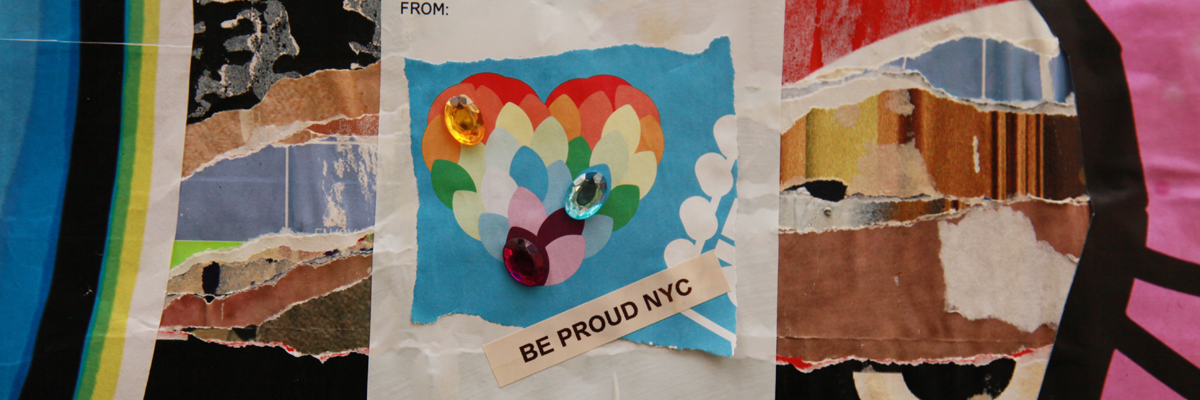
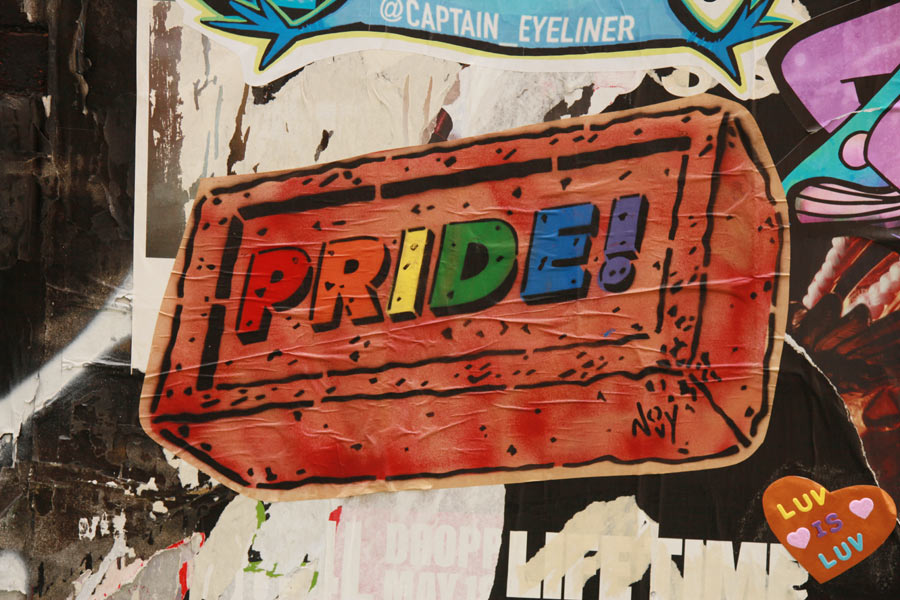
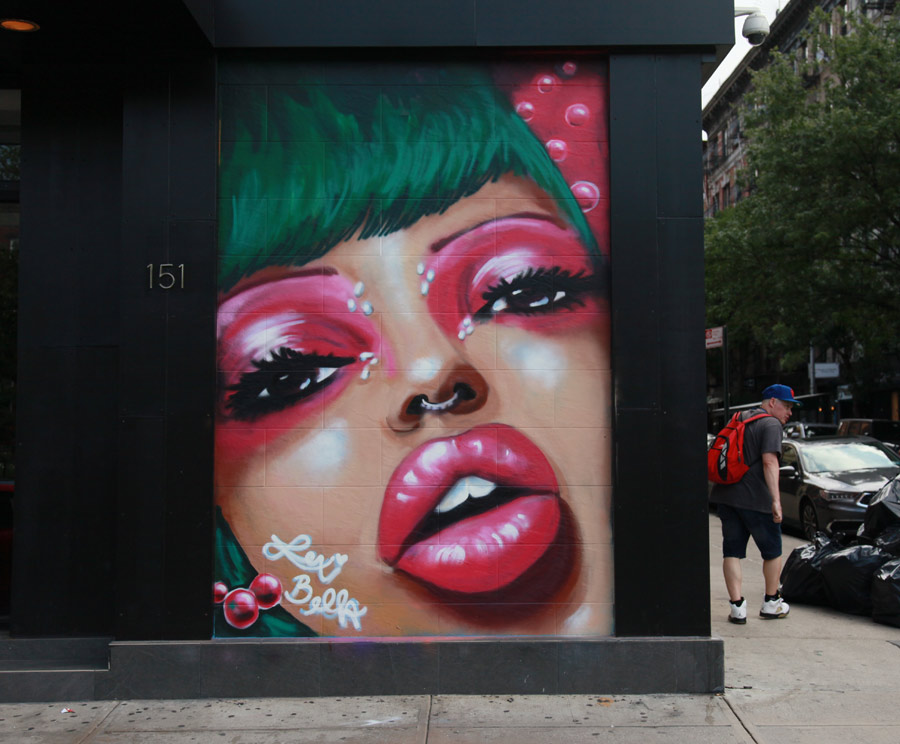
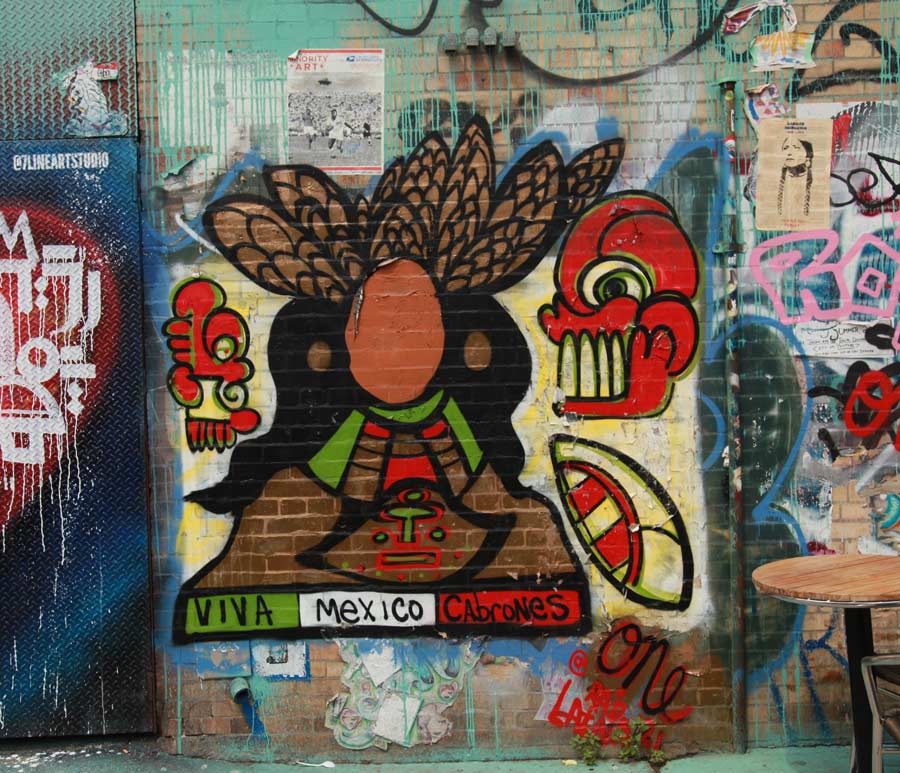
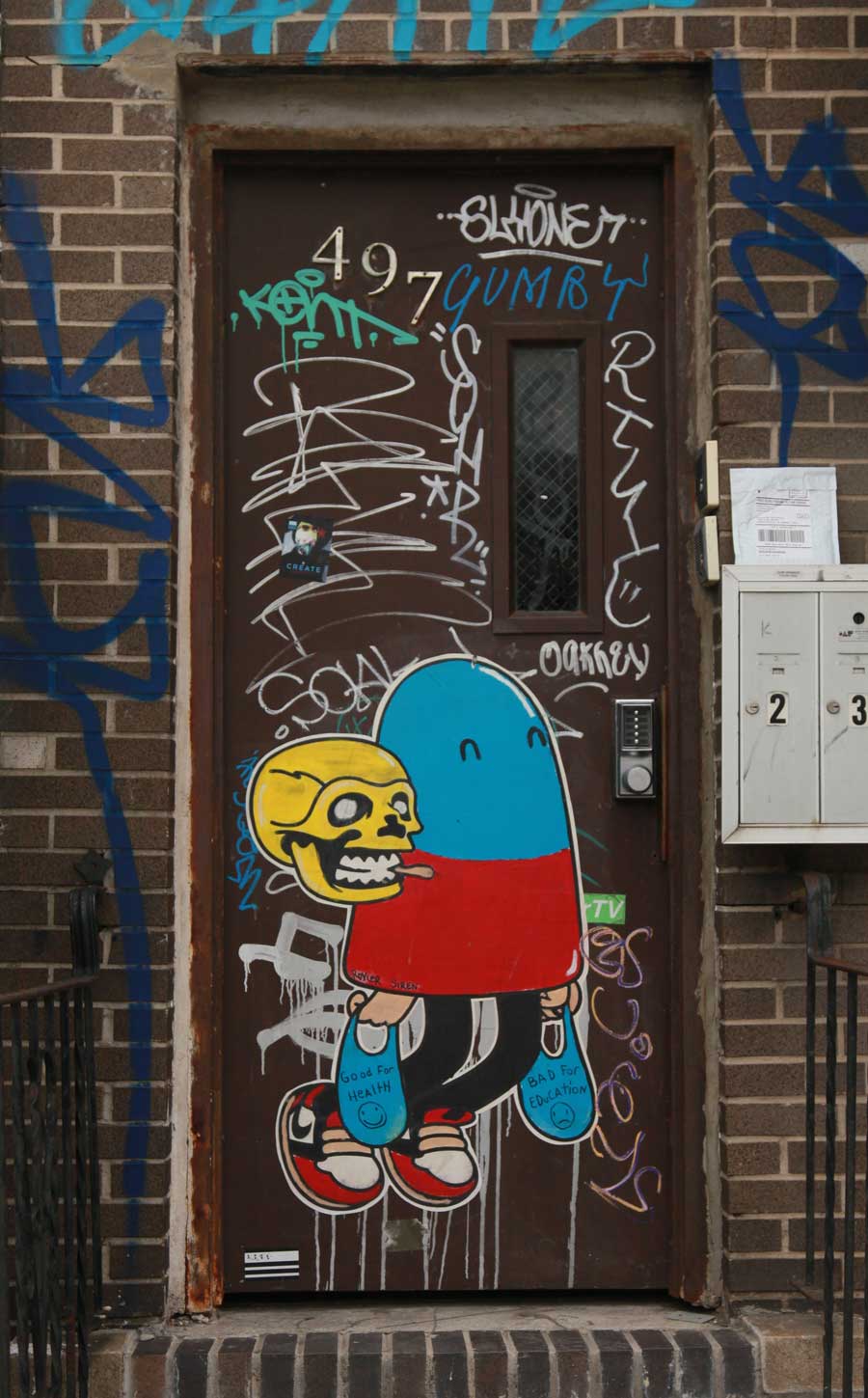
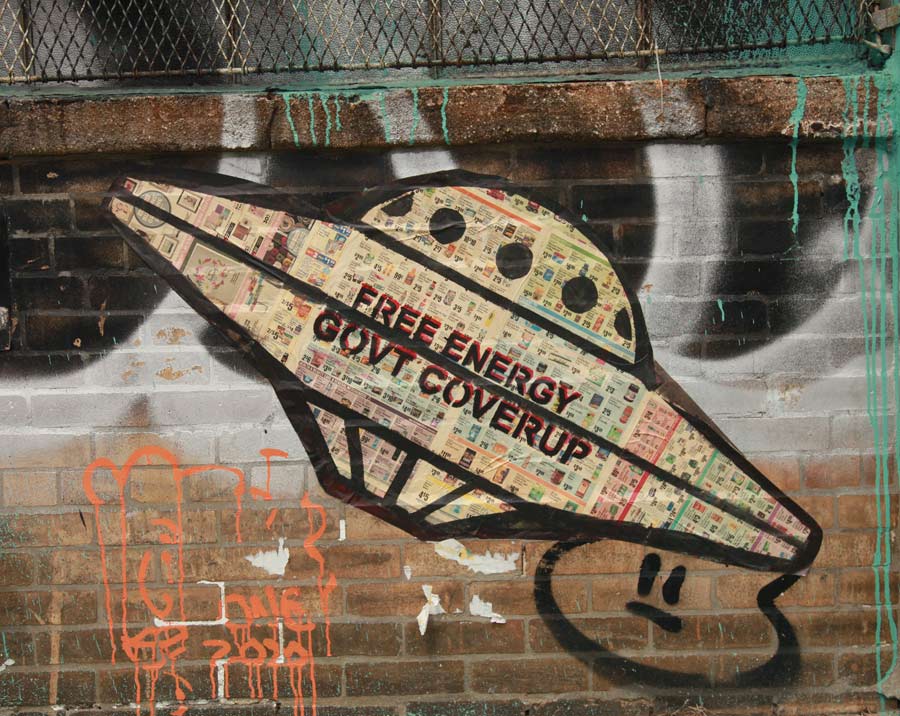
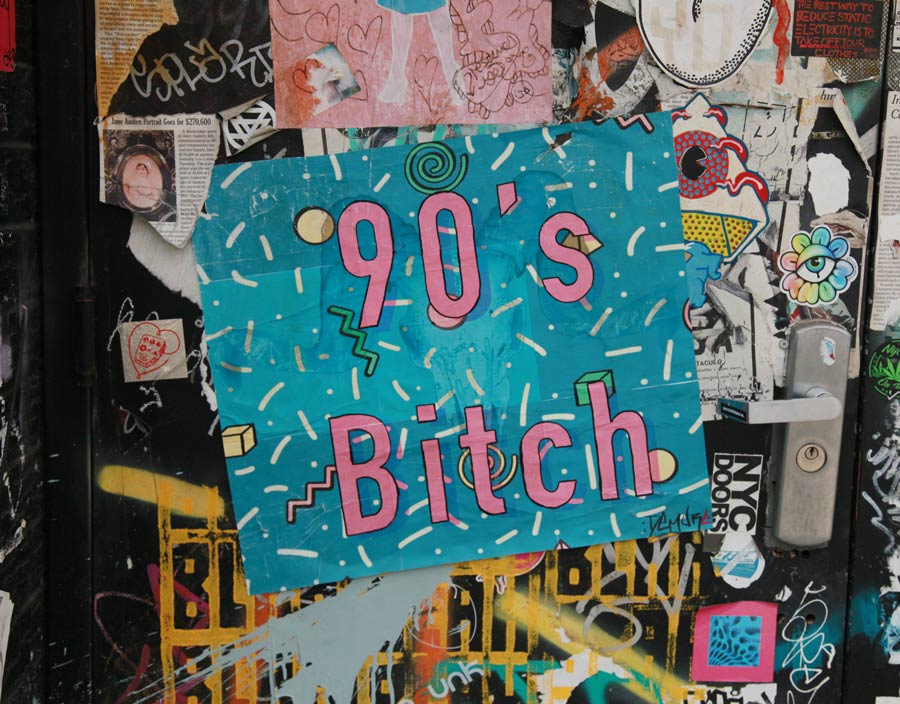
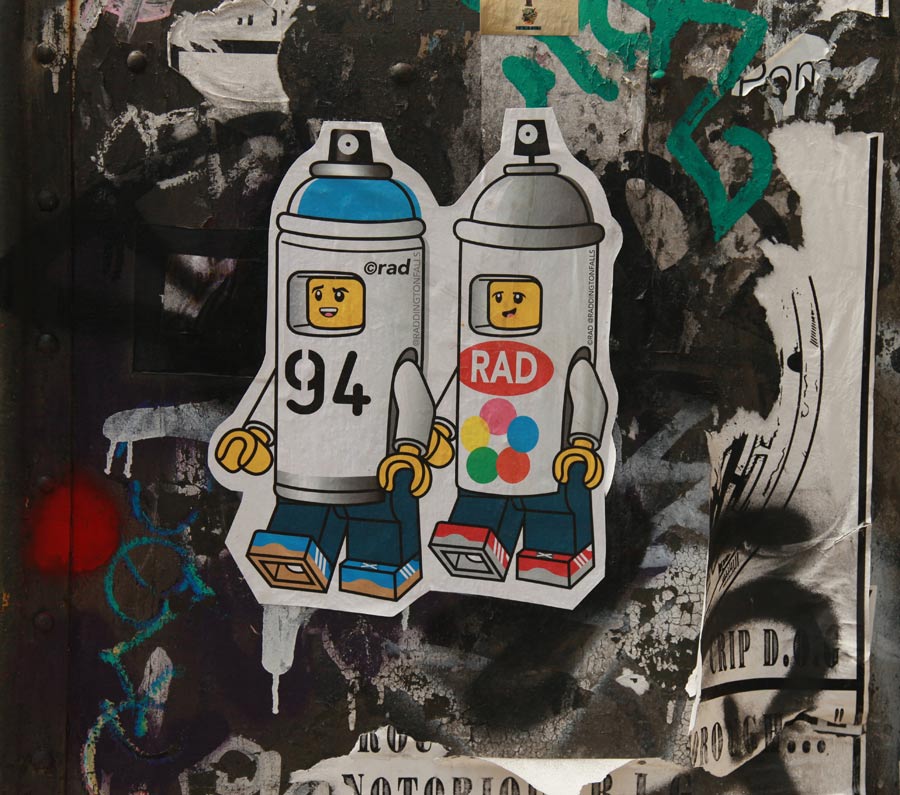
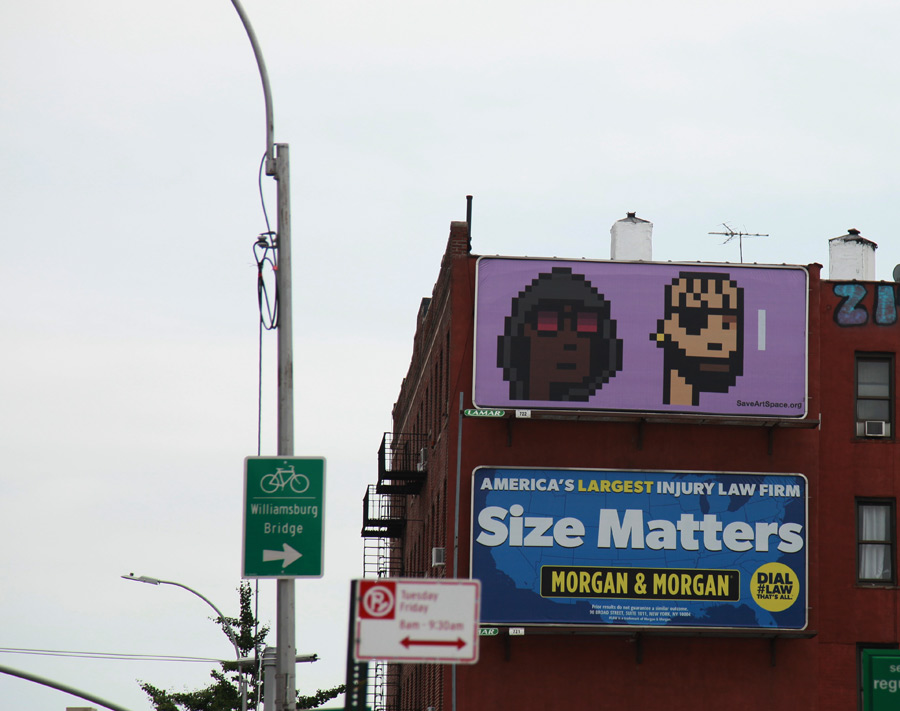
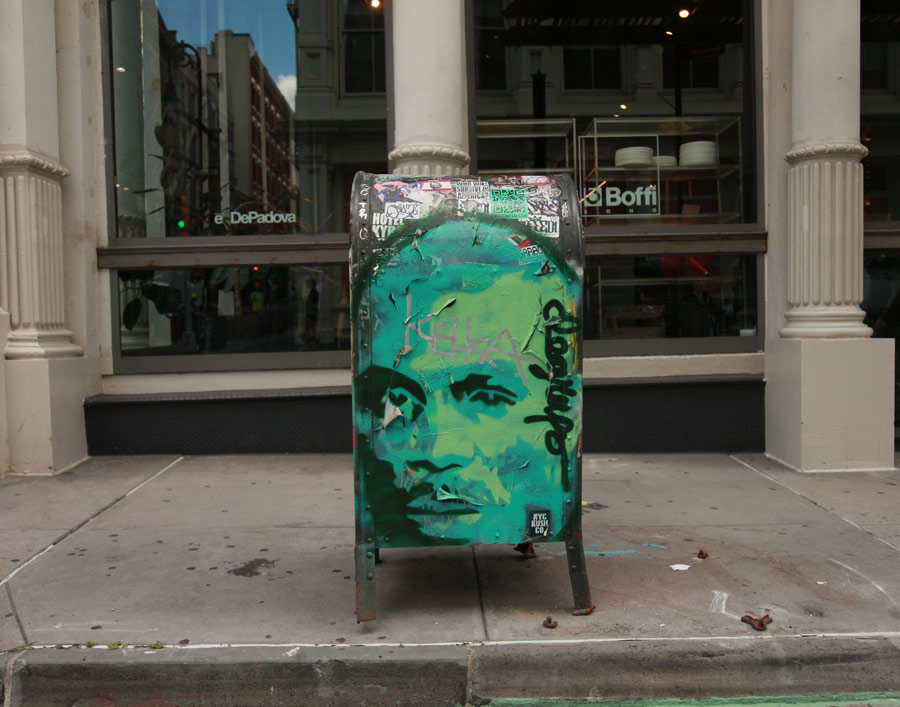
Welcome to BSA Images of the Week! Today is PRIDE DAY in NYC and Father’s Day in many parts of the world. Congratulations to us all, queer and/or fathers. We’re happy to show you what we’ve been finding as the spring now stretches into Officially Summer. At night in some neighborhoods, you’ll hear a smattering of fireworks as youthful hooligans are already lighting them – anticipate the 4th of July holiday. A sign of our crazy summer ahead; behold the bang-pop-ratatat-tat-bang-bang-swizzle-shizzle-pop now erupting regularly in empty lots and dead-end streets.
It’s great to see so many kids and youth and adults on bicycles now that the City has made myriad networks of safe pathways throughout the five boroughs. If we could get the police to hand out tickets to car drivers, even school bus drivers, sometimes using the bike lanes to circumvent others and put riders in danger.
The street art and graffiti scene are thick, and you don’t want to miss it here this time of year. While some complain that “vandalism” is reaching 1970s levels, many are happy to see a rotating display of artworks on the city skin at a time when so much of our local cultural and entertainment options have been killed or neutered. The institutional and commercial arts will all come back to New York, we have no doubt. Often, the renaissance begins in the streets.
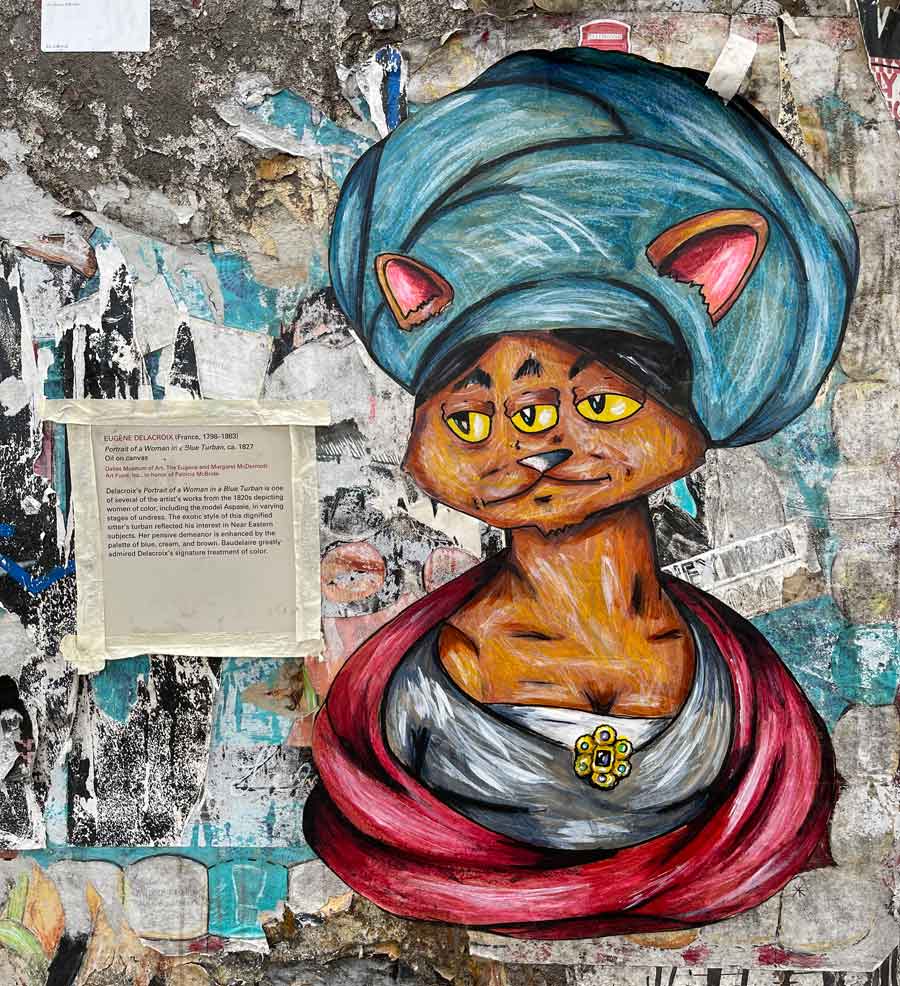
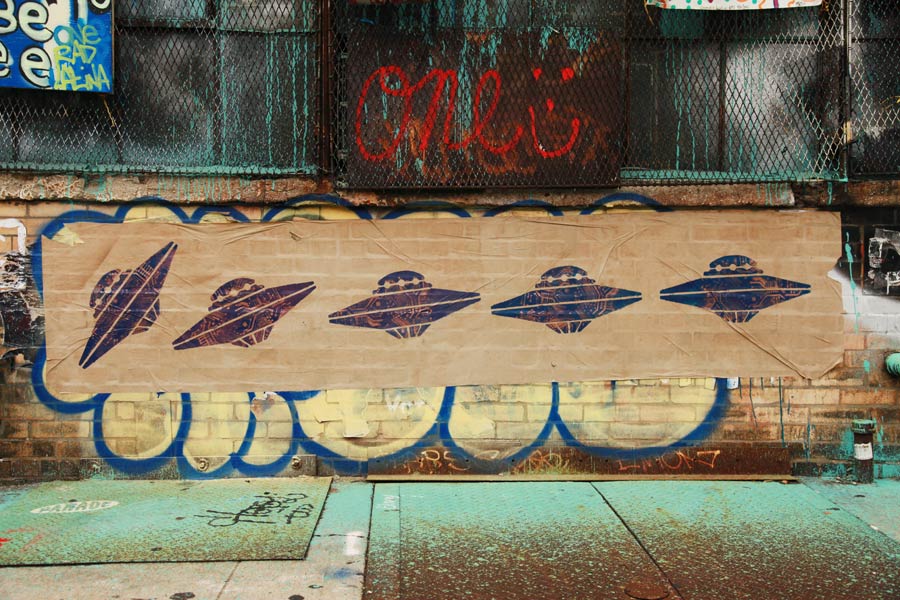
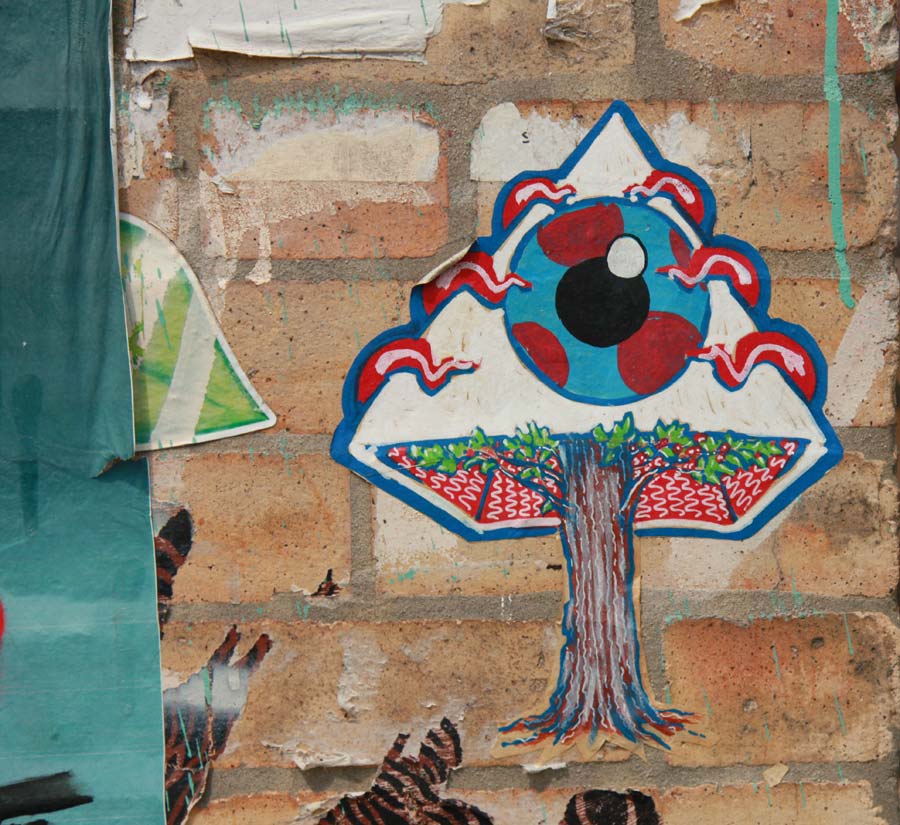
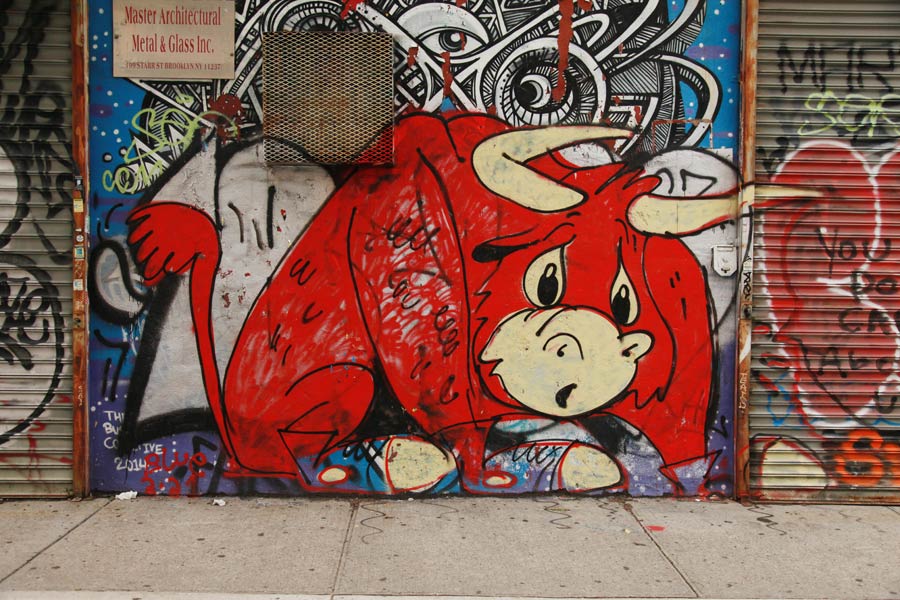
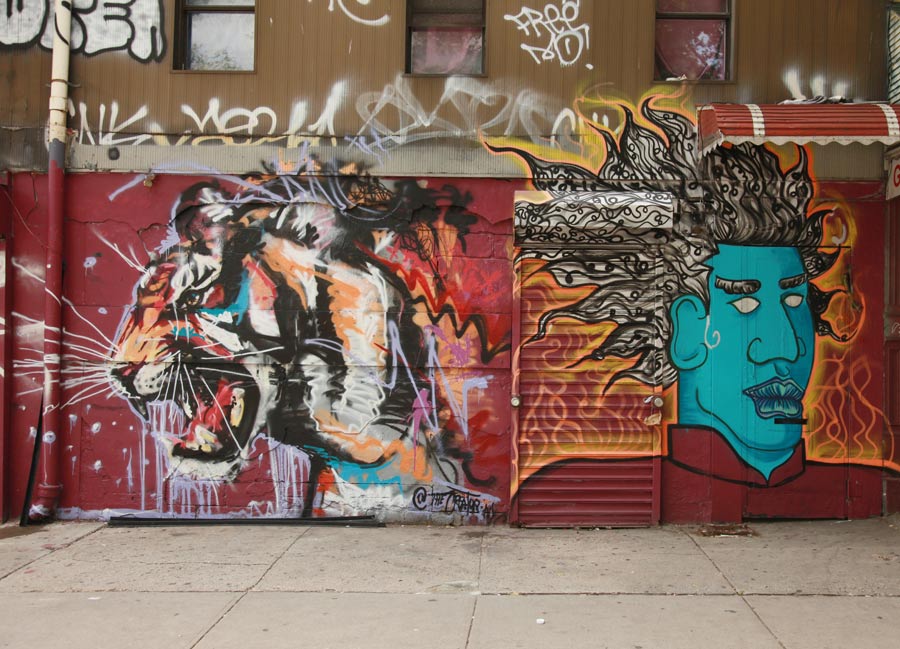
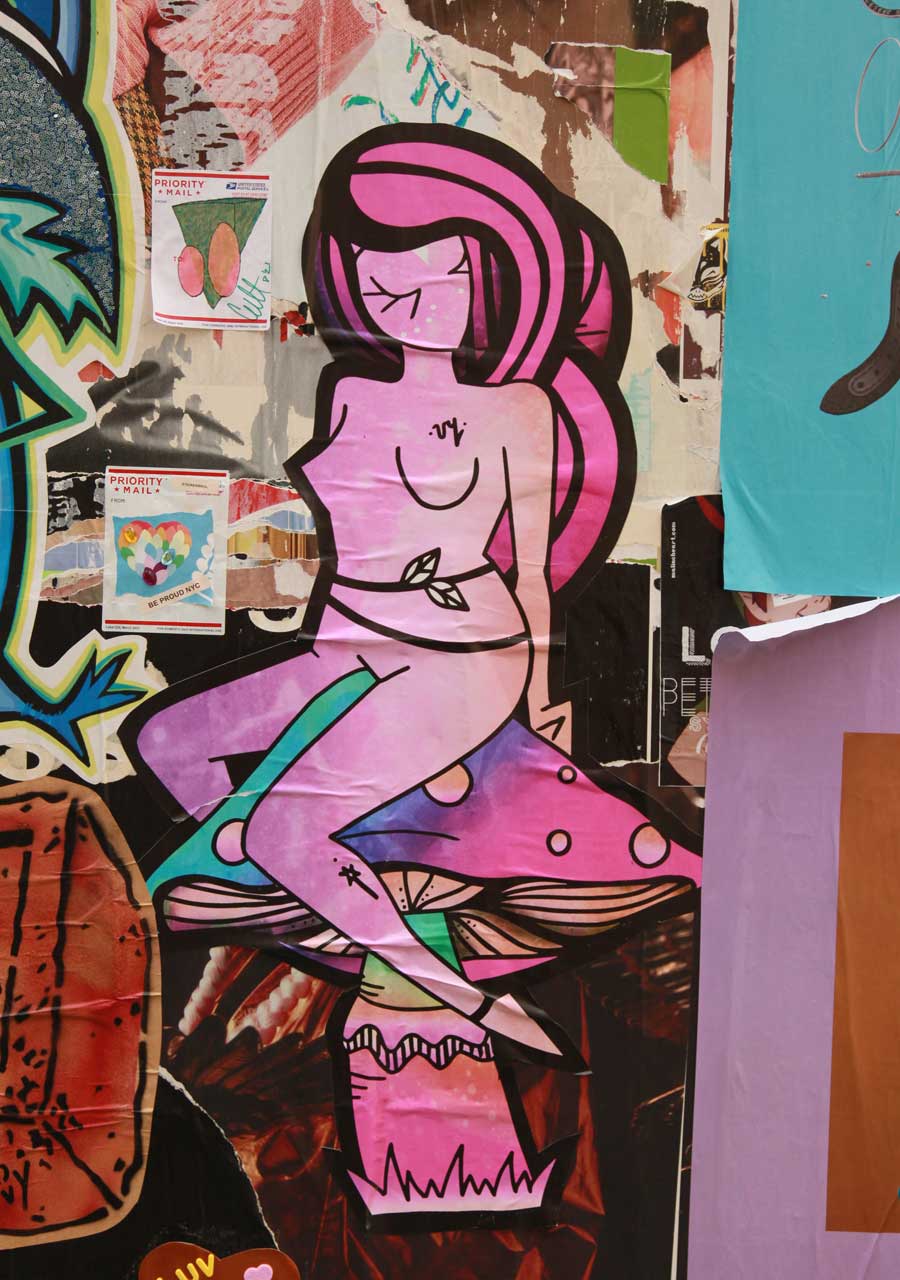
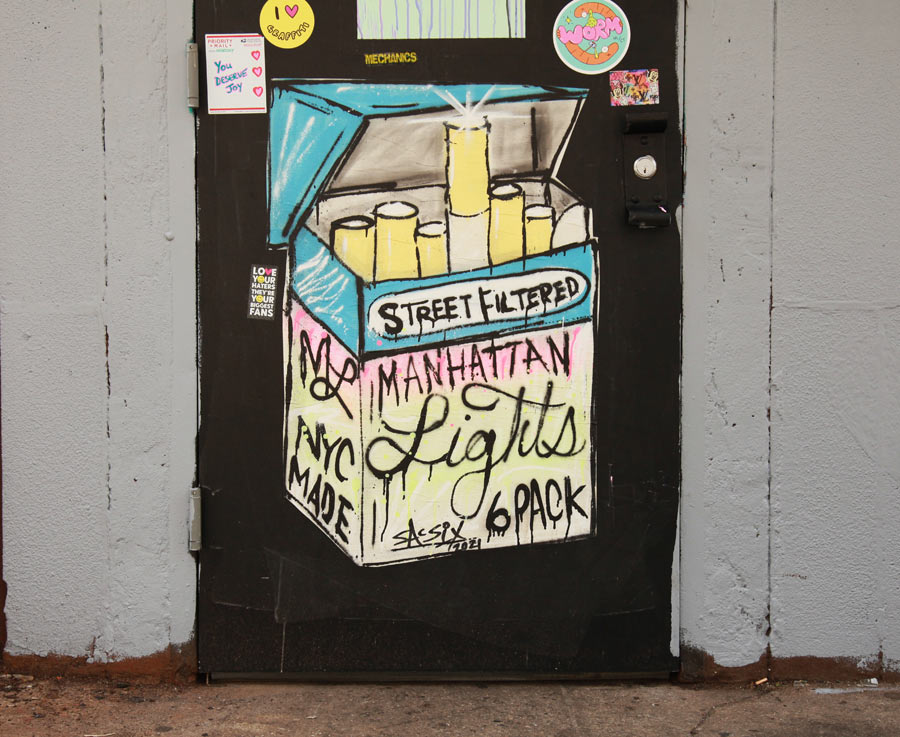
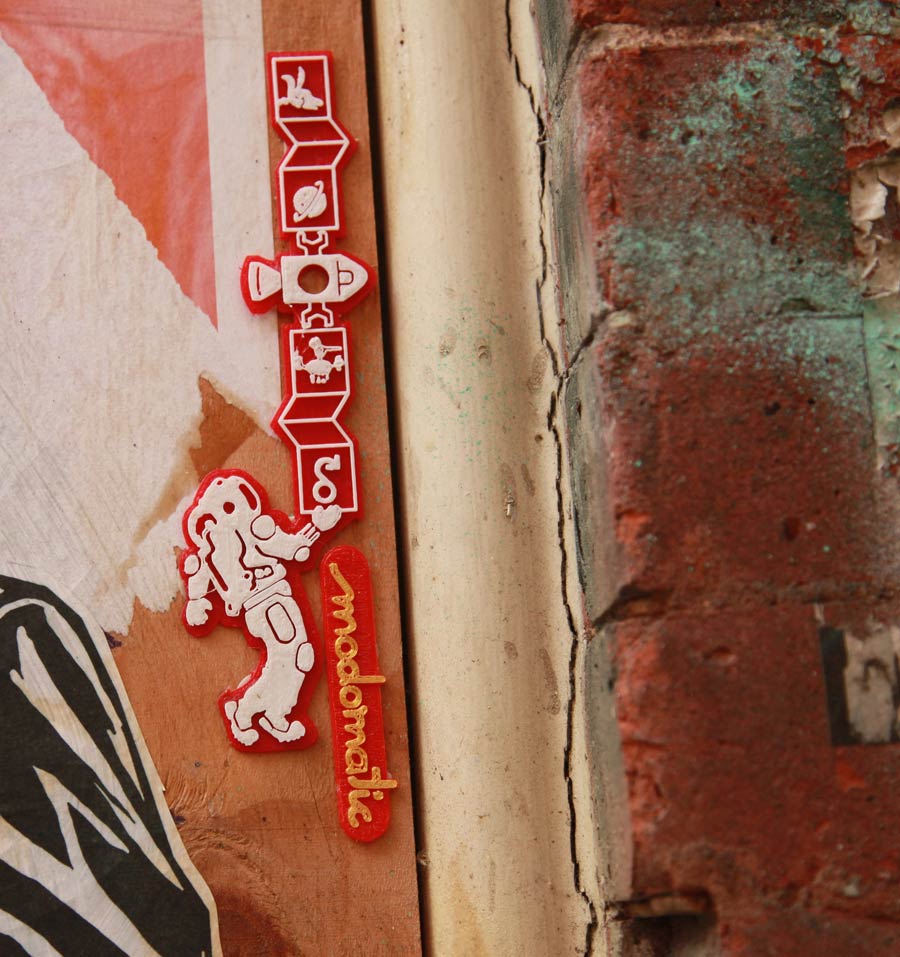
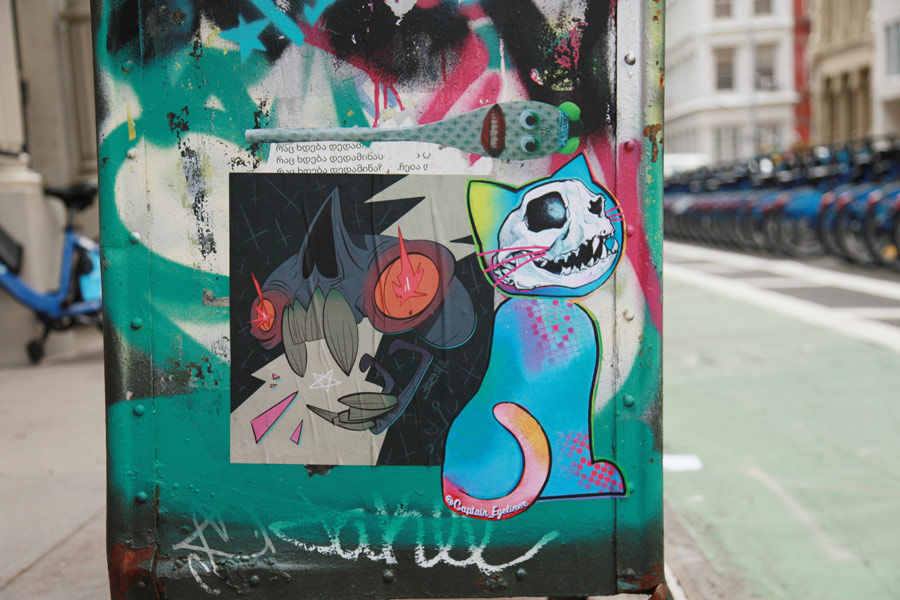
Aliens, robots, skulls, femme Fatales, cats, cartoons, nationalism, existentialism – the new are runs the gamut and if it upsets the audience, it doesn’t run for long. Catch it while you can
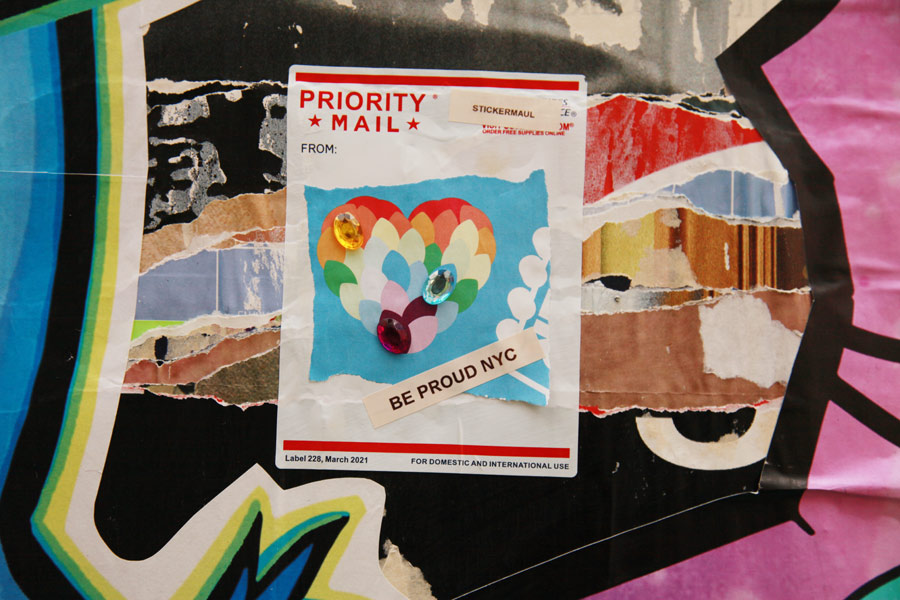
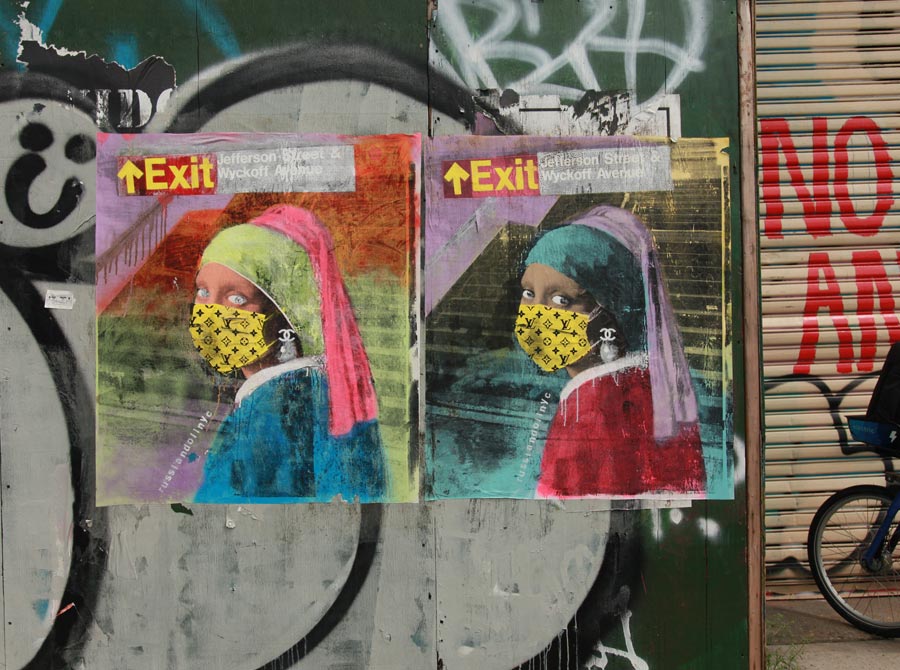
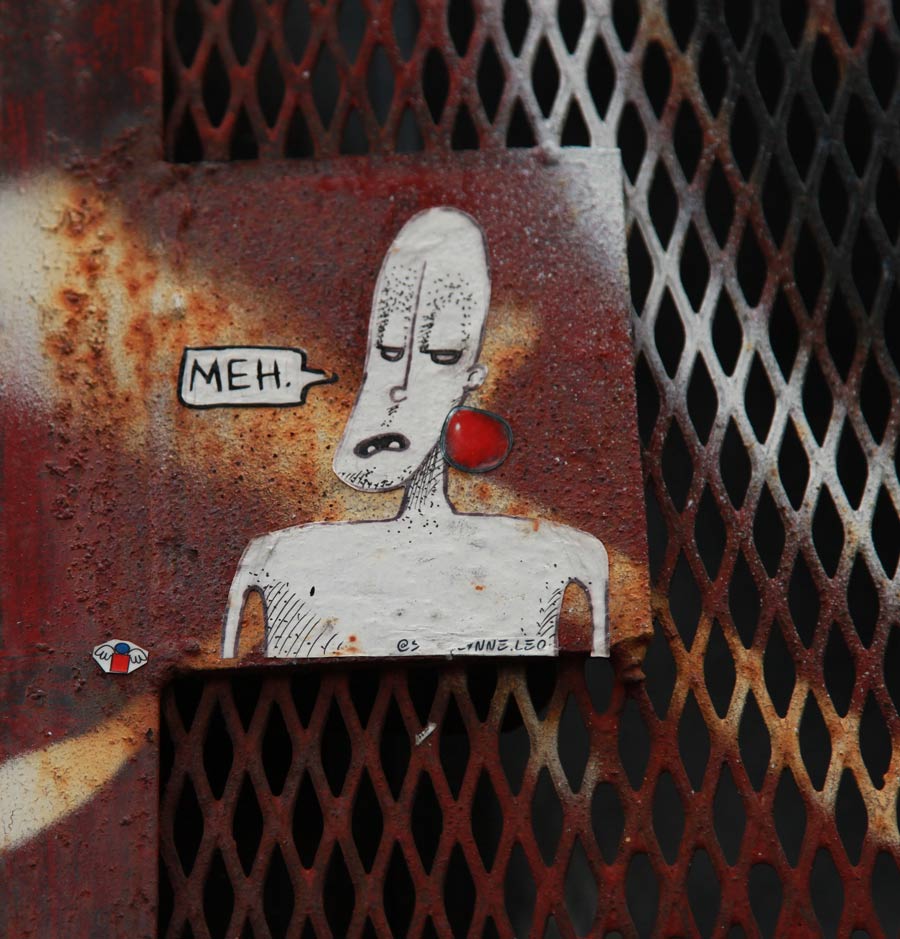
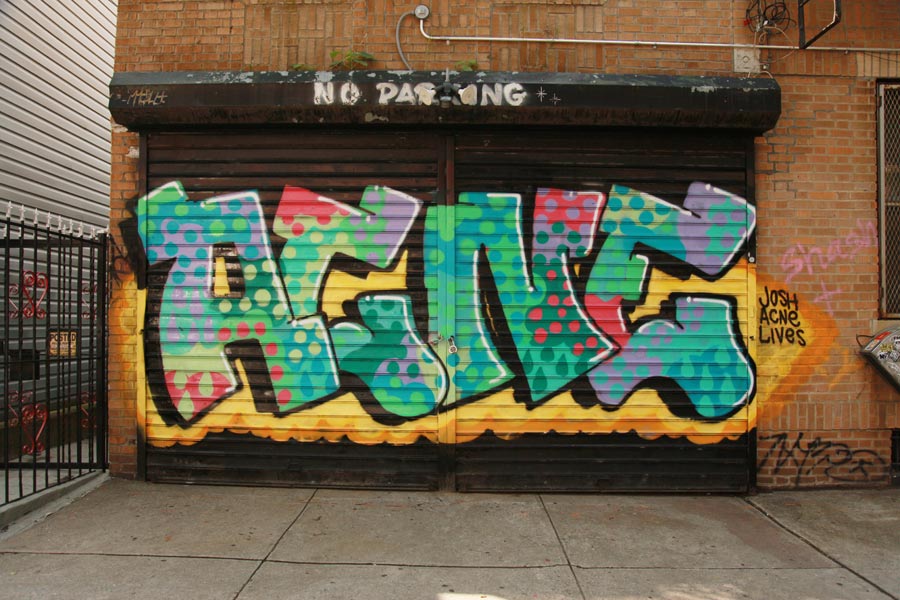
Here’s our weekly interview with the street, this week featuring Acne, Adam Fujita, Almost Over Keep Smiling, Captain Eyeliner, City Kitty, Degrupo, Demure, Eugene Delacroix, Jeremy Novy, Lunge Box, Matt Siren, Modomatic, One Rad Latina, Plannedalism, Raddington Falls, Royce Bannon, Russian Doll NYC, SacSix, Sara Lynne-Leo, Save Art Space, Sticker Maul, The Creator, and Vy.
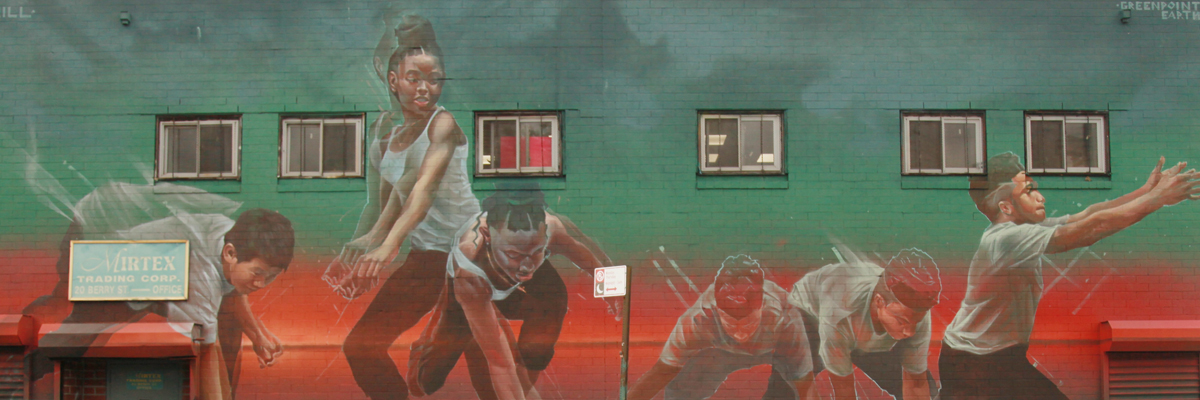
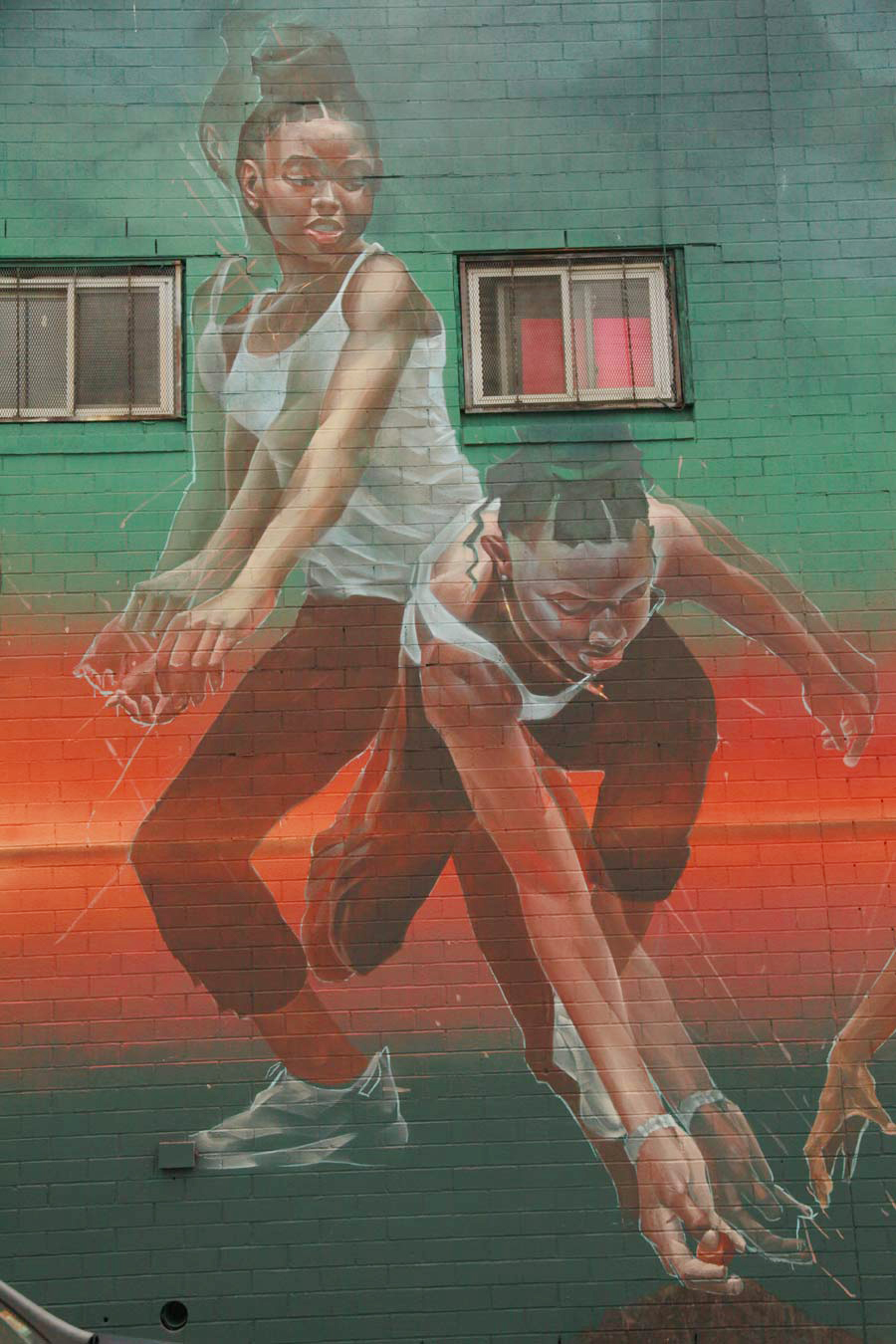
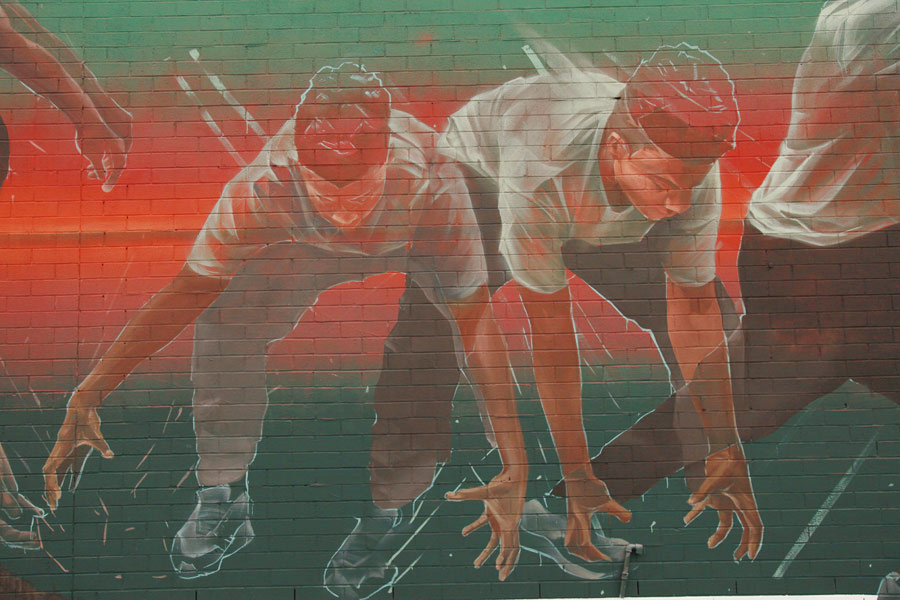
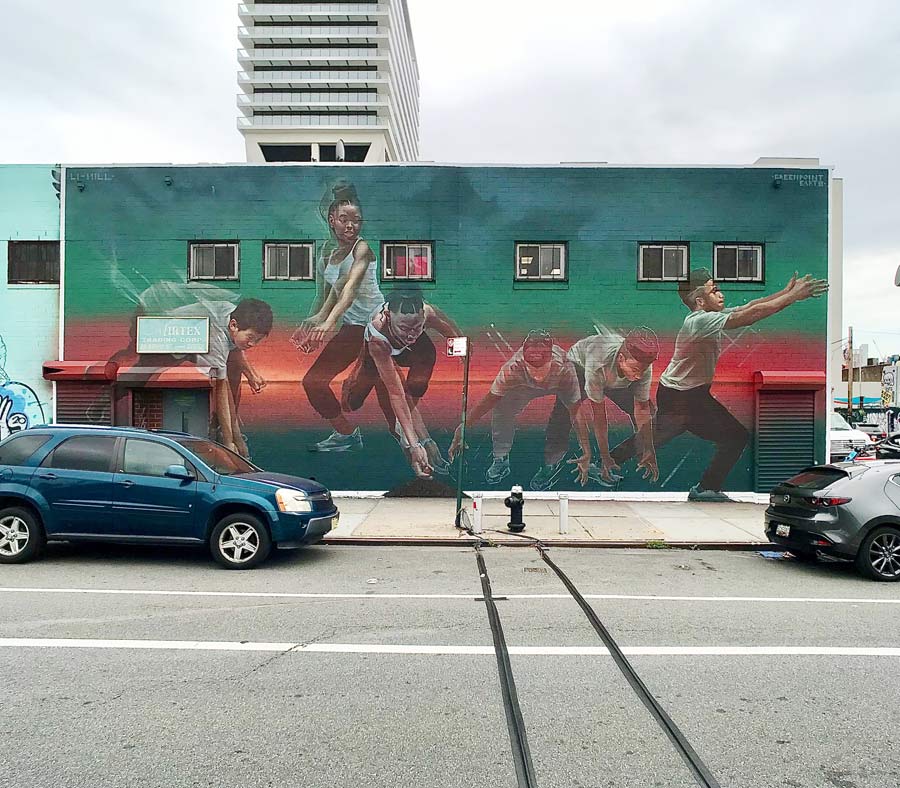
Canadian/Brooklynian street artist Li-Hill revisits the mural format periodically in between making sculptural installations on the street and in gallery settings, tackling the occasional residency, formal painting exhibition, perhaps the odd commercial job. This year, for World Environment Day, he lent his talent to GreenPoint Innovations to create a work focusing on climate change and food systems instability.
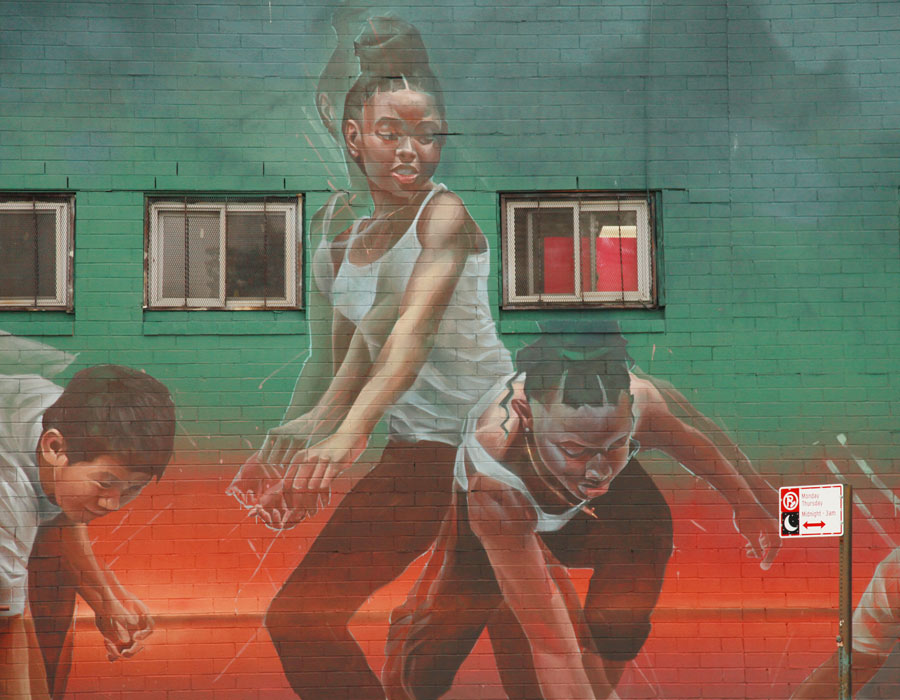
Using his language of transmuting forms progressing along a visual timeline, here Li-Hill slightly alters the faces of local kids to preserve their anonymity and captures the forms in kinetic movement from left to right.
“Featuring Brooklyn’s youth, this mural champions the leading role that young people play ensuring a more sustainable future, ” say @GreenPoint.EARTH organizers.
Our weekly focus on the moving image and art in the streets. And other oddities.
Now screening: 1. “FAME”, the Italian Street Art Festival Documentary 2. Jersey City Artists at Work Painting for the first Mural Festival Here 3. “UNSATISFYING” Looks at Frustration with Smart Whimsy
BSA Special Feature: “FAME”, the Italian Street Art Festival Documentary, Not the American Teen Drama Film
Everyone likes to declare that they were the first in graffiti and street art, before it was cool, when it was cool, before there was even a name for it, when things were pure, and pure genius. Everyone and everything after them and then are just shit. And gurrrrll, you better claim that legacy.
For FAME, launched during the late 2000s in Grattaglie, Puglia, Angelo Milano was always the center of a scene he created, enticing international street artists with promises of collaborations, big walls, big opportunities, big plates of delicious local cuisine. With his festival, he formed a club of exclusivity, and once successful, he slammed the door shut on the legacy, never again repeated. Later he became a gallery owner who sells artworks of most of them plus a new crop.
Lusciously self-aggrandized as an “evil genius” in this documentary, co-produced with Giacomo Abbruzzese, the swanning and sexy comic Milano brings himself into the middle of it all – and it all goes with him.
Jose Mertz at Jersey City Mural Festival 2021. Via Tost Films
A quick behind the scenes view of artist Jose Mertz last week in Jersey City, shot and edited by Tost Films. Most impressive perhaps is the techniques he uses to wash with color, gradually and subtly building mass and form of wild creature indeed.
“UNSATISFYING” Looks at Frustration with Smart Whimsy
Parallel Studio produces this short animated film that brilliantly captures those situations when we experience the frustration of failing at performing small tasks. It’s annoyingly adorable, and everyone can relate.
25 years in the game, Pener routinely lets his mind travel to encompass possibilities, then channels them abstractly through a series of echoing geometric forms with aerosol and brush. Here in his hometown of Olsztyn, Poland, he says he imagined the possibilities that young minds inside an elementary school could contemplate.
While painting this new “Mirror Land,” he was in a land of mirrors psychologically. He says he prefers to explore the “possible tension between our subconscious and conscious abilities that oscillate between reality and illusion.”
That’s a lot for kids to vocalize, granted, but he says he still engaged them when they watched and asked questions.
“Those were wonderful moments to hear them trying to solve what the wall depicts and hides,” he says.
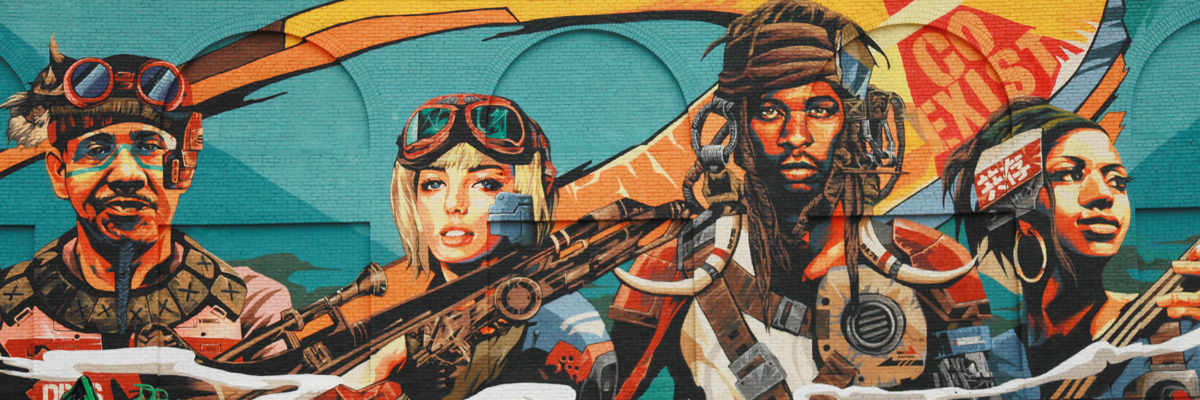
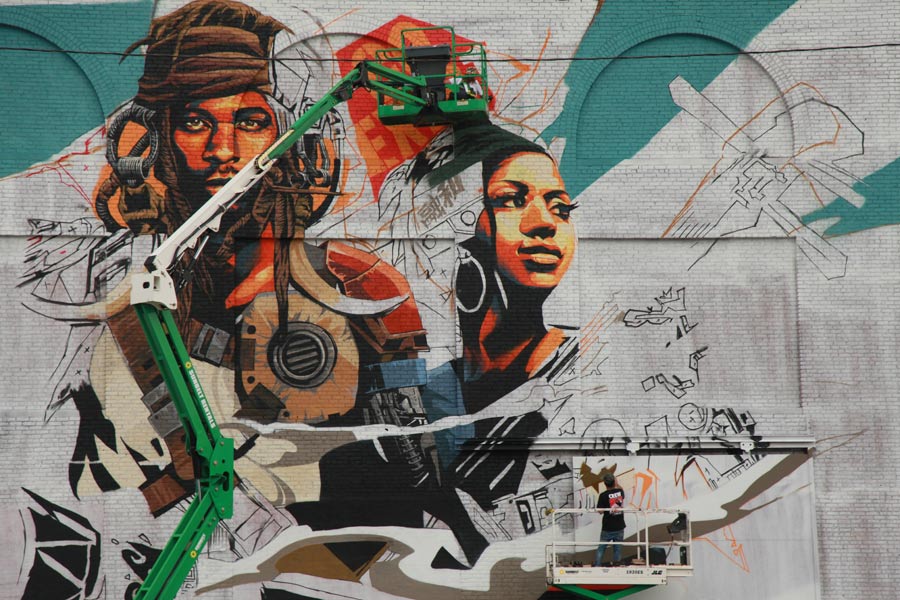
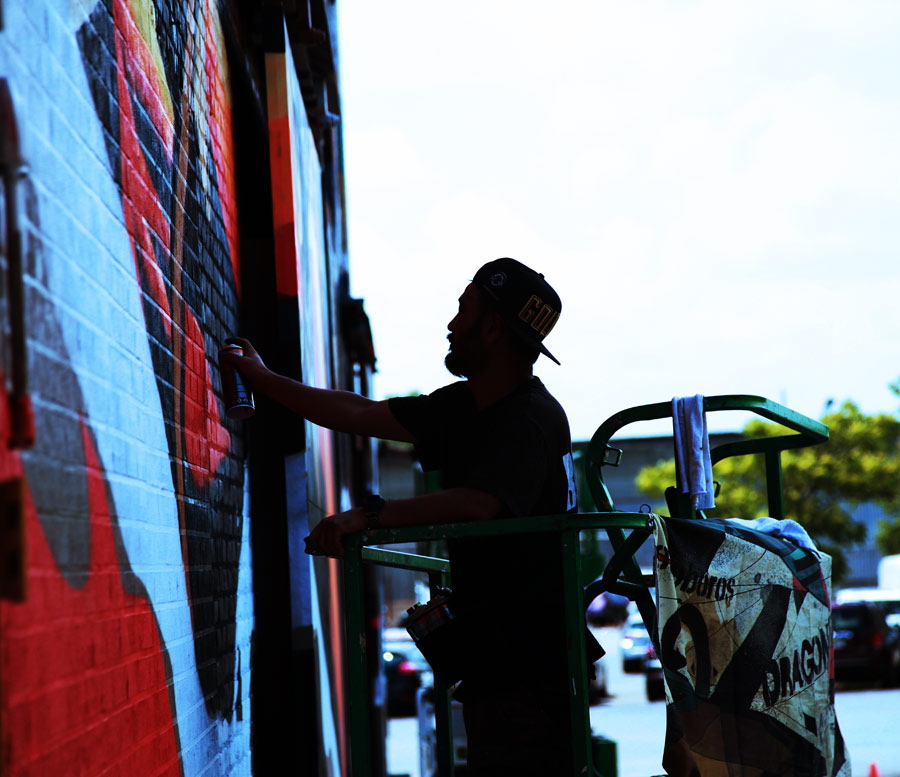
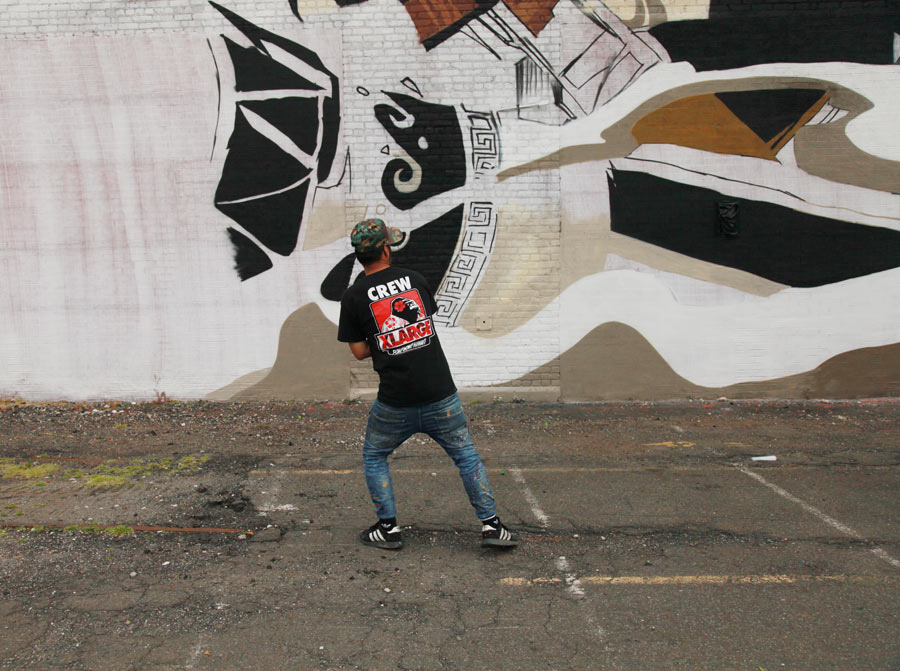
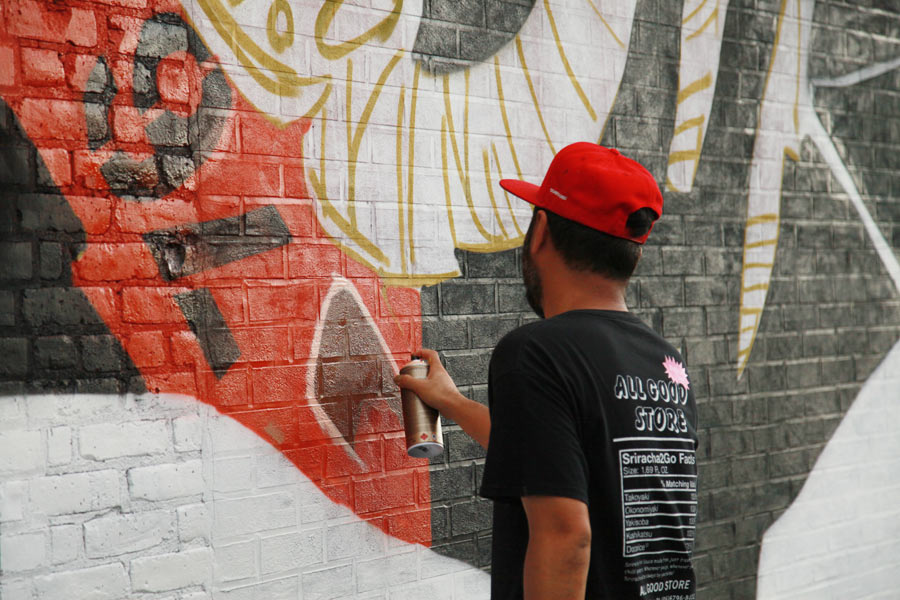
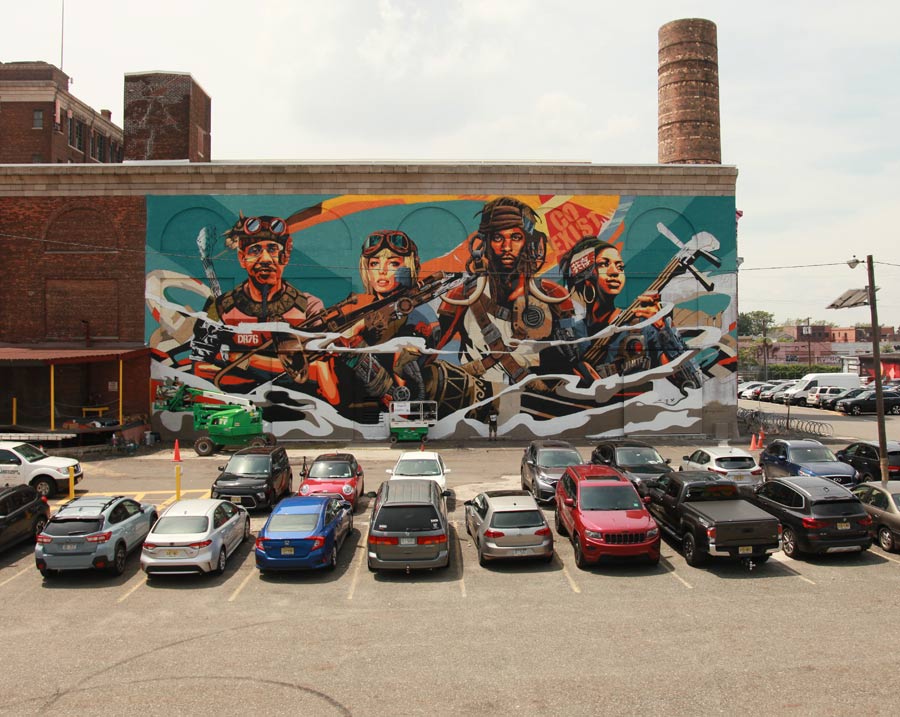
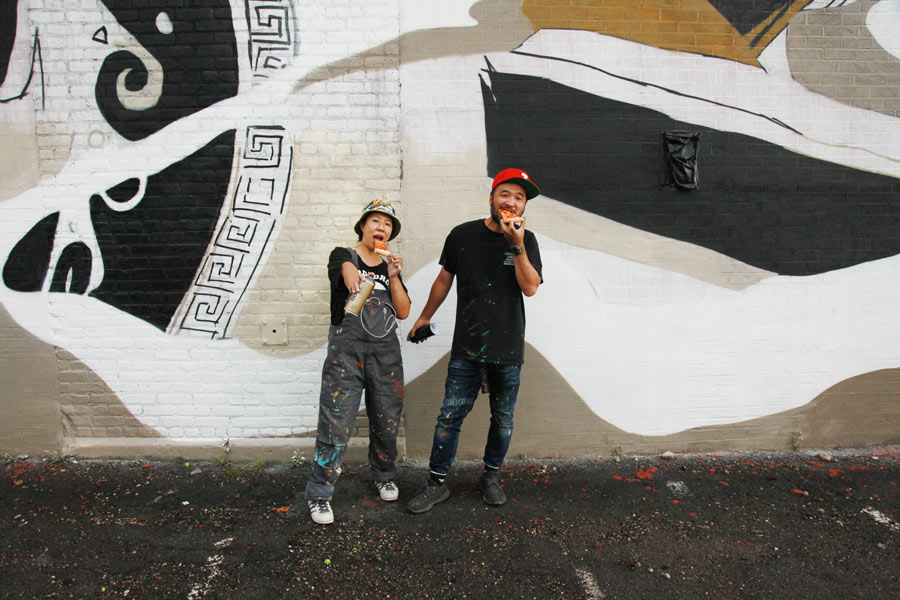
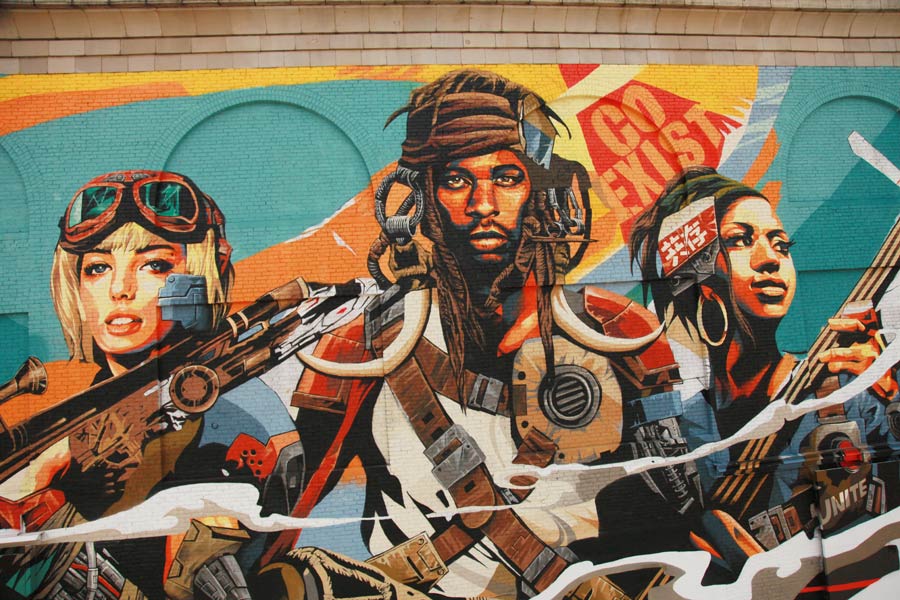
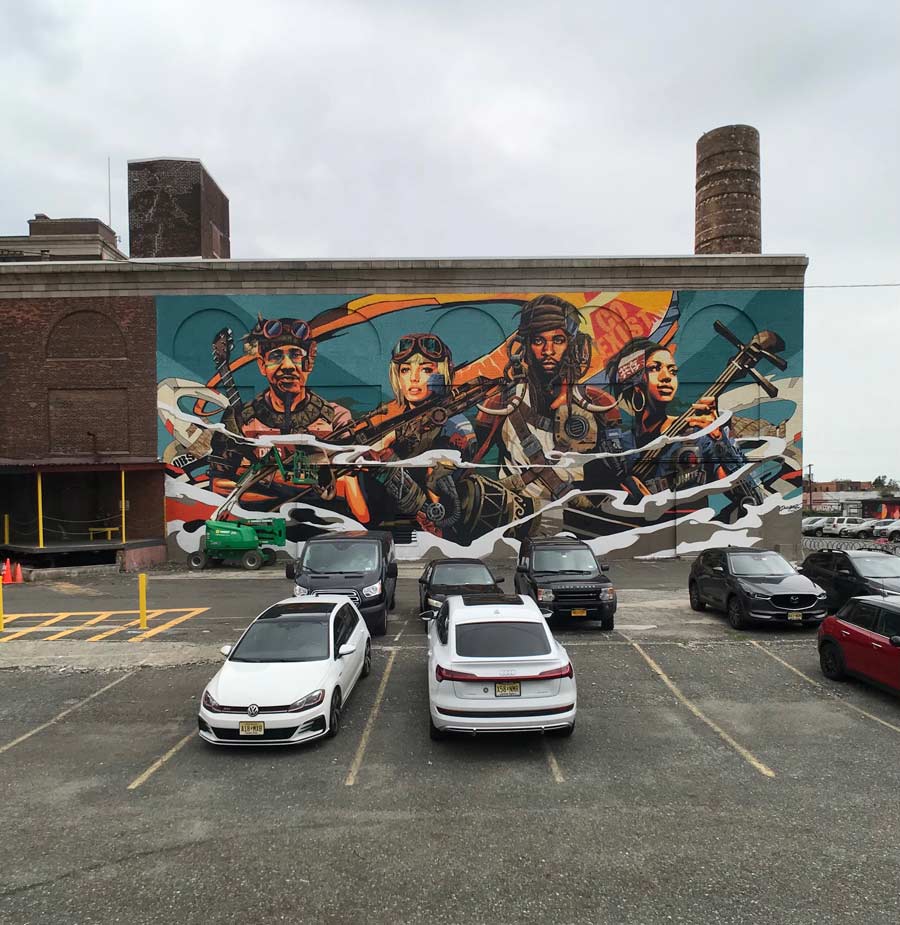
Japan-born Queens-based muralist Dragon 76 admires New York, where he has lived for the last five years, because of its diversity and inclusiveness, among other things. As a result, his artworks often gravitate toward a similar theme as he has worked his way from being a graffiti artist from Shiga to being a musician and a commercial graphic artist and muralist. For the Jersey City Mural Festival, Dragon 76 focused on persons of various identities and genders playing music, a piece he calls “Coexist.”
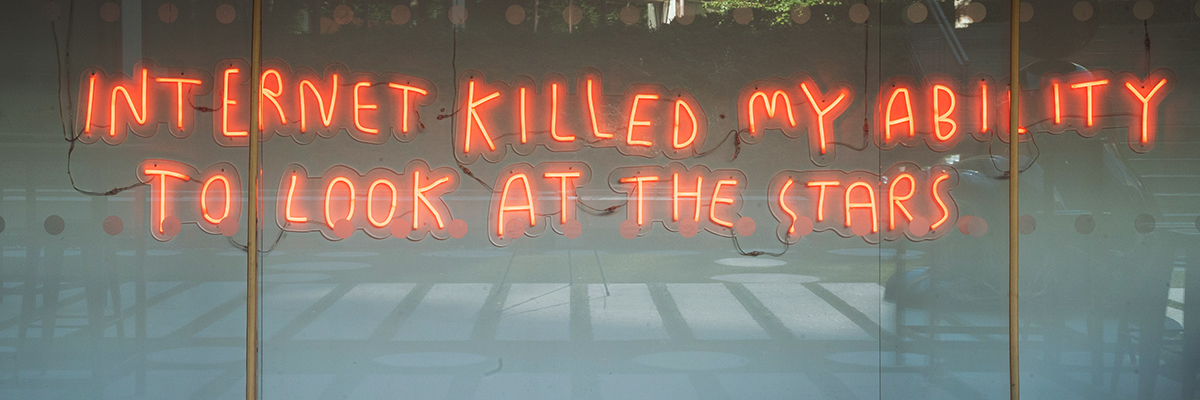
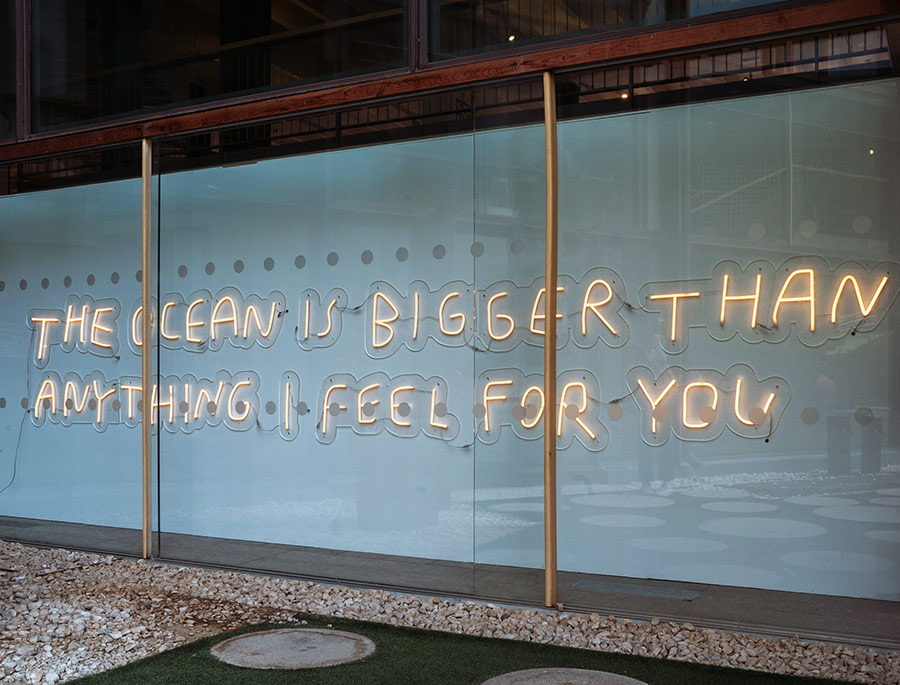
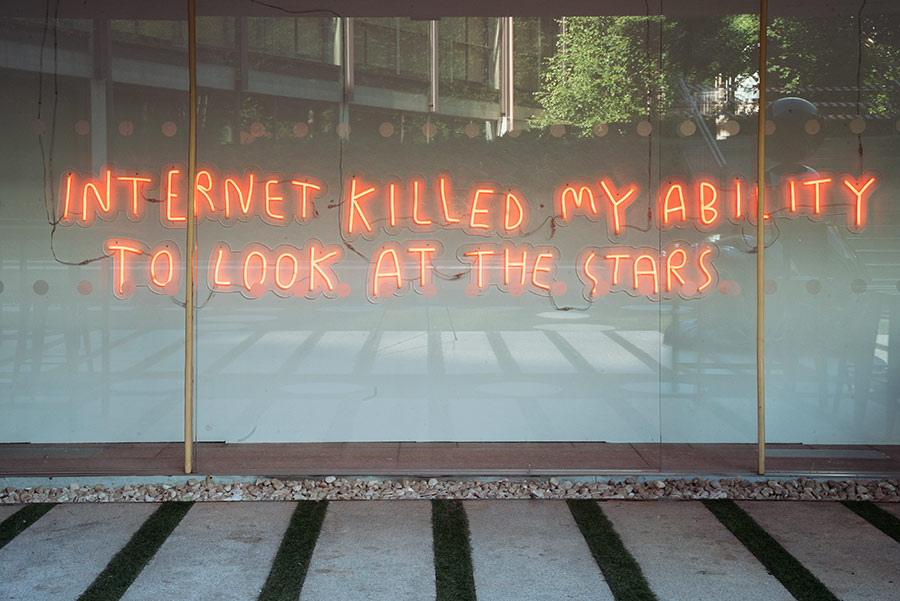
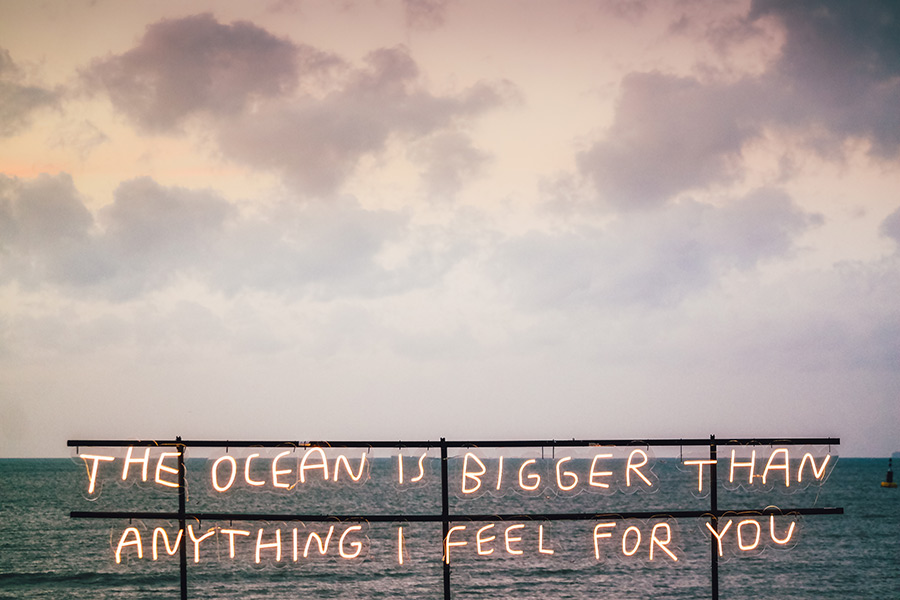
Positioned as an ironic truth-teller with a sense of humor, Portuguese visual artist, illustrator, and street Artist Wasted Rita uses her droll texts and lo-fi illustrations to skewer societal and structural hypocrisies and make you smile. With insights on targets like racism, fascism, wealth inequality, misogyny, male privilege, advertising, patriarchy, you’ll quickly want to join in and write your own.
Wasted Rita. Urvanity Art 2021. Window installation at COAM Madrid. (photo courtesy of Urvanity Art Fair)
When she brings it outside and displays it in urban or natural settings, glowing against the night sky, for example, the words are lifted and more closely considered. On display in Madrid during the Urvanity Art show last month, a new set of fans had a chance to be charmed by Wasted Rita’s wit.
Wasted Rita. Urvanity Art 2021. Window installation at COAM Madrid. (photo courtesy of Urvanity Art Fair)Wasted Rita. Urvanity Art 2021. (photo courtesy of Urvanity Art Fair)
This one caught our eye for the merging of classic graffiti nerve, blunt style execution, sentimental velvety roses, inspirational verses, …Read More »
Join the BSA Newsletter!
Subscribe to our newsletter for occasional updates, special announcements, and exclusive content.
 BROOKLYN STREET ART LOVES YOU MORE EVERY DAY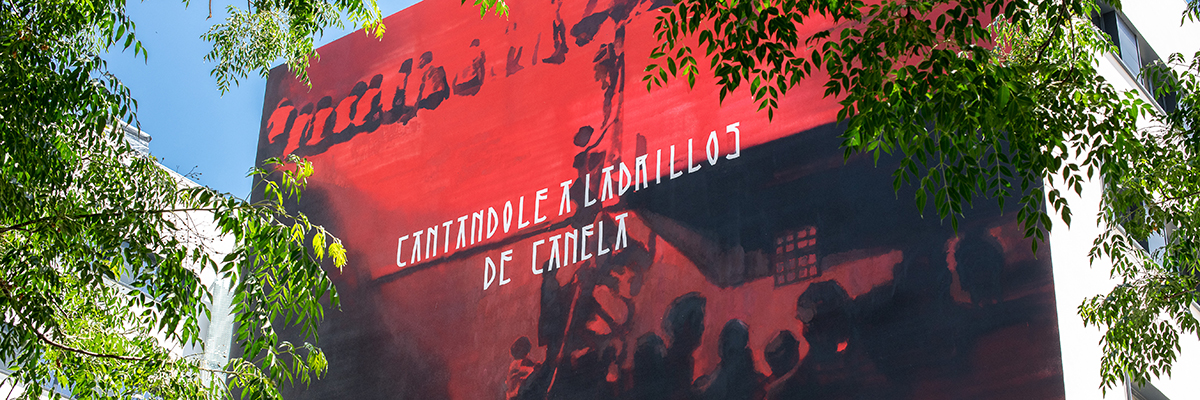








 Bartek Świątecki AKA Pener. Mirror/Land. Olsztyn, Poland. (photo © Darek Brodowski)