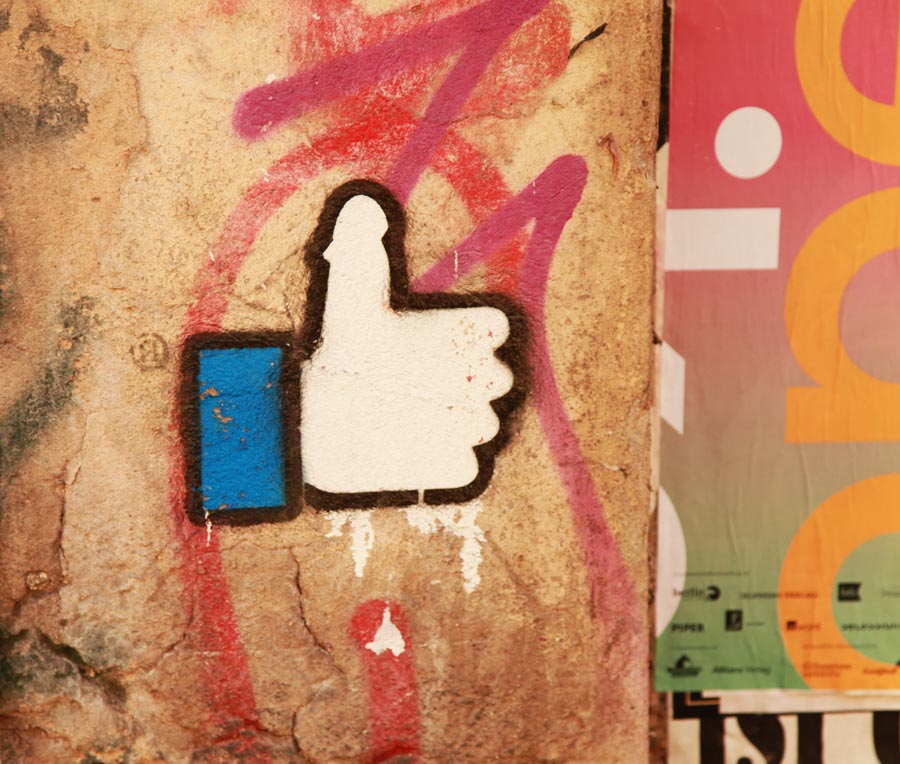
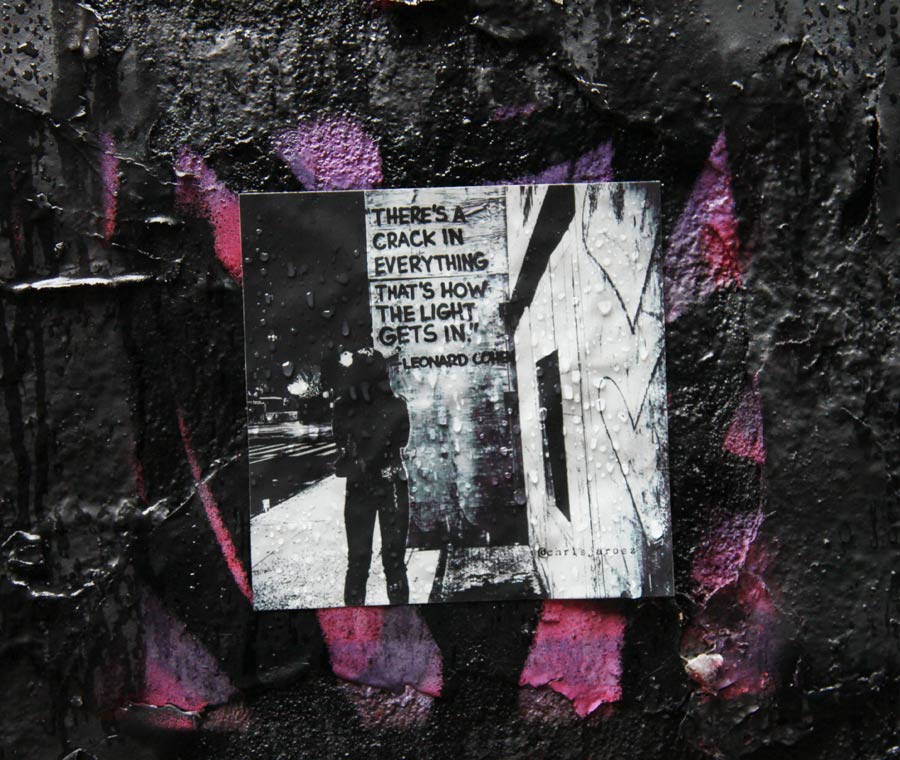
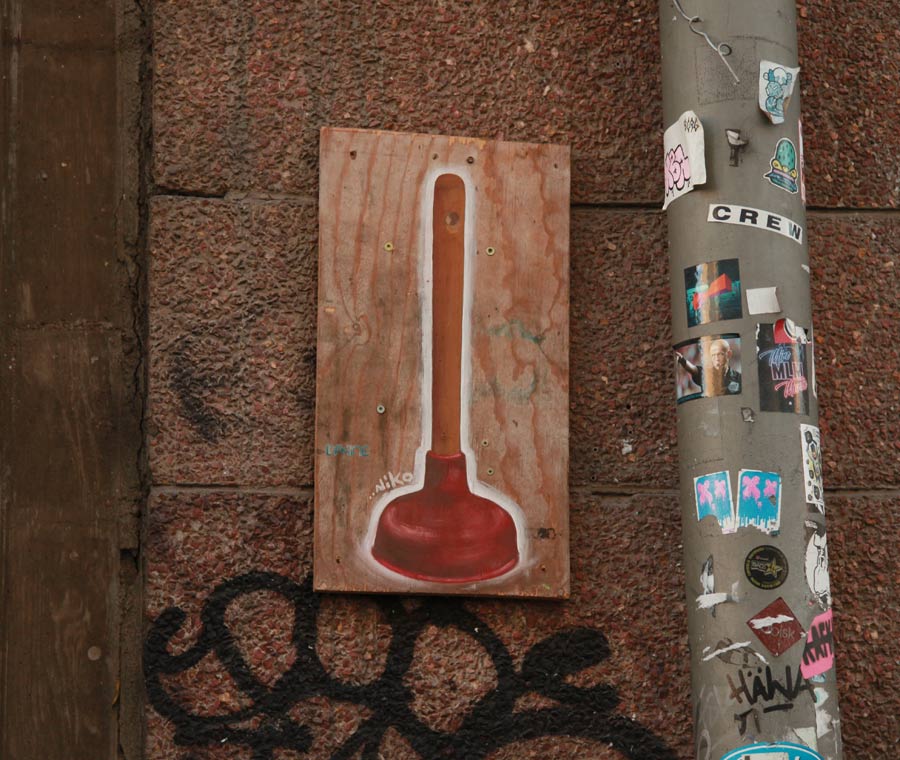
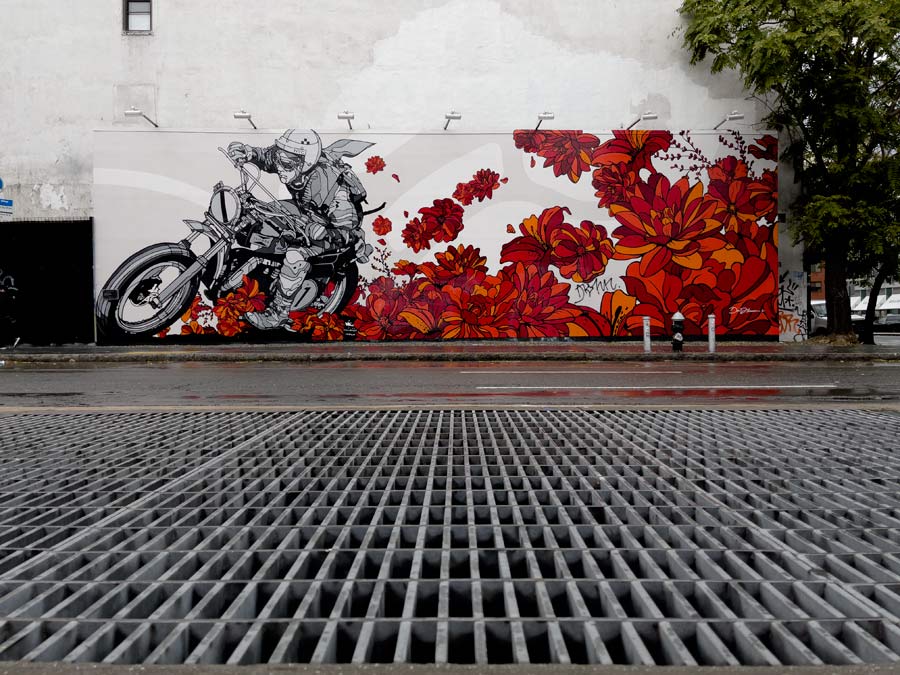
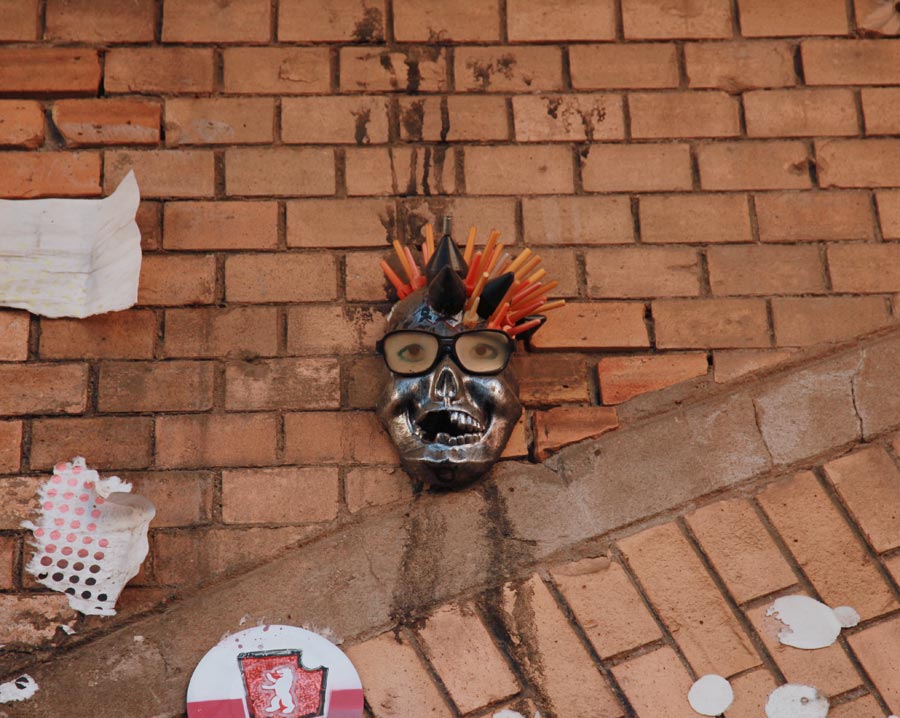
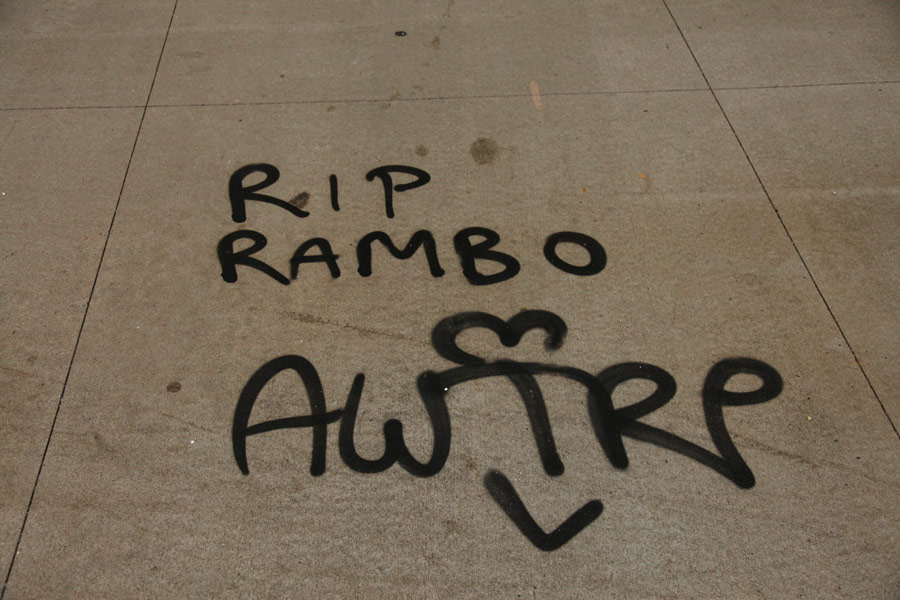
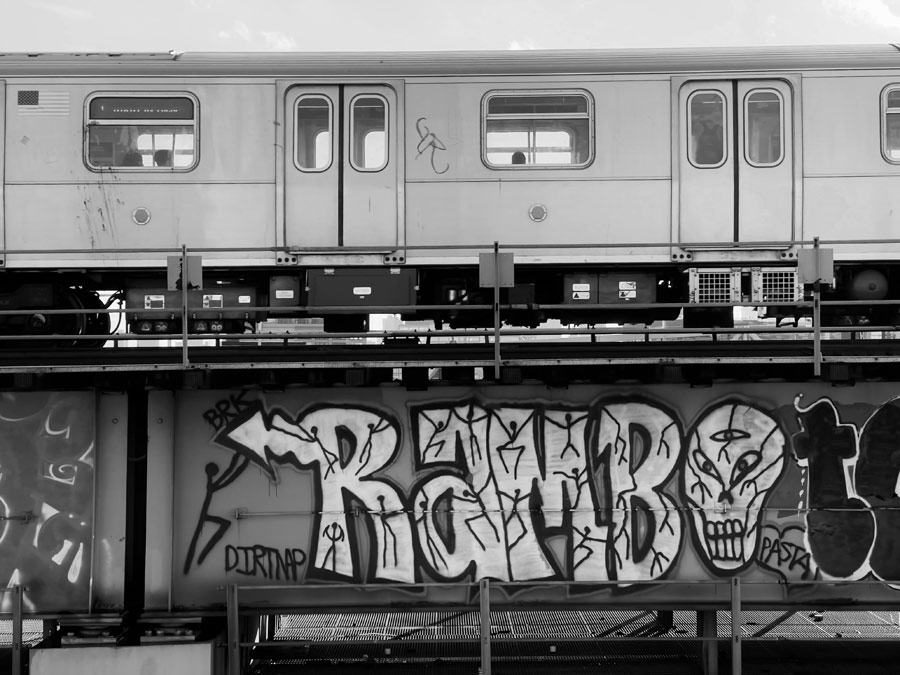
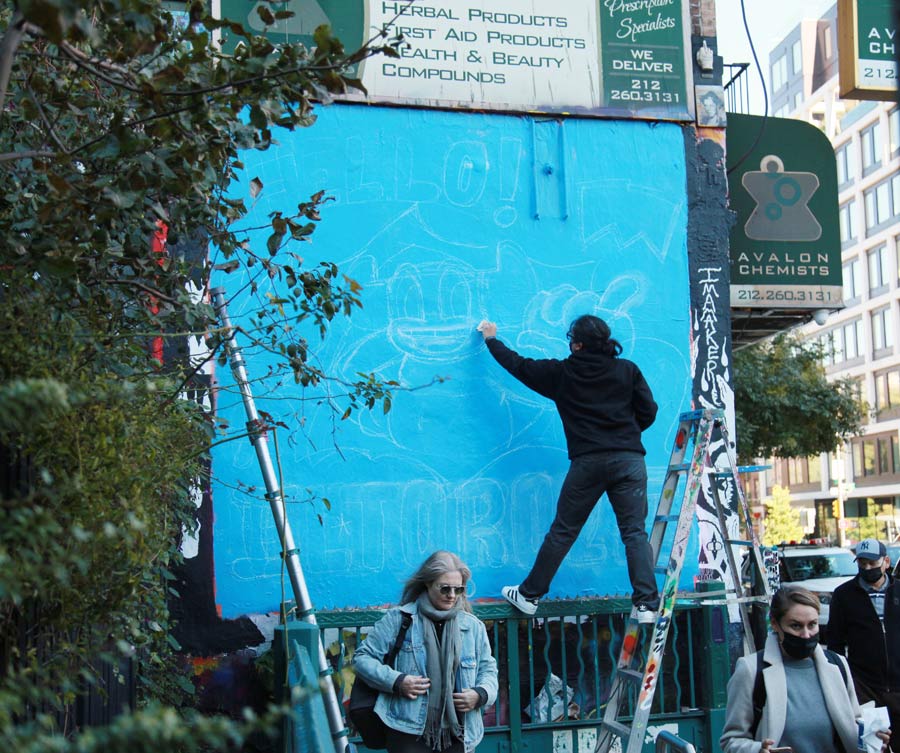
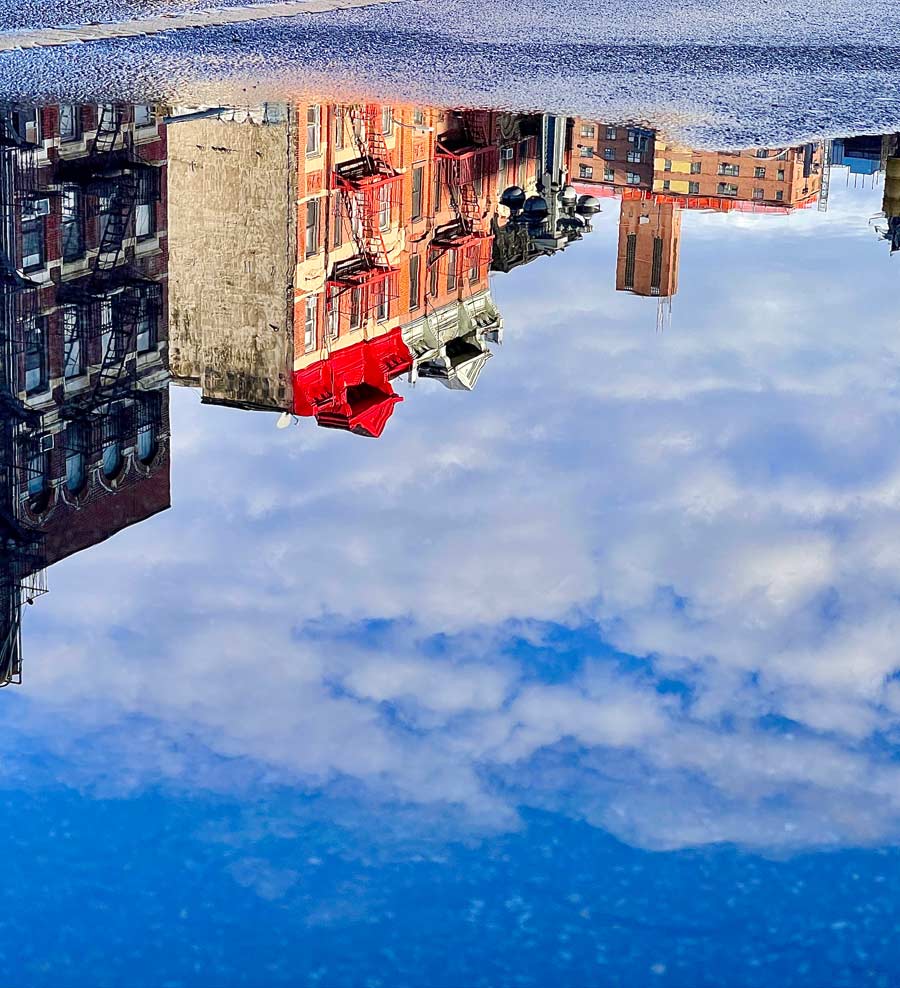
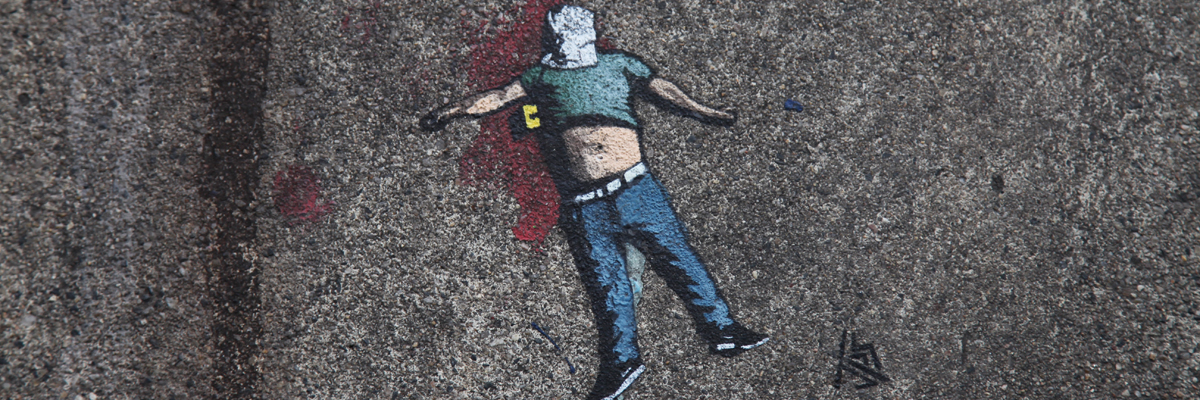
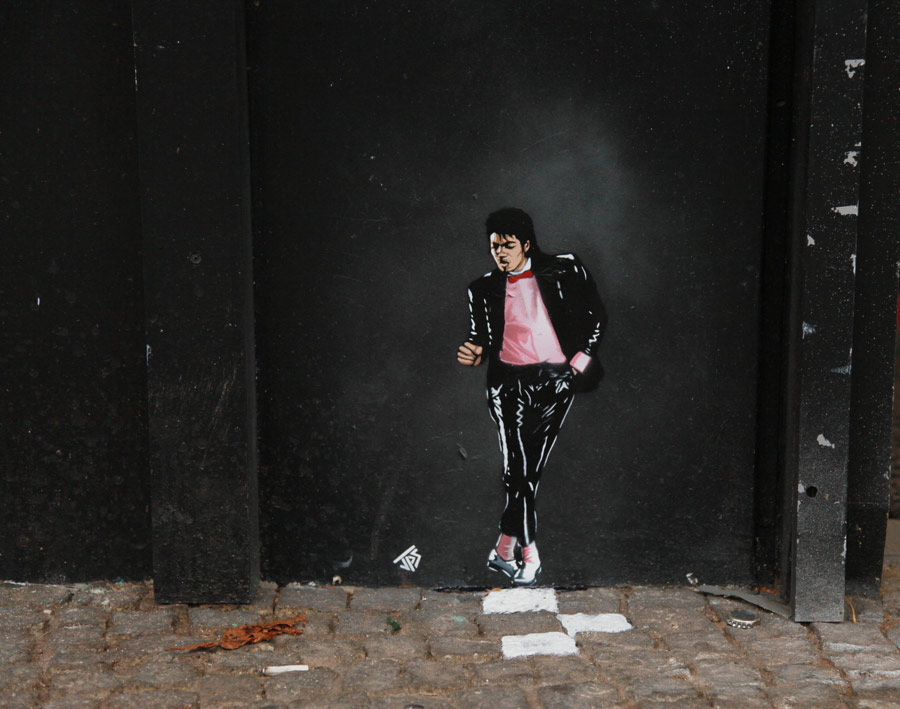
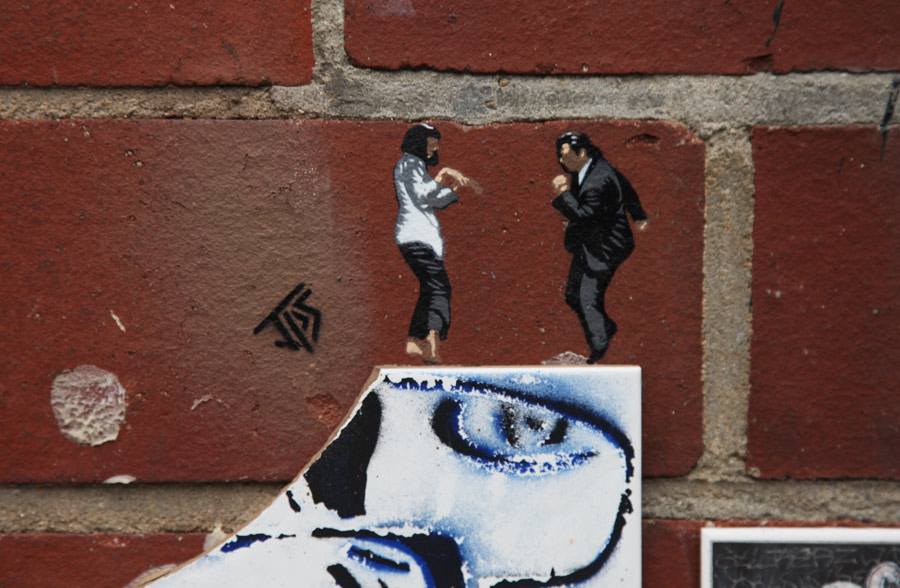
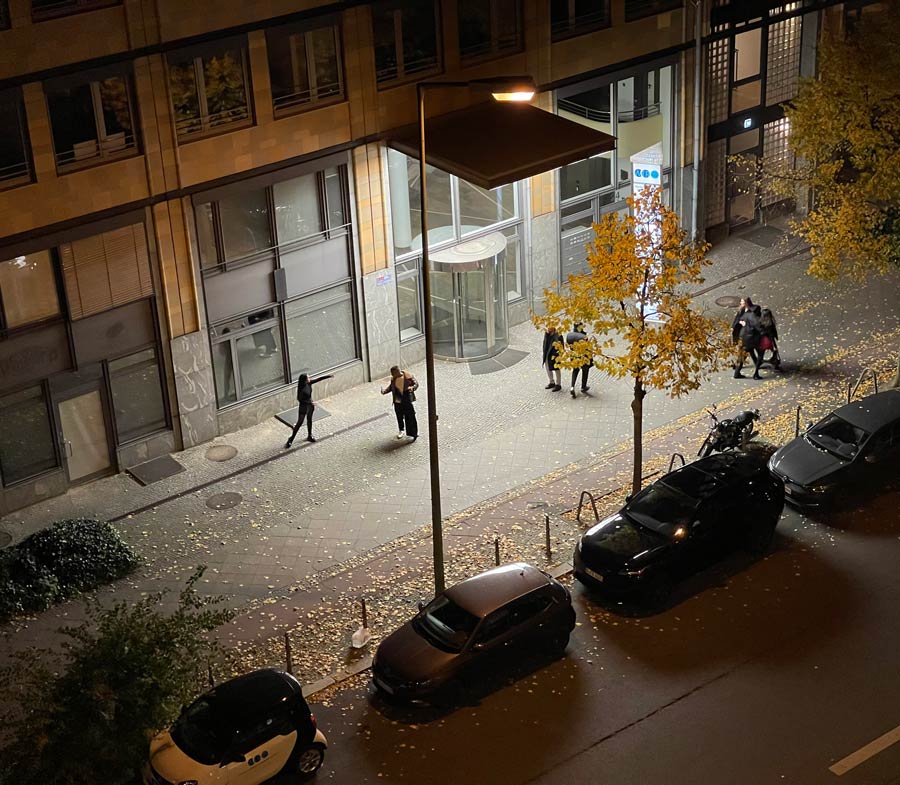
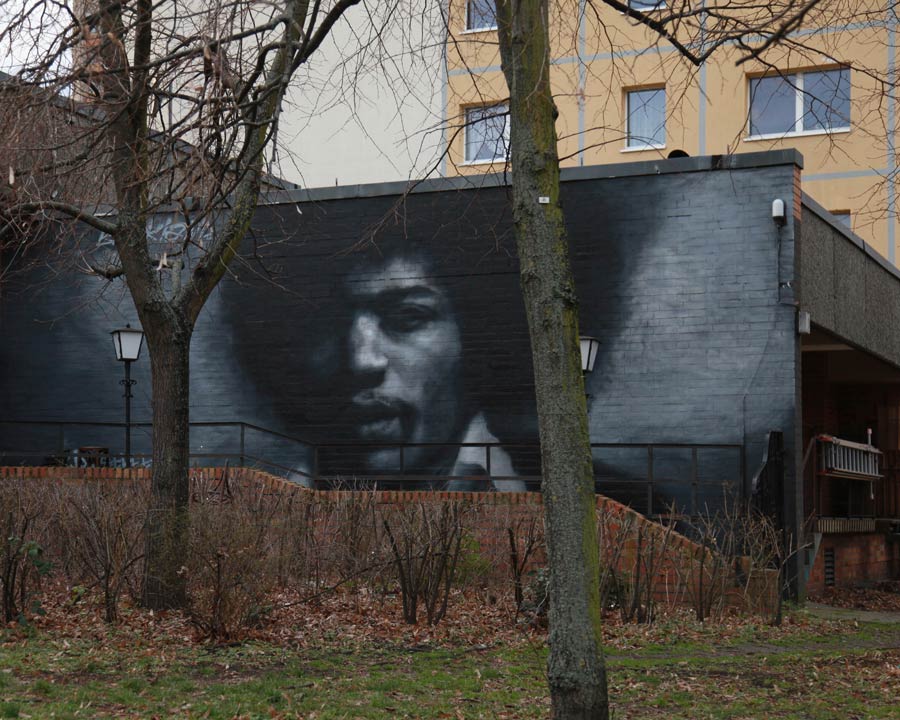
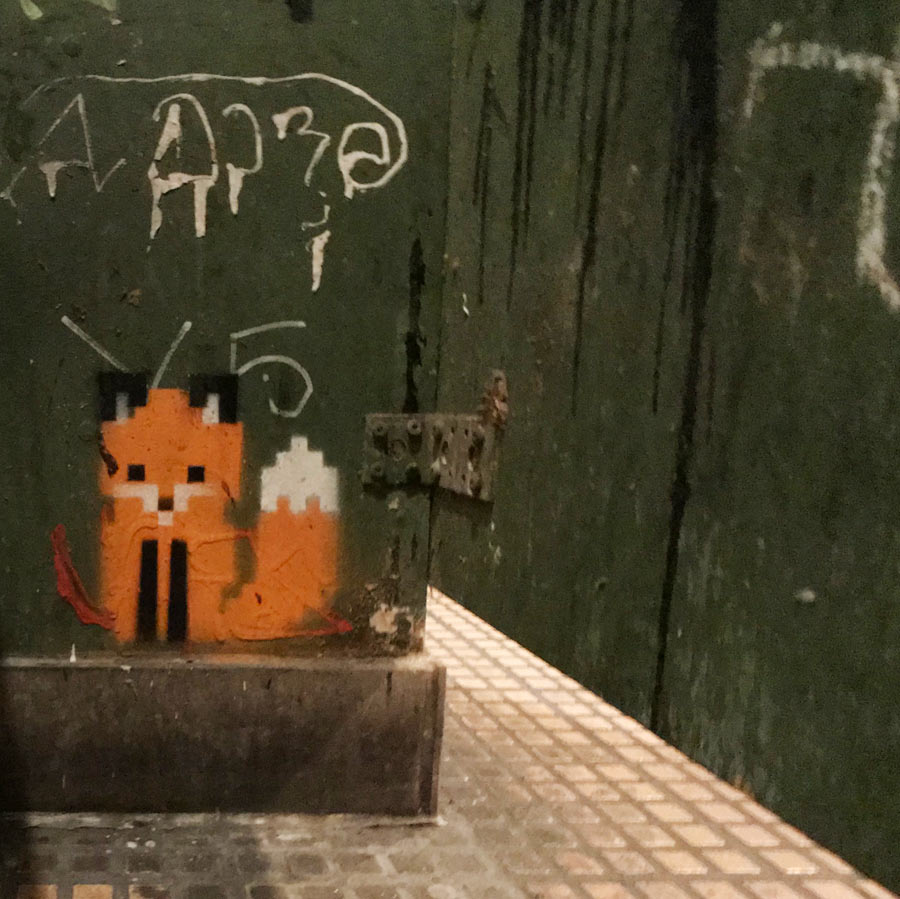
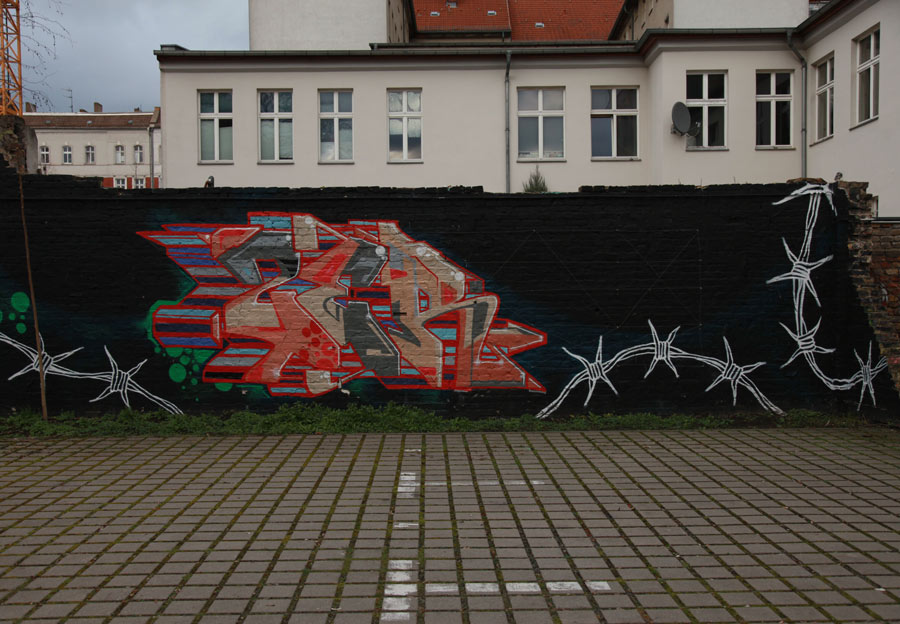
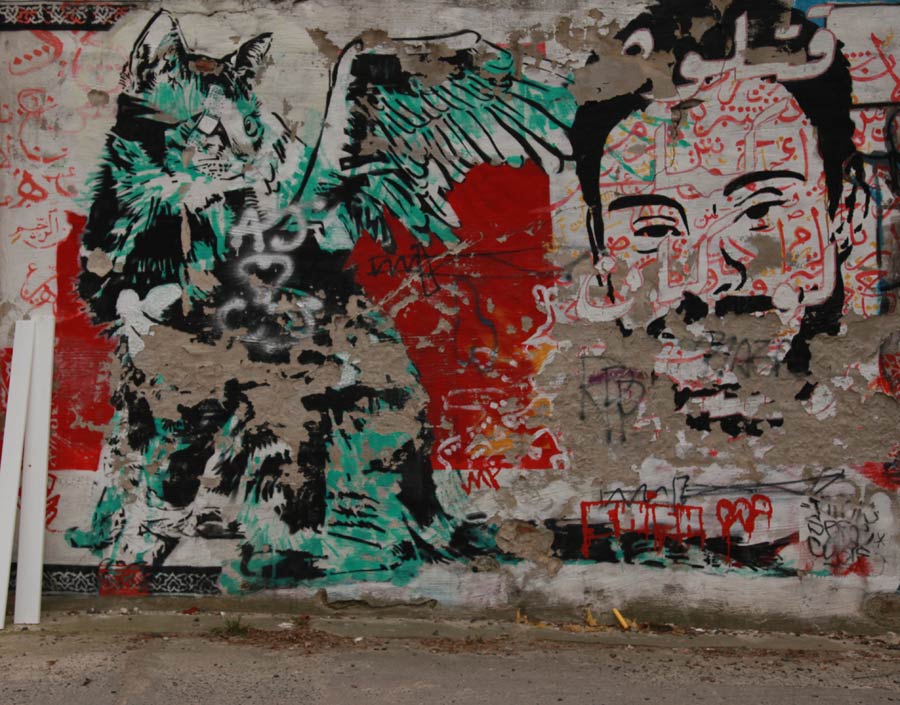
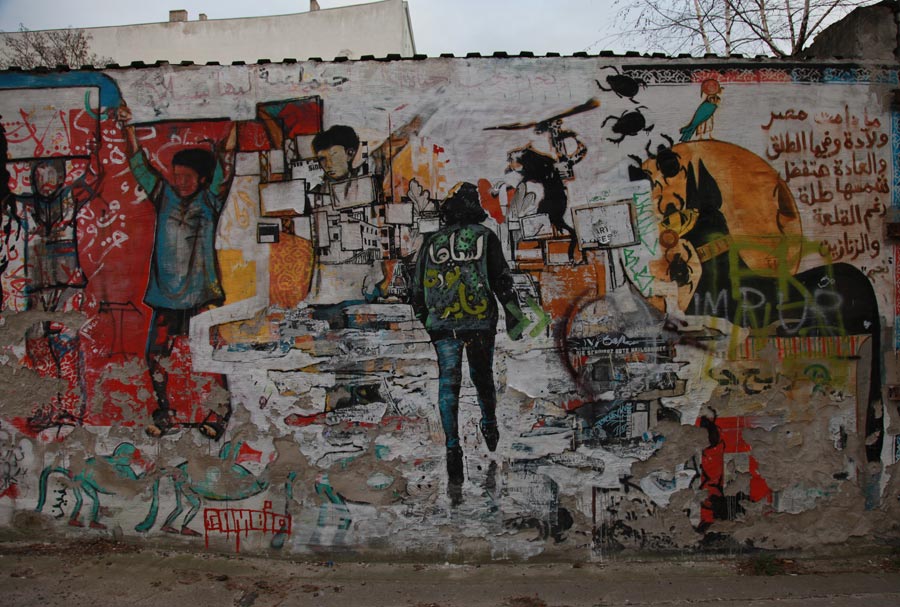
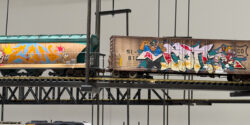
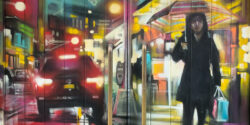
We’re celebrating the end of one year and the beginning of the next by thanking BSA Readers, Friends, and Family for your support in 2021. We have selected some of our favorite shots from the year by our Editor of Photography, Jaime Rojo, and are sharing a new one every day to celebrate all our good times together, our hope for the future, and our love for the street.
It’s the elephant in the room at every social gathering, turning each store, restaurant, studio, living room, museum, pool hall… into a mental jail of some sort. Will this be the holiday office dinner that kills me? Will this be the graffiti jam that jams my lungs? Will this be the Christmas cashier who makes me finally cash out?
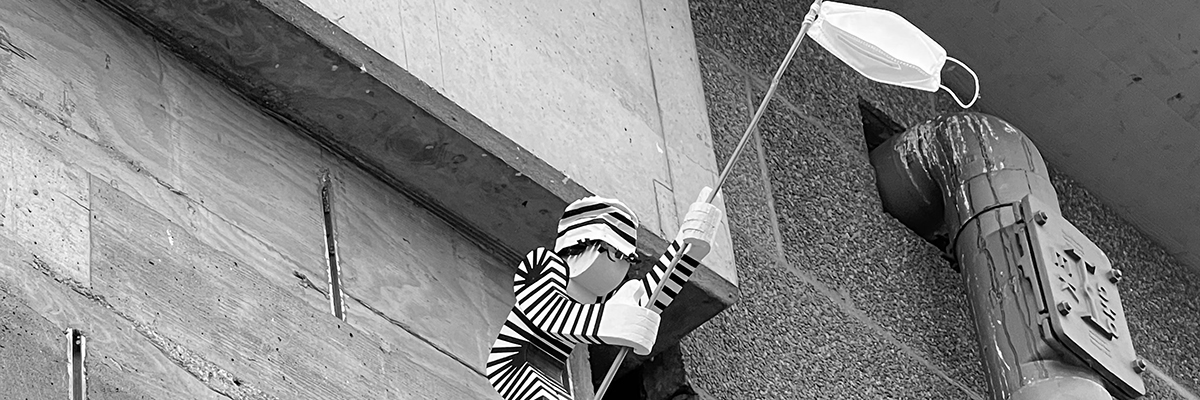
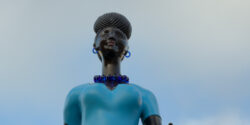
Probably that is why this diminutive statue in prison garb waving the white face mask flag high above the sidewalk, over our heads, ever-present, unmoving, – captures a moment that we are living in, courtesy of artist Styro in Berlin.
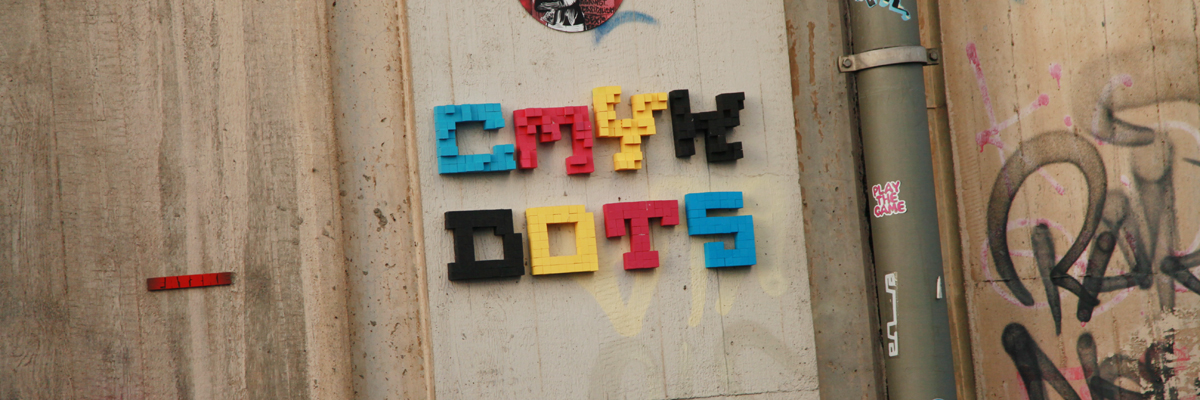
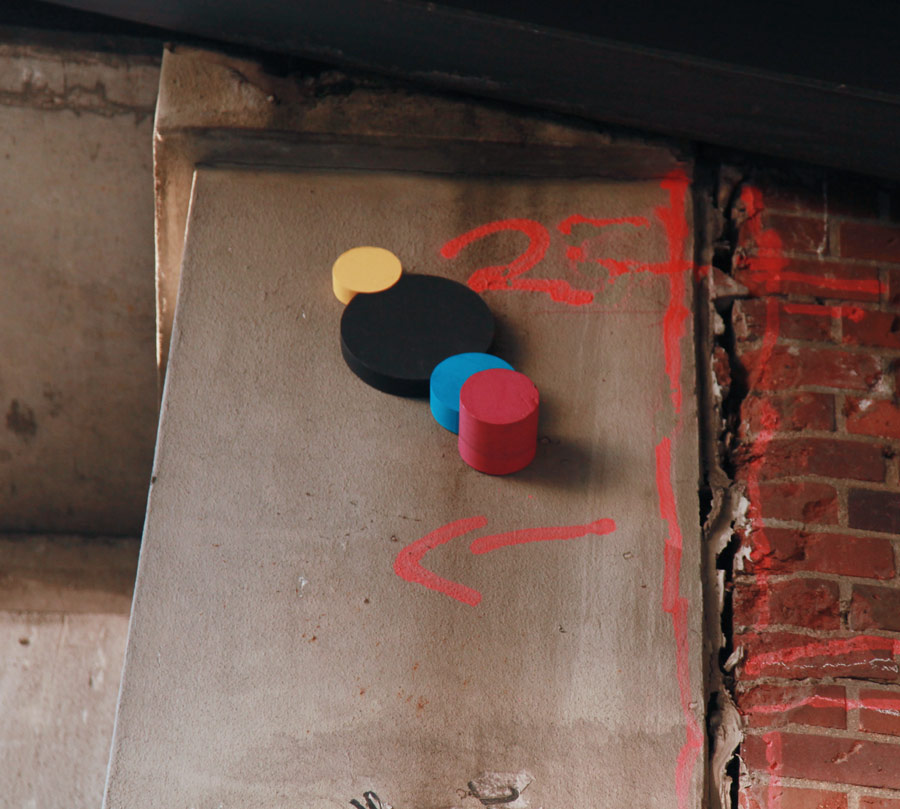
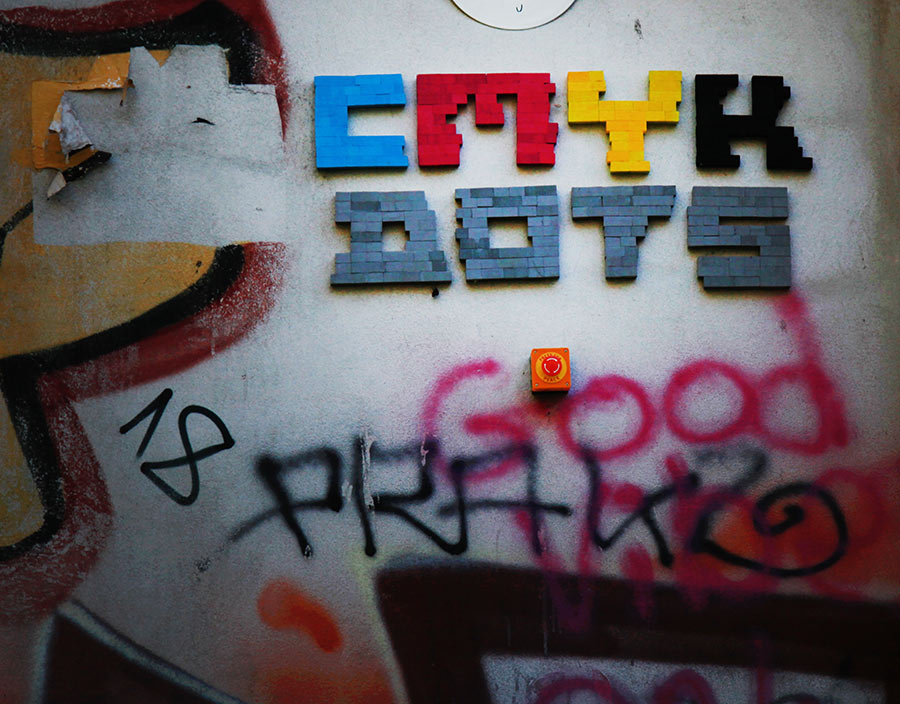
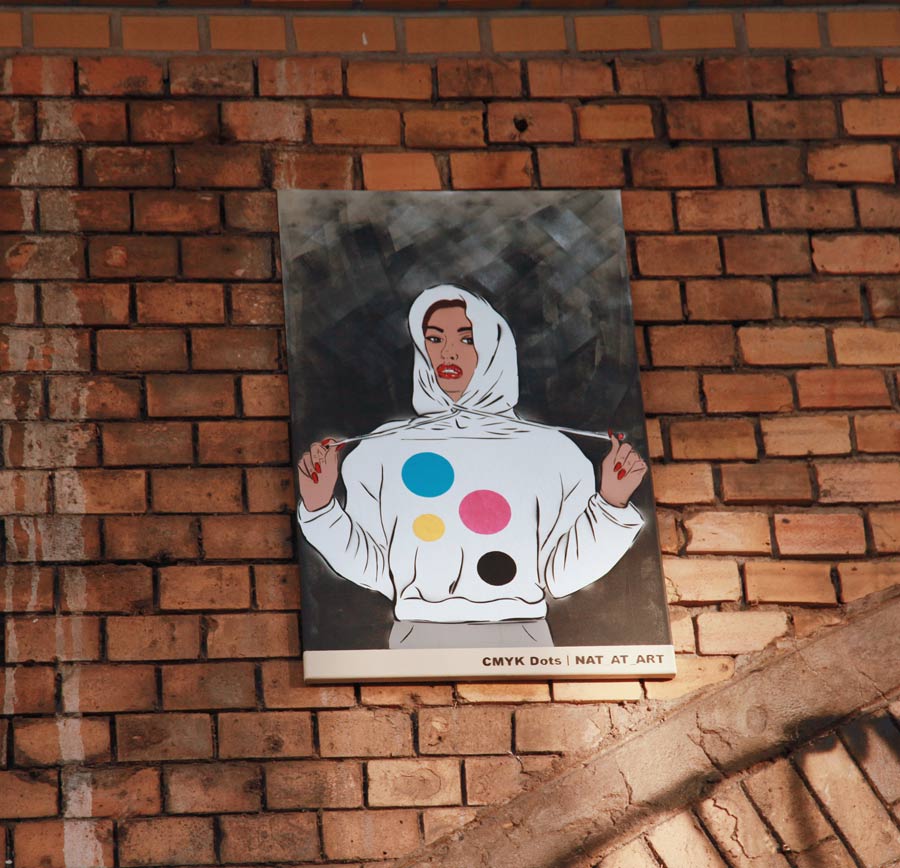
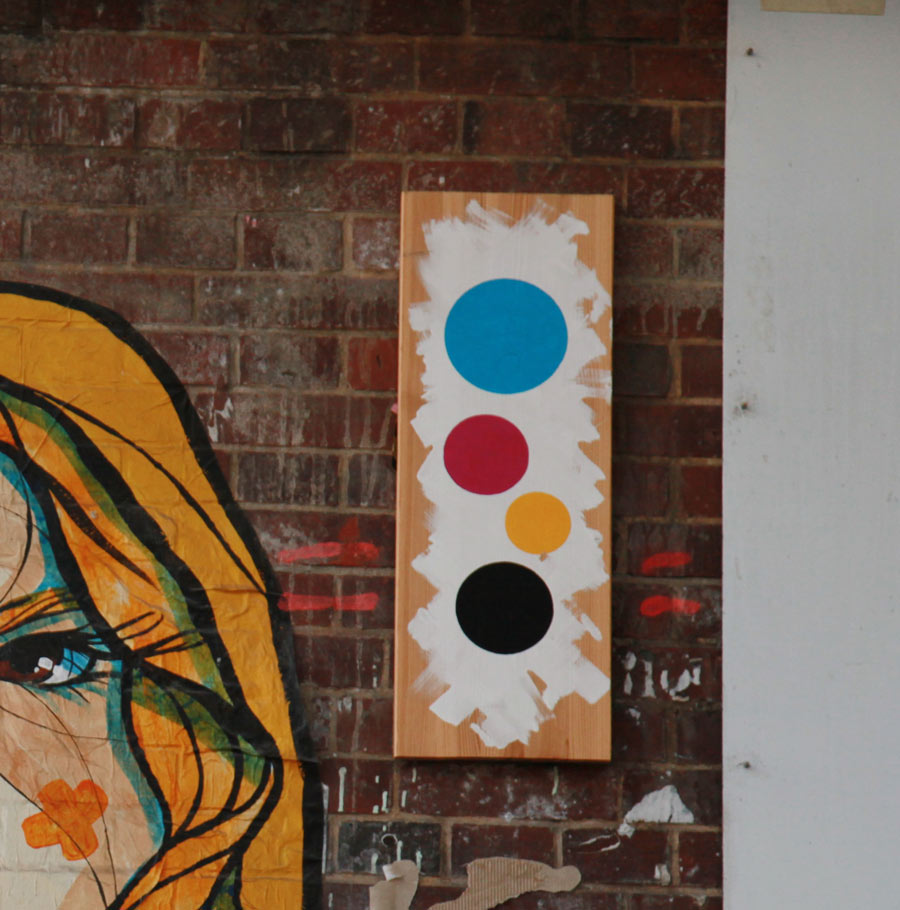
Wading and wandering through the late autumn sunlight dappling the graffiti and street art near Alexanderplatz in Berlin, we noticed periodic dotting of the wall above the chaotic visual fray at eye level.
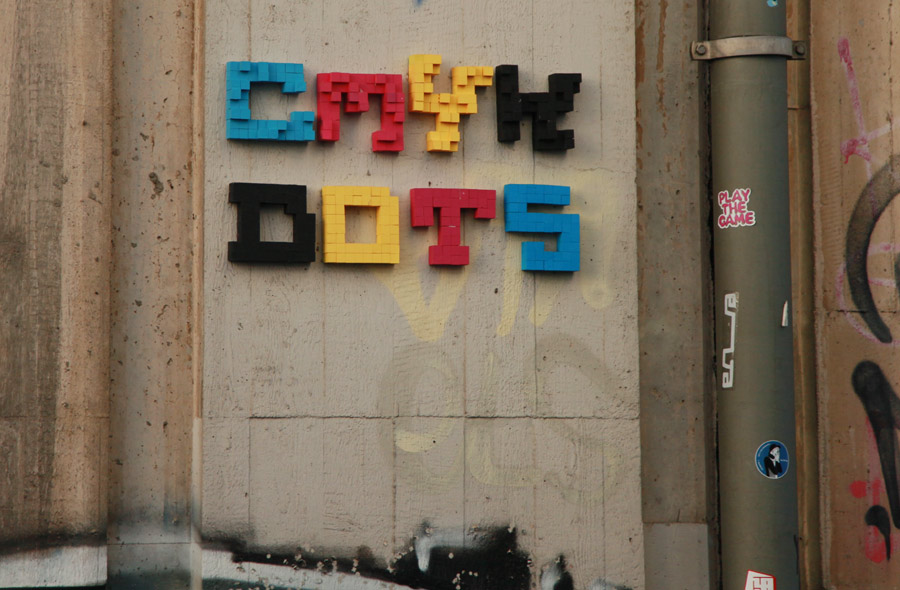
The four dots are a clear, crisp distillation of color that every graphic designer since the print age is well familiar with: CMYK. Expressed in 3-D sculpture dots with a variety of techniques and glued to the wall above us, we were reminded foften during our walk that all colors are a combination of these four.
A one-person mission by Berlin graffiti writer and street artist OKSE 126, the CMYK Dots campaign has traveled across many German and European cities and actually has a map for you to track them down. In addition to prodigious dots on the street, he’s started a line of clothing and art products and has shown his work in galleries like Berlin’s Urban Spree and this month at Hamburg’s Urban Shit Gallery “URBAN ART EDITION 2021” group show. The street art project, which OKSE 126 refers to as a modern technique of pointillism, has exceeded his goals, totaling 1,113 dots, 104 cities, and 16 countries.
Welcome to BSA Images of the Week! We’re thrilled to see you – you look marvelous!
The blustery cold snap outside today follows the mercurial mashup of winds, rains, thunder, and hail that shook our streets and darkened our skies yesterday – denting some cars, pummelling leaves downward. Ah fall; it feels like you are a couch and someone is taking out your stuffing.
The art of the street is indicative of the surreality of our times – a compression of days that also stretch like pumpkin taffy, wrapping around street lamps and fresh new Christmas light displays in Brooklyn. Everything, it would appear, is a dreamland of crisis; the economy, the environment, the bond crisis, the supply chain crisis, growing inflation, an impending food crisis, our faltering belief in institutions, our increasing distrust of each other, the police, the government, corporations, our currency, the medical profession, the church, and certainly our banks, the stock market, and Wall Street – these all define our times. Thankfully we have each other, friends.
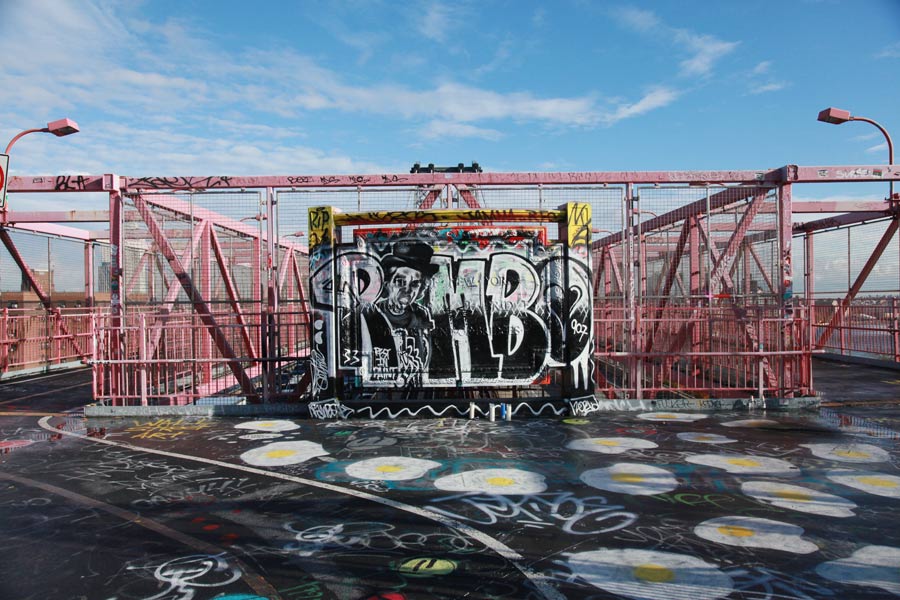
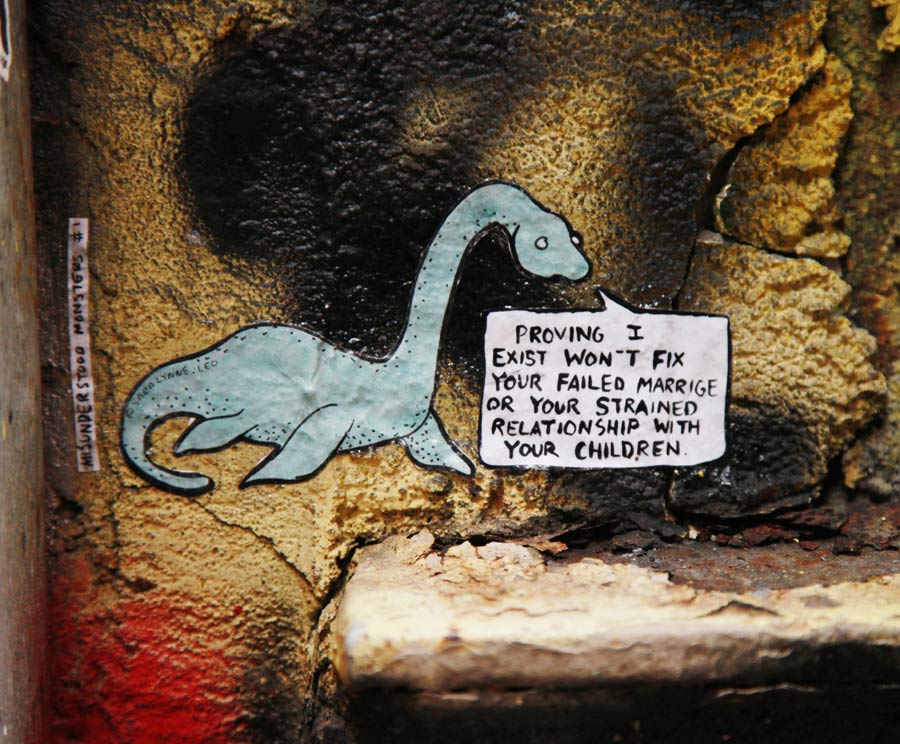
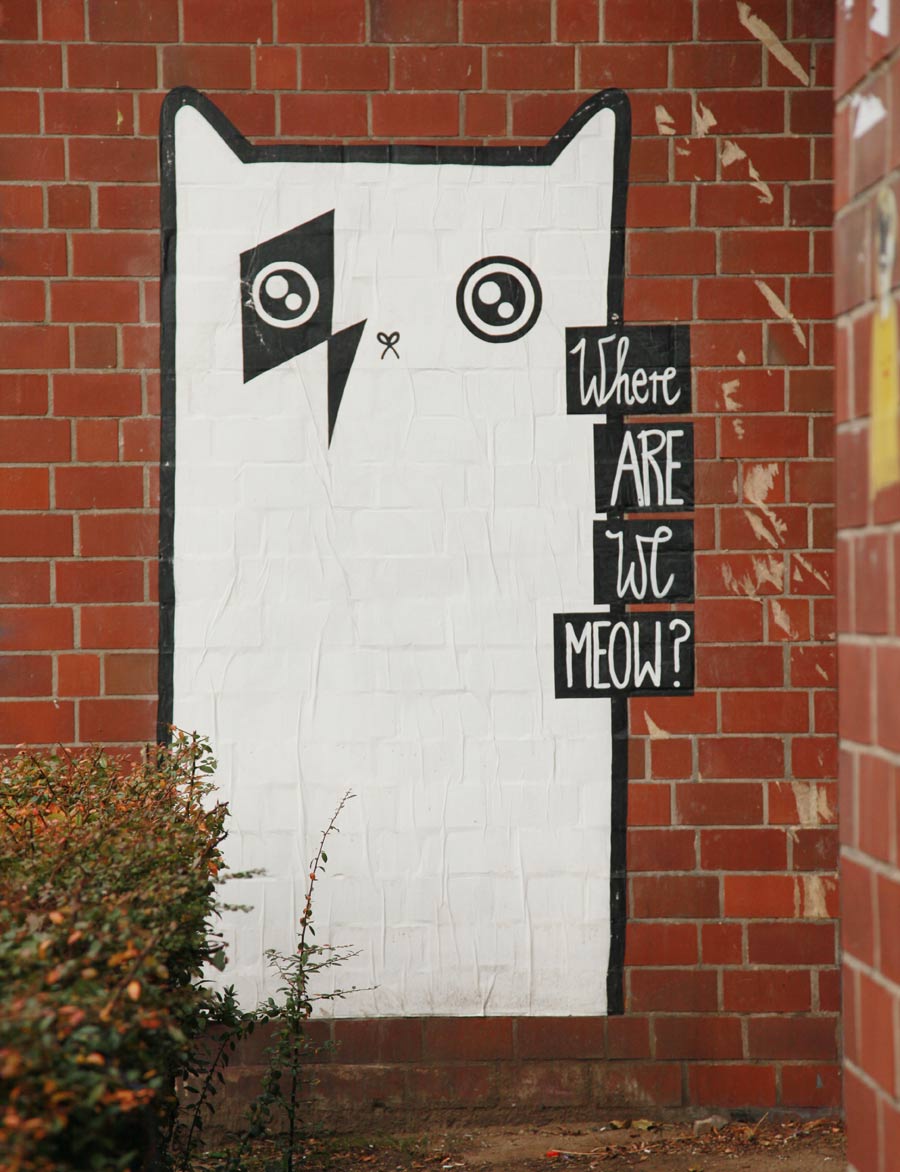
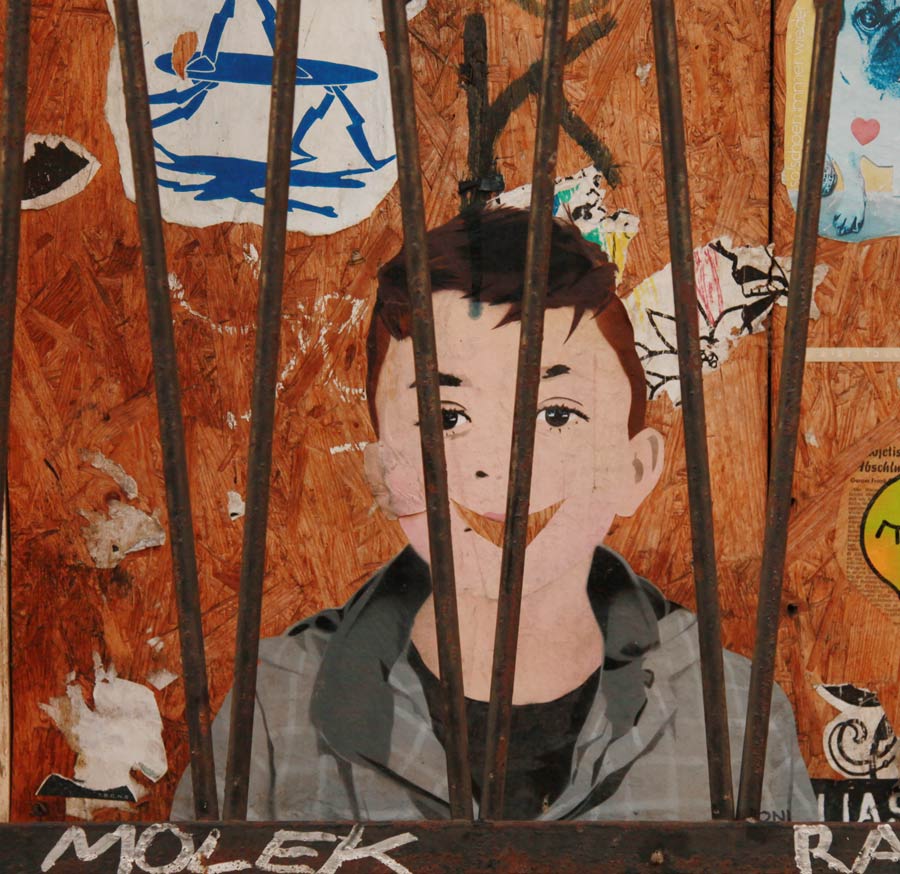
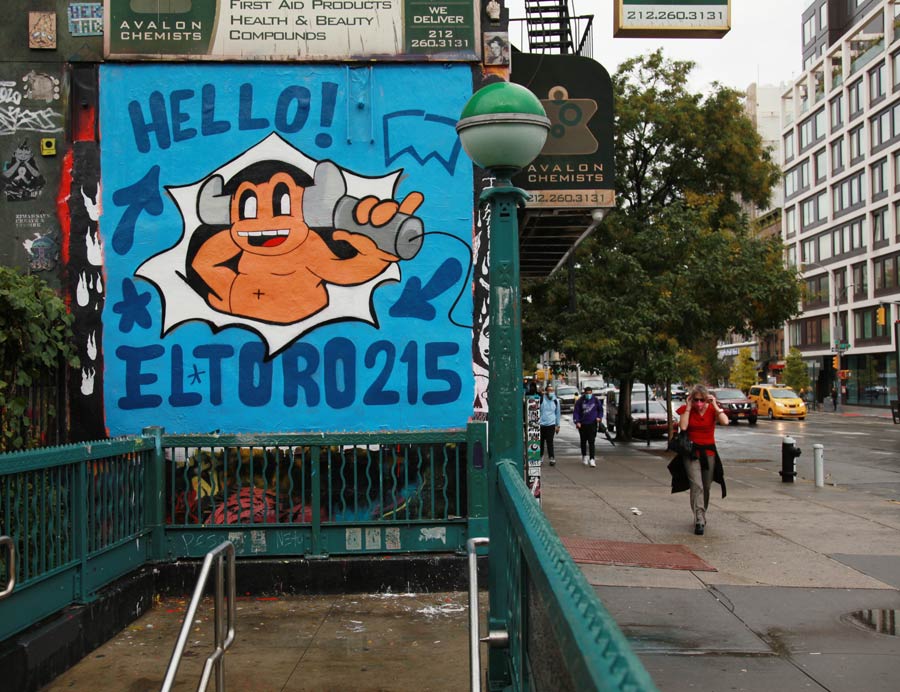
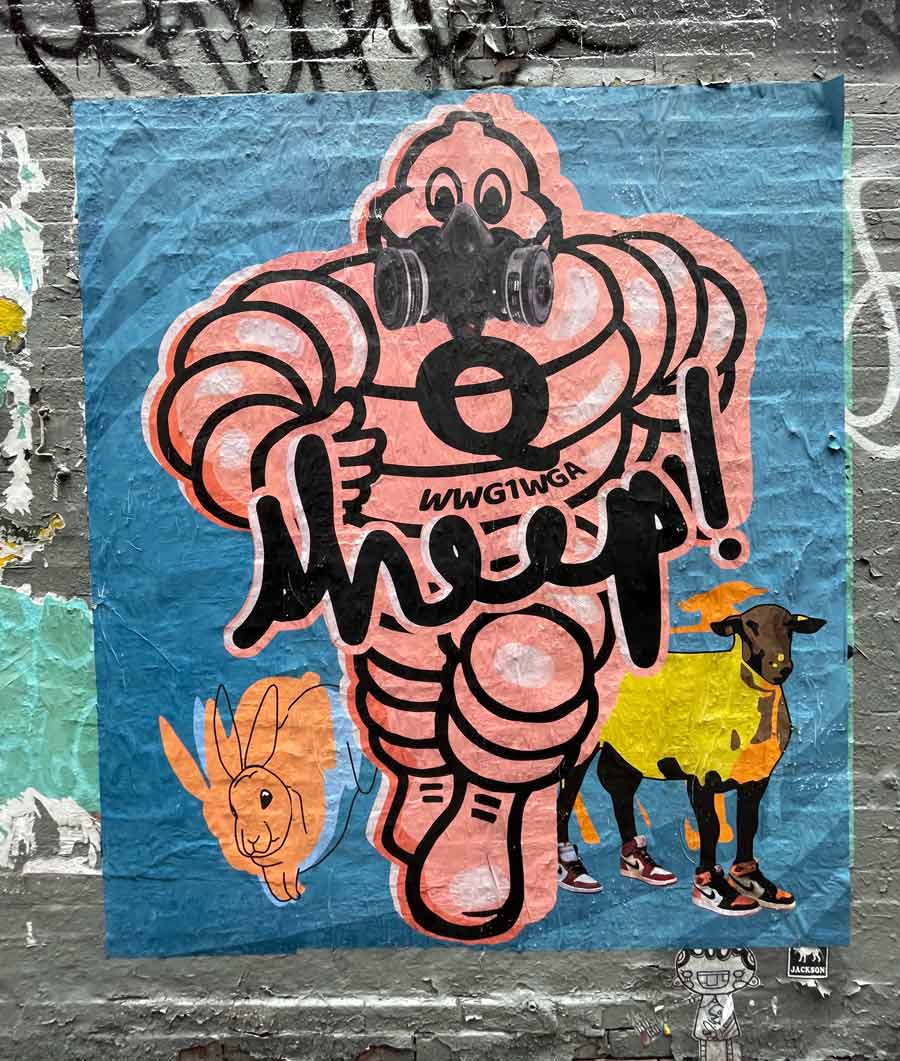
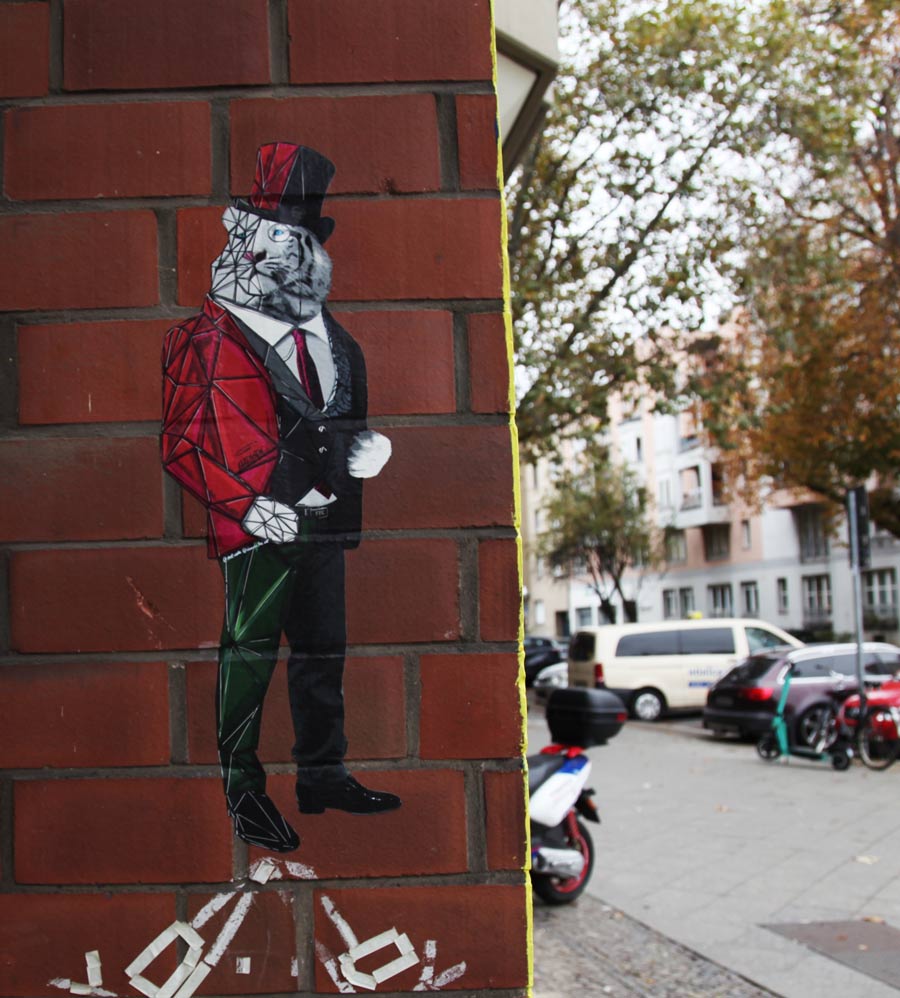
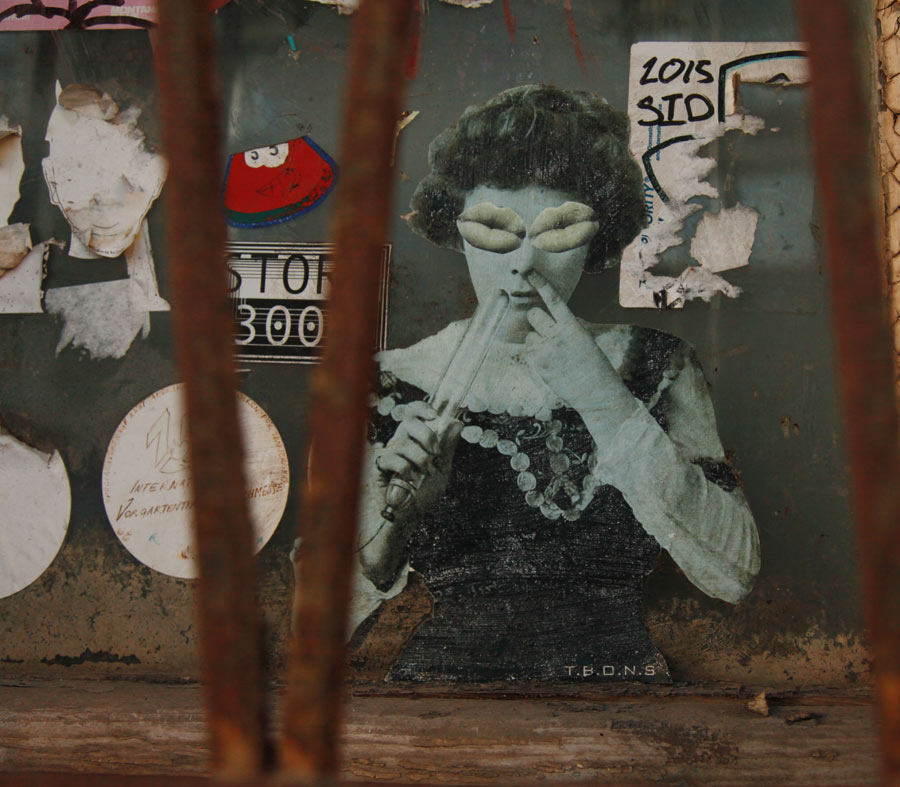
Thank God for street art – the tea leaves of our time. Here’s a jolly mix-up of recent work found on the streets of two of our favorite cities – New York and Berlin.
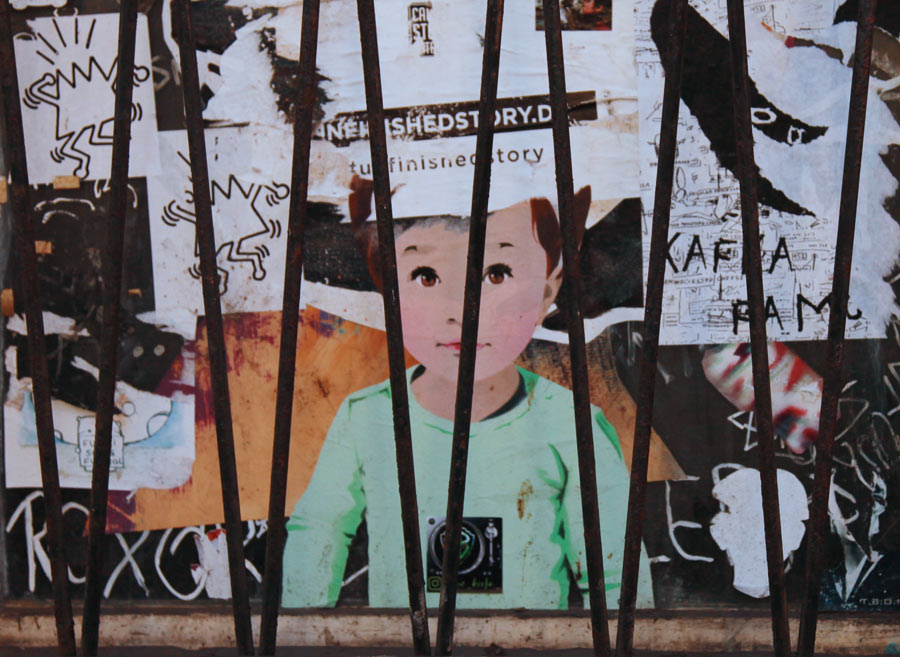
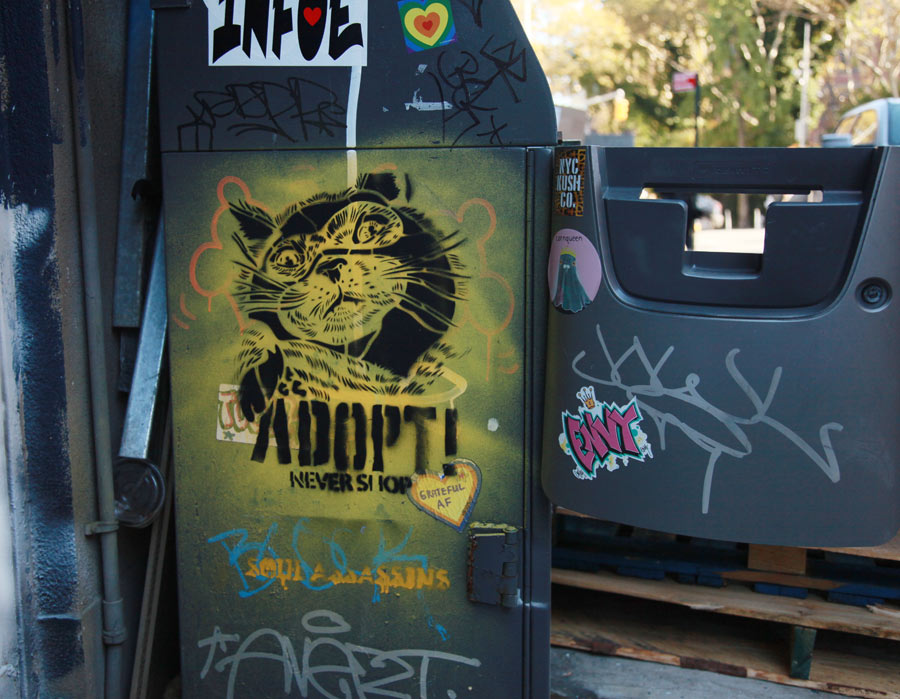
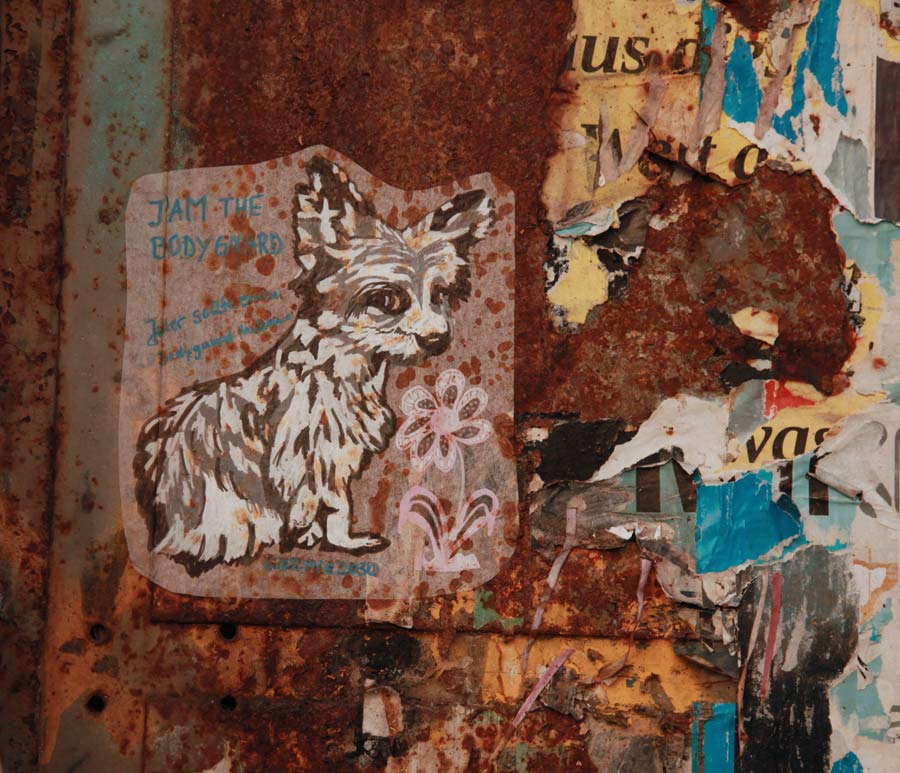
Our interview with the street today includes Chris Jarosz, David Flores, Early Riser NYC, El Toro 215, Kiez Mie, Niko, ONI, Praxis VGZ, Rabea Senftenberg, RAMBO, Sara Lynne Leo, T.B.O.N.S., and Tianoo the Cat.
Happy Halloween and welcome to BSA Images of the Week!
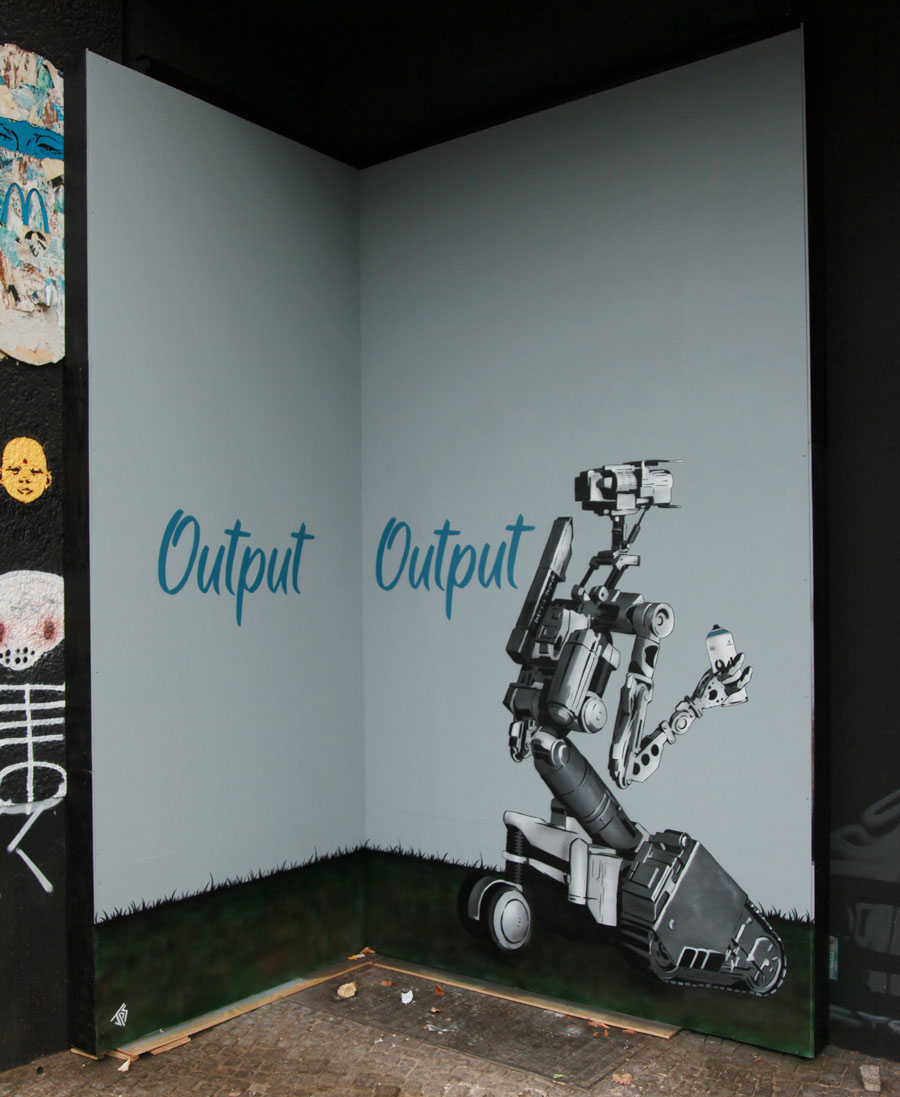
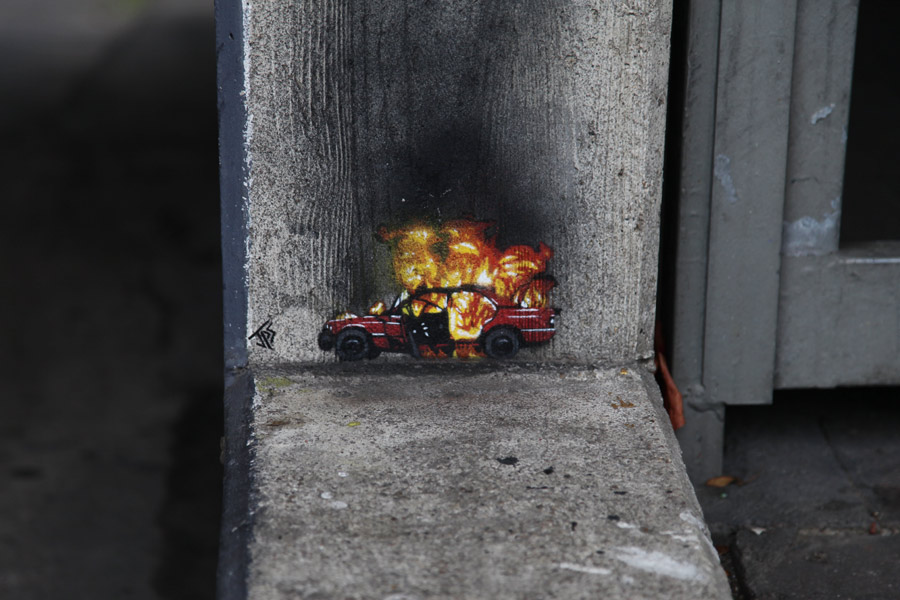
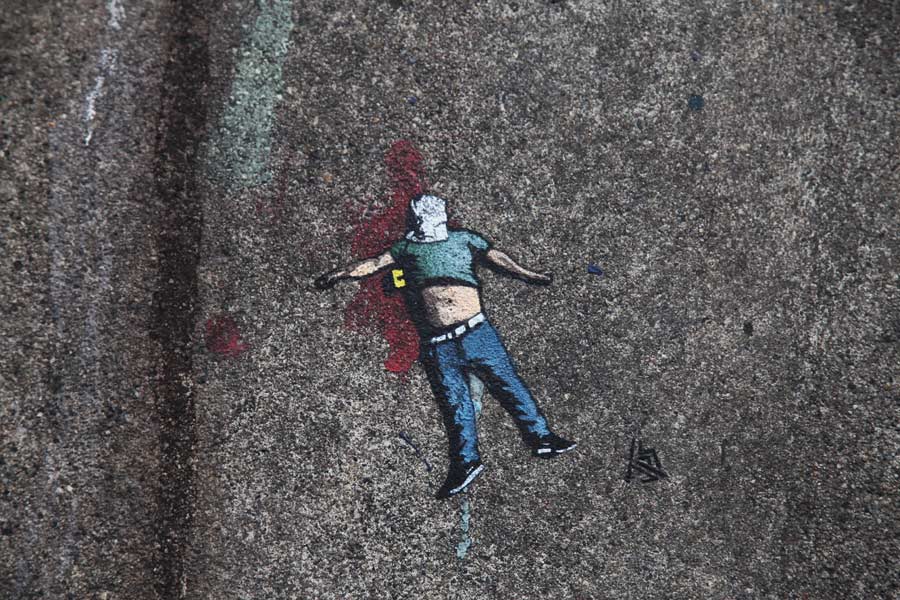
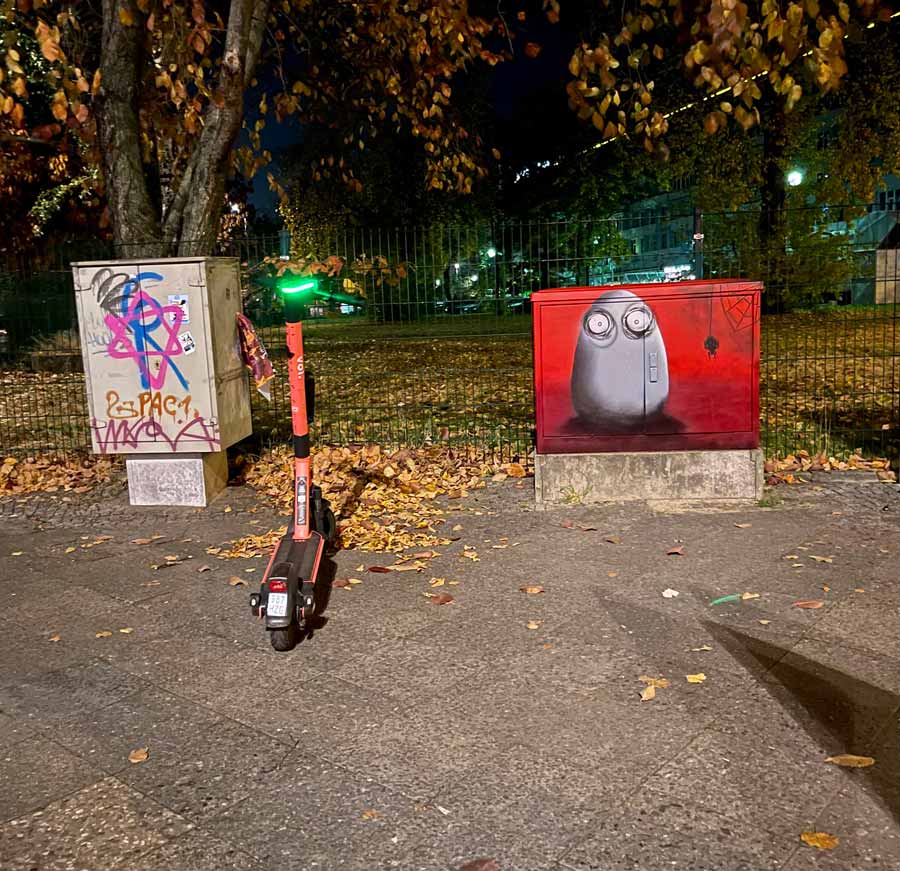
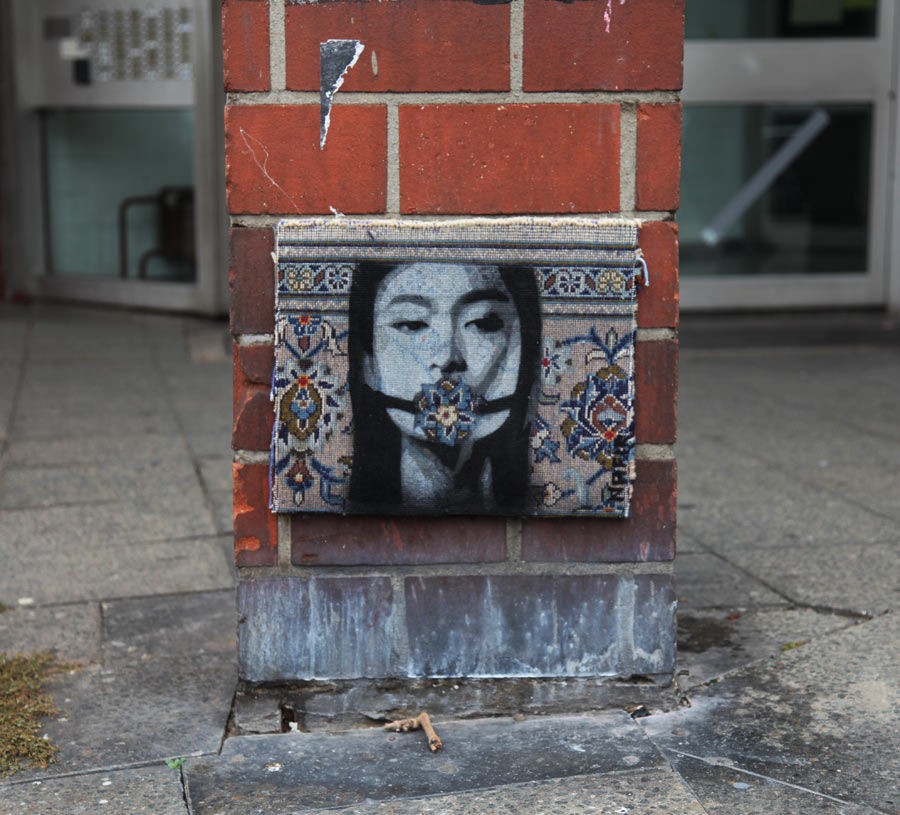
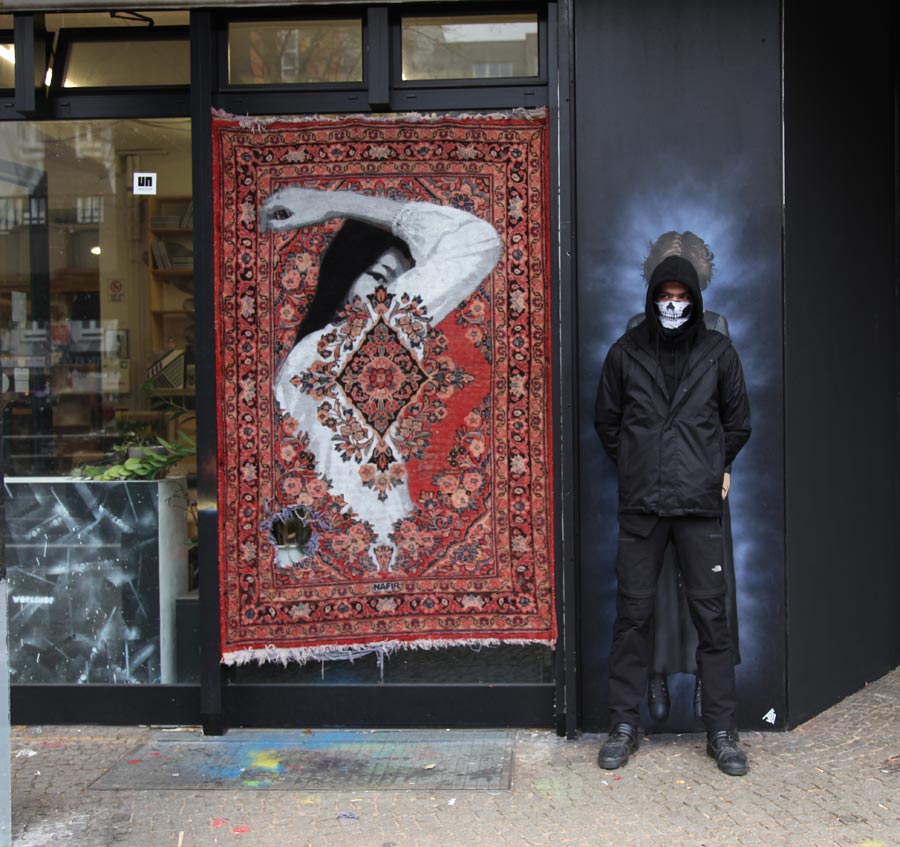
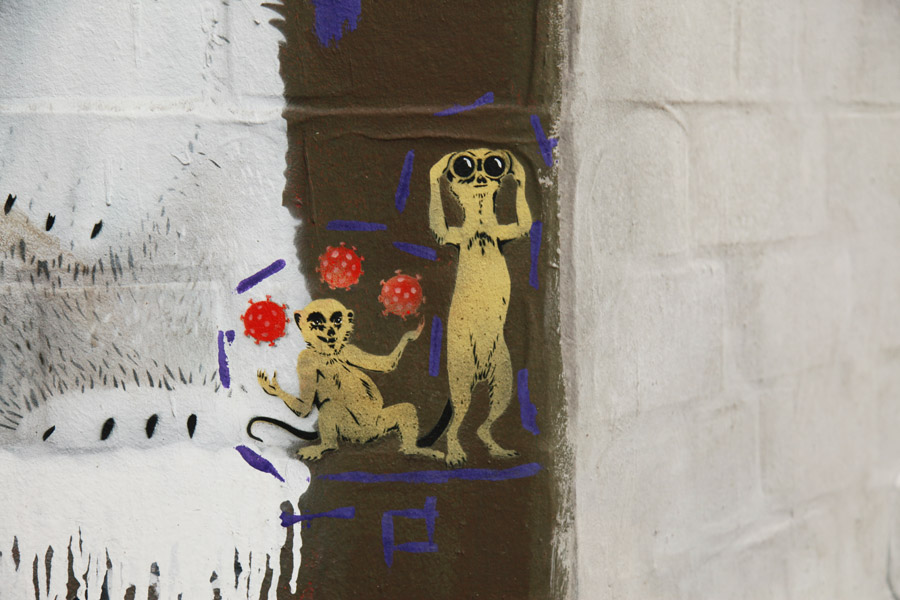
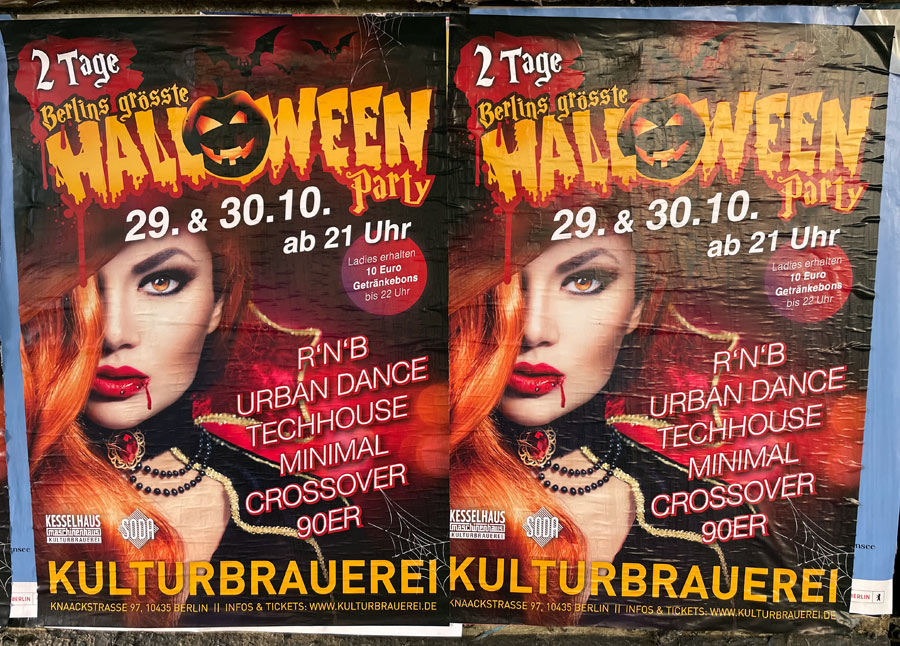
People have been in the Halloween spirit here in Berlin – and we keep seeing new pieces which may or may not be related to the holiday, but remind us of it anyway. Here’s a short collection of new stuff we discovered, including fresh pieces from Jaime Paul Scanlon AKA JPS and Nafir, who were both in town and hitting the streets with new collections of works.
Stay Safe and have fun!
Our interview with the street today includes JPS, Nafir, and a few anonymous pieces.
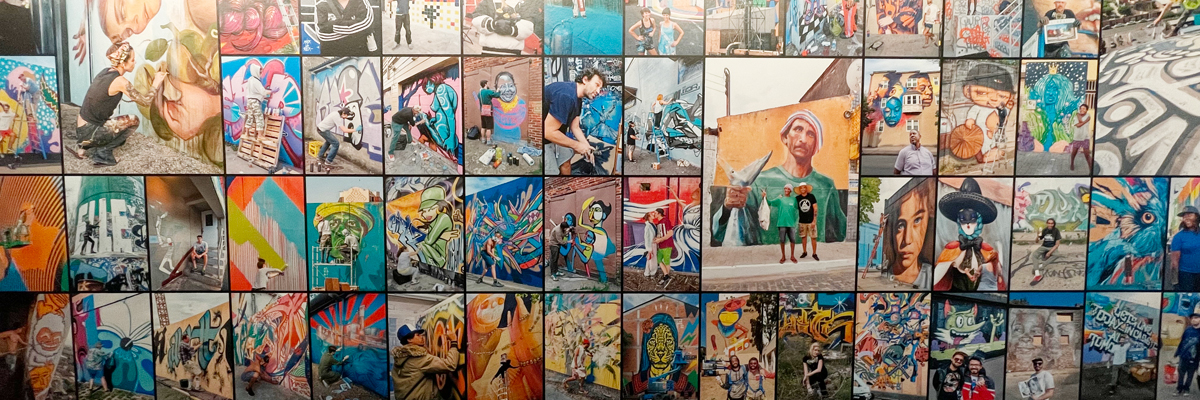
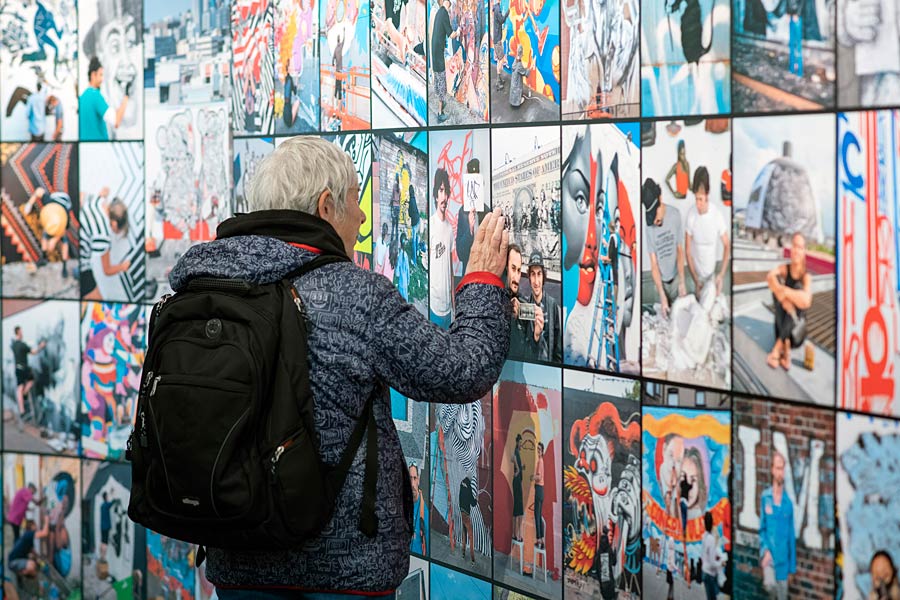
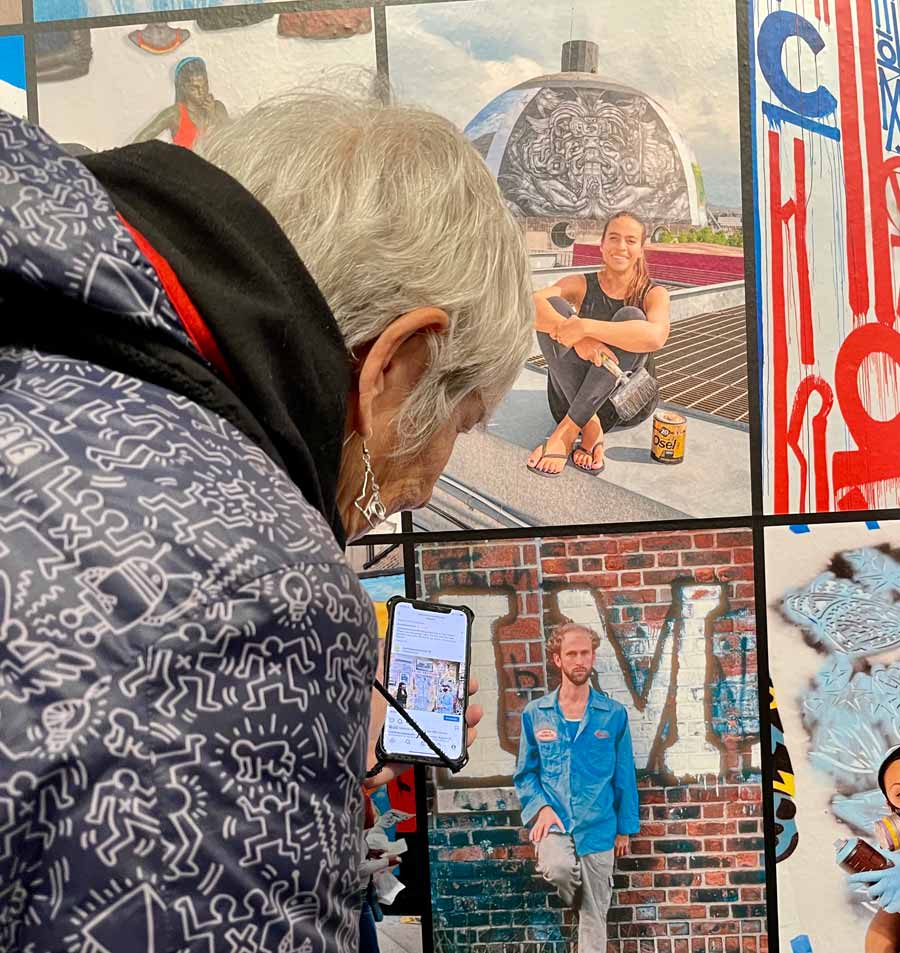
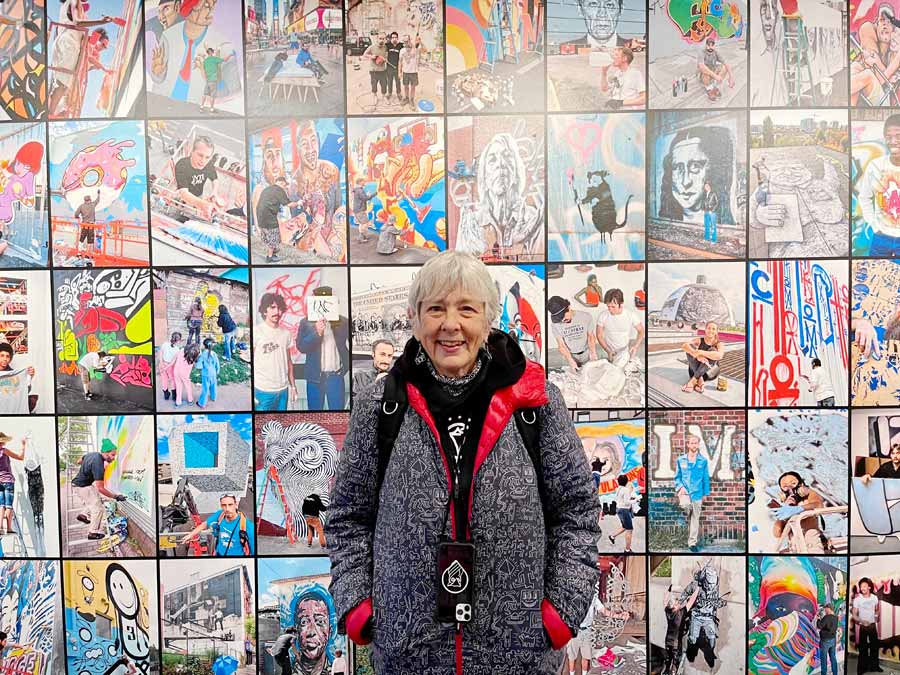
50+ years of taking photos of artists at work means you have thousands of images of graffiti writers straddling trains, street artists leaning off ladders, muralists hovering 20 stories above the street in cherry pickers. One of 11 sections comprising “Martha Cooper: Taking Pictures”, our Artists at Work area has 400 printed images from around the world, floor to ceiling, and across a half dozen decades.
Not only can people find their graff and street art heroes on these walls as seen through Martha’s eyes, we have also created a database searchable iPad of 1300 more images of Artists of Work that have never been seen before. Just enter a country name, or artist’s name, or even a Street Art festival name, and you’ll get a whole lot of eye candy, artists, and tools of the trade.
In their ongoing quest for creating public works that meaningfully impact society and provoke examination, Various & Gould bravely trespass the silent agreements and disagree.
During their recent multi-week installation in Berlin, the street art activist duo rips at the roots of Western Colonialism by messing with the permanence of statue materials and decades of history and its retelling.
The results are colorful and sometimes bitter, usually illuminating.
By targeting the 6 meters (19.6 foot) statue of the first German Chancellor Otto von Bismarck they created a paper-cast of the man and “took it symbolically off the pedestal under the eyes of dozens of spectators,” they say.
The de-mythologizing work brings the man and his history down to the level of the everyday person, and through of series of performances and discussions over a 5 week period from August through October, the street artists and their collaborators hope to crack open some of the conspiracies that were wide open for everyone to read about when white guys split up Africa like so many spoils.
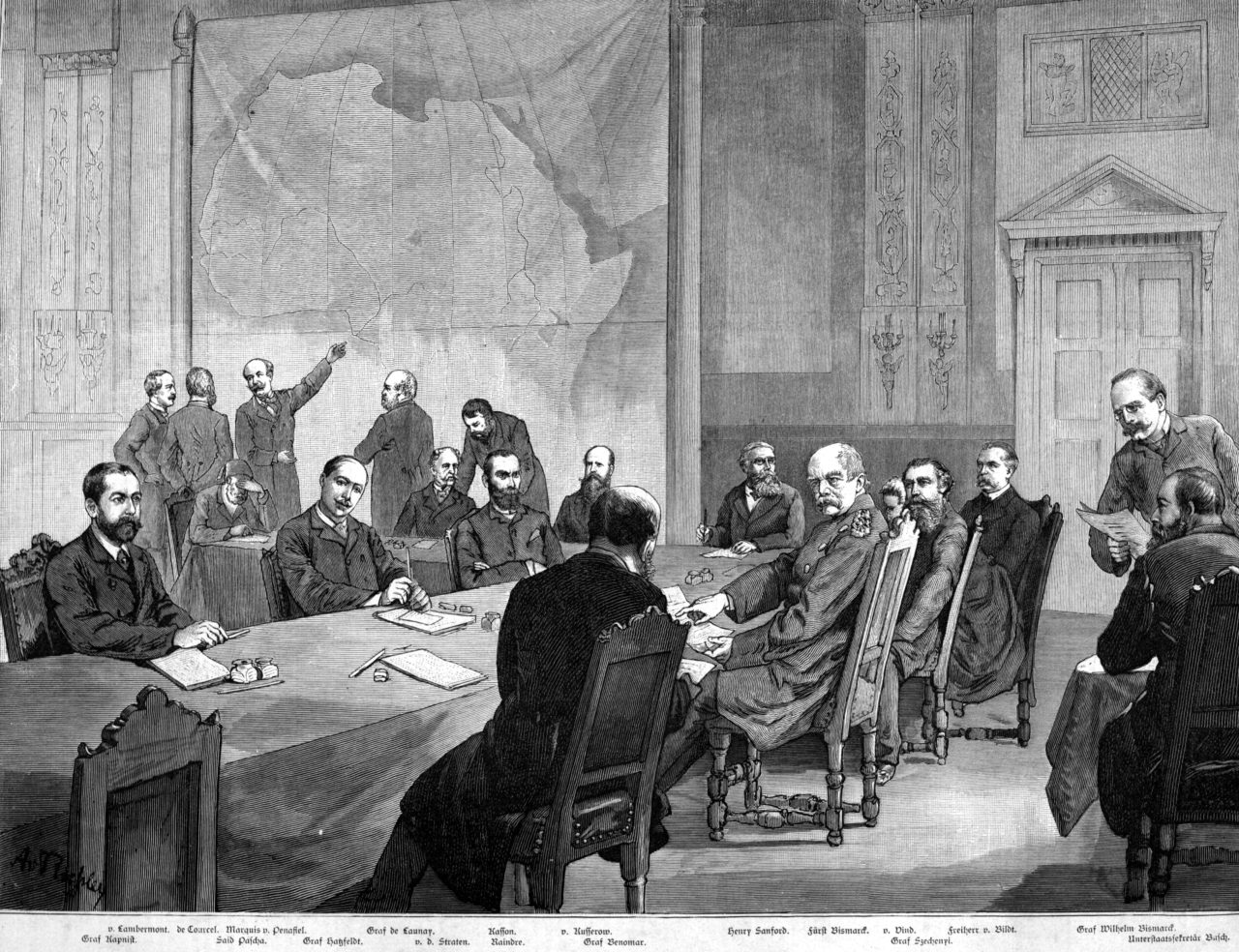
“For ‘Monumental Shadows’,” V&G tell us, “a series of seven artistic paper impressions of monuments in Europe is planned.” This particular installment is set “against the historical background of the Berlin ‘Congo Conference’ (1884-85),” which regulated the colonization of trade in Africa by fourteen countries, effectively partitioning the continent in a formalizing of theft and imposition of power. Aside from that, it was great.
Using colorful papier-mache techniques of wrapping the sculpture and bringing the pieces to the ground for performers to interact with and formal discussion panels to happen, Various and Gould intend to recall the false narratives and address the underlying debris of social and structural racism in German society specifically, western society generally.
“Our concern is to break the power of the white narrative on colonialism by proposing a change of perspective,” they say, and their accounts of responses by passersby range from supportive to corrosive; from outright verbal attacks on dark-skinned members of the crew to Boomers stopping by to say that all of this topic was essentially passe and not necessary anymore. “We fought colonialism already in 1968!” said one woman as her husband shouted profanities at the couple.
In a story similar to those of American confederate statues coming down, there also were a fair number of people who stopped by the art project to protest the disrespect to the legacy of the statue and their personal ownership of historical events.
“Two black members of our team were still finishing some last bits of work on the scaffolding while the rest of the team was preparing the lunch break down on the ground,” they say. “Suddenly a woman (white, German, in her seventies) came by and started to shout up into the scaffolding, addressing our two team members: ‘I am outraged! This is my history.’”
“One of our team in the scaffolding answered instantly: ‘This is also our history.’”
This is not the first time that Various and Gould have created large-scale installations involving public monuments and the repositioning of historical perspectives – See our 2017 article “Marx and Engels Statues Re-Skinned & Re-Located” for example.
Perhaps because of the increasing tensions today in Europe and the US and elsewhere due to voracious crony capitalism and corruption creating a fast gulf of opportunity – and increased anxieties due to the coronavirus, V&G say they were a bit more soured than usually by the vitriol directed at them and their art project – including the unusual multiple requests by police to show permits. There were other subtleties of course.
“We noticed in many conversations with outraged citizens, that they would behave far more respectfully towards a white, cis male team member, than for example towards a female and/or person of color,” says Various.
“In general many passers-by kept bothering our team members in a number of ways,” offers Gould. “Very frequently people trivialized the German colonialism and Bismarck’s role in it.”
The conference of Berlin, as illustrated in “Illustrierte Zeitung”, public commons
And for the black members of the team, the experience was also intense at times.
Billy Fowo, who worked as part of the team on the scaffolding and on the paper-casting is part of Colonial Neighbours / SAVVY Contemporary, posted this on his Instagram @karl_fowo at the end of the second week:
“Though very personal, I think the presence of people like me who don’t look ”German” to their eyes, in this process, made the pill even more bitter to swallow. But what do the words ‘my history’’ constantly sang as a chorus by this second group really mean? Bismarck & Co in organizing the 1884-85 Berlin conference – didn’t they unfortunately/ unconsciously make us ALL part of ”that history!” Of course, this is not a question! If it were one then the answer is obviously YES! We are ALL part of ”that history”. We ALL build histories! We are today more than ever in dire times, and it is vital that in rewriting and writing the pages of our histories, we completely destroy the narrative of the single story and start including multiple perspectives.”
Thus the power of monuments, and art in the public sphere. Various & Gould again do the hard work of helping us examine those who we revere, and the messages we integrate into our institutions and our daily life. Equitable society needs these questioners and questions about the ‘monumental shadows” cast over others.
“We have to deal with people who feel entitled to exclude other people from participation, from conversation, from civil rights, from society, from history,” they say.
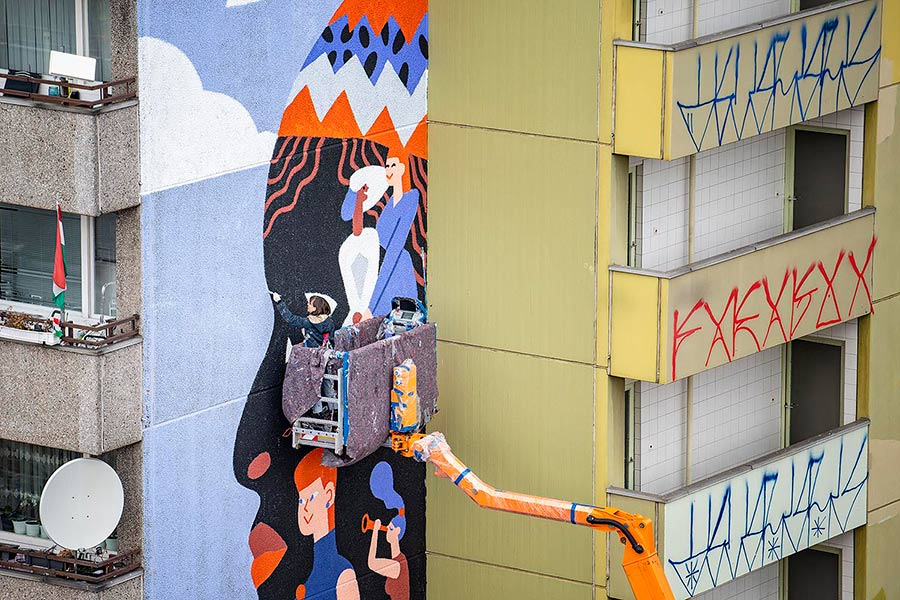
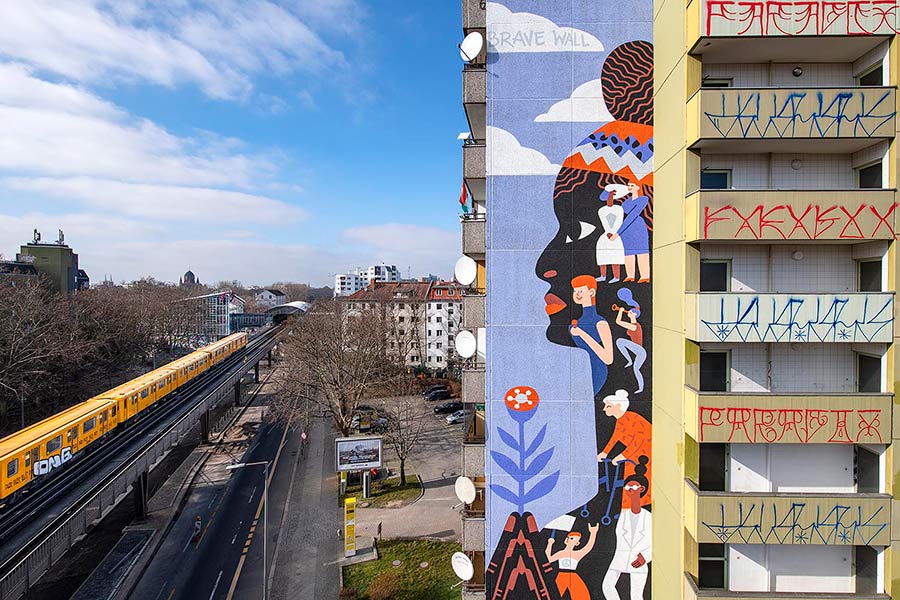
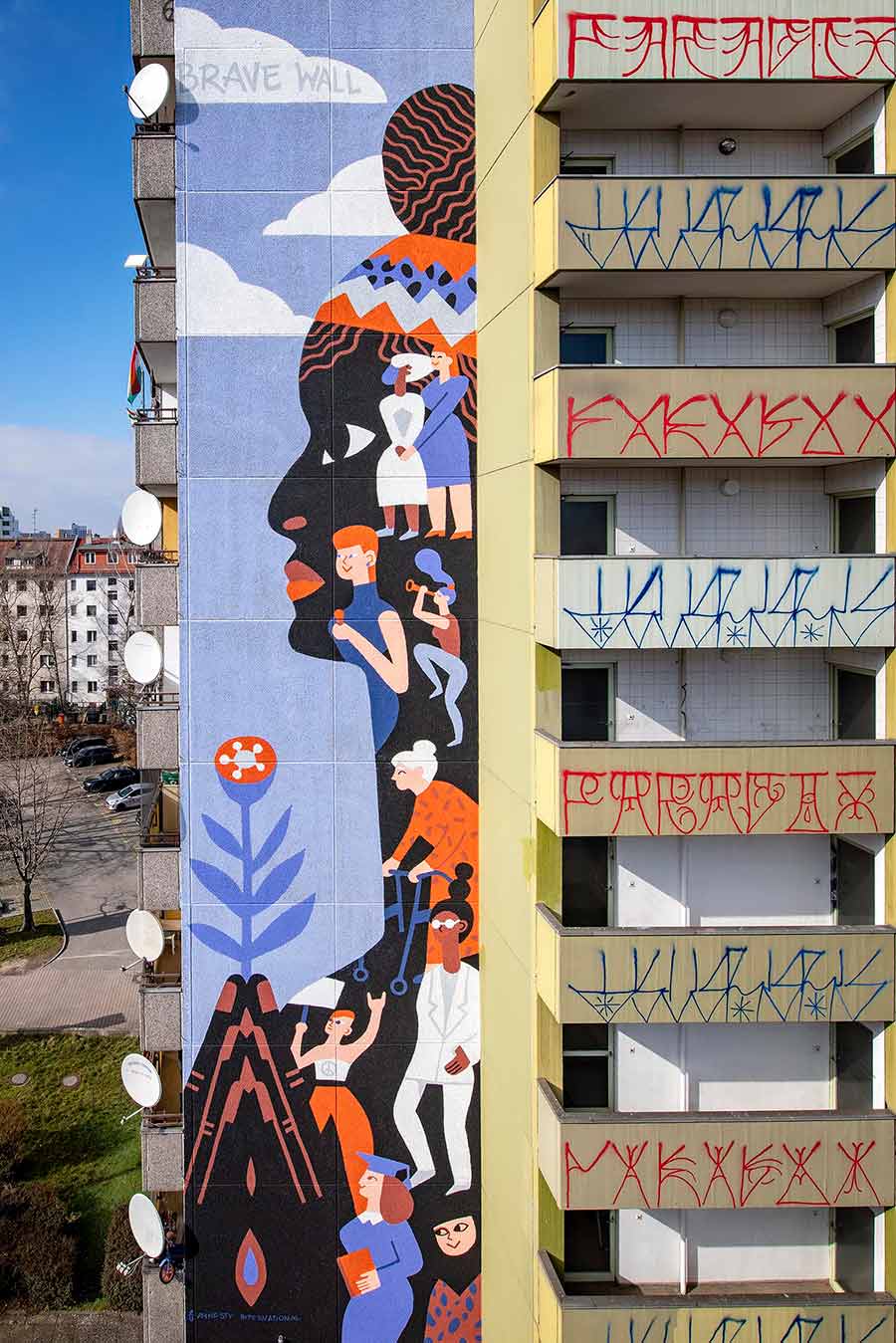
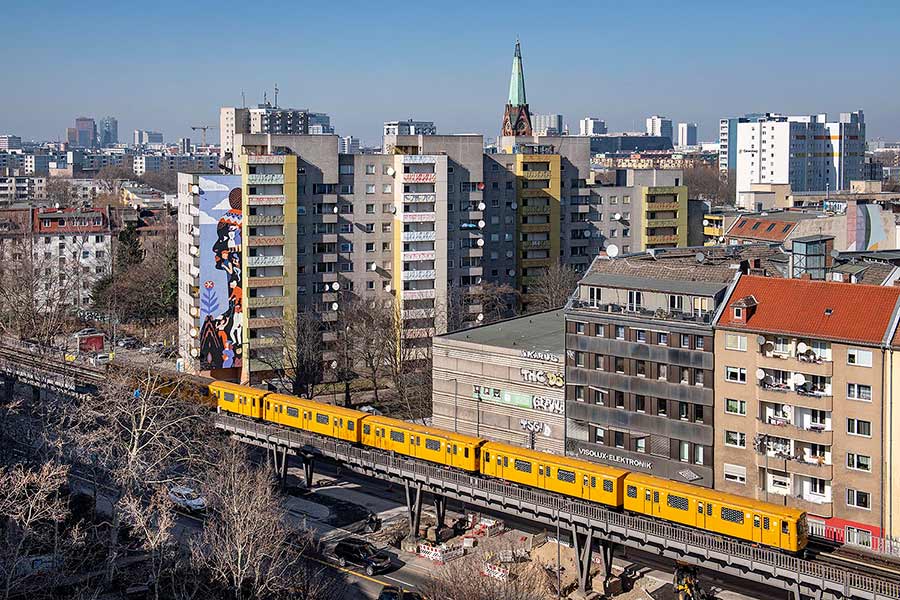
Over the last few spring-like days in Berlin, her portrait rose slowly about the streets, reminding us that her moral courage continues to have an impact today on International Women’s Day. It’s only been a recognized holiday in this German city for a year, says Urban Nation museum director Jan Sauerwald. Franco’s visage is the first to occupy what has been officially identified as the museums’ ‘Brave Wall.’
“Realizing this political mural on the theme of women’s rights together with artist Katerina Voronina is a special moment for the URBAN NATION Museum program,” he says, “To present the first ‘Brave Wall’ in Berlin and Germany on this day in cooperation with Amnesty International puts the project in a fitting context.”
The artist was chosen by a panel made of an equal number of Urban Nation and Amnesty International participants, along with journalist Miriam Davoudvandi. The joint goal on International Women’s Day is clear.
“Women’s rights are human rights and therefore an important part of our human rights work. I am very pleased that the first ‘Brave Wall’ in Germany was designed by a woman, Katerina Voronina, and honors the impressive commitment of human rights defender Marielle Franco,” says Dr. Julia Duchrow, Deputy Secretary-General of Amnesty International in Germany, in a press release.
An illustrationist and motion designer, Katerina Voronina successfully evokes the resolute spirit of fighting for human rights in the portrait of Franco, “With the realization of this ‘Brave Wall’ I had the opportunity to bring a special and courageous woman into focus.” she says.
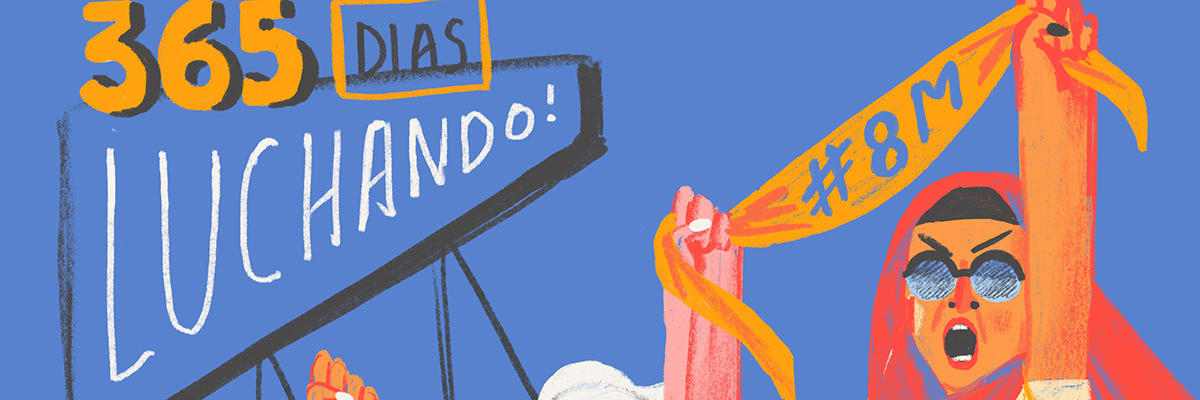
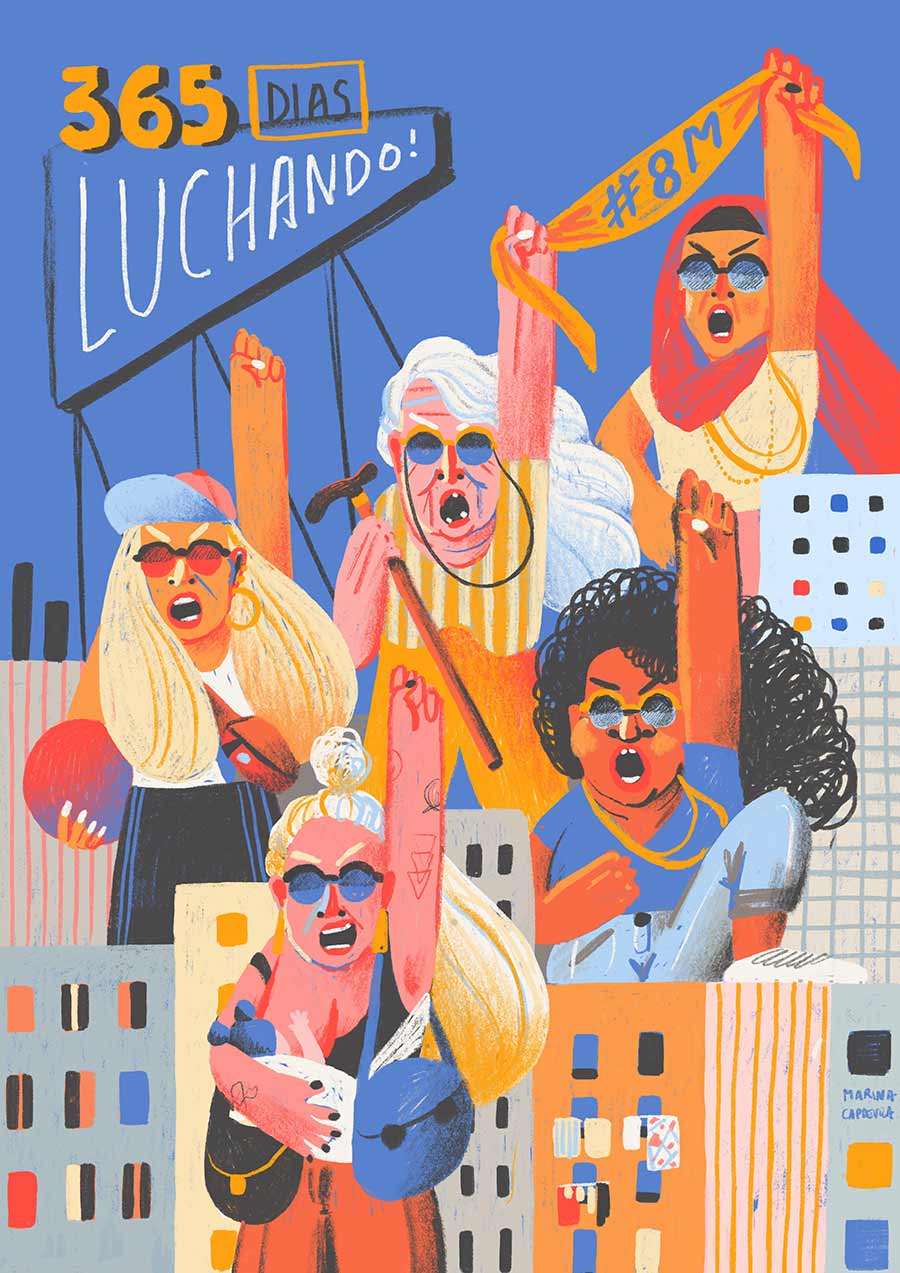
Meanwhile, in Spain, artist and muralist Marina Capdevila identifies an obvious question about saving only one day to pay tribute to women in this new piece.
“Today, we still are fighting and working nearly every day to be listened to, to be taken seriously,” she laments, reflecting on the sly kind of dismissiveness she feels about her art practice sometimes. “I’m tired of receiving 8 million emails with proposals that offer to ‘give visibility to women,’ ” she says.
“If we continue like this, will we also eventually only work one day a year?”
Until such a day, she’s loving life as a painter and savors the sisterhood that brings her support and opportunity. “I am fortunate to have wonderful women in my life who inspire me, help me, and above all, make me laugh.”
Marina Capdevila. “365 Dias Luchando” (photo courtesy of the artist)
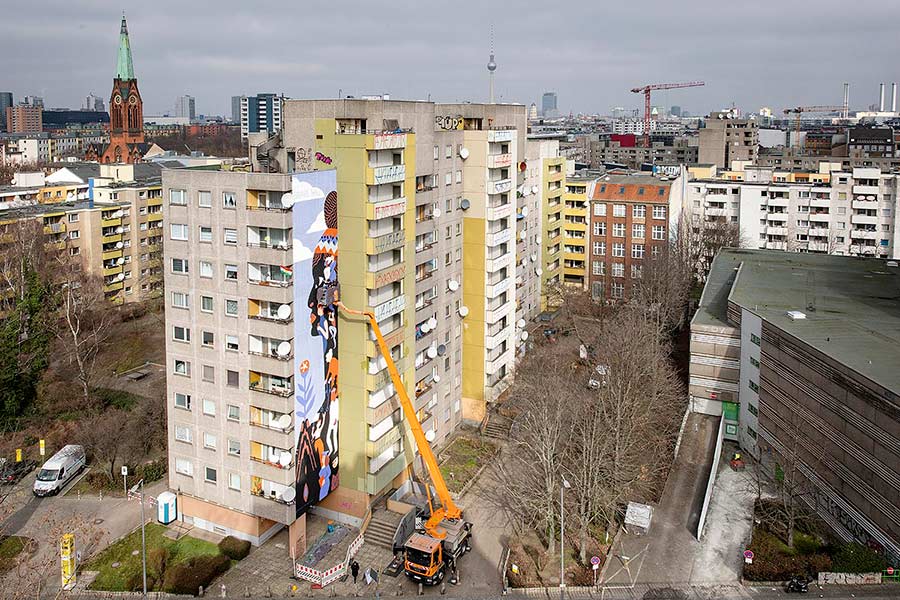
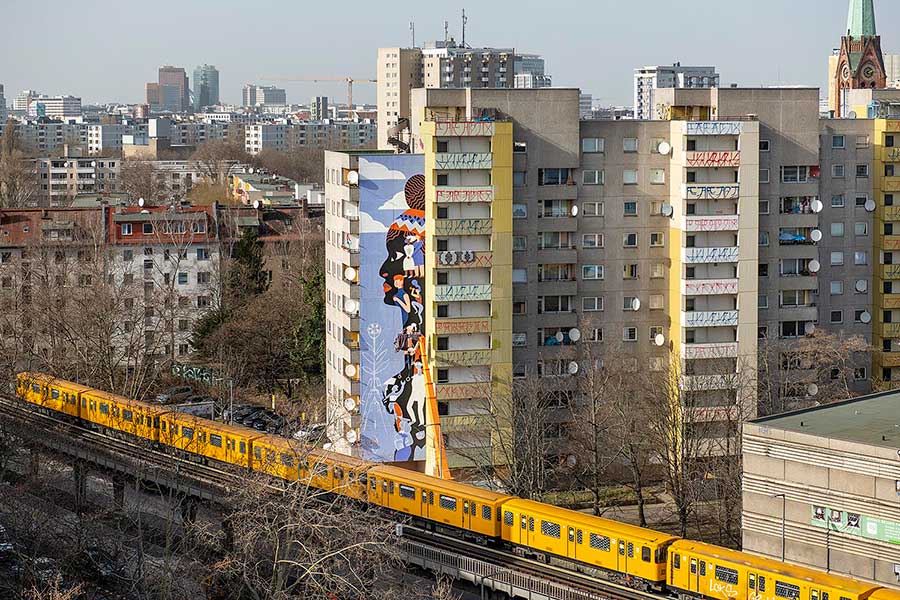
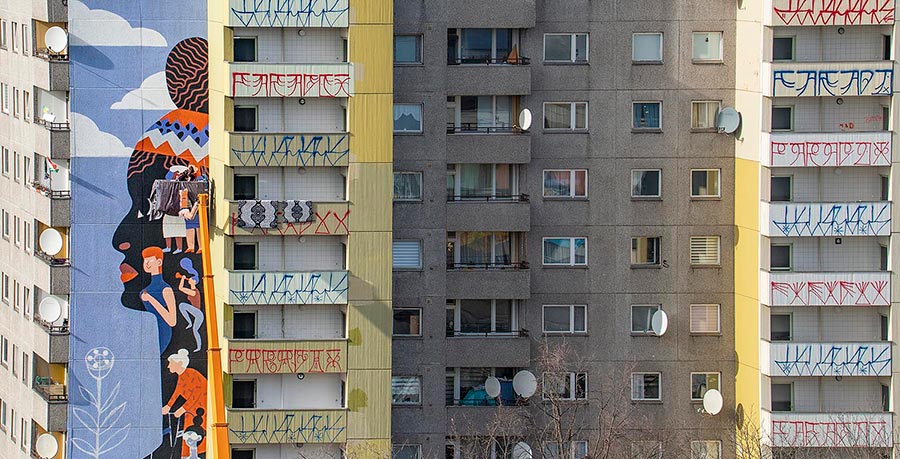
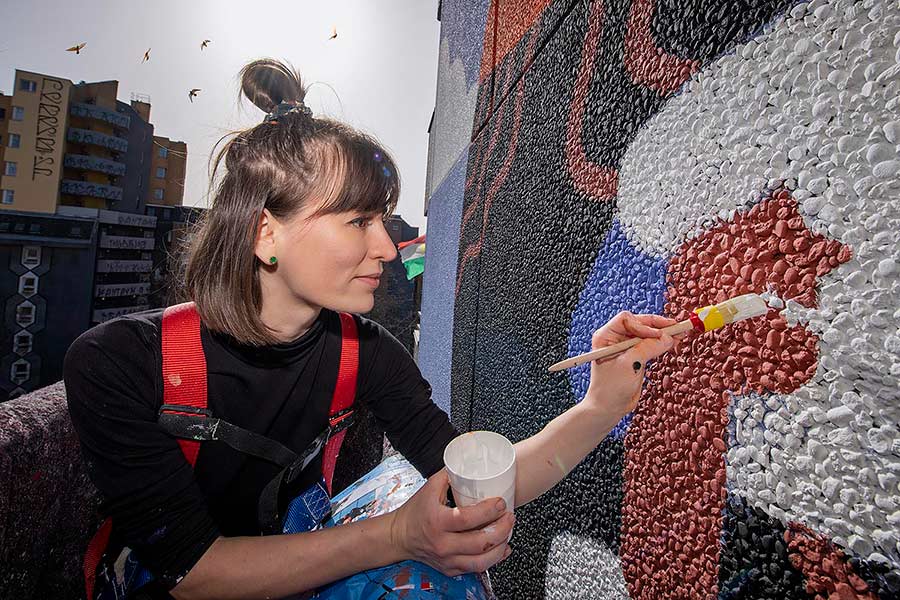
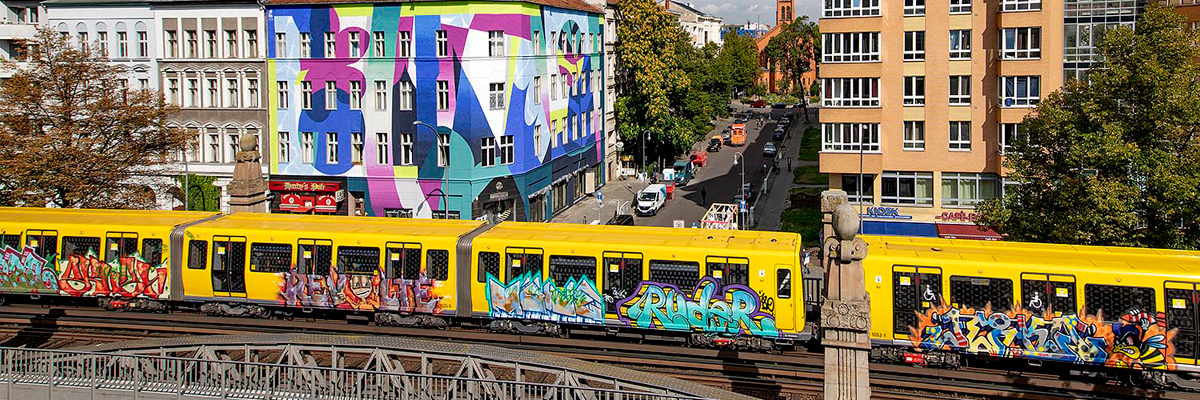
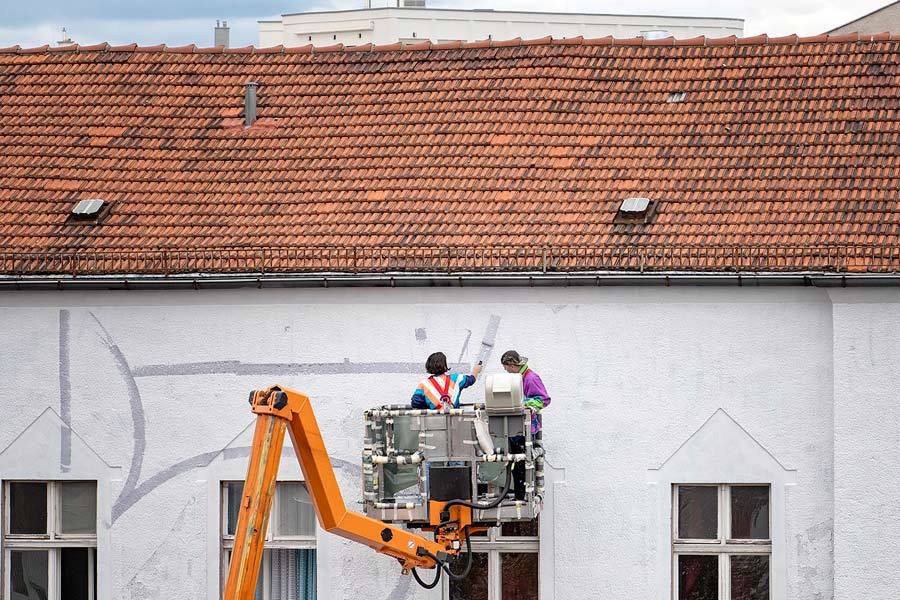
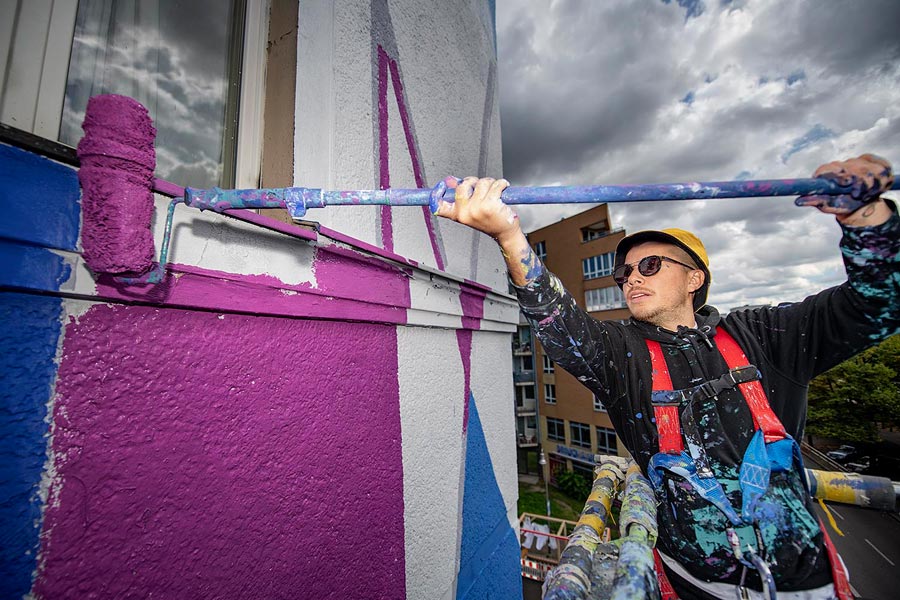
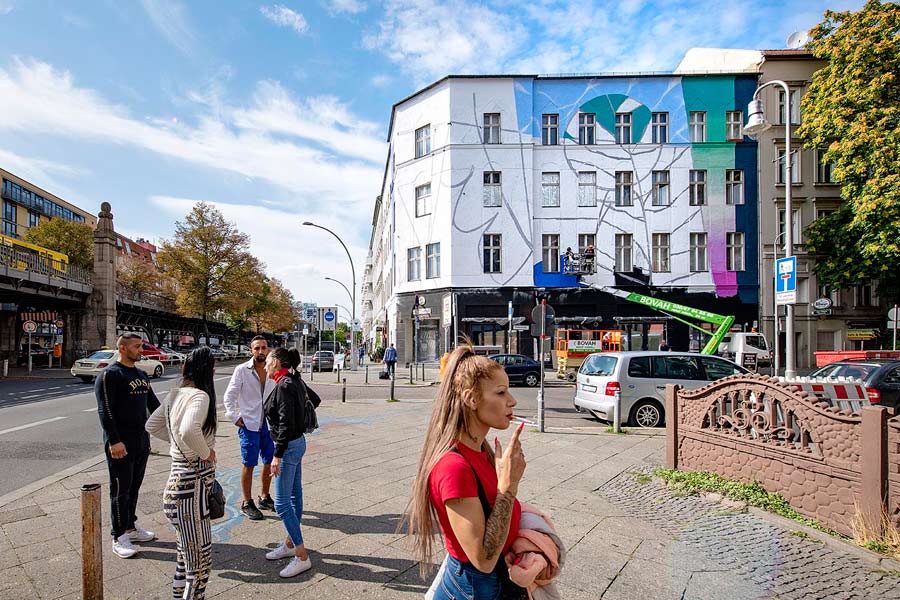
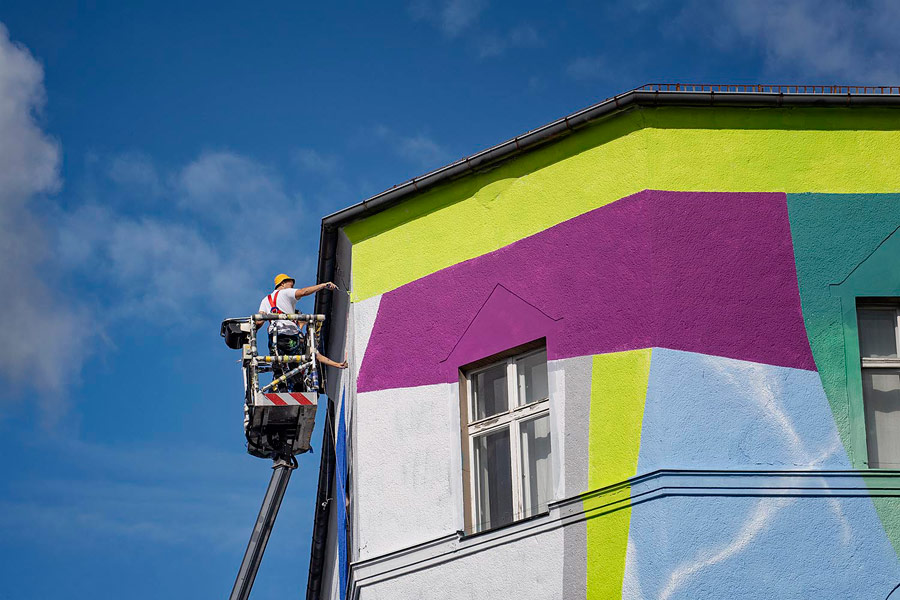
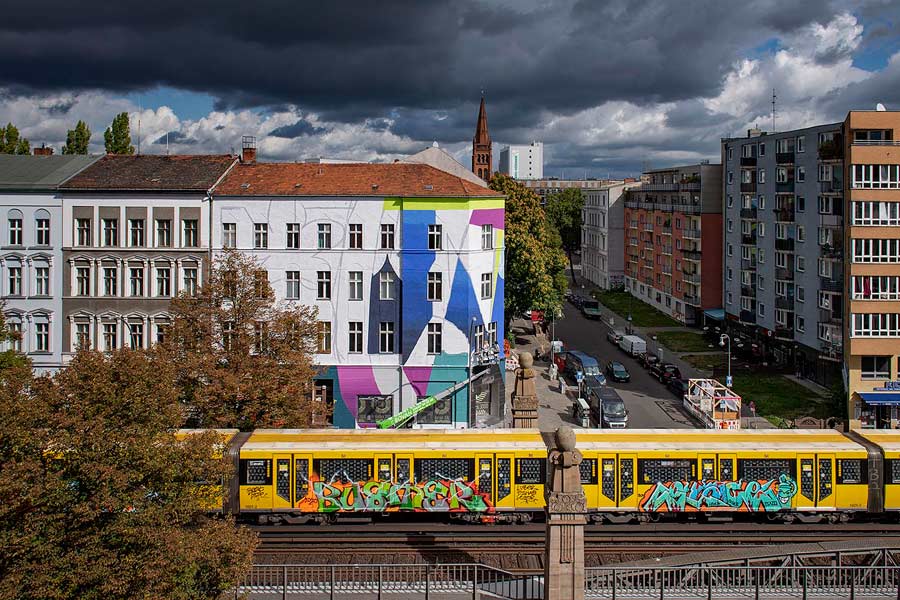
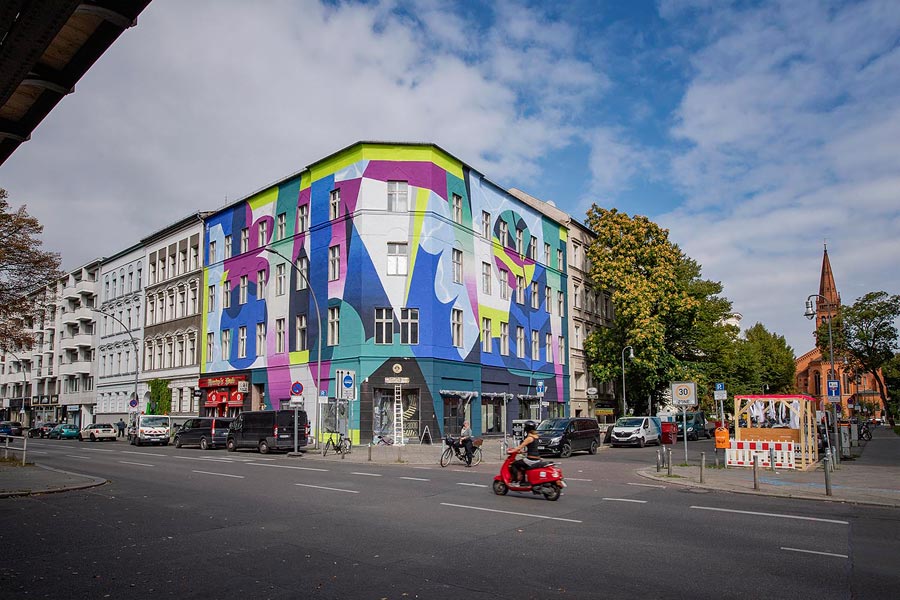
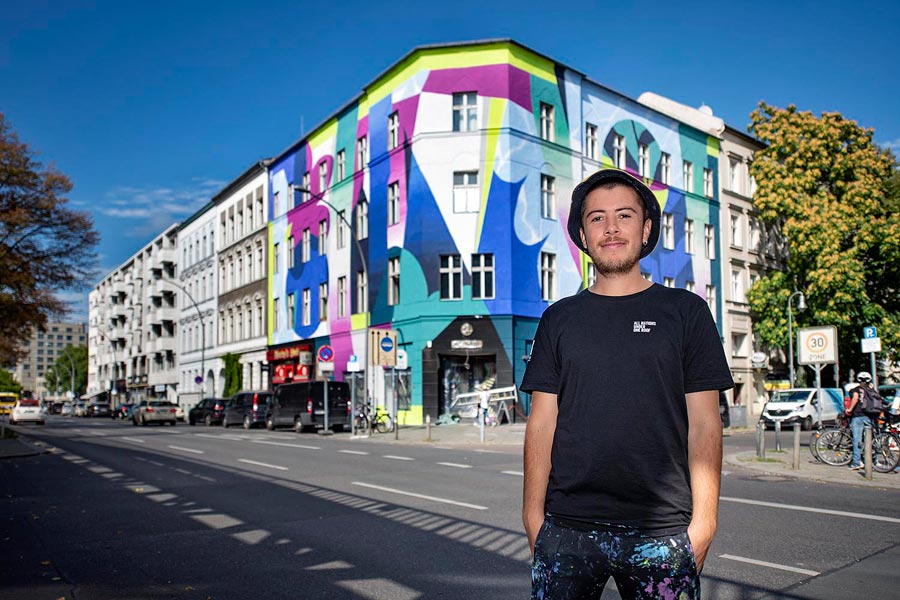
Originally from Quito, Ecuador, Urku says he began his true immersion into graffiti and street art when he lived in Sydney, Australia and he hooked up with the Higher Ground crew. His first attempts were painting in abandoned places, he tells us, but the big scale walls really caught his attention.
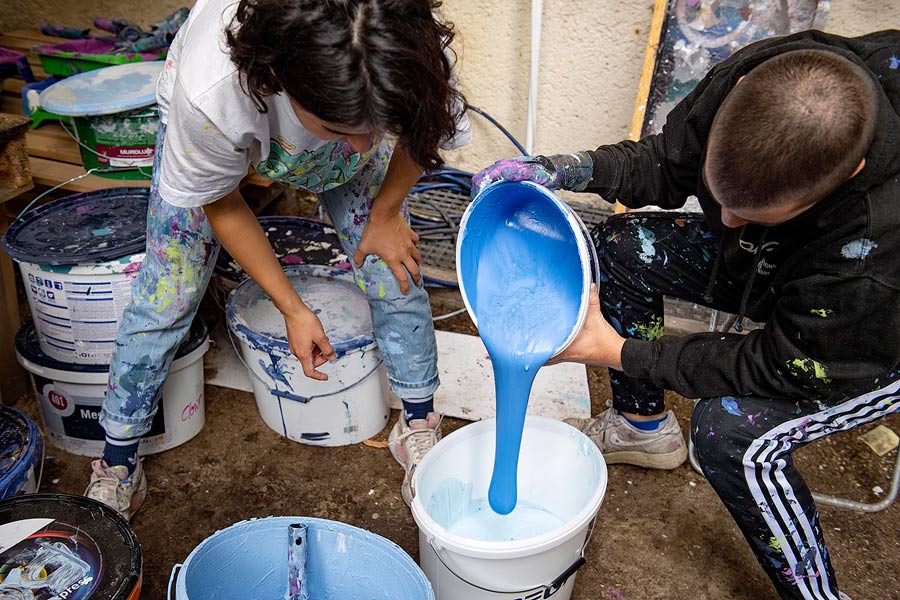
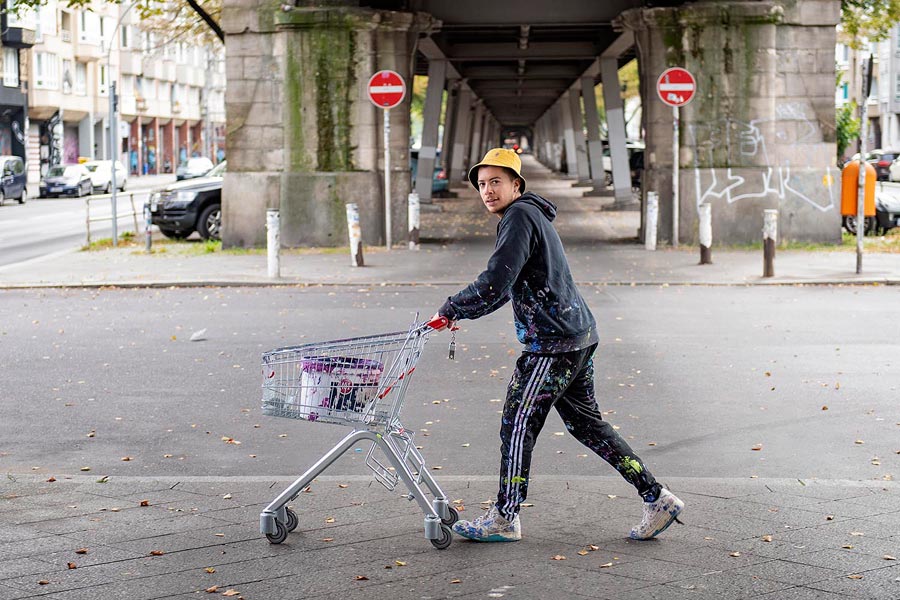
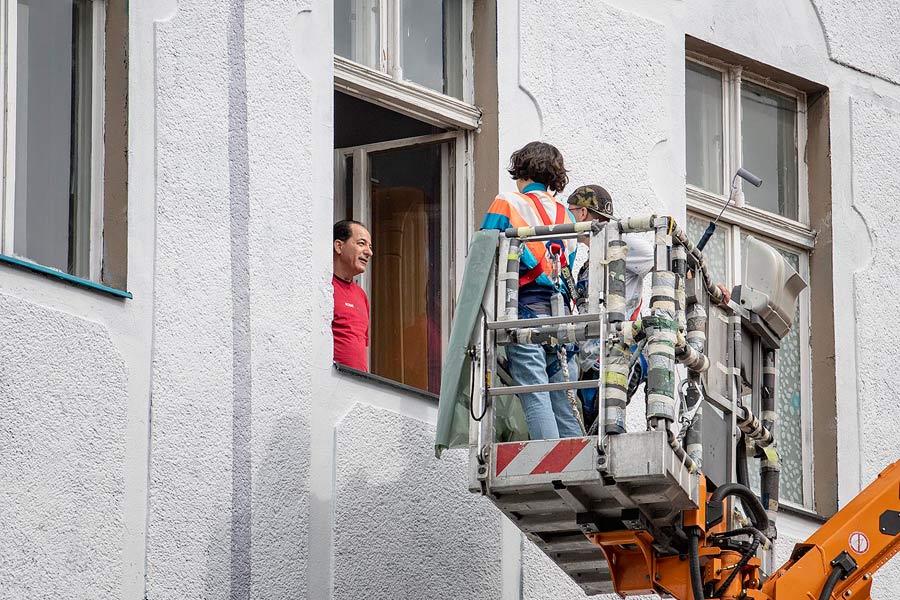
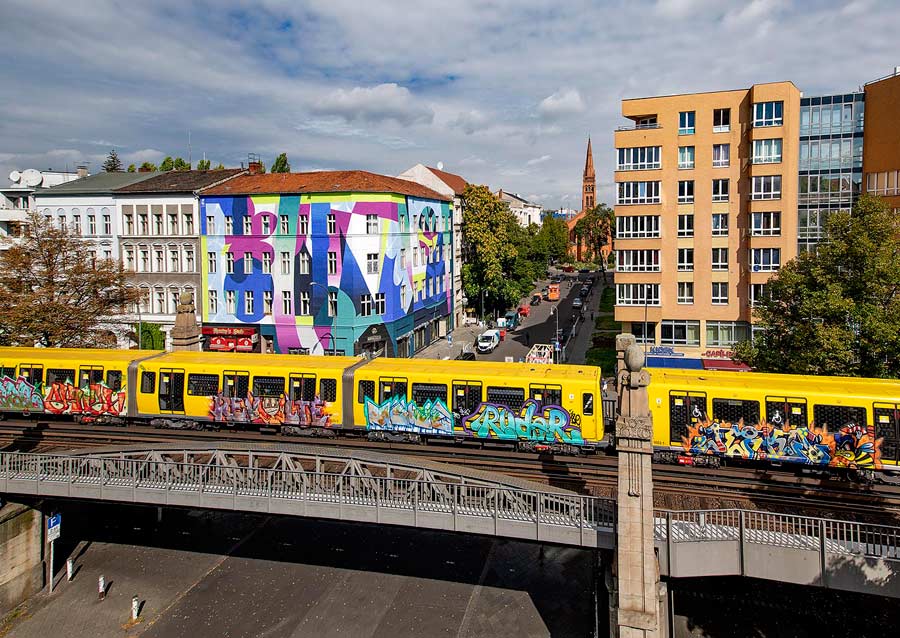
Living in Berlin since 2015, Urku brought his girlfriend, Gamze Yalçın who is also an artist in Berlin, along for this installation on the busy thoroughfare full of noise and distractions. He says his style has evolved more into abstraction today and he likes to think his art as a visual diary – one where he re-interprets his daily visual experiences into abstract compositions.
How did he feel elevated
alongside the famous yellow trains of Berlin watching the burners fly by? “Perhaps
it would have been very nice to have appreciated the scene while painting the
wall with the trains running behind me,” he says, “but the fact is I had to
paint all the time and to complete the project. But I was in awe that this was actually
happening and seeing the trains with graffiti passing by was very cool.”
Our special thanks to BSA contributor Nika Kramer for these images and to UN.
That’s the message from Berlin based street artist Johannes Mundinger in his latest mural of melting slabs and abstraction and murky text. He tells us that he is thinking about the disparity of responses his government has toward immigrants when flying them in to harvest asparagus versus saving them from living in refugee camps in Lesbos.
Johannes Mundinger. “Leave No One Behind”. Urban Spree. Berlin, Germany. (photo courtesy of the artist)
“While borders are closed due to the lock down the German government invited around 40.000 foreign workers to fly in and harvest German asparagus,” he says. “This decision was taken within days.”
Meanwhile, he tells, “it took almost two months to discuss inviting 50 children from the refugee camp Moria on the Greek Island.”
Johannes Mundinger. “Leave No One Behind”. Urban Spree. Berlin, Germany. (photo courtesy of the artist)
He says his new 700 x 1200 cm acrylic mural at Urban Spree made him open up artistically, made him feel free after so long in quarantine. That city is trying to open up, as it were, to greater social and economic opportunity’s and to move beyond Covid. Only time will tell us all, and places like this are leading the way. This is good, we agree.
Mundinger just wants to make sure that we leave no one
behind.
Johannes Mundinger. “Leave No One Behind”. Urban Spree. Berlin, Germany. (photo courtesy of the artist)
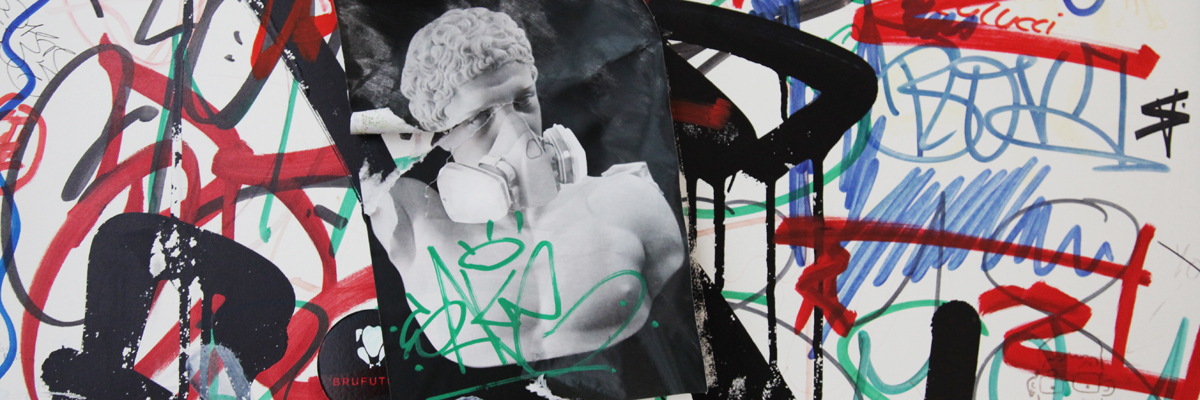
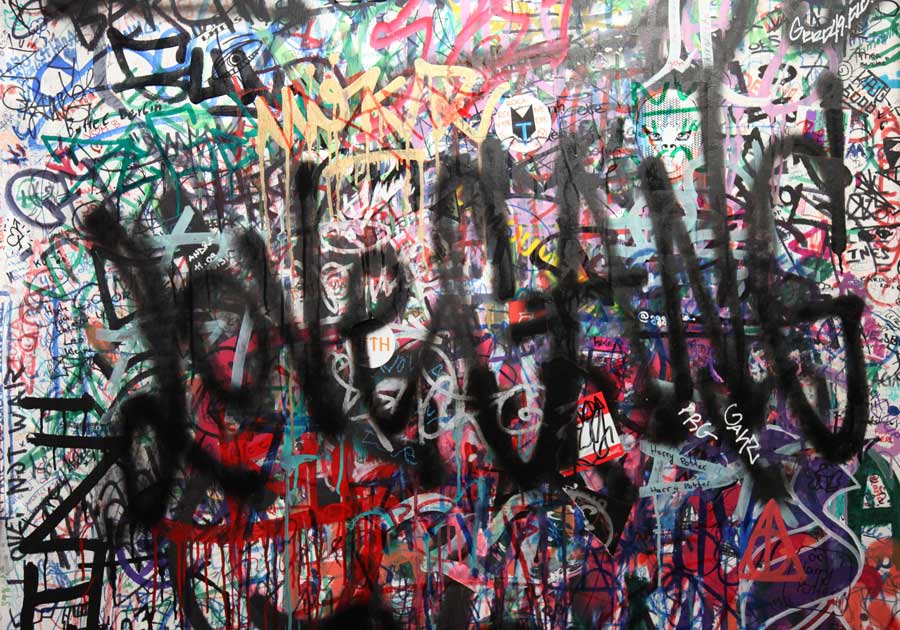
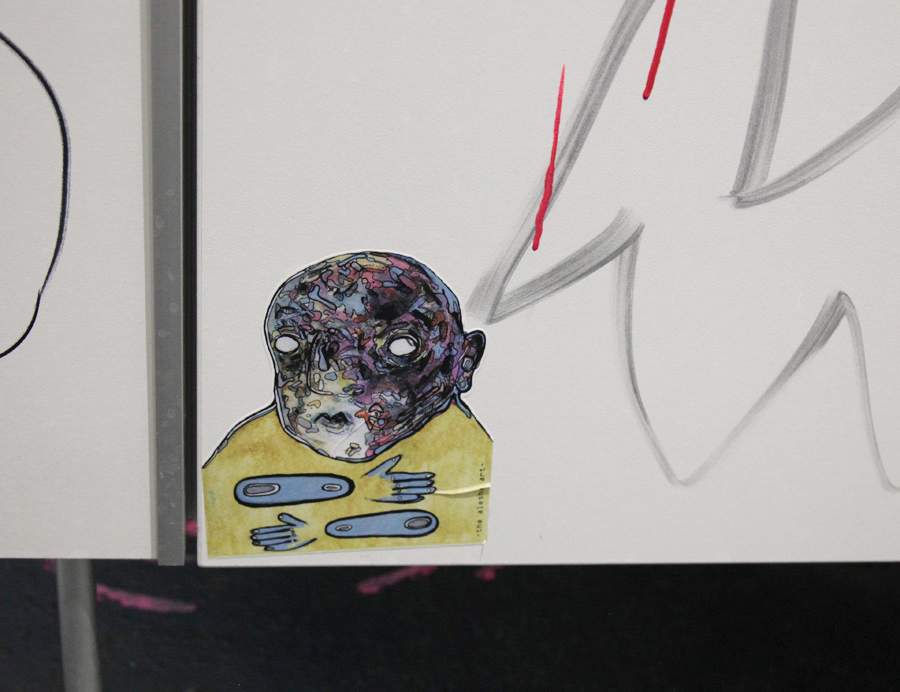
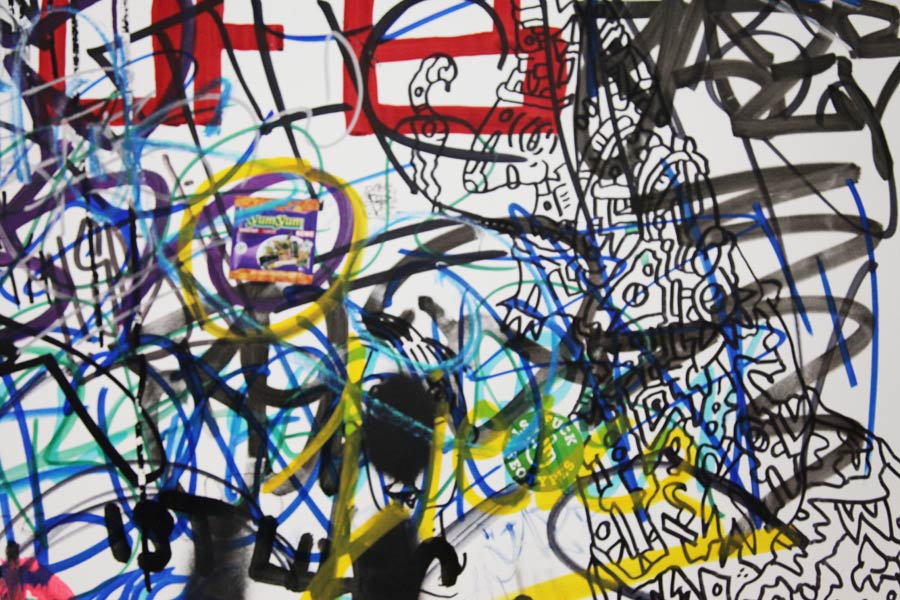
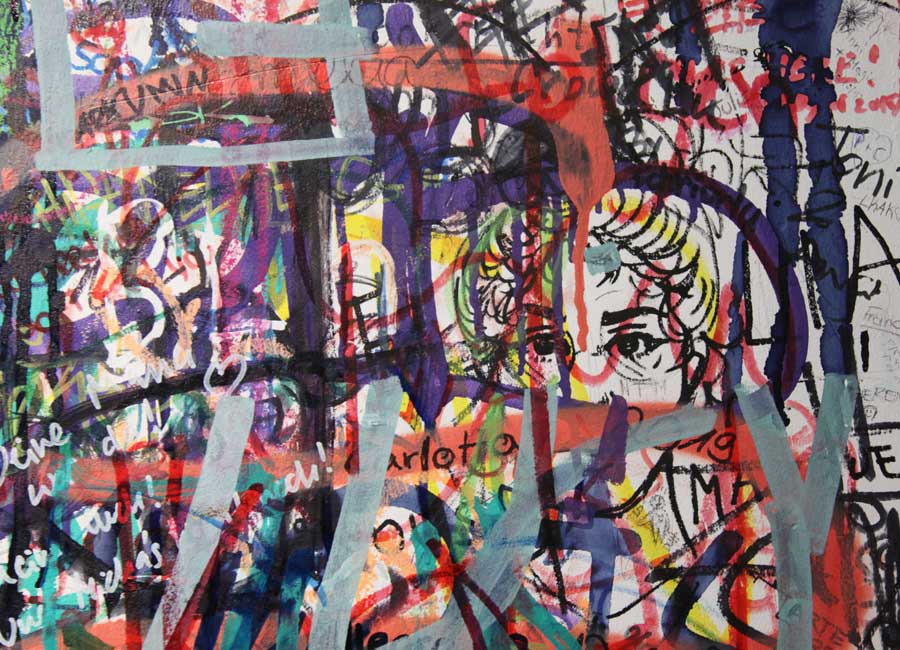
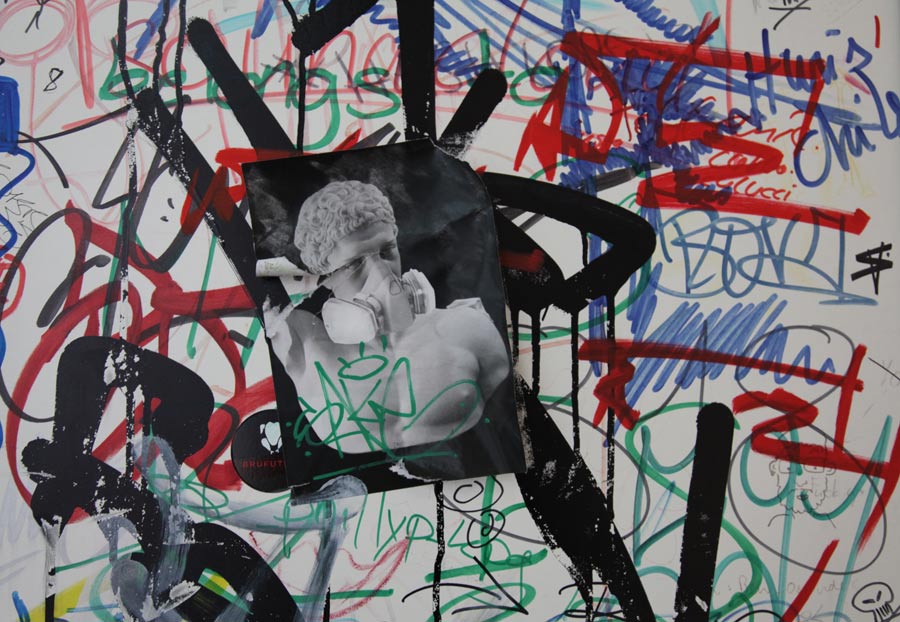
The Egyptians did it. The Greeks
did it. The Romans did it. Your favorite dive bar has it. The punk club CBGBs was
famous for it, so is Urban Spree in Berlin. It’s worldwide, ancient and
contemporary. Crude, rude, vulgar, vapid, poetic, gestural, artistic,
meandering, succinct.
We’re talking of course of the
practice of writing graffiti in the bathroom. Few know that the museum Urban
Nation actively encourages the furtive aesthetic expressions of visitors. Here
is a survey of the ephemeral graffiti actions caught in progress.
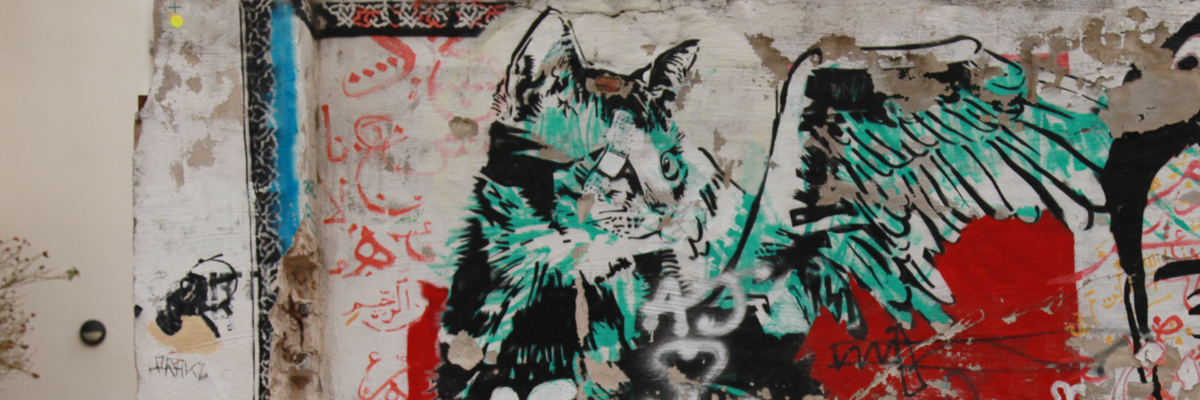
Cats are not particularly hard-hitting as a topic, but you must admit they are ubiquitous right now. So why wouldn’t they be prowling around the streets as well? God knows there are enough rats. You would think they would make a calendar of these. Wait, they have.
People came together at Brandenburg Gate in Berlin to remember the victims of a racist attack in Hanau this week, vowing to stem the tide of right-wing movements in Germany and elsewhere. The more you see the remnants of the ugly past rearing their heads, the more determined we will all have to be to unify and celebrate our differences and similarities with equal enthusiasm.
Another
promising sign of unity and community for us was the opening for the showcase
of works donated by artists to benefit Daniel Weissbach aka DTAGNO aka COST88
in Berlin on Friday night. The musical/art-making performances were enervating
and stirring – and there were so many people that the crowd on the sidewalk
outnumbered the crowd in the gallery area. Please support – The online auction
starts tonight and is refreshed with a new collection of art pieces donated by
the old skool and new in a hybrid of genres. Please check out www.getwelldaniel.de
We also saw this incredibly well designed and curated show called WALLS at Urban Spree – with powerhouse names in graffiti, street art, contemporary art, and even a couple of pieces of antiquity, all examining the implications and ramifications of figurative and literal walls. The essays in the small catalogue further explore. More on this show later here but please go see it if you can.
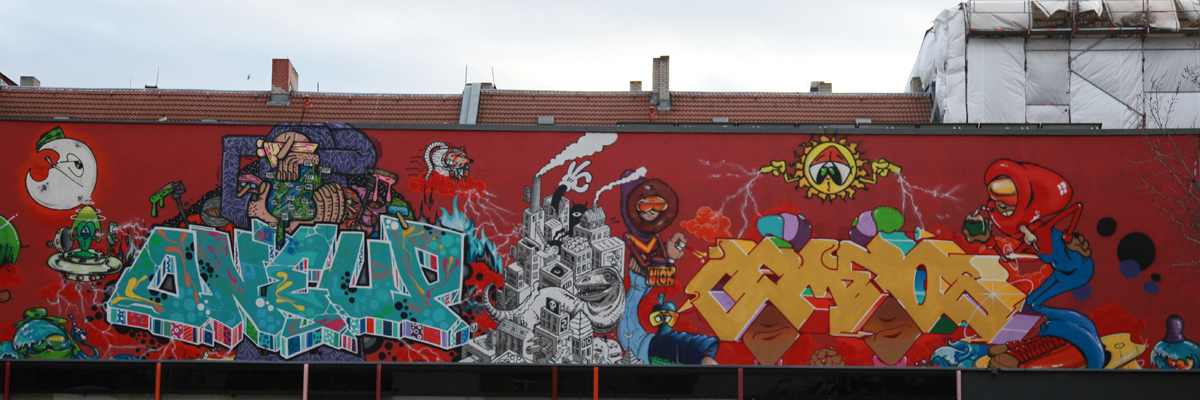
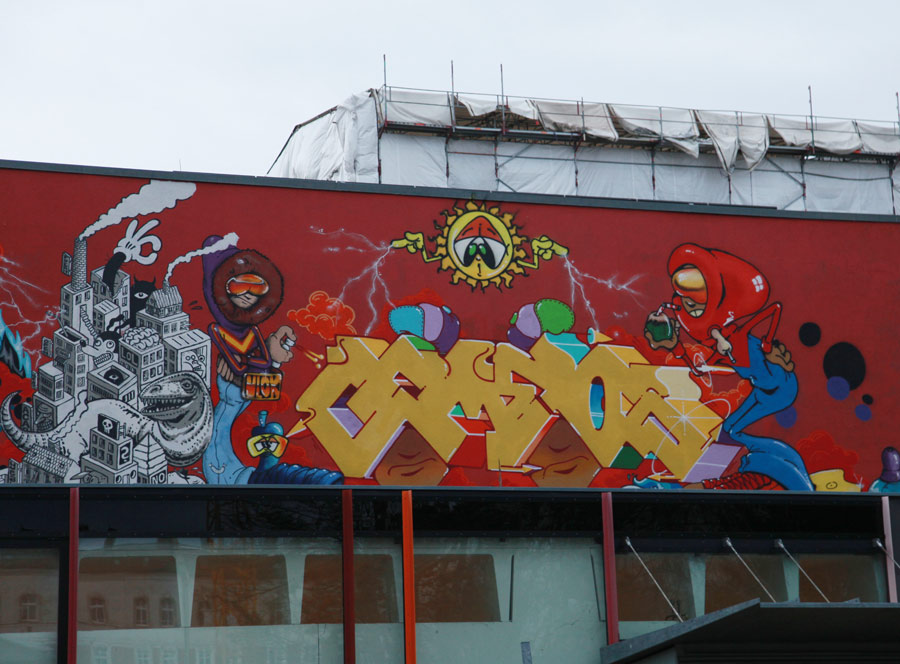
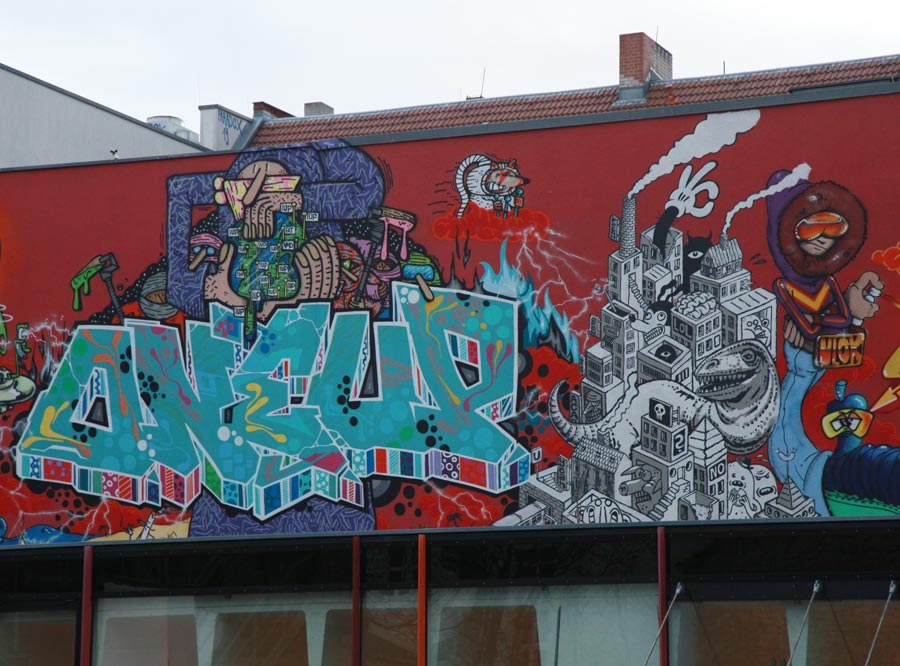
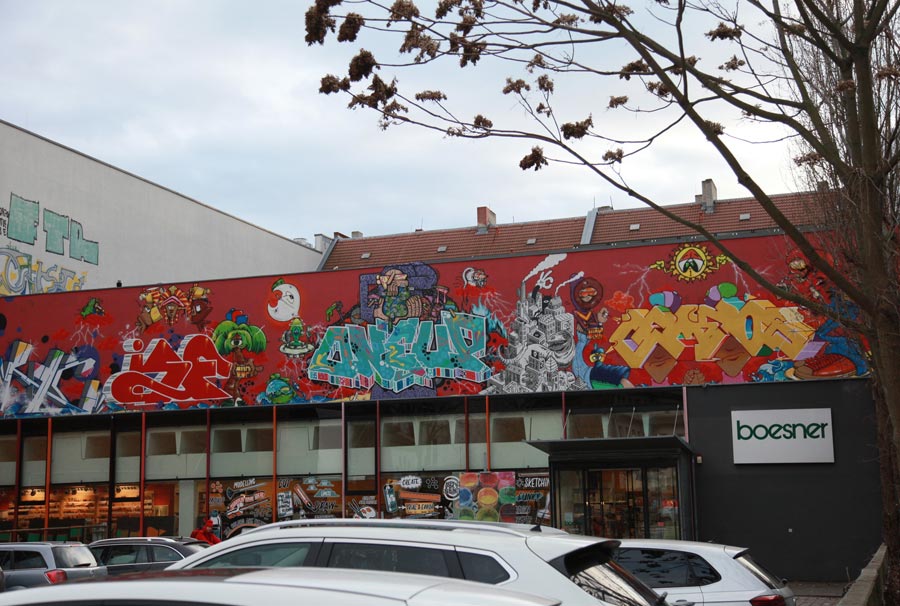
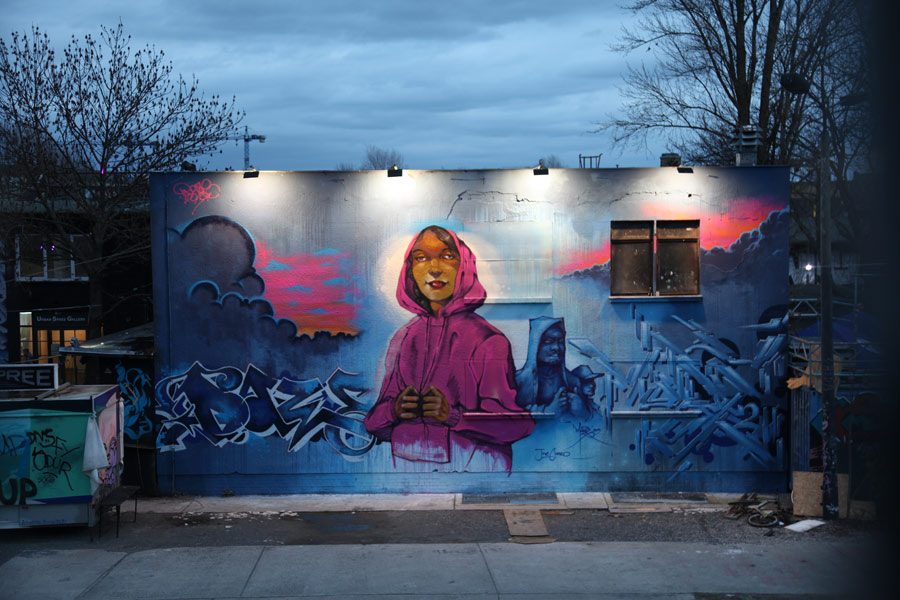
One
big find this week was this amazing collaboration of pieces on a wall with OS
Gemeos and various other dignitaries atop an art supply store in a rapidly
gentrifying neighborhood. Hope you enjoy the show here from our Director of
Photography, Jaime Rojo.
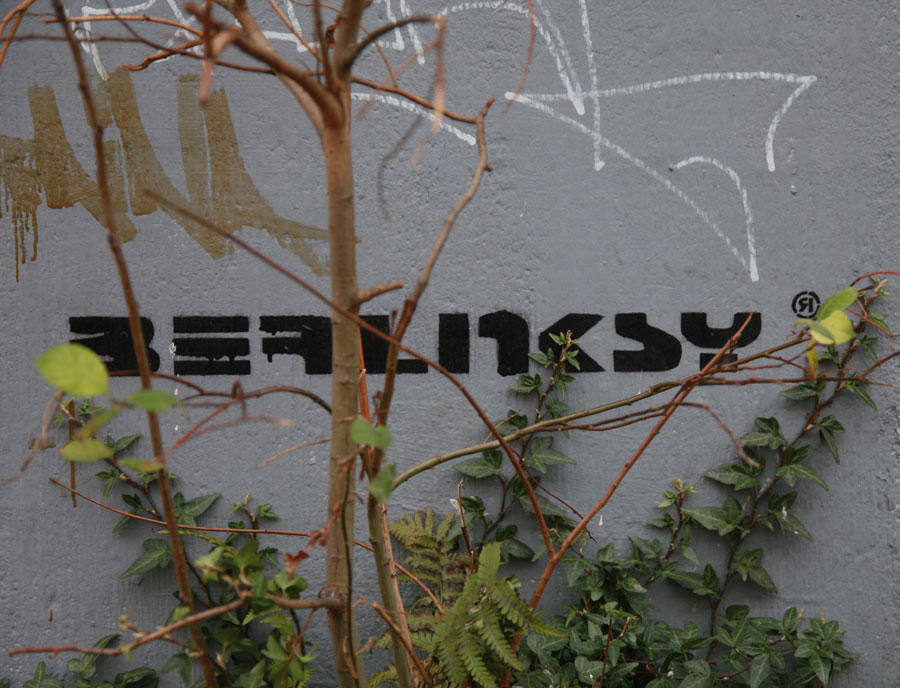
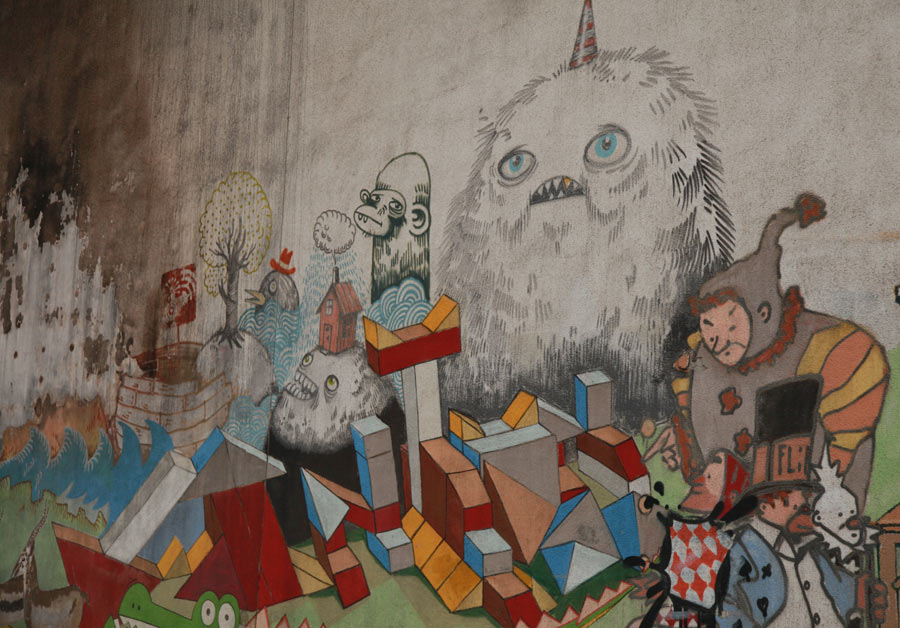
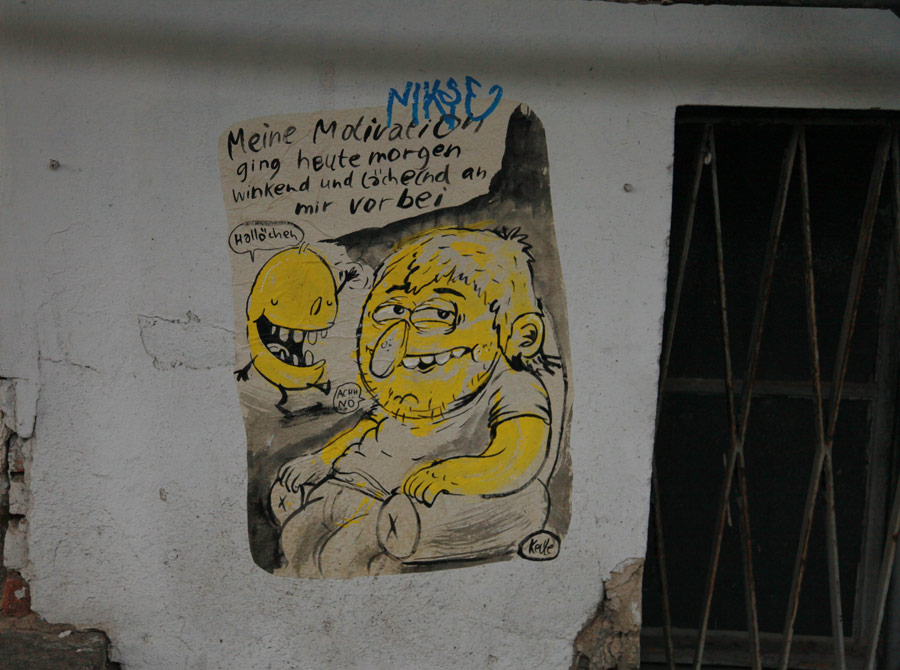
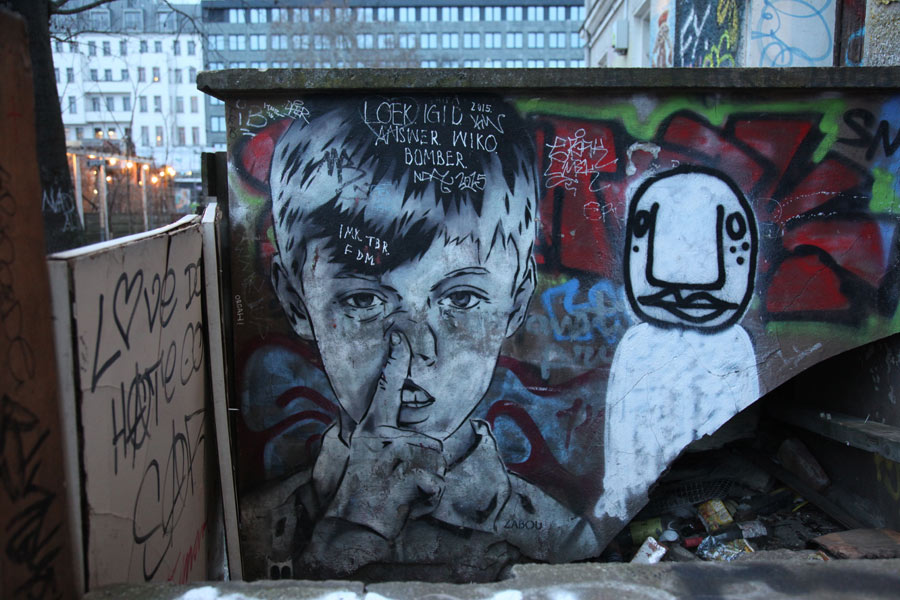
Here’s our weekly interview with the street, this week featuring 1Up Crew, Berlinsky, Black Land, Daze, ISE.THR, Kevle, Marina Zumi, Mira, Mode2, Os Gemeos, Shine, TFB, The Birds, VLK, WENU, and Zabou.
 BROOKLYN STREET ART LOVES YOU MORE EVERY DAY