All posts tagged: Art Book Review

Finding the City Between Moments, Streets, and Rooftops: Sonny Gall and Mila Tenaglia’s “99 of NY”

Finding the City Between Moments, Streets, and Rooftops: Sonny Gall and Mila Tenaglia’s “99 of NY”

For one week this fall, BlankMagBooks in New York quietly hosted photographs by Sonny Gall from her new publication 99 of NY, released by King Koala Press with text by Mila Tenaglia. The exhibition was small but telling — a passing moment in the life of a project that had already taken a decade to form.

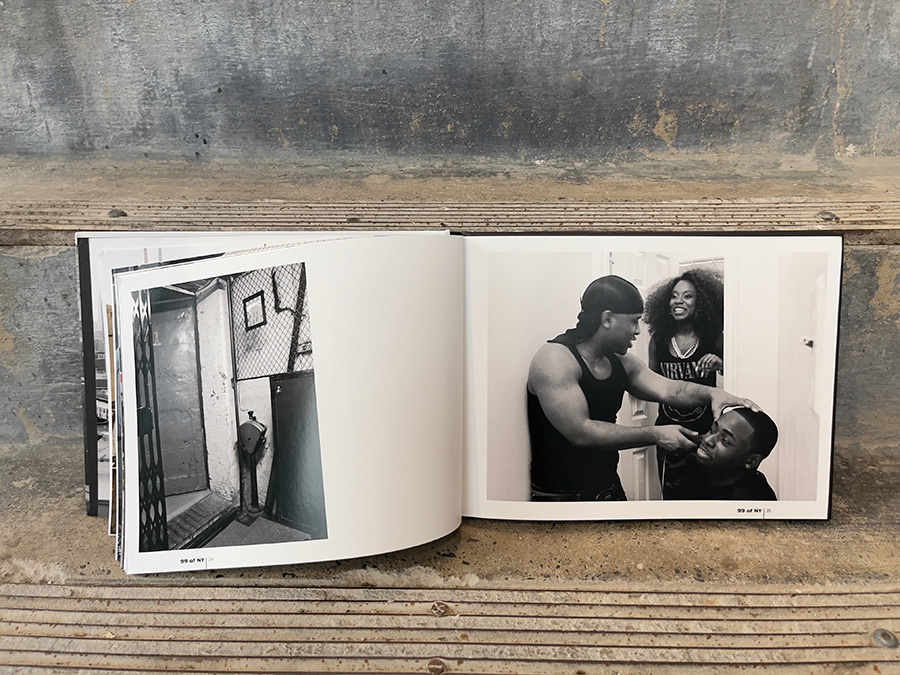
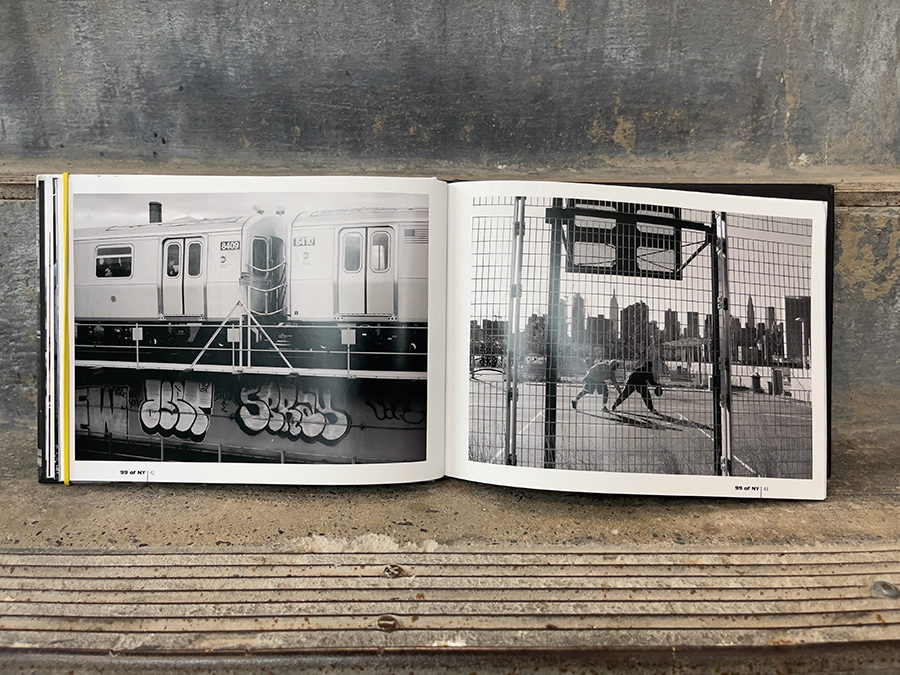
Described by the publisher as “a compositional and documentary endeavor that unfolded naturally over the course of a decade,” 99 of NY gathers 99 photographs across 110 pages, printed in both color and black and white, in a durable hardcover, album-sized format. True to King Koala’s limited-edition tradition, it’s a finely produced object — modest in scale and rich in substance — that rewards slow looking and quiet reading.

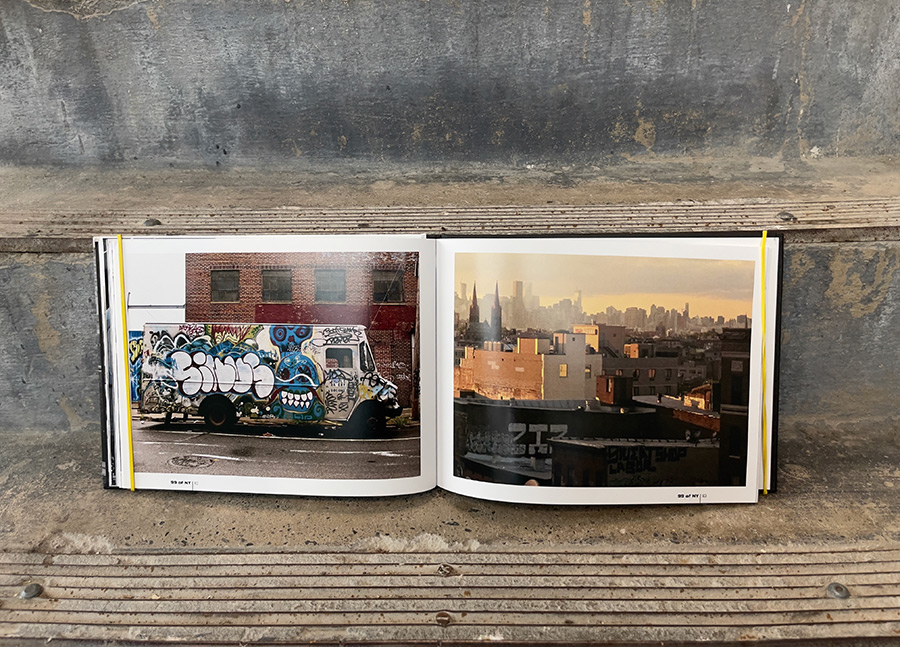
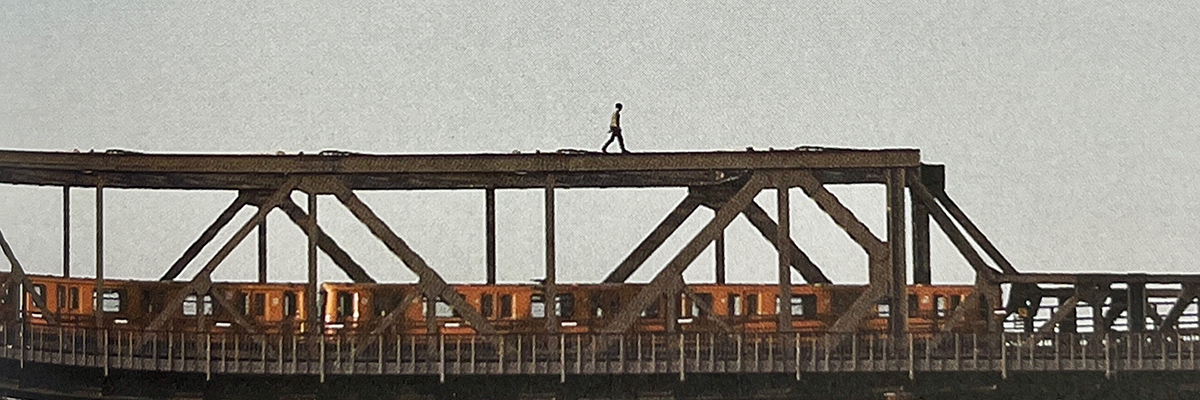
Gall’s images vibrate and render when leaning toward the overlooked: empty lots in Queens, warehouse walls, families at home, scattered pigeons, playgrounds under scaffolding. They are fragments of a living city seen with patience and affection, moments that feel at once offhand and deliberate. Tenaglia’s accompanying texts deepen those impressions without overexplaining, their language as sharp and unadorned as the photographs themselves, yet evocative of the unseen – with a poetic wandering appropriate for the attitude of discovery. Together they capture what it means to move through New York — not as spectacle, but as encounter.

Gall, born in Milan and long settled in New York, brings a deep familiarity with the city’s hip-hop and graffiti circles and a sensitivity to its architecture and light. Tenaglia, from Rome by way of Pescara, came to New York through journalism and documentary film, drawn to stories that find beauty in imperfection. Their partnership is grounded in trust, a love for street culture, and shared intuition: one sees, the other shapes the narrative.

99 of NY feels like the city it portrays — restless, imperfect, alive. The brief gallery presentation served as an echo of the book’s essence, but it’s the pages themselves that hold the weight: a decade or more of lived experience distilled into images and words that ask to be read slowly, with attention and care.


We spoke with Gall and Tenaglia about their work:

Brooklyn Street Art: When did you first begin to see yourself as a photographer, rather than simply someone taking pictures?

Sonny Gall: Honestly, I still see myself simply as someone who takes photos to satisfy a personal instinct and sense of pleasure. It was friends, acquaintances, and even people I didn’t know—my Instagram followers—who started calling me a photographer and encouraged me to pursue this project more seriously.

BSA: What do you feel you’re capturing in your photographs of New York — is it its people, geometry, pulse, or something more elusive?

Sonny Gall: What draws me in are all the things often associated with graffiti and street art—the play of colors, architectural contrasts, the diversity of people, and those small details that catch my eye on an aesthetic level. I tend to visualize compositions that I enjoy framing and coming back to later.

BSA: How do graffiti and street culture weave into the moments you frame — are they a backdrop, a rhythm, or a conversation within your images?

Sonny Gall: Graffiti and street art are what primarily capture my attention. I love framing them within the urban context of the city. They’ve become a defining element of my work, giving my photos rhythm, identity, and a distinctive character.
BSA: When did this project first take shape for you, and in what ways has your vision of the city evolved since then?

Sonny Gall: 99 of NY was conceived in 2013 but stayed on hold for several years. Life happened, but the idea never left me. With the encouragement of friends and family, I realized I needed someone to help bring it to life. That’s when I reached out to my friend Mila Tenaglia, in 2021, during Covid. We had both moved from Italy to New York around the same time, sharing similar experiences and a deep love for the city. I immediately knew she would be the perfect partner—our visions aligned naturally. With her structured writing and my photography, we created something beyond a book: a visual and emotional portrait of a transforming New York—our New York—rapidly reshaped by gentrification.
BSA: If someone could not see these images, what would you want them to understand about them through your words?

Mila Tenaglia: I’d want the writing to pull readers straight into that chaotic, creative spiral that is New York — a city of bombed-out corners, tags, graffiti, and gestures that still breathe in the semi-illegality of pure expression. Every mark on a wall is an act of self-definition: it demands nothing, yet it insists on being seen. I hope that pulse — the urgency, the defiance, the raw emotion — can be felt even without the images, carried only by the words.
BSA: The city is chaotic and unpredictable — how do you capture its essence in language?

Mila Tenaglia: That’s a beautiful question — one I ask myself all the time. My life and my work, built around culture, people, and documentary storytelling, keep me on the streets every day. I live and work within the pulse of the city. After so many years here — in a place I can finally call home — I think I’ve absorbed something of its rhythm. Like a painter with a brush, I’ve tried to translate that rhythm into language, to turn what I see and live into words that still breathe New York’s restlessness.
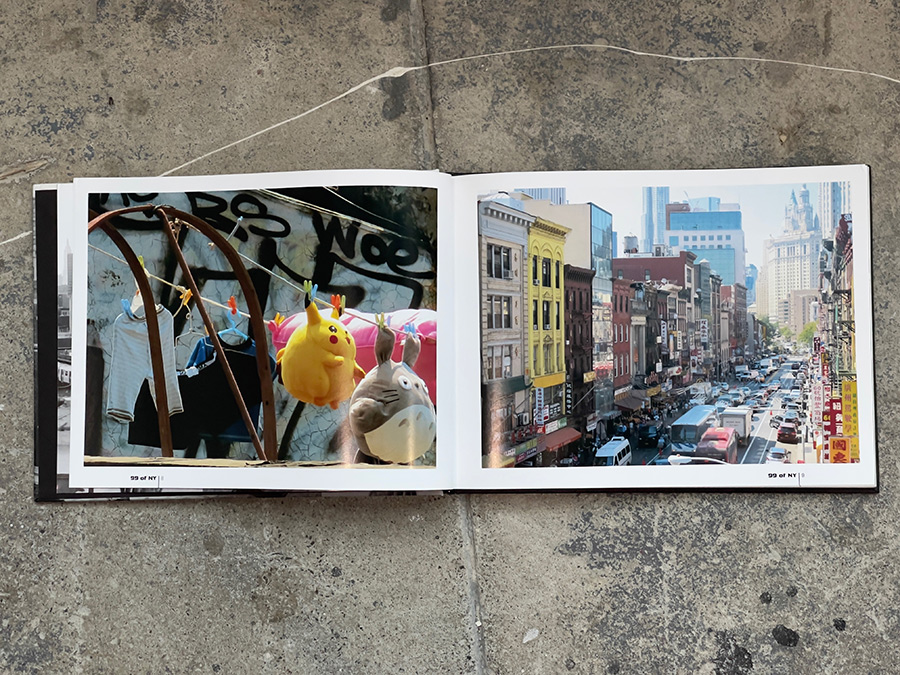
99 of NY by Sonny Gall. Written by Mila Tenaglia. King Koala Press. Italy 2025

BSA: Whose words or voices have most inspired your own?

Mila Tenaglia: I’ve always been drawn to voices that carry both fire and fragility — writers who turn experience into resistance. Oriana Fallaci, with her fearless confrontation of power, taught me that truth has a pulse and a price. Patti Smith showed me how poetry can be lived — raw, unfiltered, born from the noise of the streets. Joan Didion taught me the precision of silence, how restraint can be as powerful as rebellion. And Rebecca Solnit, with her wandering intellect, reminds me that thinking and walking are the same act — a way of mapping the world through attention. Together, they form a kind of compass: their words move through chaos with grace, and that’s what I try to do too — to find beauty without erasing the struggle. There are many other names I could mention, but right now I feel like highlighting these voices in particular.
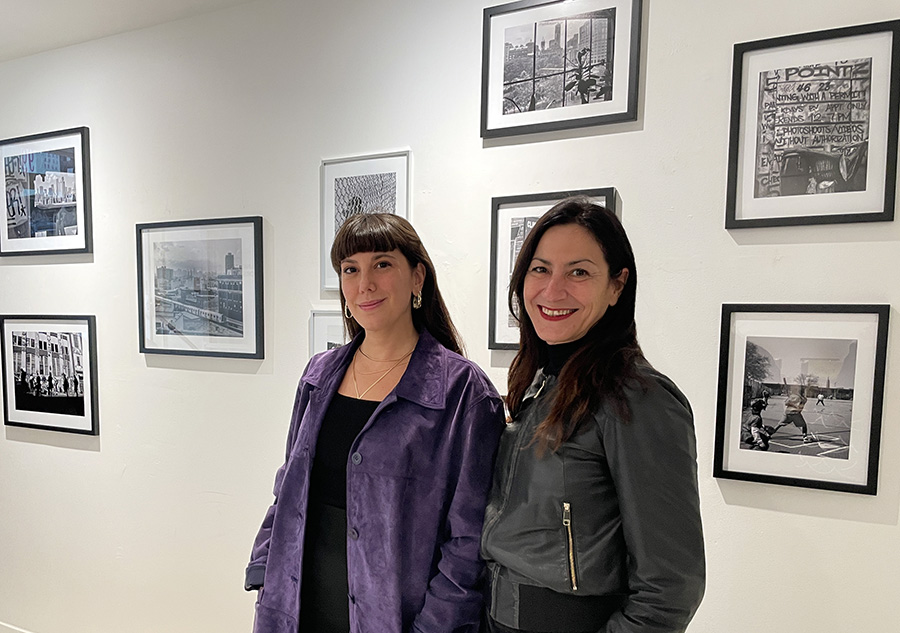
Mila Tenaglia and Sonny Gall, BlankMagBooks Gallery, Eldridge Street, New York (photo ©Steven P. Harrington).
Read more
Ephemeral Acts, Enduring Memory: Graffiti as Monument in Rafael Schacter’s Vision

Ephemeral Acts, Enduring Memory: Graffiti as Monument in Rafael Schacter’s Vision

Graffiti is a living monument—an act of doing rather than keeping.

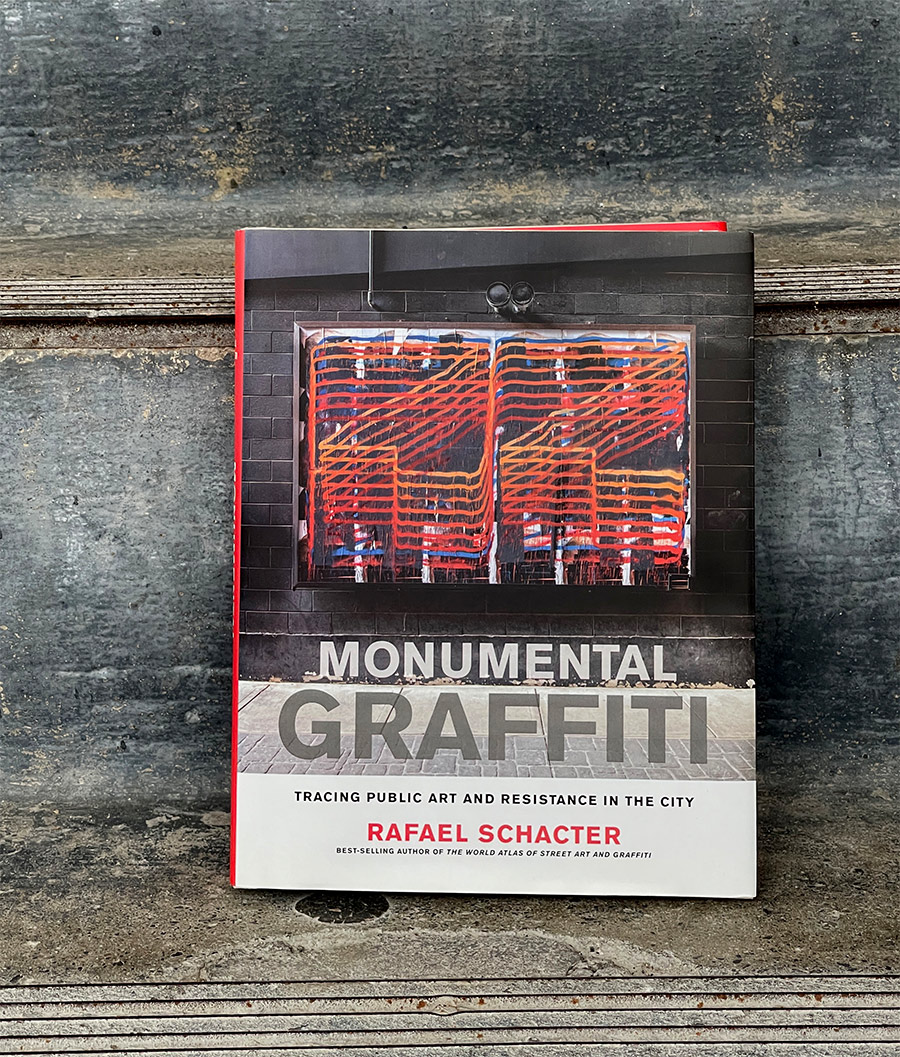
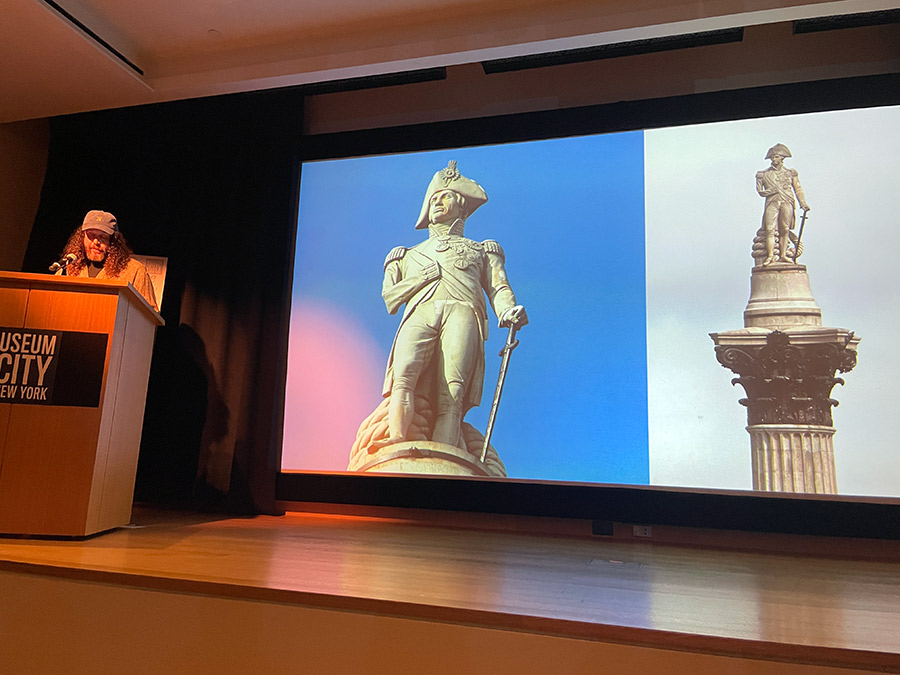
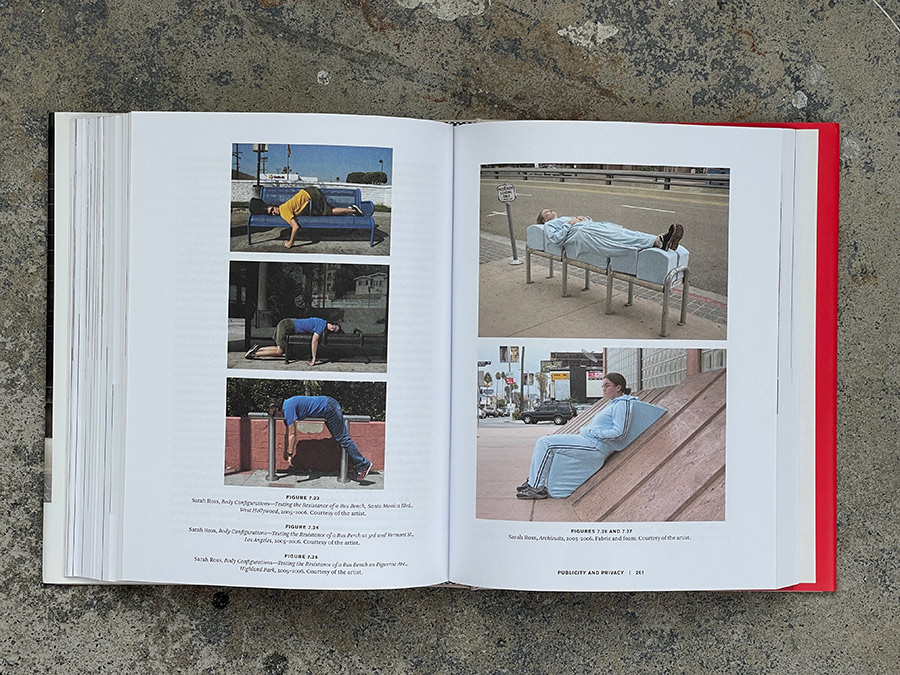
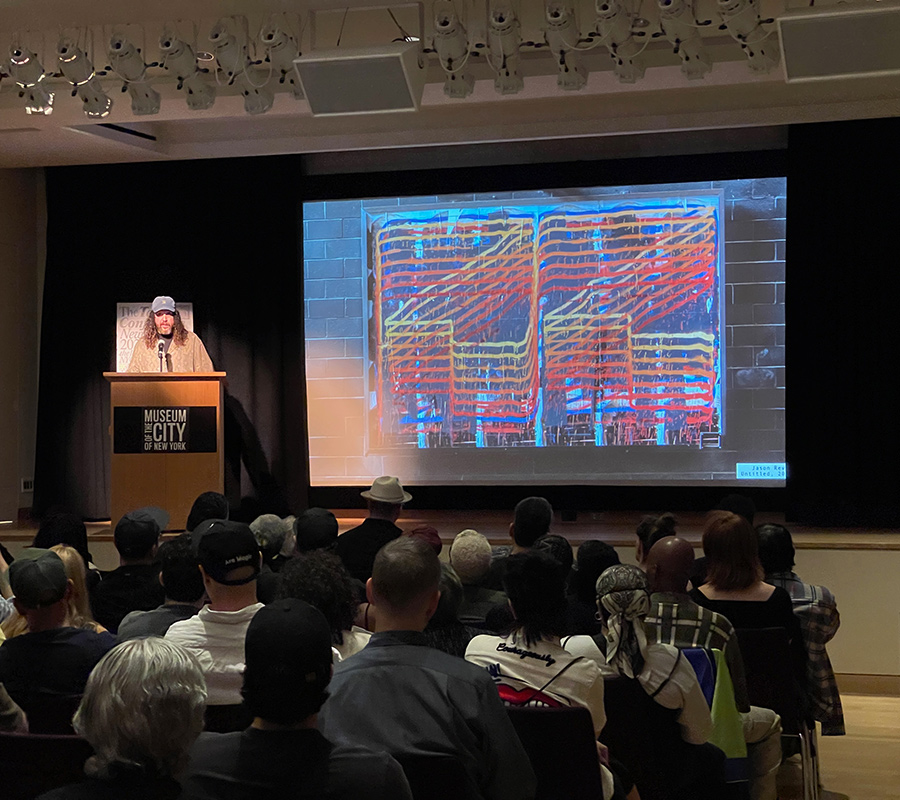
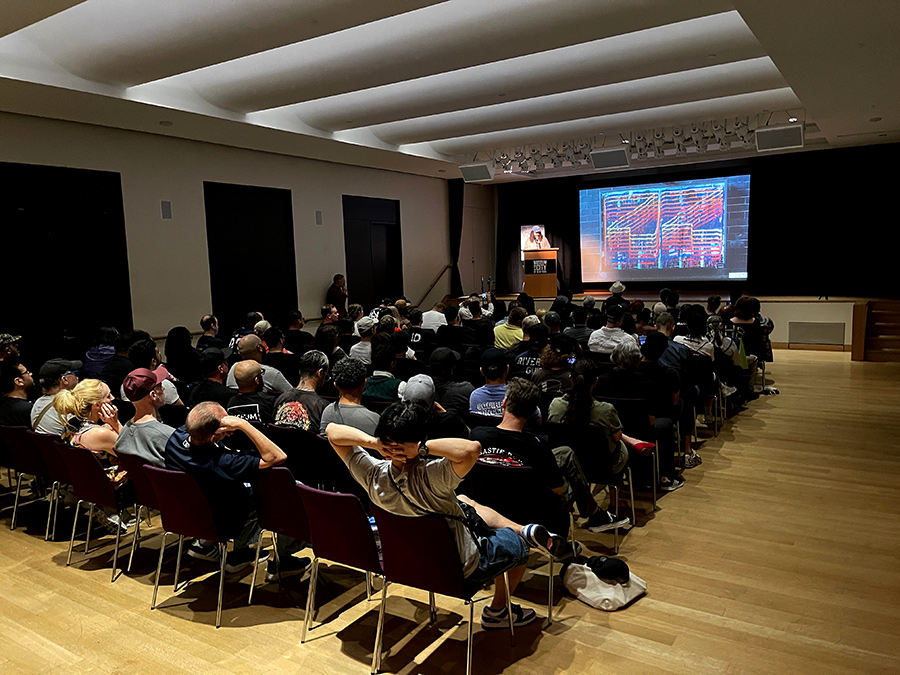
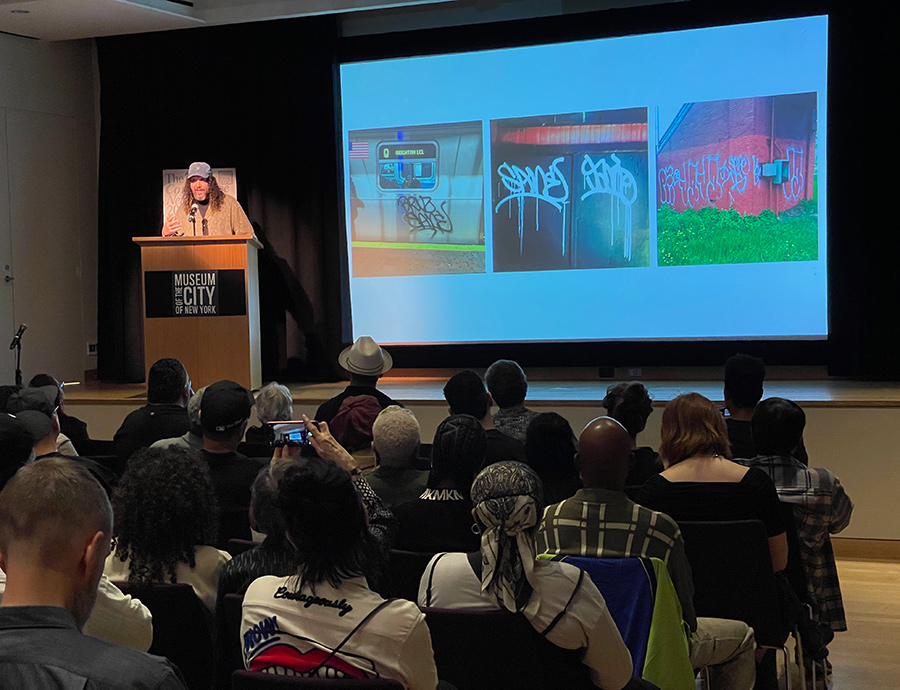
Rafael Schacter has been offering an alternative to institutional monumentality in his latest book Monumental Graffiti (2024). He buttressed his alternative view during his keynote speech for the New York 2025 Tag Conference (BSA is a sponsor). To a packed audience at the Museum of the City of New York, Schacter talked about a monumentality that is grounded in community, embodiment and the acceptance of transience as truth.

Rafael Schacter. Monumental Graffiti. Tracing Public Art and Resistance in The City. MIT Press. 2024
In his talk and his book, the London-based art historian argues that monuments and graffiti can illuminate each other: monuments don’t need to be grand or permanent, but can be understood—as their Latin root monere suggests—as acts that remind, advise, or warn. Drawing on counter-monuments and non-Western traditions, he would like to redefine monuments as socially and emotionally engaging public artifacts that may be ephemeral, community-driven, and conceptually monumental rather than physically imposing.

Dr. Rafael Schacter speaking at The Tag Conference 2025 at the Museum of the City of New York about his book and current interest, monumental graffiti. (photo ©Steven P. Harrington)
Using images and examples from streets around the world, Schacter, who is also the author of The World Atlas of Street Art and Graffiti, furthers his vision by exploring how graffiti can itself be a monumental form, demanding public attention and reframing both graffiti and monuments as cultural acts that mark and speak socially. He then examined memorial practices within graffiti culture, where community-created walls and tributes function as grassroots monuments that commemorate loss and address social issues.

A curator and theorist of urban art, Schacter expands on this, distinguishing between spraycan memorials—visible, collective, and community-respected—and memorial tags, which he describes as intimate, cryptic gestures of remembrance shared within the subculture. Schacter contrasts these living practices with the illusion of permanence accorded institutional monuments, showing how graffiti’s embrace of impermanence subverts traditional ideas of stability and authority. Finally, through his discussions of memory through disappearance and the memorial tag as embodied memory, he proposed that graffiti’s transience itself becomes a vessel for remembrance, where memory endures not in material form, but in repeated acts of writing, risk, and presence.

We asked Schacter about the nature of monuments in graffiti and street art—whether an illegal wall piece can ever transcend vandalism, what happens when a tag vanishes, who decides what deserves to be remembered, and whether a true monument is built from the ground up or imposed from above.

BSA: If graffiti can be a monument, what happens to the idea of permanence? You describe monuments as “reminders, warnings, and advice” rather than fixed objects. For people used to thinking of monuments something of bronze, stone, or concrete, how could one reconcile the beauty of graffiti’s impermanence with our instinctive desire to preserve something that we value?

Rafael Schacter: Great question! So many points I could spend hours unpacking! But, to keep myself focused, the key thing to note here is that preservation is by no means only related to permanence; i.e., the relationship between remembering and forgetting on the one hand and presence and absence on the other, is really not so straightforward:

Is it not true that things that are ever-present are often the most easy to forget?

In many cultures outside the West, for example, destruction is something that is core to techniques of commemoration – the heat of destruction burning memory into mind. And in cities crammed with institutional monuments, with thousands of bronze men on horseback, is it not the case that they often seem to, in fact, provoke amnesia!

Is it not a fact that things that become absent are often the most intensely memorable?

I totally agree that graffiti’s impermanence can be beautiful (often physically so, in terms of the way it degrades and becomes part of its surroundings), but more than just beautiful, its disappearance can lead to a heightened sense of memory; let alone push the focus towards the beauty of practice and performance and not just the beauty of the final image itself.


BSA: Who decides what’s worthy of being a monument? Normally it is the decision of institutions or governments, but this new path suggests others may decide what is worthy of monumentalizing. A monument created bottom up or top down – which is a truer monument, or is that a silly question?

RS: Ha! Not silly at all! I’m currently in the middle of teaching my lecture course on public art, and this is a critical part of what we’re discussing. So yes, in most of our cities, this is in fact a legal question – in England, for example, there is what is termed the Schedule of Monuments, a list defining and delimiting what appears under this term, and there is specific legislation surrounding what happens if an artefact is within the list. But, as you say, monuments – monuments as public artefacts or inscriptions that remind, advise, or warn us – come not just from the State but so too from the grassroots. Sometimes these non-state monuments can become formally sanctioned, but whether they do or not, they can be incredibly powerful forms that exist far beyond the necessity or even visibility of officialdom. Which form is ‘truer’ or more ‘authentic’ is always context specific, however.

But all I personally know is that I can be moved more by a spontaneous shrine than by an institutional memorial, by the handwritten note attached to a bouquet of flowers laid by the side of a monument than I could be by the monument in itself! More than anything I just want to move us away from only seeing these permanent, stoney, neo-classical public sculptures as monuments, and in fact see the way monuments can exist through diverse materials and in diverse locations outside of the confines of officialdom.


BSA: If a tag disappears, does the monument die—or does it live in memory? Certainly its disappearance and decay impacts its ability to have lasting impact.

RS: How do we remember things? Do we remember from looking at them? And how do we look at them? Do we look differently when we know something is not going to last? But what about not just looking! Can we remember things through a set of gestures? Through a movement? Through a dance? Can we remember something via lighting a candle that we know will burn out?

When things disappear, memory can often burn even brighter – the presence of absence often being more powerful than physical presence itself. So yes! Disappearance effects visibility, the ability to be co-present with an image, but the image can live on both in the person that made that image as much as in those who saw it, and saw it knowing it would at some point disappear!


BSA: Does a city full of graffiti become a city full of monuments?
If we take the argument to heart, then every wall might hold a kind of public archive or memorial. Is a monument made by a vandal illegally still vandalism, or should it be honored and preserved for posterity?

RS: First, YES – when I say graffiti is a monument I mean that literally not metaphorically, and so absolutely yes, the walls of our cities are a constantly transforming archive that holds immense amount of information and history.  Whether we term this vandalism or not actually makes no difference. (But is it not the overbearing monuments of the city that are themselves vandalism, themselves the destruction and the blight that damages our cities – I mean, I can think of plenty of examples of large-scale public art that are total degradations of our public sphere). Yet that doesn’t mean I think graffiti should be preserved, absolutely not. Preservation, as I talk about in the book in terms of examples of indigenous material culture, can often itself be destructive. If you preserve something, freezing that thing in time, you can often be more likely to forget what it represents than if you let it naturally degrade. Preservation, then, can be destructive, and destruction preservative!


BSA: Graffiti has turned up in unexpected corners of sacred buildings — scratched into the walls of Christian churches, carved into stone lintels of synagogues. They may be names, coats of arms, or a portrait of the parish cat. When you think about these quiet, unauthorized marks across different faiths, how might your idea of graffiti as a kind of monument apply to them?

RS: I love the idea of what you term ‘quiet’ here. Because often it is the smallest, most marginal, minor forms of graffiti that can be the most powerful. Yes, big graffiti is GREAT, and often very overtly monumental (I’m thinking of the incredible work of RAMS MSK at the moment for example). But smaller marks can be monumental in their effect too, a tiny tag at the edge of a wall containing as much style as a massive masterpiece. So yes, monument is not simply about size. Bigger is not necessarily better. And sometimes it’s the smallest marks that cut the deepest!

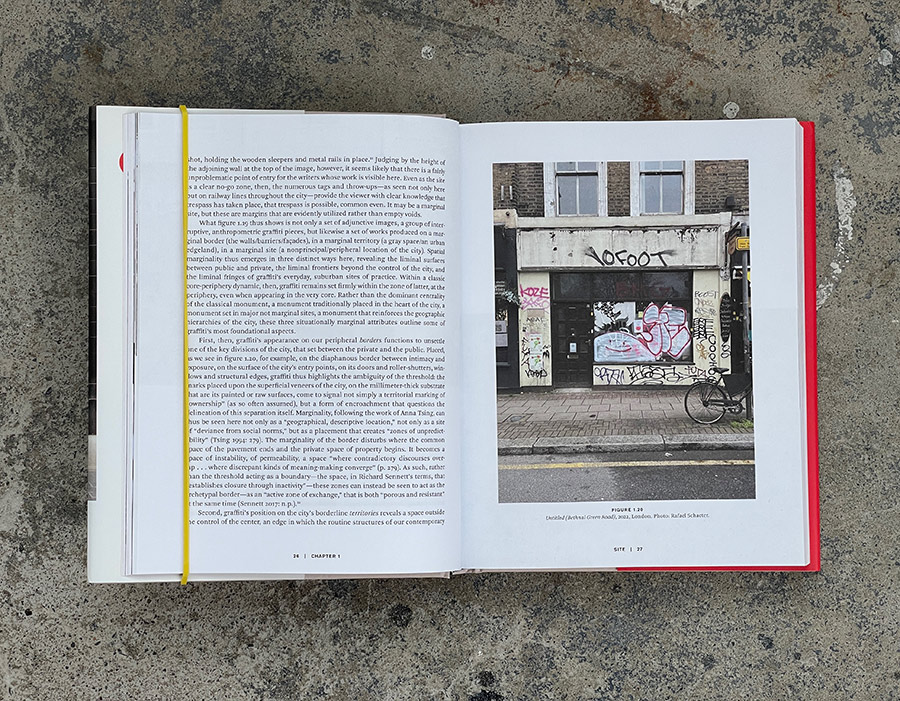
Rafael Schacter. Monumental Graffiti. Tracing Public Art And Resistance in The City. The MIT Press. Massachusetts Institute of Thechnology. 2024. USA.

Rafael Schacter delivers a talk at the TAG Conference held in June 2025 at the Museum of The City of New York. NYC. June 2025. (photo © Jaime Rojo)
Read more
KULLI: Addison Karl’s Path – Street Practice, Public Art and Sculpture

KULLI: Addison Karl’s Path – Street Practice, Public Art and Sculpture

Over the last two decades of covering the street art movement and its many tributaries, one of the deepest satisfactions has been watching artists take real risks, learn in public, and mature—treating “greatness” as a path rather than a finish line. Working at BSA, we’ve interviewed, observed, and collaborated with scores of artists, authors, curators, institutions, and academics; it’s been a privilege to see where they go next.

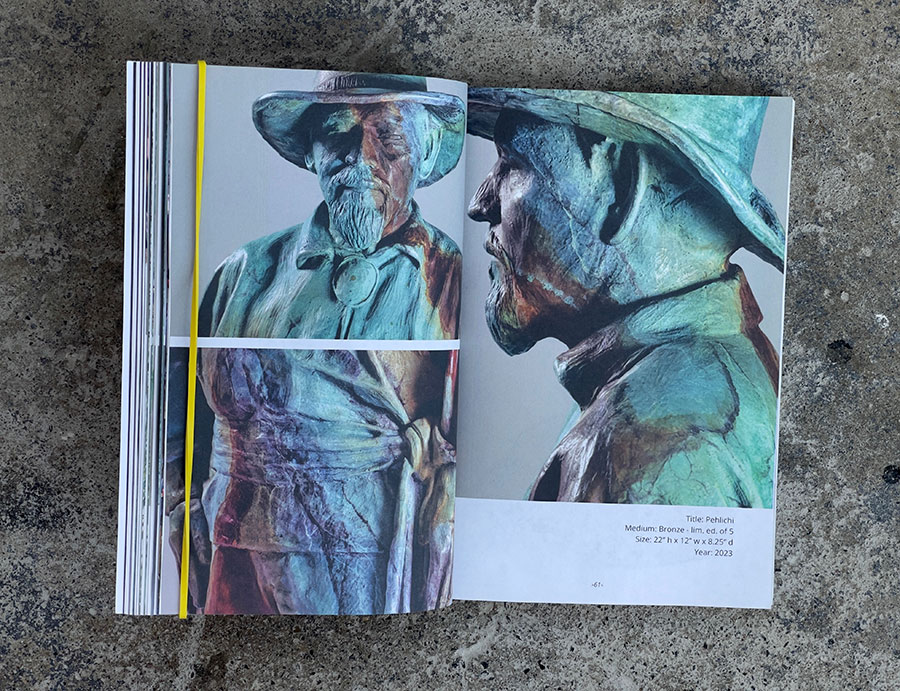
Addison Karl. KULLI. A Natural Spring of Artwork, Sculpture, Painting, Drawing, Public Art, and Inspiration. Self-published. Monee, IL. 2024.

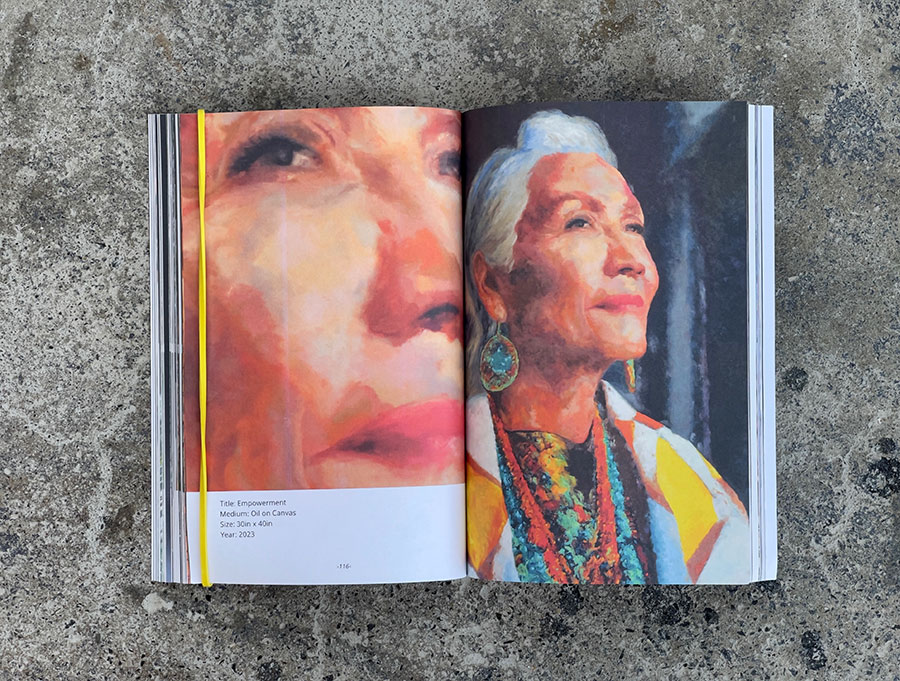
Addison Karl’s self-published 2024 monograph, “KULLI: A Natural Spring of Artwork, Sculpture, Painting, Drawing, Public Art, and Inspiration,” reads as a first-person chronicle from an artist who moved from the wall to the plaza to the foundry without losing the intimacy of drawing. Dedicated to his son—whose name titles the book—KULLI threads words, process images, and finished works across media: murals, cast-metal and glass sculptures, drawings, and studio paintings, all guided by a sensibility that treats color and material as vessels for memory and place.

Trusted observers have mapped this evolution in plain terms. WALL\THERAPY once summarized Karl’s arc “from blank slate, to paper, to mural, to installation, to unoccupied public space,” a concise description of how a drawing-led street practice broadened into public art and beyond. The book situates headline projects within that trajectory: “In Service,” his 2019 McPherson Square Metro mural in Washington, DC—roughly 64 feet along aluminum panels—honors veterans, showing how a hand-drawn hatch can scale to civic form. In Atlanta, the cast-iron BeltLine sculpture Itti’ kapochcha to’li’ (“little brother of war”) roots contemporary public space in Chickasaw story and material logic.

Along the way, BSA documented Karl’s shift into sculpture and his view that public work demands accountability: “It makes you really understand the world in a really different way – of how you take responsibility for what you are doing.” Read together, these frames make KULLI a ledger of experiments—how a printmaker’s line climbed buildings, then solidified into bronze and glass—developed over more than a decade of international projects, including the opening of URBAN NATION in Berlin.

Crucially, the book lets Karl define his own stakes. “Each canvas is not just a painting; it’s a mirror reflecting the viewer’s own inner world,” he writes—an artist’s statement that clarifies why the outdoor work invites dialogue rather than spectacle. Biographical notes reinforce the point: Denver-born, Phoenix-raised, of Chickasaw and Choctaw descent, Karl’s foundation in printmaking underpins his cross-disciplinary approach; his patinas deliberately recall turquoise, and his public commissions translate personal narrative into shared space. Read KULLI as a record of that translation—how a drawing-based street practice consolidated a public voice and expanded into sculpture without losing the hand, the story, or the invitation to look harder.

Addison Karl. KULLI. A Natural Spring of Artwork, Sculpture, Painting, Drawing, Public Art, and Inspiration. Self-published. Monee, IL. 2024.

Read more
Escif’s Urban Manifesto: Art, Activism, and the Everyday / “The Foundations of Harmony and Invention”

Escif’s Urban Manifesto: Art, Activism, and the Everyday / “The Foundations of Harmony and Invention”

It would be challenging to extricate Escif’s work from the city and its daily routines. The city, with its cacophonous soundtrack created by its inhabitants’ constant movement and the fluidity of their industry and agency, remains central to the artist’s focus and relevance.

For Escif, the city is not just a muse but the bedrock of his artistic inspiration, a canvas, and an outlet for addressing its contradictions and inequalities. In his work, the city is not an abstract subject but a perpetual, tangible, and knowable presence, manifested in myriad encounters, journeys, dreams, observations, and experiences, later reassigned onto paper, canvas, or concrete.

Escif’s keen commentary on essential subjects—the environment, social injustice, human rights, humanity, and beauty—is profoundly intertwined with the city. He neither backs away from its battles and challenges nor sugarcoats his art with glossy, shiny distractions that ignore the habitat around him. His elegant compositions, stripped of noise and clutter, present ideas rooted in reality and the inherent beauty of urban life’s ever-present comings and goings.

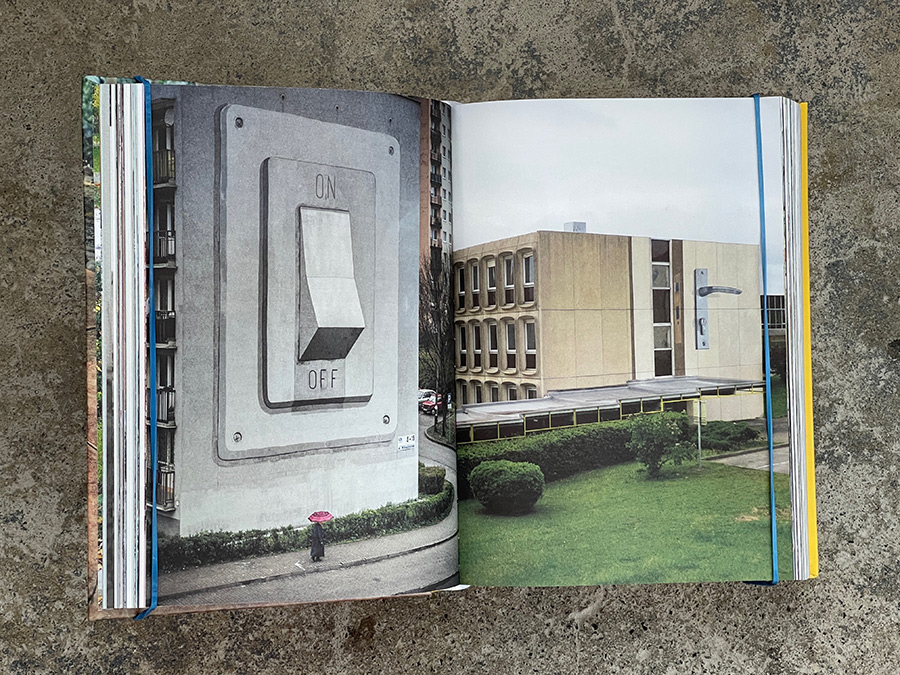
His new book, “The Foundations of Harmony and Invention,” is a 600-page tome compiling his work from the past 12 years. Crowd-funded, the project brings people together under a shared symposia of ideas and notes spearheaded by the artist. This spirit of collaboration is evident in the dozens of contributors featured in the book, including photographers, illustrators, artists, and writers.

Structured non-linearly, the book resembles an orchestral symphony, with every instrument—some homemade—and voice at play. Against this backdrop, Escif’s visual works, such as paintings, sculptures, and photographs, are combined with written contributions—cogitations, observations, anecdotes, manifestos, lamentations, odes, and protests—from himself and others. The result is a nutrient-rich, rumbling, and vital river of ideas and propositions that evolve into an expansive dialogue between the artist and the world around him.

We found the book’s description in the press release particularly compelling and share an excerpt here:

“So, this book, in a rectangular shape and hardcover, could well serve as a wedge with which to block the revolving doors of the Central Bank; as a companion for pleasure and adventures; as a small step to lean on to jump over a fence; as a cushion to sleep under a tree; as a throwing-object directed against a shop window; and also—why not—as a book, claiming pause, silence, and timelessness against the dominant paradigm of productivity.”

Somehow, Escif captures the everyday serenity and absurdity of life in these times—caught somewhere between the industrialization era and the algorithmic age, the imagination economy. For a man who may spend much time in his head, it is impossible not to feel his heart in these pages.

Hard cover: 600 pgs. approx. 
Year: 2024
Language: English & Spanish
Edition: 900 copies

Click HERE to purchase ESCIF’s “The Foundations of Harmony and Invention”

Read more
Fabio Petani Presents  “Spagyria Urbana”

Fabio Petani Presents “Spagyria Urbana”

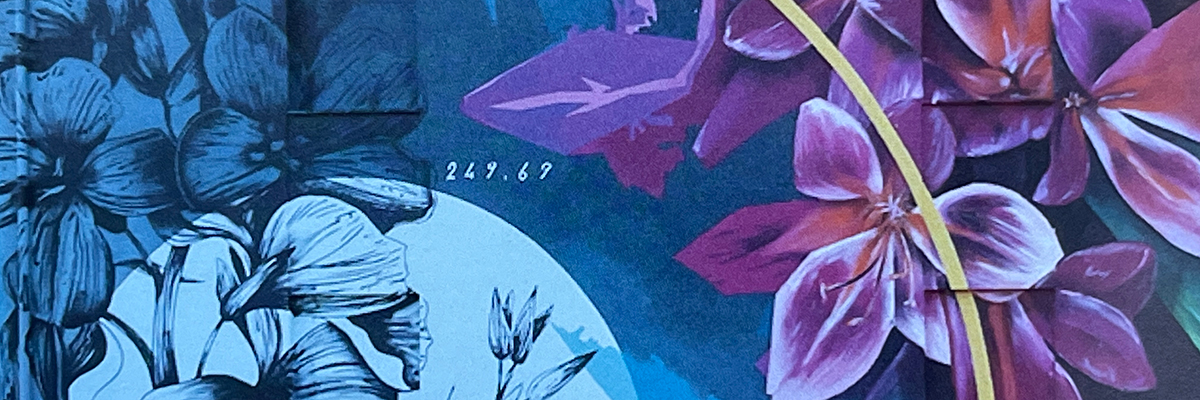
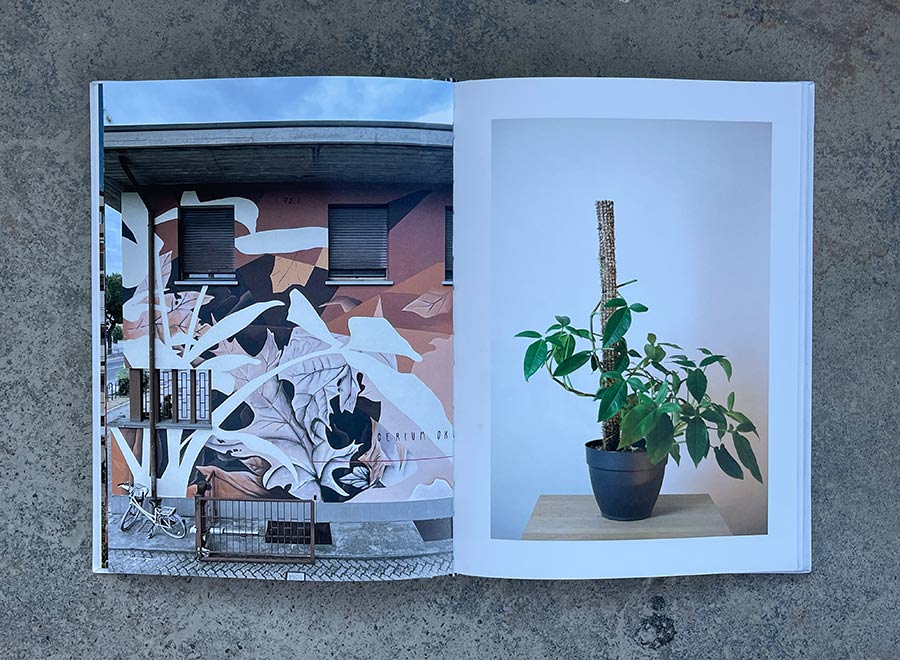
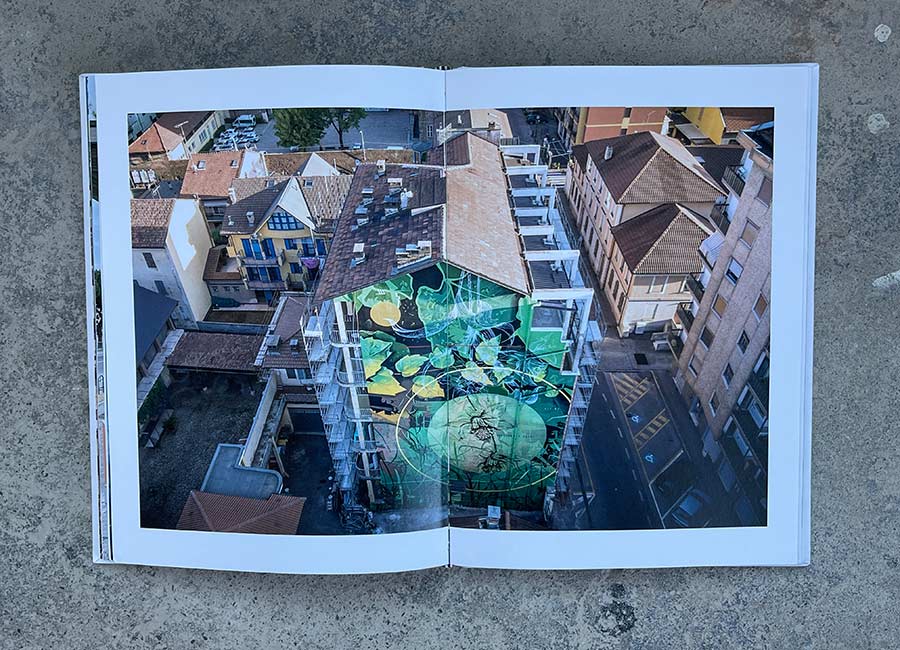
The human-built city has at times been called a jungle, but the concrete and steel environment flatters itself if it really thinks so. The intelligence and beauty present in the natural plant world far outstrips our modern cityscape, centuries after its origination. At least a few artists have been bringing it back to us in murals over the last few years, introducing a calm, lyrical serenity that dives way beneath the conscious, touching our roots.

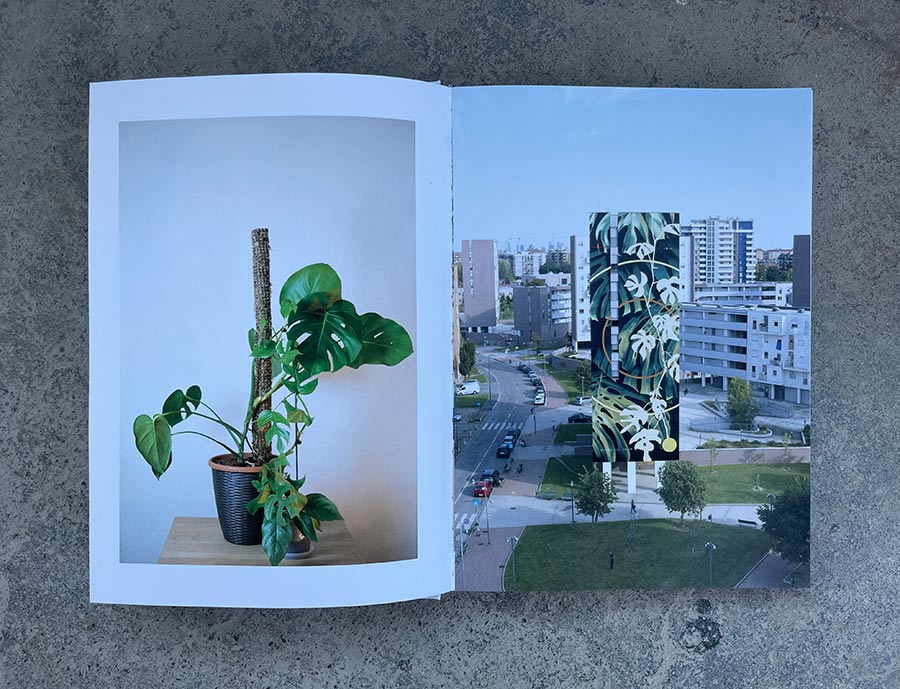
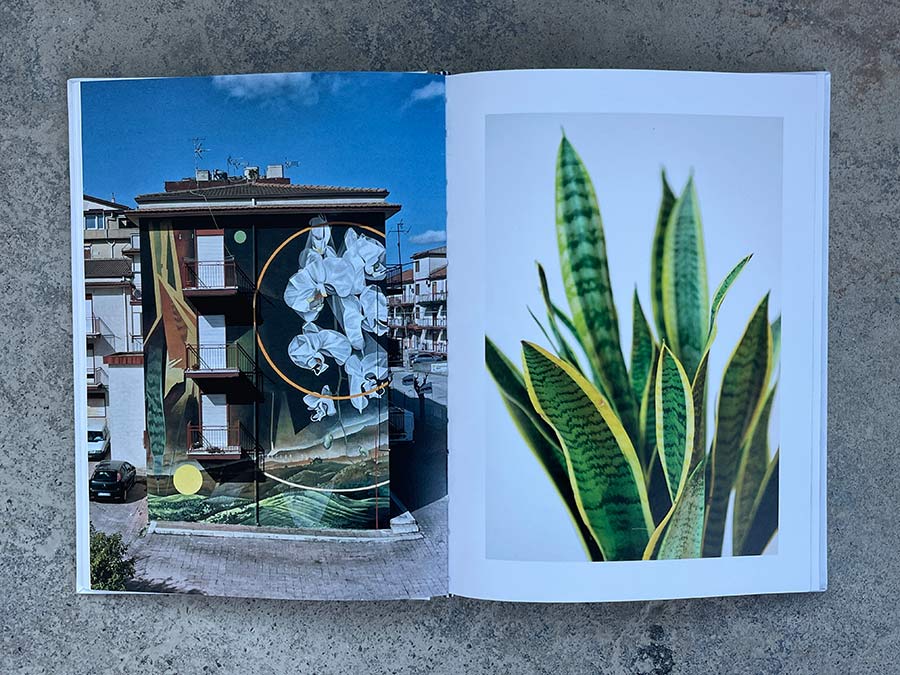
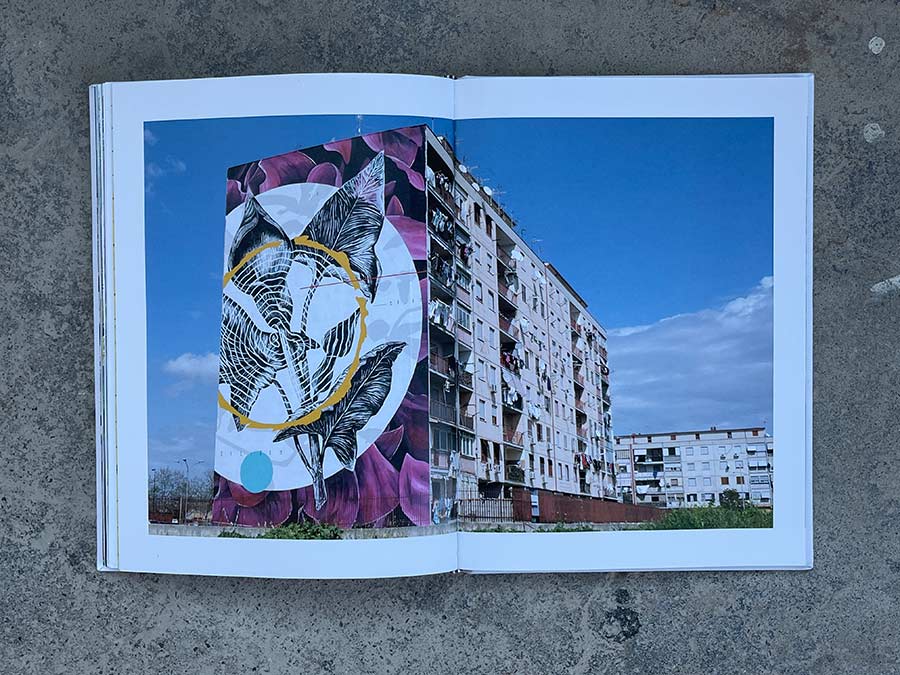
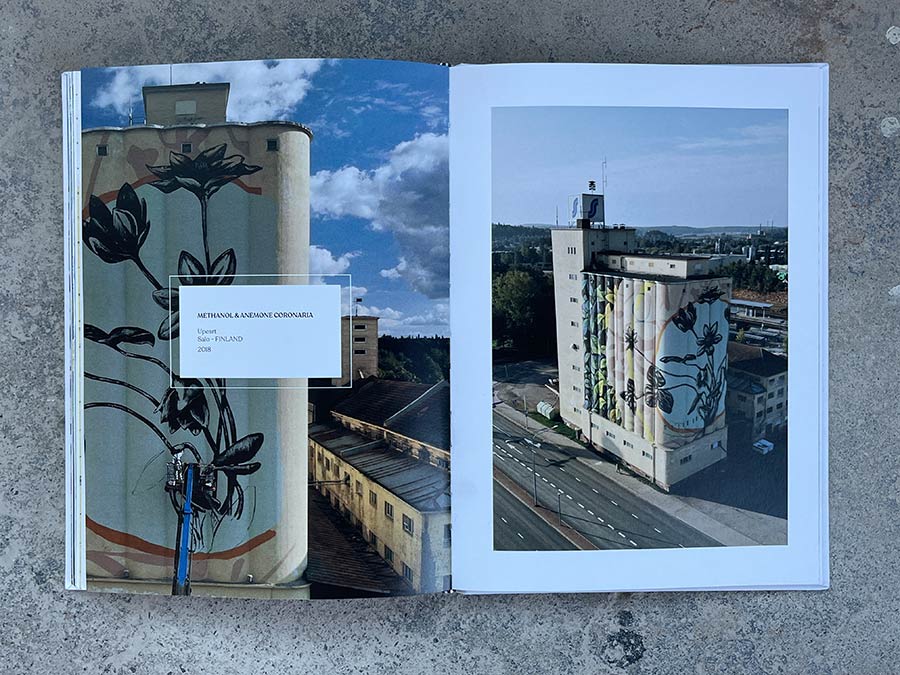
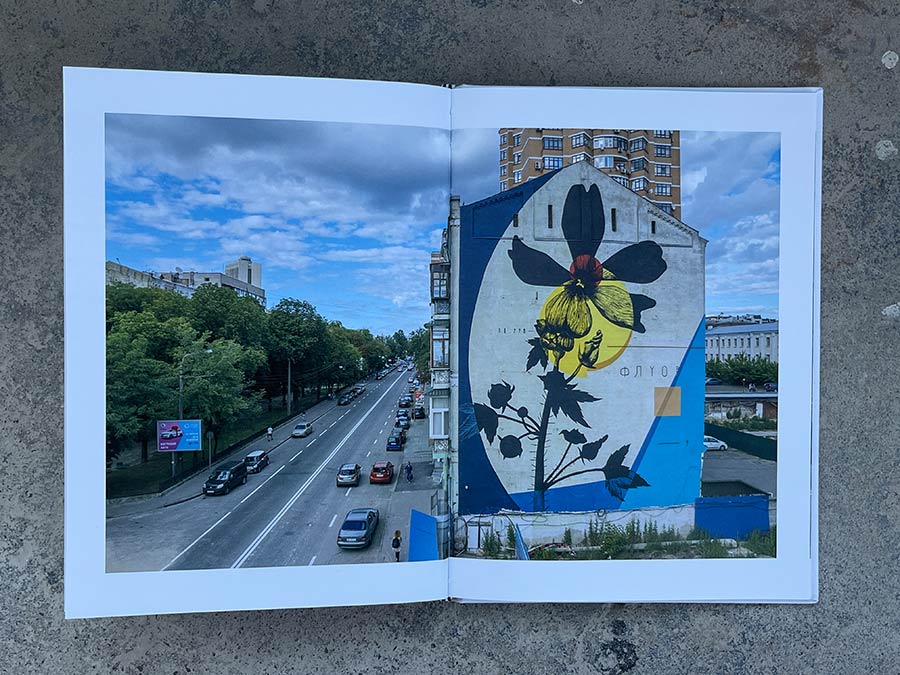
The young Italian painter Fabio Petani has been reintroducing a natural agenda to cities across Europe for less than a decade – in a way that only a scientist, botanist, and naturalist with a design sensibility could. What is genuinely original is his subtle re-interpretation of the formal conventions of botany, introducing them to a modern urban audience without lecturing – and rising far beyond purely decorative presentations.

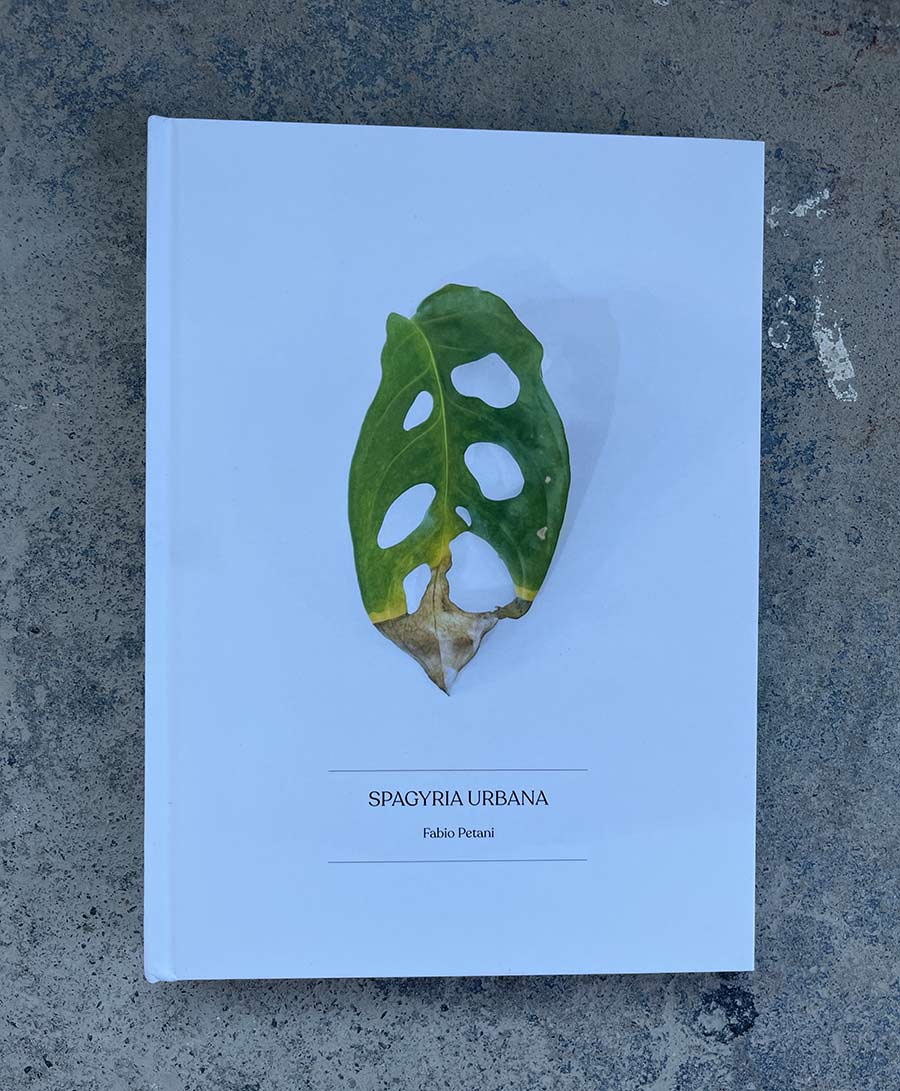
In the first hardcover-bound collection of works called Spagyria Urbana, the Dinerolo-born, Turin-trained Fabio Petani impresses with scale, scope, and sensitivity. More impressive possibly is the ease with which he can command his scientific interests and his ability to infuse his works with warmth, into rather artisanal renderings of art.

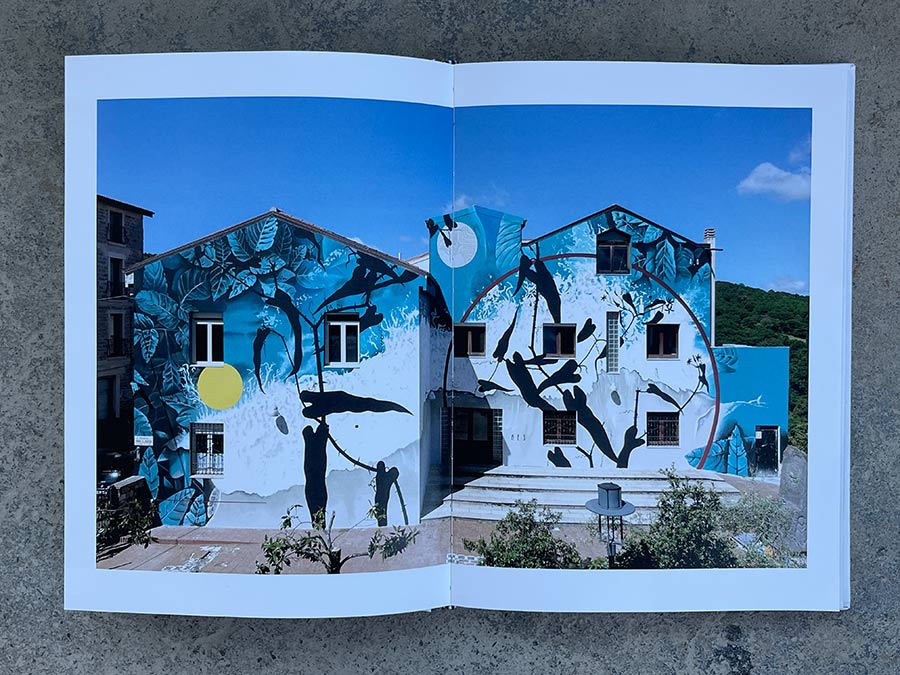
The book gives sweeping vistas of his large-scale works as well as many small and personal details about his development as an artist and the tight brotherhood of Italian street artists who invited them into their fold, first as an assistant, later as a peer. With outstanding scholarship and imaginary descriptive phrasing, lead essayist Alessandra Loalè brings the artist and the work into context, instilling a greater appreciation in the reader.

The duality of Petani’s combined and complementary styles is captured eloquently and instructively as analogous to the natural forces of life. “The abstract stroke of his first artworks gives way to a further realistic approach in the creation of the compositional layout, which results in a progressively more articulate combination of simple graphic elements,” she writes “a  symbol of a logical conscience which brings order to the whole structure – and botanical subjects.”

“The latter is represented in more recent pieces in two guises: a pictorial reinterpretation, defined by brush strokes and specks of color, and a more realistic graphic approach, which hints towards the typical etchings featured in botanical illustrations, enriched by the meticulous descriptions of thoroughly researched details that are proper to each species.”

In an age of awakening to our true impact on the natural world, it is perhaps more surprising that many 20 and 30-something urban artists are not drawing our attention to its power, intelligence, and inherent beauty. Petani brings the urban passersby straight to the source unflinchingly and with all the respect Mother Nature deserves.

Fabio Petani “Spagyria Urbana”. Torino, Italy. 2021. Texts by Alessandra Loale. Layout by Livio Ninni with translation by Mauro Italiano.

Read more
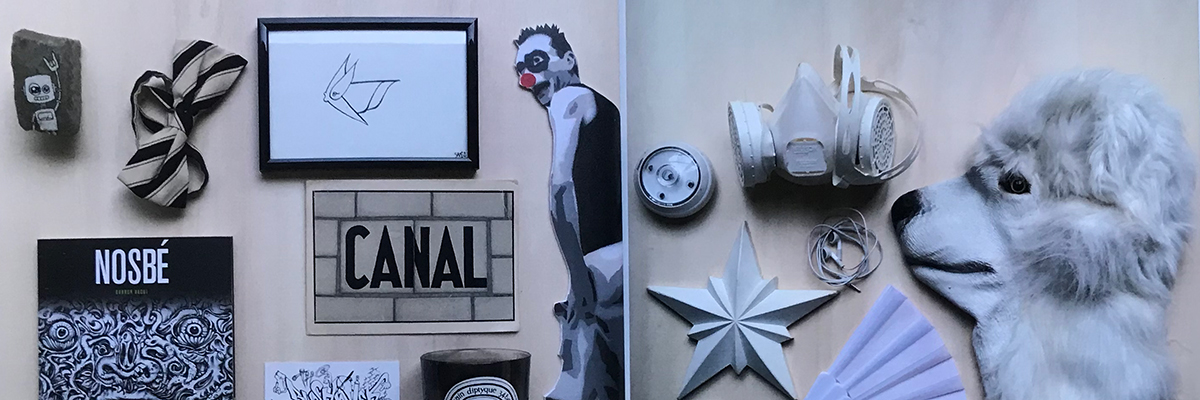
“Closed (In) for Inventory”: FKDL Makes the Most of His Confinement, 10 Items at a Time

“Closed (In) for Inventory”: FKDL Makes the Most of His Confinement, 10 Items at a Time

The world is slowly making movements toward the door as if to go outside and begin living again in a manner to which we had been accustomed before COVID made many of us become shut-ins. Parisian street artist FKDL was no exception, afraid for his health. However, he does have a very attractively feathered nest, so he made the best of his time creating.

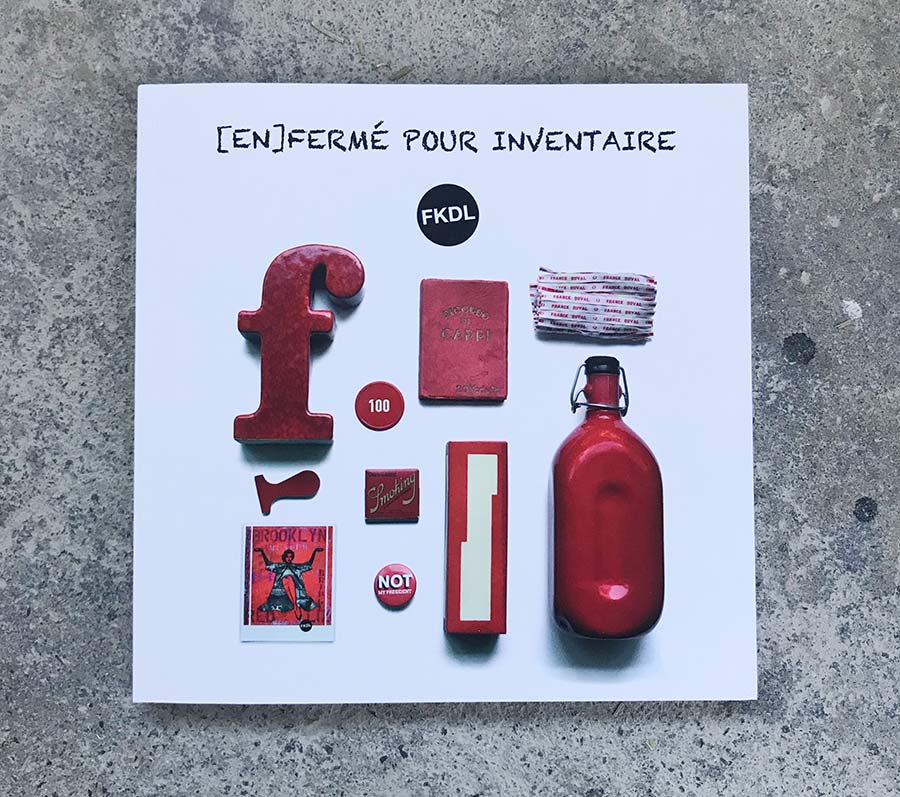
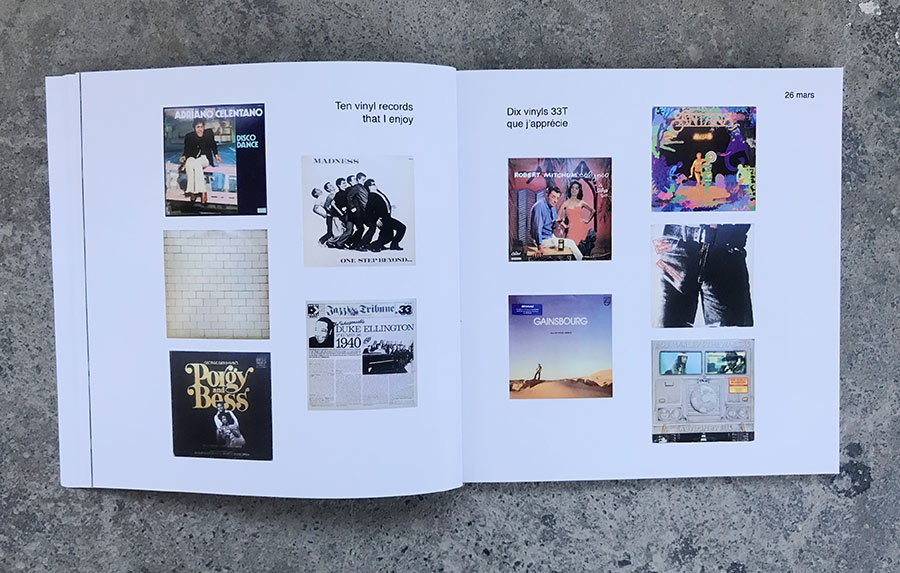
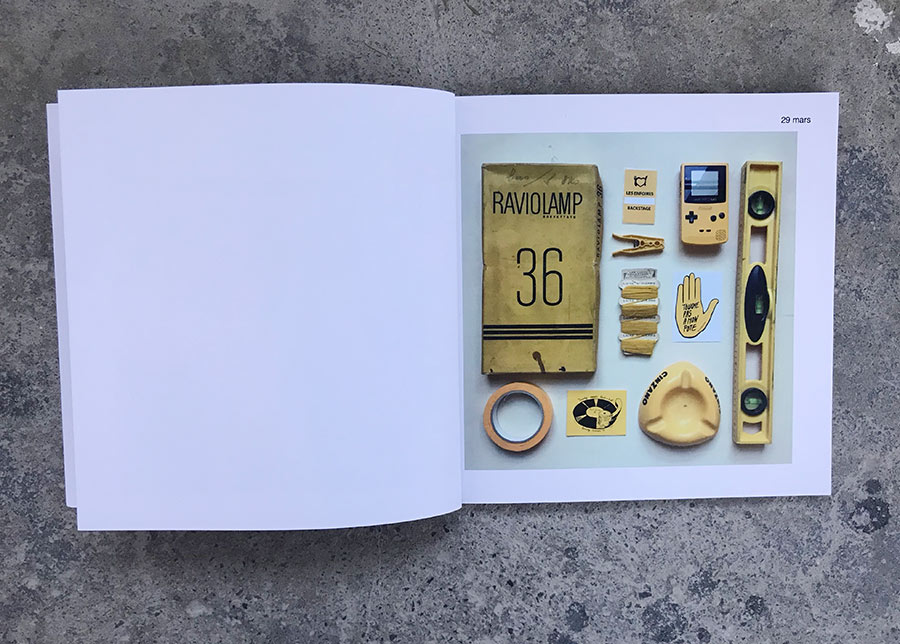
(EN) FERME POUR INVENTAIRE (Closed (In) for Inventory) by FKDL

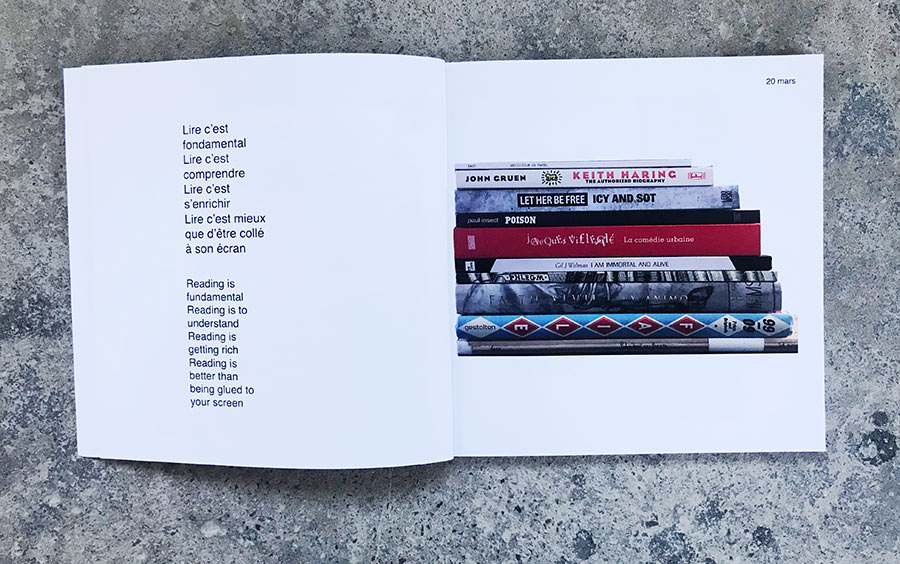
On the first anniversary of his 56-day confinement, we look at what art project he made for himself, using items he had collected. A serious gatherer of magazines, photographs, record albums, and objects that capture his attention, his studio is a small personal museum and archive – full of boxes and shelves and music from the era of his mid-century birth. It’s a golden age that he happily gains entrée to, especially when commanded by a global virus.

“March 17, 2020, the unprecedented experience of confinement begins in France,” writes Camille Berthelot in the introduction to Closed (in) for Inventory, “Time that usually goes so fast turns into a space of freedom, and everyone has the leisure or the obligation to devote himself to the unexpected.”

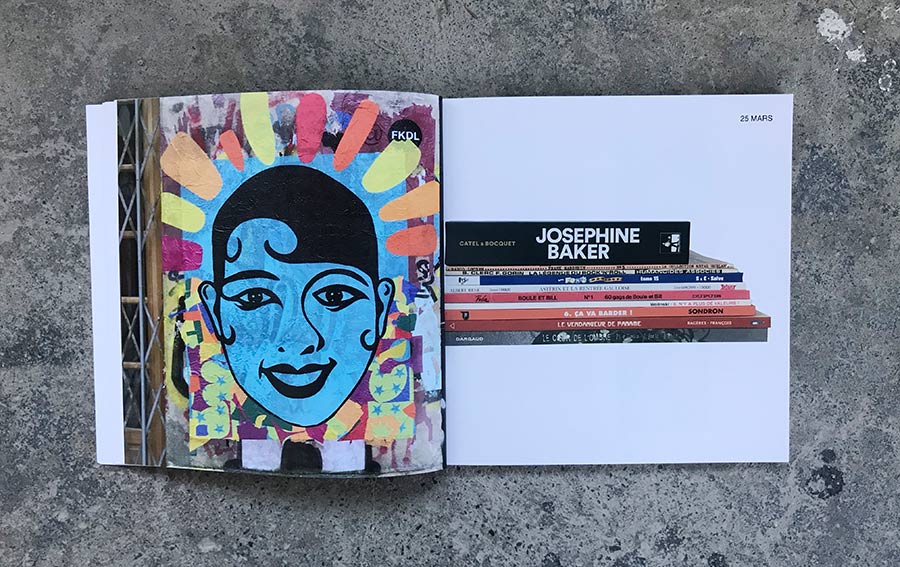
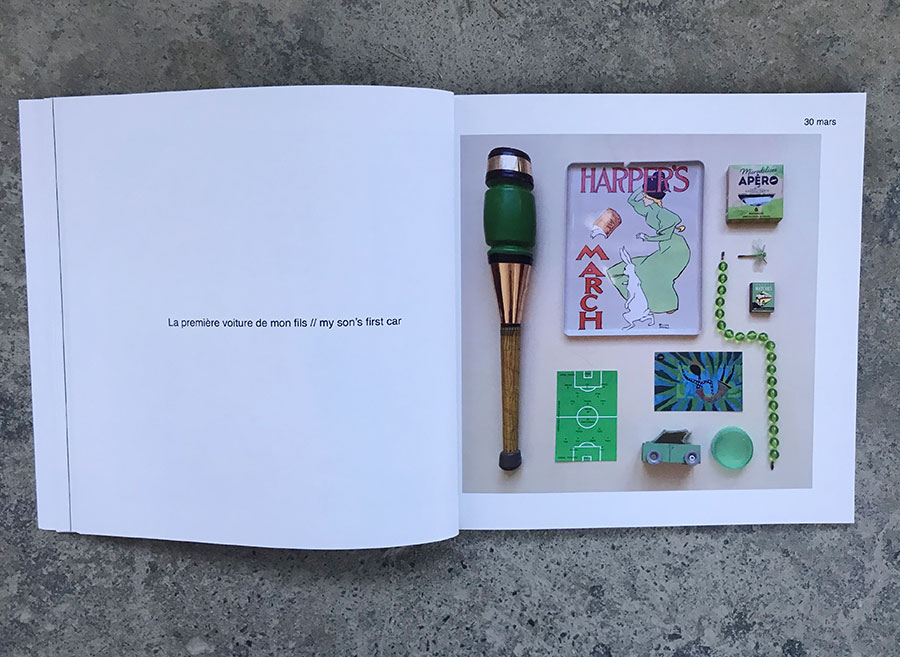
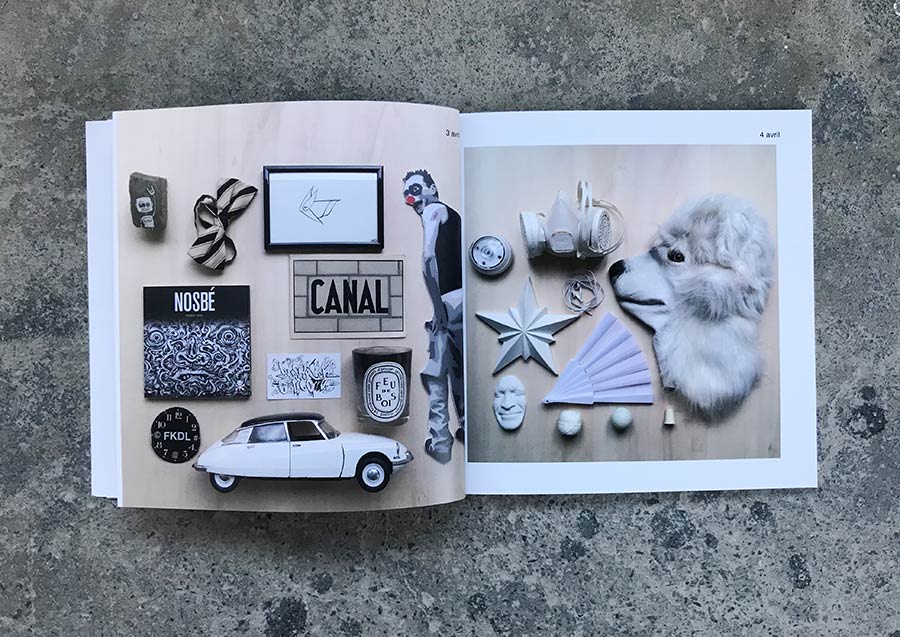
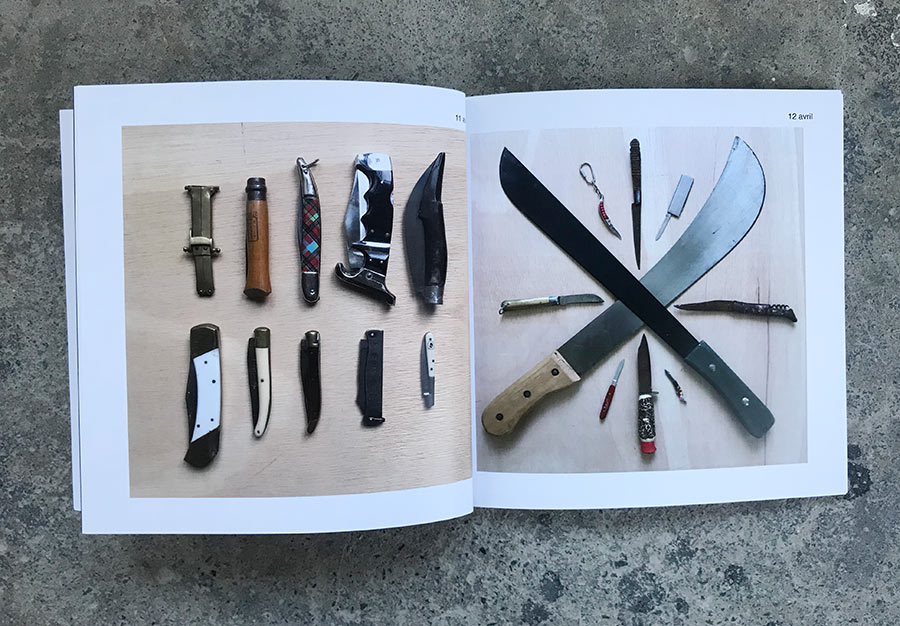
FKDL quickly began a project daily, sorting and assembling 10 items and photographing them. He posted them to his Instagram by mid-day. Eventually, he saved the photographed compositions together and created this book.  

“My duty of tidying up and sorting out turned into a daily challenge. I dove like a child into the big toybox my apartment is to select and share my strange objects, my banalities, my memories, my creations, and those of others,” he writes. “I gather these treasures, valuables or not, in search of harmony of subject, forms, materials, and nuances.”

(EN)FERME POUR INVENTAIRE by Les Editions Franck Duval. Paris, France.

Read more
Leon Keer: “Break Glass In Case Of Lost Childhood”

Leon Keer: “Break Glass In Case Of Lost Childhood”

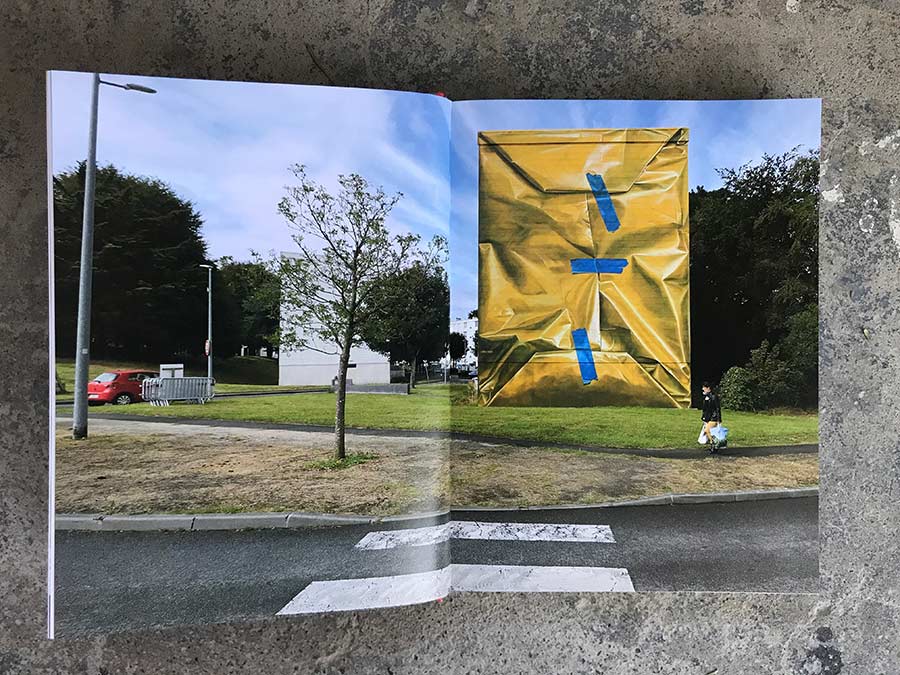
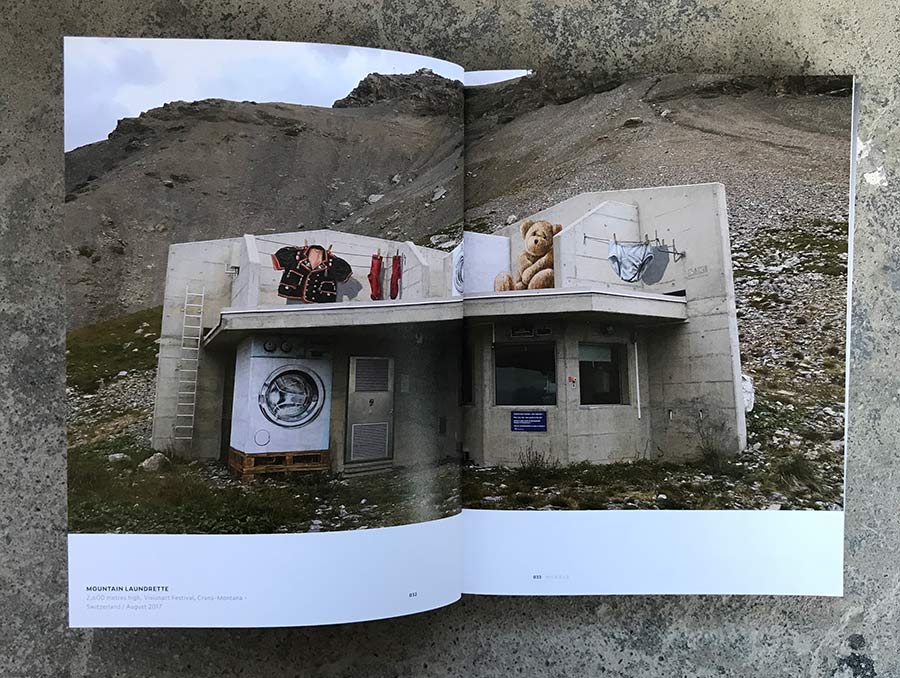
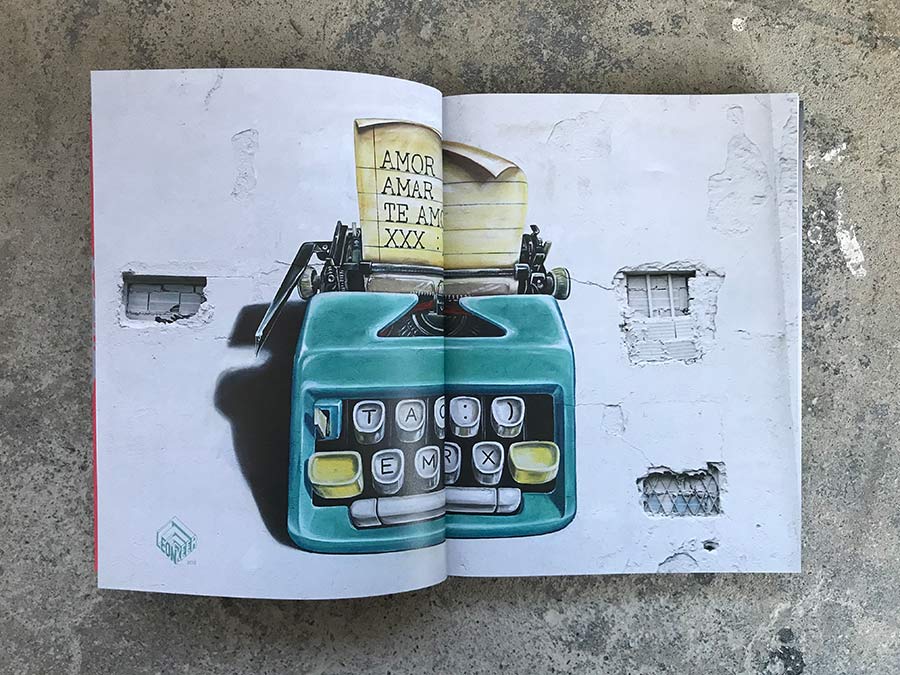
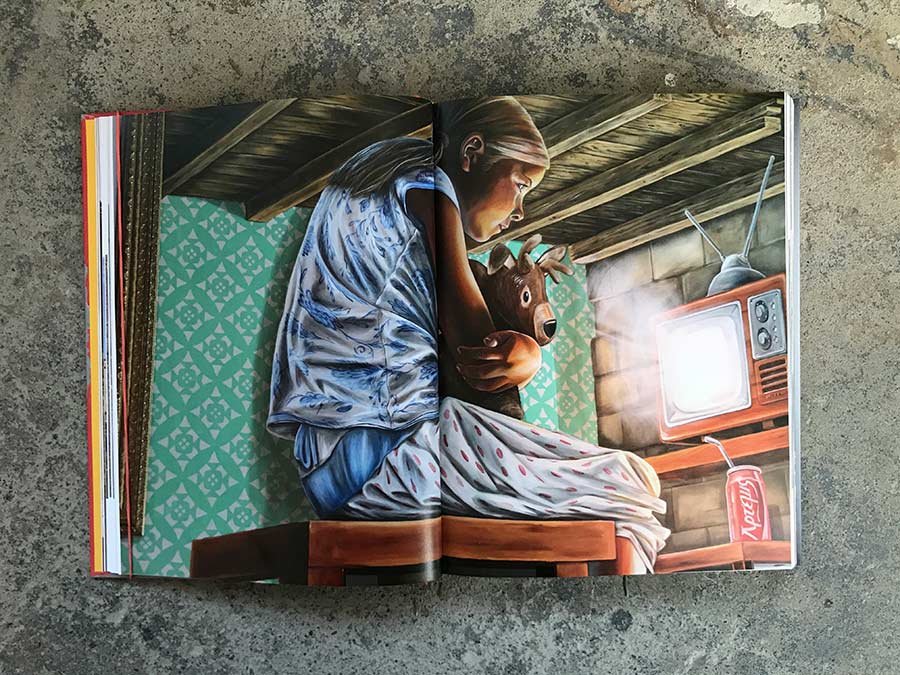
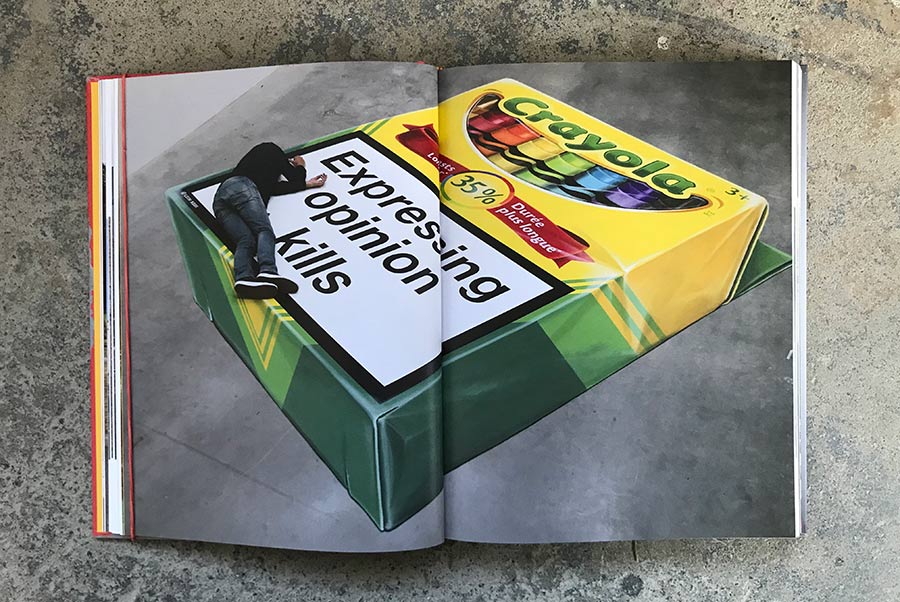
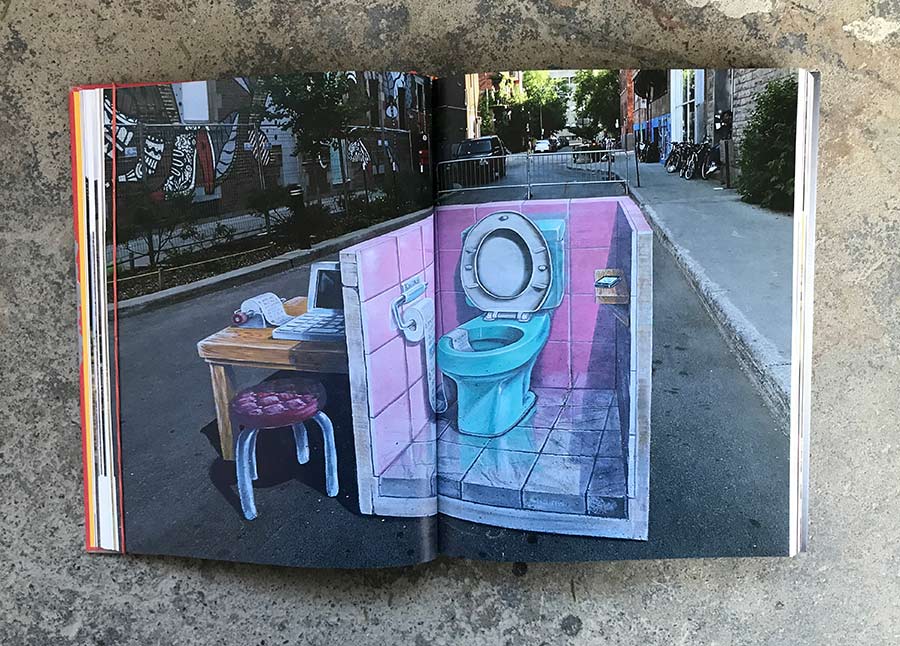
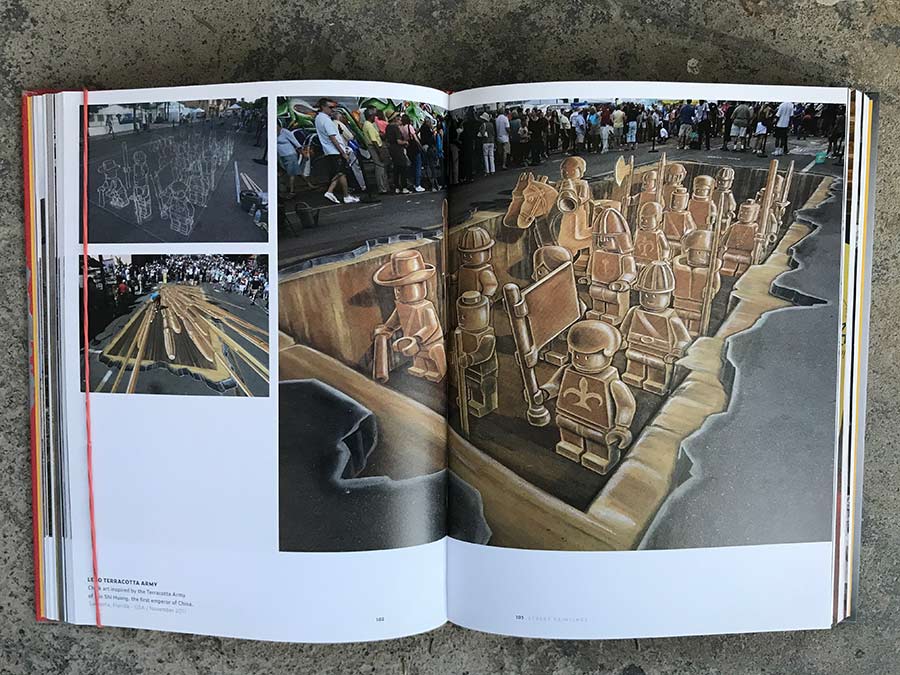
One of the challenges in creating a book about anamorphic art is presenting images that tell the viewer that they are being tricked by perspective yet hold onto the magic that this unique art conjures in people who walk by it on the street.

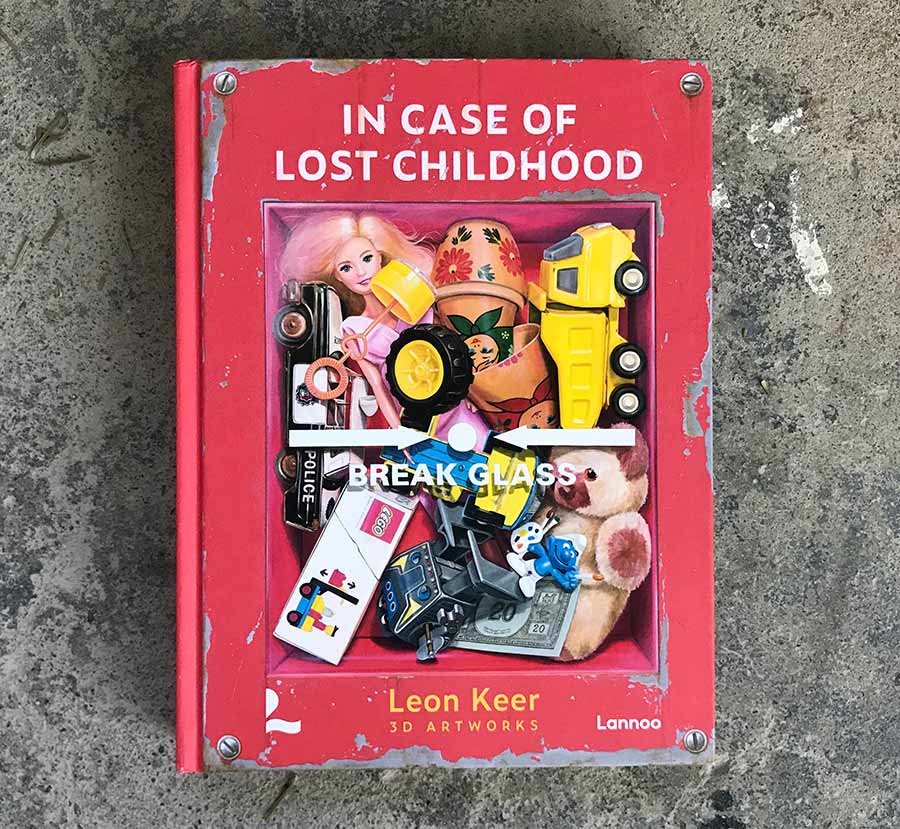
Leon Keer. “Break Glass In Case Of Lost Childhood”. Published by Lannoo Publishers, Belgium, 2020

In a way, that brass skeleton key that allows entry into another world is precisely what Dutch pop-surrealist artist Leon Keer has been seeking for decades to evoke in viewers’ heads and hearts. Some would argue he is preeminently such; certainly, he is the wizard whose work on walls and streets has triggered memories for thousands of children and ex-children of the fantastic worlds they have visited.

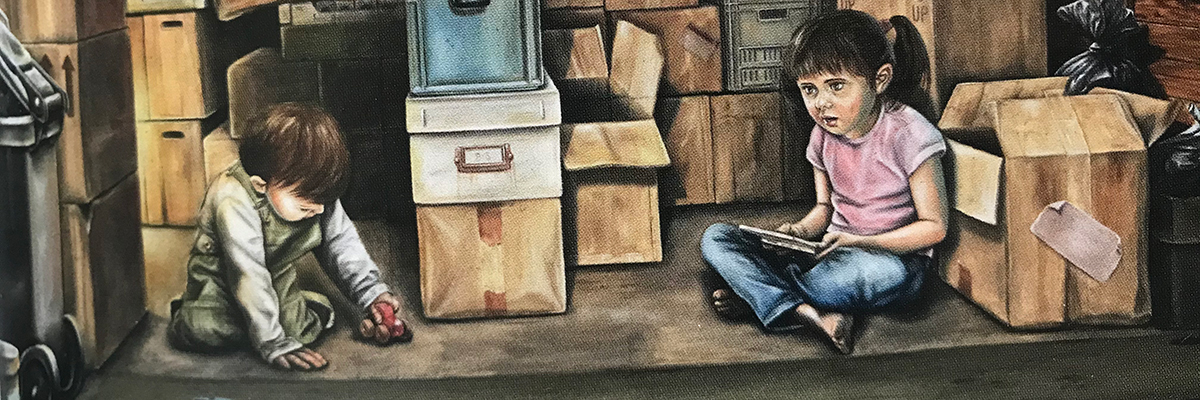
“You develop your senses all your life. Through what you experience, you involve affinities and aversions,” he says in his first comprehensive bound collection of gorgeous plates entitled In Case of Lost Childhood Break Glass. “Your memories shape the way you look at the world. When it comes to reflecting my thoughts, my memories are key. I needed to feel some kind of affection or remorse towards the object or situation I want to paint.”

Leon Keer. “Break Glass In Case Of Lost Childhood”. Published by Lannoo Publishers, Belgium, 2020

Looking through the various venues he creates with and within, you can find an imagination that fully entreats you to join in the fun. Whether they are street paintings. floor paintings, anamorphic rooms for you to pose in, experiments in augmented reality brought alive on your phone, enormous land art paintings, or oddly shaped painted canvasses, Keer is not keeping the fun to himself. You are the welcomed and necessary ingredient that will supremely complete the scene.

Los Angeles art dealer Andrew Hosner writes an introduction to the book, representing Keer to collectors and curating his work commercially. He is felicitously taken by the artist’s ability to conjure a familiar yet unusual world, describing the mind-melt that occurs during a typical Leon Keer encounter. “Bending your perspective, and opening your mind along the way, has never been more rewarding.”

Leon Keer. “Break Glass In Case Of Lost Childhood”. Published by Lannoo Publishers, Belgium, 2020

As you turn the pages, you wonder what some of the stories behind the pieces are, and he’ll often give you a clear description of what was going through his mind when he created it or what the particular significance is to him. You may also marvel at his dedication to preserving that precious world that each of us once lived in. Ingenious, witty, technically precise, Keer is a responsive and trustworthy guide.

Leon Keer. “Break Glass In Case Of Lost Childhood”. Published by Lannoo Publishers, Belgium, 2020

“Every day I try to be a child, but when I look in the mirror I am reminded that time is marching on,” he writes. “Gray hairs in my beard and a receding hairline make me realize that my childhood years are far behind. Yet my curiosity is never burned so bright.”

Leon Keer. “Break Glass In Case Of Lost Childhood”. Published by Lannoo Publishers, Belgium, 2020
Read more
Sandra Chevrier and “Cages”

Sandra Chevrier and “Cages”

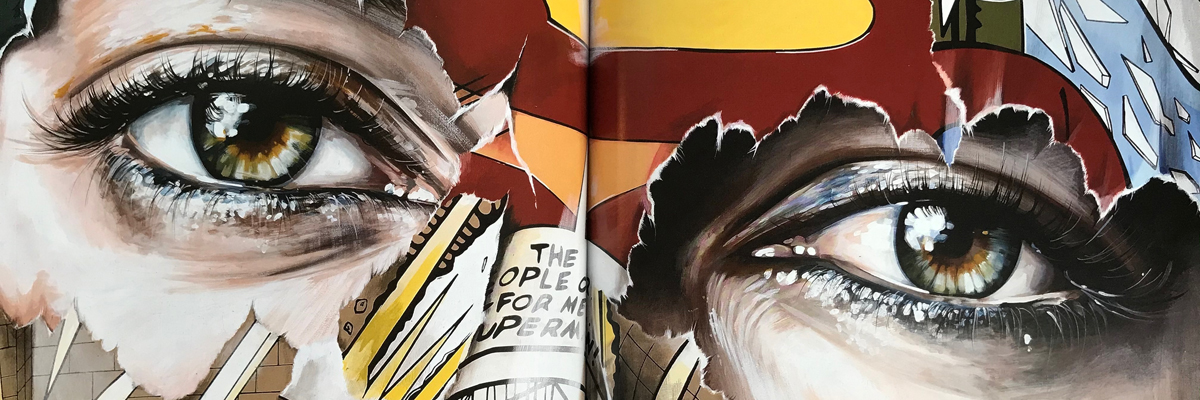
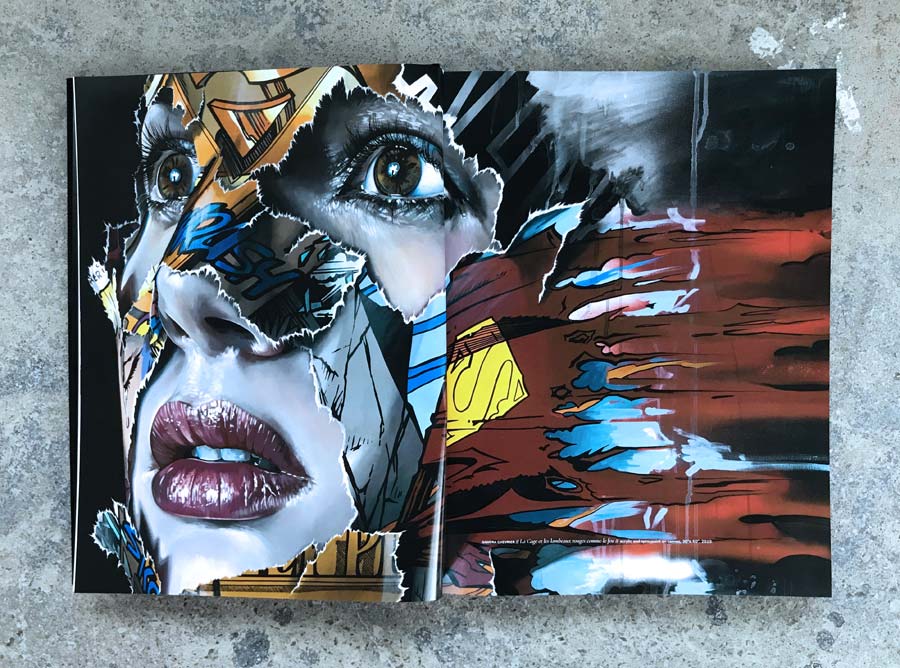
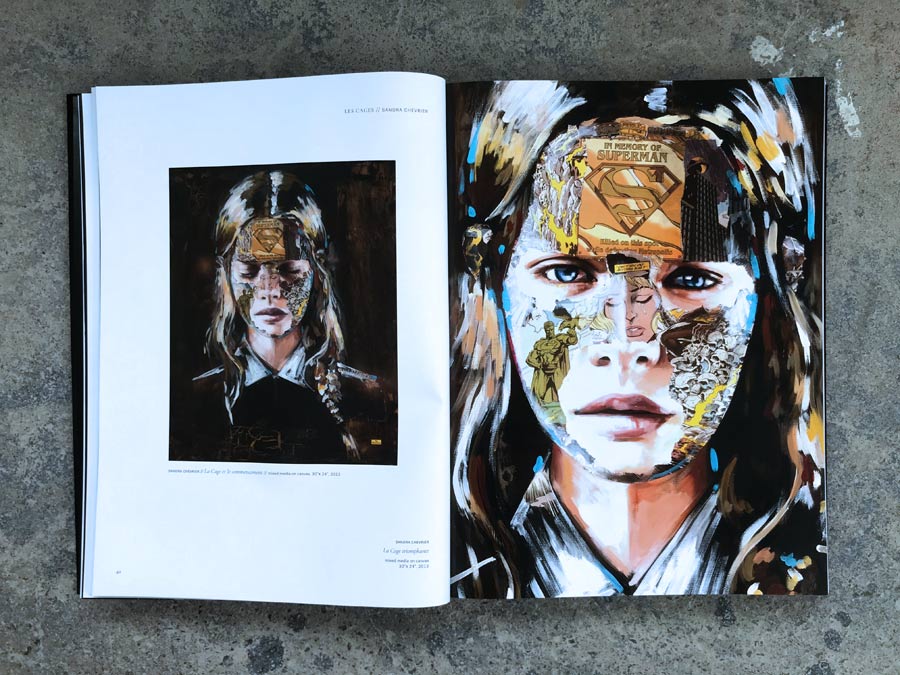
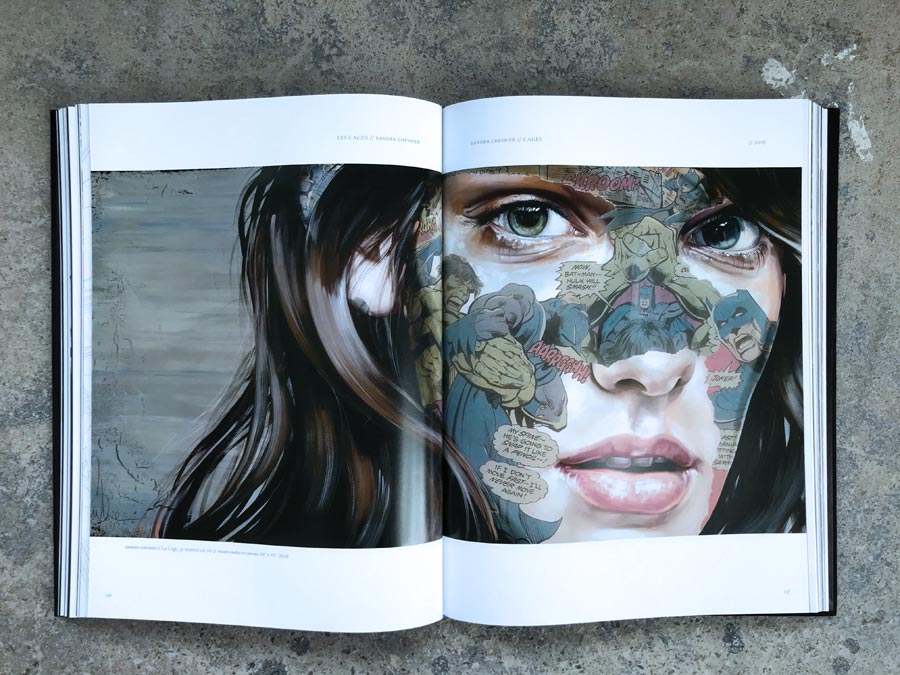
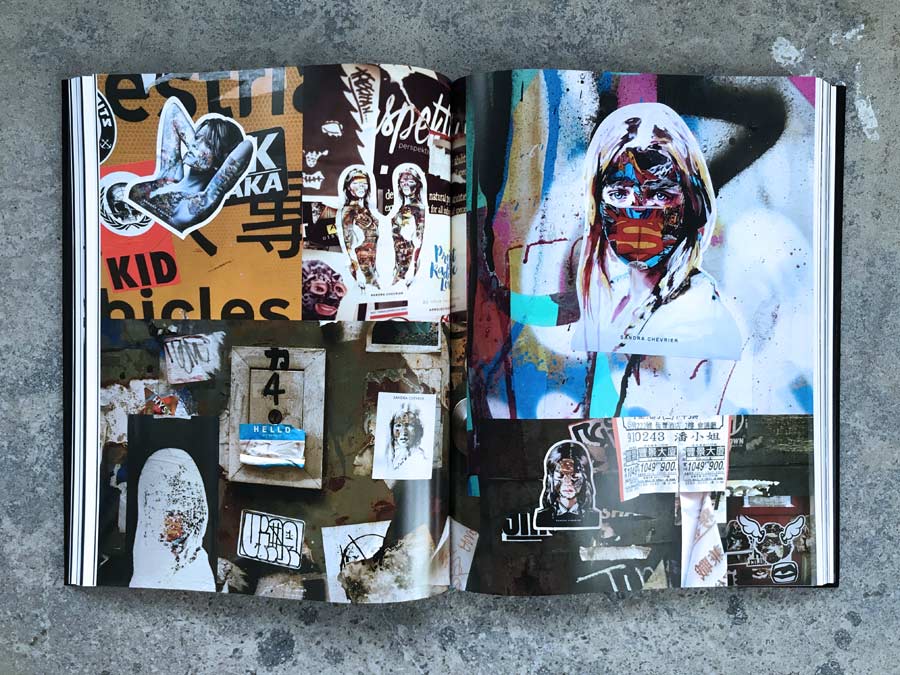
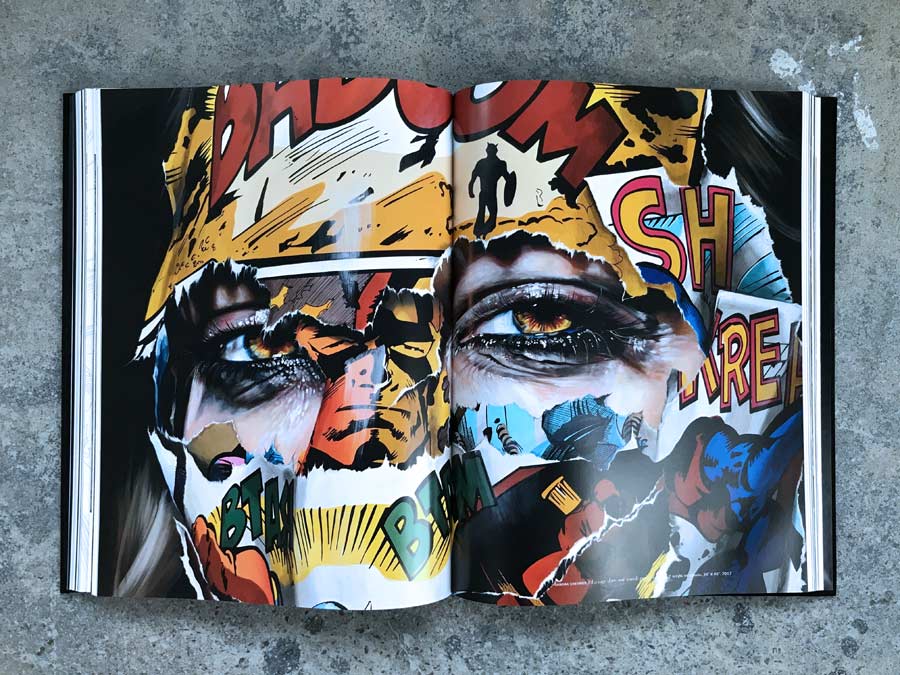
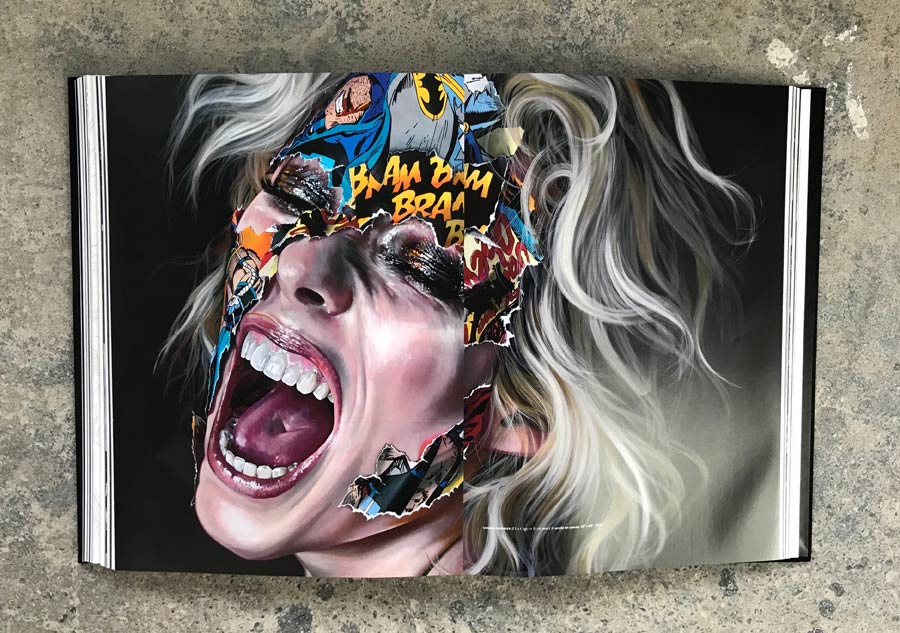
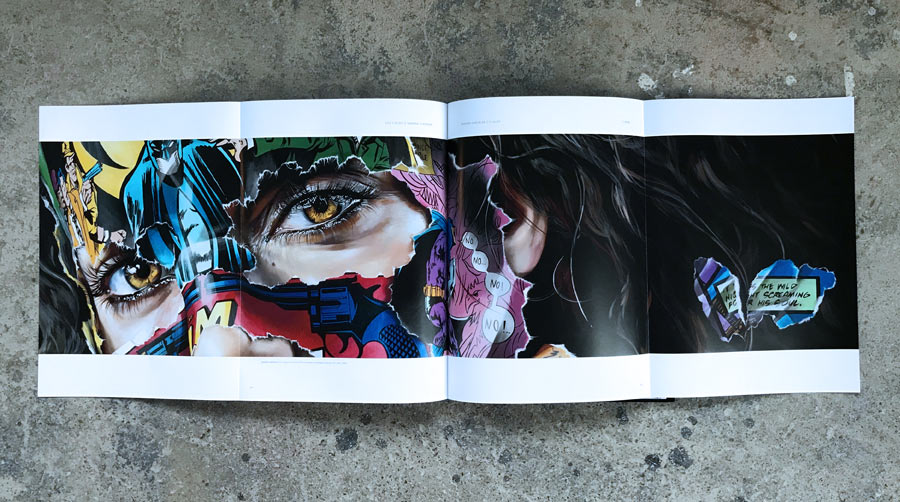
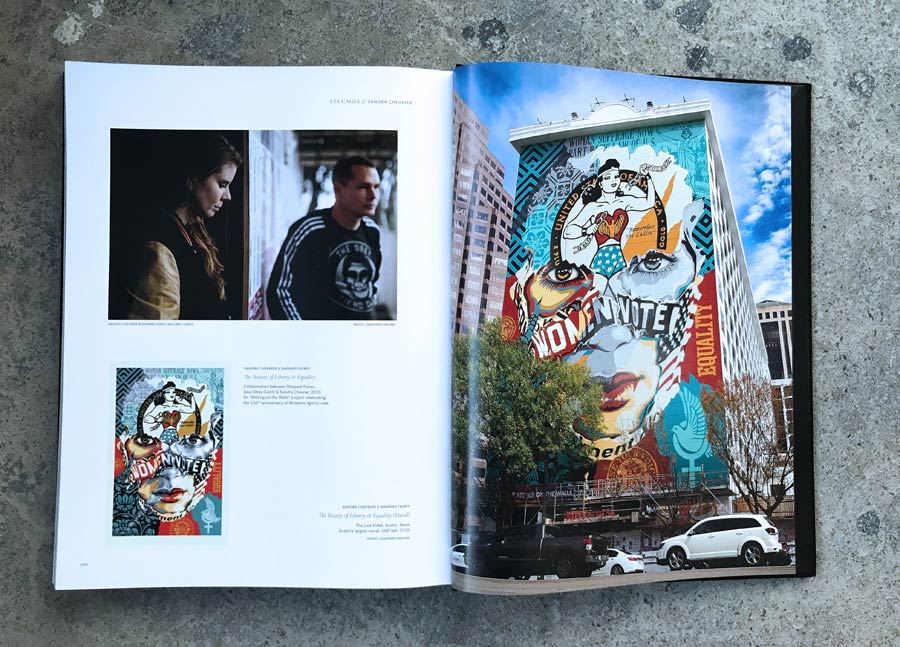
With precision and guile Sandra Chevrier has painted a female world that is sophisticated, unreachable and appealing, whether painted on canvas, street mural, or stuck to a wall in the margins of a city. The characters who are punching and pouncing and swooning across her faces are reflective of her own hearts’ adventures, seamlessly rolling and intermingling with those epic storylines and dust-ups with superheroes and villains of yesterday.

Perhaps it is because of this sense of inexactly placed nostalgia, in “Cages” we are aware of the ties that bind us, the roles that we hold – whether chosen or imposed – and we’re rooting for these Chevrierotic women to win – as they scream and cry and swing for the rafters, looking for the way out.

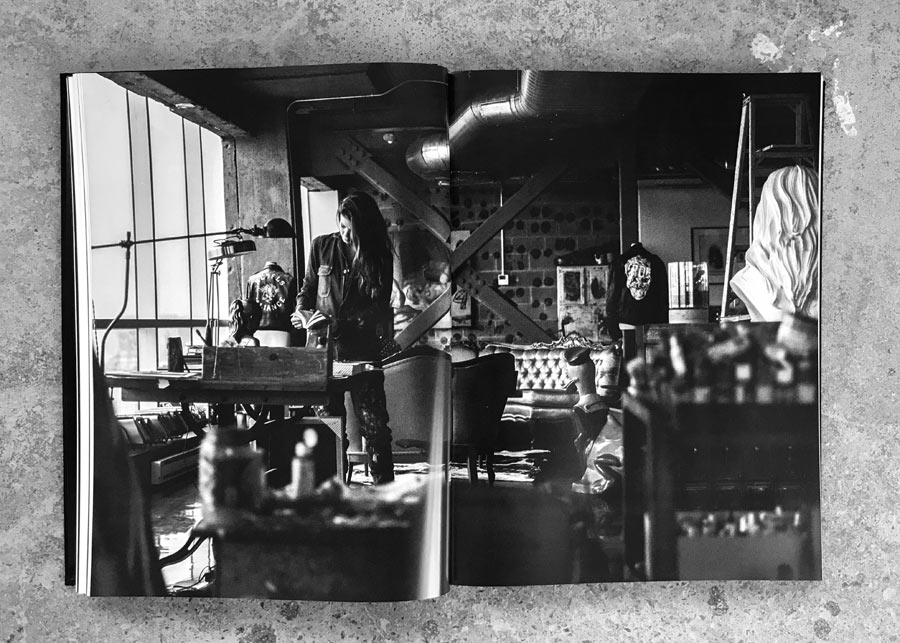
“A dance between triumph and defeat, freedom and captivity, the poison and the cure,” stands the ambivalent quote on the page facing her black and white photo by Jeremy Dionn.

A closeup of her face, her hand horizontally obscures the lower half, her index finger raised to allow Sandra to see, to study and assess. Without question this artists’ work is more than autobiographical – these expressions offer a stunned sense of mystery, an understanding at the precipice, an adventure ready to occur.

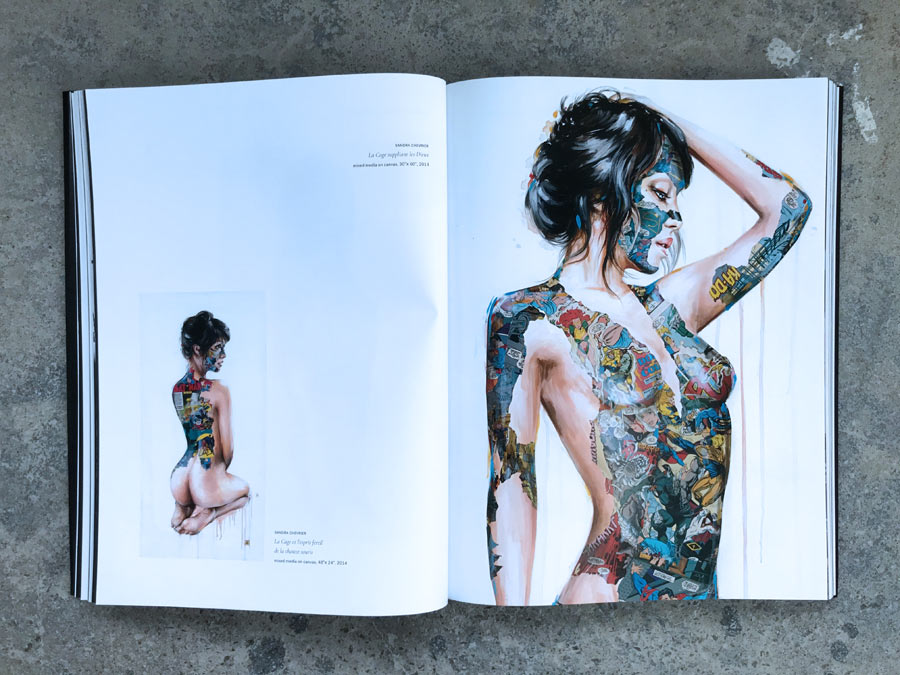
Arranged chronologically over the last decade you can witness in her works ample evidence of her refinement of technique and reverence as an artist and as an individual; struggling between revealing and hiding, adding human dimension or remaining an object. Selected swatches of superheroes form collage masks across a steady parade of beautiful female faces and forms, their drama stirred and everpresent, lying in wait until confidence takes root.

Gorgeously designed and laid out; alternating between large matt-finished plate portraits and small sketch paper inserts, the book conveys warmth and clarity even as her superheroes remain mysterious. These cages, however they present themselves, are glossy and refined. Are they empowered, or are they objectified? The lines are blurred. Her femmes are imbued as more than just the fatale who lures one into a dangerous or compromising situation, but these figures may also revel in mystery itself, just beyond your arms reach.

Inquisitive, strong, and full of imagination, Chevrier may surprise everyone when these figures eventually take off their masks. Until then, the enchanting mysteries continue.

Sandra Chevrier: Cages. Published by Paragon Books and designed in San Francisco, CA. by Shaun Roberts. August 2020.

Read more
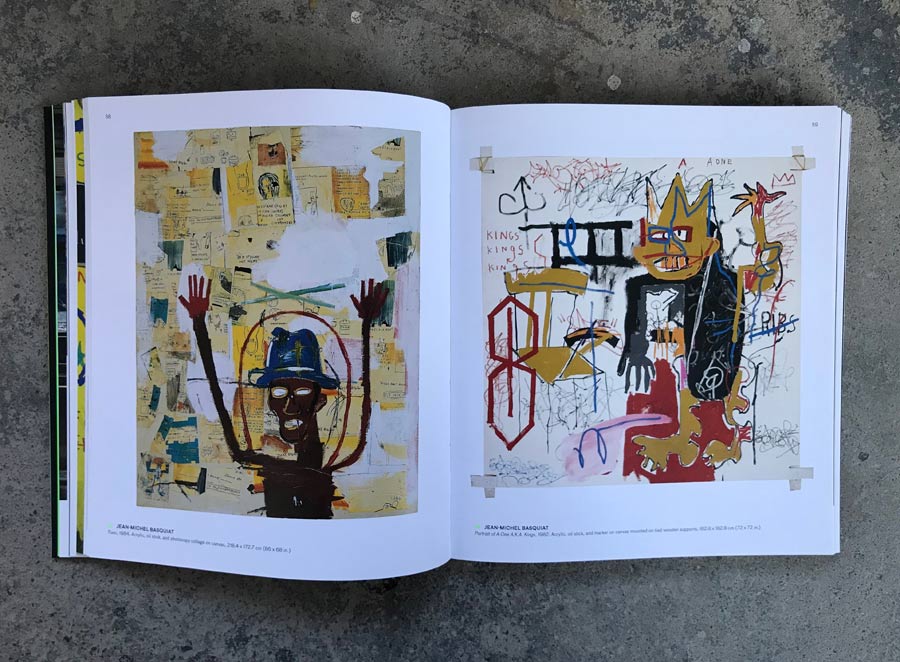
“Writing The Future”: Basquiat , Broken Poetics, and the NYC Cultural Context

“Writing The Future”: Basquiat , Broken Poetics, and the NYC Cultural Context

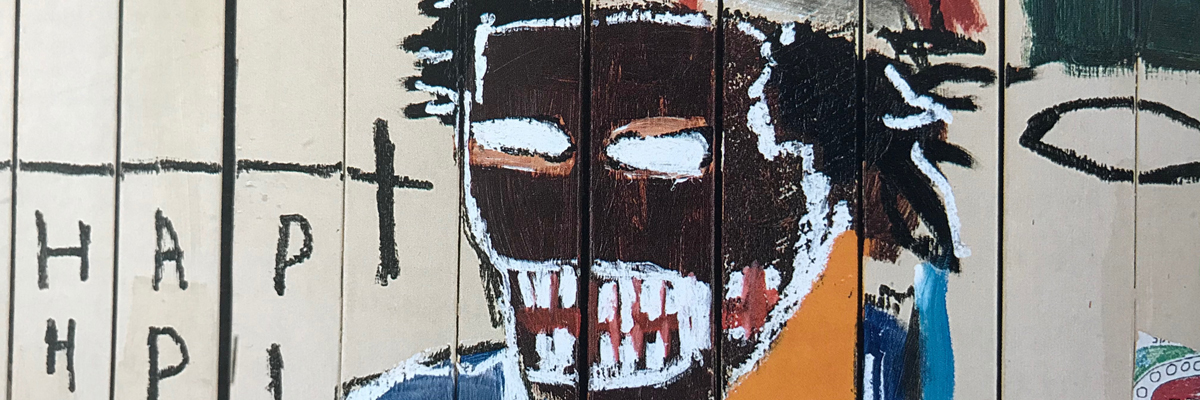
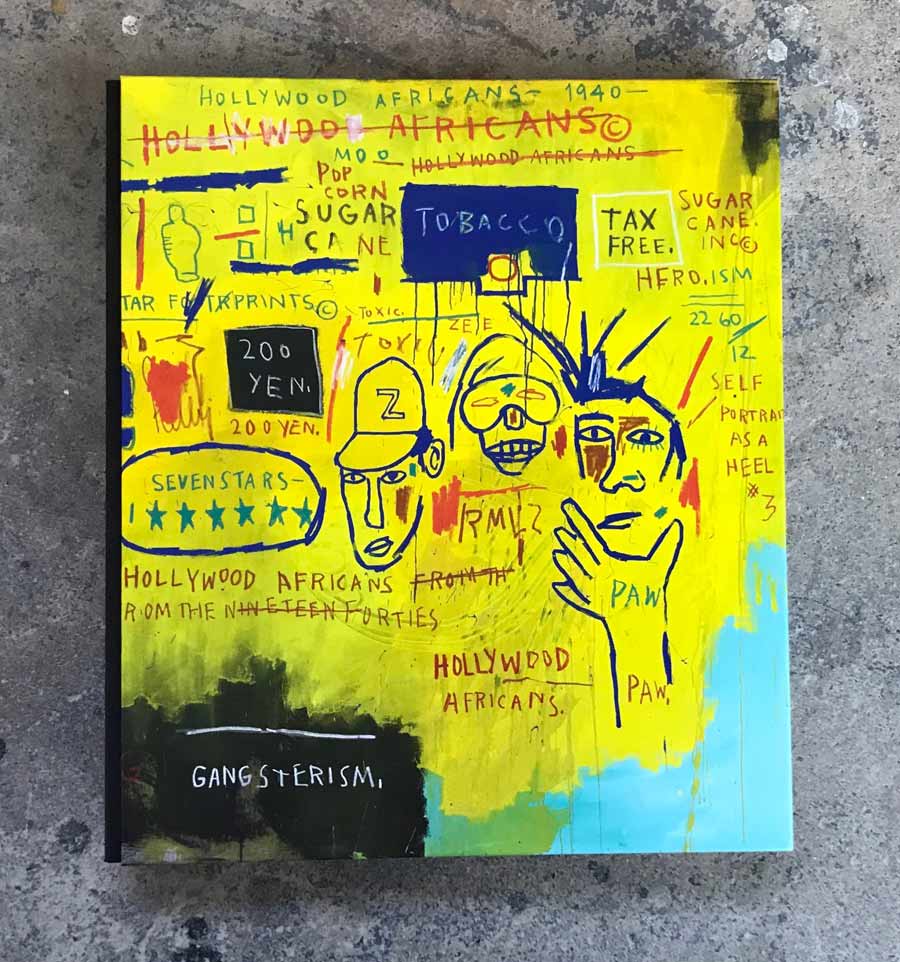
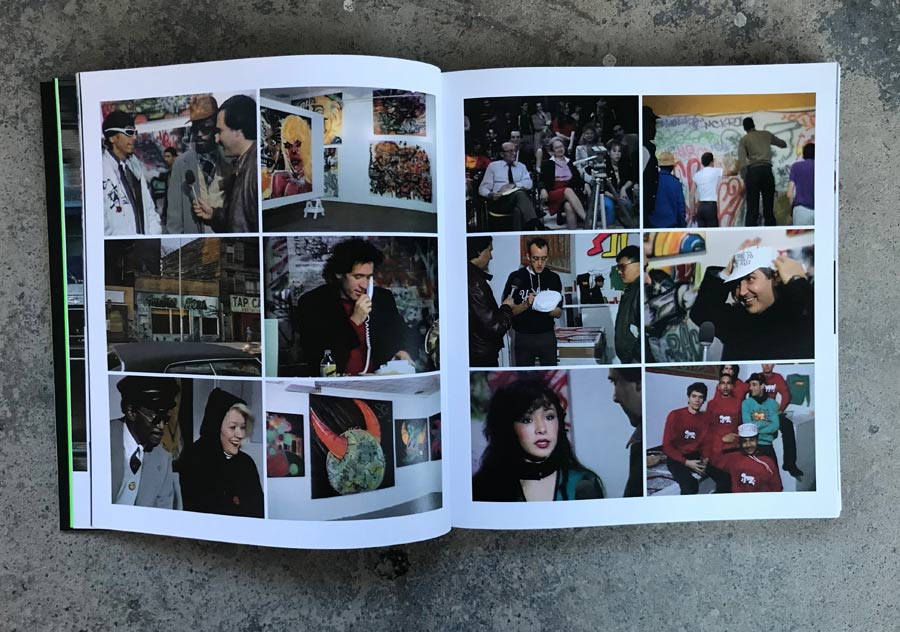
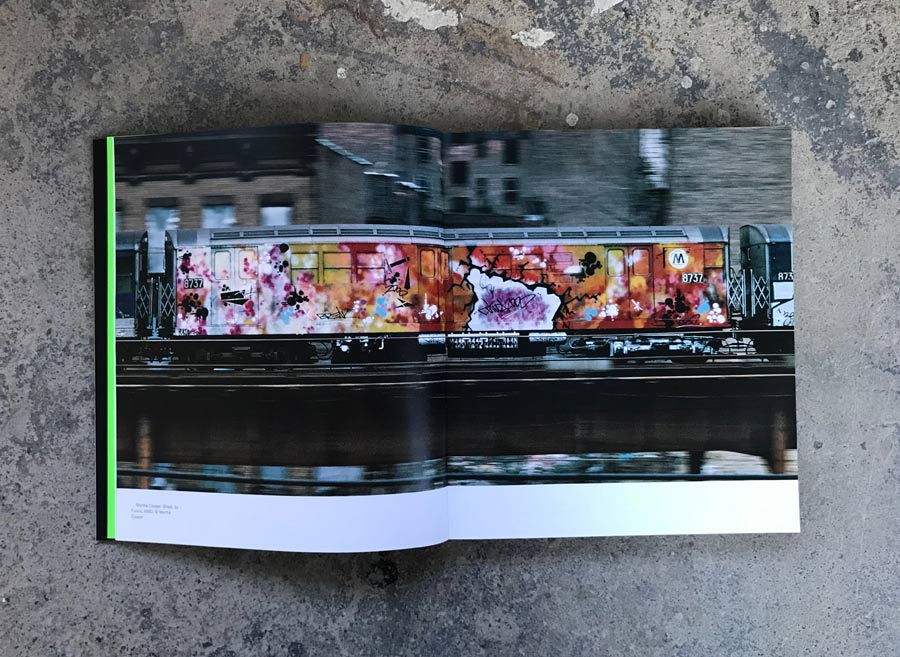
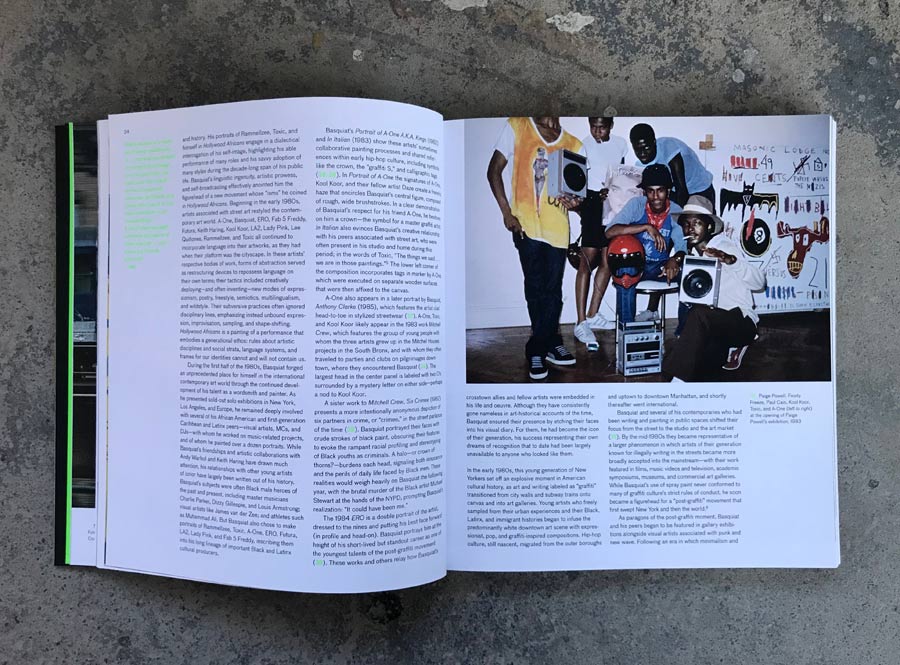
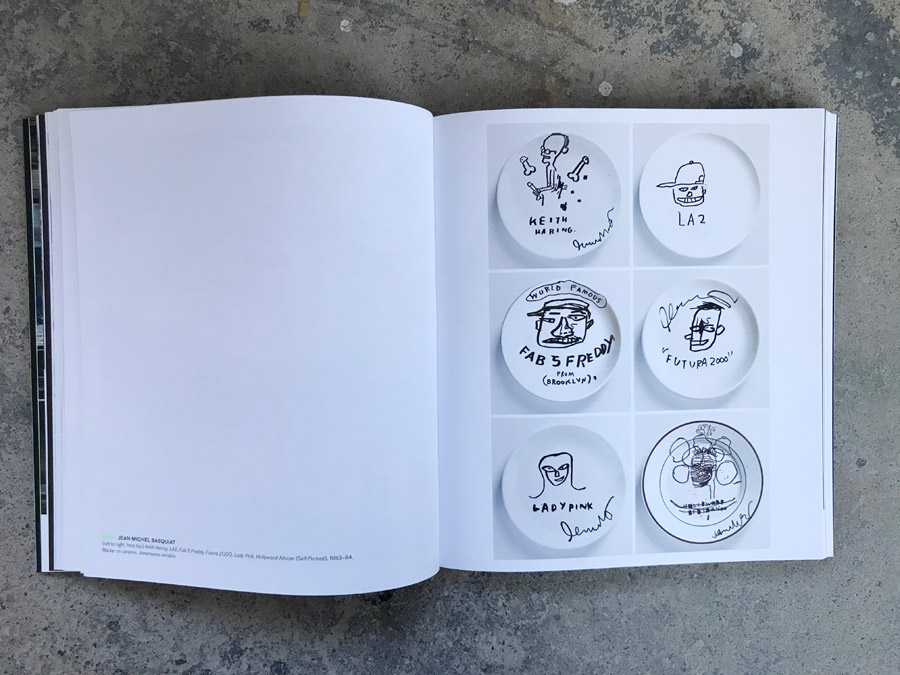
To accompany the exhibition “Writing the Future: Basquiat and the Hip-Hop Generation” at the Museum of Fine Arts in Boston, a substantial catalogue has been released to support the show and place the artist in context with his time as well as his influence on the future as it pertains to contemporary art and so-called art in the streets.

Accessible and erudite, the catalogue unpacks the social connections, the various emerging music, art, and performance sub-scenes of “Downtown” and “Uptown” New York culture, the opaque underpinnings of the dominant culture, and the urban syntaxes that formed this young Brooklyn artist and his work in the 1970s and 1980s. To faithfully set the stage for this story; to conjure the atmosphere, the moment, the context that Basquiat evolved himself into, you would need to create an interactive urban theme park with an impossible set design budget, a cacophonous sound-music map, a handful of public policy and political advisors, an anthropologist, a warehouse of costumes, too many actors, too many attitudes, and even more drugs.

Considering the elements of this planetary system, one that drew protagonists into layers of swirling space in overlapping concentric patterns at a time where “high” and “low” distinctions were melting and crashing into one another, a viewer is still drawn physicality of the works and artifacts, the hand and the gesture. If you are going to talk about expressionism and its reaction to stimuli, you’ll also want to appreciate the tactility of this art-making process, one that was endemic to Basquiats’ daily existence in the studio and on the streets of Brooklyn and Manhattan.

Editor of the “Writing the Future” catalogue, Liz Munsell, delves directly into that physicality in her essay, an experiential process that he shares with the viewer. “In several areas of the composition, Basquiat seems to have taken his own hands directly to the painting’s thick, wet surface, dragging his fingers across it into an area where he painted the hand of his self-portrait,” says Munsell. Willfully enigmatic at times and decidedly cryptic in his textual references, one cannot argue with this, an ultimate form of mark-making.

While Munsell is addressing something tangible, she is also witness to the spirit. We take it as an apt response to the greater challenge of decoding the works; presenting “the shattered poetics of Jean Michel Basquiat lyric memory cabinets.”

Basquiat scholar Carlo McCormick, who also happens to have been a full participant and observer of the ratty and glittering decline of New York during Basquiats’ rise, opens the book. Within his lyrical prelude to the artists’ ascent is a similar effort to place the moment; a sea of creative talents from privilege and without, trying their hand at sinking or swimming on the gallery of the streets, seizing a moment that reshaped a sleepy and self-satisfied gallery system that had painted itself into a proverbial white-box (and white-skin) corner.

“It’s all a crazy quilt conversation, talking in wild style tongues from the train yards to the writer’s bench, from bewildered commuters and savvy fans to the posturing politicians with their broken-windows theories in vandal squads, from little nightclub art shows and the ad hoc outposts like Fashion Moda and the Fun Gallery to a global stage of major exhibitions from the primal voice of mark-making to the sweet sounds of the studio, where a generation of outlaws joined that historical confab of painters in the culture of canvas. It’s got a beat hard-scrabbled out like the scratching of those early playground turntablists, but it’s all about the language, transmuted beyond easy recognition, private in the most public of ways, the insider voice of the outsider externalizing the interior. It’s pure jive, freeform and freestyle, the deceptions of code carrying the truth of the heart, the lyrics to all our collective pain, anger, alienation, and hope writ large like an aerosol atom bomb.”

Talk about shattered poetics.

In fact, art in the streets was a direct respondent to trauma, inequity, dislocation, and the effects of the flight of capital– and if certain populations found it discordant, it was possibly because it functioned as a funhouse mirror – distorted and vaguely threatening. While Basquiat was self-promoting in the venues and manners he was most suited, he was placing a bet that society was ready, or would be soon, for the platform and the content and the challenge.

“Graffiti had found the speed at which it needed to be seen,” the graffiti writer, fine artist and street style branding wizard Futura says in a quote.

By chasing it and learning how to read these writings on the wall we would gain a better understanding of what was to come in the future.  

Writing the Future: Basquiat and the Hip-Hop Generation. Published by MFA Publications on the occasion of the exhibition currently on view at the Museum of Fine Arts, Boston. Edited by Liz Munsell and Greg Tate with contributions by J. Faith Almiron, Dakota DeVos, Hua Hsu, and Carlo McCormick.

Read more
Artist Franco JAZ Fasoli Goes “Publico Privado”

Artist Franco JAZ Fasoli Goes “Publico Privado”

Taking a decade long view of your creative life can be astoundingly instructional if you are brave enough; perusing over the body of work that you have taken with eyes focused and blurred may reveal broad outlines and finer features of a creative life-path – a psychological mapping of the inner world and its outer expression with all its impulses, longings, expressions of received truths and newly discovered wisdom.

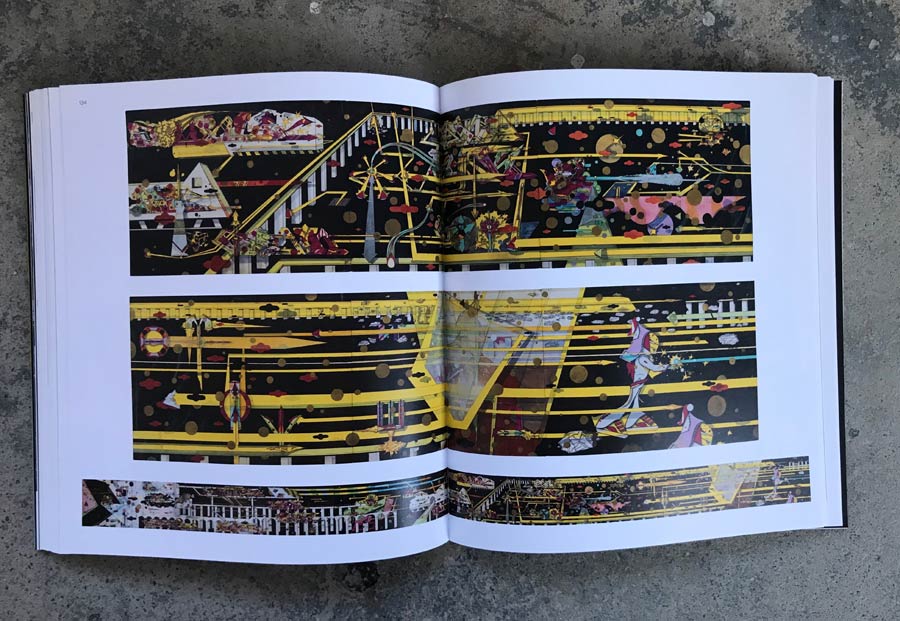
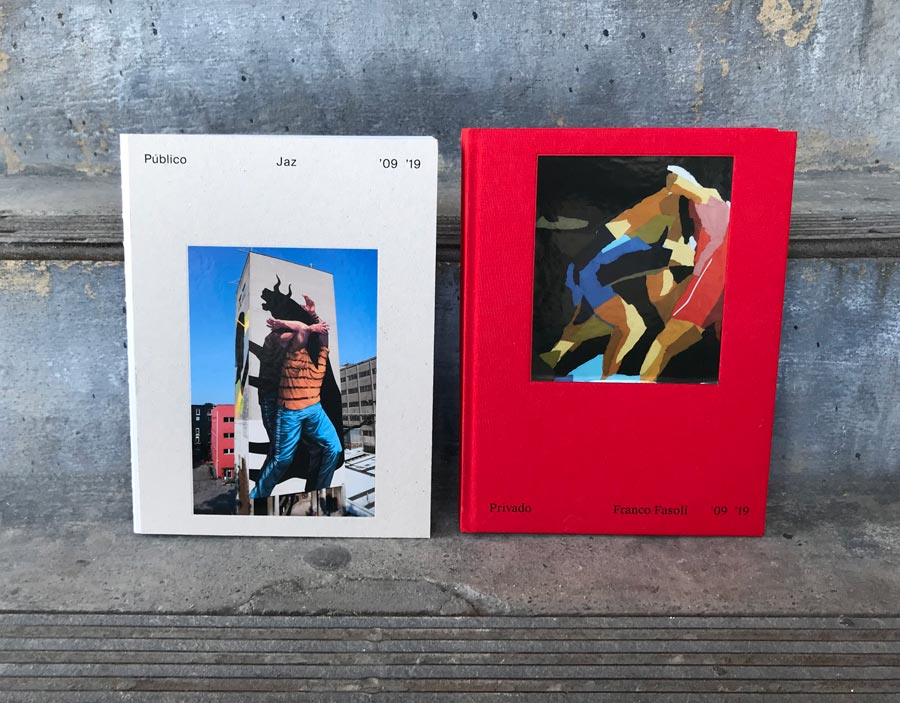
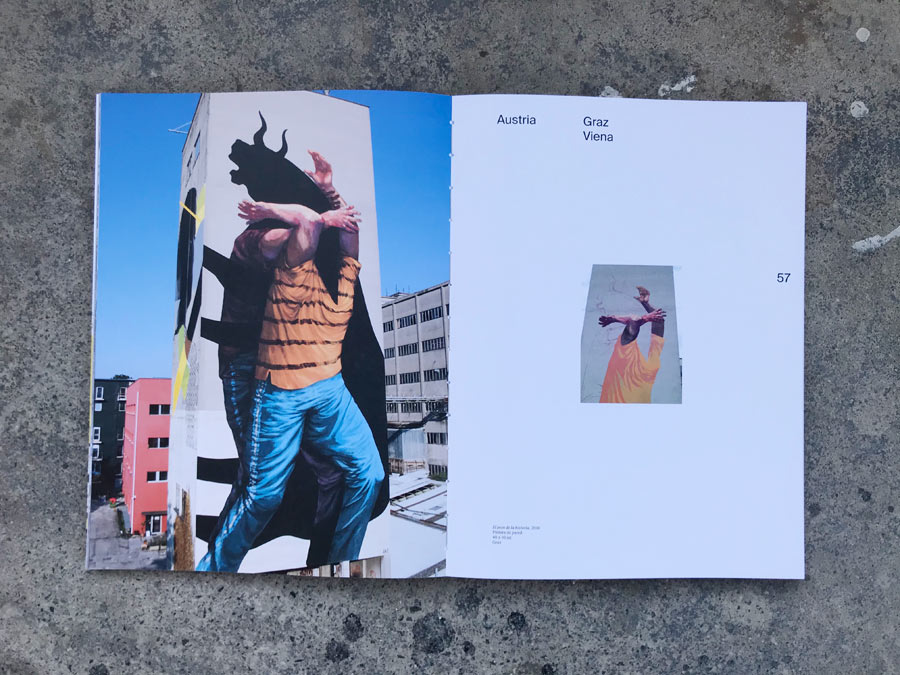
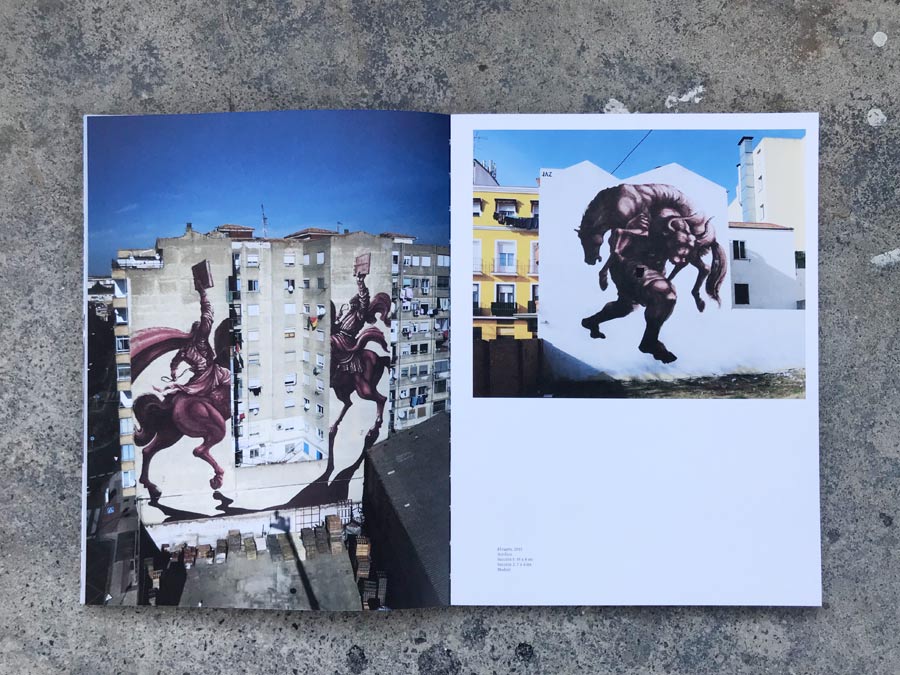
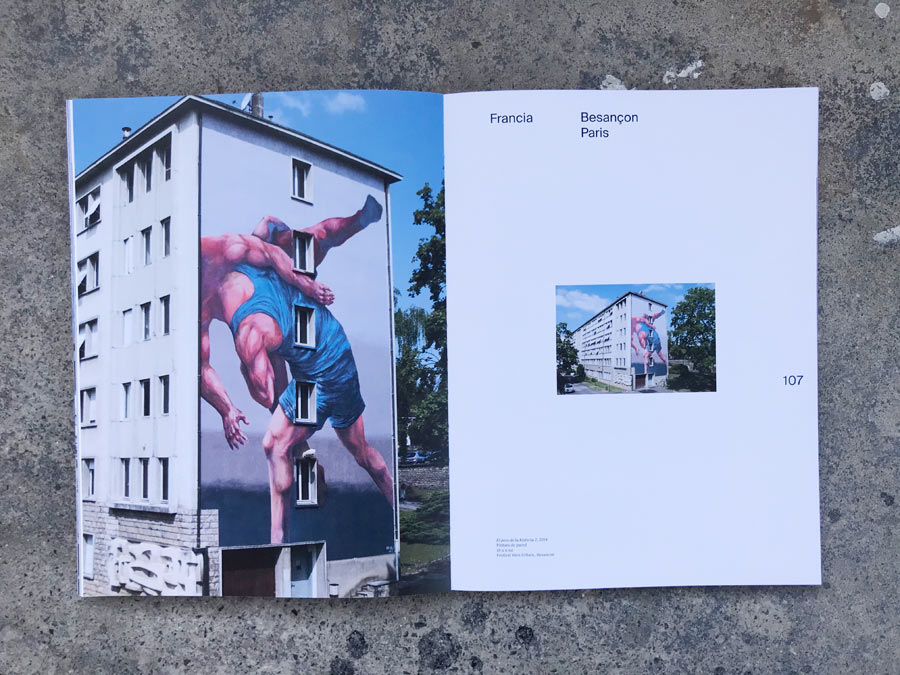
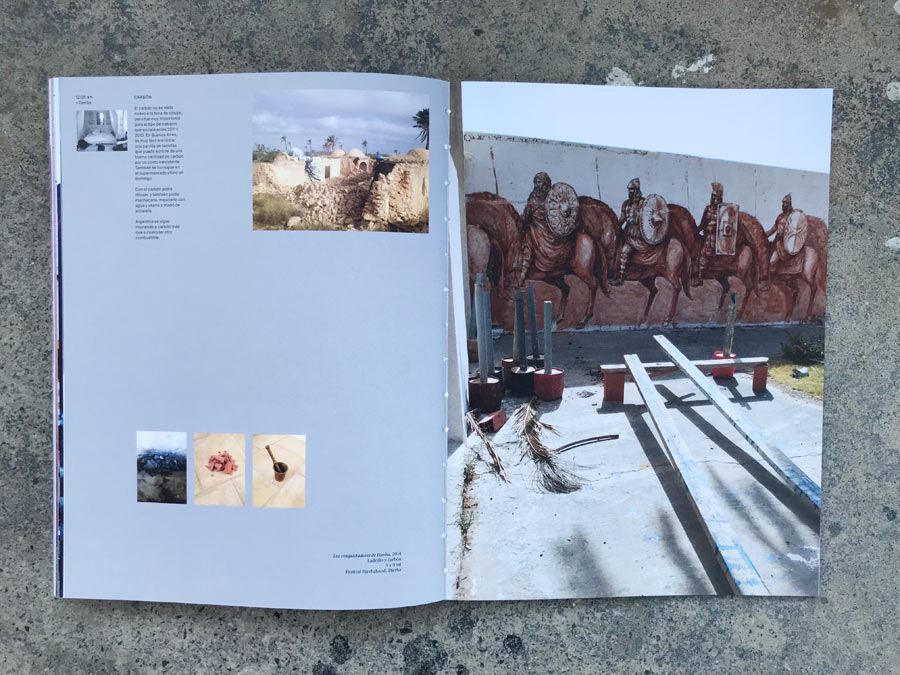
Publico. Privado. Jaz Franco Fasoli. 09-2019

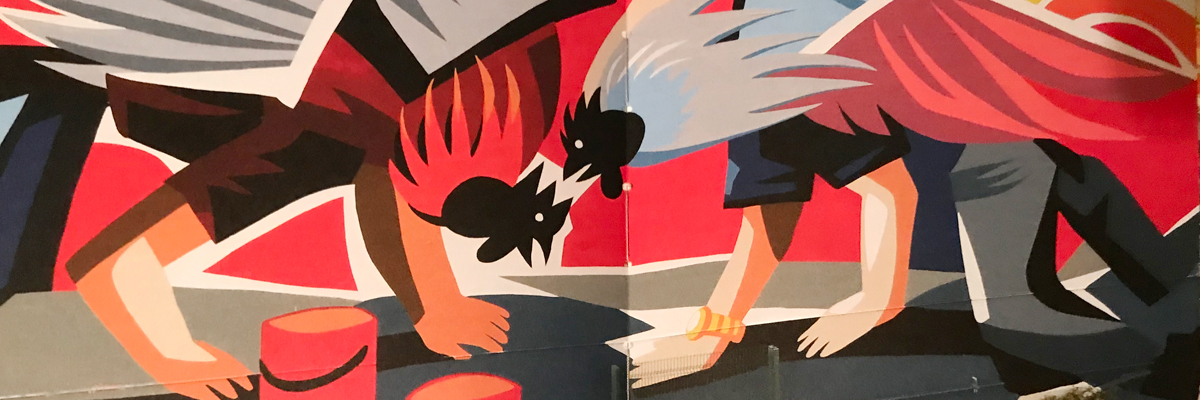
Franco Fasoli aka JAZ has looked over his last decade (2009-2019) of work as a street artist and fine artist and offers you the opportunity to examine his public and private side as well in this new two-volume compendium. Painting on the streets since the mid-nineties and his mid-teens in his hometown of Buenos Aires, the visual artist knew his path would be a creative one. His family and role models, comprised of well-schooled artists and educators, had provided a foundation of critique and appreciation for him to build upon from the earliest years.

JAZ. Publico. Publico Privado. Jaz Franco Fasoli. 09-2019

Now with many miles of travel on his personal odometer and introduction to greater opportunities and institutions his visual output is here codified, examined, and assessed in printed and bound form, to be respected and valued. As observed in an essay by his street painting compatriot Elian, “Today it is no longer about what physical space we select for each of these terms and their respective experiences, it is about extremely sensitive decisions on what we decide to transport from mental territories to others.”

JAZ. Publico. Publico Privado. Jaz Franco Fasoli. 09-2019

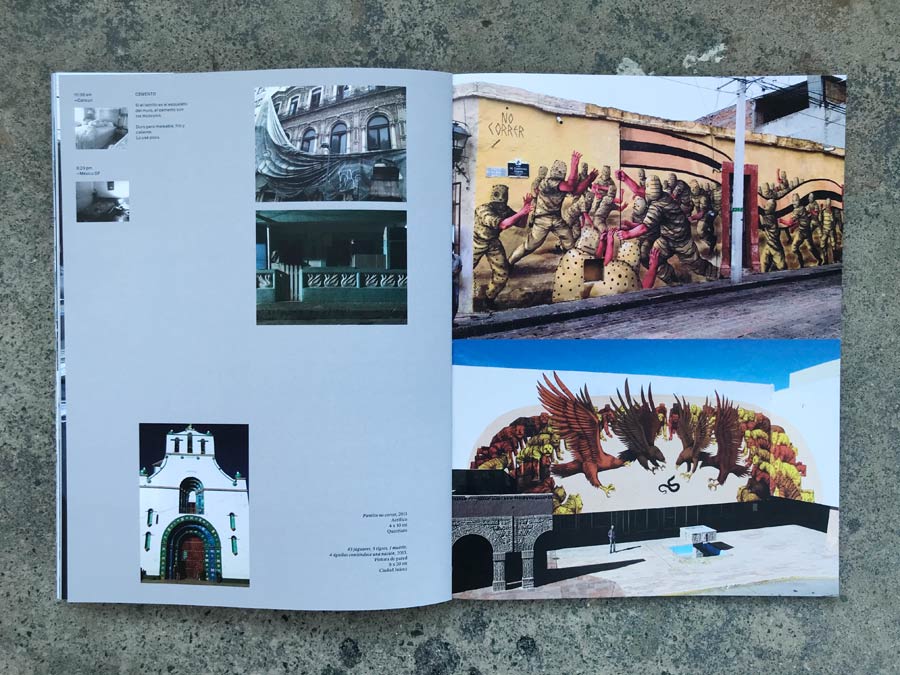
Extremely sensitive is an appropriate descriptor. These massive and fragile and indestructible works all respond to weighty matters of history, struggle, nationalism, mythology, archetypical roles; now mingled uncomfortably with the ethereal nature of modern living that collapses, compresses, cheapens aesthetic values and relationships. Here is adolescence clamoring for maturity, idealism melting with monsters of the imagination, truth abutting uncomfortable irony.

In “Publico: Privado” JAZ has invited you to go on the trip with him. Artist, teacher, and curator Diana Aisenberg writes in her essay, “I imagine the work as a ship, a means of transport, as close to teleportation. It is the one that moves and finds its place, there where it is necessary.”

JAZ. Publico. Publico Privado. Jaz Franco Fasoli. 09-2019
Franco Fasoli. Privado. Publico Privado. Jaz Franco Fasoli. 09-2019
Read more
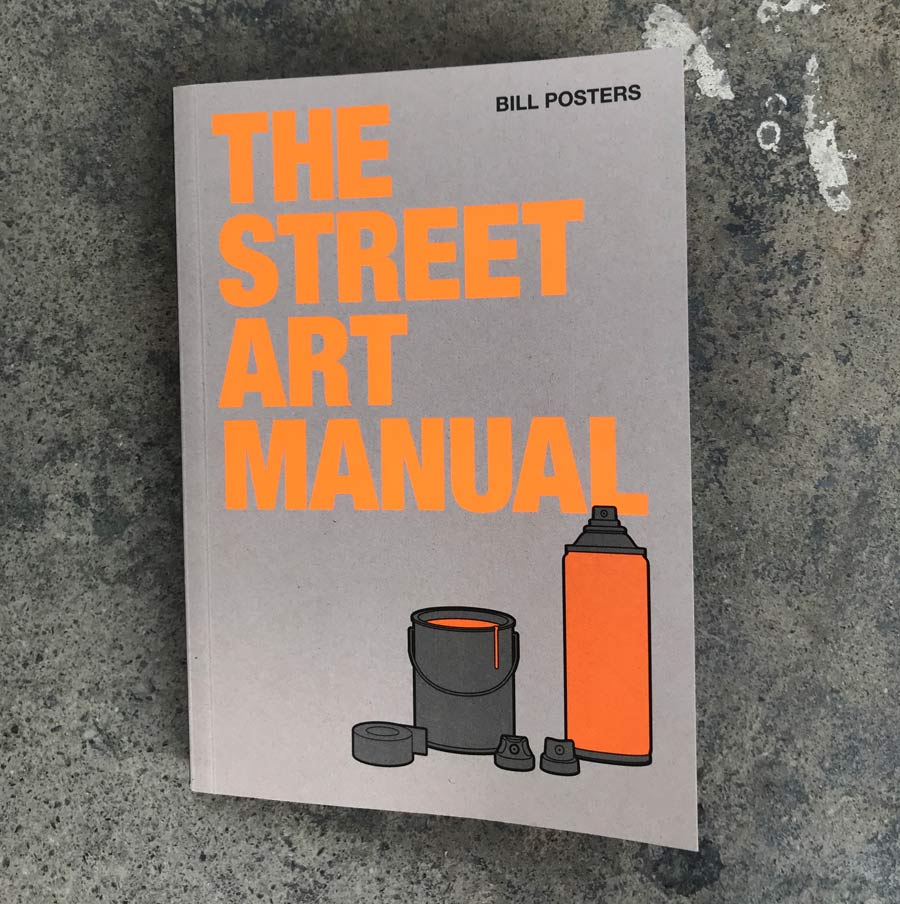
“The Street Art Manual”; Rebel Artivism and Good Manners with Bill Posters / Dispatch From Isolation # 34

“The Street Art Manual”; Rebel Artivism and Good Manners with Bill Posters / Dispatch From Isolation # 34

Bill Posters knows his street art and activism history.

From Beuys’ practice of ‘social sculpture’ and John Fekner’s blunt upbraiding of urban planning hypocrisies to AIDS activists using street art to shame government homophobia and the paint-bombing of a Mao portrait that led to the arrest and torture of the artists/activists for counter-revolutionary propaganda, he’ll give you a solid foundation on precedence for this rebellious art life in “The Street Art Manual.”

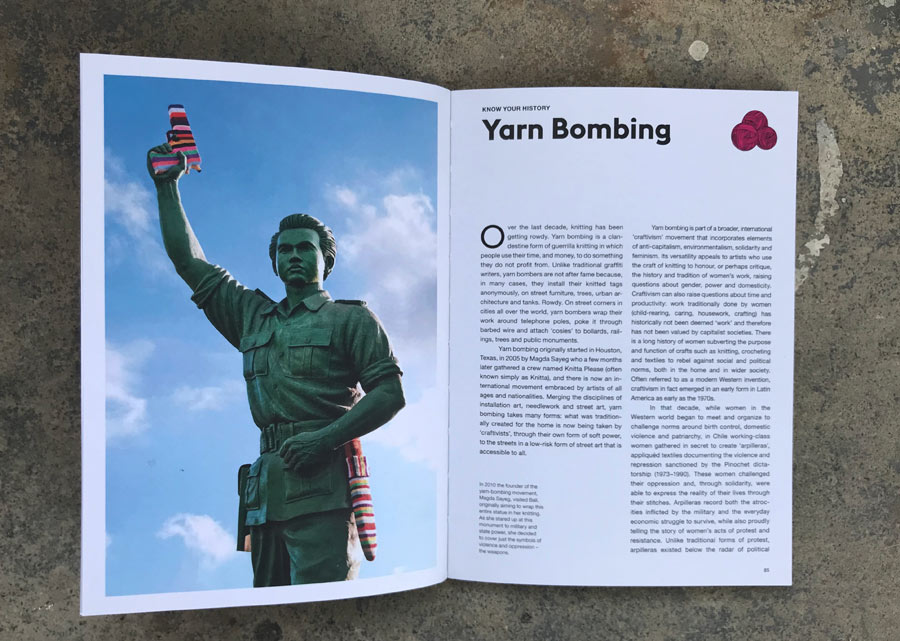
He also knows how to yarn-bomb.

And myriad other techniques for freelance intervening in city spaces that you own, that all of us own, but which are often commandeered for commercial messages, political propaganda messages, or commercial-political propaganda messages – otherwise known as fascism.

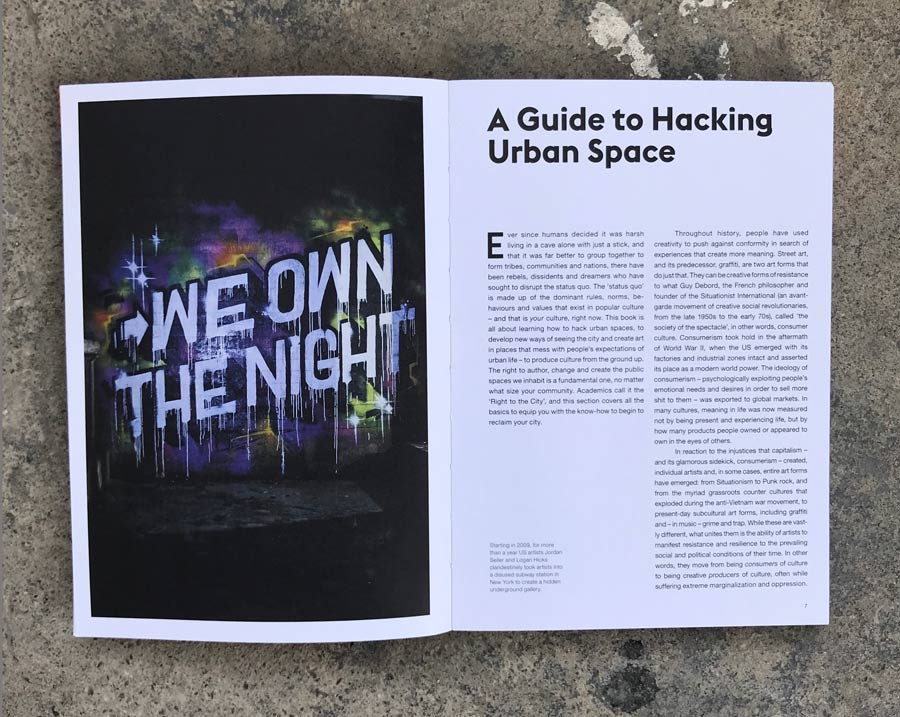
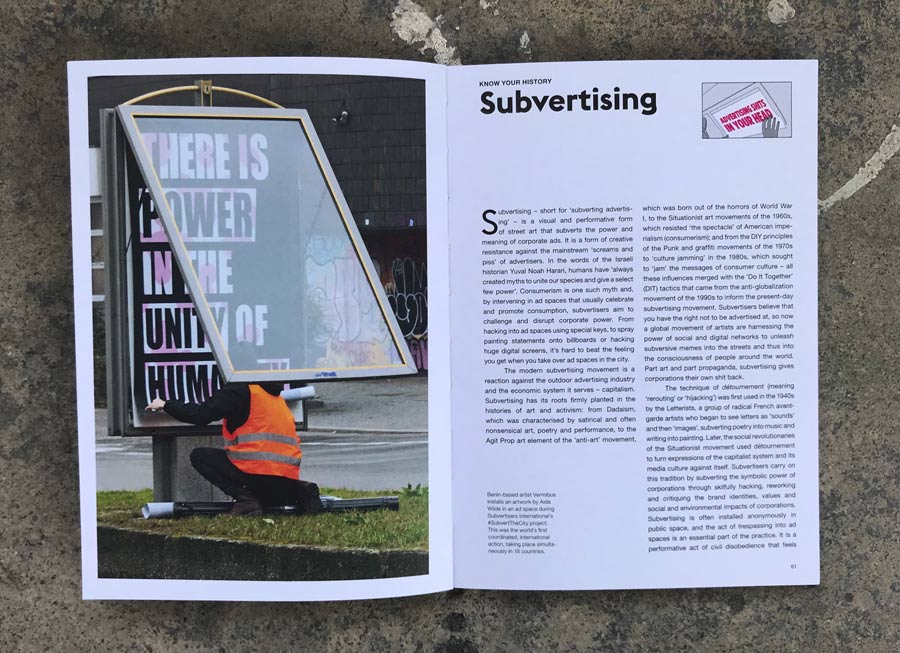
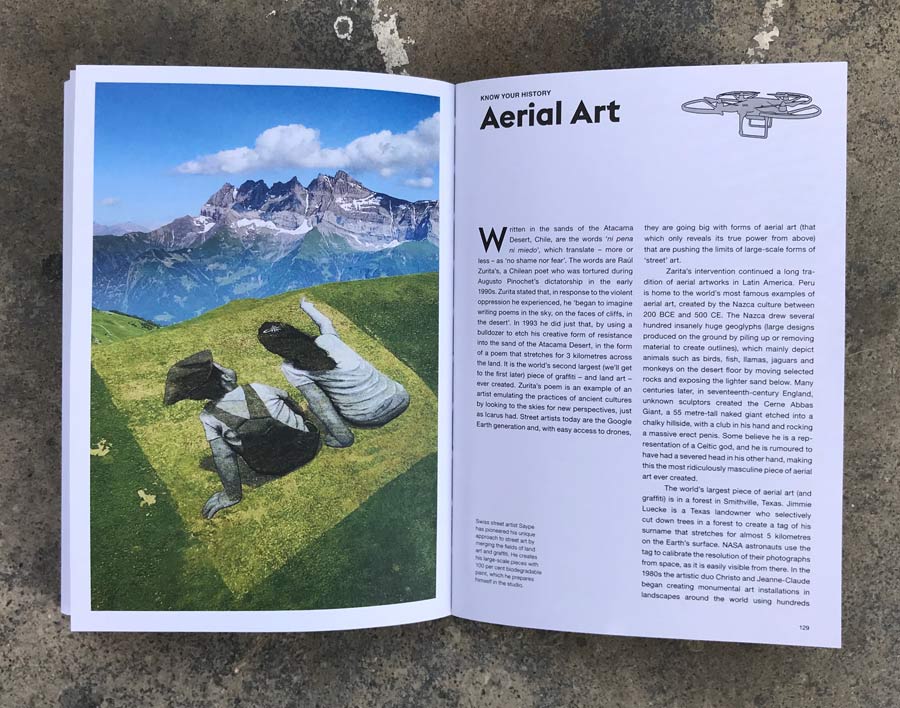
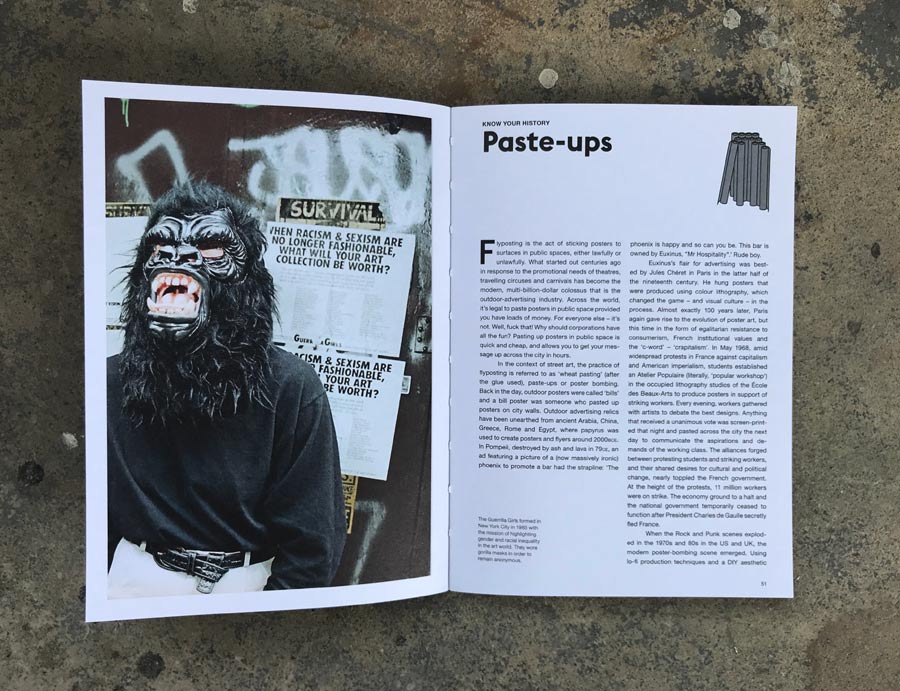
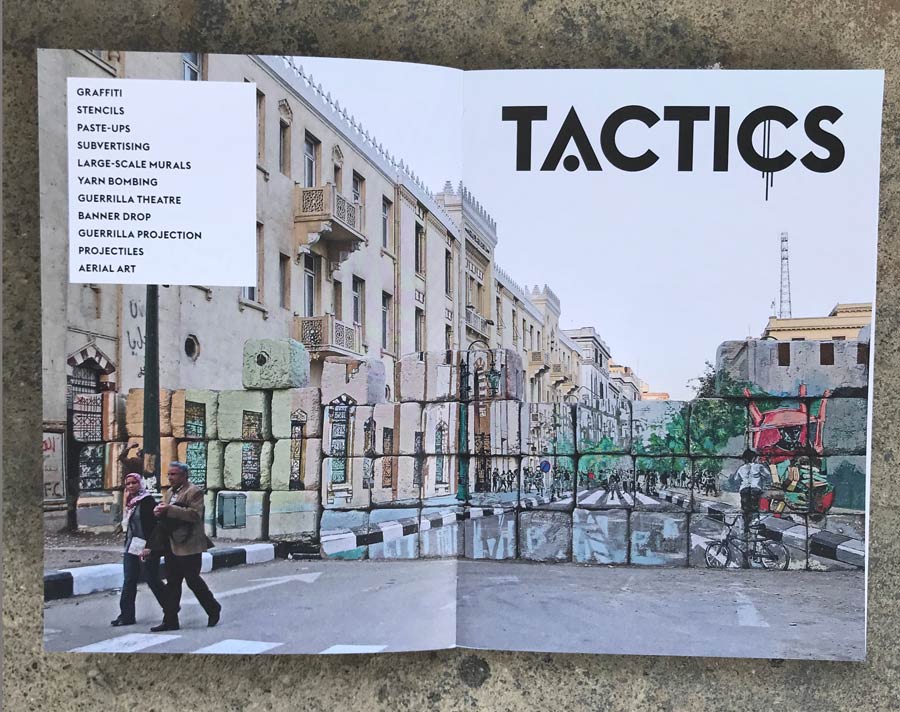
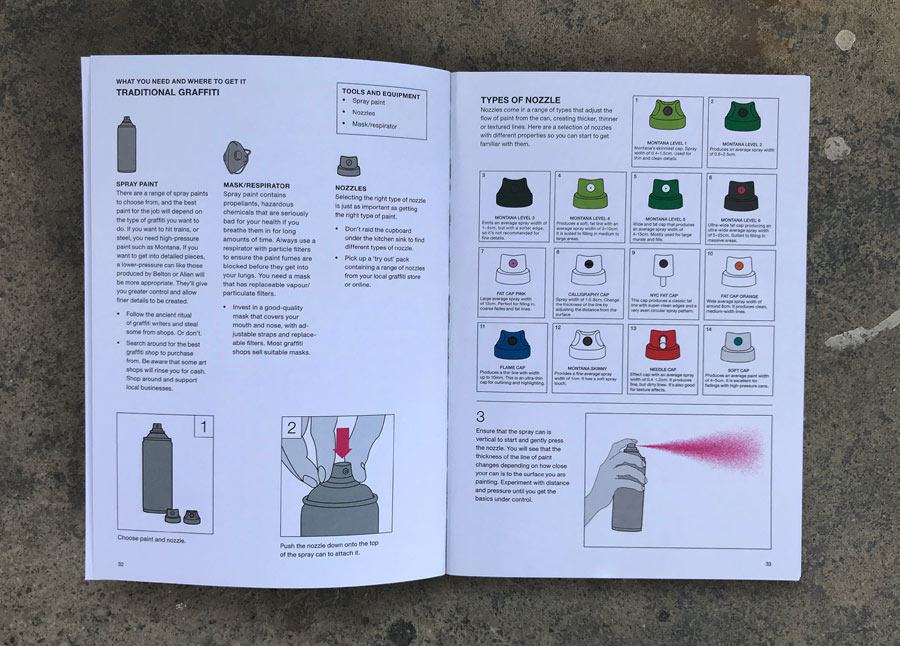
His new book on hacking public space is one of the most instructive, constructive, serious and light-hearted romps through your world with new eyes. He has mastered a balance of educational and fun, sane and irreverent as he takes you methodically with text, photos, and cleanly modern diagrams through practices such as graffiti, stencils, paste-ups, subvertising, large-scale murals, yarn bombing, guerrilla theater, dropping banners, light projections, launching paint projectiles, and mastering aerial art via drone.

One may say that it is a handbook for taking back your voice in a sea of disinformation to advocate for a point of view. But don’t take yourself so seriously, dawg. Also, mind your manners. For being a rule breaker, Bill Posters wants you to be gentlemen and gentleladies and gentlepersons – Don’t just hit the streets as a hormone-fueled dunderhead who rides roughshod over others in a toxic, abusive way.

Check out his list for how to do the most fundamental of forms, graffiti. The “DO” list includes admonitions to “say something more than your name. Stick up for those less privileged”, which may sound like a tear-jerking sermon. But then he also tells you not to bring your cellphone to the train yard, which just seems logical.

In the “DON’T” list he suggests you don’t go into train yards without experienced writers, and he implores aspiring aerosol mark makers to be original, “Focus on developing your own voice and your own style.” In many ways, Bill Posters is the supportive dad you never had, which probably would have helped you avoid this whole vandalism lifestyle to begin with.

But since you are a vandal or are unwittingly breaking some municipality’s law by wrapping a sculpture with crochet to look like a clown, he does offer direct advice on dealing with authorities, knowing your rights, knowing what your options are, and knowing that some times police actually like your art and might let you off if you don’t act like a jerk.  All that said, this book is not about breaking laws, it’s philosophically about reclaiming public space and having a voice in your society.

“Throughout history, people have used creativity to push against conformity in search of experiences that create more meaning,” he says in his introduction. “Street art, and its predecessor, graffiti, are two art forms that do just that.” 

And when doing your subversive or society-saving art installation under cover of night, elsewhere he recommends, “Don’t forget to scope things out and check for onsite security. Dogs are a real issue when you’re stuck on a fence, hanging there like a tasty human sausage.”

The Street Art Manual by Bill Posters. The Street Art Manual new US on-sale date is now Sept. 8th. 2020. Published by Laurence King Publishing Ltd. London, UK. 2020.

Read more
Alice Pasquini – “Crossroads”, The Intersections Between Internal and External

Alice Pasquini – “Crossroads”, The Intersections Between Internal and External

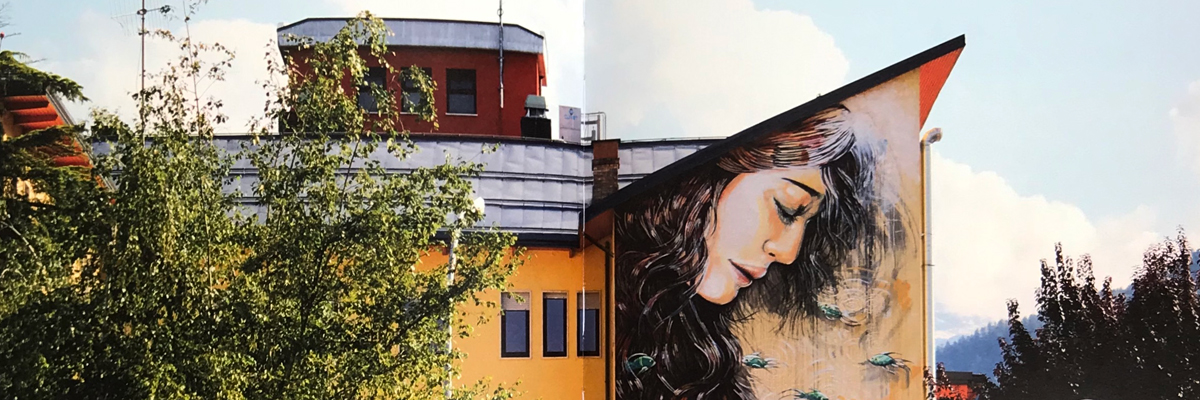
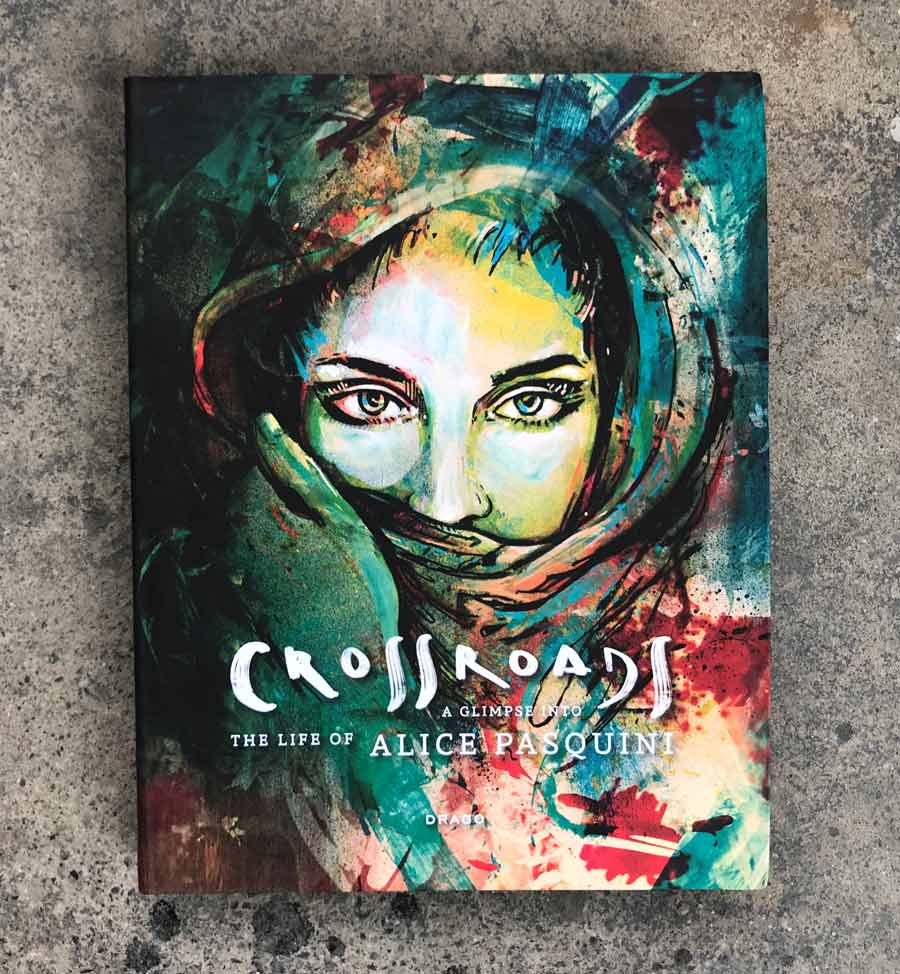
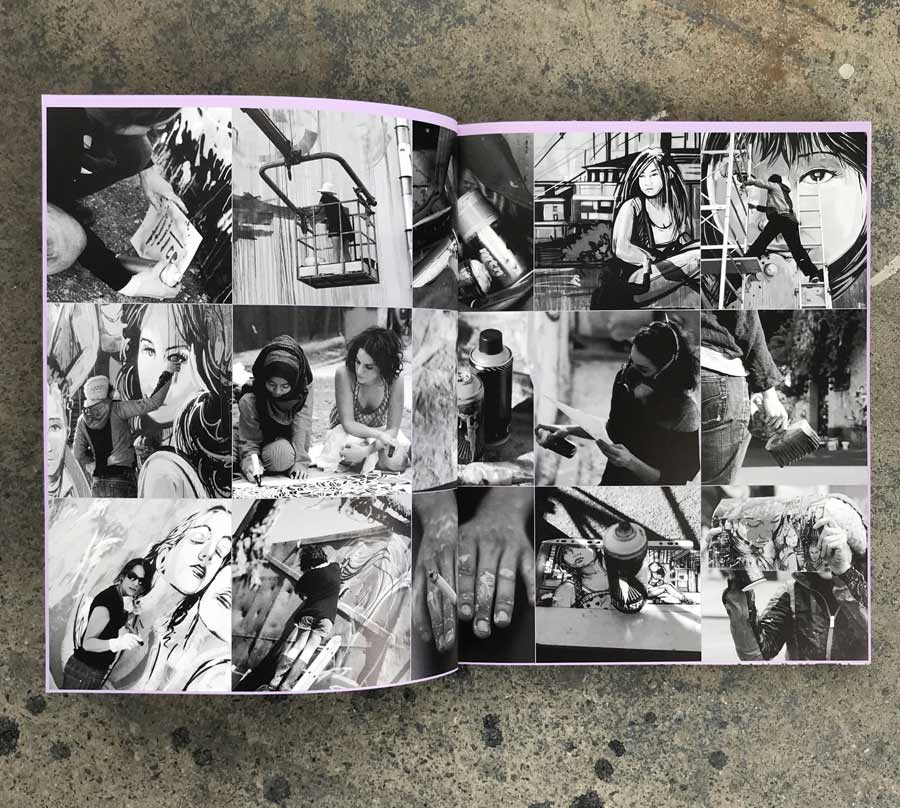
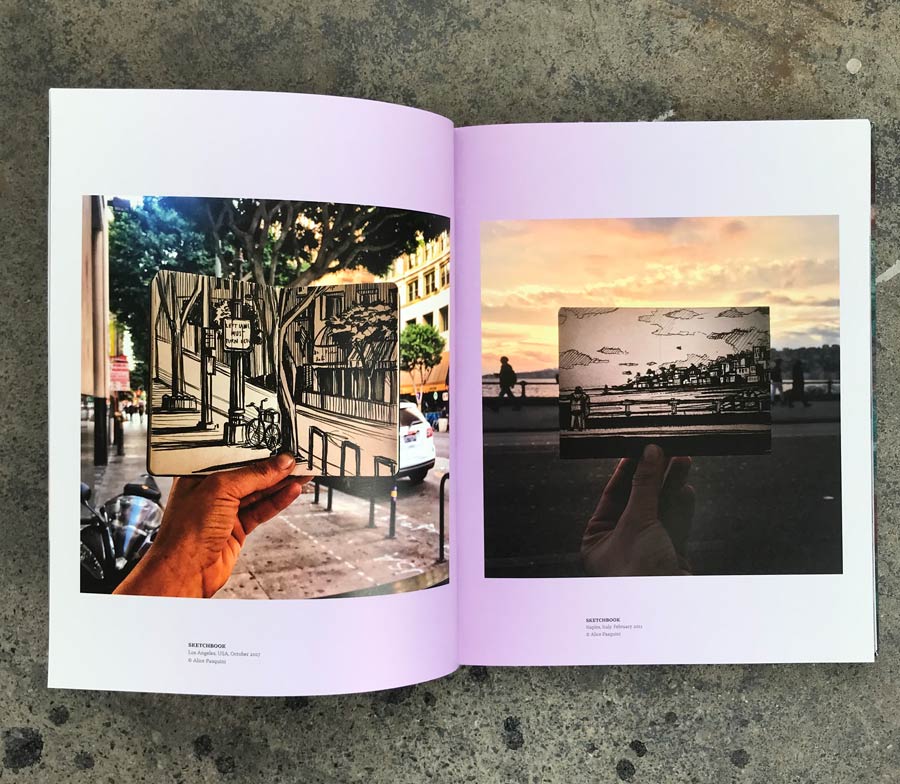
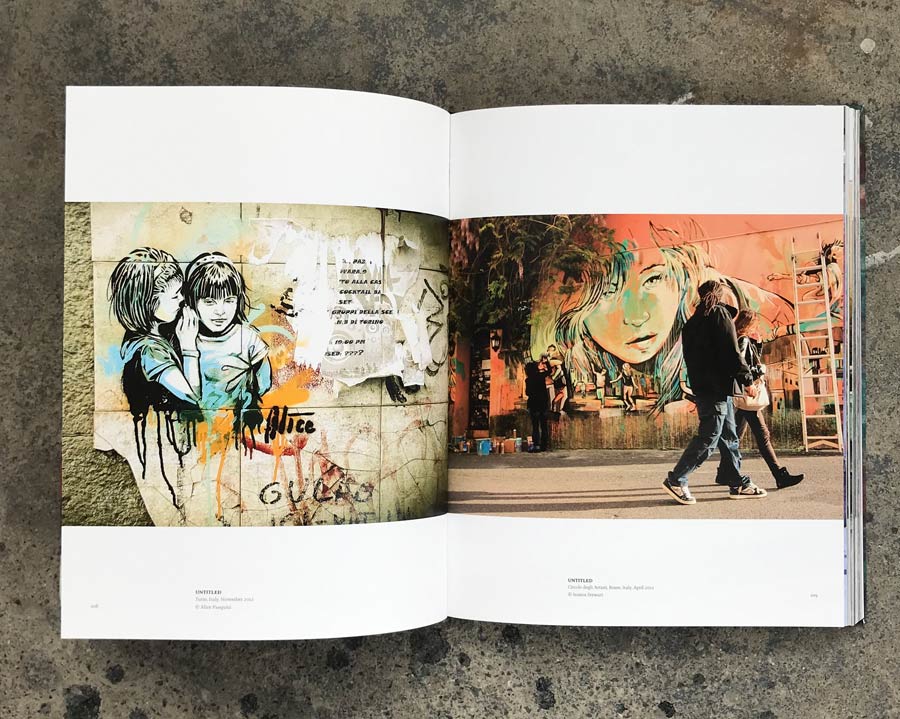
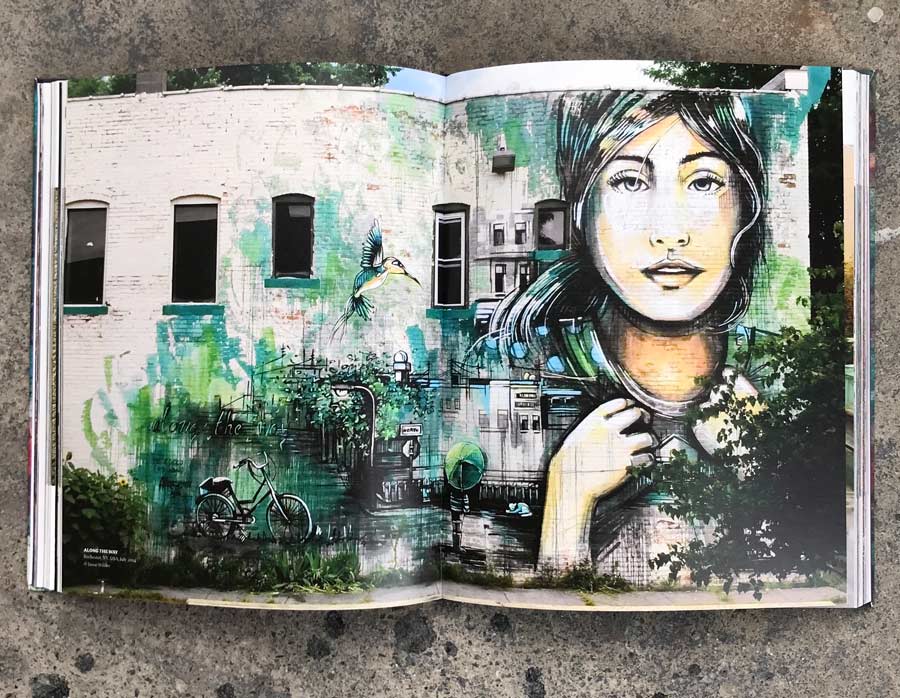
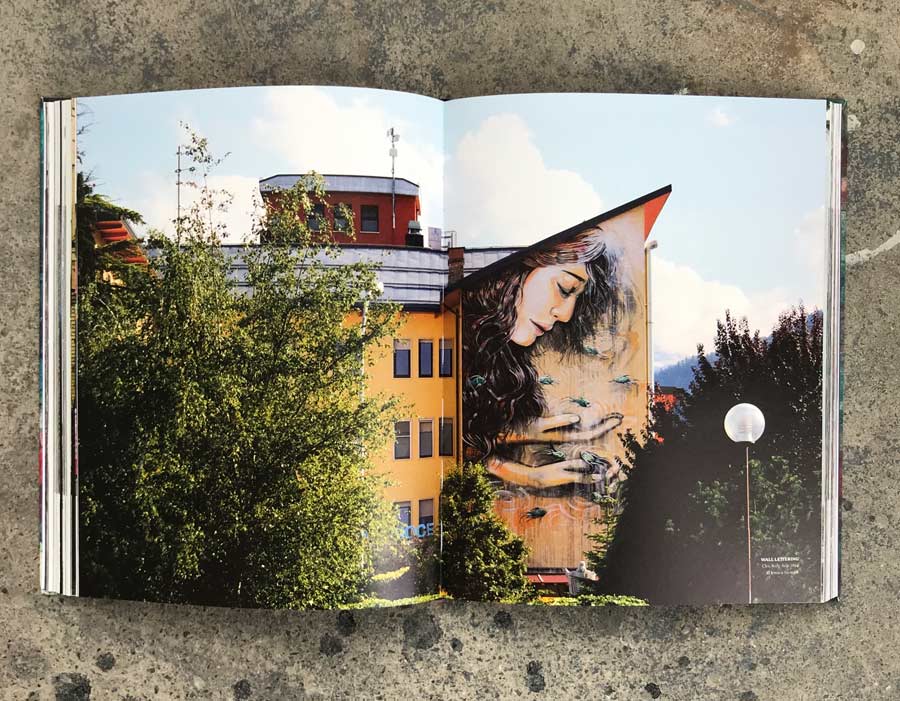
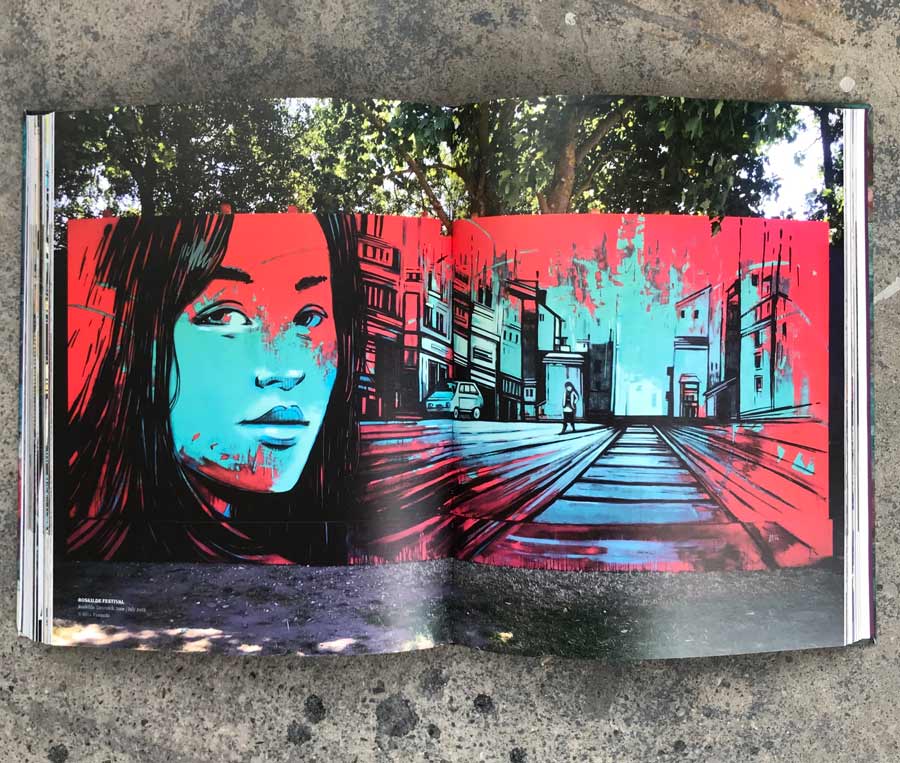
Crossroads, the new monograph from Alice Pasquini is full of the young daring and confident girls and women whom have been traveling with her since she began painting walls around the world two decades ago.

Alice Pasquini “Crossroads” Drago Publisher. Rome, Italy, 2019

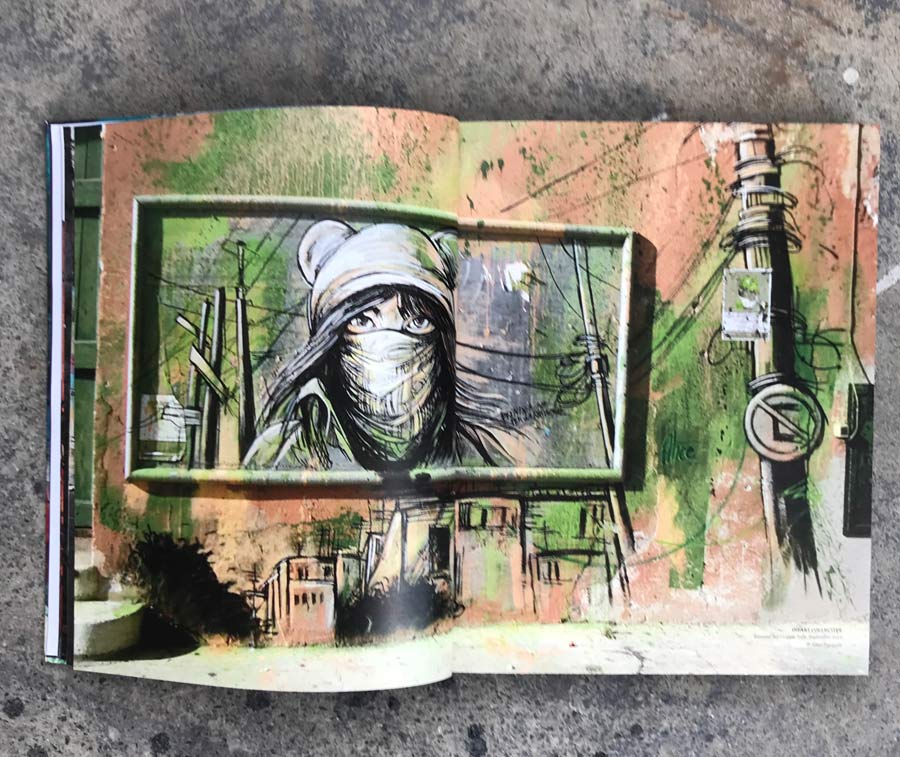
Rendered in aqua and goldenrod and midnight, withstanding winds and rains, these figures are willing to be there as a testament to the daily walk through your life. A survey and diary of her works and experiences, her style is more human than international in its everyday appeal, advocacy gently advanced through the depiction of intimate personal dynamics and internal reflection.

Perhaps this quality alludes to the invitation of interaction, the ease of integration with the public space in a way that the cultural norms of her Italian roots influenced her.

“In Rome, where I grew up, everything is urban art. Any little fountain or corner was made by an artist. And there were always a lot of expressions of freedom in this city,” she says in an interview here with writer Stephen Heyman.

Alice Pasquini “Crossroads” Drago Publisher. Rome, Italy, 2019

Alternating between aerosol rendering, ink sketches on paper, and the sharpened portraiture of street stencils in hidden places, Pasquini can distill a moment that is perhaps remarkable, perhaps everyday noblesse.

“I have discovered that art is a universal language,” she says. Working in the streets I have found myself in countless situations, whether exhilarating, educational, or expected. I receive immediate feedback, whether it be surprise, joy or curiosity of the passerby, irrespective of age or culture.”

Alice Pasquini “Crossroads” Drago Publisher. Rome, Italy, 2019

Elsewhere in an essay addressing the still-current imbalance of representation of males and females in the Street Art scene internationally, she speaks of a social aspect to her practice, a fulfillment of her desire to engage and encourage women to be themselves and be present, fully immersed in public life.

“Maybe women are presented with a behavioral model that limits our liberty to be ourselves. They tell us how we should be. By painting the women I see, I try to show to them – like a mirror – what they could be but what they repress. It is an incitement for women to do what they wish to do.”

Alice Pasquini “Crossroads” Drago Publisher. Rome, Italy, 2019

With page after page of images in these Crossroads, the artist presents many people, not unlike herself, and undoubtedly extensions of her.  Tender, confessional, timidly hiding in plain view, these figures are public expressions for introverts, observers and dreamers who must confront the harsh chaos of the metropolis, but who are happier without the tumult and able to conjure beauty without the drama.

Alice Pasquini “Crossroads” Drago Publisher. Rome, Italy, 2019

Longtime stalwart friend, advisor, and manager Jessica Stewart gives readers a warm and close view of the artist and her practice, adding a timbre needed to fully appreciate the work.

“I’ve often remarked to Alice that she’s lucky that she knew what she wanted to do since she was a child. I sometimes think that she doesn’t realize just how rare it is to not only have that calling but to be fearless enough to follow your heart. Through her example, who knows how many others will be brave enough to also take the leap.”

Alice Pasquini “Crossroads” Drago Publisher. Rome, Italy, 2019
Read more