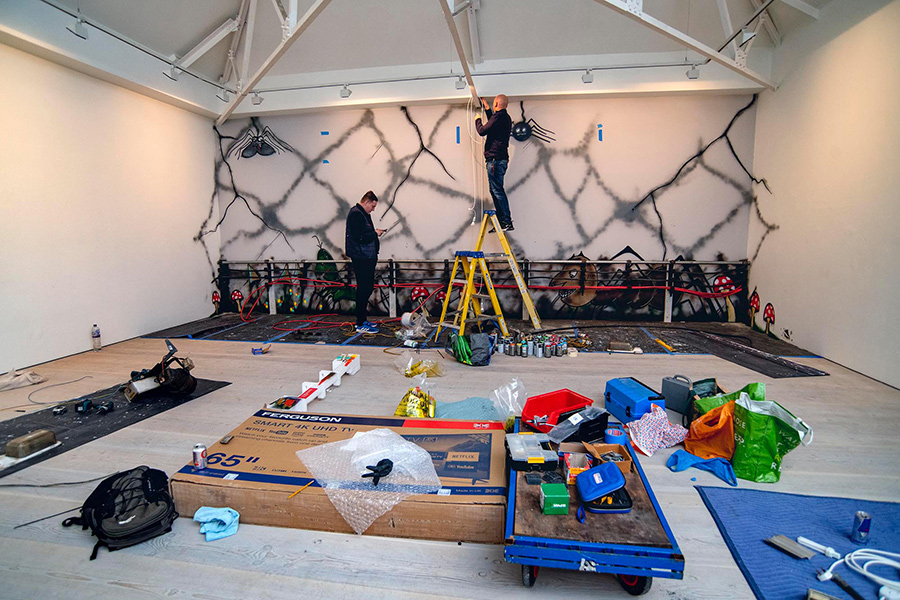
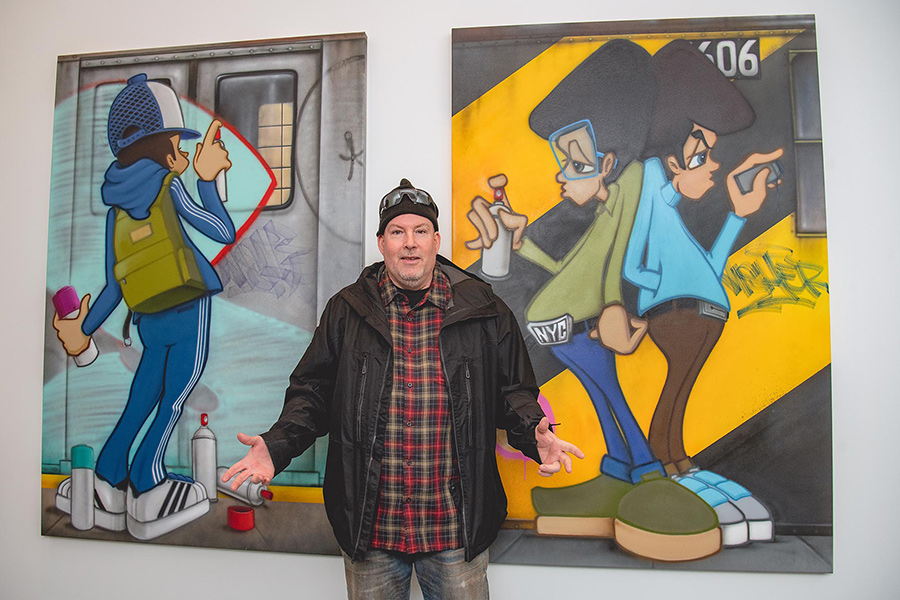
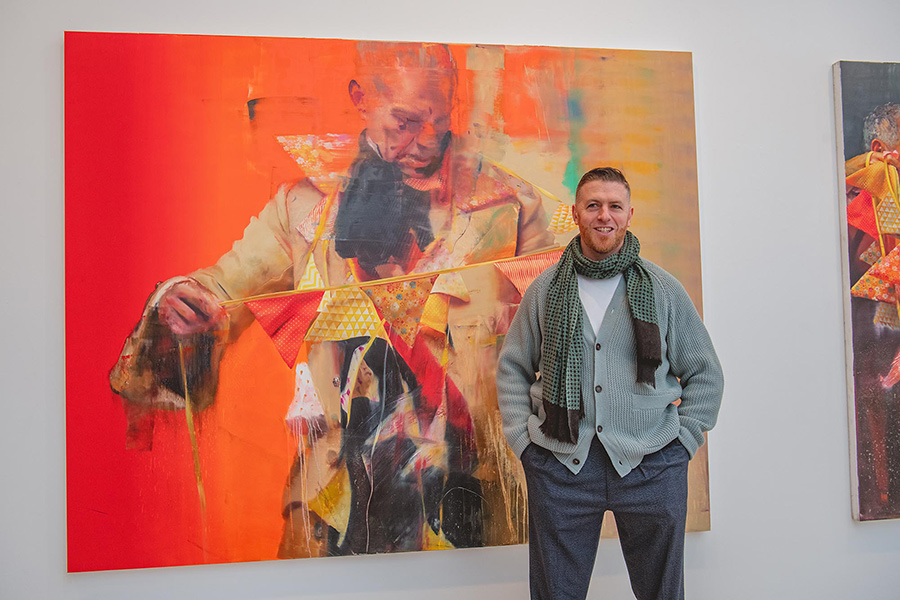
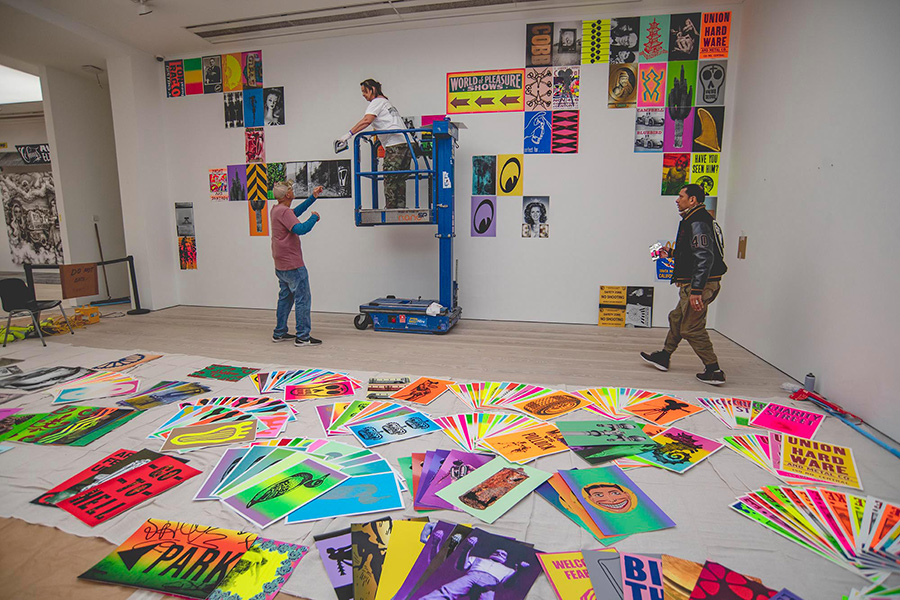
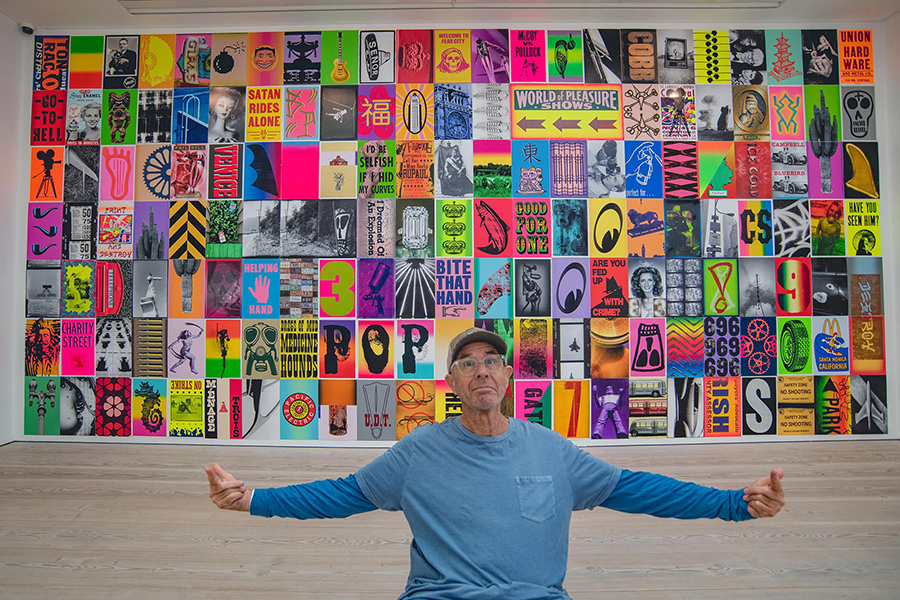
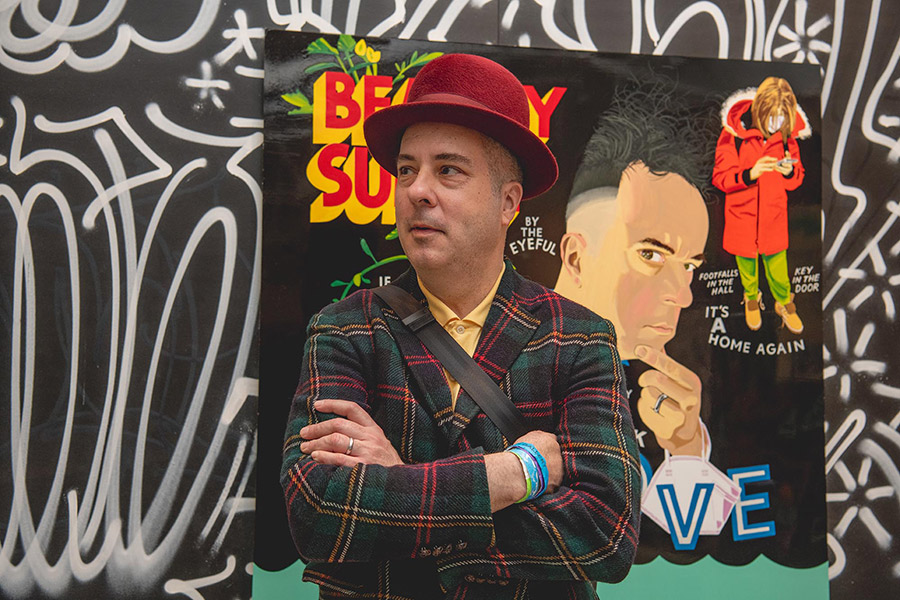
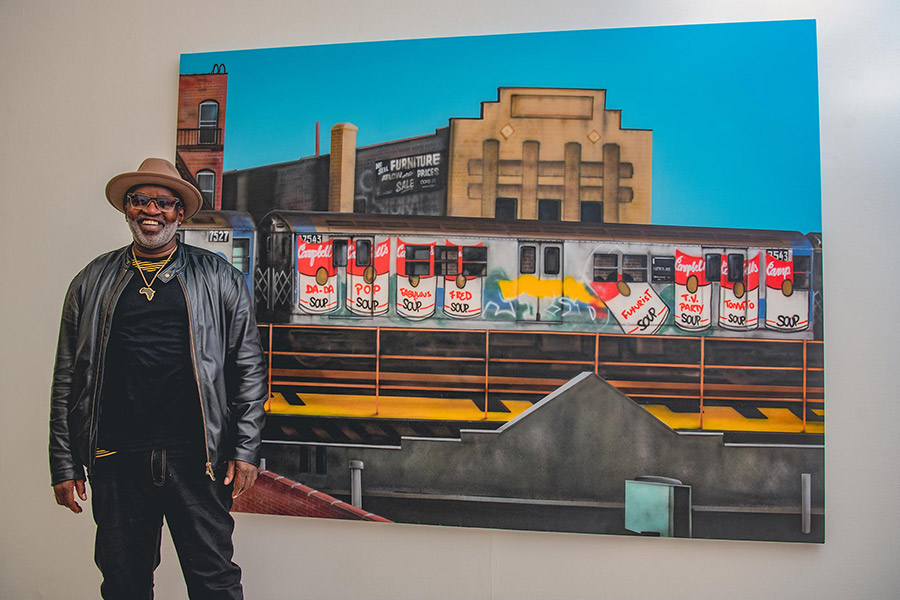
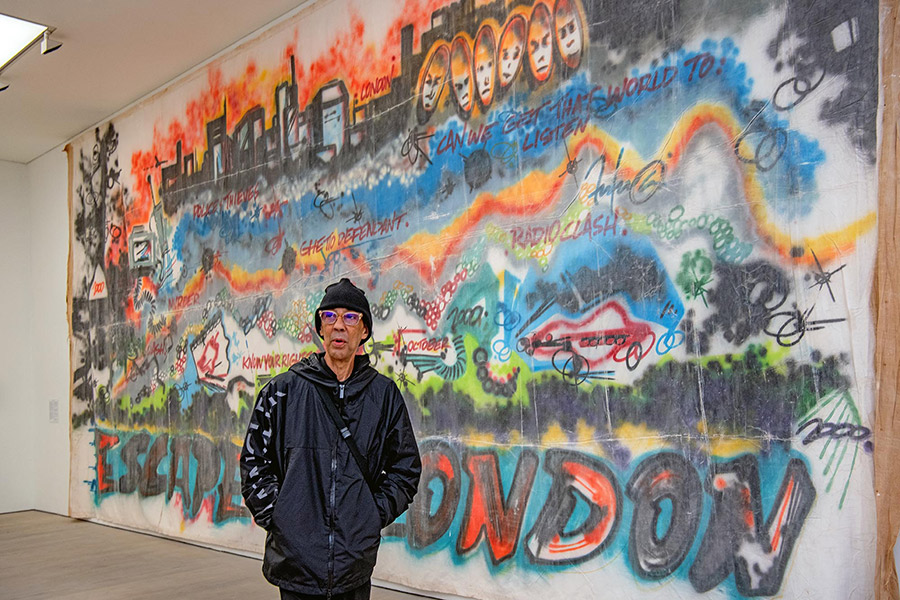
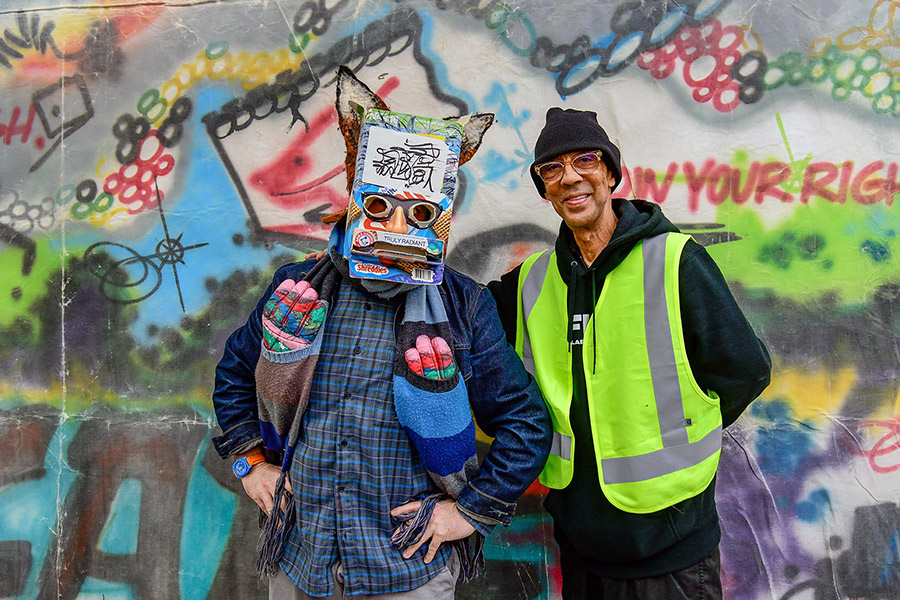
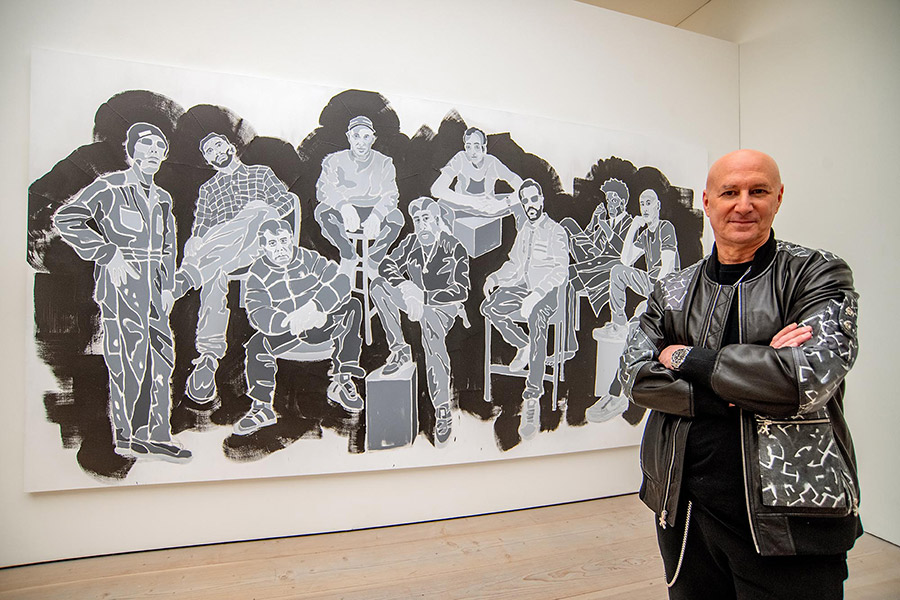
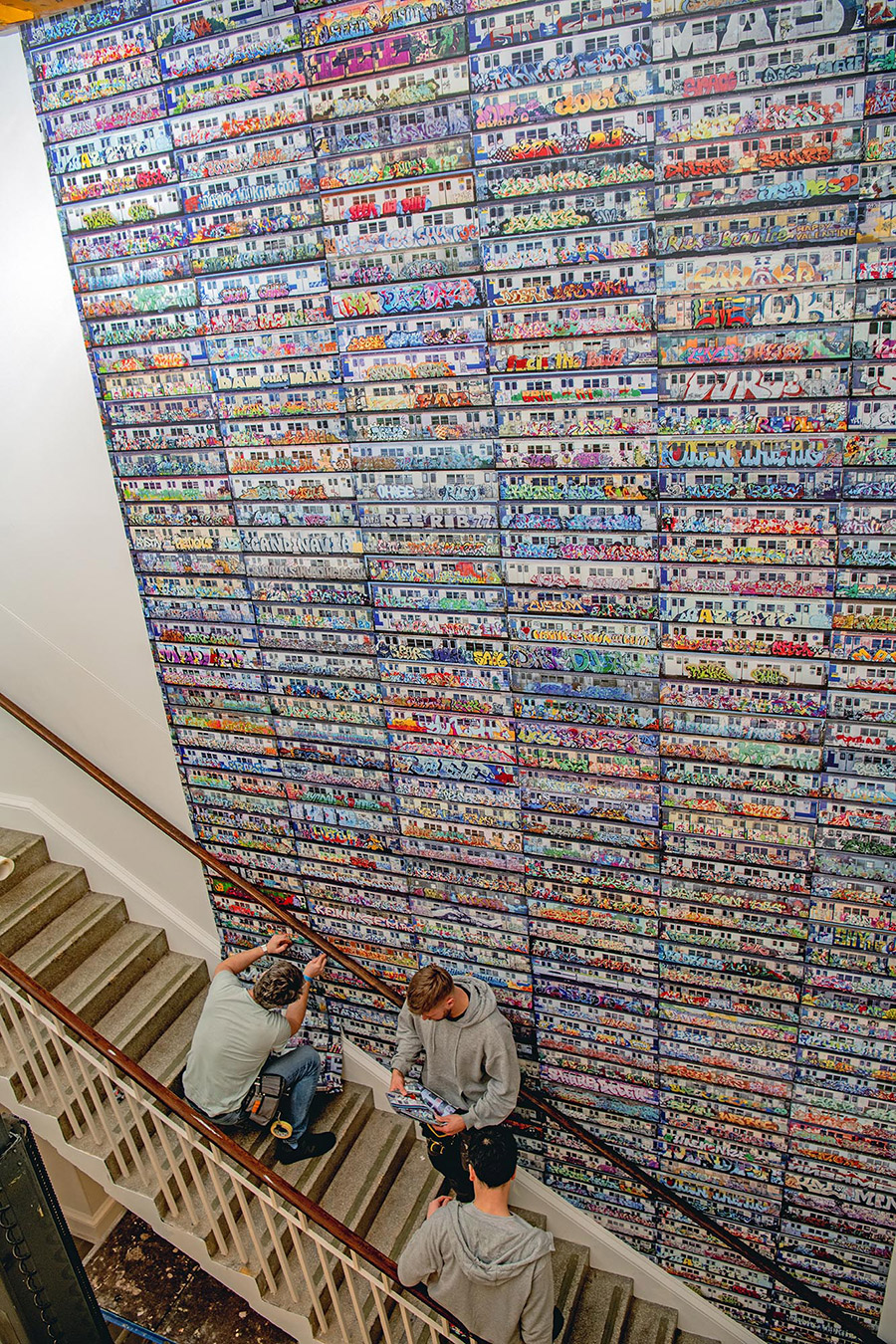
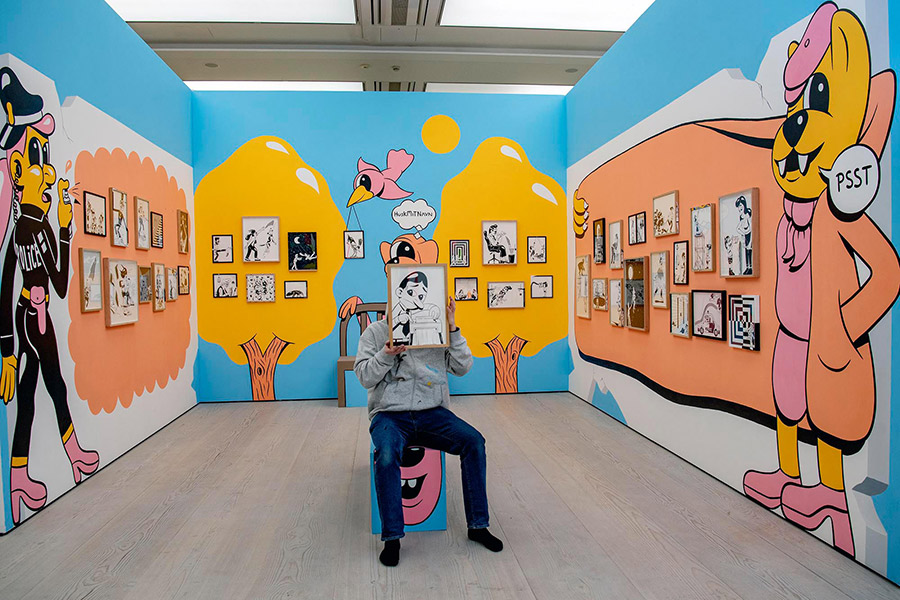
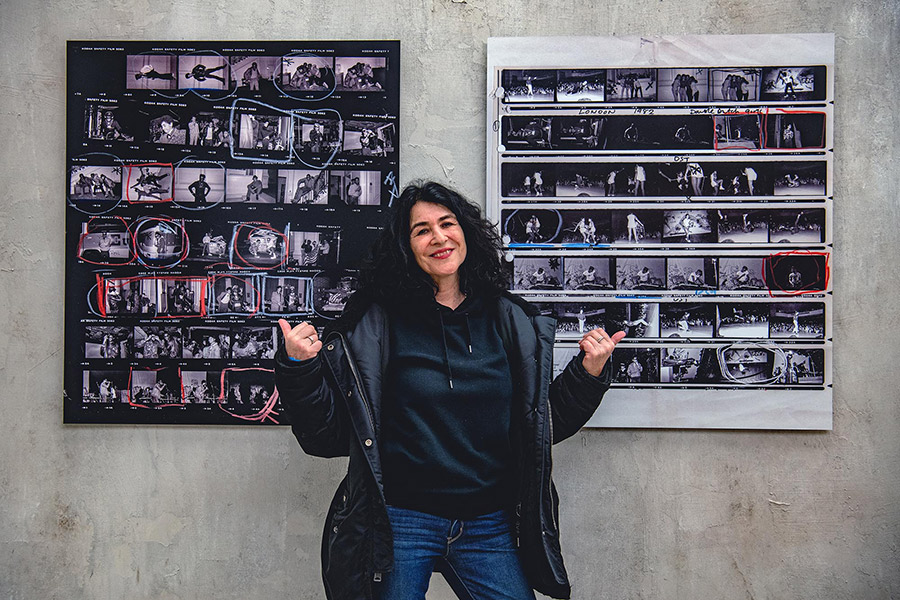
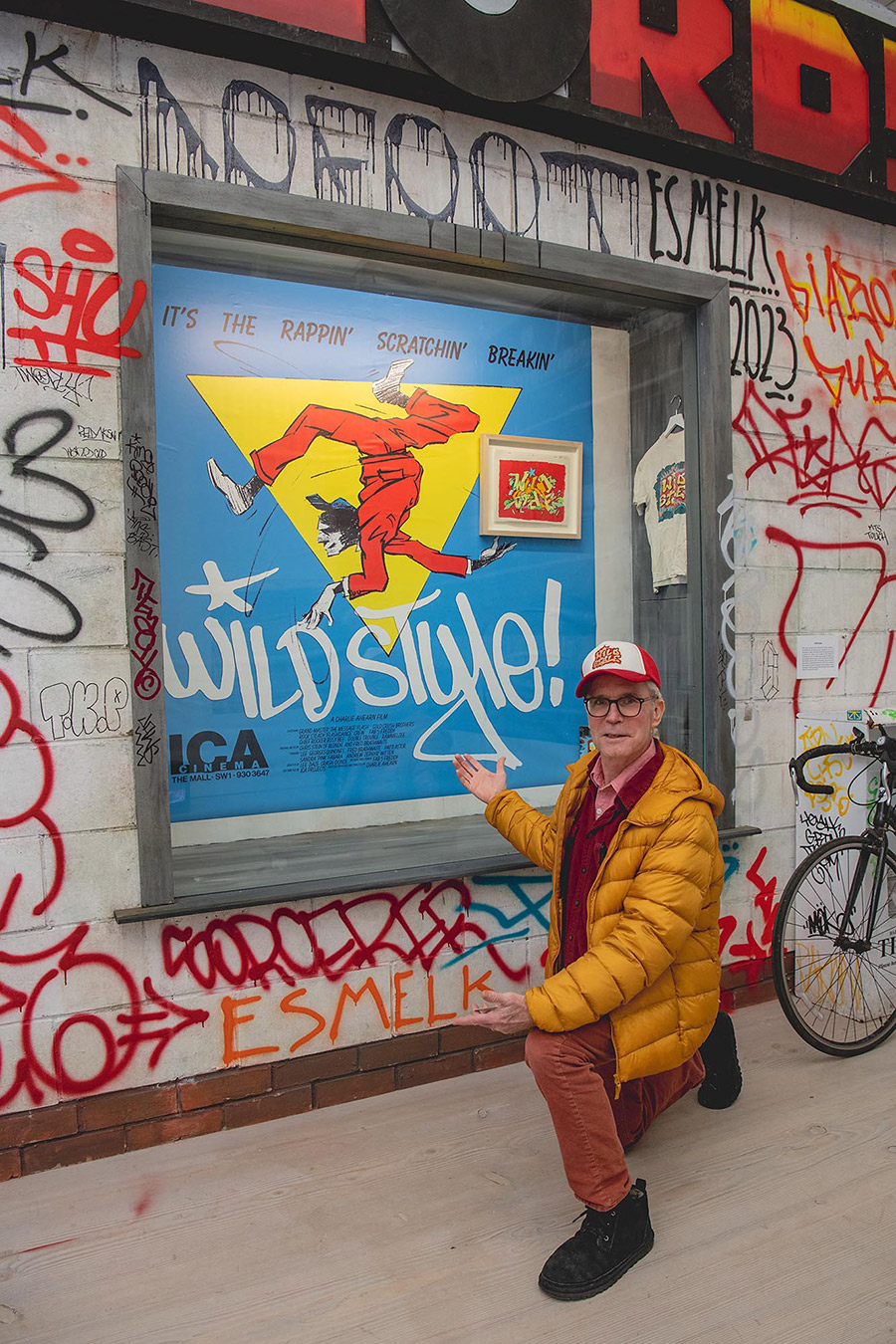
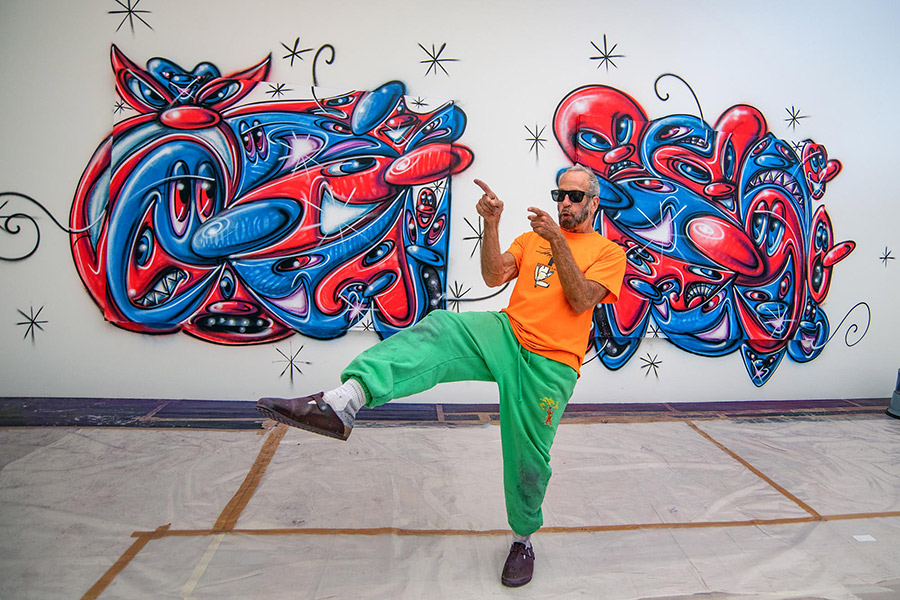
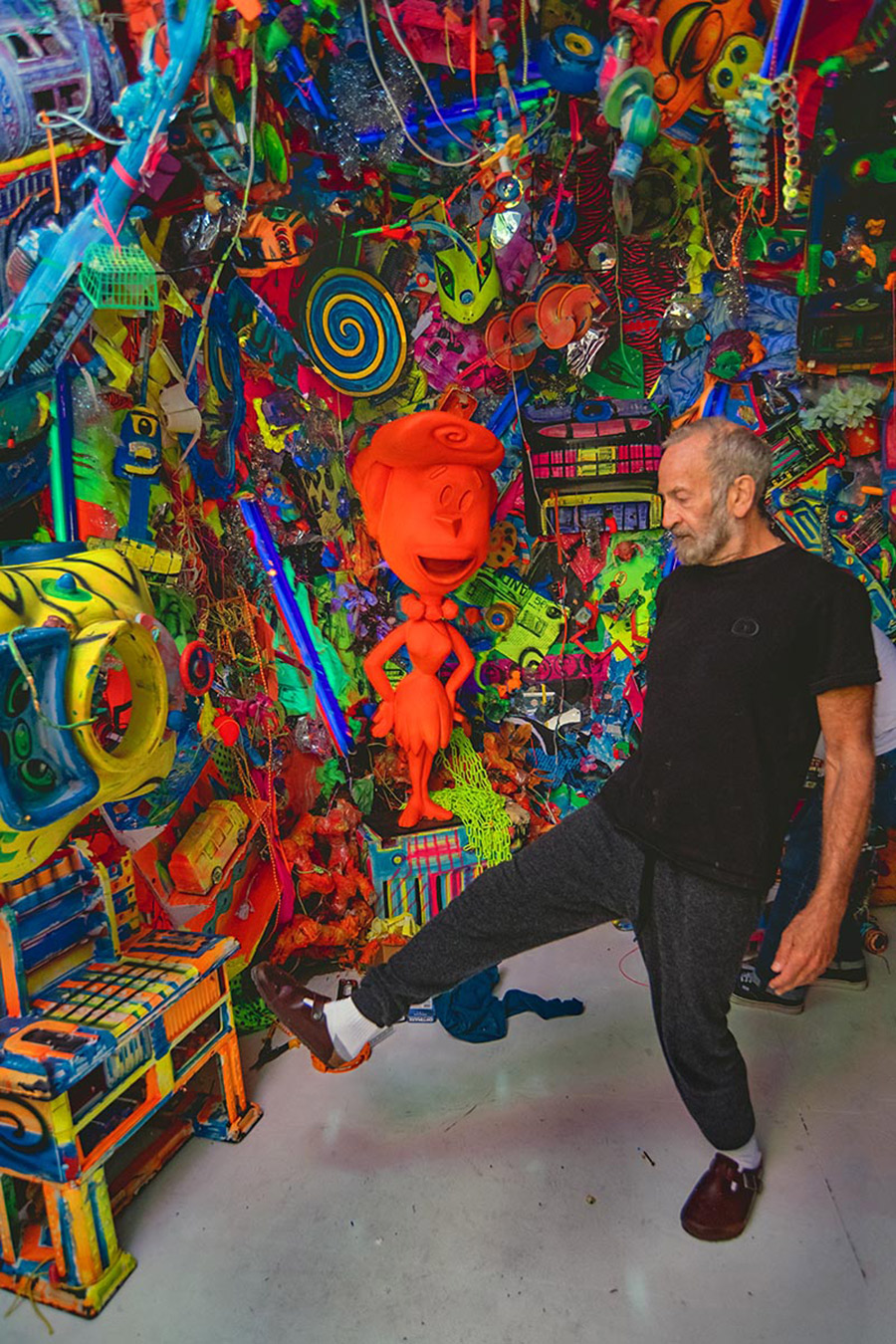
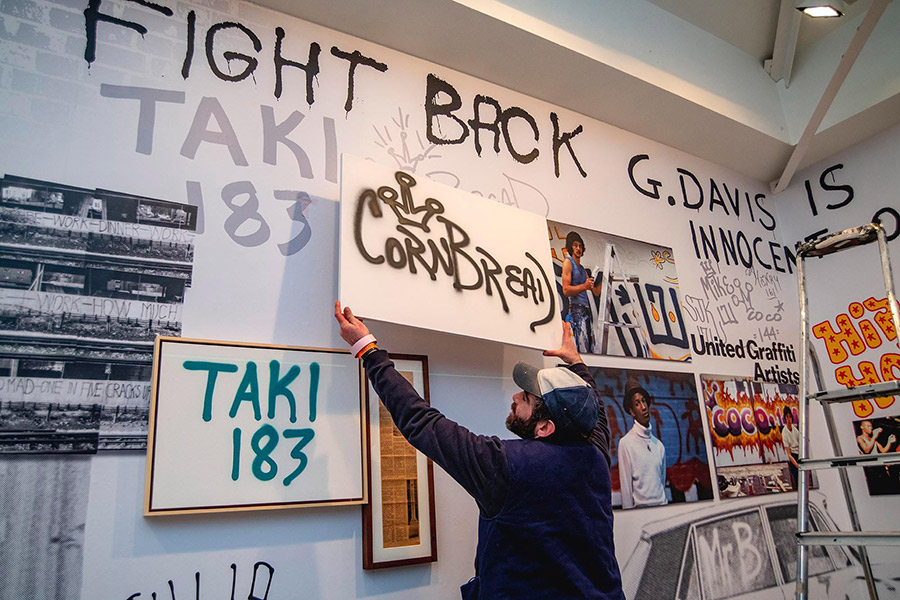
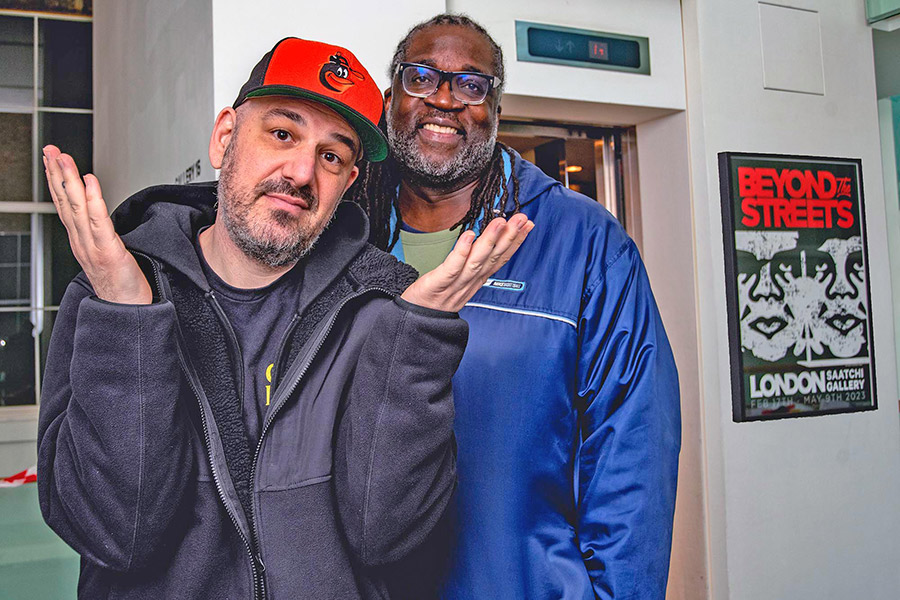
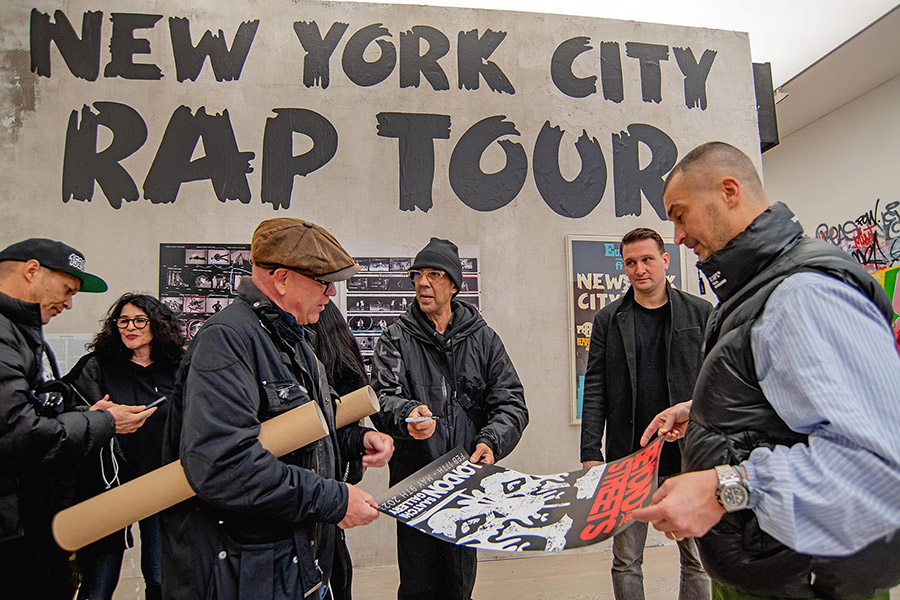
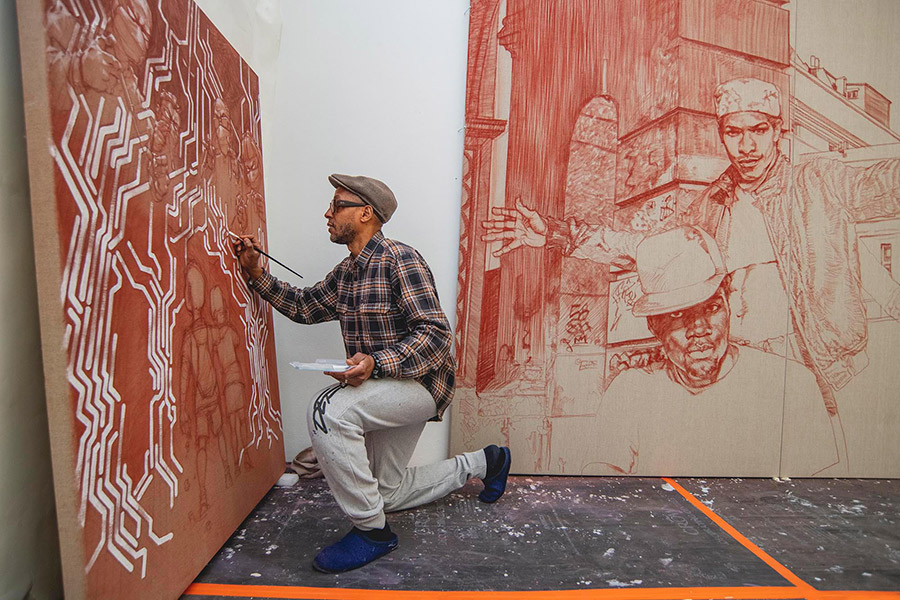
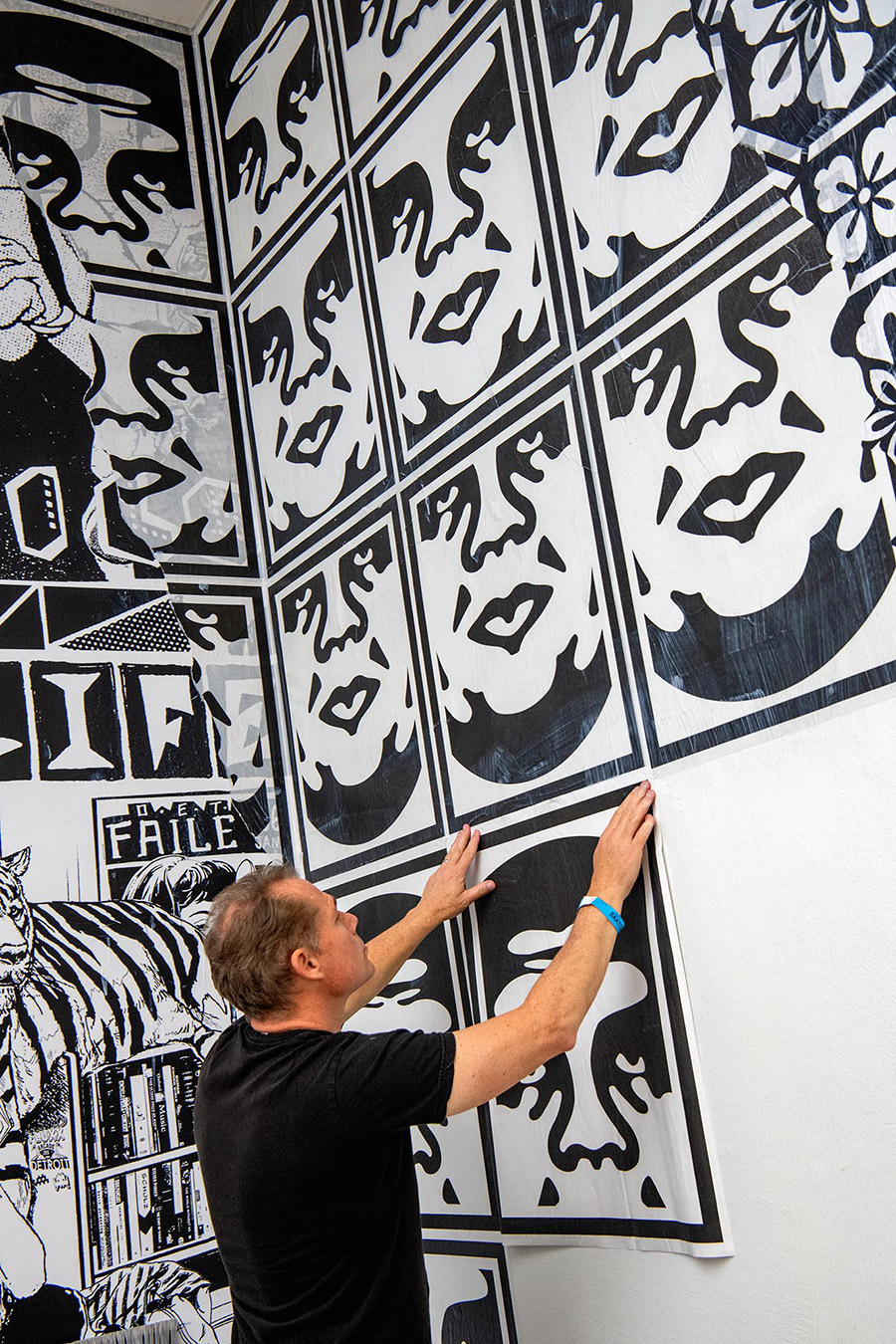
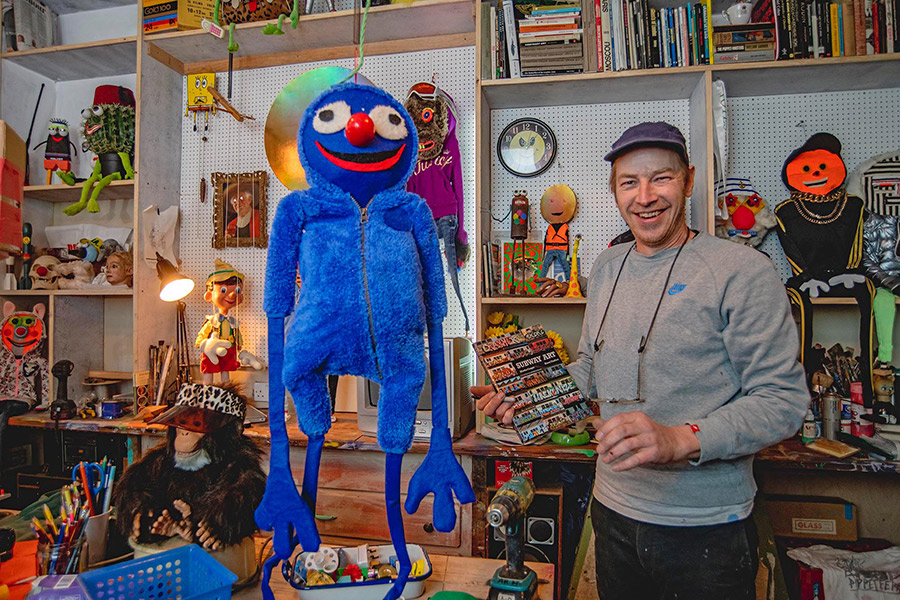
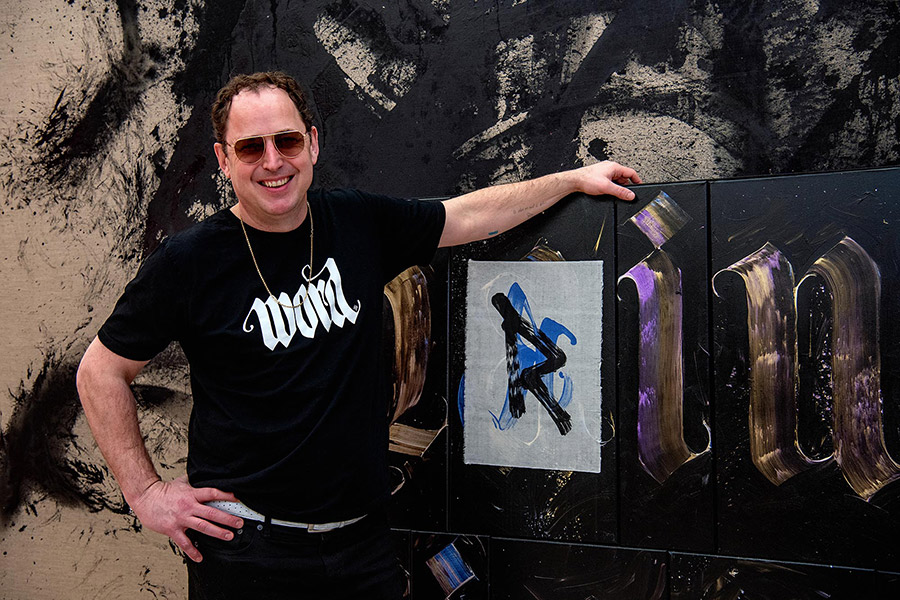
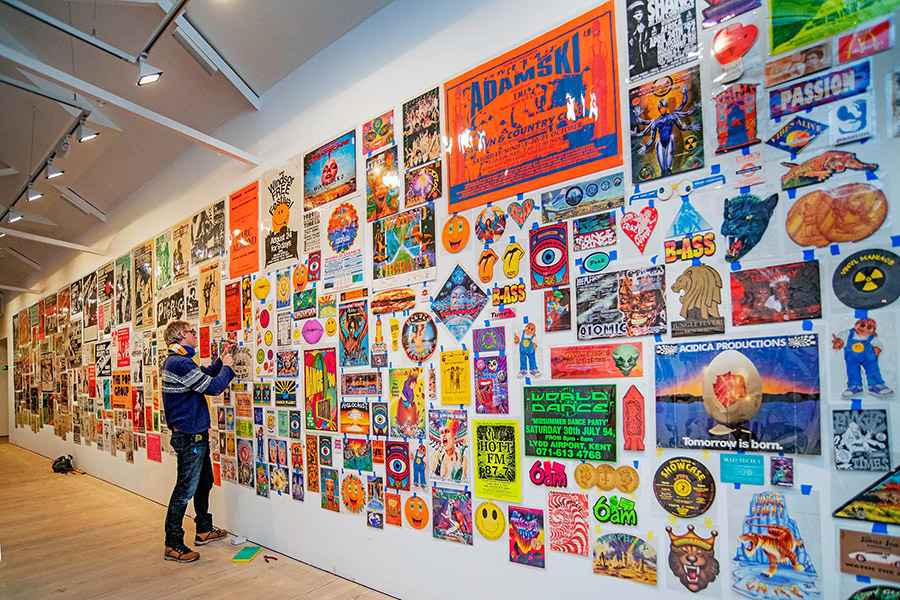
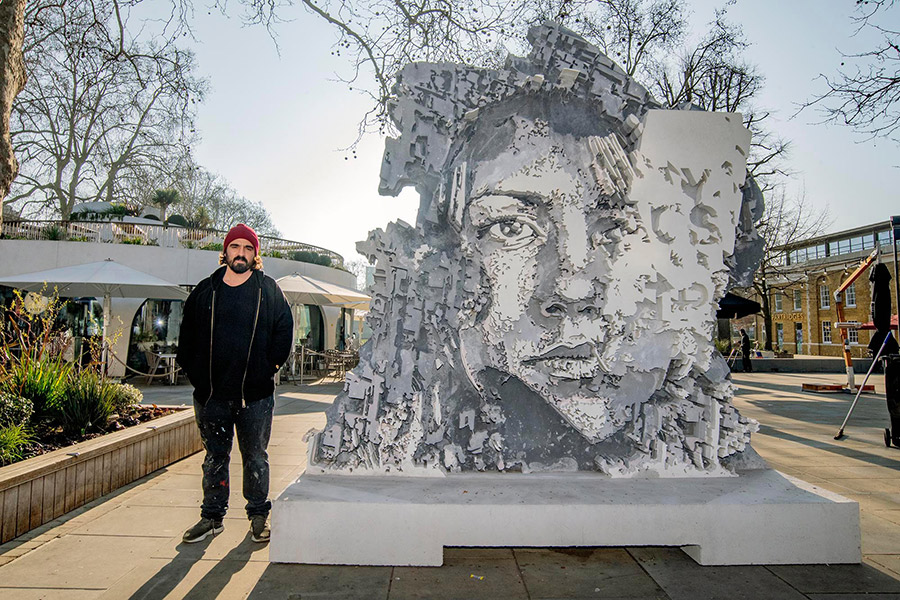
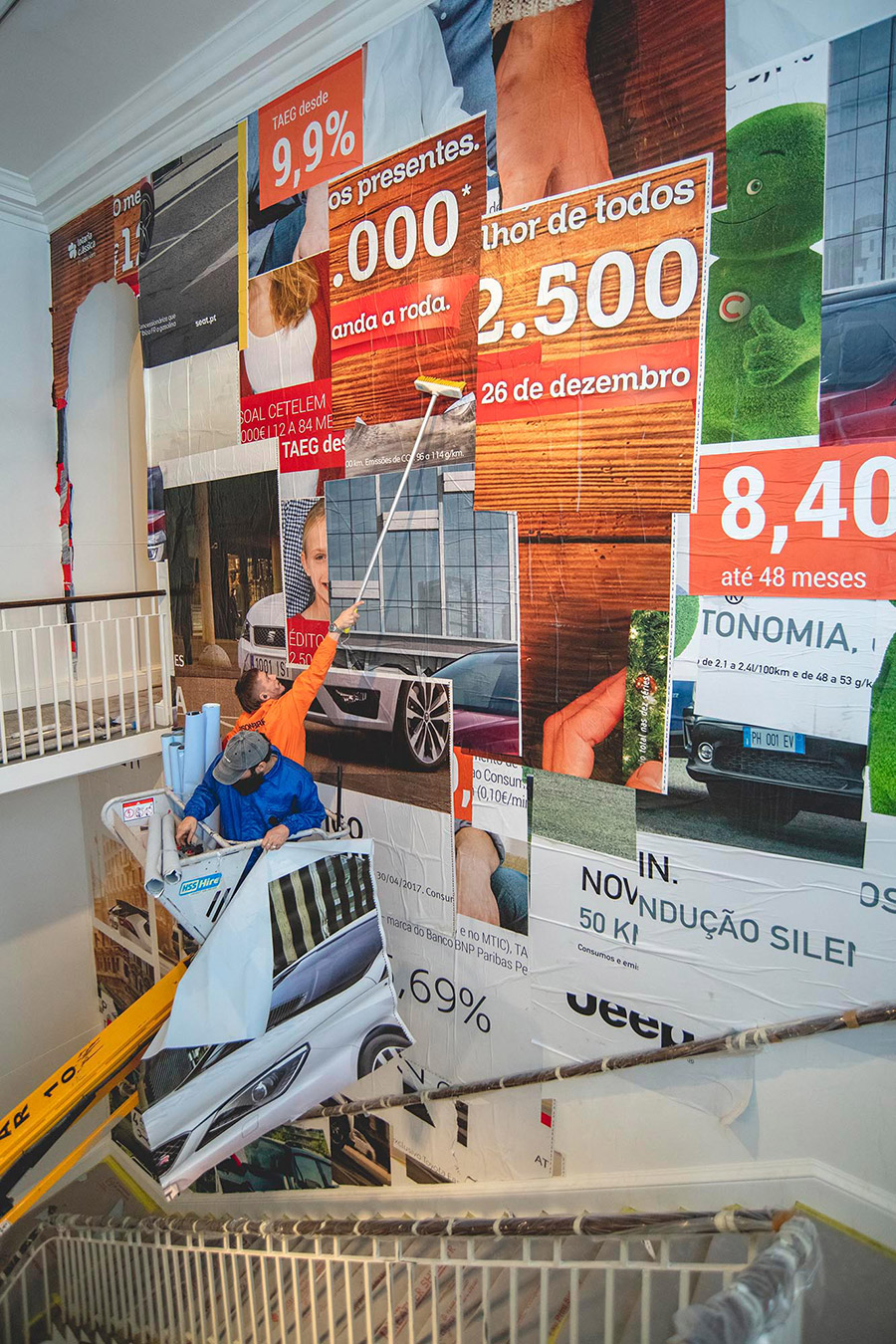
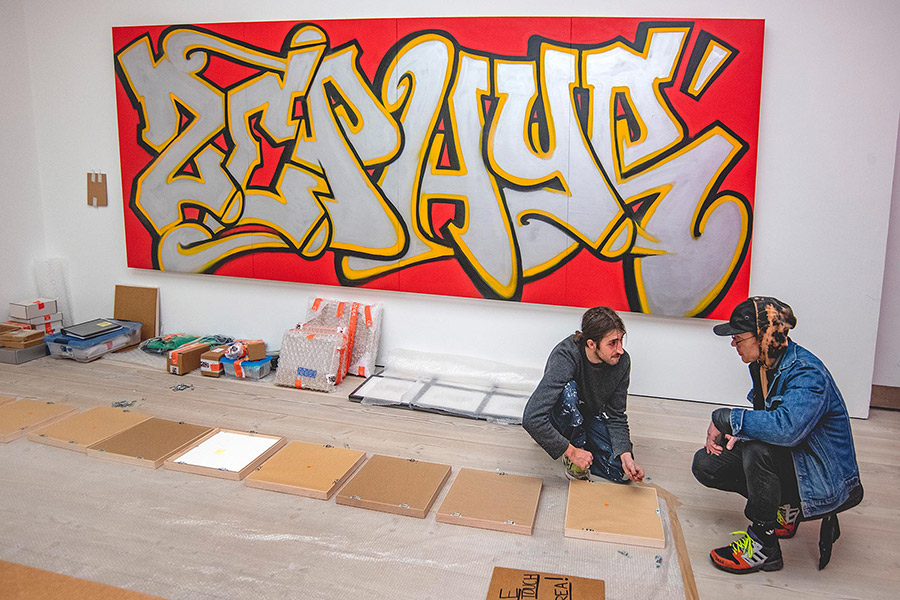
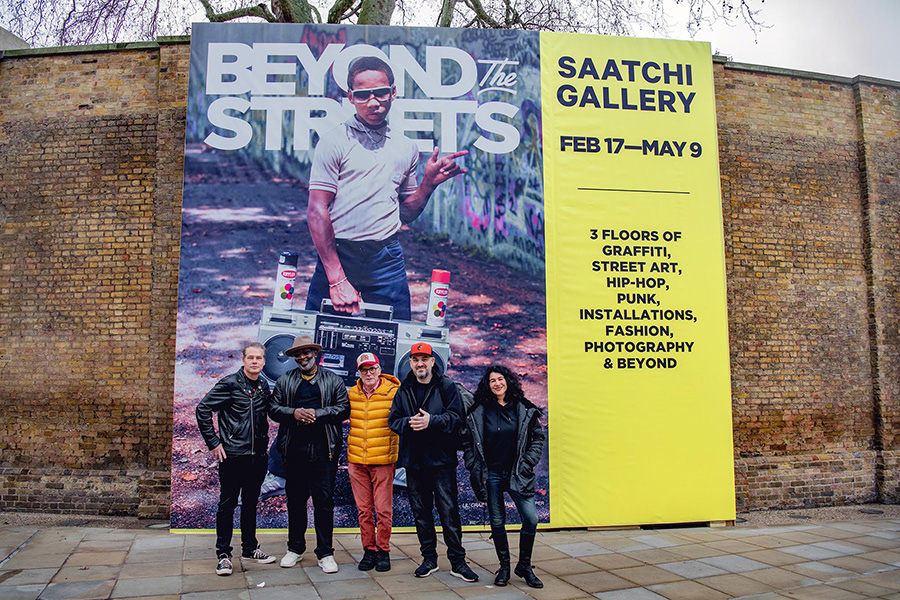
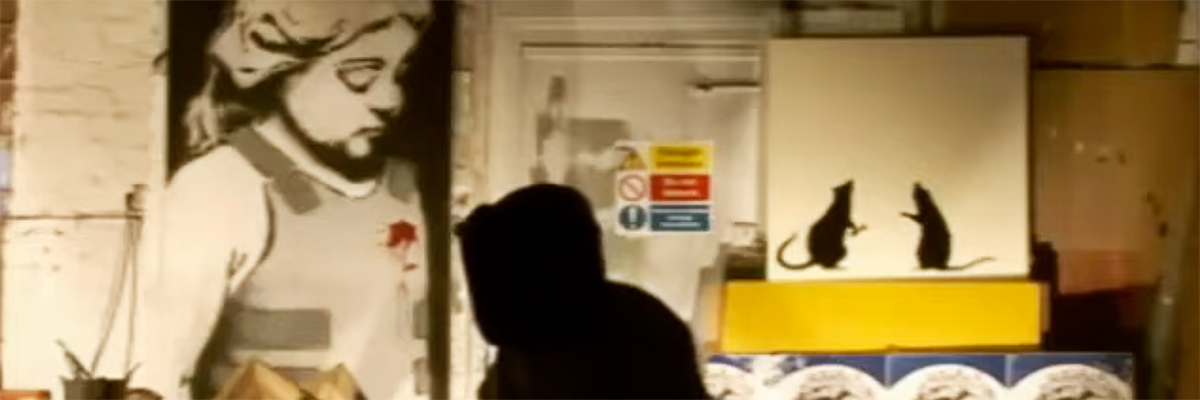
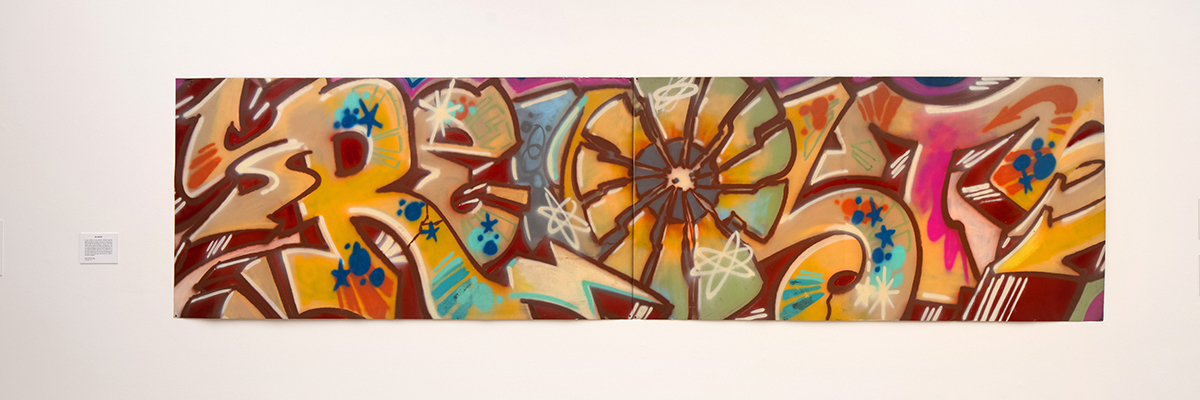
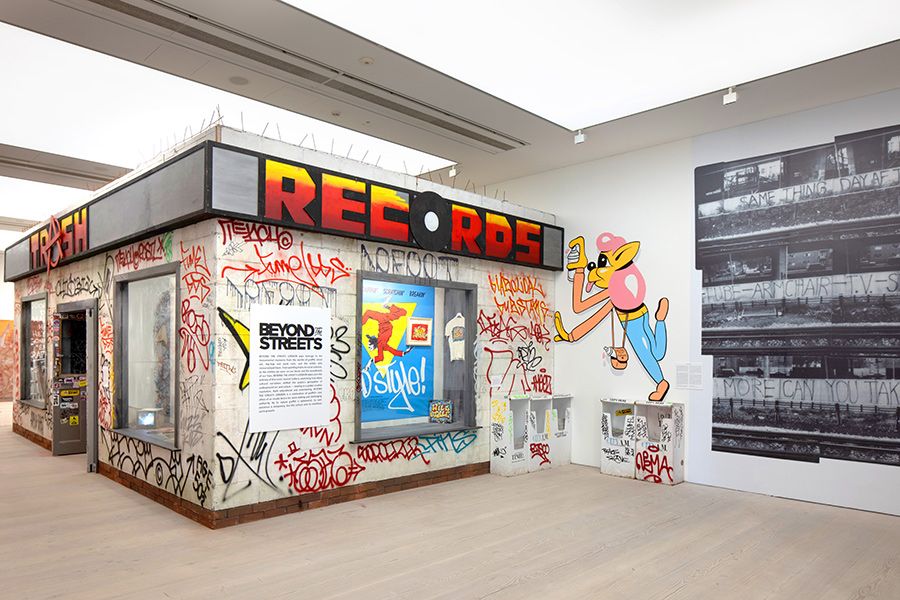
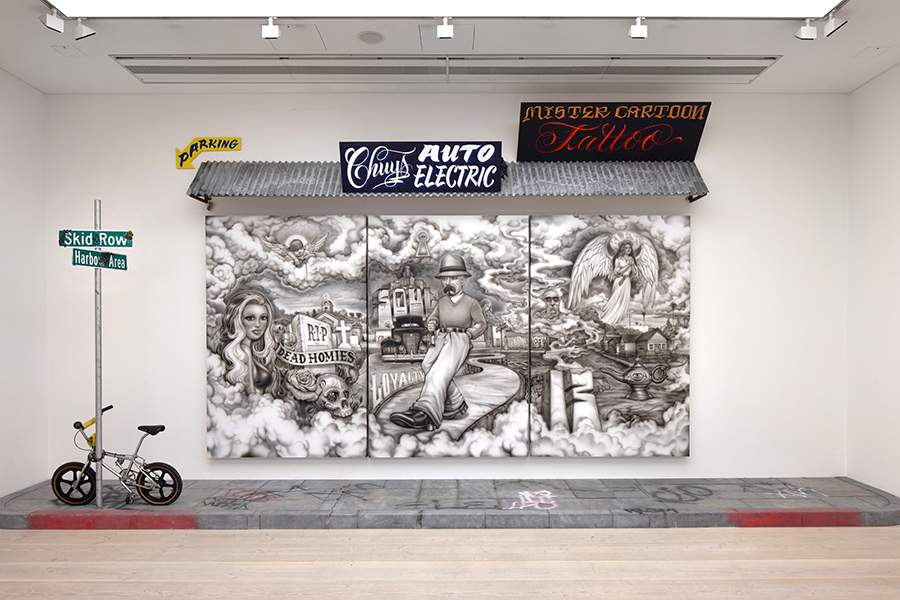
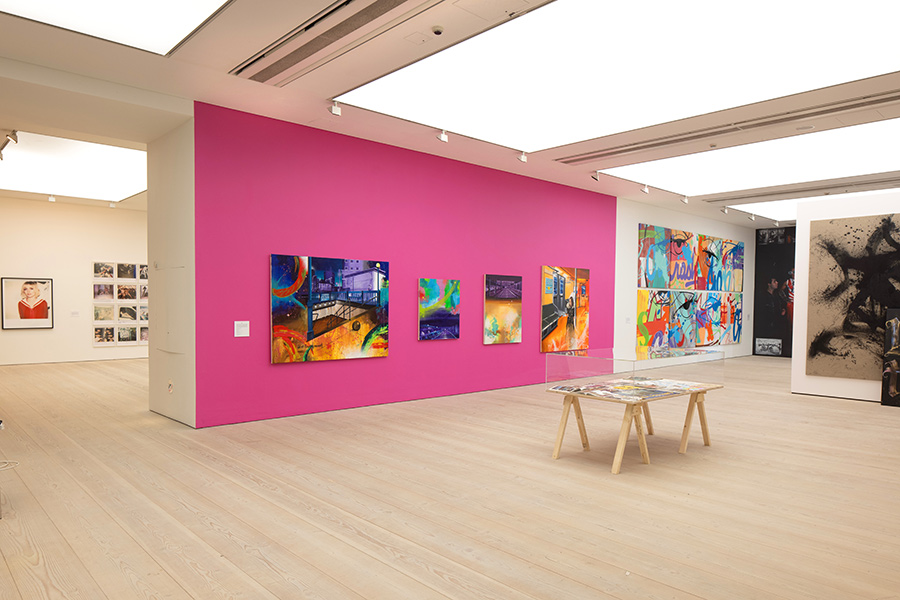
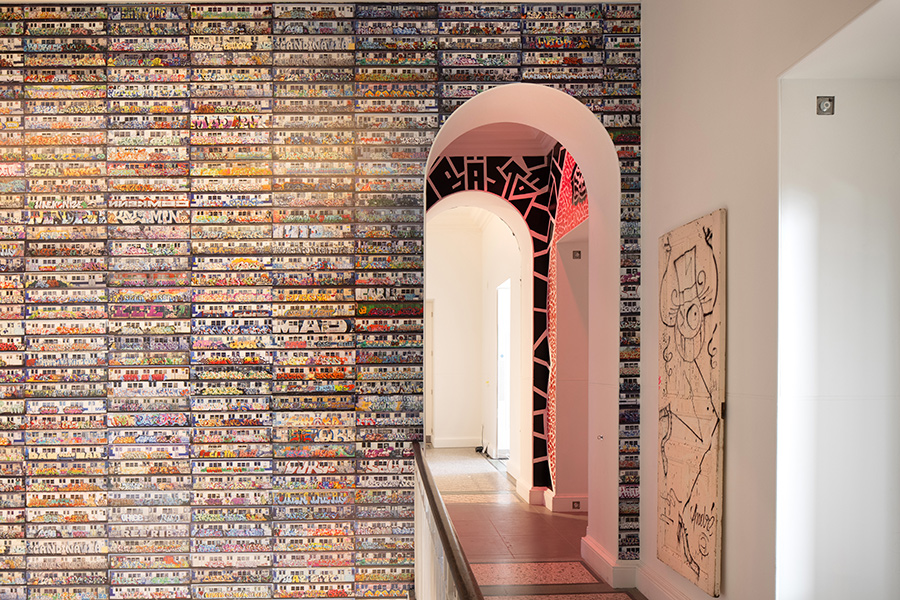
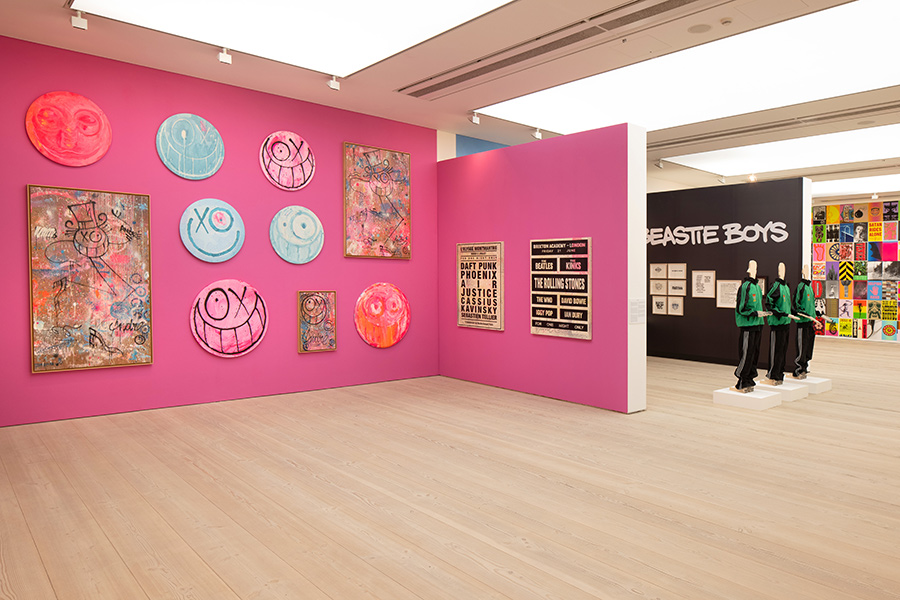
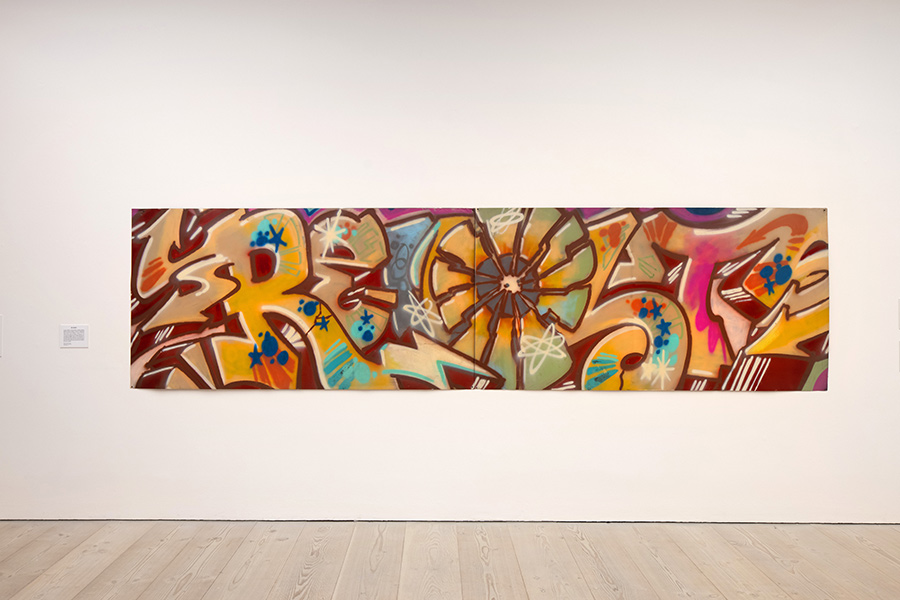
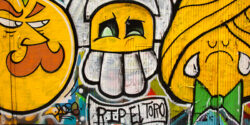
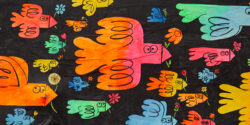
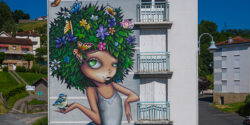
Behind the scenes at “Beyond the Streets London” is a hive of activity, with artists deeply focused on installing their work and seeking assistance with tools and equipment. Curators, organizers, and lighting professionals are bustling up and down the stairs, carrying props, or ladders, and communicating with vendors and artists via text message. Salespeople are diligently crafting wall texts to accompany the art pieces. It’s a few hours before showtime, yet everything is somehow accomplished just as the first guests arrive for the preview.
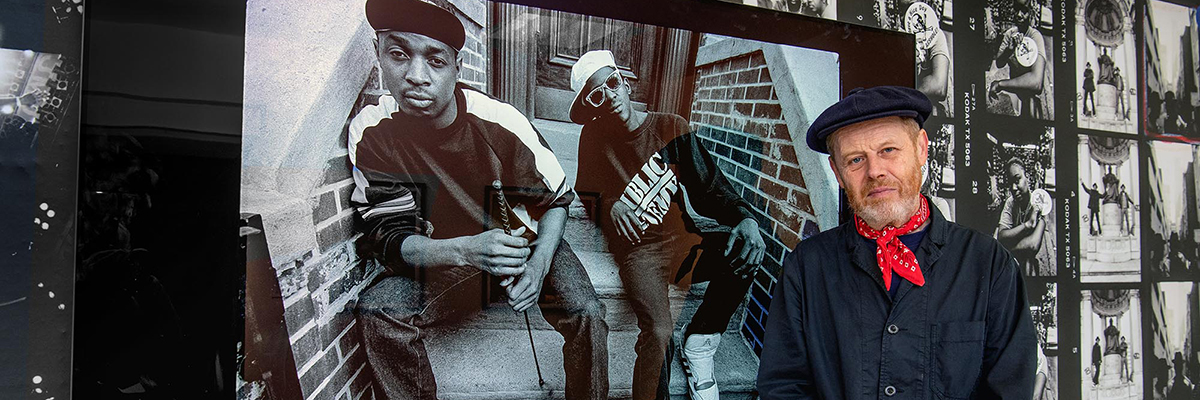
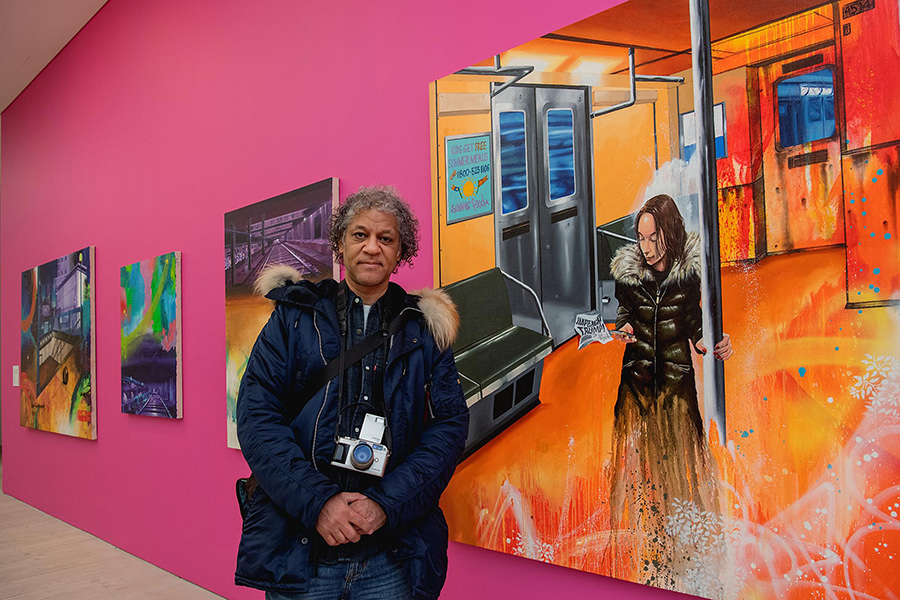
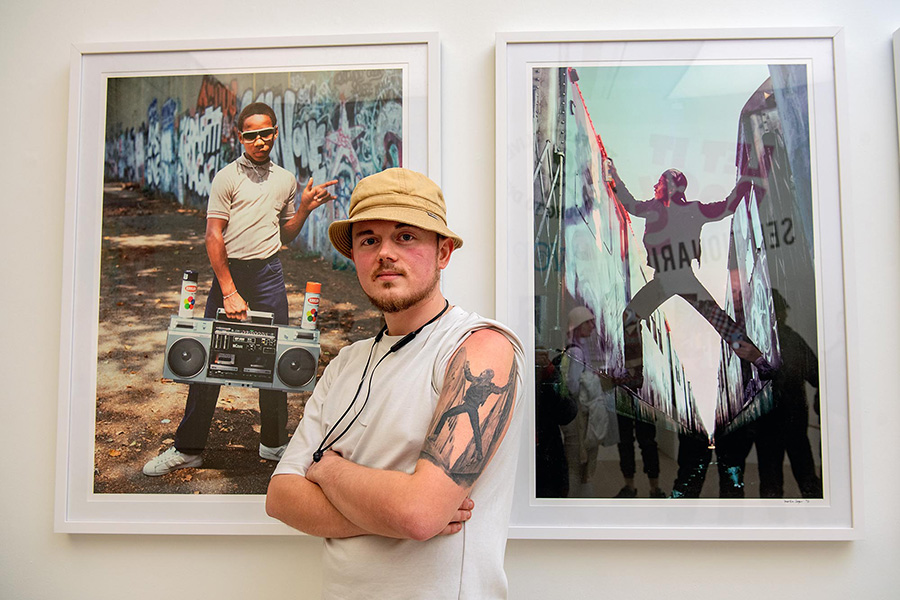
Photographer Martha Cooper is electrified by the activity at Saatchi Gallery. The event preserves the rich history of graffiti, street art, and commerce while pushing forward with new trends and directions. Cooper, who has documented this scene since the 1970s, has attended and exhibited in “Beyond the Streets” exhibitions in New York and Los Angeles – and we anticipate the next stop could be Shanghai. This particular iteration showcases an evolving mix of archetypes and invention, drawing on diverse influences from the US, UK, and EU.
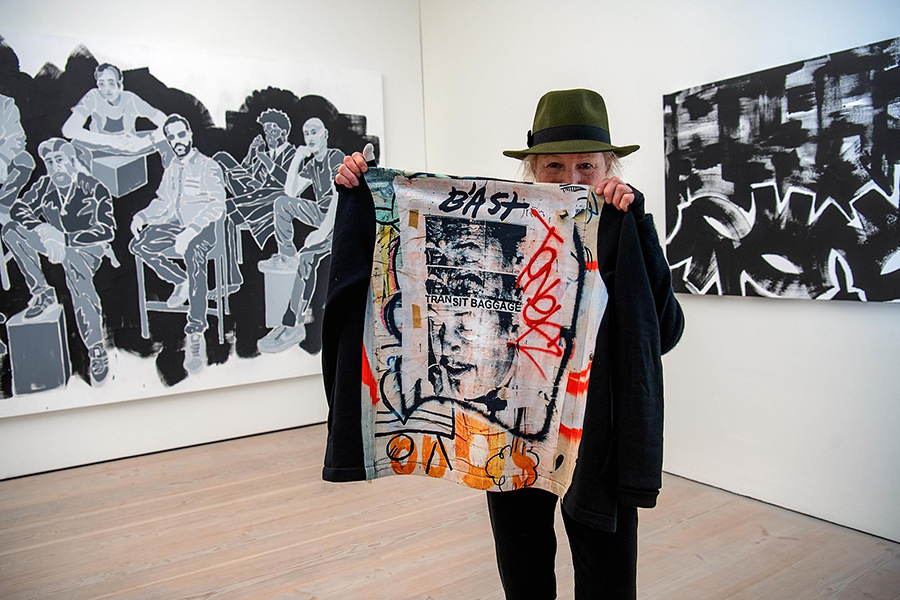
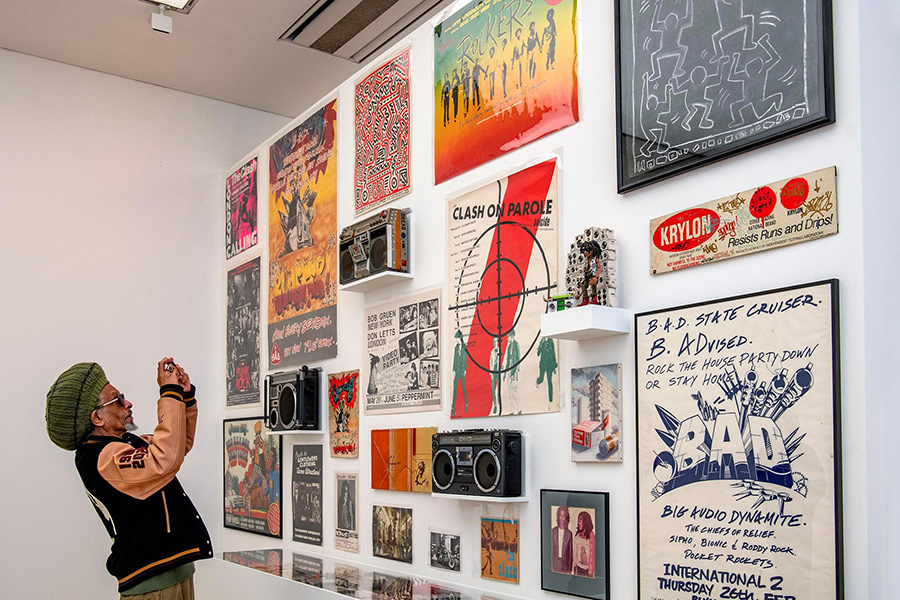
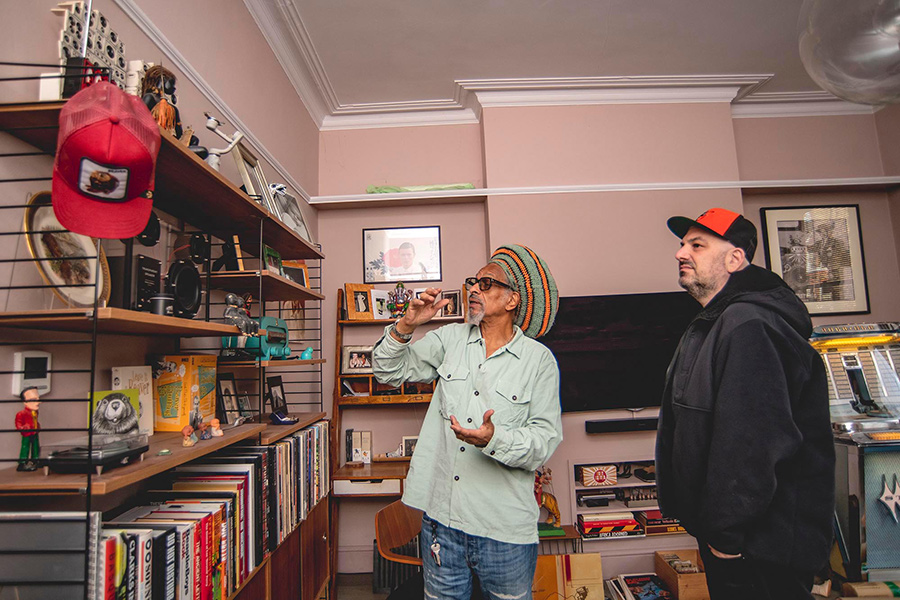
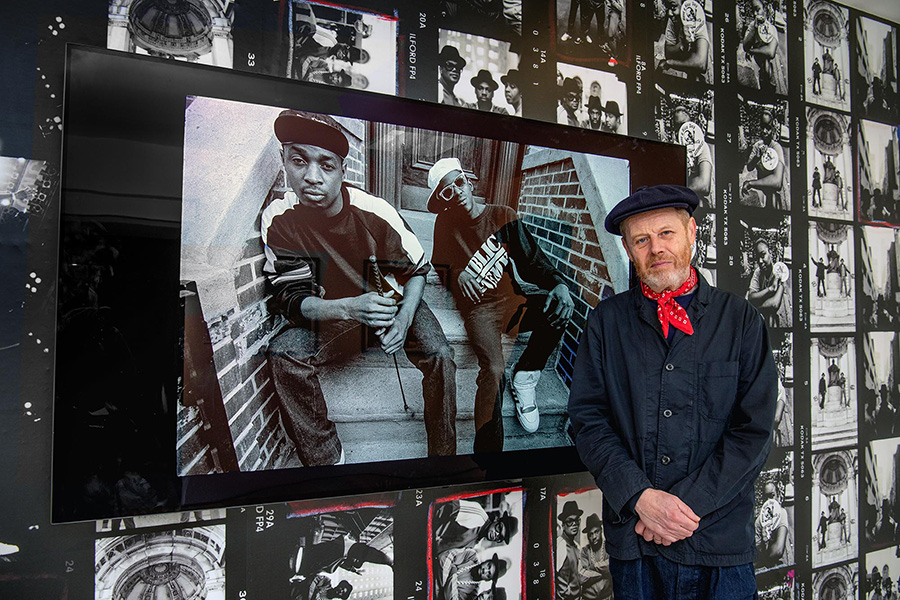
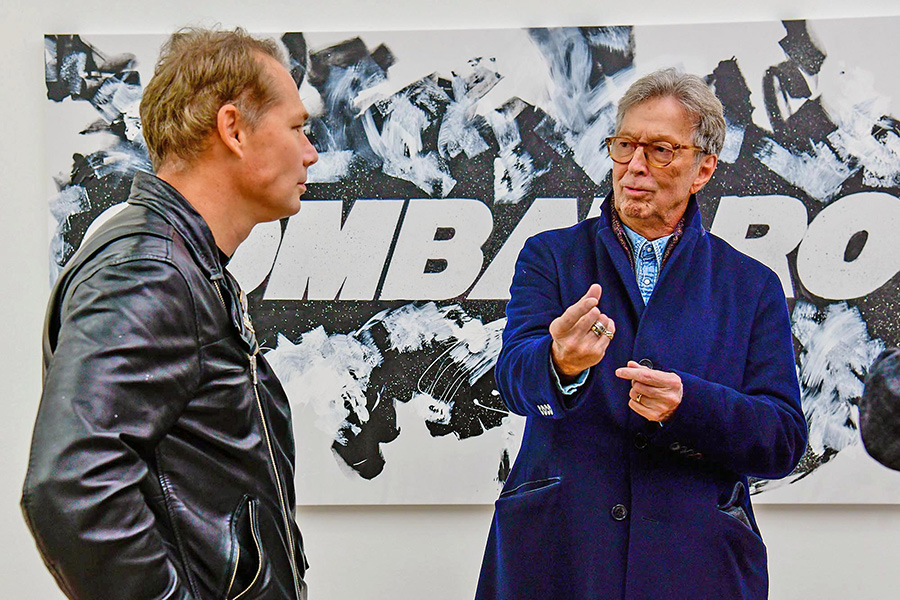
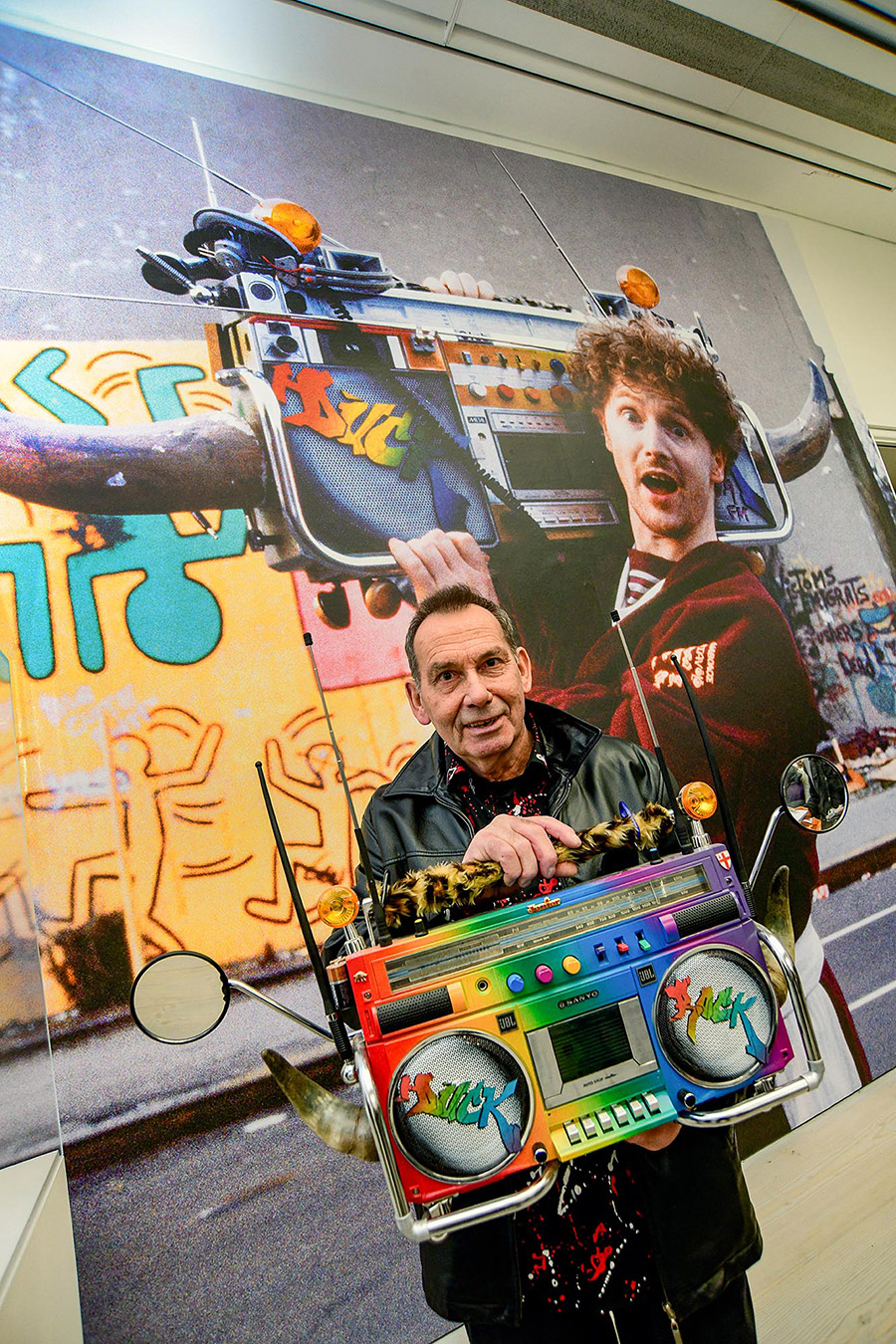
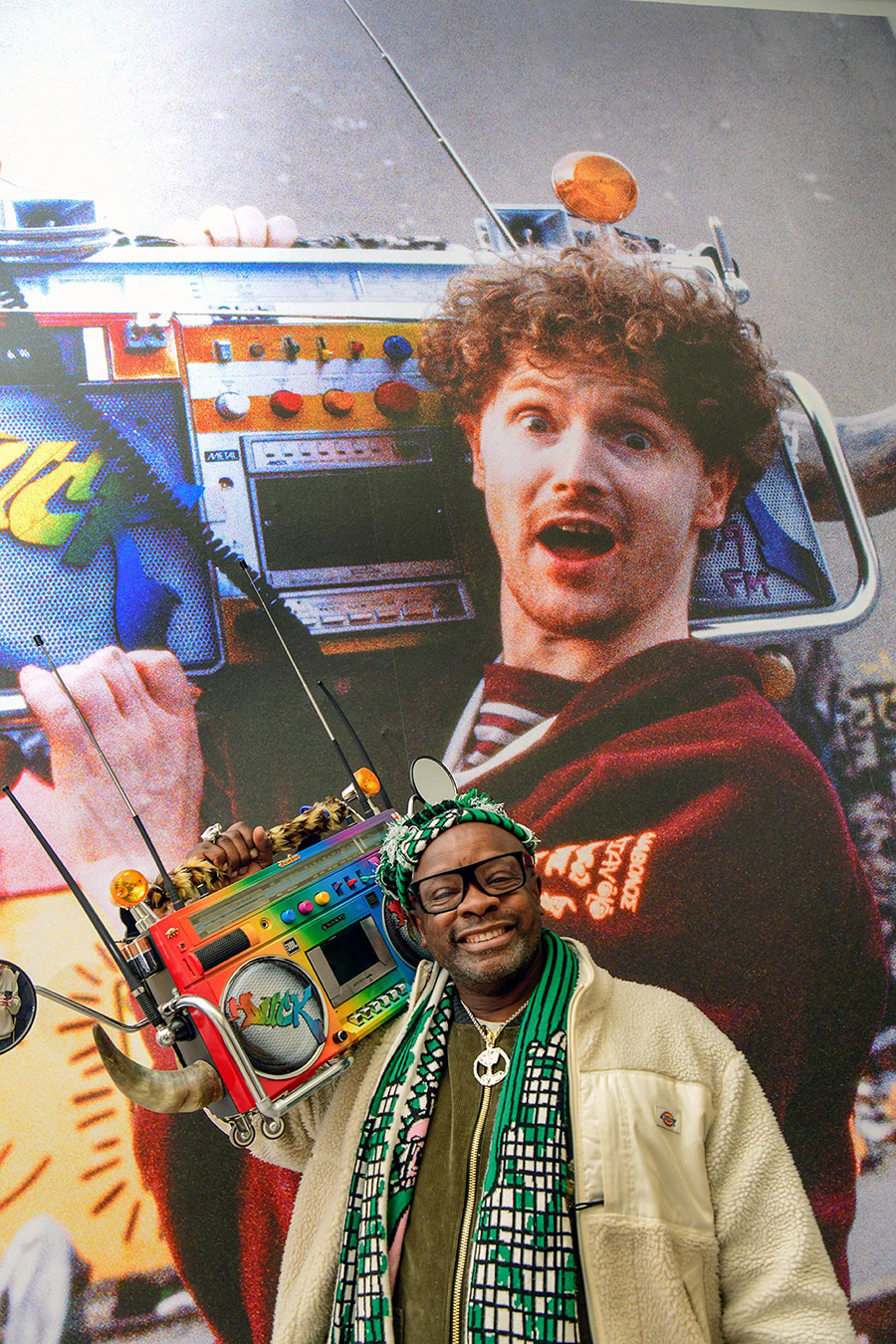
Cooper observed many surprising music references at the show. Rock icon Eric Clapton was at the opening admiring a photograph of text declaring him to be God while filmmaker, musician, and BBC radio host Don Letts had a personal collection of his memorabilia/ephemera on display. Ron West, designer of the “Duck Rock” boombox, also made a sudden appearance at the opening, allowing guests to pose with his creation. Among the standout pieces was a Bob Gruen photo of Malcolm McLaren holding that boombox in front of Keith Haring’s Houston Street wall, a masterpiece of intersectionality, if you will.
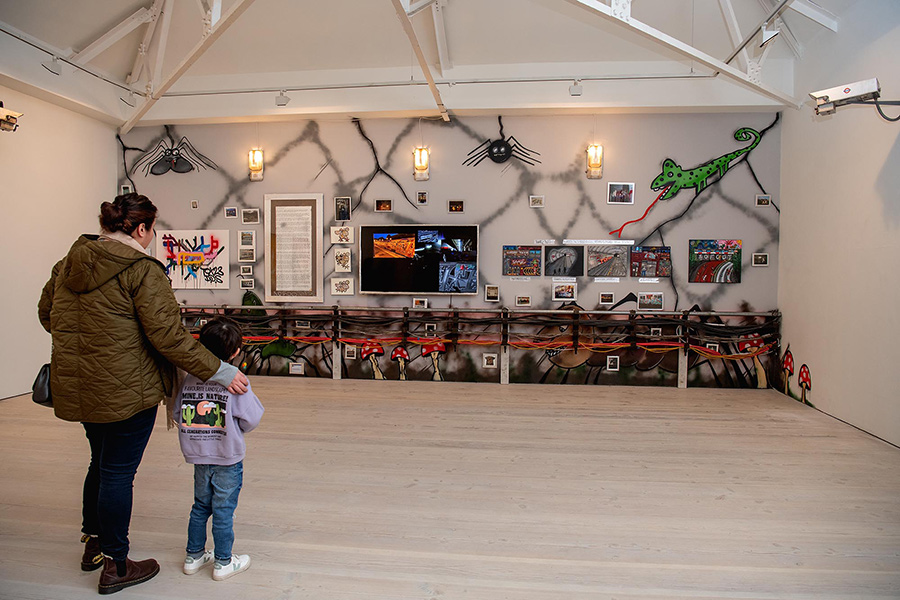
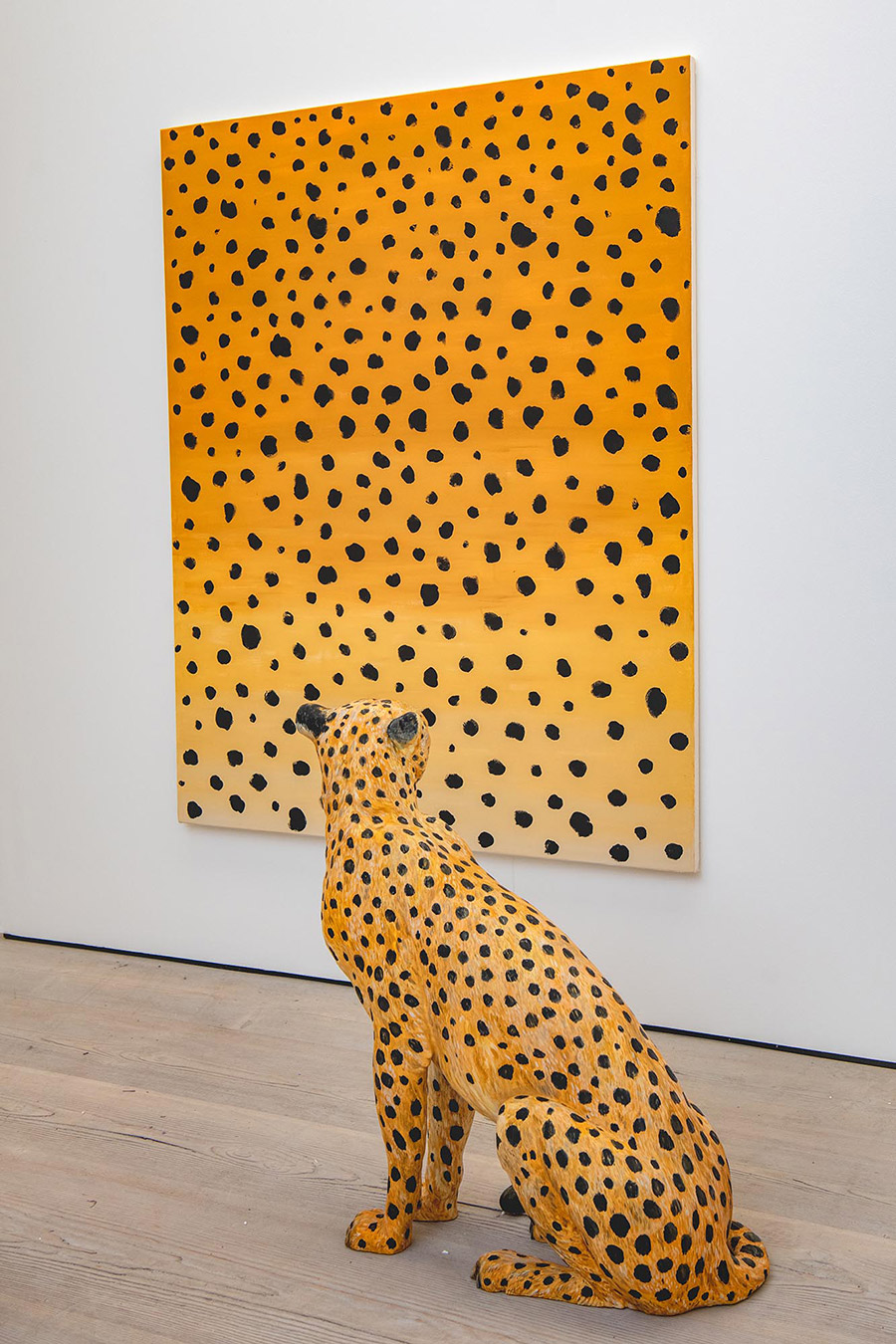
Overall, “Beyond the Streets London” offers a smorgasbord of colors, flavors, and influences that are difficult to encapsulate in one show. However, Gastman, the visionary, gives it a good try, with a respectful nod to the many artists who have shaped this worldwide people’s art movement. Enjoy these behind-the-scenes shots from Ms. Cooper.
3. Project MUM Upcycles Ocean Plastics Into Fishing Gear
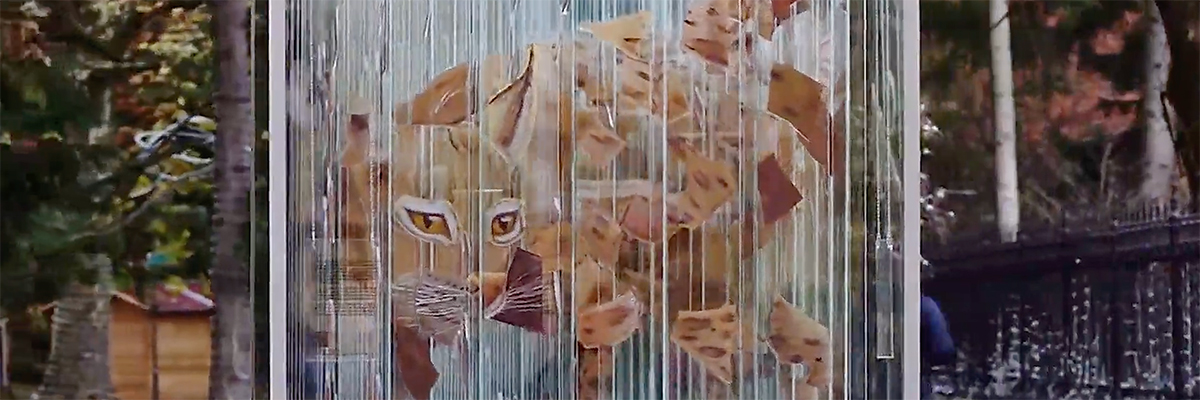
BSA Special Feature: Thomas Medicus / Human Animal Binary
Part Damian Hirst, Jerry Andrus, and Bordallo II, this public work by Thomas Medicus takes different forms according to your position. Clearly, it’s a wild world.
It looks like Easter came early this year in Nendaz, Switzerland. Street artist Tuco Wallach appears to be having fun with this new bunny, stickers, origami, and skiing. For Tuco, the street art practice is often a family affair, and you can guess what the next generation is beginning to do. It starts with a series of lapinou (rabbits). With this kind of role model, you shouldn’t be surprised.
Lapinou Project, by Cartie, Pouah & Tuco.
Project MUM Upcycles Ocean Plastics Into Fishing Gear
Industrial waste is poisoning our air, water, food supply; in a capitalists mind its the transaction that is primary in the mind, not the repercussions on the natural world or their human counterparts. But to elevate the conversation, it is always good to find people using their ingenuity to reuse, upcycle, and give back to us all, rather than detract.
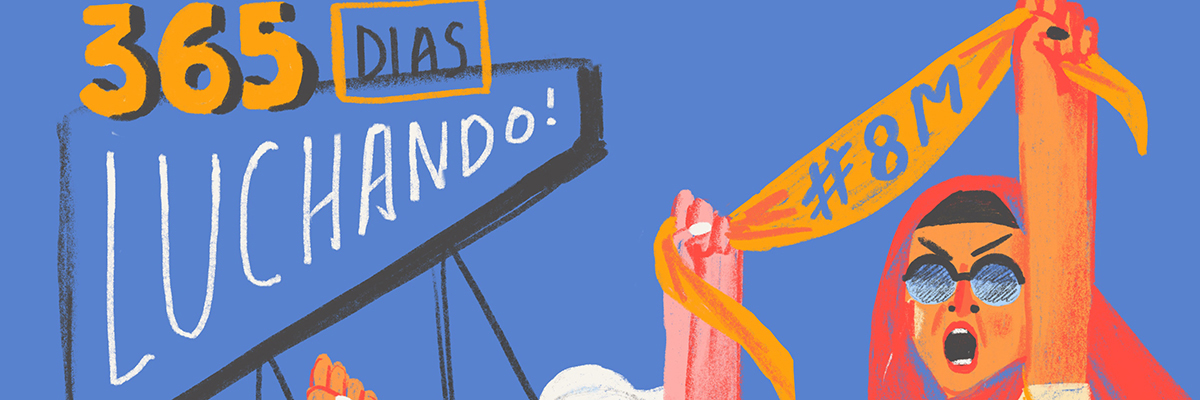
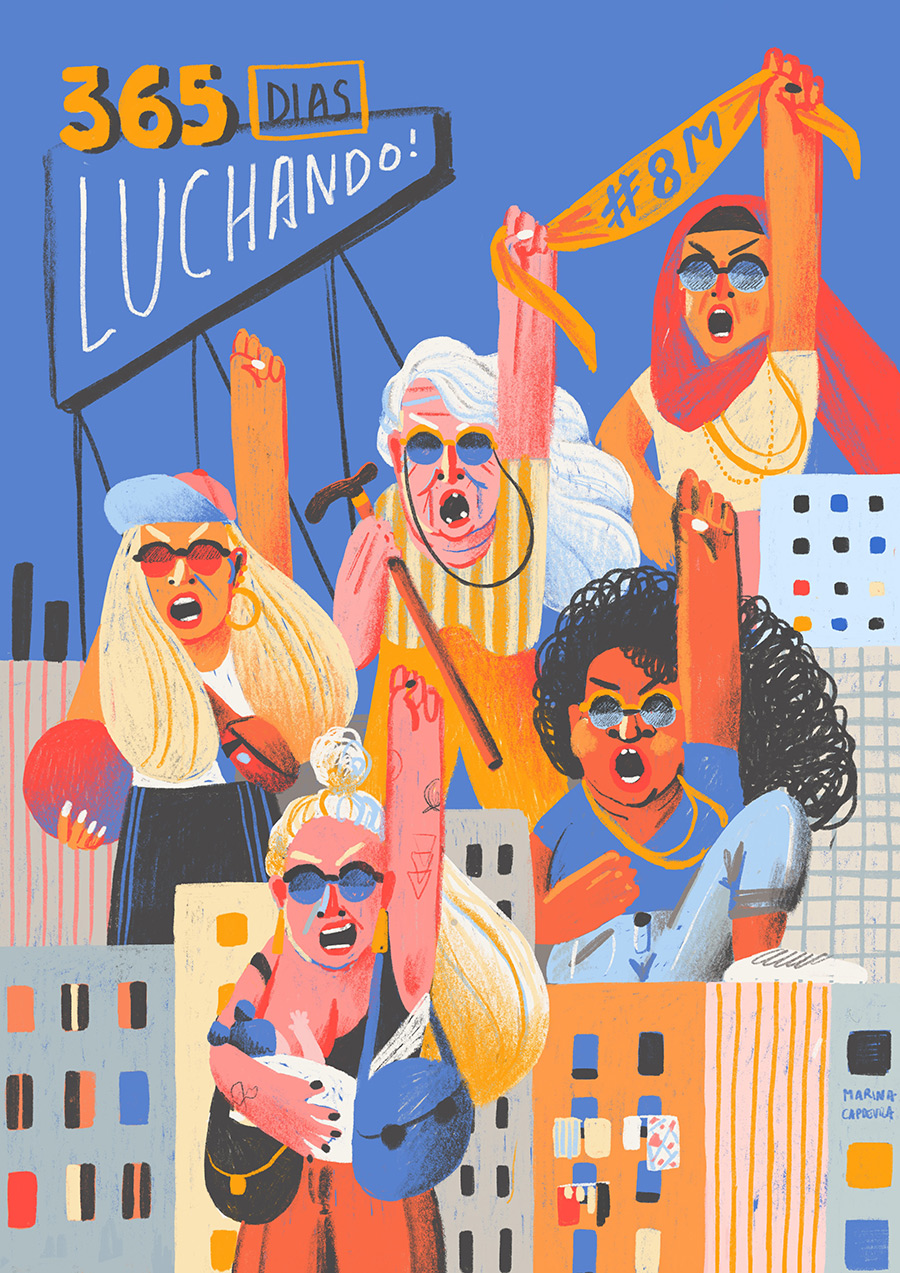
Yesterday we celebrated International Women’s Day HERE with a campaign in the United Kindom by artists Aida Wilde in collaboration with UNCLE. Spanish artist Marina Capdevila reminds us that women’s day is not only one day a year; it’s 365 days a year. Today we offer her contribution to empowering all women with a free-to-download poster in case you wish to print it as a reminder of all the hard work still to be done.
Hoy luchamos y trabajamos como cada día, para que se nos escuche, se nos tome en serio, para un laaargo etc etc etc. Cansada de recibir el 8M mails con propuestas para dar visibilidad a la mujer.. si seguimos así que, solo trabajaremos un día al año??
Nos queda mucho por hacer, pero aquí estamos todas juntas! 🙂
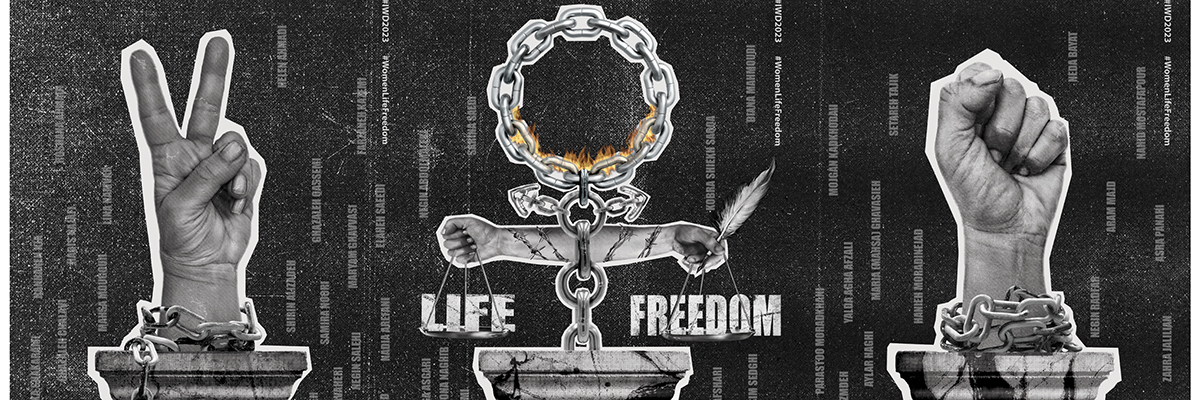
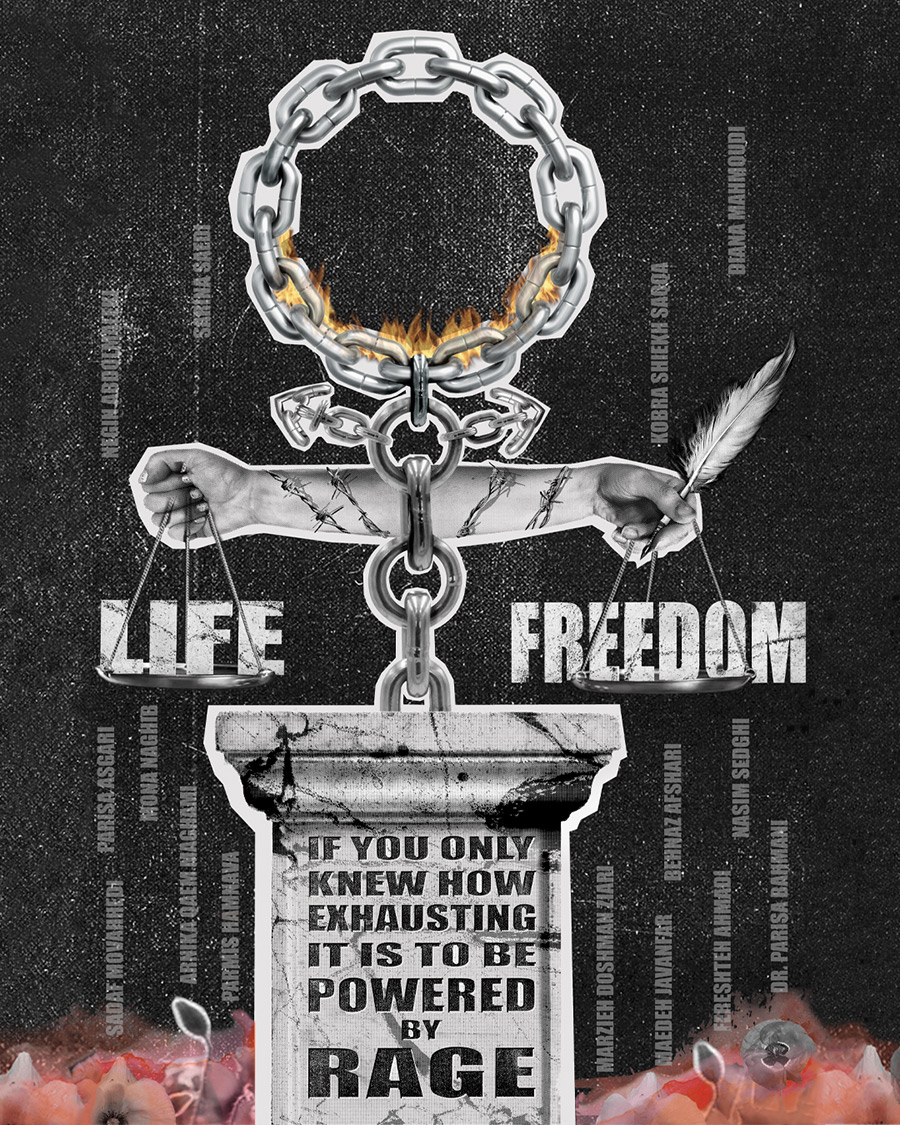
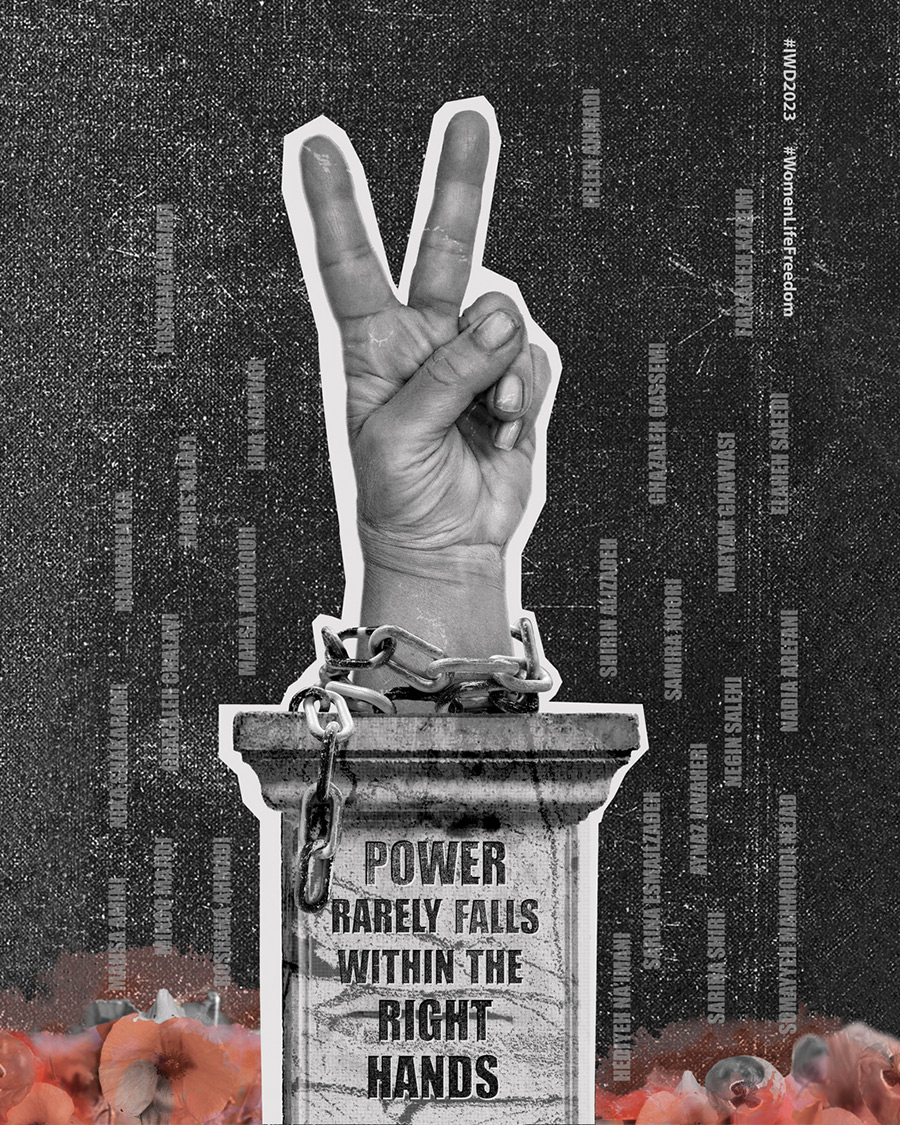
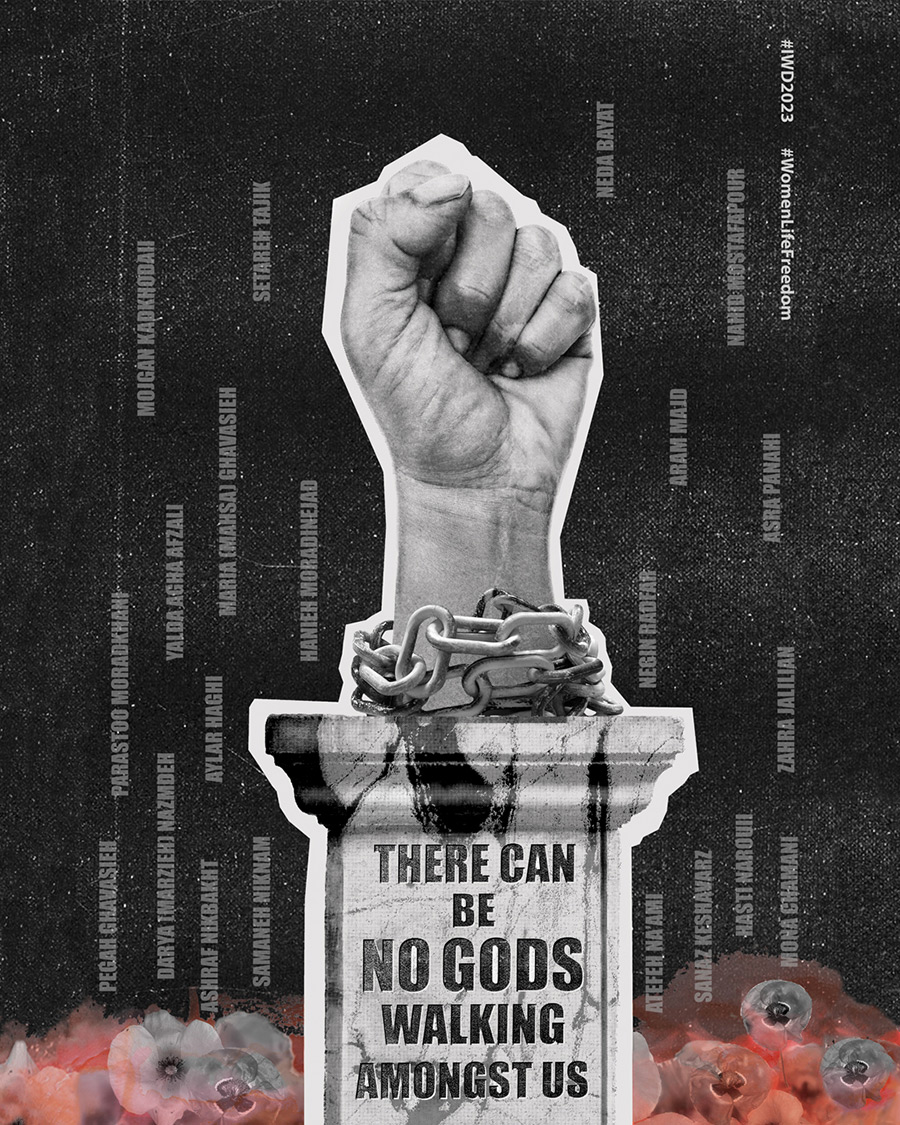
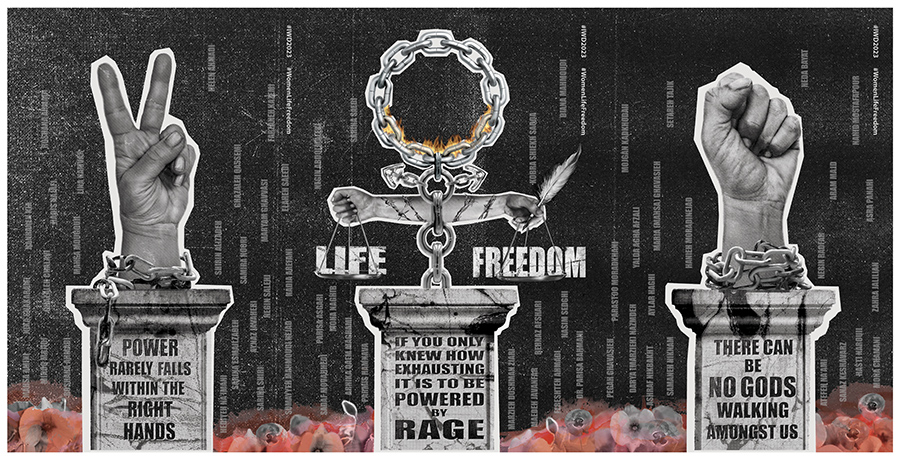
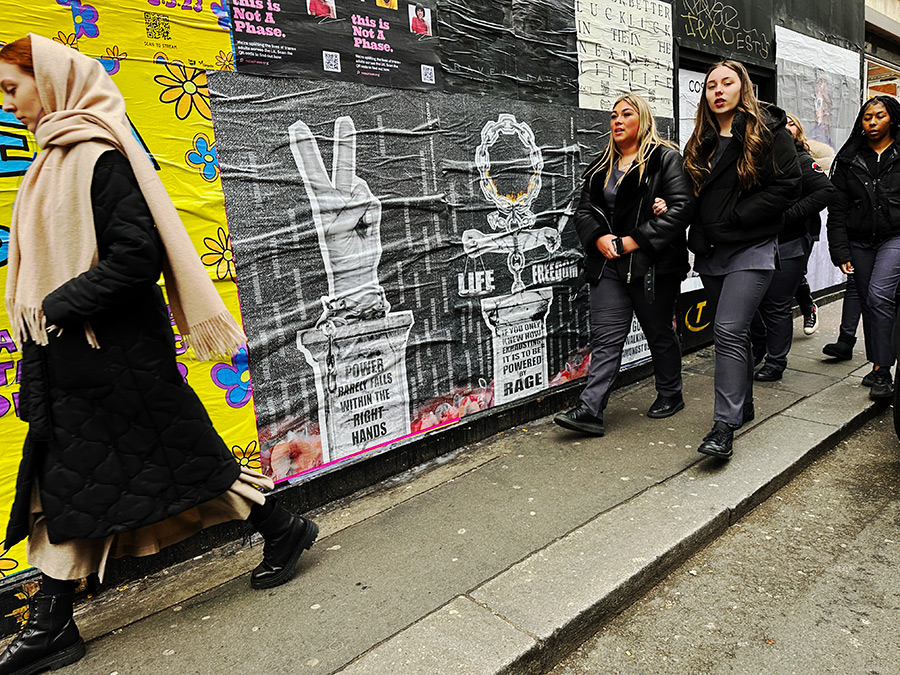
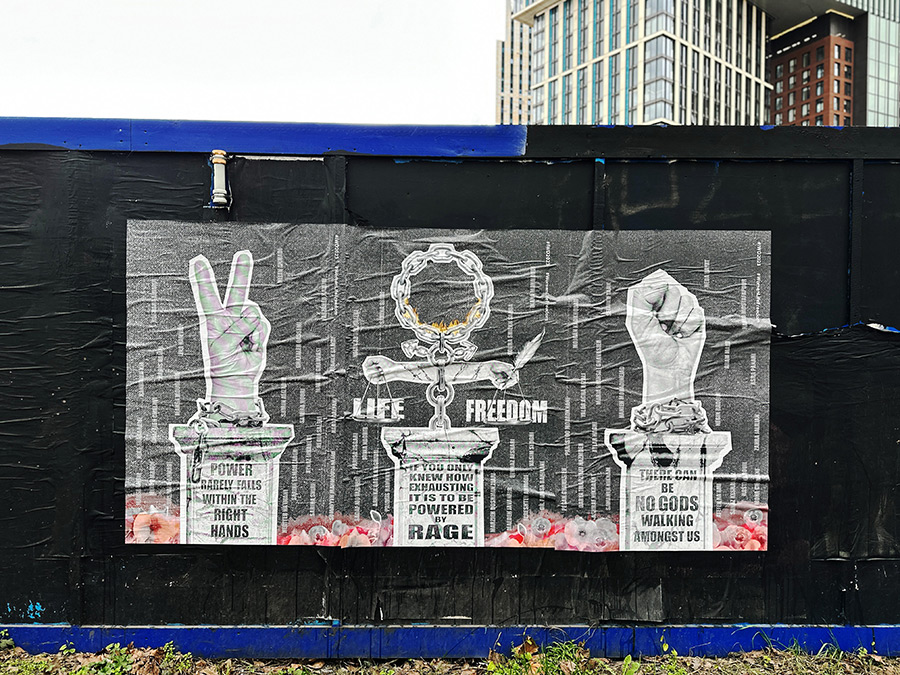
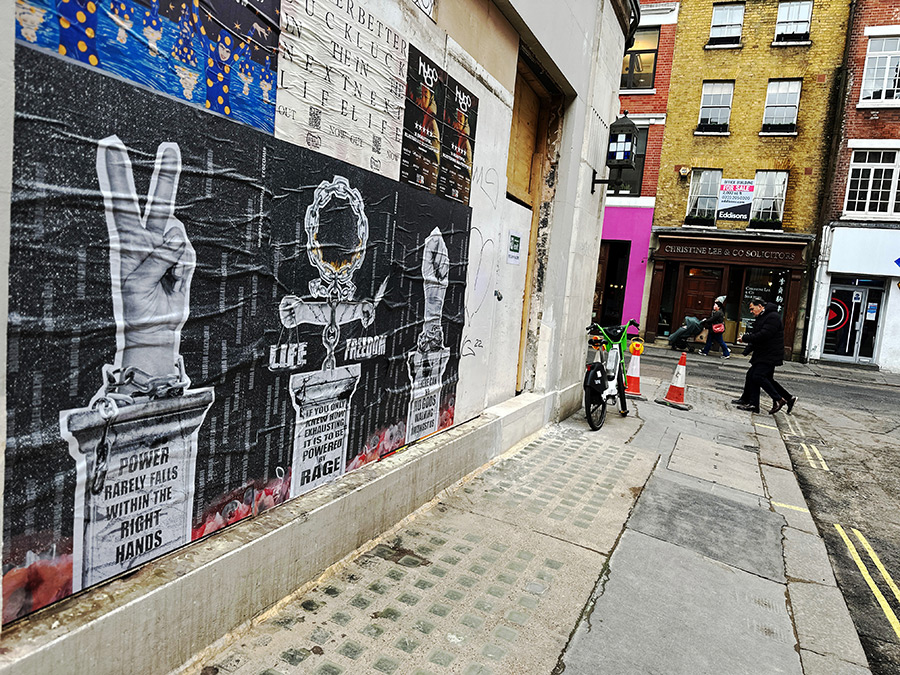
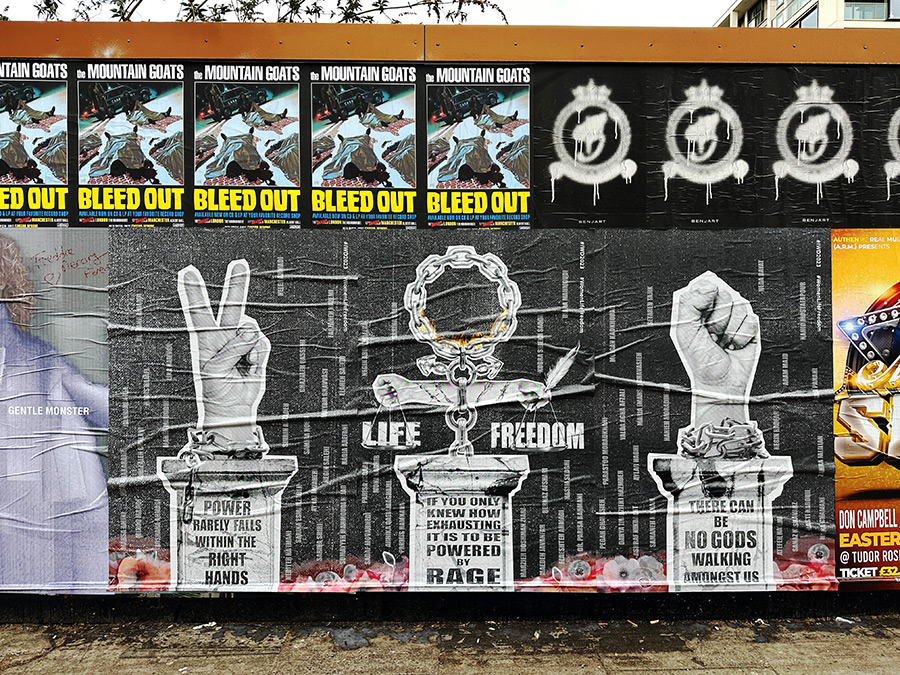
New works today to mark International Women’s Day from Iranian artist Aida Wilde, who has placed them on streets in London, Bristol, and Manchester. In black and white with accents of fire, she’s using her bold design sense and collaged text, and forms – including photographs of her mother’s and sister’s arms – to celebrate women’s power and history.
AIDA WILDE X UNCLE FOR INTERNATIONAL WOMEN’S DAY 2023. “The Silence From The Veil” 2023. Detail. (photo courtesy of UNCLE-Olly Studio)
A visual artist, educator, and printmaker, she references the ironic pop fragmentation of slogans in a manner that recalls Jenny Holzer, an early street art social critic and proponent of women’s agency in society. You can see echoes of a street ad approach in Wilde’s previous screen-printed installations and social commentary posters, their replication, and repetition. In this work there is a direct relationship between Wilde’s “Power rarely falls within the right hands” and Holzer’s “Abuse of power comes as no surprise.”
AIDA WILDE X UNCLE FOR INTERNATIONAL WOMEN’S DAY 2023. “The Silence From The Veil” 2023. Detail. (photo courtesy of UNCLE-Olly Studio)
Now based in the UK, Wilde fled Iran with her mother and sisters during her country’s war with Iraq and she is looking at the current theocratic suppression of the women’s popular movement in her home country with horror. It is a repetition of the tale of women’s fight for equality you have seen before, one that echoes through modern history, now playing out in new streets, schools, and educational and religious institutions. Using the balanced formation of the triptych, Wilde says the hands of her mother and sister “are raised in iconic gestures of resistance atop marble pedestals”.
AIDA WILDE X UNCLE FOR INTERNATIONAL WOMEN’S DAY 2023. “The Silence From The Veil” 2023. Detail. (photo courtesy of UNCLE-Olly Studio)
In a statement about the new works on the street, Wilde says, “This is the first time that I have incorporated all of my family in one piece of artwork. This is for ALL the mothers, sisters, brothers, and fathers around the world, who have suffered oppression, violence, injustices, and bloodshed. May our tears and suffering not be in vain. May we be united by peace in the fight for justice.”
AIDA WILDE X UNCLE FOR INTERNATIONAL WOMEN’S DAY 2023. “The Silence From The Veil” 2023. Detail. (photo courtesy of UNCLE-Olly Studio)AIDA WILDE X UNCLE FOR INTERNATIONAL WOMEN’S DAY 2023. “The Silence From The Veil” 2023. Detail. (photo courtesy of UNCLE)AIDA WILDE X UNCLE FOR INTERNATIONAL WOMEN’S DAY 2023. “The Silence From The Veil” 2023. Detail. (photo courtesy of UNCLE)AIDA WILDE X UNCLE FOR INTERNATIONAL WOMEN’S DAY 2023. “The Silence From The Veil” 2023. Detail. (photo courtesy of UNCLE)AIDA WILDE X UNCLE FOR INTERNATIONAL WOMEN’S DAY 2023. “The Silence From The Veil” 2023. Detail. (photo courtesy of UNCLE)
Continuing to Address Disability Inclusion on the Street
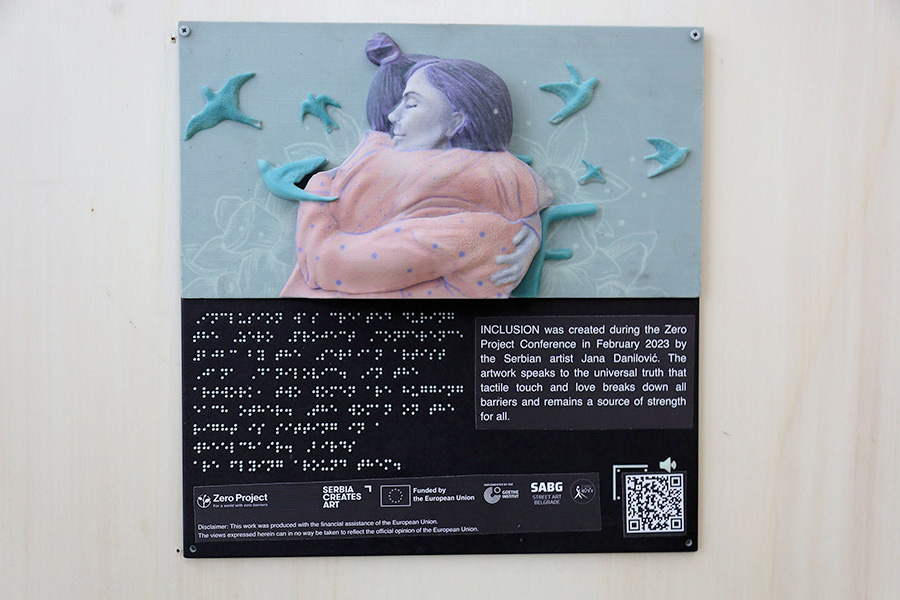
Jana Danilović continues to make the street a little more inclusive with her murals and this new painting with a miniature 3-D printed version mounted nearby with a braille description stands out with its birds in flight. Part of a project that includes nine murals in Belgrade made accessible to the blind and sight impaired, this new piece by the Serbian street artist is in Vienna, where organizers hope to inspire enthusiasm in other countries for art that is more accessible.
Jana Danilović. “Art in Passing” project. Street Art Belgrade in collaboration with Zero Project Foundation. Vienna, Austria. (photo courtesy of Street Art Belgrade)
In town for the annual Zero Project conference held in the United Nations building, Danilović was participating in the “Art in Passing” project created by the platform Street Art Belgrade.
“We are very happy and proud that we had the opportunity to present and realize the project outside of Serbia and to convey our experience to an international audience,” says Street Art Belgrade in a statement.
Jana Danilović. “Art in Passing” project. Street Art Belgrade in collaboration with Zero Project Foundation. Vienna, Austria. (photo courtesy of Street Art Belgrade)
The reception of the new work and the message during the three-day conference seemed good. Organizers tell us there was interest in the project from conference participants from the USA, Australia, Bulgaria, Israel, and Great Britain. Perhaps it is only a matter of time before more artists begin working with others to create their murals and descriptions for those who are blind or sight impaired. We’ll be pleased to bring them to you when they appear.
Jana Danilović. “Art in Passing” project. Street Art Belgrade in collaboration with Zero Project Foundation. Vienna, Austria. (photo courtesy of Street Art Belgrade)
“This project quite unexpectedly opened up a new field in art for me, how to act further in my work in order to include the tactile aspect. For most street artists, a democratic approach to art is very important, and it turns out that there is one group of people that is completely excluded, and this is one way to correct that,” says Danilović
Jana Danilović. “Art in Passing” project. Street Art Belgrade in collaboration with Zero Project Foundation. Vienna, Austria. (photo courtesy of Street Art Belgrade)Jana Danilović. “Art in Passing” project. Street Art Belgrade in collaboration with Zero Project Foundation. Vienna, Austria. (photo courtesy of Street Art Belgrade)Jana Danilović. “Art in Passing” project. Street Art Belgrade in collaboration with Zero Project Foundation. Vienna, Austria. (photo courtesy of Street Art Belgrade)Jana Danilović with Martin Essl. “Art in Passing” project. Street Art Belgrade in collaboration with Zero Project Foundation. Vienna, Austria. (photo courtesy of Street Art Belgrade)Jana Danilović. “Art in Passing” project. Street Art Belgrade in collaboration with Zero Project Foundation. Vienna, Austria. (photo courtesy of Street Art Belgrade)
To read our two previous articles about Art in Passing click HERE and HERE.
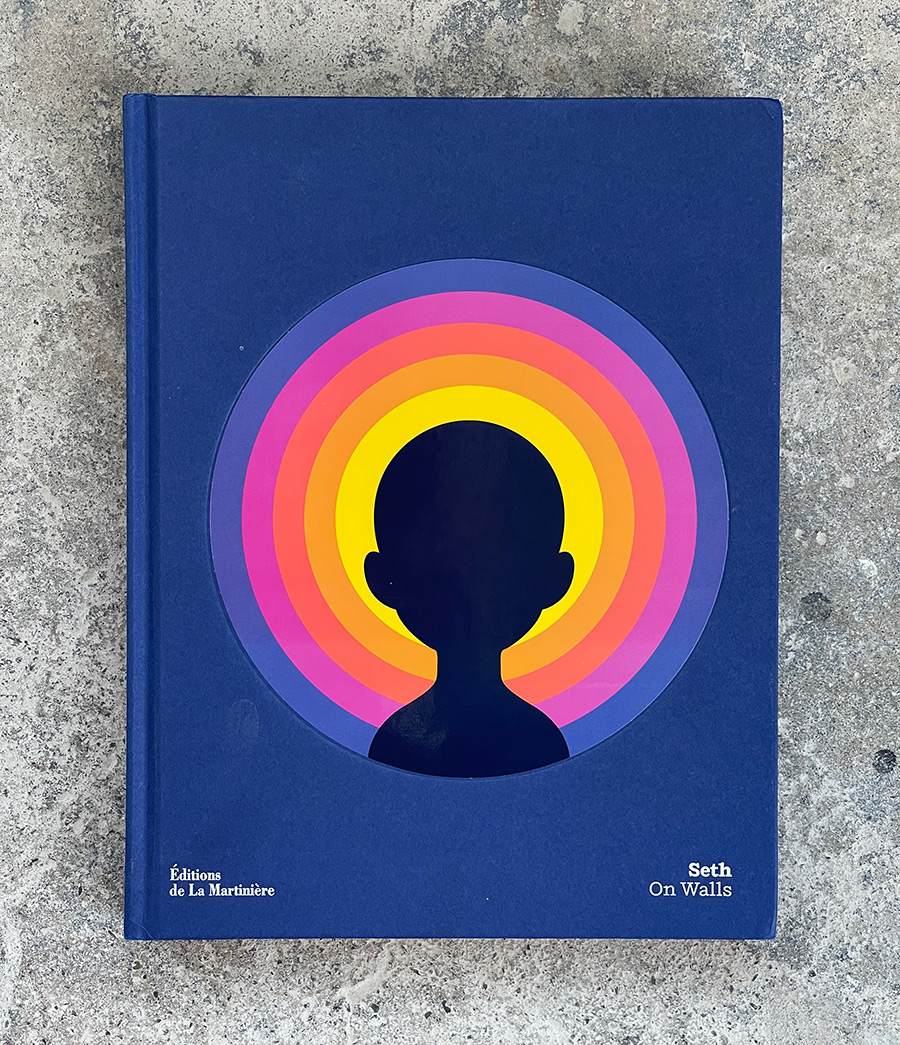
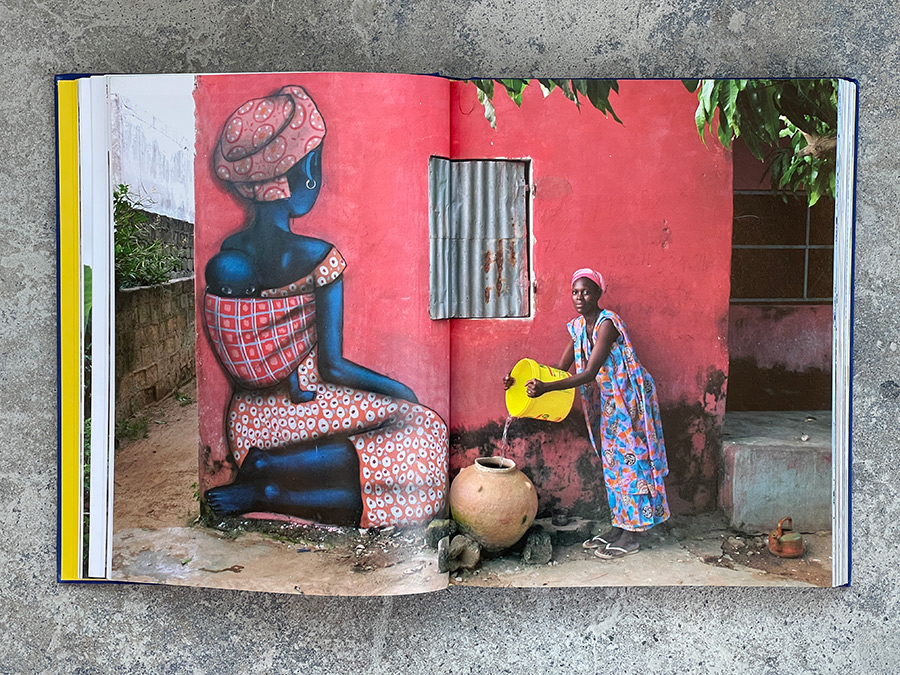
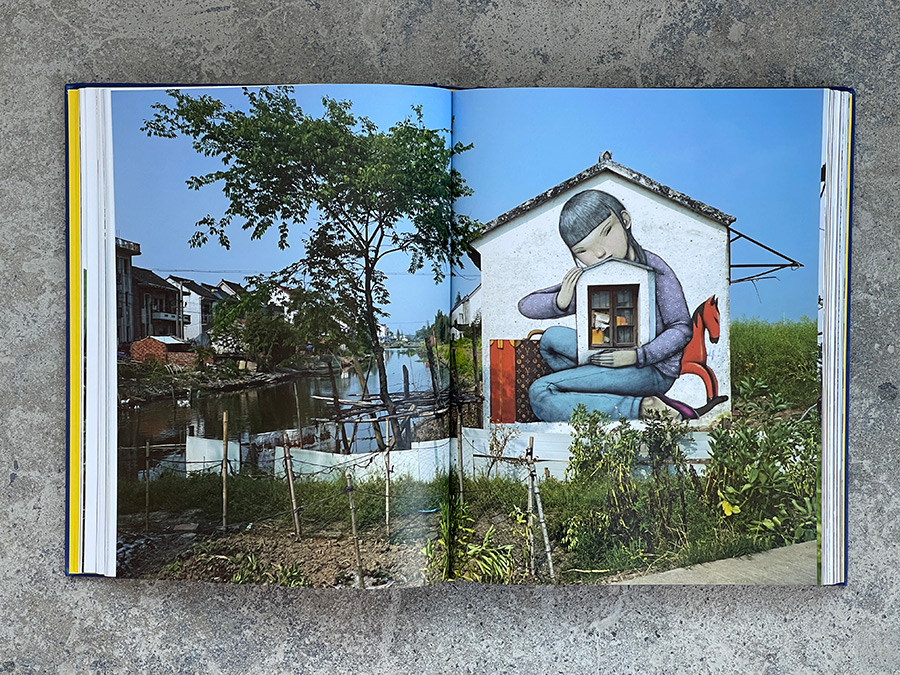
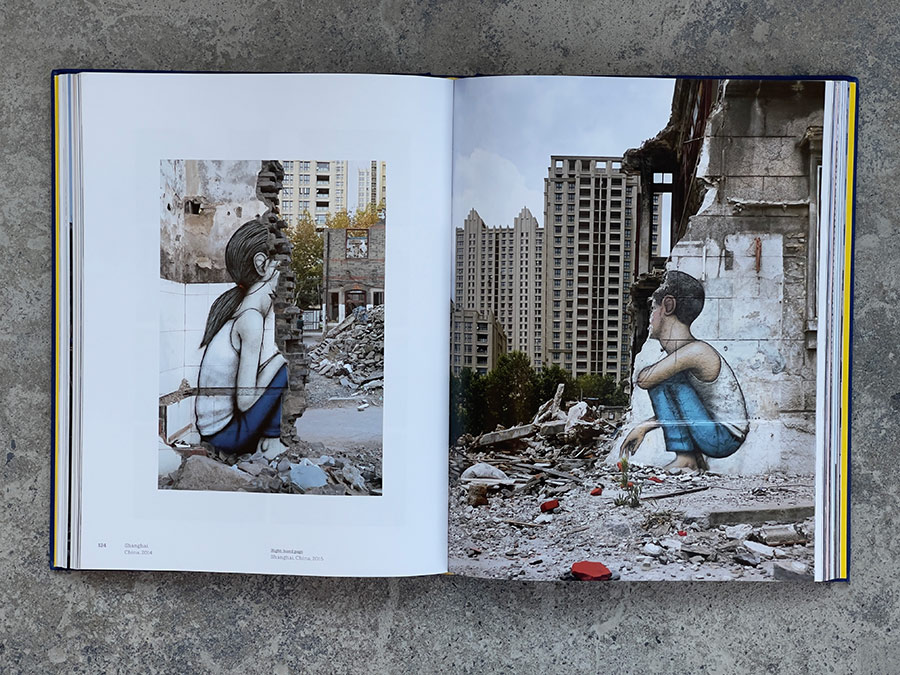
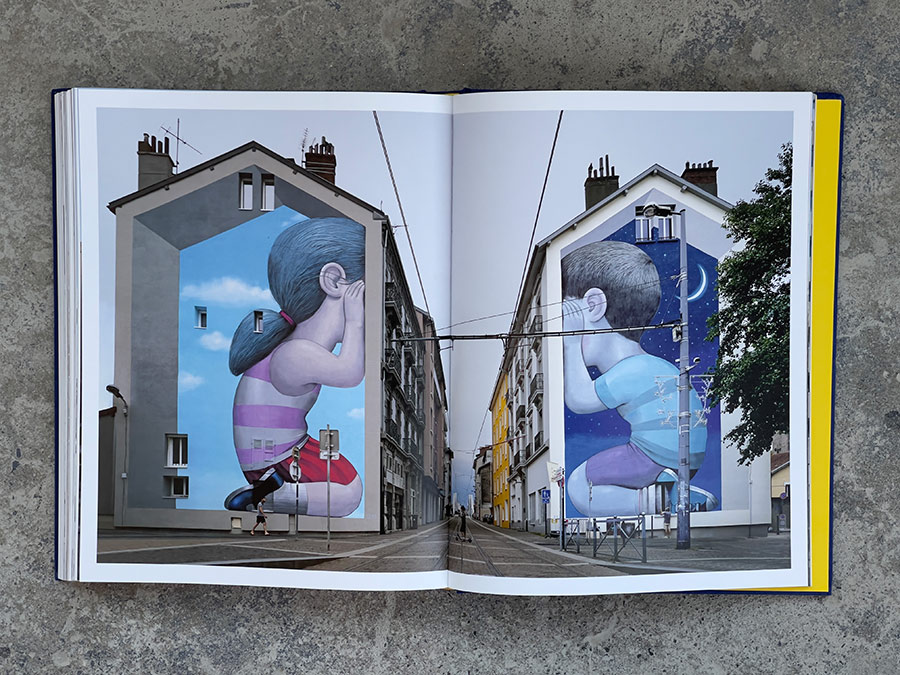
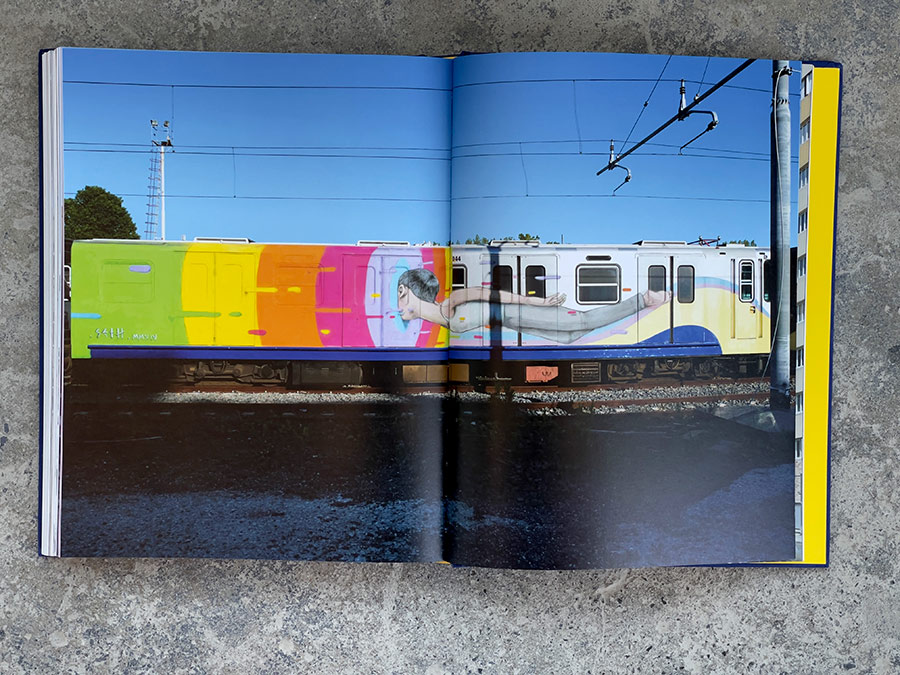
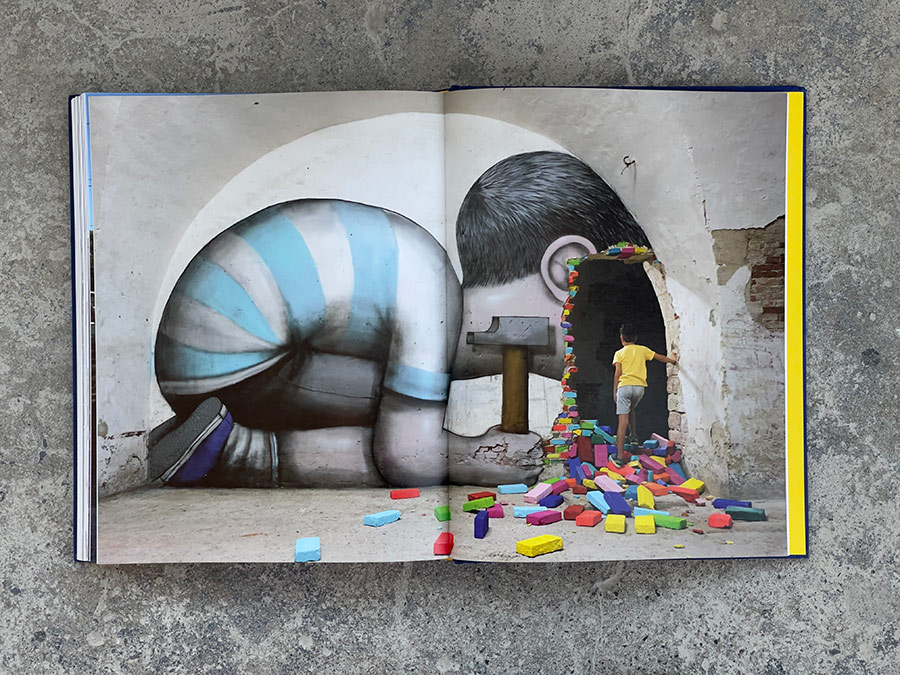
“In a world where the system alienates the most vulnerable, imposing a cynical or pessimistic outlook seems impossible to me,” says French street artist Seth. “Walls remain the space of resilience. Unlike cartoons, which leave no room for ambiguity, the choice to interpret a mural is essential. The curious are free to discover the hidden meaning.”
SETH On Walls. Editions de La Martiniere. 2022. Distributed by Abrams. An imprint of ABRAMS, 2023.
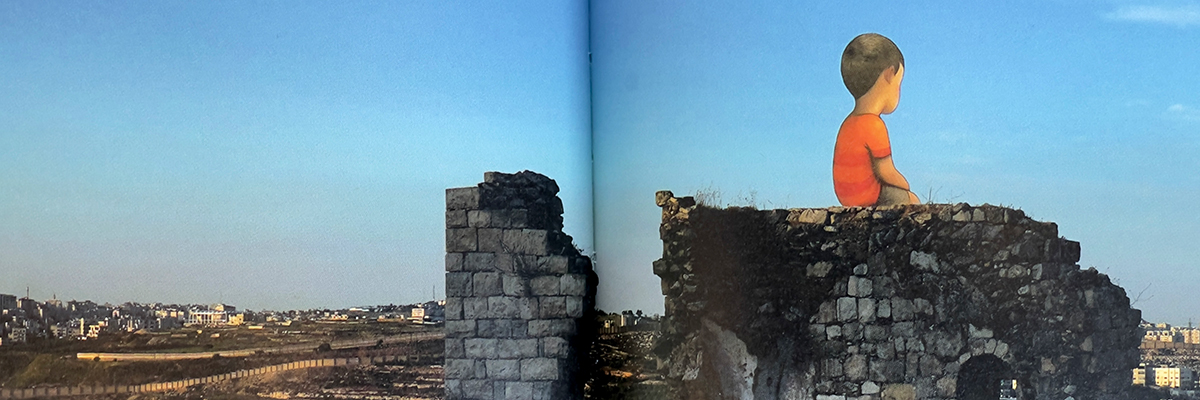
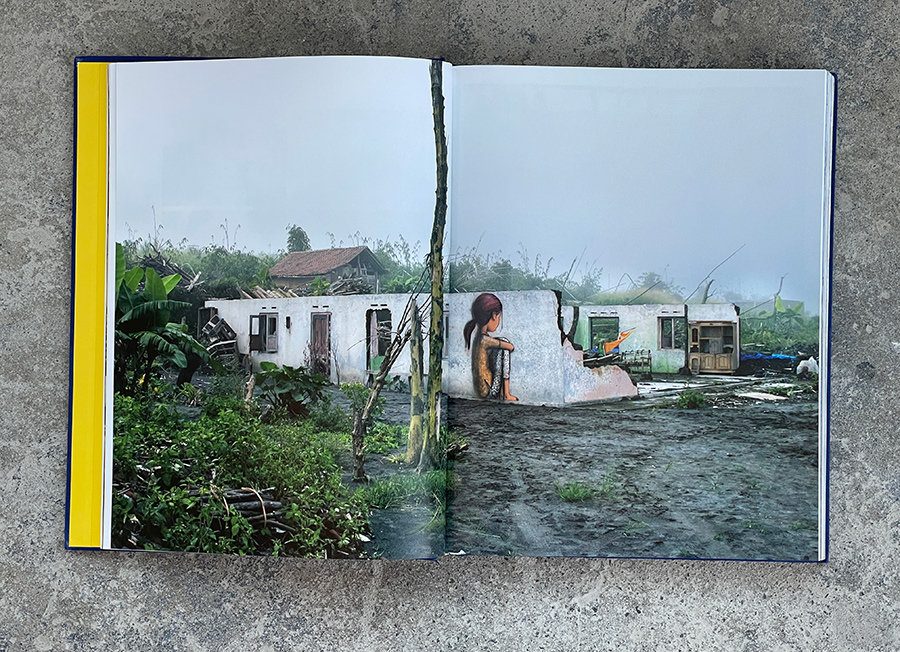
His new book “Seth On Walls” candidly offers these insights and opinions, helping the reader better understand his motivations and decisions when depicting the singular figures that recur on large walls, broken walls, and canvasses. A collection that covers his last decade of work in solo shows, group shows, festivals, and individual initiatives, you get the central messages of disconnection, connection, and honoring the people who live where his work appears.
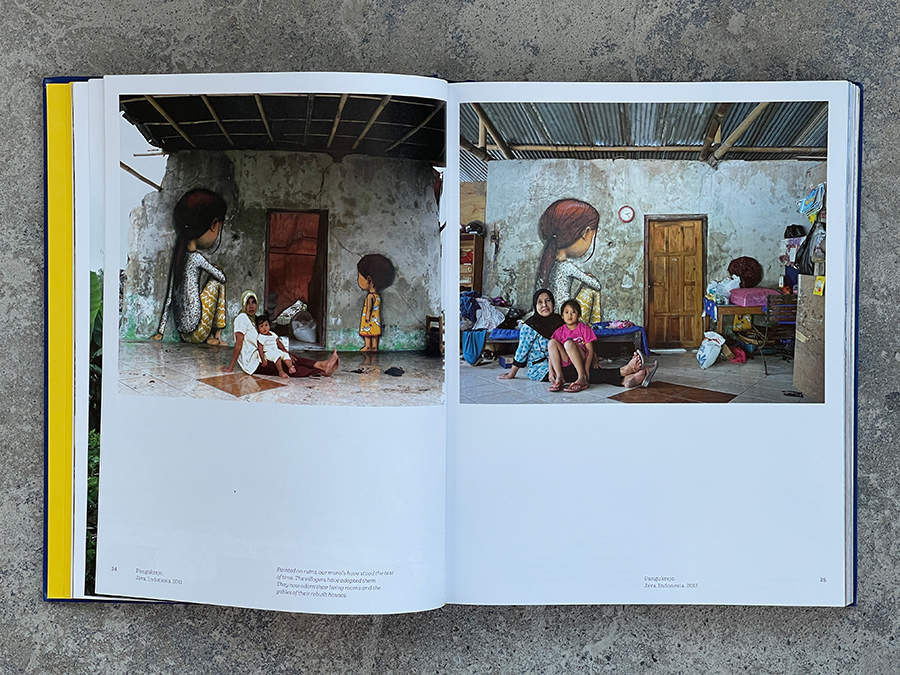
“On the street, the first audience for the paintings are the people who live there,” says the former graffiti writer who has developed a distinctive otherworld for his usually faceless children that lies just through the looking glass, parallel to ours, its feelings running deep. The list of rural areas, often in the margins of the dominant culture and overcoming significant obstacles, is longer than your arm. Each time he creates a new mural, he consults the history, the stories that resonate in the tales told.
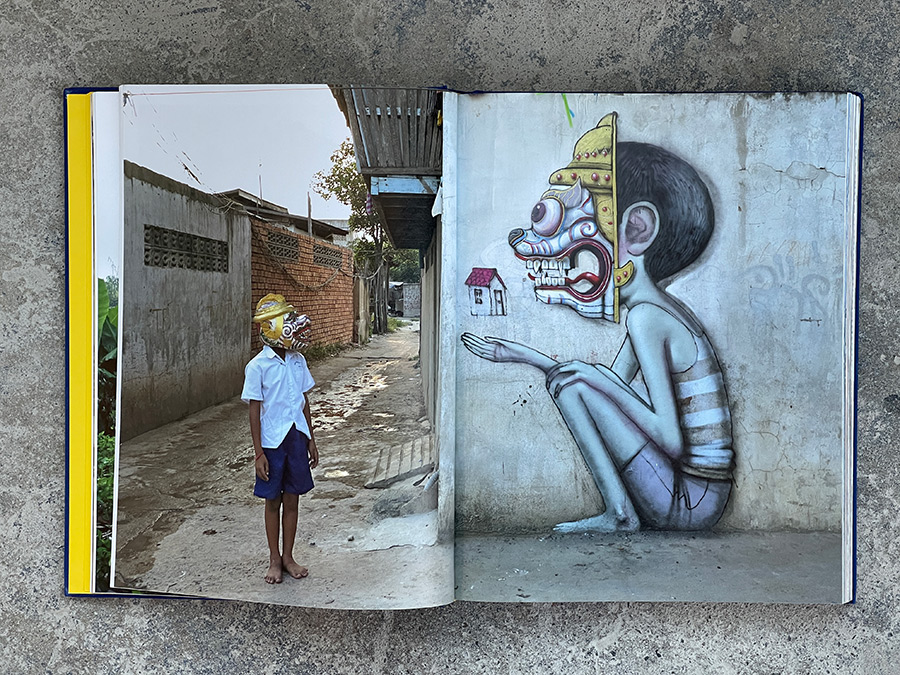
“They belong to the realm of childhood, where the impossible does not exist. But make no mistake: the apparent gentleness of the palette is not without menace,” says Sophie Pujas in the foreword. “Like children’s games, in which cruelty is always lurking, Seth’s murals are bearers of melancholy, imprinted with a secret darkness.” Pujas is confirming what you had been thinking, but could not quite identify; a longing for escape from the dramas and traumas that often scar us from the youngest age.
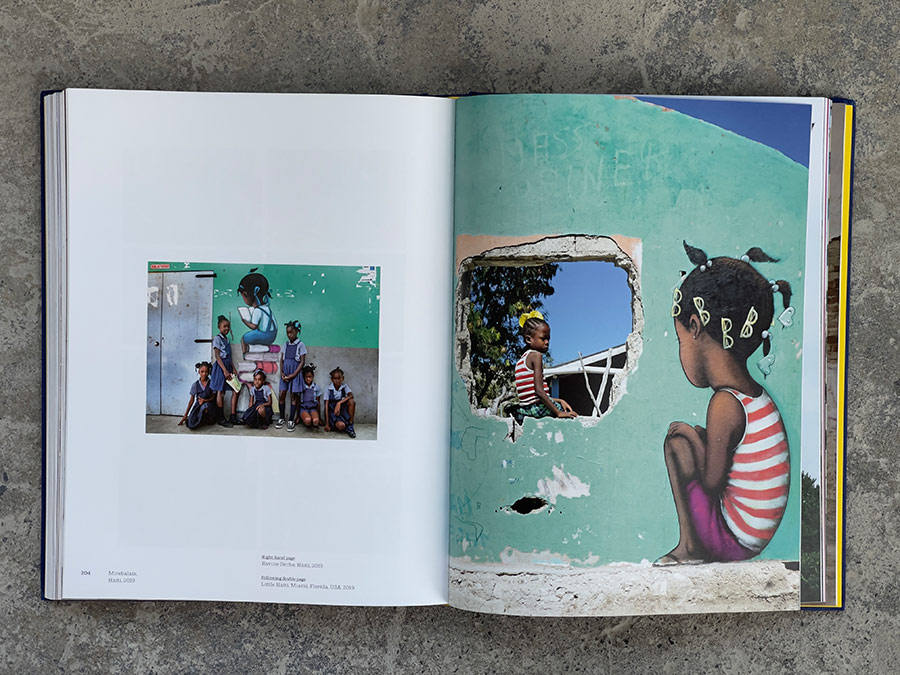
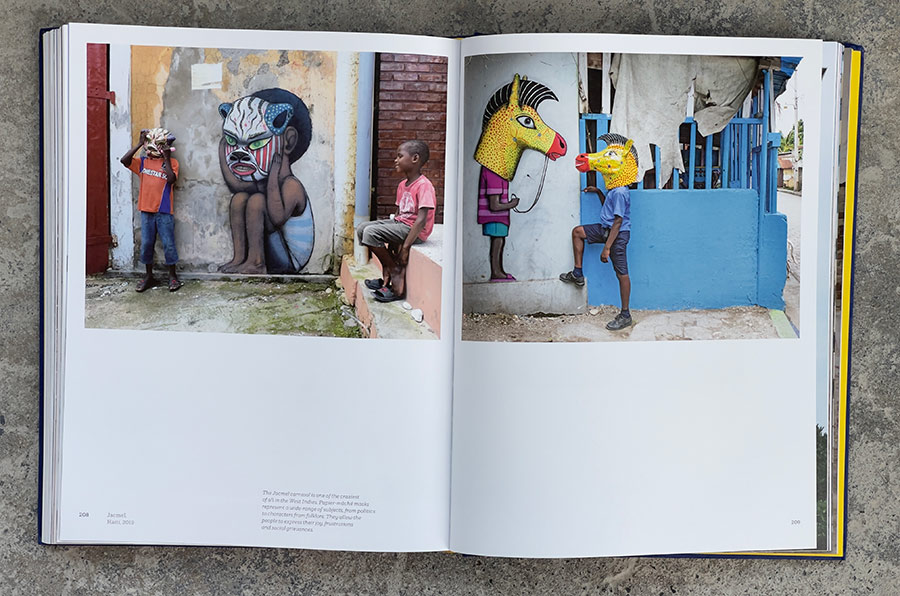
With rich, well-framed color plates, the collection takes you to towns and parts of towns you didn’t know about but are still familiar with. The attendant brief descriptors of mission and technique are matched in their conciseness by his account of his interactions with the locals, who many times help to fill the colors of his murals.
From his home country of France, he has traveled and stayed in communities far from his familiar environs, such as Palestine, Djerba Island in Tunisia, the Sichuan province in China, Indonesia, Haiti, South Korea, French Polynesia, and even in war-torn Ukraine. Conditions may be far from ideal, and sometimes are dangerous.
Still, he enjoys meeting new people, understanding their history and culture, and gifting them with pieces that sometimes resonate so profoundly that they build around them to preserve them when new construction threatens to destroy them. If he can find a way to encourage, that is also part of his mission; he says numerous times in various ways. In Ukraine in 2017, he reflects on the bitterness that fueled hostilities that were too unsafe for him to complete his project, he says in his account.
“Two years after my first visit to Popasna, I returned to paint the school’s last wall. The fear of sniper fire had deterred us from finishing the project. Although still fragile, the situation seemed more stable,” he says. “Despite the lull, propaganda ended up dividing families fed up with the situation. This painting spoke of the need to stick together, despite the events.”
We primarily chose Seth to paint the only mural inside the UN Museum for Martha Cooper’s career retrospective “Taking Pictures” in 2020 because the two have an overlapping interest in the anthropological, ethnological study of children’s play. During successive trips to Haiti and her most recent one with Seth, Cooper marvels at the innate creativity of humans when we are kids, and how resourceful children can be – even when there are few resources.
“Our shared love for the world and the imagination of childhood brought us together,” he says, “Forty years after her first trip to Haiti, off together to meet these creative children.” Remarking on the daunting economic, political, and environmental challenges faced by most of the folks they met, he says the kids were ingenious in their resourcefulness in making tools for their play world. “Bottle cars, yogurt telephones, spinning tops, flying kites – treasures of ingenuity that the children were proud to share.
“Seth On Walls” reiterates his connection to the otherworld we inhabited as children, almost as a way to get back there. The work in one decade is prodigious, yet in many ways, it is uniquely targeted to individuals, and in the process, finding the universal.
“Murals are nods and tributes to the spirit of the places they are part of,” says Pujas. “Each people has its own ghosts, spells and stories. Interpreting them on walls provides a continuation, further journeys. Bringing them to life helps to save them, to keep them alive. From wall to wall. Seth composes an artistic and subjective ethnography, recording the collective history of the countries visited as well as the warmth of remarkable encounters.”
SETH On Walls. Editions de La Martiniere. 2022. Distributed by Abrams. An imprint of ABRAMS, 2023.
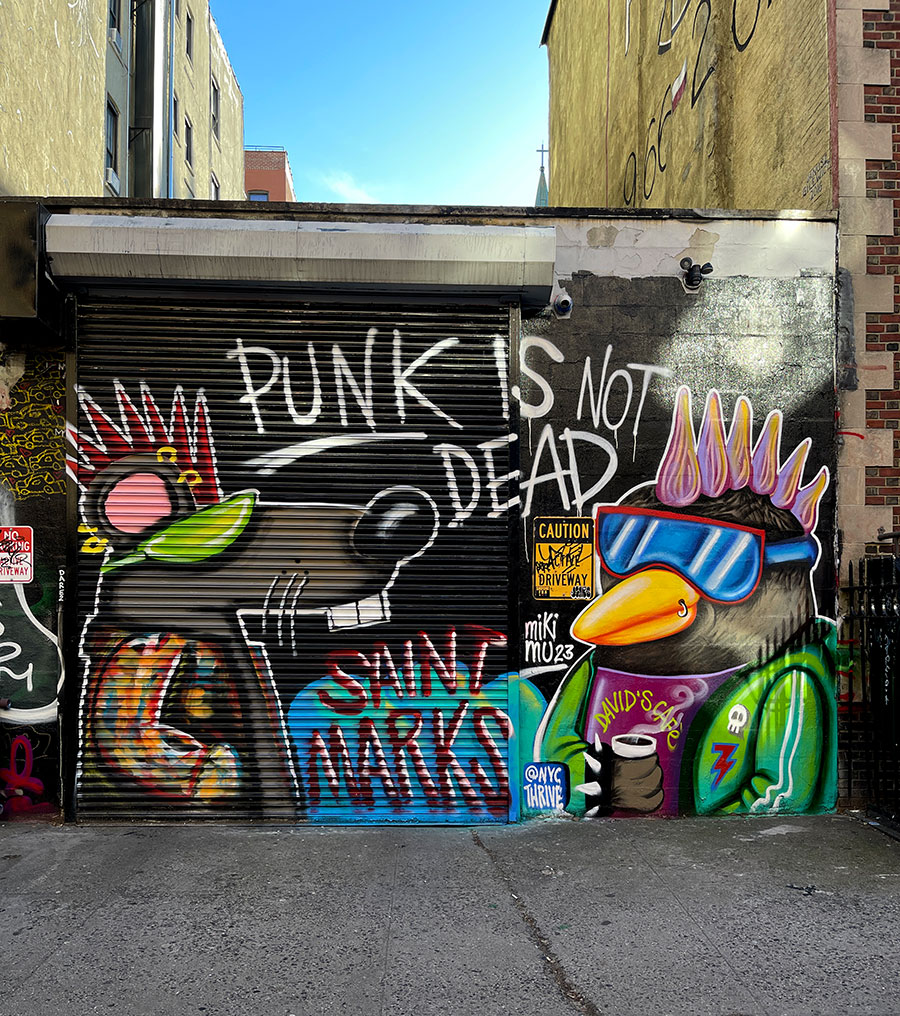
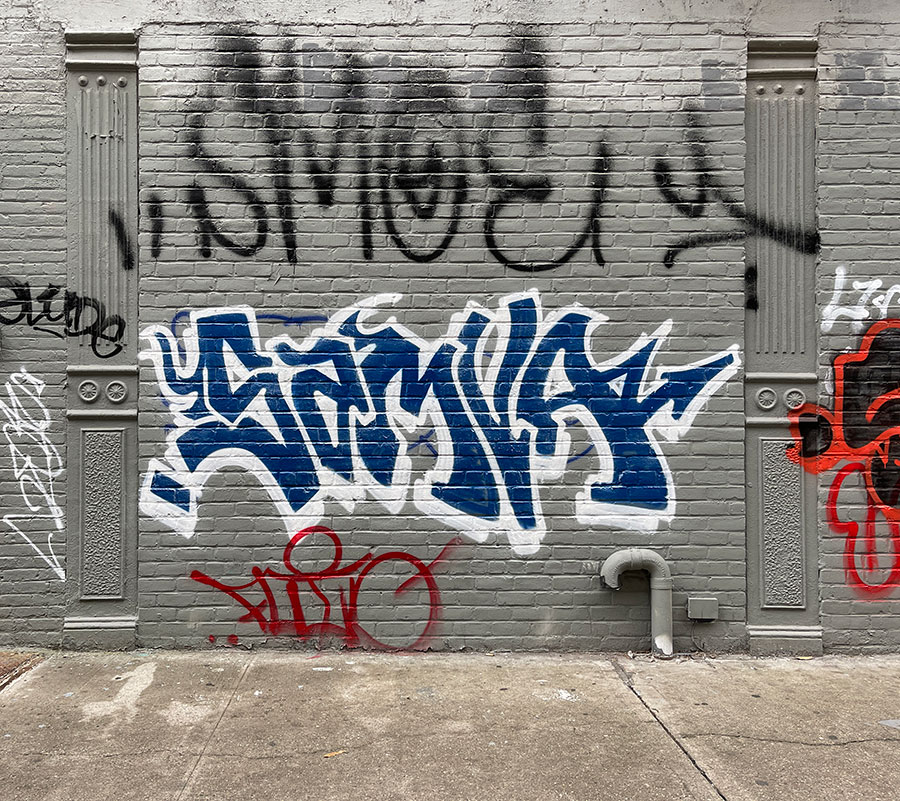
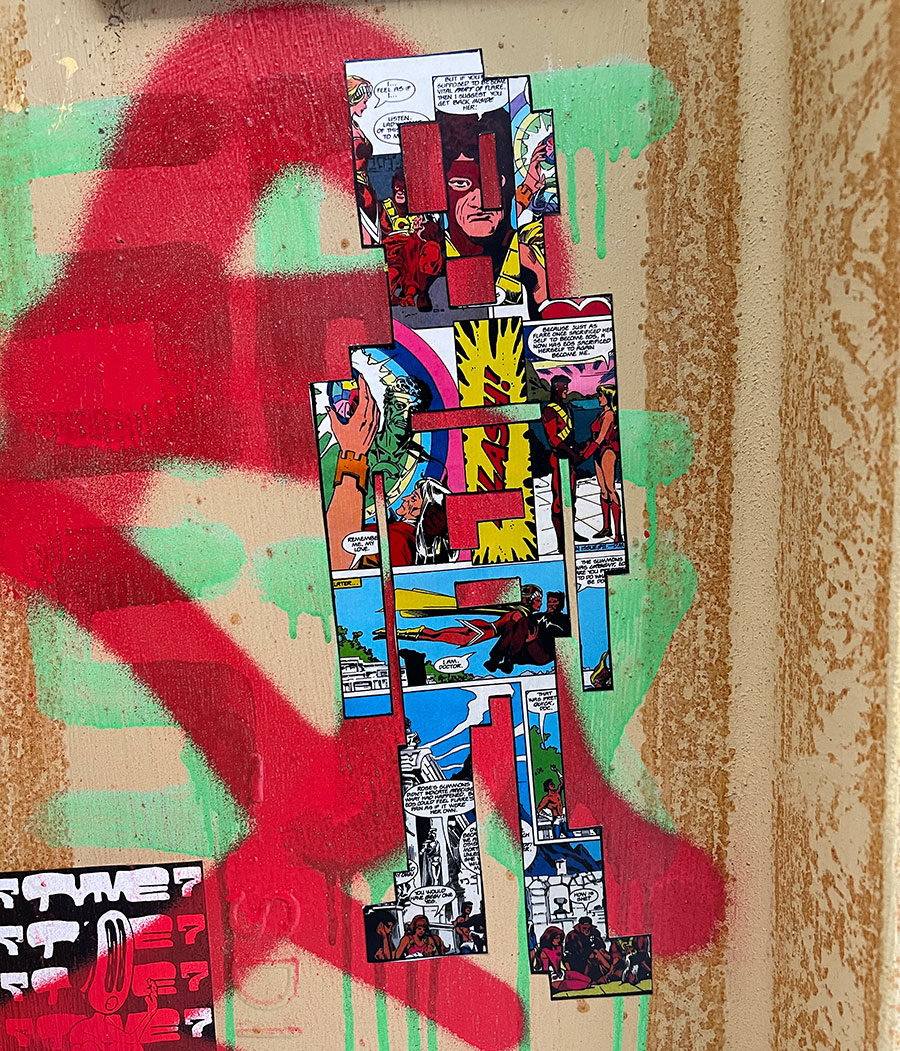
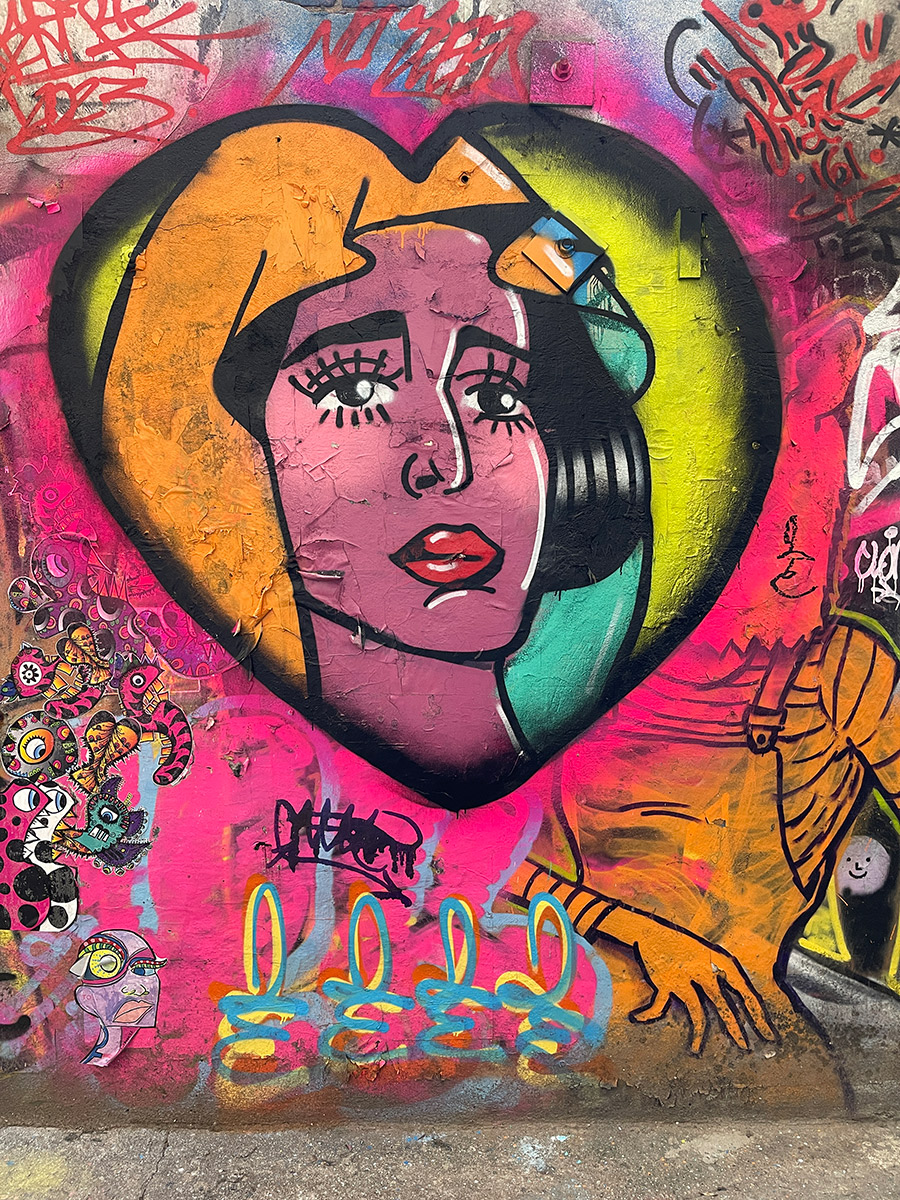
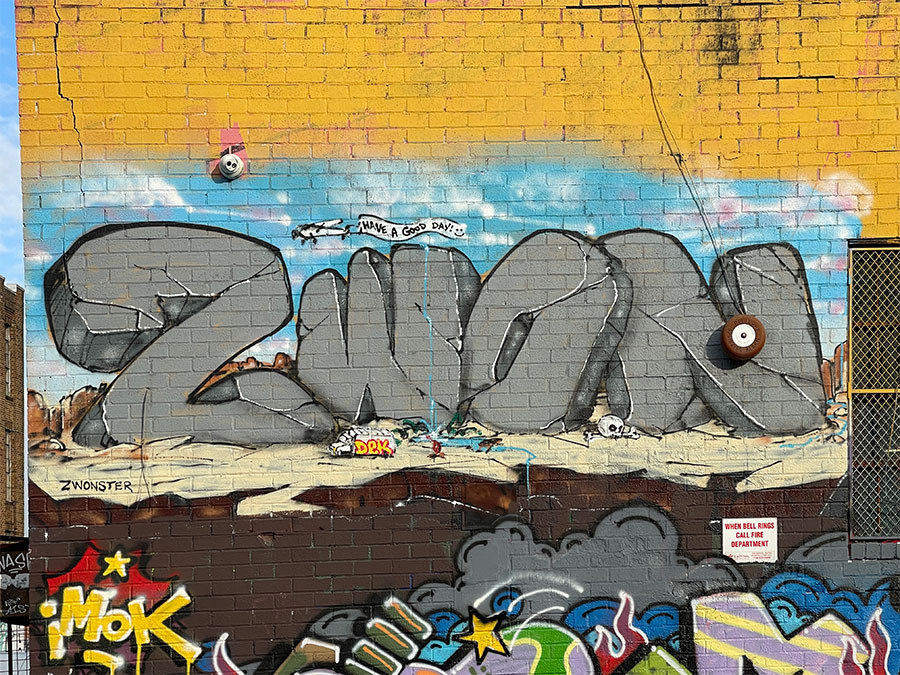
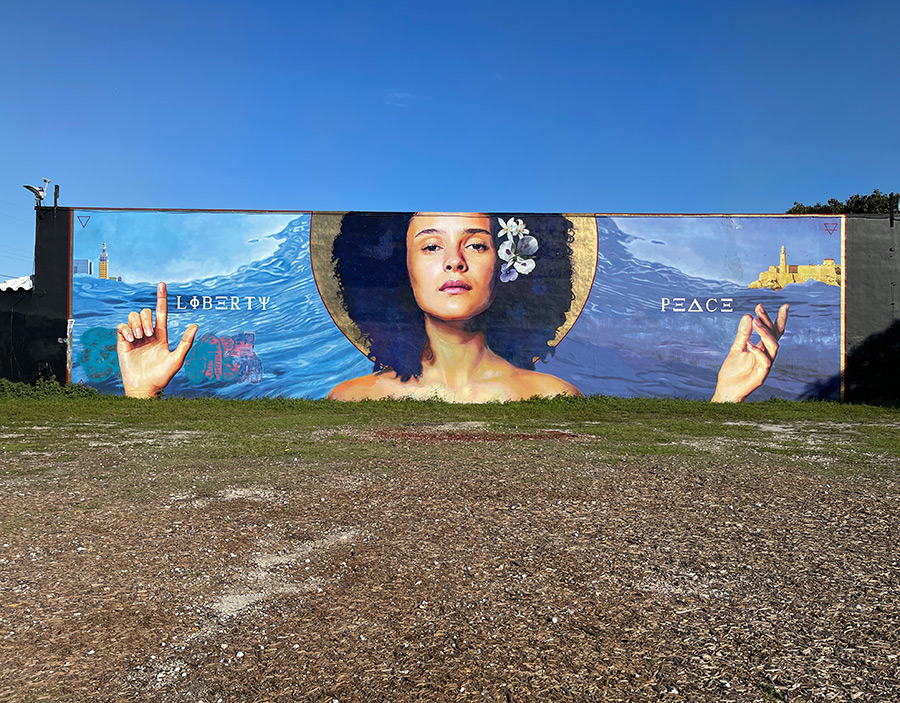
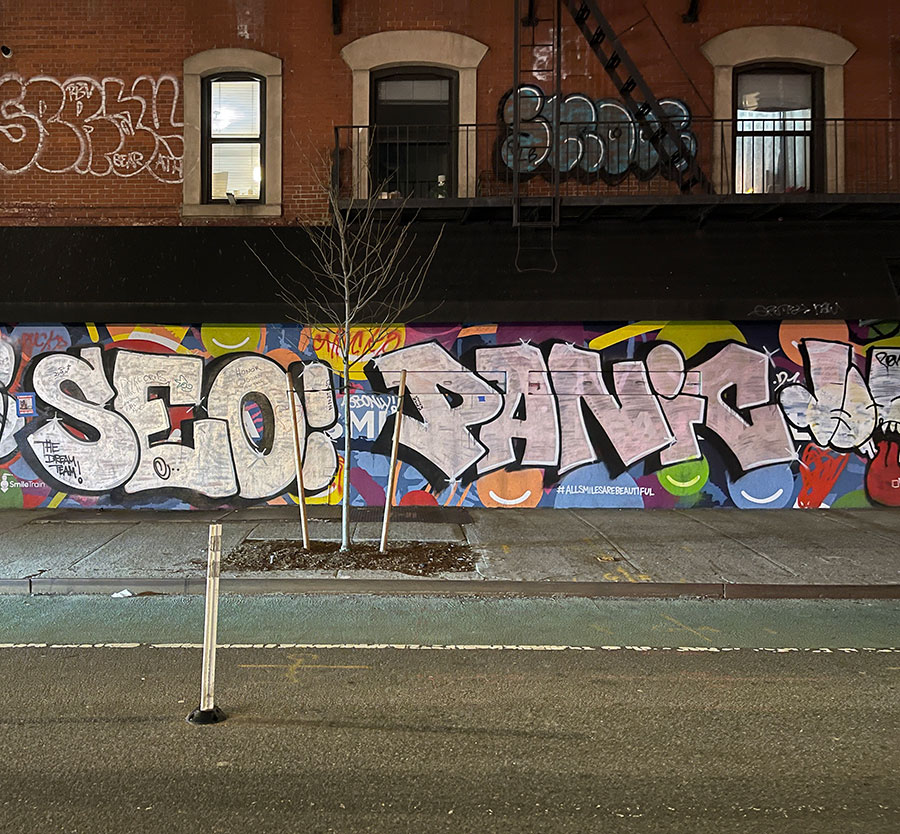
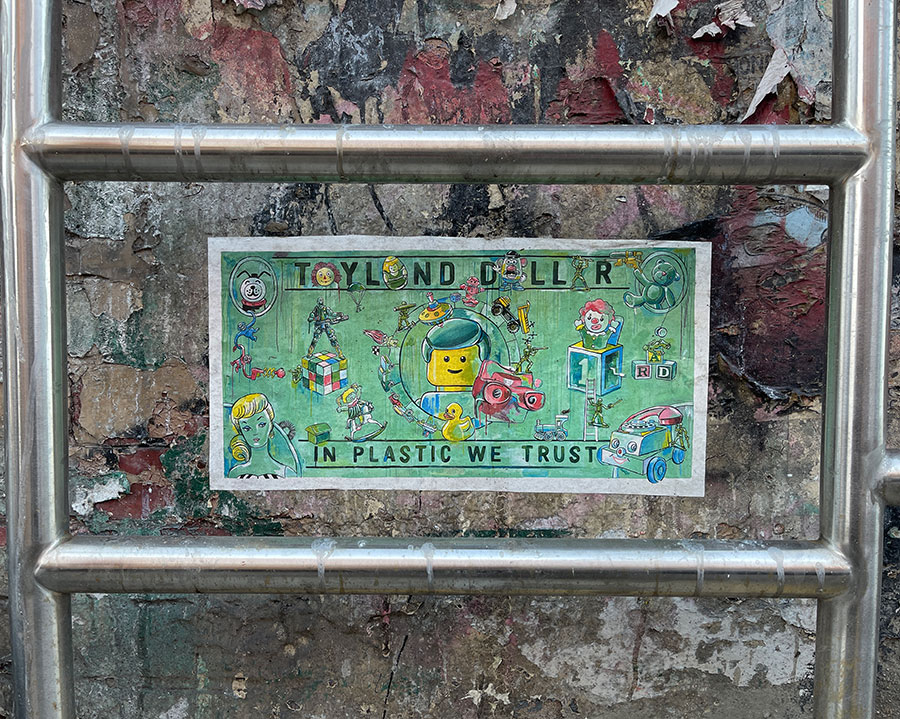
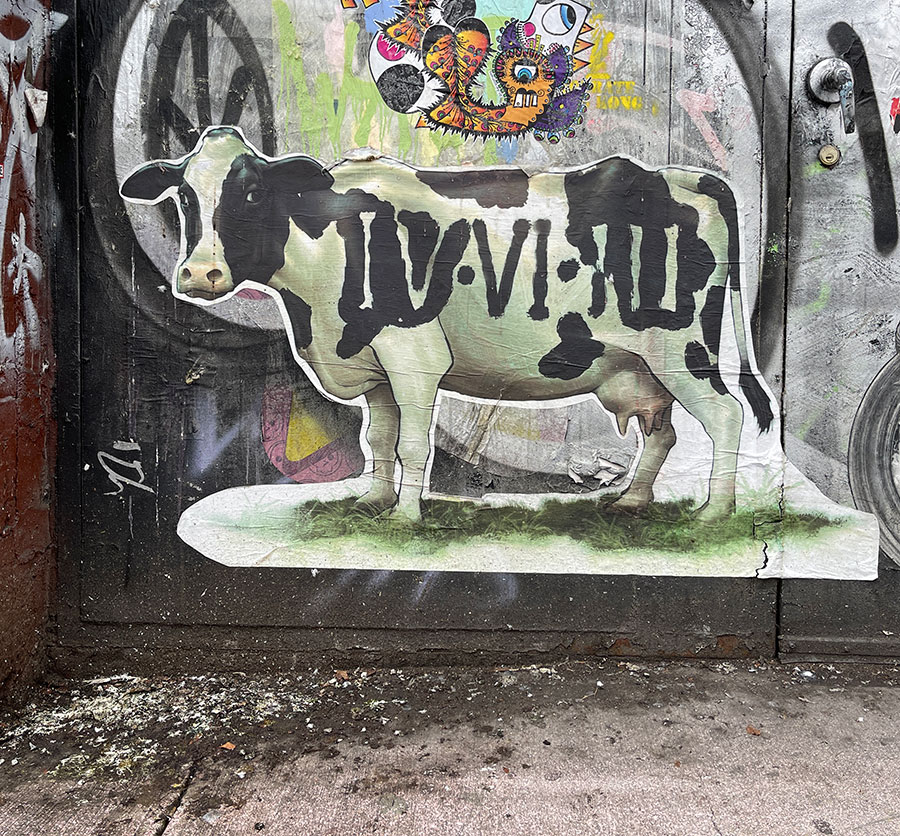
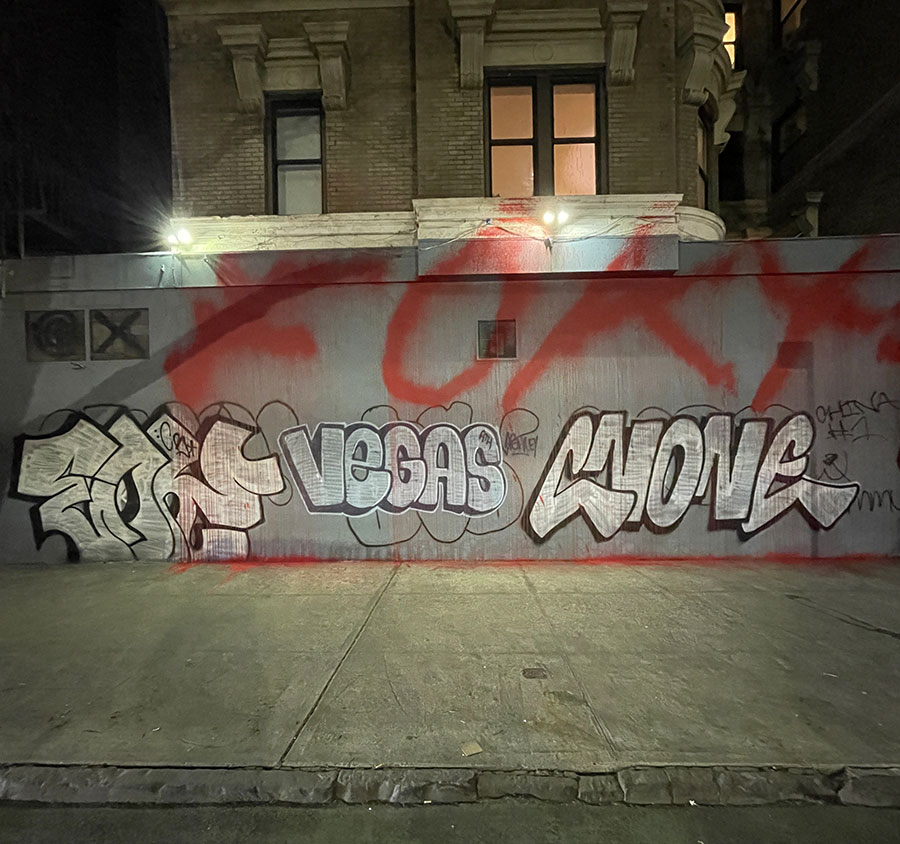
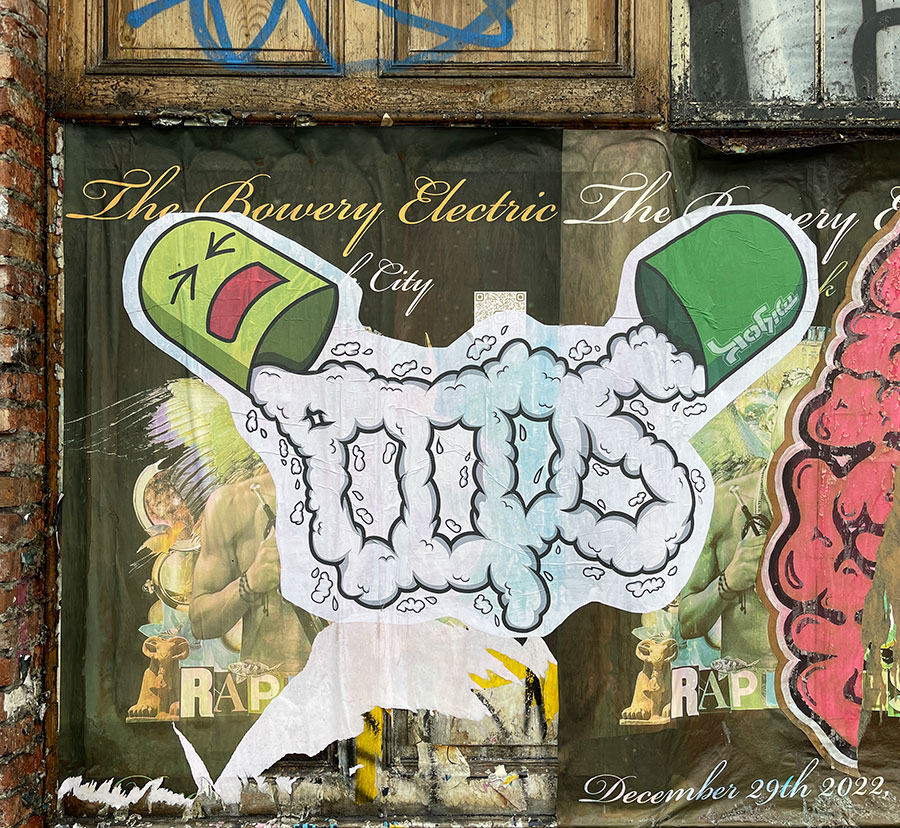
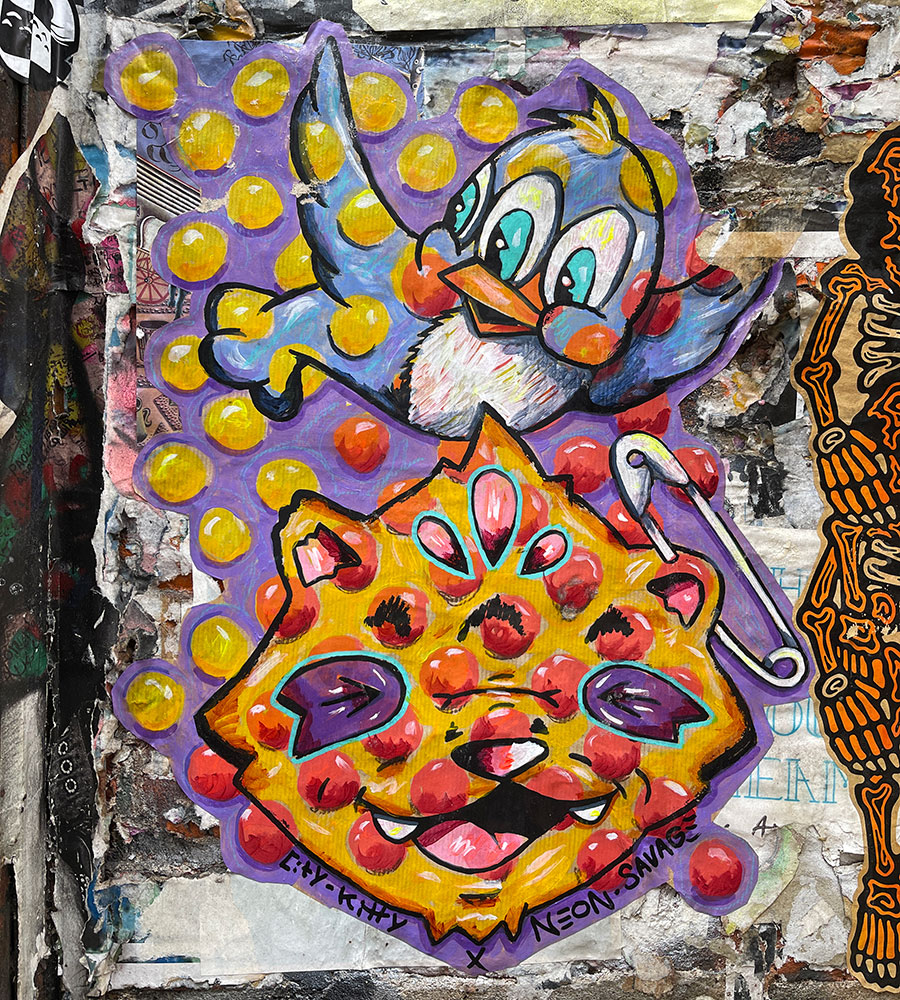
Here’s our weekly interview with the street, this week featuring: Adriana Vila, Stikman, City Kitty, Raddington Falls, Miyok, Neon Savage, Vegas, Clone, Samva, SEO Panic, Miki Mu23, and 2Won.
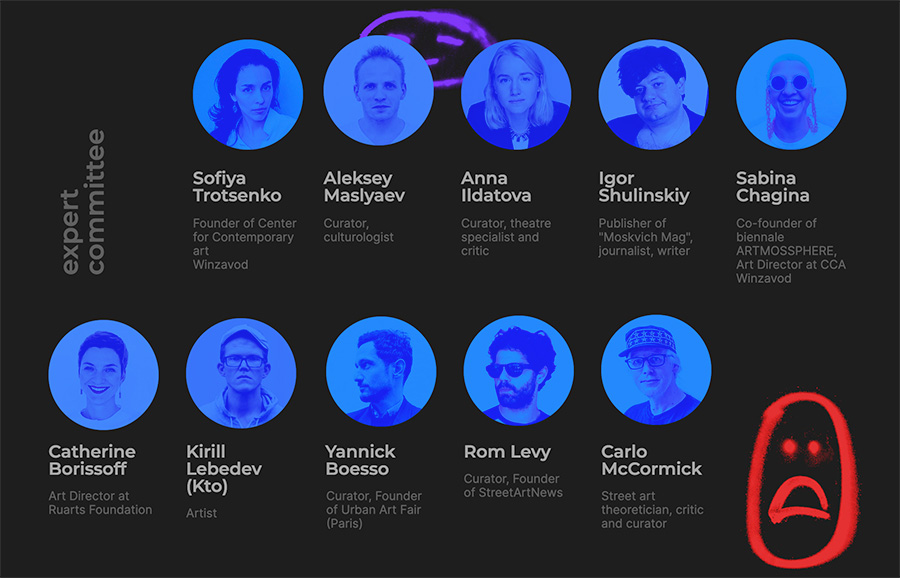
“According to the Chinese curse, may we live in interesting times,” says Andrey Parshikov, curator of the IV Biennale of street art ARTMOSSPHERE on the website for this newest iteration of a festival mounted in public space and gallery space that is at least partially funded by the government. Selections of artists were made with consultation of a ten-member international committee of advisors from the commercial, publishing, institutional and intellectual world who have expertise in graffiti, street art, and its various expressions more broadly referred to as Urban Contemporary. The fourth edition of the international event, this year more than 70% are nationals; 38 Russian and 15 international artists.
The expert committee, according to organizers, have allowed for a diverse range of artistic formats and techniques to be employed by the participants, resulting in something that sounds like it will be more of an experimental exhibition than previous editions; featuring murals, graffiti, public art, installations, performances, and theatrical actions that will be open to the public.
“This season we are bringing back the original idea of the show – street art should live in the urban environment, in the open space,” says Sabina Chagina, one of the co-founders of the biennale in 2014 who is now the Art Director of the Winzavod Contemporary Art Center and Artistic Director of the Biennale. Winzavod has provided a varied artists compound of creative spaces for a decade and a half in Moscow that many credit as a laboratory for cultivating opportunities for experimentation and support for artists working in the public realm.
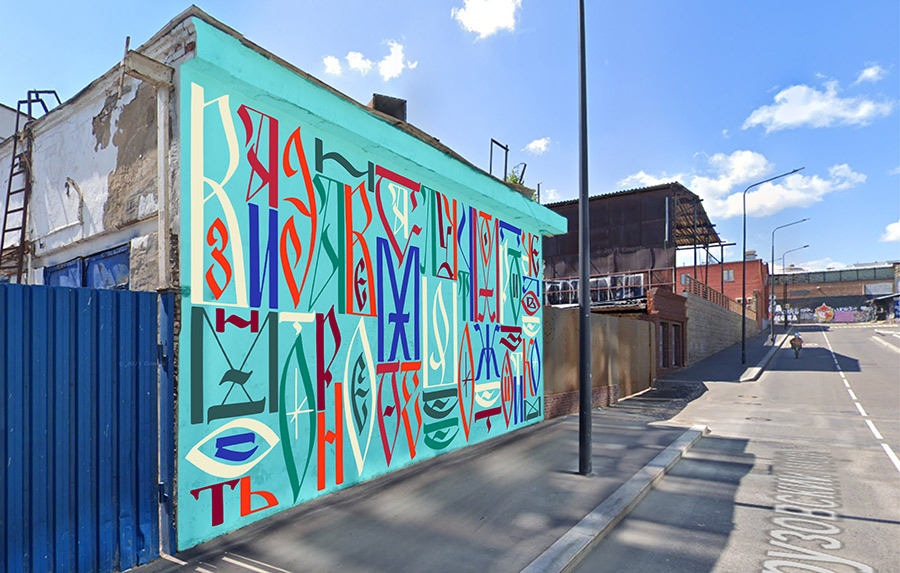
ARIS ONER. Sketch of a mural for the IV Biennale of Street Art ARTMOSSPHERE. (photo composition courtesy of the artist)
“Two years ago, ARTMOSSPHERE received permanent institutional support from the Winzavod Contemporary Art Center and became part of it,” says the press release about the collective exhibition that has launched parallel programs and special projects in public space in the last decade.
A difficult exhibition program to pull off during peacetime, this one is mounted during a hotly debated war that is being watched by most of the world. Like all arts programming, people will be measuring it at least in part to see how it responds to the times and political realities.
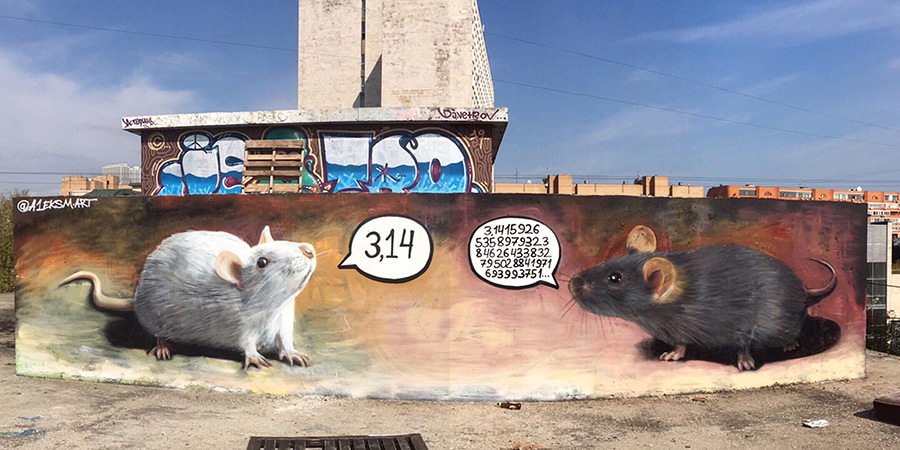
Alexander Gushchin. Debates of the lab technicians, 2019. IV Biennale of Street Art ARTMOSSPHERE. (photo courtesy of the artist)
International artists include: ARIS ONER (Germany), Matteo Ceretto Castigliano (CT) (Italy), Amaro (Brazil), Pablo Harymbat (Argentina), IHAR (Belarus), Varenje Organism (Israel), GAYA SOFO (Armenia), Maria Bokovnia (Germany), Daria Goffman (Armenia), Filip Radonjic (USA/Serbia), Neon Spidertag (Spain), Hakob Balayan (Armenian Center of Experimental and Contemporary Art (NPAK) (Armenia).
Artists from inside the Russian Federation include: Anastasia Litvinova (Moscow), Sasha Braulov (St. Petersburg), Wearing Tail and artist Eldar Ganeyev (ZIP Group) (Moscow-Krasnodar), Lubov Vink (Krasnoyarsk), Philip Kitsenko (Moscow), Masha Smorodina (Moscow), Alena Troitskaya and Ksenia Sharapova (Moscow-Cyprus), Fork (Moscow), Alexander Gushchin (Yekaterinburg), Out Band Mucha (Samara), KTK (Moscow-Spb-Ekb), Anya, come! (Khabarovsk), Anna Tararova (Moscow), Elena Kholodova (Moscow), Alexandra Kuznetsova (Moscow), Ozerki, Andrey Shkarin and Maria Yefimova (Moscow), Galina Andreeva (Moscow), Krasil Makar (Ekaterinburg), Twenty Two (Moscow), New City Artists, Ivan Volkov (Protvino), Frukty Vrukty (Perm).
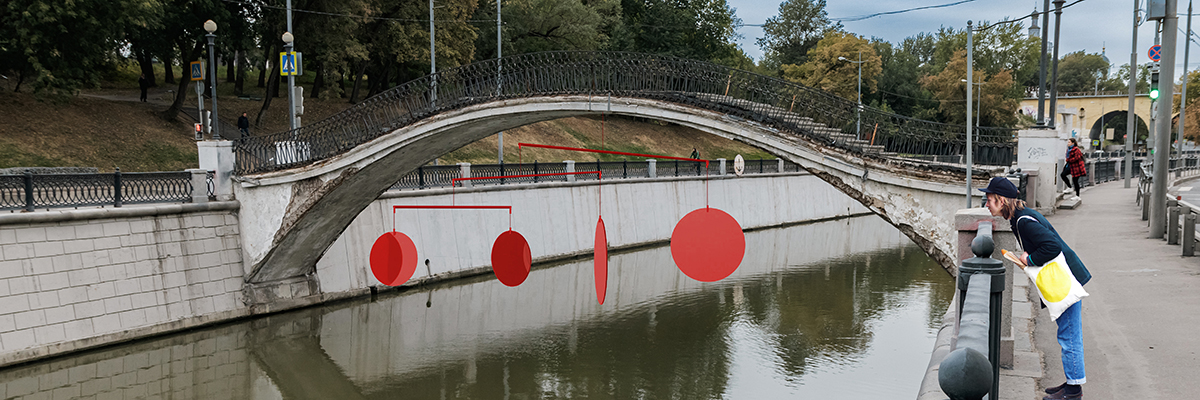
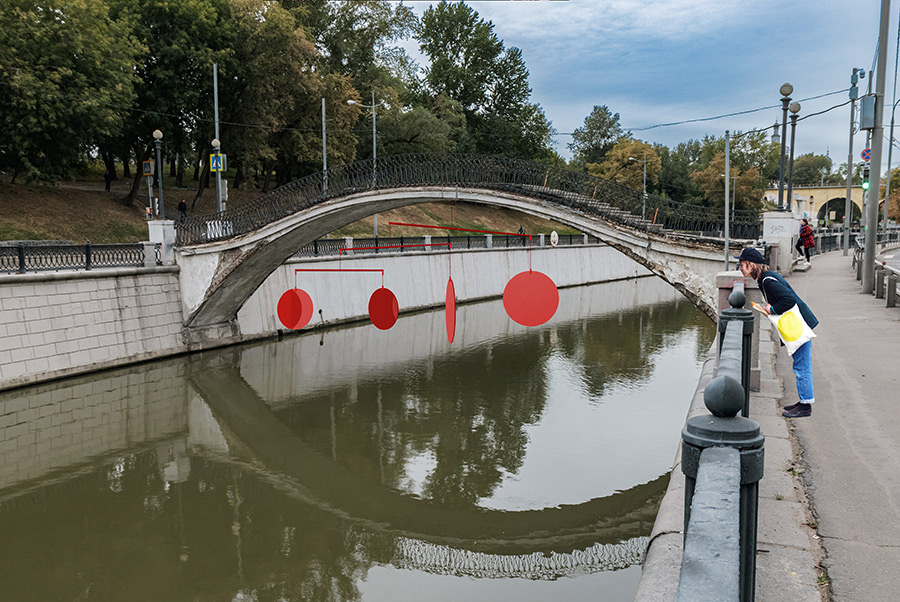
Gaya Sofo. Site-specific installation. Visualization of the work for the IV Biennale of Street Art ARTMOSSPHERE. (photo composition courtesy of the artist)
Our weekly focus on the moving image and art in the streets. And other oddities.
Now screening: 1. BANKSY – A Quick Look Back – Exit Through the Gift Shop (August 2011)
2. Revenge of Nature – Orakle And Atmo
3. 5 Minutes With: IKARUS in Berlin. Via I Love Graffiti
4. De La Soul – A Roller Skating Jam Named Saturday
BSA Special Feature: BANKSY – A Quick Look Back – Exit Through the Gift Shop
Because retrospectively assessing hype can be illuminating, and you can see how it has aged, and because we are always attracted to this contorted phone booth sculpture that undeniably emanates the style of Banksy, here’s a snippet from “Exit Through the Gift Shop.” A Dozen years on, what are your impressions?
REVENGE OF NATURE – Orakle And Atmo. Via Spray Daily.
Damn, that is serious rappelling! This is anonymously rappelling a dam for serious impact.
Styled as a nihilist dark pair of dual painting eco-activists, these Berlin-based Pixacao performance artists Orakle and Atmo want you to think about the “Revenge of Nature” that is currently underway. Selling the earth to the highest bidding abuser drives us down, and O&A are casting the case in dramatic thriller-movie terms to blow up their message.
5 MINUTES WITH: IKARUS in BERLIN. Via I Love Graffiti
BYY Laura subtly shadows pixacao-writing, train-surfing Icarus as he hops over third rails and climbs out onto the street from an underground tunnel with master-of-fact aplomb. Great shots and integration. For the record, train surfing kills people. Don’t do it. Beware Icarus; you will very likely regret the fall.
“Never regret thy fall, O Icarus of the fearless flight, For the greatest tragedy of them all, Is never to feel the burning light.”
Attributed to Oscar Wilde, Irish poet and playwright, 1854-1900
De La Soul – A Roller Skating Jam Named Saturday
Celebrating Trugoy and De La Soul today and Every Day. Wanna go skating this weekend?
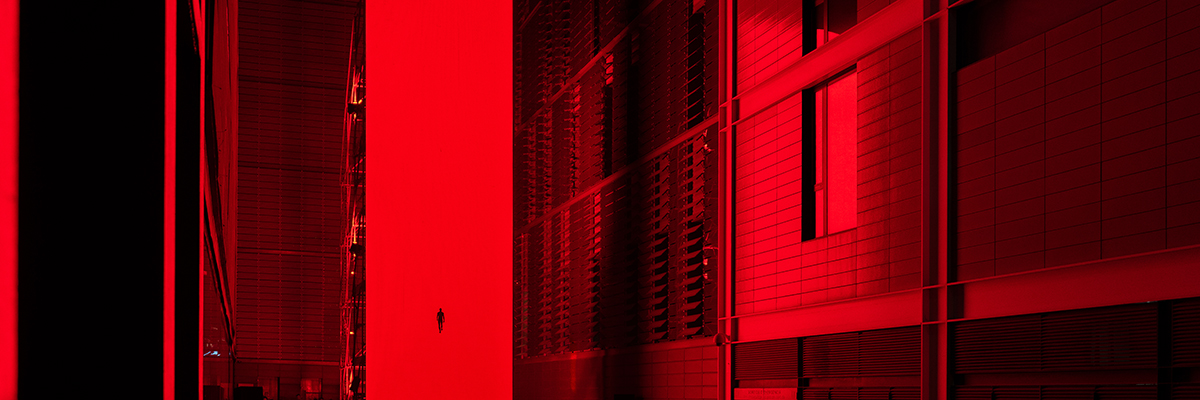
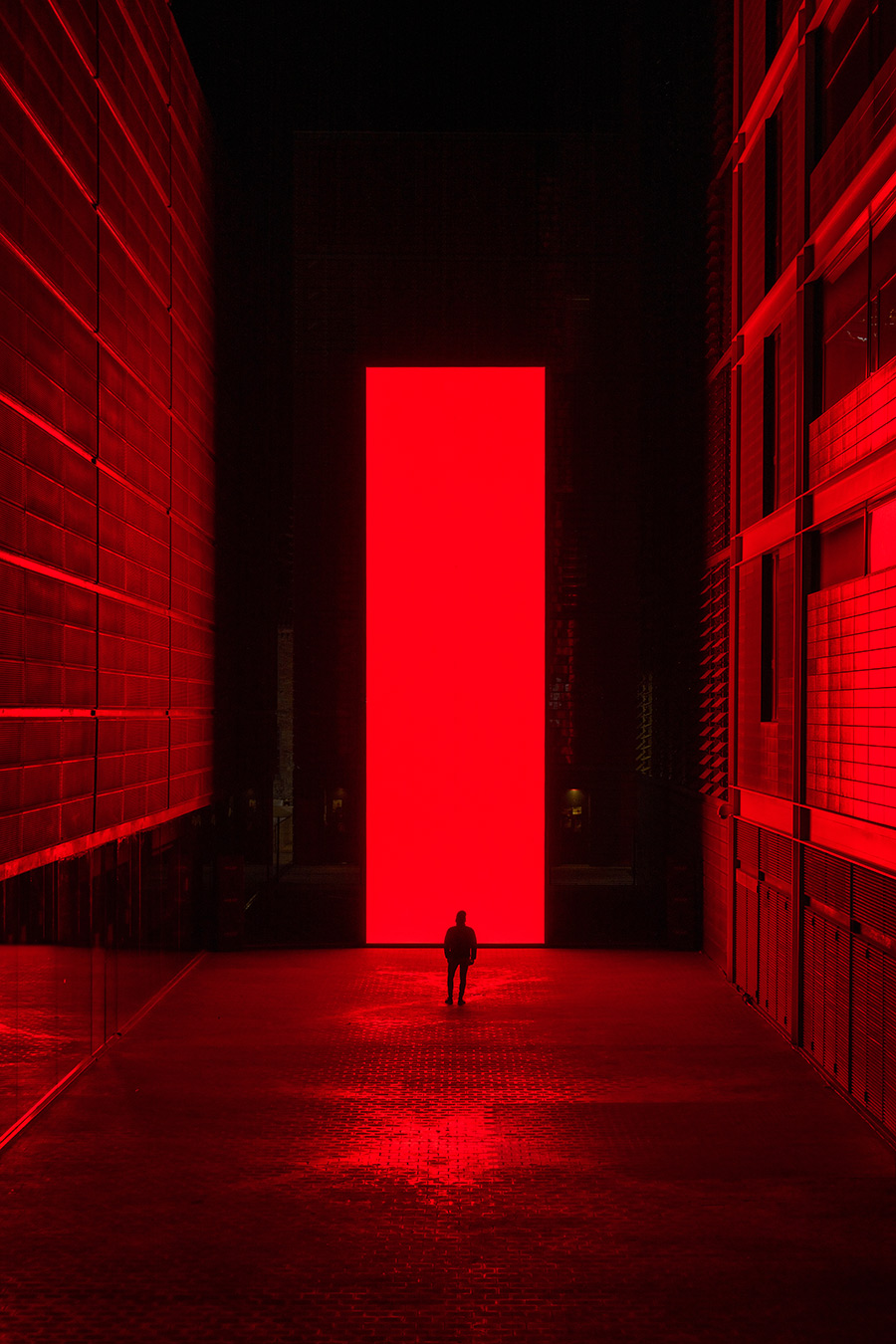
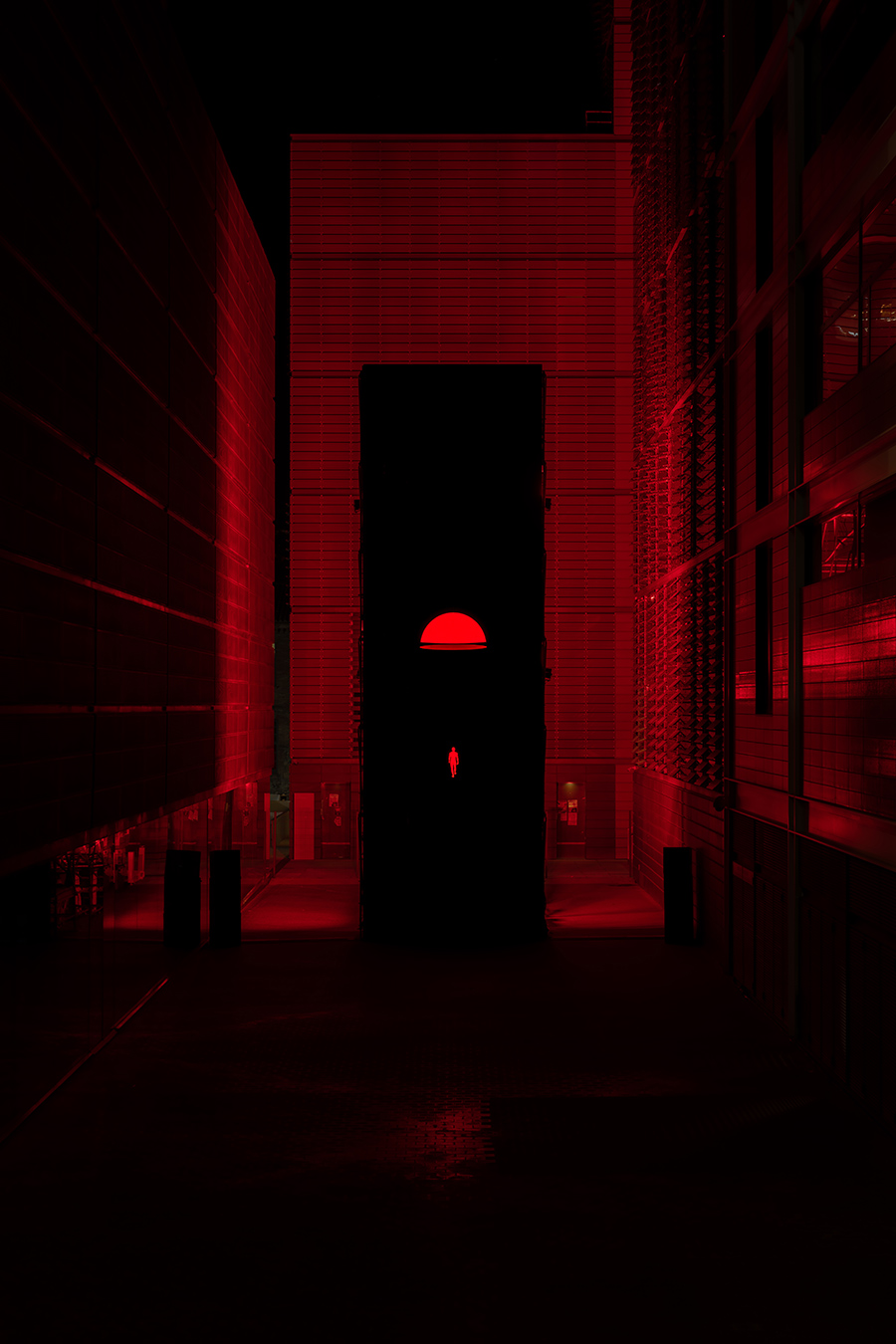
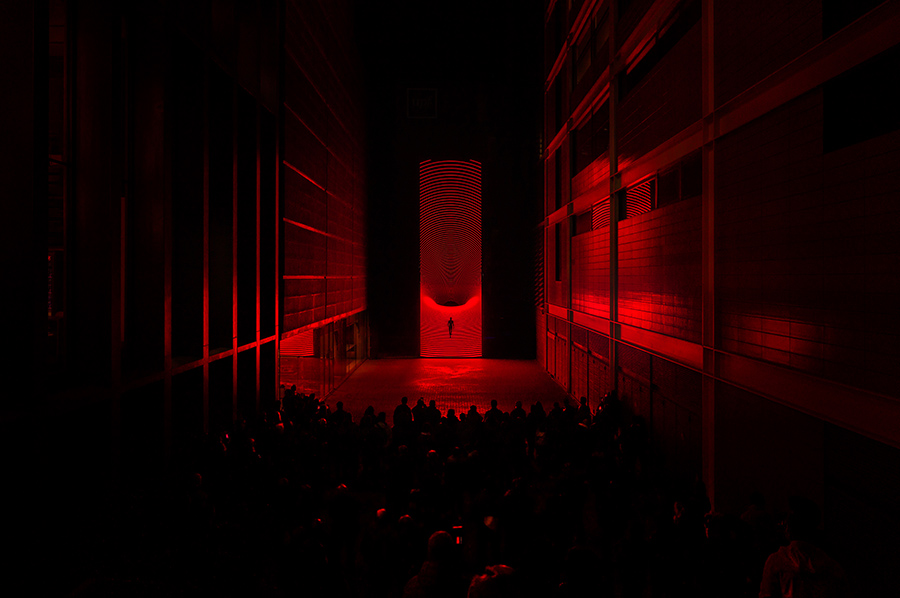
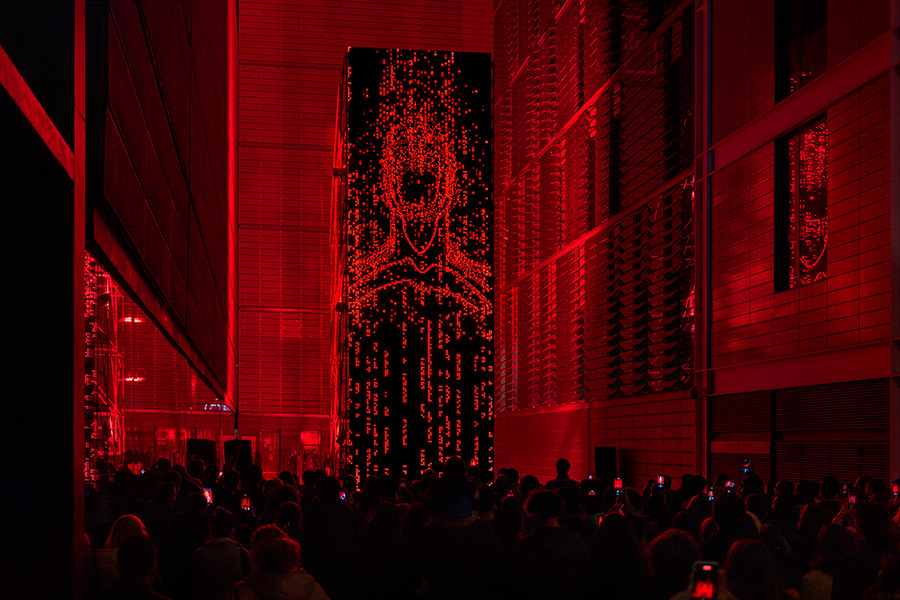
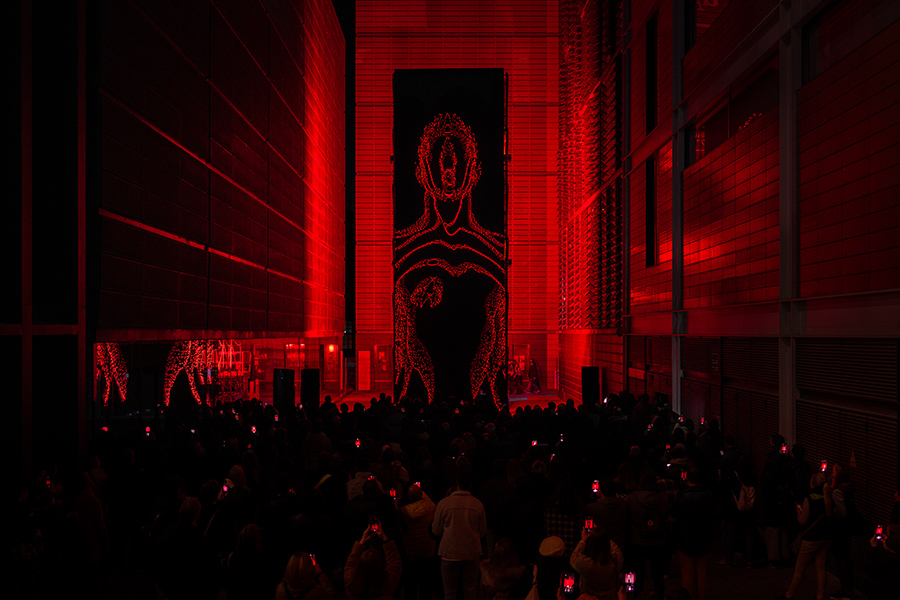
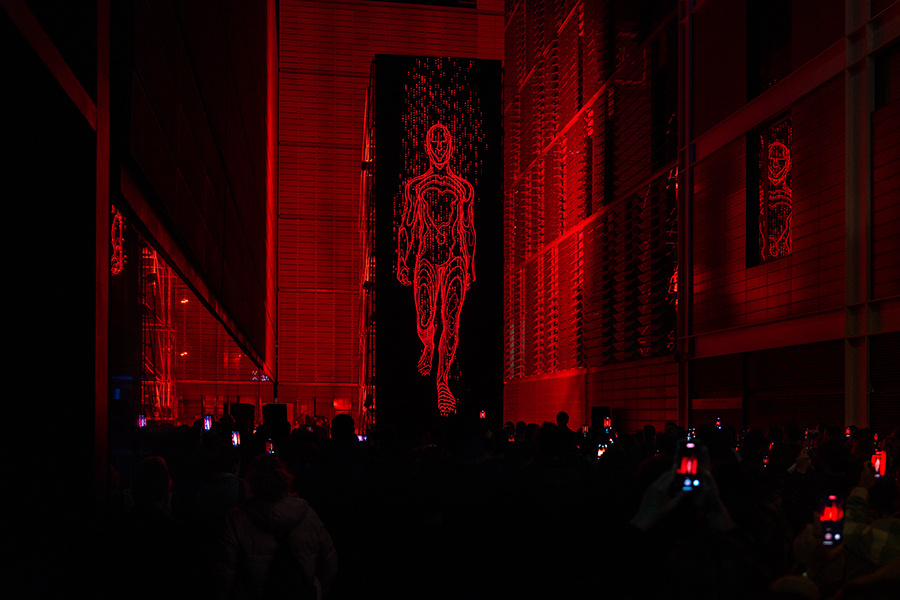
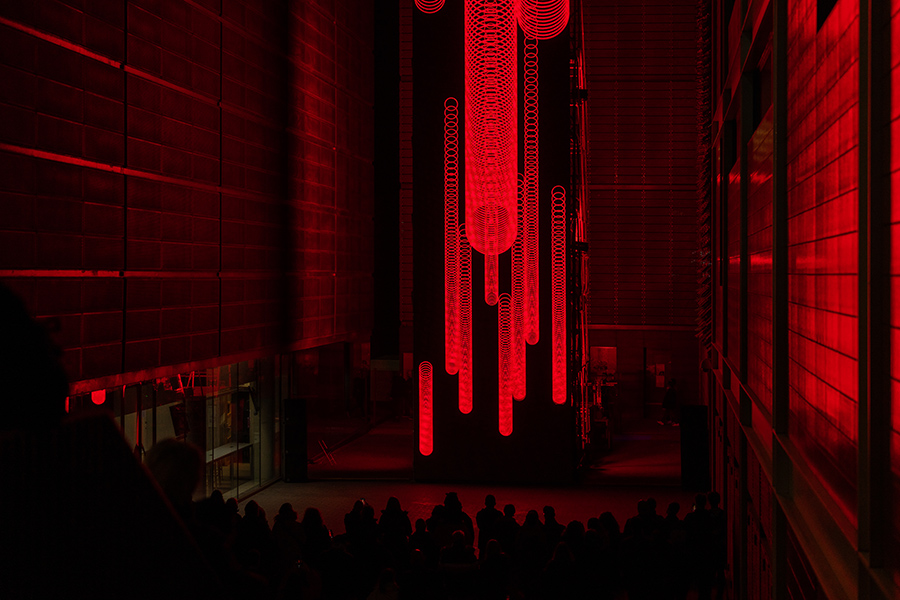
Street artist and public artist SpY took his opportunity to rock the crowd in February at the 12th annual Llum BCN Festival this year with his interpretation of Stanley Kubrick’s classic film “2001”.
Filling a vertical industrial space with his signature red projections was amplified by his electrified sense of kinetic structuralism that has activated atoms across massive expanses outside using lasers in past projects. Here he augments with sound to give the effect of a “magical mirror,” he says, an homage to our integration of screens into daily life and the topic of our increased digitization.
The festival is organized by the Barcelona Institute of Culture (ICUB) and gives a platform to around 15 professionals in the digital and lighting arts every year to let them showcase new ideas. SpY tells us that he names his tall thin rectangular performance “Monolith.” Soaring high like an icy hardened cathedral, the space still can evoke claustrophobia, a sensation of being trapped between machined slabs or menacing rows of computational clouds.
The artist says he wants us to consider how much our personal information is now harvested, monetized, and manipulated as other’s property. Carrying his imagination to the extremes that a movie like “2001” first suggested, he poses questions to trigger our attention. “Are we already in a time when humans become data? How will we confront the integration of bodies and devices? Is this the last generation of humans who are not digitally transformed?”
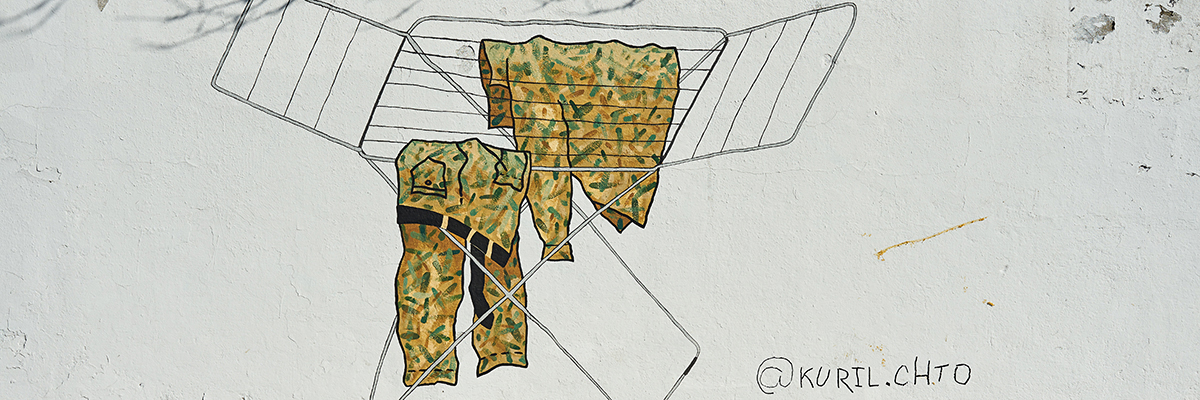
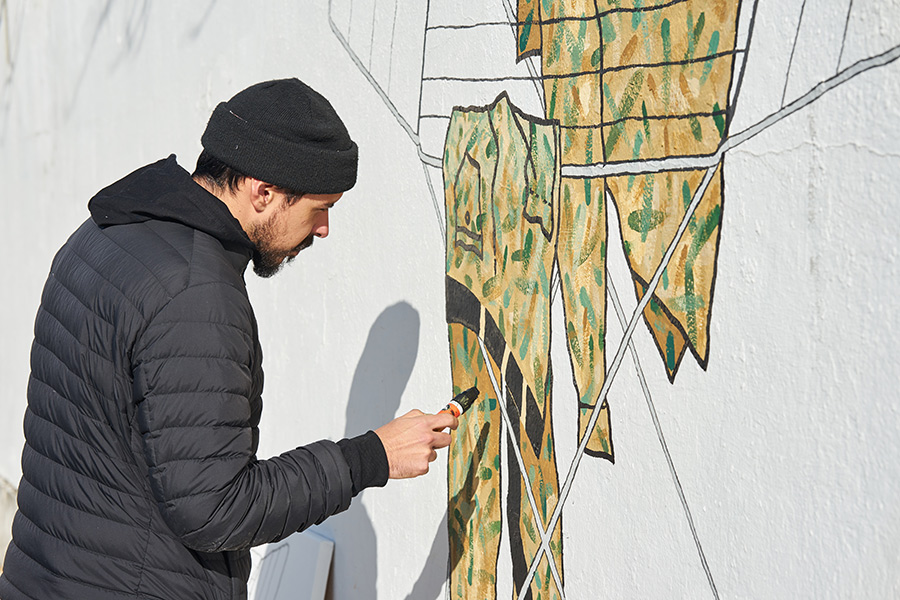
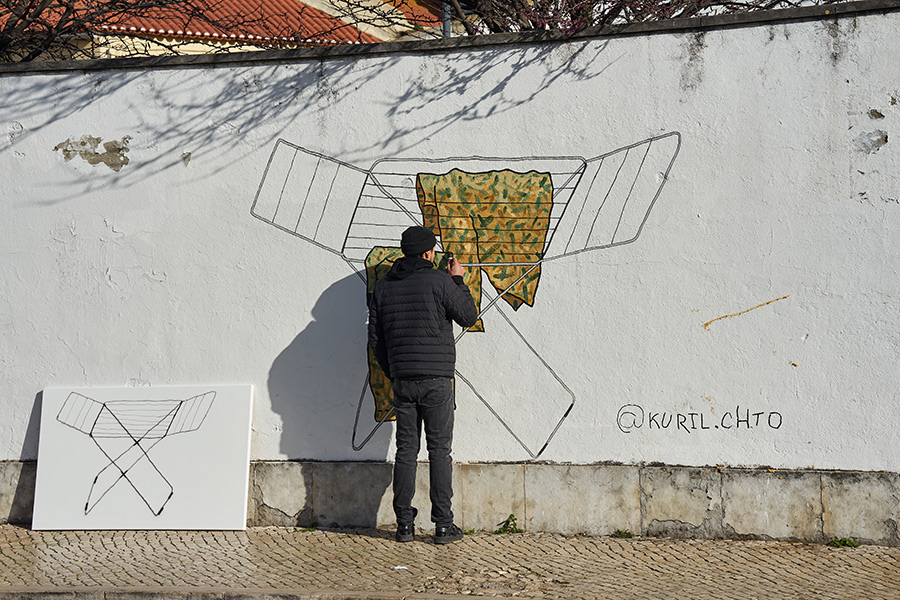
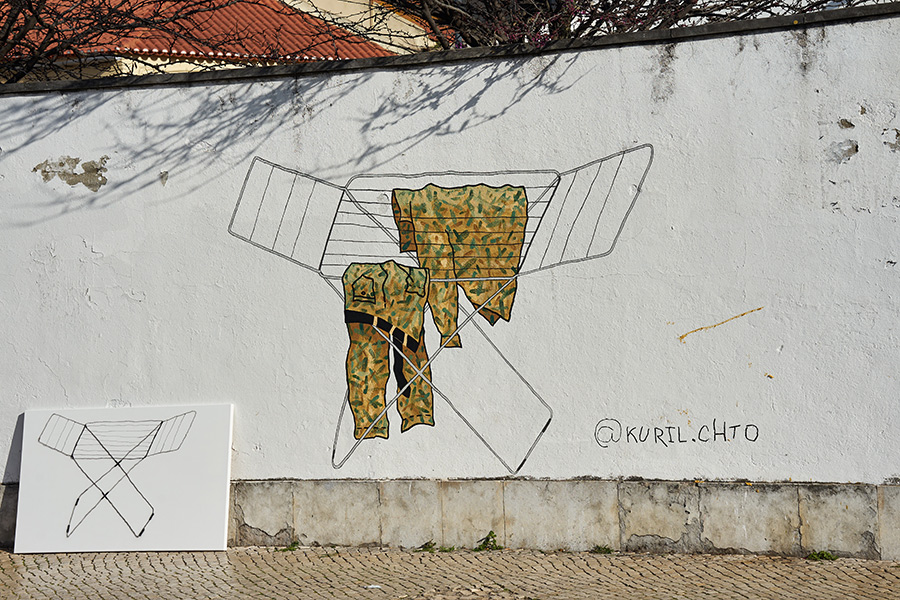
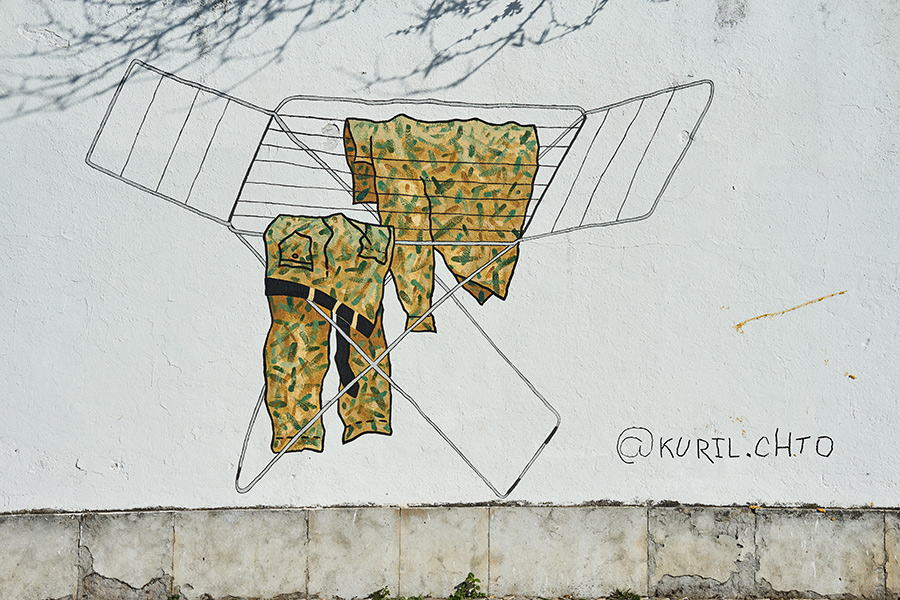
Living in exile from his birthplace of Saint Petersburg, the artist says he founded and curated the Museum of Street Art there but his criticism of the annexation of Crimea and his exhibition of a Ukrainian artists’ works in the museum forced him to abandon the project. Here in the streets of Lisbon, Portugal, he carries the daily topic of war wherever he goes.
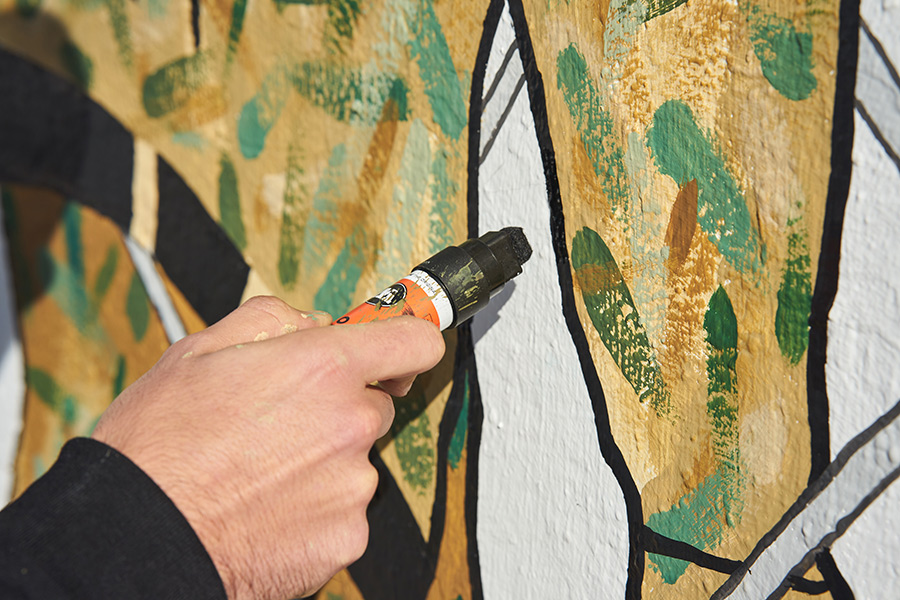
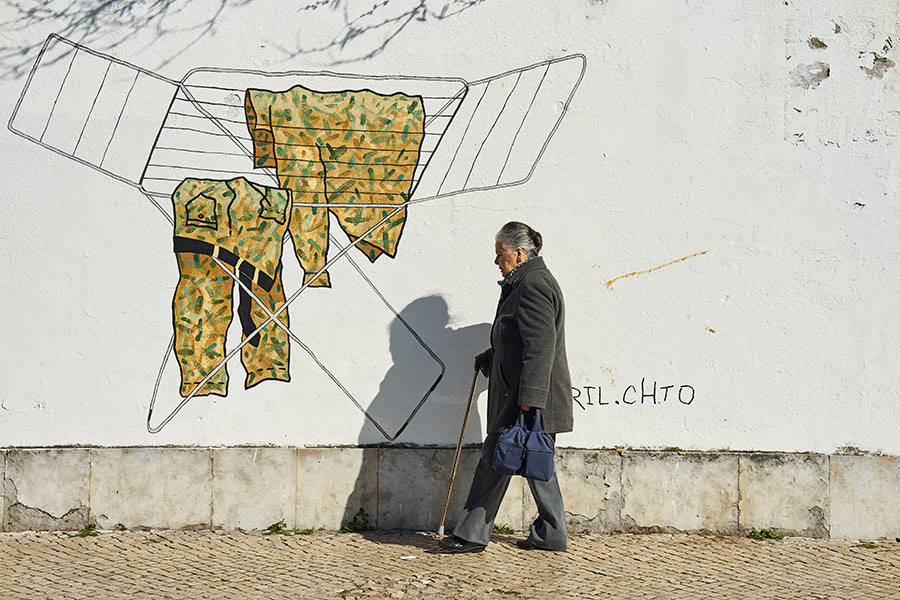
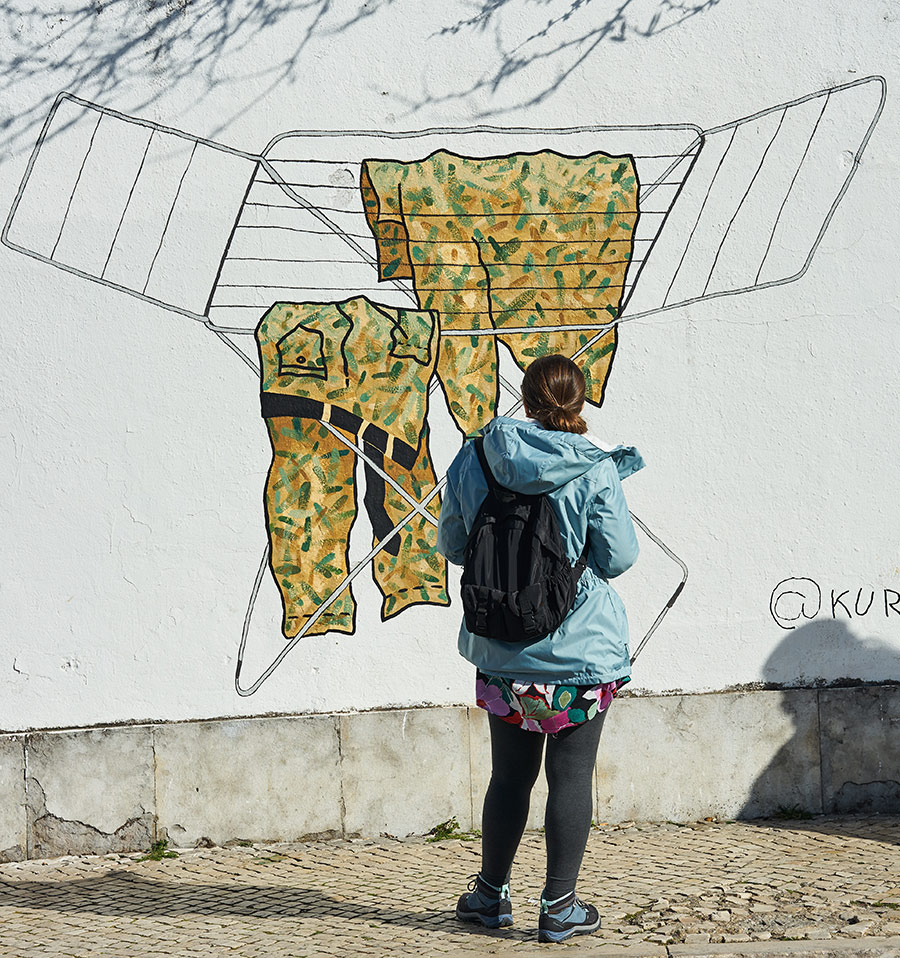
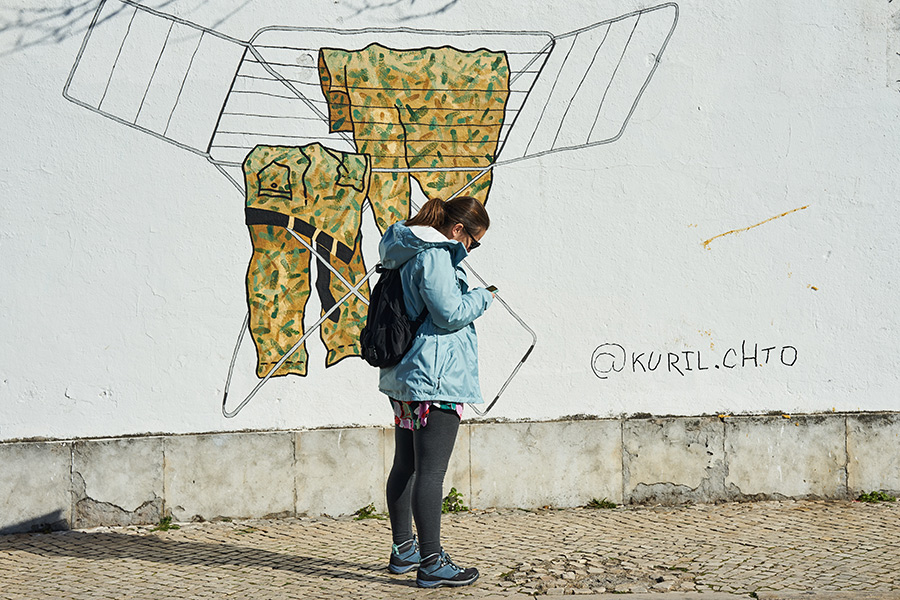
One year since this war between Russian and Ukraine began, Kuril Chto says that he is afraid that the constant news about the war is now becoming normalized for the average person, causing them to care less. His new piece in the Graça neighborhood of Lisbon is meant to convey the quotidian quality of this horror by depicting the most mundane of home laundry tools, a drying rack. So familiar that it becomes invisible. A passerby may not make a note of the wall illustration until they consider the military uniform that is hanging on it.
“This intrusive element in the midst of mundanity is a mass-produced object employed in the mass production of death,” he says.
 BROOKLYN STREET ART LOVES YOU MORE EVERY DAY