The emancipation of the proletariat will be at its own hands!
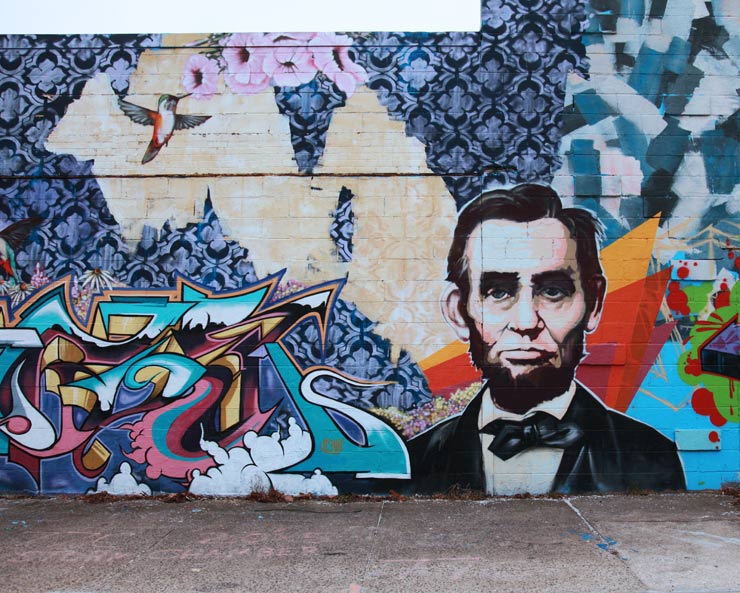
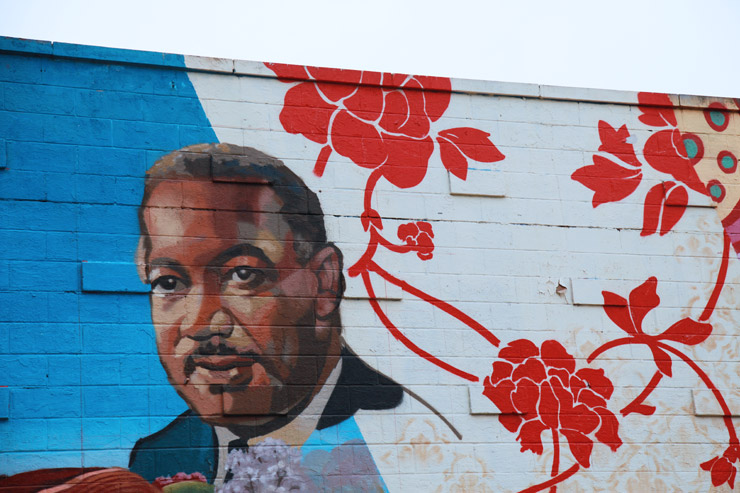
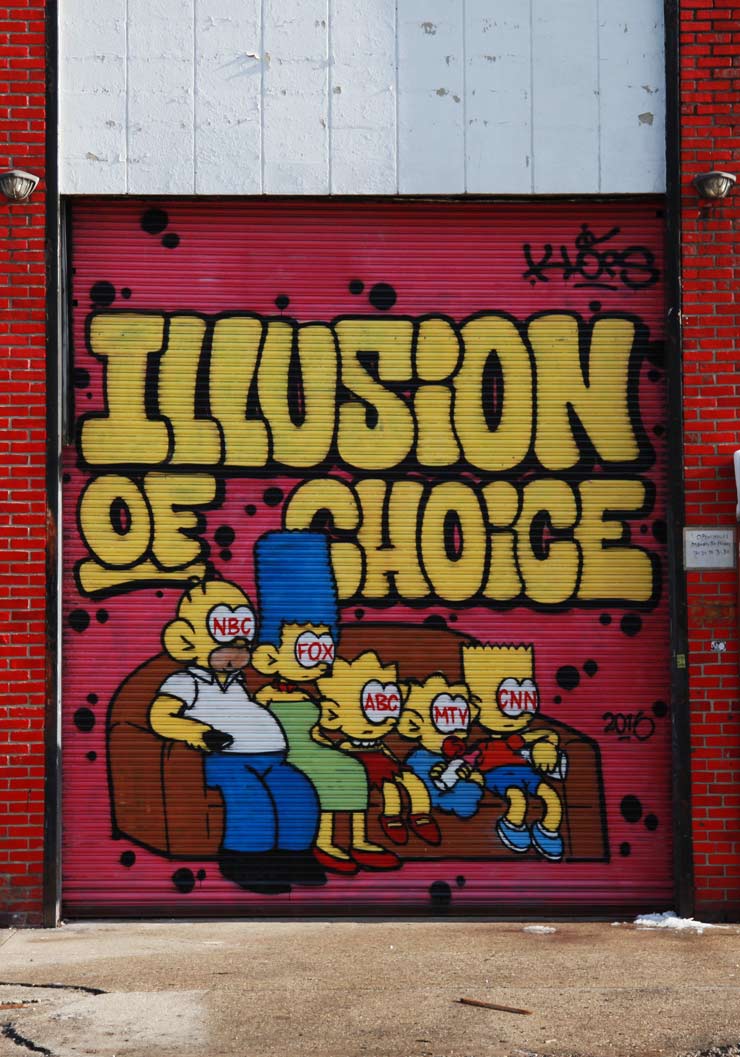
Just thought we’d announce something vaguely Marxist on Presidents Day to get your attention, since the masses are awakening to the idea of a democratic socialist as a possibly viable Presidential candidate. Ah, but we citizens are now deep in the stew of consumerism, quite cut off from the means of production. Now we city people just buy stuff, and sell stuff.
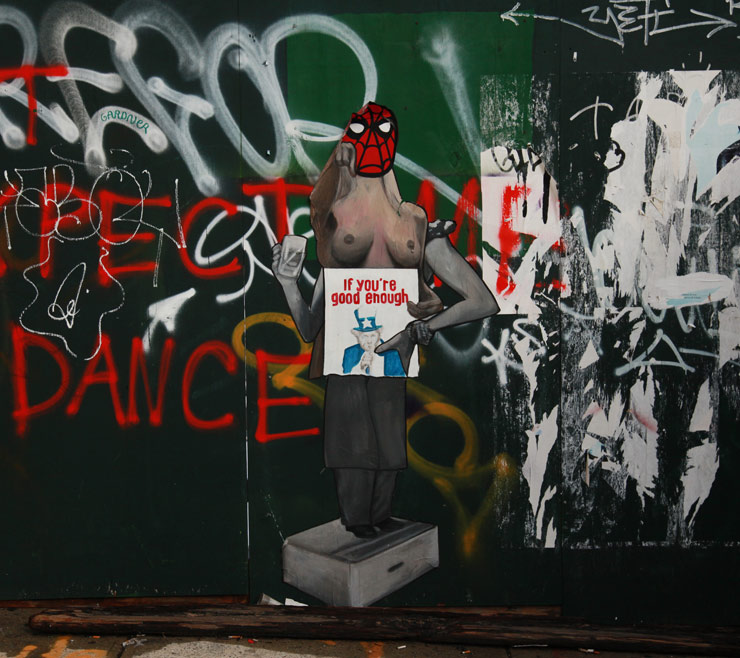
Part of that selling, especially when it comes to beauty and fashion, is to create obsolescence. Integral to the street messaging is to continually insult and degrade the passerby and plant insecurity about our appearance and physical attributes in our minds, ensuring that we never actually are good enough until we buy this new shirt, blouse, lipstick, purse, watch, cologne, sunglasses, sneakers, underwear.
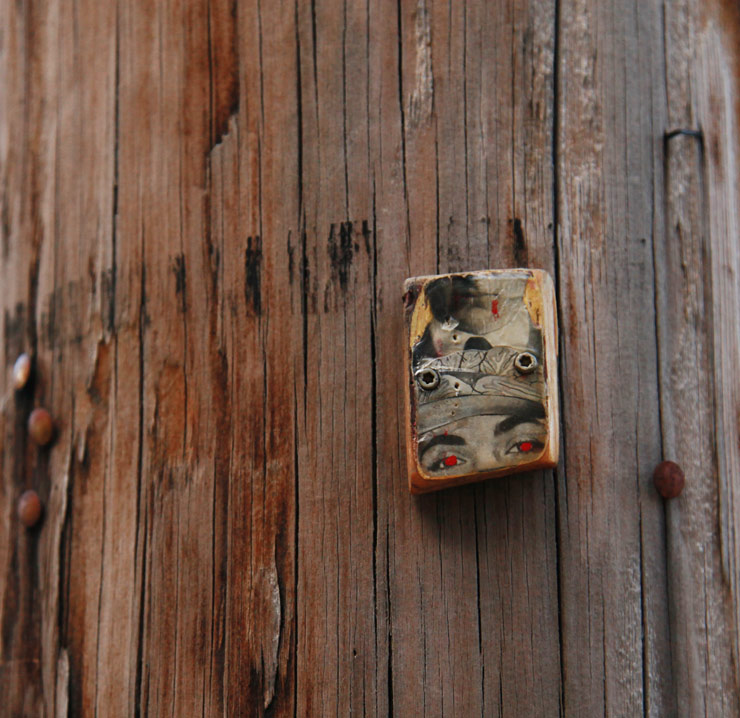
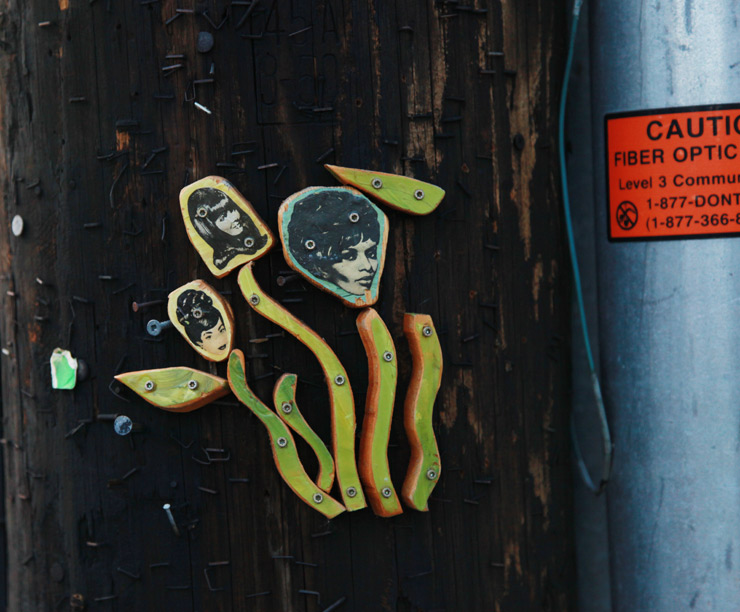
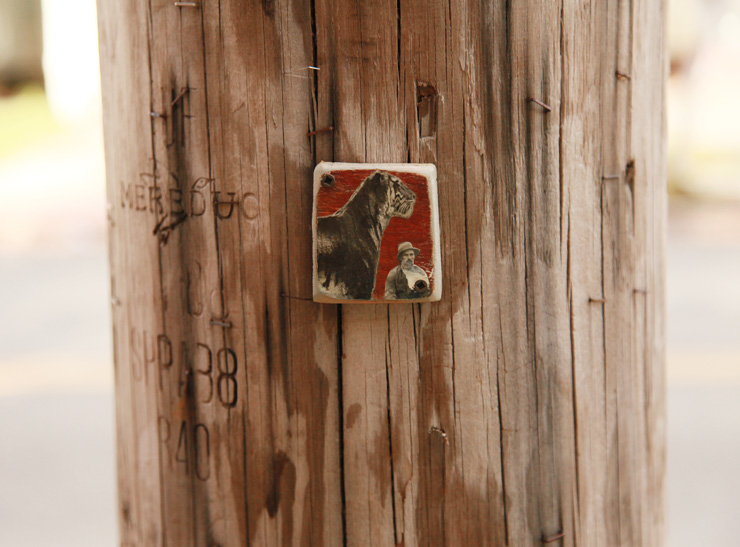
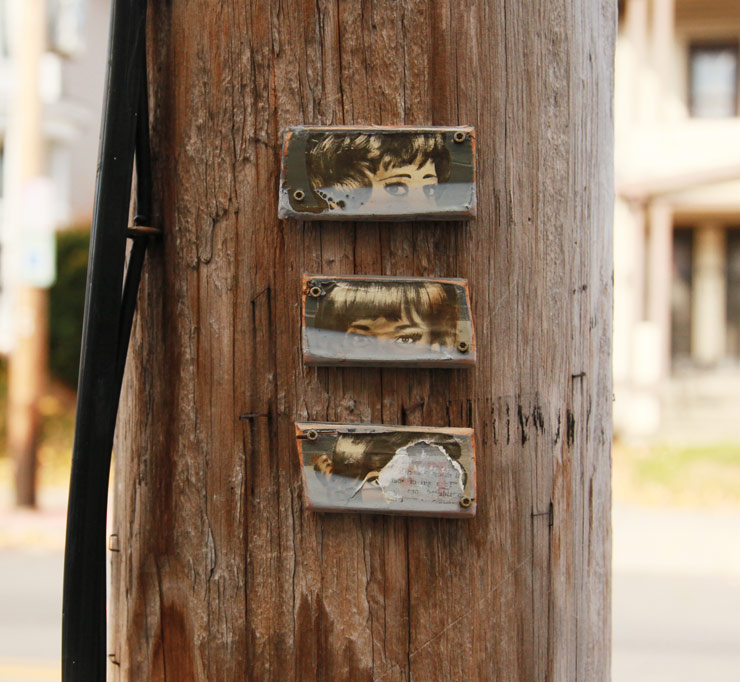
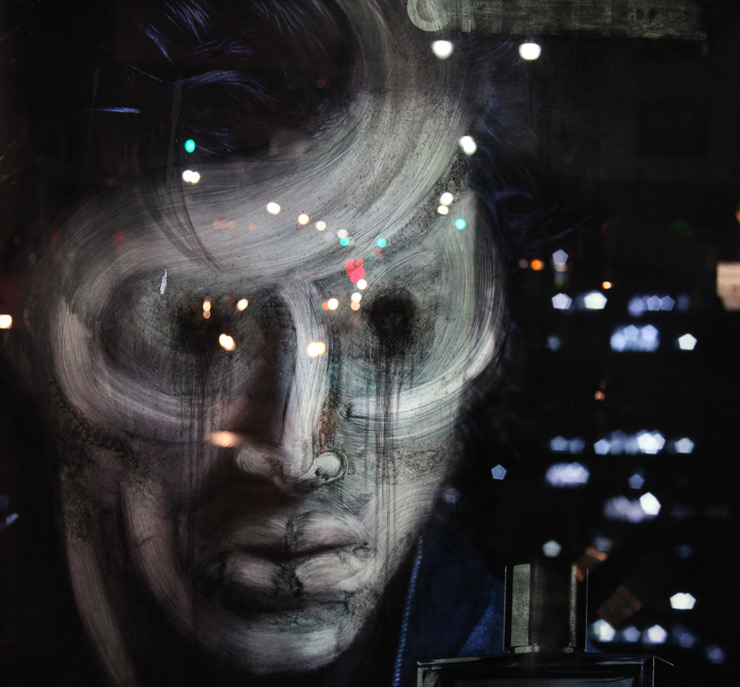
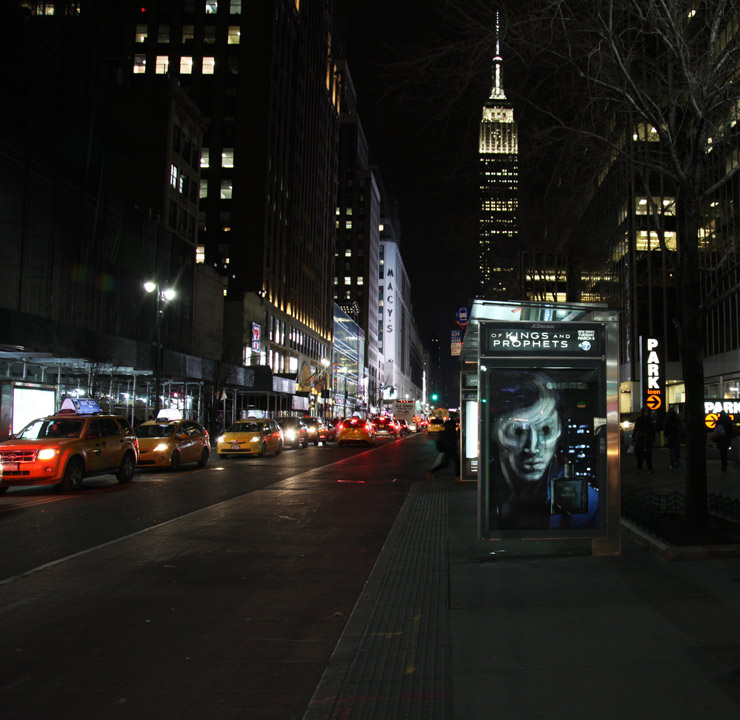
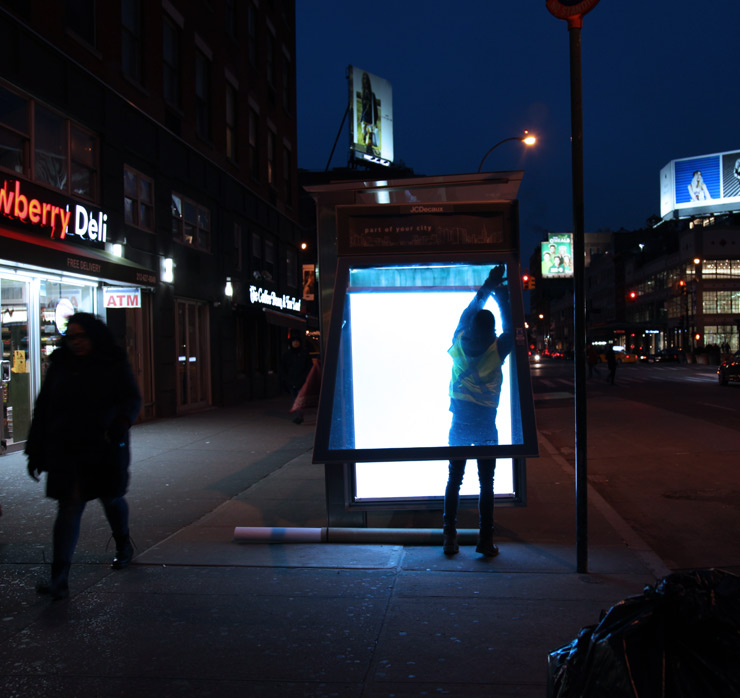
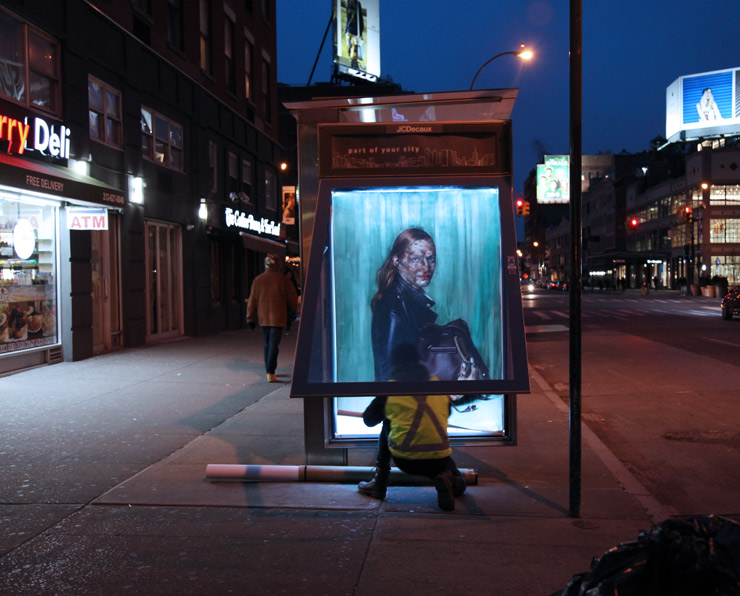
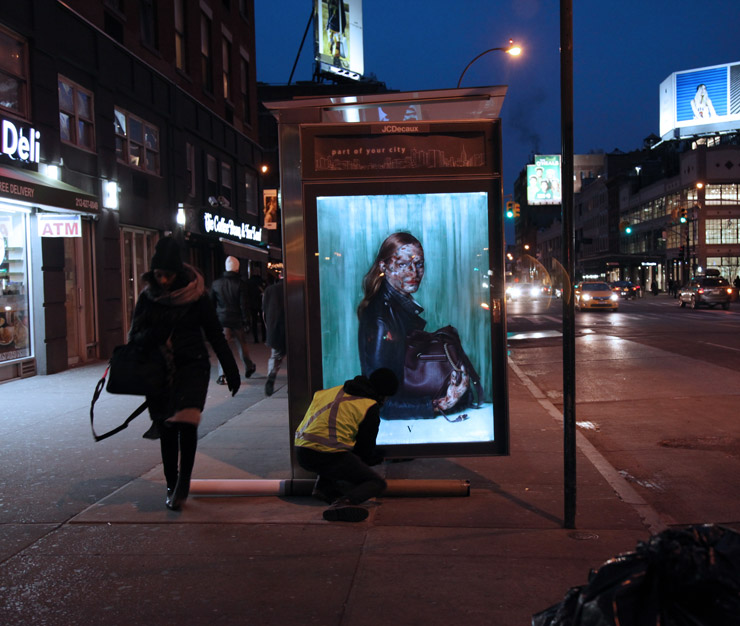
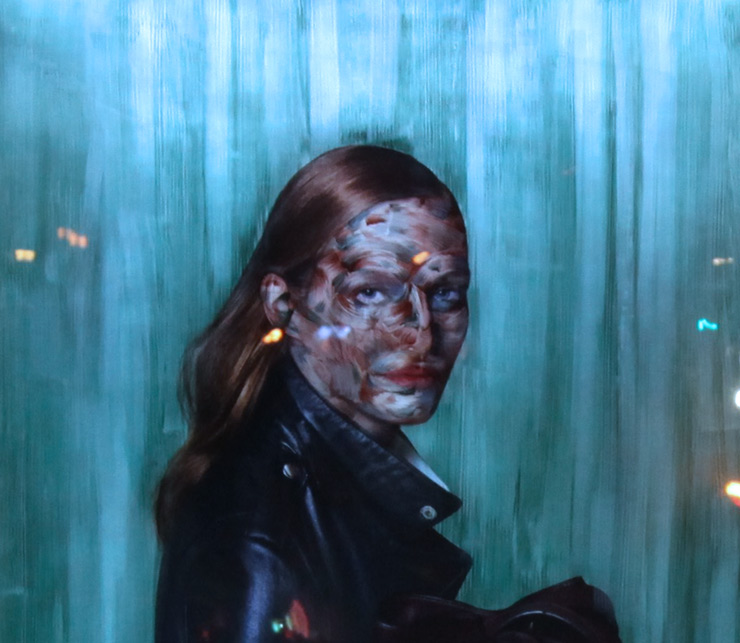
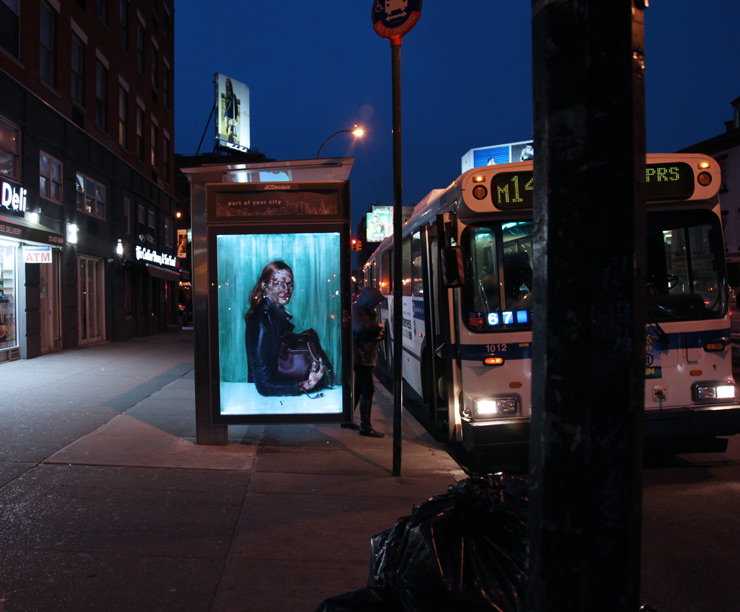
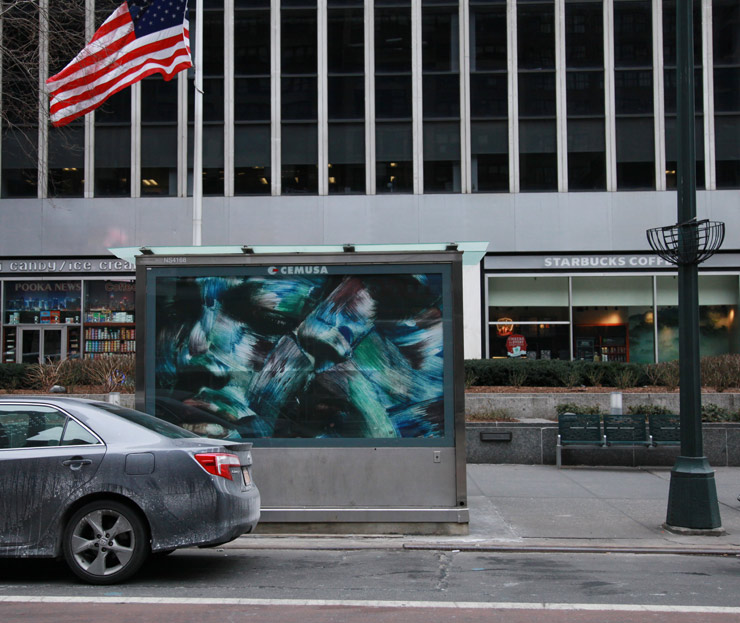
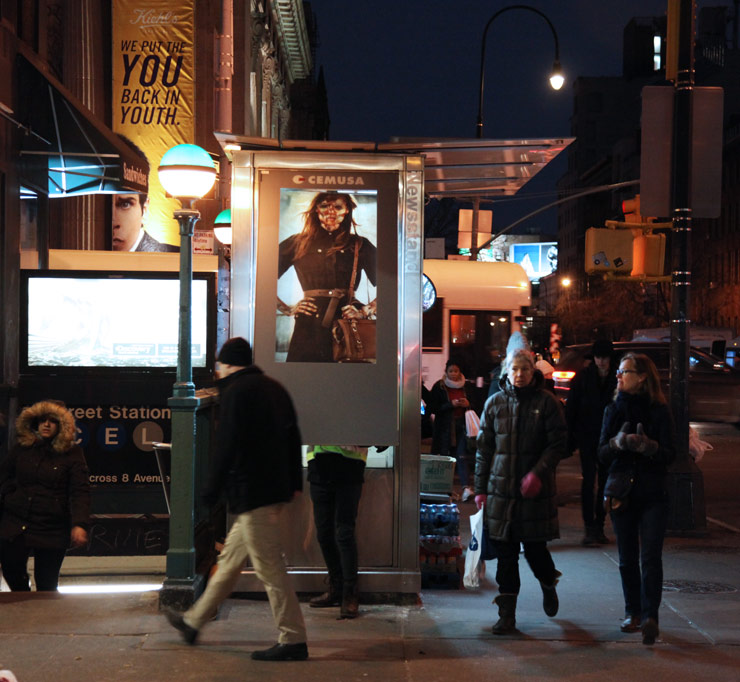
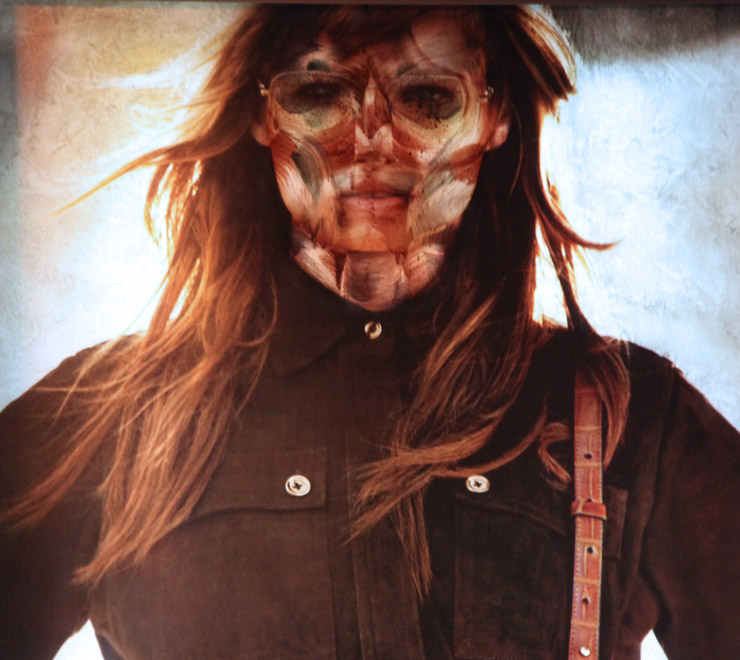
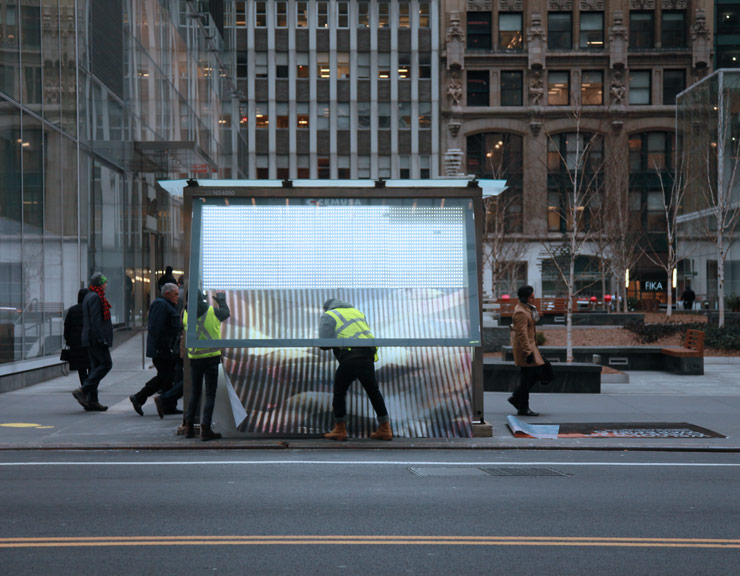
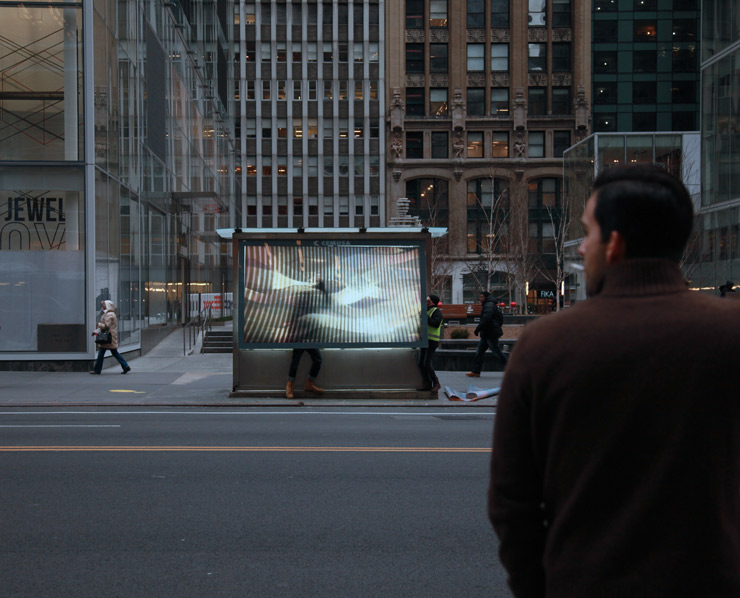
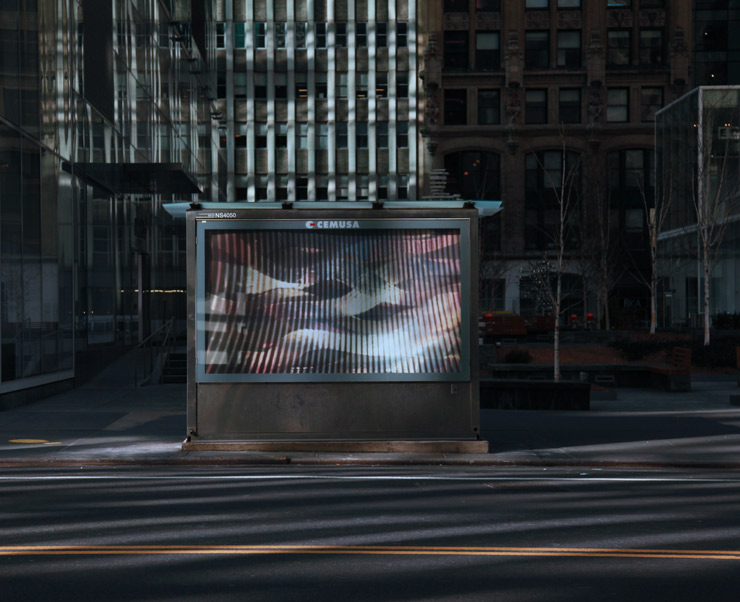
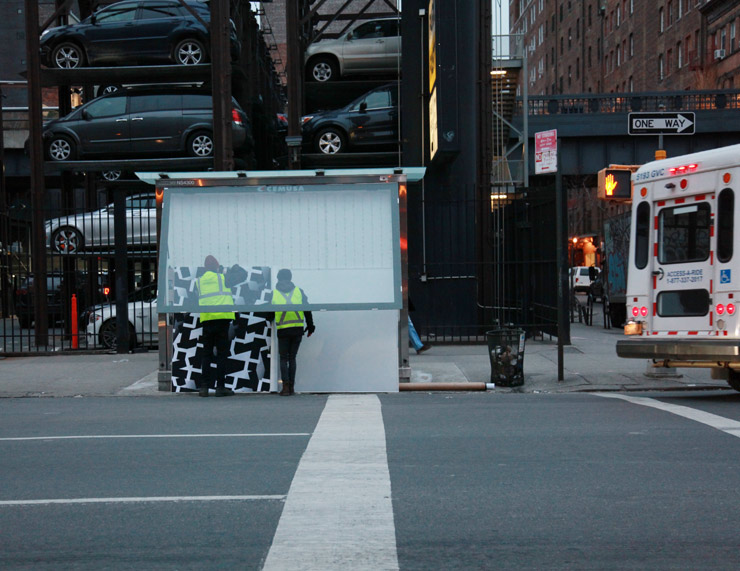
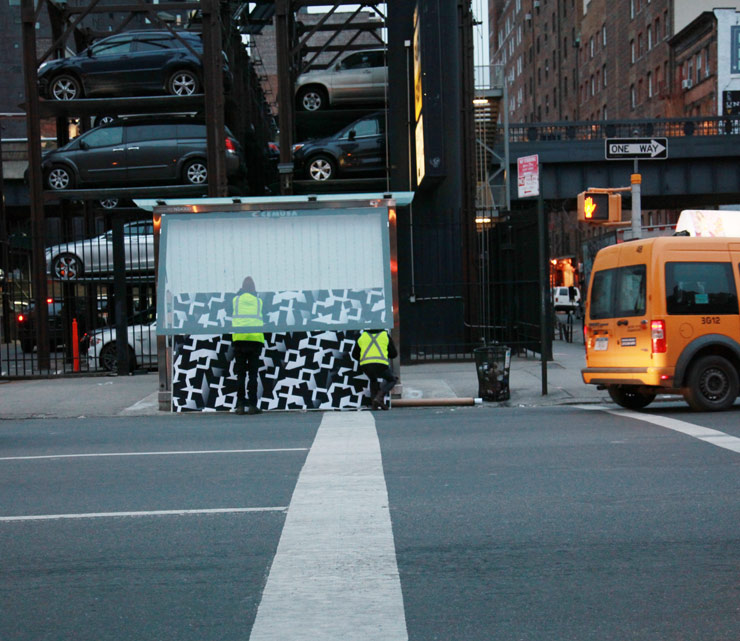
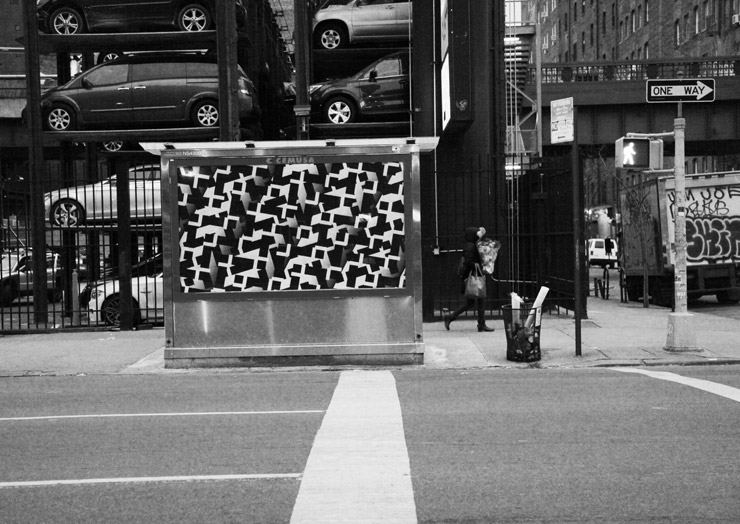
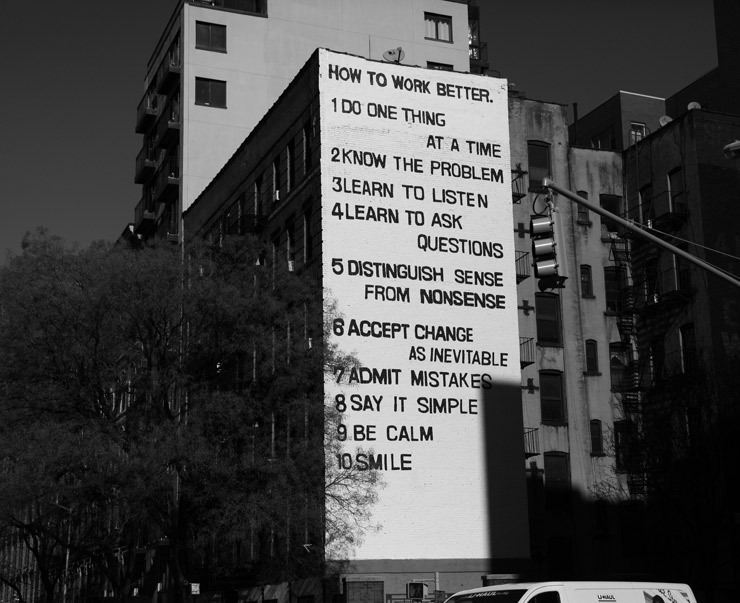
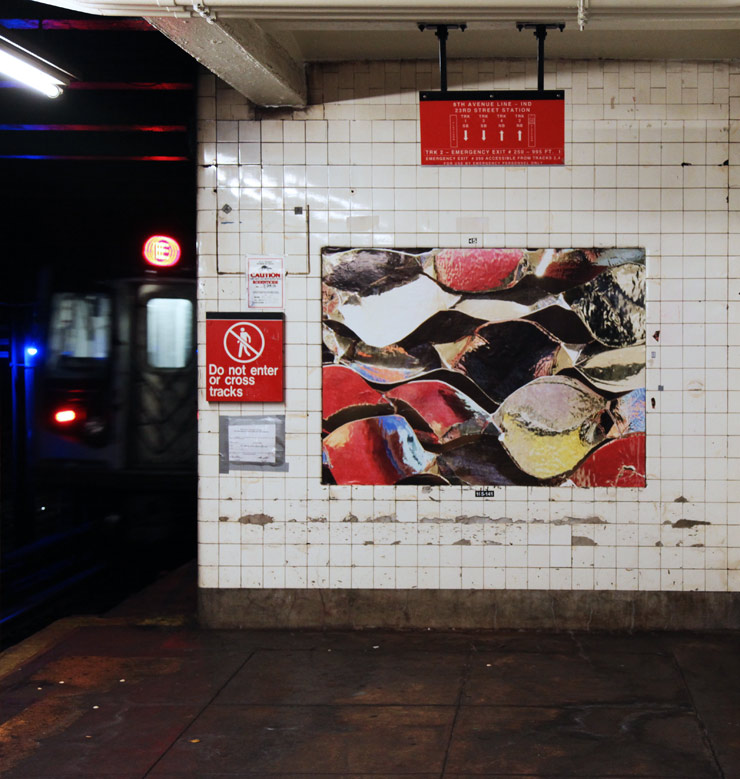
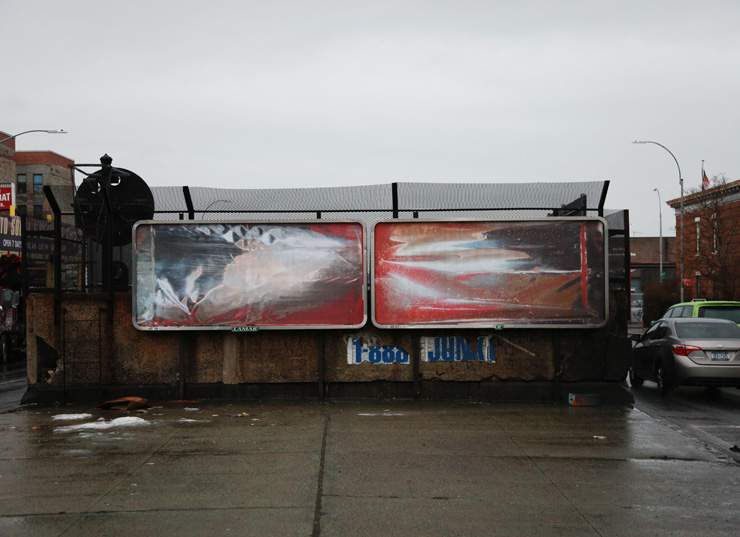
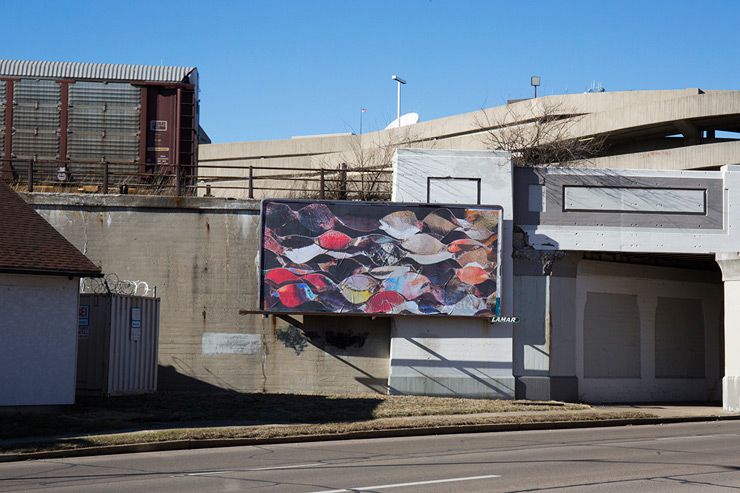
Now as New York’s fashion week is underway with new looks for next fall and winter, street artist Vermibus continues to mount his personal DIY full frontal attack on beauty culture and fashion, one street poster at a time.
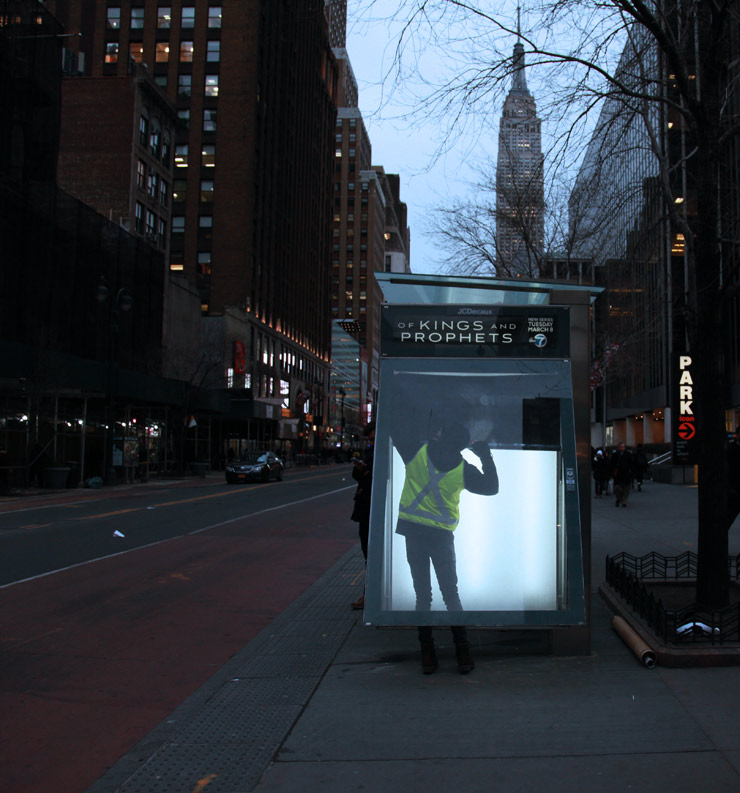
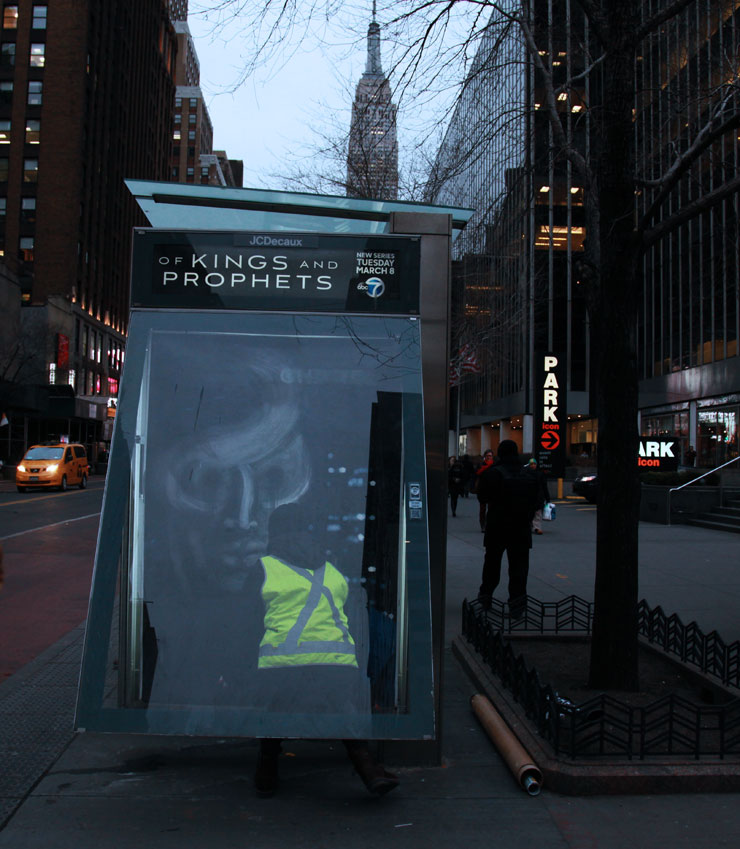
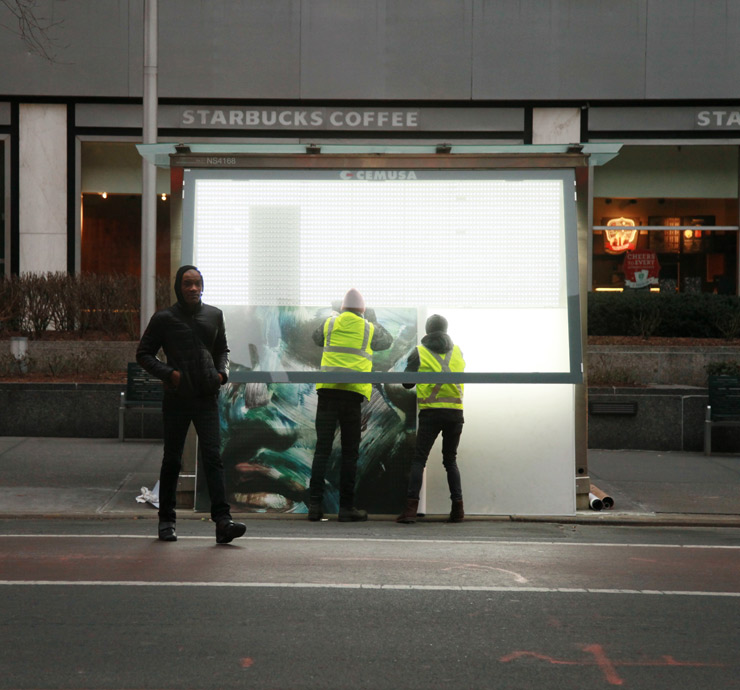
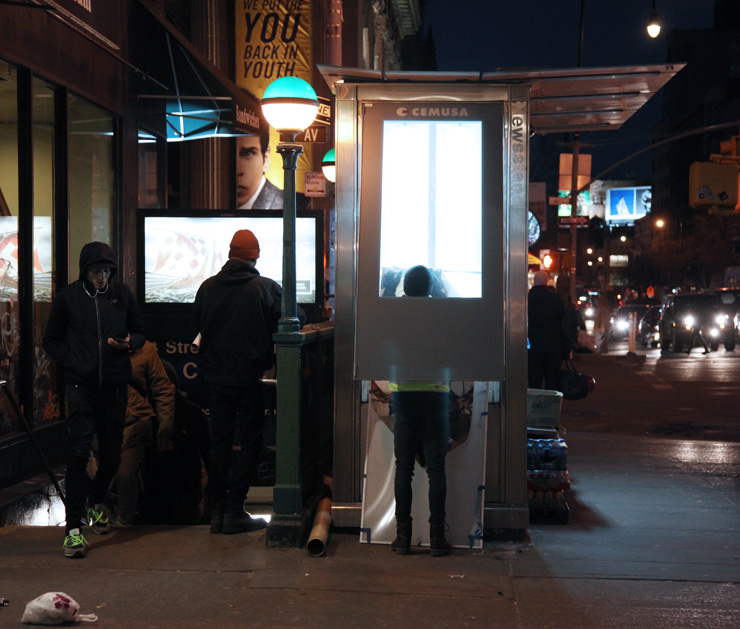
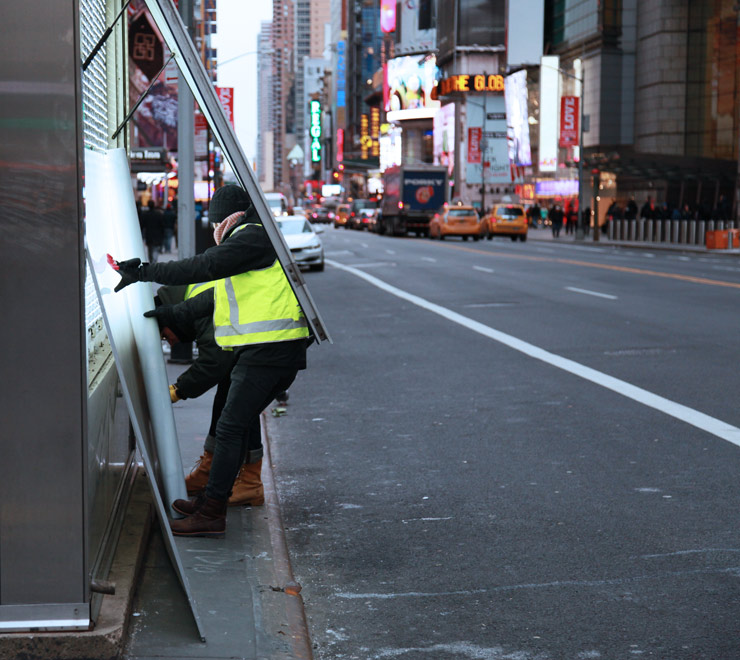
The Situationists of the 1960s would likely smiled at his brand of détournement, pranking the everpresent models who belittle you as you walk in public. Ironically in New York people are so focused on the game of keeping their jobs and their rents and their social lives that they pass right by Vermibus in broad daylight as he replaces these ads with his dissolved/repainted ones.
Some curious folks stop to watch as he replaces the gorgeous healthy wealthy young people who have fabulous lives and smooth complexions with these brutal and stylized grotesques. It’s like a jolt to the commercial streetscape in the frigid winter. The subtle changes are a curiosity that brings out the cell phone for a quick shot and a question to a companion. Then they hurriedly clop up the sidewalk to the next appointment.
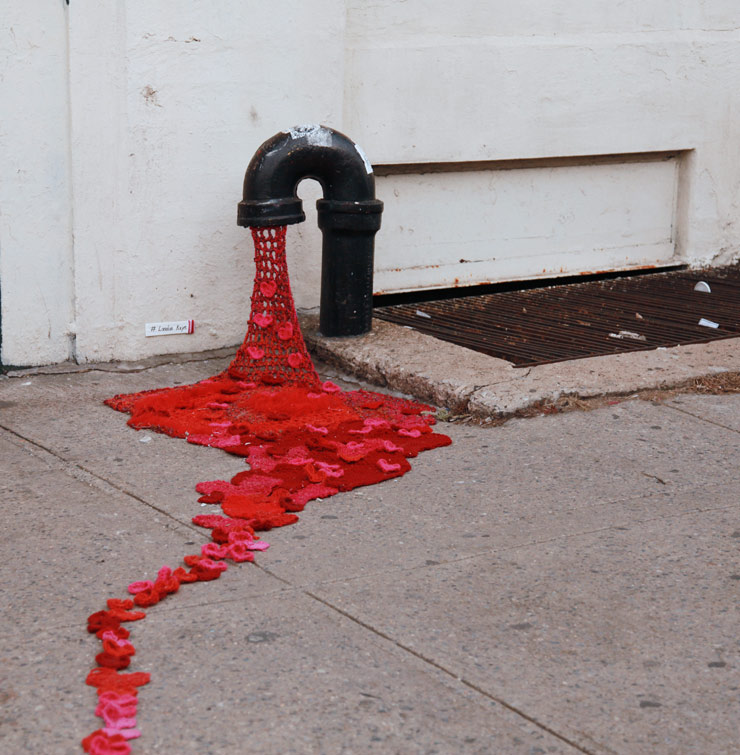
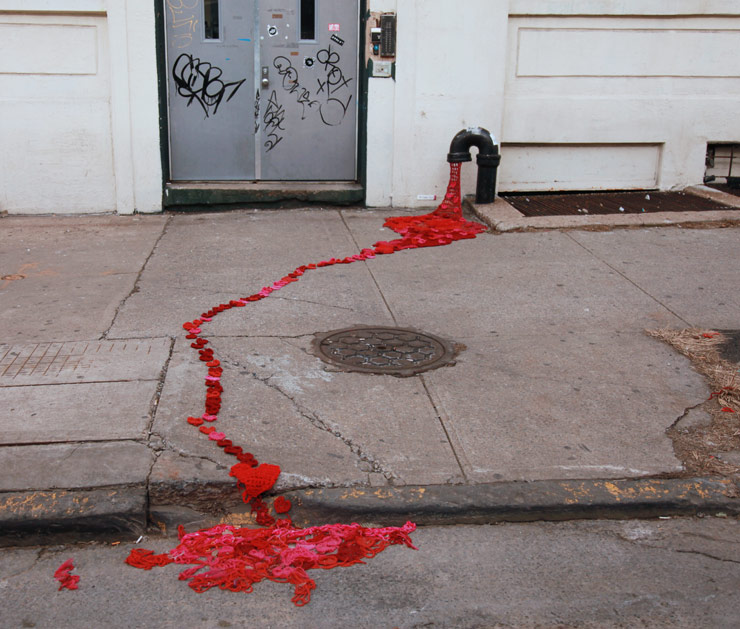
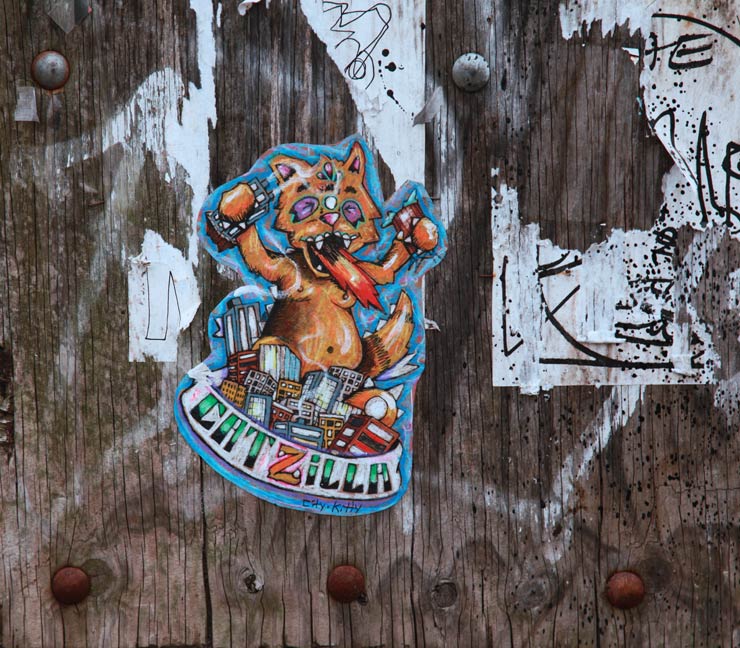
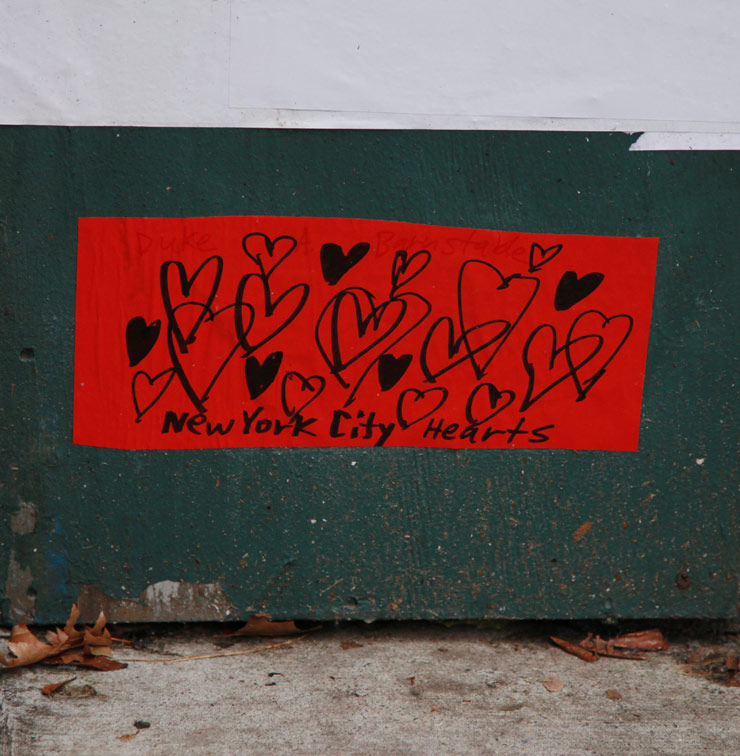
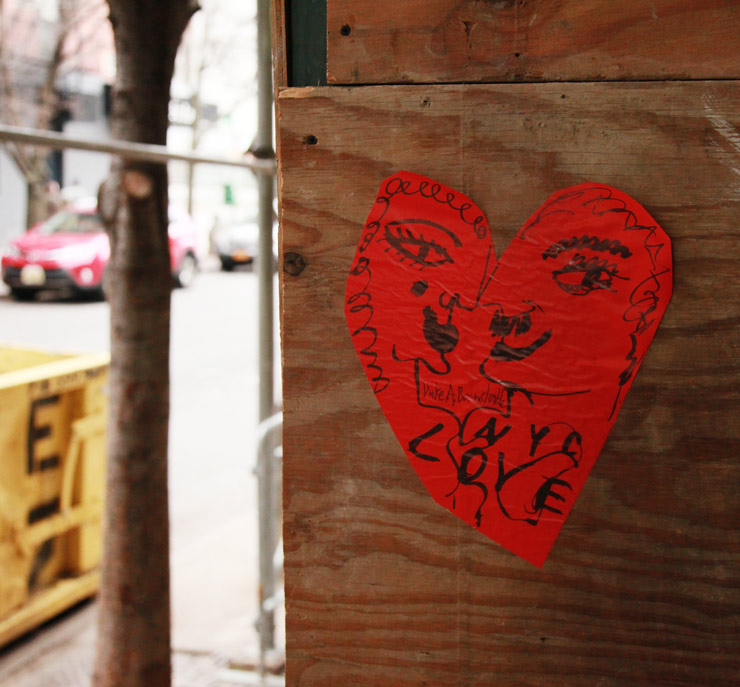
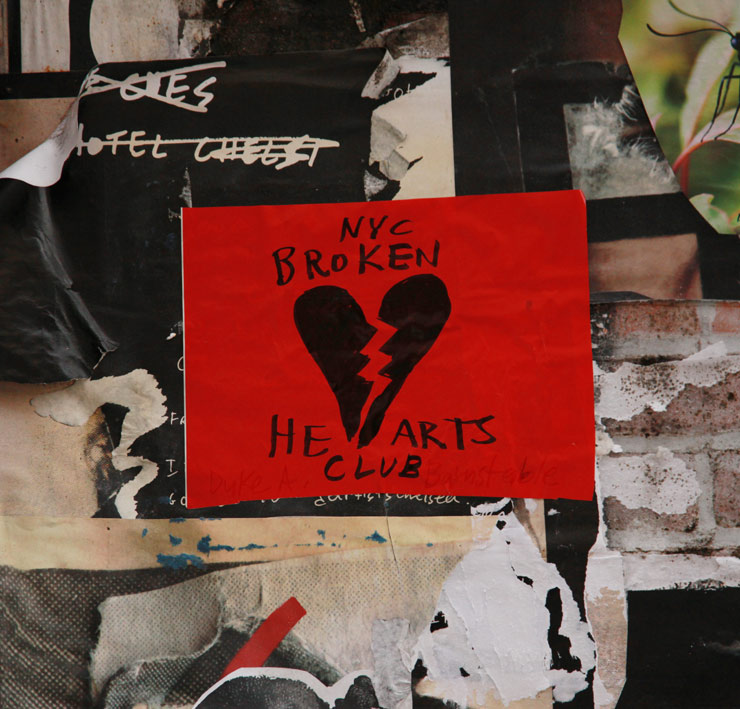
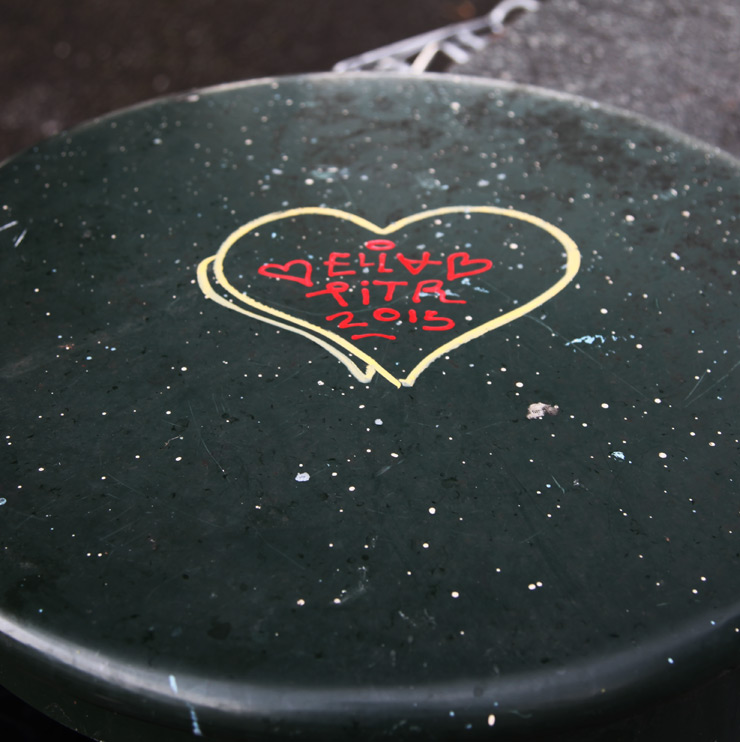
Here’s our weekly interview with the street, this week featuring Air3, Bie MOG, City Kitty, Gabriel Specter, Jordan Seiler, London Kaye, Naomirag, Raul Ayala, and Traz.
People all over the world (everybody)
Join hands (join)
Start a love train, love train
People all over the world (all the world, now)
Join hands (love ride)
Start a love train (love ride), love train
Our weekly focus on the moving image and art in the streets. And other oddities.
Now screening :
1. Madrid’s Finest: Alber, Snack, and Ysen 2. 10 Spots to Experience Street Art and Graffiti in NYC 3. Aryz In Detroit
4. David Zayas Installation Timelapse for “Muralismo” Exhibition in Puerto Rico
BSA Special Feature: Madrid’s Finest
A fresh new video with Alber, Snack, and Ysen piecing the be-jesus out of a wall in Spain and giving you pure eye candy for Film Friday this week. Each a member of a different crew, the collaborative effort is a demonstration of “unity is strength”. In their case, it is a lot of style as well.
10 Spots to Experience Street Art and Graffiti in NYC
A visitor from London took his tips about NY Street Art and Graffiti from Time Out magazine, as many tourists do. Hitting all the spots by car and shot entirely on an iPhone in January, it’s a surface survey, a current snapchat of a complex scene that quickly changes.
Aryz In Detroit
Aryz did this wall with help from Library Street Collective and it is a good look at his process of building an image, shot by Mike Mojica.
David Zayas Installation Timelapse for “Muralismo” Exhibition in Puerto Rico
A surprising video that captures the 44 day installation period artist David Zayas had to transform a space for his exhibition considering the contemporary mural as an historical and modern practice and a vehicle for communication at the Lugar Museo Las Americas.
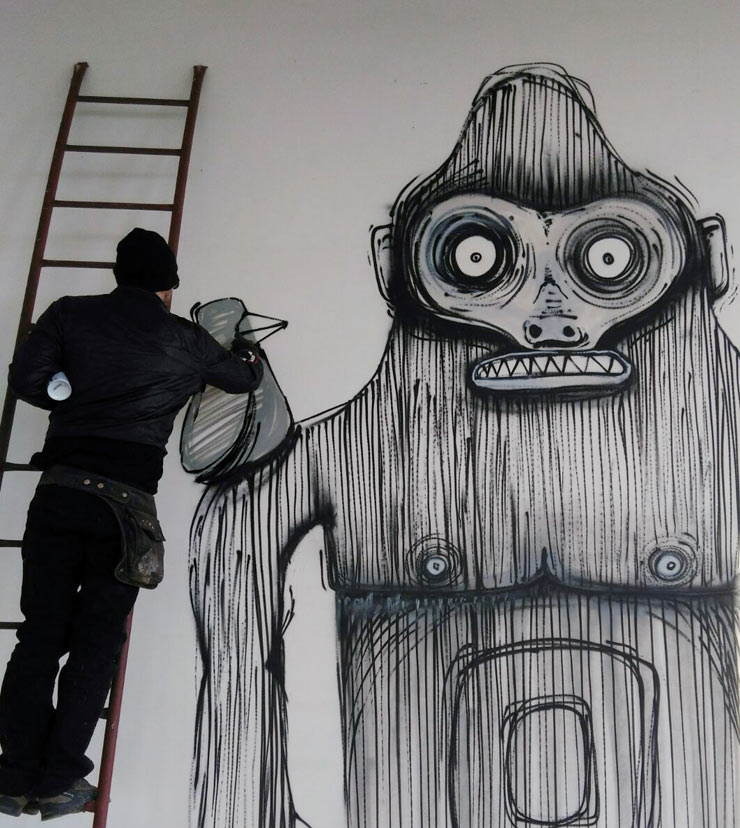
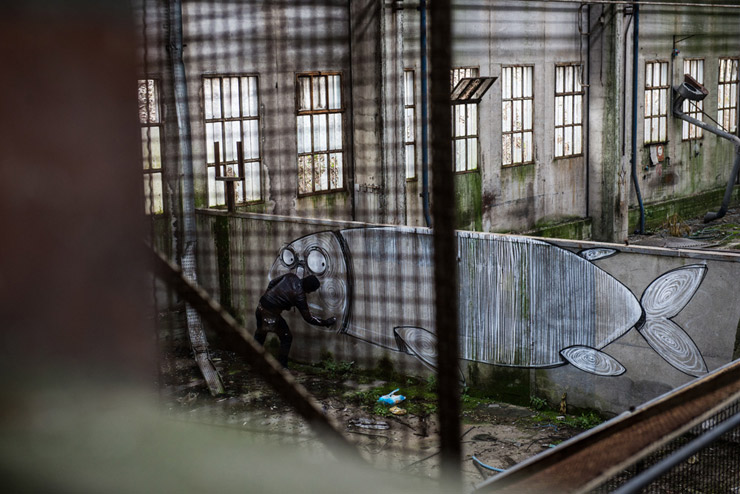
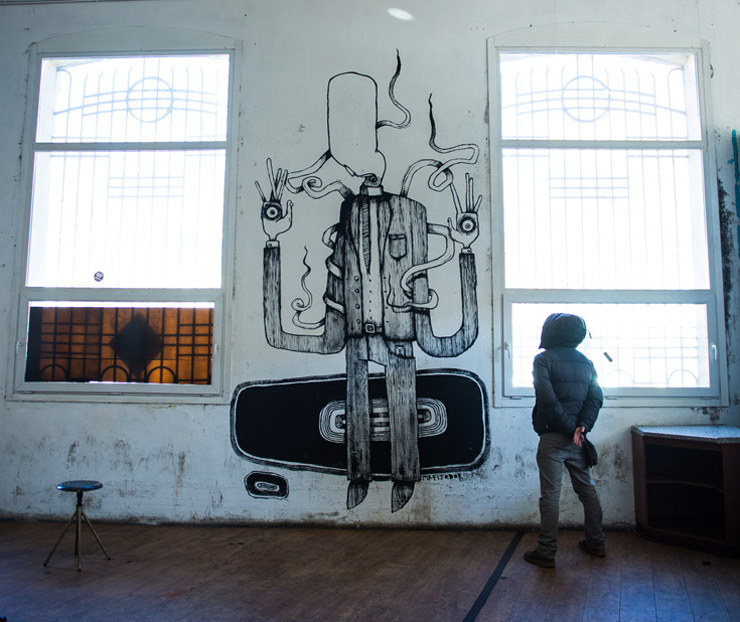
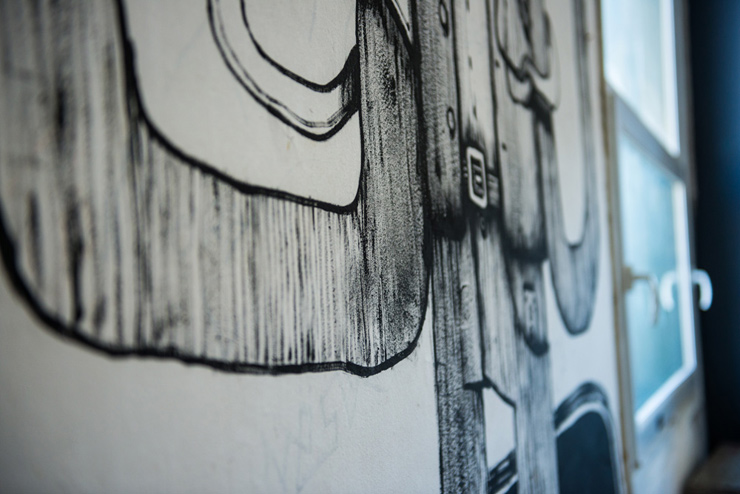
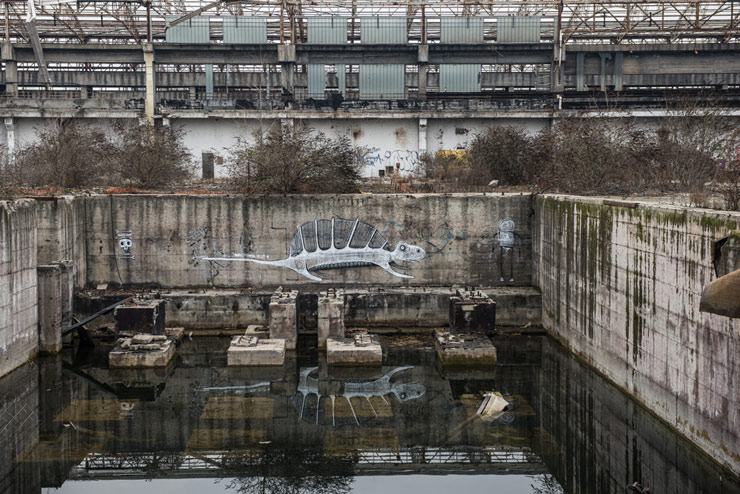
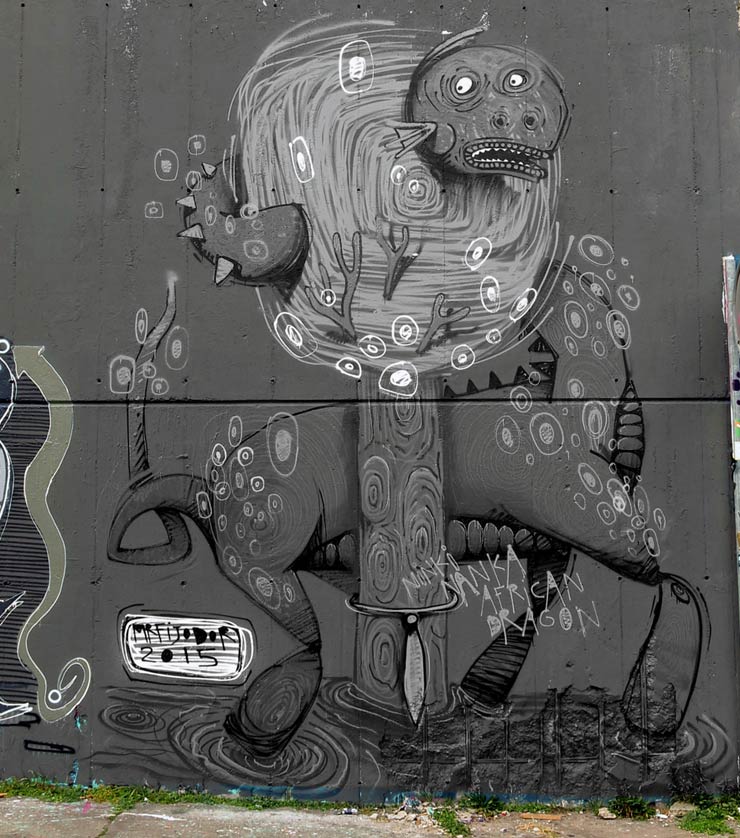
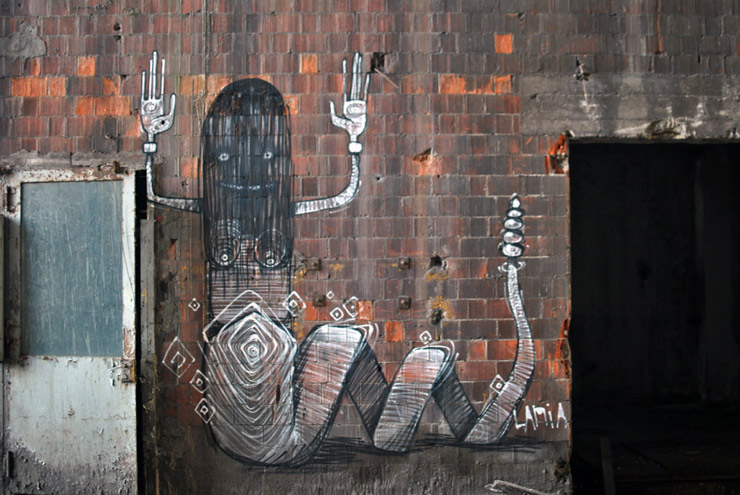
Wild Style. No, not the movie nor the distinctive look of aerosol lettering by a graffiti writer. But yes, that is what the Italian Mr. Fijodor refers to when talking about his surreal, simple and spontaneous creatures in an abandoned industrial grove. Maybe these are closer to Where the Wild Things Are since his style is more like an illustrator of a children’s fantastic tale than writer of a big burner.
“Clumsy hominids, hallucinated minotaurs, gargantuan fish and frightened dinosaurs peek out from the walls,” Mr. Fijodor tells us, and you can see how his imagination is freed in these spots that are slowly being reclaimed by the forces of nature. He says the hallucinatory phenoms come from his dreams as well as his nightmares but for urban explorers who like to discover places like this, they can become reality for a minute before they are covered with mold and vines.
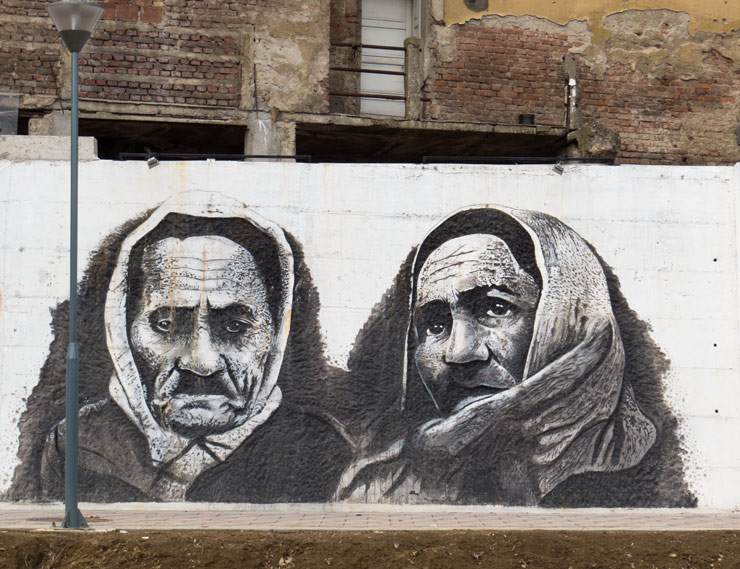
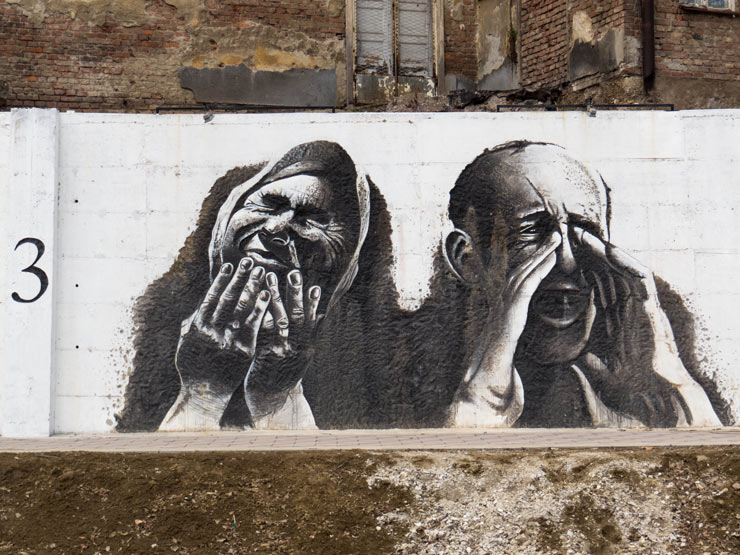
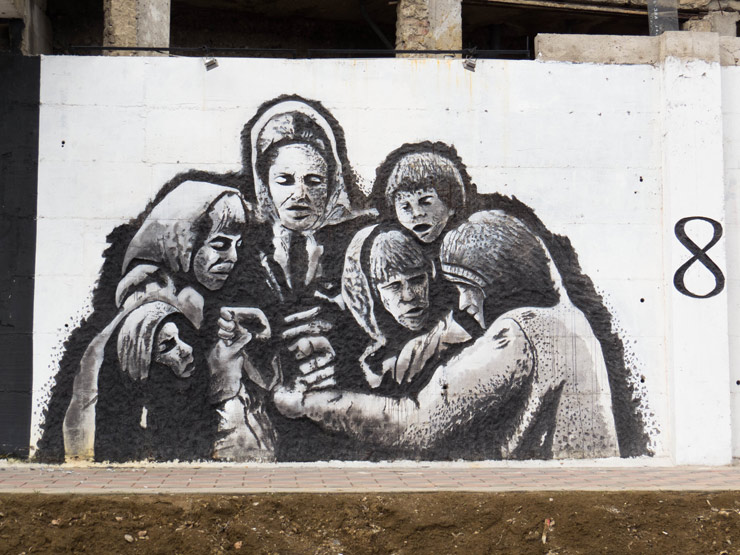
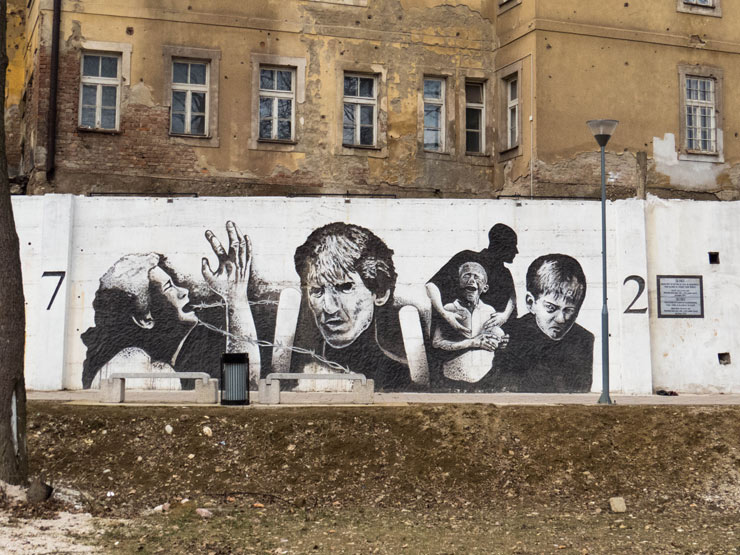
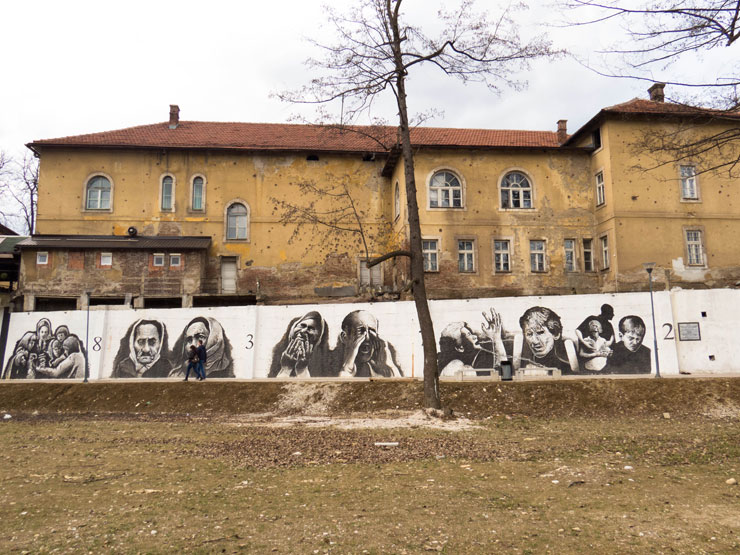
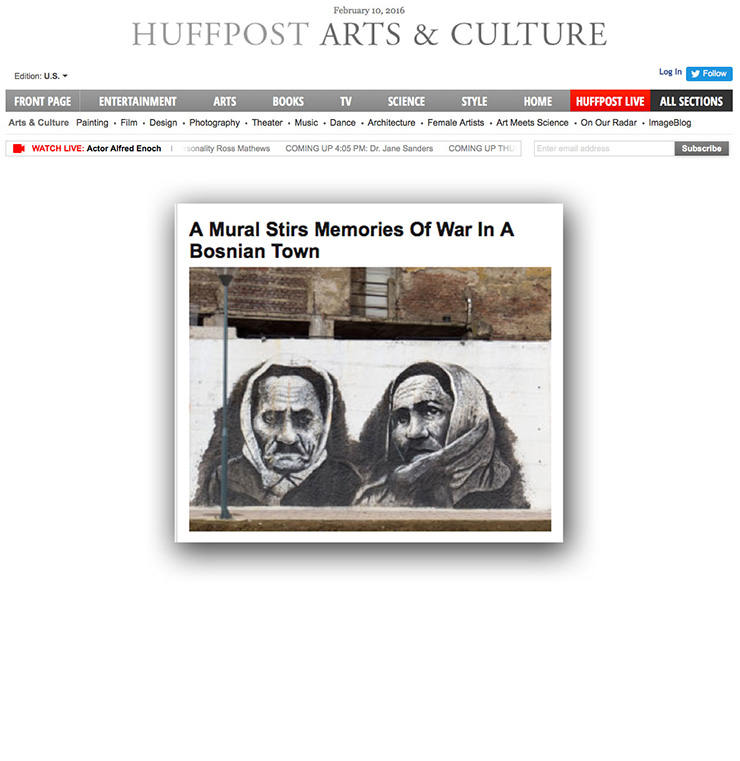
Some walls in Visoko still bear the pock marked patterns of bullets from the Bosnian War just over two decades ago. These newly battered walls bring back portraits of its victims.
Using handheld electric jackhammers and circular saws to chip away at the façade in a manner similar to that popularized in recent years by the Portuguese Street Artist Vhils, the Bosnian artist collective HAD has created a series of images in a public park that commemorates war victims in Bosnia and Herzegovina, with a focus on the Srebrenica genocide.
The wall portraits may take on additional meaning this week just as a convicted Srebrenica war criminal has been announced as dead in prison at The Hague. The polarized nature of the reactions to news of his death, including those calling him brave and honorable, is reflected in the reception that these artists received from passersby while they chiseled the concrete into anguished faces for their project called “Silence”.
“Once they started working on carving the images into the wall, they faced objections from their fellow citizens,” says Josie Timms of Index On Censorship. Assembled images from the artist’s own research, the figures are not necessarily of people well known, but still provoked strong emotions. “People were disgusted with what they saw, and many approached the artists while they were working, expressing their disapproval of having such images shoved in their faces.”
The three young artists of HAD – architect Muhamed “Hamo” Beslagic, fine artist Anel Lepic and street artist Damir Sarac – reportedly all worked for free and they say that “Silence” is intended as an activist act aimed at breaking a lulling censorship that they feel has taken over the topic in the years since the end of the war. Some passersby agree with that view and gave them encouragement, even thanked them for their work.
“This really is a labor of love and hate, life and death, a story that needed to be told,” says freelance writer and photographer Ilhana Babic, who calls Visoko her hometown and who shares her photos of the walls here. “With every blow of the hammer into the wall, a piece of the past is removed to reveal the future. This art, through struggle, epitomizes the cultural and political landscape that these works come from. Here HAD shows a picture of the present to the world because the social, economic and political situation in Bosnia and Herzegovina is bizarre and no one wants to admit it – nor to feel responsible for it. It’s like they’re seeking help, answers.”
Babic describes her impression of the project this way, “They want to stop the silence that has happened in the recent past so they carved the real images of Bosniak victims from that period into this 35 meter long wall. The wall is portioned into frames and the columns are also used to display the number of the victims (8,372). Each frame has its individual story but together they all silently scream to remind people of those who were silenced in Srebrenica.”
Perhaps because the new public work is painfully controversial, the artists steered clear of potentially contentious verbiage when unveiling it to an audience. “The opening ceremony was held without an opening speech, without applause. HAD decided to open it in complete silence, with a peaceful walk in order to pay their respect to the victims once more,” says Babic.
The newly drilled and hand hammered images are partly sculptural, partly memorial mural. With these images “Silence” may not necessarily provide a salve on the wounds of war. Regardless of the viewers’ political position the effect of these sorrowful figures is difficult at best, deeply disturbing at worst.
One wonders how challenging work like this will fare in a public space, and for how long. While graffiti writers and street artists worldwide will tell you that they know their work in the public sphere is temporary, ethereal, will this same expectation apply to this new series of portraits by HAD?
Possibly the works have already served their purpose because they have caused the reopening of conversations that have been almost coercively quieted. Babic tells us, “Each frame has its individual story but together they all silently scream to remind people of those who were silenced in Srebrenica.”
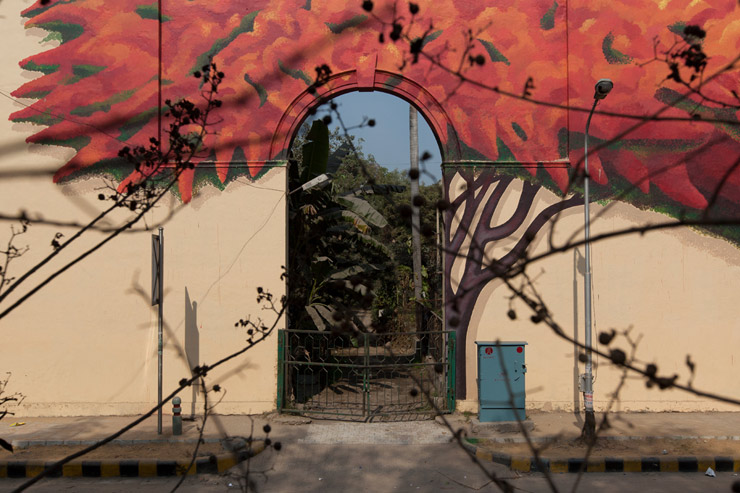
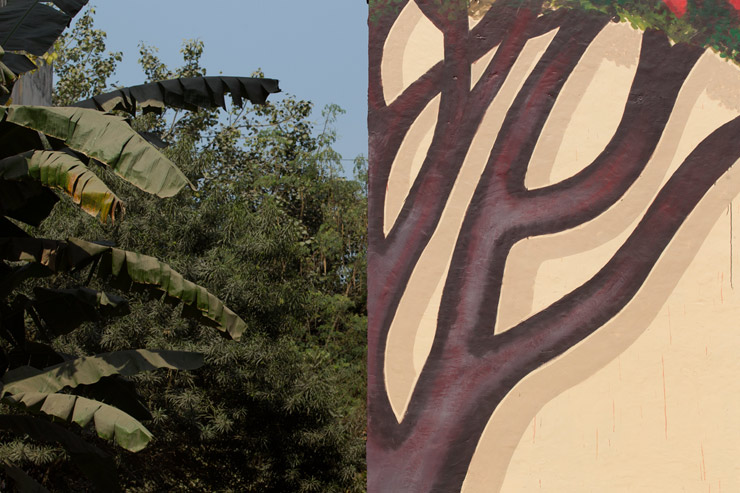
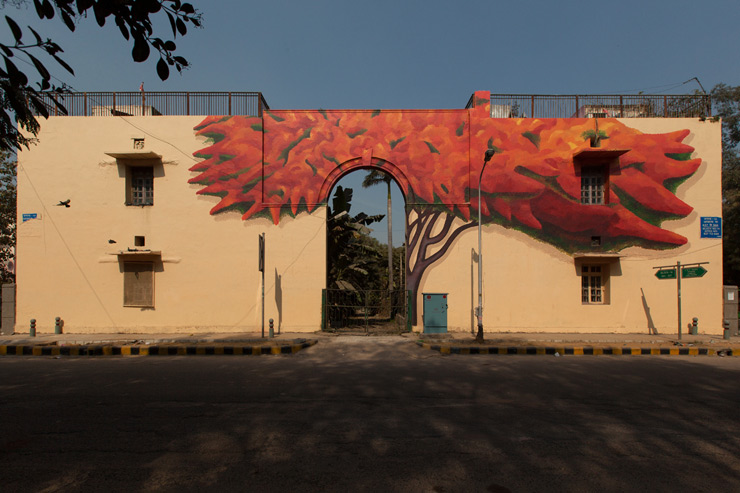
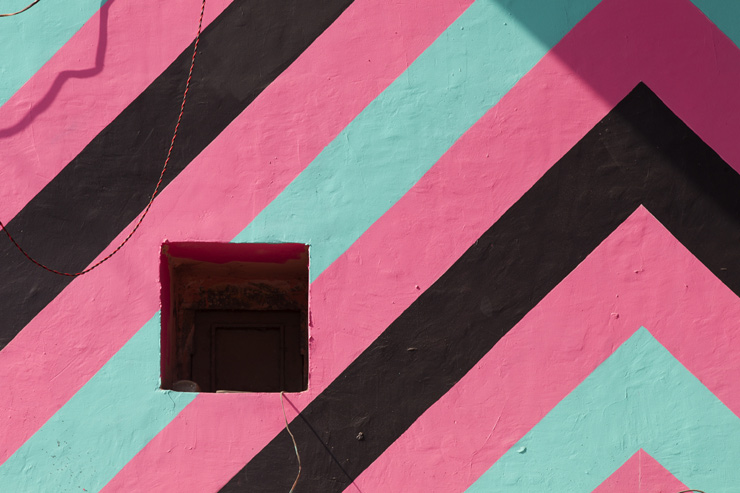
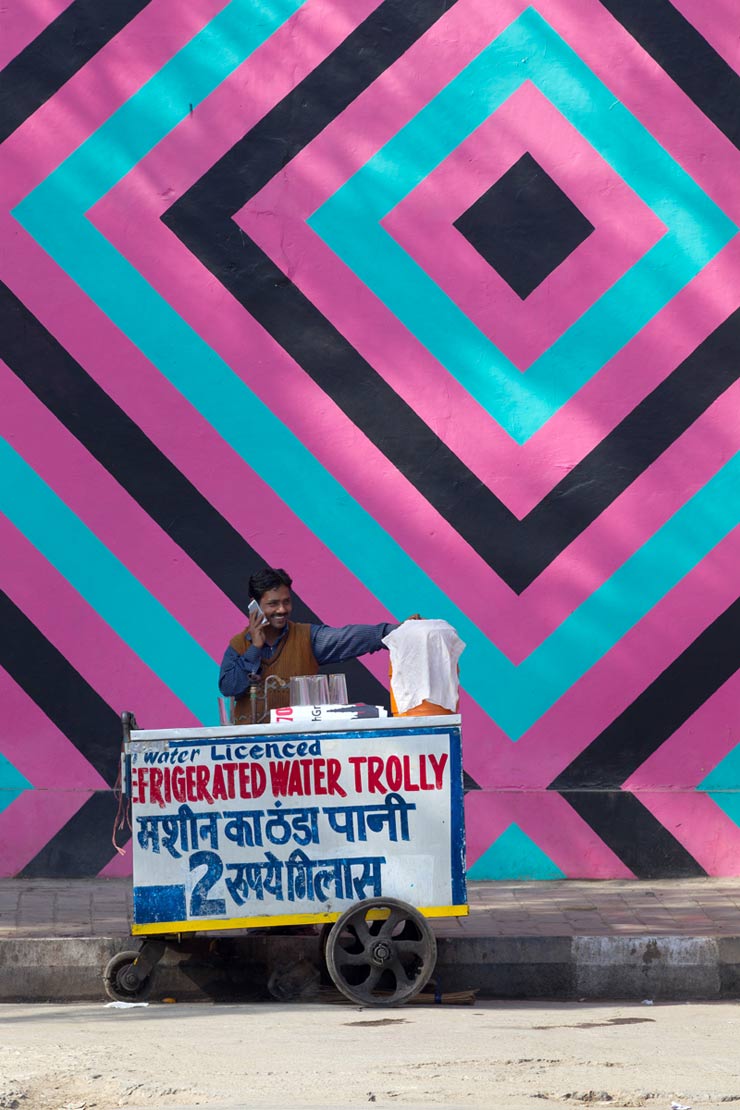
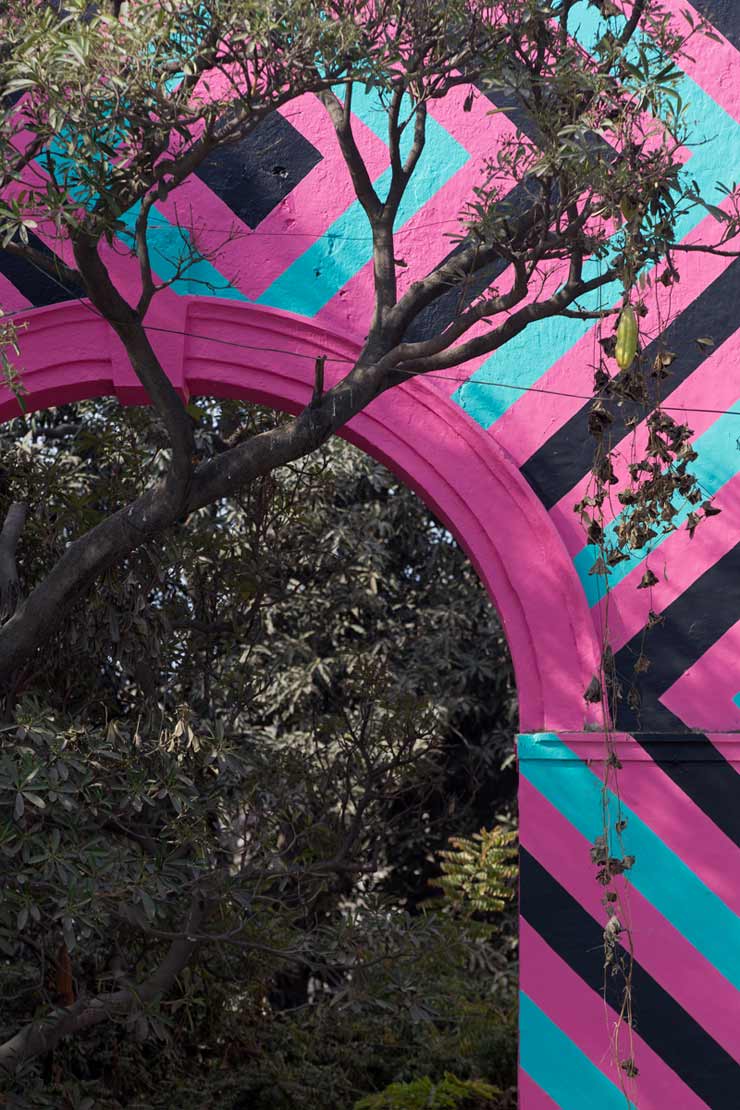
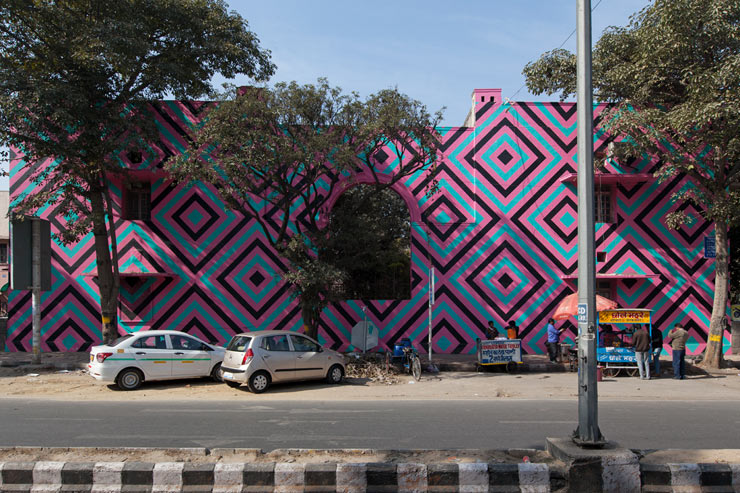
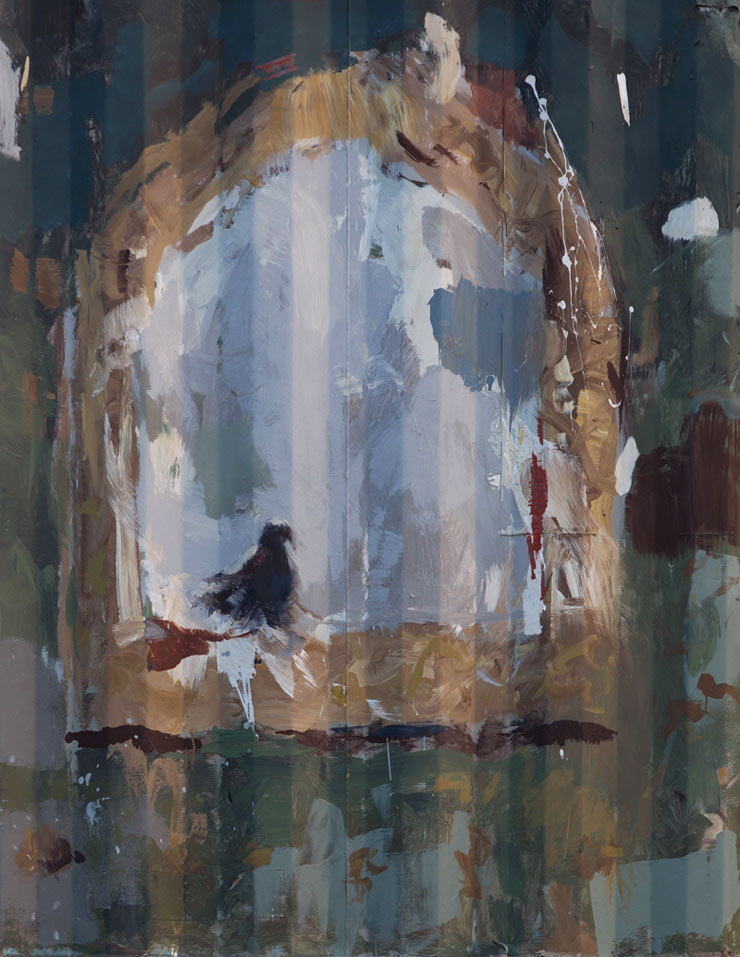
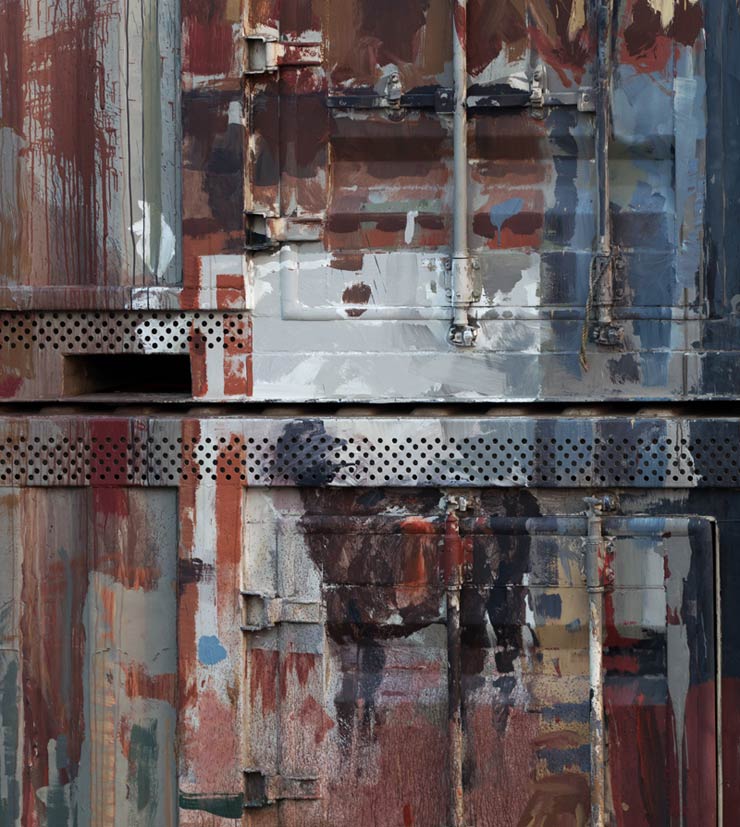
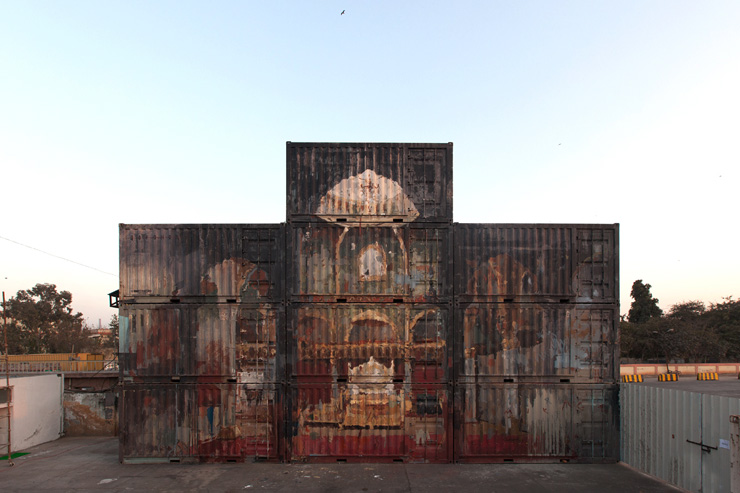
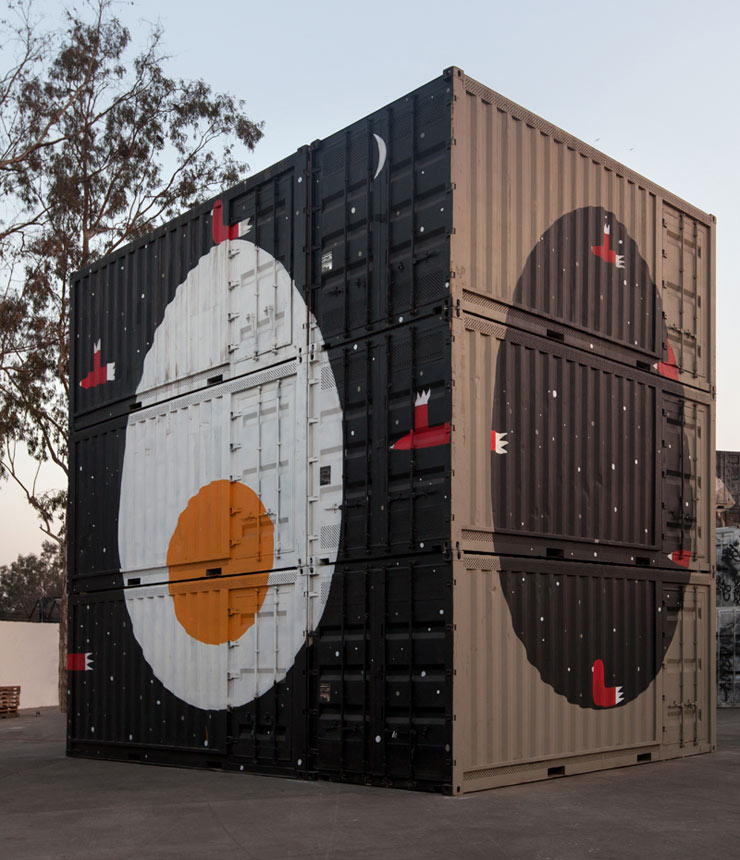
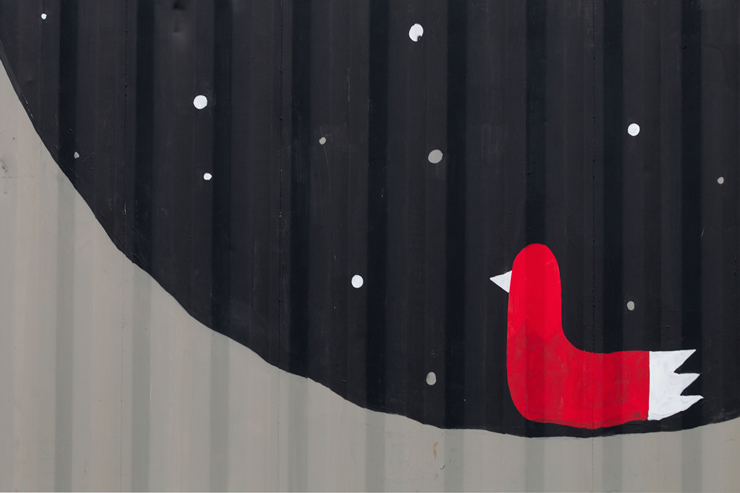
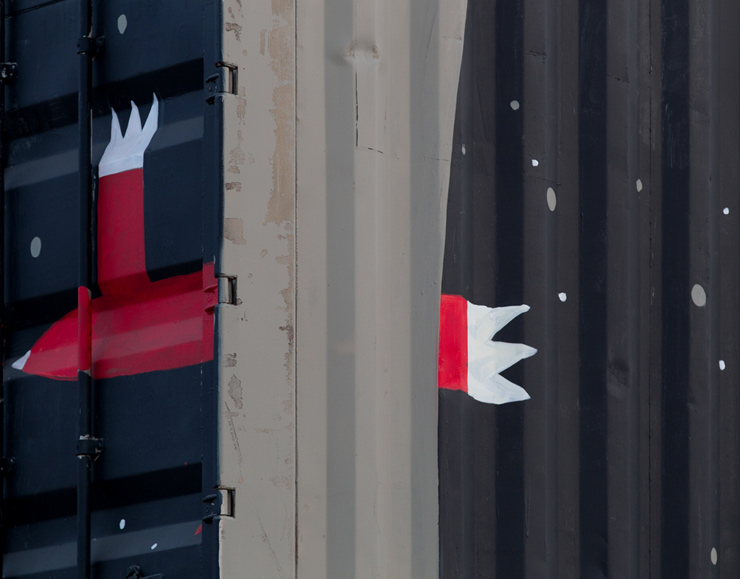
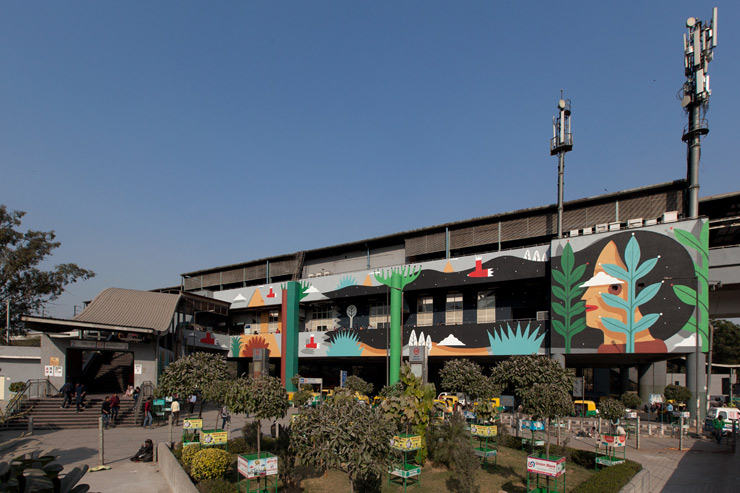
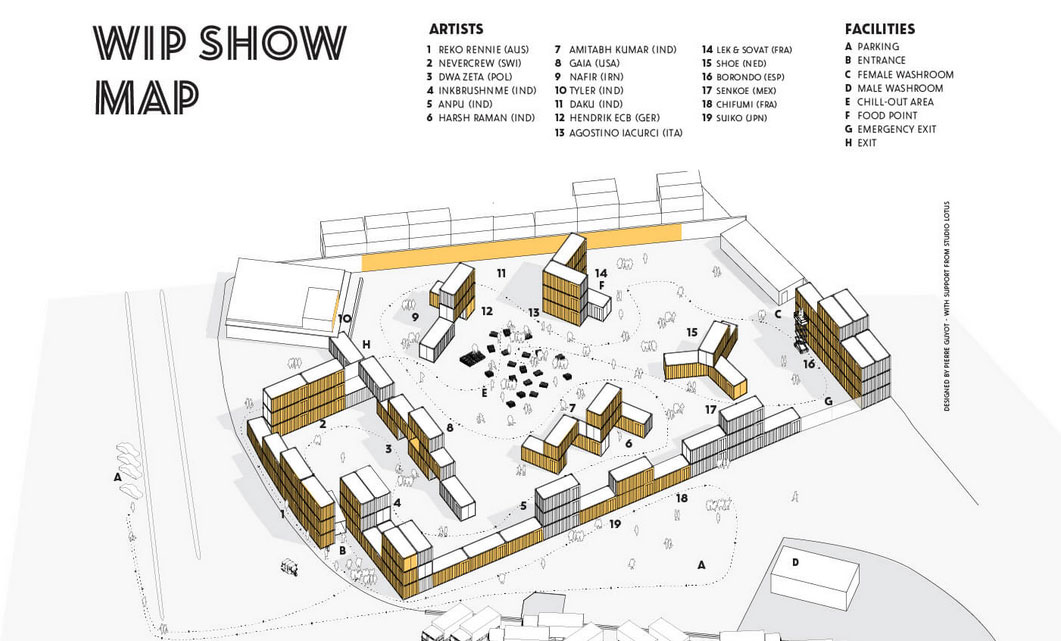
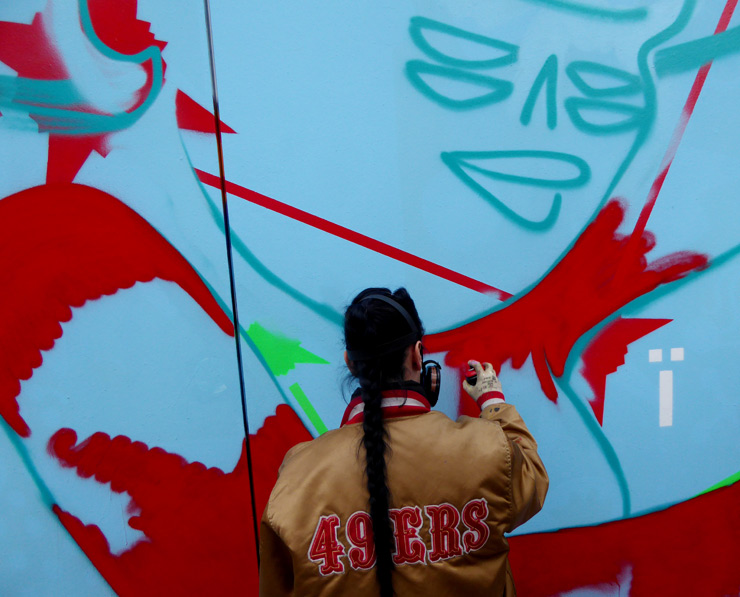
St+art India is coming on strongly this year with their Delhi festival of Street Artists and related talents meeting at the Inland Container Depot (ICD) and creating works on shipping containers. A walk-through installation that uses 100 shipping containers as canvasses and sculpture, approximately 25 national and international artists are painting here during the month of February.
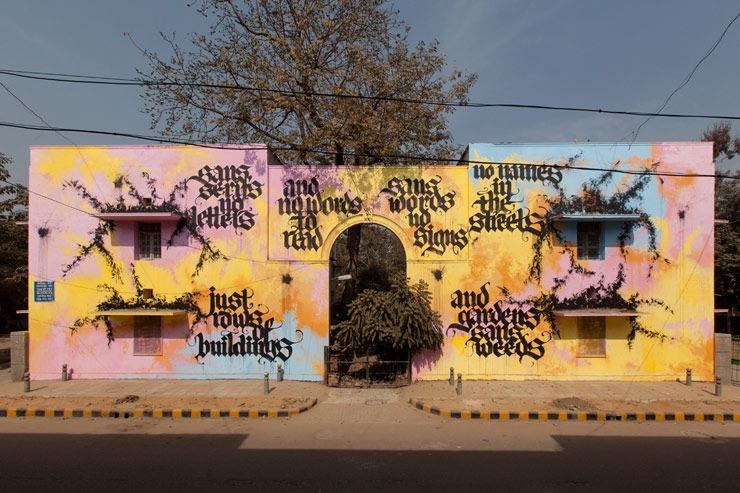
Included in this years’ program are assorted walls in the newly created Lodhi Arts District which lies between Khanna Market and Meherchand Market. Now back in Rome, Italy after their visit to the ongoing events, Lorenzo Gallitto and Giorgio Base of Blind Eye Factory tell us, “India was incredible! We really enjoyed it! “
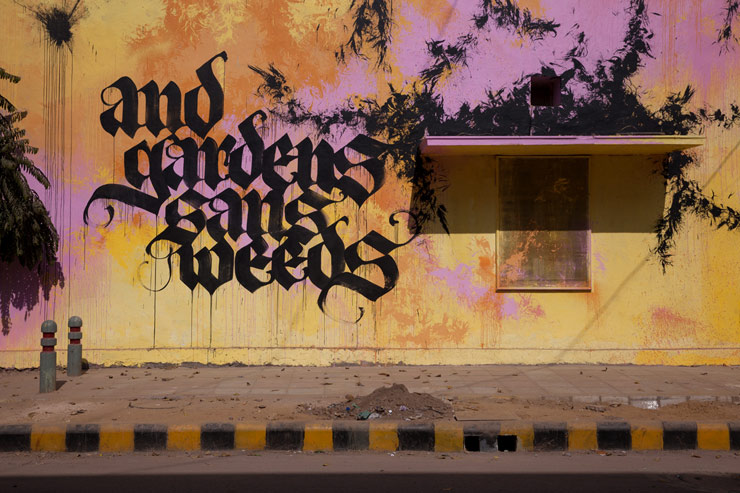
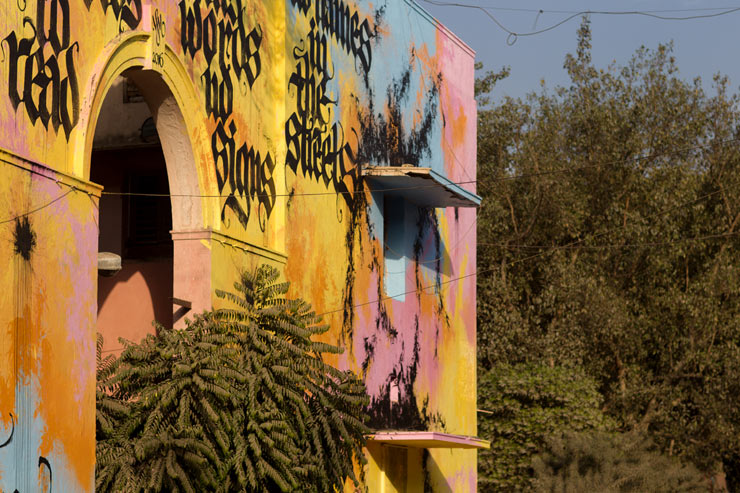
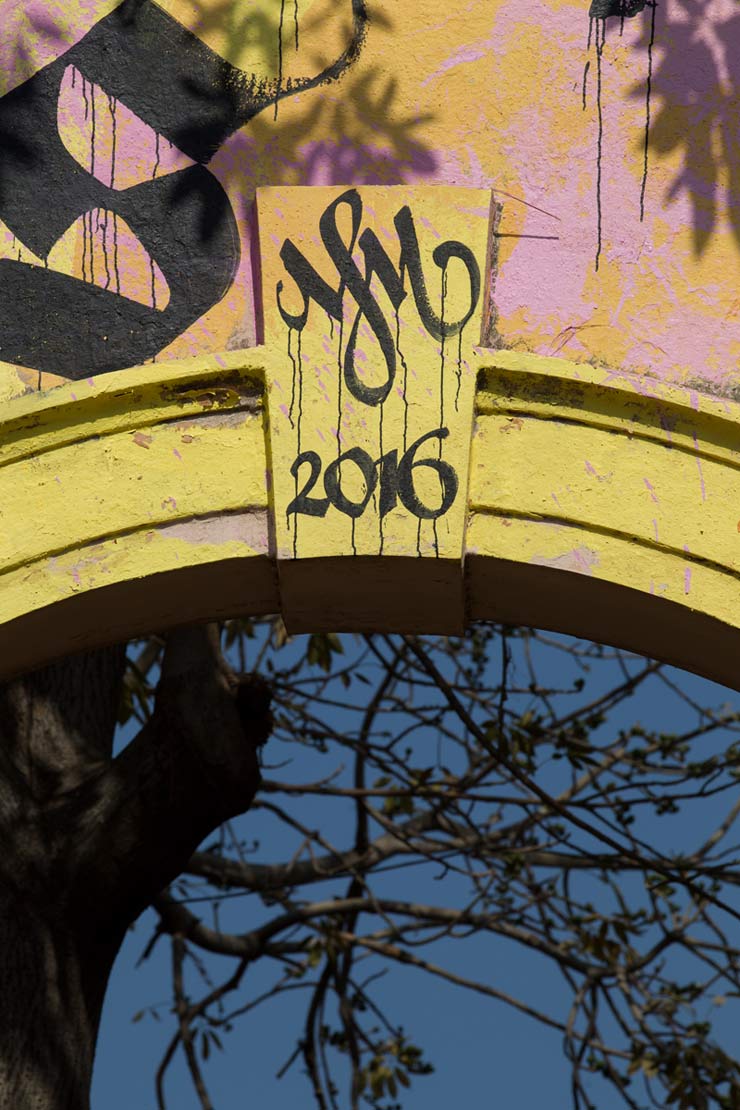
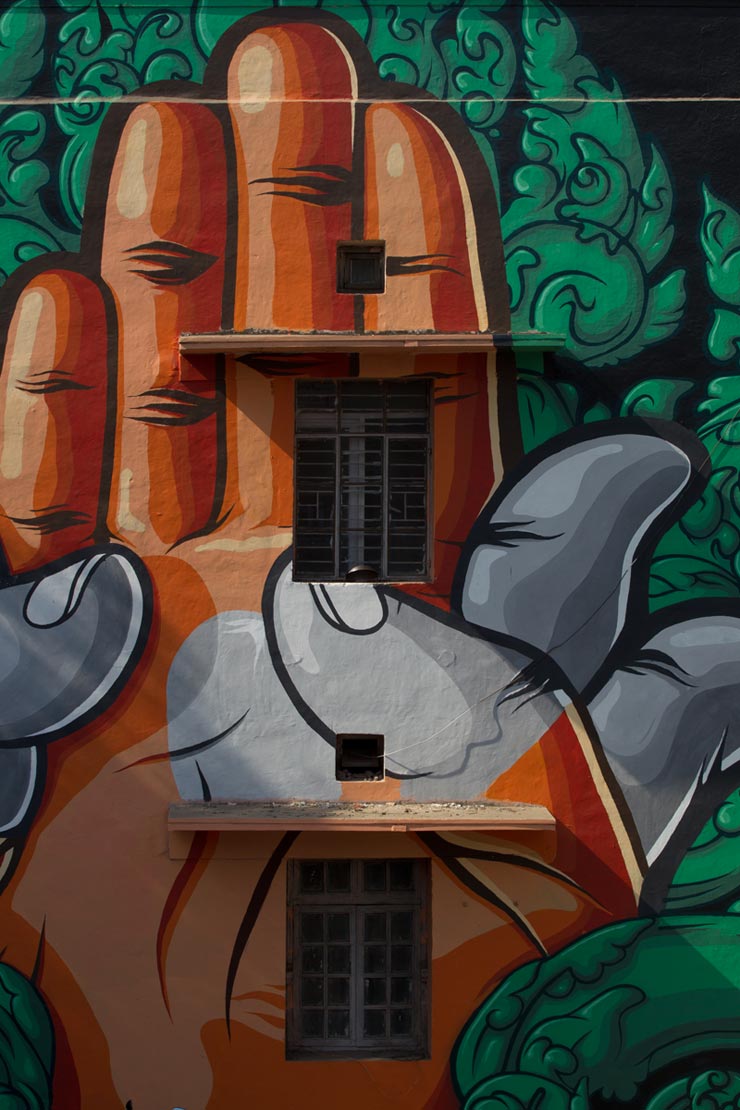
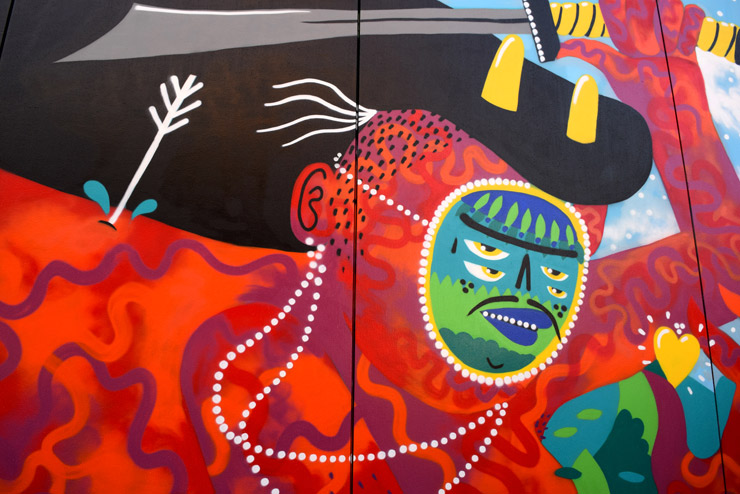
The guys also share with BSA readers these fresh new exclusive photos of walls by their countrymen, Agostino Iacurci and Gonzalo Borondo. Distinctly different styles, they are two of the real talents on the scene whose work we continue to keep our eye on.
Our most sincere thanks to BSA Contributors Lorenzo and Giorgio at BlindEyeFactory.com for sharing their photos with BSA readers. Stay tuned for a full photo essay of this year’s edition of St+ART India with more photos from these gentlemen.
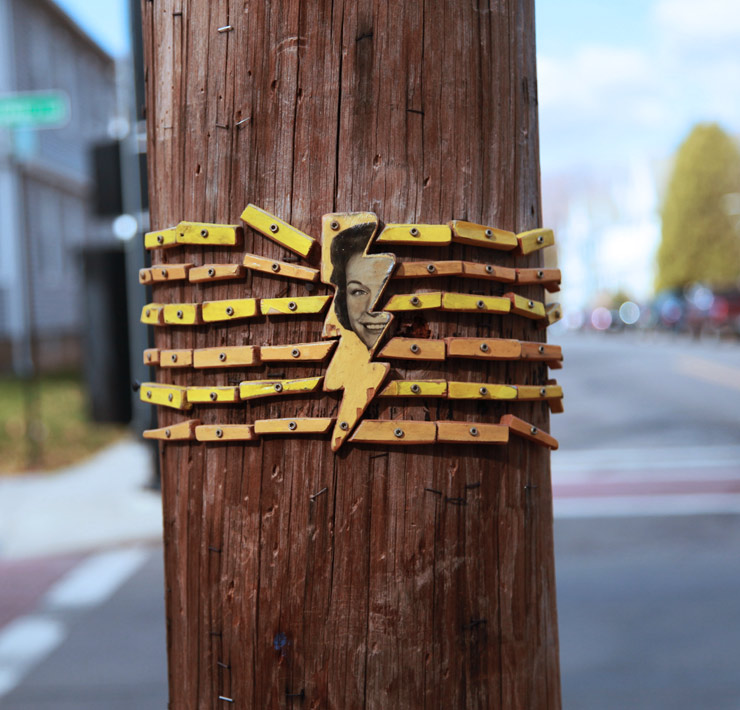
The Paris based cultural project named Art Azoï brings emerging and established Street Artists and contemporary artists to develop mural ideas on public walls – and has been doing it for about five years. They have a few programs of permanent and rotating murals and endeavor to initiate exhibitions and workshops for the artists to more closely interact with the community in the area of Paris that they operate in.
Today we have a look at three new artist installations that are facilitated by Art Azoï. Our special thanks to photographer Alex Parrish for sharing images from this project with BSA readers
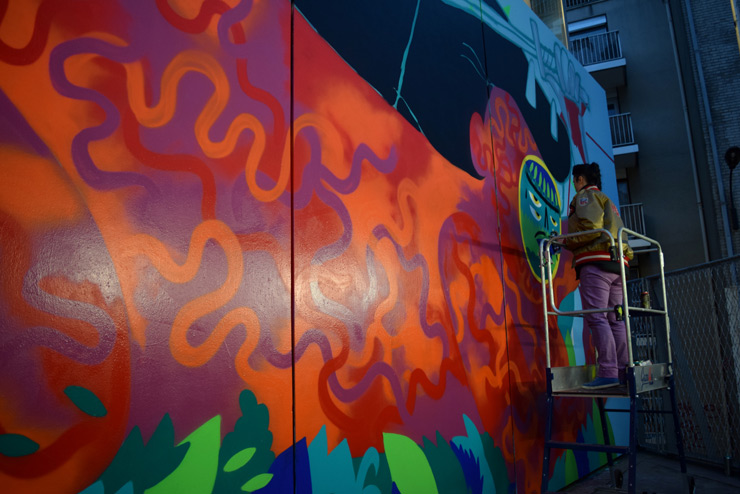
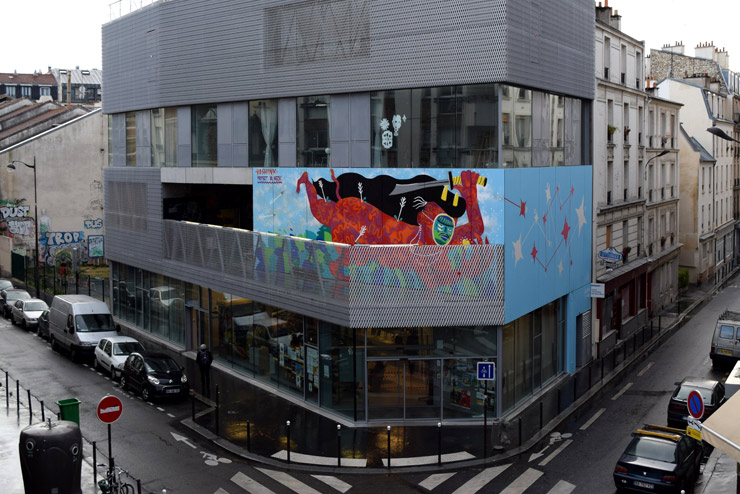
First we see that Kashink was on the terrace of the “centre d’animation Ken Saro Wiwa” with one of her signature poppy four-eyed monsters with a feminine prowess. Yo, “protect ya neck!”
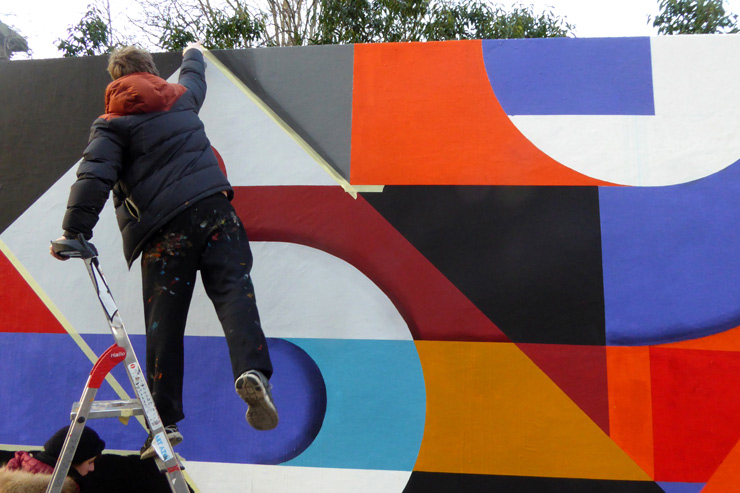
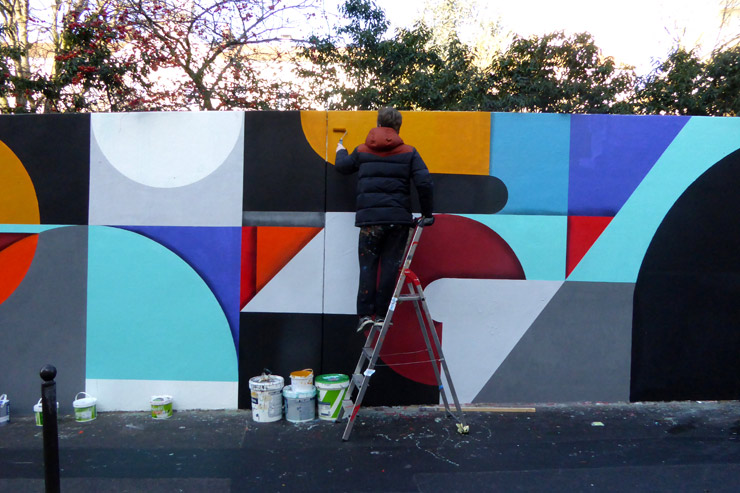
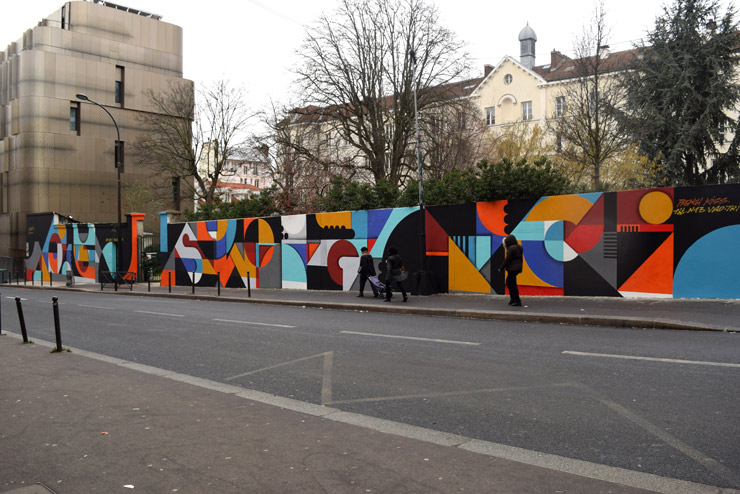
Swiz brought his geometry to this long wall located on the busy rue de Ménilmontant, a wall that has been previously hit by Sunset, RERO, Ella&Pitr and Augustine Kofie.
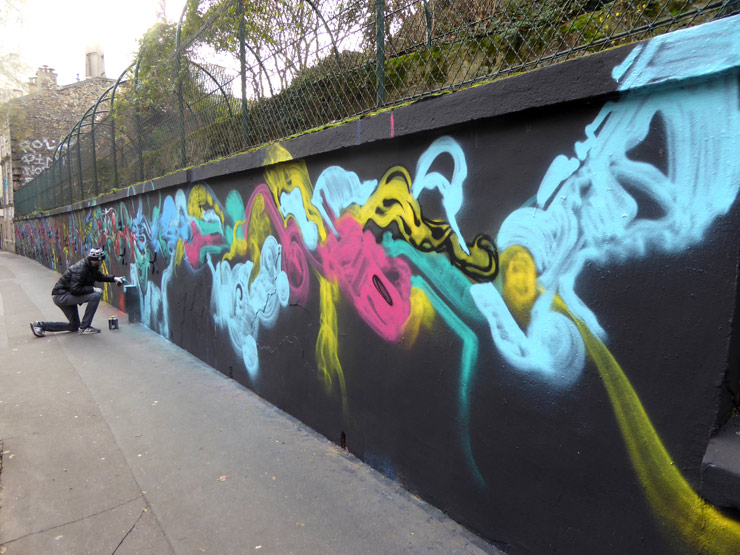
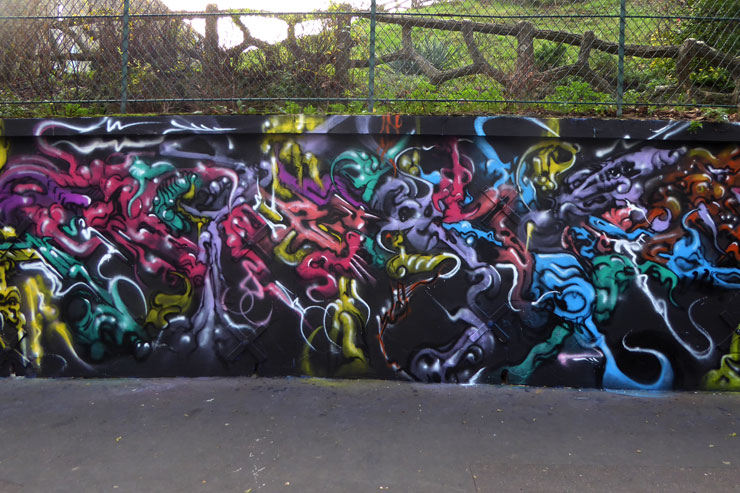
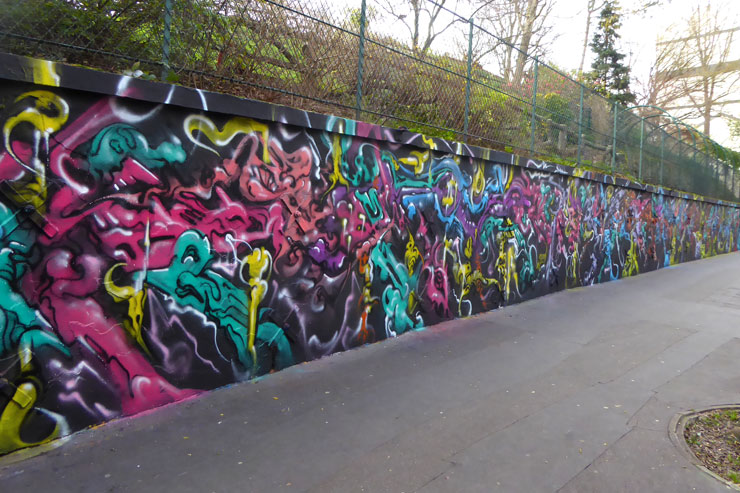
Stesi was invited to begin the 2016 program in January with his piece on the 40 meter long surface along Rue des Pyrénées, located in the 20th arrondisement. He uses his signature abstract style and stippling spray technique that recalls some graffiti letter forms as well as more organic ones.
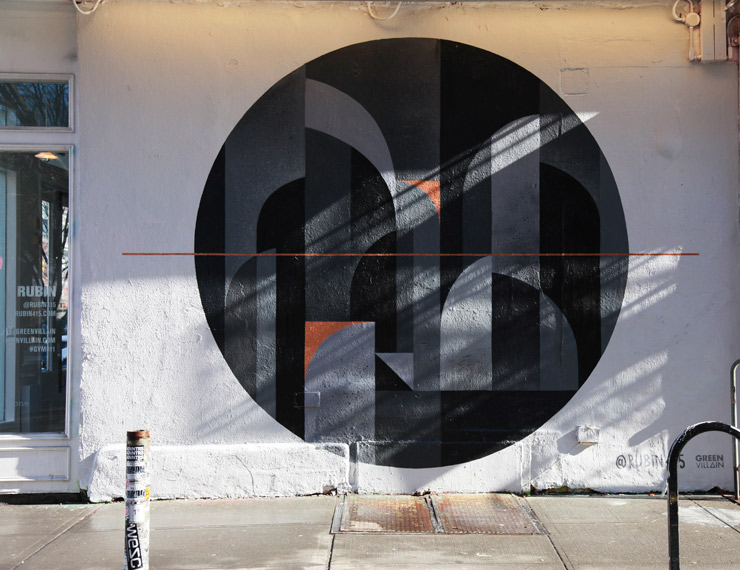
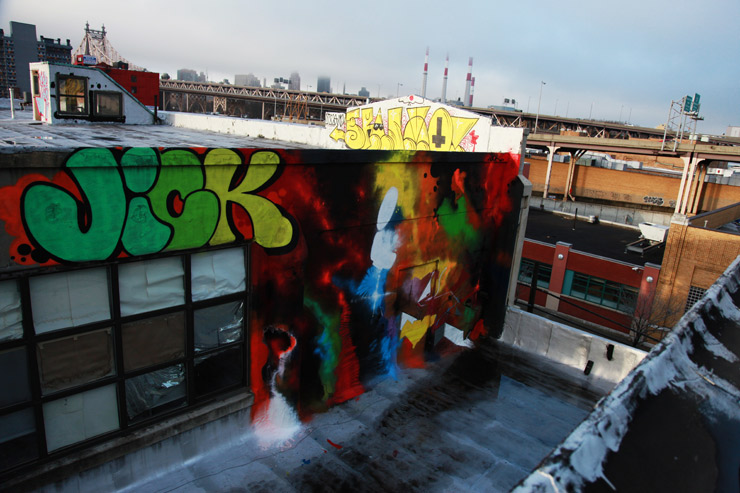
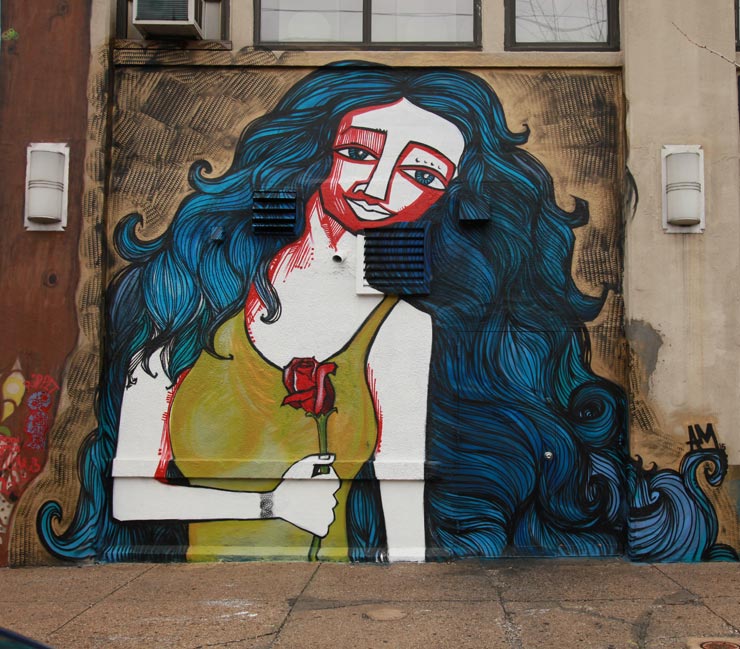
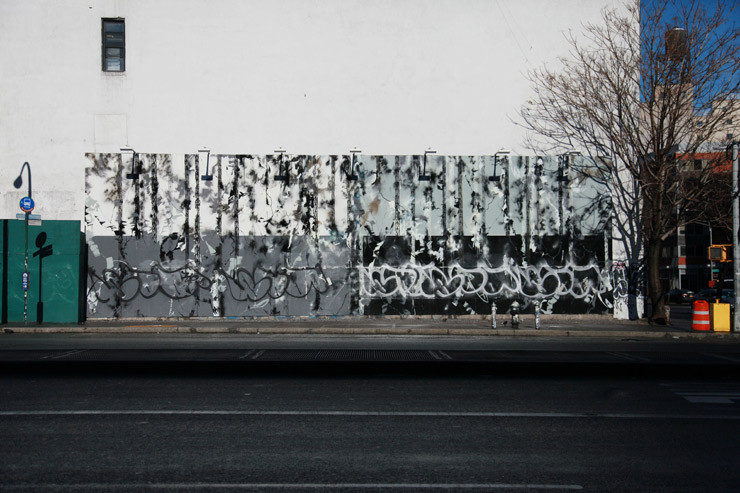
Here’s our weekly interview with the street, this week featuring 92, Alice Mizrachi, Bifido, Dubois Does Not Speak French, El Sol 25, Futura, Jick, JR, Klops, Rubin415, Specter, and Tara McPherson.
The sky poem along the top reads: That Morning / Everything / Remember? / Made of SKY / The hardpress of Avenues / Your hands / My day a checklist mingling with a cosmos / We have been in love / Since the invention of gazing at stars / I still whisper “We one day / will have to party”/
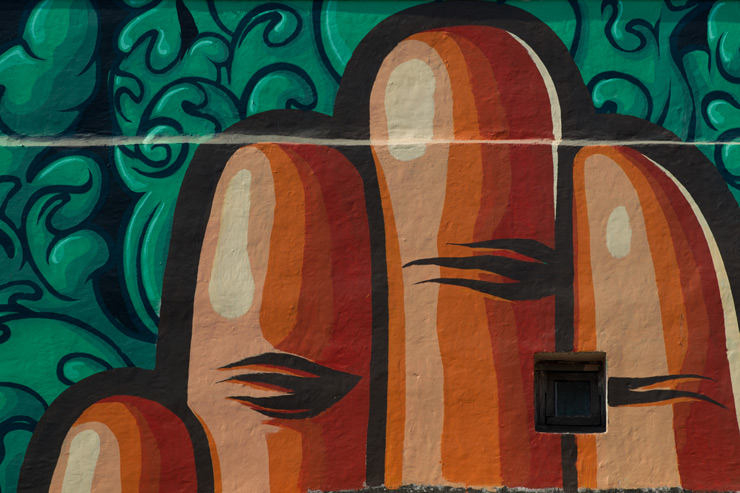
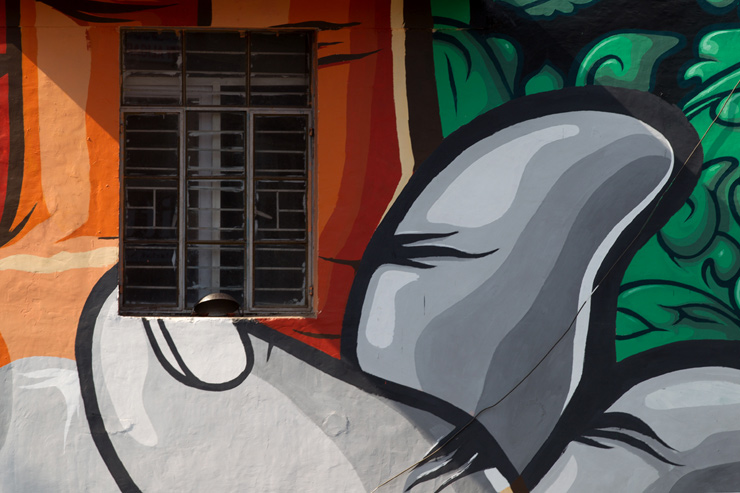
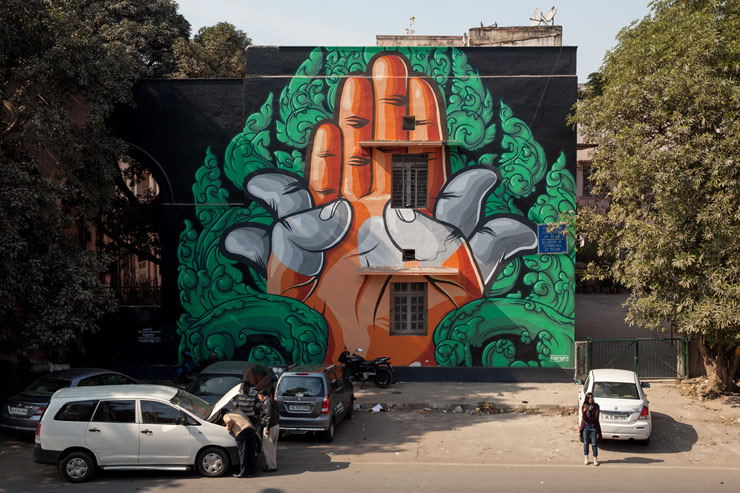
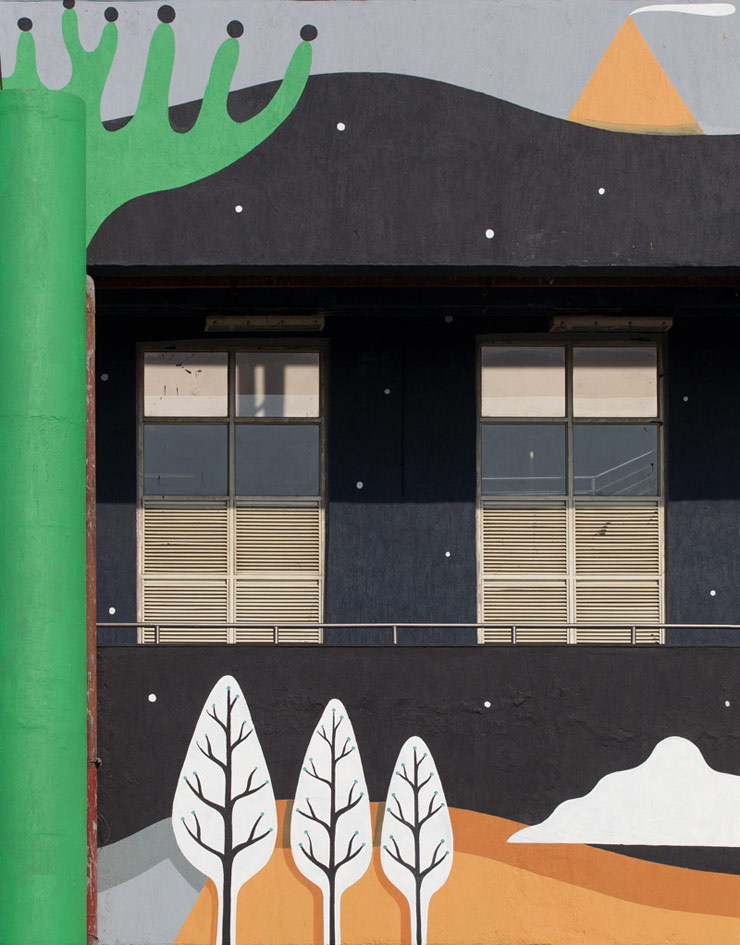
Switzerland‘s NeverCrew just completed two murals at the end of January for St+Art India in New Delhi that are connected thematically, though separated by a few kilometers. That geographical distance is intended to indicate time and loss of memory, they say, as the conceptual bases for “See Through / See Beyond” speaks to the loss of identity that colonized societies experience as their roots slowly fade over time.
In this case, the story is linked to the British Empire imposing upon the Indians but it could just as easily apply to any displacement of a culture’s roots and history.
“The man finds himself with no history, unable to distinguish the outlines of his surroundings, without memories that make him aware and without reference points that make him conscious of his actual position,” says Pablo, one of the two members of NeverCrew. The disconnection here is embodied by the space man, floating above the surface of an odd moonscape, adrift and unable to establish connection.
Our weekly focus on the moving image and art in the streets. And other oddities.
Now screening :
1. Lister Prepares for “MAD PROPS STREET CRED” 2. Visual Waste in Berlin 3. Music Behind Rubble Kings: Little Shalimar
BSA Special Feature: Lister Prepares for “MAD PROPS STREET CRED“
On the occasion of his show last fall at New Image Art in Los Angeles, artist/street artist Anthony Lister had an emotional meltdown. Told with the help of top name graffiti writer RISK, gallery owner Marsea Goldberg, and the artist himself we learn about a tumultuous personal backstory that informs his experience while creating new works on the street and for the show. Especially rewarding in this new short directed by Mark Simpson is an unobtrusive examination of the artists gestural technique, a revelation in itself.
Additionally, the performance artist Ariel Brickman on stage at the show opening is the a personification of Lister’s fantasic/heroic/treacherous figures; a spot-on example of his work come to life.
Visual Waste in Berlin
An electro crunch soundtrack slides you on the darkened rain soaked streets of Berlin and ushers you into an aerosol slaughtered series of stairwells, hallways, and finally a backstreet of this organically cultivated urban art scene. The artist Visual Waste claims his piece of wall estate for Picasso, who once said, “Everything you can imagine is real.”
Music Behind Rubble Kings: Little Shalimar
Part of the reason that Rubble Kings is so amazing is the soundtrack that glues it all together, sets the scene, establishes a tempo, suggests a flavor and a flair to the archival footage of gangs in New York during the 60s and 70s. It’s so well done that you don’t always notice it, you are busy being carried by it. Here’s a quick look at the man in the room whom you don’t see, but hear.
Today at the invitation of Christie’s Education we’ll be participating in a panel discussion about Street Art and how it is being embraced by the art market, museums, and galleries. We’re honored to share the stage with Dr. Sharon Matt Atkins, Vice-Director of Exhibitions and Collections at Brooklyn Museum and with Jonathan LeVine, owner of Jonathan LeVine Gallery in Manhattan.
The panel is organized by Christie’s Academic Director Dr. Véronique Chagnon-Burke and Dr. Matt Atkins.
The space is limited for this event so you must RSVP if you are going to attend. Can’t wait to see you there!