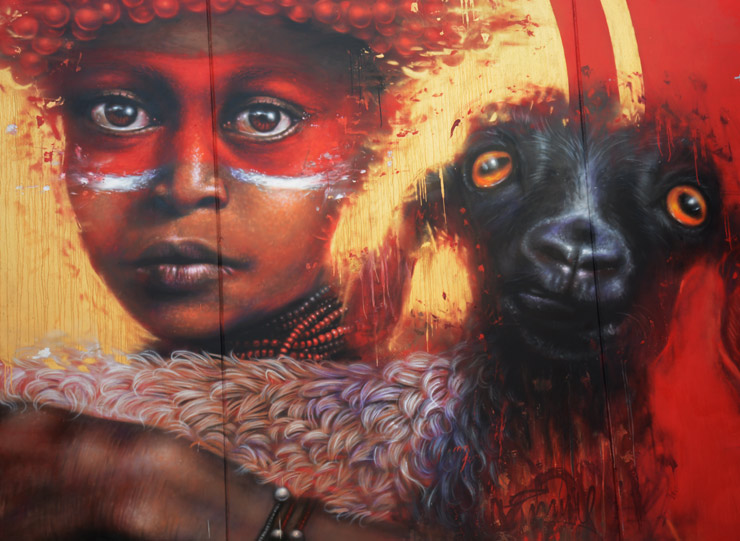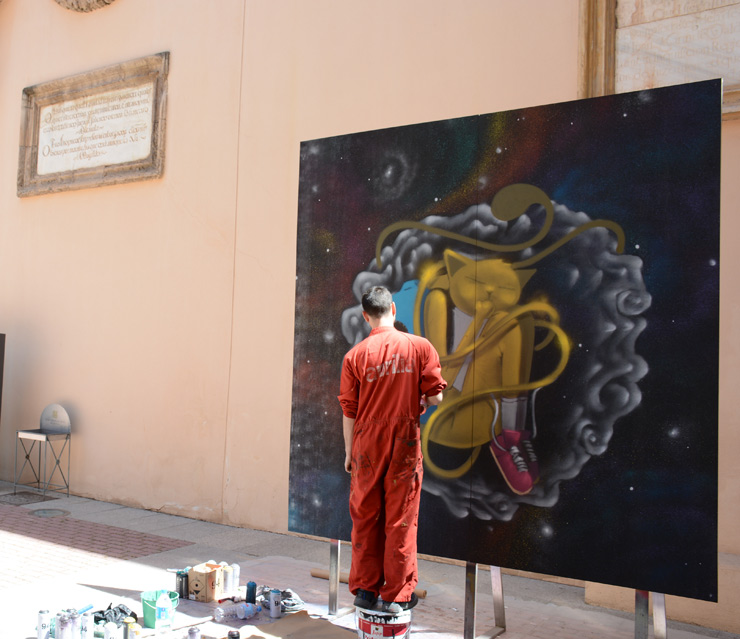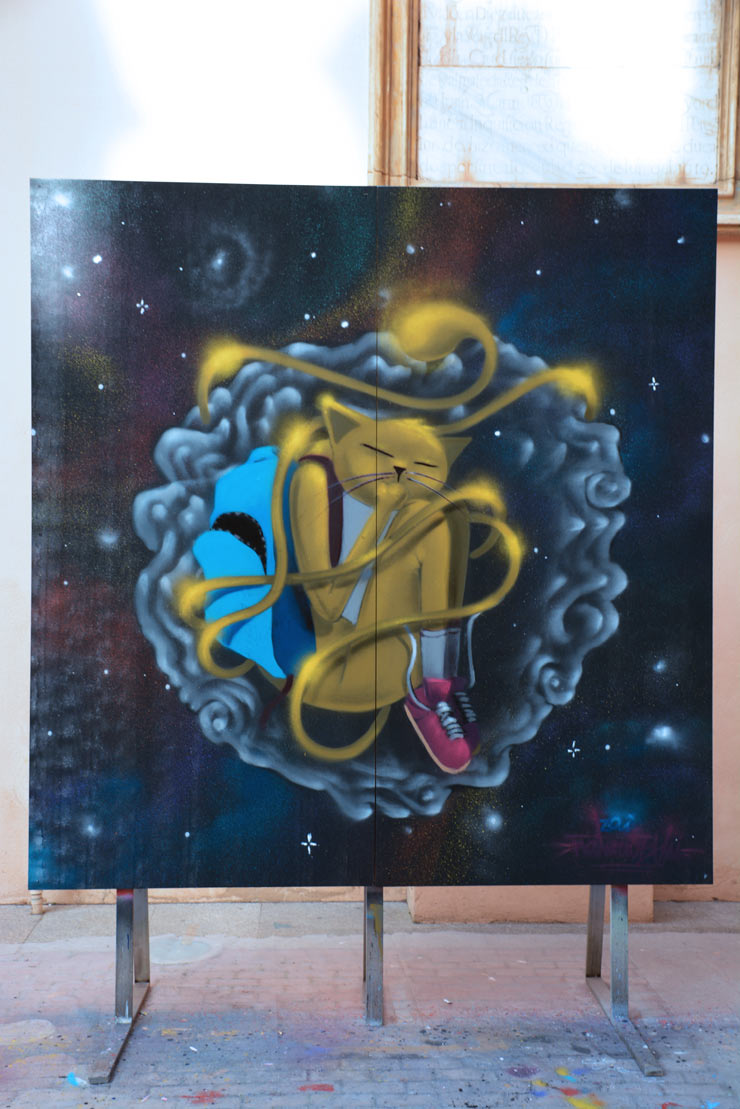
Evan Pricco Curates “What In The World” at Urban Nation in Berlin

Evan Pricco Curates “What In The World” at Urban Nation in Berlin

“The graffiti and Street Art movements – they have all these tentacles and they can be non-linear.”


A new exhibition in Berlin’s neighborhood of Schöneberg epitomizes one of the central schisms that has vibrated through Street Art and graffiti for years: the question of where to draw boundaries between these two scenes. Each may have been born in the margins of society but are now evermore commingled. Debates aside, everyone agrees that once in the gallery space, street become fine art after all.
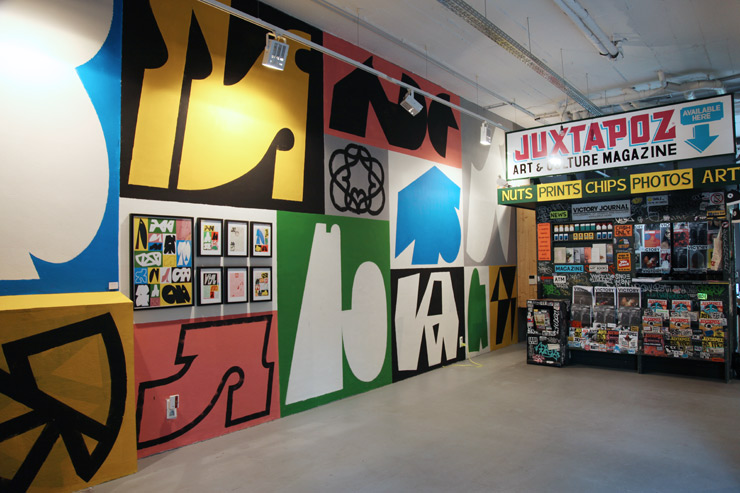
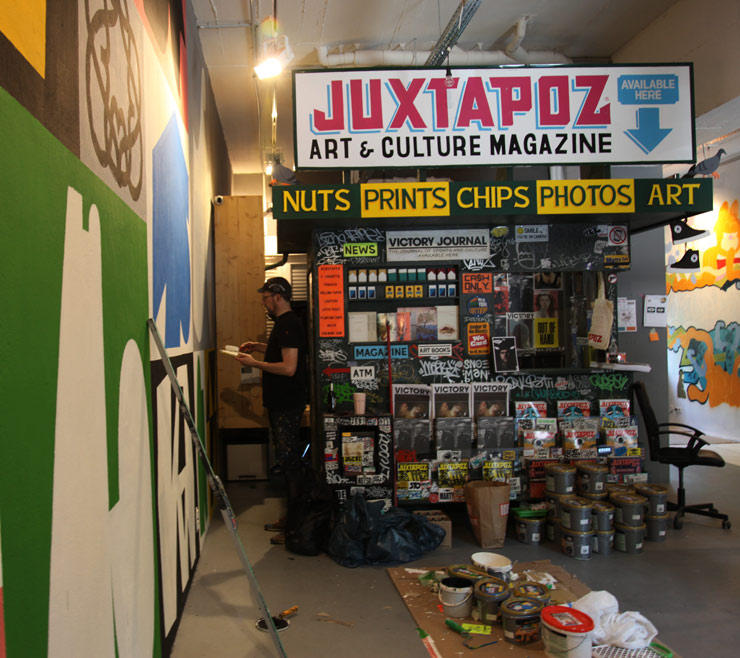
Erosie on the left with Grotesk’s Juxtapoz News Stand on the right. What In The World PM/12. Urban Nation Museum For Urban Contemporary Art. Berlin, May 19, 2017. (photo © Jaime Rojo)

As Editor-in-Chief of the San Francisco based art magazine Juxtapoz and curator of this “What in the World” show at Urban Nation’s project space, Evan Pricco is well aware of the landmines that can explode when one is negotiating the terminologies and practices of sundry sub-cultural art manifestations that have bubbled to the surface in the last decades and which now often melt with one another inextricably.

“The graffiti and Street Art movements – they have all these tentacles and they can be non-linear,” Evan says as we walk down a subterranean parking ramp to see a low, long outdoor mural by Sweden’s EKTA; an abstract series of roughly square patches that closely emulate the sewn panels he has suspended from the ceiling inside the gallery.

Speaking of the tentacles, he continues, “It can be starting points to end points – it can be end points to starting points. There are all of these different cultures that grew out of that 1970s-80s set of counter-culture art movements.”
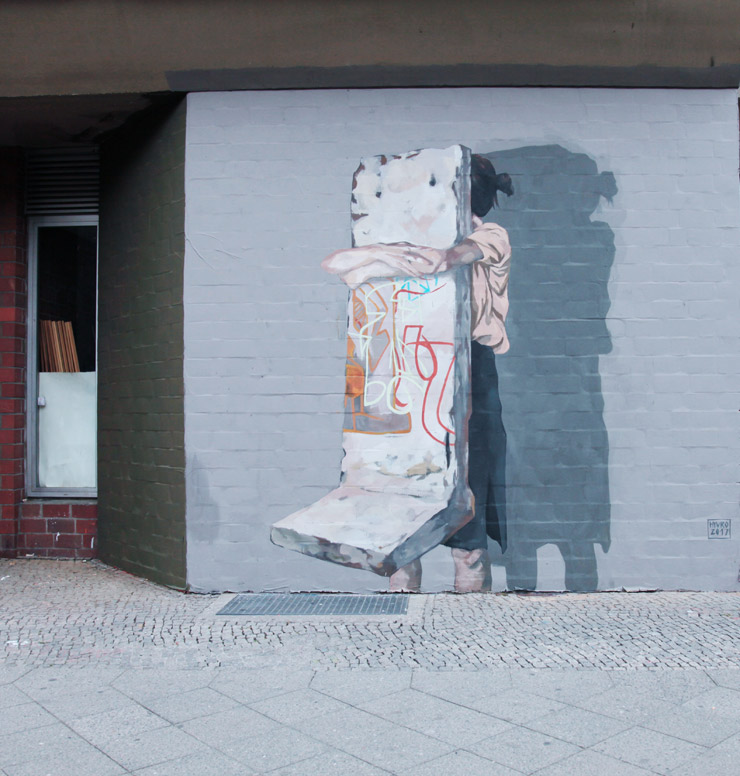
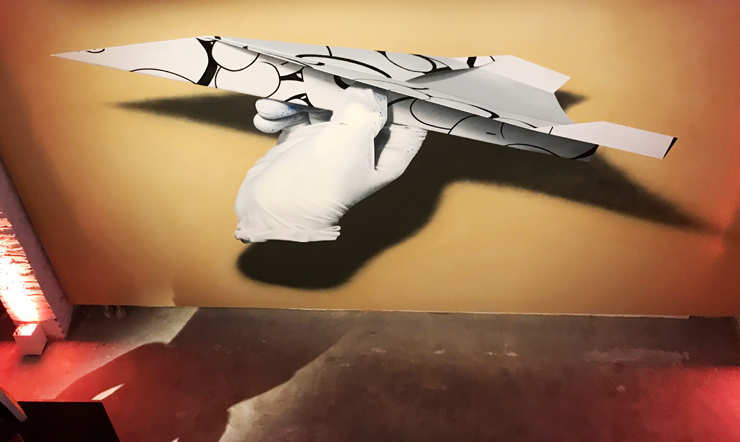
Hyuro. What In The World PM/12. Urban Nation Museum For Urban Contemporary Art. Berlin, May 19, 2017. (photo © Jaime Rojo)

“I think the people that I really wanted in this show are kind of on the periphery of that. They clearly dip their toe into those movements, are clearly influenced by them. Their practice doesn’t necessarily fit in with what is going on in Street Art and graffiti but also its informed by it.”

To introduce a new crop of artists to Urban Nation that haven’t been shown here yet, Pricco choses some of Europes street/mural/conceptual artists who emphasize color and mood, an expansionist approach that he welcomes at the magazine as well. Not surprisingly, the range reflects some of the same interests you’ll find flipping through the influential art publication; old school graffiti, commercial illustration, comic book history, abstract fine art, political art, some lowbrow, some conceptual. There is even Grotesk’s newsstand, the actual one that he designed and constructed with Juxtapoz that sat in Times Square in October 2015.
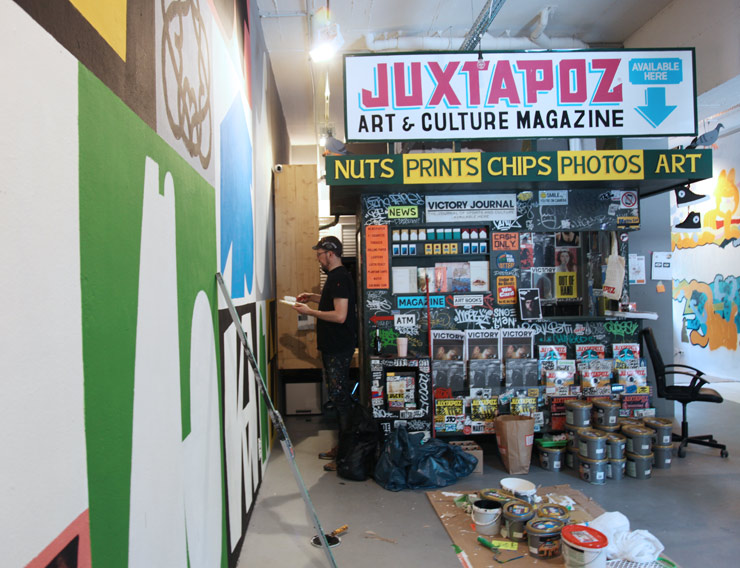
Erosie on the left with Grotesk’s Juxtapoz News Stand on the right. What In The World PM/12. Urban Nation Museum For Urban Contemporary Art. Berlin, May 19, 2017. (photo © Jaime Rojo)

Primarily from Europe and raised in the hothouse of the 1990s epic graffiti scenes that enthralled youth in many EU big cities, this group of 7 artists each has moved their practice forward – which may lose them some street cred and gather new audiences.

Included are Berlin’s Daan Botlek, Sweden’s EKTA, Ermsy from France, Erosie from the Netherlands, Hyuro from Spain, Serge Lowrider from Switzerland and Zio Ziegler from the US. If you speak to any of them, you may find the commonality is the freedom they actively give themselves to pursue an autonomous artistic route not easily categorized.
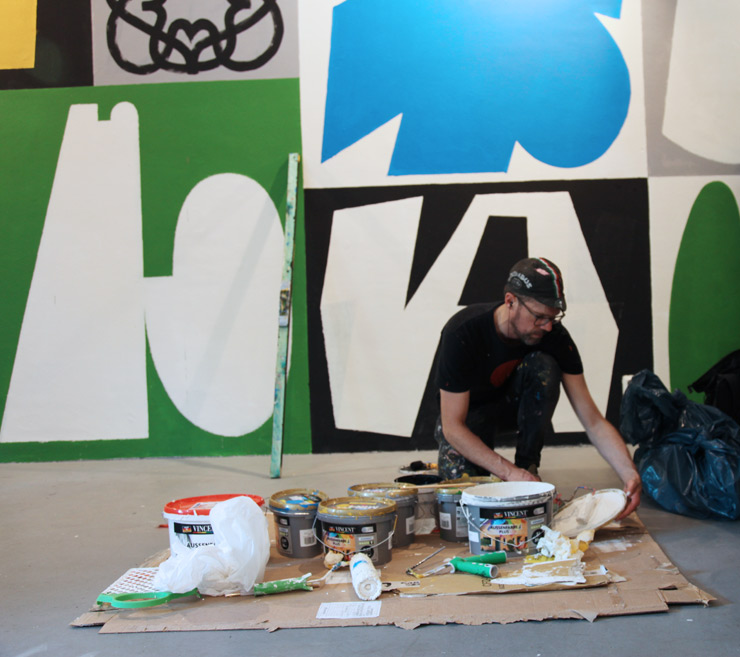
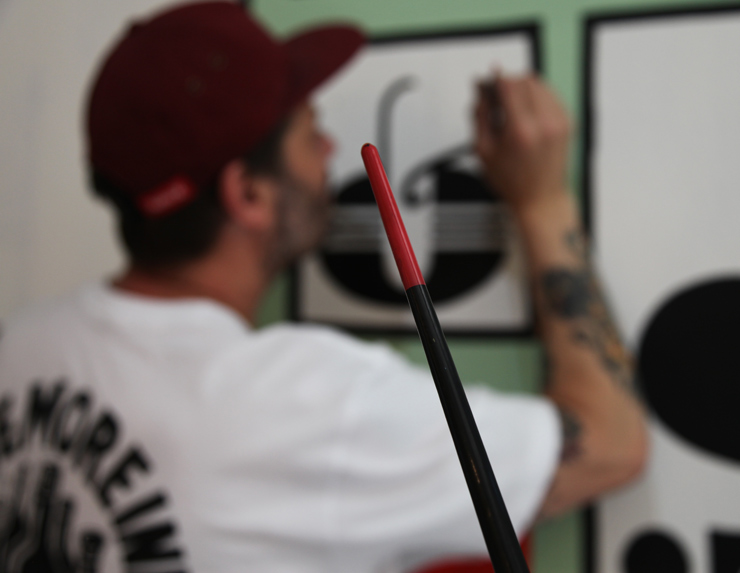
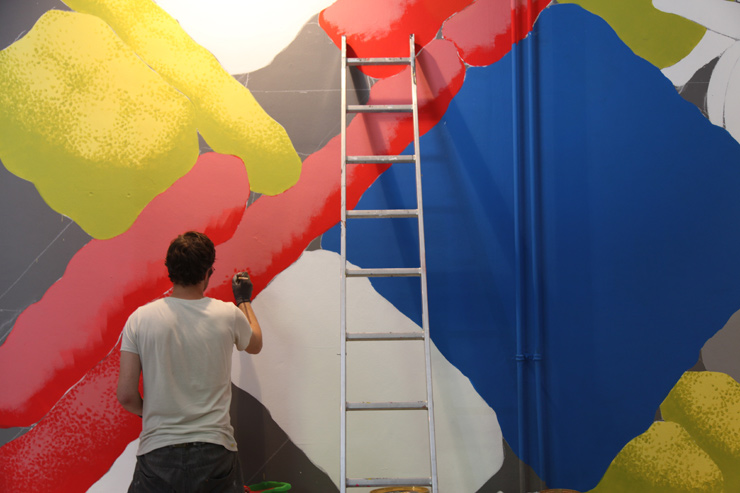
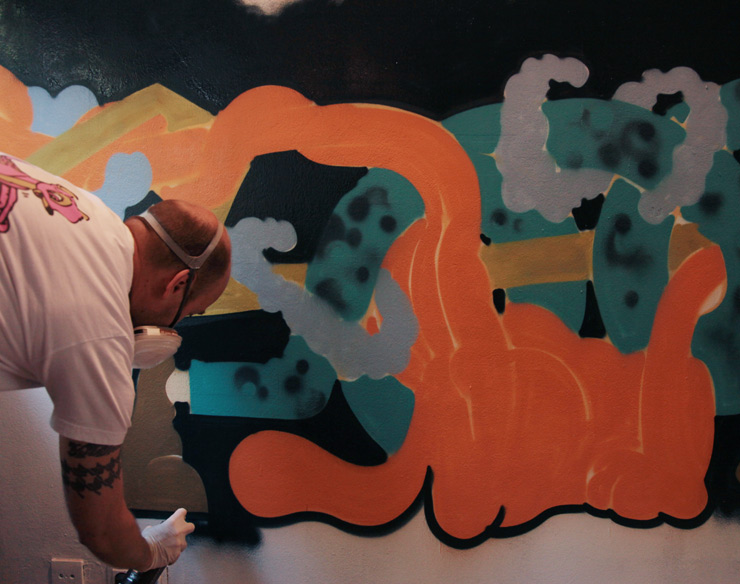
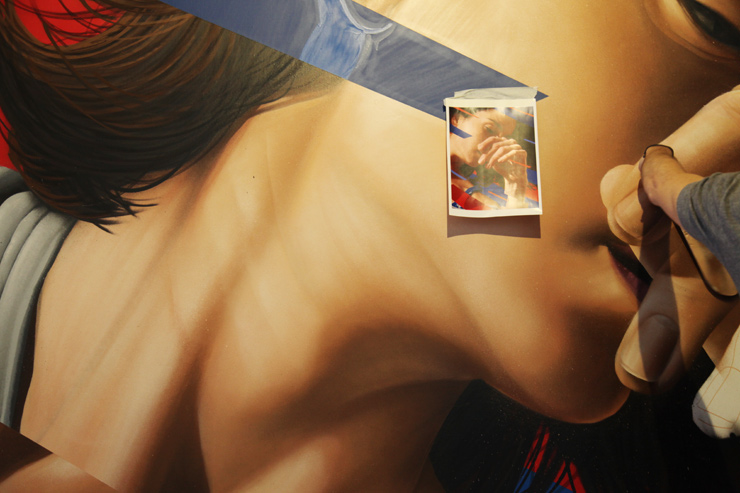
Erosie at work on his piece. What In The World PM/12. Urban Nation Museum For Urban Contemporary Art. Berlin, May 19, 2017. (photo © Jaime Rojo)

Lowrider is clearly in love with the letter-form, as is the graffiti tradition, but he steers sharply toward the calligraphic practices of crisp sign-painting and inverting the pleasantly banal messaging of advertising from an earlier era. Perhaps the tight line work overlaps with tattoo and skater culture, two creative brethren frequently in the mix in graffiti and Street Art scenes.

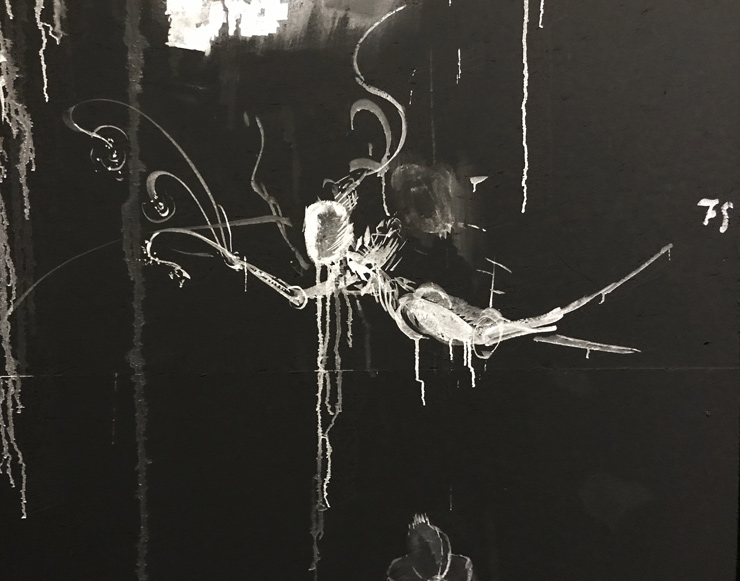
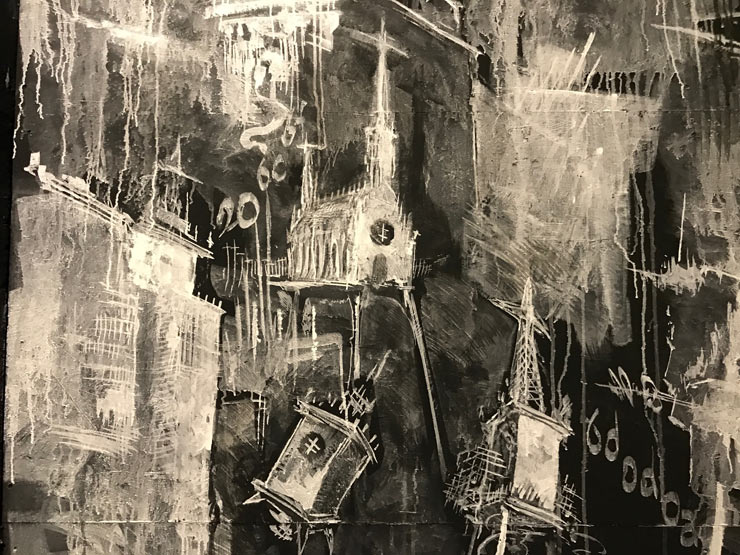
Hyuro uses a figurative symbolism heavy with metaphor and a color palette that is too understated for the flashy graphics that many associate with today’s mural festivals, yet she’s built a dedicated following among Street Art fans who admire her poke-you-in-the-eye activist streak. Daan Botleks’ figures wander and cavort amidst an abstractedly shaped world calling to mind the shading of early graffiti and the volumizing pointillism of Seurat after some wine.
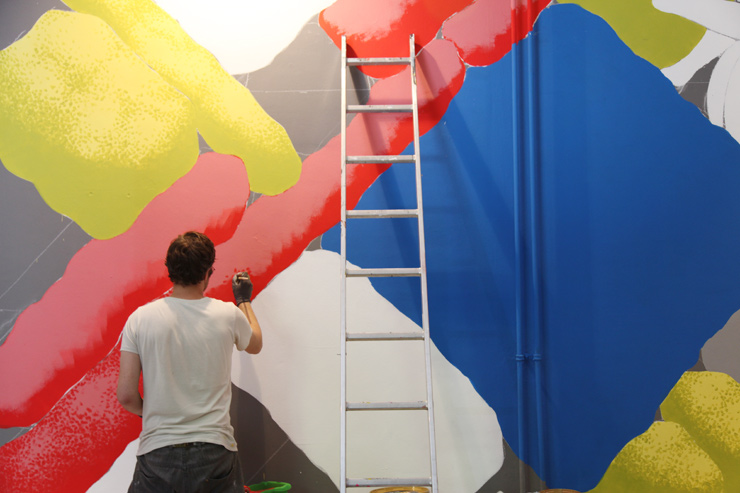
 

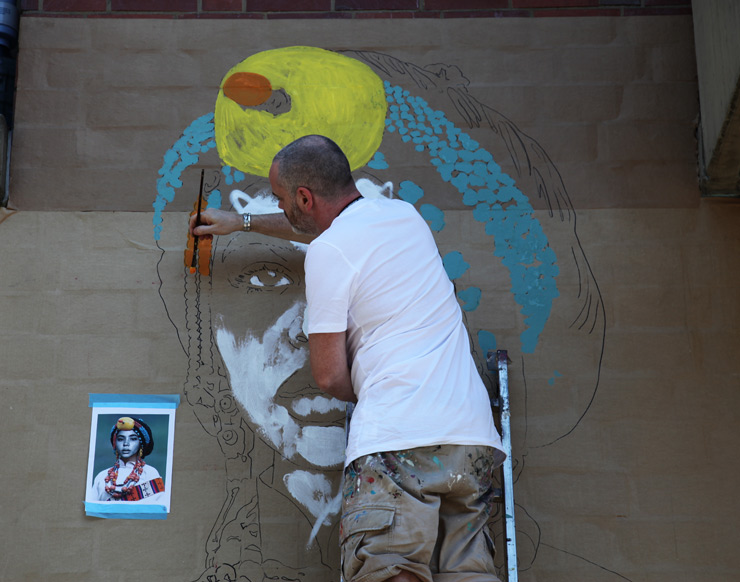
Daan Botlek at work on his piece. What In The World PM/12. Urban Nation Museum For Urban Contemporary Art. Berlin, May 19, 2017. (photo © Jaime Rojo)

Painter Jeroen Erosie emphatically will tell you that he was in love with graffiti when he first did it on the streets as a teenager – and for many years afterwards. But he says he ultimately bristled at a scene that had once symbolized freedom to him but had become too rigid and even oppressive in its rules about how aesthetics should be practiced by people – if they were to earn respect within the clan.

At Saturday nights opening along Bülowstrasse with the front doors open to the busy street and with the sound of the elevated train swooshing by overhead, Erosie explained with a gleeful certainty his process of deconstruction that led him to this point. “I removed one of the pillars of graffiti from my work and I liked the result, the change. So I started to remove more pillars, one by one,” he says, describing the evolution that transformed his letter forms and colors into these simplified and bold bi-color icons that may call to mind Matisse’s cut outs more than graffiti bubble-tags, but you’ll easily draw the correlation if you try.
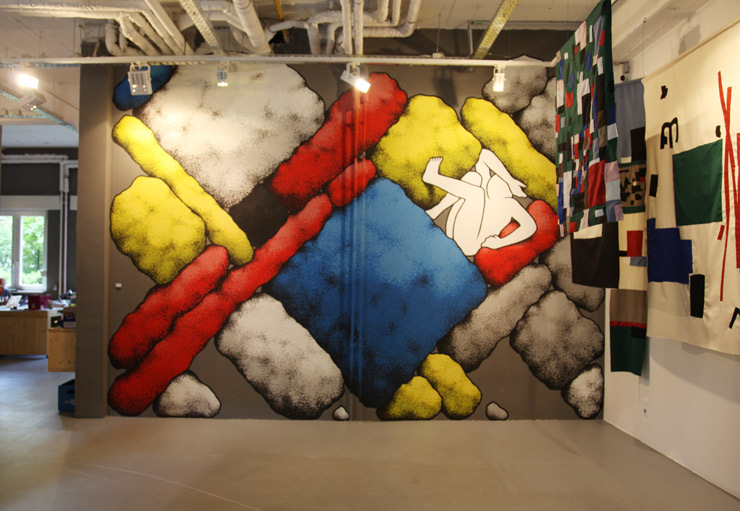
Daan Botlek. What In The World PM/12. Urban Nation Museum For Urban Contemporary Art. Berlin, May 19, 2017. (photo © Jaime Rojo)

The Project M series of exhibitions over the past three years with Urban Nation, of which this is the 12th, have featured curators and artists from many backgrounds, disciplines, and geographies as well. The myriad styles shown have included sculpture, stencil, wheat paste, collage, calligraphy, illustration, screen-printing, decoupage, aerosol, oil painting, and even acrylic brush. It has been a carefully guided selection of graffiti/Street Art/urban art/fine art across the 12 shows; all presented respectfully cheek to jowl, side by side – happily for some, uncomfortably for others.

The ultimate success of the Project M series, initiated by UN Artistic Director Yasha Young, is evident in just how far open it has flung the doors of expectation to the museum itself. When the house opens in four months it will be a reflection to some extent 140 or so artists who pushed open those doors with variety of styles emblematic of this moment – converging into something called Urban Contemporary.
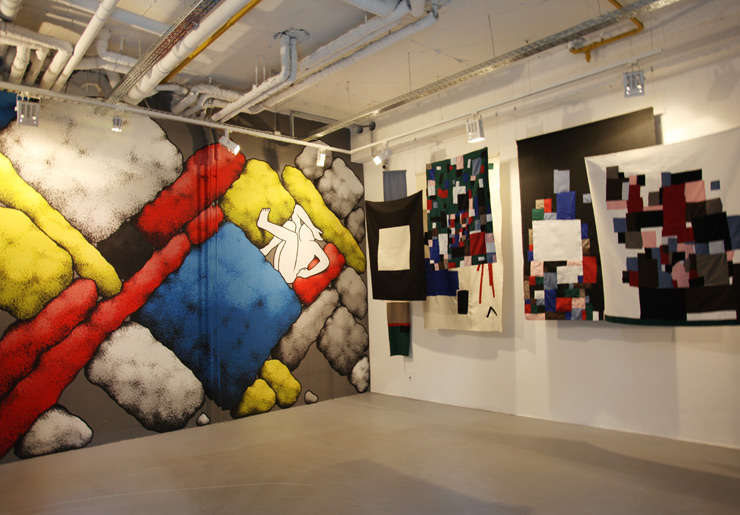
Daan Botlek and Ekta. What In The World PM/12. Urban Nation Museum For Urban Contemporary Art. Berlin, May 19, 2017. (photo © Jaime Rojo)

“What in the World” indeed: this show is in perfect alignment with the others in its wanton plumbing of the genres.

“I was trying to find people that are not part of the regular circuit – and I don’t mean that in a negative way but I mean there is kind of a regular circuit of muralism and Street Art right now – but I was looking for people who are really sort of on that periphery,” Pricco says. “Also because they are coming from these different parts of Europe, which to me sort of represents Juxtpoz’ reach, and they all kind of know each other but they’ve never really met – they all kind of bounce off of each other.”
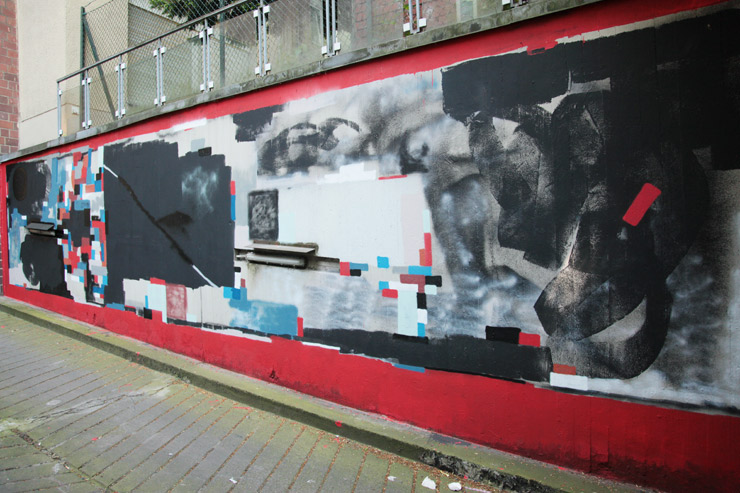
Ekta. What In The World PM/12. Urban Nation Museum For Urban Contemporary Art. Berlin, May 19, 2017. (photo © Jaime Rojo)

Brooklyn Street Art: This grouping sounds anathema to the loyalty that is often demanded by these scenes – particularly the various graffiti scenes in cities around the world. You are describing an artistic practice that has a sort of casual relationship to that scene.

Evan Pricco: Right. And I think all of these artists have these graffiti histories but they weren’t completely satisfied with that kind of moniker or label. So it is slightly expanding out now. And then there’s something about them that makes me think of crafts, especially with Serge who is more of a sign-painter. I felt that all of these people approached their work in a way that felt very craft-oriented to me, and I really appreciated that. That’s kind of what I wanted to show too.

Ekta. What In The World PM/12. Urban Nation Museum For Urban Contemporary Art. Berlin, May 19, 2017. (photo © Jaime Rojo)

Brooklyn Street Art: Each of these artists appears to have a certain familiarity with the art world that is outside a more strict definition of street culture – graffiti and Street Art and their tributaries. Would you say that you could see a certain development of personal style in this collection of primarily European artists that might be due to exposure to formal art history or other cultural influences?

Evan Pricco: Good question, and that could be the case for a few of the artists in the show, but I think the characteristics of each artist in the show is more of a result of the world getting smaller and influences and boundaries just blurring. You can see it Ermsy’s pop-culture mash-ups, or Erosie’s exploration of lettering and color; it’s not really about one place anymore but a larger dialogue of how far the work reaches now than ever before.

Erosie and I were having this conversation this morning about this, this idea of access and influences being so widespread. And that is exactly what I wanted to do. “What In the World” is sort of a nod to not really having to have boundaries, or a proper definition, but a feeling that something is happening. Its not Street Art, its not graffiti, but its this new wave that is looking out, looking in, and finding new avenues to share and make work.
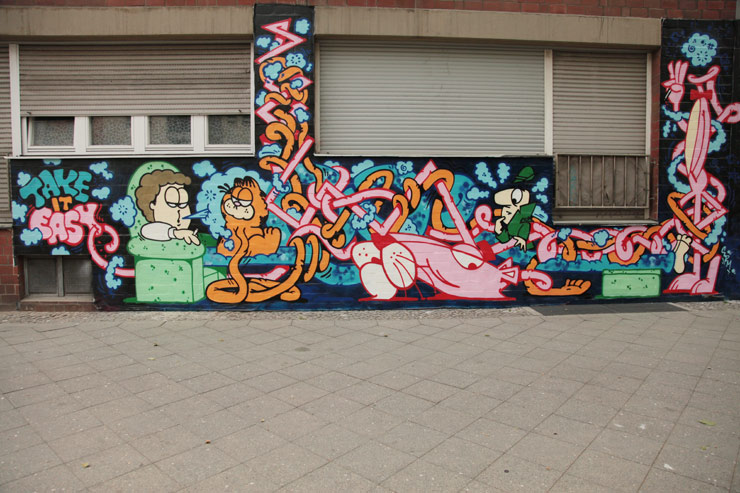
Ermsie. What In The World PM/12. Urban Nation Museum For Urban Contemporary Art. Berlin, May 19, 2017. (photo © Jaime Rojo)

Brooklyn Street Art: From comic books to politics to activism to abstract to sign painting, this show spans the Hi-Low terrain that Juxtapoz often seeks to embrace in many ways.  Is it difficult to find common threads or narratives when countenancing such variety?

Evan Pricco: We have been so fortunate with the magazine that we have been able to expand the content in the last few years, and the threads are starting to connect solely based on the idea that the creative life is what you make of it. There may not be a direct connection between Serge Lowrider and Mark Ryden, but there is a connection in the idea of craftsmanship and skill and how one goes about applying that skill in the art world. That is always wanted I wanted to help bring to Juxtapoz – this idea that variety in the art world is healthy and finds its own connections just in the fact that it exists and is being made.
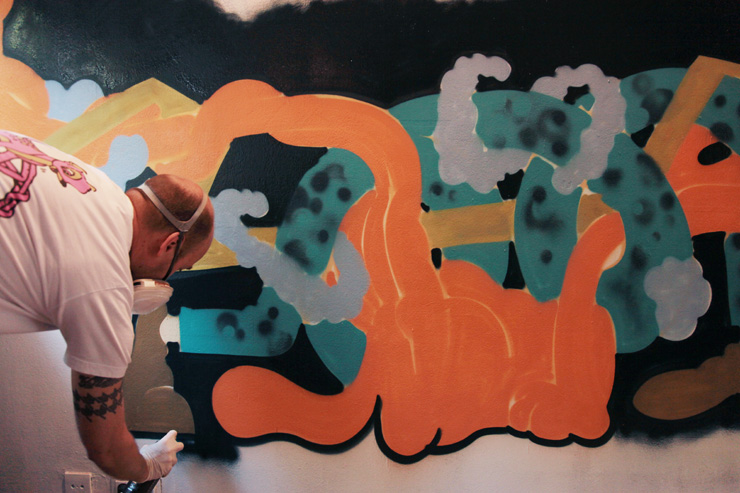
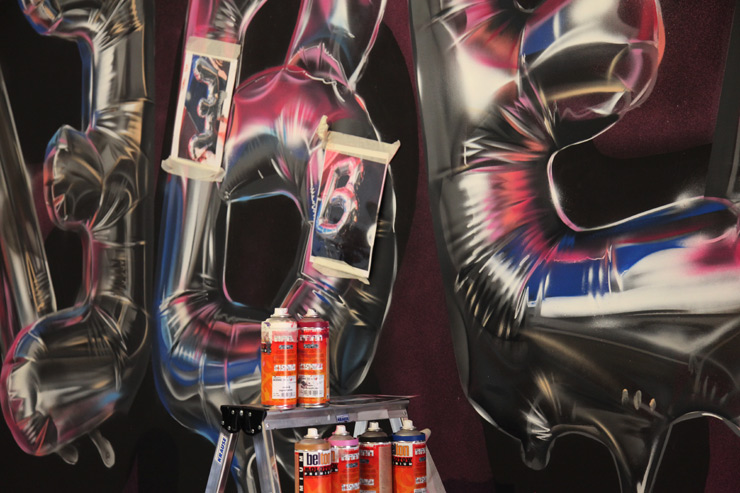
Ermsie at work on his indoor piece. What In The World PM/12. Urban Nation Museum For Urban Contemporary Art. Berlin, May 19, 2017. (photo © Jaime Rojo)

Brooklyn Street Art: Many of these names are not household names, though some have ardent fans within more narrow channels of influence. What role does a curator play by introducing these artworks/artists to a new audience and what connections would you like a viewer to make?

Evan Pricco: First and foremost, these are some of my absolute favorite artists making work right now. I do have the advantage of traveling a lot and meeting different people and seeing their process, but I really wanted to bring together a group that I hadn’t personally met but admired and communicated with from afar.
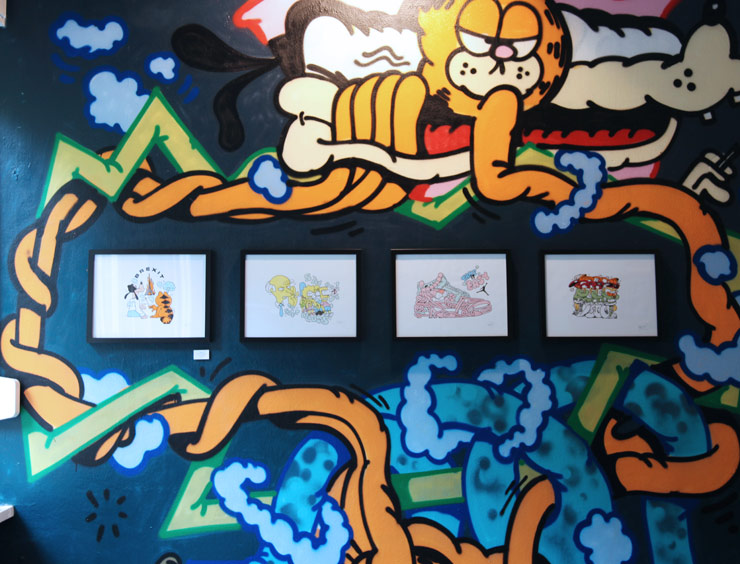
Ermsie. Detail. What In The World PM/12. Urban Nation Museum For Urban Contemporary Art. Berlin, May 19, 2017. (photo © Jaime Rojo)

I was thinking about this when I walked by Hyuro’s wall this morning. Her work is incredibly strong, and it has this really fascinating way of being a story and narrative from wall to wall while remaining fresh and really site-specific. Her work here just blew me away; its so subtle, has this really unique almost anonymous quality to it, but has a ton of thought and heart in it.

Really it would be great if the audience sees this and finds her other work, and starts seeing this really beautiful story emerging, these powerful political, social and economic commentaries. So really, I want that. I want this to be a gateway of looking at work and artists and then jumping into their really fantastically complex careers.
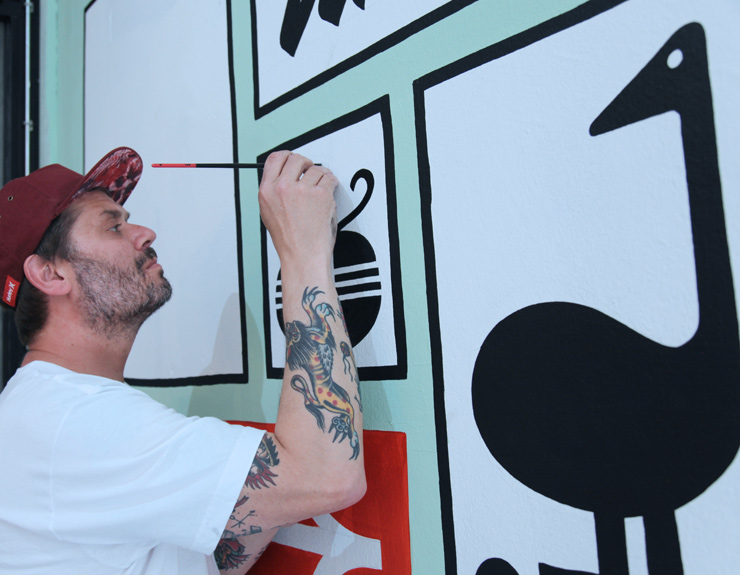
Serge Lowrider at work on his indoor piece. What In The World PM/12. Urban Nation Museum For Urban Contemporary Art. Berlin, May 19, 2017. (photo © Jaime Rojo)

Brooklyn Street Art: Urban Nation has invited curators from around the world and Berlin during these 12 “Project M” shows, each with a take on what “art in the streets” is, how it has evolved, and how it is affecting contemporary art. What makes this show stand out?
Evan Pricco: I really do think what makes it stand out is that it represents all the things Juxtapoz stands for; Opening up an audience to something new and different. I think there is an aesthetic that the Project M shows have had, which I like, but I didn’t want to repeat what everyone had done before.

This is most definitely a Juxtapoz show; I mean our damned Newsstand that Grotesk designed is right in the middle of the space. But that is like this “representation” of the print mag, and all the walls around it are the avenues the magazine can take you; sign painting, textiles, graffiti, abstraction, conceptual art, murals, comics, politics. … So maybe in that way, the fact that the magazine is 23 years old and has covered such a big history of Lowbrow, Graffiti and other forms of art, this is a nice encapsulation of the next wave and generation.
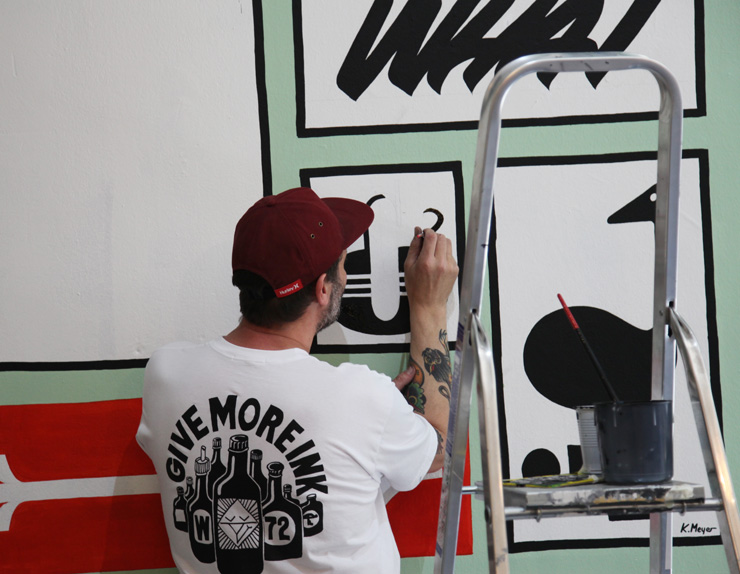
Serge Lowrider at work on his indoor piece. What In The World PM/12. Urban Nation Museum For Urban Contemporary Art. Berlin, May 19, 2017. (photo © Jaime Rojo)
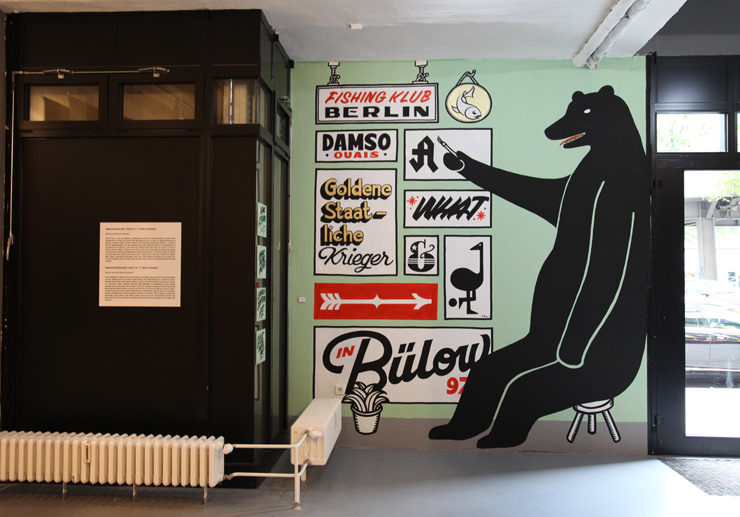
Serge Lowrider at work on his indoor piece. What In The World PM/12. Urban Nation Museum For Urban Contemporary Art. Berlin, May 19, 2017. (photo © Jaime Rojo)
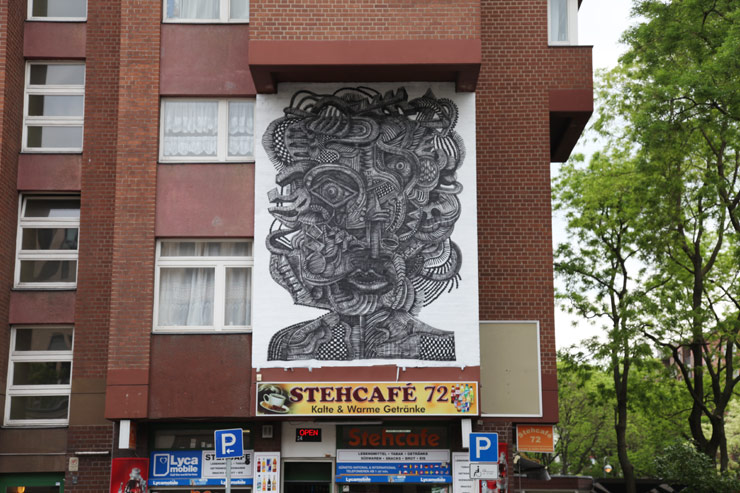
Zio Ziegler. What In The World PM/12. Urban Nation Museum For Urban Contemporary Art. Berlin, May 19, 2017. (photo © Jaime Rojo)
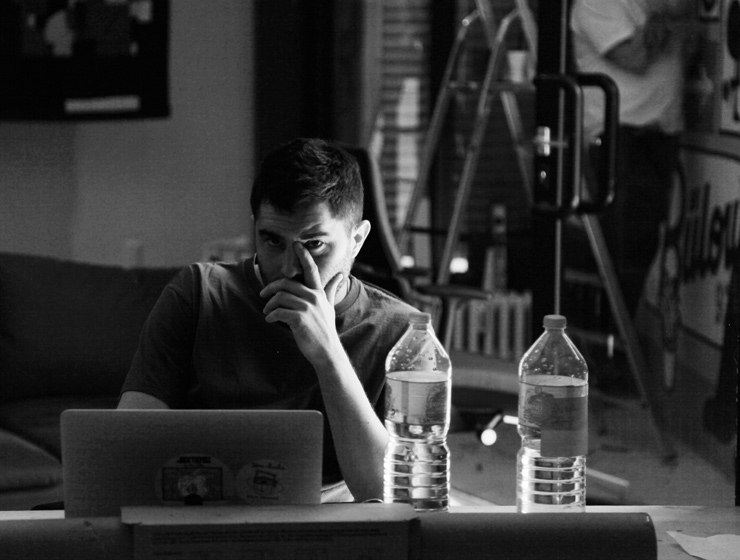
Evan Pricco. Curator of What In The World PM/12. Urban Nation Museum For Urban Contemporary Art. Berlin, May 19, 2017. (photo © Jaime Rojo)


“What In the World: The Juxtapoz Edition” presented by Urban Nation will be on display through June, 2017. 


This article is also published on The Huffington Post
Read more
Spanish Museum Exhibition brings Urban Art Inside and Out to the Streets : Murcia

Spanish Museum Exhibition brings Urban Art Inside and Out to the Streets : Murcia

Museo de Bellas Artes de Murcia mounts “Arte urbano: De la calle al museo”

“From the Streets to The Museum” features 85 international artists from all corners of the world.

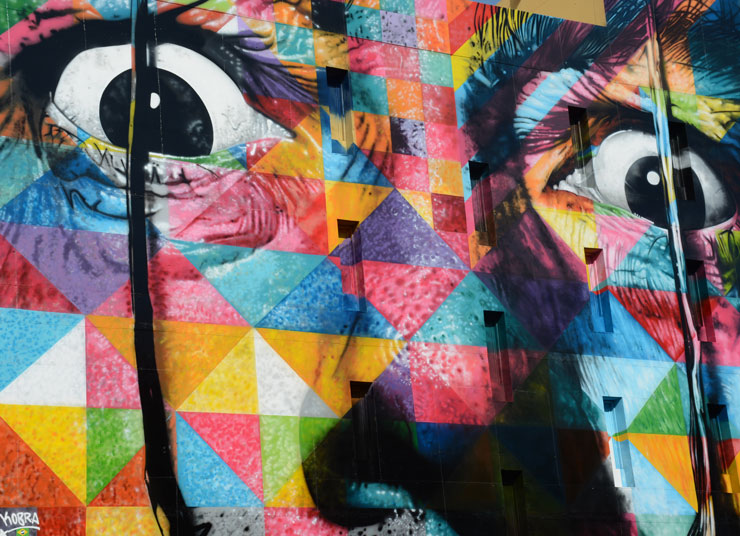
Kobra. Detail. Murcia Street Art Project. Murcia, Spain. May 2017. (photo © Lluis Olive Bulbena)

In April the Museum of Fine Arts of Murcia (Mubam) in Southeastern Spain mounted an exhibition gathering 85 artists from 23 countries entitled ‘Urban Art: from the street to the museum’. Among the artists include Blek Le Rat, Blade, Cope2, Shepard Fairey, Vinz, Vhils, London Police, Futura, JonOne, Bordalo II, Dran, even Cornbread – who is credited by many as having lit the fire under graffiti in Philadelphia in the late 1960s.

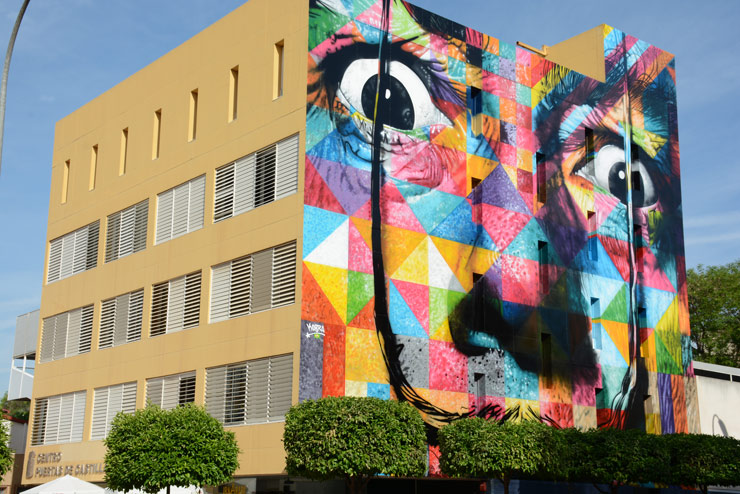
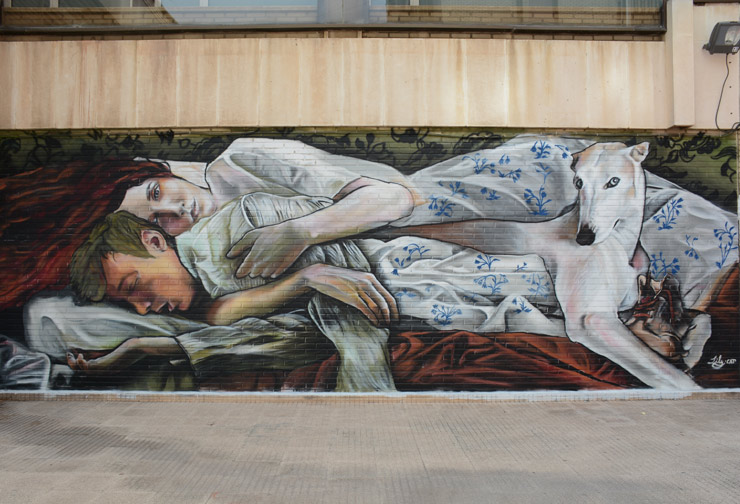
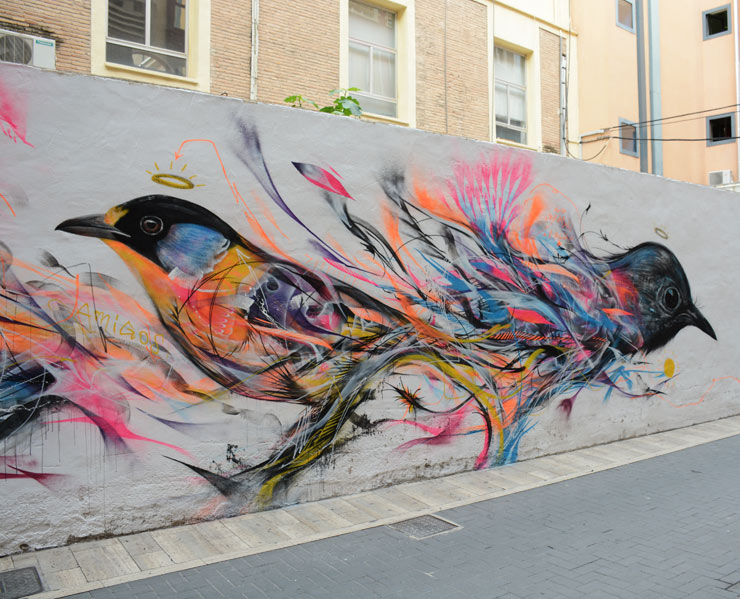
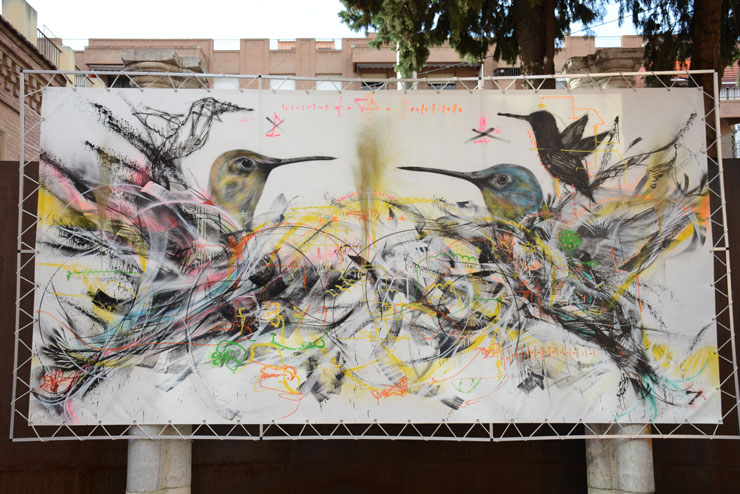
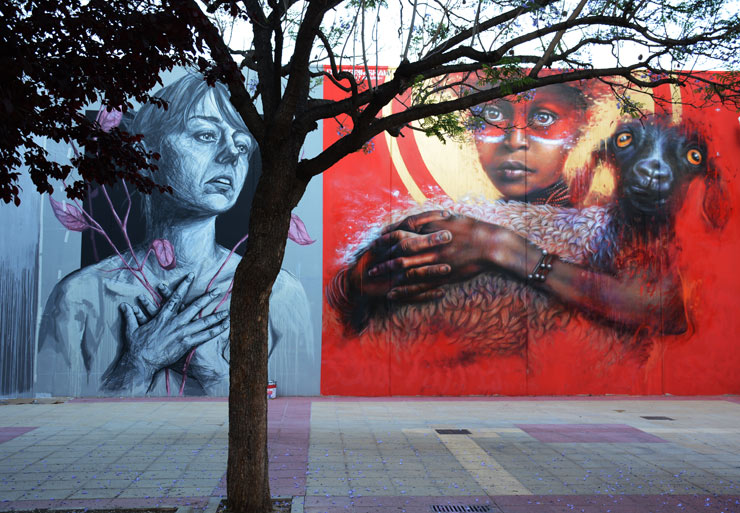
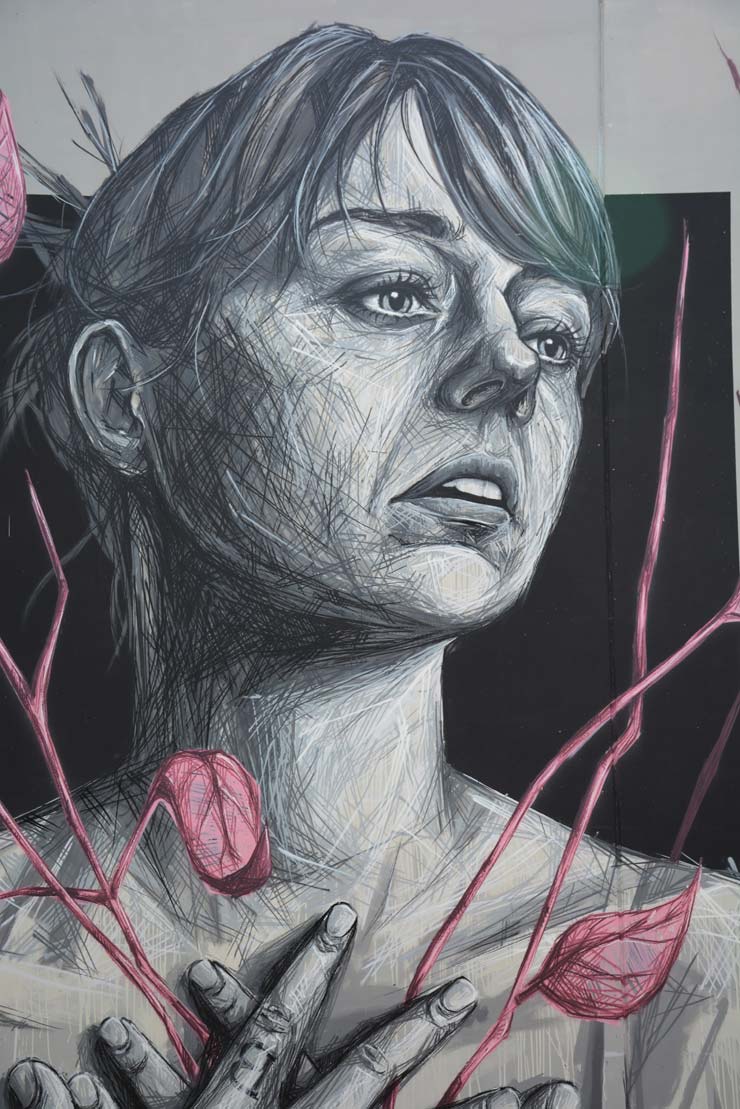
Outside, where this scene originated, the museum also created an exhibition of many current practitioners in the areas of graffiti, Street Art, and mural making in different locations in the city of Murcia – including names like Kobra, L7M, Callizo, Lily Brik, and Dale Grimshaw.

Here are a few examples of new works in the streets for the Murcia Street Art Project as captured by photographer Lluis Olive Bulbena especially for BSA readers.

Kobra. Murcia Street Art Project. Murcia, Spain. May 2017. (photo © Lluis Olive Bulbena)

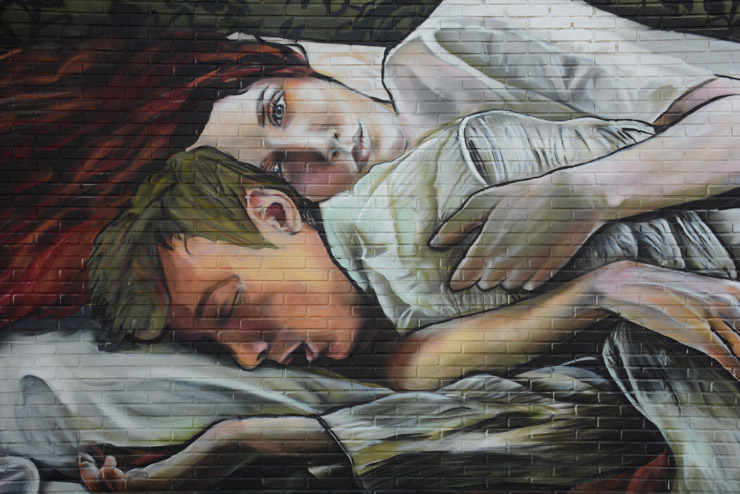
Lily Brik. Detail. Murcia Street Art Project. Murcia, Spain. May 2017. (photo © Lluis Olive Bulbena)

Lily Brik. Murcia Street Art Project. Murcia, Spain. May 2017. (photo © Lluis Olive Bulbena)

L7Matrix. Murcia Street Art Project. Murcia, Spain. May 2017. (photo © Lluis Olive Bulbena)

L7Matrix. Murcia Street Art Project. Murcia, Spain. May 2017. (photo © Lluis Olive Bulbena)

Draw to the left with Dale Grimshaw on the right. Murcia Street Art Project. Murcia, Spain. May 2017. (photo © Lluis Olive Bulbena)

Draw. Detail. Murcia Street Art Project. Murcia, Spain. May 2017. (photo © Lluis Olive Bulbena)

Dale Grimshaw. Detail. Murcia Street Art Project. Murcia, Spain. May 2017. (photo © Lluis Olive Bulbena)

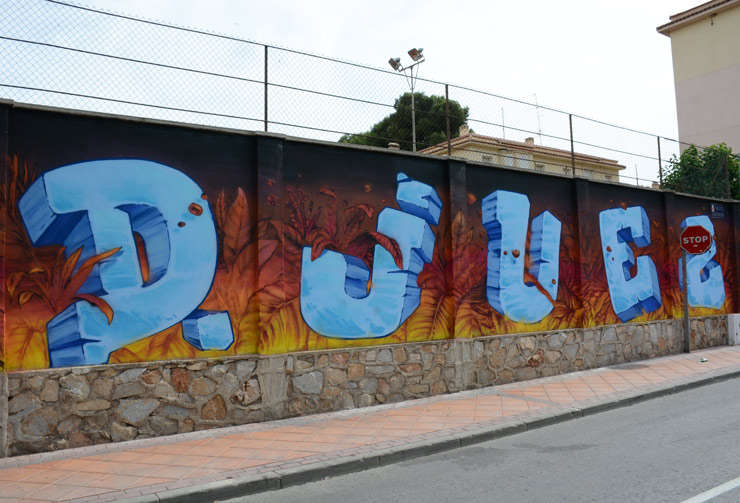
D Juez. Murcia Street Art Project. Murcia, Spain. May 2017. (photo © Lluis Olive Bulbena)

Zaiman. Murcia Street Art Project. Murcia, Spain. May 2017. (photo © Lluis Olive Bulbena)

Zaiman. Murcia Street Art Project. Murcia, Spain. May 2017. (photo © Lluis Olive Bulbena)

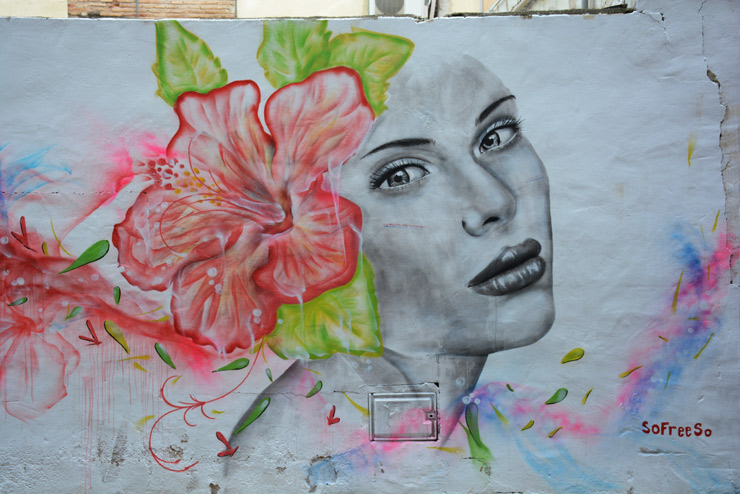
SoFreeSo. Murcia Street Art Project. Murcia, Spain. May 2017. (photo © Lluis Olive Bulbena)

Mr. Chapu. Murcia Street Art Project. Murcia, Spain. May 2017. (photo © Lluis Olive Bulbena)

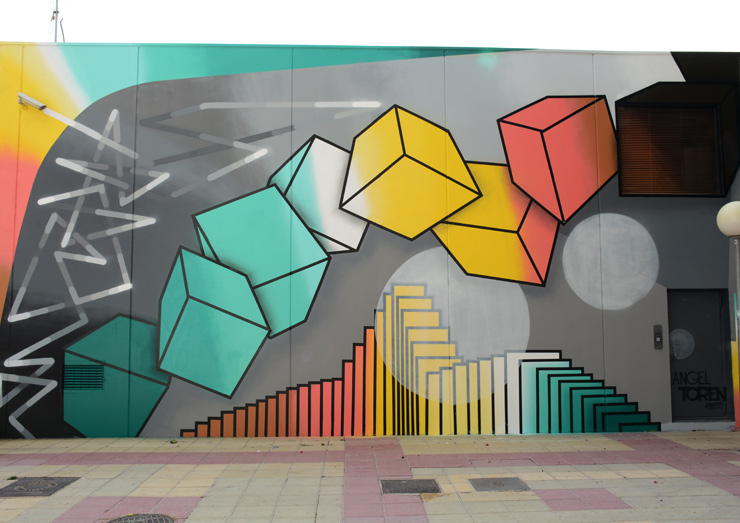
Toren. Murcia Street Art Project. Murcia, Spain. May 2017. (photo © Lluis Olive Bulbena)

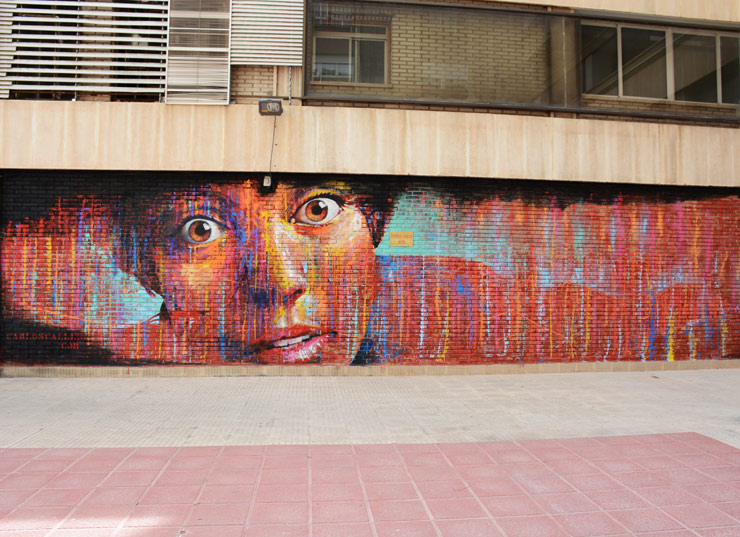
Carlos Callizo. Murcia Street Art Project. Murcia, Spain. May 2017. (photo © Lluis Olive Bulbena)


Murcia Street Art Project on Facebook

Museo de Bellas Artes de Murcia on Facebook 

Museum website

Read more
Add Fuel and “OVERLAPANHA” in Viseu, Portugal

Add Fuel and “OVERLAPANHA” in Viseu, Portugal

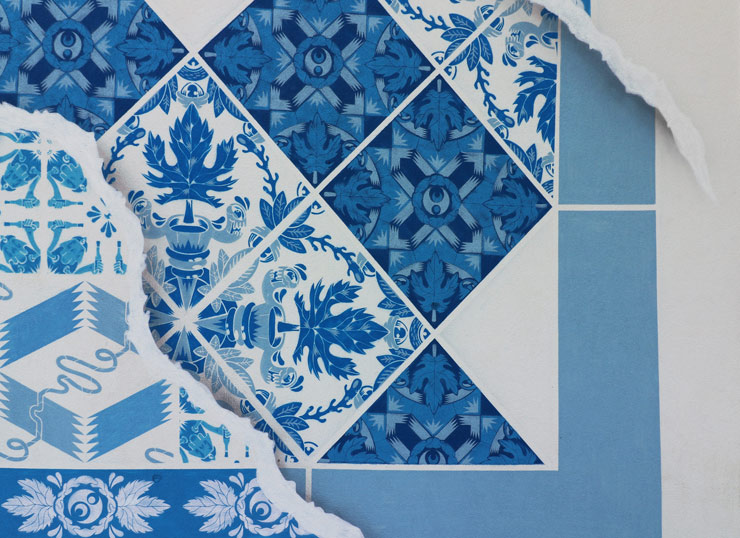
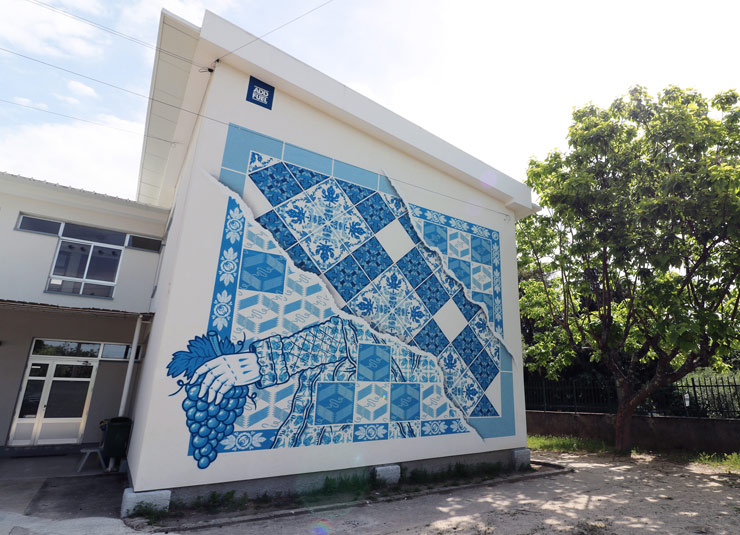
Today we have a fresh look at a new piece by Portuguese Street Artist/muralist Add Fuel. Titled “OVERLAPANHA”, the freshly painted wall in Viseu is part of the Tons de Primavera Festival which just ran this weekend.

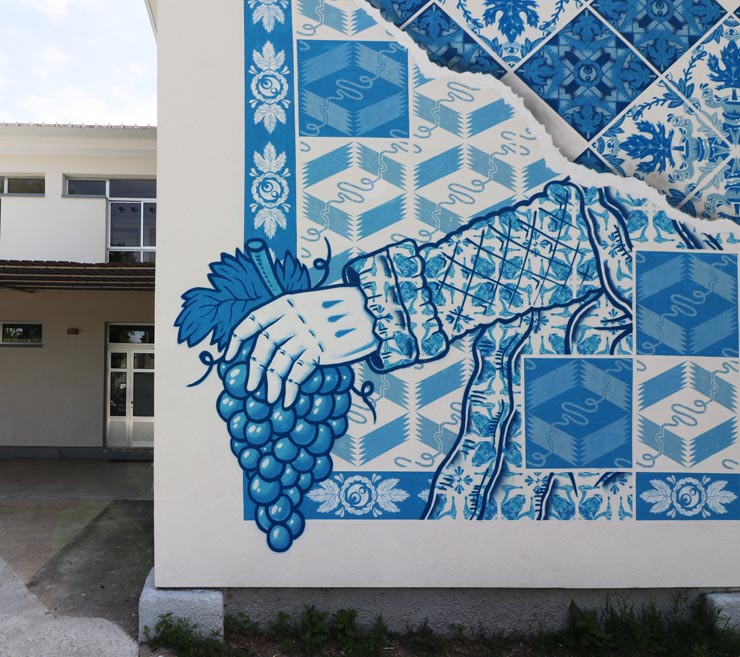
Typically Add Fuel studies the local craft of tile making and traditions that are honored in a region, as well as their significant histories, before beginning his sketches – and this new one is no different. The modern aspect of these traditional patterns in the “ripping away” illusion he creates, providing the illusion of seeing something hidden, perhaps gaining understanding of the present by studying the past.

Add Fuel. Tons de Primavera Festival 2017, Viseu, Portugal. (photo © Add Fuel)

different.

Here we find that one of the oldest established wine regions in the country (located in the Dão region) provides plenty of design inspiration and his patterning is revelatory. For those who know this precise work and Add Fuel’s native tile making influences, this blue and white tableau is a very classic and traditional Portuguese style.

“This is the result of an exploration on how two distinct quadrilateral shapes can inhabit in the same space and how this experience can be occupied by a semi-human component,” he says, “depicted as the romantic act of simply ‘holding’ ”.

Add Fuel.  Detail. Tons de Primavera Festival 2017, Viseu, Portugal. (photo © Add Fuel)

Add Fuel. Detail. Tons de Primavera Festival 2017, Viseu, Portugal. (photo © Add Fuel)


#addfuel #viseu #visitviseu #tonsdeprimavera #stencil #art #stencilart #urbanart #streetart #streetartportugal #portugal
@municipio_viseu @visitviseu
Read more
BSA Images Of The Week: 05.21.17 – Berlin Edition

BSA Images Of The Week: 05.21.17 – Berlin Edition

BSA-Images-Week-Jan2015

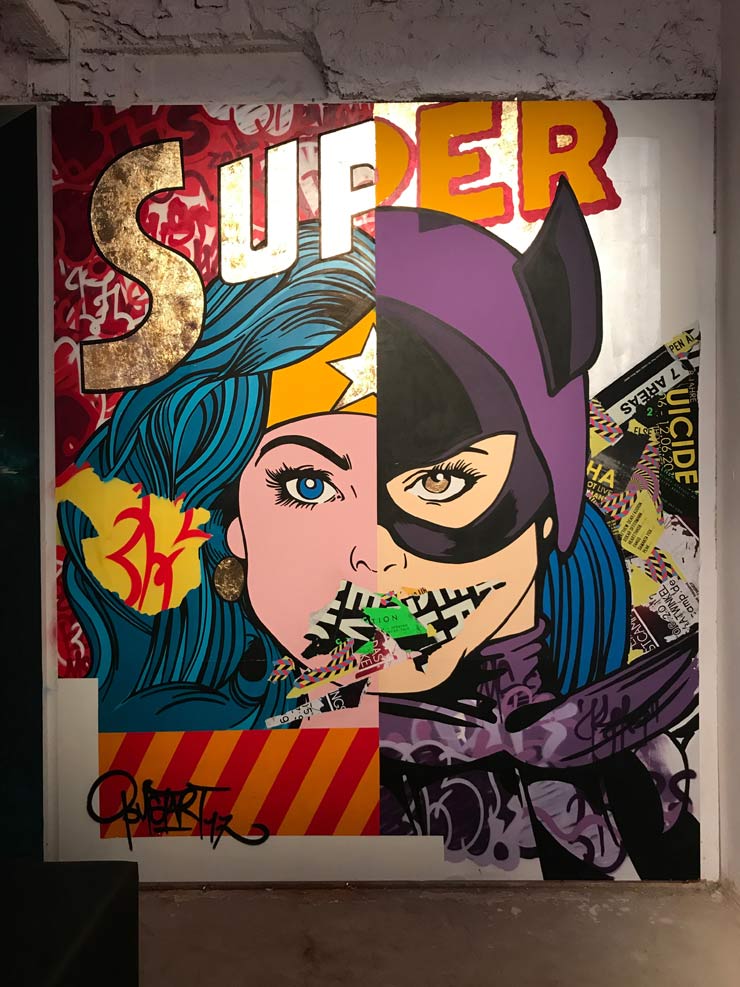
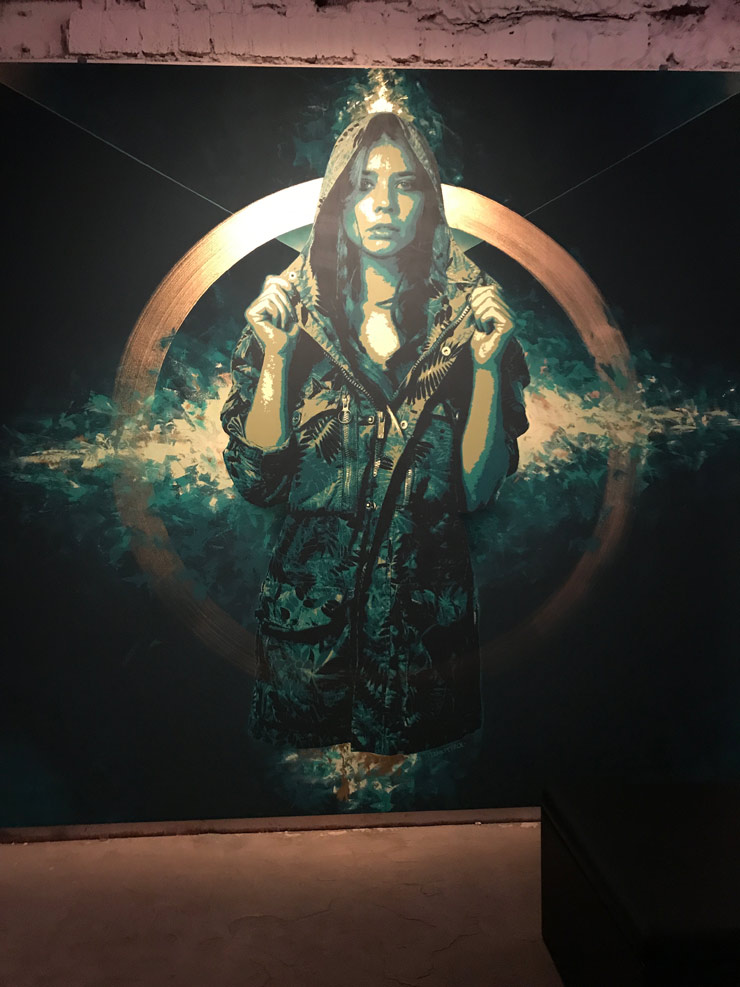
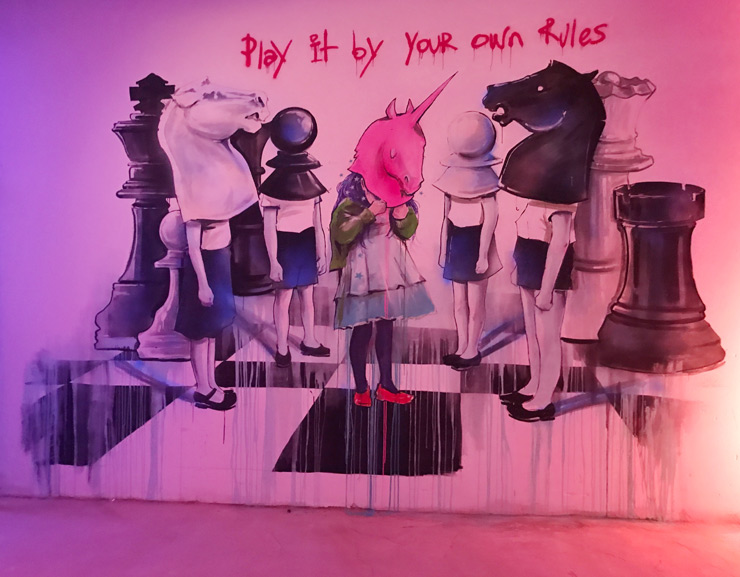
This week in Berlin we had the chance to meet so many great folks as a result of the final Urban Nation events before September’s opening of the museum. All the curators were in attendance, including your BSA friends here, for the “We Broke Night” show along with the artistic director, managing director, architect, and about 40 artists in the 225 person party that featured breakers on pedestals dancing with flourescent tape, Shepard Fairey as DJ, and plenty of new artworks created just for this event.

Along with the main museum space show, across the street was another exhibition, the Project M/12 show called “What in the World” with mainly European former graff writers/now-fine-artists curated by Evan Pricco from Juxtapoz. Overflowing from the main space, the sidewalks were a parade of aesthetes, fans, business people, graff writers, archivists, politicians, and sex workers… It’s a wild mix and it gets very rowdy and everyone is reacting to the dynamics at play and wondering aloud how a museum like this will pull this off.

We’re not wondering, however. The sheer volume and variety of interested artists and related art lovers and community supporters tells us that this museum is a success before it has even opened. Here are a few images from the last few days for you to take a look at from outside and inside.

Here’s our weekly interview with the streets, this week featuring: Besonders, BustArt, Cranio, Daniel Van Nes, Fin DAC, Herakut, Lora Zombie, Millo, Nasca, Nuno Vegas, Sebastian Wandl, Shepard Fairey, Stikki Peaches, Snik, Tank Patrol.

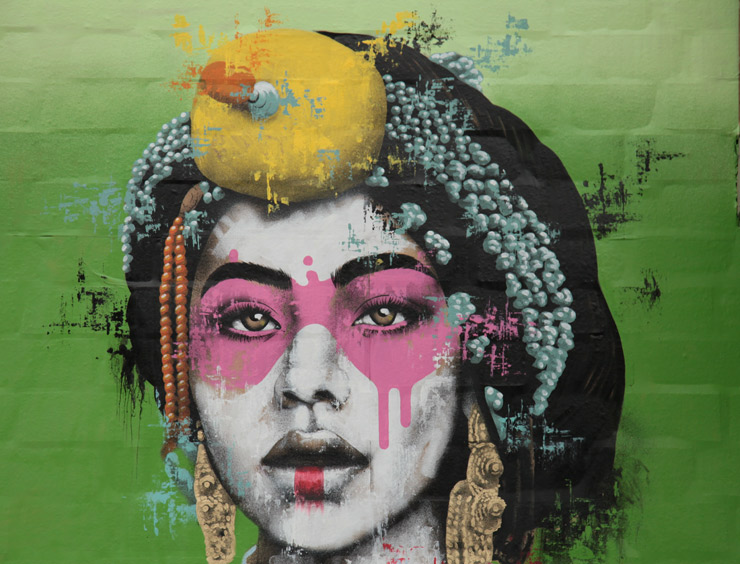
Top image: FinDac. Urban Nation Museum For Urban Contemporary Art in Conjunction with Project M/12. Berlin, May 19, 2017. (photo © Jaime Rojo)

FinDac. Urban Nation Museum For Urban Contemporary Art in Conjunction with Project M/12. Berlin, May 19, 2017. (photo © Jaime Rojo)

FinDac. Urban Nation Museum For Urban Contemporary Art in Conjunction with Project M/12. Berlin, May 19, 2017. (photo © Jaime Rojo)

Nasca. Urban Nation Museum For Urban Contemporary Art. Berlin, May 19, 2017. (photo © Jaime Rojo)

Stikki Peaches. Urban Nation Museum For Urban Contemporary Art in Conjunction with Project M/12. Berlin, May 19, 2017. (photo © Jaime Rojo)

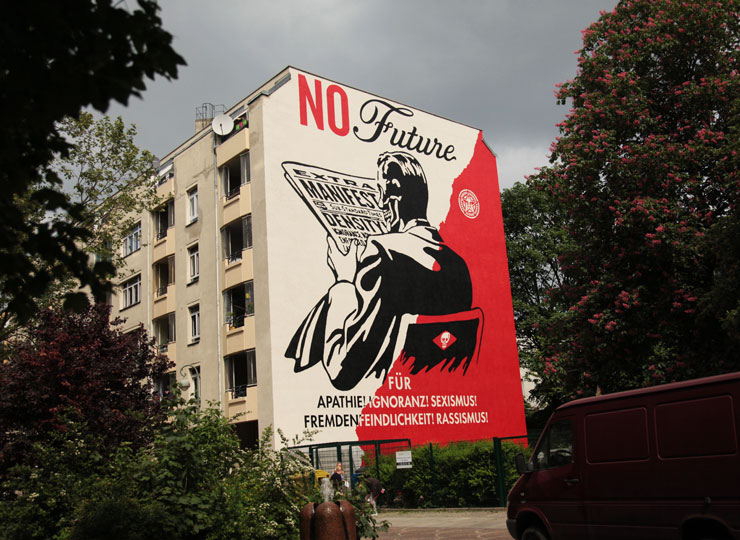
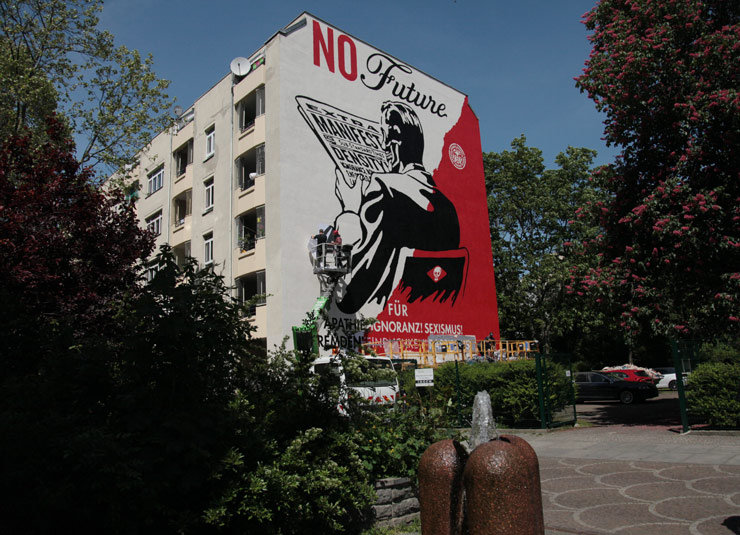
Shepard Fairey in Berlin translates his No Future piece for the words apathy, sexism, xenophobia, and racism. Urban Nation Museum For Urban Contemporary Art in Conjunction with Project M/12. Berlin, May 19, 2017. (photo © Jaime Rojo)

Cranio. Urban Nation Museum For Urban Contemporary Art in Conjunction with Project M/12. Berlin, May 19, 2017. (photo © Jaime Rojo)

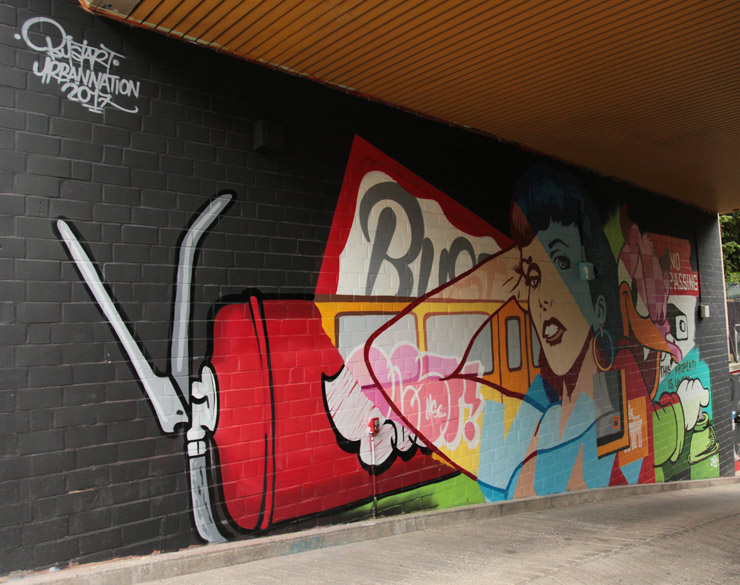
BustArt. Urban Nation Museum For Urban Contemporary Art in Conjunction with Project M/12. Berlin, May 19, 2017. (photo © Jaime Rojo)

Lora Zombie. Urban Nation Museum For Urban Contemporary Art in Conjunction with Project M/12. Berlin, May 19, 2017. (photo © Jaime Rojo)

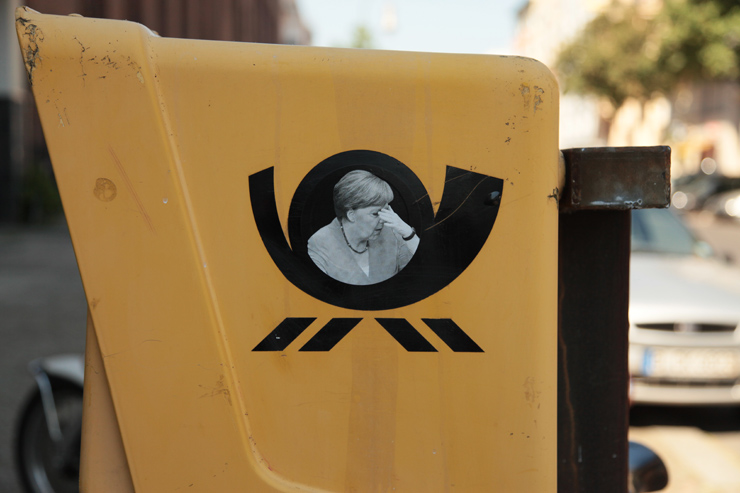
Pfui Teufel!” Ms. Merkel hears some disturbing news in this sticker placed on a post box.Unidentified Artist. Berlin, May 19, 2017. (photo © Jaime Rojo)
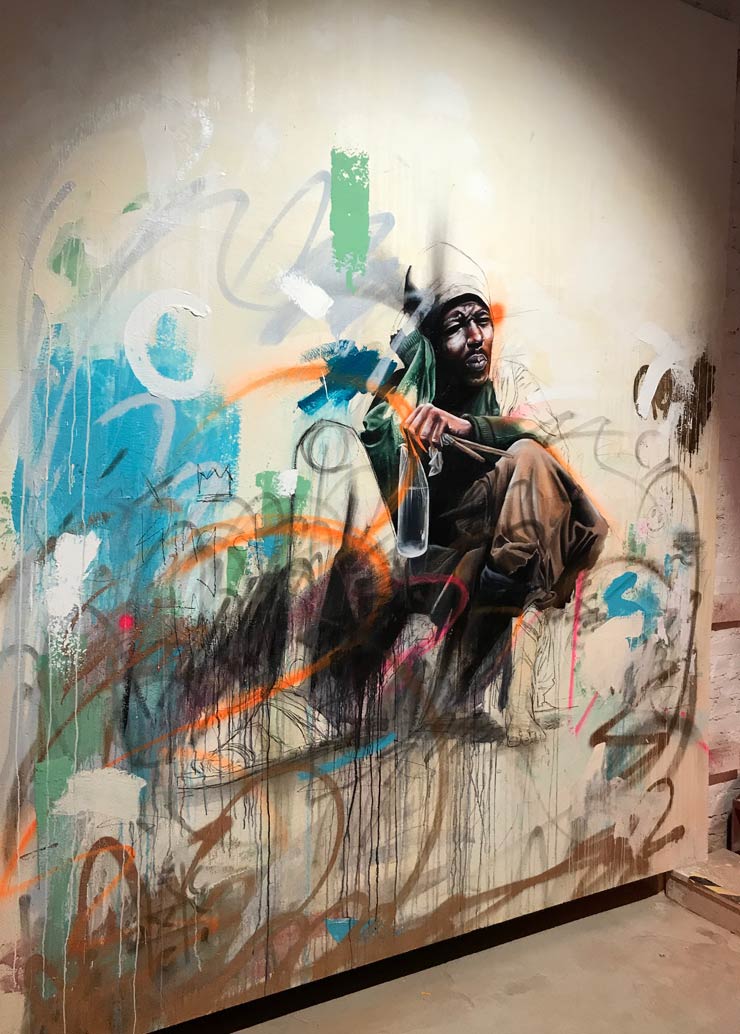
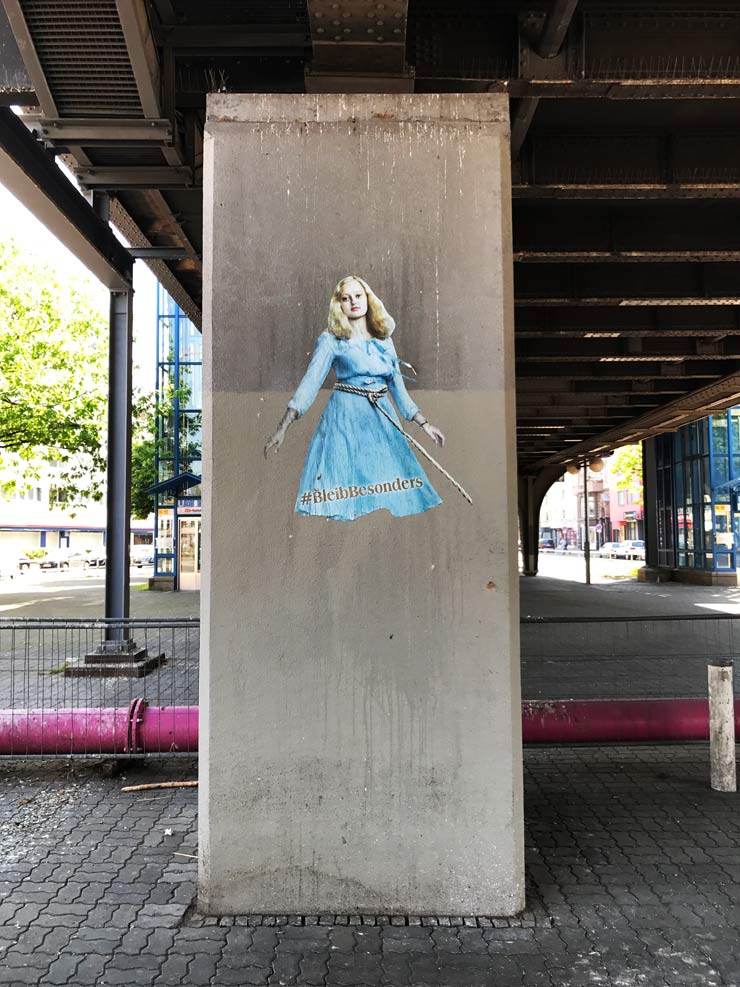
Bleib Besonders. Berlin, May 19, 2017. (photo © Jaime Rojo)

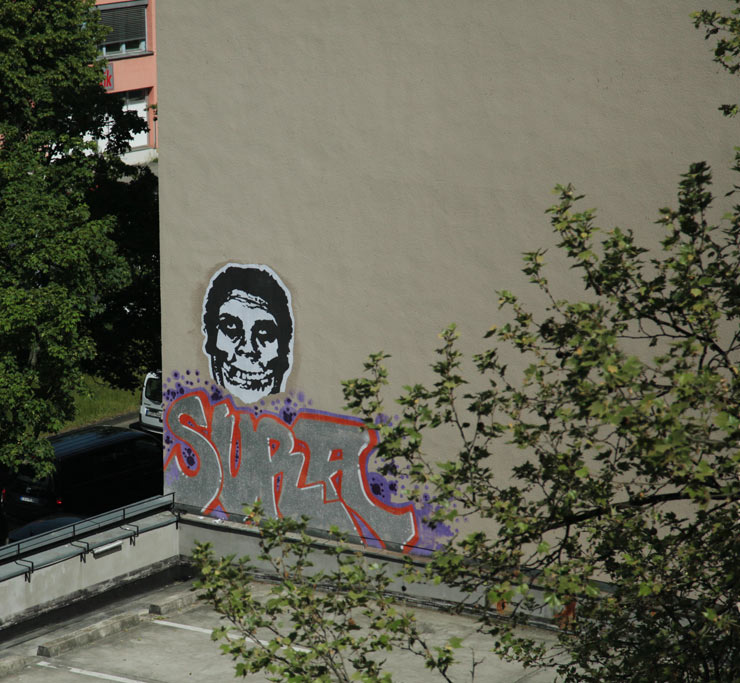
Obey . Sura. Berlin, May 19, 2017. (photo © Jaime Rojo)

Sebastian Wandl. Urban Nation Museum For Urban Contemporary Art. We Broke Night. Berlin, May 19, 2017. (photo © Jaime Rojo)

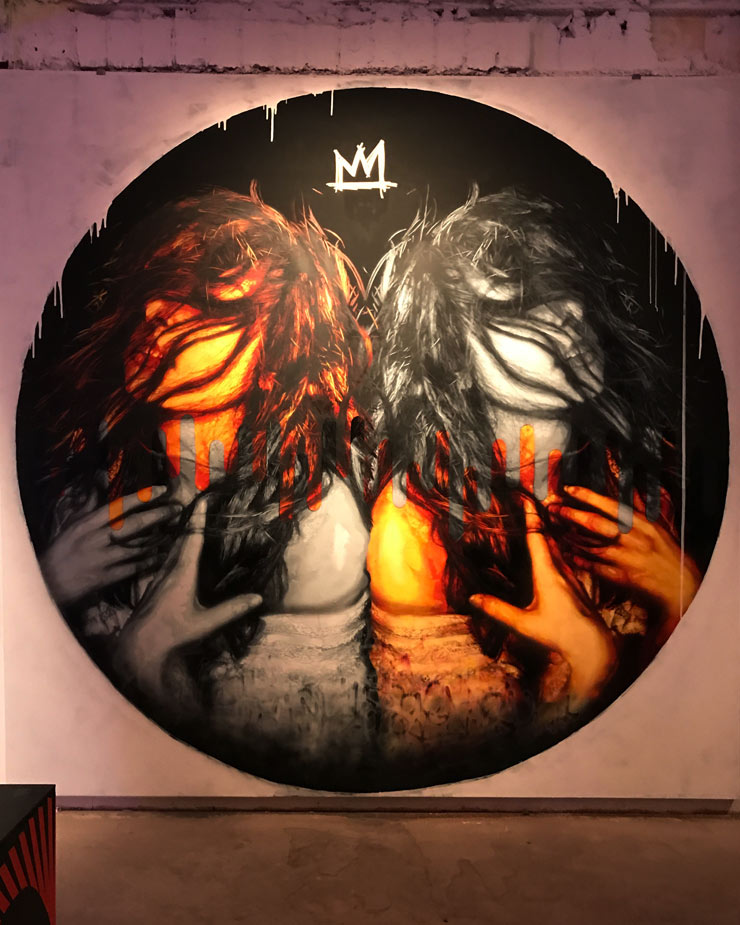
Daniel Van Nes. Detail. Urban Nation Museum For Urban Contemporary Art. We Broke Night. Berlin, May 19, 2017. (photo © Jaime Rojo)

Daniel Van Nes. Detial. Urban Nation Museum For Urban Contemporary Art. We Broke Night. Berlin, May 19, 2017. (photo © Jaime Rojo)

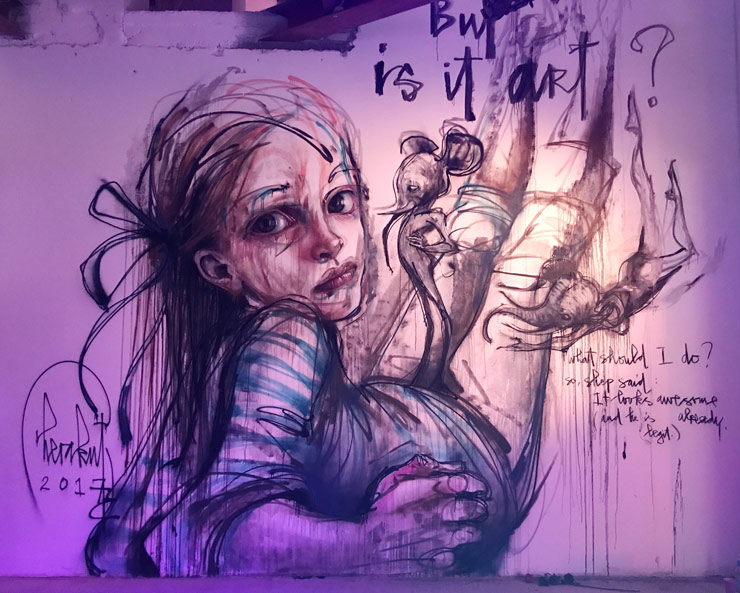
Herakut in purple light for the “We Broke the Night” exhibit inside the space that will be the Urban Nation Museum For Urban Contemporary Art. Berlin, May 19, 2017. (photo © Jaime Rojo)

Stencil majicians Snik. Urban Nation Museum For Urban Contemporary Art. We Broke Night. Berlin, May 19, 2017. (photo © Jaime Rojo)

BustArt. Urban Nation Museum For Urban Contemporary Art. We Broke Night. Berlin, May 19, 2017. (photo © Jaime Rojo)

Tank Petrol. Urban Nation Museum For Urban Contemporary Art. We Broke Night. Berlin, May 19, 2017. (photo © Jaime Rojo)

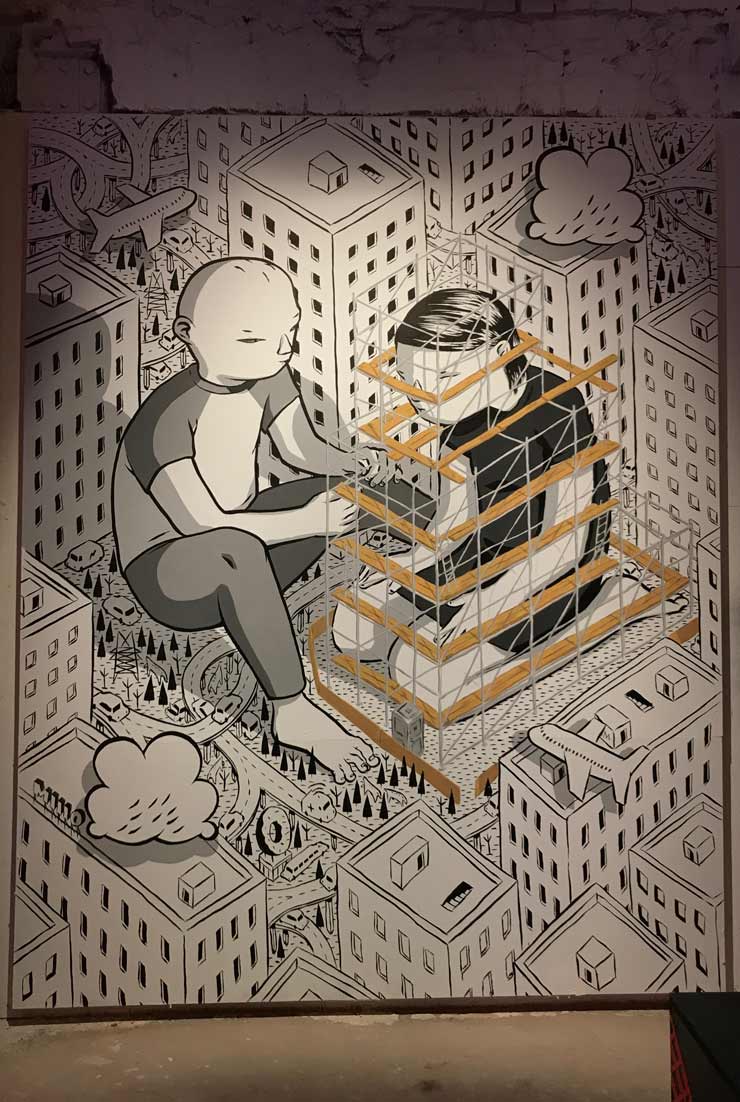
Millo. Urban Nation Museum For Urban Contemporary Art. We Broke Night. Berlin, May 19, 2017. (photo © Jaime Rojo)

Lora Zombie. Urban Nation Museum For Urban Contemporary Art. We Broke Night. Berlin, May 19, 2017. (photo © Jaime Rojo)

Nuno Vegas. Urban Nation Museum For Urban Contemporary Art. We Broke Night. Berlin, May 19, 2017. (photo © Jaime Rojo)

Untitled. Berlin, May 19, 2017. (photo © Jaime Rojo)

Read more
1UP Crew Hits Front of Urban Nation in Berlin

1UP Crew Hits Front of Urban Nation in Berlin

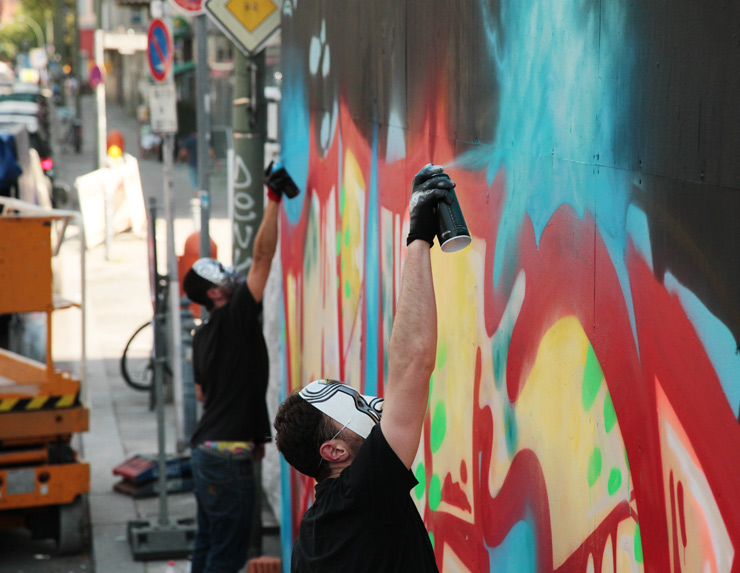
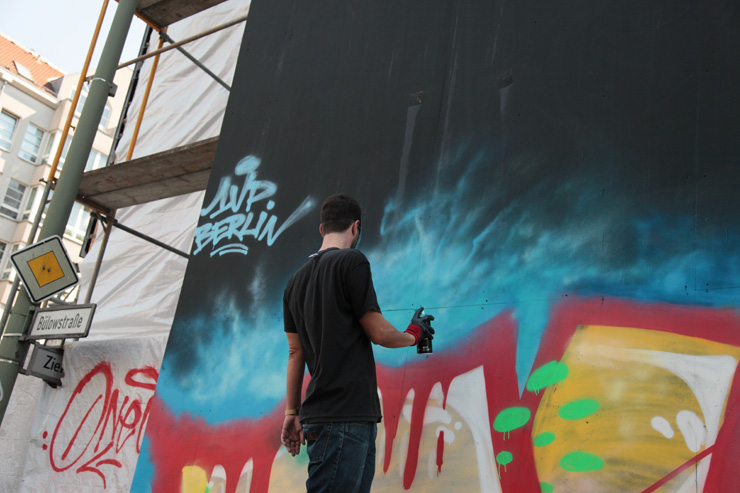
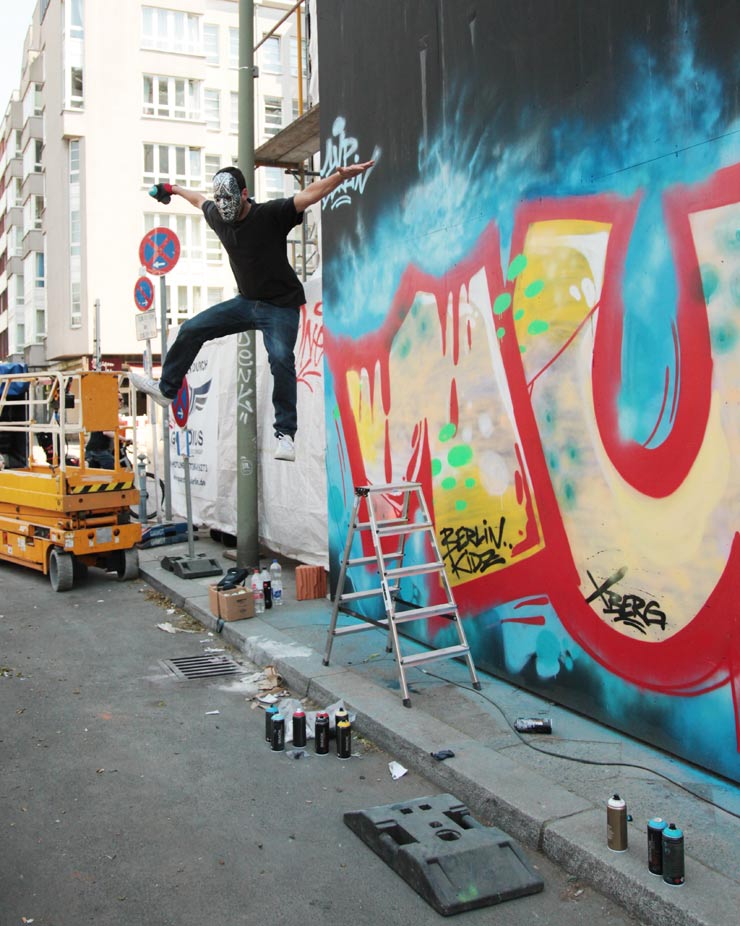
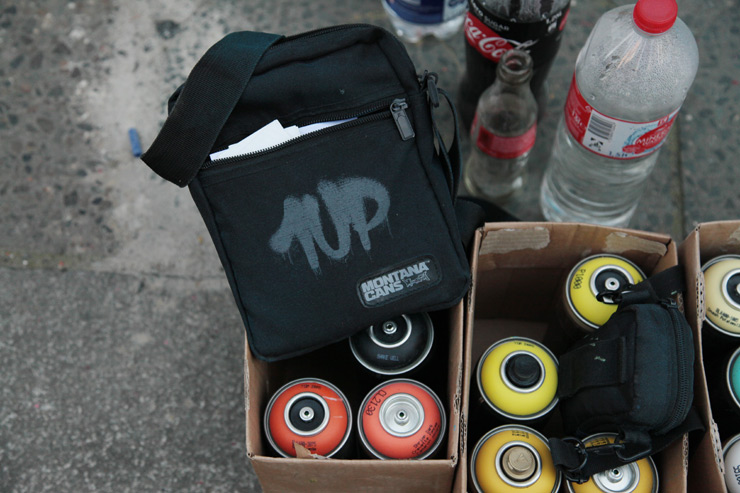
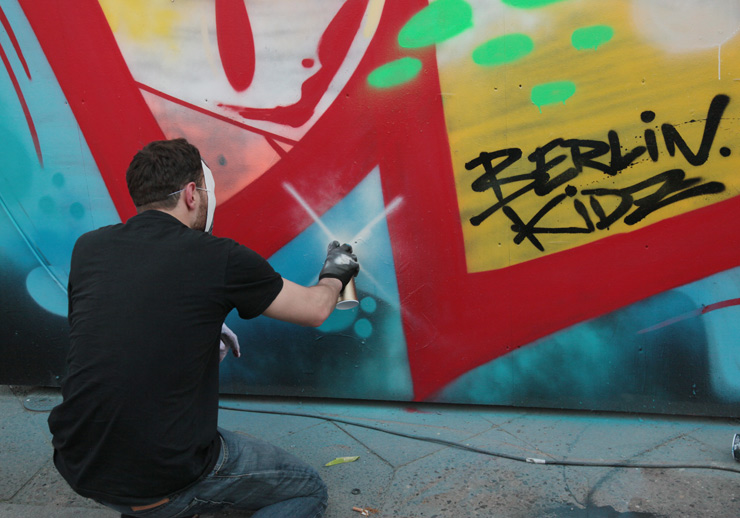
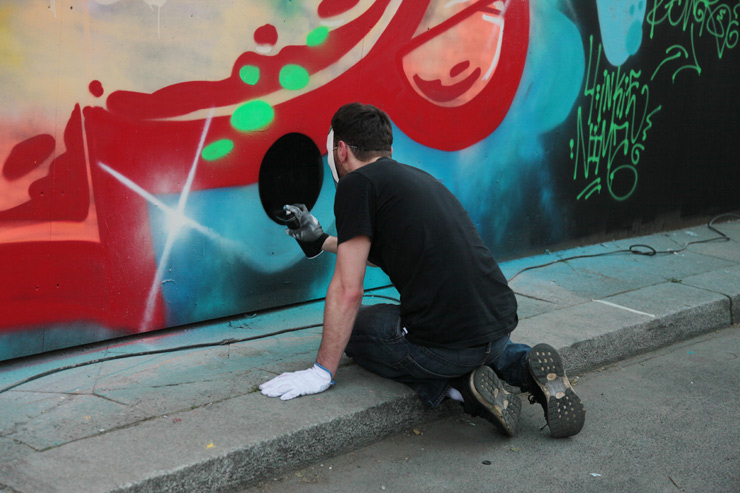
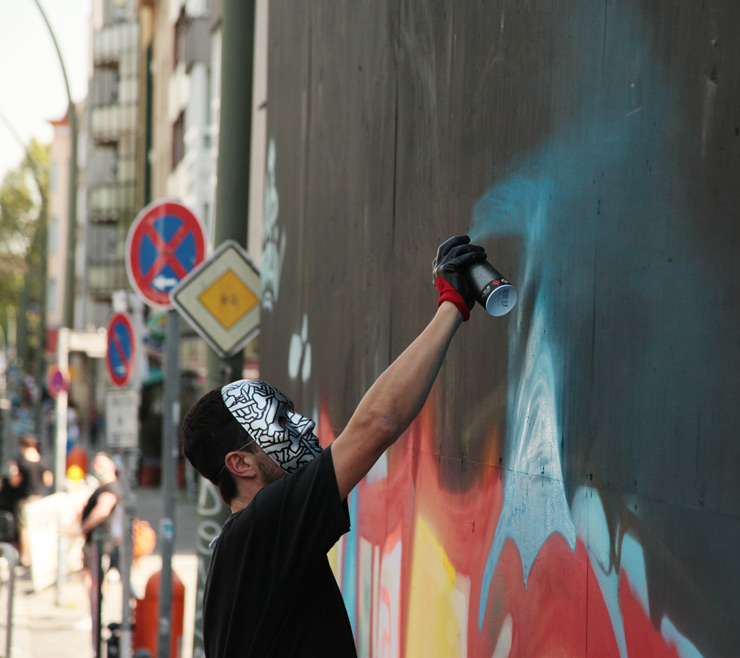
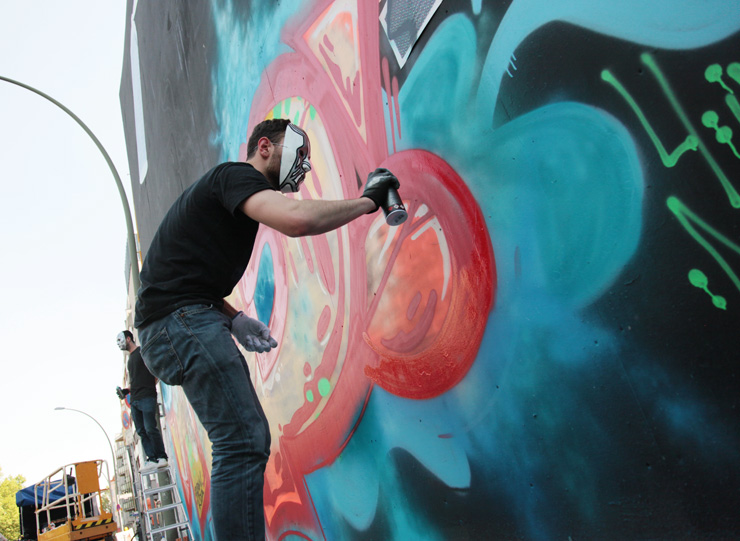
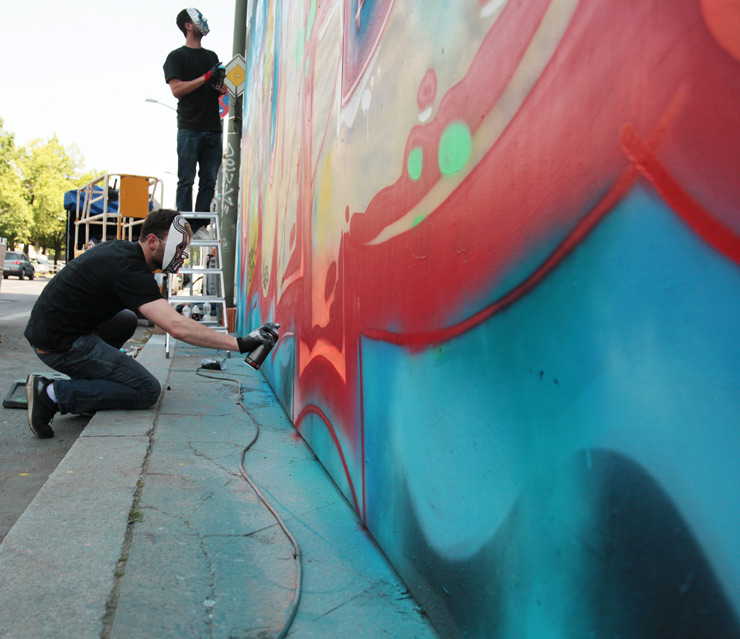
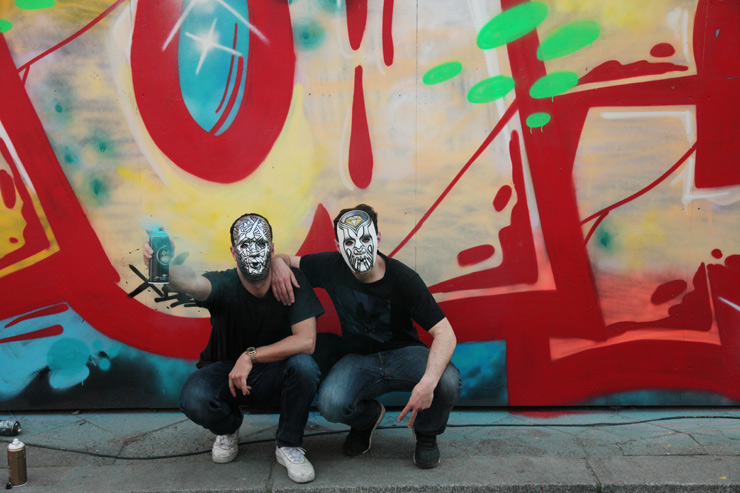
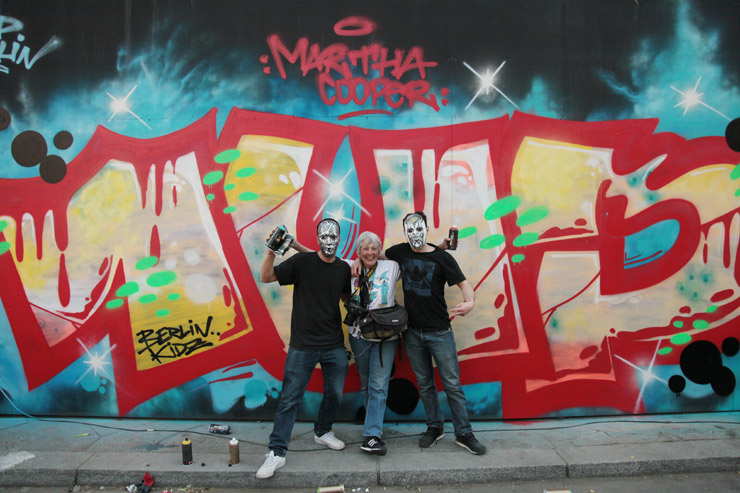
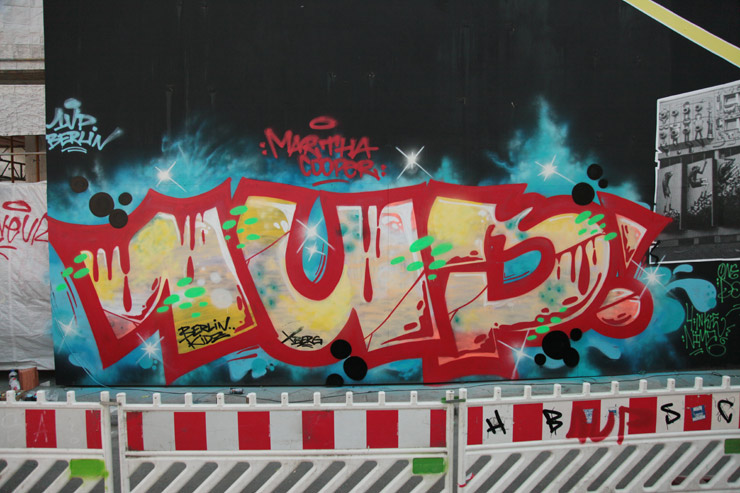
There are two things we never expect to see in our lives here on the streets when looking for new Street Art and graffiti. One is a live unicorn walking down the street twirling a hula hoop on its horn and farting glitter. The other is the 1UP crew hitting up a wall wild style in broad daylight, wearing those mystical Tron-Kabuki masks – on the front wall of the nascent Urban Nation Museum (UN).

1UP Crew. Urban Nation Museum For Urban Contemporay Art. PM/12 – We Broke Night.  Berlin, May 19, 2017. (photo © Jaime Rojo)

As the double barrelled aerosol assault was happening we could hear the sound of heads exploding when the news of this ubiquitous graffiti crew hitting up this location would hit various constituencies. We could also hear the sound of the guys yelling over the Bülowstraße street traffic to each other through their masks – asking for one to throw a particular can or to question whether to do a specific fill or line. “We don’t usually work during the day,” said one of them to us as he gazed up at the blue fire glow that frames the 1UP name. “With so many people around with cameras these days, we can’t take many chances.”

1UP Crew. Urban Nation Museum For Urban Contemporay Art. PM/12 – We Broke Night.  Berlin, May 19, 2017. (photo © Jaime Rojo)

In this historically graffiti-loving city you have to work really hard for people to notice your work, and crews like 1UP and Berlin Kidz are revered for their aerosol prowess – and the chances they take. Not sure what the German term would be but in English the word “crushed” may have a picture of 1UP next to it in the dictionary. Equally impressive is their ability to stay completely anonymous – and with more members than the annual Menudo reunion BBQ.

1UP Crew. Urban Nation Museum For Urban Contemporay Art. PM/12 – We Broke Night.  Berlin, May 19, 2017. (photo © Jaime Rojo)

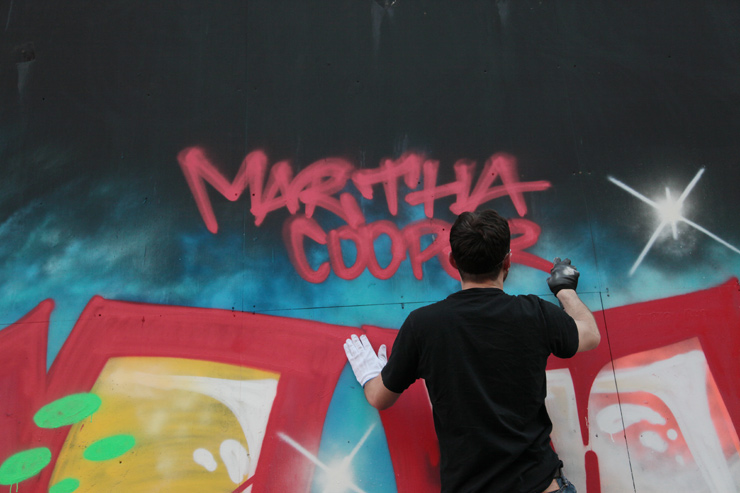
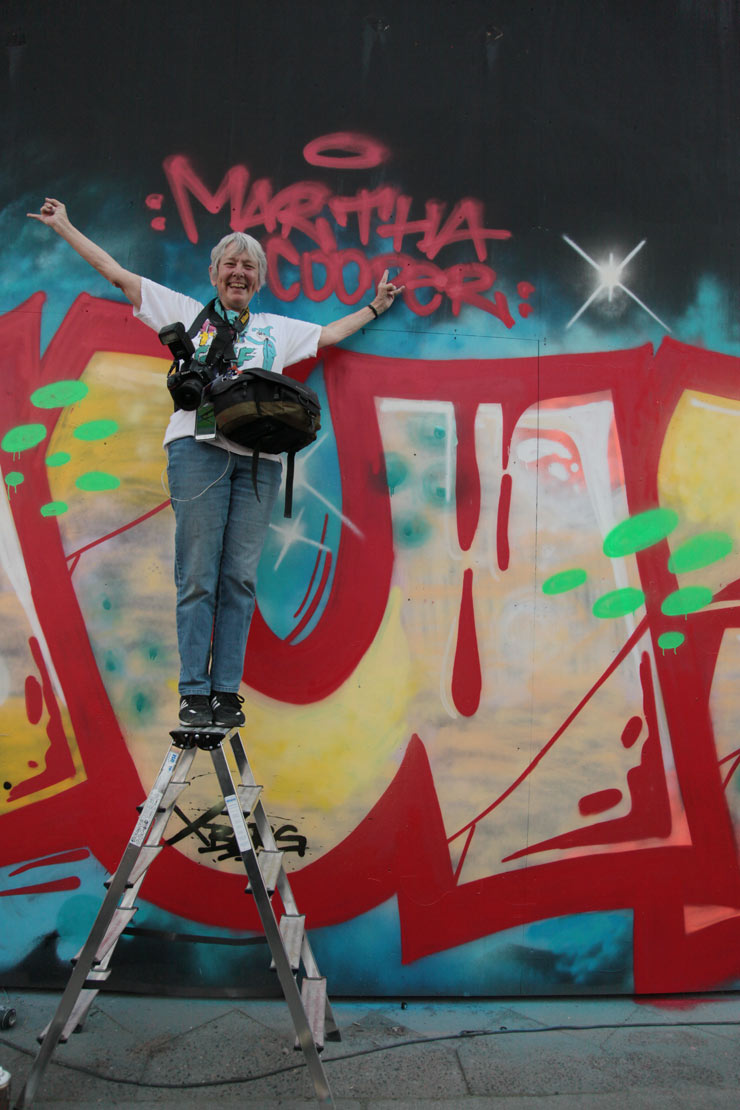
Compound the occasion with celebrated graffiti and Street Art photographer Martha Cooper pacing back and forth on the pavement and capturing every angle of the action. She’s crouching low and climbing higher for the right show while normal every day dudes like Shepard Fairey walk up to the small group of assembled observers to see what the matter is.

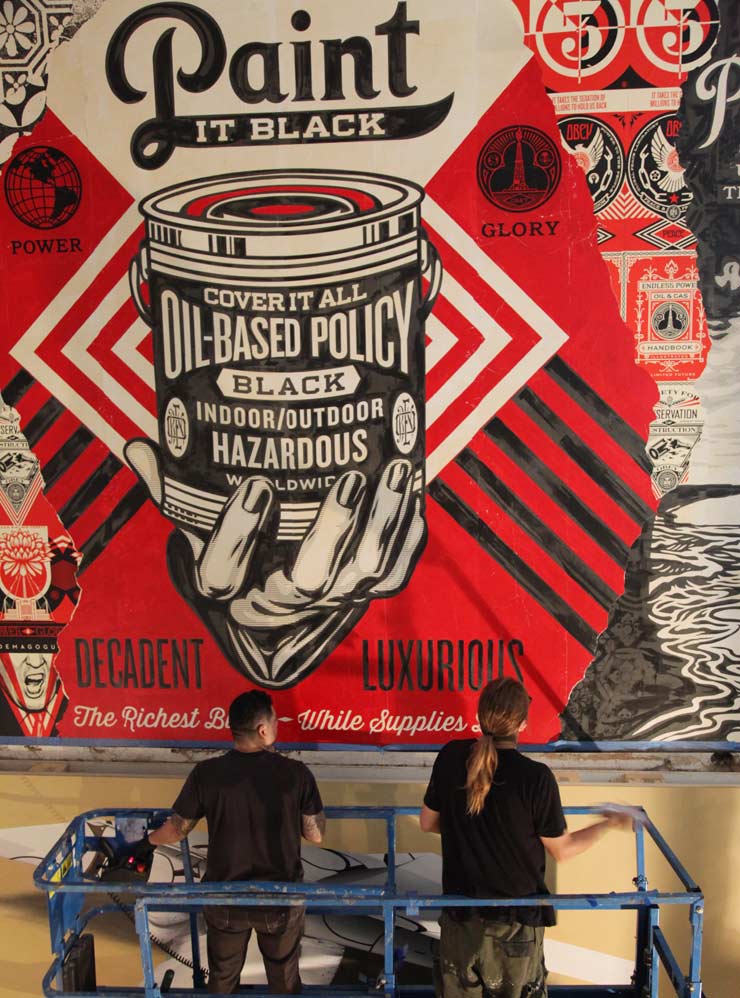
Shepard and his crew have just finished a large building side mural a block from here, as well as an expansive piece inside the museum space, where he’s DJing tonight. He seems to like the 1UP work and he also mentions how he digs Berlin Kidz and their style of rappelling down walls – and then talk turns to Brazillian pichação writers.
1UP Crew. Urban Nation Museum For Urban Contemporay Art. PM/12 – We Broke Night.  Berlin, May 19, 2017. (photo © Jaime Rojo)

When a red-faced teenaged girl approaches one of the masked markers, he takes a minute to answer her inquiries, can in hand, ready to hit the wall but happy to respond to her multiple follow-up questions. Then he darts back up the ladder to spray a few small white starbursts while she aims her smartphone up at the action and he starts to looks for a red can to spray Martha’s name. Seeing Martha’s name up there seems appropriate, considering the first Martha Cooper Library will open here in four months.
So that’s it, nothing special happened today here in Berlin, only that 1UP knocked out a large piece on the outside of UN. Nothing more to see here.

Keep your eyes open for unicorns.

1UP Crew. Urban Nation Museum For Urban Contemporay Art. PM/12 – We Broke Night.  Berlin, May 19, 2017. (photo © Jaime Rojo)

1UP Crew. Urban Nation Museum For Urban Contemporay Art. PM/12 – We Broke Night.  Berlin, May 19, 2017. (photo © Jaime Rojo)


1UP Crew. Urban Nation Museum For Urban Contemporay Art. PM/12 – We Broke Night.  Berlin, May 19, 2017. (photo © Jaime Rojo)

1UP Crew. Urban Nation Museum For Urban Contemporay Art. PM/12 – We Broke Night.  Berlin, May 19, 2017. (photo © Jaime Rojo)

1UP Crew. Urban Nation Museum For Urban Contemporay Art. PM/12 – We Broke Night.  Berlin, May 19, 2017. (photo © Jaime Rojo)

1UP Crew. Urban Nation Museum For Urban Contemporay Art. PM/12 – We Broke Night.  Berlin, May 19, 2017. (photo © Jaime Rojo)

1UP Crew. Urban Nation Museum For Urban Contemporay Art. PM/12 – We Broke Night.  Berlin, May 19, 2017. (photo © Jaime Rojo)

1UP Crew. Urban Nation Museum For Urban Contemporay Art. PM/12 – We Broke Night.  Berlin, May 19, 2017. (photo © Jaime Rojo)

1UP Crew. Urban Nation Museum For Urban Contemporay Art. PM/12 – We Broke Night.  Berlin, May 19, 2017. (photo © Jaime Rojo)

1UP Crew. Urban Nation Museum For Urban Contemporay Art. PM/12 – We Broke Night.  Berlin, May 19, 2017. (photo © Jaime Rojo)


Read more
BSA Film Friday: 05.19.17

BSA Film Friday: 05.19.17

bsa-film-friday-JAN-2015

Our weekly focus on the moving image and art in the streets. And other oddities.

Now screening :
1. Faith XLVII “Aqua Regalia” Hong Kong
2. Icy & Sot find “No Privacy” in Saint Petersburg’s Street Art Museum
3. Urban Nation in Preparation for “We Broke Night!” by Jaime Rojo

bsa-film-friday-special-feature

BSA Special Feature: Faith XLVII “Aqua Regalia” Hong Kong

“Distant universes delicately tangled,” says the near-whispering narration as you are gazing upon scenes from Hong Kong – those interstitial moments that carry you between the more remarkable ones. Faith XLVII gives us a quiet look at these inside a the dencse cacophony called “Aqua Regalia”, looking at the parts of a culture that a visitor is sensitive to because they are not taken for granted. With this ability to see, one takes a quick course of a city, a society. Invariably you end up with more questions.

“We speak of death and birth in terms of celebration and mourning.” Faith XLVII is in search of more universal truths, the timeless ones, since understand them so poorly. Herein are glimpses, romantic and unvarnished.

The graffiti and Street Art cultures have had a couch-sharing sense of community almost since they began so there has always been this city-hopping practice that introduces one quickly to the margins – those ragged and unruly places many artists gravitate to as a rosetta stone worthy of deciphering. Today as mural painters, many are invited to fly to the other side of the world and rely upon their own strategies for examination, analyzing, falling in love with, another city.
“This is one of the first videos I’ve co-directed, alongside filmmaker Dane Dodds,” Faith tells us. “Its a project that is close to my heart.”
 

Icy & Sot find “No Privacy” in Saint Petersburg’s Street Art Museum

Icy & Sot share this short video with us this week of their recent installation at the Saint Petersburg Street Art Museum where they contemplate publicly about the lack of privacy thanks to our willingness (and obliviousness) to being tracked and followed by strangers via our smart phones.

“The bathtub and shower are everyone’s private place,” they tell us. “In this installation, even though we build a wall around it there is still no privacy because there is smart phone paying music nearby, enabling some entity to always watch or listen to you.”

Urban Nation in Preparation for “We Broke Night!” by Jaime Rojo

To accompany our posting from yesterday while we are here in Berlin, Jaime captured the action of many artists as they painted a temporary exhibition within the under-construction Urban Nation museum for tonight’s dinner/performance/pre-opening of the space called “We Broke Night!”

Read more
UN Convenes Scenes, Creates Its Own in Berlin. Artists in Action for Project/12 and More

UN Convenes Scenes, Creates Its Own in Berlin. Artists in Action for Project/12 and More

Shepard, Findac, Stikki Peaches… and that’s before we even get into the UN exhibition space or the main museum space – both locations a combustible beehive of painting right now with perhaps twenty artists working at once.

Lowrider for Urban Nation Project M/12 curated by Evan Prico/Juxtapoz. Berlin, May 18 2017. (photo © Jaime Rojo)

Somehow this is the frenetic energy that we have grown to expect of a typical Urban Nation event. It is simply not enough energy unless the event you came for is compounded by three or thirteen other Urban Nation events happening simultaneously, due in large part to the omnivorous aesthetic and cultural appetite of director Yasha Young and her big-thinking and resourceful team.

In the three years of Project M exhibitions leading up to the official opening of the UN museum this September, Ms. Young has spread the curatorial wealth, mixed multiple metaphors, ignored stylistic boundaries, stirred myriad emotions and fired up a lot of talk on the street with weeks like these.

Daan Botlek for Urban Nation Project M/12 curated by Evan Prico/Juxtapoz. Berlin, May 18 2017. (photo © Jaime Rojo)

Evan Pricco’s description to us of his own curated show here helps to define this moment as well, “It’s sort of a nod to not really having to have boundaries, or a proper definition, but a feeling that something is happening. Its not street art, its not graffiti, but its this new wave that is looking out, looking in, and finding new avenues to share and make work.”

In New Orleans, they would call this savory multi-layered sensory-rich dish something like Jambalaya. In the Gambia it would be an Oyster Stew, in Spain it would be one of Valencian restaurateur Juan Galbis gargantuan paellas. Hungry yet?

Ermsy for Urban Nation Project M/12 curated by Evan Prico/Juxtapoz. Berlin, May 18 2017. (photo © Jaime Rojo)

At this moment there are artists and production folks preparing a new curated show by Pricco, Editor in Chief of Juxtapoz magazine in the UN auxiliary gallery called. He’s calling it “What in the World?”. Simultaneously there are preparations down the block for a huge dinner and night of live performances and temporary art installations inside the actual evolving museum space called “We Broke Night!”

And there are several outdoor installations roving throughout the neighborhood at the same time, with passersby interacting with and engaging the artists in discussions. All levels and disciplines of artists from the Street Art/Graffiti continuum are converging in this neighborhood painting, pasting, stenciling, hanging, installing, — enormous wall pieces (Shepard), smaller collaged wheatpastes (Stikki Peaches), hand-painted murals on a ladder outside walls (Findac), hand painted signage and calligraphy (Serge Lowrider), multi-layered stencil portraits (Snik), optically dizzying tape installations (Tape Over Crew), post-graffiti bucket painted organic geometries (Erosie and Daan Botlek), and yes, much more.

Erosie on the left with Grotesk’s news stand on the right for Urban Nation Project M/12 curated by Evan Prico/Juxtapoz. Berlin, May 18 2017. (photo © Jaime Rojo)

Variety and quality like this is unthinkable at best and un-pragmatic at worst in formal exhibition spaces and institutions. But witness the panoply unfolding before your eyes and this hybrid may strike you as a truer contemporaneous representation of this complicated generation than most organizers have the gall to attempt.

Somehow, this all works. Being in the midst of this UN kitchen feels as alive as the scenes it convenes.

FinDAC for Urban Nation in conjunction with PM/12. Berlin, May 18 2017. (photo © Jaime Rojo)

Stikki Peaches for Urban Nation in conjunction with PM/12. Berlin, May 18 2017. (photo © Jaime Rojo)

Shepard Fairey for Urban Nation in conjunction with PM/12. Berlin, May 18 2017. (photo © Jaime Rojo)

Shepard Fairey for Urban Nation’s “We Broke Night” Berlin, May 18 2017. (photo © Jaime Rojo)

Snik for Urban Nation’s “We Broke Night” Berlin, May 18 2017. (photo © Jaime Rojo)

James Bullough for Urban Nation’s “We Broke Night” Berlin, May 18 2017. (photo © Jaime Rojo)

Fanakapan for Urban Nation’s “We Broke Night” Berlin, May 18 2017. (photo © Jaime Rojo)

Read more
Street Artist StrØk in Indonesia Ready to Catch Orangutans

Street Artist StrØk in Indonesia Ready to Catch Orangutans

Activism in the practice of Street Art and murals continues to inject itself into different situations, adding to its own definition, and perhaps challenging ours.

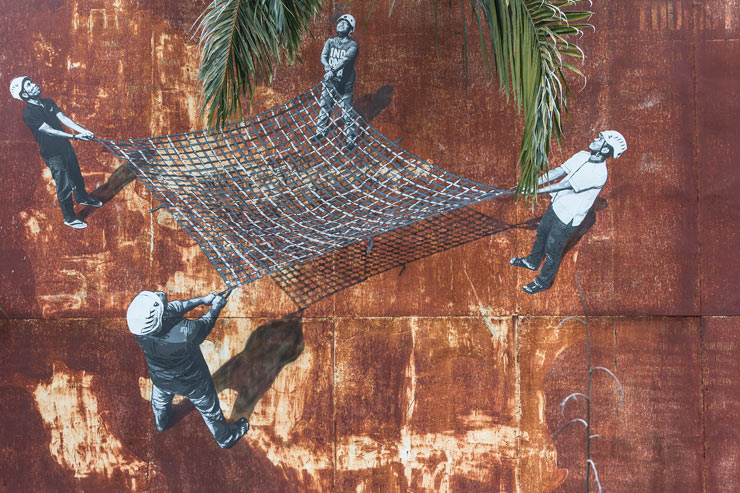
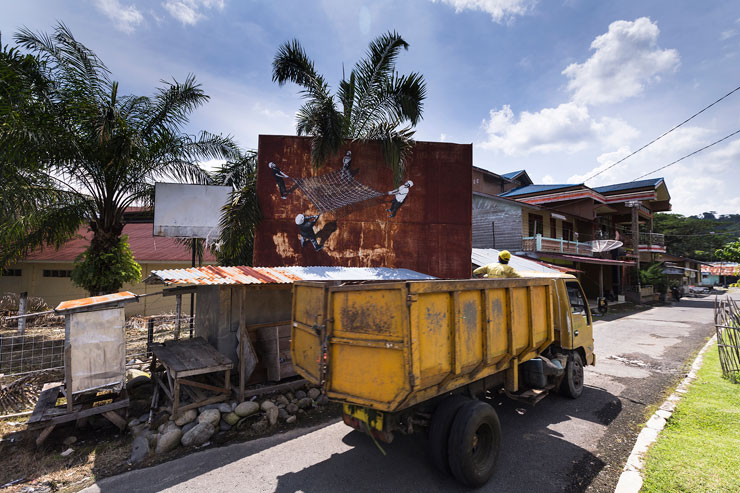
Part of a larger campaign called “Splash and Burn,” today we have Norwegian stencil artist Strøk, aka Anders Gjnnestad, with a brand new piece he did in Bukit Lawang, North Sumatra, Indonesia.

The image of a huge net is not remarkable except for Strøk’s characteristic play on perspective and planes, and the fact that the subject is Orangutans, or rather, an increasing lack of them.

Strøk for Splash & Burn Project. Sumatra 2016. (photo © Strøk)

EcoTourism has become such a huge industry in the last decade and a half thanks to Westerners longing to do something meaningful and engaging on their vacations aside from going to an amusement park or lying by the beach. Unfortunately, irresponsible development, untrained “guides” and uncaring tourists have trampled over the natural areas, changed the natural behavior of wild animals and endangered their future – with Orangutans in Bukit Lawang as a prime example. The lure of tour money and the behaviors of visitors ignoring even basic rules like “don’t feed the wild orangutans” has created a lot of aggressive animals who are now dependent on you for food and the uncontrolled hordes of visitors have damaged the living environment.

“I just found that what I wanted to create was a mural about Orangutans and one of the main problems they are facing – destruction of habitat,” says Strøk of his new piece.

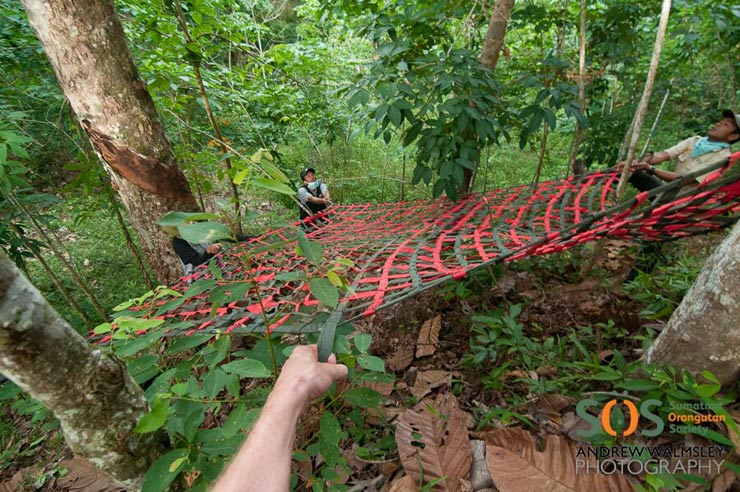
Reference photo. Rescuers working for  Sumatra Orangutan Society or SOS for its initials in English prepare a net to catch an Orangutan about to fall down from a tall tree. (photo © Andrew Walmsley)

With a desire to educate himself about what orangutans are like and how some of them need rescuing and relocating, the artist went to the Orangutan Information Centre headquarters in Medan and met with the people working there. “While being given a presentation of their work, I got the idea of what I wanted to paint. They showed us photos of how they work with the SOS (Sumatran Orangutan Society) to rescue and relocate orangutans in trouble,” he explains. “Orangutans travel great distances almost daily, in search for food. If the jungle is cut down around them and they get stuck in a small pocket of trees, that’s bad news for them.”

“Basically, OIC/SOS have a hotline that people can call if they see a distressed orangutan. Then the OIC/SOS gets together their team that is on standby, go to the location and they shoot the Orangutan with a sedation dart. When it sleeps and falls down from its tree, they are standing below it, breaking the fall with a net – much like the old school fireman rescue method. Then the orangutan gets checked by a vet, and depending on its condition it is either relocated into the wild, or taken to a rehabilitation facility.

Strøk for Splash & Burn Project. Sumatra 2016. (photo © Strøk)

The new stenciled and sprayed wall piece was created to evoke the image of the animal falling to safety and as a larger metaphor about our collective responsibility to care for nature and its other inhabitants. Strøk says he really liked the location he worked with, and after taking photos while standing on a roof of local guys holding the net, he created the stencils and started painting.

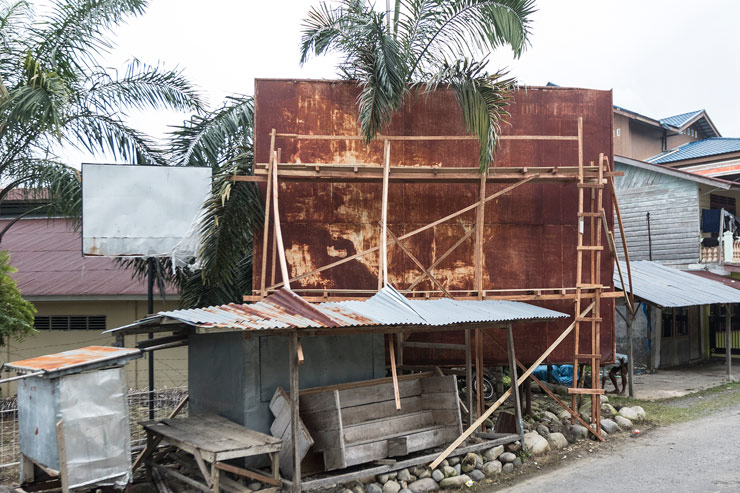
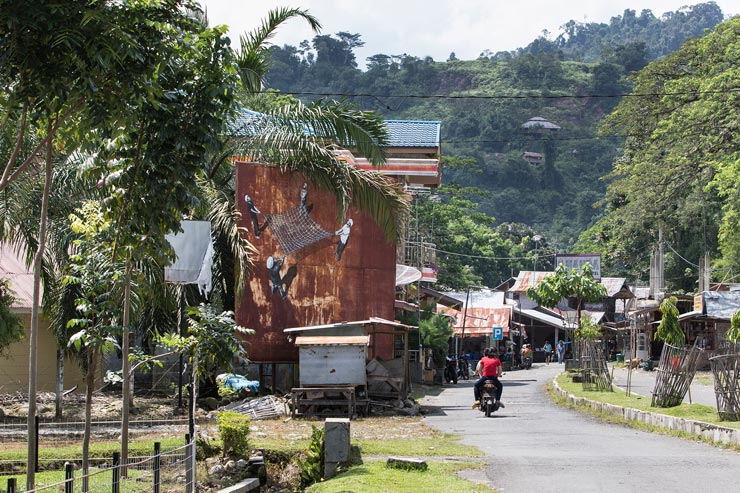
“I was free to do whatever I wanted, on whatever wall or surface I preferred and that we could get permission to paint. On top of my list was a rusty old tourist agency billboard with a barely visible map of Sumatra that was along the main road as you enter the village. I integrated the oil palm tree that was already directly behind and leaning over the billboard into the composition of my painting,” he says

Strøk for Splash & Burn Project. Sumatra 2016. (photo © Strøk)

This might be a bit of a sidenote, but I wanted to include this photo of the construction I was standing on to paint. “I´ve always had massive respect to people who can put together something good and solid, in an effective way. This construction was put up for me by two local men in about an hour, and proved to fit me and the work I needed to do, like a glove. I am glad they got a look at me before they started, though, as I am about 1,5 times the height and at least double the weight of an average Indonesian. They tailored it so I could stand up straight on the middle level and climb up and down with confidence.”- Strøk

Strøk for Splash & Burn Project. Sumatra 2016. (photo © Strøk)

The palm oil tree that reaches over the front of the new piece is significant because this installation is part of a larger campaign about the palm oil industry begun by Lithuanian artist Ernest Zacharevic, who raised money for Strøk and six other artists this January by selling a special lithograph print called “Splash and Burn

Other artists like Mark Jenkins, Isaac Cordal, Pixel Pancho, Gabriel Pitcher, Bibichun, and Axel Void all participated in the first series of installations, and Zacharevic intends to develop the project further to raise awareness about the negative impact that our often unregulated industrial world is having on the natural one, and the people, animals and ecosystems that depend on it. For more information on “Splash and Burn” check out the new article just published in The Guardian.

“For this project I knew I wanted my work to connected on more levels, to tell a more specific story in a way,” StrØk tells us. “I wanted to create a work about Orangutans without painting one. It was a challenge, but a very welcome one.”

To read about an unregulated industry of ecotourism that is not eco-friendly and is very possibly ruining the habitat for orangutans, go here.


Our sincere thanks to Charlotte Pyatt for her help in the project and with this article.


Read more
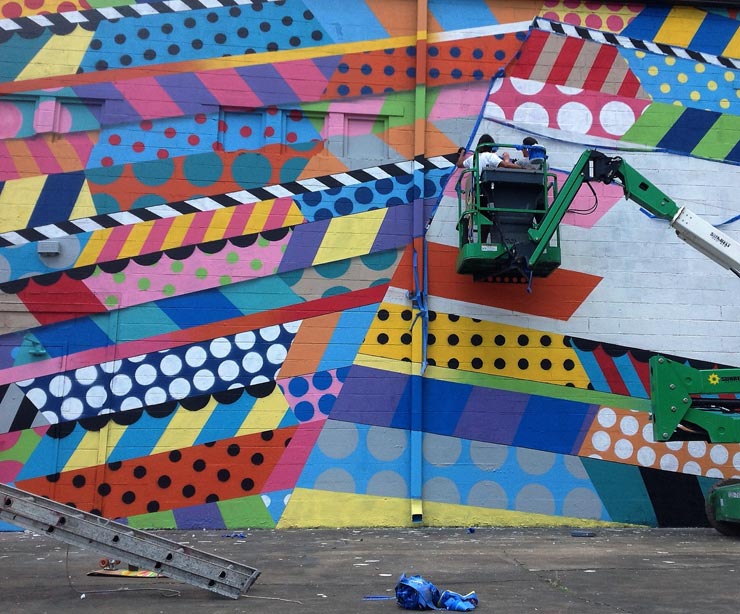
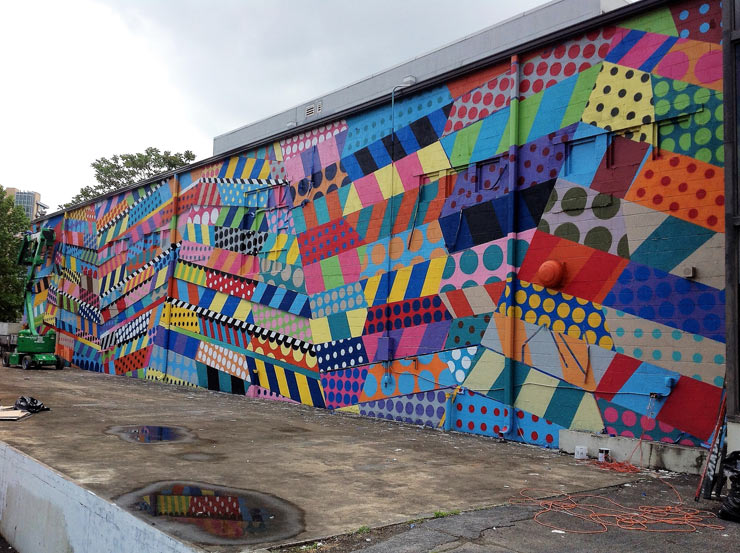
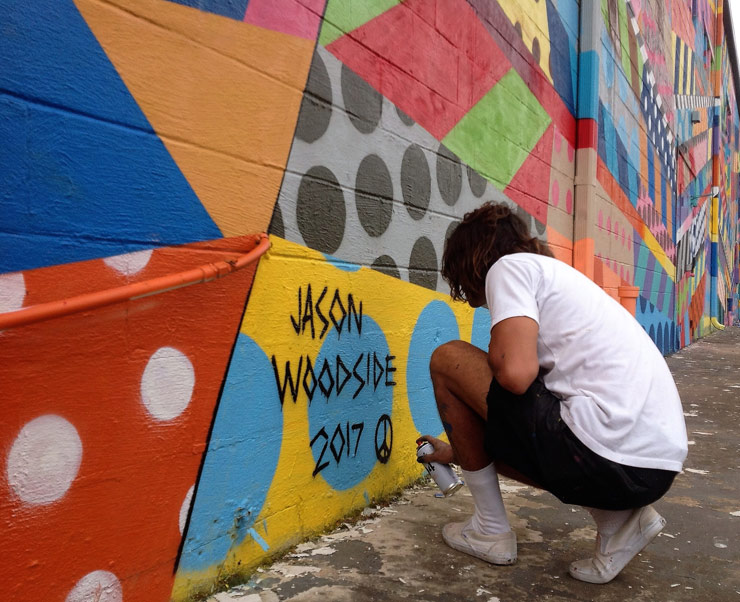
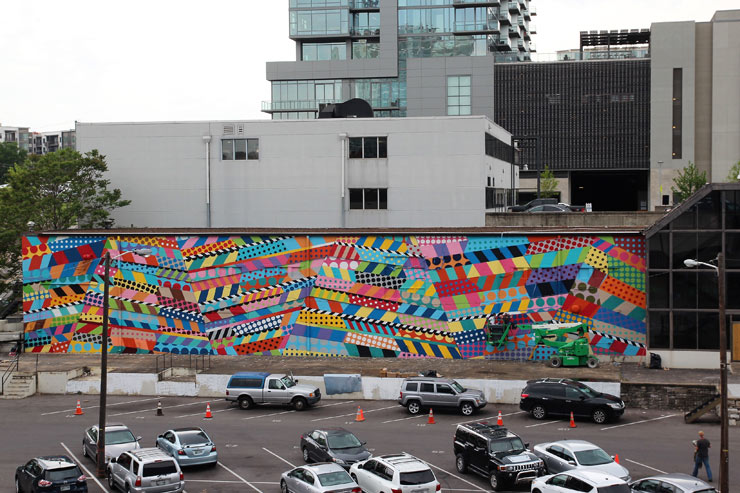
“The Nashville Walls Project 2017” Brings Jason Woodside and Ian Ross

“The Nashville Walls Project 2017” Brings Jason Woodside and Ian Ross

“The Nashville Walls Project,” a privately funded business improvement initiative in the downtown district referred to as “The Gulch” has already brought Street Artists like Rone, Above, Herakut, Curiot, Mike Shine, Niels “Shoe” Meulman, Adele Renault, Mars1 and Louis Masai.

Jason Woodside for The Nashville Walls Project. Assisted by local artist Nathan Brown. April 2017. (photo © Eva Boros)

Now there are two more. Thanks to gallery owner and art dealer Brian Grief, who also starred in and produced the “Saving Banksy” movie, we have images today of two new walls just completed by artists Jason Woodside and Ian Ross.

Stylistically very different, they each nonetheless knocked out massive walls here between April 10-18, as the weather turned pleasantly Spring-like before the punishing southern sun arrives for summer.

Jason Woodside for The Nashville Walls Project. Assisted by local artist Nathan Brown. April 2017. (photo © Eva Boros)

Jason would like to thank local artist Nathan Brown who helped him with the mural, and Ian would like to thank local artist Chris Zidek, who was his trusty assistant for the duration of the project.

Looks like coming up next will be Guido Van Helten, who will be painting a massive mural on a 200-foot abandoned concrete grain silo in an area called The Nations, where real estate developers say they plan for the silo to be the centerpiece of a new West Nashville mixed-use development.

Jason Woodside for The Nashville Walls Project. Assisted by local artist Nathan Brown. April 2017. (photo © Eva Boros)

Jason Woodside for The Nashville Walls Project. Assisted by local artist Nathan Brown. April 2017. (photo © Eva Boros)

Jason Woodside for The Nashville Walls Project. Assisted by local artist Nathan Brown. April 2017. (photo © Eva Boros)

Ian Ross for The Nashville Walls Project. Assisted by local artist Chris Zidek. April 2017. (photo © Eva Boros)

Ian Ross for The Nashville Walls Project. Assisted by local artist Chris Zidek. April 2017. (photo © Eva Boros)

Ian Ross for The Nashville Walls Project. Assisted by local artist Chris Zidek. April 2017. (photo © Eva Boros)

Ian Ross for The Nashville Walls Project. Assisted by local artist Chris Zidek. April 2017. (photo © Eva Boros)

Read more
Elisa Capdevila & Ivan Floro Paint “Carmencita” Tilted at 90 Degrees

Elisa Capdevila & Ivan Floro Paint “Carmencita” Tilted at 90 Degrees

The tea brand. The nightclub. The paella.

The dancer known as the “Pearl of Seville.”

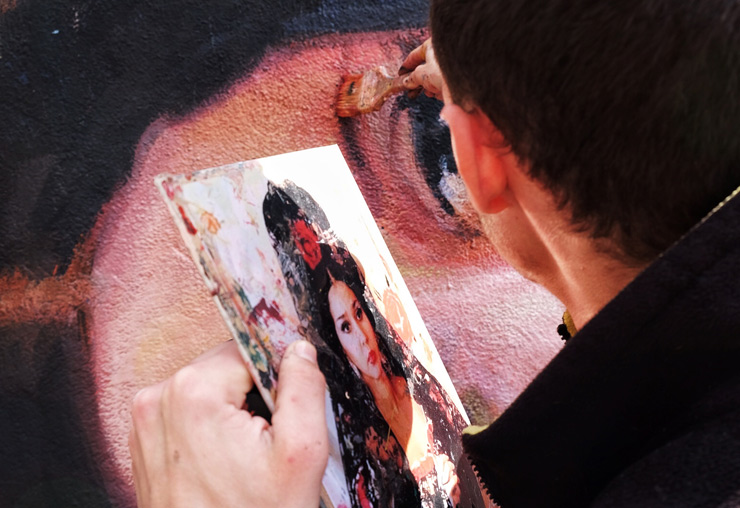
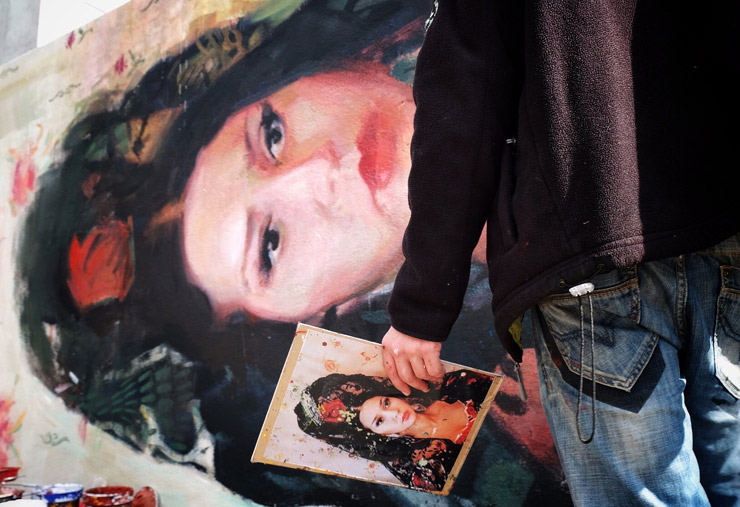
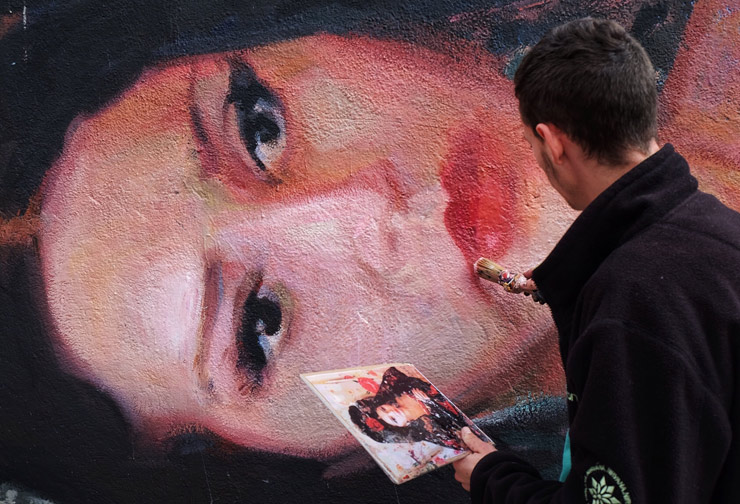
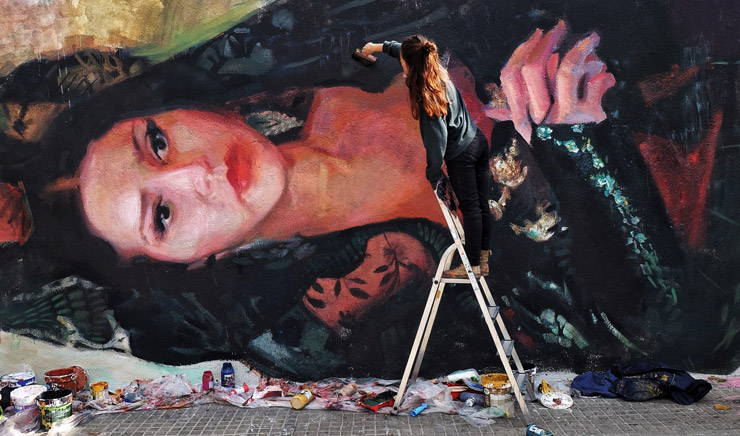
Elisa Capdevila and Iván Floro at Kaligrafics. Contorno Urbano. 12 + 1 Project. May 2017, Barcelona. (photo © Fernando Alcalá Losa)

Carmencita is a name synonymous with the florid, proud and fanciful folklore of Spain expressed through the image of a colorful dancer. Castenets please! Flowers tossed at her feet, swirling skirt dizzying and brilliant.

While the famous dancer named Carmecita whom most Spaniards are familiar with was born in 1868 and was painted by John Singer Sargent (Musée d’Orsay, Paris) and William Merrit Chase (The Met, New York) among other notable painters, her image is less that of a person than of an archetype for mural painters Elisa Capdevila and Iván Floro, who were both born in the mid 1990s.

Elisa Capdevila and Iván Floro at Kaligrafics. Contorno Urbano. 12 + 1 Project. May 2017, Barcelona. (photo © Fernando Alcalá Losa)

Their new collaboration on a long wall in Sant Feliú is an opportunity to paint an image on the street that is impressionist and classical, and then to almost turn it on its head.

“Neither of us know the figure in the foreground, and it does not really matter except to know that she was connected to the world of entertainment and that the public admired her,” they tell us.

Elisa Capdevila and Iván Floro at Kaligrafics. Contorno Urbano. 12 + 1 Project. May 2017, Barcelona. (photo © Fernando Alcalá Losa)

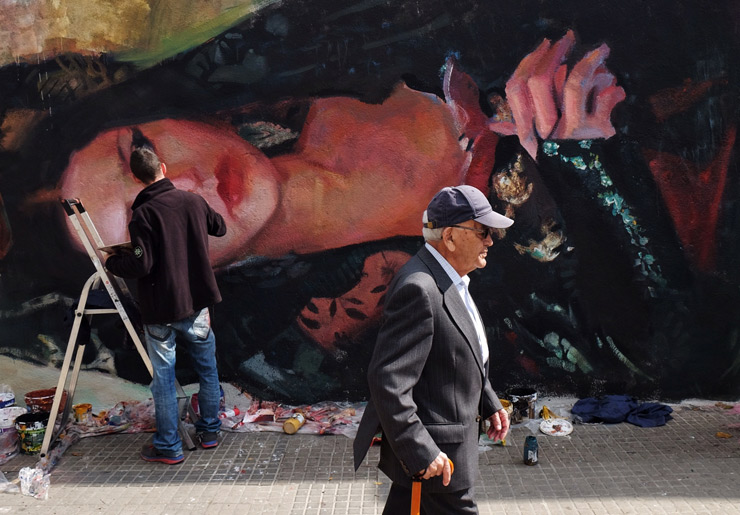
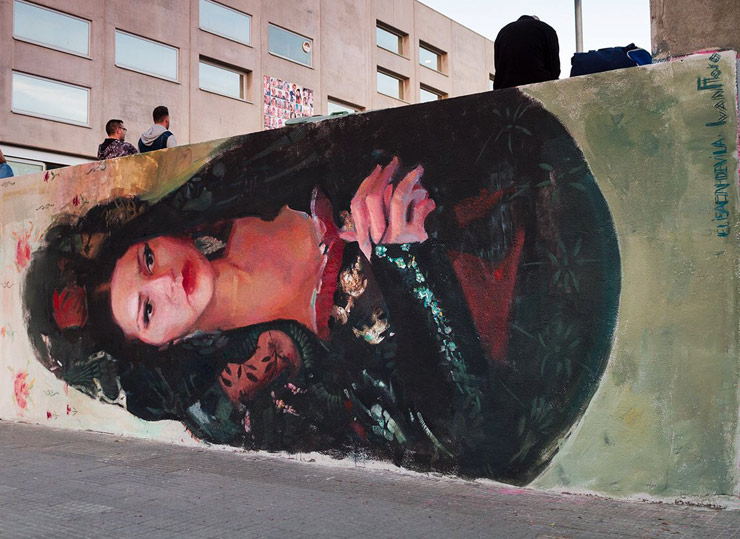
The image is compelling, ebullient and a bit of a mystery – even more so as it has been rotated ninety degrees counterclockwise along the sidewalk of this busy street.

“We decided to represent the figure horizontally because it is a perspective to which we are not accustomed and it is shocking,” they say.

Clearly it is an unusual presentation and interpretation of the image of Carmencita and perhaps it is a furtherance of the concept of a street “intervention”.

Elisa Capdevila and Iván Floro at Kaligrafics. Contorno Urbano. 12 + 1 Project. May 2017, Barcelona. (photo © Fernando Alcalá Losa)

Elisa Capdevila and Iván Floro at Kaligrafics. Contorno Urbano. 12 + 1 Project. May 2017, Barcelona. (photo © Fernando Alcalá Losa)

Elisa Capdevila and Iván Floro at Kaligrafics. Contorno Urbano. 12 + 1 Project. May 2017, Barcelona. (photo © Fernando Alcalá Losa)

Elisa Capdevila and Iván Floro at Kaligrafics. Contorno Urbano. 12 + 1 Project. May 2017, Barcelona. (photo © Alex Miró)

Elisa Capdevila and Iván Floro created this painting in conjunction with Contorno Urbano, 12+1 of Sant Feliú, organized in part with Kaligrafics.

Read more
BSA Images Of The Week: 05.14.17

BSA Images Of The Week: 05.14.17

BSA-Images-Week-Jan2015

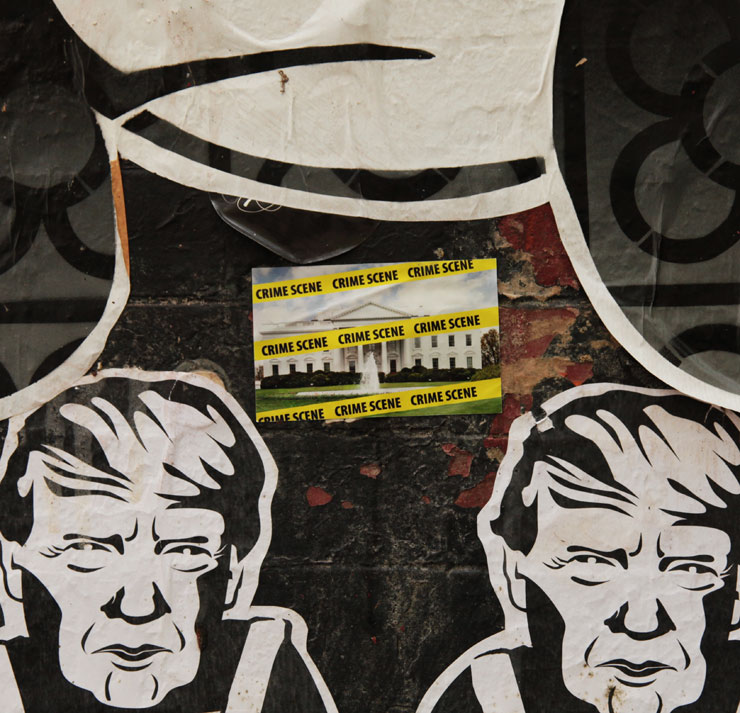
As New Yorkers (and the world) discuss whether Trump will self-combust, start a war, take control as a dictator, be revealed as a Russian operative, or be impeached, some things are for sure – every day the reputation of the US is sustaining damage among friends and allies, billionaires are grinning like Cheshire Cats and US citizens are feeling insecure as hell.

In New York, his “hometown”, we found this article from the Bronx Weekly to be full of informative responses from every day neighbors like the ones you see on the street and in the subway, at the laundromat, in the grocery store. Protests against him and his policies keep happening and more are planned; According to this piece in AM New York we’ve already had demonstrations this year outside Trump Tower, Trump International Hotel and Tower, at the Stonewall National MonumentBattery Park, Tompkins Square Park, Washington Square Park, Times Square and outside Kennedy Airport.  And of course, we had Melissa McCarthy as Sean Spicer riding his podium through Midtown on Friday morning.

With this as a backdrop, its amazing that more Street Art isn’t overtly political. But what most of us are worried about these days isn’t specifically political – its our lives. And the street always has its way of reflecting us back to ourselves.

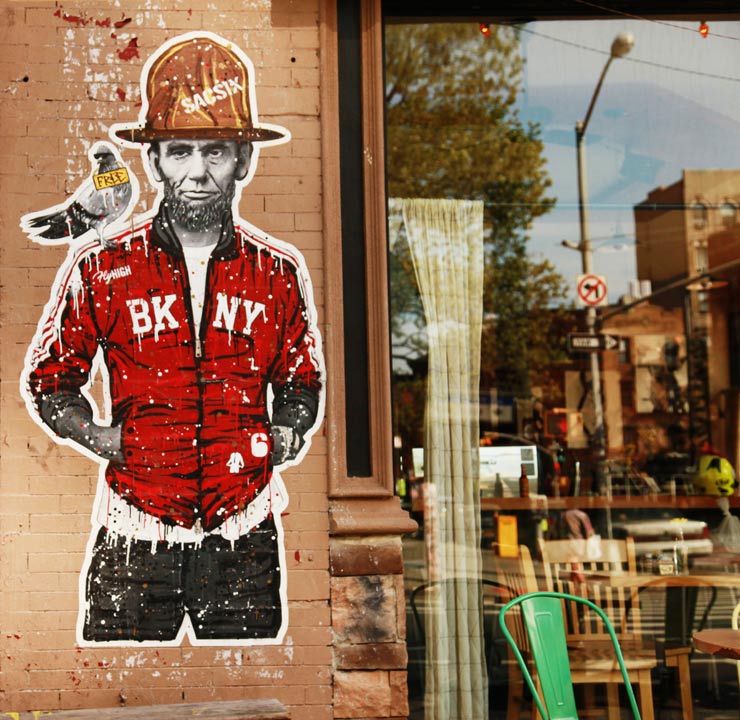
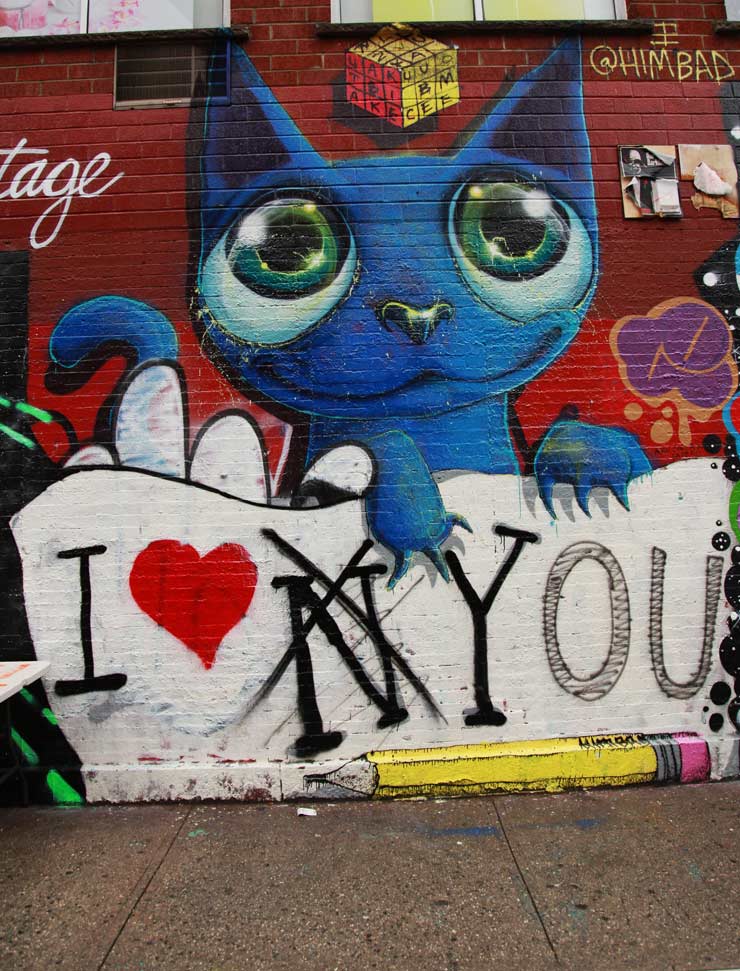
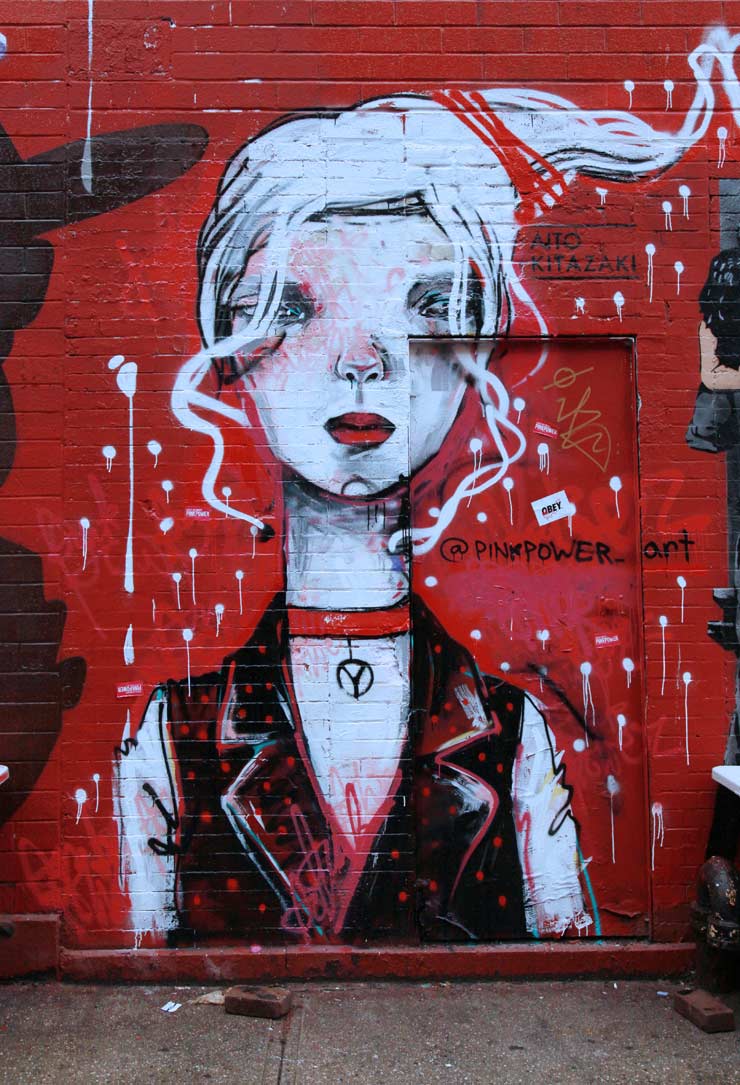
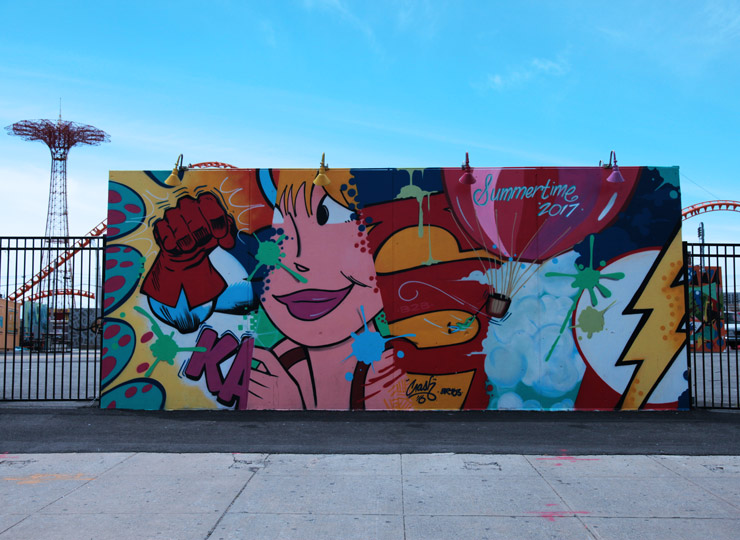
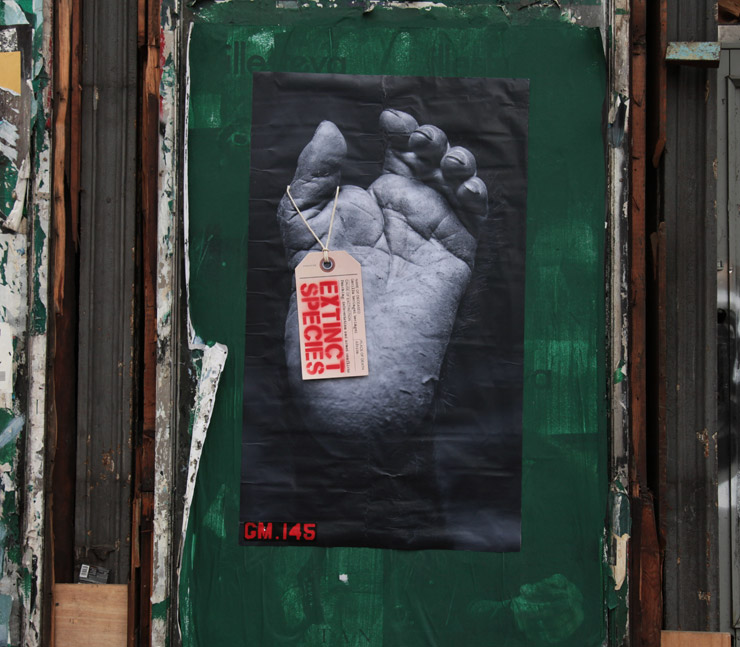
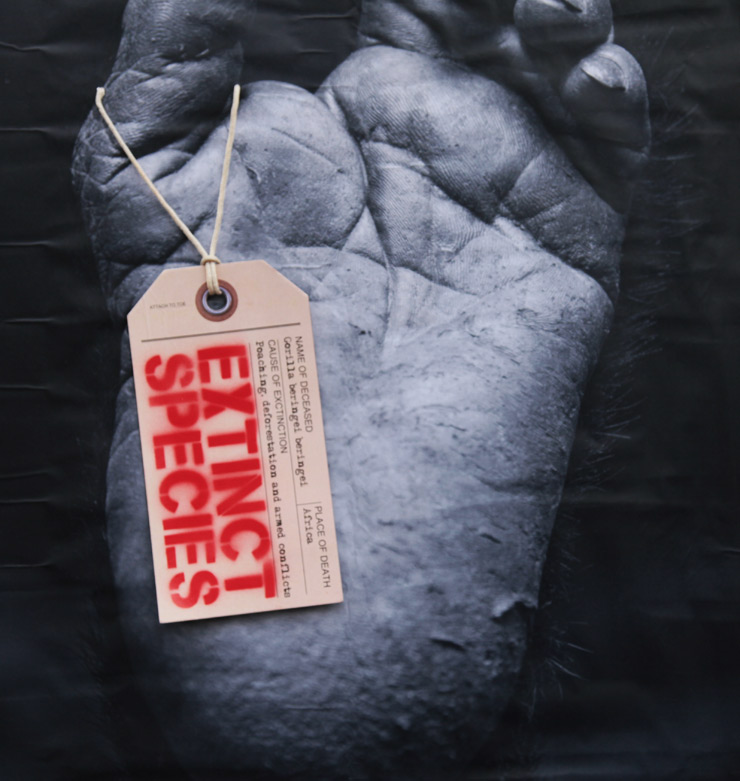
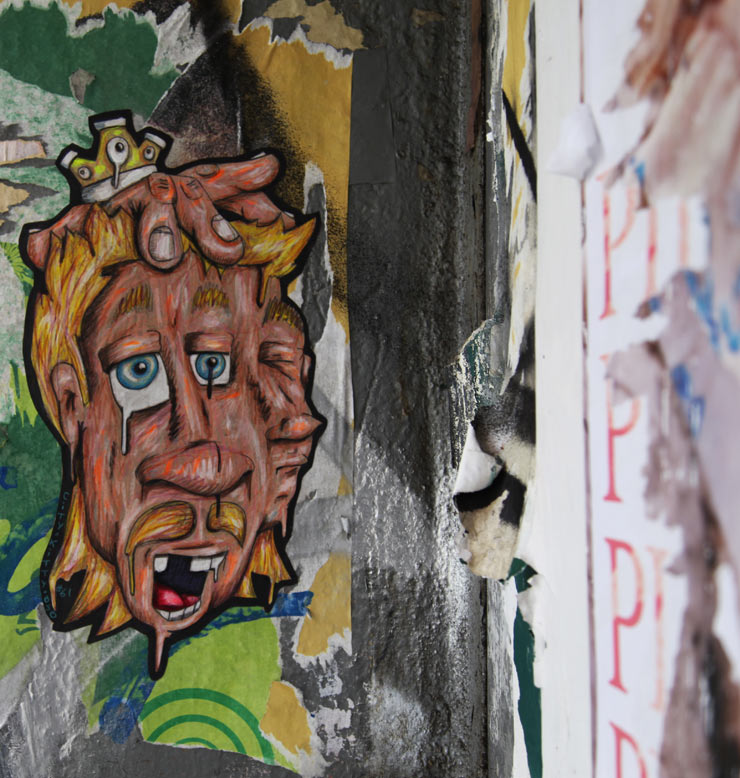
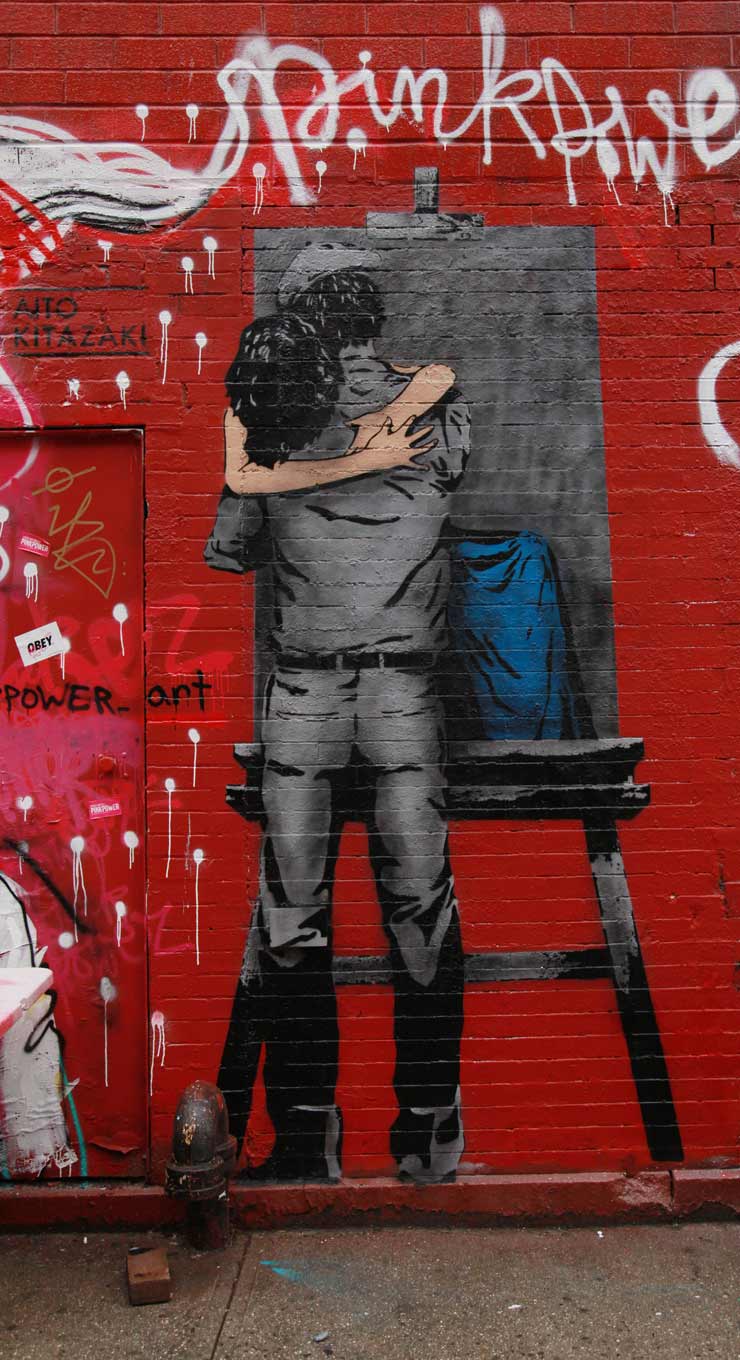
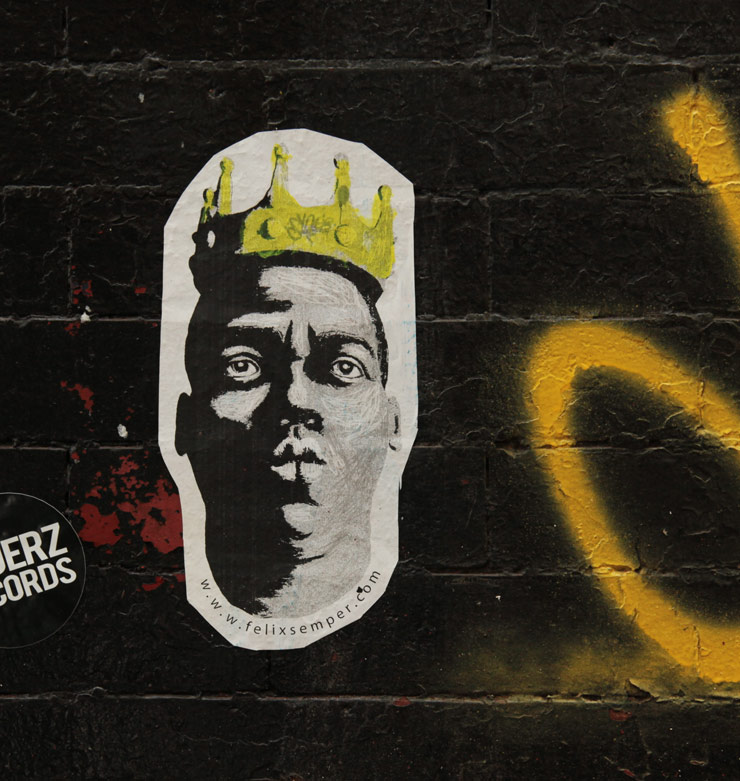
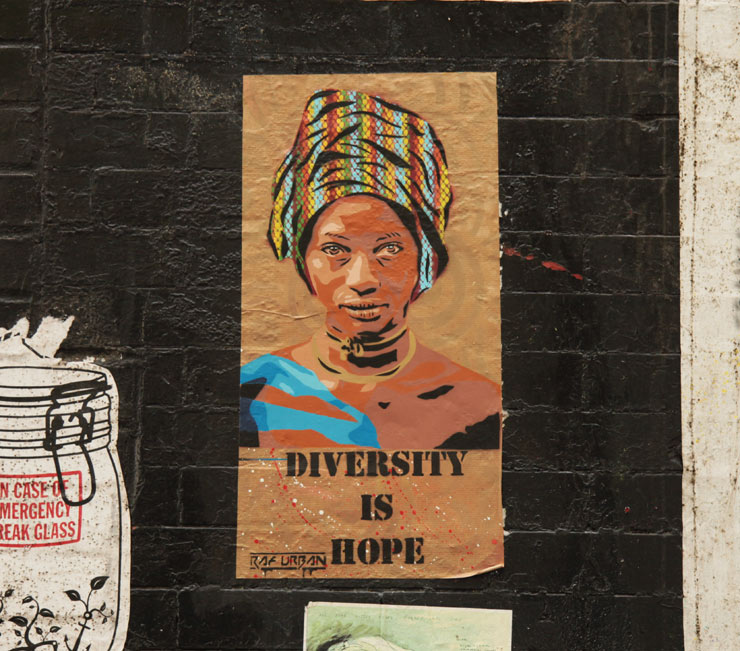
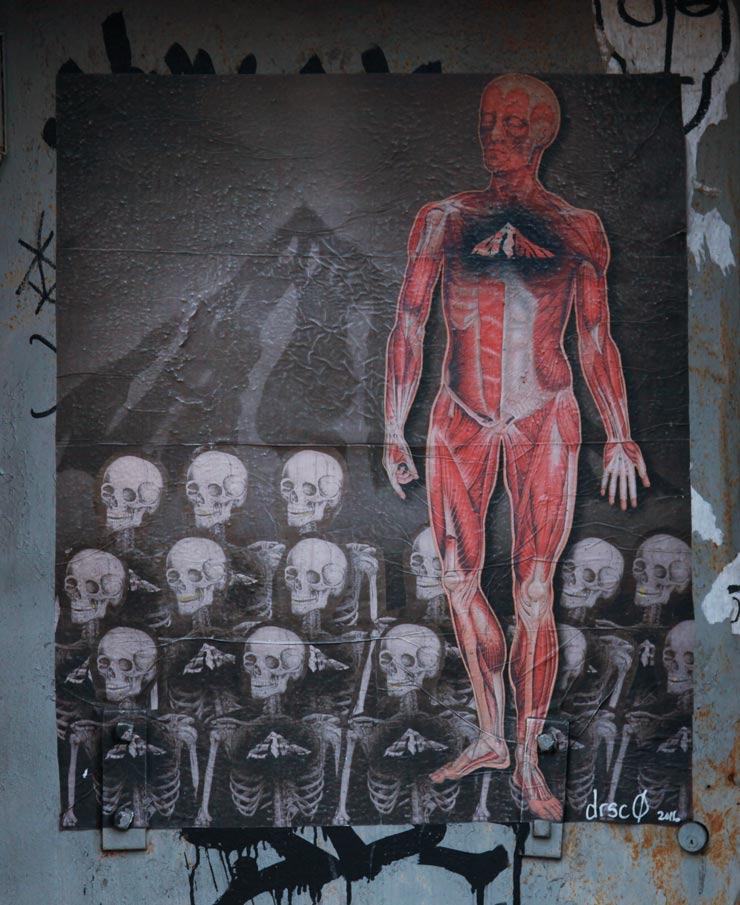
Here’s our weekly interview with the streets, this week featuring: Aito Katazaki, City Kitty, Crash, Crime Scene, drsc0, Extinct Species, Felix Semper, GM.145, Himbad, Megzany, Pink Power, Raf Urban, SacSix, Stikman, and Xors.

Top image: Himbad for East Village Walls. (photo © Jaime Rojo)

Pink Power for East Village Walls. (photo © Jaime Rojo)

Crash for Coney Art Walls 2017. (photo © Jaime Rojo)

GM . 145 Extinct Species. (photo © Jaime Rojo)

GM . 145 Extinct Species. (photo © Jaime Rojo)

City Kitty (photo © Jaime Rojo)

Crime Scene (photo © Jaime Rojo)

Megzany (photo © Jaime Rojo)

Japanese Street Artist Aito Kitazaki for East Village Walls. (photo © Jaime Rojo)

Felix Semper (photo © Jaime Rojo)

Raf Urban (photo © Jaime Rojo)

Abe and SacSix keeping it real for East Village Walls. (photo © Jaime Rojo)

drsc0 (photo © Jaime Rojo)

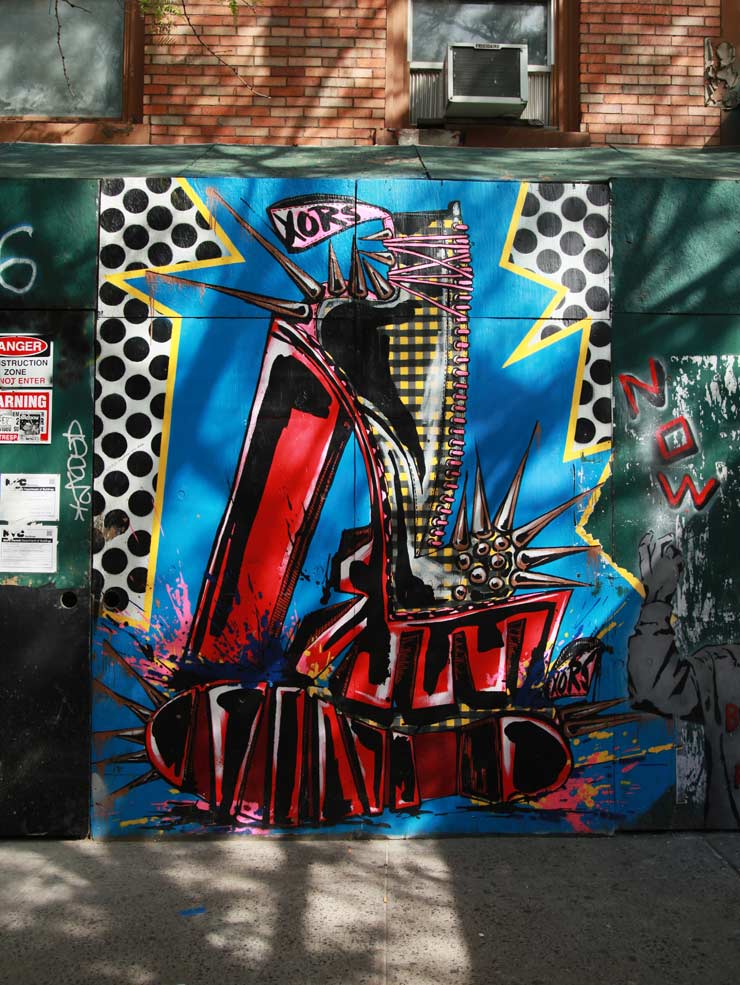
Xors for East Village Walls. (photo © Jaime Rojo)

Stikman (photo © Jaime Rojo)

Untitled. Manhattan, NYC, May 2107.  (photo © Jaime Rojo)

Read more
AXE Colours – Two Graffiti Friends, Now Creative Partners

AXE Colours – Two Graffiti Friends, Now Creative Partners

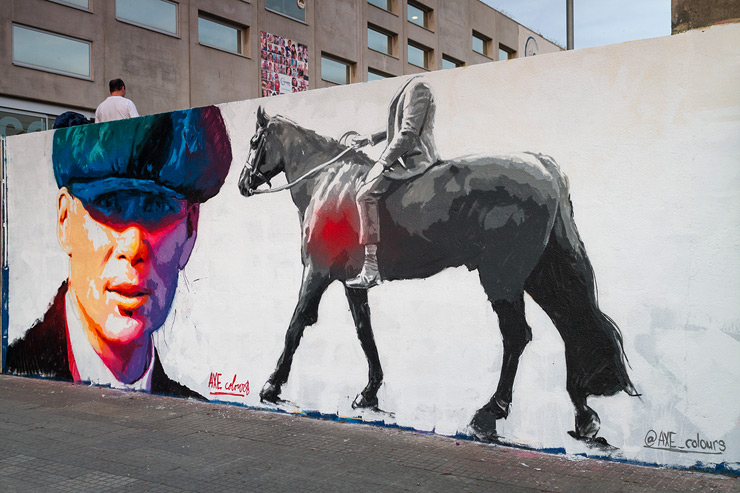
Sometimes you can parlay your graffiti and Street Art practice into a career that sustains you, and many artists work hard to find opportunities that assure that they can continue to be creative. Friends since childhood and painting graffiti and murals together since 1999 in Barcelona, Adrià (Smaug) and Oriol (Gúma) together call themselves AXE Colours.

AXE Colours at Kaligrafics. Contorno Urbano. 12 + 1 Project. May 2017, Barcelona. (photo © Fernando Alcalá Losa)

Both are interested in architecture and design and plastic arts and have done a number of commercial projects together including recently a long tunnel inside the stadium complex for the footballers del Camp Nou del Futbol Club in the city.

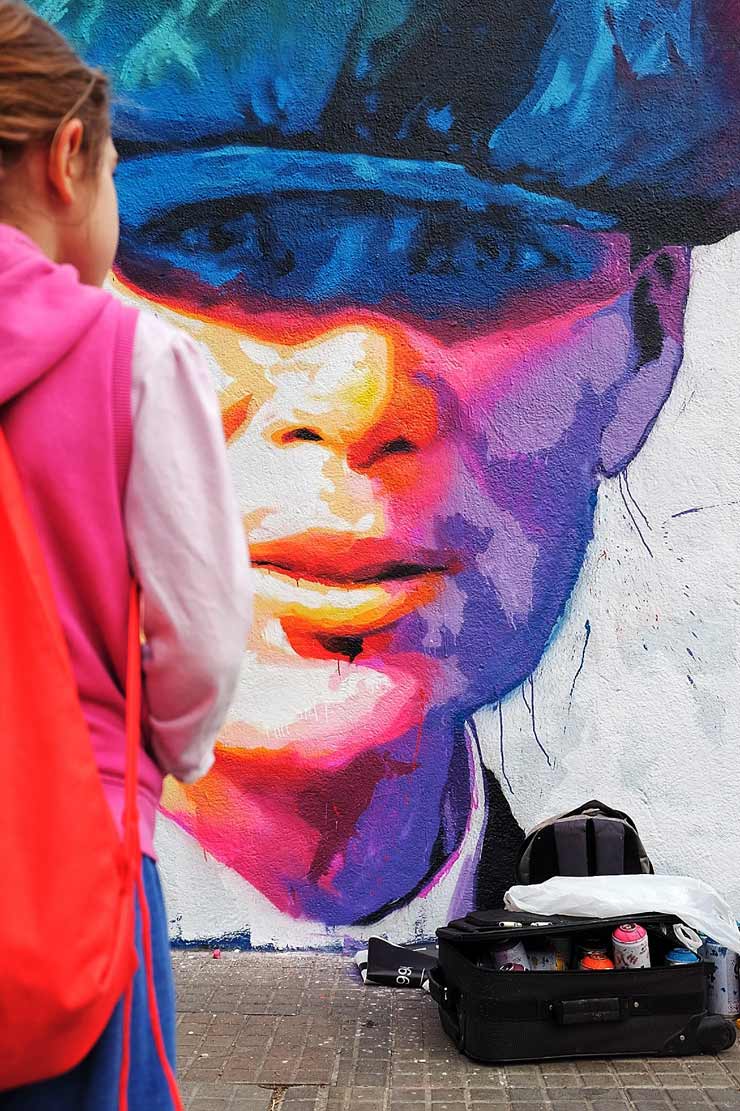
While Oriol practices as an architect in London and Hong Kong, Adrià is fully dedicated to AXE COLORS personally and commercially and he is currently painting a series of portraits of TV personalities and sports figures. Here’s a recent painting of TV horse racing jockey Tommy Shelby and his horse for the 12 + 1 Project – with photos by Fernando Alcalá Losa.

AXE Colours at Kaligrafics. Contorno Urbano. 12 + 1 Project. May 2017, Barcelona. (photo © Fernando Alcalá Losa)

AXE Colours at Kaligrafics. Contorno Urbano. 12 + 1 Project. May 2017, Barcelona. (photo © Fernando Alcalá Losa)

AXE Colours at Kaligrafics. Contorno Urbano. 12 + 1 Project. May 2017, Barcelona. (photo © Alex Miró)

Read more