Isaac Cordal + INO. Up North Fest X BSA: Røst, Norway.  UPN Dispatch 1

Isaac Cordal + INO. Up North Fest X BSA: Røst, Norway. UPN Dispatch 1

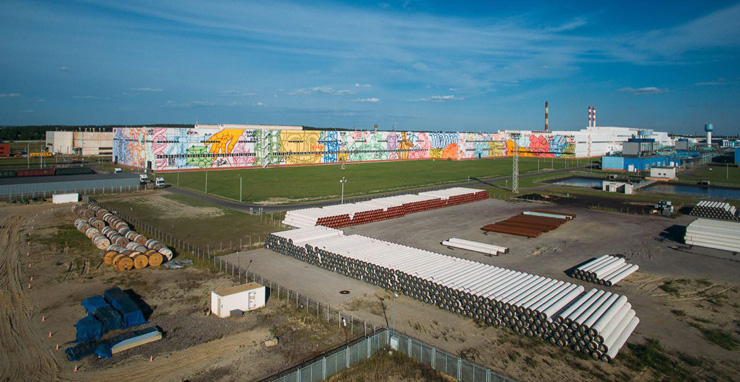
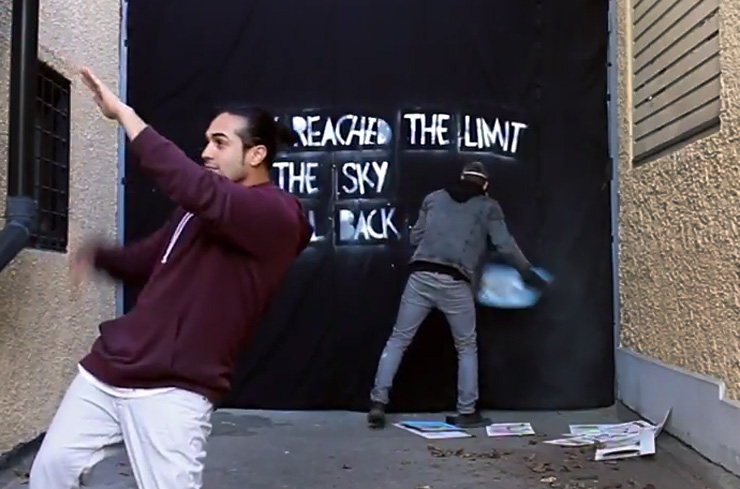
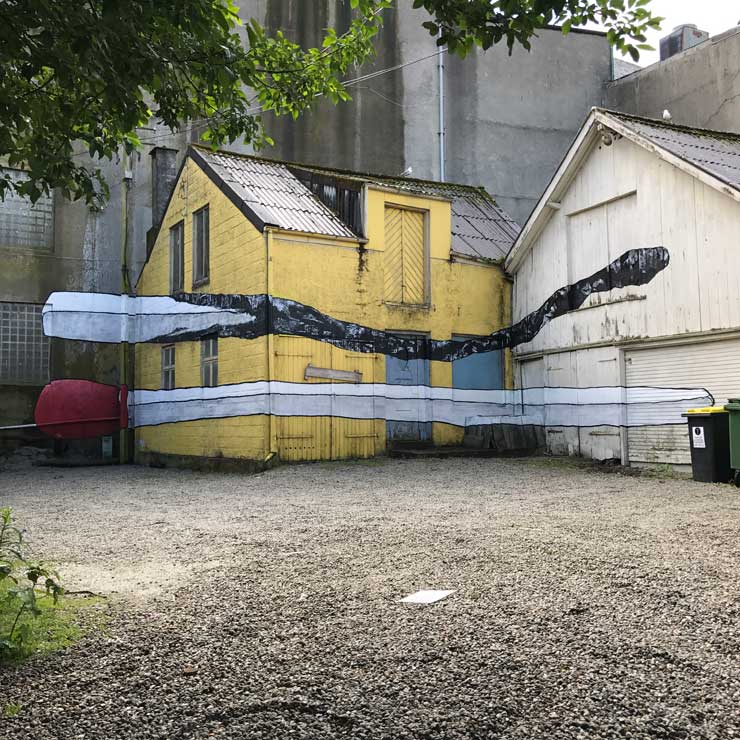
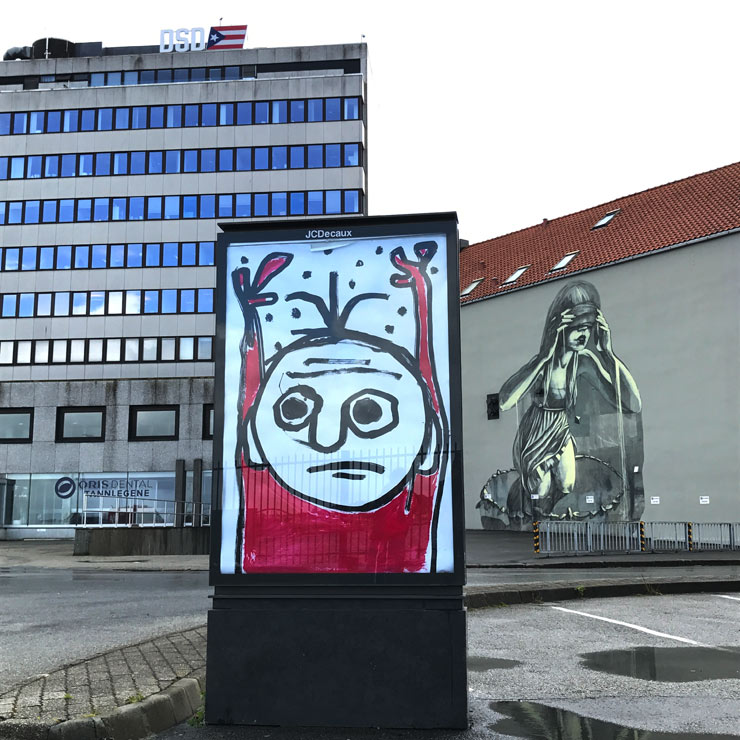
This is the third year for Northern Norway’s UPN Festival and this year it’s on an Island called Røst and includes a collection of artists eager to do site-specific and environmental works – one evolutionary development in the mural festivals that blossom throughout the world right now. This week BSA is proud to bring you images and interviews along with Urban Nation this year at UpNorth, where the seagulls never stop calling and the sun never goes down this time of year.


Today we look at new work by Isaac Cordal from Spain and INO from Greece, with each artist telling us about their street practice up north.
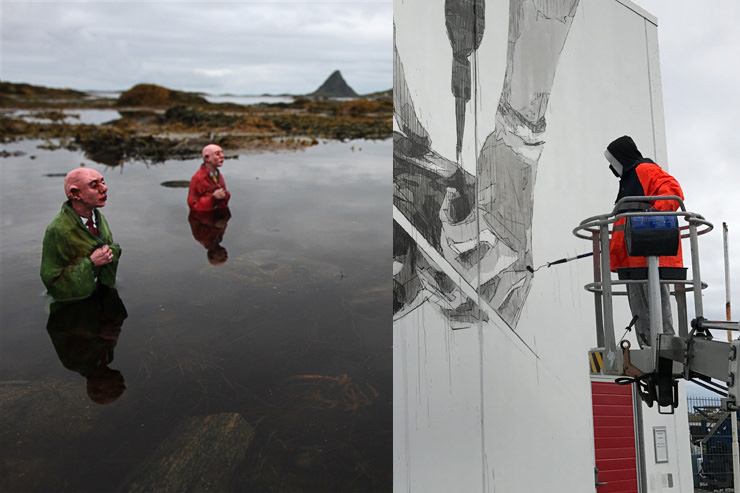
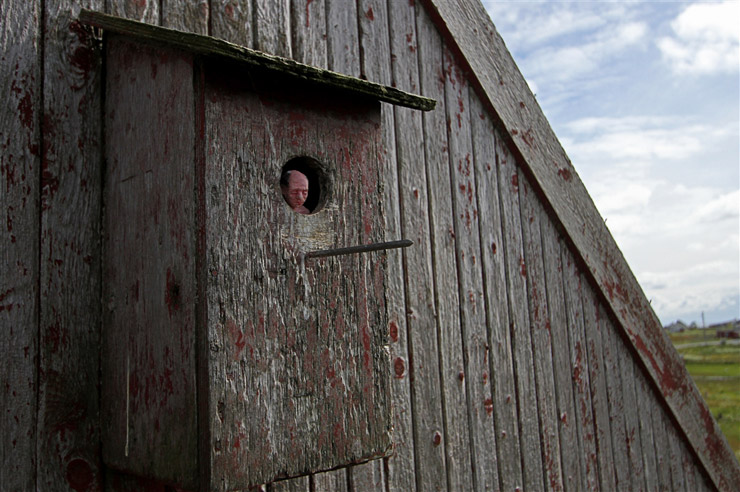
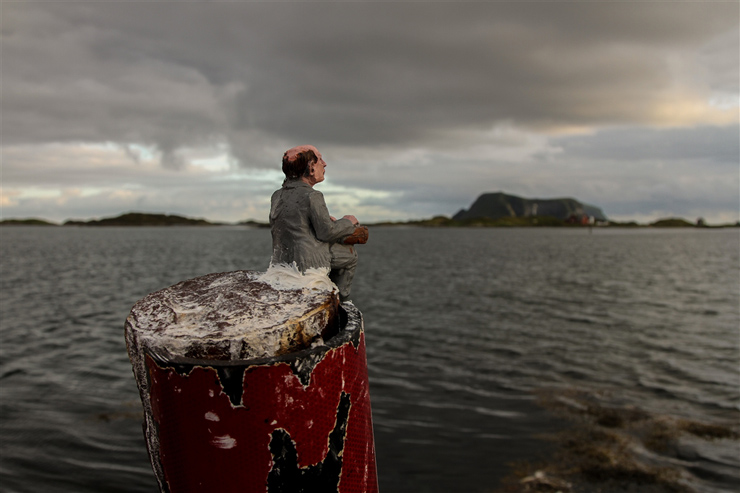
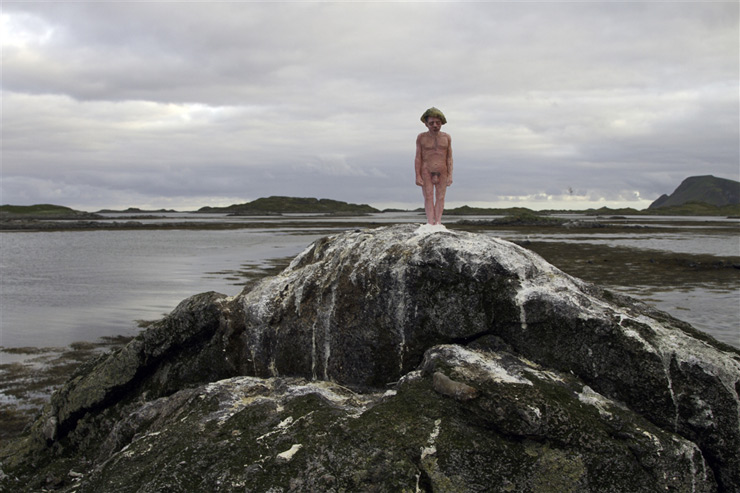
“I think it was very interesting as Upnorth subtly left its footprint without overturning the aesthetics of the Island,” says Isaac Cordal about his experience at the UPN festival. You may be familiar with the miniature sculptural interventions by Isaac Cordal, whose corporate businessmen have sold their souls and are looking down at the traffic of the city from a ledge, contemplating their existence, dread, and guilt. Partly social critique, partly comedic play, partly redefining public space and scale, Cordal’s figures are reliably surprising. You can see that at UpNorth this year some of them are evolving as well.
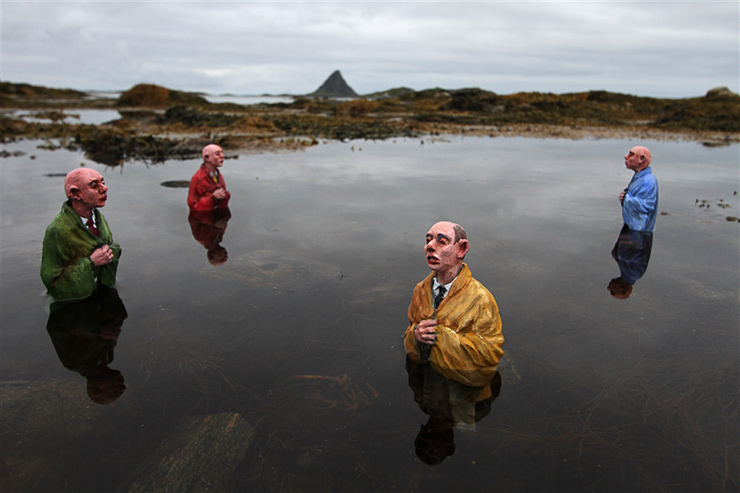
Isaac Cordal. Up North Fest 2017. Røst, Norway. (photo © Isaac Cordal)

Brooklyn Street Art: Can you tell us about the new figures that you did for UpNorth?
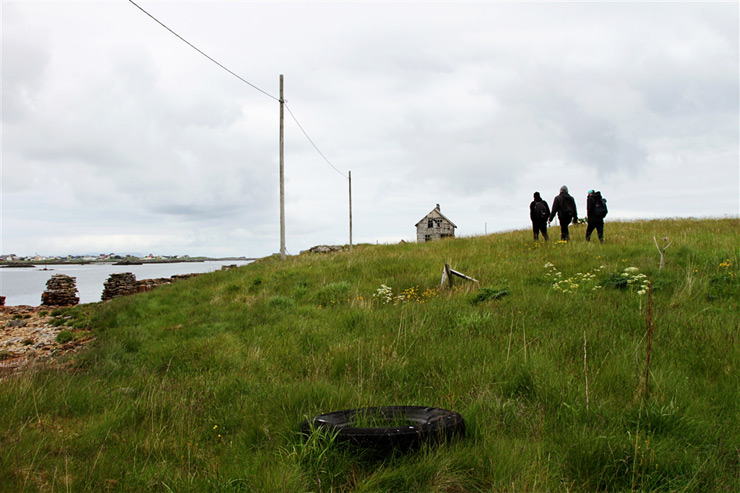
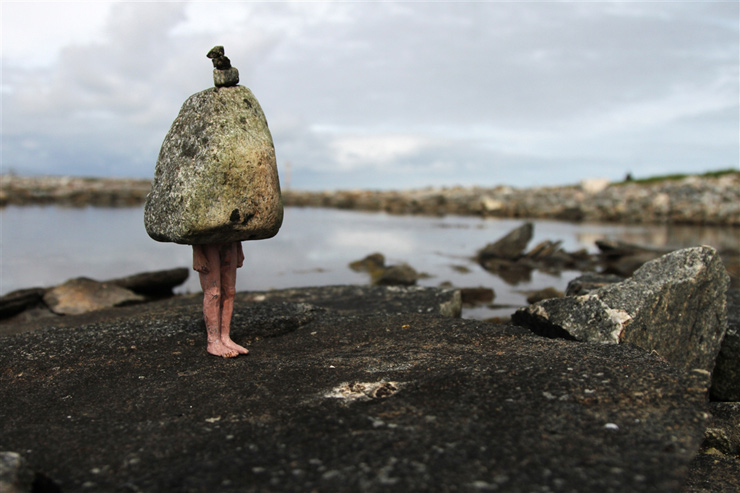
Isaac Cordal: In a way they are part of the same series called “Isolated in the modern outdoors”. They are covered by a blanket with the colors of the houses of Røst. They are isolated in the middle of the sea with no possibilities of returning, without a house, like a kind of shipwreck. Unfortunately blankets have become the street fashion for many homeless people. Blankets remind us of other times, of the devastation, of the migratory crises and of the human being succumbing to the hostilities of the outside.

Isaac Cordal. Up North Fest 2017. Røst, Norway. (photo © Isaac Cordal)

Brooklyn Street Art: We notice that they look quite different from the little businessmen that many have become familiar with. What inspired you to change them?
Isaac Cordal: As I said before perhaps the idea is a little dense. In modernity itself we have intense reflections of the Middle Ages, there are still different speeds outside exponential progress, too many contrasts between rich and poor, the so-called globalization leaves a trail of images of people delocalized, confused in space and lost in time.
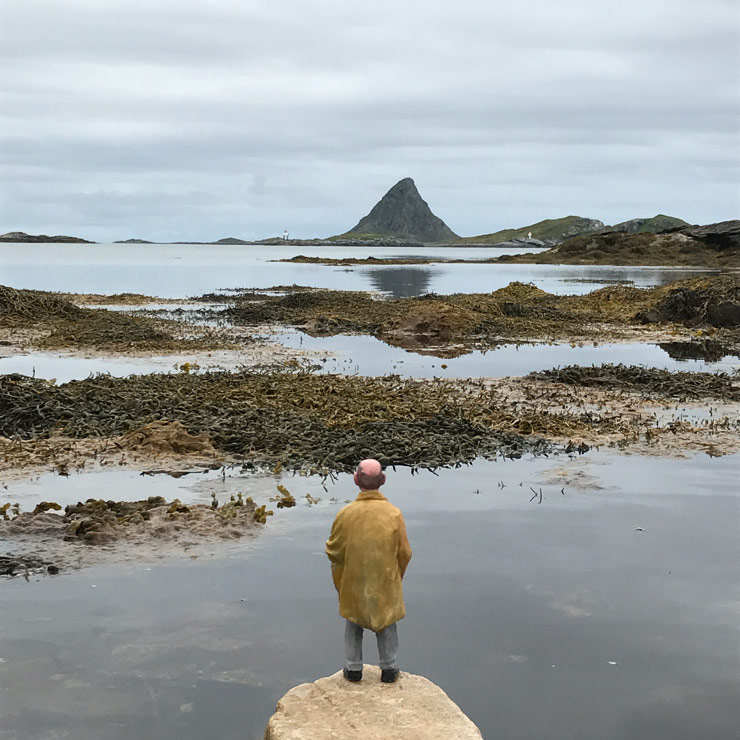
Isaac Cordal. Up North Fest 2017. Røst, Norway. (photo © Tor Ståle Moen)

Brooklyn Street Art: How would you describe the environment working in Røst?
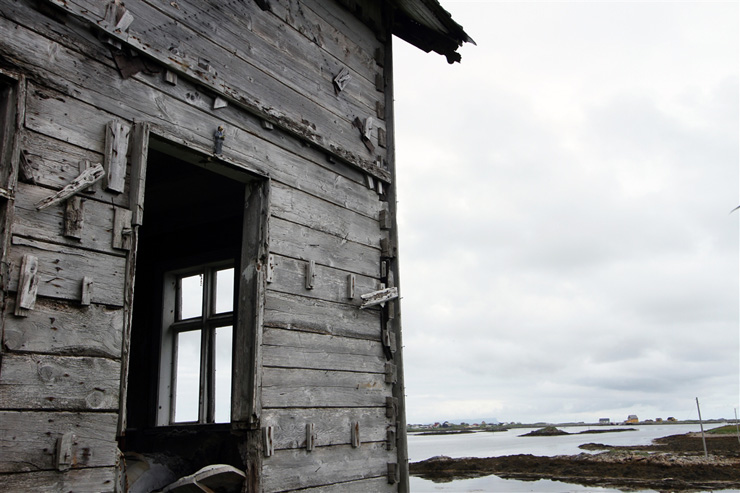
Isaac Cordal: Working in Røst was an interesting experience since you had to adapt to the peculiar nature of it; there were not many buildings to intervene so that gave me the opportunity to experiment with its geography. With its 24 hours of light its landscape became something completely hypnotic at certain times. The hours of sleep are altered and the perception of time changes in a certain way.
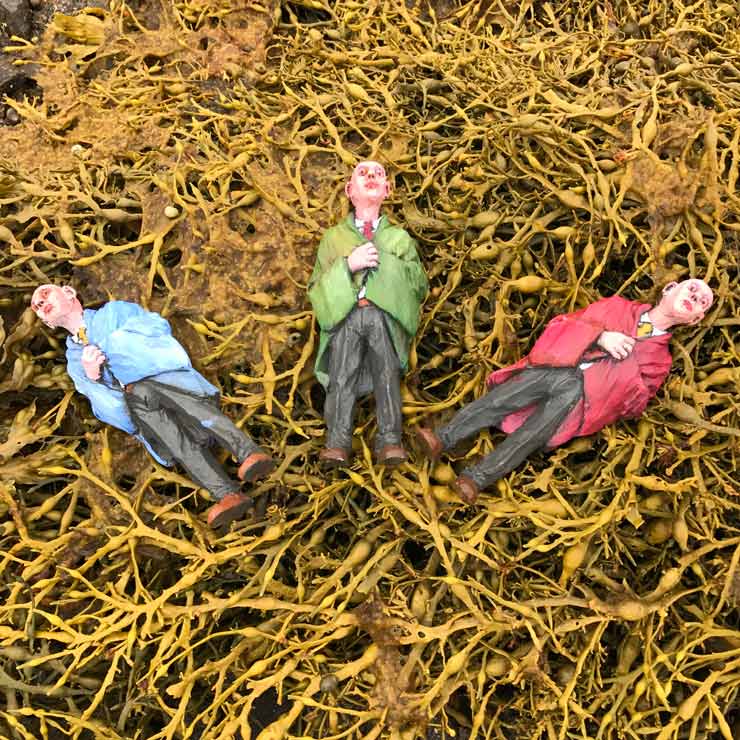
Isaac Cordal. Up North Fest 2017. Røst, Norway. (photo © Tor Ståle Moen)

Brooklyn Street Art: How are you challenging yourself as an artist right now?
Isaac Cordal: I’m going to try to work more in the studio after an intense year from one side of the world to the other. Perhaps I will decrease a little more – until disappearing.

Isaac Cordal. Up North Fest 2017. Røst, Norway. (photo © Tor Ståle Moen)
 

Isaac Cordal. Up North Fest 2017. Røst, Norway. (photo © Isaac Cordal)

Isaac Cordal. Up North Fest 2017. Røst, Norway. (photo © Isaac Cordal)

Isaac Cordal. Up North Fest 2017. Røst, Norway. (photo © Isaac Cordal)

Isaac Cordal. Up North Fest 2017. Røst, Norway. (photo © Isaac Cordal)
Isaac Cordal. Up North Fest 2017. Røst, Norway. (photo © Isaac Cordal)
Isaac Cordal. Up North Fest 2017. Røst, Norway. (photo © Isaac Cordal)
Isaac Cordal. Up North Fest 2017. Røst, Norway. (photo © Isaac Cordal)
Isaac Cordal. Up North Fest 2017. Røst, Norway. (photo © Isaac Cordal)
Isaac Cordal. Up North Fest 2017. Røst, Norway. (photo © Isaac Cordal)

Isaac Cordal. Up North Fest 2017. Røst, Norway. (photo © Tor Ståle Moen)


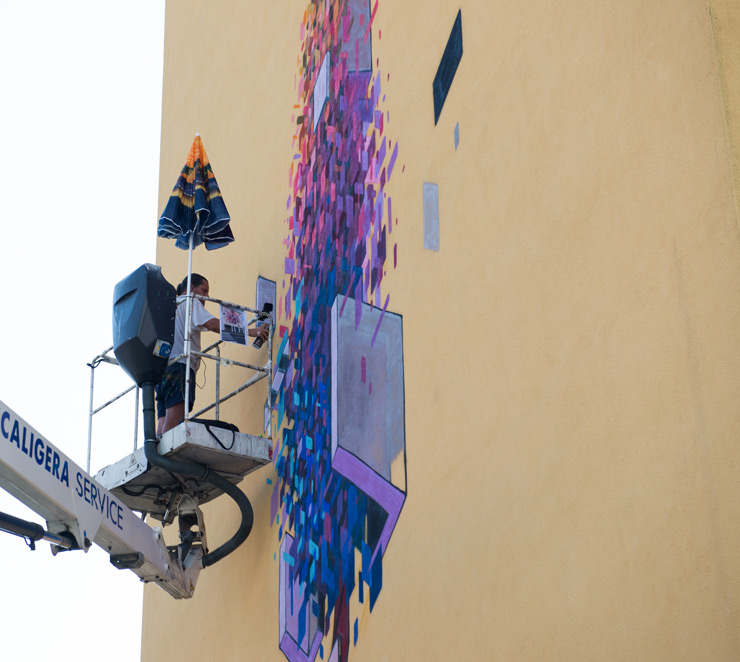
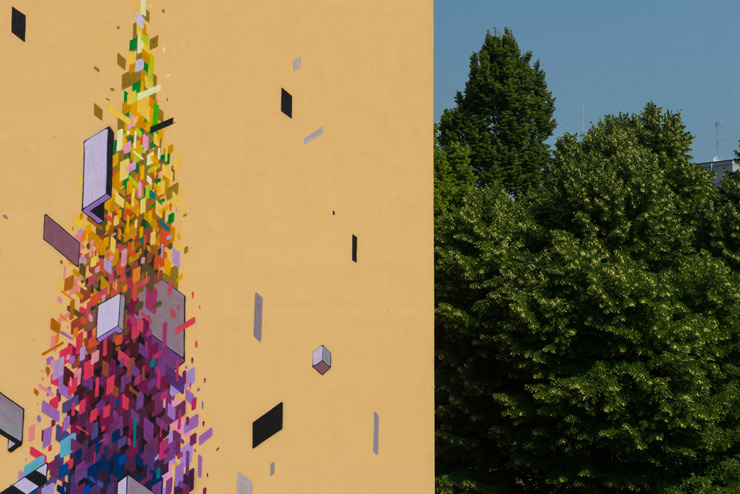
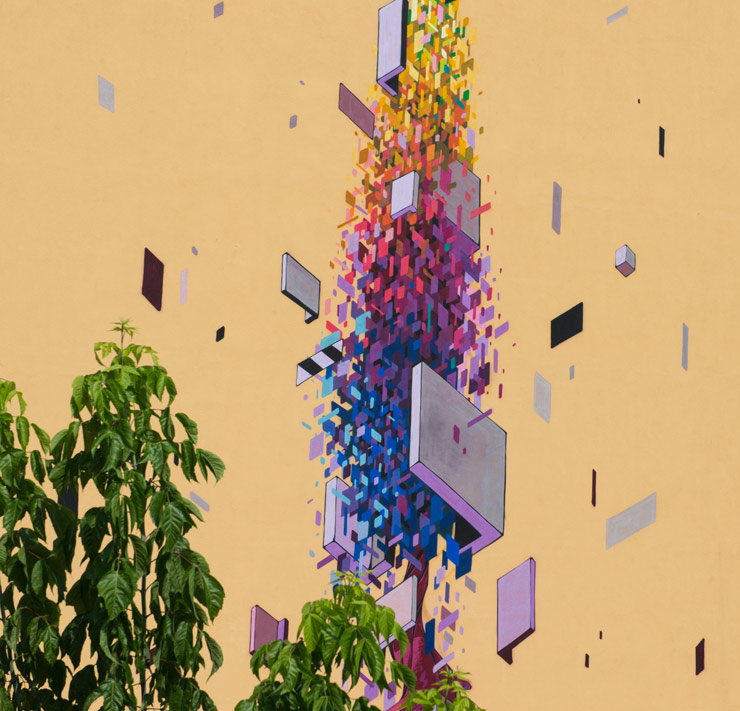
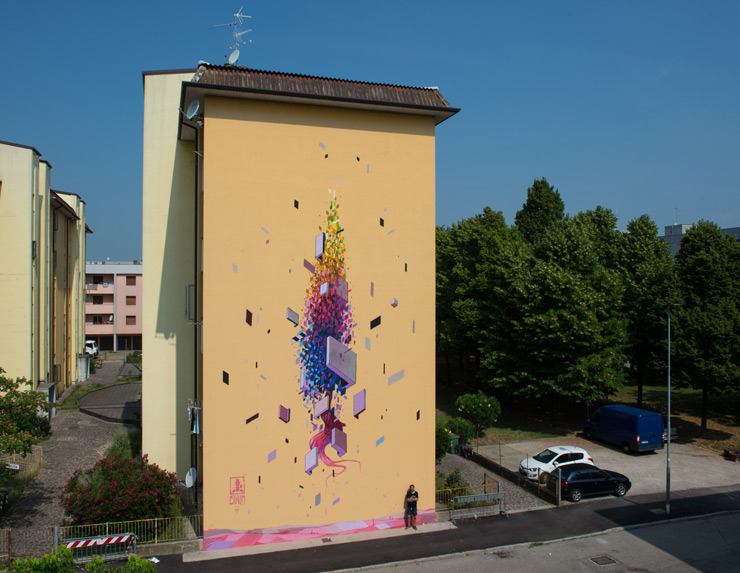
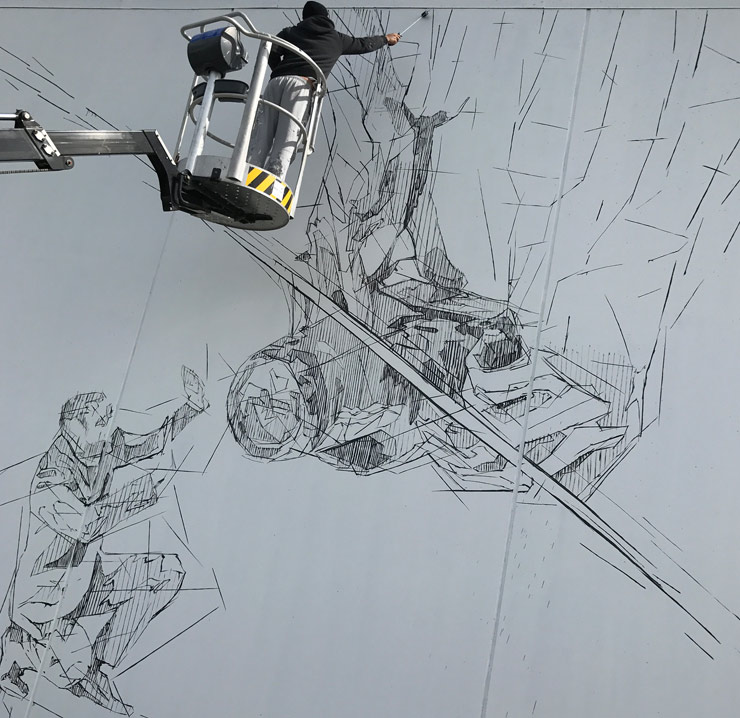
Muralist INO uses a monochrome palette and a splash of color with most of his photorealist/surrealist figurative metaphors to talk about society. Not exactly critique, often the commentary comes across as straightforward observation, openly stated.
INO. Up North Fest 2017. Røst, Norway. (photo © Tor Ståle Moen)

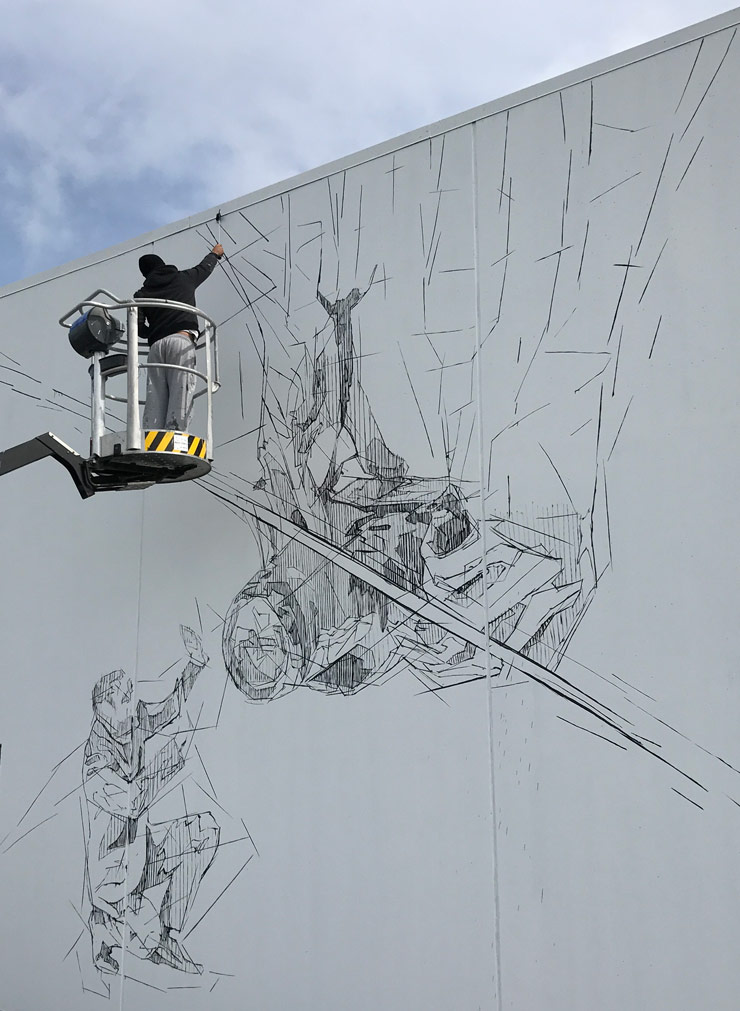
An aerosol bomber in his teens in Athens, his hard work in his early thirties has brought his murals to many international cities and he says UPN was a great opportunity to address a favorite issue of late, our lack of privacy. The new piece is called “Photobombing”.

Brooklyn Street Art: Can you tell us about the piece that you did for UpNorth? 
INO: The invasion of privacy in our societies is constantly increasing with the pretext that our lives are improving. This exposure may not concern some, but maybe they should think again about it.
INO. Up North Fest 2017. Røst, Norway. (photo © Tor Ståle Moen)

Brooklyn Street Art: How would you describe the environment working in Røst?
INO: It was interesting working on an island  that has only one policeman and 24 hours daylight.

Brooklyn Street Art: How are you challenging yourself as an artist right now?
INO: The production of images that will remain on people’s mind in this era of over-information could be a challenge.
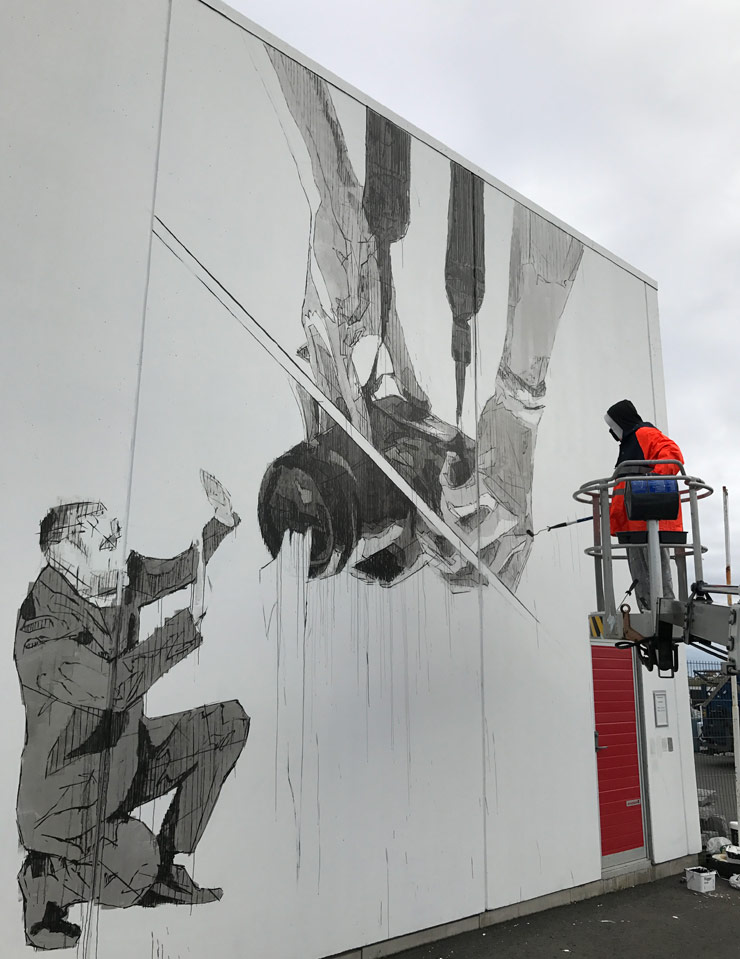
INO. Up North Fest 2017. Røst, Norway. (photo © Tor Ståle Moen)
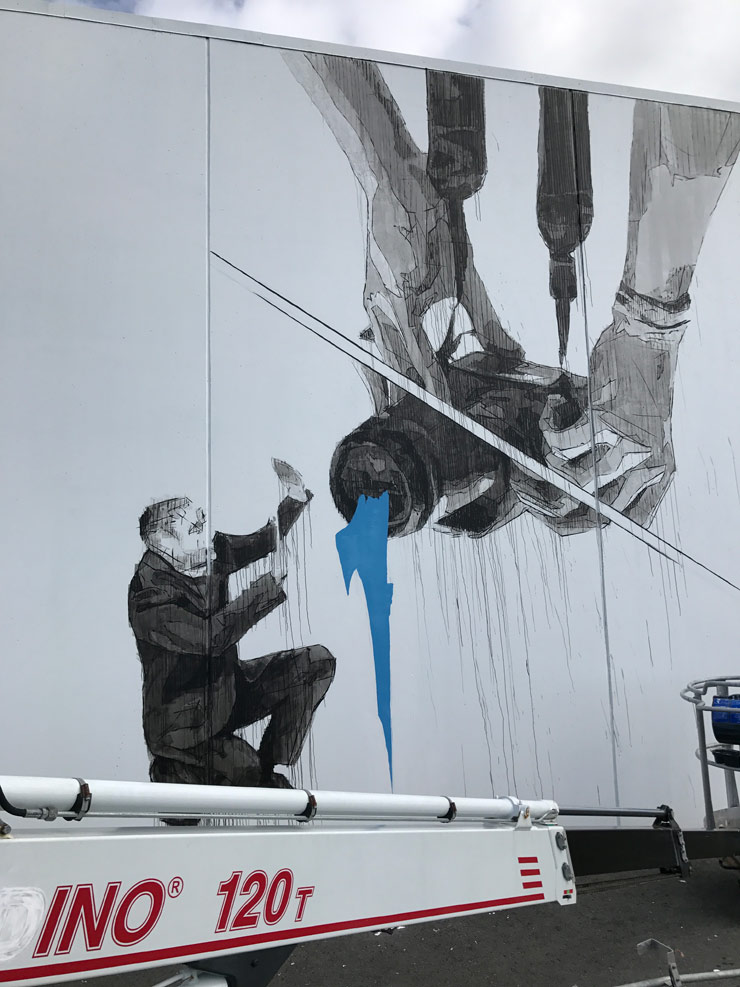
INO. Up North Fest 2017. Røst, Norway. (photo © Tor Ståle Moen)
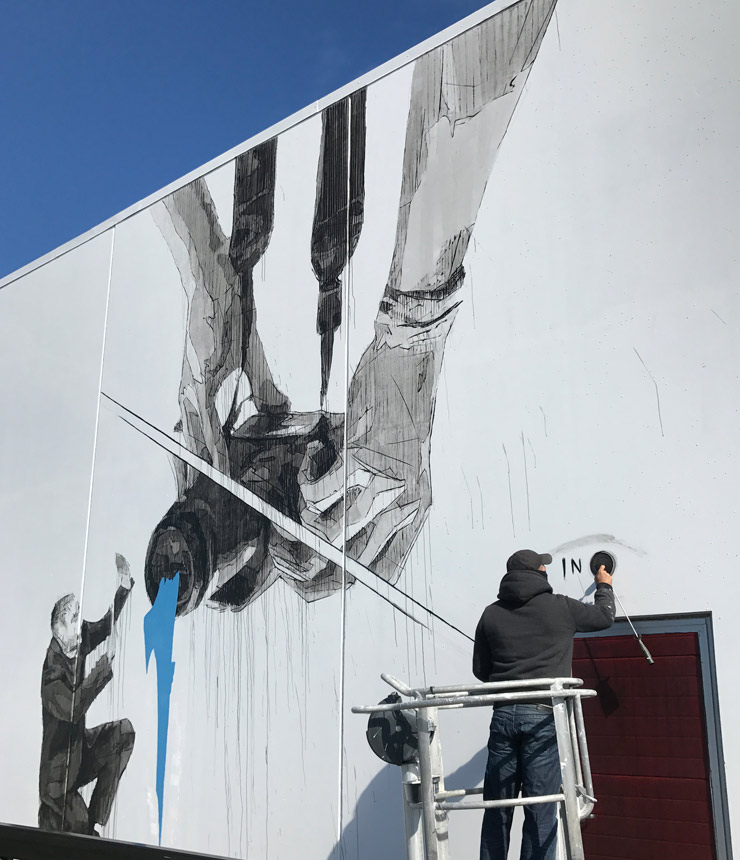
INO. Up North Fest 2017. Røst, Norway. (photo © Tor Ståle Moen)
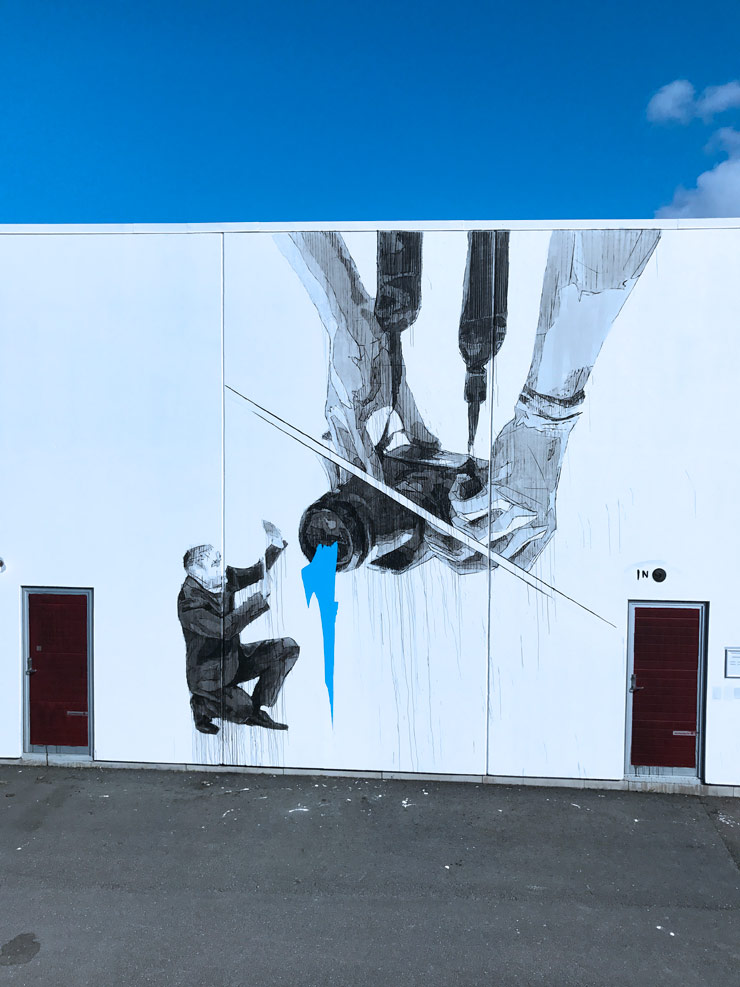
INO. Up North Fest 2017. Røst, Norway. (photo © Tor Ståle Moen)
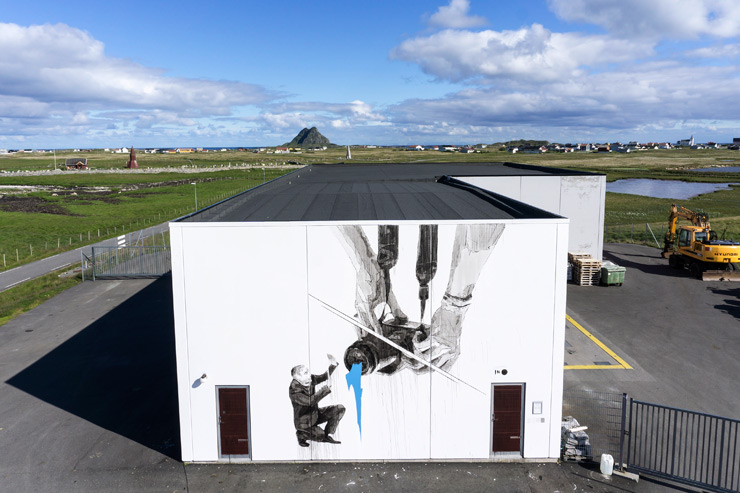
INO. Up North Fest 2017. Røst, Norway. (photo © INO)

Our thanks to our partner Urban Nation (UN) and to photographer Tor Ståle Moen for his talents.


See our Up North roundup piece on The Huffington Post
 

Read more
BSA Images Of The Week: 07.09.2017

BSA Images Of The Week: 07.09.2017

BSA-Images-Week-Jan2015

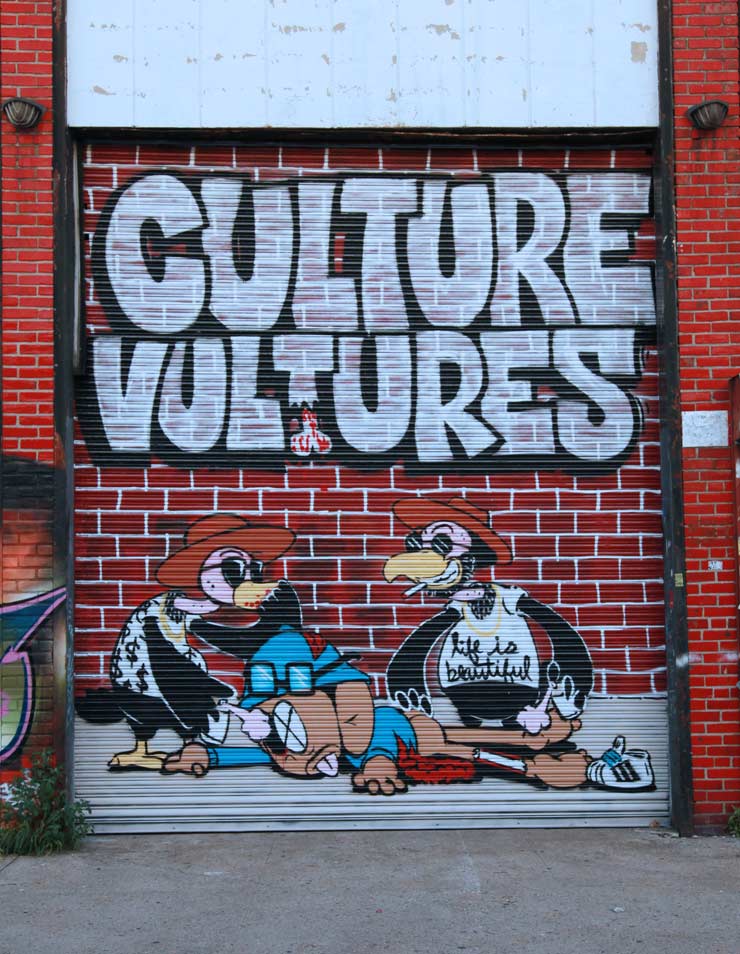
Culture Vultures, yo. Those folks and corporations and brands who don’t originate, but they sure know how to take. They’ve been around for millenia, but are always a surprise anyway. This week the graffiti comedian Klops leads the way on Images of the Week. He’s always cracking us up with his social/political commentary – like Mother Mary and others at the foot of the cross taking a selfie with Jesus, or his bubble tagged slogans like “Yuck. Poor People,” “USA, Why You Always Lyin’?” and “War Money War Problems.” This week his culture vultures took us by surprise. Recognize anyone?

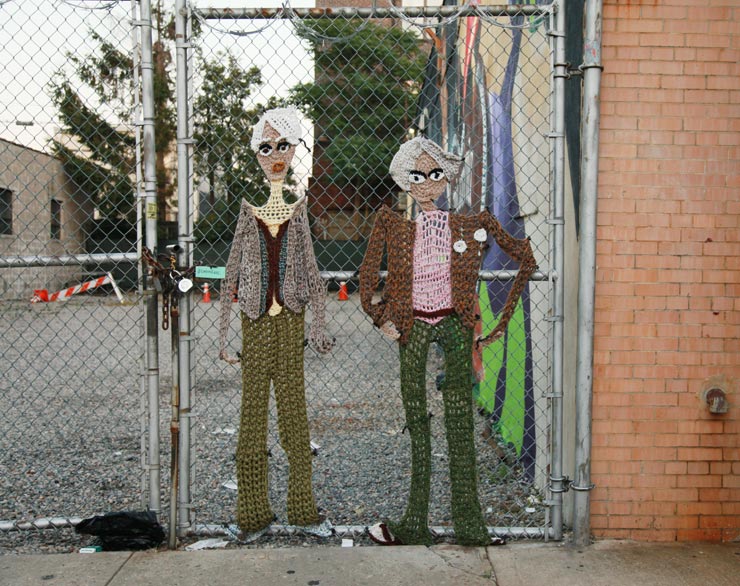
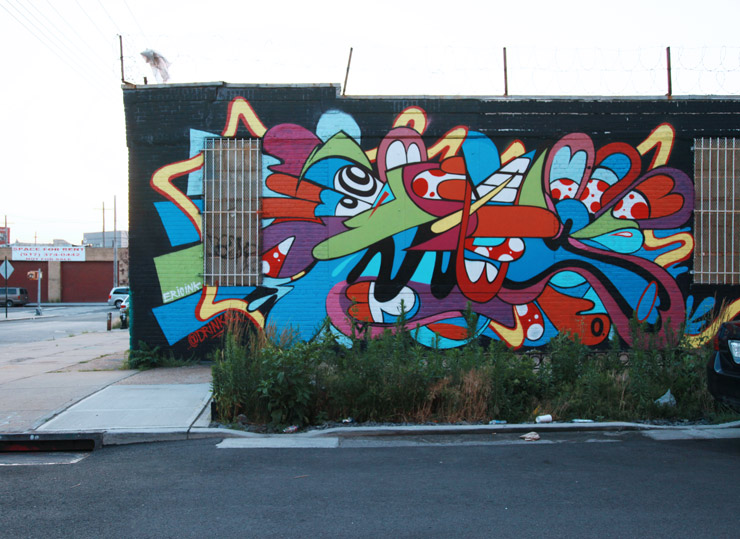
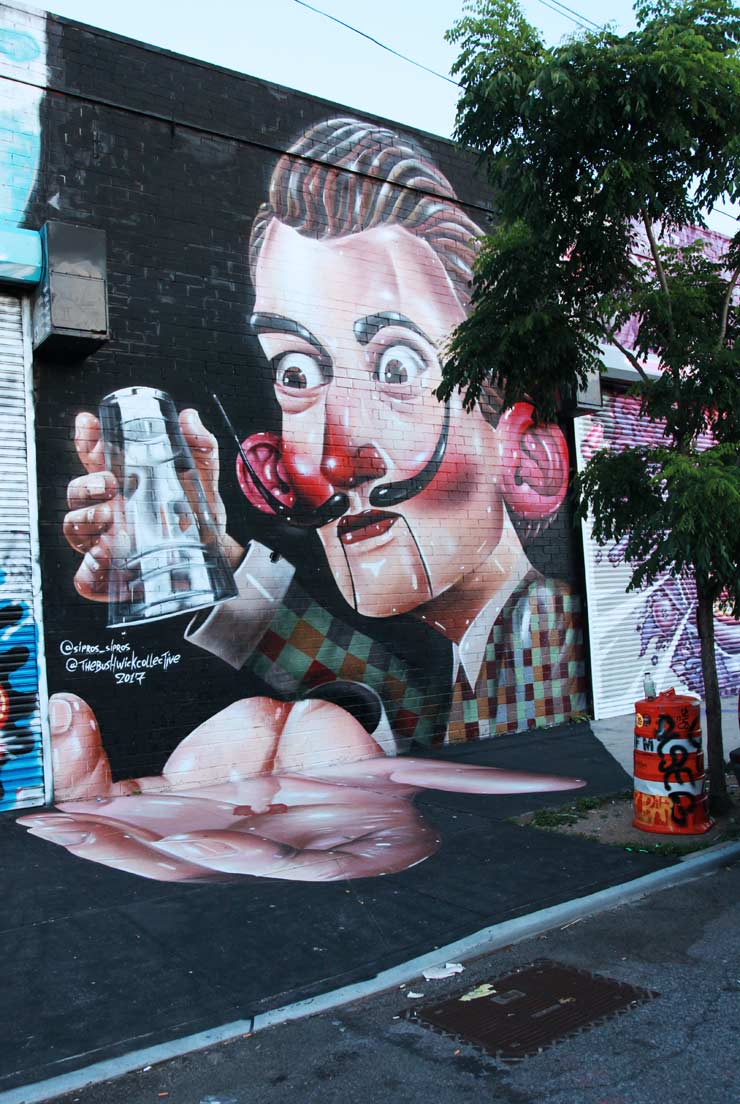
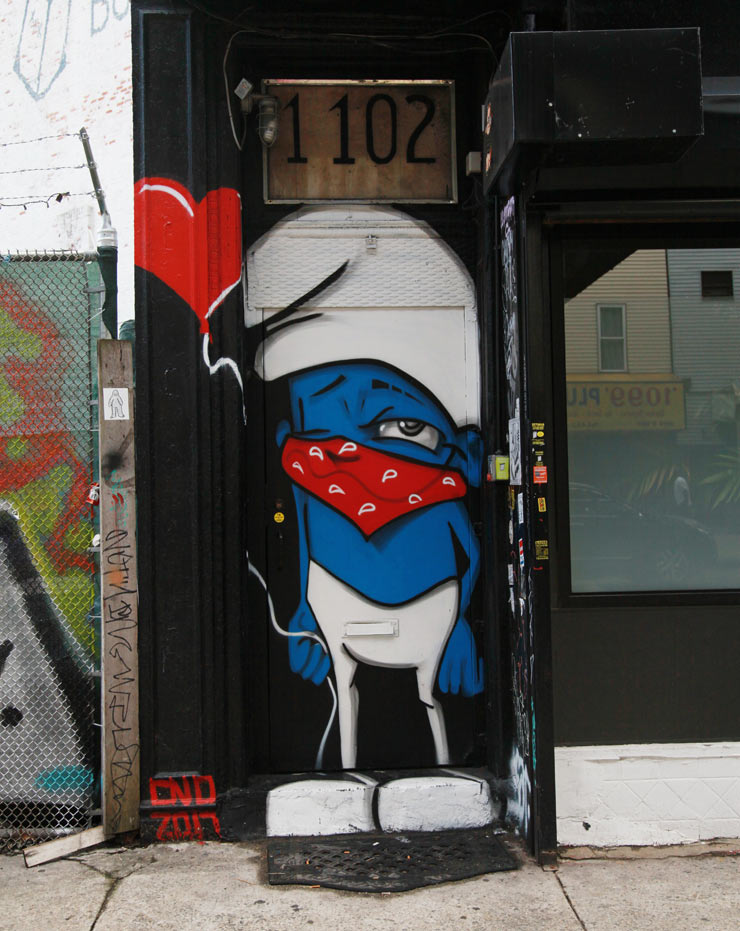
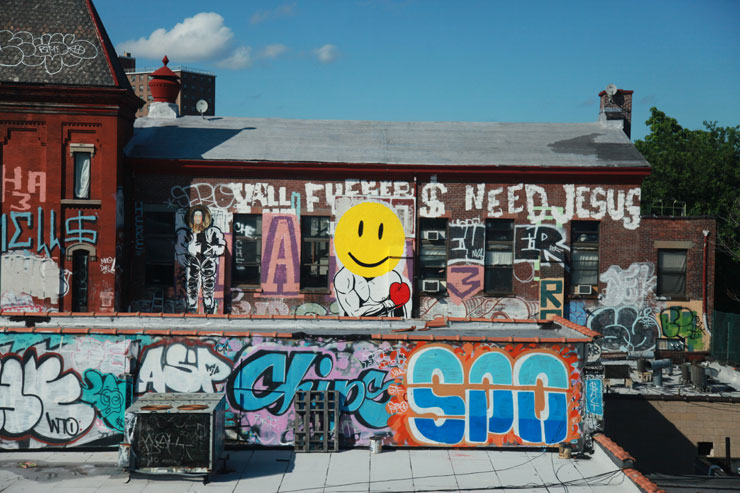
So here’s our weekly interview with the streets, this week featuring Andrew Hem, BK Foxx, Camo Lords, Dede, Drinkala, Eelco Virus, Golden 305, Influx Residence, Key Detail, Klops, London Kaye, ONO, QRST, and Sipros.

Top image: Klops takes aim at Culture Vultures, those folks you just love. One of them is Mr. Brainwash, but who’s the other? (photo © Jaime Rojo)

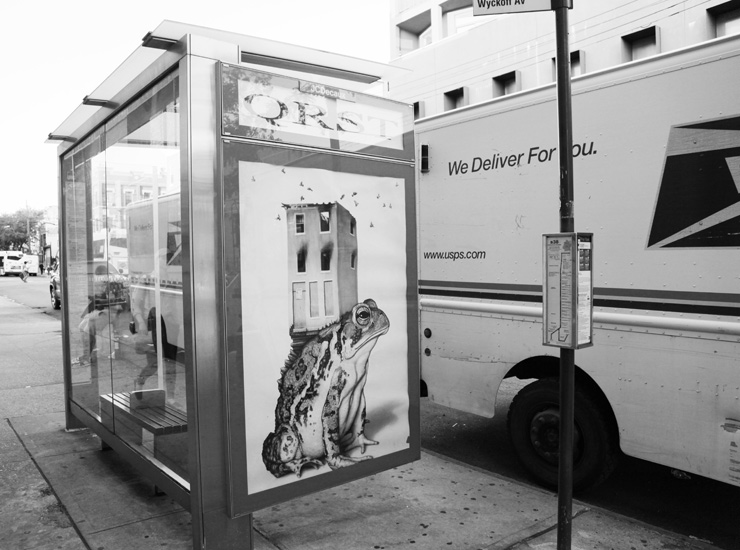
QRST (photo © Jaime Rojo)

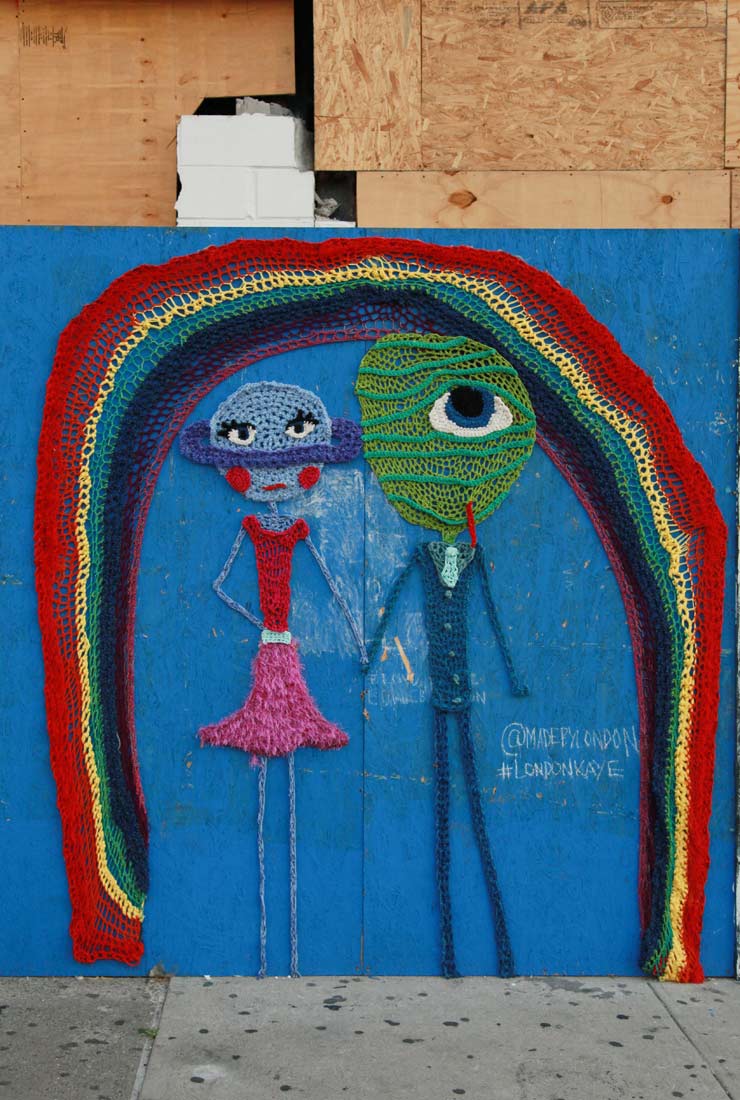
London Kaye (photo © Jaime Rojo)

London Kaye (photo © Jaime Rojo)

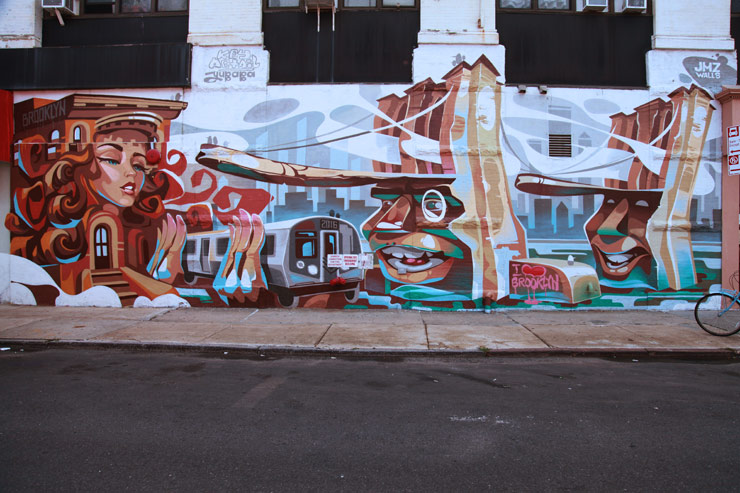
Key Detail for JMZ Walls. (photo © Jaime Rojo)

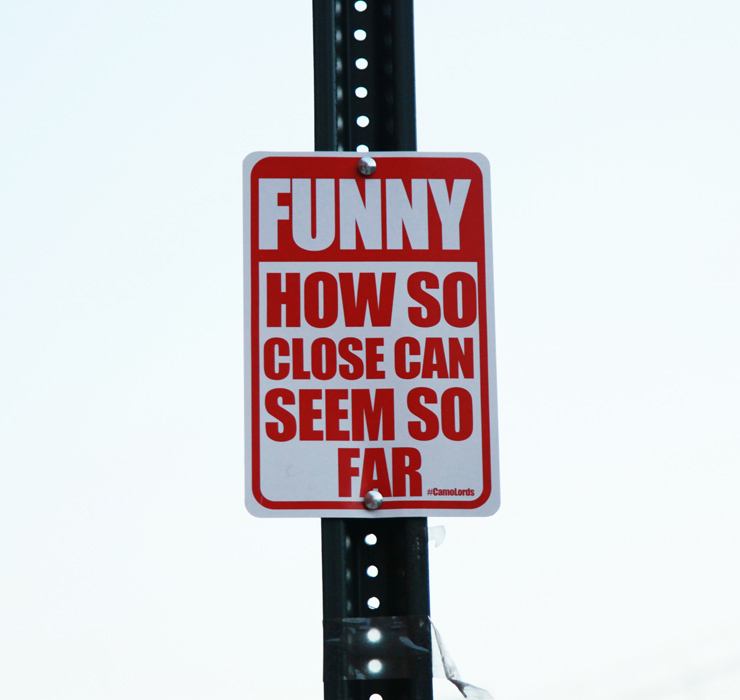
Camo Lords (photo © Jaime Rojo)

Eelco Virus (photo © Jaime Rojo)

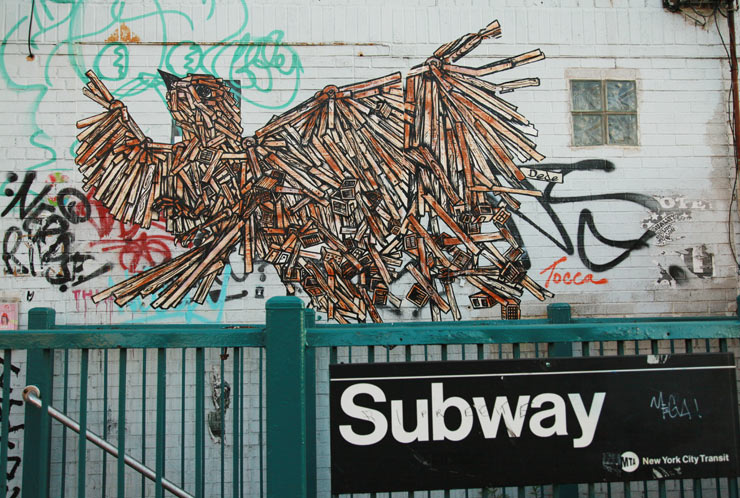
Dede (photo © Jaime Rojo)

Dede (photo © Jaime Rojo)

Dede (photo © Jaime Rojo)

Dede (photo © Jaime Rojo)

Andrew Hem. “Misty Blue” for INOPERAbLE Gallery and INFLUX Mural Residency. Providence, RI. June 2017. (photo © Damian Meneghini)

Drinkala for The Bushwick Collective. (photo © Jaime Rojo)

BKFoxx doe JMZ Walls. (photo © Jaime Rojo)

Sipros rendering of Dali as a dummy. The Bushwick Collective. (photo © Jaime Rojo)

ONO (photo © Jaime Rojo)

Unidentified artist. (photo © Jaime Rojo)

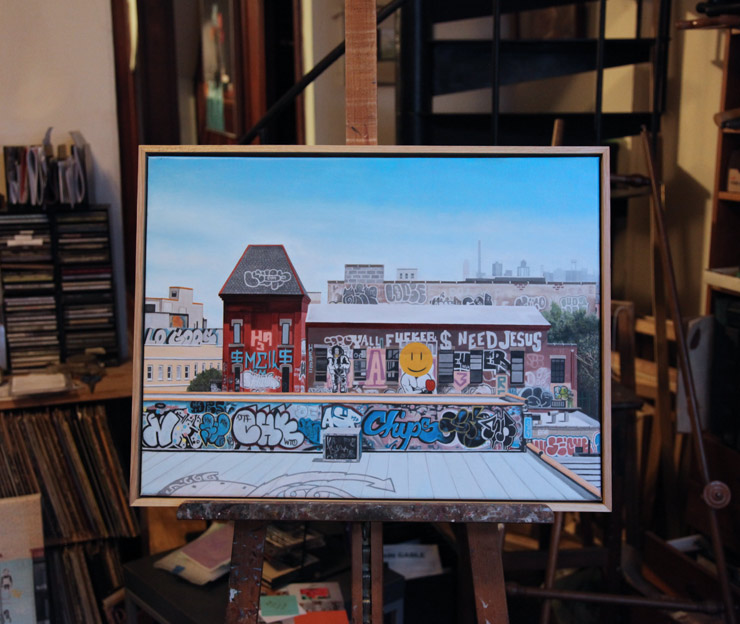
This actual wall appeared in a painting we covered in an interview we did with Laura Schecter last week. Below is her painting. Various artists hit up this magnet wall in Brooklyn regularly – and here it is viewed from the J train. (photo © Jaime Rojo)

Laura Schecter in studio (photo © Jaime Rojo)

Unidentified artist. (photo © Jaime Rojo)

Golden305 for The Bushwick Collective. (photo © Jaime Rojo)

Untitled. Summer 2017. Manhattan, NYC. (photo © Jaime Rojo)

Read more
Largest Mural in The World in Vyksa, Russia, Says Artist Misha Most & Artmossphere

Largest Mural in The World in Vyksa, Russia, Says Artist Misha Most & Artmossphere

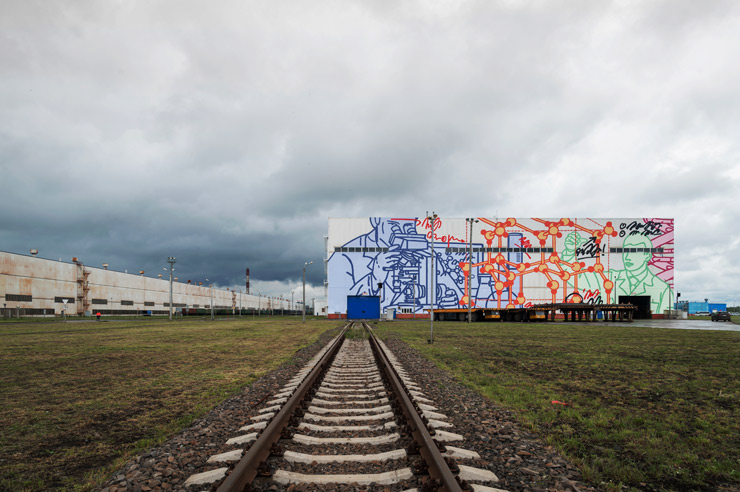
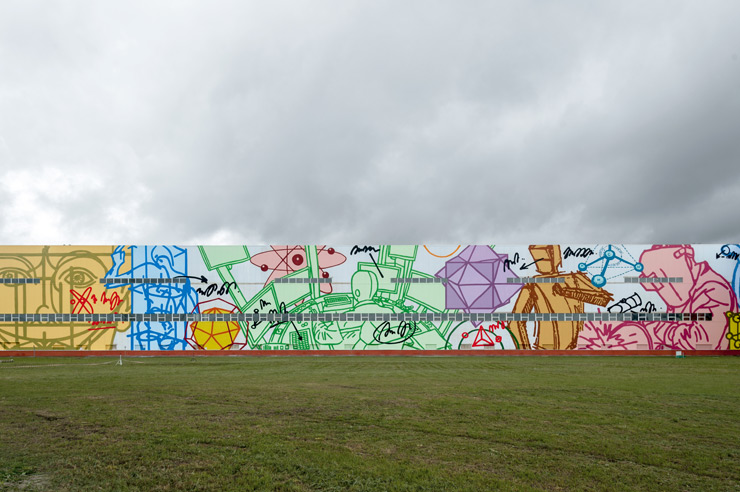
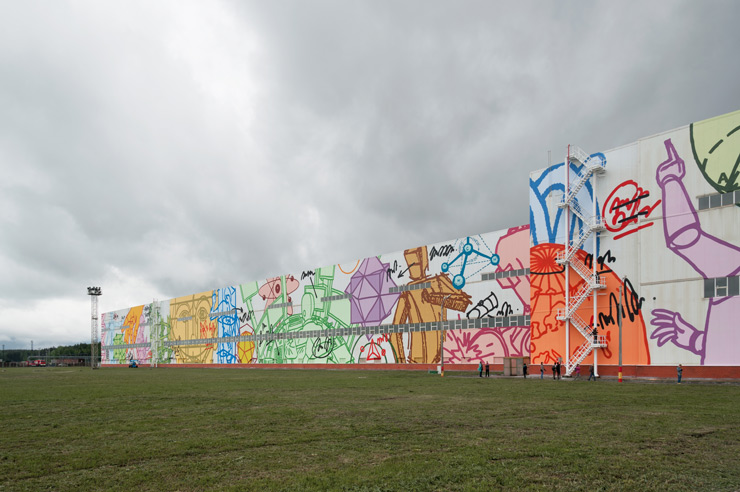
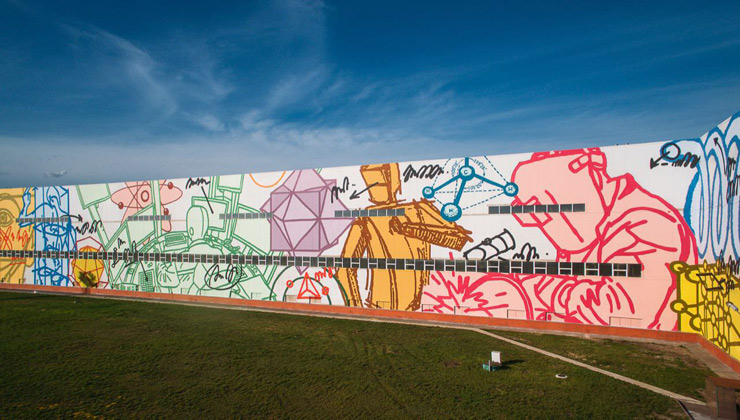
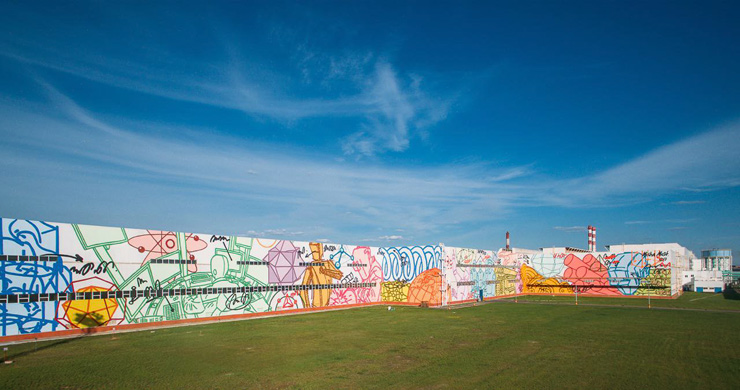
Organizers at Artmossphere are calling this new mural in Russia the largest mural in the world. They say that representatives of the Guinness World Records are considering its inclusion in the collection of world records.

Misha Most. ArtOvrag in Vyksa, Russia. June, 2017. (photo © Courtesy of Artmossphere)

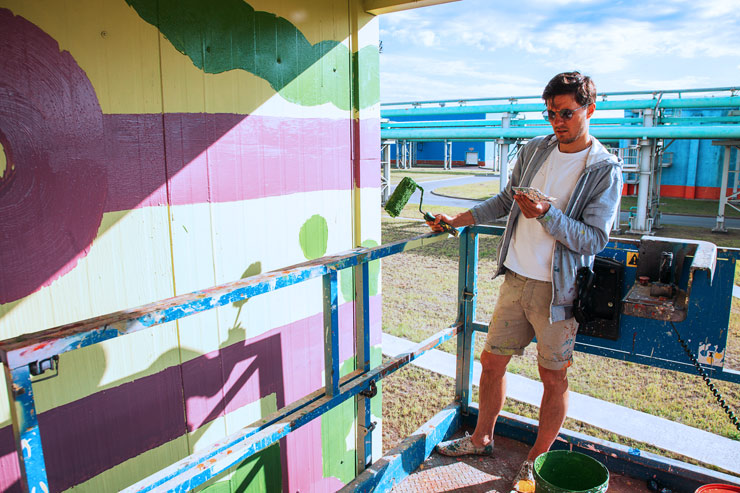
Celebrating the 260th anniversary of the metallurgical plant in Vyksa and the 25th anniversary of the United Metallurgical Company (OMK), the Moscow based painter, street artist and a graffiti-writer Misha Most and five assistants took 35 days to paint this 10,800 square meter mural this spring. Presented to the public as part of the urban art festival ArtOvrag in Vyksa, Russia.

Thematically, Mr. Most says he looked to stories in science fiction a half century ago – many about our current time. It includes elements related to scientists, chemistry, psychology, robotics, androids – basically stuff you see today going to the shopping mall, ad agency, or factory floor.

Misha Most. ArtOvrag in Vyksa, Russia. June, 2017. (photo © Kirill Makarov)

“I included into the scheme six stories taken from the past and present of the Vyksa smelter,” says the artist. “I think the workers can easily recognize them. If you look at the wall from left to right, you can grasp the development of the plot: from small – to greater, from research – to creation, from idea to result.”

Organized by the Artmossphere Studio creative association, who continuously are pushing the boundaries of street culture, high culture, and community engagement, the winning mural was chosen from 260 applications from 34 countries to the “Vyksa 10000” open competition and juried by artists, designers and architects.

Misha Most. ArtOvrag in Vyksa, Russia. June, 2017. (photo © Narodizkiy)

Misha Most. ArtOvrag in Vyksa, Russia. June, 2017. (photo © Narodizkiy)

Misha Most. ArtOvrag in Vyksa, Russia. June, 2017. (photo © Narodizkiy)

Misha Most. ArtOvrag in Vyksa, Russia. June, 2017. (photo © Courtesy of Artmossphere)

Misha Most. ArtOvrag in Vyksa, Russia. June, 2017. (photo © Courtesy of Artmossphere)

Misha Most. ArtOvrag in Vyksa, Russia. June, 2017. (photo © Courtesy of Artmossphere)


Read more
BSA Film Friday: 07.07.17

BSA Film Friday: 07.07.17

bsa-film-friday-JAN-2015

Our weekly focus on the moving image and art in the streets. And other oddities.

Now screening :
1.Vegan Flava. Throwing Leaves Against Machines.
2. Andrew Hem “Misty Blue”
3. Laura Llaneli: 12 + 1 in Barcelona
4. Misha Most. Evolution -2. The largest mural in the world. Vyksa, Russia
5. Agnès Varda JR’s Faces Places (Visages, Villages). Trailer.

bsa-film-friday-special-feature

BSA Special Feature: Vegan Flava. Throwing Leaves Against Machines.

“We are exploring crossroads where different creative paths such as painting, video-making, dancing and music meet,” Vegan Flava tells us about this new collaborative performance he has just completed with his friend Mario Perez Amigo.

They call it “Throwing Leaves Against Machines” and it is the third video chapter of a series named Northern Street Sketches. This painting and dance performance took play at Subtopia in the Botkyrka municipality of Stockholm – the city where both artists hail from.

Taking place the same night that Donald Trump pulled the US out of the Paris agreement on climate change, Vegan Flava tells us that the video is “a climate action performance addressing the costs consumerism today imposes on future generations, and time is limited.”


Andrew Hem “Misty Blue”

Street culture and impressionism filter into the singular form compositions of Los Angeleno Andrew Ham. In this hand painted mural with The Avenue Concept in Providence, he tells the story of a child he met. The artist shoes how he mixes paint and speaks of his practice of going far from the wall to make sure the mural “reads” well from a distance.


Laura Llaneli: 12 + 1 in Barcelona

Back in June we showed you process photos of this wall in Barcelona in a posting entitled Laura Llaneli “OUR ACTIONS BECOMING THE POLICY”. It is an interesting concept of translating a short speech, a tirade actually, of a singer upbraiding audience members for not fitting his image of them -as if his self-image was derived from the audience. True, mom always said, “Show me your friends and I can tell you what kind of person you are.”


Misha Most. Evolution -2. The largest mural in the world. Vyksa, Russia

Periodically you hear a claim of a mural being the largest. This one by Misha Most with the folks from Artmossphere looks pretty close!

Agnès Varda JR’s Faces Places (Visages, Villages). Trailer.

A trailer for JR’s new movie follows his team as he travels from place to place wheatpasting photos of people to walls in their towns.

Read more
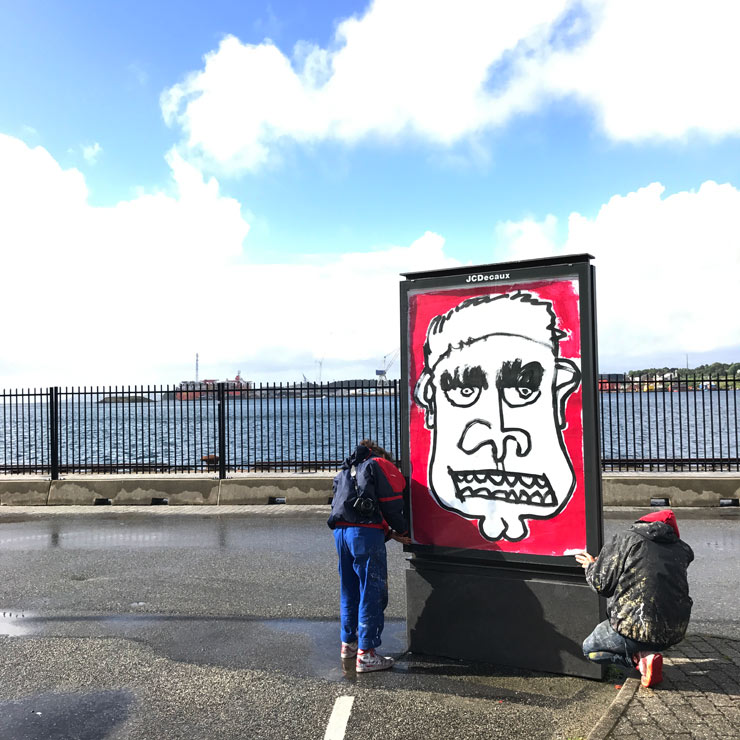
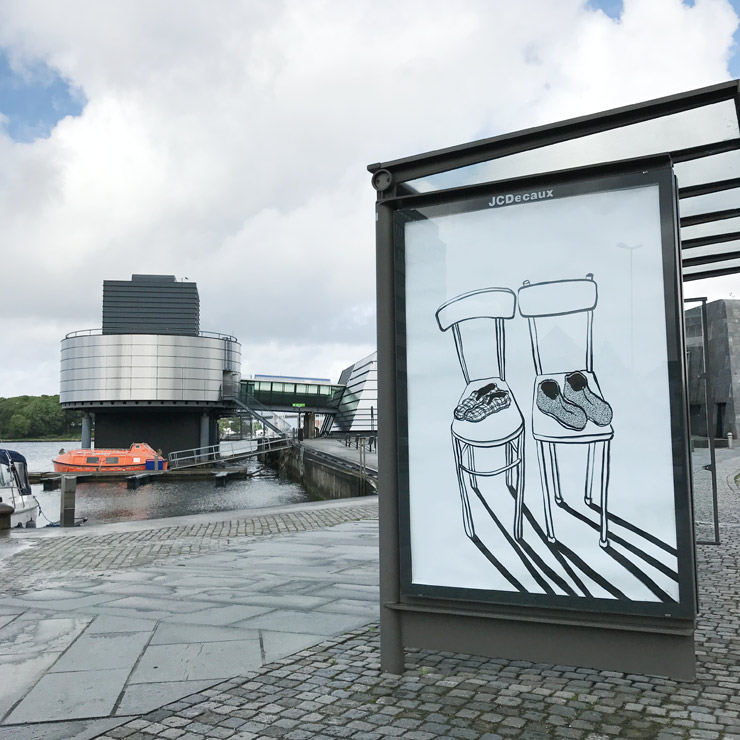
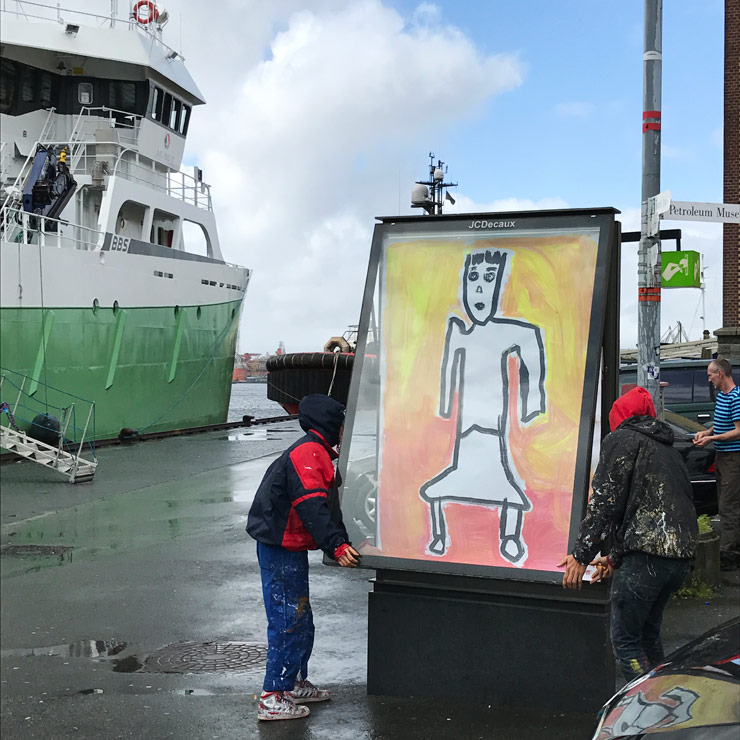
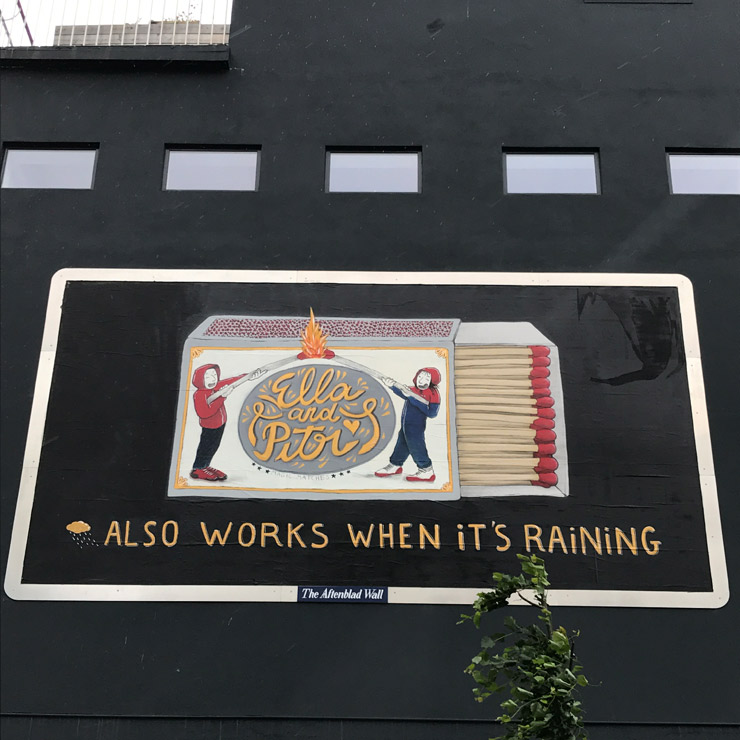
Ella & Pitr “Live Fast, Die Old” in Stavanger and Sandnes with Nuart

Ella & Pitr “Live Fast, Die Old” in Stavanger and Sandnes with Nuart

They are so sweet faced you would not guess that they are fire starters. French Street Art couple Ella + Pitr have a strong work ethic and a earnest dedication to fanciful flights of the imagination.

Ella & Pitr create an illusory metaphor for the #sandesarttrail, courtesy of Nuart called “Live Fast, Die Old”. Sandnes, Norway. June 2017. (photo © Tor Ståle Moen)

With a touch of domesticity that may make you think of home, often they bring a child-like fascination with stories and characters; playful monsters and grouches setting at play inside a number of possible narratives, depending on your interpretation.

Here in Stavanger and Sandnes (Norway), Tor Staale Moen had the opportunity to capture them around the winding stone streets of the two adjoining seaside towns, adding illustrations in public spaces. We thank him for sharing his images here with BSA readers.


Ella & Pitr (Faith47 in the background) ad take over in Stavanger, Norway. June 2017. (photo © Tor Ståle Moen)

Ella & Pitr ad take over in Stavanger, Norway. June 2017. (photo © Tor Ståle Moen)

Ella & Pitr ad take over in Stavanger, Norway. June 2017. (photo © Tor Ståle Moen)

Ella & Pitr ad take over in Stavanger, Norway. June 2017. (photo © Tor Ståle Moen)

Ella & Pitr. Aftenblad Wall. Nuart 2017. Stavanger, Norway. (photo © Tor Staale Moen)


Read more
Guido Van Helten, Mr. Estes, and Changing “The Nations” in Nashville

Guido Van Helten, Mr. Estes, and Changing “The Nations” in Nashville

The great irony of painting a mural about the evils of gentrification is that you may indirectly aid gentrification in the process.

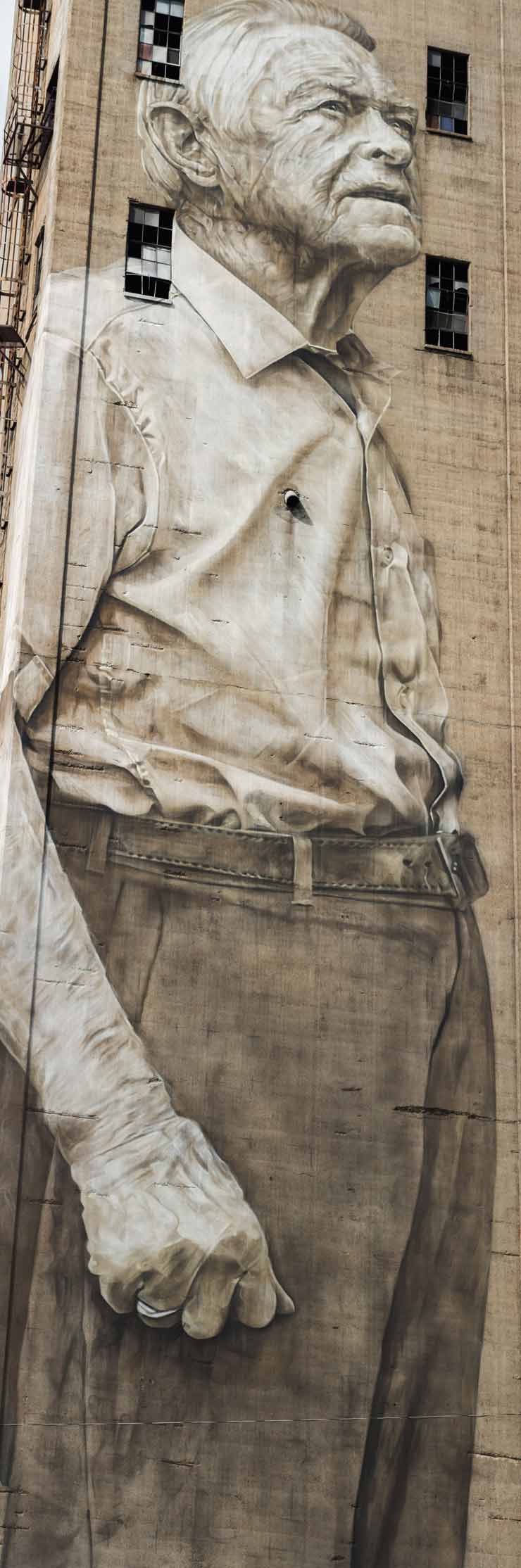
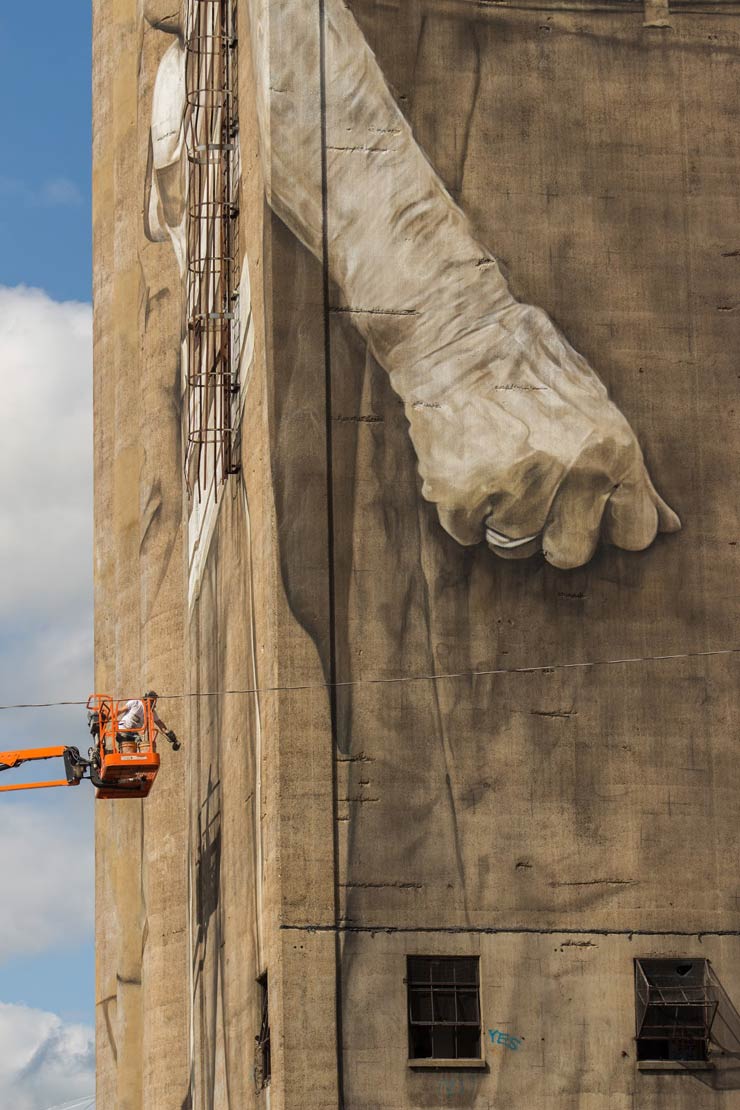
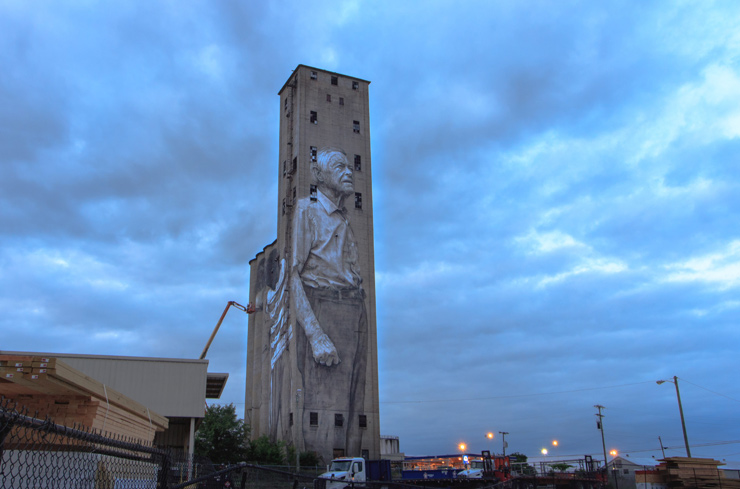
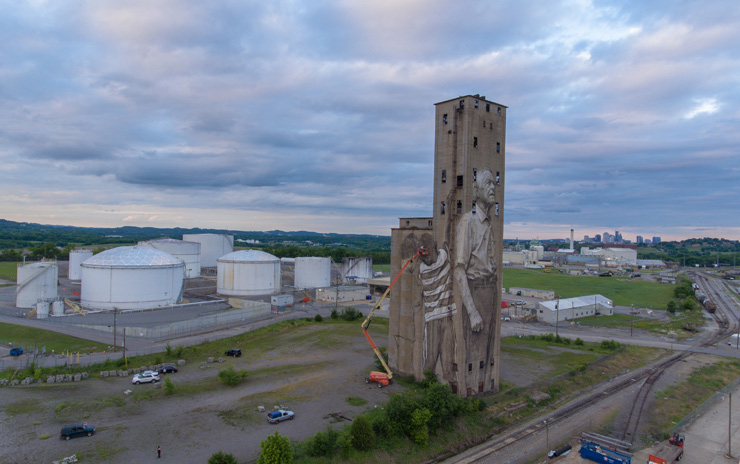
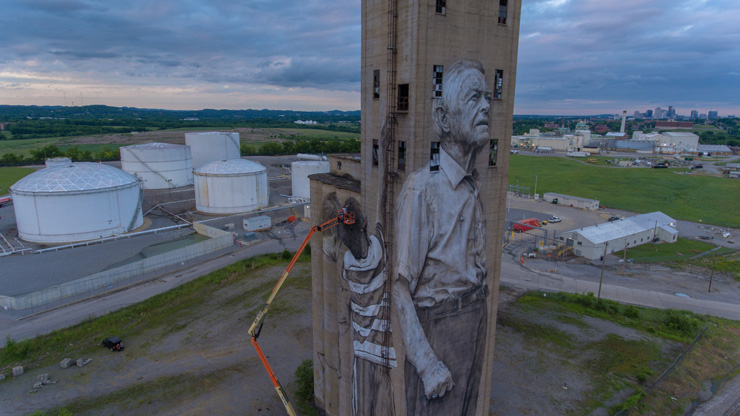
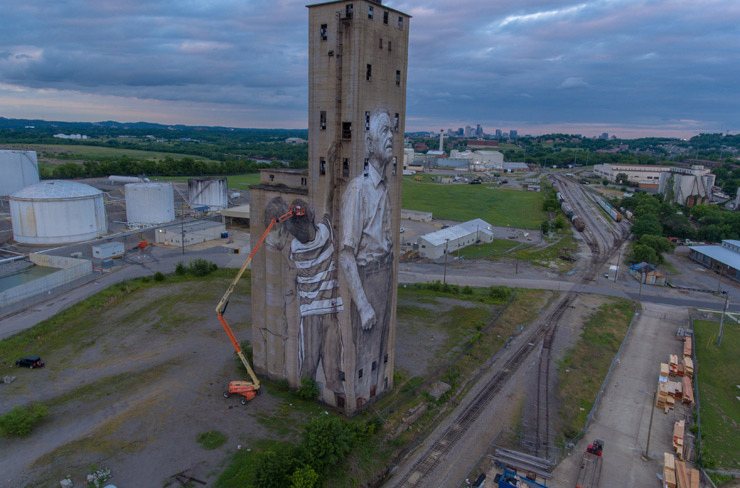
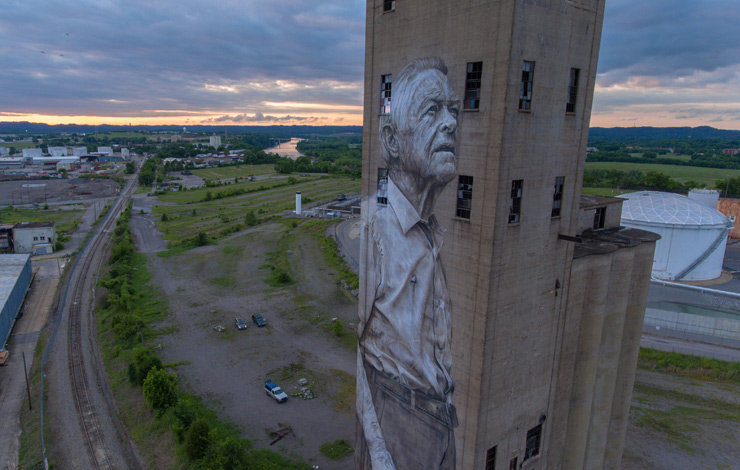
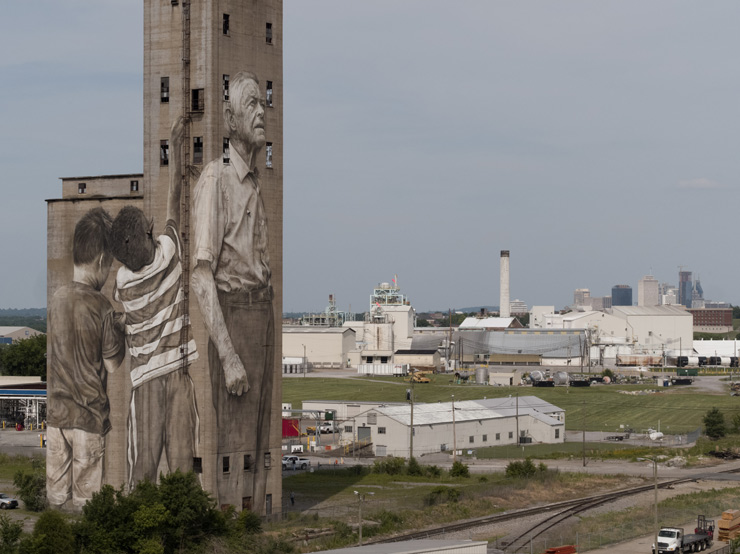
Guido Van Helten for Nashville Walls Project. Nashville, TN. June 2017. (photo © Eric E Johnson)

The up and coming, soon-to-be-hip Nashville neighborhood christened “The Nations” will undoubtedly presently have an ironically old-timey barbershop with Millenially bearded men wearing pocket watches and tattoos as trendy arts neighborhoods often do at the moment.

“You know I grew up on Pennsylvania Ave,” says local Vickie Gilliam Keeton on a Facebook post that addresses the new massive mural by Australian Street Artist Guido Van Helten. “But I’d never heard this area called ‘the nations’ till just in the past 10 years. It was always just West Nashville.” It may be a case of re-branding a former industrial zone for future development.

Guido Van Helten for Nashville Walls Project. Nashville, TN. June 2017. (photo © Eric E Johnson)

“It used to be Gilette grainery,” says the man who is the subject in the new soaring portrait, 91 year old Lee Estes, who has lived in the neighborhood since the 1920s – a time when houses like his didn’t have indoor plumbing. In an interview with Amy Eskind of Nashville Public Radio he continued “And we had another, Purina grainery, that was demolished years ago, but they left this one as a historical part of the Nations.”

It is a stand out for sure, this old silo, raising into the sky above all the others nearby. With the dignified Mr. Estes representing the past history of the area in almost sepia tones, it is a reassuring reminder of the areas character and working class industrial roots. Three Corners Coffee on Centennial Boulevard may already indicate the changing character of the area that the new mural joins. Describing itself as “a homey coffee shop specializing in great brews, friendly baristas, and vintage charm,” it also sells vintage furnishings, baby onesies, and dish towels and provides a retro 1970s domestic warmth for visitors. Nevertheless it appeared to let down one customer writing on Yelp recently who could not give it five stars. “Deducted one star because they were out of brioche breakfast sandwiches at 9am on a Friday morning.”  From no indoor plumbing to no $5.95 brioche breakfast sandwiches is a bit of a jump.

Guido Van Helten for Nashville Walls Project. Nashville, TN. June 2017. (photo © Eric E Johnson)

This is all part of a mural project called Nashville Walls Project that has brought a number of Street Artists to the city to paint in the last couple of years, including Herakut, Louis Masai, Curiot, Niels “Shoe” Meulman, Rone, and Tavar “Above” Zawacki. Co-founded by Street Art gallerist and art collector Brian Greif, who produced the movie “Saving Banksy” in which he personally recovers an original Banksy from a wall in San Francisco, the Nashville Walls Project is adding a new excitement and character to the area that is approximately bounded by Charlotte Avenue, the Cumberland River, Richland Creek and the CSX railroad tracks.

We’ve contemplated it in our writings, debated it on panels around the world, listened to impassioned conversations about it in bars, this gentrifying cycle and the accusations lobbed at artists; this cycle of gentrification that the creative community unwittingly aids sometimes through its own industry. There appears to be a direct relationship between the positive aspects of reviving a moribund sector of a town or city with murals and the eventual rise in rents and costs of services that invariably push out the poor and working class.

Guido Van Helten for Nashville Walls Project. Nashville, TN. June 2017. (photo © Eric E Johnson)

Not surprisingly, the artist who created this beacon of warmth and humanity has the same observations that he has gained from his travels.

“I find the relationship between murals and gentrification conflicting, and in this work there is this conflicting yet harmonious composite of the two sides of social change,” says Van Helton in an interview with the other co-founder of Nashville Walls Project, Éva Boros, published on NashvilleArts.com “There is juxtaposition between a mural that discusses and commemorates the blue-collar demographic while at the same time being a powerful part of the change in the area. This is a dialogue and talking point that I hope this mural can create.”

Guido Van Helten for Nashville Walls Project. Nashville, TN. June 2017. (photo © Eric E Johnson)

For the moment, this new looming portrait is a fine example of elevating a local citizen in his community and a focal point for neighborhood pride, and Mr. Estes has enjoyed a great amount of congratulations in person from folks who have known him for years. Mr. Van Helten has also received much praise and thanks from people in the area in postings on social media. The young kids painted on the mural around the corner are also local from the community center nearby, representing the future of the neighborhood that many are hopeful for.

Kelly Evans wrote in a Facebook posting to the artist a sentiment that combines the sentiments of many. “From the bottom of my native Nashvillian heart thank you so much for understanding. Before I even read the commentaries and articles, when I stood outside your unfinished work, I understood some of what you are trying to say. This so strongly moved me. Tears of love for our fathers that built this “big little city” poured. My prayer is that we are not priced out of our homes we so lovingly built and raised our families in.”

Guido Van Helten for Nashville Walls Project. Nashville, TN. June 2017. (photo © Eric E Johnson)

Guido Van Helten for Nashville Walls Project. Nashville, TN. June 2017. (photo © Eric E Johnson)

Guido Van Helten for Nashville Walls Project. Nashville, TN. June 2017. (photo © Eric E Johnson)

Brian Siskind documented on Guido Van Helton painting for 17 days to complete the enormous figures. This is his record the final day. Mr. Siskind says he will be combining all the videos into one complete overview of the project shortly.


This article is also published on The Huffington Post

Read more
“The Head of John the Baptist” in a Water Fountain in Łódź, Poland

“The Head of John the Baptist” in a Water Fountain in Łódź, Poland

For a decade we’ve been saying that art in the streets of the modern city lies along a continuum between illegal, autonomous interventions and those that are officially sanctioned by institutions. In today’s posting from Łódź, Poland, we’re much nearer to the latter end of that continuum.

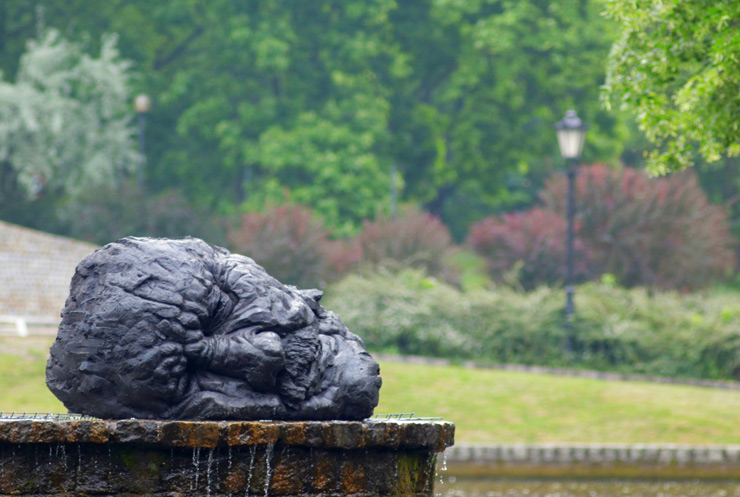
Szymon Ryczek for UNIQA Art Łódź project. Łódź, Poland. June 2017. (photo © Michał Bieżyński)

Part of UNIQA Art Łódź, a public art project that itself has metamorphosed from a multi-year mural program by (primarily) Street Artists on city walls to its current public sculpture program under the direction of Michał Bieżyński, here we have the head of John the Baptist.

Weighted with references to Biblical story of the martyr in spiritual opposition to King Herod and baptism by water, organizers also say that the sculpture commemorates the Jewish victims in Łódź ghettos during a time when their culture and lives were once blossoming, later destroyed by the Occupation of Poland by Nazi Germany. With the decapitated head as a symbol, one also may draw a connection with the highly staged videos circulated in recent years that purport to show hooded ISIS militants beheading people.

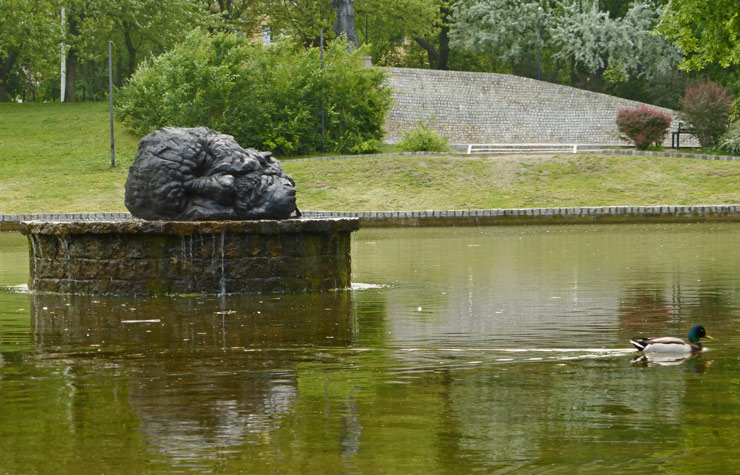
Szymon Ryczek for UNIQA Art Łódź project. Łódź, Poland. June 2017. (photo © Michał Bieżyński)

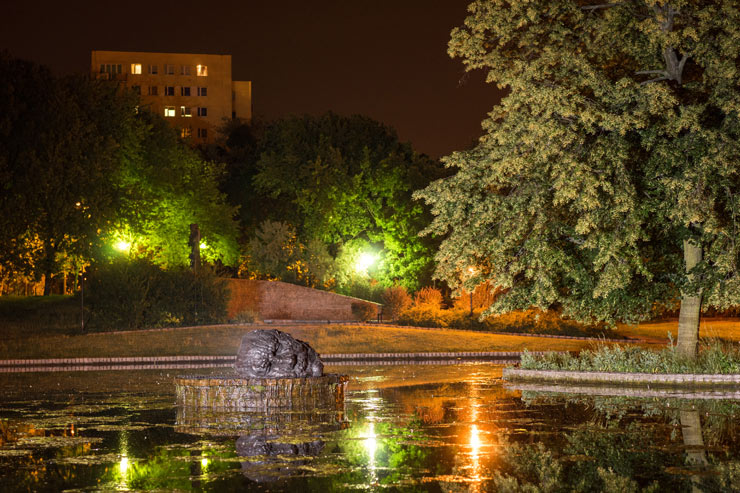
Sited on a pedestal in Old Town Park in its central pond, the location is in the part of the city where the Jewish community once settled, and the visual itself may be quite disturbing to viewers as it reflects a mirror image here until the end of the season. The artist Szymon Ryczek is a recent graduate of the Faculty of Graphic Art and Painting, Strzemiński Academy of Art in Łódź and the sculpture is made of epoxy resin dusted with carbon dust.

Previous artists in the sculpture program have included Lump, Etam and Robert Proch, Crystal Wagner, and Mona Tusz. The next project will be a large-scale sculpture by two Warsaw artists Tomasz Górnicki and Chazme at the end of July at the Łódź Fabryczna train station.

Szymon Ryczek for UNIQA Art Łódź project. Łódź, Poland. June 2017. (photo © Michał Bieżyński)


Read more
Etnik and a Poplar Tree for “Without Frontiers” in Montova, Italy

Etnik and a Poplar Tree for “Without Frontiers” in Montova, Italy

Stockholm born, Florence based ETNA created this poplar tree to rather levitate on a wall in Mantova, Italy recently.

Etnik for Without Frontiers Festival in Mantova, Italy. June 2017. (photo © Livio Ninni)

The 90s graffiti writer who now often participates in mural festivals says he chose this geometric abstraction to represent the poplar tree because of its historical connection to this host city and because of the undeniable intertwined associations he also has with the architecture that these trees often frame.

Part of the “Without Frontiers’ project that ran June 19-24 and was curated by Simona Gavioli and Giulia Giliberti of Caravan Setup Gallery in Bologna, the mural project includes work by artists Elbi Elem, Panem et Circenses, Zedz, and Corn79.

Etnik for Without Frontiers Festival in Mantova, Italy. June 2017. (photo © Livio Ninni)

Etnik for Without Frontiers Festival in Mantova, Italy. June 2017. (photo © Livio Ninni)

Etnik for Without Frontiers Festival in Mantova, Italy. June 2017. (photo © Livio Ninni)

Read more
BSA Images Of The Week: 07.02.17

BSA Images Of The Week: 07.02.17

BSA-Images-Week-Jan2015

4th of July weekend here in New York so we are headed to a barbecue and a frisbee game. Maybe to the Jersey shore for some sun. Happy 4th ya’ll! Looks like the country needs to take itself back from the corporate overlords – if we want to declare the US to be independent ever again.  Right now we’re in trouble, gurl – and everyone knows it!

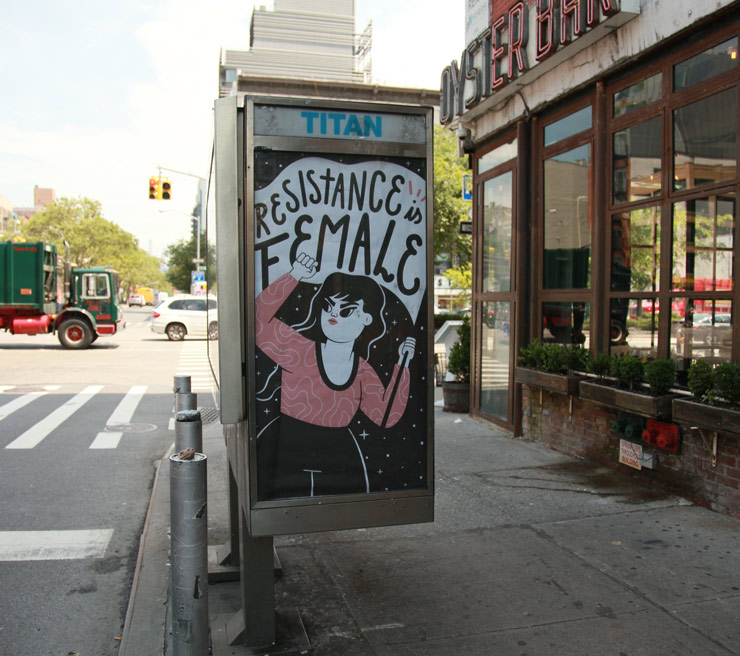
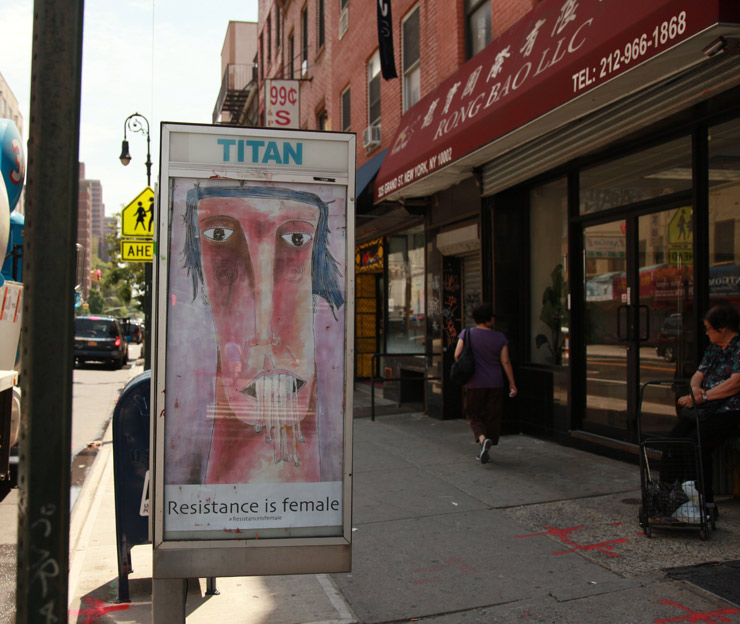
So here’s our weekly interview with the streets, this week featuring Banksy, Clint Mario, Crash, El Sol 25, Felipe Pantone, FinDAC, Hopare, Hot Tea, Invader, John Ahearn, Logan Hicks, Mark Jenkins, Resistance is Female, SaxSix, and Sonny Sundancer.

Top image: Sonny Sundancer (photo © Jaime Rojo)

Hopare. Urban Art Fair NYC. June 2017. (photo © Jaime Rojo)

John Ahearn(photo © Jaime Rojo)

El Sol 25 (photo © Jaime Rojo)

El Sol 25 (photo © Jaime Rojo)

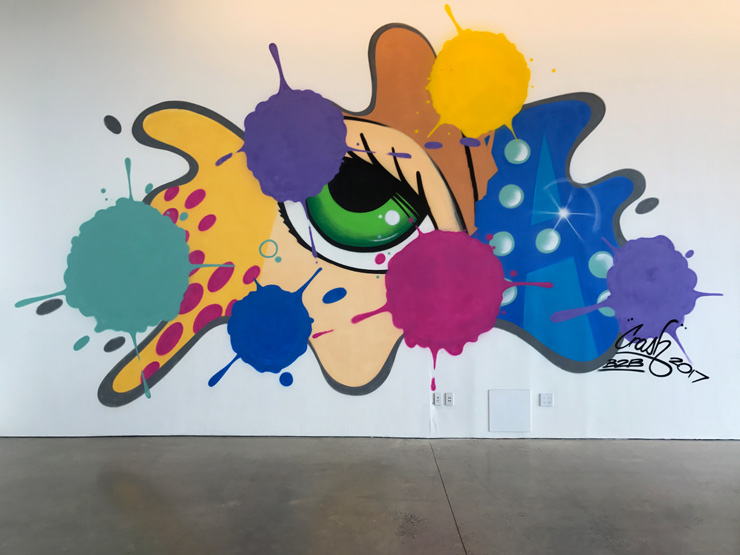
Crash. Urban Art Fair NYC. June 2017. (photo © Jaime Rojo)

Clint Mario (photo © Jaime Rojo)

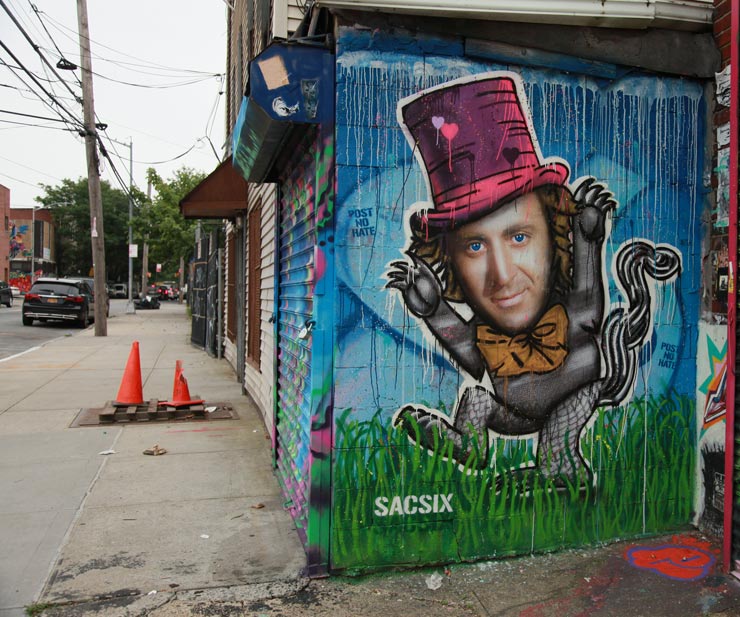
SacSix for Welling Court 2017. (photo © Jaime Rojo)

Mark Jenkins. Urban Art Fair NYC. June 2017. (photo © Jaime Rojo)

Logan Hicks. Urban Art Fair NYC. June 2017. (photo © Jaime Rojo)

#resistanceisfemale (photo © Jaime Rojo)

#resistancisfemale (photo © Jaime Rojo)

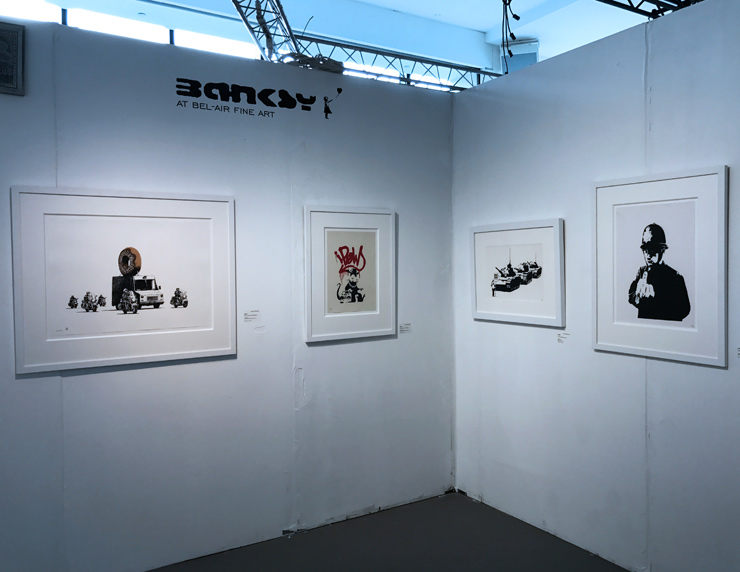
Banksy’s corner at Urban Art Fair NYC. June 2017. (photo © Jaime Rojo)

FinDac. Urban Art Fair NYC. June 2017. (photo © Jaime Rojo)

Felipe Pantone. Detail. (photo © Jaime Rojo)

Felipe Pantone (photo © Jaime Rojo)

Hot Tea tribute to Laser Burners (photo © Jaime Rojo)

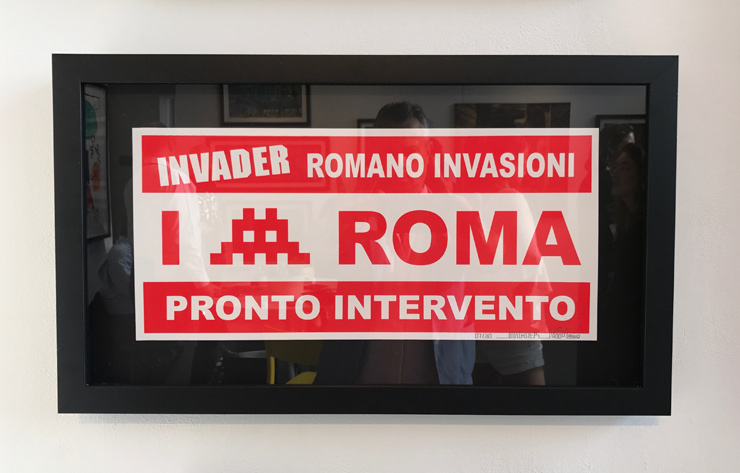
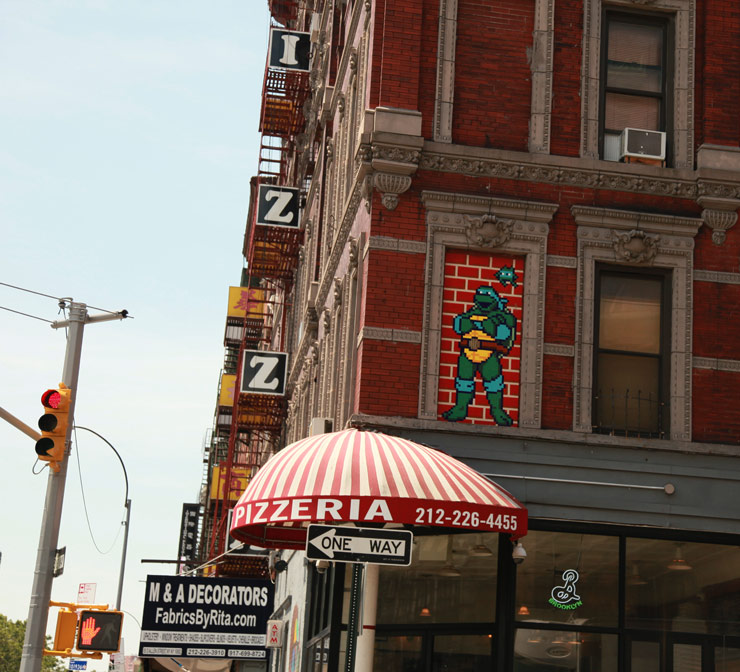
Invader. Urban Art Fair NYC. June 2017. (photo © Jaime Rojo)

Invader (photo © Jaime Rojo)

Untitled. Summer 2017. Manhattan, NYC. June 2017.  (photo © Jaime Rojo)

Read more
“Junction” : Sandra Chevrier and Martin Whatson in Stavanger

“Junction” : Sandra Chevrier and Martin Whatson in Stavanger

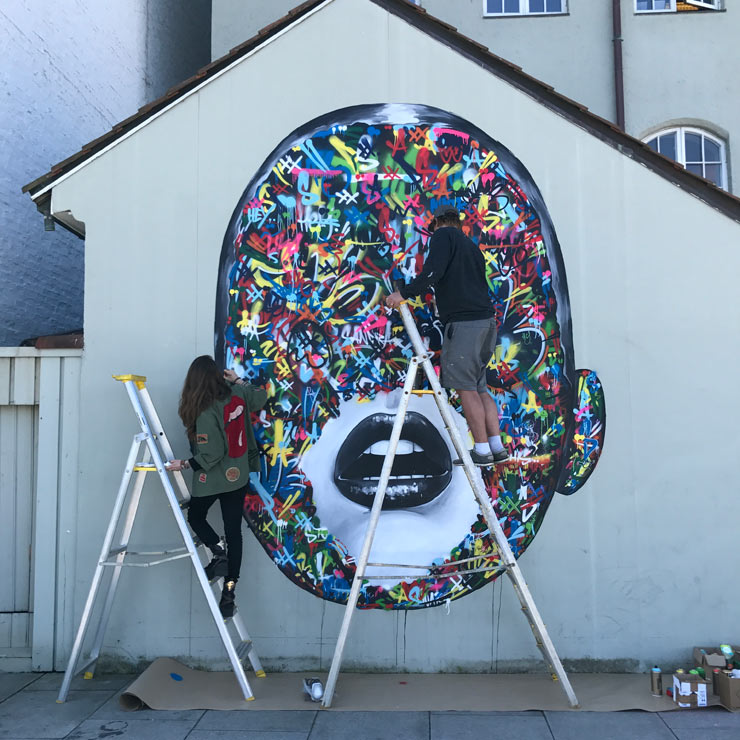
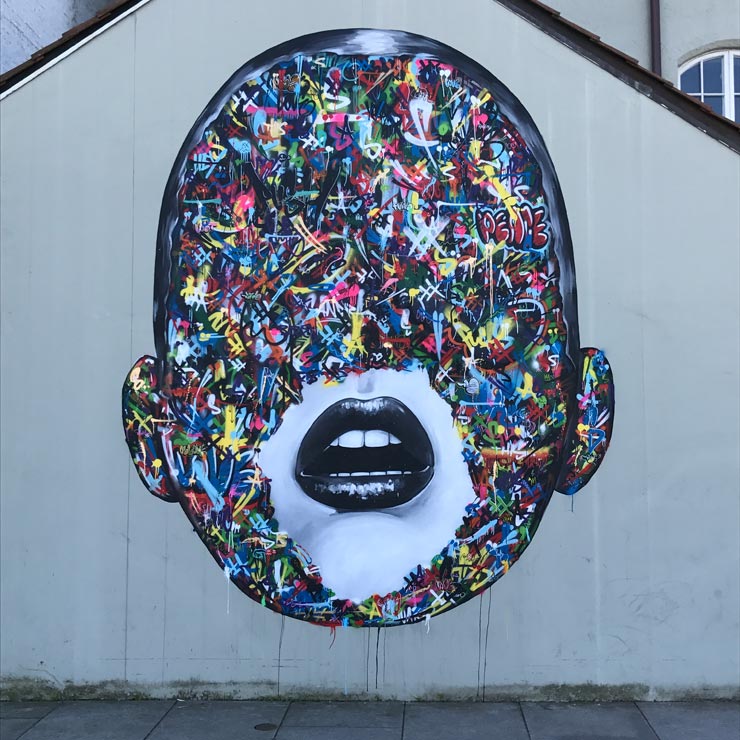
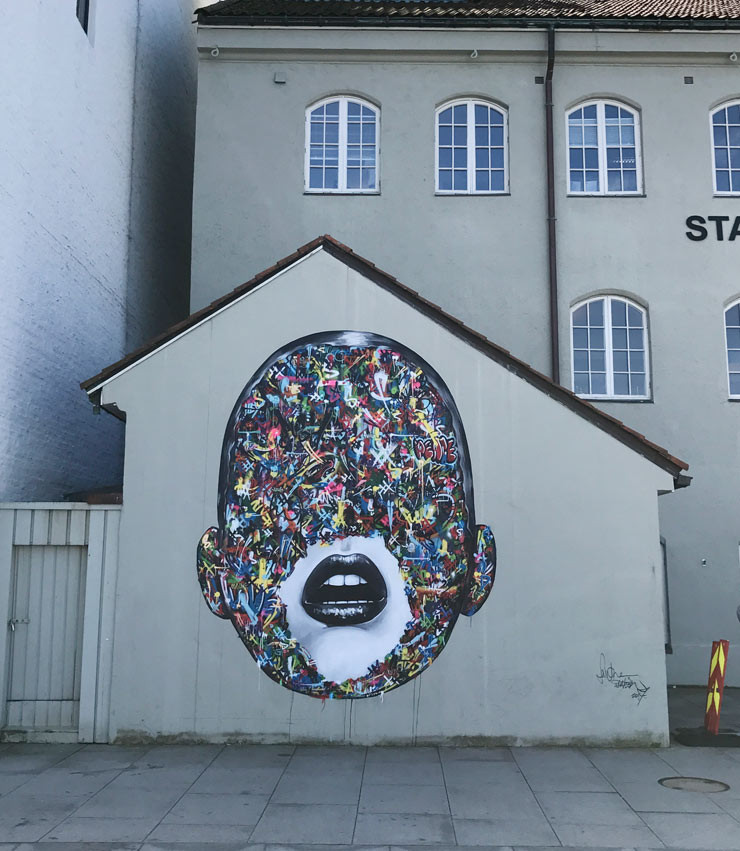
Stavanger, Norway may not have throbbing Street Art scene per se, but it does have a lot of cool murals (thanks to Nuart festival) and a few favorite artists who reliably please the crowds (thanks to Nuart Gallery). This week opened a dynamic duo of the contemporary pop art side of the spectrum working in tandem with complimentary styles for a new show called “Junction” in the gallery space.

Sandra Chevrier . Martin Whatson. Nuart Gallery. Stavanger, Norway. June 2017. (photo © Tor Ståle Moen)

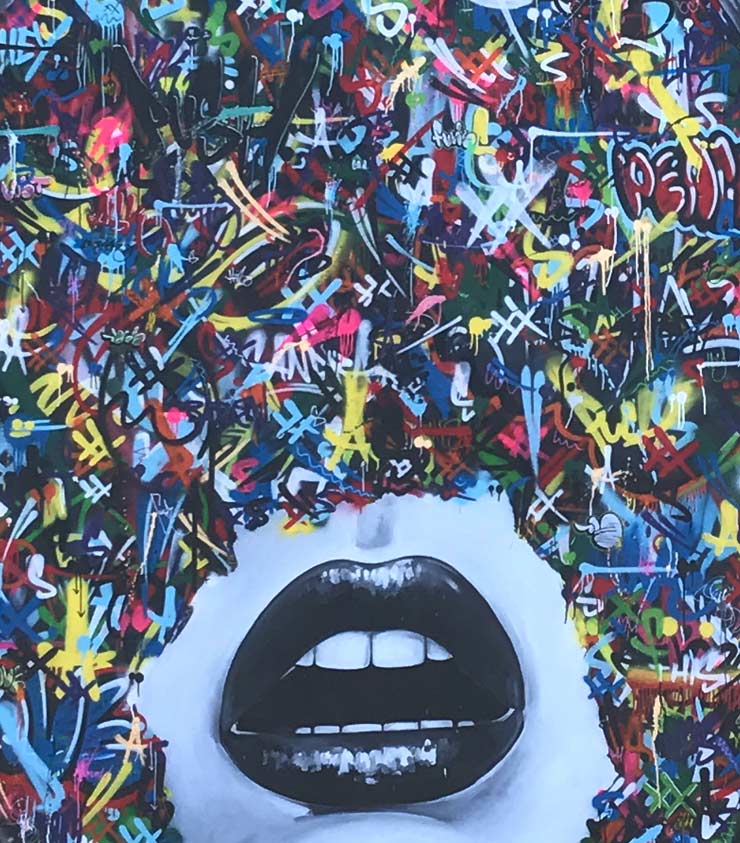
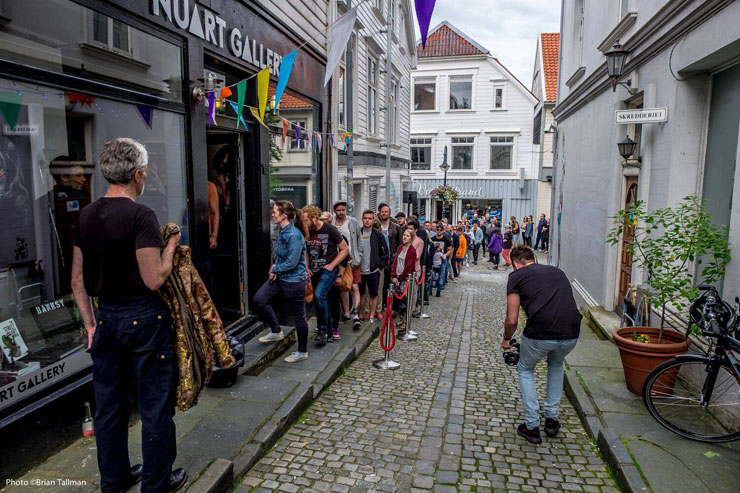
The line outside stretched down the cobblestoned adorable block and around the adorable cobblestoned corner! Montreals based Sandra Chevrier has been quickly garnering attention since debuting at Reed Projects in 2013 with her masked beauties and Norwegian stencillist Martin Whatson has been touching on the vernacular of pop Street Art and hand-tagged abstractions in a way that has developed into his own style over these past few years. The collaboration is an easy reach for both and the resulting ironic/arresting images that only this mashup can produce.

Here are a few images from the new mural they collaborated on to celebrate Thursday’s opening – the show runs through the 28th of July.

Sandra Chevrier . Martin Whatson. Nuart Gallery. Stavanger, Norway. June 2017. (photo © Tor Ståle Moen)

Sandra Chevrier . Martin Whatson. Nuart Gallery. Stavanger, Norway. June 2017. (photo © Tor Ståle Moen)

The crowd waiting to get into see “Junction”, featuring new collaborations by Sandra Chevrier and Martin Whatson. Nuart Gallery. Stavanger, Norway. June 2017. (photo © Brian Tallman)

Event page HERE

Read more
BSA Film Friday 06.30.17

BSA Film Friday 06.30.17

bsa-film-friday-JAN-2015

Our weekly focus on the moving image and art in the streets. And other oddities.

Now screening :
1. Herakut at Nigg Bay
2. Maga Ilustration for 12 + 1 in Barcelona
3. Csaw X All Teeth in Abandoned Tribute
4. UCIT “VIETNAM” – The adventures of Optimistuey.
5. Order55 X Sydney from Dom West.

bsa-film-friday-special-feature

BSA Special Feature: Herakut at Nigg Bay

Jon Reid takes us on a trip down to the sea from Aberdeen, Scotland to see Jasmine from Herakut creating in a secret little spot. “As the sea lapped against the coastal rocks Hera quickly sketched out her idea and began to lay down her distinctive lines. As the seagull figure began to emerge we all looked on with wonder. For a week of special moments this was a real highlight for me and a memory I’ll always cherish.”

Extra points for spotting Evan Pricco and Ian Cox.

Maga Ilustration for 12 + 1 in Barcelona

You have already seen stills from this wall by Maga for Contorno Urbano in our posting from April 22nd called Anna Maga for “12 + 1” Project In Barcelona.

Today we have a small video of her determined style along with a soundtrack that makes you think of a murder mystery.

“A fan of graffiti jams, roller skating and figurative painting, Maga Anna is a local illustrator, mural painter, children’s educator, and commercial designer.”

Csaw X All Teeth in Abandoned Tribute

Friday’s dose of ruin porn delivered to your device, here Csaw of the Bay Area and of HCM Crew paints a tribute to Gloom in a giant abandoned starship compound that has seen better days.

Video by Relative Minds.


UCIT “VIETNAM” – The adventures of Optimistuey. By Justin Smith

It’s important to try to be optimistic, and UCIT memeber Optimistuey has it right there in his name.

Here he smacks a few walls, one in the most optimistic of hues, in Vietnam.


Order55 X Sydney from Dom West.

Seb Humphries akc Order55 spends a rainy day taking us for a ride into his hallucinatory patterned clouds, perhaps illustrating how graffiti sometimes easily moves into contemporary art.

Read more
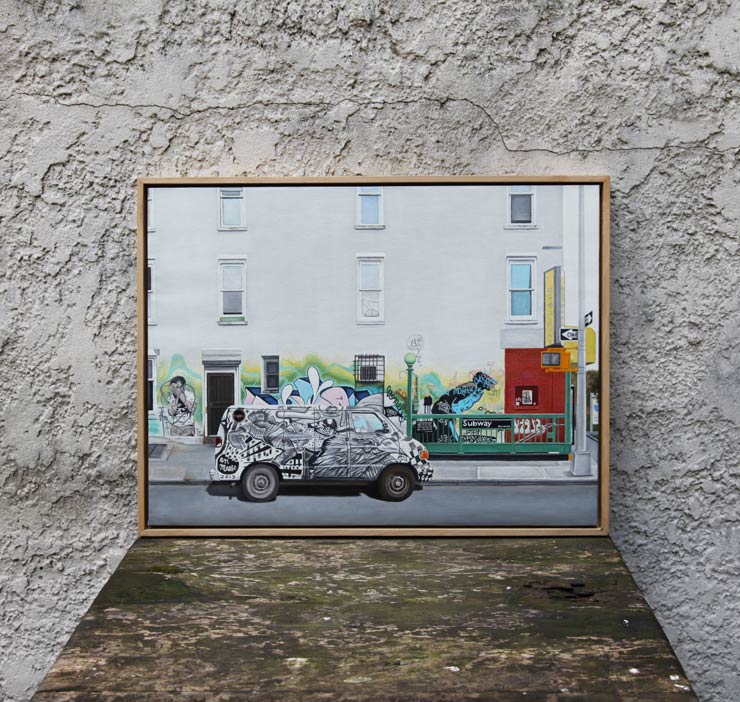
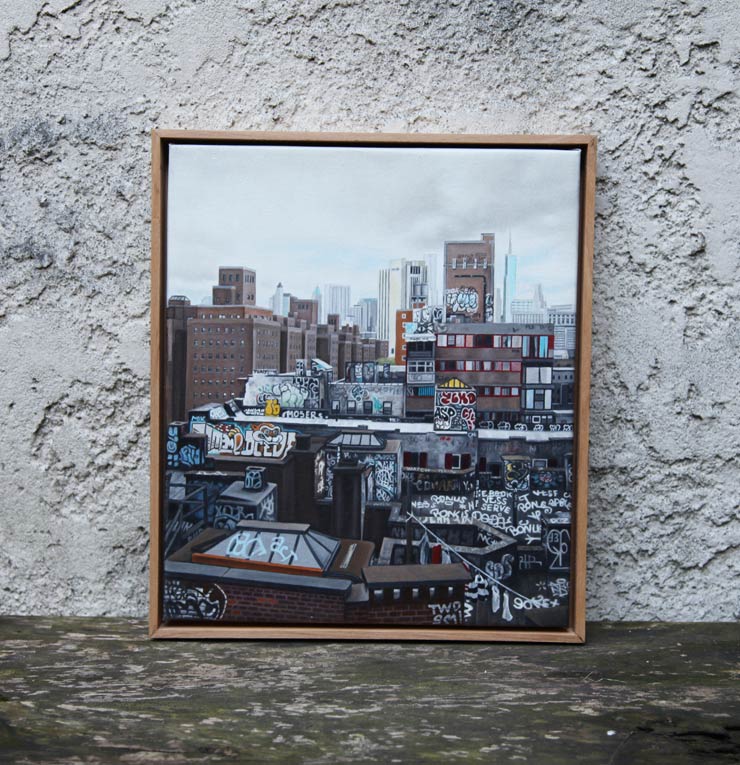
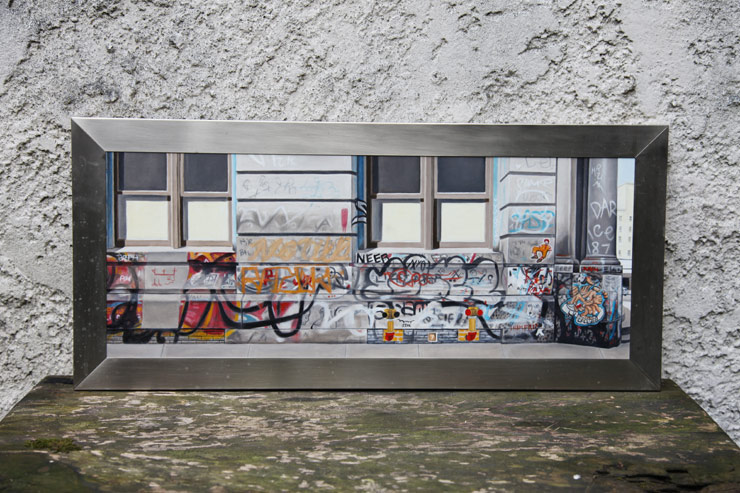
A Graffiti Painted Cityscape: Laura Shechter Documents Street Art on Canvas

A Graffiti Painted Cityscape: Laura Shechter Documents Street Art on Canvas

If there is someone who knows Brooklyn Street Art and graffiti, it is Laura Shechter.

Dart, Cash4, Cost, Sace, City Kitty, Chris Stain, she knows them all.

And yet she doesn’t know them at all.

When you live in a city and see graffiti or Street Art the creators of the scene cannot hope to define everyone’s experience of their work. In fact, it is an entirely unique trip for each person.

Laura Shechter (photo © Jaime Rojo)

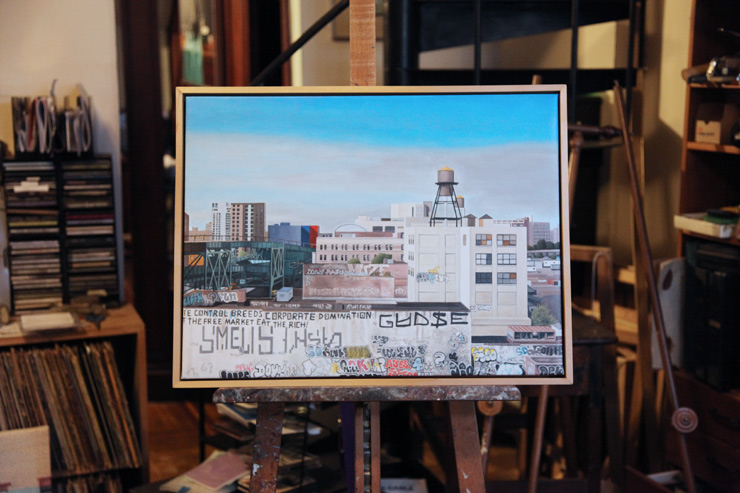
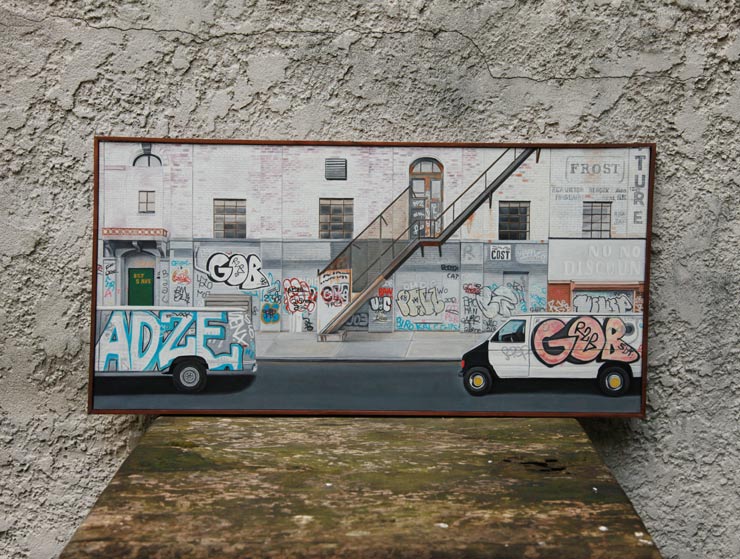
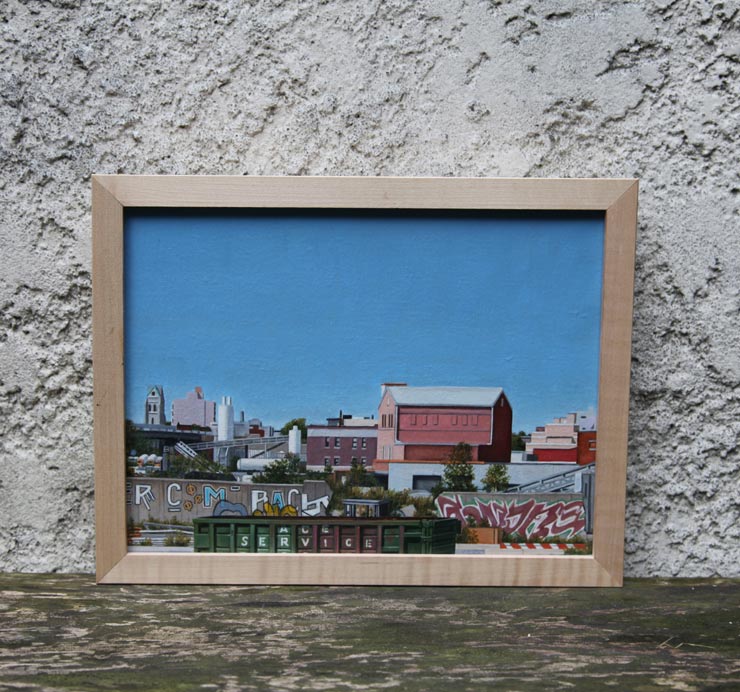
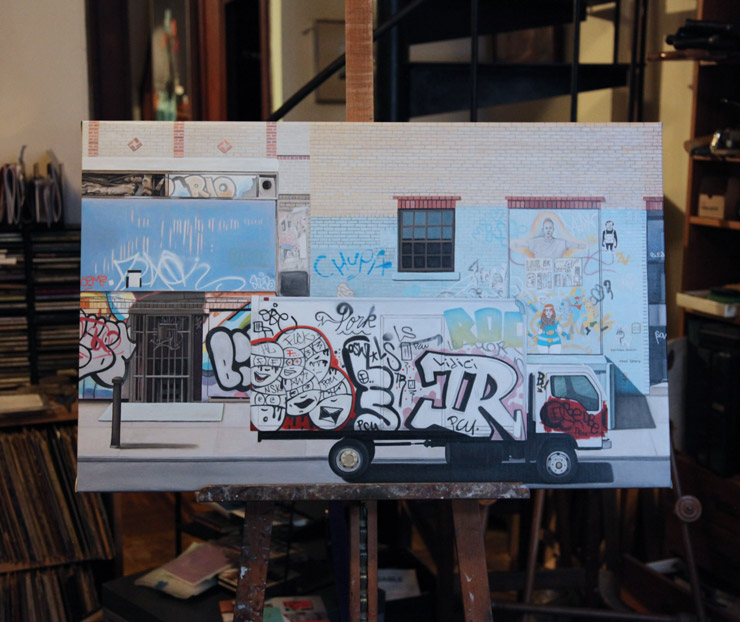
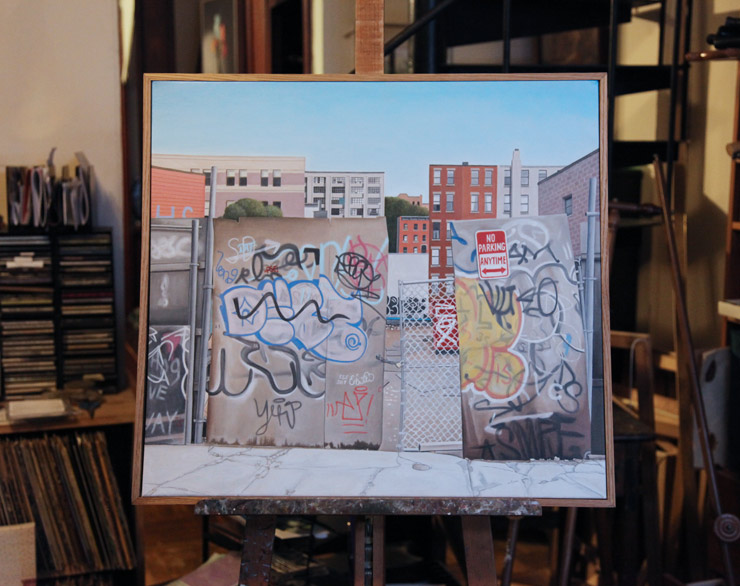
If Laura Shechter happened to capture a graffiti tag or throwie or Street Art wheat-paste or stencil or sticker in one of her careful and precise photo-based cityscapes, she probably didn’t see it as you did, because she may not see her city in the same way you do. Ms. Shechter has spent hours with these pieces; recreating, rendering, and documenting by hand and brush the coded chaos and conversation on city walls. For this painter it is about supporting the craft of the artists of this time much in the same way that she used her earlier still life painting to support the craft of hand painted china from the 19th century.

Others may see these graffiti works as indicators of blight, as eyesores, or signs of the decline of a block or neighborhood. For the majority it may be a visual noise that doesn’t register, let alone merit contemplation or documentation. Laura Shechter is placing this graffiti and Street Art front and center on her canvas, and the rougher the better.

Laura Shechter (photo © Jaime Rojo)

She doesn’t always call it tagging; sometimes she calls it signing or a signature. The graffiti practice of “going over” someone else’s work as a sign of dismissal is called “over writing” in Schecter’s descriptions. She also sees graffiti as “beautification of urban blight.”

Separating the layers of paint and planes with her mind’s eye and layering opaque with transparent, she is perhaps more aware of the strata of pigment, hue, shade, tone, and technical history of a graffitied wall than she is of the vernacular and terminology of day-to-day graffiti and Street Art culture.

Laura Shechter (photo © Jaime Rojo)

Shechter discovered many of these scenes on walks or trespassing adventures with her artist husband Ben and she felt a connection to them, these aerosol tableaus, wanting to save them for posterity.

“I’m good at rendering because I have been a student of 10,000 years of art history,” she says. “I’m involved with technique, observing, and perception. I also understand what is underneath. When I’m rendering the graffiti I am also rendering the graffiti that is underneath it. I’m also sensitive to plane changes so I understand graffiti when it is fading out and when it is sharp.”

She talks about her attraction to this kind of work and perhaps her feeling that she has a connection to the people who practice it. “I was raised in Brownsville, Brooklyn and I am of the ghetto,” says the unpretentious artist who has spoken of a home life in the 1940s and 1950s that was characterized by poverty and very challenging circumstances.

Laura Shechter (photo © Jaime Rojo)

“My work is rarely about the murals that are painted by those who went to art school. I was also a caseworker for the city and I walked most of the ghetto neighborhoods of NY. I am a really aware how ugly it was,” she says.

Today she’s concerned about what gentrification has done to similar neighborhoods and families. “I don’t know if there are any poor people left in Williamsburg. When you are going on a main shopping street on a Saturday, there’s almost nobody older than 30 years old. It almost becomes artificial and I would never want to live there. It would be an unpleasant place because it has become plastic,” she says.

Laura Shechter (photo © Jaime Rojo)

To the painters’ eye these raucous graffiti walls are colors, textures, planes, gestures; gyrations and rhythms of the vibrating city, our history of cacophony distilled, the forceful and waning multi-accented assertions of the vox populi captured here on a wall. One can imagine that Shechter can hear very clearly some of those voices splashed and layered here.

A contemporary realist, Shechter studied at Brooklyn College with noted abstract painter and a father of minimalism, Ad Reinhardt, in the mid 1960s. She says she  absorbed some of his minimalist techniques even with her still lifes in oil, watercolor, pencil, silverpoint, and lithographic prints. Here work developed into a career with gallery representation and a steadily growing collectors base over the next 35 years or so.

Laura Shechter (photo © Jaime Rojo)

Sometime in the late 1990s she says there was a crises in her work and she began thinking that she had explored still life painting and drawing completely, with no where left to go. In the early 2000s she grew interested in photo-based cityscapes through looking at and watching the art practice of her husband, who worked with his own photography as inspiration for his paintings.

In a speech given about her work last October at Mendez Soho in New York she spoke of her departure from still life painting and learning to paint cityscapes, sky, water – and how difficult it was to learn again. “It had to do with humility. The humility came from the idea of ‘how to deal with something that you are extremely competent in and then go back and become incompetent?’ ” She painted densely packed scenes of multileveled high-rises, seeing her city in a new way in terms of plains and horizontal lines and complexity.

Laura Shechter (photo © Jaime Rojo)

Then one of her cityscapes that she captured while looking off the Williamsburg Bridge happened to contain graffiti “only by chance”. It was exhibited at the National Academy later and the curator of that show introduced Shechter to the graffiti haven in Queens called “5 Pointz” and she did a painting of the massive complex crushed in pieces, thowies, tags.

“Basically doing that painting changed the whole direction that my work was taking,” she says. A few years later in 2015 her body of graffiti cityscapes won her the NYFA Artist’s Fellowship from the Academy.

A photo to use as a painting study from Hackney, London. May 2017. (photo © Laura Shechter)

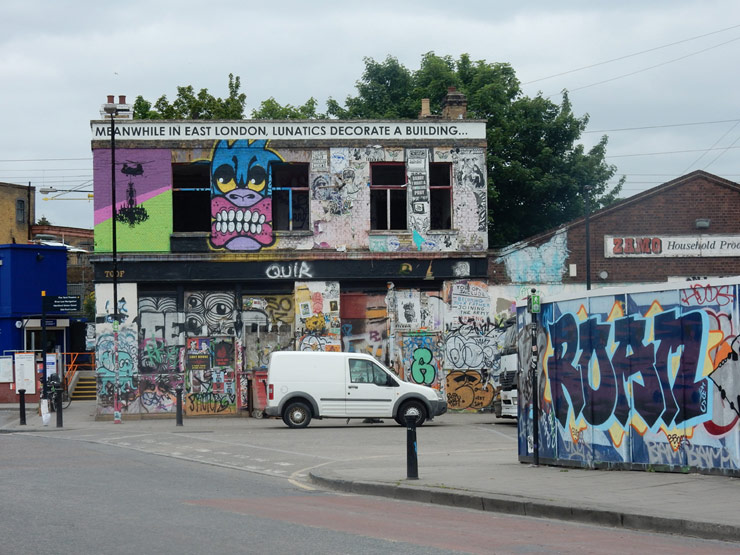
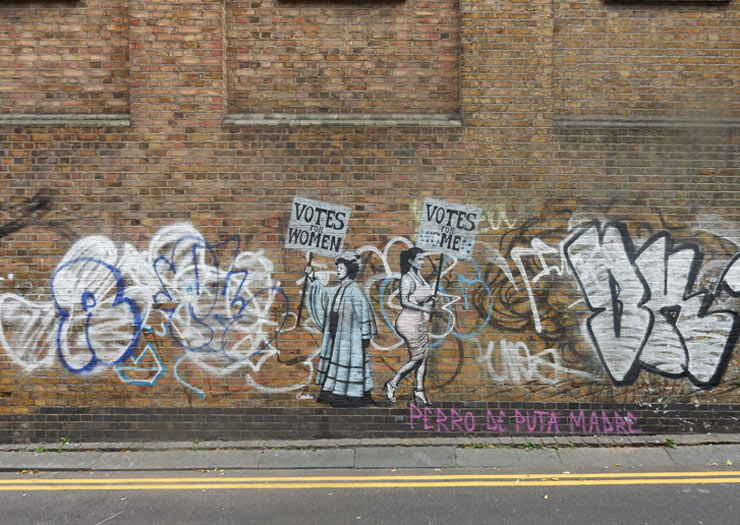
In 2016 her husband Ben passed away after nearly five decades together and their warm Park Slope Brownstone brims with the intermingling of the two artists styles and interests. She says it has been difficult to adjust to the loss, but she has been busying herself with projects. To seek new inspiration from the streets abroad she travelled to London this spring to see the vibrant graffiti, Street Art, and mural scene there and to shoot photos for reference in her next body of paintings.

Siting the many legal walls that she discovered, the bright poppy colors that are popular today, and a perceived lack of direct relationship to the struggles of low-income people, her Brooklyn pride may overshadow her appreciation of what she captured in another city.

A photo to use as a painting study from Shoreditch, London. May 2017. (photo © Laura Shechter)

“Although London Street art is powerful, it lacks the finesse and craft of New York graffiti and it did not evolve naturally from the poorer neighborhoods,” she tells us. “Early New York graffiti writers had a limited palette of aerosol colors that tended to be intense.”

A photo to use as a painting study from Brick Lane, London. May 2017. (photo © Laura Shechter)

“They used natural arm movements that produced a more sensuous line and incorporated effects that result from the aerosol can; fuzzy edges, drips that add interest to the surface. London aerosol artists tend to fill in areas and their colors are the new tints and a heavy use of silver. Although there is some oversigning, they lack the beauty of layering of tags in New York graffiti, ” she says.

A photo to use as a painting study from Hackney, London. May 2017. (photo © Laura Shechter)

A teacher and lecturer at Parsons and the National Academy of Art, Schecter’s works are today included in several museum collections including Art Institute of Chicago, San Francisco Museum of Fine Art, and her hometown Brooklyn Museum where she prizes the feminist perspective which the institution champions, recalling her involvement since the 1970s as a member of both Women in the Arts and the Woman’s Caucus for Art. With such a rewarded career of professional accomplishment it is all the more interesting that the artist holds a certain reverence for the aesthetics of graffiti and Street Art.

But she is from Brooklyn after all.

Brooklyn Street Art: As an admirer of aesthetics, where do you find beauty in public spaces?
Laura Schecter: I enjoy walking the streets or riding a train and encountering sudden beauty when it is unexpected. Buildings used to be dirty brown, grey. I like simple doorways with 100 signatures…Especially graffiti on old brick and weathered wood, and the graffiti trucks are ever evolving and pure works of art.

I liked walking with Ben for miles and miles. Some photos he had to take because he was taller. I was always surprised how different our photos could be of the same spot. Sometimes I used his. I’ve been making home videos – one I made for him about him and his songs last summer and a personal one called “Brownsville Childhood.” That’s what you do when someone dies, you get projects.

Laura Shechter (photo © Jaime Rojo)

Brooklyn Street Art: As a contemporary realist, what are you observing in the cityscape that others may be missing?
Laura Schecter: I was painting the still life and felt that I had nothing more to say about it. My husband Ben Shechter used photos and other sources in his own art work. I borrowed one of his photos that he shot from the “F” train looking into the Gowanus Canal. It was like jumping into the abyss.

It presented a new problem where I had to teach myself new skills and develop a point of view. That process took about six years. I exhibited a painting of Williamsburg with graffiti at the National Academy of Art and when I became friends with the curator Marshal Price, he told me about this place called 5 Pointz in Long Island City. The rest is history – I always tell him that this series of paintings is his fault.

Laura Shechter (photo © Jaime Rojo)

Brooklyn Street Art: What lead you in 2002 to begin painting and drawing photo-based cityscapes?
Laura Schecter: I have strong feelings about landscape space. A space that is created by having parallel horizontal bands. I have an innate sense of rhythm and patterns. I never have trouble with tedium, bring on all of those boring windows and bricks! I can now paint at ground level as I hone my vision.

I have overcome some of the drawbacks of photorealists (whose work can be mechanical) with my knowledge of 10,000 years of art and I can paint views that a painter on site misses, from being on moving trains and trespassing on roofs.

Laura Shechter (photo © Jaime Rojo)

Brooklyn Street Art: So you actually follow the Street Art scene?
Laura Schecter: Because I am constantly walking the 5 boroughs, I may revisit the same site once a year and see how it develops. I also visit centers of street mural art. And of course I read BSA every 2 weeks. This past May I spent an intense 6 days photographing graffiti in many sites and talking occasionally to young street Artists

Brooklyn Street Art: How would you describe how you approach graffiti and Street Art as an artist, as a person? When capturing graffiti and Street Art, is it about form and color and texture – or is it about culture and people and the visual conversation on the street?

Laura Schecter: I am most interested in graffiti walls that are well developed over time with over writing. In the beginning signing might have been random but later each tag was placed with intention, improving the general composition of the site.

What I like about earlyish graffiti was the limited color. Less is more. The graffiti writers maximized with these limited colors. I have gone to newer sites – one in south Bronx and the other in northern Queens where younger street artists are using pastel colors – For me it’s a little less than gritty.

Laura Shechter (photo © Jaime Rojo)


This article is also published The Huffington Post
 

Read more