BSA Images Of The Week: 11.25.18

BSA Images Of The Week: 11.25.18

BSA-Images-Week-Jan2015

You made it! Thanksgiving is over and you did not explode from eating too much pumpkin pie. Right?

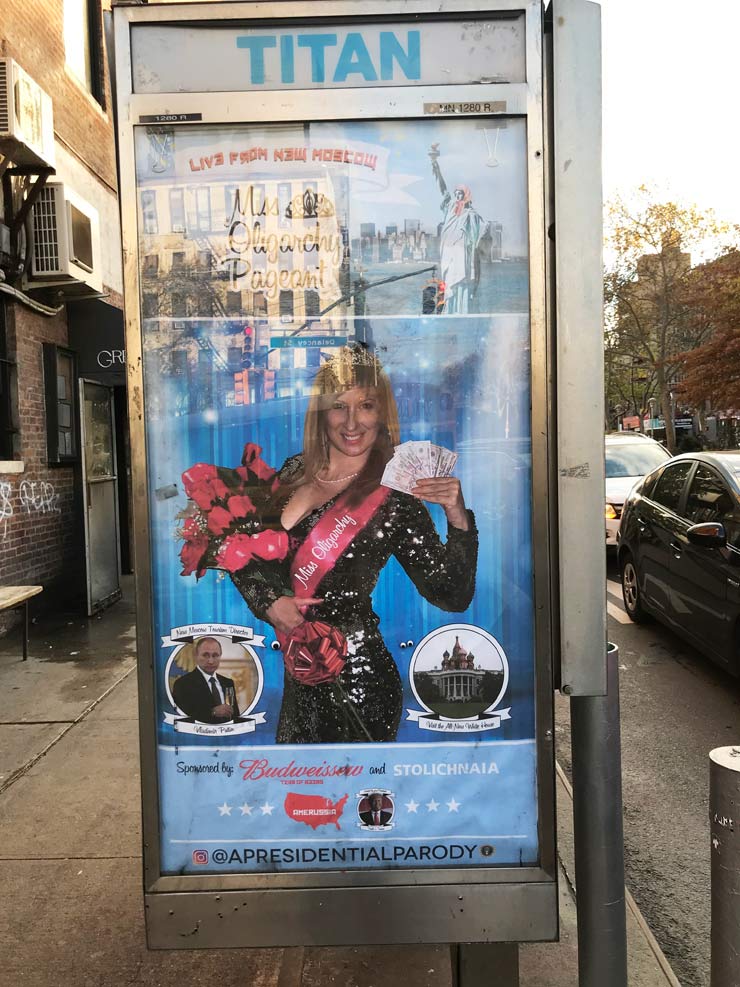
A number of subverting artists and activists took over billboards in cities around the world this Thanksgiving holiday to celebrate “NO AD DAY” – an aesthetic effort to reclaim public space from advertisers who have slowly but surely crept into everything, producing an ever-present artificial and continuous knawing in the stomach that you are not handsome or pretty enough, rich enough, or somehow incomplete in a thousand ways.

Check out folks like Brandalism to learn more about a growing grassroots movement that began perhaps in the 60s with folks like the Billboard Liberation Front but has picked up speed and technique in the last decade. Of course artists like Abe Lincoln Jr. don’t need a special day to take over a phone booth – any day is fine.

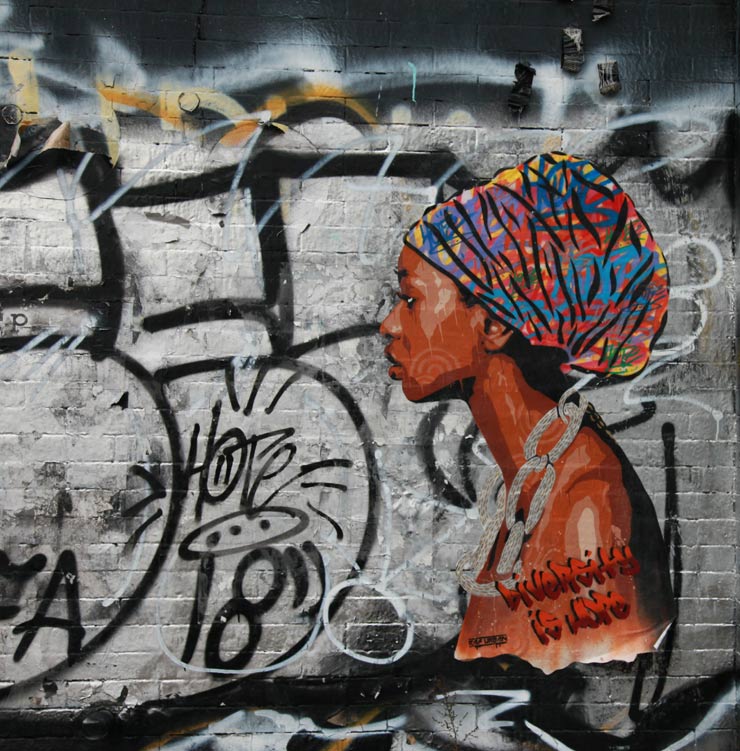
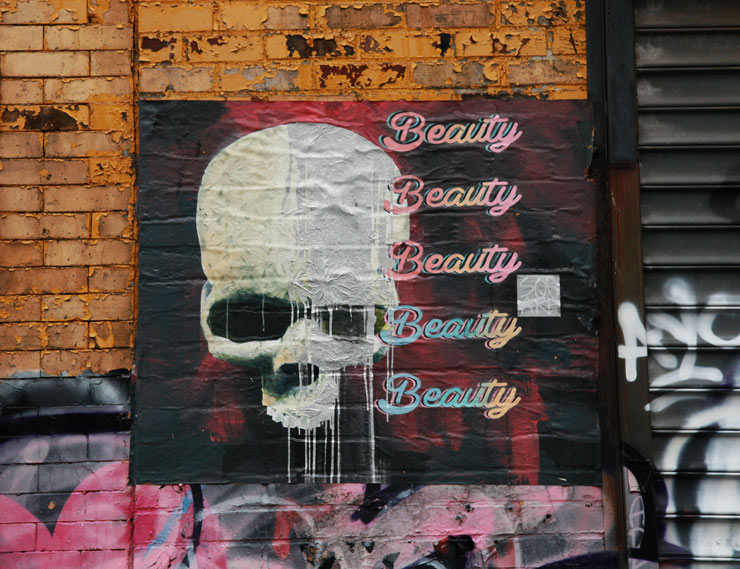
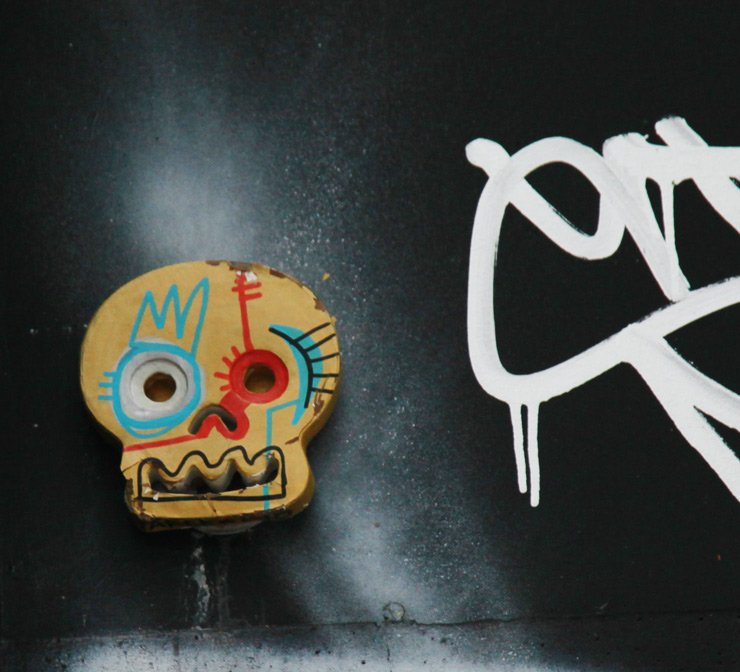
So here is our weekly interview with the streets, this week featuring Abe Lincoln Jr. Adam Fu, Bortusk Leer, Kenny Scharf, Lucky Rabbit, Maia Lorian, Mastro, Norm Magnusson, Tito Ferrara, Rawraffe, Solus, and Uncle Susan.

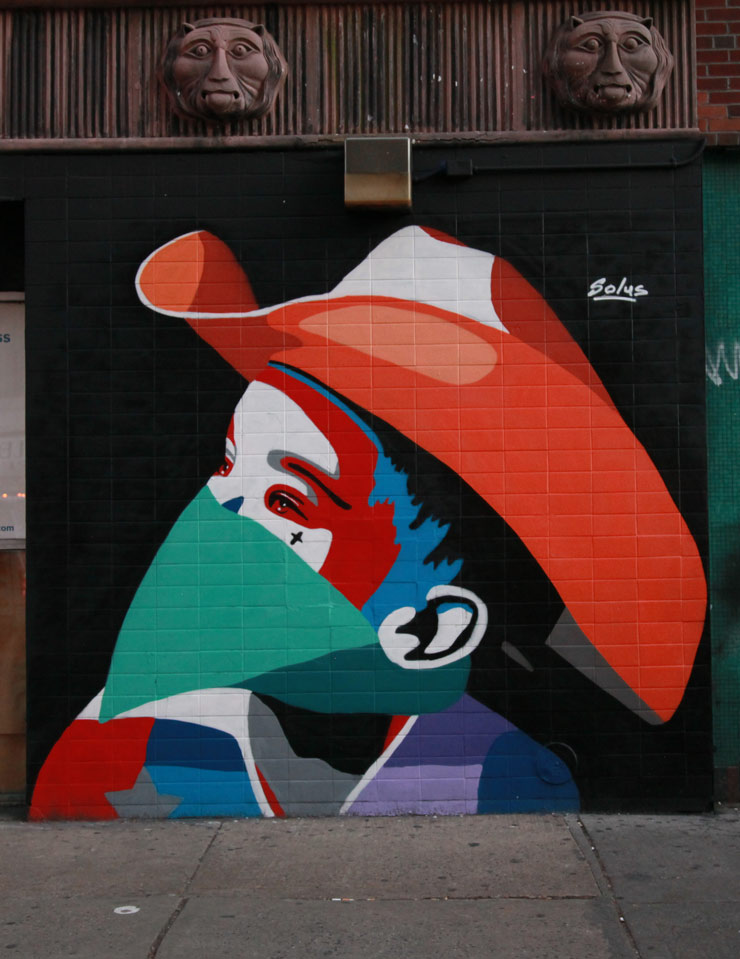
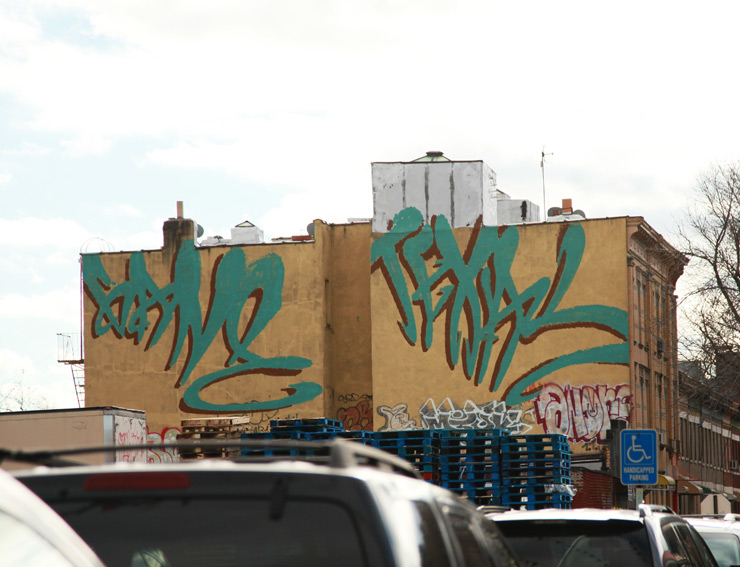
Top Image: Solus for The L.I.S.A. Project NYC (photo © Jaime Rojo)

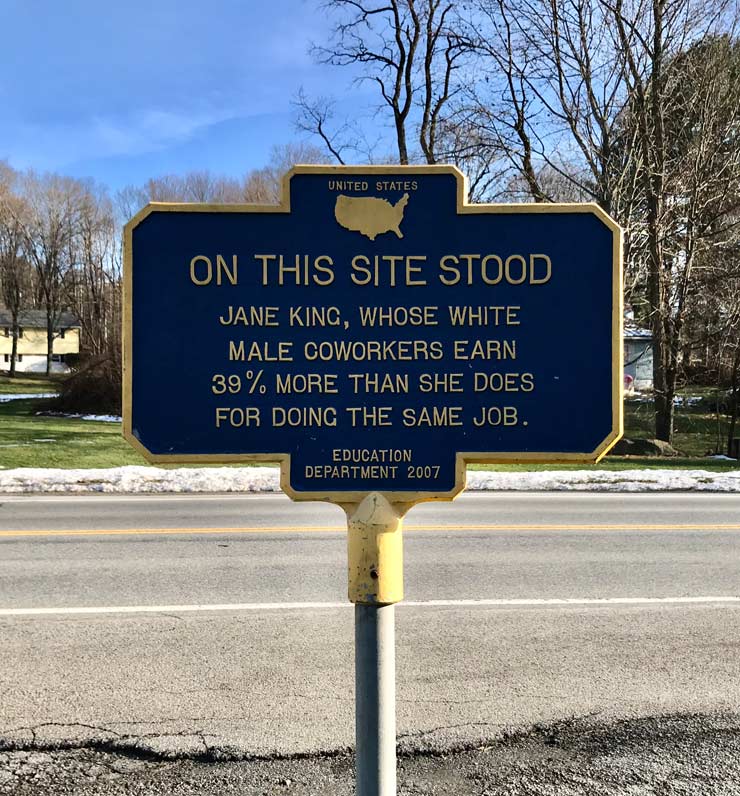
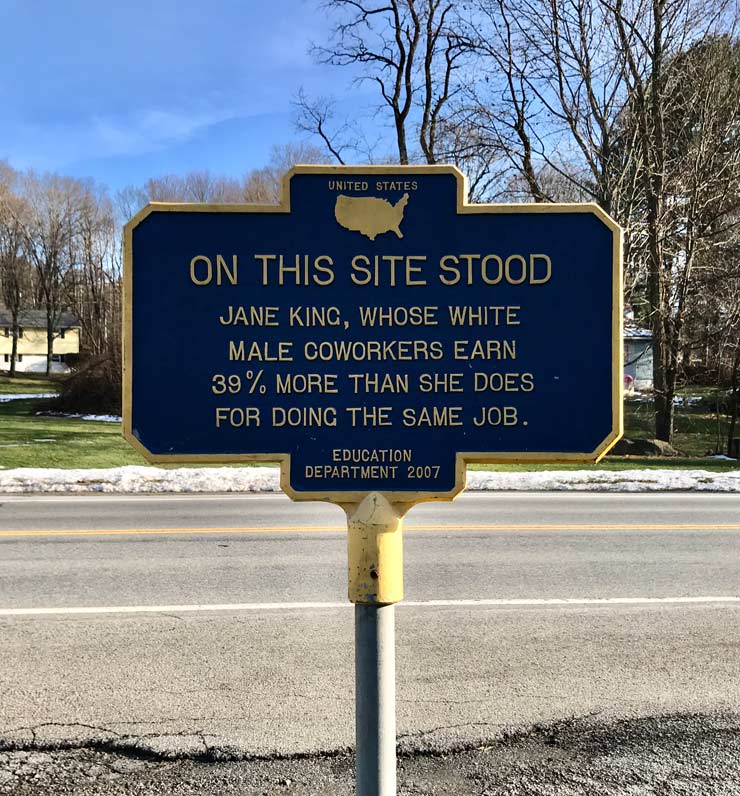
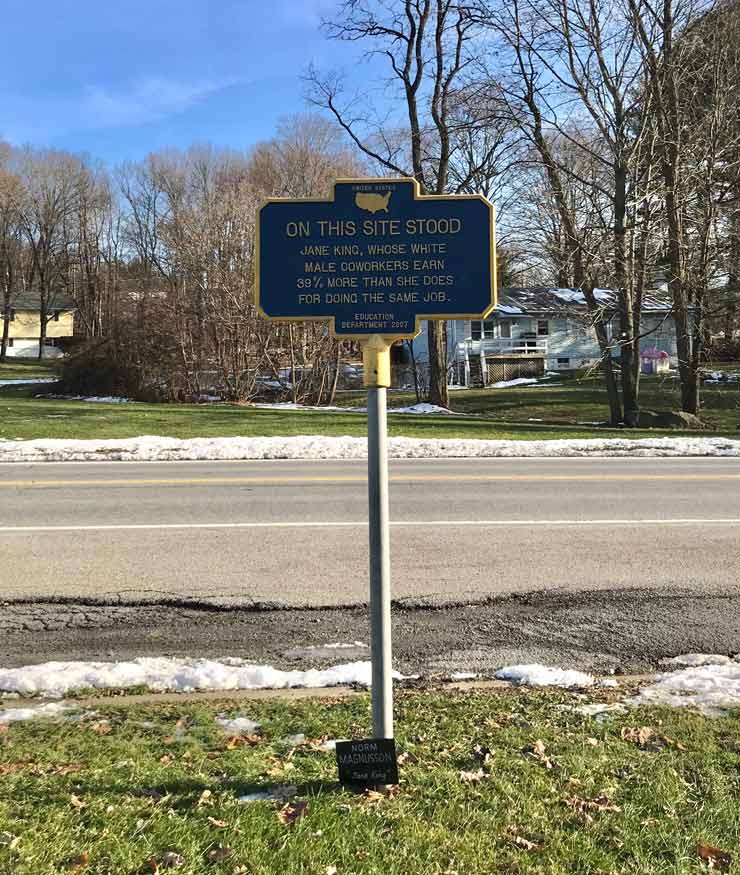
The hi-jacking of civically minded historical markers is done very well here in the suburbs by Norm Magnusson “Jane King” (photo © Jaime Rojo)

Norm Magnusson “Jane King” (photo © Jaime Rojo)


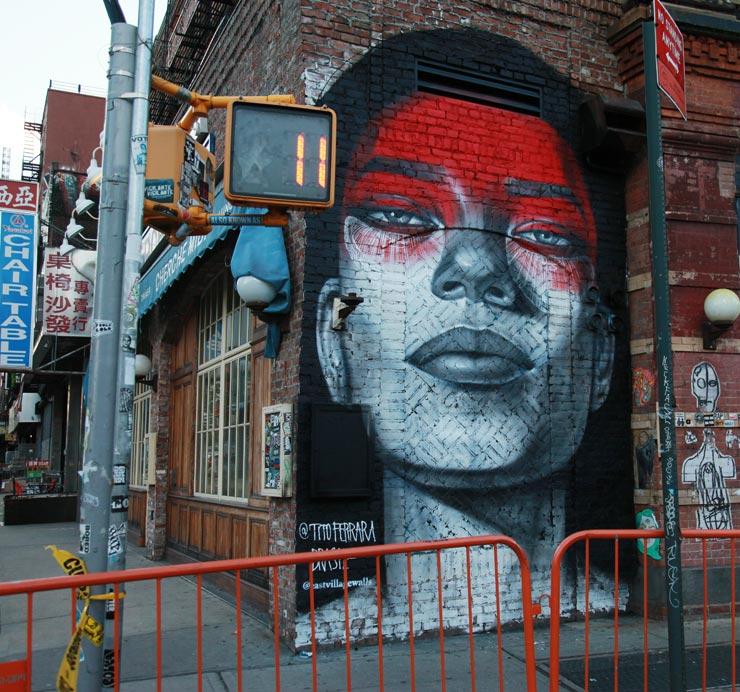
Tito Ferrara for East Village Walls. (photo © Jaime Rojo)

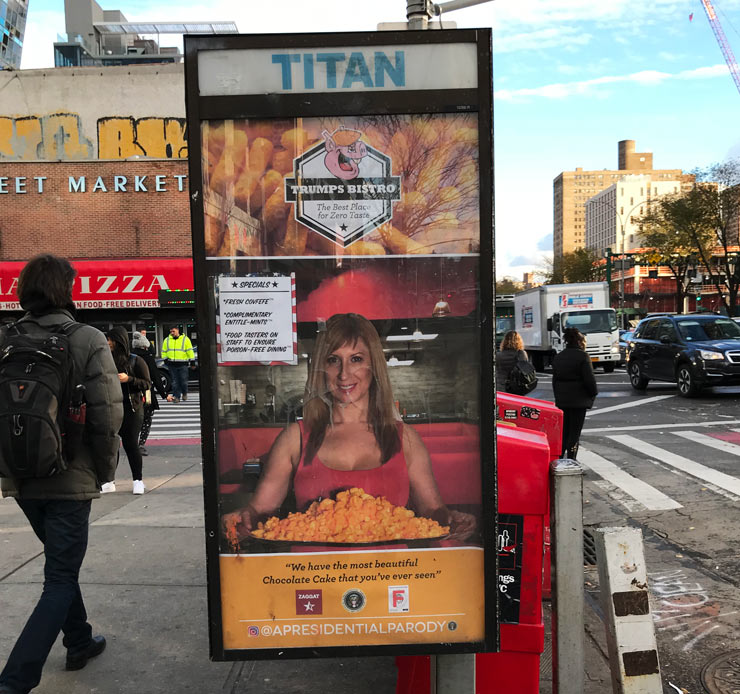
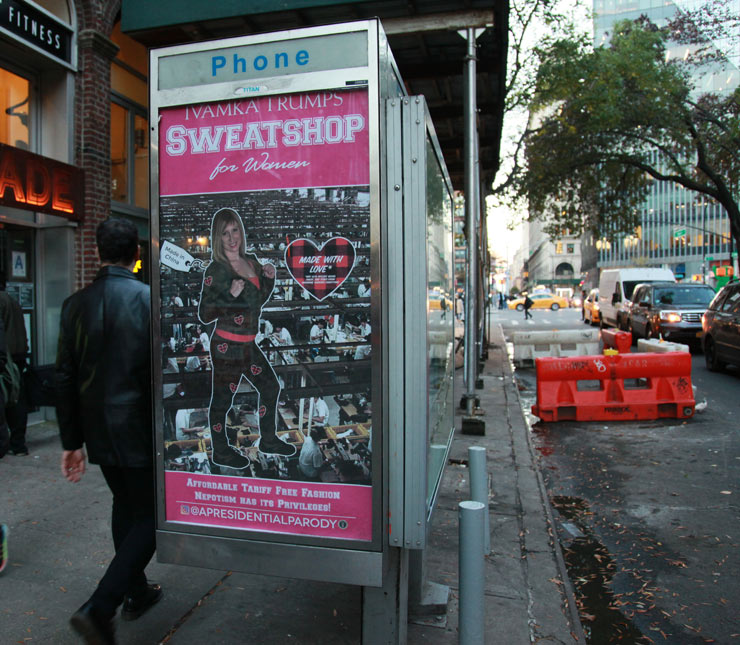
Street Artist Abe Lincoln Jr.  and artist Maia Lorian created a series of phone booth ad take overs in NYC that spoof and critique advertising, the barren vapidness of consumer culture, Trump, hypocrisy in general. (photo © Jaime Rojo)

Abe Lincoln Jr. & Maia Lorian phone booth ad take over. (photo © Jaime Rojo)

Abe Lincoln Jr. & Maia Lorian phone booth ad take over. (photo © Jaime Rojo)

Rawraffe (photo © Jaime Rojo)

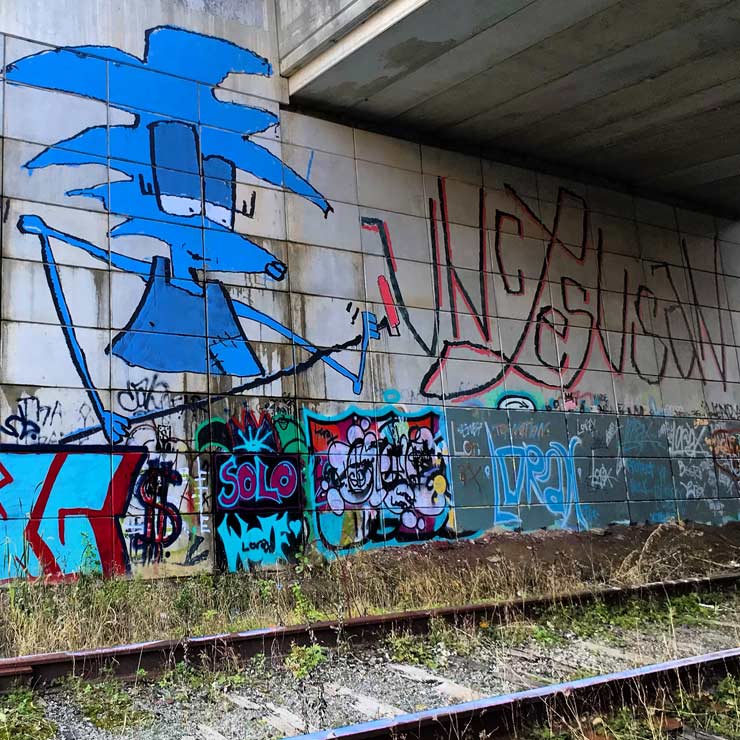
Uncle Susan (photo © Jaime Rojo)

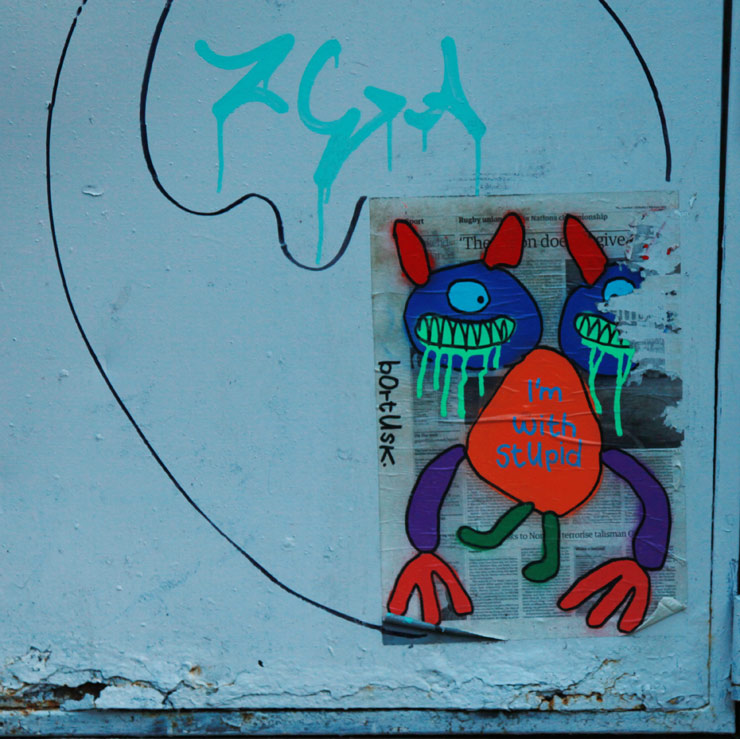
Bortusk (photo © Jaime Rojo)

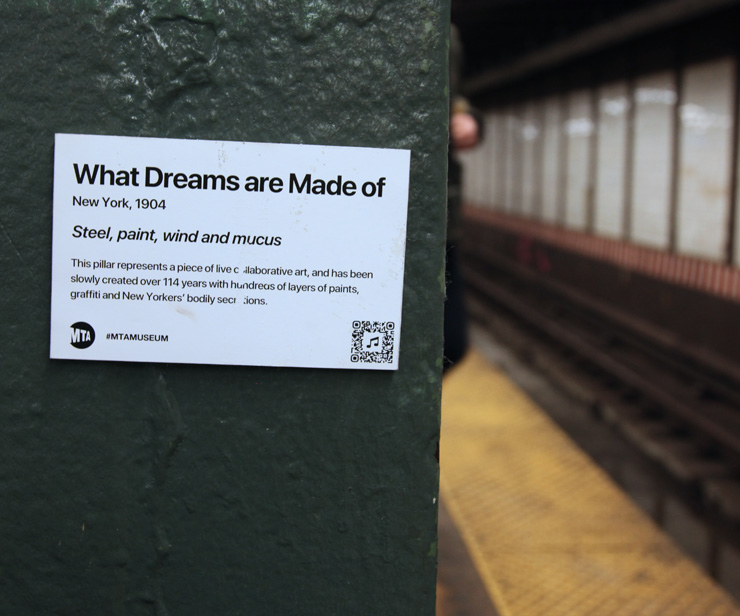
#mtamuseum Some space take over on the NYC Subway platforms. (photo © Jaime Rojo)

#mtamuseum Some space take over on the NYC Subway platforms. (photo © Jaime Rojo)

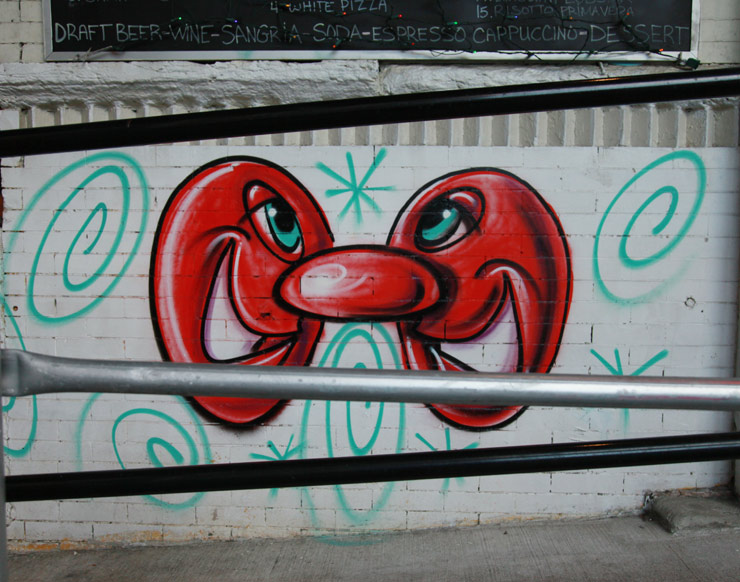
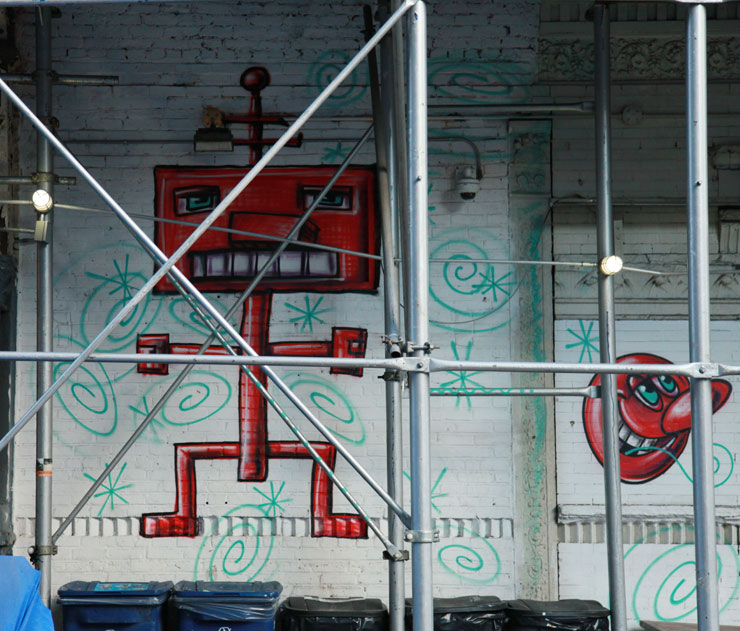
Kenny Scharf for The L.I.S.A. Project NYC (photo © Jaime Rojo)

Kenny Scharf for The L.I.S.A. Project NYC (photo © Jaime Rojo)

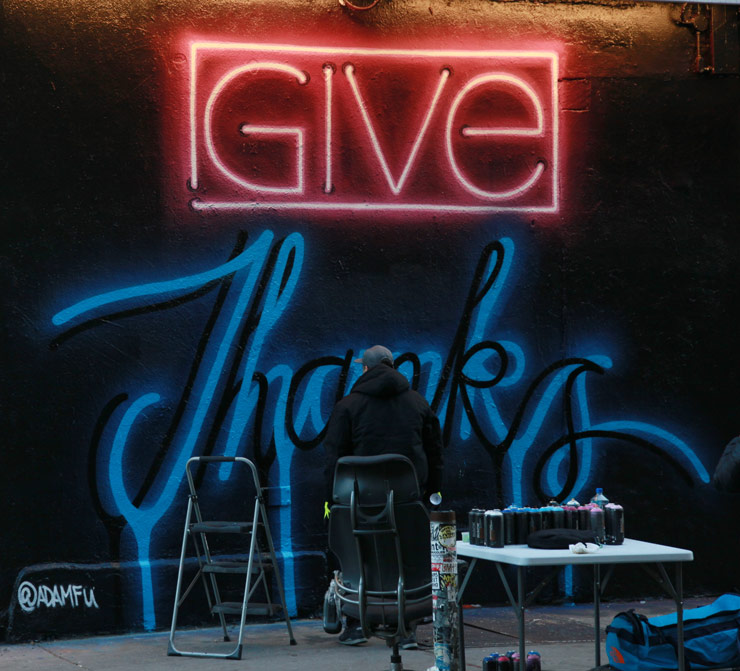
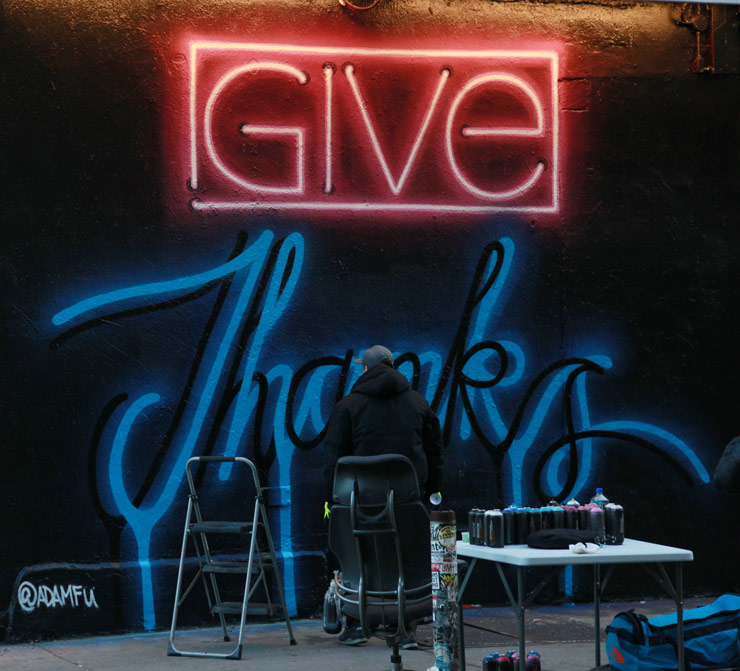
Adam Fu art work on his message of given thanks. We published the completed on Thursday for BSA Happy Thanksgiving. (photo © Jaime Rojo)

Artist Unknown (photo © Jaime Rojo)

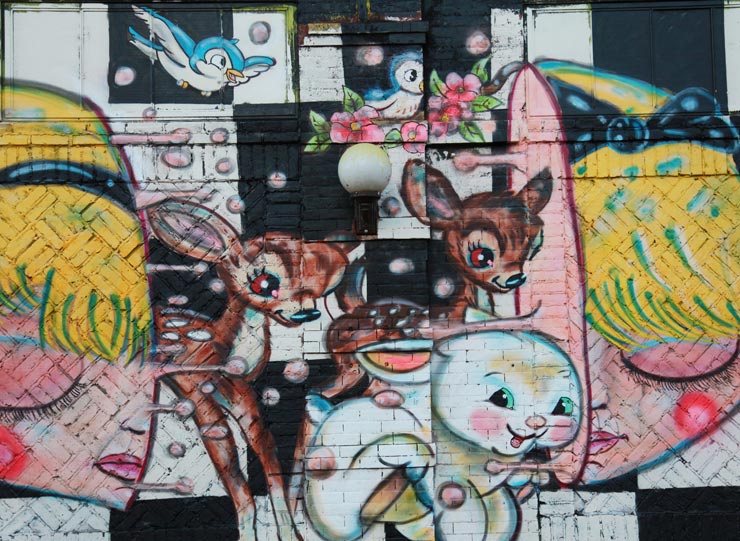
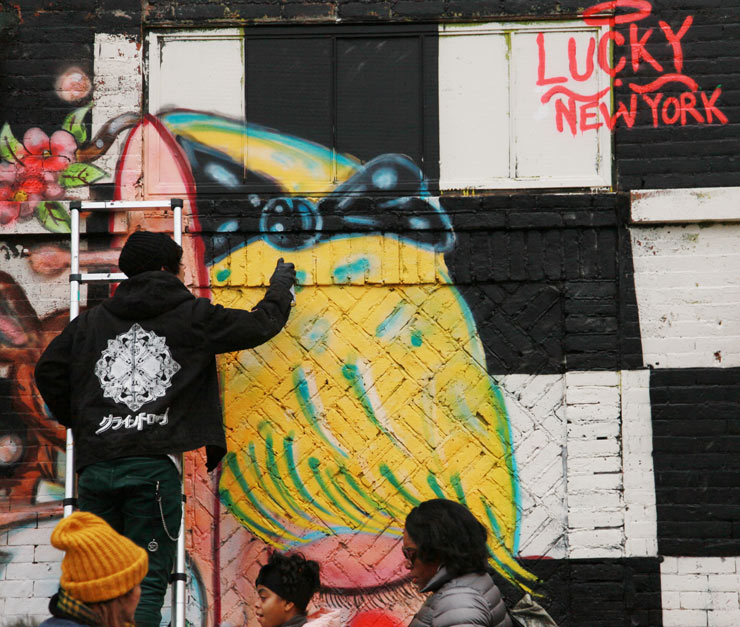
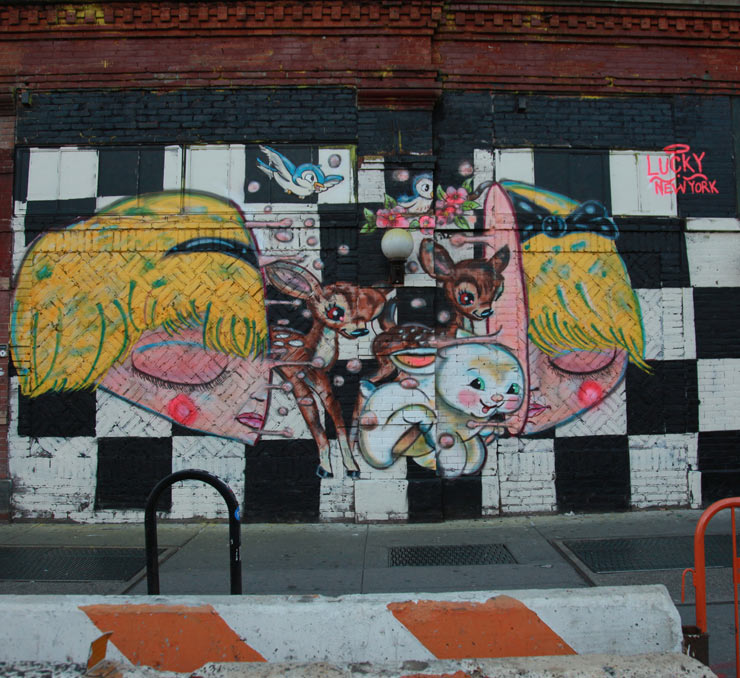
Detail of Lucky Rabbit mural on Houston Street. We wrote a little article on this mural on Tuesday on BSA. (photo © Jaime Rojo)

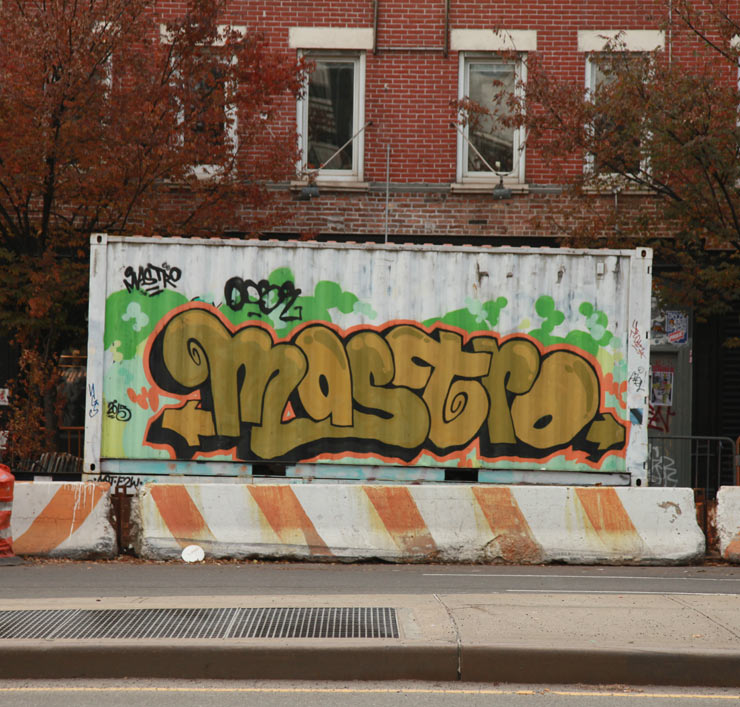
Mastro (photo © Jaime Rojo)

Untitled. Beacon, NY. Fall 2018. (photo © Jaime Rojo)

Read more
New Images from the Parees Festival in Oviedo, Spain 2018

New Images from the Parees Festival in Oviedo, Spain 2018

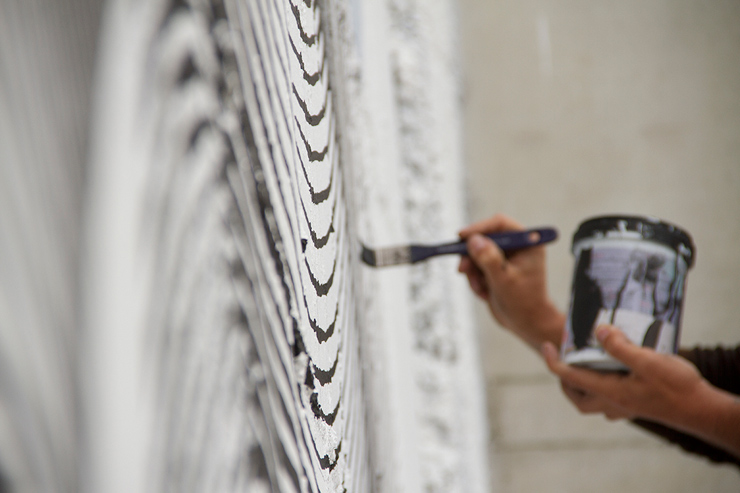
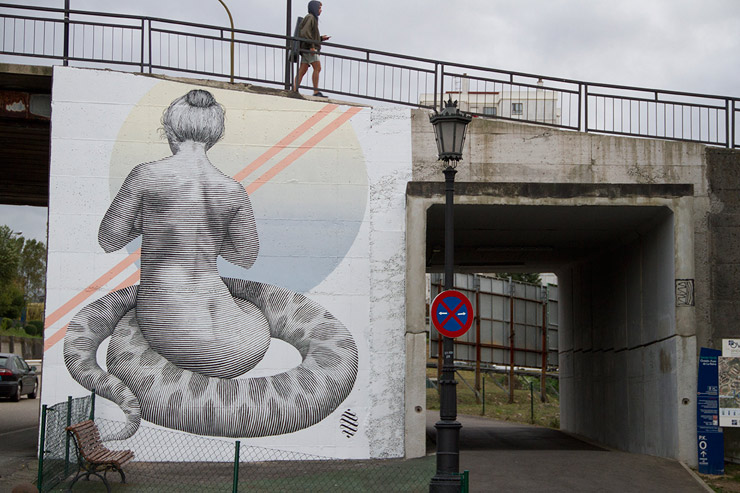
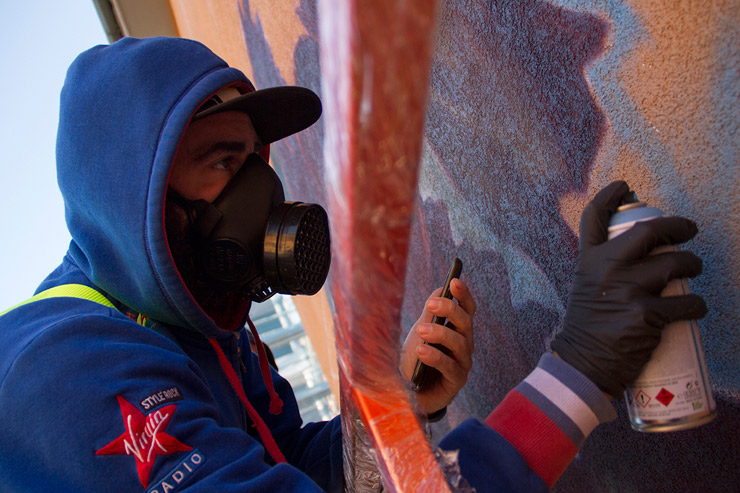
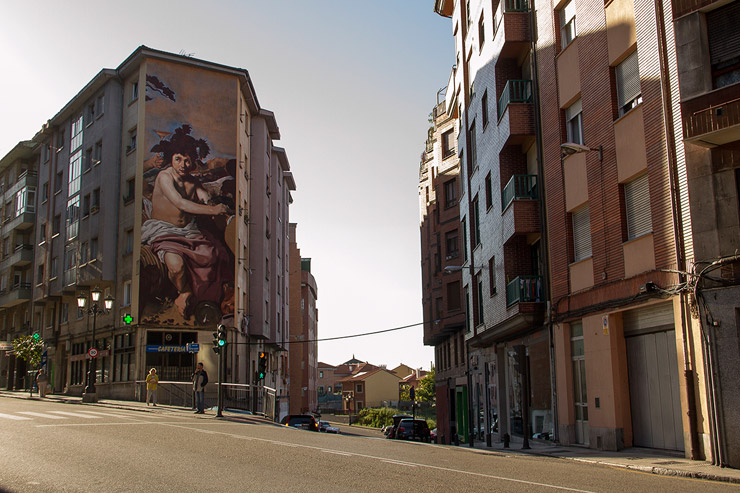
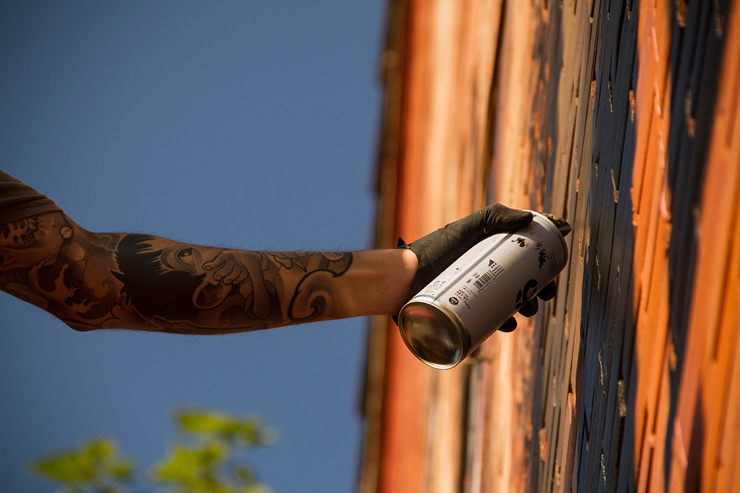
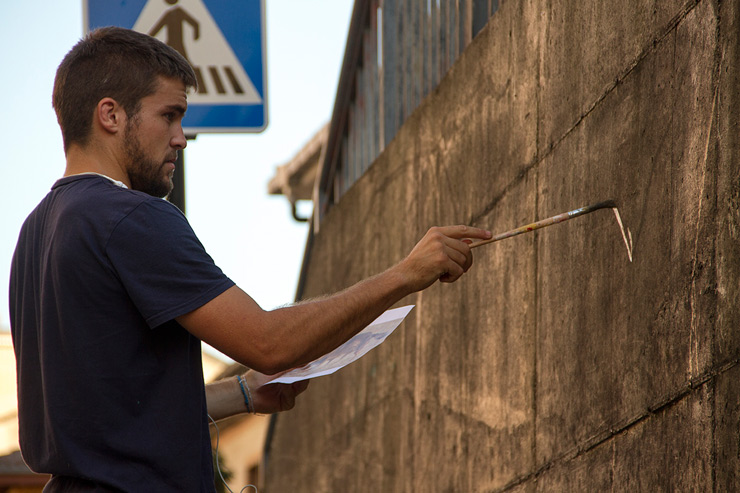
A continuation of our Film Friday coverage from yesterday, today we bring you still photos of the murals created during this years Parees Festival in its 2nd edition.

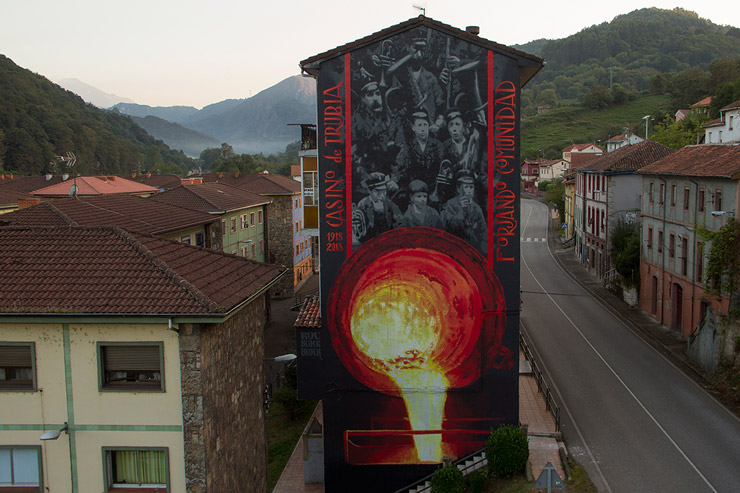
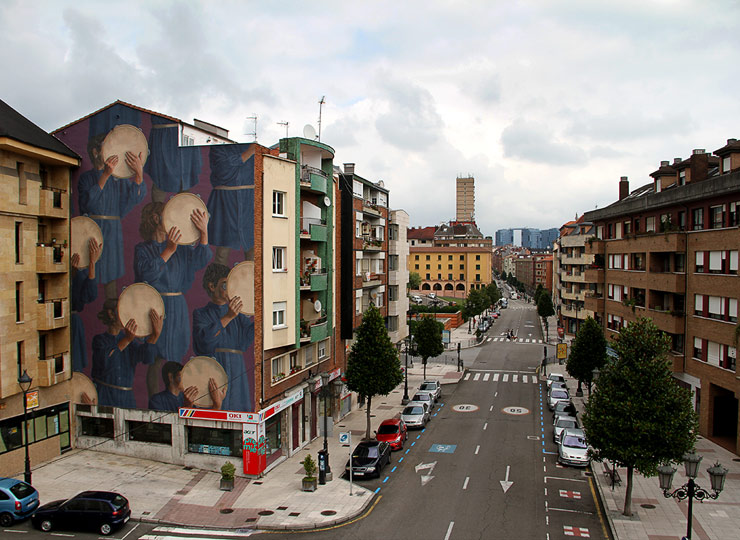
Rock Blackblock. Parees Festival 2018. Oviedo, Spain. September 2018. (photo © Fer Alcalá & MiraHaciaAtrás)

With a focus on quality over quantity, fair fees for artists and participants, and a wholistic approach to contextual creation, the festival is entirely subsidized by the Municipal Culture Foundation of the City of Oviedo – free from possible conflicts with galleries or commercial brands.

Reputation is built on behavior and results and this model for community-conscious mural making is one that organizers can be proud of.

Rock Blackblock. Parees Festival 2018. Oviedo, Spain. September 2018. (photo © Fer Alcalá & MiraHaciaAtrás)

Alfalfa. Parees Festival 2018. Oviedo, Spain. September 2018. (photo © Fer Alcalá & MiraHaciaAtrás)

Alfalfa. Parees Festival 2018. Oviedo, Spain. September 2018. (photo © Fer Alcalá & MiraHaciaAtrás)

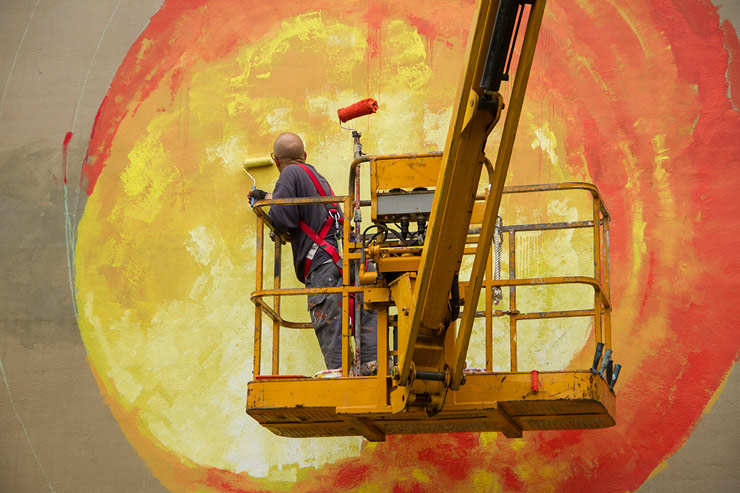
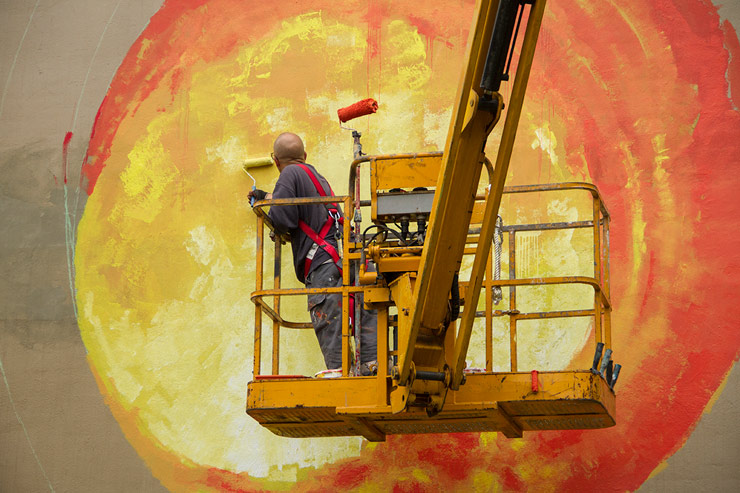
Andrea Ravo. Parees Festival 2018. Oviedo, Spain. September 2018. (photo © Fer Alcalá & MiraHaciaAtrás)

Andrea Ravo. Parees Festival 2018. Oviedo, Spain. September 2018. (photo © Fer Alcalá & MiraHaciaAtrás)

Colectivo Liquado. Parees Festival 2018. Oviedo, Spain. September 2018. (photo © Fer Alcalá & MiraHaciaAtrás)

Colectivo Liquado. Parees Festival 2018. Oviedo, Spain. September 2018. (photo © Fer Alcalá & MiraHaciaAtrás)

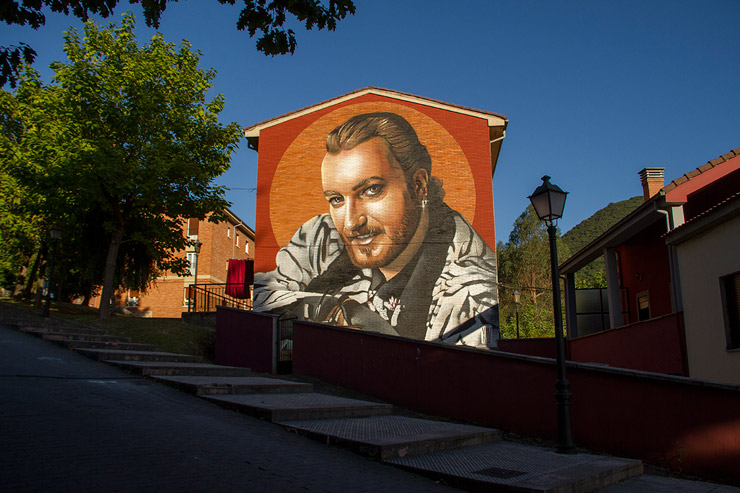
XAV. Parees Festival 2018. Oviedo, Spain. September 2018. (photo © Fer Alcalá & MiraHaciaAtrás)

XAV. Parees Festival 2018. Oviedo, Spain. September 2018. (photo © Fer Alcalá & MiraHaciaAtrás)

Kruella. Parees Festival 2018. Oviedo, Spain. September 2018. (photo © Fer Alcalá & MiraHaciaAtrás)

Kruella. Parees Festival 2018. Oviedo, Spain. September 2018. (photo © Fer Alcalá & MiraHaciaAtrás)

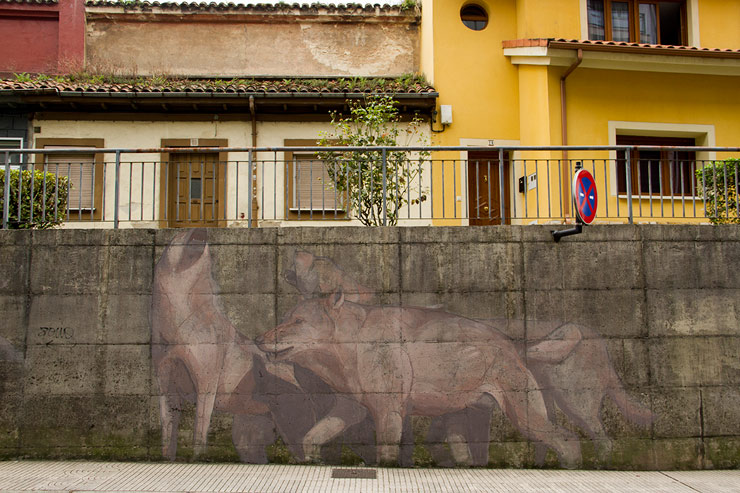
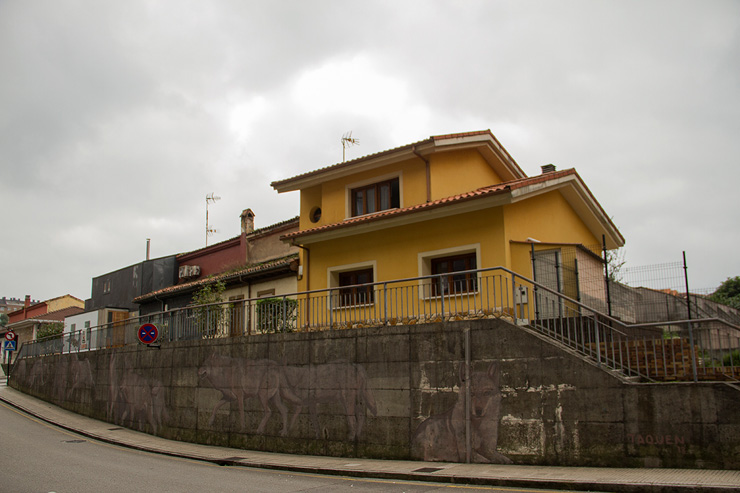
Taquen. Parees Festival 2018. Oviedo, Spain. September 2018. (photo © Fer Alcalá & MiraHaciaAtrás)

Taquen. Parees Festival 2018. Oviedo, Spain. September 2018. (photo © Fer Alcalá & MiraHaciaAtrás)

Taquen. Parees Festival 2018. Oviedo, Spain. September 2018. (photo © Fer Alcalá & MiraHaciaAtrás)


https://www.instagram.com/pareesfest/

http://paredesfest.net/en/the-festival/

Read more
BSA Film Friday: 11.23.18

BSA Film Friday: 11.23.18

bsa-film-friday-JAN-2015

Our weekly focus on the moving image and art in the streets. And other oddities.

Now screening :
1. Colectivo Licuado and ‘Pandereteras’ at at Parees Fest 2018
2. XAV. Parees Fest 2018
3. Rock Blackblock. Parees Fest 2018
4. Andrea Ravo Matoni. Parees Fest 2018

bsa-film-friday-special-feature

BSA Special Feature: Colectivo Licuado and ‘Pandereteras’ at at Parees Fest 2018

Four videos in a row this week from one international mural festival – PAREES.


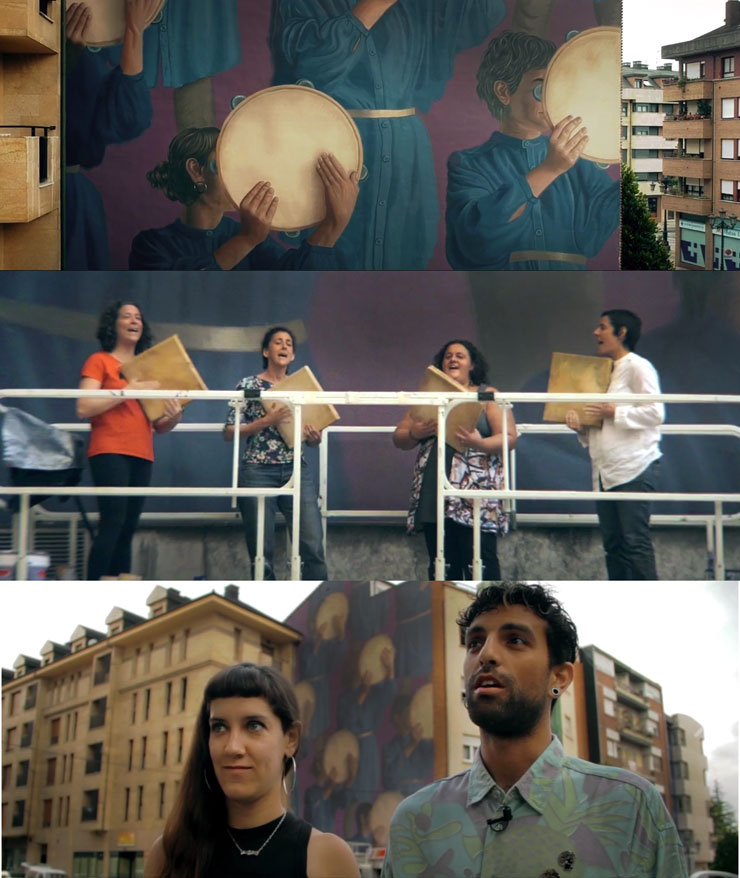
The Uruguayan Street Artists/muralist Florencia Durán and Camilo Nuñez are “Colectivo Licuado” and here in the middle of Oviedo in Northern Spain to create a new mural for the Parees fest this September. As is their practice they study the culture that they are visiting and create an allegory that is familiar to the community, if still rather mystical.

In this case they visit Colectivo Licuado & Nun Tamos Toes for a visit of great cultural exchange – sharing sketches, songs, and learning the history of women’s roles in traditional Asturian culture. The resulting mural project is collaborative in nature and powerful in person.

XAV. Parees Fest 2018

Spanish graffiti writer, mualist and tattoo artist XAV produces an idealized portrait of one of the most popular (and lavishly attired) pop singers during the 1980s, Tino Casal. Created during the Paree Festival in Spain this September.

Rock Blackblock. Parees Fest 2018

Andrea Ravo Matoni. Parees Fest 2018

Read more
Happy Thanksgiving 2018 from BSA

Happy Thanksgiving 2018 from BSA

A special wish to the BSA family from us on this Thanksgiving Day in New York.

Each of us has at least one reason to be thankful so we concentrate on that today.

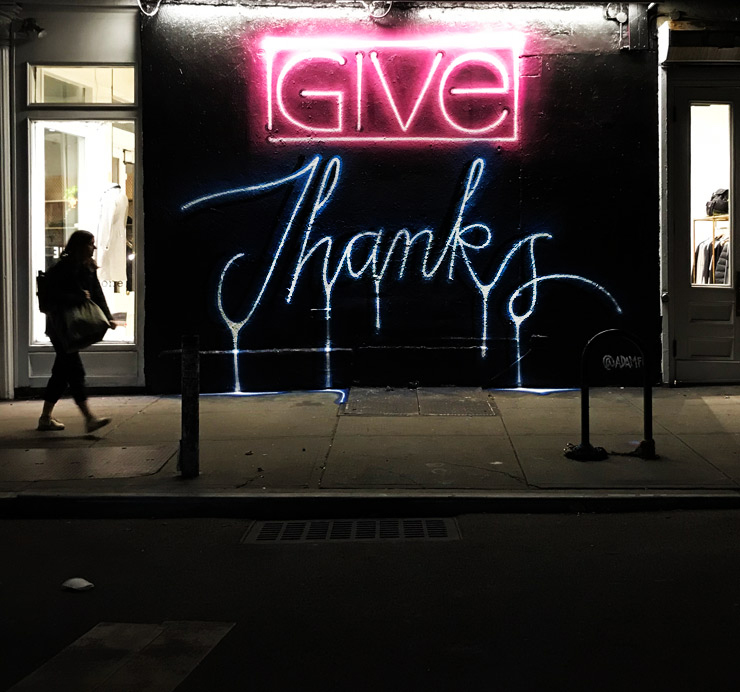
Adam Fu. Give Thanks (photo © Jaime Rojo)

We are thankful for your support and encouragement to do our work.

With gratitude we wish Happy Thanksgiving to you and yours.

Adam Fu. Give Thanks (photo © Jaime Rojo)

Read more
“Martha” the Movie: Selina Miles’ Most Ambitious Project To Date

“Martha” the Movie: Selina Miles’ Most Ambitious Project To Date

The Director Invites You to Participate in the New Documentary

The rising star film director who has captured and woven riveting narratives of artists and graffiti virtuosos like Melbourne’s Sofles and the ultimate train-jumping outlaws 1UP Crew from Berlin – verifiably raising their respective games and profiles in the process – Brisbane’s Selina Miles has been tackling a graffiti/Street Art juggernaut right before our eyes; a full scale movie-length documentary on famed New York photographer Martha Cooper.
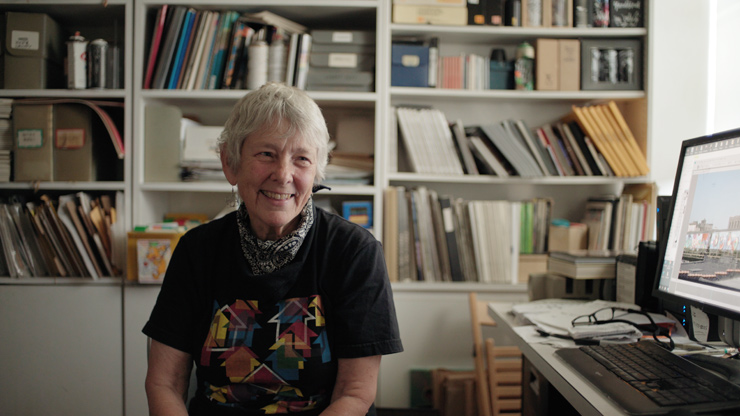
Martha Cooper (photo © Selina Miles)

We knew that these two talented and powerful personalities would compliment each other stunningly and that’s why we encouraged them two years ago to do a doc. A short term one was the original plan. But the two hit it off so well and when you are looking at a five decade career like Ms. Cooper’s and you have the dogged determination to do her story justice, Ms. Miles tells us that even an hour and a half film feels like its just getting started.

Now “Martha” the movie is at a unique juncture in the project and YOU may be able to participate; Selina and the team are looking for any original footage you may want to show them – and it may be used in the documentary.
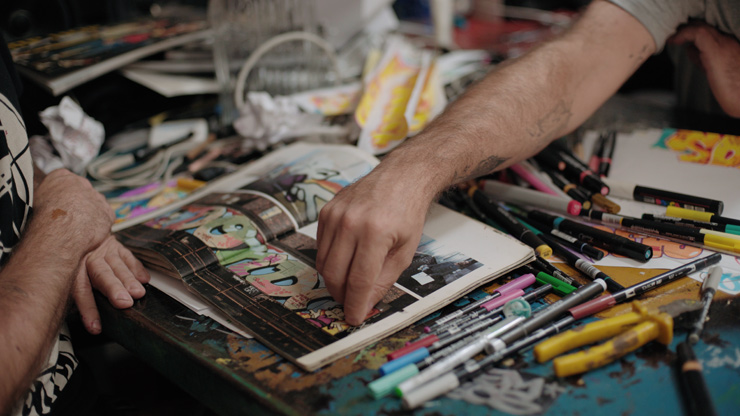
Martha Cooper. Subway Art (photo © Selina Miles)

We have an amazingly involved, interconnected, and brilliant audience of BSA readers across the time zones, so she’s asking you first. Please click this link and let Selina and Martha know if you might have something to show them.

Specifically right now the team  is looking for:

1.     Historical photos and video of artists interacting with “The Holy Book of Graffiti”, Subway Art, by Martha Cooper and Henry Chalfant, and

2.     Modern day footage of Martha Cooper going to any and all lengths to get the shot.

Read more at “Martha” the Movie and please contact them ASAP.


In an exclusive interview director Selina Miles today shares with Martha Cooper fans some unseen images from making the movie. She also gives insights into what it has been like making the biggest movie ever produced about the famed photographer.
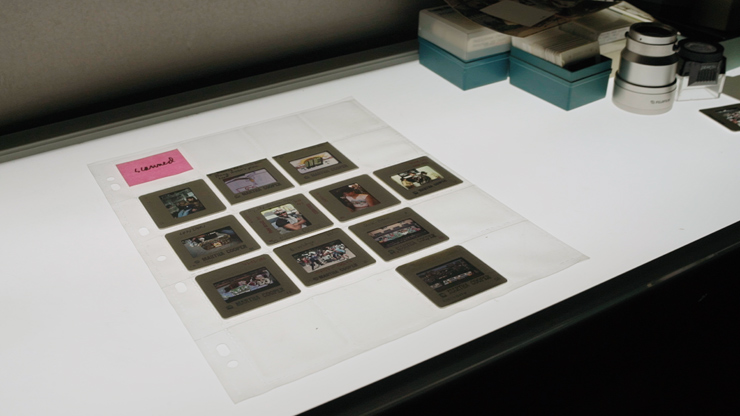
Martha Cooper. Archives. (photo © Selina Miles)

Brooklyn Street Art: What gave you the idea to do a documentary about Marty?
Selina Miles: As with most of us interested in graffiti, I knew of Marty’s book Subway Art from a young age. We first met at ONO’U Tahiti Graffiti Festival in 2014, and I was immediately taken with her approachable, passionate and vibrant character. In 2015, I had been working on a series called “Portrait of an Artist,” an anthology of 10 minute documentaries profiling artists, and a good friend asked me “Who’s next?.” Martha was an obvious choice.

We both returned to Tahiti the following year for the same festival. Seated around a dinner table with a group of artists, I casually asked “When do you think you’ll be in New York next?” she replied “I’m not sure, why?” I ended up asking her right on the spot if I could make a film about her, in front of the whole group. It felt very much like awkwardly asking out a prom date. Luckily she said yes.
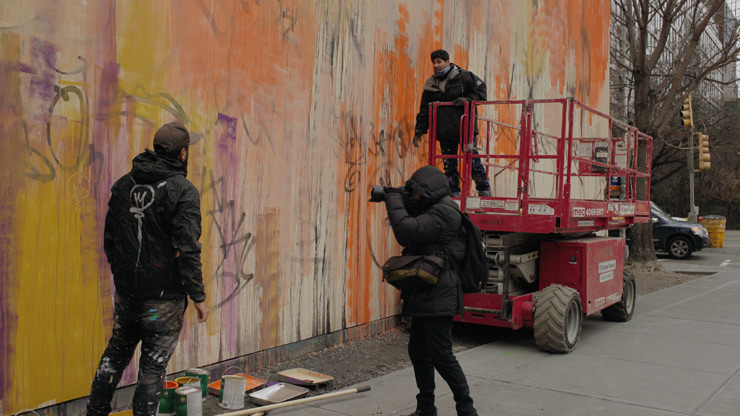
Martha Cooper at work at the Houston/Bowery Wall in NYC with Pichi & Avo. (photo © Selina Miles)

BSA: Is it true that at the start of the project you were thinking of doing a short film?
Selina Miles: The following February, I had just finished directing my biggest TV commercial yet, and wanted to the use bigger-than-usual pay check to do an ambitious project. I booked myself a 2 week trip to New York, as well as a ticket for Marcus Autelli, an amazing cinematographer from London. Our mission was a 10 minute piece.

Like so many fans of Martha’s work, I discovered her through the graffiti subculture. I did my best to research before the trip. I scoured Youtube and Vimeo for videos and interviews with Marty, flicked through Subway Art, pored over Street Play, re-watched Style Wars and thought I had done a pretty good job.
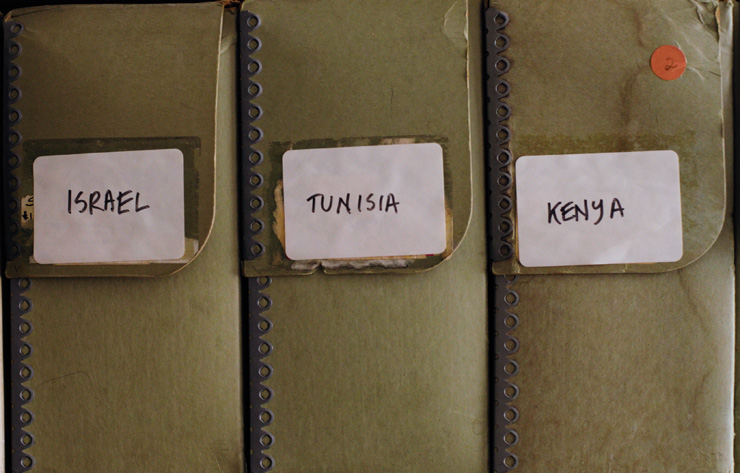
Martha Cooper. Archives. (photo © Selina Miles)

When I arrived in New York, Marty met me at her train station, and together we walked to her studio. She gave me a key and pointed me in the direction of her archives. Large folders lined the shelves. I still remember the first time reading those labels, hand-drawn in Marty’s signature authoritative, all-caps handwriting. “Windsurfing.” “Korea.” “Tunisia.” “Israel.” Each one full to the brim with boxes of Kodachrome mounted slides, stamped and dated.

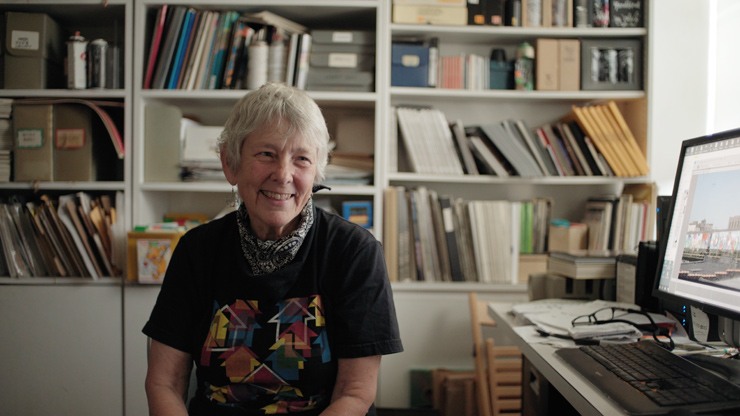
The first person Martha suggested I interview was her good friend Susan, who flew down from her home in Maine to speak to me. It wasn’t until a few days before the interview that I learned that “Marty’s friend Susan” was actually Susan Welchman, photo editor of the New York Post and of National Geographic Magazine for 35 years. I began to learn of Martha’s incredible, rich photographic career, too often obscured behind the monumental popular reverence for her graffiti work.
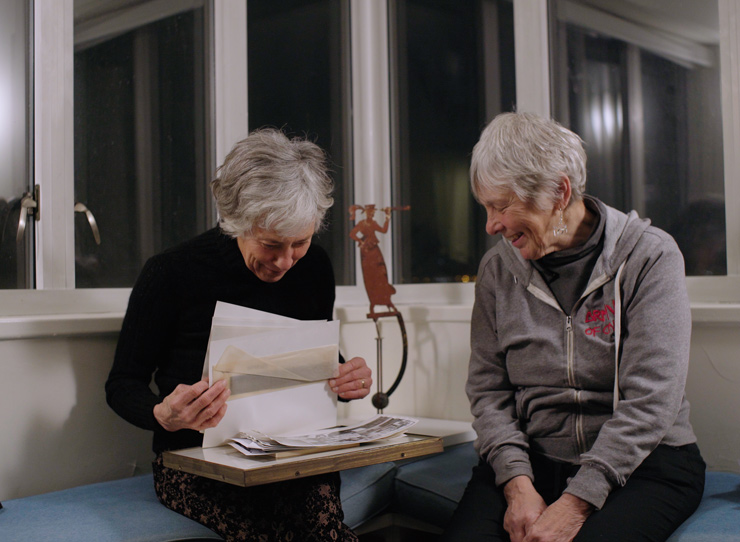
Martha Cooper with her longtime friend Susan Welchman, the former photo editor at The New York Post and Senior Picture Editor at National Geographic  (photo © Selina Miles)

I realized with a combination of terror and excitement that I was facing much more than a 10 minute graffiti video. That this was the story of a photographer who had shaped entire generations of a worldwide subculture. A woman whose camera had witnessed historical events from the 1960s until now, whose story was deeply entangled with that of New York City, whose work had touched so many lives across boundaries of time and place and culture. And most importantly, a story that was relatively unknown, absolutely begging to be told, and that Martha had put her faith in me to tell that story.

It was then that I realized that 10 minutes wasn’t going to cut it.
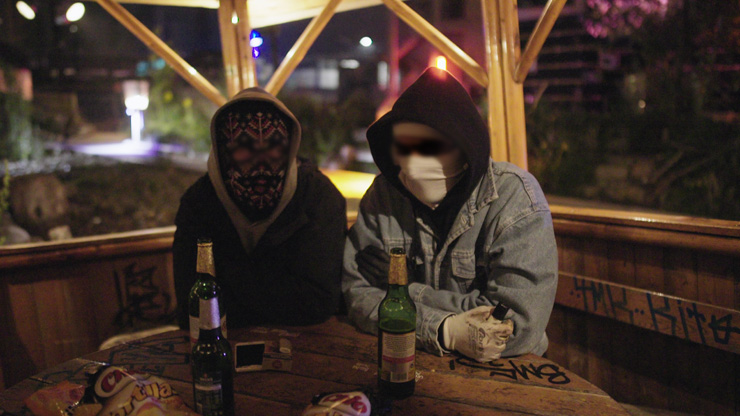
Martha Cooper. Graffiti Writers. (photo © Selina Miles)

BSA: Is there anything call “a typical day” when you are following Marty in her travels?
Selina Miles: There is never a boring moment when you’re with Martha. What she has can’t even be described as work ethic, because she doesn’t see photography as work. It is just who she is, and there is nothing else. She will go anywhere, any time, to any extreme to do the projects she wants to do.

That being said, there are certain consistencies in her days. Any time she is presented with a window of downtime of more than 3.5 seconds, she is playing Pokemon Go. When it comes to food, Marty frequents exactly 2 restaurants in New York, both 4 blocks or less from her apartment. In total she has about 4 dishes on rotation, supplemented on particularly busy days by Lunchables, ready-made snack packs of deli meats and Oreos.
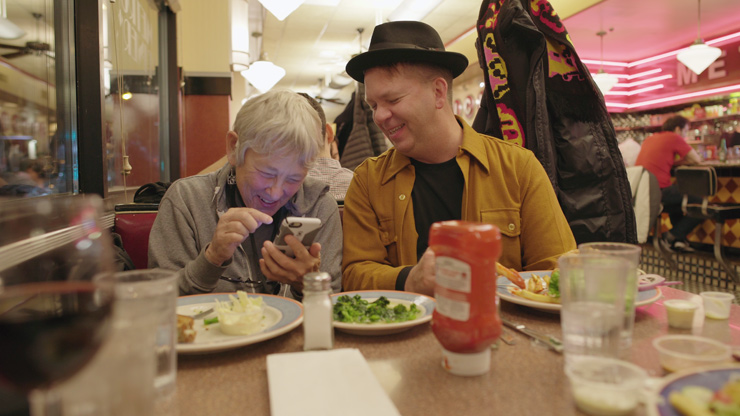
Martha Cooper. Pokemon fun with Steven P. Harrington at Metro Diner in NYC. (photo © Selina Miles)

It is well documented that many successful entrepreneurs and geniuses keep rigid routines or wear the same clothes every day as a way to save precious cognitive resources for what they really love to do. Marty is no exception. My best tip for anyone lucky enough to share a lunch with her – you have about 30 seconds to decide on your order before her patience runs out.

Marty’s life is chaos wrapped in deeply ingrained habit, on a bed of compulsive, obsessive collecting and photo-taking. An ideal combination for a documentary subject.
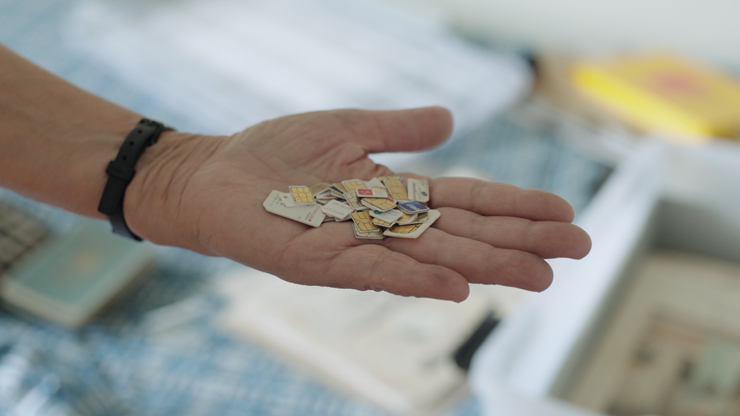
Martha Cooper. SIM cards from her international travels. (photo © Selina Miles)

BSA: You have unprecedented access like no one ever before to the archives of 50 years. It must to have felt overwhelming sometimes.
Selina Miles: Most of my career has focused on making short films where the objective is creating something out of nothing. This project is the opposite. The real challenge is to distill 50 years, 17 published books, hundreds of travel destinations and more than an estimated half a million images into a singular, watchable 90 minutes. In this case, making a good film is as much about what you choose to leave out as what you include.
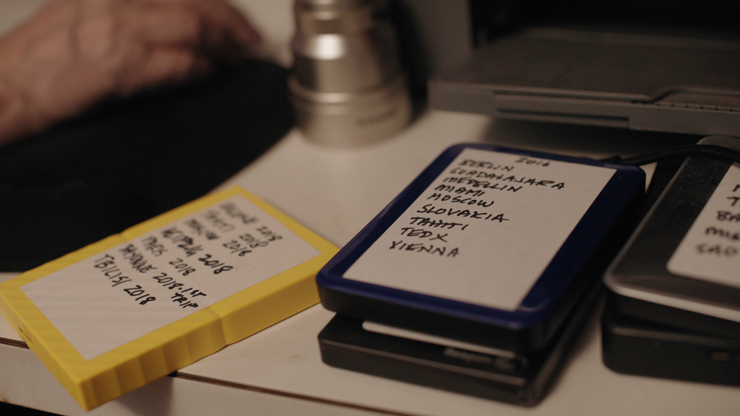
Martha Cooper. Archives. (photo © Selina Miles)

My team and I have collected archive from every major medium, from Super 8 film, to VHS, to DV tapes, to our own 4K video. We have searched high and low over the 19 months working on this project, and there hasn’t been a week that we don’t discover some essential snippet of the story. Friends and colleagues of Marty have sent in material from South Africa, Prague and Germany. Her ex husband’s basement held over 6000 feet of Super 8 home movies, unseen since the ‘80s.

This constant digging and discovery is anxiety inducing, chasing leads that never end, having nightmares of dusty tapes sitting in a basement somewhere that could unlock all the answers if only I could find them. On the flip side, the elation that comes when you find that perfect piece makes it all worth it.
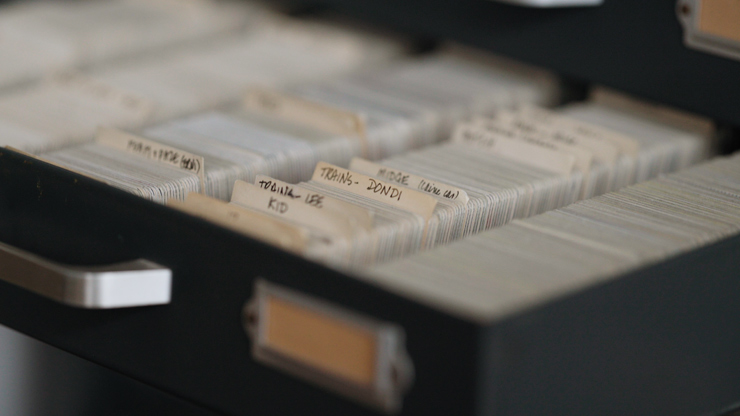
Martha Cooper. Archives. (photo © Selina Miles)

BSA: Were you able to speak to individuals whom you considered to be close to Martha personally or professionally?
Selina Miles: Out of every subject we approached, all but one agreed, the exception being a prominent anti-graffiti policymaker from New York City during the early ‘80s.

I interviewed in 6 cities and had material translated in 4 languages. I spoke to friends and family, peers, cultural commentators, graffiti writers. Each contributor was more varied and vibrant than the last. After the interview, when I would thank each contributor for their time, they would often respond with the same phrase, jumping out at me like a mantra – “Anything for Martha.” It became quite ridiculous how often I heard this exact phrase coming from everyone from kids at the skate park in Baltimore to curators at major New York museums. Access was not an issue on this project.

BSA: Can you share a special insight that you gained one day with her?
Selina Miles: I have been inspired in so many ways by this project, but I would say the most significant lessons I took away from the Marty Cooper approach to life would be to take risks, embrace failure, never grow up, and choose your own path in life. Although it takes place in very fantastical world full of weird and wonderful characters, Marty’s story is full of extremely universal, relatable human experiences, failures and triumphs. I hope that in watching the film, each viewer can find their own insights and take home lessons within her story.
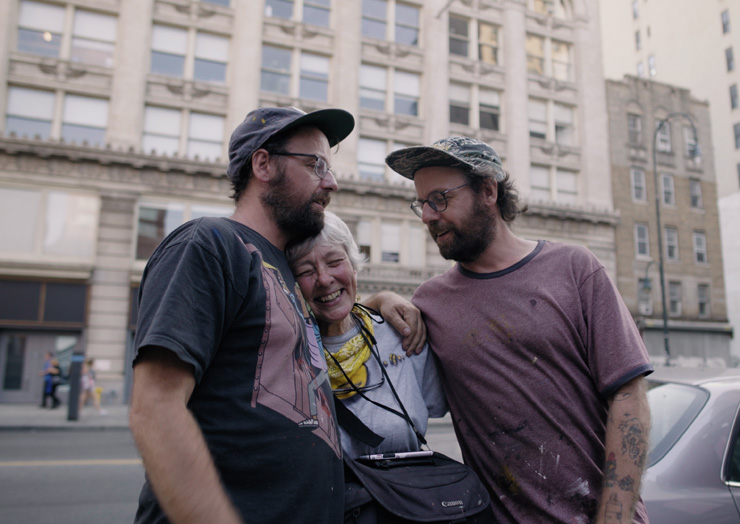
Martha Cooper with the Brazilian twins Os Gemeos. (photo © Selina Miles)

BSA: You live In Australia and Martha lives in Manhattan. How do you make a feature film documentary when you have to travel such long distances?
Selina Miles: Firstly I am very fortunate to have built a freelance career that allows me to work when and where I choose. I can definitely encourage anybody thinking of making that leap to go for it. Not having a boss that you need to ask for time off makes it much easier. Secondly, being Australian you get really used to working weird time zones and traveling long distances. Modern aviation is a wonderful thing! Get on a plane, fall asleep for 14 hours, wake up and you’re in a different country! How cool is that!
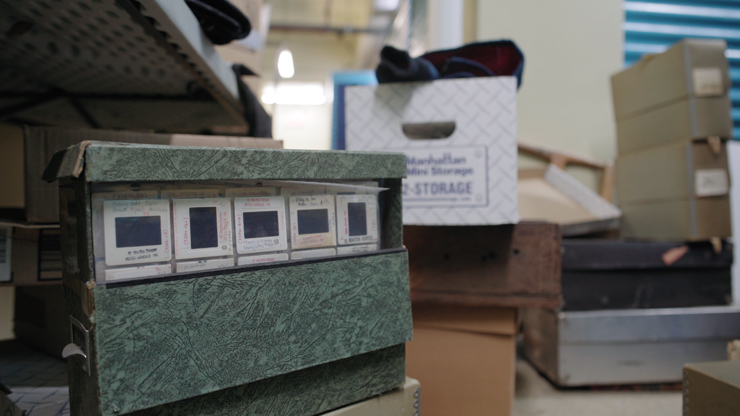
Martha Cooper. Archives. (photo © Selina Miles)

Our world is so connected now, and filmmaking has become infinitely easier than it was for previous generations. Martha Cooper traveled the world photographing for National Geographic before the days of digital photography. She would have to physically purchase, carry, store, develop and print the hundreds of thousands of exposures of film required for one story.

She constantly battled against the physical mass and cost of that medium. This made photography or filmmaking accessible only to those with a formal education and money. We don’t have any of those issues anymore, anyone can walk into a store and purchase a $500 camera and a hard drive and start a career as a photographer or a documentary filmmaker. This project has given me a greater appreciation for how easy we have it now, and for the skill that was required to shoot on film.
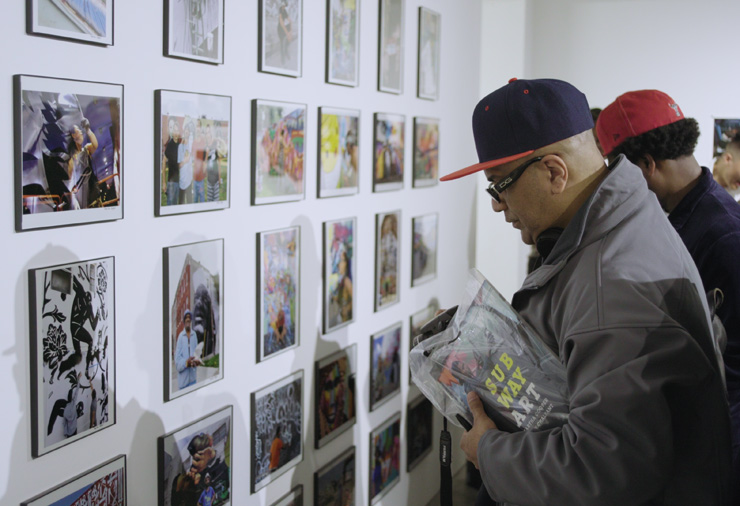
A Subway Art fan clutching his copy close while looking at some of Martha Cooper’s more recent Street Art photography. (photo © Selina Miles)

BSA: Martha was one of the first documentors of the graffiti scene. What will the audience learn about how Martha first found out that she wanted to document the graffiti movement?
Selina Miles: It is my firm belief that I cannot make a film that will do anything for the documentation of early graffiti that wasn’t done by Style Wars in 1983, but I hope that the graffiti community leaves this film feeling well represented, and with greater context of how Martha Cooper became the legend we regard today.

BSA: How can people help you complete your film?
Selina Miles: Right now we are wrapping up our last month of post production, and searchin over the last few weeks we have been able to dig for new archival material. If anybody out there has footage of Marty, no matter what quality or how big or small, please send it to me! It might be just the bit that I am missing.

Marty’s story is such an international one, it’s so great to receive clips showing her at work in different locations around the world. Every little bit helps really bring to life the incredible bond that is shared within the graffiti and street art communities.
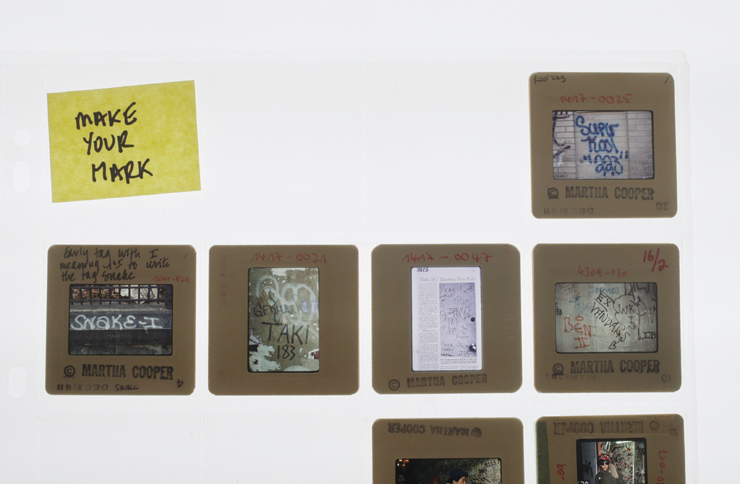
Martha Cooper. Archives. (photo © Selina Miles)

The slides of early tags were a selection for a chapter in Martha’s book “Hip Hop Files”.  “Make Your Mark” was a possible chapter heading she and the publisher eventually decided not to use. It comes from a 1982 anti-graffiti poster Koch put in the subways saying “Make your mark in society not on society.” It became a joke among graff writers, still remembered and quoted today.


Please click this link and let Selina and Martha know you might have something to show them.

Specifically right now the team  is looking for:

1.     Historical photos and video of artists interacting with “The Holy Book of Graffiti”, Subway Art, by Martha Cooper and Henry Chalfant, and

2.     Modern day footage of Martha Cooper going to any and all lengths to get the shot.

Read more at ” ‘Martha’ the Movie’ ” and please contact them ASAP.


www.marthathemovie.com

Instagram.com/marthathemovie

Facebook.com/marthathemovie

 

Read more
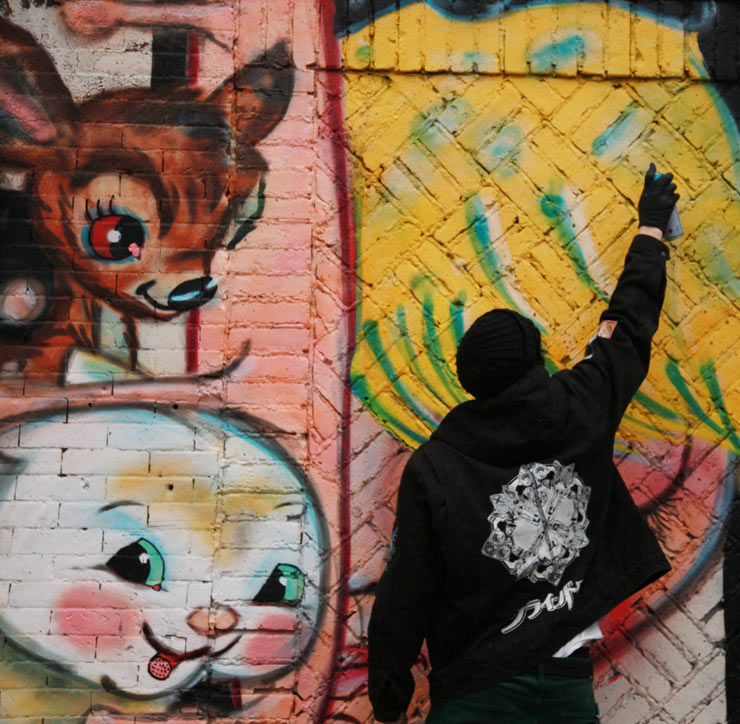
Lucky in New York

Lucky in New York

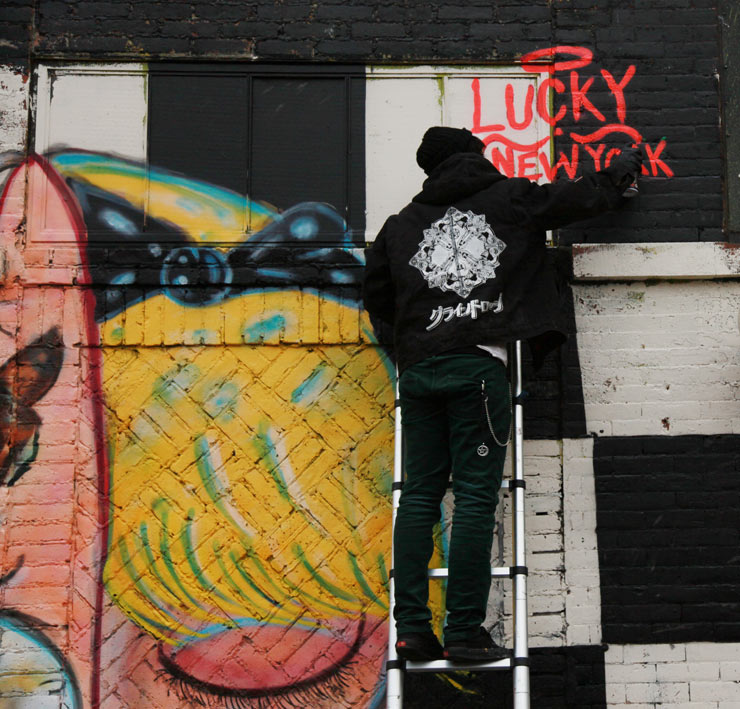
Back when we began this BSA journey we used to tell people we felt lucky to be in New York and to witness the birth of a new Street Art movement here and to walk the streets discovering people, fashion, architecture, and Street Art like Walt Whitman taking a walk through Leaves of Grass.

Happily we’re still saying it, with total conviction.

Lucky Rabbit (photo © Jaime Rojo)

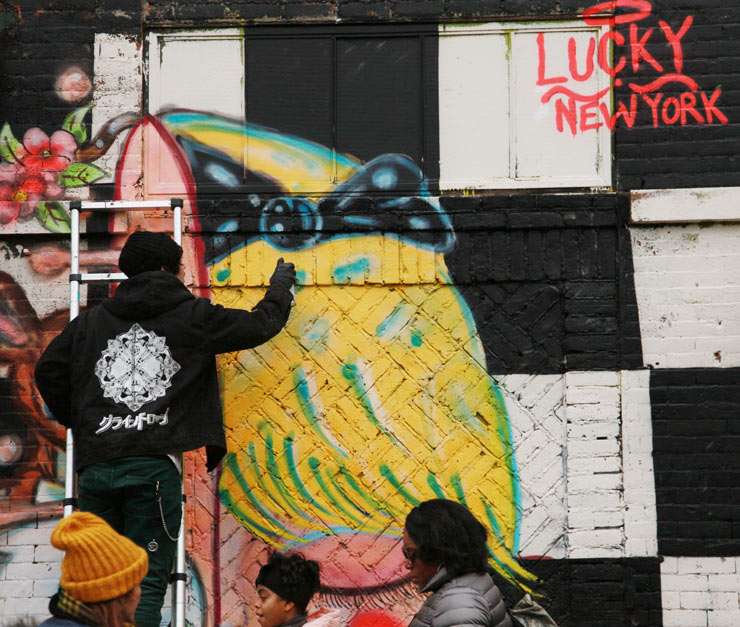
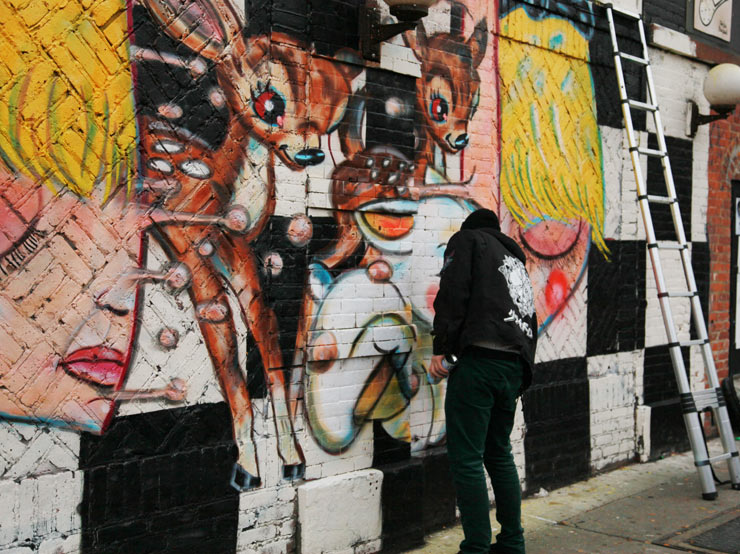
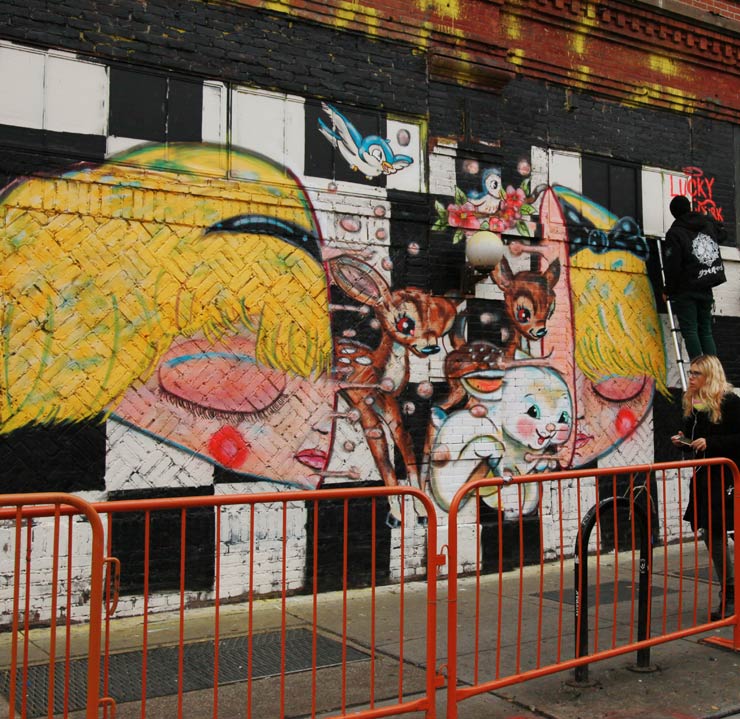
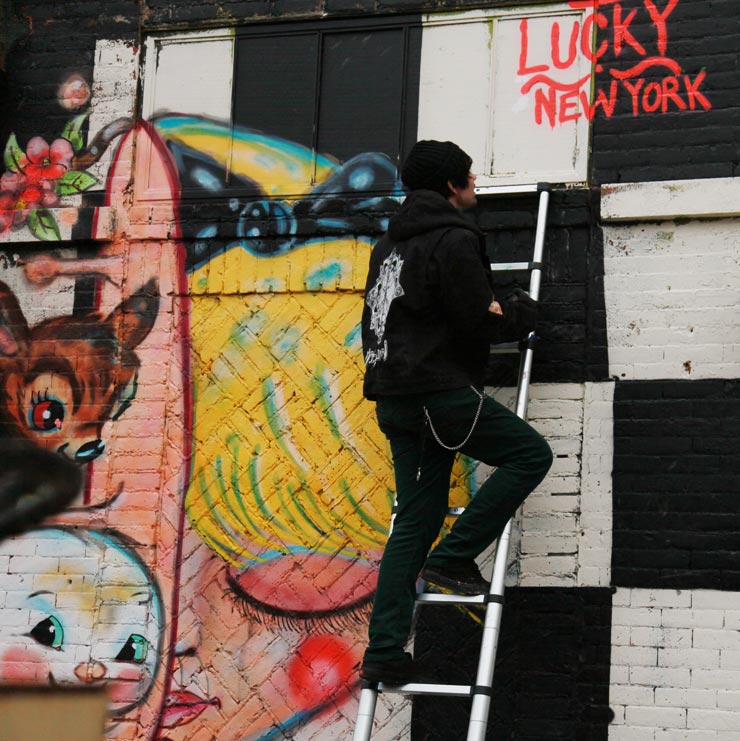
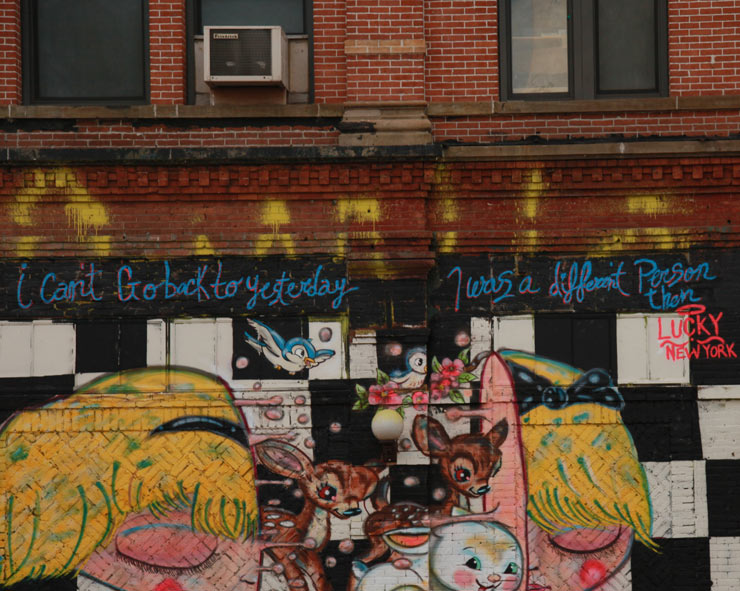
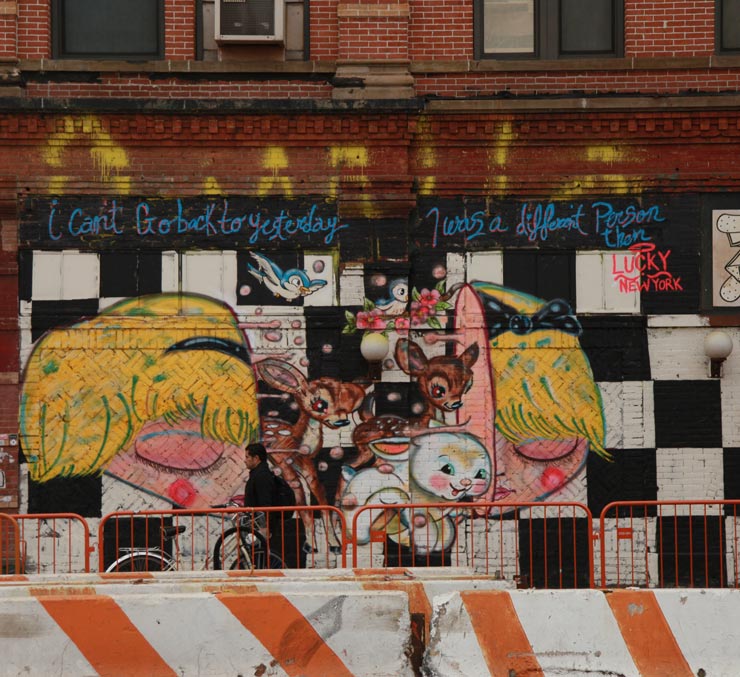
Serendipity happens again here as we discover a new painter, a new style of painting on the street. It recalls the illustrations on commercial greeting cards and children’s story books from the 1960s and 1970s perhaps; a blushing bashful blundering bushel of big-eyed bliss bisecting the blond head of a slumbering beauty. It’s all Bambi and Mary Poppins up in here.

Lucky Rabbit (photo © Jaime Rojo)

For the quote you have to go back to the 1860s and Alice’s Adventures in Wonderland by Lewis Carroll.

“I can’t go back to yesterday, because I was a different person then.”

Is their more that we need to know? The artist, maybe? No, they say never meet your heroes.

Getting back on the bike, we still feel lucky.

Lucky Rabbit (photo © Jaime Rojo)

Lucky Rabbit (photo © Jaime Rojo)

Lucky Rabbit (photo © Jaime Rojo)

Lucky Rabbit (photo © Jaime Rojo)

Lucky Rabbit (photo © Jaime Rojo)

Lucky Rabbit (photo © Jaime Rojo)

Lucky Rabbit. A day later the quote on top of the mural was buffed. (photo © Jaime Rojo)

Read more
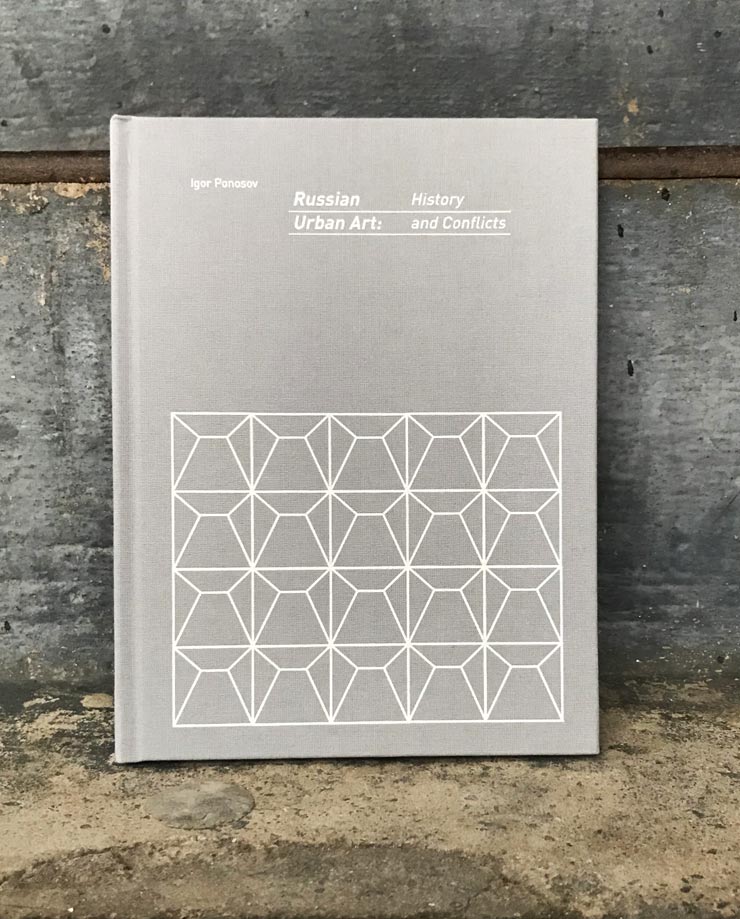
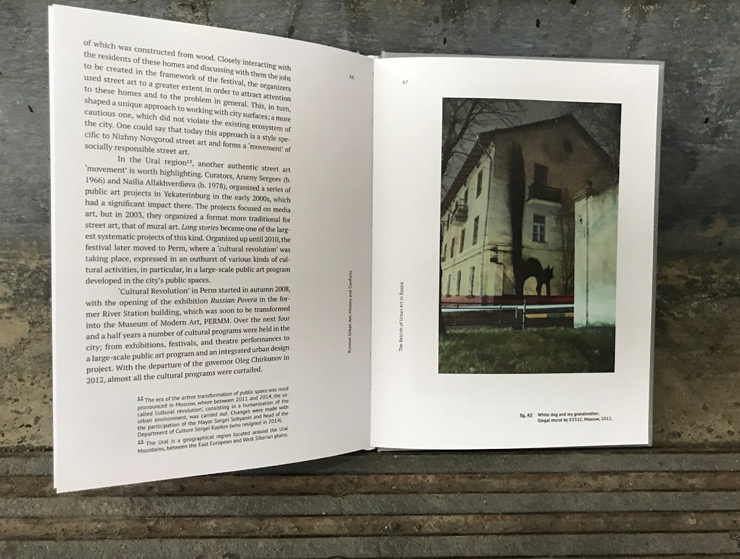
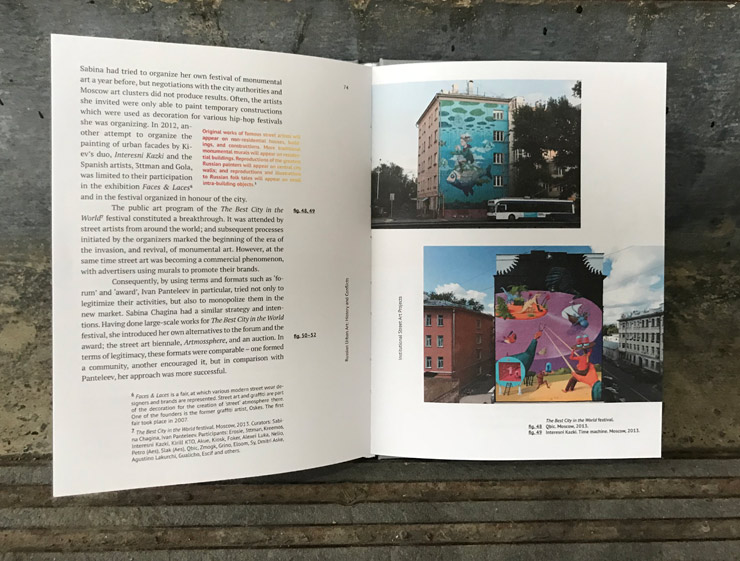
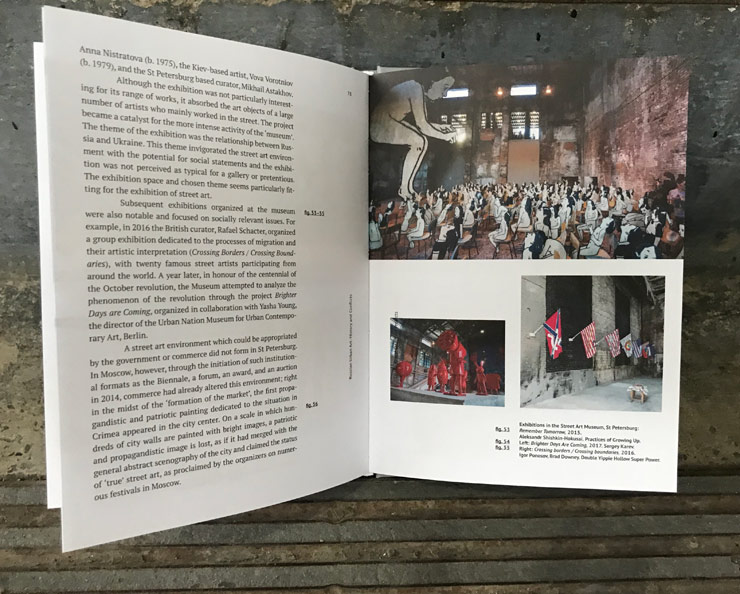
Igor Ponosov Enlightens with “Russian Urban Art: History and Conflicts”

Igor Ponosov Enlightens with “Russian Urban Art: History and Conflicts”

An academically sourced opinion-based essay in book form that looks to art, social, economic, and geopolitical movements during the start of the 20th century to better understand the evolution of Urban Art in post-Soviet Russia, Igor Ponosov delivers a welcome reconstruction of the timeline and movements that bring urban art to this day.

With the renewed interest in public art and muralism that has erupted over the last decade in many so-called Western cities it is good to learn how the public space in Russia has been catalyzed not-only by Hip Hop and new graffiti forms from Europe but also the history of Avant-garde art movements and Soviet Muralism in Russian Urban Art: History and Conflicts.

With a thorough yet brief recap of a dozen decades of art/social movements, Ponosov illustrates that it is a slowly but widely fluctuating wave of events and sentiments and social-political upheaval that brings art to the street over a century; during times of relative liberalism in artistic freedom during the Tsarists one century ago contrasted a short time later with abolishment of political expression of the Stalinist era that heralded state power and monumentalism, suprematists, and propagandizing the public. Interestingly it’s the constructivist and the realism aesthetics that are currently being repurposed for much of the colorful commercial and state-funded muralism that is happening today on massive Moscow and St. Petersburg walls, and Ponosov helps to illustrate, if not disentangle, the movements that co-evolve over the previous century.

It may prove fascinating to graffiti writers and Street Artists to learn the trajectory and timing of the arrival of Hip Hop culture in the USSR and how it proved itself an enthusiastic student to what was originally an organically occurring series of artistic practices within a mix of communities. The “expansion of Western culture” into post Soviet Russia, as he describes it, occurs a decade (or more) after the original birth of hip hop, yet the importation retains many of the same art practices and ethos during the cultural translation.

The evolution of Street Art on the scene may have been quicker due to immediate digital communications and because of the new practices having similarity to pre-existing mural and fine art practices in Russian cultural history as well as global graffiti ‘jams’. Similarly, the rise in international ‘street art’ festivals looks like it has influenced events here as well as the co-opting/ cultivating of non-political eye-candy murals for commercial and gentrification goals.

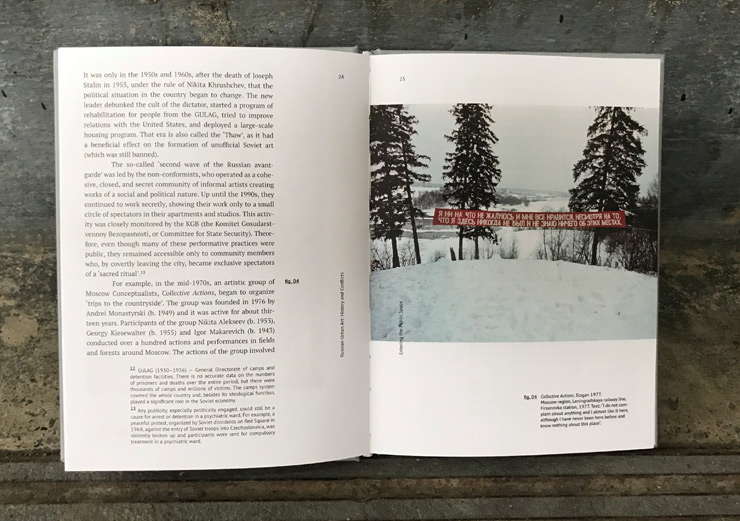
It’s enlightening to learn about the rise of something called ‘Actioning’ that recalls the Situationists, and urban performance as part of the thawing post Cold War Glasnost approach to public space. Equally riveting are Posonov’s observations and interest in the more modern, less flashy conceptual street practices and the diverse nature of expressions that defy classification in typical Street Art terms that he describes as a “Partizaning” – a phenomenon of socially engaged street art.

“The tactics and numerous actions of the activists of the Partizaning movement, organized over the course of several years, reflects the ideals of collectivism, metal assistance and responsibility,” he writes of a practice that defies the commonly held assumptions of Urban Art as being antisocial and purely vandalism. “They are intended to restore citizens’ faith that global changes are possible even when working on a local level – be it a staircase, a yard or a neighborhood – through the discourse of urban planning.”

Densely compiled, amply illustrated, and providing an endless series of sparks for future fires, Mr. Posonov makes the discussion open and easy to access, adroitly staying free of corrupting jargon or self-important Art-speak that proves empty. Consider it a concise, reliable eye-opening primer that you can reference into the future to appreciate the evolution of Urban Art in Russia.

Igor Ponosov. Russian Urban Art: History And Conflicts. Moscow 2018. Published in collaboration with Street Art Museum, St Petersburg, Russia.

Read more
BSA Images Of The Week: 11.18.18

BSA Images Of The Week: 11.18.18

BSA-Images-Week-Jan2015

Kobra is rumored to have left New York this week, 18 murals later, a survey of pop cultural icons known to postcard buyers in the city for years – all in technicolor and in very large scale.  In a story with many layers of irony, a skatewear brand got reprimanded by a Sacsix, a New York street artist, for postering over his wheatpaste.  And Street Artist Ron English bought a street Banksy this week at auction and announced to the press that it was part of his strategy to discourage people from taking illegal art off the streets.

Meanwhile new stuff is popping off in Ridgewood, Queens, where some of the stuff below is from, proving that the scene is still incredibly relevant to artists and fans alike.

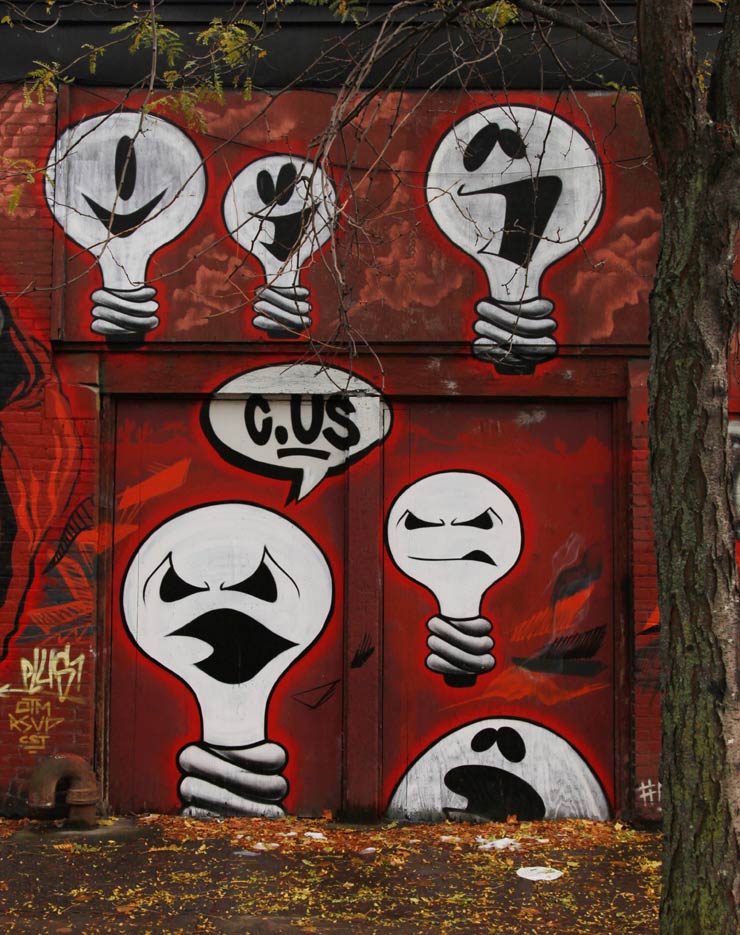
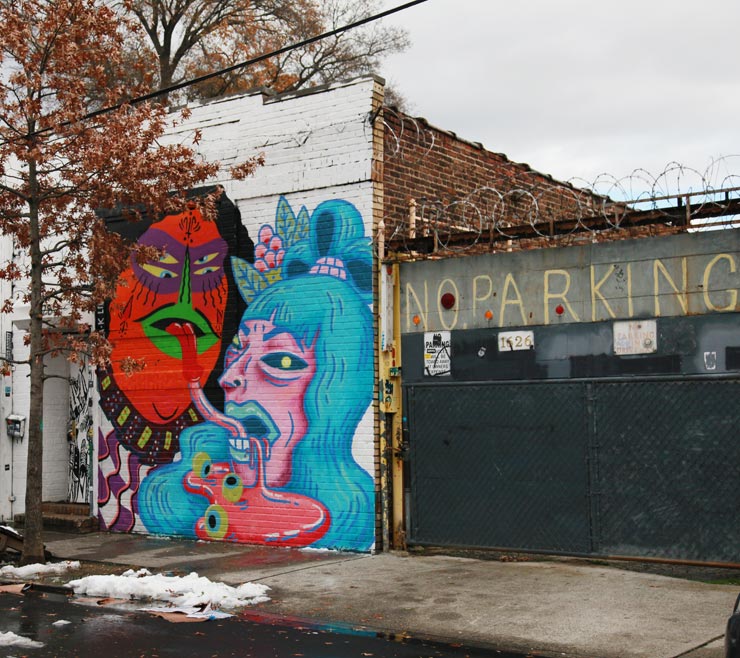
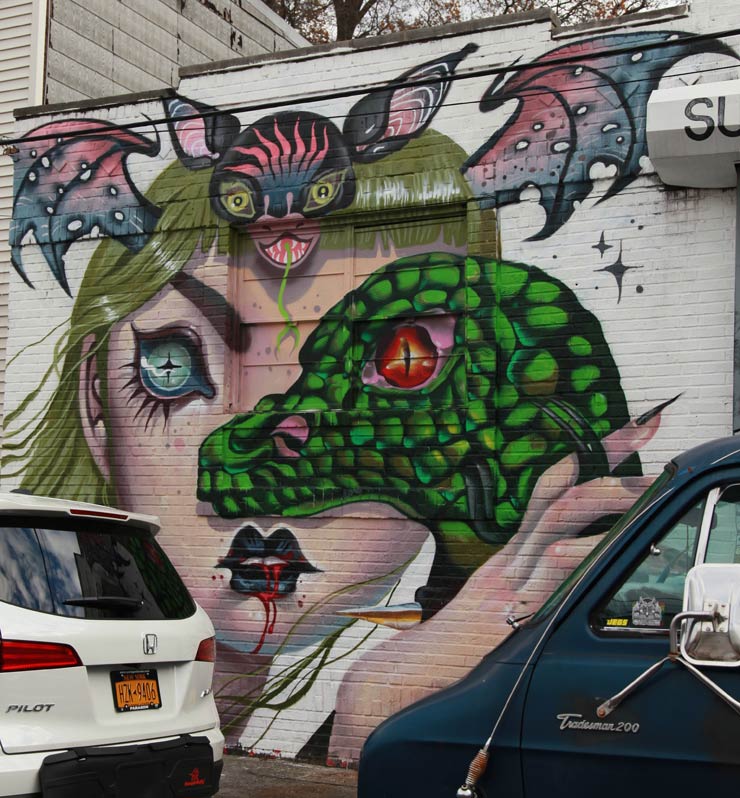
So here is our weekly interview with the streets, this week featuring Boy Kong, Chris RWK, City Kitty, Chance Paperboy, Damien Mitchell, Jaye Moon, Kashink, Kirza, K Liu Long, MeresOne, Myth, Raf Urban, Rx Skulls, Square, Squid Licker, Gane, Texas and Zimad.

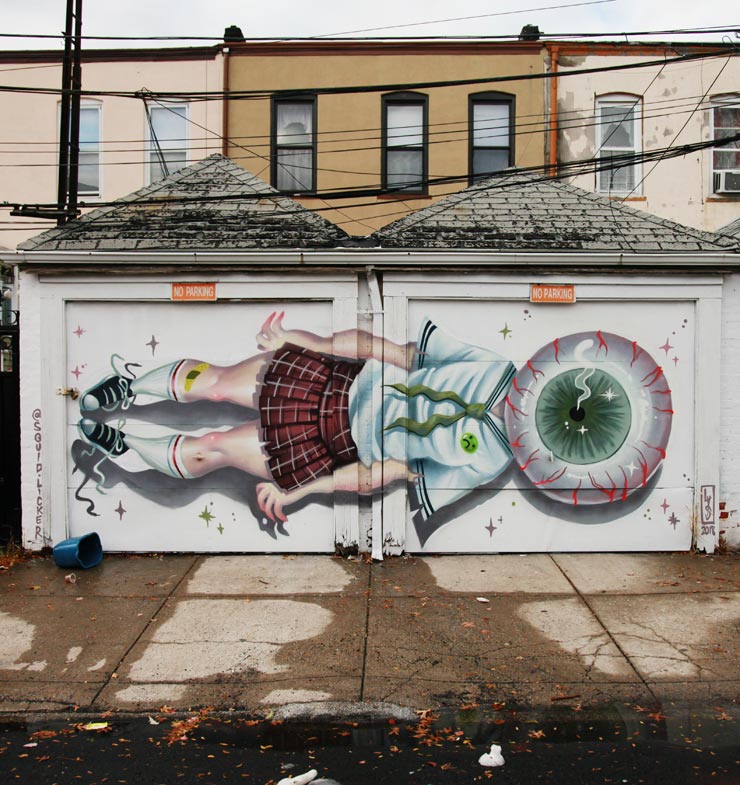
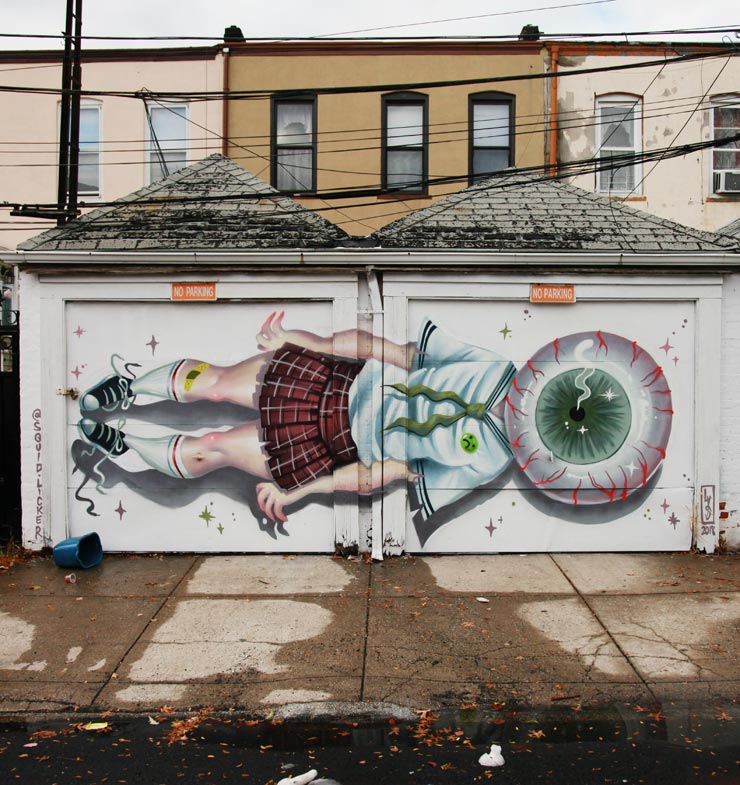
Top Image: Squid Licker for Superchief Gallery. (photo © Jaime Rojo)

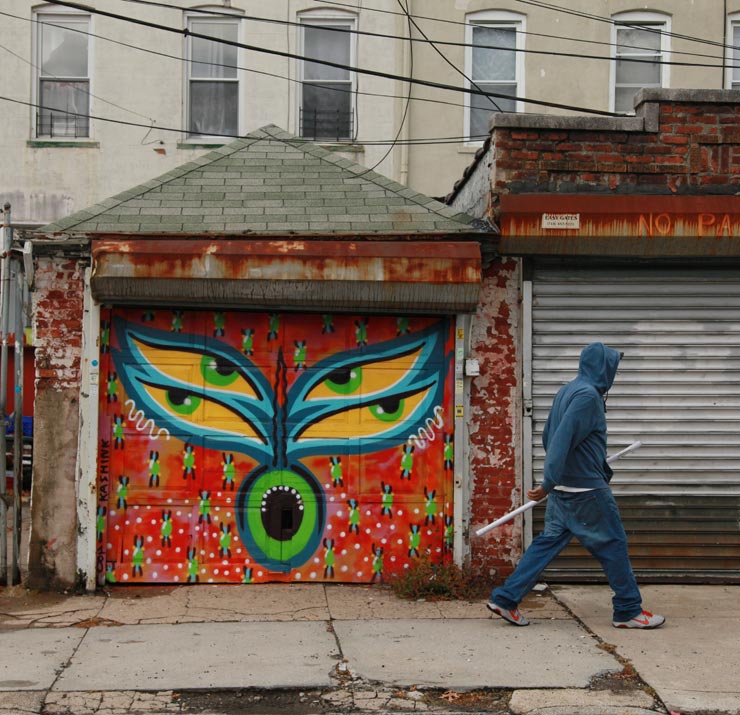
Kashink for Superchief Gallery. (photo © Jaime Rojo)


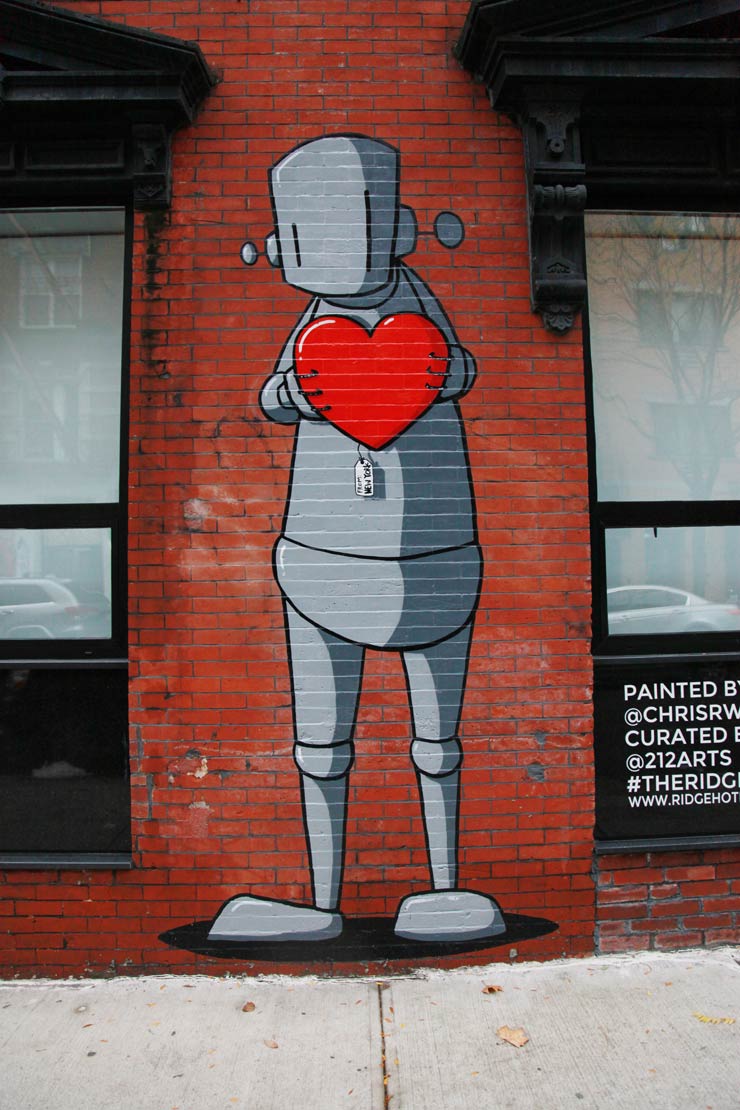
Chris RWK for 212 Arts. (photo © Jaime Rojo)

Jaye Moon (photo © Jaime Rojo)

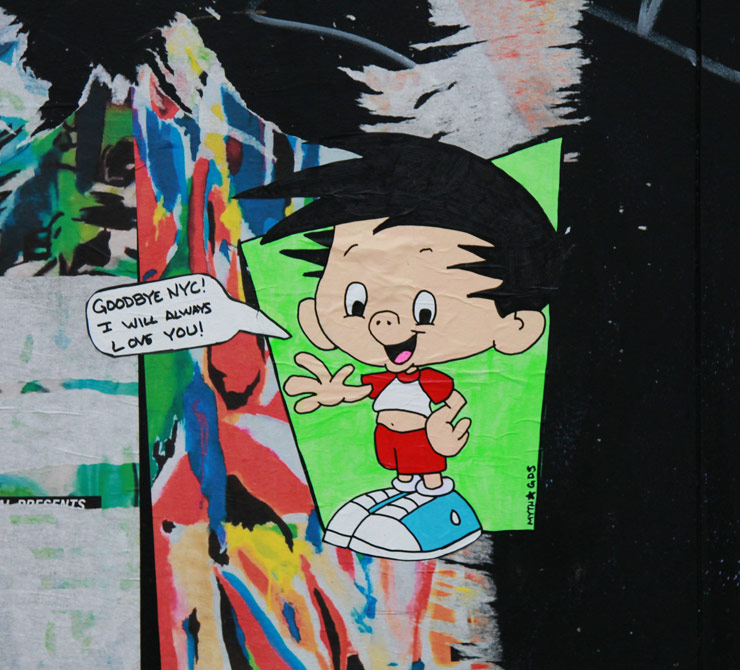
It looks like Myth is bolting out from NYC…So long pal. We’ll miss you but BSA will always love you:-) (photo © Jaime Rojo)

MeresOne (photo © Jaime Rojo)

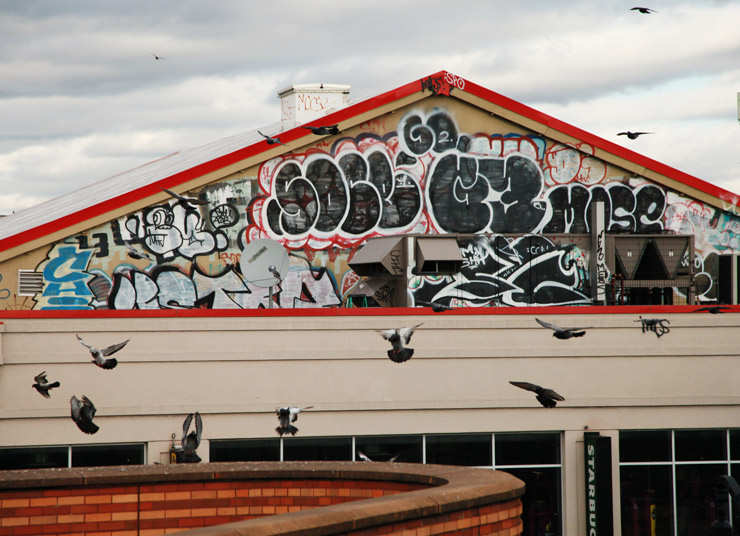
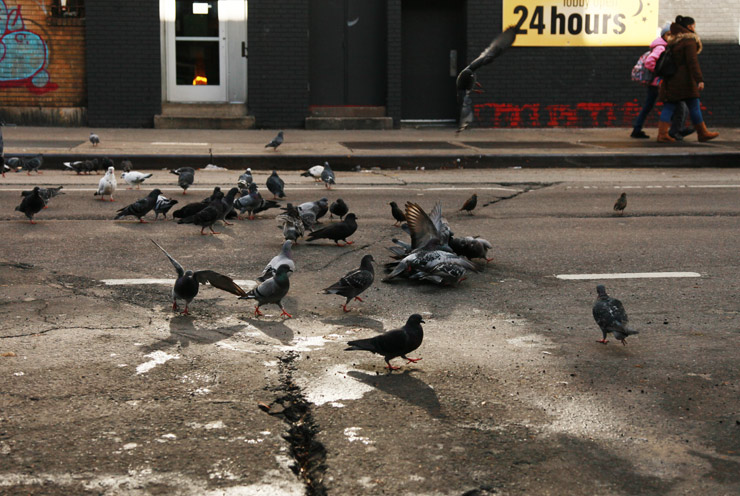
Writers with pigeons… (photo © Jaime Rojo)

Kashink . Boy Kong . K Liu Long. Superchief Gallery. (photo © Jaime Rojo)

Gane . Texas (photo © Jaime Rojo)

Since JR completed his collaboration with Time magazine on the Houston/Bowery Wall there have been two mass shootings with multiple fatalities in the USA. And by the way the shooters were not immigrants, asylum seekers or refugees. They both were white male, American citizens. (photo © Jaime Rojo)

JR . Time magazine and an anonymous artist updates the wall to reflect the number of fatalities from the new mass shooting in the USA… (photo © Jaime Rojo)

Raf Urban with a message of hope. (photo © Jaime Rojo)

Zimad gives Edgar Allen Poe some love and The Raven… (photo © Jaime Rojo)

Square (photo © Jaime Rojo)

Unidentified artist (photo © Jaime Rojo)

Squid Licker . Boy Kong for Superchief Gallery. (photo © Jaime Rojo)

Unidentified artist (photo © Jaime Rojo)

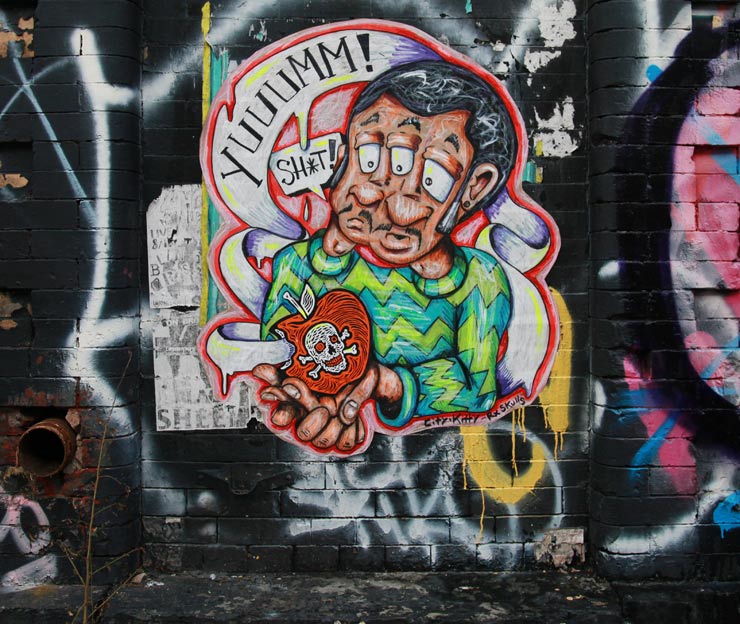
City Kitty . Rx Skulls (photo © Jaime Rojo)

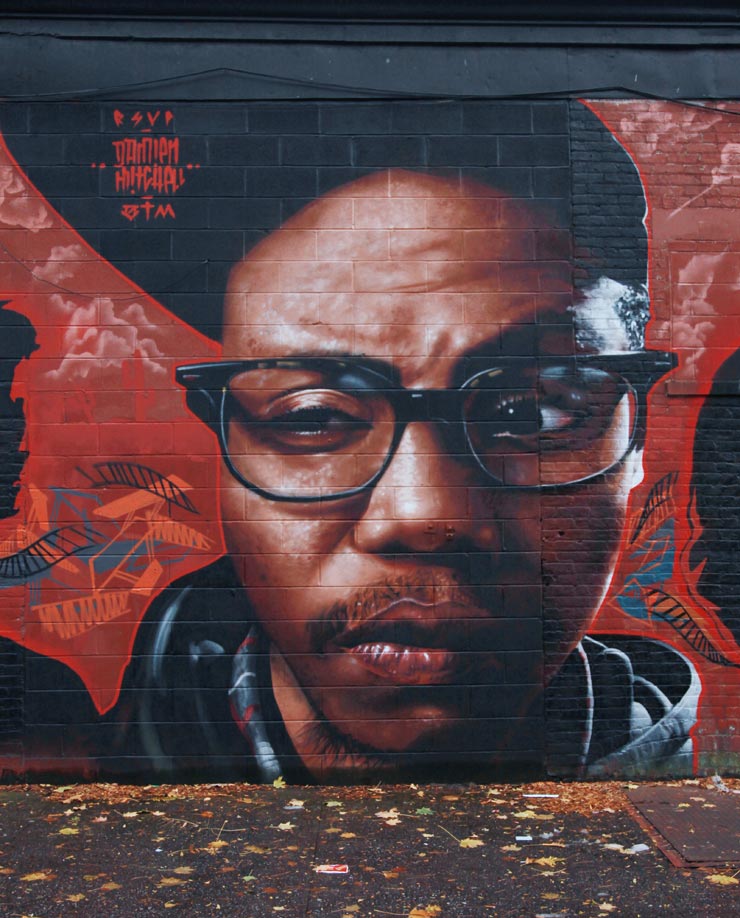
Damien Mitchell paints Chance Paperboy. (photo © Jaime Rojo)

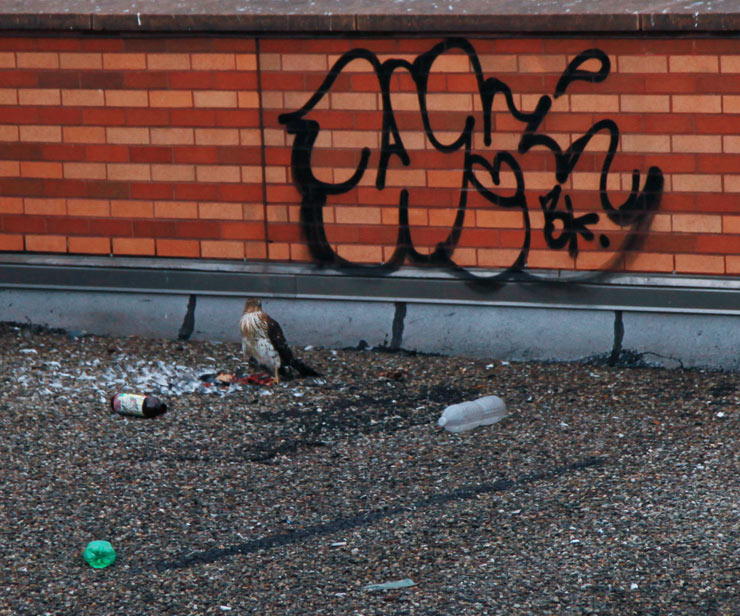
Falcon with tag on a rooftop in NYC. (photo © Jaime Rojo)

Untitled. Brooklyn, NY. November 2018. (photo © Jaime Rojo)


Read more
Panmela Castro: “Doriridade” and the Sisterhood of Shared Pain in Rio

Panmela Castro: “Doriridade” and the Sisterhood of Shared Pain in Rio

“I am not free while any woman is unfree, even when her shackles are very different from my own.”

― Audre Lorde


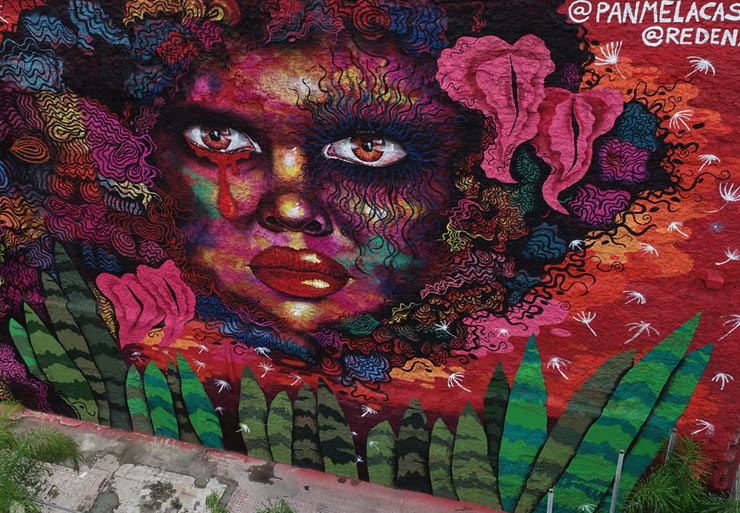
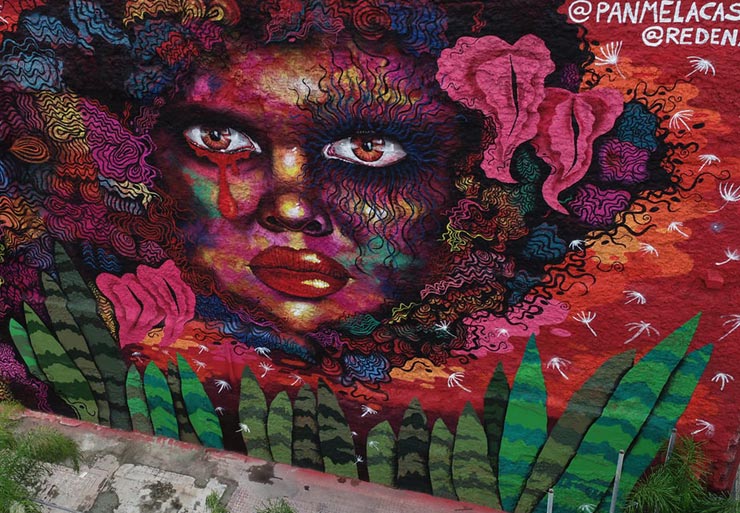
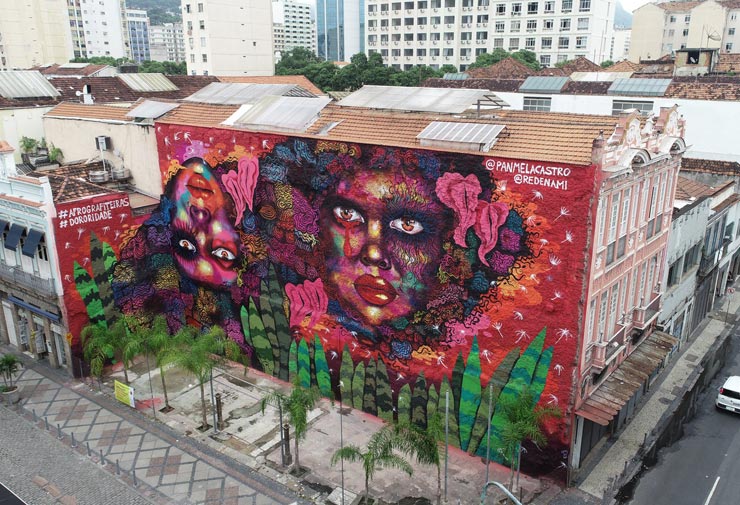
Panmela Castro. Dororidade” (Painrity) Rio De Janeiro, Brazil. November 2018 (photo © Panmela Castro)

Brazilian Street Artist Panmela Castro is unveiling her new three story high mural in Rio de Janeiro that acknowledges the sisterhood that comes from shared pain. She calls it “Dororidade” and tells BSA that it explains the relationship of affection and solidarity between women who have bonded through experiences of anguish and misery.

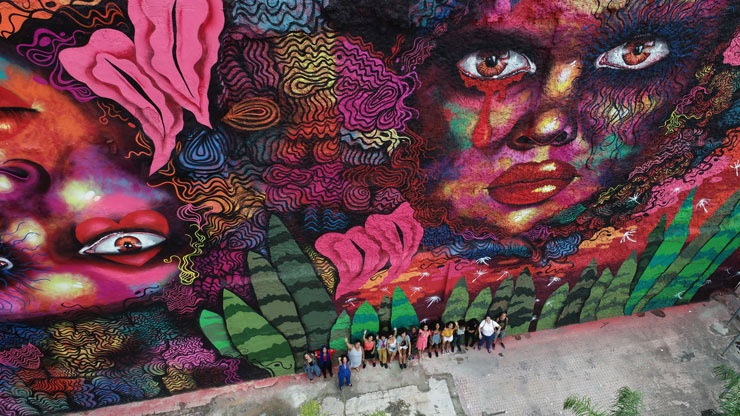
Panmela Castro. Dororidade” (Painrity) Rio De Janeiro, Brazil. November 2018 (photo © Panmela Castro)

“It creates an image of two black women joined by their hair, sisters of shared minds, ideas, experiences,” says the artist, who has painted murals advocating for women’s rights, power, and showcased beauty in more than 30 cities around the world. In addition to overt violence, Castro says that this mural is addressing, “The pain that hurts when being attacked by machismo and the pain that hurts when being attacked by racism.”

The mural will be launched on November 20th, Black Consciousness Day, in Rio de Janeiro, with a big party from 4 to 8 pm.

Panmela Castro. Dororidade” (Painrity) Rio De Janeiro, Brazil. November 2018 (photo © Panmela Castro)

Read more

BSA Film Friday: 11.16.18

D*Face / AGAINST THE WALL / MOVEMBER FOUNDATION

Suicide is the biggest killer of men under the age of 44. In this short film, street artist D*Face discusses his own issues with isolation and loneliness and explains why he has joined forces with leading men’s health organisation, the Movember Foundation, to raise awareness about men’s mental health. D*Face and eight other famous faces from the street art world have created agenda-setting pieces aimed at opening conversations about mental health and suicide prevention. The bold works, including pieces by Shepard Fairey, Jonathan Yeo and Conor Harrington, will go on view at Sotheby’s London (16–20 November) ahead of our upcoming sale Contemporary Curated (20 November | London). Proceeds from the sale of these works will benefit Movember’s groundbreaking mental health programmes.


Bill Posters: “La Ley Mordaza Me Obliga” / “The Gag Law Made Me Do It”

Amore “Lucky Russian”


Franchise Freedom by Studio Drift at Burning Man 2018


Read more
Leon Keer Goes Beyond Anamorphic and Into Augmented Reality

Leon Keer Goes Beyond Anamorphic and Into Augmented Reality

Street Artists continue to embrace new technologies as we race toward our own version of Huxley’s Brave New World. Personally, we’re still looking forward to the sleep-learning.

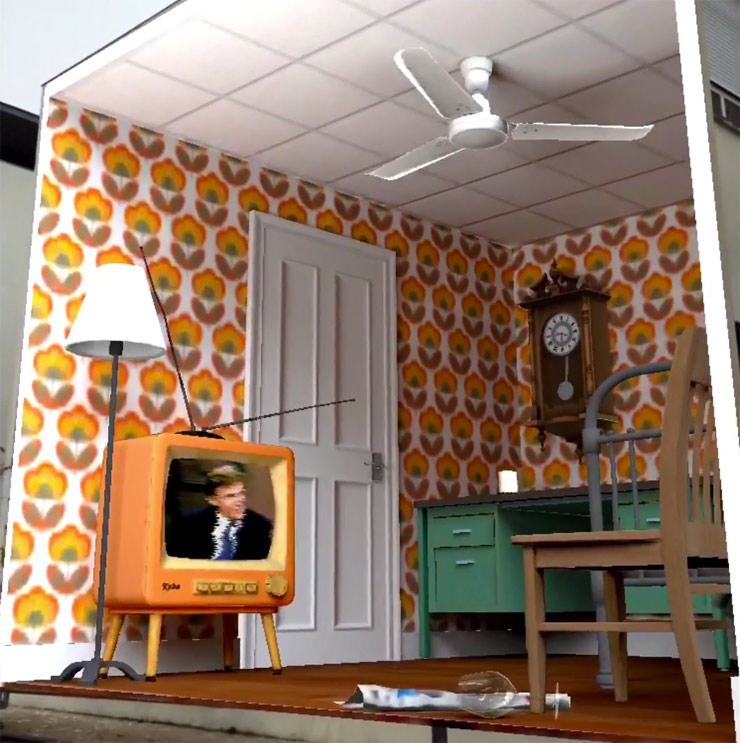
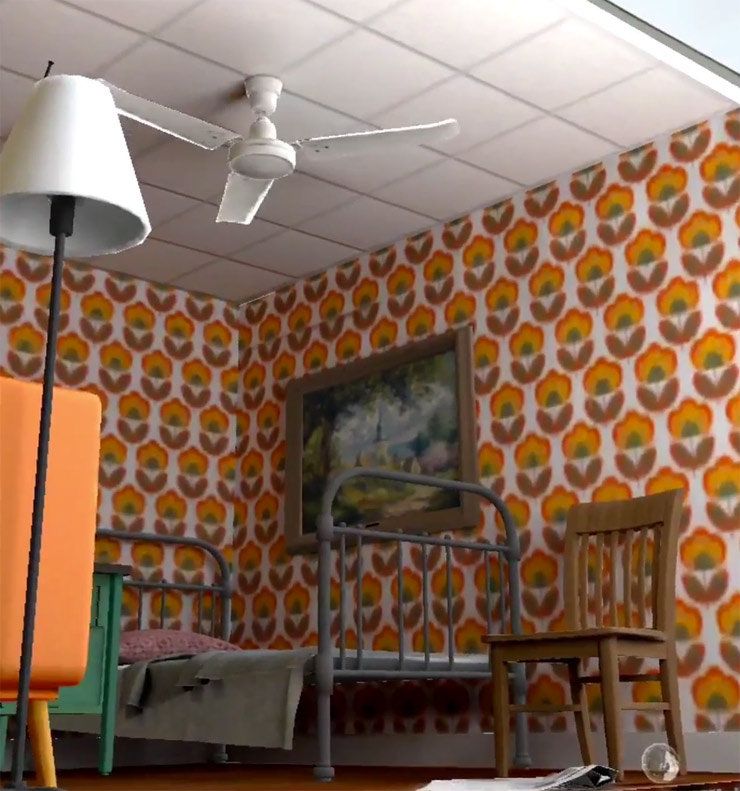
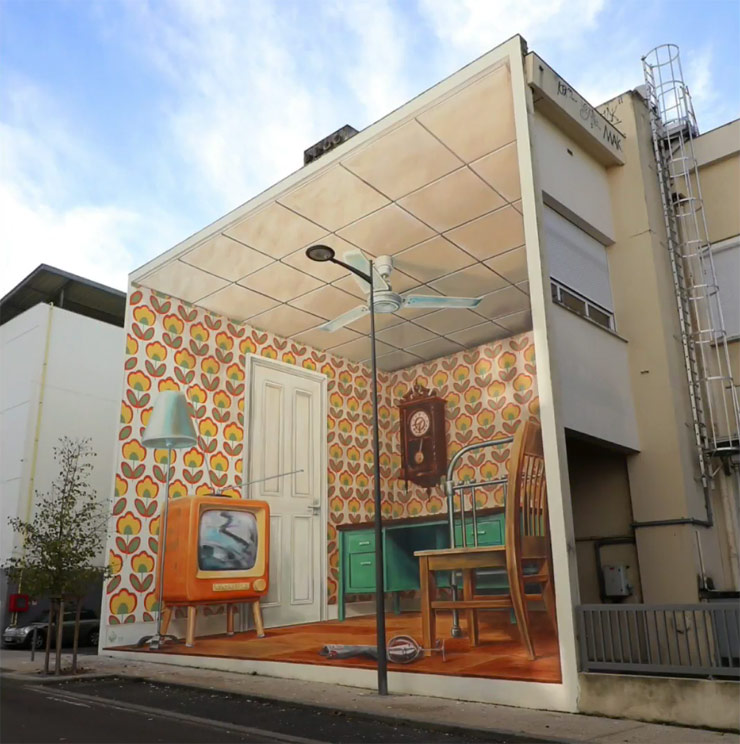
Leon Keer & Massina. “Once Upon A Time” Created for Vibrations Urbaines Festival in Pessac, France. (still from the video)

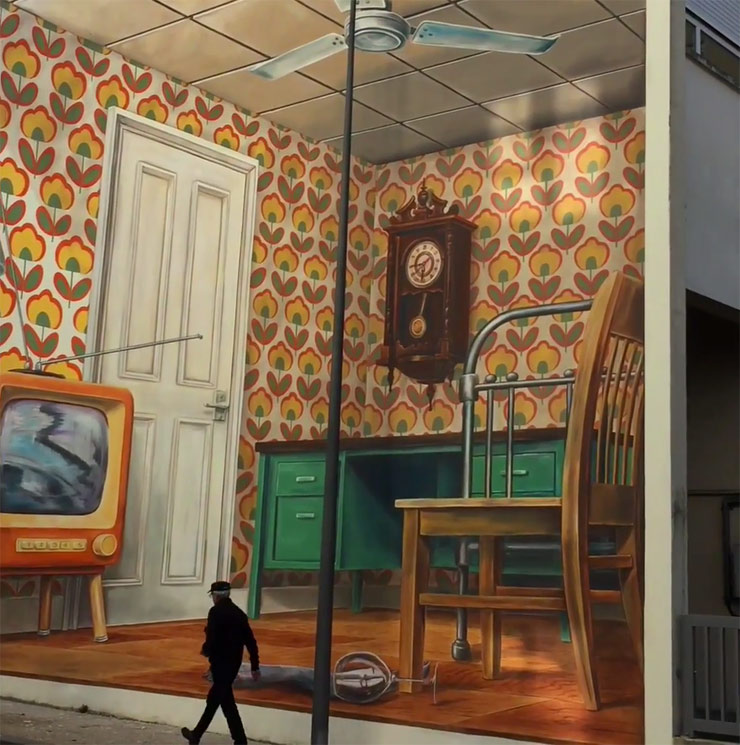
Anamorphic artist Leon Keer suggest you download his app on your phone before walking past his new mural created with Massina using Augmented Reality (AR) in Pessac, France. Otherwise the large piece on the side of an apartment complex will just look like an oversized den.

It’s not the first piece he’s done with AR of course, and we have seen a number of works in public space activated within phones and tablets, but Keer is excited because this one is viewable on his newly released APP, title appropriately Leon Keer.

Leon Keer & Massina. “Once Upon A Time” Created for Vibrations Urbaines Festival in Pessac, France. (still from the video)

The AR feature is created by Netherlands-based Joost Spek, a 3D Art Director for 3Dpicnic. They’ve worked collaboratively previously and you can expect more from this duo in the future. To get the full effect of “Once Upon a Time”, check out the installation in AR on the video below.

Leon Keer & Massina. “Once Upon A Time” Created for Vibrations Urbaines Festival in Pessac, France. (still from the video)

Leon Keer & Massina. “Once Upon A Time” Created for Vibrations Urbaines Festival in Pessac, France. (still from the video)


Read more
Invader: “Invasion Los Angeles” Book and “Into the White Cube” Exhibition

Invader: “Invasion Los Angeles” Book and “Into the White Cube” Exhibition

One thing that some Street Artists do when their work enters the white cube is drop the “street” from their official moniker, instead preferring to be known simply as an “artist”. The decision is possibly to rid themselves of any subtle class distinctions or otherwise negative connotations that a potential collector or curator may have with the “street artist” label.

Other artists formerly known as “Street Artists” feel limited by the title because it doesn’t include all of their new interests and their complete practice – or because the term itself has evolved in their mind and the mind of the public to mean something unfavorable that they do not like to be associated with.

When it comes to the internationally renowned Street Artist Invader, its not a consideration – the street is in his DNA. His cryptic tile-made street practice is so proliferate across the world and so much a part of the metropolis like in his hometown of Paris that his art is literally and psychically fused with the city.

The dude even has a global app that helps fans in about 80 cities to track and document his works, and some of the most dedicated have clocked thousands themselves. Now with two decades in the game and nearing age 40, the maker of thousands of pixelated video game characters and pop culture archetypes on walls has released an updated edition of his 2003 Los Angeles Invasion Guide and he stretches himself creatively with a new exhibition that opens this weekend at Over the Influence Gallery in LA.

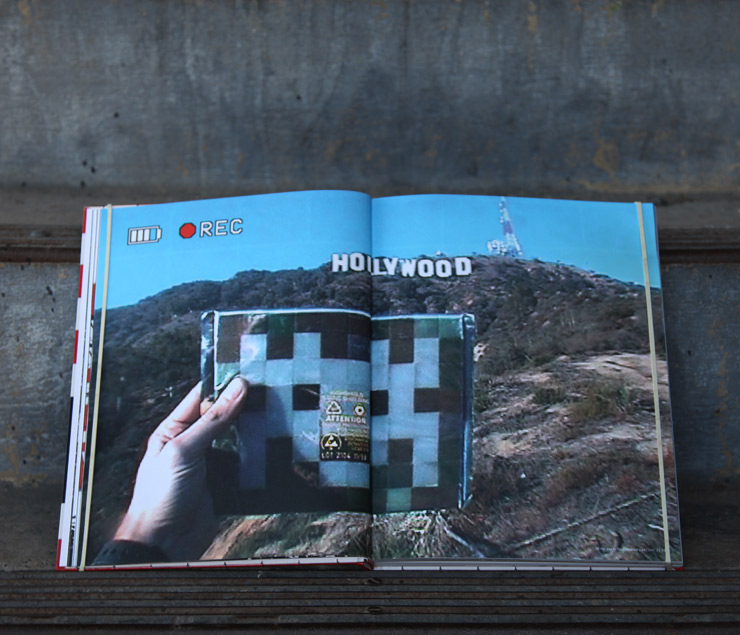
Called “Into the White Cube’, the show will have more than 50 new mosaic ‘Aliases’, an Invader LED piece, large-scale pin buttons, and an Invader Cinema. The event is huge, even for a Street Artist who can claim 200 pieces on the streets of Venice, Downtown LA, Los Feliz, at the LAX airport and even the HOLLYWOOD sign.

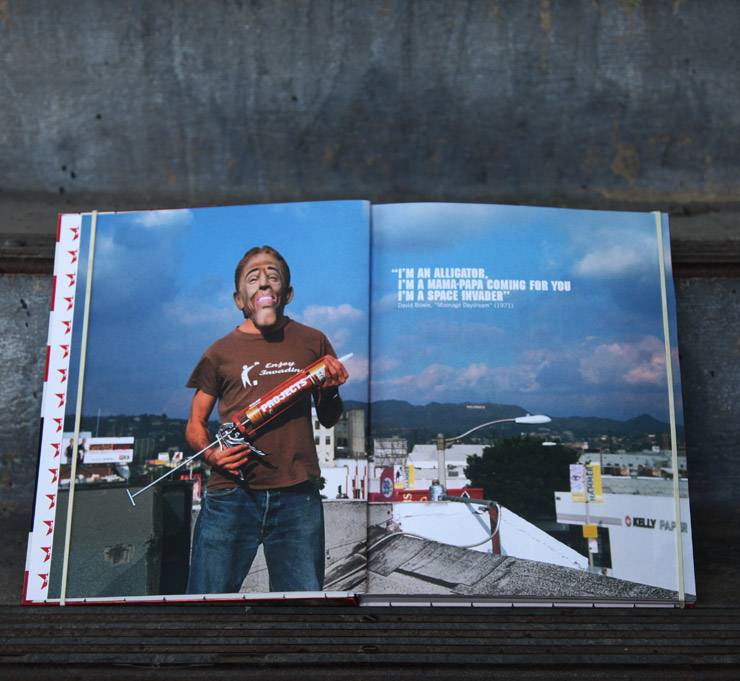
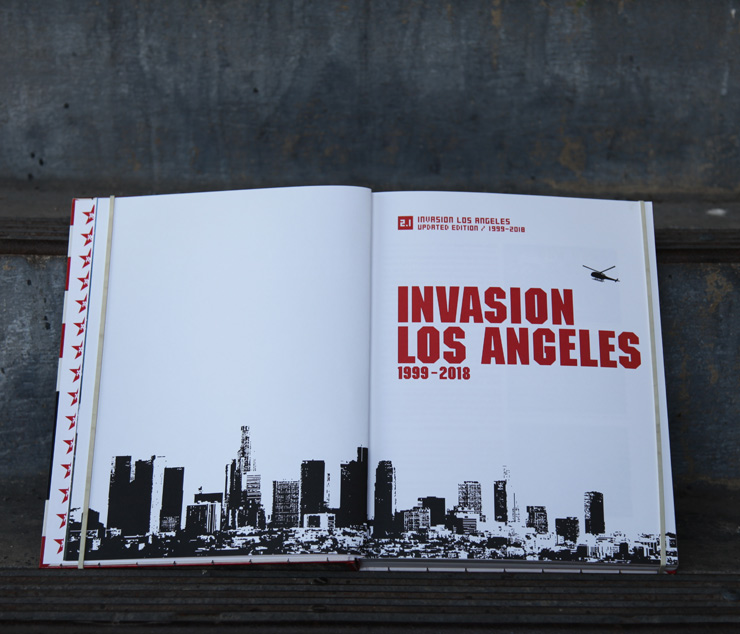
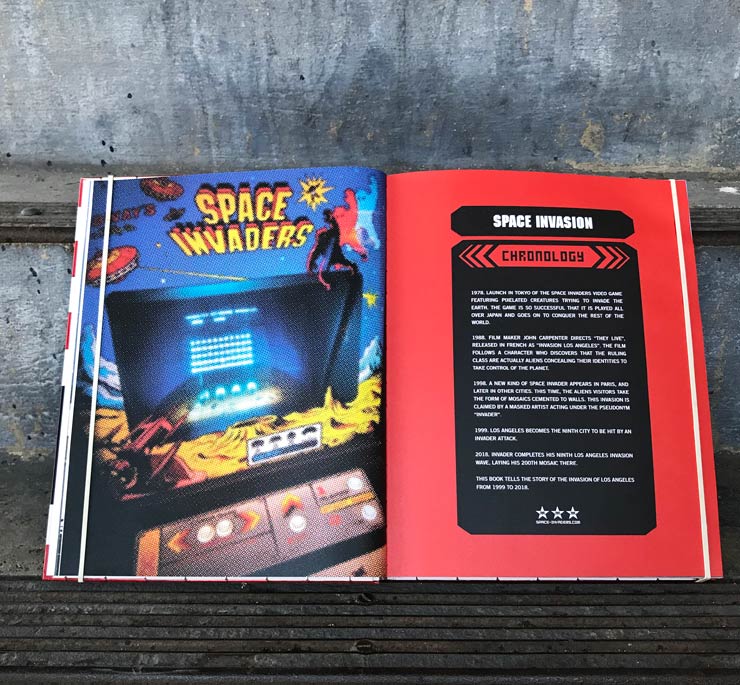
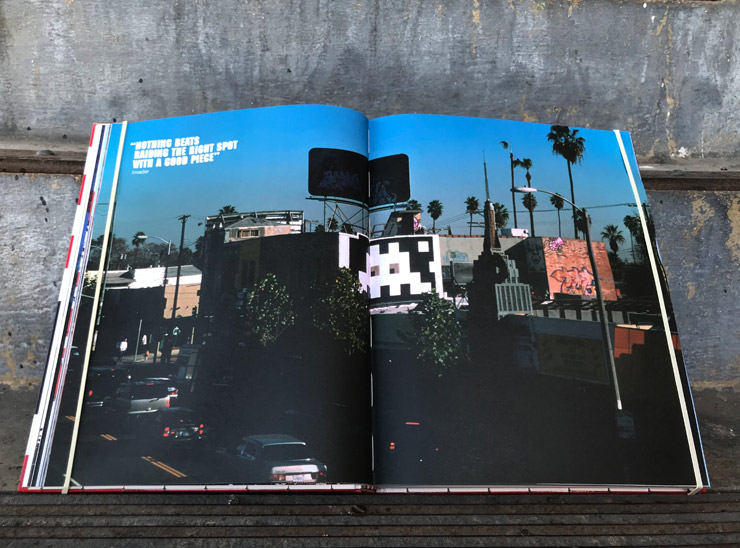
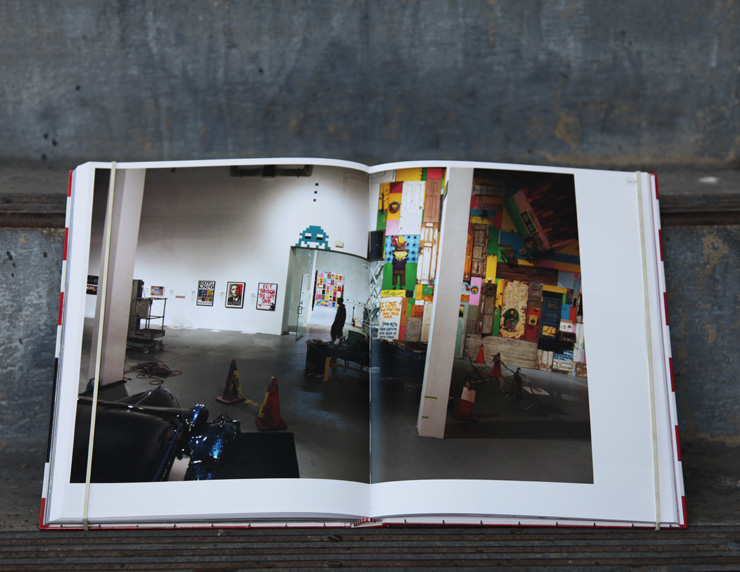
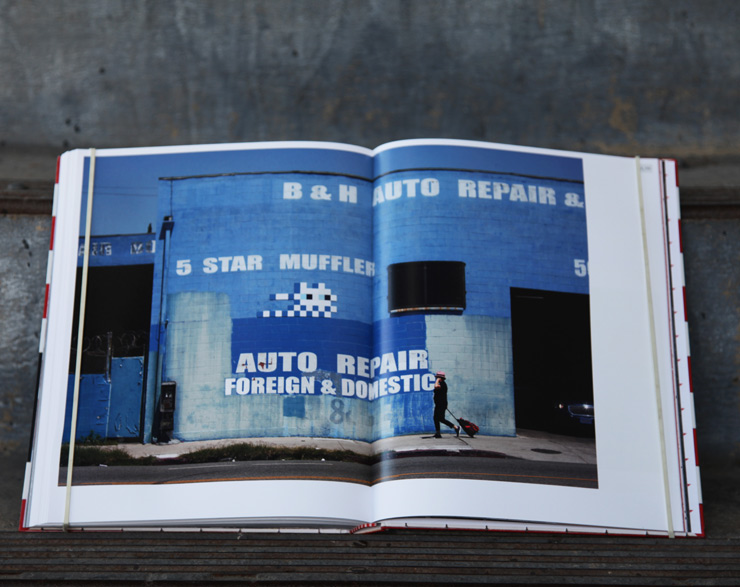
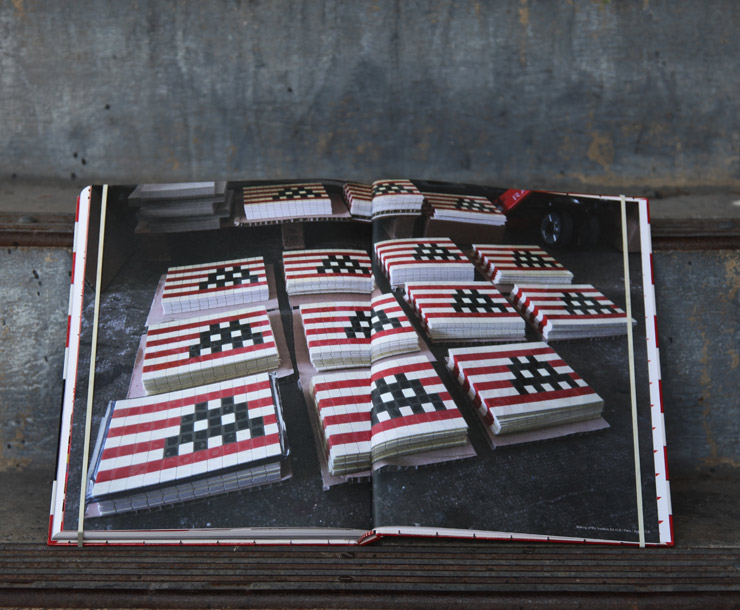
Today we have new images from Invasion Los Angeles 2.1, a breathtaking survey of his work there since 1999, introduced by artist, musician, and writer Bruno Blum who puts his finger on the pulse of this compulsive campaigner in his first “invaded” US city.

“Invader lives for his art. He has a passion for what he’s doing. He’s a diehard. In ‘street artist’, there’s the word ‘street’. Invader is from the streets; and not from the Beverly Hills streets. He’s got fire in the belly, he’s got what it takes and he’s got it down,” writes Blum.

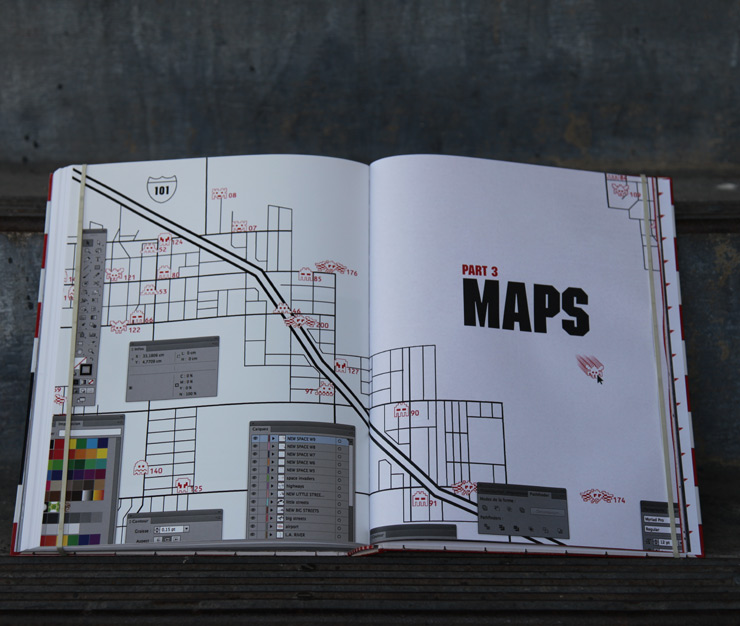
Full of personal accounts that shed a light on his process and mind and featuring shots of placements that are ingenious, often witty, banal, baddass, and seemingly impossible, the collection is a finally a revelation into the compulsive commitment that a Street Artist brings to the game. Helpfully, it also includes street maps.

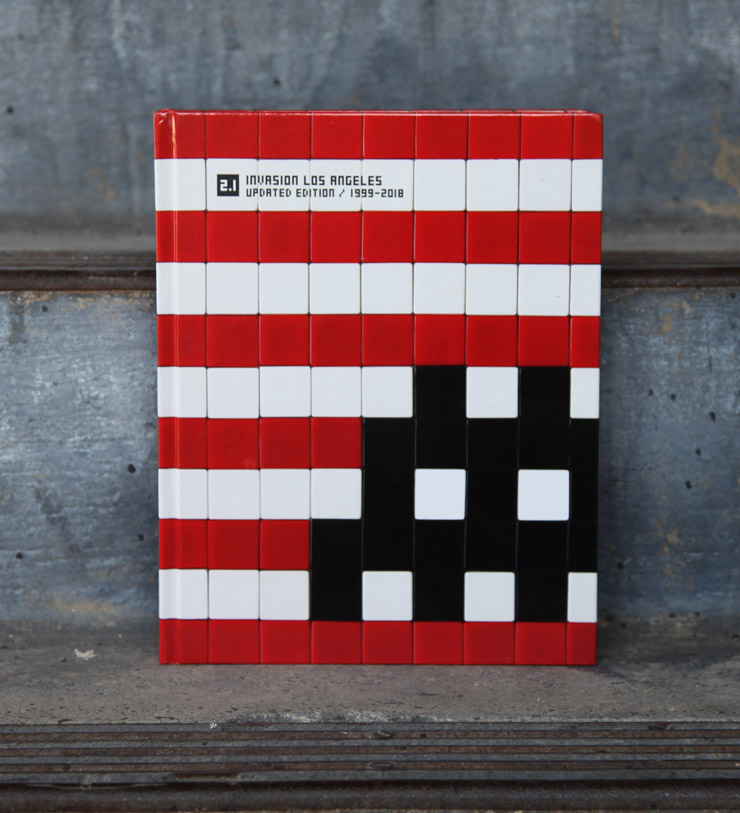
Invasion Los Angeles 2.1 / Updated Edition 1999 – 2018. A Book By Invader. Published by Control P. Editions. France 2018.


Invader “Into The White Cube” first solo exhibition in Los Angeles will open this Saturday, November 17th at OverUnder The Inlfuence. Click HERE for further details.

Read more