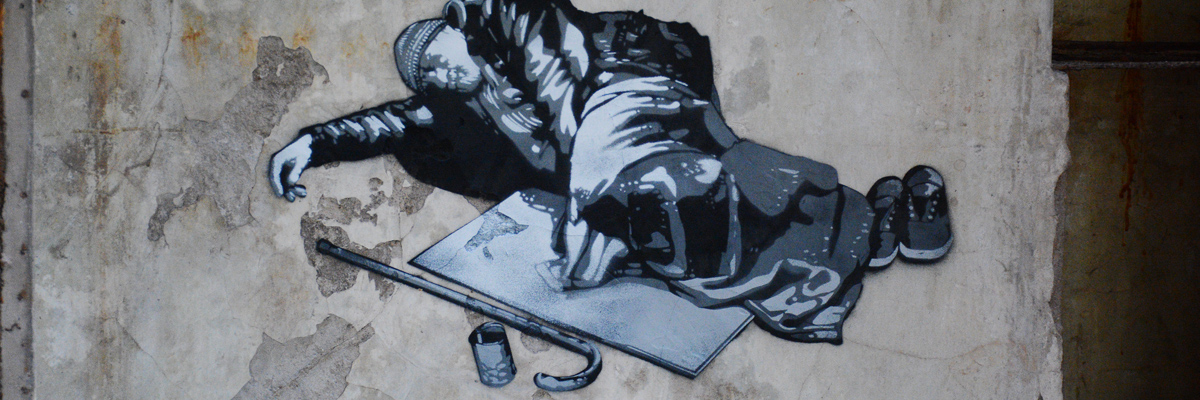
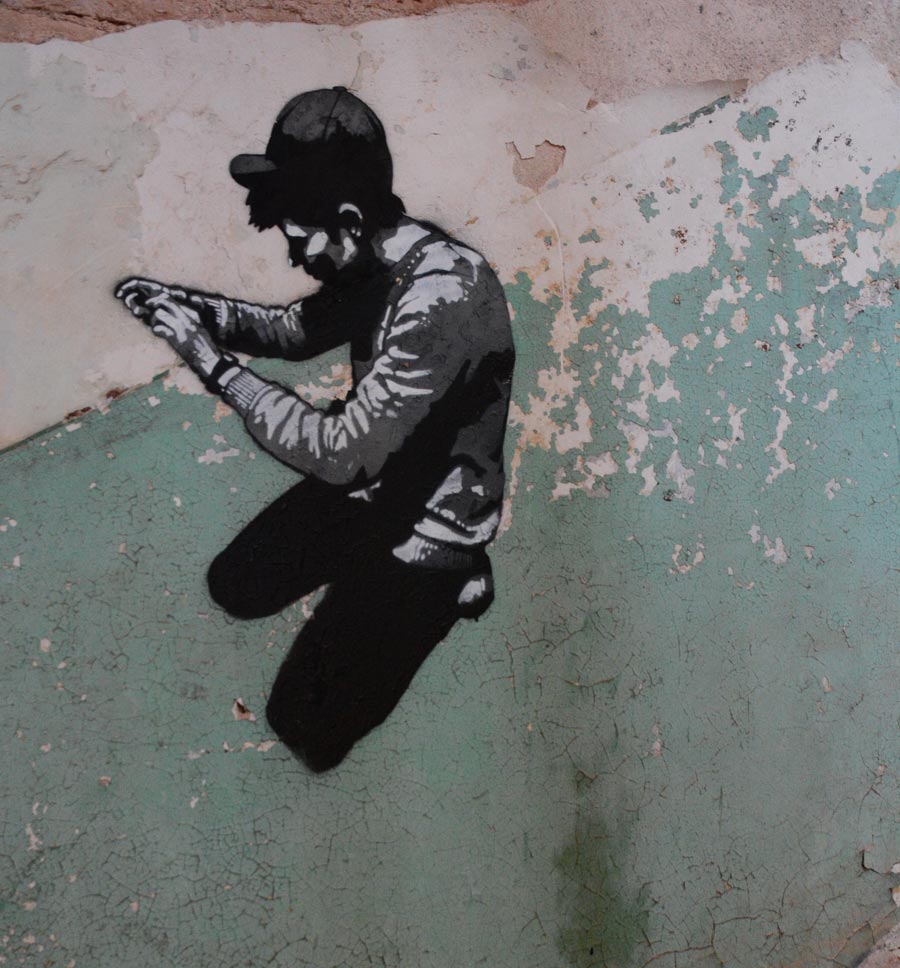
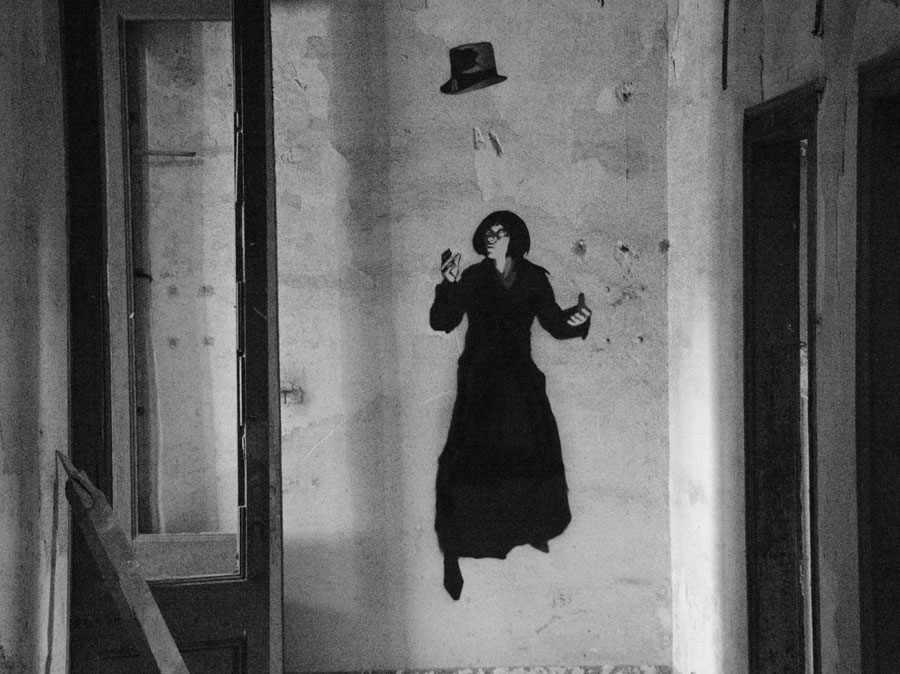
There are a number of misconceptions by persons unfamiliar with history or the organic unregulated illegal and unrestricted practices of urban intervention regarding this. Anyone who has thoughtfully and carefully followed what artists have been doing without permission in public and abandoned spaces over the last few decades will know that mural festivals and other legal and/or commercial mural initiatives are just that. They are not displaying examples of Street Art.
The commodification of the original freewheeling practices of Street Artists and its visual vernacular in commercial campaigns, coupled with the proliferation of mural festivals that subtly or explicitly neuter the activist element that critiques politics and society, is regrettable – although predictable.
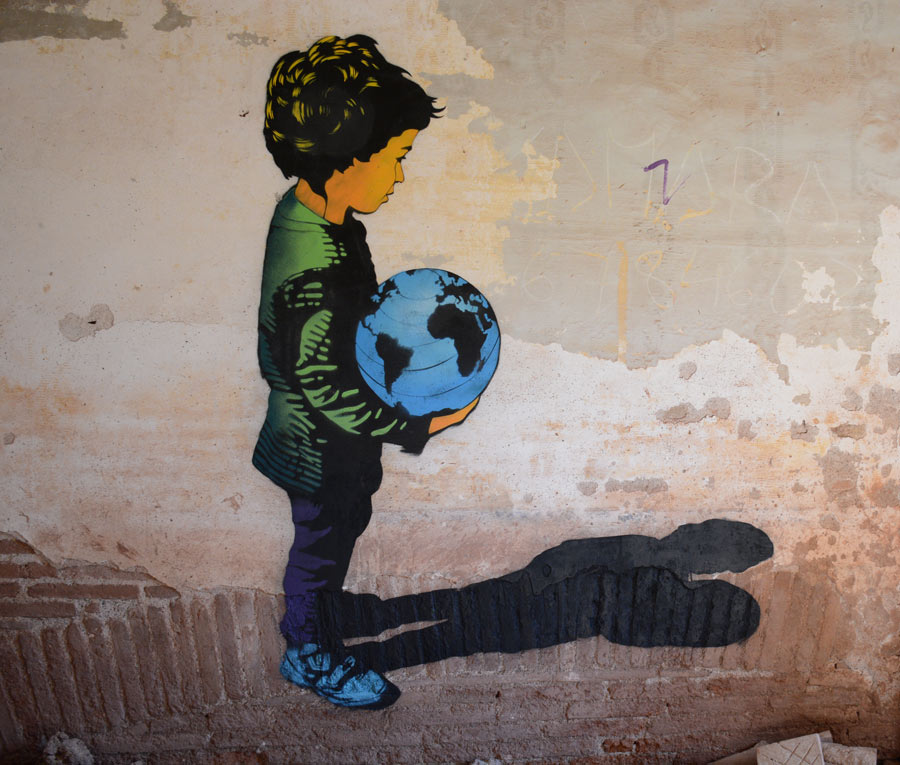
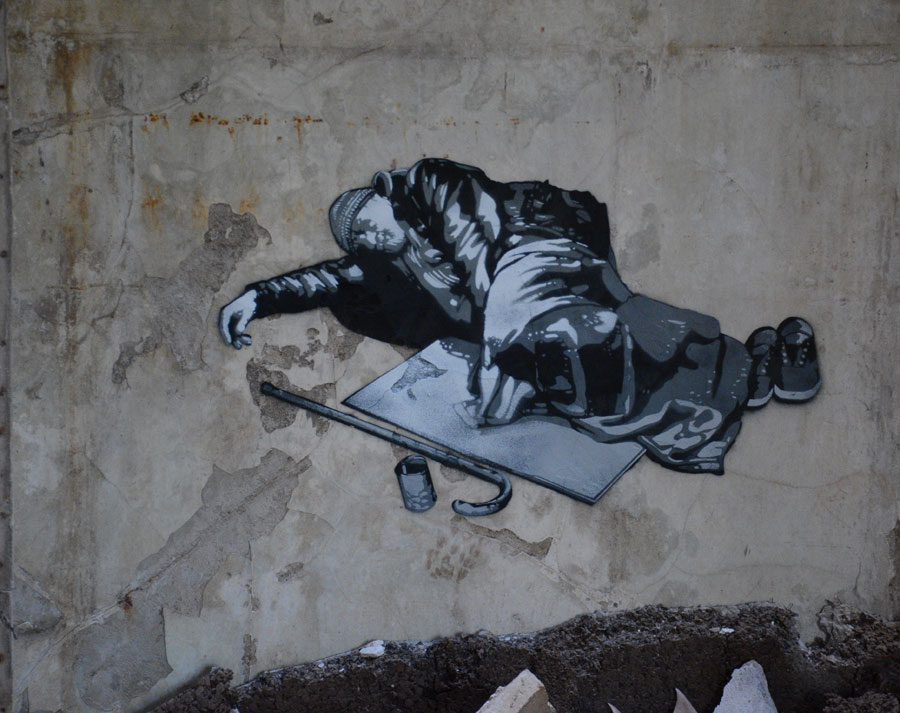
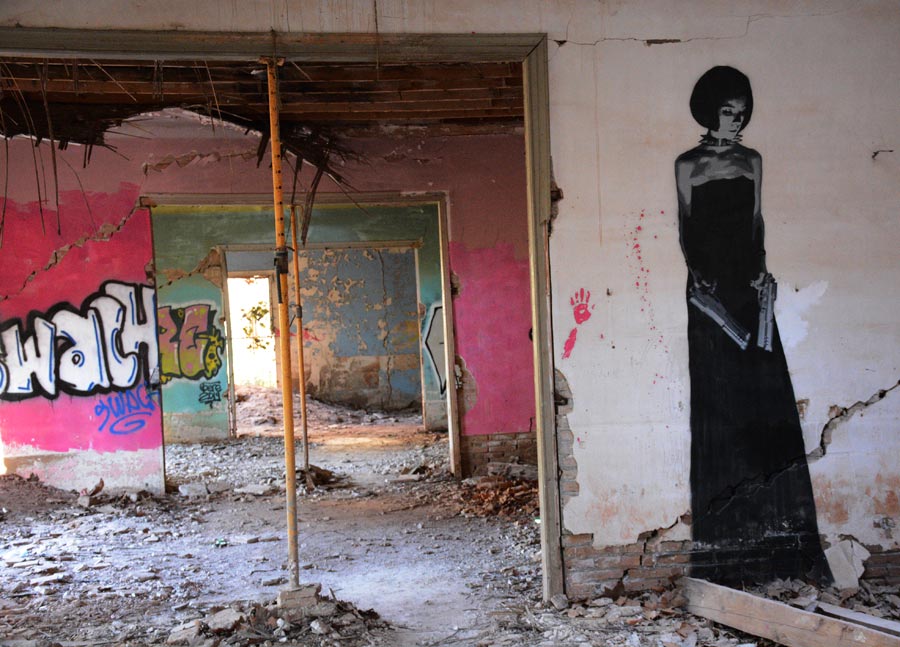
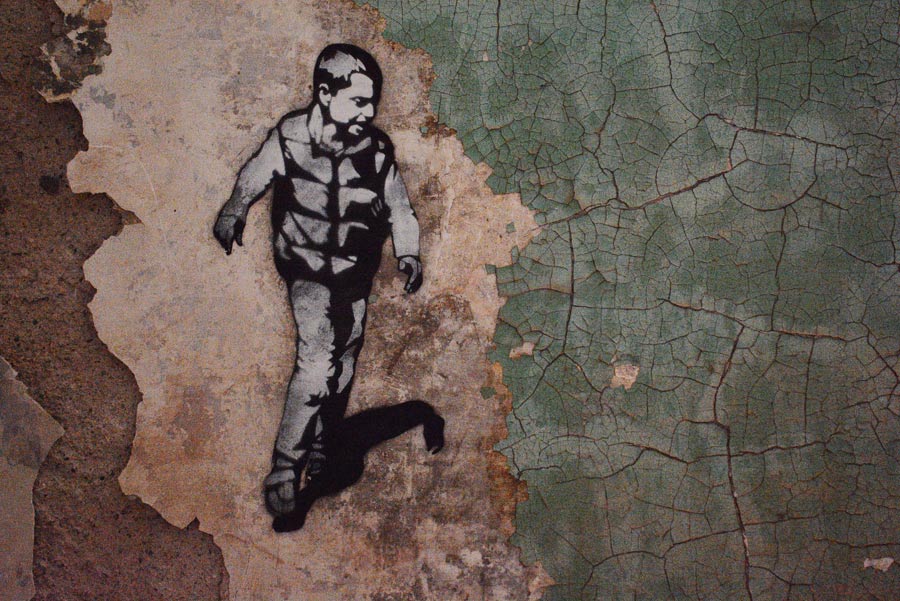
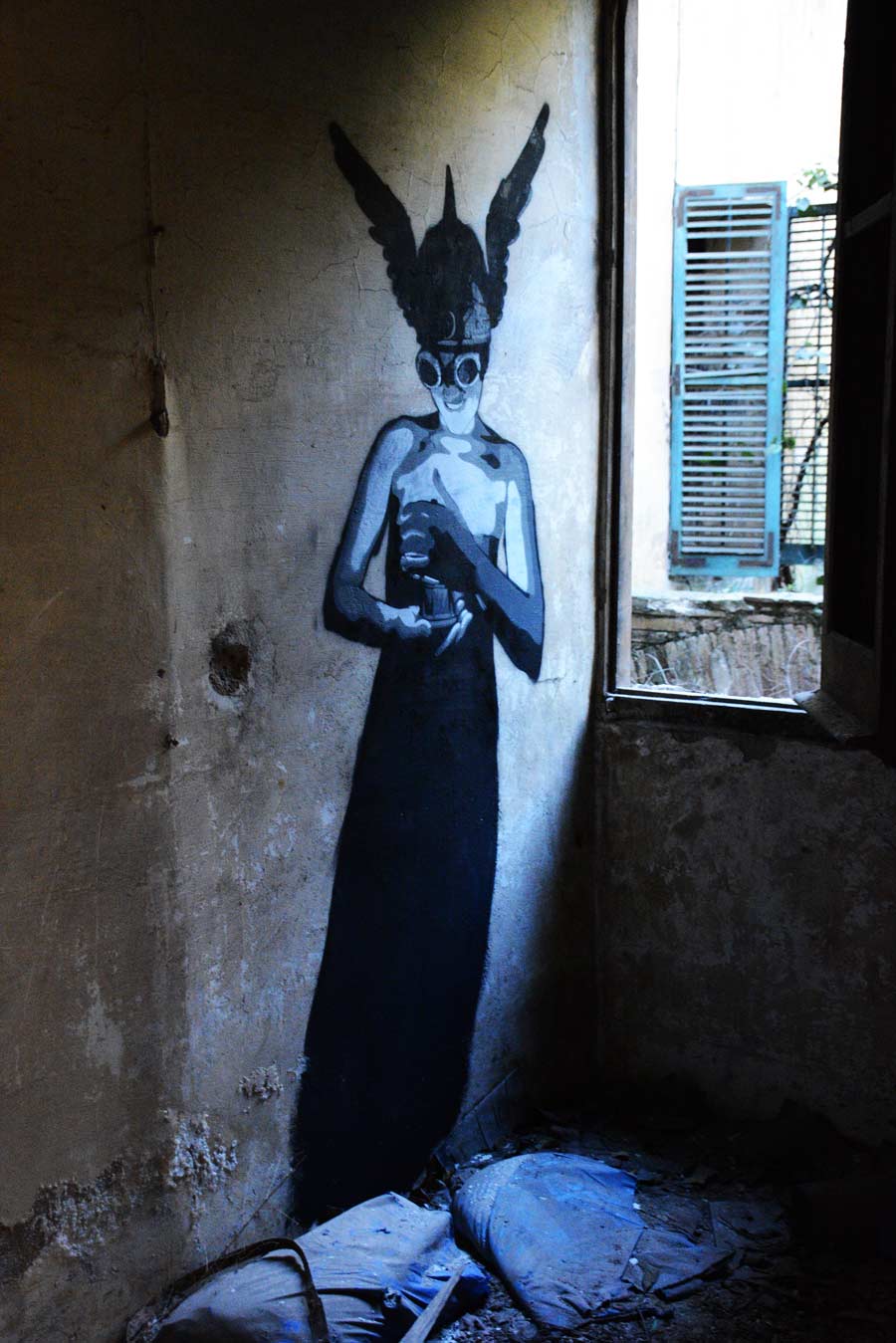
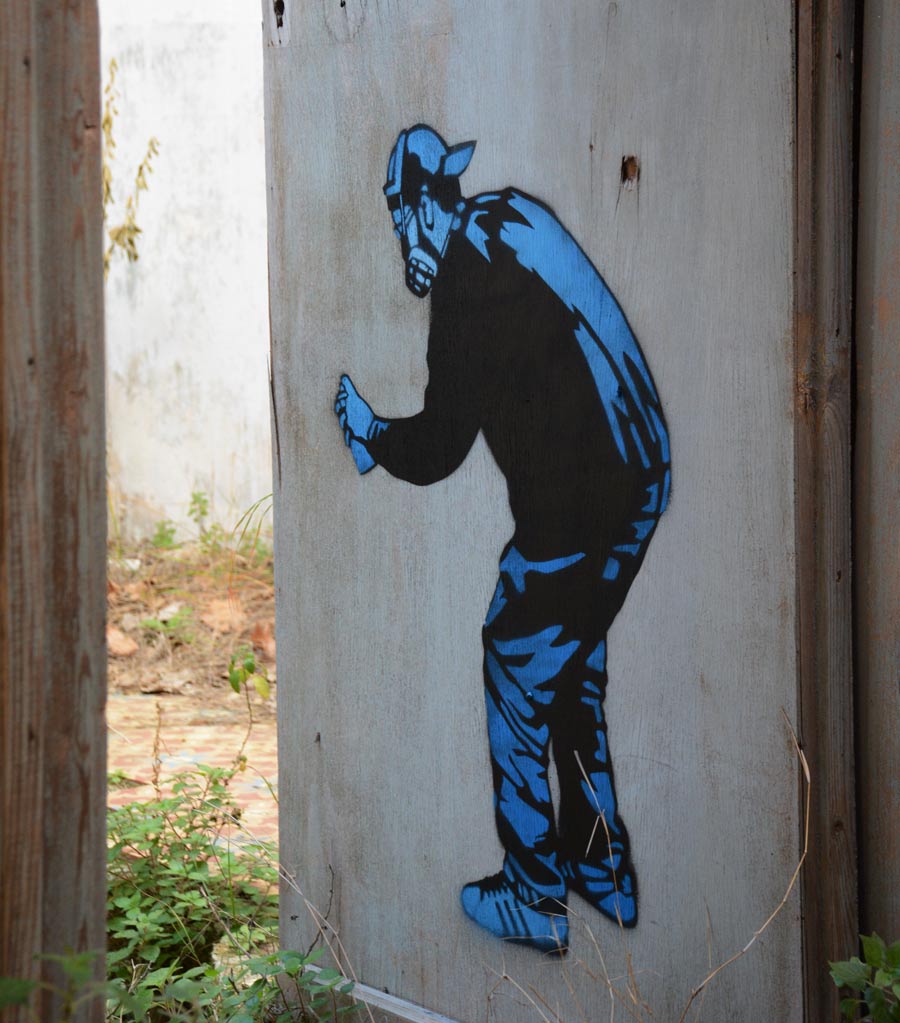
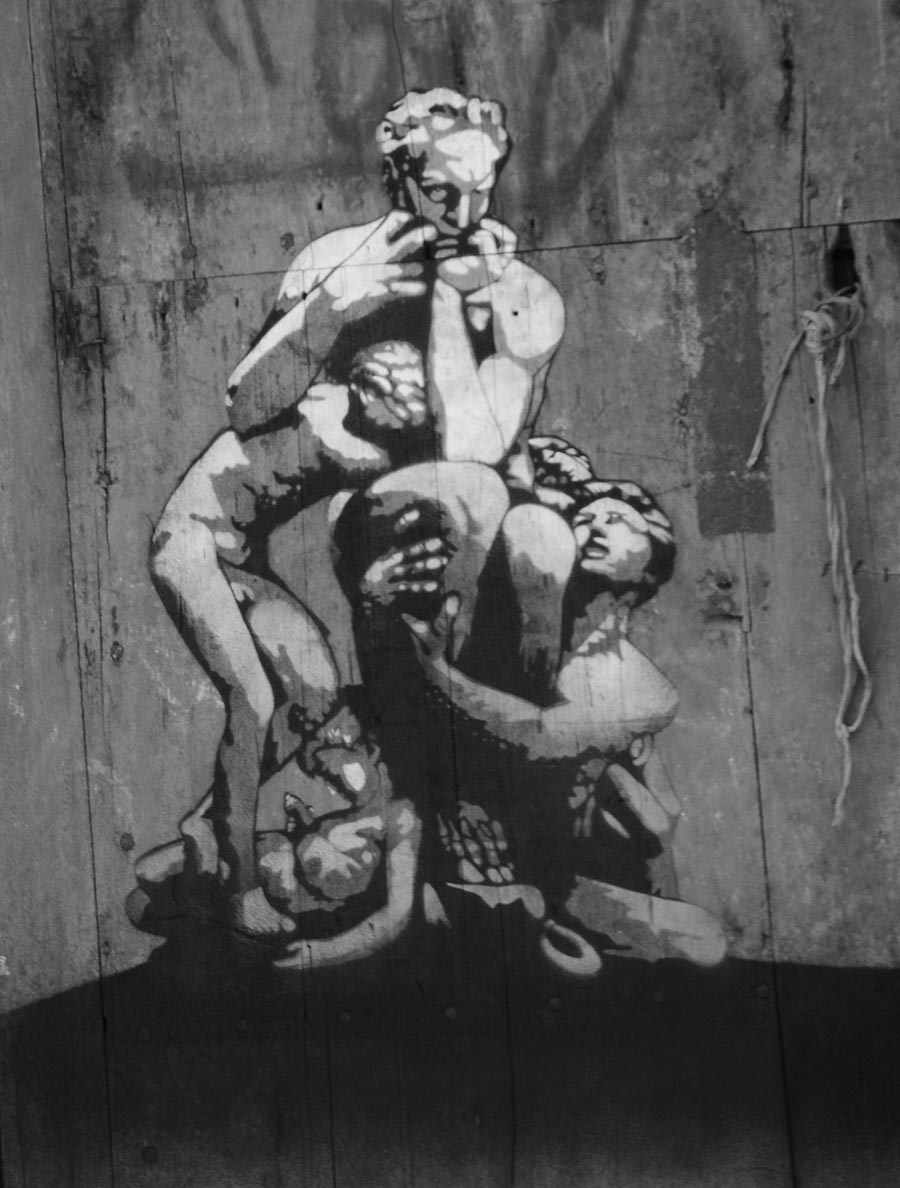
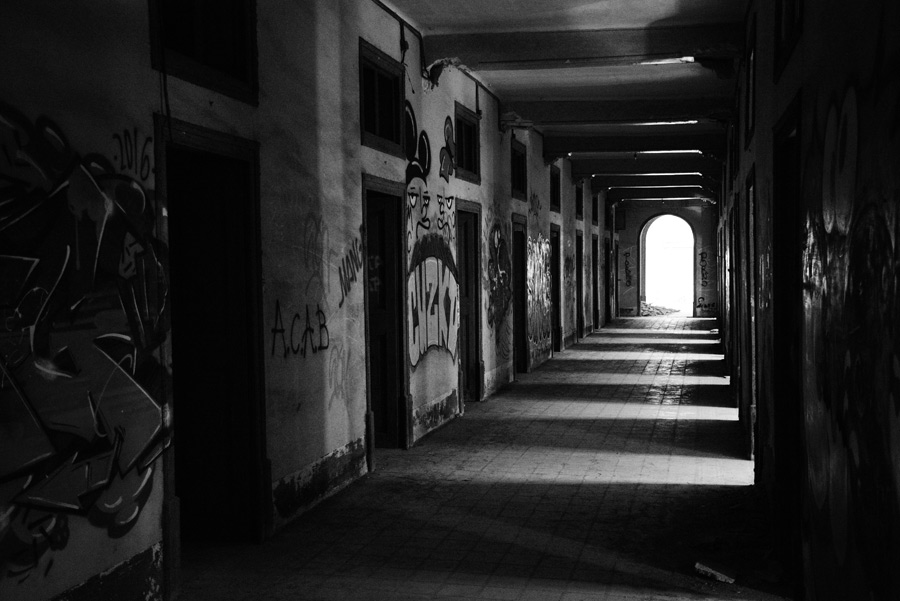
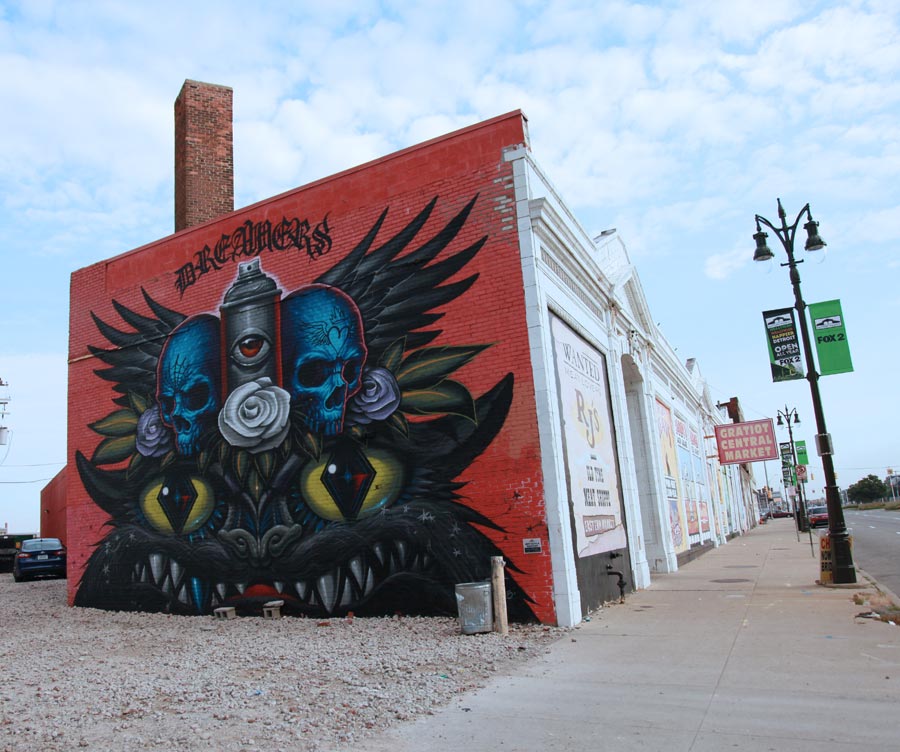
Like the one we feature here today, Street Artists don’t treat abandoned places simply as galleries to sell sneakers or prints; with murals slapped thoughtlessly check to jowl as selfie-backdrops and vehicles for “urban” brand logos. Here one can gain appreciation of the works as they are situated amidst the ruins; a self-granted residency or laboratory where your art placed in a new context alters everything around it.
Luckily, photographers who don’t mind working and who still long for the days of illegal urban art exploration and discovery continue the hunt for those oases that lie off-the-beaten-path.
“Ruin porn” is such a pithy simplification of this desire to document our forgotten places, to reconnect with and review our history, our lore, our systems of values. We prefer the term “urban exploration” for conquests such as these. Here artists find a new home and inspiration from the beauty of decay, taking residency in the ruins of what may have been splendor.
Photographer
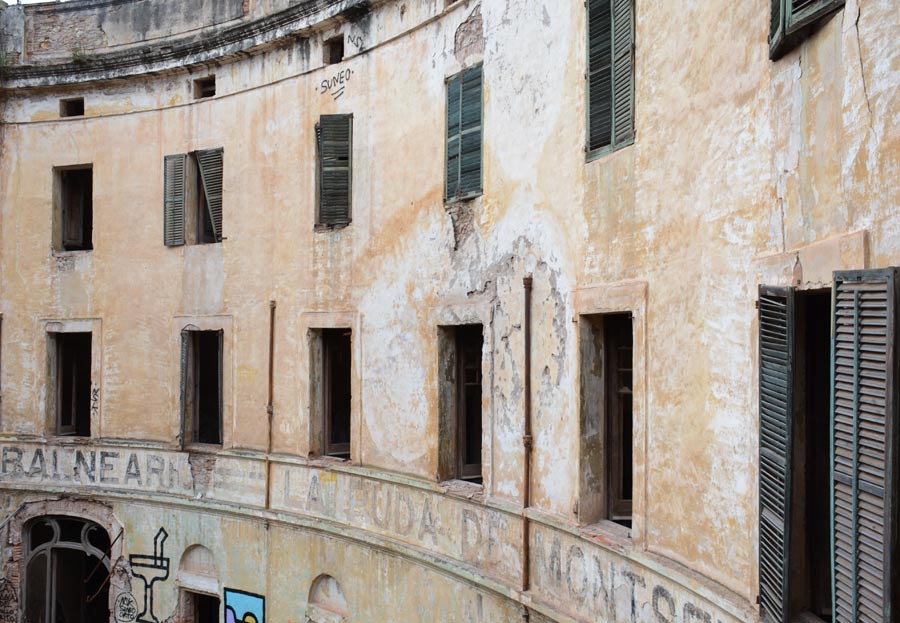
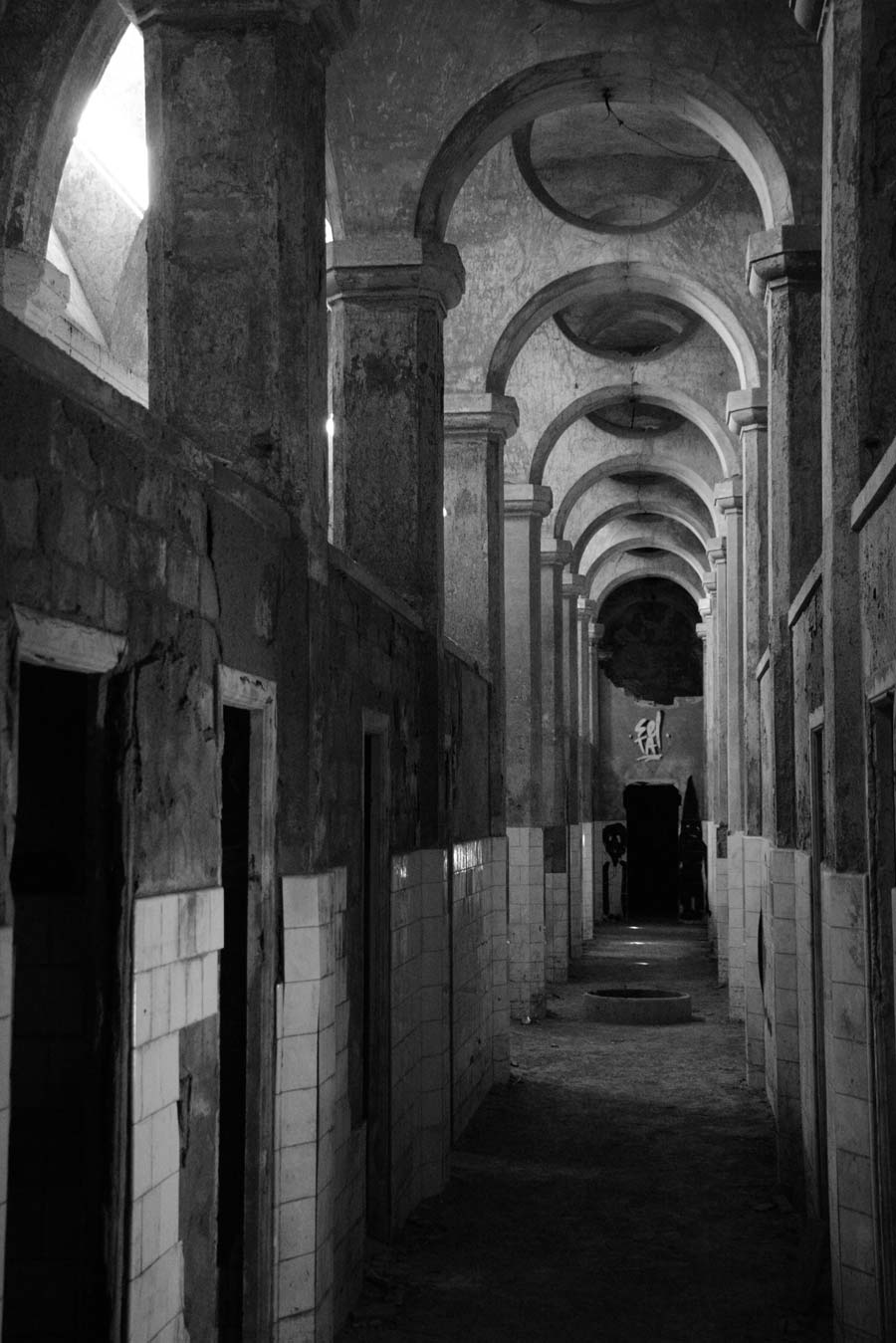
and BSA contributor Lluis Olive recently visited one such oasis called La Puda,
an abandoned mineral bath resort at the foot of the Montserrat Mountains near
Barcelona, Spain. Build in 1870 it closed its doors in 1958, and in the intervening
six decades the building has suffered from floods, thieves, fern and fauna.
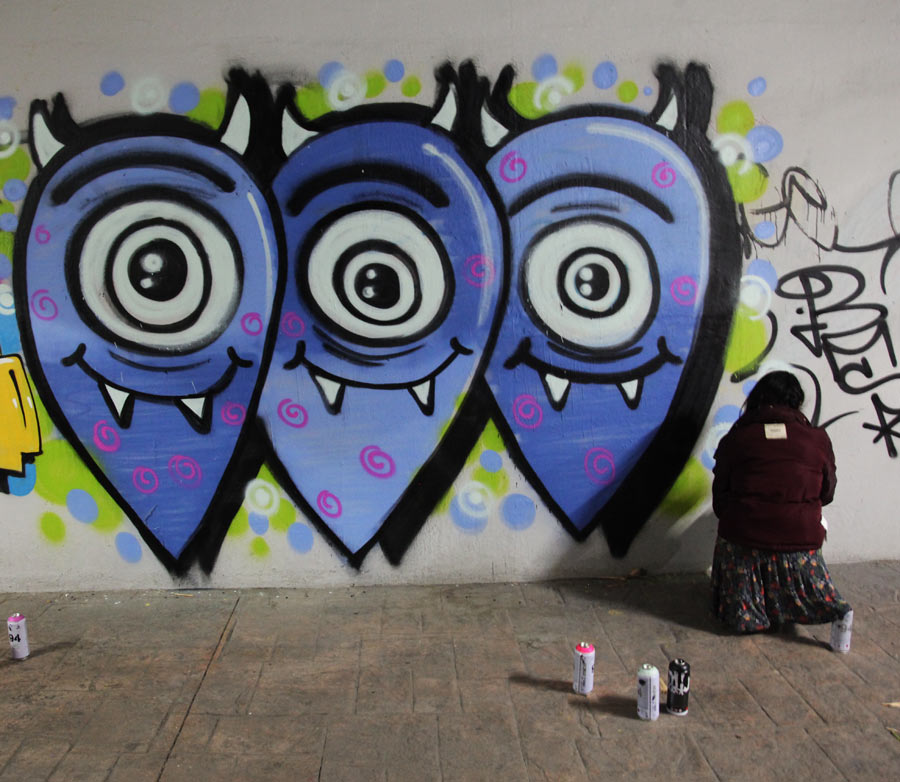
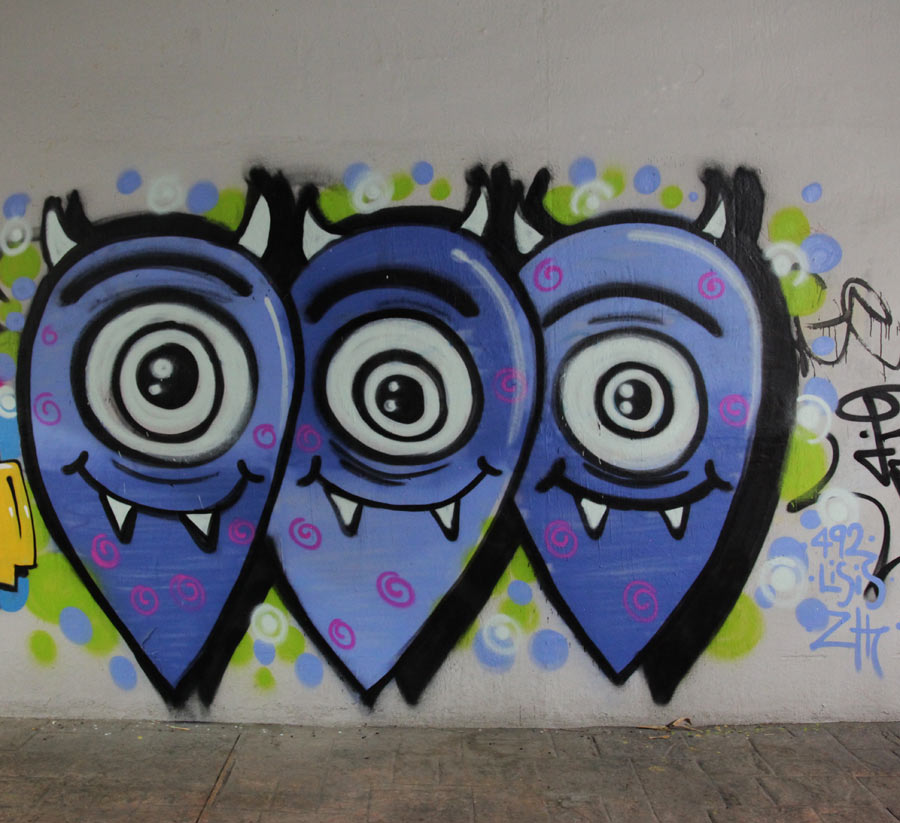
Despite the western classical markings of strength an power like colonnades, entablature, and soaring arches, presently the place is in various states of ruin due to abandonment. Here Mr. Olive gives us a small photo essay of the work of one artist, SM172. These unsigned works remind us that not everyone is in it for the “fame” because we had to ask around to find who the author is. Luckily we have the smartest readers!
Our weekly focus on the moving image and art in the streets. And other oddities.
Now screening : 1. Icy & Sot Overview 2. Imaginary City. Teaser from MZM Projects (UA) 3. “Martha Cooper: Evolucion de una Revolucion” Queretaro, Mexico. 4. Fanakapan x 1UP Crew in Berlin.
BSA Special Feature: Icy & Sot Overview
The Iranian brothers have been toiling and innovating and taking risks on the streets of Tabriz and Brooklyn now for more than a decade. Now commercial brands are discovering them as well. These guys just keep marching forward with purpose, staying true to their beliefs.
Icy & Sot Video Project
Imaginary City. Teaser from MZM Projects (UA)
Entirely of their own volition and vision, filmmakers Kristina Borhes & Nazar Tymoshchuk created this ode to Stavanger and the Street Art festival called Nuart.
Two BSA quickvids in a row here from our recent travels in Berlin and Queretero…
“Martha Cooper: Evolucion de una Revolucion” Queretaro, Mexico.
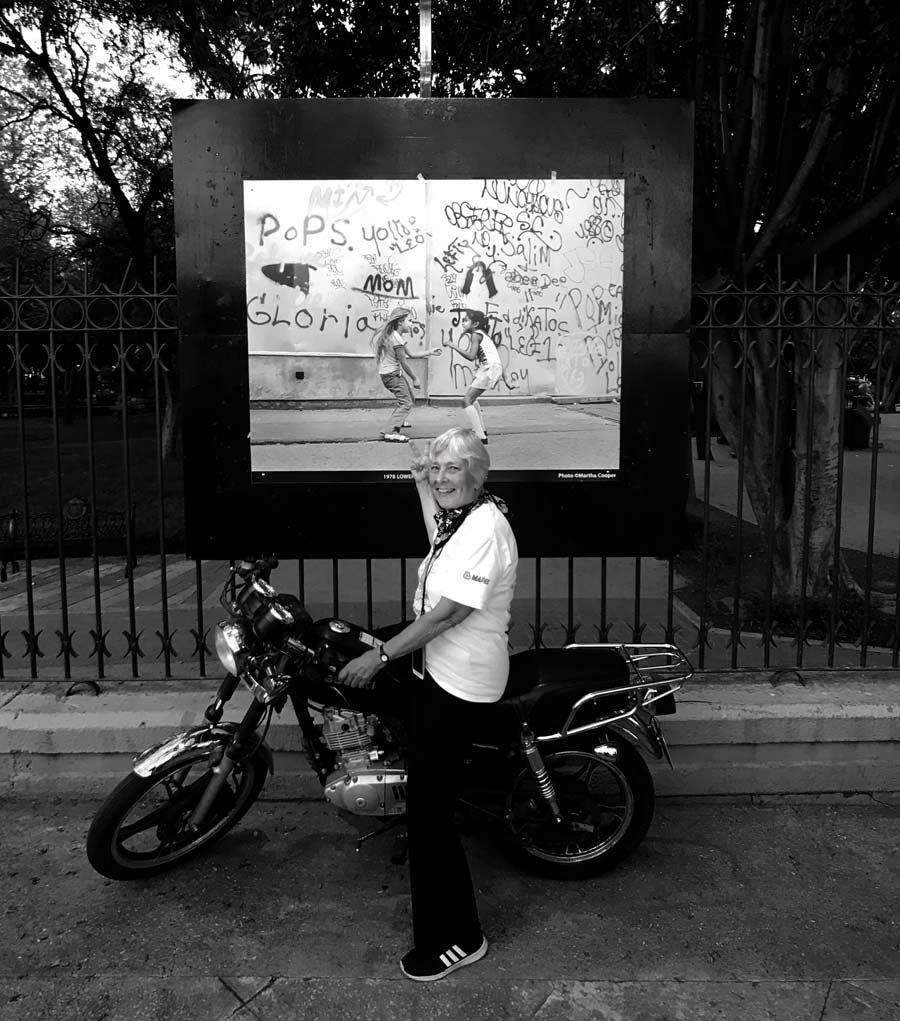
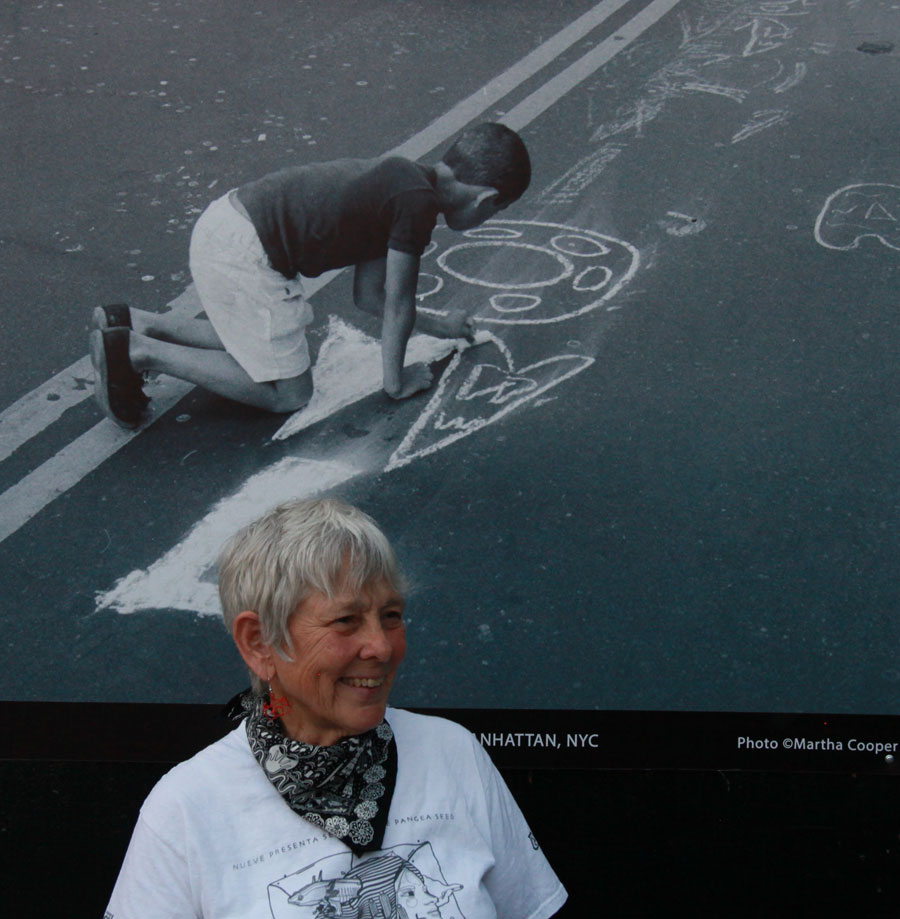
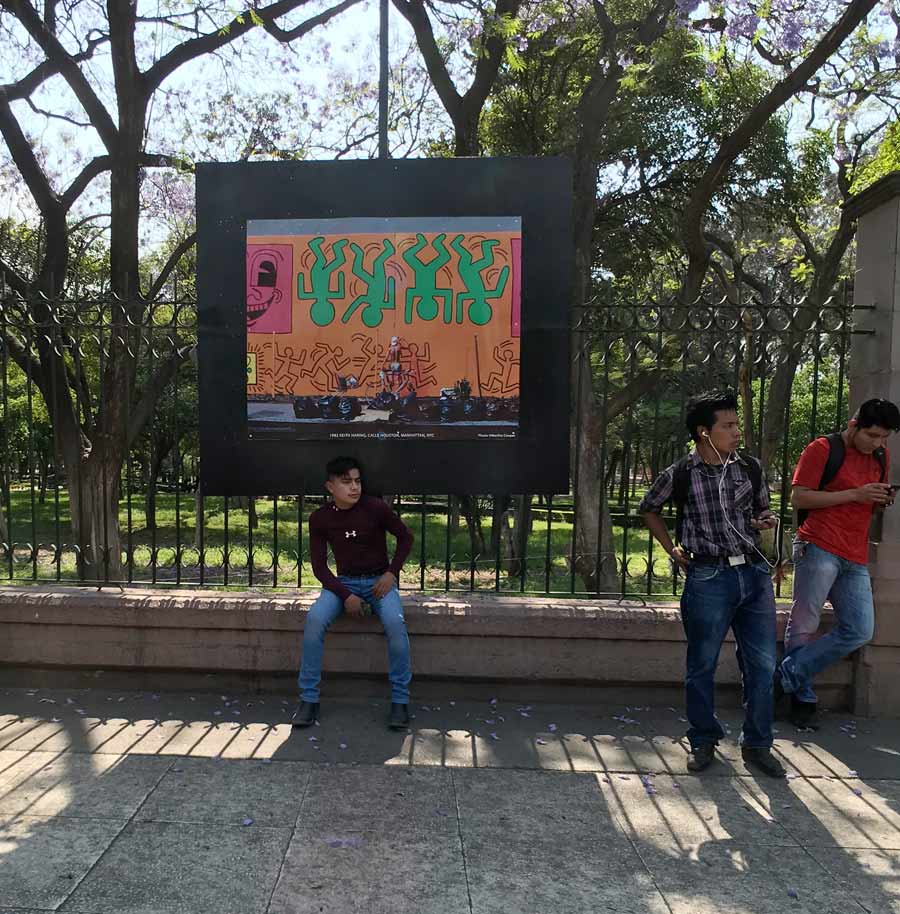
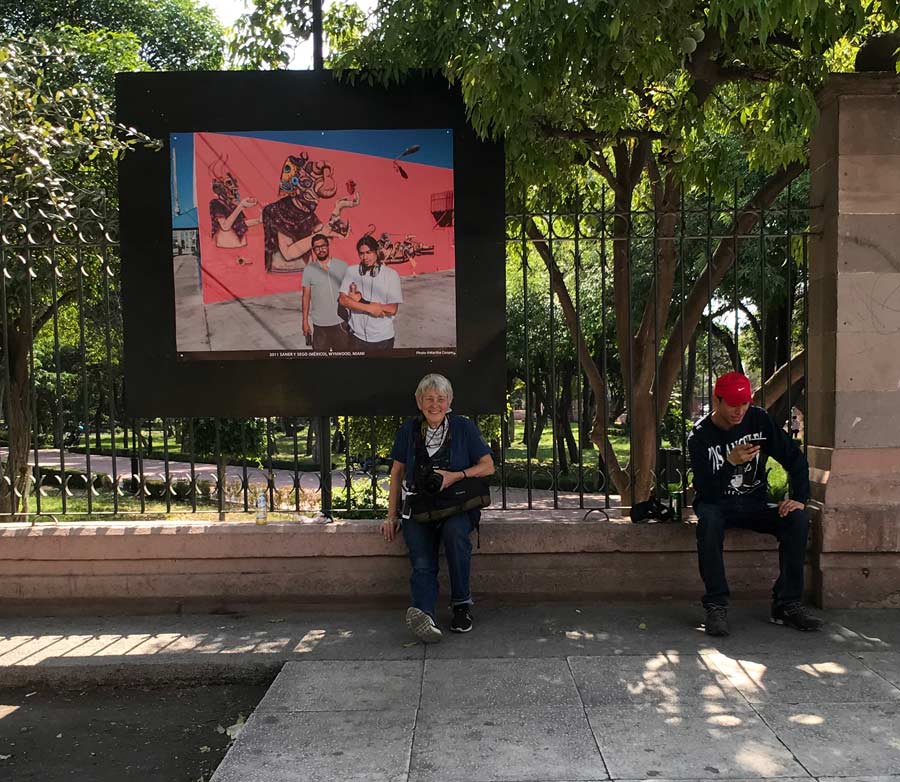
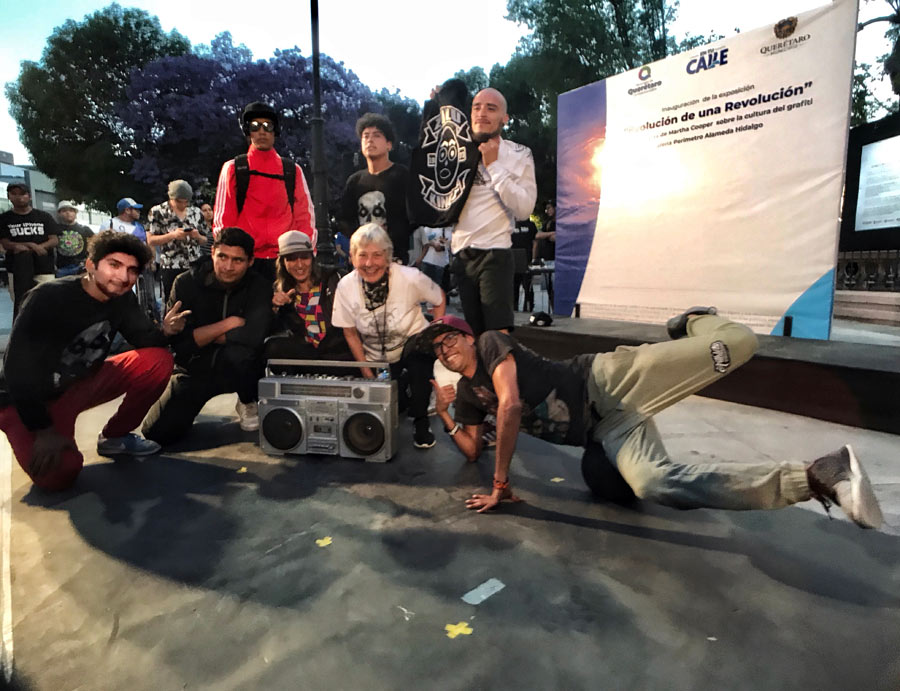
Urban photographer Martha Cooper now has 101 of her photographs on the streets — literally on the streets of Queretero, Mexico. Part of the Nueve Arte Urbano festival, the exhibition is called “Evolution of a Revolution” and we were pleased to be a part of the opening events with Ms. Cooper, who said she was very pleased with the quality of the large format photos and the reception of the people on the streets.
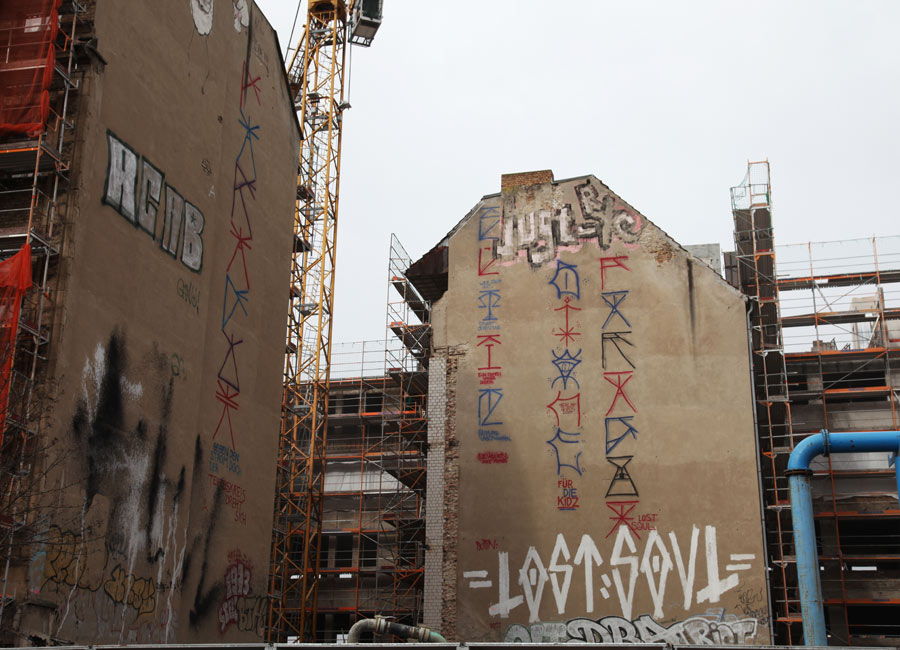
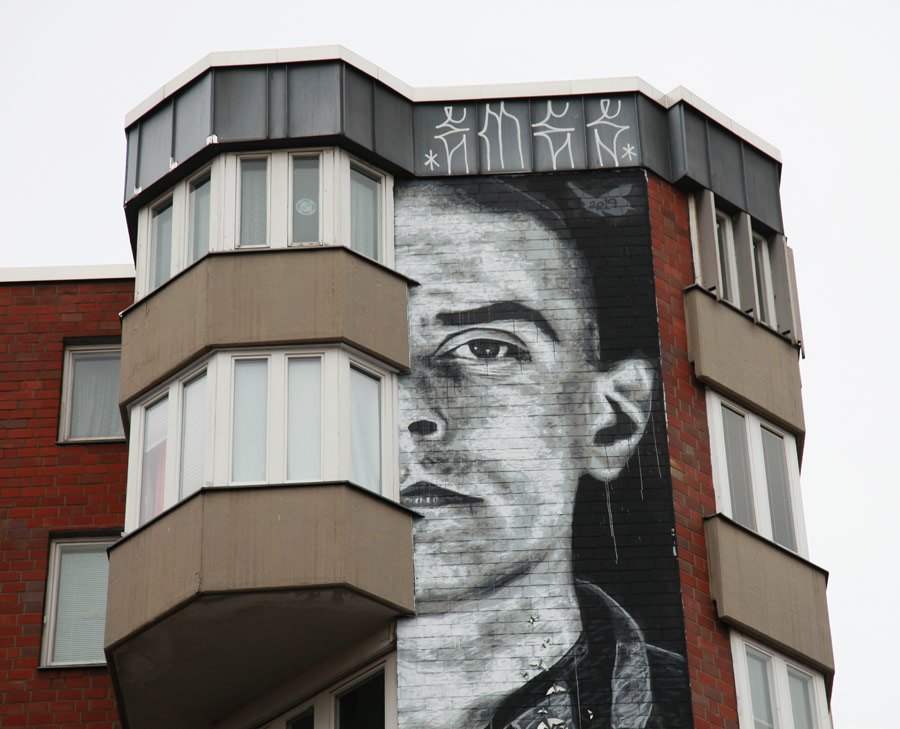
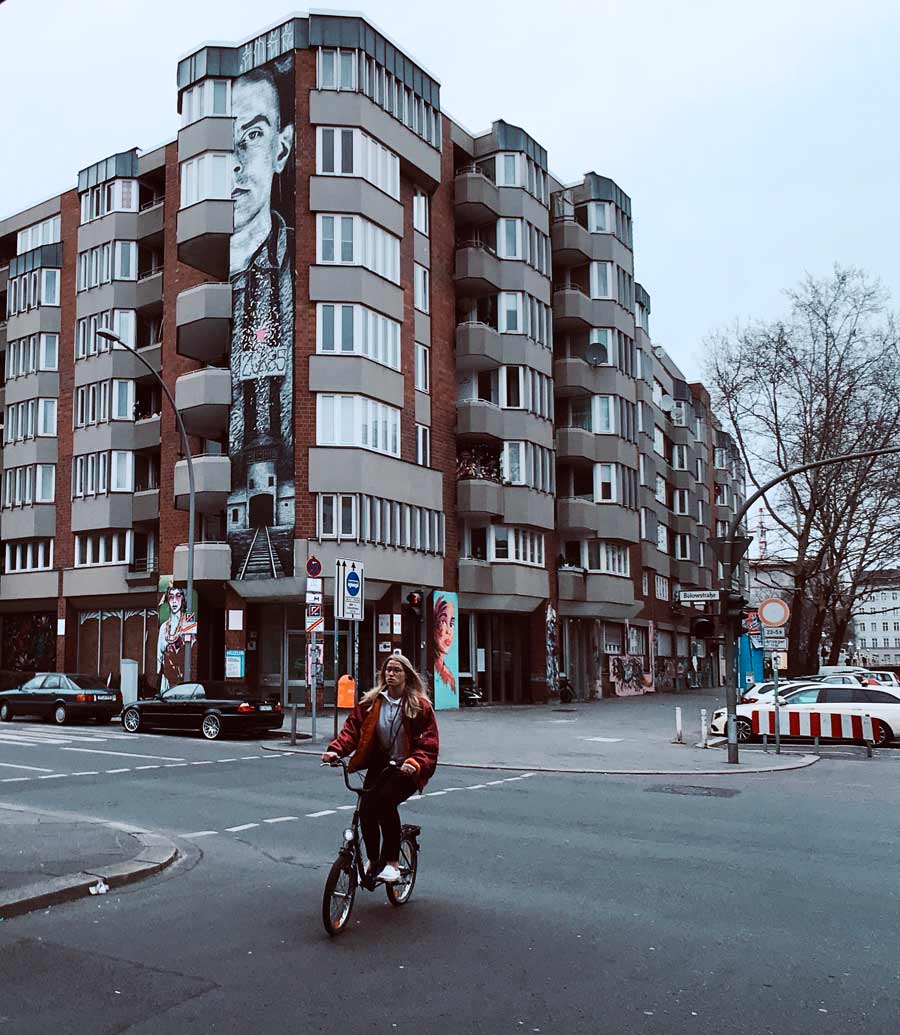
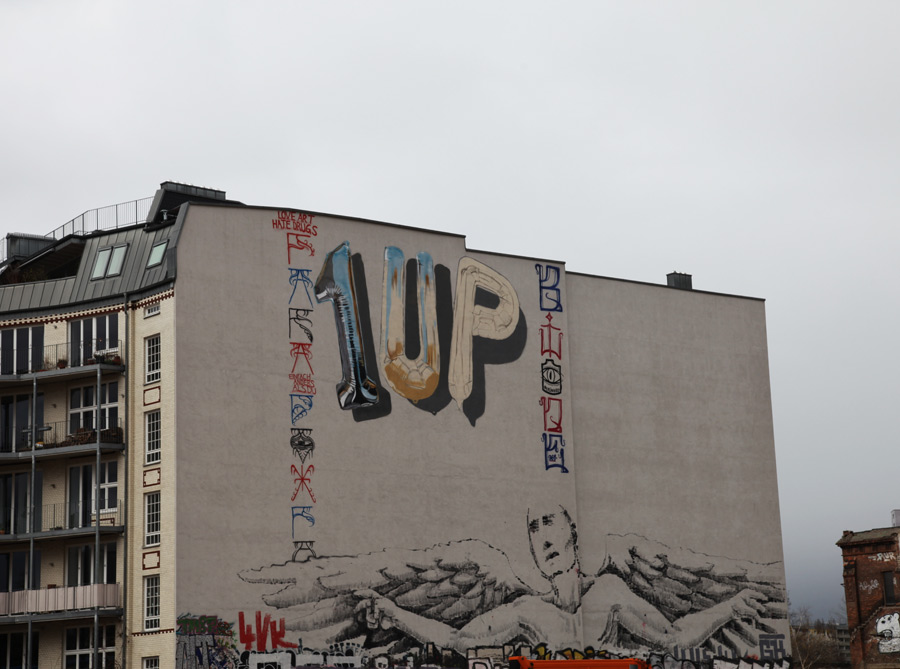
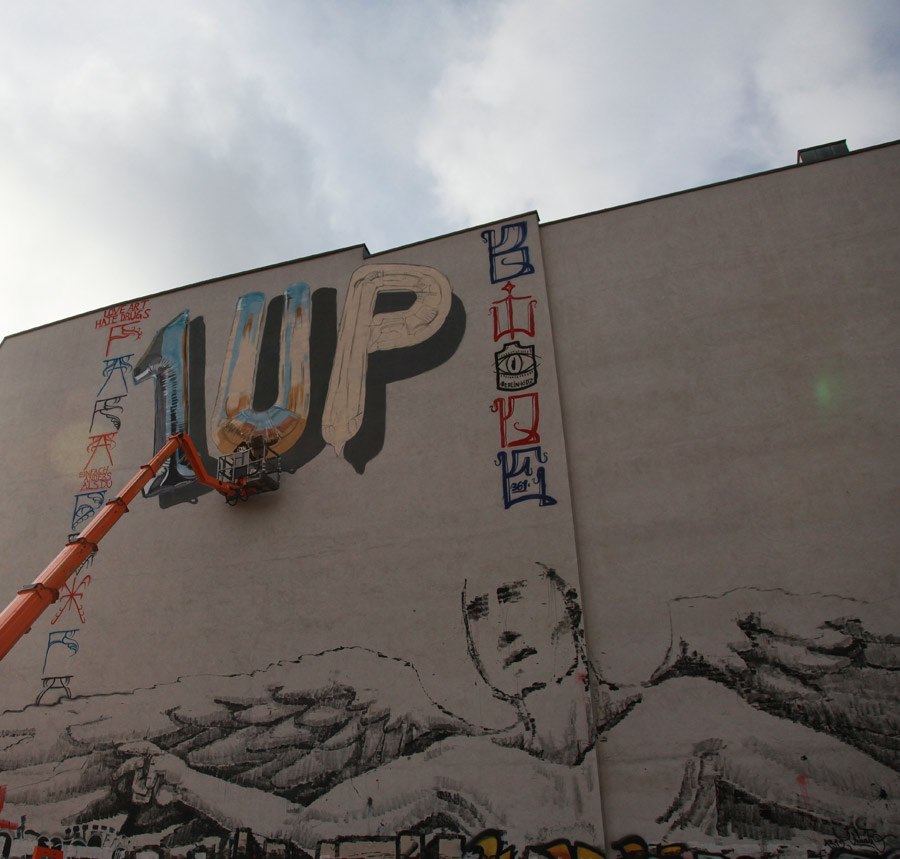
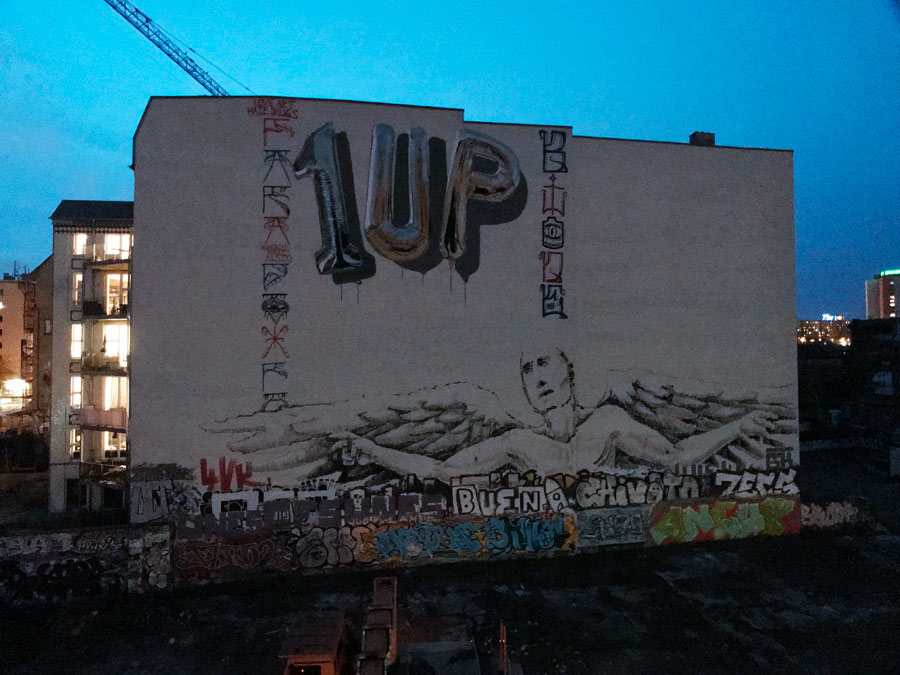
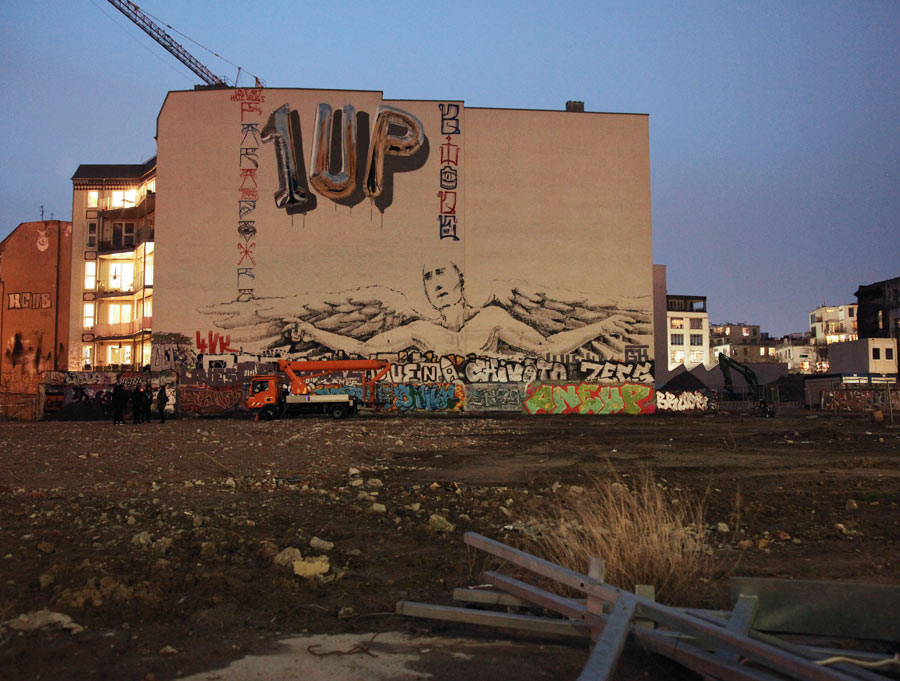
Thanks to a new big empty city lot this building seems primed for the big stage! First the Alanis angel has ridden on this wall for a long time with grace and beautiful realism. Secondly, Berlin Kidz climbed vertically down from the roof in their distinctive and colorful language.
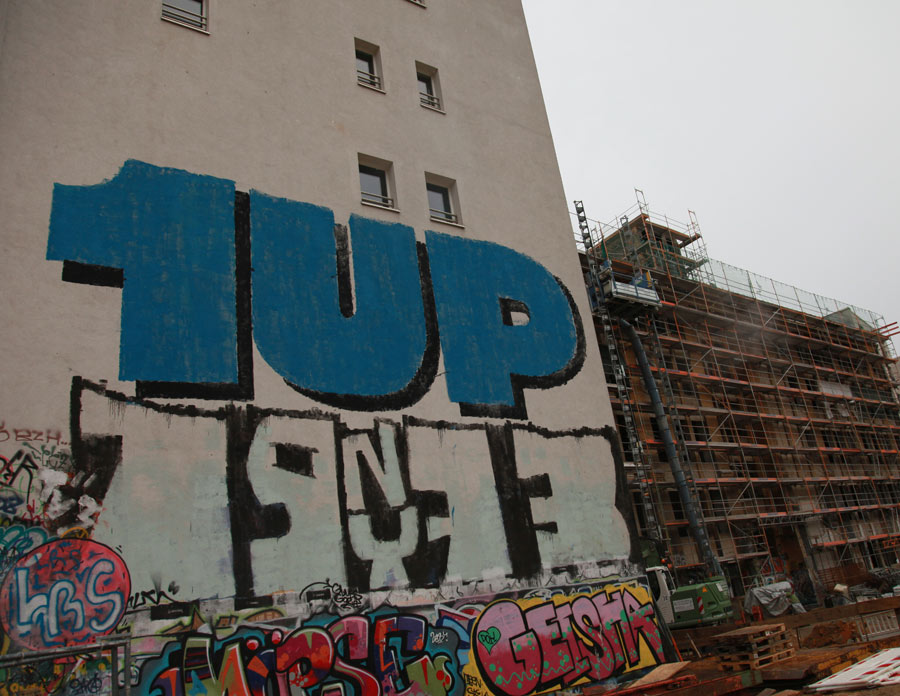
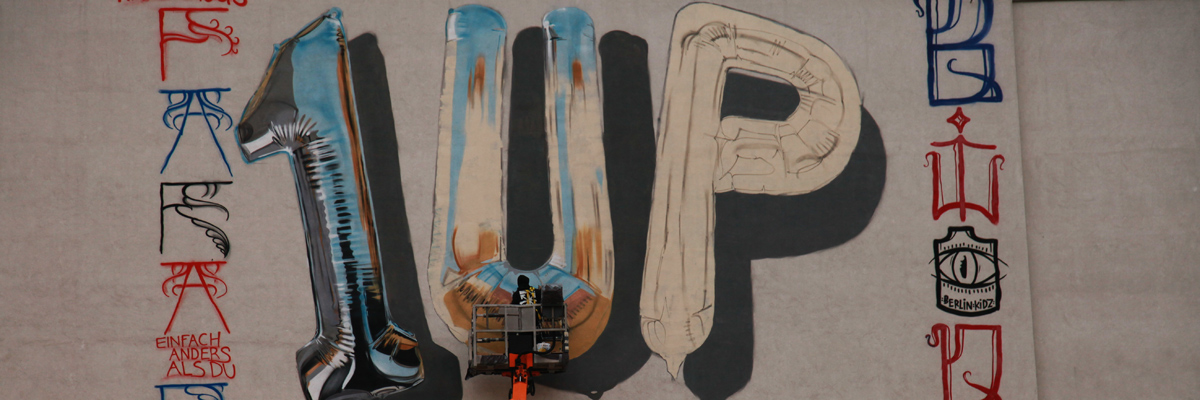
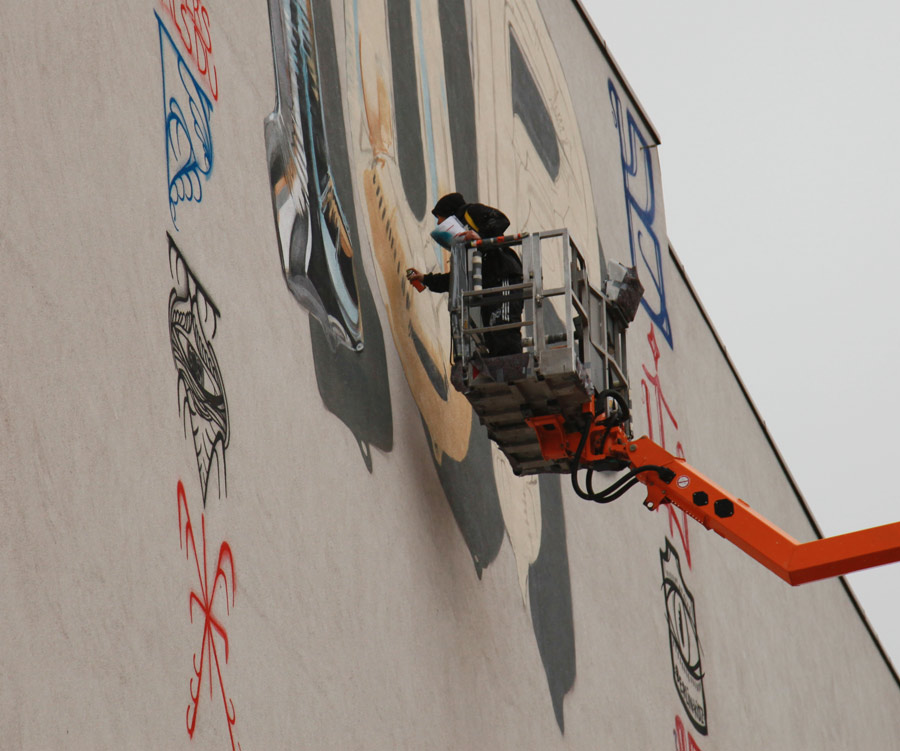
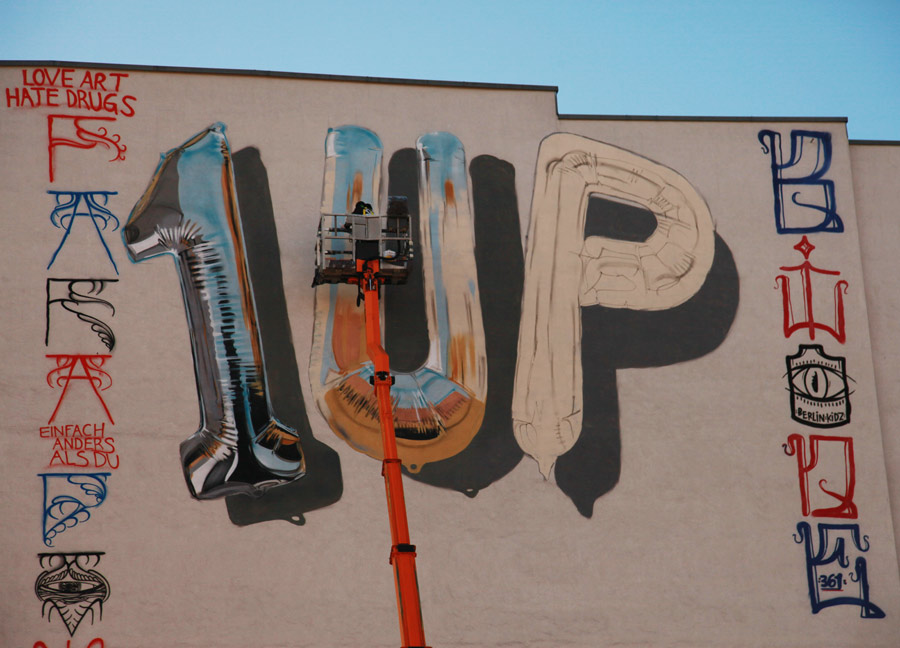
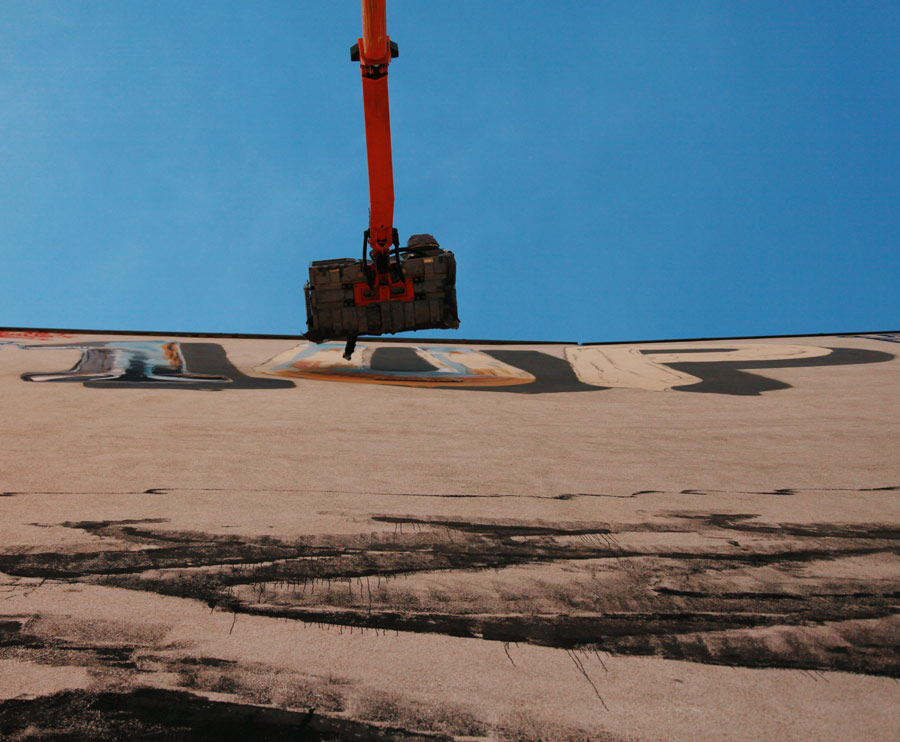
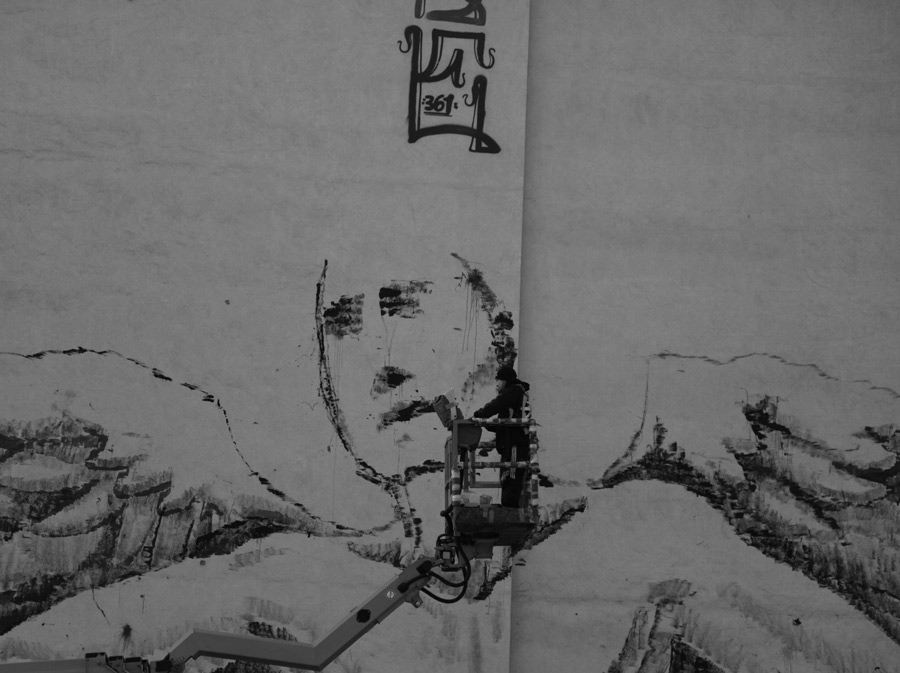
But we were lucky to see the British Fanakapan working with the worldwide, Berlin-based, anonymous graffiti crew 1UP for a stunning collaboration. This kind of shit can turn you into a fanboy or fangirl in a heartbeat. If you had a heart.
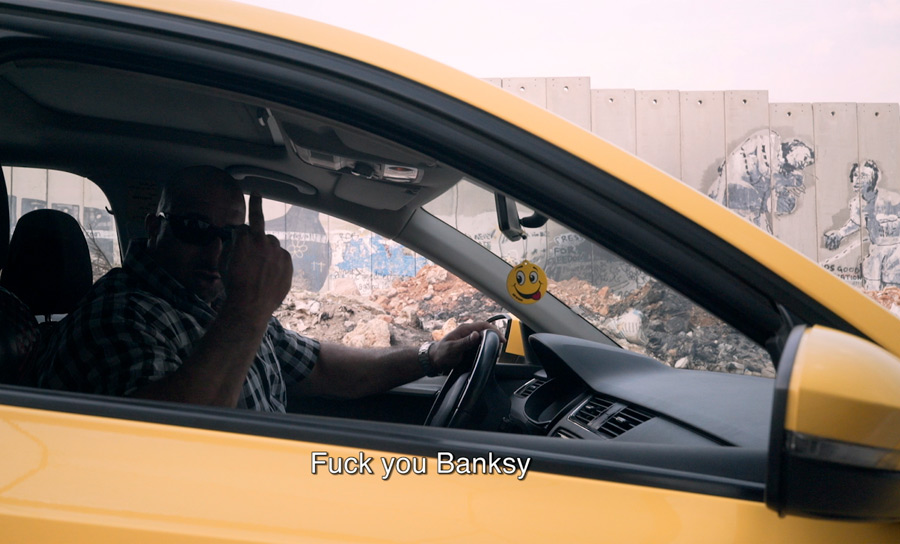
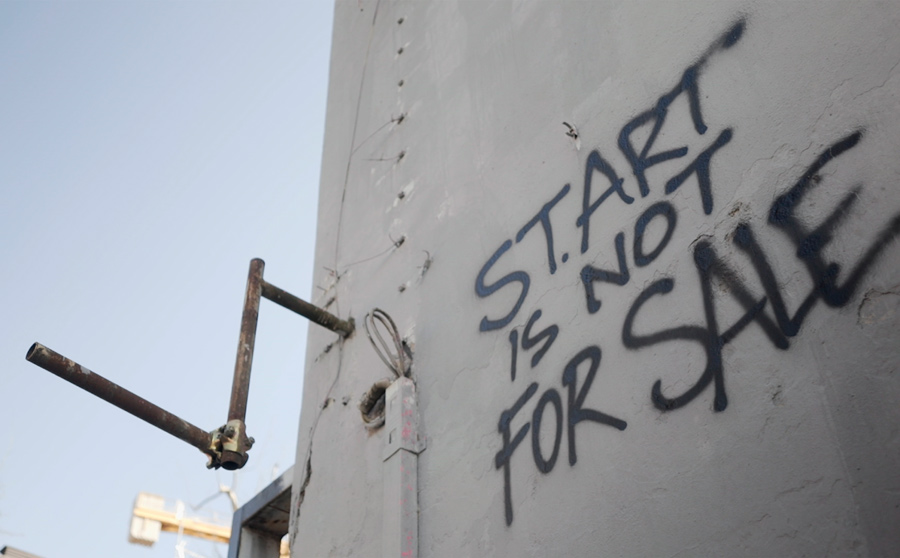
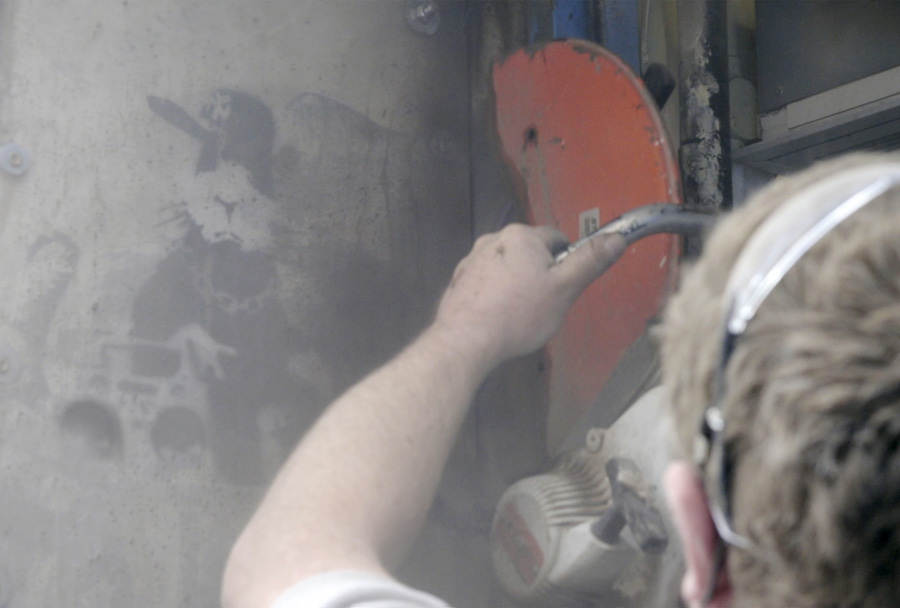
In 2007 the anonymous graffiti artist Banksy painted a series of political works around Palestine.
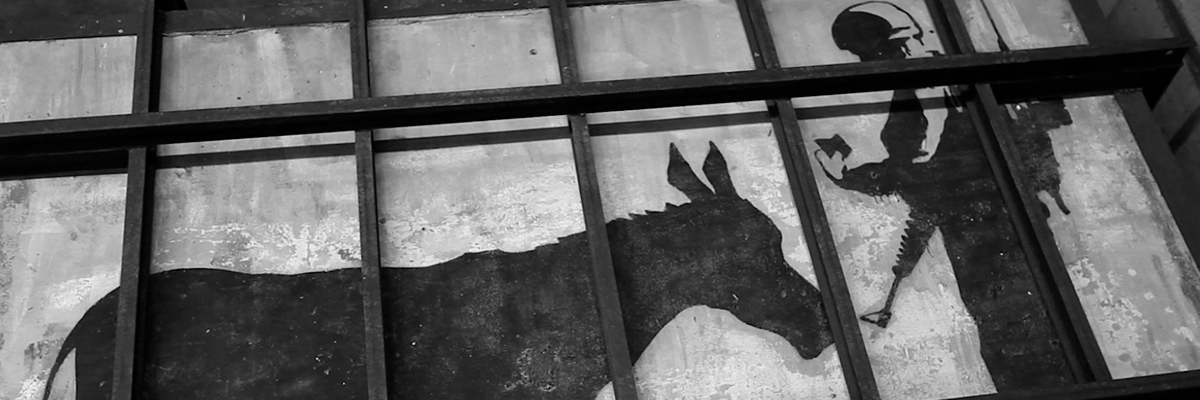
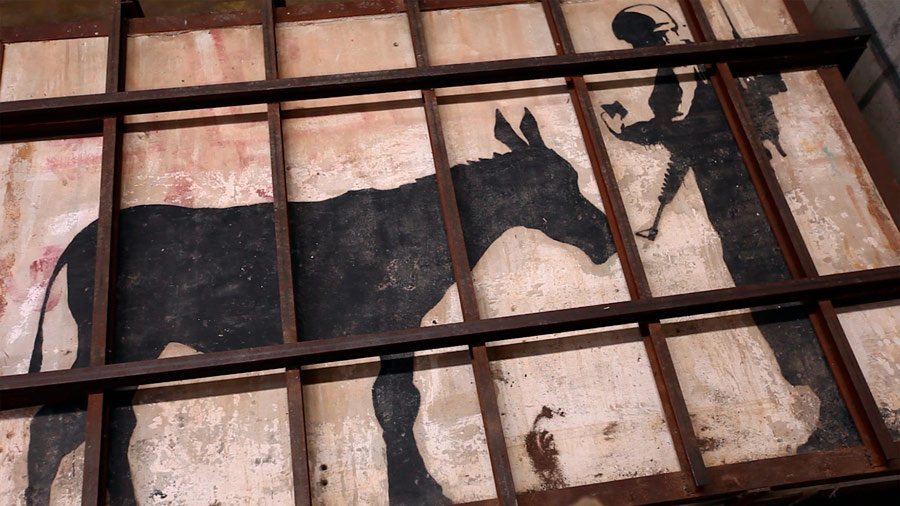
Later there was a mad scramble by people to cut them down and to sell them to the highest bidder on a secretive and clandestine art market. One mural in particular that depicts an Israeli soldier asking a donkey for its papers created a furious response from many. It also sparked its removal – and eventual offer for sale.
An unexpected and riveting tale told through the perspective of a local taxi driver named Walid, the offending wall becomes the main character; shuffled through chaotic Bethlehem streets, ferried across the sea, featured at auction, brandished for collectors. The prejudices, perspectives, and startling insights on display never stop revealing themselves. Needless to say war, pacifism, greed, celebrity, fanboy-ism and occupation all make very awkward partners – providing an endless study in contrasts.
The Man Who Stole Banksy. (still from the movie)
“One year after we saw it debut at Tribeca, The Man who Stole Banksy is enjoying a far wider distribution beginning this month through Amazon Prime in US and Canada. On the occasion of its mass release, we spoke to Christian Omodeo, a professor and curator in the field of urban art. More importantly here, Omodeo was a screenwriter on the film with Filippo Perfido and the director Marco Proserpio. We asked him to reflect on the origins of the film and how as a documentary it continued to grow and mature during its long journey to the big screen, and now the small one. “
The Man Who Stole Banksy. (still from the movie)
BSA: Can you describe your role in the film, and how you watched it grow and mature?
Christian Omodeo: I first met Marco Proserpio in 2012 and we were working on this project until 2017. Marco was just back from Palestine, where by chance he met Walid, the main character of the movie. Walid told him that he had cut a Banksy painting with the intention of selling it on Ebay. Marco decided to do a movie about this crazy story.
He also wanted to describe the political situation in Palestine without portraying this community as victims as most of the media do. At the same time he did not know how to exactly deal with street art. Since that time we have worked together on the story. I carried ideas and stories that were related to Banksy’s involvement in Palestine and to the commodification of street art, while Marco was filming and looking at this story from his own point of view.
We traveled a lot and interviewed many people over a period of 5 years. In the end, we had enough footage to release 3 movies! While working on it our point-of-view on this story has totally changed. Looking at street art from a Palestinian point of view, while the Western art market was definitely consecrating it, gives you a totally different perspective on things.
The Man Who Stole Banksy
This is something that has also been fundamental for me as a curator, pushing me to a more radical attitude towards the commodification of street art. Between 2012 and 2017, while new self-proclaimed “museums” of street art were popping out everywhere, I started to think about what a museum of street art should be and if it makes sense to put street art into a museum. I was seeing many nice collections of well-hung canvases, but this way of building up a street art narrative seemed to me to be very reductive, in parallel of what we were doing within the movie.
This is how my role on this project has changed from being only an author, I became an actor in the role of the curator of the Bologna’s exhibition which became known worldwide due to the reaction of the artist Blu – who defaced his walls in the city in response. People have mainly focused on Blu’s reaction against the foundation that financed the show, without looking at what was happening inside the museum – as well as seeing the new street art narrative we were putting together.
The movie shows this story at the end, but such a topic is so powerful than it would be for the movie or another interview!
The Man Who Stole Banksy. (still from the movie)
BSA: The movie first appeared on the art film festival circuit a year ago. Now it is going to reach a far greater audience than that narrow selection of people. It more accurately mirrors the audience that street art is made for, no?
Christian Omodeo: Of course! We are happy to see the movie reaching a larger audience. This is what this movie was supposed to do since the beginning. We did not do it simply for a bunch of lazy ‘film buffs’ and festival “arty farties” as Filippo, who wrote the film with us, calls them. Unfortunately the movie industry has its own rules and once a producer and distributors come on board, you lose control of your work. Let’s hope that other platforms like Prime will distribute it in the future.
BSA: The story appears rather simple on the surface but then opens up to layers of complexity with themes of challenging power, revolution, commercialism, colonialism… How has your perception of the film changed since you first made it?
Christian Omodeo: It has not changed at all. It’s normal to me – it took me less time and effort to discuss a Ph.D. at the Paris-Sorbonne University than to work on this movie. This is why, at the end of the process, we felt quite sure of our conclusions.
What has totally changed however, it’s my personal and professional way of dealing with street art. Before my involvement with the movie, I was mostly dealing with its theoretical aspects. Today I am more focused on bringing these ideas into the real world, in taking real actions. These are things that I believe are always important to discuss. I’ve seen this clearly during some Q&A at some festivals – but we cannot just talk if we want to develop ways to work with a narrative around street art that doesn’t whitewash it. I’m working on a few projects right now. I hope to have some news soon to share.
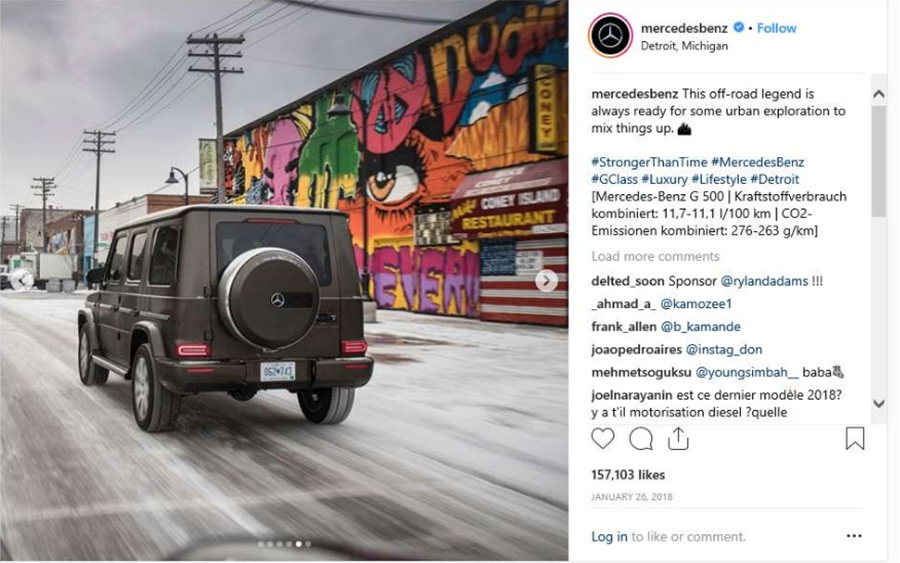
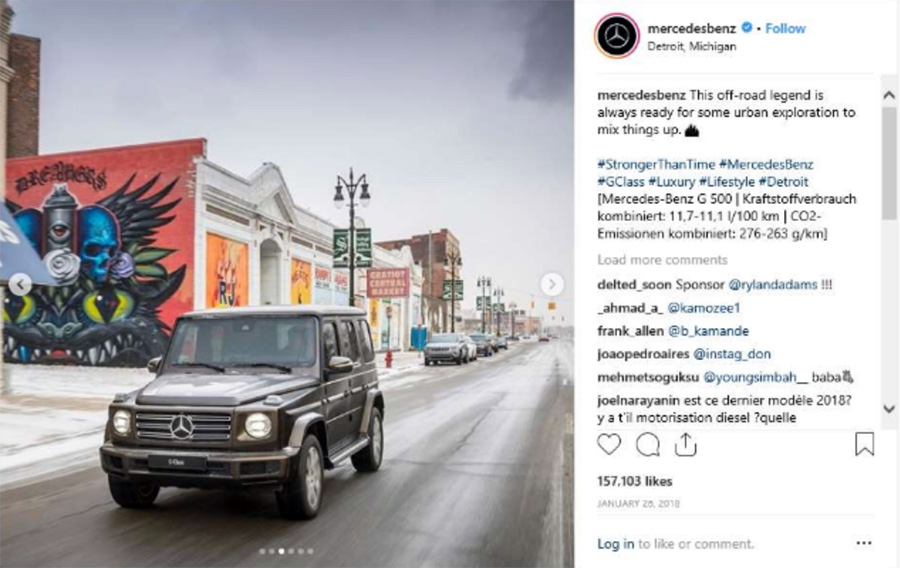
This artists’ interpretation of a car ad that features Banksy’s work is a parody, a farce. No one would try to take one of Banksy’s Street Art pieces to help sell their luxury cars, claiming that his work is in public domain and therefore fair game for any use.
Similarly, if it was a mural on the street by Brooklyn Street Artist KAWS, whose fine art canvas sold at auction this week for $14.7 million dollars at Sothebys Hong Kong, Mercedes wouldn’t simply grab it and run the art behind their newest off-roader on Instagram to infer that “Urban” edginess.
Or would they?
Daniel Bombardier (a.k.a DENIAL) mural in this advertisement on Mercedes Benz Instagram, since deleted.
“And now they have filed a lawsuit against me trying to strip away all of my rights. I feel like I am being bullied and intimidated,” says graffiti/street artist artist Daniel Bombardier (a/k.a DENIAL) in a statement regarding the luxury brand that is instead suing him along with three other artists, apparently for having the temerity to demand to be paid, according to an article by James David Dickson inThe Detroit News .
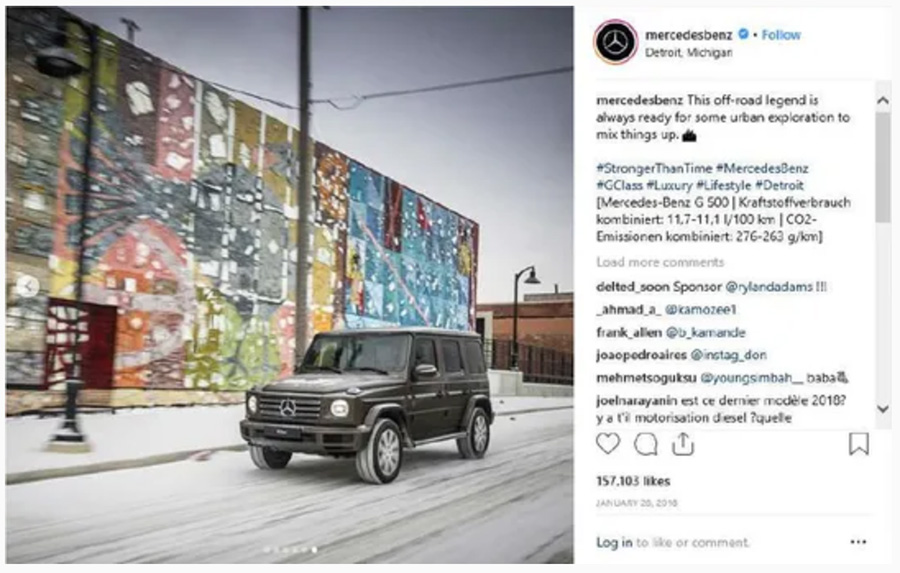
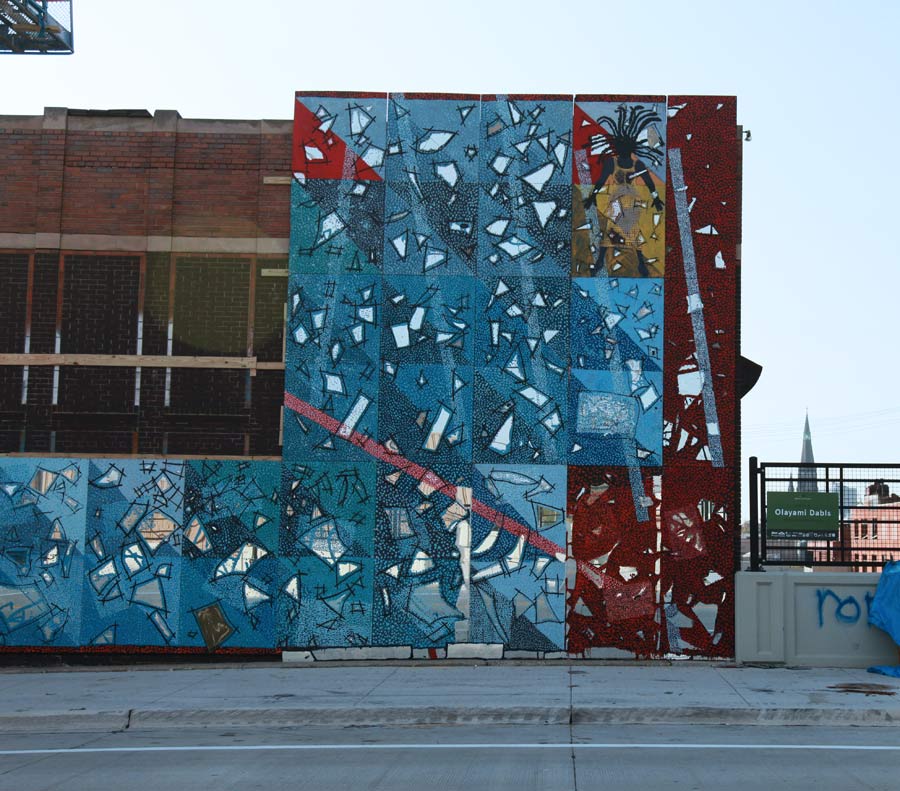
Bombardier’s mural and the artworks of the other artists – James Lewis (a.k.a. Olayami Dabls), Jeff Soto, and Maxx Gramajo appeared in published advertisements for the company’s cars, apparently without permission. The artists hired a lawyer to contact the carmaker to seek redress, according to news reports, social media postings, and emails that fairly flooded us yesterday.
This isn’t the first time that big commercial interests have used images of artists work on the street to flog their wares, only the latest. The twist this time appears that the 1% brand is punching downward, and they have filed lawsuits against the artists. This is not going to end well.
In the public lawsuits (published here – 1, 2, 3 ) MBUSA demands judgement “Declaring that MBUSA’s photograph and post depicting Defendants’ mural do not infringe upon Defendant’s alleged copyright; and declaring that MBUSA’s photograph and post depicting Defendants’ mural made fair use of the mural.” Usually you hear the term “fair use” used in reference to research, teaching, news reporting, and criticism.
Jeff Gluck, an attorney for the artists, told Artsy, “These lawsuits dangerously move the needle towards eroding artists’ rights and in consequence, could strip away protection for so many amazing and important works.”
In another twist, it does appear that French Street Artist Astro may have some sort of arrangement with Mercedes, or one might assume it given that his mural appears nearly continuously throughout a four minutevideo “brochure” for the Mercedes-Benz 2019 G-Class. If that artist was paid for his work, it seems even more confusing that these other four artists are being denied compensation for theirs. What criterion is at play? Clearly we are missing something.
Parisian Street Artist Astro has a large part in the a Mercedes Benz video “brochure”, from which this screenshot is taken.
Every year or so there is another high-profile case where street artists and graffiti writers have to sue someone for making money on their work, whether it’s a global fast-food chain using it in an ad campaign, a fashion brand adapting it to clothing, or pop star who has featured their work in a music video. It’s can all be a matter of degree of course, and the laws regarding intellectual property and copyright and public art are still somewhat in flux, with brands arguing that they don’t have to pay to use art that is in the public sphere while artists contend that if the “use” is substantially commercial, they need to be paid.
Since many Street Artists also work commercially as fine artists, graphic designers, set designers, painters, illustrators, animators, and videographers in nearly every field and for many of these same exact corporations, they have the expectation of being paid for their work. This appears to make complete sense.
Finally, there is the public perception of the brand. If you’re using a public mural to sell your luxury urban “off-road” explorer that reportedly costs 200K, it may be hard for the public to understand why artists can’t also be paid for their work. Maybe because these artists don’t have quite the same name recognition as Banksy or presumably have the financial resources to preserve their rights in court, possibly it appears easier to go off-roading right across their backs with some pugilistic law-suiting. Classy.
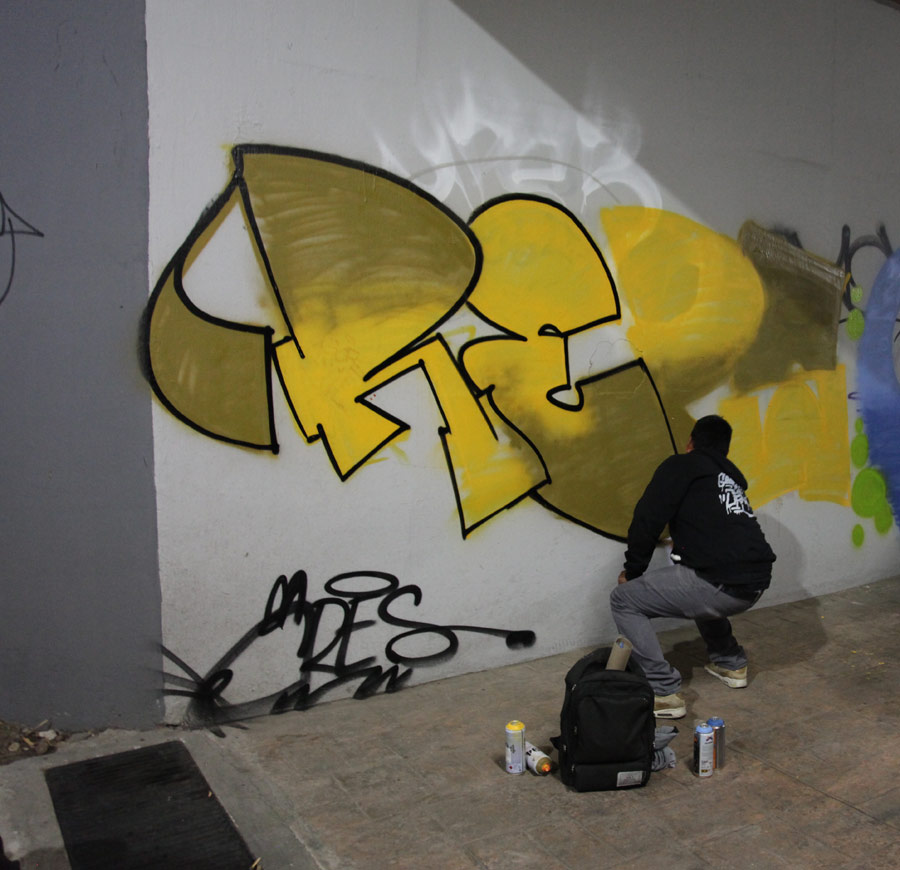
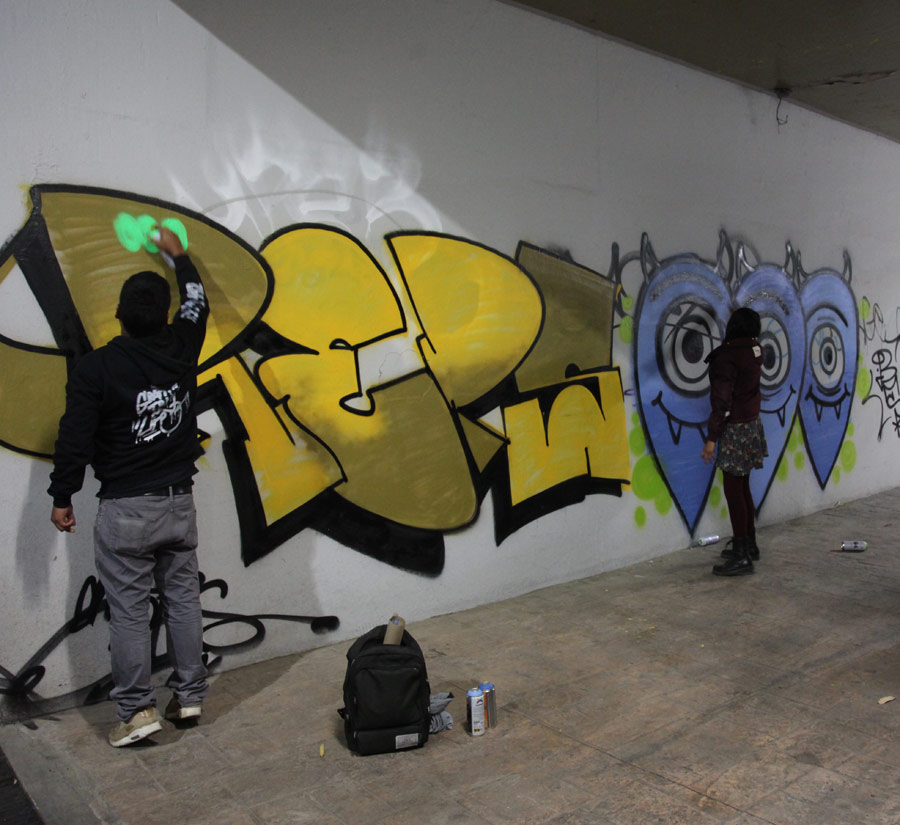
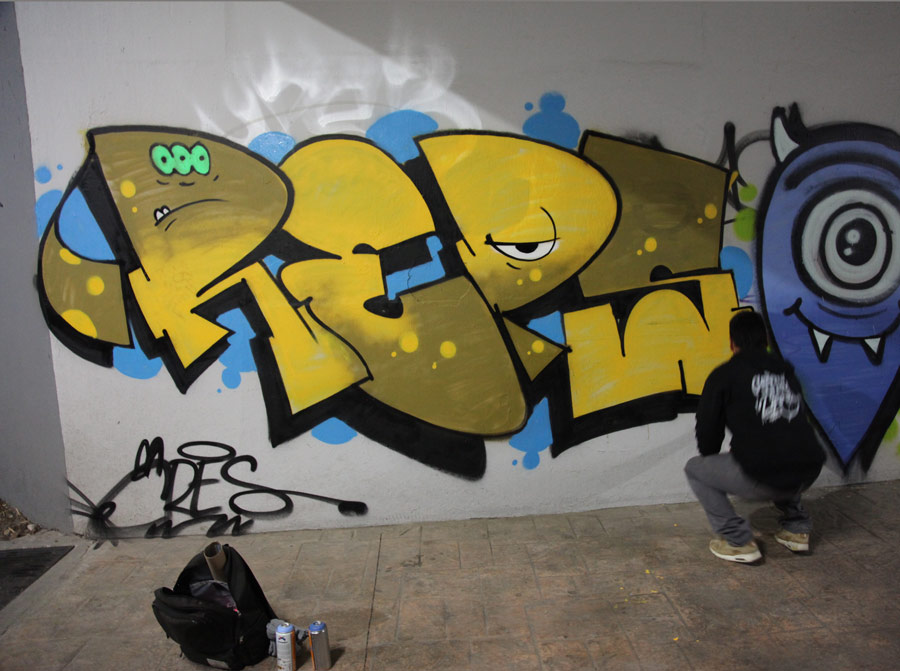
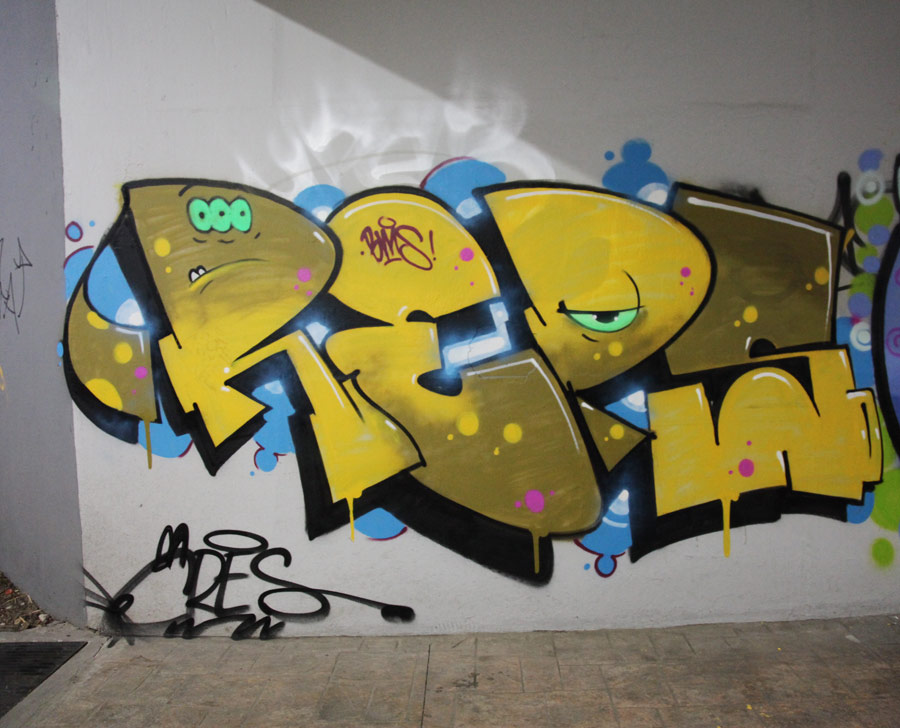
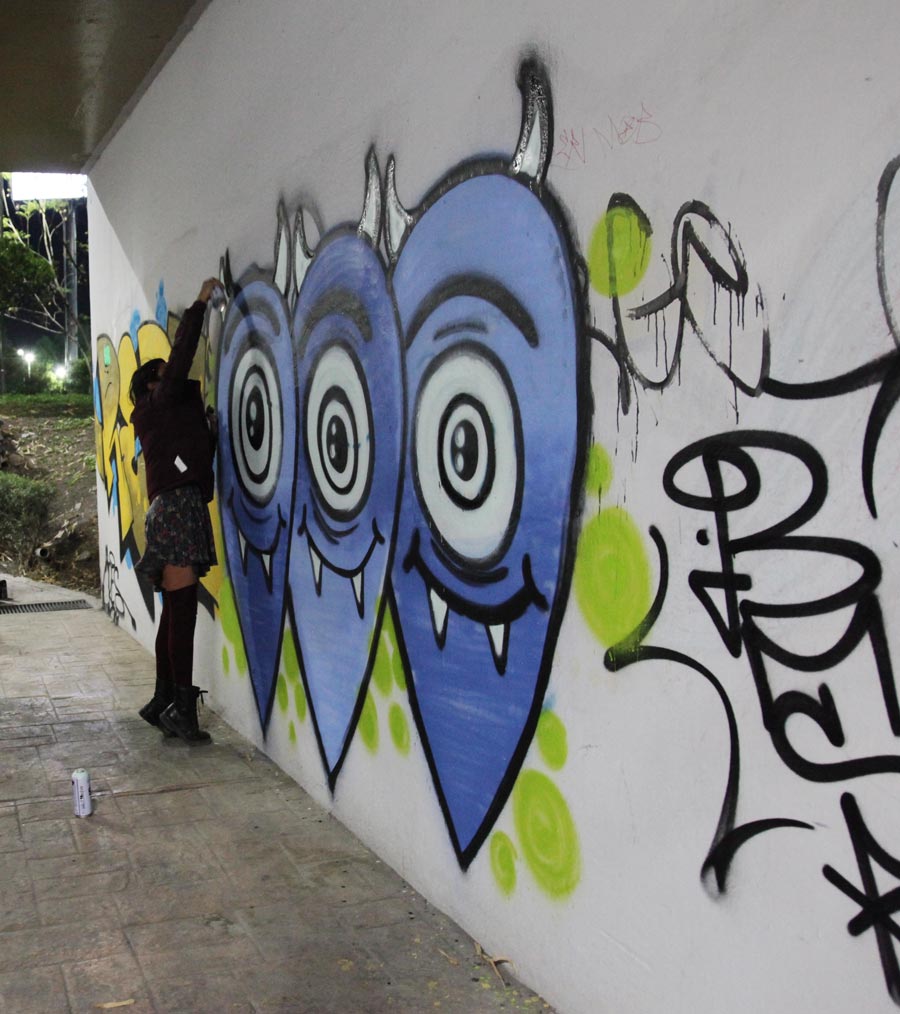
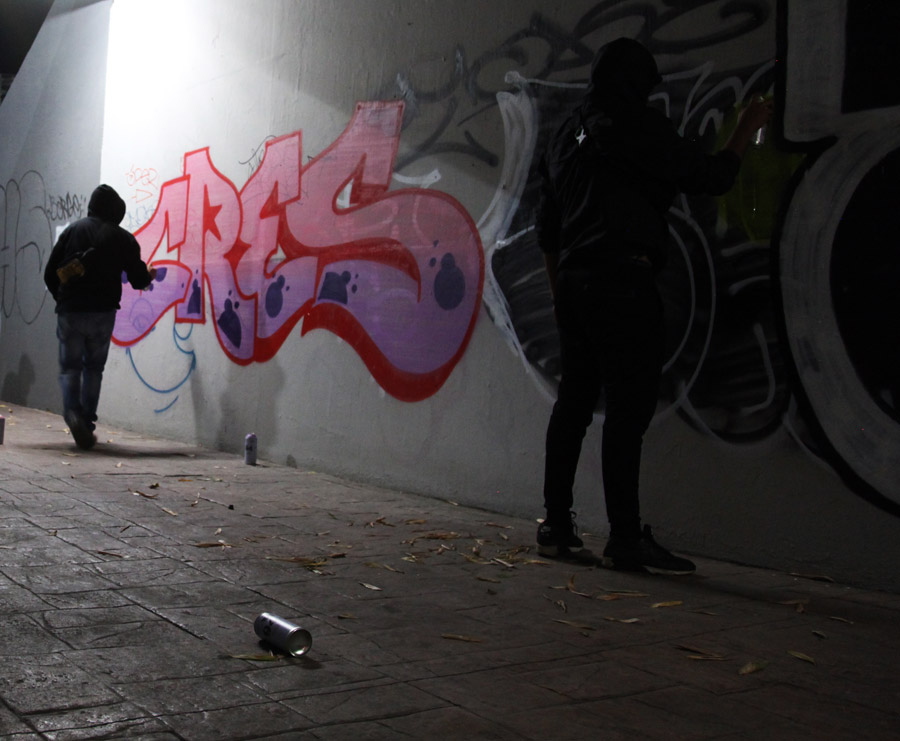
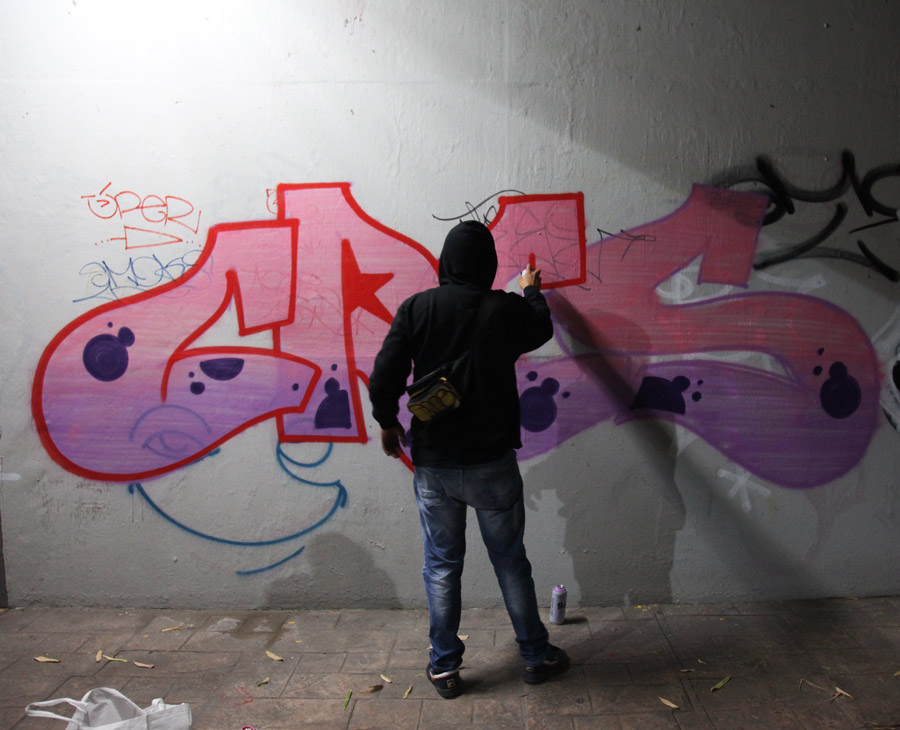
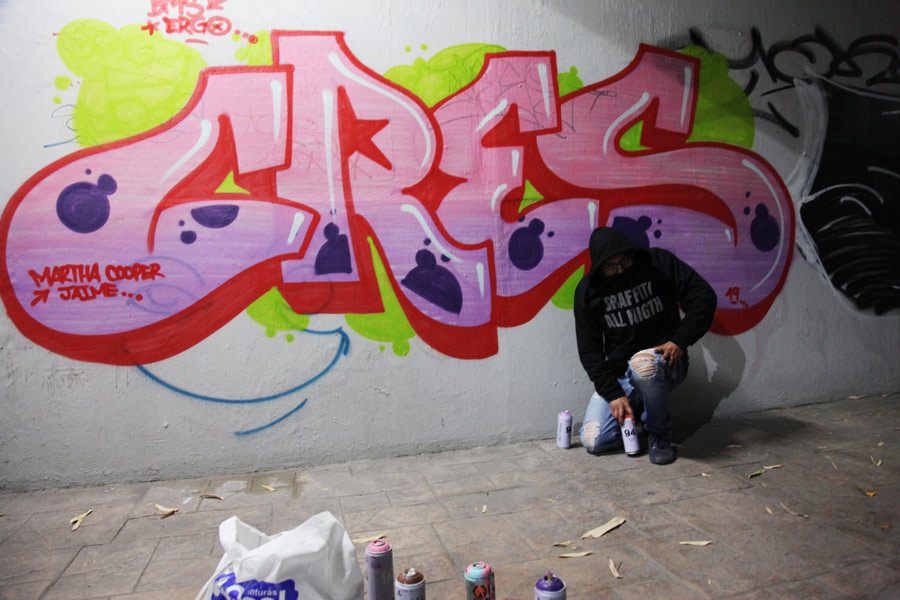
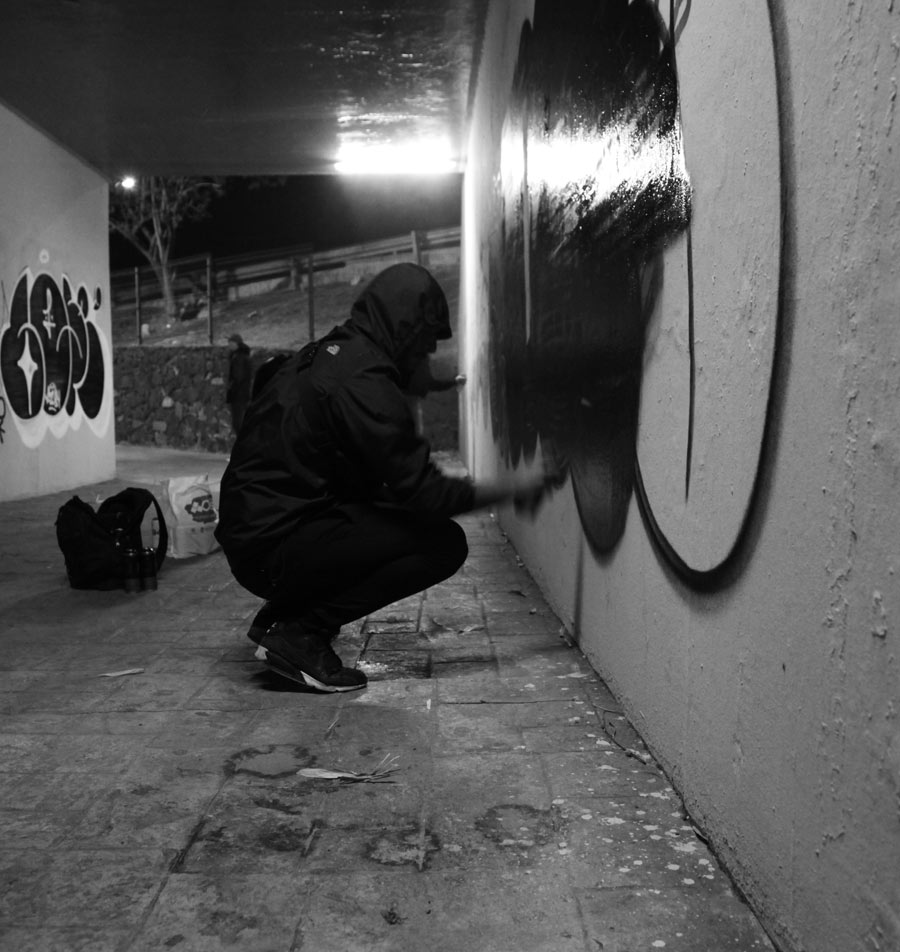
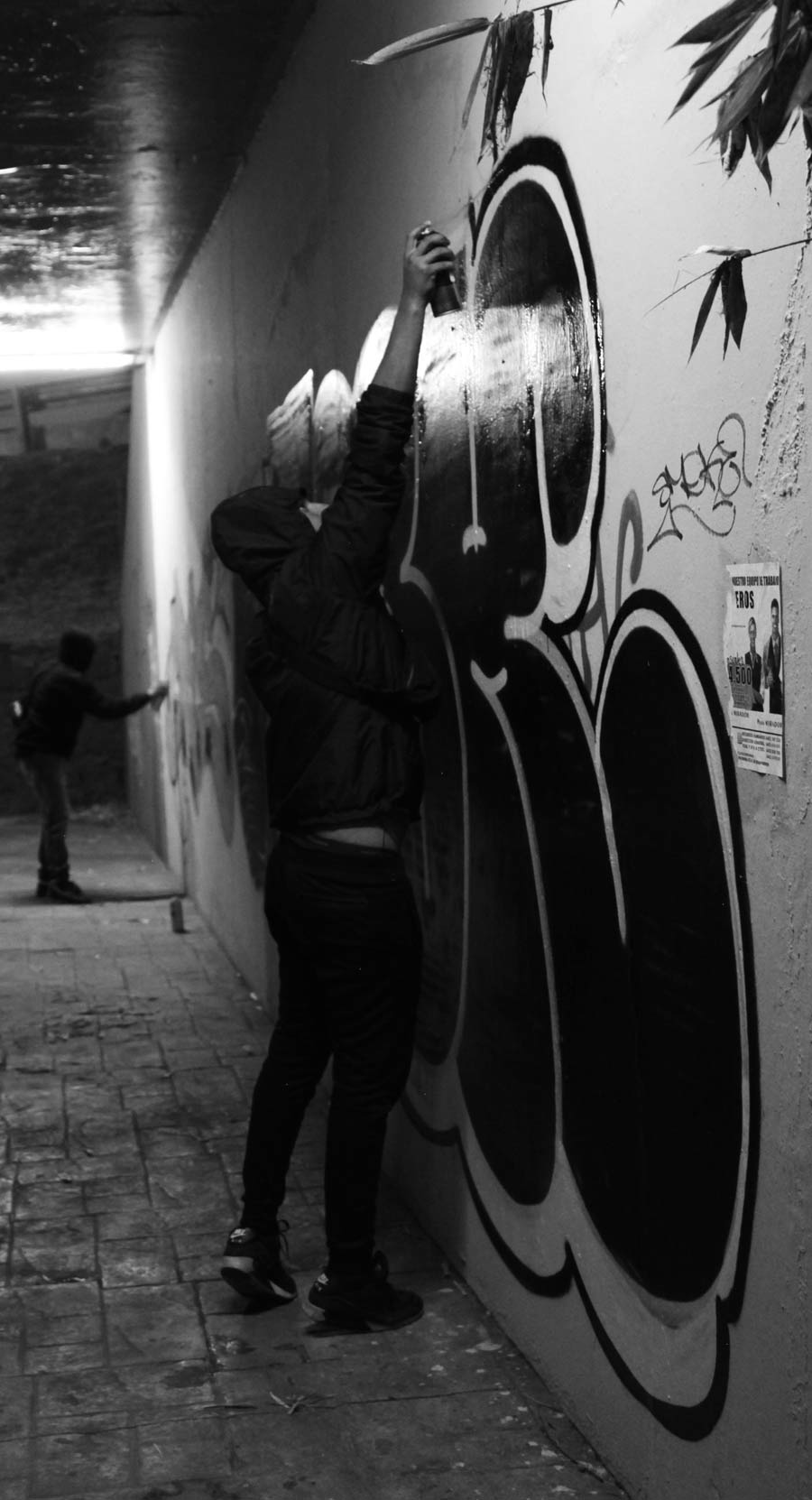
The city changes at night – the blinking, the beams, the shadows. The tires screech, the leaves scatter across pavement in the dusty breezes. The hushed voices, the silences. The spraying of gestures and earnest street choreography inside the tunnel while others sleep.
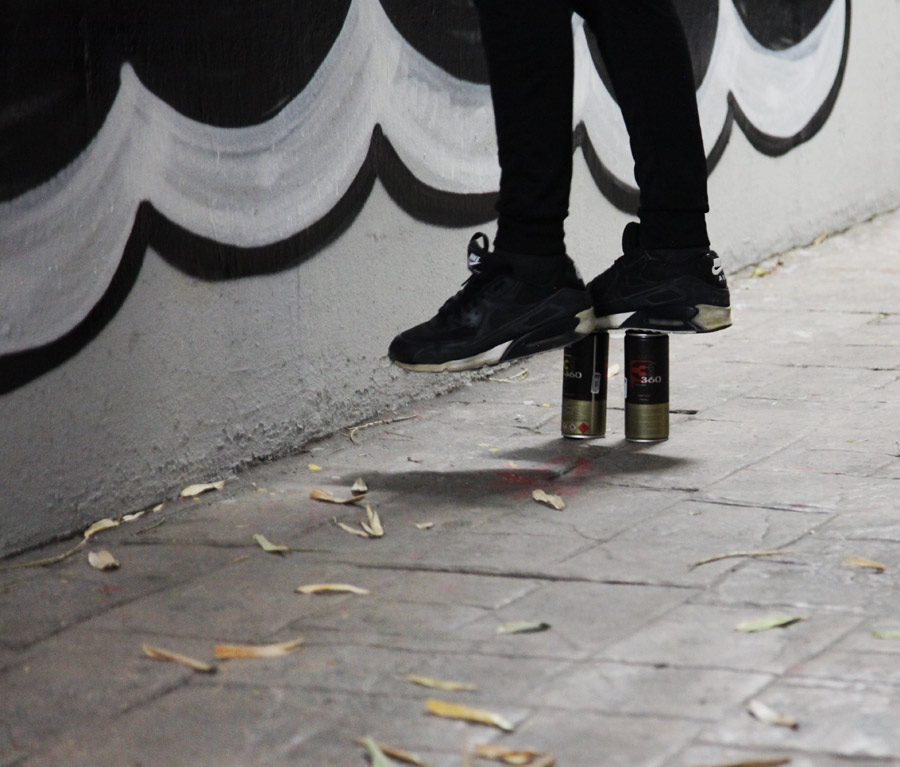
It is an impromptu invitation to discover the creative spark as it reveals itself on the city in the dark; now part of the city loudly, quietly. To have this moment, with these people, in this place, with this history, on this precipice… it is a moment of wonder that lifts us all off of the ground, if only a few centimeters. Then we are back here, together, in the night.
“Martha Cooper isn’t only a photographer, she’s a historian as well and you are here with us today to pay homage to her work. Martha is my teacher and she taught me more than graffiti, she’s taught me the way in which we live with art every day. When we see a piece of art on the street we bring it into our daily lives. That’s precisely Martha’s contribution to our lives”
Edgar Sánchez, co-founder of the Nueve Arte Urbano festival.
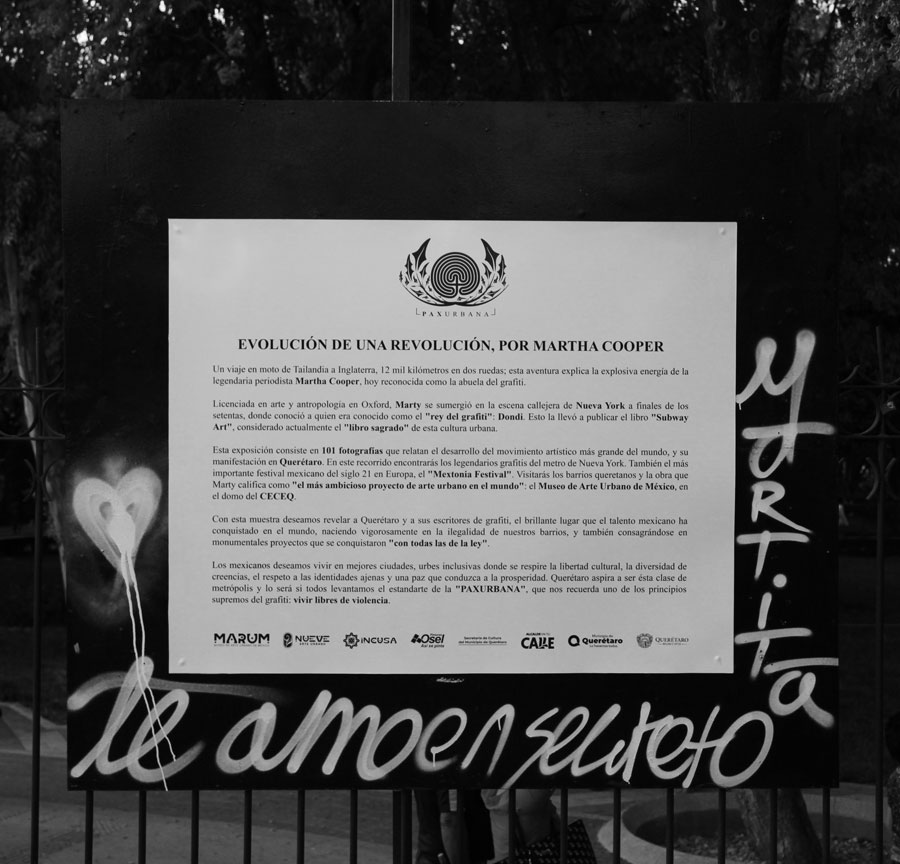
Someone left a love message for Martha on the board of the explanatory text for the exhibition. It reads in Spanish: “Martita I love you in secret”
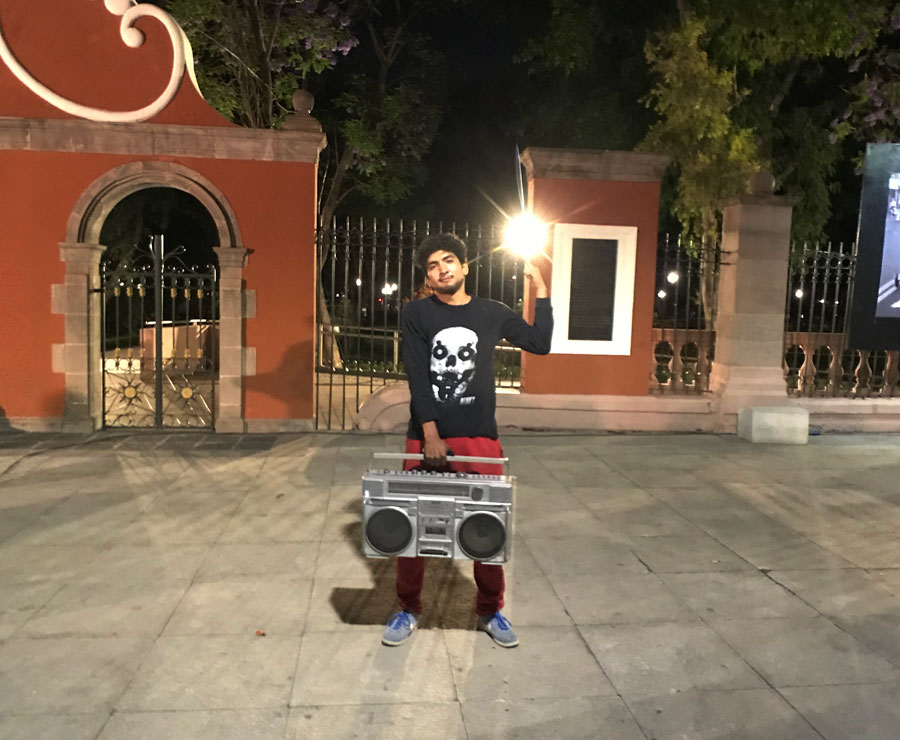
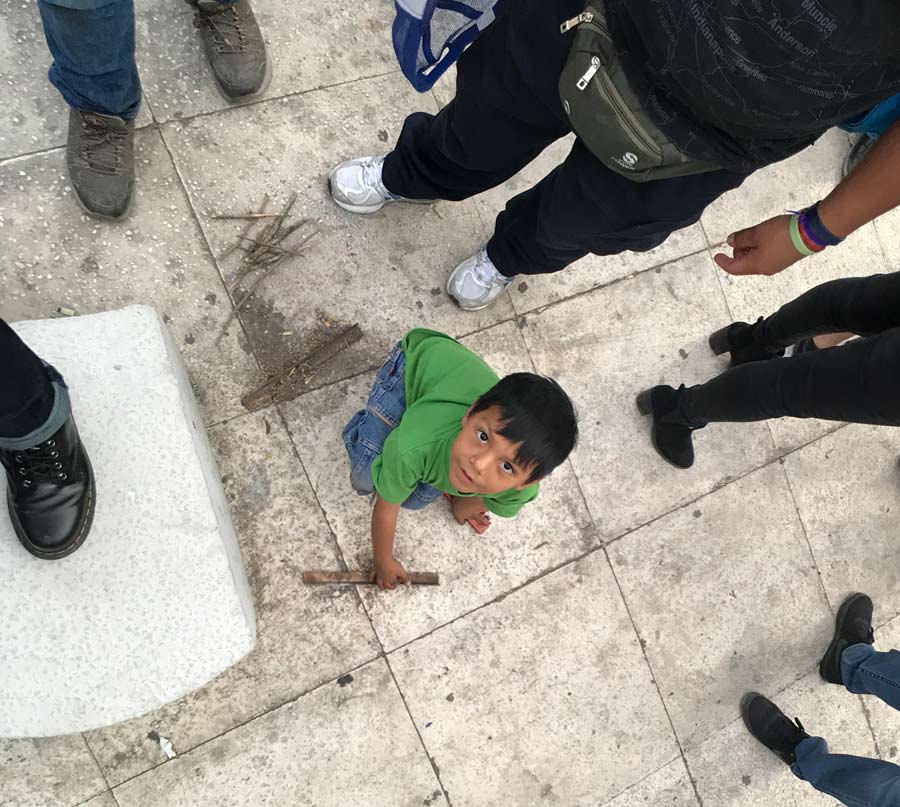
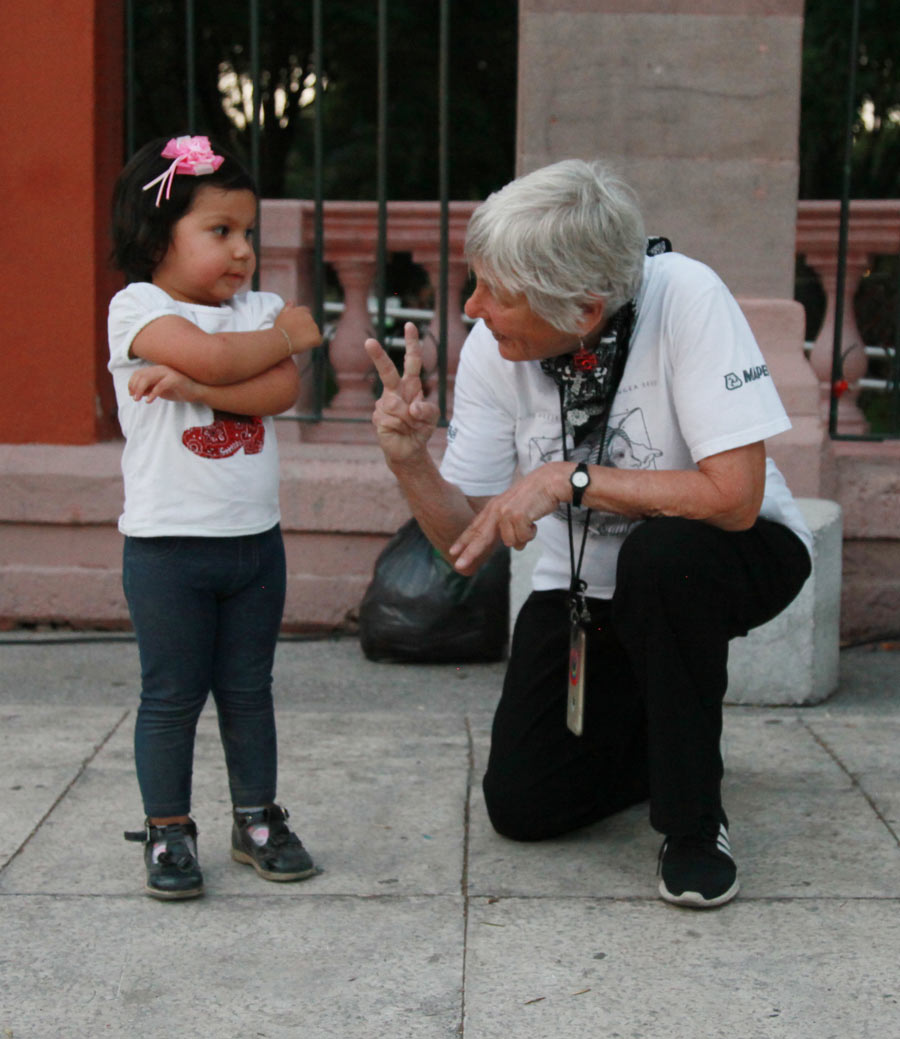
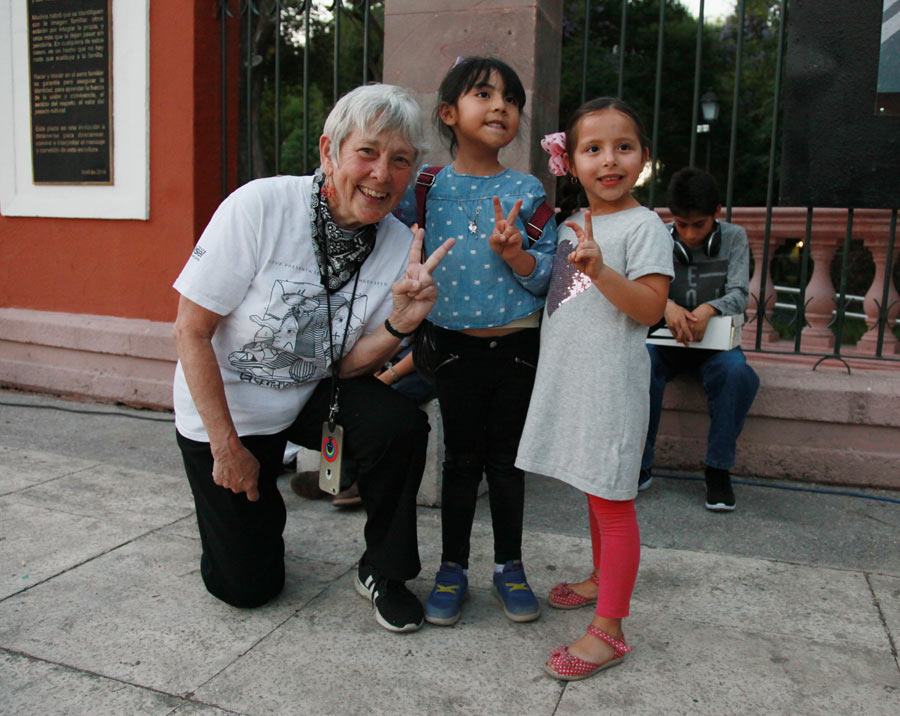
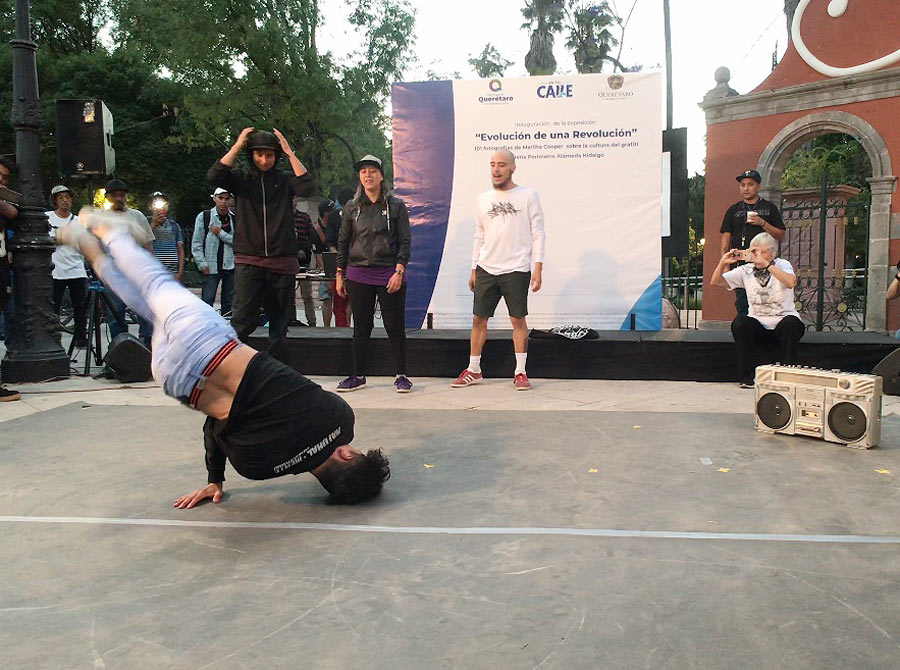
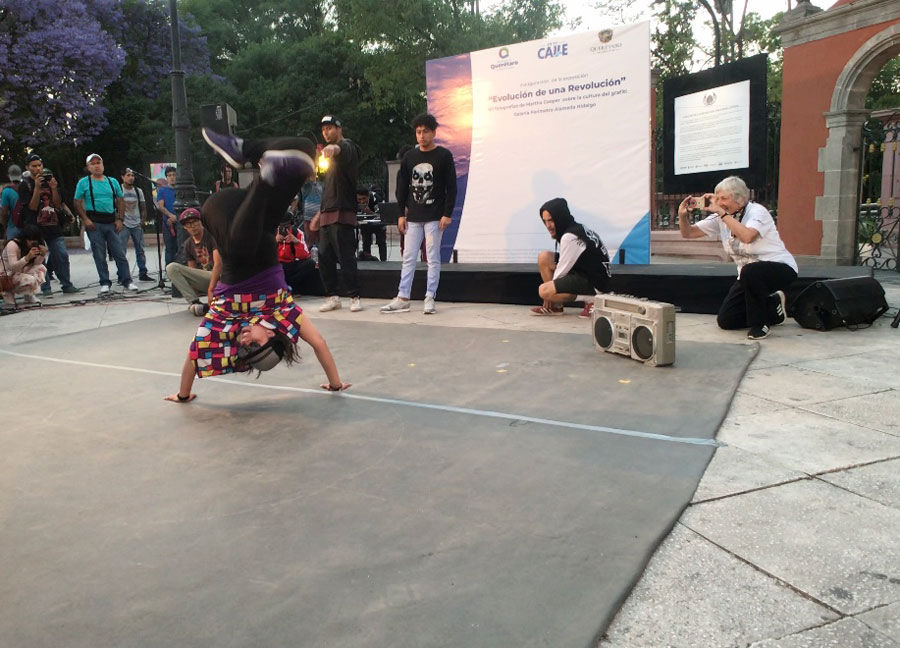
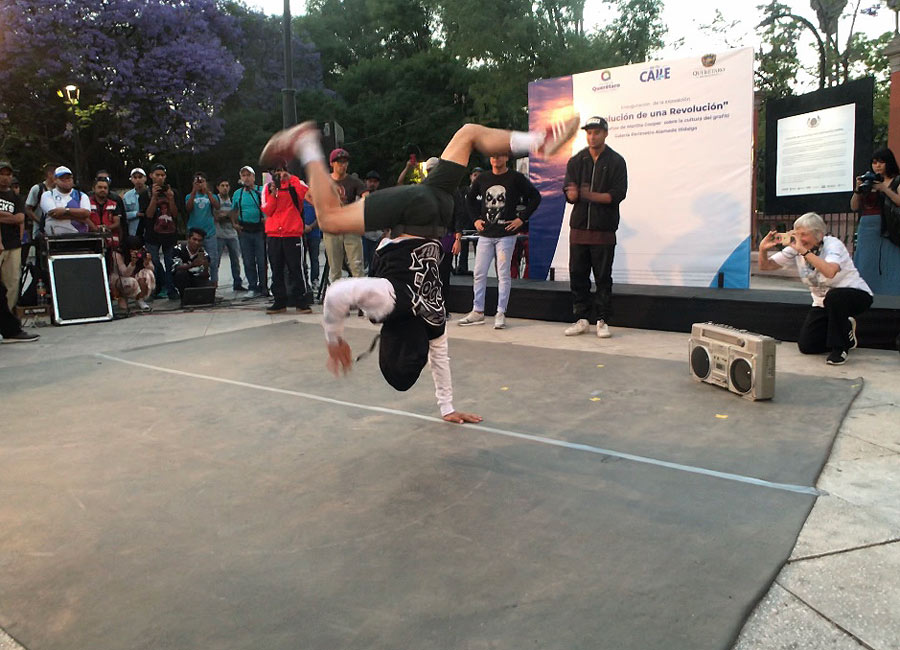
Under the magical spell of the Jacarandas in full bloom, a spirit of Pax Urbana flowed through Queretaro’s lush public park Alameda Central this weekend as dignitaries from the city, including the honorable Andrea Avendaño, the Minister of Culture of the City of Queretaro, and the Nueve Arte Urbano team hosted the opening of an outdoor exhibition by famed photographer Martha Cooper.
The 101 photographs spanning four decades were enlarged and mounted in weather resistant vinyl throughout the park, representing the full range of Ms. Cooper’s continued focus on art in the streets.
Named “Evolucion de una Revolucion” (Evolution of a Revolution), produced by Nueve Arte Urbano in collaboration with the Secretariat for Culture of the city of Queretaro, the open air exhibit champions the grassroots art movement that continues to evolve in cities around the world. It also references the social and political revolutions in countries like Mexico that reflect the will of people and produce upheaval that change the course of history.
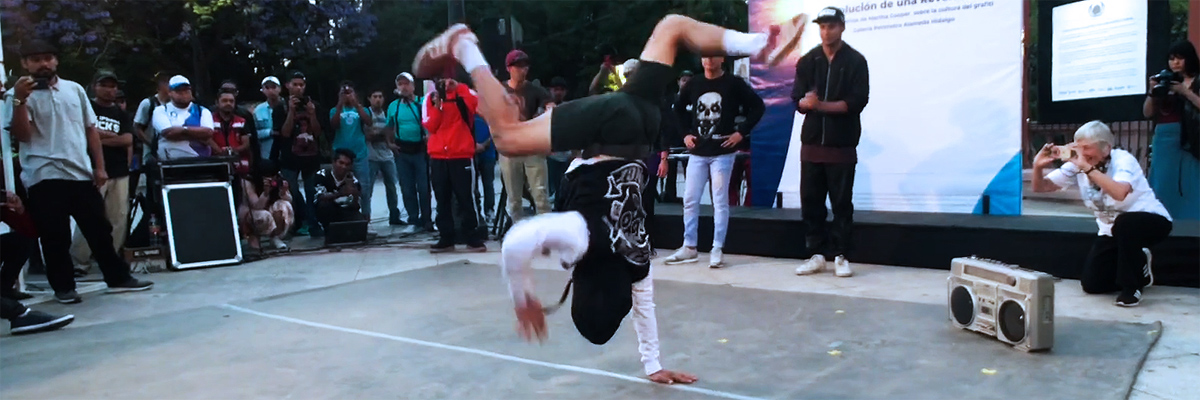
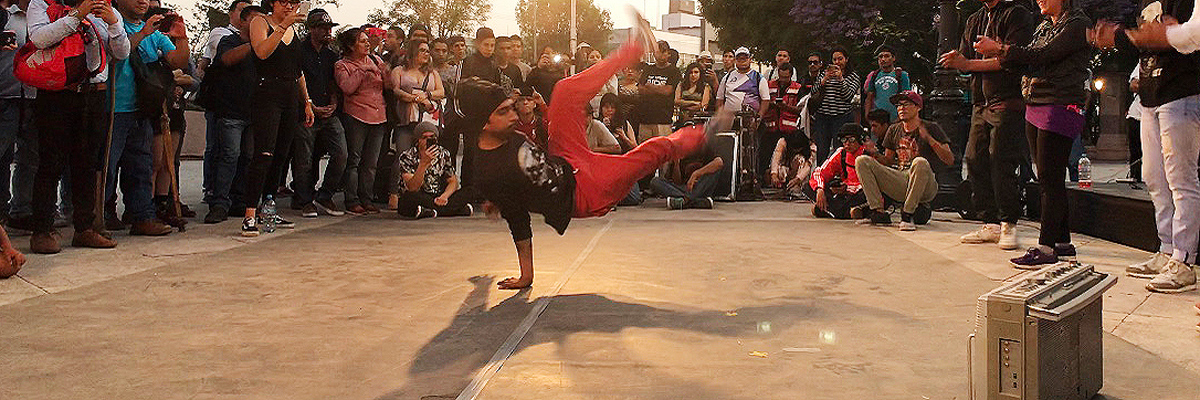
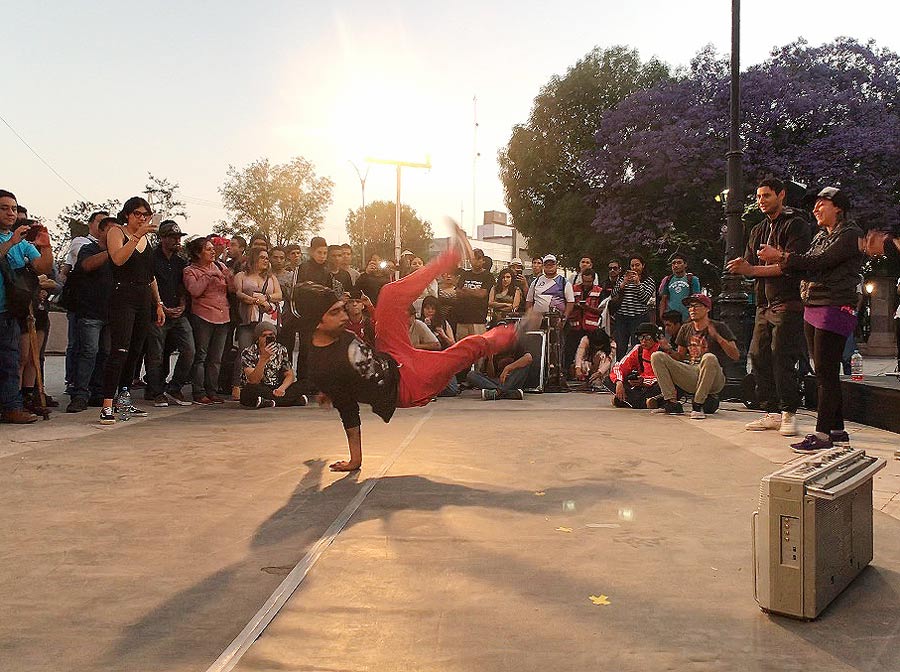
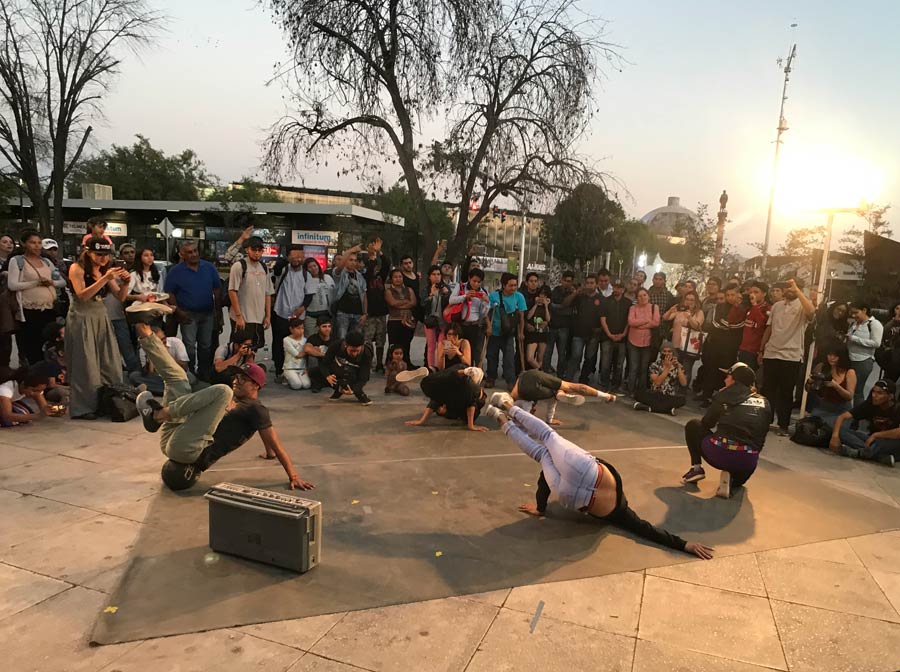
The welcoming ceremony featured bboys, bgirls, djs, and speeches by the Minister of Culture, representatives of the municipality, and Edgar Sánchez, co-founder of the Nueve Arte Urbano festival.
With the arte libre espiritu of New York graffiti writers like Dondi, Lee, and Futura mingling in the air with Mexican muralists Siqueiros, Rivera, and Orozco – a rather transnational reverence for the powerful engagement of art in the streets was at play.
Notably, the audience here were again the youth of the city who feel the powerful magnetism of this grassroots people’s movement that opens doors to them to create and express themselves, giving them a sense of agency over their own environment.
It has always been the kids, teens, and young adults who have driven this global urban culture and Ms. Cooper has steadfastly sought the clues to our future by consulting the opinions and creative expressions of these folks.
That may explain why Cooper today embodies that precise sense of discovery and vitality – an enthusiasm that shined during a personal tour she gave of her new photo exhibition here outside in Mexico.
“On a path where thousands of people walk every day we’ll be welcomed by urban art in an urban space. “Evolution of a Revolution” is an exhibition by famed photographer Martha Cooper under the project PaxUrbana, a collaborative project that’s rooted in a dialogue between several sectors of our society and includes the graffiti writers from different neighborhoods of the city of Queretaro”
Andrea Avendaño, Minister of Culture of the City of Queretaro
Welcome to Images of the Week! Go outside! Take your recycled bag with you because New York just outlawed plastic bags as of March 2020, so you can get in the habit now. This week most of our images come from the Urban Art holy city of Berlin, which we visited for a few days. Next stop, Querétaro, Mexico! Vamos!
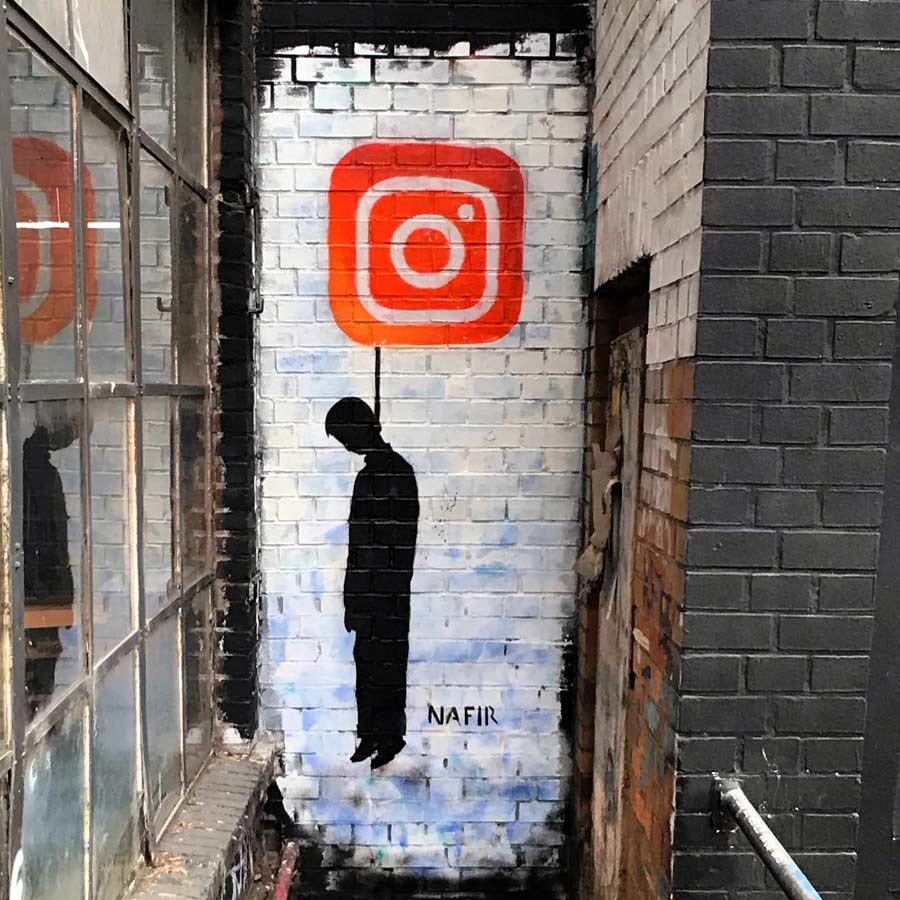
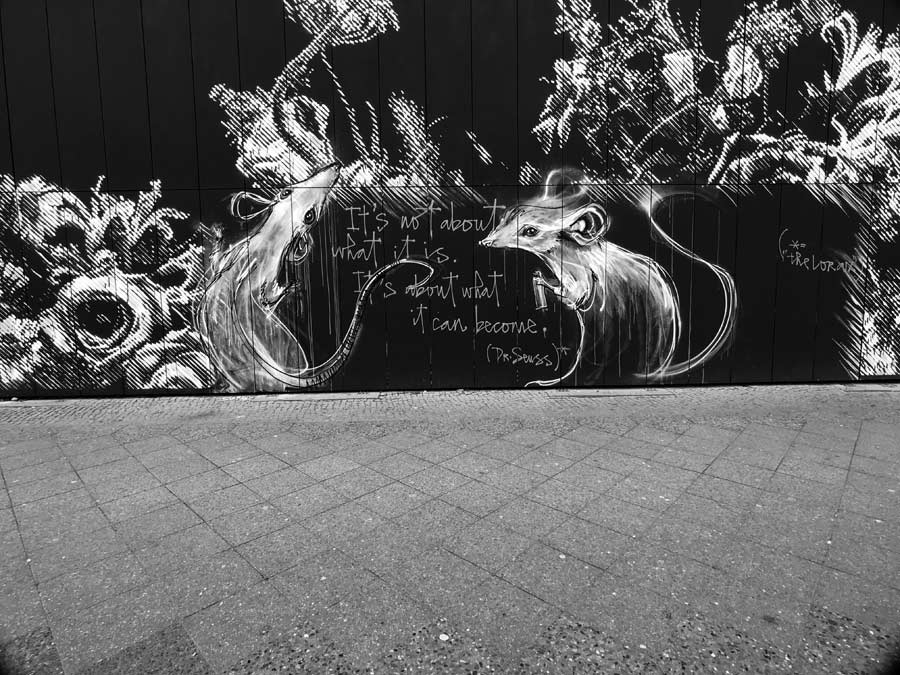
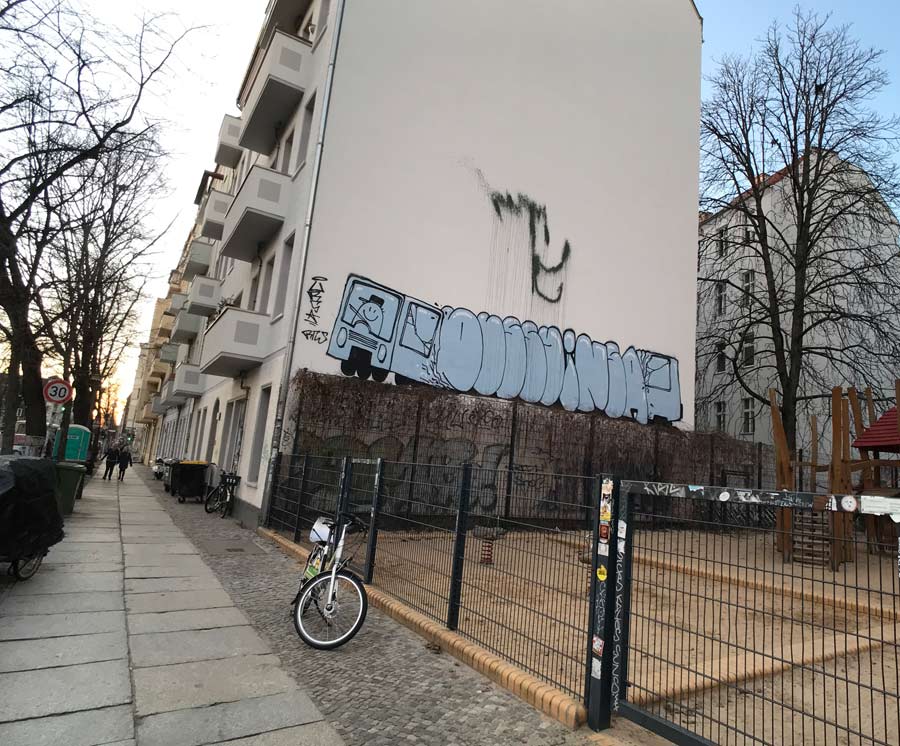
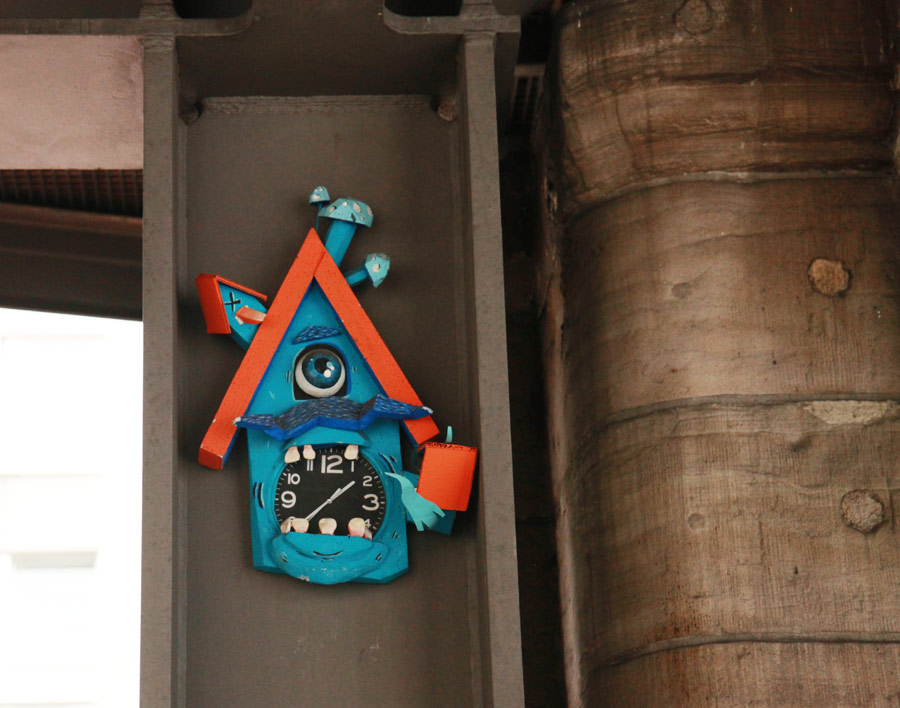
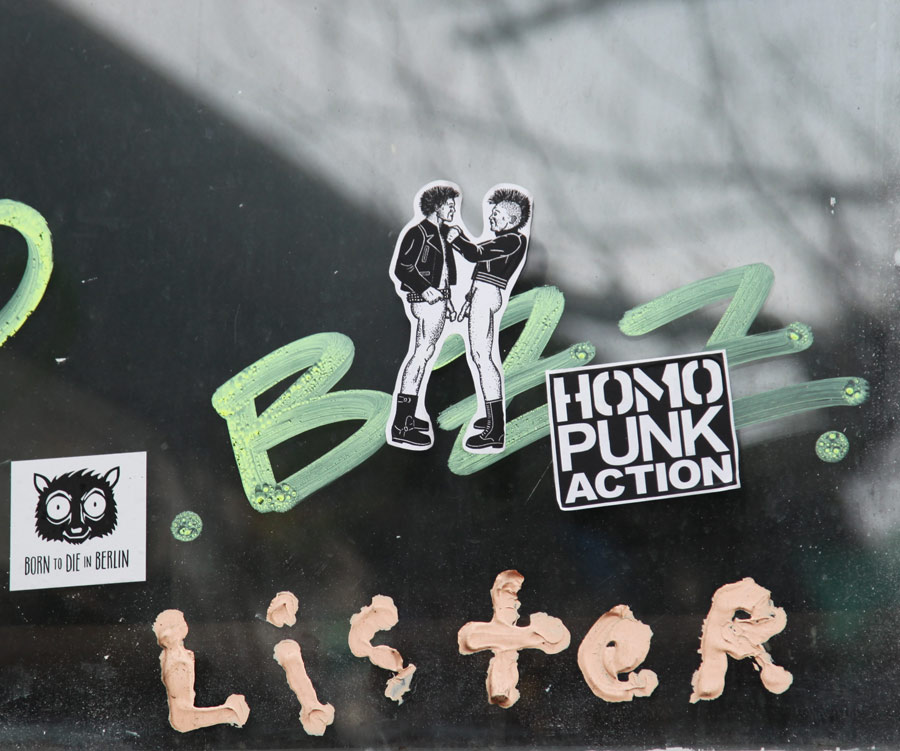
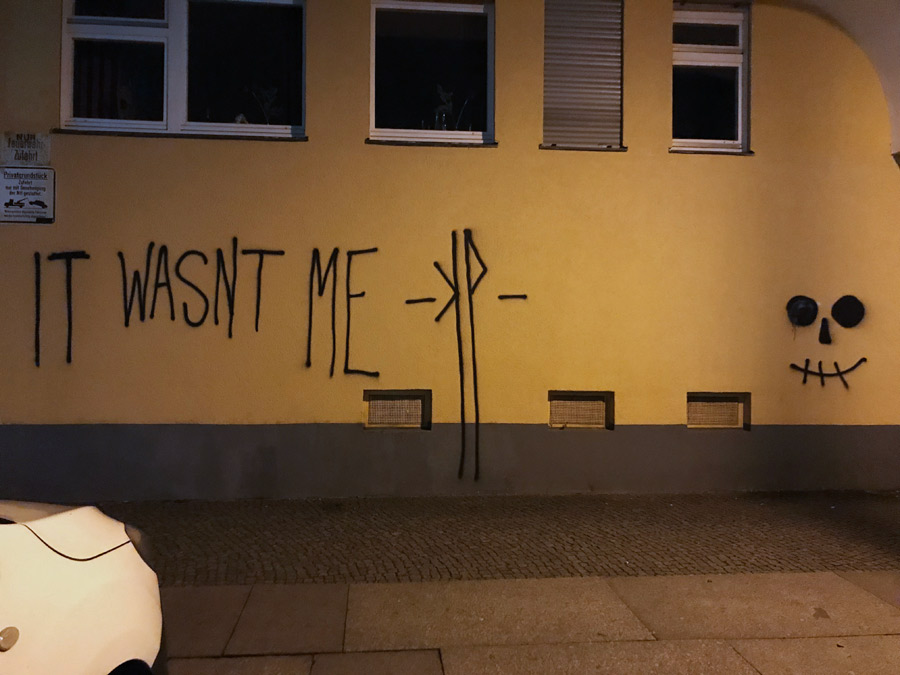
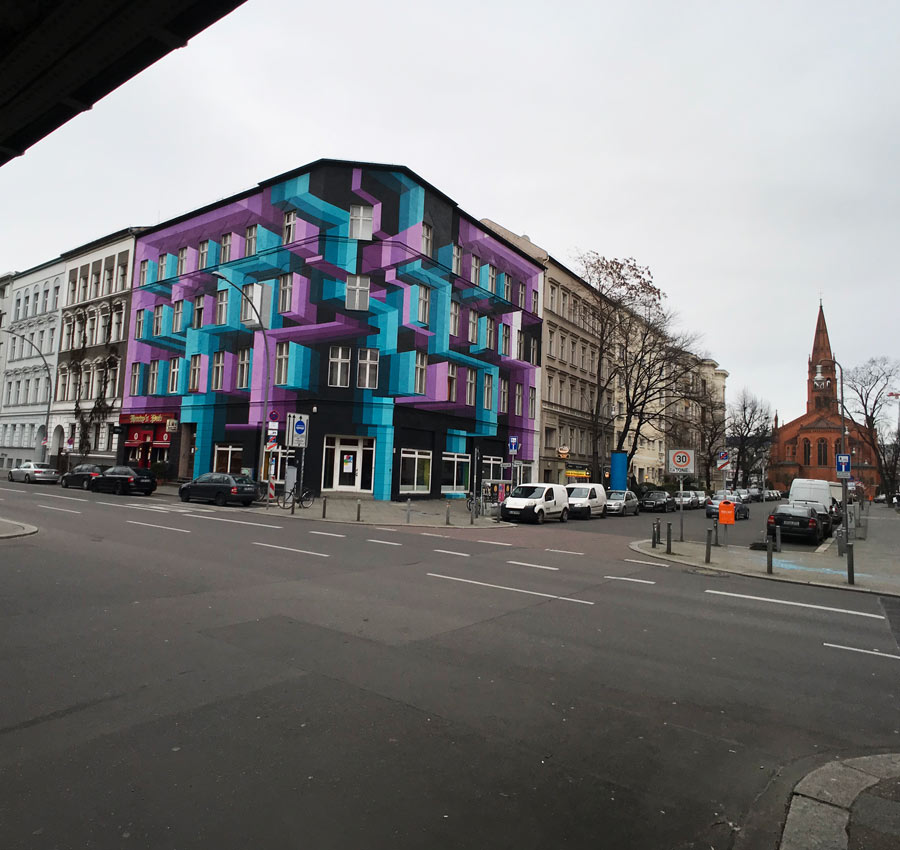
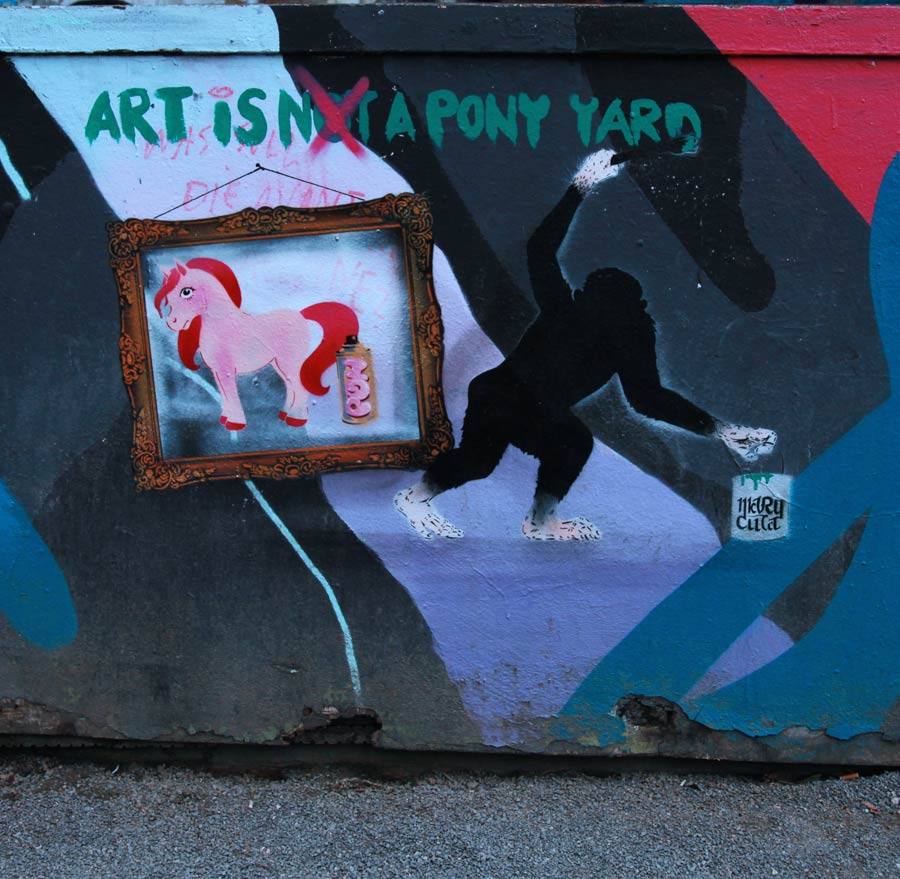
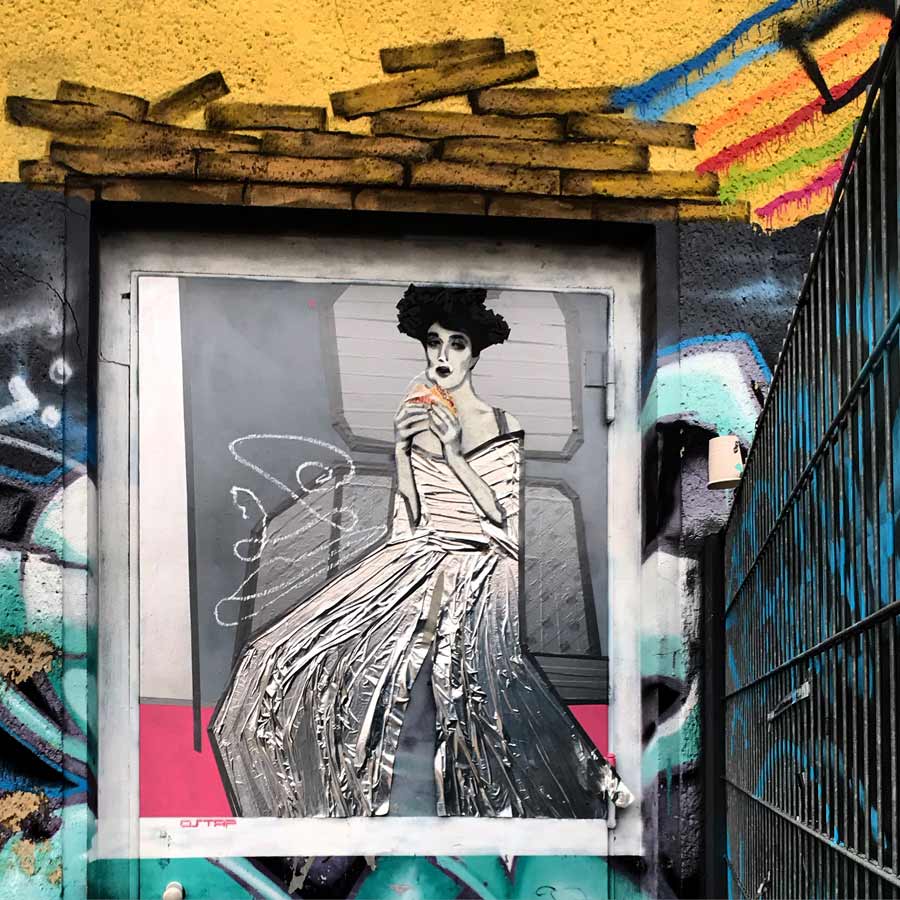
So here’s our weekly interview with the street, this time featuring Berlin Kidz, Herakut, Homo Punk Action, Lapiz, Lister, Marina Zumi, Mr. June, Nafir, Nespoon, Nils Westergardt, Ostap, Pink Pony, 1UP Crew and Snik.
Berlin streets are regularly teeming with the Vox Graffiti in shouting chaotic profusion – and have been for decades. The bubbling laughing raging hordes proffer a visual conversation that often roars, and you’ll have to yell to get your voice above the rest.
1UP and Berlin Kidz are two of the graffiti crews who reliably blast out their viewpoint, each with a uniquely unmistakable cadence and flair. This week one gilded the urban stage while the other was transformed upon it by British guest star Fanakapan with a ringing whoop, and with the angelic welcome of Alanis at the entrance, the Frühling party of Berlin is in full bloom.
Set upon a newly opened urban arena in Kreuzberg (thanks to the demolishing of a building adjacent to it) the actual bubble letters that distinguish the guileful Londoners’ letter style now rise above the rubble with multi-colored glee. Spelling out the 1UP letters in a way they never could, his interpretative take is framed by two runners of Berlin Kidz translation of Pichaçao-style colored cryptic tagging.
“As one can imagine this was just to good to be true,” says Sam Walter of YAP Productions, the organizers and facilitators of the lift and permissions. “Yes we did have problems with a security and also police since we had no official paper which gave us permission for the wall – but we got a couple of confirmations via phone calls,” he says with all the reassuring confidence of a Cheshire cat .
Together with the rest of the steel-spined-velvet-clad YAP posse, the 1UP crew and Fanakapan were celebrating on this vast muddy lot ringed in concertina wire as the sun set one night this week. Word spread quickly and the reunion at the wall felt like 50% Graffiti God magic mixed with 110% adrenaline helping everyone ignore the psychotic spring weather that warms you one minute and converts you into a popsicle the next.
The original motivation for the collaboration is based on an one-year-old idea between 1UP and Fanakapan, says Sam, “bringing those beautiful, shiny, giant 7-meter “1UP’ letters. These are young artists who take on a lot of risk to push the graffiti culture beyond its boundaries.”
“No animals, plants or 1UPs were harmed during this production,” quips the charismatic cultural curator and YAP team member Denis Leo Hegic as he texts process shots of the wall to the squad as the secret/public wall goes up.
“1UP carries the zeitgeist of Berlin out into the world like no other contemporary collective. The DNA of the crew is rooted in the streets of Kreuzberg, but the group also developed into a global family,” he says. The statement is only partial bravado, as a serious graffiti head in many cities will be able to tell you a rooftop, elevator, or train line that they’ve seen hit by the amorphous and amazingly anonymous crew that seems to shape shift and reconstitute itself – evidenced here where their enormous tag is painted by another artist entirely.
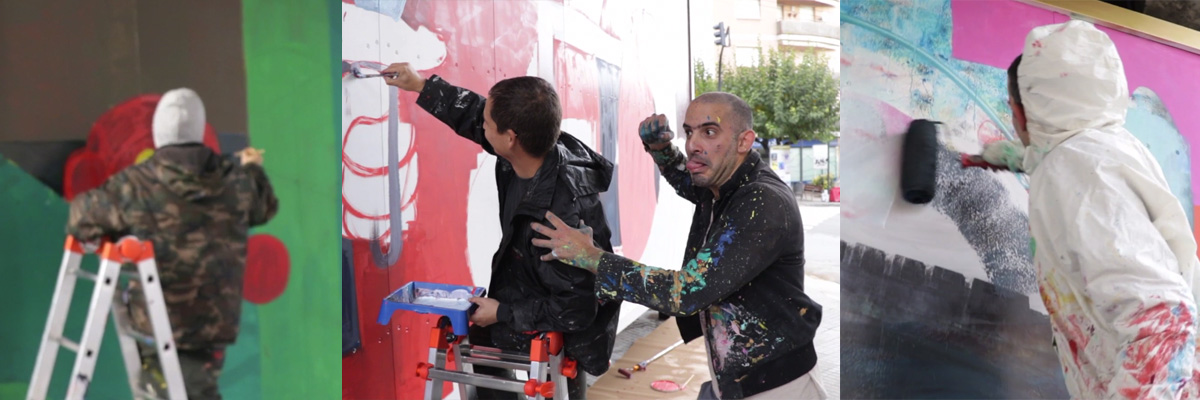
BSA: Is this a tribute piece to 1UP or is it a collaboration? Denis Leo Hegic: It’s gravity graffiti. Collaborative and collective work is already included in their spirit “one united power”. Fanakapan managed to portray it in such a powerful and gravity defying way and gave us the largest 1UP letters hovering weightlessly over Berlin. 1UP is a ubiquitous tag in Berlin. You can’t help but be aware of it.
BSA: Did the authorities take any interest in visiting the site when Fanakapan was painting the tag, perhaps thinking that it was actually 1UP painting? Denis Leo Hegic: We had quite an interaction with the local law enforcement. However, all the officers that appeared on site were being alarmed by other people and did not come on their own initiative.
BSA: How did you get permission to paint on this wall? Denis Leo Hegic: Through the intelligence of many. We managed to thrill lots of good, curious and courageous people who made everything possible: from a large wall in the center of Kreuzberg to the entire production. Fanakapan was extremely motivated and he literally blew those balloons up the wall.
BSA: Previously there was a building in front of the current wall. Now the whole wall is fully exposed, showing fully the long-running Alanis angel piece. Was any consideration given to the Alanis piece while planning the 1UP piece?
Denis Leo Hegic: Absolutely. I hate when some people say “curating a wall” or “curating a mural” – that’s such utter nonsense! How can one person possibly “curate” one single painting on one single wall? However, this wall succeeded to curate itself naturally. It’s a great composition with the two vertical stripes by Berlin Kidz on each side of the piece and being held by the Alanis angel from the ground. With Fanakapan’s addition of the 1UP bubble tag it became a marvelous “Kreuzberger Mischung” (Kreuzberg Mixture).
Our weekly focus on the moving image and art in the streets. And other oddities.
Now screening : 1. Ibie vs Pelucas. Battle on the Streets Using VideoGame Metaphor 2. Jorge Rodriguez-Gerarda “Perpetual Flow” in Morocco 3. Nuria Toll. Contorno Urbano Foundation. 12+1 Project. Barcelona 4. MUSA vs Siro Wild West. Dueling Walls at the 12+1 Project, Barcelona
BSA Special Feature: Ibie vs Pelucas. Battle on the Streets Using VideoGame Metaphor
A new one from Contorno Urbano, this video is scored/styled as a digital battle with a Ludonarrative dissonance ,these two 3-D gaming masters are the ludic elements of gameplay and pushing the narration of discovery and slaughter by paint.
With each player reaching deeper into his quiver for arrows, bolts, and darts, the resulting paintings are deep and lush – compiled with many actions per minute. This isn’t just player versus environment versus player – this is player versus imagination.
Jorge Rodriguez-Gerarda “Perpetual Flow” in Morocco
“My work uses natural materials and technology. I try to do this in a way so that it has very little impact (environmentally),” says artist Jorge Rodriguez-Gerarda here in Morrocco where he has created a huge land-art installation called “Perpetual Flow.”
MUSA vs Siro Wild West. Dueling Walls at the 12+1 Project, Barcelona
An awesome duel between can-slinging cowboy and cowgirl! Scored to a wild west musical theme, see these two artists on opposite sides of the tunnel painting fire and rattlesnakes and their individual wild styles.
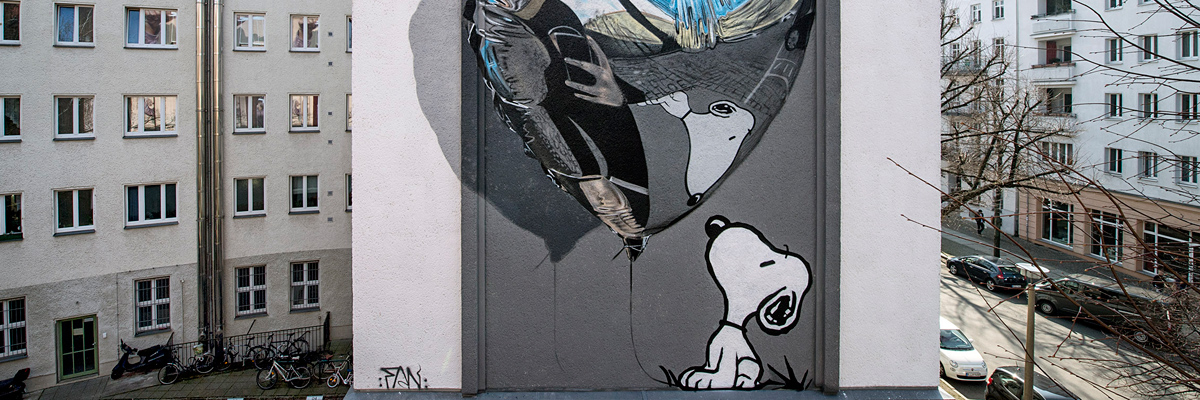
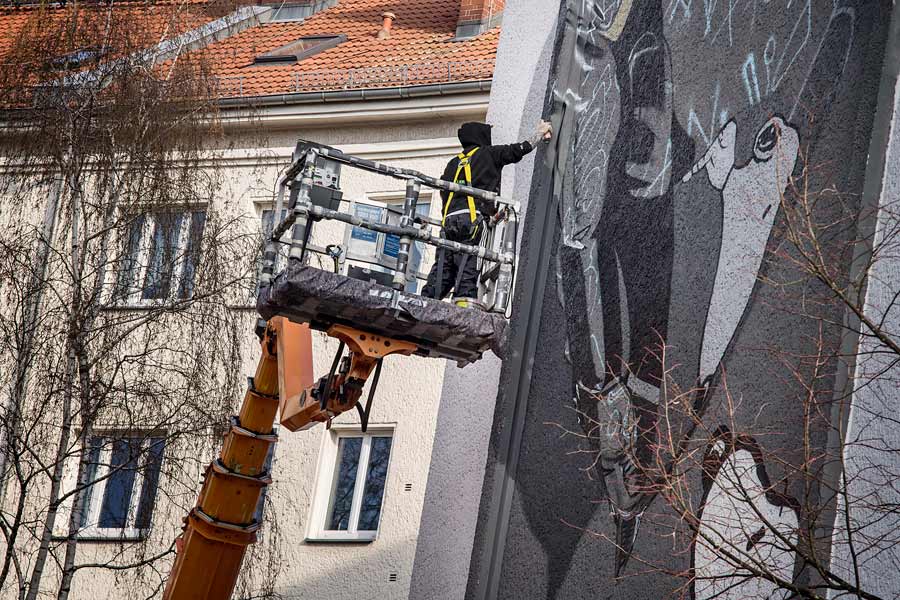
It was a name used by my mother when I was growing up,” says the British Street Artist as he talks about his new mural for Urban Nation in Berlin. “She used to call my sister Fanny Fanakapan – it was just sort of a term of endearment,” he says.
It’s a cold/rainy/sunny/windy/calm Monday and we’re in the thick of Aprilwetterhere at the end of March, and Fannakapan is stirring old memories to recall his entirely unusual name for Nika Kramer, the photographer who has captured these shots.
“I know there was this song made in wartime by a lady named Gracie Fields about a useless man named Fred Fanakapan, he says. “So it’s been stuck in my head from a very early age. I always had tag names that were sort of something to do with my family – like the name I had before this was TRIPE because my granddad used to say “that’s a load of tripe!” – which refers to a cow’s stomach.”
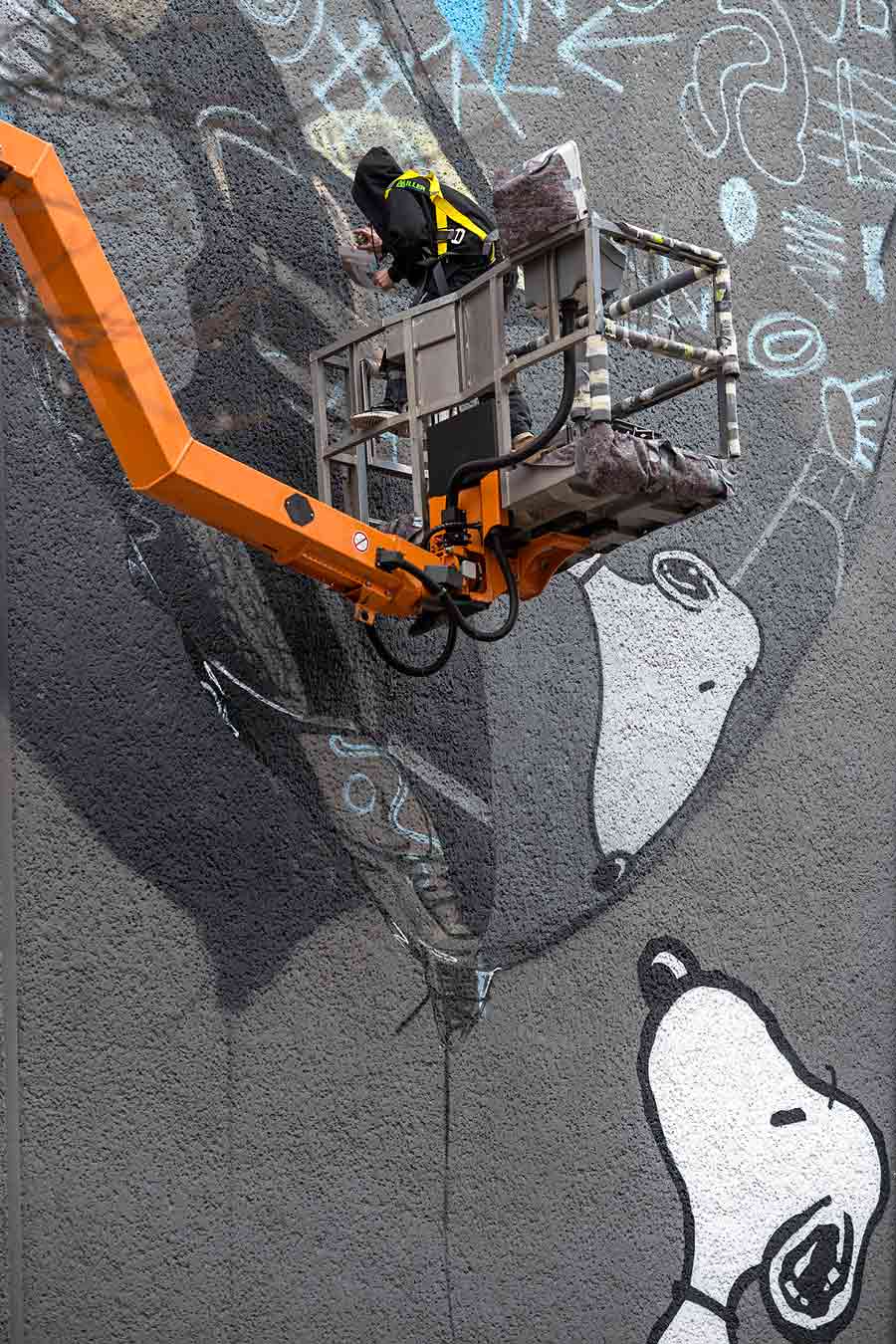
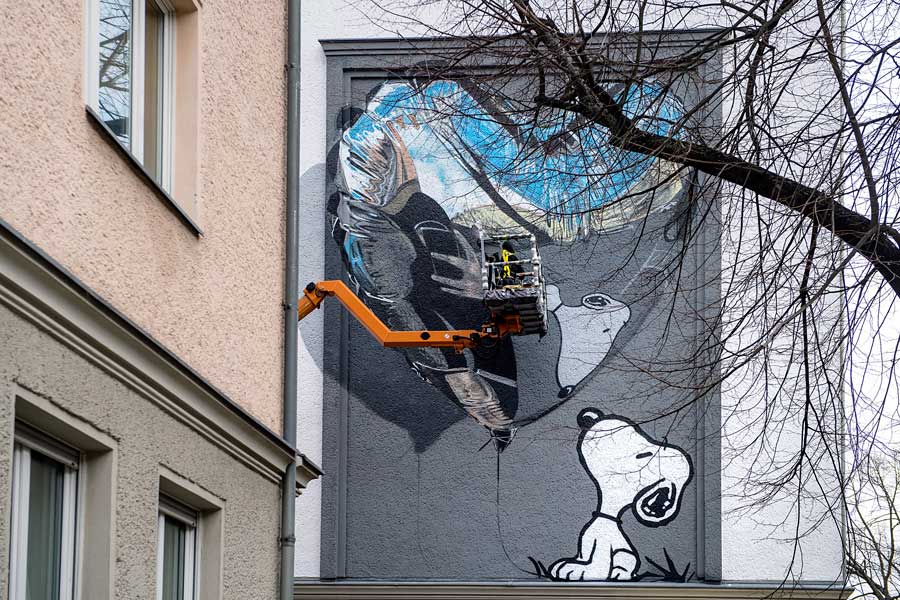
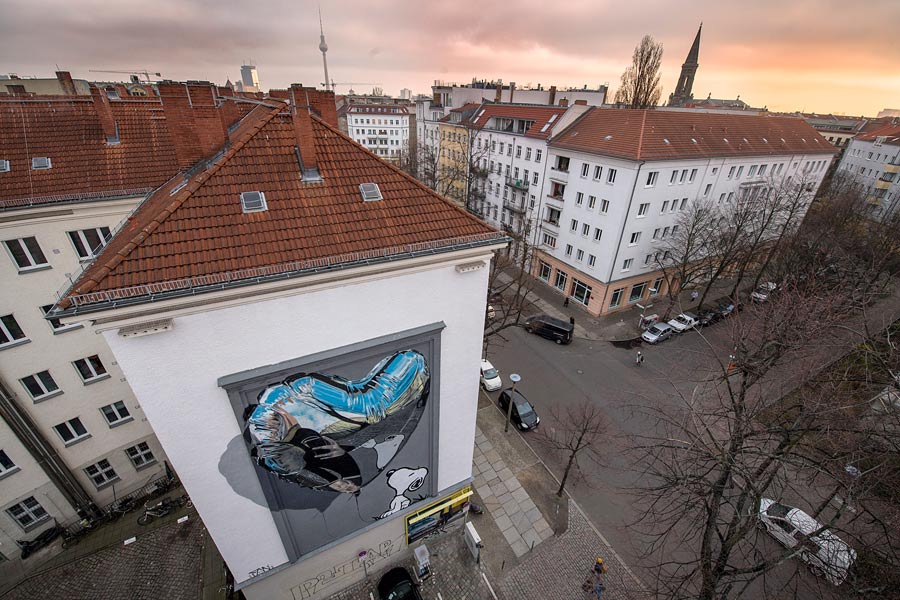
The new mural, part of the ongoing “One Wall” program by UN, features his signature chrome texture – this time as a heart shaped balloon. He tells Nika why he’s positioned the cartoon character Snoopy, based on the Charles Schultz comic strip, looking quizzically at his own reflection in the balloon.
He says that with this mural he is actually giving a tribute to his own dog, which he credits with giving him love and support during a tough time in his life.
“It
is kind of dedicated to her. At the time I was quite unhappy and she cheered me
right up so basically I say that I believe in dog. I called the piece “Believe
in Dog”.
Fannakapan
talks more about the two dimensional dog quizzically gazing up at the balloon
and points out that the background is taken directly form the location. “I took the
photographs next to the wall so it’s reflecting the trees and the buildings
around it. When I do that I think it always makes the
local people appreciate it more to see their street reflected in something.”
Our special thanks to Nika Kramer for sharing her talents with BSA readers here.
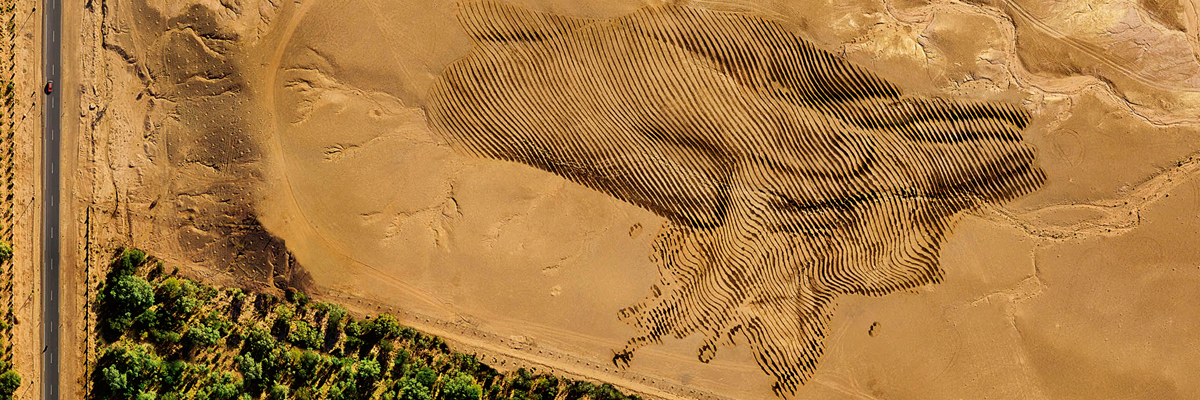
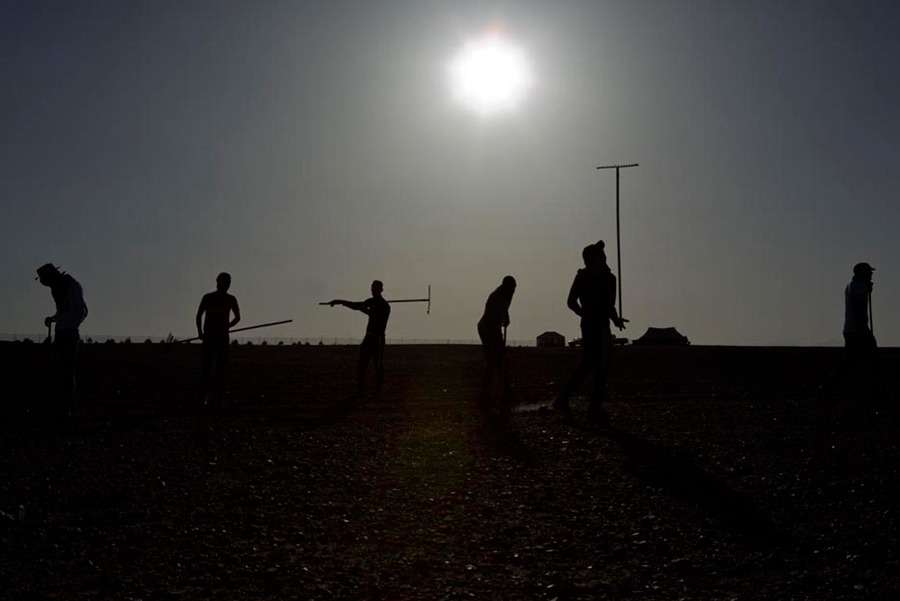
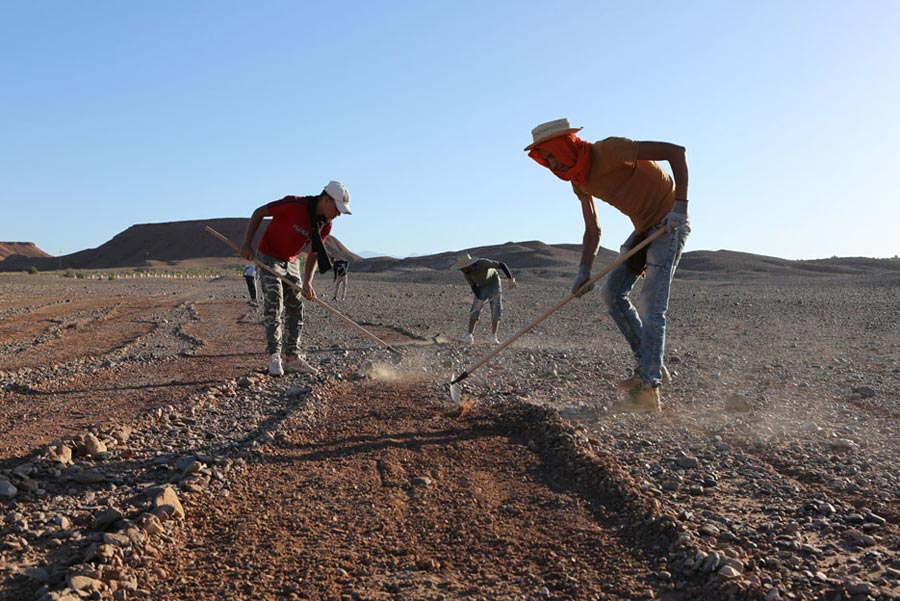
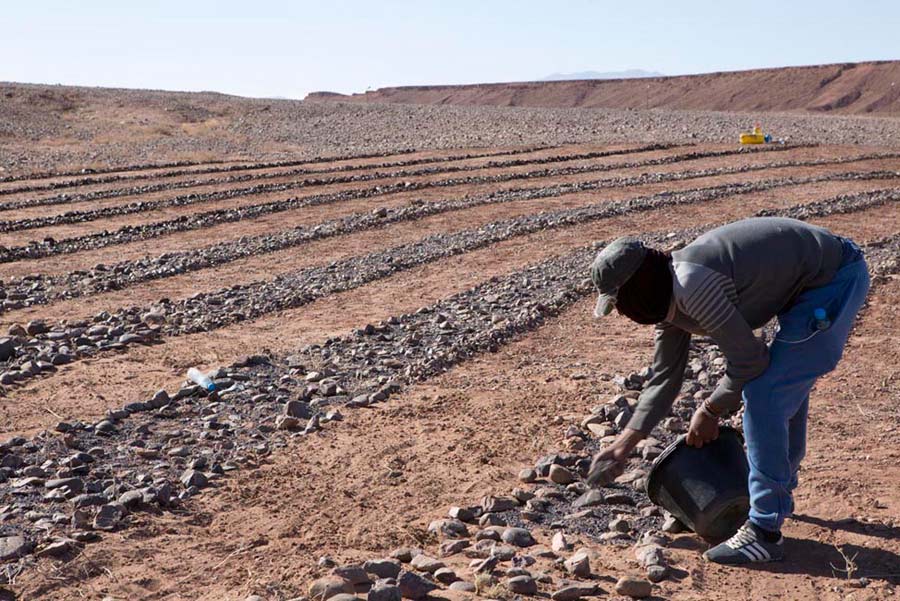
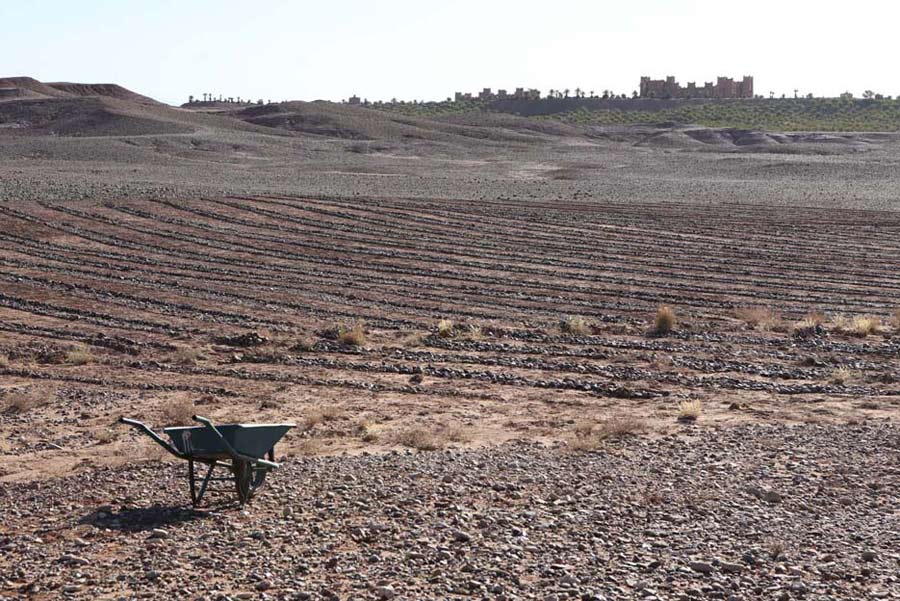
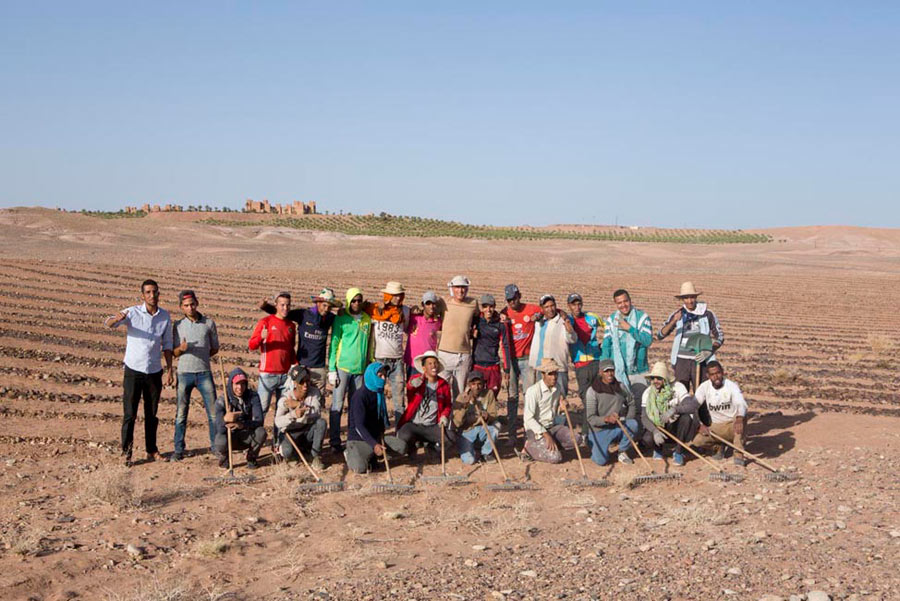
Jorge Rodríguez- Gerada takes us to the desert to talk about water. The large scale land artist took over 37,500 square meters with local assistants to create this image of water washing over hands as a commentary on the importance of waste water management.
The artists’ choice of this topic is something that becomes more in focus as we employ strategies for conserving a shrinking supply of potable water worldwide. Here in Morocco, where leaders say there is increasing water scarcity Rodríguez- Gerada has discovered a rich and ample canvas and relevant location to address the issue.
“Ouarzazate
is a city located south of the Moroccan Atlas Mountains. It is known as the
door to the Sahara and will soon be surrounded by a greenbelt protecting it
from sandstorms,” says one of the organizers.
“This
natural barrier requires innovative irrigation systems that deploy purified
wastewater, improving the quality of life for Ouarzazate’s inhabitants who have
found new recreational spaces and a reason to protect the local environment and
the biodiversity that it contains. Wasted water is recycled, collected, filtered
in reservoirs and then pumped into the greenbelt with the aid of clean power
generated by the Noor Ouarzazate solar power plant, the largest in North
Africa.”
Sometimes an artist needs to move mountains to make his point. In this case it was 36 tons of dark gravel from a nearby quarry- an impressive and important project indeed.
Artist Anna Repullo is bringing the excitement of attraction to the street in her new mural, “El Beso” (The Kiss). It’s her sentimental contribution as part of a 3-woman program for walls here in Sant Vicenç dels Horts, curated by Contorno Urbano.
The figurative painter who loves to hike and explore nature lives in Granada Spain and is comfortable painting on canvas or walls. Her worko often depicts acts of intimacy and refuge between people in romantic or platonic embrace; sometimes even between people and pets.
This particular kiss is well timed for Spring, where many a passion is stirred by the caress of a warm breeze in the sunshine, the sounds of birds arriving with their song, the sight of trees bursting with their fresh blooms everywhere.
“You kissed me! My head drooped low on your breast With a feeling of shelter and infinite rest, While the holy emotions my tongue dared not speak, Flashed up as in flame, from my heart to my cheek; Your arms held me fast; oh! your arms were so bold —
Heart beat against heart in their passionate fold. Your glances seemed drawing my soul through my eyes, As the sun draws the mist form the sea to the skies. Your lips clung to mine till I prayed in my bliss They might never unclasp from the rapturous kiss.”
Street art welcomes all manner of materials and methods, typically deployed without permission and without apology. This hand-formed wire piece …Read More »
 BROOKLYN STREET ART LOVES YOU MORE EVERY DAY