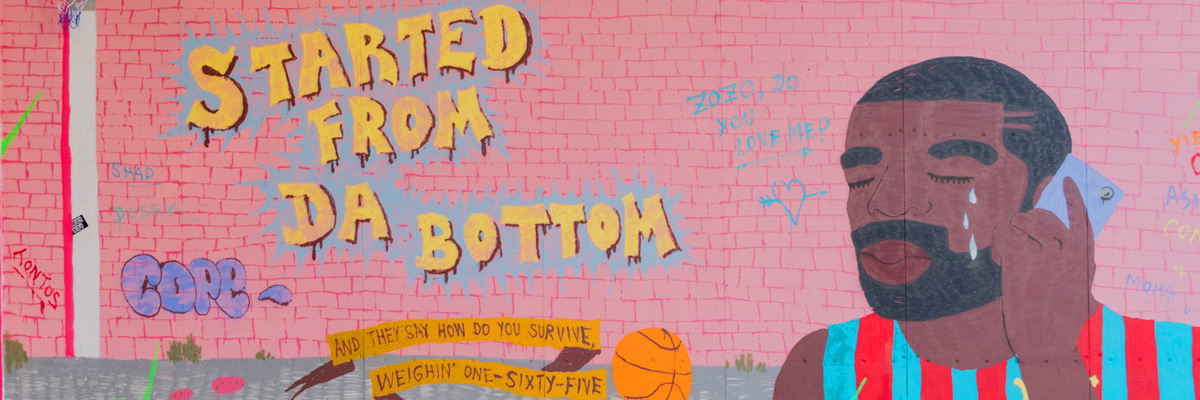
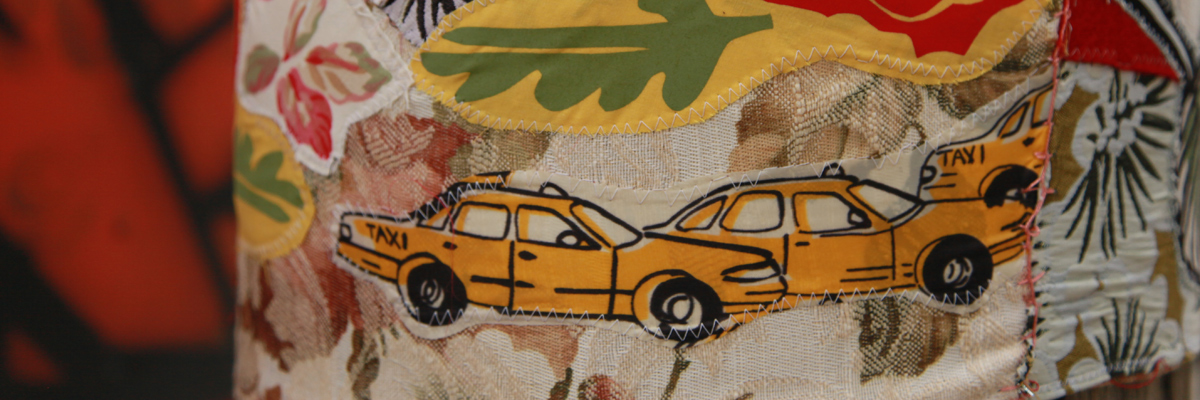
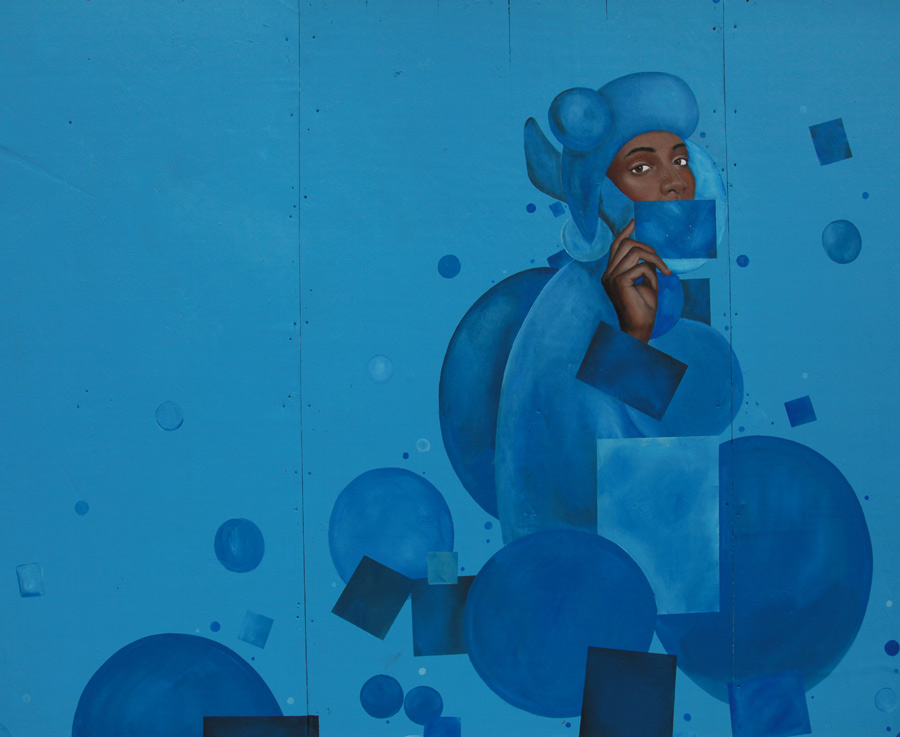
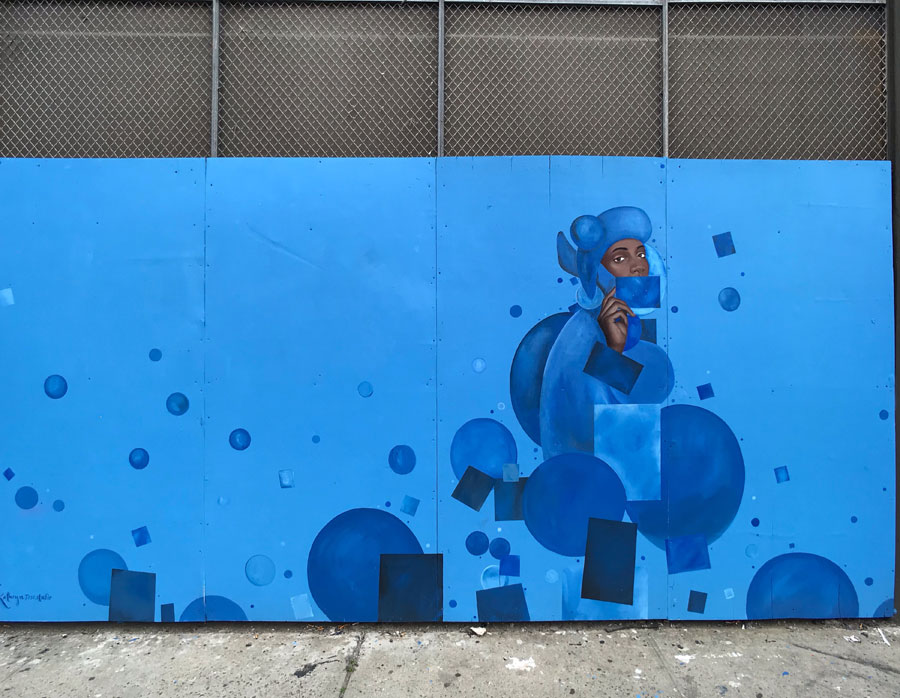
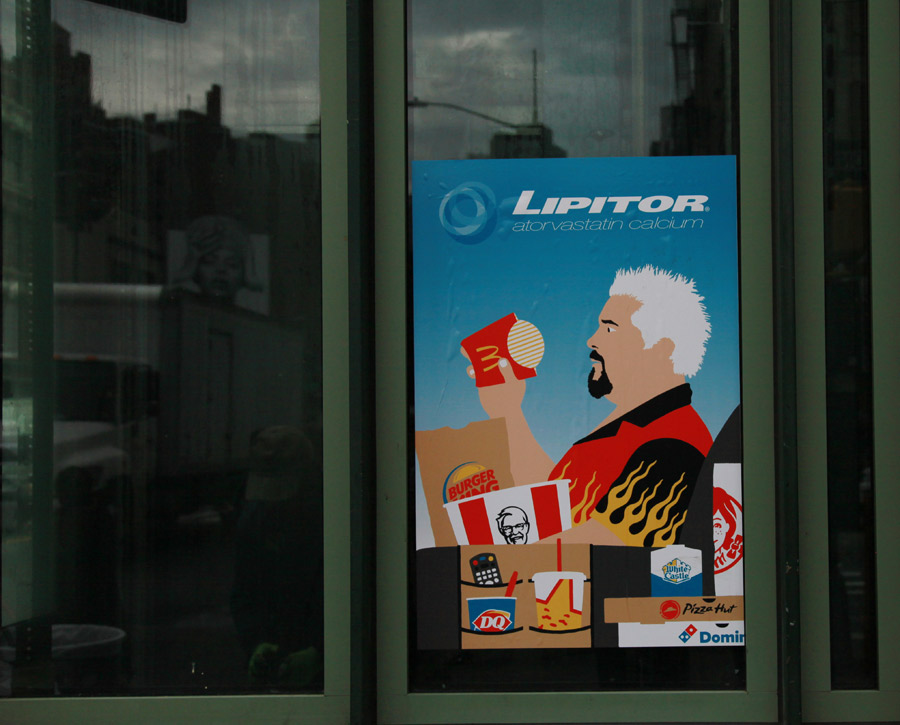
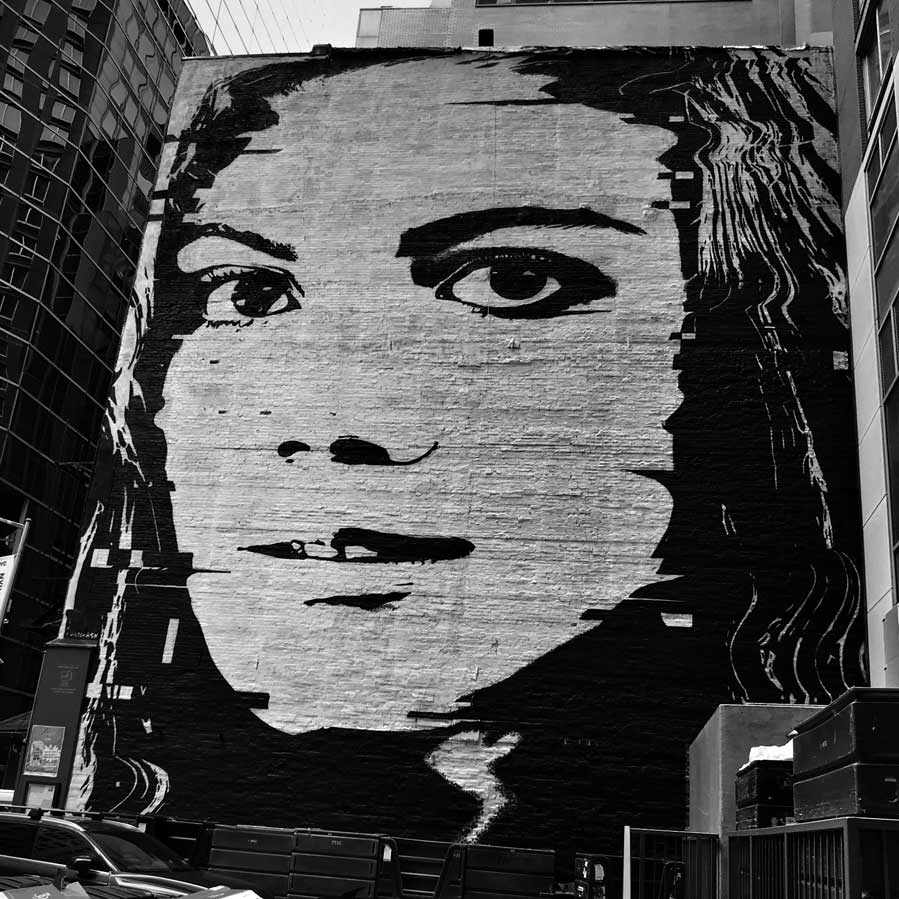
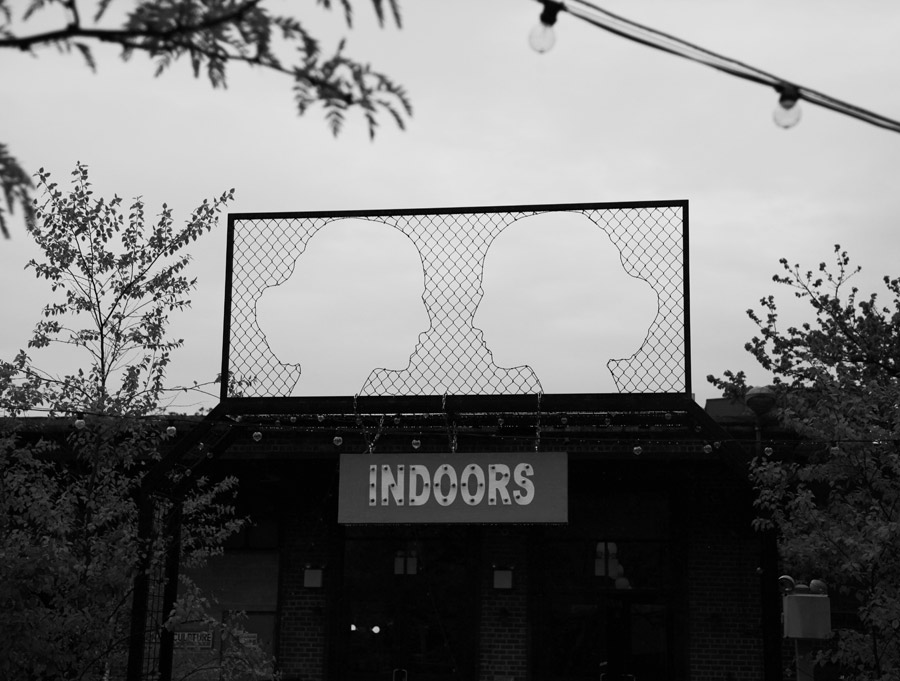
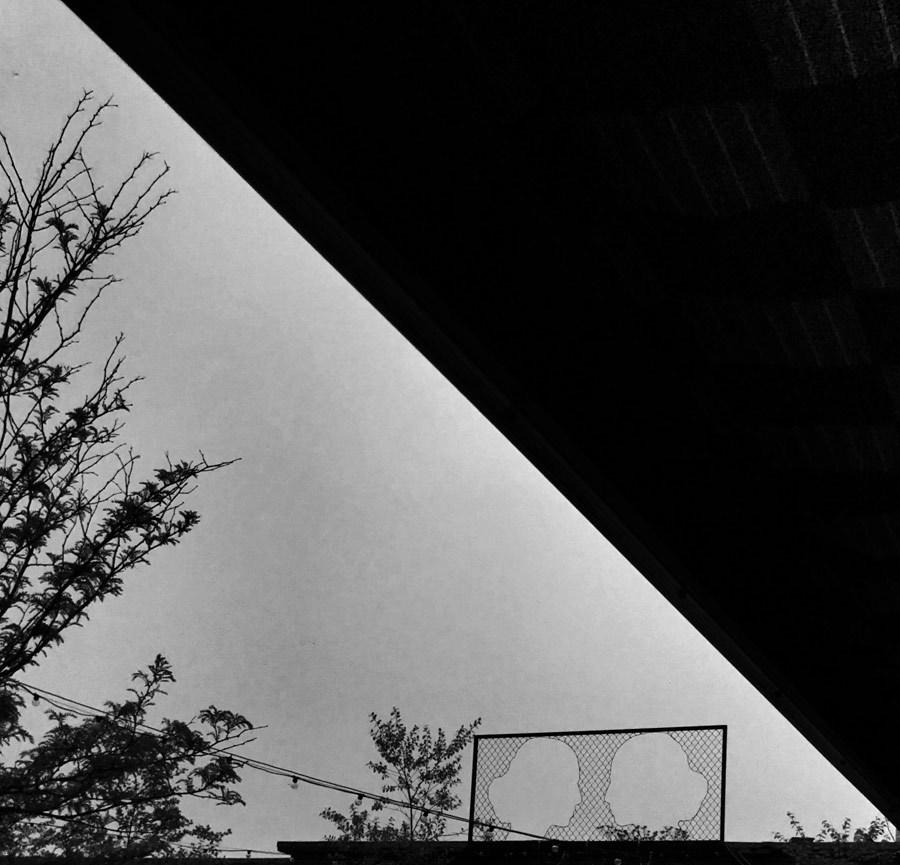
The artistic duo just brought two new pop culture inspired billboards last week to this small town in Catalonia to entertain you with their hybrid brand of graffiti, video games, and sports references. Like many today they’re using the free association split-attention style of memes and the Internet that is now our lingua franca – or should we say linqua españa
At the
intersection of graffiti, the Internet, and cute things, Imon Boy has developed
a fun-centric database of pop-cultre references merged and interplayed in
scenarios from many a ‘00s teen memories surfing YouTube and catching tags –
and showing his work in a gallery setting in Munich, Hamburg, Phillipines,
Miami, Sydney, and New York. He says this game is typical of writers and cops –
but it looks a lot more fun from this perspective.
A
native of Badalona (Barcelona), Dagoe is similarly well travelled
geographically as well, taking his illustration, design, and animation powers
to France, Tunisia, Italy, Belgium, and the Netherlands. Here he namedrops Cope
and references Tupac and Drake – with the sensitive Canadian rapper wearing a FC
Barcelona team shirt and crying into a phone – that’s a mashup, bro.
Gastman’s Massive Graffiti and Street Art Show Arrives at Epicenter.
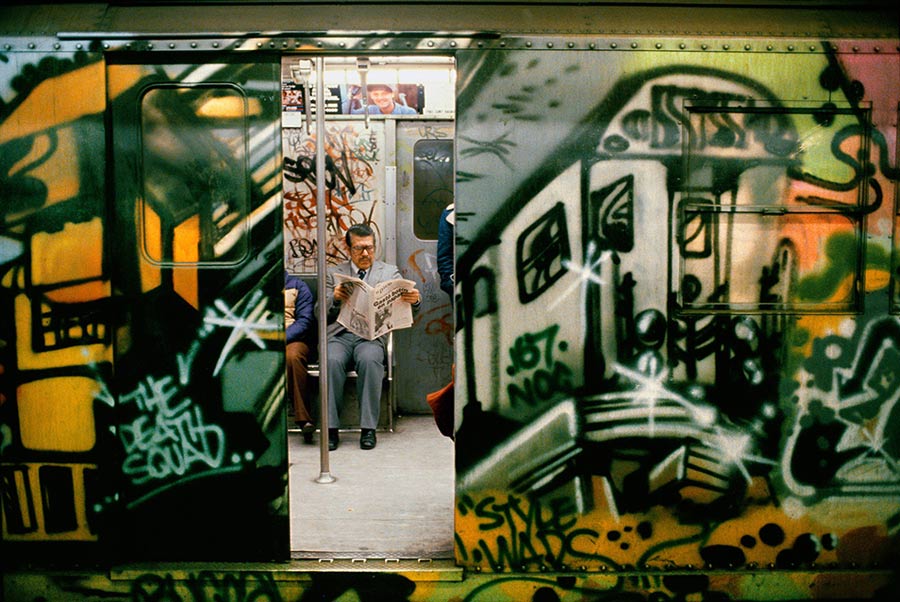
“I’m really excited to bring this show to New York,” says curator, graffiti historian and urban anthropologist Roger Gastman, “because the city plays such a pivotal role in the origin and evolution of the culture. The iconic images of covered subway cars made graffiti famous worldwide.”
He’s talking of course about “Beyond The Streets” the hybrid exhibition that he mounted in LA last year featuring the work of 150 who have proved to be pivotal to the evolution of a fifty year global people’s art movement that includes graffiti, street art, and urban contemporary art. Filling over 100,000 square feet of new space in Brooklyn, this two-floor cross-section survey will feature artworks by many of the same vandals, graffiti writers, Street Artists, and art activists who hit NYC streets, created dialogue with passersby, and were sometimes chased by the authorities. To see them showcased here is to recognize that there is not just one route to take – in fact there are many.
“We have an incredible roster of artists for New York,” Gastman tells us, “and a brand new space in Williamsburg that has a stunning view of the Manhattan skyline as our backdrop.” Notably the lineup includes artists whose work BSA has documented on the streets in this very same neighborhood over the past two decades, including Shepard Fairey, Faile, Swoon, Bast, Invader, Aiko, and others. Ironically the appearance of free-range Street Art in the neighborhood has been seriously diminished since that time.
The exhibition is one more verification that a significant portion of the scene is being widely recognized for its cultural contribution and value in the contemporary art canon – a significantly fluid scene fueled by discontent and a desire to short-circuit the established routes to audience appreciation. Like large survey shows elsewhere, the takeaway is the significant impact street culture and its tangential subcultures continues to have on the culture at large.
Gastman says the New York version of “Beyond The Streets” will take an
additional interest at the role of music and art activism on the street, along
with immersive installations, a tattoo parlor, a special Beastie Boys
installation with artifacts and ephemera, a new 30th Anniversary
Shepard Fairey project “Facing The Giant: 3 Decades of Dissent,” and large
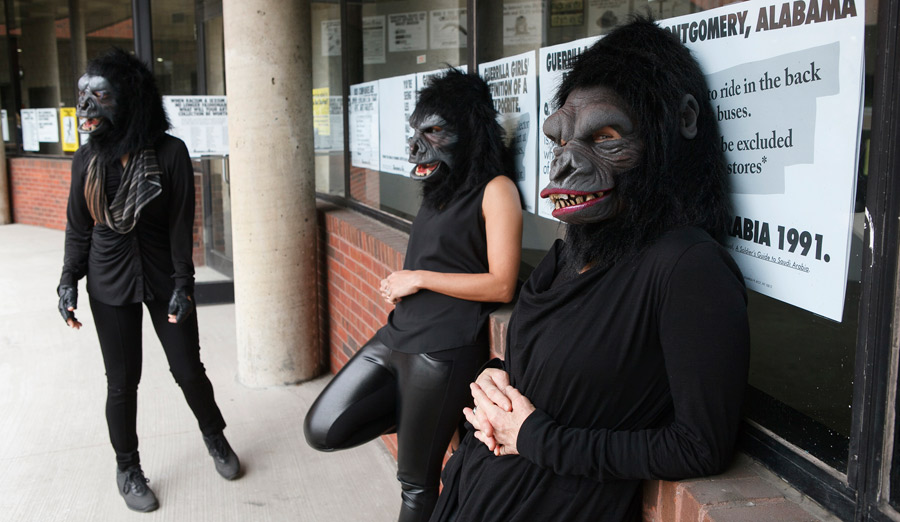
scale works by Gorilla Girls, Futura, Cleon Peterson, and Takashi
Murakami.
More news coming on programming and events, but the important opening date to know right now is June 21st.
“All in all, it will make for a really special show this Summer,” says Gastman.
BEYOND THE STREETS TEAM
Curator: Roger Gastman
Co-Curators: Sacha Jenkins SHR, Evan Pricco, David CHINO Villorente
A-ONE, AIKO, Al Diaz, Alexis Ross, Alicia McCarthy, André Saraiva, Barry McGee, BAST, Beastie Boys, Bert Krak, Bill Barminski, Bill Daniel, BLADE, Broken Fingaz, Buddy Esquire, buZ blurr, Carlos Mare, Carl Weston, Cey Adams, C.R. Stecyk III, Charlie Ahearn, Chaz Bojórquez, Claudia Gold, Cleon Peterson, COCO 144, Conor Harrington, Corita Kent, Craig Costello, CRASH, DABSMYLA, Dan Witz, Dash Snow, DAZE, DEFER, Dennis Hopper, Dondi White, Doze Green, EARSNOT, Estevan Oriol, Fab 5 Freddy, FAILE, Faith XLVII, Felipe Pantone, FREEDOM, FUTURA 2000, Gajin Fujita, Glen E. Friedman, Gordon Matta-Clark, Guerrilla Girls, HAZE, Henry Chalfant, Herb Migdoll, Husk Mit Navn, INVADER, Jane Dickson, Jason REVOK, Jean-Michel Basquiat, Jenny Holzer, Jim Prigoff, John Ahearn, John Fekner, John Tsombikos, Joe Conzo, José Parlá, KATS, KC Ortiz, Keith Haring, Kenny Scharf, Kilroy Was Here, LADY PINK, LAZAR, LEE Quiñones, Lisa Kahane, MADSAKI, Maripol, Mark Gonzales, Mark Mothersbaugh, Martha Cooper, Matt Weber, Maya Hayuk, Michael Lawrence, MIKE 171, MISS 17, Mister CARTOON, Nina Chanel Abney, NOC 167, Pat Riot, Patrick Martinez, Paul Insect, POSE, PRAY, Rammellzee, Randall Harrington, RETNA, Richard Colman, Richard Hambleton, RIME, RISK, Ron English, Ruby Neri, SABER, Sam Friedman, SANESMITH, Sayre Gomez, Shepard Fairey, SJK 171, SLICK, SNAKE 1, SNIPE1, STAY HIGH 149, Stephen Powers, SWOON, Takashi Murakami, TAKI 183, TATS CRU, TENGAone, Tim Conlon, Timothy Curtis, Todd James, Trash Records, UGA, VHILS, and ZESER
The show is developed in partnership with Adidas and Perrier. Additional support provided by Modernica, Montana Colors, NPR, NTWRK, Twenty Five Kent and WNYC.
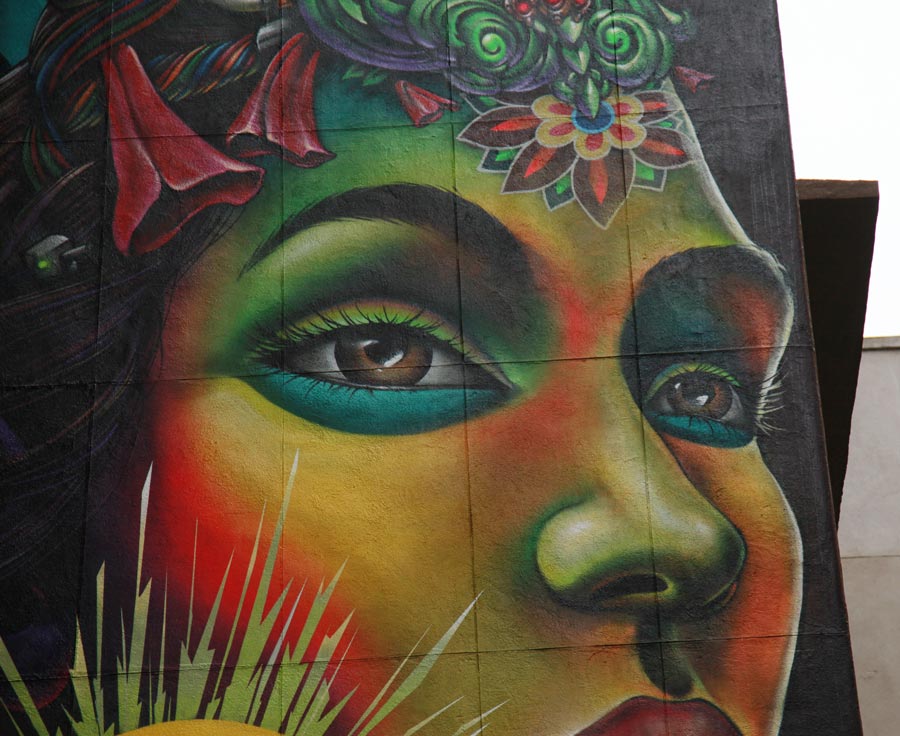
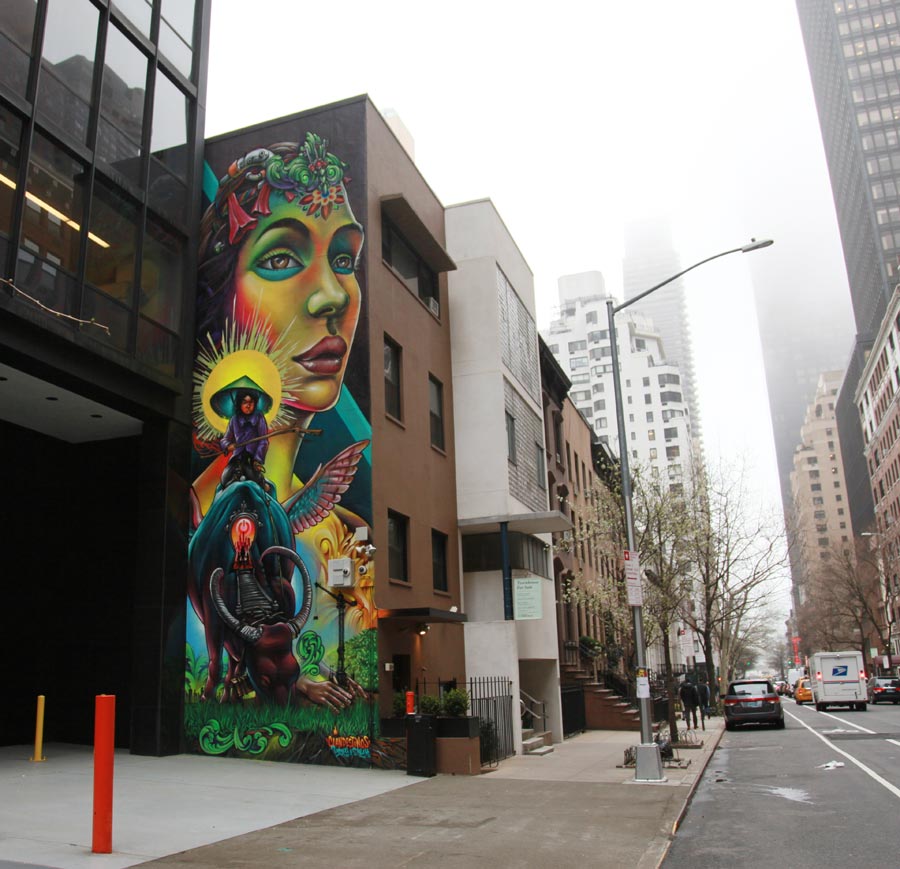
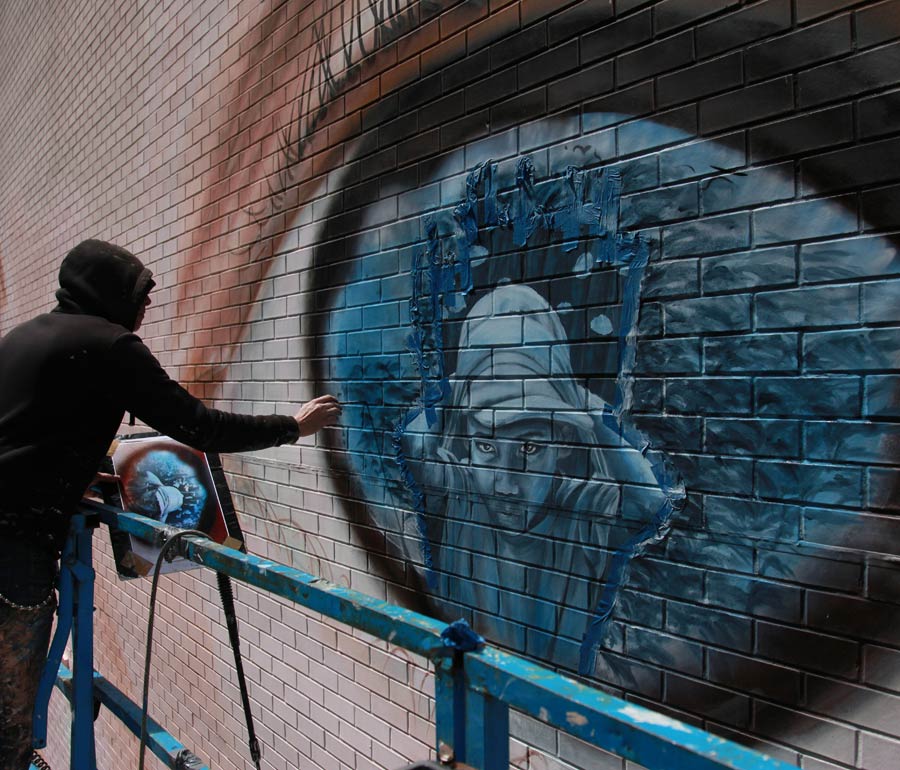
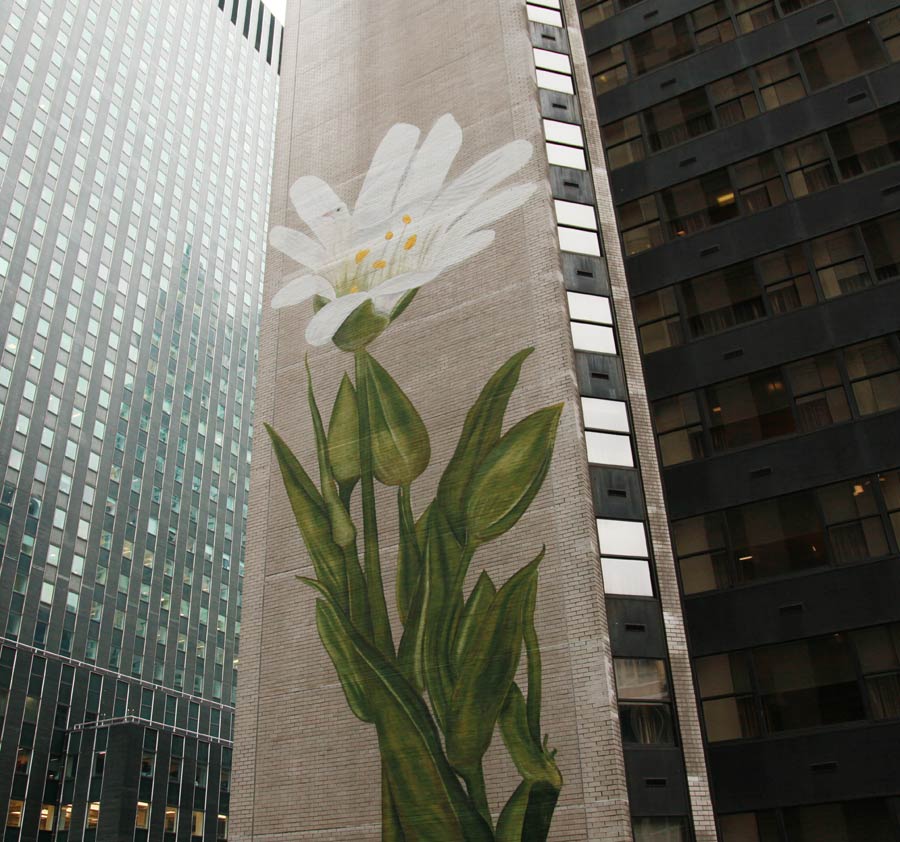
With giant murals at the forefront of the message, a recent Manhattan campaign of select walls is intended to make us talk and keep our eyes on an ugly social justice issue that organizers hope we can collectively address: child labor and forced labor.
Even in downtown NYC on Wall Street people will admit
that capitalism isn’t cool if we are doing it on the backs of children
somewhere. Nobody celebrates that. Do they?
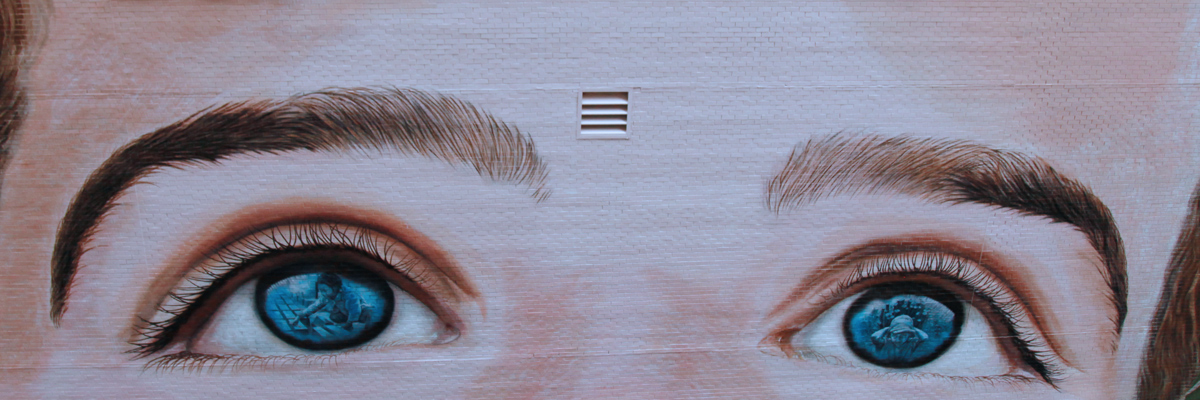
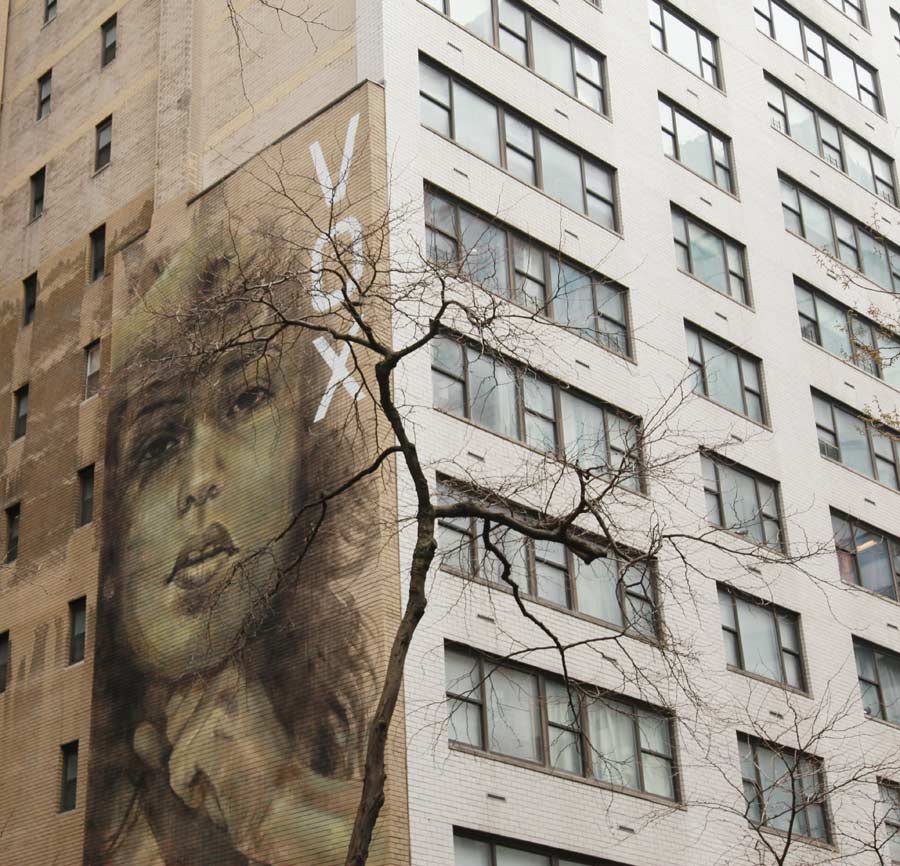
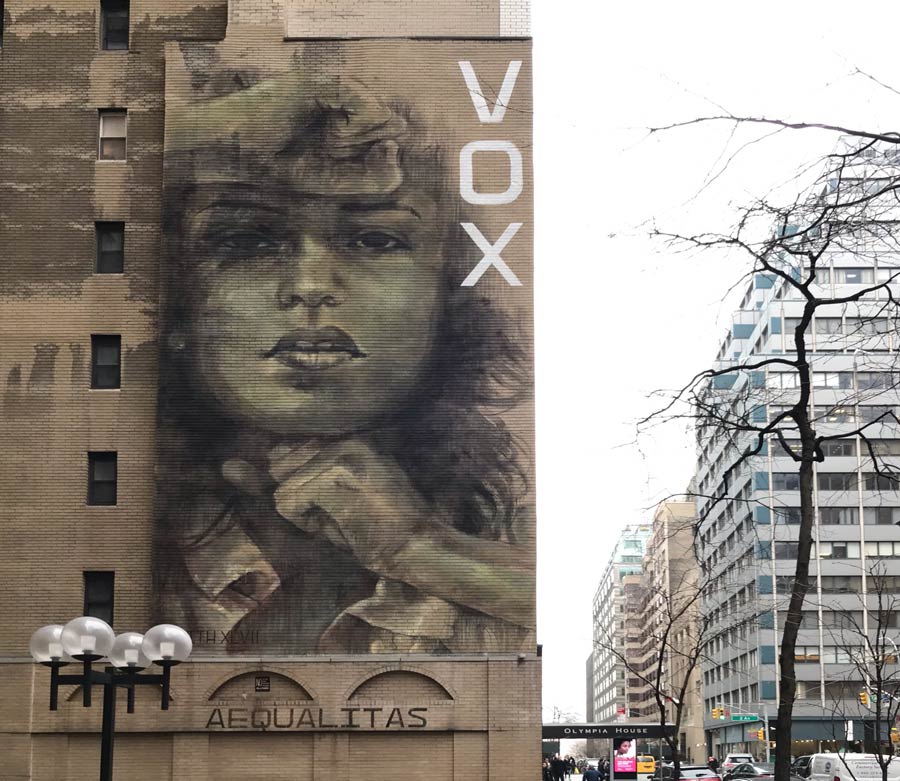
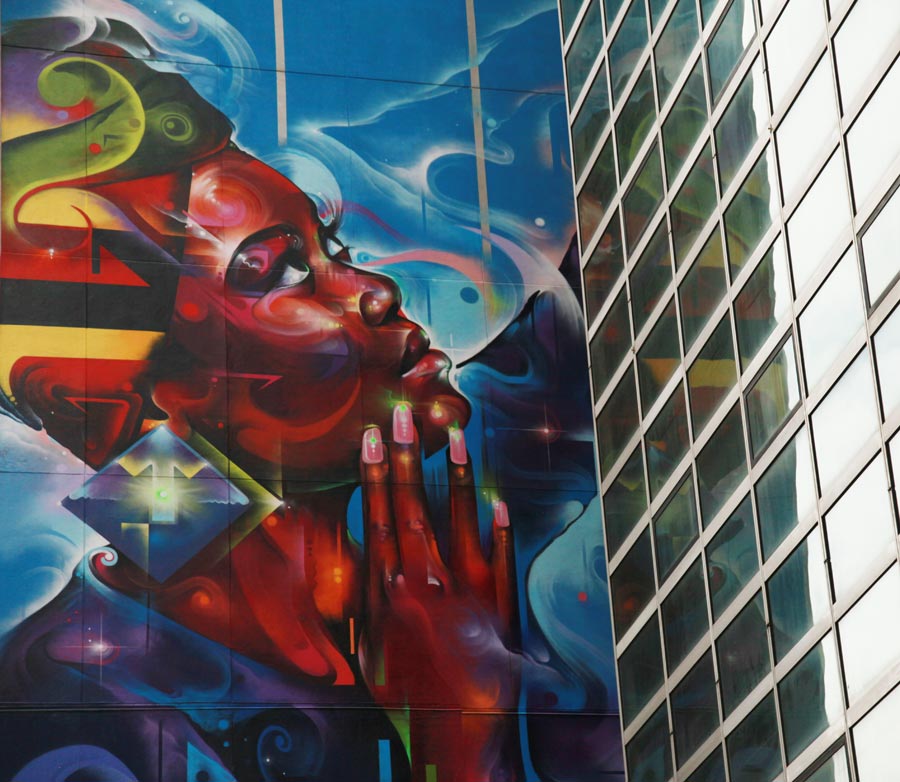
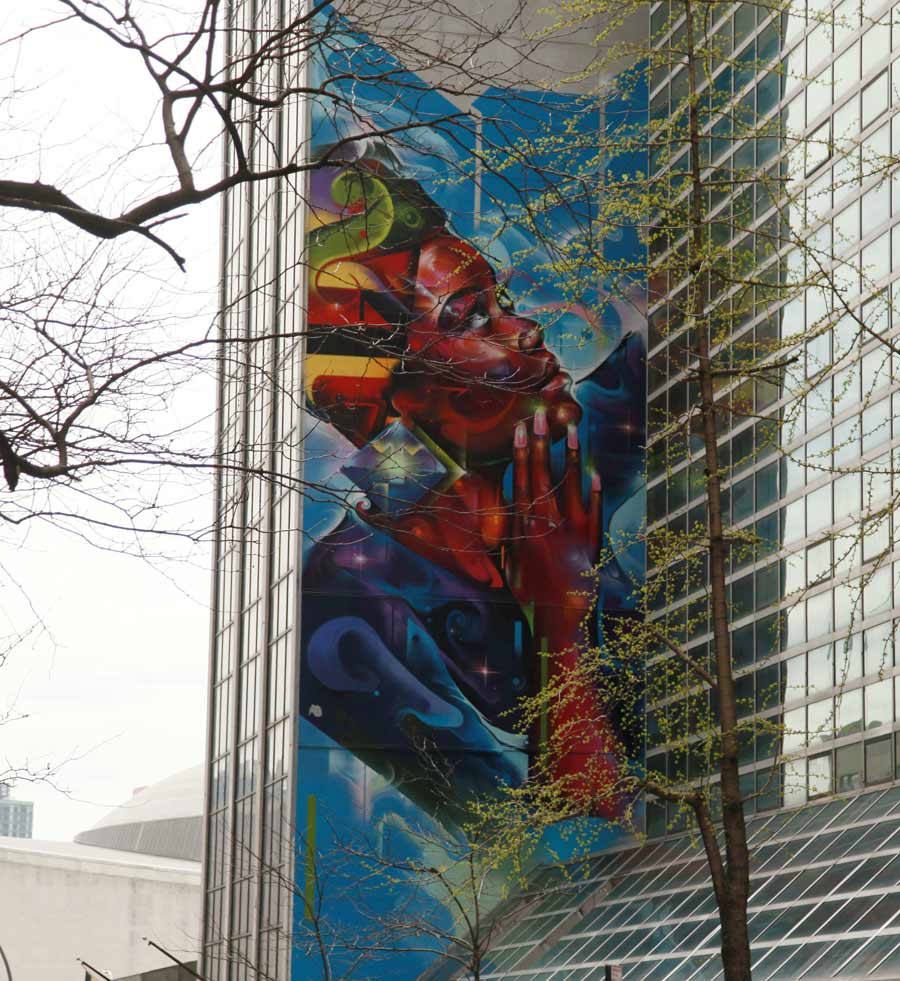
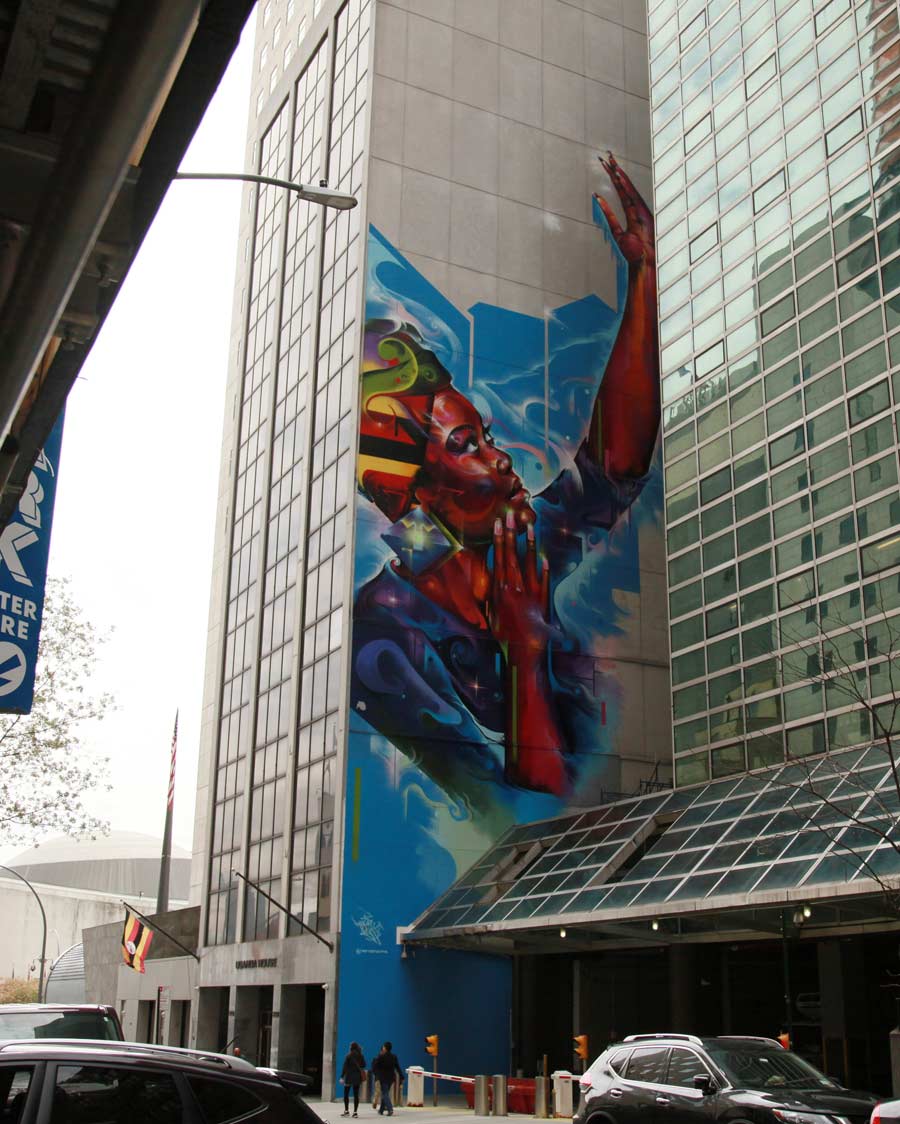
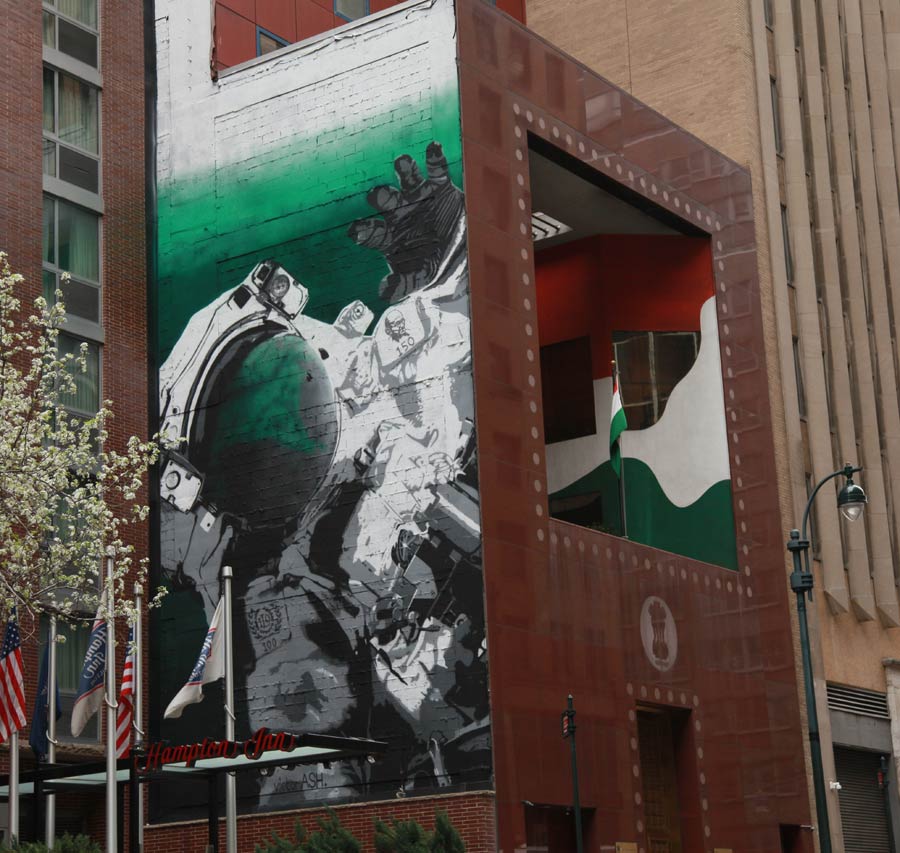
With murals that advocate for “decent work”, asking us to create a better “future of work”, a small inspired group of international artists created impressive new works on Midtown’s East Side – roughly in the area of the United Nations.
Included in the group are Clandestinos (Shalak Attack and Bruno Smoky), Faith 47, Jorge Rodriguez-Gerada, Mr Cenz and Victor Ash. The collection is quite striking on city streets, as are the individual pieces. In fact each artist did their own interpretation of the overall theme by concentrating on direct and ancillary topics: green jobs, youth employment, gender equality at work, child labor and forced labor and the future of work.
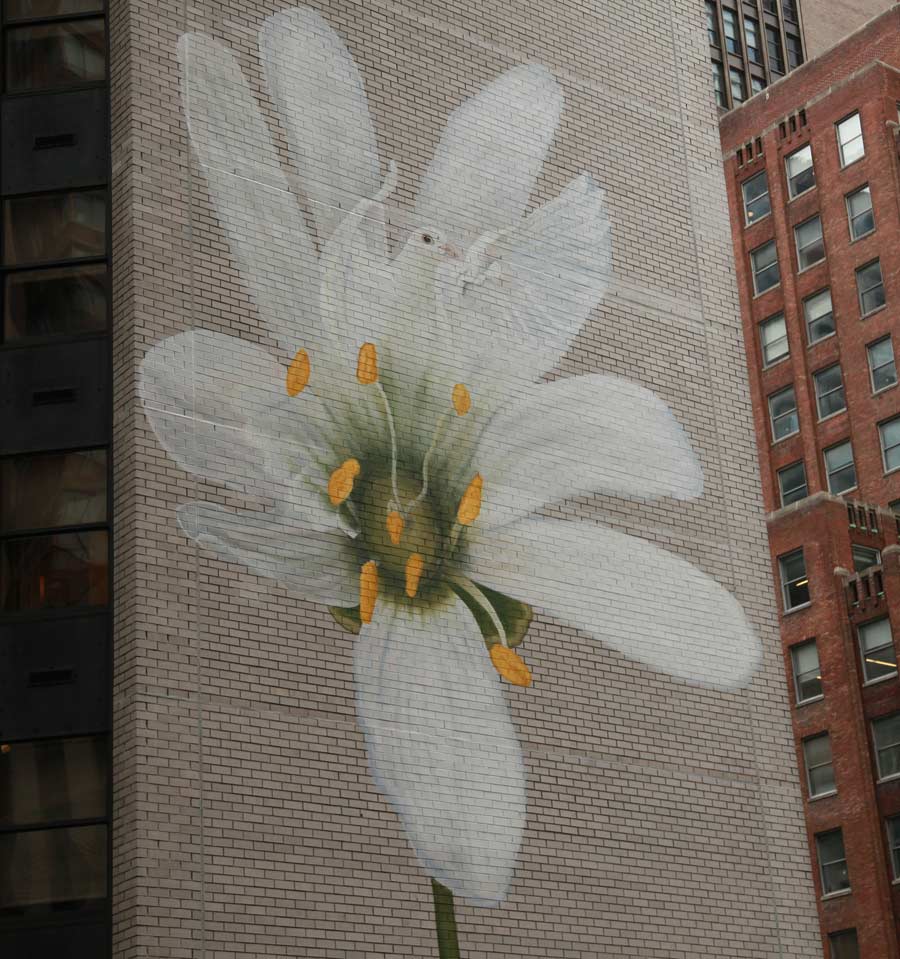
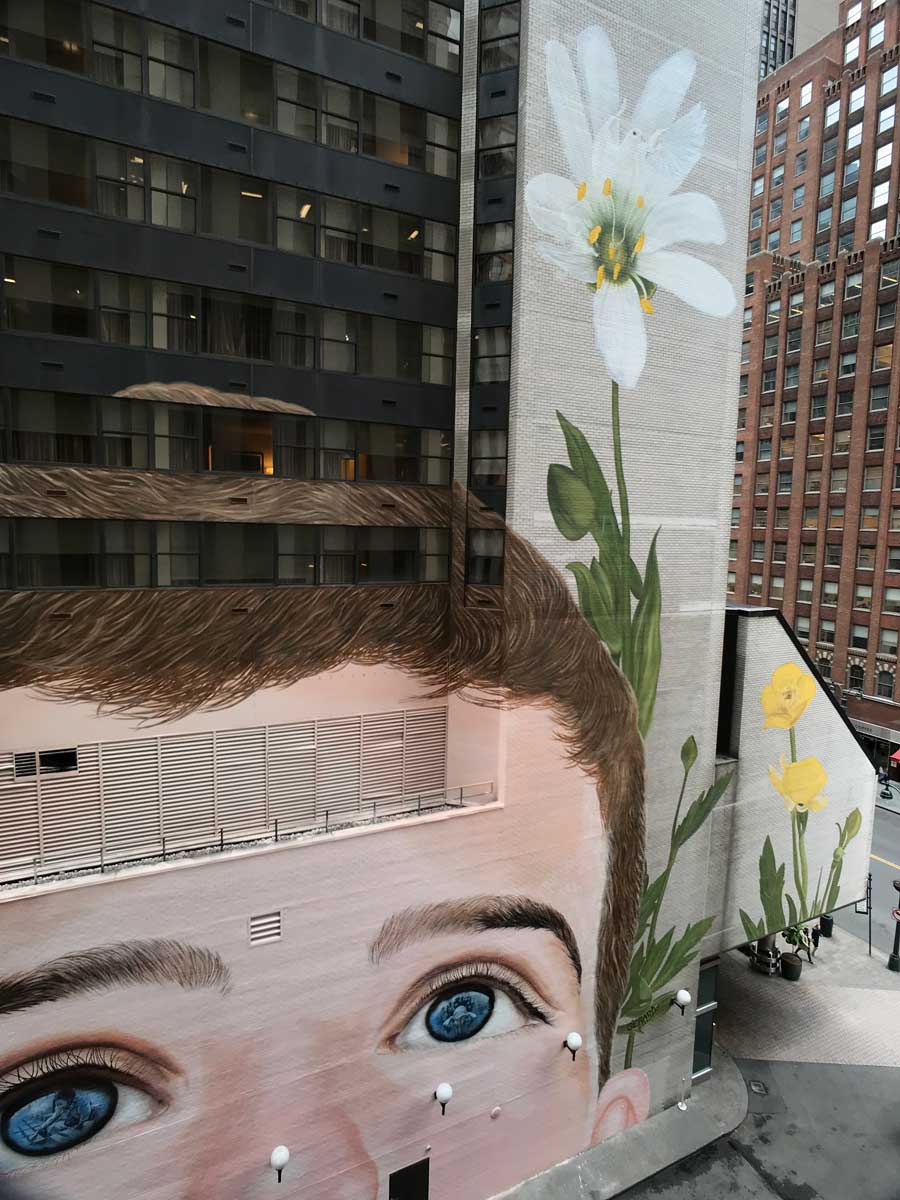
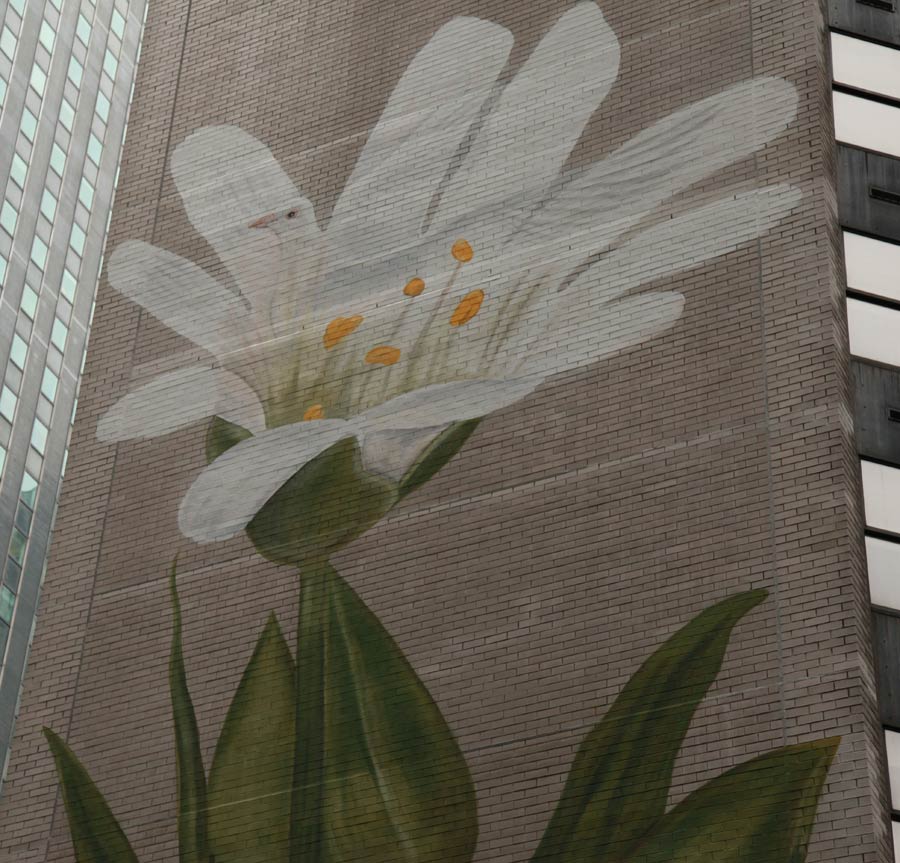
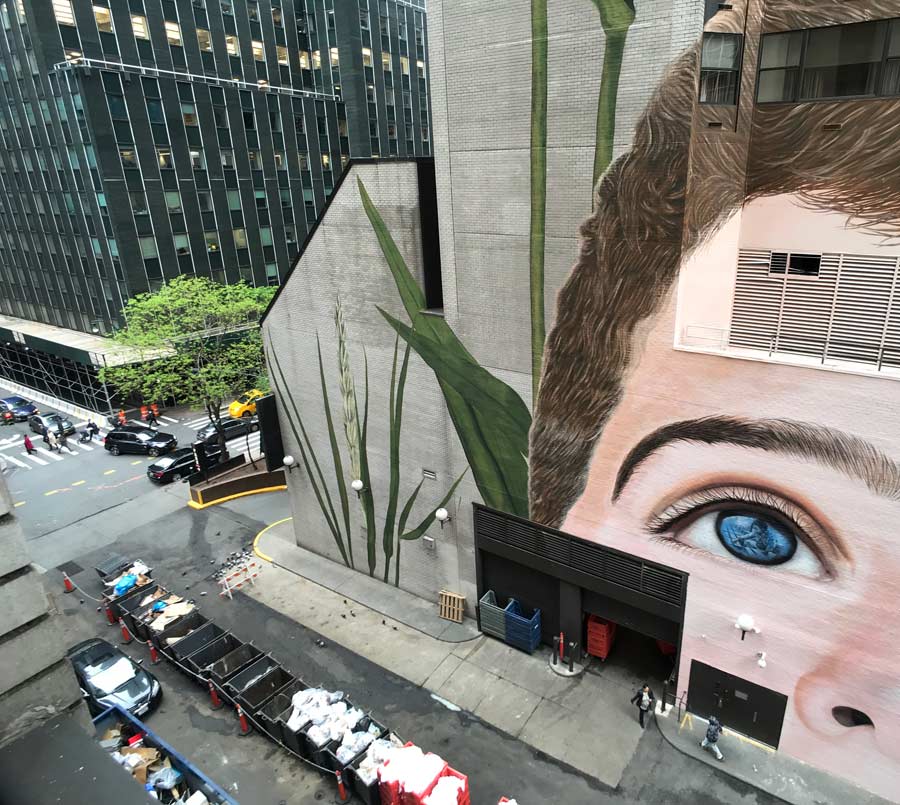
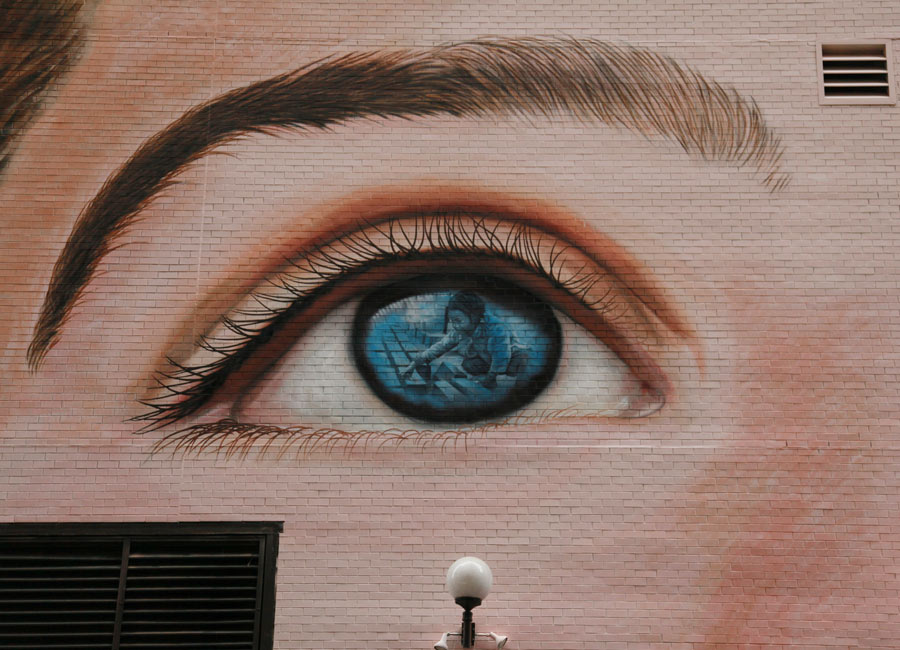
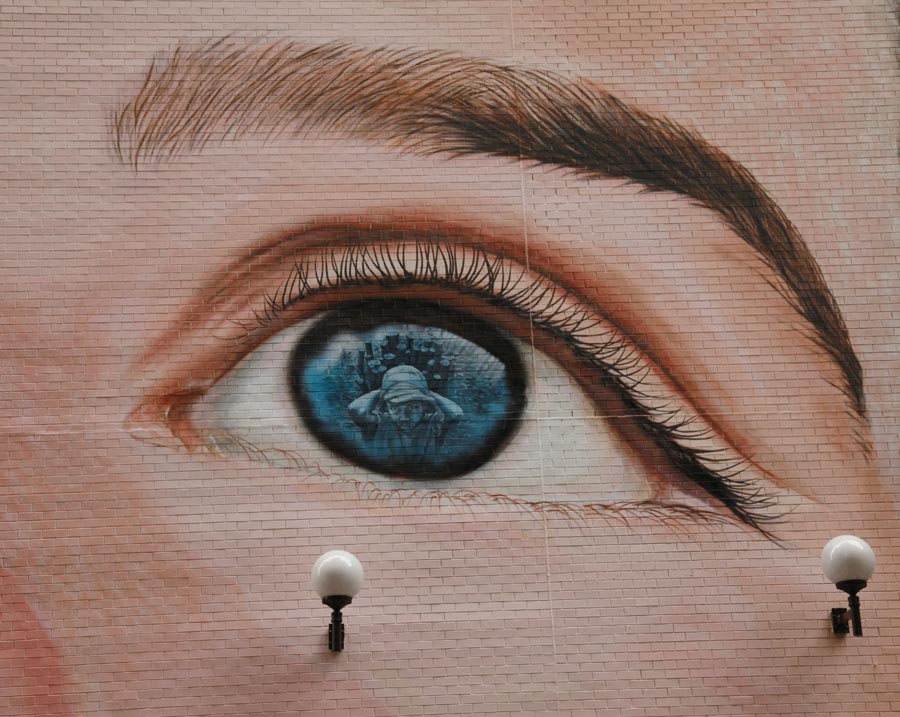
Perhaps with some irony, the professionally rendered and emotionally stirring mural by Jorge Rodriguez-Gerada (at end of posting) was completed in the face of multiple obstacles that plague Street Artists sometimes, just not usually all at once. Regardless, the piece has an overwhelming impact.
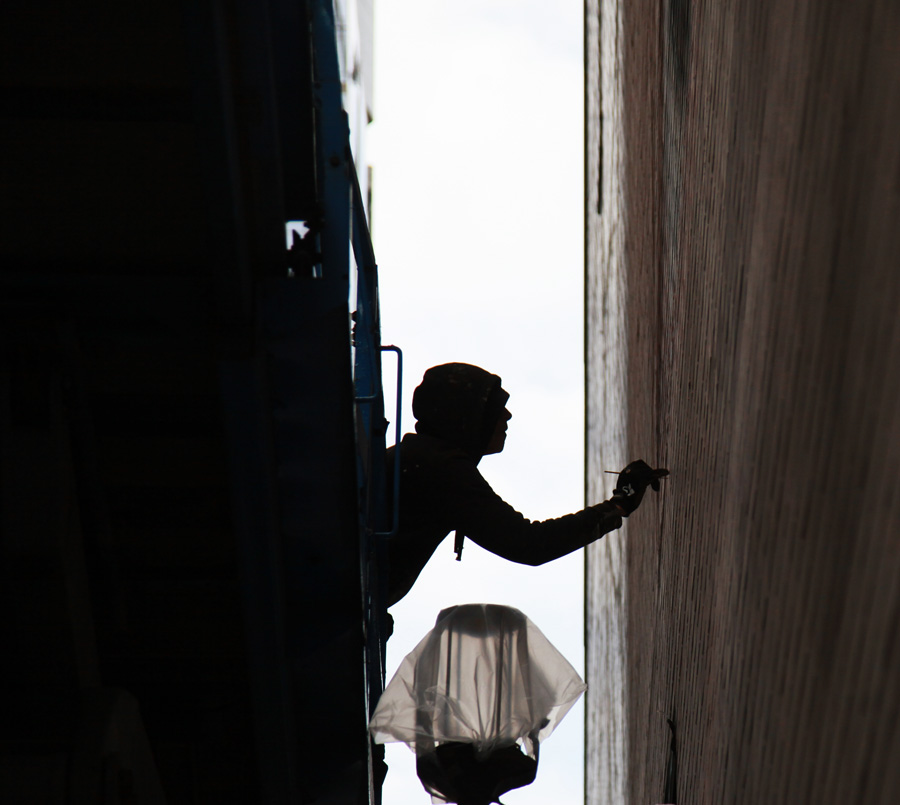
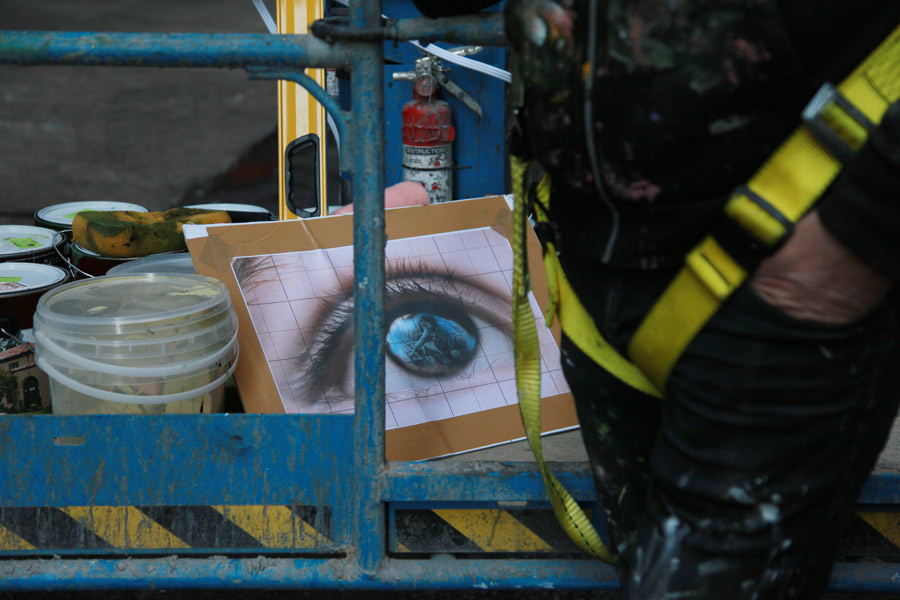
A former culture-jamming urban installation artist who garners serious respect on the street as well as in professional art-world circles, he soldiered on for an installation that included lift equipment failures and a series of uncommon logistical challenges that come with mounting one of New largest mural works on the side of a soaring building that has a relatively narrow city alley. Only Rodriguez-Gerada’s determined vision allowed him to endure through a seemingly relentless torrent of bitter cold rainy spring weather for weeks.
Nonetheless, the results of his work, and of all of these artists, are as remarkable as they are sweet. In the service of the International Labour Organization (ILO) and a philanthropic group called Street Art for Mankind (SAM) these works can hopefully help raise our consciousness and protect children from enslavement and harsh work globally. Remarkably, SAM is going to directly to the heart of the matter, funding efforts to “help fund raid & rescue programs to free children from slavery,” says their press release.
Congratulations to all the runners in yesterdays BK Half Marathon – you all make us proud. Yo! NYC mayor says he wants to be president, but he got a rocky start with many protests in the streets from New Yorkers who think otherwise.
At this point if he’d promise us an end to endless wars abroad austerity here at home I’d vote for that 3-legged dog that’s always hunting for scraps behind the Bowl-a-rama.
The UAE is Building the World’s Biggest Solar Farms, yet the US is starting yet one more oil war in Venezuela? And what about these war drums toward Iran? Where have we seen this before?
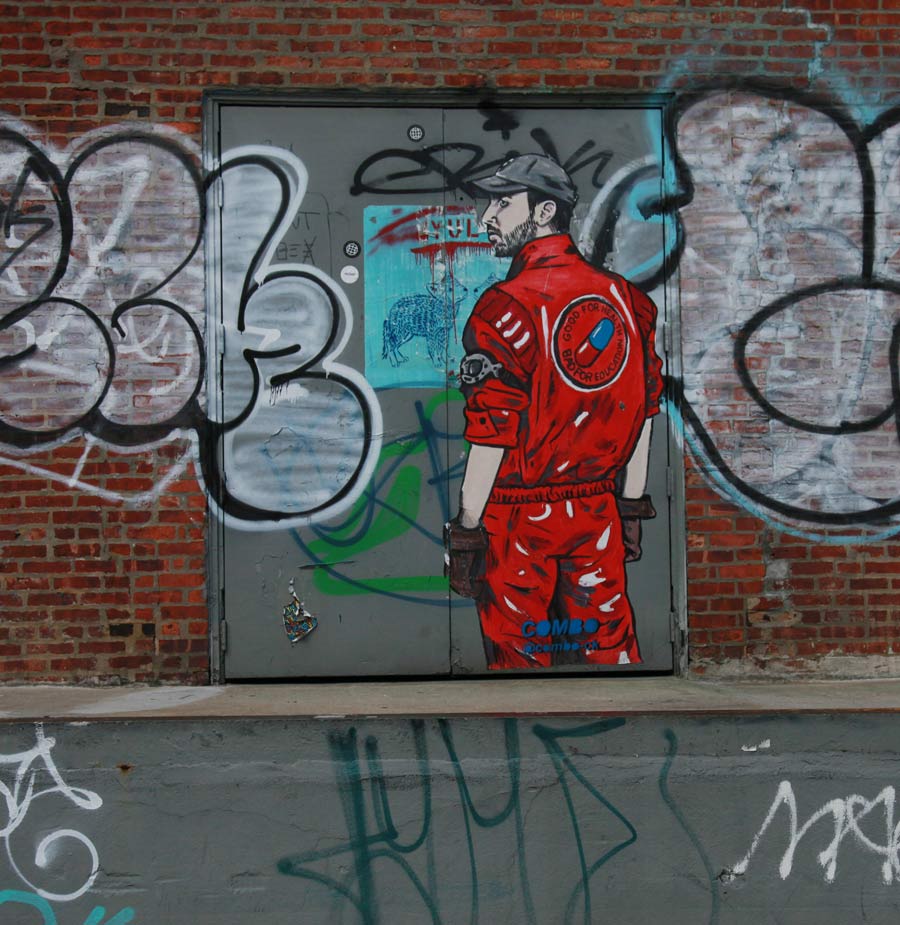
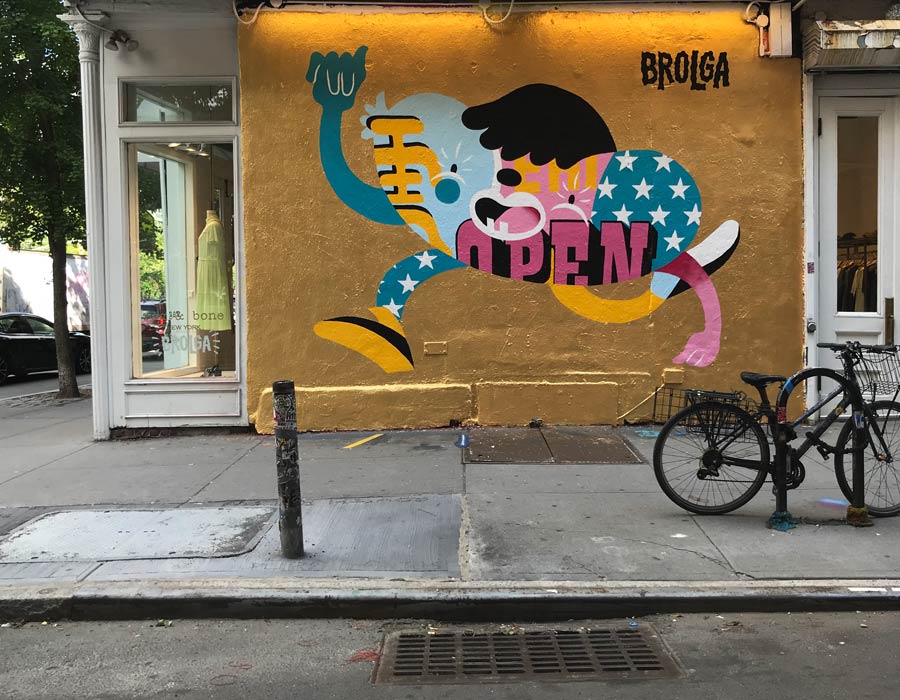
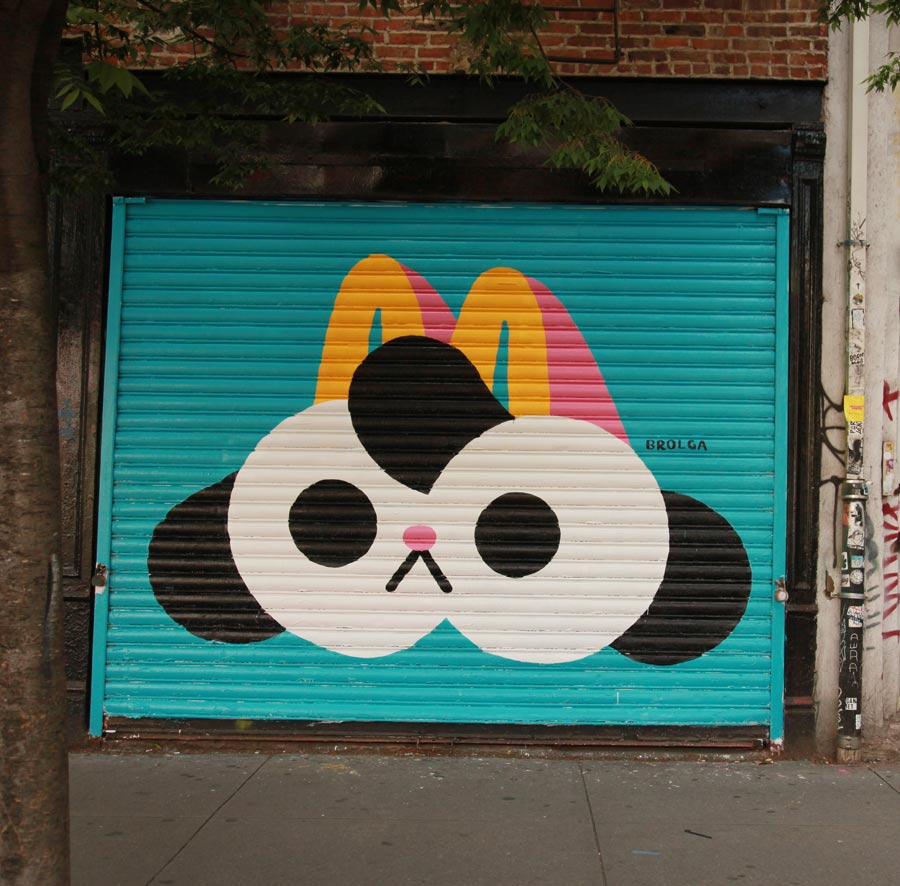
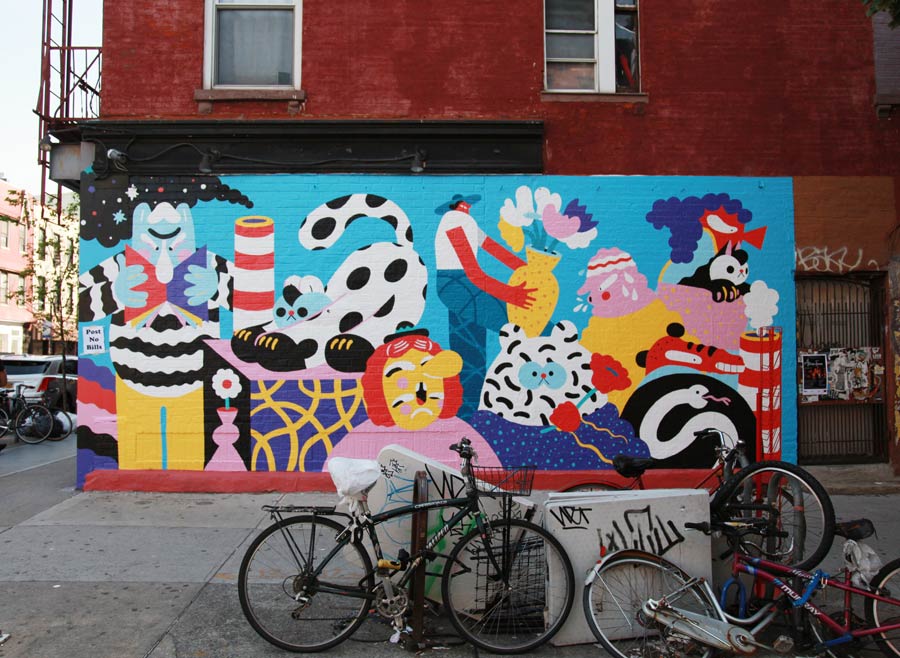
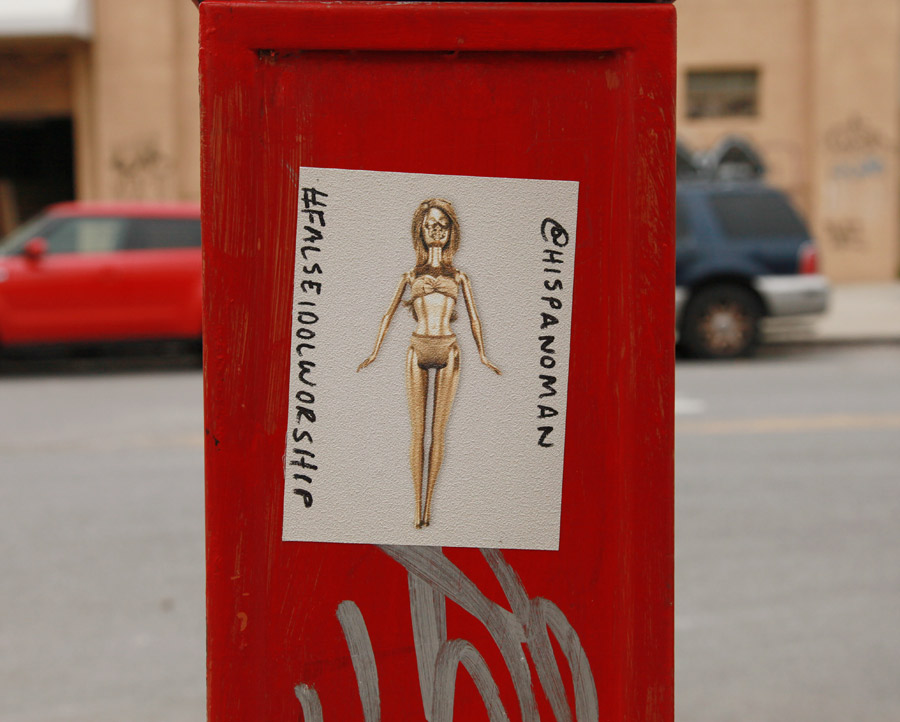
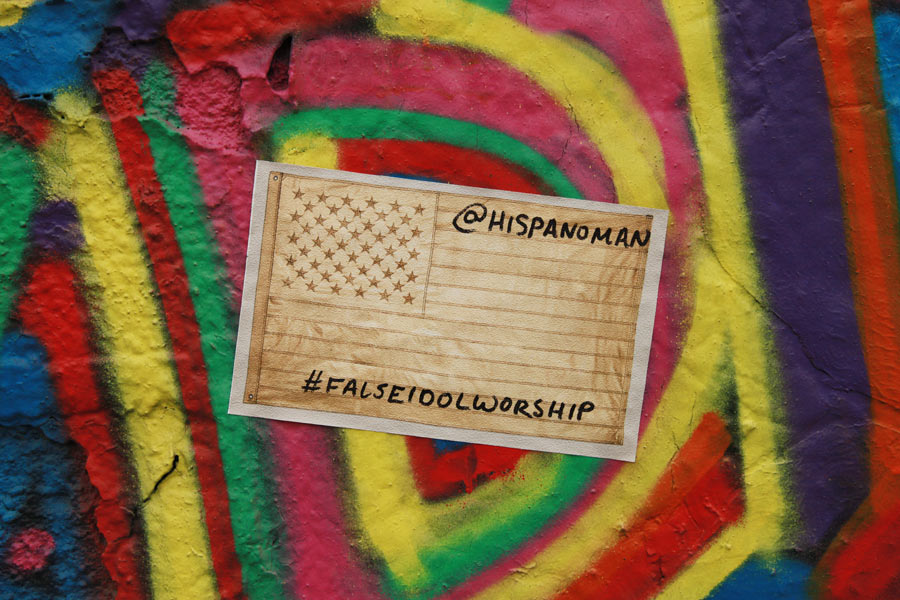
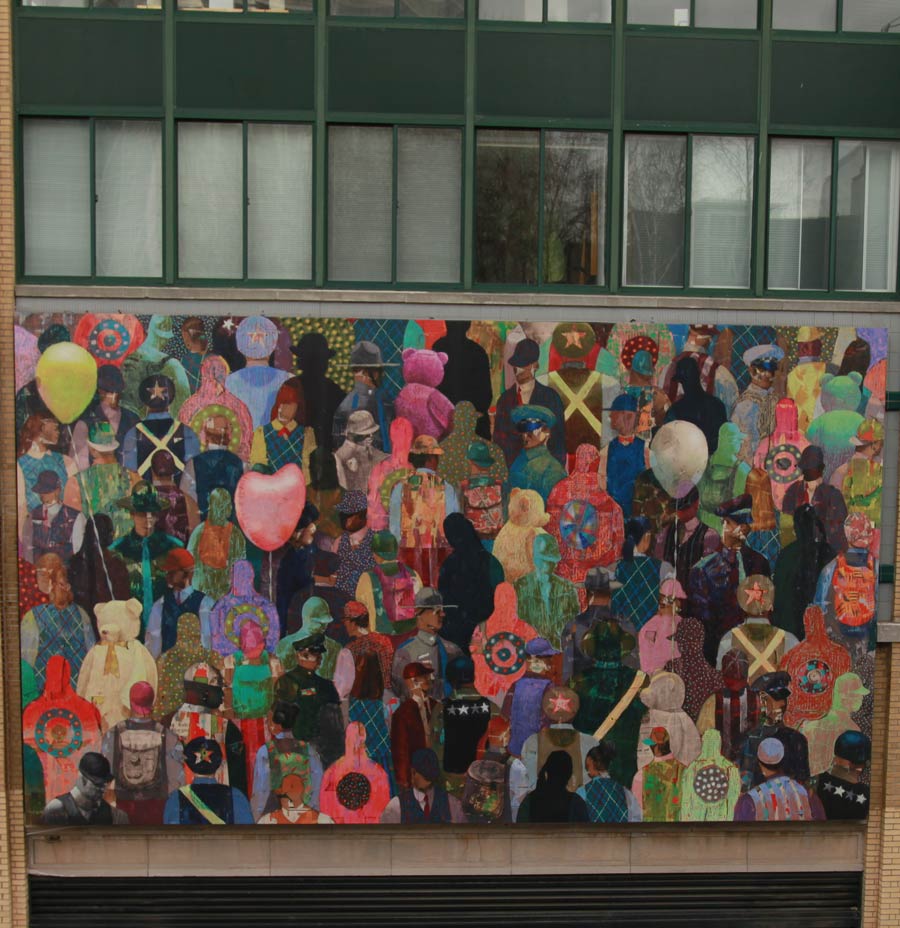
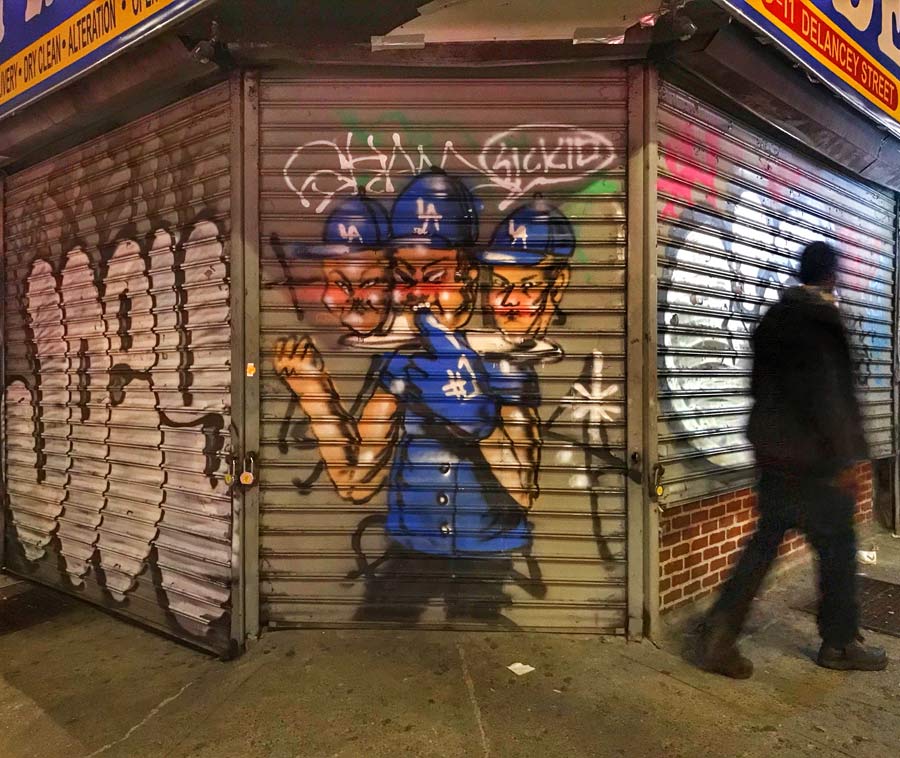
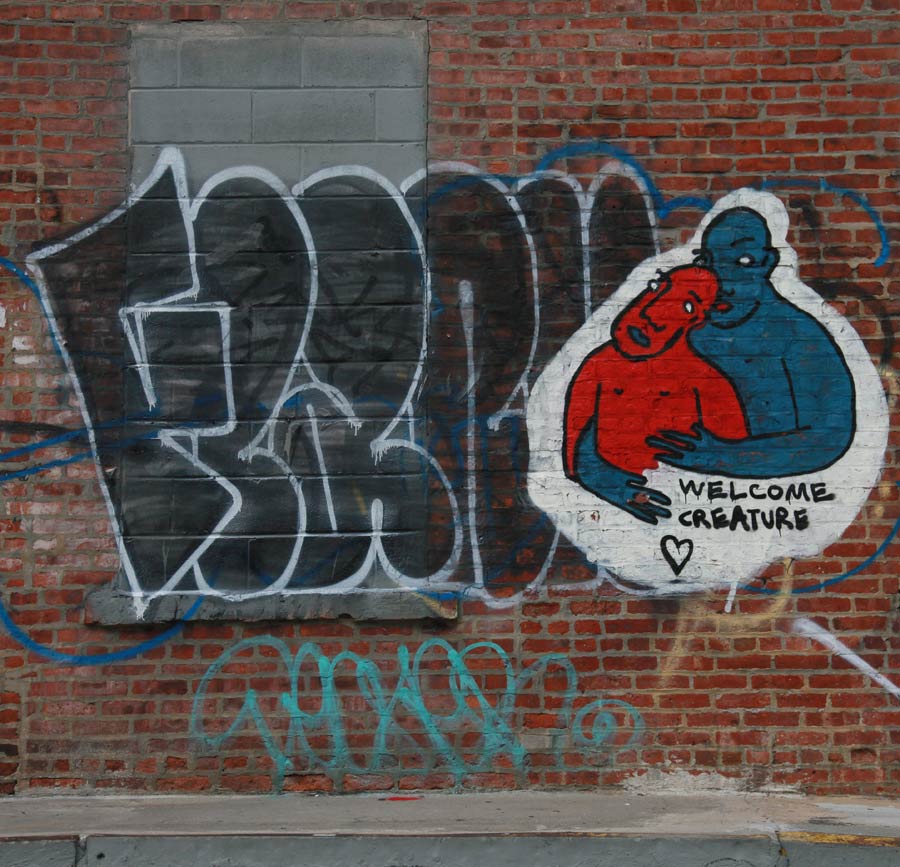
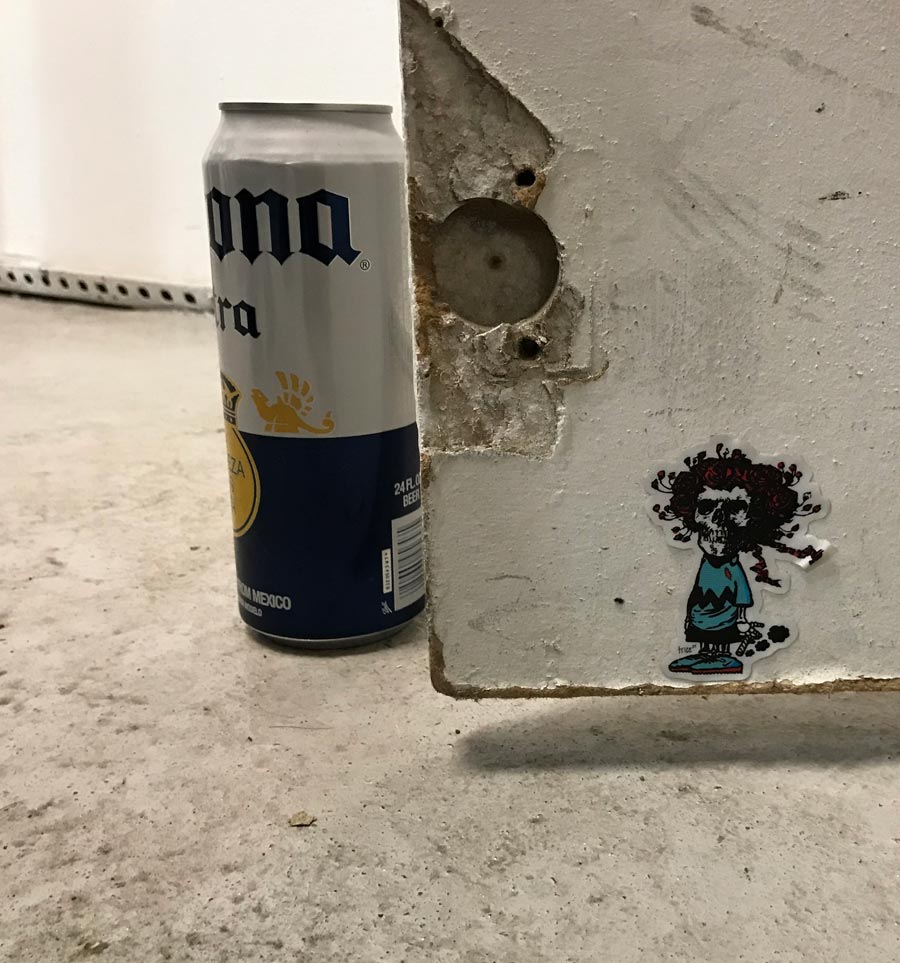
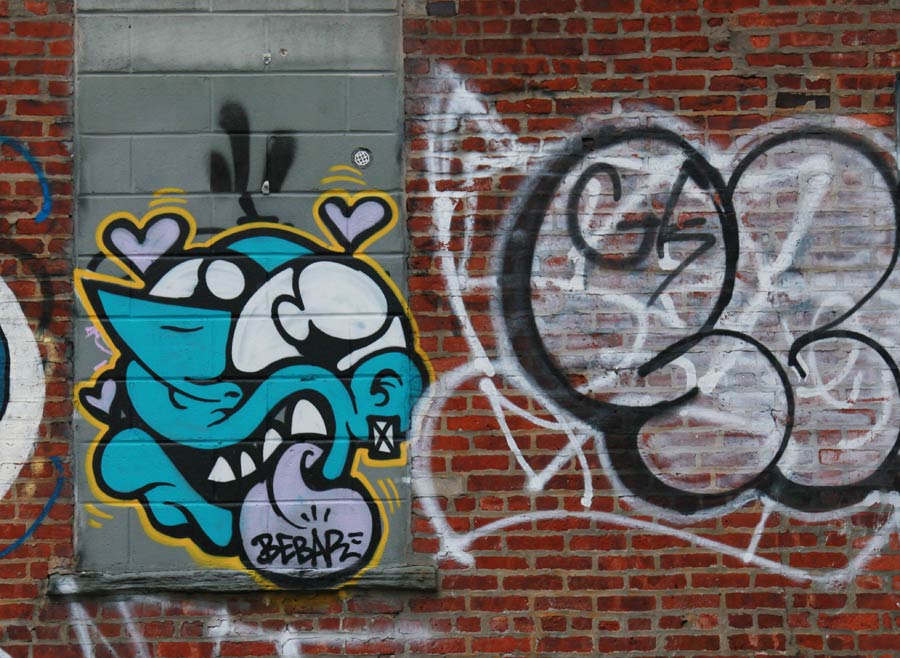
So here’s our weekly interview with the street, this time featuring Bebar, Brolga, Chris RWK, Combo-CK, Derek Fordjour, Food Baby Soul, Grimm the Street Kat, Hispano Man, Kathryn Rose, Sickid, Trice, and Winston Tseng.
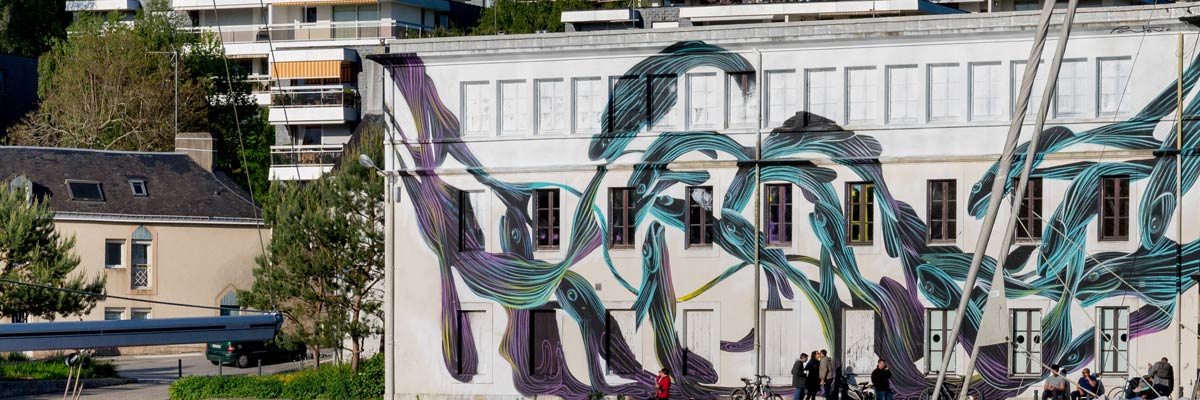
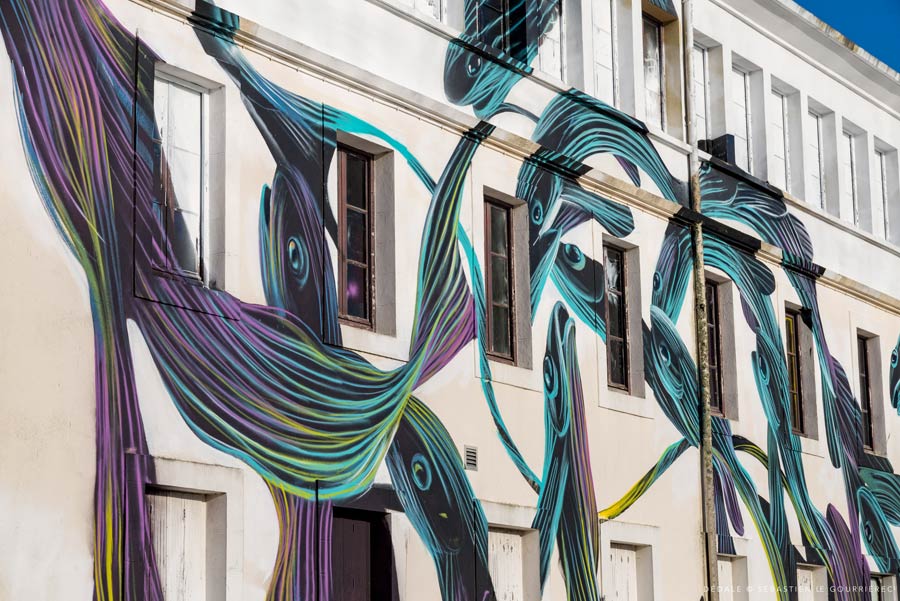
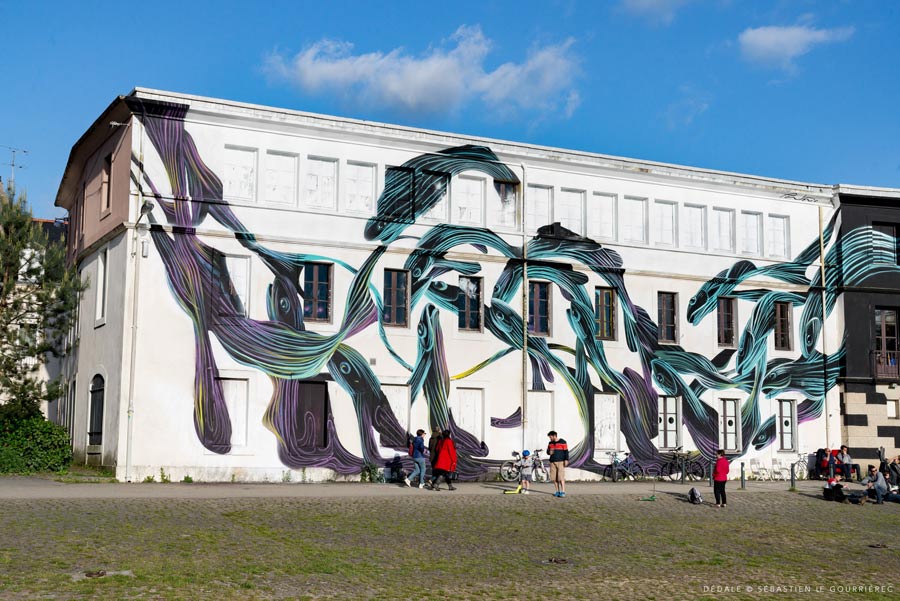
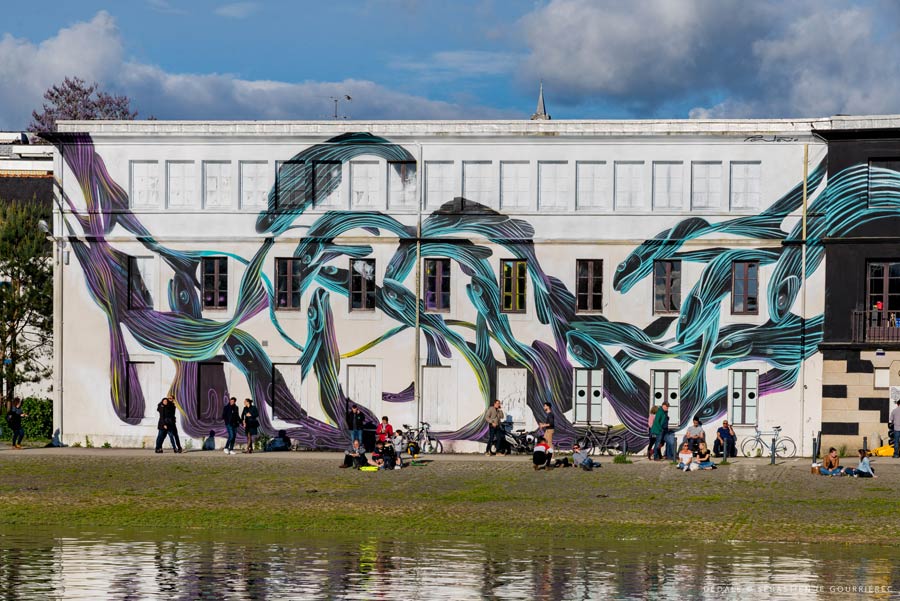
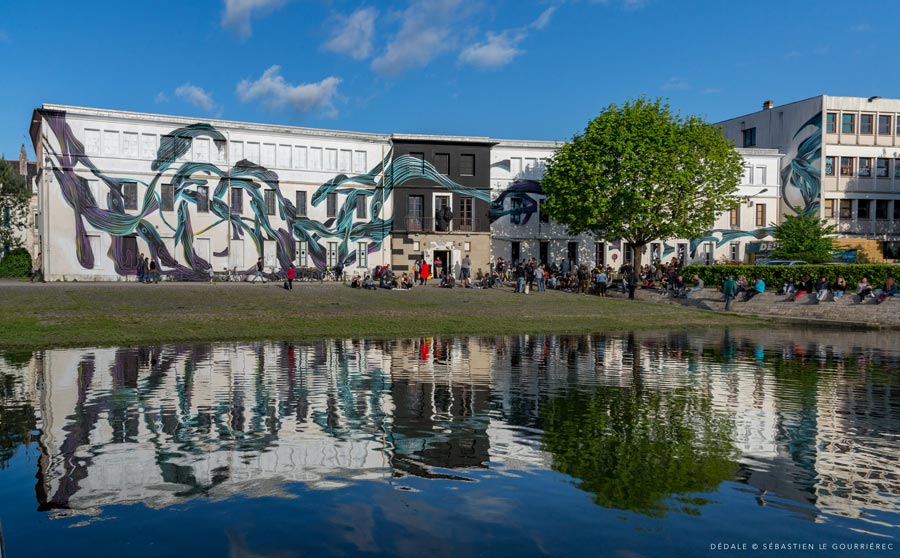
The blackened blueish rivers of energy swirling around this former government building in Nantes beguiles your inquisitive mind, wondering what fluid velocity and movement you have been swept into.
Pantonio. DéDalE. L’Art Prend la Rue.Vannes, France. May 2019. (photo Sebastien Le Gourrierec)
Is it the pulsating grid of power that once coursed through the maze of 130 offices on four floors inside; a buzzing quotidian beehive of 20th century hierarchy, efficiency, government bureaucracy, personal transactions, business ledger balancing. Or is it the newly spray-painting lifeblood of artists’ labor that transforms these spaces into immersive environments?
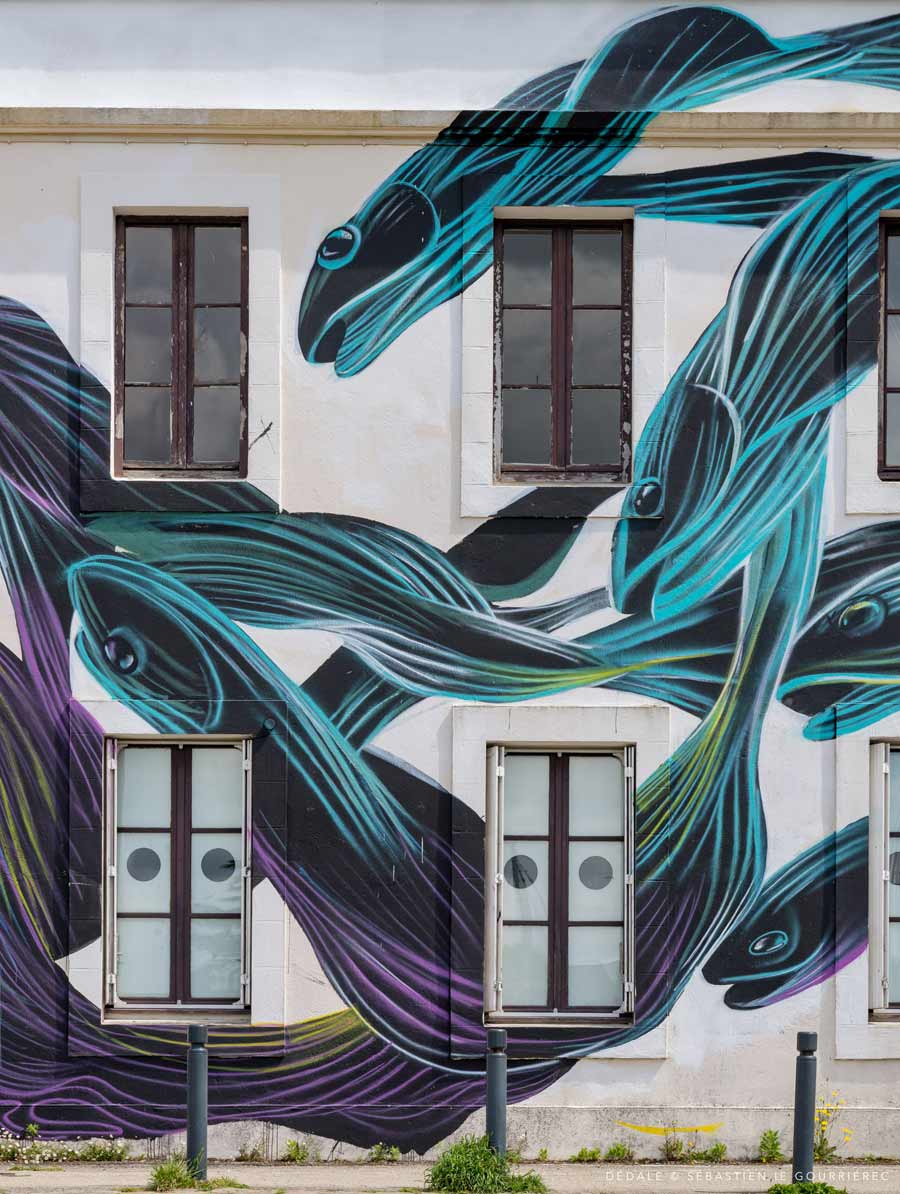
Pantonio. DéDalE. L’Art Prend la Rue.Vannes, France. May 2019. (photo Sebastien Le Gourrierec)
The Lisboan Street Artist Pantonio is not typically one to tell you about the creatures who swim or fly through his work, instead allowing the streams to weave around the façade, carrying your imagination with it. In the case of this waterside project by “L’Art Prend la Rue” called DéDalE (maze), the immersion begins before you have entered.
Pantonio. DéDalE. L’Art Prend la Rue.Vannes, France. May 2019. (photo Sebastien Le Gourrierec)Pantonio. DéDalE. L’Art Prend la Rue.Vannes, France. May 2019. (photo Sebastien Le Gourrierec)Pantonio. DéDalE. L’Art Prend la Rue.Vannes, France. May 2019. (photo Sebastien Le Gourrierec)
Our weekly focus on the moving image and art in the streets. And other oddities.
Now screening : 1. Evan Roth “Since You Were Born” 2. “Island” Hamburg Max Mortal and Robert Lobel 3. Isaac Cordal In-Studio Visit. Bilbao, Spain. 4. ARTRIUM in Moscow
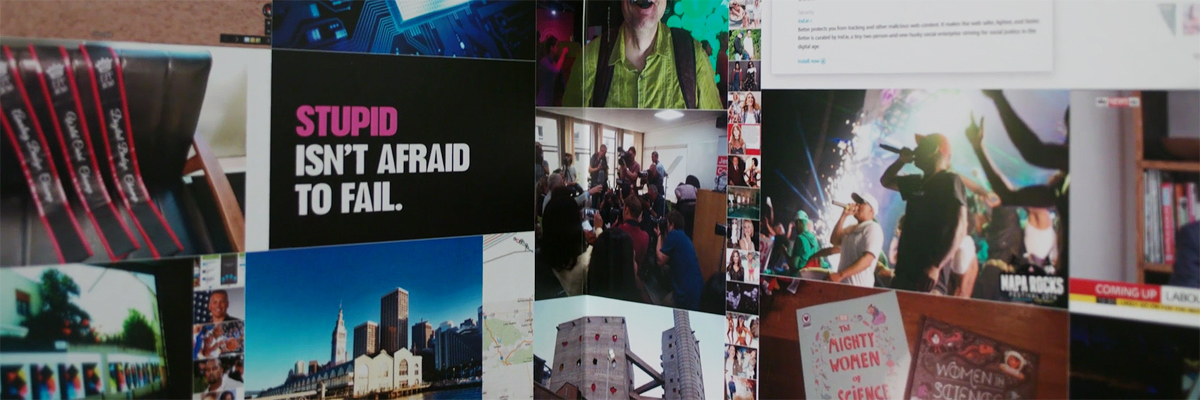
BSA Special Feature: Evan Roth “Since You Were Born”
Graffiti Research Lab
co-founder Evan Roth has been hacking his way through life and art practice for
the mid-2000s when he was a student at Brooklyn’s Parsons, where he was
valedictorian. Now an older wiser daddy of two, he turns his attention to the
saturated everyday data pileup generated from Internet browsing. The
accumulated images, logos, maps, banner ads in the cache is like so much DNA of
the person behind the mouse, and when it is printed to display, one becomes
engulfed.
Our favorite term from his new exhibit?
“An alternate form of art-making,
memory-making, and storytelling”.
Project Atrium: Evan Roth
“Island” Hamburg Max Mortal and Robert Lobel
From Hamburg an animated short video by Max Mörtl & Robert Löbel explores the irresistible desire to communicate with this stop motion & 2D animation piece. Adorable exotic creatures come alive during the day to explore and seek kindred spirits.
Isaac Cordal In-Studio Visit. Bilbao, Spain.
From our visit to his studio comes this silent overview of how to turn a pig into a pig-man. “Here is where you see the craftsman at work; carefully attentive, problem-solving industry in play, possibly more at peace while he is creating than when he is left to think too much. He picks up a pink pig figurine and begins the plastic surgery, the fine reconstruction; a gentle whirring, a whittling away of snout and a defining of chin-line.”
When we were in Moscow last summer as
curators at Artmossphere, we had the opportunity to meet the director of the
new program to bring international Street Artists to paint a shopping
mall. The magnetizing force that drew
artists to hit these walls is pretty strong; just ask Shepard Fairey, Felipe
Pantone, Tristan Eaton, Ben Eine, PichiAvo, Okuda San Miguel, Pokras Lampas,
Faith47, WK Interact, Faust, and Haculla.
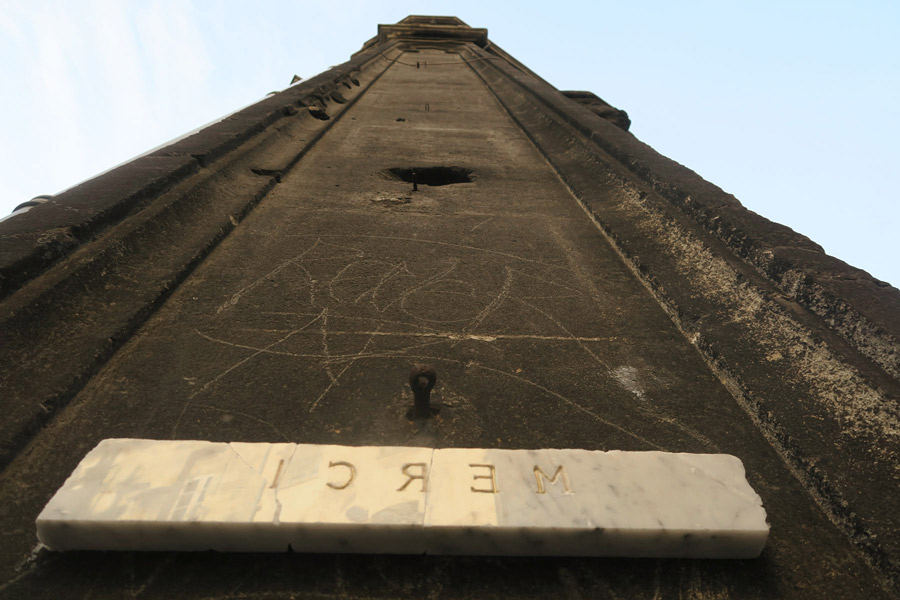
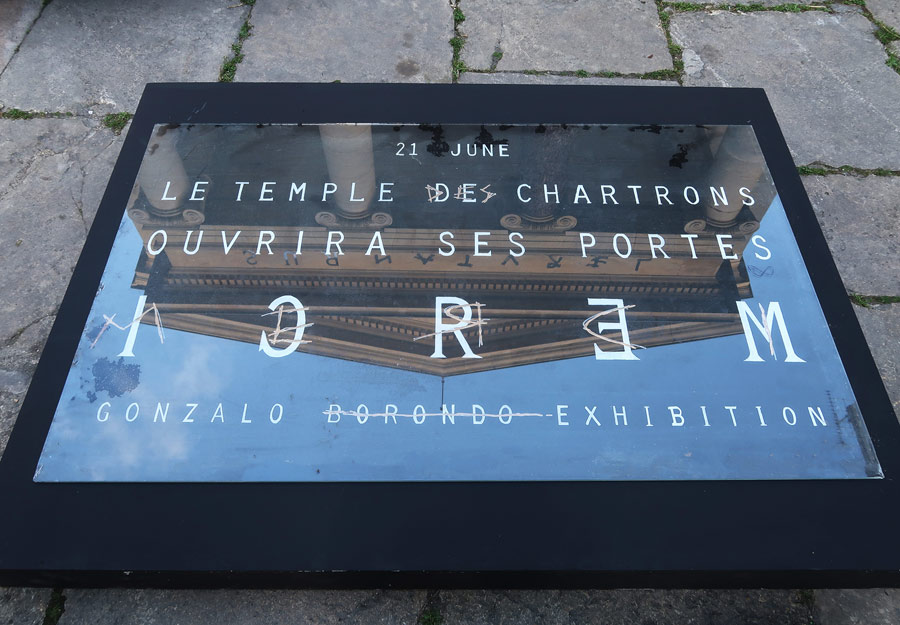
Borondo. “Merci” Le Temple des Chartrons. Bordeaux, France. May 2019. (photo courtesy of Borondo)
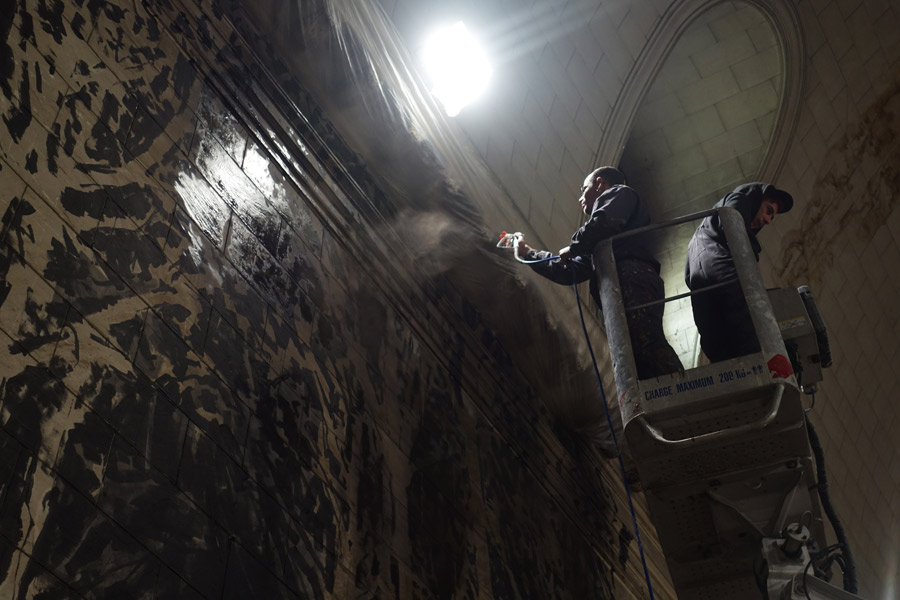
We’re accustomed to watching artists interact with the unpredictable mood swings of Mother Nature when creating interventions in public space. Whether it is in the built environment of urban architecture or the crumbling remains of it in the city, followers of Street Art and graffiti are wise to anticipate the wild embrace of the sun, the winds, the floods, the fire, the ice, the snow. Now in the Bordeaux region of France people are preparing for the growing season.
Borondo. “Merci” Le Temple des Chartrons. Bordeaux, France. May 2019. (photo courtesy of Borondo)
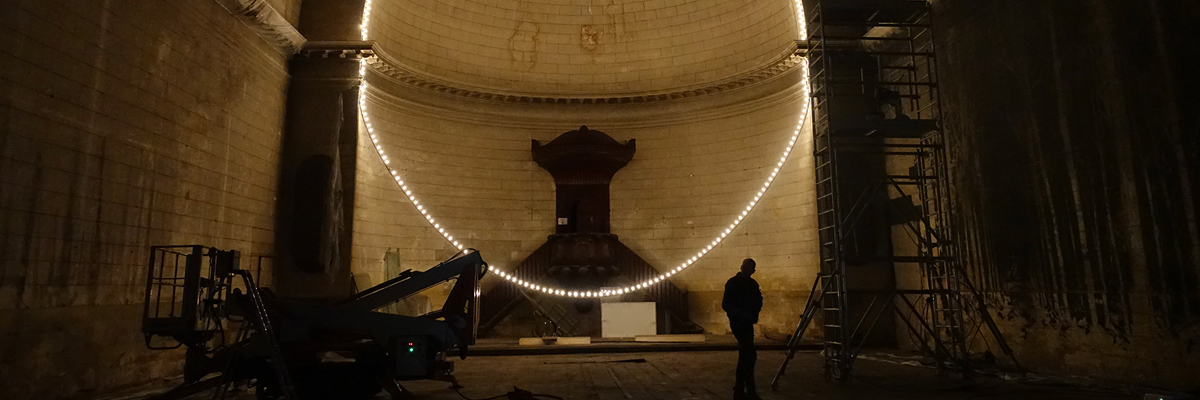
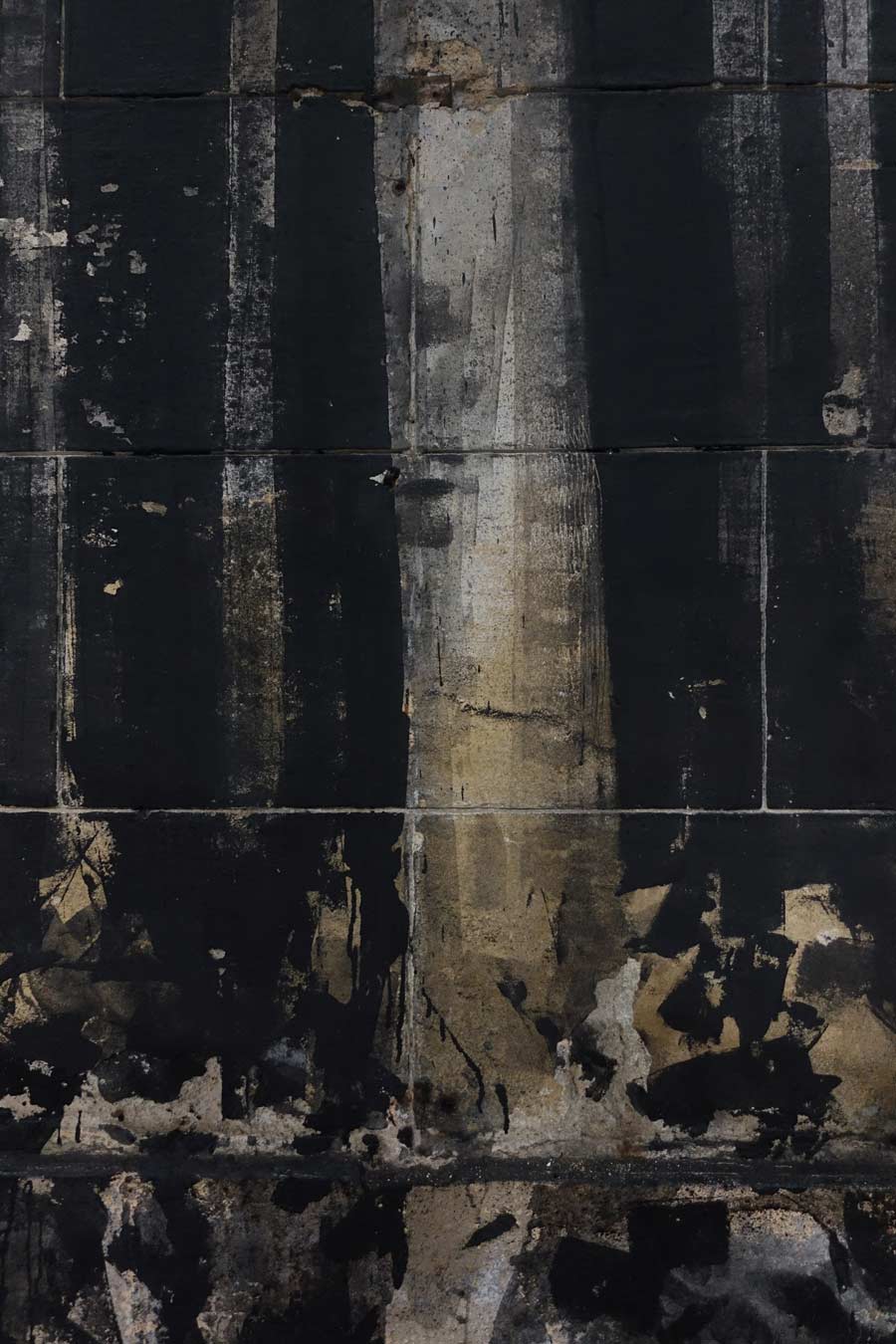
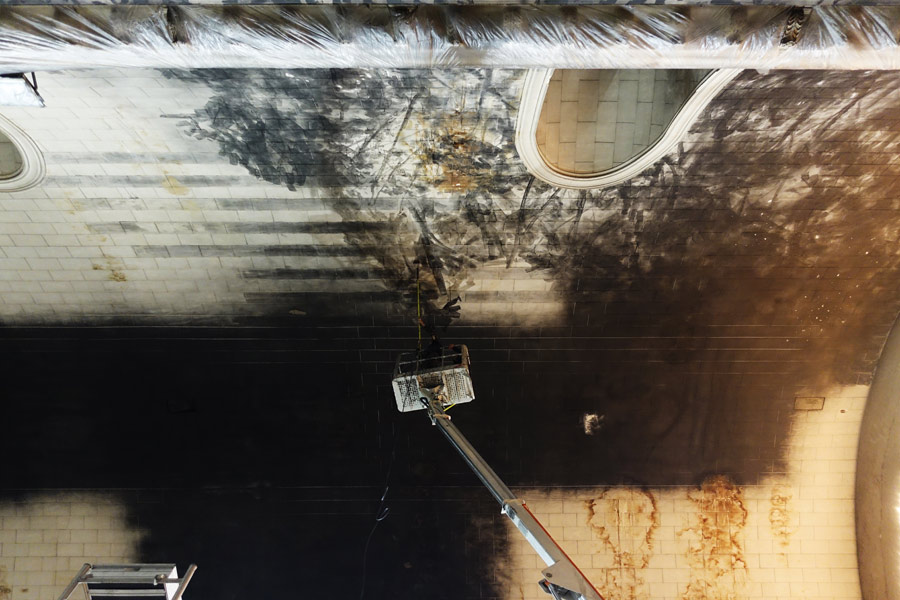
The natural cycles are rarely invited indoors as part of an exhibit but this new artistic project of this summers’ MERCI by Gonzalo Borondo hopes to establish a healthy reverence for the revolutions and rotations of agronomy, history, mystery, and inspired variations of natural poetry.
Borondo. “Merci” Le Temple des Chartrons. Bordeaux, France. May 2019. (photo courtesy of Borondo)
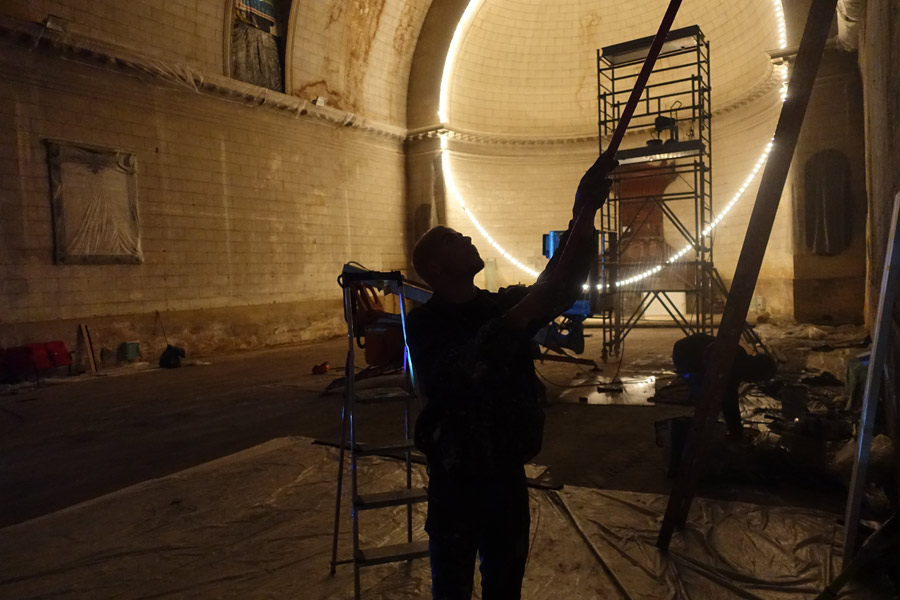
“He is working indoors and outdoors in an attempt to create a dialogue with and in the streets of Bordeaux,” says project manager Silvia Meschino of the multi-stage installations that will pour into the temple as we near the grand opening precisely upon the summer equinox. “He has always tried to find a connection with the environment that surrounds him,” she says, and you recall his studied interventions of the past decade.
Today we bring you exclusive images and a teaser video of this first phase of Borondo’s adaptation in Le Temple des Chartrons. The old protestant church has been closed for thirty years but has been granted to the Spanish Street Artist/ muralist by the Bordeaux council so that he can freely create within it. We watch with interest as he creates his own version of sanctuary for visitors and of course, the natural world. Possibly the temple will achieve a balance.
Borondo. “Merci” Le Temple des Chartrons. Bordeaux, France. May 2019. (photo courtesy of Borondo)Borondo. “Merci” Le Temple des Chartrons. Bordeaux, France. May 2019. (photo courtesy of Borondo)Borondo. “Merci” Le Temple des Chartrons. Bordeaux, France. May 2019. (photo courtesy of Borondo)
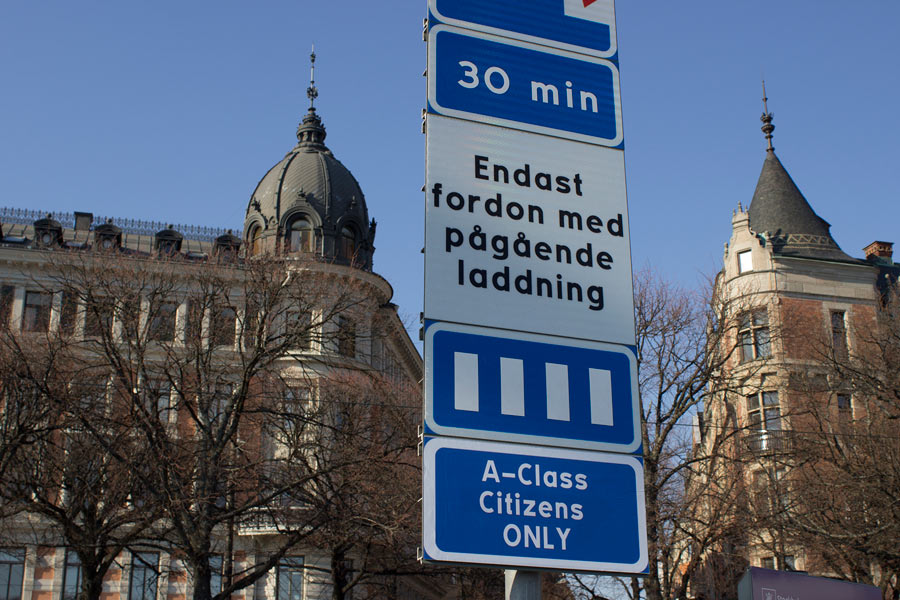
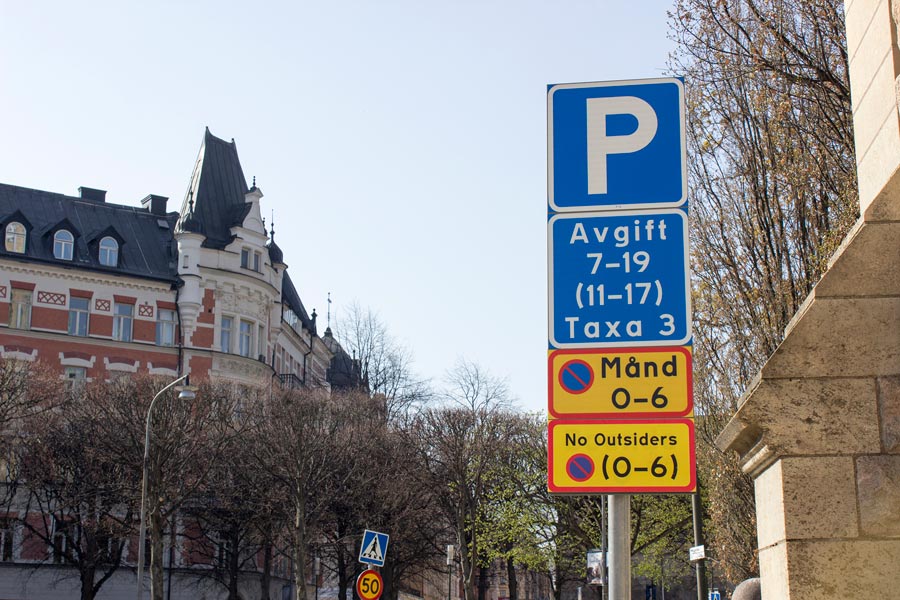
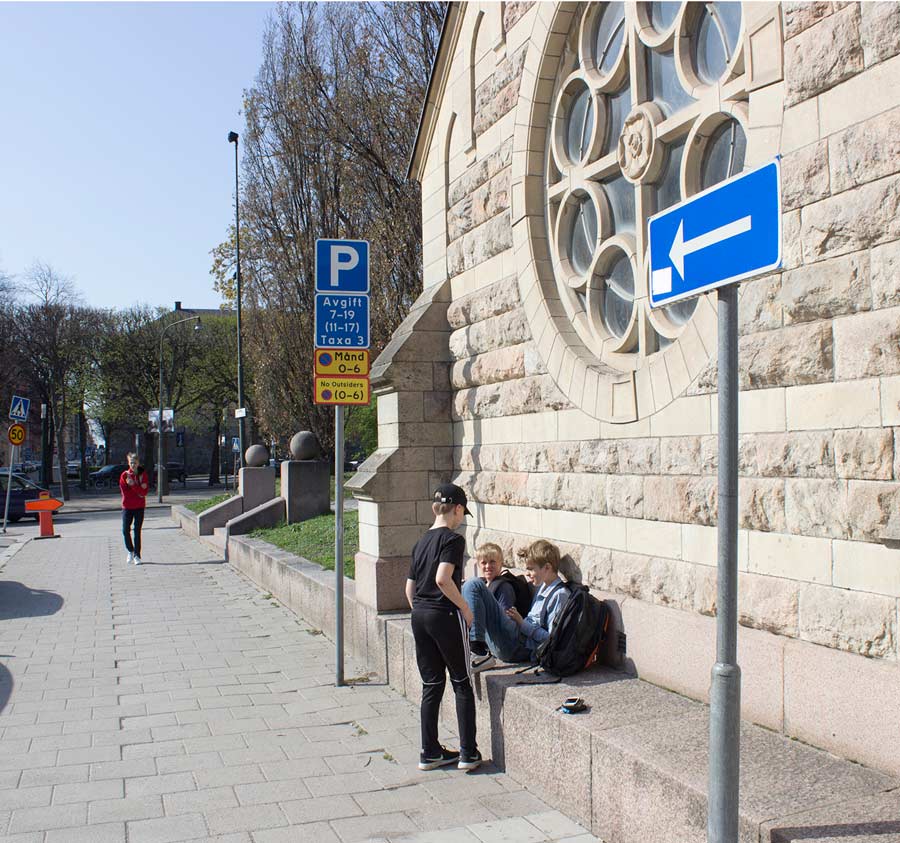
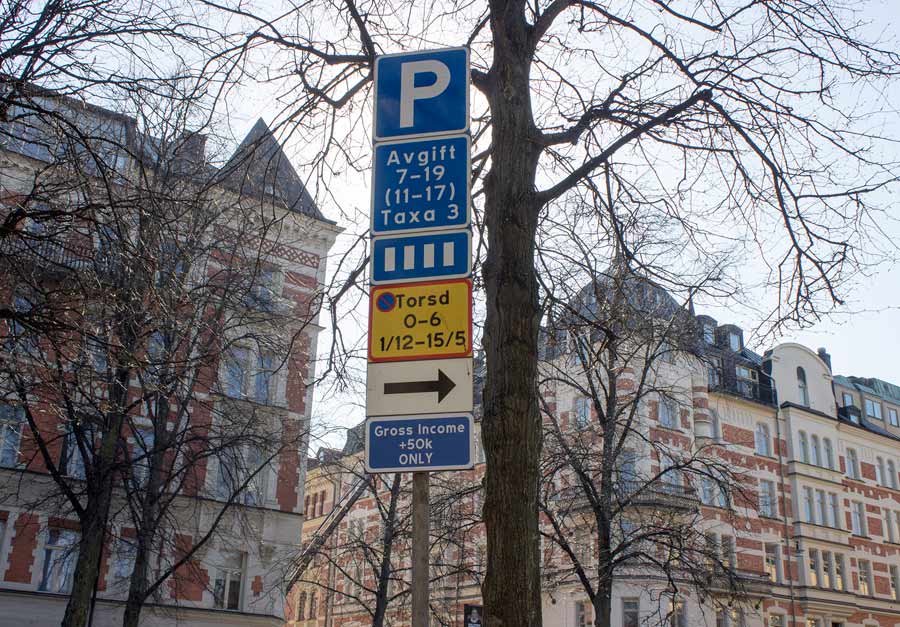
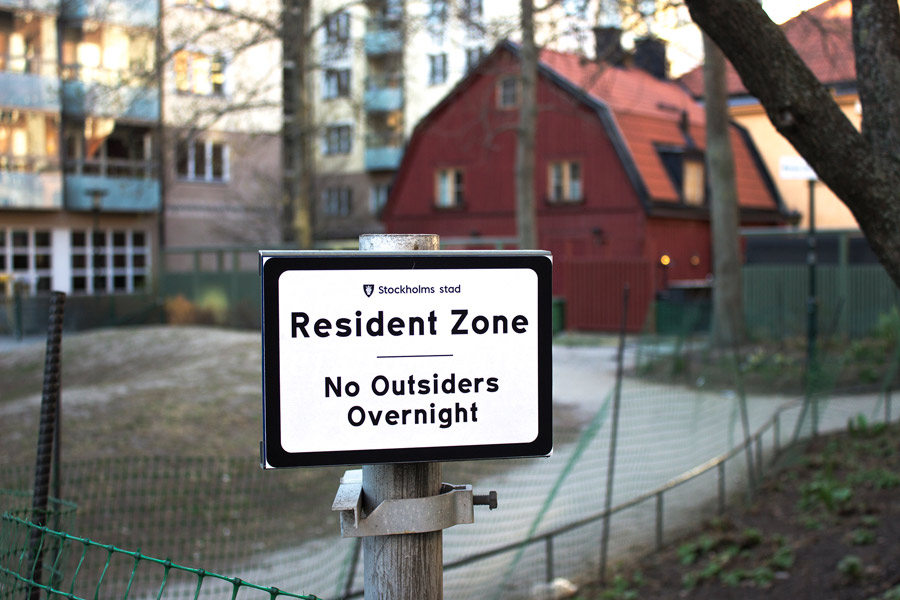
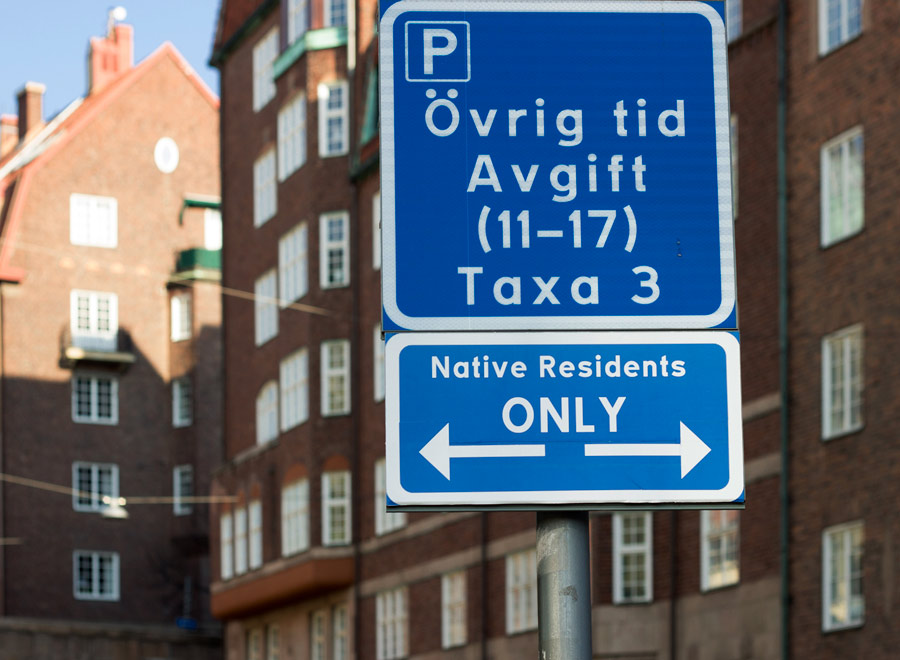
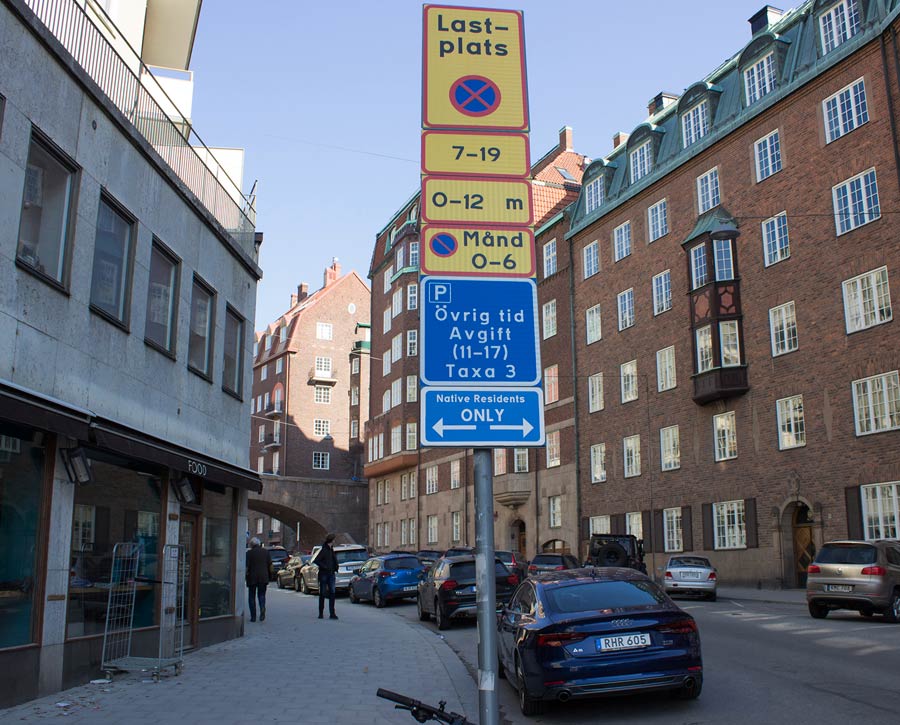
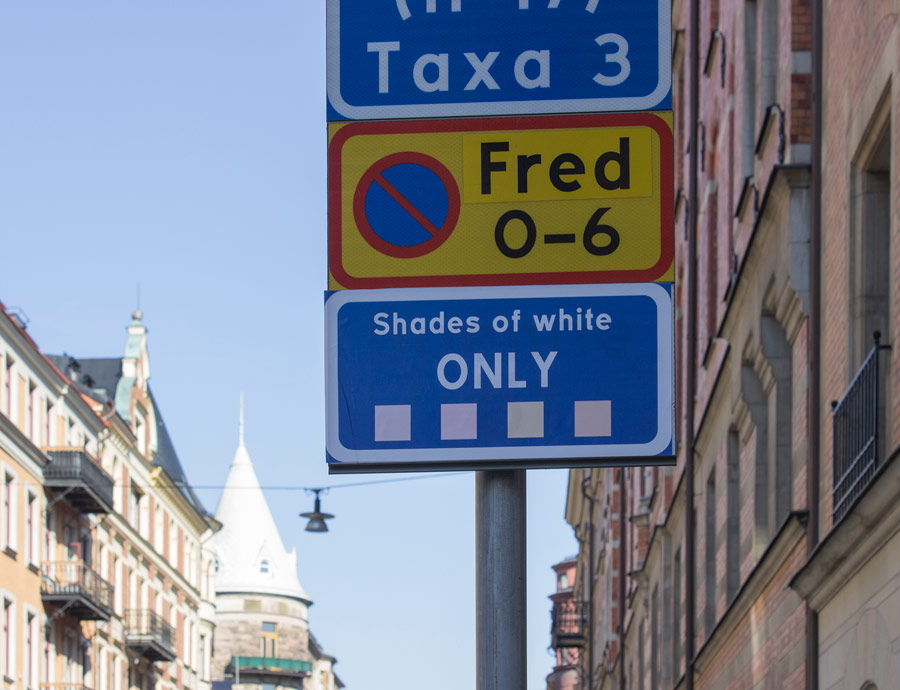
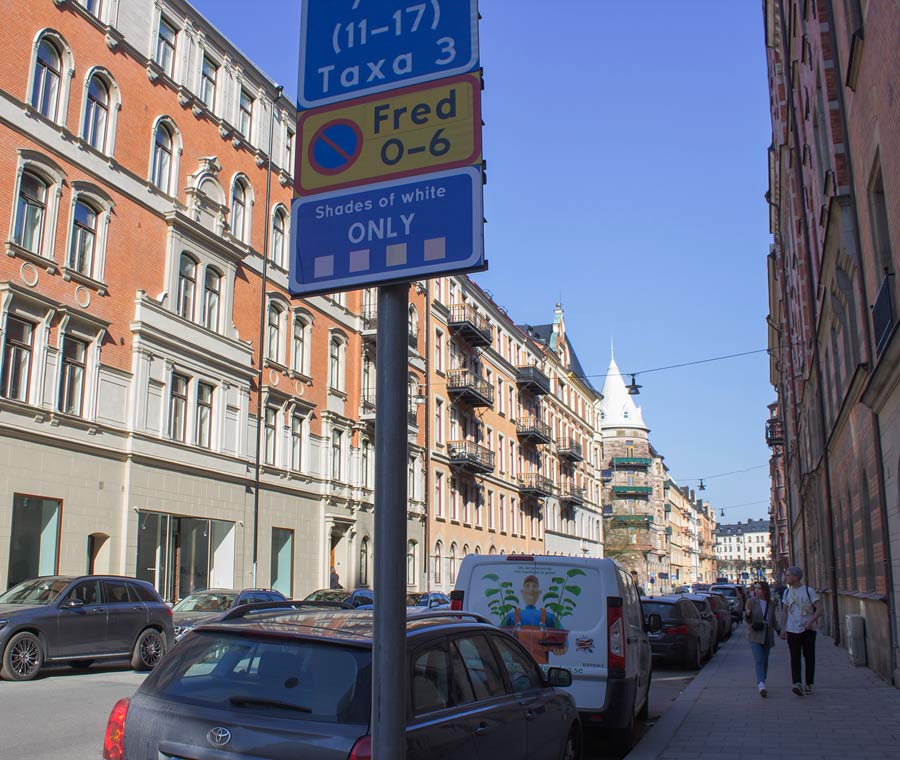
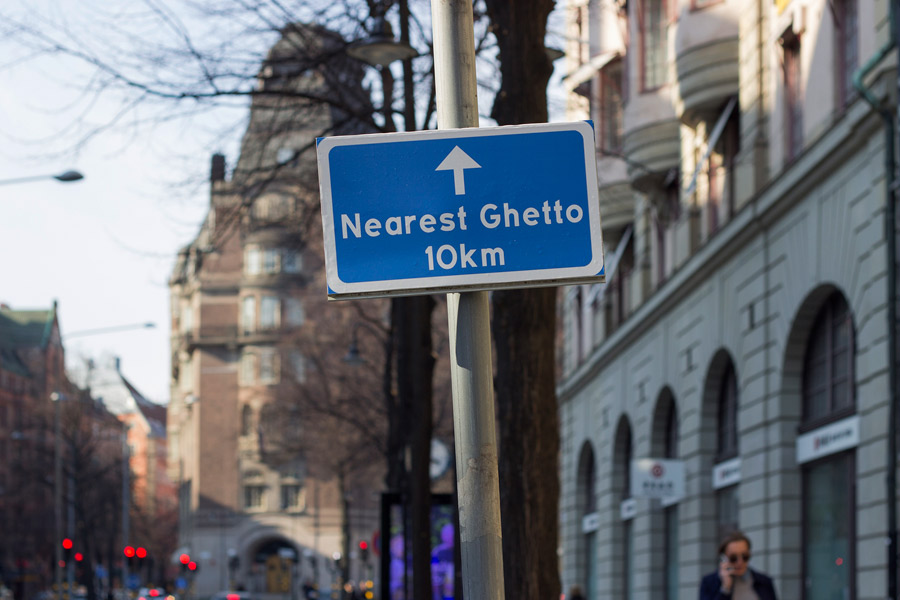
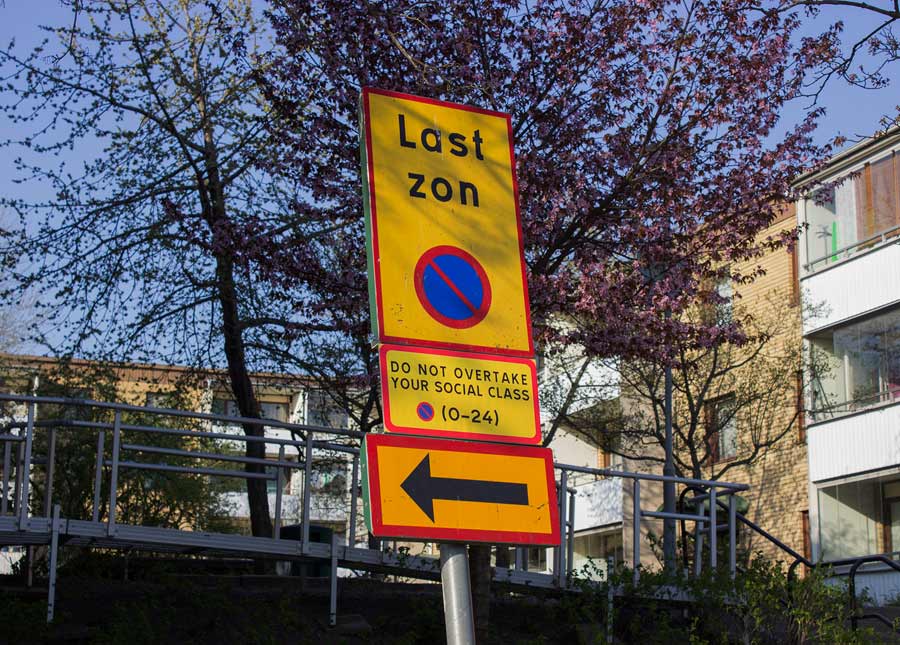
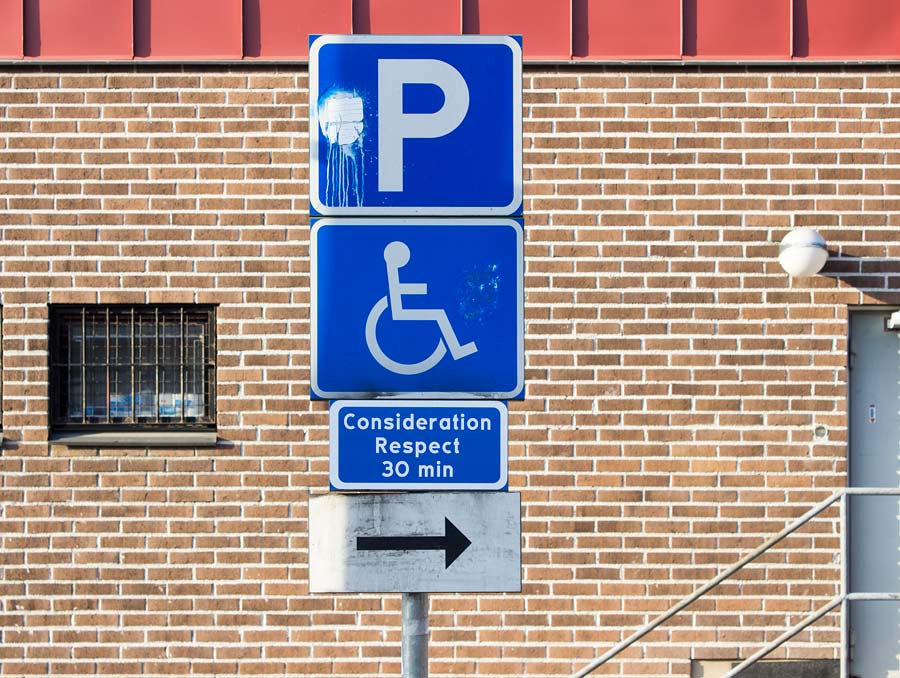
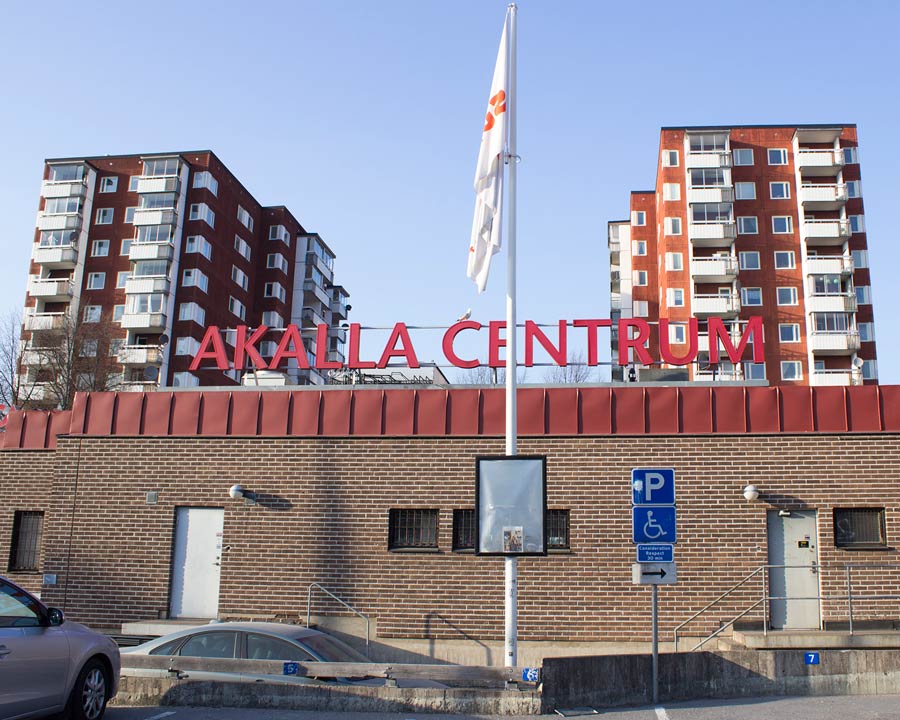
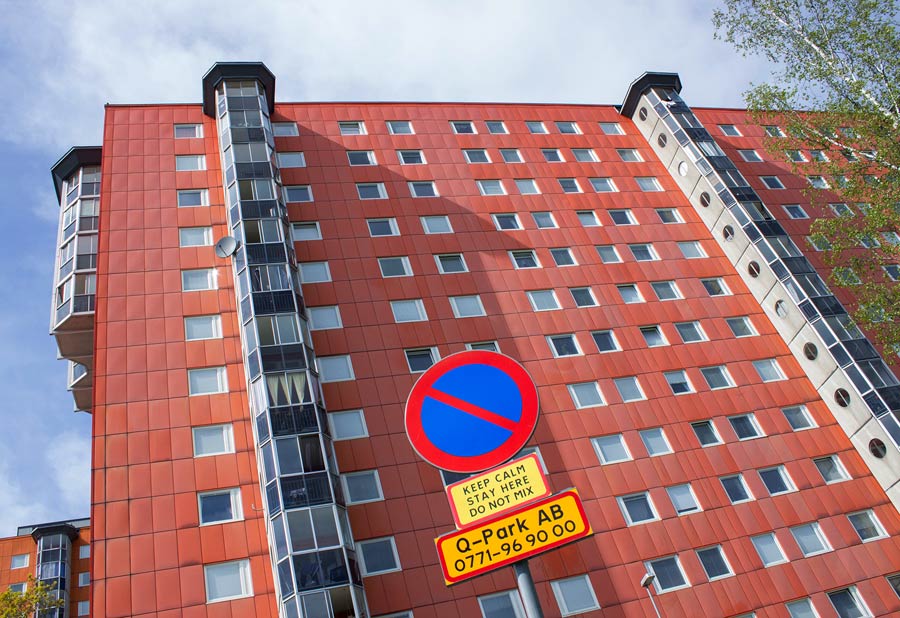
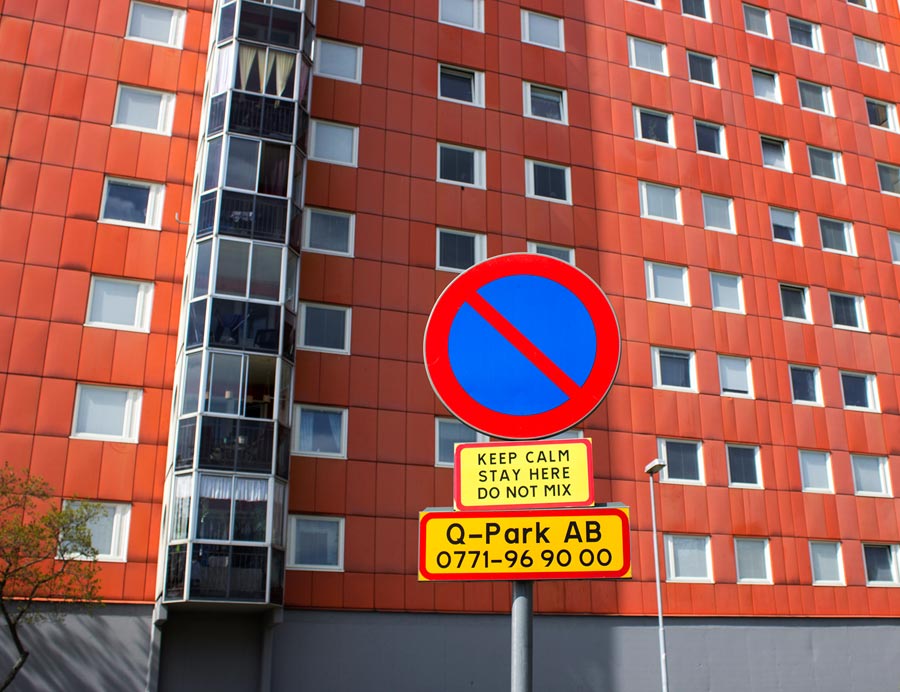
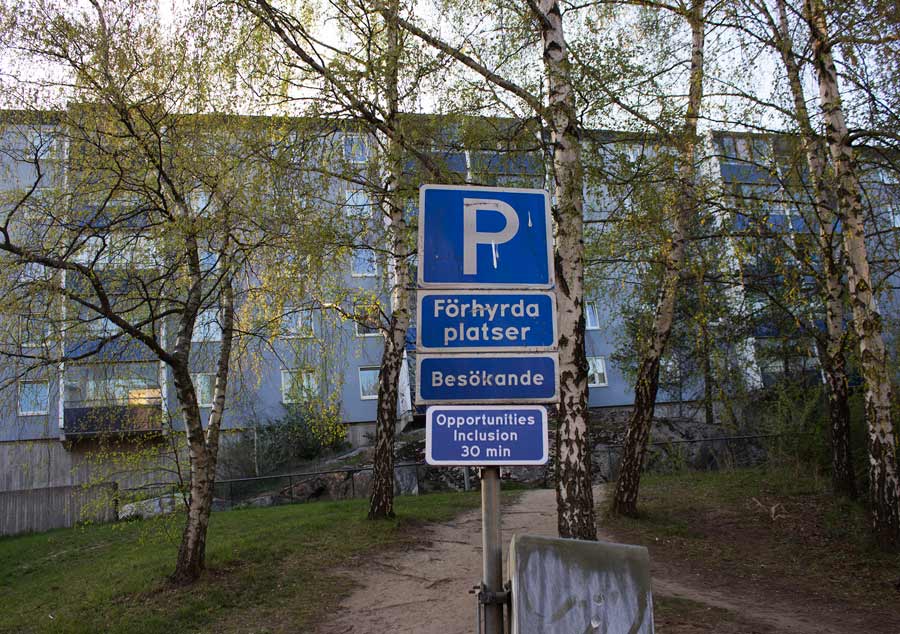
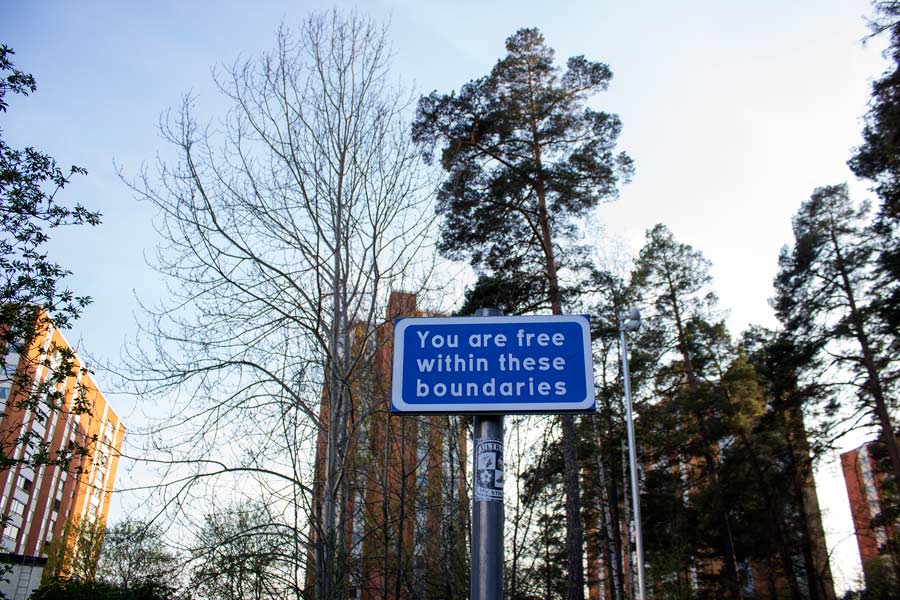
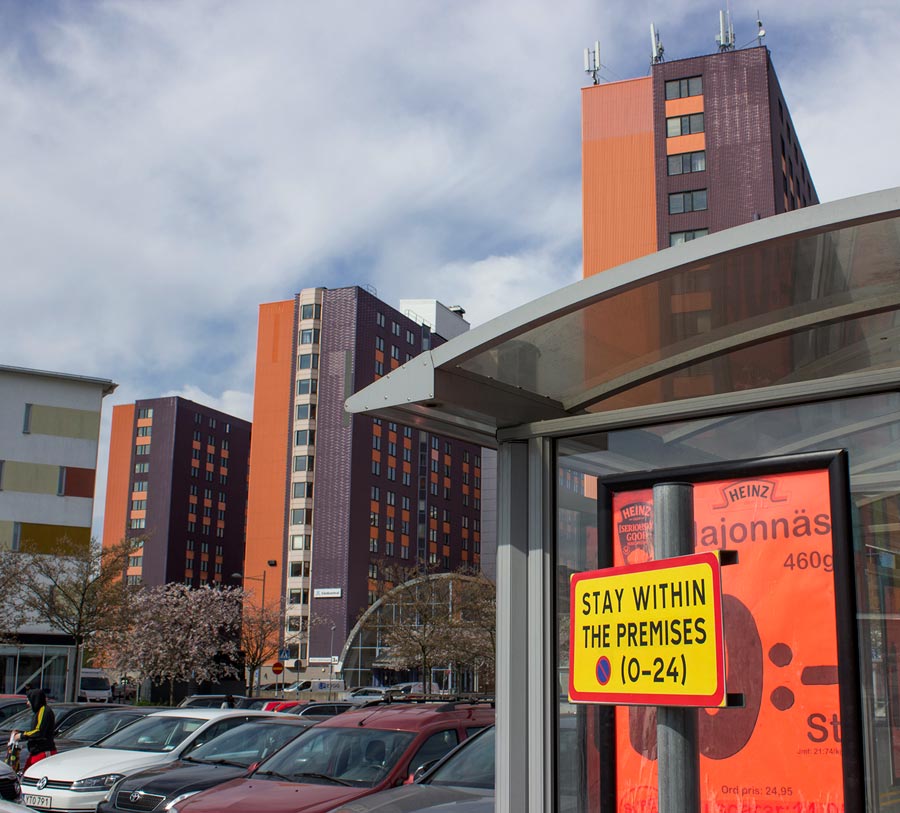
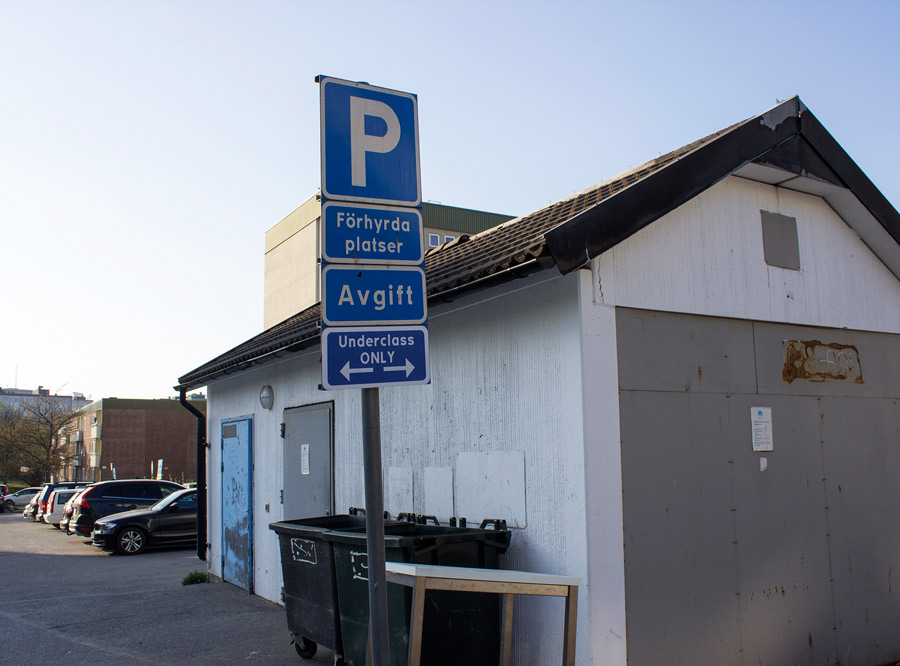
A new street signage campaign in Stockholm by Street Artivist Vlady that addresses obvious segregation plays just under the radar of the everyday. That’s also the location of our subterranean feelings, opinions, and motivations – so truly he treads on a minefield in doing so.
“Stay Within the Premises”
By posting these unwritten rules in the official street nomenclature of the state, with its implied weight of authority and its underlying subtle threat of enforcement, Vlady may be poking at Sweden’s self-image as a welcoming society by drawing attention to its institutionalized demarcation of zones that are allocated to some, but not to others.
“Sweden is a competitive mixed economythat relies on export,” he says, “featuring a generous universal welfare statefinanced through relatively high income taxes that ensures that income is distributed across the entire society, a model sometimes called the Nordic model,” explains the artist by way of background.
He tells us that, despite what appears to have been the best and most sincere intentions of the society to open the doors of opportunity to immigrants over the previous century, newer shadings of right-wing sentiments in recent year have caused him to examine the attitudes of his neighbors.
“Invisible yet perceptible borders today divide the capital: while the city center is economically off-limits for the newcomers, the ghettos are perceived as a “no-go zone” for the most of the white Swedish population,” he says. “This situation might not represent a unique case in Europe, nevertheless comes as a shocking fact for any visitor, as it’s taking place in the least expected country, like a bolt out of the blue.”
European and American racism and classism presents a very complicated history to say the least – a typical way that writers describe stories containing completely uncomfortable realities. But who better to draw our attention to social and political situations than an artist who lives amongst us, and who does installations on the street for the populous to encounter? As is the case historically, we are smart to heed such messages – as the artist on the street frequently function as a canary in the coalmine.
While so-called developed countries worldwide sometimes like to depict themselves as virtuous when encouraging immigration, economists say that demographics tell an additional aspect of the story. In the case of the US, like many “western democracies”, real GDP is increased by immigration.
“There is broad agreement among researchers and analysts that immigration raises total economic output (Borjas 2013; Congressional Budget Office [CBO] 2013),” says a report published by the Brookings Institution last fall.
Vladys says that “This country needed foreigners, but to sound sexier, it declared its motivation was to take ’em onboard for love, not because of necessity. To me it seems like it may be love, but under certain conditions: we love you as long as you stay subordinate. It’s also helping us to lower our blue-collar wages, to fill the positions that we do not wish to fill, to fill those spaces that we have left behind, where we wish no longer to be.” His subtle and revealing signage campaign may prove to be instructive to some, inflaming to others. It may also be misinterpreted.
Aside from his own status as a Street Artist in Stockholm, why does he feel this is an appropriate time for this campaign?
“I think that Sweden today is becoming the battlegroundfor the world’s left and right-wing parties, with persons arguing that our immigration practices are an example of a successful story – or a model not to replicate.” He also says that there is a taboo in the country about discussing such things as racism or inequality and people would prefer to limit strong opinions. But he thinks that is potentially dangerous and may lead to sentiments that are more harsh in the long run.
For those who may think he is Sweden-bashing, it appears from here that the critique itself is out of concern and is motivated by a hope for solutions before there is a deepening of divisions.
“I would put it this way: Sweden forbids itself to be discriminatory, however discrimination does persist at every level. Sweden is a country where anybody is welcome, but where not everyone can afford to stay. Migrants can still have access to many things relatively easily, but they can find themselves trapped in bureaucracy and without a job or money at all. As no one can stay in the country unless they can support themselves, migrants are forced to leave.”
He says that he hopes the “Segregation” campaign can raise awareness about the topic and push for a more open dialogue, although he acknowledges that it may be a “straightforward and unpolitically-correct project” of road signs. The two areas selected are very specific as well for their audiences; the wealthy-white-western folks in the quarter of Östermalm, where all the luxury shops are, and the populous detached suburbs of Flemingsberg, Rinkeby, Kista, Tensta, Akalla, Tureberg, Helelund – “where the residents can find, at most, a supermarket and a few dodgy shops.”
It will be interesting to see if these signs are discovered quickly or slowly, if they provoke discussion, if they are allowed to stay or are removed by neighbors or officials.
“The key point of this action is to raise awareness on this topic,” Vlady says, before giving a litany of questions that he would like passersby to address together: “Can integration come out of segregation? Are we really all equal, or is someone is more equal than others? For how long can we keep the cages closed and hope that no disaster will ever hit the downtown streets? Does anybody see this division, this invisible borderline?”
“I have my own answers to that, but I don’t typically offer answers, I raise issues.”
The 1990s lo-tech graphics of glitches and gifs and simplistic digitized objects continue to find their way into Street Art and murals, including this new app-activated chromo-keyed mural by Vic-born Degon.
A part-time post-rapper and a co-founder of his own graphics studio for creating beautiful-ugly logos, Degon says he began his first forays into graffiti in ’99, eventually becoming a bonafide crew member of the NGFX.
Now his interventions are straddling the physical and the digital and to enjoy fully this new “Green Screen Art” for the 12+1 project in Barcelona you’ll need a phone to see the motion graphics that are triggered. Or you can just look at the animation posted here at the end.
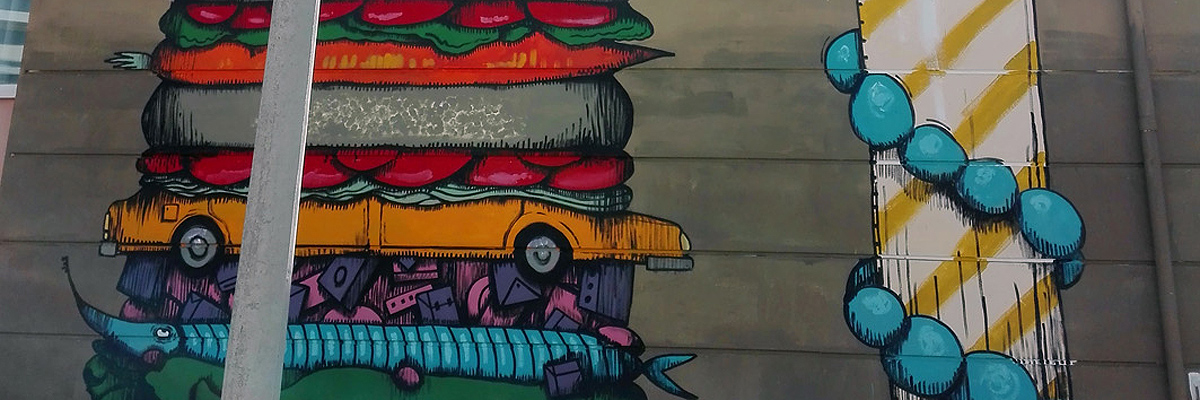
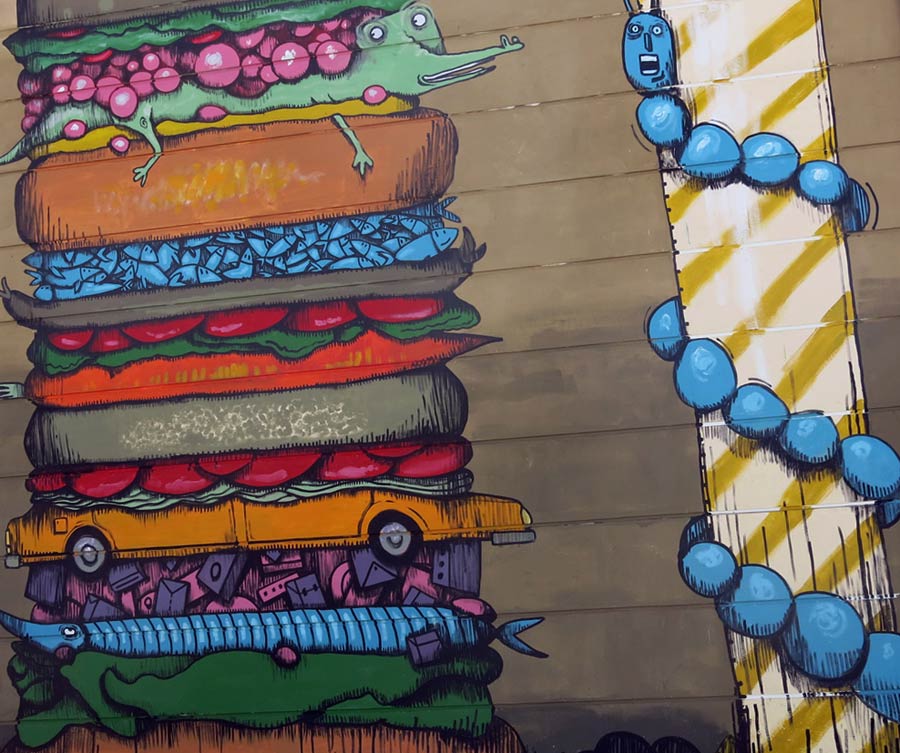
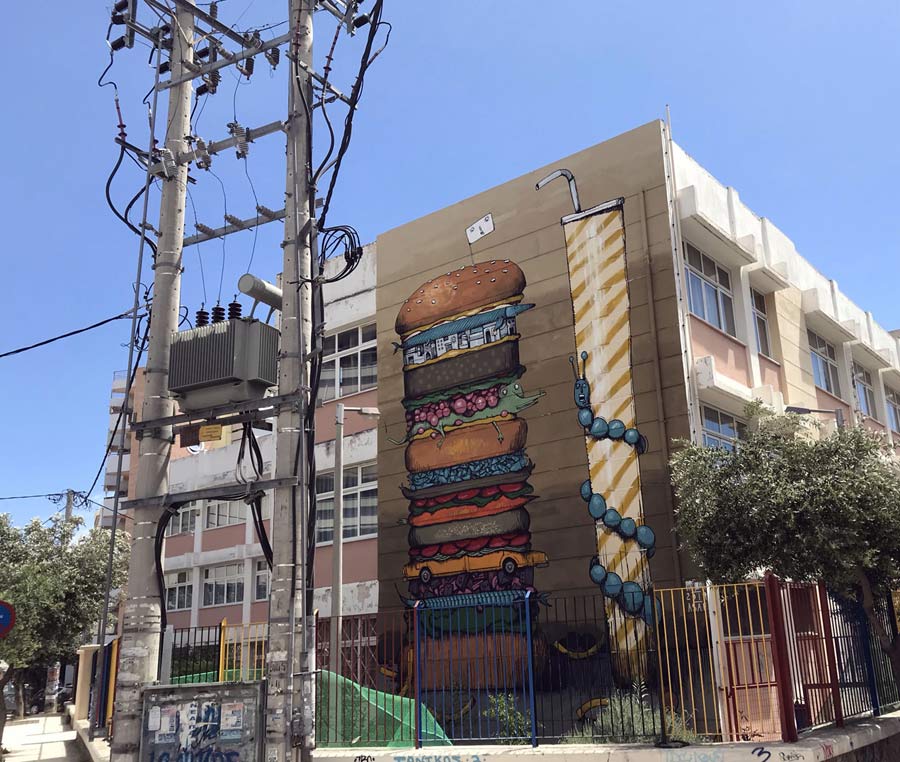
You are what you eat. Mr Fijodor thinks we are eating cars, buildings, cities and a few other non-foods along with all the other stuff in this stack of hamburgers. Of course, he is right.
Researchers from GlobalChange.govsay that already we have chemical contaminants in the food chain, with things like mercury, carbon dioxide, and pesticides altering our daily diet.
Here at the Athens Street Art Festival the Italian Street Artist says his multi-story “XXXL Panta Burger”in Nikaia is, “A visionary section of our times, a fat and enlarged shape of it.”
He began his public art career as a graffiti writer in 1994 but these days Mr Fijodor (alias Fijodor Benzo) receives invitations to participate in quite a few festivals and create works for private clients, usually painting in his dream-inspired cartoon-style illustrations.
Since its’ beginning almost a decade ago the Athens Street Art Festival, lead and organized by Andreas C Tsourapas, has hosted more than 170 artists painting in multiple municipalities of Athens.
Mr Fijodor tells that he was supported and promoted by the Italian Culture Institute of Athens to get to this festival. He says he’s happy to do this mural, which is marked by a social or ecological criticism that he often uses, “using as a weapon a childish and astonished smile realized through a spontaneous and direct style, free from any complex technical elements.”
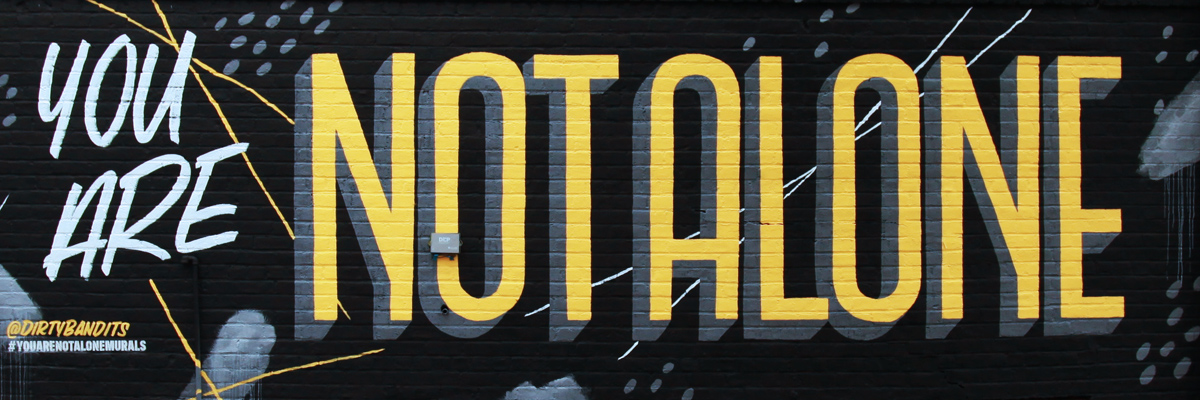
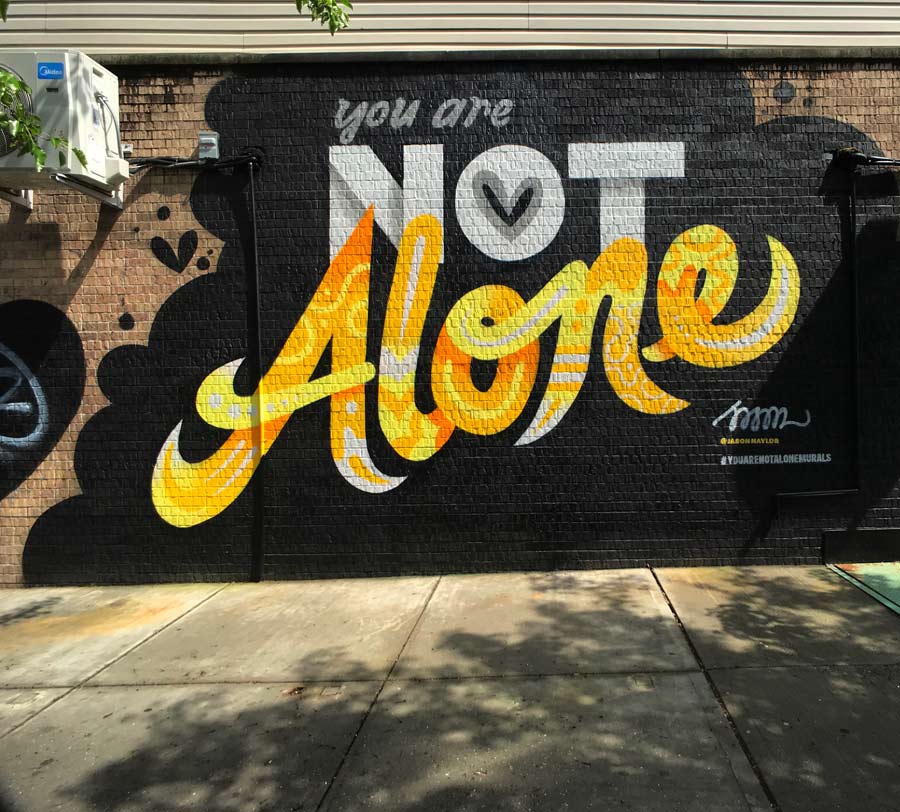
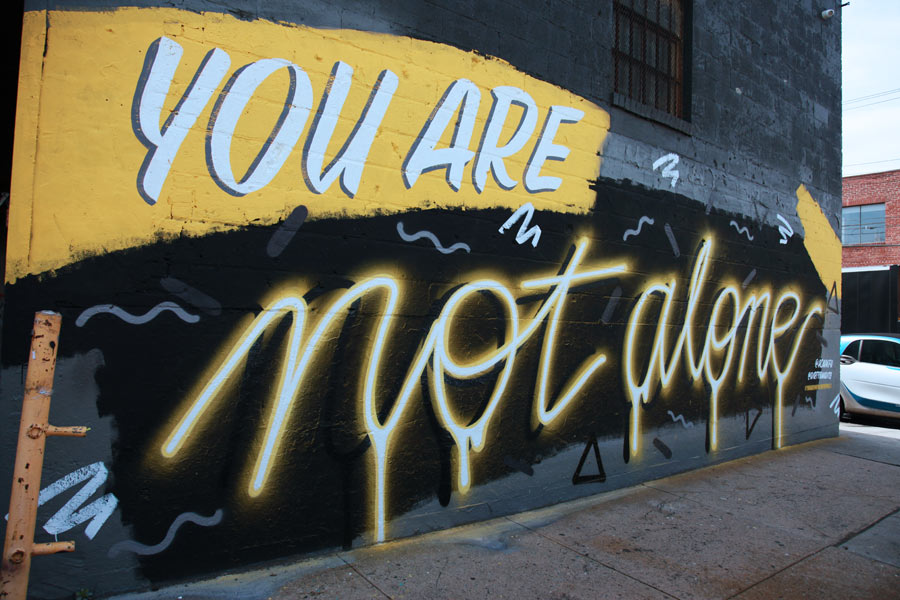
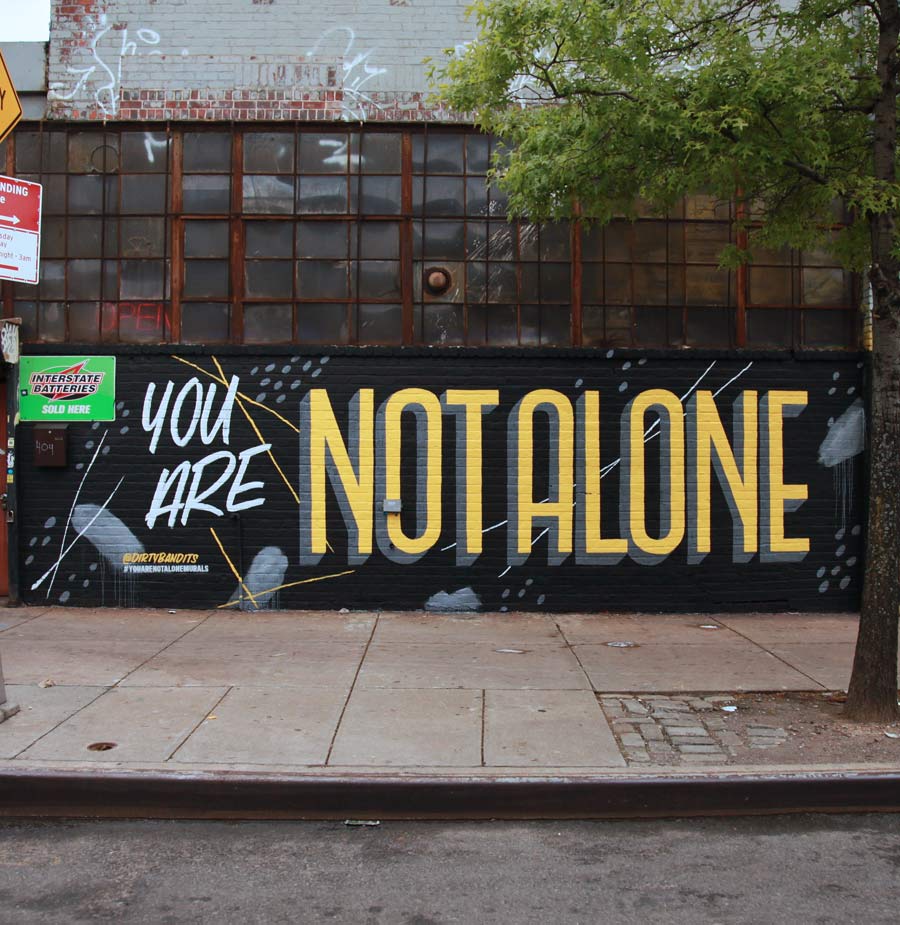
In an era where people may feel more under attack, more alienated, more disconnected from one another (despite “always on” connectivity), comes this new campaign from Dirty Bandits, “You Are Not Alone”. New York walls have been popping up recently (see above) with this message and somehow it completely resonates, hopefully just in time to remind someone struggling.
Brooklyn based lettering artist Annica Lydenberg of the design company Dirty Bandits tells us that this was an idea she came up with her best friend who had recently published a memoir about living with anxiety disorder. The he murals are intended to have broad appeal and offer support to anyone who feels misunderstood, victimized, or abandoned.
She tells us that people need to know “they are not the only ones struggling with mental health. My wish is to be seen as an ally, for not only mental health, but to the many communities who do not feel supported.” She says the campaign is not strictly commercial, although it is certainly not anonymous and some funding came from a media concern. But we agree that it is a very worthwhile message, can actually help people and if you want to learn more go HERE.
As long as we are on the topic, please call these numbers right now if you need help:
National Suicide Prevention Lifeline 1-800-273-TALK (8255)
Lesbian, Gay, Bisexual, Transgender and Questioning (LGBTQ) Suicide Hotline 1-866-488-7386
Teen suicide hotline 1-800-USA-KIDS (872-5437)
National Domestic Violence Hotline 1-800-799-SAFE (7233), or 1-800-787-3224 (TTY).
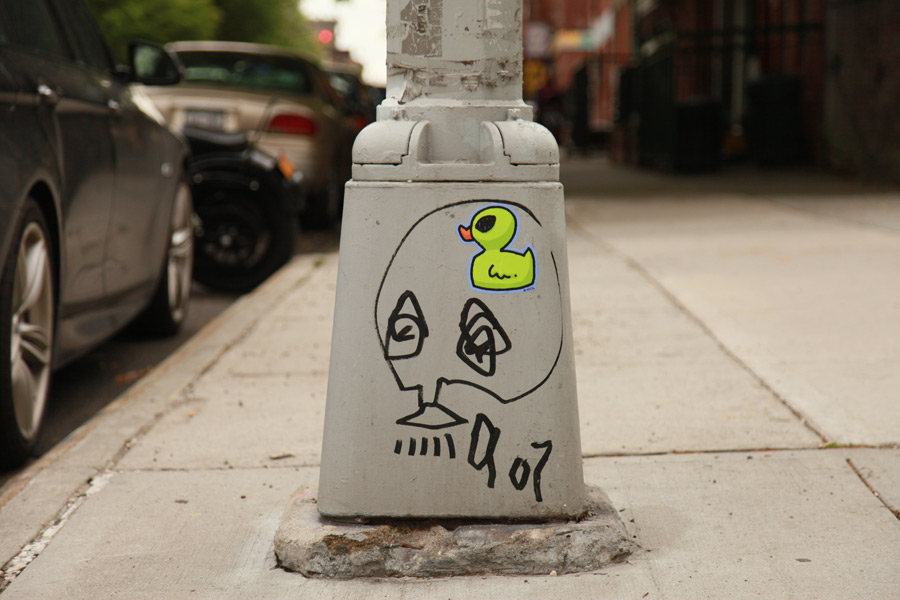
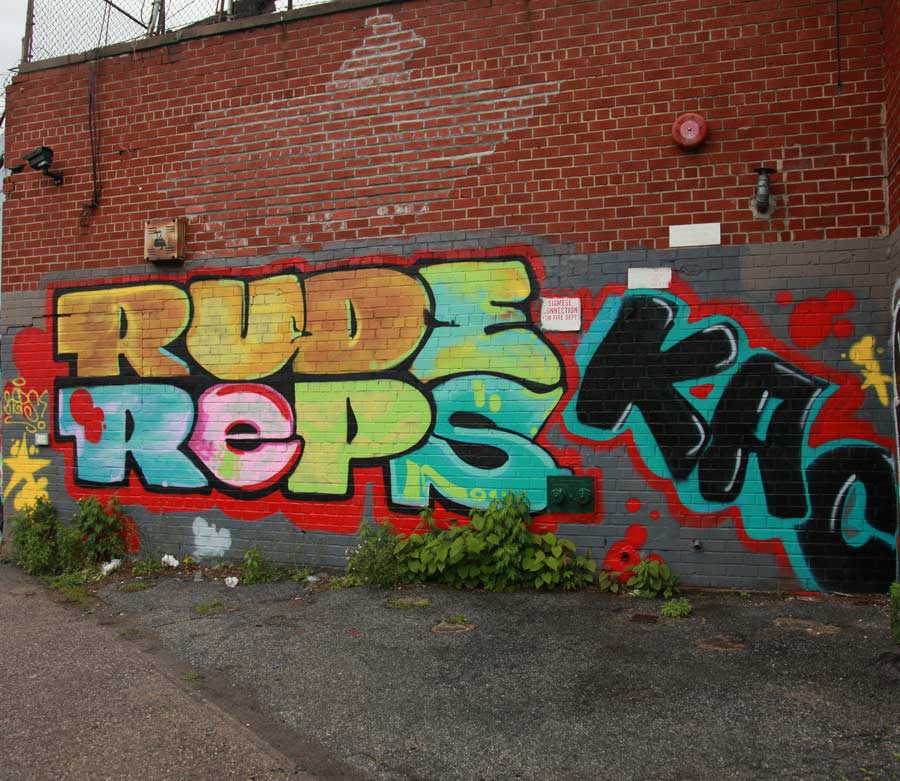
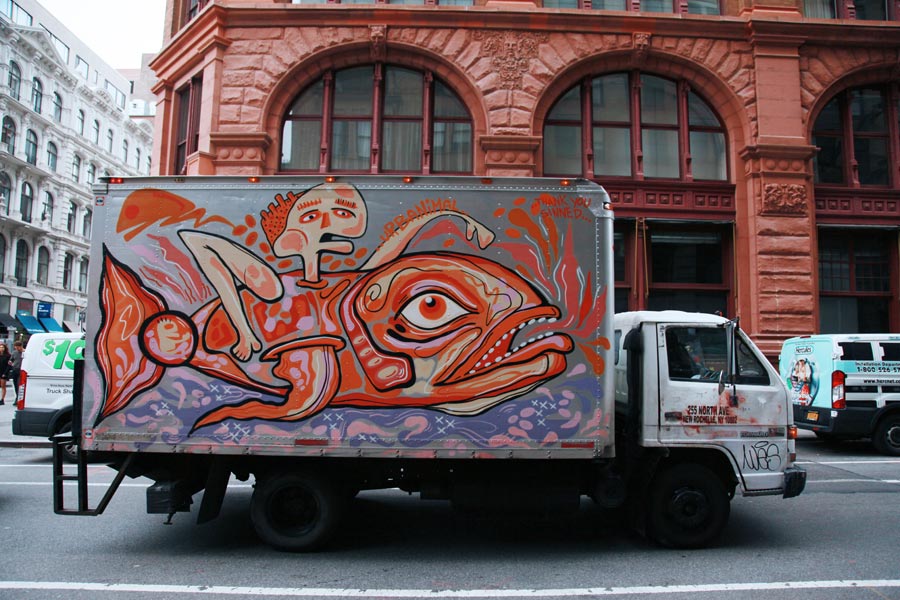
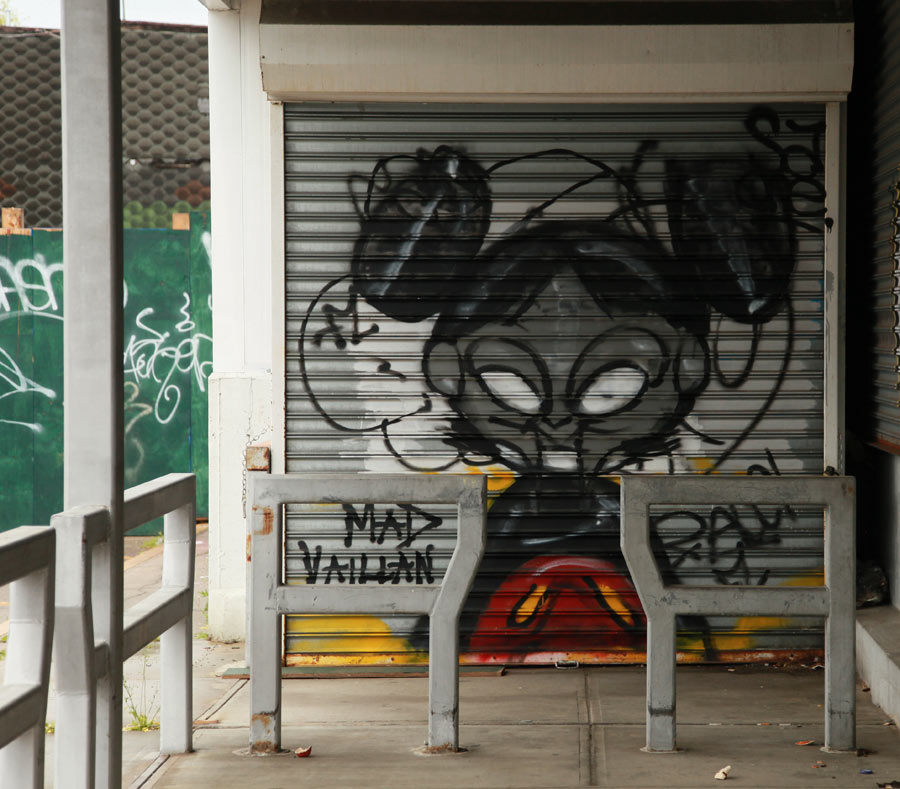
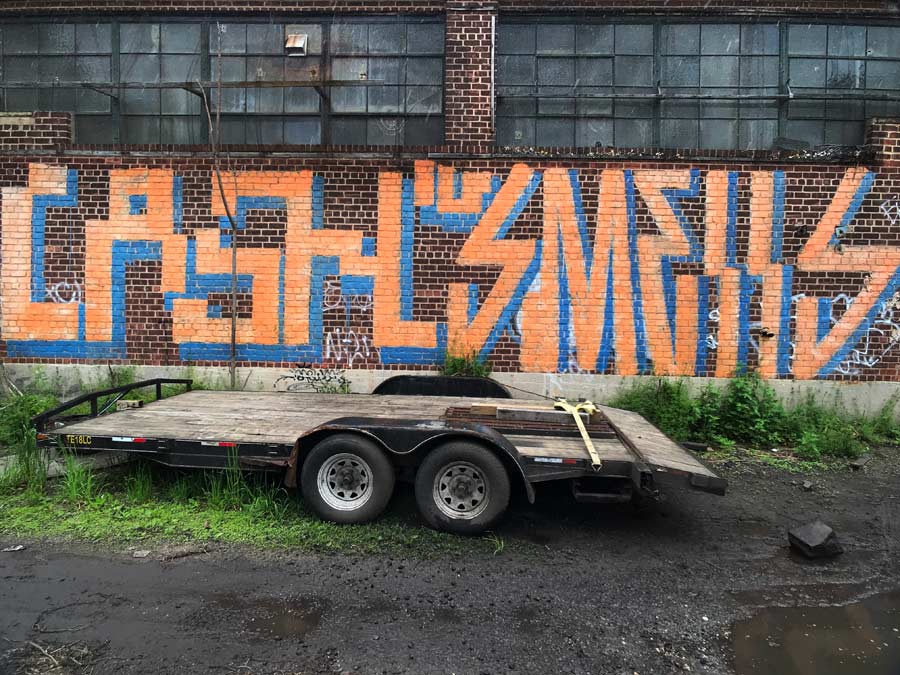
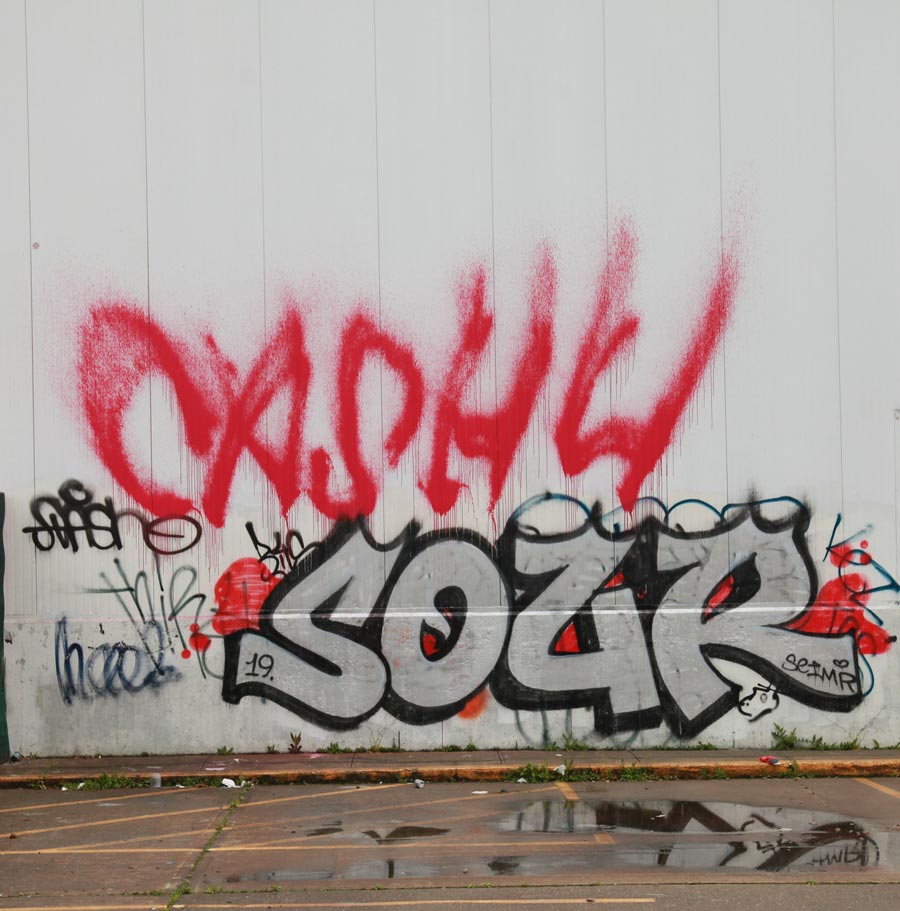
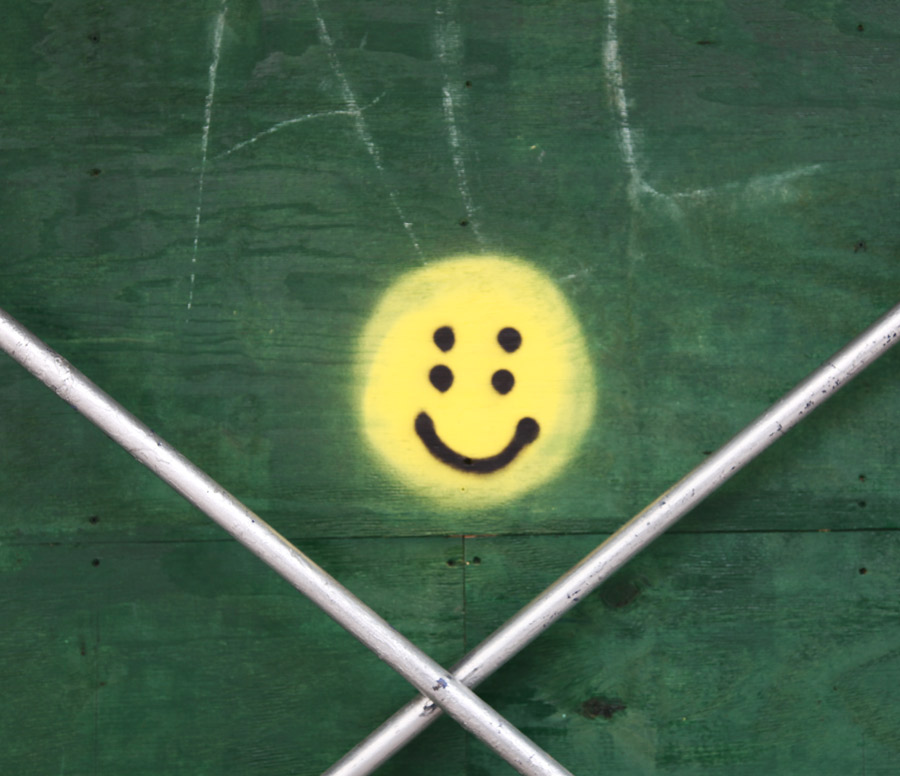
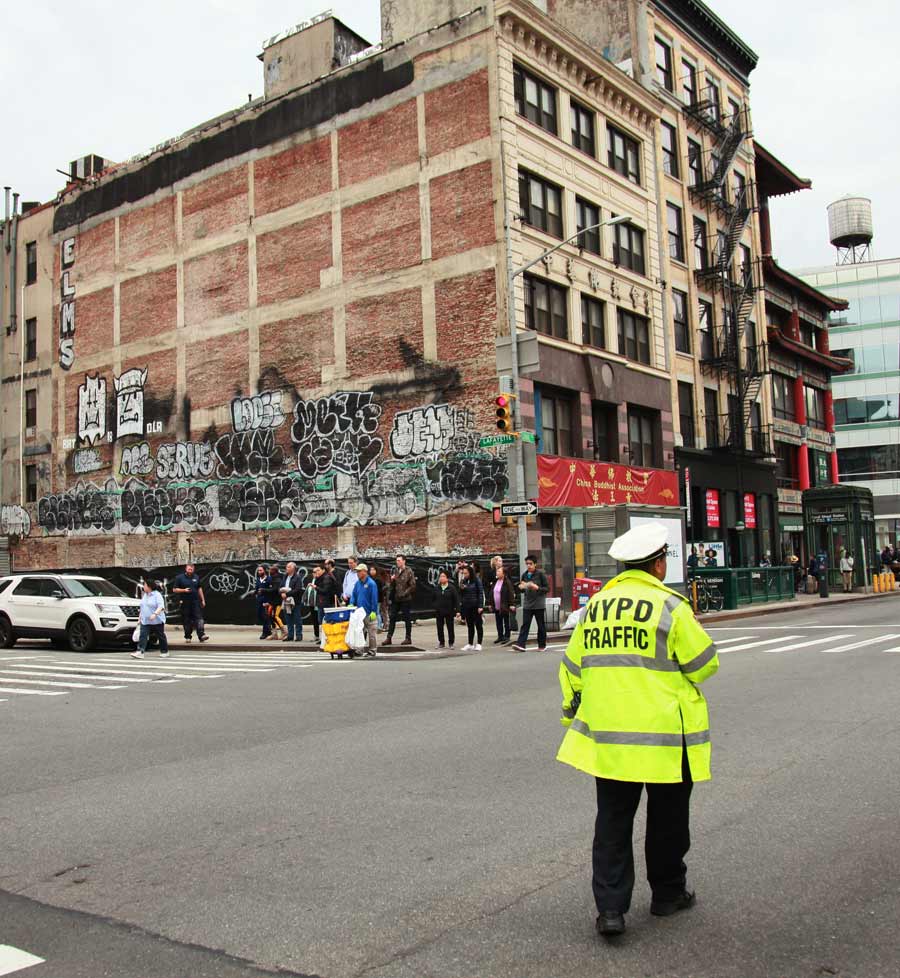
So here’s our weekly interview with the street, this time featuring Abe Lincoln Jr., Adam Fu, Cash4, Dirty Bandits, Elms, Icy & Sot, Jason Naylor, Mad Villain, Maia Lorian, Rude Reps, SAMO, Sinned, Smells, Soar, UFO907, Victor Ash, and Winston Tseng.
When the plants and
animals take over again there will still be remnants of you, as they transform
your achievements and failures organically en route to natural balance.
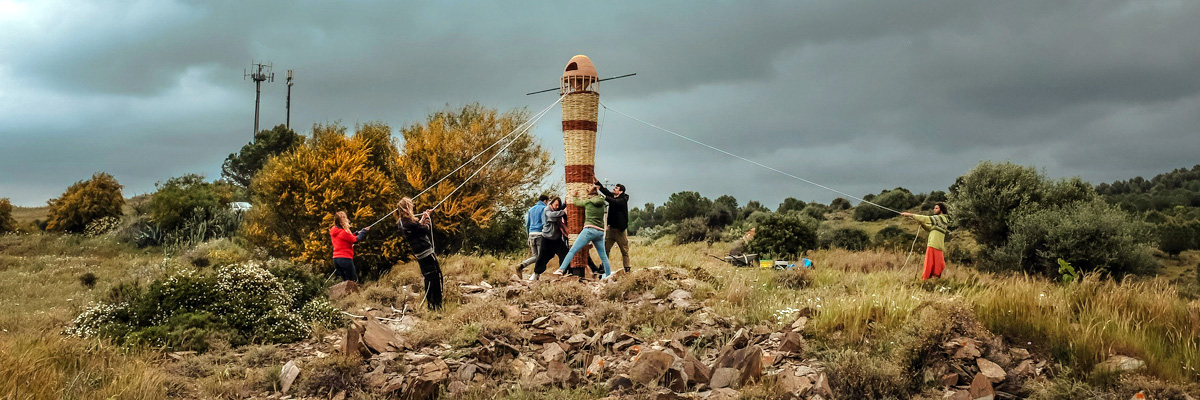
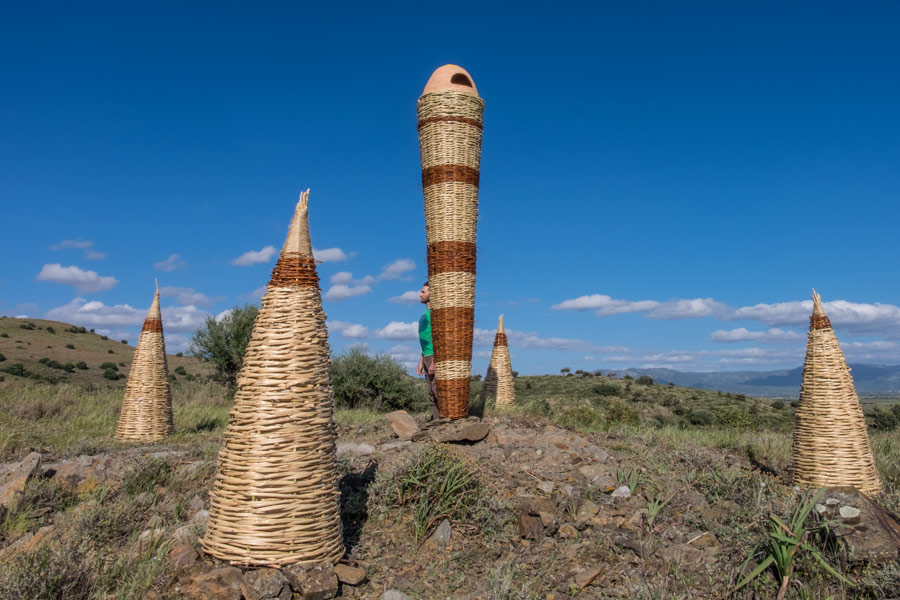
The evidence of this eventuality lies not only in our predilection for self-destruction but on the current existence of the 7,000 tower-fortress structures that still dot this island of Sardinia. Time and elements have not destroyed these structures built over a period of 16 centuries – long before the event of Christ’s birth. Today they are remnants, monuments of that Nuragic civilization, but are also home to birds, four legged creatures, insects, grasses, bushes, and trees.
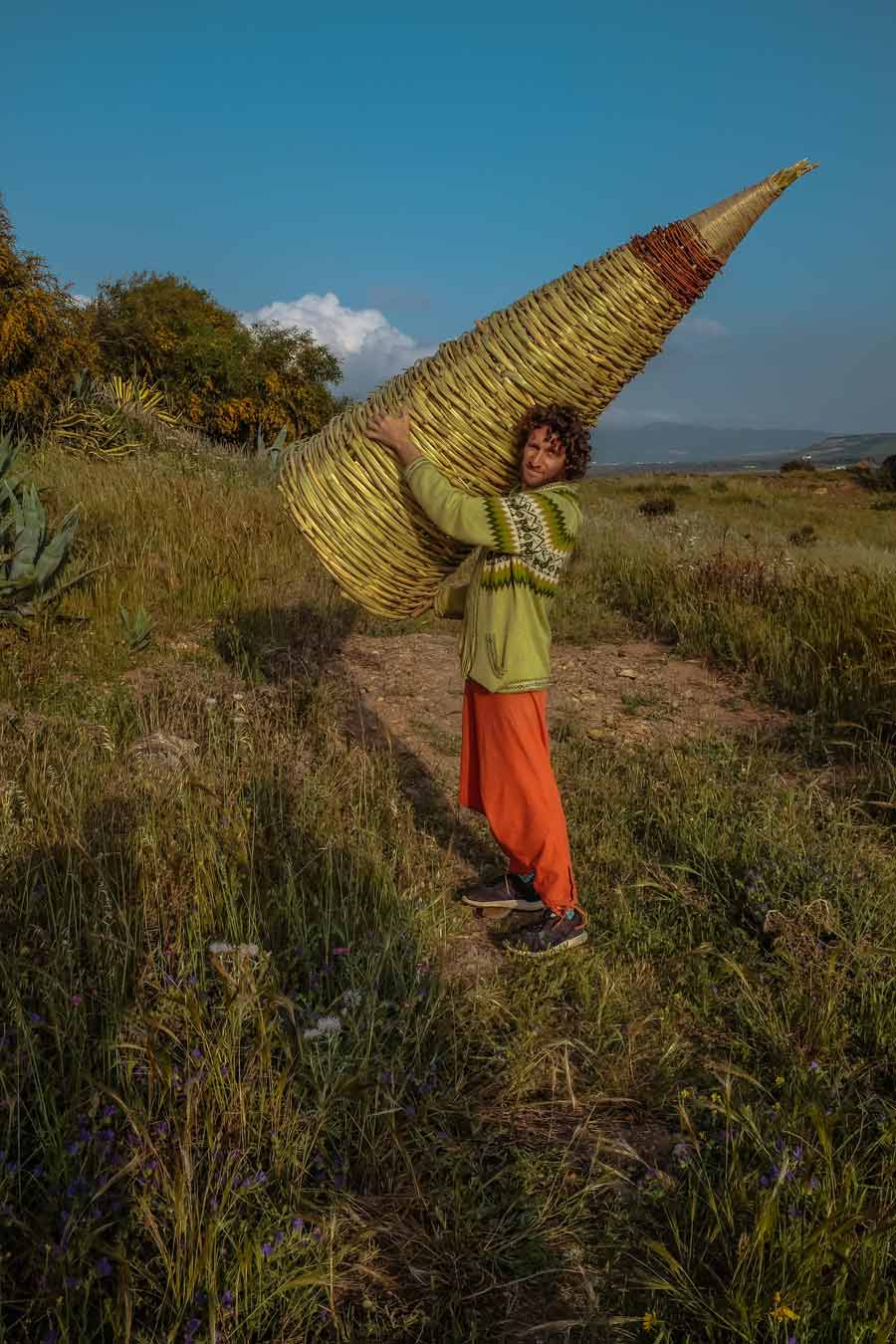
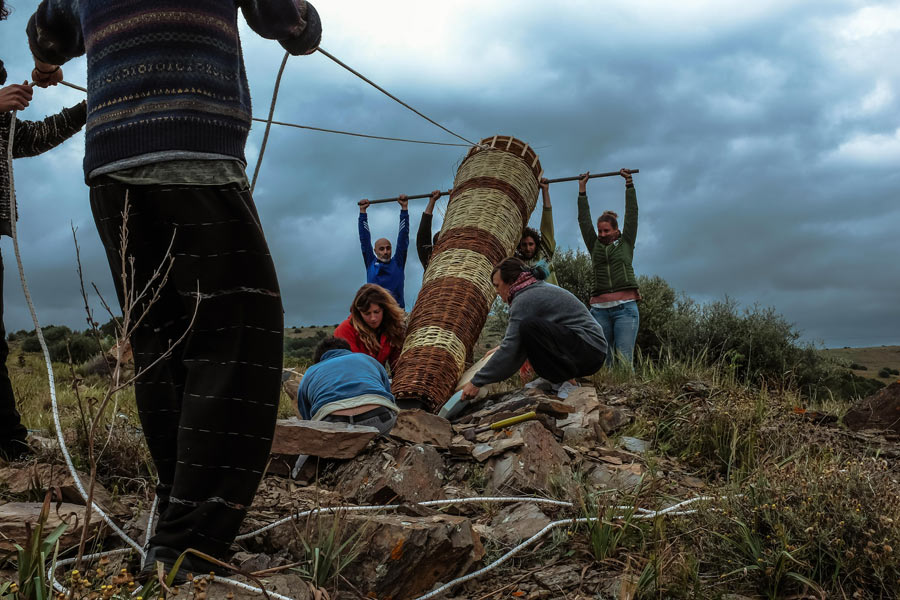
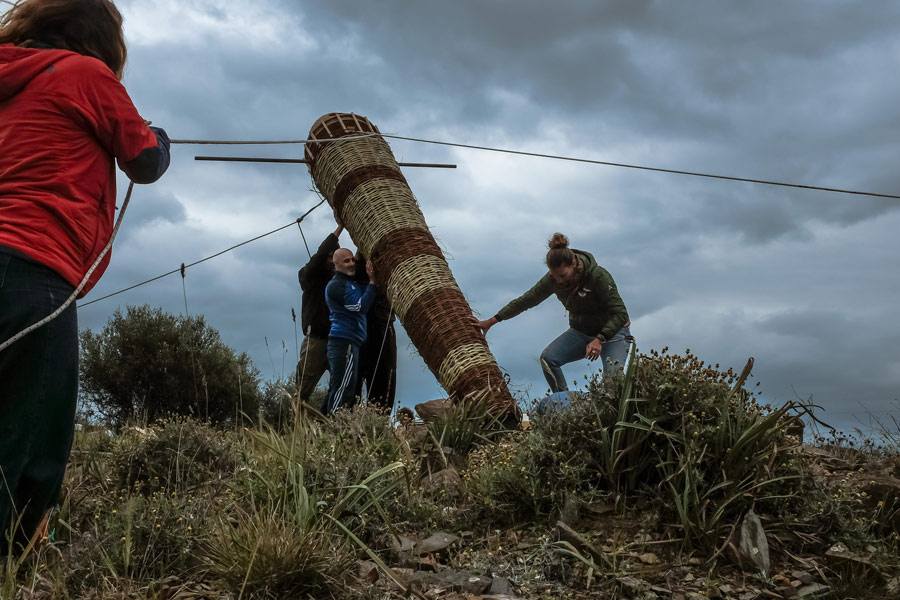
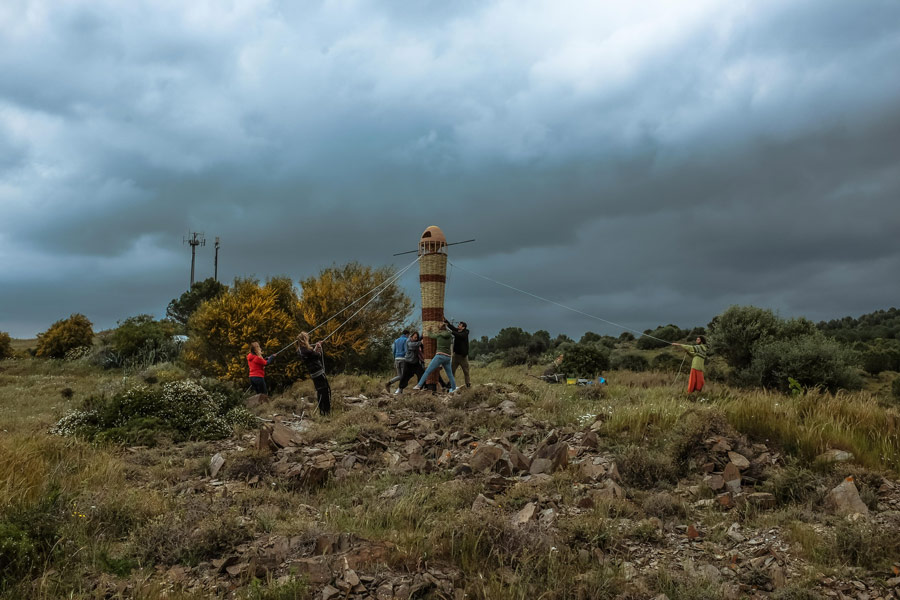
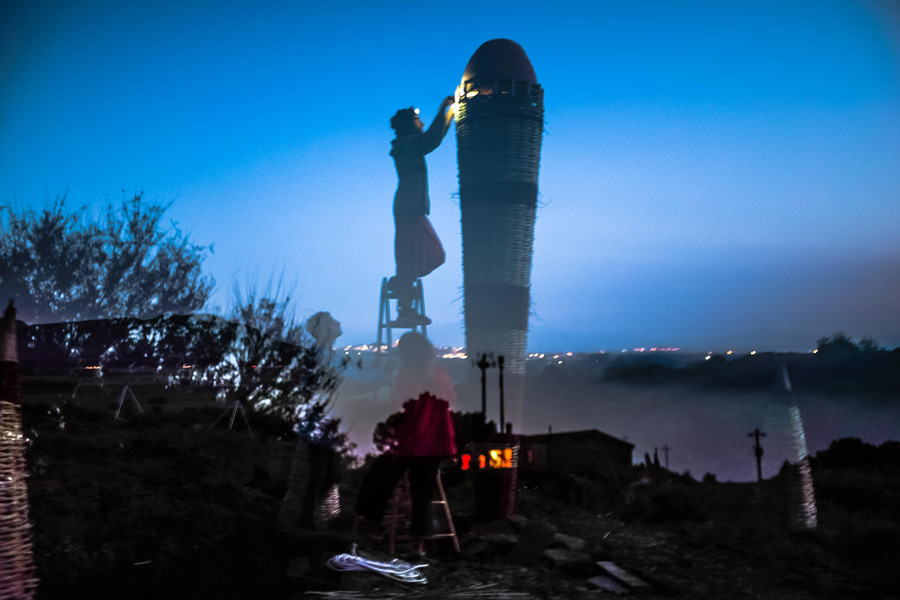
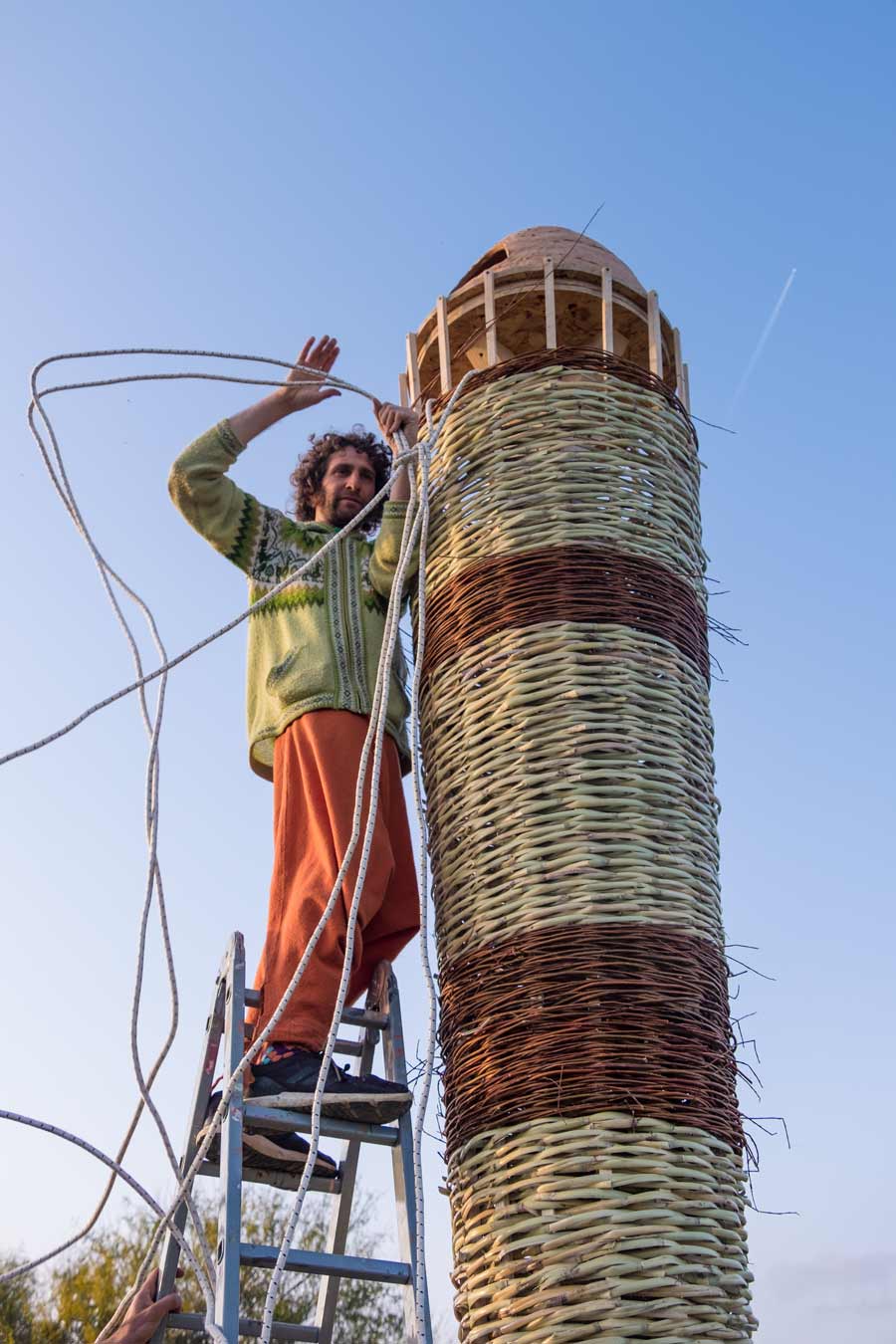
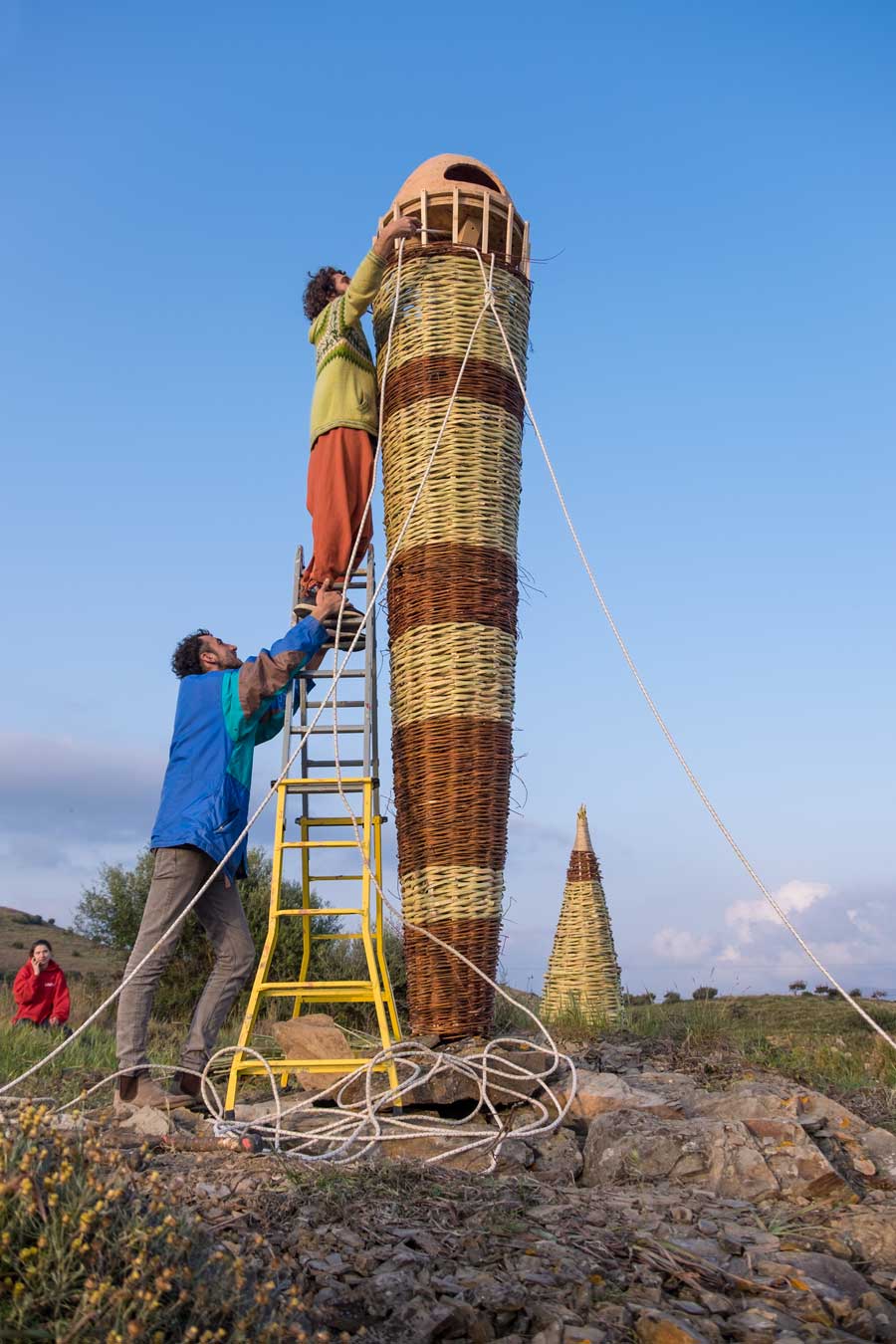
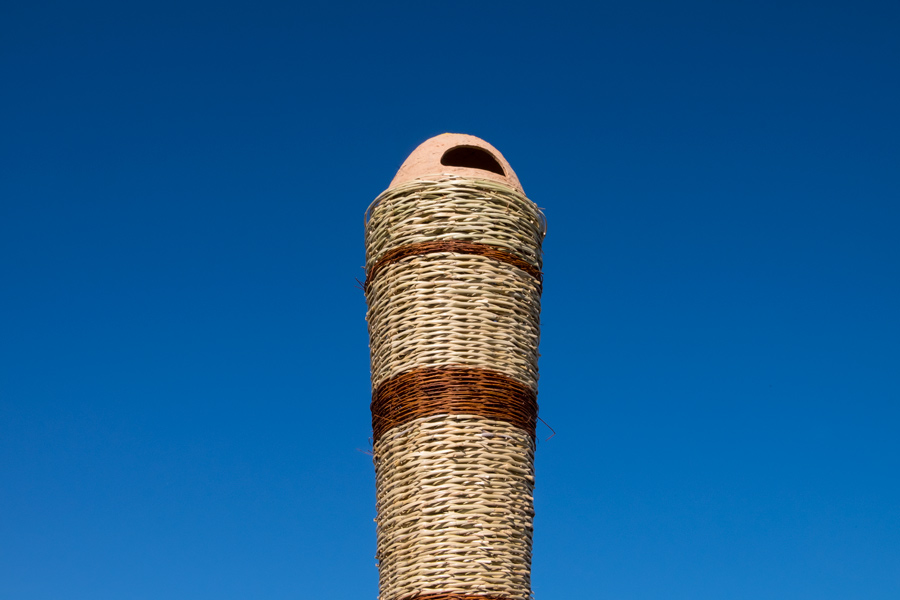
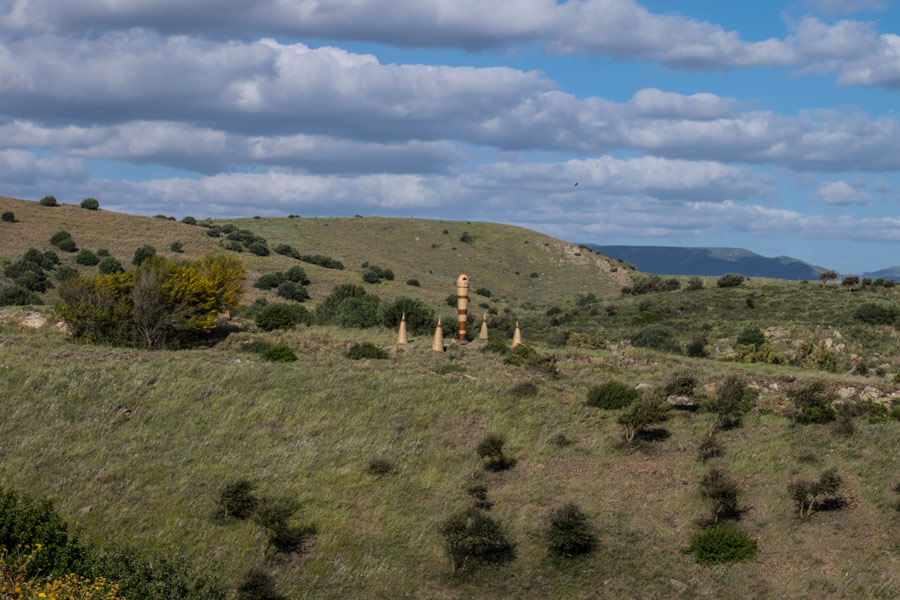
Italian Street Artist, muralist and land artist Gola Hundun thinks of communications towers and overlays them with references of totemic massings, historical human rituals, geographical coordinates, shamanic journeys, and patterns of aviary flight. For this installation called “Torre di volo” (Flight Tower) he also is thinking about guiding birds through controlled space.
“The central element of the installation is inspired by the forms of the flight control towers of the airports,” he says, “a type of architecture that has always fascinated me and had a strong influence on my imagination both aesthetically and poetically.”
Participating in an art residency on the property of the Campidate artists residency (near Monastir), the Italian born millennial finds the support he needs to pursue his natural art-making cycle in an environment that is closest to his personal ethos.
He says that he spotted a bird of prey called a Kestrel inside the Campidarte base buildings and became inspired to imagine himself directing the flight of birds, one further degree of interaction with nature he has pursued for most of his life.
“The installation
stands today on a ridge of that land, in an elevated and strategic position,
generally loved by birds of prey,” he tells us.
A continuation of a personal artists’ campaign he calls ABITARE that more than contemplates his work as potential habitat, “Torre di volo” will be complete when Gola sees a winged friend entering the doorway of his central tower. He says the entire creation is based on his “desire to create a form capable of hybridizing my fascination for the ancestral totemic verticality and the desire to create a living space easily accessible to certain species and biological niches.”
“From the tower that I
interpreted, I hope that in the near future the flight of a bird of prey will
begin, allowing us to observe in reality the idea of flying, going and coming
back and making the structure itself come alive,” he says. “The occupation of
the tower by a bird is part of the idea of the installation and is
indispensable for its completion.”
Street art welcomes all manner of materials and methods, typically deployed without permission and without apology. This hand-formed wire piece …Read More »
 BROOKLYN STREET ART LOVES YOU MORE EVERY DAY