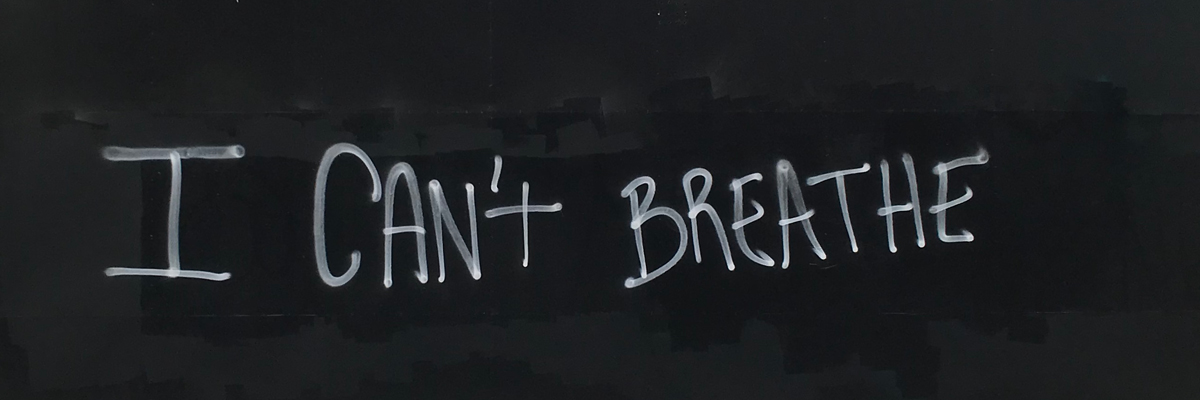
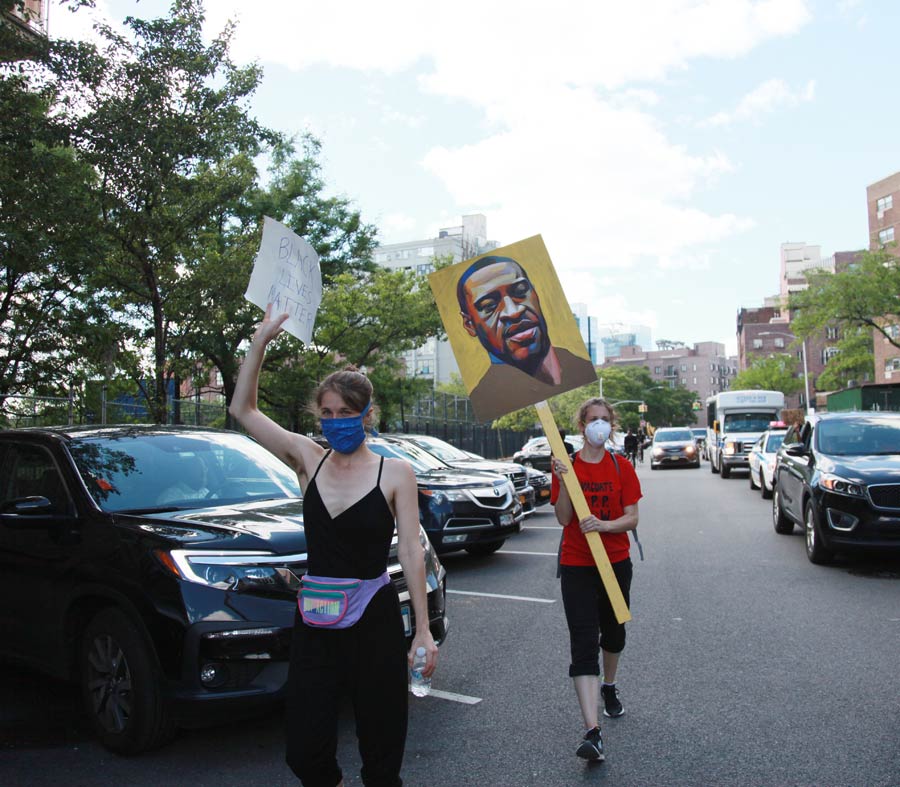
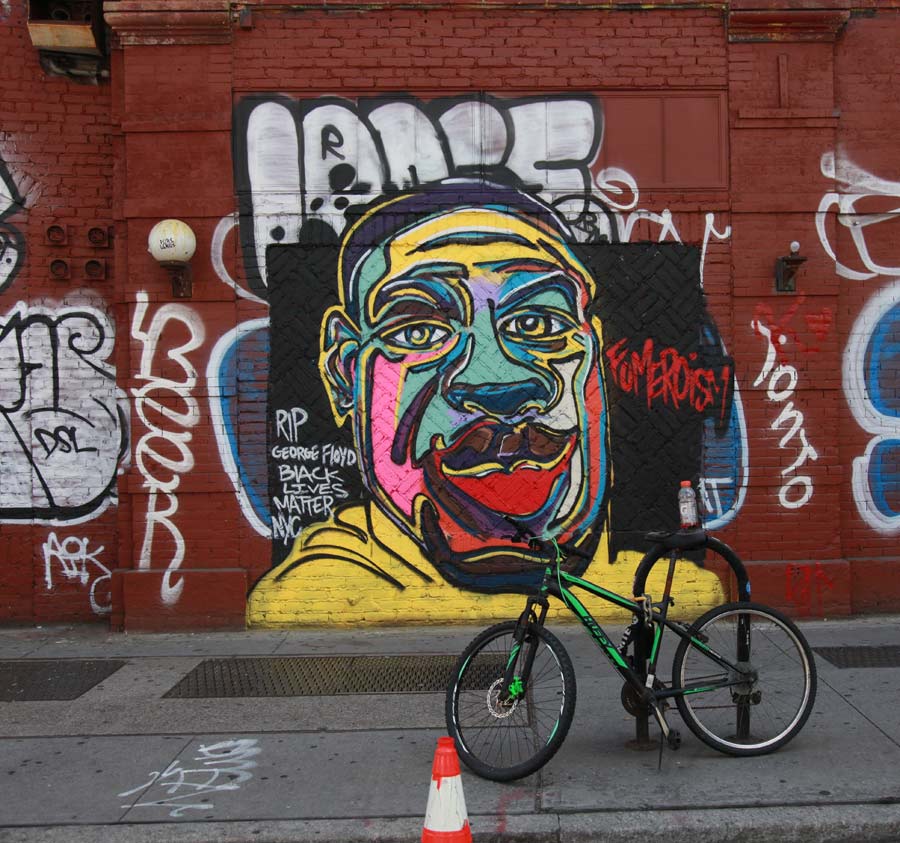
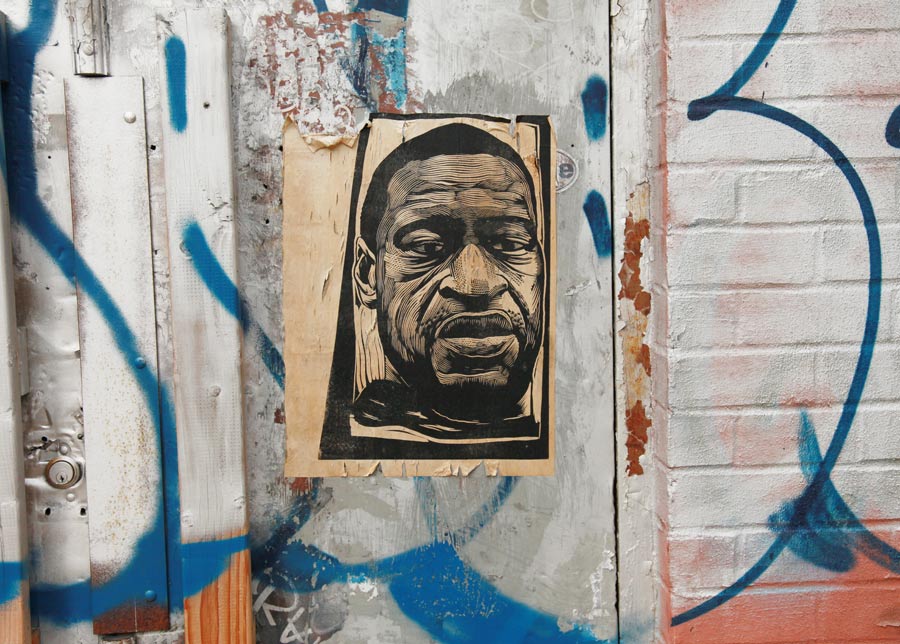
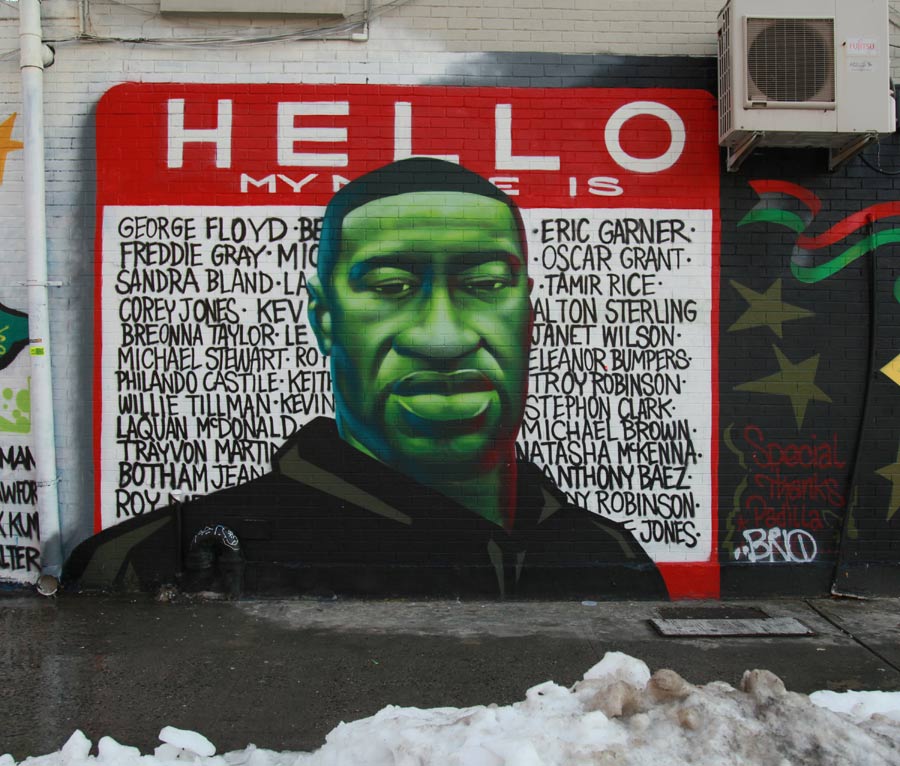
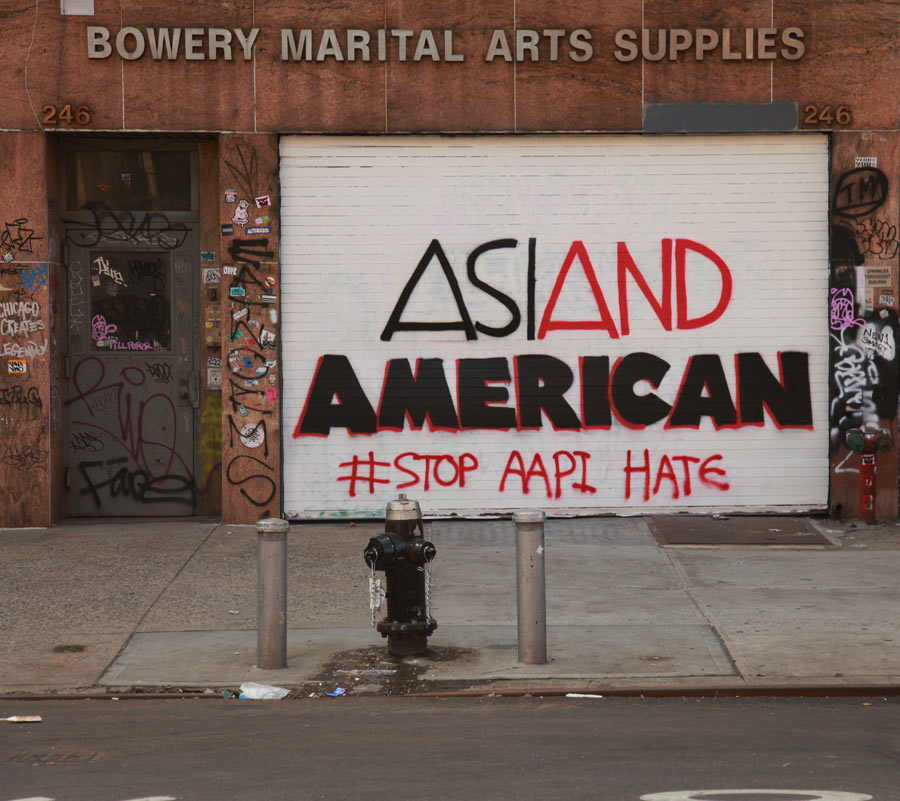
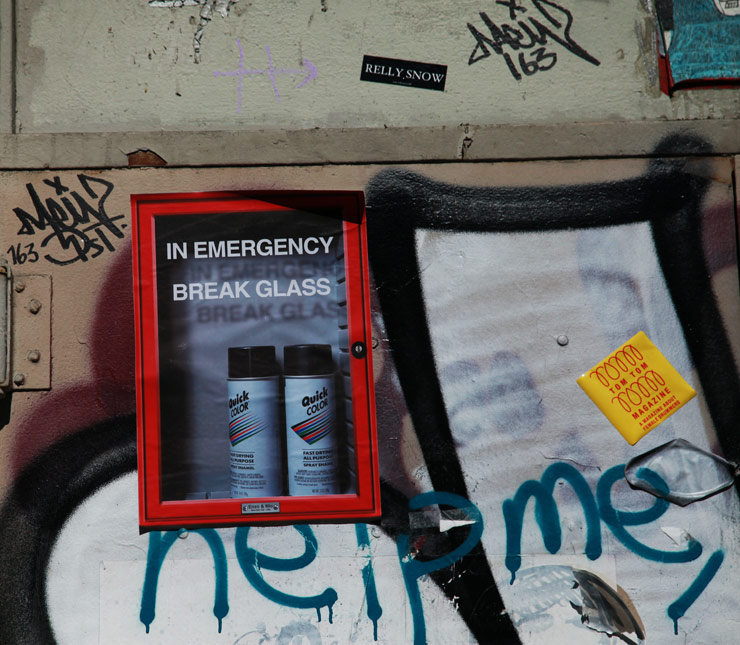
As people across the country mourn George Floyd and mark the anniversary of his killing, many have been joining marches and memorials across the country and city. According to press reports, the nationwide unrest in the streets spawned by his killing a year ago was historic in reach and number coast to coast. That may be why the officer who killed him actually was convicted this spring – a rarity.
We’ve changed, but not enough. Regularly we are re-traumatized by recordings of violence toward citizens in an uneven display of ignorance and fear. We like to say we are better than this, but sometimes it’s hard to prove it.
Until all men and women are free, none of us truly are.
“People came to pay their respects to George Floyd on Tuesday at the site of where he was killed last year, placing flowers, some bowing their heads in reverence and others making the sign of the cross.
Vernon Rowland, a father of two who lives two blocks from George Floyd Square, came at about 9:30 a.m. to pay his respects.
‘Folks have talked about this place being holy ground and the suffering he experienced,’ Mr. Rowland, 43, said. ‘I see it as holy when you go and see the outline of his body.’”
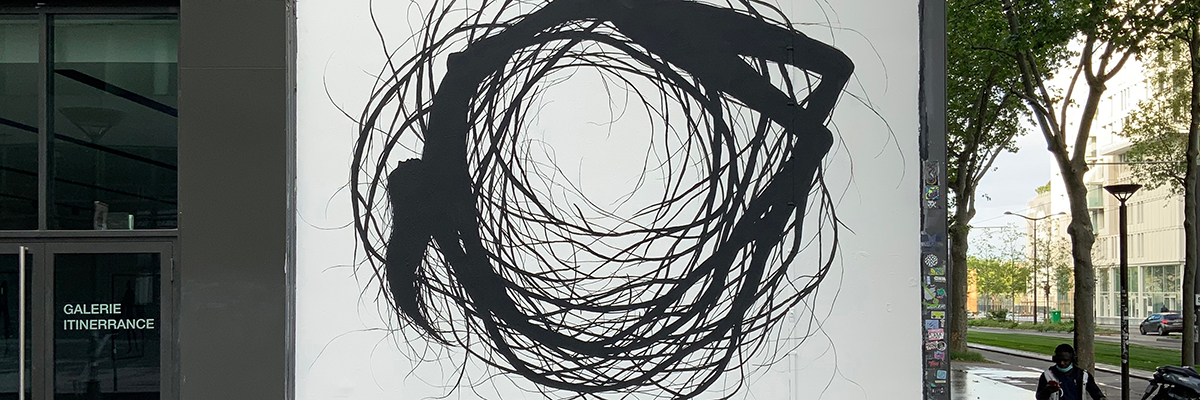
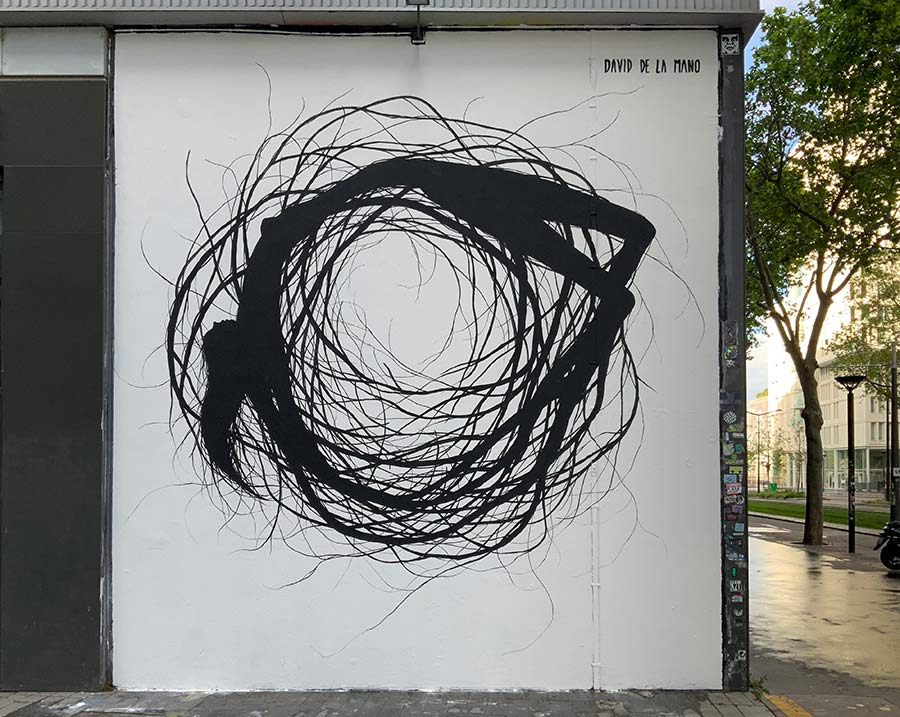
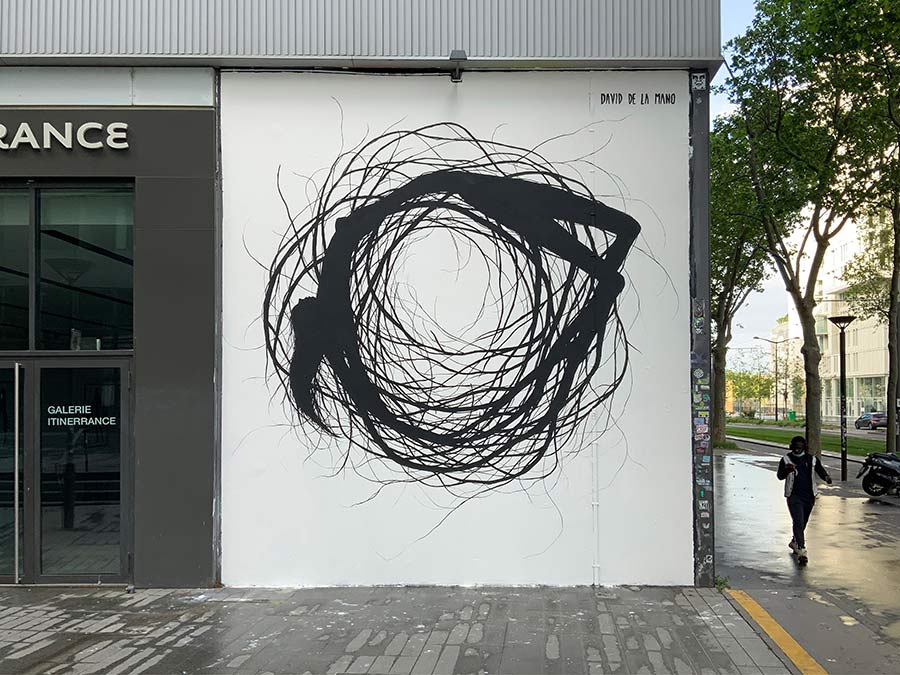
On the occasion of artist David de la Mano’s second solo exhibition at Galerie Itinerrance in Paris, he’s painted a small mural on the gallery’s facade and shares exclusive images with BSA readers here. The mural’s title, “INTEMPERIE” is also the name of his exhibition.
David de la Mano. “Intemperie”. Paris, France. (photo courtesy of David de la Mano)
David’s work in monochrome looks at the limits between the intersection of mind and body. He shows the human body as it bends to the point of the infinite, never rupturing. In stark black lines create their own network of inner-contentedness, interconnectedness, of the mind and the body with vines and roots that keep it all together, strong.
With his natural figures, David makes it possible for humankind to inhabit an internal environment while exploring the universe around them. There is no fear for the fragility of life; his dream-like paintings and drawings are an exploration between humans and their psyche.
David de la Mano. “Intemperie”. Paris, France. (photo courtesy of David de la Mano)David de la Mano. “Intemperie”. Paris, France. (photo courtesy of David de la Mano)
The exhibition “Intemperie” is currently on view at Galerie Itinerrance in Paris.
Welcome to BSA Images of the Week, where we are keeping our minds expanded and eyes wide open as the transformation of society and its fabric is happening right before us. We’re living in a bubble, or on one – an everything bubble at the end of a boomer age that will pop. Institutions compromised, media compromised, social net torn, leaders purchased and adrift. Late spring romanticism buoys us, as does the removal of masks out doors and sometimes inside them. New York is back, but its not sure.
And Jerome Powell finally announced that the dollar is in the gallows – or will rather be once he has successfully inflated to its ultimate death. No, we have no advice – No one is listening anyway.
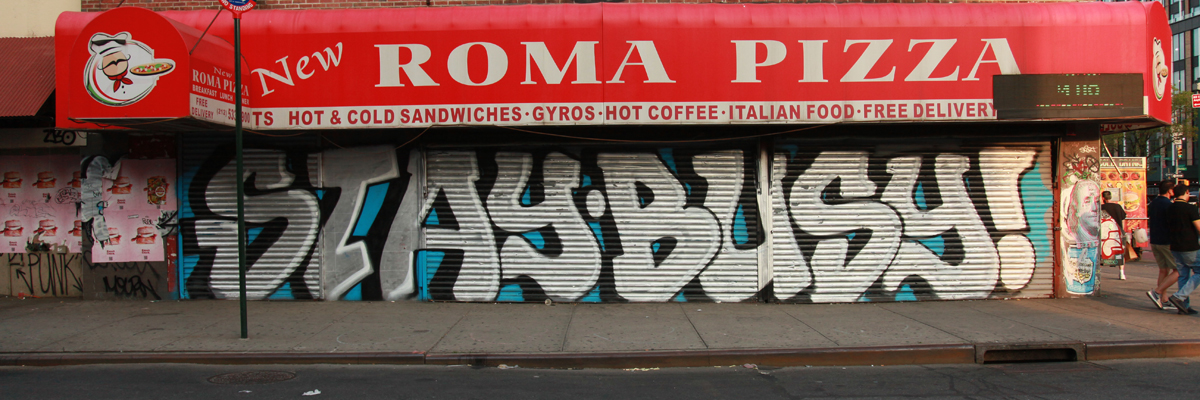
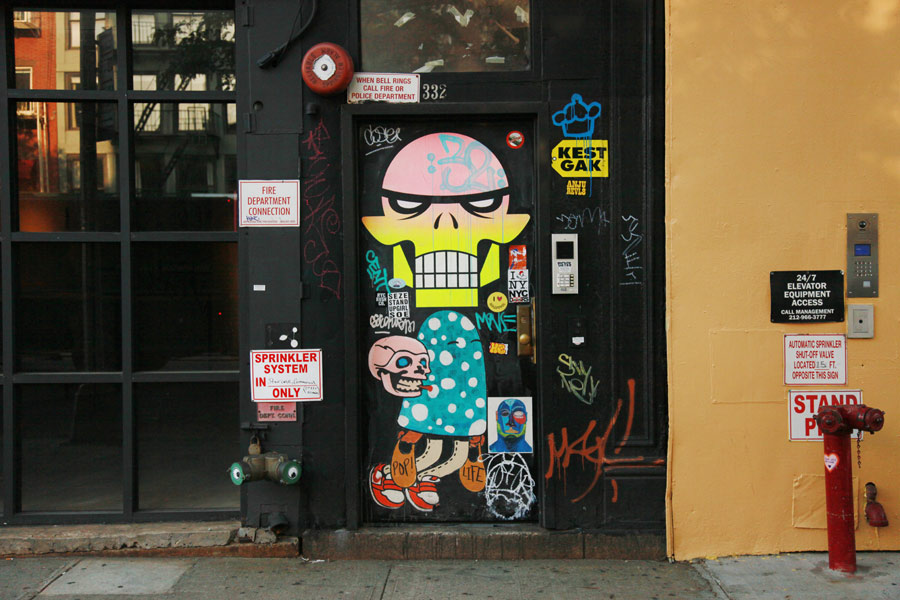
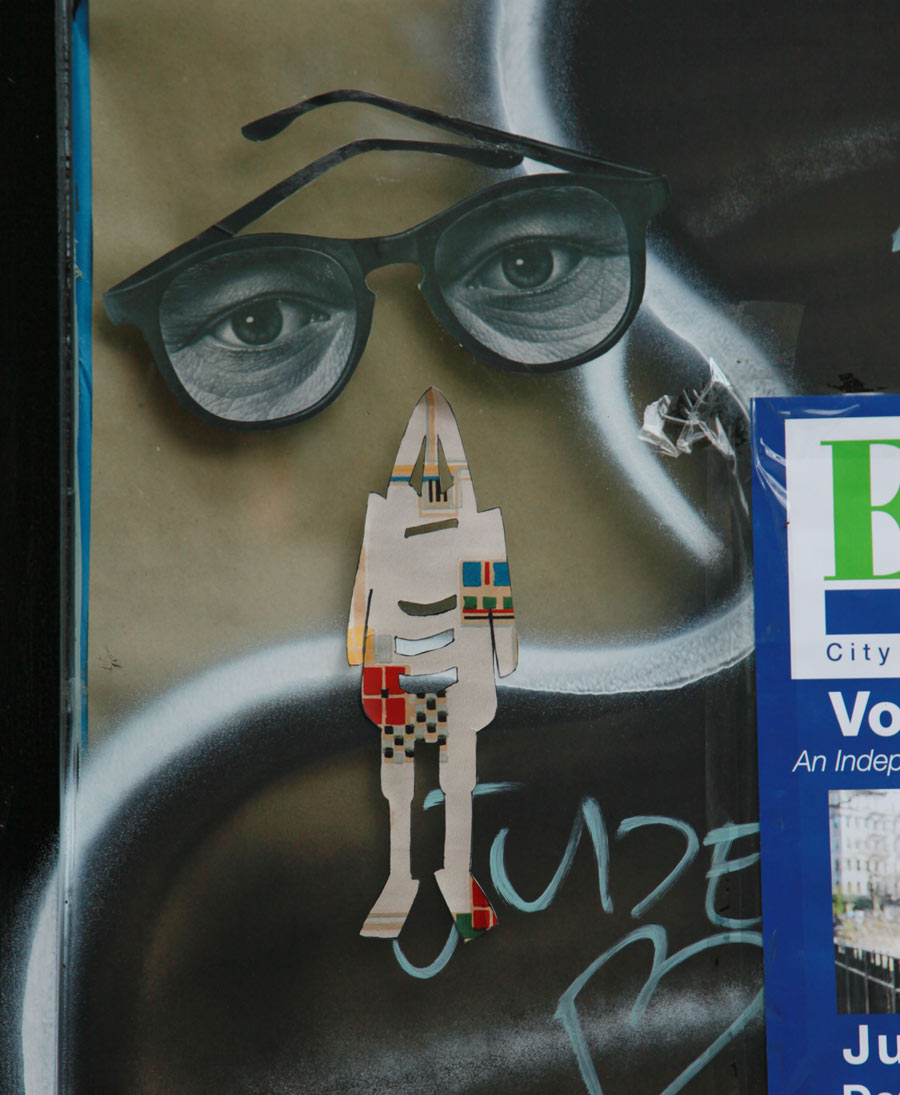
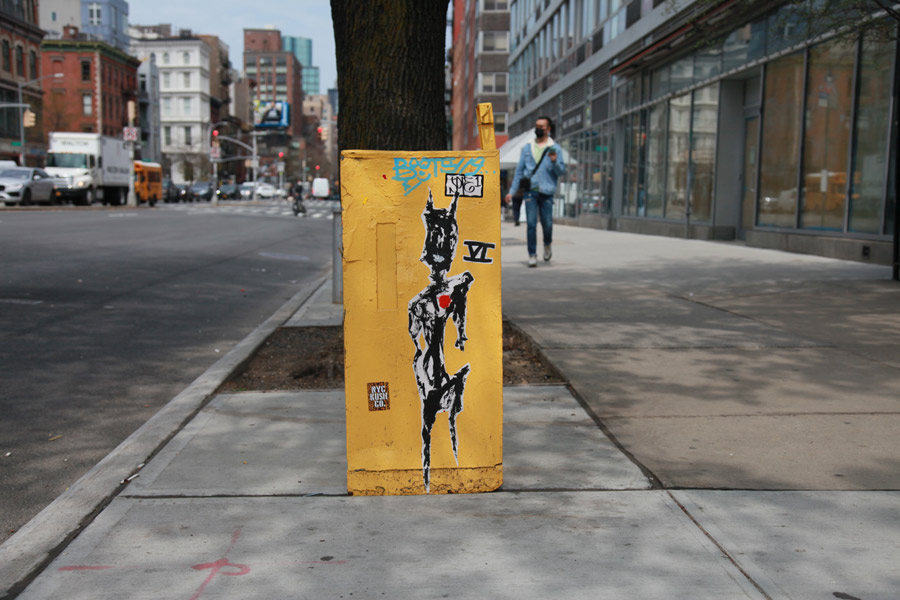
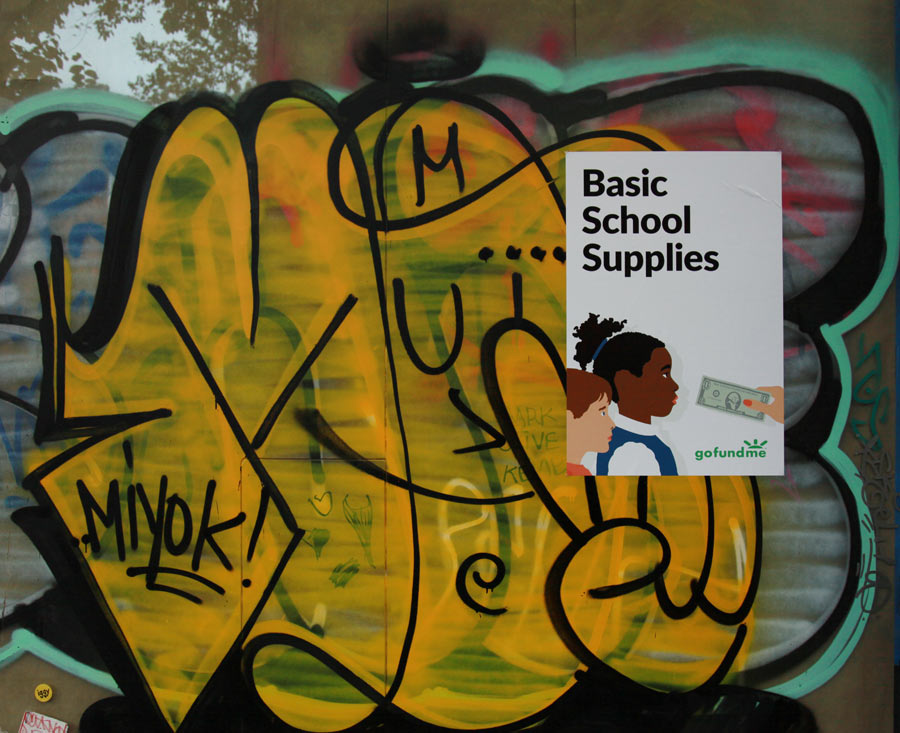
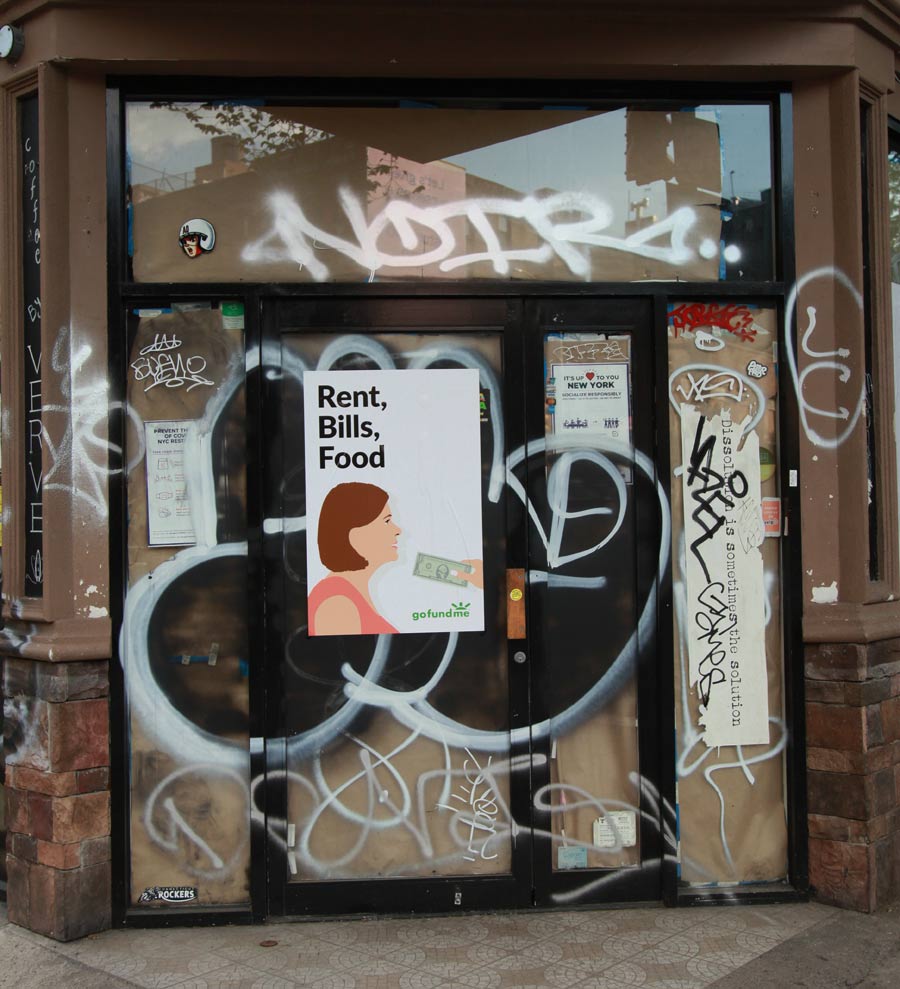
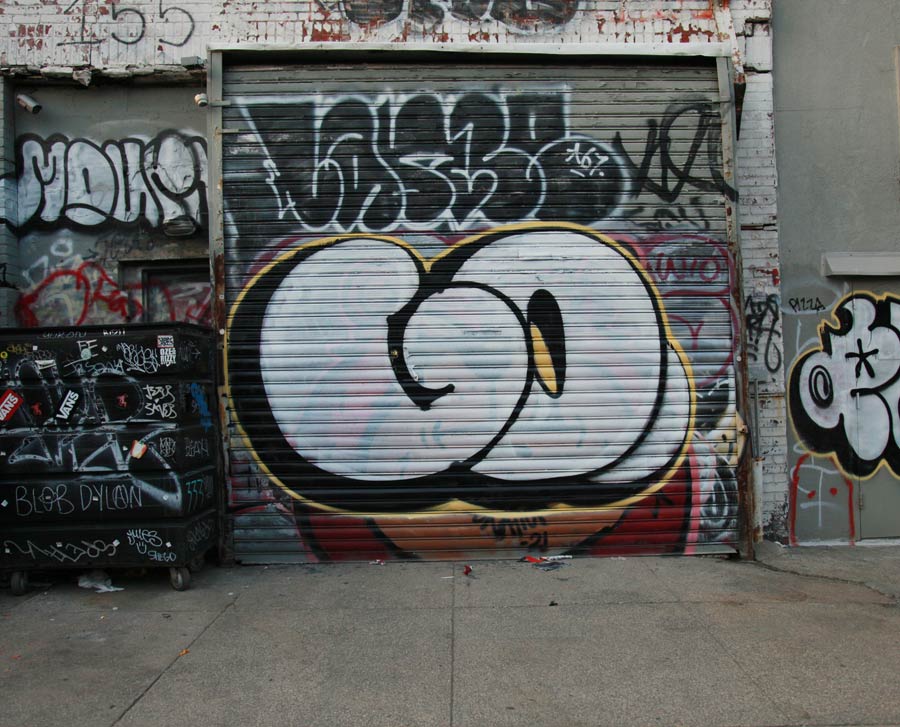
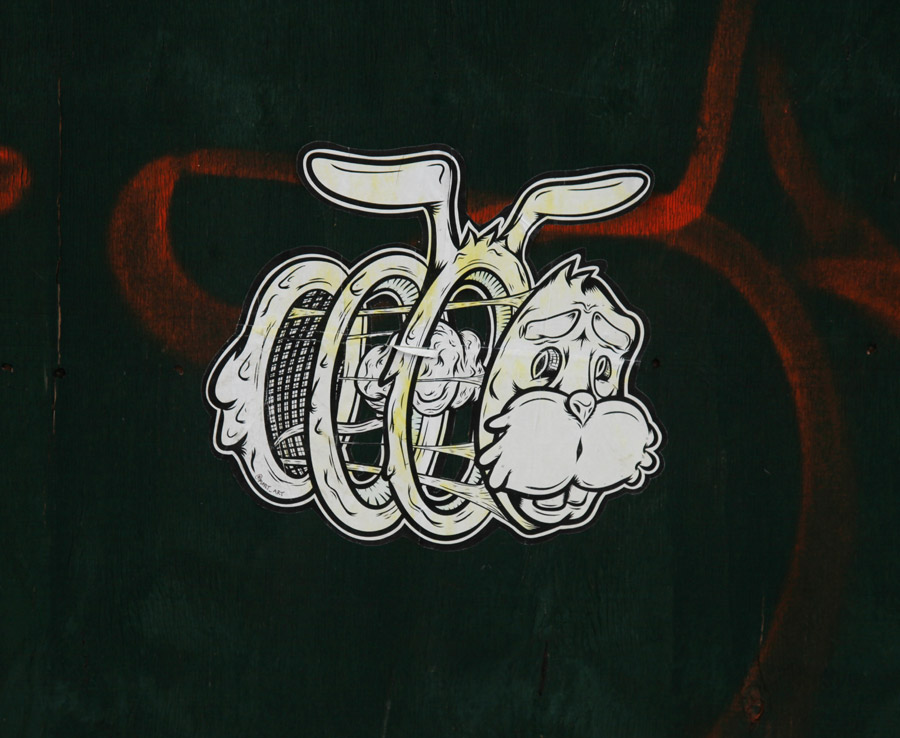
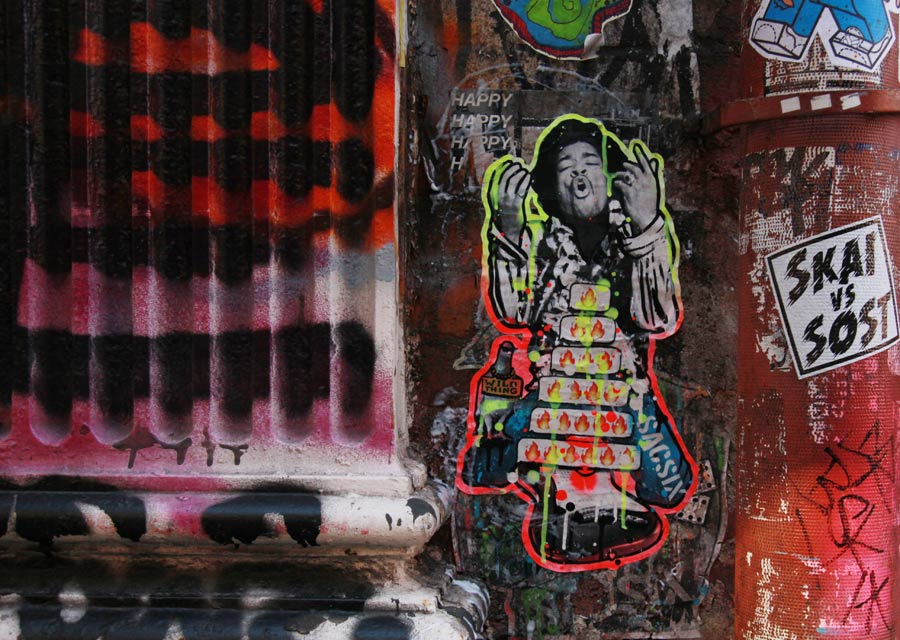
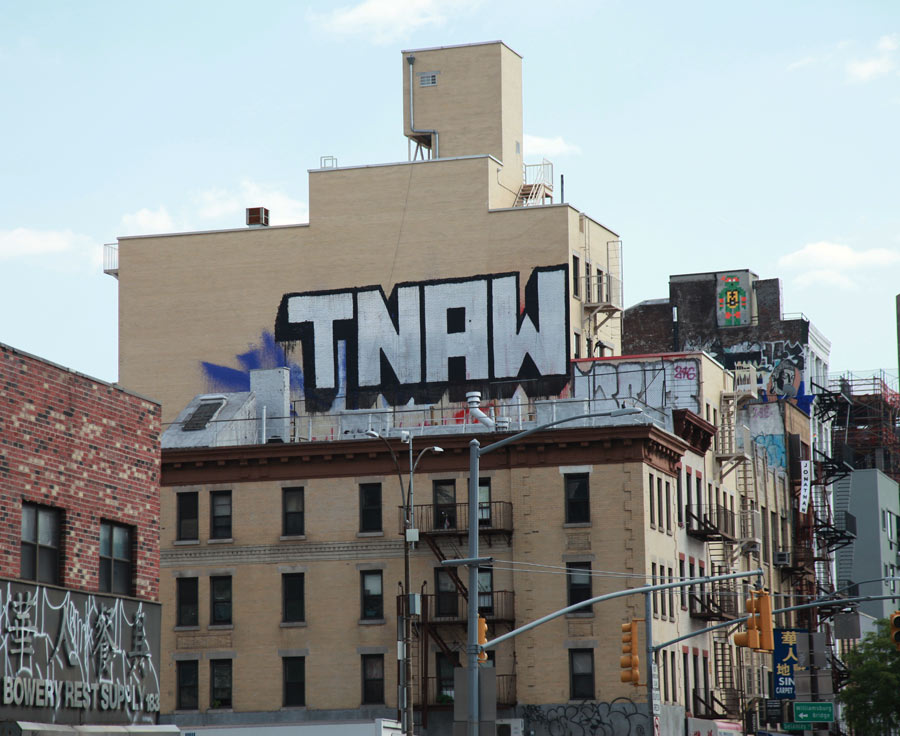
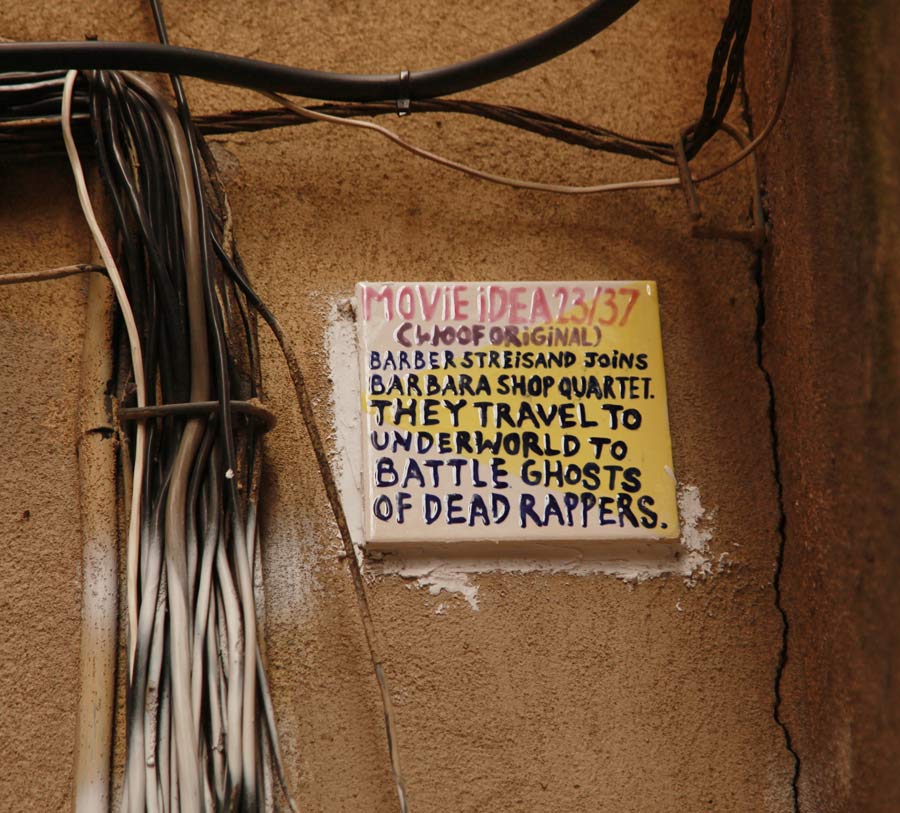
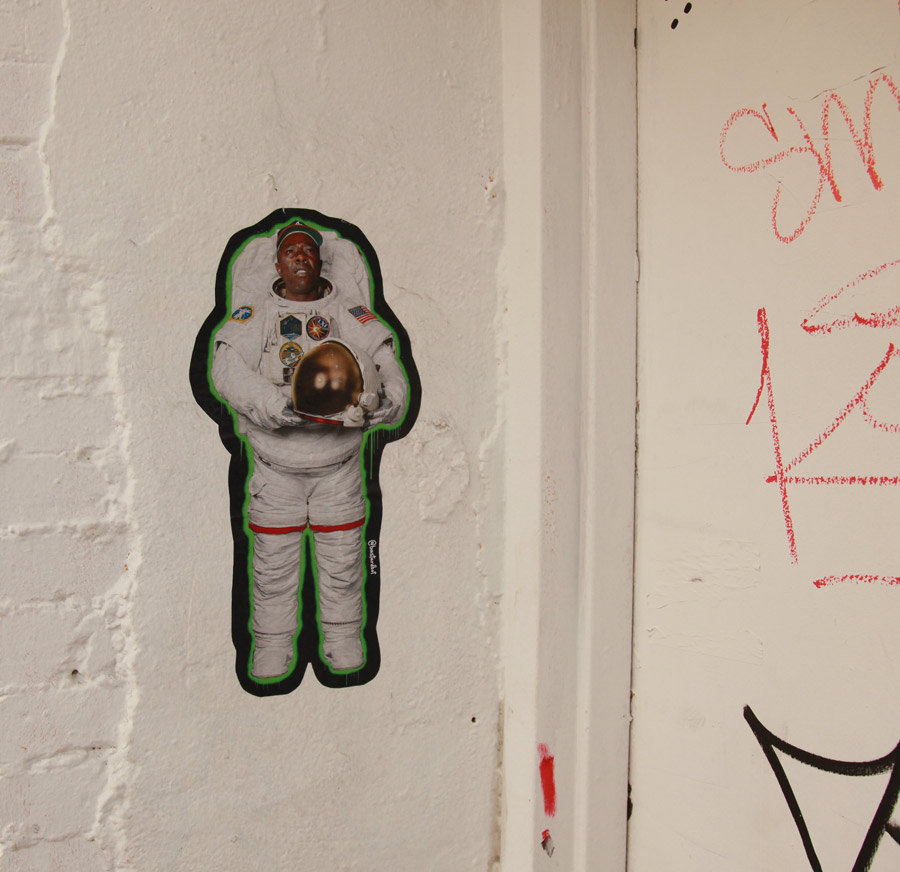
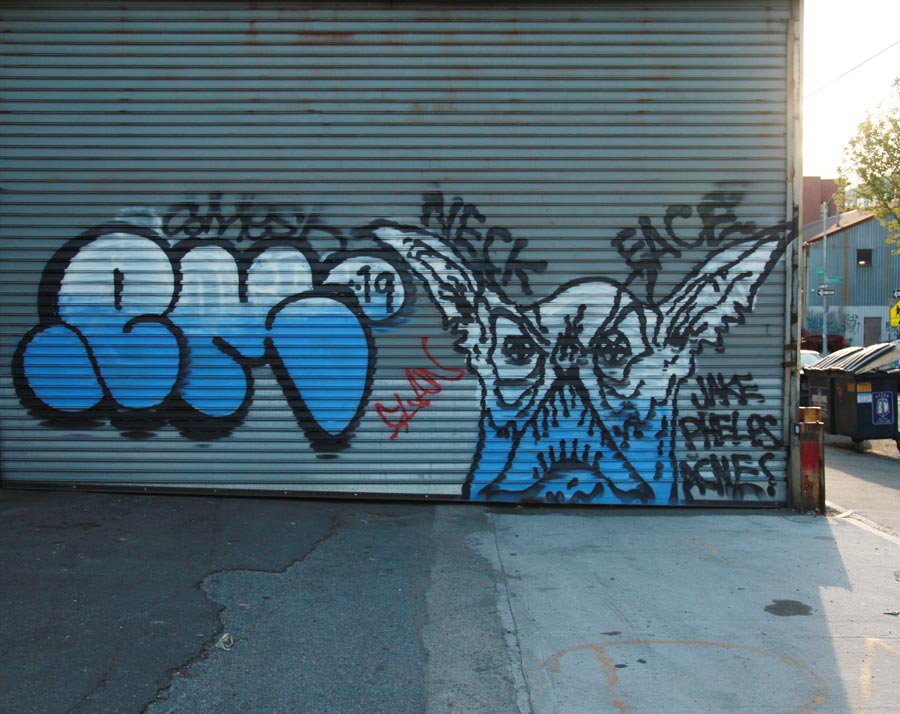
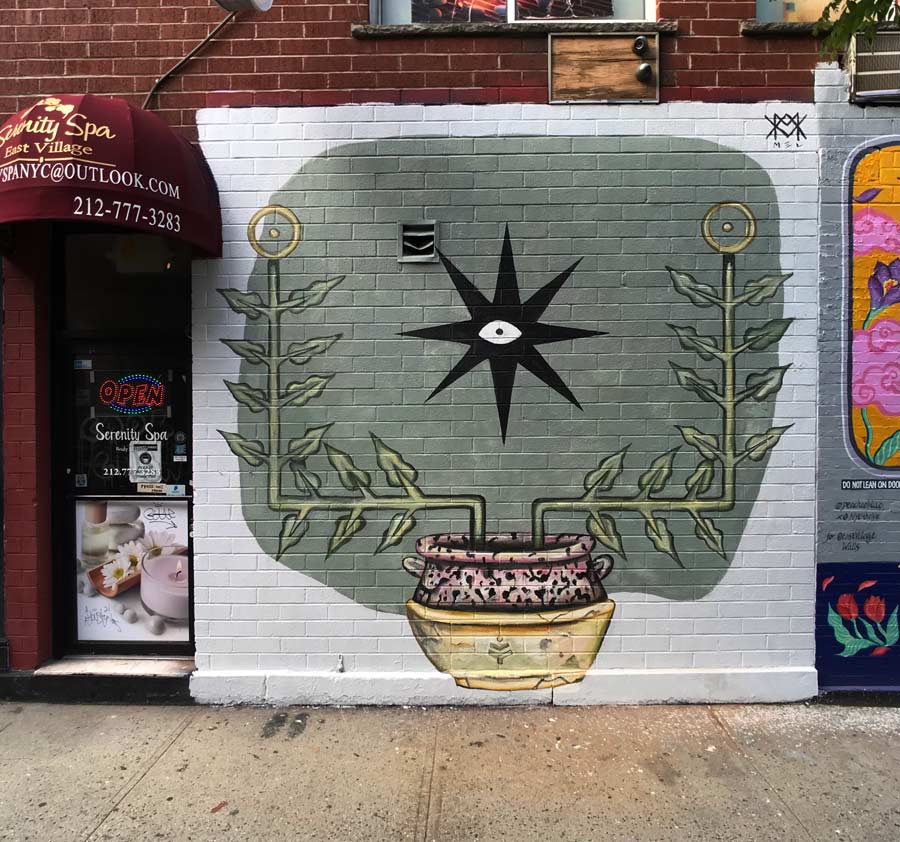
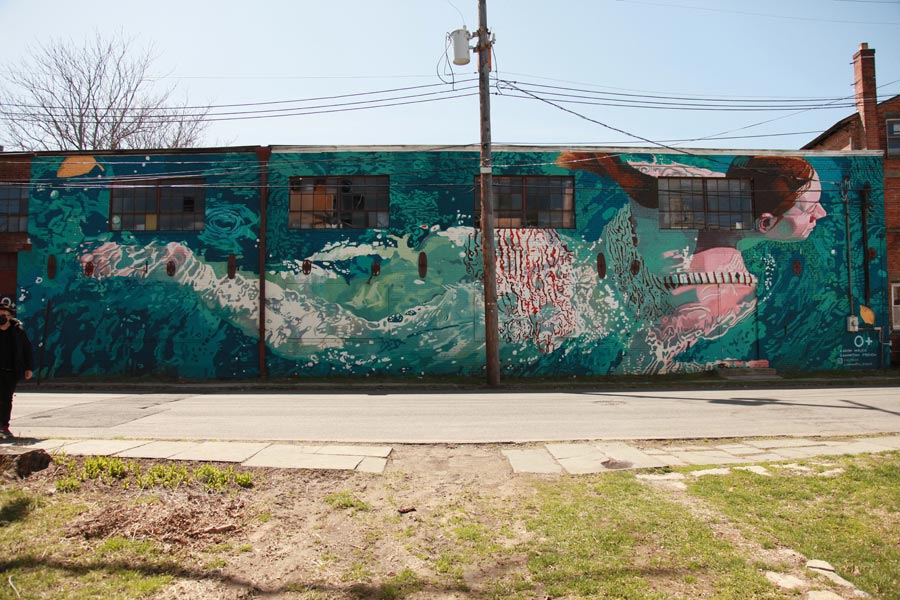
So here’s our weekly interview with the street, this time featuring: Aaron Hauck, Bastard Bot, Goog, Matt Siren, Mel, Mort Art, Neckface, Royce Bannon, Sac Sic, Samantha French, Stay Busy, Stikman, TNAW, and Winston Tseng.
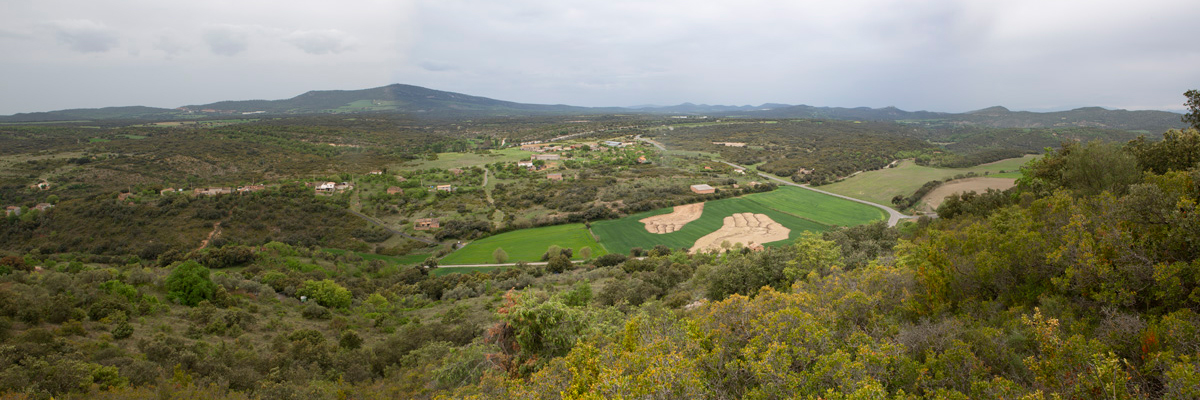
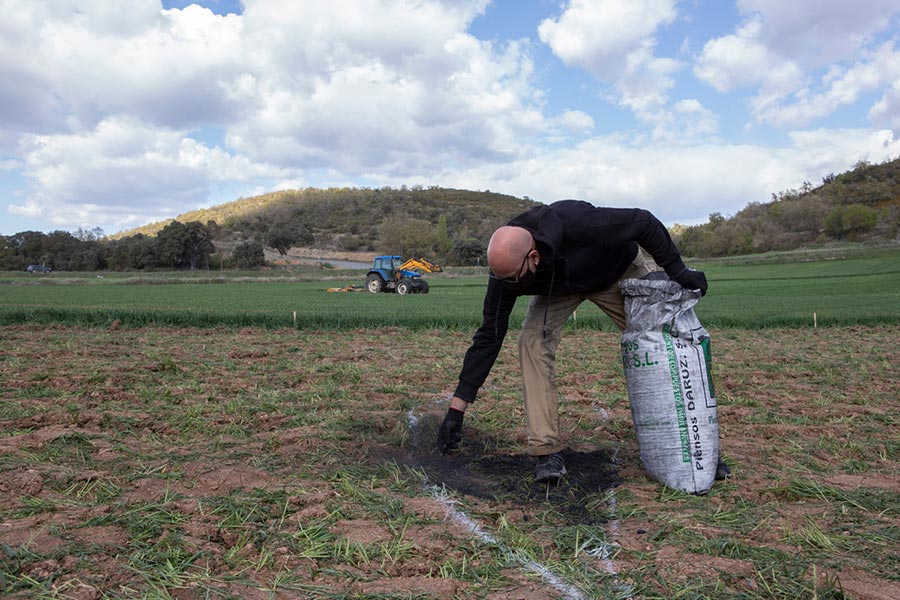
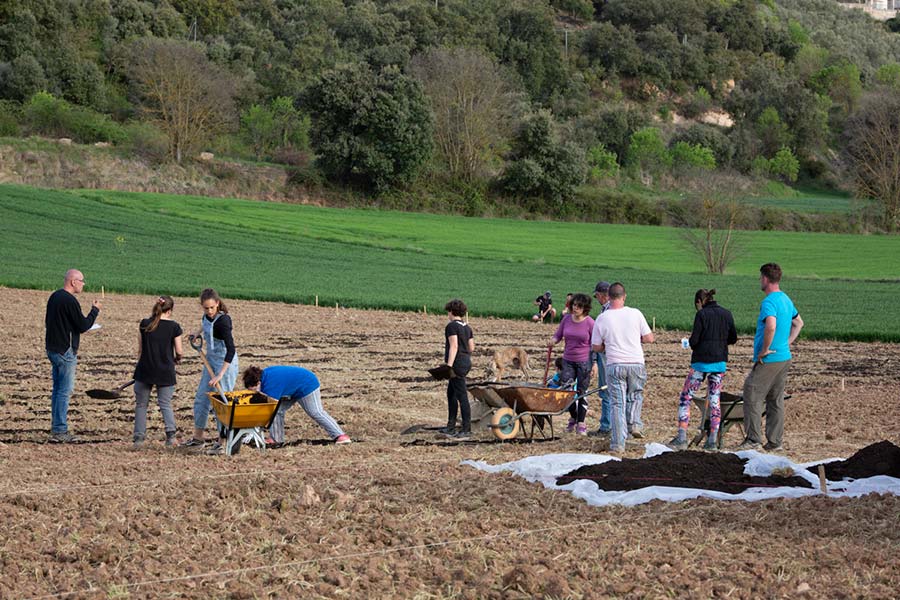
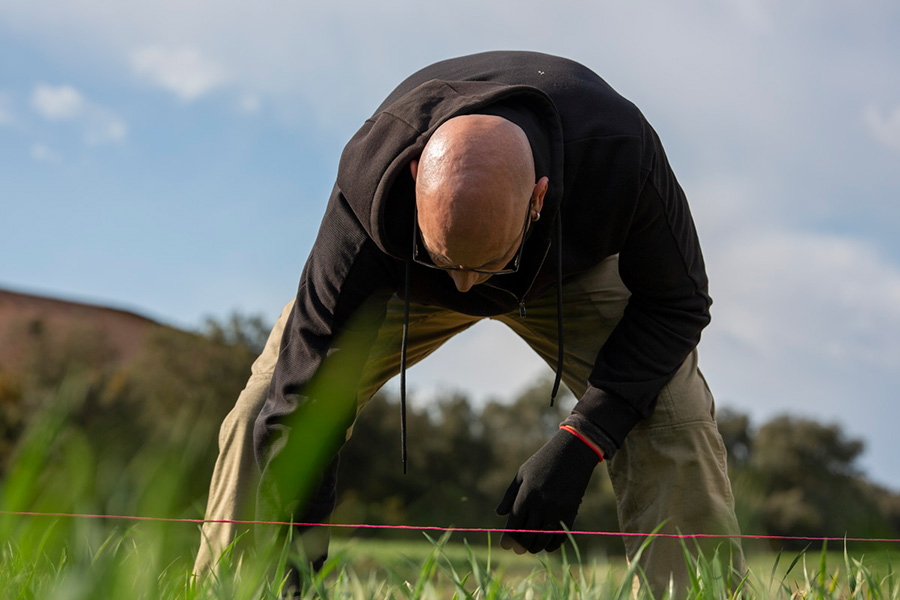
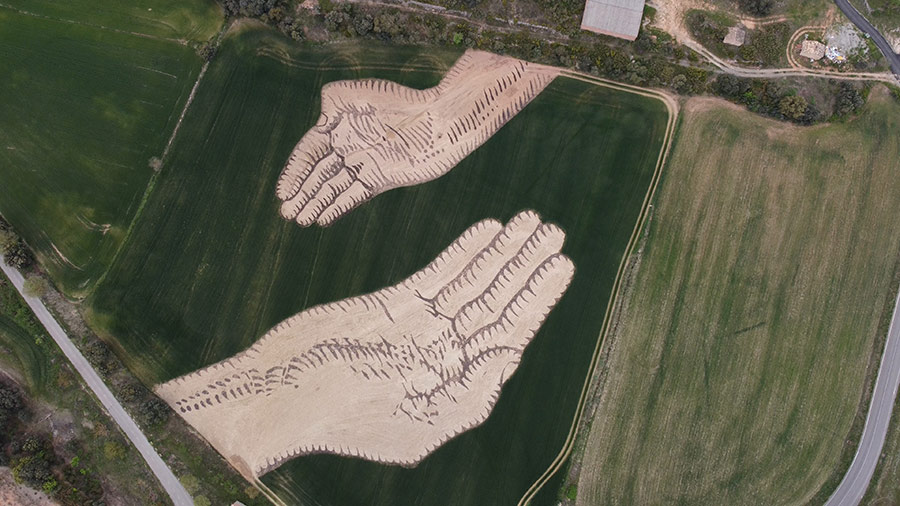
Jorge Rodríguez-Gerada is working in a Spanish wheat field. Would you like to lend a hand?
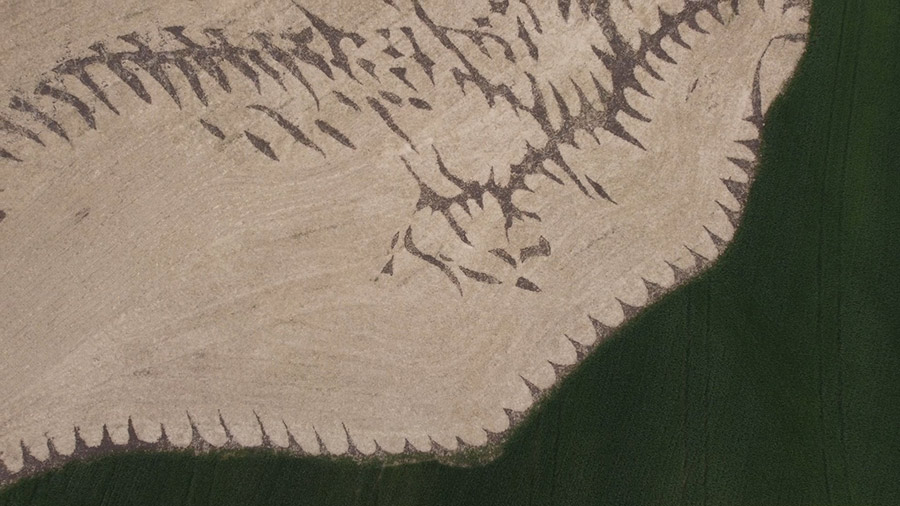
Jorge Rodriguez-Gerada. “Nourishing Self-Esteem”. Estopiñán del Castillo, Spain. (Ana Álvarez-Errecalde)
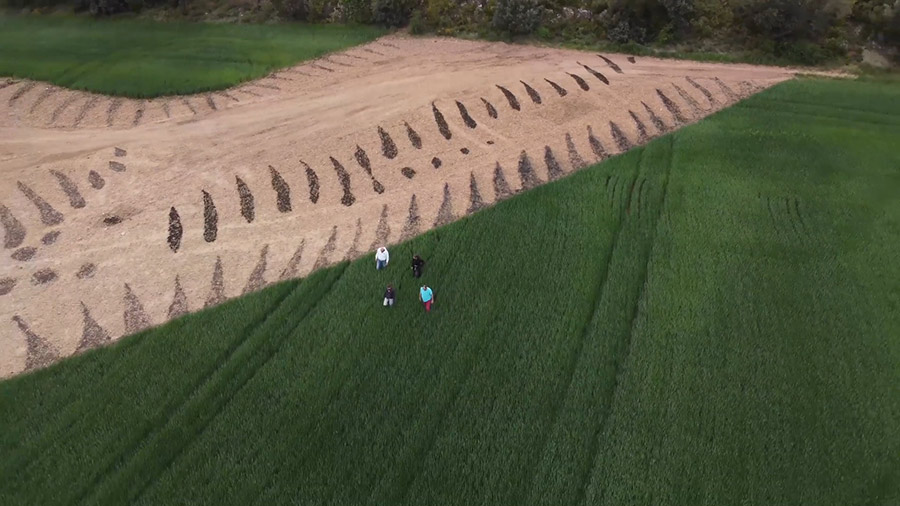
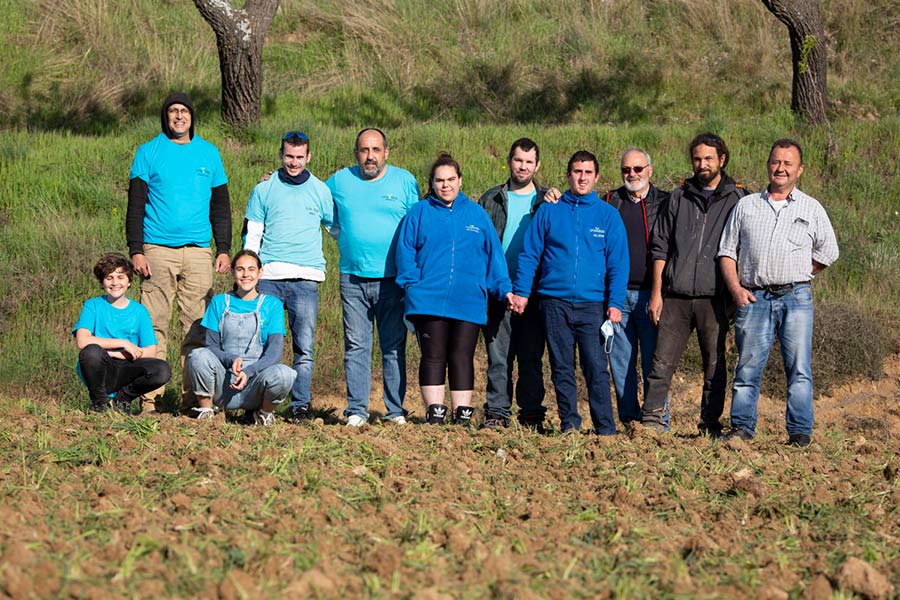
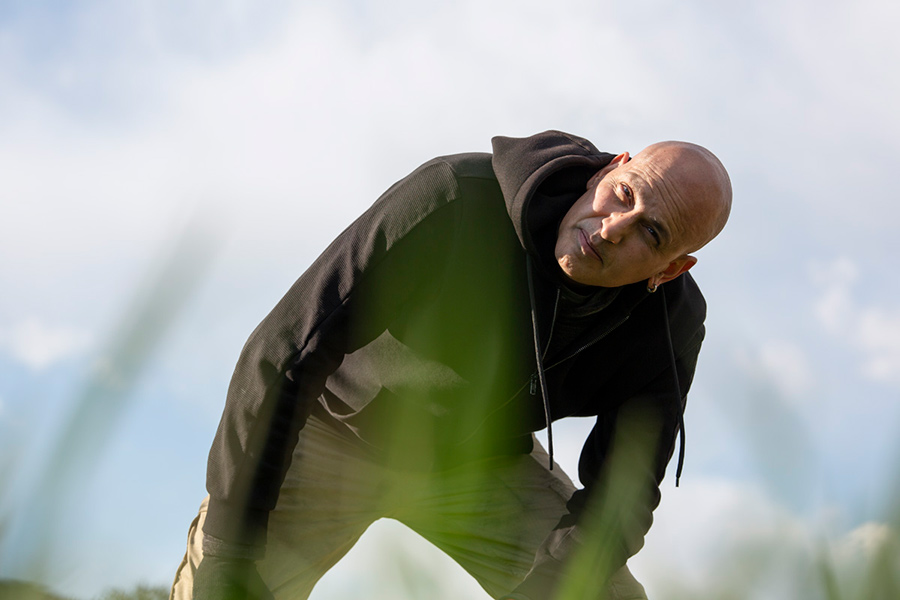
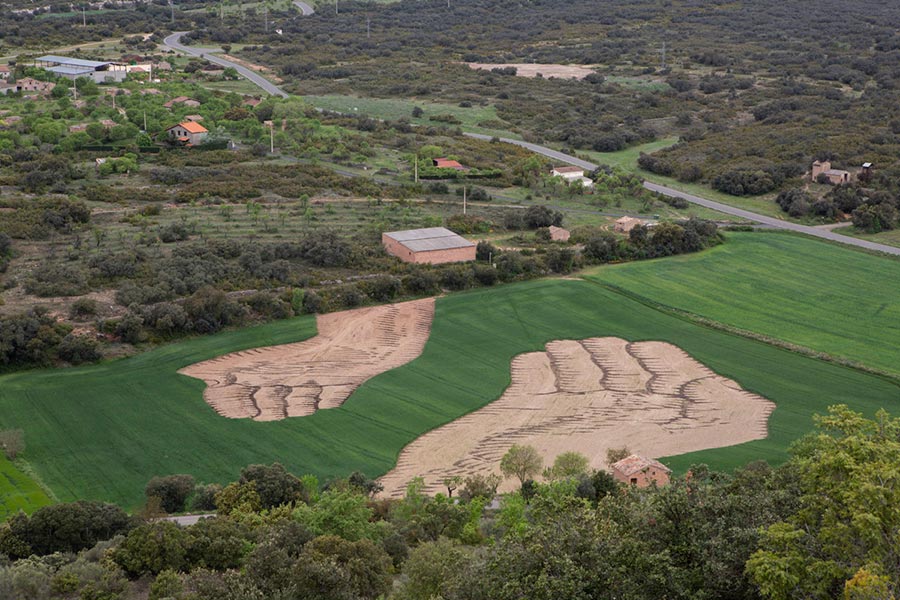
We travel today to the rural setting of Estopiñán del Castillo, a small town in Aragón, Spain to see this new piece of land art made by artist Jorge Rodríguez-Gerada with friends from Fundación Crisálida, a workplace that values the participation of individuals with intellectual disabilities.
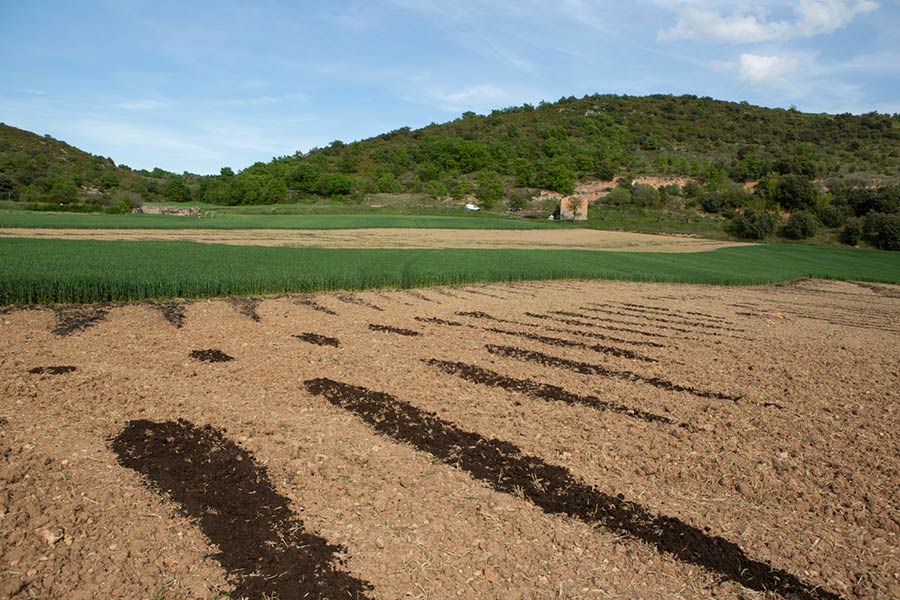
Jorge Rodriguez-Gerada. “Nourishing Self-Esteem”. Estopiñán del Castillo, Spain. (Ana Álvarez-Errecalde)
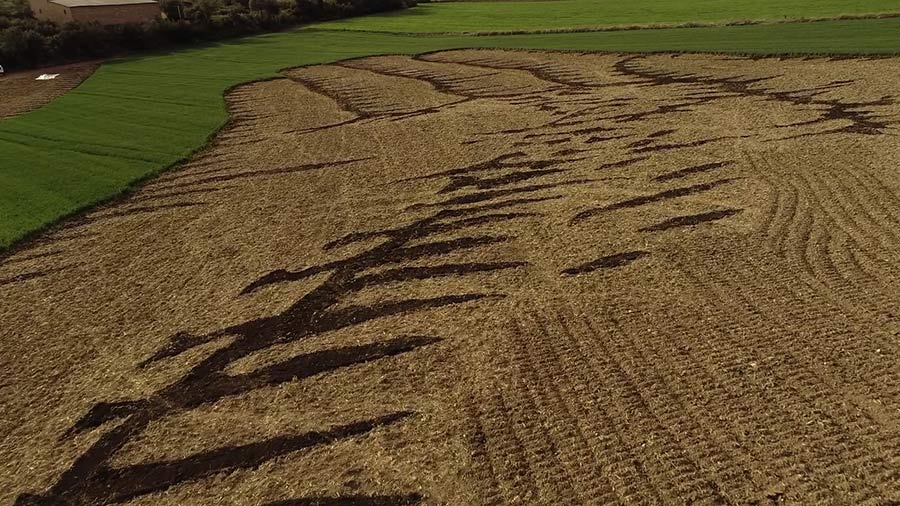
An artwork that is designed to grown and evolve over time, this first of three phases features the green of Spring time during April, at play with the earthtones of soil and compost. When it is in its final phase in October, this artwork will have fully completed its intended natural and aesthetic cycle.
Rodríguez-Gerada says this wheatfield installation is entitled “Nourishing Self-Esteem”, a reference to the interconnectivity of people and the interwoven nature of building community.
Jorge Rodriguez-Gerada. “Nourishing Self-Esteem”. Estopiñán del Castillo, Spain. (Ana Álvarez-Errecalde)
“With their hands, the folks at Fundación Crisálida bake bread on a daily basis for their town and the towns nearby. Bread transcends cultures and geography, to unify in its simplicity, a fundamental physical and emotional sustenance,” says his press release. The two hands are meant to symbolize those of an adults and child. The artist says that uniting one to another creates family, community, bolsters feelings of self-worth, and ultimately strengthens everyone involved.
We’re looking forward to seeing how this project and artwork grows.
Jorge Rodriguez-Gerada. “Nourishing Self-Esteem”. Estopiñán del Castillo, Spain. (Ana Álvarez-Errecalde)Jorge Rodriguez-Gerada. “Nourishing Self-Esteem”. Estopiñán del Castillo, Spain. (Ana Álvarez-Errecalde)Jorge Rodriguez-Gerada. “Nourishing Self-Esteem”. Estopiñán del Castillo, Spain. (Ana Álvarez-Errecalde)Jorge Rodriguez-Gerada. “Nourishing Self-Esteem”. Estopiñán del Castillo, Spain. (Ana Álvarez-Errecalde)Jorge Rodriguez-Gerada. “Nourishing Self-Esteem”. Estopiñán del Castillo, Spain. (Ana Álvarez-Errecalde)Jorge Rodriguez-Gerada. “Nourishing Self-Esteem”. Estopiñán del Castillo, Spain. (Ana Álvarez-Errecalde)Jorge Rodriguez-Gerada. “Nourishing Self-Esteem”. Estopiñán del Castillo, Spain. (Ana Álvarez-Errecalde)Jorge Rodriguez-Gerada. “Nourishing Self-Esteem”. Estopiñán del Castillo, Spain. (Ana Álvarez-Errecalde)
Video by Luis Campo Vidal / La Cupula Audiovisual
Fundación Crisálida with Jorge Rodríguez-Gerada, and Iris, Aleix, Martí, Cristina, Álex, David, Jacinto, Carina, Caroline, Jennifer, Esmeralda, Ana, Milla, Alén and many locals, create this work that will continue to change for the next six months with three interventions.
Our weekly focus on the moving image and art in the streets. And other oddities.
Now screening: 1. SOFLES / Spillway 2. SOFLES/ Geometric 2 3. Abandoned Places with Cycki and Gienio via Dope Cans 4. The Day the Dollar Died 5/20/21
BSA Special Feature: SOFLES / Spillway
Did they say spillway or speedway?
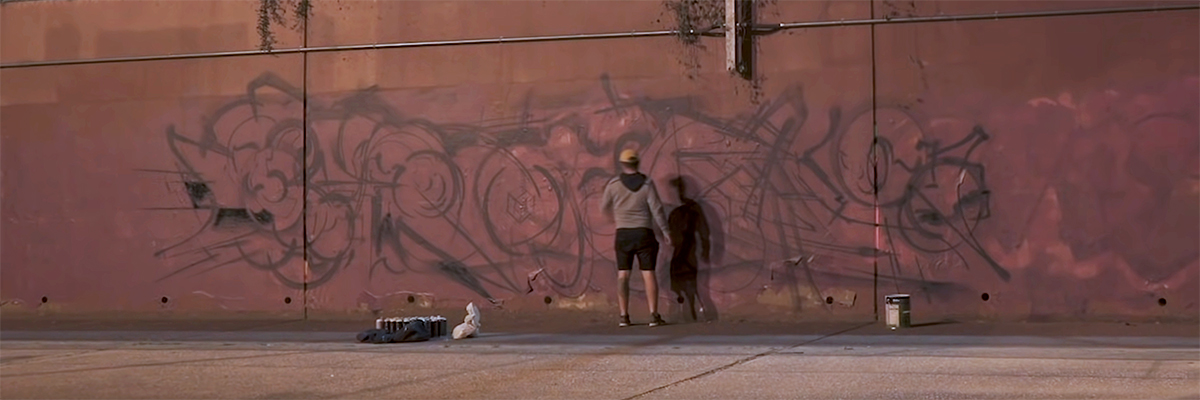
In this edit by After Midnight Film Co, the low shutter speed effect ramps up the excitement of bombing.
In his comment on Youtube, Maxwell Morris says, “What in the actual f? Best bombing I have ever had the pleasure to witness. Pushing form, color combinations, abstraction, technique and motion and energy to a new level.”
SOFLES / Spillway
SOFLES/ Geometric 2
Abandoned Places with Cycki and Gienio via Dope Cans
In a return to smart sound and video editing, these two remind us how delicious silver bubble tags are. Satin sheeny and crunchy dopeness.
Song shout-out to Nicolas Jaar – “Space is Only Noise if You Can See”
The Day the Dollar Died 5/20/21
“We expect to play a leading role in developing standards for CBDCs,” ~ Fed Chairman Jerome Powell
“So, bye-bye, Miss American Pie Drove my Chevy to the levee, but the levee was dry And them good ol’ boys were drinkin’ whiskey and rye Singin’, “This’ll be the day that I die This’ll be the day that I die”
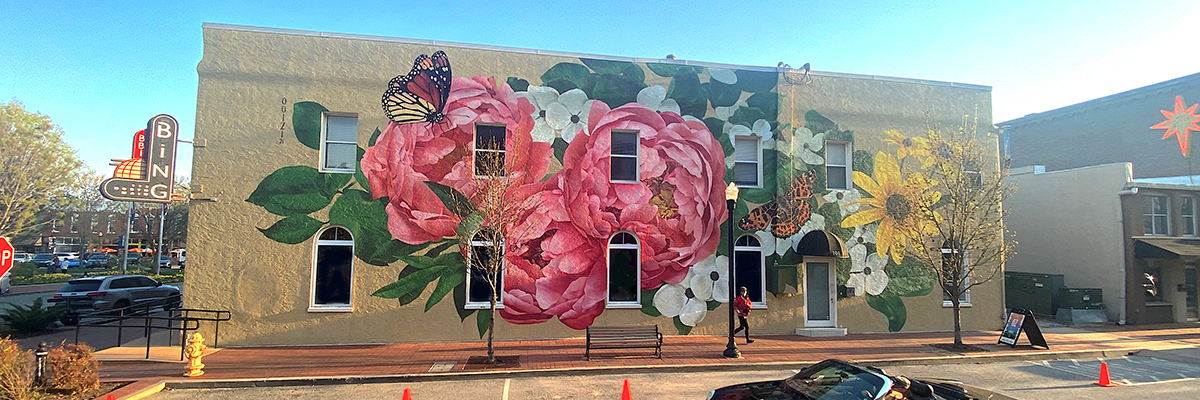
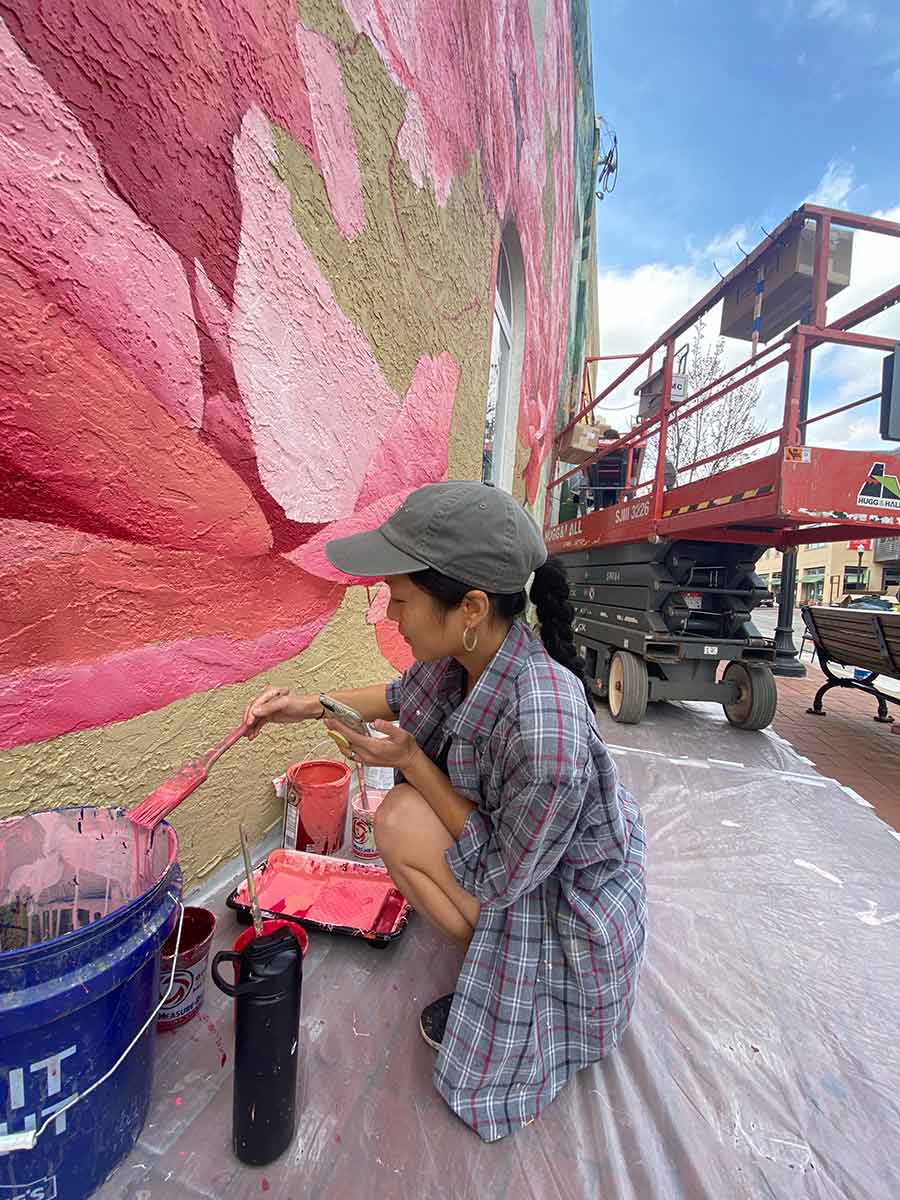
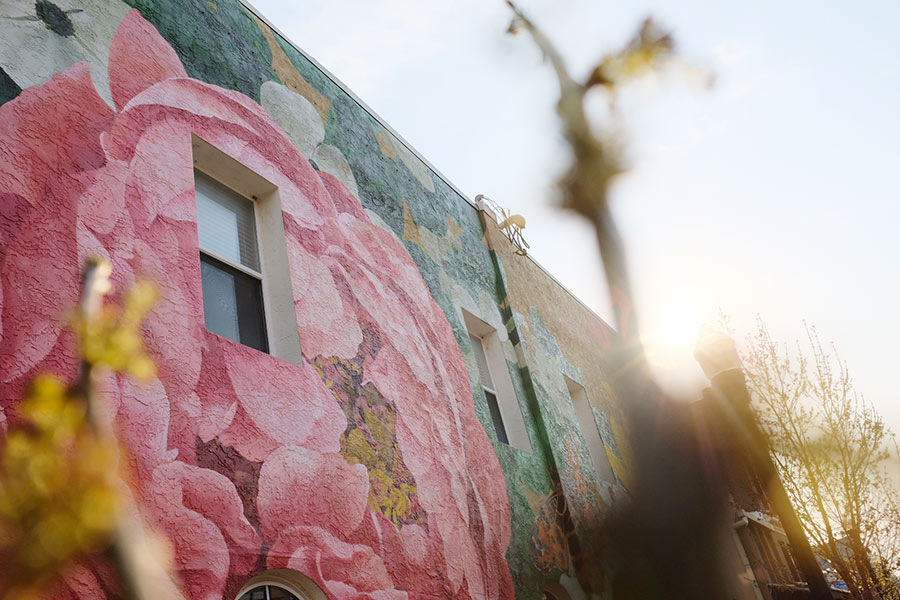
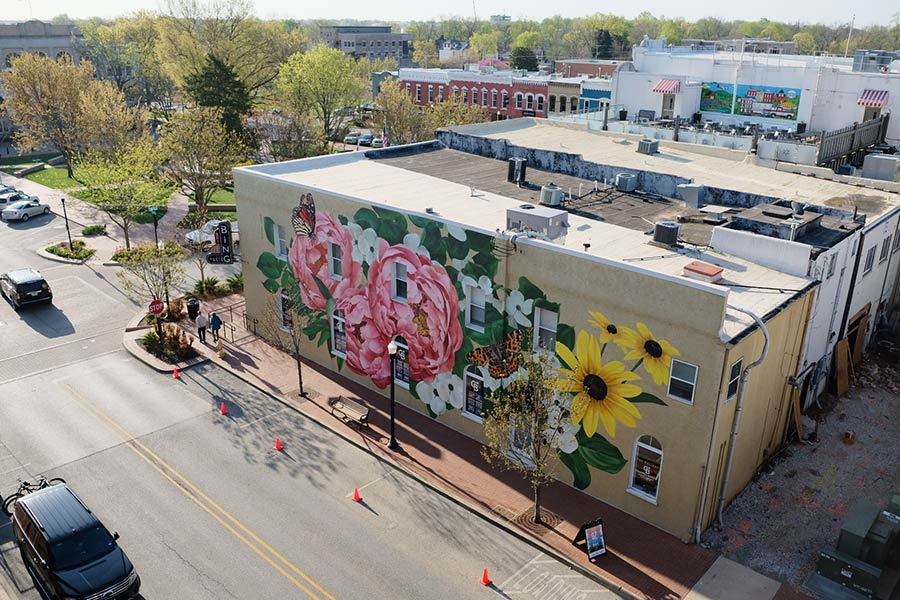
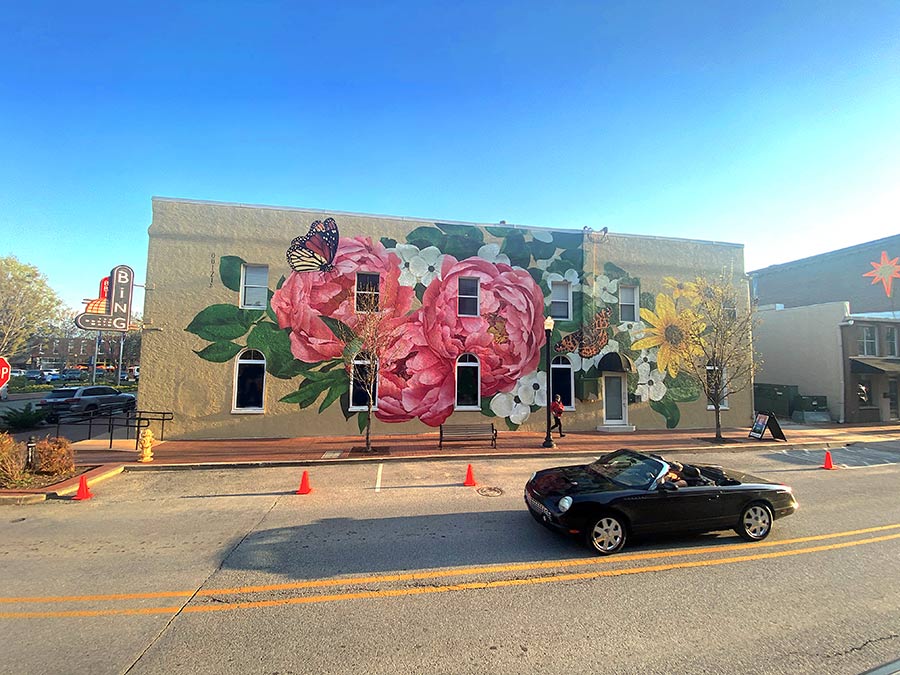
We hope that “Summer Always Blooms” – and so far so good this year. If you follow the order of flowers blooming in Brooklyn you’ll know that we are in the middle of the peony explosion that happens every year just after the lilacs and just before the roses. Perhaps that’s what was on muralist Ouizi’s mind when she painted this new soft brush portrait of coral charm peonies in Bentonville, Arkansas.
Curated by Charlotte Dutoit of Justkids, the piece coincidences with the new Georgia O’Keeffe exhibition at Crystal Bridges, and you can see that the full pulsating expanse of natural blooms thrills Quizi as much as it did the mother of American modernism.
“I have thoroughly enjoyed being back in Arkansas for this project,” says Ouizi, “and I have heard nothing but positive responses about the mural. I even got to see the dogwoods start to bloom in real life!”
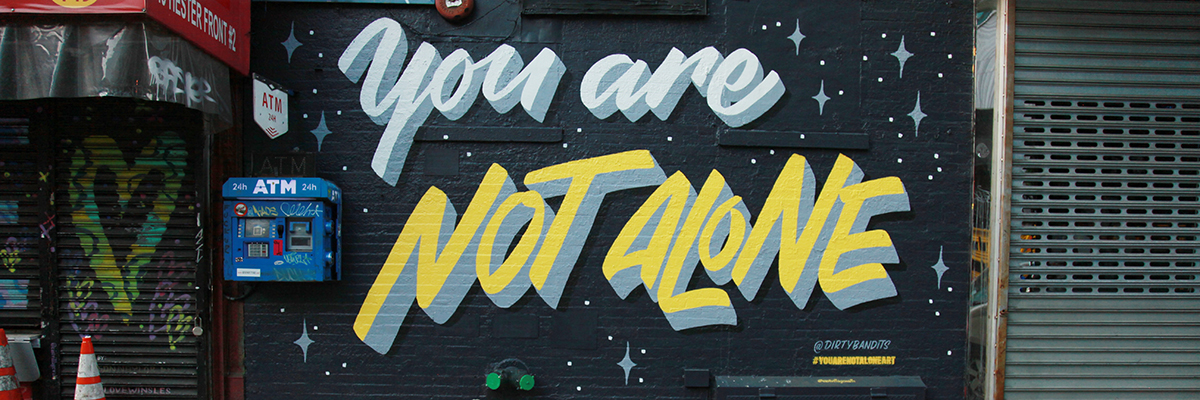
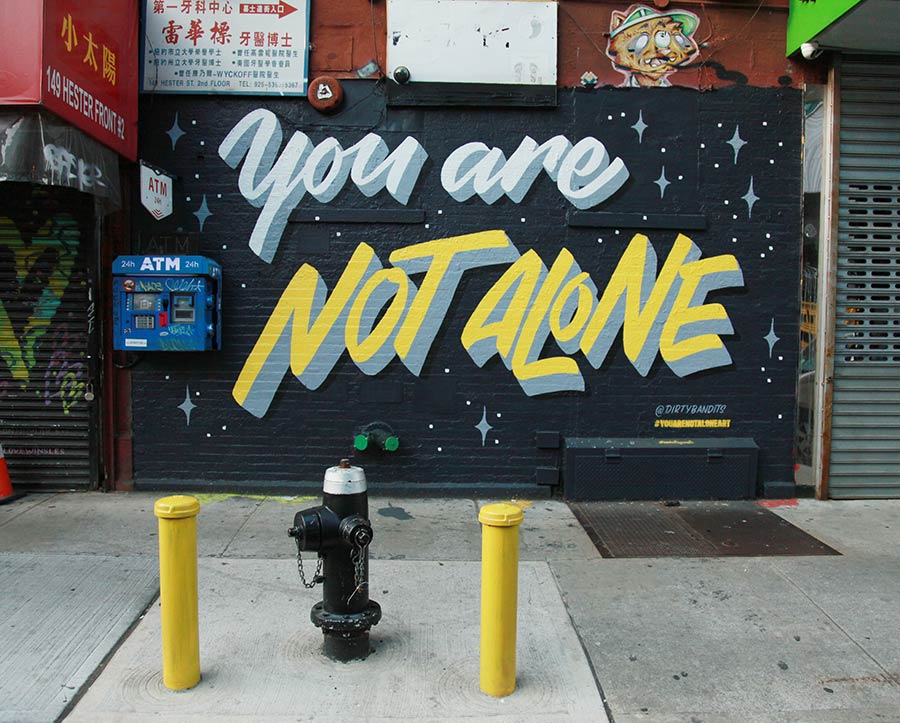
You are not alone. It’s a simple phrase that offers a lot of comfort in difficult times.
For one long, horrible year we’ve been bound to each other by one single catastrophic event: Covid-19. The Pandemic brought so much pain, despair, loss, urgency, clarity, and fear. It forced the invincible to their knees. It didn’t discriminate by class, social status, ethnic groups, skin color, or wealth. A Pandemic that crossed borders and forced us to withdraw almost completely from normality.
Throughout all of this, many of us, millions of us, never felt alone – and that kept us hoping for the ray of light. Hope for the day when we won’t be hearing the sound of sirens from emergency vehicles. Hope for the day when we’d be able to reunite with our loved ones. Hope for a day when going outside wouldn’t feel like risking death. Hope for the simplest of pleasures.
The Pandemic also exposed all of us to see the immense disparity between rich countries and poor ones. A vast and deep fissure in our humanity was exposed to the whole world when we saw images of people being left to die on the sidewalks, alone in nursing homes or their own homes, due to negligence, incompetence, or lack of resources. It may be years before we realize the damage of the Pandemic. At the least, we hope we have learned that we are not alone.
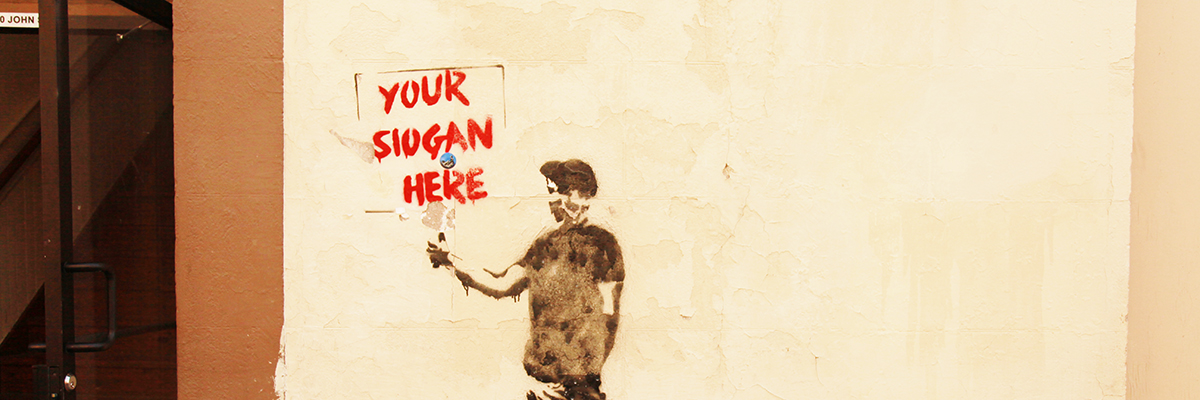
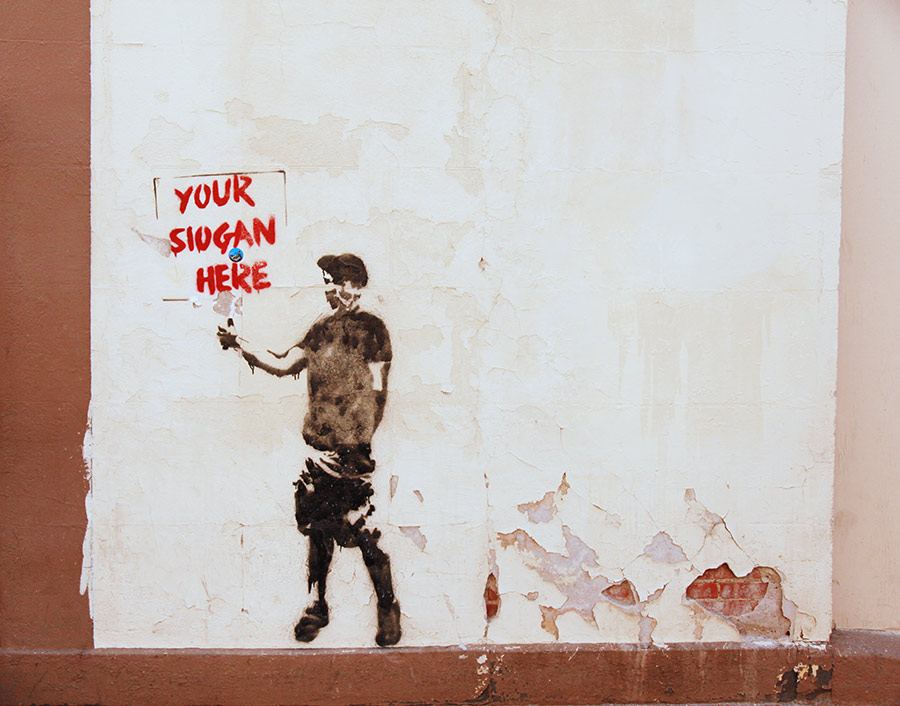
In recent years the city of Kingston has been hosting an urban festival that merges art and healing. The O+ Festival, headquartered here, has a holistic approach and promotes the well-being of individuals through arts, music, and wellness. It was during this visit that we found this piece on a wall on the side of a building. It caught our eyes as it resembled the style of Banksy. But the other characteristic that we noticed was that the unidentified artist was also playing with the words. They took from the ubiquitous “Your Ad Here” signs one sees all over large cities.
It could also have read “Your Logo Here”. Street art has changed throughout the years to become mostly a sanctioned art form with an intense focus on murals. Big and small cities all over the world have embraced the idea of art as a way to revitalize moribund old quarters of their cities and to bring a sense of belonging to an otherwise neglected neighborhood. No matter the original nobility of that idea – inevitably in comes commerce, the slogans, and logos. Then there is the slogan of the city or private organization in charge of producing the festival and suddenly a plethora of small logos and slogans promoting the companies that have contributed either with funds, equipment, or materials to the festival.
We are a society of advertisements, often prodded to buy something or to endorse something. Whether driving on the highway or flying or on a train or walking or sitting on the couch in our home, we can’t escape logos, slogans, and general advertisements. There are only a few precious areas left on earth without billboards and electronic signs. That’s why it’s especially jarring to also see them on display at art events.
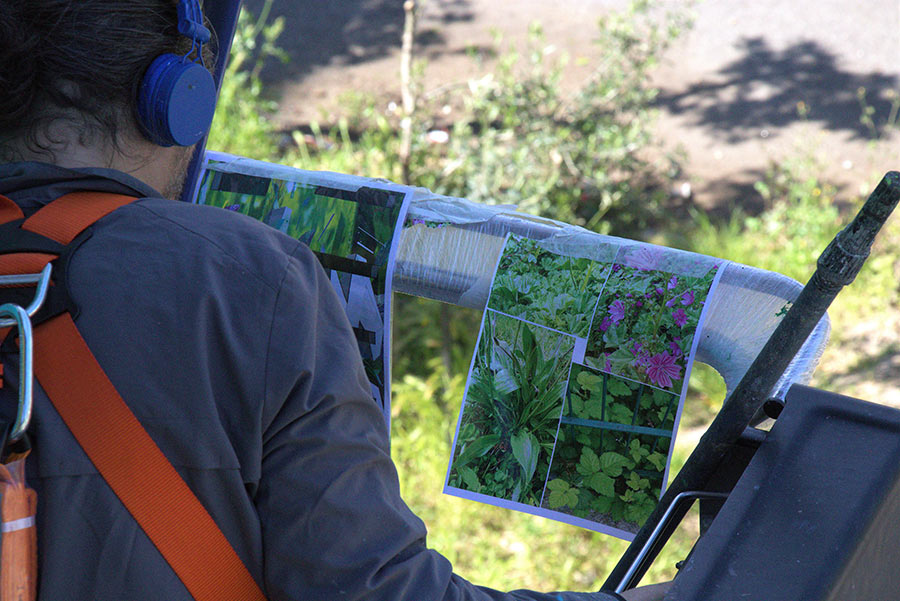
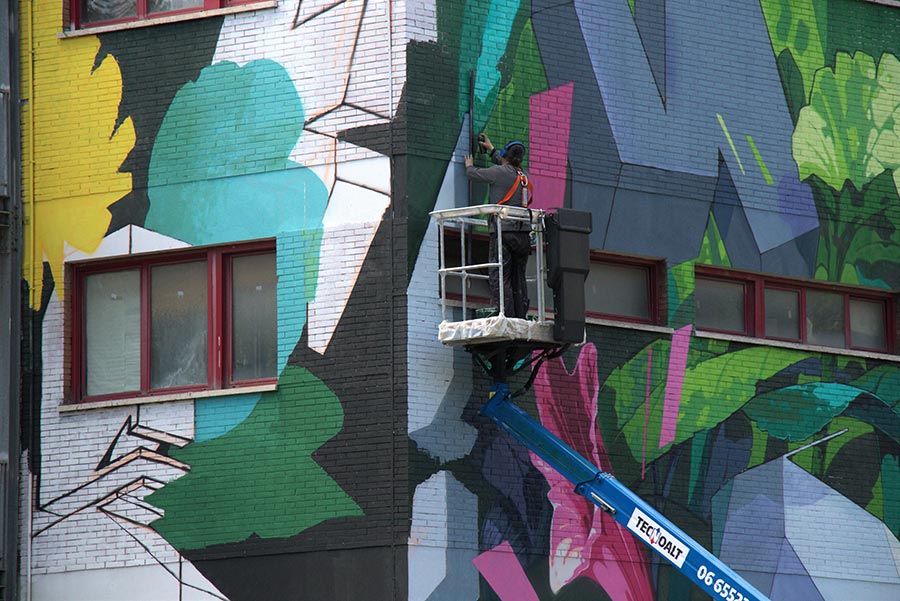
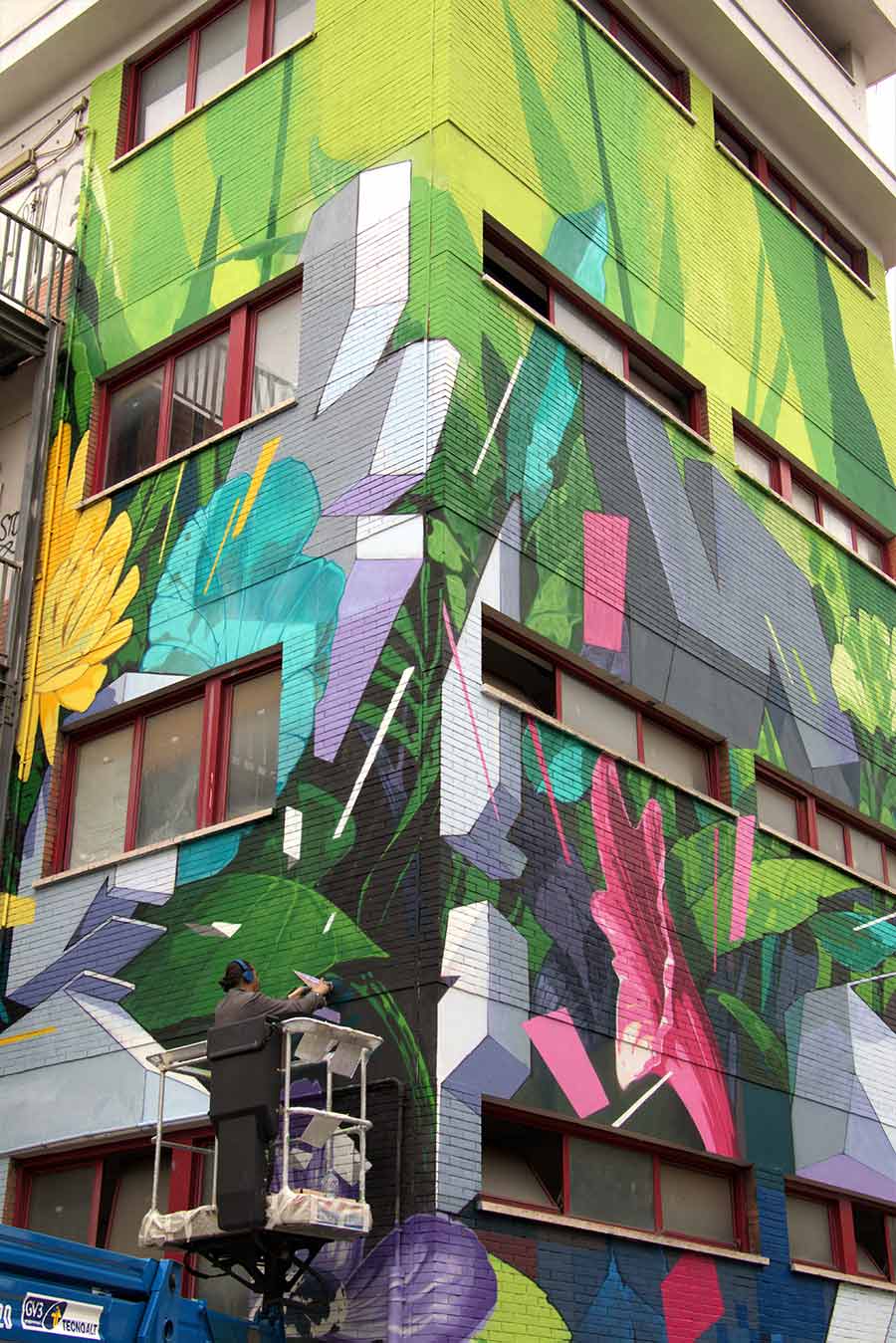
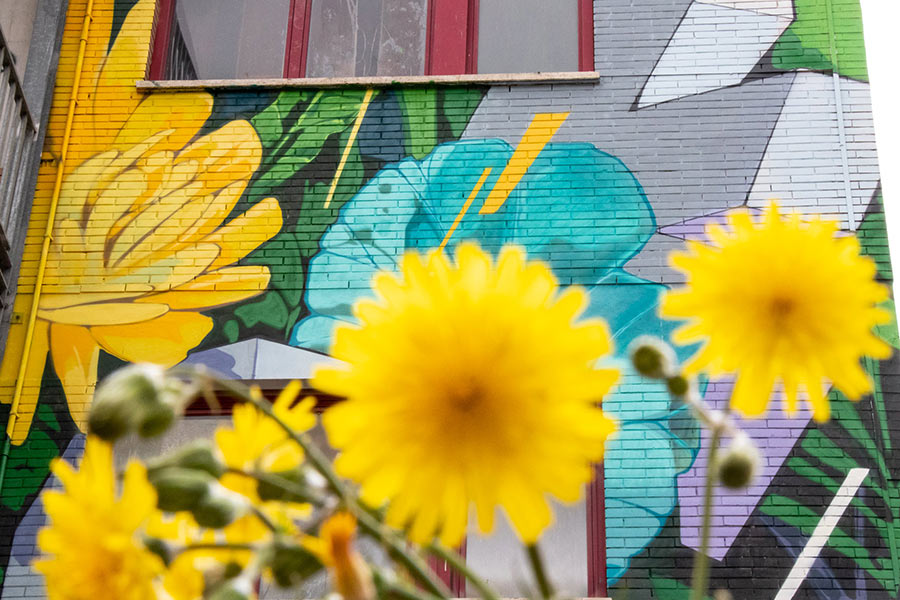
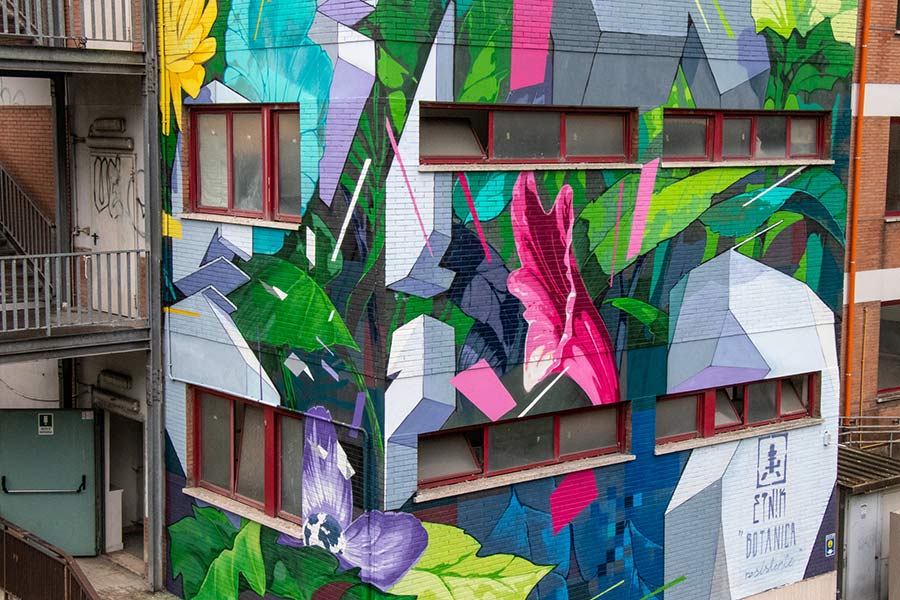
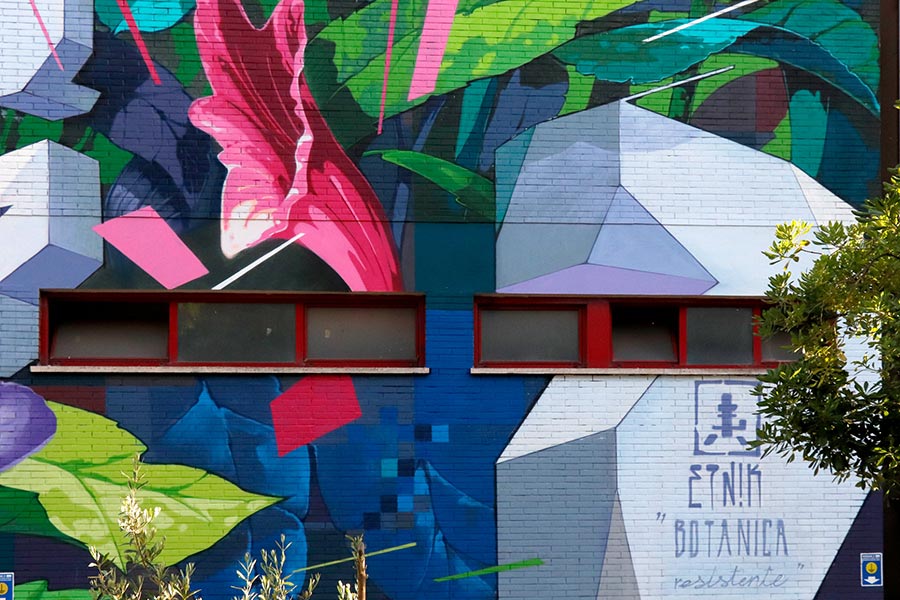
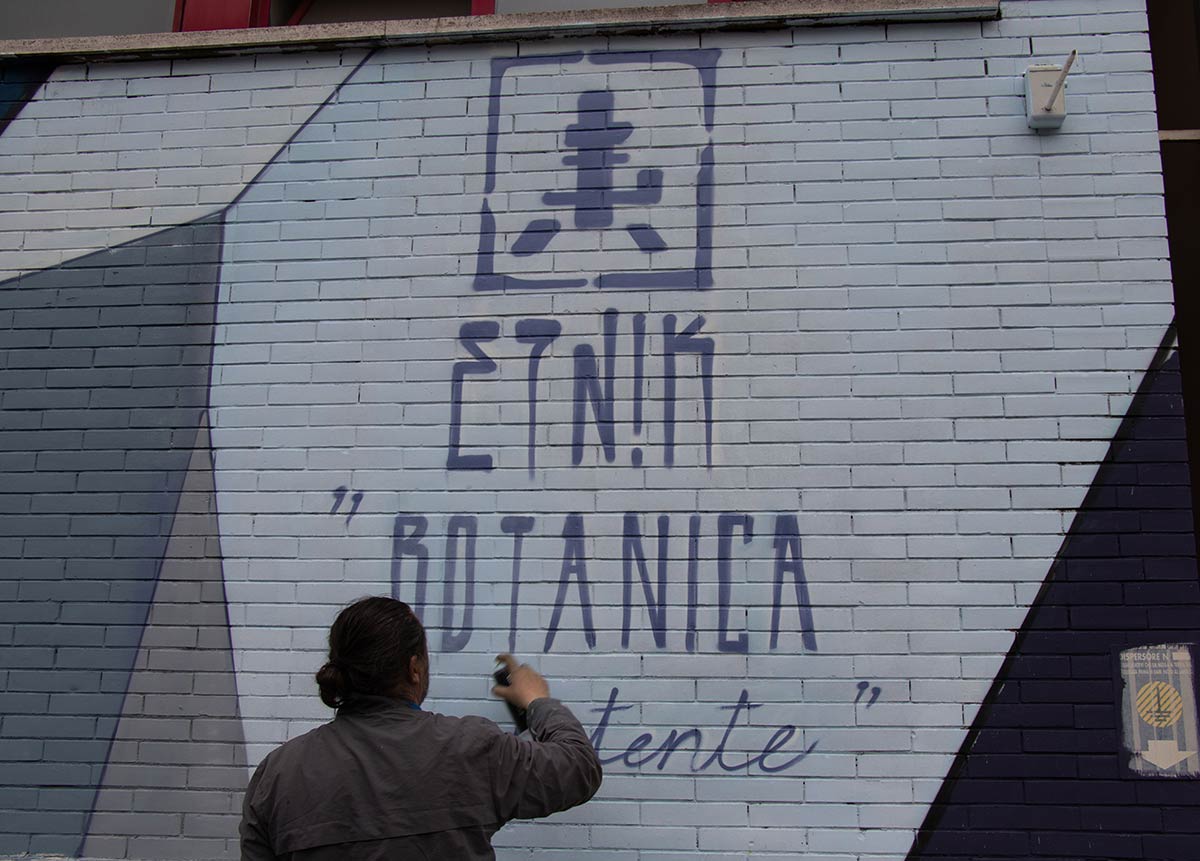
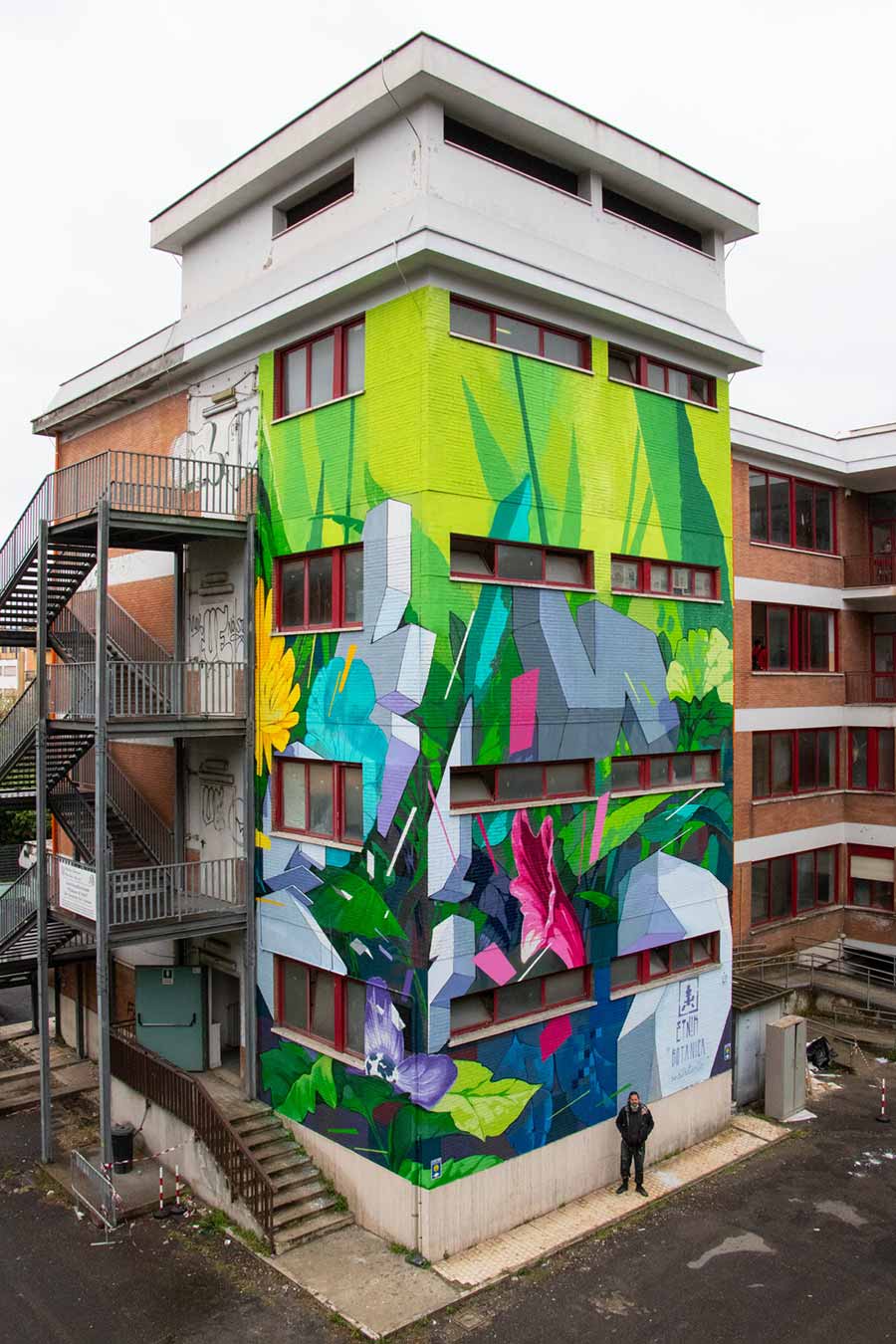
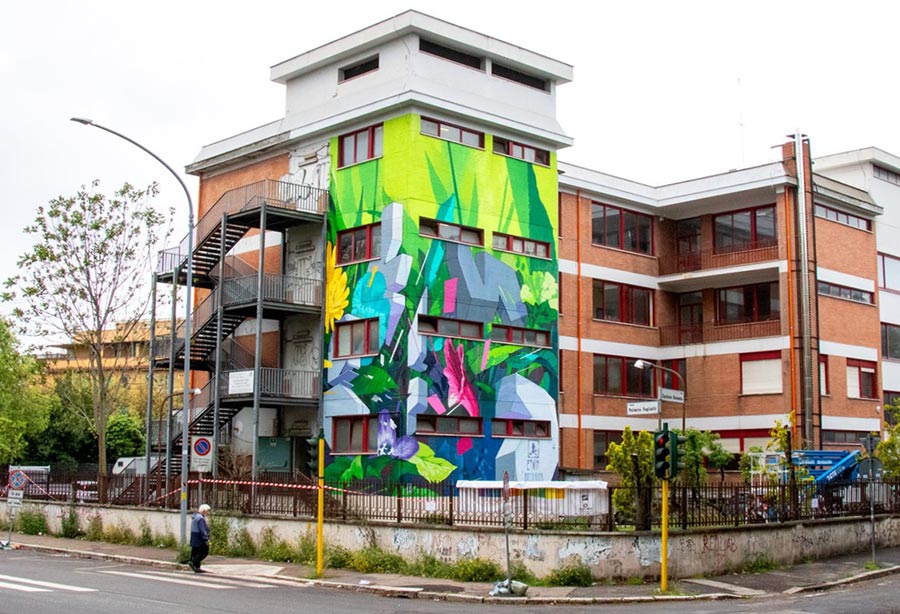
Italian street artist Etnik has created a new “Botanica Resistente” in Rome to commemorate “Liberation Day” in Italy, which marks April 25th as the end of the Nazi’s occupation and the liberation from Fascism.
He calls the colorful and abstractly organic 4-story work “Botanica Resistente”, which he says may have multiple readings. Mostly, it is “A direct reference to the toponymy that characterizes the whole district of Centocelle – with its streets named after plants, trees, and flowers.”
As a story of overcoming great obstacles and thriving in adversity, he also posits that “in the mural concrete blocks, asphalt and artificial works succumb to natural elements, giving life to a slow but gradual reconquest of spaces taken from nature.”
“The work is representative of familiar urban corners, on the border, where between asphalt and concrete, spontaneous plants are in a constant struggle for survival.”
Completed in conjunction with the help and guidance of Mirko Pierri, curator of urban art for the a.DNA association, Etnik took about 5 days to transform this facade of the Liceo Scientifico Statale Francesco D’Assisi, between via Castore Durante e Viale Palmiro Togliatti.
Welcome to Brooklyn, where the lilacs are in bloom and people are smoking weed in the park, like it was 1985 or something. Remember summer of ’85 in Washington Square Park with rambunctious teens backward skating in the dry fountain on roller skates and people were blasting “Shout” by Tears for Fears on their boxes?
As the COVID positivity rate in New York dove toward 1% this week, we’re all encouraging each other to take off masks, but no one is sure when and where it’s completely safe, except when taking a shower by yourself. On the street and on the Subway the results are mixed, with most New Yorkers opting for being safe.
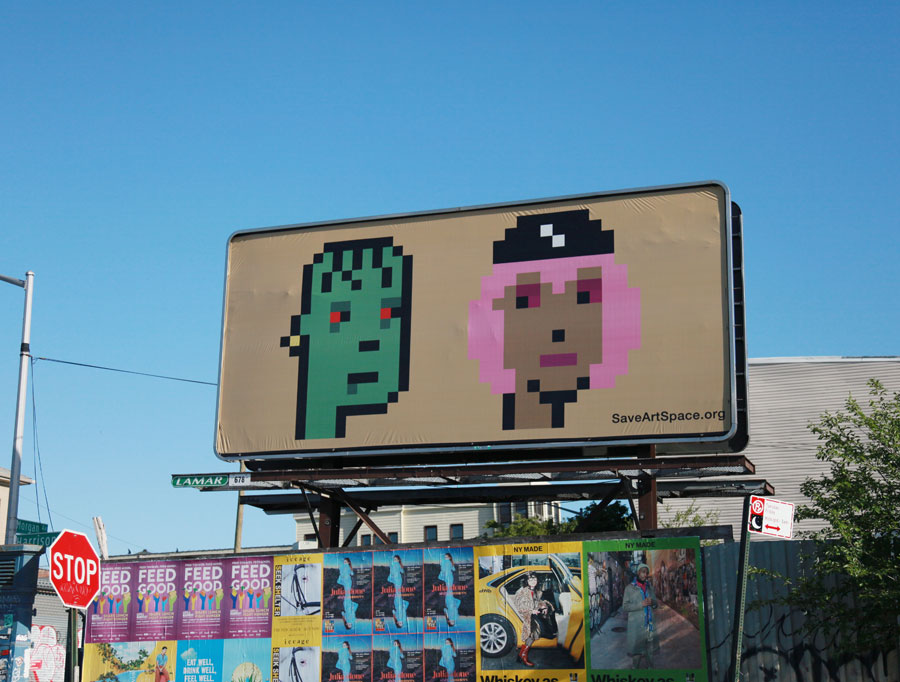
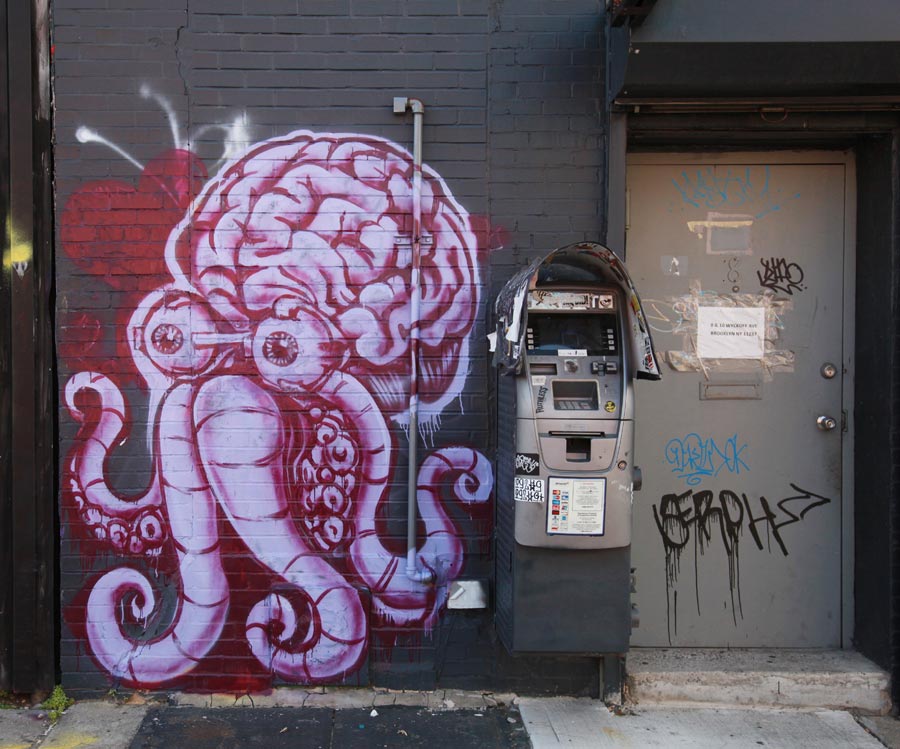
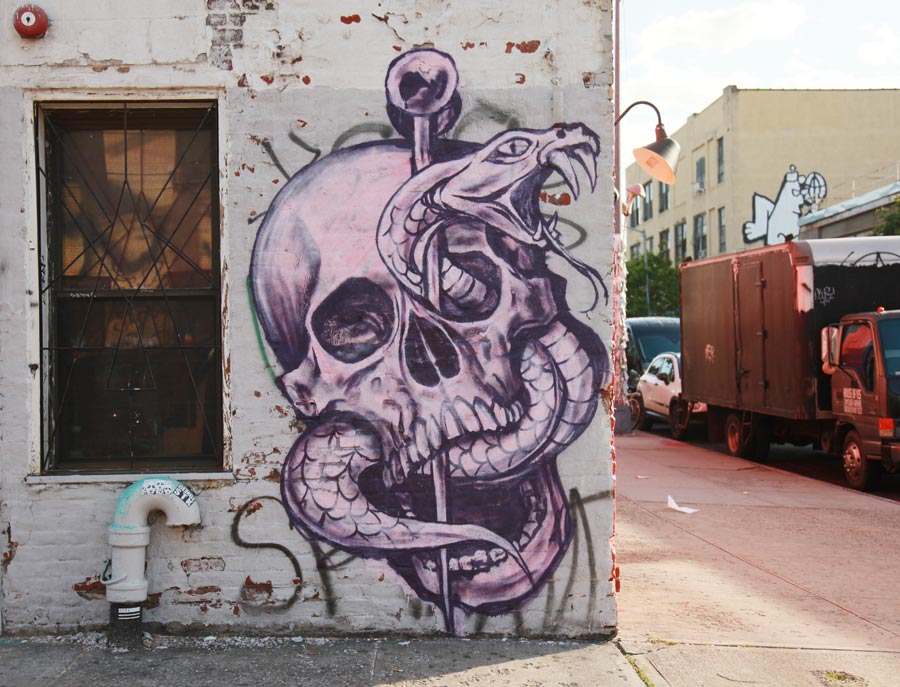
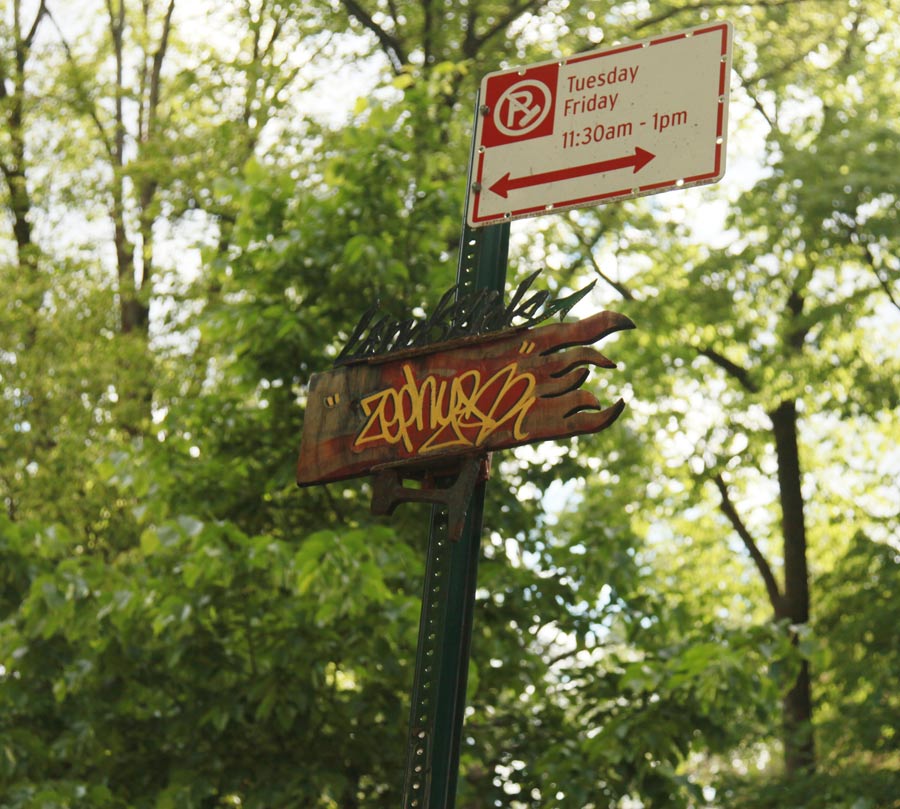
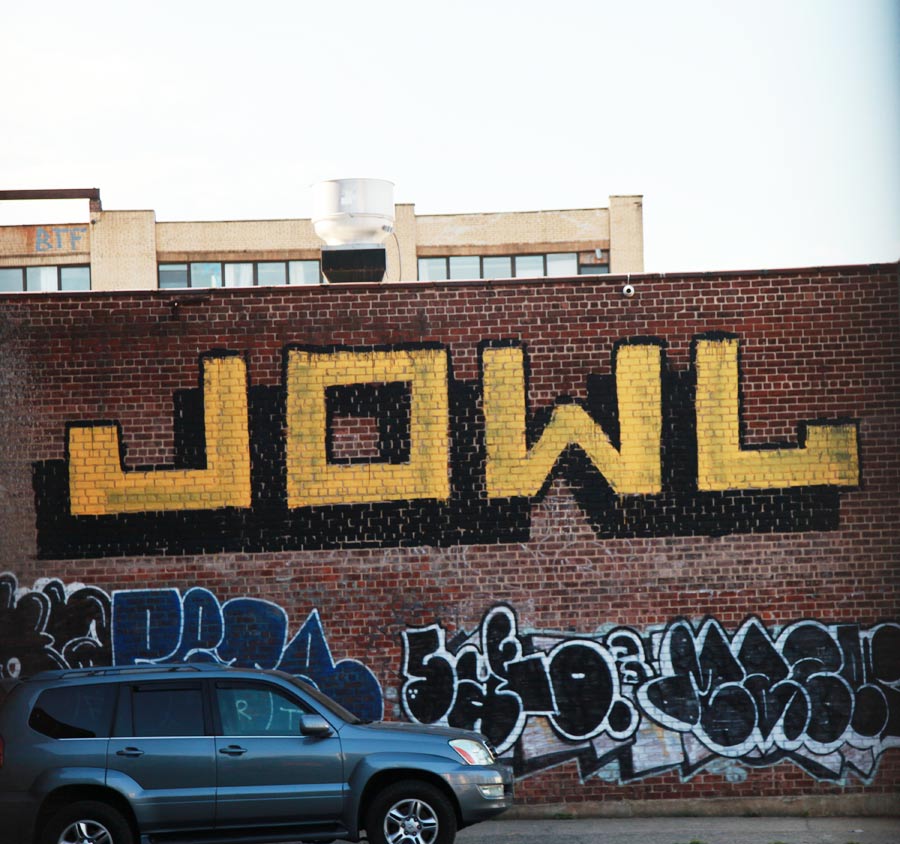
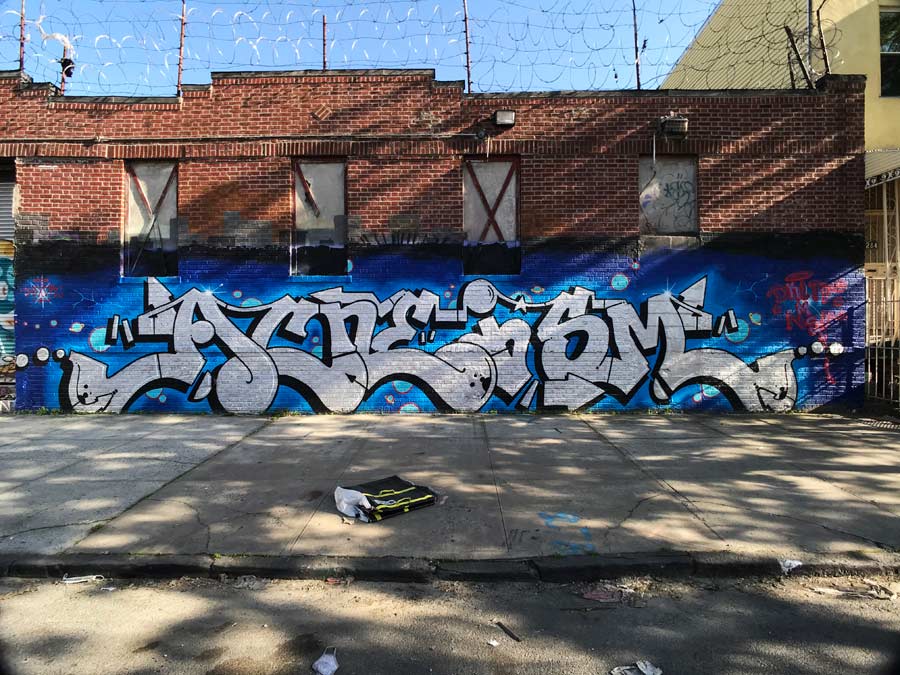
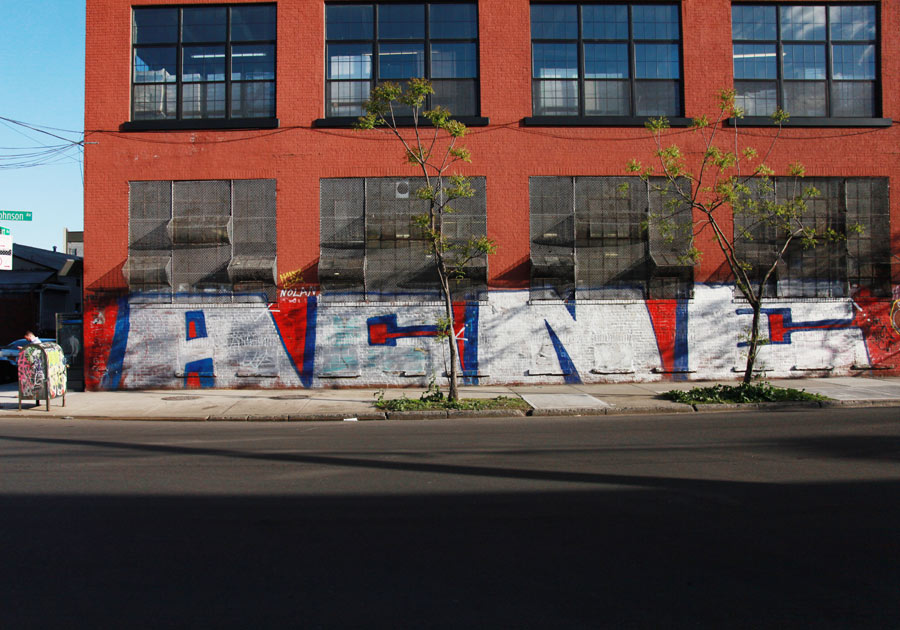
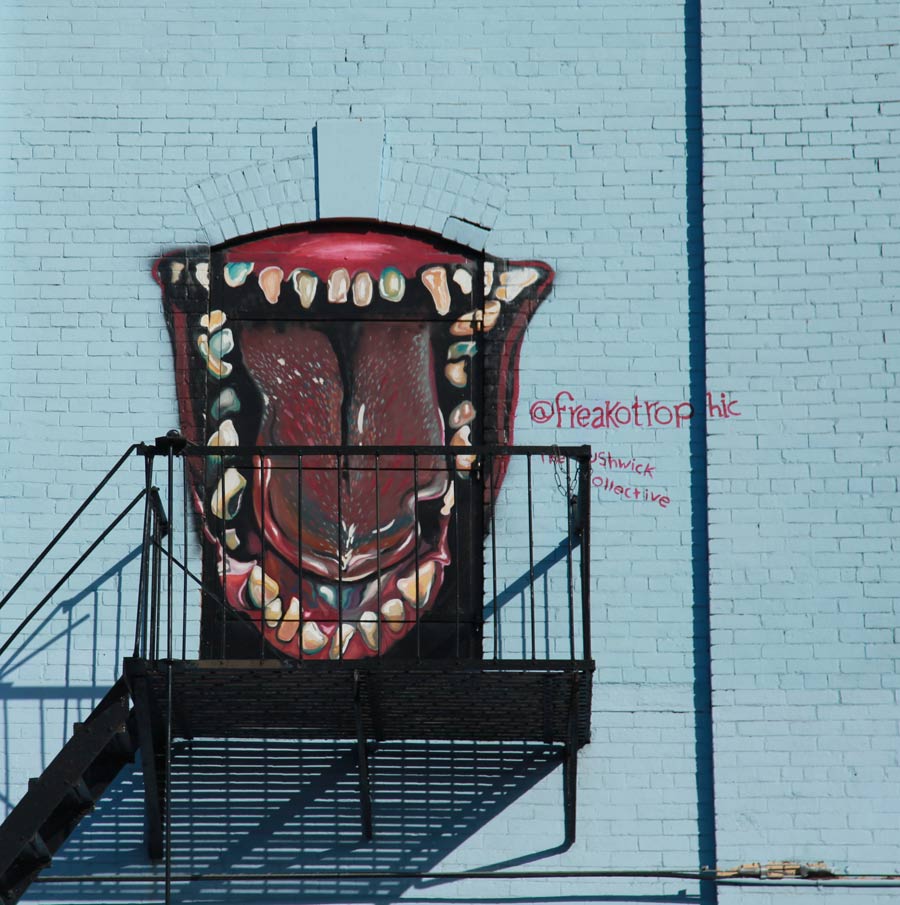
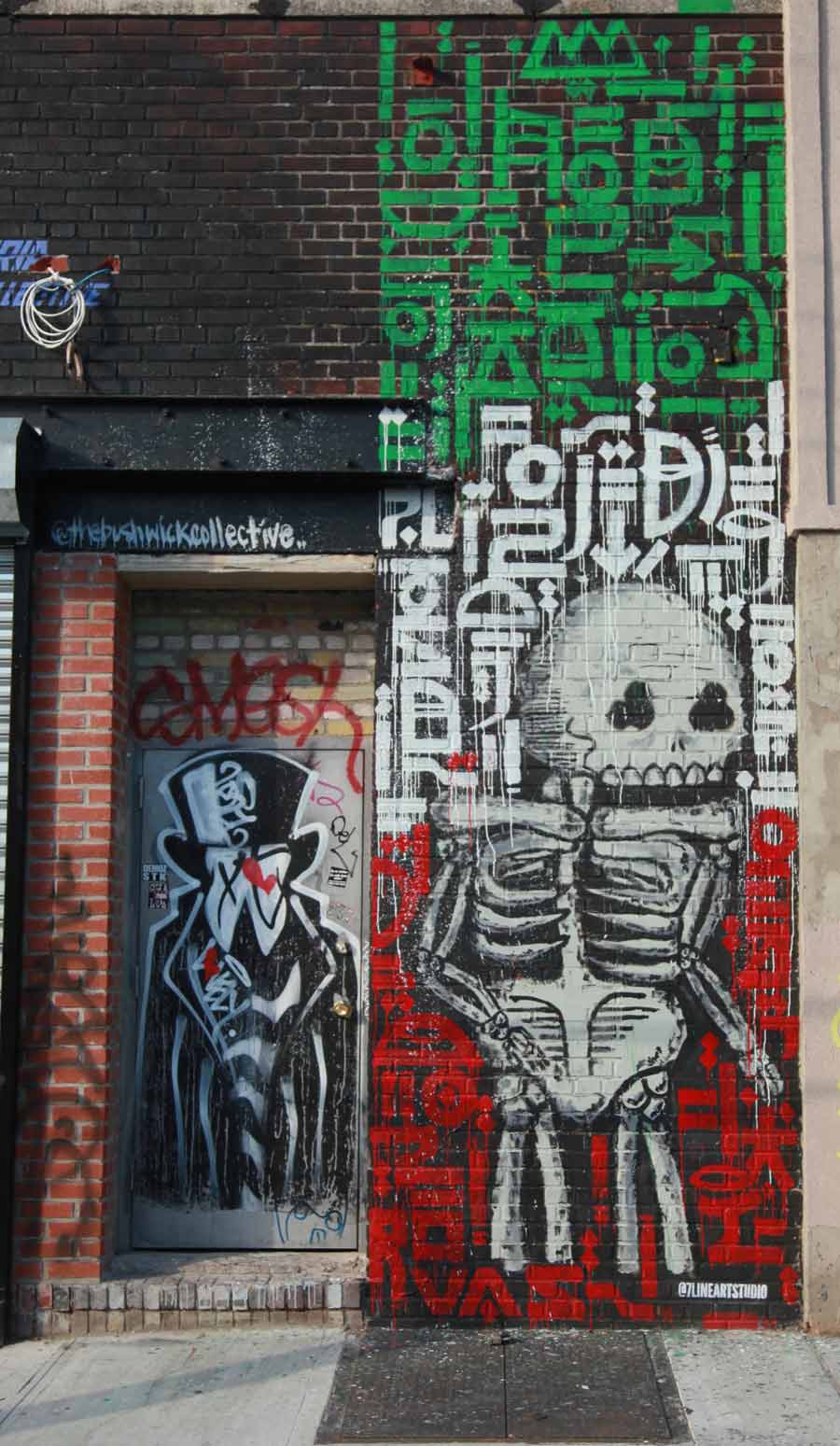
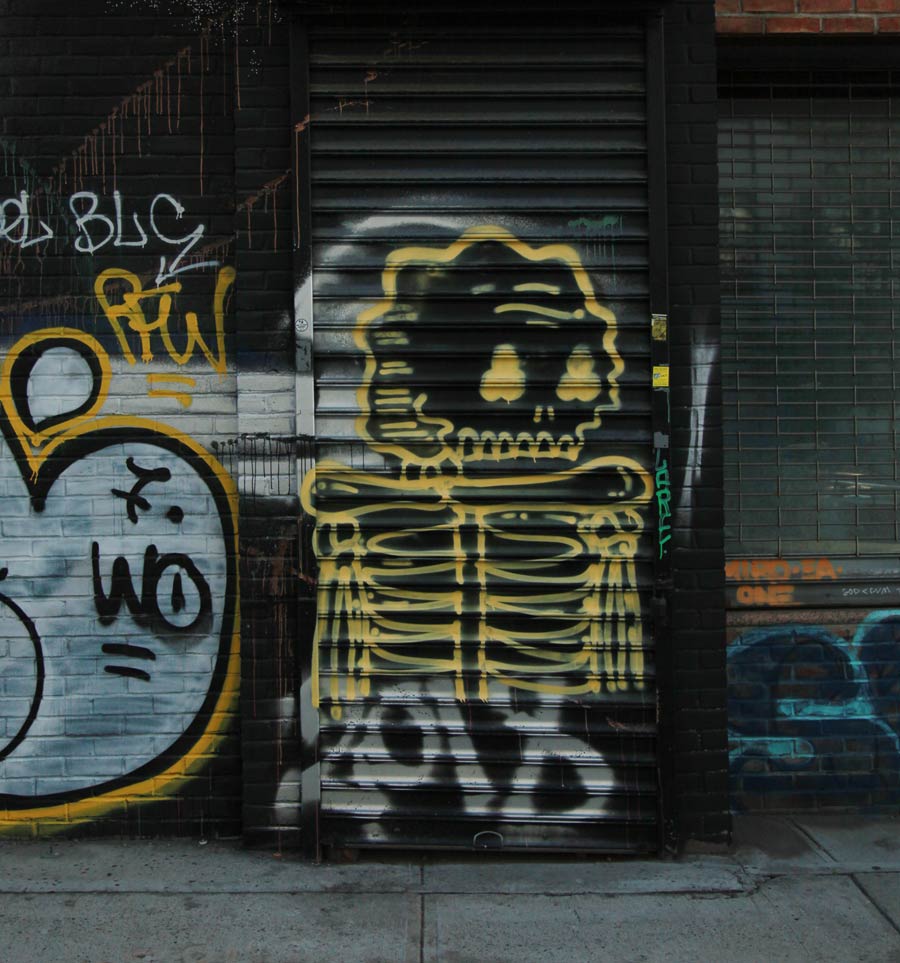
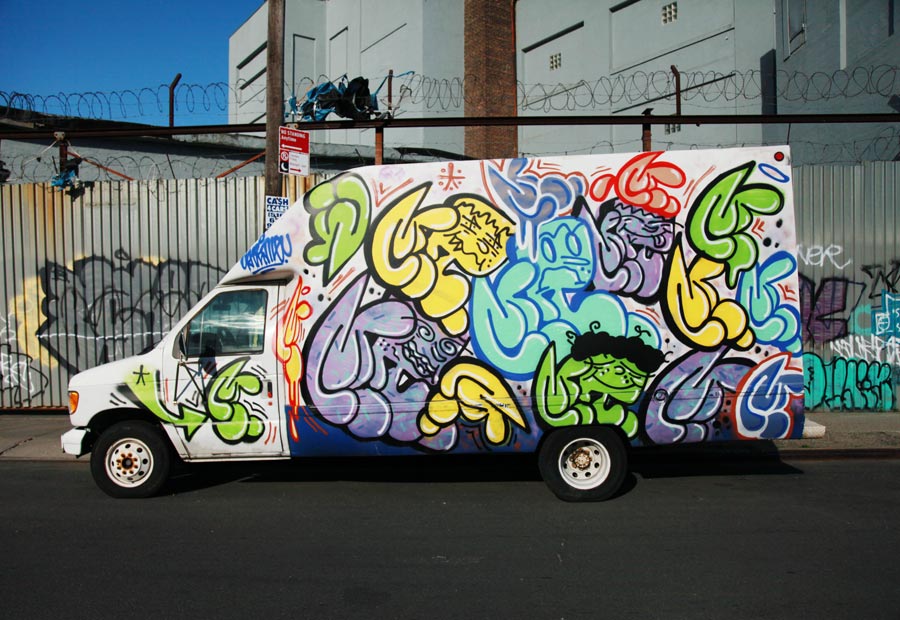
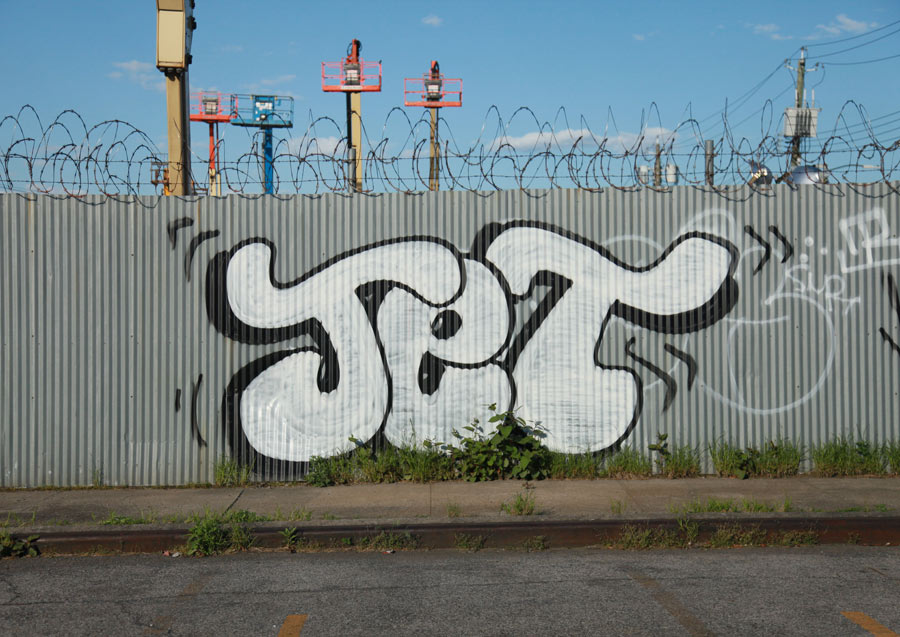
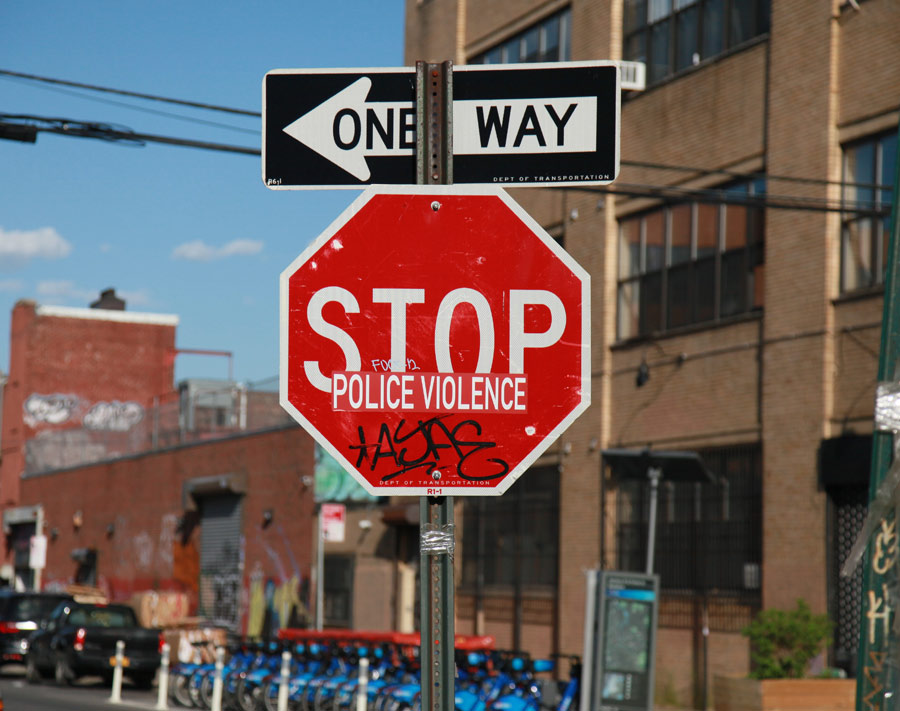
So here’s our weekly interview with the street, this time featuring: 7 Line Art Studio, Acne, Cabaio, Freakotrophic, G Money NFT, Jet, JJ Veronis, Jowl, Luke Dragon 911, No Sleep, Save Art Space, and Zephyr.
Highbrow art institutions have coalesced behind a small recurring collection of well-known graffiti/street artists in recent years, granting them a lot of space and a powerful entrée to blue-check media parties, blue-chip platforms, and blue blood collectors. The bigger (and frequently well-funded) names are often the easiest to explain to an unfamiliar general audience of art viewers and, of course, will appeal to that younger demographic everyone is after. It shouldn’t surprise anyone when even the New York City Ballet spawned a series of collaborations with street artists in the last five years to bolster flagging attendance due to aging and, well, dying fans.
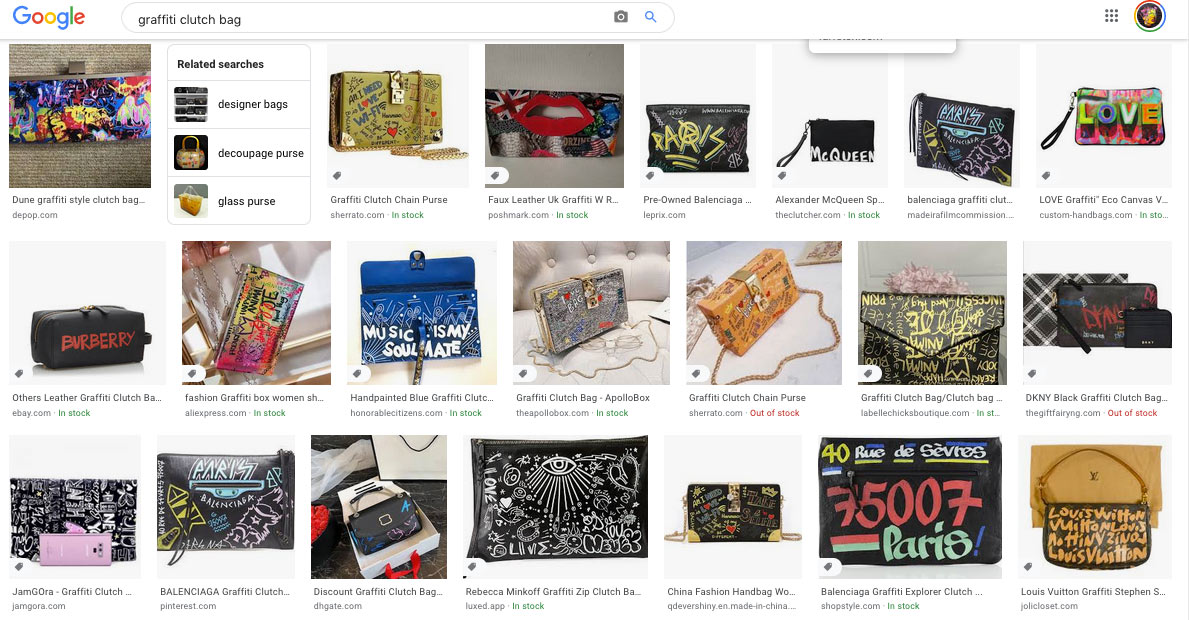
Graffiti and street art have long since become bywords of edgy culture that can be commodified and proudly owned by all strata of incomes and stations, and our interest in all things street abides still. Brands have ironically manipulated pop icons and sprinkle paint splashes, drips, and bubble tags across everything from ladies’ clutches to watches to vapes. Fashion continues to dip into this well of light anarchy as a signal of cool rebellion, as sold across a gamut – from couture Saint Laurent to off-the-rack Walmart. Sometimes the imagery or lettering is easily recognizable as a particular artist’s style on the products for sale. Other times a staff graphic designer has skillfully approximated the stencils, wheat-pastes, and drippy tags without steering into copyright infringement territory.
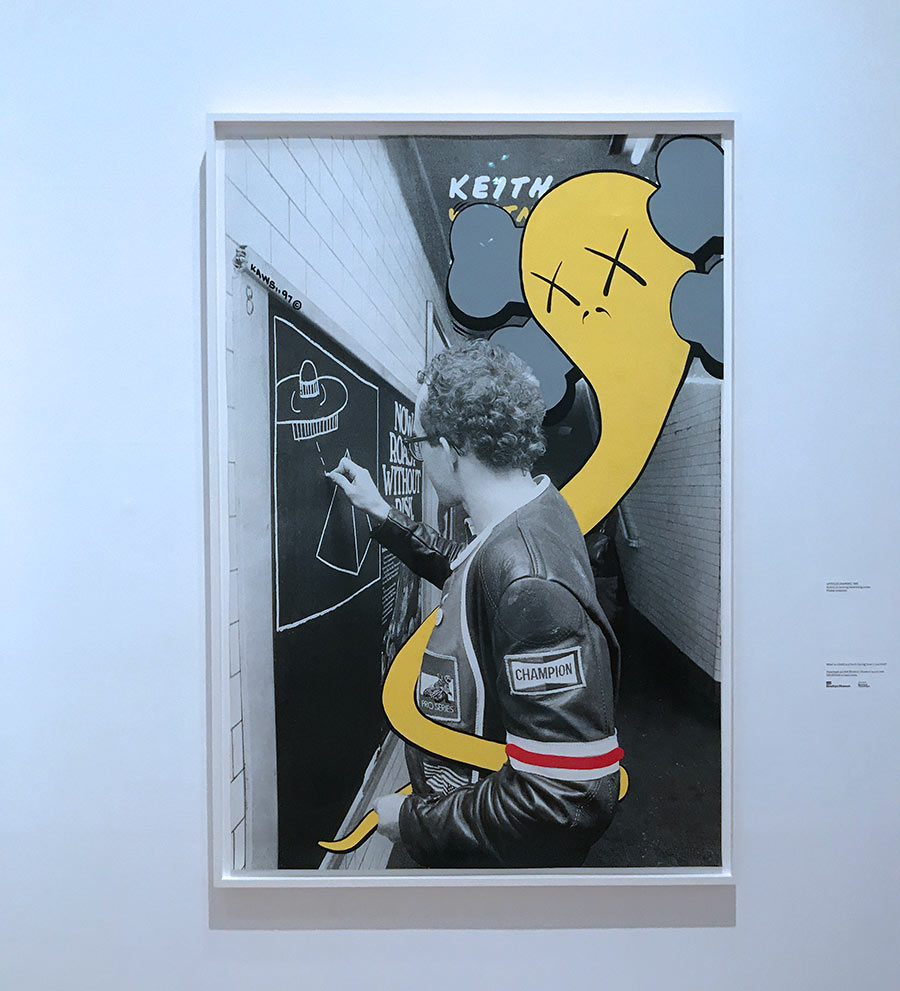
Street Artist Shepard Fairey is probably best known for making art and commerce symbiotic with the interplay of his screenprints, stickers, vandalism, street art, and the Obey brand, and Keith Haring literally opened his own Pop Shop store in Soho way back in the 1980s; his illegal vandalism in the subway being de facto advertisements for products you could purchase above ground. Banksy’s movie title Exit Through The Gift shop may have been intended as a sarcastic critique, but everyone now considers it a command. Curatorial considerations may not be explicitly tied to the development of product lines, but the discussions of both may happen in the same marketing meeting.
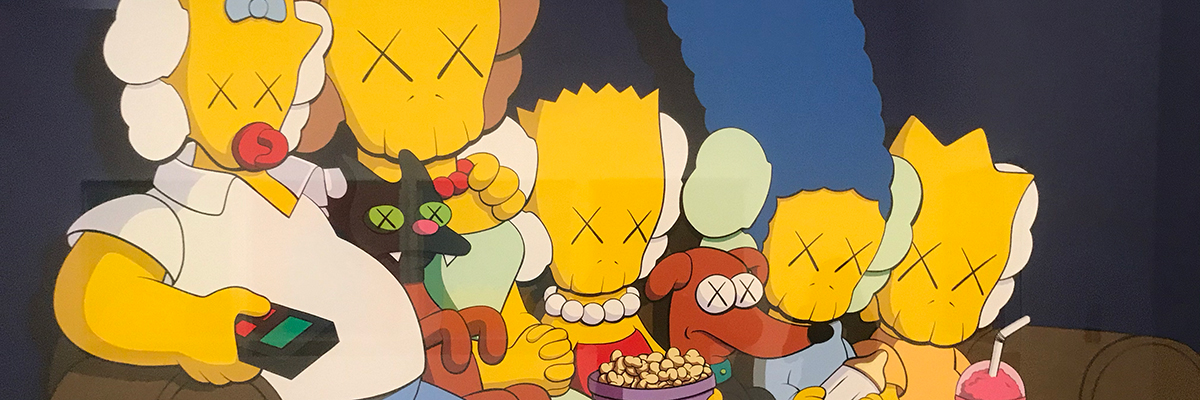
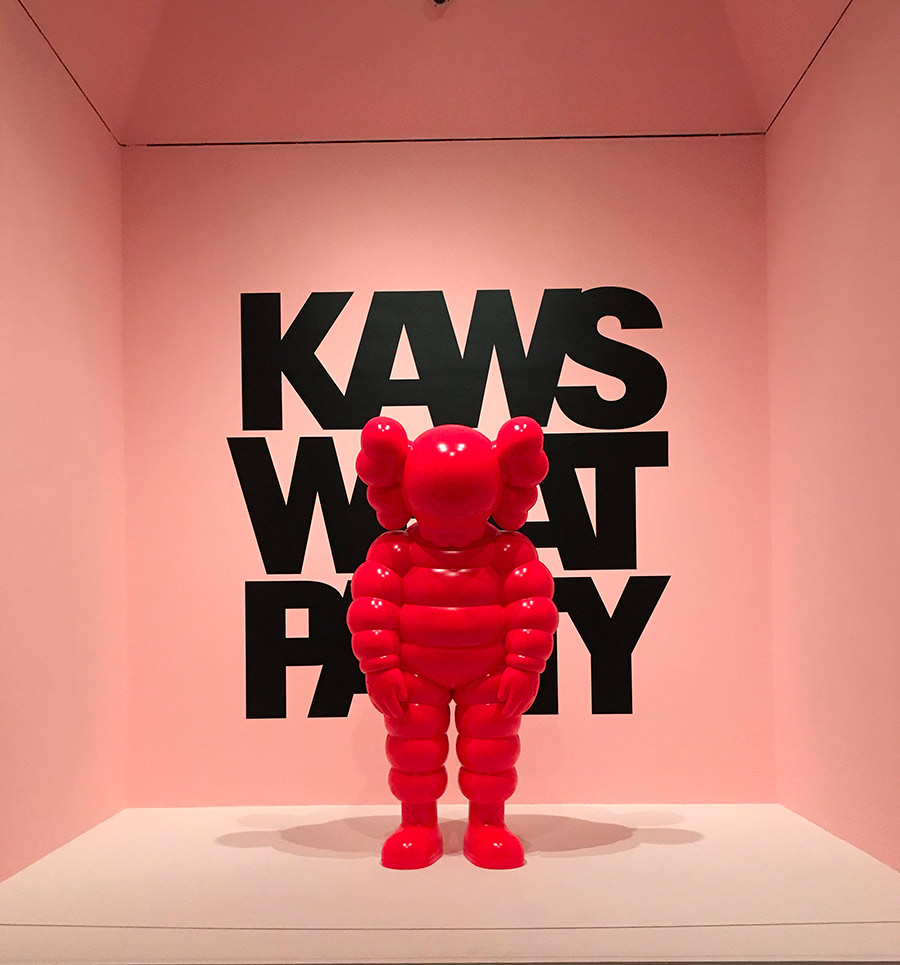
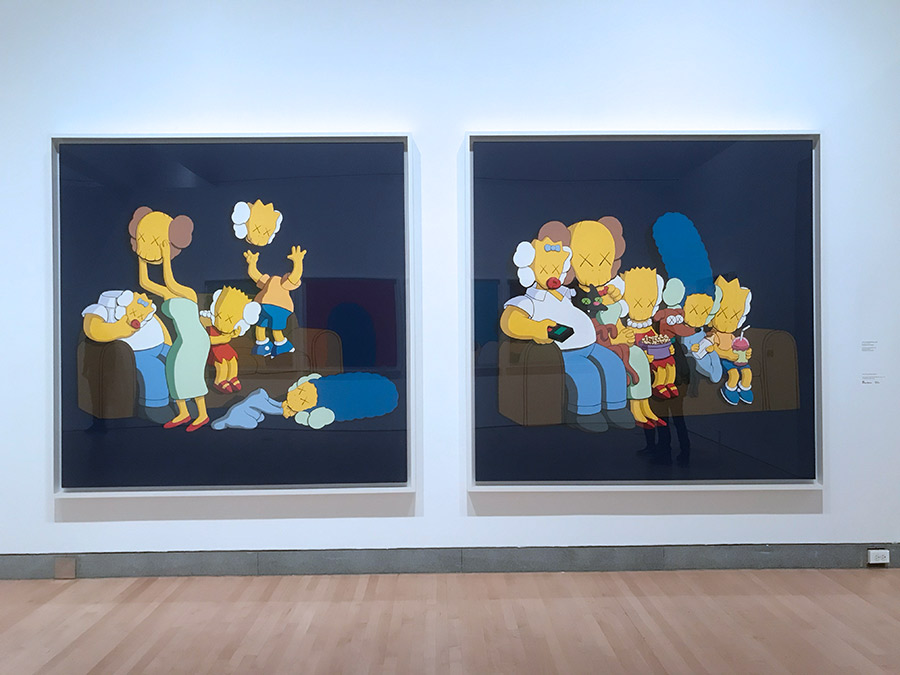
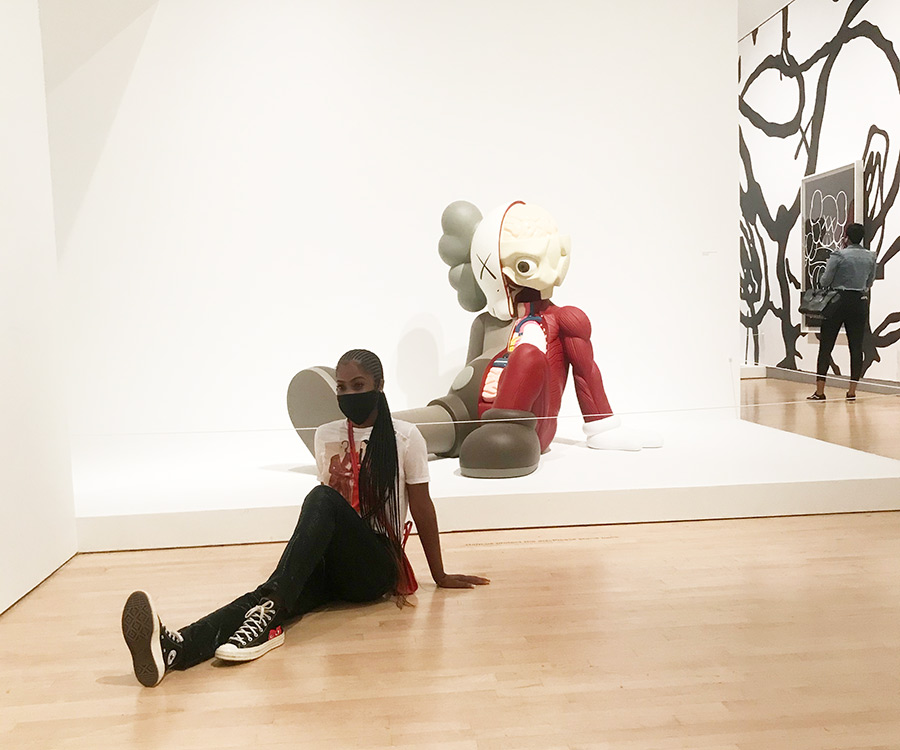
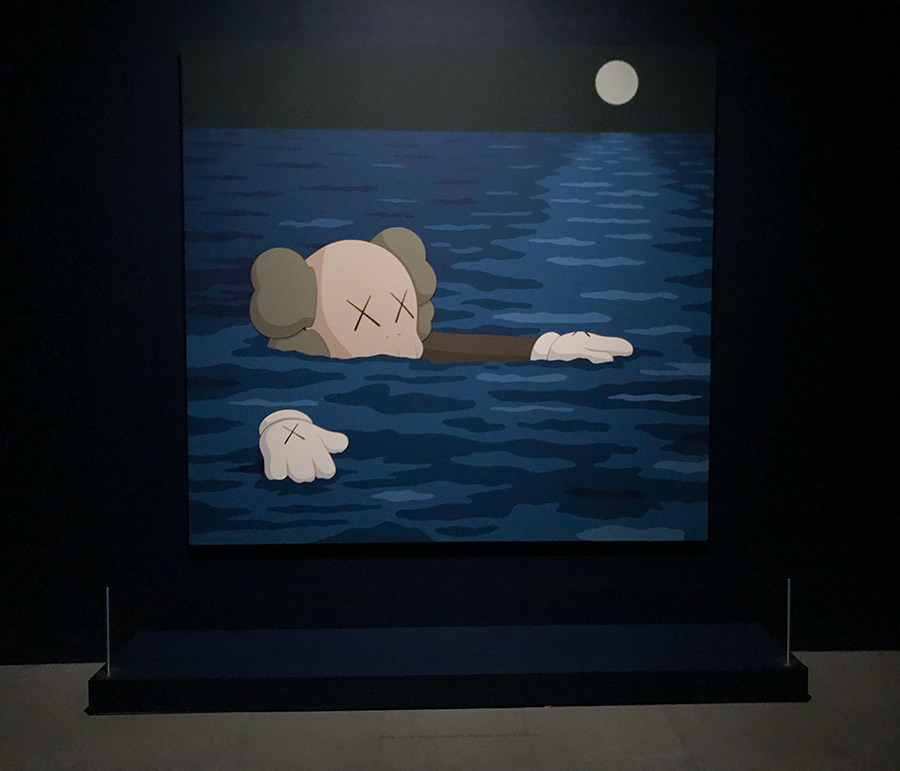
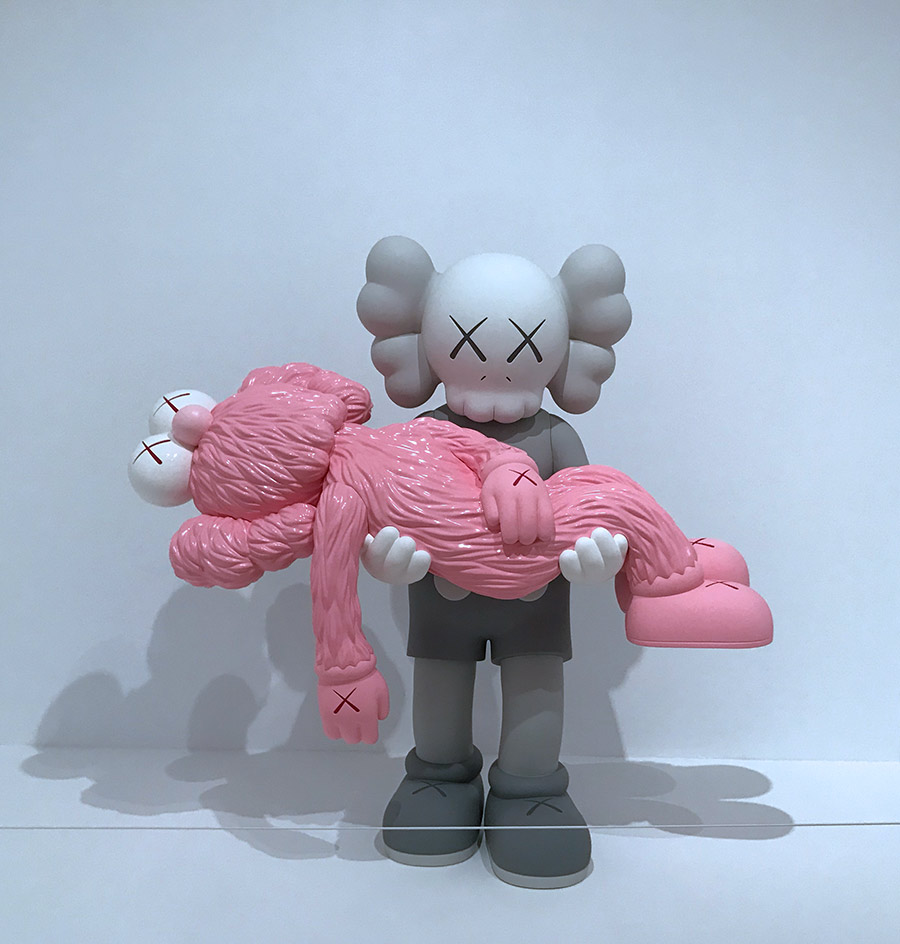
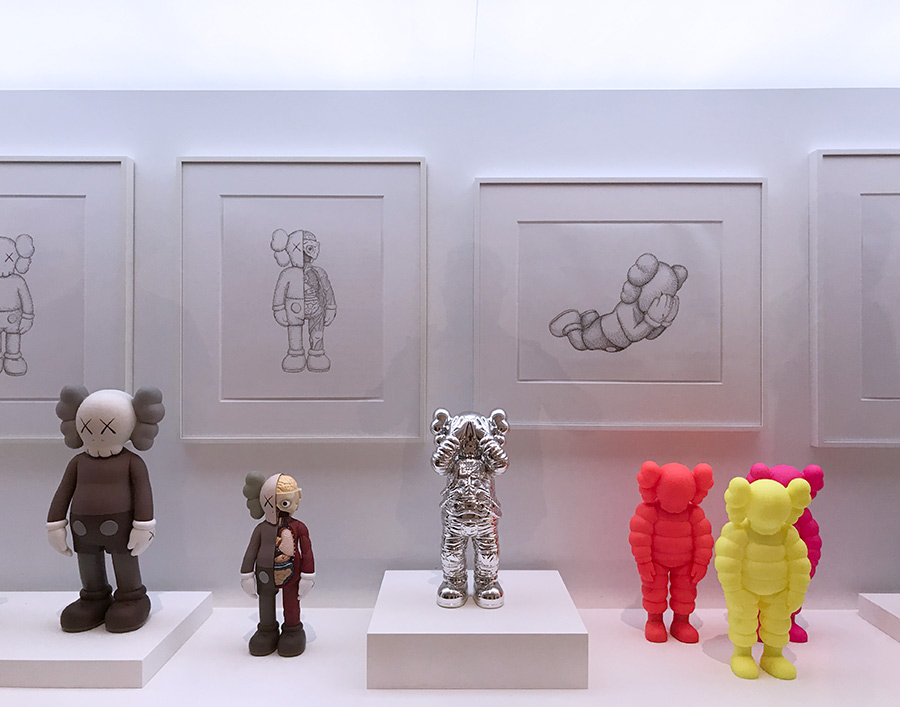
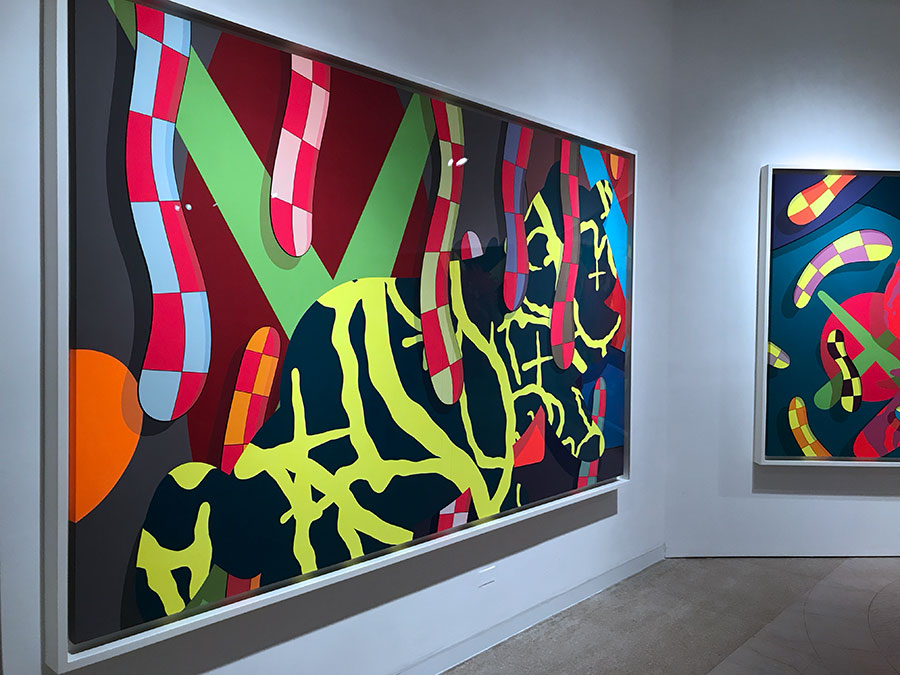
Today, the real power players in the cultural currency game are the artists who can market their own products, sometimes commanding licensing fees simply for being featured on retail platforms and venues. In the case of KAWS: What Partyat the Brooklyn Museum, the sales of the Brooklyn artists’ “Companion” toy collectibles exhausted supply within hours of the opening, and the mania of buying multiples in multi-visit daily shopping trips created lines so long that they backed up into the exhibition. The museum store began posting strict buying limits and regulations of items sold.
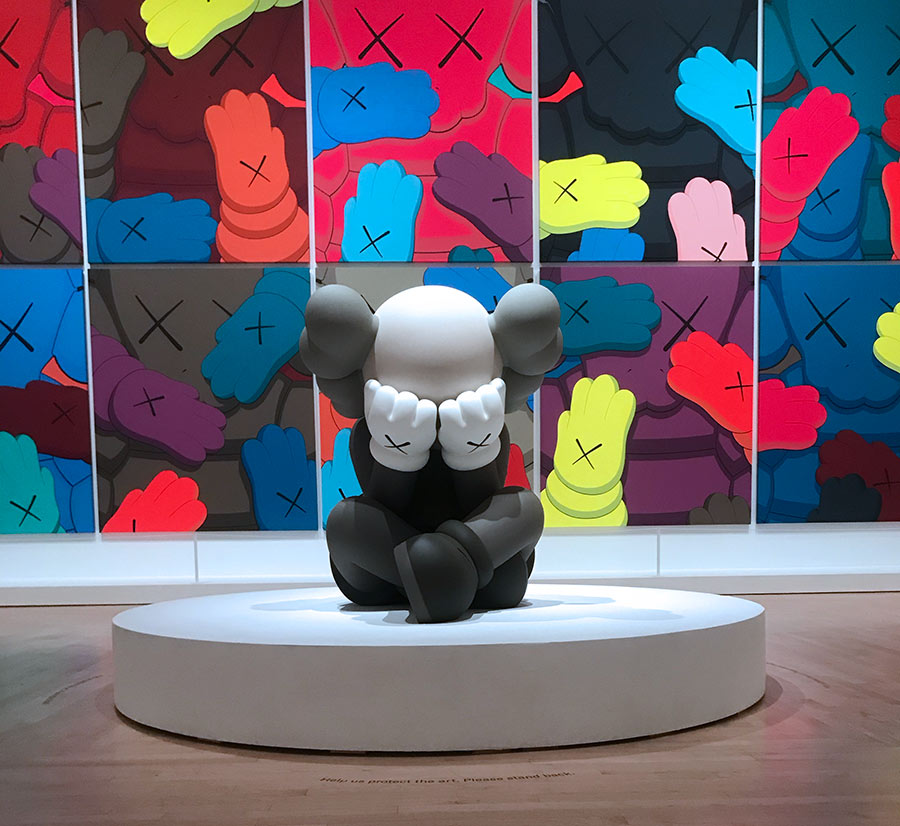
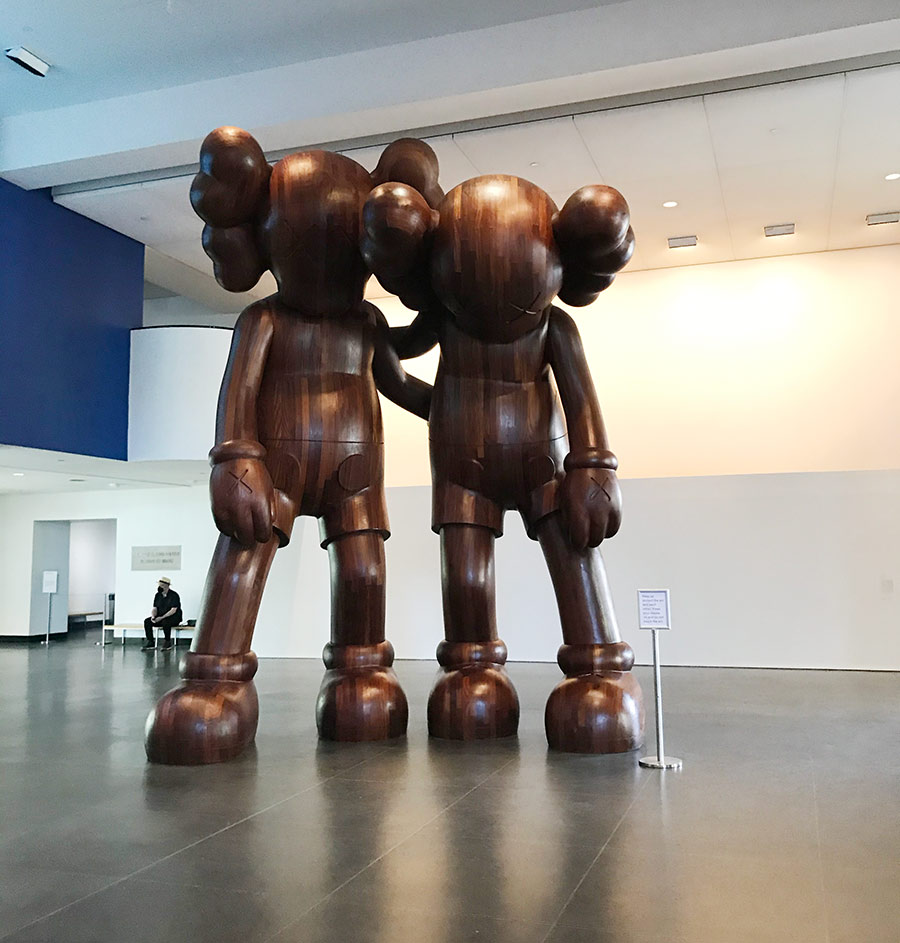
On a recent weekday, eager groupings of friends and family arrive into the Brooklyn Museum lobby with palpable excitement, and nearly all pose in front of the towering 18-foot high wooden KAWS sculpture, “Along the Way.” Our guide, Sharon Matt Atkins, Deputy Director for Art, tells us that the response to the show in terms of attendance has been robust. As we wend through the galleries, we see guests in their teens and twenties often posing before sculptures and paintings, imitating the forward bending head, cradling their face in hands with a mocked portrayal of being overwhelmed. The striking of poses in front of artworks is possibly as much a part of the museum experience as excitedly identifying which pop culture character or famous painting had been appropriated for an X-eyed portrait. Those images are spread across social media, and the KAWS character is seen by many more.
After the show, guests queue in line to the store to pick up a catalog, tote bag, lapel pin, or other KAWS product. Artists names like Matt Groenig, Charles Schultz, and Hugh Harman may not trip off the tongue, but their repurposed characters like the Simpsons, Snoopy, and Mickey have all been burned into western mass culture history. Those nostalgic and reassuring associations are captured by KAWS repeatedly and altered with modest modification.
Matt Atkins observes that KAWS discovered the power of pop references to manga and anime in the subculture Otaku were crucial to forming bonds with Japanese people in ways that language would not allow during his trips to Tokyo in the late 1990s. The power of that kind of cross-cultural communication stayed with him and is offered as an explanation for referencing commonly known images. Indeed, this method of reinterpretation of pre-established icons and personalities has been employed on the street for many years, including right now with street artists like The Postman who reworks famous images of celebrities and characters like Syd Vicious, Elton John, Willy Wonka, Boy George, Grace Jones, and Elvis Presley. The contemporary acid-pop treatment he pours on the photographs is eye-catching in doorways or alleys. If you like what you see on the street, you can go to his website store to purchase them as prints or customized aerosol spray cans. Before ‘always on’ connectivity, these bridges between art and collecting were never so seamless.
As new rules in street art and commerce come online daily, perhaps we’ll be developing new terminology to describe and novel ways to define the roles of museums, exhibitions, and stores. Similarly, norms about patronage, fandom, art history, civic engagement, and cultural literacy, no doubt, are evolving at a rapid pace in ways previously unconsidered.
As in the ‘woke’ culture that the art world is trying to enter, we’re having difficult but necessary conversations revolving around identity politics and systemic, historical inequities. Maybe we should also discuss the role of commerce in mediating decisions about which rebellious graffiti or street artists we are heralding or overlooking.
What clinches the final decision when granting a gallery or exhibition replete with all the trimmings? In an art practice born from typically marginalized sectors of the dominant culture originally, who is currently getting the brunt of the attention, and why? What role does consumer culture, pop sensibility, and commodification of our creative commons play when selecting which artists from the graffiti and street art fields are elevated – and which ones are not. As always, there are few obviously correct answers. But the questions may lead us in new directions.
Our weekly focus on the moving image and art in the streets. And other oddities.
Now screening: 1. Blinded By The Lines in Poland 2. Dr. Audrey Fernandes Satar and Arif Satar / WA Street Art on The Collie Mural Trail in Australia 3. FAITH XLVII / CHANT
BSA Special Feature: Blinded By The Lines
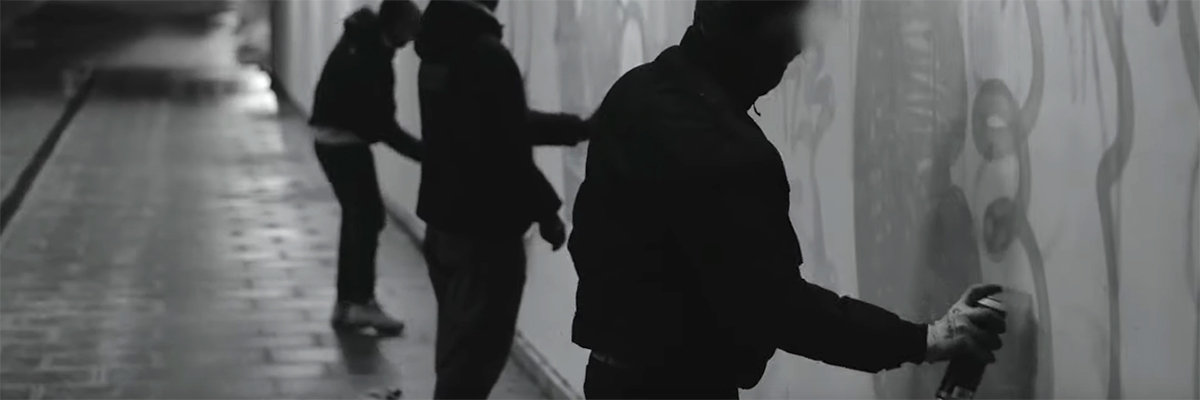
And the beat goes on – a new homemade video from Poland from taggers Ready (ALKO) Finer (TNA U7) Febs (Legz) Zion (DSTS) Lokal (DRS) in the night putting throwups, tags, and quick silvers.
Blinded By The Lines PT. 1
Dr. Audrey Fernandes Satar and Arif Satar / WA Street Art on The Collie Mural Trail
“This was never an empty wall and we’ve added to this wall another layer of history,” says Dr Audrey Fernandes Satar about her new collaborative mural with Arif Satar in Collie, Western Australia.
From the video description: “The work is Titled ‘Ground’ and is a panoptic drawing of the hills draped with patterns inspired by banksia seed pods, calling attention to the fragility of Collie’s ancient landscape where the river flows gently.”
FAITH XLVII / CHANT
Umber tones of war and oppression, this video directed by A. L. Crego introduces the new show by street artist and fine artist Faith XLVII called CHANT. Incorporating her repetitive, rhythmically placed street texts with overlays of tone and texture and her ferocious and wild animal kingdom, she unearths again layers of history that we have as a people, and as people.
“We CHANT. A ritualistic meditative call. We assimilate this earthly drama through pitches of reciting tones, shades and textures. Sacred attempts of setting a frequency for unlearning. breaking open. seeing. A mantra.”
 BROOKLYN STREET ART LOVES YOU MORE EVERY DAY