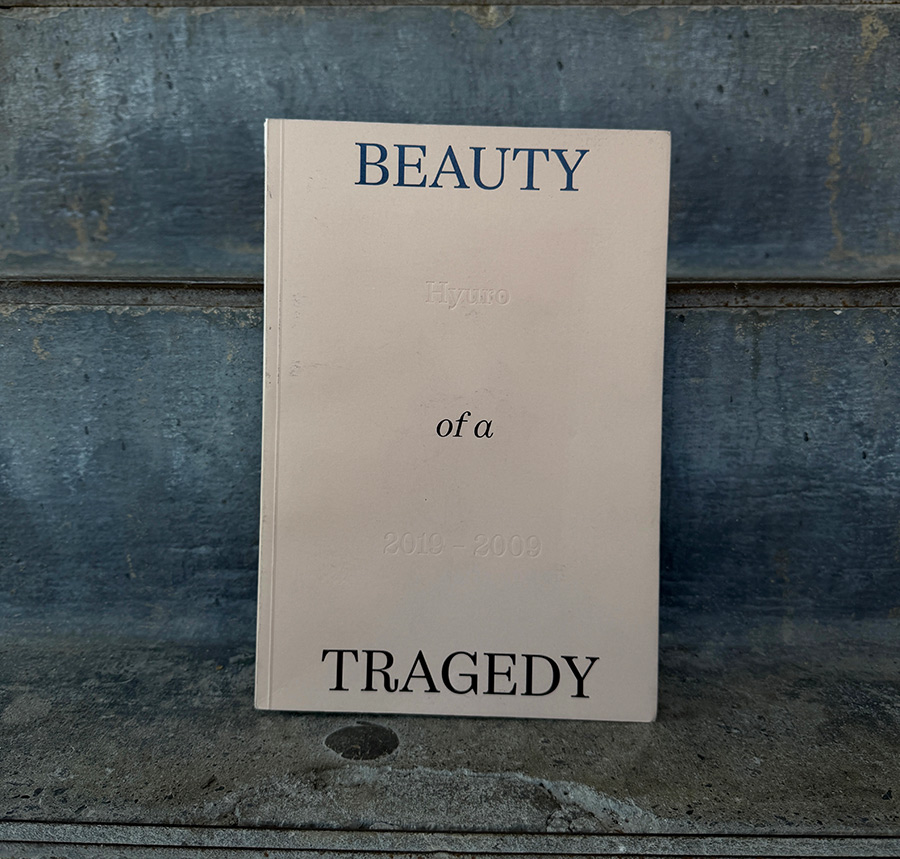
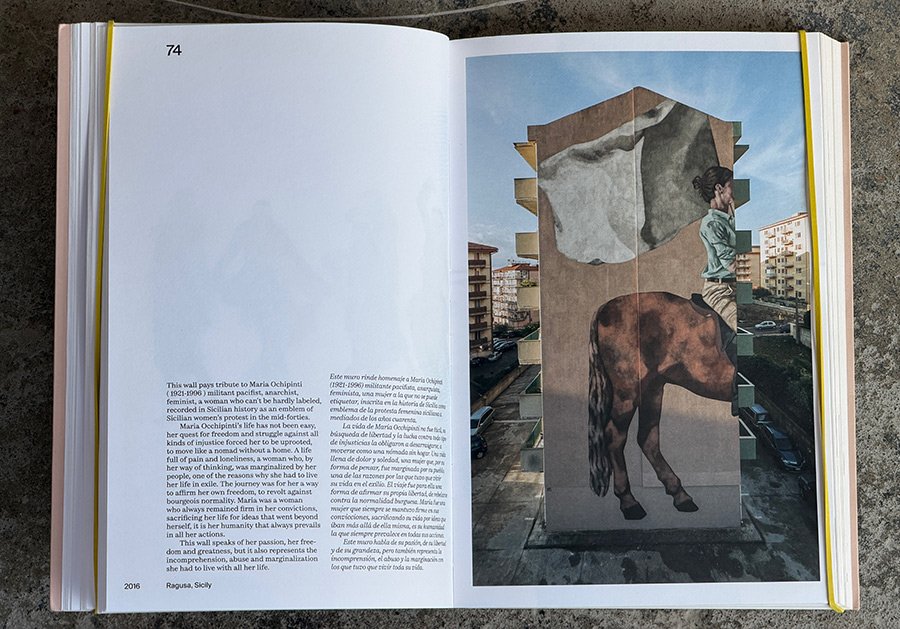
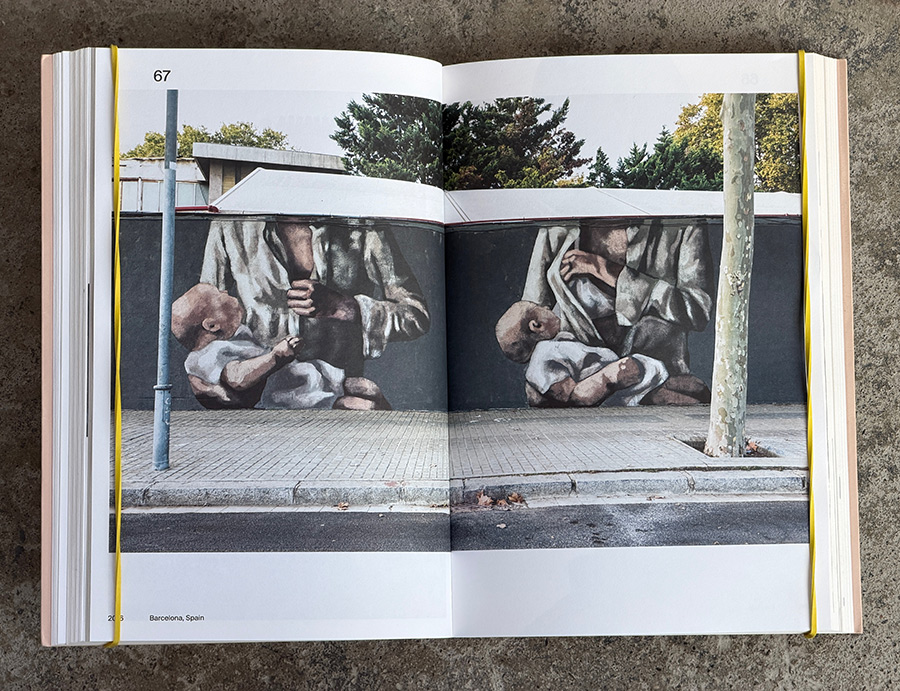
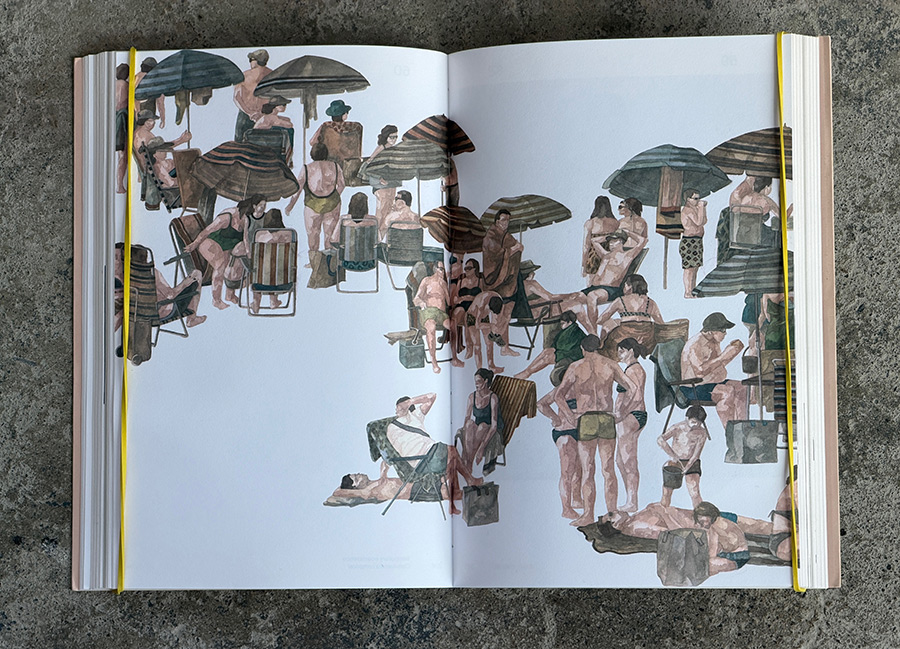
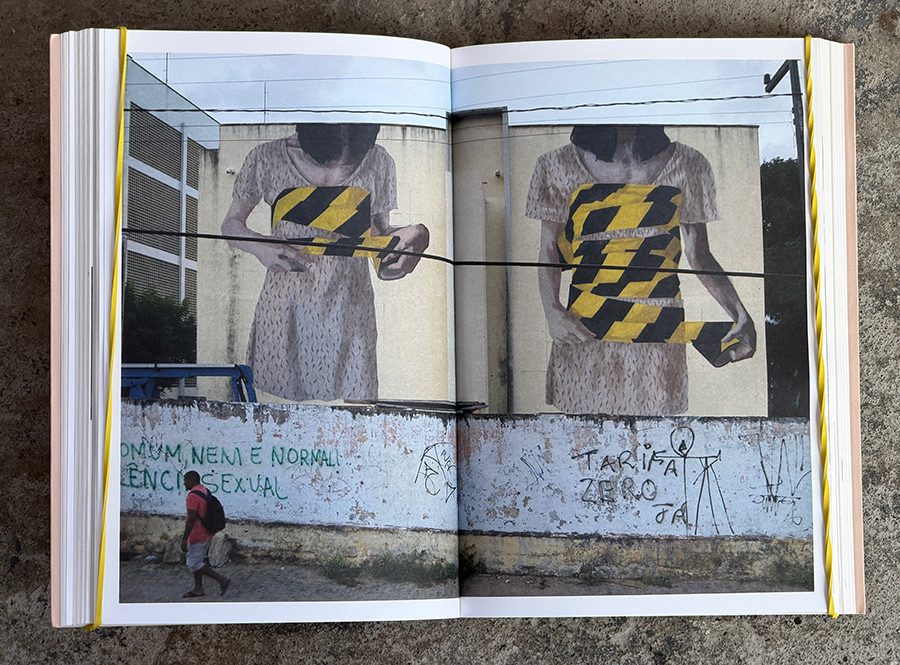
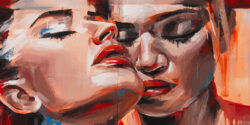
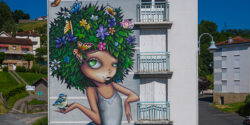
Beauty of a Tragedy gathers the work of the late Argentine muralist Hyuro (Tamara Djurovic), who died in 2020 at only forty-six, leaving behind one of the most thoughtful and quietly disruptive bodies of work to emerge from the street-art movement in the 2010s. The book, designed by Ângela Almeida and Maria Gómez-Senent, compiles murals, paintings, drawings, sketches, and Hyuro’s own texts. Also included are reflections from figures, including photographer Martha Cooper, street art festival curator Monica Campana, publisher/editor/curator Evan Pricco, and street artist Escif. Rather than presenting a conventional “street art monograph,” the publication reads more like a reflective archive of a mind at work—an artist trying to understand how individuals move through systems of power, vulnerability, and care.
Hyuro: Beauty Of A Tragedy. 2009-2019. Independently published. Valencia, 2022. Texts in English and Spanish.
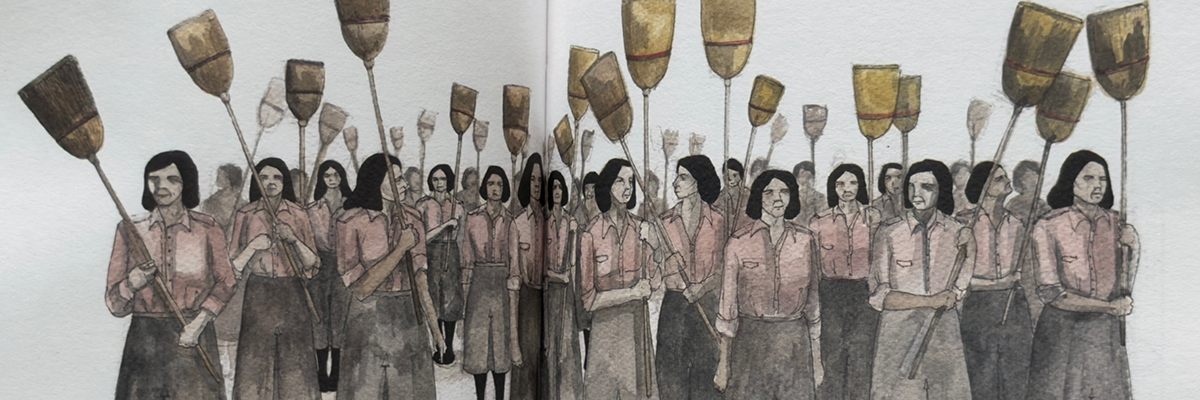
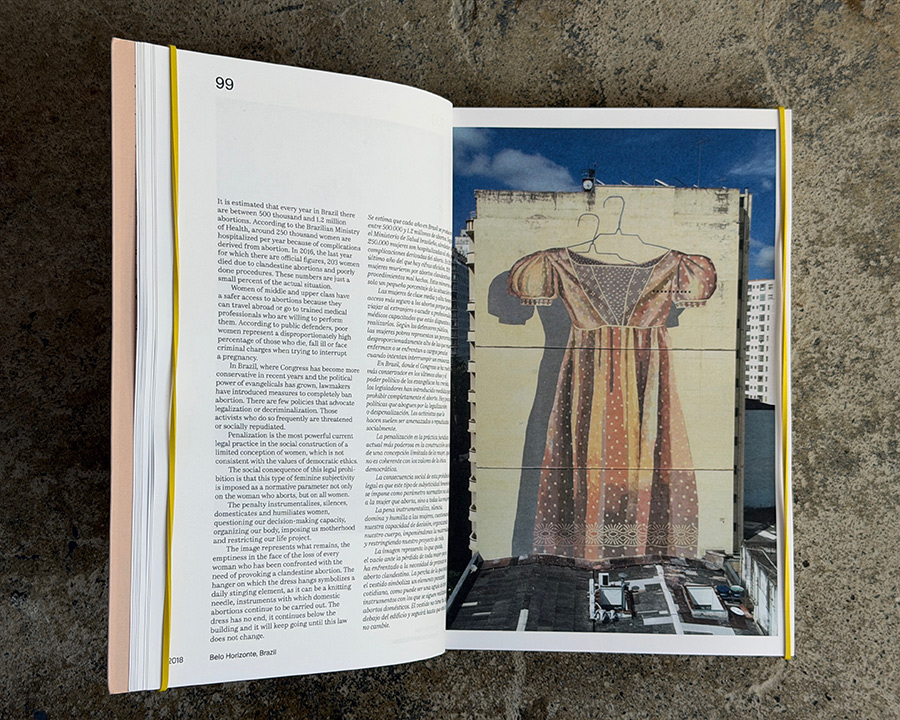
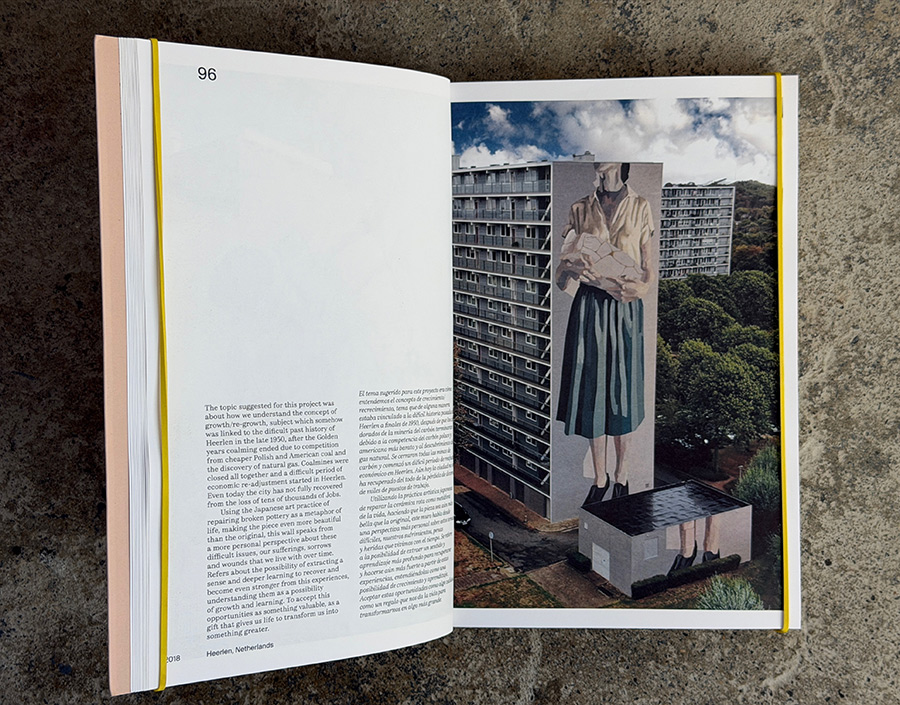
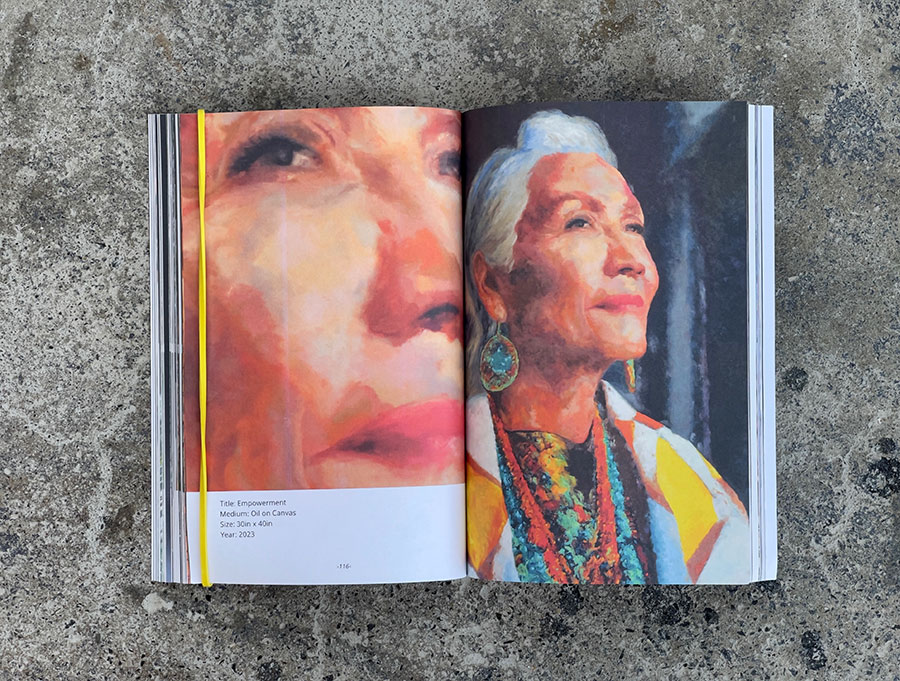
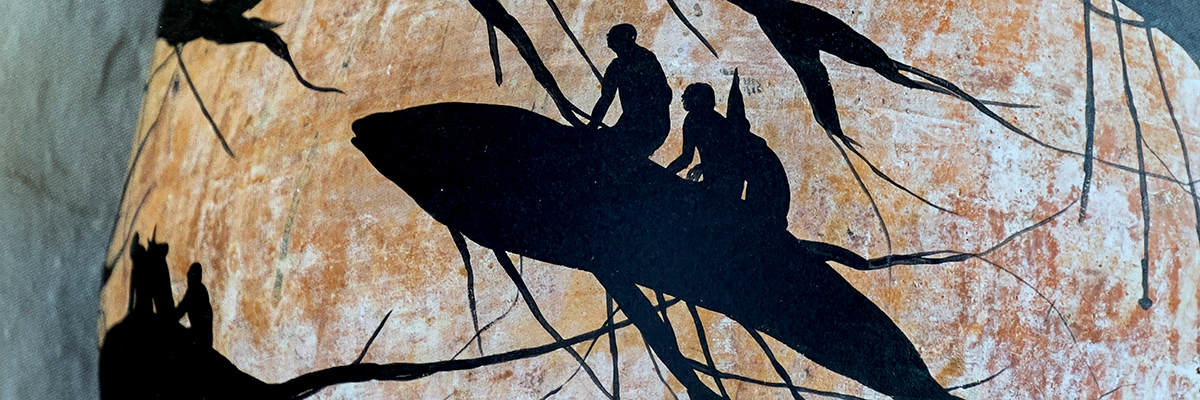
Across its pages, Hyuro’s central concerns appear with clarity: the social conditions imposed on women, the quiet violence embedded in political systems, and the fragile dignity of ordinary lives. With descriptive texts and personal observations, the writing make these motivations explicit. A mural in Fortaleza, Brazil examines the criminalization of abortion and the way the female body becomes “usurped territory” by the state; another, in Monteleone di Puglia, recalls a wartime uprising led by women protesting food restrictions under fascism. Elsewhere she turns to children affected by war, neighborhood life shaped by urban development pressures, or the internal contradictions that shape our identities. These are not decorative murals but acts of witness—images that look closely at, plainly reflect through metaphor and allusion—injustice without theatrical exaggeration.
You knew it then, but it becomes especially clear in the book just how dramatically Hyuro’s work diverged from the prevailing mood of the global street-art boom of the 2010s. While festivals multiplied and the movement embraced spectacle, branding, and easily digestible imagery, Hyuro worked in a different register. Her figures are often partially obscured, cropped, or faceless; gestures are restrained; color is quiet. Instead of offering instant visual gratification, her murals ask viewers to slow down and reflect. In her observations, Martha Cooper notes the deceptive simplicity of her approach—images drawn from everyday life but infused with the artist’s personal observations. Monica Campana, reflecting on Hyuro’s practice, sees a commitment to making the street feel more like a home, a space where vulnerability and resistance can coexist.
In that sense, the book reveals an artist who stood slightly apart from the parade of the street-art moment while still using its platforms and the energy spinning around it. Hyuro accepted the walls, the festivals, the global circulation of murals—but she used that visibility to amplify questions rather than spectacle. Her paintings became quiet interruptions in the visual noise of the city: reflections on women’s autonomy, memory, displacement, and the overlooked labor of care. They were large enough to attract attention, yet conceptually they resisted the simplifications and saccharine belly-button gazing that pulled street art off its rails.
Seen together in Beauty of a Tragedy, the works form something like a moral atlas of a decade—one that traces the pressures placed on bodies, communities, minds and histories. The title itself hints at Hyuro’s sensibility: beauty not as decoration but as a fragile human capacity to endure and to observe. In an era when the global street-art scene often celebrated brightness, scale, and spectacle, Hyuro offered something rarer—a form of muralism grounded in empathy, reflection, and the persistent demand that we look more carefully at the world we have made.
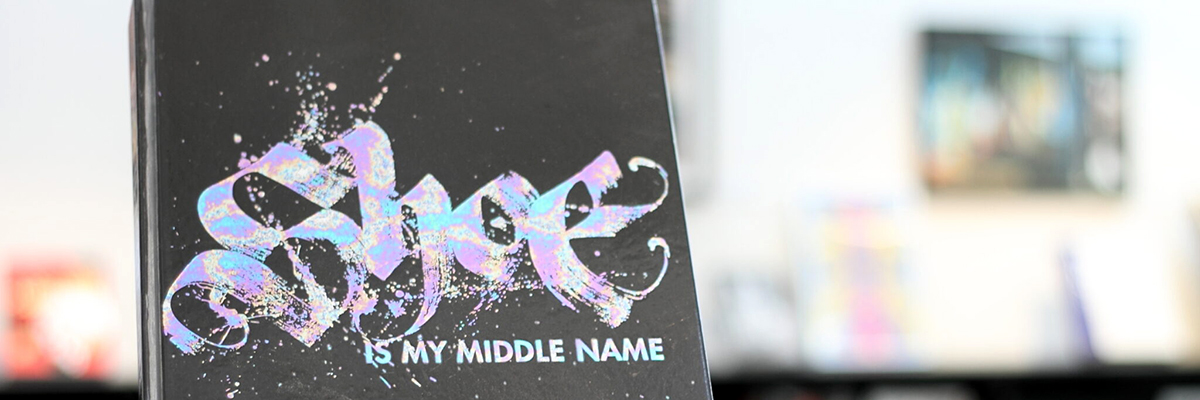
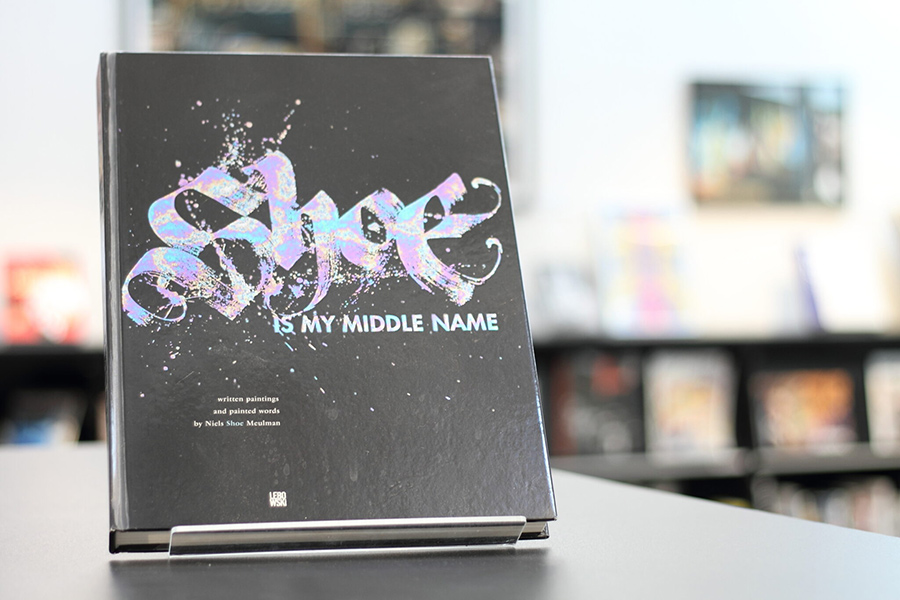
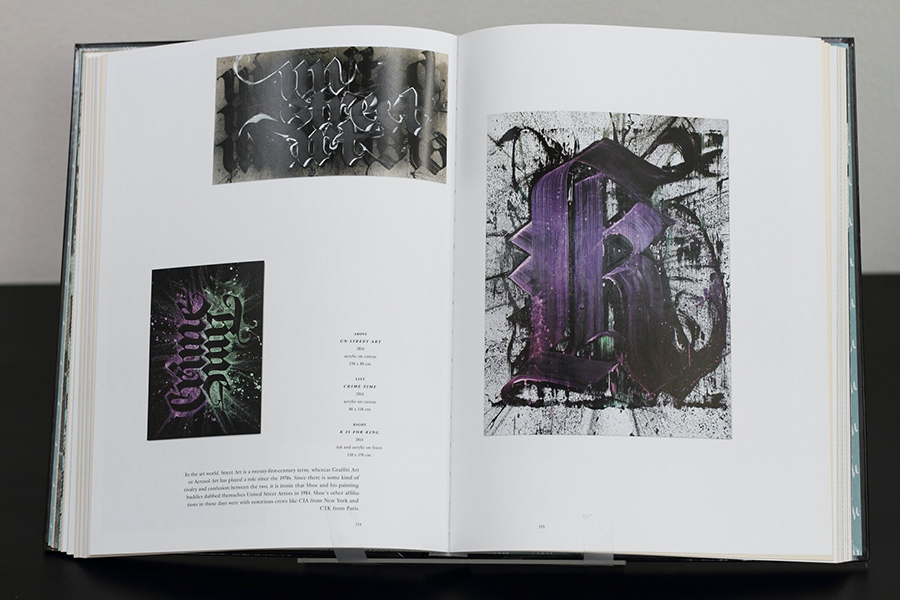
Shoe IS MY MIDDLE NAME. Niels Show Meulman 2016. (photo courtesy of MCL)
Reprinted from the original review by BSA for the Martha Cooper Library.
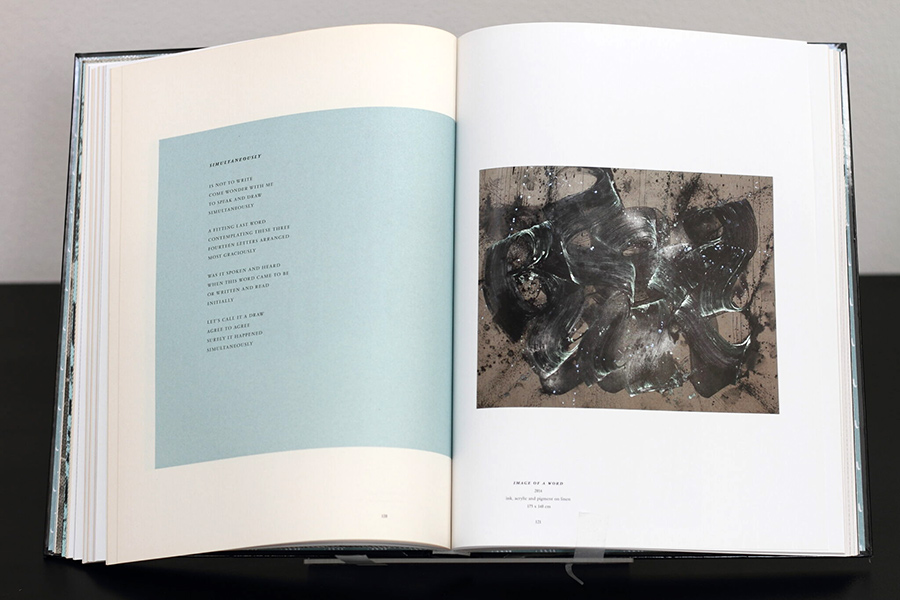
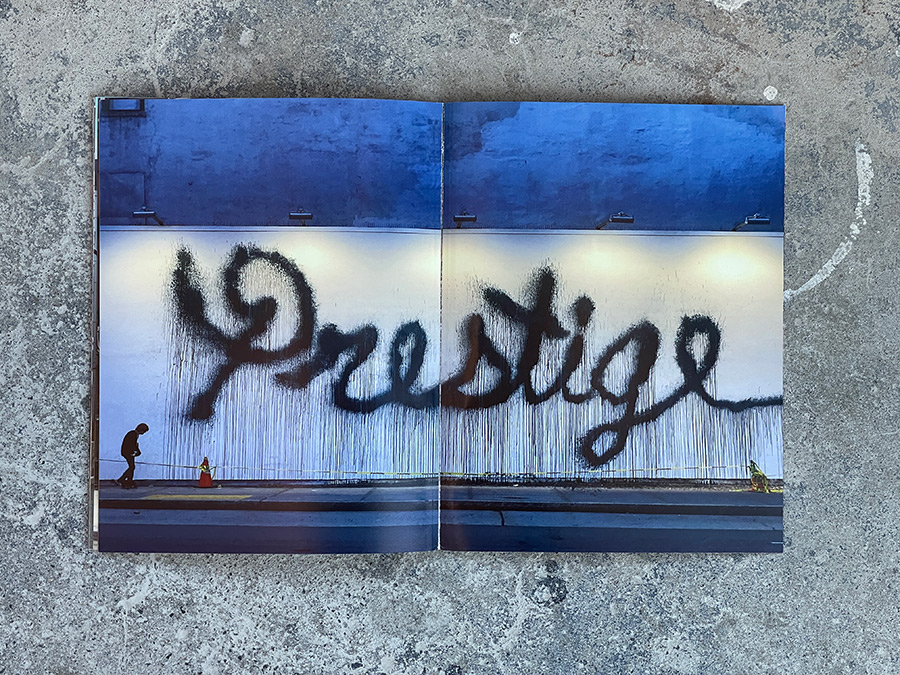
Graffiti writer, calligrapher, painter, typographer—Meulman’s professional identities have long orbited the written mark. “Shoe Is My Middle Name” gathers those decades-deep orbits into one gravitational field, presenting a mid-career survey whose scale and heft match the artist’s sweeping gestures. Photographs of murals, canvases, and poetry scrolls are sequenced chronologically yet feel rhythmic, echoing the repetitive muscle memory that turns letters into pictures.
The early chapters recall a precocious Amsterdam teen who imported New YorkWild-Style back to Europe after meeting Dondi White, while later spreads document how that fluency in urban letterforms morphed into what critics dubbed “calligraffiti.” Ink splashes, broom-wide strokes, and squeegee drags demonstrate Meulman’s commitment to an all-in mark: once pigment meets surface, there are, as he writes, “no half steps.” Quotes, diary fragments, and the full-page poem “A Writer’s Song” punctuate the visuals, anchoring grand abstractions in an autobiographical voice both swaggering and reflective.
Shoe IS MY MIDDLE NAME. Niels Show Meulman 2016. (photo courtesy of MCL)Shoe IS MY MIDDLE NAME. Niels Show Meulman 2016. (photo courtesy of MCL)
Title: Shoe IS MY MIDDLE NAME Published: Lebowski Publishers / Overamstel. Amsterdam, 2016. Author: Niels Shoe Meulman Language: English
Graffiti is a living monument—an act of doing rather than keeping.
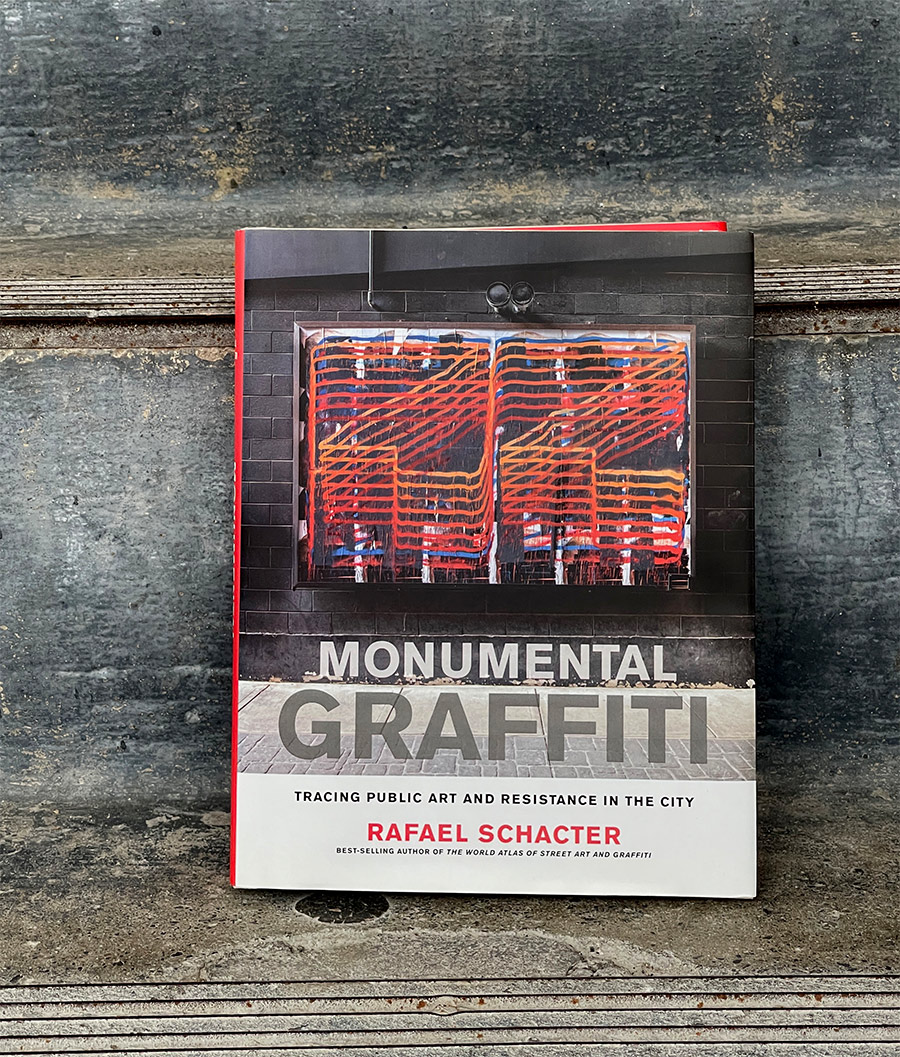
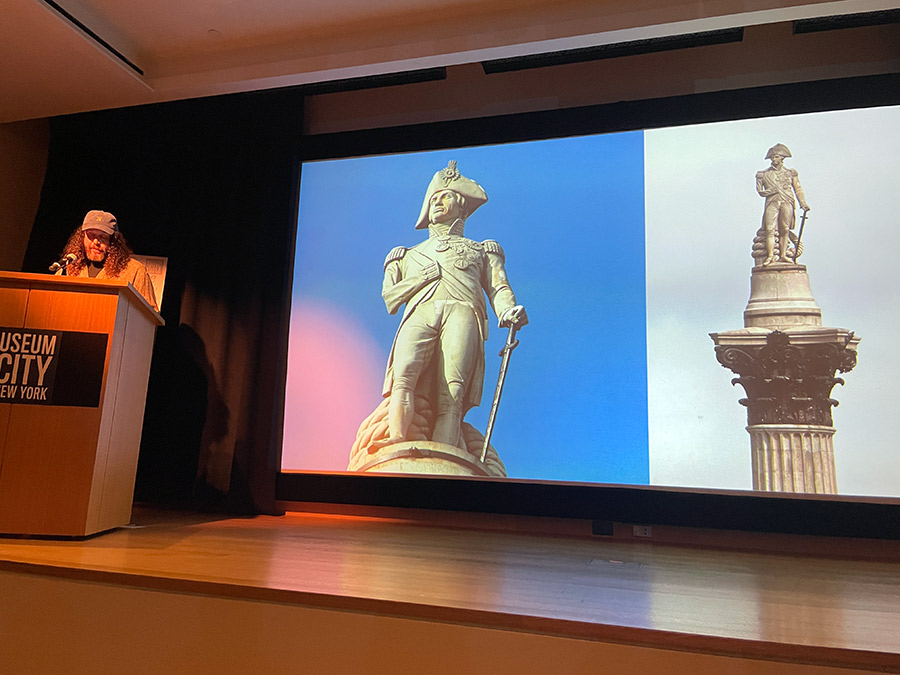
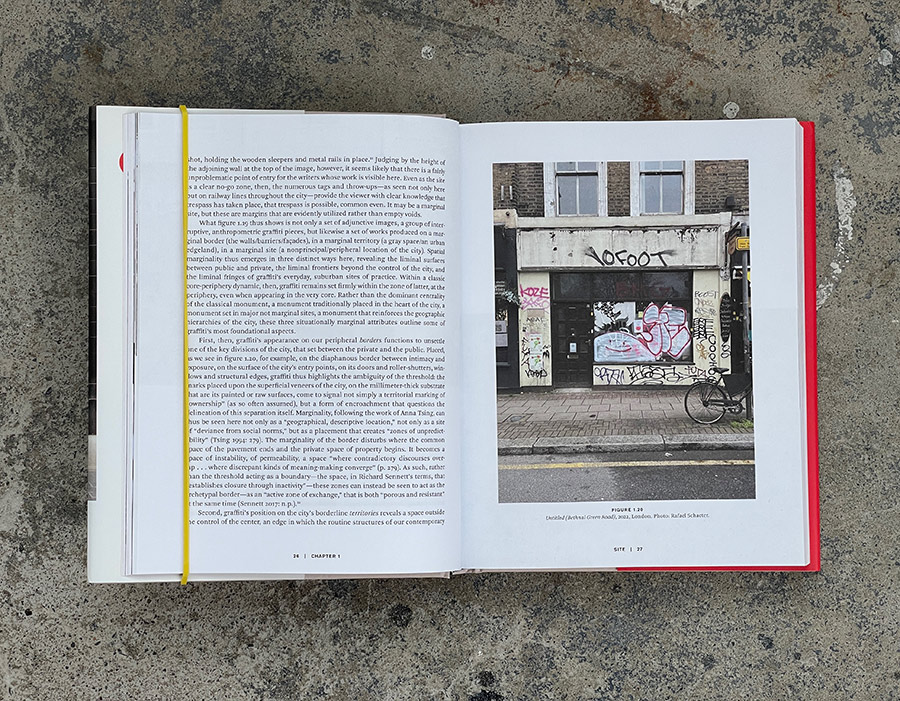
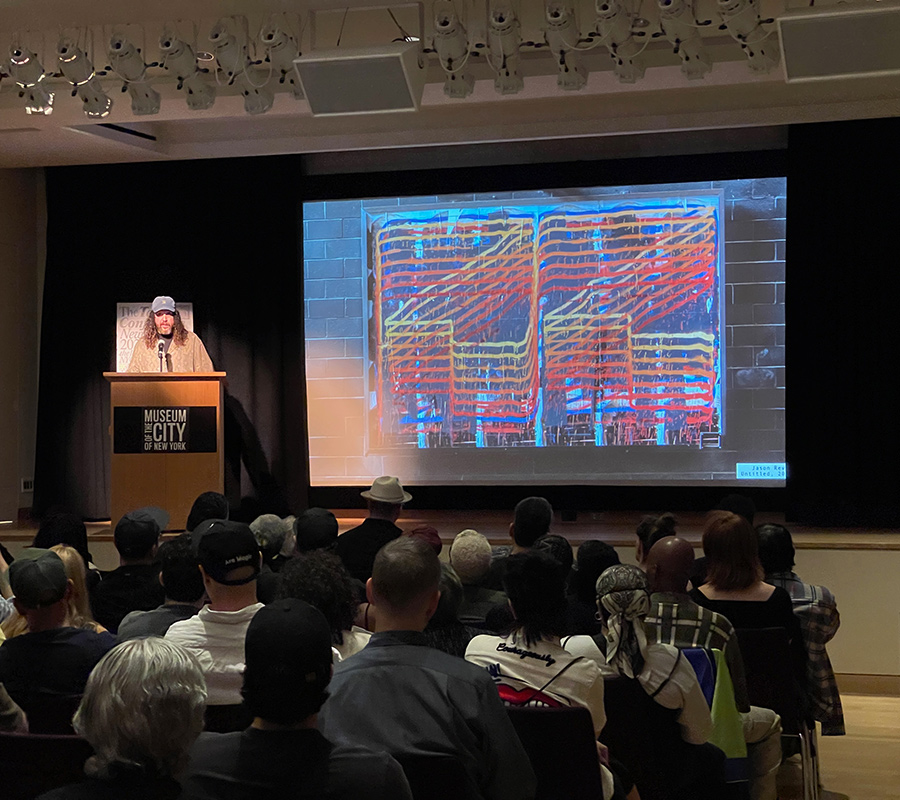
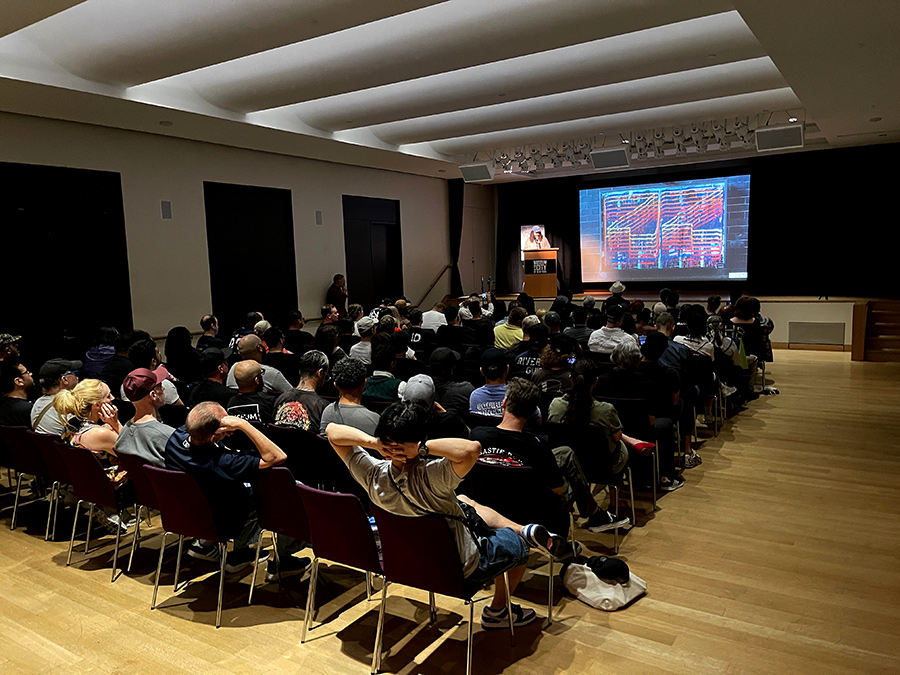
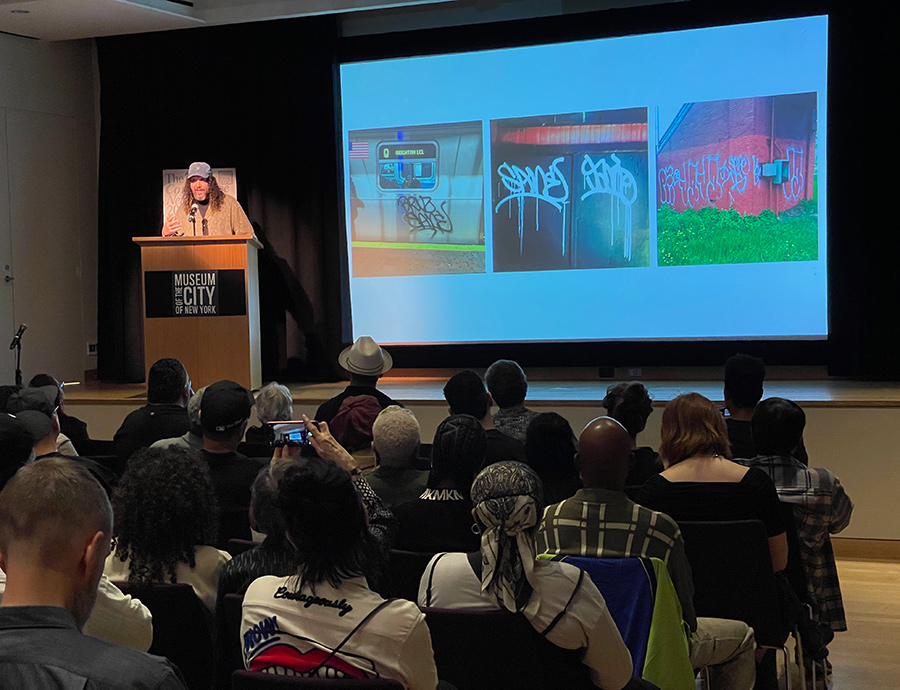
Rafael Schacter has been offering an alternative to institutional monumentality in his latest book Monumental Graffiti (2024). He buttressed his alternative view during his keynote speech for the New York 2025 Tag Conference (BSA is a sponsor). To a packed audience at the Museum of the City of New York, Schacter talked about a monumentality that is grounded in community, embodiment and the acceptance of transience as truth.
Rafael Schacter. Monumental Graffiti. Tracing Public Art and Resistance in The City. MIT Press. 2024
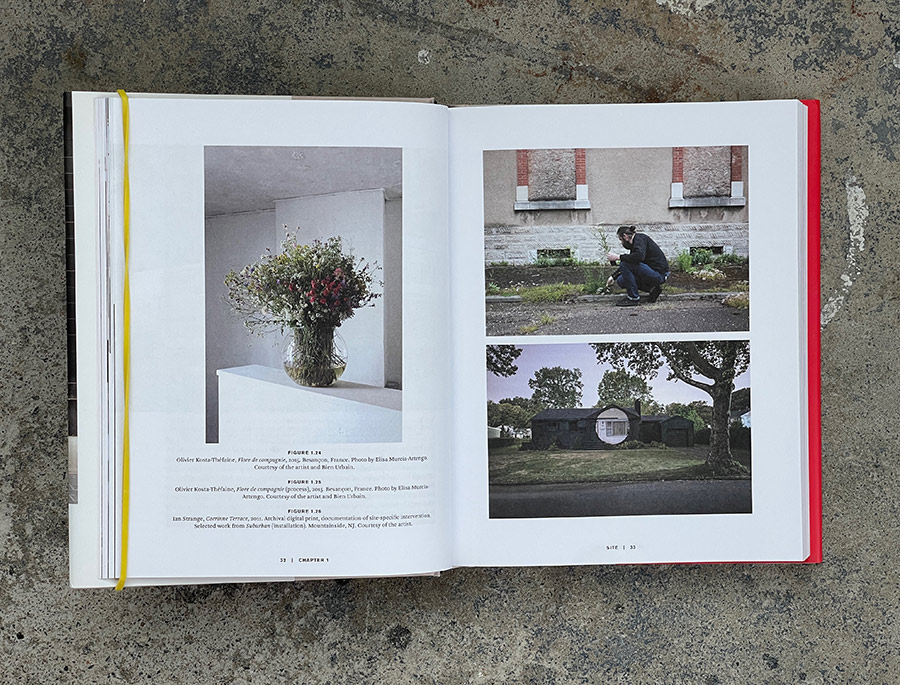
In his talk and his book, the London-based art historian argues that monuments and graffiti can illuminate each other: monuments don’t need to be grand or permanent, but can be understood—as their Latin root monere suggests—as acts that remind, advise, or warn. Drawing on counter-monuments and non-Western traditions, he would like to redefine monuments as socially and emotionally engaging public artifacts that may be ephemeral, community-driven, and conceptually monumental rather than physically imposing.
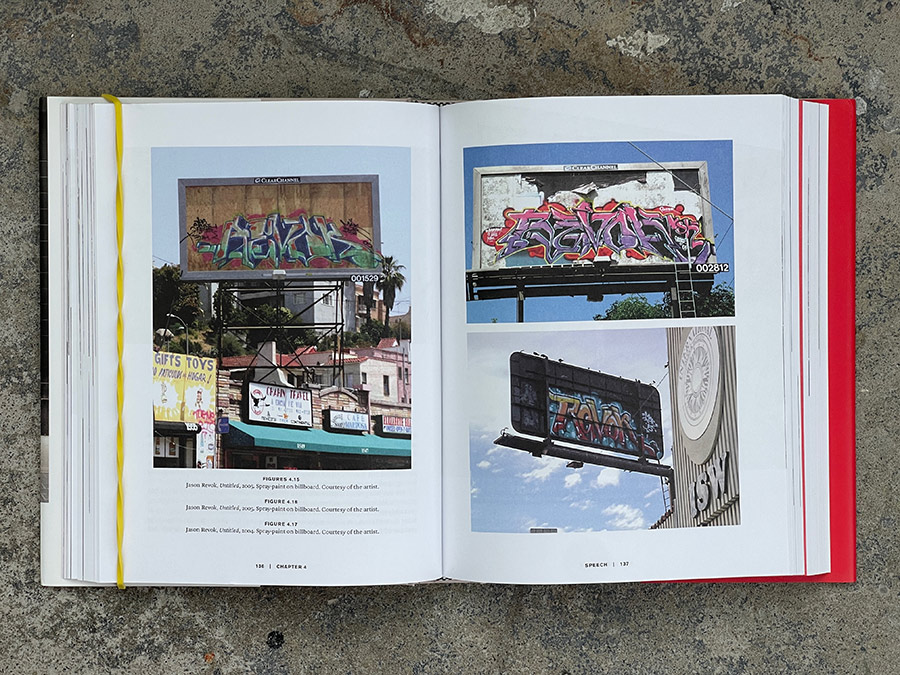
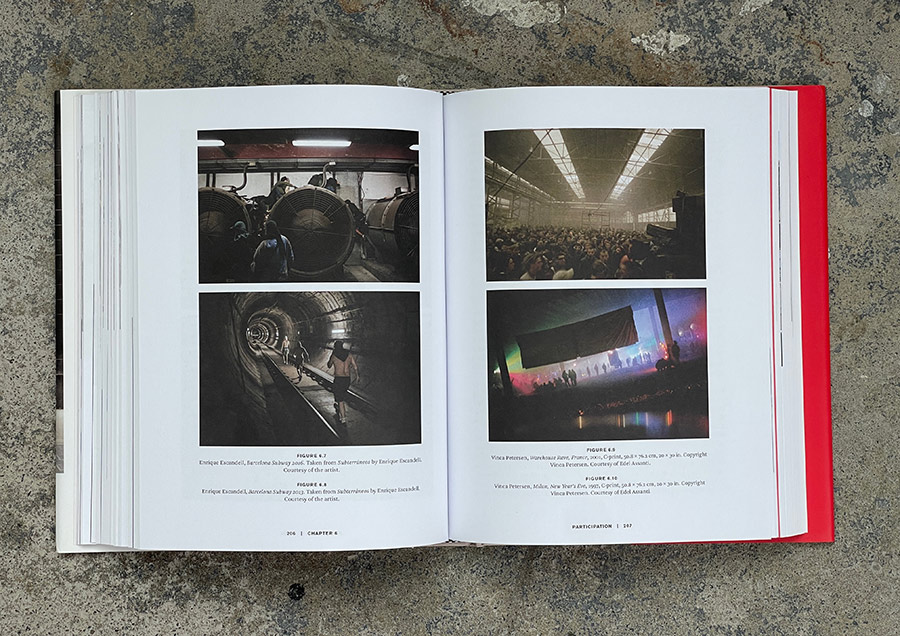
Using images and examples from streets around the world, Schacter, who is also the author of The World Atlas of Street Art and Graffiti, furthers his vision by exploring how graffiti can itself be a monumental form, demanding public attention and reframing both graffiti and monuments as cultural acts that mark and speak socially. He then examined memorial practices within graffiti culture, where community-created walls and tributes function as grassroots monuments that commemorate loss and address social issues.
A curator and theorist of urban art, Schacter expands on this, distinguishing between spraycan memorials—visible, collective, and community-respected—and memorial tags, which he describes as intimate, cryptic gestures of remembrance shared within the subculture. Schacter contrasts these living practices with the illusion of permanence accorded institutional monuments, showing how graffiti’s embrace of impermanence subverts traditional ideas of stability and authority. Finally, through his discussions of memory through disappearance and the memorial tag as embodied memory, he proposed that graffiti’s transience itself becomes a vessel for remembrance, where memory endures not in material form, but in repeated acts of writing, risk, and presence.
We asked Schacter about the nature of monuments in graffiti and street art—whether an illegal wall piece can ever transcend vandalism, what happens when a tag vanishes, who decides what deserves to be remembered, and whether a true monument is built from the ground up or imposed from above.
BSA:If graffiti can be a monument, what happens to the idea of permanence? You describe monuments as “reminders, warnings, and advice” rather than fixed objects. For people used to thinking of monuments something of bronze, stone, or concrete, how could one reconcile the beauty of graffiti’s impermanence with our instinctive desire to preserve something that we value?
Rafael Schacter: Great question! So many points I could spend hours unpacking! But, to keep myself focused, the key thing to note here is that preservation is by no means only related to permanence; i.e., the relationship between remembering and forgetting on the one hand and presence and absence on the other, is really not so straightforward:
Is it not true that things that are ever-present are often the most easy to forget?
In many cultures outside the West, for example, destruction is something that is core to techniques of commemoration – the heat of destruction burning memory into mind. And in cities crammed with institutional monuments, with thousands of bronze men on horseback, is it not the case that they often seem to, in fact, provoke amnesia!
Is it not a fact that things that become absent are often the most intensely memorable?
I totally agree that graffiti’s impermanence can be beautiful (often physically so, in terms of the way it degrades and becomes part of its surroundings), but more than just beautiful, its disappearance can lead to a heightened sense of memory; let alone push the focus towards the beauty of practice and performance and not just the beauty of the final image itself.
BSA:Who decides what’s worthy of being a monument? Normally it is the decision of institutions or governments, but this new path suggests others may decide what is worthy of monumentalizing. A monument created bottom up or top down – which is a truer monument, or is that a silly question?
RS: Ha! Not silly at all! I’m currently in the middle of teaching my lecture course on public art, and this is a critical part of what we’re discussing. So yes, in most of our cities, this is in fact a legal question – in England, for example, there is what is termed the Schedule of Monuments, a list defining and delimiting what appears under this term, and there is specific legislation surrounding what happens if an artefact is within the list. But, as you say, monuments – monuments as public artefacts or inscriptions that remind, advise, or warn us – come not just from the State but so too from the grassroots. Sometimes these non-state monuments can become formally sanctioned, but whether they do or not, they can be incredibly powerful forms that exist far beyond the necessity or even visibility of officialdom. Which form is ‘truer’ or more ‘authentic’ is always context specific, however.
But all I personally know is that I can be moved more by a spontaneous shrine than by an institutional memorial, by the handwritten note attached to a bouquet of flowers laid by the side of a monument than I could be by the monument in itself! More than anything I just want to move us away from only seeing these permanent, stoney, neo-classical public sculptures as monuments, and in fact see the way monuments can exist through diverse materials and in diverse locations outside of the confines of officialdom.
BSA:If a tag disappears, does the monument die—or does it live in memory? Certainly its disappearance and decay impacts its ability to have lasting impact.
RS: How do we remember things? Do we remember from looking at them? And how do we look at them? Do we look differently when we know something is not going to last? But what about not just looking! Can we remember things through a set of gestures? Through a movement? Through a dance? Can we remember something via lighting a candle that we know will burn out?
When things disappear, memory can often burn even brighter – the presence of absence often being more powerful than physical presence itself. So yes! Disappearance effects visibility, the ability to be co-present with an image, but the image can live on both in the person that made that image as much as in those who saw it, and saw it knowing it would at some point disappear!
BSA:Does a city full of graffiti become a city full of monuments? If we take the argument to heart, then every wall might hold a kind of public archive or memorial. Is a monument made by a vandal illegally still vandalism, or should it be honored and preserved for posterity?
RS:First, YES – when I say graffiti is a monument I mean that literally not metaphorically, and so absolutely yes, the walls of our cities are a constantly transforming archive that holds immense amount of information and history. Whether we term this vandalism or not actually makes no difference. (But is it not the overbearing monuments of the city that are themselves vandalism, themselves the destruction and the blight that damages our cities – I mean, I can think of plenty of examples of large-scale public art that are total degradations of our public sphere). Yet that doesn’t mean I think graffiti should be preserved, absolutely not. Preservation, as I talk about in the book in terms of examples of indigenous material culture, can often itself be destructive. If you preserve something, freezing that thing in time, you can often be more likely to forget what it represents than if you let it naturally degrade. Preservation, then, can be destructive, and destruction preservative!
BSA: Graffiti has turned up in unexpected corners of sacred buildings — scratched into the walls of Christian churches, carved into stone lintels of synagogues. They may be names, coats of arms, or a portrait of the parish cat. When you think about these quiet, unauthorized marks across different faiths, how might your idea of graffiti as a kind of monument apply to them?
RS: I love the idea of what you term ‘quiet’ here. Because often it is the smallest, most marginal, minor forms of graffiti that can be the most powerful. Yes, big graffiti is GREAT, and often very overtly monumental (I’m thinking of the incredible work of RAMS MSK at the moment for example). But smaller marks can be monumental in their effect too, a tiny tag at the edge of a wall containing as much style as a massive masterpiece. So yes, monument is not simply about size. Bigger is not necessarily better. And sometimes it’s the smallest marks that cut the deepest!
Rafael Schacter. Monumental Graffiti. Tracing Public Art And Resistance in The City. The MIT Press. Massachusetts Institute of Thechnology. 2024. USA.
Over the last two decades of covering the street art movement and its many tributaries, one of the deepest satisfactions has been watching artists take real risks, learn in public, and mature—treating “greatness” as a path rather than a finish line. Working at BSA, we’ve interviewed, observed, and collaborated with scores of artists, authors, curators, institutions, and academics; it’s been a privilege to see where they go next.
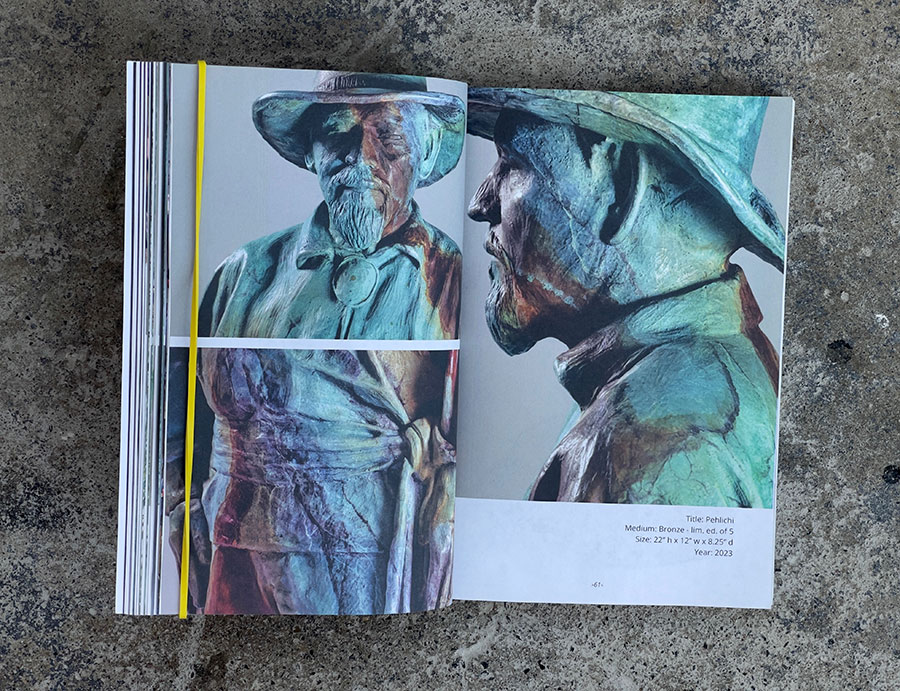
Addison Karl. KULLI. A Natural Spring of Artwork, Sculpture, Painting, Drawing, Public Art, and Inspiration. Self-published. Monee, IL. 2024.
Addison Karl’s self-published 2024 monograph, “KULLI: A Natural Spring of Artwork, Sculpture, Painting, Drawing, Public Art, and Inspiration,” reads as a first-person chronicle from an artist who moved from the wall to the plaza to the foundry without losing the intimacy of drawing. Dedicated to his son—whose name titles the book—KULLI threads words, process images, and finished works across media: murals, cast-metal and glass sculptures, drawings, and studio paintings, all guided by a sensibility that treats color and material as vessels for memory and place.
Trusted observers have mapped this evolution in plain terms. WALL\THERAPY once summarized Karl’s arc “from blank slate, to paper, to mural, to installation, to unoccupied public space,” a concise description of how a drawing-led street practice broadened into public art and beyond. The book situates headline projects within that trajectory: “In Service,” his 2019 McPherson Square Metro mural in Washington, DC—roughly 64 feet along aluminum panels—honors veterans, showing how a hand-drawn hatch can scale to civic form. In Atlanta, the cast-iron BeltLine sculpture Itti’ kapochcha to’li’ (“little brother of war”) roots contemporary public space in Chickasaw story and material logic.
Along the way, BSA documented Karl’s shift into sculpture and his view that public work demands accountability: “It makes you really understand the world in a really different way – of how you take responsibility for what you are doing.” Read together, these frames make KULLI a ledger of experiments—how a printmaker’s line climbed buildings, then solidified into bronze and glass—developed over more than a decade of international projects, including the opening of URBAN NATION in Berlin.
Crucially, the book lets Karl define his own stakes. “Each canvas is not just a painting; it’s a mirror reflecting the viewer’s own inner world,” he writes—an artist’s statement that clarifies why the outdoor work invites dialogue rather than spectacle. Biographical notes reinforce the point: Denver-born, Phoenix-raised, of Chickasaw and Choctaw descent, Karl’s foundation in printmaking underpins his cross-disciplinary approach; his patinas deliberately recall turquoise, and his public commissions translate personal narrative into shared space. Read KULLI as a record of that translation—how a drawing-based street practice consolidated a public voice and expanded into sculpture without losing the hand, the story, or the invitation to look harder.
Addison Karl. KULLI. A Natural Spring of Artwork, Sculpture, Painting, Drawing, Public Art, and Inspiration. Self-published. Monee, IL. 2024.
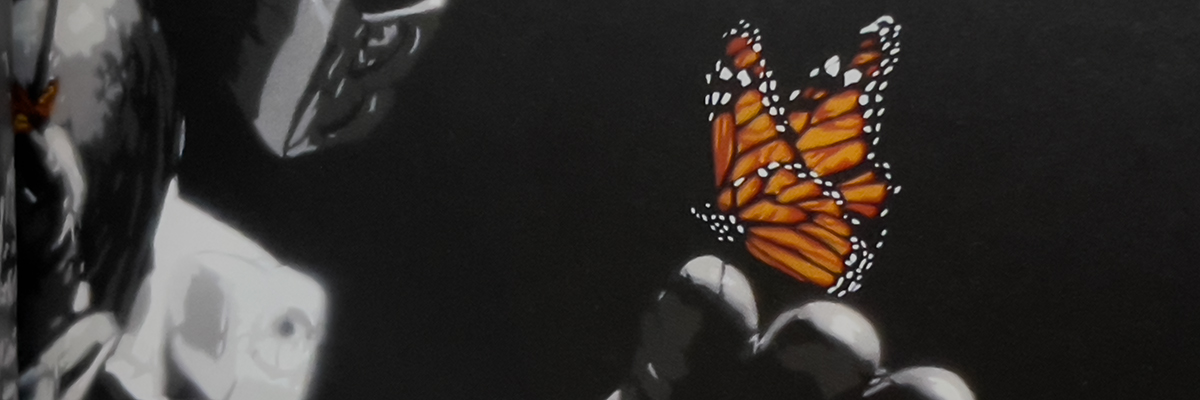
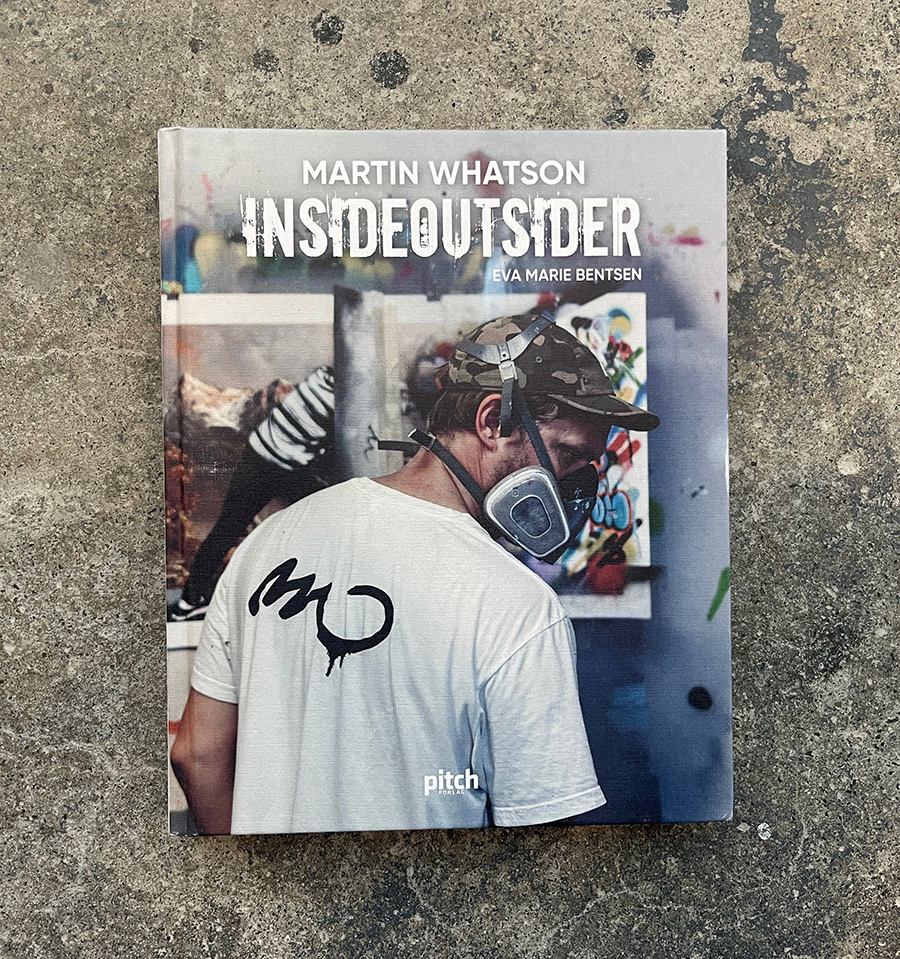
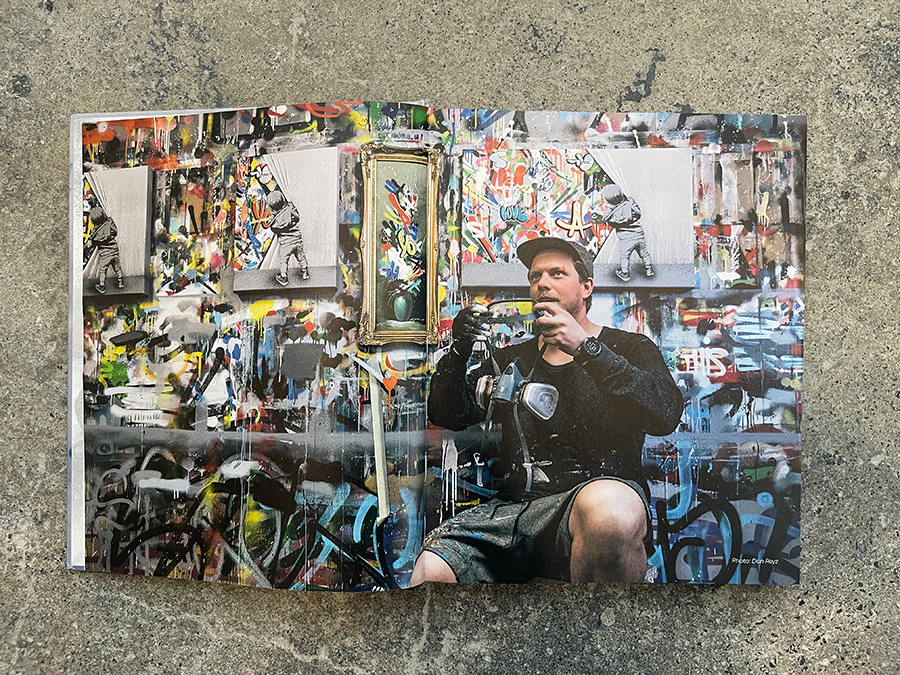
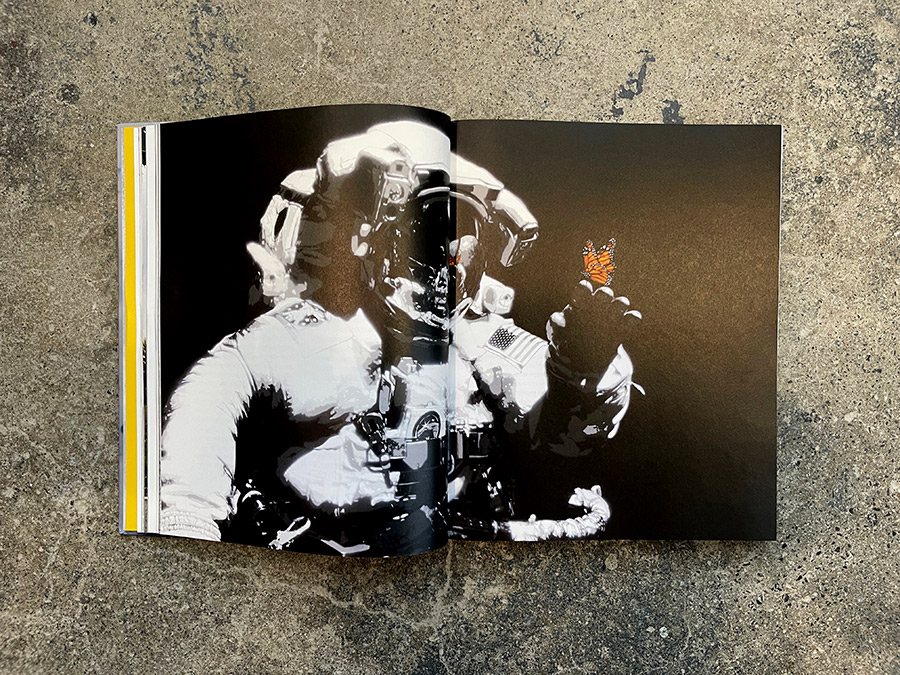
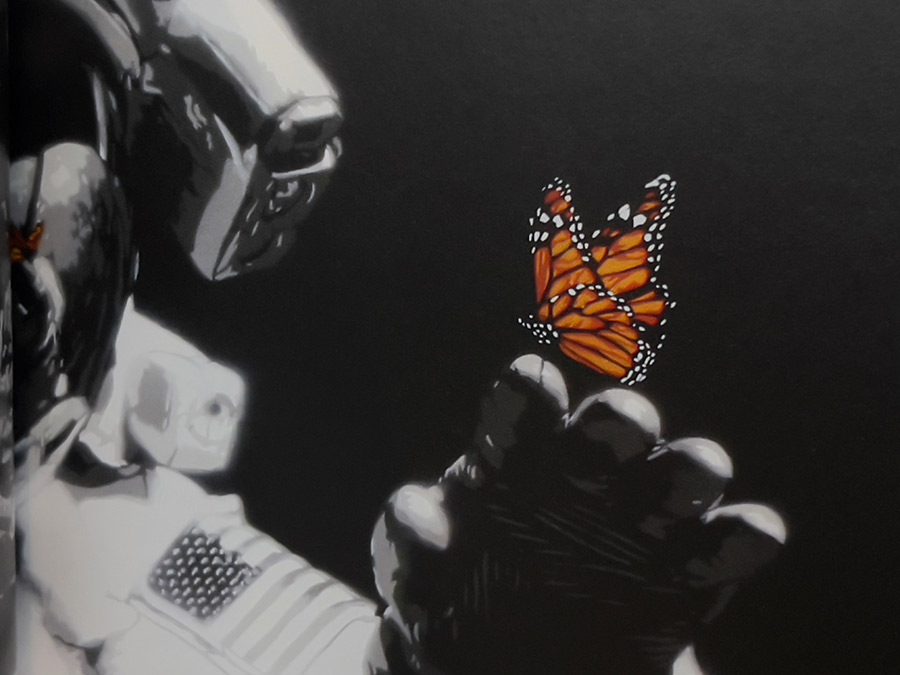
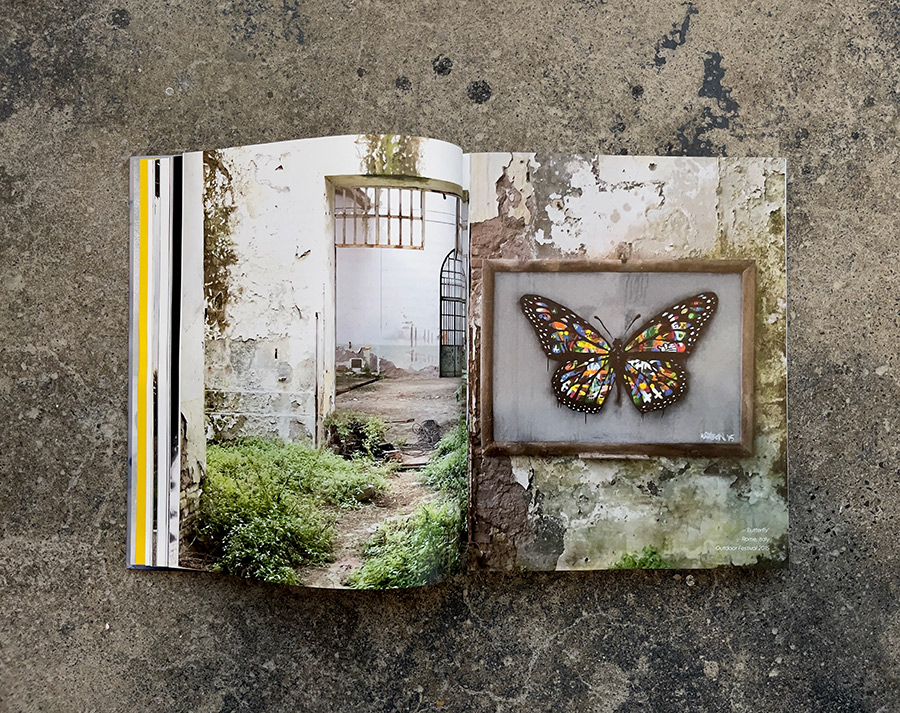
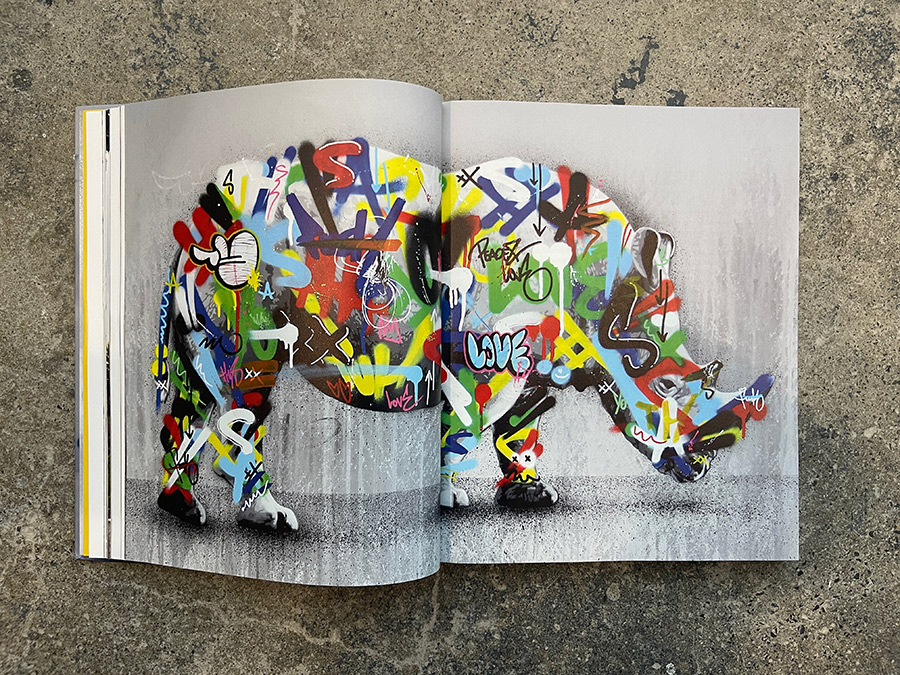
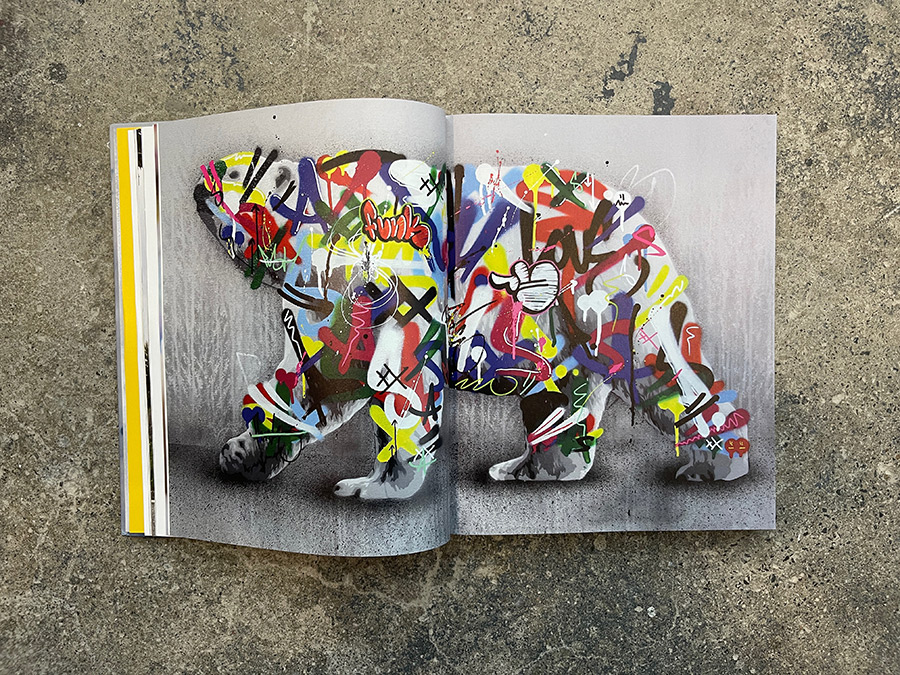
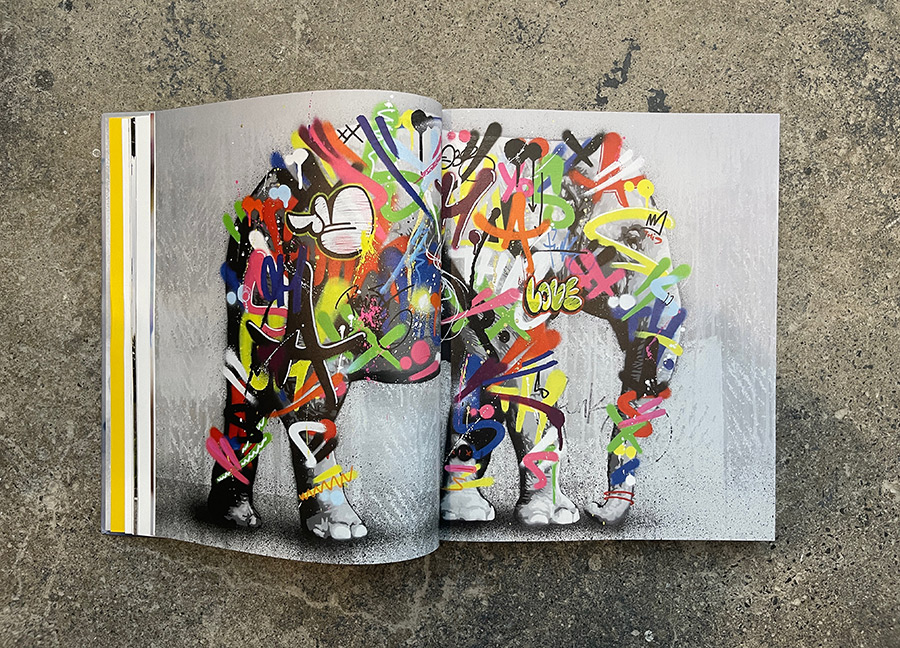
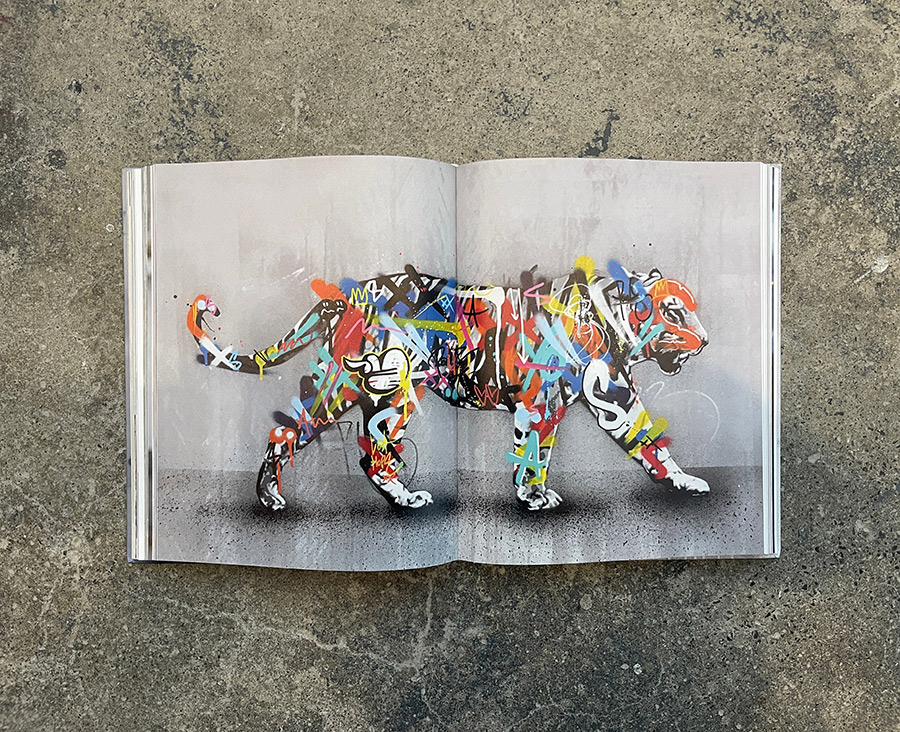
Martin Whatson, a Norwegian stencil artist born in 1984, has carved out a distinctive niche in the contemporary and street art worlds. His journey from street art to international acclaim is a narrative of artistic evolution and the versatility of visual language. This book, written by art dealer and curator Eva Marie Bentsen, offers a comprehensive look at Whatson’s career, from his early fascination with graffiti to his current status as a celebrated fine artist. His education at the Westerdals School of Communication in Oslo laid the groundwork for a unique blend of graphic design and urban art, defining his approach to art-making.
Early Works and Influences
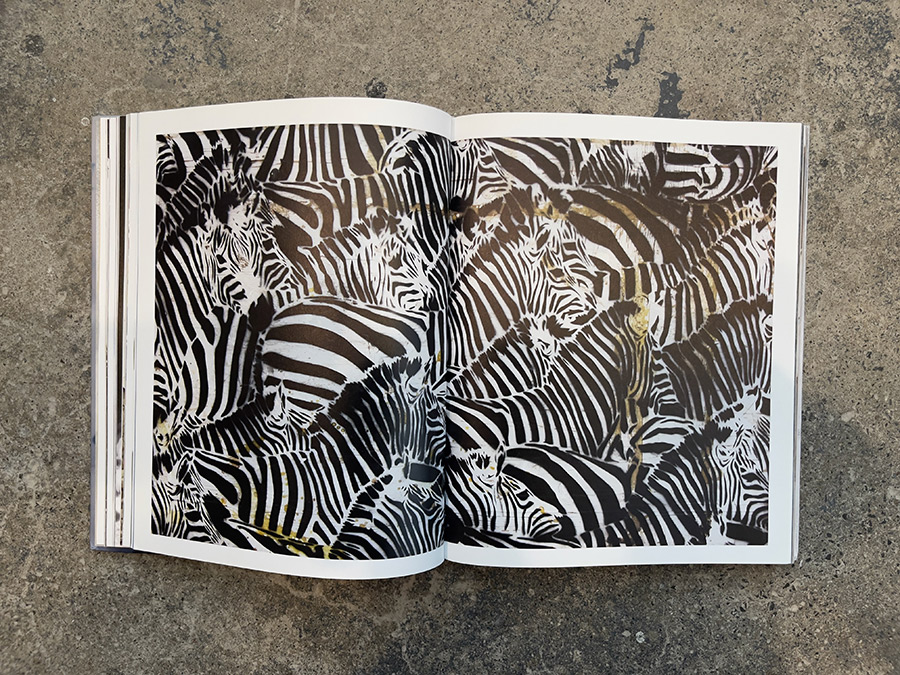
The initial sections of the book explore Whatson’s early period, where his experimentation with graffiti styles and stencil art began to shape his artistic voice. These early works reveal a developing style, marked by influences from notable artists like DOLK and Banksy. During this time, Whatson started to refine his distinct blend of political themes and aesthetic appeal.
Studio Canvases and Style Development
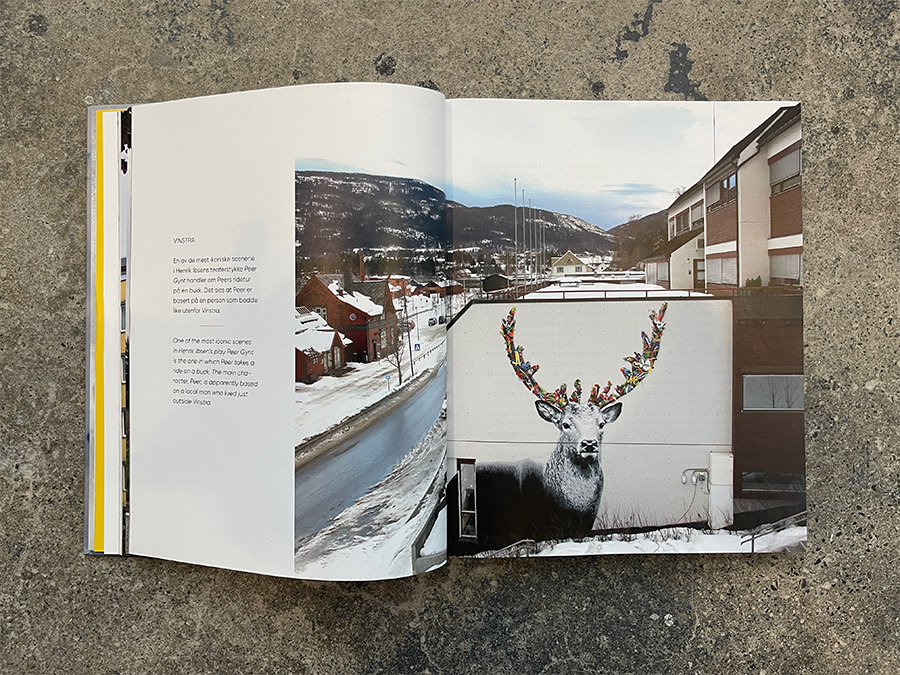
Readers can observe Whatson’s transition from outdoor walls to studio canvases through the book. You see highlights of his exploration of urban landscapes and decay, an ongoing theme in his work and part of the lingua franca of street artists worldwide. His artistic expression, once more heavily political, has evolved into a subtler form, still retaining some of its original edge. The featured studio works exemplify this shift, demonstrating his signature combination of urban elements with a more poetic narrative. The book showcases his venture into sculpture, which allows readers to see how his themes translate into three-dimensional forms, often reflecting his familiar motifs.
Collaborations and Diverse Artistic Dialogues
The book’s concluding section focuses on Whatson’s collaborations, highlighting his interest and ability to merge his artistic vision with that of others. These joint projects, featuring a diverse range of artists, illustrate Whatson’s adaptability and his commitment to the communal spirit of street art. with a wide audience, transcending traditional boundaries of street and fine art.
This is an insightful look into Martin Whatson’s artistic journey, showcasing how he has navigated the realms of street and fine art with his authenticity – an informative resource for those interested in the intersections of modern art, street art, and the dynamic process of artistic evolution.
The book is an overview of his career thus far. You may be familiar with him here because he has been a trusty recurring participant in the Nuart Festival, championed by Stavanger curator and art dealer Martyn Reed for a decade – exposing his work to an international art press and collection of academics, writers, fans, etc. This has contributed to his success and name recognition in certain circles.
MARTIN WHATSON: INSIDEOUTSIDER. Pitch Forlag. Norway.
Graffiti artists often dismiss histories or narratives not of their own making, including those from their peers. This subculture, which has continuously evolved across different cities, time zones, decades, and languages over the past 60 years, is so rich in stories and counterstories that it might take another 30 years for the aerosol to clear and reveal the origins of these tales comprehensively. One unwavering truth prevails: if you weren’t there, in the same city, during the same era, didn’t grow up immersed in that urban environment, and weren’t marking the same train lines or recognized by local crews, your credibility is questioned, and the original graffiti artists (OGs) might disregard your story.
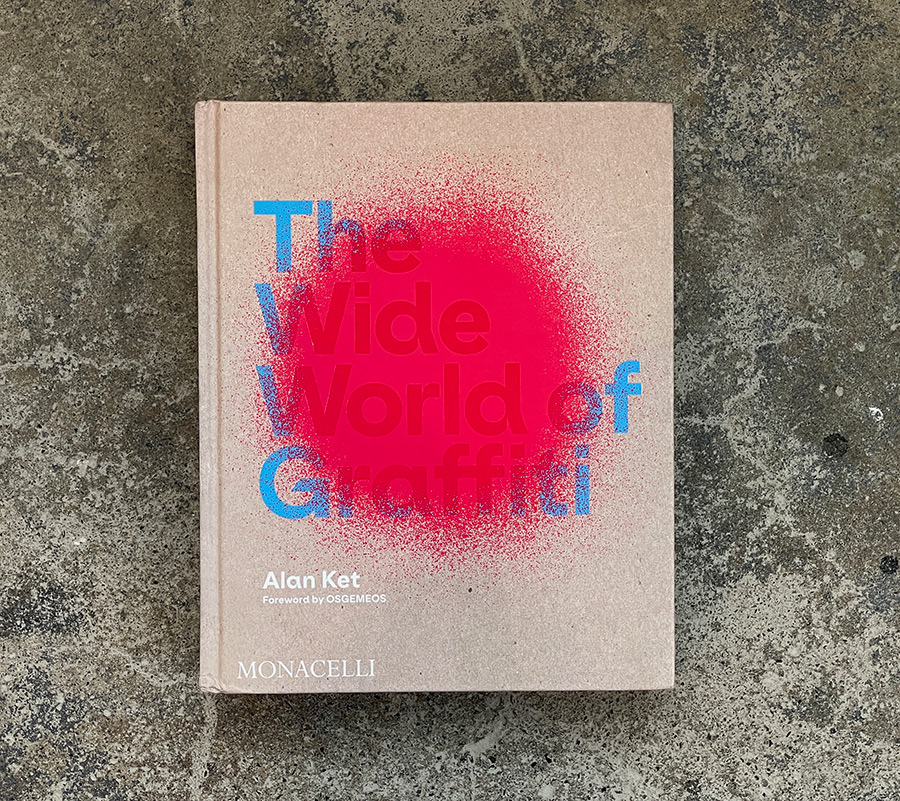
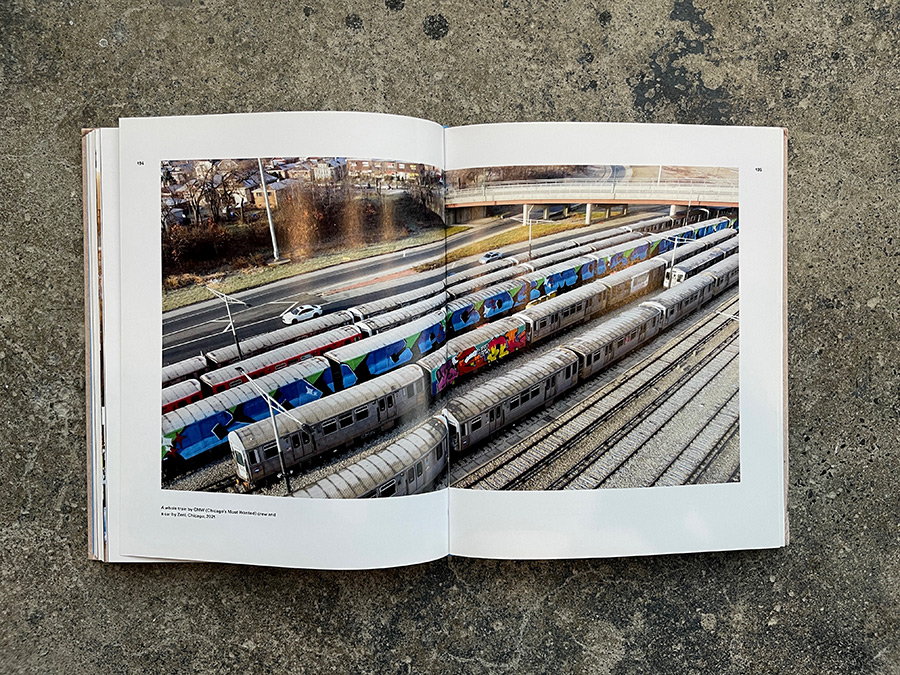
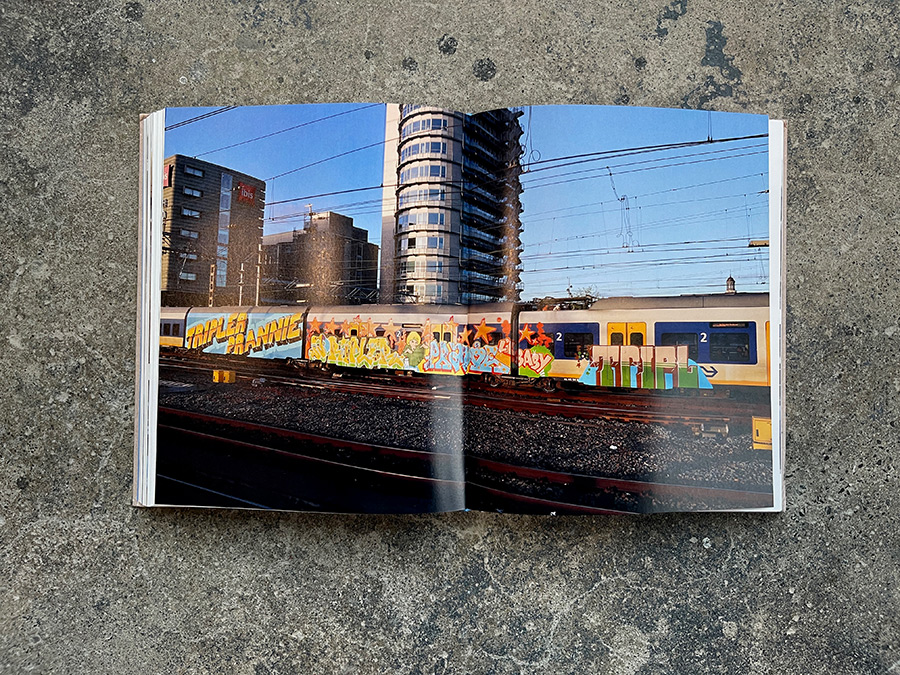
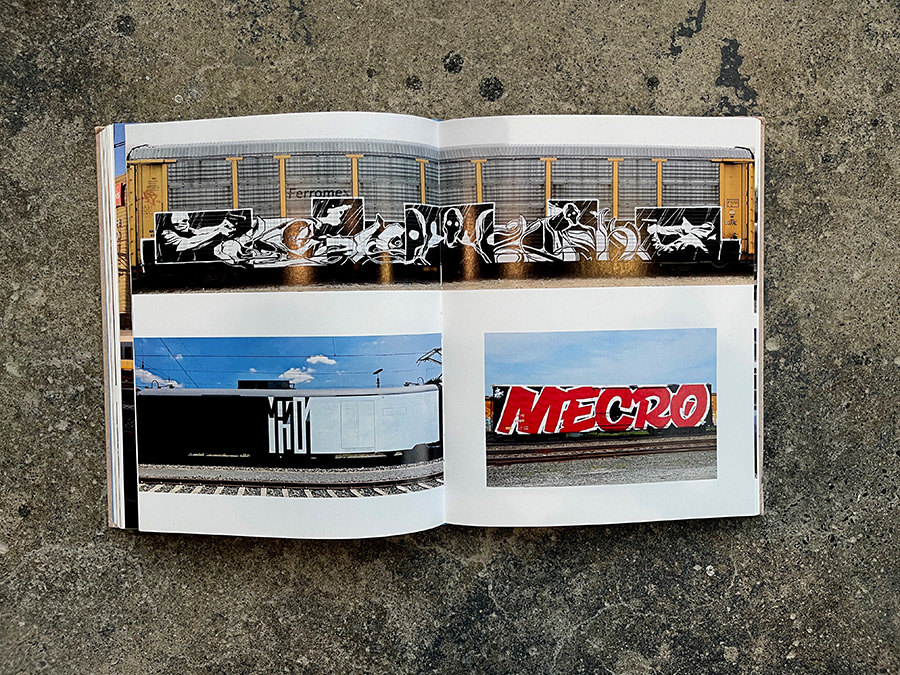
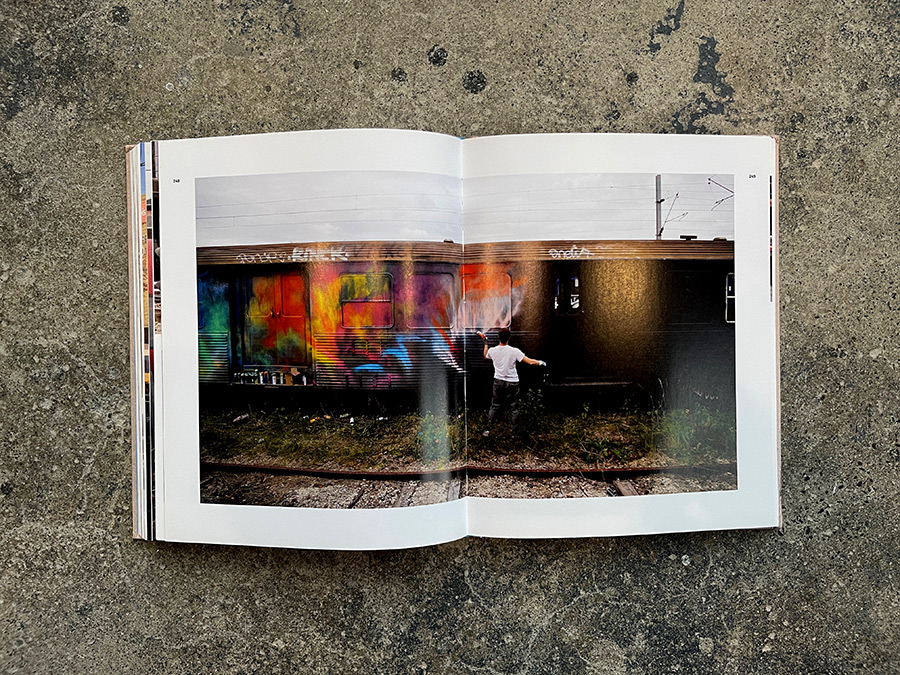
It’s meaningful when a book like “The Wide World of Graffiti” is authored by someone like Alan Ket, a native New Yorker from Williamsburg, Brooklyn, who has firsthand experience writing on city trains. As a self-proclaimed graffiti nerd, historian of the movement, and co-founder of the Miami-based Museum of Graffiti, Ket brings a unique blend of metaphorical depth and frank authenticity to his writing. He skillfully combines scholarly insight and sociological context in his narrative, spotlighting selected kings and queens of the streets to further illustrate in their words details of the scene’s evolution and his informed insights to provide context.
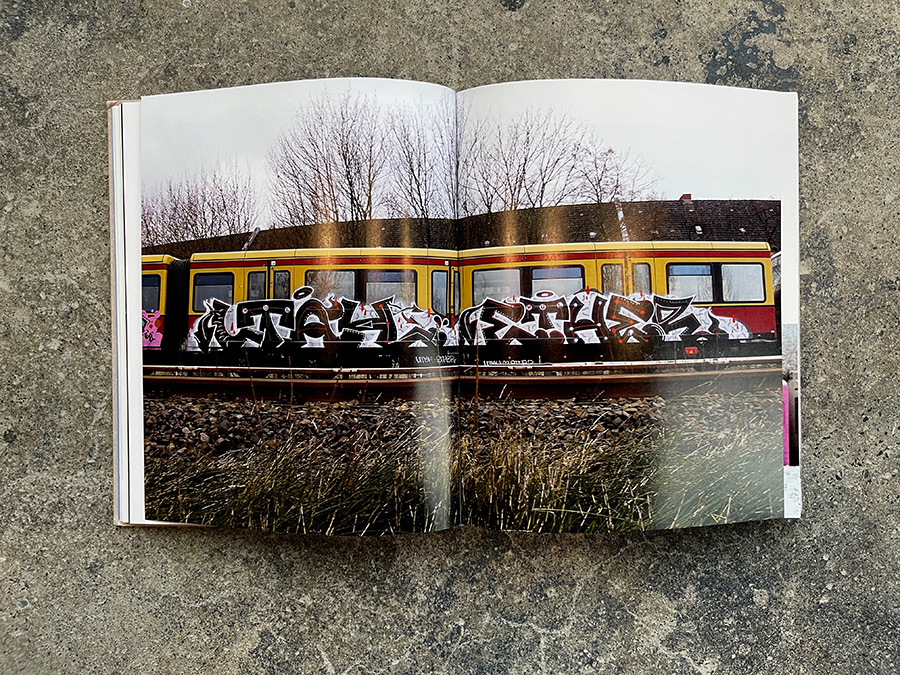
Ket’s narrative style, marked by its directness and subtle wit, weaves through a tumultuous and ever-changing graffiti landscape across decades and cities. He captures the art form’s evolution, acknowledging its virtuosos, acolytes, critics, observers, and new entrants. His account includes appreciation for various influences, direct and indirect, allowing each shift in graffiti’s style and color to add to the overall narrative’s vibrancy. Ket augments the text with a wealth of illustrative photographs, showcasing graffiti and its extended family in both street settings and galleries, offering a comprehensive and exhilarating journey through the graffiti world.
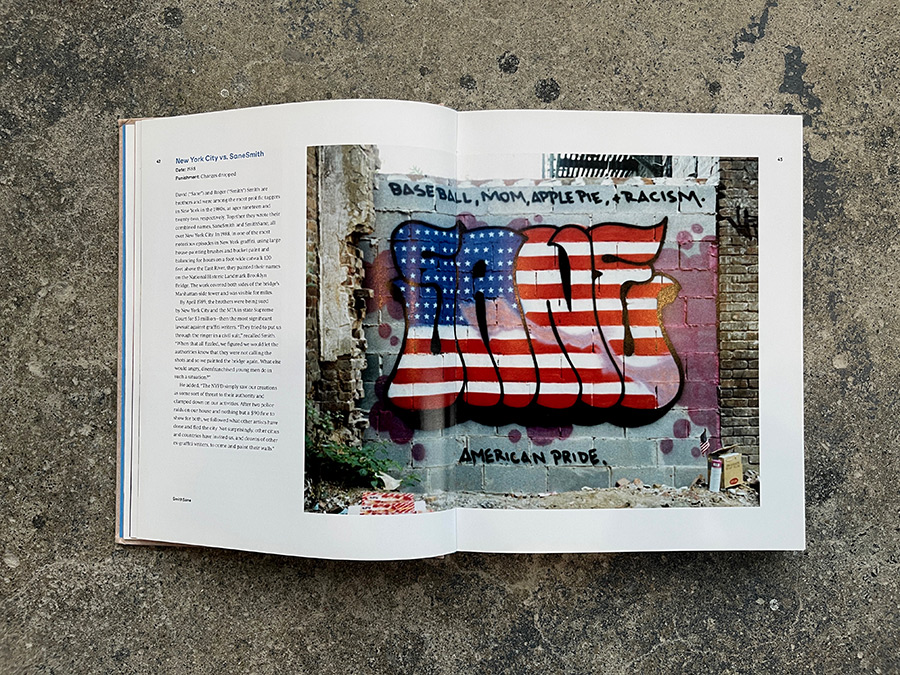
Featuring an introduction by the Brazilian graffiti brothers OSGEMEOS, along with engaging profiles and interviews with notable figures such as Sane from SaneSmith, Hotboy Hert, DESA, and Doze Green, Ket allows graffiti’s history to unfold naturally in its distinctive and sometimes idiosyncratic way, enlightening the reader by describing its pathways. He showcases the global surge of interest as expressed through contemporary styles. He gives a quick class on graffiti’s influence in various artistic mediums, including on canvas and in public murals. Ket presents key examples without reducing them to mere tokens, offering a platform for authentic voices like Rime, MadC, Nani Chacon, Saber, and Jan Kaláb to elucidate further. Despite their diverse styles, each artist is united by the important contributions of graffiti culture in their personal histories and their subsequent artistic practices.
Ket’s holistic approach is inclusive and comprehensive, acknowledging related subcultures such as tattooing, skateboarding, and hip hop, while maintaining the focus on the writing culture that crafted a visual language for a youth movement that would eventually gain global prominence.
It’s his personal characterizations that ground the reader in the genuine beginnings of the movement in late 1960s/early 1970s Philadelphia and New York. “Week after week, more and more teenagers joined in, creating aliases and then going out and writing their names on the walls,” Ket recalls, depicting the grassroots creative spark that spread across streets and onto the sides of moving trains. Citing nearly 1,600 arrests of youth for vandalism in New York in 1972, Ket portrays an urban tableau rife with chaos, hunger, aspiration, beauty, and irony, remarking, “Little did they know that their mischievous actions were birthing what is arguably the world’s most popular art movement.”
In Ket’s capable hands, these stories are not only preserved but also eloquently conveyed.
Alan Ket: The Wide World of Graffiti. Monacelli Press / Phaidon. New York, NY.
The Wide World of Graffiti can be purchased directly from the gift shop at the Museum of Graffiti HERE
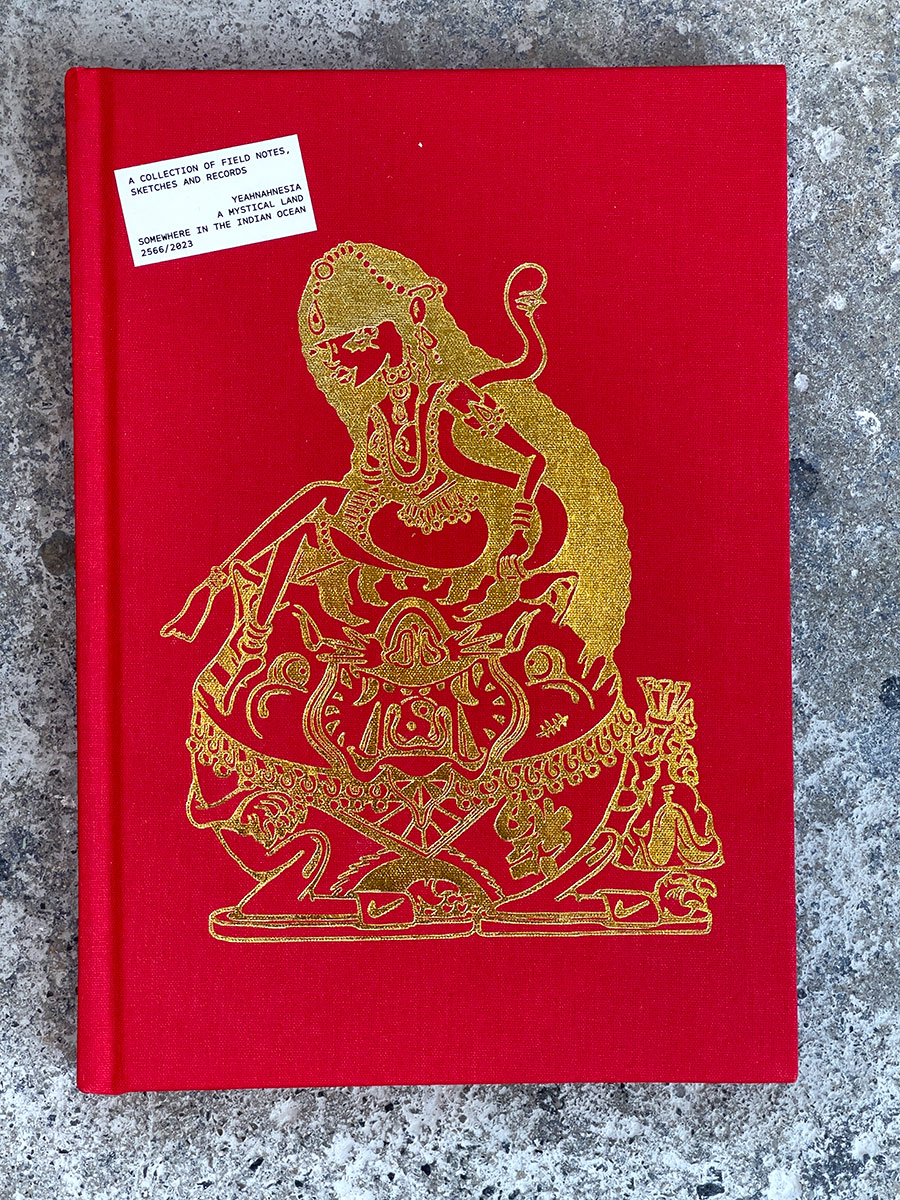
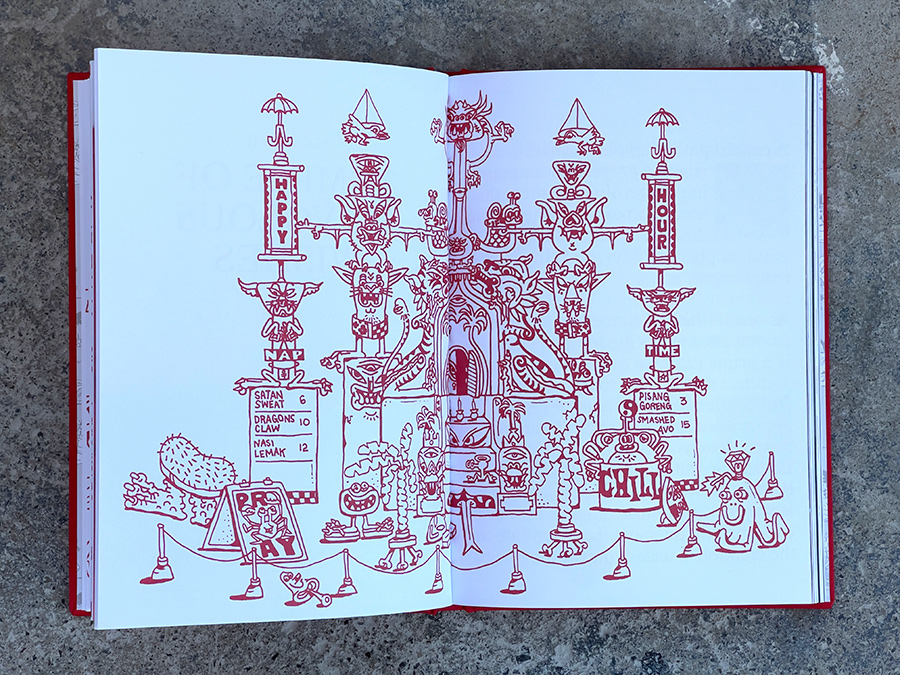
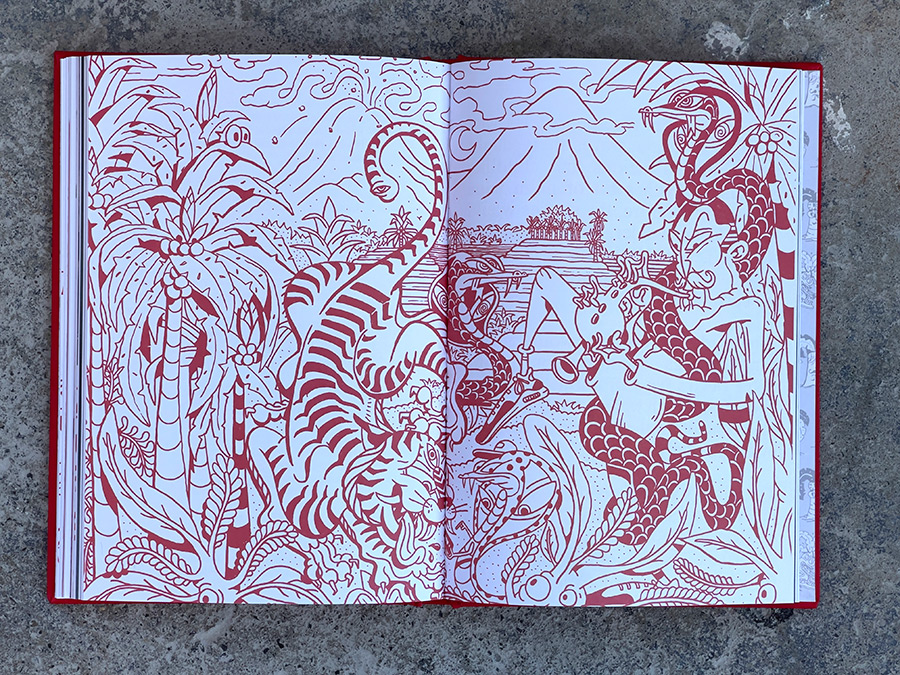
In the realm where imagination dances with audacity, Yok & Sheryo, the dynamic duo hailing from the crossroads of New York, Australia, and Asia, have conjured up a whimsical masterpiece, aptly titled “Yeahnahnesia.” Published in collaboration with the Art Gallery Western Australia, this book is a memoir and fantasy of creativity and storytelling that makes a reader question the boundaries of reality and fiction.
The Yok & Sheryo: Yeahnahnesia A Mystical Land Somewhere In The Indian Ocean. Vol 1. Published by Yok & Sheryo and The Art Gallery of Western Australia. 2566 AP / 2023.
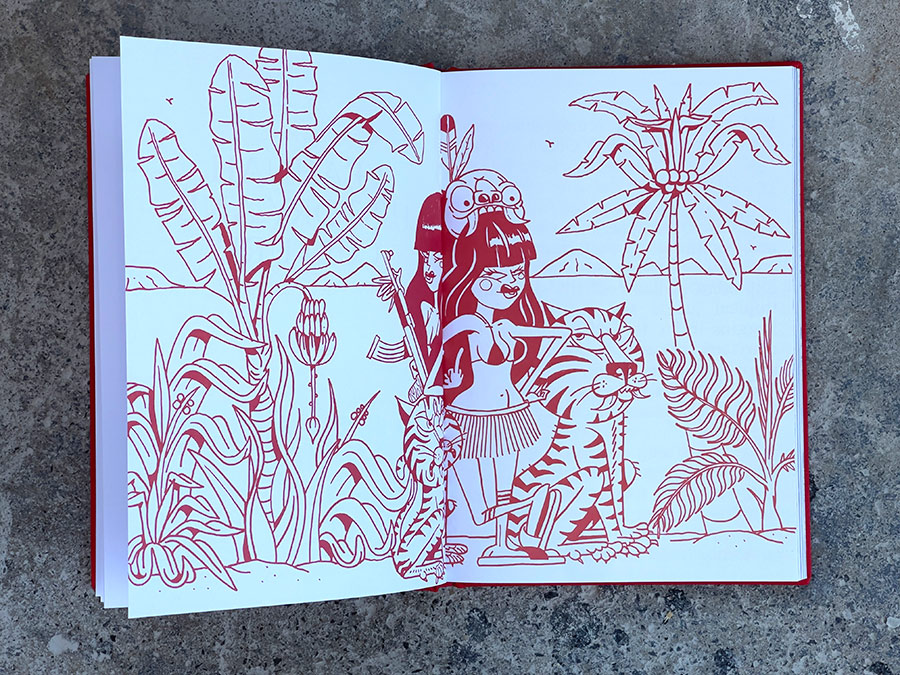
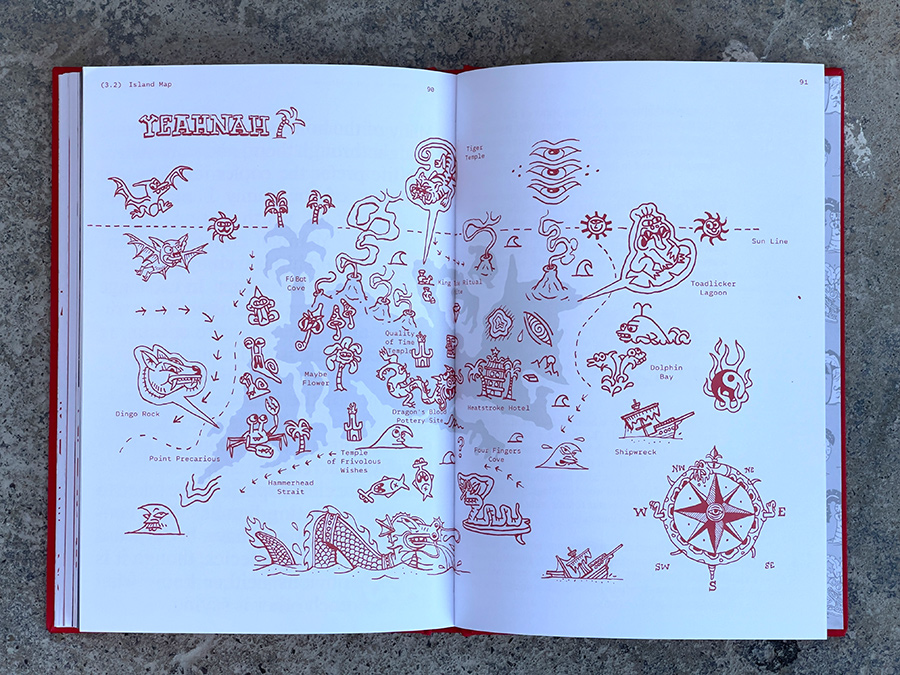
Picture a tropical paradise, a place Google Maps forgot, where mythology, deities, philosophies, and unusual creatures roam freely. Yeahnahnesia, the brainchild of these intrepid artists, is a fictional island brimming with tales so rich that your skateboarding dreams will tip their hats in admiration. The burning questions of its existence and location will keep you up at night until you surrender to the allure of this enigmatic and chill place.
As you delve into the book’s 120 pages, you’ll be transported into an alternate dimension where art intertwines with narrative, and history plays a sly game of make-believe. The “Temple of Frivolous Wishes” at AGWA, Art Gallery Western Australia, Perth, is a mere glimpse of their artistic prowess. Bound in fabric with gold foil accents, this bound edition of 800 is a treasure.
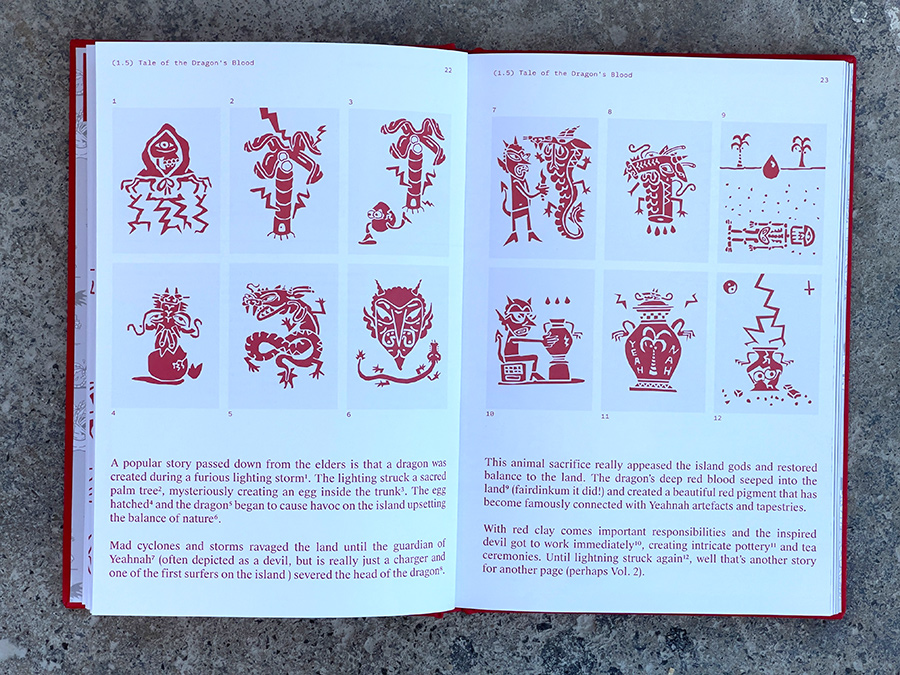
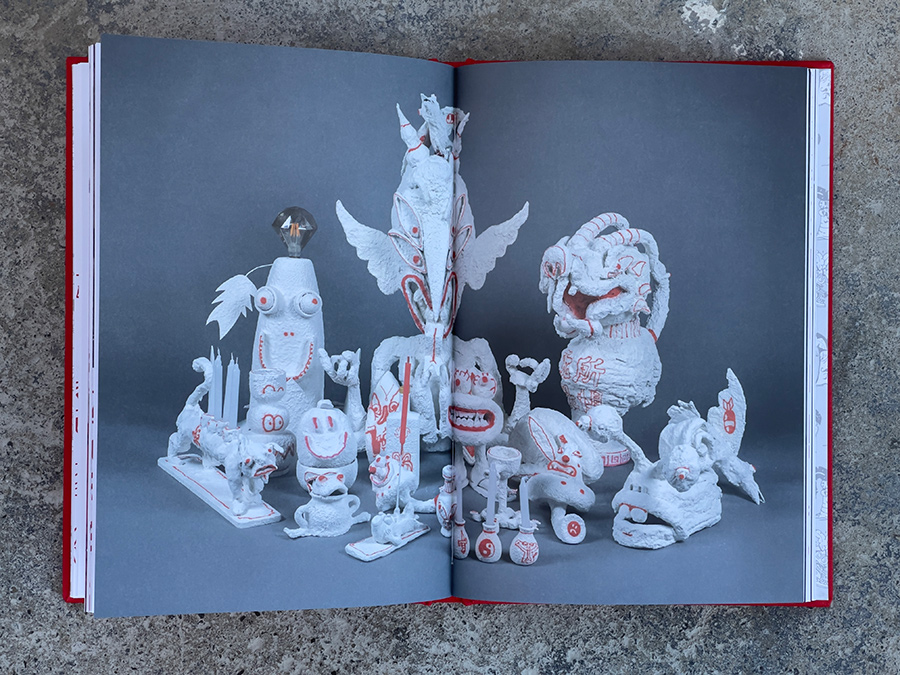
They talk about creating and inventing belief systems based in fictional folklore, complete with talismans and totems, and temples. “It was just so fun.” Yok describes the show and the book preparations, “We’re creating these temples out of mostly plaster so people with have this feeling of a lost artifact created out of sandstone, which was inspired from our travels,” he says in a video about the project. “The color scheme for the show, Yeahnahnesia was based on the folklore that we’d written for the island, which is rich in iron ore. So that brings the red out. But there’s also a story based on the 12 dragons….”
Yok & Sheryo’s escapades have led them from the crazed and colorful streets of New York to the hidden gems of Yeahnahnesia. They’ve absorbed cultures, painted murals, and surfed waves, all culminating in their artistic vision of this exotic island. They’ve unearthed cultural artifacts, shared stories, and created a simultaneously fantastic and familiar world.
“Yeahnahnesia is a tropical island with the best lifestyle you could ever want or wish for,” explains Sheryo. “We spent three months in Australia working on the show, and we took over a warehouse. Yeah, it was the first time we got to make a lot of 3-D sculptures. You just get in a meditative mode, especially when I roll sausage rolls, and then you just wanna roll as many as possible in the shortest time possible.”
Their playful, freewheeling work has earned them a unique spot in the art world, where walls, galleries, and corporate giants have all been inspired by their creativity and its eclectic route to truth. “Yeahnahnesia” is more than just a book; it’s a portal to a place that blurs the lines between reality and imagination, a testament to the audacious spirit of Yok & Sheryo. A guidebook to the journey, you can let your mind wander through the lush landscapes and vibrant cultures of Yeahnahnesia, where the surf is perfect, the beers are cold, and peace, love, and relaxation are the day’s mantras.
The Yok & Sheryo: Yeahnahnesia A Mystical Land Somewhere In The Indian Ocean. Vol 1. Published by Yok & Sheryo and The Art Gallery of Western Australia. 2566 AP / 2023.
Also included in this book are photos from their recent show featuring the “Temple of Frivolous Wishes” at AGWA, Art Gallery Western Australia, Perth.
Edition of 800, 17cm x 24.5cm, 120 pages
120gsm paper, fabric bound book with gold foil
Co-published with Art Gallery Western Australia and supported by Dept. of Local Government, Sport and Cultural Industries Australia
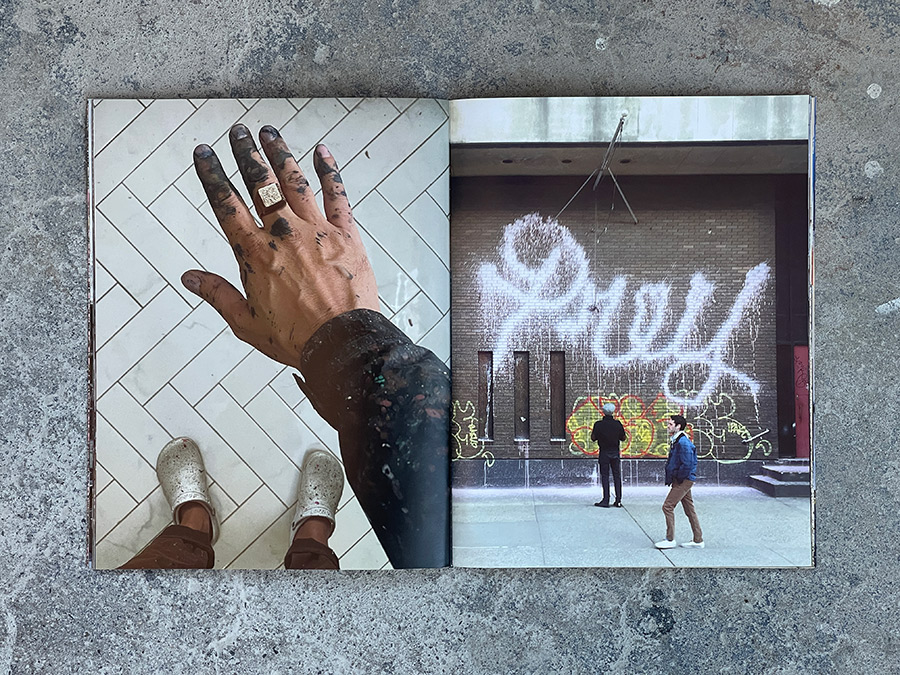
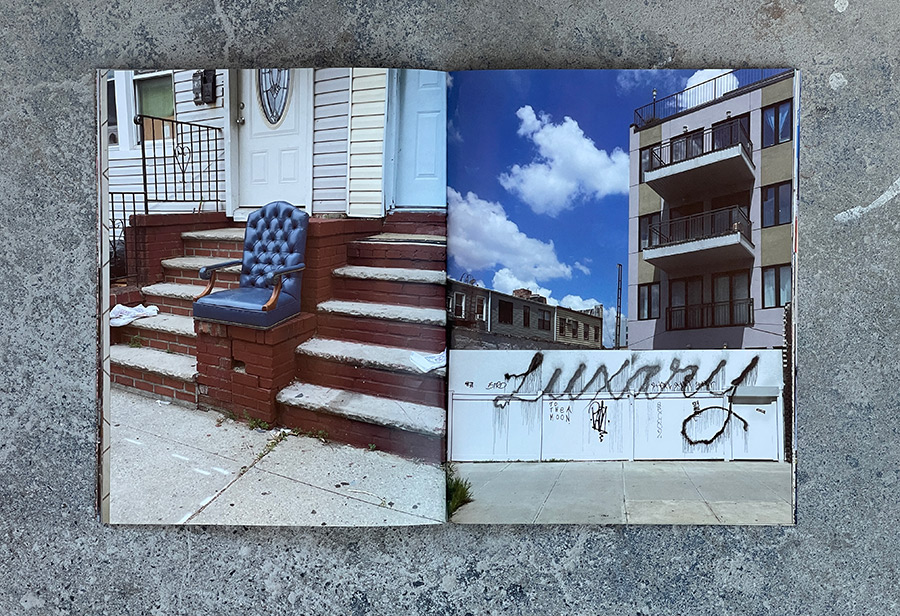
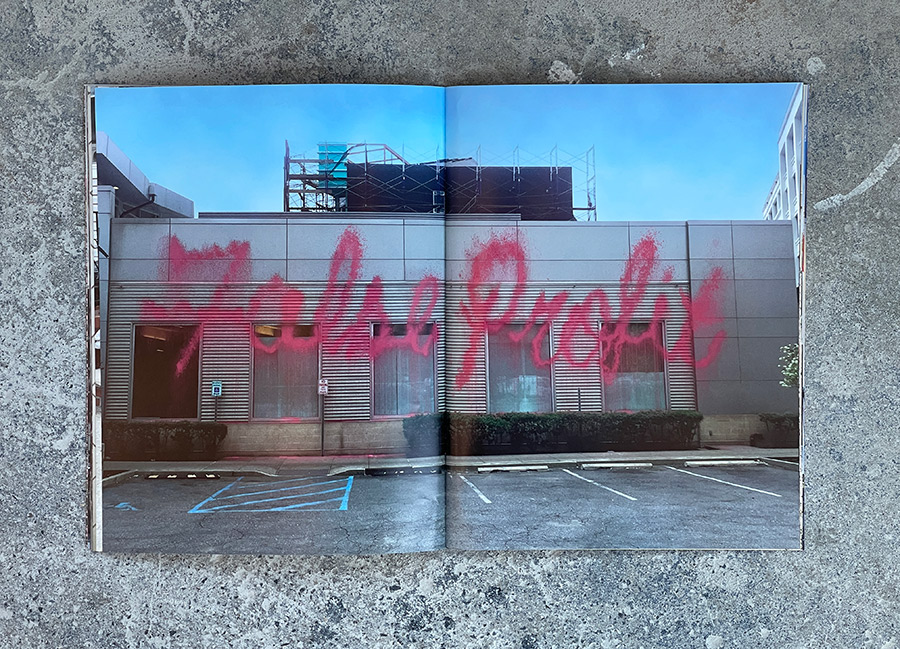
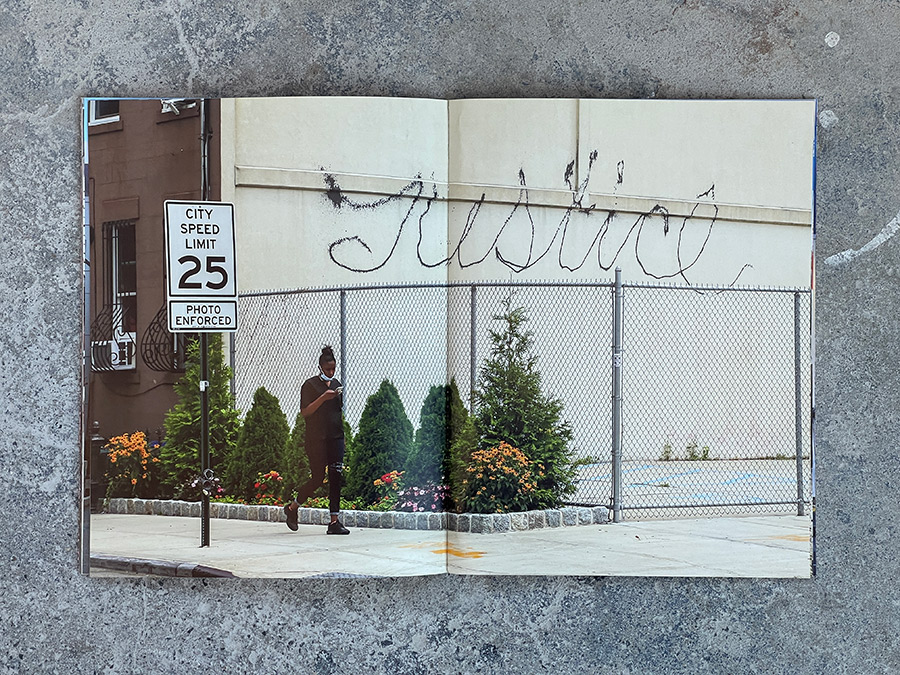
New York’s PORK is one of the few fire extinguisher writers who reliably has can-control, or nozzle control, as the case may be. If you know your extinguisher tags, these are examples of fine penmanship. Additionally, his necessarily brief cursive bon mots are cryptically funny, even if you don’t know his intention.
PORK: “I LEFT A NOTE”. Published by Blurring Books NYC
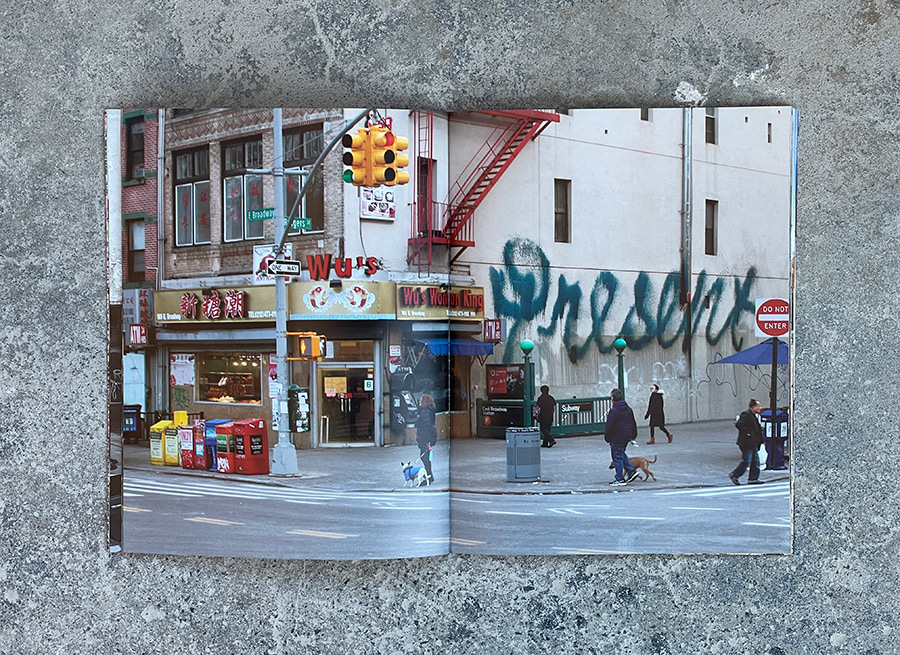
In this new softcover of street photography, many of his rattled-looking words are framed in their natural/unnatural environment and given their own page, or spread. In the index, you may get an insight into what the artist was thinking by the title given to the corresponding pages in the body. You’ll also gain insight into the irreverence, tempered at times with exquisitely poised timing.
PORK: “I LEFT A NOTE”. Published by Blurring Books NYC
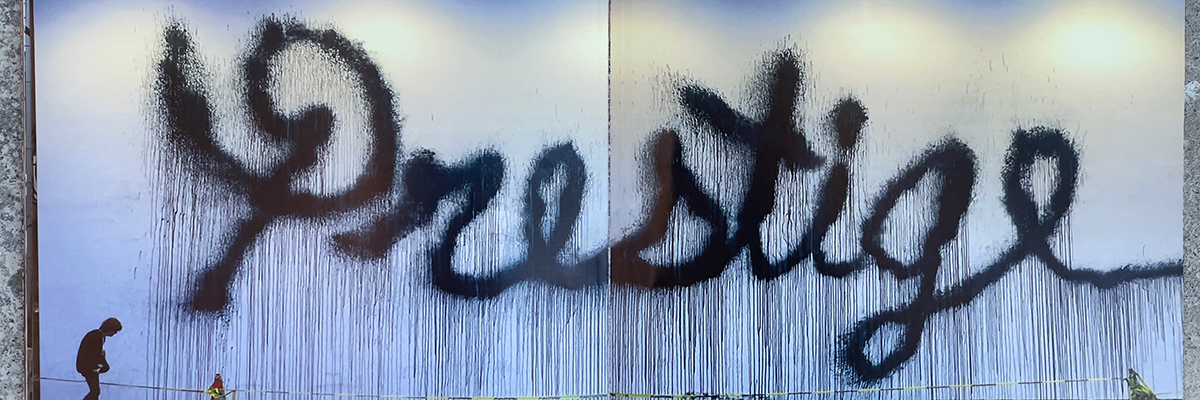
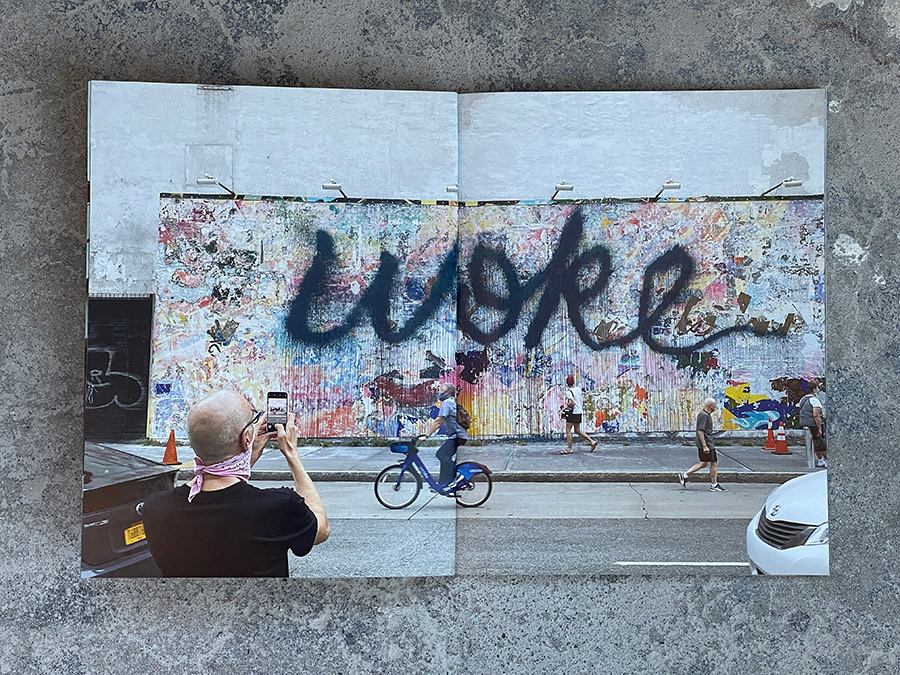
“Vote” was placed in Prospect Heights to remind folks of election day, which seems quite civic-minded. “Woke” appeared during the Black Lives Matter protests on the Bowery Wall. “Prey” is a sly indictment sprayed upon a church being converted into high-end condos. These messages look wild and unnerving, injecting a visual shock into an otherwise run-down or decaying lot or boarded-up window or upon a semi-trailer.
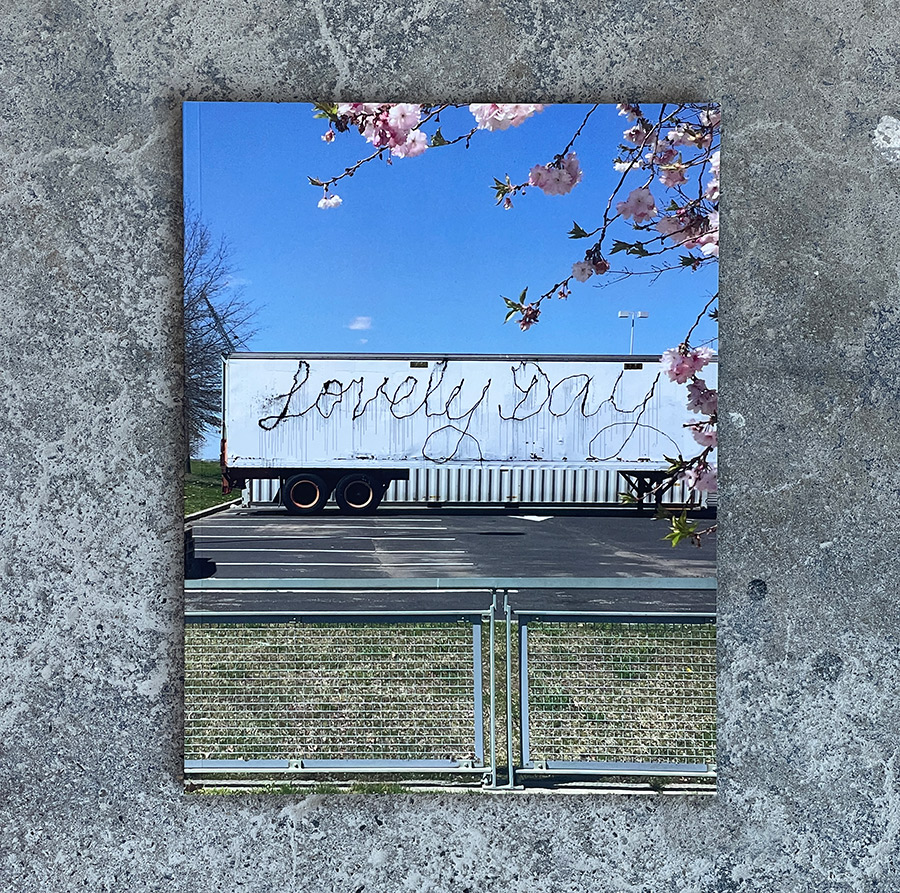
The cover is reserved for one such burst of springtime exuberance; the white trailer set against a blue sky and framed by a cherry tree with it light pink blossoms simply declares, “Lovely Day.” The index informs us that it is of course, the song that must be running through your mind by Bill Withers as the soft breeze caresses your cheek.
PORK: “I LEFT A NOTE”. Published by Blurring Books NYC PORK: “I LEFT A NOTE”. Published by Blurring Books NYC PORK: “I LEFT A NOTE”. Published by Blurring Books NYC PORK: “I LEFT A NOTE”. Published by Blurring Books NYC PORK: “I LEFT A NOTE”. Published by Blurring Books NYC
PORK – “I LEFT A NOTE”. The first edition published 2022 by @BLURRINGBOOKSNYC
“I LEFT A NOTE” is a 500-copy limited edition, and each copy is signed. You can purchase the book at BlurringBooks.com
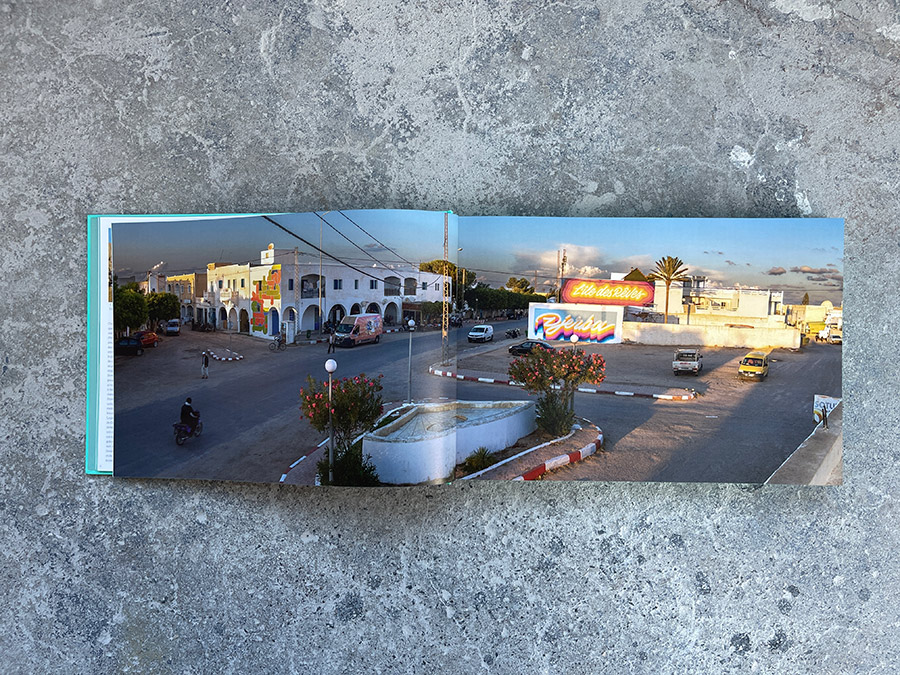
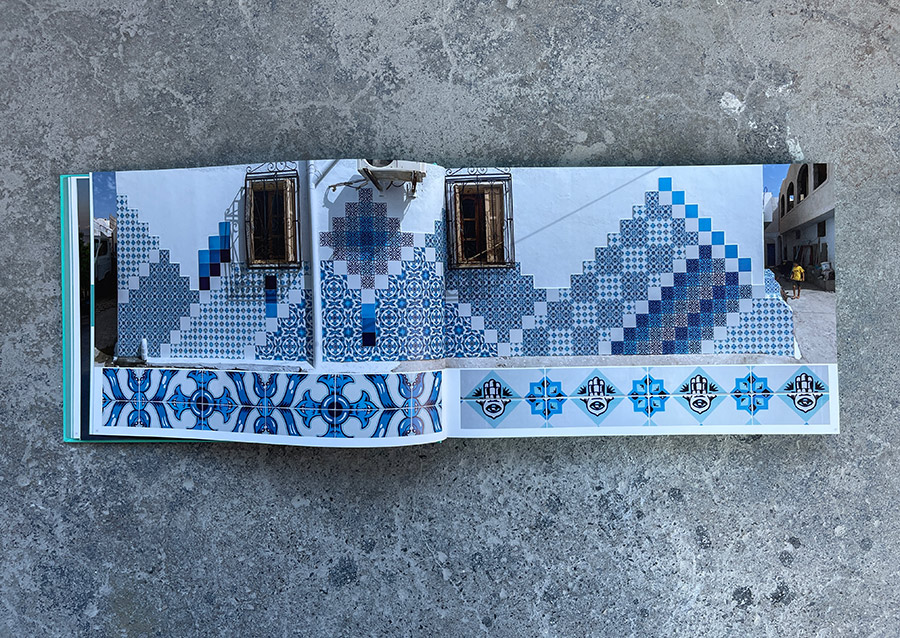
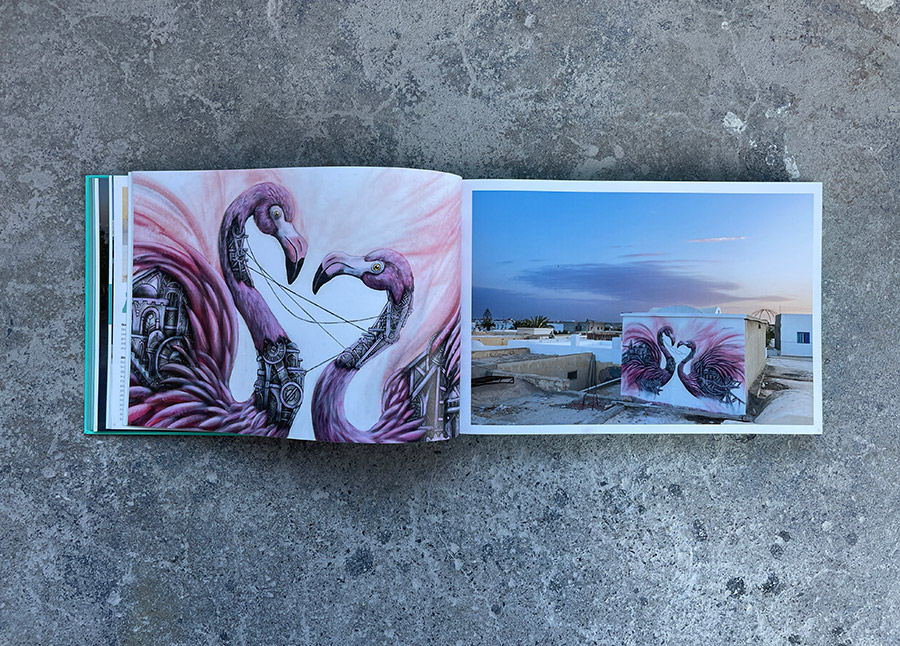
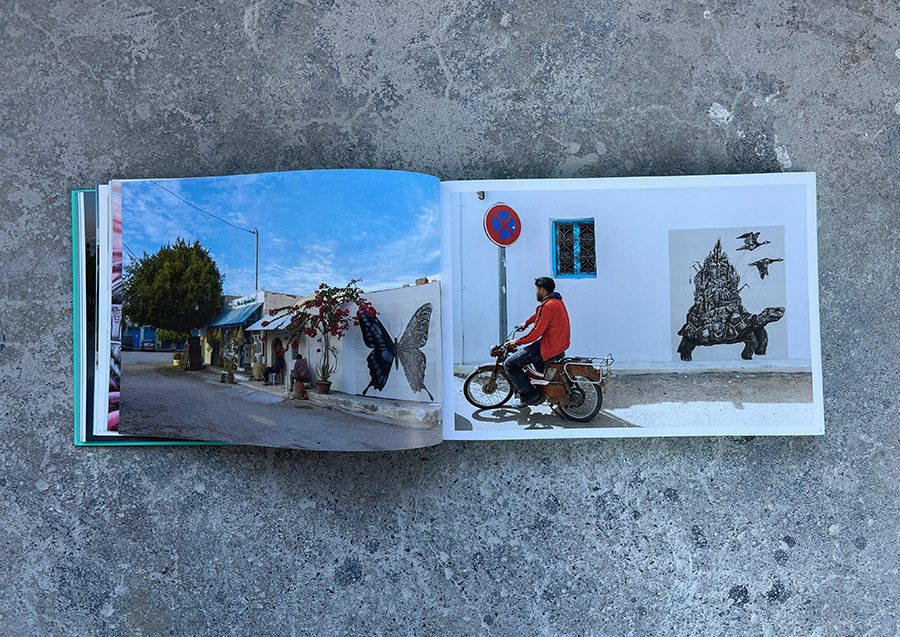
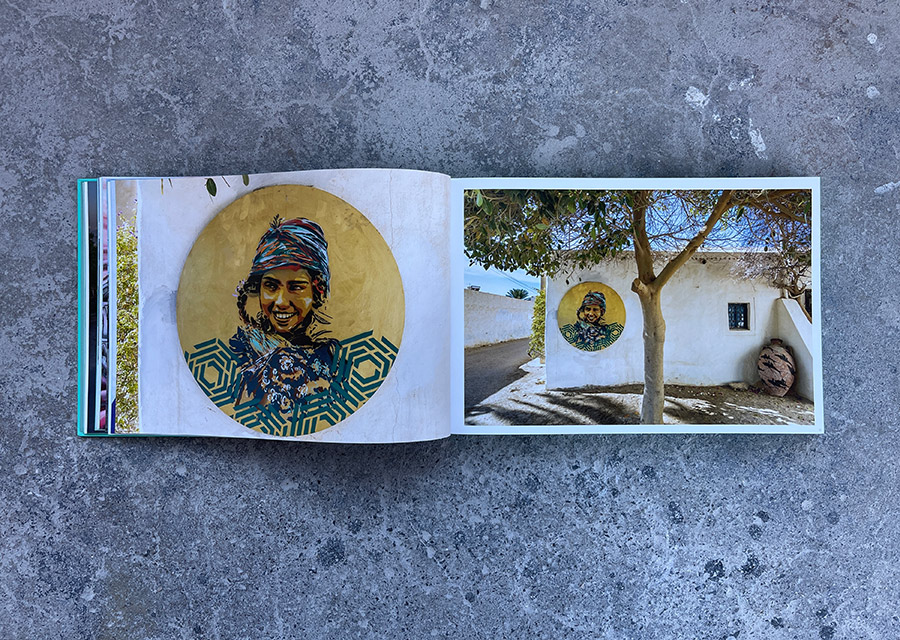
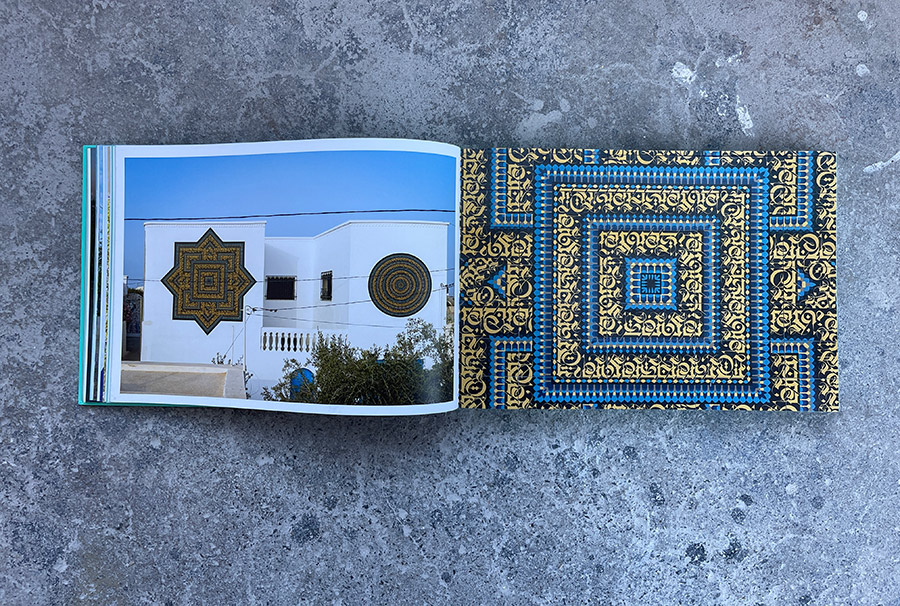
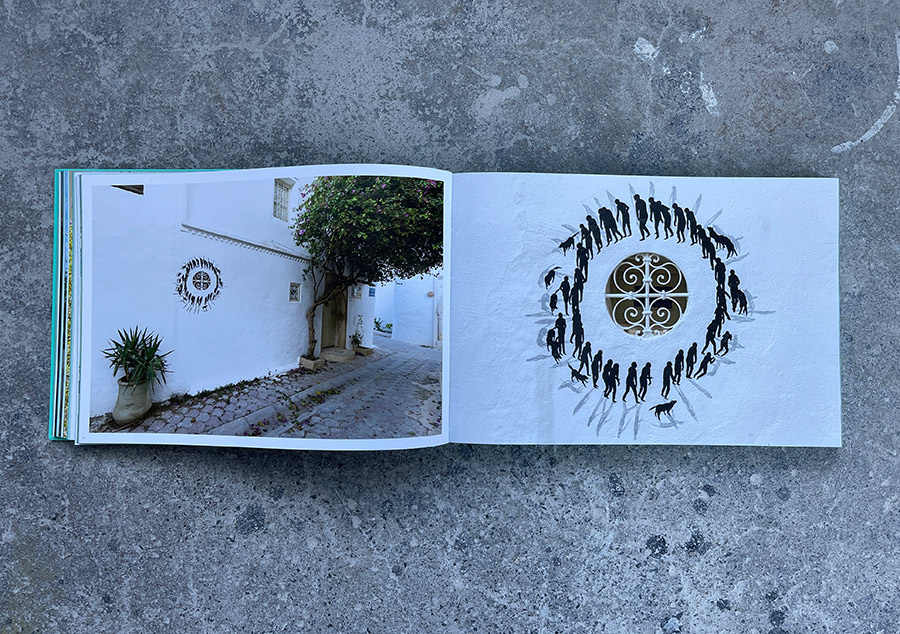
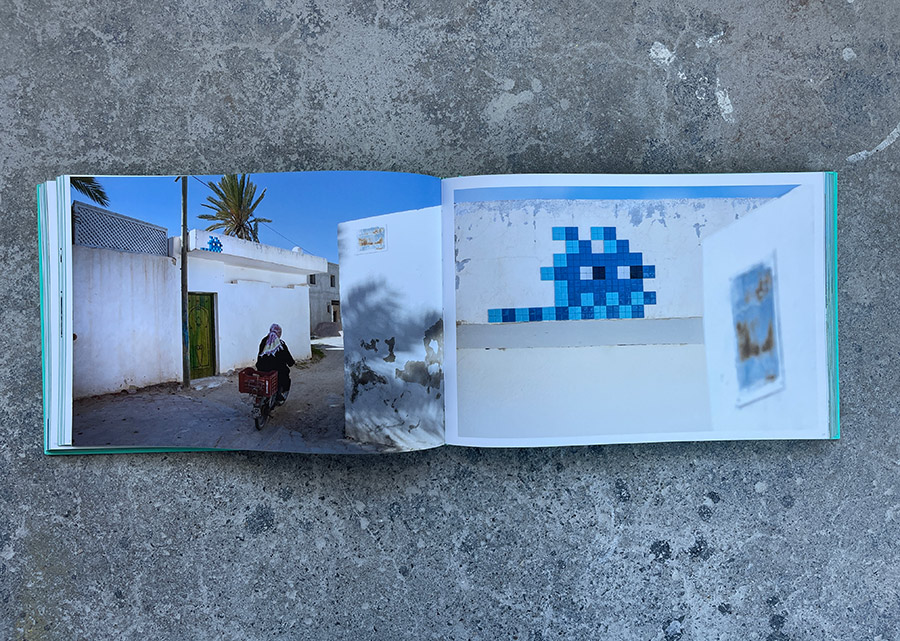
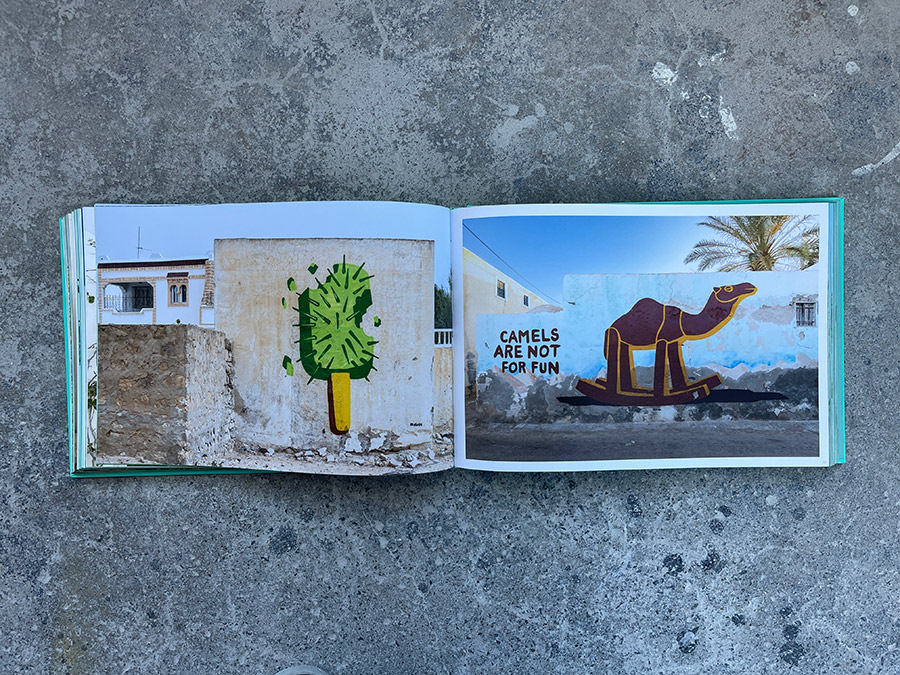
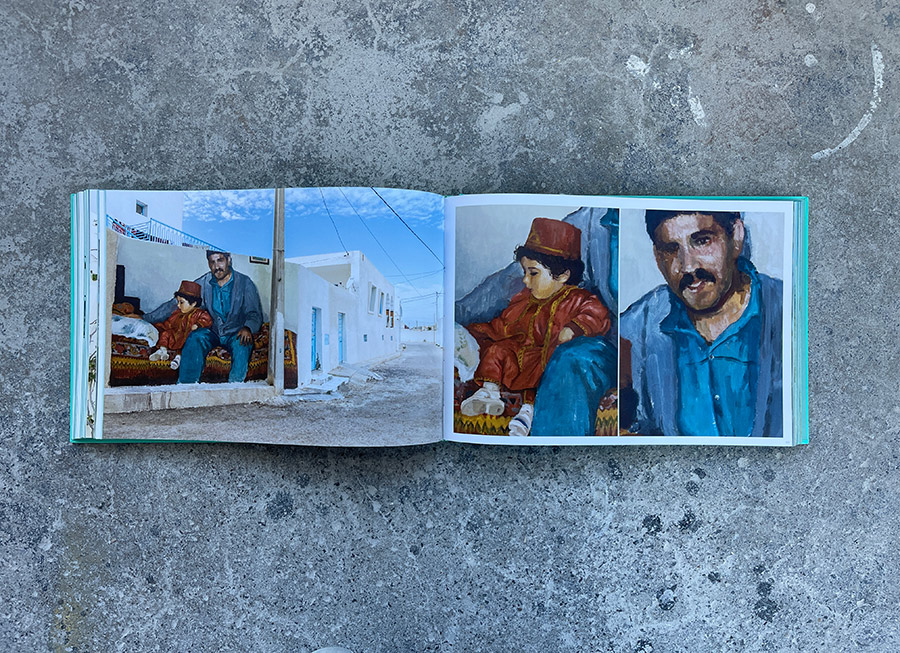
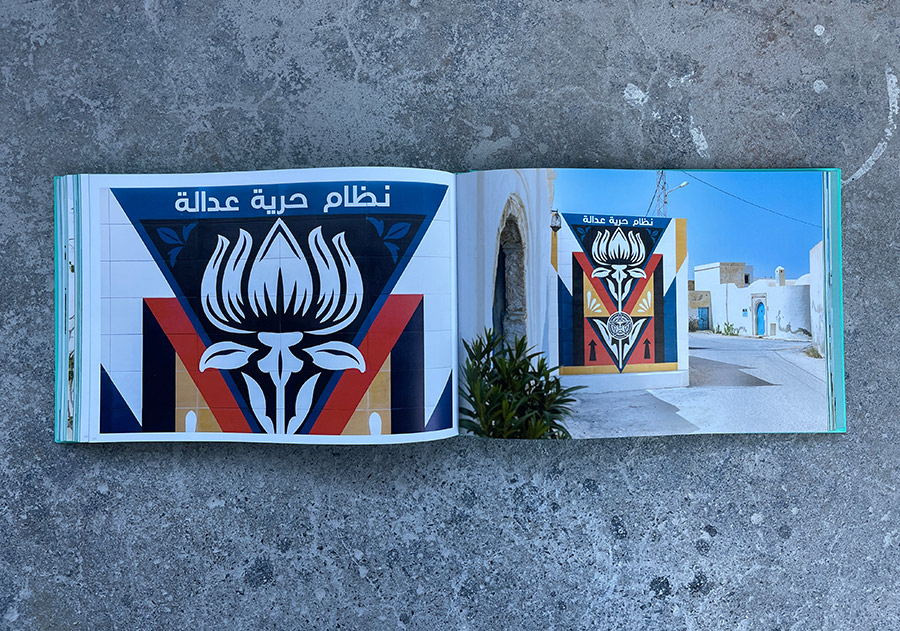
The traditional architecture in the Medina Atiga may be what attracts you initially, but it is the 150 street artists who will keep you wandering through the maze of tiny streets. The outdoor curation of Djerba by Mehdi Ben Cheikh, a bi-national with a gallery in Paris, happened over the last decade among the sun-blasted domes, arches, and towers here.
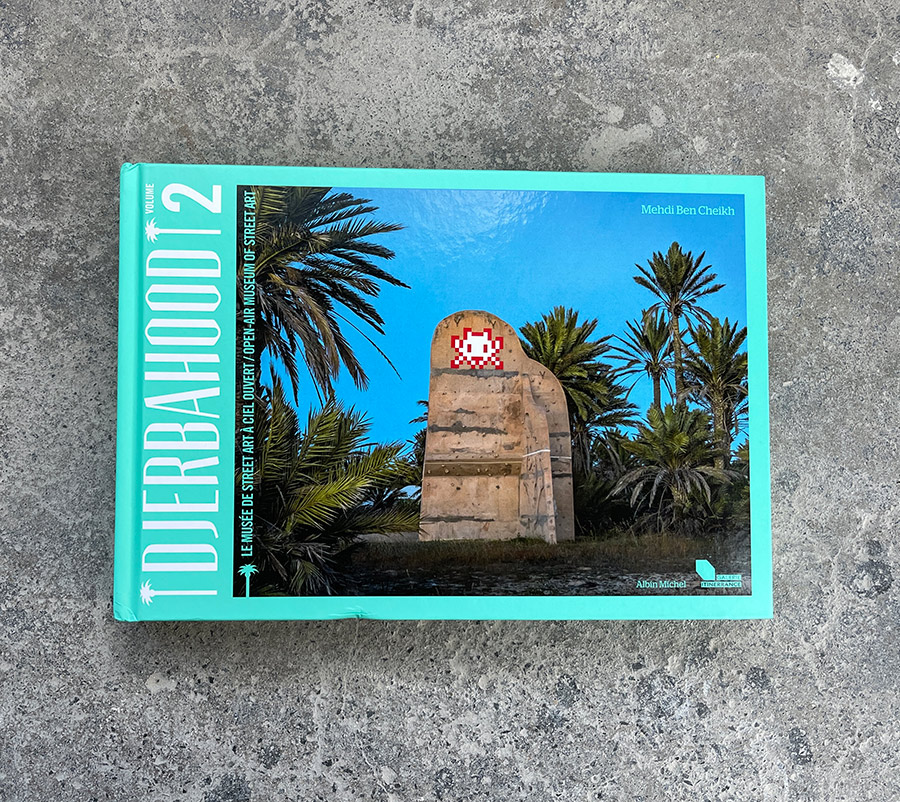
Djerbahood 2. Albin Michel – Galerie Itinerrance
“Djerba was exceptionally well placed for an operation with worldwide impact.” says the visionary Cheihk in the newly released Part 2 of Djerbahood, “On this, the southernmost island of the Mediterranean, the climate is pleasant and temperate for more than half the year.”
In this village of Erriadh on the Tunisian island of Djerba, you are twenty-five kilometers from the airport, adjacent to a long shoreline of fine white sand, and officially walking inside a UNESCO World Heritage site. It also helps that here you’ll find palm trees, olive trees, figs, pomegranate, carob, apple, and apricot trees, crystal clear water, and a fairly mild climate.
Djerbahood 2. Albin Michel – Galerie Itinerrance
“From my very first contact with the village and its inhabitants, I was persuaded that I was in the ideal place to launch an operation of this kind,” he says. “…The Djerbahood adventure had just begun.”
But aside from the hundreds of artworks in this outdoor museum, the new faces coming here also have infused the traditional community, businesses, and small industries. Mr. Cheihk spends some time detailing a tile business that has recreated itself with interesting new patterns and motifs and speaks of the newly engaged folks from the neighborhood who are proud of the artworks and ask for more when the originals have deteriorated.
It is an unusual project bringing street artists and muralists from 30 countries around the world, and the results have been enriching in culture and relationships. The unique atmosphere encourages unconventional artistic experiences, he says, stretching and blending new influences with the traditions of the area. It has become a laboratory of sorts where international meets contemporary.
Add Fuel. Djerbahood 2. Albin Michel – Galerie ItinerranceArdif. Djerbahood 2. Albin Michel – Galerie ItinerranceArdif. Djerbahood 2. Albin Michel – Galerie ItinerranceBToy. Djerbahood 2. Albin Michel – Galerie ItinerranceCryptik. Djerbahood 2. Albin Michel – Galerie ItinerranceDavid De La Mano. Djerbahood 2. Albin Michel – Galerie ItinerranceInvader. Djerbahood 2. Albin Michel – Galerie ItinerranceM-City. Djerbahood 2. Albin Michel – Galerie ItinerranceMohaned L’Gacham. Djerbahood 2. Albin Michel – Galerie ItinerranceTeuthis. Djerbahood 2. Albin Michel – Galerie ItinerranceShepard Fairey. Djerbahood 2. Albin Michel – Galerie Itinerrance
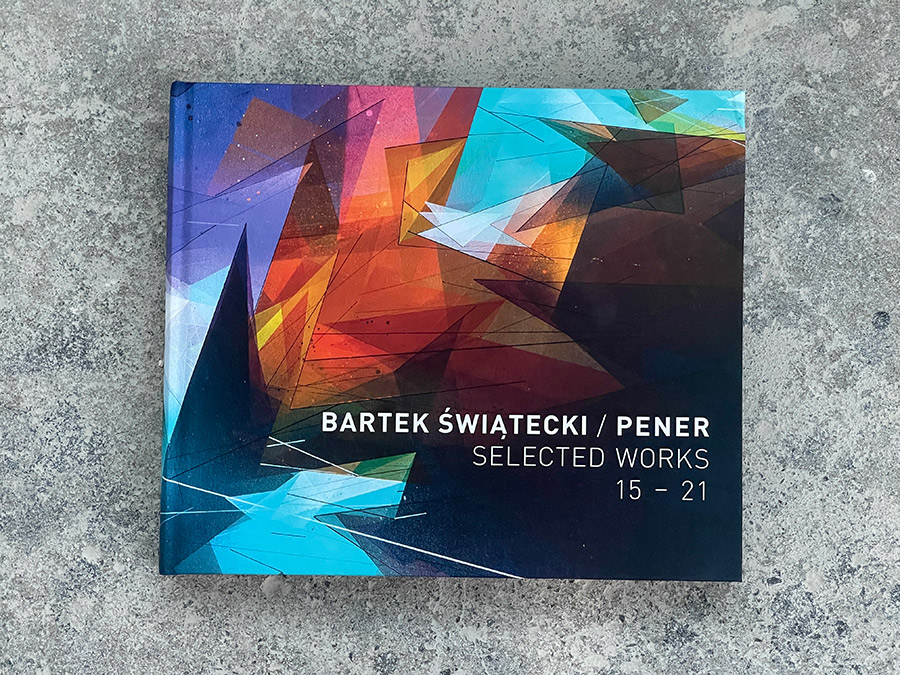
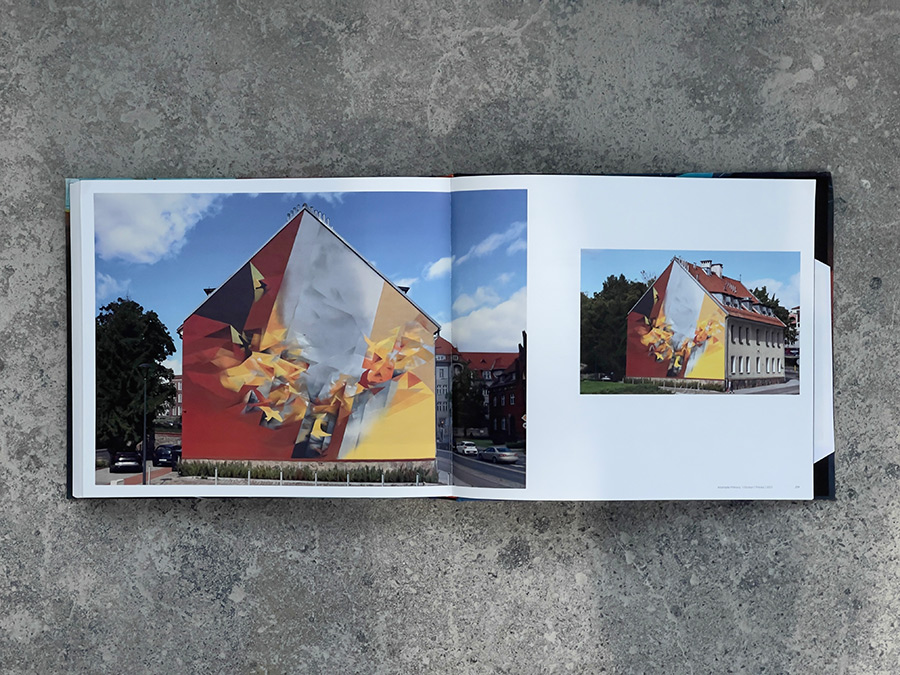
A new book here features six years of selected works from a Polish graffiti writer, muralist, and professor of art and painting at a secondary school in his hometown of Olsztyn, Poland. He reckons that his life is one of ‘Planned Freestyle,’ meaning that having structure imposed upon him is very helpful in focusing his creative mind. You may quickly appreciate this characterization if you know any artists.
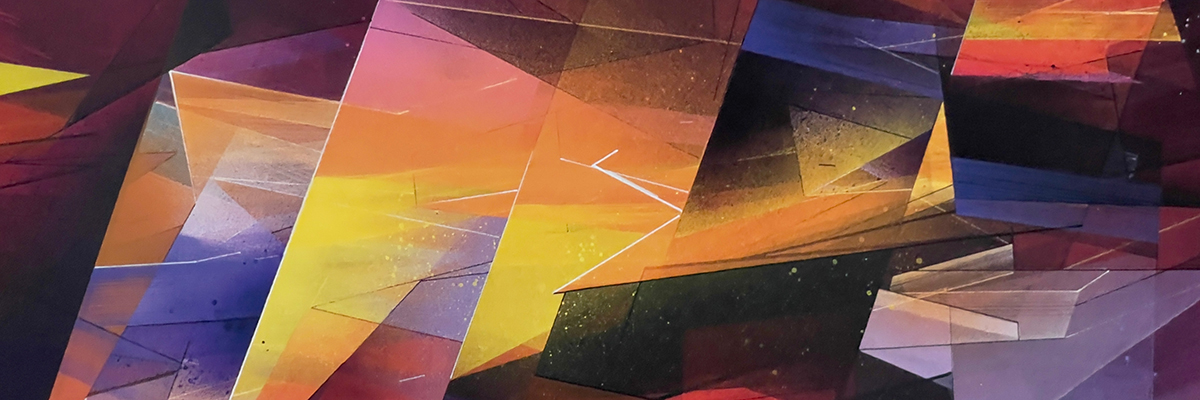
The collection of selected works here by Bartek Swiatecki is as luminous and optically rewarding to the viewer as they are opaque to the mind and stirring to the heart. With prolific and gently evolving abstractions in movement, you can see an artist at work, at play, and at his personal best – topping his previous work. The grandson of another painter and professor (of philology), Miroslaw Swiatecki, and the nephew of a famous painter and animator, Marek Swiatecki, perhaps it was only a matter of time before this 90s graffiti writer moved into more formal practices on canvas and walls.
In an in-depth interview, Pener reveals his sometimes complex feelings about the label of street artist, almost as if it diminishes his abilities and craft.
“Almost all of my friends I paint with are graduates of art faculties at universities or academies; most of them are architects or graphic designers,” he says. “Each of us works hard, so I get angry sometimes when we are labeled street artists because it is a huge simplification.”
The sentiment rings true, although we have never had anything but respect for street artists, regardless of their formal training. We witness a struggle for definitions at nearly every juncture along this graffiti/street art/fine art/mural art/contemporary art continuum.
In the end, the work speaks for itself, as this book can attest.
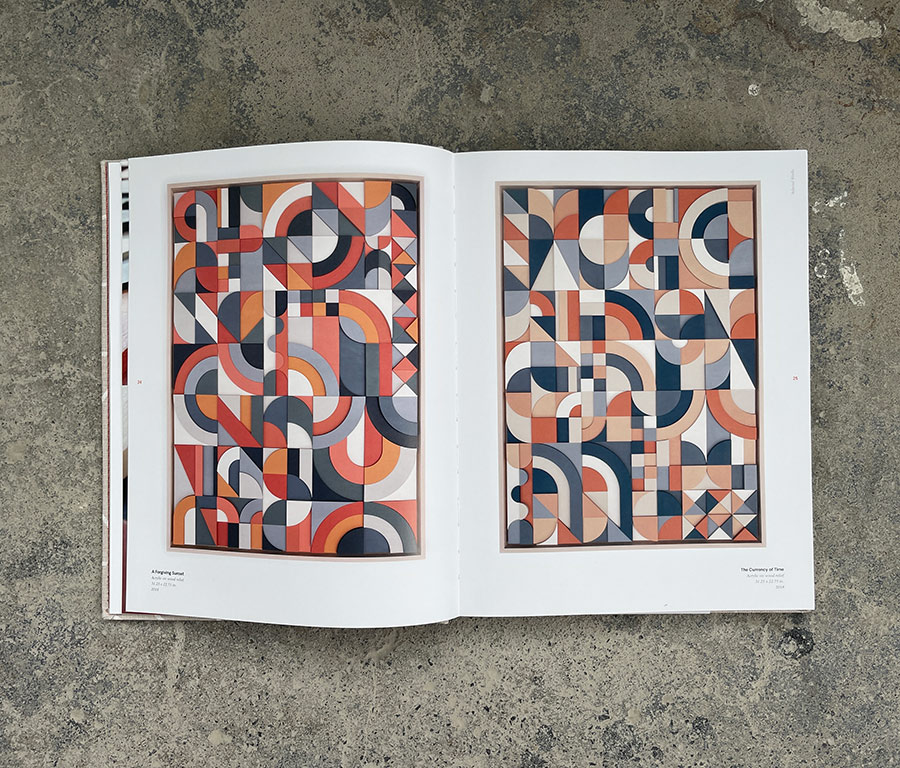
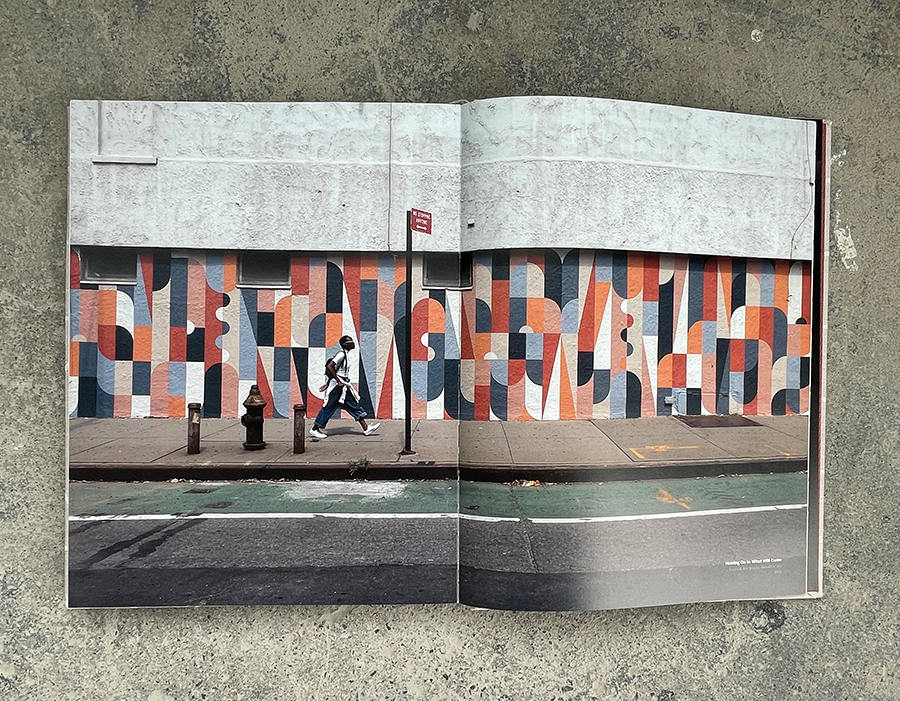
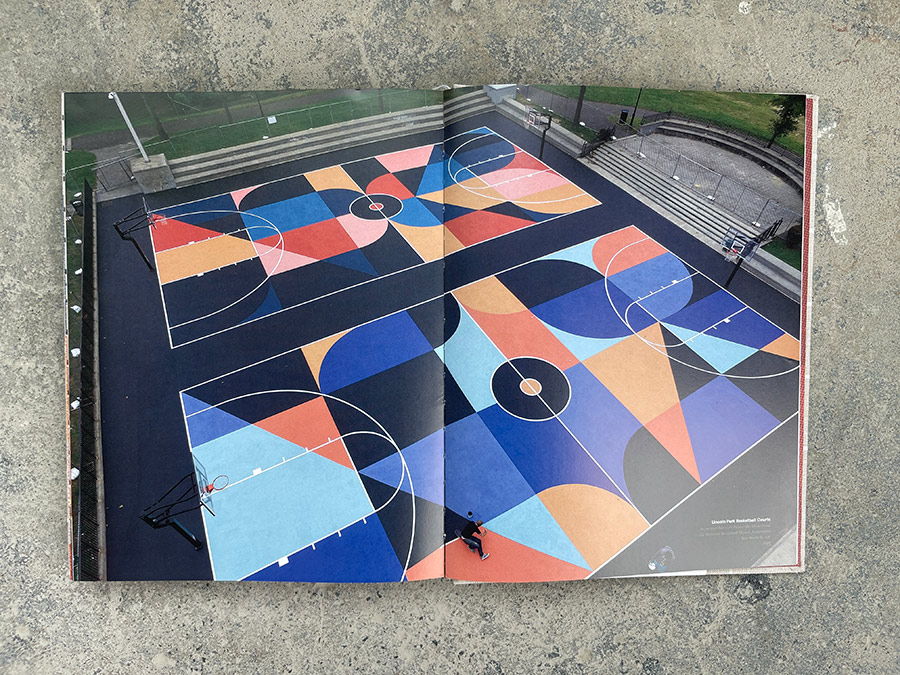
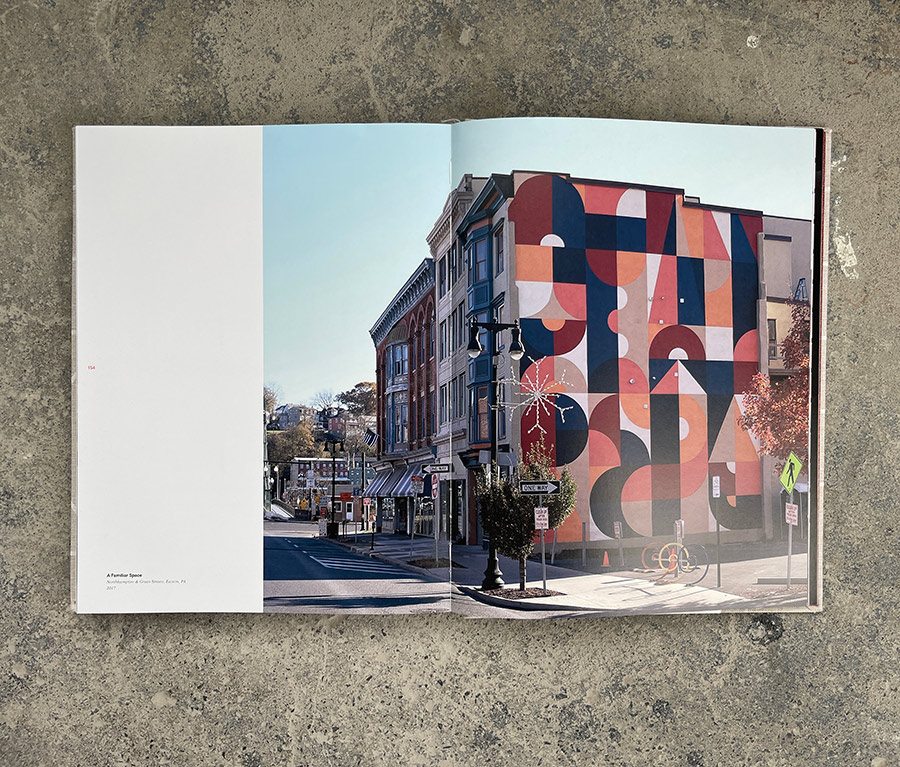
Color-blocked basketball courts appreciated from a plane, cheerful abstract murals for restaurants, hotels and cafes, and massive wood collages comprised of assembled pieces that are each finished before joining. What do these expressions of artist Scott Albrecht have to do with one another? If you study the patterns, in time, you will see.
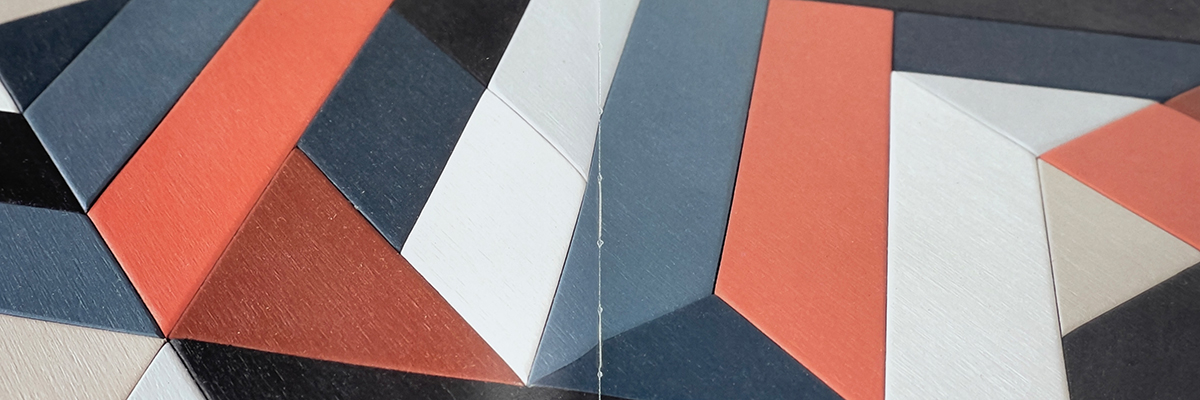
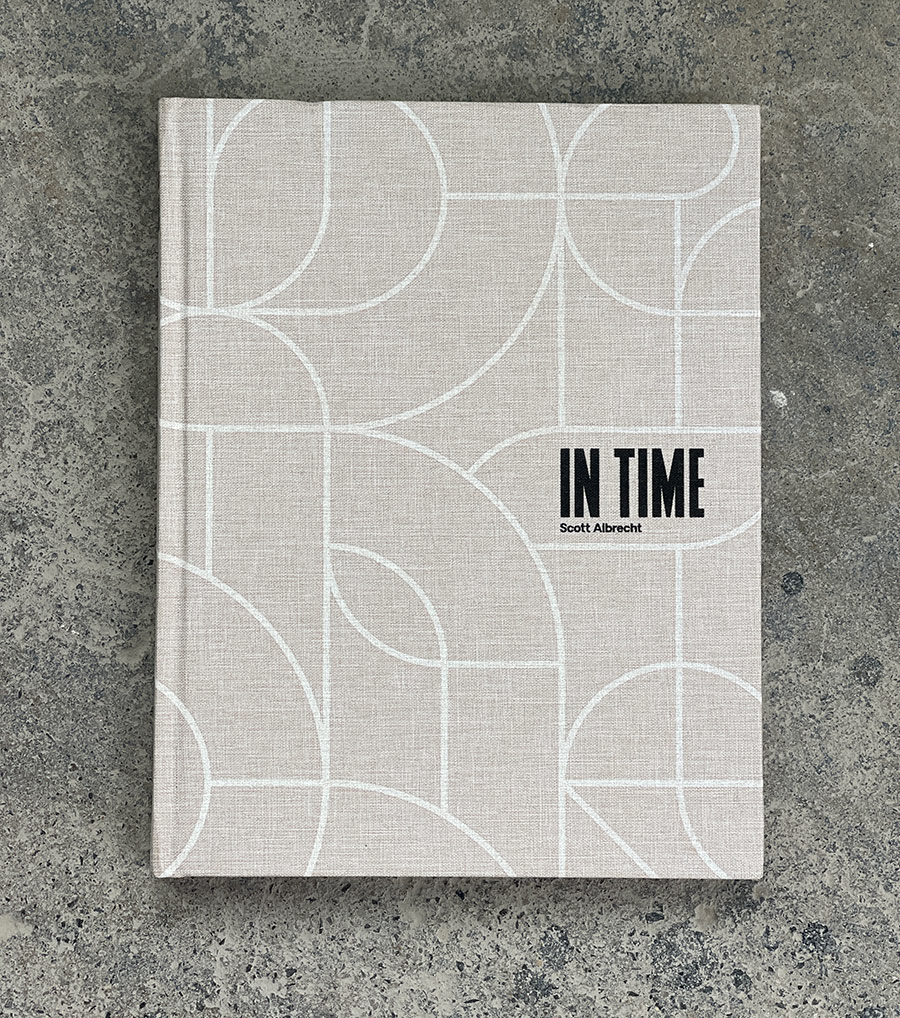
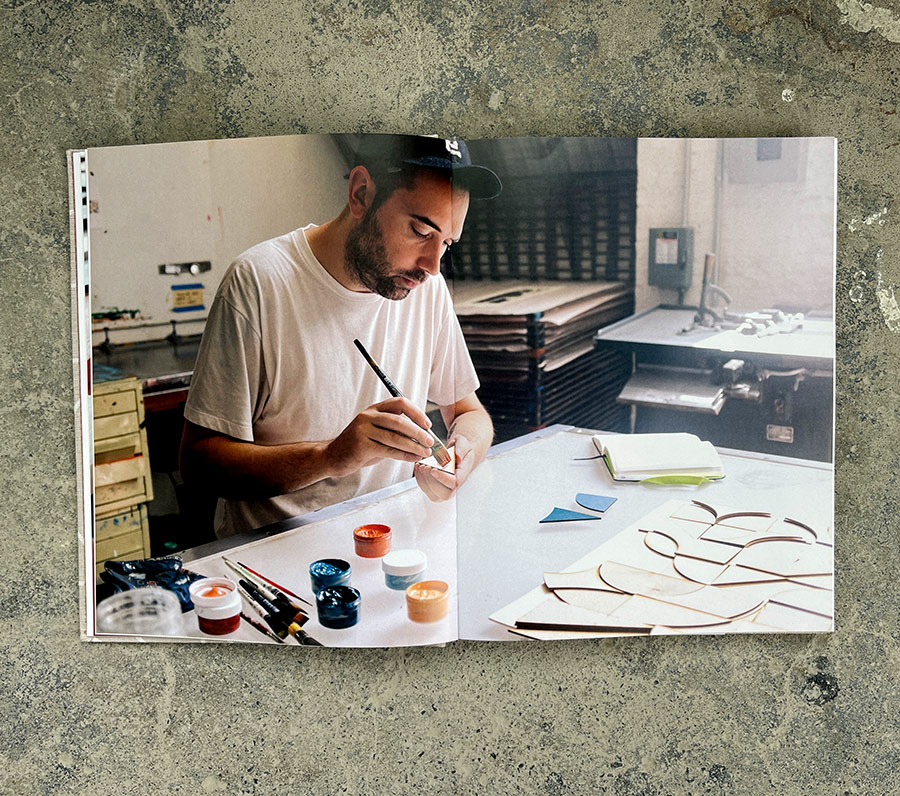
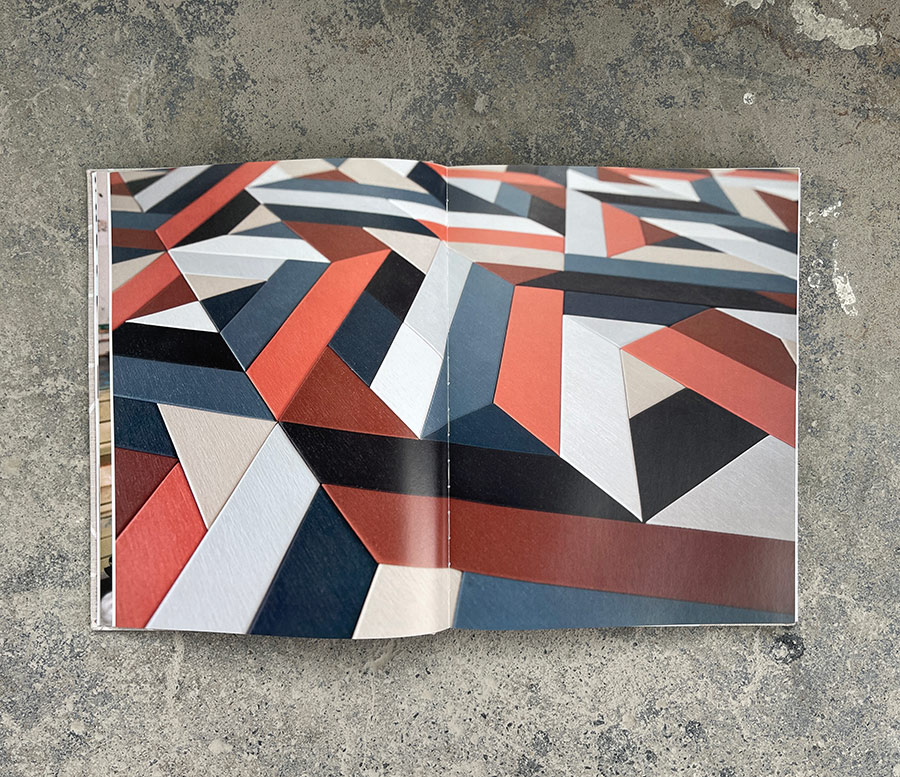
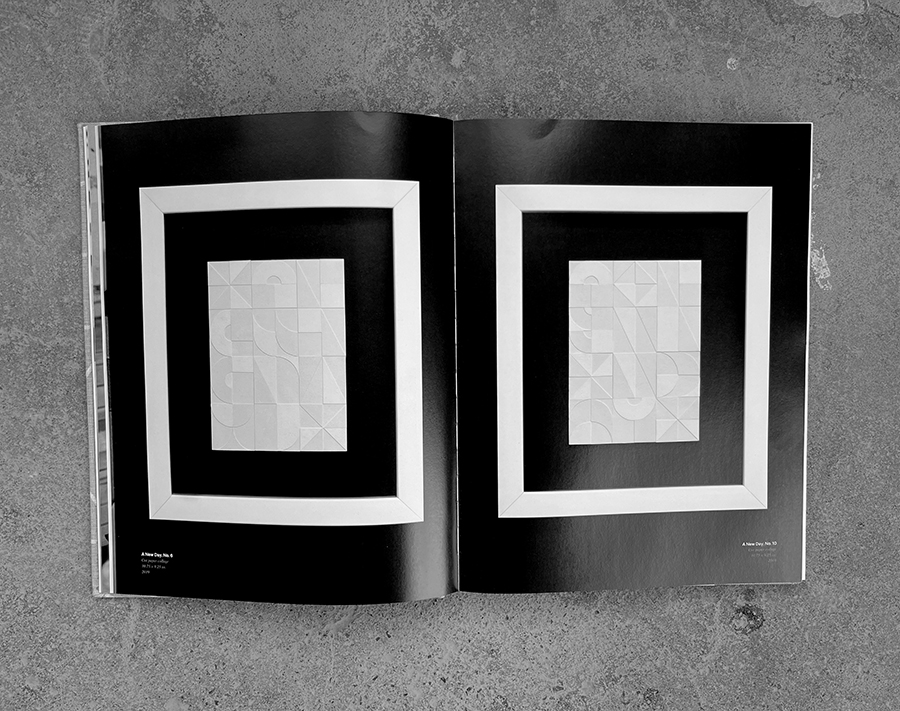
A handsome cloth-covered hardcopy of works by the Gowanus, Brooklyn-based public/studio artist presents a selection of works from 2017-21 that have a rational color theory, smoothly dynamic geometries, and a soothing certitude in their complexity. Spotlighting public art projects, studio processes, exhibitions in New York and LA, and his residency at Hyland Mather’s place in Portugal, the collection is refined yet human.
In his description of his work, Albrecht is focused on the process as much as the product. “Most of my works are made up of a collection of pieces that go through a series of steps before they’re
assembled. Any single step per individual piece doesn’t take long–laminating, sanding, painting-but if a work has a couple of hundred pieces, and all those pieces go through the same process, time feels less linear and more compounded as I work through the steps.”
Together these steps appear to be a decoding mechanism that is necessary to understand fully. “While the work itself may be speaking to a single idea, it’s made up of a collection of individual elements coming together to form the whole,” he says. “I often equate these individual pieces to the micro-experiences we encounter that inform our relationship to an understanding.”
First encounters with Albrect’s work are gripping and calming – a deliberate collection of shapes and hues arranged in a way that is not readily apparent. It’s all about pattern recognition, says David Pescovitz, a research director at a think tank and co-editor of a tech/culture Web magazine. He writes the introduction to the book and tells us that the works are meant to be meditative, a brain exercise and visual riddle that, once solved, is rational.
“We’re so practiced at seeking patterns – searching for structure in the flood of signals coming our way, connecting the dots, trying to make sense of, well, everything–that we’re usually not aware we’re doing it.” Sighting neuroscientists and various peer review journals Pescovitz makes his case, and you are inclined to go back through the pages and let your eyes glide, parry, sense, and decode the patterns’ greater logic.
In time, you will.
Scott Albrecht: In Time. Click HERE for information about purchasing this book.
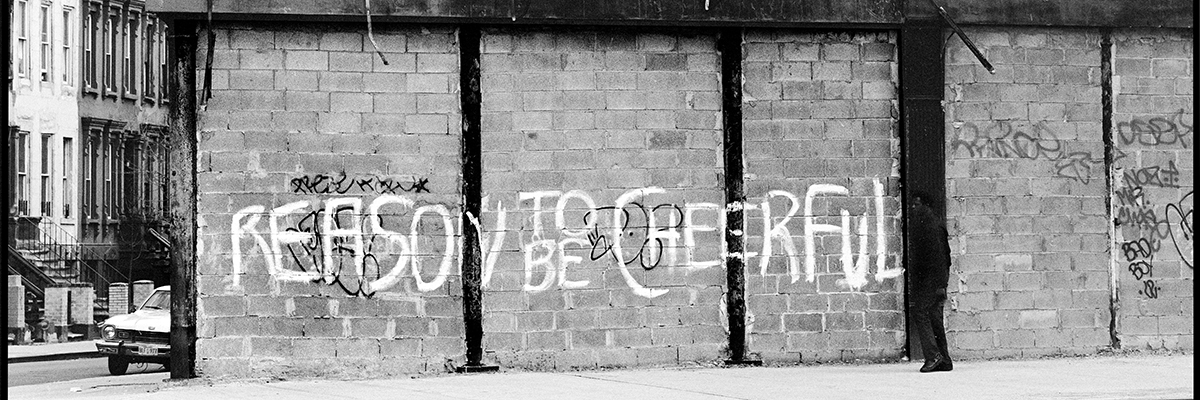
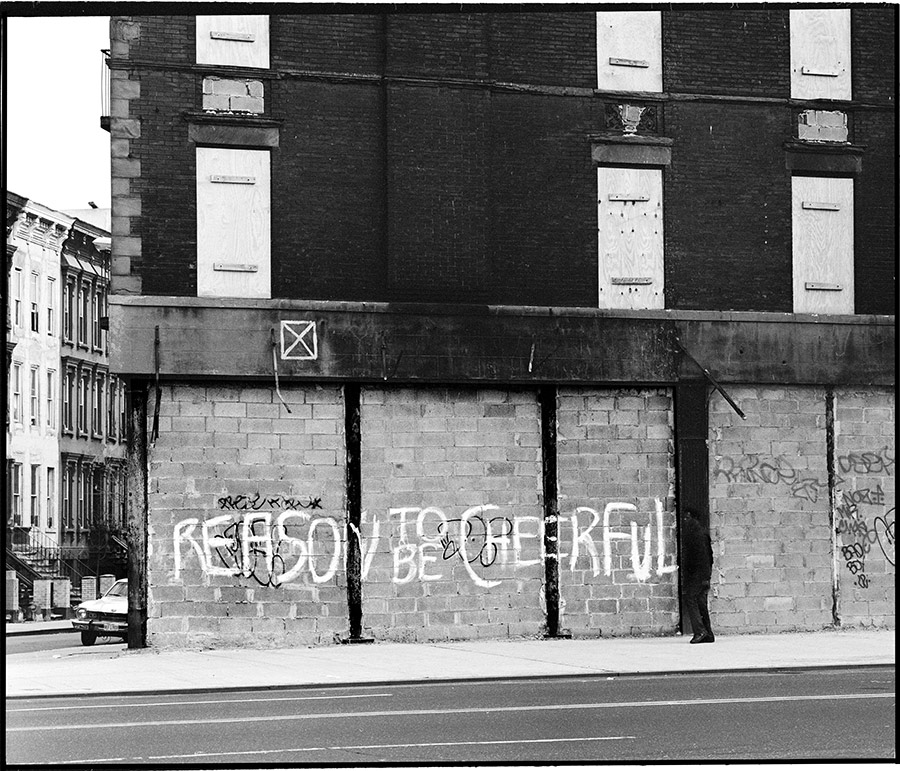
Famed graffiti writer REVS detailed many an illegal ‘mission’ in his first self-published opus – the caveat is you needed to go underground in the New York subway tunnels to read about them. That was a few decades ago but even today when certain train lines are stalled between stations, which happens less frequently than it did in the ragged wild 1970-80s when many New York graffiti writers like REVS began, passengers can look out the window and read a portion of a diary entry. Over time people searching for these works discovered that this artist turned out to be a writer in more than one sense with his self-aware observations, opinions, memories, and aspirations inscribed in a personal/public voice along darkened subterranean passageways. Prolific and determined, he is credited with eventually some 230+ entries on walls that appeared during the late 1990s and early 2000s. Each are now a series of moments frozen in time, receding into New York and graffiti history.
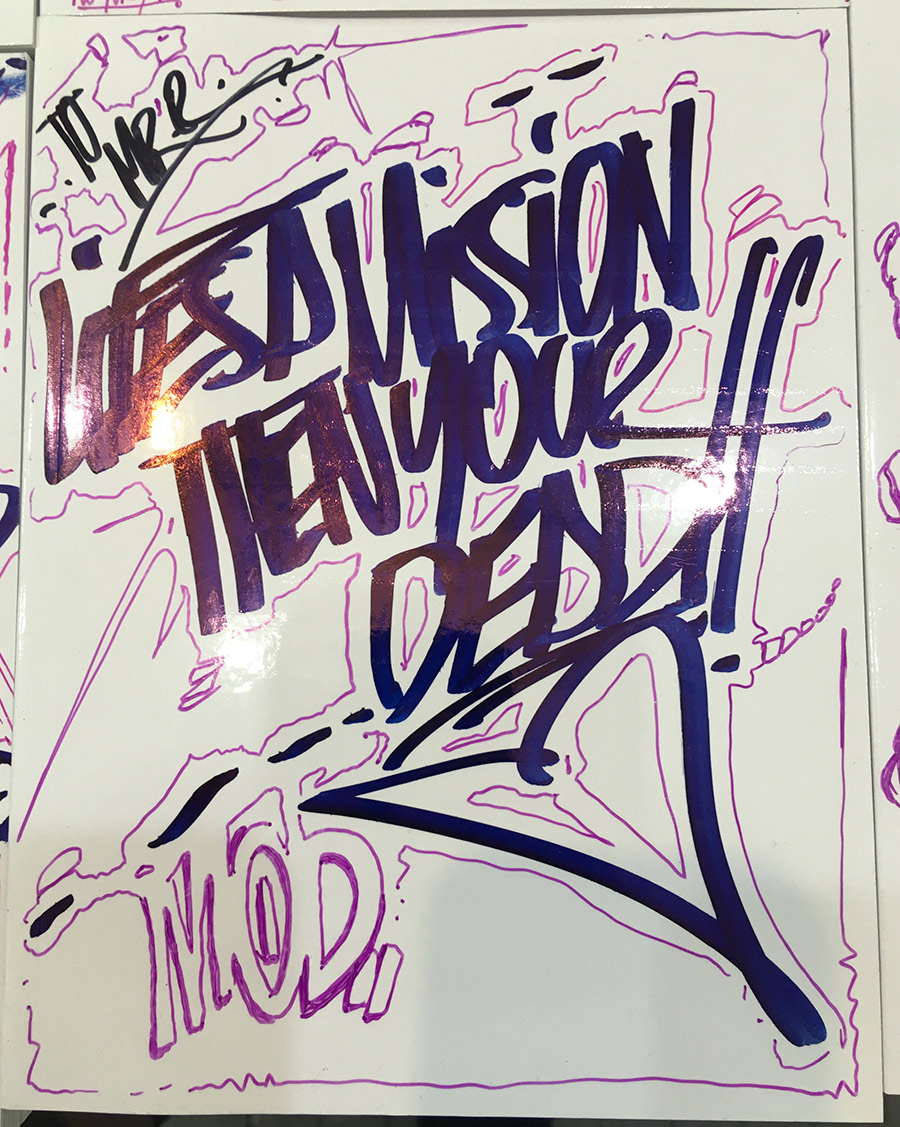
REVS, XSOUP & ARBOR. “Life’s a Mission…Then You’re Dead”
Today the writer expands his reach, compiling with XSOUP and ARBOR the stories of many graffiti writers into a bound volume that will become an instant classic in the largely anonymous and underground realm of practitioners as well as with the growing cadre of researchers, academics and historians studying graffiti/street art/urban art today. With this new passion effort by REVS and a small team, these stories are preserved and documented, ensuring a greater understanding and appreciation for the interconnected/alienated paradox of the graffiti writer’s life and practice.
‘We preserved each individual’s truths, opinions, exuberance, pride, joy, and grudges in an effort to depict the gritty complexities of this scene we inhabit.’
Author and REVS documentarian Freddy Alva below tells us about the upcoming small-run book release that has become a hot ticket for the New York graff (and street art) scene this week.
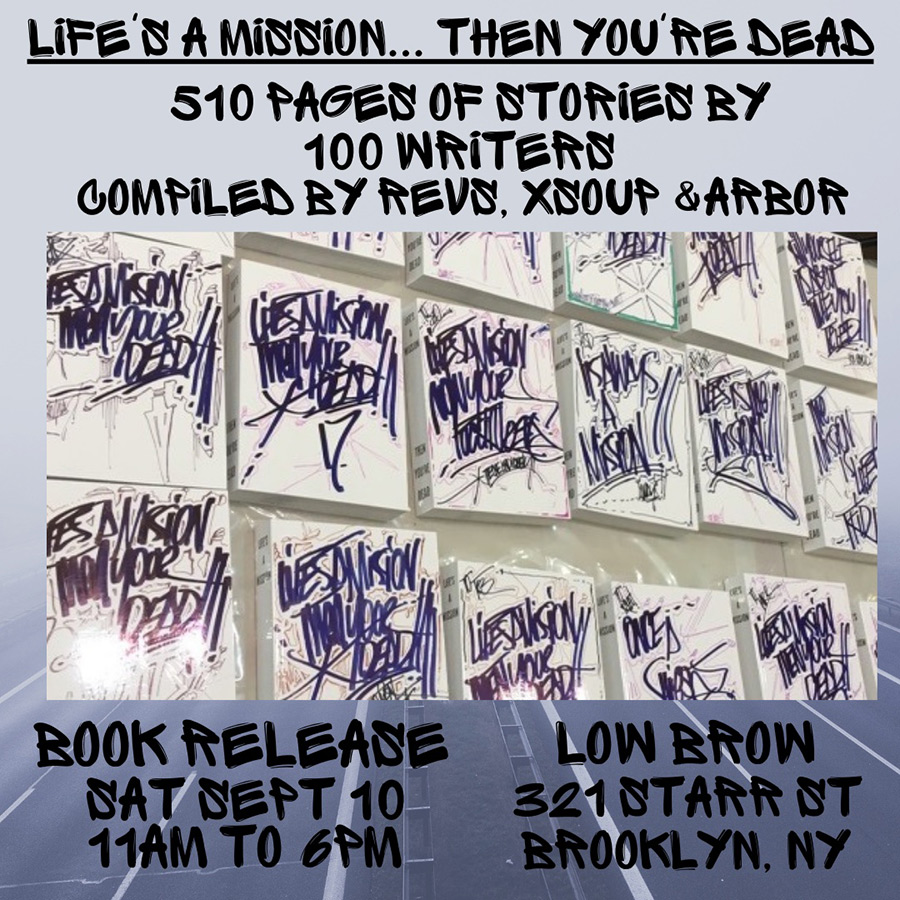
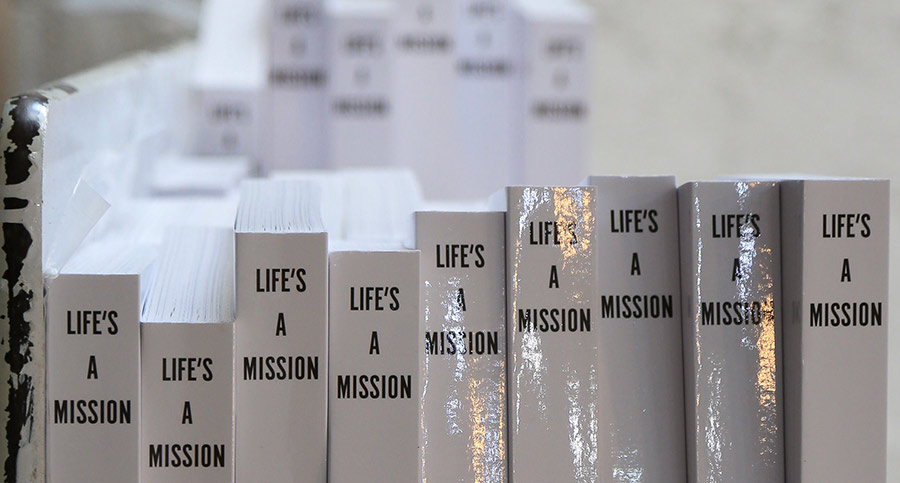
There’s a book release in Brooklyn on Saturday, September 10, celebrating ‘Life’s A Mission Then You’re Dead’; a comprehensive 510 pages book of blood, sweat & tears-soaked stories by 100 NYC Graffiti writers. REVS and XSOUP, with help from ARBOR, compiled this loving insiders’ oral history of an idiosyncratic street culture that few are privy to.
From the introduction: ‘The history of writing, style writing, or graffiti, is brief but nebulous. Generations turn over every couple of years, scattered across the city’s many neighborhoods and extending to most places on earth. The histories of these small, fluctuating groups are mostly recorded in memory and recounted through word of mouth—some to larger audiences and some reaching only a select few. Outsiders curious about writing have been responsible for much of its documentation… The voices of many writers could together offer a more intricate, nuanced view of the world of writing… We preserved each individual’s truths, opinions, exuberance, pride, joy, and grudges in an effort to depict the gritty complexities of this scene we inhabit.’
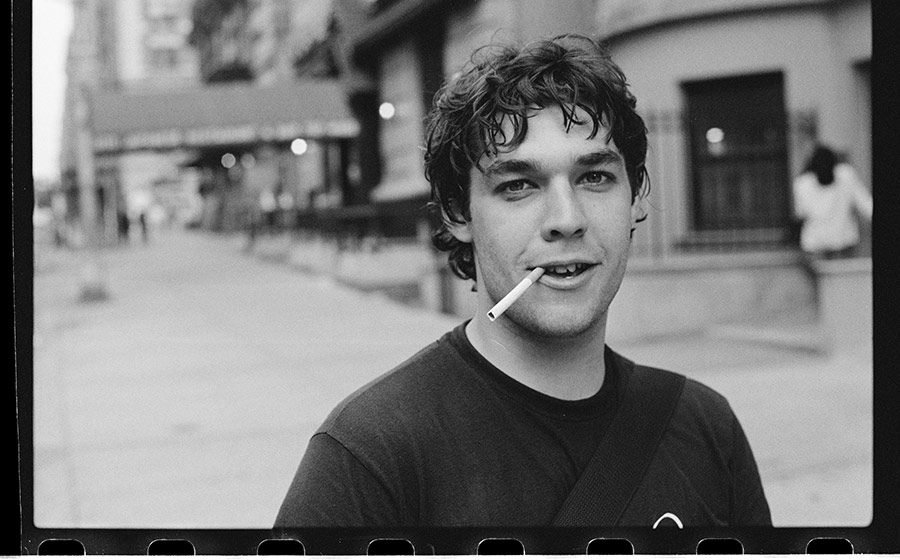
Each cover is individually drawn by REVS with images by NYC street photographer Matt Weber aka MALTA. Book design is by Eric Wrenn with editorial assistance by Polly Watson. This is a self-published endeavor with no online link to order at the moment, limit one copy per customer and cash only at the release event 11-6pm on September 10 at: Low Brow, 321 Starr St Brooklyn, NY 11237
 BROOKLYN STREET ART LOVES YOU MORE EVERY DAY