Welcome to BSA Images of the Week! This is the last weekend of the summer for some, a celebration of workers’ rights for others. Labor Day’s parade began in 1882 in Union Square, New York City. Now, unions are under attack, as they have been for a long time. However, without your labor, this city would not exist as it does today.
Labor Day in New York is more than just a long weekend — it’s a reminder of the people whose work has shaped the city and inspired workers’ movements worldwide. From builders and transit crews to teachers, caregivers, and service staff who keep daily life moving, New Yorkers have always been at the forefront of fighting for dignity and fairness on the job, often at great personal sacrifice. Like the uncommissioned art and permissioned art that fills our streets, some labor is public, visible, and often underappreciated — yet it leaves an unmistakable mark on the life of the city. We honor that history and salute the many workers across the five boroughs who carry it forward every day, with grit, pride, and a determination that makes New York what it is.
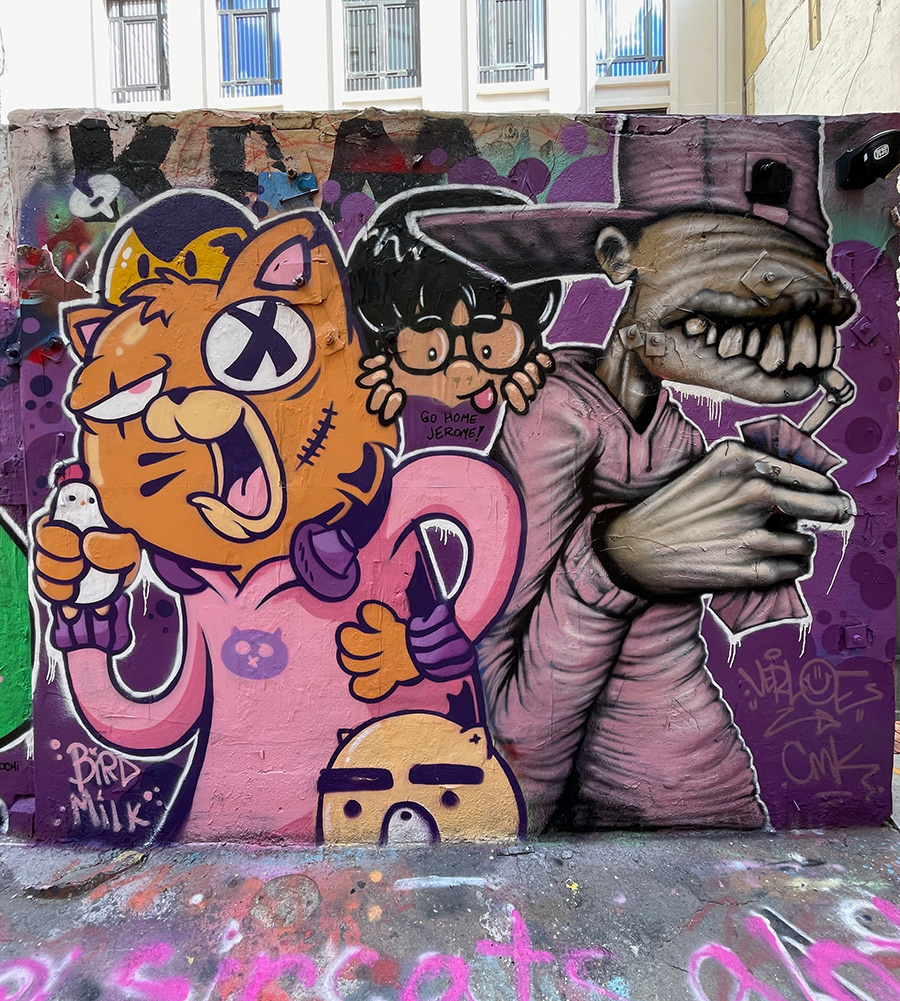
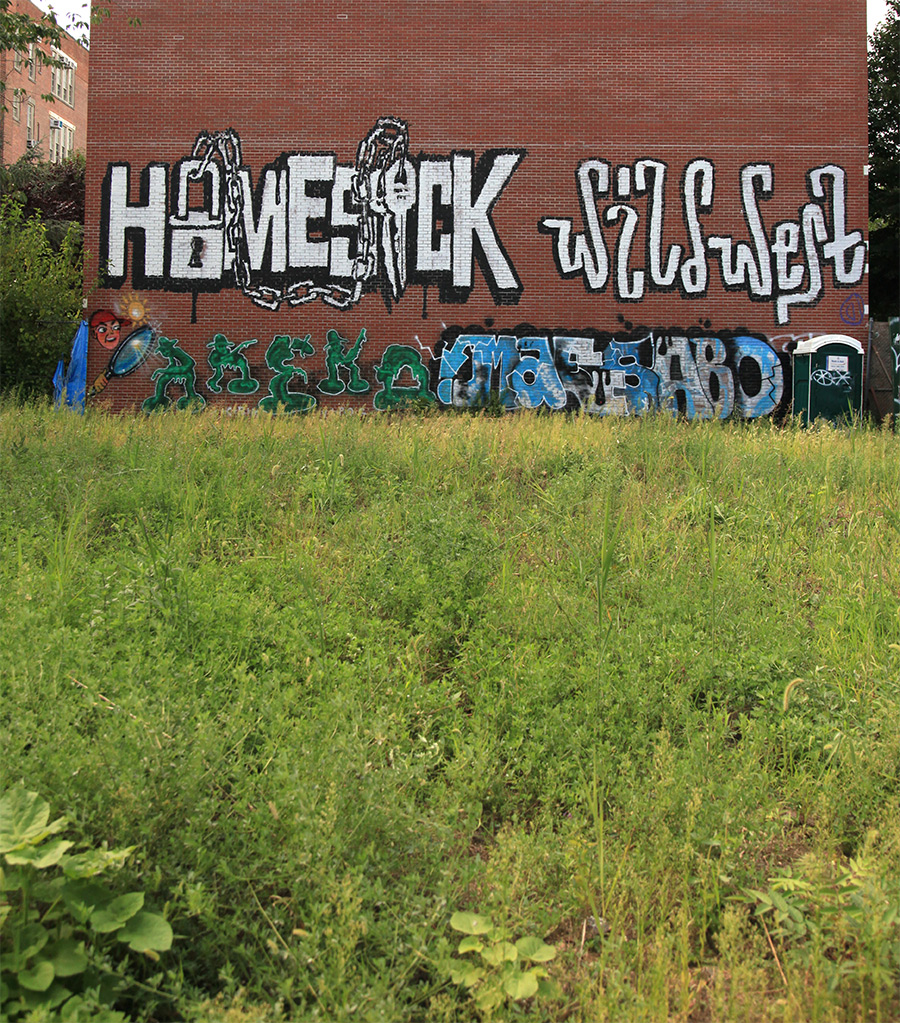
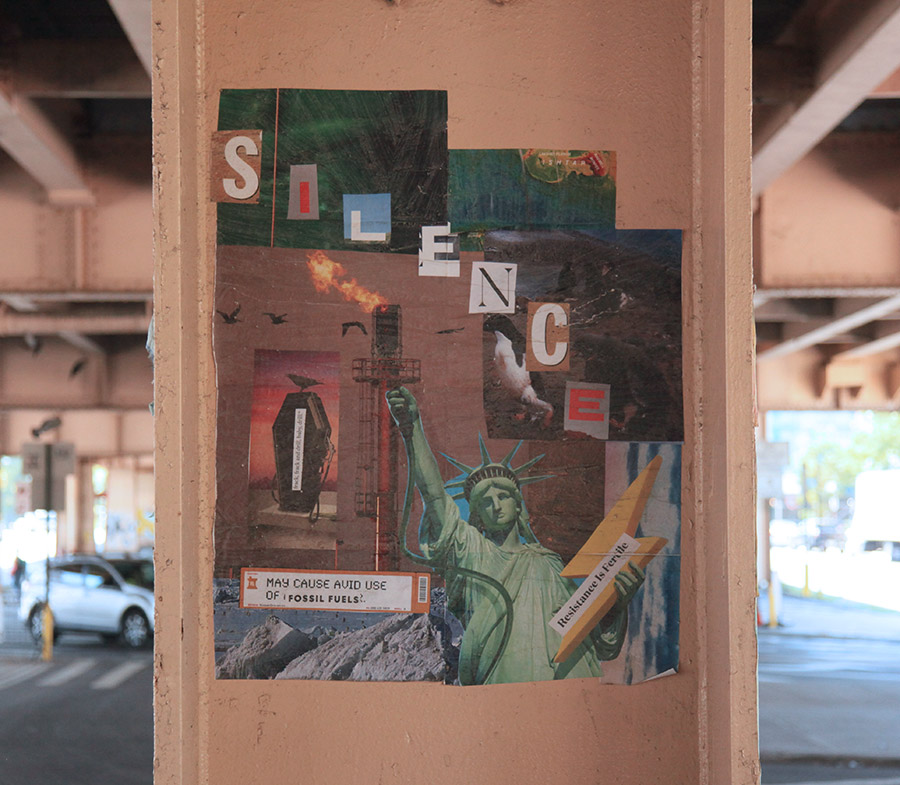
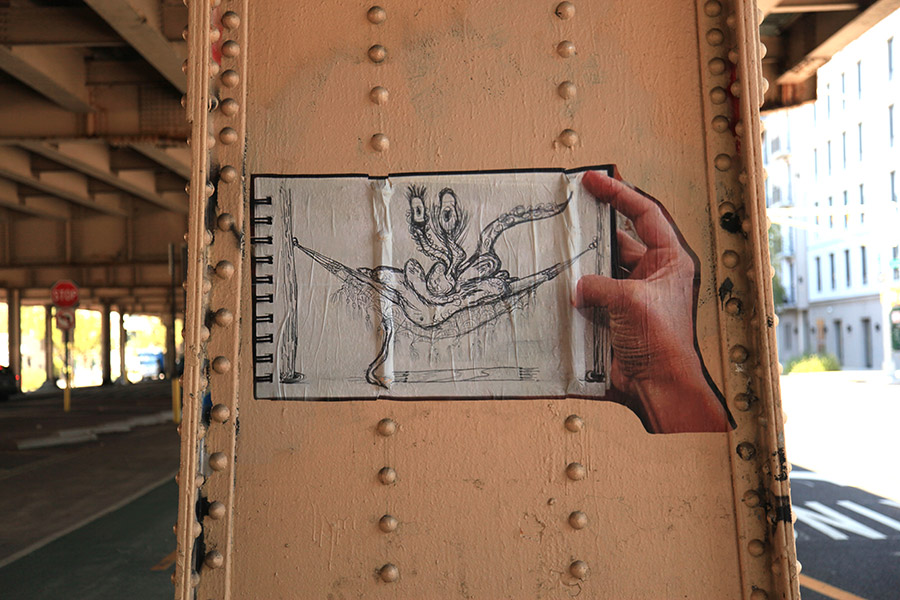
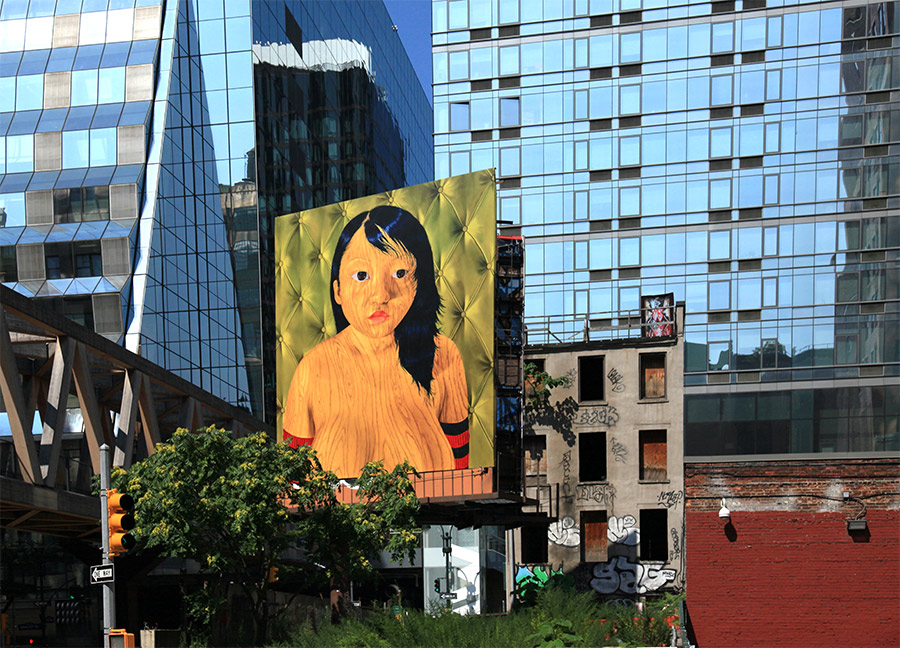
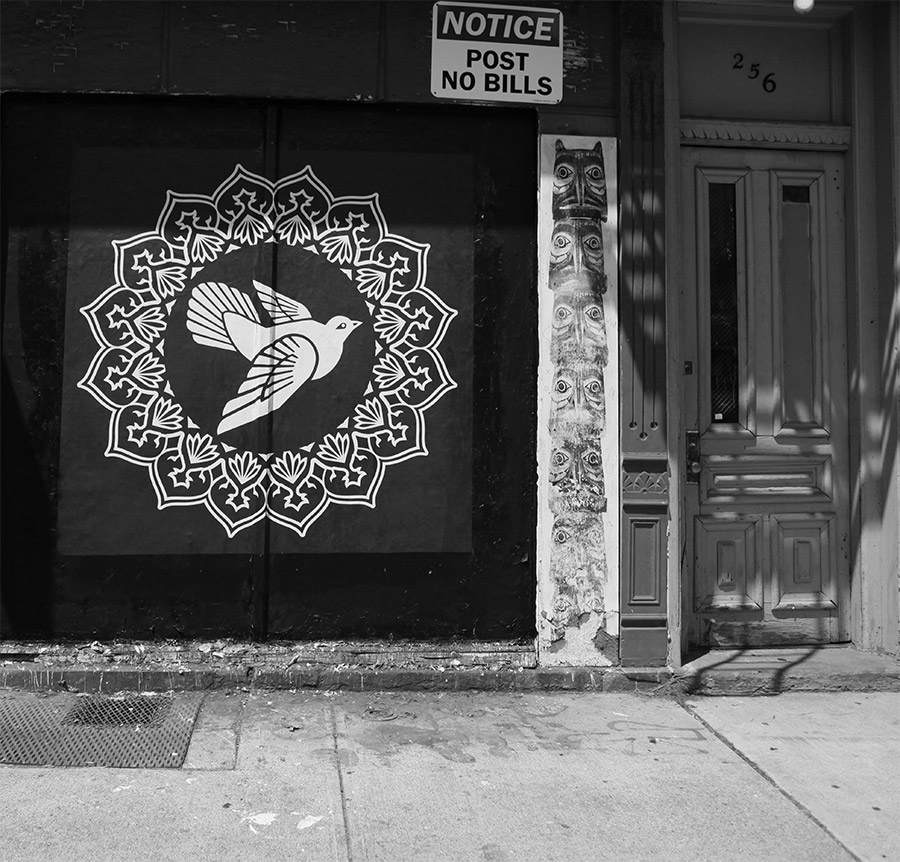
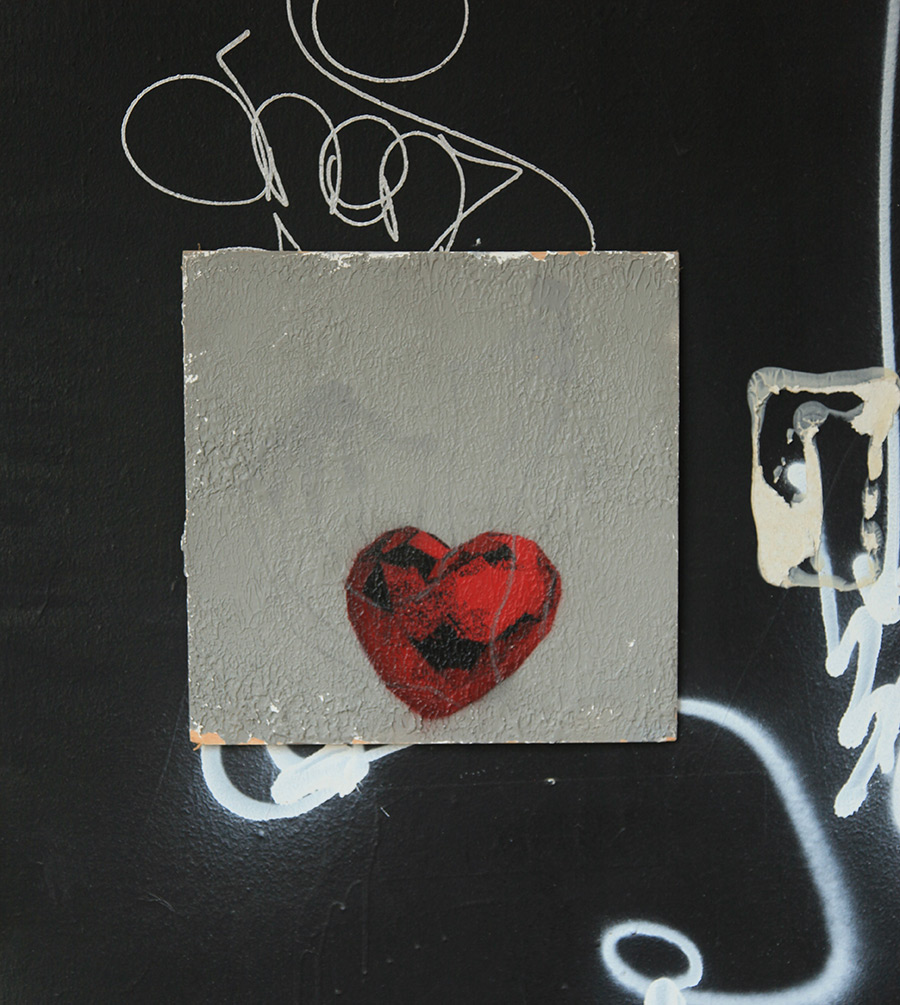
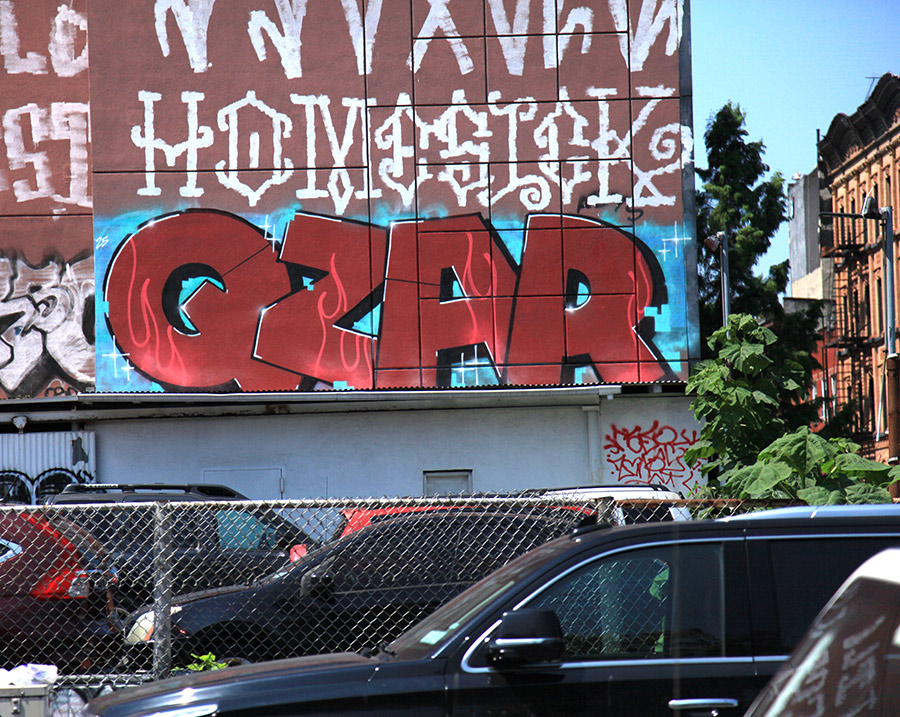
Here’s our weekly interview with the street, this week featuring works from Bird Milk, Crash, Duke A. Barnstable, Homesick, Molly Crabapple, PAGED, SAMO@, SAMOI, TFP Crew, and Wild West.
The Sidewalk Artist. Directed by David Velez & Brandon Rivera via Vimeo. (image still from the video)
You’re used to spotting it on city walls, rolling trucks, the back of a traffic sign — the marks of those who feel compelled to leave a trace. The Sidewalk Artist, a new short directed by David Velez and Brandon Rivera, introduces us to a character whose canvas is neither brick nor steel, but the soft gray of suburban concrete. Set in North Texas, the film brings us to driveways and sidewalks where a man’s small gestures carry the same urge to exist in public space that has driven generations of unsanctioned artists.
A documentary film crew follows a contractor who leaves his mark on concrete sites throughout a North Texas town, featuring Juan Manuel Portillo. Directed by David Velez & Brandon Rivera.
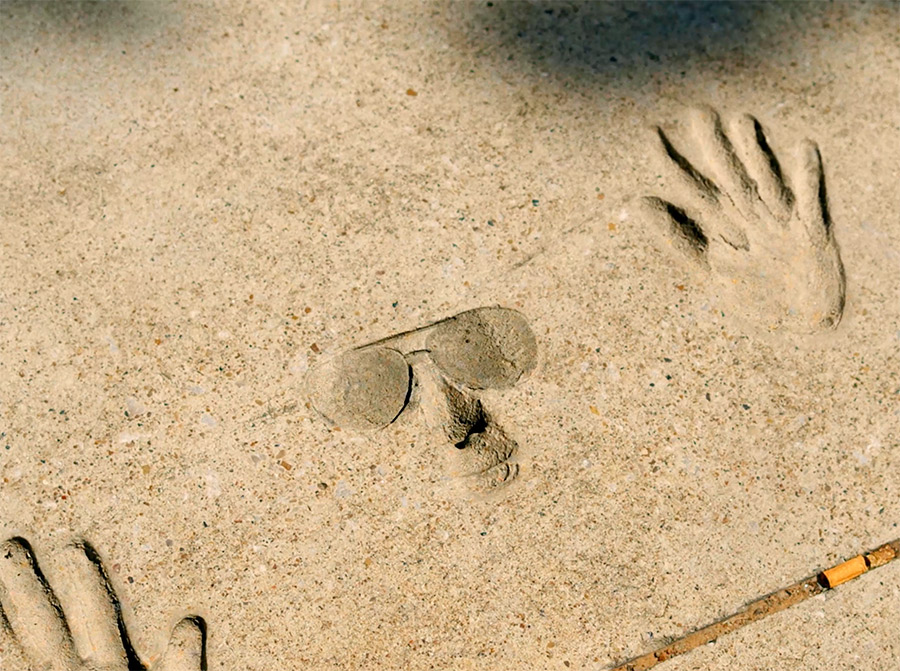
His name is Juan Manuel Portillo, a contractor whose habit is to fold personality into the most utilitarian of surfaces. What others see as flat and functional, he treats as an opportunity to shape memory: a curve pressed here, a mark set there, a moment of authorship drying into permanence before anyone has time to second-guess it. You may even find it absurd, but perhaps that’s the point. His style isn’t about scale, spectacle, or consistent topic — it’s about presence. The story would almost seem too improbable if you hadn’t seen it for yourself. Uncommissioned, unpermissioned, and often overlooked, these modest inscriptions feel as vital to Manuel as a throw-up on a subway car might feel to an OG writer in NYC.
The Sidewalk Artist. Directed by David Velez & Brandon Rivera via Vimeo. (image still from the video)
What you sense most is his attitude: unhurried, sincere, quietly amused by the notion of calling any of this art. Yet the parallels are clear. This is kin to street art, even if transplanted to cul-de-sacs and lawns; it is still about finding space outside the sanctioned order, about leaving something behind. With cinematography by Emily Sanchez and music by Brian Green, The Sidewalk Artist paints a portrait of a maker who doesn’t so much demand attention as quietly alter the ground you walk on. In doing so, it reminds us that the impulse to create outside permission slips and institutions can surface anywhere — whether on a concrete slab in Texas or a forgotten wall in Brooklyn.
The Sidewalk Artist. Directed by David Velez & Brandon Rivera via Vimeo. (image still from the video)The Sidewalk Artist. Directed by David Velez & Brandon Rivera via Vimeo. (image still from the video)The Sidewalk Artist. Directed by David Velez & Brandon Rivera via Vimeo. (image still from the video)The Sidewalk Artist. Directed by David Velez & Brandon Rivera via Vimeo. (image still from the video)The Sidewalk Artist. Directed by David Velez & Brandon Rivera via Vimeo. (image still from the video)
Over the last two decades of covering the street art movement and its many tributaries, one of the deepest satisfactions has been watching artists take real risks, learn in public, and mature—treating “greatness” as a path rather than a finish line. Working at BSA, we’ve interviewed, observed, and collaborated with scores of artists, authors, curators, institutions, and academics; it’s been a privilege to see where they go next.
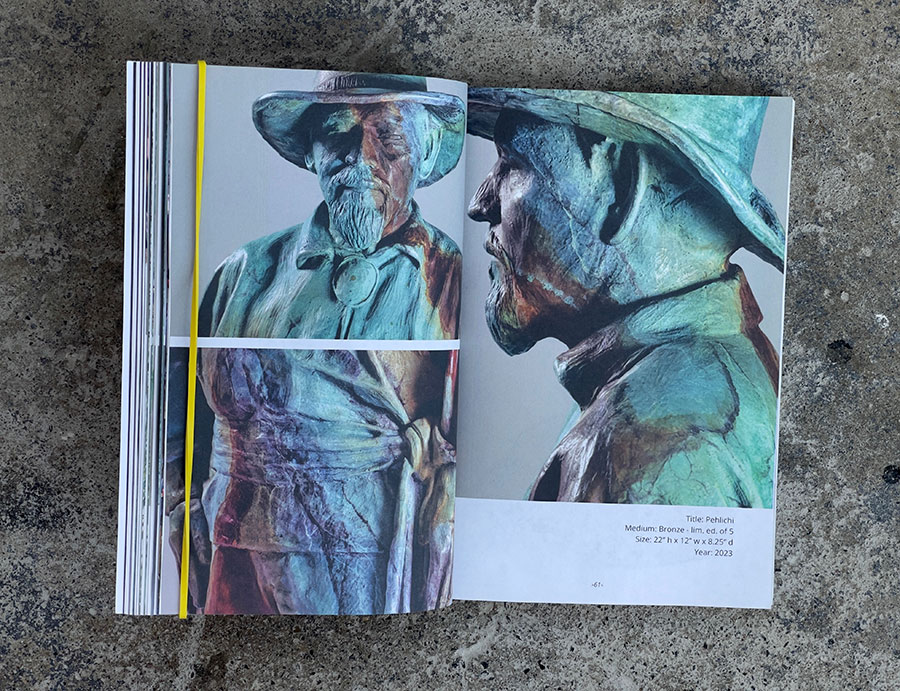
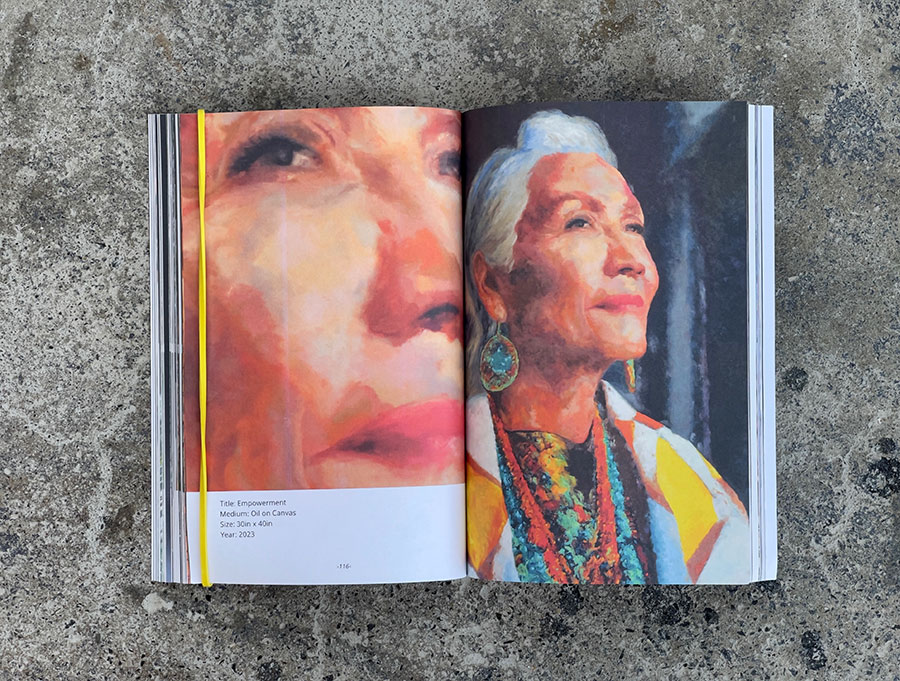
Addison Karl. KULLI. A Natural Spring of Artwork, Sculpture, Painting, Drawing, Public Art, and Inspiration. Self-published. Monee, IL. 2024.
Addison Karl’s self-published 2024 monograph, “KULLI: A Natural Spring of Artwork, Sculpture, Painting, Drawing, Public Art, and Inspiration,” reads as a first-person chronicle from an artist who moved from the wall to the plaza to the foundry without losing the intimacy of drawing. Dedicated to his son—whose name titles the book—KULLI threads words, process images, and finished works across media: murals, cast-metal and glass sculptures, drawings, and studio paintings, all guided by a sensibility that treats color and material as vessels for memory and place.
Trusted observers have mapped this evolution in plain terms. WALL\THERAPY once summarized Karl’s arc “from blank slate, to paper, to mural, to installation, to unoccupied public space,” a concise description of how a drawing-led street practice broadened into public art and beyond. The book situates headline projects within that trajectory: “In Service,” his 2019 McPherson Square Metro mural in Washington, DC—roughly 64 feet along aluminum panels—honors veterans, showing how a hand-drawn hatch can scale to civic form. In Atlanta, the cast-iron BeltLine sculpture Itti’ kapochcha to’li’ (“little brother of war”) roots contemporary public space in Chickasaw story and material logic.
Along the way, BSA documented Karl’s shift into sculpture and his view that public work demands accountability: “It makes you really understand the world in a really different way – of how you take responsibility for what you are doing.” Read together, these frames make KULLI a ledger of experiments—how a printmaker’s line climbed buildings, then solidified into bronze and glass—developed over more than a decade of international projects, including the opening of URBAN NATION in Berlin.
Crucially, the book lets Karl define his own stakes. “Each canvas is not just a painting; it’s a mirror reflecting the viewer’s own inner world,” he writes—an artist’s statement that clarifies why the outdoor work invites dialogue rather than spectacle. Biographical notes reinforce the point: Denver-born, Phoenix-raised, of Chickasaw and Choctaw descent, Karl’s foundation in printmaking underpins his cross-disciplinary approach; his patinas deliberately recall turquoise, and his public commissions translate personal narrative into shared space. Read KULLI as a record of that translation—how a drawing-based street practice consolidated a public voice and expanded into sculpture without losing the hand, the story, or the invitation to look harder.
Addison Karl. KULLI. A Natural Spring of Artwork, Sculpture, Painting, Drawing, Public Art, and Inspiration. Self-published. Monee, IL. 2024.
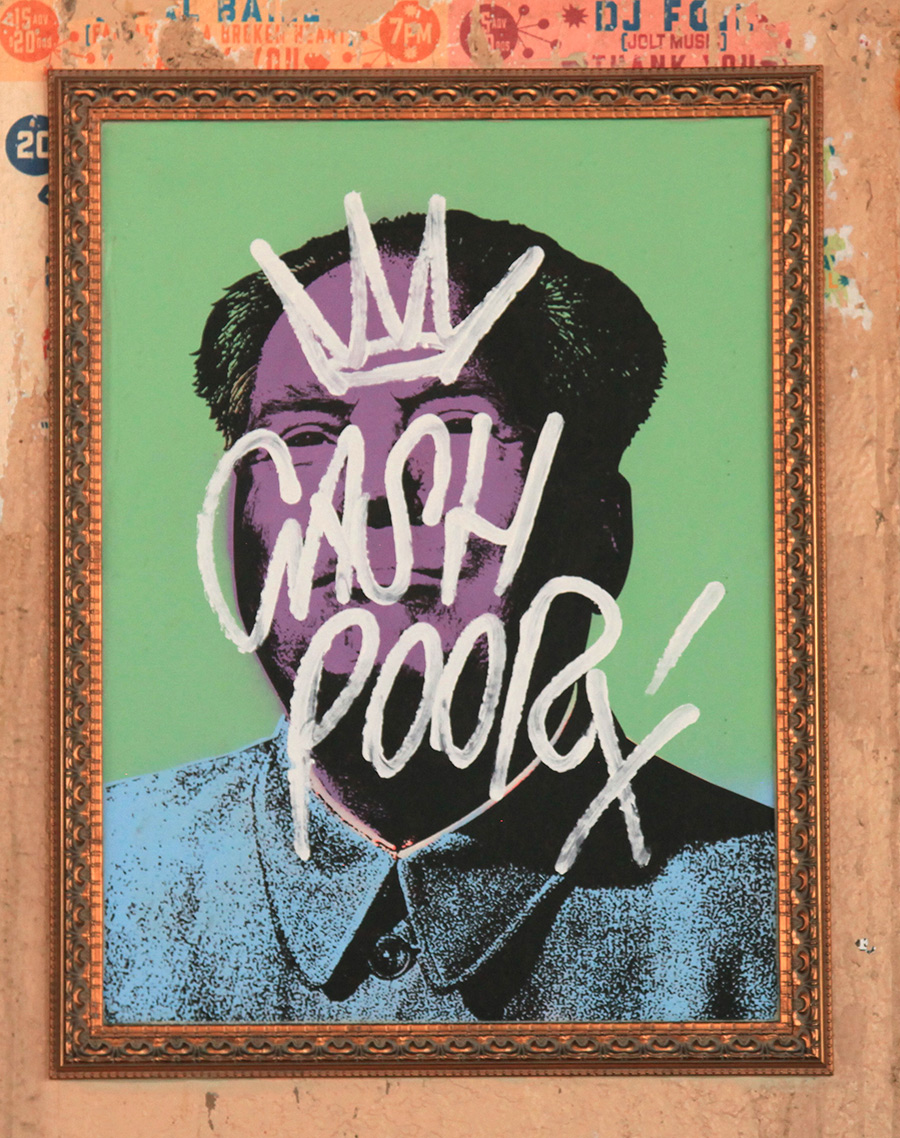
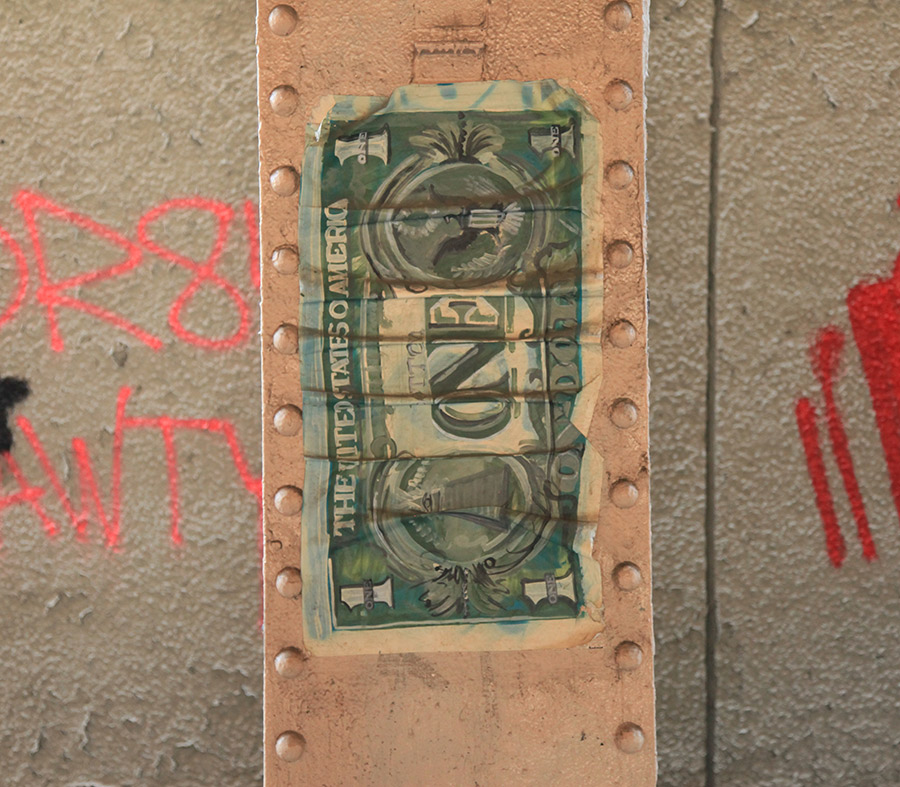
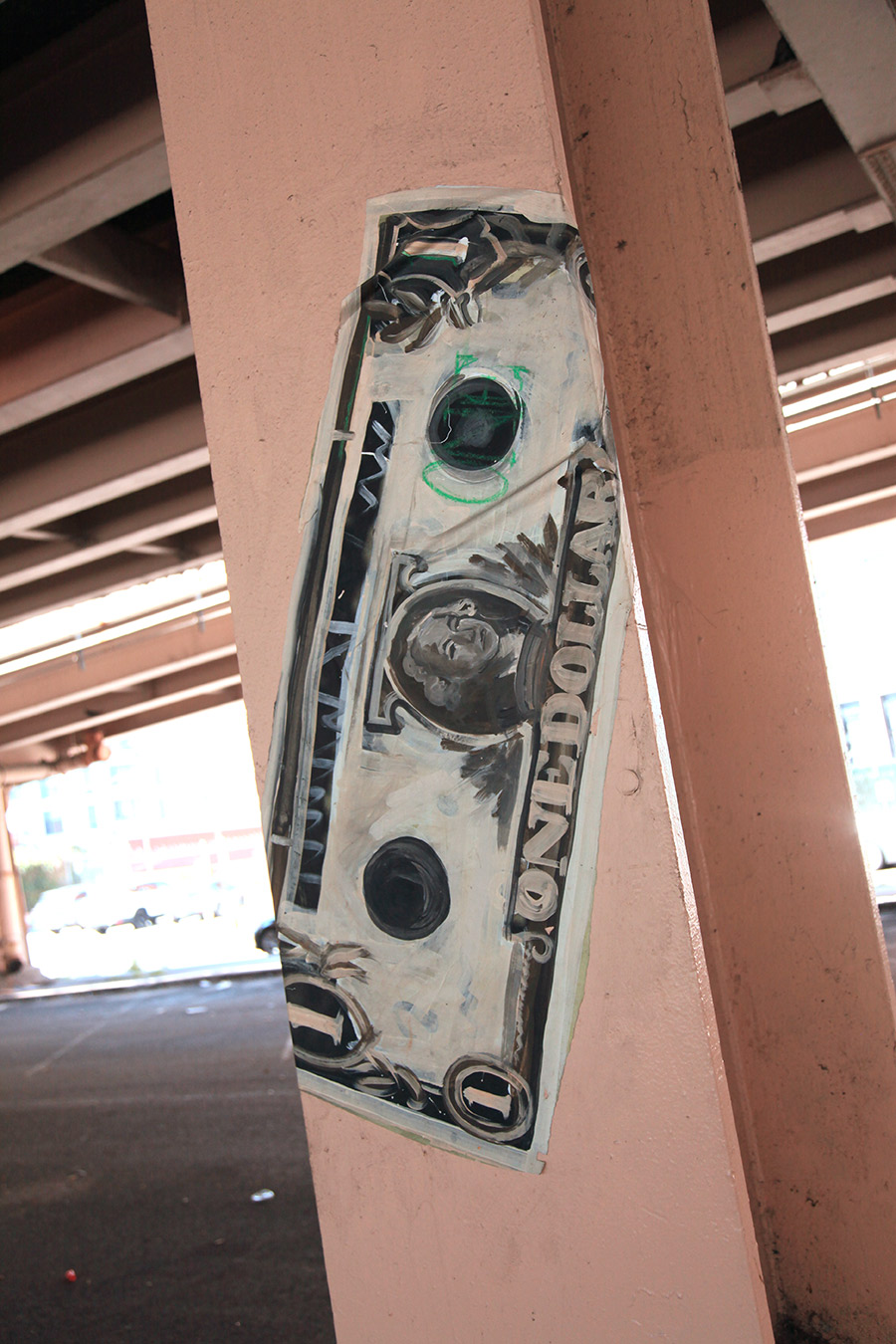
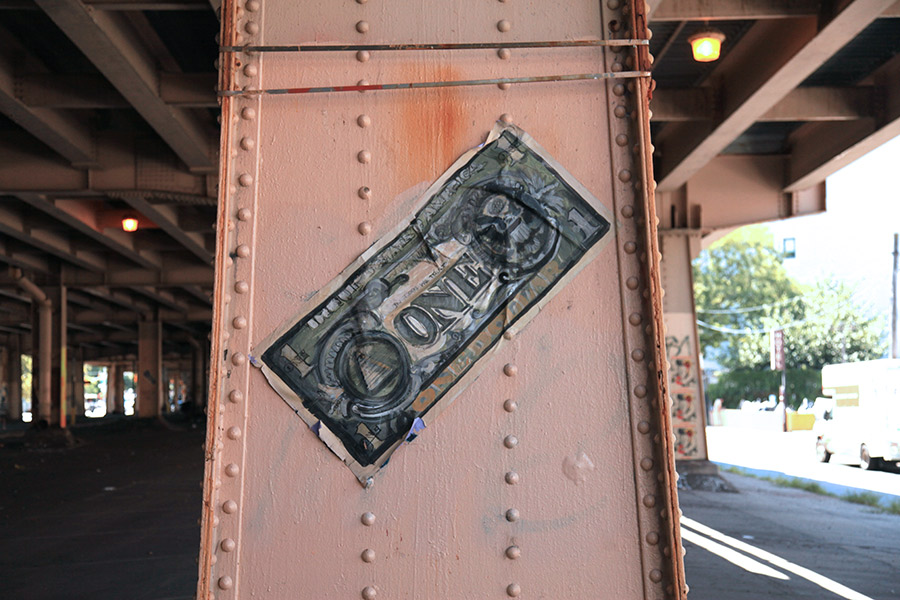
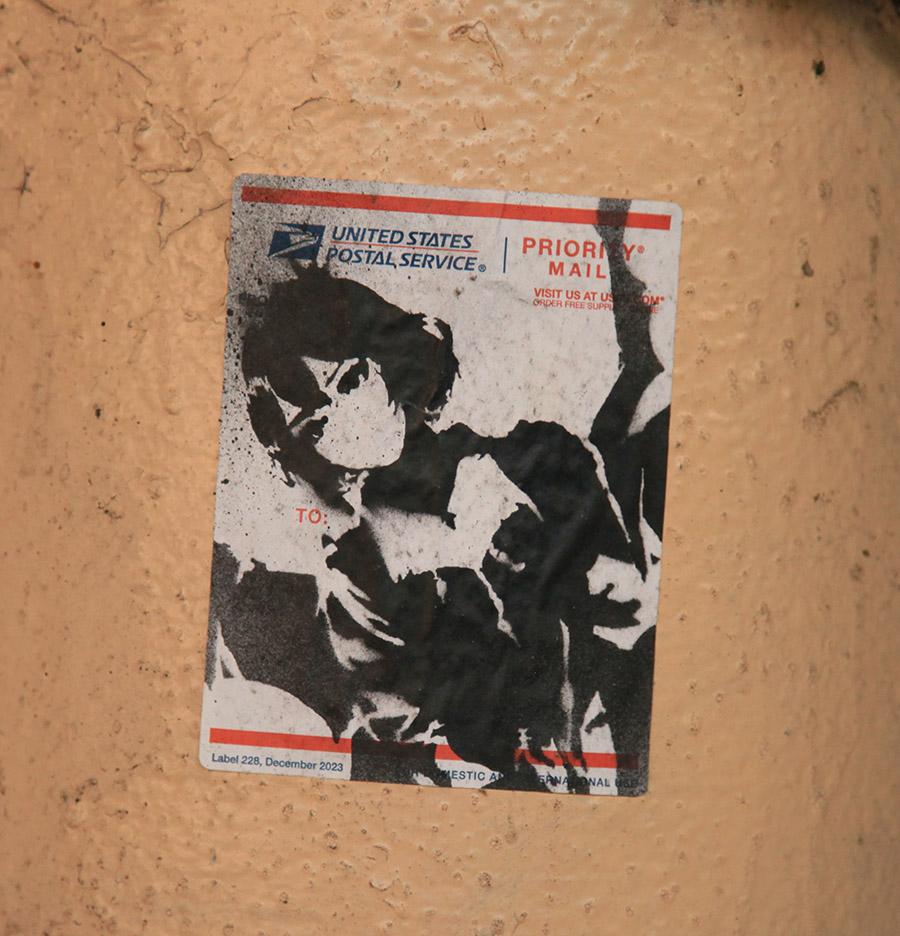
When discovering a series of currency-themed street art in the city this week, we were reminded of the relentless daily pressure there is today to make ends meet—and of the regular headlines showing how the big players run their own schemes to squeeze the public. It also calls to mind the 1980s hip hop track “What People Do for Money” by Divine Sounds, with its sly reminder: “They’ll sell their soul to the devil, just to make a dime.” (See video at end of posting)
Whether it’s war profiteering, scamming public programs, turning charities into piggy banks, buying up public goods to squeeze ratepayers, or preaching salvation from the cabin of a private jet, corporations, banks, and street hustlers only differ in scale, not intent.
From the street perspective, this may look like the same hustle that they do – but with a press release accompanying it.
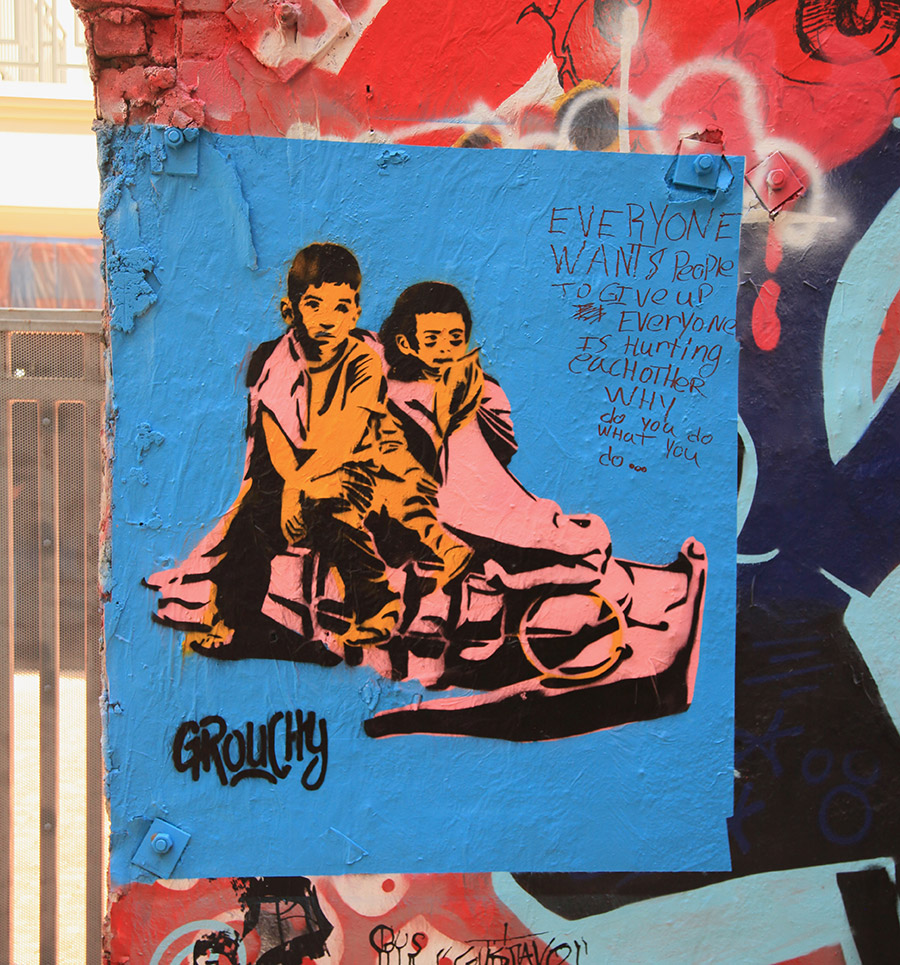
Here’s a survey of our weekly interview with the street, featuring Atomiko, Cash4, Drones, Grouchy, Jappy Agoncillo, Rene Lerude, Skewville, TFP Crew, and Zexor.
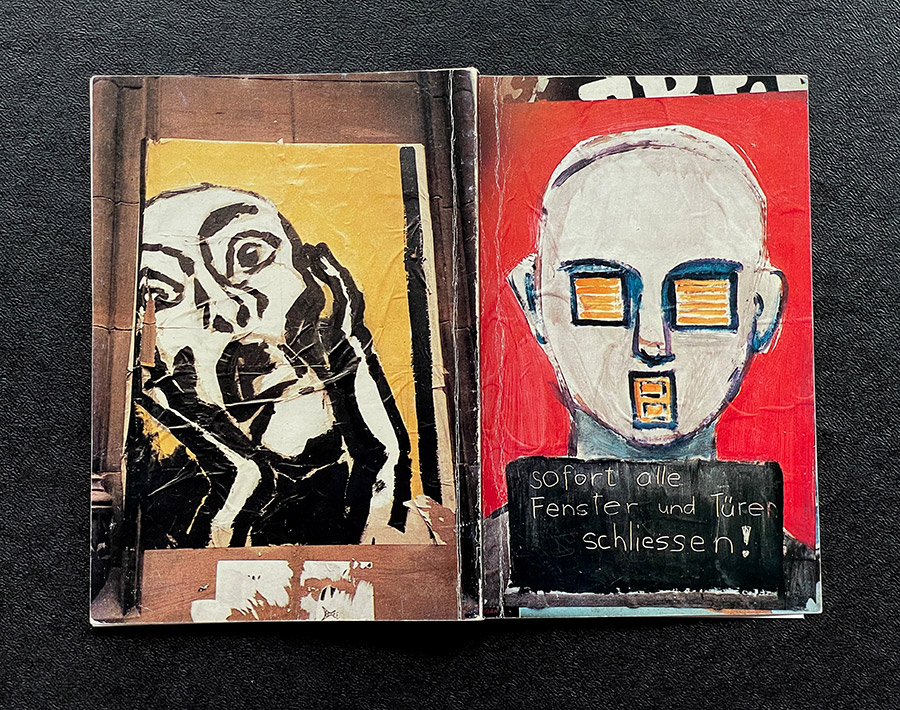
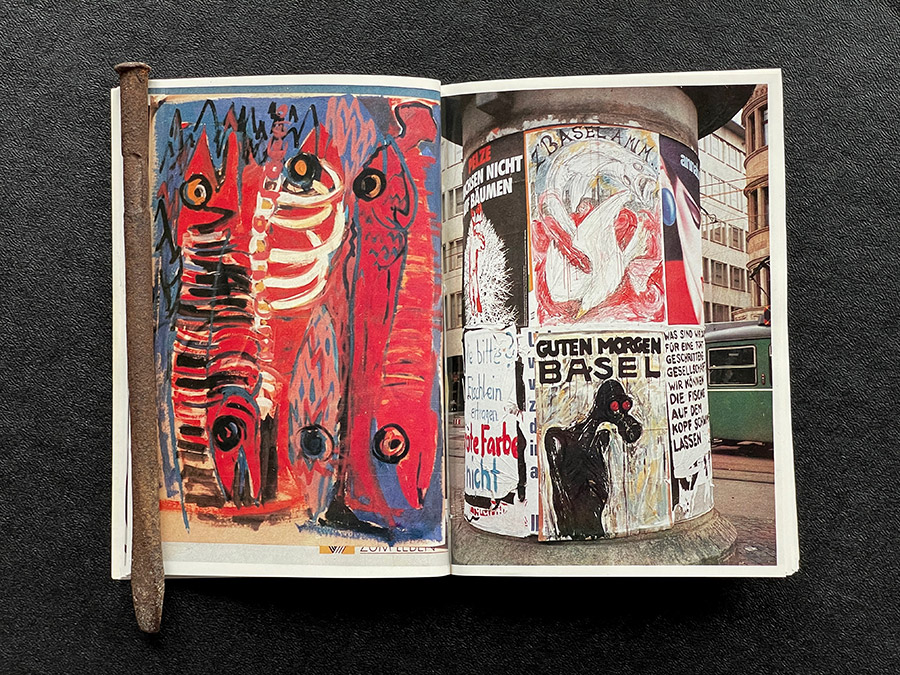
Sofort alle Fenster und Türen schliessen! (Immediately Close All Windows and Doors)
On the night of November 1, 1986, Basel was told to “immediately close all windows and doors.” A fire ripped through a Sandoz chemical warehouse, and the Rhine River ran red with toxic runoff. Thousands of fish floated belly-up, and citizens were left in fear and fury, just months after the trauma of Chernobyl【1】.
Poster campaign in Basel (Switzerland), 1986, by anonymous artists to highlight the Sandoz fire disaster in Schweizerhalle. Zine photographed and printed anonymously, Basel 1986.
When the authorities stumbled and minimized the danger, Basel’s artists and students seized the opportunity to express themselves on the walls. Within days, in the middle of the night, activists from the School of Design plastered the city’s billboards and poster kiosks with their furious responses【2】. They worked fast, stayed anonymous, and left the streets covered with raw, hand-painted images and biting slogans.
Poster campaign in Basel (Switzerland), 1986, by anonymous artists to highlight the Sandoz fire disaster in Schweizerhalle. Zine photographed and printed anonymously, Basel 1986. (Text translation: “Close all windows and doors immediately!”)
“Two nights after the incident, when it was not yet known what the outcome would be for the health of the people in the region, countless activists, especially artists and students, set out to cover the commercial posters on billboards and pillars with their own artistic statements,” recalls Bernard Chiquet. “The booklet that followed was printed anonymously and the artists also remained anonymous, of course, because otherwise there would have been a threat of prosecution.”【2】
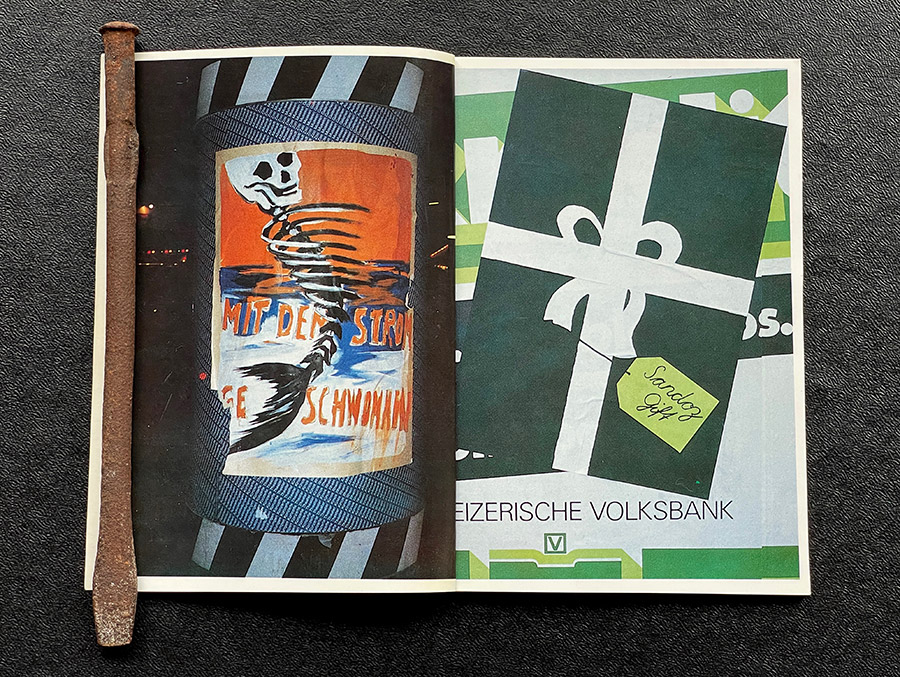
The images were brutal and urgent: skeletal fish swirling in poisoned currents, corporate logos twisted into symbols of death, slogans like “Today the fish – tomorrow us,” and darkly comic fakes such as “SANDOZ invites you: Fish dinner for all.” Some mocked advertising language, others screamed in gestural strokes and scarlet hues. It was fear, rage, and satire – made public art.
Poster campaign in Basel (Switzerland), 1986, by anonymous artists to highlight the Sandoz fire disaster in Schweizerhalle. Zine photographed and printed anonymously, Basel 1986. (Text translation: Left page. “Swam With The Current”. Right page. “Sandoz poison (Swiss People’s Bank)”
Most of the posters were torn down by morning, but an anonymous zine preserved the action. “Sofort alle Fenster und Türen schliessen!” documented the protest campaign in photographs and slogans. Distributed one year after the fire, it kept alive the moment when Basel’s walls shouted what many would not say aloud【3】.
This was more than vandalism. It was a public service: a way for oppositional voices to be seen, a way to hold power accountable. The artists stayed hidden, but their images spoke for thousands. Decades later, their urgency feels just as sharp. Street art like this doesn’t just decorate a city – itmay defend it.
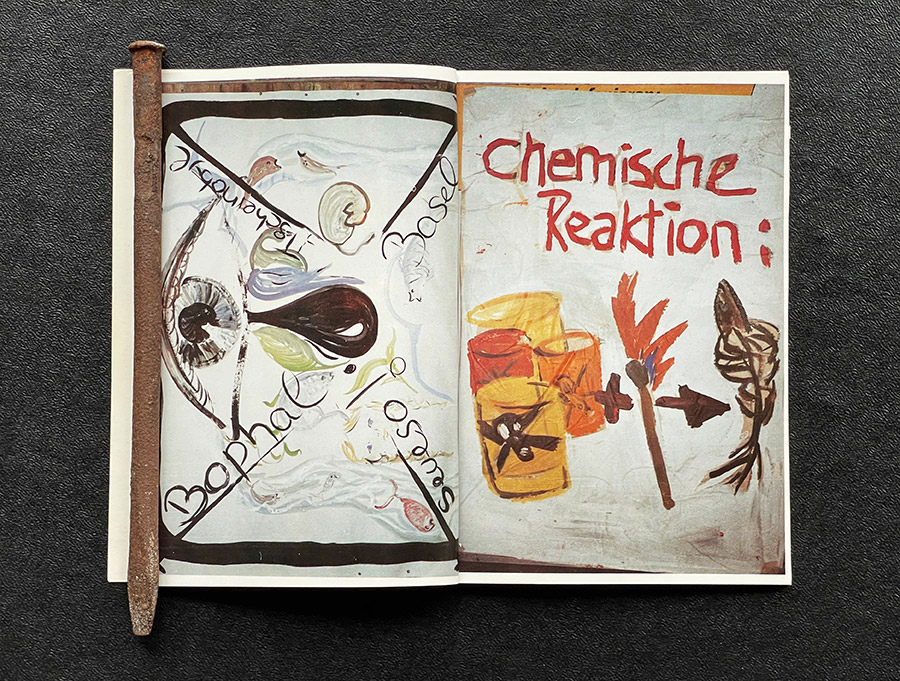
Poster campaign in Basel (Switzerland), 1986, by anonymous artists to highlight the Sandoz fire disaster in Schweizerhalle. Zine photographed and printed anonymously, Basel 1986. (Text translation: Left page. “Seveso – Bophal – Tschernobyl – Basel”. Right page. “Chemical Reaction”Poster campaign in Basel (Switzerland), 1986, by anonymous artists to highlight the Sandoz fire disaster in Schweizerhalle. Zine photographed and printed anonymously, Basel 1986. (Text translation: Right page. (Furs do not grow on trees. Basel on my Rhine (those are the first lyrics of the traditional Basel hymn in Alemannic dialect). Excuse me? Do little fish not tolerate red color? Good morning Basel. What an advanced society we are: We can make fish swim upside down.)Poster campaign in Basel (Switzerland), 1986, by anonymous artists to highlight the Sandoz fire disaster in Schweizerhalle. Zine photographed and printed anonymously, Basel 1986. (Text translation: Right page. “Excuse me? Little fish do not tolerate red color?” “Good morning Basel”)Poster campaign in Basel (Switzerland), 1986, by anonymous artists to highlight the Sandoz fire disaster in Schweizerhalle. Zine photographed and printed anonymously, Basel 1986. (Text translation: Left page. “While further downstream, you had to watch out for the song of the Loreley, bigger dangers were lurking in Basel. Three fat-bellied, gluttonous monsters dominated the banks of the Rhine here and had fun coloring and poisoning the waters every day. When the people finally realized what terrible monsters had spread here at their expense, the fish were long dead, the Loreley had long since fallen silent, and some of them were overcome with deep sadness, others with great anger!
Sources [1] Wikipedia, “Sandoz chemical spill” (Schweizerhalle, Basel, Nov. 1986). [2] Historisches Museum Basel – 1. November 1986 Poster Campaign documentation. [3] 1. November Büchlein (1987, anonymously published photo zine).
We wish to offer our most heartfelt gratitude to BSA collaborator Mr. Bernhard Chiquet for his generous donation of the Zine and for taking the time to translate the text on the posters into English.
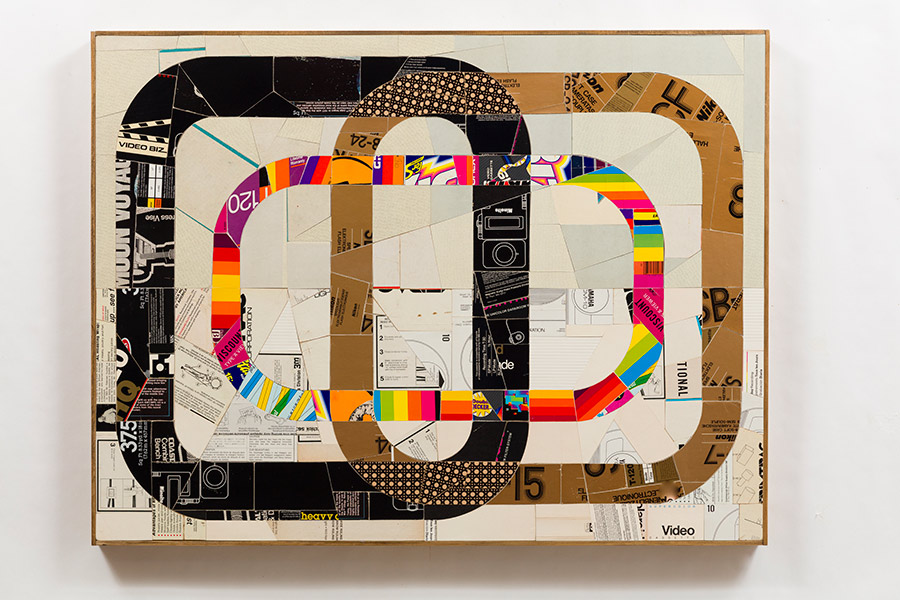
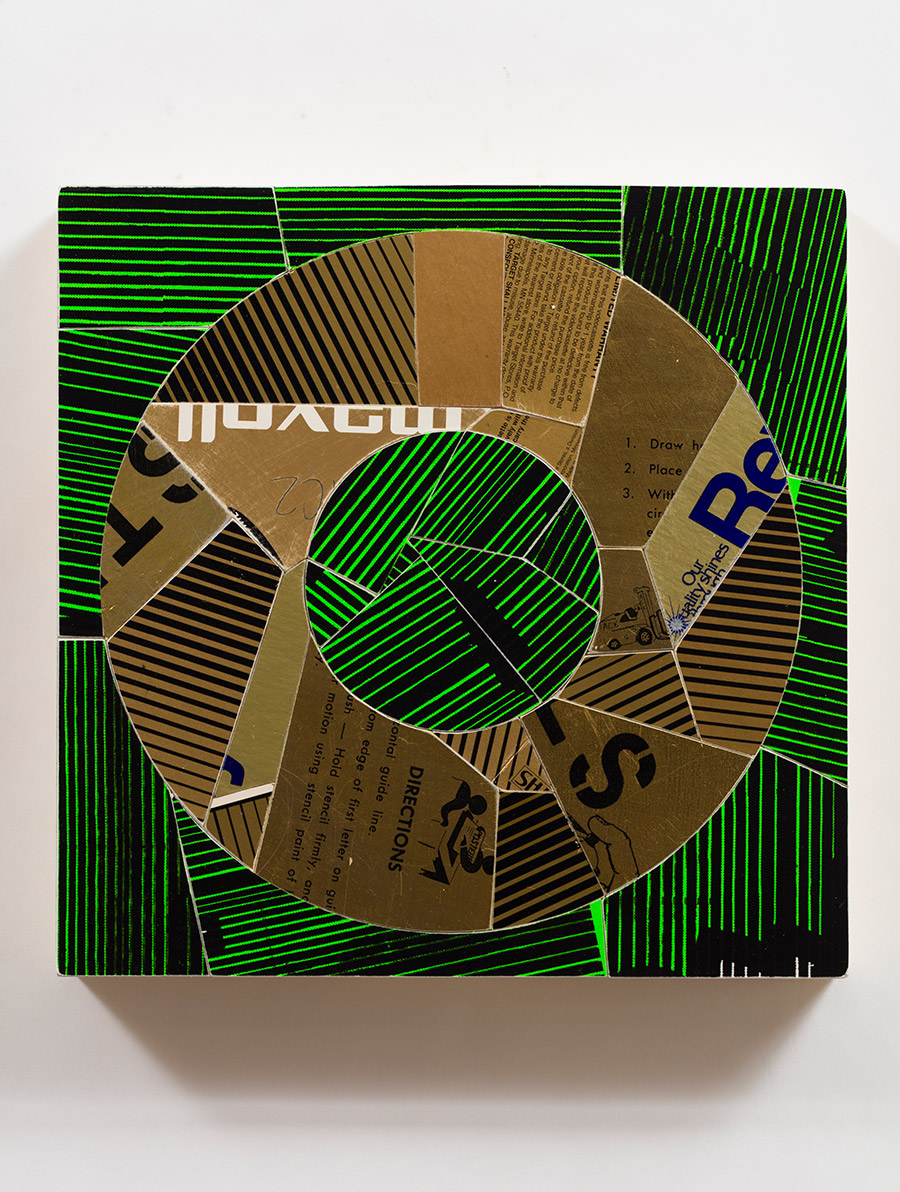
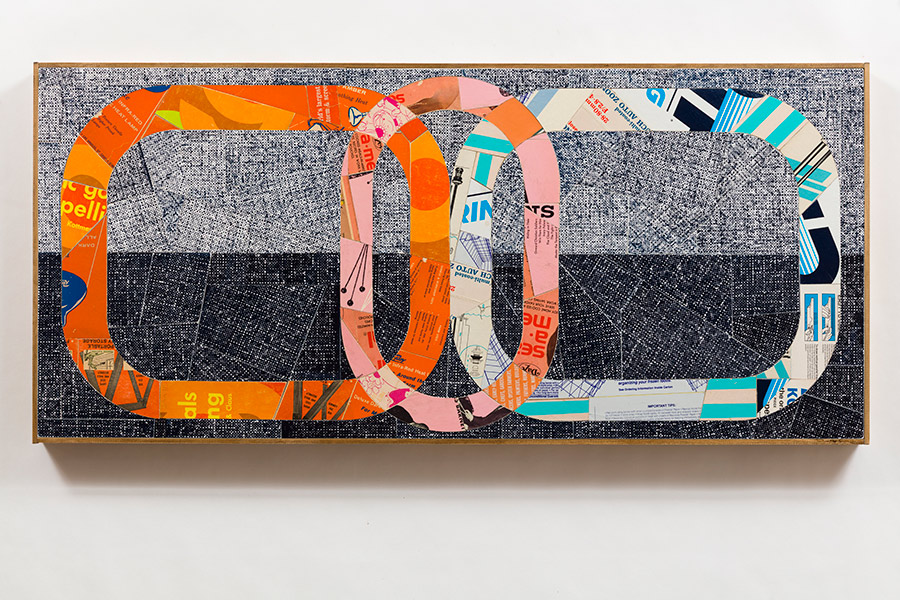
Heron Arts in San Francisco presents RECLAMATION this August, a two-man show featuring Augustine Kofie and Erik Otto, who transform personal wreckage into fresh work. Forty new pieces, curated by Tova Lobatz, put both artists in a head-on conversation about loss, recovery, and what can be built out of the ashes.
Augustine Kofie. Reclamation. Heron Arts, San Francisco, CA. (image courtesy of the gallery)
Kofie, a Los Angeles veteran with roots in early ’90s graffiti, lost his house, studio, and archive in the Eaton Canyon Fire this January. For some, that would have been the end of the story. Instead, he’s back at it, slicing up pressboard, salvaged posters, and mid-century packaging into collages that look as sharp as they are stubborn. Ever the clever mind, he calls his circles “rotationships”—a way to wrestle with balance and structure—but you can read them as a sign of survival too.
Erik Otto. Reclamation. Heron Arts, San Francisco, CA. (image courtesy of the gallery)
Otto, San Francisco born and bred, comes at it differently. After too many funerals and a body that betrayed him, his response wasn’t to tighten control but to let it go. The new paintings are looser, washed in saturated color and improvised gestures, equal parts grief and grace. Where Kofie rebuilds from fragments, Otto dissolves them, turning shock into hazy atmospheres and flickers of light.
Together, the show is less about tidy closure than about the messy processes of life, loss, and finding some way to reclaim yourself. Rather than sounding the trumpet, it’s two artists working through the rubble in public. In a culture that likes glossy endings, RECLAMATION reminds us that sometimes survival and perseverance look like glue, tape, and a few luminous layers of paint.
Augustine Kofie. Reclamation. Heron Arts, San Francisco, CA. (image courtesy of the gallery)Augustine Kofie. Reclamation. Heron Arts, San Francisco, CA. (image courtesy of the gallery)Erik Otto. Reclamation. Heron Arts, San Francisco, CA. (image courtesy of the gallery)Erik Otto. Reclamation. Heron Arts, San Francisco, CA. (image courtesy of the gallery)
Welcome the BSA Images of the Week! Recent exhibitions, festivals, mural programs, and artist movements demonstrate that street art’s vitality continues to evolve—shifting from unsanctioned and underground to mainstream and institutional, and then back to the public streets. Far from fading, the street art and graffiti movement continues to adapt and engage more people, sparking dialogue about art, culture, creativity, property, politics, and its role in urban life. Our inbox at ABC runs like the city itself: fast, loud, nonstop—thankfully, this deli coffee is strong.
Global Graffiti Festival: The Meeting of Styles international graffiti festival just took over Rruga B Street in Kosovo’s capital, marking its 9th edition in Pristina. The city’s embrace of this festival – and the participation of artists from as far afield as Europe, the Americas, and Asia – underscores how the street art movement continues to span the globe, including places that rarely feature in mainstream art news.
As we speed through block parties, outdoor concerts, graffiti jams, and the end of New York’s summer art scene, we note next month’s arrival of the Gaza Biennale, a roving exhibition spotlighting artists from the embattled Gaza Strip. Previously exhibited in London, Berlin, and Athens, the show is a powerful cultural statement, taking place at 19 venues across 12 cities worldwide. The biennale’s New York iteration will span five days (September 10-14) at the non-profit art space Recess in Brooklyn.
Theatergoers have been flocking to Central Park’s Delacorte Theater for Twelfth Night, starring Peter Dinklage and Sandra Oh – in this New York tradition that’s open to everyone. Fans are lining up hours—even overnight—for free tickets, turning the event into a communal spectacle of Shakespeare for our treacherous time, of this moment.
“If this were played upon a stage now, I could condemn it as an improbable fiction.” (Twelfth Night, Act III, Scene IV)
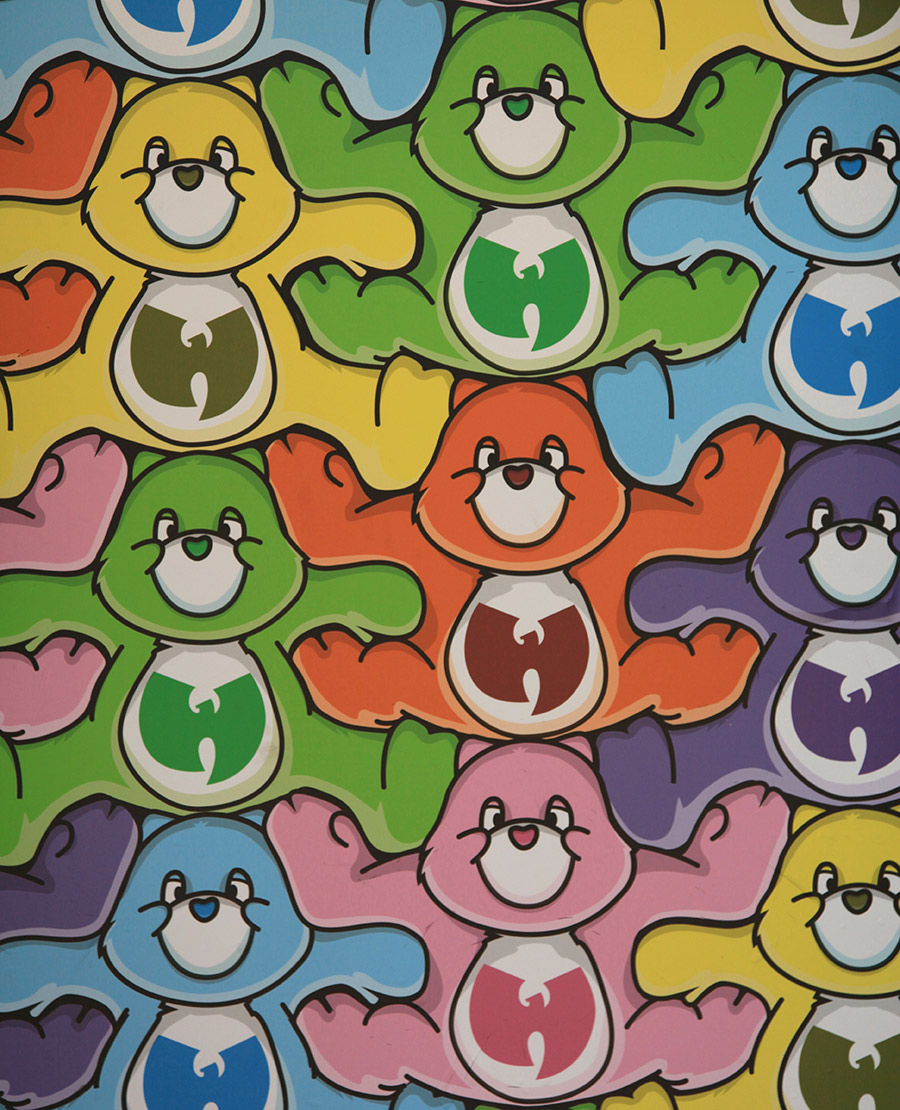
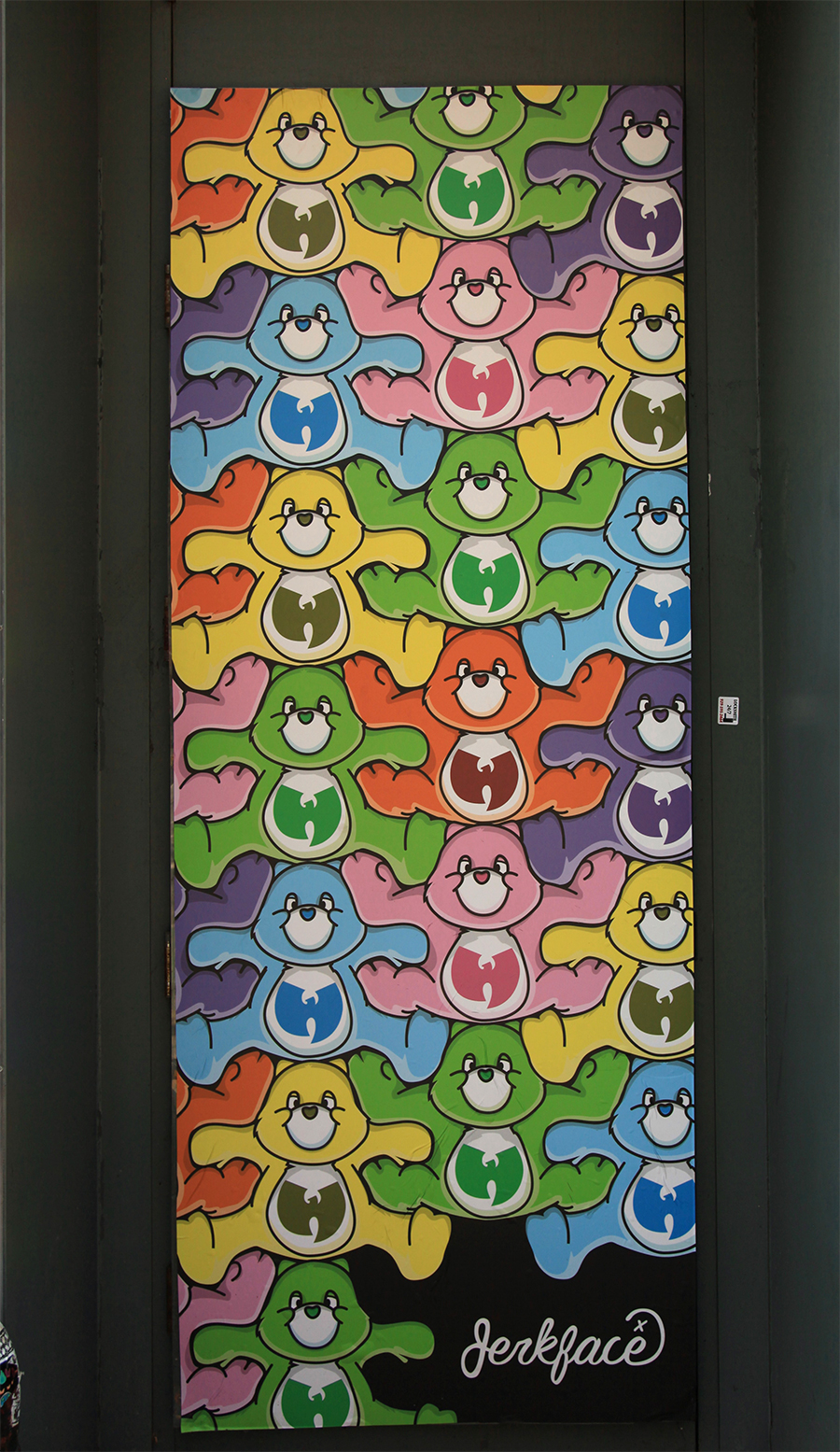
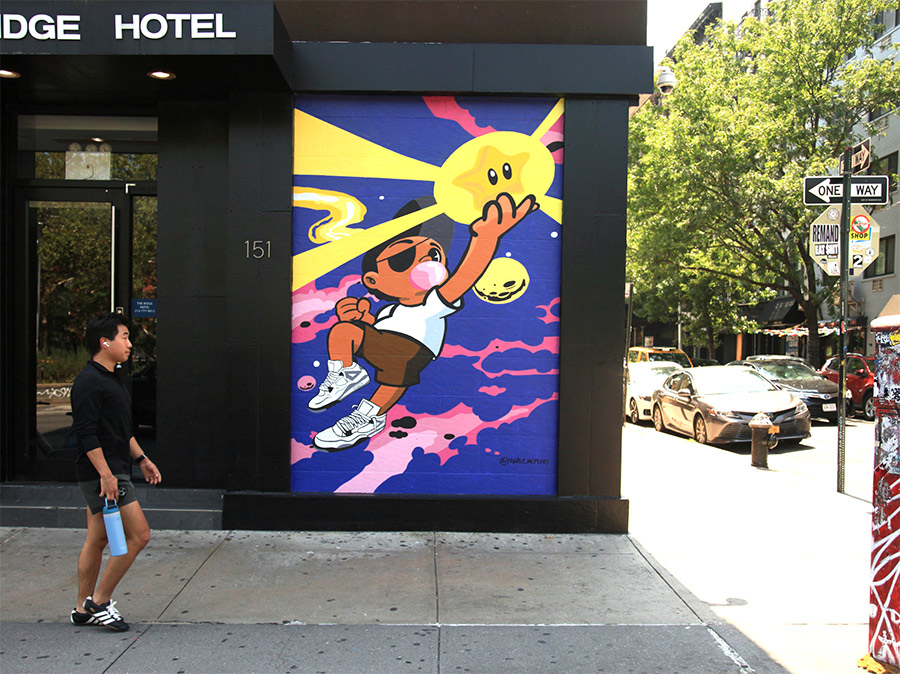
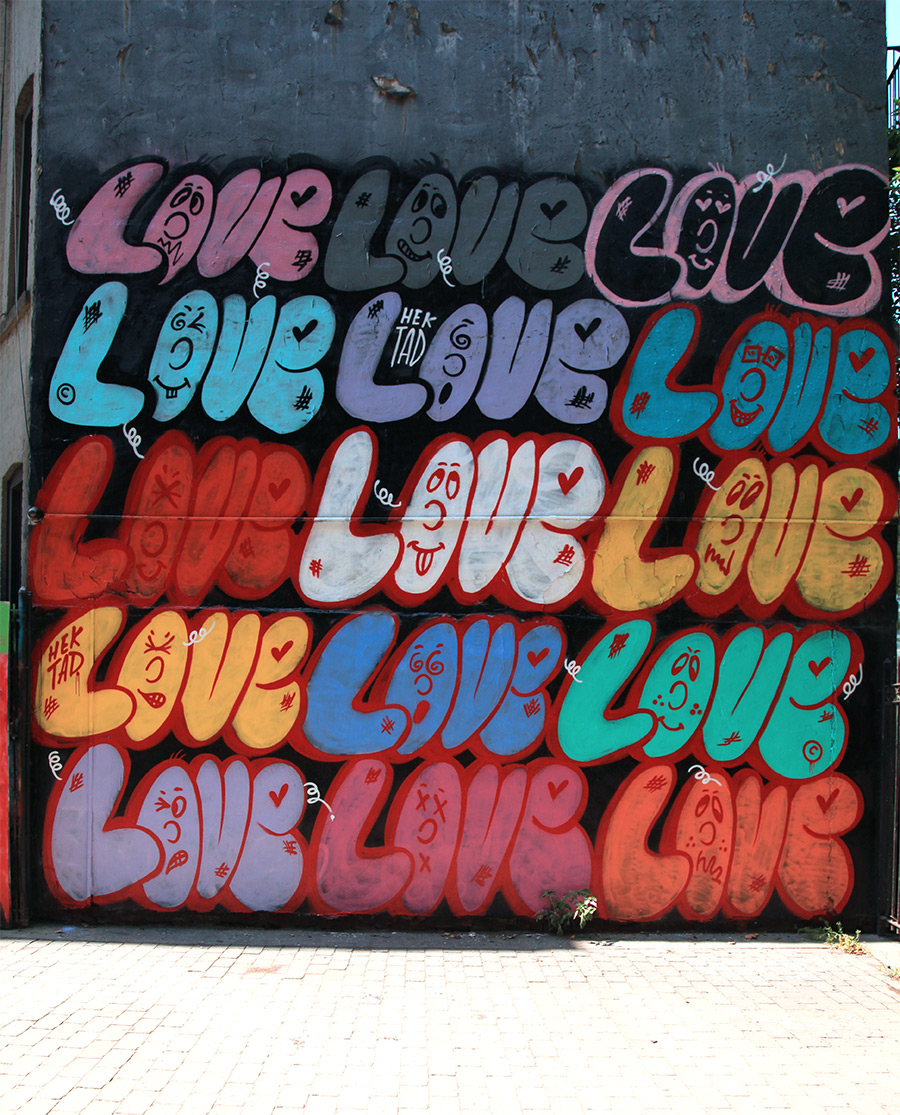
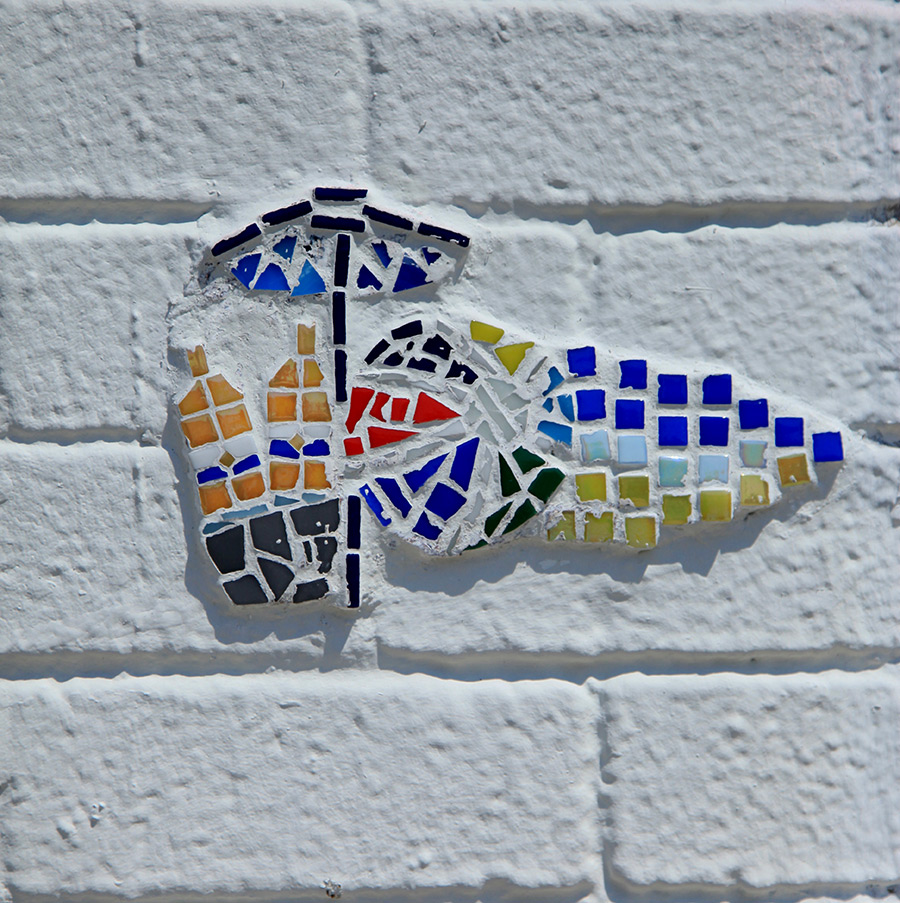
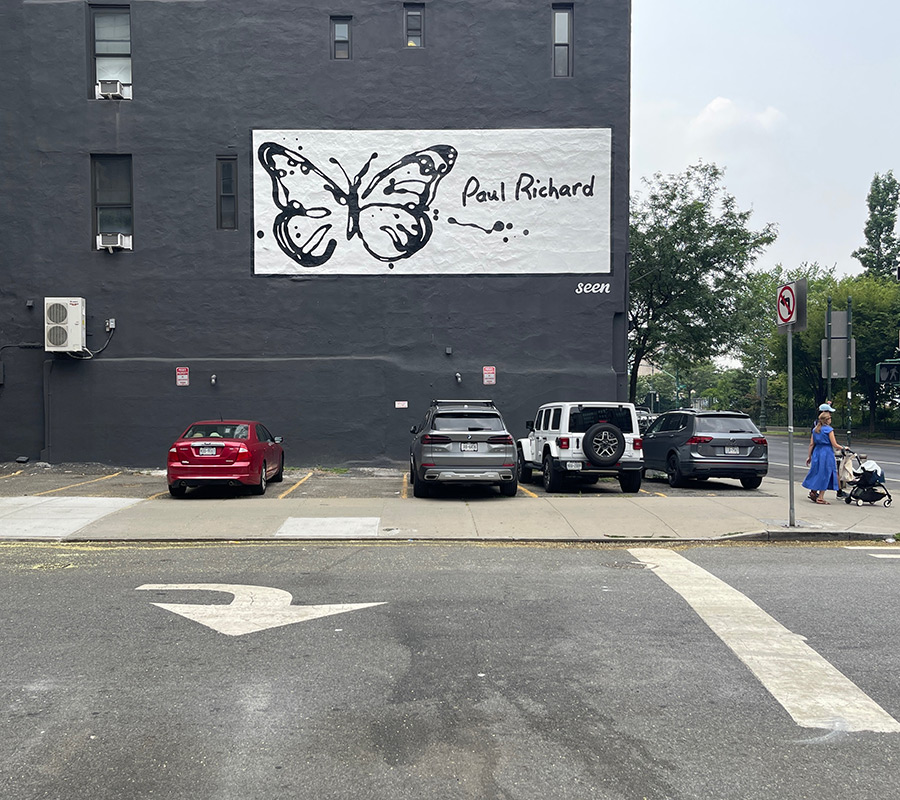
Here’s our weekly interview with the street, this week featuring works from Acet, AIC Mosaic, Below Key, Benny CRuz, Hektad, Homesick, JerkFace, Marly McFly, Obey, Paul Richard, Qzar, Sasha Gordon, Shepard Fairey, Tom Bob NYC, and Werds.
In a city like New York, where money is too often mistaken for worth, some know better—and live like it—quietly disproving the myths about success that only reveal their emptiness over time. Here, community and creativity are the true currency, making you richer than you ever imagined. Share.
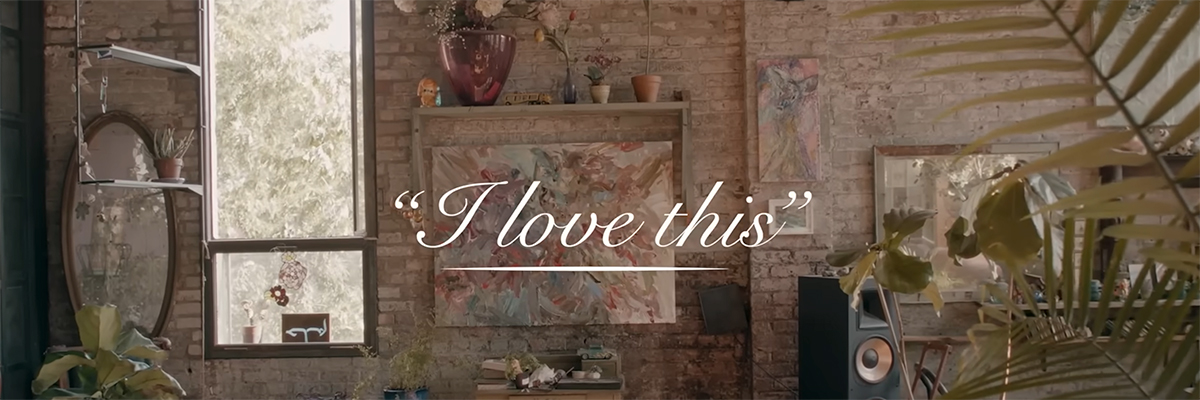
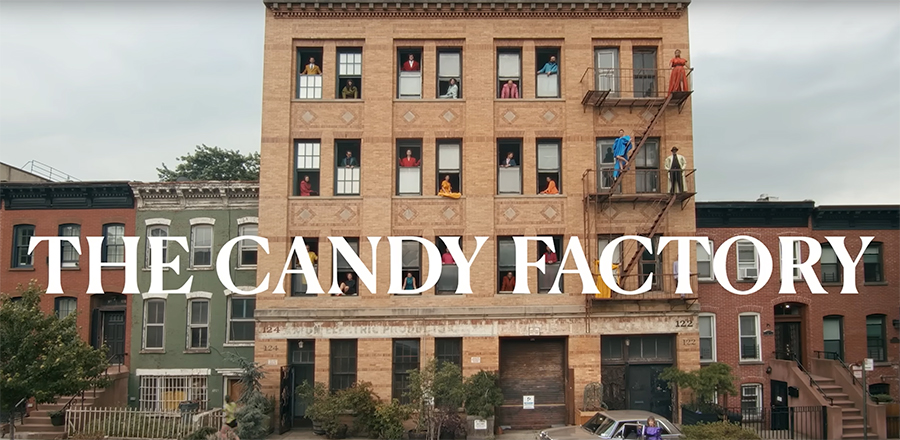
Cory Jacobs and Jason Schmidt’s short documentary, The Candy Factory, drops you into one of those moments and lets you stay there long enough to feel its gravity. The film traces the story of Ann Ballentine, a Brooklyn landlord who understood that the most valuable thing in a building isn’t its square footage—it’s the people who inhabit it. For four decades, she rented studios in a former candy factory in Clinton Hill to painters, sculptors, musicians, designers, and filmmakers, asking for fair rent and providing something the market has no way to price: stability, trust, and a sense of belonging.
The Candy Factory by The New Yorker. (still from the video)
The tenants and their dedication turned a block into a beacon, making the work that becomes the soul of a neighborhood before the brokers and developers ever think to rename it. In interviews and quiet moments, Jacobs and Schmidt capture their shared history and present reality, weaving together laughter, craft, and resilience. These are not the ornamental “creatives” used to brand a condo brochure or website; they are the lifeblood, the first to arrive and often the first to be pushed out, a profit is to be made.
Ballentine’s defiance was not loud but unwavering. She decided, simply, that she had enough—that her life would be measured not by accumulation but by what she helped to sustain. In New York, that choice is radical. In a market that teaches landlords to extract until nothing is left, she preserved a rare commons where collaboration could outlast the rent cycle. It’s not about romanticism, its about ethics.
The Candy Factory is both a portrait and a document, a reminder that cultural wealth is built slowly, in shared spaces, over decades—and that it can be erased in a single sale.
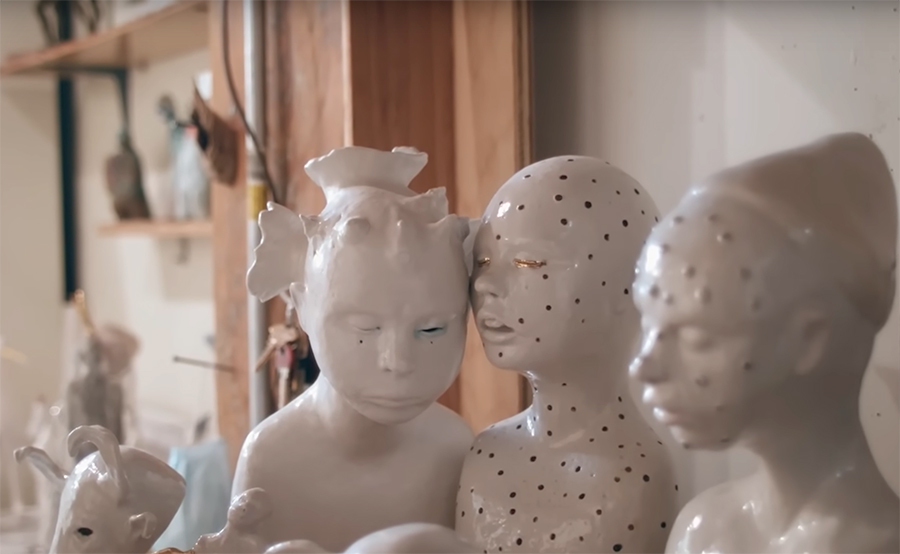
The Candy Factory by The New Yorker. Chrissy. Painter. Tenant at The Candy Factory. (still from the video)The Candy Factory by The New Yorker. Artwork by Kele, tenant at The Candy Factory. (still from the video)The Candy Factory by The New Yorker. Artwork by Kathy, tenant at The Candy Factory. (still from the video)
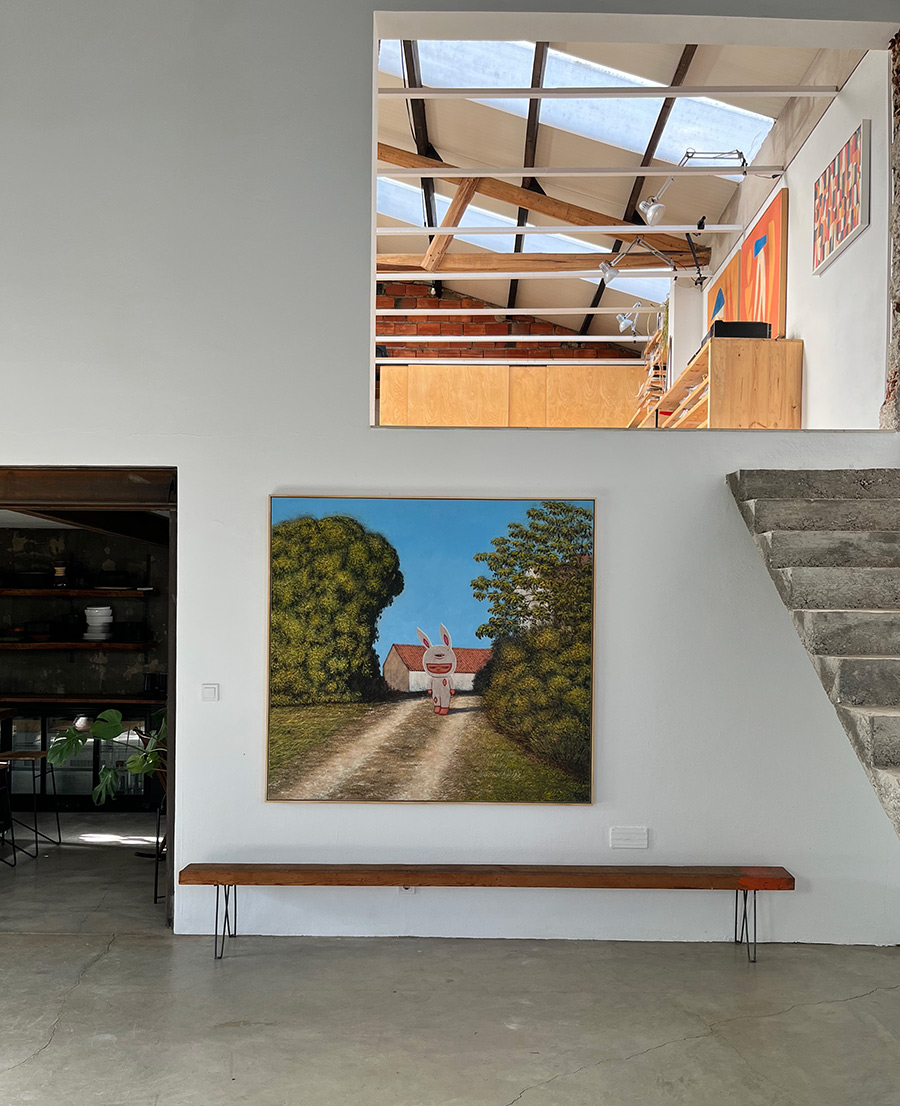
Patcharapol Tangruen, also known as Alex Face, is regarded as a quietly thoughtful presence in contemporary street art. Trained in Bangkok in fine and applied arts, he began his practice in the early 2000s, gradually shifting from lettering to a figurative focus. His enduring signature character—a small child in a rabbit suit—carries an emotional weight connecting innocence and contemplation.
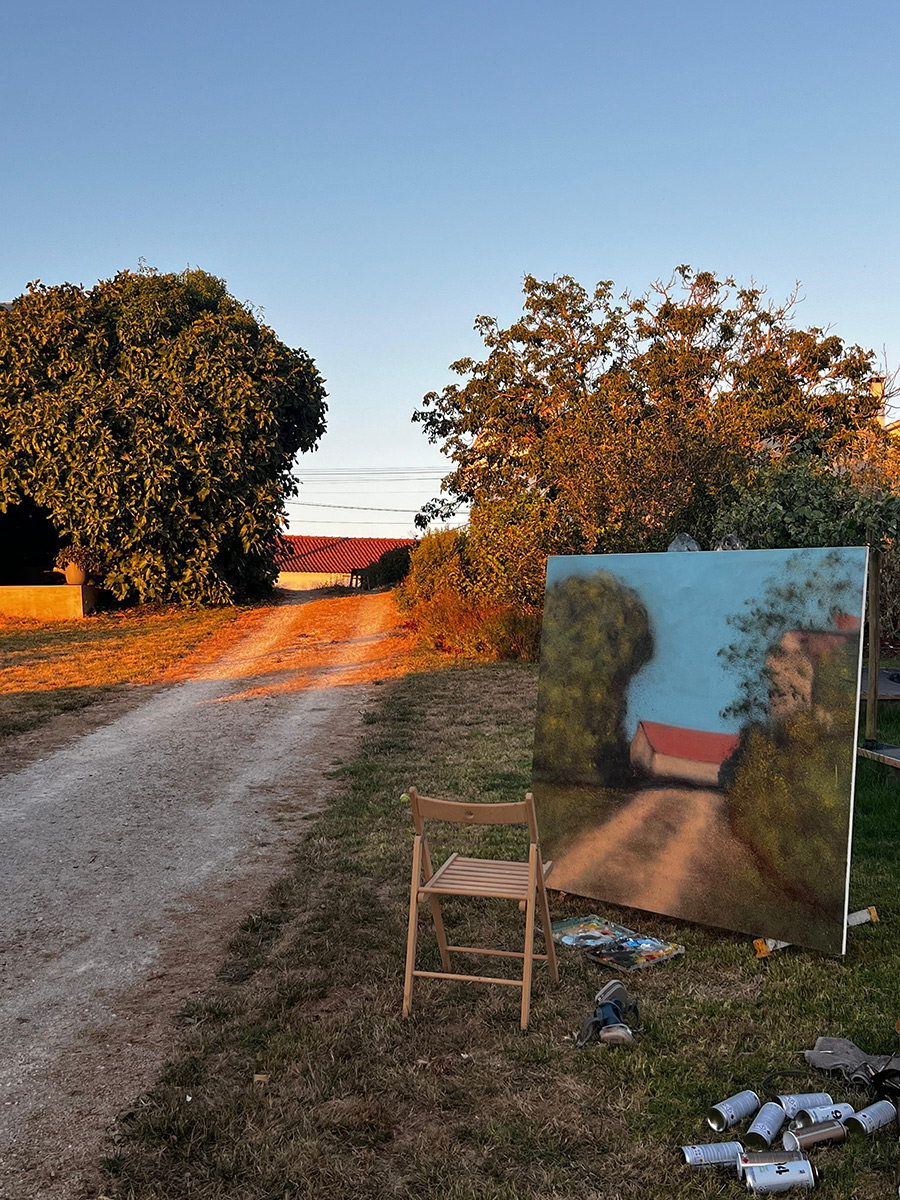
Alex Face. Summer 2025 residency at The Holdout Art Farm, Portugal. (photo courtesy of the gallery)
His work consistently blends the immediacy of Street Art with a calm, painterly sensibility. He can create large-scale public paintings with a sense of focus, embedding his character and imagined story into the environment. His projects have traveled beyond Thailand, appearing across Asia, Europe, and the Americas.
Caminhos Esquecidos is his first fully realized solo show in Portugal, conceived during a residency at The Holdout Art Farm on the Silver Coast. As he pedaled through orchards and along the shoreline, Alex Face translated the subtle light, weathered surfaces, and hushed corners of rural Portugal into ten new paintings. In each, his familiar figure appears as a reflective observer—quietly acknowledging the land, its textures, the lingering stillness.
Alex Face. Summer 2025 residency at The Holdout Art Farm, Portugal. (photo courtesy of the gallery)Alex Face. Summer 2025 residency at The Holdout Art Farm, Portugal. (photo courtesy of the gallery)Alex Face. Caminhos Esquecidos. Andenken Gallery at The Holdout Art Farm, Portugal. Summer 2025. (photo courtesy of the gallery)Alex Face. Caminhos Esquecidos. Andenken Gallery at The Holdout Art Farm, Portugal. Summer 2025. (photo courtesy of the gallery)Alex Face. Caminhos Esquecidos. Andenken Gallery at The Holdout Art Farm, Portugal. Summer 2025. (photo courtesy of the gallery)Alex Face. Caminhos Esquecidos. Andenken Gallery at The Holdout Art Farm, Portugal. Summer 2025. (photo courtesy of the gallery)Alex Face. Camino da Rua Capela. Caminhos Esquecidos. Andenken Gallery at The Holdout Art Farm, Portugal. Summer 2025. (photo courtesy of the gallery)Alex Face. Moinhos do Rio das Antas. Caminhos Esquecidos. Andenken Gallery at The Holdout Art Farm, Portugal. Summer 2025. (photo courtesy of the gallery)Alex Face. Esquinas das Casas Brancas. Caminhos Esquecidos. Andenken Gallery at The Holdout Art Farm, Portugal. Summer 2025. (photo courtesy of the gallery)Alex Face. Ruinas da Rua do Salgueiral. Caminhos Esquecidos. Andenken Gallery at The Holdout Art Farm, Portugal. Summer 2025. (photo courtesy of the gallery)Alex Face. Kids enjoying Alex’s outdoor painting in Alcobaca. Summer 2025 residency at The Holdout Art Farm, Portugal. (photo courtesy of the gallery)Alex Face. Completed mural in Alcobaca. Summer 2025 residency at The Holdout Art Farm, Portugal. (photo courtesy of the gallery)
“Flow on, river! flow with the flood-tide, and ebb with the ebb-tide! Frolic on, crested and scallop-edg’d waves! Gorgeous clouds of the sunset! drench with your splendor me, or the men and women generations after me! Cross from shore to shore, countless crowds of passengers!” ~ Crossing Brooklyn Ferry, Walt Whitman, 1860
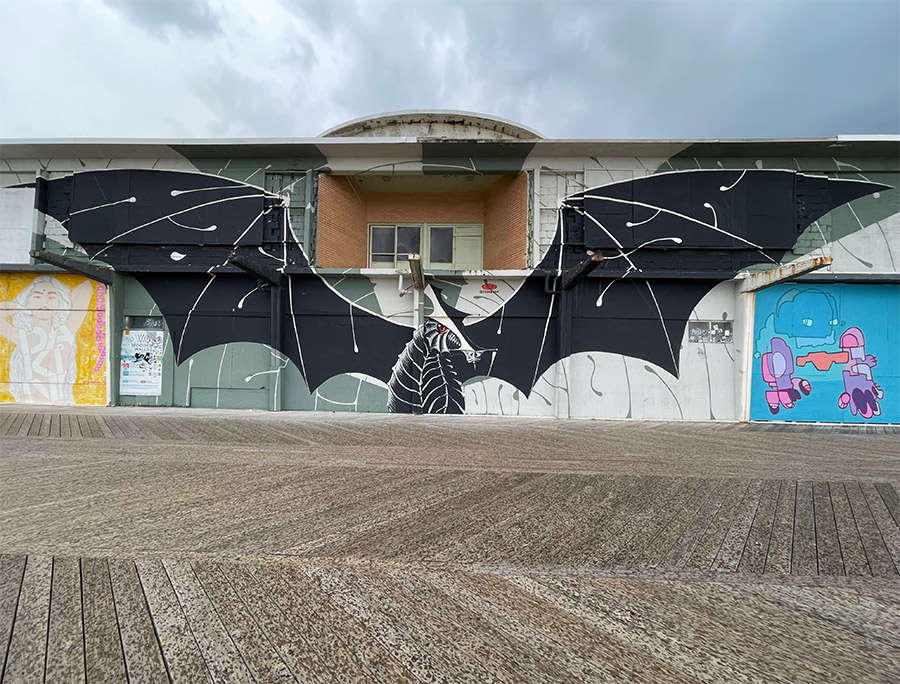
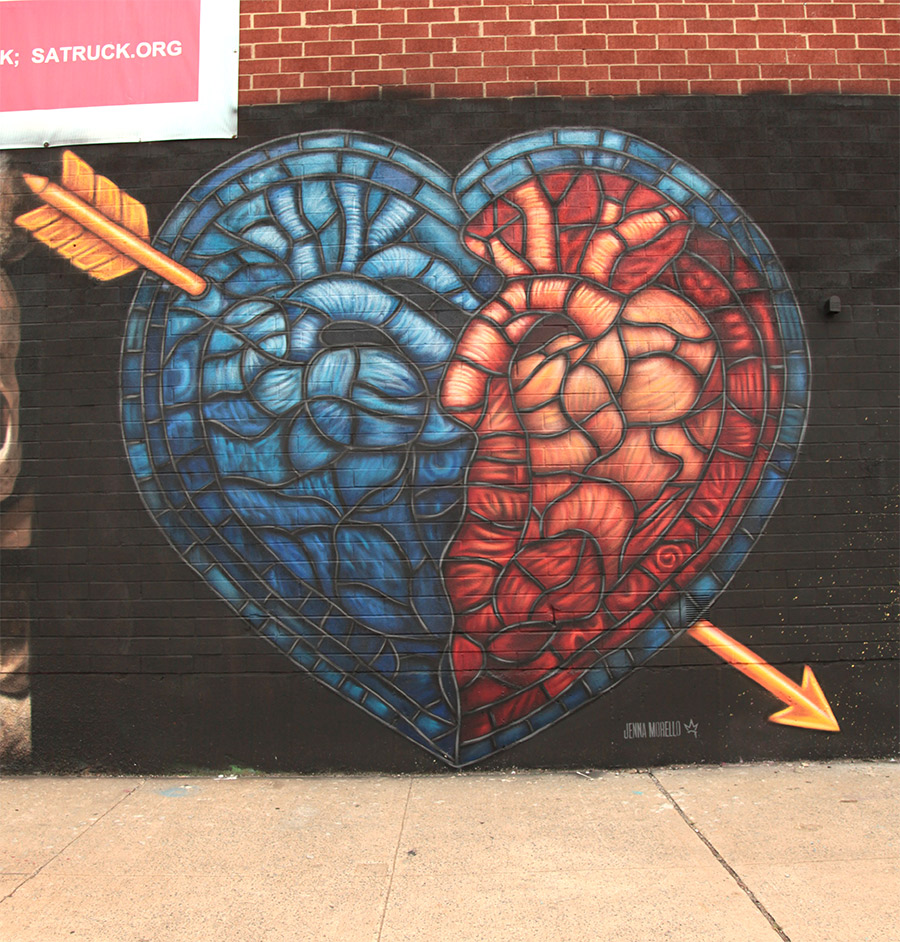
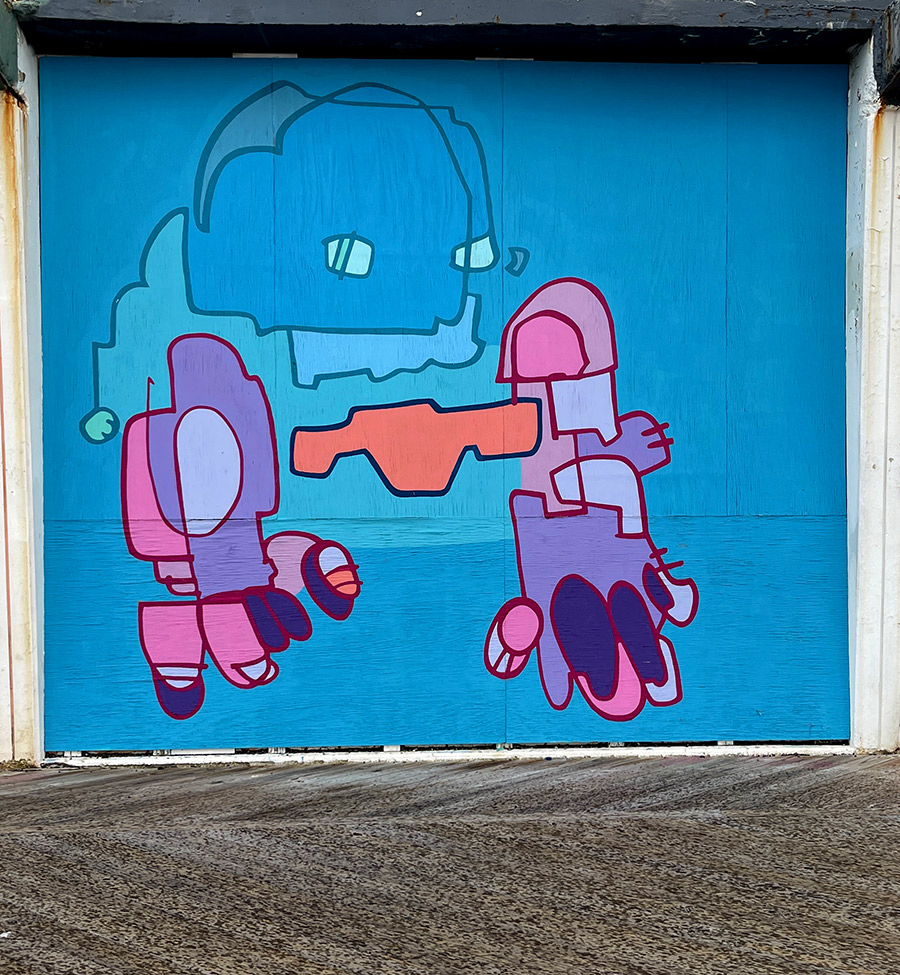
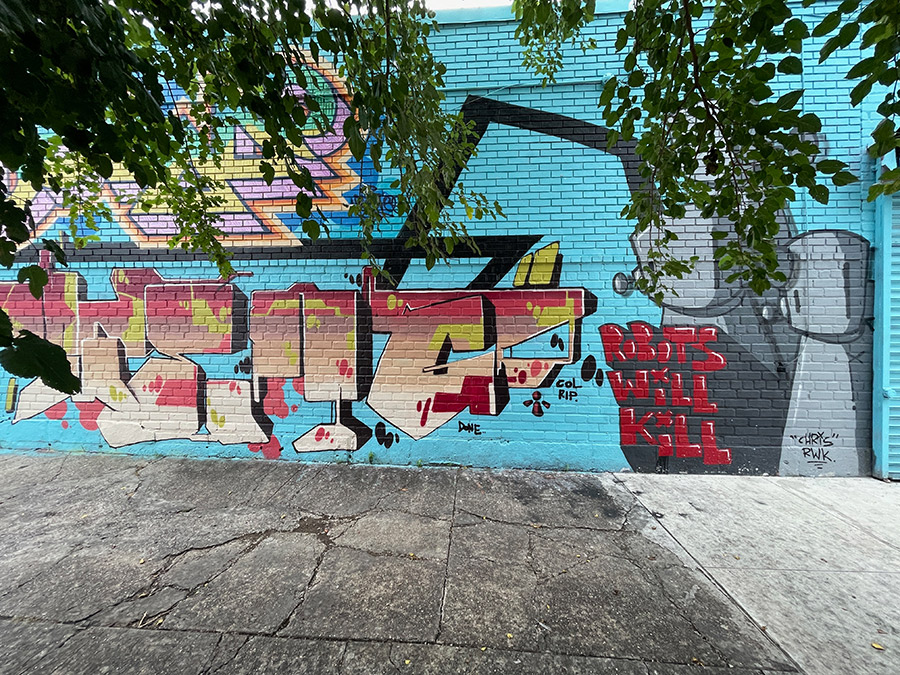
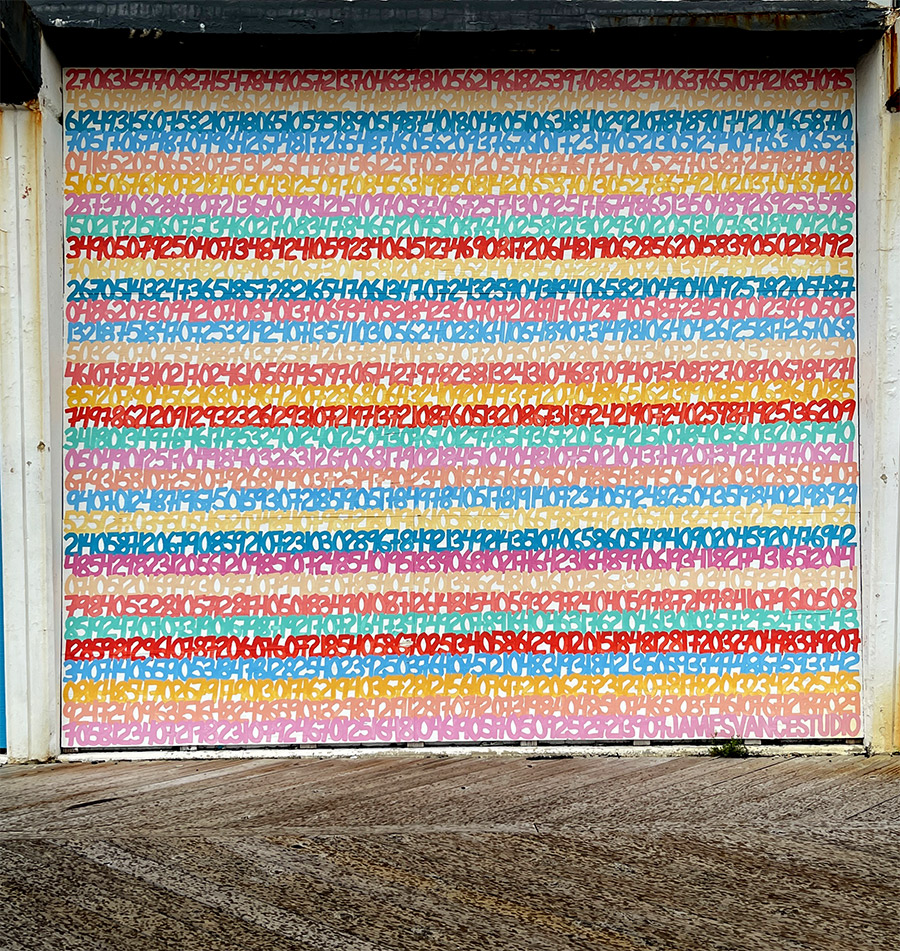
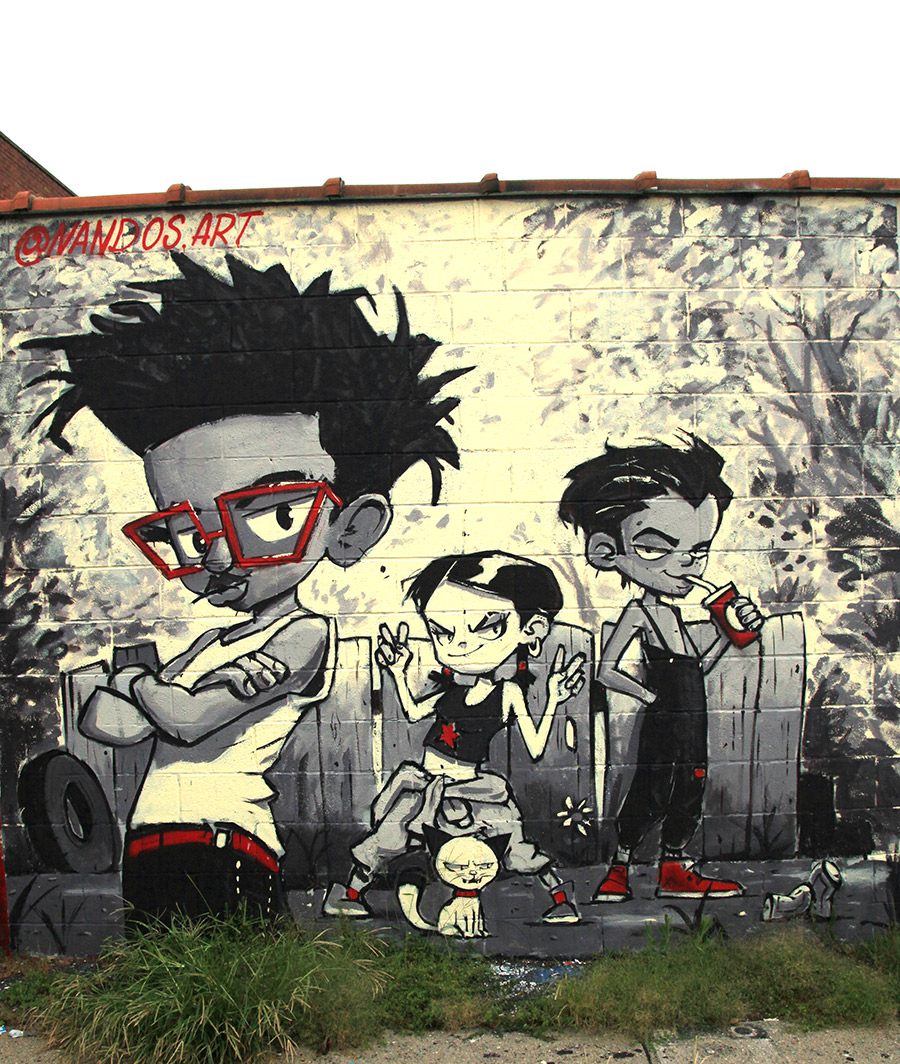
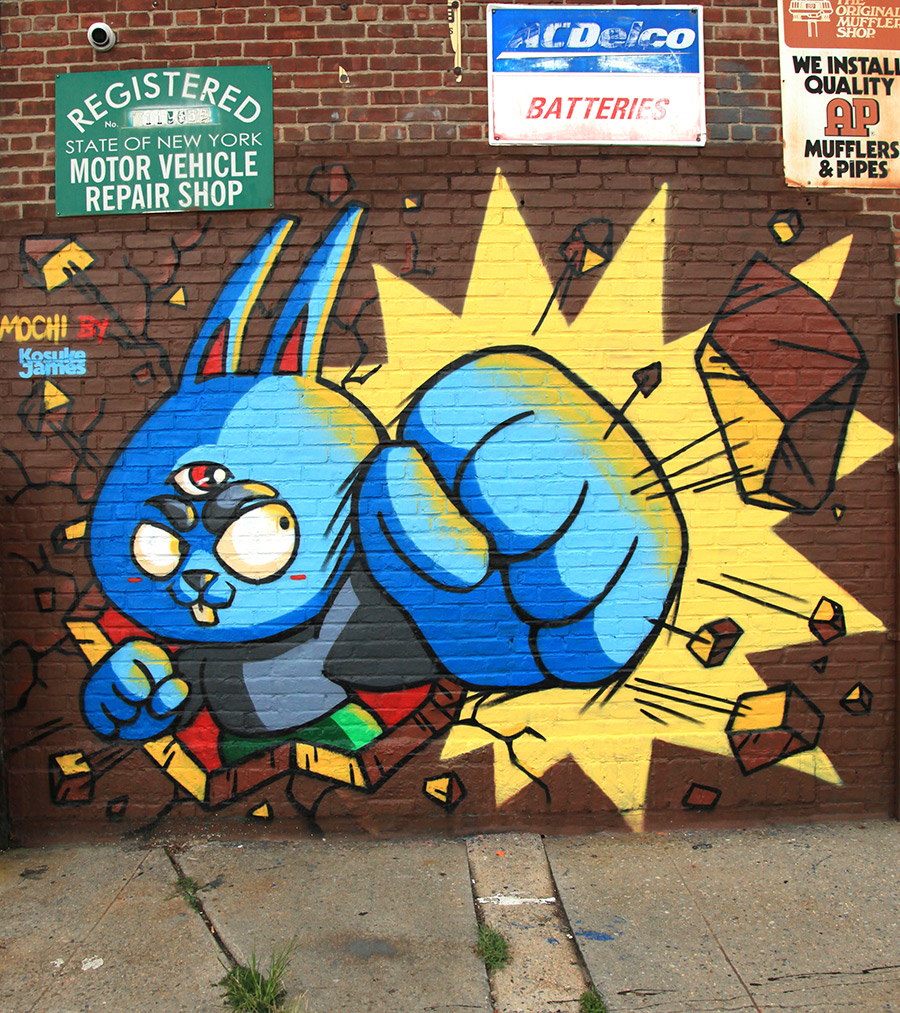
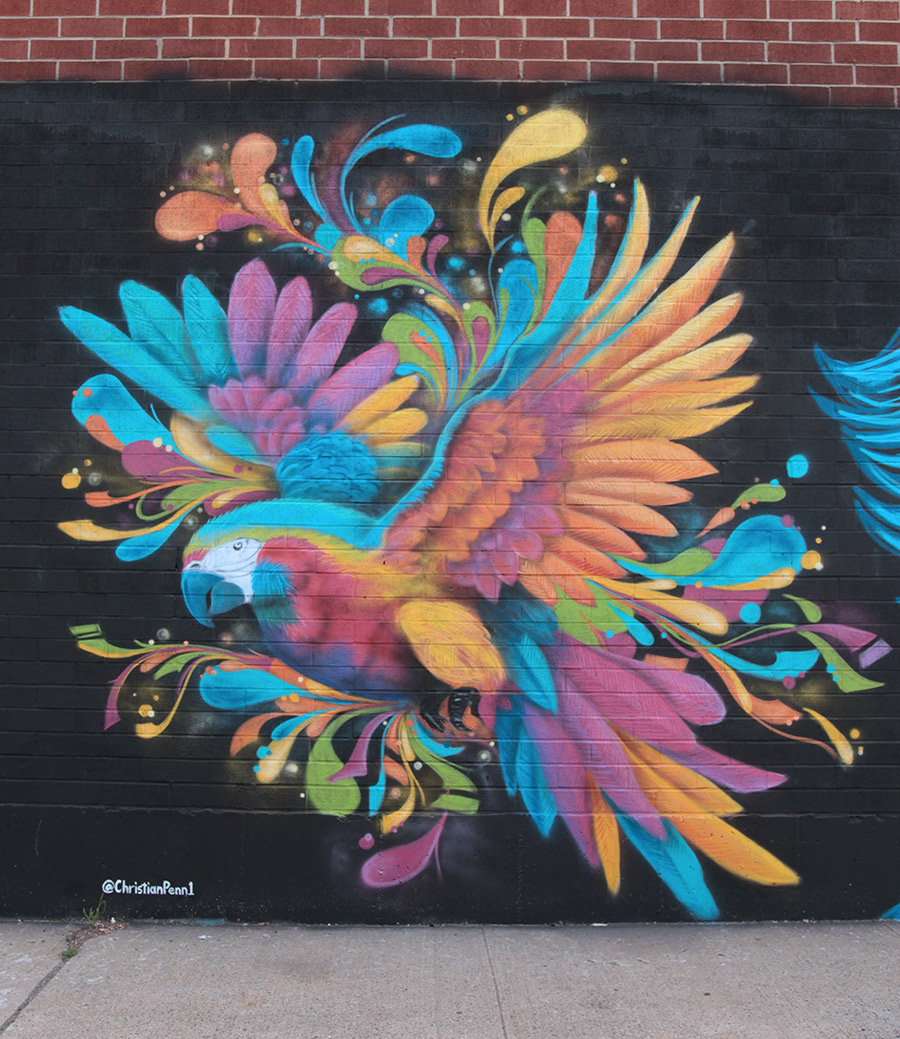
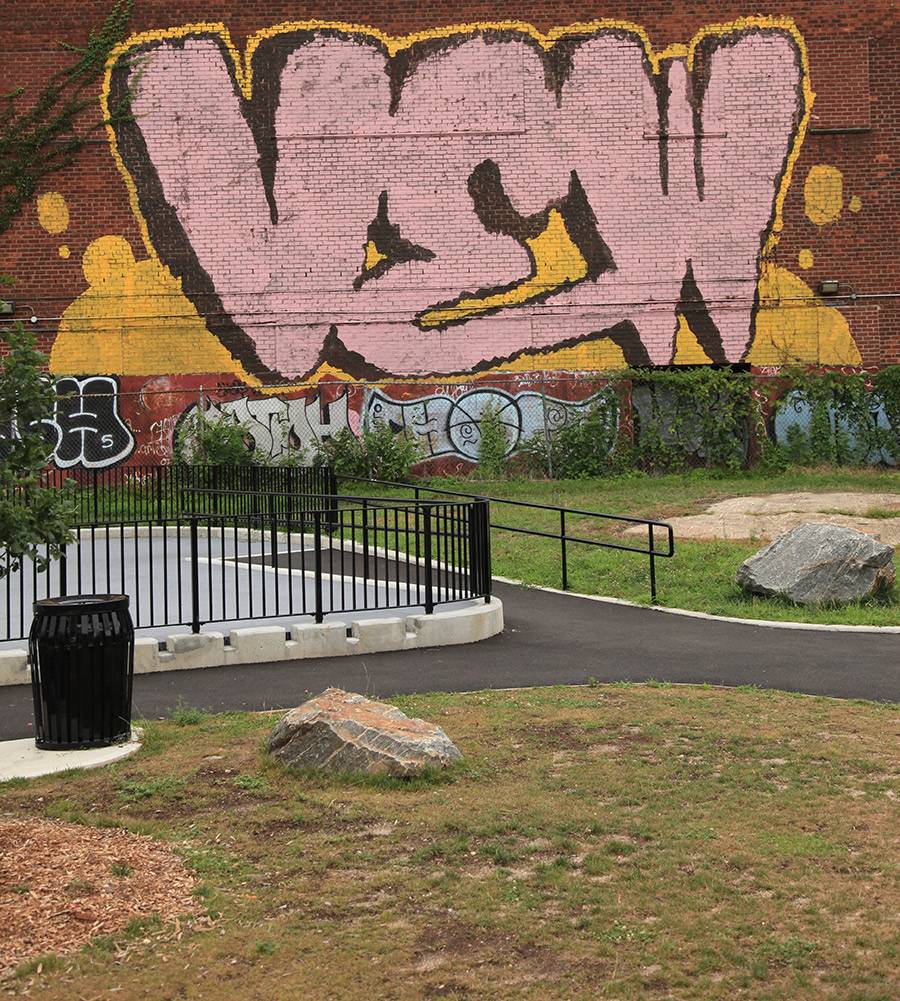
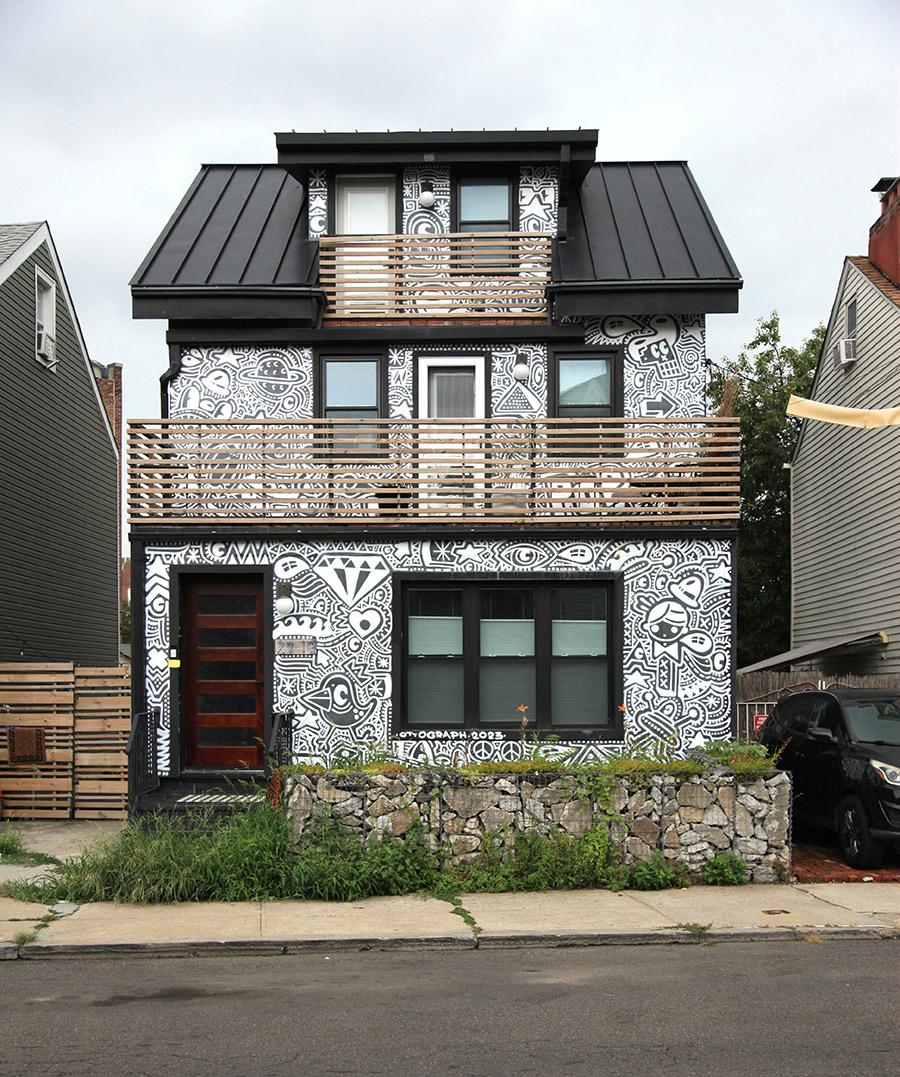
Here’s our weekly interview with the street, this time featuring Caryn Cast, Chris (Robots Will Kill), Christian Penn, Fumero, Hugus, IMK, James Vance, Jenna Morello, Joao is Typing, Kosuke James, LeCrue Eyebrows, Luch, Mike Shine, Nandos Art, Ninth Wave Studio, Ottograph, Peachee Blue, Prez Arecta, Renek X, and VEW.
Remarkably, the volume of attention directed toward transfolk in some U.S. media and legislation during the most recent decade has been strikingly disproportionate to their size. For example, a 2022 Media Matters study found that Fox News aired over 170 segments about trans people in just three weeks, with fiery verbiage that often framed them as societal threats of some kind. In the same year, over 300 anti-trans bills were introduced across U.S. state legislatures, marking a sharp escalation despite the group’s relatively small size. Influential political figures, such as Florida Governor Ron DeSantis, have made restricting trans healthcare and education content central to their platforms. At the same time, Supreme Court Justice Samuel Alito included attacks on LGBTQ+ rights in his opinions, suggesting broader rollback intentions. Meanwhile, religious leaders such as Franklin Graham have labeled gender-affirming care as “evil,” framing trans existence as a cultural battleground.
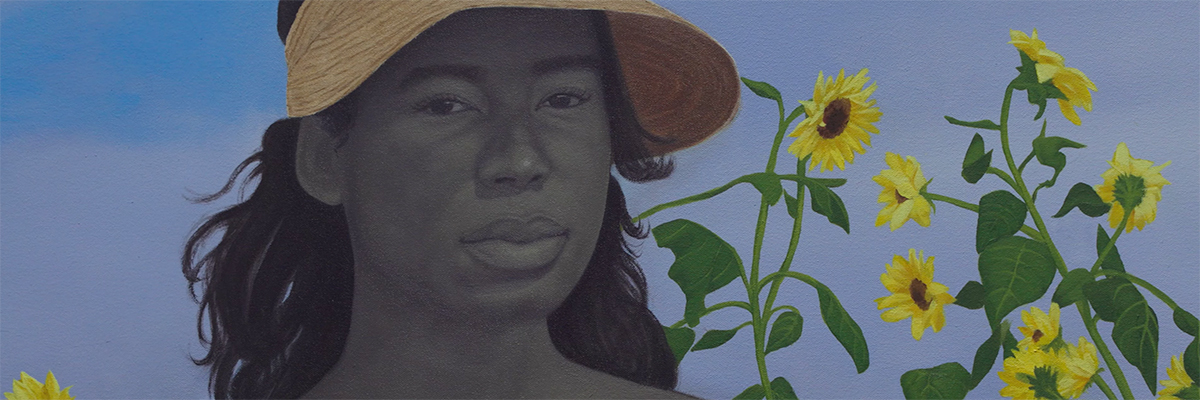
Amy Sherald. “Trans Forming Liberty”. The New Yorker. Aug. 11, 2025
This painting—featured on the cover of The New Yorker this month—portrays a Black transgender woman striking the pose of the Statue of Liberty. It drew national attention this spring after sparking controversy around its proposed inclusion in Amy Sherald’s exhibition American Sublime at the Smithsonian’s National Portrait Gallery. “Figuration is the Soul Food of art making. It’s like what takes you back home,” says the artist in the video below.
Video via Art21
This barrage of intense emotion focused on such a small segment of society reflects not population size, but the strategic use of trans identity as a political and ideological wedge. By the way they have been preaching and legislating, you’d think trans people were leading an uprising, storming the gates—with nothing but pronouns and self-respect as weapons. More likely, this is a ginned-up outrage that is good for fundraising for religious posers and for getting low-knowledge voters to the polls, now that topics like abortion, gays, guns, and blacks are either too complicated or don’t have the cultural zing they once did.
In this context, a Black trans woman—even in a painting—set off alarms loud enough to derail a major traveling exhibition. When Amy Sherald’s portrait appeared on the cover of The New Yorker, it wasn’t just art critics who noticed; gatekeepers got nervous and jittery. Sherald, best known for her regal portraits that challenge the visual grammar of Black representation, found her work caught in the crossfire of culture war politics. What followed was a quiet act of protest by artists who refused to let reactionary censorship set the terms. This new video enables the work to speak—calm, composed, undeniable. The work speaks for itself.
In his new solo exhibition, MONEY, at London’s BSMT Gallery, Brazilian artist Cranio uses his signature wit – sharpened like a ceremonial blade. Known for his blue-skinned Indigenous protagonist who wanders through this contemporary chaos, Cranio has built a practice over the last two decades that disarms – and provokes.
This time, he’s aiming squarely at the culture of consumerism — and some of the spiritual compromises that come with it. Curated by the gallery team and grounded in satire, MONEY is more critique: it’s a mirror held up to a society sadly tangled in symbols of wealth. He’s also attempting to put a spiritual, intellectual price tag on the price we pay for our enslavement.
Having seen Cranio’s work rise from the walls of São Paulo’s east side to global prominence, it’s clear that his characters are not just visual signatures — they are autobiographical echoes and social barometers. Born Fabio de Oliveira Parnaíba in 1982, Cranio began painting in 1998 as part of the Hip Hop and graffiti culture that shaped a generation of Brazilian artists.
CRANIO (photo courtesy of the BSMT)
His Indigenous figure is no twee caricature; it’s part avatar, part ancestor — navigating globalized landscapes that are layered with complexities of identity, displacement, and resistance. Not heavy on preaching, he presents the conundrum wrapped in its absurdity.
In MONEY, the blue characters wear gold chains, clutch designer bags, and participate in almost religious consumer rituals — not as villains, but as tragicomic stand-ins for all of us. They speak to the slow corrosion of values in a world where meaning is increasingly manufactured.
CRANIO (photo courtesy of the BSMT)CRANIO (photo courtesy of the BSMT)CRANIO (photo courtesy of the BSMT)CRANIO (photo courtesy of the BSMT)
Join BSMT Gallery for the opening night of ‘MONEY’ on August 7th, 2025, from 6-9 pm. The show runs from August 8th to August 24th
 BROOKLYN STREET ART LOVES YOU MORE EVERY DAY