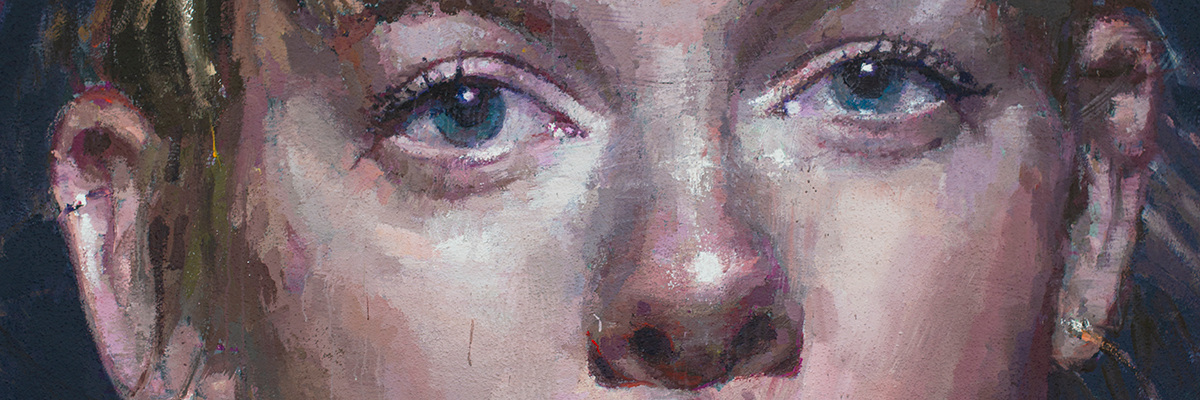
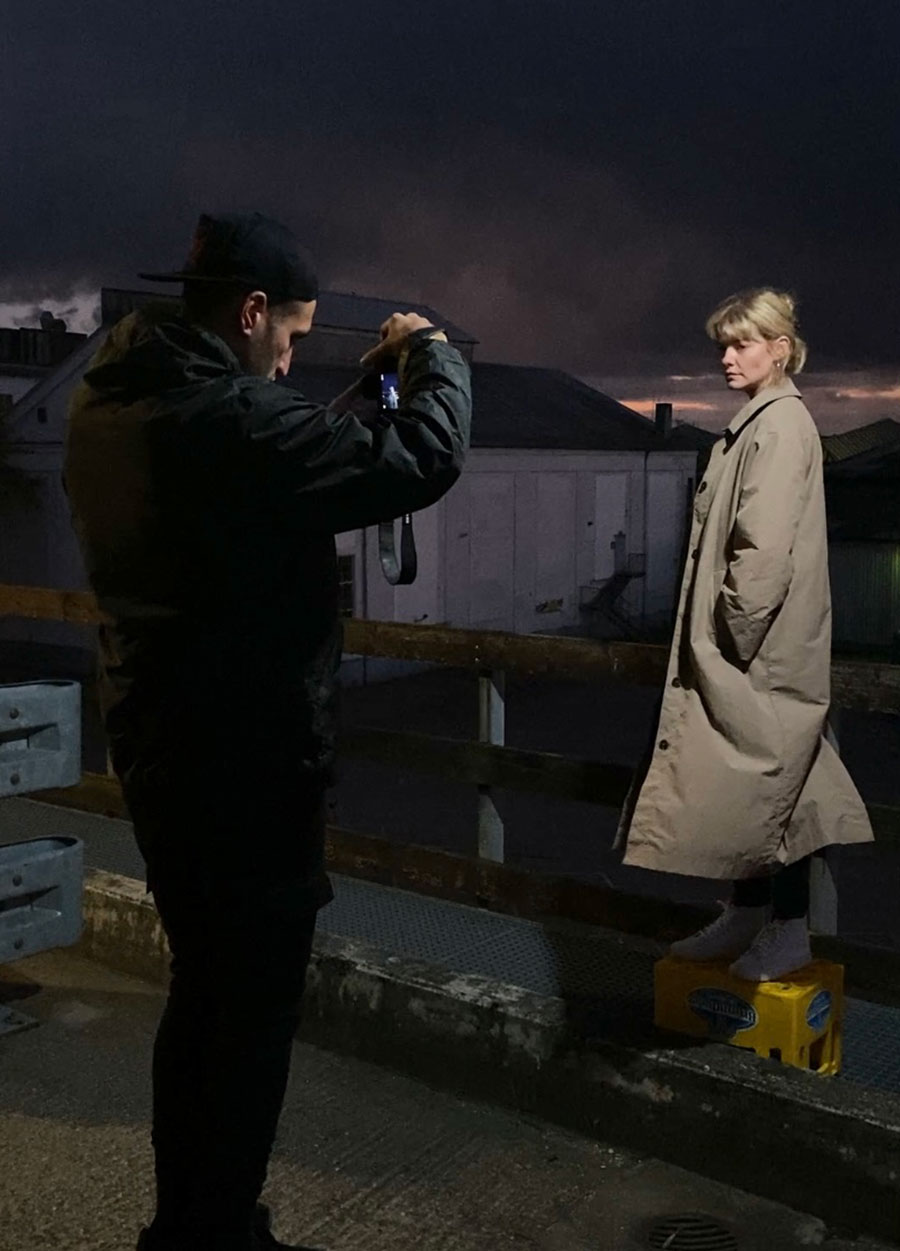
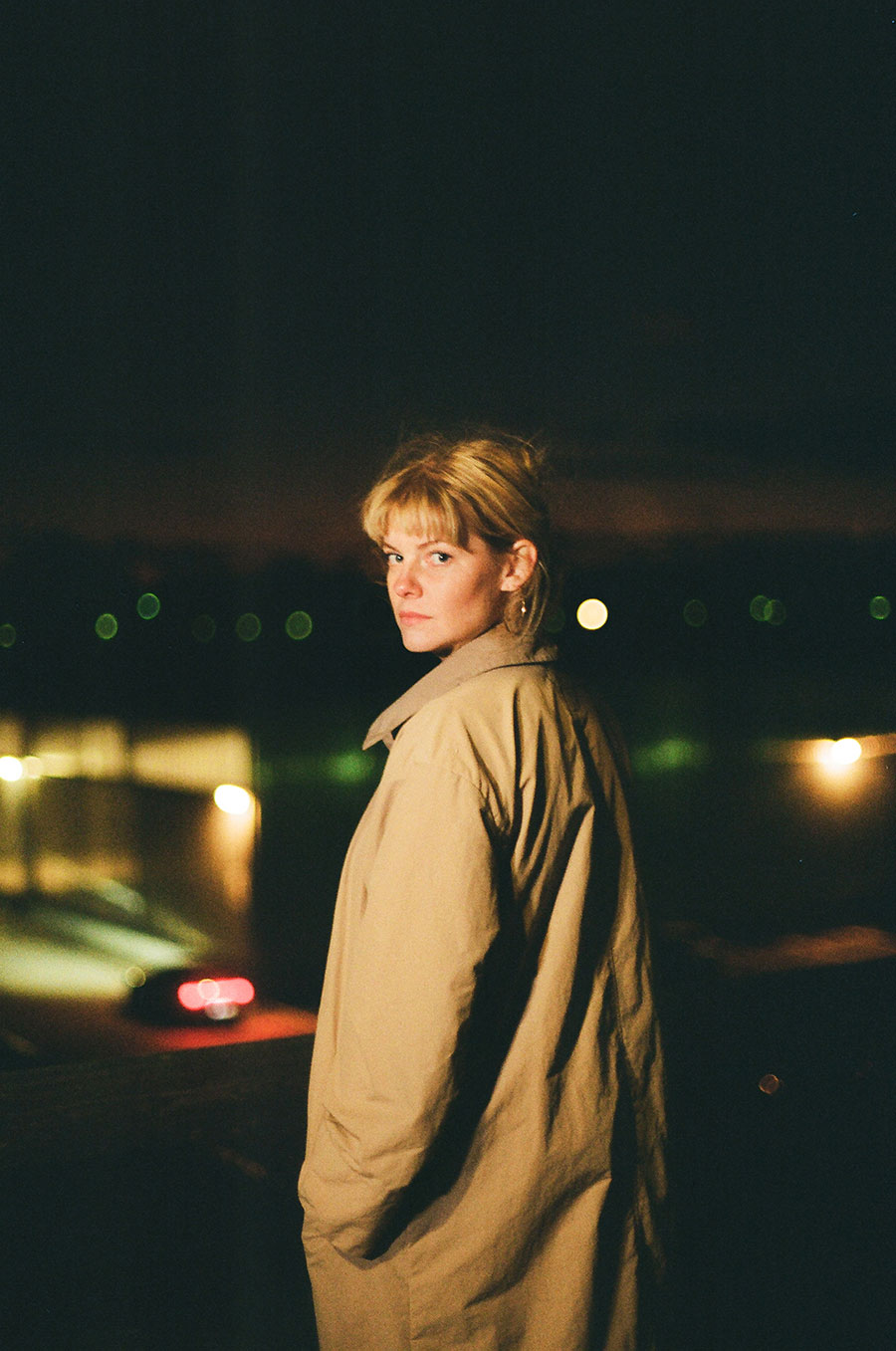
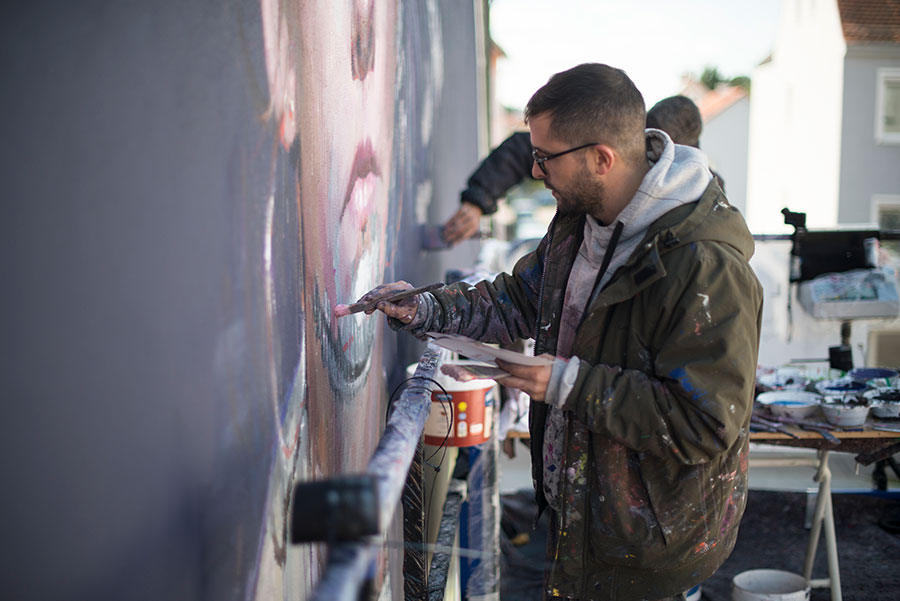
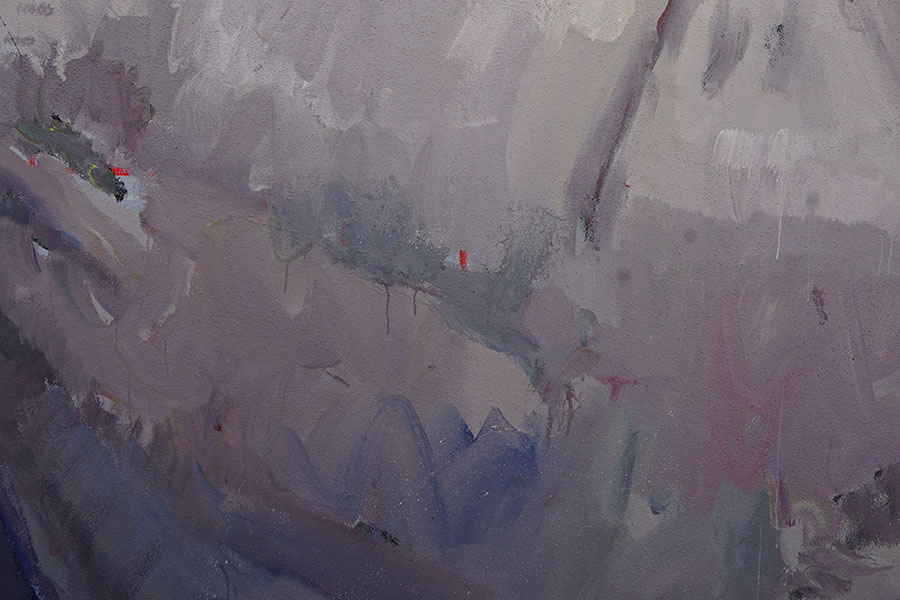
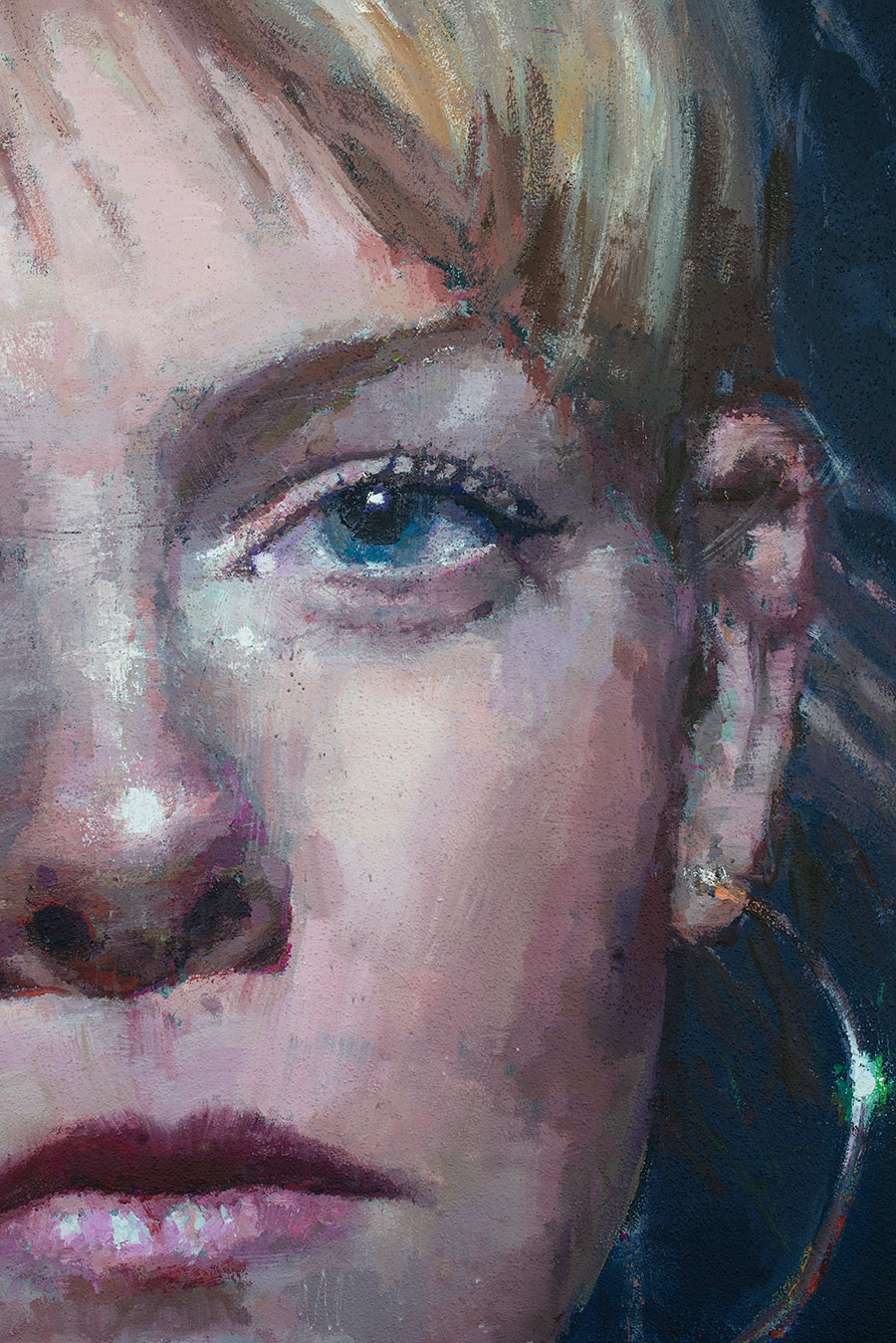
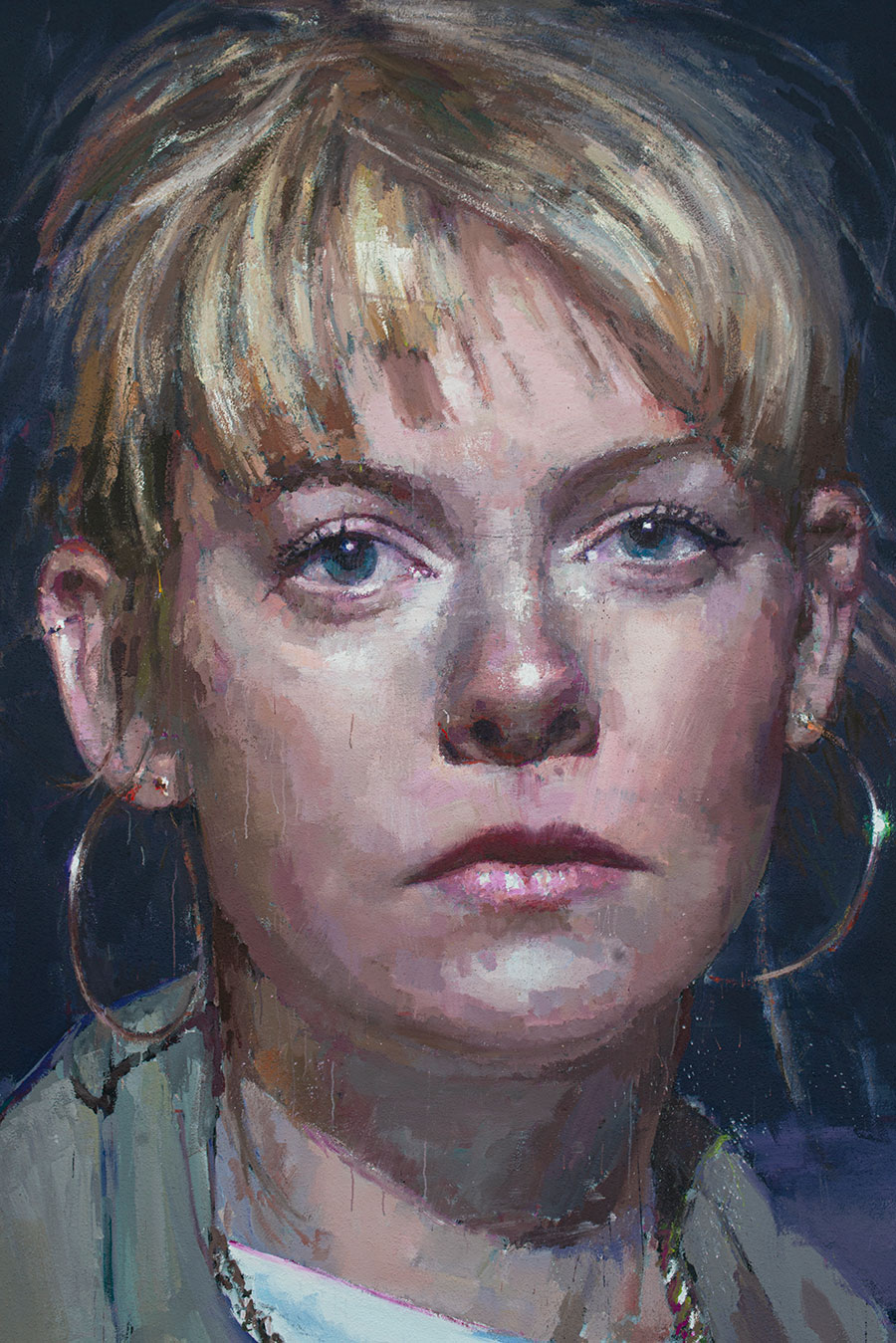
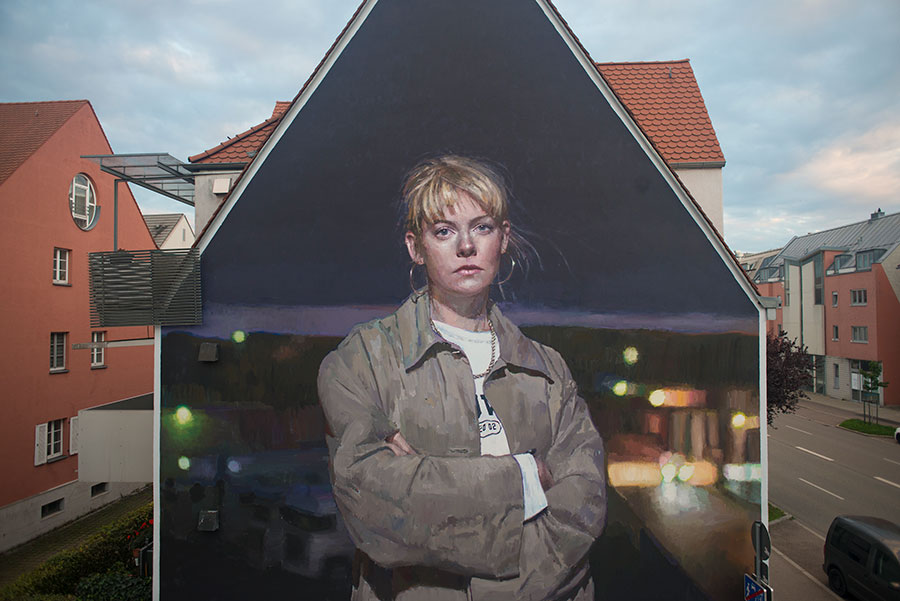
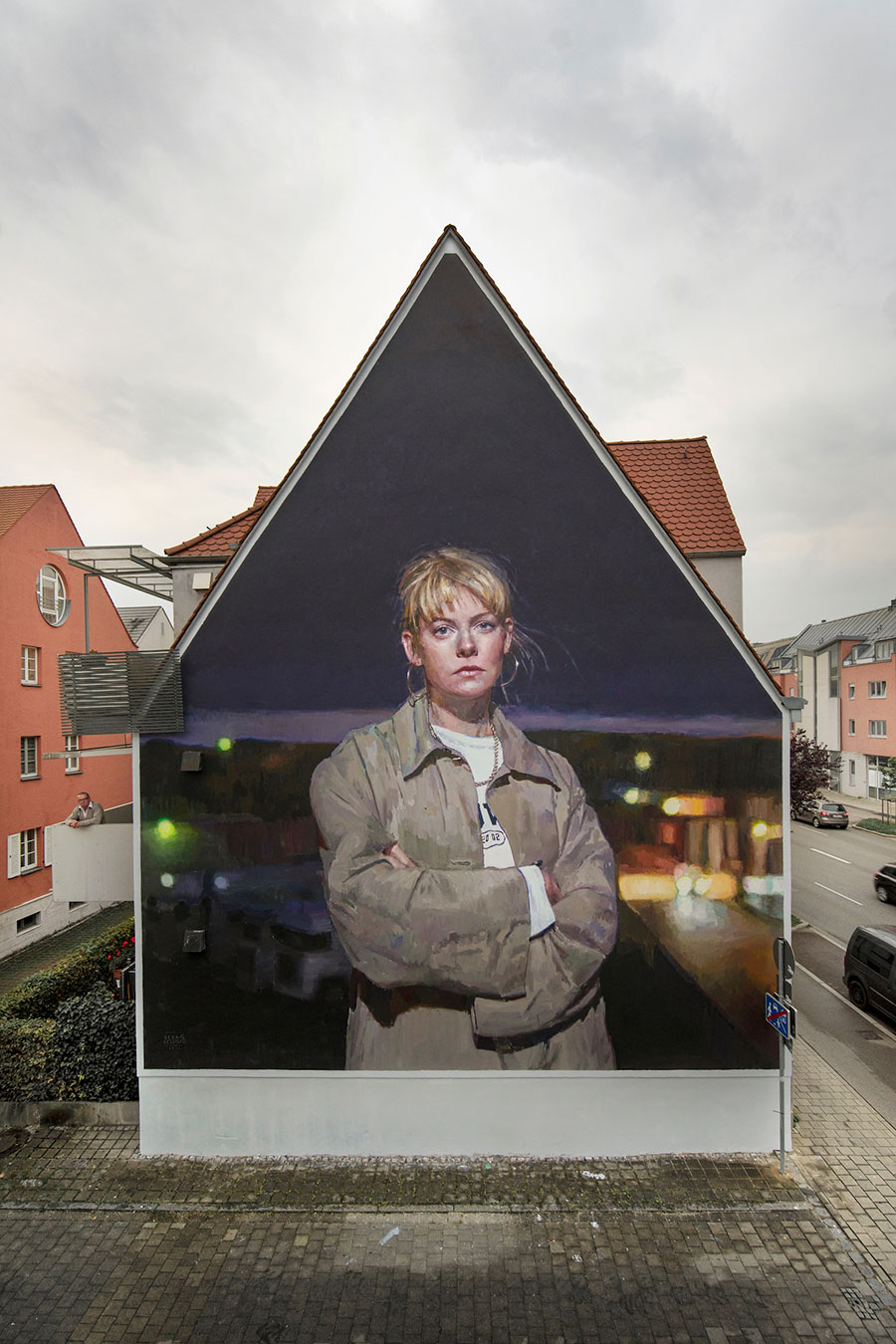
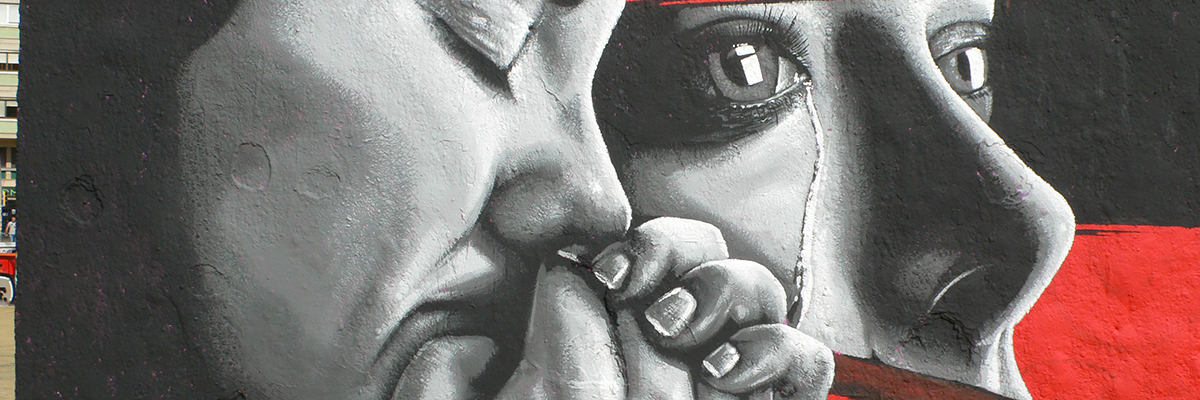
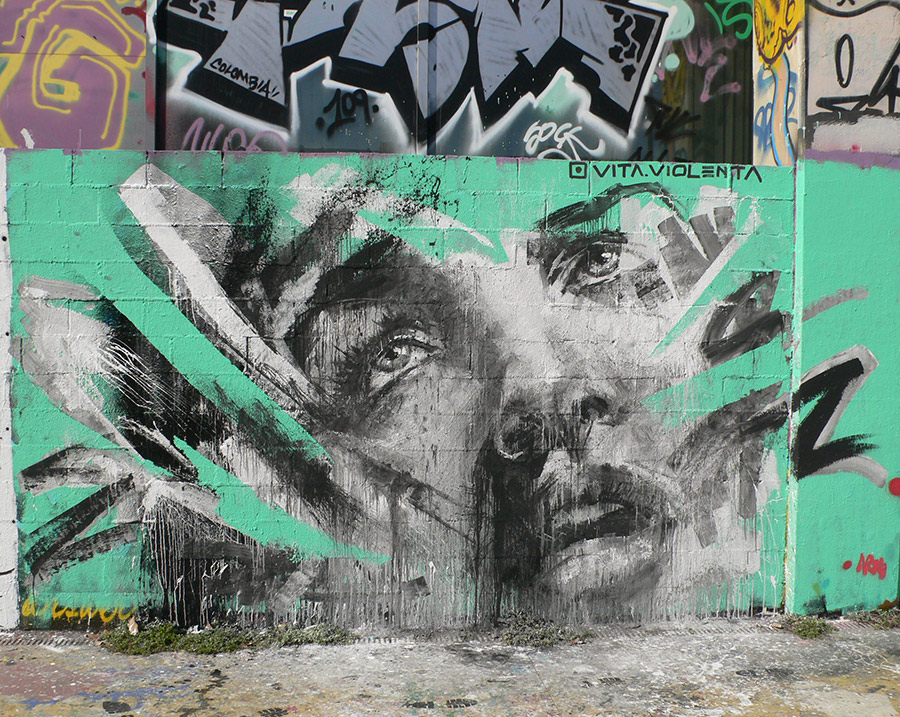
A young master painting in the Old Master vein, perhaps, this Spanish poet captures something between the past and the future. Sebas Velasco is not yet 6 years out from his Masters in painting, yet he is bringing imagination and emotion to his mural work that gives you a longing to know more.
Along with the photographer, friend, and longtime collaborator Jose Delou, Velasco has been traveling the last six weeks from the Prado in Spain through Germany, then Sweden. Bringing depth to the surface, his portraiture stands astride the beauty, and decay; a romantic alienation found only in the modern metropolis.
While you might hesitate to mention the Spanish and Old Master painter Goya for fear it might complicate the conversation, Velasco is showing us how he will continue to build the image that will captivate. In some way, his manner of capturing the character is familiar, compelling, and somehow impossible.
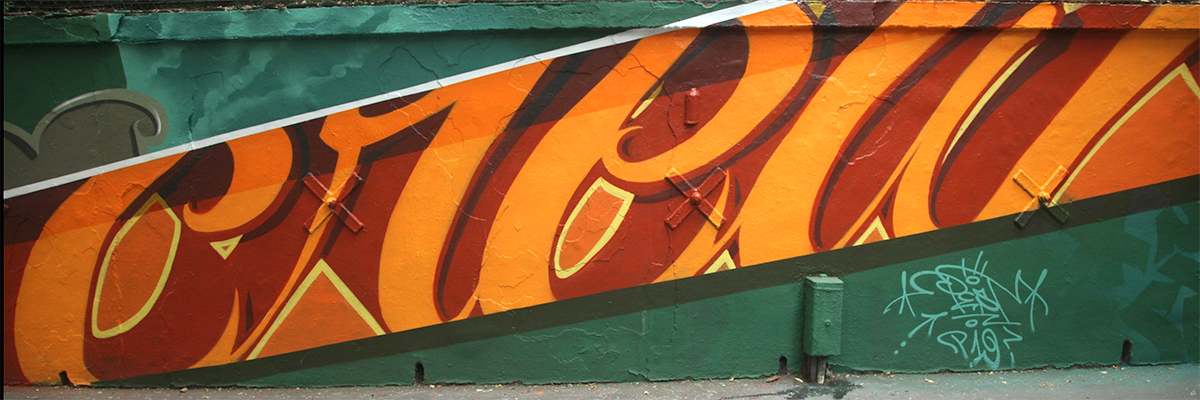
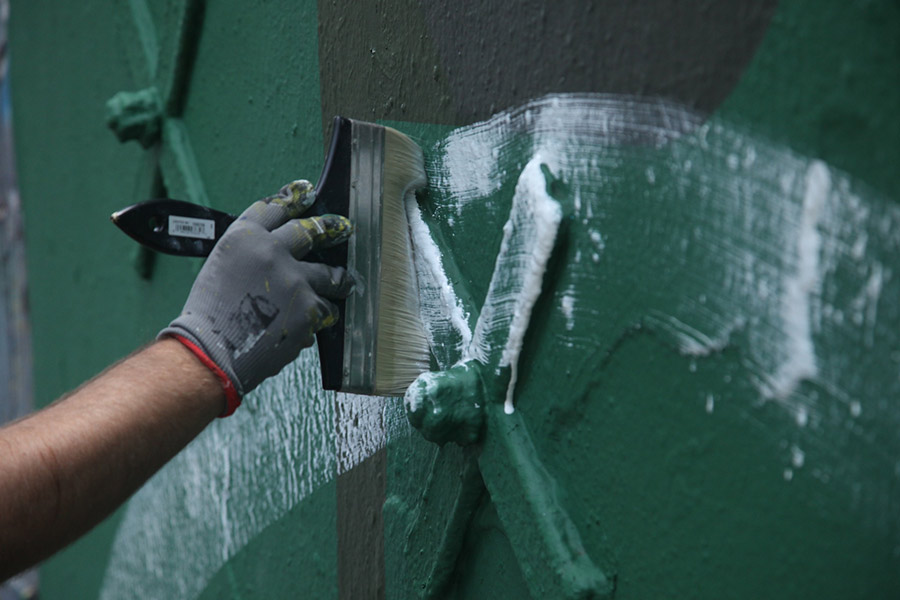
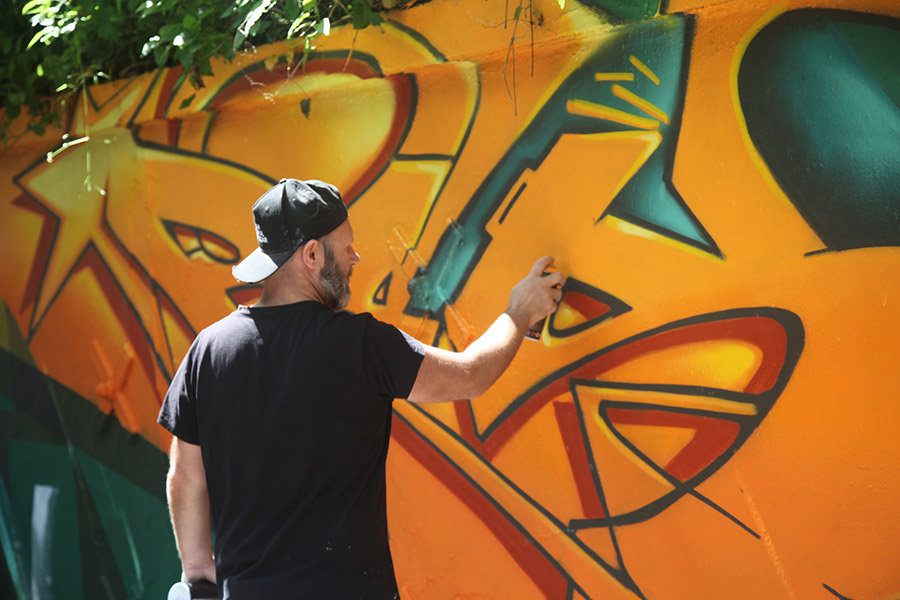
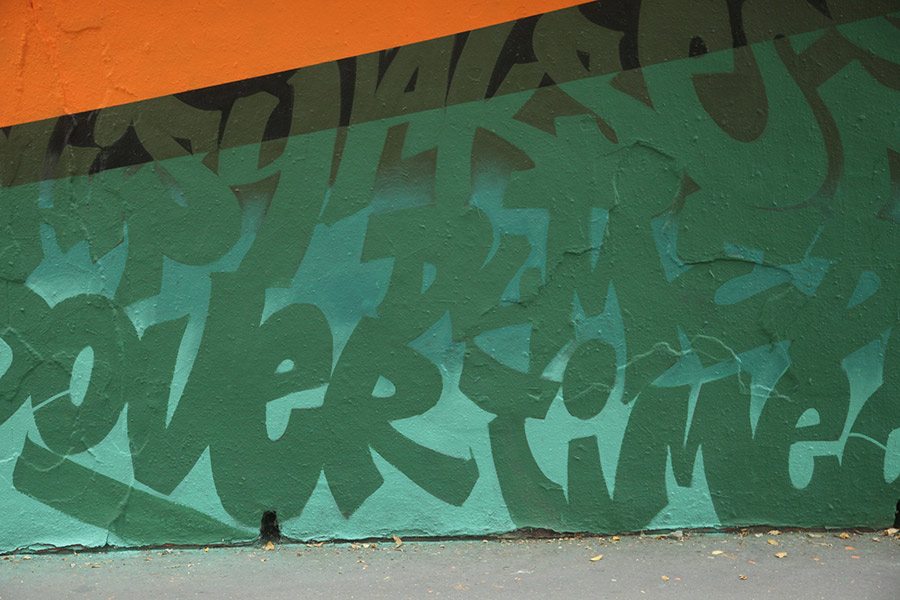
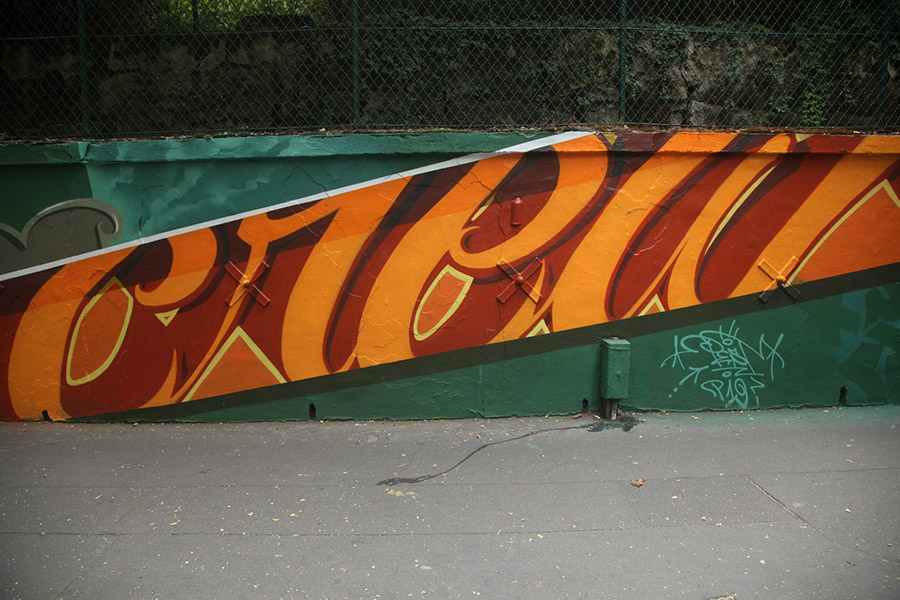
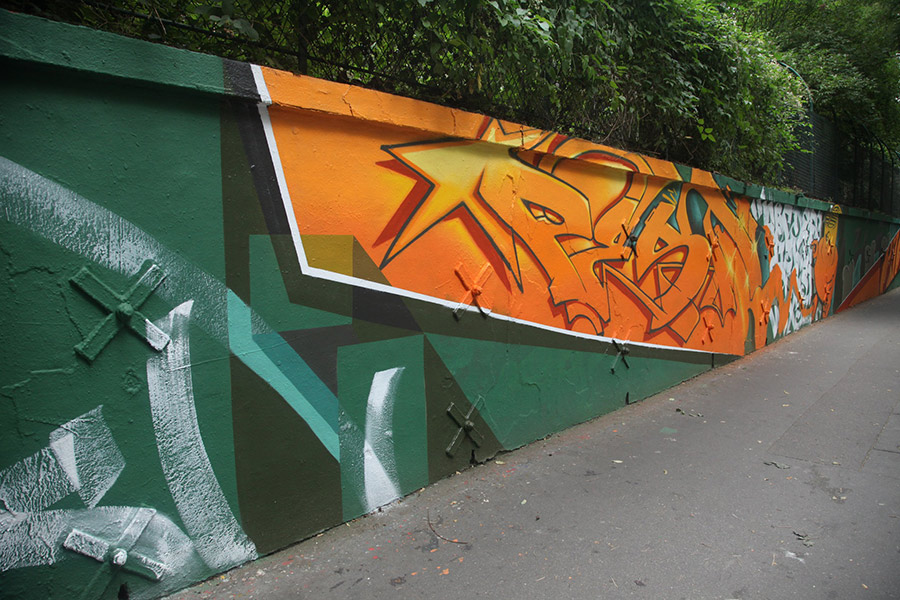
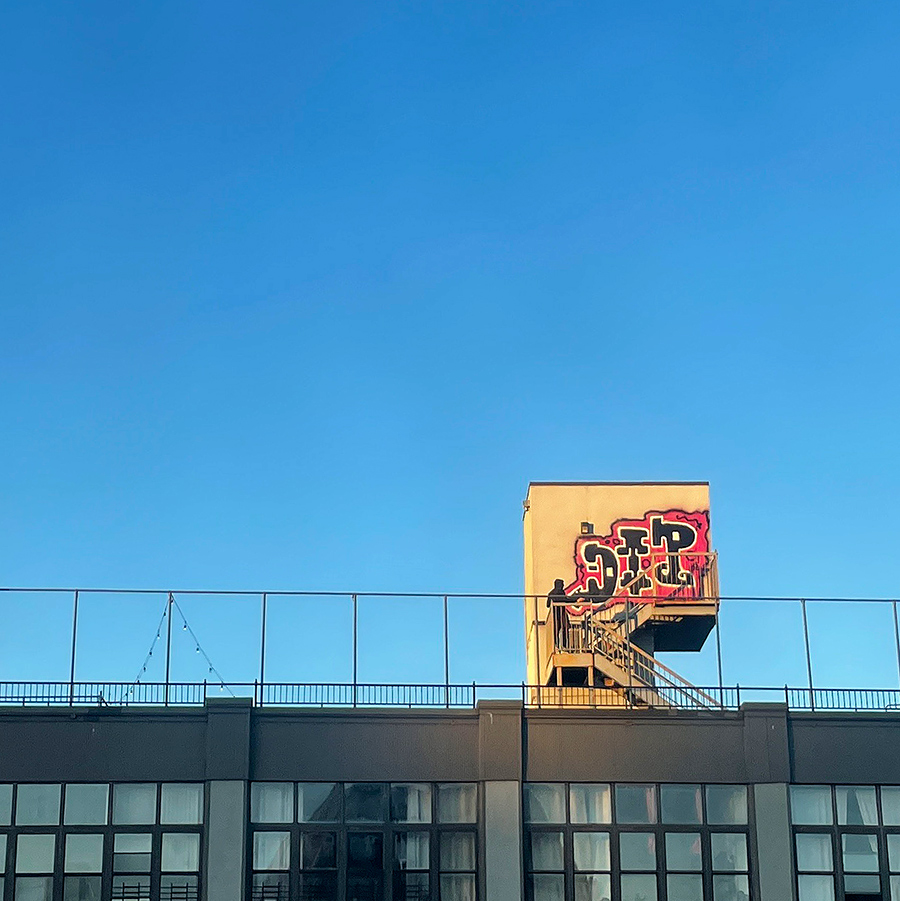
Writing since the late 80s, Parisian artist PEST pulls out another high-style classic for Art Azoi in the city that has spawned much of the great graffiti since the 1990s – including his own crew named P19. While he has kept up with all the new styles from original New York to German style and many of the newer ones across the world, PEST gravitates to the classic graffiti culture and likes to keep it clean.
Pest in collaboration with Art Azoï. Paris. (photo courtesy of Art Azoï)Pest in collaboration with Art Azoï. Paris. (photo courtesy of Art Azoï)Pest in collaboration with Art Azoï. Paris. (photo courtesy of Art Azoï)Pest in collaboration with Art Azoï. Paris. (photo courtesy of Art Azoï)Pest in collaboration with Art Azoï. Paris. (photo courtesy of Art Azoï)Pest in collaboration with Art Azoï. Paris. (photo courtesy of Art Azoï)Pest in collaboration with Art Azoï. Paris. (photo courtesy of Art Azoï)
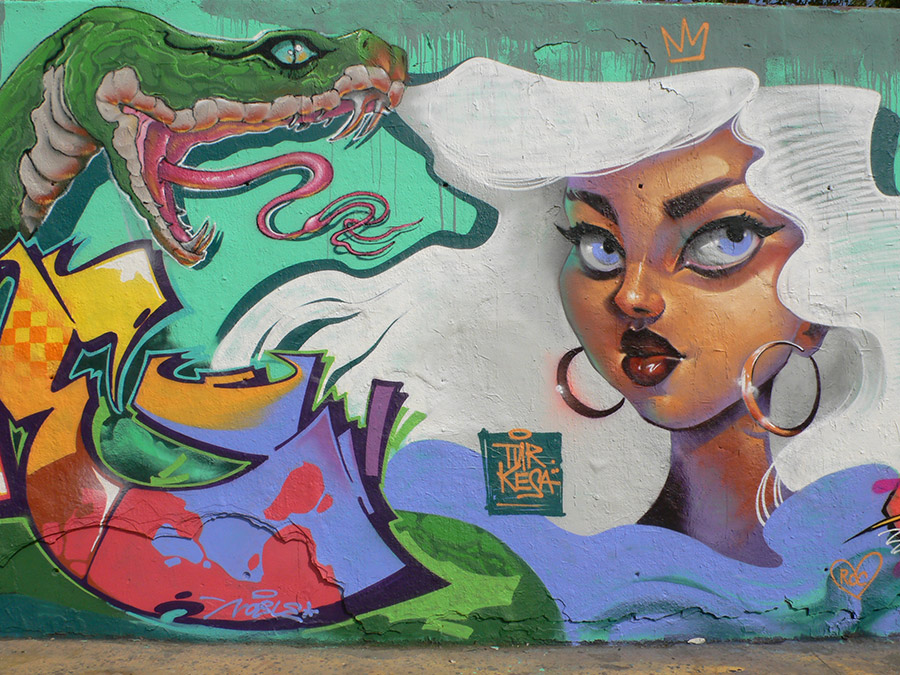
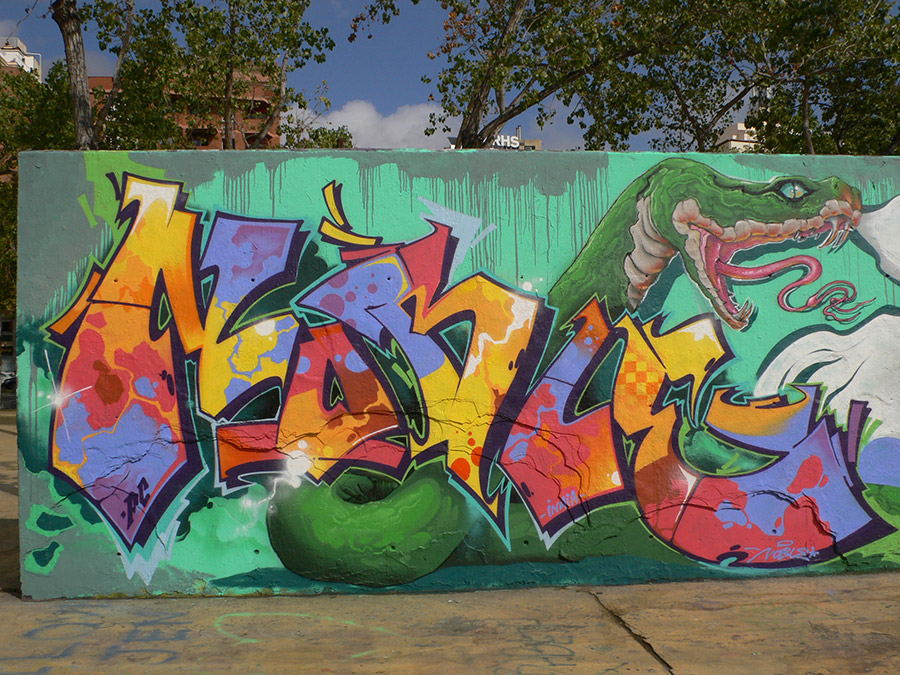
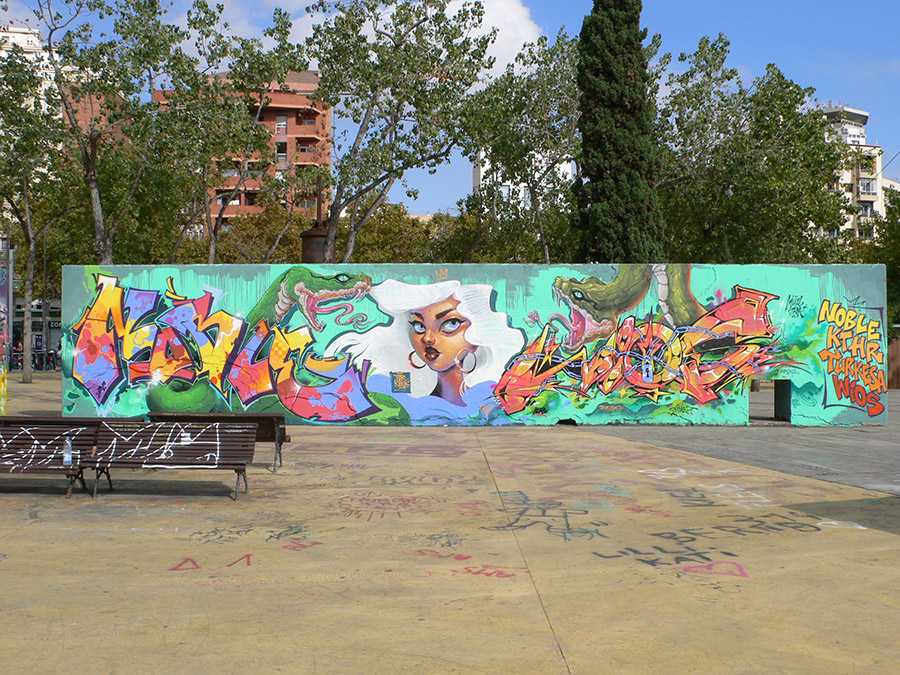
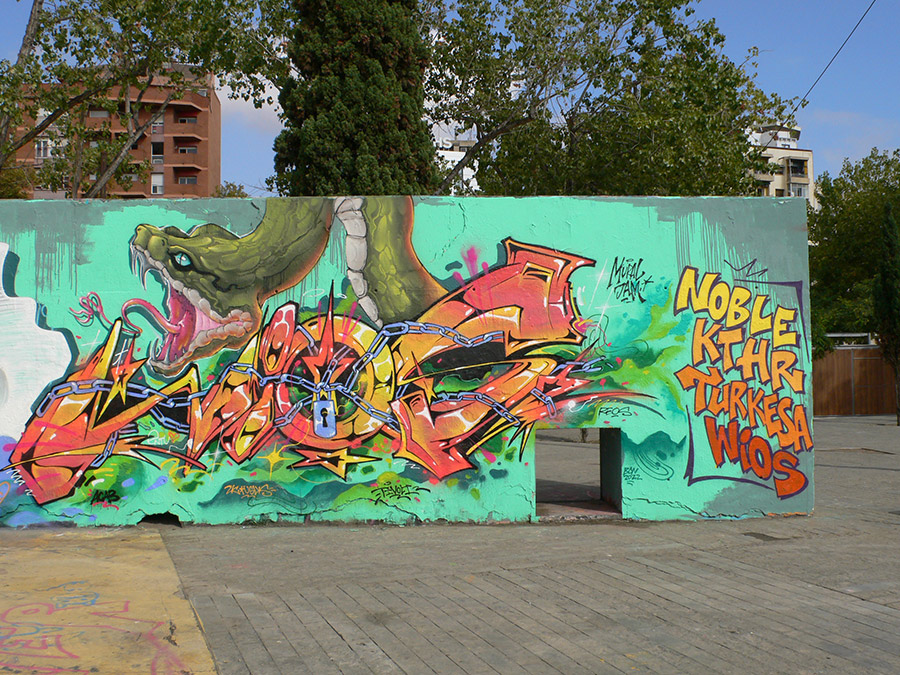
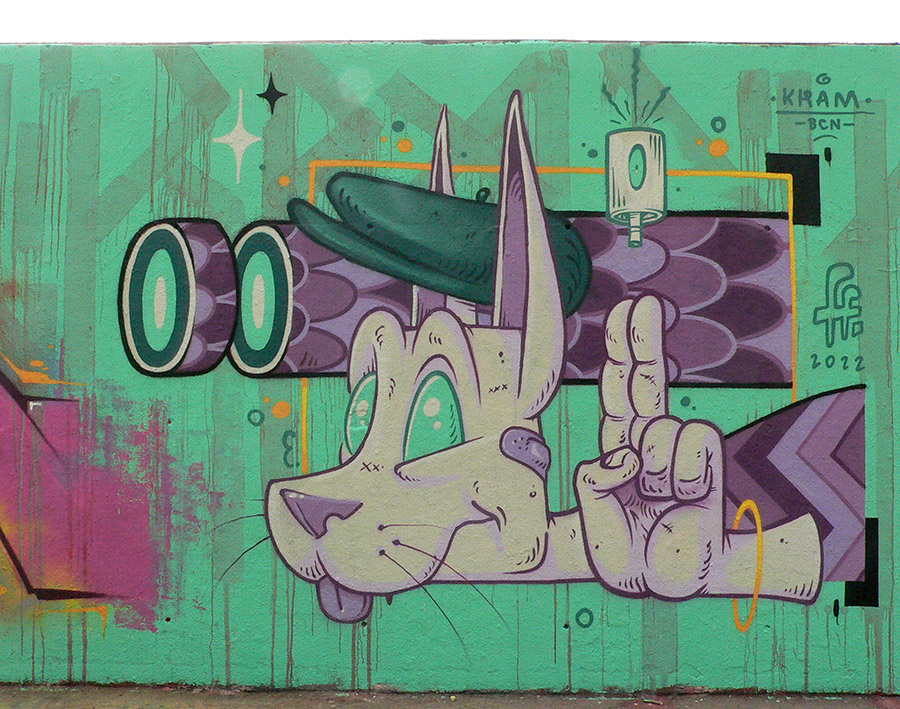
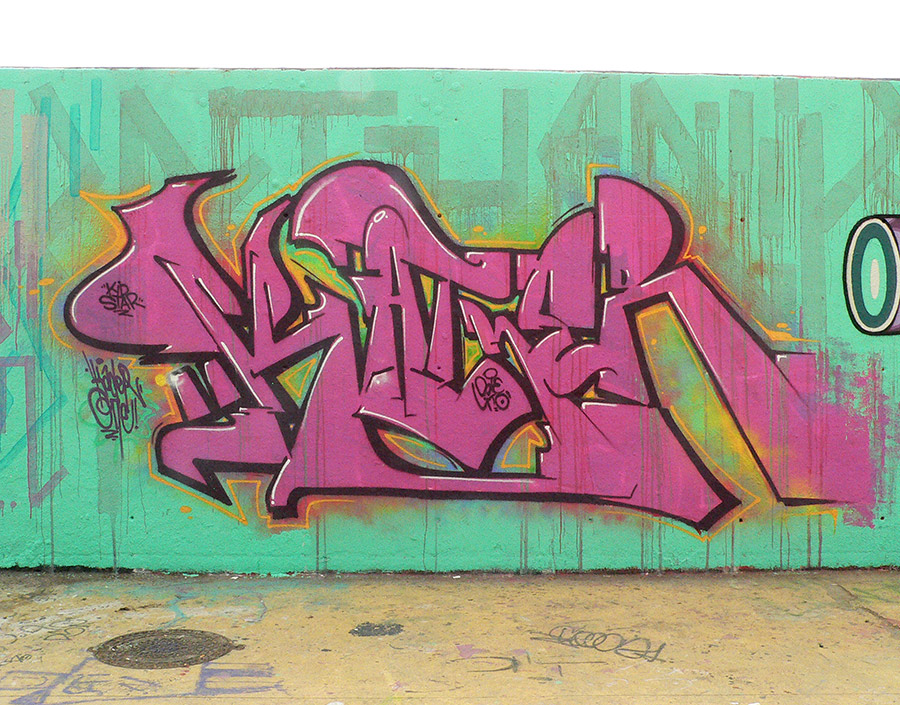
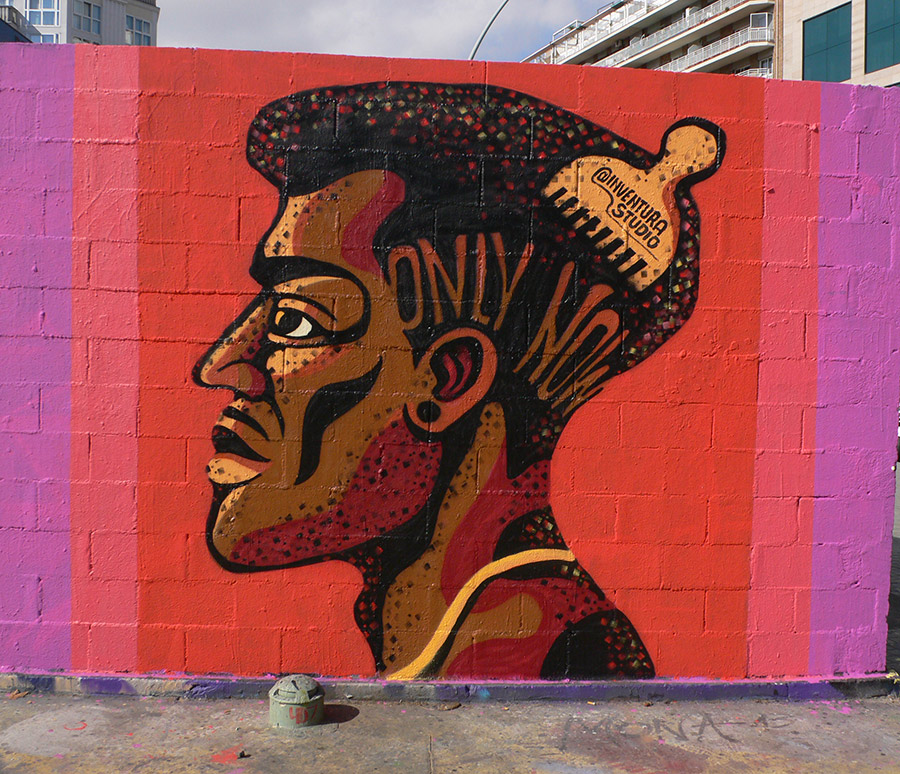
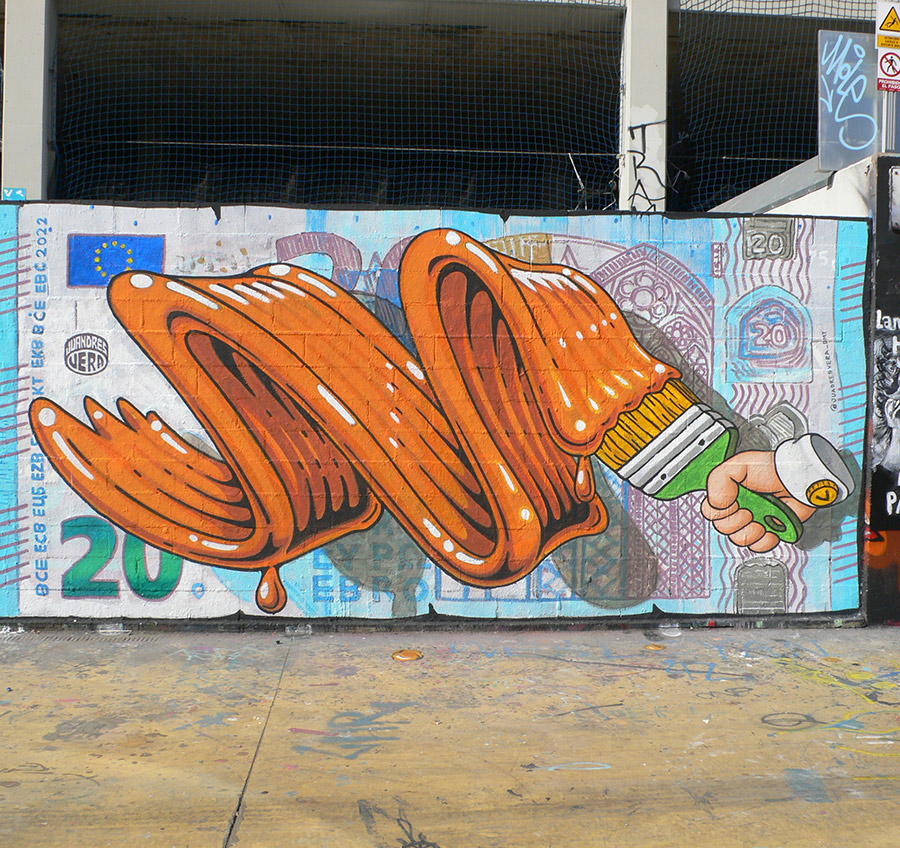
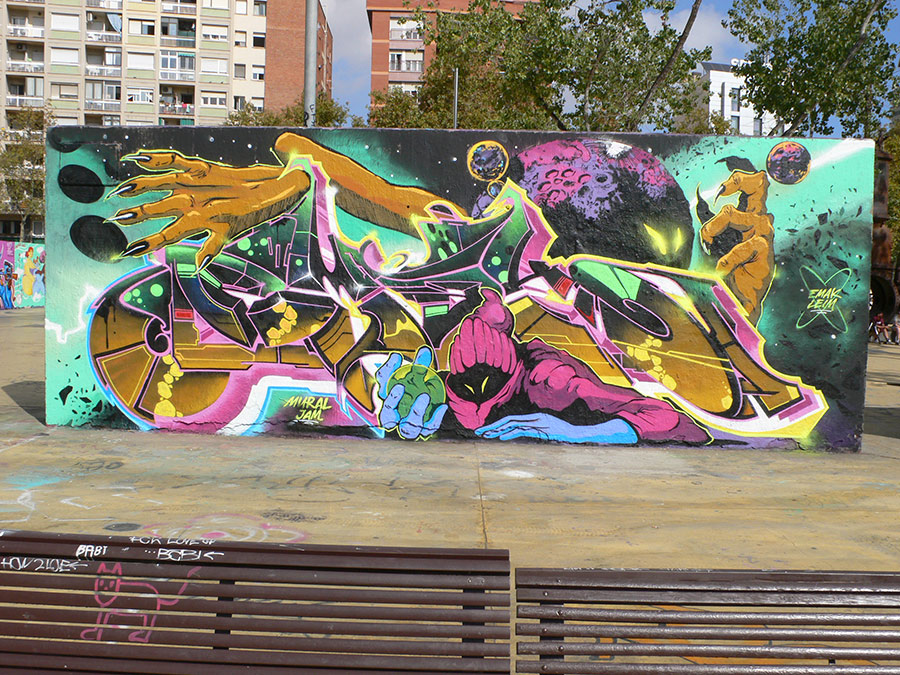
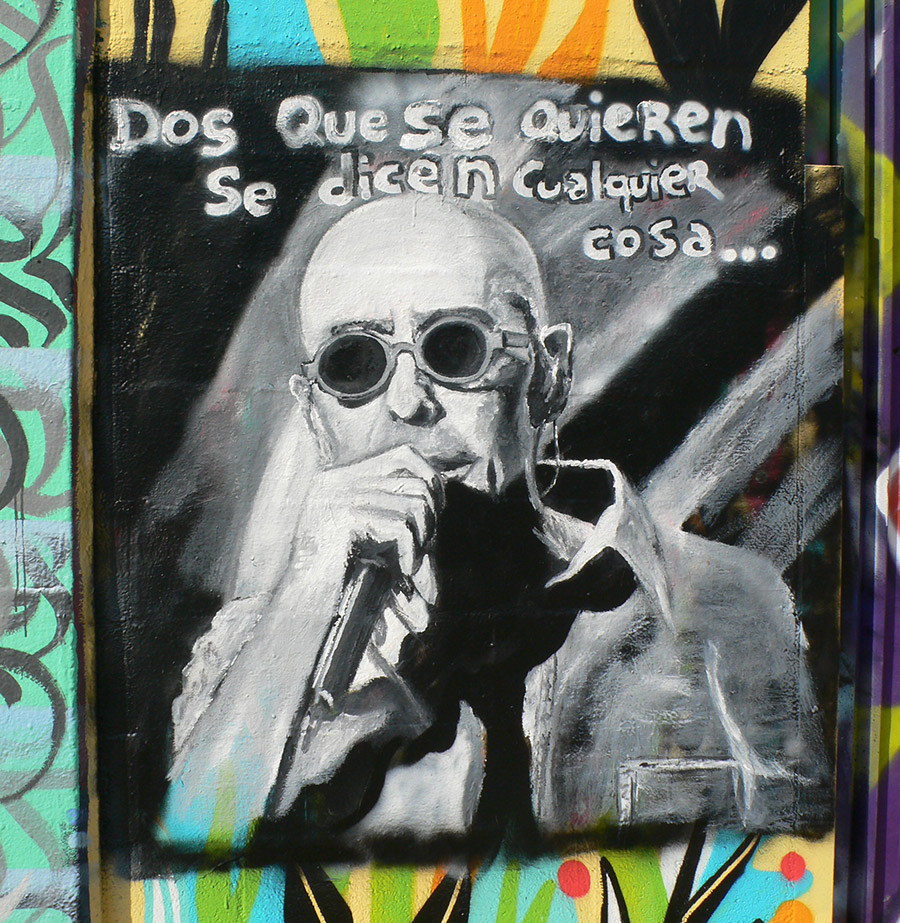
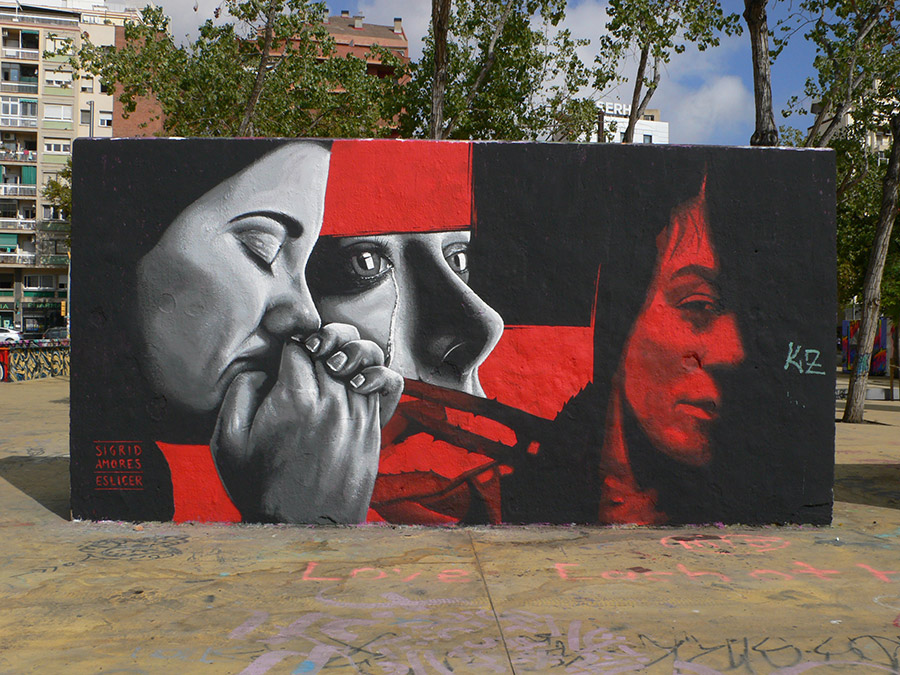
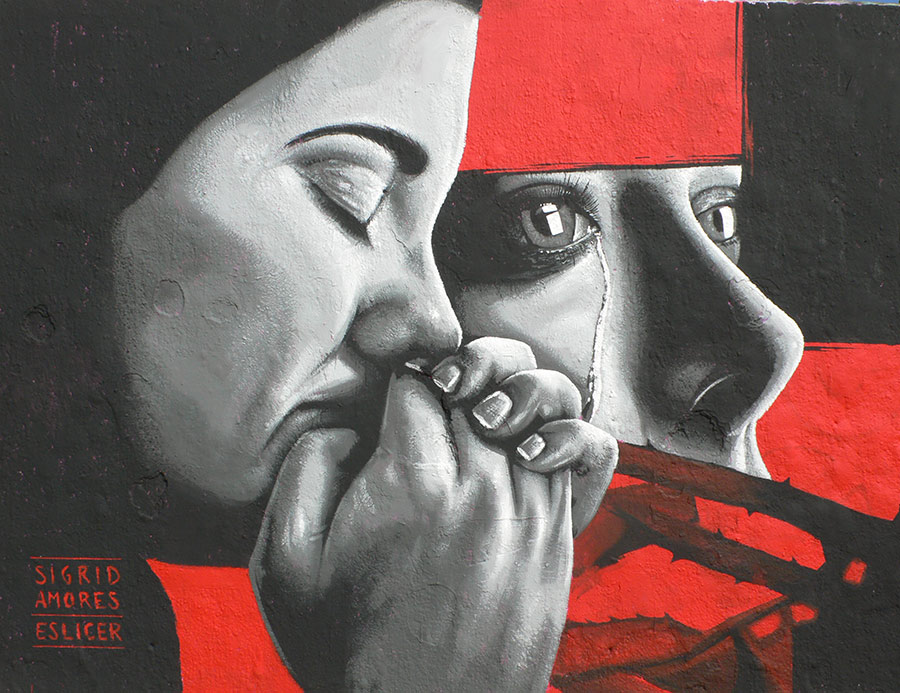
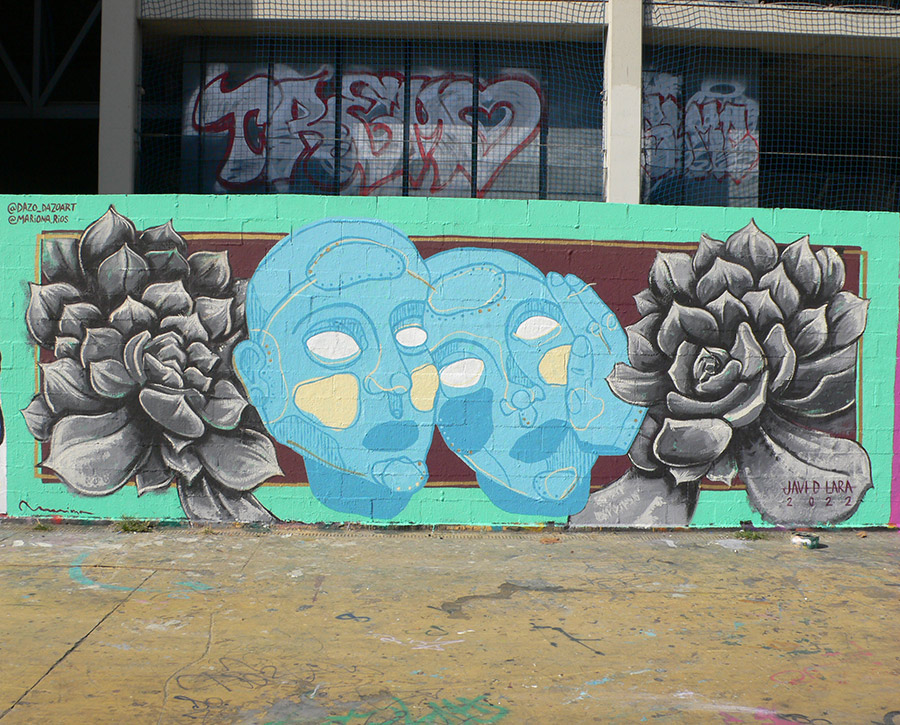
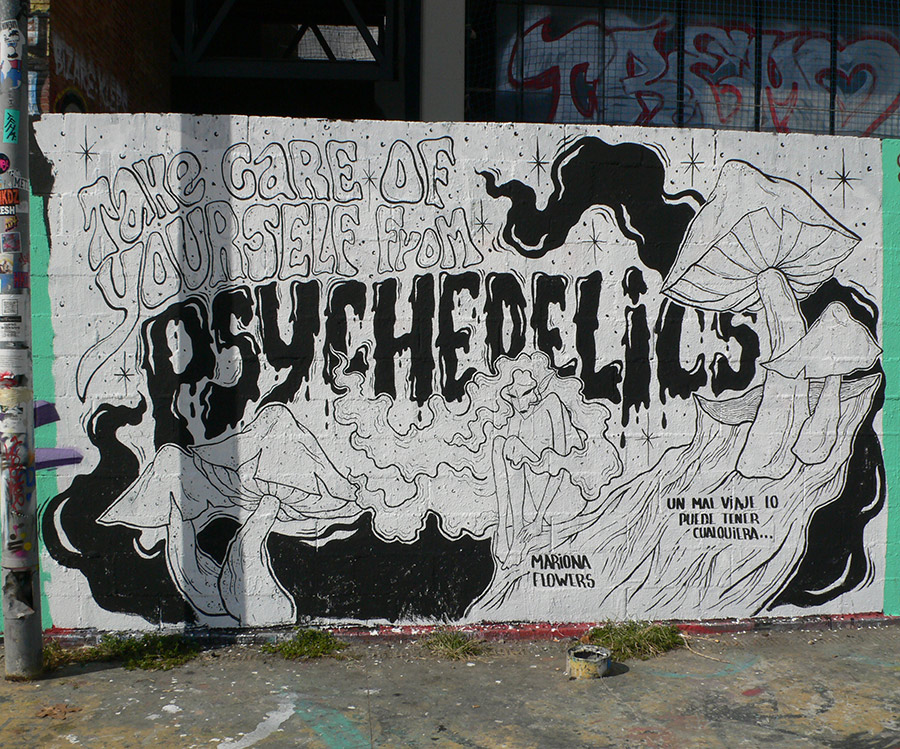
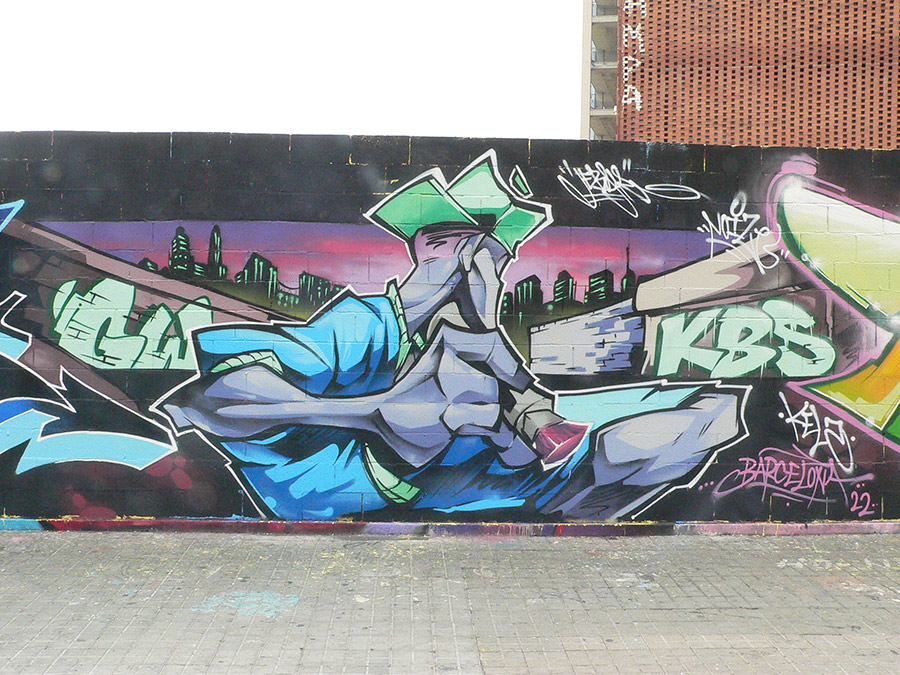
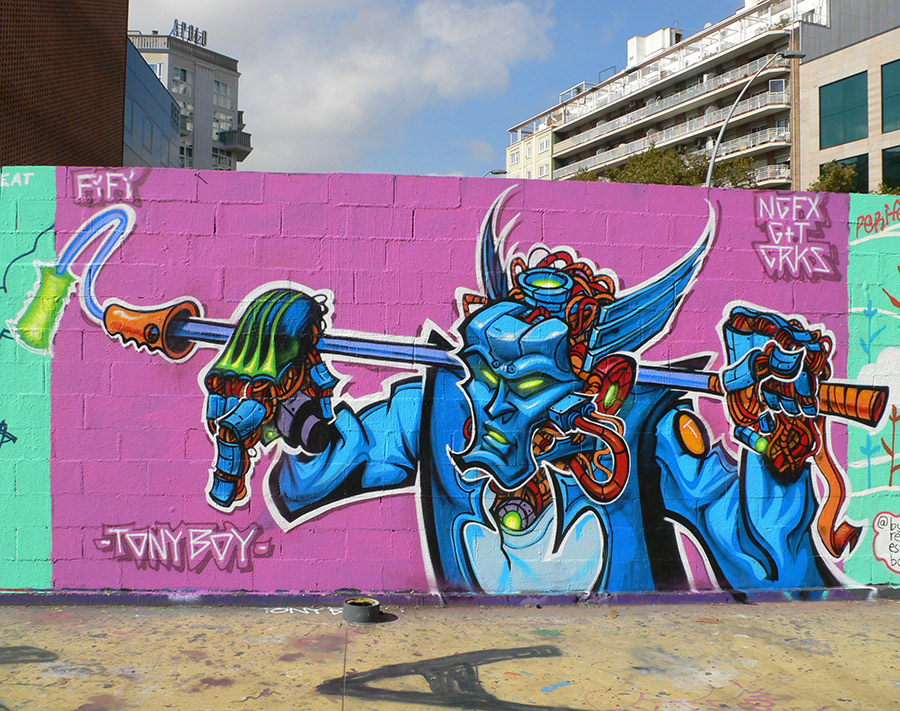
Three Chimneys (3 Xemeneies) Park in Barcelona sponsored a fall Mural Jam again this year and photographer Lluis Olive Bulbena shares some of the results with BSA readers. BCN once again organized the event along with the 6th Periferia Beat Festival where more than 50 artists came to show their skills and spend a relaxing day with their family and peers. Also onboard were DJs, concerts, dance performances, a roller skate jam, and an art market. This community event continues to grow and some say that this was the biggest roster by far.
Religion and its practices should be voluntary, not mandatory. For some reason historically, it takes men longer to realize this than women.
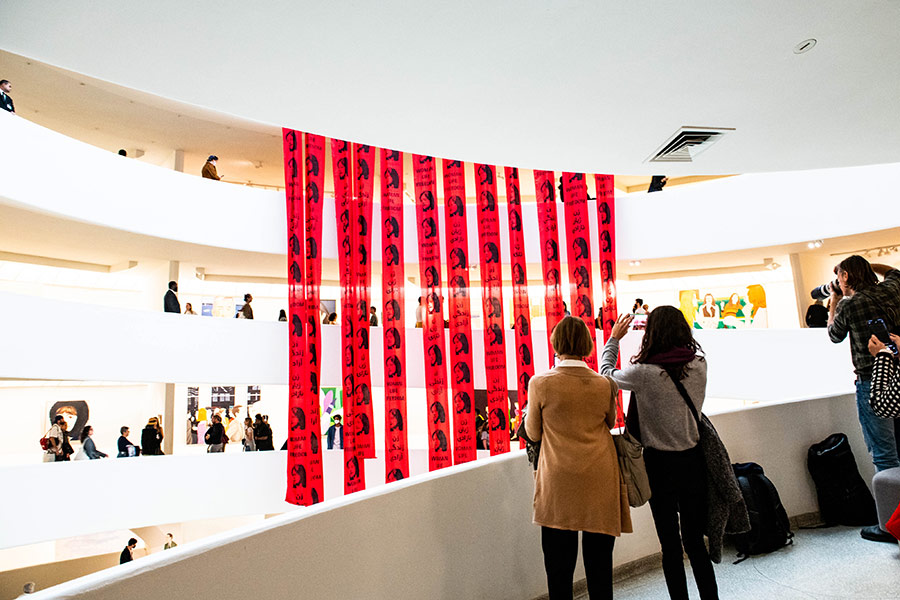
The killing of Jina Mahsa Amini for not wearing a headscarf (or hijab) in Iran recently may remind you of the various women’s rights movements internationally in the last century – a loud, messy, often violent insurrection of the oppressed – and the raised voices of those acting in solidarity. Unfortunately, this is how real change happens sometimes; by fighting for it.
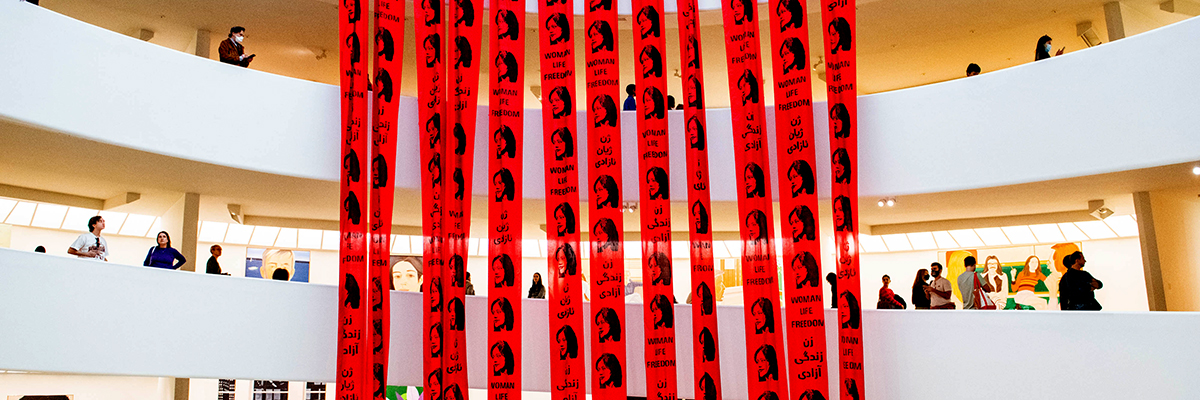
Anonymous Artist Collective for Iran. Guggenheim Museum. New York City. October 22, 2022. (photo courtesy of the Anonymous Artist Collective for Iran)
Obviously, the young Kurdish Iranian had the right to decide whether to wear a scarf, or not. The ocean of women’s voices from inside Iran and outside over the past few weeks has been a resounding rejection of certain men’s authoritarian attempts to presume to dictate over women – including about completely personal topics like what to wear.
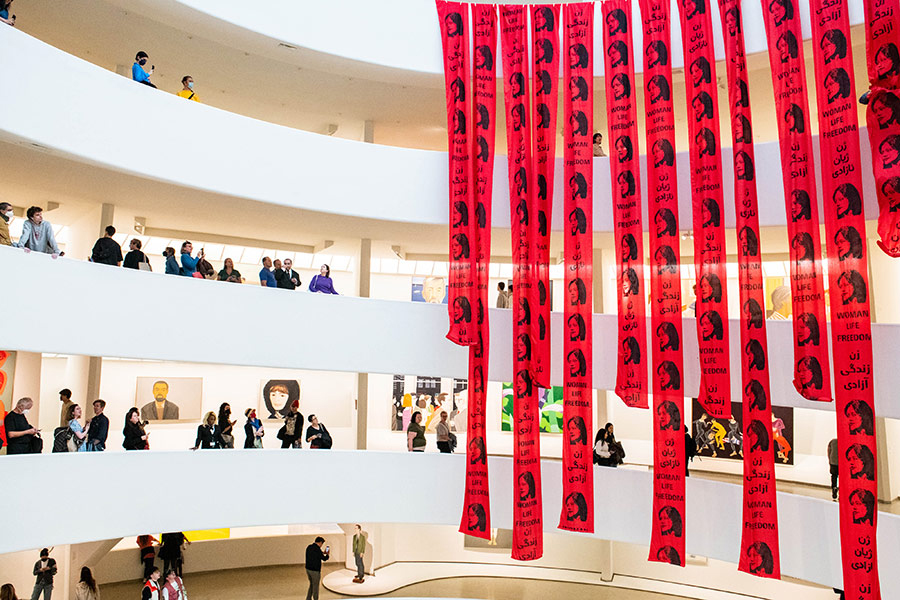
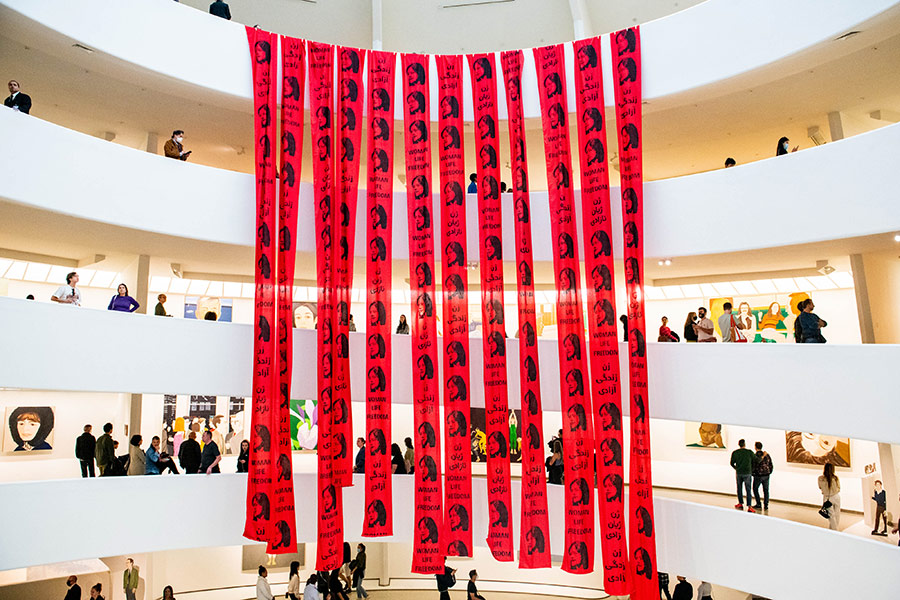
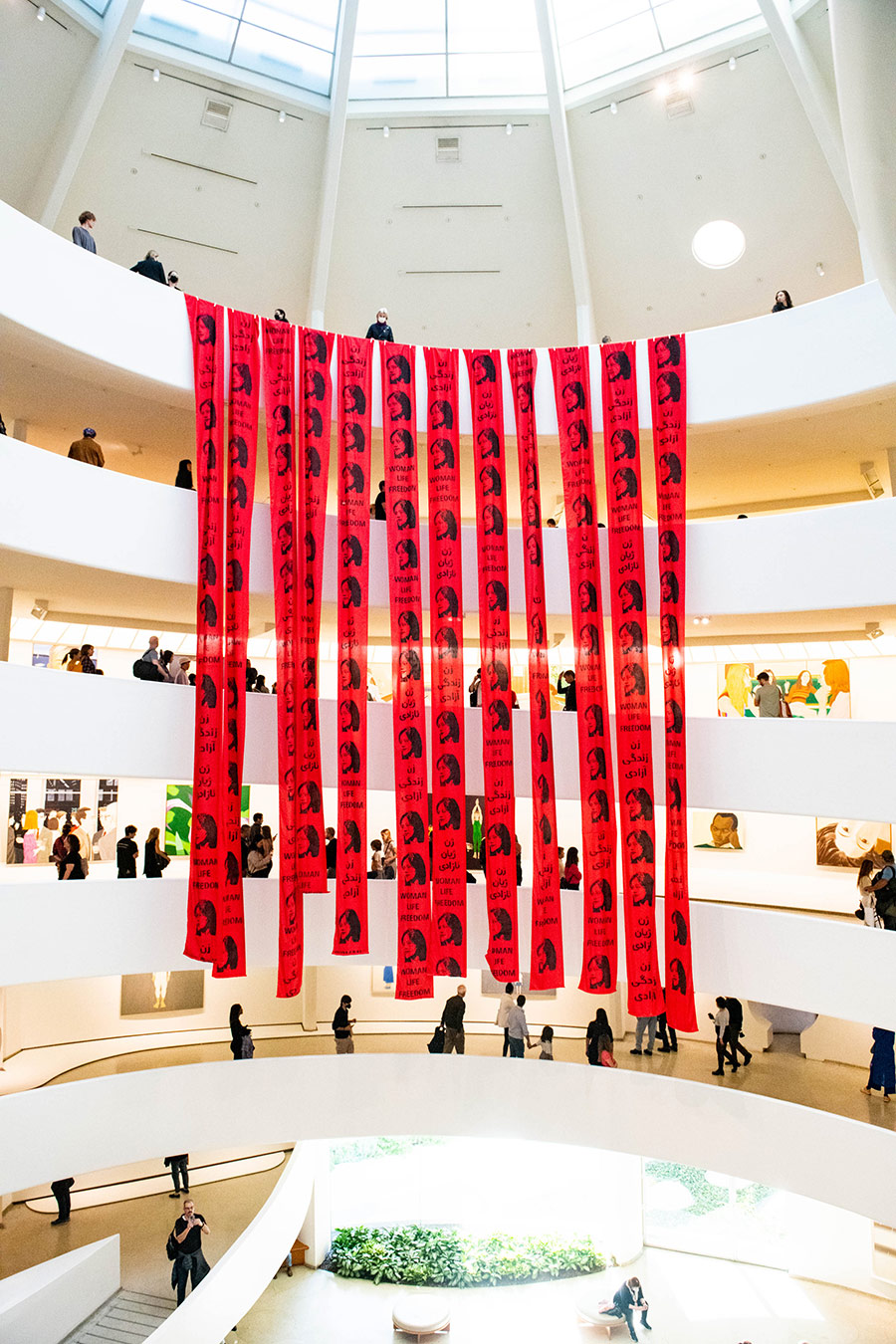
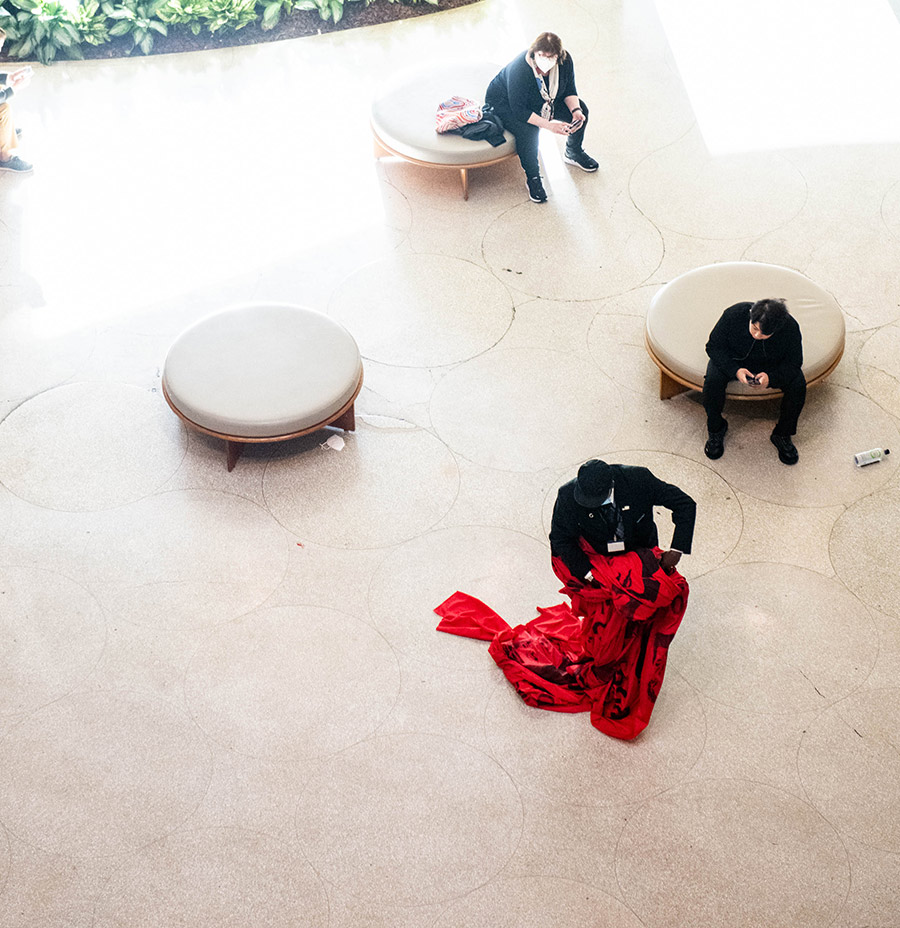
We bring you some exclusive shots of a visual protest inside the Guggenheim Museum in Manhattan over the weekend. Unfurling banners from the top end of the continuous winding street of galleries that lead to the ground, a group of activists/artists called Anonymous Artist Collective for Iran, let loose yells and clapping as the red strips rolled toward the floor and captured the attention of museum-goers.
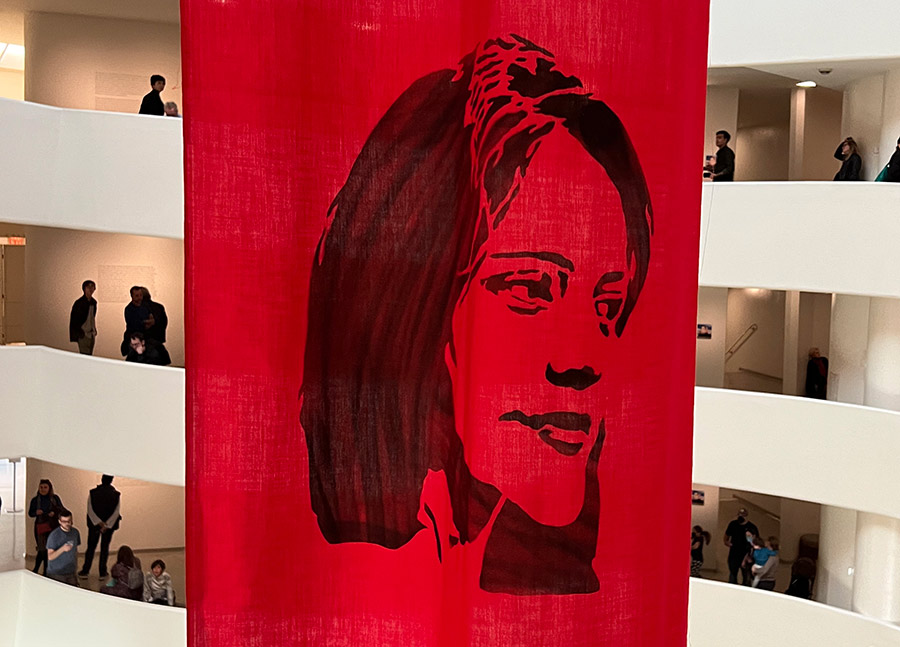
Anonymous Artist Collective for Iran. Guggenheim Museum. New York City. October 22, 2022. (photo courtesy of the Anonymous Artist Collective for Iran)
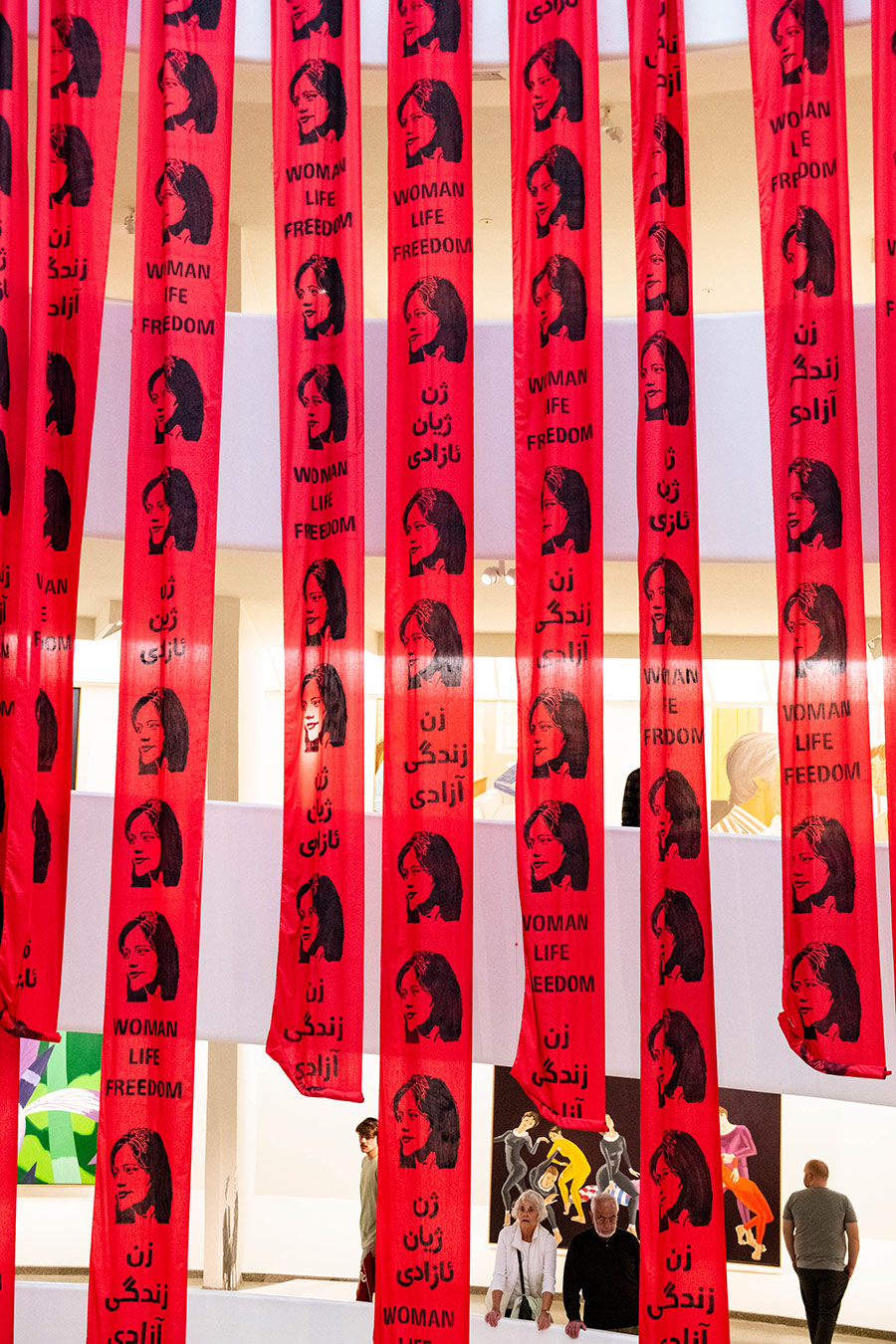
The lateral design alternated a stenciled portrait of Ms. Mahsa Amini with graphic text echoing those slogans shouted in streets in Kurdish, Persian, English, and many other tongues. “Zan zendegi azadi! Woman, life, freedom!”
History tells us that these riots and demonstrations will work gradually, in waves, until the oppressor gives up and concentrate on better uses of their intellect. By choosing a Manhattan museum of such stature, allies may be reaching new audiences who, in turn, will join the crowds at recent demonstrations like those in cities like Berlin, Washington, and Los Angeles – even Tempe, Arizona.
Anonymous Artist Collective for Iran. Guggenheim Museum. New York City. October 22, 2022. (photo courtesy of the Anonymous Artist Collective for Iran)Anonymous Artist Collective for Iran. Guggenheim Museum. New York City. October 22, 2022. (photo courtesy of the Anonymous Artist Collective for Iran)Anonymous Artist Collective for Iran. Guggenheim Museum. New York City. October 22, 2022. (photo courtesy of the Anonymous Artist Collective for Iran)Anonymous Artist Collective for Iran. Guggenheim Museum. New York City. October 22, 2022. (photo courtesy of the Anonymous Artist Collective for Iran)A security guard from the museum is photographed removing the banners from the premises. Anonymous Artist Collective for Iran. Guggenheim Museum. New York City. October 22, 2022. (photo courtesy of the Anonymous Artist Collective for Iran)
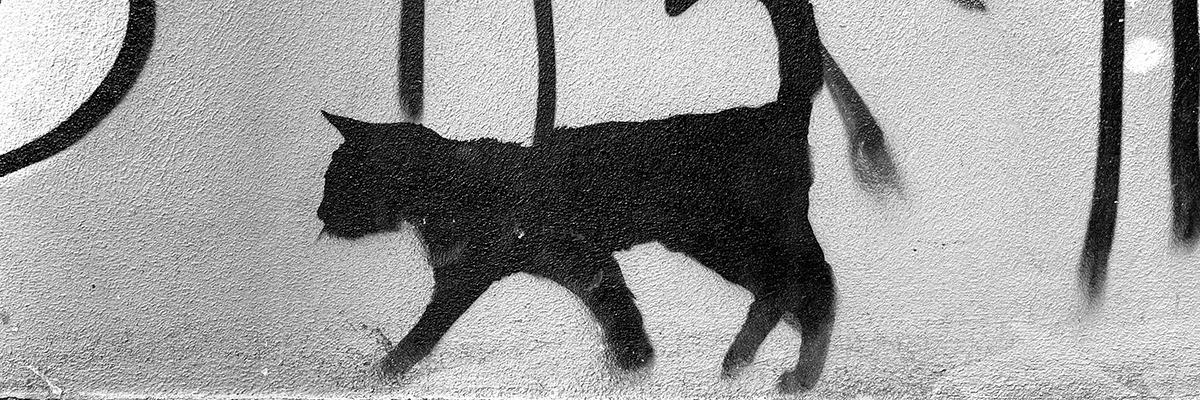
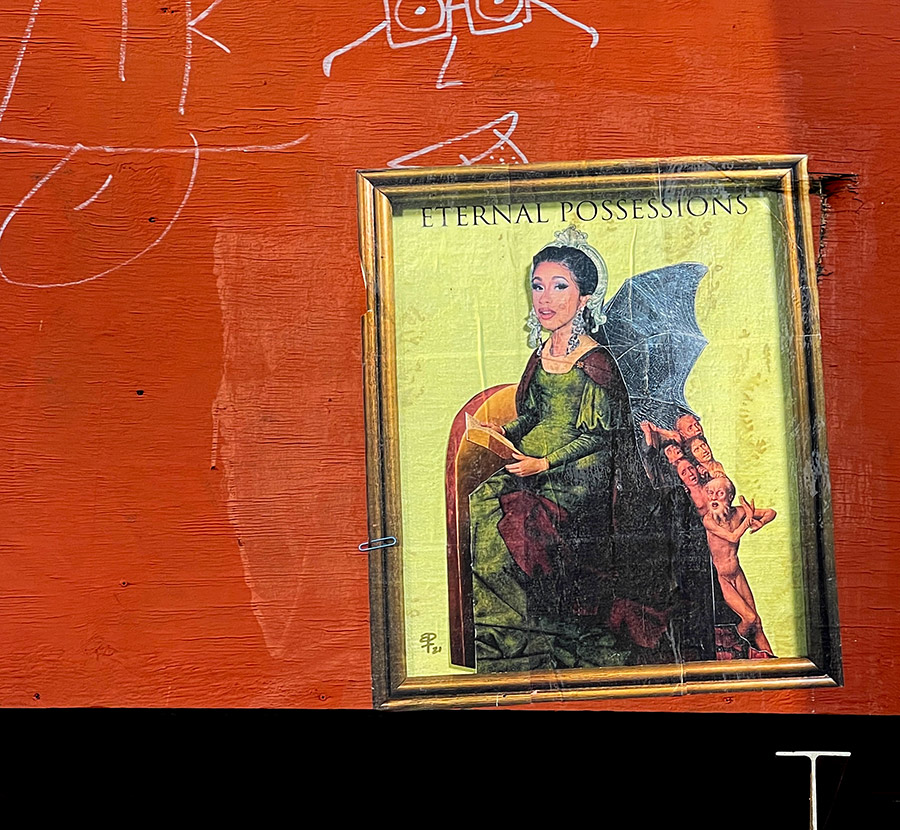
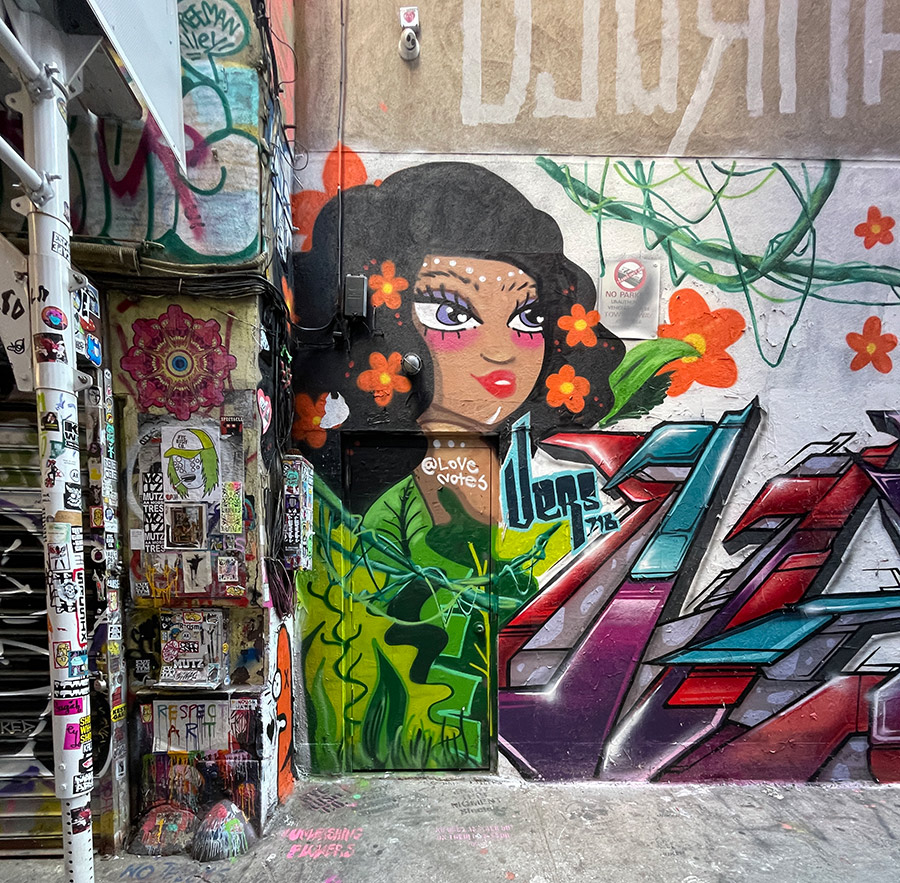
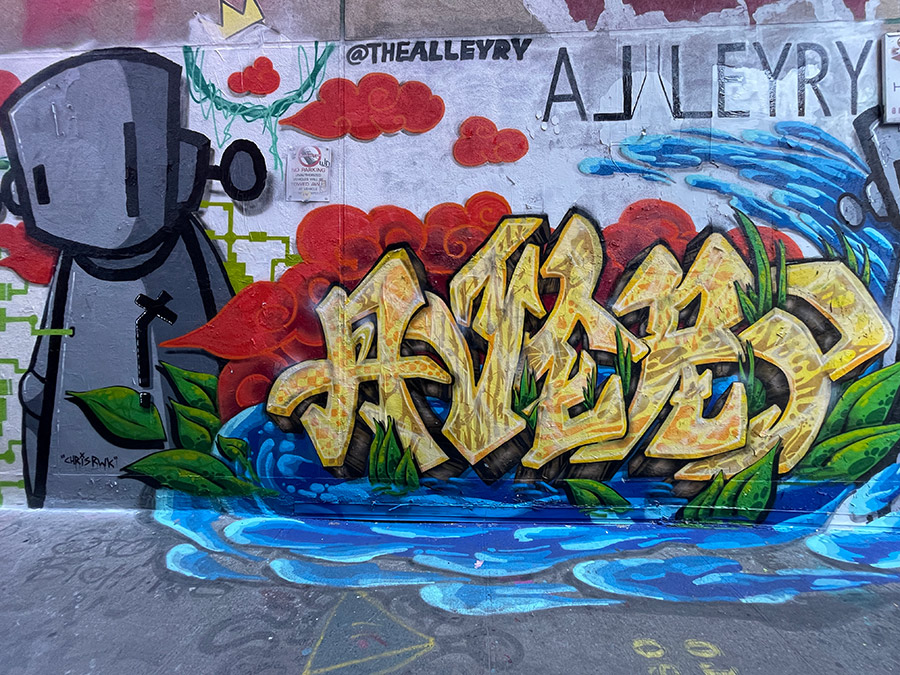
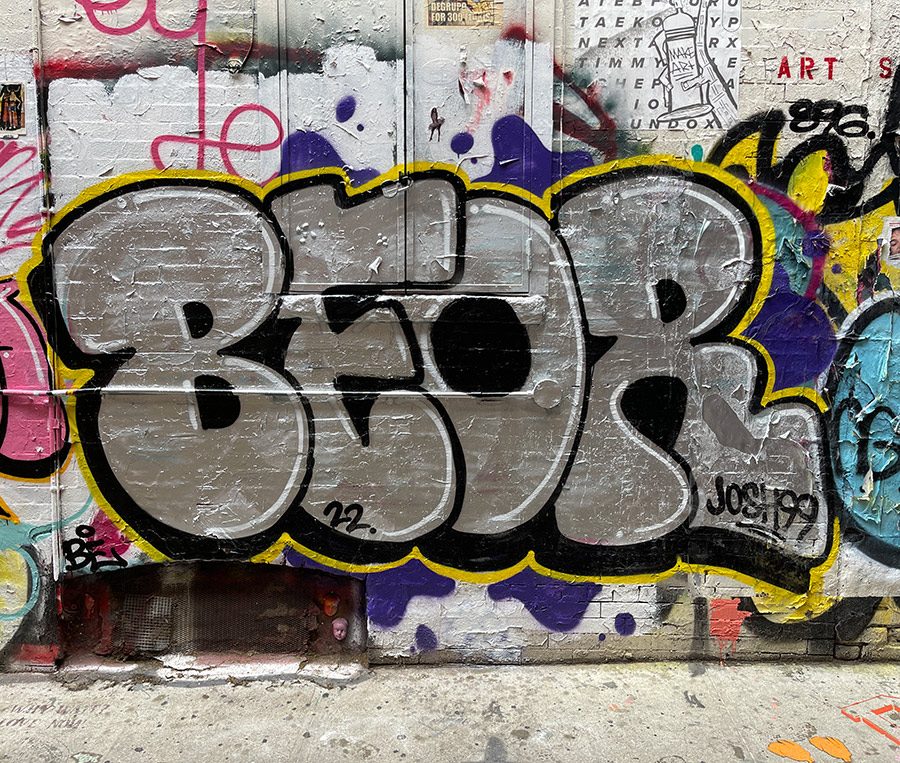
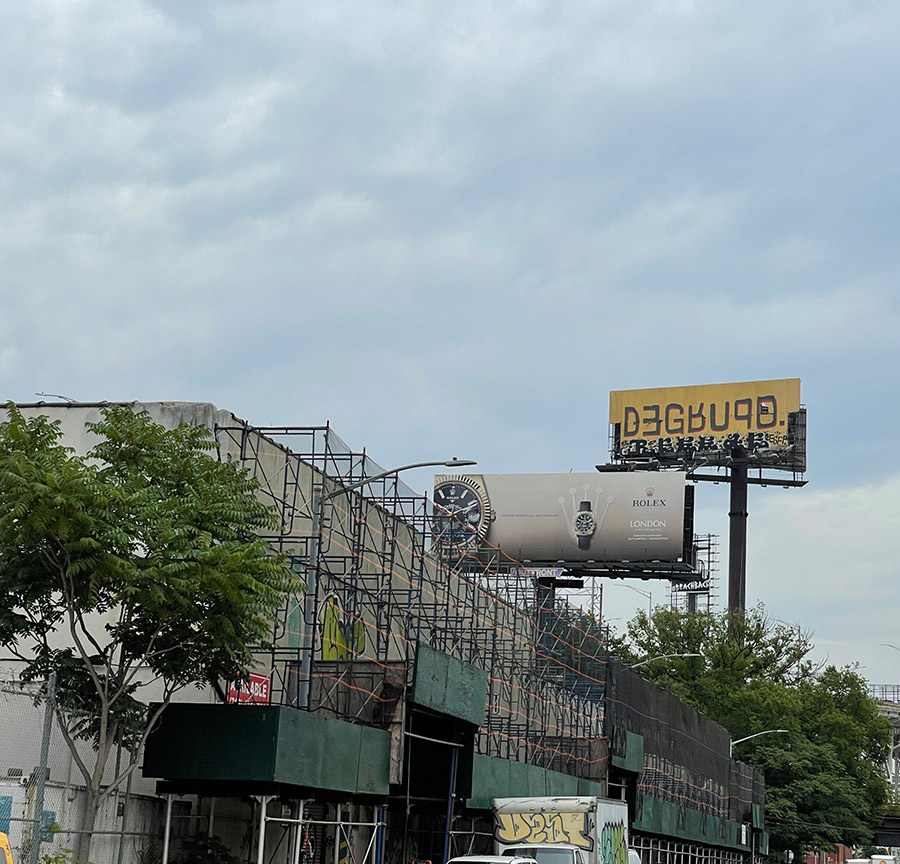
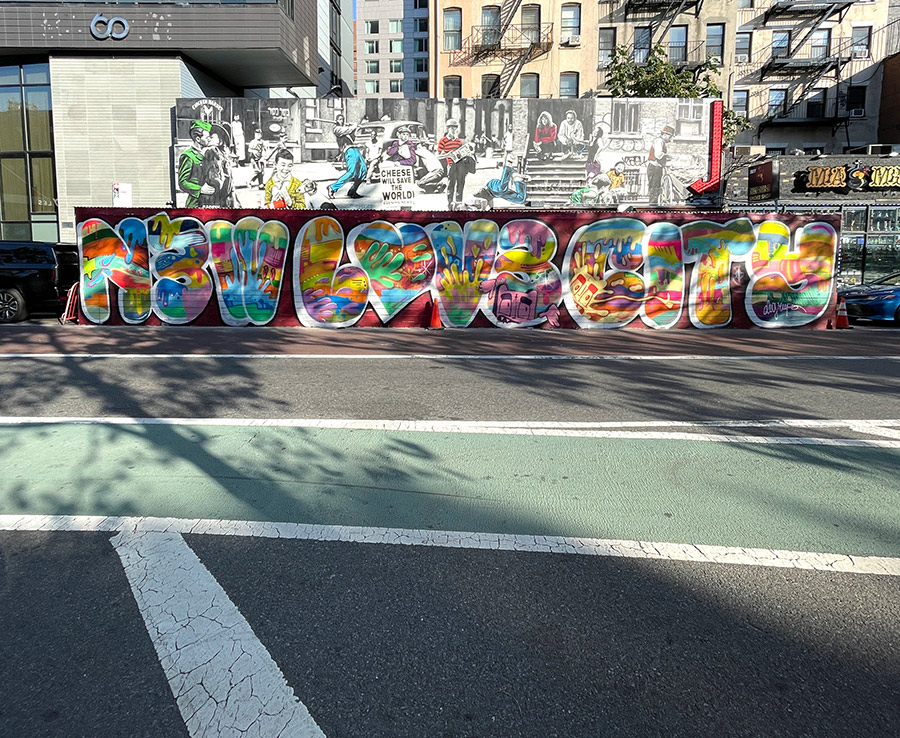
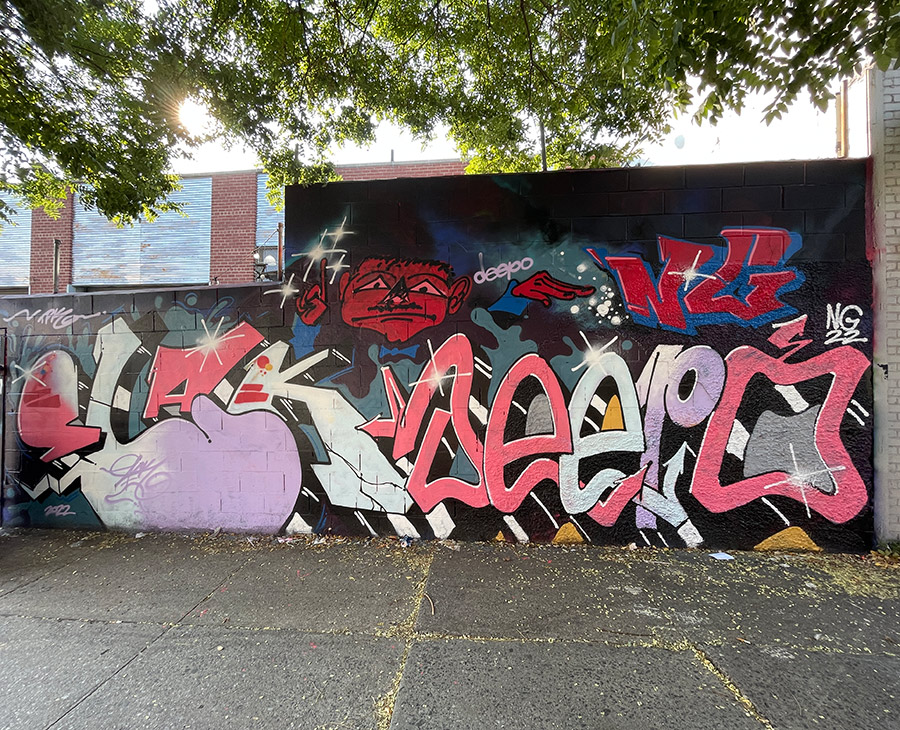
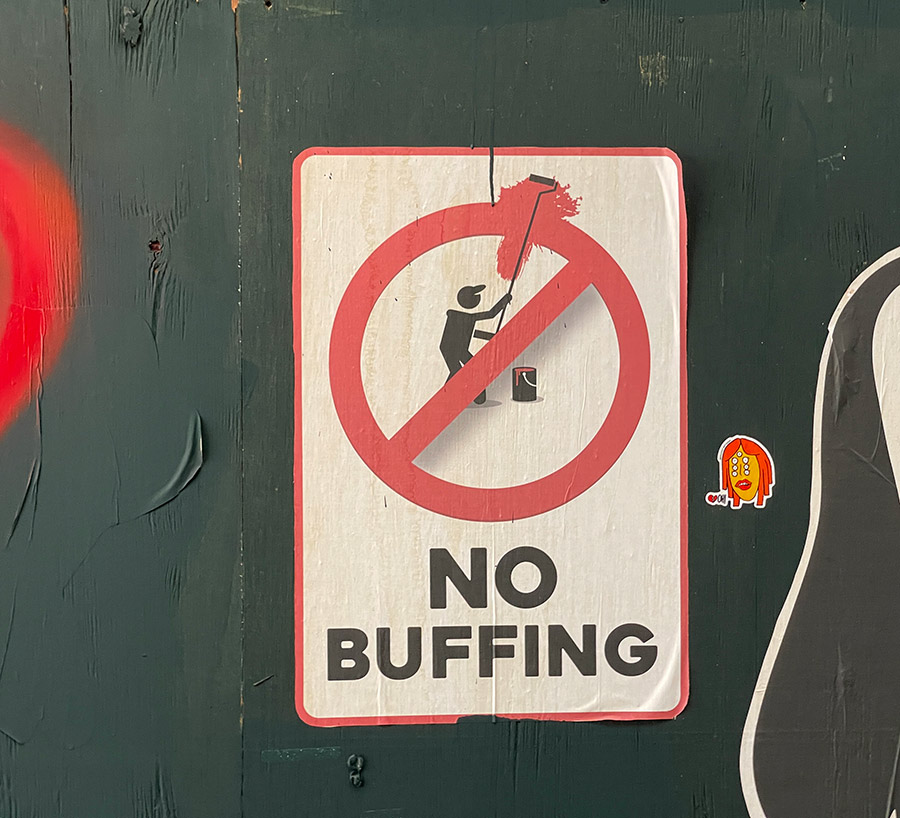
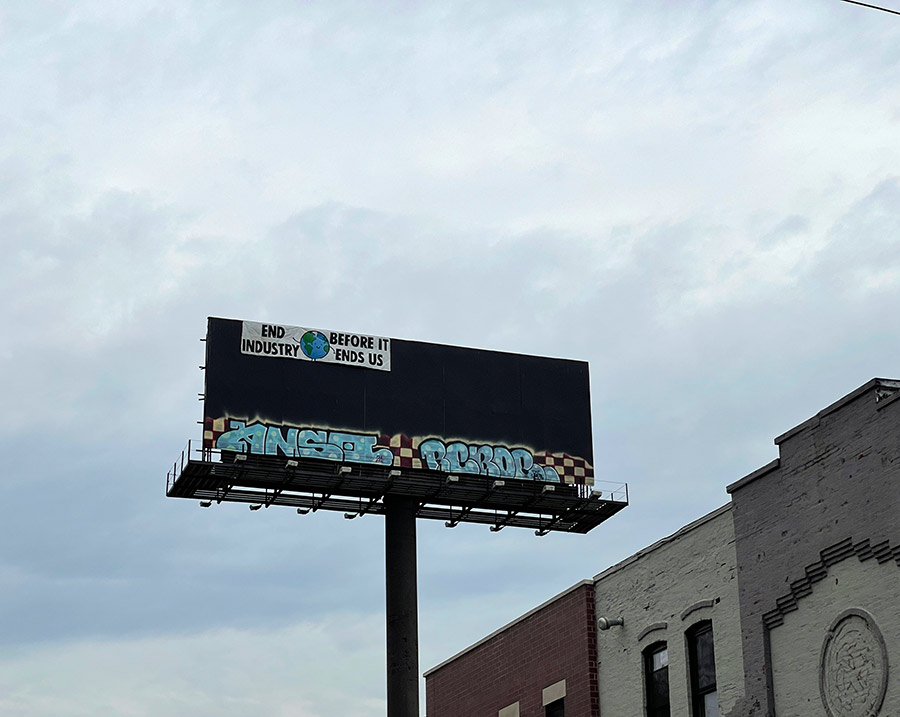
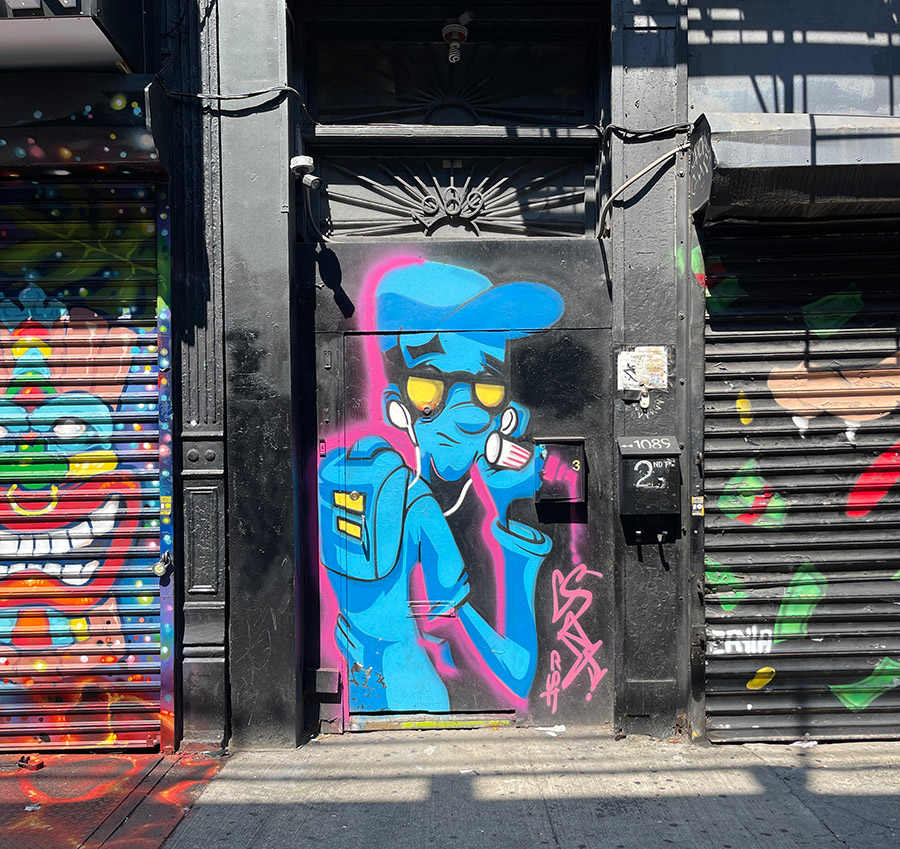
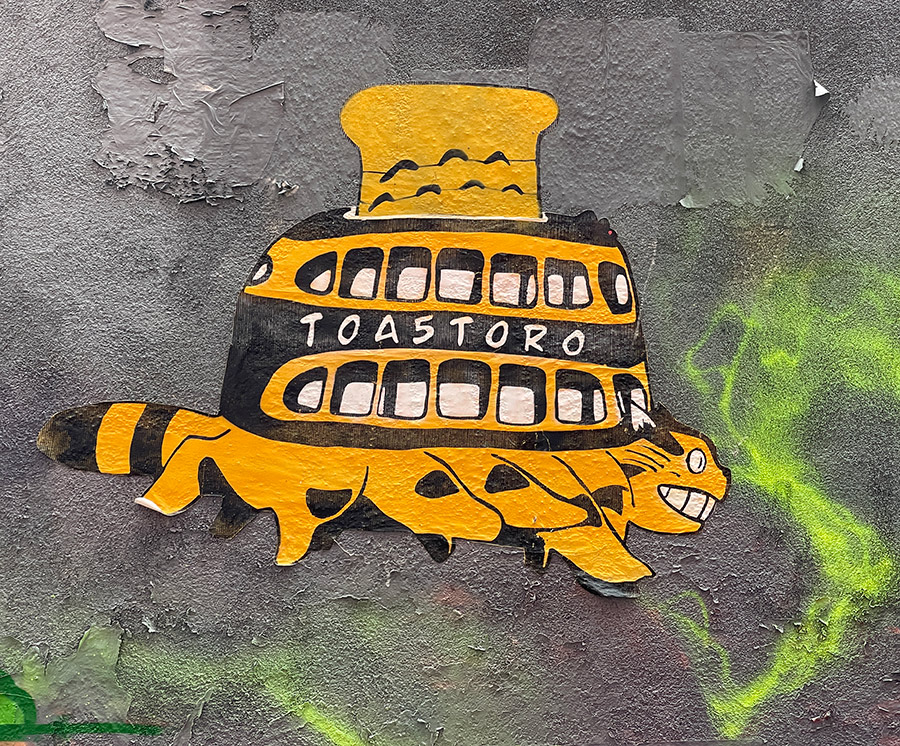
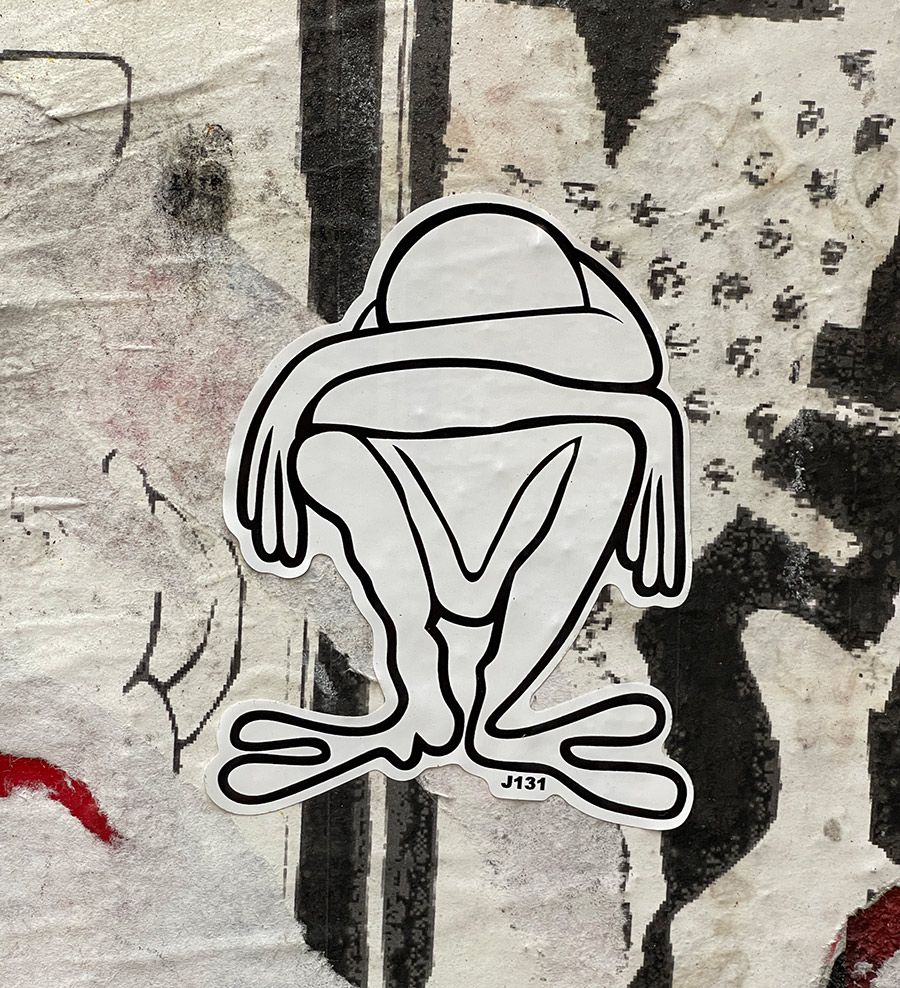
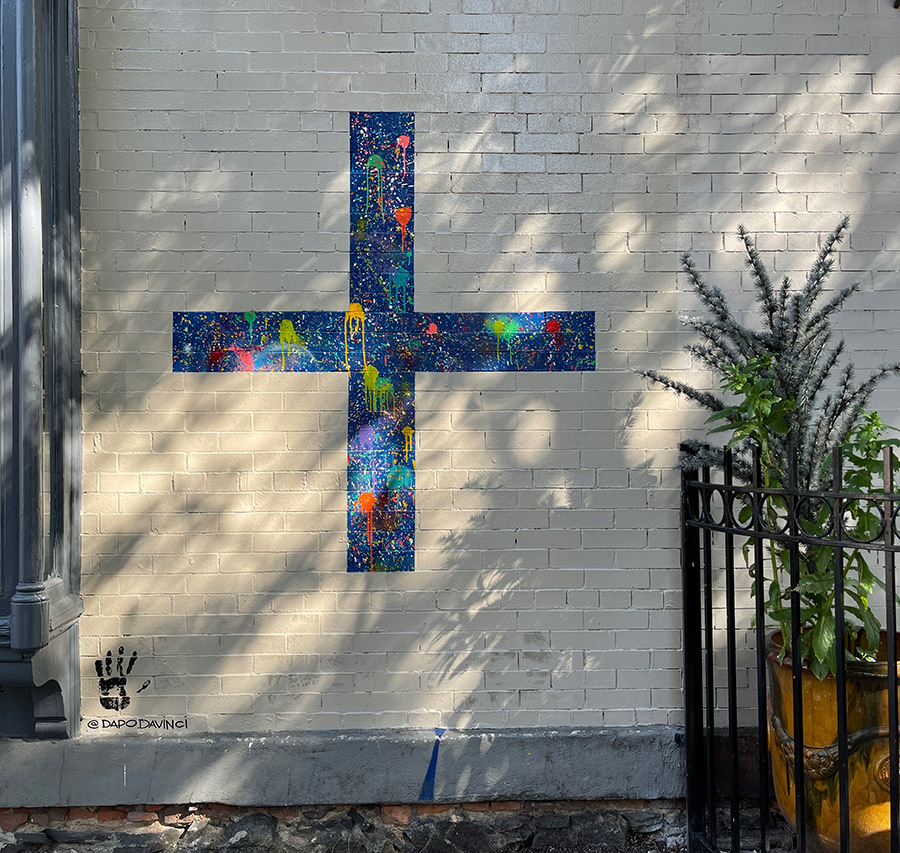
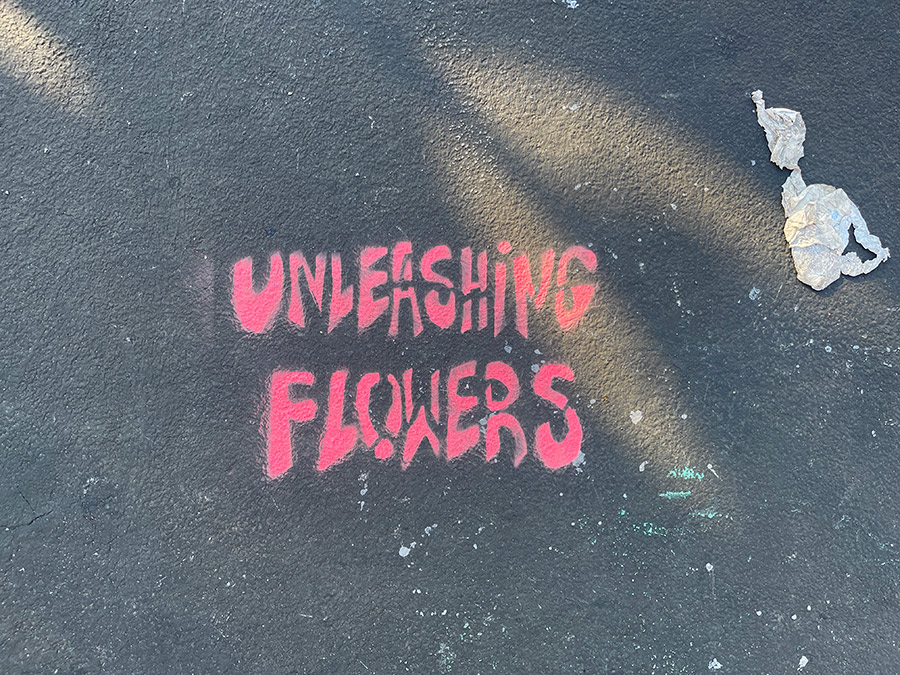
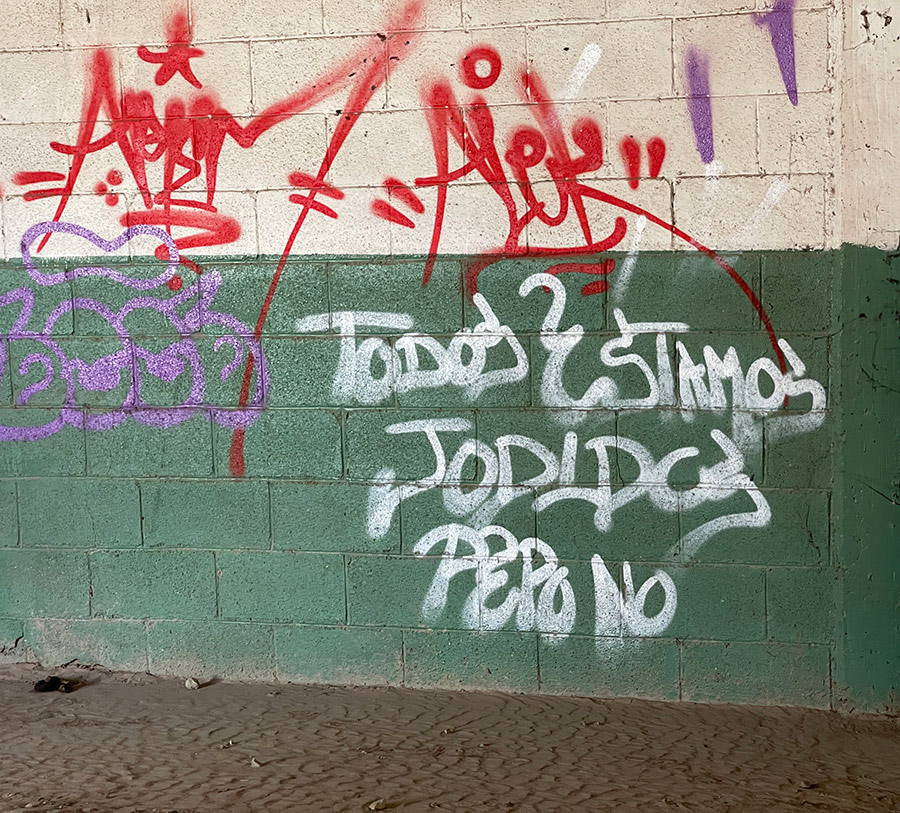
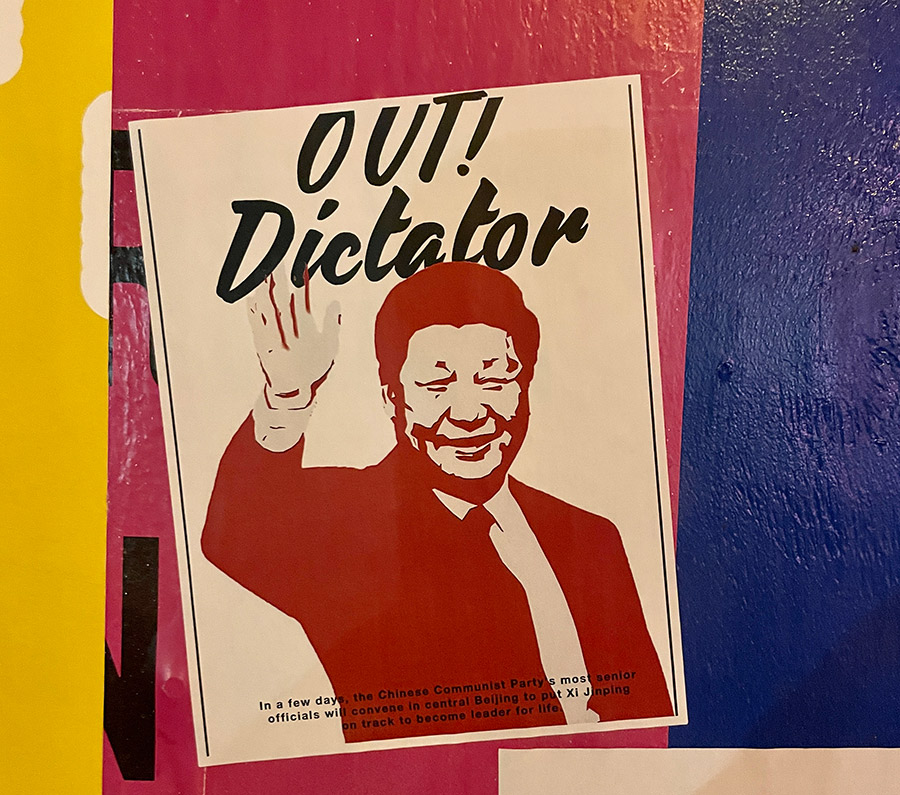
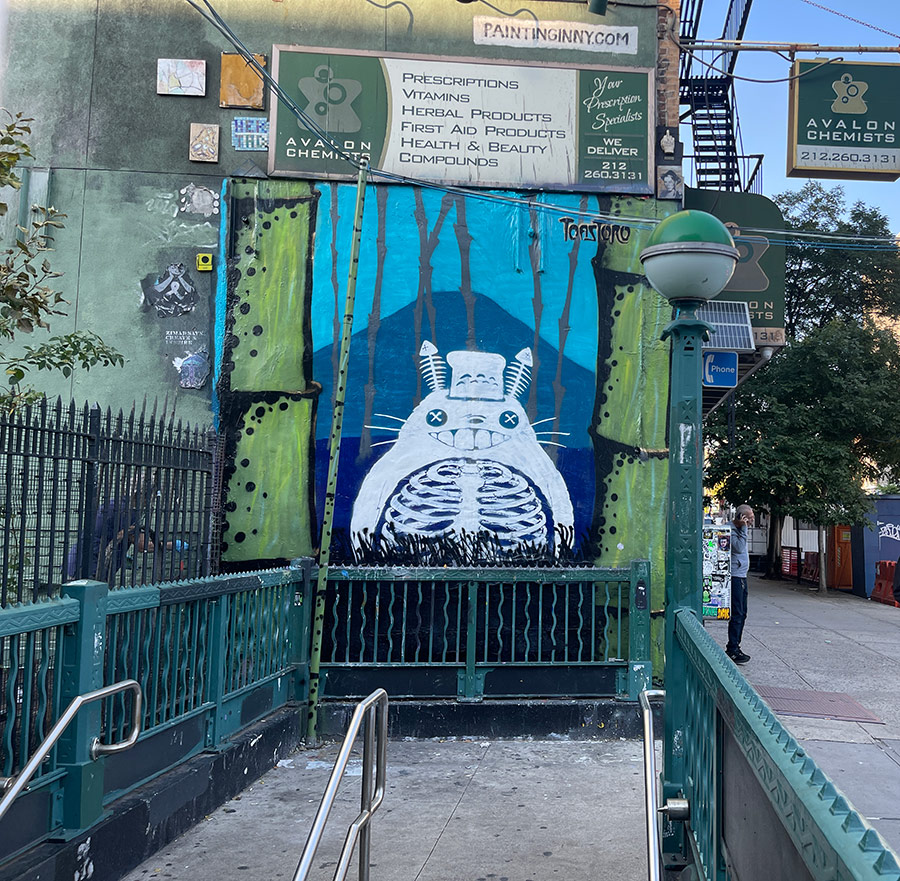
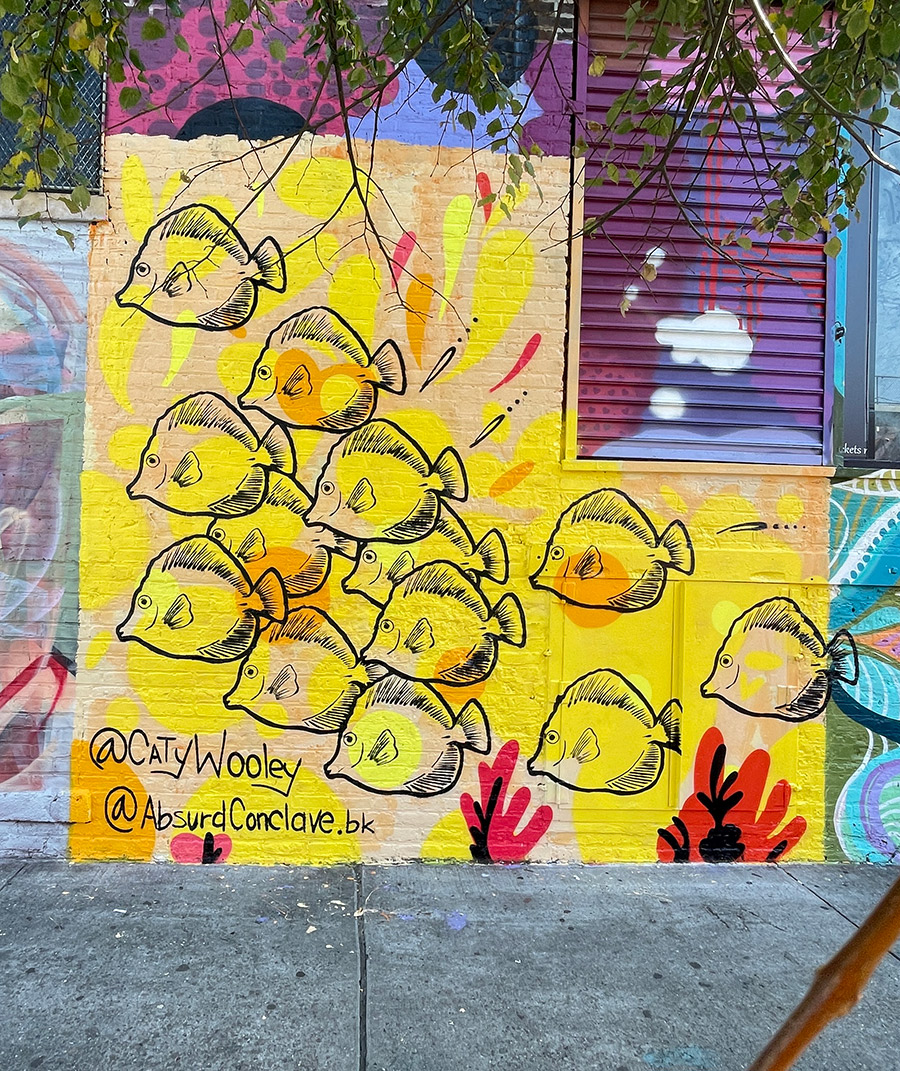
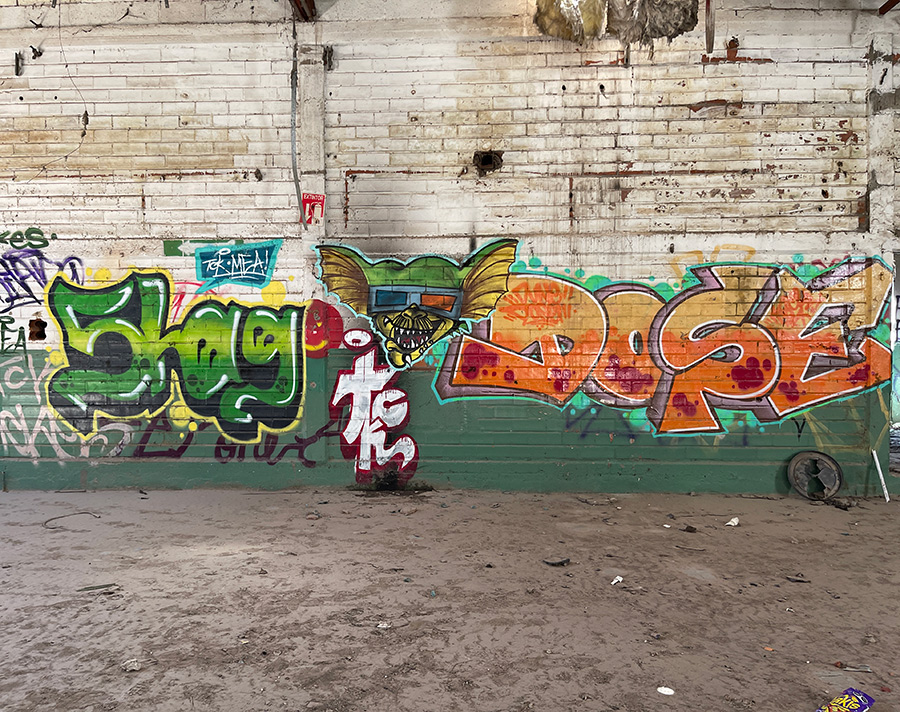
Here’s our weekly interview with the street, this week featuring: Chris RWK, De Grupo, Eternal Possessions, J131, ToastOro, Dapo Da Vinci, Mai Gai, SRF, ANSO, NANA, Deepo, BEOR, A Very Nice, Master Moody Mutz, Vers 718, and Love Notes.
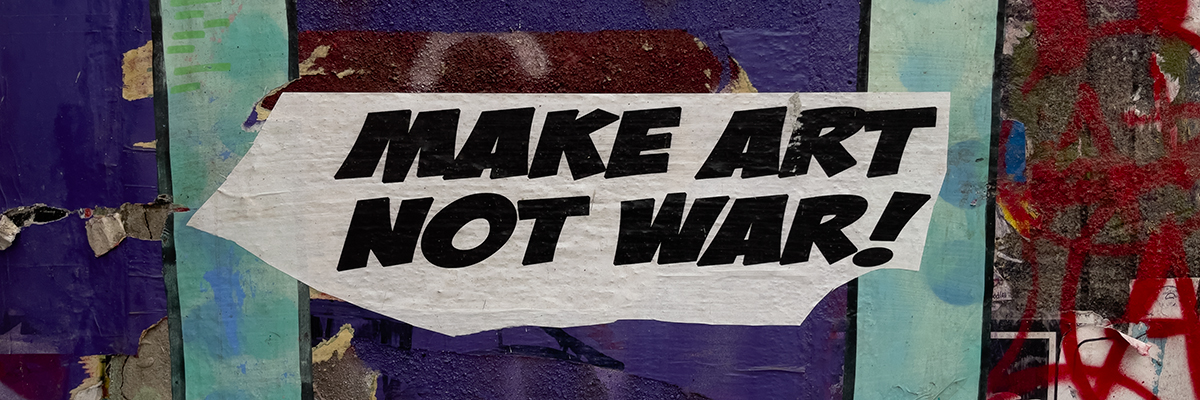
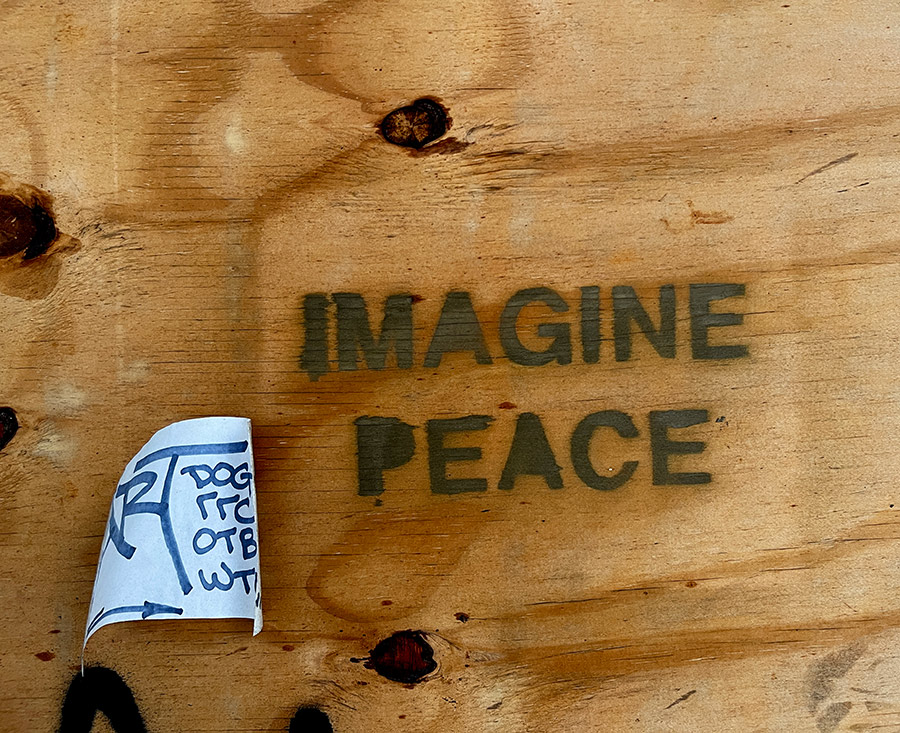
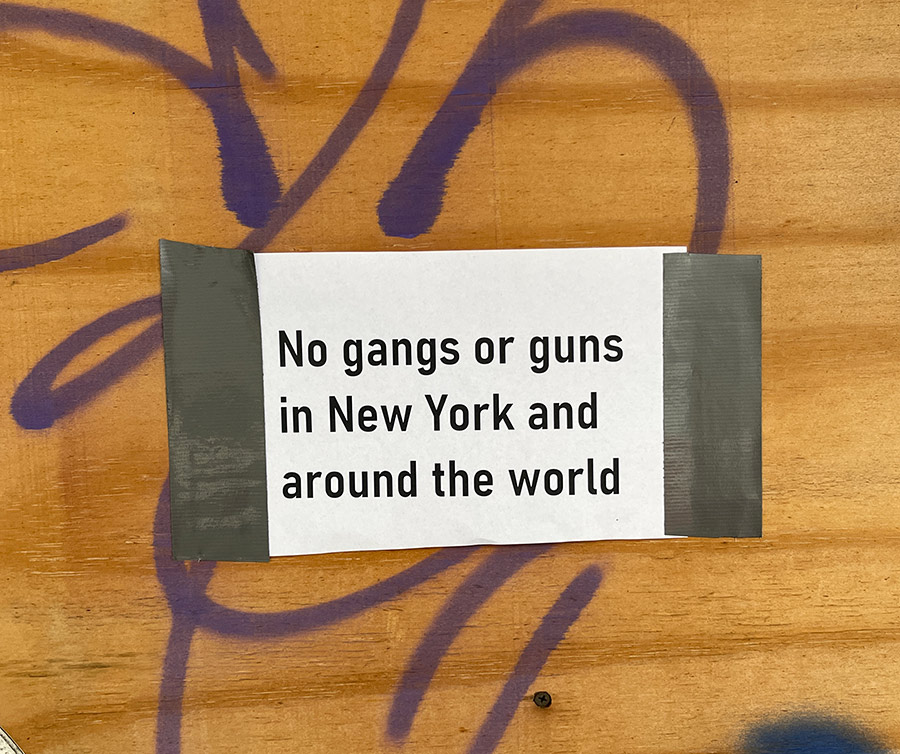
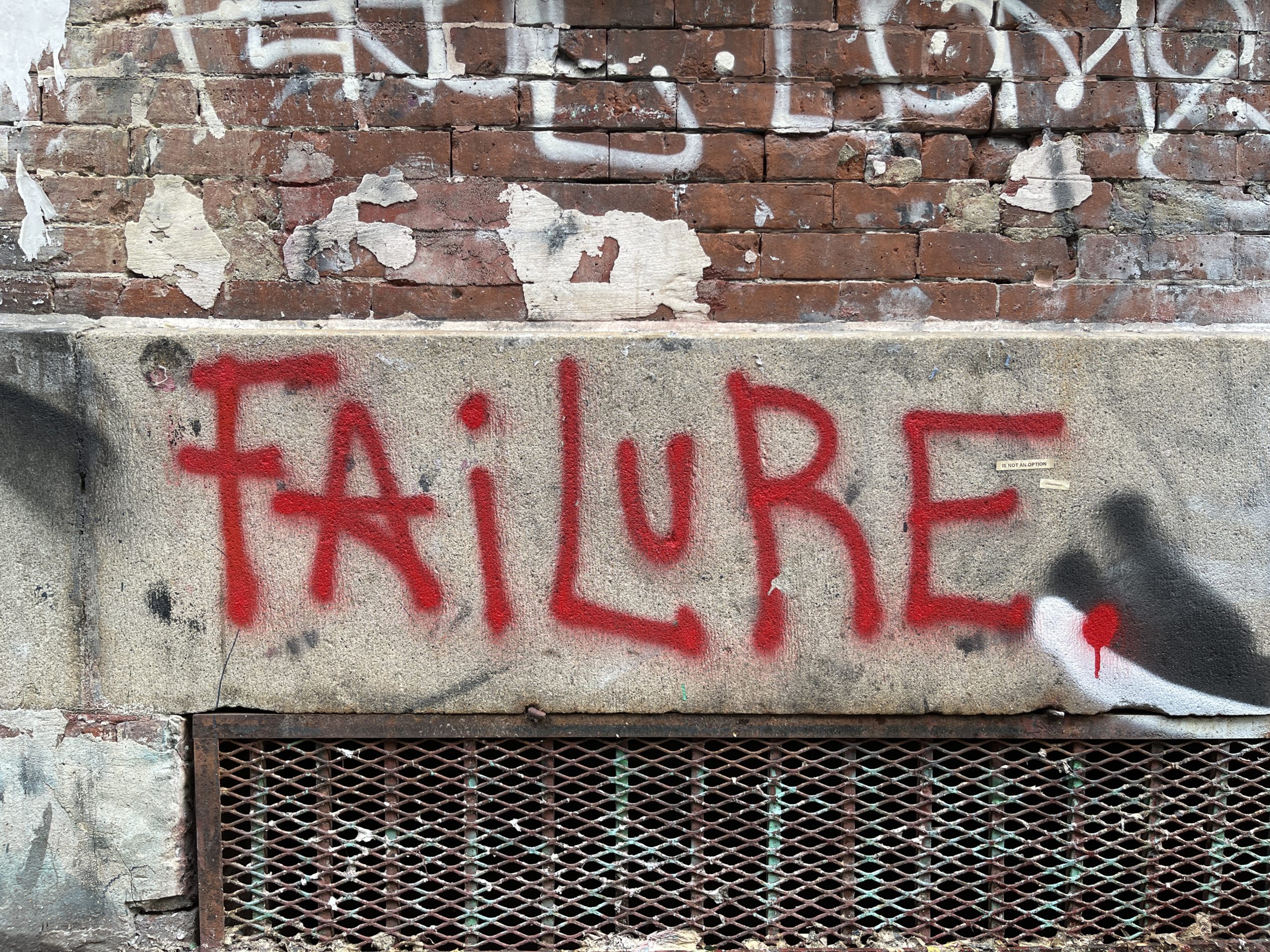
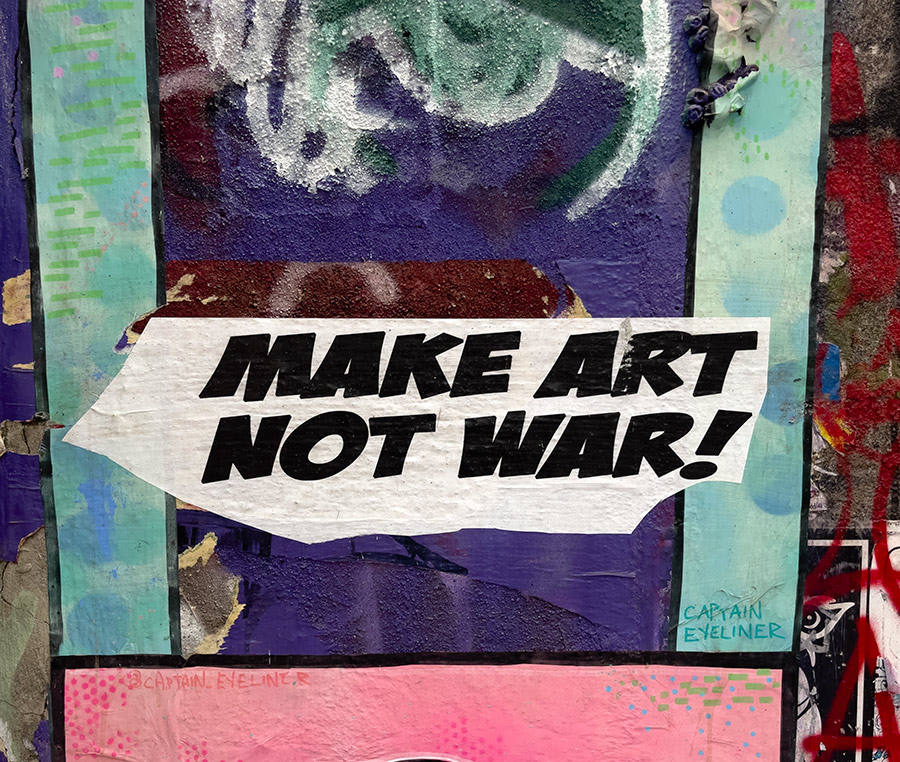
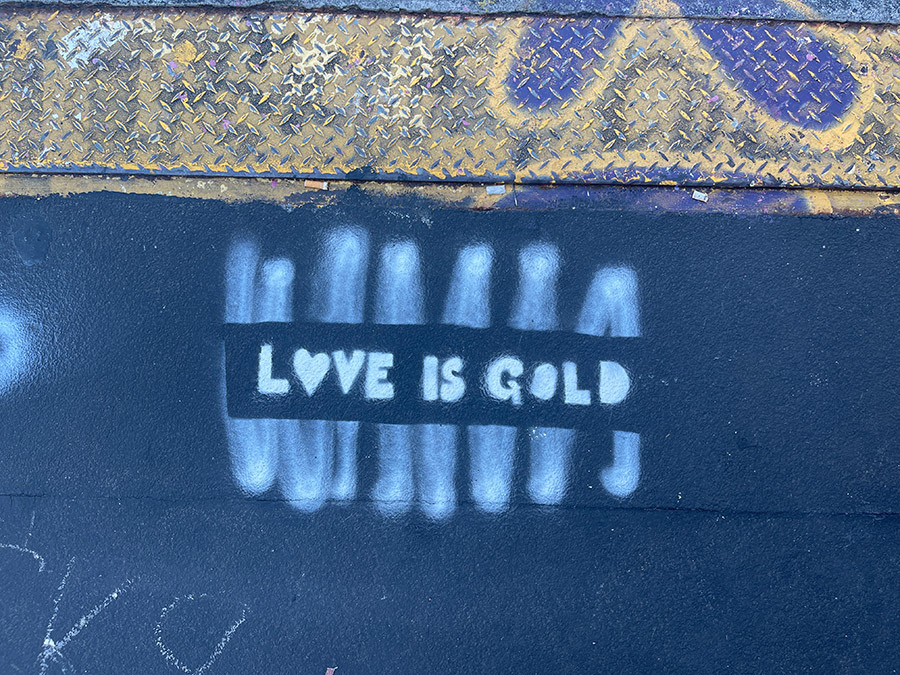
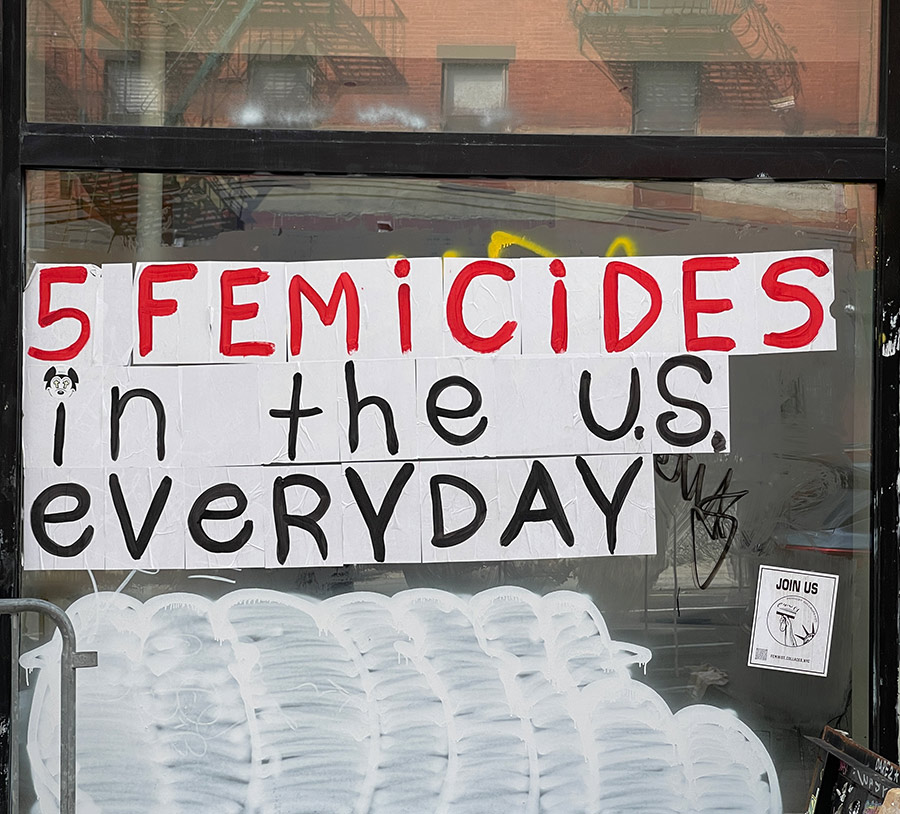
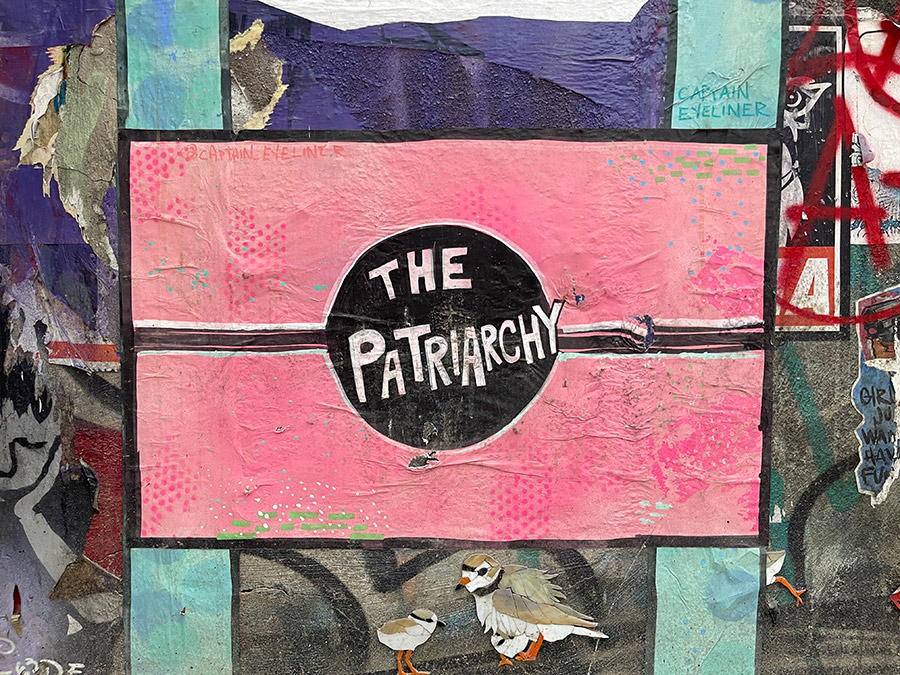
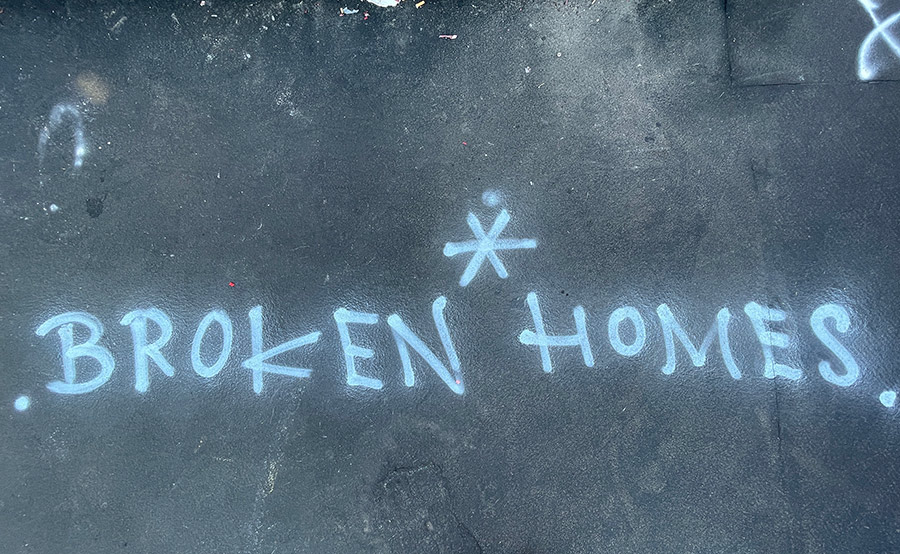
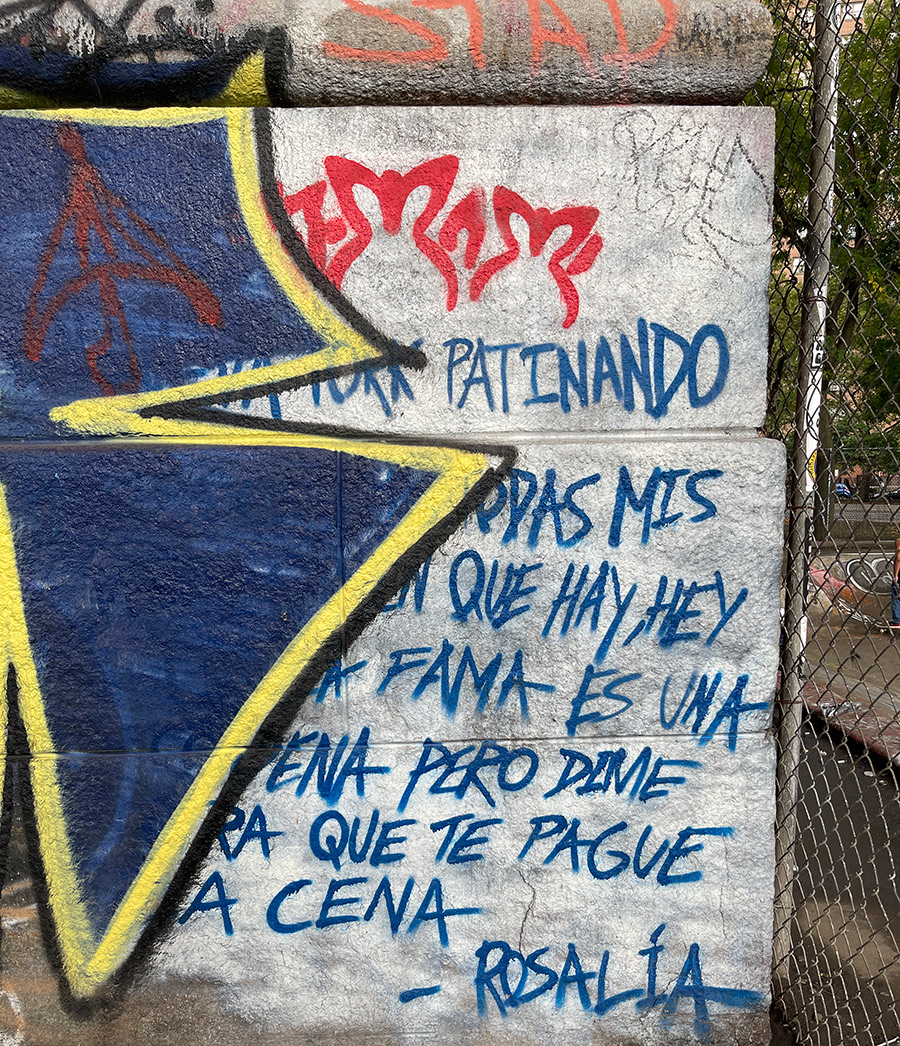
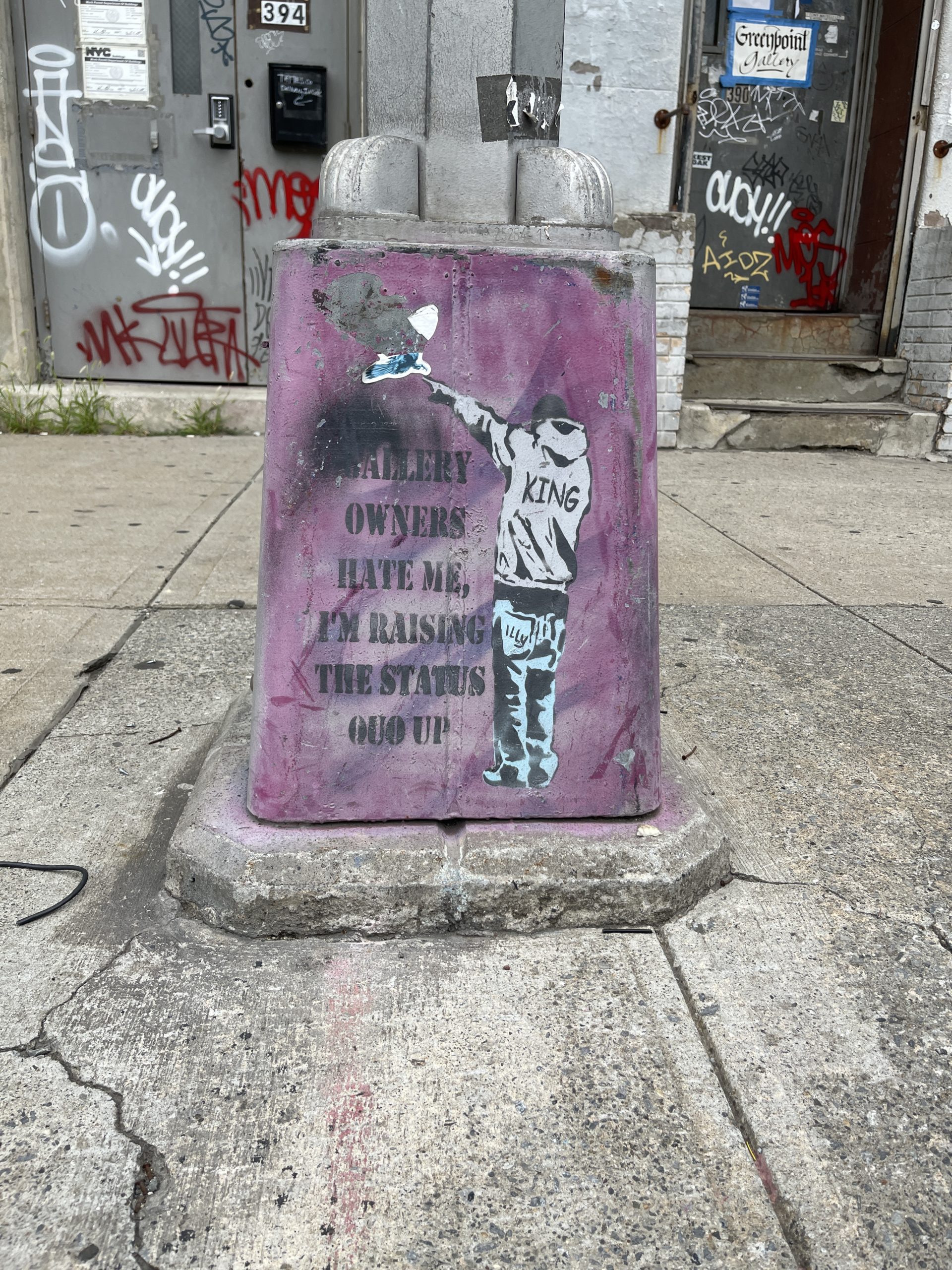
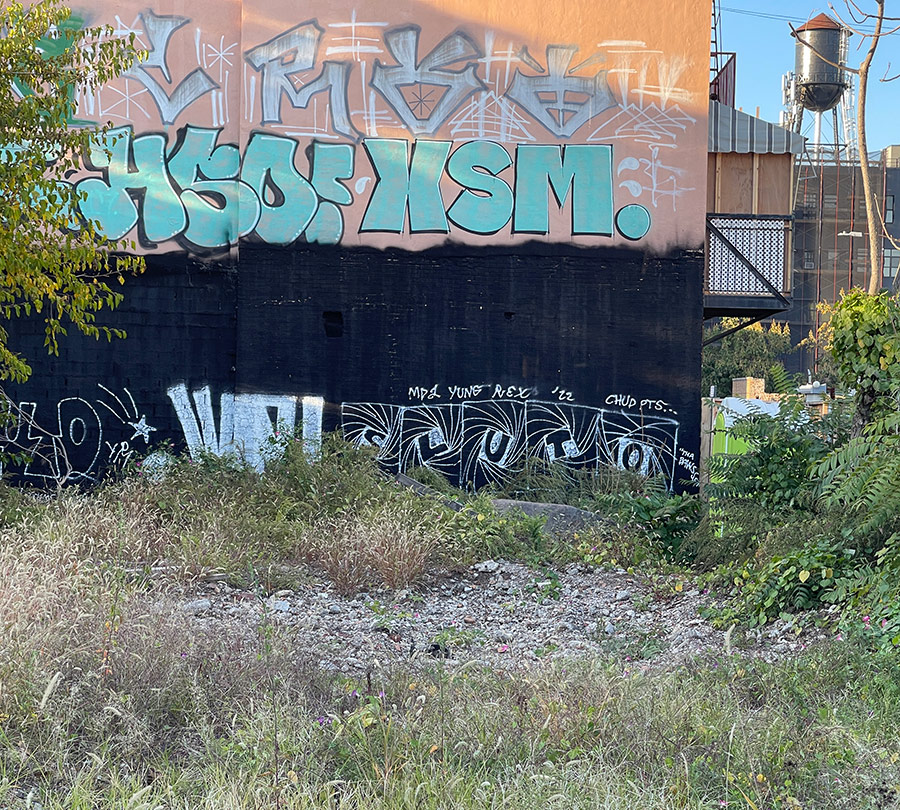
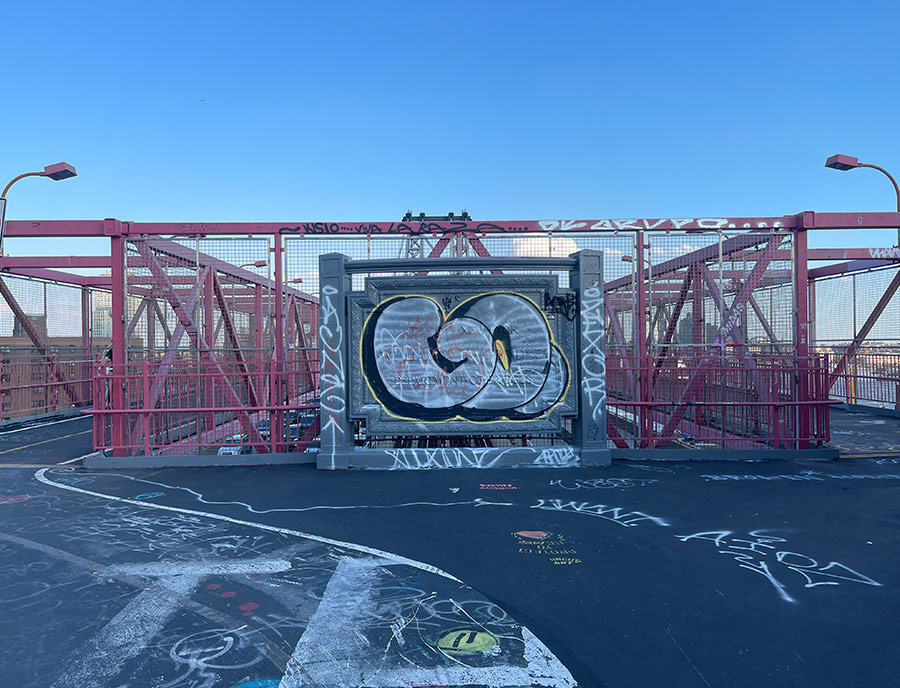
We may take them for granted, but these can be the most powerful, impactful things that we can do during our lifetime. That is why we follow the street scribes and listen to what is said and how. Because of the effort that it takes an artist or a poet, or a preacher to prepare these texts for us to read in the public sphere, we give them a little more respect. Perhaps you find them inspiring, puzzling, angering, or a waste of time.
If well chosen and well placed, the written word has the power to move mountains.
“…But the human tongue is a beast that few can master. It strains constantly to break out of its cage, and if it is not tamed, it will run wild and cause you grief.” -Unknown
“My task, which I am trying to achieve is, by the power of the written word, to make you hear, to make you feel–it is, before all, to make you see.” -Joseph Conrad
“Don’t mix bad words with your bad mood. You’ll have many opportunities to change a mood, but you’ll never get the opportunity to replace the words you spoke.” -Unknown
“If we understood the power of our thoughts, we would guard them more closely. If we understood the awesome power of our words, we would prefer silence to almost anything negative. In our thoughts and words, we create our own weaknesses and our own strengths. Our limitations and joys begin in our hearts. We can always replace negative with positive.” -Betty Eadie
Our weekly focus on the moving image and art in the streets. And other oddities.
Now screening: 1. JIDAR Street Art Festival – Toiles de rue 2022 جدار لوحات الشارع 2. “Battle of Street Art” London BEEF with Carnival Barker and Refreshments 3. SCORP WARS
BSA Special Feature: JIDAR Street Art Festival – Toiles de rue 2022 جدار لوحات الشارع
Straight out of Rabat, its the 5th edition of the JIDAR Street Art Festival. Held this year April 22-28, the Moroccan capital city hosted 12 national and international artists from Morocco, Spain, France, Canada, Argentina and Belgium.
Directed and Edited by Raja Saddiki, Shot by Mehdi Laajali & Raja Saddiki
JIDAR Street Art Festival – Toiles de rue 2022 جدار لوحات الشارع
“Battle of Street Art” London BEEF with Carnival Barker and Refreshments
Yes, this is true, not a parody. Street Art Competition with folding chairs, ongoing narration, prizes, advertisement, refreshments, all facilitated with a Gary Numan soundtrack. Here are the last two years of this battle outside the Secret Art Gallery on Cheshire Street in London.
SCORP WARS
No, this is not true. It is a parody.
Yo Gnarf and Scorp have some beef. These toys have no respect anymore.
Comedian Orion Levine does stand-up and covers many topics. But his knowledge of graffiti codes and modes is on point.
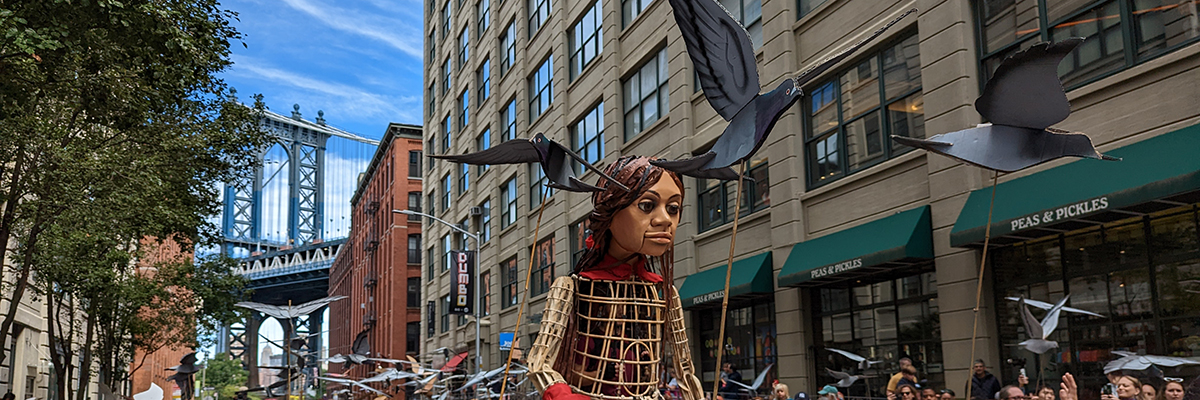
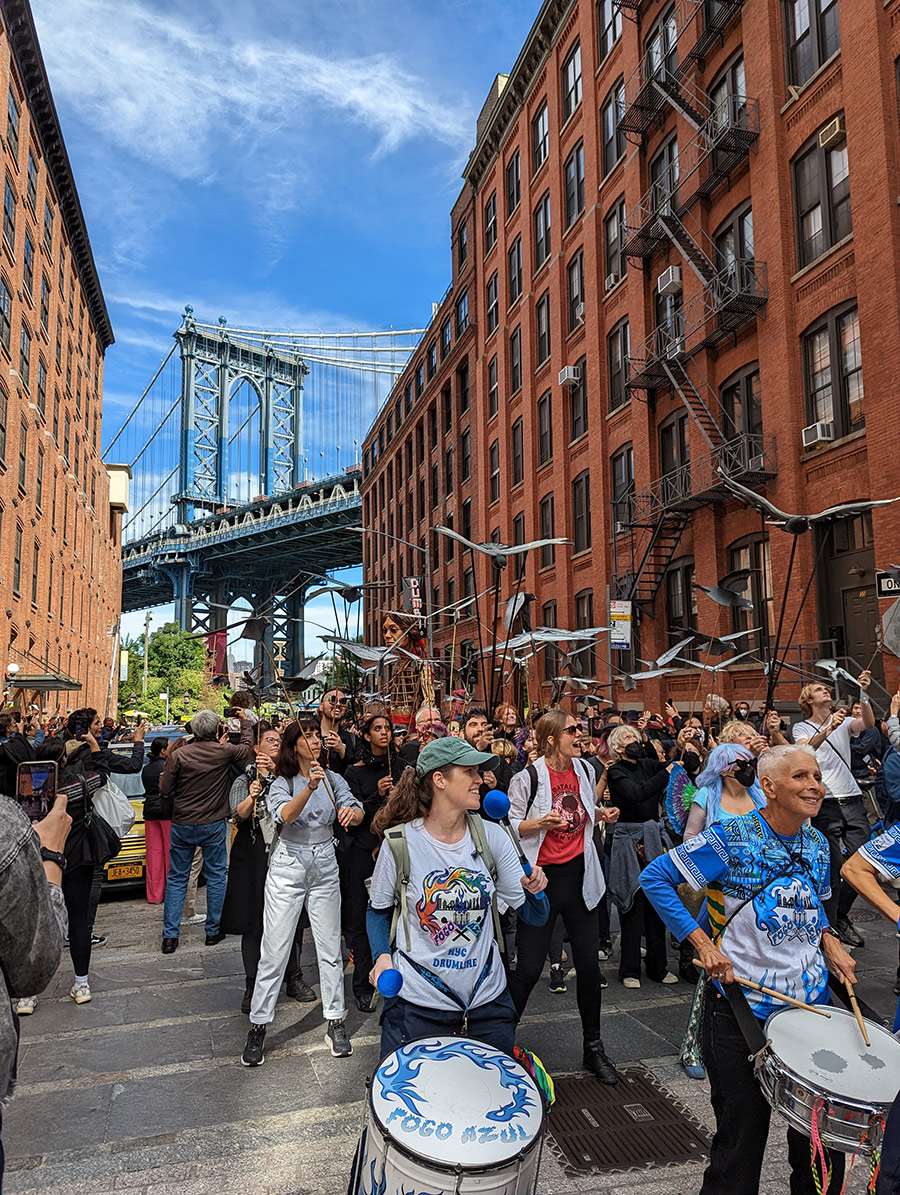
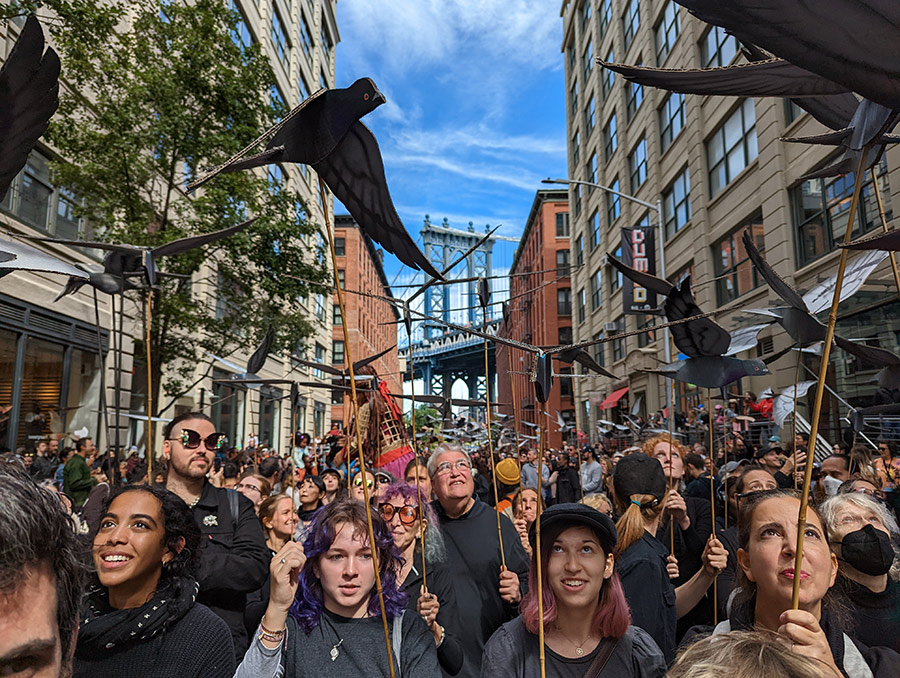
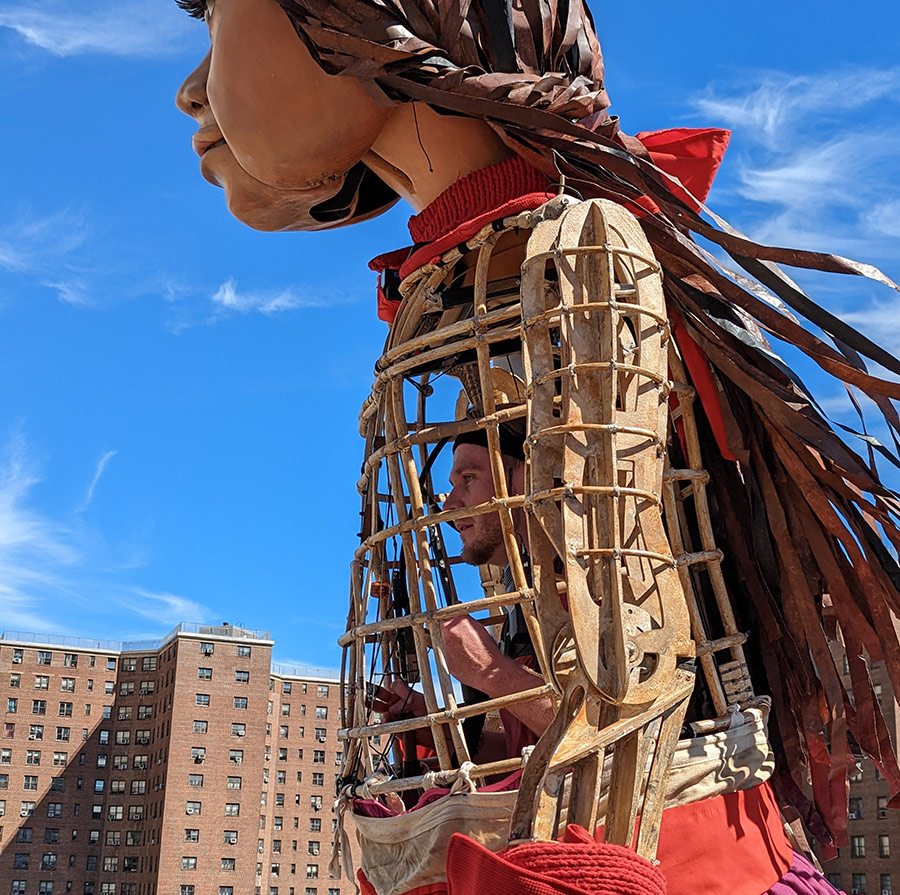
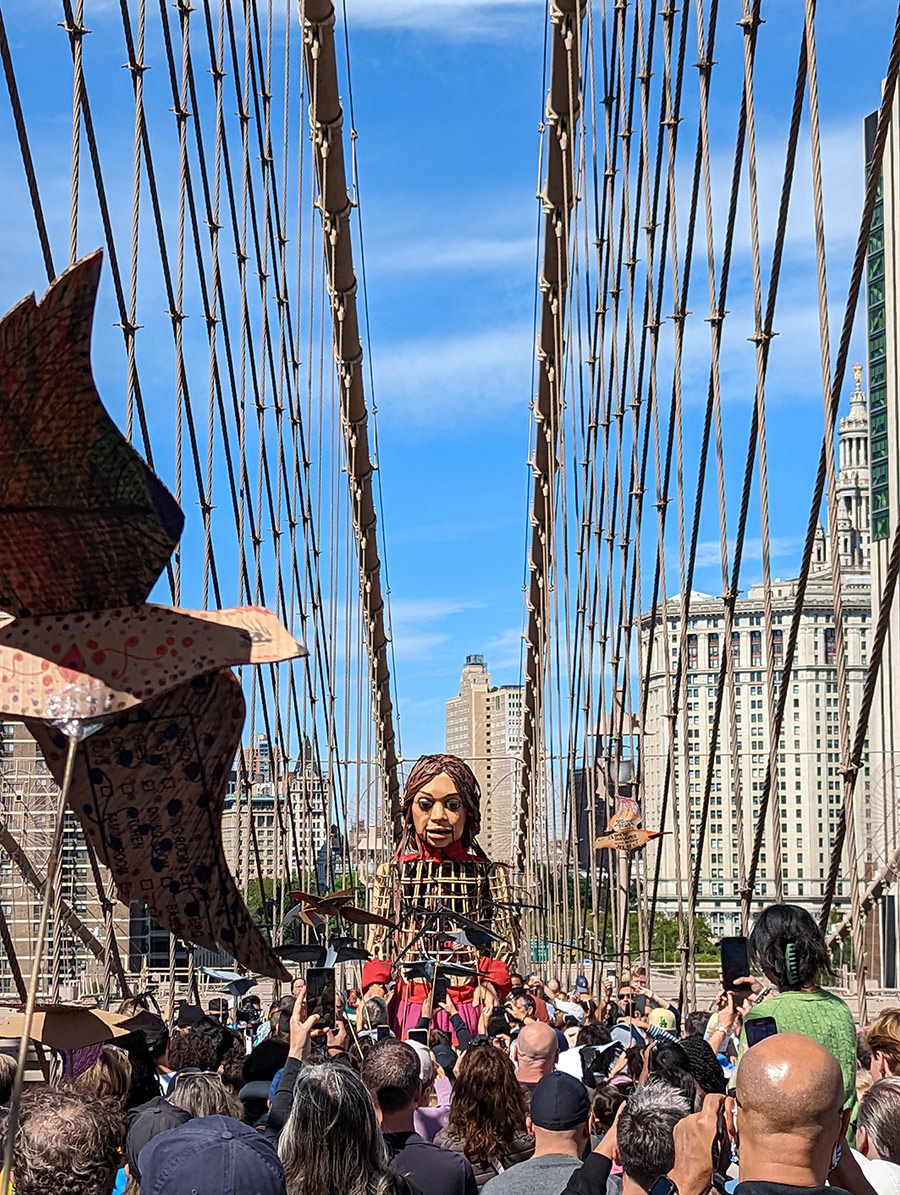
‘Interactive’: an overused buzzword today, much like ‘engagement’ and its derived forms. Regardless, nothing replaces true community engagement like well-planned and executed public performance. This fall, one of the most interactive puppet performances worldwide has been traveling through New York, and thousands of people have participated.
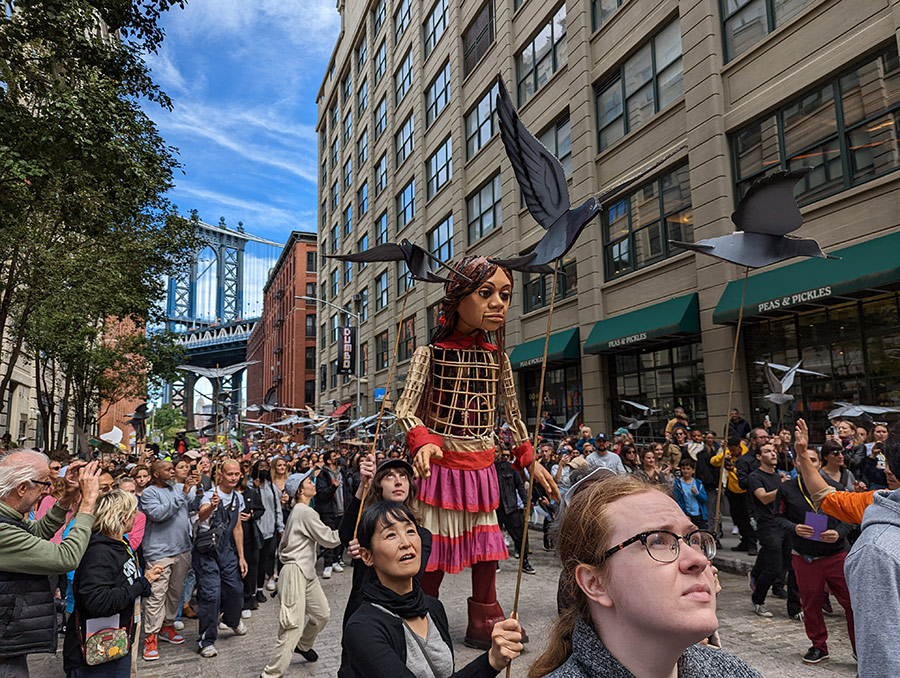
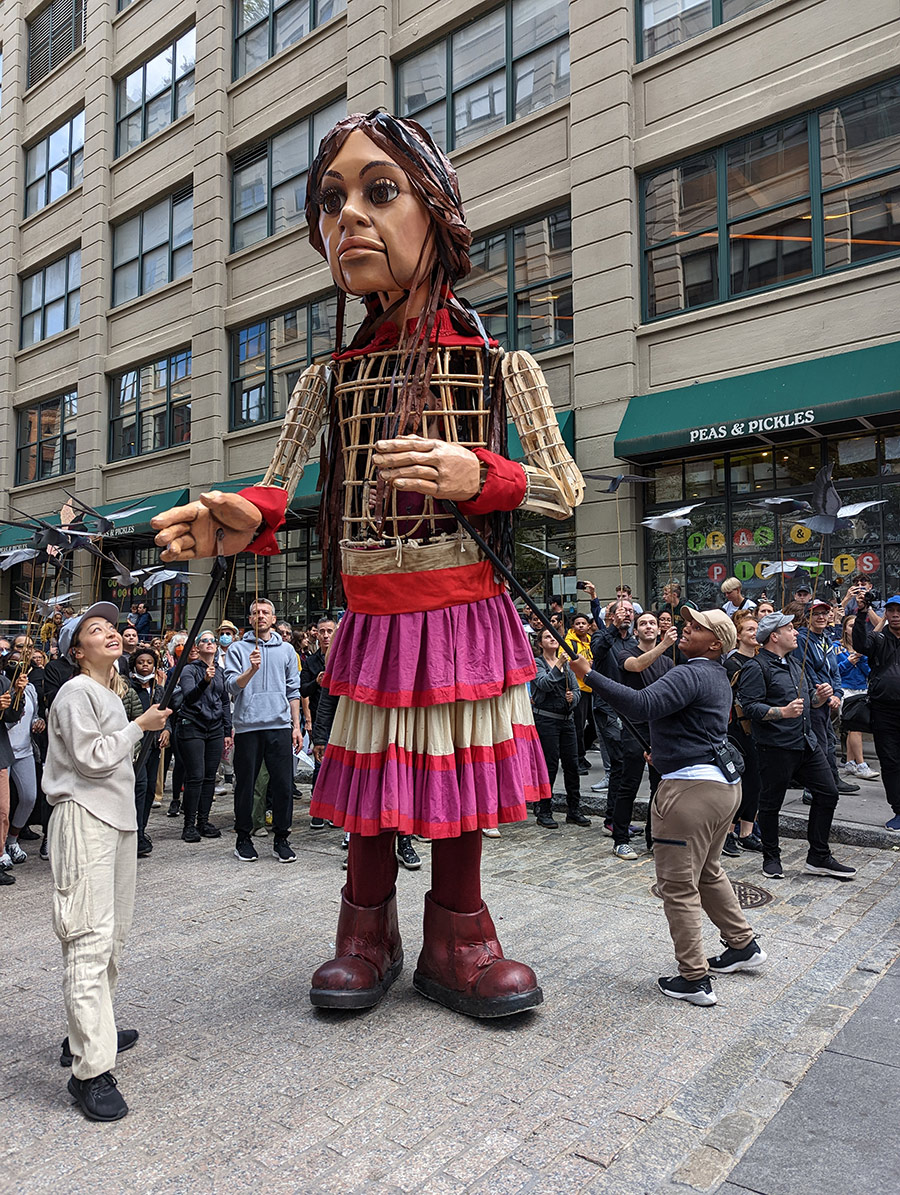
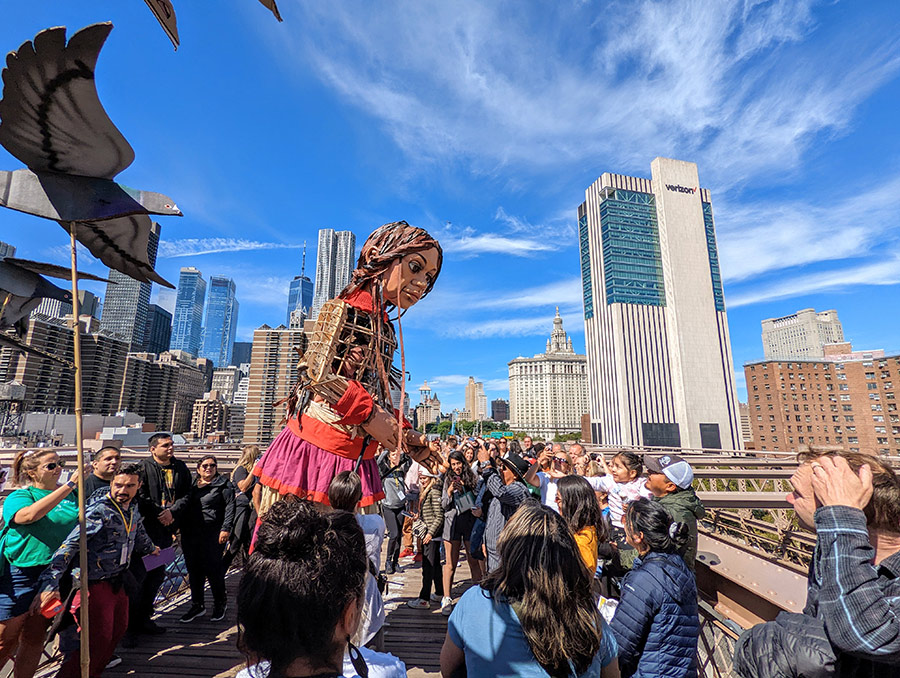
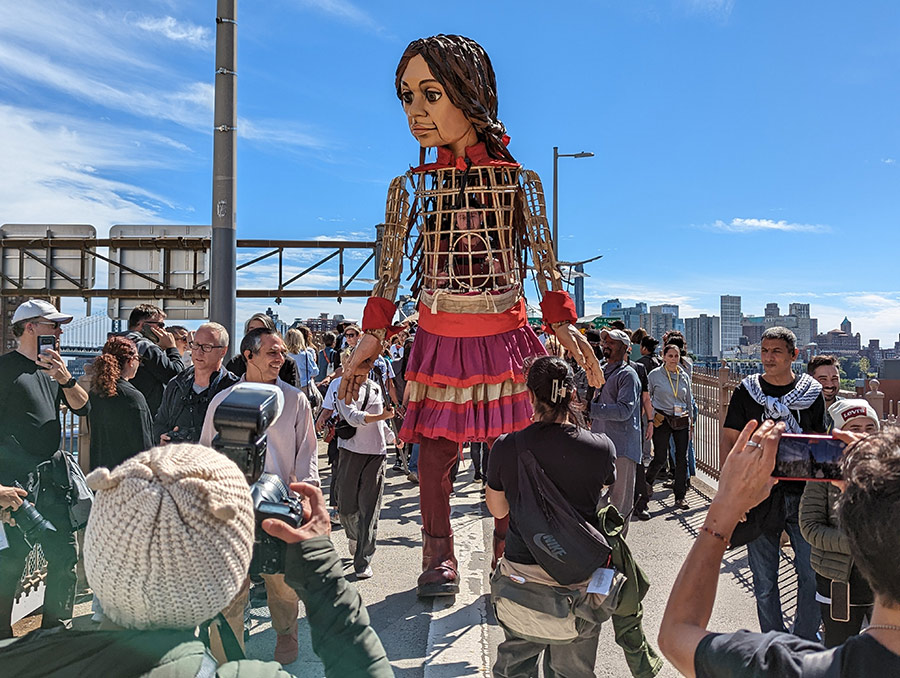
Meeting thousands of people in the streets as a way to educate us about the plight of people around the world who have become refugees, the 12-foot-tall puppet of a young Syrian girl named Little Amal is fulfilling a mission begun many months ago on the border of Syria. According to the website of Handspring Puppet Company, the South African team which made her, Little Amal has already traveled 5,000 miles in the two years preceding her New York visit.
Little Amal has traveled “from the Syrian border through Turkey, Greece, Italy, Switzerland, Germany, Belgium and France” through more than 70 towns, villages, and cities in search of her mother. She even met the Pope.
Now in New York, organizers say she isin search of her Uncle Samir. Planned events in all 5 of the boroughs mean that she is being welcomed by hundreds of artists, cultural organizations, community groups, schools, and colleges during a 55-event, 17-day traveling festival.
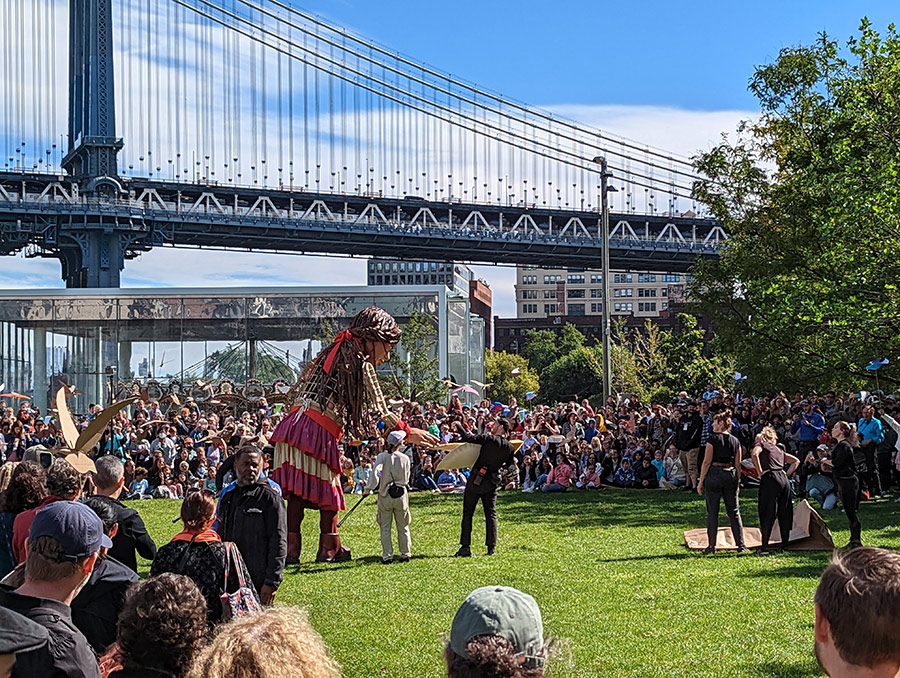
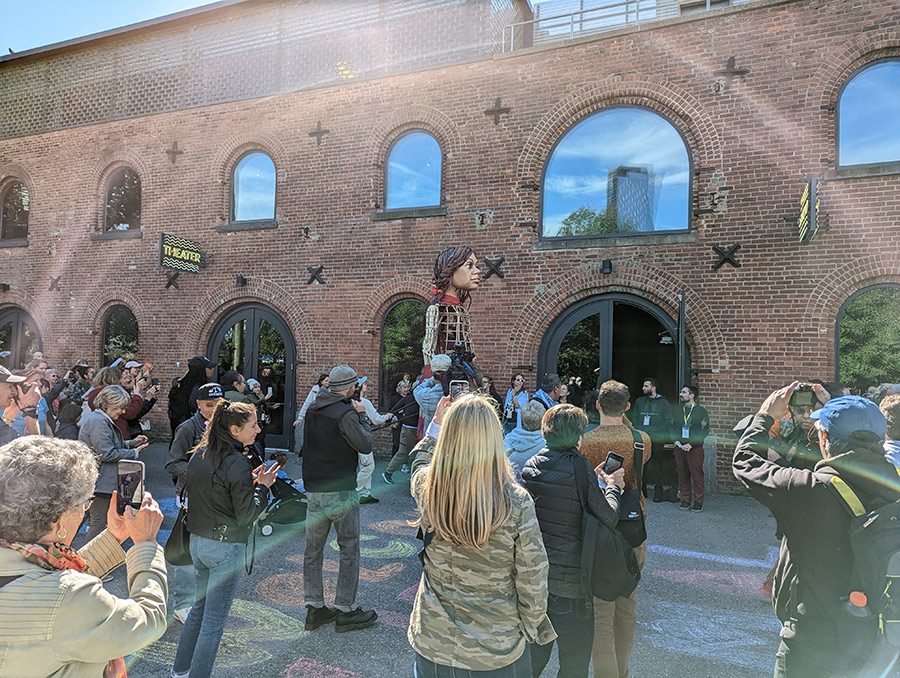
We share with you today images from photographer Chris Jordan, who attended one of the recent interactive performances in the DUMBO neighborhood in Brooklyn. We also spoke with transdisciplinary artist Heather Alexa Woodfield, who has created, produced, and performed pieces for various festivals and events, including at Chashama, the Edinburgh Fringe Festival, FIGMENT NYC, the High Line, and The New Museum’s Ideas City. Woodfield tells us that The Little Amal project deeply touched her as an artist and performer, and she attended many of the performances.
Brooklyn Street Art:How did you hear about this project and what attracted you to it?
Heather Alexa Woodfield: I saw an article in the Guardian about The Walk with Amal in the fall of 2020. When I read that it was created by Good Chance Theatre, I knew I had to see it as their play The Jungle is one of the all-time great theatrical experiences. Since I went to Bread and Puppet every year as a child, I naturally have a deep love of radical puppetry and participatory public art.
Brooklyn Street Art:How many times have you walked with Amal? Were there many others interacting with her?
Heather Alexa Woodfield: I’ve walked with Amal 10 times so far. While I’ve mostly been too busy following the puppet to estimate the size of the crowd, it always seems to fill the space she occupies whether that is a vast space like Brooklyn Bridge Park or something more contained like galleries at the Natural History Museum.
Brooklyn Street Art:What do you feel that she symbolizes to you? Do you think people who first meet her on the street grasp the intention?
Heather Alexa Woodfield: Amal is a refugee who is being honored and celebrated all across the city. She helps us imagine a world where immigrants and refugees are welcomed and respected. I don’t think people who see her randomly immediately understand that she is a refugee. However, the experience seems to make people more willing to talk to strangers. Then conversations start, and the message gets passed. I’ve heard and participated in this exchange multiple times.
Brooklyn Street Art: How does art like this engage people in the public square?
Heather Alexa Woodfield: The public has a vital role to play in this artwork that is beyond spectator. Whether carrying a puppet bird or holding a flashlight to illuminate her face or simply walking with her, audience members become co-creators. This experience elicits a profound sense of collective joy that is reciprocal between the people who have gathered and the Amal team. I love seeing the puppeteers smiling just as much as the children around them.
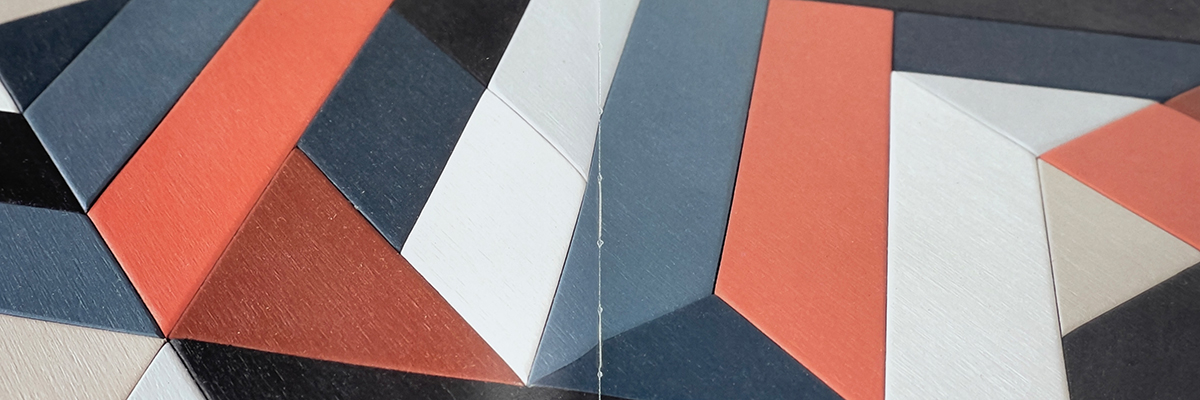
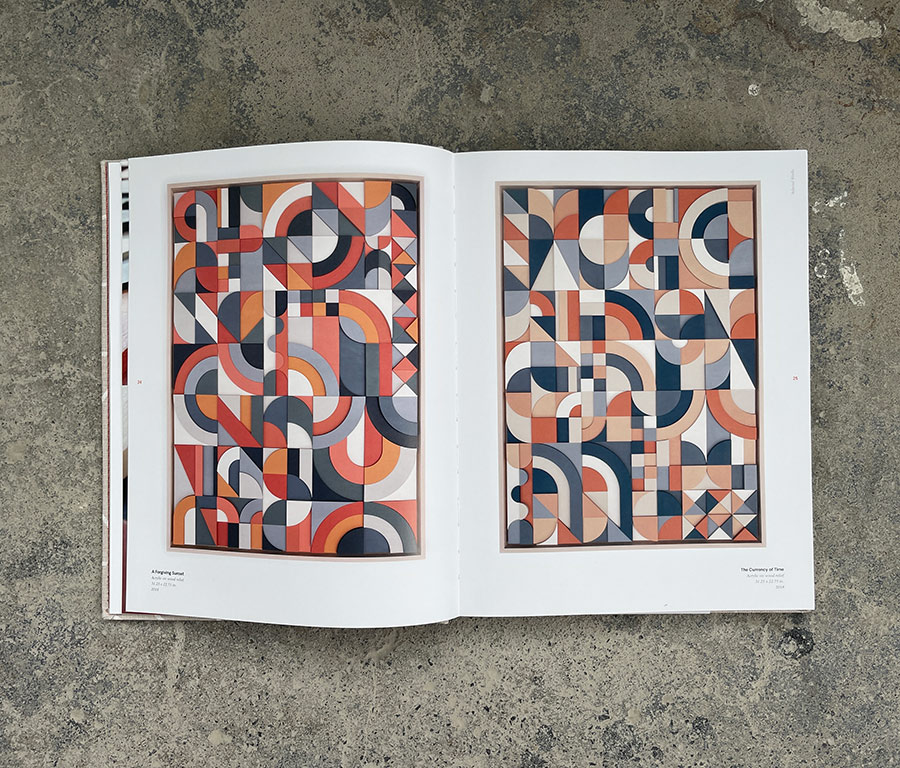
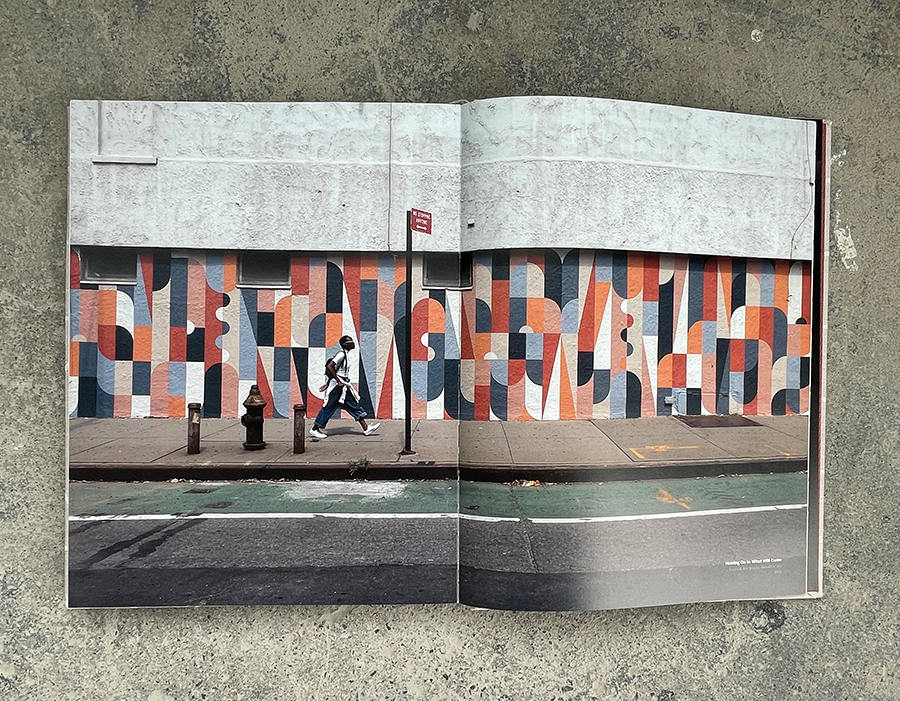
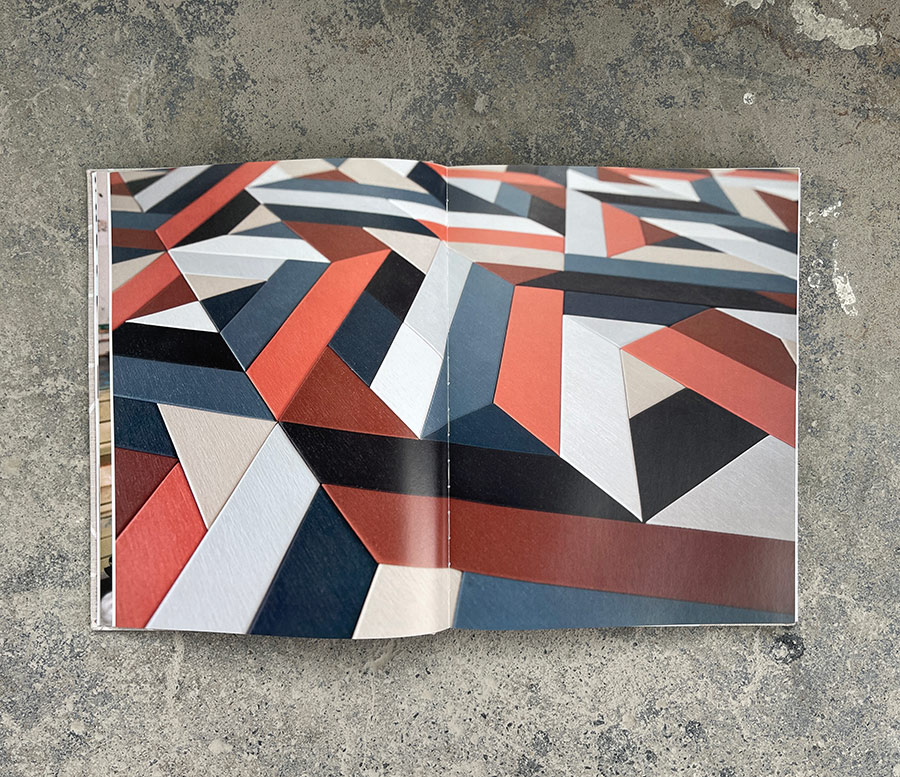
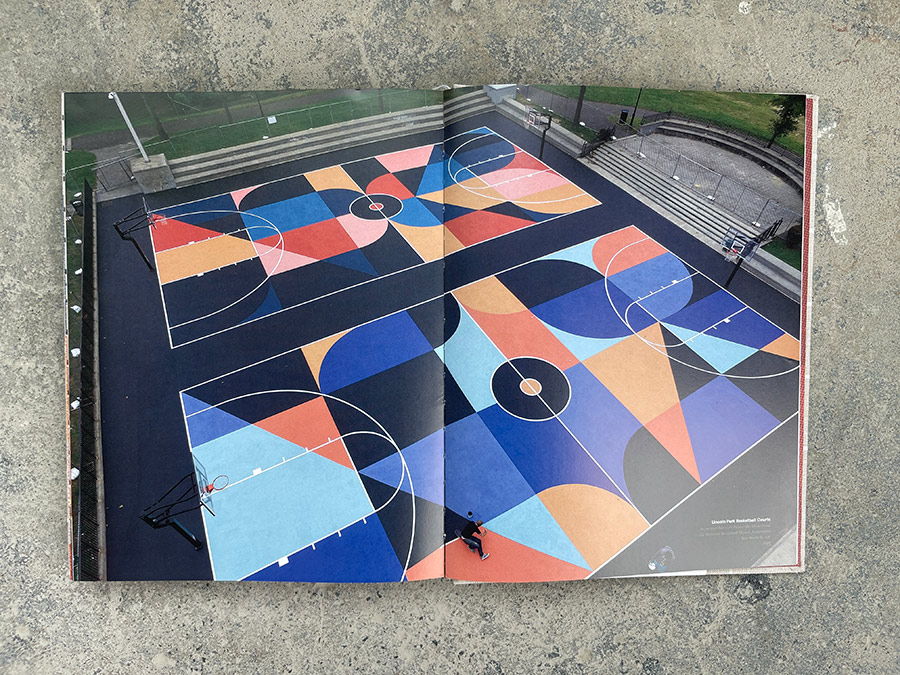
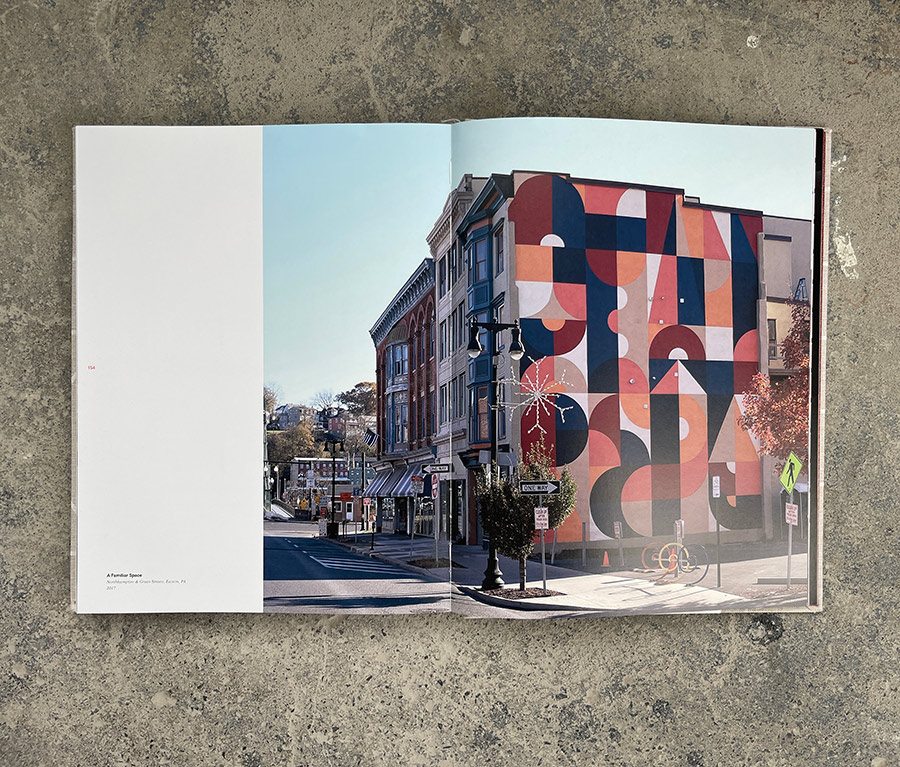
Color-blocked basketball courts appreciated from a plane, cheerful abstract murals for restaurants, hotels and cafes, and massive wood collages comprised of assembled pieces that are each finished before joining. What do these expressions of artist Scott Albrecht have to do with one another? If you study the patterns, in time, you will see.
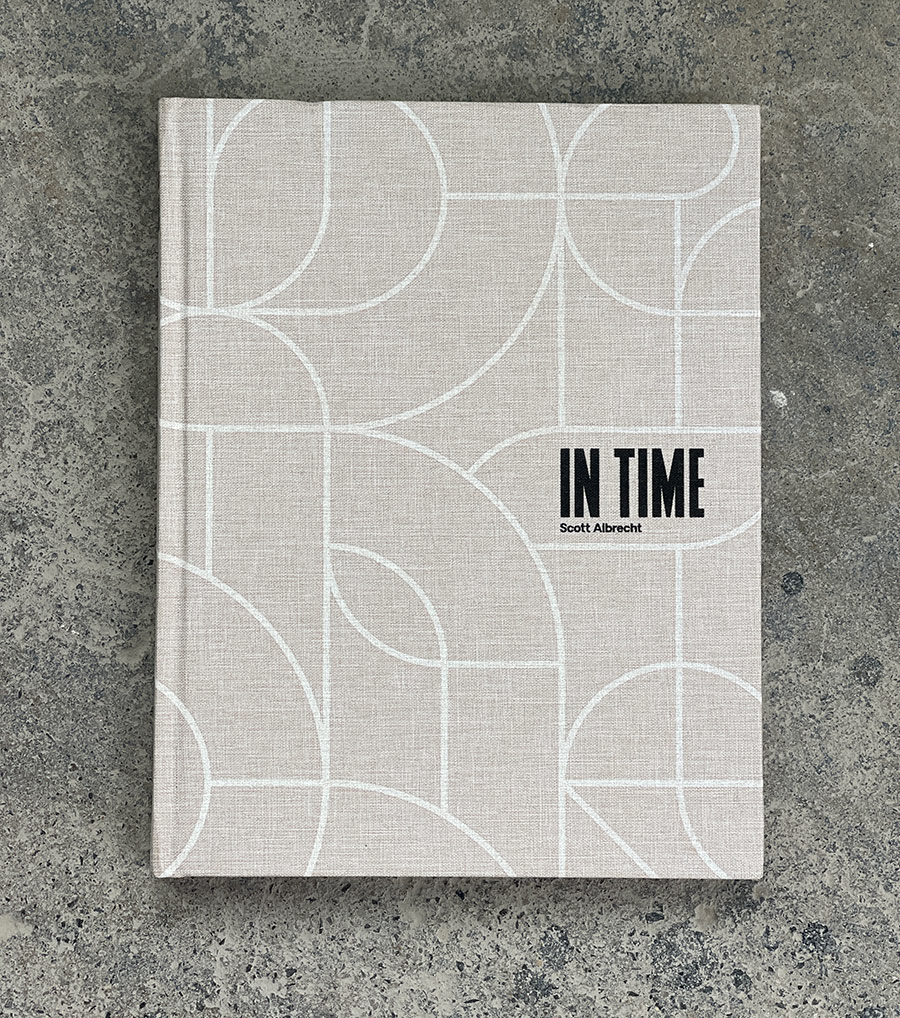
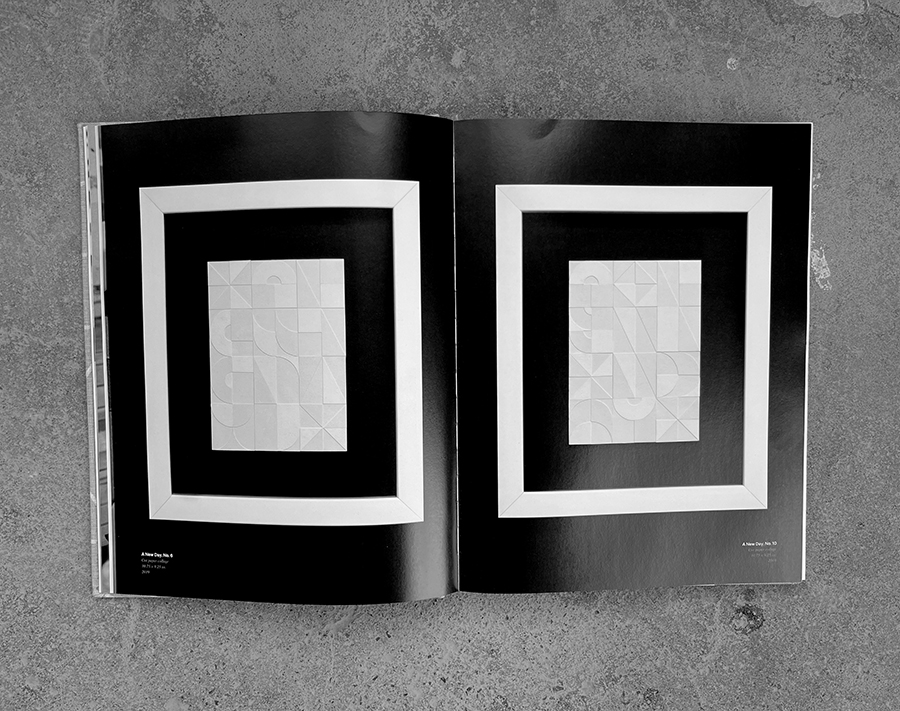
A handsome cloth-covered hardcopy of works by the Gowanus, Brooklyn-based public/studio artist presents a selection of works from 2017-21 that have a rational color theory, smoothly dynamic geometries, and a soothing certitude in their complexity. Spotlighting public art projects, studio processes, exhibitions in New York and LA, and his residency at Hyland Mather’s place in Portugal, the collection is refined yet human.
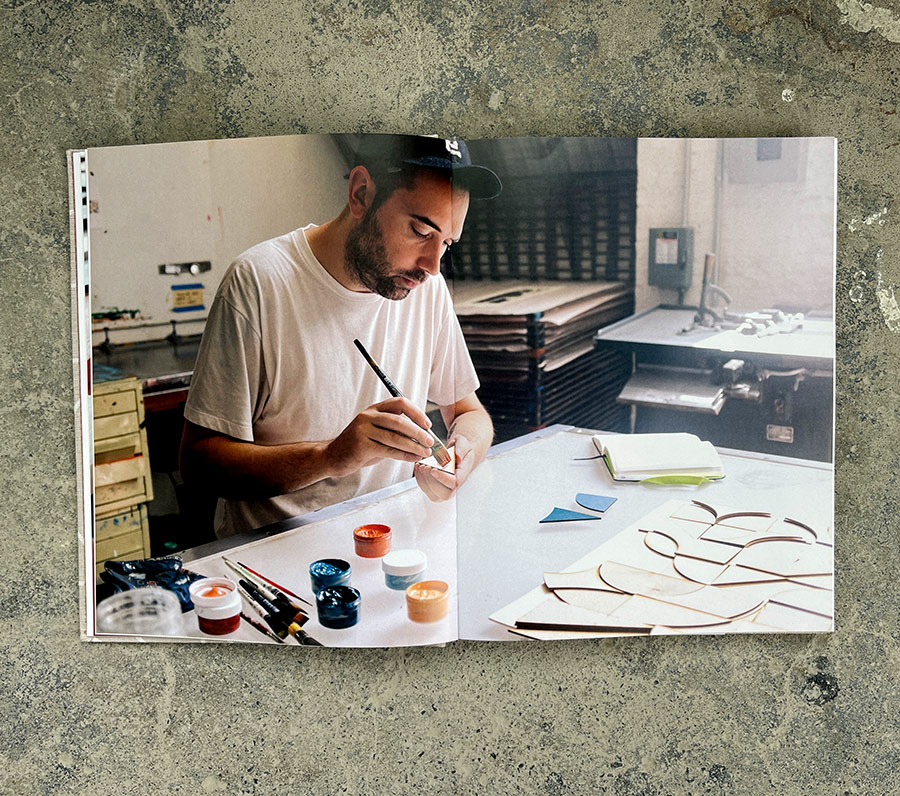
In his description of his work, Albrecht is focused on the process as much as the product. “Most of my works are made up of a collection of pieces that go through a series of steps before they’re
assembled. Any single step per individual piece doesn’t take long–laminating, sanding, painting-but if a work has a couple of hundred pieces, and all those pieces go through the same process, time feels less linear and more compounded as I work through the steps.”
Together these steps appear to be a decoding mechanism that is necessary to understand fully. “While the work itself may be speaking to a single idea, it’s made up of a collection of individual elements coming together to form the whole,” he says. “I often equate these individual pieces to the micro-experiences we encounter that inform our relationship to an understanding.”
First encounters with Albrect’s work are gripping and calming – a deliberate collection of shapes and hues arranged in a way that is not readily apparent. It’s all about pattern recognition, says David Pescovitz, a research director at a think tank and co-editor of a tech/culture Web magazine. He writes the introduction to the book and tells us that the works are meant to be meditative, a brain exercise and visual riddle that, once solved, is rational.
“We’re so practiced at seeking patterns – searching for structure in the flood of signals coming our way, connecting the dots, trying to make sense of, well, everything–that we’re usually not aware we’re doing it.” Sighting neuroscientists and various peer review journals Pescovitz makes his case, and you are inclined to go back through the pages and let your eyes glide, parry, sense, and decode the patterns’ greater logic.
In time, you will.
Scott Albrecht: In Time. Click HERE for information about purchasing this book.
“Here we saw men and women writing on walls for thousands of years; centuries later that led to men and women writing on subway trains, tagging highway overpasses and tunnels, on and on. And though it feels like cheating, the existence of cave painting proves there is an eternal and evolutionary impulse to communicate, to leave a mark in the form of art on walls to be read and deciphered.”
~ Sean Corcoran, Roger Gastman and Evan Pricco in Post Graffiti
These are the origination stories that help us to conceptually corral a dispersed, unmarshalled graffiti and street art scene loosed in public space since approximately the 1960s. For such an unbridled and wooly world of rebellion and free expression, few could have predicted that, eventually, it would evolve and expand into so many white box gallery environments. Yet as early as the 1970s and the artist collective of train writers UGA (“United Graffiti Artists”) and a show at Razor Gallery in Soho, enterprising visionaries were bringing aerosol art into the gallery.
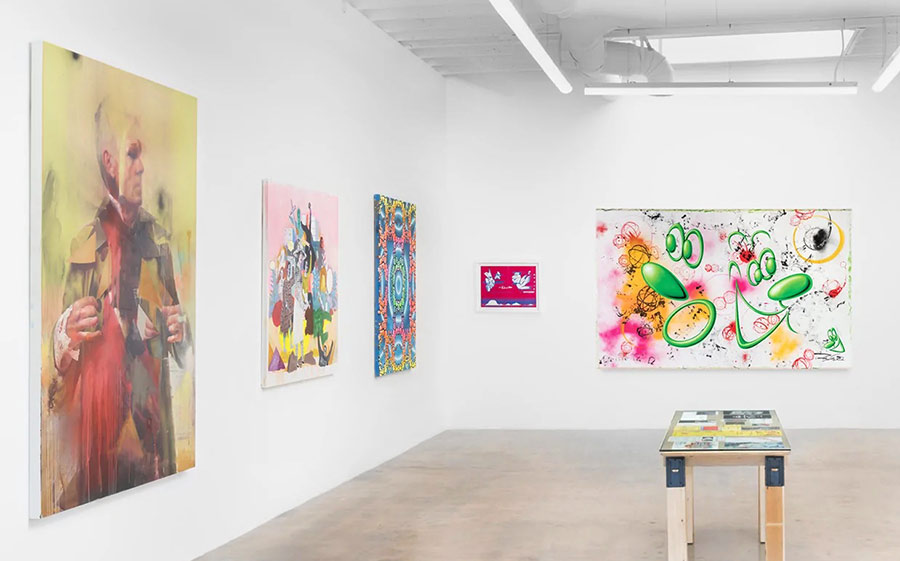
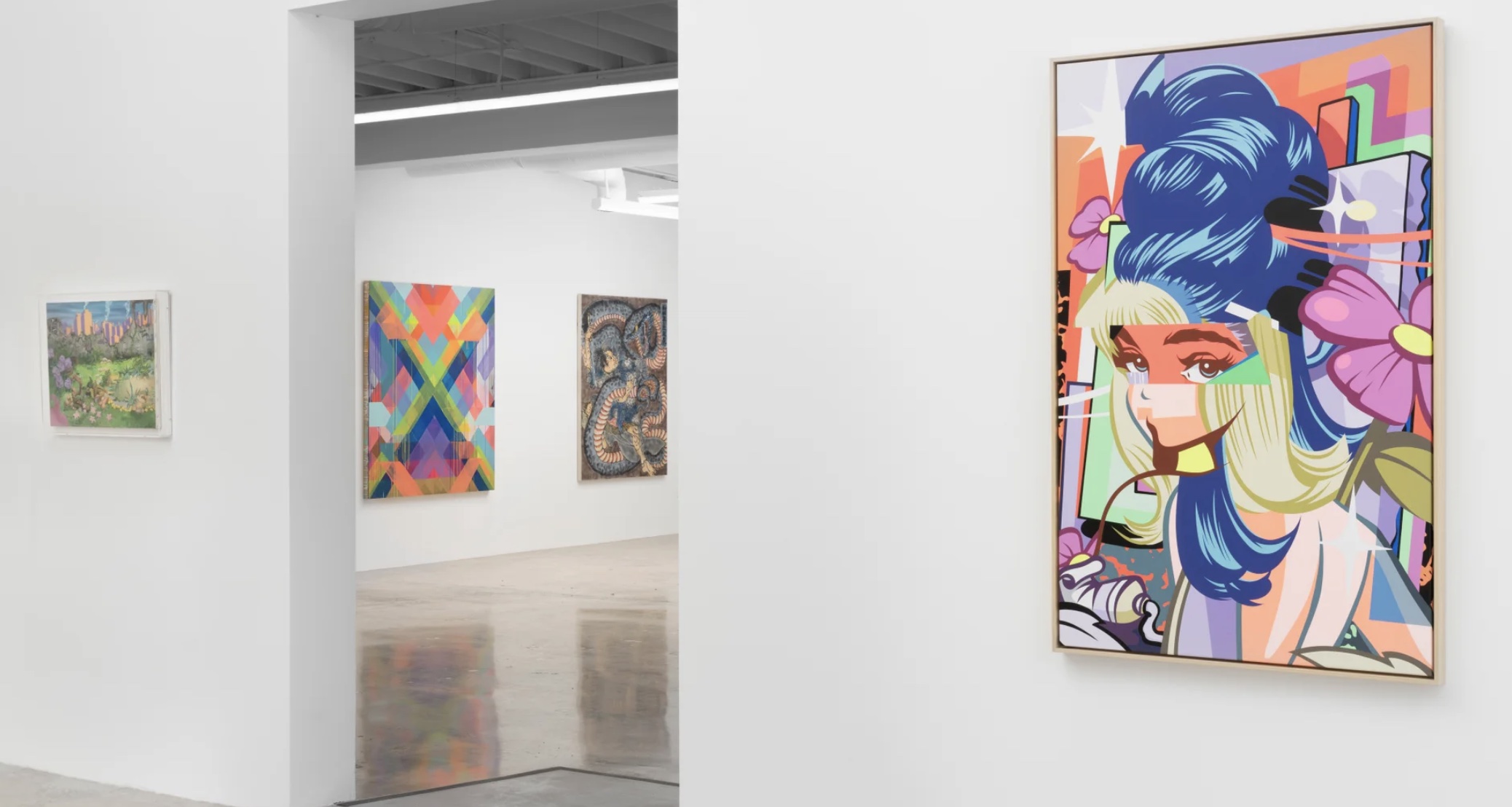
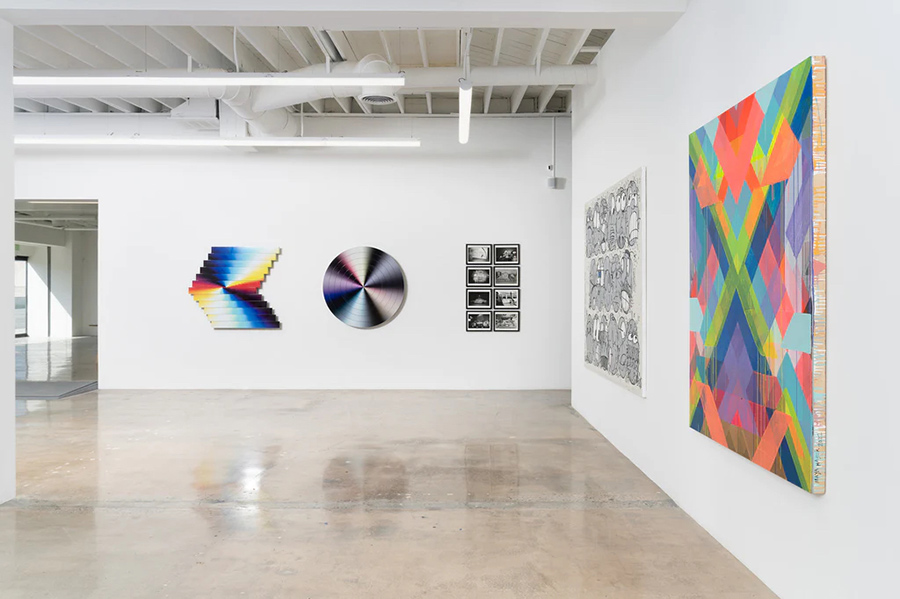
Fifty years later and debuting as a space called Control Gallery, this uncontrolled organic undercover scene again repositions as artworks defined by the parameters of the canvas. The brainchild of graffiti historian and street culture impresario Roger Gastman, the LA space is the latest expression of his growing brand Beyond The Streets. With a theme demarking the psychological break from simple mark-making, Gastman and gallery director Dante Parel take the big umbrella approach to the artists they represent – each exemplifying one or more aspects of the move toward contemporary over the last five decades.
The pristine, gently post-industrial white space serves as a stage for canvasses and sculptures that may seem unrelated to one another stylistically, yet their backstories weave together fundamentally. Here’s OG 1970s NYC train writer CRASH in the same show with the similarly pop-enlightened Pose, whose own history on Chicago streets two decades later was also formative for his deconstructed imagery for gallery viewing. The expressions differ, but their inspirations are arguably fused at the root.
Included in this mix is the Argentinian-Spanish technologist and kinetic wizard Felipe Pantone whose growing collection of color spectrum sculptures is somehow rooted in the 1990s digital glitches of his boyhood as well as his teen graffiti writing into the 00s. Seemingly unrelated is the romantic military masculinity of the figurative paintings by Cork-born Connor Harrington, whose dreamlike illusions are still as formal as his fine art training in university. An “an Irish street/graffiti artist” according to Wikipedia, you are also welcome to call him post-graffiti here at Control.
As we continue to grapple with the terms, the conditions, the definitions for a constellation of descendants from graffiti, perhaps the fairest pronouncement would be, with gratitude to the originators, that these works are indeed post-graffiti. No longer recognizable as part of the graffiti writing family of codes and conventions, they nonetheless contain the source code of the sub-culture that eventually became the contemporary culture.
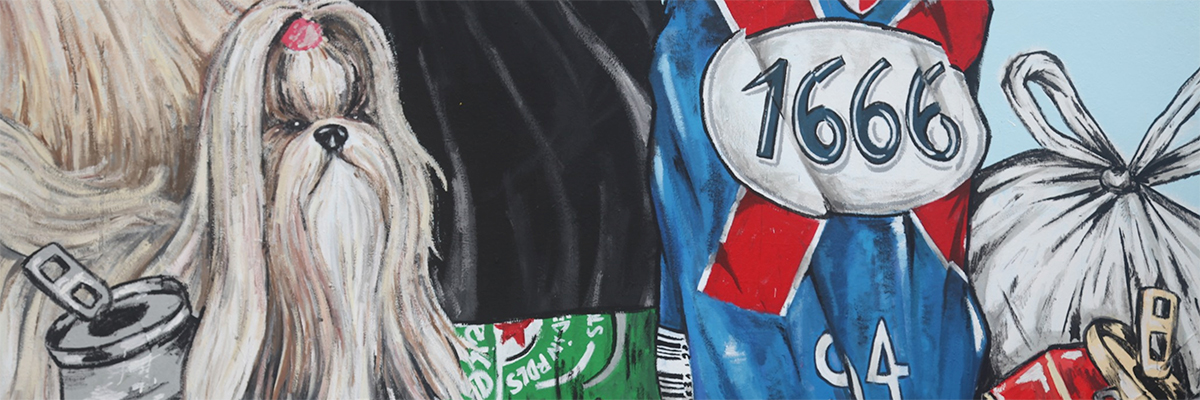
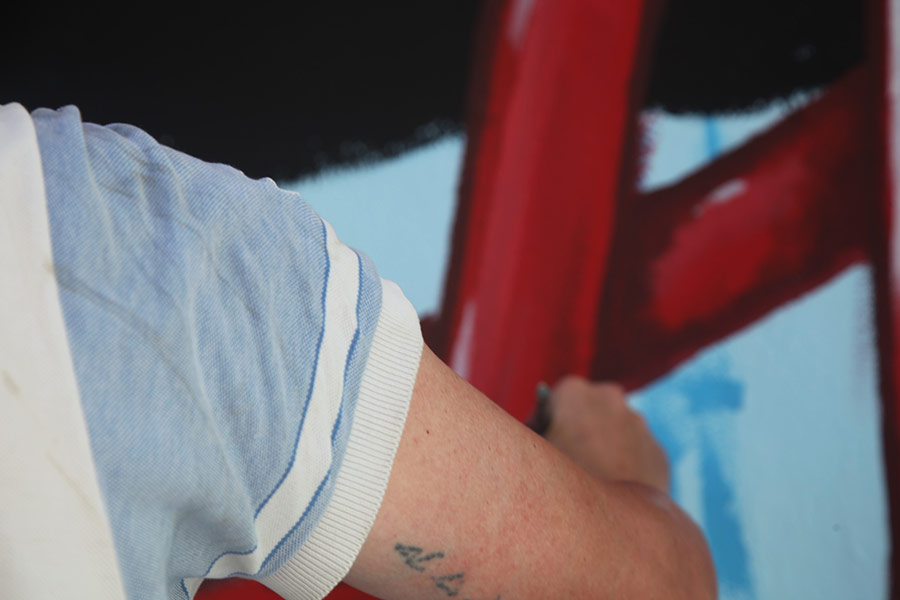
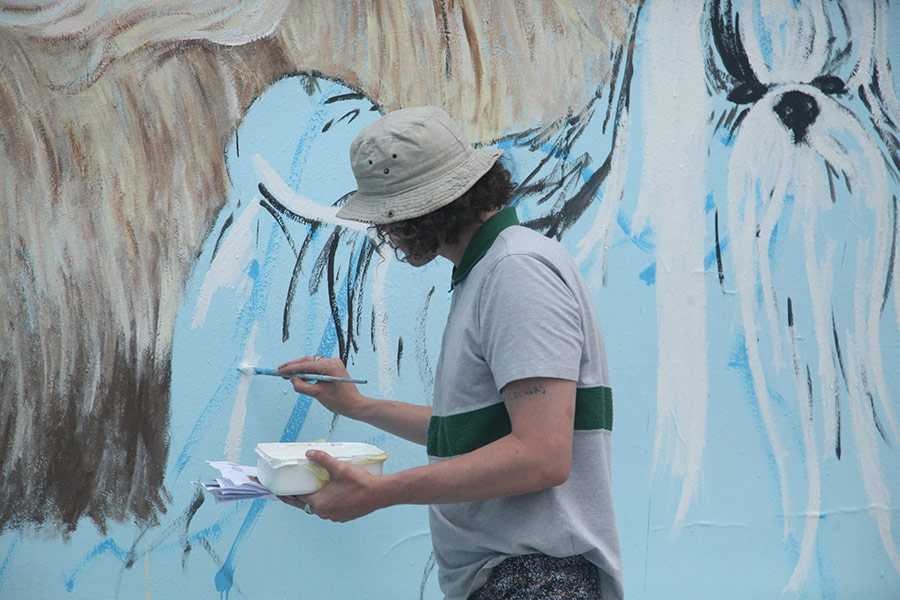
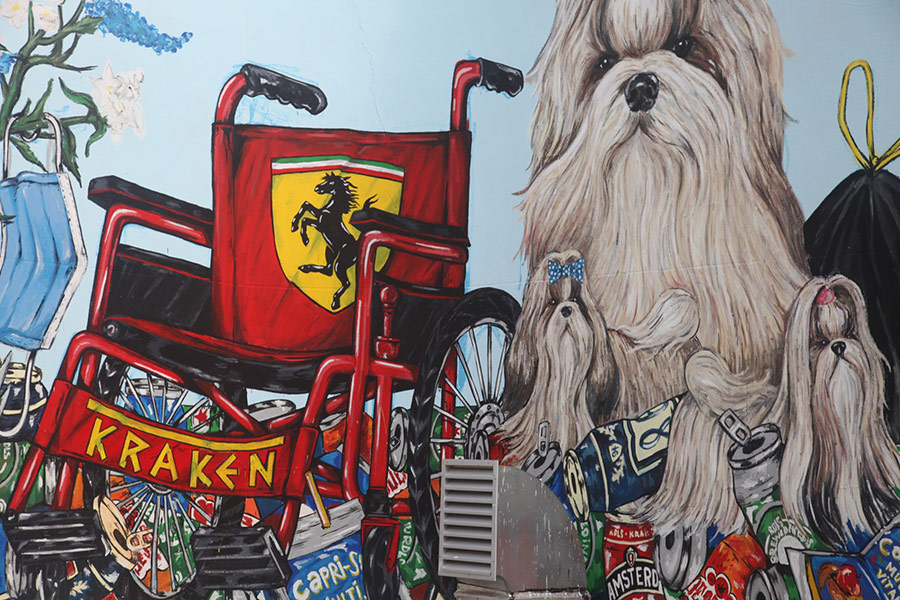
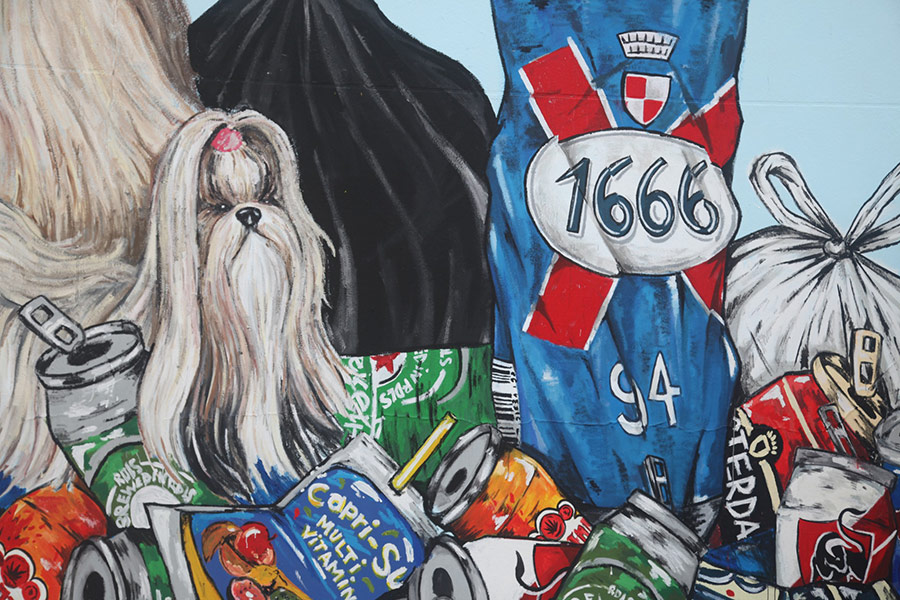
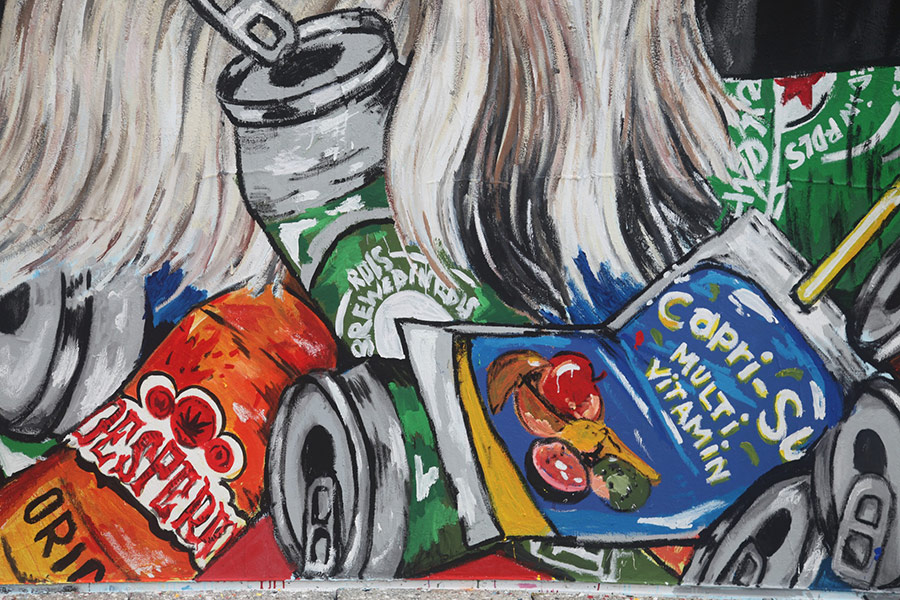
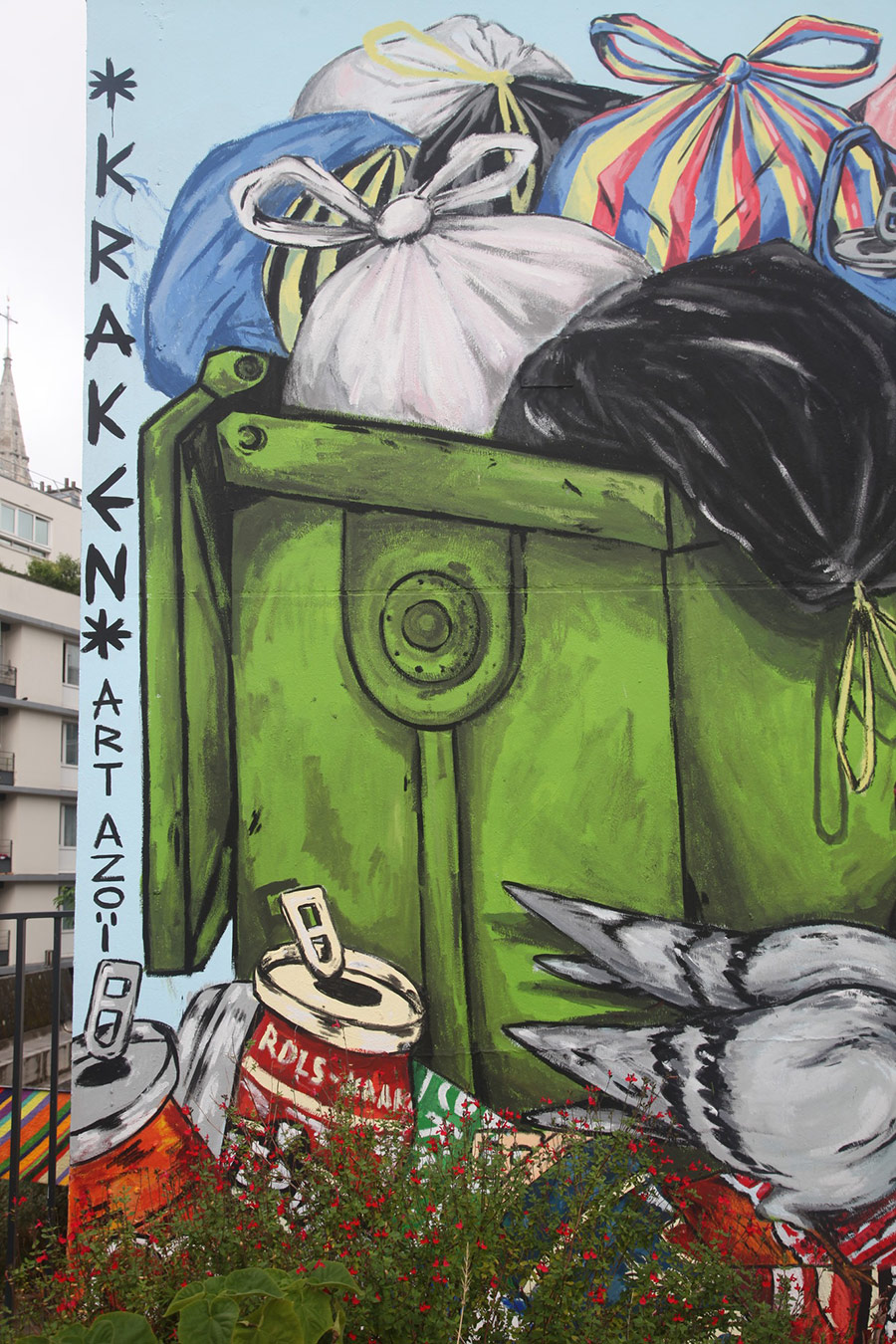
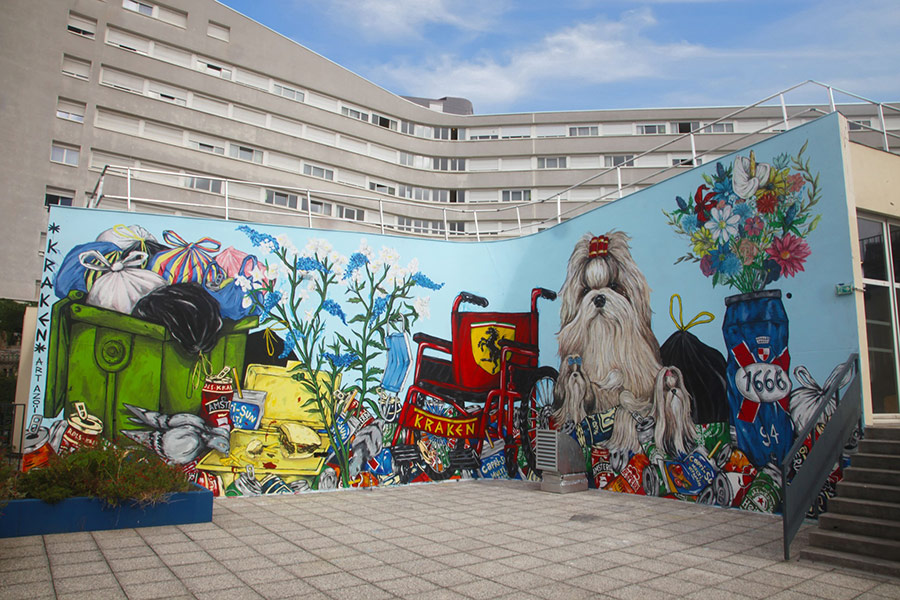
Kraken elevates the everyday items that we wouldn’t normally feature as worthy of display for aesthetic enjoyment. With his new public mural for Art Azoi in Paris, he chooses some household items you normally overlook; a leveling composition of tools, implements, containers, and adorable household pets. By inclusion, they become artistic elements.
KRAKEN in collaboration with Art Azoï. Paris. (photo courtesy of Art Azoï)
With his sharply rendered strokes, he gives an additional character to commonplace items in the way that an illustrator favors, playing with discomfiting facts of consumerism, consumption, and the waste of every day by everyone. Kitsch and a skewering of class come into the mix, with high and low treated equally, purposely pushing the conversation. Perhaps you would not choose to glorify these elements to the level of a public mural, but Kracken is very pleased to, with a certain laudatory and humorous respect.
KRAKEN in collaboration with Art Azoï. Paris. (photo courtesy of Art Azoï)KRAKEN in collaboration with Art Azoï. Paris. (photo courtesy of Art Azoï)KRAKEN in collaboration with Art Azoï. Paris. (photo courtesy of Art Azoï)KRAKEN in collaboration with Art Azoï. Paris. (photo courtesy of Art Azoï)KRAKEN in collaboration with Art Azoï. Paris. (photo courtesy of Art Azoï)KRAKEN in collaboration with Art Azoï. Paris. (photo courtesy of Art Azoï)
5 Rue des Platrières, 75020. Kraken sur la terrasse des plateaux sauvages.
Street art welcomes all manner of materials and methods, typically deployed without permission and without apology. This hand-formed wire piece …Read More »
 BROOKLYN STREET ART LOVES YOU MORE EVERY DAY