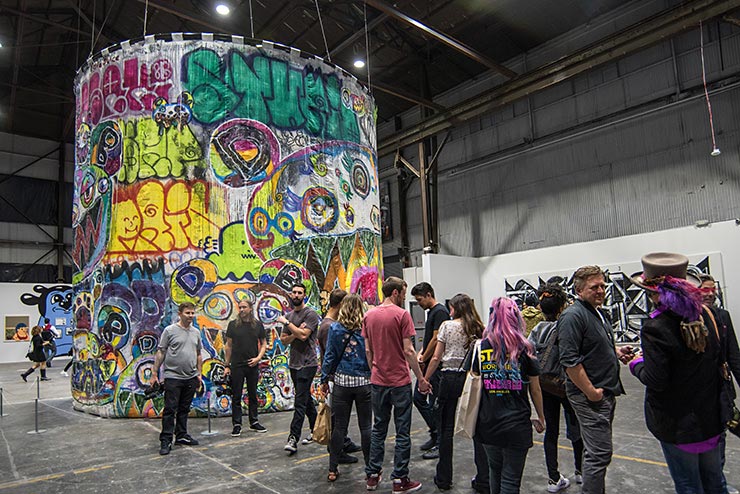
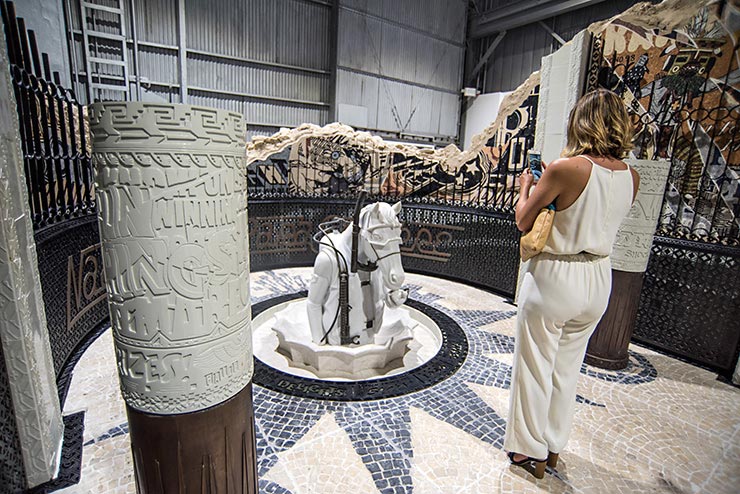
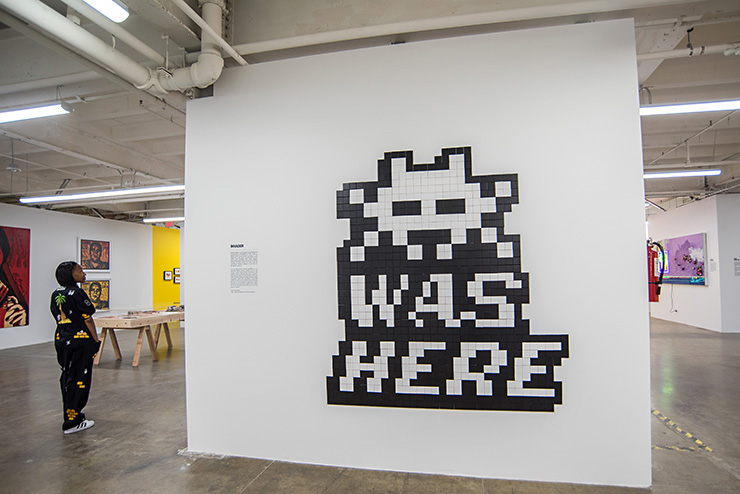
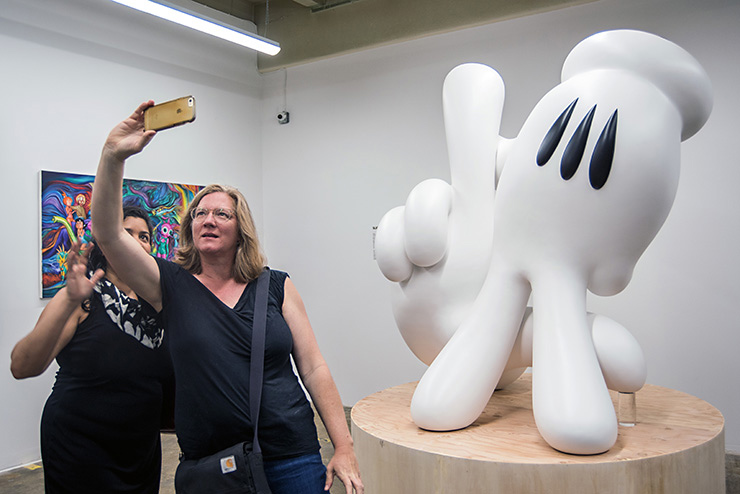
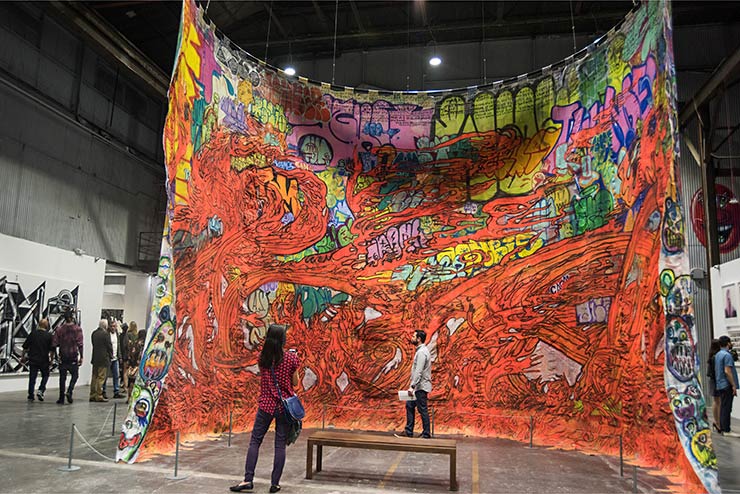
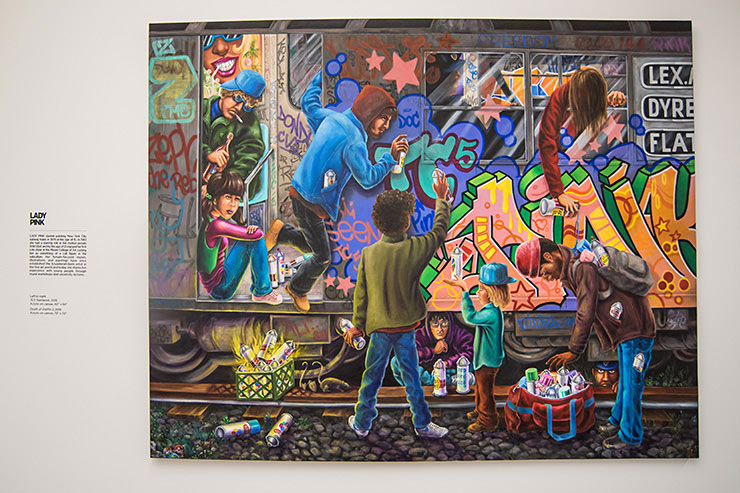
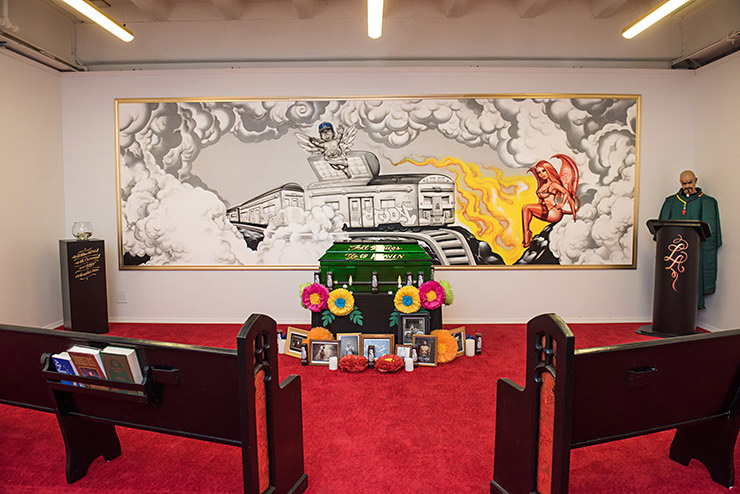
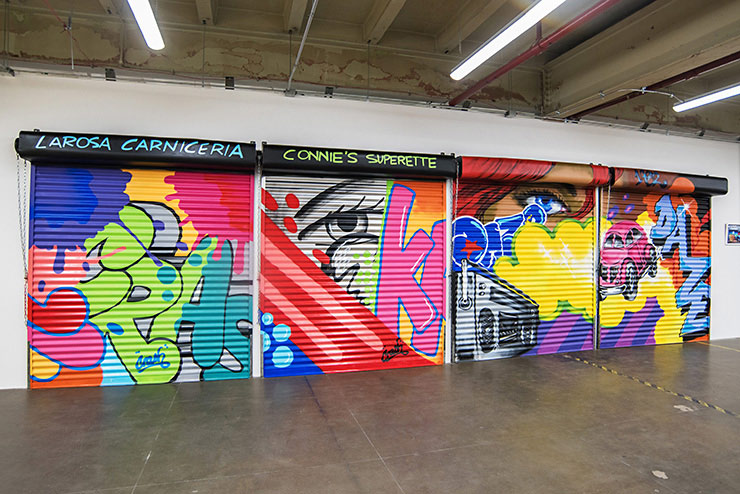
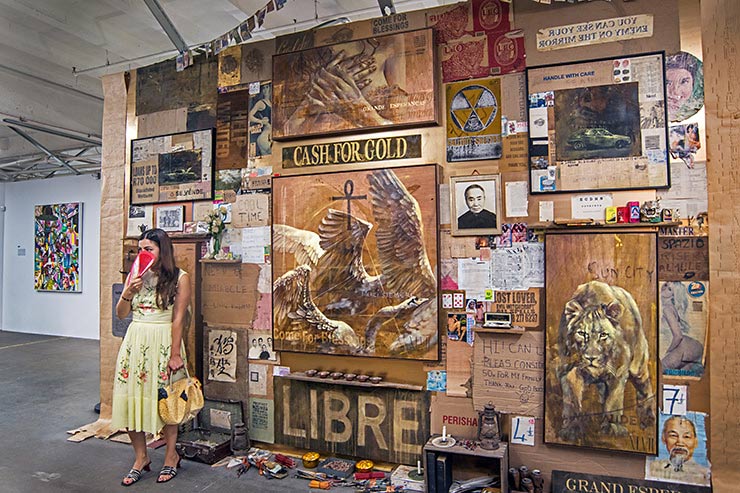
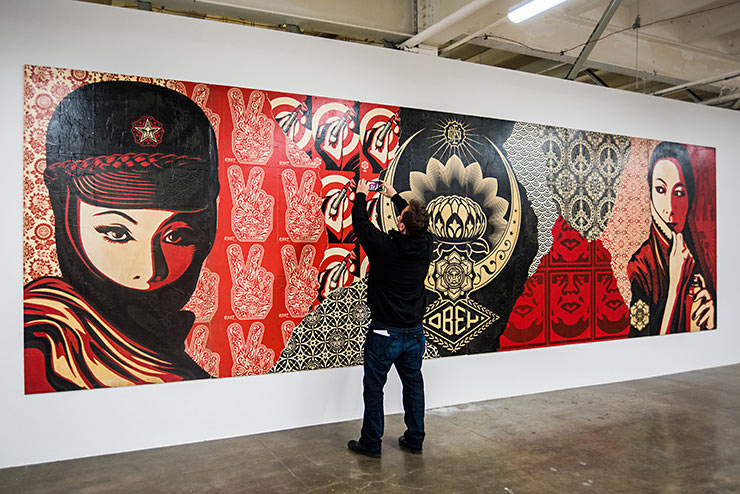
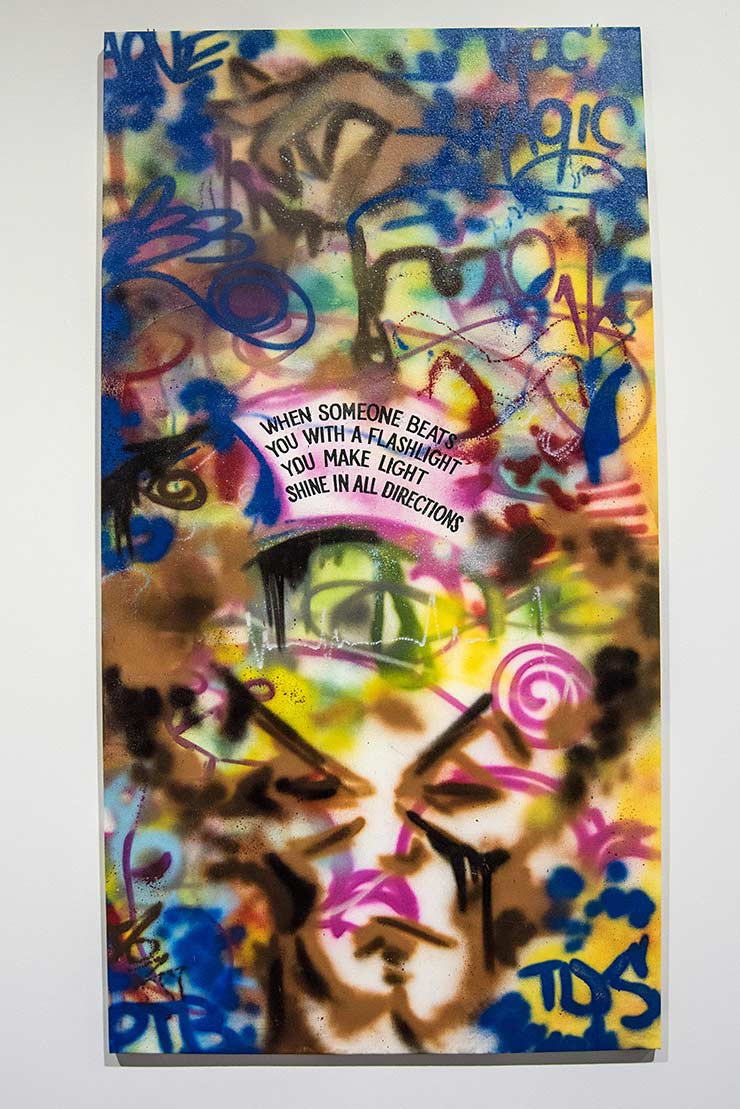
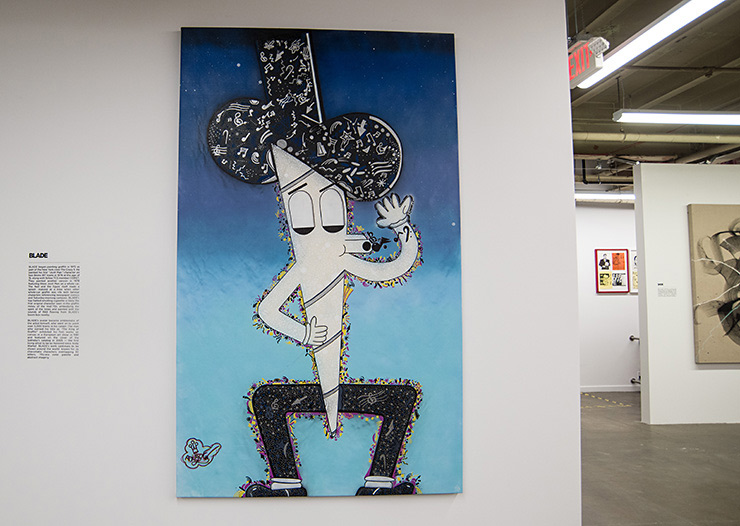
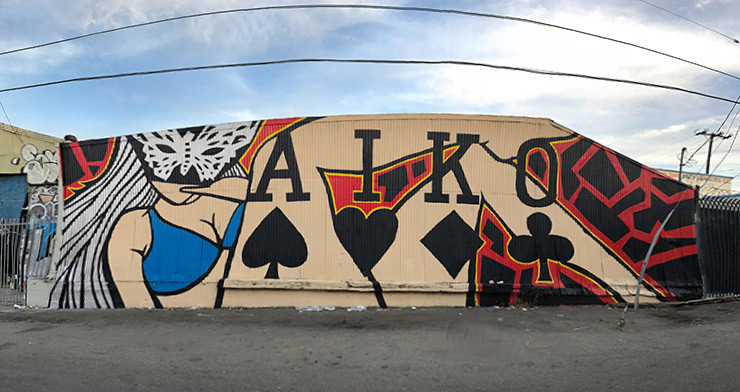
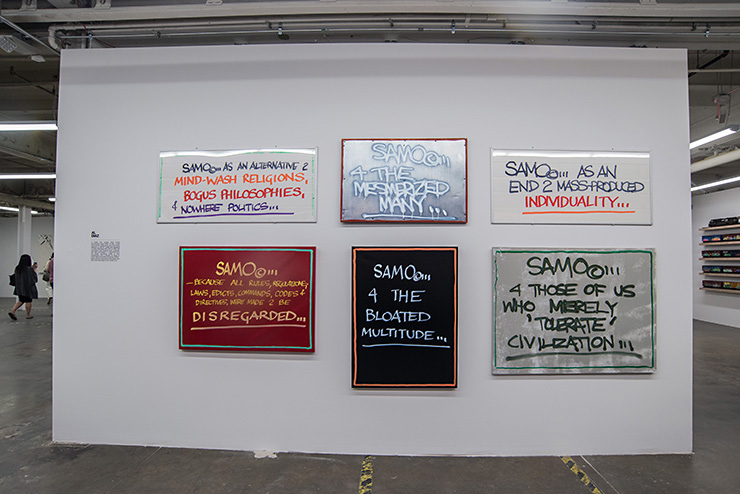
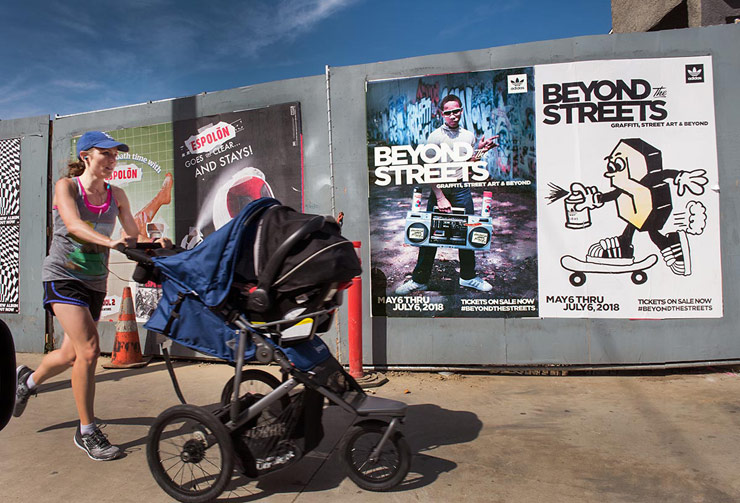
A steel-wheeled graffiti train with Roger Gastman at the controls roars into LA’s Chinatown for a two-month stay at this station, a 40,000 square foot warehouse that houses “Beyond the Streets.” Originating at the streets and train yards of the 1960s and 70s, this express survey carries with it 100 or so artists and writers from across the last five decades as practitioners of graffiti, Street Art, and mural painting. Somehow, everyone gets represented.
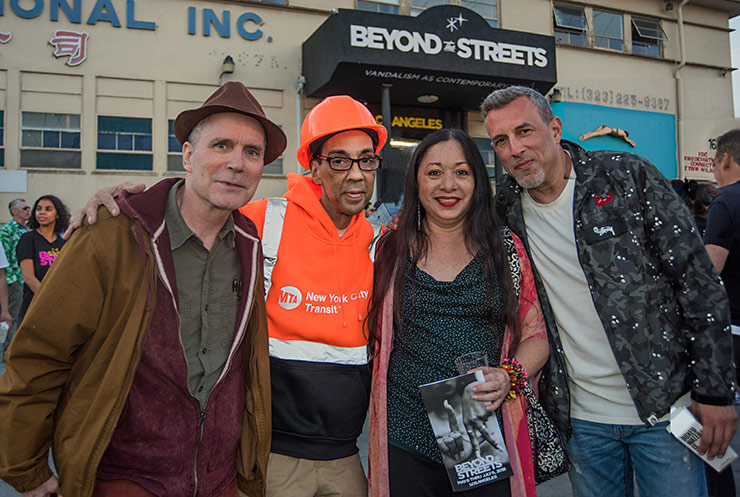
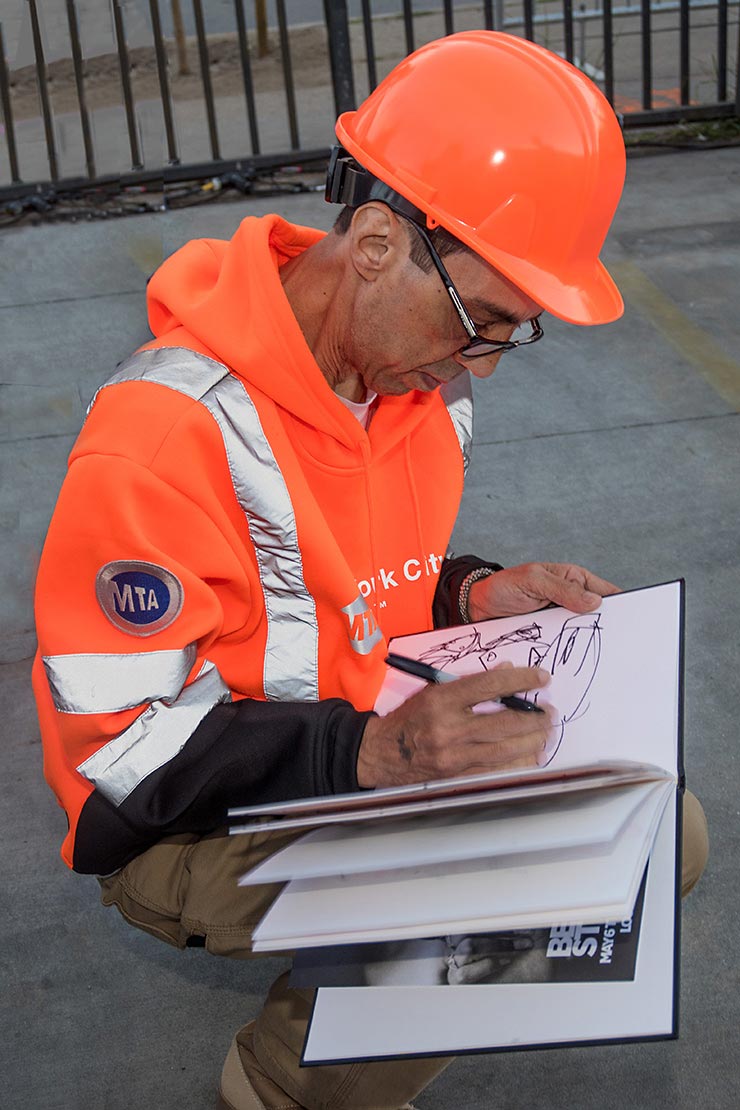
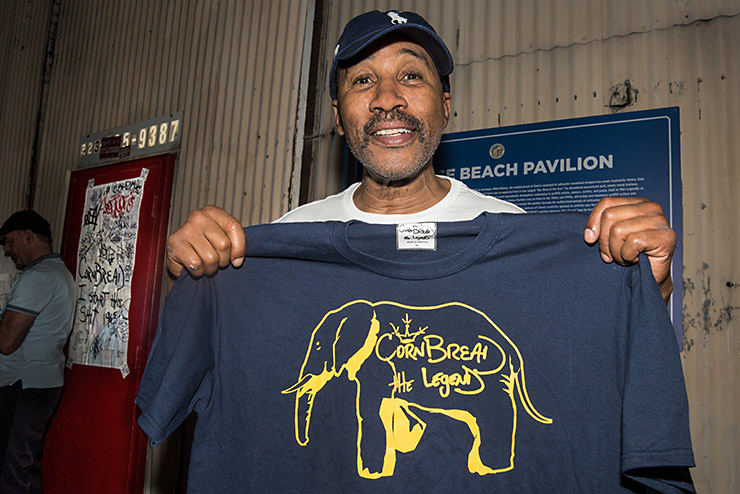
Opening night featured many of the names associated with its earliest beginnings of the New York /Philadelphia graffiti scene like Cornbread, Taki183, Futura, Lady Pink, filmmaker Charlie Ahearn, among many others, including photographer Martha Cooper, who in addition to being an artist in the show, shares these photos with BSA readers. She also extensively shares her photos for the accompanying show catalog, providing documentation from the scene that exist nowhere else.
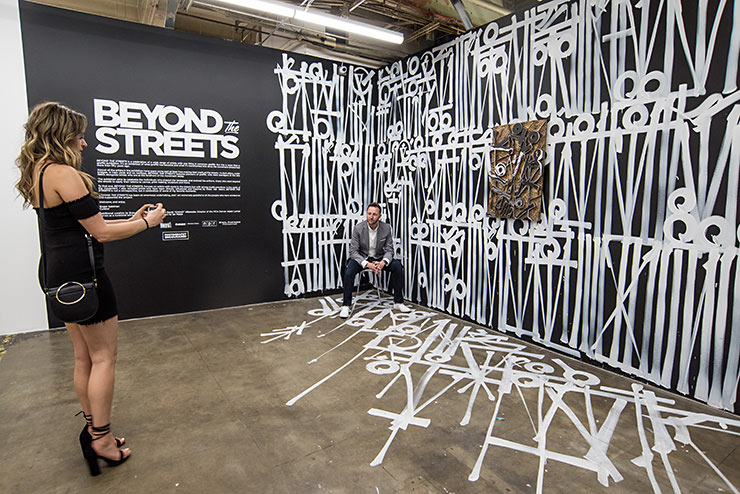
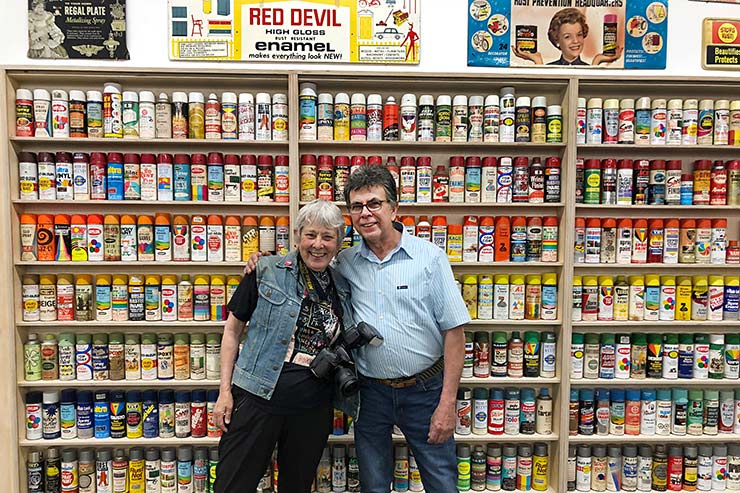
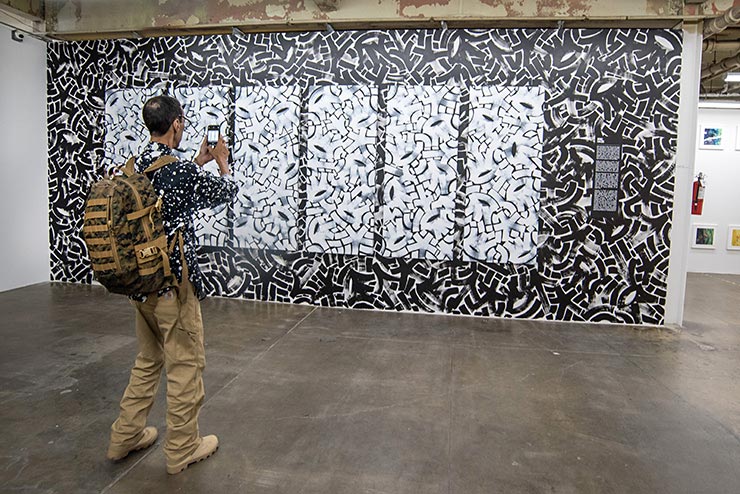
A diverse and almost overwhelming series of displays present the works in a way that can only hint at the thousands of artists who built this story, necessarily viewed through a wide lens: sculpture, photography, installations, and multi-media all join the canvasses and ephemera and Gastman’s collection of vintage paint cans. Smartly planned for the selfie generation, large pieces are presented almost as backdrop ready to be Instagrammed; a direction coming from the “Photos Encouraged” sign that is next to the wall covered with Retna’s original alphabet near the entrance.
Somewhat of a rejoinder to Art in the Streets, the eponymous graffiti and Street Art exhibition in 2011 at LA MoCA, Beyond the Streets takes a focused look at the multitudinous peoples’ art movement from the perspective of one of that first shows’ original curators, Roger Gastman. When arranging the two month exhibition that closes July 6th, Gastman says that his focus was to celebrate those with street cred, in terms of individual practice, and to combine that requirement with a respectable semblance of a studio practice.
Ultimately he looked for artists who have used their particular approach to expand the definition of art in the streets in some way. That definition by now has become quite wide and it’s also a tall order for any curator to find the common themes here and present them in a cohesive manner.
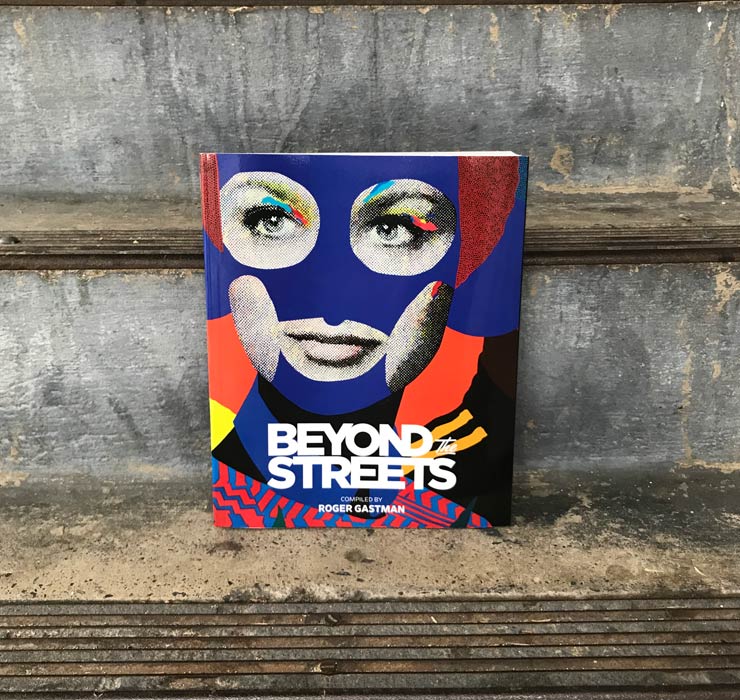
Beyond The Streets, compiled by Roger Gastman.
Both the accompanying catalog and exhibition take a welcome stance toward educating the audience in many ways, helping the viewer to decode this freewheeling graffiti and mark-making history with basic vocabulary terms, historical events, pop culture inflexion points and examination of tools of the trade all adding context. Catalog essays and interviews are incisive and enlightening, including wit, sarcasm and even the occasional admonishment – notably in the essay by author, filmmaker, and curator Sacha Jenkins, who has been documenting the graffiti scene for a least a couple of decades.
Studying the move of some artists from street practice to commercial gallery that began in earnest with early NYC train writers transitioning to canvasses in the early 1980s, Jenkins upbraids a disgruntled faction among old-school graffiti writers who he characterizes as perhaps intransigent in their stylistic evolution and unwilling to adapt with the game. Later in his essay he lambasts the overtly pleasant and narcissistic cultural newcomers who he sees as milk-toasting the scene with their adoration of pretty murals and shallow sentiments, obtusely ushering in gentrification and “leading up to hearing about how my mother’s building is going to get bulldozed for a hip residential building that has a hot tub in every apartment.” He also may be the only writer here so openly addressing race and class distinctions present during the evolution of the scene and now.
The selection of artists and writers in the book and exhibition, many of them friends and colleagues with whom Gastman has worked with in the past, offers a rewarding and accessible panoply of styles and views. With some study the visitor understands connections in a widely dispersed multi-player subculture that coalesced and continuously changed its shape and character. But even if they don’t, they still get an amazing amount of eye candy.
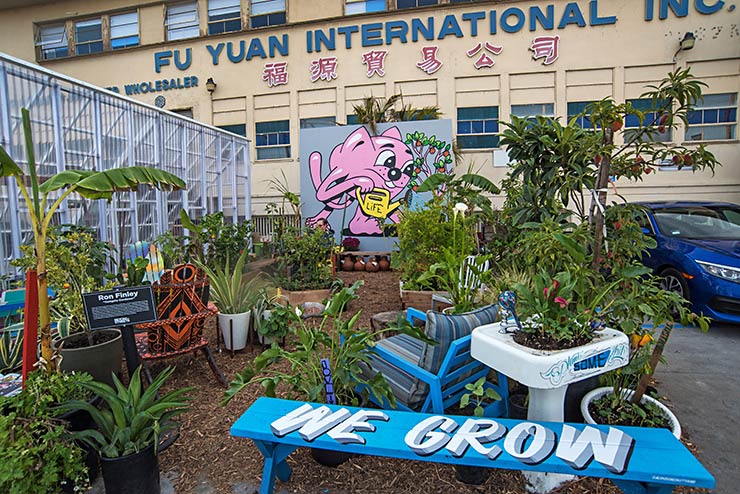
The catalog offers extensive sections like those devoted to The History of Spraypaint and Graffiti in Galleries, and offers petite exegesis on influencing factors and benchmarks that shaped the art form’s route like Mobile DJs, The ’77 NYC Blackout, the European graffiti scene and graffiti’s role in gang culture, hip-hop and hardcore music. The compilation aids and supports the fullness of a story that frankly requires many voices to tell it. Gastman even gives forum and exhibition space to activist and defiant guerilla gardener Ron Finley and the holistic urban horticultural oases that he creates in South Central LA, calling it his form of graffiti in empty lots of the city.
Martha Cooper with Taki 183. Beyond The Streets. (photo courtesy of Martha Cooper)
With insightful interviews of artists in the exhibition from talented writers like Caleb Neelon, Caroline Ryder, John Lewis, Alec Banks, Evan Pricco, John Albert, Shelly Leopold, and Gastman himself, there are enough colorful anecdotes and decisive signposts en route to help tell the stories of the artists and their individual approaches to the street.
“The artists do not share a singular style, since they are primarily united by a common element of their personal biographies – the fact that they once made their art in the streets,” says self-described novice to the Street Art / graffiti world, Adam Lerner, the Director and Chief Animator at the Museum of Contemporary Art Denver. “There are, however some threads that run through the works.”
Beyond the Streets will help visitors find some of those threads for themselves and undoubtedly they will forge their own interpretation of art in the streets.
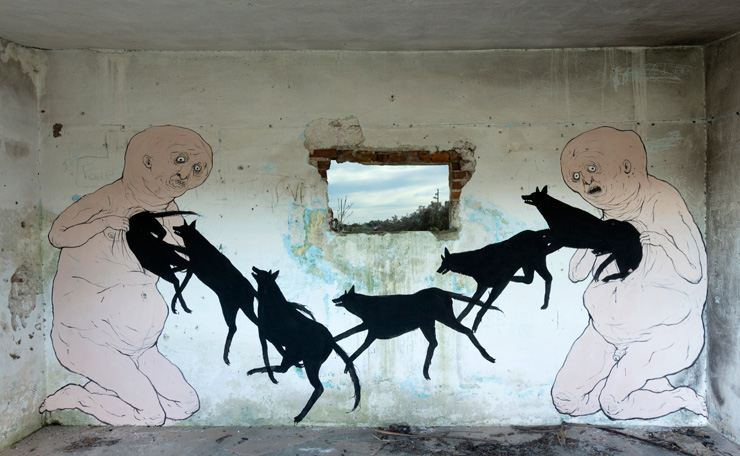
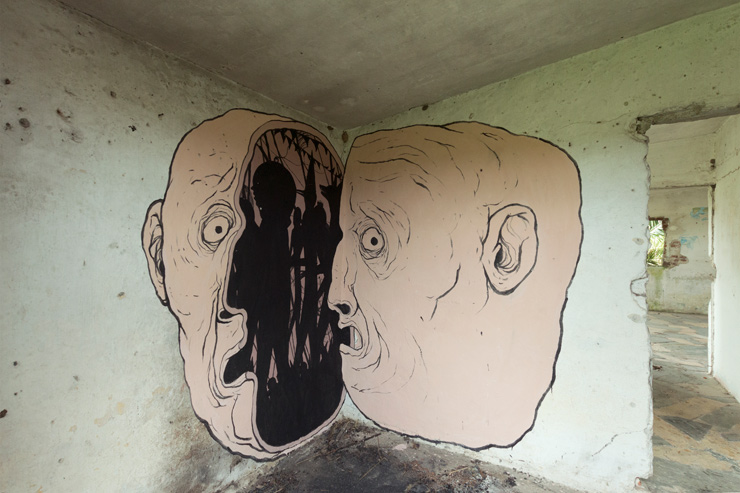
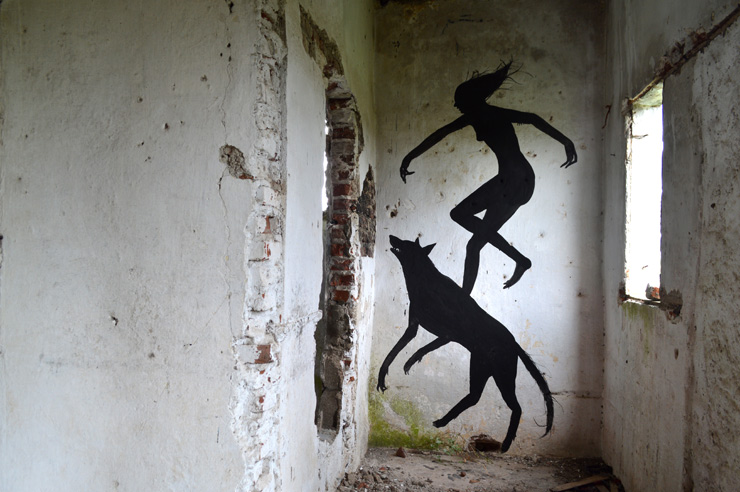
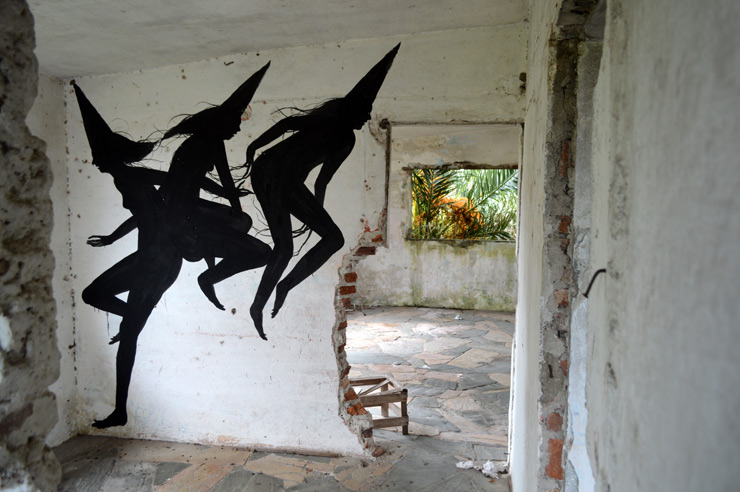
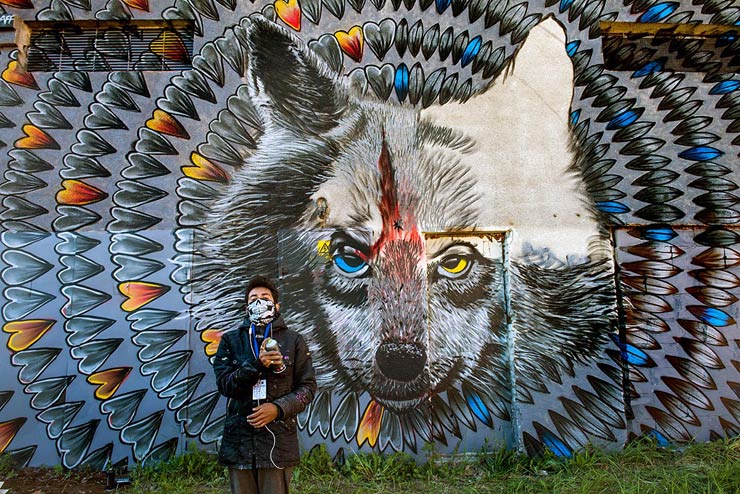
Here in this abandoned spot in Uruguay his fairies and wolves and princesses without dresses in high pointed hennin hats are running and prancing and headed for the door. A Spaniard living in Montevideo for the last five years David De La Mano says he has been working on an independent project of exploration involving neglected spaces like this one.
And when you come to visit, he’ll bring you along to discover the dilapidation – as he did recently with Italian Street Artist Nemo’s. While their somewhat unrelated individual styles have certain aspects that perplex or mystify, their combined powers are tripled here with Nemo’s dejected and tired men literally sliced open and De La Mano’s rampant and spooked animal spirits running at a gallop.
And what do these wolves represent as they burst from the chest of one and into the flesh vessel of another?
“I suppose it’s a little bit of everything, fear, emotions, ideas,” he tells us, “but also everything that we transfer from generation to generation without considering the reason that originated it.”
The Bushwick Collective street party was so crowded with people and artists it felt like an open air gallery of sights and sounds. Don’t mess with BK yo when it comes to bringing it on. Roiling, boiling, thumping, bumping and yes, humping was happening in Bushwick. We even took a Street Art tour since there appears to be one every two blocks right now – and we learned a number of new things too.
Meanwhile, the new murals and independent organic unauthorized pieces are popping like your eyes watching a Nicki Minaj video. Oh no she didn’t. Oh yes, she did!
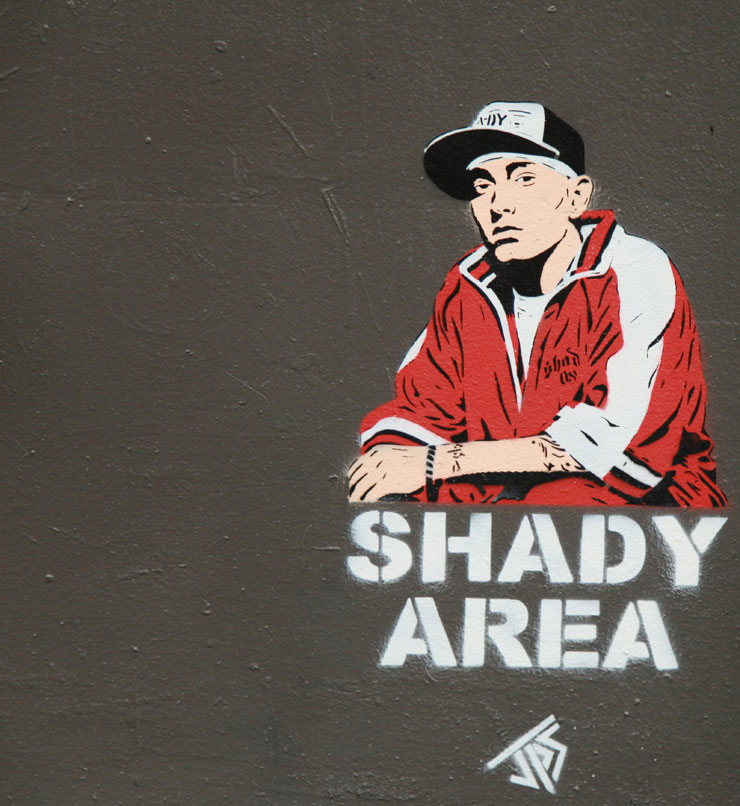
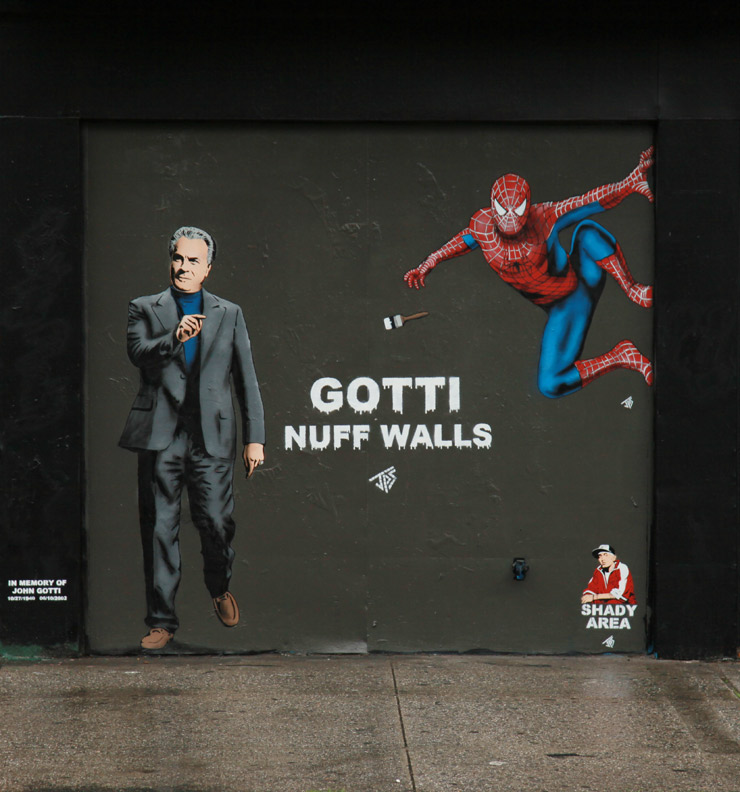
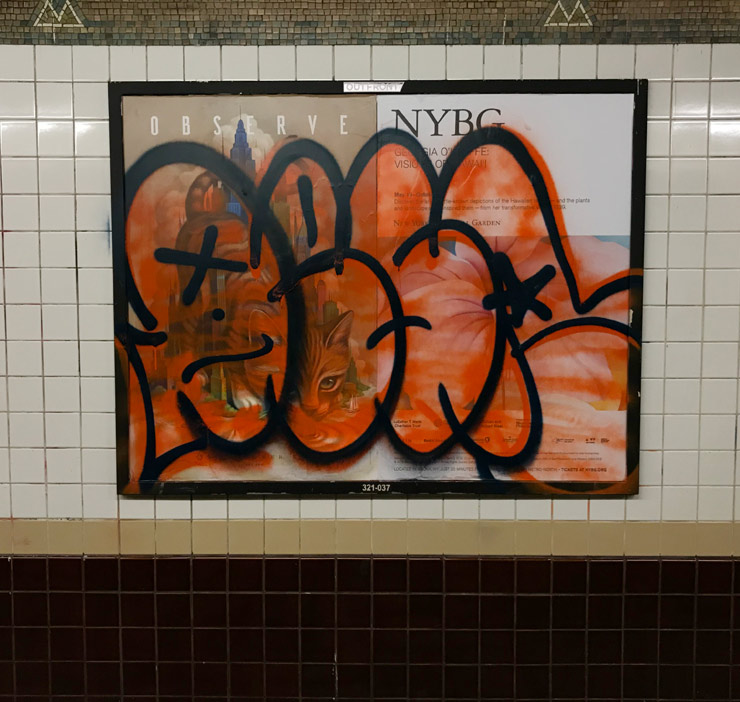
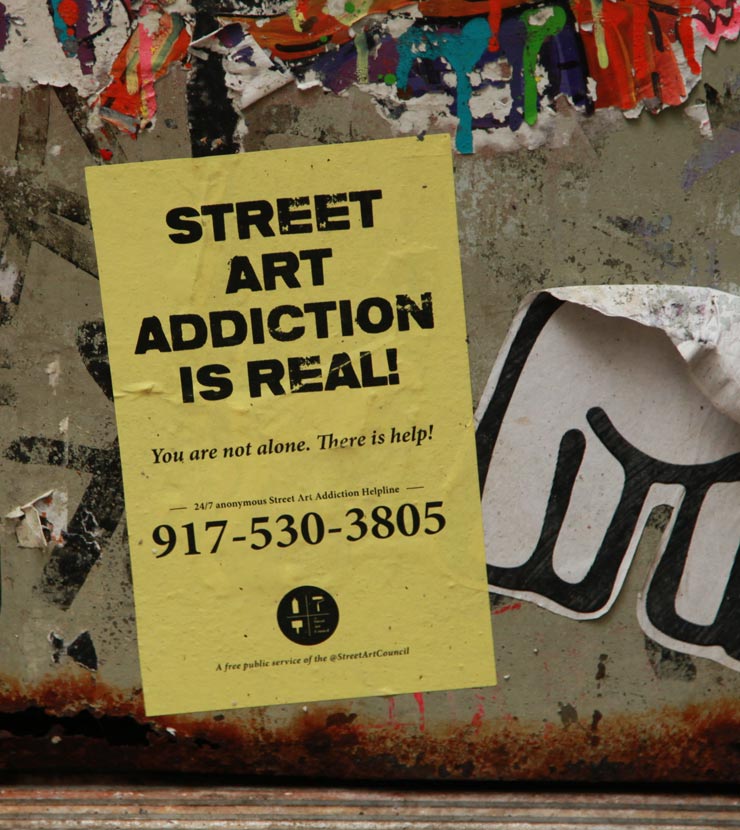
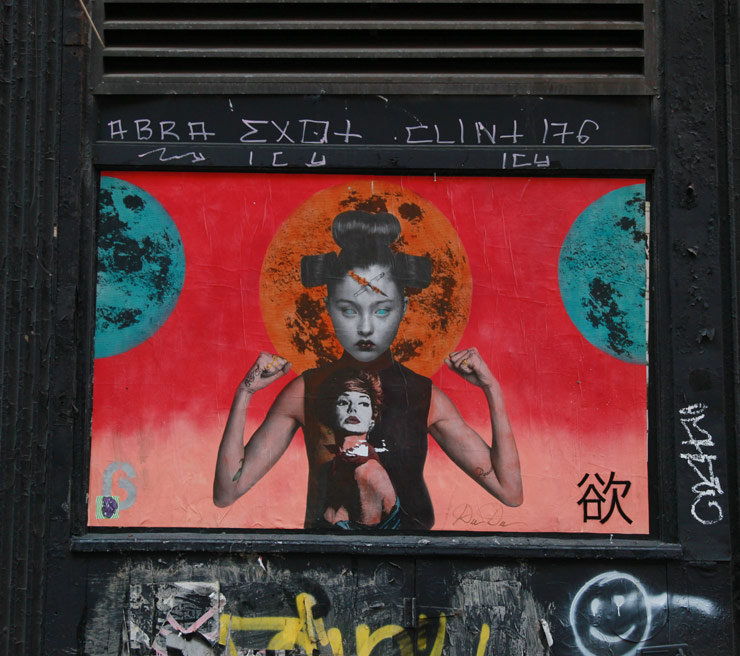
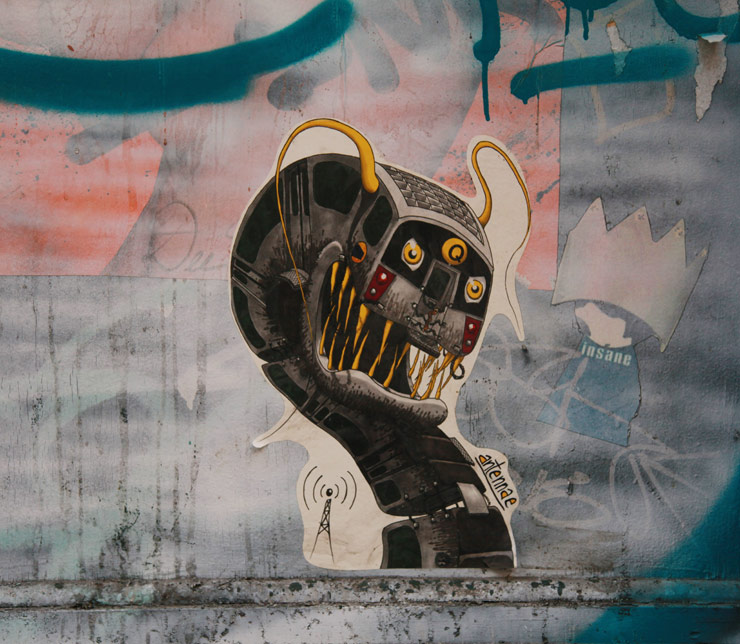
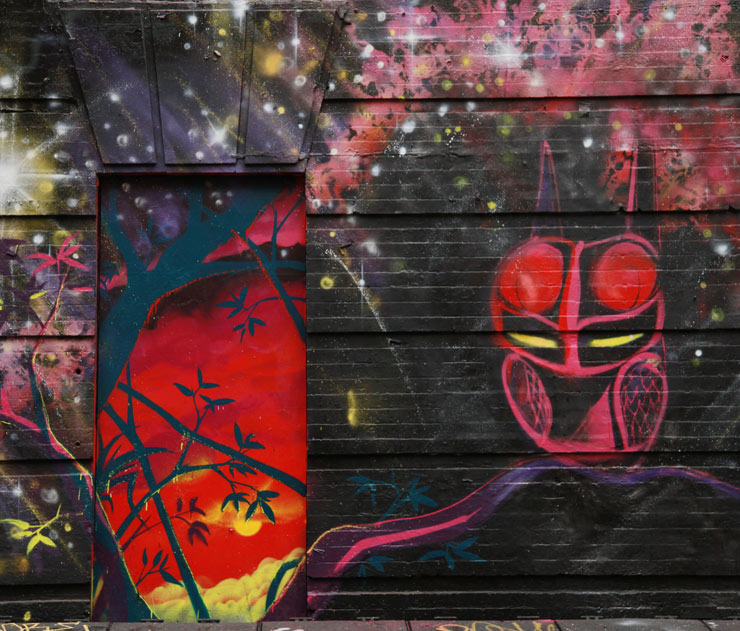
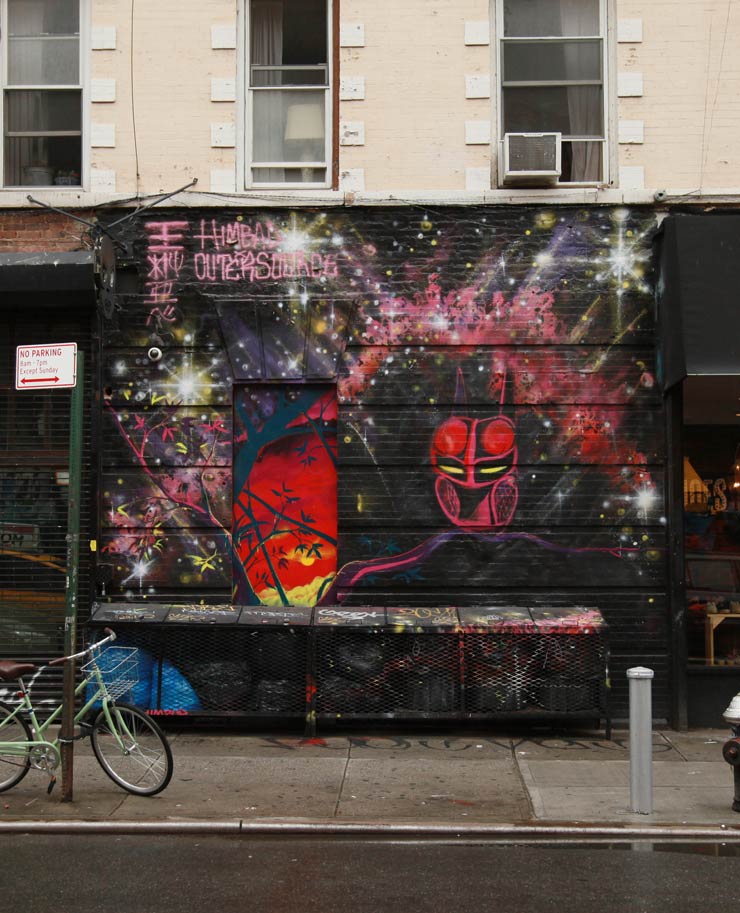
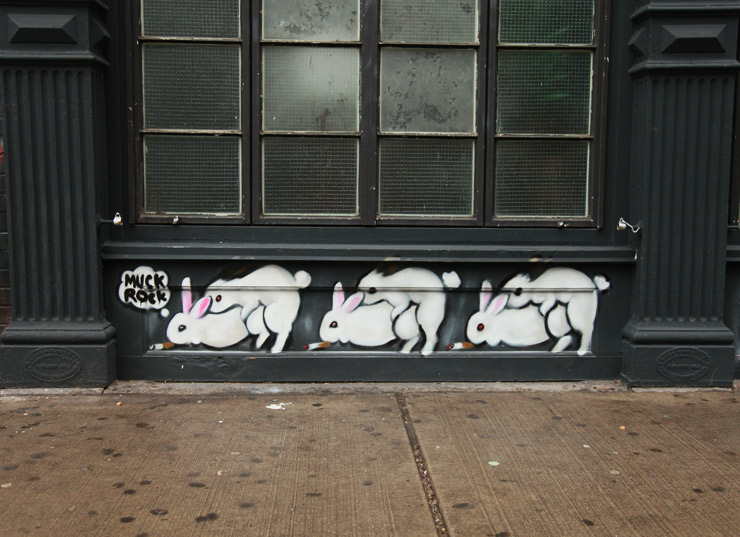
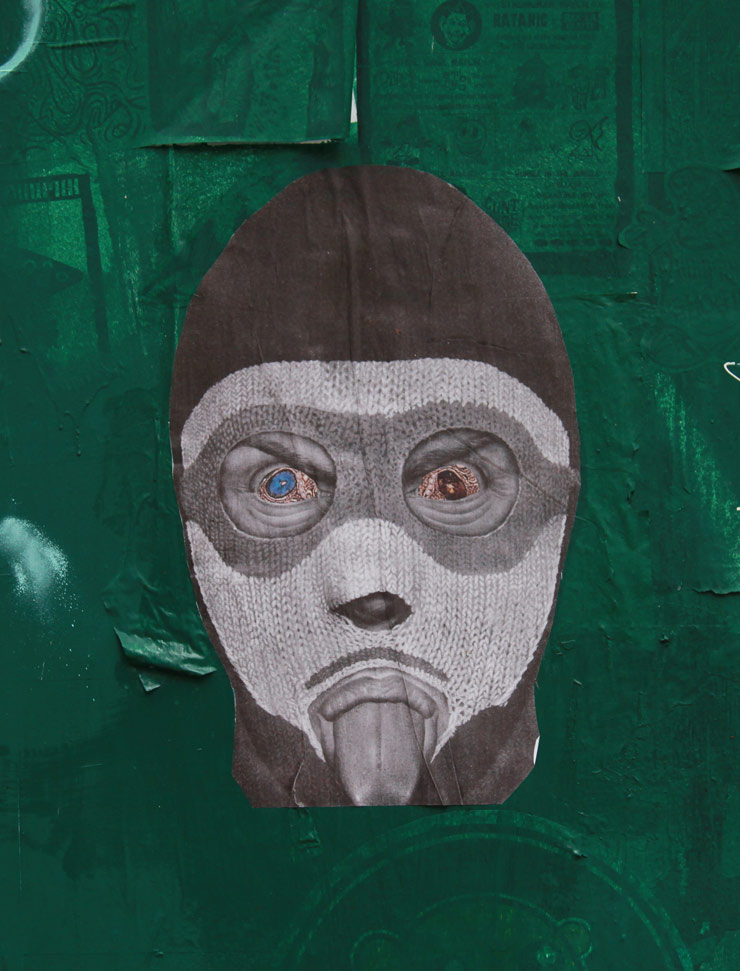
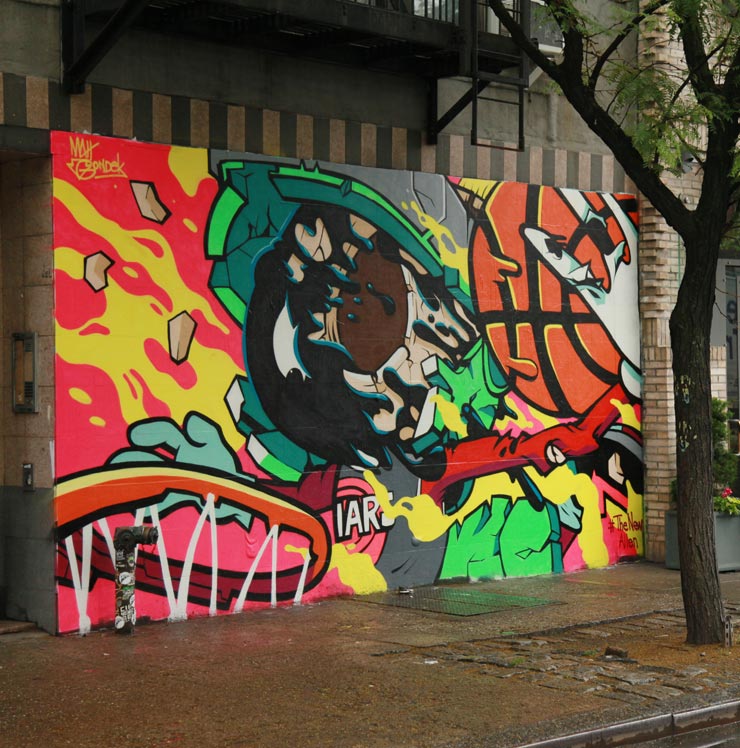
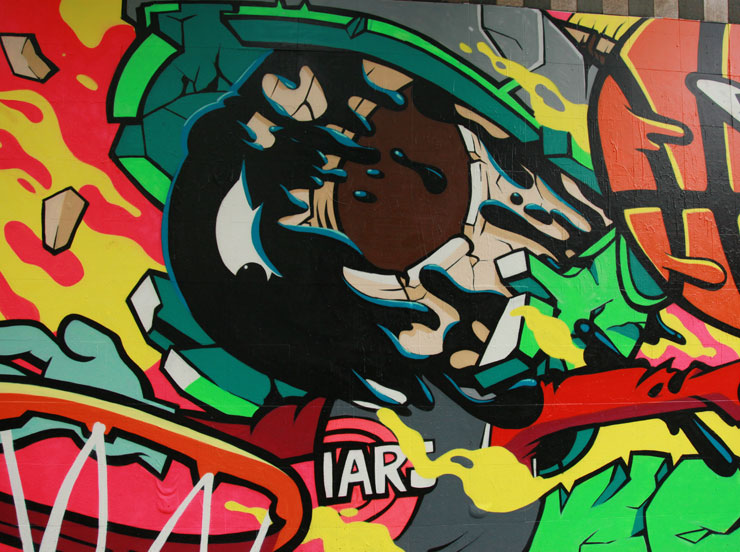
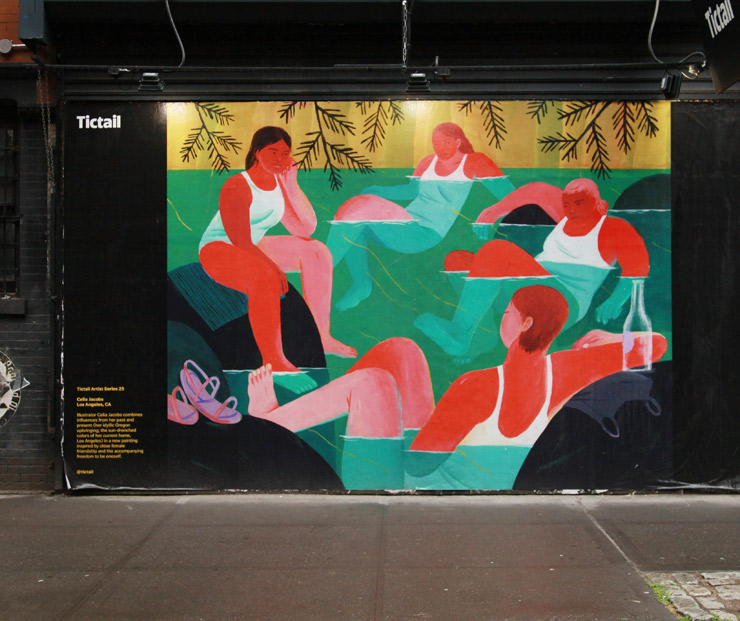
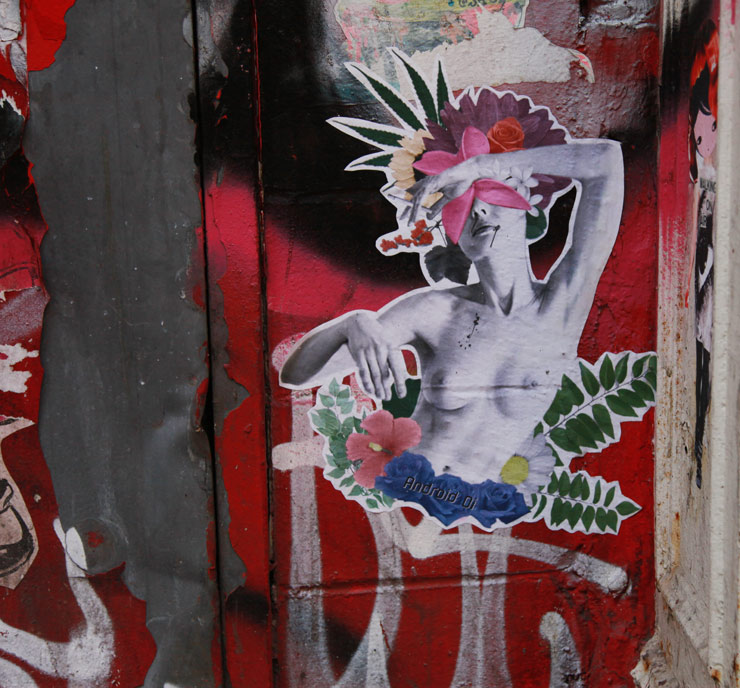
Here’s our weekly interview with the streets, this week featuring Alabania, Android Oi, Antennae, Bebar, Below Key, Bifido, Celia Jacobs, City Kitty, Dee Dee, Gitler, Gondek, Himbad, Invader, Jacinta, JPS, Muck Rock, Quizi, Street Art Council, Tirana, and Who is Dirk?
Bifido created this new work in Albania for the Tirana Mural Fest, entitled “Girls Just Wanna Have Fun.”
He explains:
“This work should have been called “self portrait”, as it express how I’m feeling in this moment at the sight of the world. Working, talking, scoping, and breathing Tirana’s atmosphere I really realized for the very first time how it feels to be a woman caught in the grips of this male chauvinist society, to be a woman physically and mentally oppressed by men. As the work progressed, the sense of it changed and revealed itself to me. Now that I am back home in Italy, I’m more aware of something that makes me feel heartbroken. I’m hoping one day something will change.”
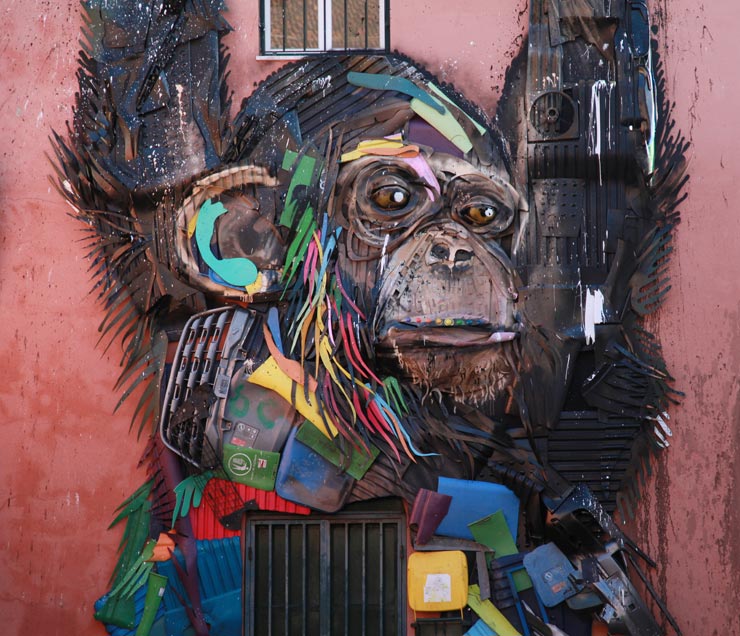
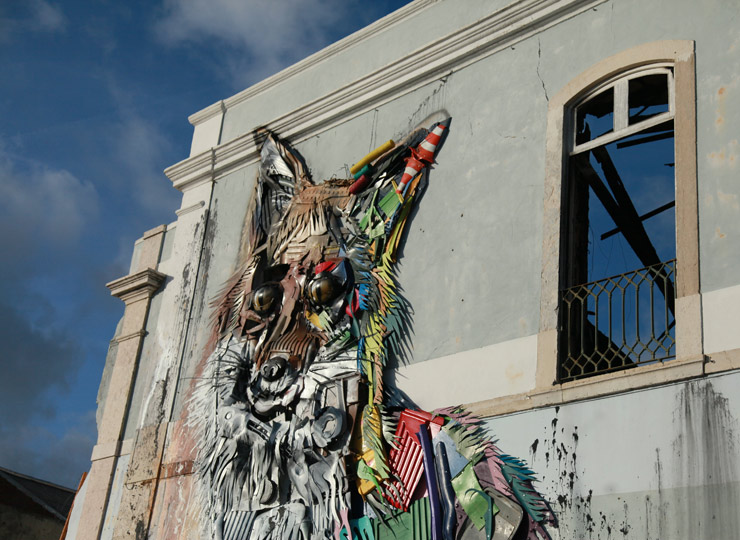
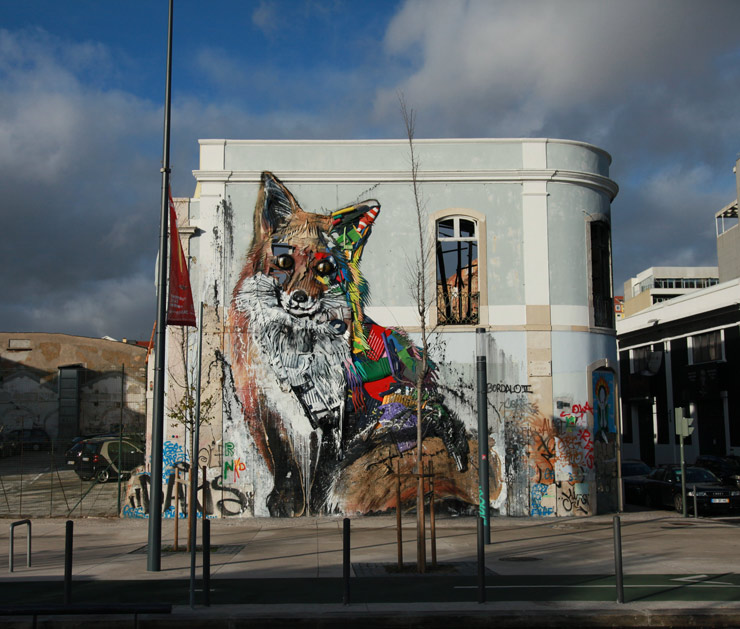
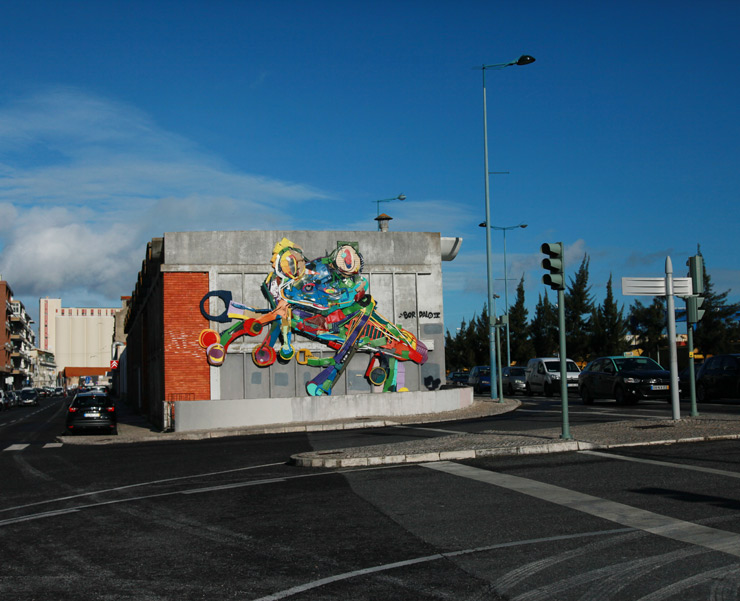
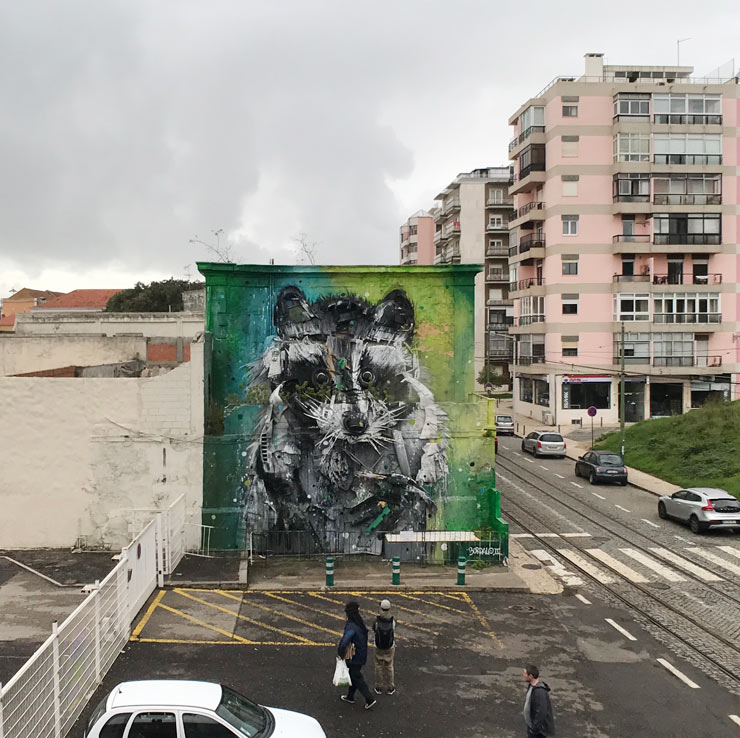
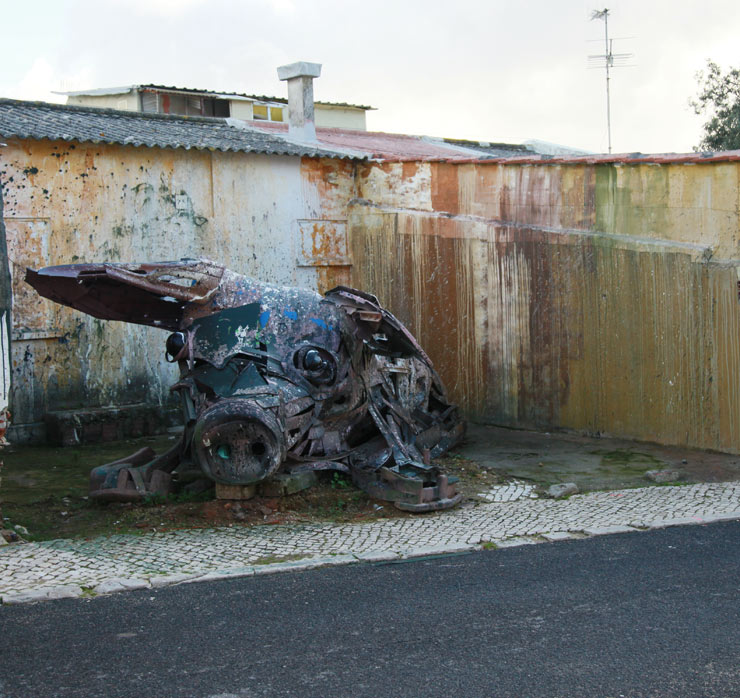
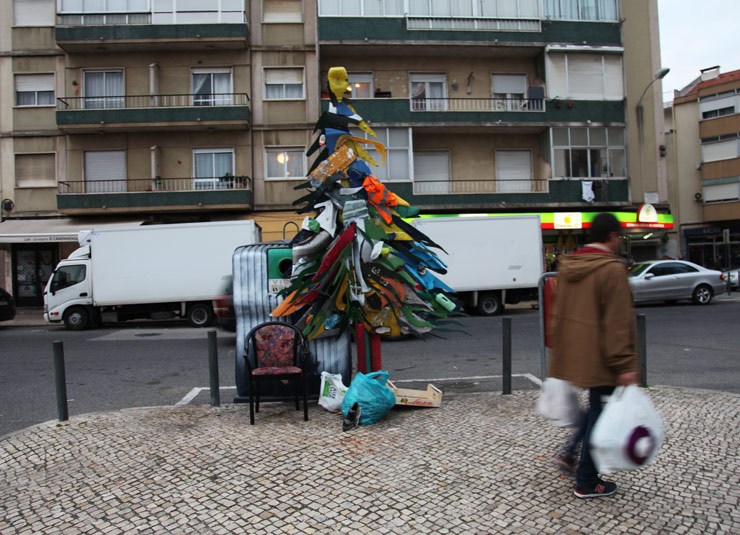
Just as we started 2018 we had the fortune to spend one week in the enchanting city of Lisbon, Portugal as ambassadors for Urban Nation Museum For Urban Contemporary Art (UN). Lisbon is home to some great Street Art and graffiti and some striking figures on the international scene like Vhils and Bordalo II and we spent some hair raising and fun rides with the latter in his small car as he flew around corners and trash flew around in the back seat.
Of course there was trash in the back seat! Bordalo II has created a spectacular practice of creating street works from it that shock passersby with his ingenuity – while raising our collective consciousness about our responsibility to the earth.
So we thought you may like to see a collection of them together today. While combing the narrow, winding and steep streets of Lisbon we made many artistic discoveries, large and small, of the prolific and magnificent urban art expressions throughout the port town.
A number of deliciously trashy sculptures of Bordallo II had just appeared all over the city in the previous months to highlight his solo exhibition that took place in November. Others have been installed on the streets for a while and one in particular was specifically made the eve of Christmas…not so much as a celebration but as a commentary on the inordinate waste that follows, once the food is eaten, the libations had and the presents opened.
Now BSA is heading to Tahiti to participate on the 5th anniversary of ONO’U Tahiti and we’ll have the pleasure of spending a few days with Bordalo II again! Stay tuned to see what trouble he and Pixel can get into.
We published two in-depth Lisbon accounts from that visit trip HERE and HERE.
Our weekly focus on the moving image and art in the streets. And other oddities.
Now screening :
1. “The US Tapes” with Fatheat and TransOne
2. Said Dokins: Stories of a Word
3. INO: Lost in Greece
4. Low Bros x Viva Con Agua
BSA Special Feature: The US Tapes with Fatheat and TransOne
“Listen, my only request…. When you’re done doing your thing, do an Italian flag with my daughter’s name on it,” says a guy who is shouting up from the street to the roof where two Hungarian graff writers are preparing to hit a wall with a giant rat in Jersey. That rat looks fantastic as it basks in the blinking glow of the marquee for Vinny Italian Gourmet on the streets in the Newark night below.
That scene alone can stand as their American iconic moment for the US Tapes, but Fatheat and TransOne documented a number of golden moments on their trip this winter to New York, Wynwood, LA, and Las Vegas. Travel with them as they try to square the television mythology of modern America with the one they are encountering in all its ridiculous free-wheeling self satisfied unreflective emotional consumerist funkified freedom*. Standby for sonic blasts from the cultural pulp soundbook and prepare for a celebrity visit.
Slyly they observe and sample and taste and catalogue the insights by traversing the main stage and the margins, smartly not taking it too seriously, finding plenty of places for wide-eyed wonder and wiseguy sarcasm. Steeped in graffiti history with mad skillz themselves, this is all an adventure. Generous of heart, they also share it with you.
Ready for your Friday road trip?
Said Dokins: Stories of a Word
You saw great shots and heard the story this week on BSA :
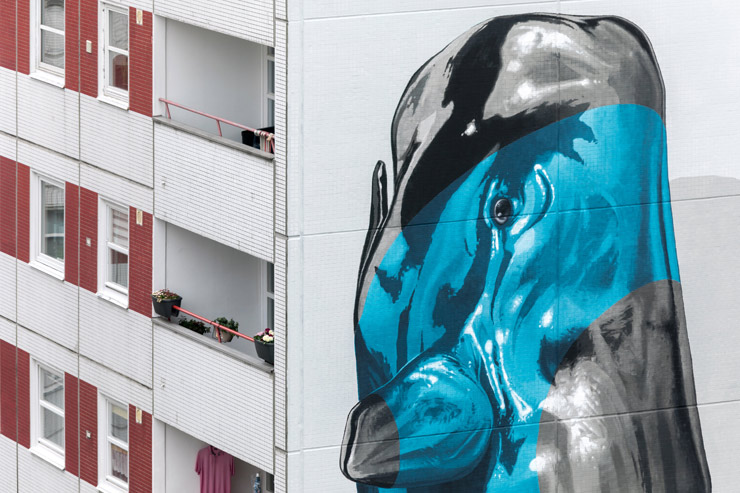
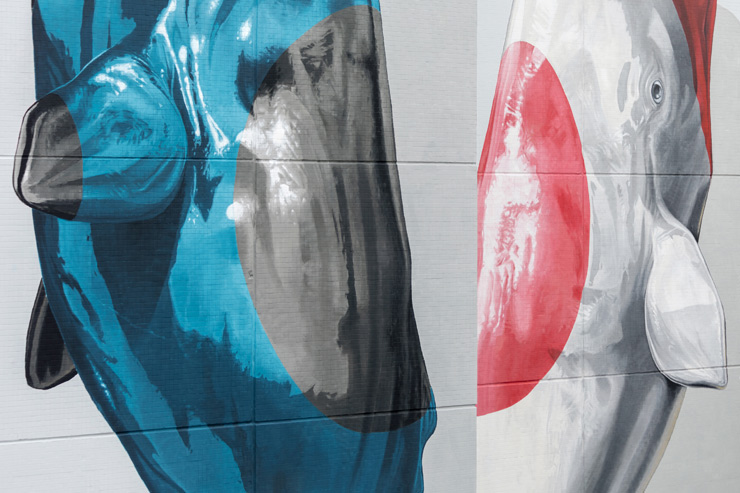
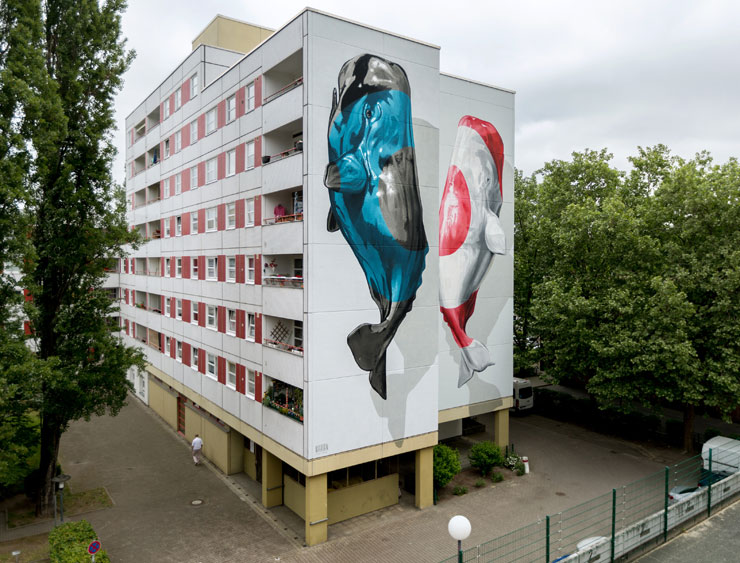
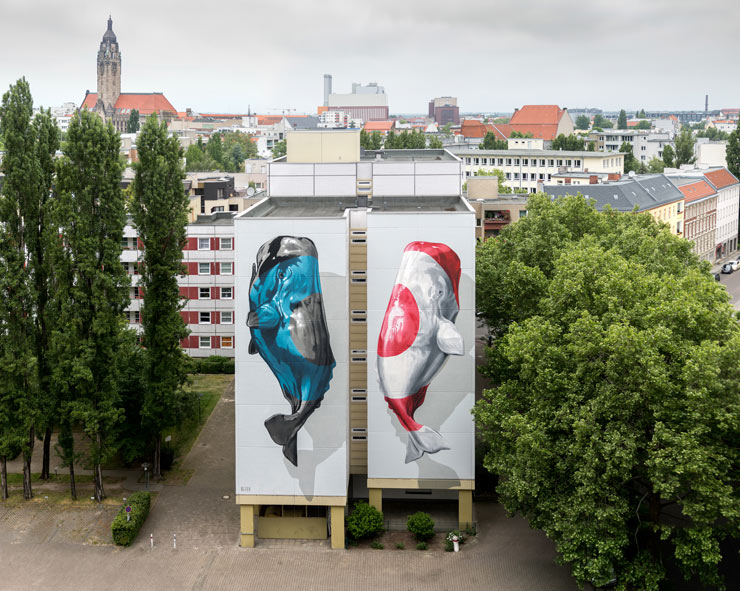
Nevercrew is unifying in Berlin with their new “One Wall” project with Urban Nation. The immense marine mammals depicted are not typical in their upright position in this reflective scene. Are they flying? Art they floating?
The artists tell us that they decided on the configuration based on the building walls themselves and are surprised by the opposite yet complementary pose the new mural creates.
Ironically by turning the subjects 90 degrees the scene is more disturbing: you may become more aware of the powerful forces of man and nature that are upending these magnificient beasts and appreciate their fragility.
“It is about common responsibilities and aims despite distances and differences: towards a lost balance between humankind and nature and with human nature itself,” Christian and Pablo say in a statement for this powerful painted piece of unity called “Reification” that suddenly makes it all real.
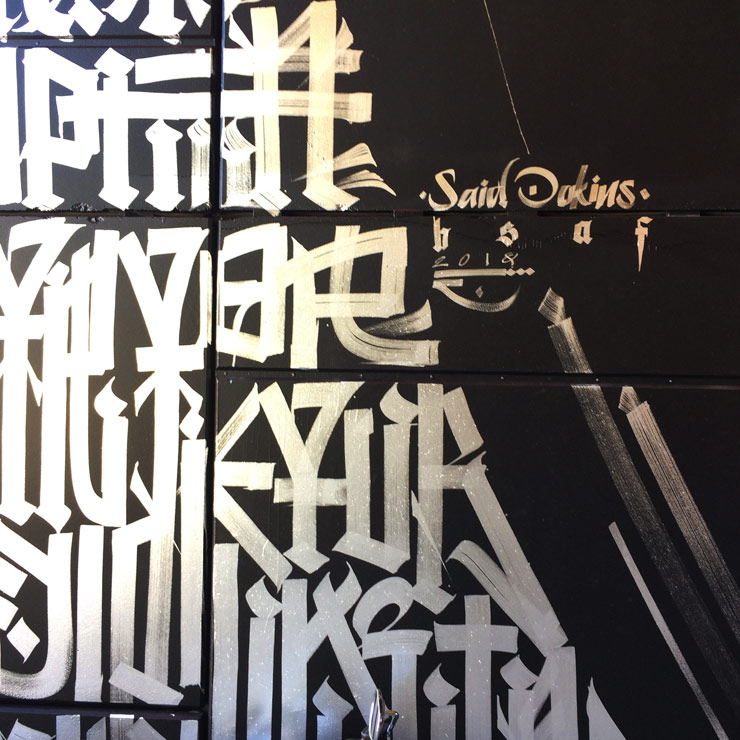
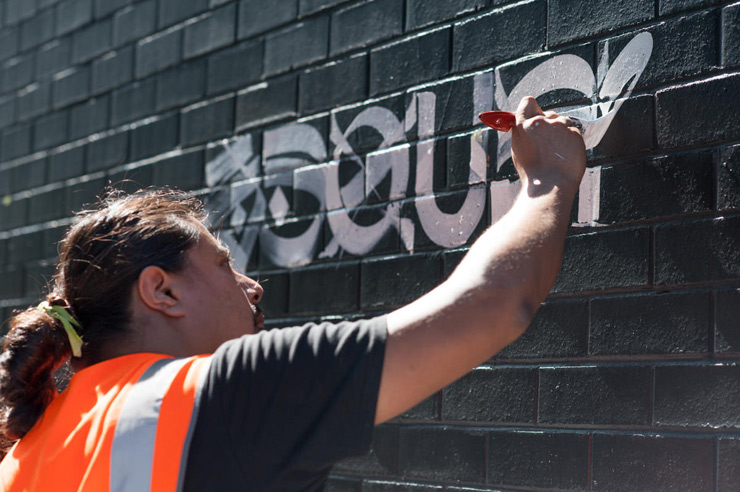
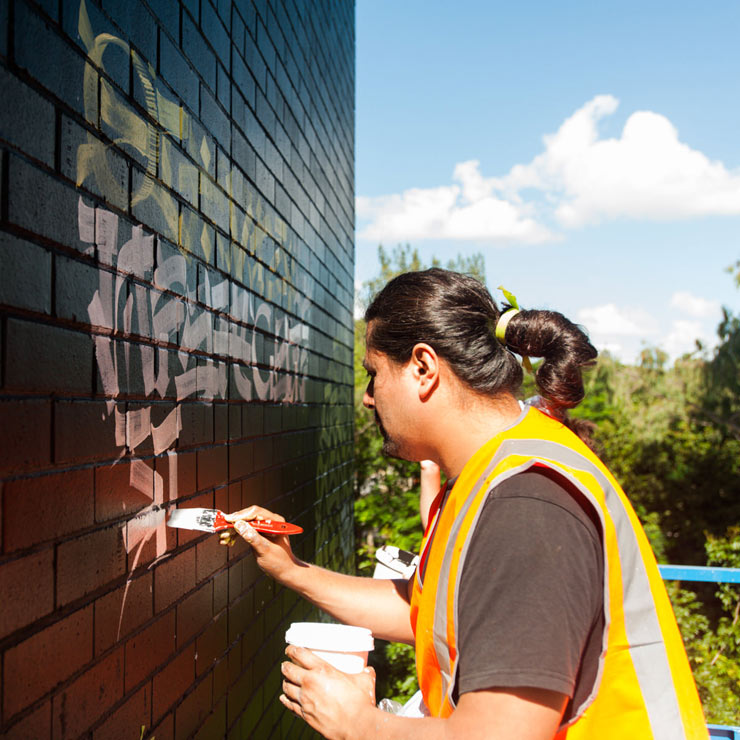
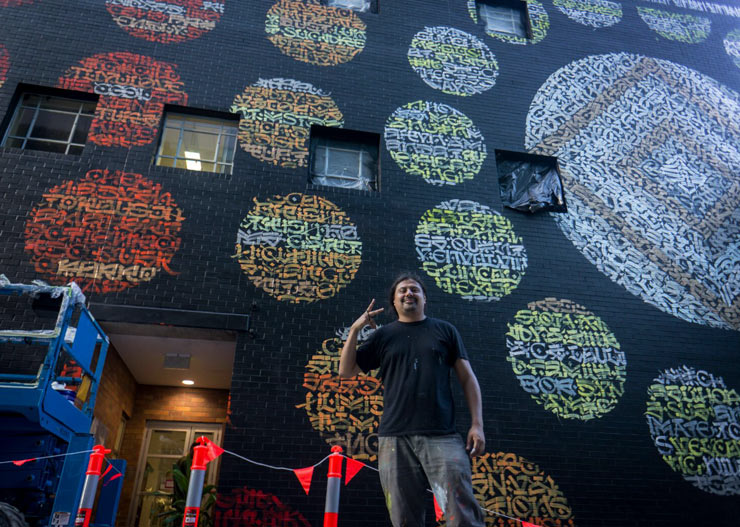
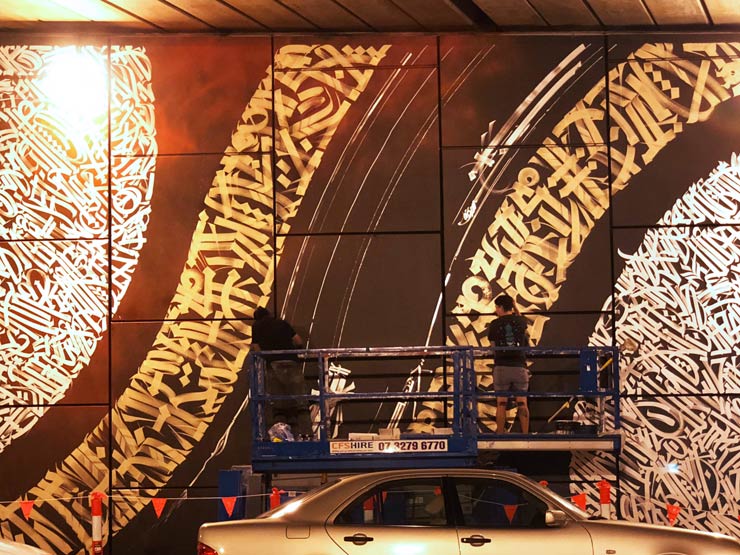
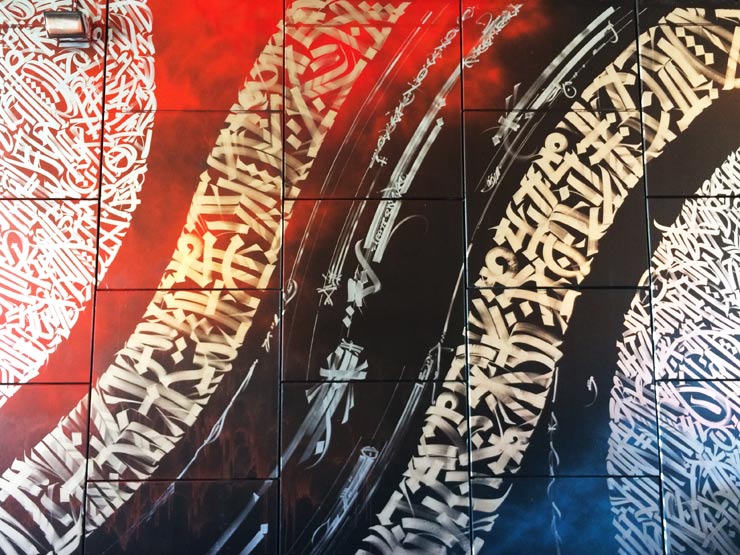
“This history represents the aboriginal ghostly inscription that circulates between the past and the present, says Mexican Street Artist and muralist Said Dokins as he describes his two new murals in Queensland, Australia.
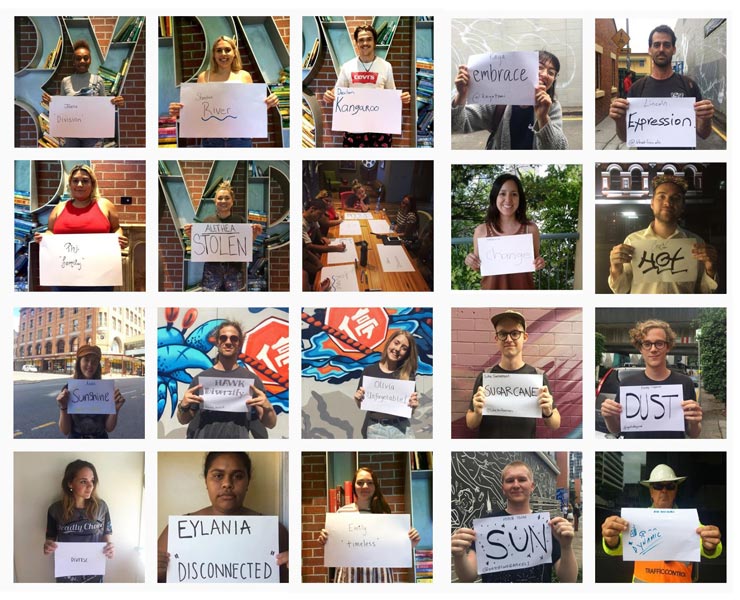
As we slowly wake to the idea of decolonizing our institutions, Dokins says he is including the names and stories of people he met in Brisbane to create a collective history, “where the words that describe nature and cultural diversity are intertwined with colonial and globalization references.”
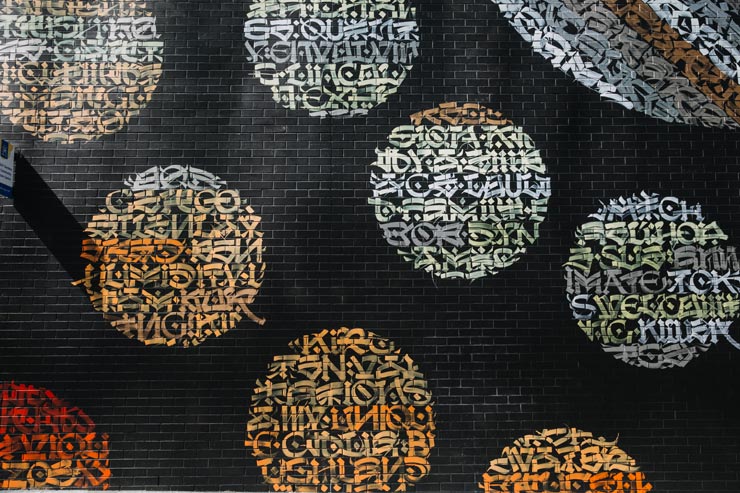
Said Dokins says he asked people to share with him a story of Queensland with a single word. “Stories Of A Word” Queensland University of Technology. Brisbane, Australia. May 2018. (graphic courtesy of the artist).
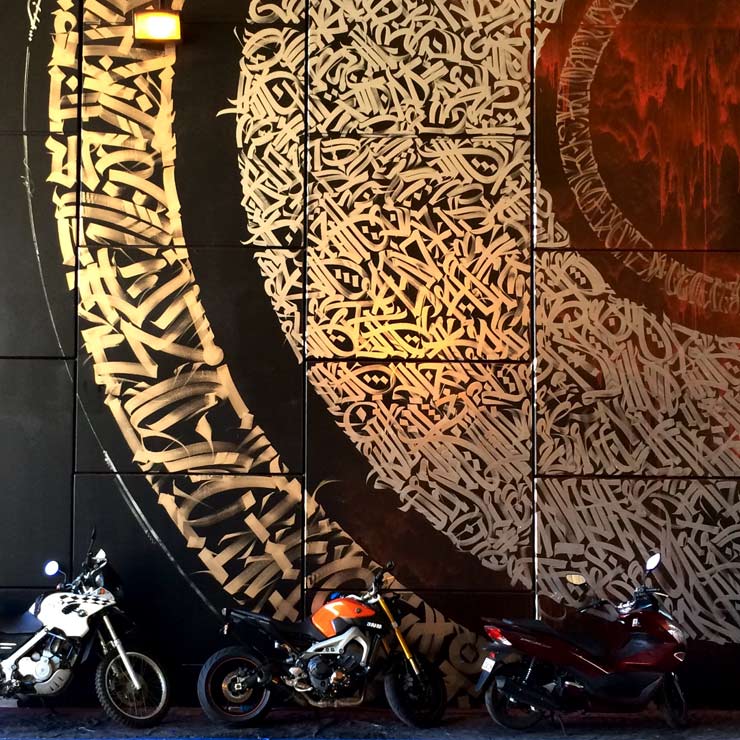
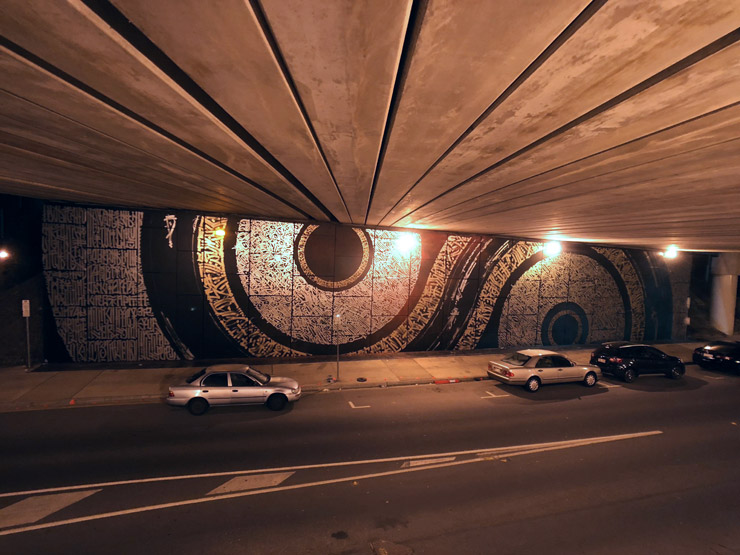
The new Dokins murals are compositions comprise of his unique calligraphic lettering style, sparkling and ornately street savvy as their curvilinear movement and medallion shapes catch your attention in metal and black. Part of the ‘Brisbane Street Art Festival’ (BSAF)taking place in April and May, Dokins joined other international artists such as Kenji Chai y Cloakwork from Malaysia, Tuyuloveme from Indonesia, Bao Ho from Hong Kong, Rosie Wood from England, and Gris One from Colombia as well as local artists like Sofles, Gus Eagleton, Fuzeillear to create 50+ public facing murals across neighboring towns with a variety of themes and styles.
Supported by real estate and civic/business interests along with art organizations – Said tells us that the festival of music and arts also worked very close to Alethea Beetson, director of Digi Youth Arts, an organization dedicated to protect aboriginal cultures.
In his research many with the goal of recognizing the decimated, destroyed, and marginalized aboriginal cultures of Australia, Dokins says he used an exercise of participatory art. By speaking with and interviewing local people he found key words and specific phrases. Eventually he asked participants to share with him a story of Queensland with a single word.
Xi’an is a large city of about 7 million, the capital of Shaanxi Province in central China, often called the birthplace of Chinese civilization. It’s also been sprouting Street Art in recent years.
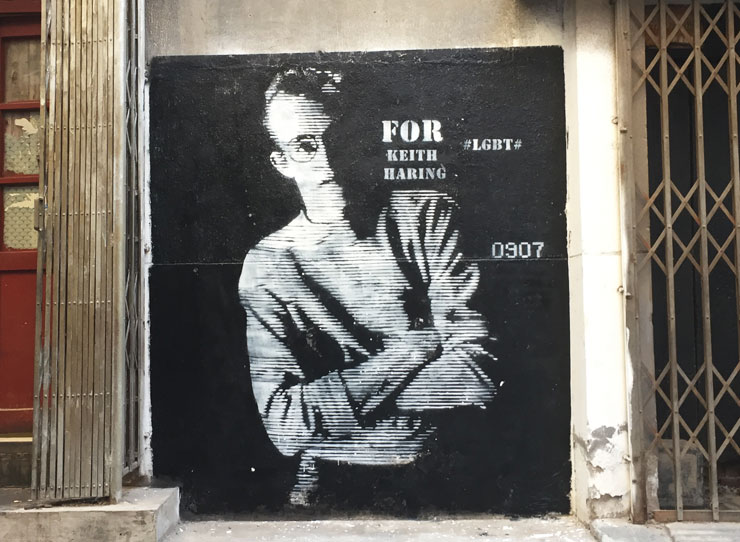
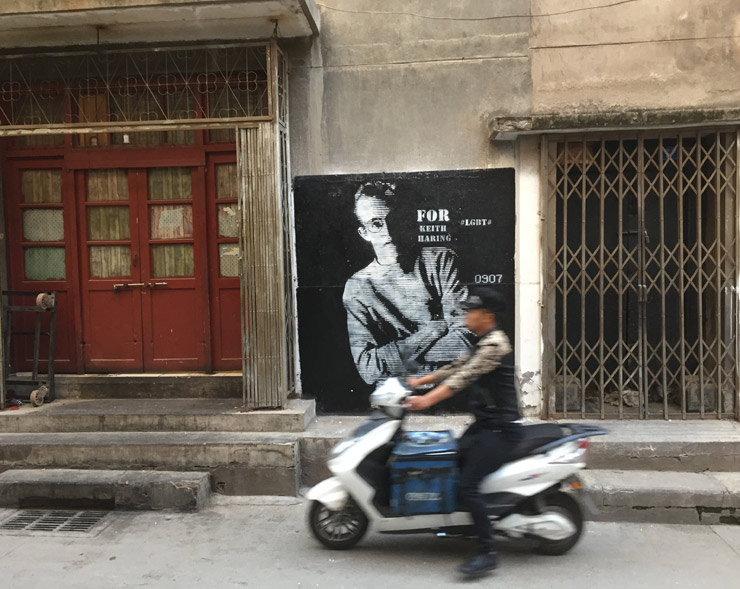
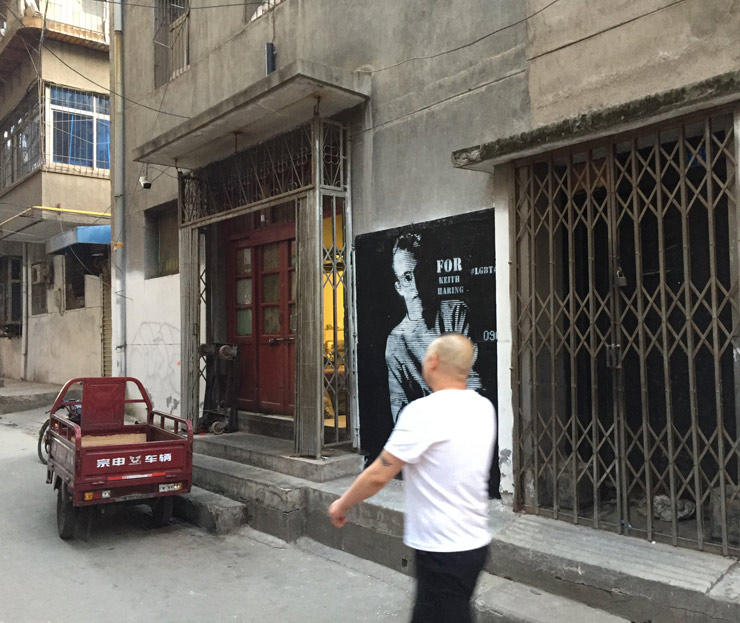
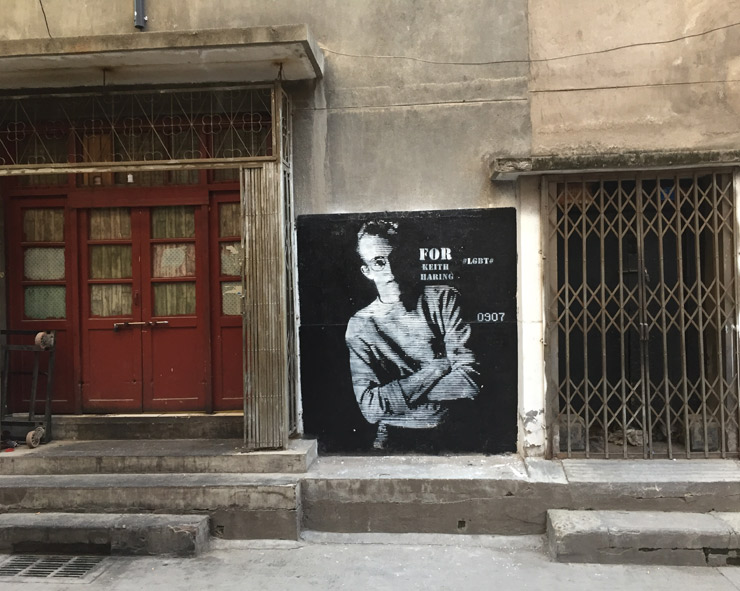
According to some tourist sites it is a city with a nascent Street Art and graffiti scene where there are more graffiti writers than in Beijing, Shanghai and Hangzhou (Absolute China Tours). So it is notable when Keith Haring is honored on a wall here where it is unlikely many know his name or his significance as an early practitioner of the freewheeling public art interventions that came to characterize a movement of artists on the streets.
Street Artist 0907 tells us his new piece on this Xi’an street is called “Hero”.
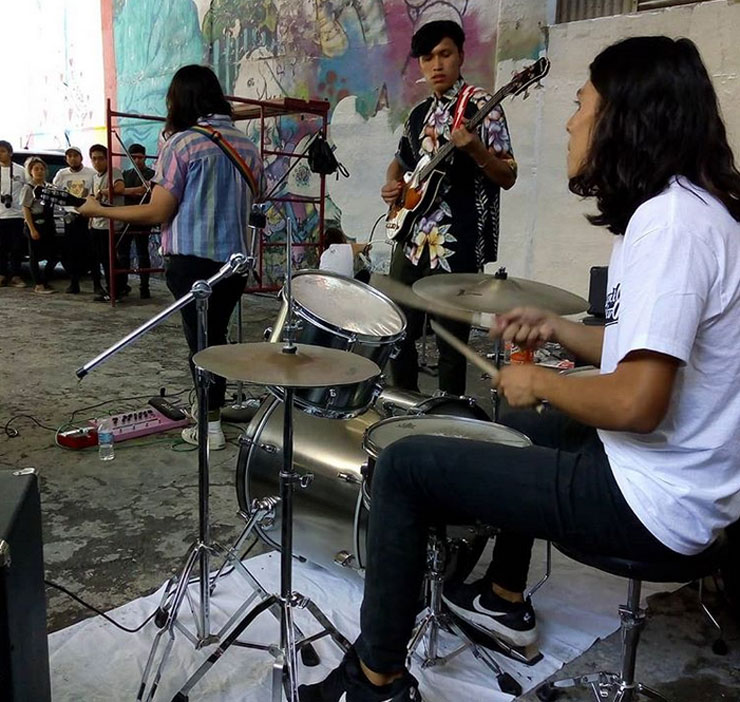
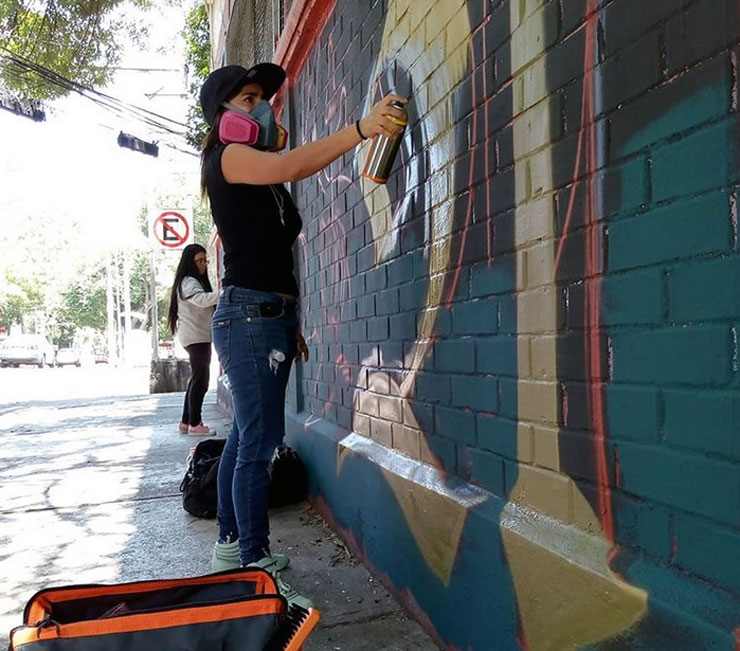
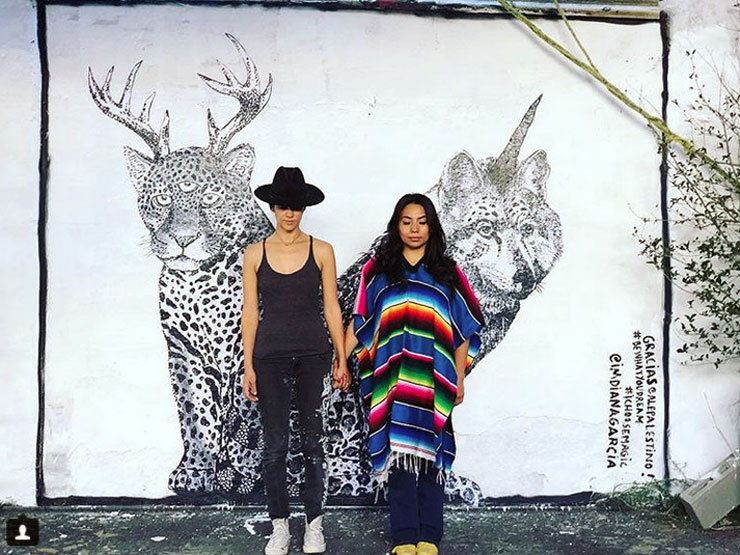
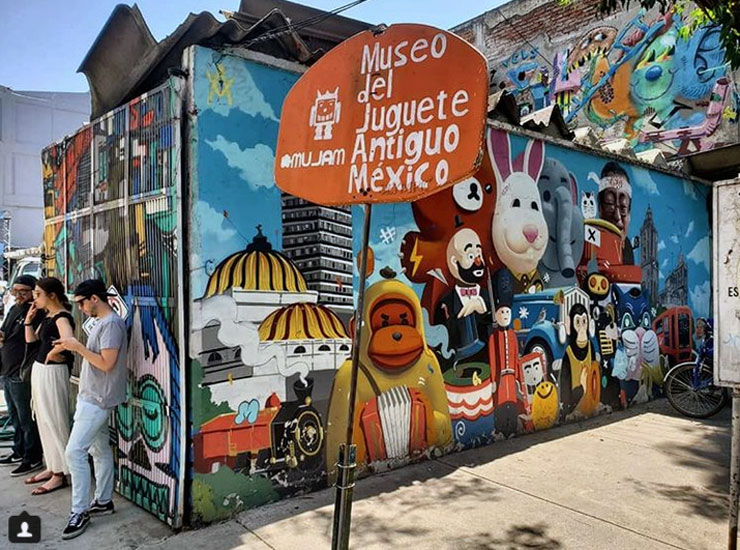
BSA is happy to again be working with the Mexico City based museum MUJAM and Director Roberto Shimizu to bring you news of the Street Art and mural scene from a Latin America perspective.
This time its for “Barrio Vivo” a broad new initiative that is focused on the rapidly evolving Street Art from the ‘Always On’ generation of Gen Z-Late Millenial street painters who are influenced as much by the Internet Buffet as traditional and folkloric imagery.
For the ambitious and welcoming visionary Shimizu its an outstanding opportunity to secure and provide walls in the surrounding neighborhood called Distrito Doctores for a concentration of new talents from all over Latin America.
During the open submission period MUJAM received more than 300 portfolios to review from across the Lingua Latina; Brazil, Ecuador, Colombia, Peru, Bolivia, Chile,Uruguay, Honduras, Panamá and Guatemala, every state of Mexico, many artists along the US/Mexican border (Tijuana, New Mexico, Mexicali, Monterrey.) Not surprisingly there were a few from Portugal, France, even Germany. The vast overview has given major insights, he says.
Screenshot of the music schedule a the museum parking lot for “Barrio Vivo”
“ ‘Barrio Vivo’ is a dream come true,” Shimizu tells us as we talk about the 10 day festival that just got underway and that carries through this week until final festivities on Saturday. “As you know, for a number of years I have been very interested in the new generations of street artists and I think this could be the most important gathering of this type.”
While the opening days have been a big undertaking with three dozen or so artists, walls, paint, scaffolding, directions, permissions, and communications, ‘Barrio Vivo’ is taking on its own sense of community with so many countries who share language and culture all collaborating. Shimizu also knows how to create a welcoming environment – day long music programs also help to keep a buzzing congeniality at play.
“More than 40 upcoming emerging high quality artists are painting all around the Doctores neighborhood,” he says. “Our purpose is to give them the elemental tools and platforms to explore their work and creative processes. It is also very important for every artist to have the responsibility and the seriousness a festival offers.”
He also knows that there is no way to control everything, but those are basic tenets of art in the streets anyway. “Because you’re painting next to other great talents and your work will be in the streets where even the most amazing pieces could be vandalized.”
And what is his take on the newly minted “Barrio Vivo”?
“As the curator of the festival I have chosen each one of the participants,” he says as he shares some observations. “The styles are totally mixed and it is very interesting how this new generation are in constant evolution and most of them have also many other talents like music, dance, performance and installation.”
Some clues perhaps, to a fuller cultural dialogue that is taking root in Street Art as it evolves forward.
Welcome to Images of the Week yo! Psychotic weather as usual here – yesterday was so hot and humid Anna Wintour‘s face was able to crack a smile, or so we hear. Or maybe she was just thinking of the Harvey Weinstein perp walk on Friday.
Something that will make you smile this week? Manhattanhenge! May 29 at 8:13 p.m. if you want to plan. For those of you who are math challenged, that’s like Tuesday dude.
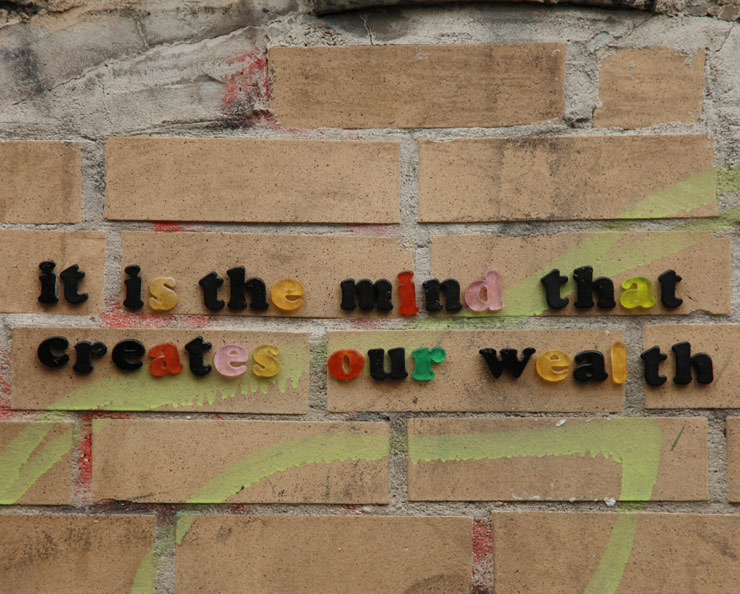
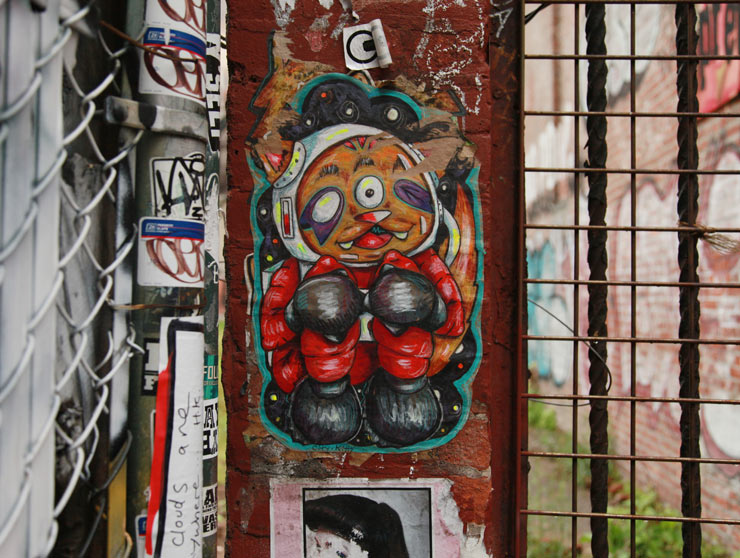
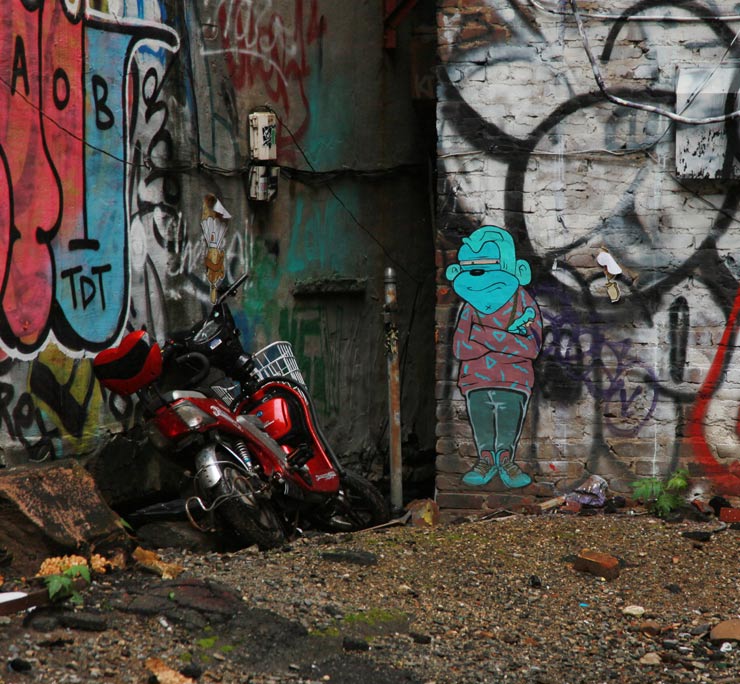
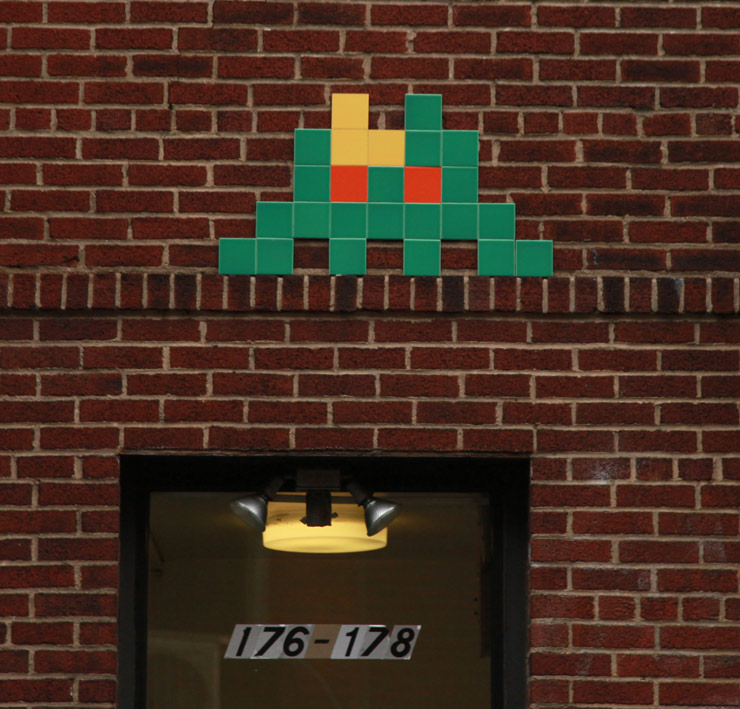
After the extensive traveling we have been doing, it is really great to be back on the gritty dirty amazing streets of New York City. Finding the small pieces tucked away in doorways and empty lots and back alleys and paying attention to things that most blogs wouldn’t even care to mention has been central to our study of the Street Art scene for more than a decade. If you are out there we will see you. We thank this city for not disappointing again.
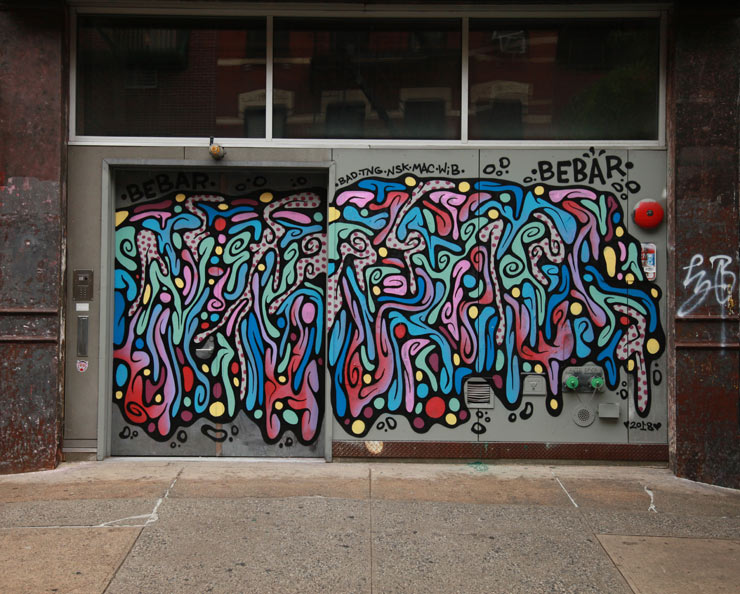
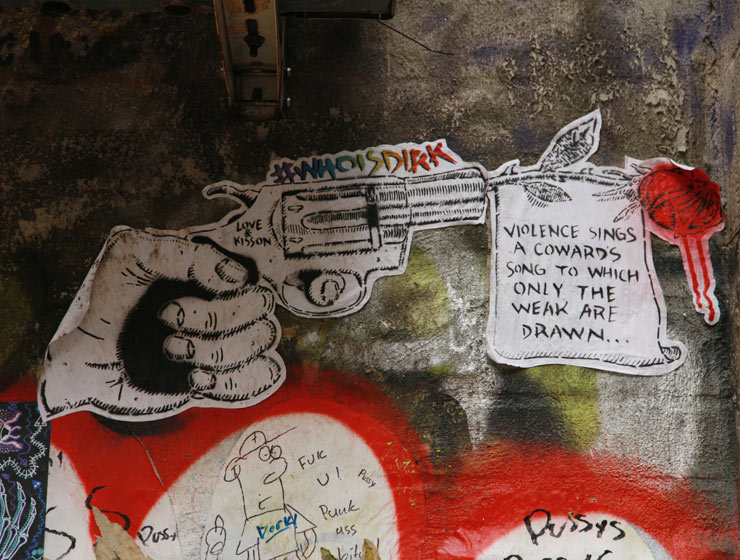
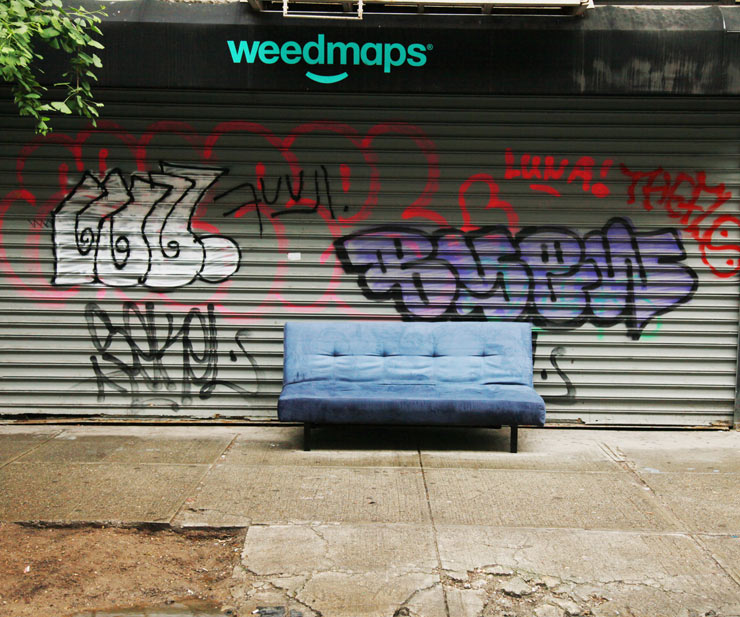
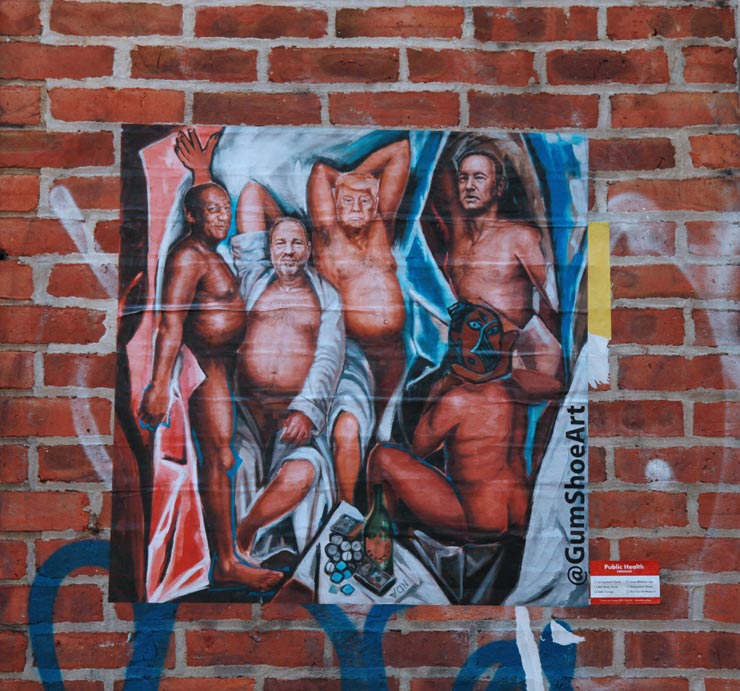
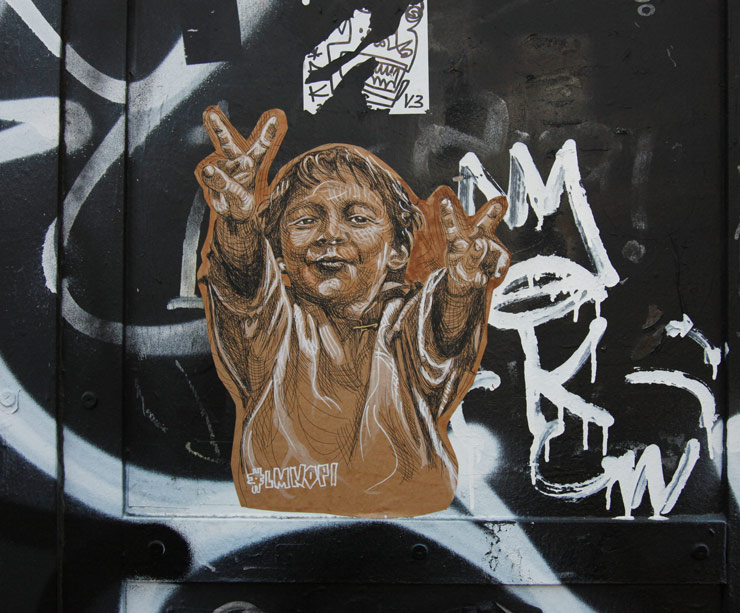
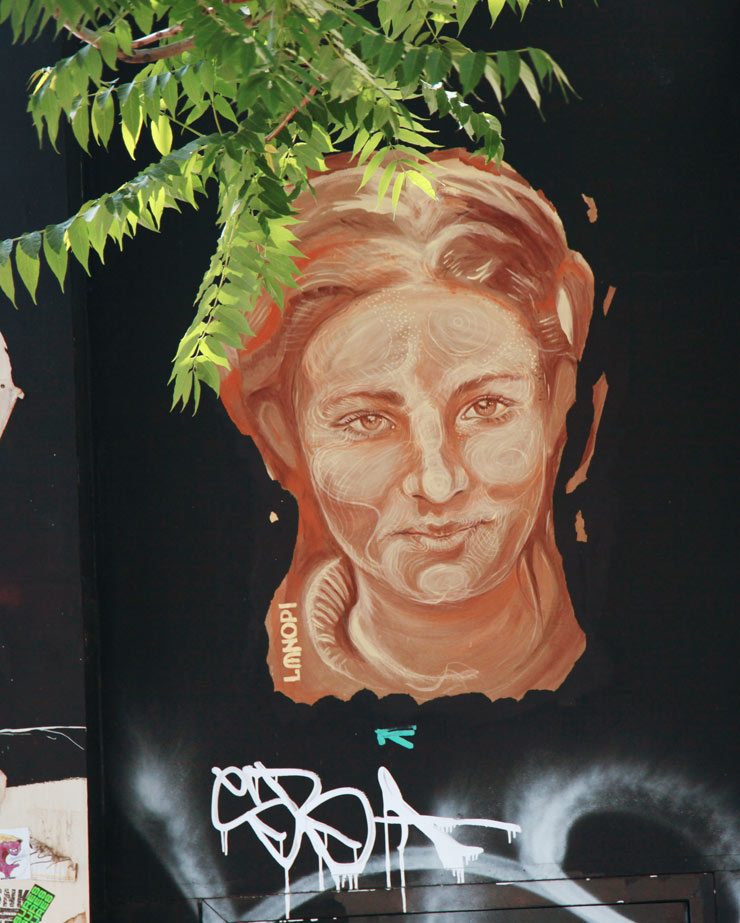
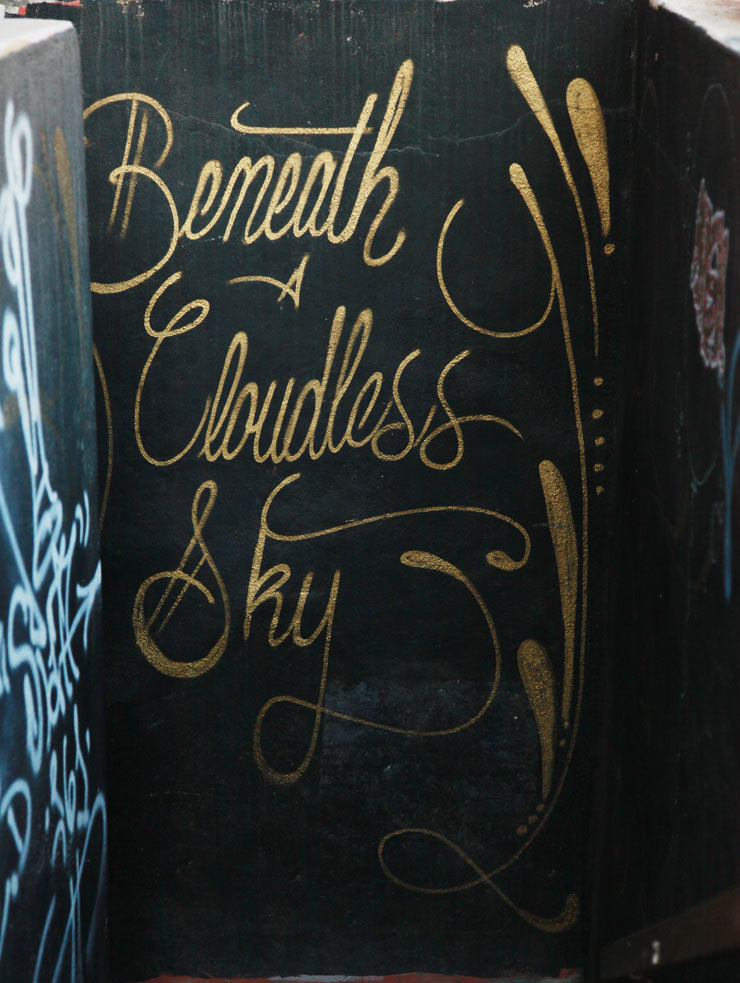
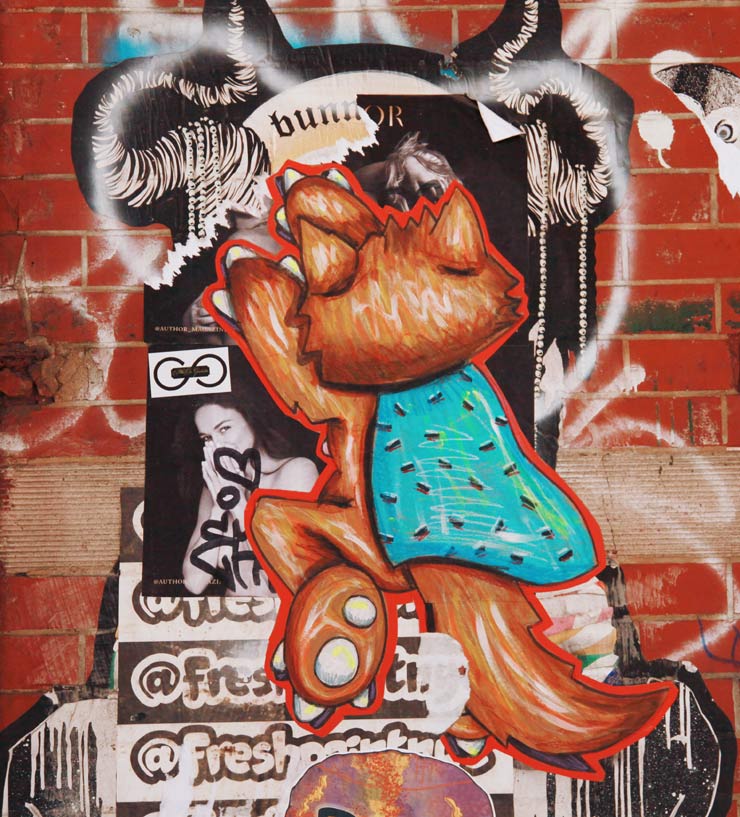
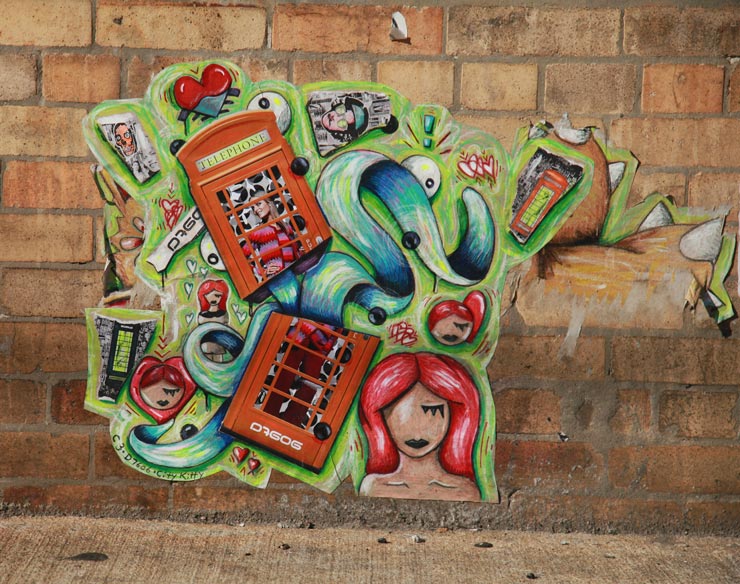
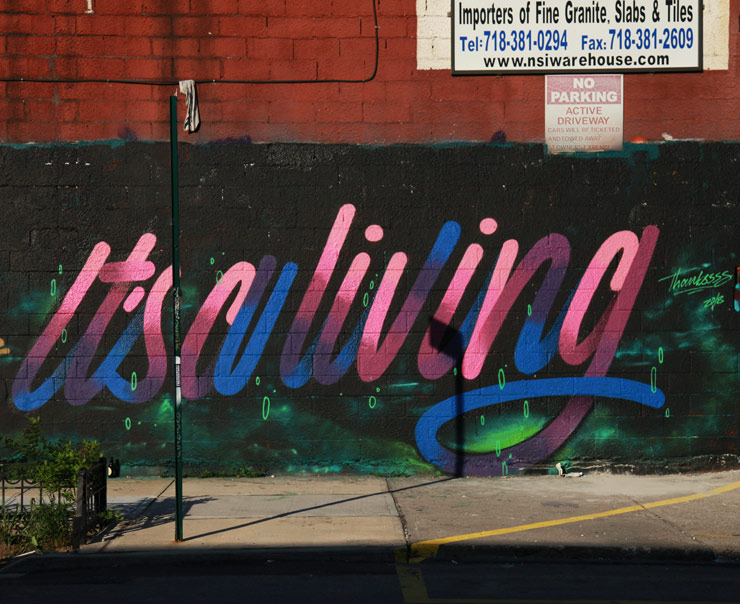
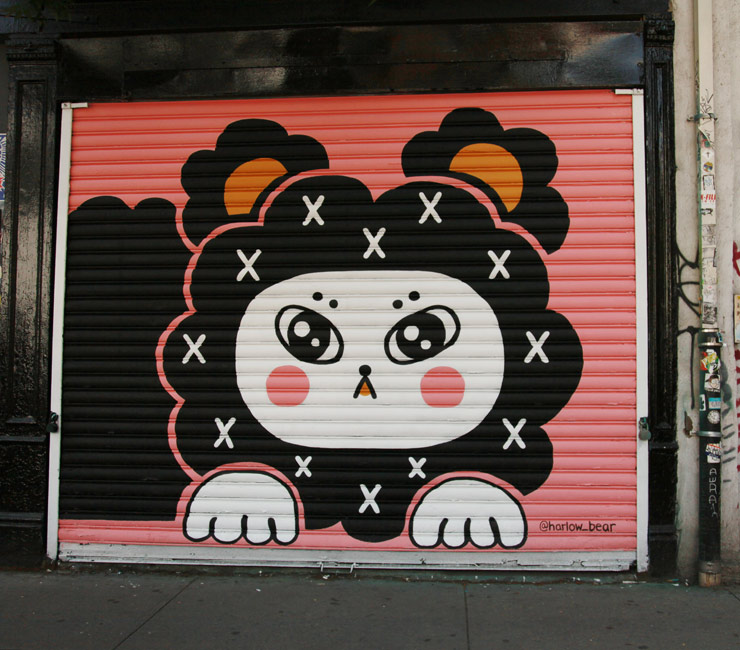
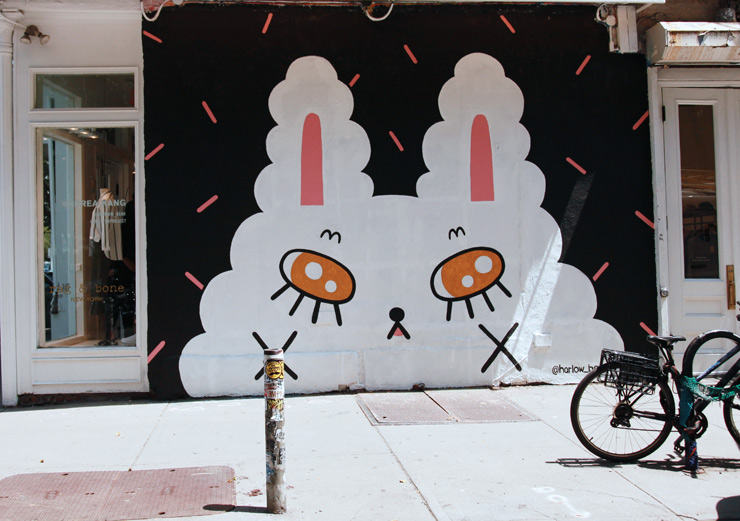
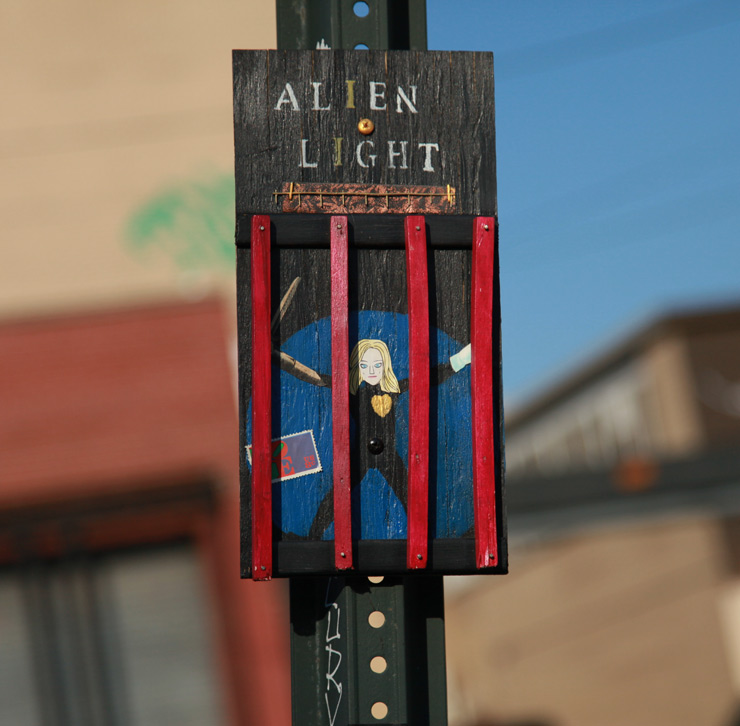
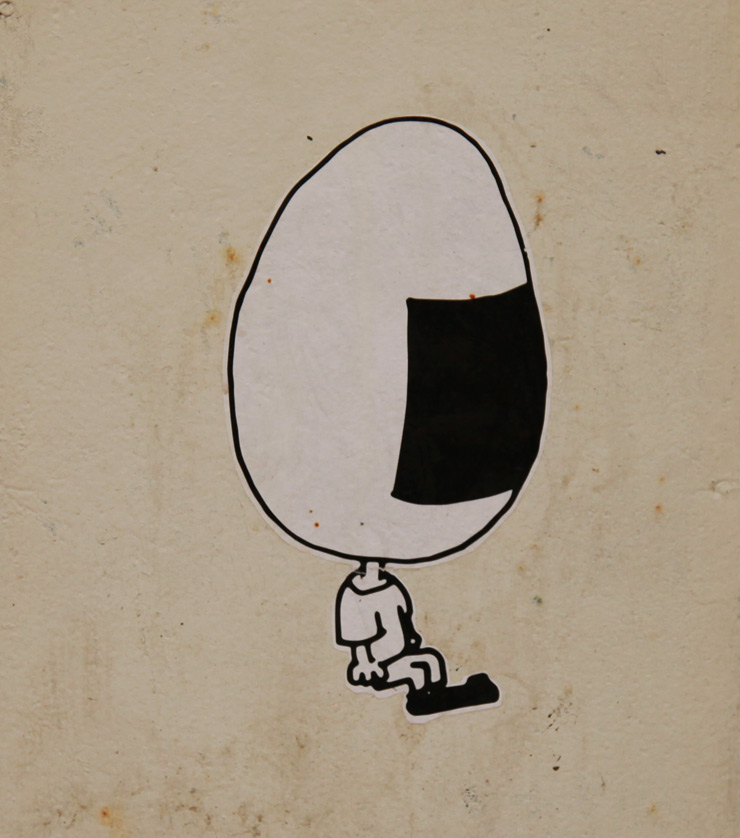
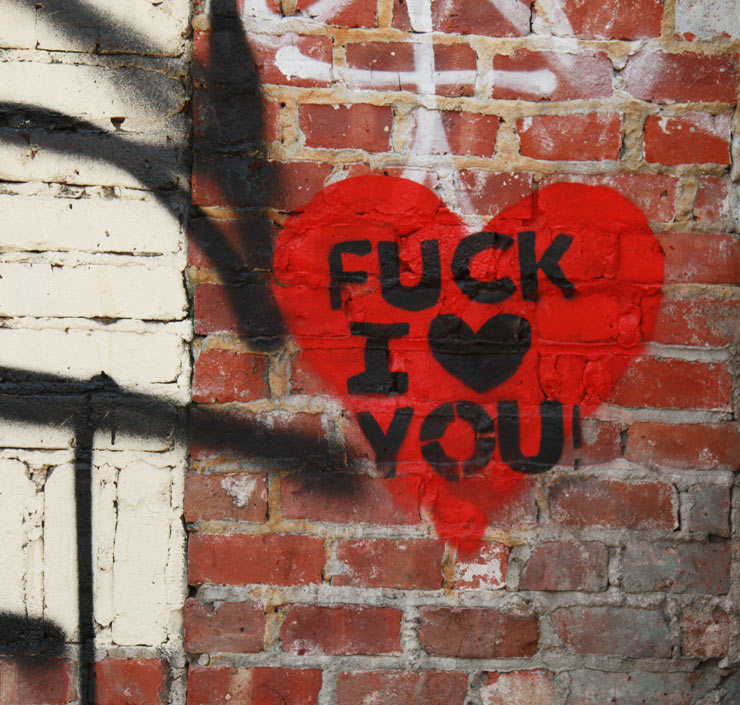
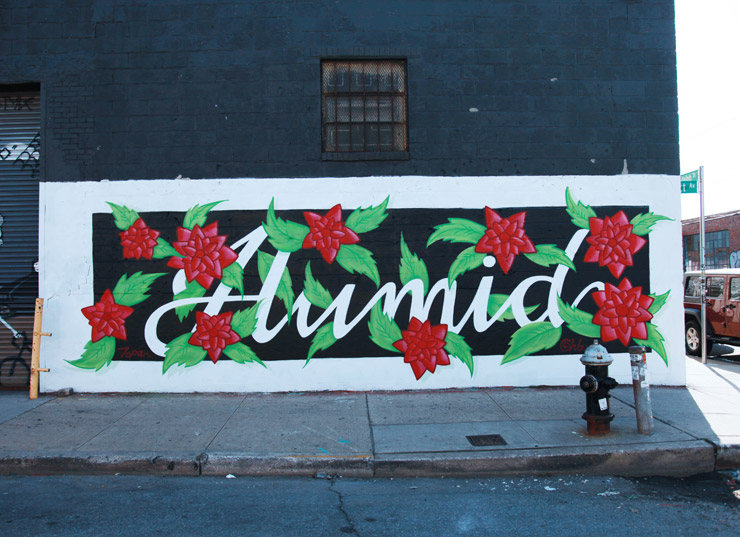
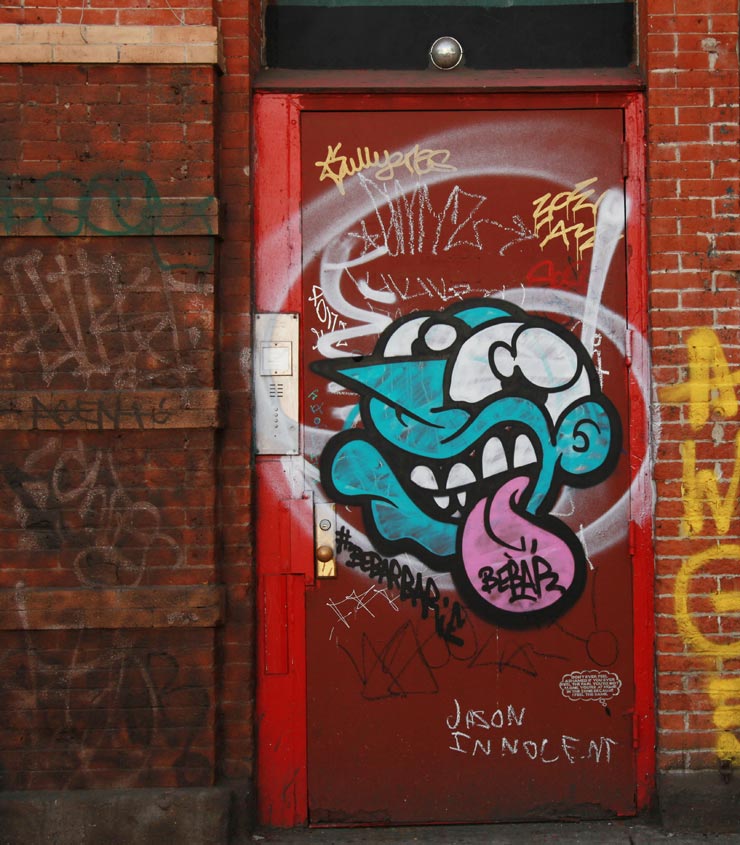
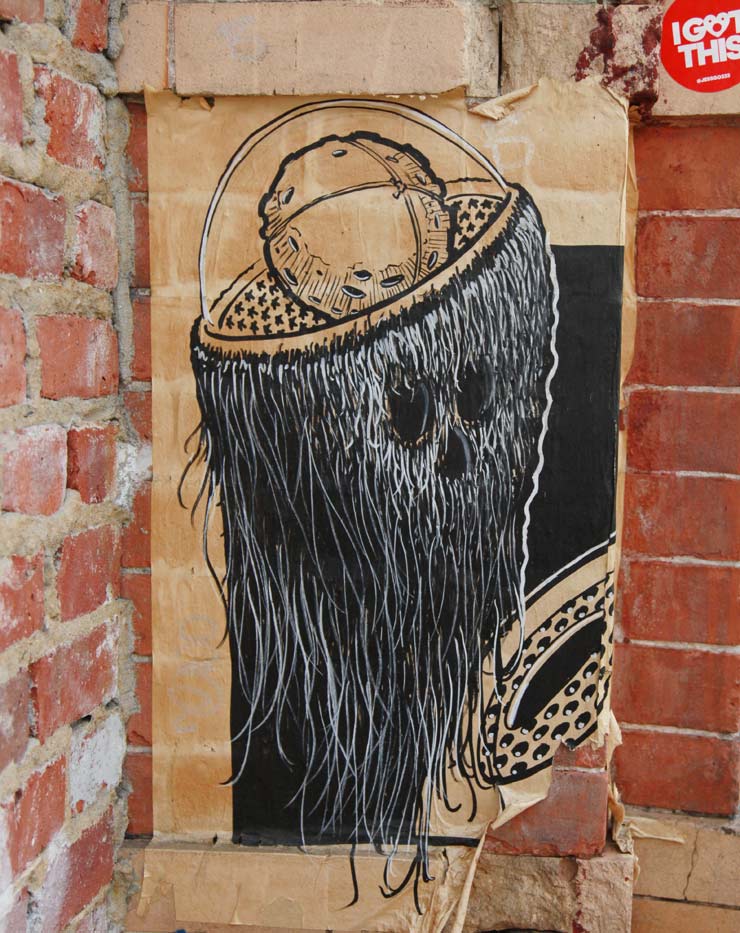
Here’s our weekly interview with the streets, this week featuring Alien Light, Anthony Lister, Bebar, C3, City Kitty, D7606, Danielle Mastrion, GumShoe, Harlow Bear, Lunge Box, Thankssss, and Topa.
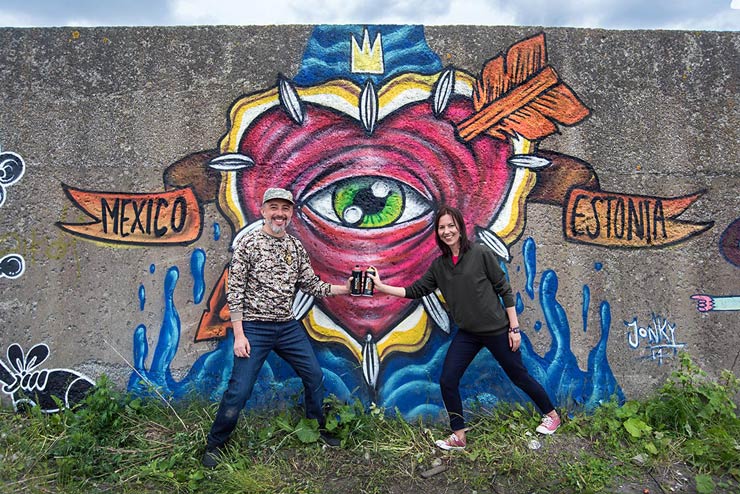
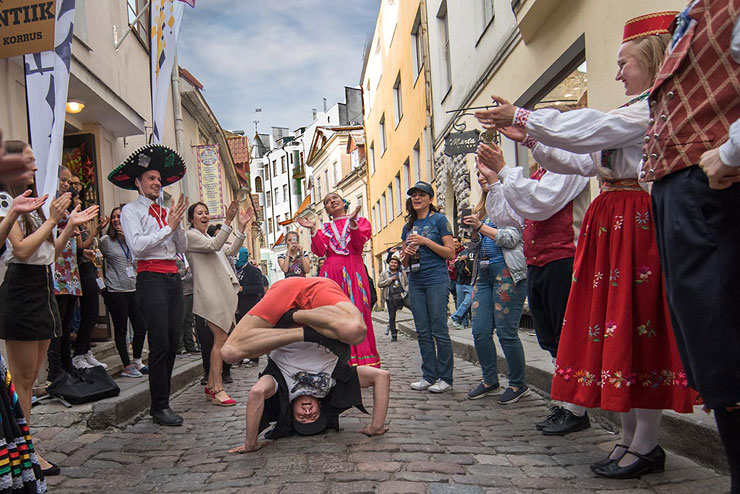
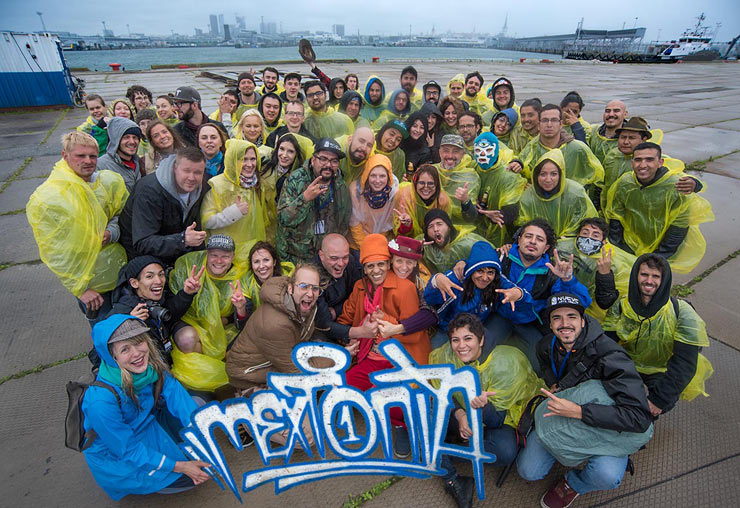
Mexico and Estonia; an unlikely couple. But sometimes love is like that. In a time when orthodoxy globally is seemingly self-combusting and obviously falling short in meeting the needs of people, it is perhaps no surprise that the unique hybrids of shared strengths are those that arise and can lead.
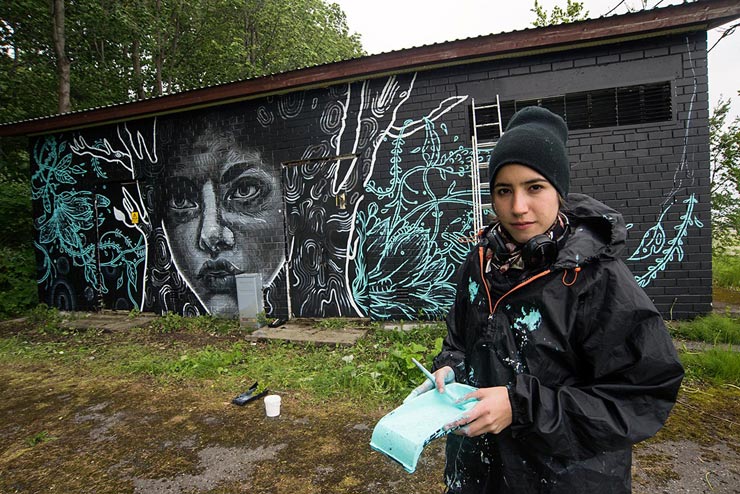
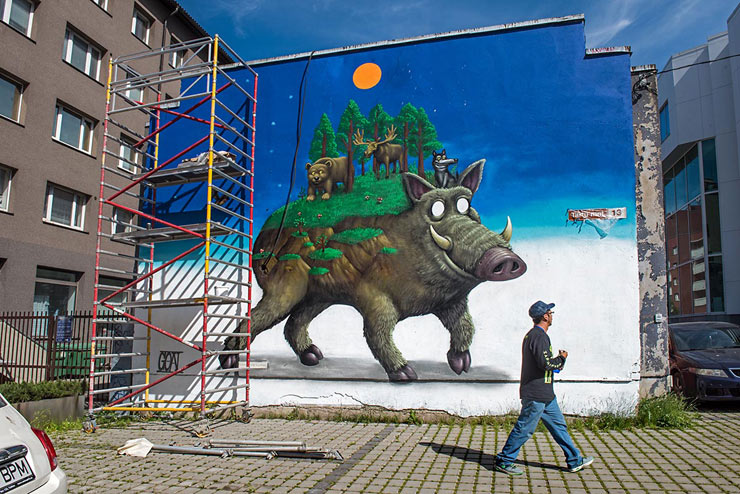
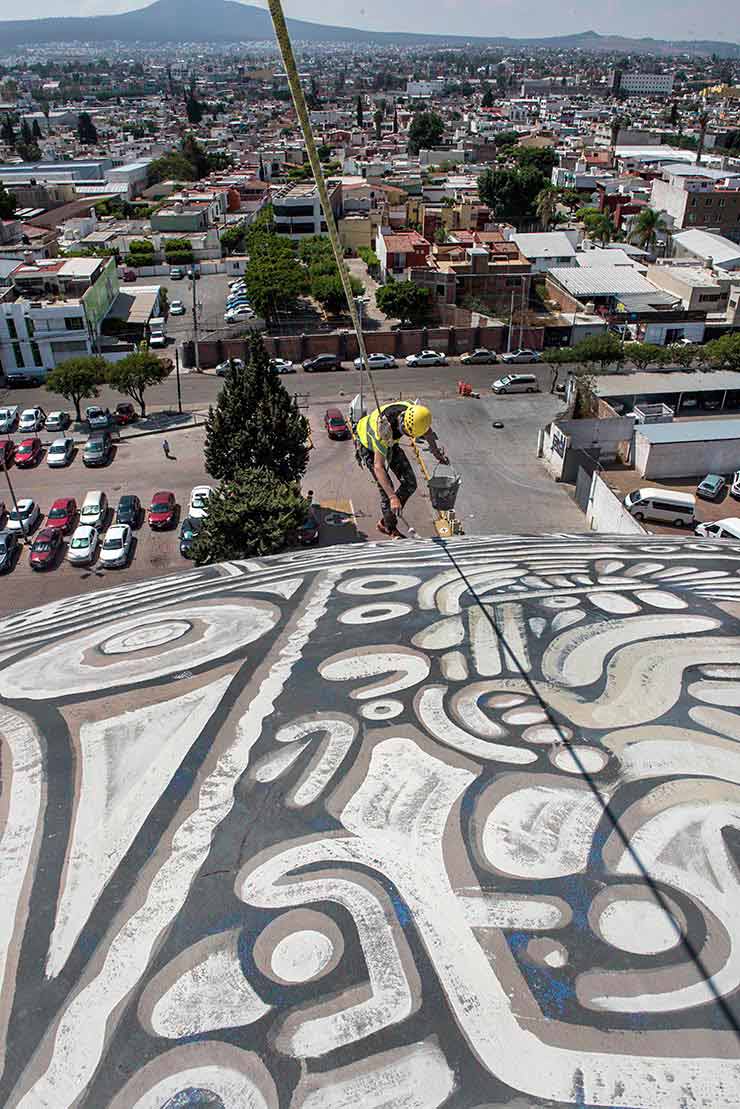
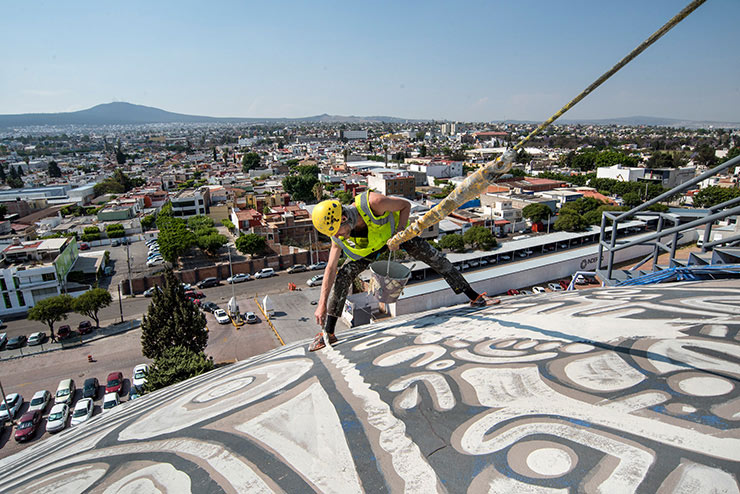
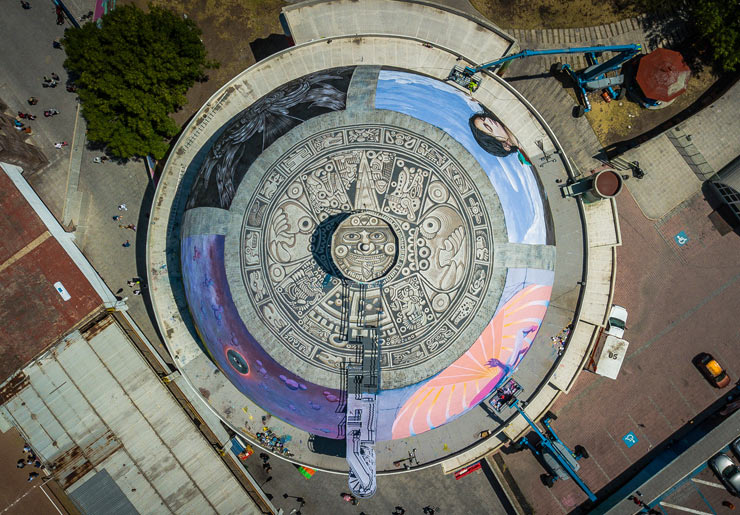
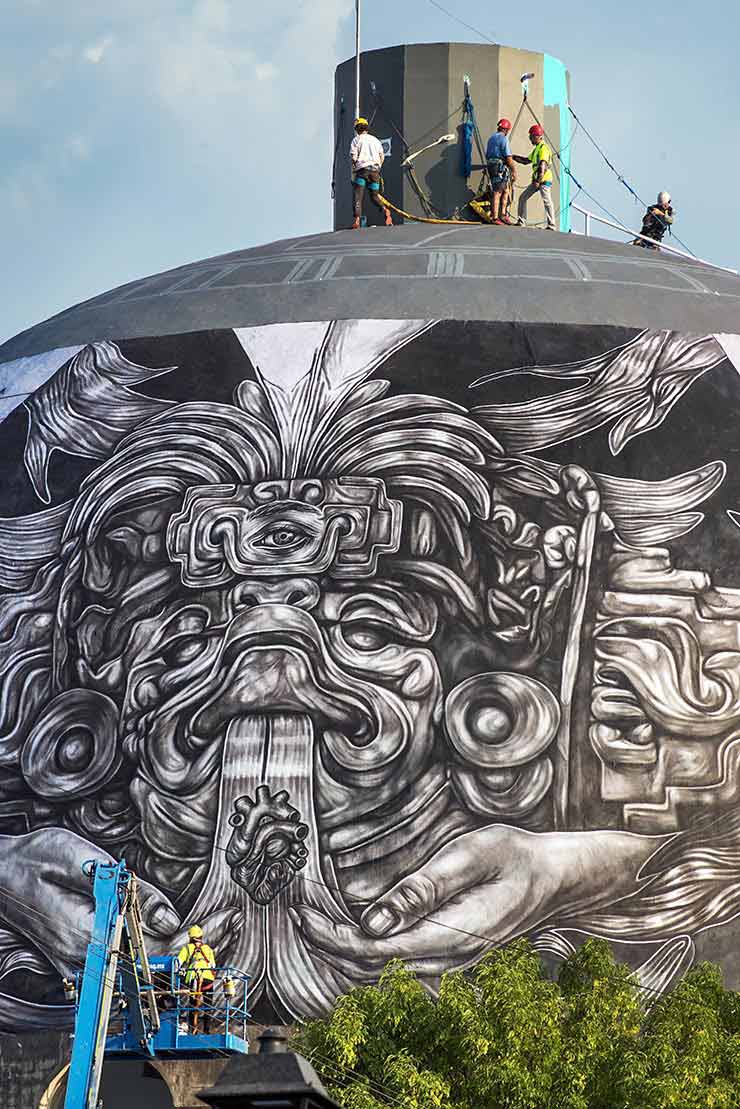
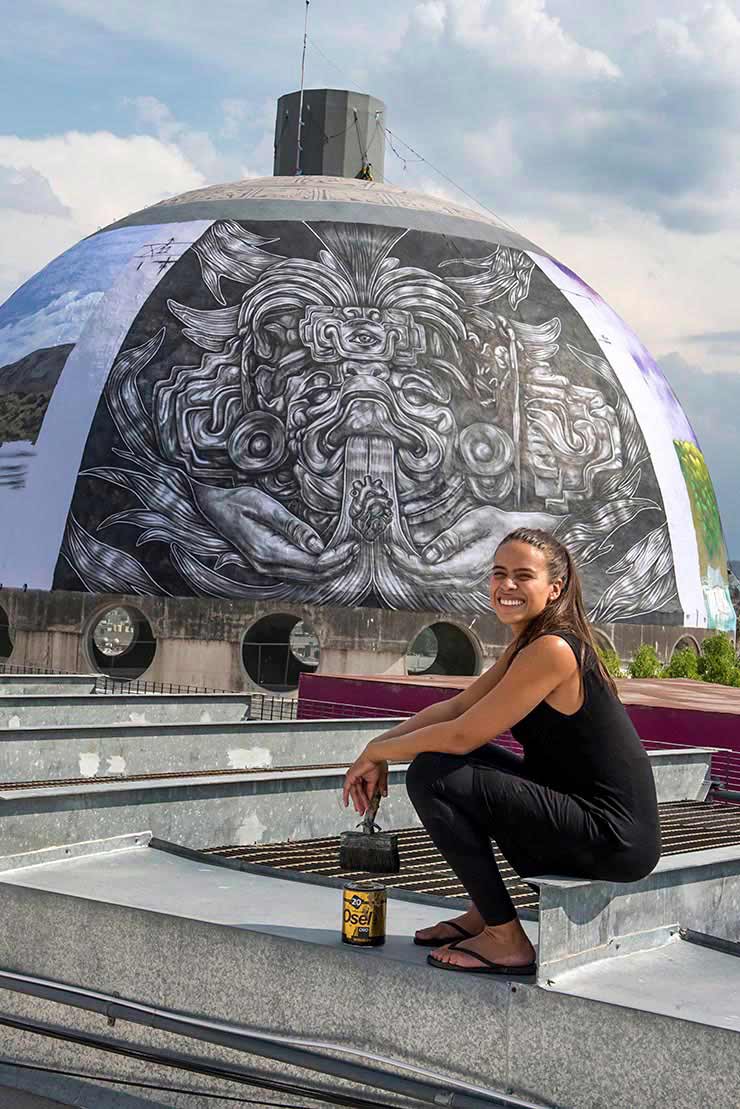
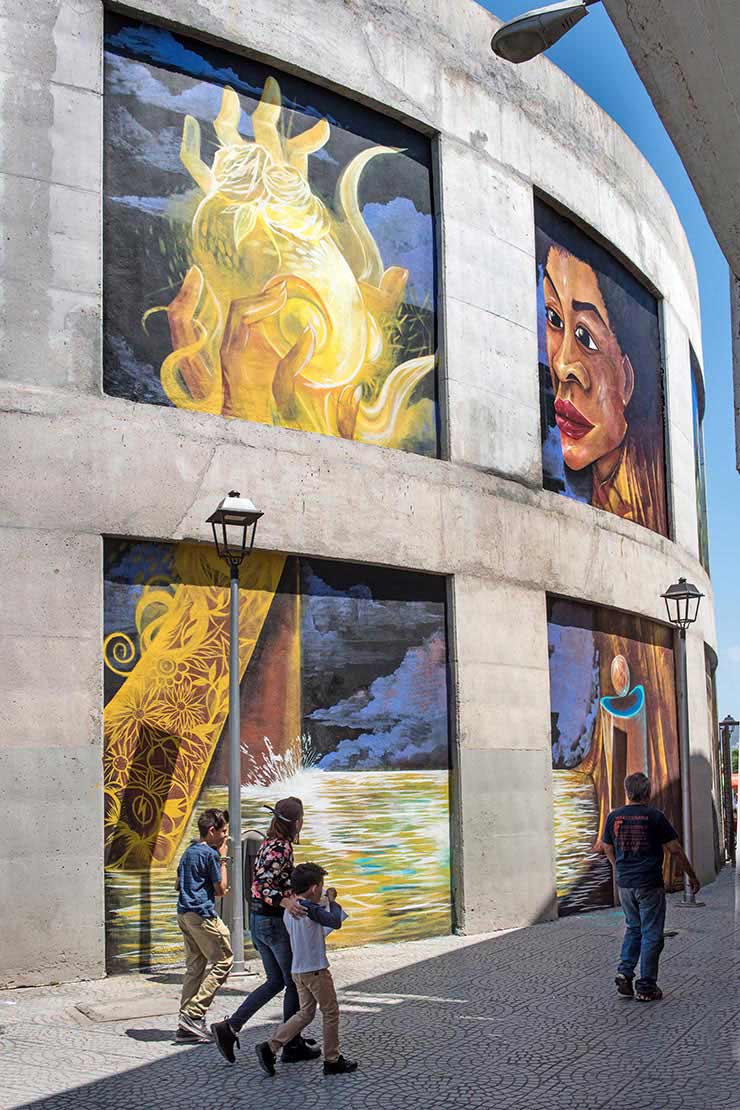
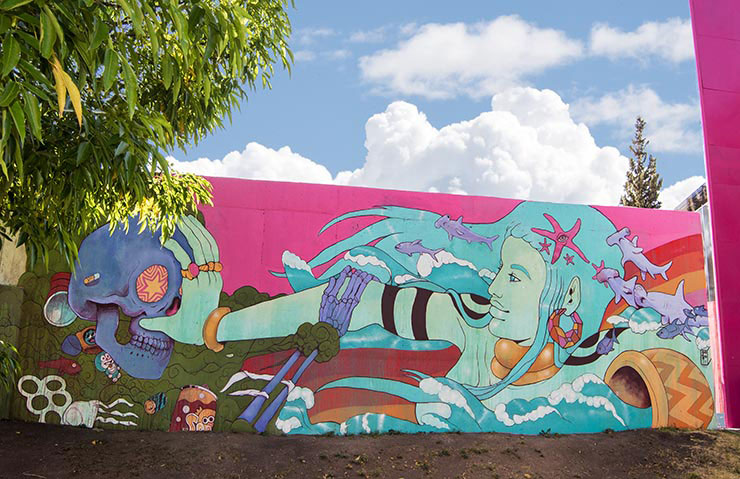
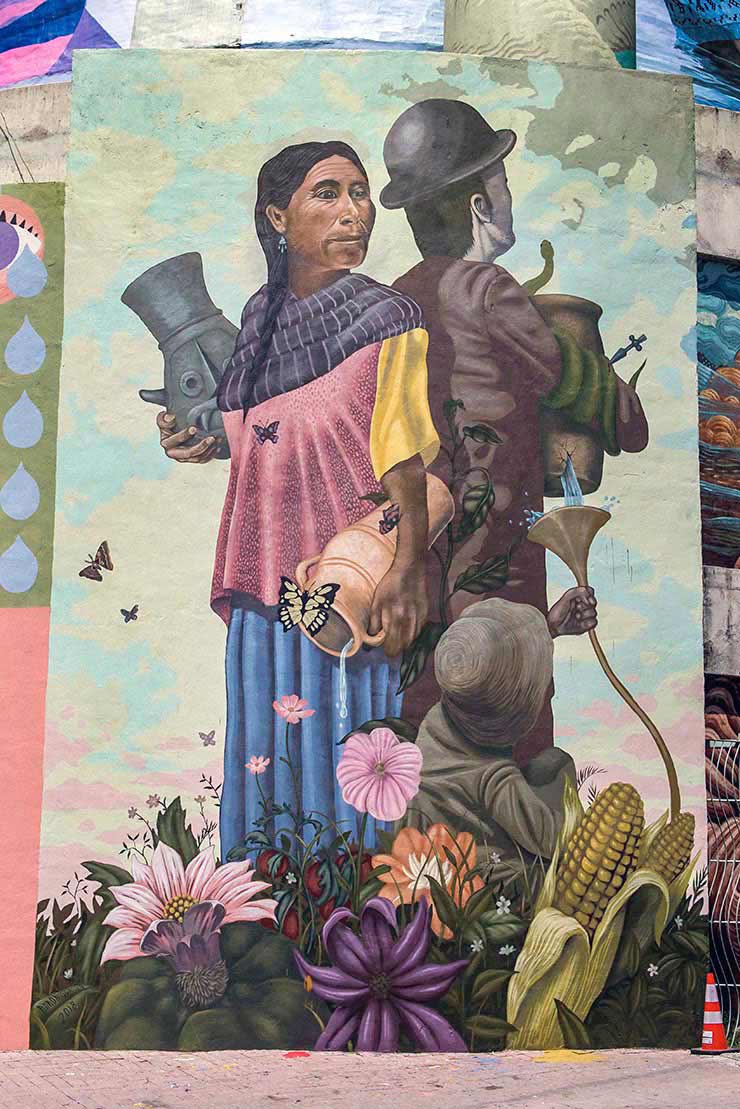
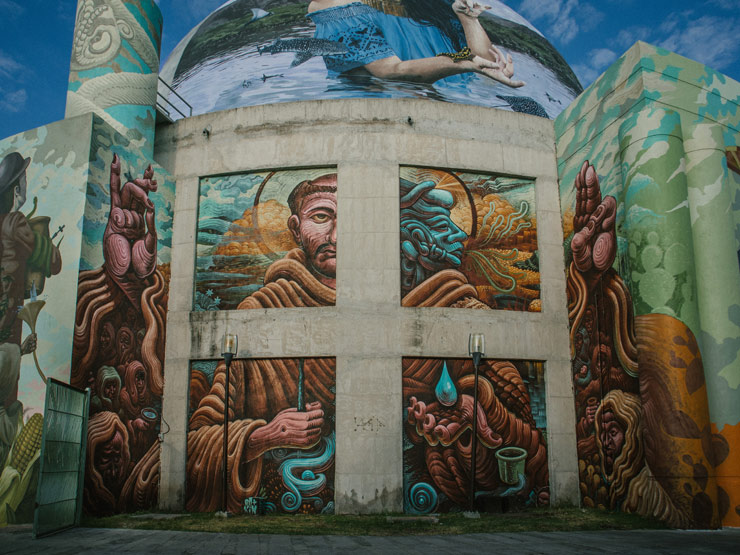
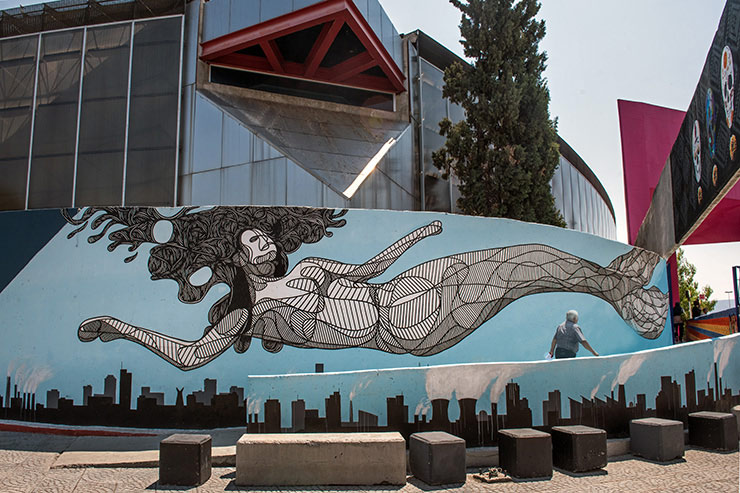
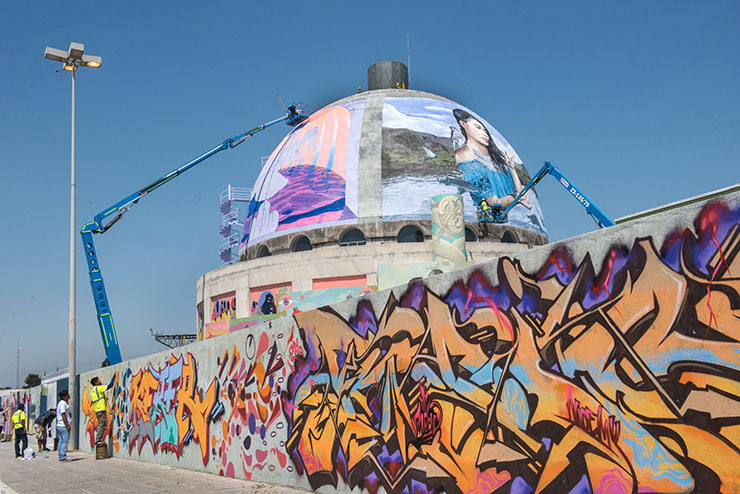
A cultural love child combining the traditions of these two nations has resulted in a surprising amount of cross-cultural exchange and mural making in the last year or two. Today we have just some of the artworks made during a two-part event held in each country, the first in Tallinn, Estonia in June 2017 and the second in Querétaro, Mexico during March 2018.
The unlikely pairing by two sociological searchers who love graffiti, Street Art, and the mural traditions of the past as much as the modern mural phenomena now speaks a common language of aesthetics in multiple spheres.
Together Édgar Sánchez and Sigre Tompel have mounted two large cross-culture jams, attracting numerous artists and trans-national interpreters (nearly 100), presenting and renewing interests in history, indigenous people, traditions, and the environment challenges of today.
By highlighting the similarities and distinct differences in traditional and modern culture, these two are the magnetic field around whom a multi-faceted public art practice is developing that showcases urban and mural artists.
Together the two say that the effort is “a reminder of what makes us feel proud of being Mexicans, Estonians, and even better, what unites us beyond our nationalities: our cultural freedom. Our responsibility of making this place, this world, a better place than how we found it.”
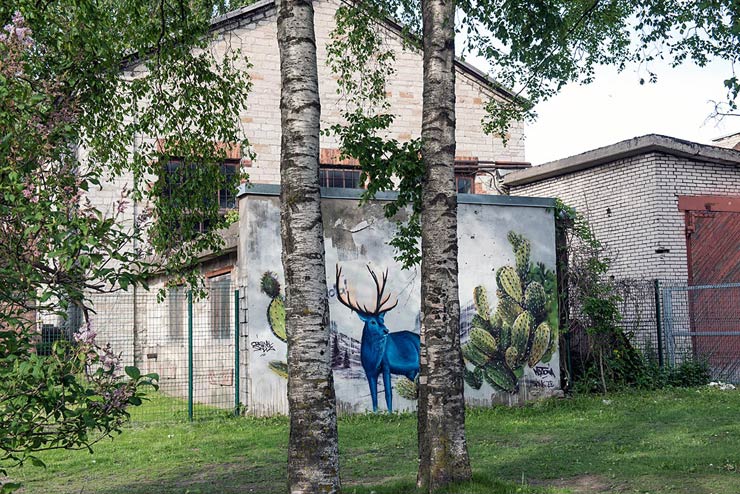
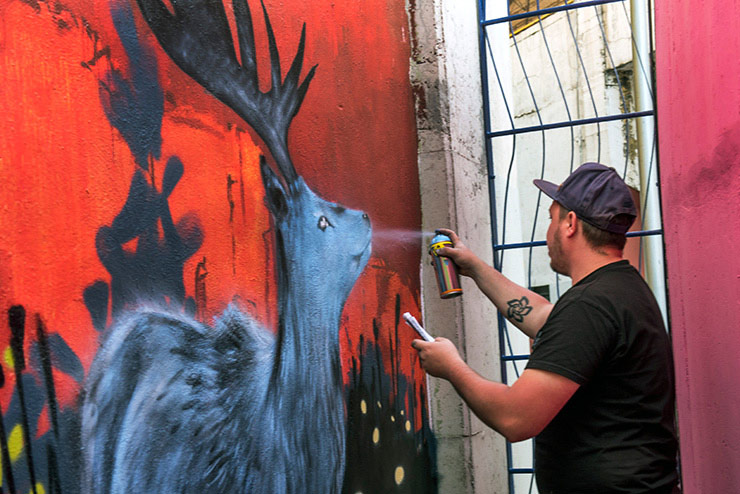
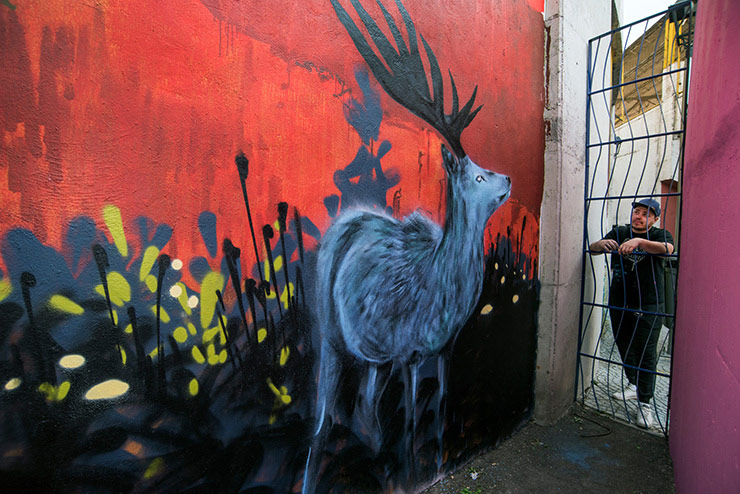
The enterprise is frequently steeped in metaphor and symbolism and a search for meanings in the overlapping of traditions. One that is often sited is the Blue Deer/Fern Blossom intersection.
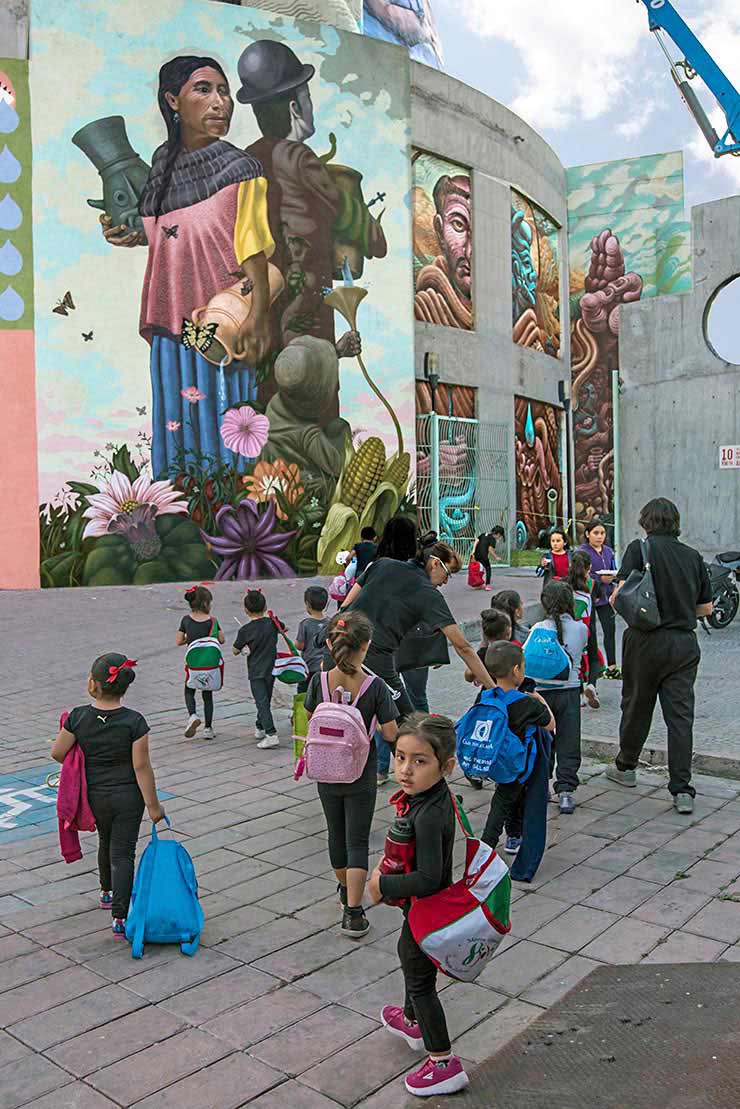
In México, according to ancient Huichol tribe tradition, people go to hunt Blue Deer to search for wisdom and inner vision. Searching is also involved in the Estonian ancient tradition of searching for the Fern Blossom that is said to appear only during the summer equinox of June, which they call Jaaniöö. Both traditional cultural stories represent prosperity, protection and fertility, they say.
“Mextonia is a gift to remind the world about the Spirit; a collective soul in the shape of a Blue Deer, in finally finding a Fern Blossom,” say Sánchez and Tompel.
For Mr. Sánchez, the Mexican co-creator and author of the Mextonia Manifesto, there is a belief that there are larger forces at work in the Universe and that Mextonia is a platform and vehicle for the new generation.
When reading his observations you will see that the platform is hoping to lead Millennial artists to reconnect with a sense of culture and identity, two things that are sadly slipping away due to the dopamine-laced fire hose of mass media stimuli, social and otherwise, that we are collectively exposed to.
For Tompel, the Estonian co-director of this bi-national transcultural journey, “Mextonia was born from a personal ‘vision quest’ to better understand the native wisdom of Mesoamerican natives.”
She says the enthusiasm and knowledge of Sánchez guided her to better appreciate ancient traditions like those of the Mexican Huichol tribe, and that this new appreciation enlivened her interest in her own homeland of Estonia, which she began to study in earnest. Together, the two of them have poured the molten iron of their combined roots and cast a foundation that many artists are now adding their interpretation to.
Whether it is costume or symbols or rites or ceremony, you can see a deep desire to be inclusive in the styles and expressions. The spring festival, for example, extended its message with the collaboration with the PangeaSeed Sea Walls effort, headed by Tré Packard and his team in pursuit of “combining art and activism on this level and caliber to champion for the oceans,” and often sited aspiration.
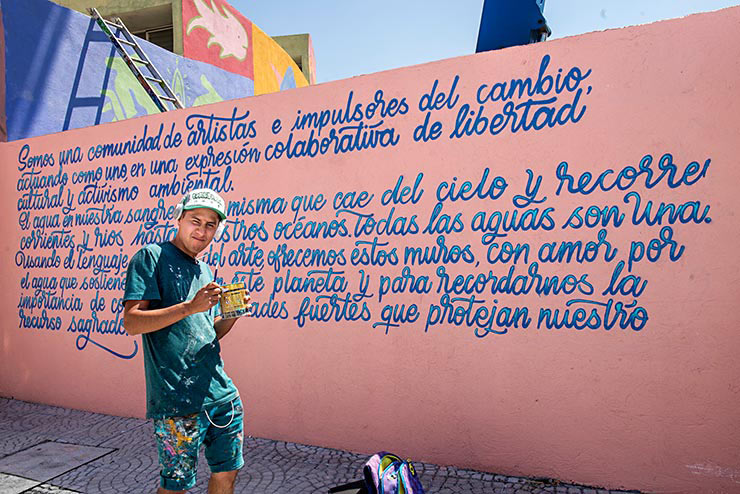
“Art and public activism can educate and inspire the global community to help save our water resources,” says Packard. “Regardless of its location, large metropolitan city or small coastal town, all drains lead to the ocean and the ocean provides every breath we take. The Earth cannot exist without healthy oceans and water resources.”
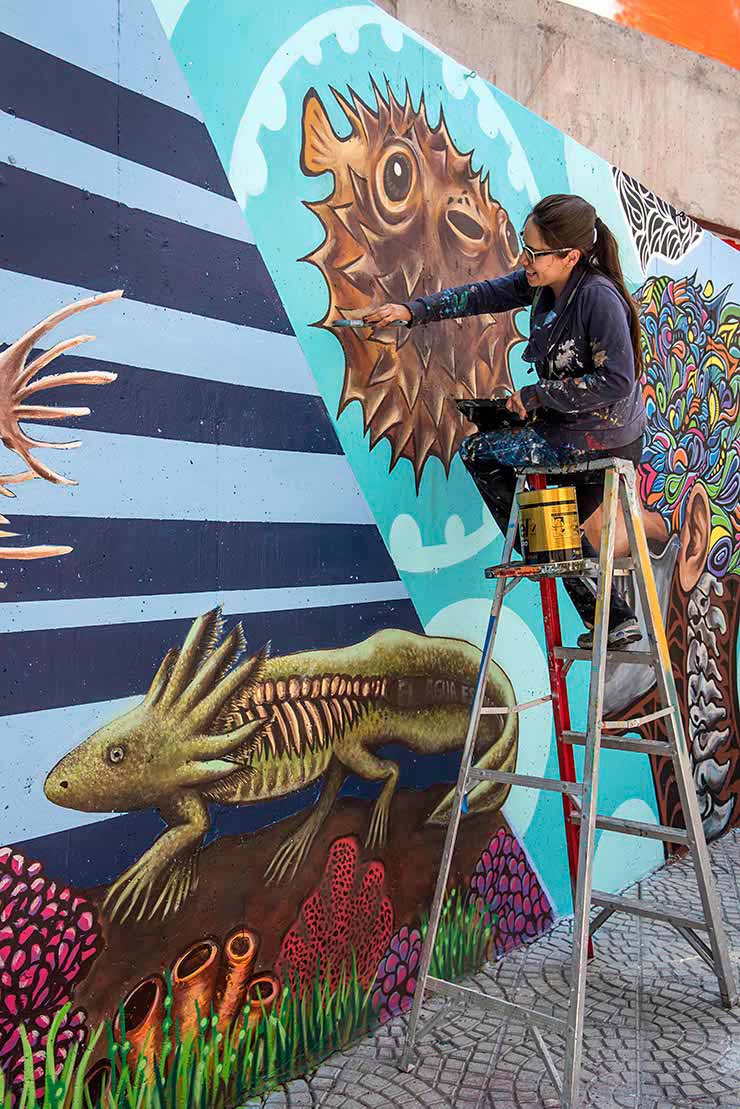
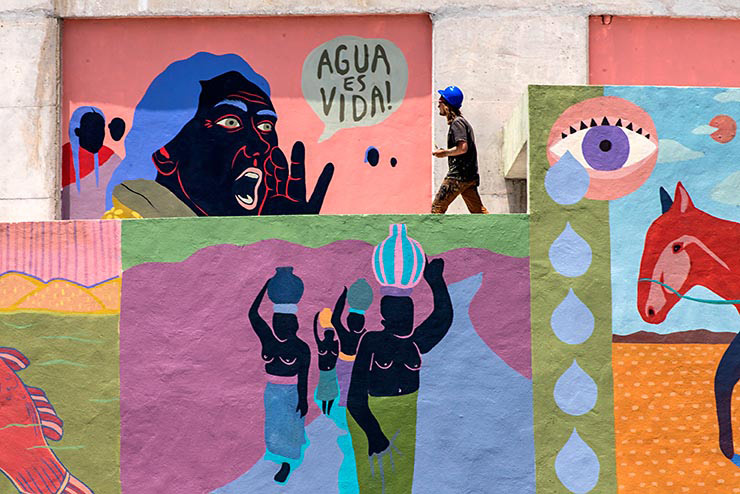
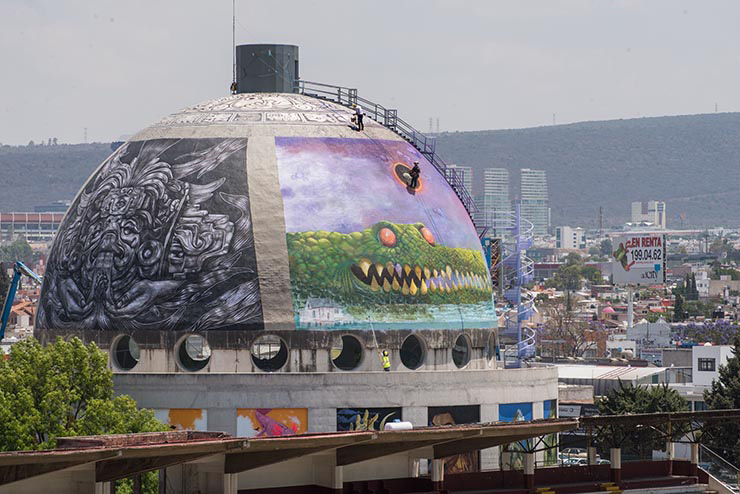
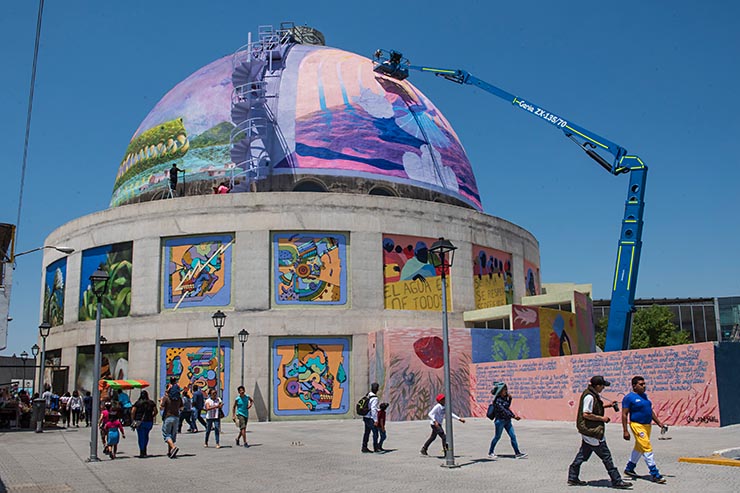
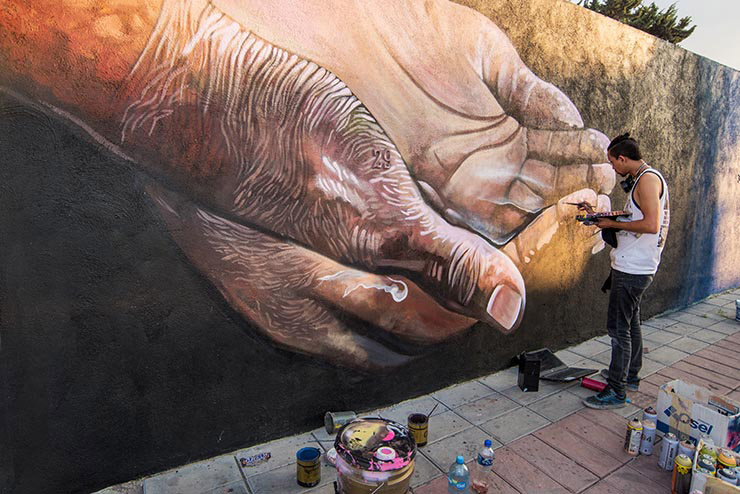
With this in mind the city of Querétaro was chosen for the multiple aqua-related public artworks as a way to draw attention to the city’s own reliance on water that is transported from a hundred kilometers outside the city. This chapter of “Mextonia” was also known as “Water is One”.
The experience and study has even helped coin new terms, like transgraffiti and transgraffiti muralism.
“Muralism and Street Art have proven to transform cultural symbols and catalyze culture,” says Sánchez. “Now, Transgraffitti is a trans-personal kind of muralism, which distances itself from both; names and pop culture, by taking deep cultural symbols and re-expressing them in a transcendental and contemporary way.”
In this respect, it is a unique view of Street Artist and graffiti writers in contemporary practice from an evolutionary perspective. In the Water is One Manifesto 2.0 that was released this spring the organizers write:
“In today’s world we see millions of young people expressing on walls, influencing the streets and society. They write their names to identify with their space: we call them graffiti writers. As they grow and explore, some look beyond the writing of a personal name and embark into trans-personal-creation.
They research social challenges, paint visual metaphors and transcend borders. They discover the power of their painting over streets and culture. They become a kind of contemporary shaman, producing street incantations.
This is the transpersonal-graffiti, and we call it Transgraffiti muralism.”
As BSA correspondent from Tallinn and Querétaro, veteran photojournalist and ethnographer Martha Cooper attended the installations, exhibitions, celebrations, and ceremonies in both countries and she collected a wealth of important information to share.
In her own words Cooper says, “Street art is a worldwide art movement and Mextonia has shown how creative two different cultures can be when combined. Excellent idea – brilliantly realized.”
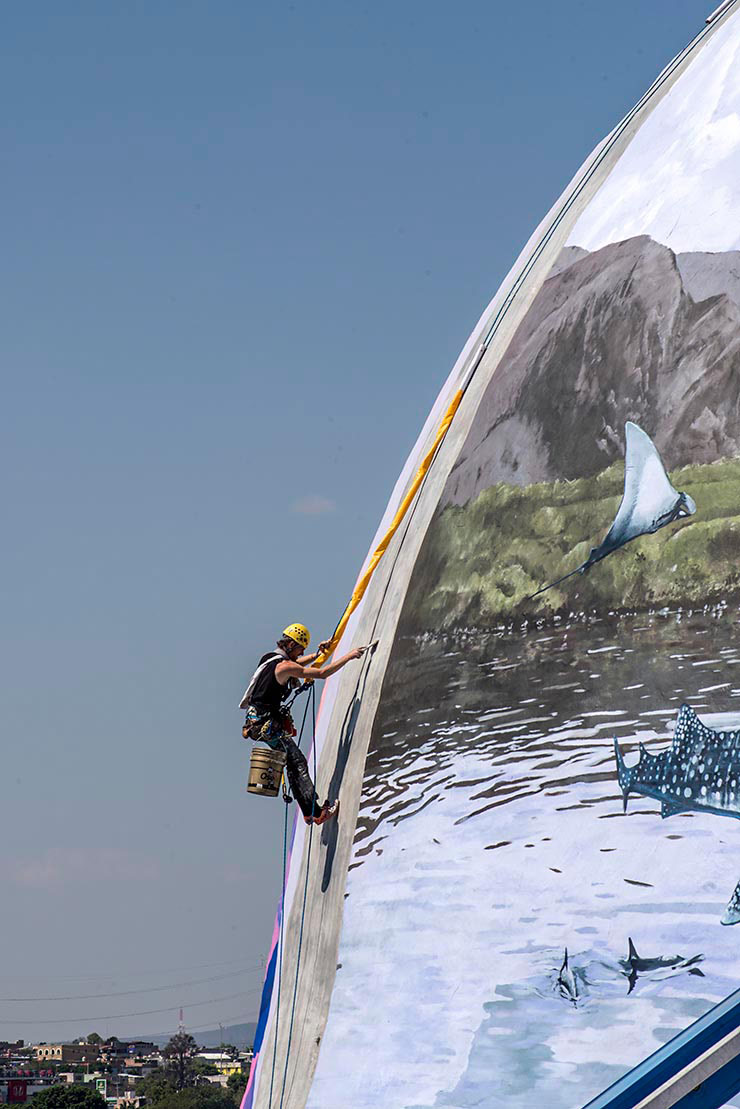
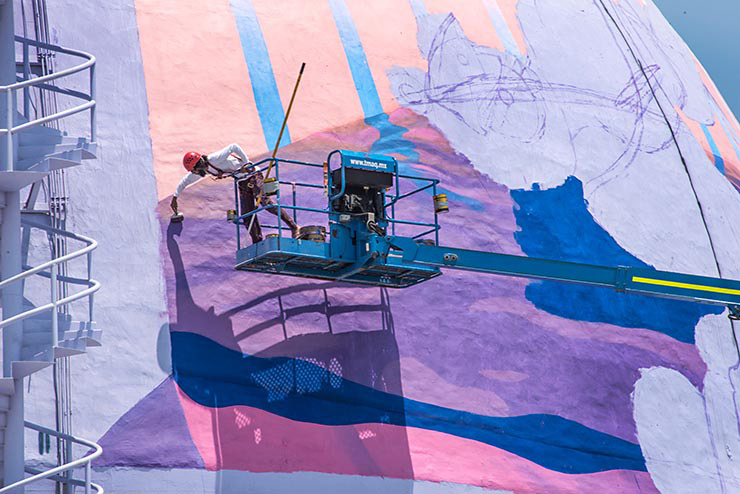
As mentioned Part 2 in Querétaro, Mexico was a collaboration with Pangea Seed and it was a concerted effort to highlight water resources, and “The Water Is One” theme was reflected in the murals.
“We forget that the water cycle and the life cycle are one.” ~Jacques Yves Cousteau
While these 40 or so photos are resplendent in conveying the spirit and dedication shown daily by participants, they are ultimately a very small sample of the hundreds Cooper took.
Similarly a blog platform like this cannot comprehensively cover the events or the perspectives in their entirety, but we hope that you can gain a greater appreciation for the depth of feeling, scholarship, and talent that is represented here in Martha’s photographs and our descriptions.
We conclude our text here with an interview that Ms. Cooper conducted for BSA with Sigre Tompel to better understand the breadth of the festival and also to get more detail about a sacred spiritual ceremony that Cooper attended with native peoples and the artists during her Mexican visit this spring.
Martha Cooper:Can we call “Water Is One” in Querétaro Part 2 of Mextonia? Are you planning Part 3? Sigre Tompel: Yes, it is a sequence of Mextonia, part 2 (Mextonia in Estonia was the element of Fire, Water Is One was the element of Water. Yes, we are planning part 3 and 4 (Earth and Air).
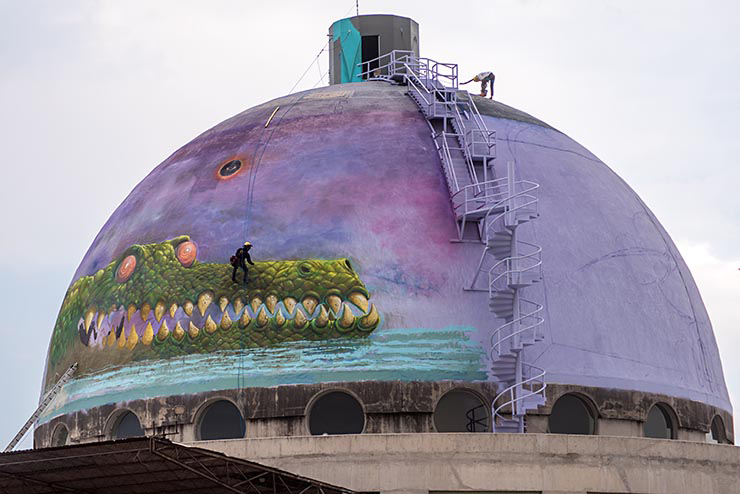
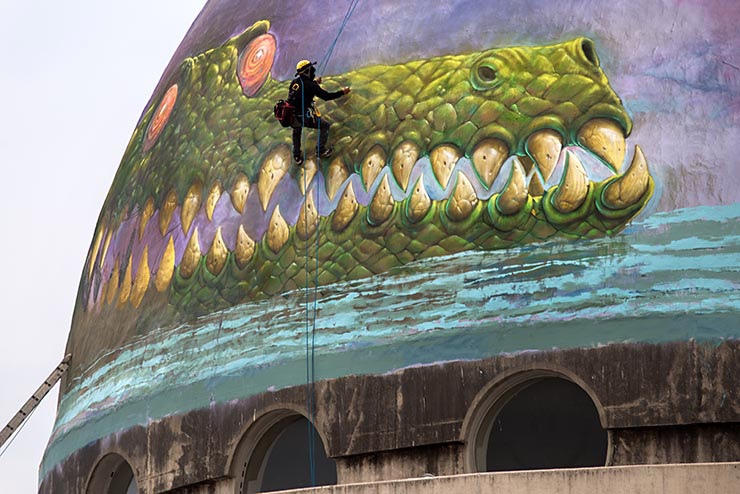
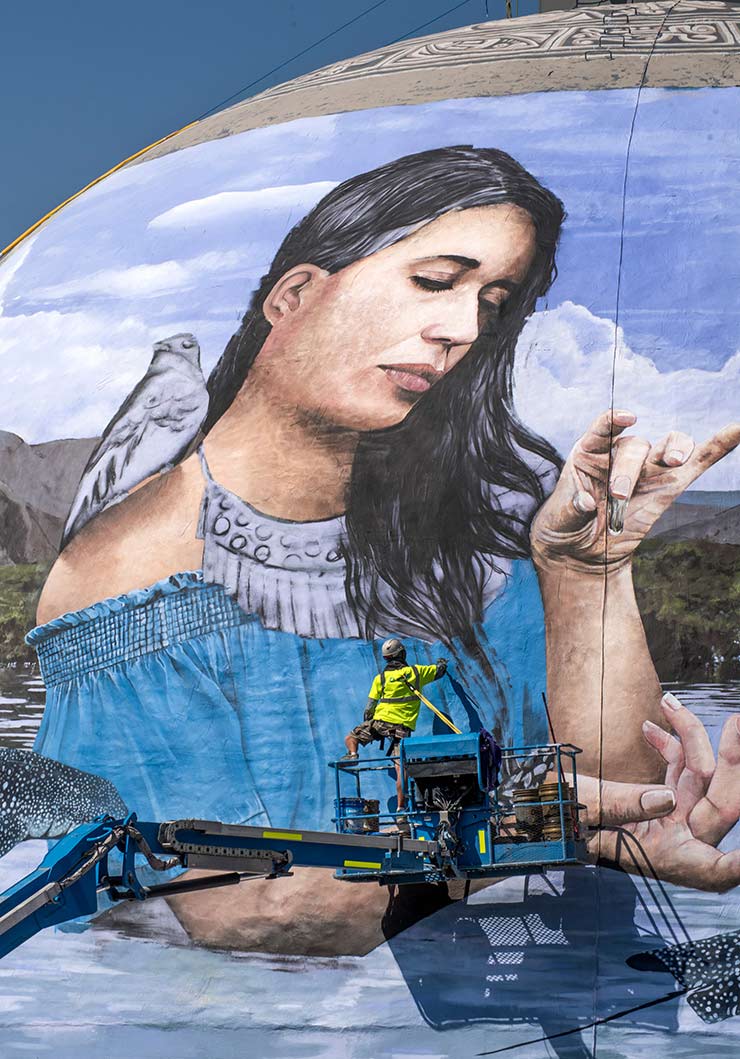
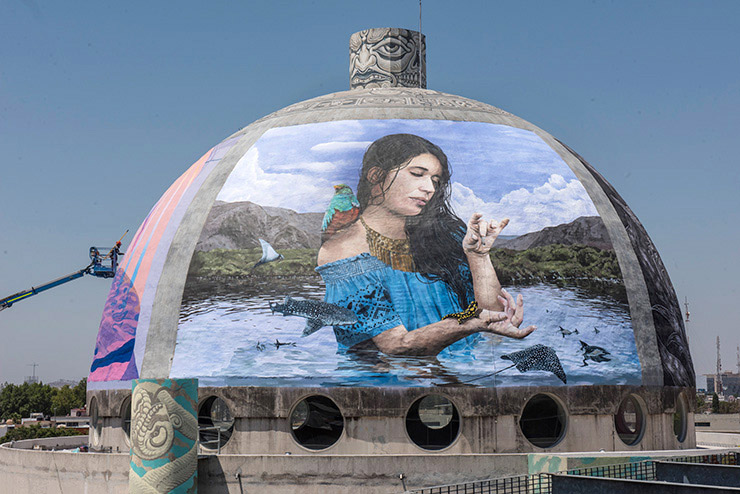
Martha Cooper:How many artists participated in both the Estonian and Mexican festivals? Sigre Tompel: In Estonia we had 60 artists and in Mexico 33 – together with graffiti writers and neighboring walls of the Dome. These 5 artists were actually in both festivals – Aaron Glasson (New Zealand), Sänk (Estonia), Sermob (Mexico), Renata (Mexico), Goal (Mexico). Our whole core crew is a total of 15 people.
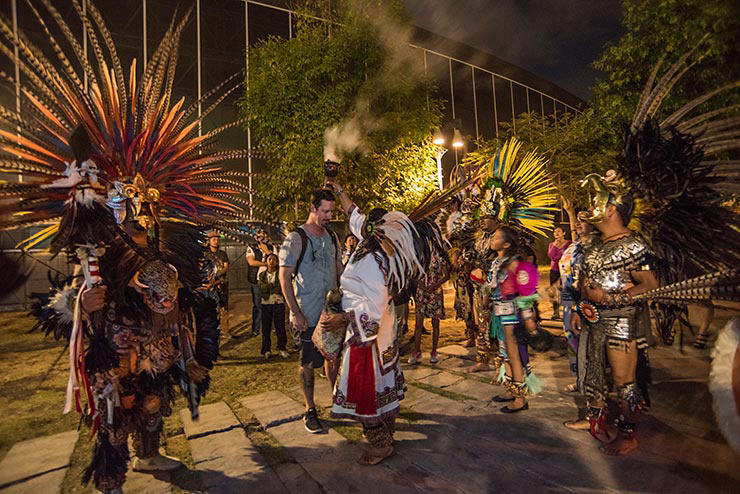
Martha Cooper:What was the name for the type of group that performed the ceremony at the walls? What was burning in the pot that produced the smoke? Copal? Sigre Tompel: They are called Concheros, they use Copal , smudging for blessing. The message was smudging the artists to thank them for their work and to bless their way back home, so they can arrive healthy and happy. The name of this particular group of Concheros is “In Xochitl In Cuicatl”, Flor y Canto (Flower and Singing) and they are lead by Conchero General Manuel Rodriguez. The name is in Nahuatl, the ancient language of the Mexica.
Martha Cooper:Does the ceremony have a name? Can you say a few words about what kind of blessing it was or what message they were sending the artists? Sigre Tompel: The Concheros hold the tradition of the old Mexican belief system. After being conquered by the Spanish, they decided to hold balance and harmony between the two belief symbols, so they started honoring Christian symbols, while honoring also Mexican symbols, usually in secret. Concheros need to be reconsidered as a Cultural Heritage of the World, they are not “syncretic” by ignorance, but to keep the sacred balance of cultural hybridization.
The Concheros were very happy because the artists expressed the metaphors of their dances into the murals, and because this represents a kind of Mexican renaissance that returns to an earlier time, reinterpreting the ancient classic pre-religious Mexican belief systems.
Read this article in Spanish / Leer este articulo in Espanol aqui:
TRANS-GRAFFITI Y EL FESTIVAL TRANSNACIONAL “MEXTONIA
Publicado el 26 de Mayo, 2018
México y Estonia; una pareja improbable. Pero a veces el amor es así. En una época en la que la ortodoxia global es autocomplaciente y obviamente no satisface las necesidades de las personas, quizás no sorprenda que sean los híbridos únicos de fortalezas compartidas los que pueden liderar en el mundo.
Our weekly focus on the moving image and art in the streets. And other oddities.
Now screening :
1. Street Vendors in Abidjan with YZ Yseult Digan
2. The Yok & Sheryo: Public Silo Trail. Albany, Australia
3. “Chile Estyle.” Trailer
4. Faith XLVII Talks About Her Installation for “Beyond The Streets”
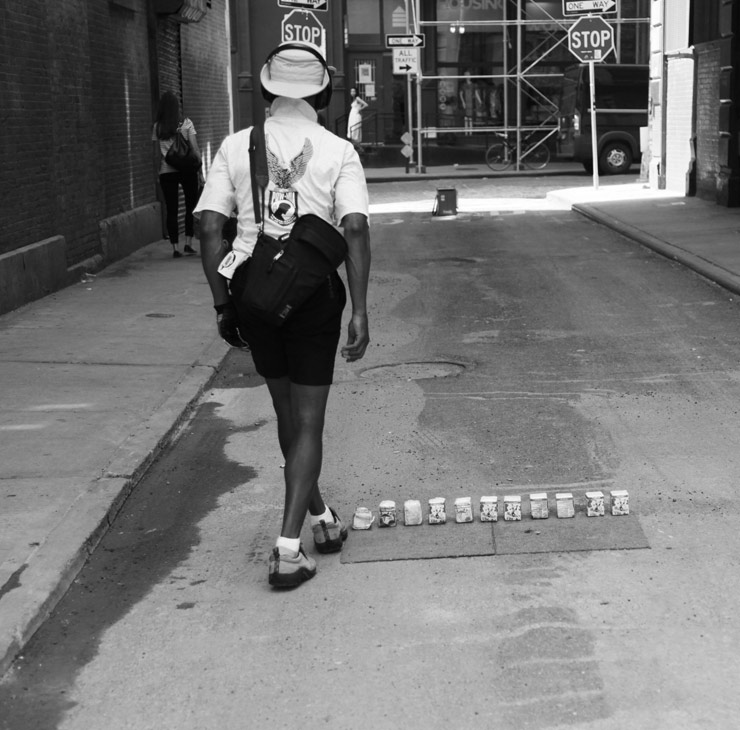
BSA Special Feature: Street Vendors in Abidjan. YZ Yseult Digan
“I pay attention to the intensity of the gaze and the posture, so the passerby is challenged and seeks to question the project.”
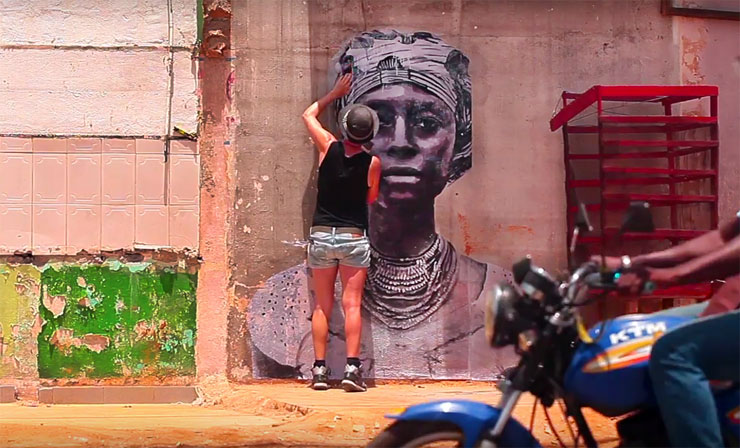
A sociological experiment and intervention on the streets by the French Street Artist YZ takes place in Abidjan and camera work in the crowds allows you to appreciate the action on the street. A city of 4.7 million people and the economic capital of Côte d’Ivoire, the city has a lively culture of street vending that is unregulated and often populated by children.
YZ speaks with the folks she meets who are vending, who she refers to as “girls” although many are women. Her goal is to better understand them, she says, and to create a Street Art campaign of their portraits.
“I realized that their situation was very different from the men. So I wanted to know more about them. So I started the project ‘Street Vendors’,” she says.
The Yok & Sheryo: Public Silo Trail. Albany, Australia
The Yok & Sheryo brought a clever creature across an enormous four tower wall in Albany, Australia as part of a public art program funded by private interests like BHP, the Anglo-Australian multinational mining, metals and petroleum company. The Public Silo Trail is bringing artists like HENSE from the US and Phlegm from the UK to paint Artworks on grain silos, transformer boxes and all sorts of unexpected infrastructure to connect a series of regional towns.
“Chile Estyle.” Trailer
“Every social movement creates a cultural response,” says an organizer from the late 1960s who helps us trace the origins of Chilean Street Art and graffiti to the murals that became a crucial part of public discourse here. “We painted all of Chile for the Allende election campaign.” The trailer for the upcoming movie now in post production features a highlight of INTI and many open discussions of the evolution of graffiti and muralism simultaneously, eventually leading to the fascination for murals that currently reigns.
Faith XLVII Talks About Her Installation for “Beyond The Streets”
Faith leads you to the abandoned spaces and investigations of lives and stories that she often conducts when looking for the ideal places to make her art. “There is almost a holy, sacred feeling in that silence,” she says as she traverses places and stories and brings them together for an alter of sorts in the new exhibition now in Los Angeles called “Beyond the Streets.”
 BROOKLYN STREET ART LOVES YOU MORE EVERY DAY