Artists

Nevercrew’s ‘Switch’ Elephant: A Visual Metaphor for Time and Awareness

Nevercrew’s ‘Switch’ Elephant: A Visual Metaphor for Time and Awareness

We are skillful in avoiding discussing the elephant in the room: our relationship with the Earth and its natural elements, which are negatively impacted by our actions. This is perhaps the biggest issue that polluting industries and war-makers try to ignore, even as they steal the future from all of our children.

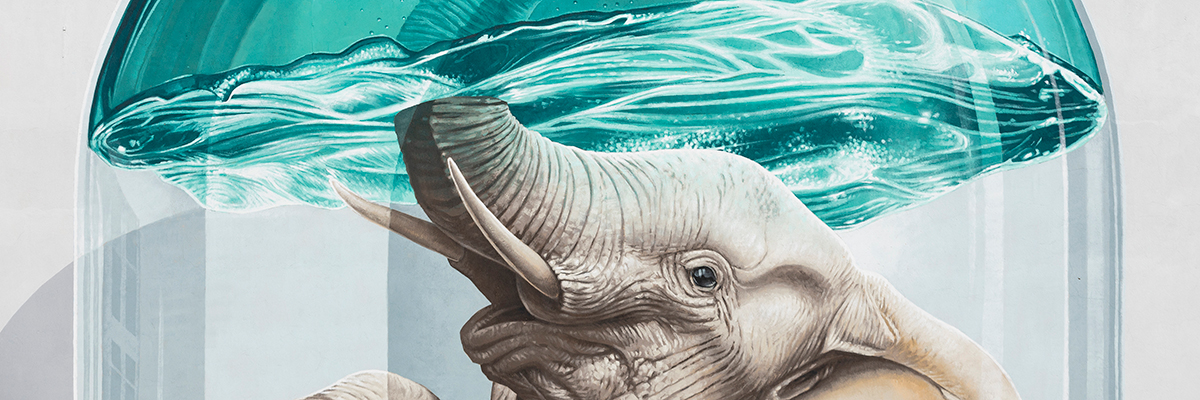
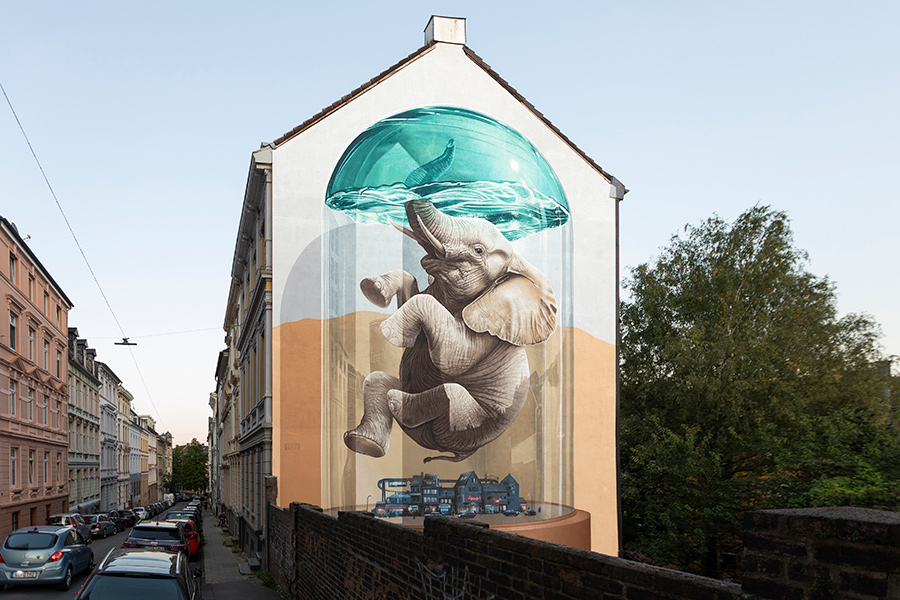
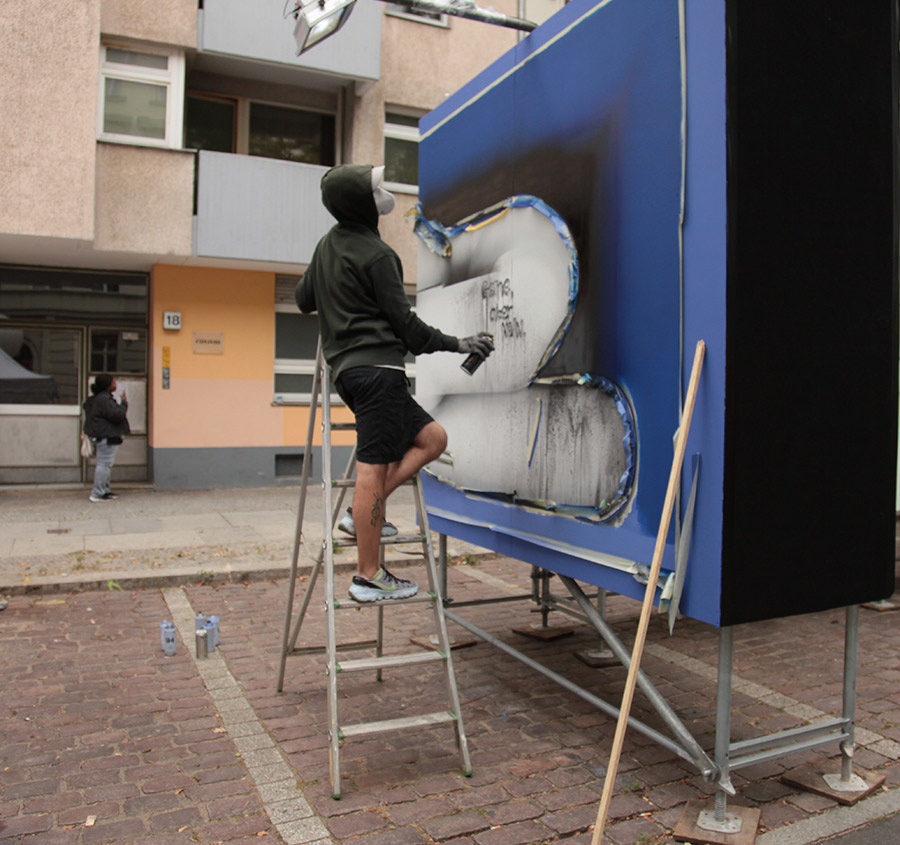
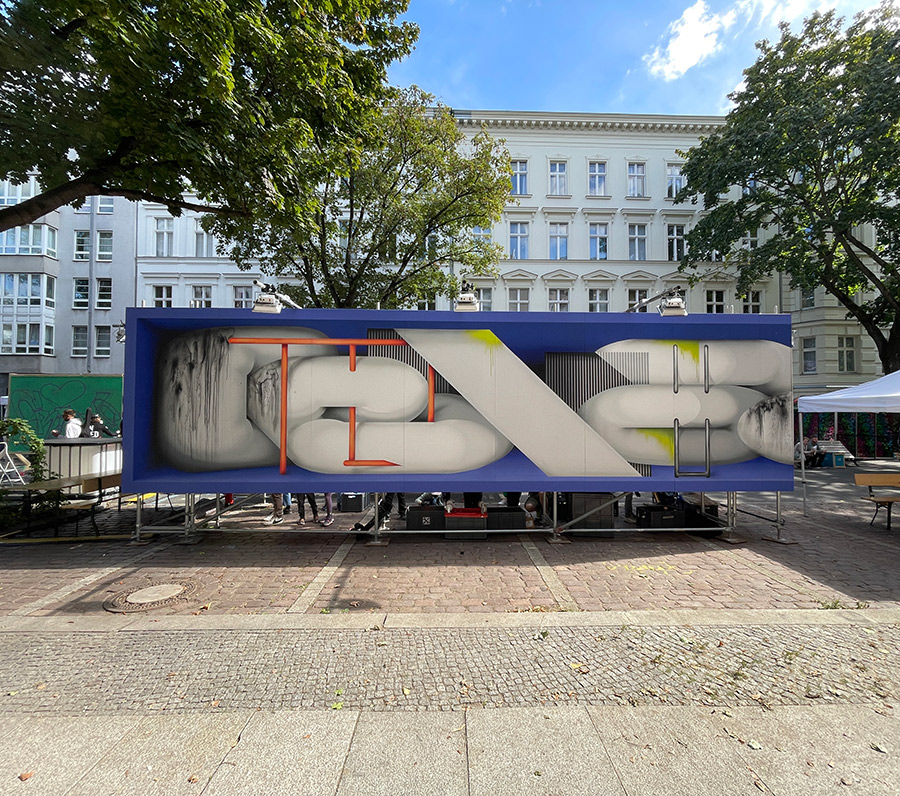
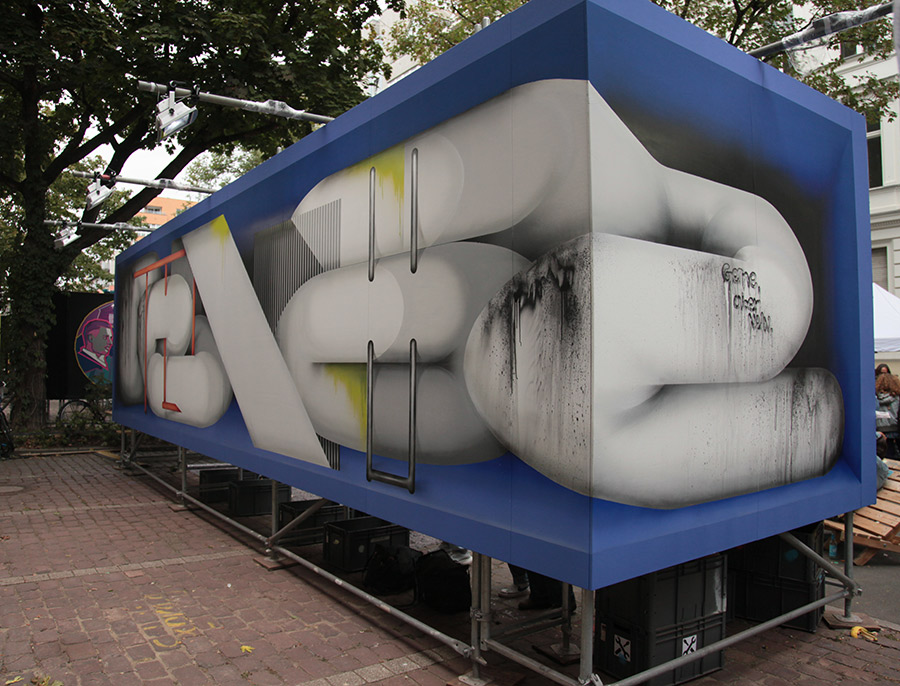
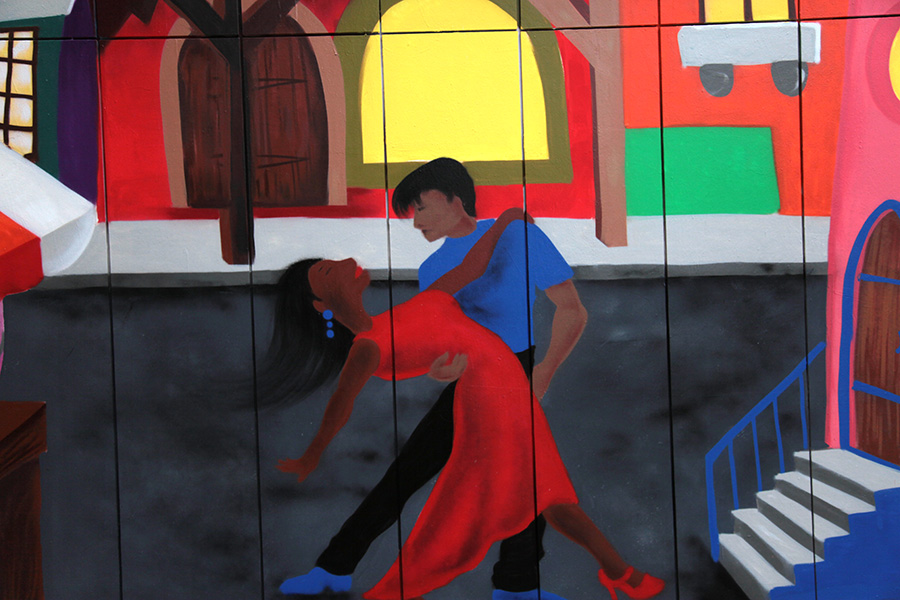
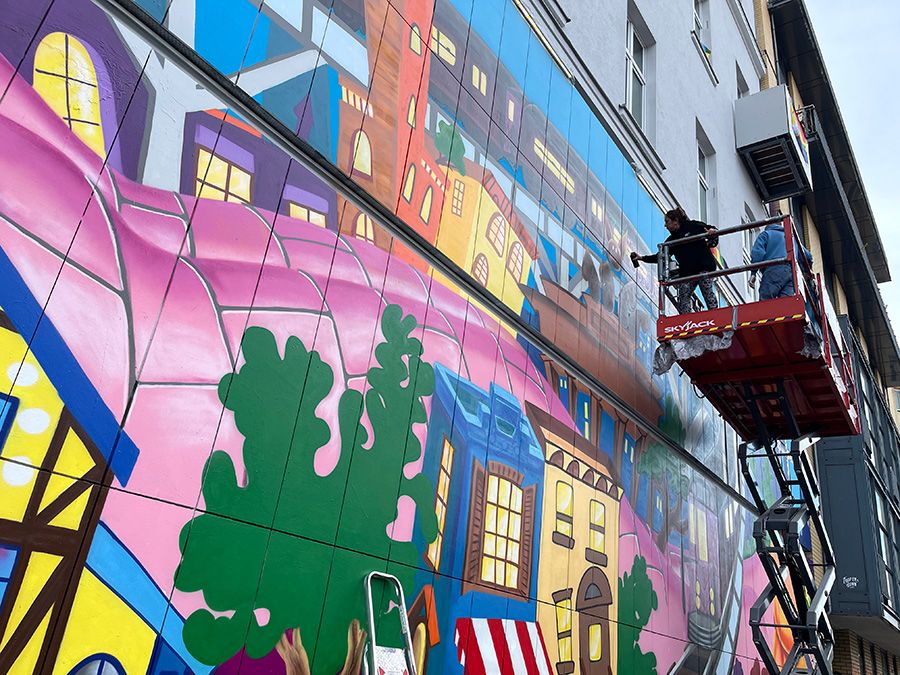
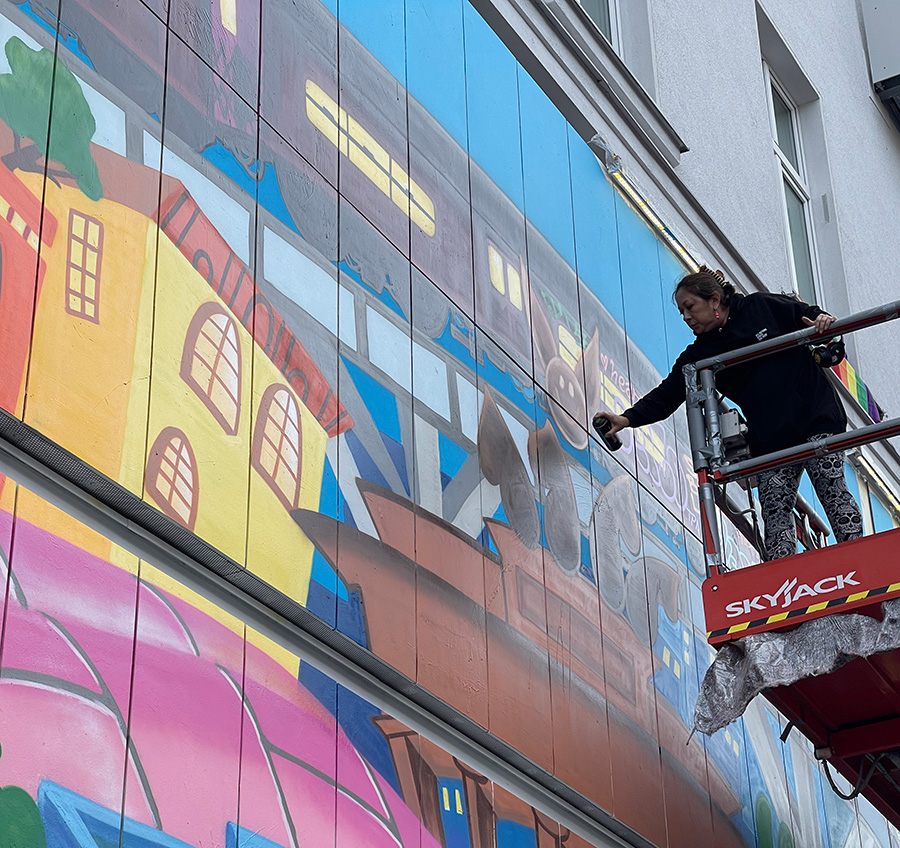
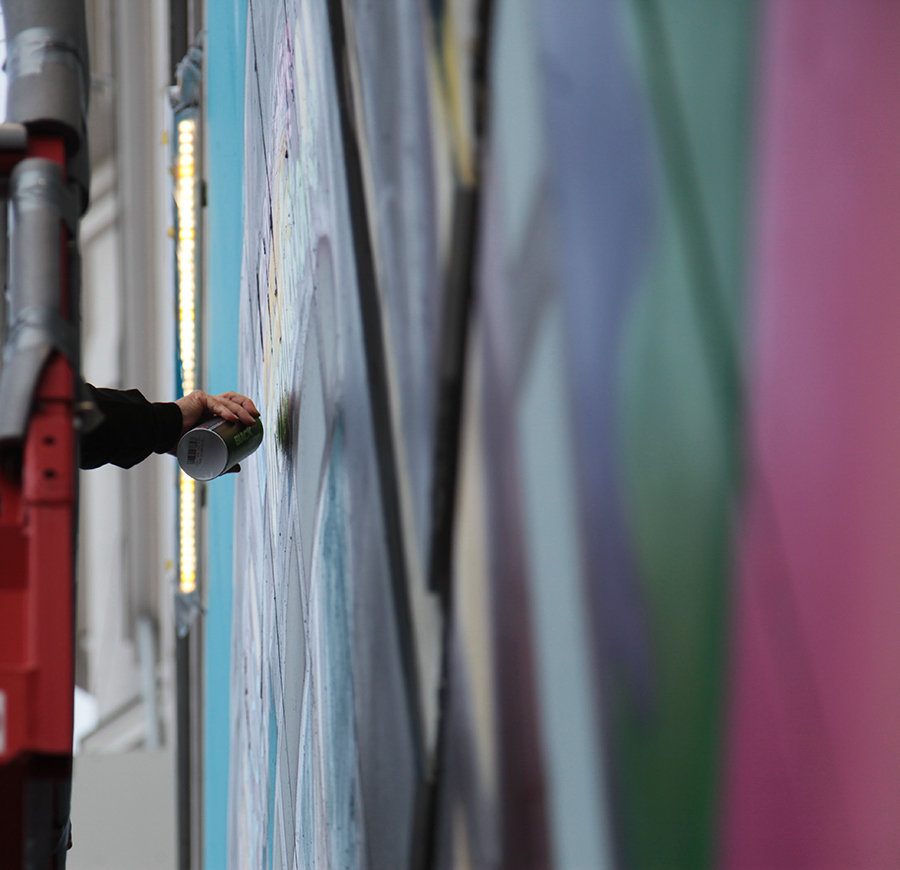
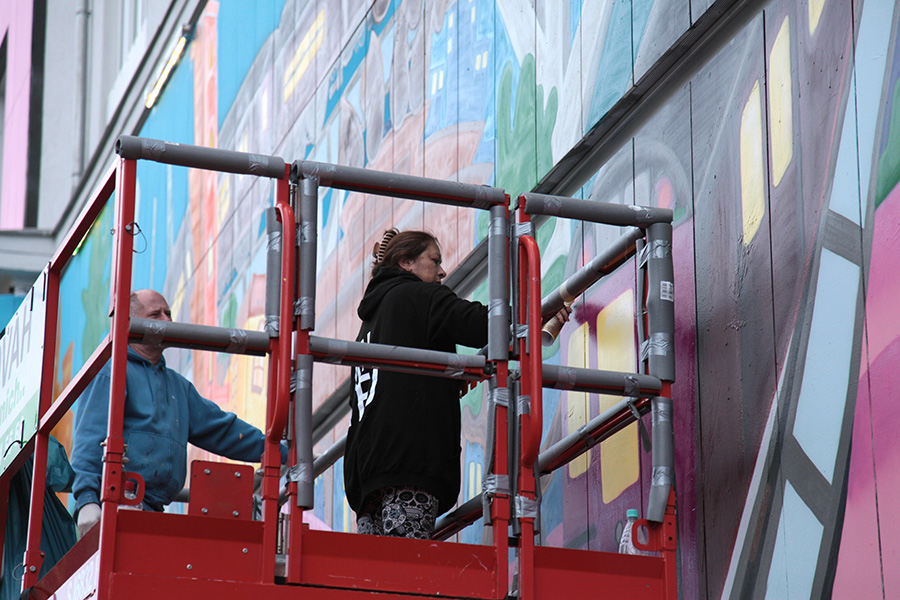
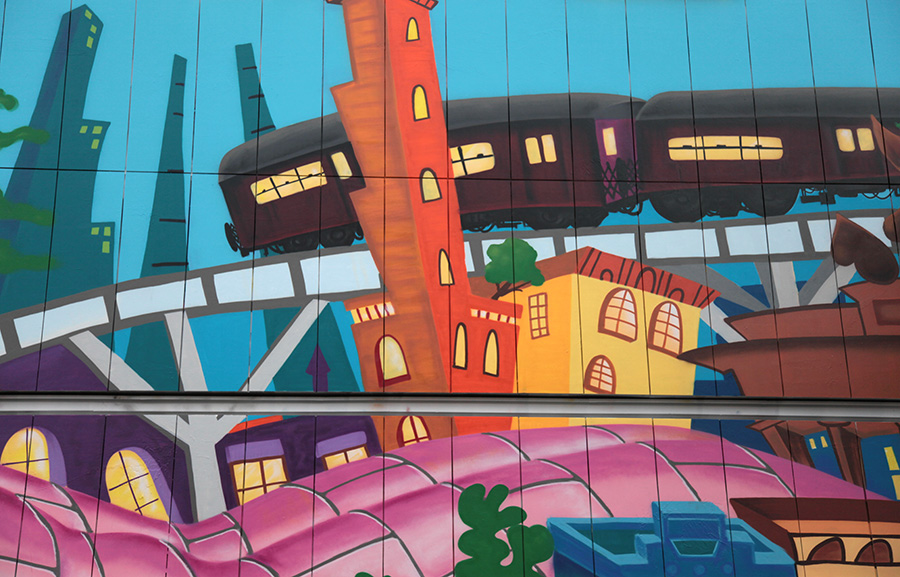
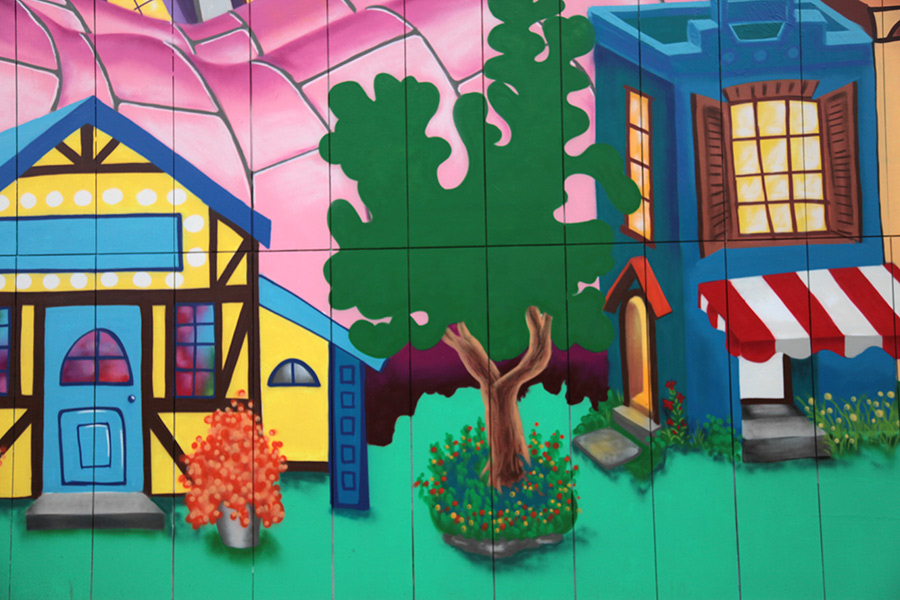
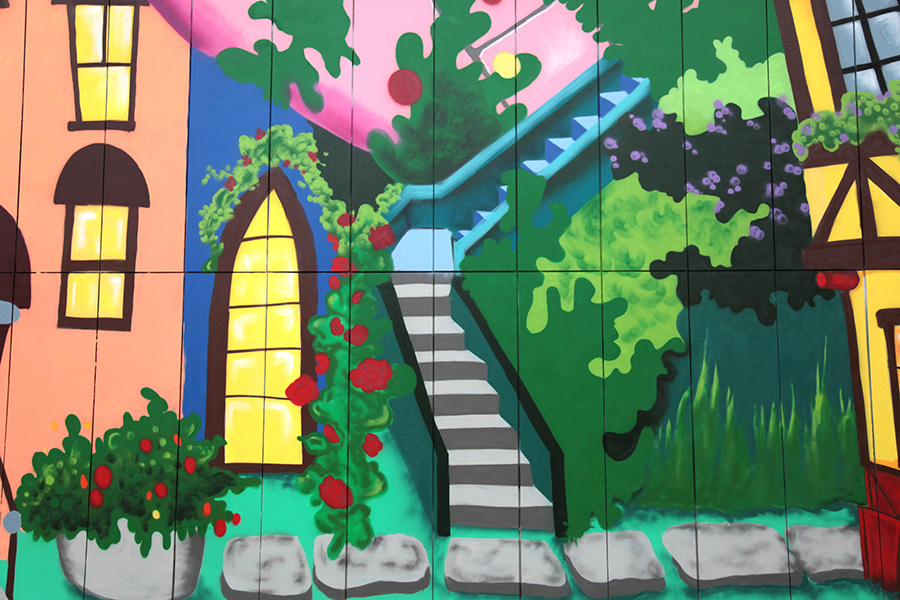
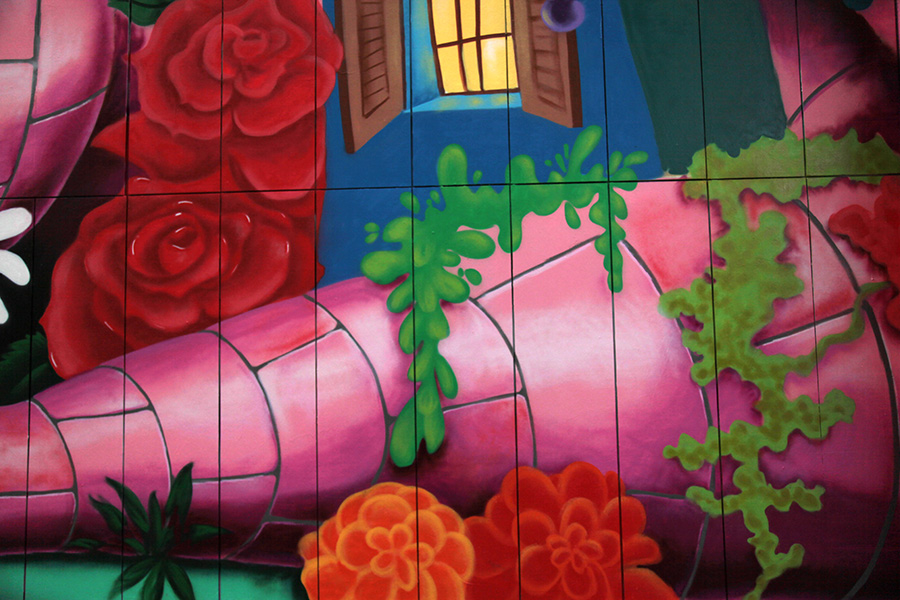
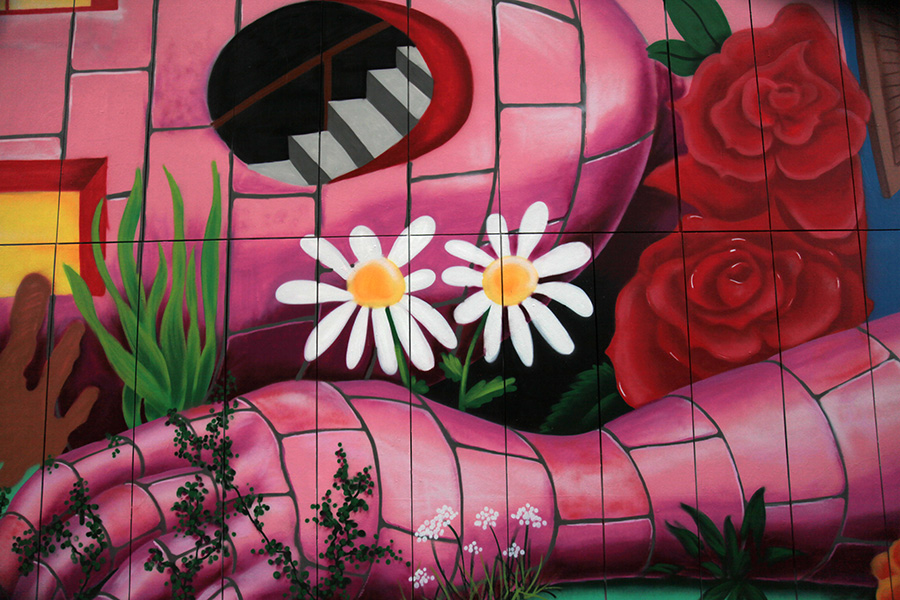
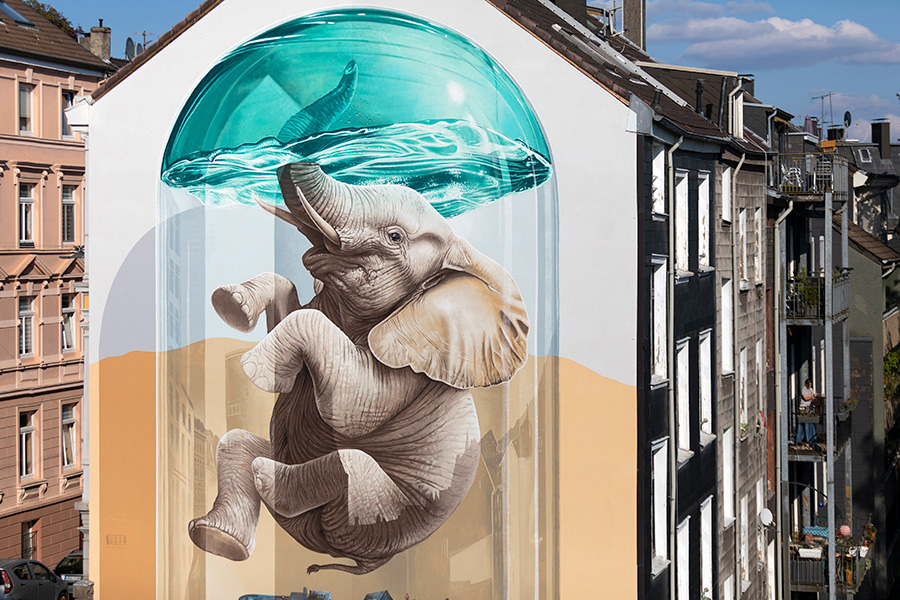
Swiss duo Nevercrew masterfully depicts this metaphor in their mural “Switch,” created in Wuppertal, Germany, for the Urbaner Kunstraum and curated by WupperOne929 and Valentina Maoilov. While their description of the work may seem deliberately vague, a closer examination reveals a call to reflect on pressing issues.
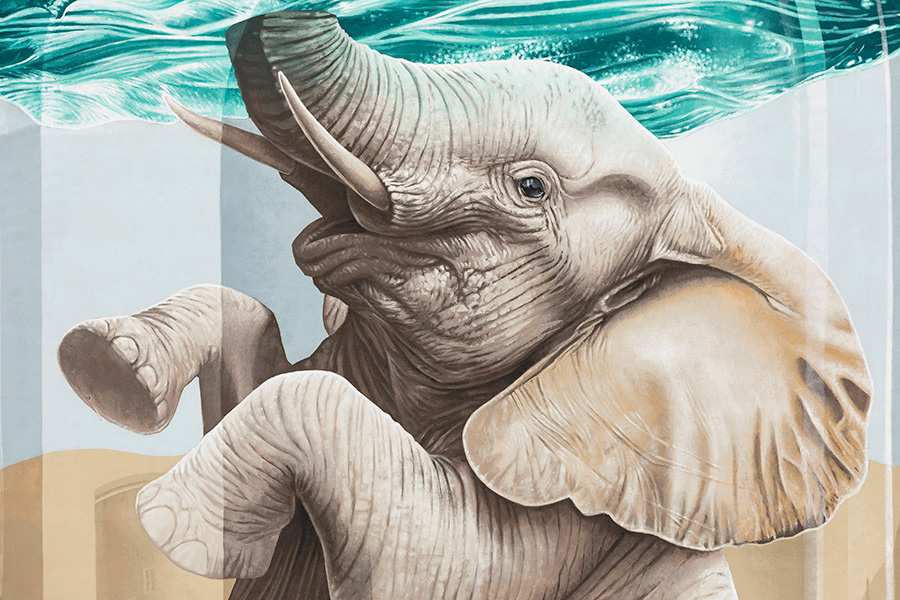
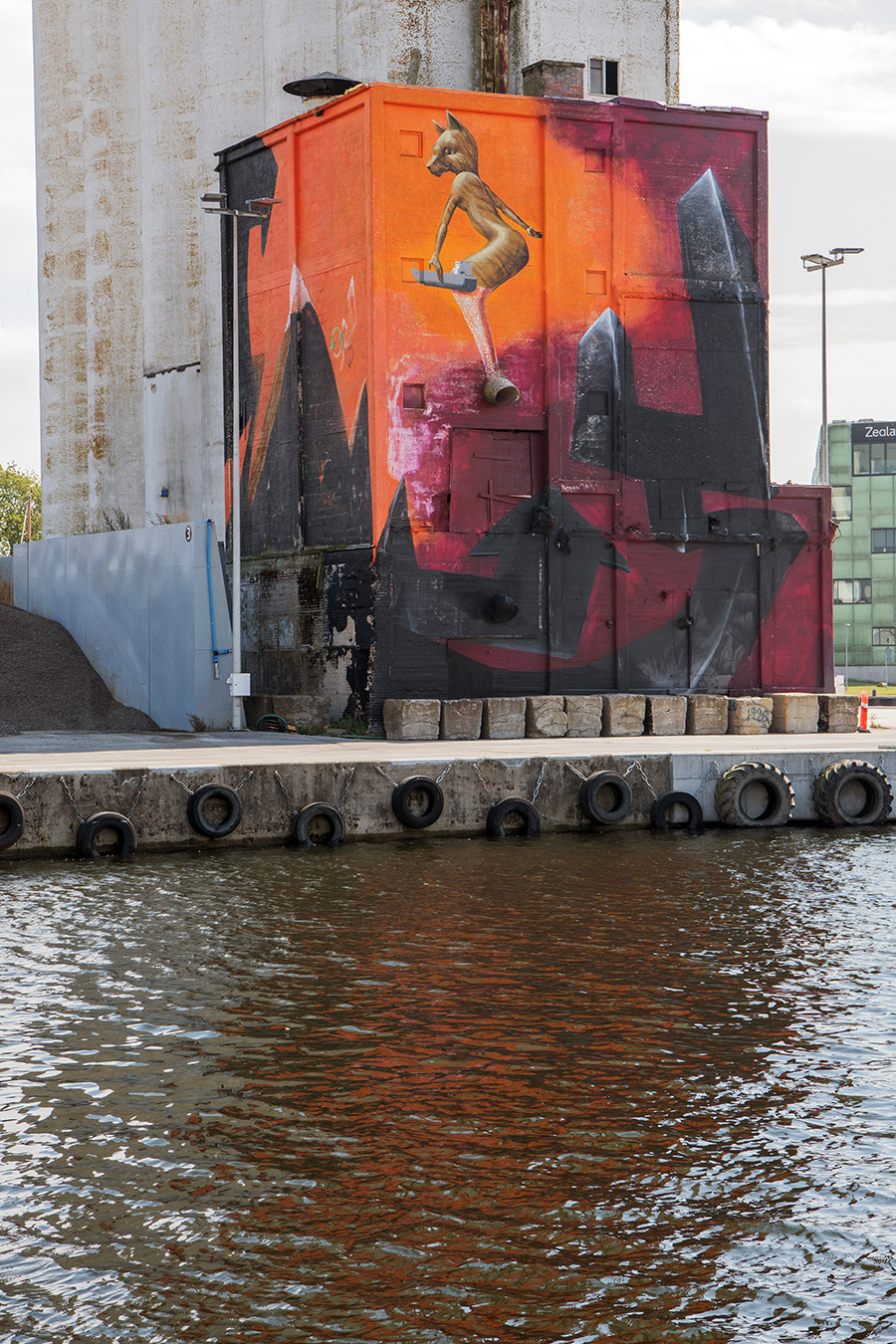
NEVERCREW / Christian Rebecchi & Pablo Togni. “Switch”. Urbaner Kunstraum Wuppertal. Germany. (photo © courtesy of the artists)

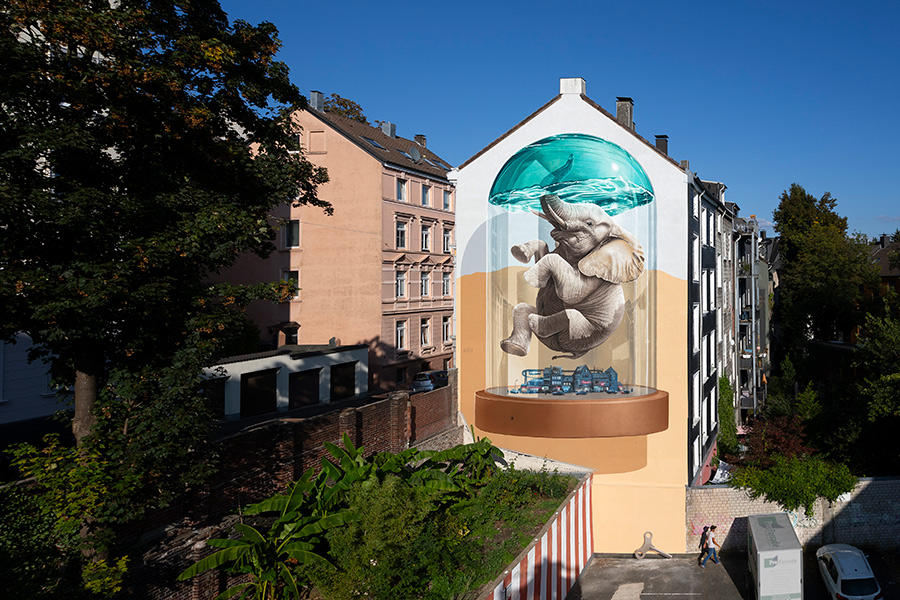
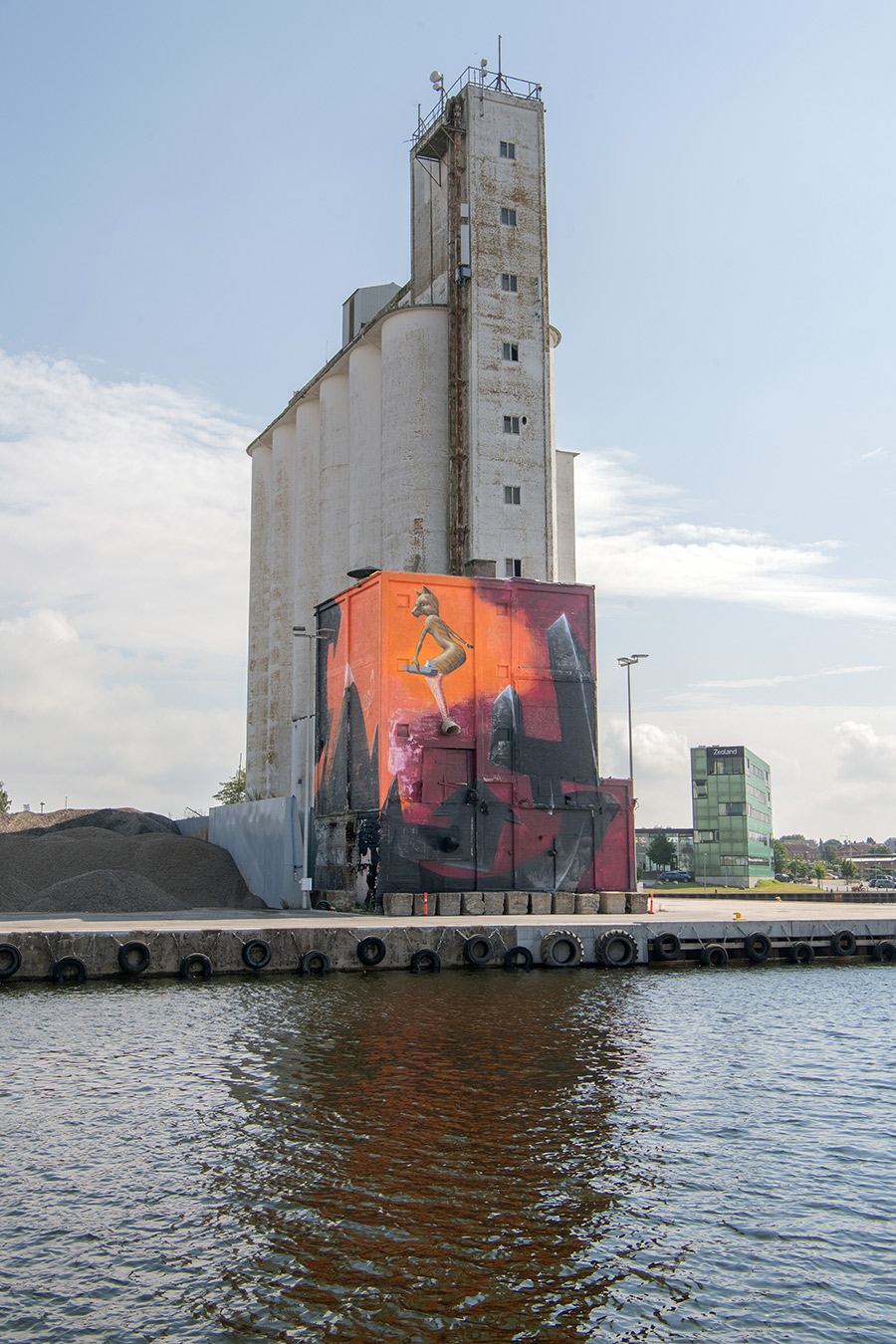
The mural appears to explore themes of perspective, change, and awareness. The glass-domed shape suggests the passage of time, symbolizing urgency and the continuous flow between different states, such as the past, present, and future. The floating elephant with its trunk above water might represent a struggle for survival or the need to adapt to changing circumstances. Elephants are often symbols of wisdom and memory. In this context, the mural may illustrate a clash between the natural world and human-made environments, represented by the quaint town of modern consumers below.

Ultimately, the artwork seems to confront us with realities we often keep at a distance—urgent issues that demand our attention. It invites viewers to “switch” their perspectives and become more aware of the interconnections between nature, human actions, and the passage of time.
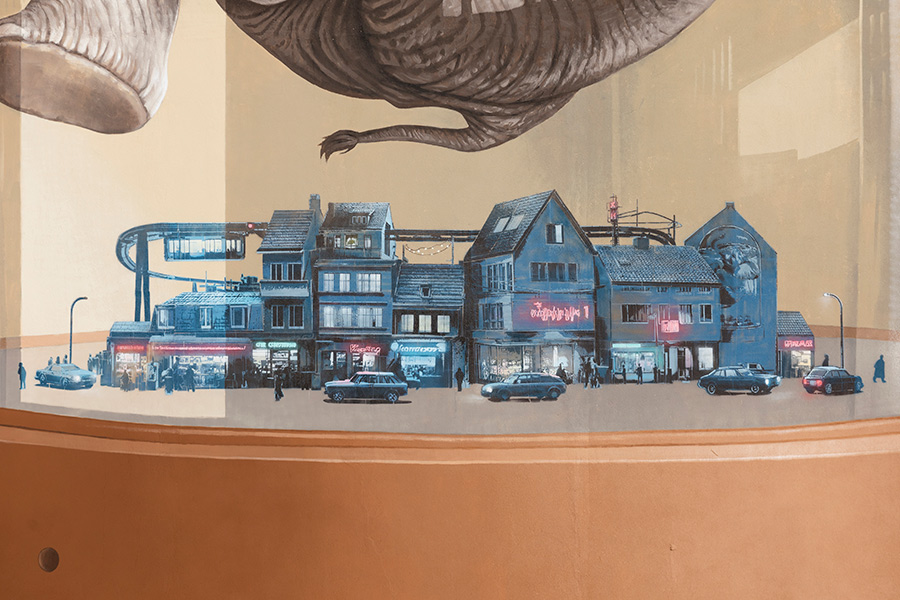
NEVERCREW / Christian Rebecchi & Pablo Togni. “Switch”. Urbaner Kunstraum Wuppertal. Germany. (photo © courtesy of the artists)

No one is discussing the elephant in the room: our relationship with the Earth and its natural elements, which are negatively impacted by our actions. This is perhaps the biggest issue that polluting industries  try to ignore, even as they steal the future from our children.

Swiss duo Nevercrew masterfully depicts this metaphor in their mural “Switch,” created in Wuppertal, Germany, for the Urbaner Kunstraum and curated by WupperOne929 and Valentina Maoilov. While their description of the work may seem deliberately vague, a closer examination reveals a call to reflect on pressing issues.
No one is discussing the elephant in the room: our relationship with the Earth and its natural elements, which are negatively impacted by our actions. This is perhaps the biggest issue that polluting industries  try to ignore, even as they steal the future from our children.

Swiss duo Nevercrew masterfully depicts this metaphor in their mural “Switch,” created in Wuppertal, Germany, for the Urbaner Kunstraum and curated by WupperOne929 and Valentina Maoilov. While their description of the work may seem deliberately vague, a closer examination reveals a call to reflect on pressing issues.
NEVERCREW / Christian Rebecchi & Pablo Togni. “Switch”. Urbaner Kunstraum Wuppertal. Germany. (photo © courtesy of the artists)
Read more
Apples, Clogs and Pottery: Parees Celebrates Asturian Identity

Apples, Clogs and Pottery: Parees Celebrates Asturian Identity

Parees Festival Brings Asturias’ Past and Future to Life

In its seventh year, the Parees Festival continues to enrich Oviedo’s urban landscape, adding three new murals and bringing its collection to a remarkable total of forty works. Local, national, and international artists have left their mark on the city through this contextual muralism festival, each piece echoing the rich cultural fabric of Asturias. Organized by the Oviedo Municipal Foundation of Culture, Parees stands out as one of the few mural festivals that authentically reflects the city’s community, history, and environment—almost as if the walls are narrating the soul of Oviedo.

This year’s festival underscores its commitment to Asturian identity by paying tribute to regional symbols such as Faro pottery, the iconic wooden clog (madreña), and the apple, deeply ingrained in local tradition. Through a careful process of artistic mediation led by the festival’s curators and the involvement of the Asturian community, Parees has once again created art that dialogues with its surroundings. As festival director Eduard Crespo puts it, “Parees is not just an encounter with urban art; it is a celebration of our roots, a window to the past, and a projection toward the future of Asturias. This is the true essence of the festival: dialogue, reflection, and the shared celebration of our identity.”

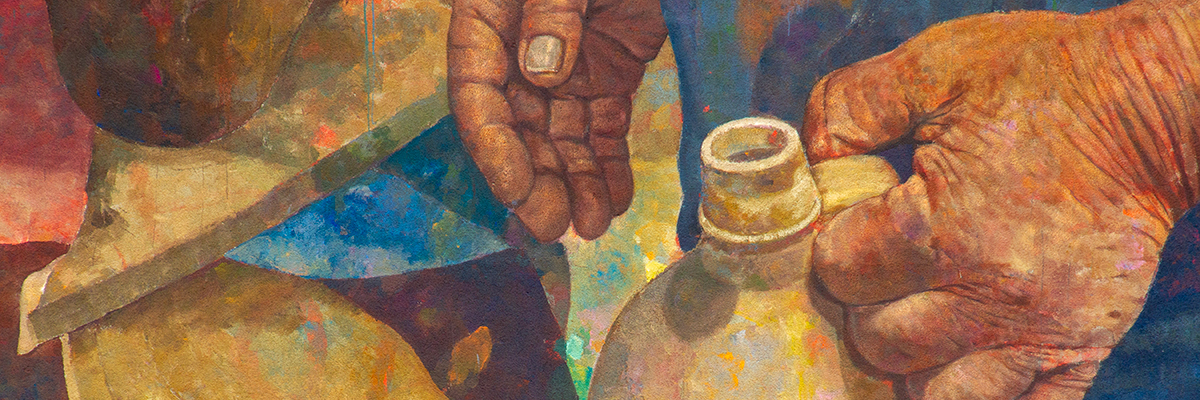
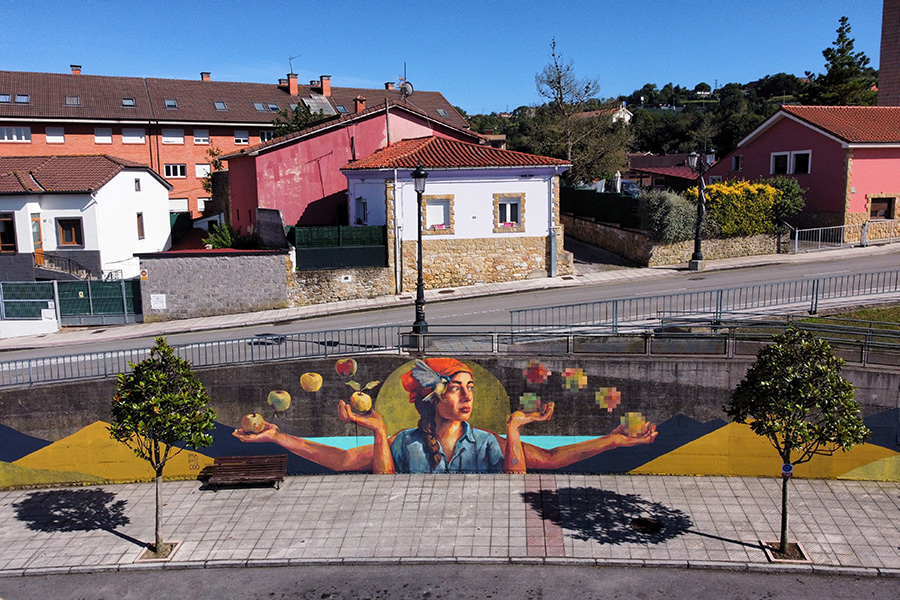
María Peña. (photo © Fer Alcala)

Parees: A Contextual and Participatory Approach

What sets the Parees Festival apart is its commitment to creating “contextualized murals” that go beyond decoration. Every mural results from a collaborative process involving the community, artists, and artistic mediators like the Raposu Roxu team. This participatory model allows murals to be authentic expressions of the local environment, giving residents a voice and capturing the region’s unique characteristics. With its focus on quality over quantity, Parees invests in each work’s durability and cultural significance, ensuring that each wall becomes a lasting visual conversation piece.

The festival extends this sense of dialogue and reflection beyond the walls, inviting residents and visitors to explore the murals through sustainable mobility initiatives like bicycle routes. In this way, Parees adds layers to Oviedo’s streetscape and encourages a thoughtful, environmentally friendly exploration of urban art.
María Peña. (photo © Mira Hacia Atras)

Mapecoo: Reflection on the Future of the Asturian Apple
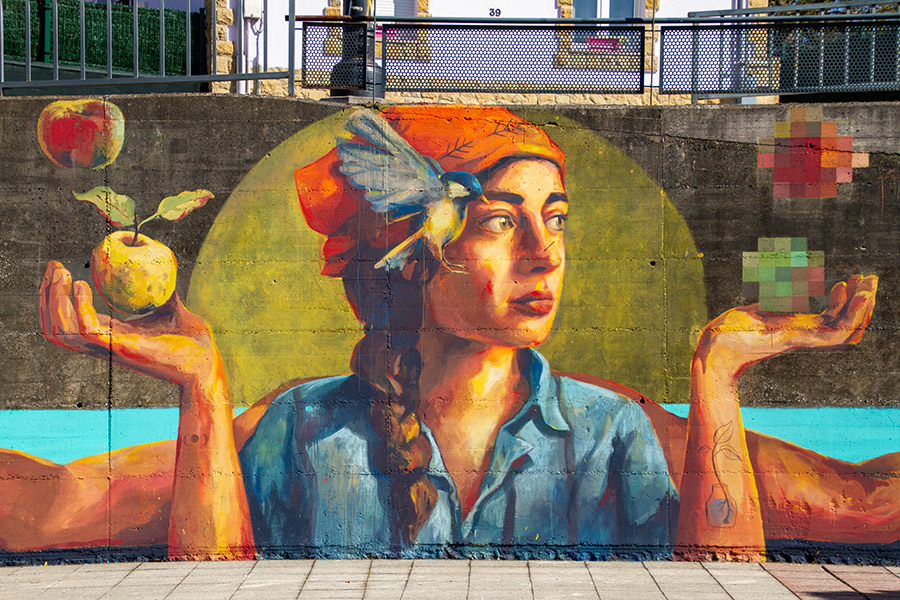
María Peña, known artistically as Mapecoo, brings attention to the uncertain future of Asturias’ emblematic apple, particularly those with a Denomination of Origin. In her mural, Peña visually contrasts traditional apple cultivation with elements of the digital age, possibly addressing the tension between preserving this essential regional crop and the fast-changing world around it. A vibrant palette and cultural symbolism; is it a tribute or a call to action?

María Peña. (photo © Mira Hacia Atras)
María Peña. Mapecoo. (photo © Fer Alcala)

Marat Morik: The Legacy of Faro
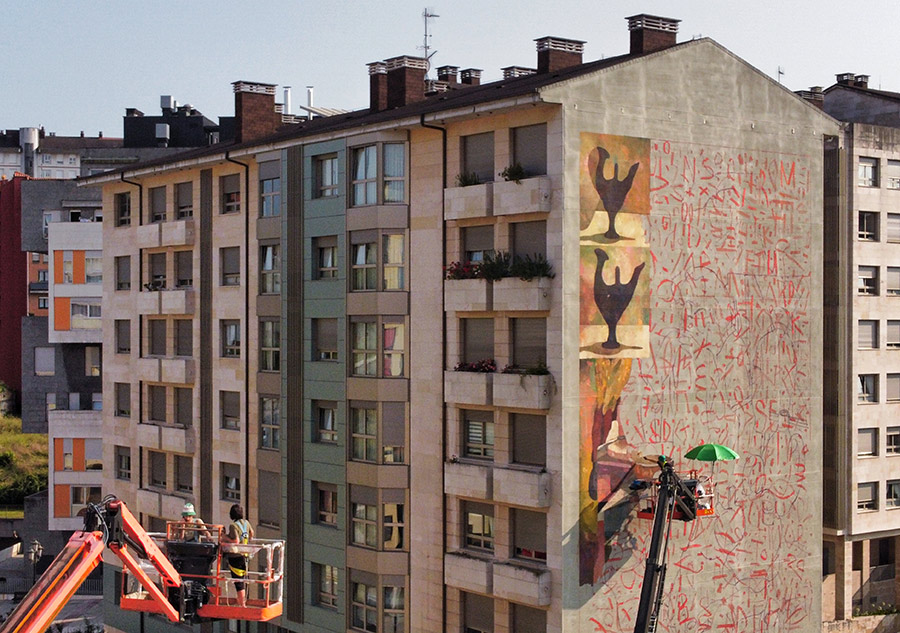
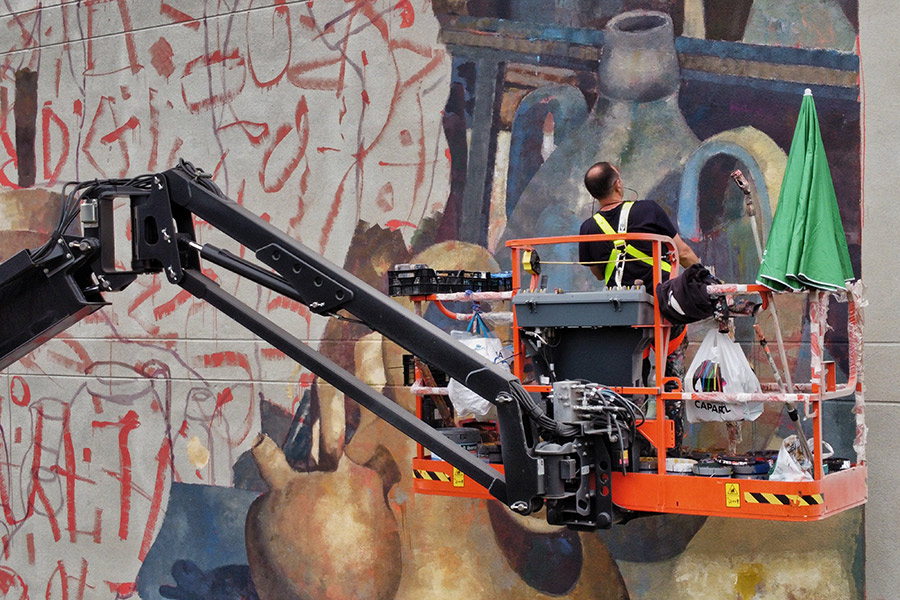
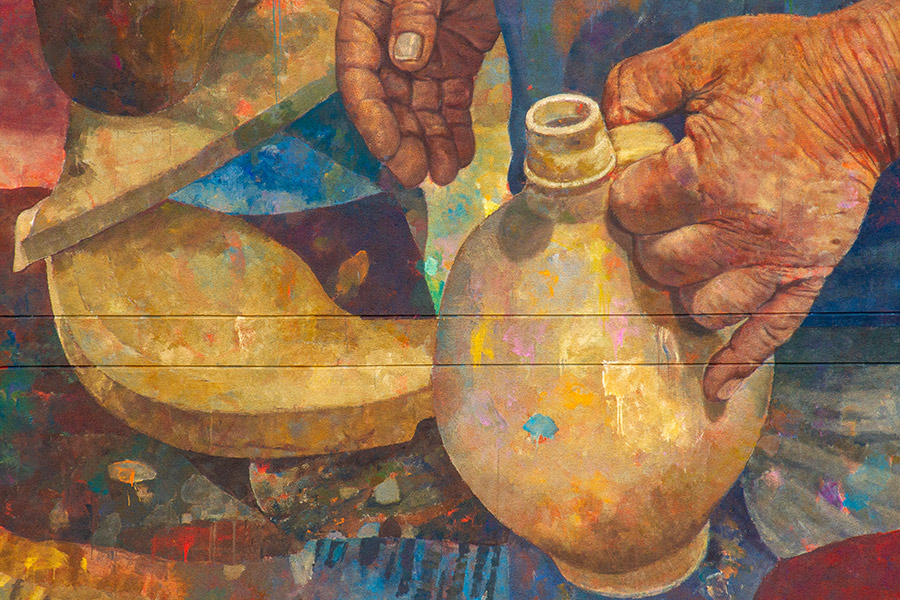
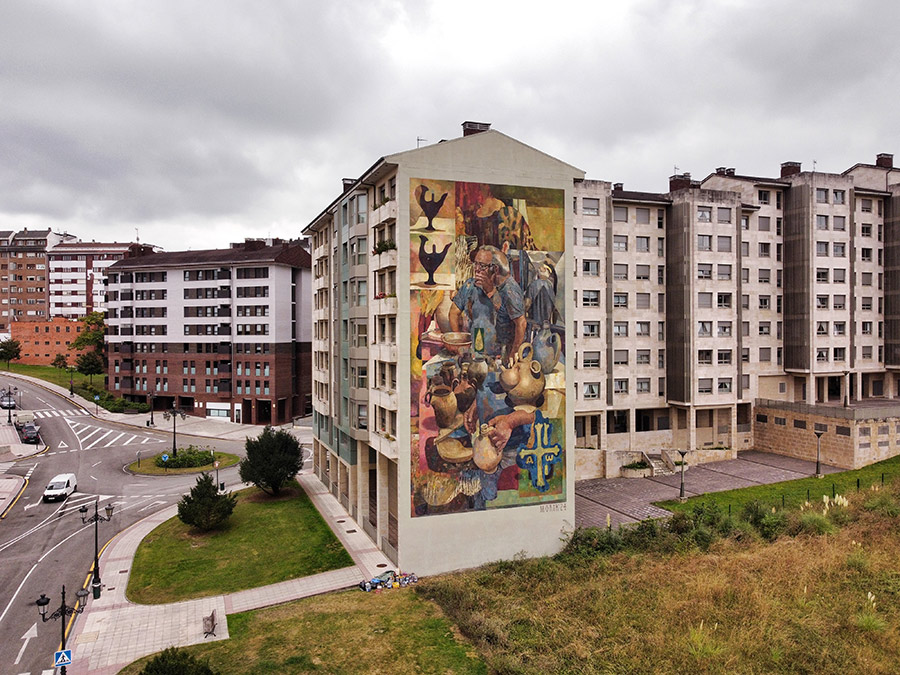
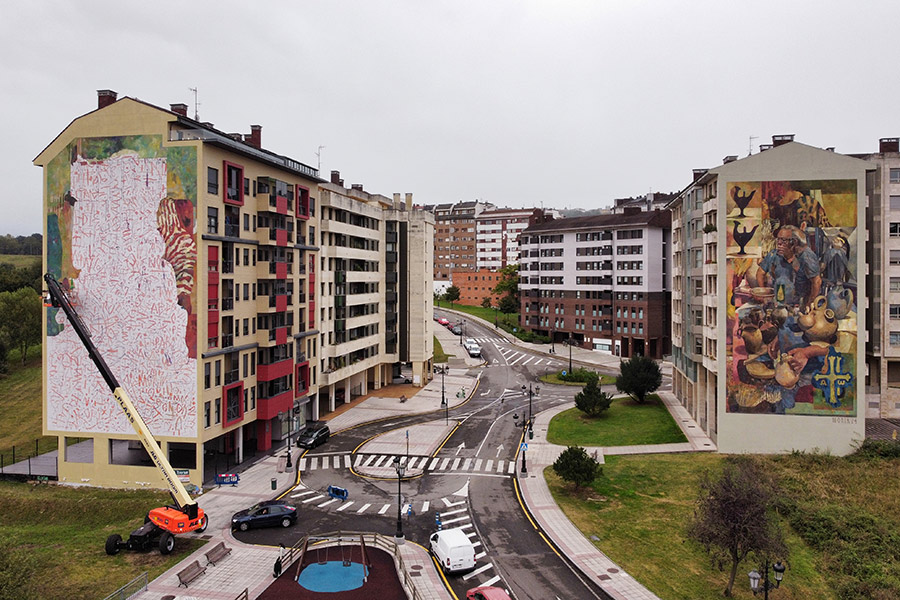
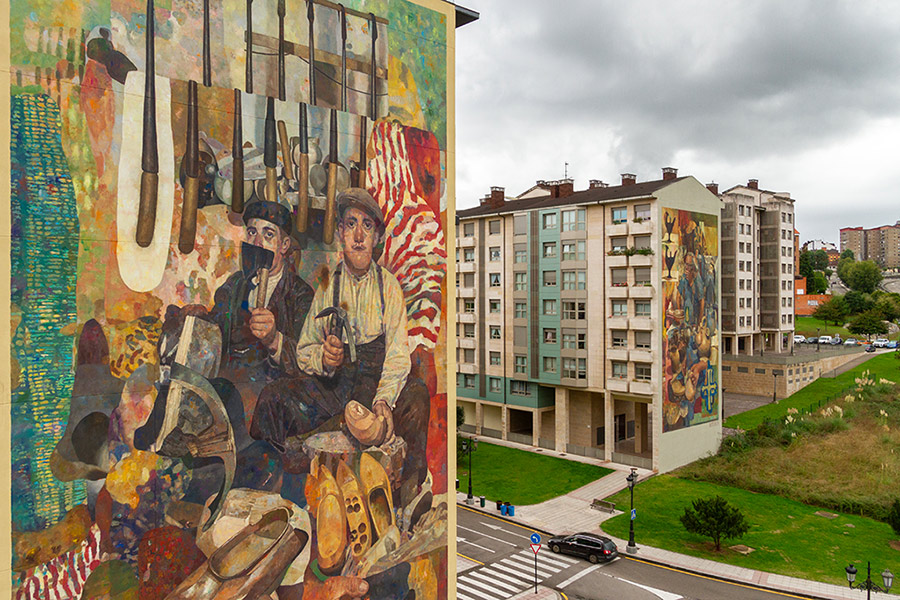
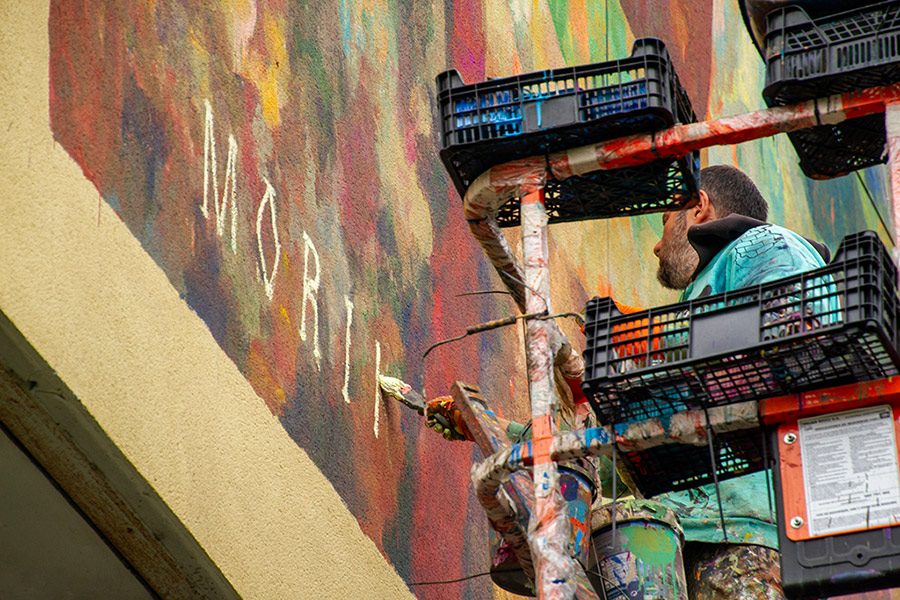
Marat ‘Morik’ Danilyan, an artist recognized for his dynamic compositions and reflections on cultural heritage, immortalizes the centuries-old pottery tradition of Faro in his mural on Luis Álvarez Fueyo Street. The artwork captures the essence of this ancient craft, urging passersby to acknowledge, celebrate, and hopefully preserve the deep cultural legacy that Faro pottery represents for Asturias.
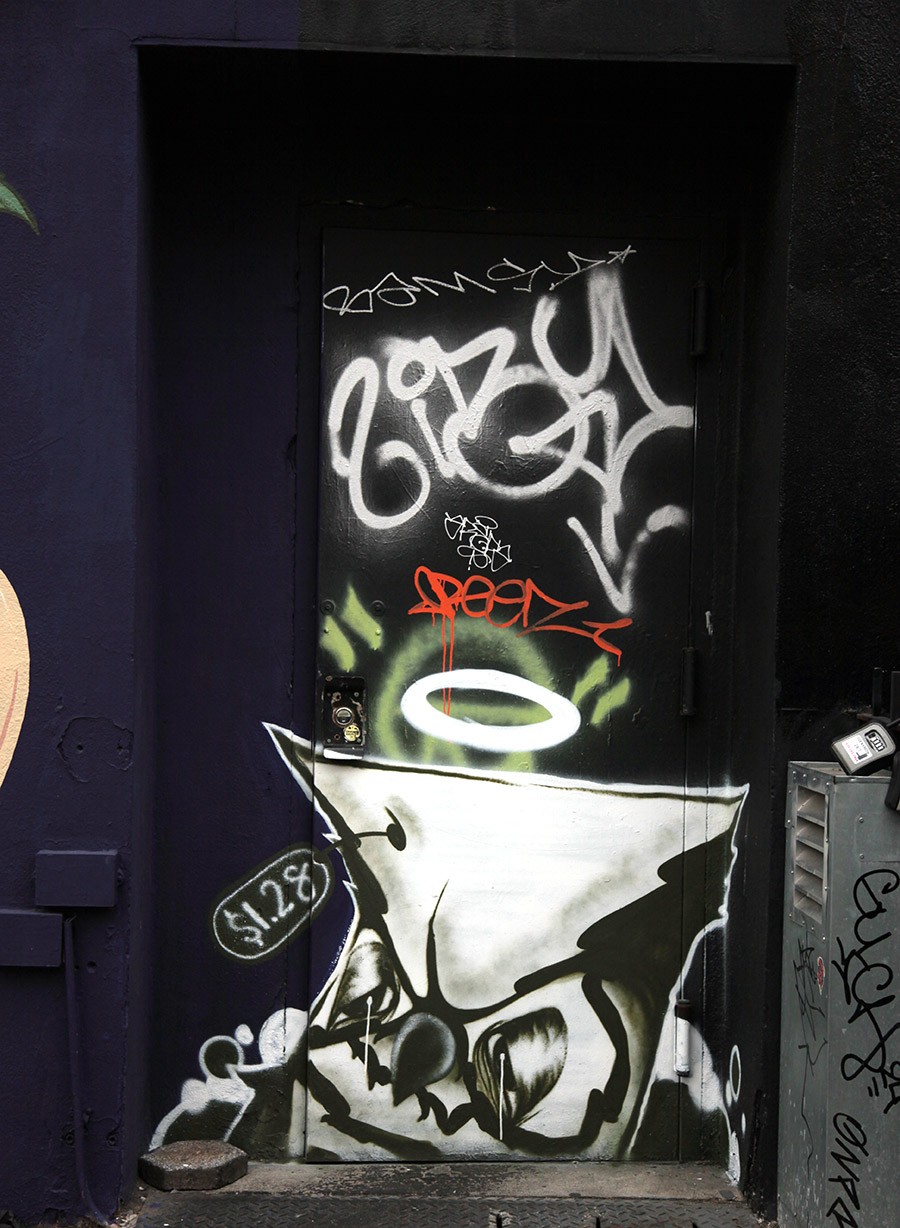
Marat Morik. Faro. (photo © Fer Alcala)
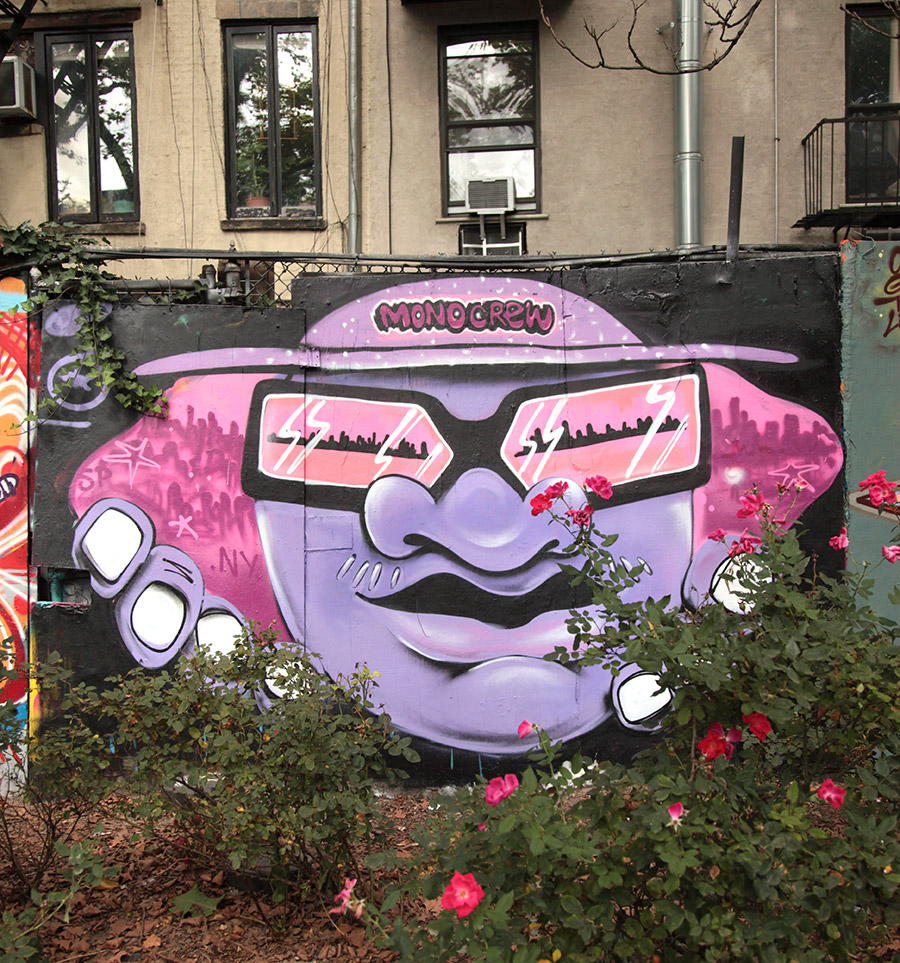
Marat Morik. Faro. (photo © Mira Hacia Atras)
Marat Morik. Faro. (photo © Fer Alcala)

Marat Morik: Tribute to the Asturian Madreña
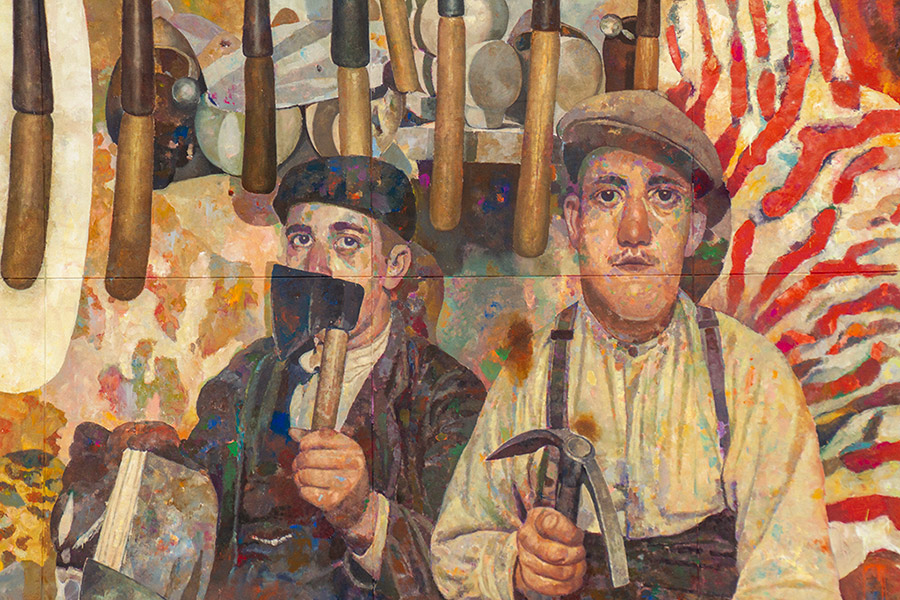
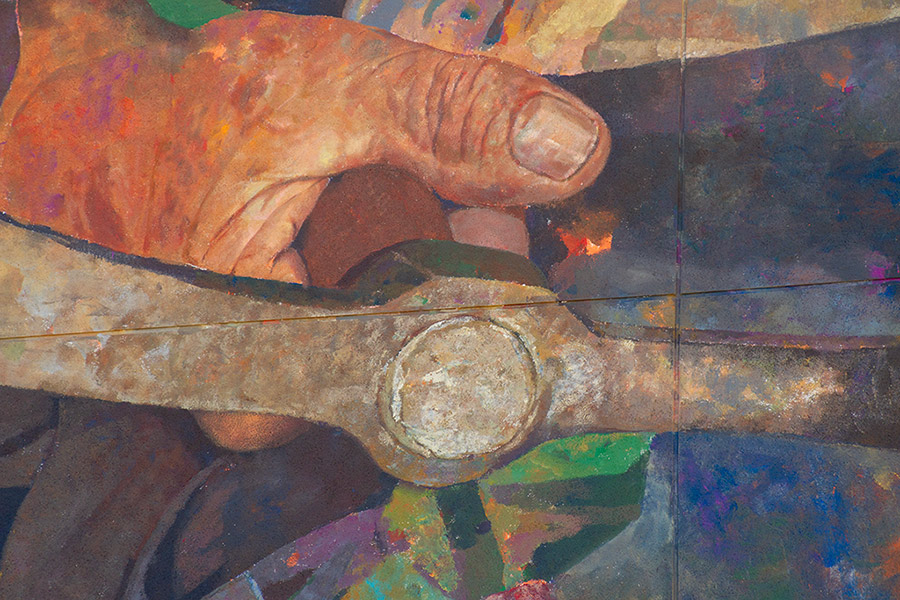
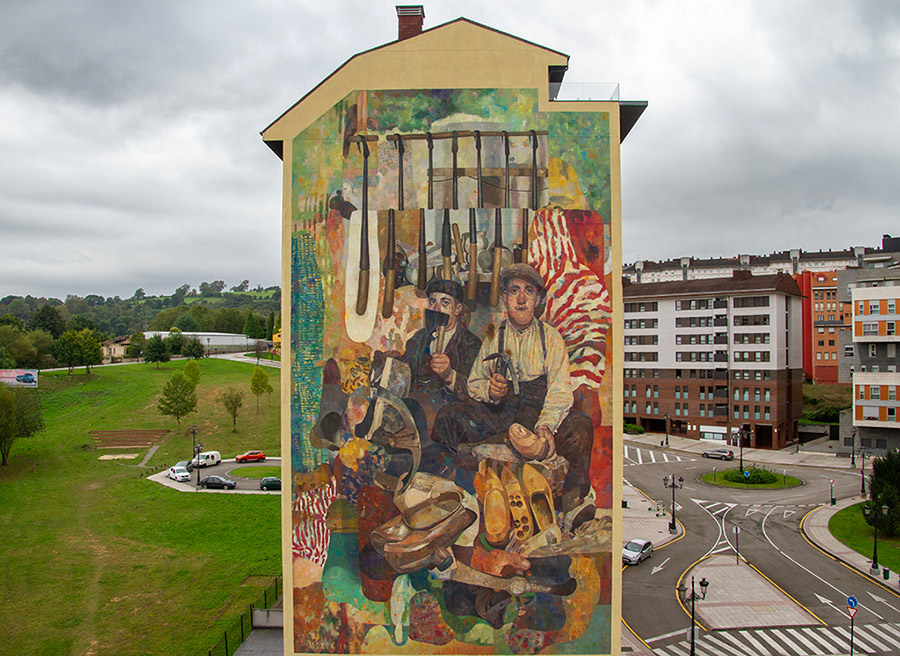
On the same street, Morik pays homage to the madreña—a symbol of Asturian craftsmanship and heritage. Through this mural, he is preserving memories of the madreñera trade while sparking a reflection on the importance of sustaining traditional skills in the face of generational change. The piece resonates with Morik’s signature style, blending realism and not so subtle social commentary.

Marat Morik. Asturian madreña. (photo © Mira Hacia Atras)
Read more
BSA Images Of The Week: 09.29.24

BSA Images Of The Week: 09.29.24

Welcome to BSA Images of the Week!

Street art duo Faile is reshaping the scene, “designing for a new world” in New York this week with their latest venture. Known for their early days of illegal street art in Brooklyn two decades ago, Faile now takes a bold step forward through their partnership with Herman Miller. The collaboration results are nothing short of innovative, distinctive, and wildly imaginative – the kind of creativity we’ve come to expect from these guys, who continue to make the path by walking. Patrick and Patrick have never shied away from taking risks in exploring new techniques of image combination and manipulation. Congratulations to them and their team for yet another remarkable leap!

New York never stops, even when hosting its most high-profile guests. Just this past Friday, a defiant Benjamin Netanyahu addressed the UN, practically declaring war on the world, while Mayor Eric Adams stood in court, pleading “Not guilty, your Honor,” to charges of bribery and wire fraud tied to alleged foreign donations for official favors. Meanwhile, former President Trump met with Ukrainian President Zelensky to discuss the ongoing war with Russia—and likely debated how much more US taxpayers should contribute instead of addressing pressing issues at home like housing for the homeless or universal Medicare for All.

Amid all this, the city’s pulse is changing with the season. The leaves are turning stunning shades of yellow, orange, and red, and the streets are alive with vibrant murals, graffiti, and street art—both legal and not. New York’s energy is palpable this week, and we’re thrilled to welcome visitors from around the world while showcasing the street works from sister cities like Brooklyn and Berlin.

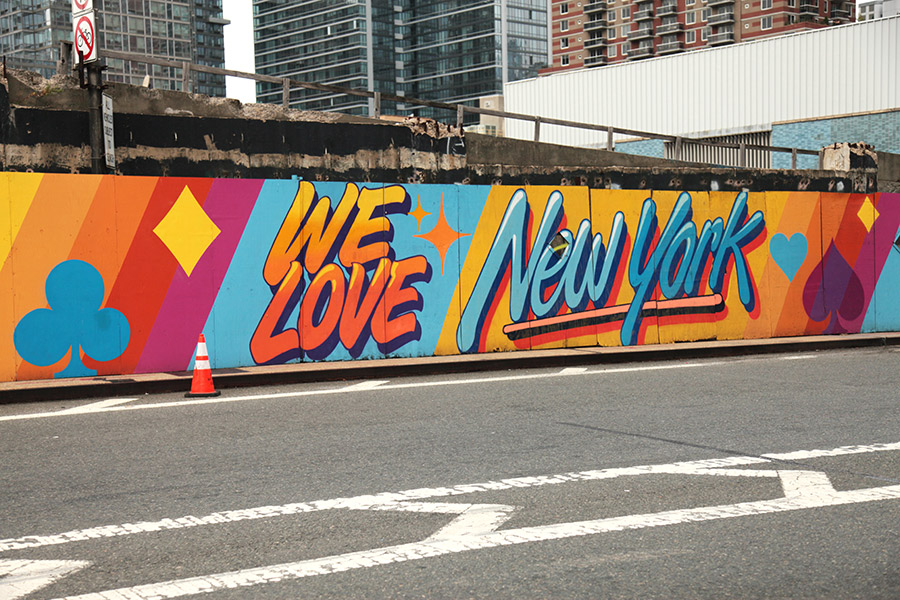
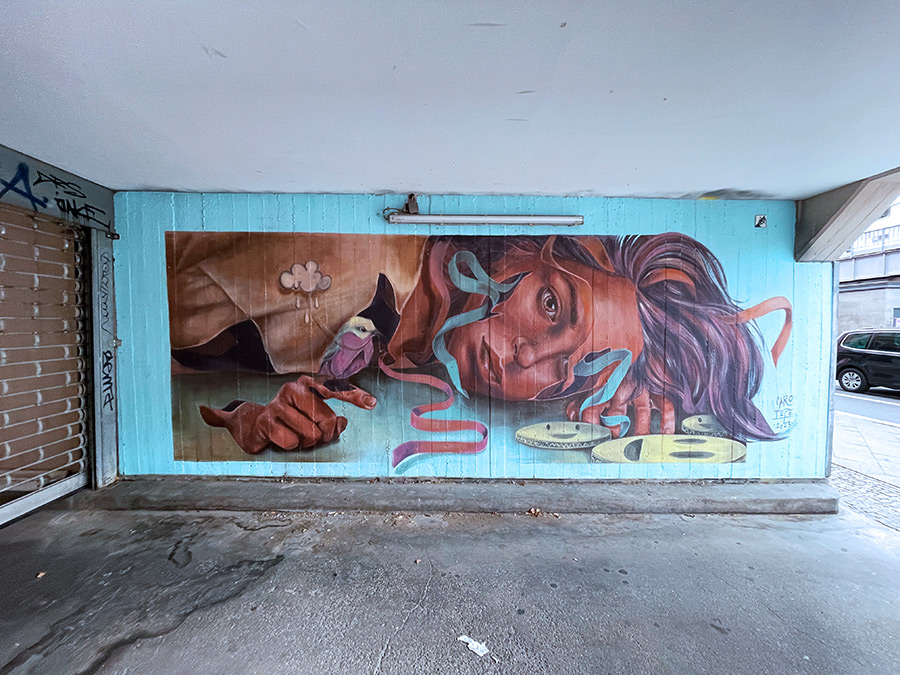
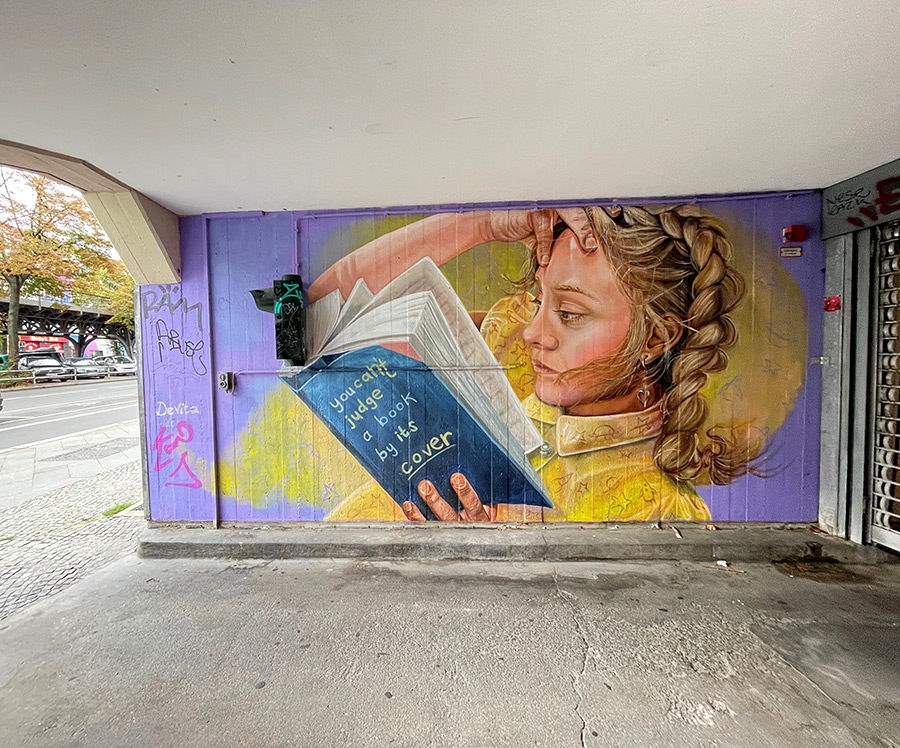
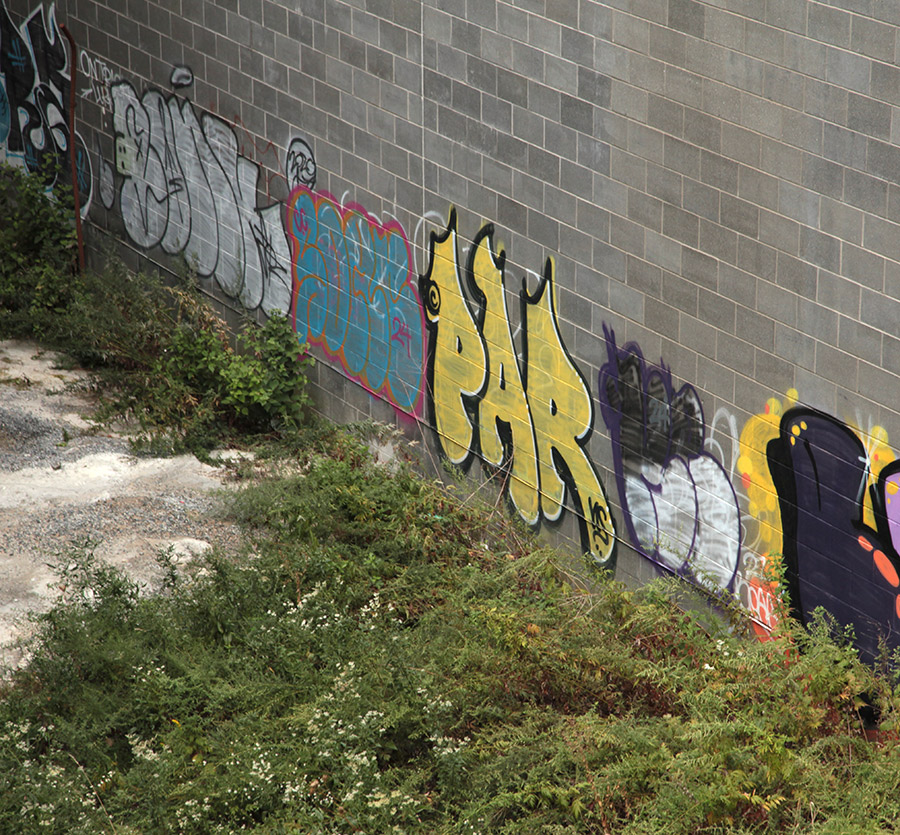
And here we go boldly into the streets of New York and Berlin this week with new extramural stuff from: Queen Andrea, Modomatic, Millo, Dulk, Par, Caro Pepe, Devita, Never Satisfied, JT, Mondo Crew, Mr. Super A, and Carlos Alberto.

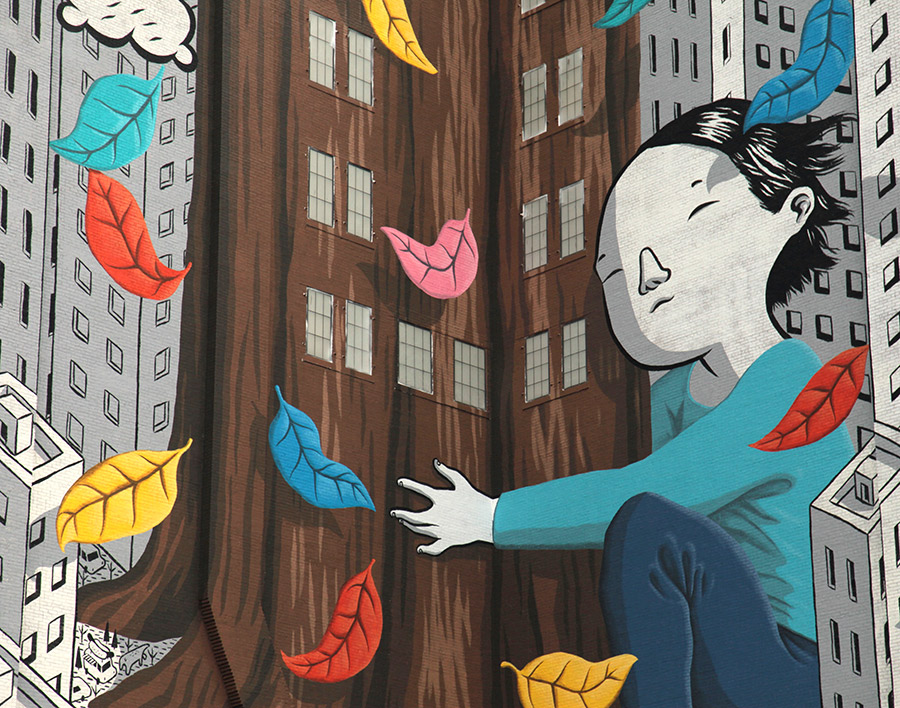
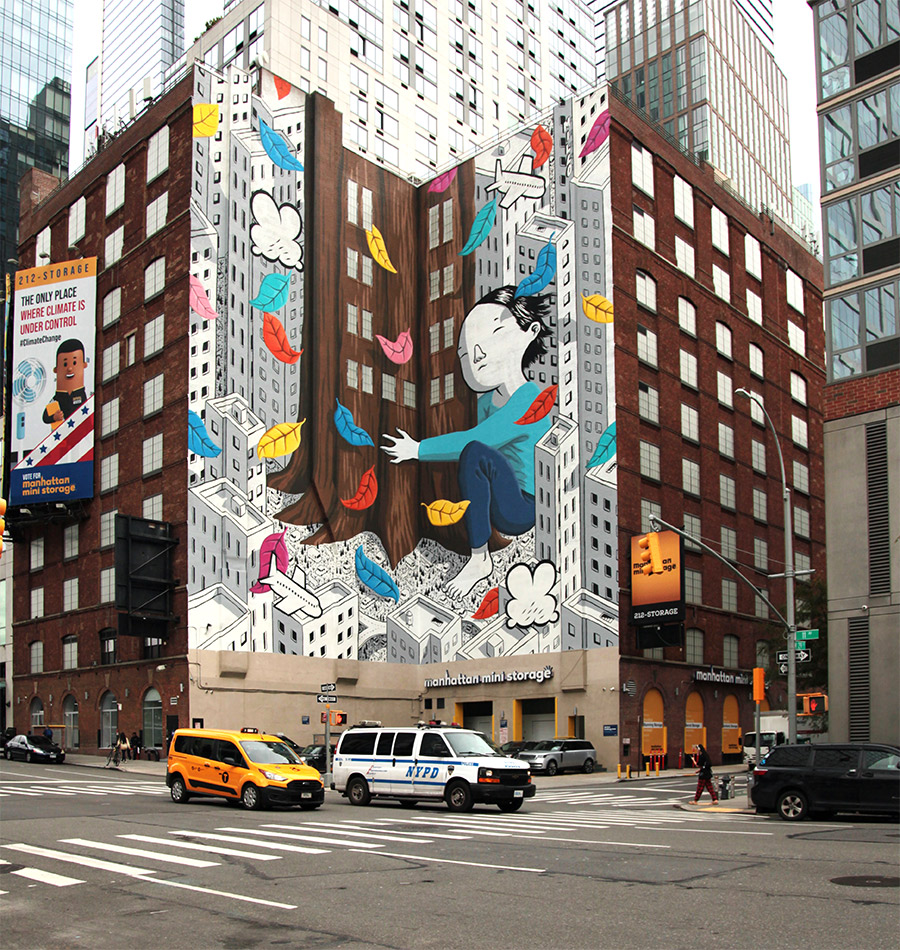
Millo (photo © Jaime Rojo)
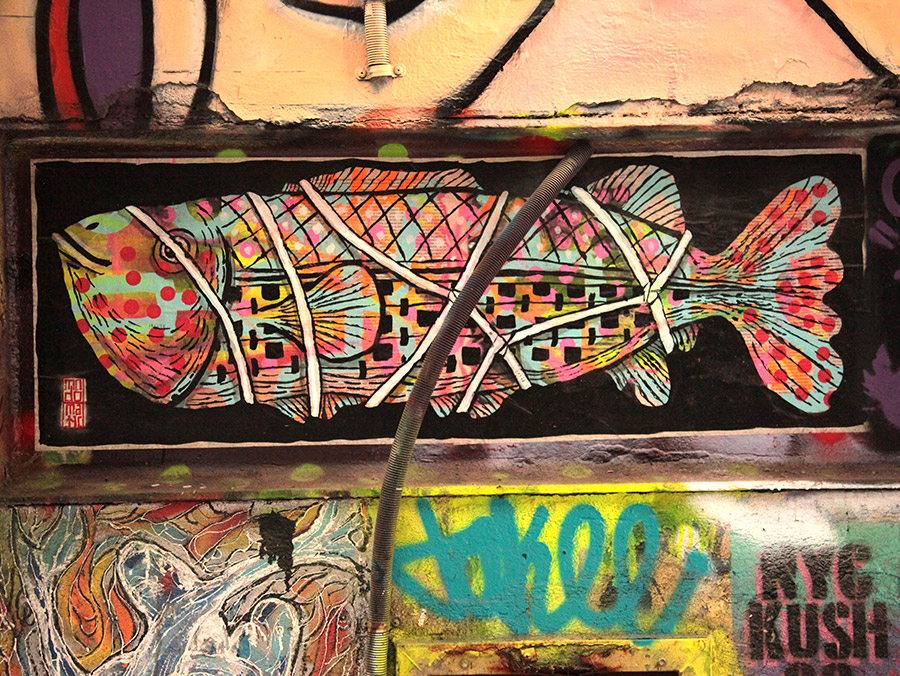
Modomatic (photo © Jaime Rojo)
Queen Andrea. Detail. (photo © Jaime Rojo)
Caro Pepe. Urban Nation Museum Berlin. (photo © Jaime Rojo)
Devita. Urban Nation Museum Berlin. (photo © Jaime Rojo)
PAR (photo © Jaime Rojo)
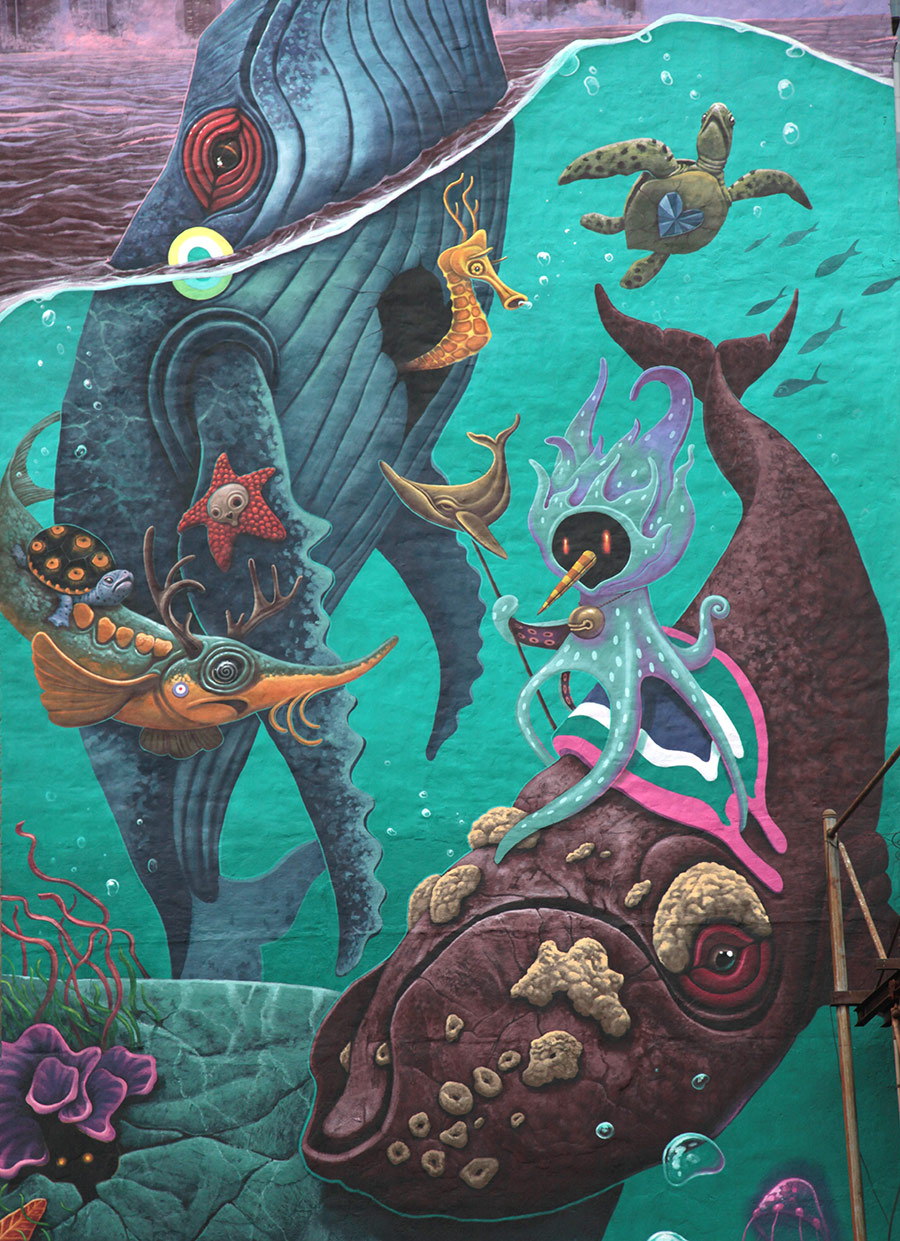
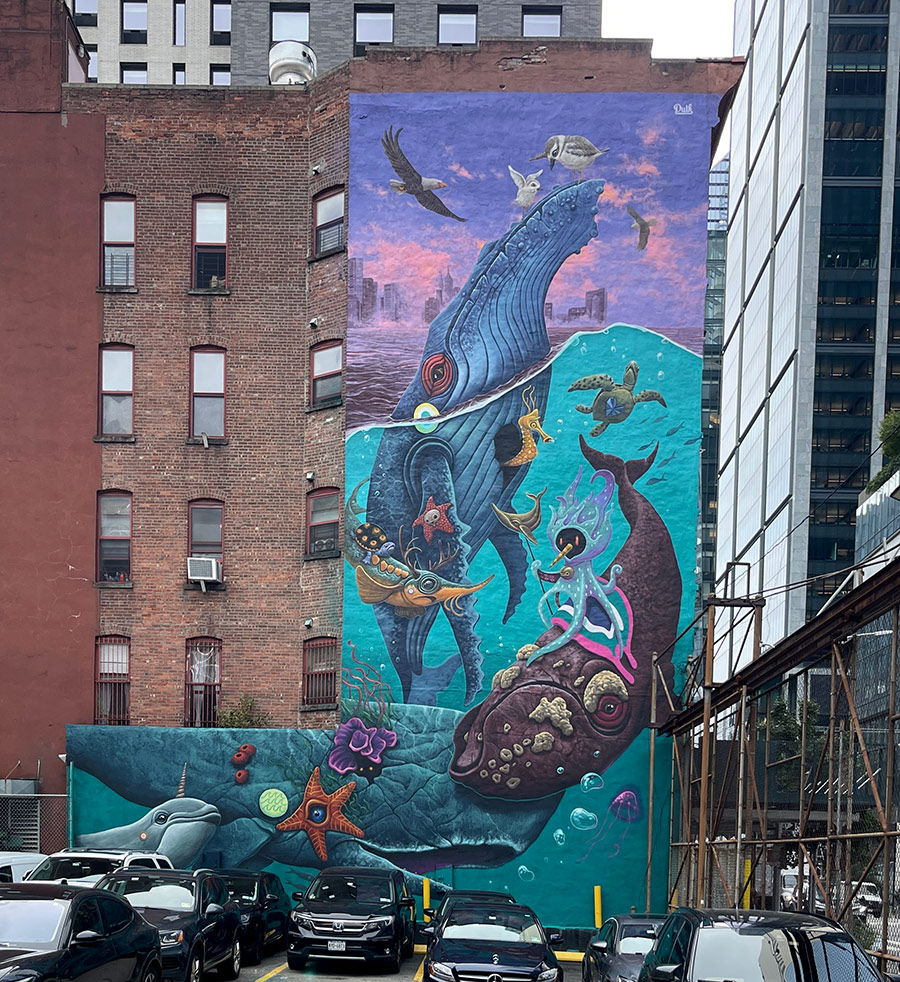
DULK (photo © Jaime Rojo)
JT (photo © Jaime Rojo)
Carlos Alberto (photo © Jaime Rojo)
Never Satisfied (photo © Jaime Rojo)
Mondo Crew (photo © Jaime Rojo)
Mr. Super A – with some inspiration from Leon Keer perhaps? (photo © Jaime Rojo)
Mr. Super A (photo © Jaime Rojo)
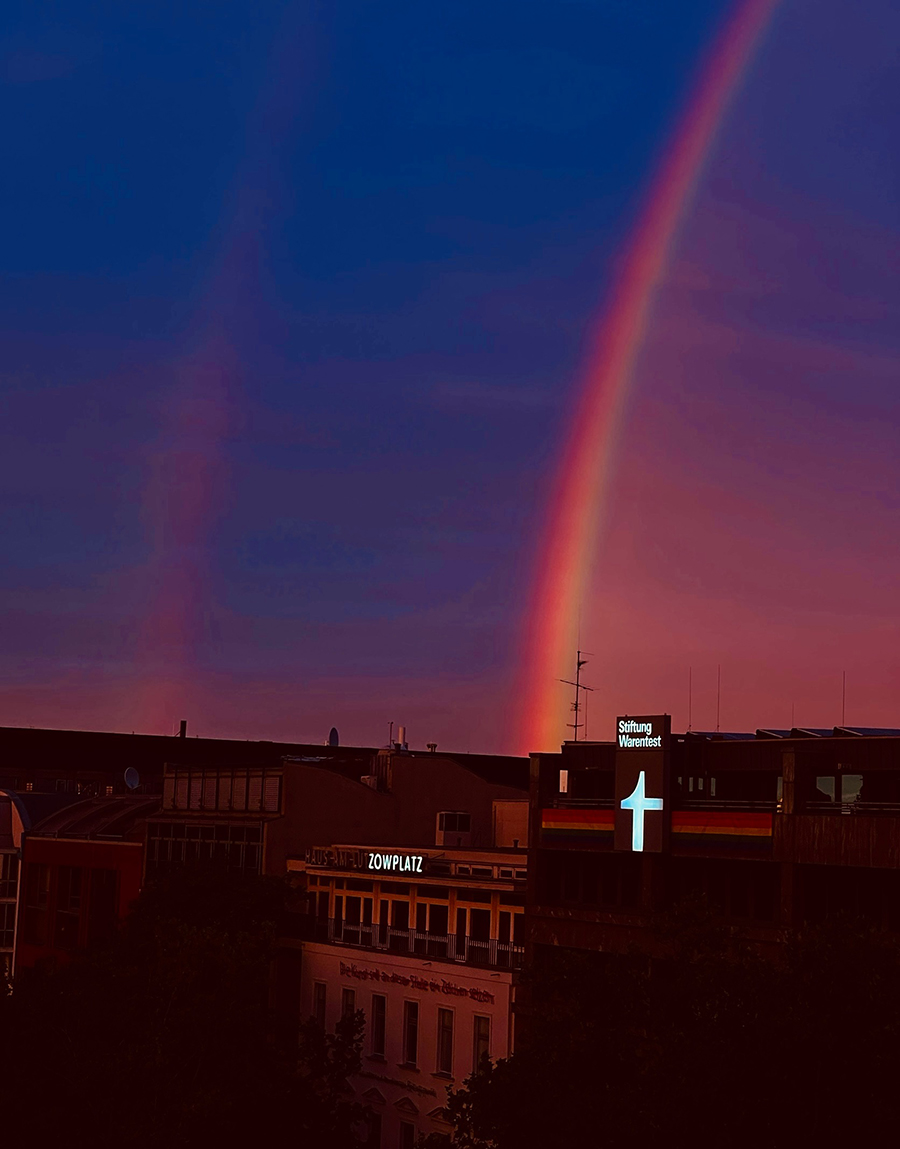
Rainbow. Berlin. September 2024. (photo © Jaime Rojo)
Read more
EVASIONES. THE STREET AS FICTION. Another Perspective on Urban Art in Barcelona

EVASIONES. THE STREET AS FICTION. Another Perspective on Urban Art in Barcelona

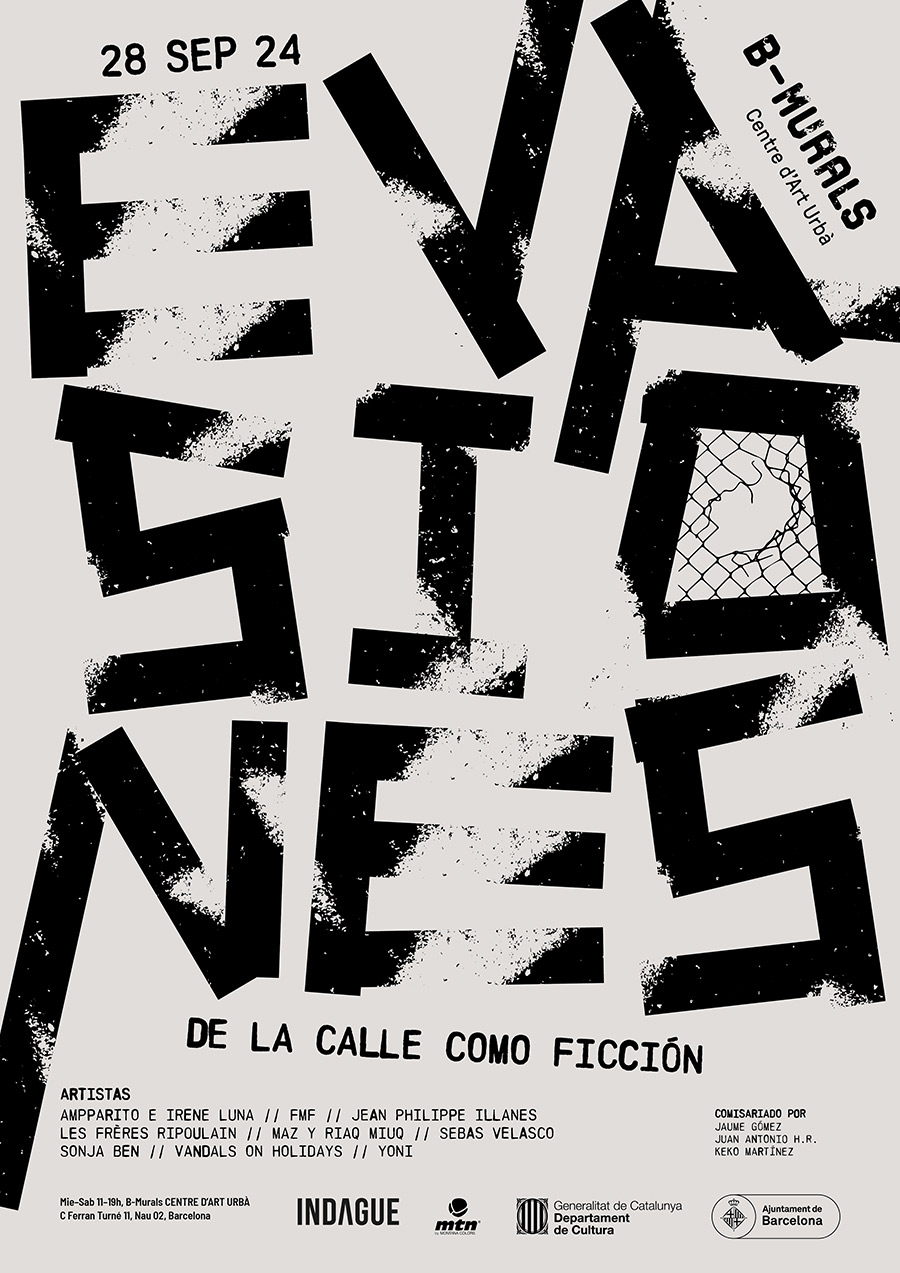
“Evasiones”: B-Murals and Indague reveal the most unknown and reflective side of graffiti and urban art.

EVASIONES. THE STREET AS FICTION

B-Murals and INDAGUE present “Evasiones. The Street as Fiction,” an exhibition that explores the lesser-known, reflective side of graffiti and urban art. Running from September 28th to November 23rd, the show invites visitors to pause and consider how urban art interacts with public spaces, transcending the confines of traditional exhibitions. The exhibition is free to the public, and the opening event will include a live performance by musician Enric Ponsa.
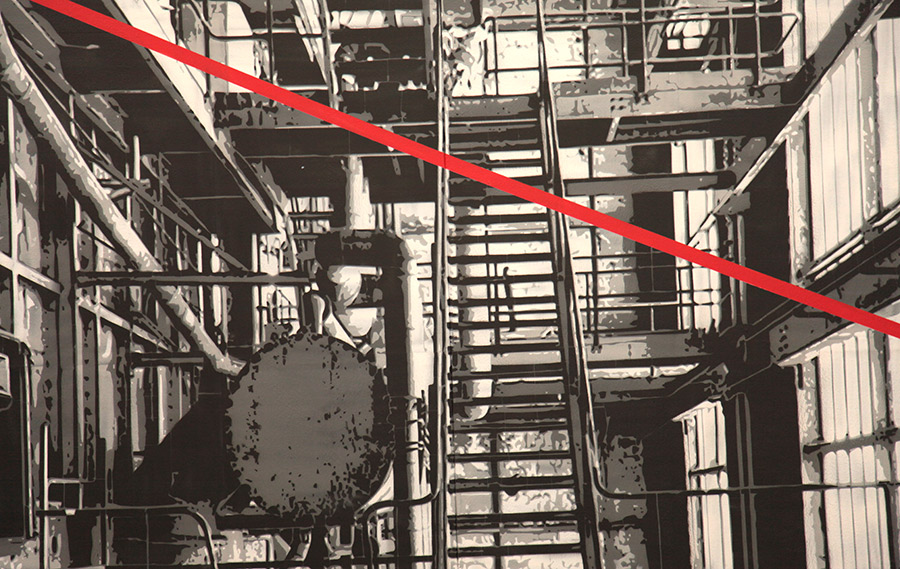
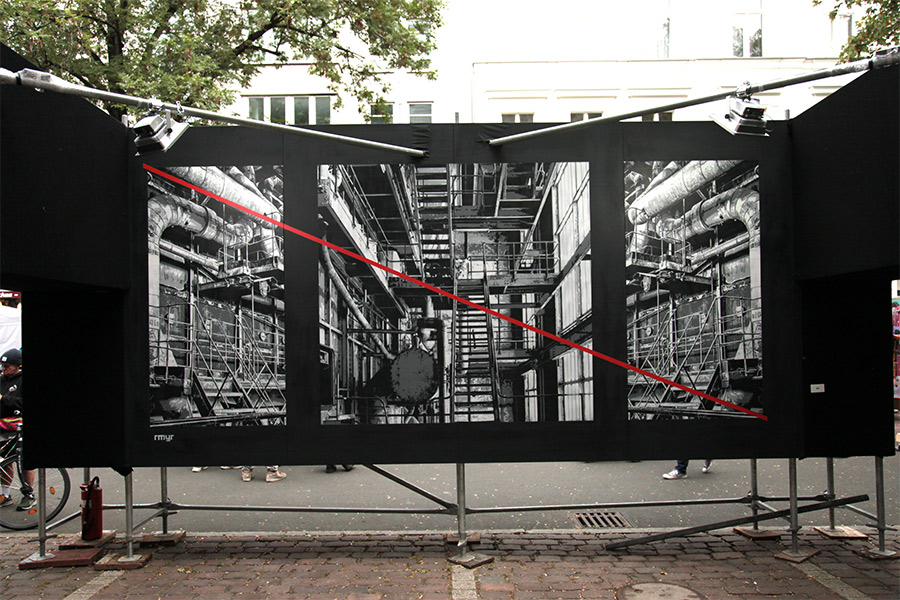
The show features renowned artists like Sebas Velasco, Ampparito & Irene Luna, Les Frères Ripoulain, Vandals On Holidays, Maz & Riaq Miuq, FMF, Jean Philippe Illanes, Yoni, and Sonja Ben. Each artist brings a unique perspective, from Les Frères Ripoulain’s critical exploration of graffiti in media to FMF’s fusion of illustration and ceramics through industrial recycling.

Sebas Velasco (b. 1988), continues his hunt for fragile brutalism that only rears its head in the margins of urban life. A multidisciplinarian, Velasco brings tenderness where you won’t expect to see it and may very well overlook it. With a blend of photography, video, and painting, he lays bare the blunt instruments of life, the destruction we’ve wrought, insisting there is something redeeming, poetic even. Like many of the brave artists and thinkers in this showcase, his work is reblending categories, street and gallery, personal and political.

Sebas Velasco (photo © courtesy of the artist)

From the press release: “The show is aimed at both scholars and researchers in the art world and anyone interested in discovering the most human, unknown, and reflective aspects of grati and urban art. The opening will take place on September 28th from 6 pm to 9 pm. Admission is free, and some of the artists featured in the exhibition will be attending, along with a live performance by musician Enric Ponsa. The exhibition will be open until November 23rd and parallel activities will be organized for all audiences.”

Sebas Velasco (photo © courtesy of the artist)
YONI (photo © courtesy of the artist)
Ampparito and Irene Luna. (photo © courtesy of the artist)
Sonja Ben (photo © courtesy of the artist)
Les Frères Ripoulain (“Desperate Housewives”, Marc Cherry). (photo © courtesy of the artist)

B-Murals Centre d’Art Urbà

C/ Ferran Turné 1-11, 08027 Barcelona

Opening: September 28th, from 6 p.m. to 9 p.m

Exhibition opening hours: Wednesday to Saturday, from 12 pm to 7 pm. Free admission.


Read more
Nature Should Be Open to All: Jorge Rodriguez-Gerarda Creates “Opening Horizons”

Nature Should Be Open to All: Jorge Rodriguez-Gerarda Creates “Opening Horizons”

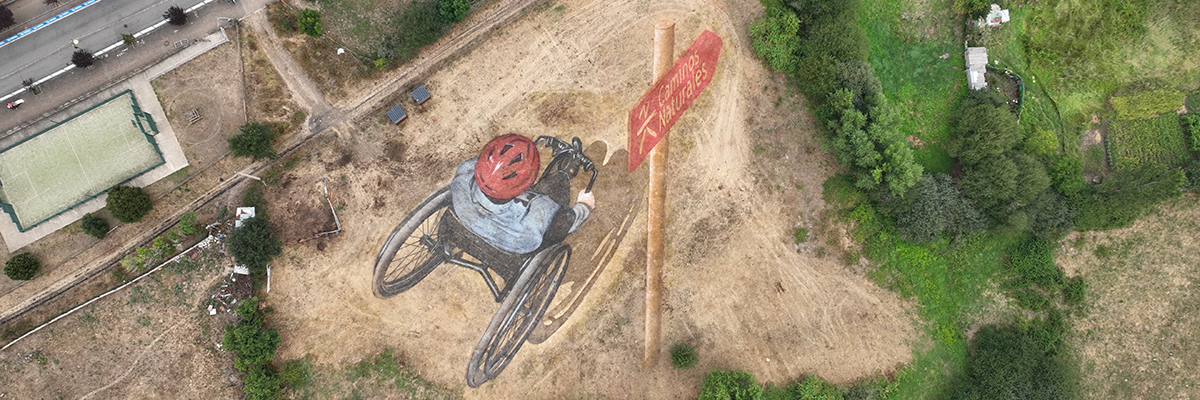
“Opening Horizons” whose size can only be fully appreciated from the sky, unveiled in a spectacular way.


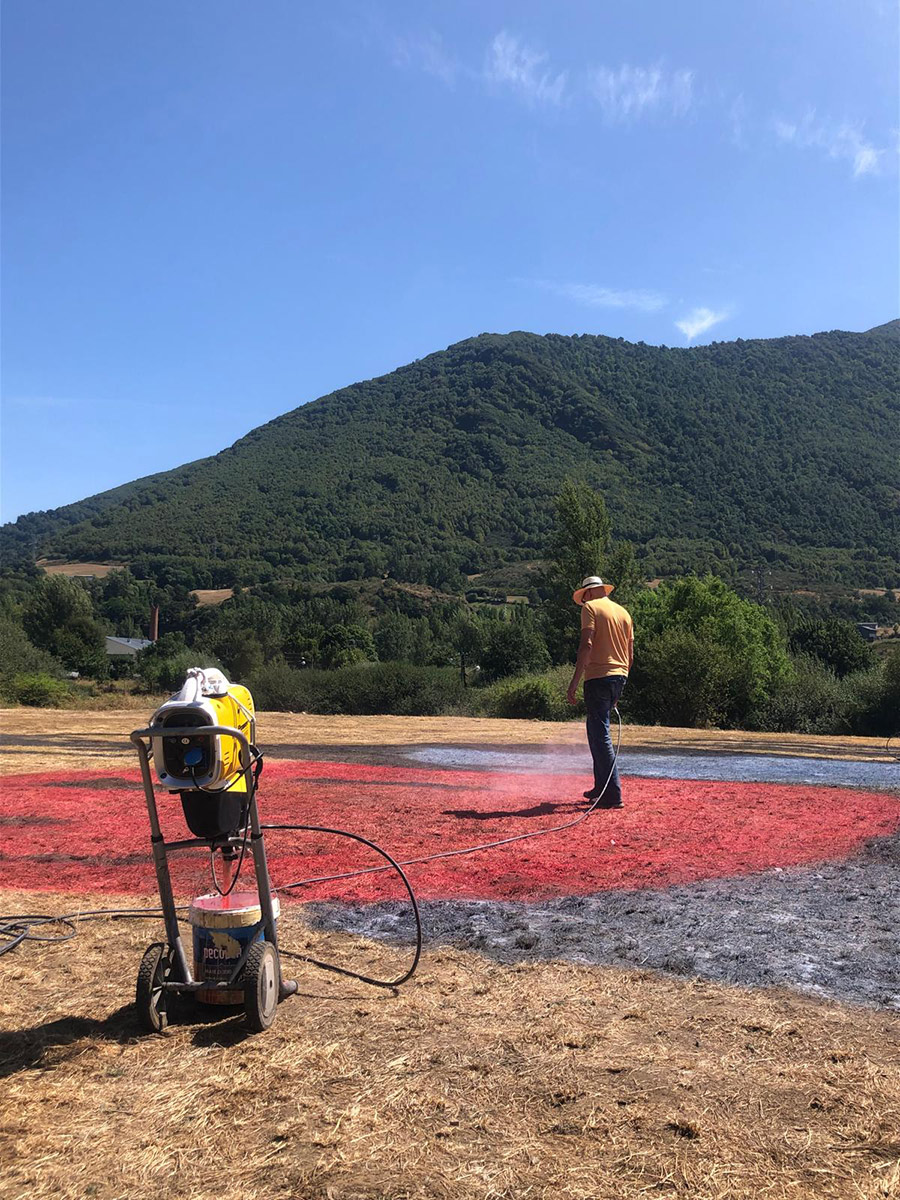
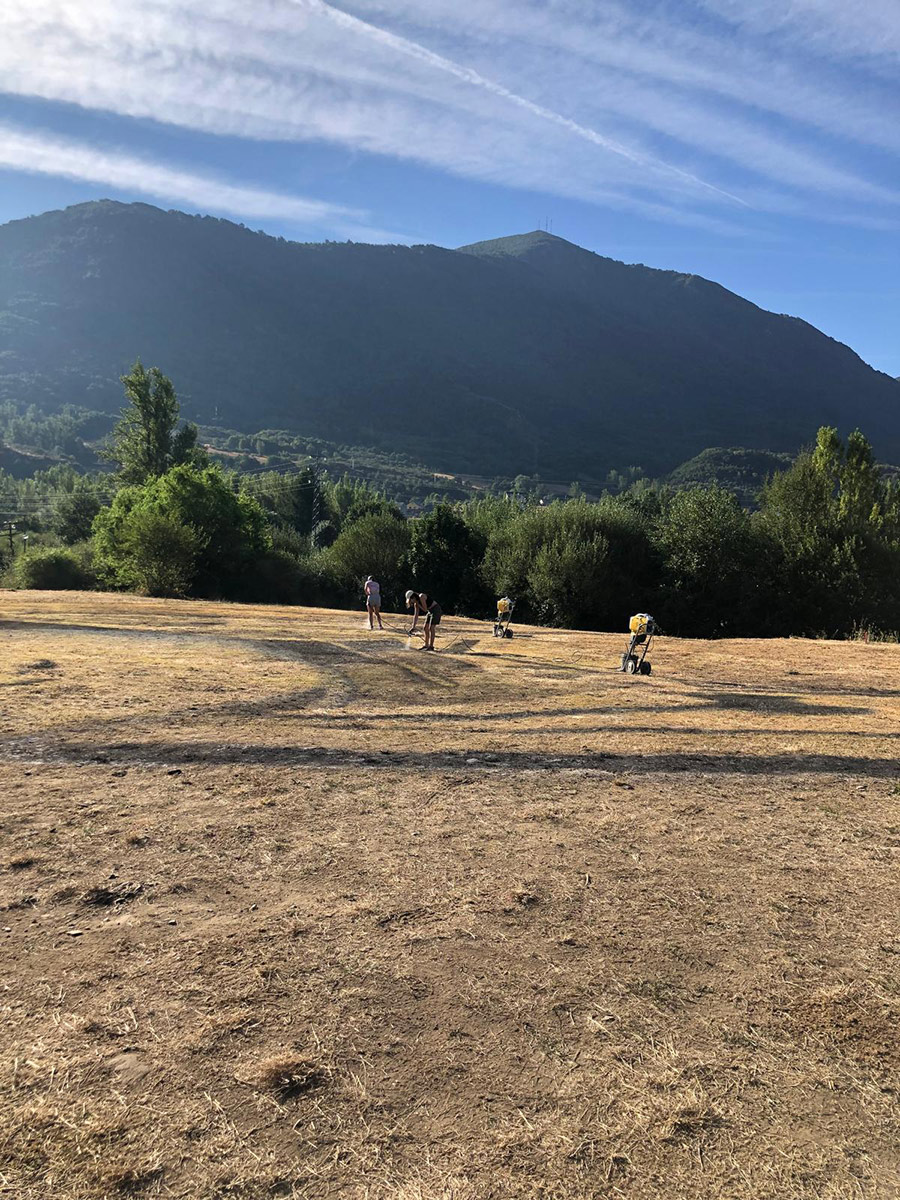
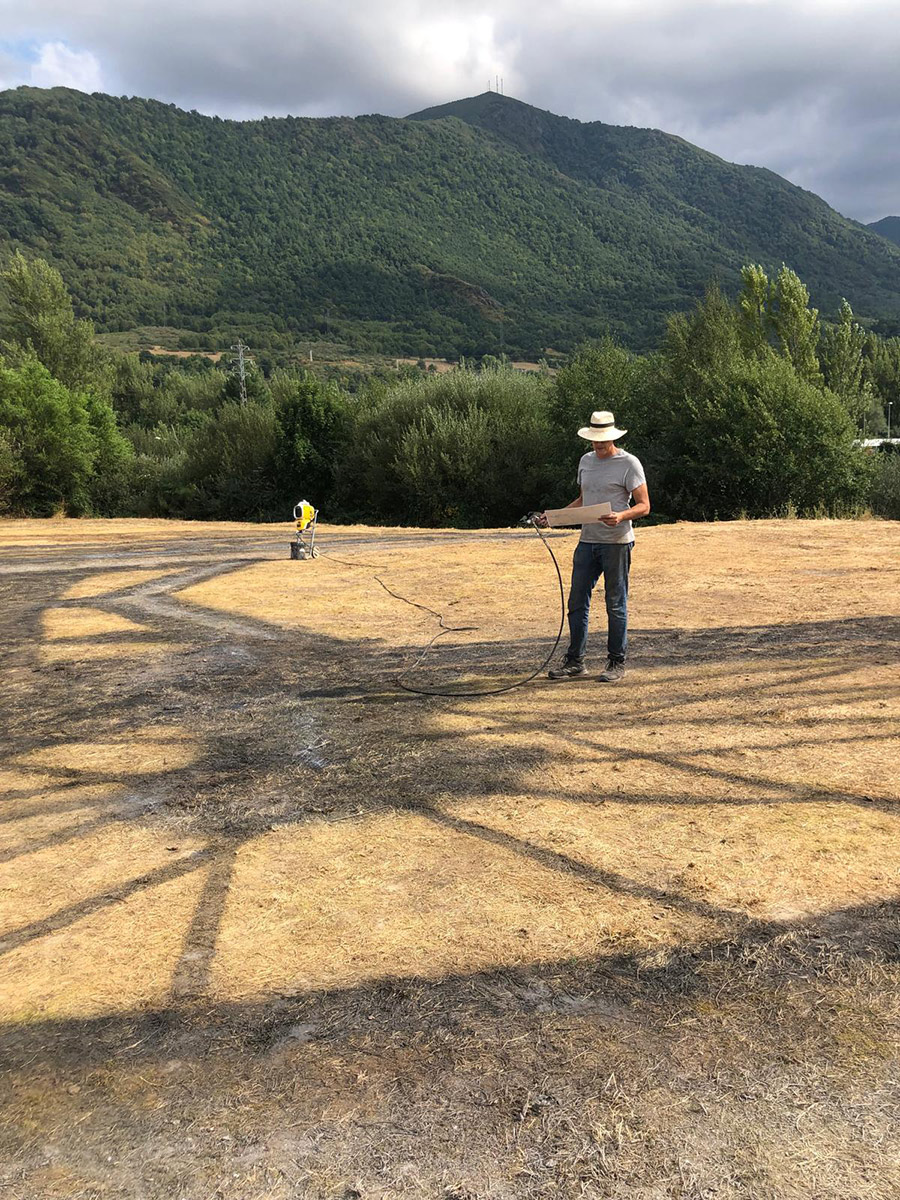
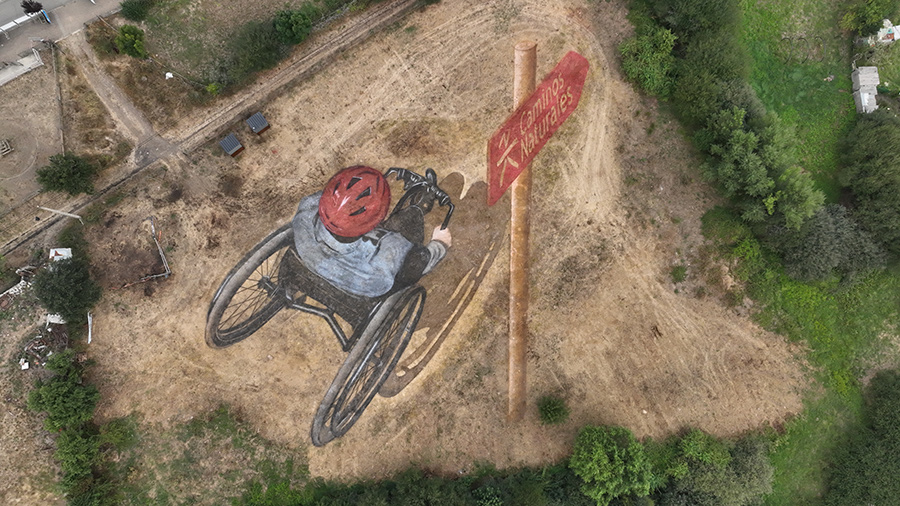
In Villablino, Spain, renowned artist Jorge Rodríguez-Gerada unveiled Opening Horizons, a monumental land art piece that portrays an athlete in a wheelchair. Created for the Caminos Naturales initiative, in partnership with the Villablino City Council, the artwork spans a vast terrain and is best appreciated from above. Its unveiling coincided with the 14th stage of La Vuelta 2024, ensuring the piece was seen by a large audience. The project underscores the need for accessible natural spaces, offering a powerful visual statement on inclusivity and accessibility, particularly for those with disabilities. The artist’s message is clear: nature should be open to all.

Jorge Rodriguez-Gerarda. “Opening Horizons”. Villablino, Spain. (photo © courtesy of the artist)
Read more
BSA Images Of The Week: 09.22.24

BSA Images Of The Week: 09.22.24

Welcome to BSA Images of the Week and to fall—officially here as of this morning in New York and the rest of the Northern Hemisphere. The leaves are starting to pop with yellows, people are breaking out the wool turtlenecks and corduroy way too early, and somewhere under the bleachers at football games, a few sneaky kisses are being stolen. Meanwhile, students are finally settling into the grind of the school year. But flip it for the folks south of the Equator, where spring’s about to bloom. In both hemispheres, whether it’s fall or spring, artists and vandals will continue to tag the overlooked corners and forgotten walls, staking their claim in public space.

This week in the BSA book review department, we’re diving into a new scholastic tome from one of the few brilliant graffiti scholars out there—Rafael Schacter. You might remember him from his global street art compendium, his curated show ‘Mapping the City’ at Somerset House in London (yes, the one that included people like Brad Downey, Swoon, and Eltono), or even his early work at the Tate back in ’08 with artists on the façade of the museum like Faile, Blu, and Os Gemeos. His latest book, Monumental Graffiti: Tracing Public Art and Resistance in the City (MIT Press), just landed on our doorstep. We’re eyeing it with both curiosity and caution as he’s making some bold connections between monuments and graffiti—connections that are peculiar on their face. He’s digging into a secondary or even third-tier definition of ‘monument,’ so who knows, it might all come together in the end. But this is the same guy who gave us ‘intramural’ graffiti about a decade ago… and, that term hasn’t hit the streets, as it were.

Re: intramural – In his curatorial work Schacter sometimes argues that street art occupies a unique space that is neither fully embraced by institutional frameworks (like museums and galleries, the “inside”) nor entirely outside them (like illegal, unsanctioned art in public spaces, the “outside”). Intramural, extramural. Makes total sense. But aside with the confusion caused by the word ‘mural’ buried inside it, there is perhaps a ‘branding’ problem with the word here in the US. It sounds too much like ‘intramural sports,’ which were always introduced at grade school for both boys and girls to play together to foster team-building skills – right around the age when girls typically think boys are ‘gross,’ and boys think girls are ‘weird.’  So it feels awkward and frightful! I feel like my voice is cracking and I’m growing a very light mustache when I hear it. Let’s see how this graffiti/monument thing works out. If anyone can do it, Rafael can!

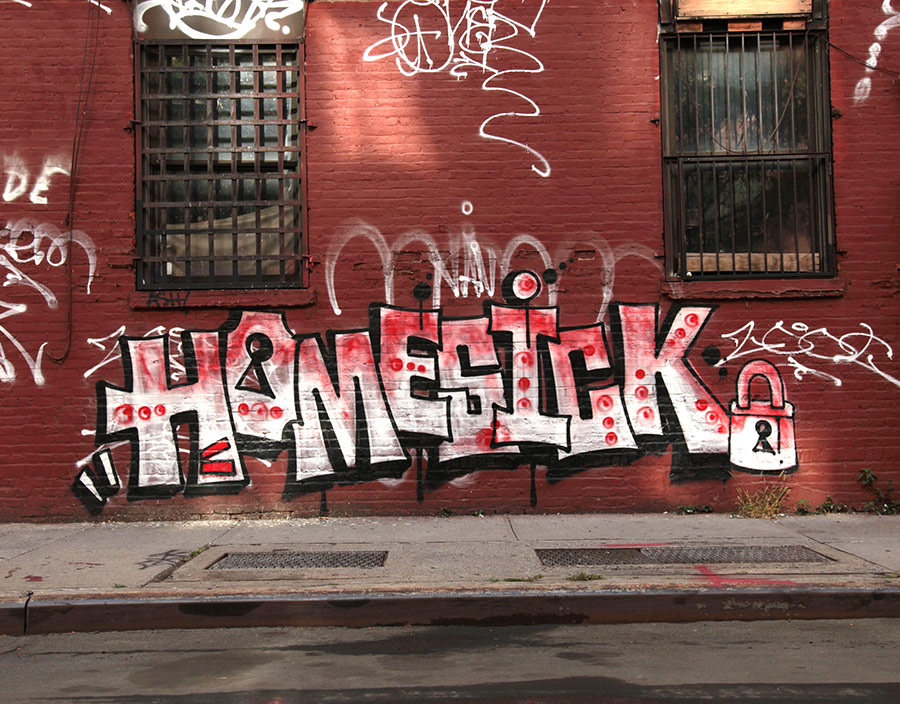
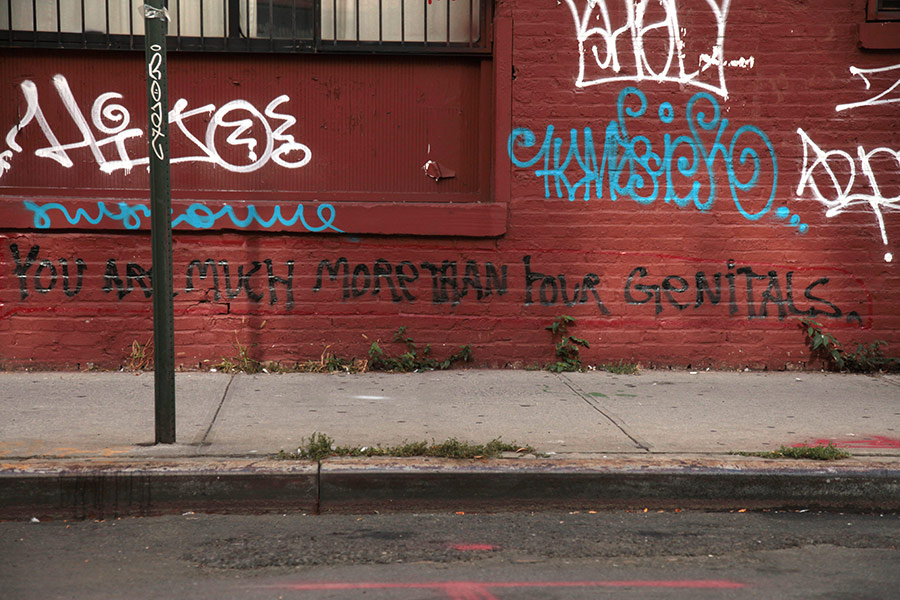
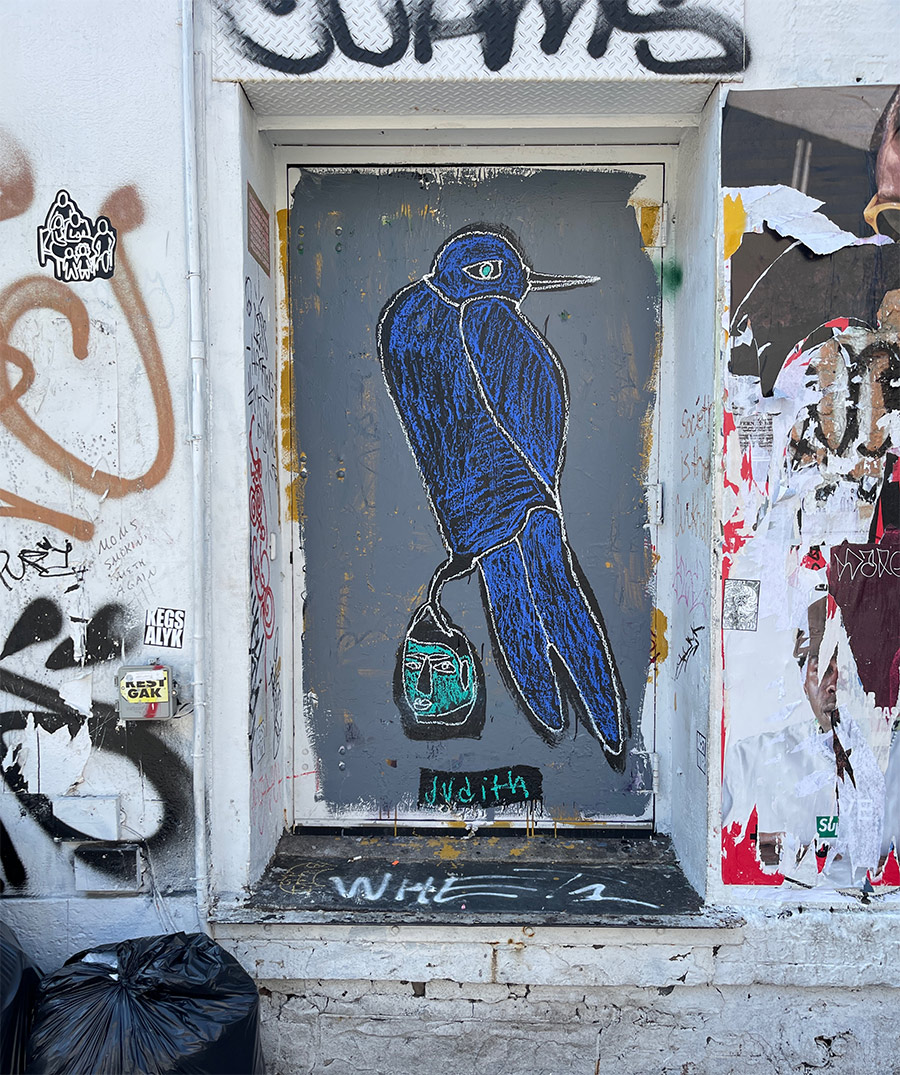
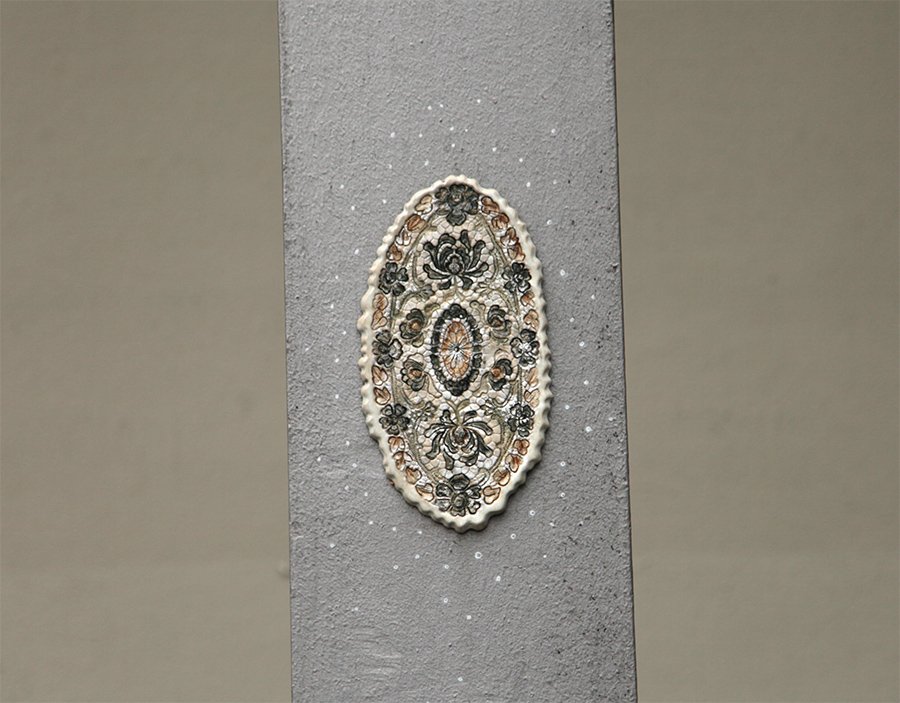
And here we go boldly into the streets of New York and Berlin this week with new extramural stuff from: Judith Supine, Crash, 1UP Crew, Homesick, Nespoon, Hera, Phetus, Atomik, Qzar, Wild West, Drew Kane, and Seileise.

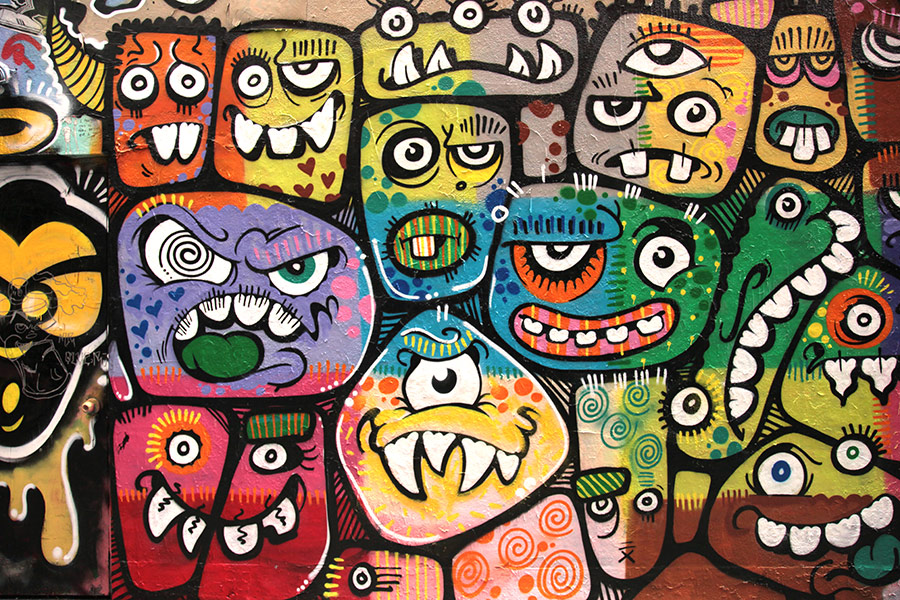
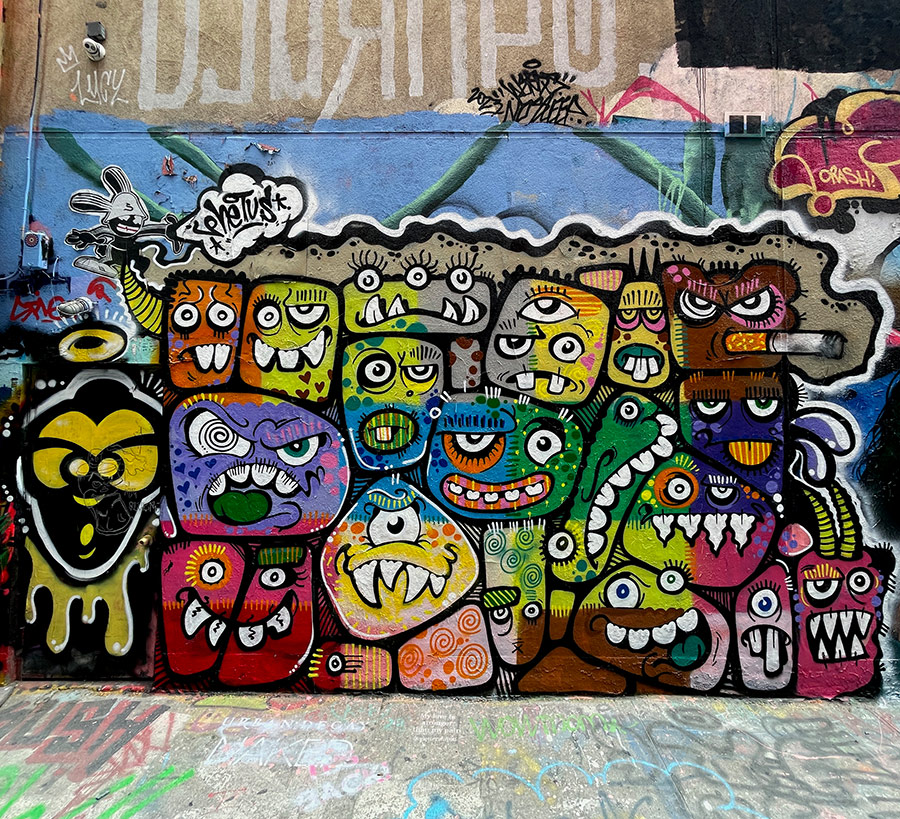
Phetus (photo © Jaime Rojo)
First semester! Phetus (photo © Jaime Rojo)
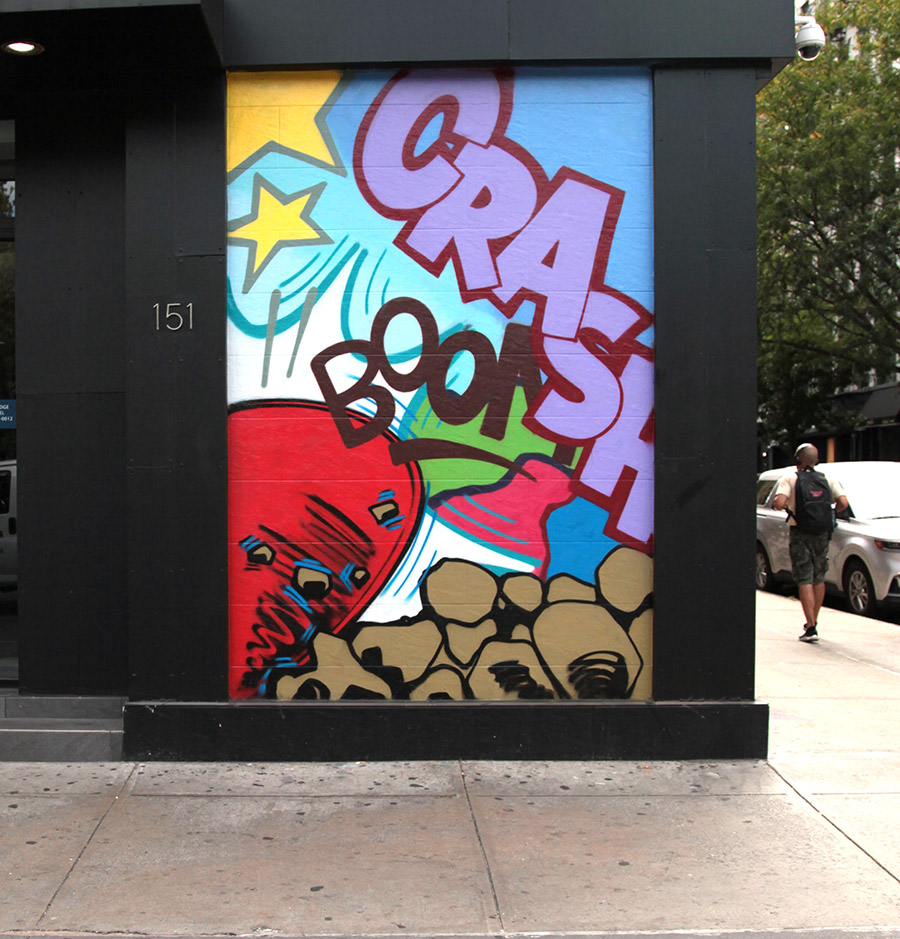
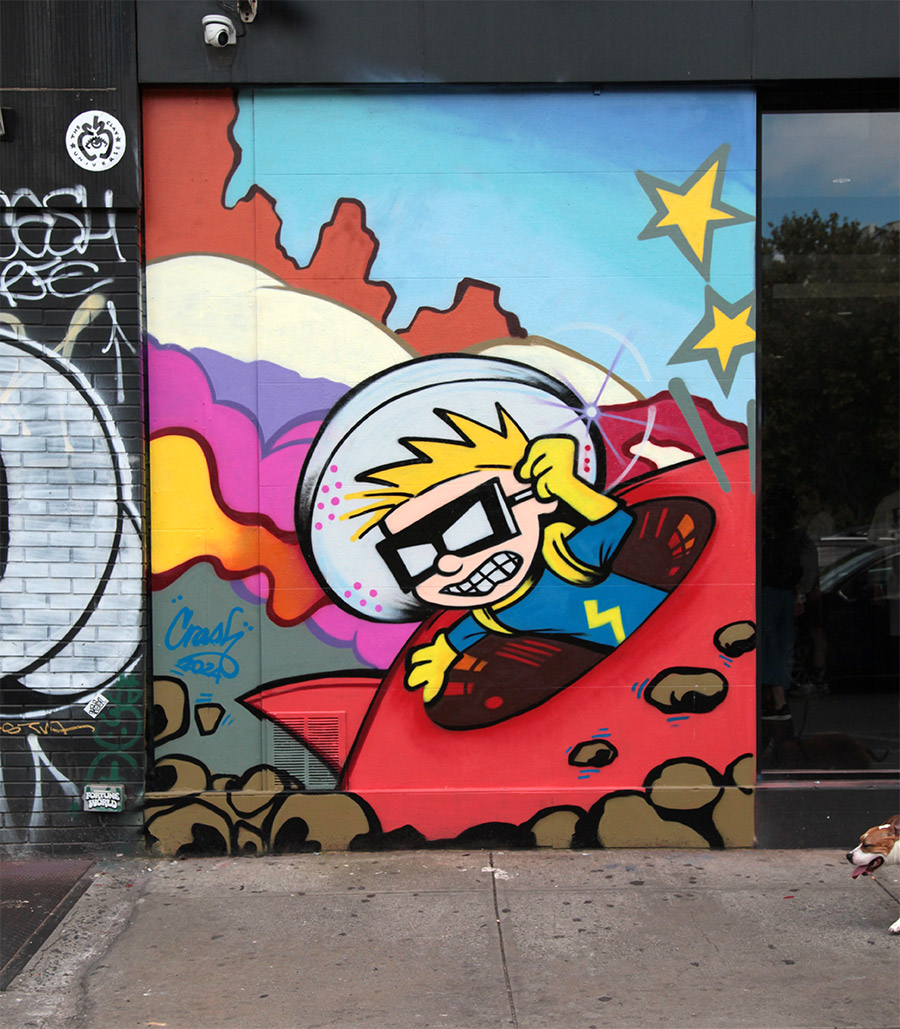
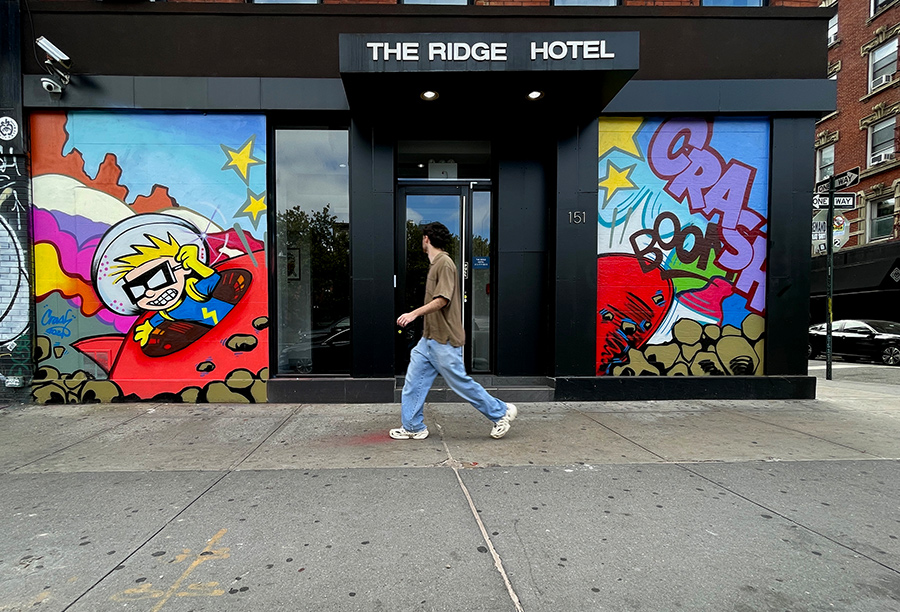
CRASH (photo © Jaime Rojo)
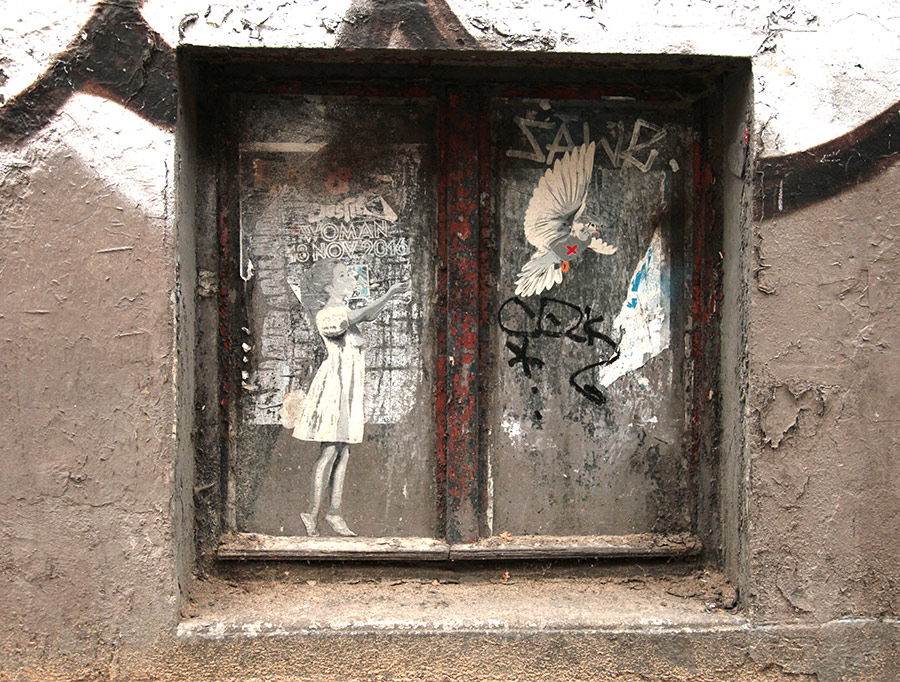
Unidentified artist (photo © Jaime Rojo)
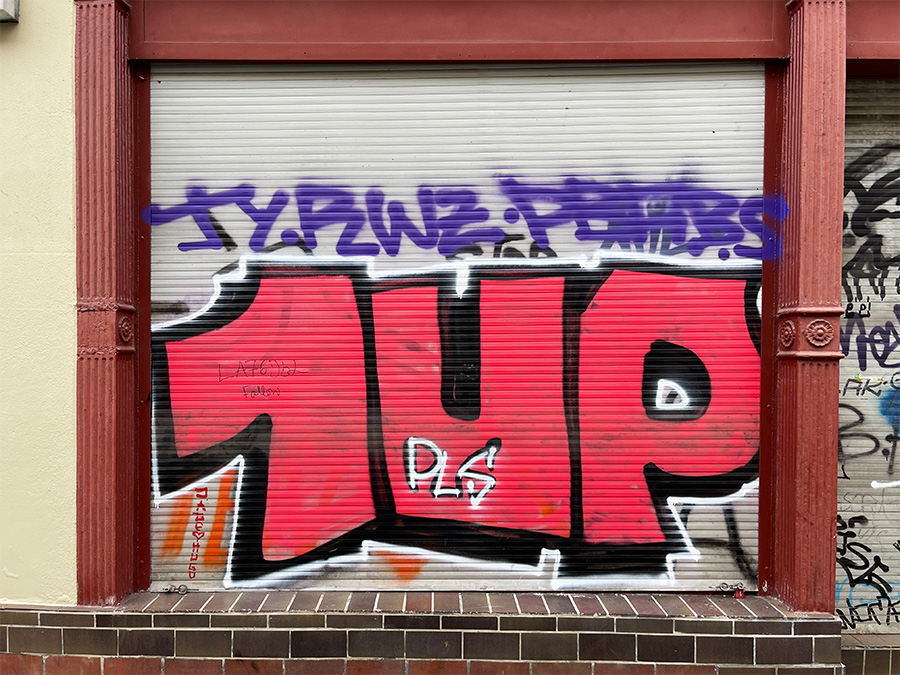
1UP CREW. Berlin. (photo © Jaime Rojo)
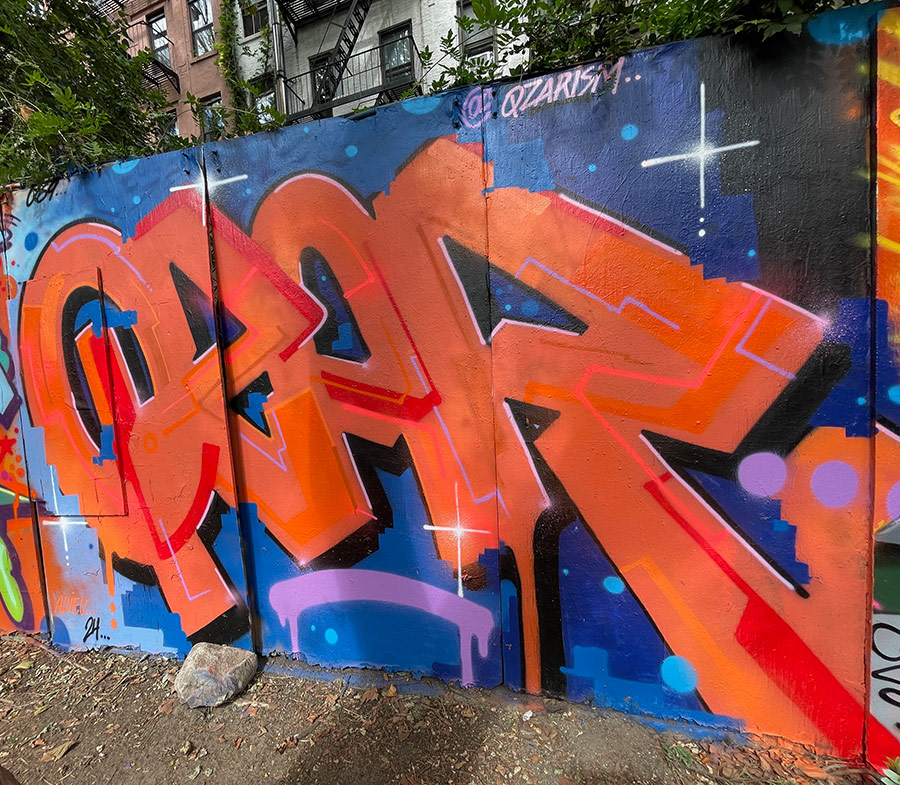
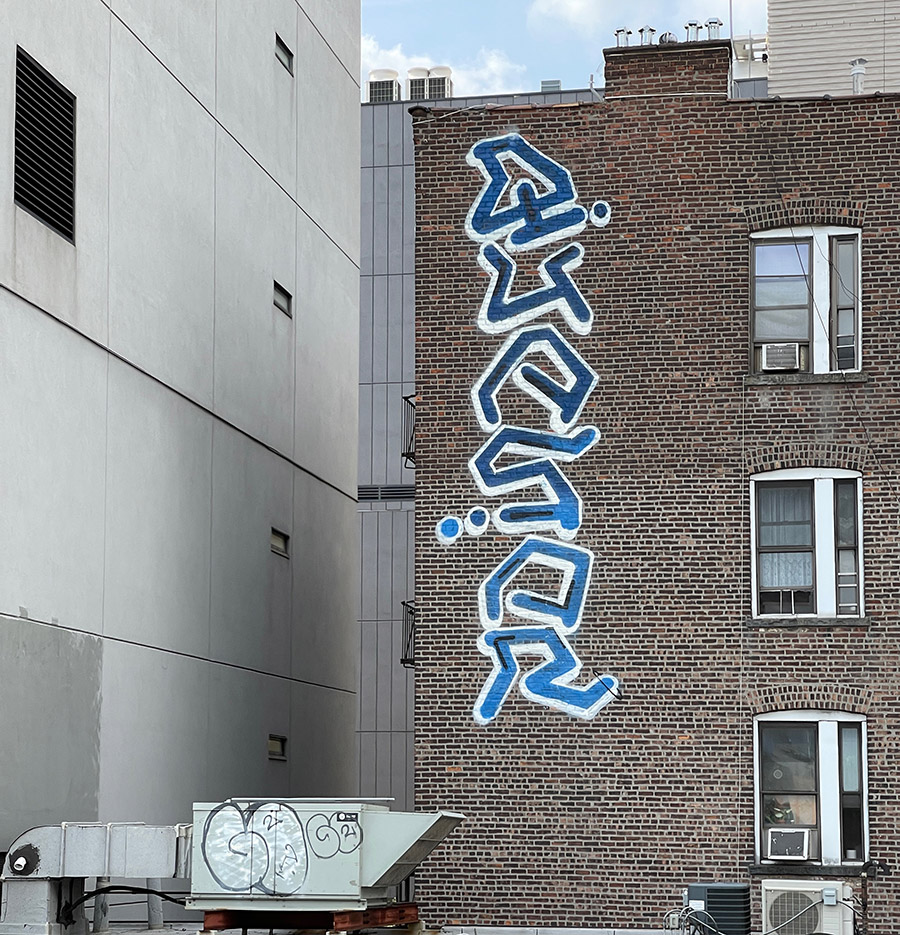
QZAR is going hard in NYC these days. (photo © Jaime Rojo)
QUASAR (photo © Jaime Rojo)
Seileise. Berlin. (photo © Jaime Rojo)
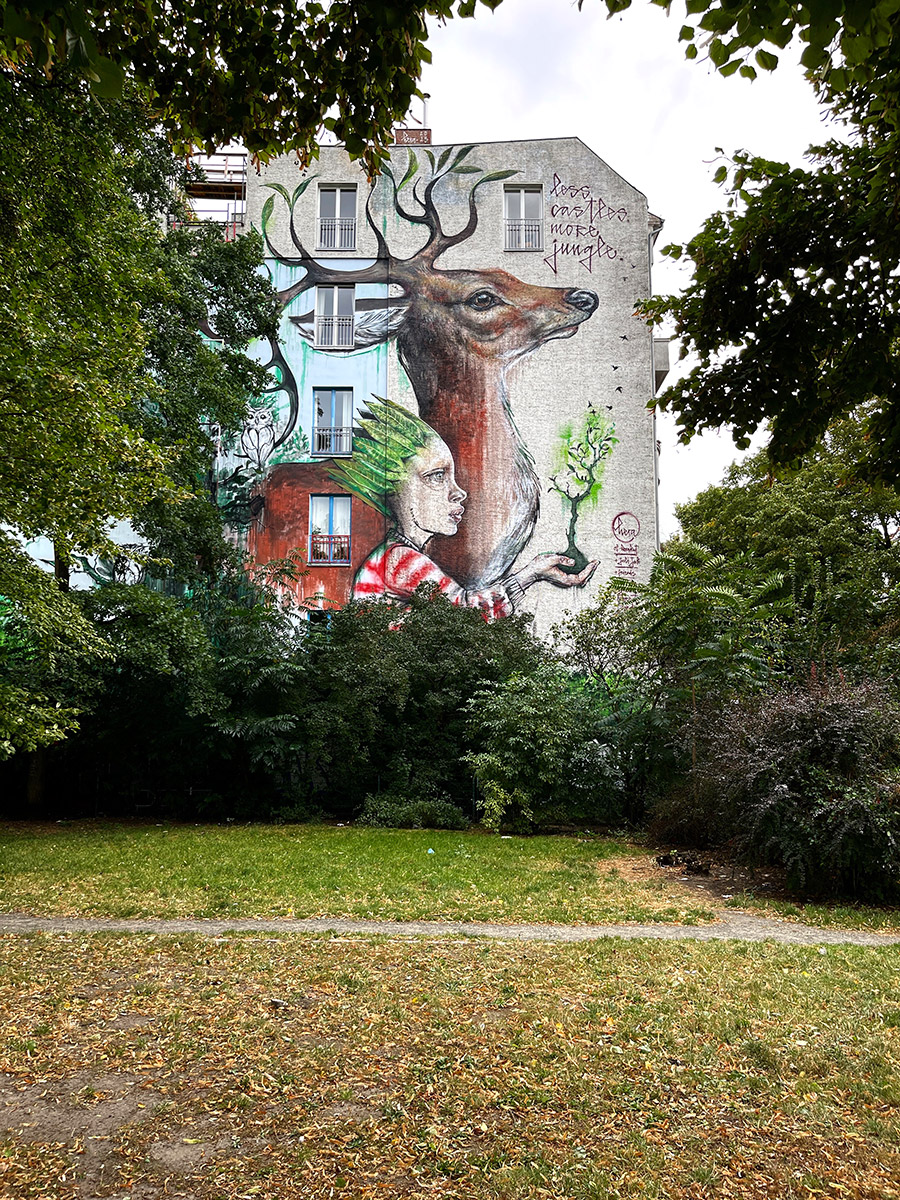
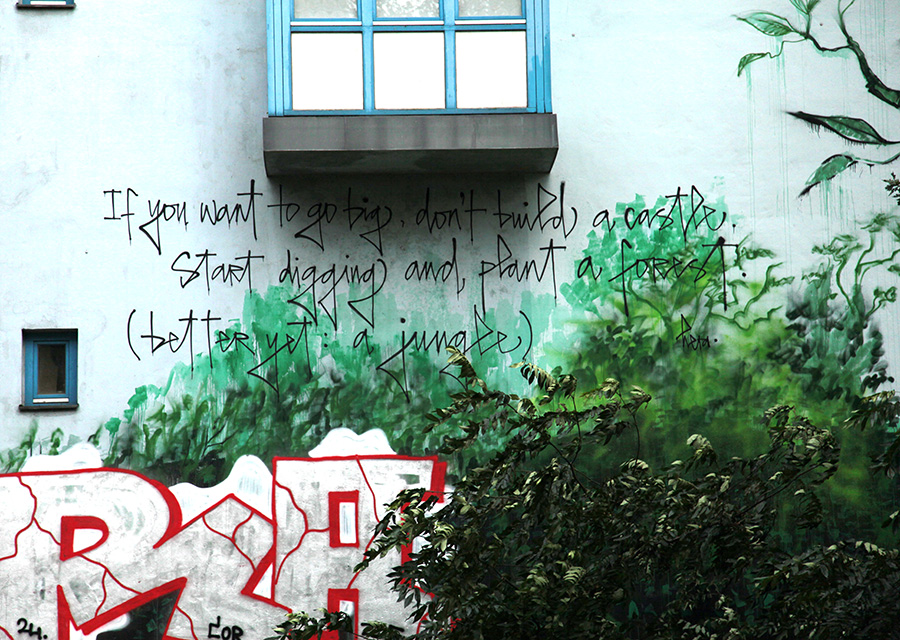
HERA. Detail. Berlin. (photo © Jaime Rojo)
HOMESICK (photo © Jaime Rojo)
WILD WEST (photo © Jaime Rojo)
JUDITH (photo © Jaime Rojo)
NesPoon. Berlin. (photo © Jaime Rojo)
Drew Kane (photo © Jaime Rojo)
Atomik (photo © Jaime Rojo)
Untitled. Berlin. September, 2024. (photo © Jaime Rojo)
Read more
Bülow Street Festival & Community Murals During  Urban Nation Museum Opening in Berlin

Bülow Street Festival & Community Murals During Urban Nation Museum Opening in Berlin

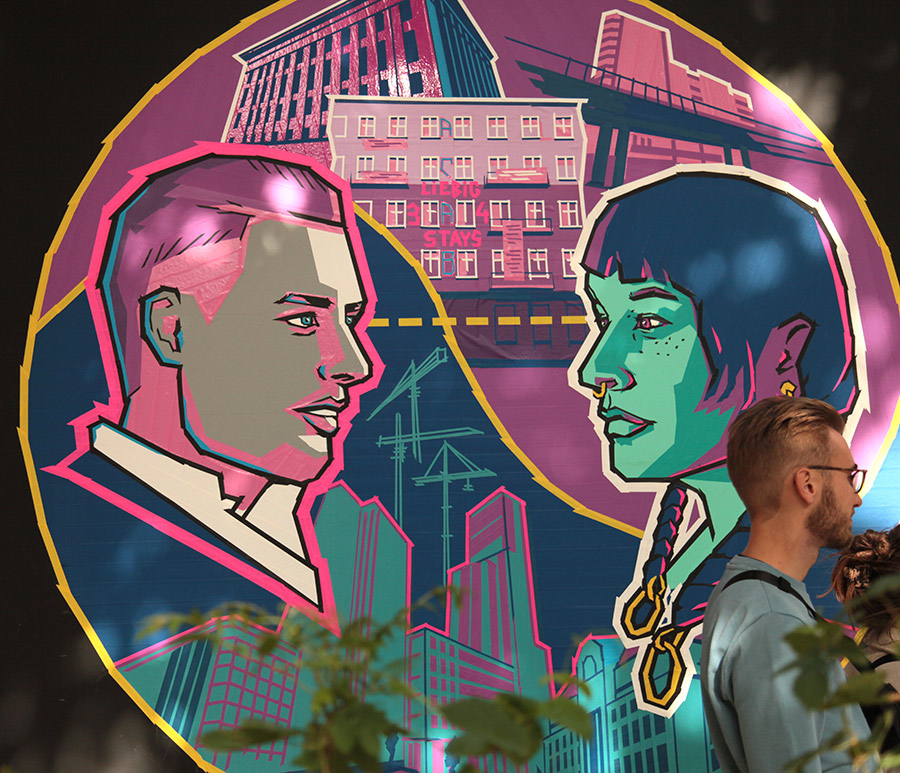
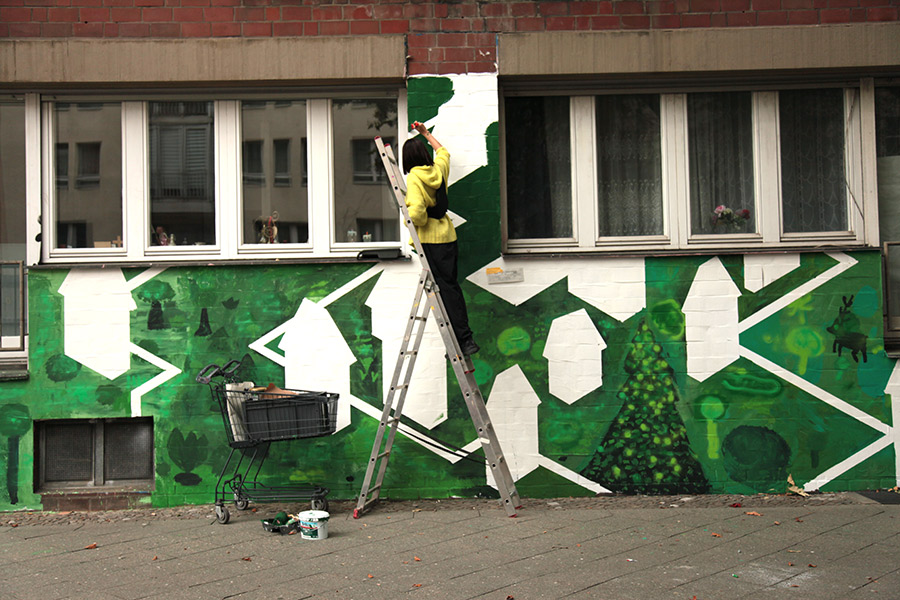
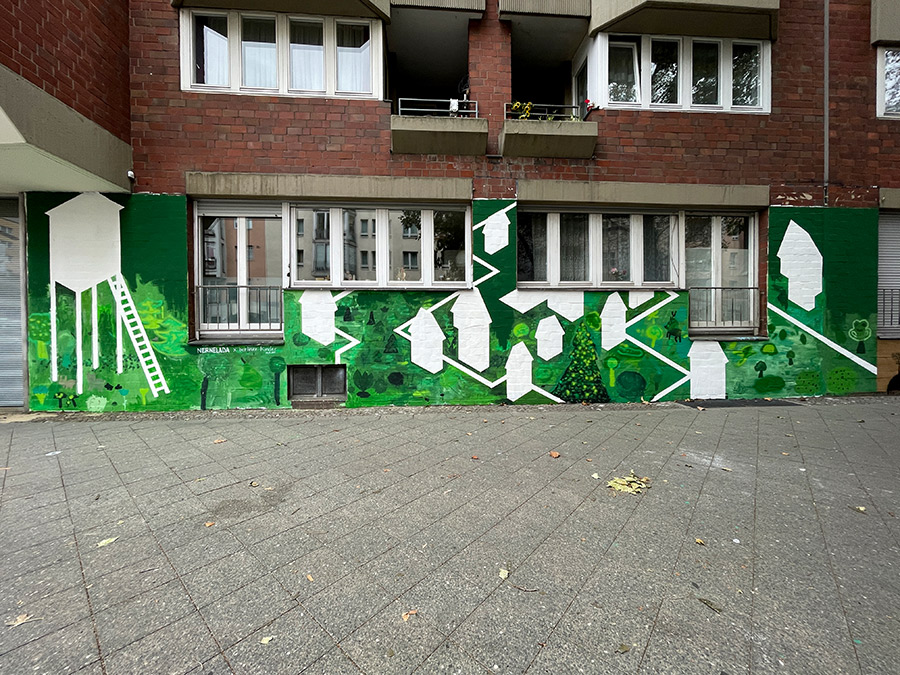
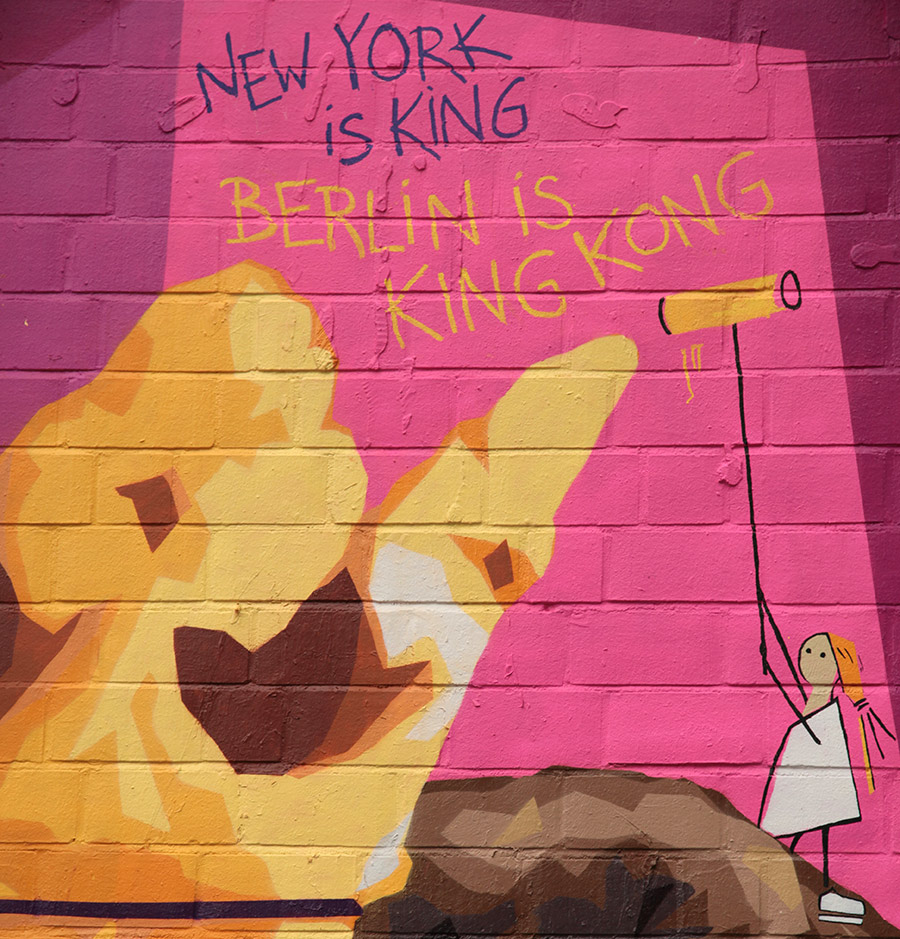
Berlin is teeming with artists of all kinds—not just street artists and graffiti writers—from around the world. For decades, the city has been a natural magnet for creatives. In conjunction with the new exhibition Love Letters to the City, Urban Nation brought around 20 artists to the streets surrounding the museum. The diverse techniques and styles showcased here reflect the incredible talent in the city—a convergence of dreams, aspirations, and life paths intersecting in this urban landscape. Below is a selection of walls and images we captured during the UN celebrations.

Bülow Streetart Jam / Floating Walls

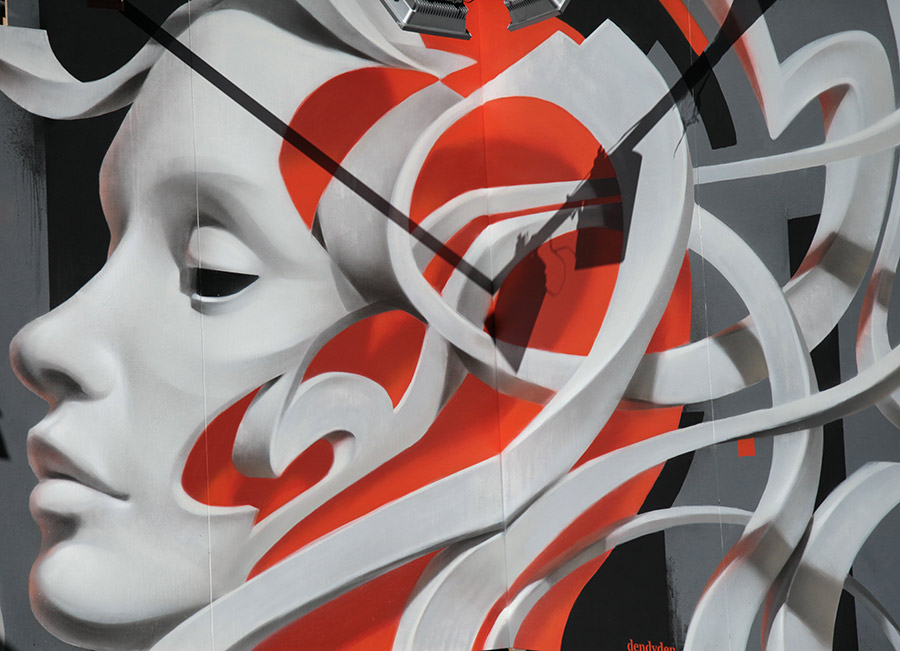
Denis Dendi. Detail. Bülow Street Festival. Urban Nation Berlin. (photo © Jaime Rojo)
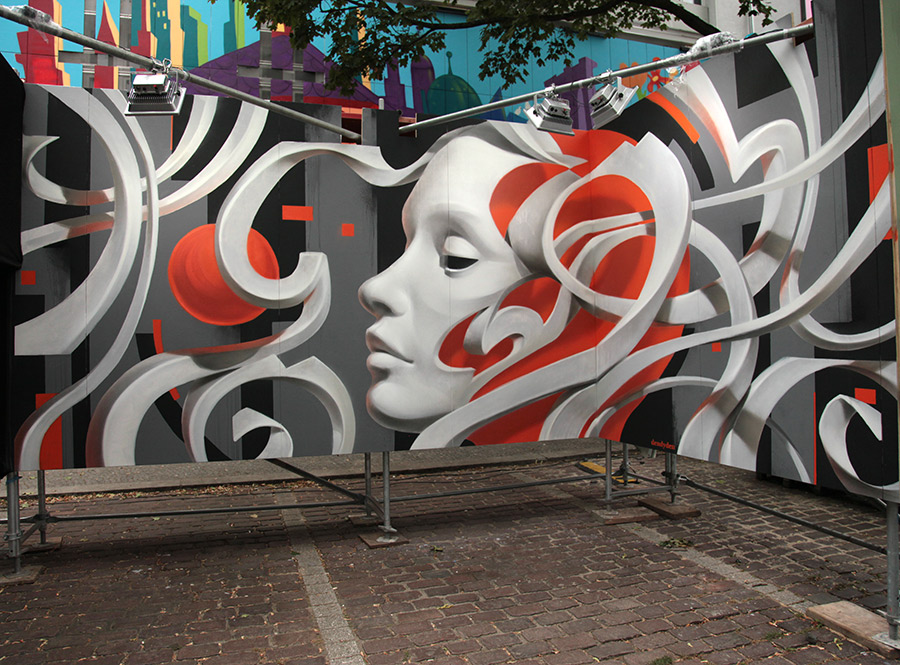
Denis Dendi. Bülow Street Festival. Urban Nation Berlin. (photo © Jaime Rojo)
Dr. Molrok. Detail. Bülow Street Festival. Urban Nation Berlin. (photo © Jaime Rojo)
Dr. Molrok. Bülow Street Festival. Urban Nation Berlin. (photo © Jaime Rojo)
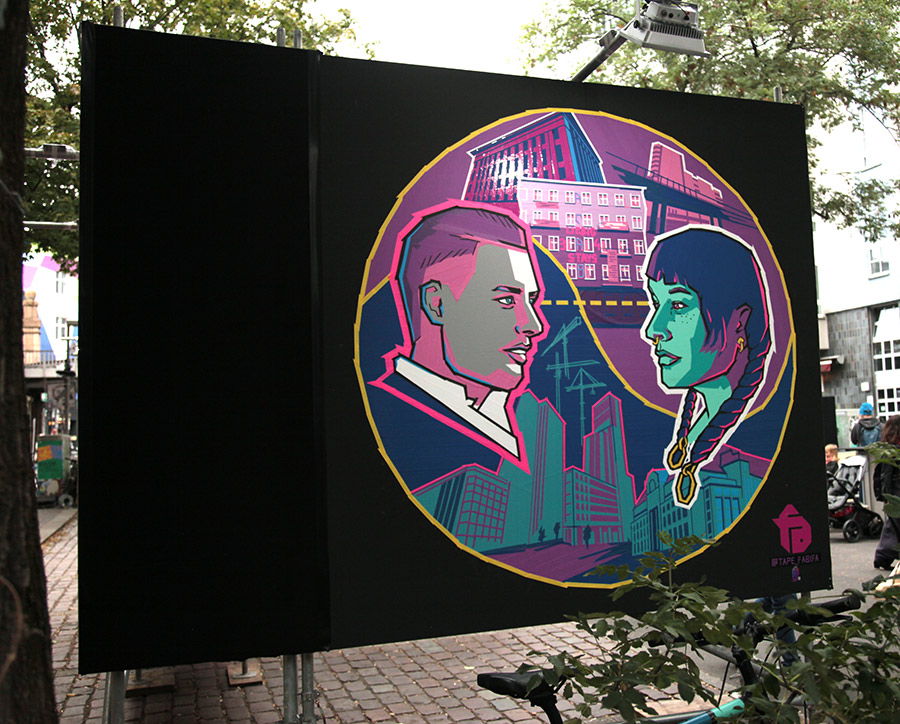
Fabifa. Detail. Bülow Street Festival. Urban Nation Berlin. (photo © Jaime Rojo)
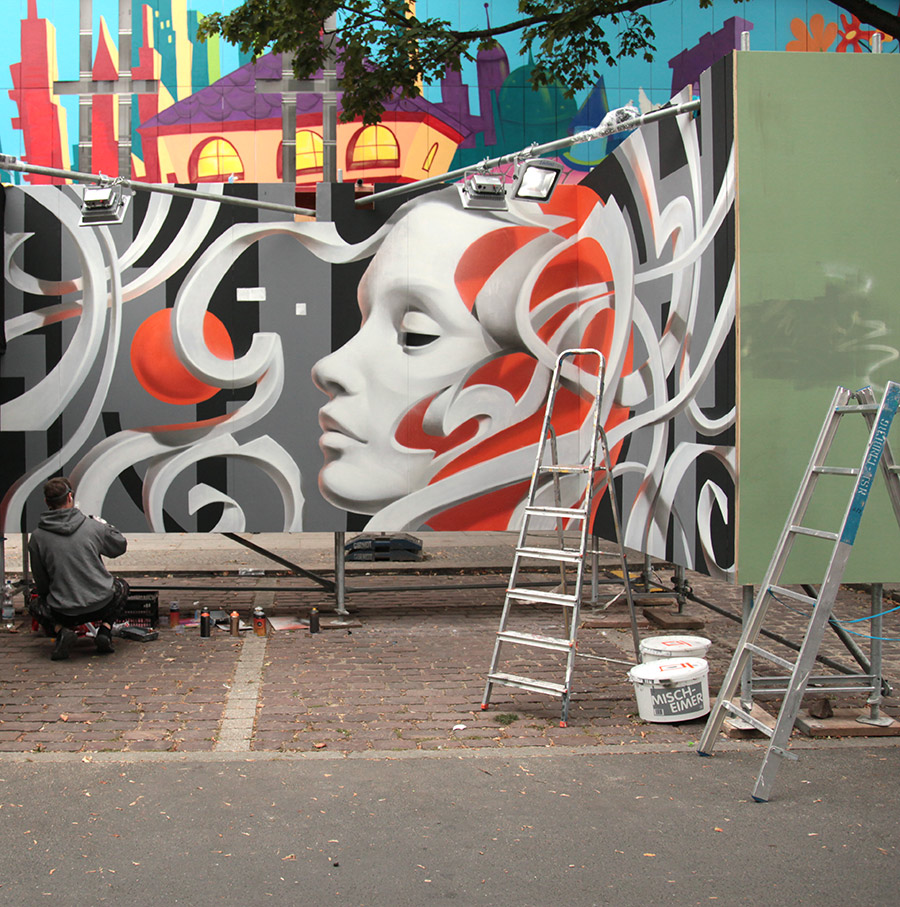
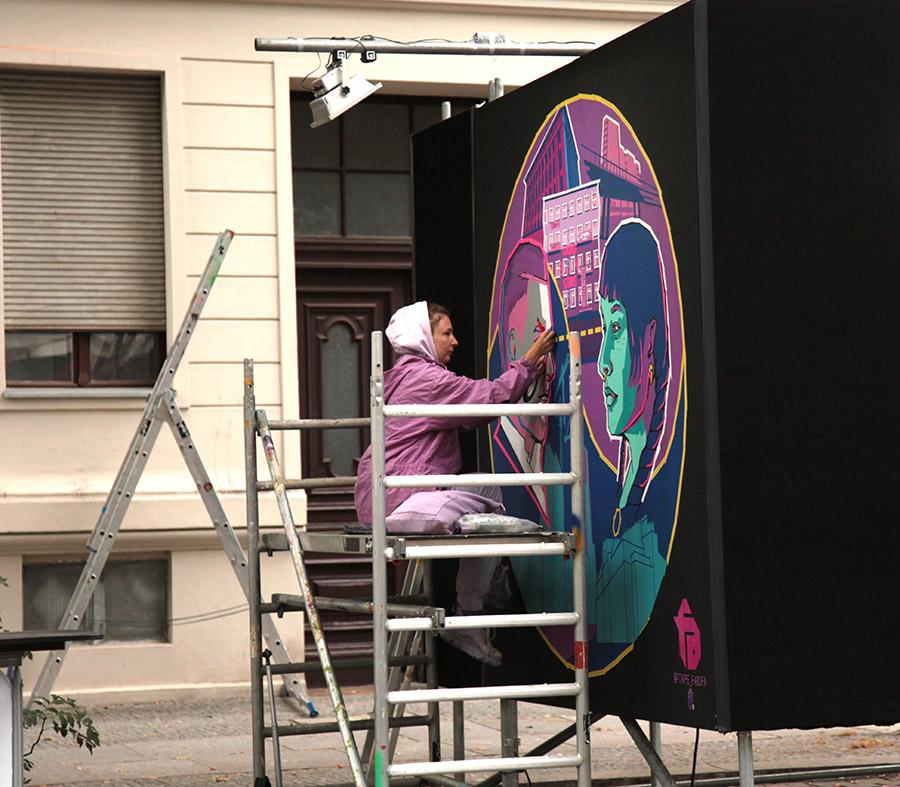
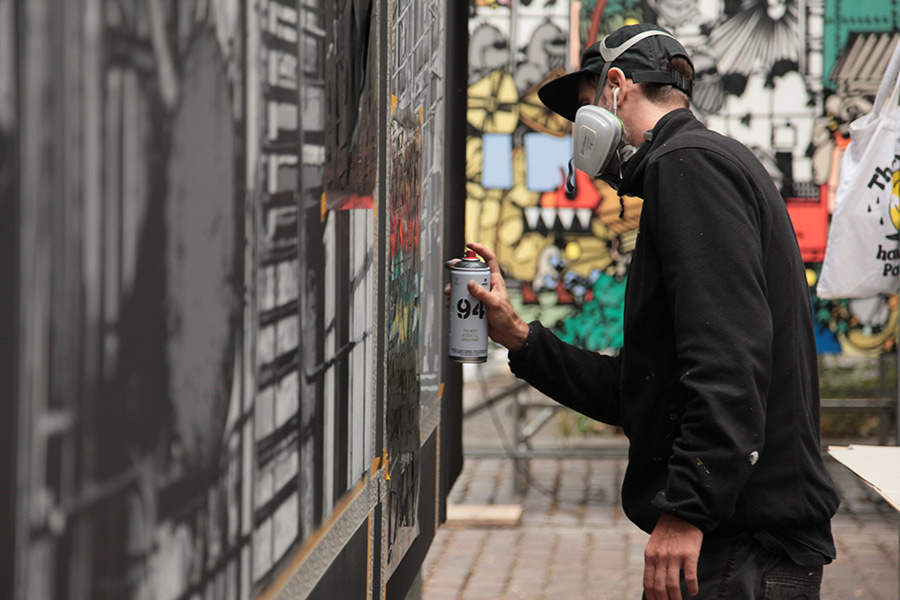
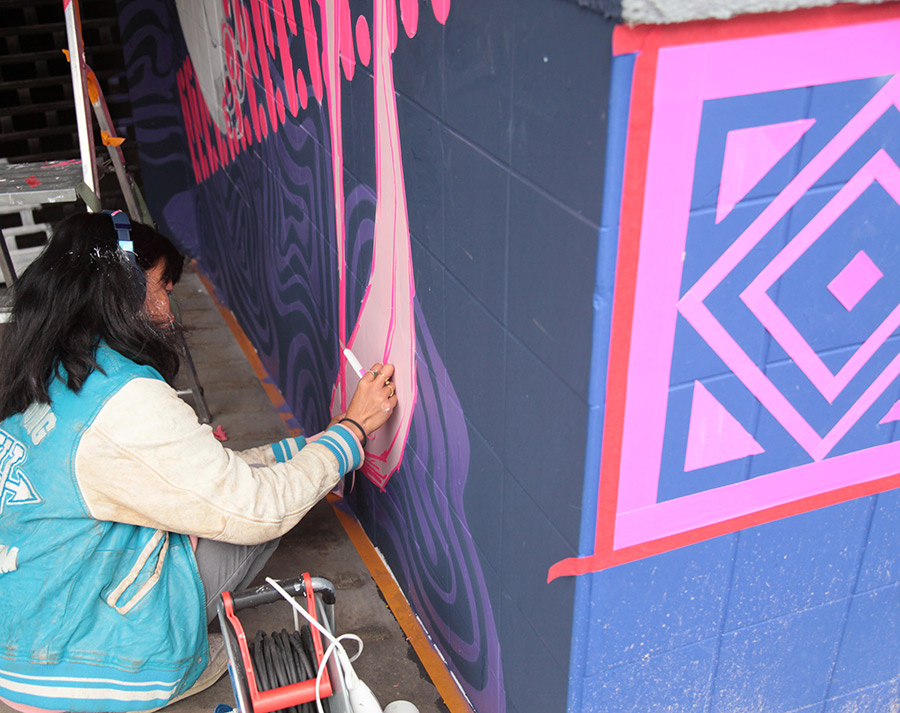
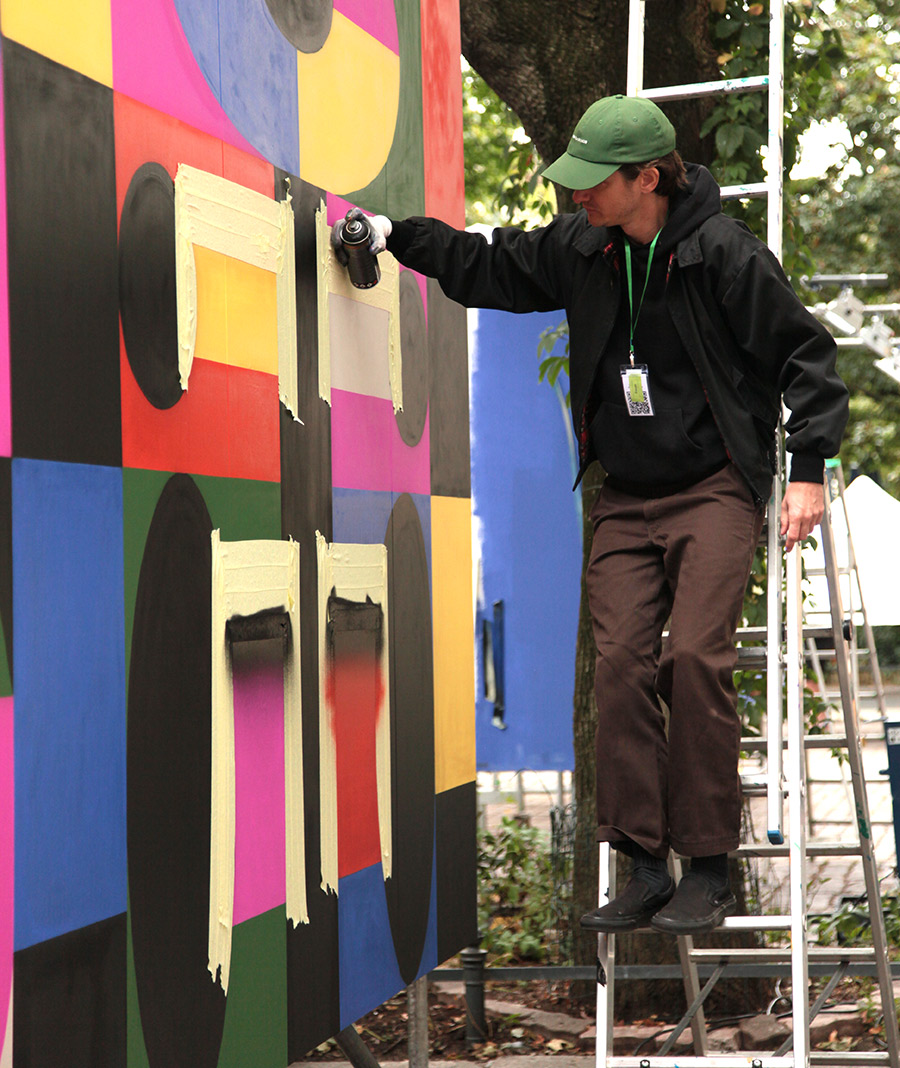
Tape artist Fabifa at work. Bülow Street Festival. Urban Nation Berlin. (photo © Jaime Rojo)
Fabifa. Bülow Street Festival. Urban Nation Berlin. (photo © Jaime Rojo). Fabifa (Instagram: @tape_fabifa) – Specializes in tape art, using colored adhesive tape to create large-scale, temporary murals.
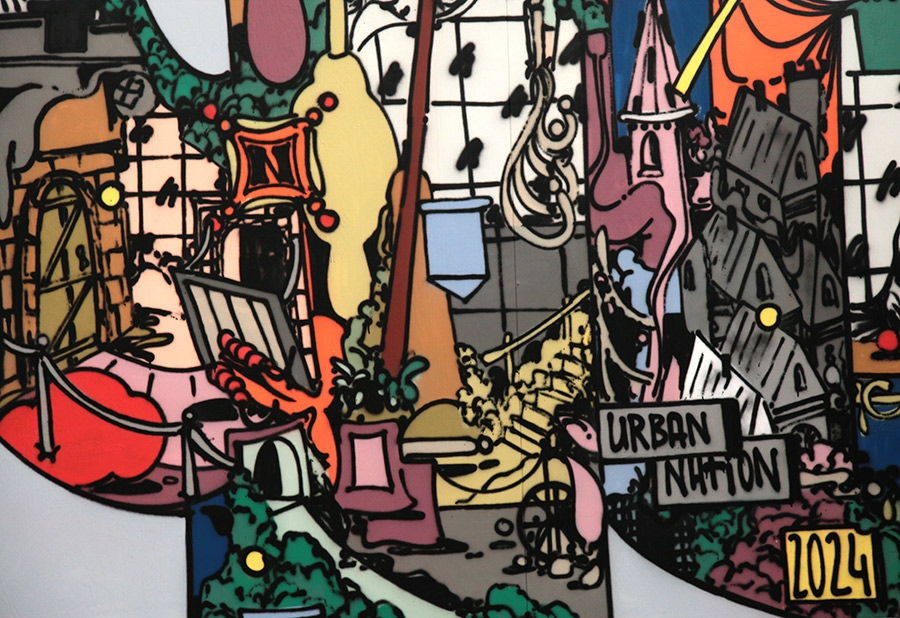
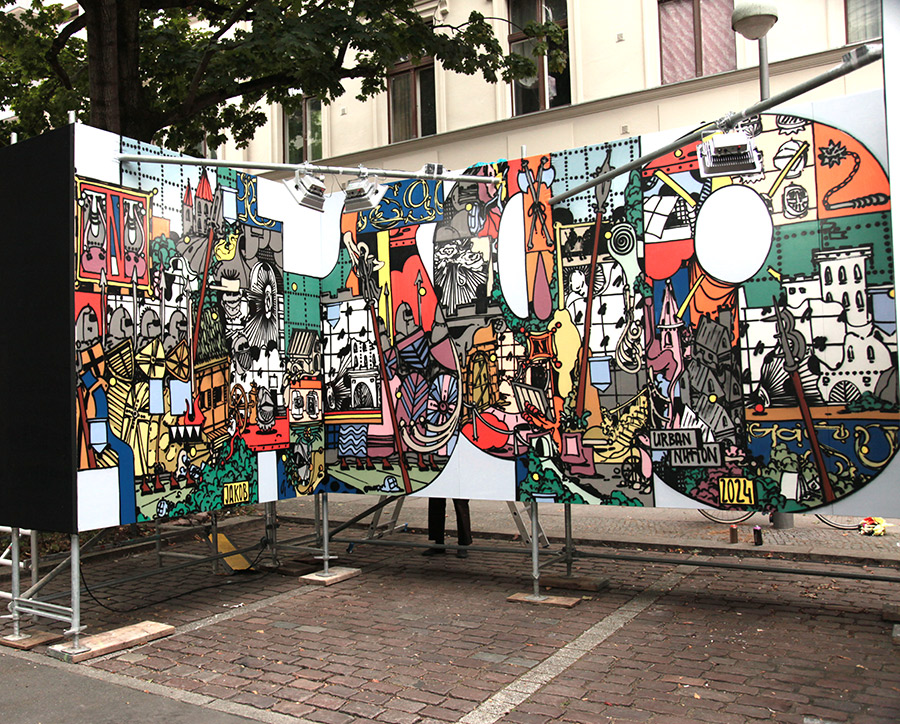
Jakob Der Bruder. Detail. Bülow Street Festival. Urban Nation Berlin. (photo © Jaime Rojo)
Jakob Der Bruder. Bülow Street Festival. Urban Nation Berlin. (photo © Jaime Rojo) Jakob der Bruder (Instagram: @jakobderbruder) – A Berlin-based muralist, Jakob der Bruder often focuses on figurative and symbolic art, using a mix of illustration style techniques to look at social and personal themes.
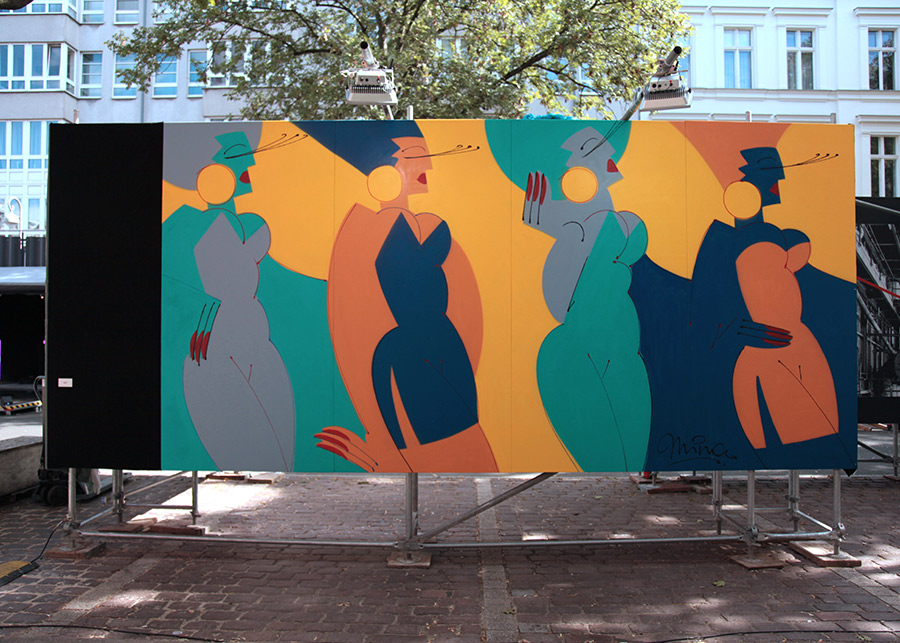
Mina. Bülow Street Festival. Urban Nation Berlin. (photo © Jaime Rojo)
Iss.Ue. Bülow Street Festival. Urban Nation Berlin. (photo © Jaime Rojo)
Modern deconstruction of the letterform at its finest. Iss.Ue. Detail. Bülow Street Festival. Urban Nation Berlin. (photo © Jaime Rojo)
Iss.Ue. Bülow Street Festival. Urban Nation Berlin. (photo © Jaime Rojo) ISS.UE (Instagram: @_iss.ue) – A graffiti artist known for intricate line work skillz and surrealist compositions.
Rene Meyer. Bülow Street Festival. Urban Nation Berlin. (photo © Jaime Rojo)
Rene Meyer. Detail. Bülow Street Festival. Urban Nation Berlin. (photo © Jaime Rojo)
Rene Meyer. Bülow Street Festival. Urban Nation Berlin. (photo © Jaime Rojo) René Meyer (rmyr) (Instagram: @rmyr.stencils) – A stencil artist from Germany, René Meyer’s work is defined by sharp, detailed designs focusing on urban life, often aiming to flip perceptions of modern society in the post industrial age.
ZEBU. Bülow Street Festival. Urban Nation Berlin. (photo © Jaime Rojo)
ZEBU. Bülow Street Festival. Urban Nation Berlin. (photo © Jaime Rojo) ZEBU (Instagram: @z_e_b_u) – ZEBU is a Berlin-based duo known for playful, minimalist graphic illustrations. They often work with bold, flat colors and create characters that interact with the surrounding environment, infusing humor and light-heartedness into urban spaces.

Bülow Streetart Jam / Community Murals

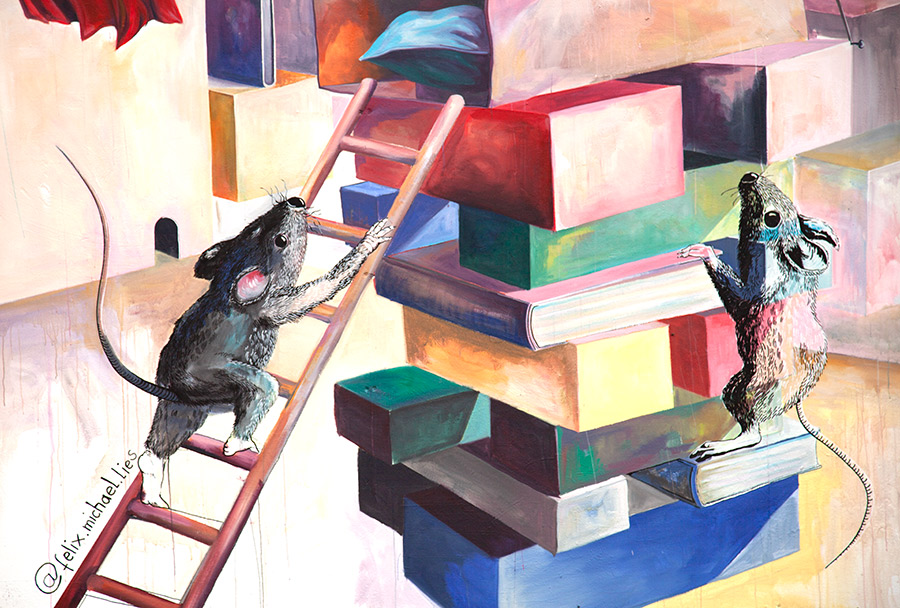
Felix Lies. Detail. Bülow Street Festival. Urban Nation Berlin. (photo © Jaime Rojo)
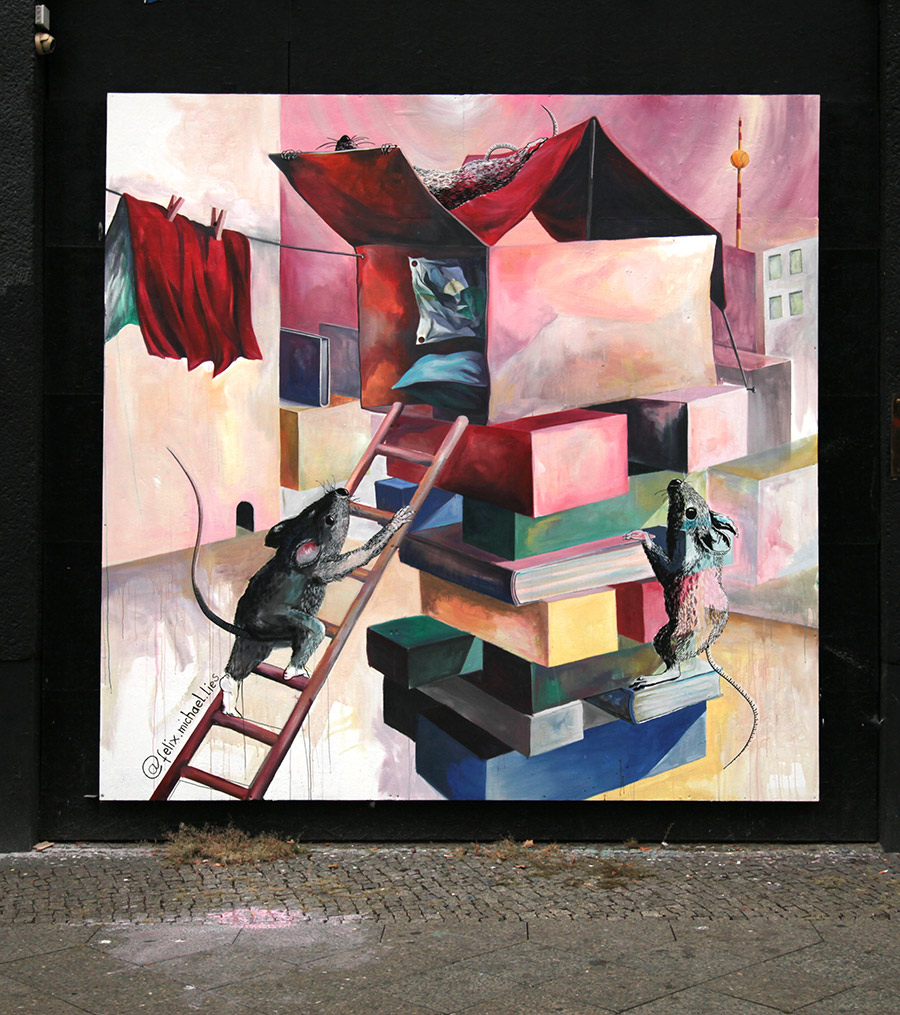
Felix Lies. Bülow Street Festival. Urban Nation Berlin. (photo © Jaime Rojo). Felix Lies (Instagram: @felix.michael.lies) – Felix Lies is a Berlin-based muralist whose work often features clean, minimalist lines and geometric patterns. His figures interact with architecture and geometric forms, using space to reflect on interaction and movement.
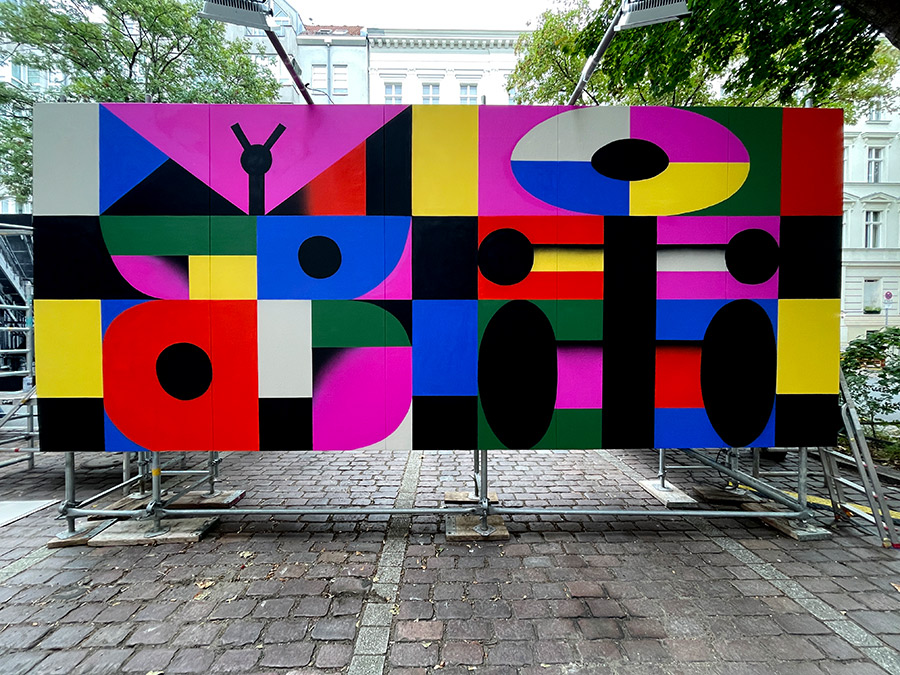
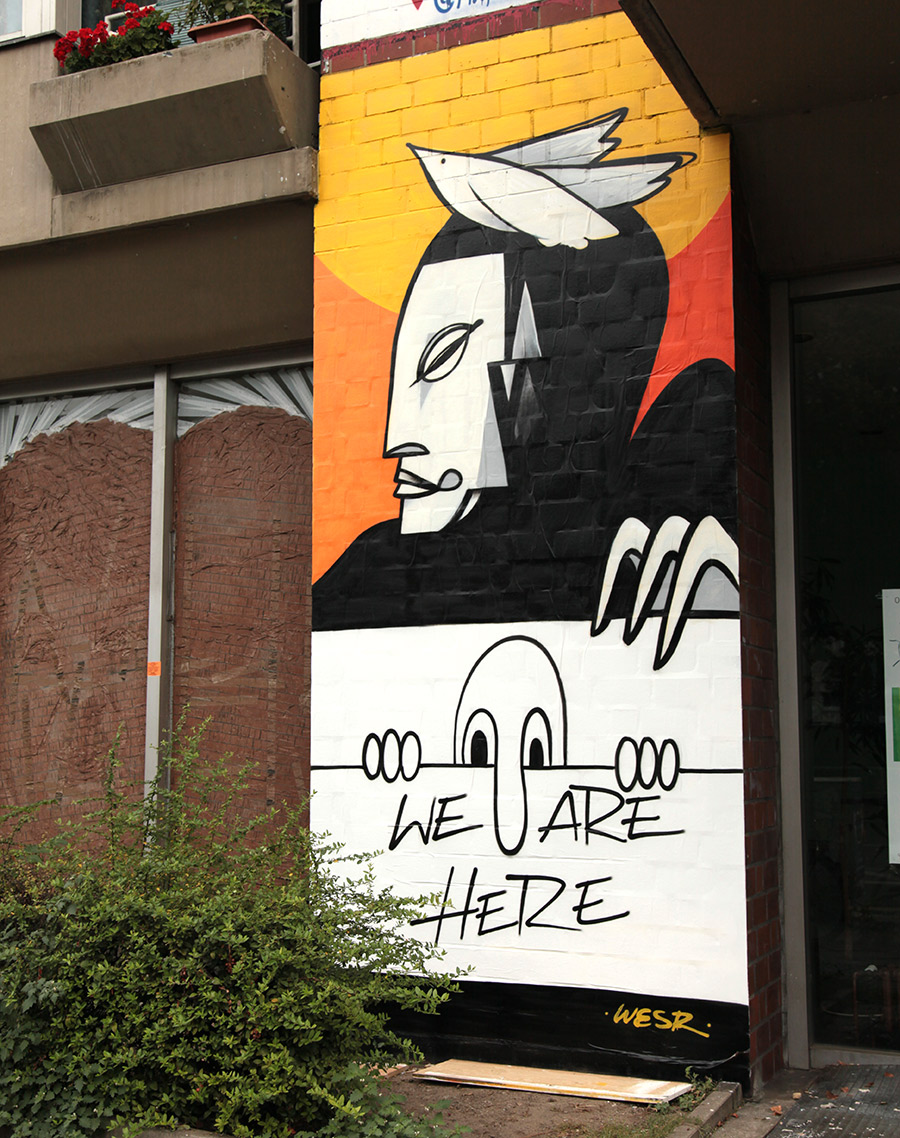
WESR. Bülow Street Festival. Urban Nation Berlin. (photo © Jaime Rojo) WESR (Instagram: @wesr_art) – Originally from Lima, Peru, WESR (Danny Figueroa) blends street art with Andean symbolism and iconography. Vibrant colors, cultural identity, and themes of migration come in for examination.
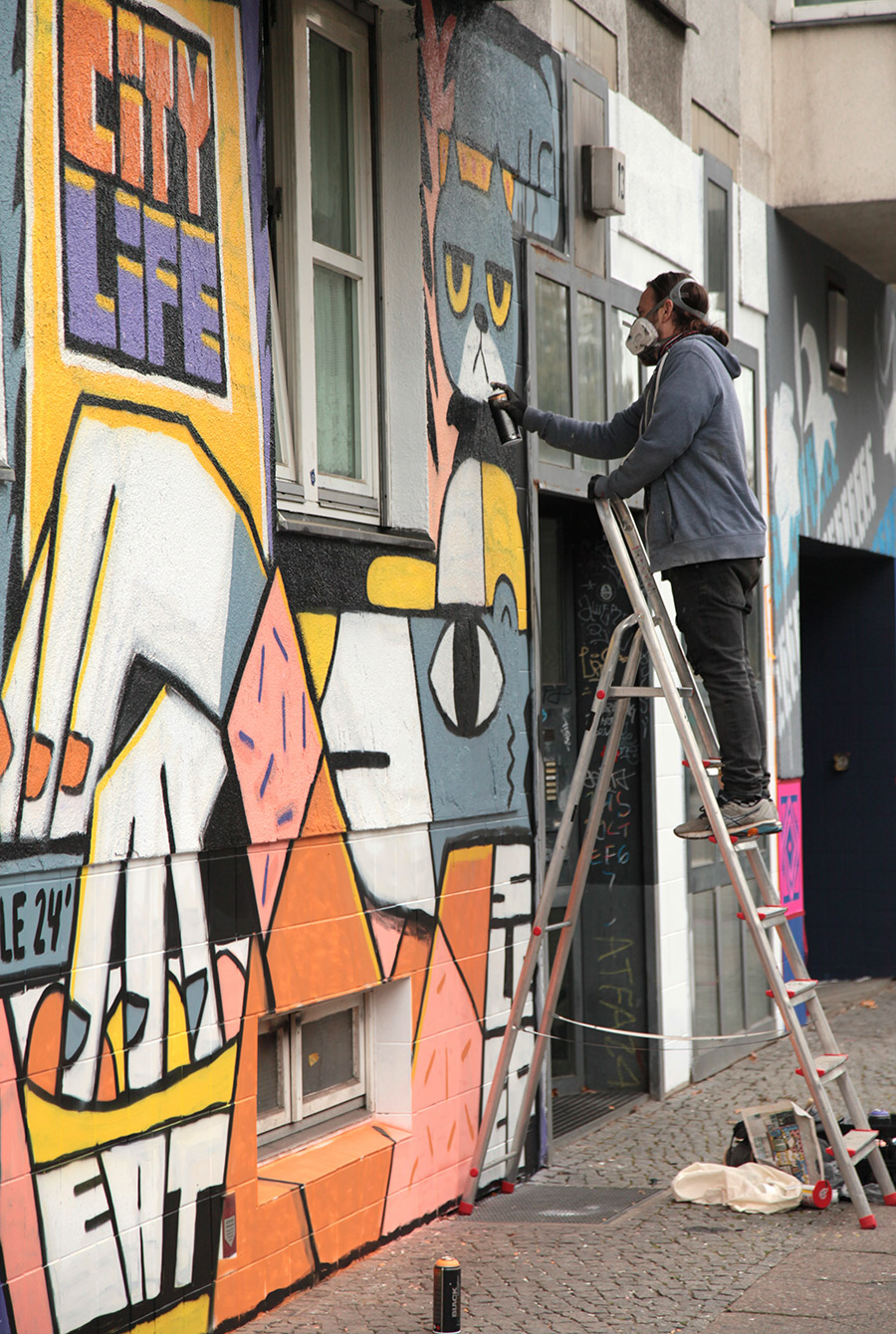
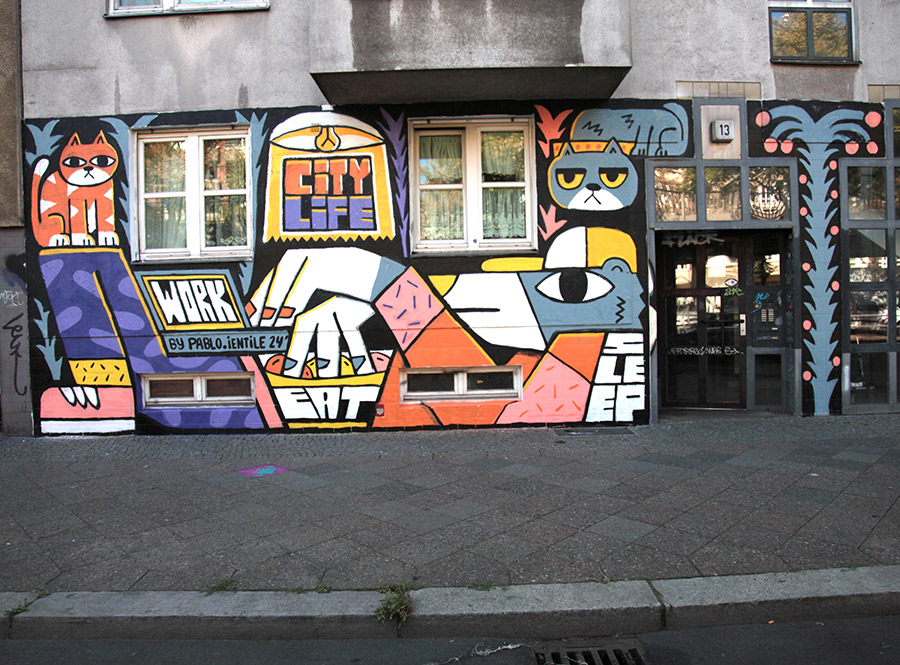
Pablo Ientile. Bülow Street Festival. Urban Nation Berlin. (photo © Jaime Rojo)
Pablo Ientile. Bülow Street Festival. Urban Nation Berlin. (photo © Jaime Rojo) Pablo Ientile (Instagram: @pablo.ientile) – An artist from Argentina now based in Berlin, Pablo Ientile’s work blends humor with social commentary, often using bold graphics and exaggerated figures to present themes of urban life and human relationships.
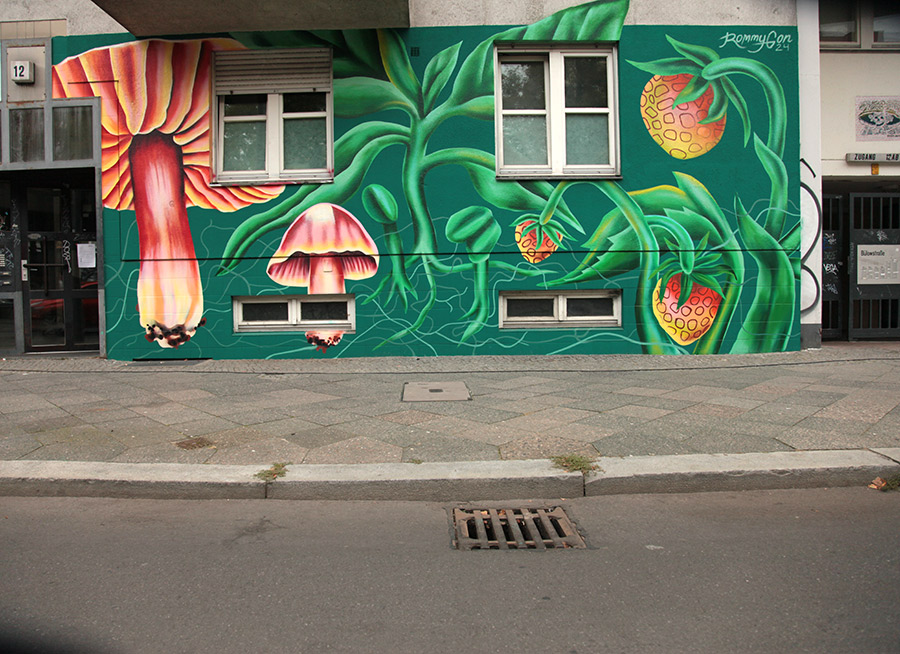
Rommy Gonzalez. Bülow Street Festival. Urban Nation Berlin. (photo © Jaime Rojo)
Nerea Ferrer. Bülow Street Festival. Urban Nation Berlin. (photo © Jaime Rojo)
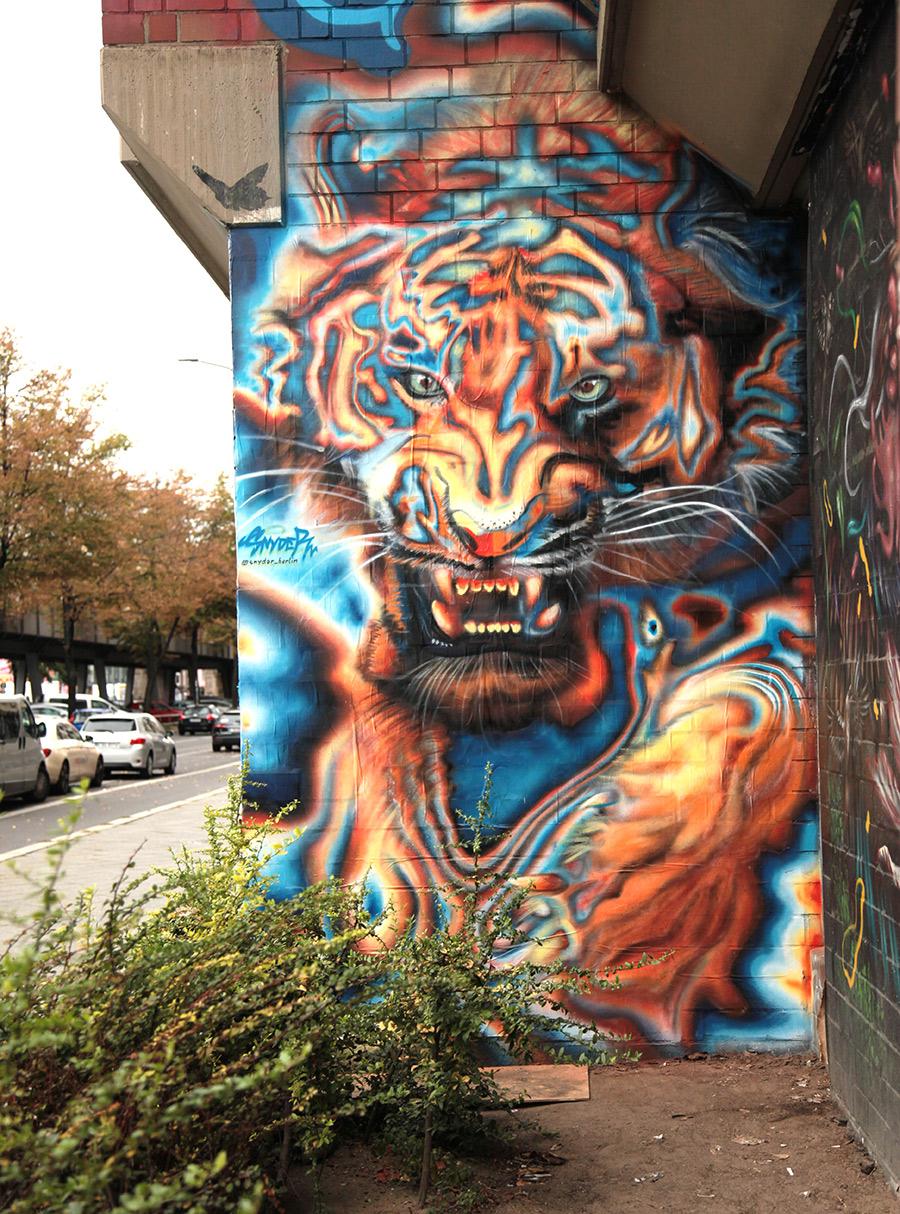
Snyder. Bülow Street Festival. Urban Nation Berlin. (photo © Jaime Rojo) Snyder (Instagram: @snyder_berlin) – Snyder is a Berlin-based street artist who creates large, bold murals often featuring animals and nature. Environmental issues and the natural world are introduced via psychedelia.
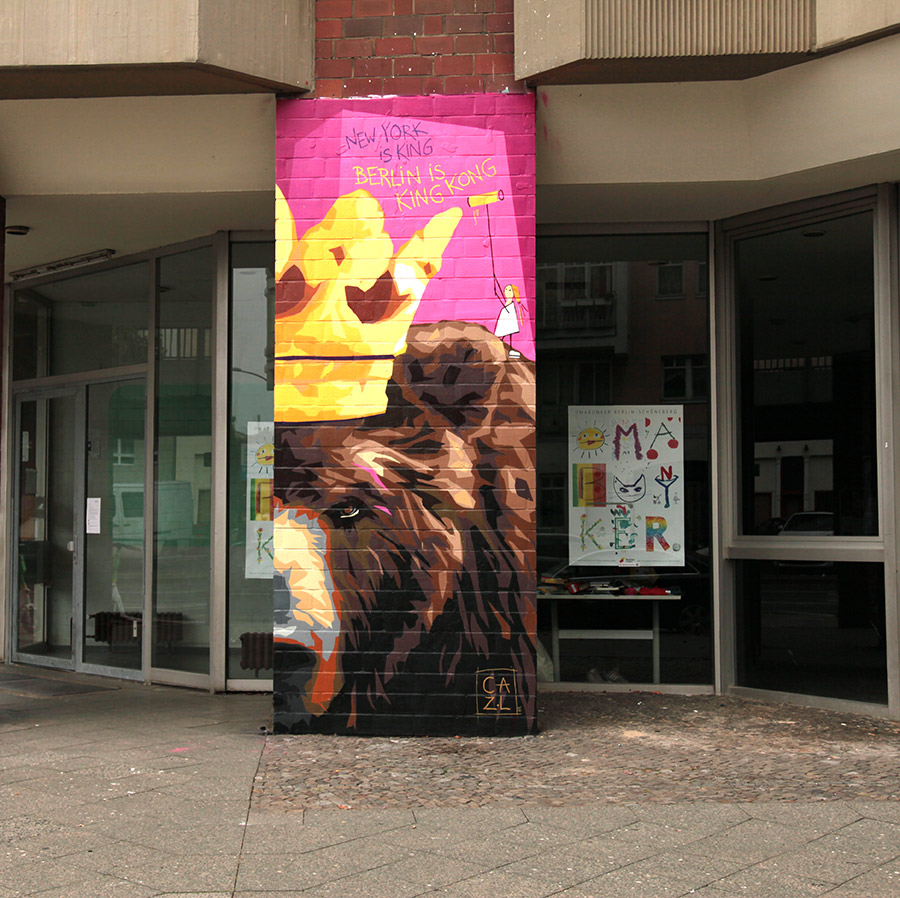
CAZ L. Detail. Bülow Street Festival. Urban Nation Berlin. (photo © Jaime Rojo)
CAZ L. Bülow Street Festival. Urban Nation Berlin. (photo © Jaime Rojo) CAZ.L (Instagram: @caz.l) His art is rooted in raw, urban aesthetics, and the intersection of contemporary street culture and whatever is on his mind.
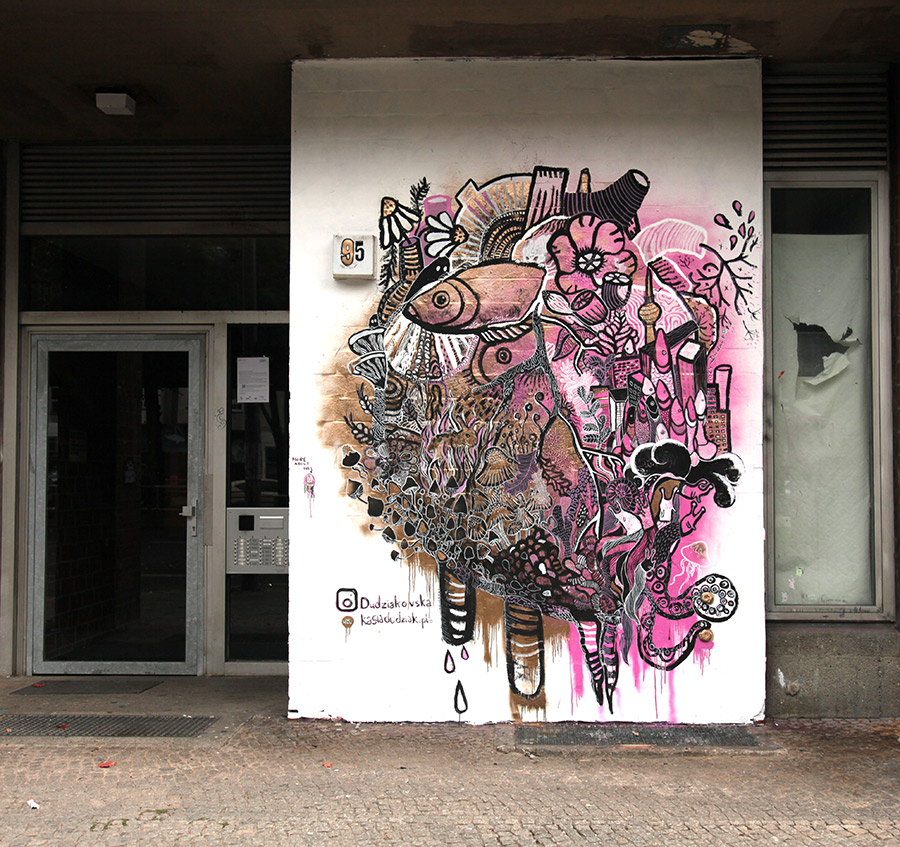
Kasia Dudziak. Bülow Street Festival. Urban Nation Berlin. (photo © Jaime Rojo). Kasia Dudziak (Instagram: @dudziakovska) – Hailing from Poland, Kasia Dudziak is known for her vibrant murals that often depict surrealist scenes, blending nature with abstract human figures. Ceramics, travelling, food, philosophy – its all in the mix between humanity and the natural world.
Jazoo Yang. Detail. Bülow Street Festival. Urban Nation Berlin. (photo © Jaime Rojo). Jazoo Yang (Instagram: @jazooyang_art) – Based in Berlin but originally from South Korea, Jazoo Yang’s work explores the themes of urban decay and memory – also described as ‘She often distorts public spaces to profound ends.”
Jazoo Yang. Detail. Bülow Street Festival. Urban Nation Berlin. (photo © Jaime Rojo)
Wanitapagihari. Bülow Street Festival. Urban Nation Berlin. (photo © Jaime Rojo)
Wanitapagihari. Detail. Bülow Street Festival. Urban Nation Berlin. (photo © Jaime Rojo). Wanitapagihari (Instagram: @wanitapagihari) Megawati Triadiani, also known as wanitapagihari, is an artist originally from Indonesia and currently residing in Berlin. They use a combination of line art and bold color blocks and look at themes of identity, migration, and connection.
Wanitapagihari. Bülow Street Festival. Urban Nation Berlin. (photo © Jaime Rojo)
Kristina Popov. Bülow Street Festival. Urban Nation Berlin. (photo © Jaime Rojo) Kristina Popov (Instagram: @kristina__popov) – Originally from Serbia, Kristina Popov’s art centers on abstract figures and surrealist landscapes. Themes appear to explore personal identity, movement, and transformation.
Kristina Popov. Bülow Street Festival. Urban Nation Berlin. (photo © Jaime Rojo)

URBAN NATION MUSEUM’S EXHIBITION “LOVE LETTERS TO THE CITY” is currently on view. The Community Murals are also on view and free to the public. For schedules and further details click HERE

Read more
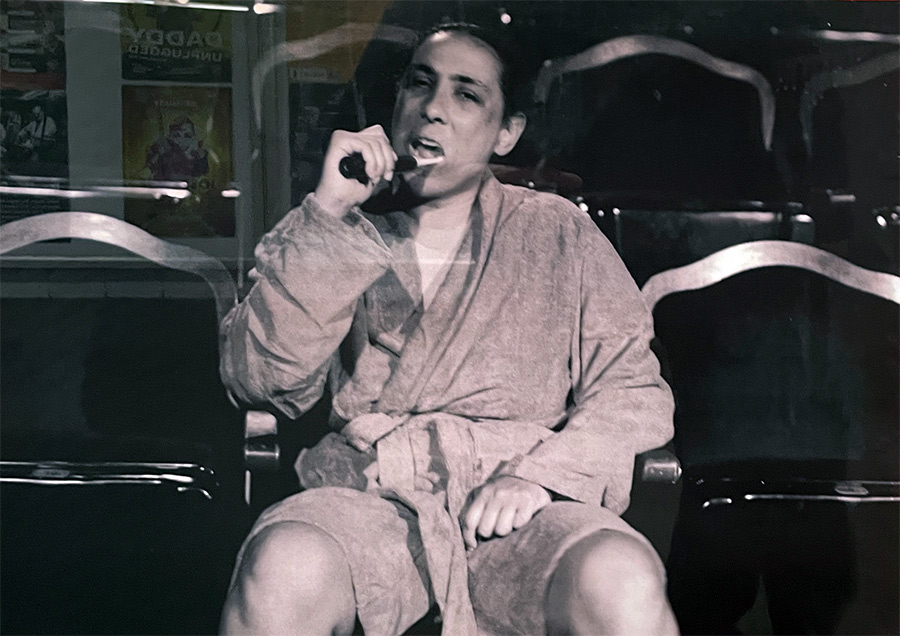
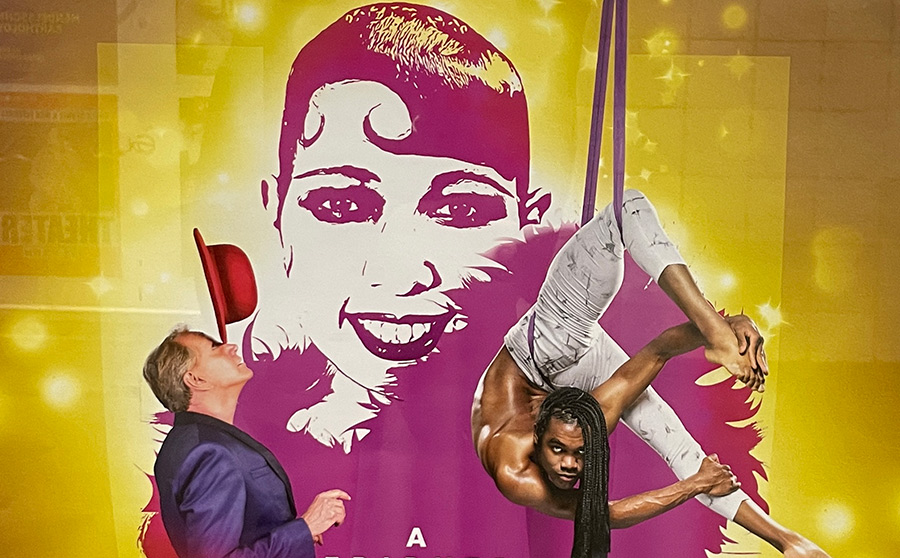
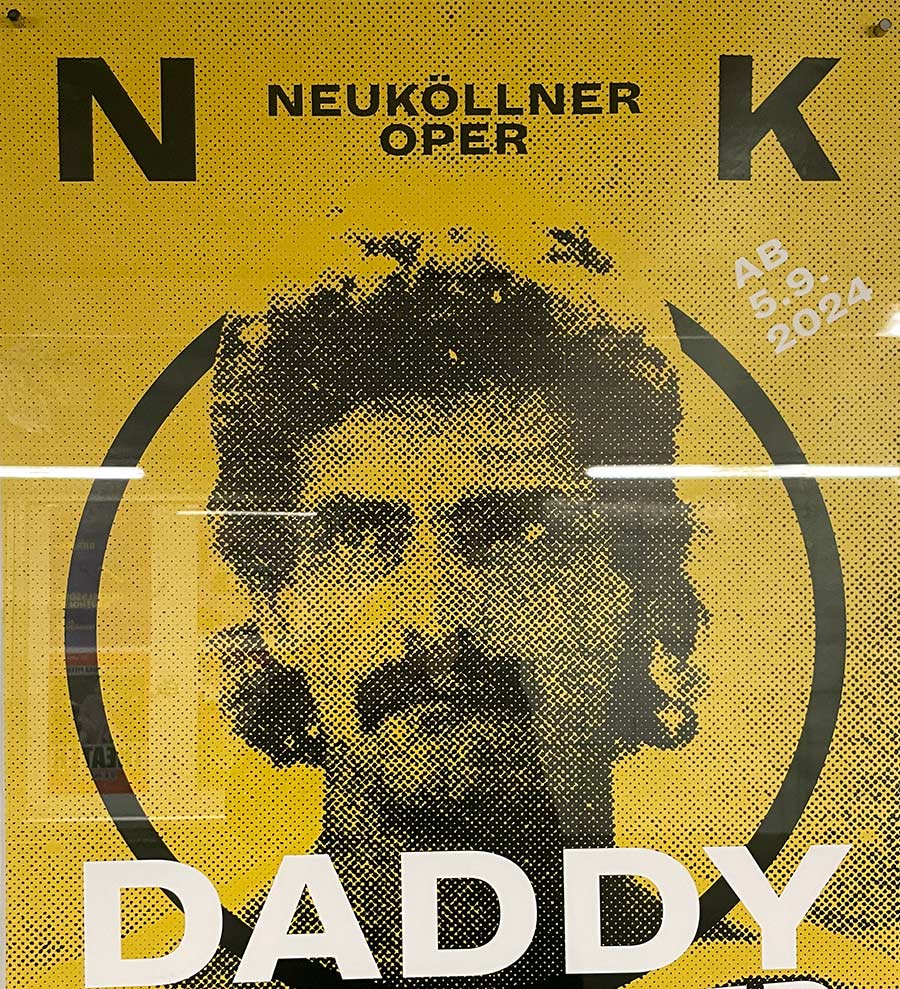
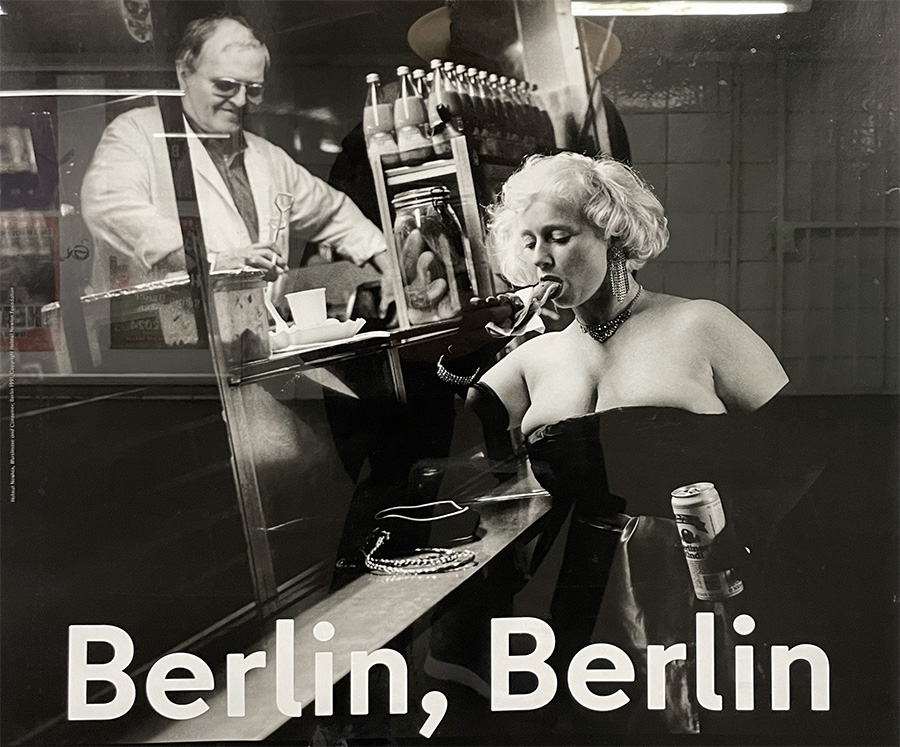
The Streets of Berlin: A Portrait in Faces

The Streets of Berlin: A Portrait in Faces

You never really know what people are saying when it’s not your native tongue being spoken in the street, at the grocery store, at the barber, or on the U-Bahn. For immigrants and tourists alike, the search for clues about a city or society often begins with its signs—billboards, advertisements, graffiti, street art. These visual messages, though often dramatic, reveal more than just commercial intent; they reflect the underlying values, cultural myths, and perceptions of humanity’s place in the universe.

Street images, much like the sets of a theater, play out stories—some scripted by tradition, others improvised by the everyday interactions of people moving through public space. The streets themselves become a stage where sociology, psychology, and even science collide. Faces tell a story not just of individuals but of a collective urban experience: how we relate to each other, what we believe in, what we struggle against, and how we see ourselves in the grand experiment of human life.

In these past few days, we’ve captured the faces of Berlin, the expressions that speak volumes without words, revealing the soul of this city. These images offer a glimpse into Berlin’s ever-changing identity, its layered history, and its constant state of becoming. Whether in fleeting glances or still portraits, these faces reveal truths about community, isolation, resilience, and the drama of life that plays out on the streets every day.

Berlin, photo © Steven P. Harrington
Read more
BSA Images Of The Week: 09.15.24 / Dispatch From Berlin

BSA Images Of The Week: 09.15.24 / Dispatch From Berlin

Welcome to BSA’s Images of the Week!

Culturally, artistically, and socially, Berlin never stops thrilling, surprising, and offering fresh perspectives. Though artists continue to discuss the rising cost of living and the slow disappearance of key clubs and cultural hubs, there’s still an undeniable fervor for new art and new participants are still shaking things up.

Witness the crowded museum and long lines of youth and middle-aged people, as well as some octogenarians at the Urban Nation opening here called “Love Letters to the City,” which is the main reason we’re here for a few days. The speeches, the beer, the energy, the high-quality installations and the questions they pose, the street fair with parkour and bBoys and bGirlz, rappers, kids tagging their names in aerosol at an open class, the exhibition boxing matches… It was a legit, diverse program, free of corporate overload, and with real talk on gentrification, the environment, and social and financial inequality. Once again, it proves that when art institutions take risks, they can give street art, graffiti, and urban art the respect they deserve.

While the debate still pops up about whether museums should even host street art and graffiti, there are smart and sharp pros teaming up with artists to push the conversation forward, broaden the topics, and bring more people into the mix. In the end, they’re archiving a small slice of this massive, chaotic global art movement – so future generations can get a glimpse of it, reflect on it, and maybe even get inspired.

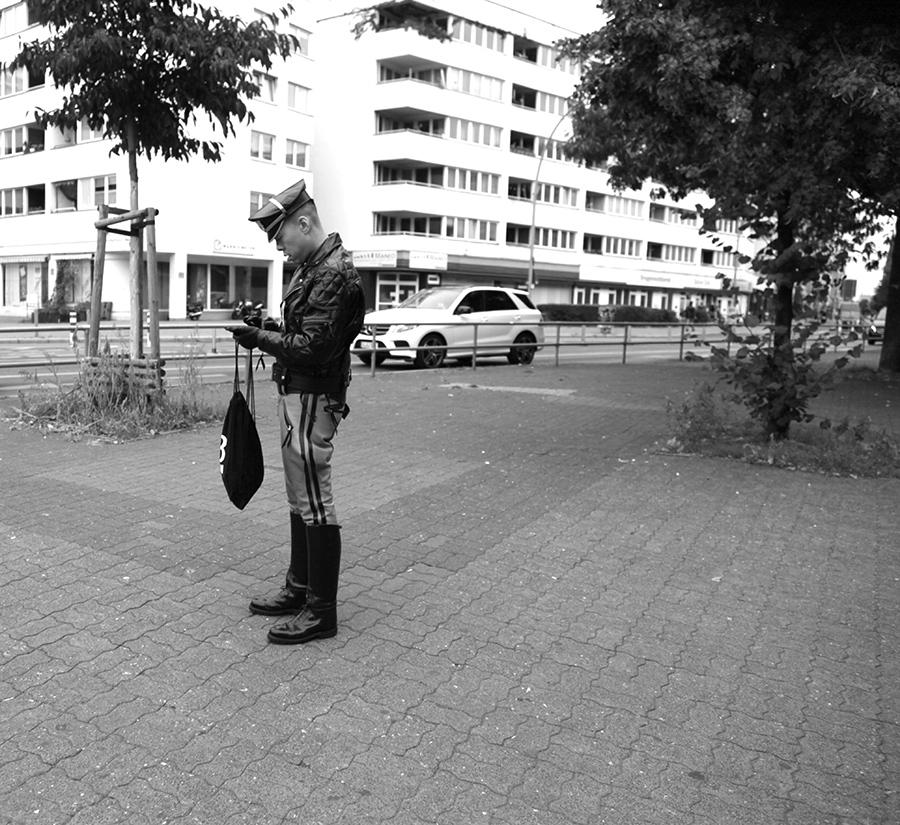
While right-wing movements are reshaping politics here, leading to stricter border policies and longer lines at the airport, Berlin remains fiercely committed to its ragged, rebellious spirit of protecting individual liberties and free expression. The ironies are hard to miss: just two blocks from the Bulow Street Fair, a family-friendly block-long event celebrating what is officially illegal art on the street and political concerns may dominate conversations, Berlin hosts Folsom Europe, the largest festival for leather and fetish enthusiasts, raging freely for four days with five stages and a “puppy parade”. It’s a vivid contrast—on one hand, they’re tightening borders, and on the other, this is a celebration of personal freedom.

Also, it’s more entertaining than a boring football match. Thousands of (mostly) men parade down Fuggerstraße in neighboring Nollendorfstraße, stomping through the streets in various ensembles—militaristic oppressor, master and servant, or dog and owner themes. Regardless, most will be at brunch with hangovers the next morning. If a drunken one gets disorderly, the police are advised not to threaten with handcuffs. The festival attire may range from severe, almost fascist looks to outfits with a more playful fierceness, like brightly colored hazmat suits or firefighter uniforms. At the lower end of the fetish festival fashion spectrum are the guys who just threw on a leather vest or a pair of Doc Martens—and the “bought it at the mall” crowd are in one-piece leather or rubber jumpsuits with Hoxo sneakers, like race car drivers heading to the grocery store.

At Folsom, you can pick up everything from whips, paddles, original artwork, and adult toys to bratwurst, pretzels, beer, French fries (pommes), and meat skewers. There are also plenty of vegan and vegetarian options available. What’s most remarkable and admirable about the tough, perpetually unimpressed Berliners is that they’ve seen it all before and hardly take note. They go about their business—picking up Saturday groceries, maybe a bunch of flowers, or fetching their kid from Taekwondo class. They take their dog to the park to enjoy the sunny, chilly September weather. Everyday folks in the neighborhood wait patiently at the crosswalk, alongside a cluster of muscular men with mustaches and leather, sometimes greeting one another, but mostly unfazed by each other’s presence.

The current street art and graffiti—what’s been sprayed or pasted up recently—never fails to impress, even when you’re not entirely sure what it’s about. We’re happy to be here and to share some of it with you.

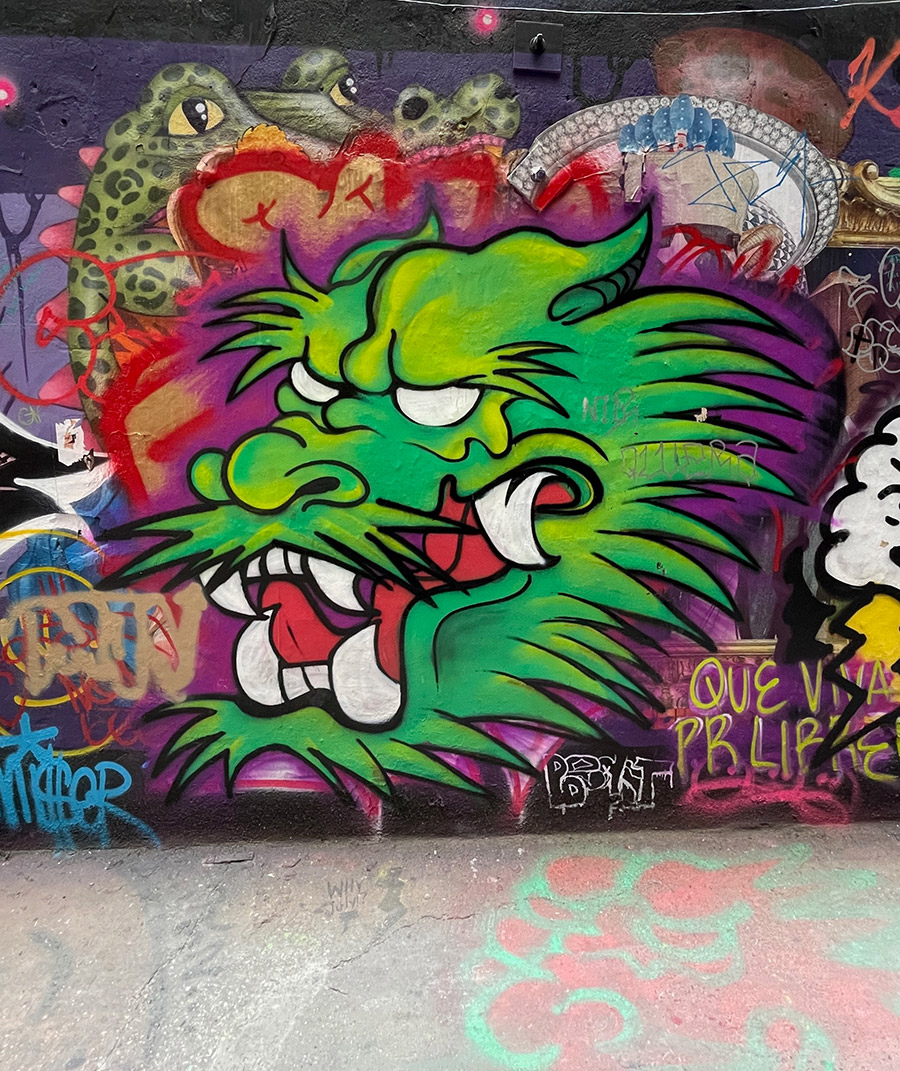
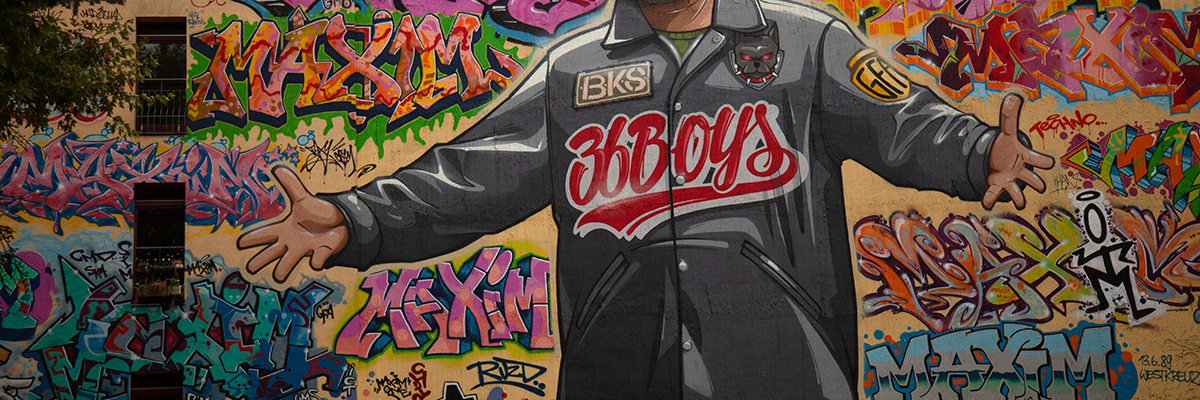
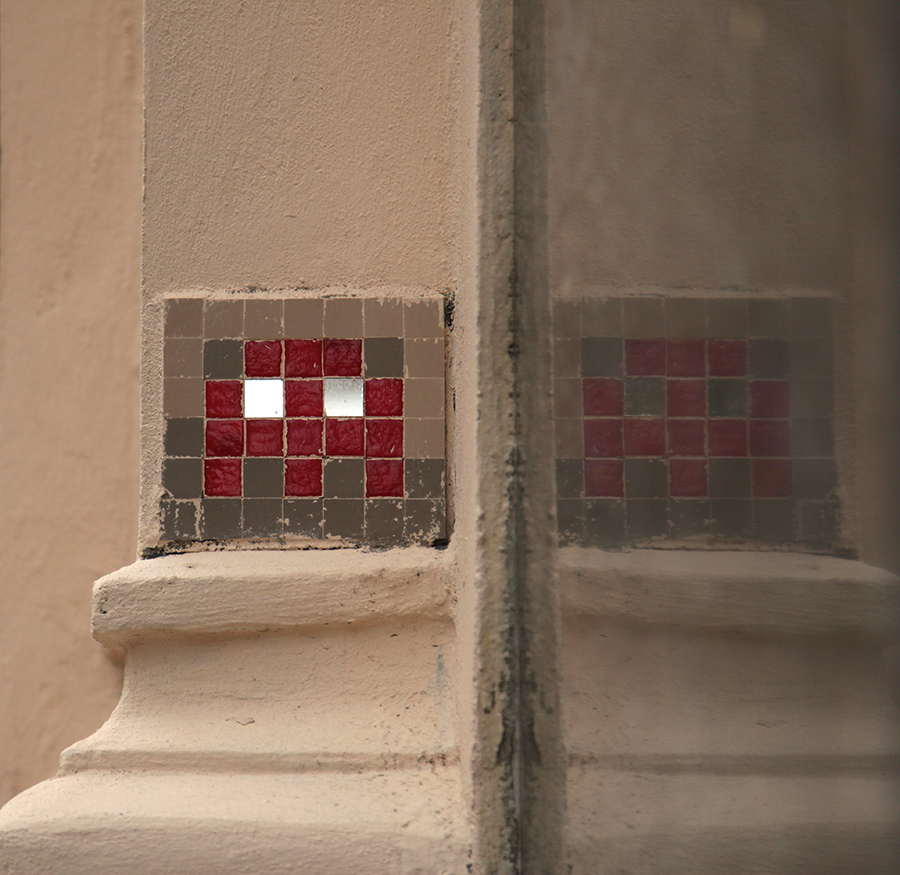
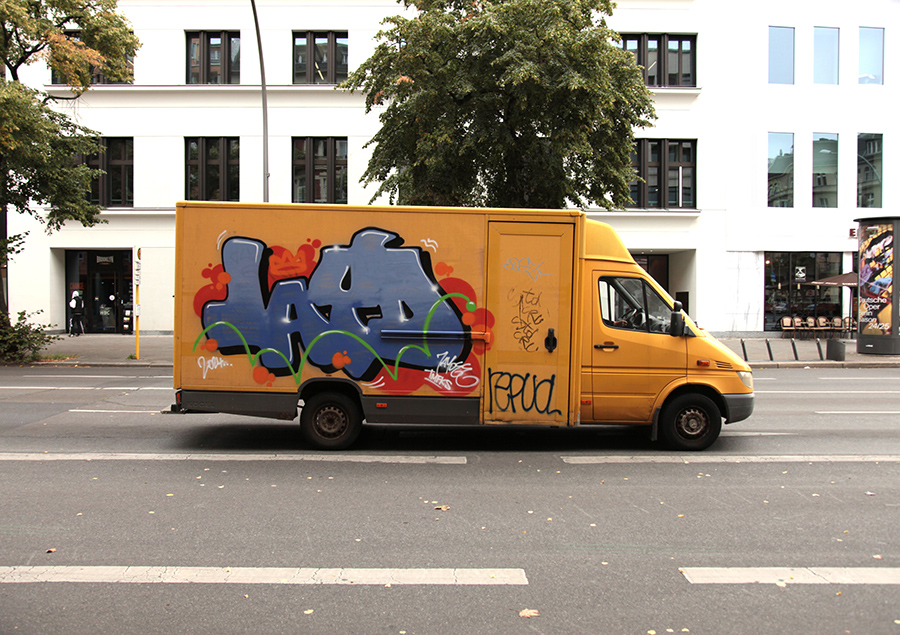
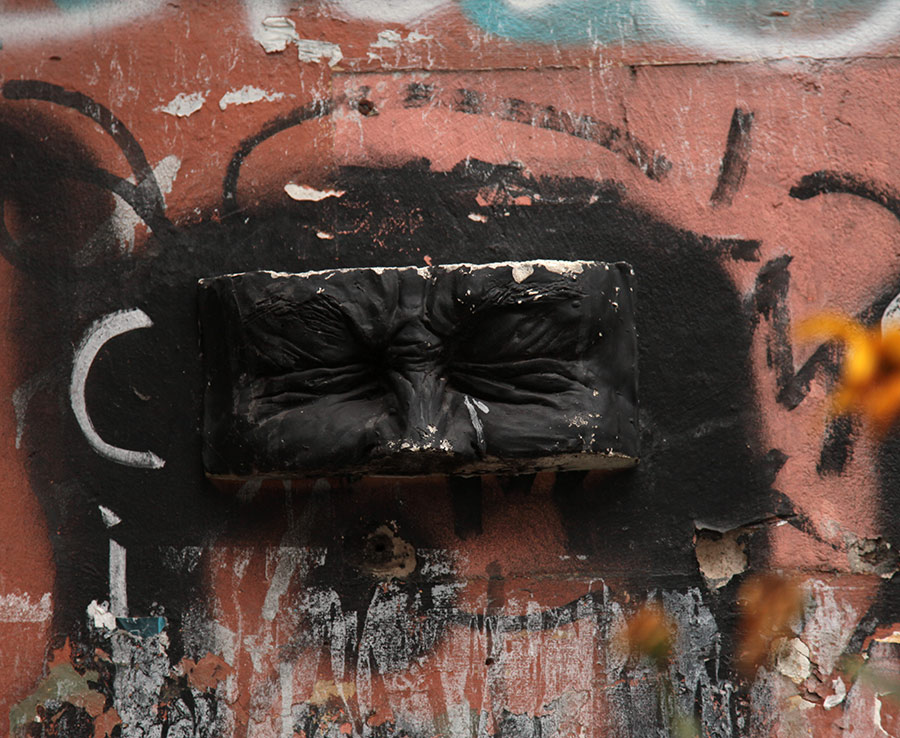
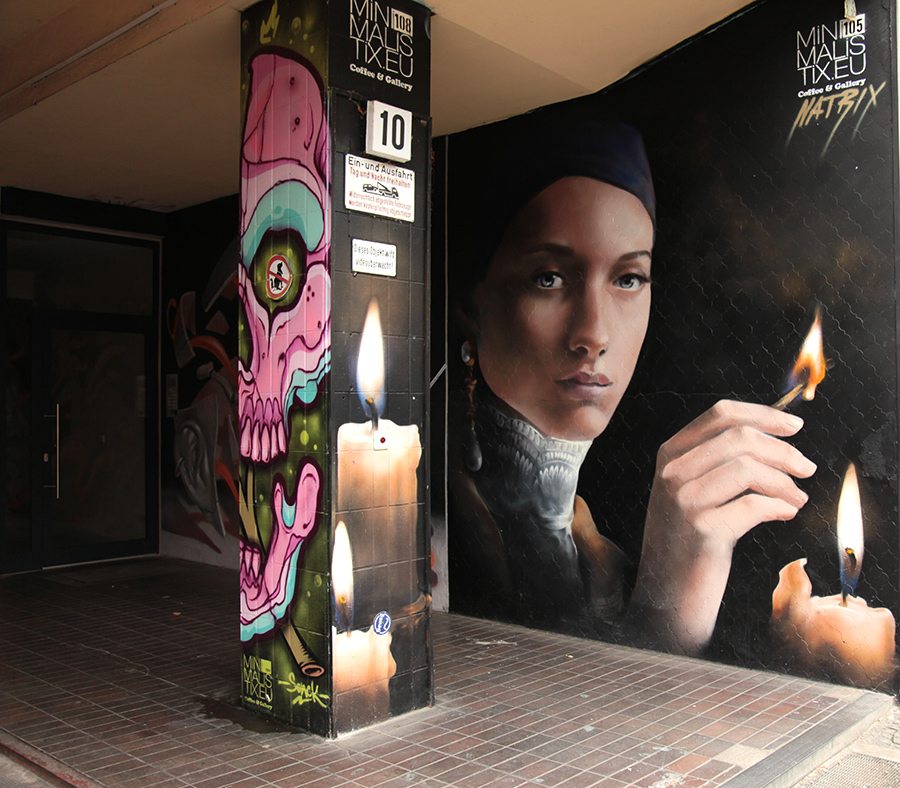
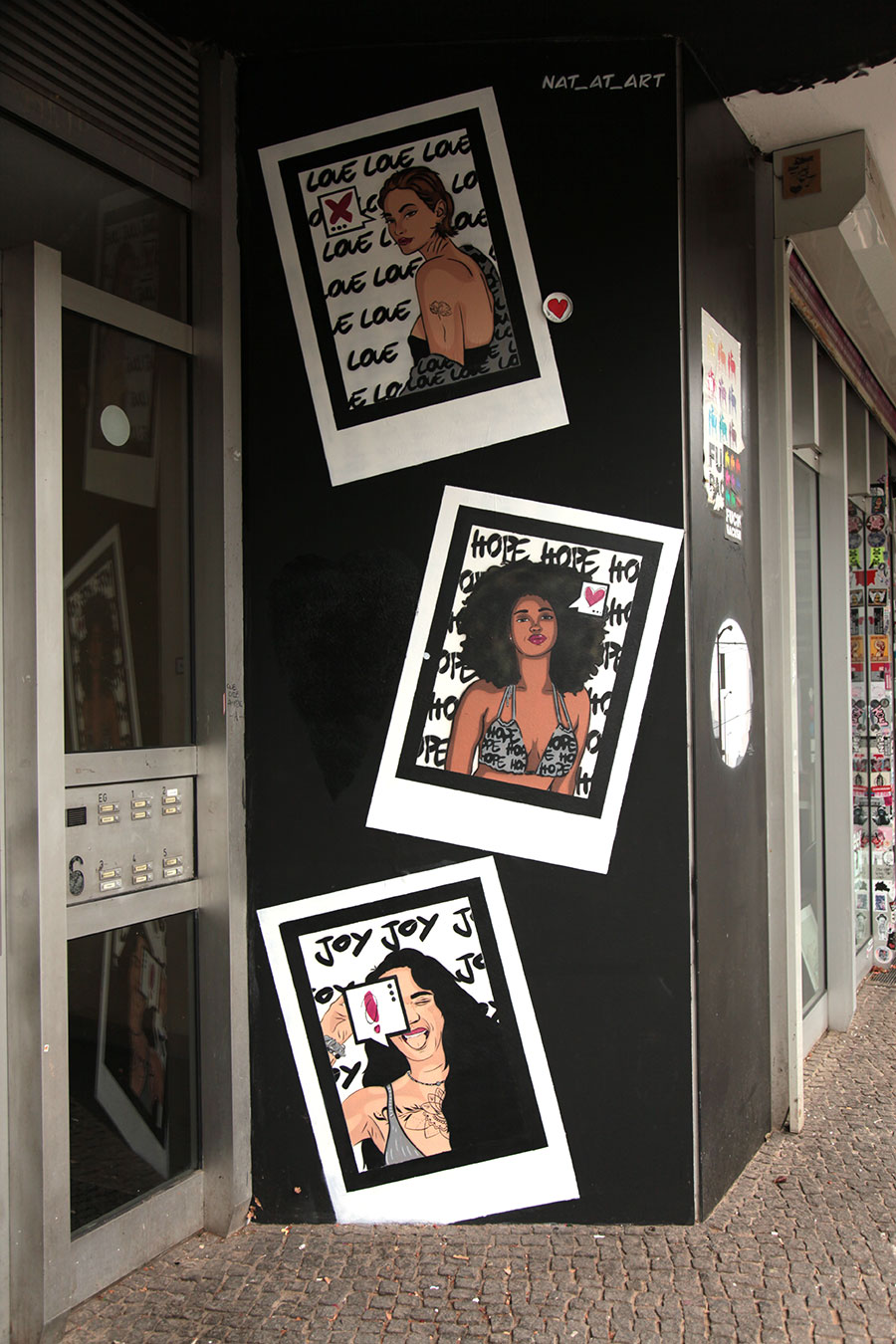
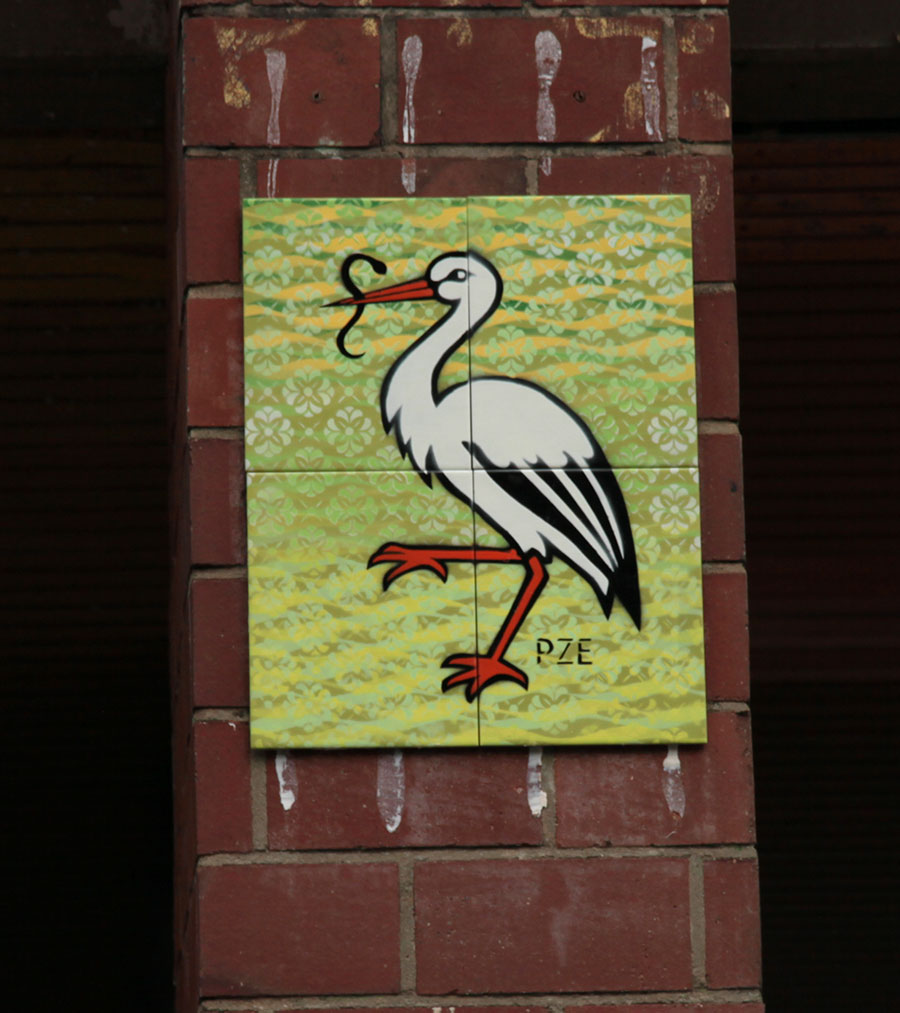
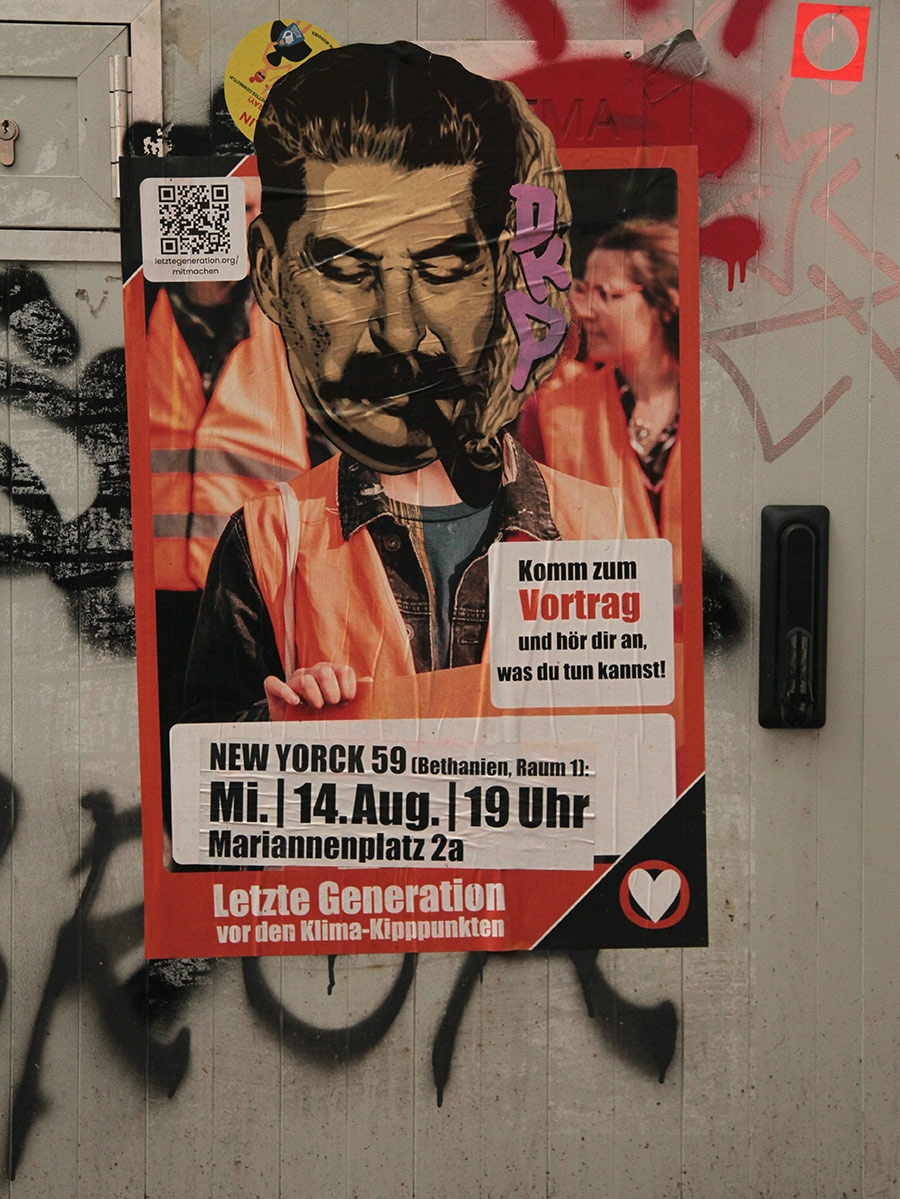
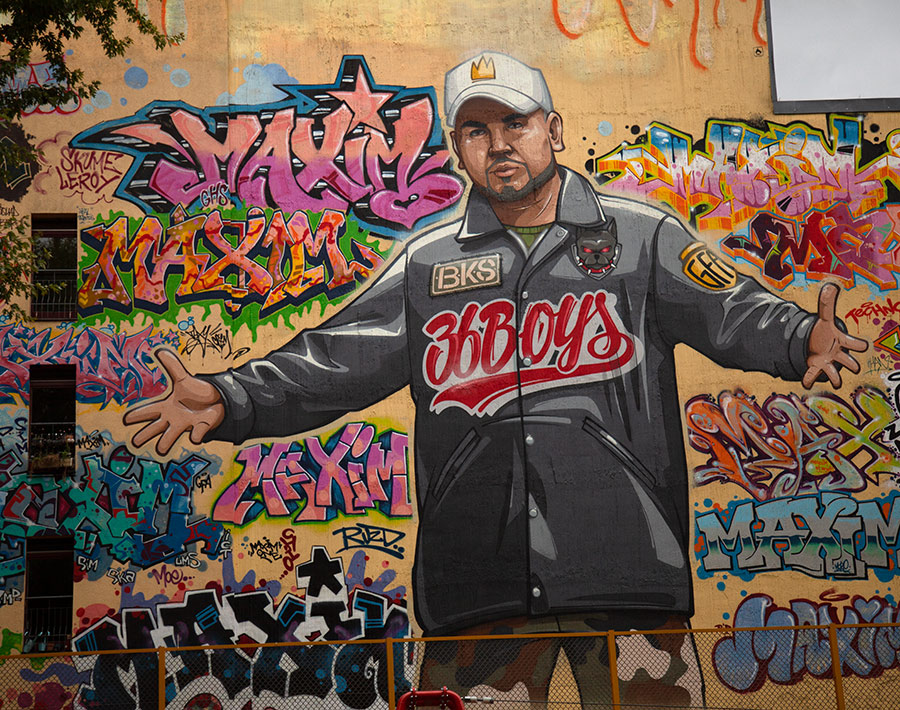
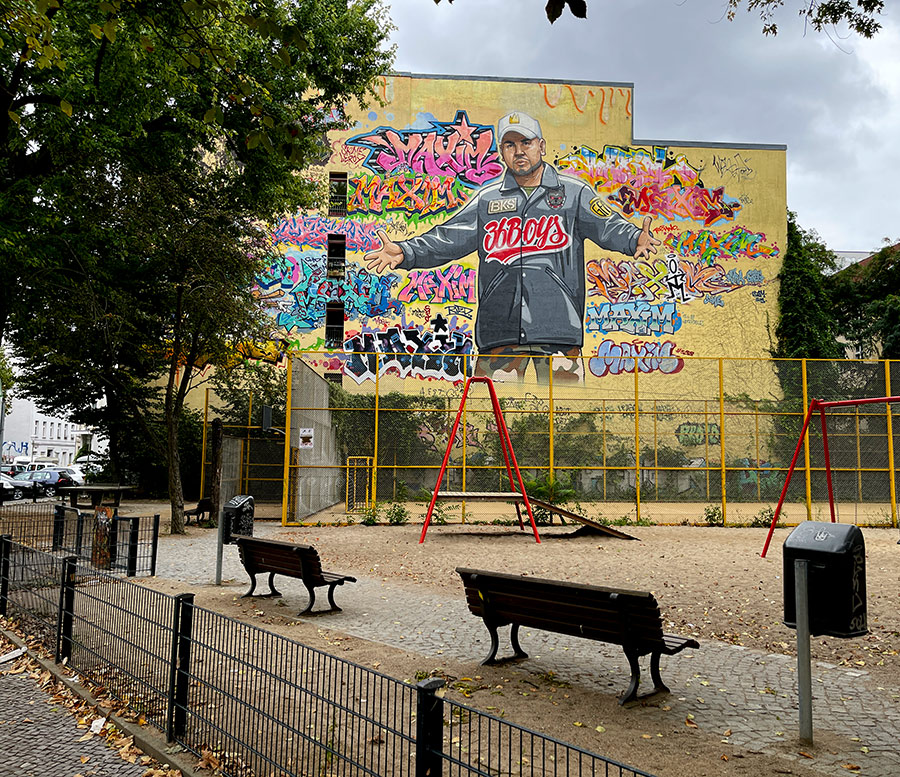
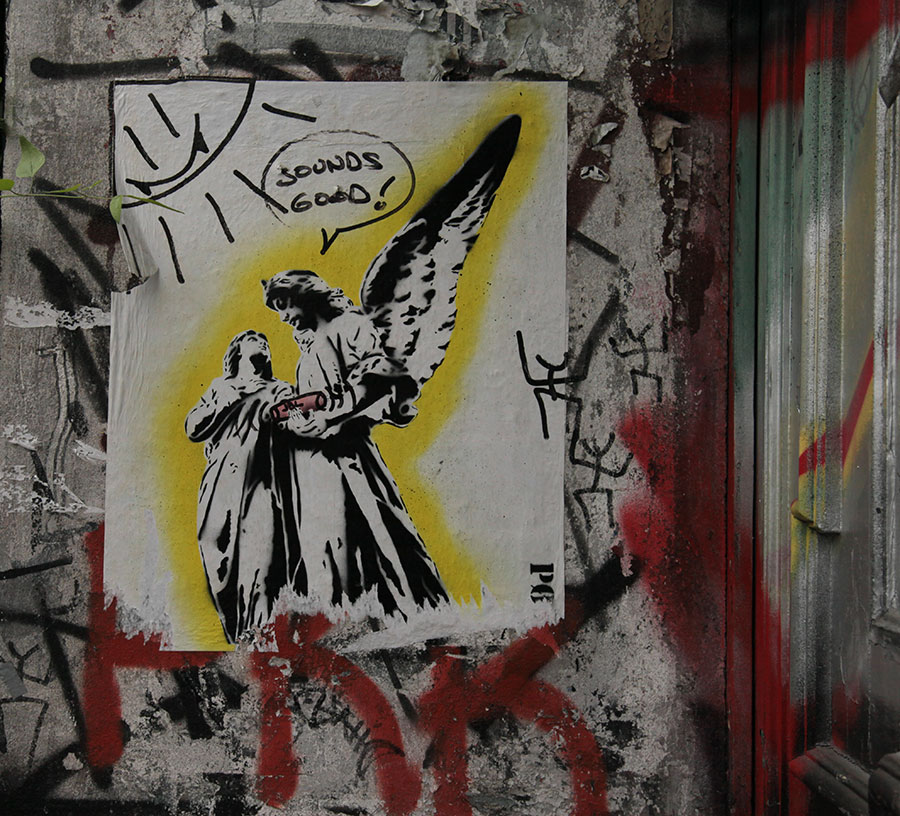
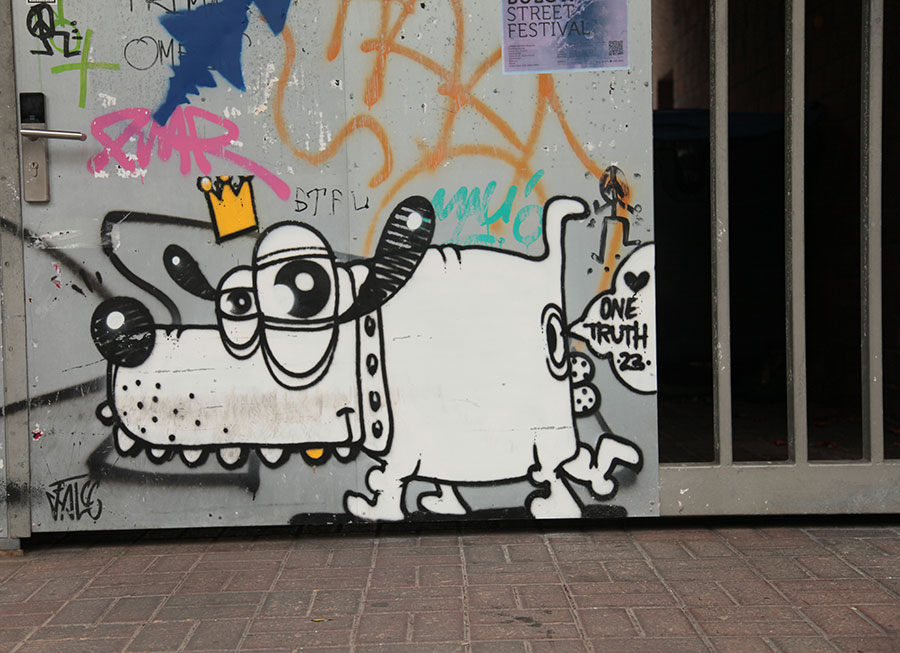
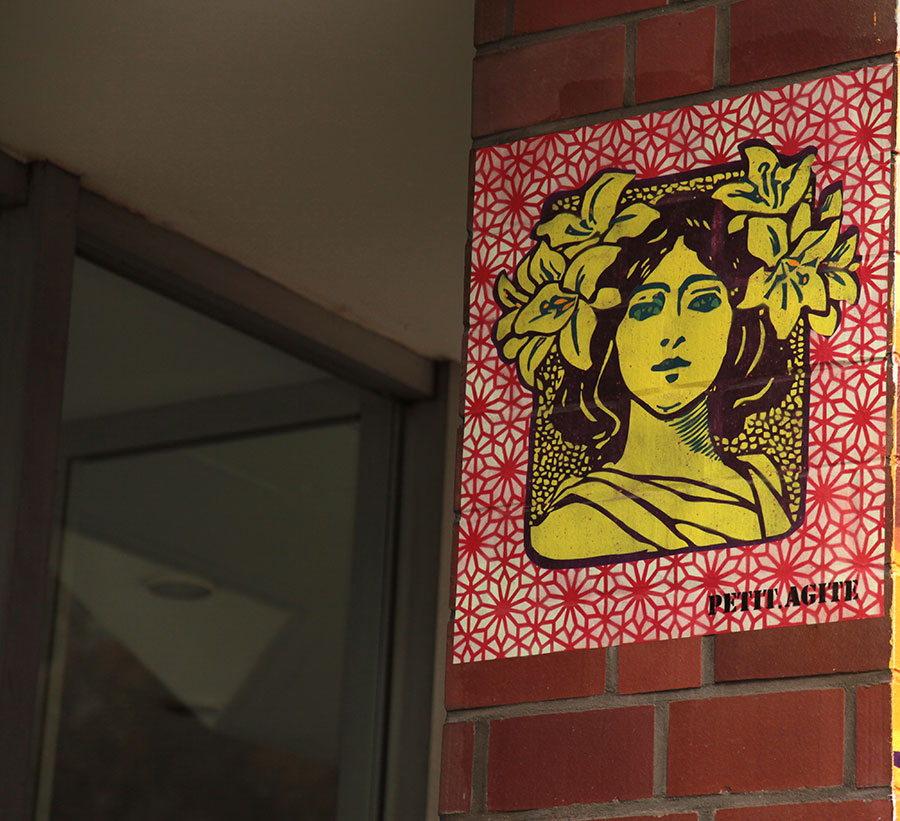
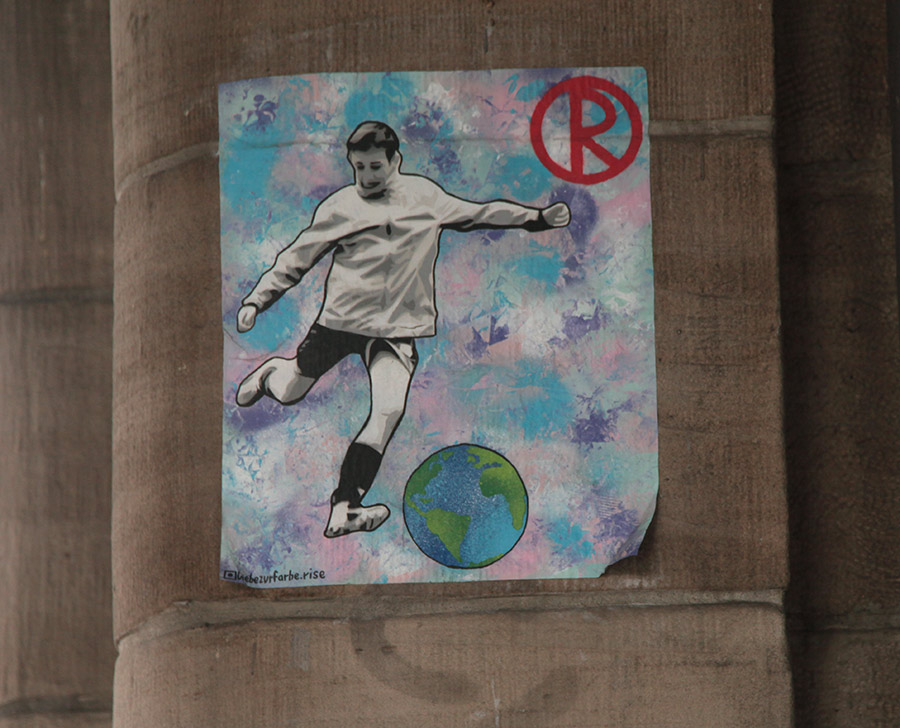
Here is our weekly interview with the streets, this week featuring Invader, 1Up Crew, Hera, Pobel, Nat At Art, One Truth, Natrix, Roffle, LAYD, T Tan Box, Rise, Petite Agite, Maxim, and PZE.

HERA. Detail. (photo © Jaime Rojo)
1UP Crew (photo © Jaime Rojo)
Unidentified artist. (photo © Jaime Rojo)
T Tan Box (photo © Jaime Rojo)
Invader (photo © Jaime Rojo)
JAYD (photo © Jaime Rojo)
ROFFFE (photo © Jaime Rojo)
Natrix (photo © Jaime Rojo)
Nat At Art for Urban Nation Museum Berlin. (photo © Jaime Rojo)
PZE (photo © Jaime Rojo)
Unidentified artist (photo © Jaime Rojo)
MAXIM. Detail. (photo © Jaime Rojo)
Maxim (photo © Jaime Rojo)
Pobel (photo © Jaime Rojo)
One Truth (photo © Jaime Rojo)
Unidentified artist (can’t read the signature) (photo © Jaime Rojo)
Petite Agite (photo © Jaime Rojo)
Rise (photo © Jaime Rojo)
Untitled. Berlin. September, 2024. (photo © Jaime Rojo)
Read more
Lady Pink Paints Berlin Facade as ‘Love Letters to the City’ Opens at Urban Nation

Lady Pink Paints Berlin Facade as ‘Love Letters to the City’ Opens at Urban Nation

Join BSA this week in Berlin as we celebrate the opening of “Love Letters to the City,” the new exhibition at Urban Nation Museum. We’ll also be tooling around the city and sharing whatever catches our eye.


Love Letters to the City is a homage to the city, the idea of the universal city,” curator Michelle Houston reflects while seated at a picnic table outside a Thai restaurant in Berlin’s Schöneberg neighborhood. As final installations are taking place in Urban Nation, Houston’s gazes upward at the new mural on its façade being painted by OG train writer Lady Pink on a cherry picker at the museum. This mural is part of Houston’s upcoming show, “Love Letters to the City.”

Lady Pink. Detail. WIP. Urban Nation Museum Berlin. Love Letters To The City. (photo © Jaime Rojo)

 “I think paint in public spaces has a different potency in the city than anywhere else,” Houston explains, discussing the exhibition’s outdoor and indoor installations. She highlights the various ways Urban Nation is presenting the evolution of graffiti and street art, noting its role in urbanization, gentrification, and even social conditioning. “It does much more than just present pretty images.”

The museum’s exhibition features a diverse array of works, including full-scale three-dimensional installations and sculptures. A significant portion of the pieces are borrowed from the museum’s permanent collection, while others are newly commissioned from both national and international artists.

Lady Pink paints the Urban Nation Museum Berlin facade for the new exhibition Love Letters To The City. (photo © Jaime Rojo)

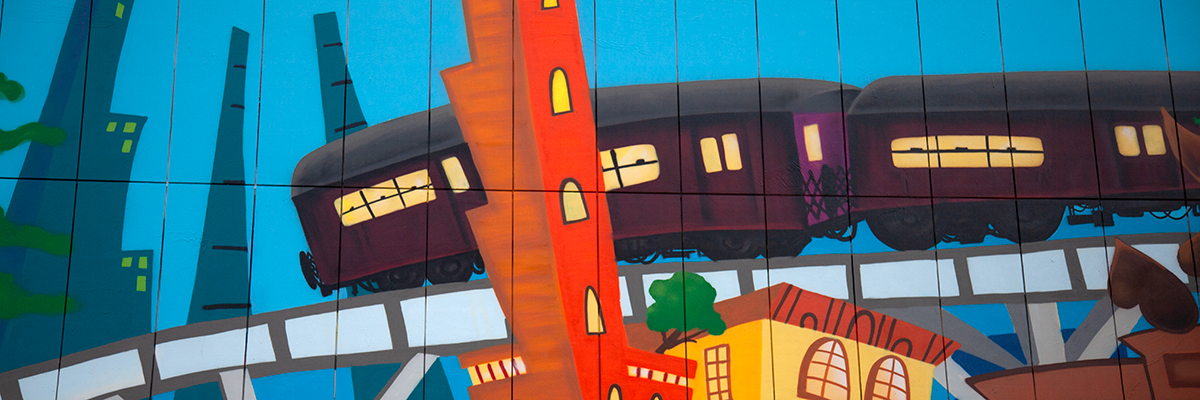
Currently, Lady Pink, born Sandra Fabara in 1964 in Ecuador, is working on her mural two stories above the bustling street. Her piece, an illustrative and fantastical love letter of her own, features a swirling train reminiscent of the NYC subway trains she became famous for painting in the early 1980s. Her work includes improvisational tags of other iconic figures from that era. In Berlin, where graffiti and street art have transformed entire neighborhoods and established it a magnet for creativity in the public space, her mural is a testament to the city’s rich artistic history.

For Houston, the mural is just one example of “the ingenious ways that artists hack and appropriate public space.”

Lady Pink paints the Urban Nation Museum Berlin facade for the new exhibition Love Letters To The City. (photo © Jaime Rojo)
Lady Pink. Detail. WIP. Urban Nation Museum Berlin. Love Letters To The City. (photo © Jaime Rojo)

LOVE LETTERS TO THE CITY AT URBAN NATION MUSEUM BERLIN OPENS TOMORROW FRIDAY SEPTEMBER 13. CLICK HERE FOR SCHEDULES AND EVENTS DETAILS.

Read more
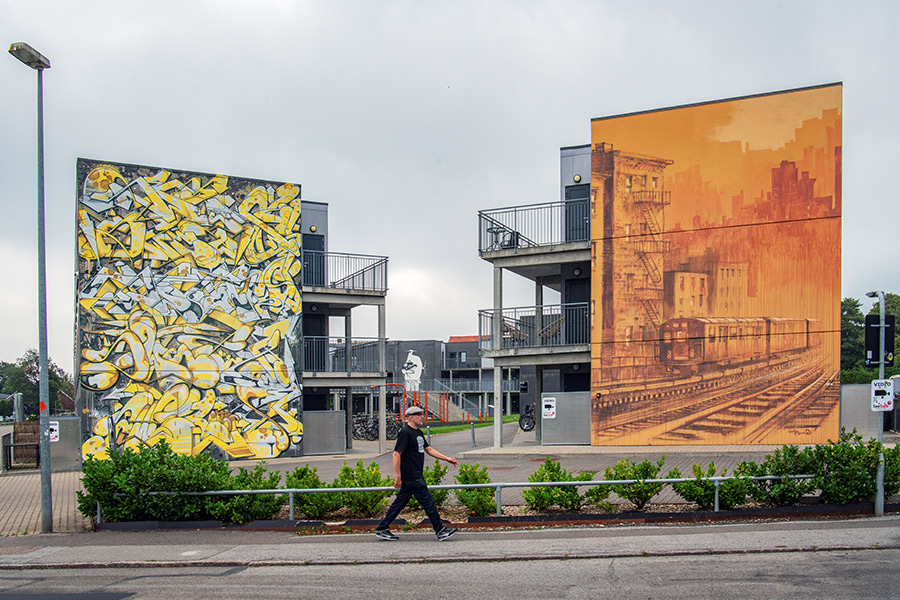
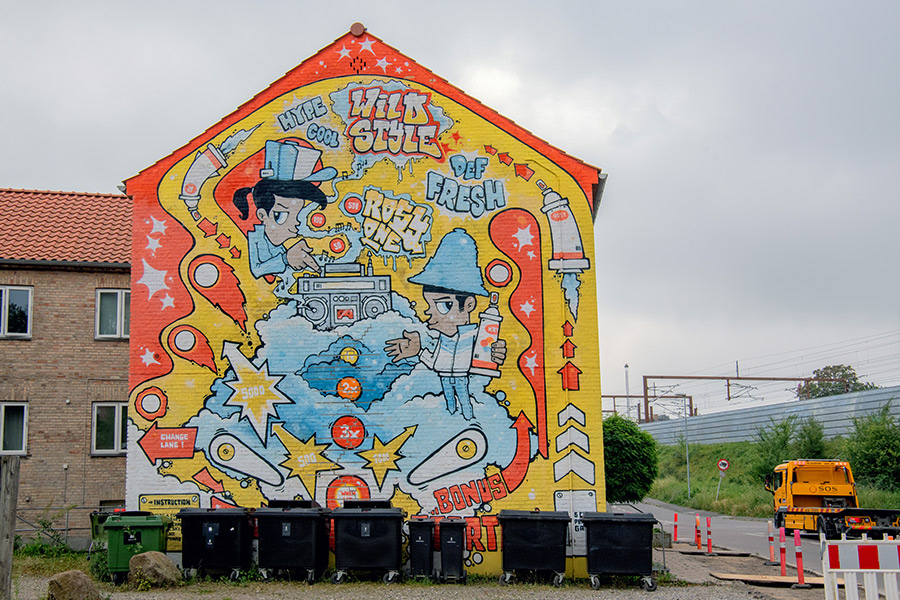
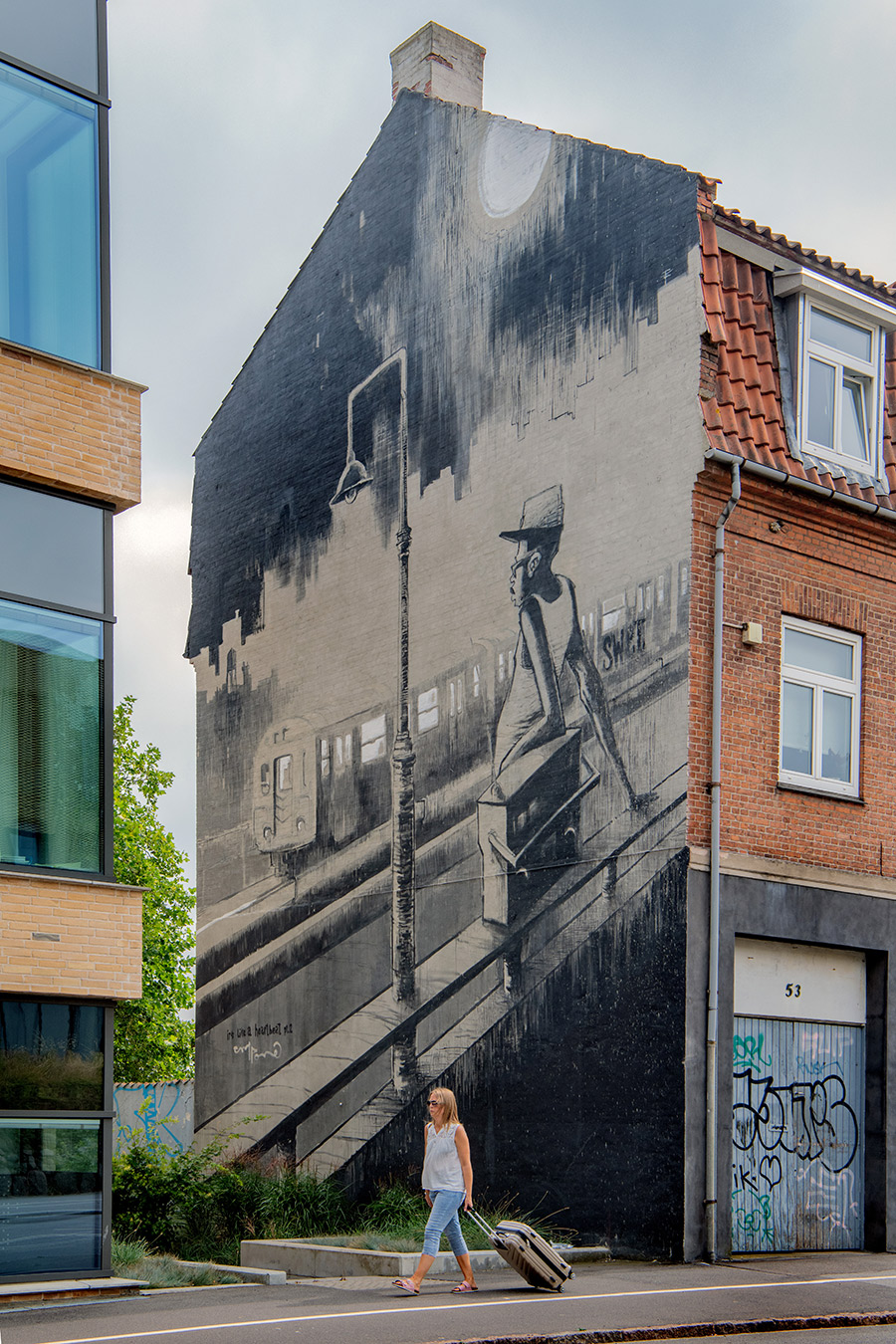
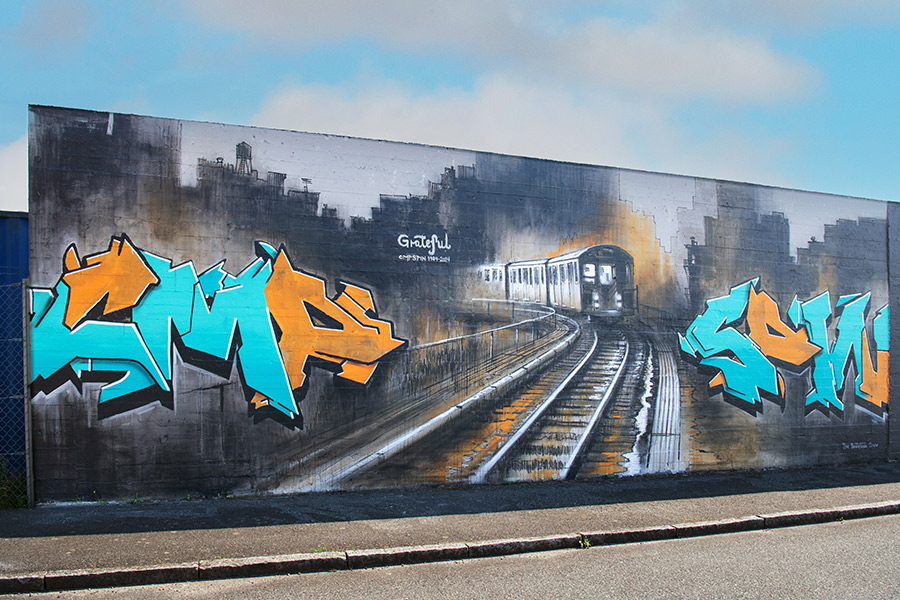
Preserving Graffiti’s Legacy and Looking to the Future at Næstved Kunstby in Denmark 2024

Preserving Graffiti’s Legacy and Looking to the Future at Næstved Kunstby in Denmark 2024

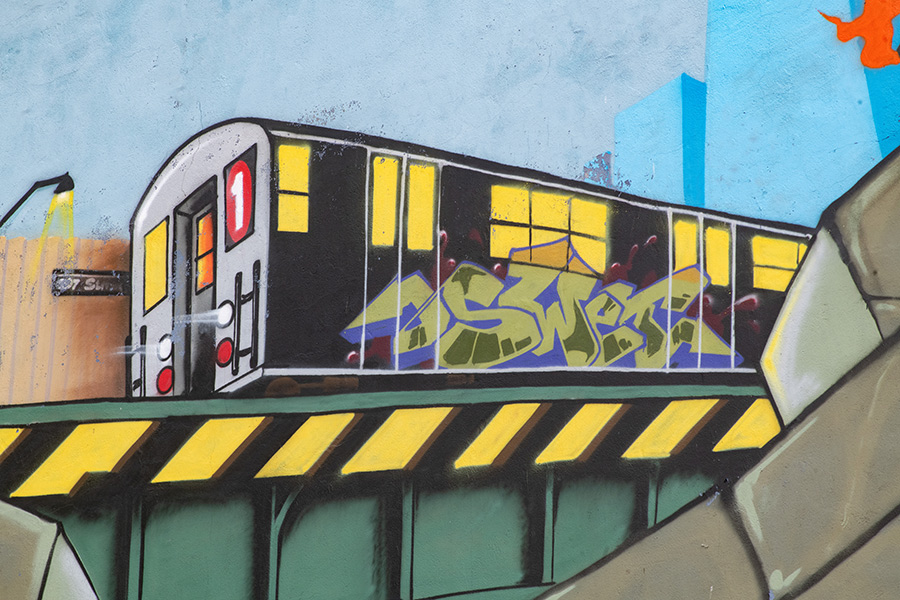
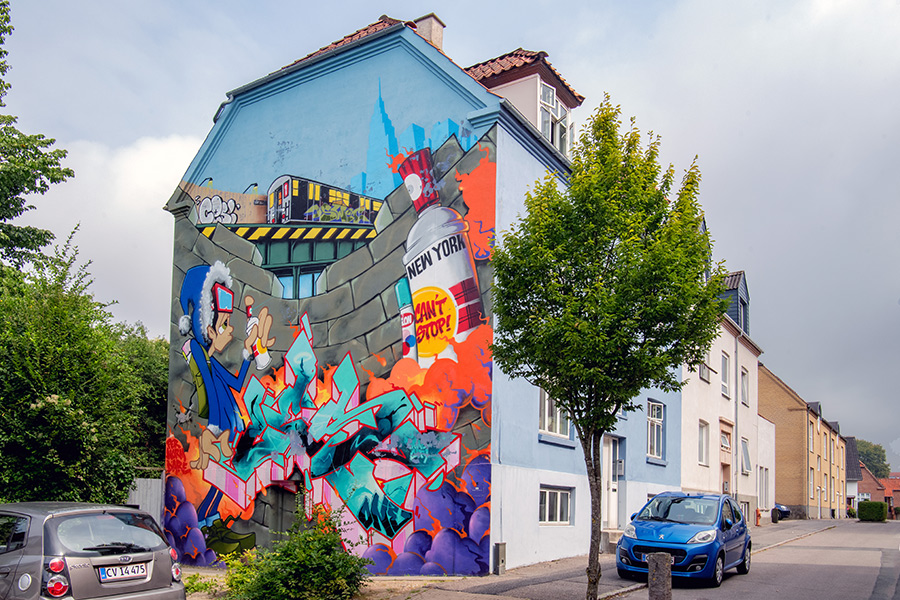
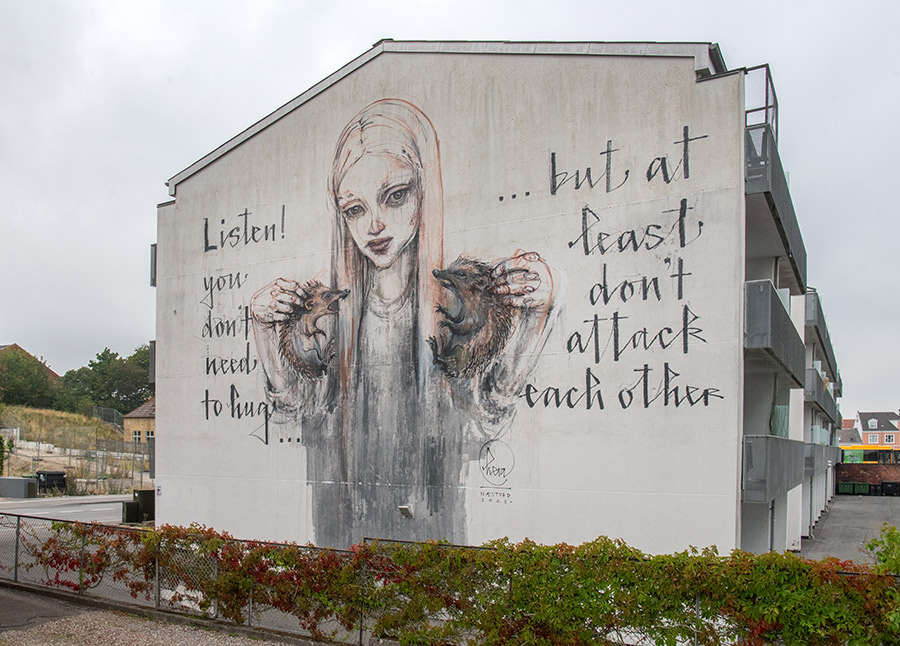
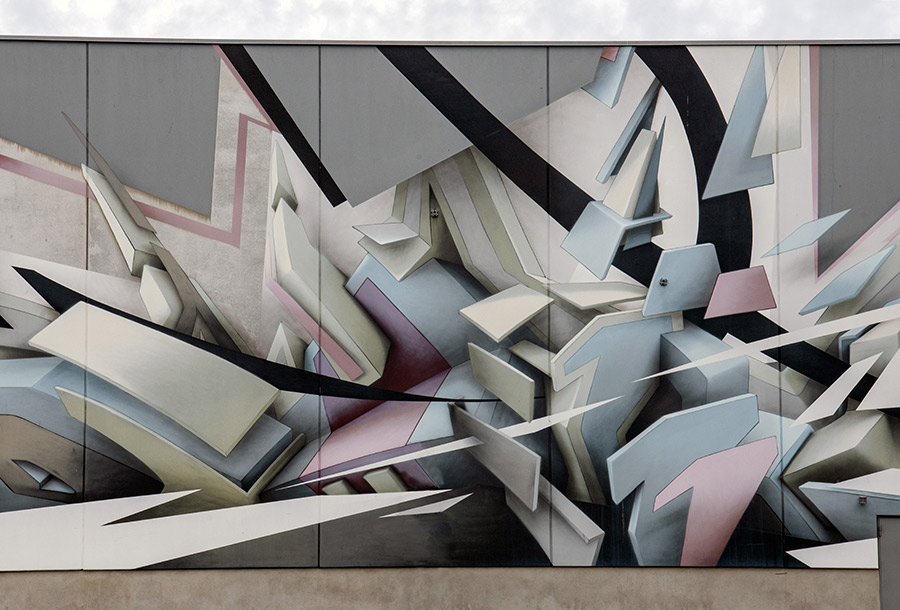
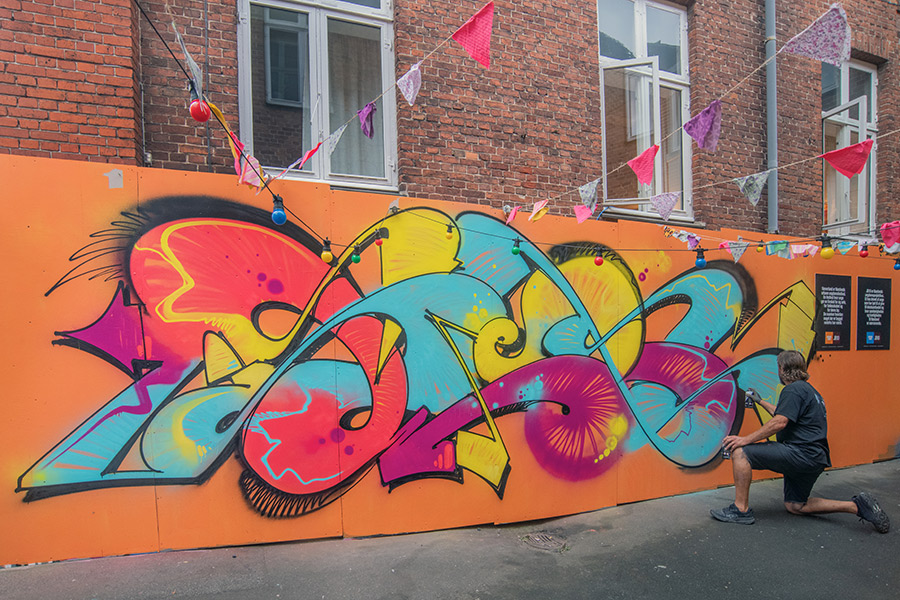
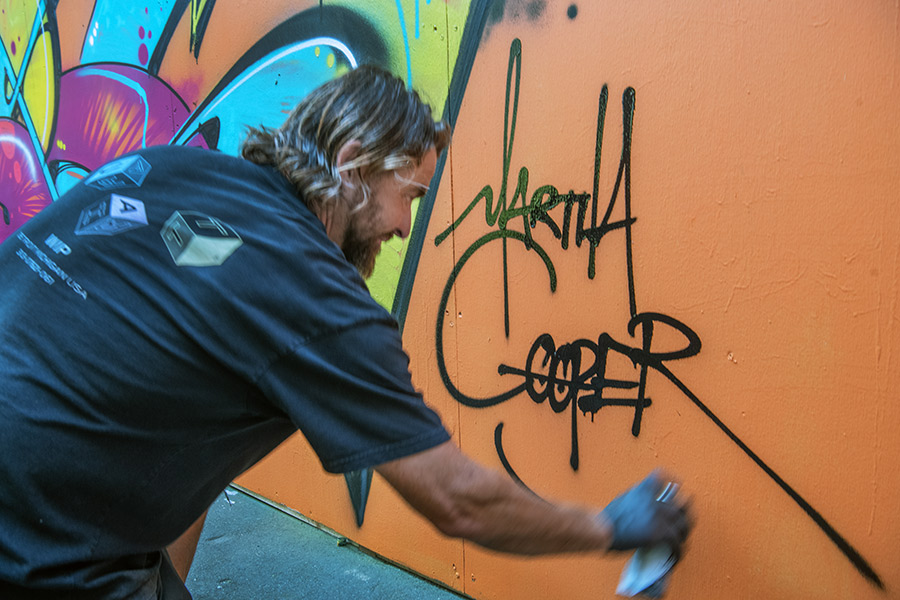
Næstved Kunstby stands as a beacon for the preservation and celebration of graffiti culture, reflecting a deep respect for the evolution of street art from its origins in New York to its current global stature. Recently, the festival once again showcased its commitment to this vibrant culture with a special invitation to Martha Cooper, one of the most renowned photographers in graffiti history, to come and shoot the work, old and new. Her visit to Denmark is another chapter in capturing the raw, transformative power of graffiti and street art, underscoring the festival’s role in maintaining this artistic tradition.

Os Gemeos. Detail. Næstved Kunstby Festival. Næstved, Denmark. (photo © Martha Cooper)

Rooted in the early days of New York’s graffiti movement and inspired by its evolution, Næstved Kunstby has developed into a premier space for showcasing pivotal speakers, painters, and graffiti writers. With a foundation reference to early 70s New York graffiti, organizers site this rebellious form of self-expression in the DNA of the modern movements, with initial groups like the United Graffiti Artists (UGA) collective as pivotal in bringing this underground art form into the mainstream. Today, Næstved continues this legacy by hosting artists from around the world and offering a platform for both seasoned legends and rising stars in the graffiti scene to lecture and to get up on a wall.

Os Gemeos. Næstved Kunstby Festival. Næstved, Denmark. (photo © Martha Cooper)

“30 years has granted Næstved a special status within international graffiti and hip-hop culture.
Hip hop and graffiti culture came to Europe and to Næstved more than 30 years ago,” says long-time curator William Hjorth (aka SWET). “Since that time the city has continuously had several unofficial street galleries. For this reason Næstved has always had a regular flow of visiting graffiti artists from all over the world.”

When describing the origin and focus of the festival Hjorth is clear about the role of graffiti. “All the works belonging to Næstved Kunstby are made by an array of international artists selected and curated because of their focused efforts and commitment to graffiti culture,” he says. “Each artist belonging to Næstved Kunstby comes from the graffiti culture and plying their skills in the streets was always part of growing up.”

SuperA. Næstved Kunstby Festival. Næstved, Denmark. (photo © Martha Cooper)

The festival’s recent edition was a testament to its dedication. From live painting sessions to mural installations, the event offered a comprehensive view of graffiti’s evolution. With past artists including OSGEMEOS, Loomit, and ARYZ, the festival has consistently featured top-tier talent. Næstved Kunstby isn’t just about celebrating paint or plugging artists; it’s about understanding its impact on society and fostering future creativity. The festival’s educational component includes workshops and artist talks, providing valuable insights into the techniques and cultural significance of graffiti. These sessions not only engage the local community but also inspire young artists to explore and contribute to the evolving graffiti tradition.

The festival is entertaining for more general audiences to enjoy as well. But at the root, the origin story never waivers when Hjorth describes the life of graffiti writers and related art-makers. “Their learning and development came from hours of dedication in the streets or by the railroad tracks as opposed to training in art schools and professional environments. Subsequently, they now do more than just create works of art. They all actively contribute to the culture of hip-hop, and both inspire and educate young talents worldwide. This was also a driving force behind their agreeing to participate in this project.”

Wane. Næstved Kunstby Festival. Næstved, Denmark. (photo © Martha Cooper)

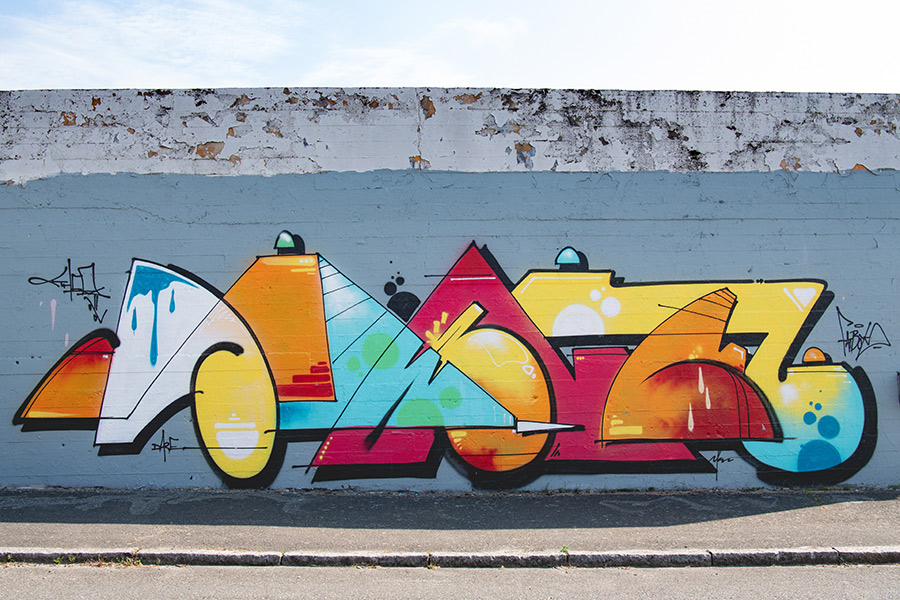
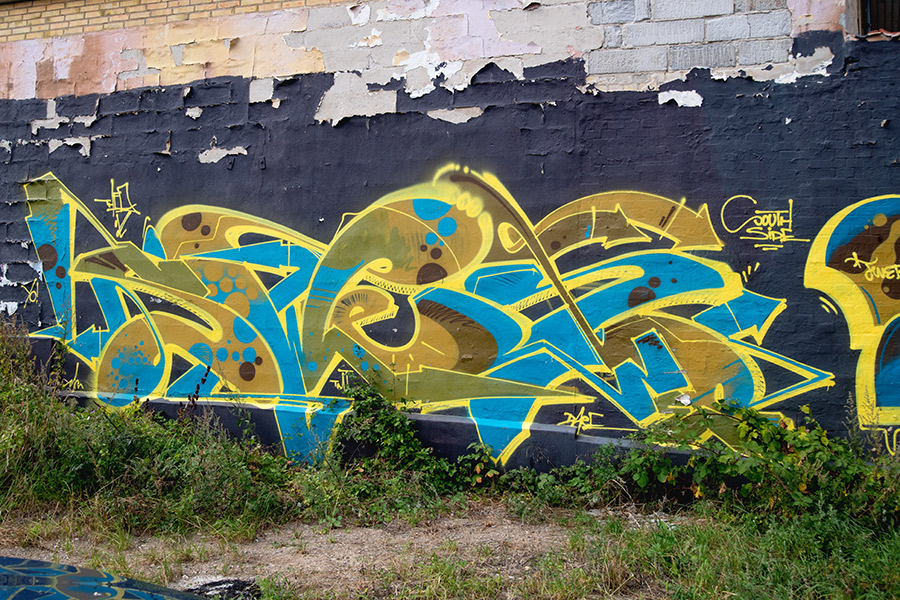
Næstved Kunstby offers a unique platform for international artists from New York, Barcelona, São Paulo, and other major cities to contribute to a dynamic collection of murals reflecting a diverse range of styles and influences. This global perspective, combined with the festival’s deep-rooted appreciation for the origins of graffiti, creates a cultural dialogue that is both forward-thinking and historically informed.

These recent photos by Martha Cooper not only document the festival’s impact but also reaffirm Næstved Kunstby’s role as a dedicated protector of graffiti history and a supporter of artistic innovation.

CES. Detail. Næstved Kunstby Festival. Næstved, Denmark. (photo © Martha Cooper)
CES. Næstved Kunstby Festival. Næstved, Denmark. (photo © Martha Cooper)
HERA. Næstved Kunstby Festival. Næstved, Denmark. (photo © Martha Cooper)
Daim. Detail. Næstved Kunstby Festival. Næstved, Denmark. (photo © Martha Cooper)
Daim. Næstved Kunstby Festival. Næstved, Denmark. (photo © Martha Cooper)
Stohead. Næstved Kunstby Festival. Næstved, Denmark. (photo © Martha Cooper)
RUIN. Næstved Kunstby Festival. Næstved, Denmark. (photo © Martha Cooper)
Alex Senna. Næstved Kunstby Festival. Næstved, Denmark. (photo © Martha Cooper)
Mr. Woodland. Næstved Kunstby Festival. Næstved, Denmark. (photo © Martha Cooper)
Aryz. Næstved Kunstby Festival. Næstved, Denmark. (photo © Martha Cooper)
SWET. Næstved Kunstby Festival. Næstved, Denmark. (photo © Martha Cooper)
SWET and CMP. Næstved Kunstby Festival. Næstved, Denmark. (photo © Martha Cooper)
RosyOne. Næstved Kunstby Festival. Næstved, Denmark. (photo © Martha Cooper)
CMPone. Næstved Kunstby Festival. Næstved, Denmark. (photo © Martha Cooper)
Loomit. Næstved Kunstby Festival. Næstved, Denmark. (photo © Martha Cooper)
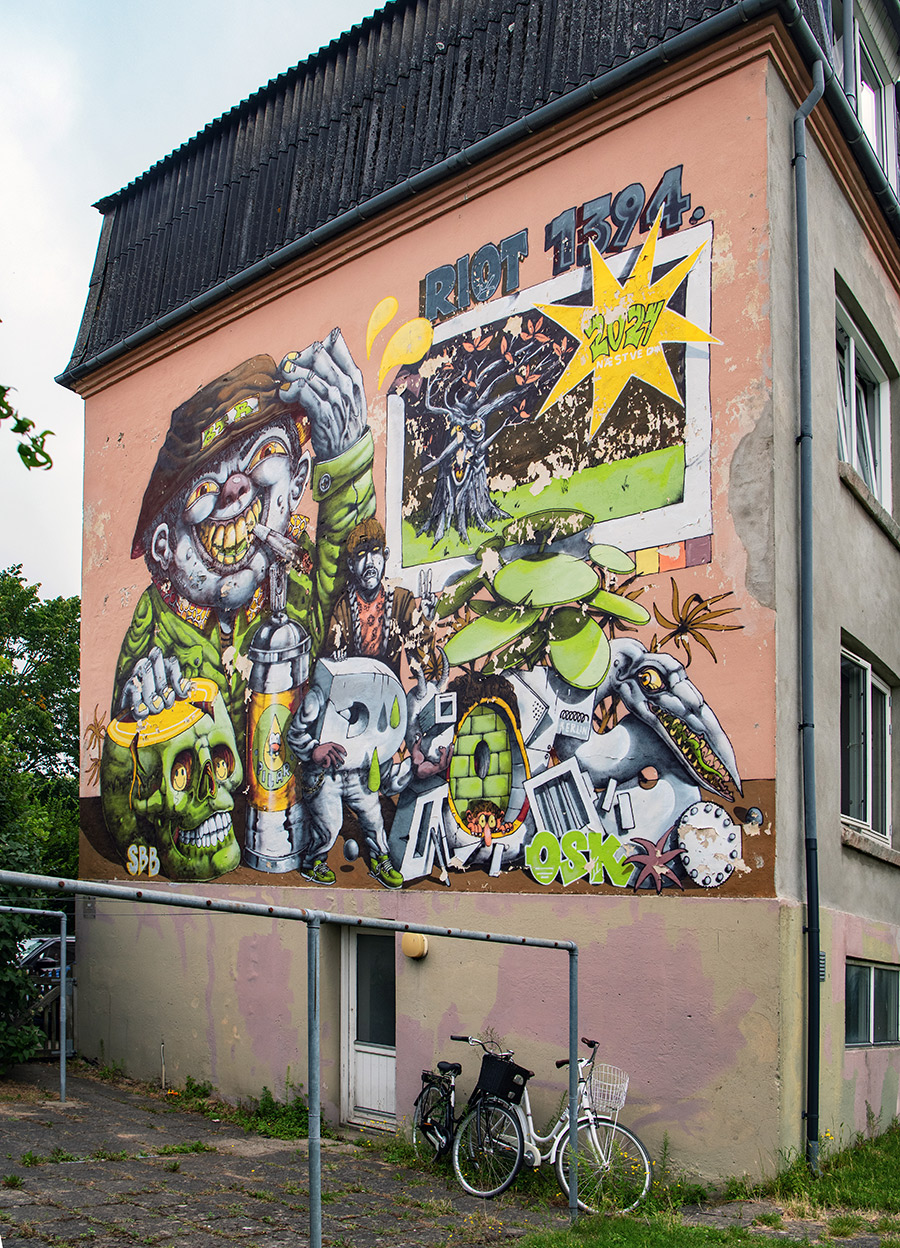
RIOT. Næstved Kunstby Festival. Næstved, Denmark. (photo © Martha Cooper)
PHEO. SORO. Næstved Kunstby Festival. Næstved, Denmark. (photo © Martha Cooper)
Sobekcis. Næstved Kunstby Festival. Næstved, Denmark. (photo © Martha Cooper)
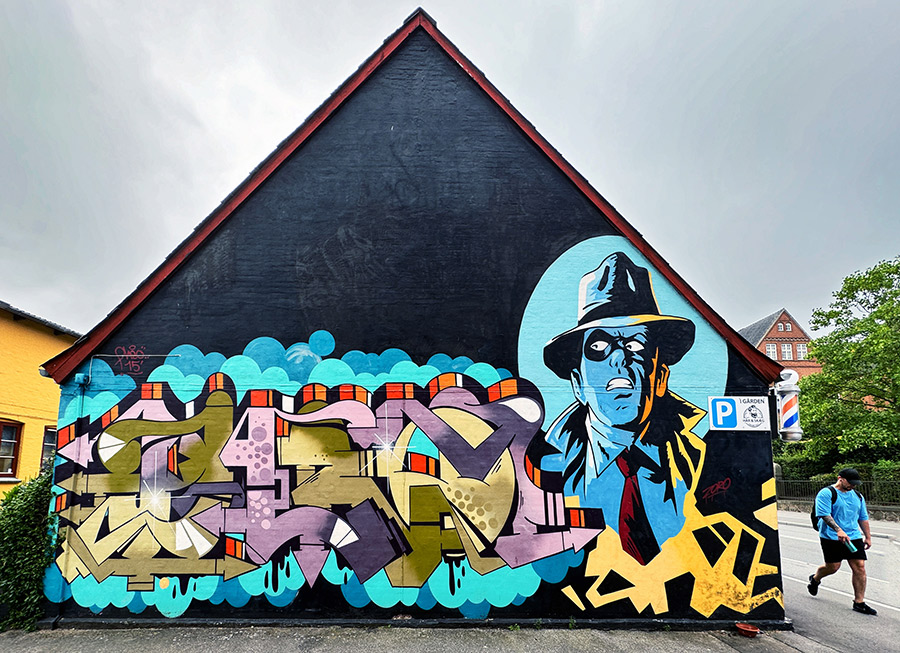
Næstved Kunstby Festival. Næstved, Denmark. (photo © Martha Cooper)
Read more
BSA Images Of The Week: 09.08.24

BSA Images Of The Week: 09.08.24

Welcome to BSA’s Images of the Week.

It’s back to school for 915,000 students in New York City schools now that Labor Day has passed. Excitement was palbable on the streets this week as children, moms, dads, grandparents – all entered this new semester with optimism and fears all intermingled. Remarkably, the kids have 24 new schools in the city this year, which means many more classes to skip for the hoodlums with spray cans. Just kidding. Stay in school!

Speaking of school, one of our favorite students of life and hometown graffiti/street art/ contemporary art hero Futura 2000 is opening his new exhibition today at the Bronx Museum, illustrating that if you keep up your work, your style, your discipline, and your passion, eventually people may celebrate you in your front yard. If you meet him, Futura will be more than willing to school you on NYC graffiti culture, history, and how to spot the genuine over the fake.

Meanwhile, in New York this week, “Artists4Ceasefire launched a partnership with artist Shepard Fairey and humanitarian organizations to call for a halt to weapons transfers that violate U.S. and international law.” With the art we have seen in the streets around this city and the new campus protests that immediately commenced this week, it appears that this is turning into a grassroots movement, with a majority of Americans who want immediate action to stop the killing and achieve a permanent ceasefire.

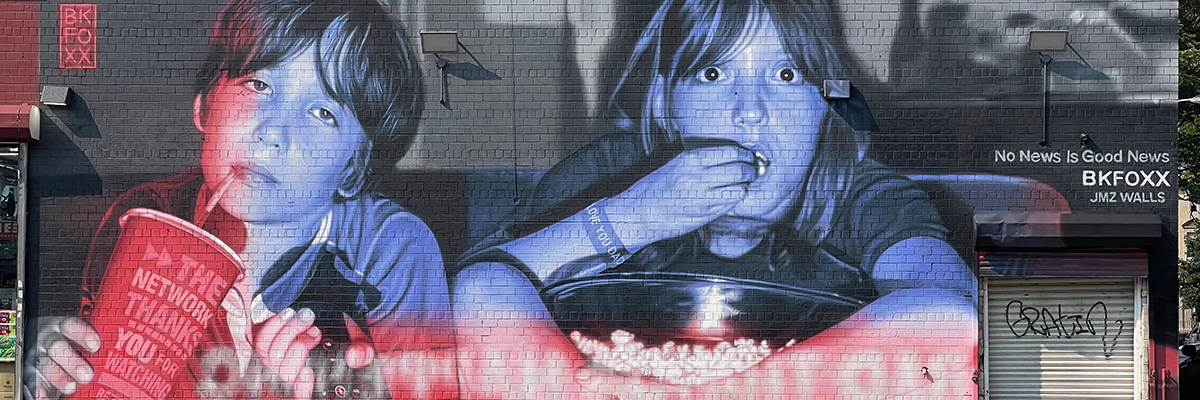
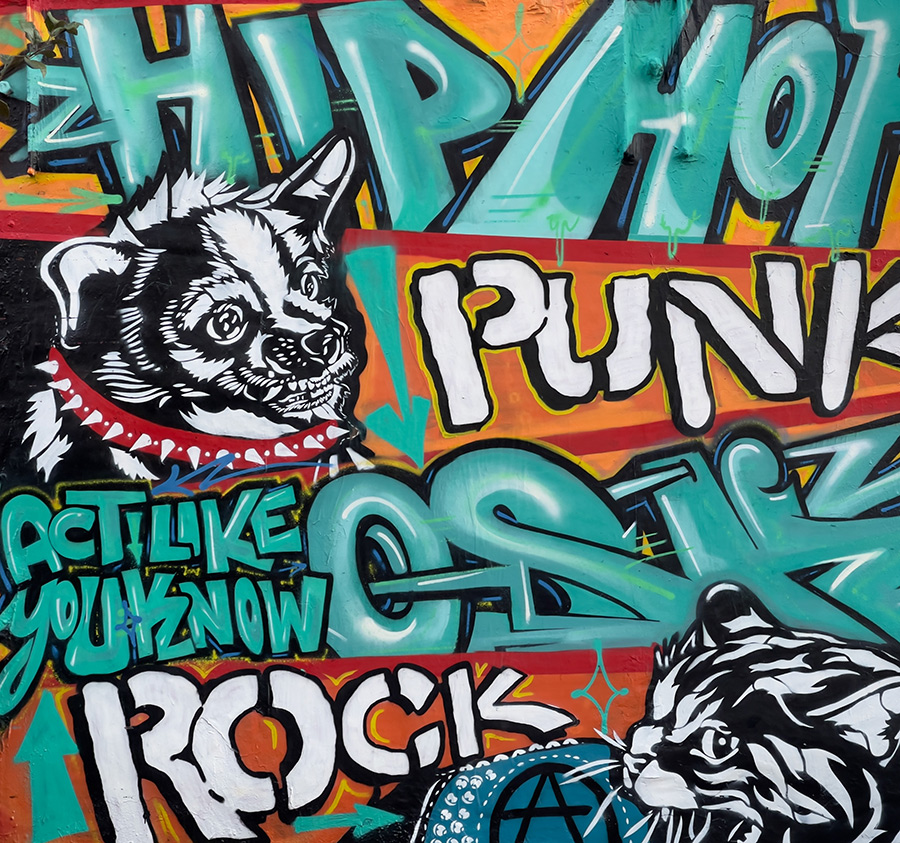
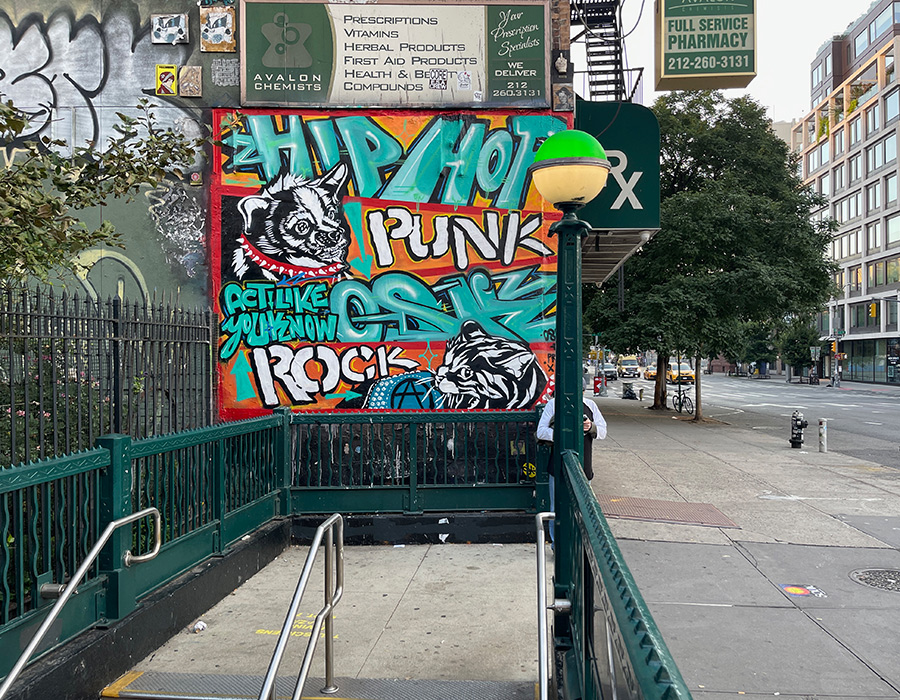
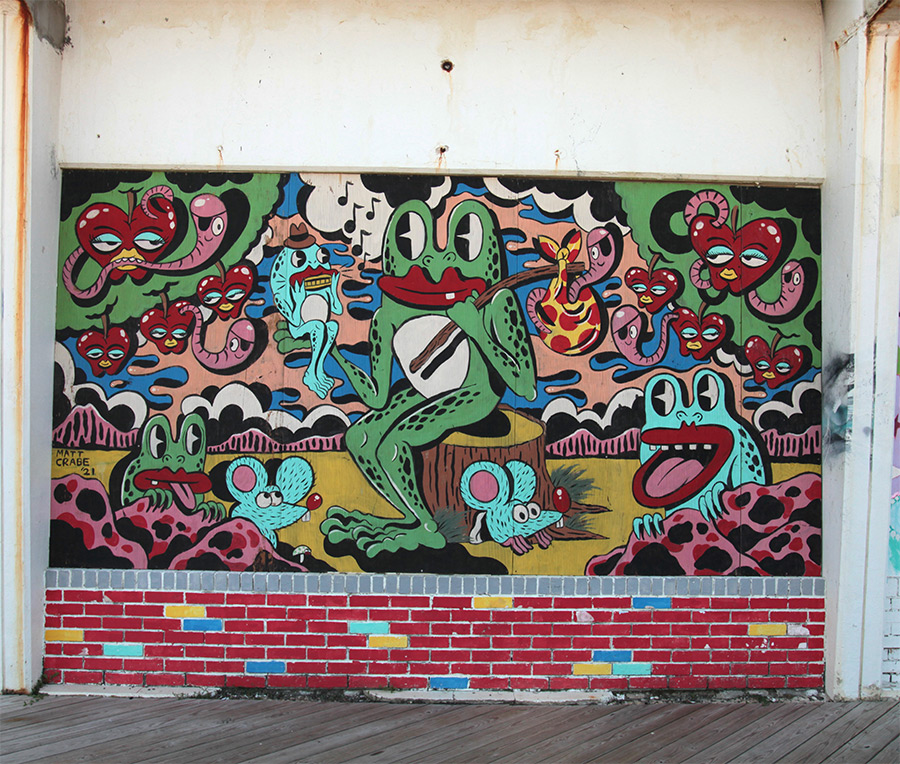
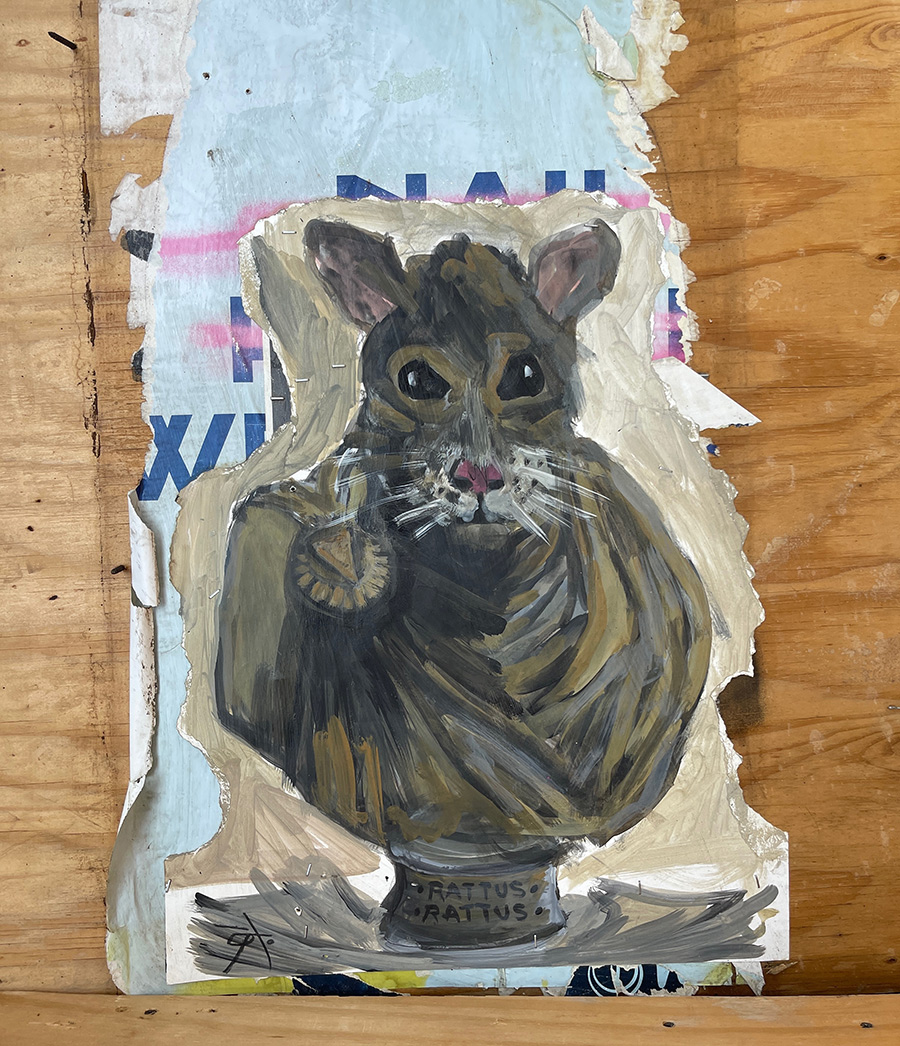
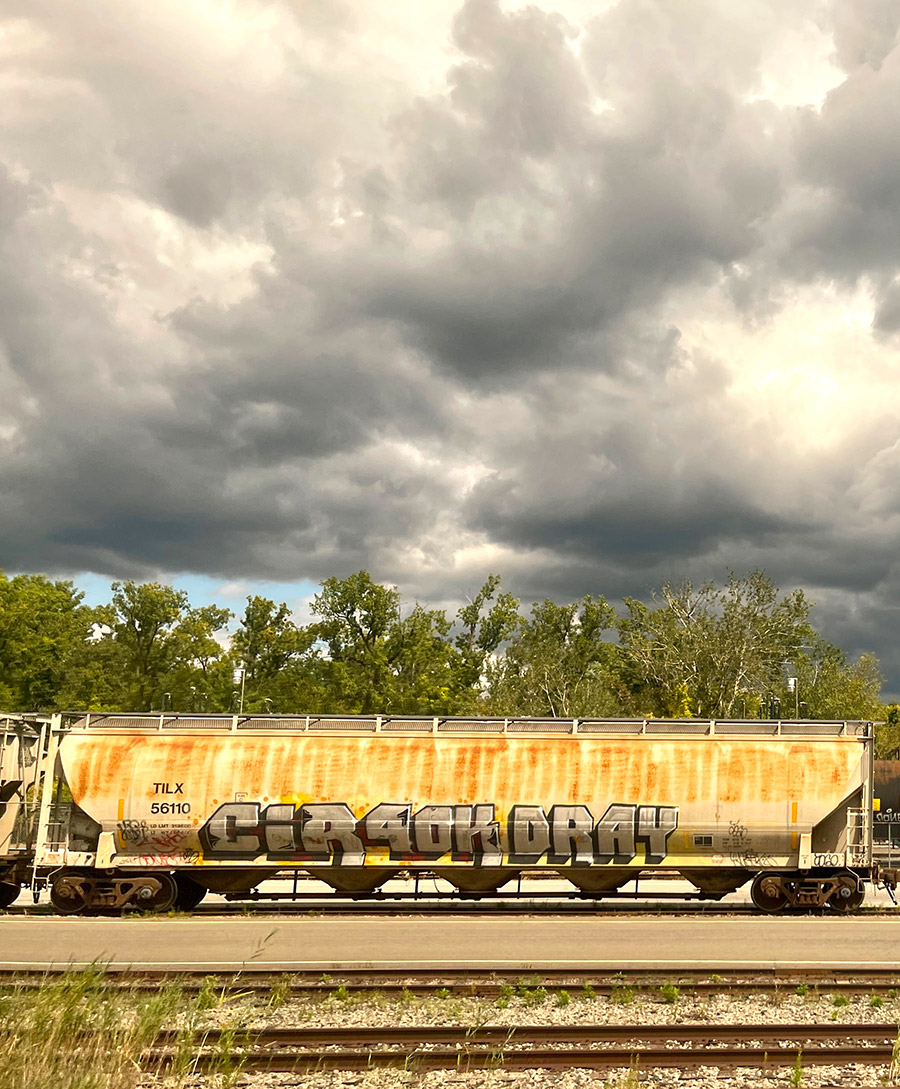
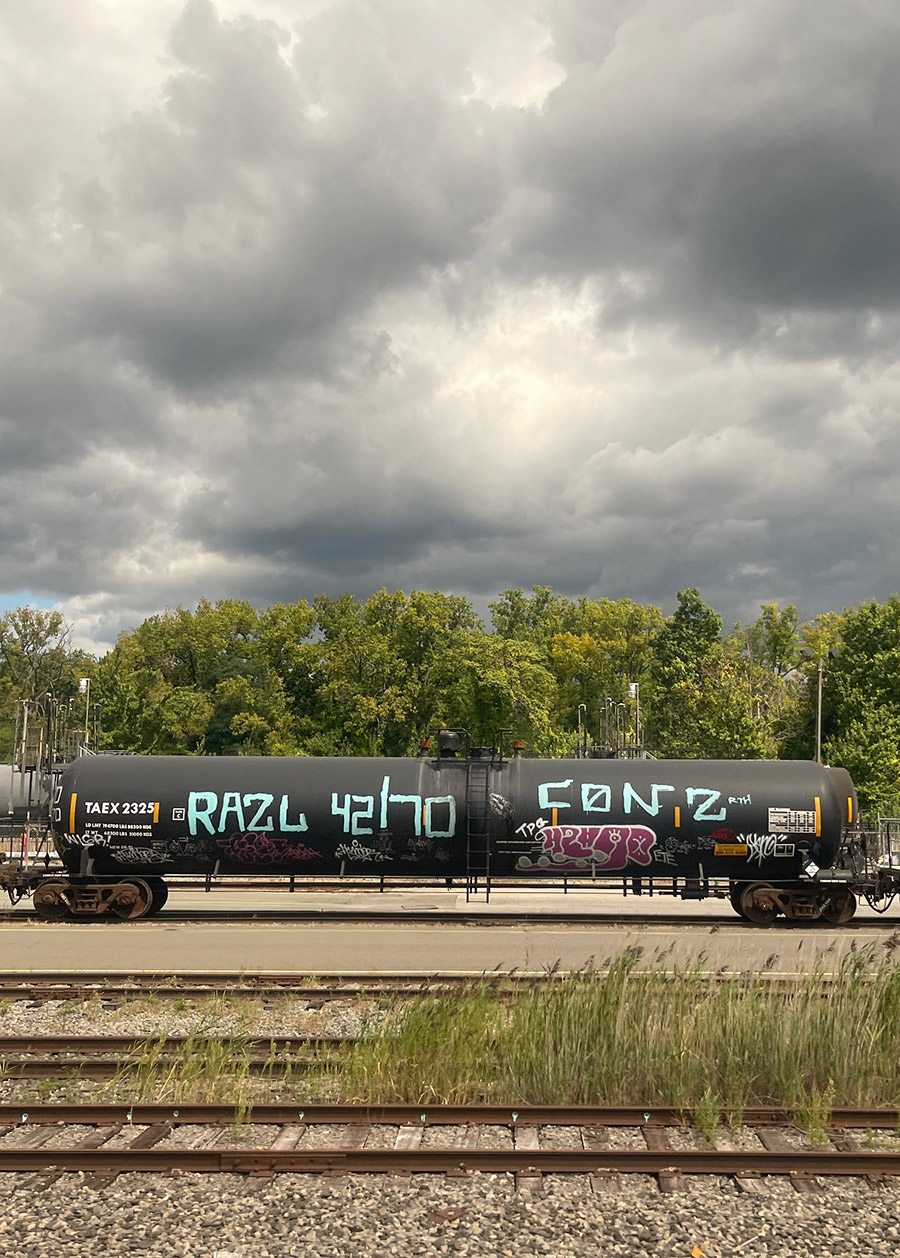
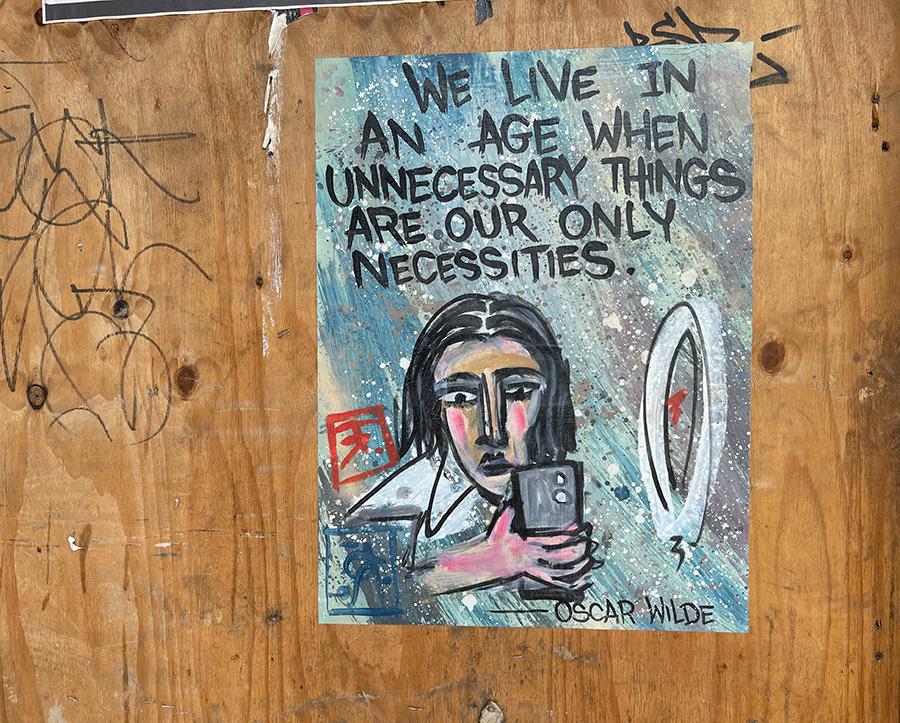
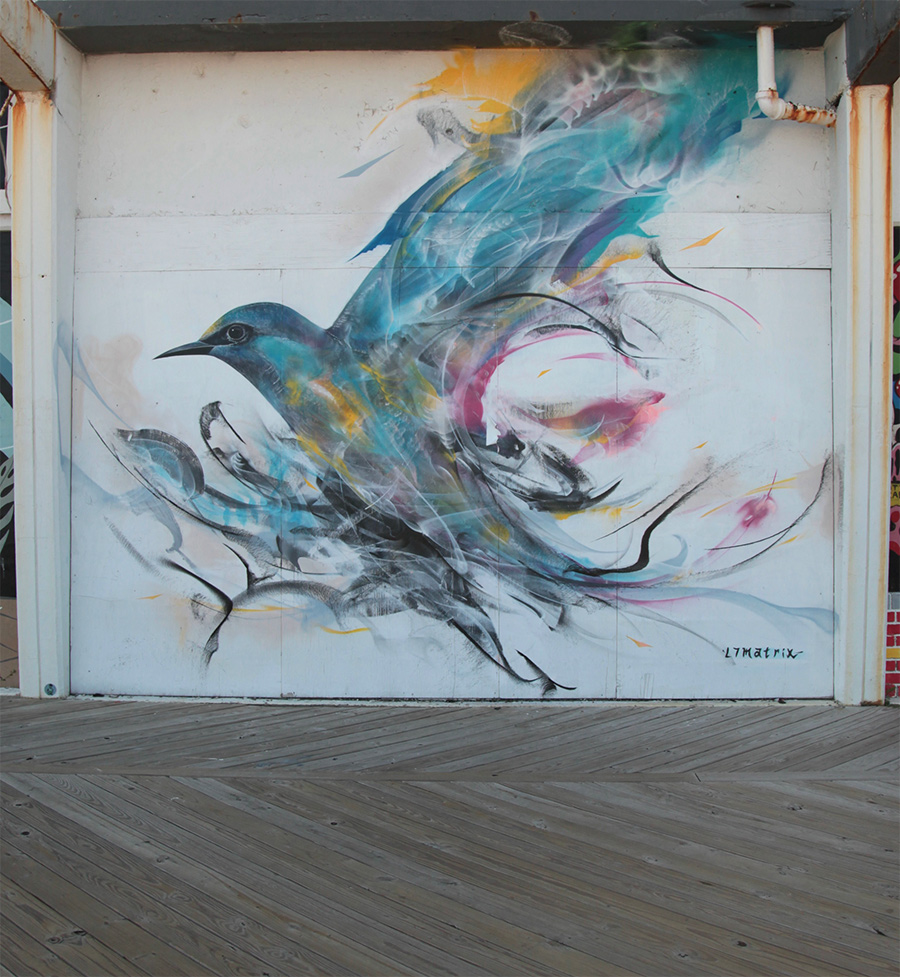
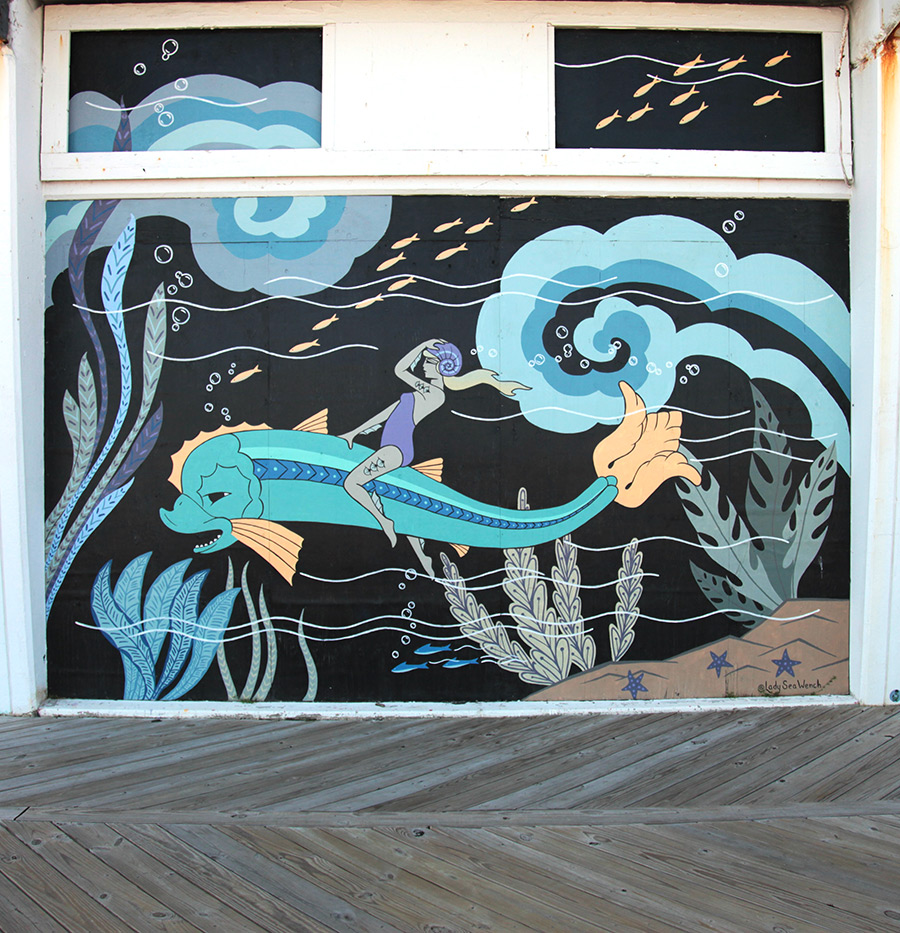
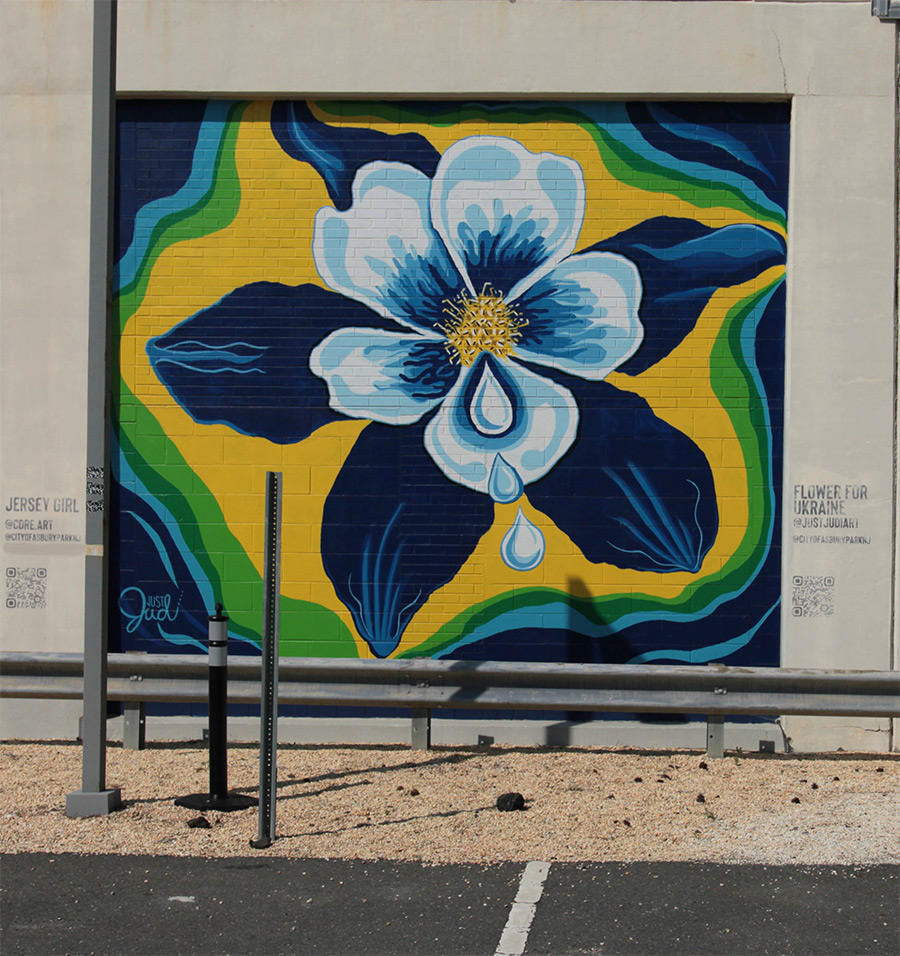
Here is our weekly interview with the streets, this week featuring Praxis, BK Foxx, CDRE, Alex Itin, OSK, Matt Crabe, Lady Sea Wench, Just Jud, Jobe, JM DiZefalo, PT, Fionac, CIR, 4OK, Dray, RAZL, CONZ, and 17 Matrix.

Praxis. OSK. Detail. (photo © Jaime Rojo)
Praxis. OSK. (photo © Jaime Rojo)
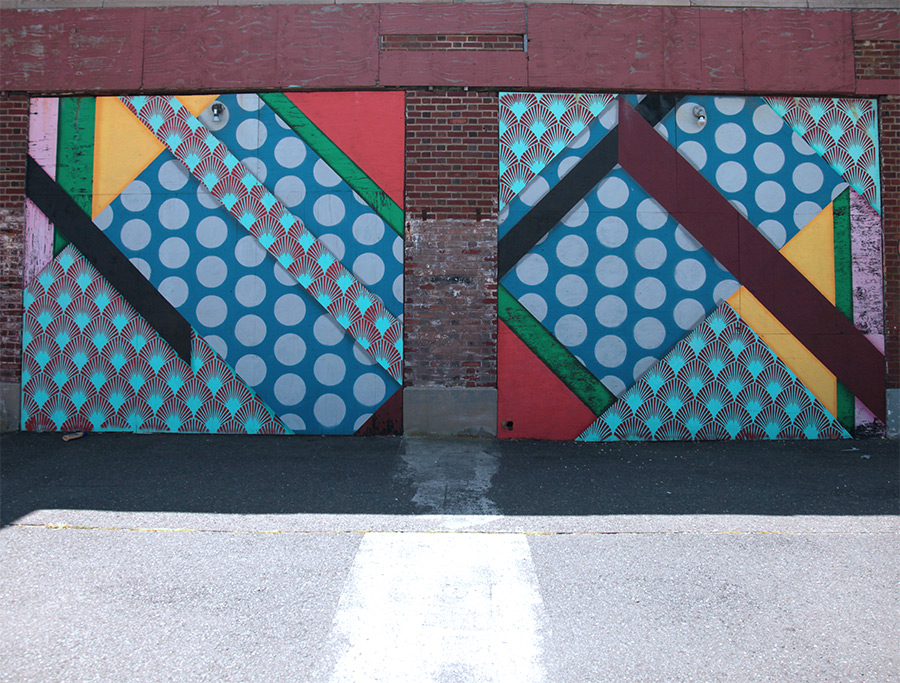
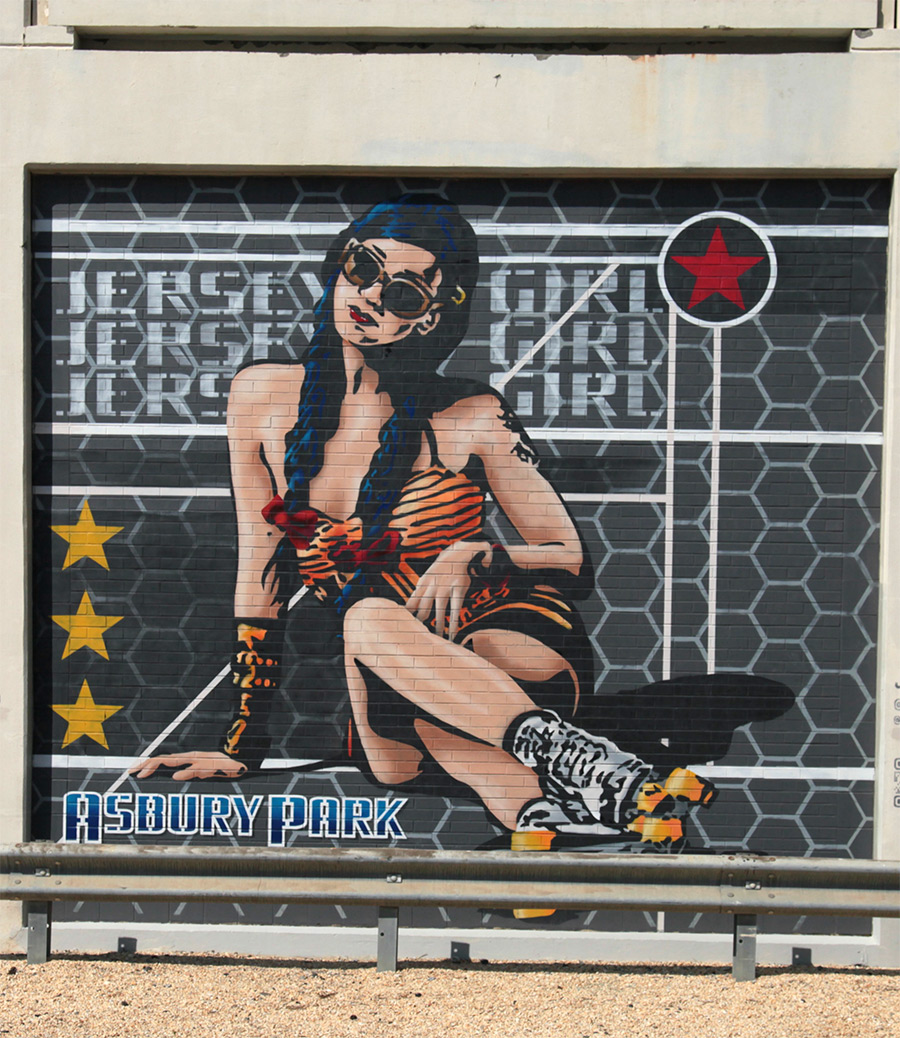
Matt Crabe. Wooden Walls Project. Asbury Park, NJ. (photo © Jaime Rojo)
PT (photo © Jaime Rojo)
CIR. 4OK. DRAY.(photo © Jaime Rojo)
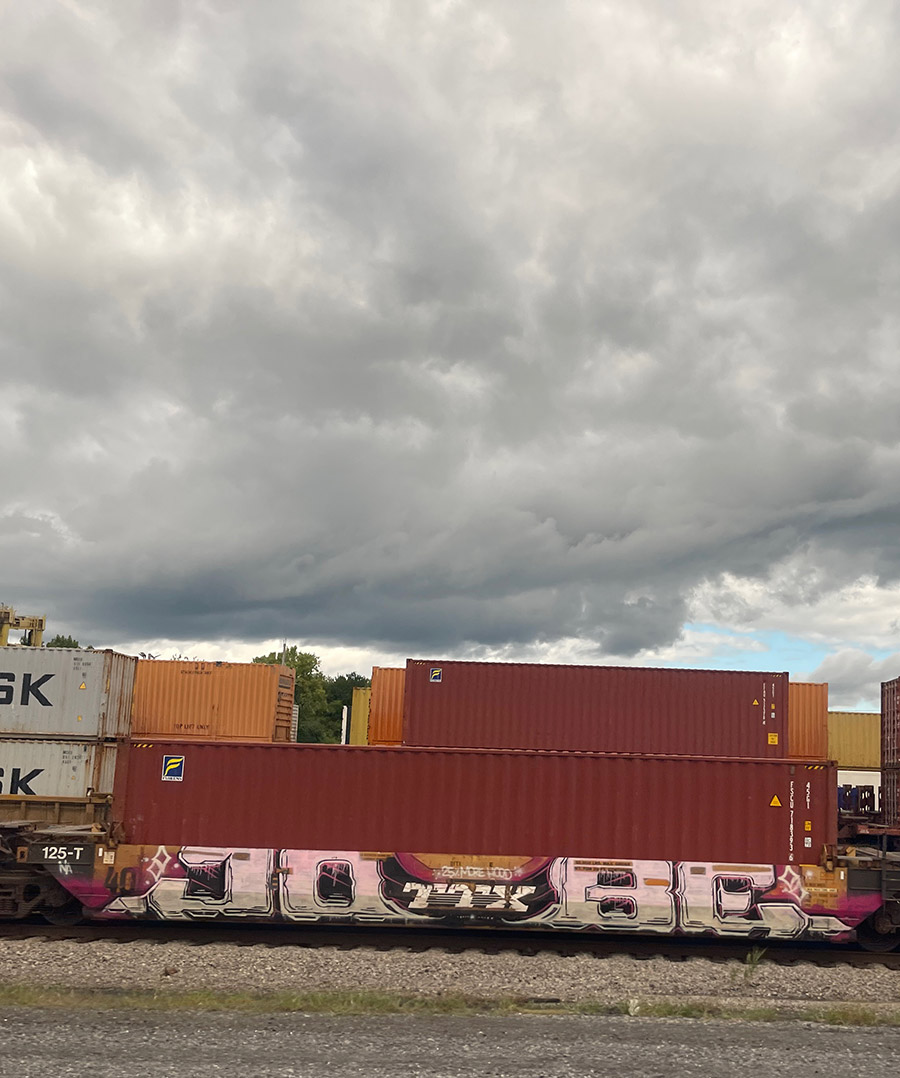
RAZL 42 170 C0NZ (photo © Jaime Rojo)
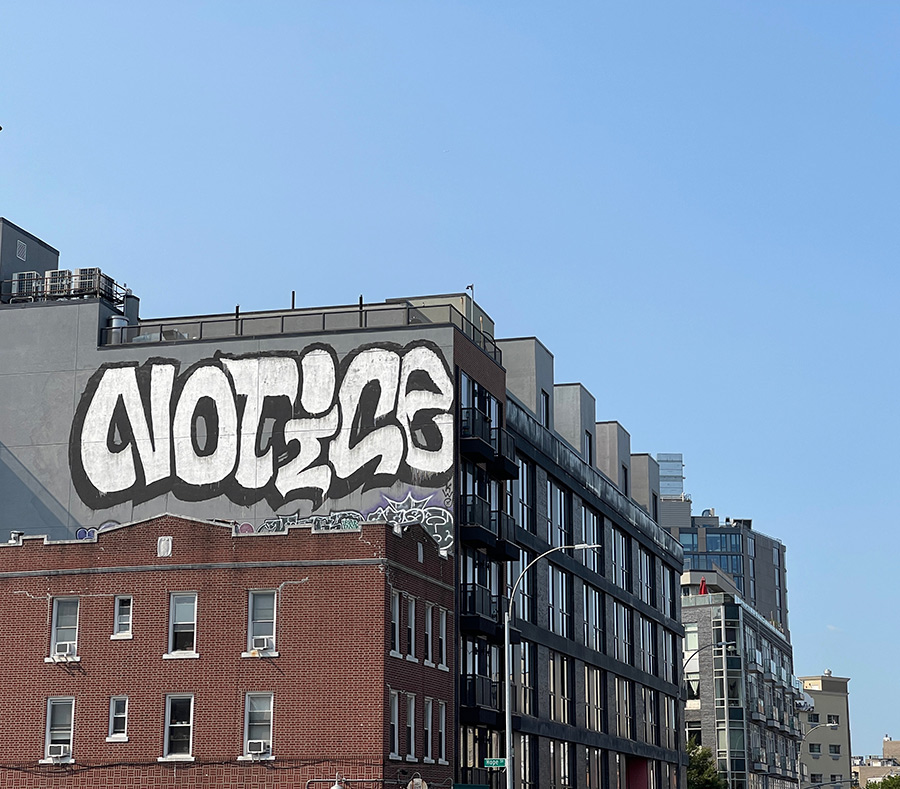
NOTICE (photo © Jaime Rojo)
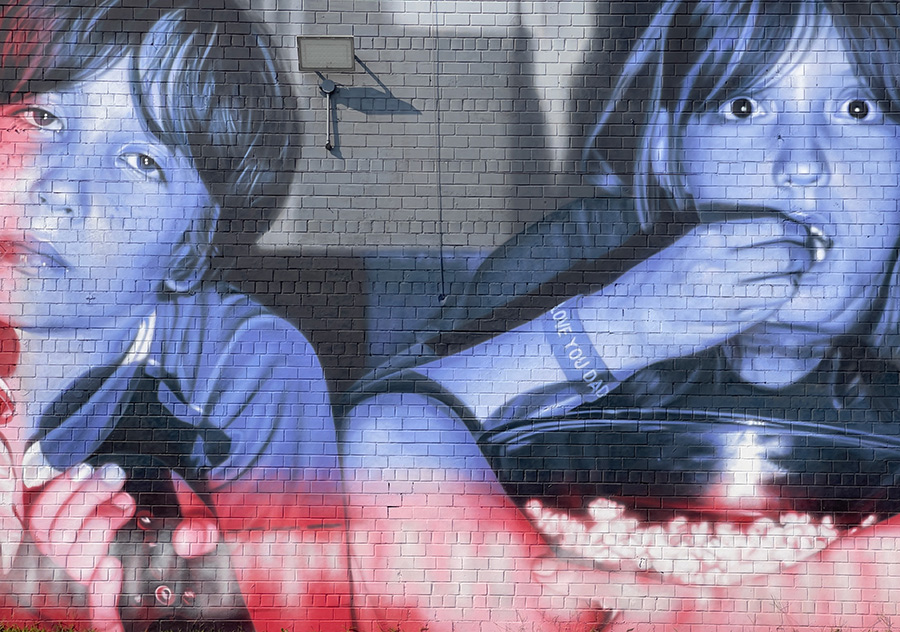
BKFoxx. Detail. (photo © Jaime Rojo)
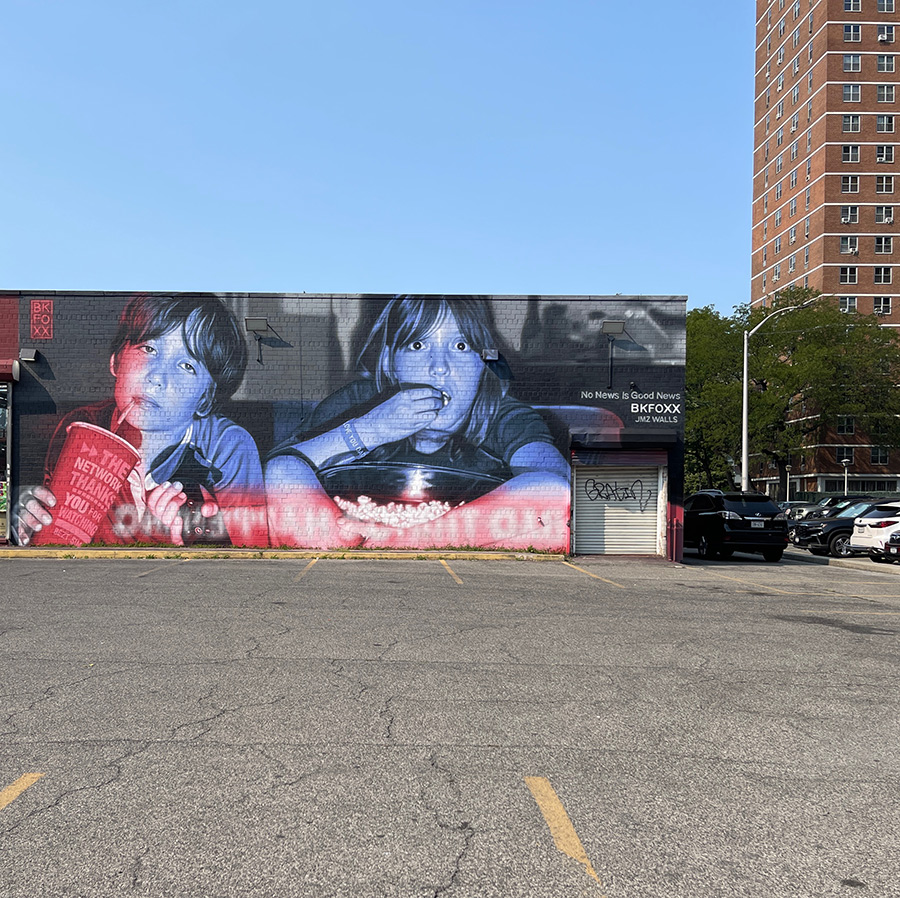
BKFoxx (photo © Jaime Rojo)
Words On The Street. Alex Itin. (photo © Jaime Rojo)
17 Matrix. Wooden Walls Project. Asbury Park, NJ. (photo © Jaime Rojo)
Lady Sea Wench. Wooden Walls Project. Asbury Park, NJ. (photo © Jaime Rojo)
Just Judi. Asbury Park Summer Mural Project. Asbury Park, NJ. (photo © Jaime Rojo)
JOBE (photo © Jaime Rojo)
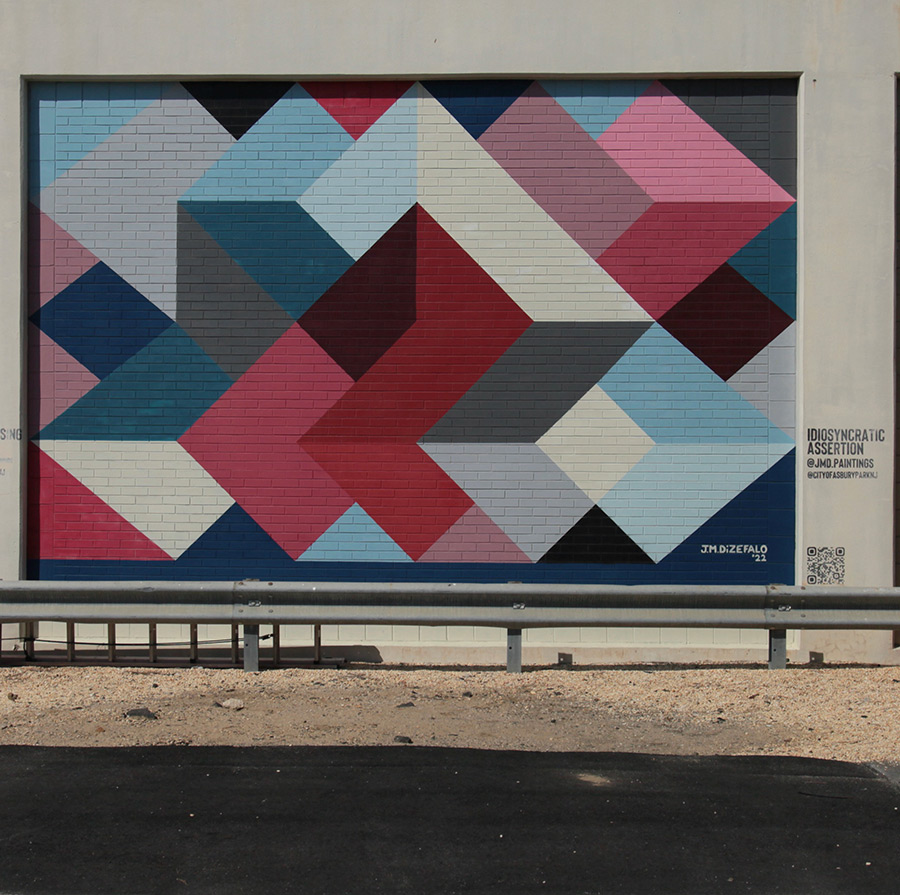
JM DiZefalo. Asbury Park Summer Mural Project. Asbury Park, NJ. (photo © Jaime Rojo)
Hellbent. Wooden Walls Project. Asbury Park, NJ. (photo © Jaime Rojo)
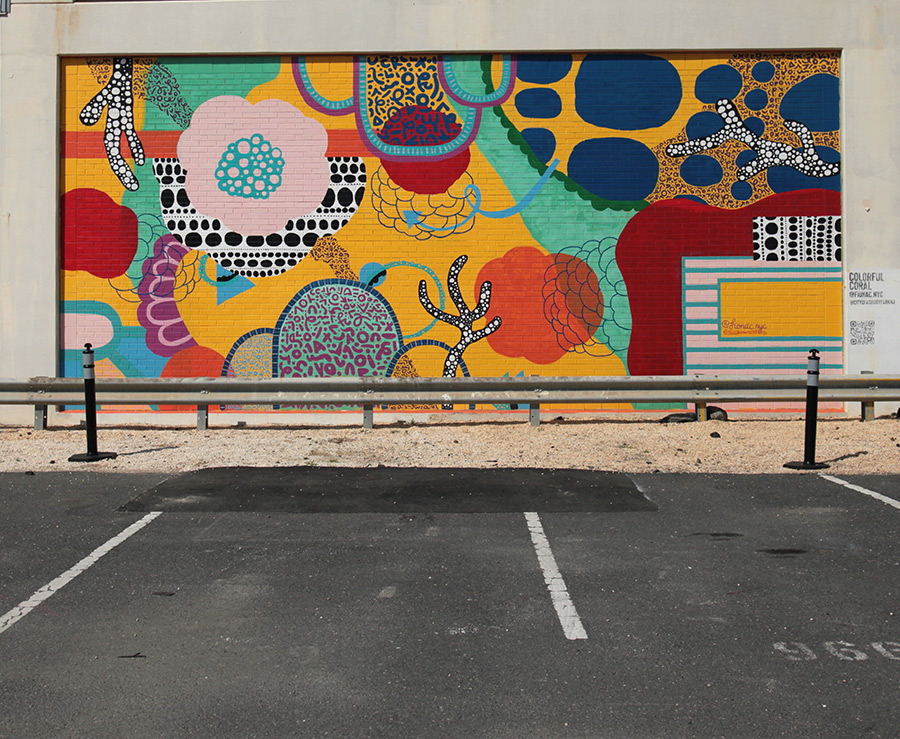
Fionac NYC. Asbury Park Summer Mural Project. Asbury Park, NJ. (photo © Jaime Rojo)
CDRE. Asbury Park Summer Mural Project. Asbury Park, NJ. (photo © Jaime Rojo)
Untitled. Up State NY. Summer 2024. (photo © Jaime Rojo)
Read more