Our weekly focus on the moving image and art in the streets. And other oddities.
Now screening : 1. Street Art For Sustainable Development
BSA Special Feature: Street Art For Sustainable Development
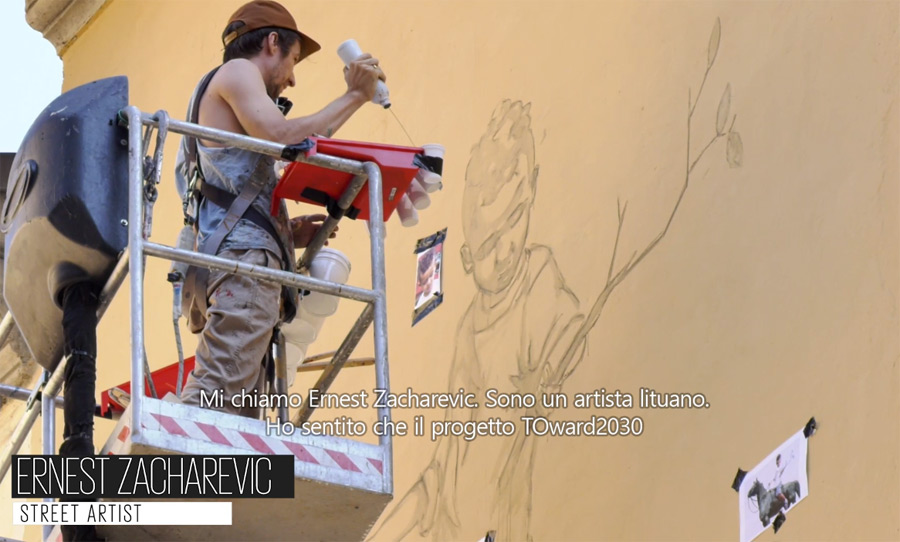
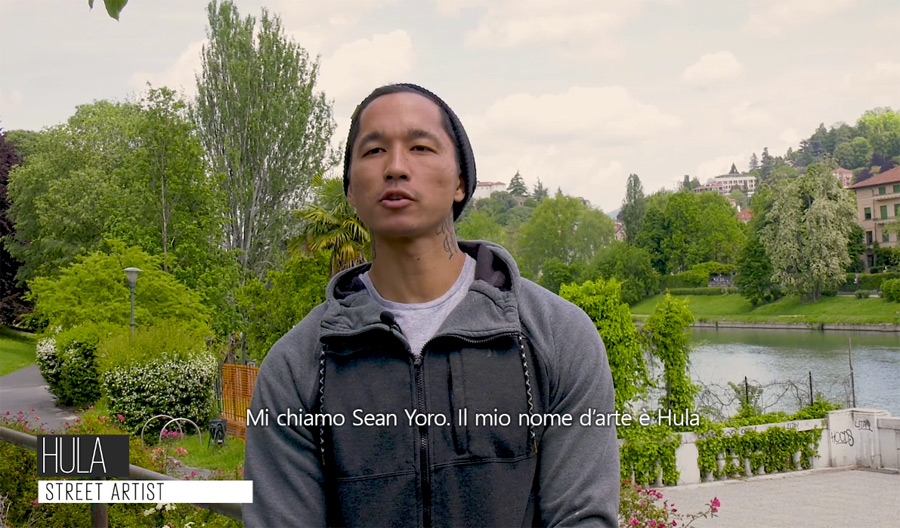
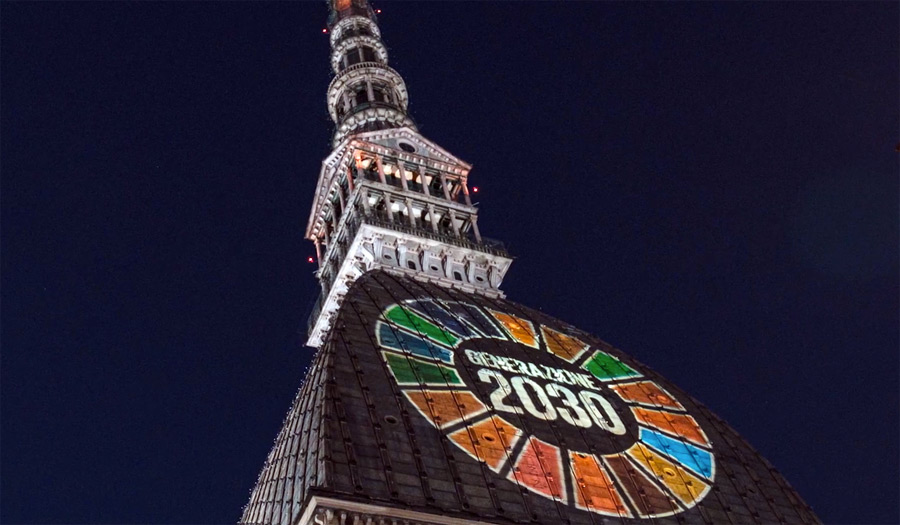
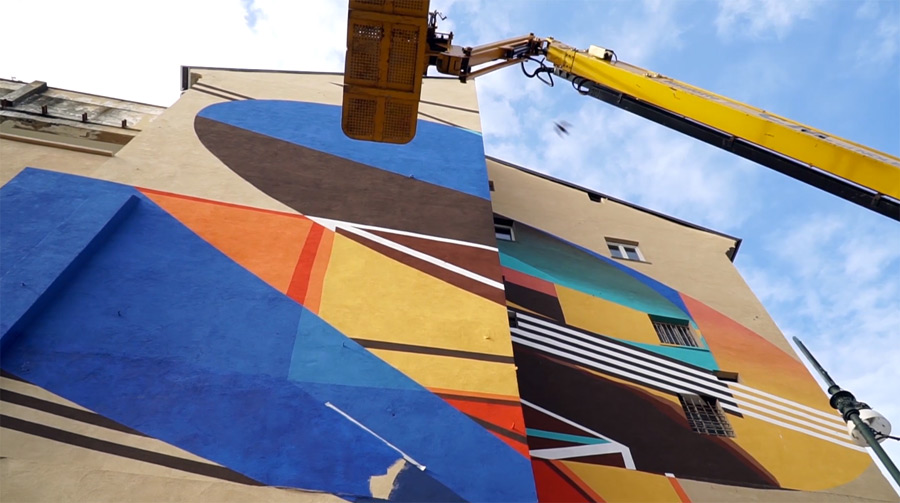
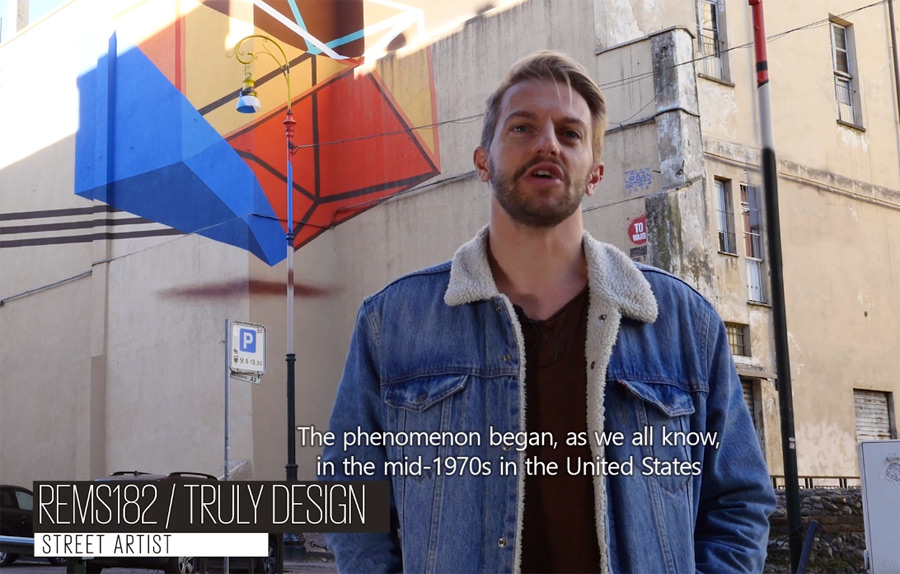
With the UN’s 17+1 Sustainable Development Goals and at least as many artists on hand to interpret them, the City of Turin has had a lot of new artworks on walls throughout the city.
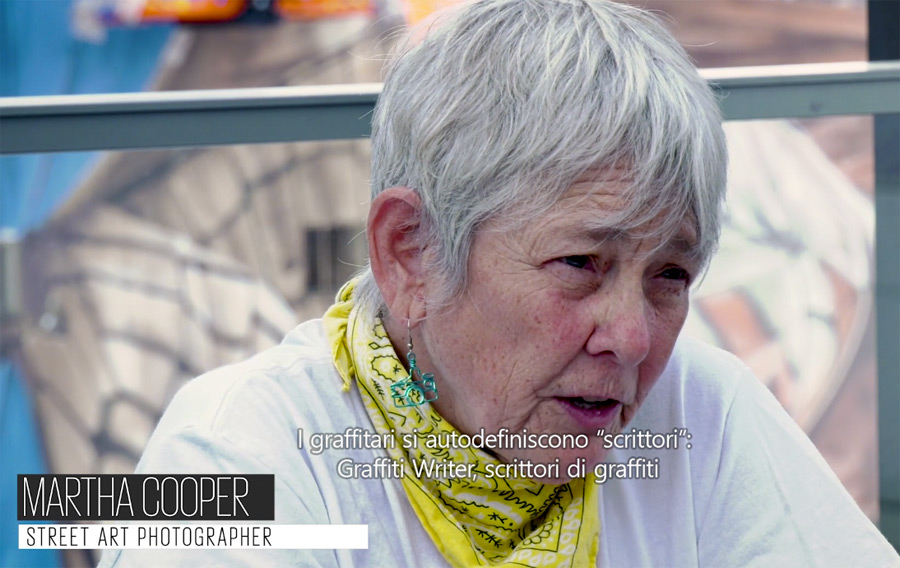
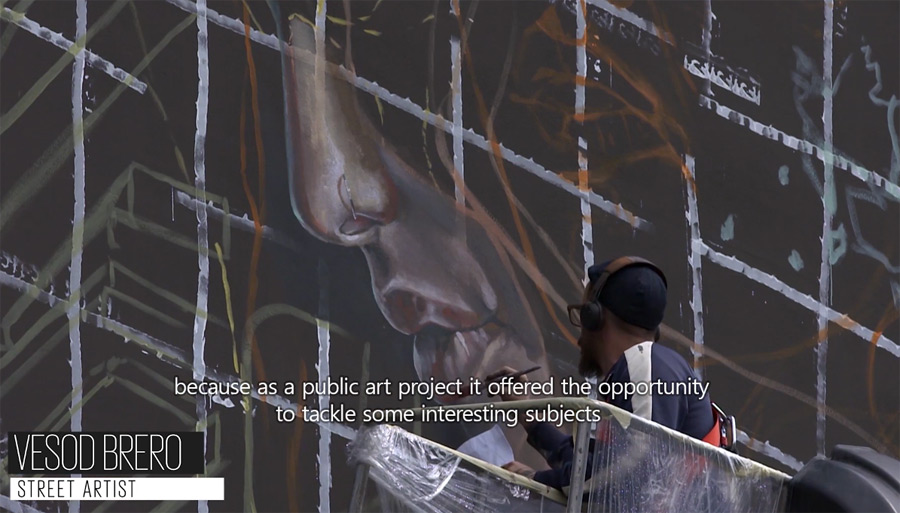
Tapping into a universal language of art and murals that has spread throughout cities around the world, this project imagines meeting all these goals by 2030. Here we present a short documentary that introduces the originators of this mural program, the artists who are painting, and the city of Turin.
Documentary: Street Art For Sustainable Development. Via Cinemage Studio
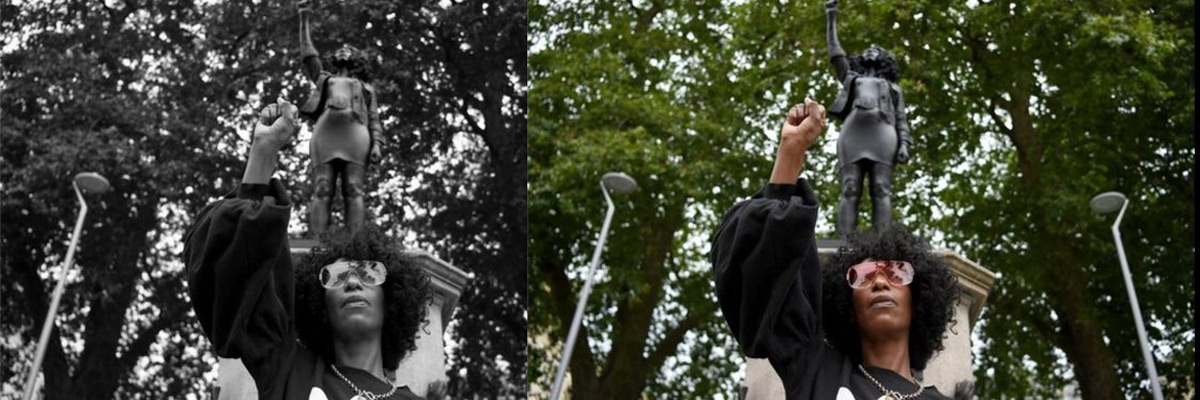
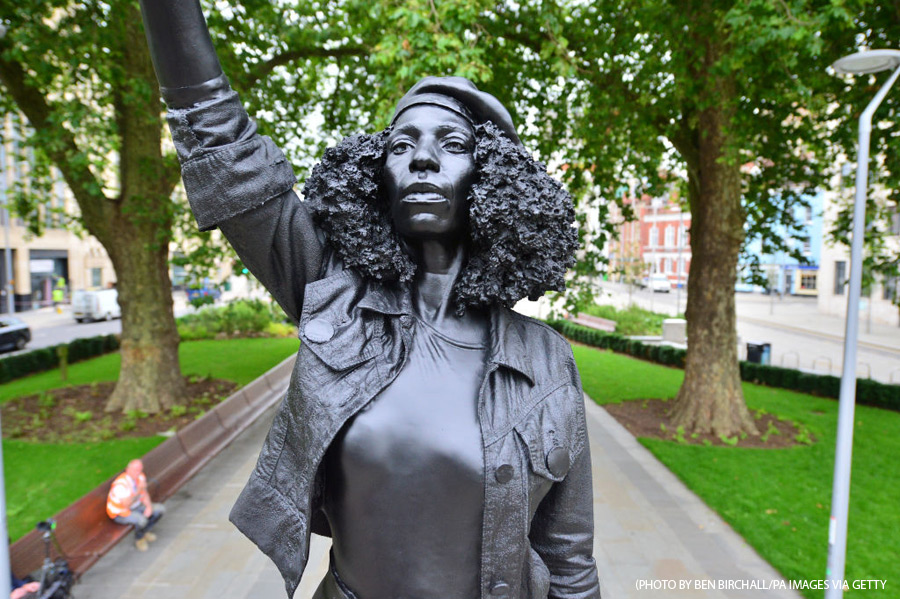
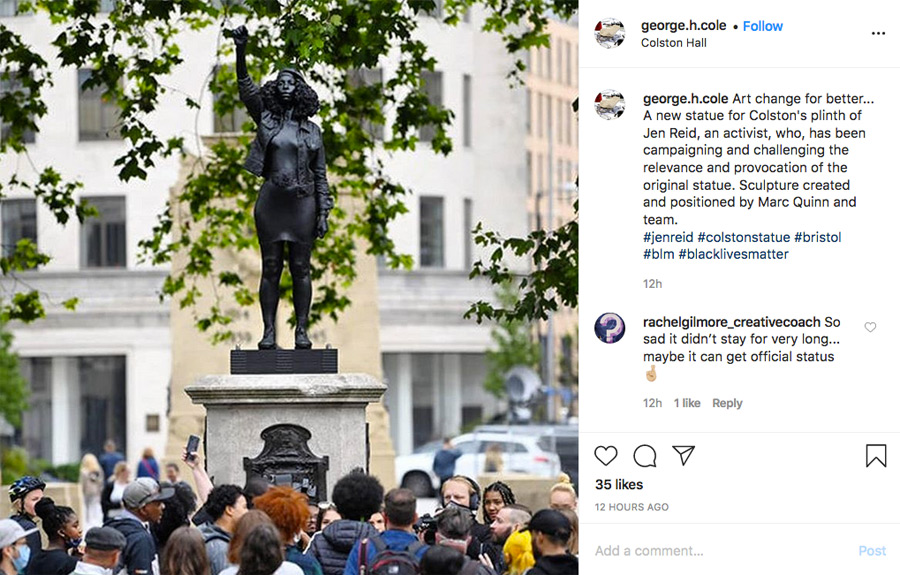
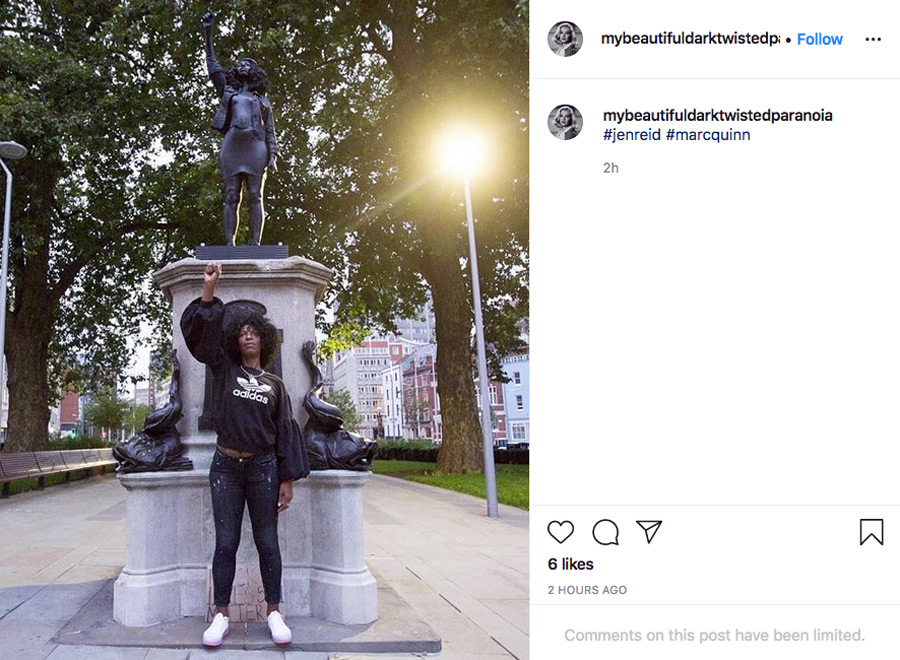
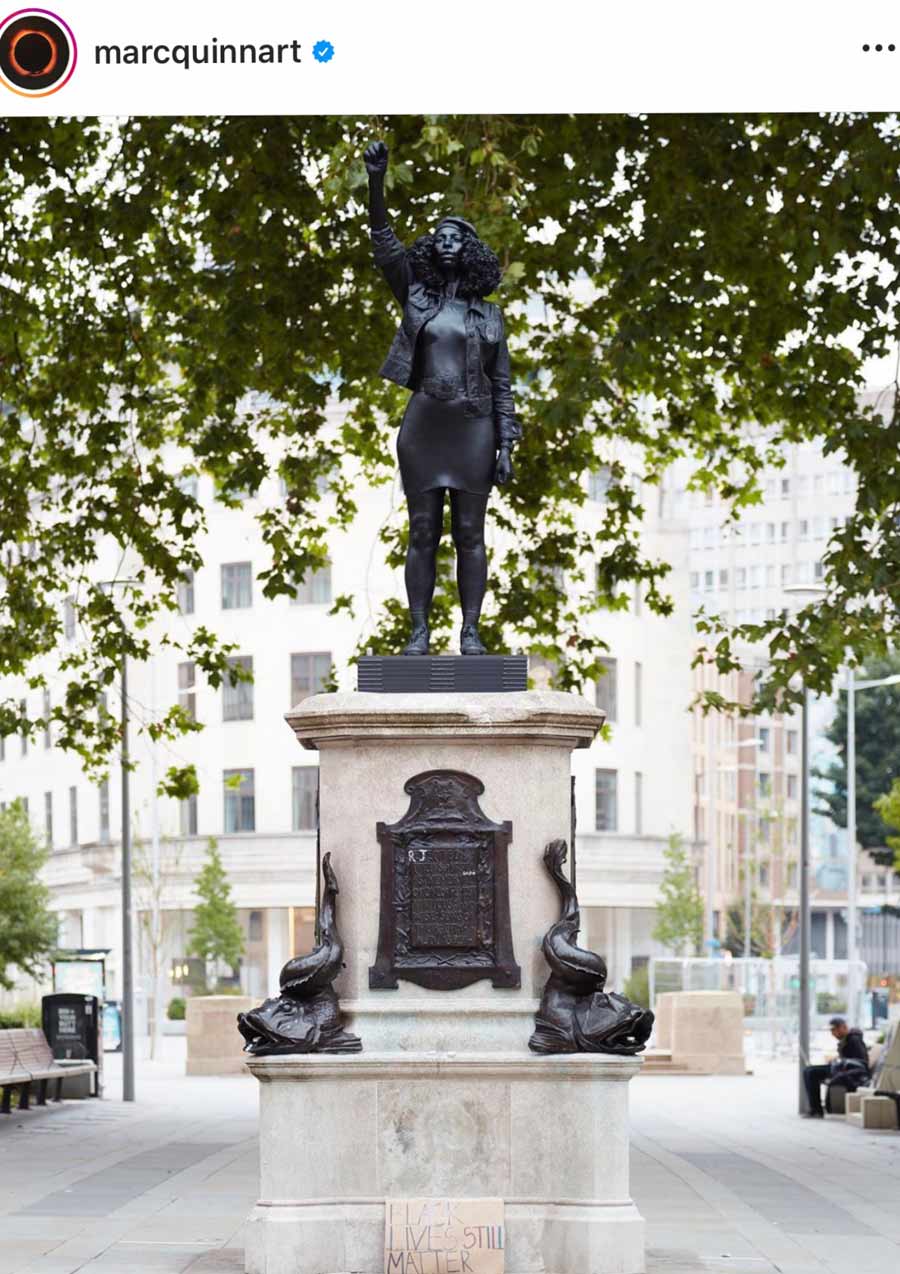
“When I was stood there on the plinth, and raised my arm in a Black Power salute, it was totally spontaneous, I didn’t even think about it. My immediate thoughts were for the enslaved people who died at the hands of (Edward) Colston and to give them power. I wanted to give George Floyd power, I wanted to give power to Black people like me who have suffered injustices and inequality,” says Jen Reid in an interview with DeZeen about this new piece called “A Surge of Power”.
A
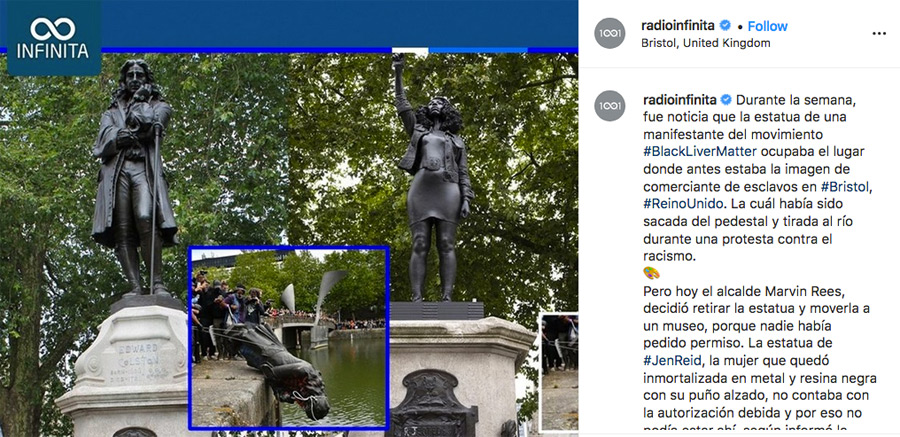
remarkable substitution was placed here on July 15th, only 8 days
after a sculpture of the slave trader Colston was toppled from the same place. Various
publications give the previous occupant honorable descriptors like 17th/18th-century Bristol merchant and
philanthropist – as if it is an act of magnanimous charity to be a philanthropist
after you’ve made your money from extracting years of free labor from people
whom you’ve enslaved.
Jen Reid had struck this pose atop the empty plinth and according to published
accounts artist Marc Quinn shot a photo of her at that moment, black beret over
voluminous locks, fist punching the sky. In consultation with Reid the artist
created a monument to that moment – resin and steel cast from a 3D print. With
a team of about 10 the new sculpture rose in the early morning hours.
Public space often affords artistic or aesthetic expression only for the
privileged, the moneyed, those given permission by “experts”, or corporations
who foist their message there. Street artists have been creating new monuments
in the last decade and a half, often surreptitiously placing them overnight,
sometimes so subtly that the new works don’t attract attention for many days. Once
focused primarily on aerosol exclusively, this new generation consider a panoply
of artful interventions and “culture jamming” to be as virile and pugnacious.
Here a glistening black heroic figure is well within the wheelhouse of
Quinn, who is not considered as a street artist, per se. Moved by the message,
he seized an historic moment to use the tools he is familiar with and the voice
he wields to collaborate with someone else marching and living in the thick of the
structural racism that is being protested, studied, acknowledged, denied.
When it comes to offering opinion about art in public space, it is not surprising how many people take responsibility or a sense of ownership of projects, feel personally gifted or wounded by the presence or absence of a sculpture. The removal of many public sculptures in the last months has thrown the conversations into tumult, raising topics previously squelched or avoided. In an era that is pregnant with the possibility of radical transformation, more people are invested across the culture than at any time in recent memory.
Up and on
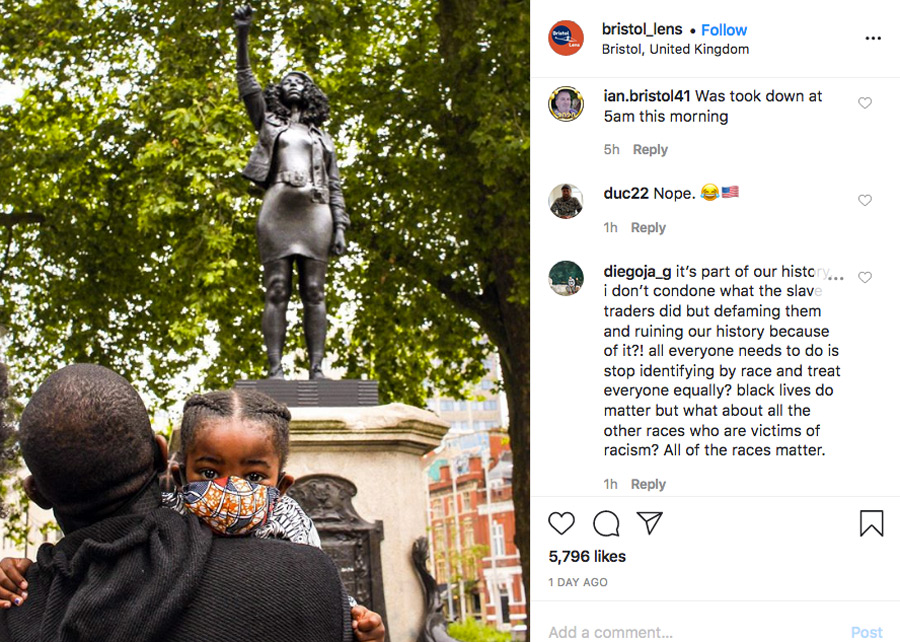
view only a day, the City of Bristol has removed this triumphant figure of Jen
Reid. One wonders if these city leaders are always so rapid in their response
to all of their duties. Considering the reports of positive reviews from a majority
of passersby during the sculpture’s first day in public, snatching it from
public space with such dispatch smacks of silencing speech – especially when
you learn that the previous sculpture of Edward Colston – the deputy governor
of the Royal African Company –
had reigned freely over the spot for 125 years.
A disapproving couple lectures a group saying “You should be ashamed. It should be “All Lives Matter”, from Diologososoul on InstagramCopyright @marcquinnart
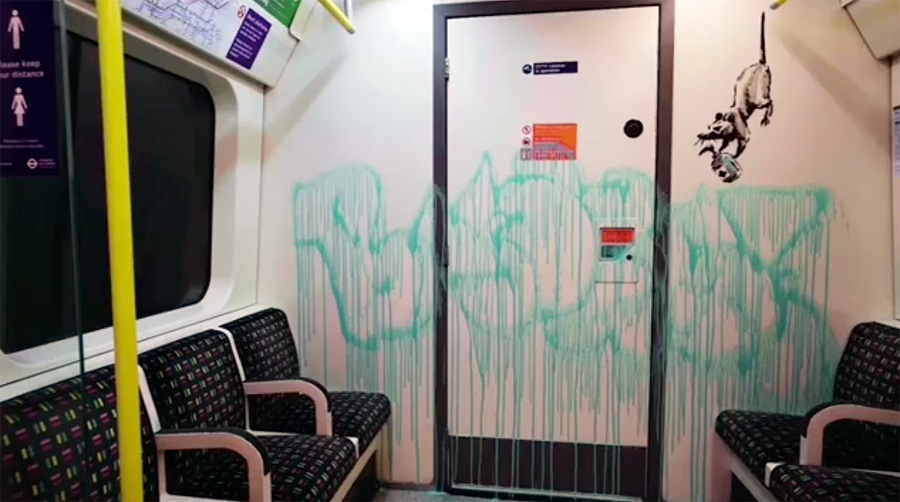
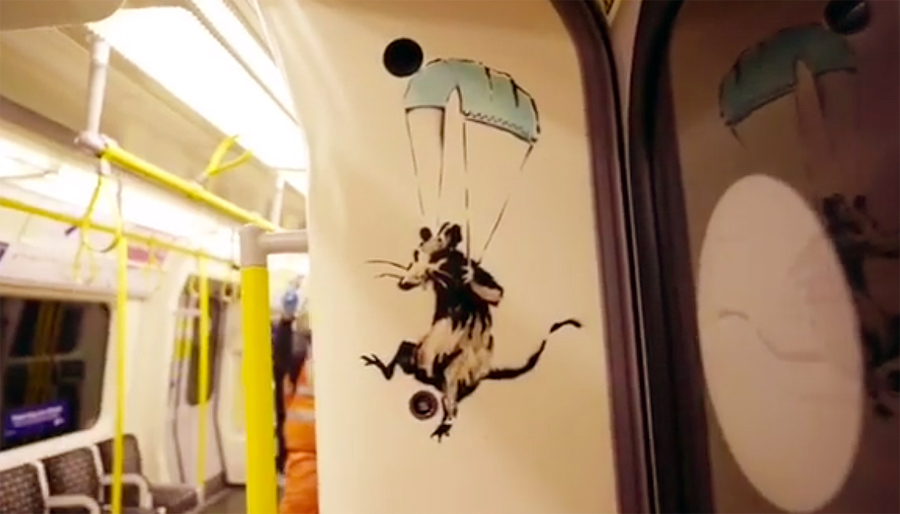
Instagram commenter transparentlemon is irked by Banksy’s apparent defacement of the Tube. “I’m all for graffiti on walls of buildings that’s art,” he says on Instagram, “But on public transport that’s just vandalism”
Oh dear. The Bristol born artist has built his entire career on mucking up public space with his clever observations, but somehow it is still grinding the gears of some peeps who think he might have veered too much into the “vandal” category on this one.
The commenter who self-describes as cultural_creative cannot contenance the idea that the anonymous do-gooding street artist has been fooled by the obviously Bill-Gates-funded conspiracy to take away people’s rights and force them to wear masks and get micro-chipped.
“I’m taking this subjectively..,”
they write, “I refuse to believe @banksy would peddle government propaganda he’s
too slick for that”
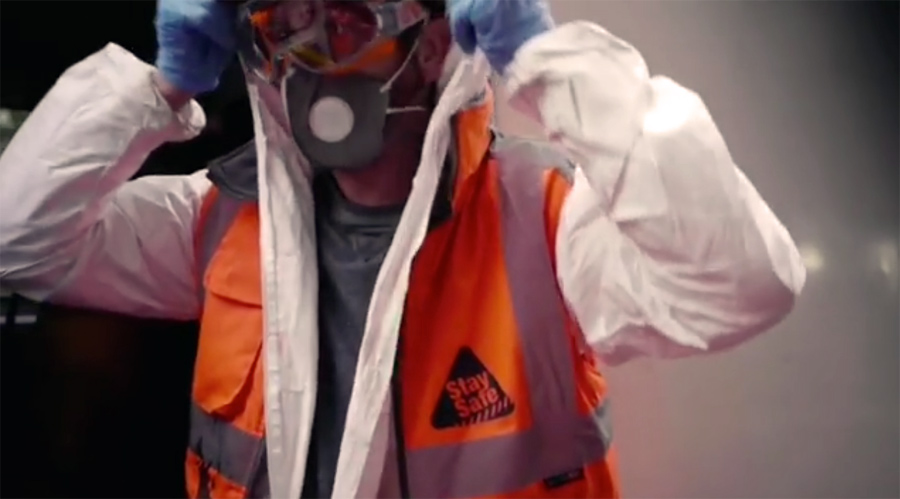
Yes, he’s done it again, Banksy, presenting
his view on a topical topic using his preferred method of aerosol – and heavily
edited video – posted to nearly 10 million fans.
“if you don’t mask – you don’t
get”, he calls it, a double negative that implies that wearing a mask will
increase your chances for Covid-19? Surely not. Surely not?
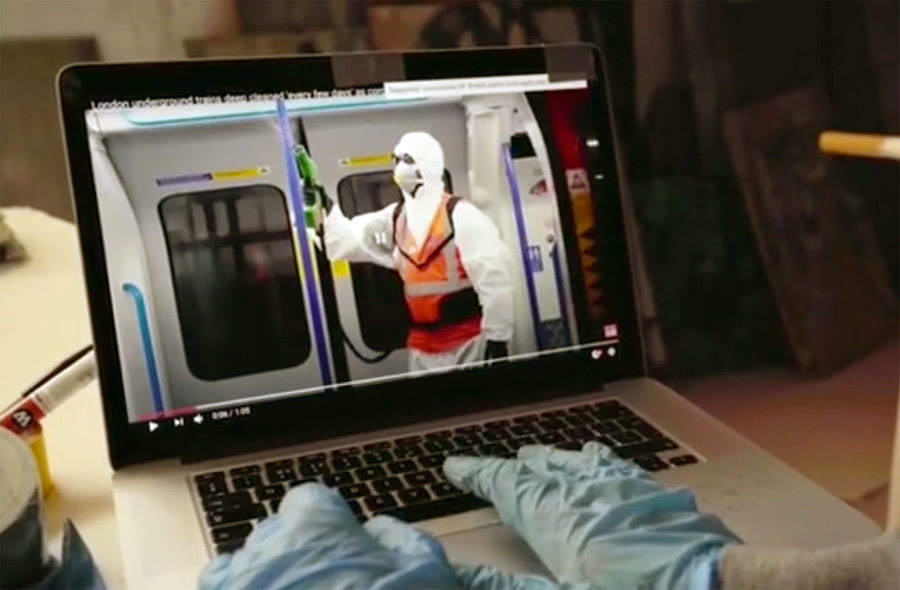
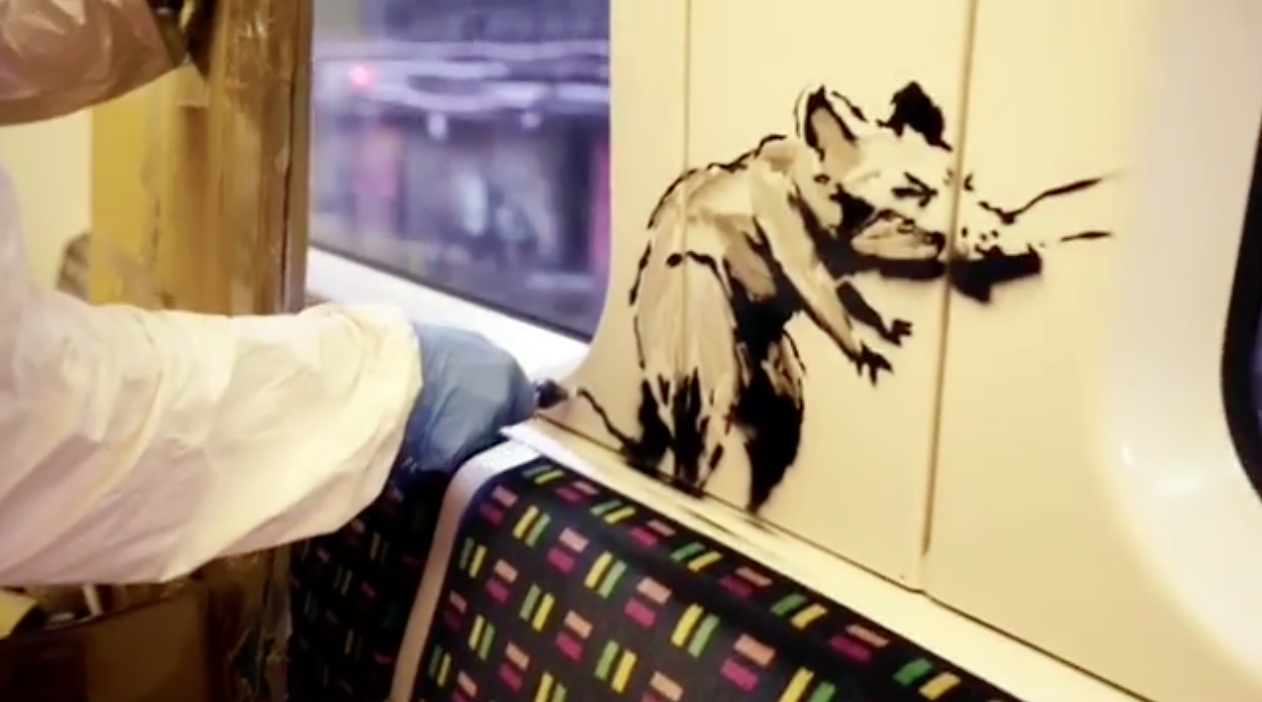
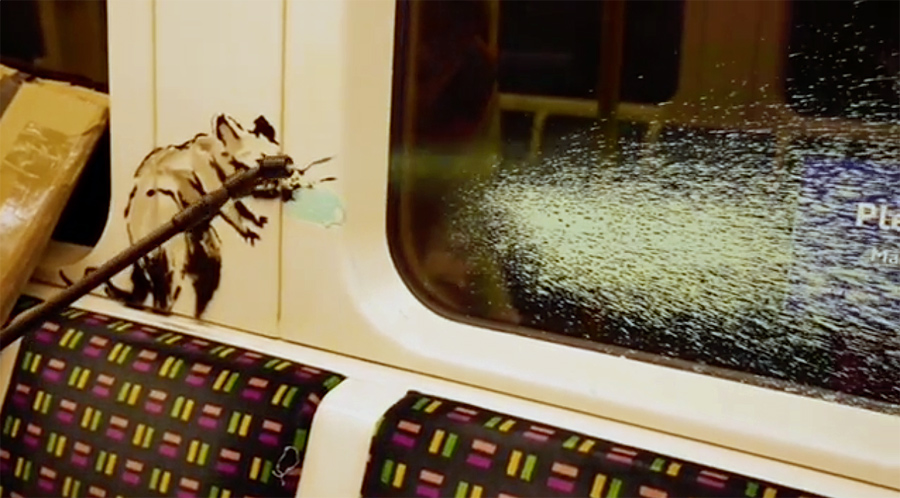
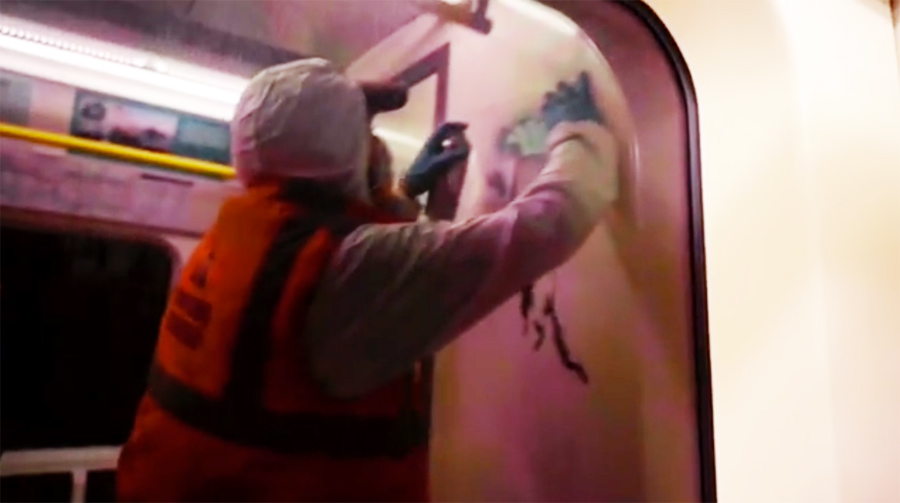
Posted on his Instagram account we
see a video of a man, believed to be the elusive international man of mystery
himself, wearing the ubiquitous protective cleaning gear of many public
professionals and holding the sanitizer sprayer for quite a different task. The
“cleaning” man proceeds to stencil several rats wearing masks and
sneezing in full pandemic mode.
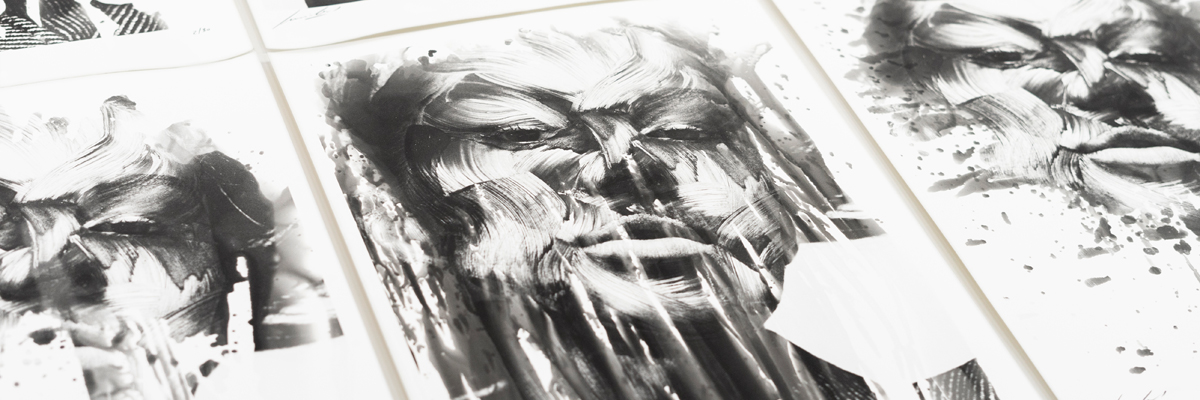
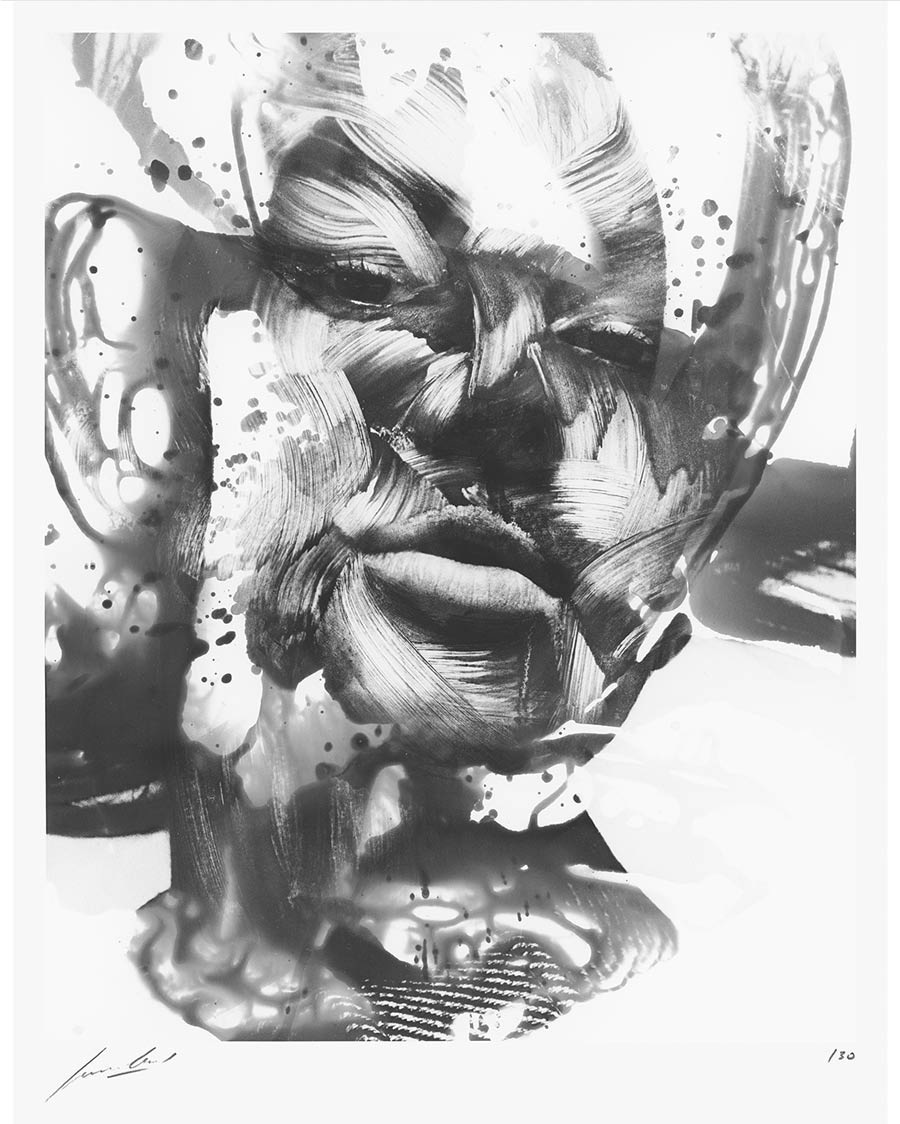
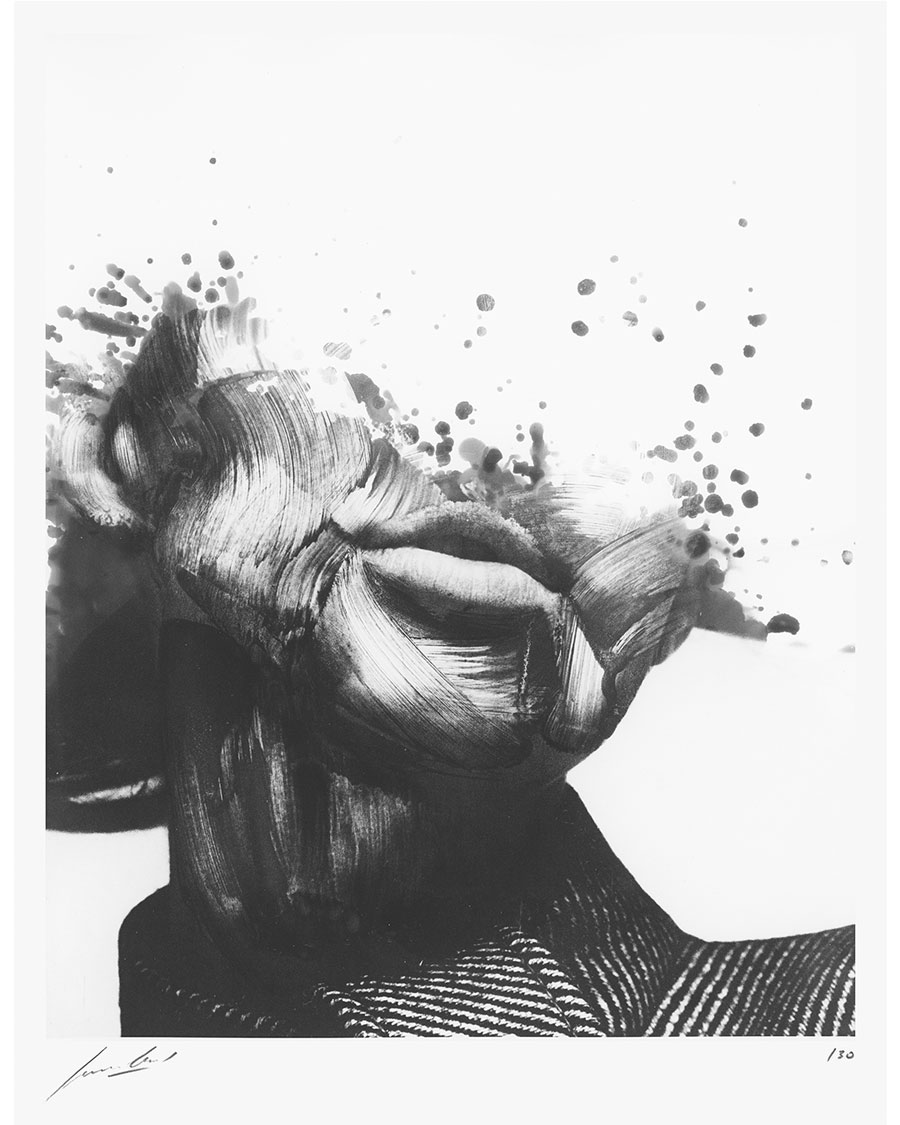
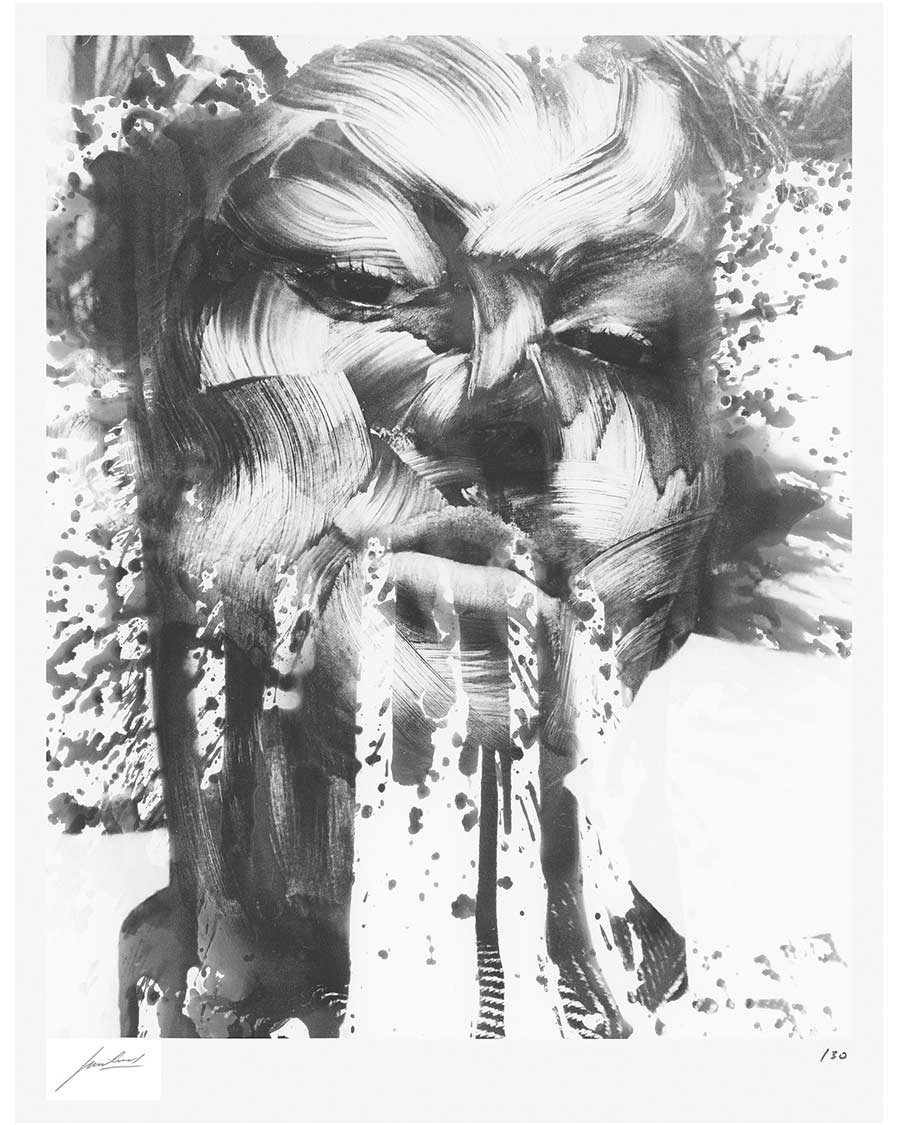
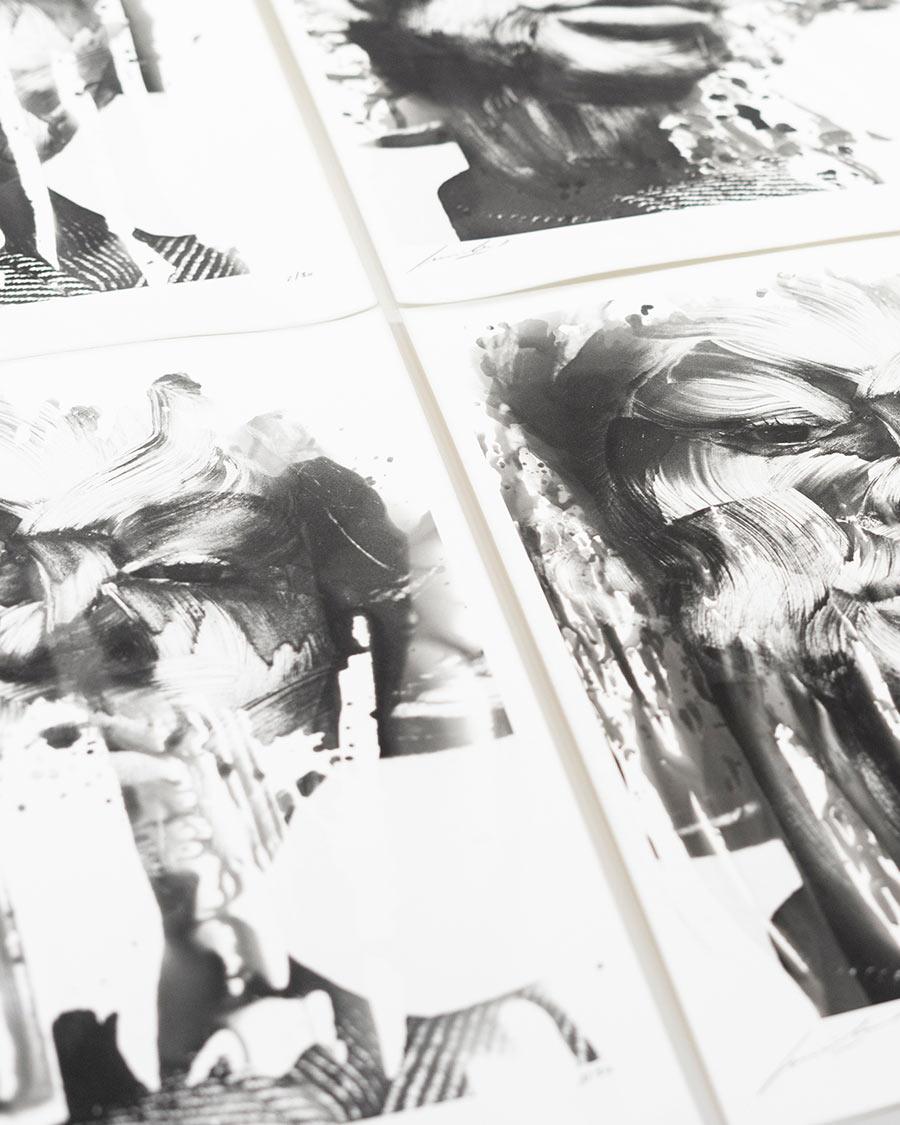
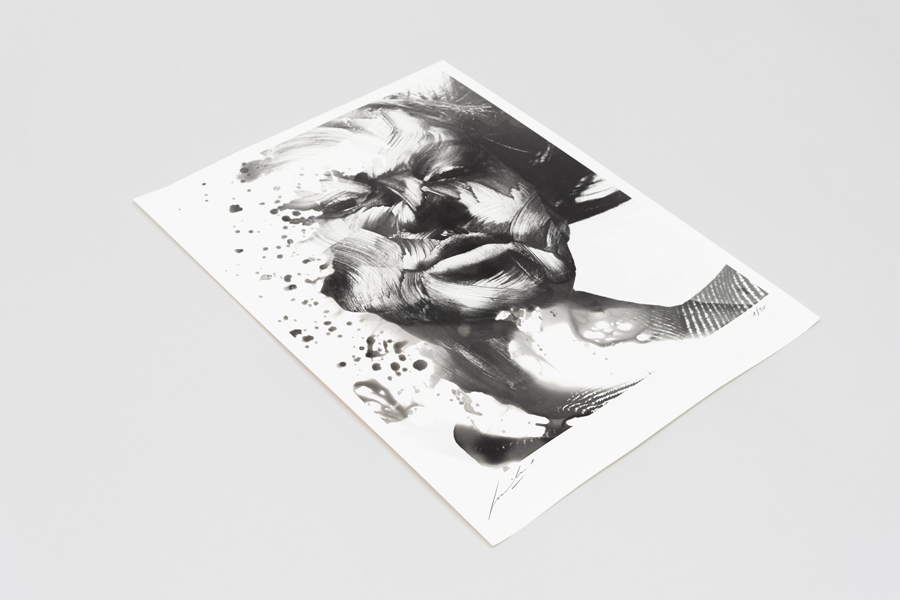
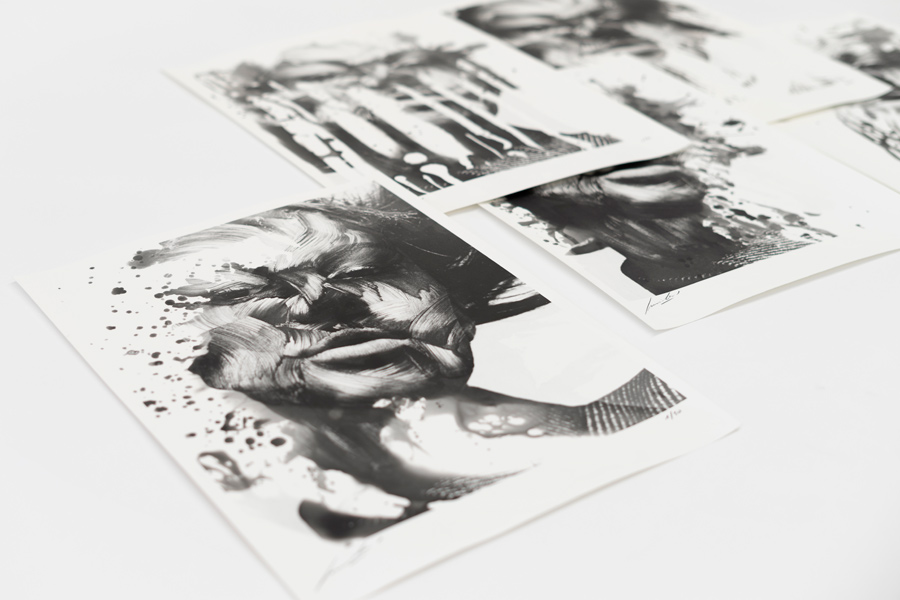
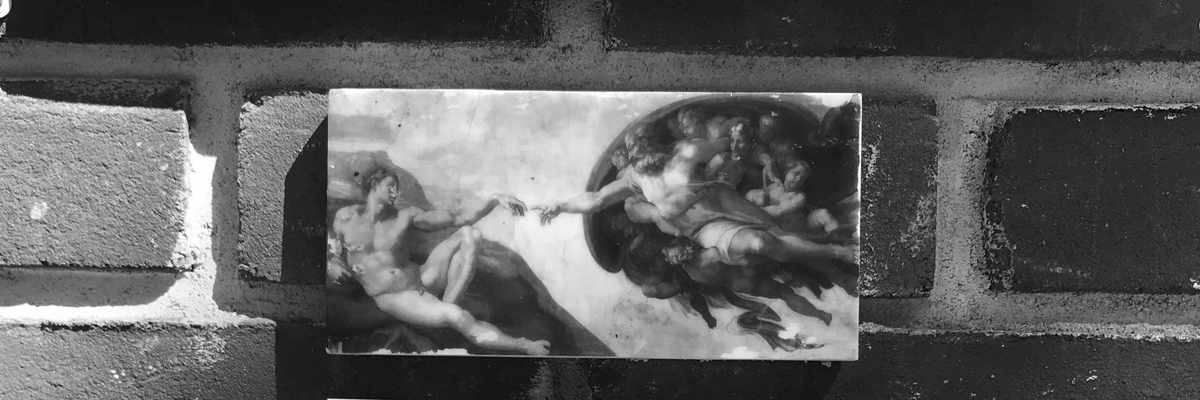
Stylish de-constructor/reconstructor Vermibus continues to refine his practice of image mutilation, sometimes superseding dreams and a couple of nightmares.
It’s a discomforting experimental approach that began in earnest with the backlit bus stop ads for fashion and cosmetic brands; an aesthetic war against those who would presume to determine what beauty is by peddling their wares and worldview in public space. Somehow it turned gorgeous.
This week he releases a limited edition of “Adamant” an analogue print on baryt matt paper, signed and numbered. The experiment continues, and the results are glimpsed through a veil, speckled by city soot.
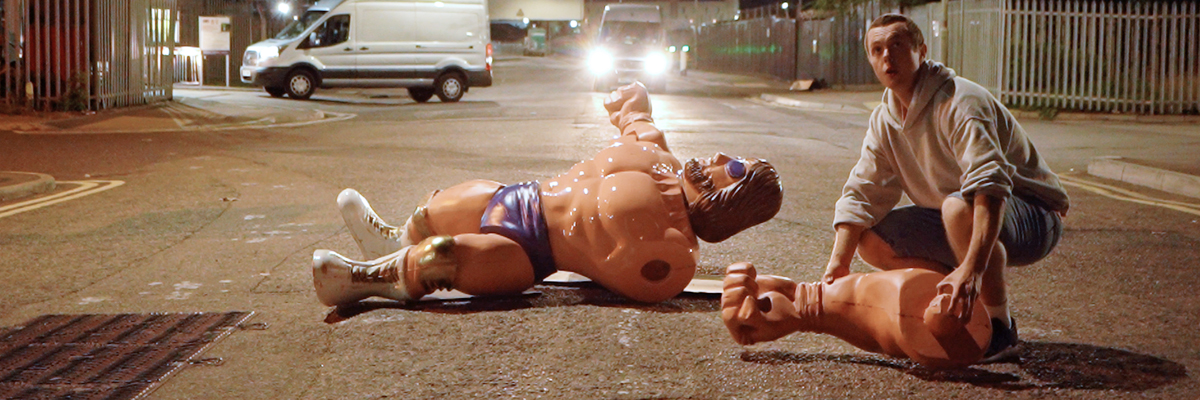
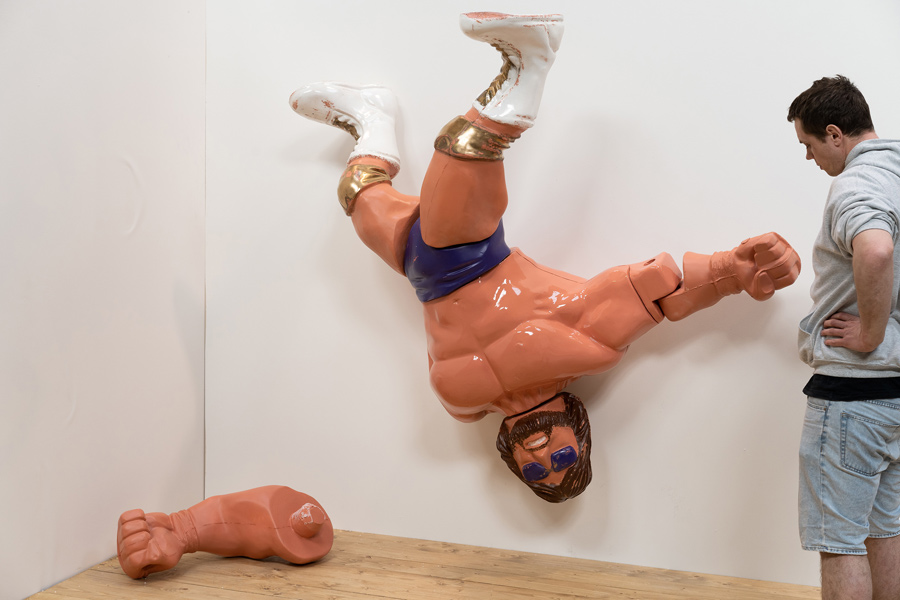
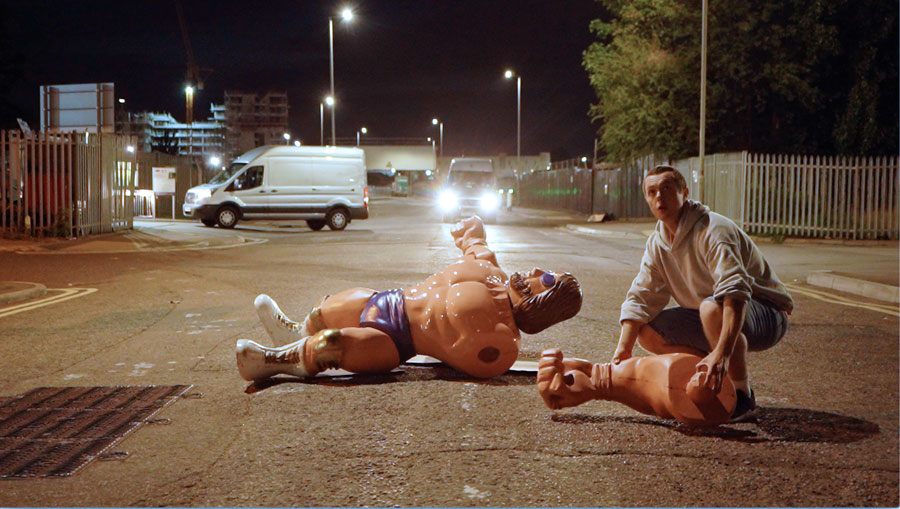
As a child, there are endless possibilities at play in our experimental minds, unfettered by hard realities or mere gravity. In the world of children, everyone seems like a giant. Acting upon your own configured and perfectly ordered universe, proportion necessarily intimates that you have become the giant, and all of these toys are miniature playthings for you alone to determine the fate of.
London based artist Michael John Hunter is fascinated by this transformation of relative size and revisits the implications in the adult world, occasionally foisting his hyper-realistic and detailed sculptures into public space.
Practicing over a decade in this scaled world, the sculptures, sometimes 17-footlong barbie dolls laying in the street, surprise and perplex you when you run into one – causing you to glance around the immediate surrounding area to reassure you that you haven’t sudden shrunken. He photographs his own work, and this practice only intensifies the cognitive puzzlement, an intentional shooting from a certain height and angle with a specific focus technique.
All tolled,
his artistic/sociologic practice is a welcome examination of perceptions and
our own relative awarding of importance that is based on our individual
assessment of people, places, and things.
He tells us: “After the lockdown was over here I finally was able to finish another sculpture and get it out into the street to photograph. It is the same concept as all my previous works.”
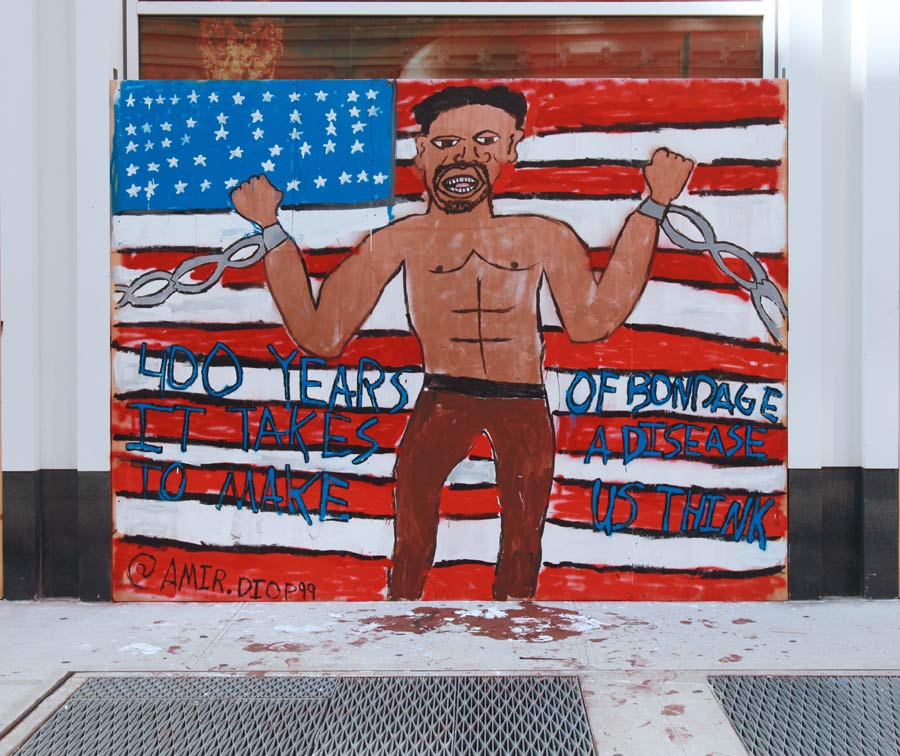
The writing is on the wall, literally, throughout the street art and graffiti scene right now, and you’re forgiven if it is confusing. We’re confused. We’re also clear on a few things.
The silent storm of Covid-19 has battered our doors and now is simply caving in the roof. The open rift between races and our legacy of disenfranchisement of our own is on parade. The one party system disguised as two stands by; quietly and deliberately offering no big ideas or massive structural programs to backstop the economic collapse either, content simply to hand out the contents of all the cupboards to friends.
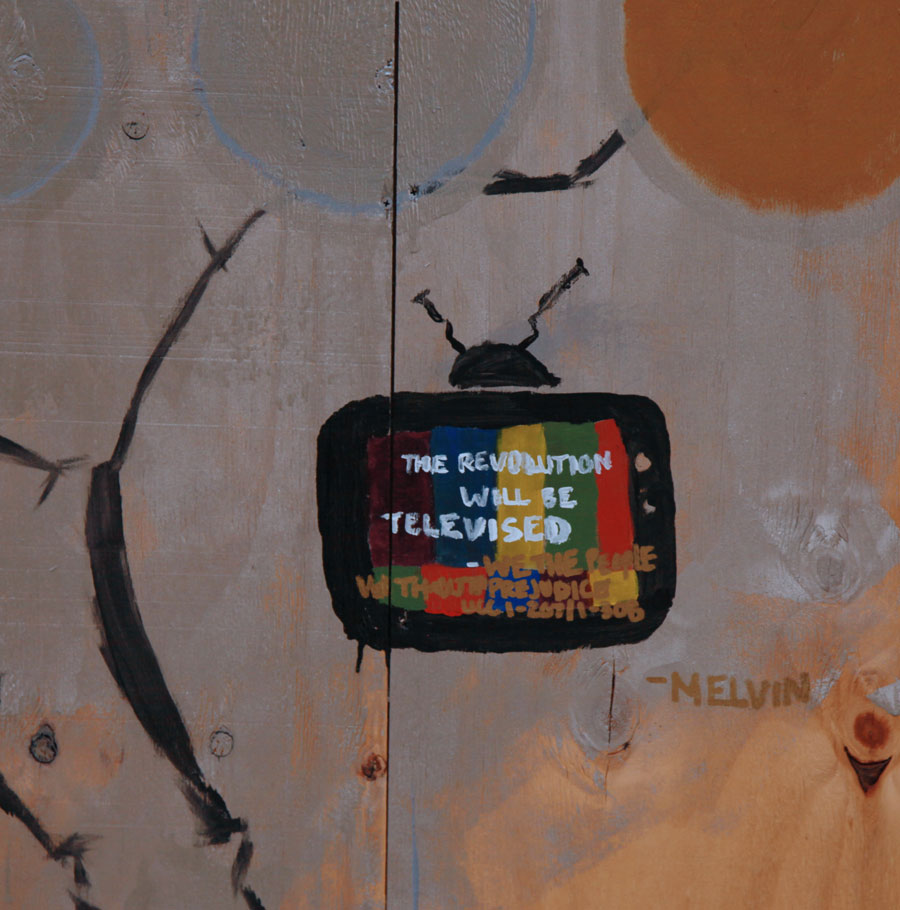
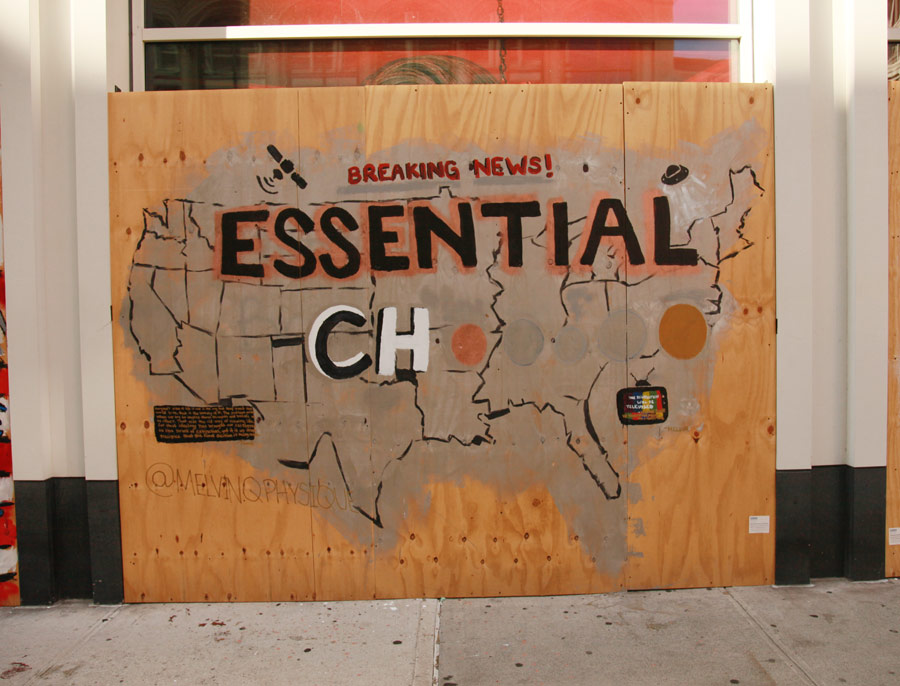
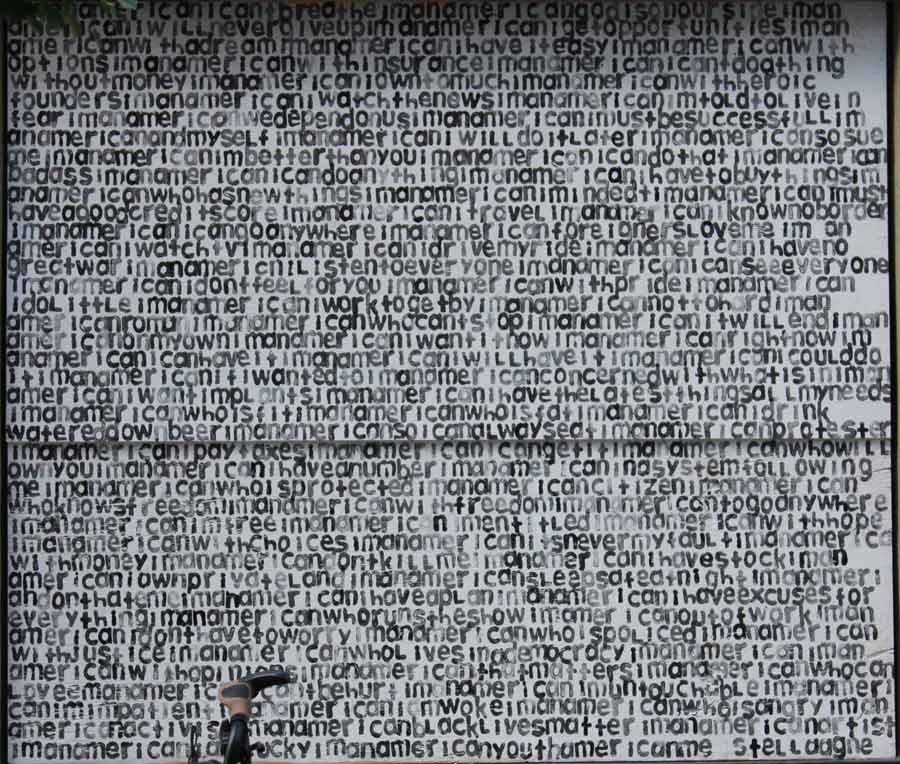
The prediction from the first piece below doesn’t sound like the prophetic future shock of Gil Scott Heron as it did when he released it. Rather, its a given. While social media is still relatively unregulated, that is.
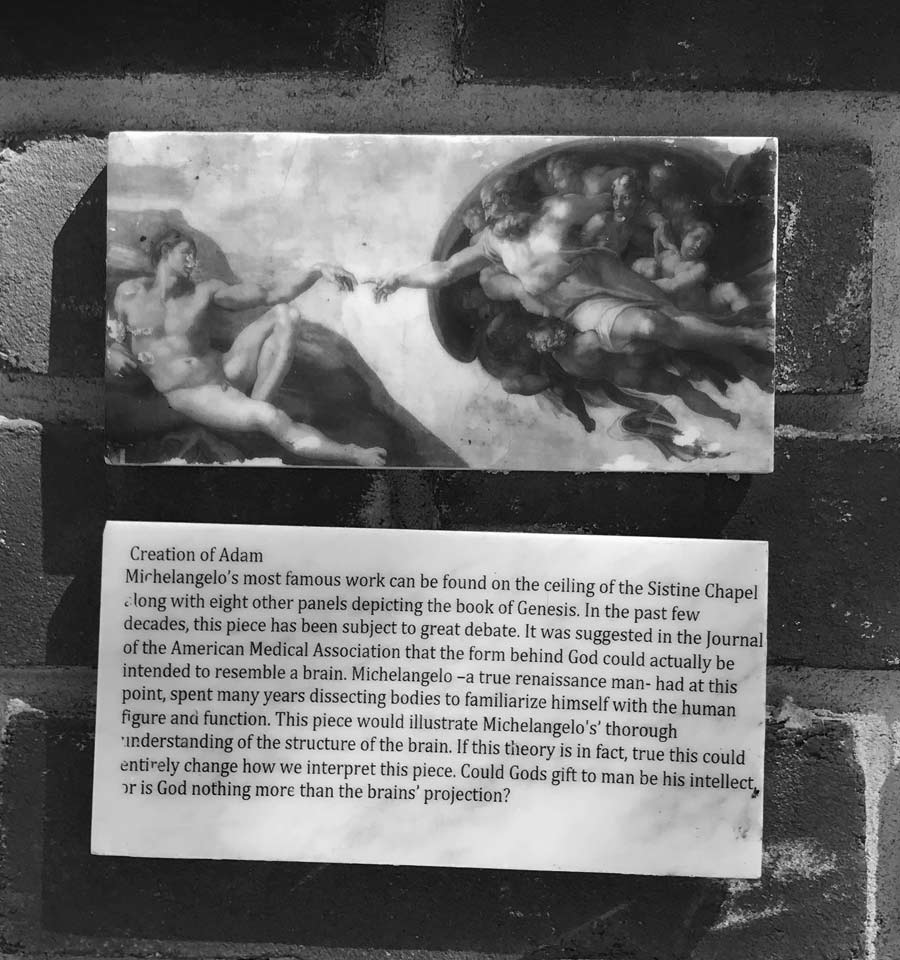
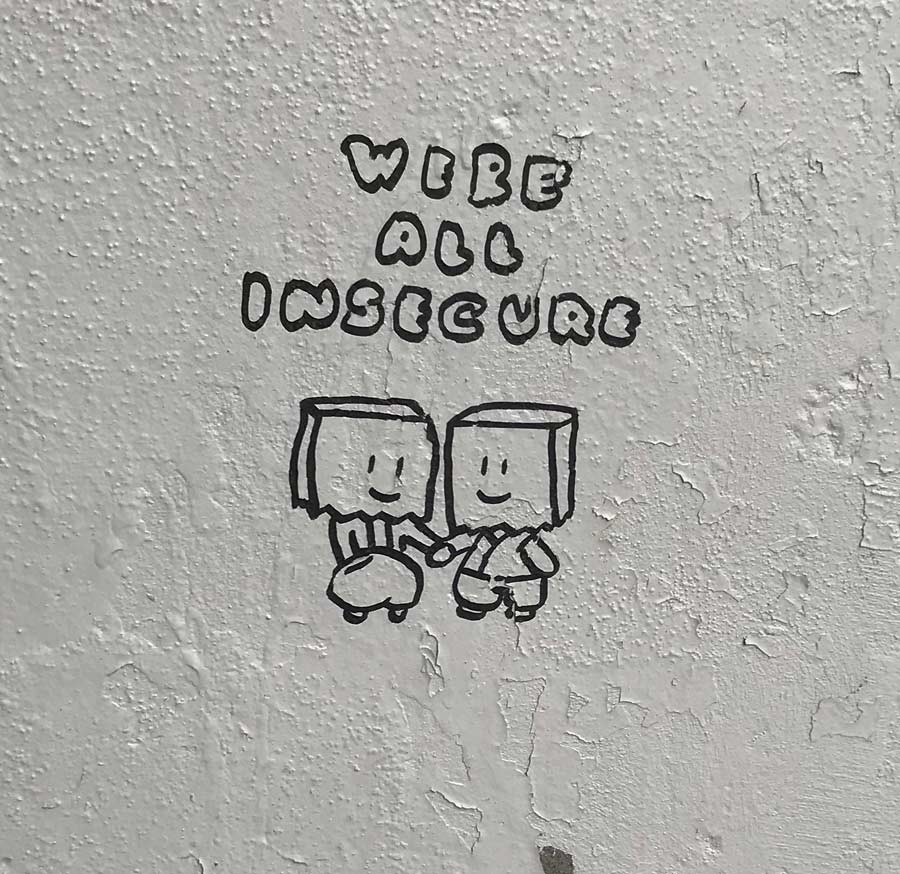
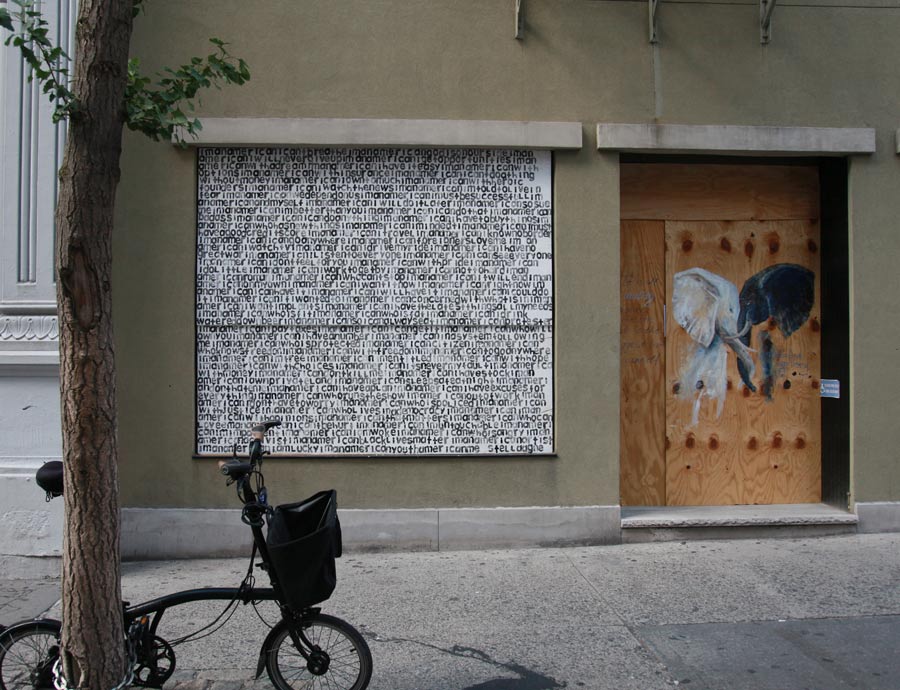
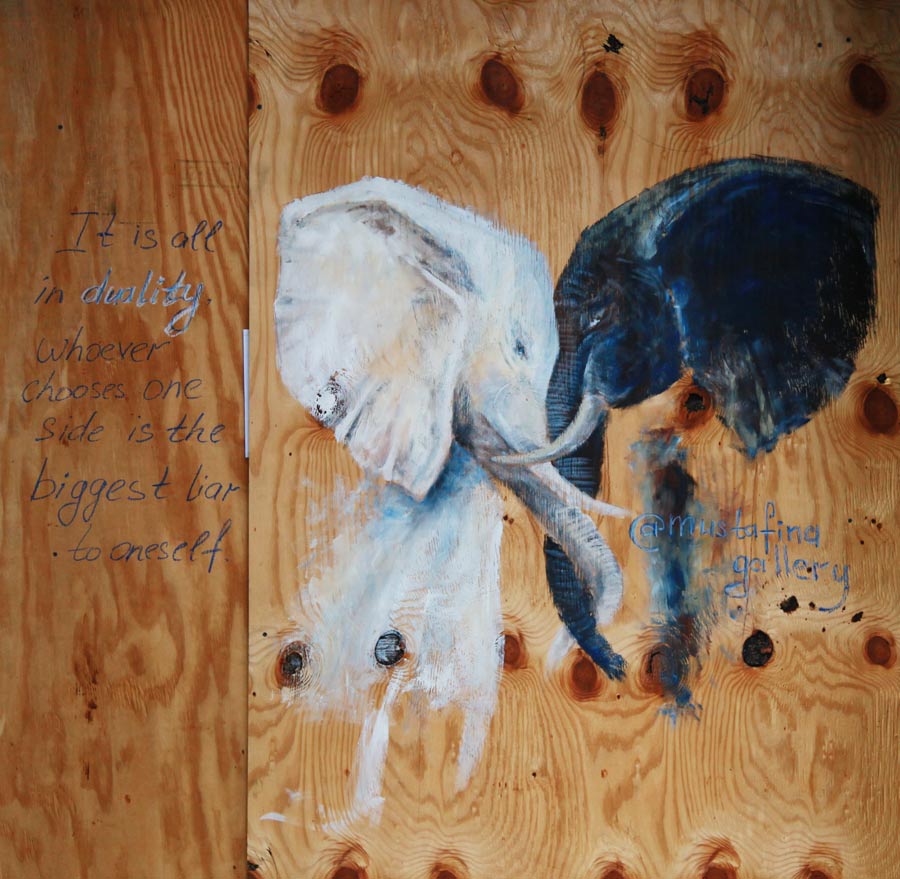
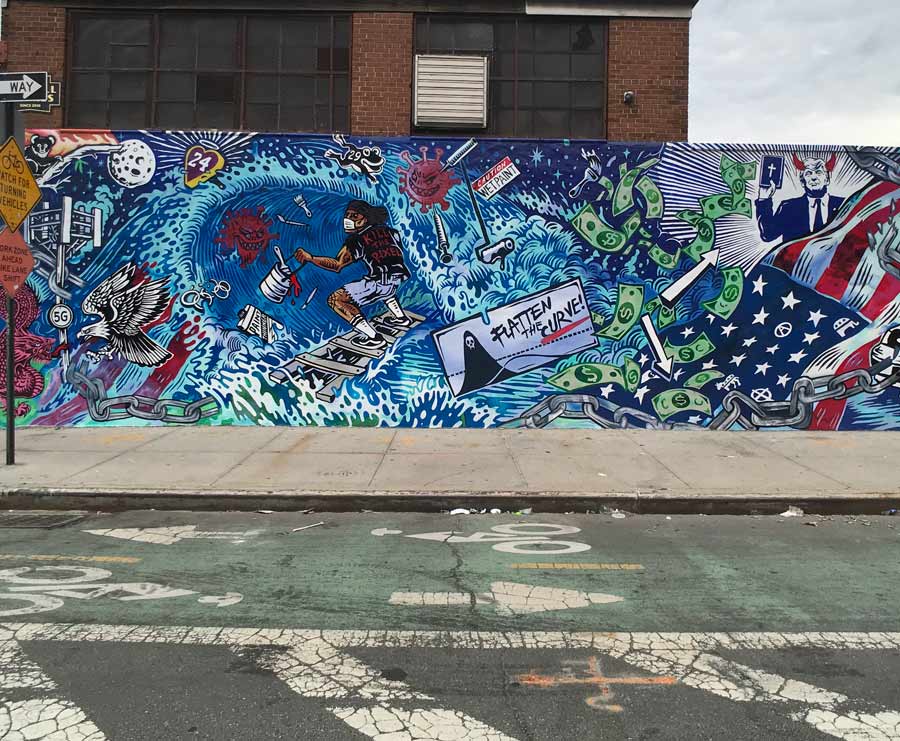
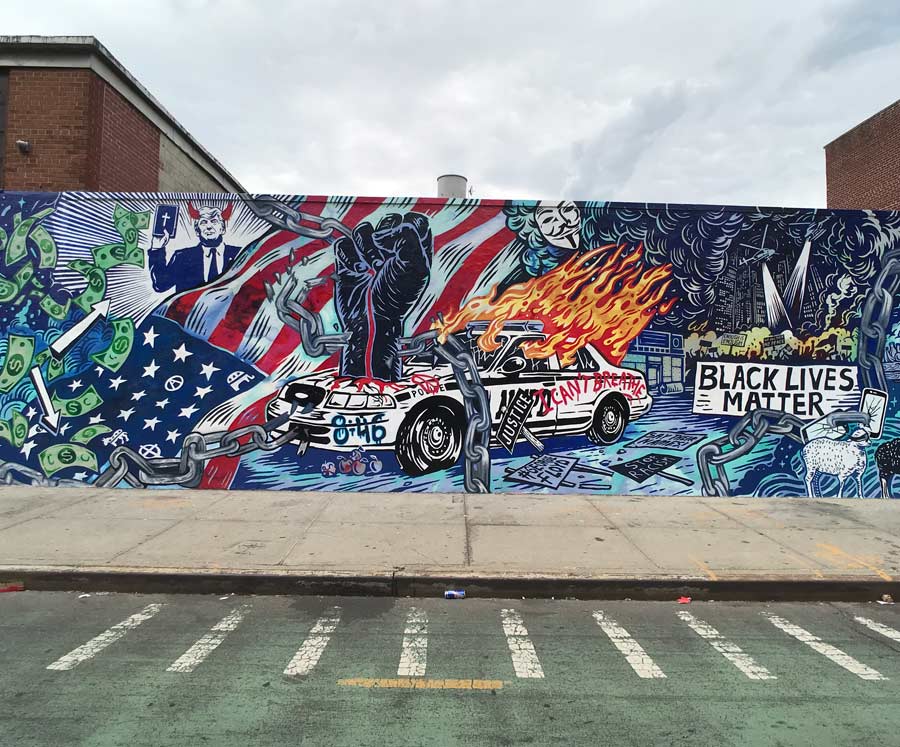
Here’s our weekly interview with the streets, this week featuring Amir Diop99, Melvin Q, Michaelangelo, Mustafina, and Pedro Oyarbide.
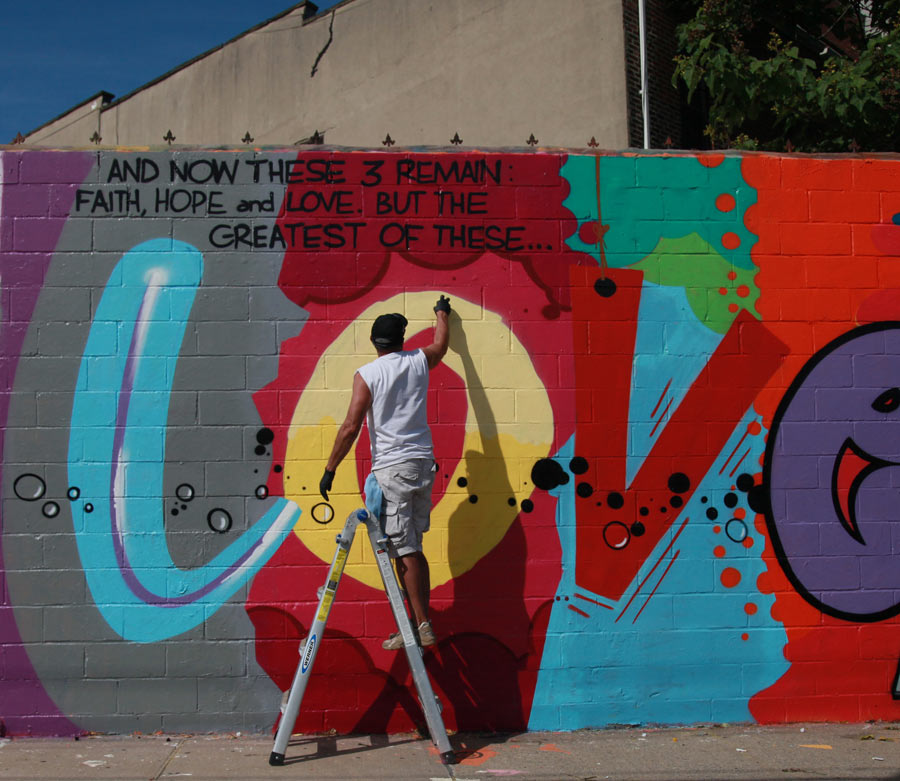
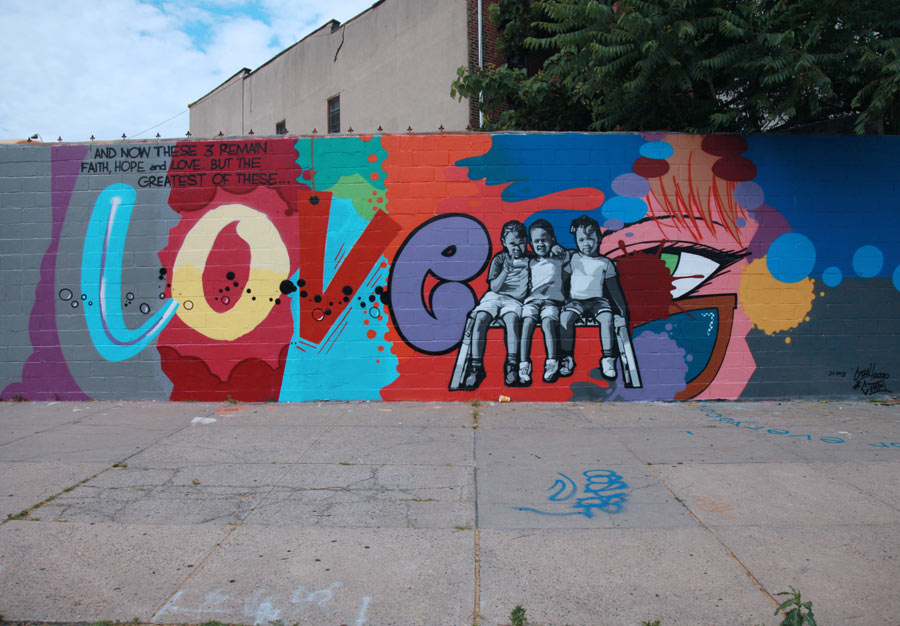
“And now these three remain: faith, hope and love. But the greatest of these is love.”
Graff train writer, street artist, and studio artist CRASH invokes a Bible verse (1 Corinthians 13:13) here to find common ground in a nerve-wracking, sad, and polarized time in New York.
This year’s Welling Court Mural Project was necessarily unannounced, as organizer Alison Wallis wanted to be responsible for people’s health and avoided the possibility of crowding – inviting just a few people at a time to paint, and notifying just a few that the action would happen.
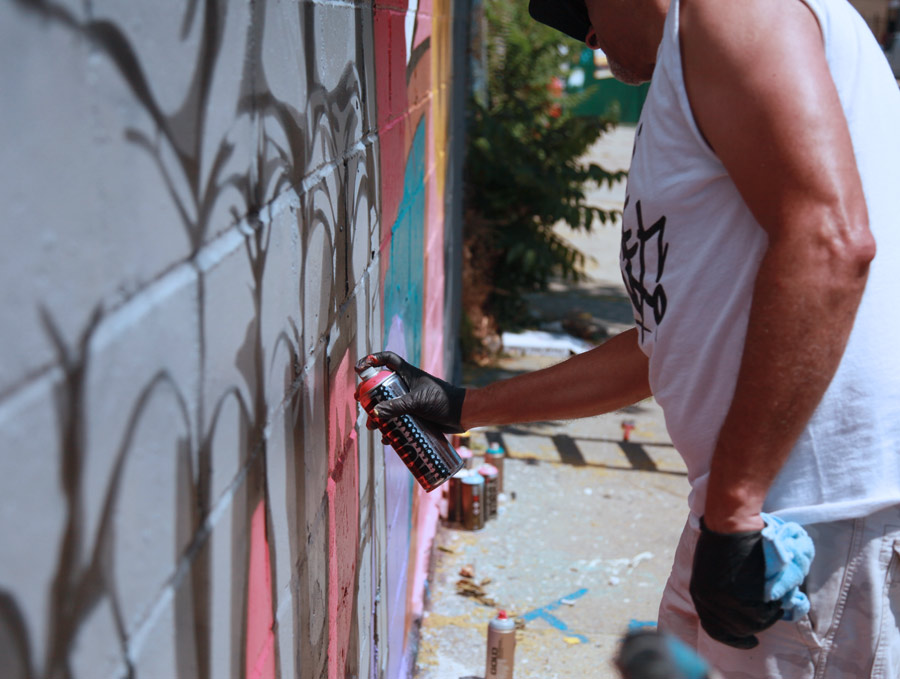
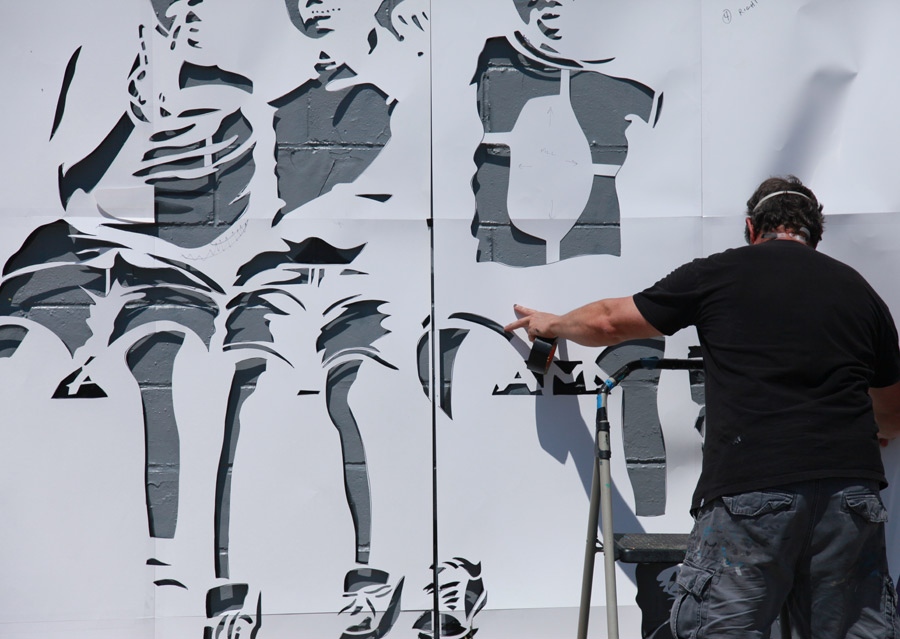
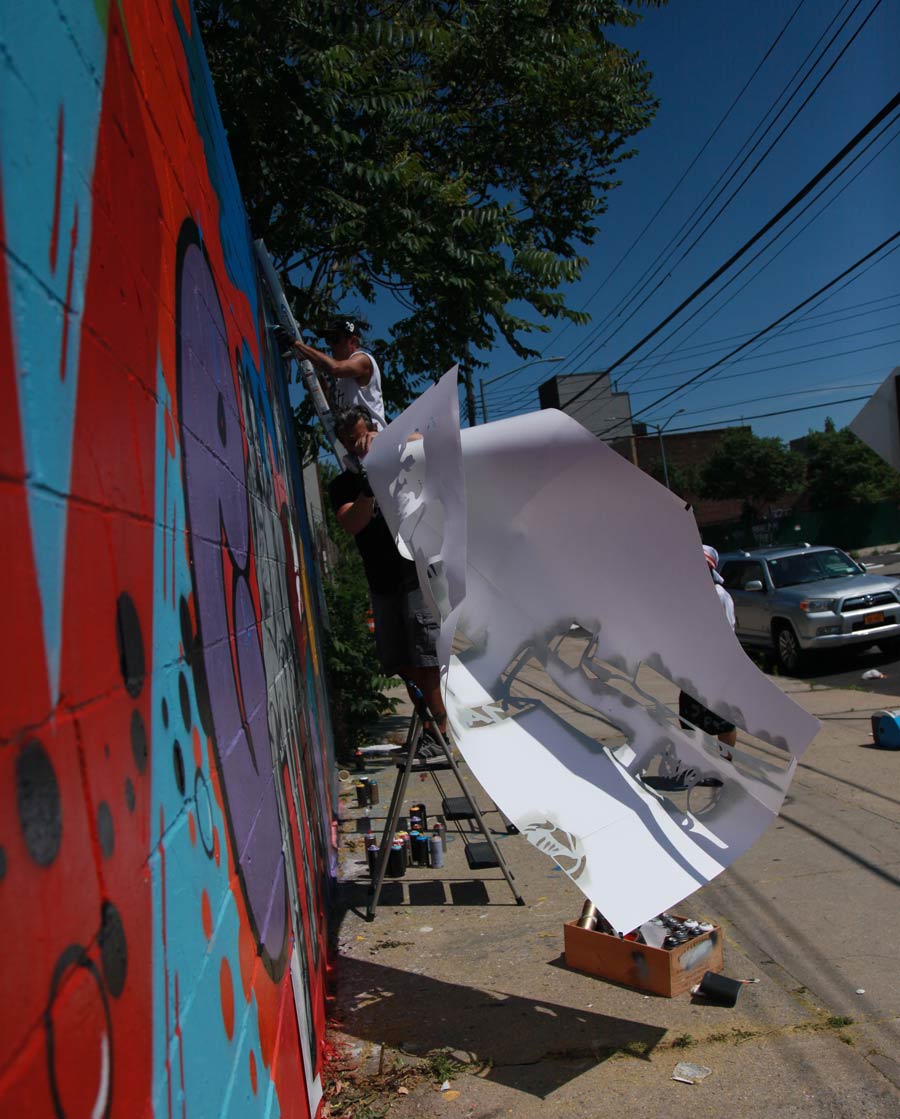
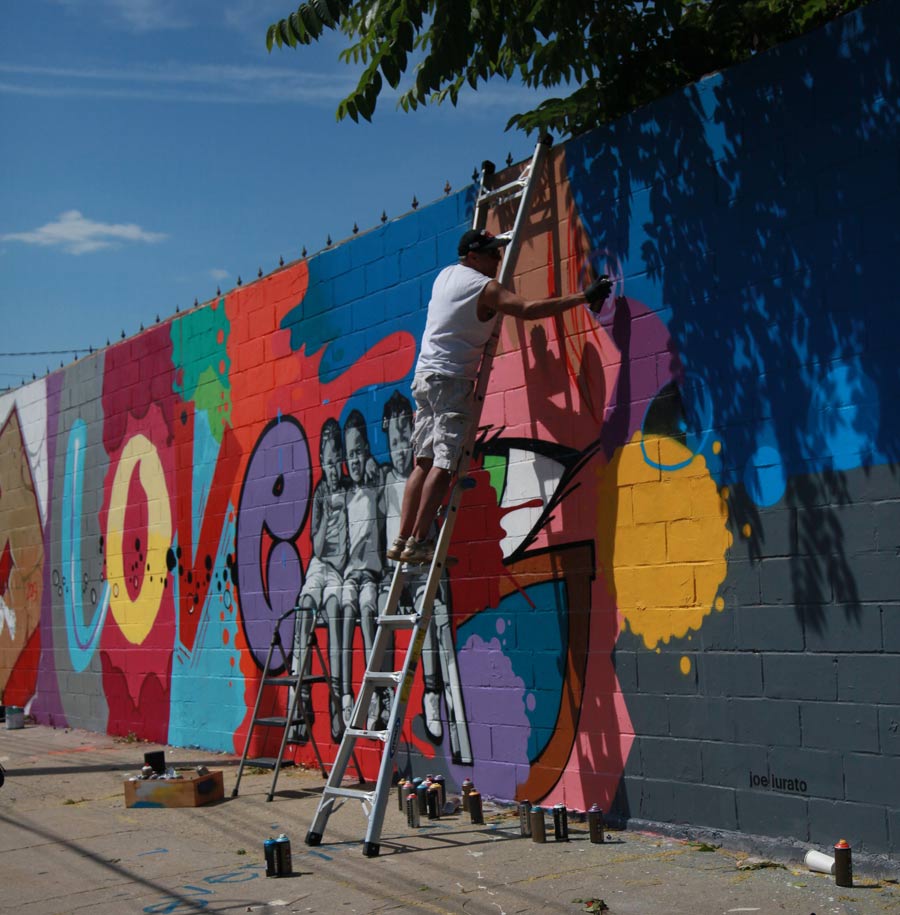
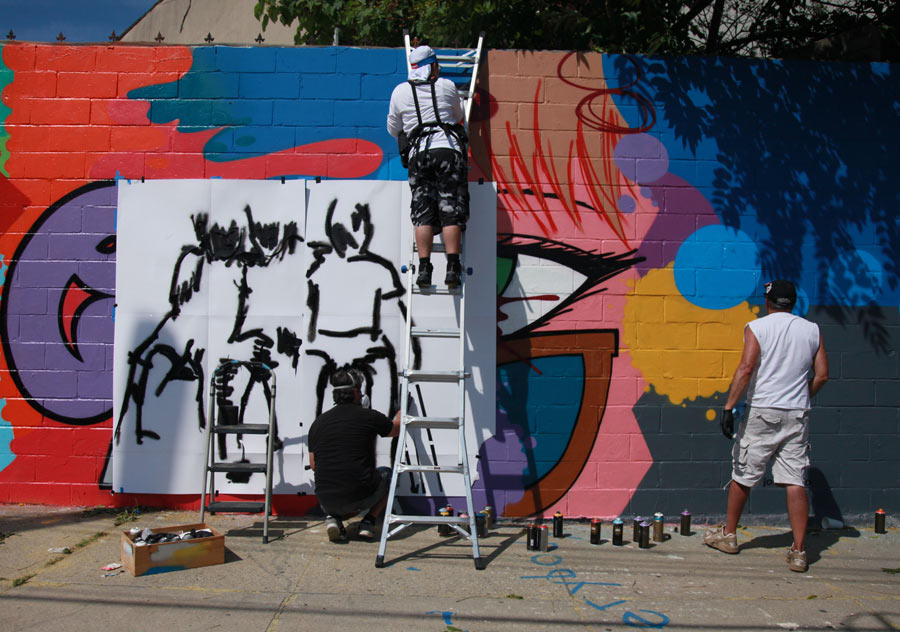
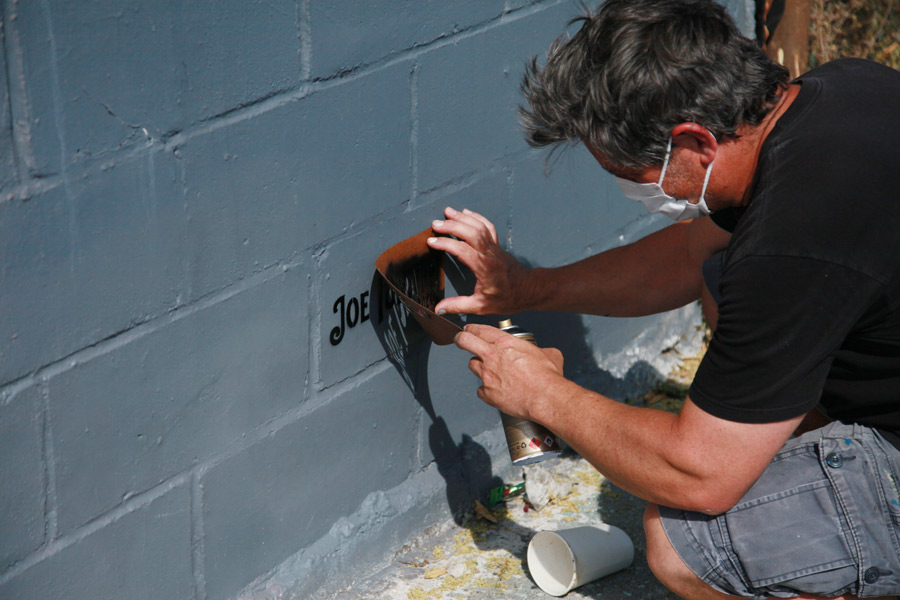
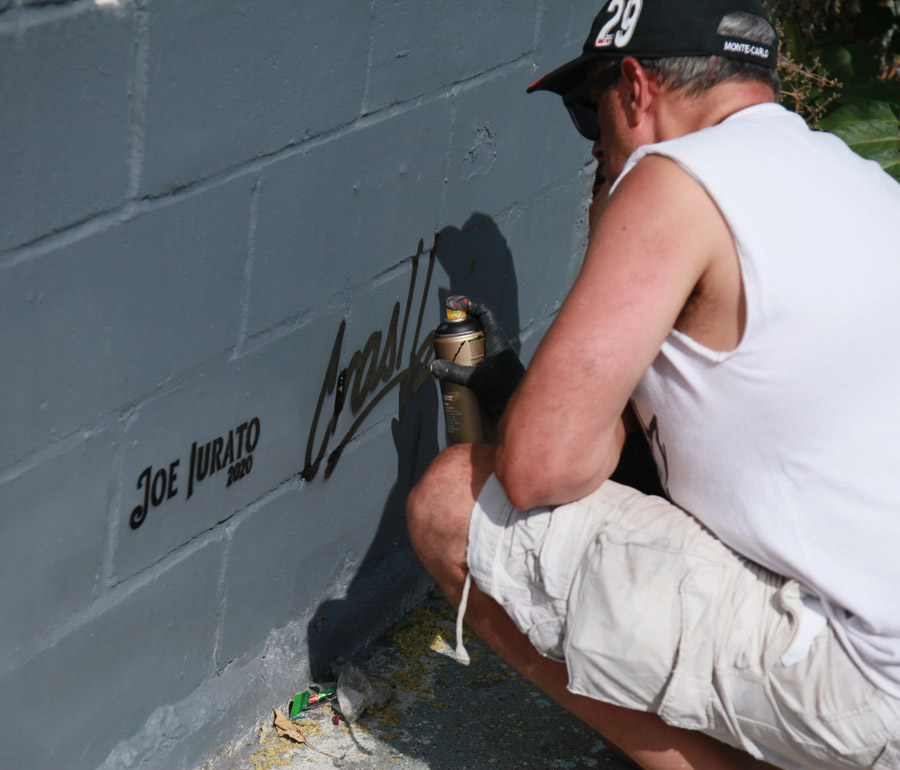
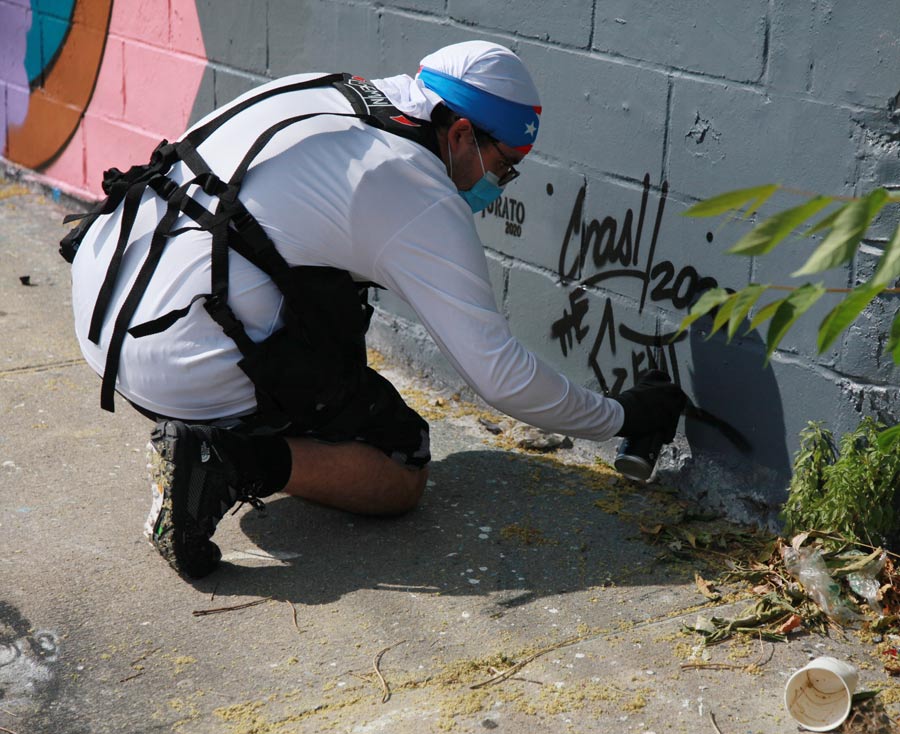
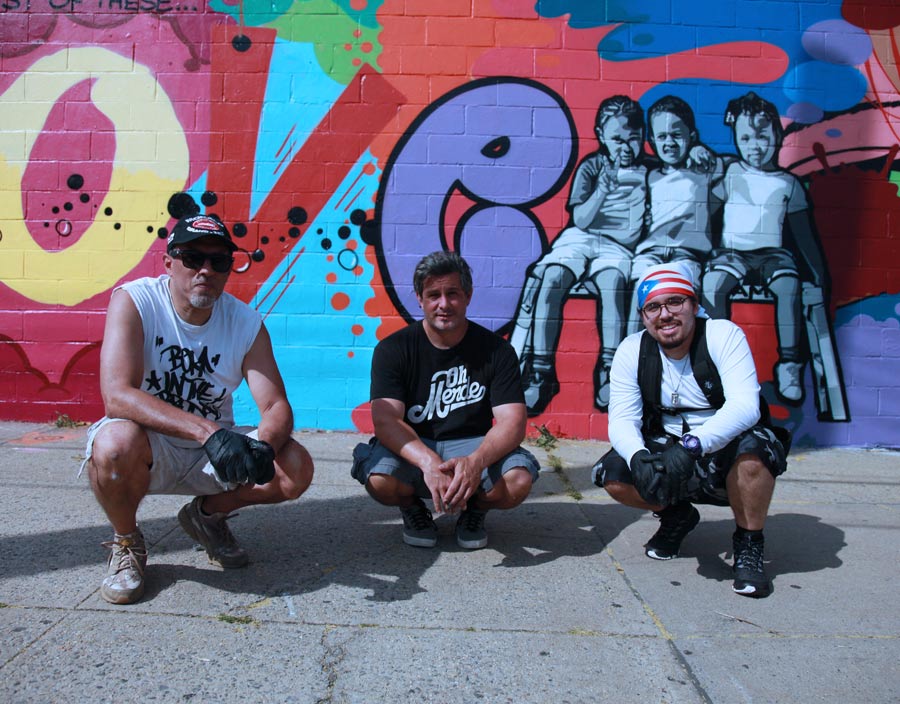
The artists didn’t always know what they would do ahead of time either, including old-skool NYC goldstar veteran CRASH and one of the last decades’ stencil talents Joe Iurato, who decided to combine their styles to see how it would play. Then they got talking, thinking and in a flash decided to collaborate.
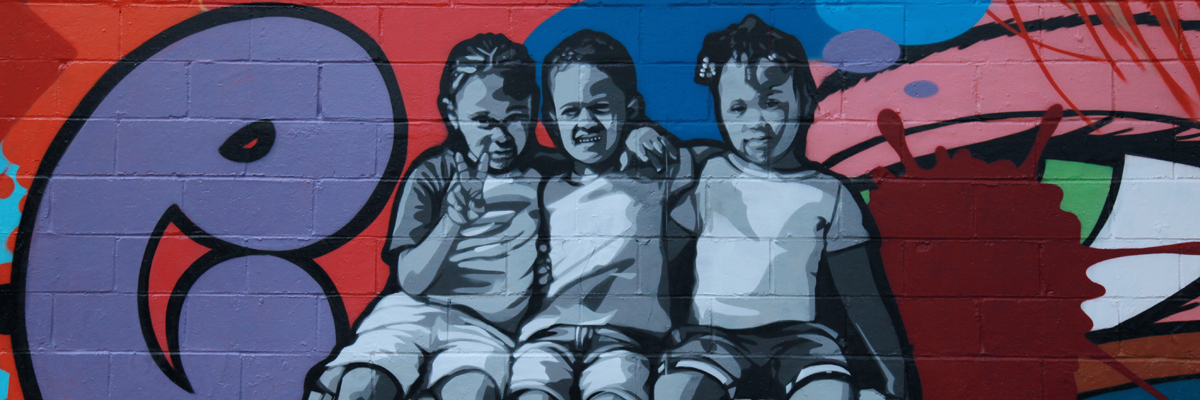
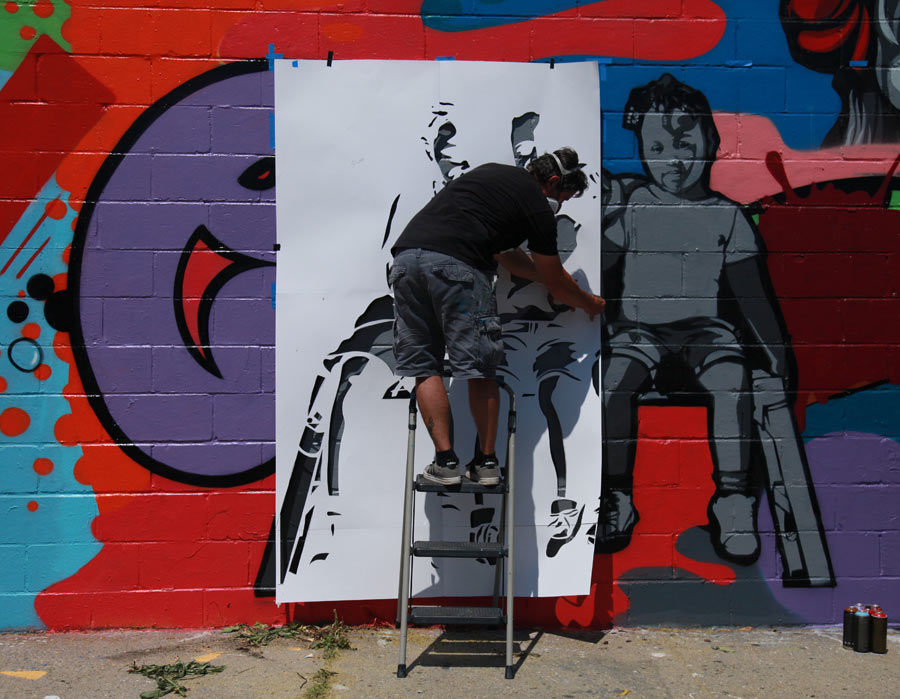
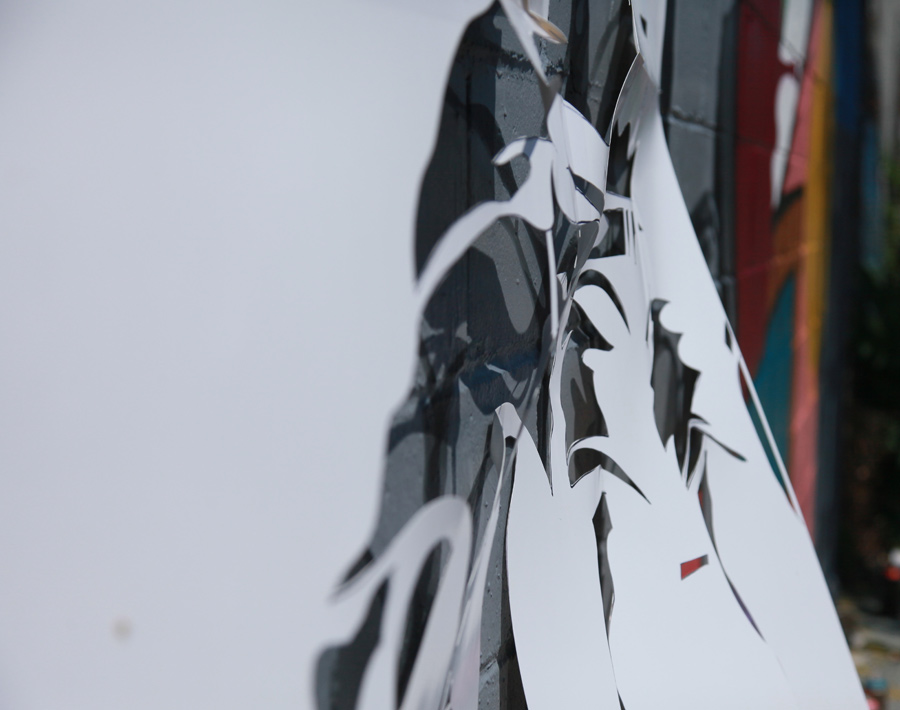
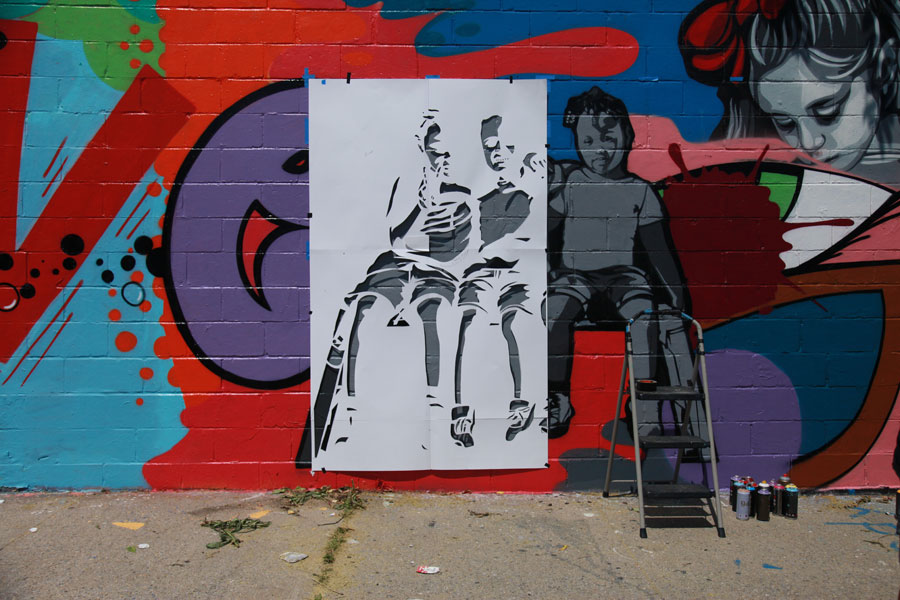
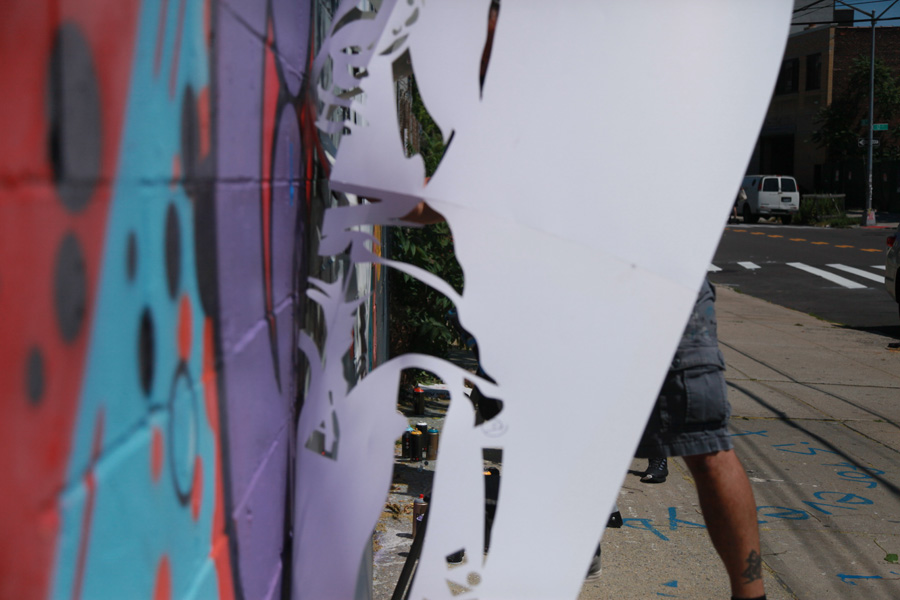
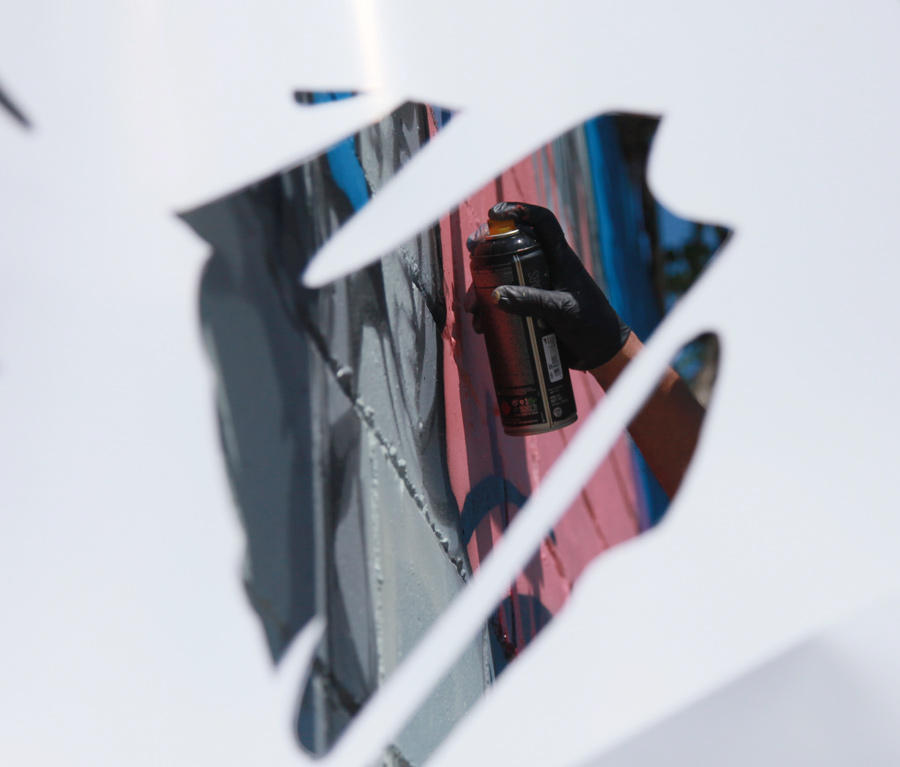
Joe’s stencil was cut from a photo he had taken at the same spot at last year’s edition of Welling Court; Cey Adams had painted there last year as well and he had taken his grandchildren along for the ride. At some point, the three kids were sitting on the step ladder together and Joe snapped the photo. Iurato thought he’d bring the kids back this year via stencil.
“Joe and I didn’t talk about integrating our work together,” says CRASH, who was assisted by Gemini. “We just did it! – it looks really nice.”
CRASH says he was encouraged by artist Queen Andrea to do something new for the wall instead of writing his name, which he customarily would innovate by playing with fonts, styles, colors, and techniques. When he was thinking of a word to convey his hopes for his fellow New Yorkers, he tells us that at first, he was going to do the Spanish word for love – Amor. But ultimately ‘Love’ won out.
“Each letter is a different typeface that signifies something,” CRASH tells us. “The letter ‘L’ contains a play on a thermometer because of the health crises we’re in. I wanted to keep the ‘O’ light so I used ice cream colors so it looks like an ice cream cone. The ‘V’ is falling because love is becoming something that is almost nonexistent and we need to hold onto it. The ‘E’ is just an old-fashioned graffiti style ‘E’ which is what we do,” he says, “So put it all together and it’s love in a tough time.”
Our weekly focus on the moving image and art in the streets. And other oddities.
Now screening : 1. Chip Thomas and True Artivism
BSA Special Feature: Chip Thomas and True Artivism
We’re switching it up a little this week and recommending an audio podcast with Radio Juxtapoz instead a film. We think you’ll dig it.
Chip Thomas (aka Jetsonorama), his art, and his photography has of course been featured on BSA and his work/life/activism perhaps 40 times since the late 2000s, but its usually been a blend of other peoples’ stories that we have helped him deliver.
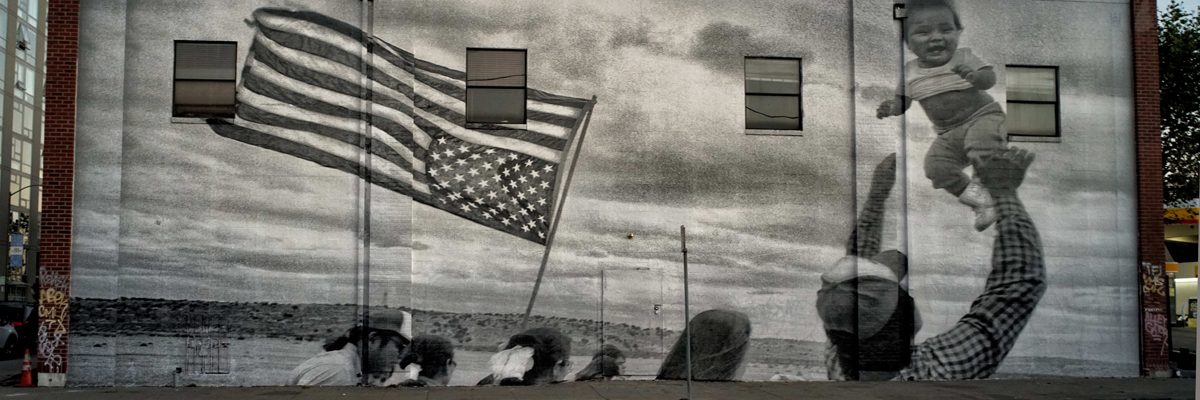
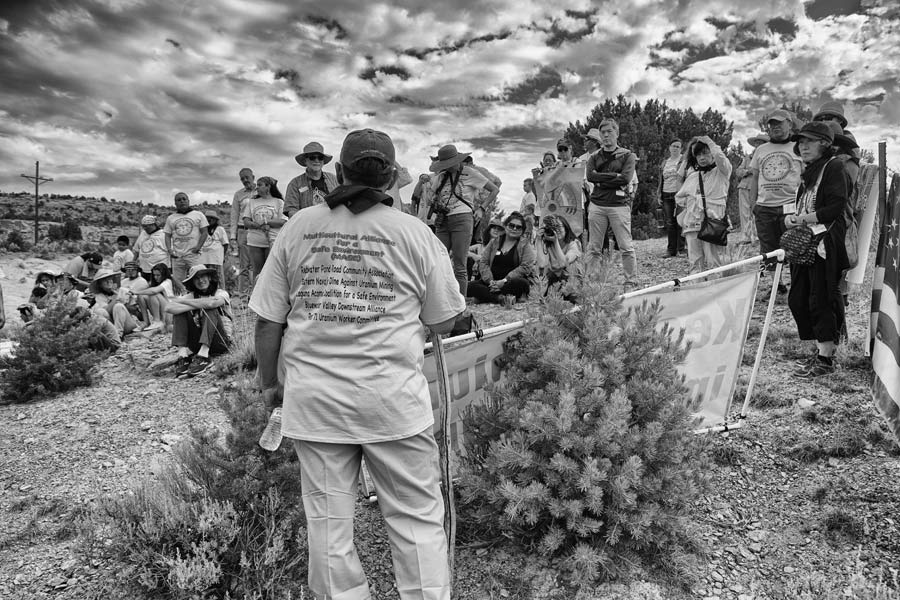
Over the years we have facilitated his historically informed storytelling on the health and life of people on the Navajo Nation, the US dumping radioactive matter there, issues surrounding climate change, the voting rights act, the March on Selma, the favelas in Rio, his “Painted Desert” multi-year project with invited Street Artists.
All the time Chip has been showing us how to bridge communities, raise awareness, through socially engaged street art and photography.
Here you’ll enjoy Evan Pricco and Doug Gillen as they dig deep through the personal and professional history of this artist, activist, and doctor. For once here you’ll hear his actual voice and trace his navigational route in storytelling about himself and the path he’s taken to bring to the surface of our consciousness the people who the US historically makes invisible.
Chip Thomas Is Telling The Story Of The Navajo Nation Through Street Art. Via Radio Juxtapoz.
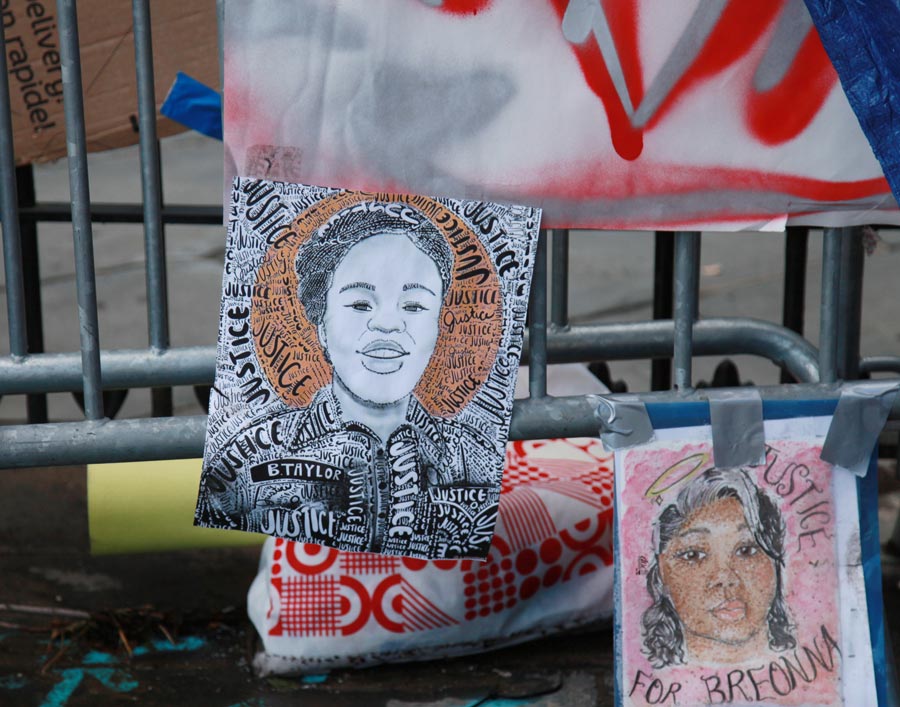
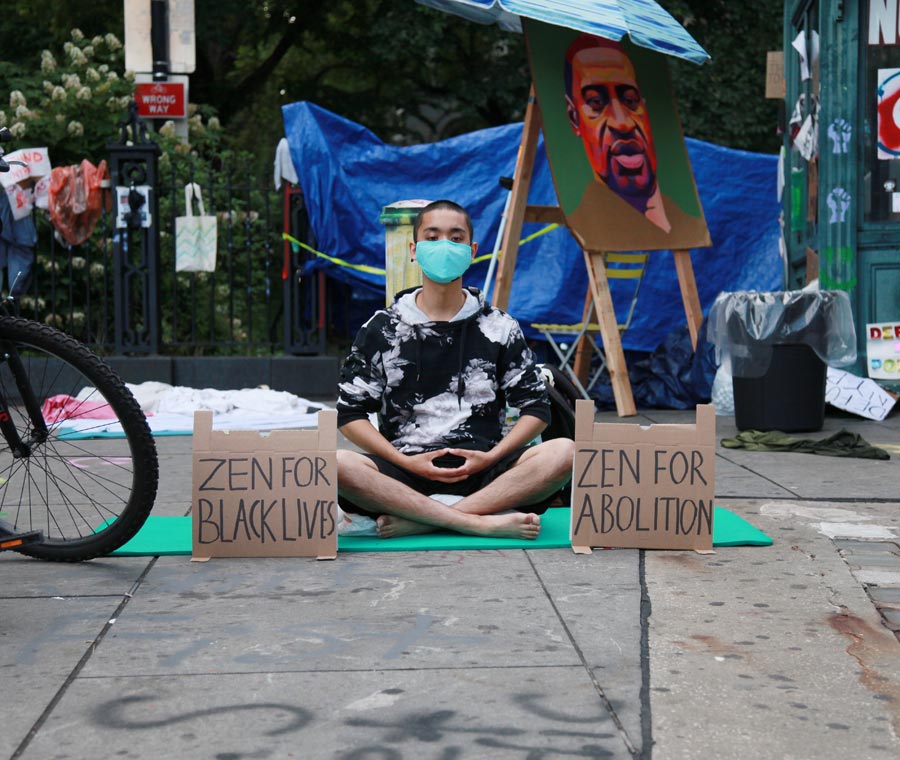
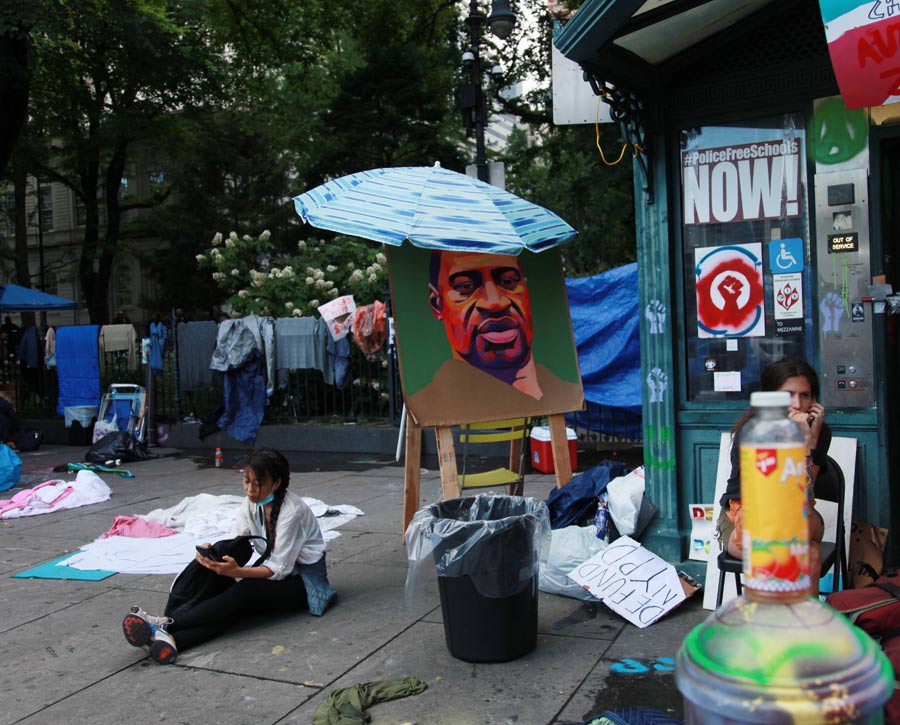
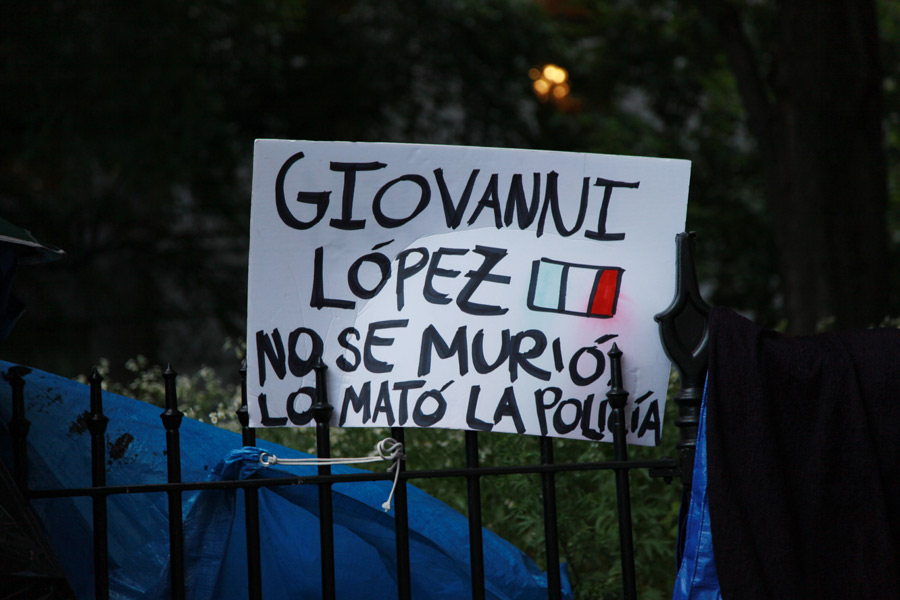
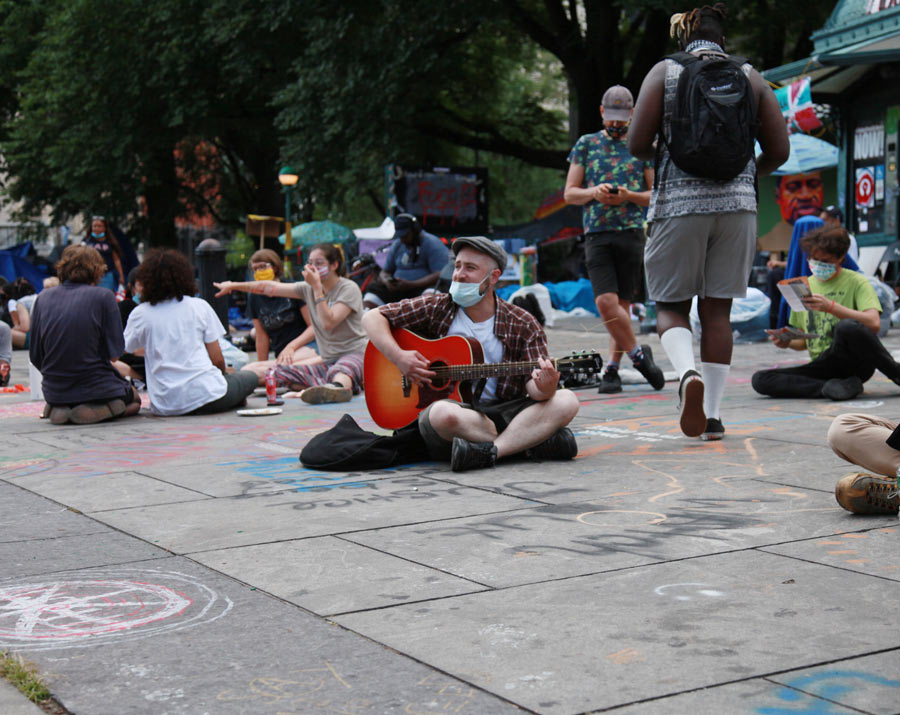
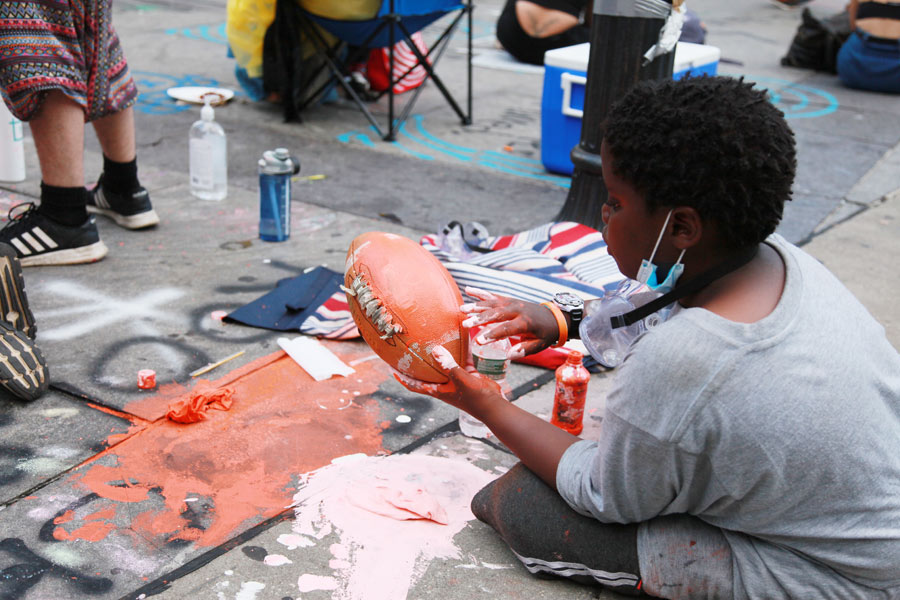
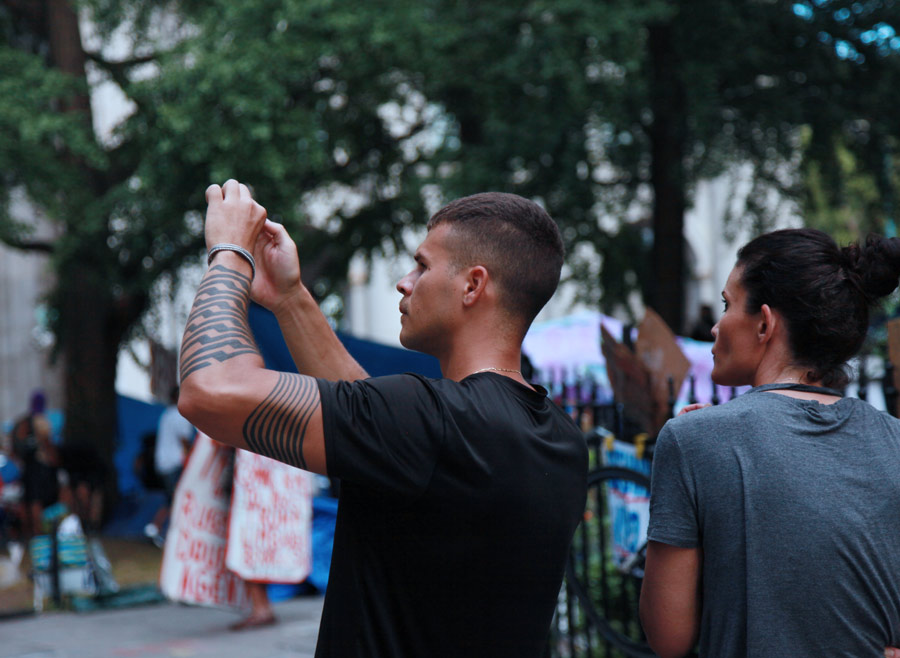
Occupy City Hall is a movement that appears to bear a very close resemblance to the Occupy Wall Street movement nine years ago. Born with the protests against police brutality and the murder of George Floyd, this movement created an encampment located on Centre Street next to City Hall Park and near The David N. Dinkins Manhattan Municipal Building, named after the 1990s mayor.
Occupy City Hall is open 24 hours a day and at the height of the protests it drew hundreds of people who joined the activists with their demands to trim the NYPD budget at least $1 billion from the police department’s current $6 billion budget. During the debates and passing of the new budget at the beginning of July the City appeared to have cut a billion, but critics say it was some fancy footwork that gave the appearance of giving citizens what they demanded.


We went to the camp on a day just after the encampment had experienced heavy rains and suffered an early morning raid by the police. It had an unsettled atmosphere, with some raging outbursts and some quietly warm generosity exhibited among the primarily young crowd. Guess everyone needs a sense of balance these days. The encampment has a communal library, a space for drinking tea, room for meditation and, a sign-making workshop. Most people are welcomed and it also provides a safe space for homeless people in need of a hot meal, a place to rest, and clean clothes.
Now these New Yorkers are calling the location “Abolition Park” and as the encampment evolves it continues to be a very well organized community of people with volunteers serving hot meals, distributing protest kits, water, and first aid for those in need of it.
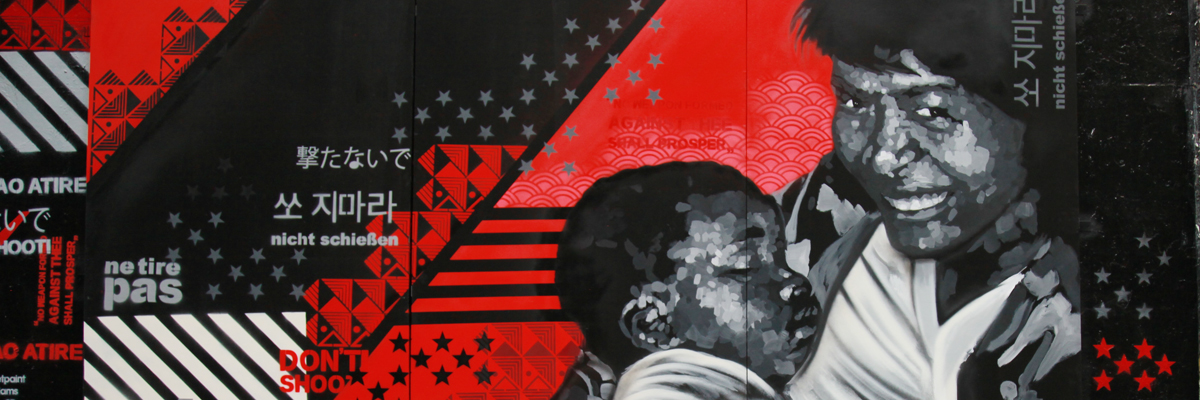
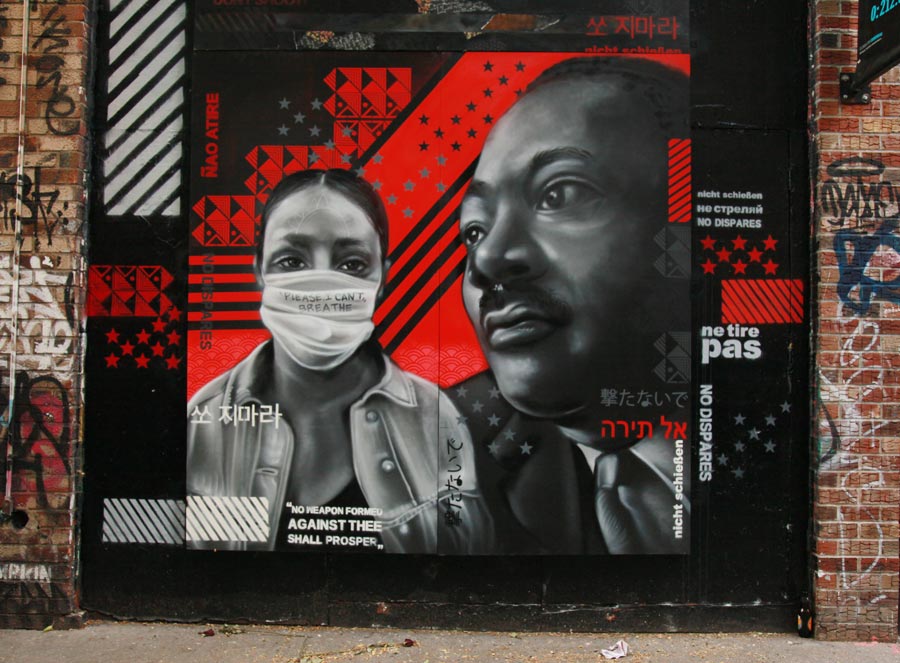
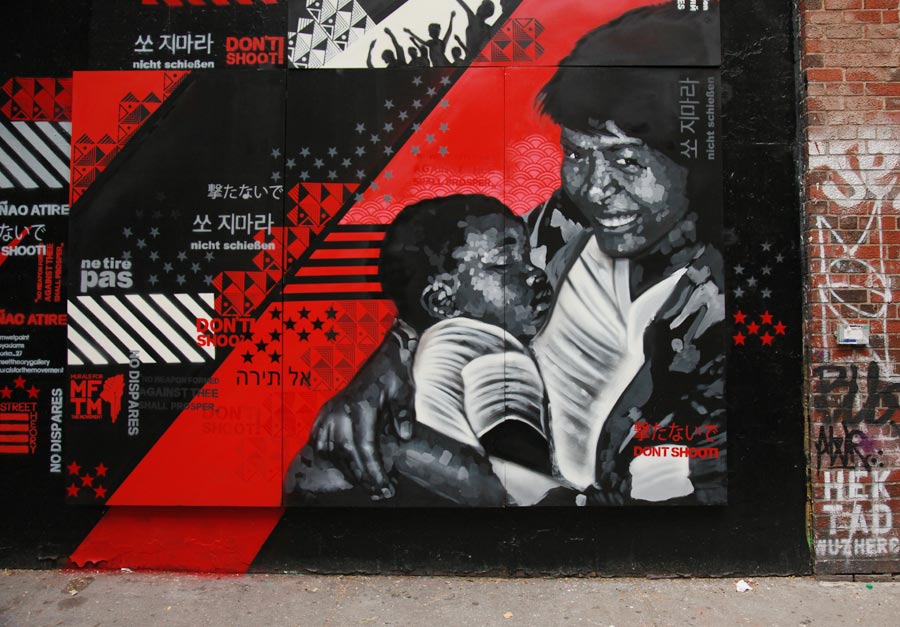
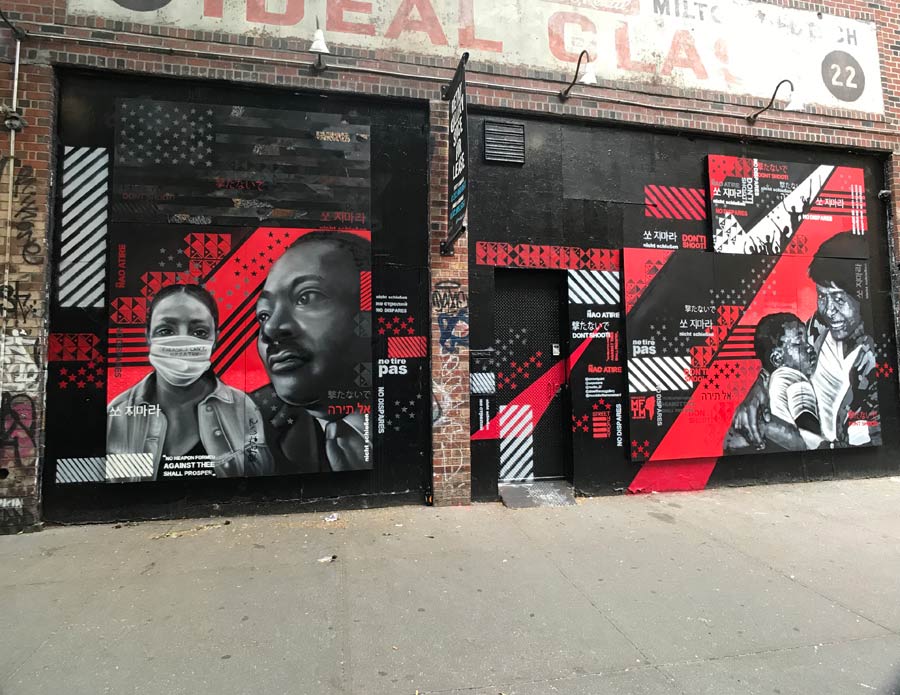
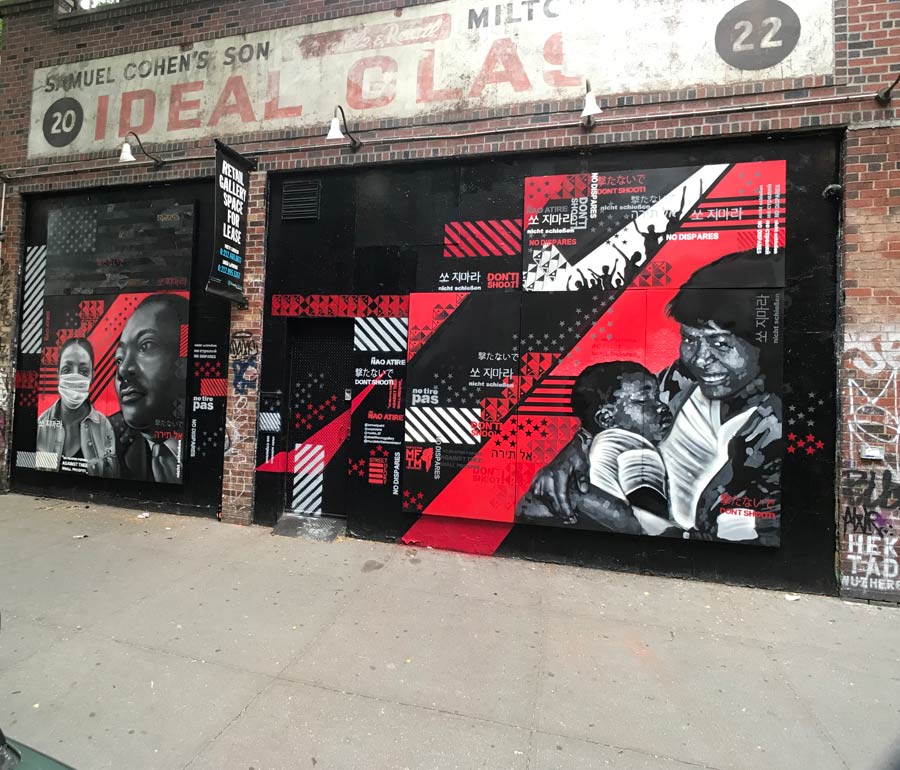
It’s when you have an opportunity to see a piece of art on the street in person. The combination of portraits, graphic design, and text treatments may spring more from the imagination of those in the design fields but up close you can get an appreciation of the warmth and vulnerability of the figures as well. The stories that are told are down to earth, universal, and here for you to bear witness to.
“Quoting Isaiah 54:17 in the Bible, this mural inspires us and girds us and reminds us that when it comes to systemic racism the battle is not for the faint of heart. Can we get an ‘Amen’?”
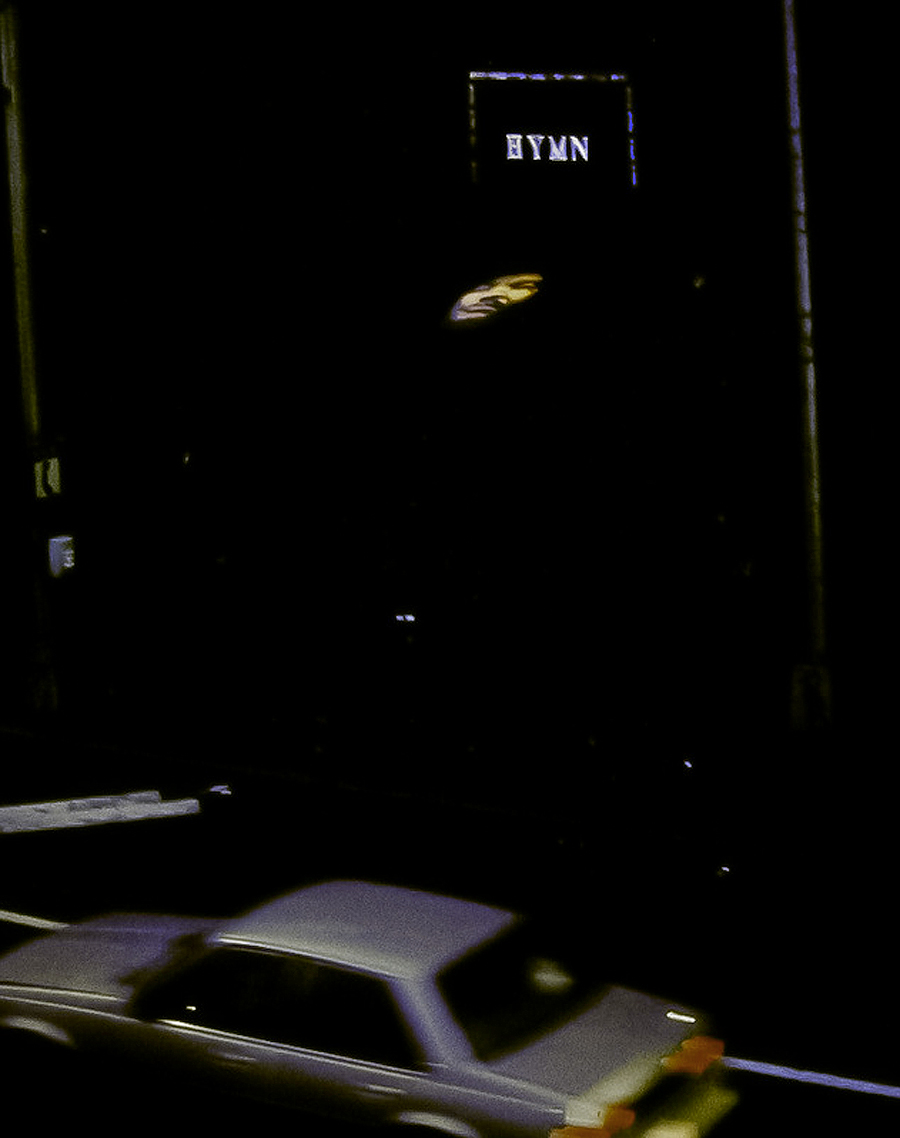
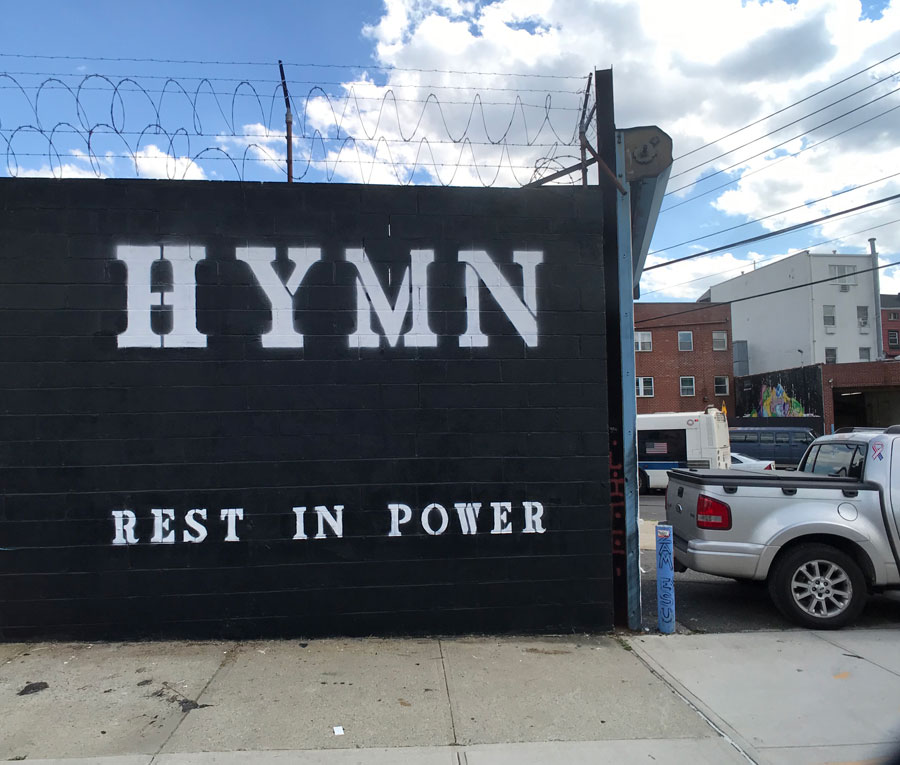
A recent street stencil work by John Fekner, Don Leicht, and Brian Albert is a reprise, a sad reminder that the legacy of racism in the country has been with us for what seems like forever. During another chapter of Fekner’s creative life on New York streets he sang a visual HYMN to the civil rights leader Martin Luther King Jr. in the wake of the murderous brutality of white New York teens in Queens. Now thirty three years later the viciousness of police violence against black citizens on display can make you think nothing has changed fundamentally, even though we know it has.
We asked the artist how this HYMN at the Welling Court Mural Project this summer is a counterpart to the HYMN project more than three decades ago – a collaboration by John Fekner and Brian Albert.
John Fekner and Brian Albert. Hymn. Queens, New York. 1987. (photo courtesy of John Fekner)
“HYMN was a collaboration by John Fekner and Brian Albert. The project constructed on an embankment overlooking the Grand Central Parkway in Queens was intended as a call for peace, an immediate response to the growing racial tensions over the death of a young black man in New York City. A gang of white youths in the Howard Beach neighborhood of Queens brutally beat three black men whose car had broke down in the neighborhood, chasing one of the three, 23-year-old Michael Griffith from Bedford-Stuyvesant, to his death when he was hit by a car crossing the Shore Parkway on December 20th, 1986.
The piece consisted of a tombstone-shaped concrete electrical power box painted black with the word “HYMN” stenciled in 12-inch high white letters. Flush with the ground, in front of the ‘tombstone’ was a translucent 40” x 50” photographic print portrait of Martin Luther King, Jr., illuminated from a light source in the ground. The electricity necessary for the underground lighting was tapped from a streetlamp, which switched on at sunset.
Hymn was installed for Martin Luther King Jr. Day on January 19th, 1987. Passing motorists could see the work both during the daytime and at night when it transformed into a subtle glowing image of harmony and peace. The illegally sited work remained for a few weeks and was eventually removed from the parkway embankment.”
John Fekner (with Don Leicht and Brian Albert) Hymn 2020 (Rest In Power) (above) is intended to be a solemn reflective message to show empathy and compassion to the local community and beyond, during this time of protest, police reform and positive change.
(Installation by Dante, Roman & Dave Santaniello at Welling Court Mural Project NYC)
Massive
and bright and staring at the summer sky, the new mural in the Tegel area of
Berlin is quintessential BustArt. Two decades after starting his mark-making as
a Swiss graffiti writer, his style borrows elements from that classic graffiti
mixed with cartoons, pop art, and perhaps an eye toward others like Crash and
D*Face who themselves point to the Roy Lichtenstein.
His brand of ‘neopop” mixology is unique to him of course, and the tireless effort, scale of work (40 meters x 16 meters), and relative speed that he works sets him in a category of his own.
“This is the biggest wall I have painted so far and I could not be more happy with the outcome,” he says of the two week gig. The confident command of visual vocabulary, character and line work tell you that this new mural is a challenge BustArt was more than ready for.
Bustart also
wants to shout out his mate @sket185 for the enormous help, the folks at @yesandpro who orchestrated along with Urban Nation, and we all
give thanks to photographer Nika Kramer for sharing her work here with BSA readers.
Street art welcomes all manner of materials and methods, typically deployed without permission and without apology. This hand-formed wire piece …Read More »