Our weekly focus on the moving image and art in the streets. And other oddities.
Now screening : 1. Escif: Greenpeace, For a Sustainable City. 2. Street Art in 2020 3. Mathieu Libman: The Moon’s Is Not That Great
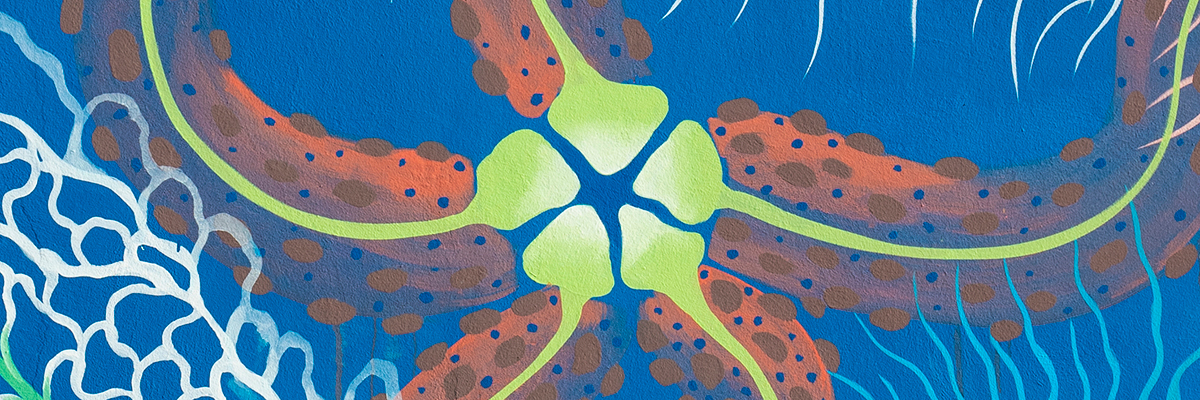
BSA Special Feature: Escif: Greenpeace, For a Sustainable City.
Street Art in 2020
Doug Gillen of FifthWall TV reflects on the world of street art in the year of 2020.
Mathieu Libman: The Moon’s Is Not That Great
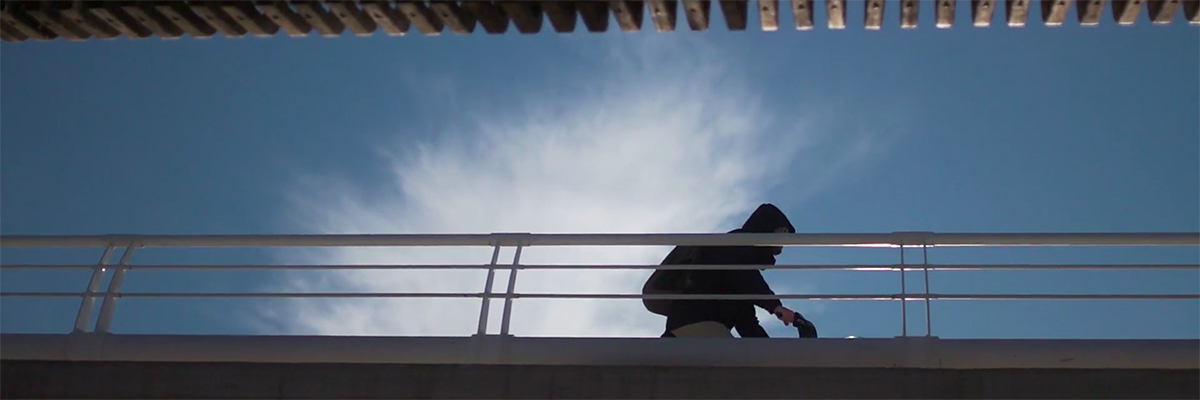
After an astronaut returns from her lunar mission to find that the public lost all interest in the moon, the stories of the astronaut, a film director, and a bear intersect.
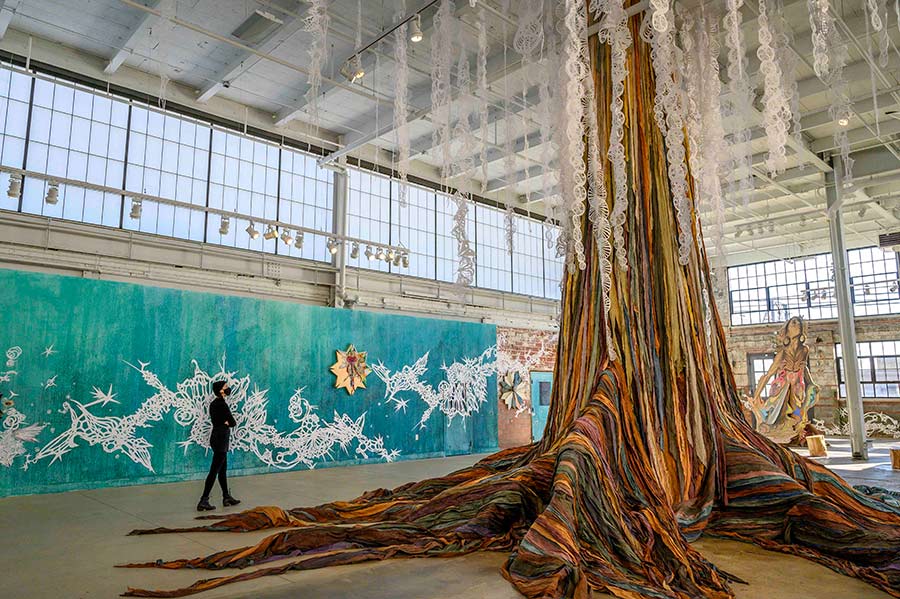
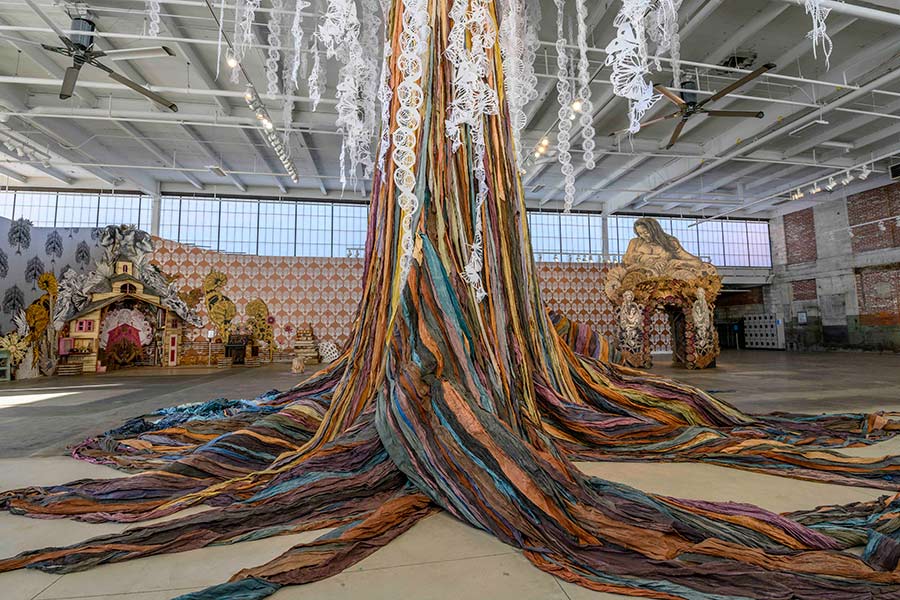
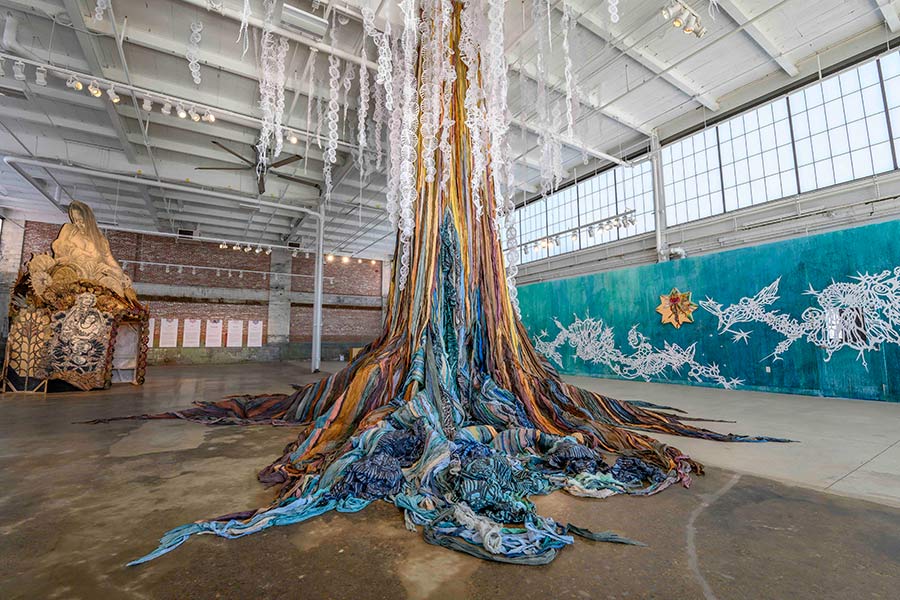
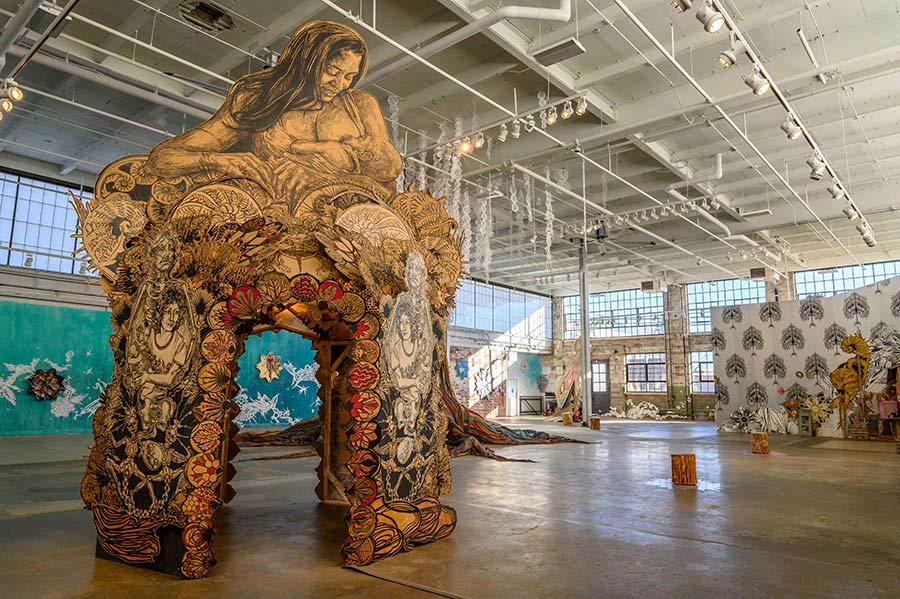
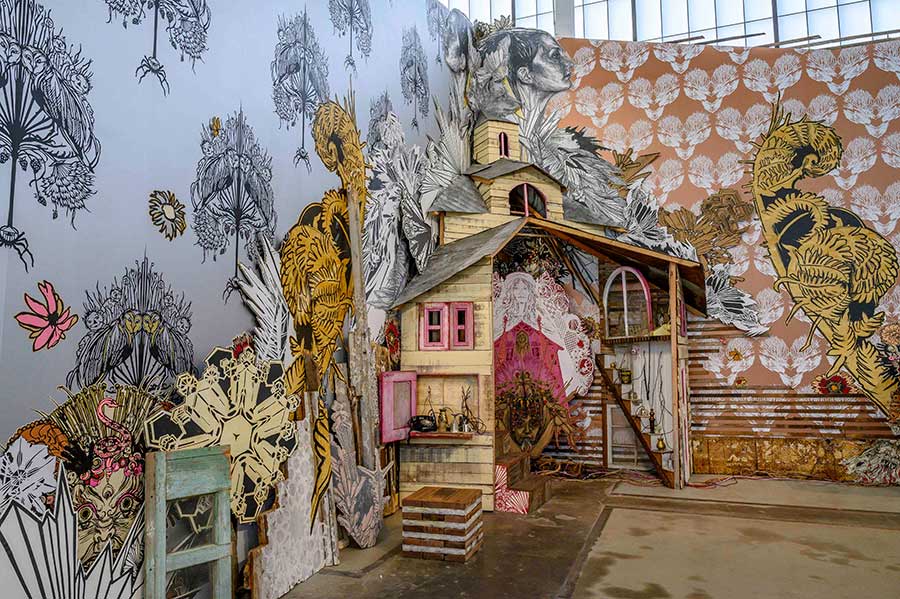
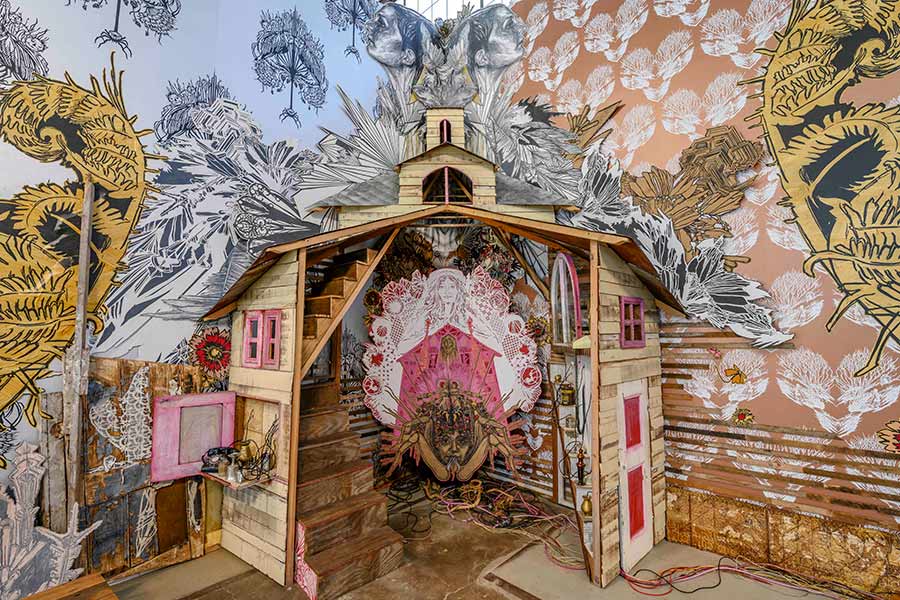
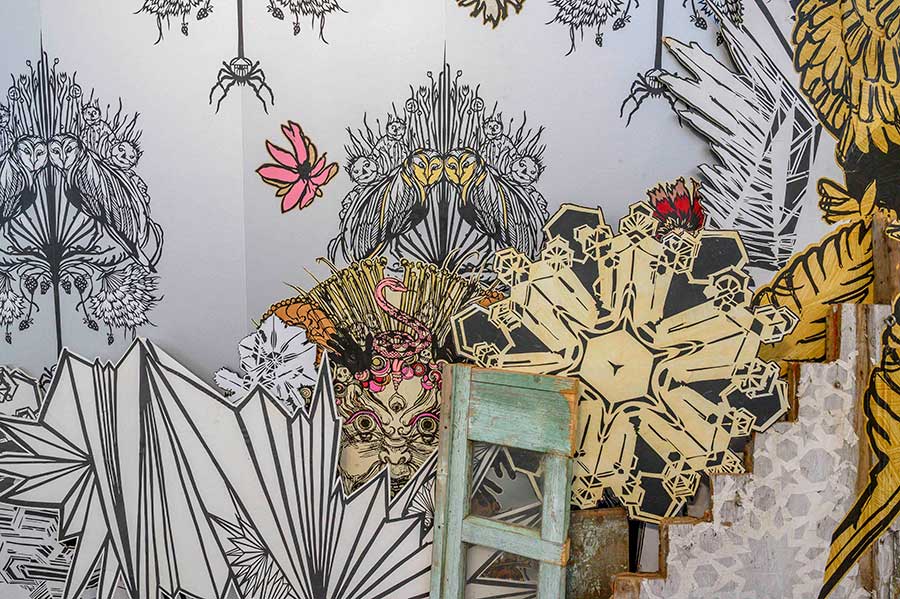
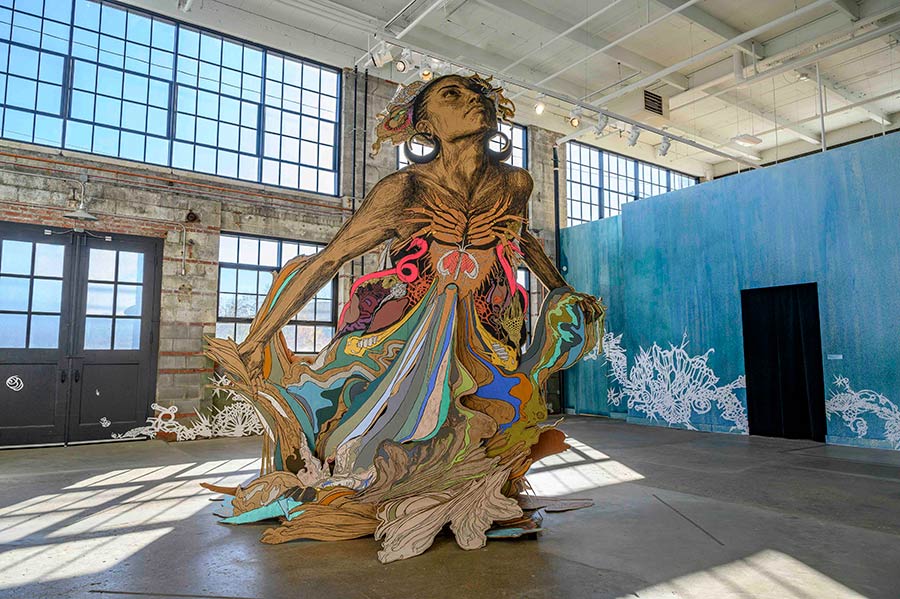
It’s a pity that the pandemic has kept so many people away from seeing great exhibitions in museums and galleries, among other things. At the Albright Knox Gallery in Buffalo, street artist Swoon’s “Seven Contemplations” ran its course without nearly as many visitors as you would expect.
So we decided to show you the exhibition in a mini-tour. Who else could be your host today but the artist herself, Swoon.
I feel incredibly grateful to have gotten to continue creating large scale immersive experiences for people in a year when so many things were impossible, but when spaces of solace and wonder and creation are needed more than ever.
This exhibition contained a hidden layer, in the form of a series of meditation and contemplation prompts. Small seats were placed within the exhibition, and fixed-gaze meditation instructions given, alongside a set of contemplations for visitors who wanted to settle deeper than usual into the experience of the artwork.” – Swoon
Contemplation – The miracle, grace, forgiveness, that which is given without reason, that which arises spontaneously:
New life is given to us freely with each breath we take. Our cuts heal, our hearts pump blood without being ever asked, and every spring new flowers push up from under the snow. Are there ways that we can appreciate, or even mirror this spontaneously giving aspect of life? Think of a time when you became able to understand someone you had been angry with and so found yourself able to forgive them, or they you. Think of a bit of luck that changed your life, or a gift you were given whose generosity still surprises you. Sit and feel into the tinge of the miraculous that hangs around something as simple as a single breath or as wondrous as a second chance.
Sometimes terrifying events can scare us out of our skin. We become dislocated from ourselves and may seem to float outside of our bodies, or feel cut off from our lives. Suffering can make us reach for destructive behaviors or substances in an attempt to release ourselves from pain and anxiety. Can we use small instances of discomfort or anxiety to help ourselves learn to face big emotions when they arise? For just a few moments, recall something small in your day to day life that usually makes you uncomfortable or a bit anxious. How do these feelings show up in your body? Do you feel them in your chest or hands? Or in the quality of focus you are able to give to things that need your attention? Practice staying with an uncomfortable emotion, observing it, and allowing it to pass on its own. When we can sit with and experience the things that scare us, or the things we would like to escape from, we gain a great deal of strength and power. We become more able to chose how we want to react to the world around us.
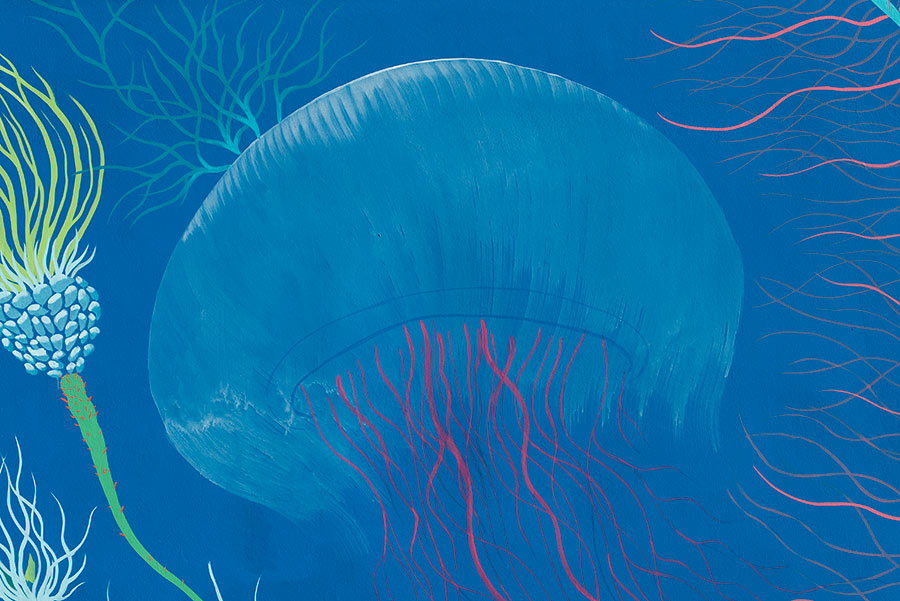
Who were you before you were born? Who were you before the earth was born? Sometimes our personal selves get stuck. The mind’s tendency is to fasten onto things it perceives as problems, or threats to self, and to ruminate there. Is it possible to step outside of our individual ‘I’ for a moment and give our consciousness more room to breathe? Sometimes a seemingly nonsensical question can shift our focus and connect us to a more spacious awareness. If you were to arise right now from the primordial sea, what form might you take?
Team: Curator Aaron Ott. Special thanks to Zack Boehler, Eric Jones, Kristine Virsis, Caroline Caldwell, Frances Segismundo, Andrea Tults, Marshall LaCount, Greg Henderson, Ryan McDaniel, Karl Mattson, Zach Prichard, Eileen Saracino, Carolyn Padwa and, the rest of the incredible Albright Knox installation team. All photos by Tod Seelie.
To learn more about Swoon’s “Seven Contemplations” click HERE
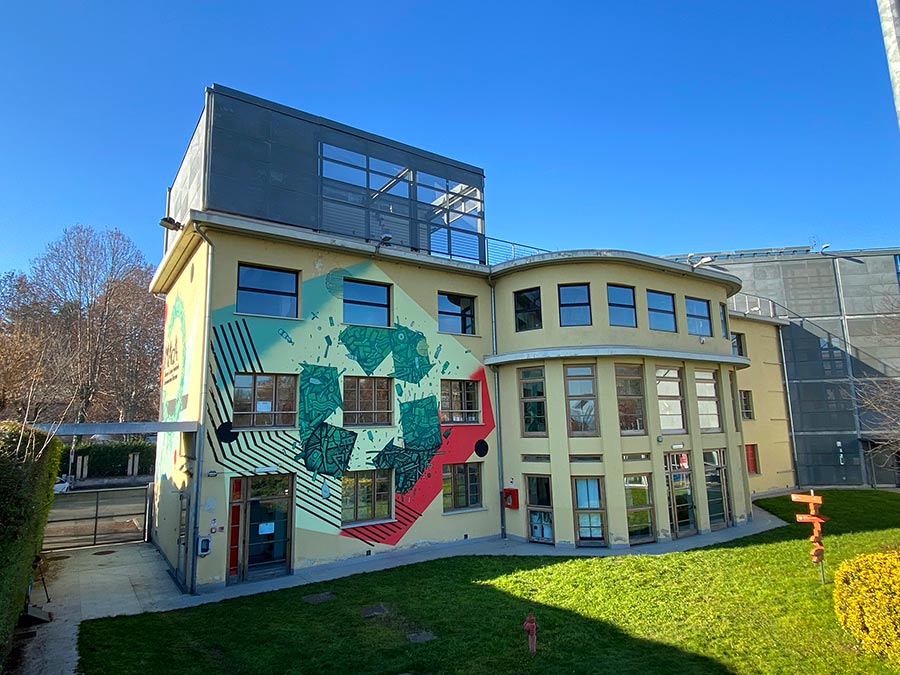
We are seeing more municipalities and institutions settle upon aspirational messages about the Earth and environmental issues every month now – a very common theme with murals in cities worldwide.
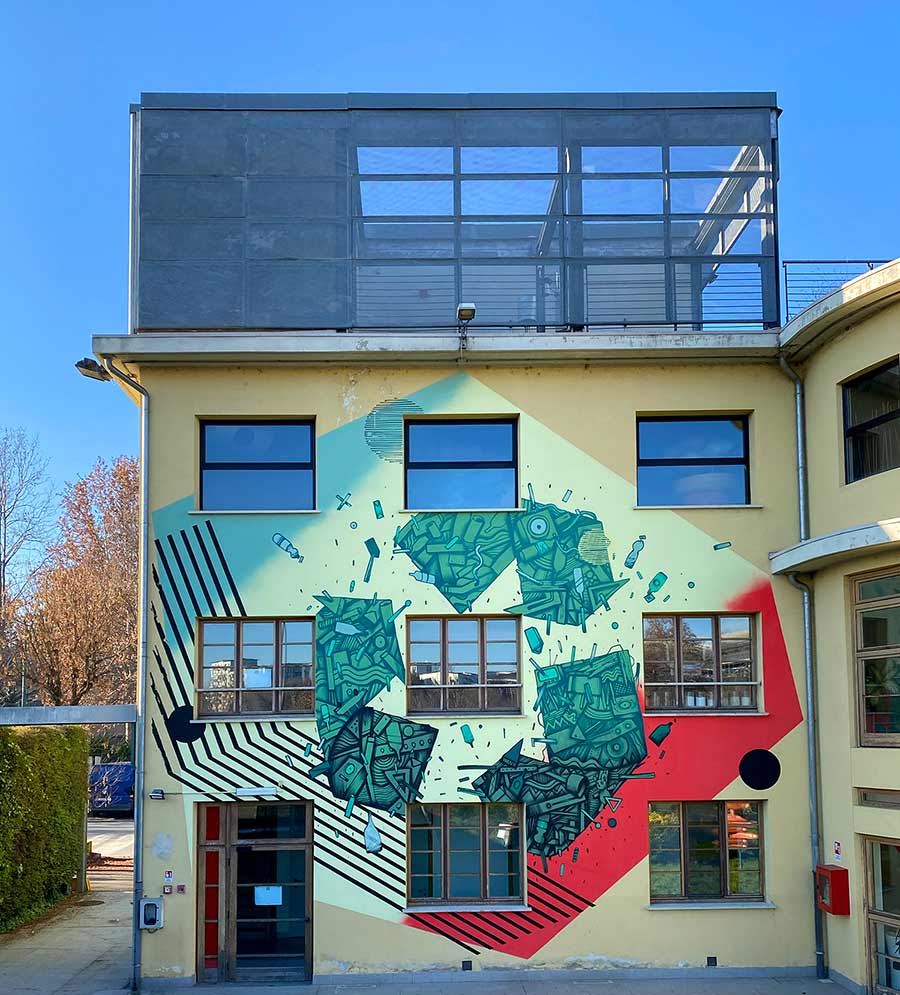
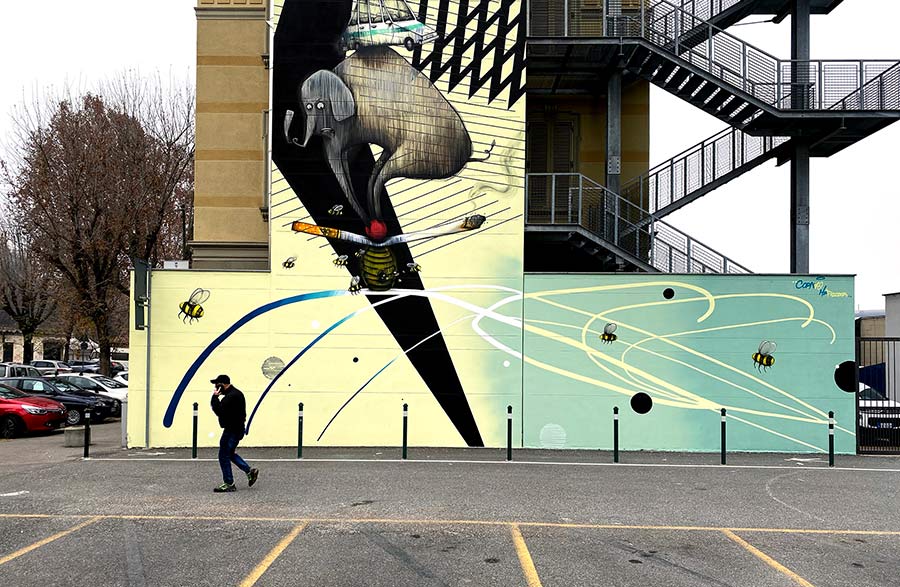
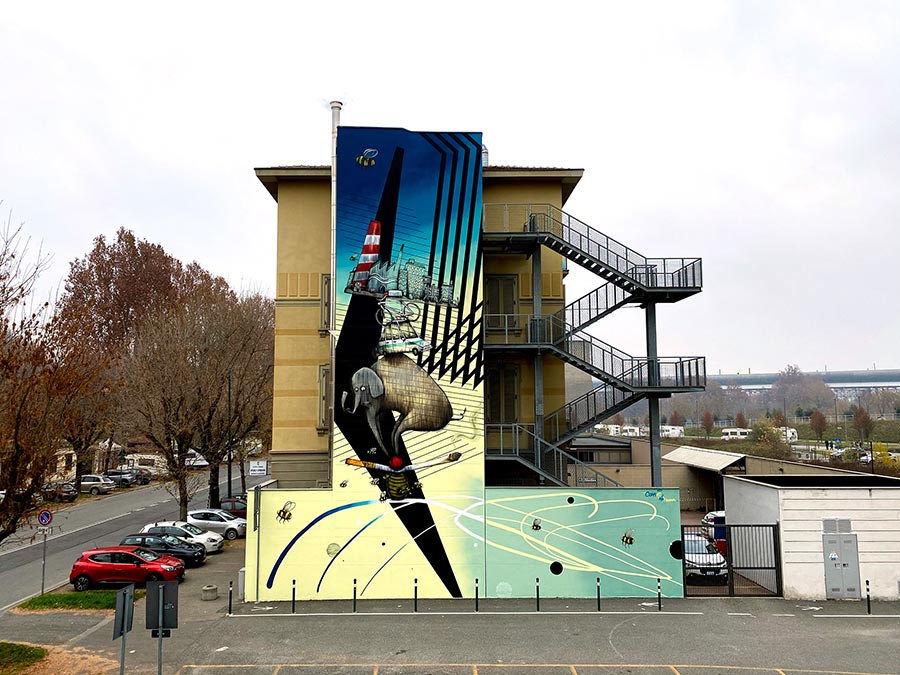
Mrfijodor and Corn79.Turin, Italy. January 2021 (photo courtesy of the artists)
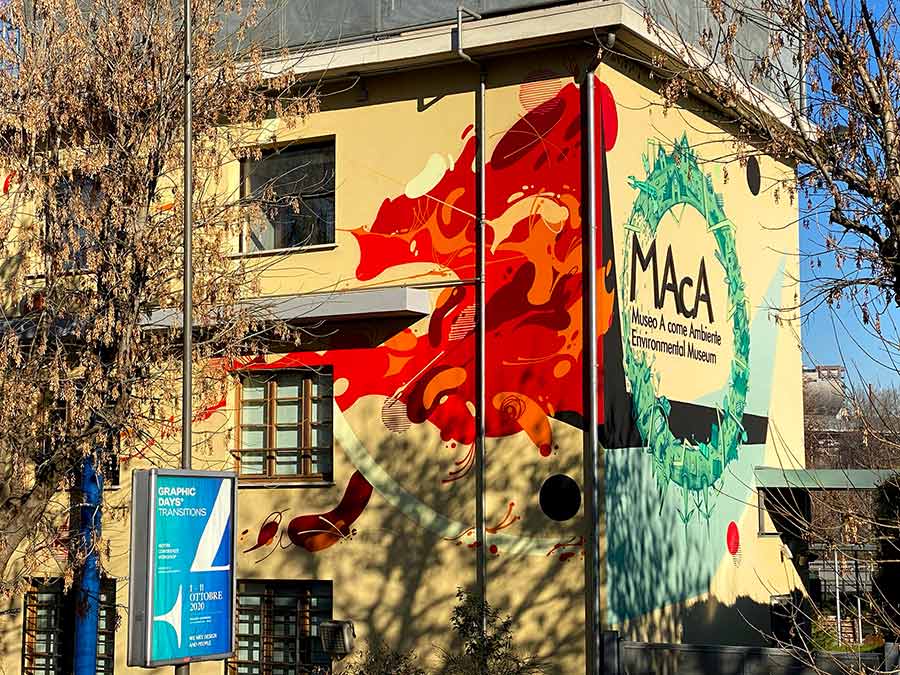
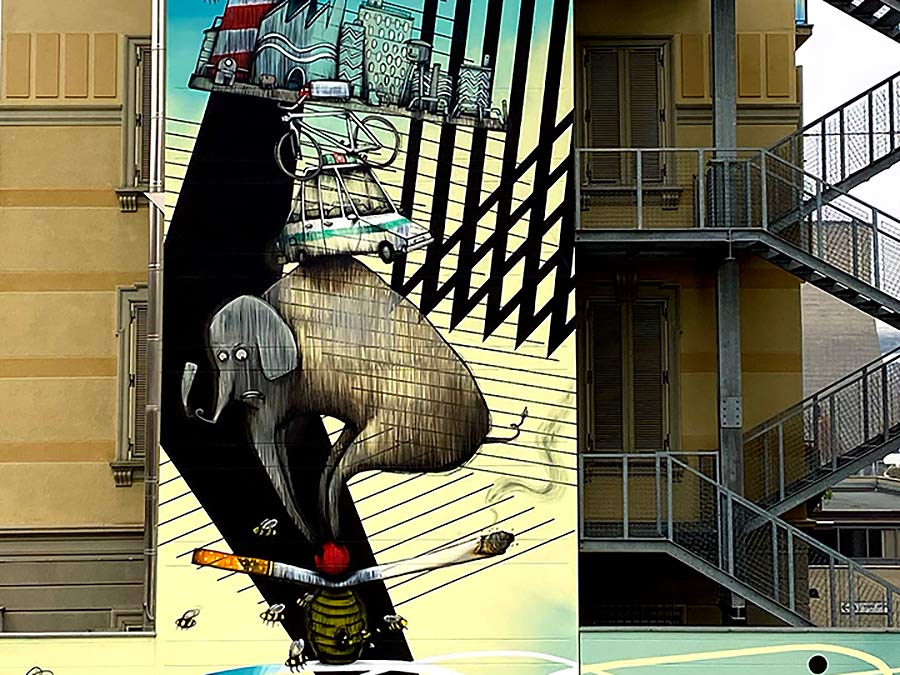
This new collaboration combines the skills of two former graffiti artists, Mrfijodor and Corn79, in Turin, Italy. The two murals interplay Mrfijodors illustration-inspired figurative elements and Corn79’s elegant language of abstraction to adorn the façade of the Museum A Come Ambiente (MAcA).
“The focus is on the balance between man and nature,” says Mrfijodor, “a balance that needs to be re-established.”
Mrfijodor and Corn79.Turin, Italy. January 2021 (photo courtesy of the artists)Mrfijodor and Corn79.Turin, Italy. January 2021 (photo courtesy of the artists)Mrfijodor and Corn79.Turin, Italy. January 2021 (photo courtesy of the artists)Mrfijodor and Corn79.Turin, Italy. January 2021 (photo courtesy of the artists)Mrfijodor and Corn79.Turin, Italy. January 2021 (photo courtesy of the artists)
The project is possible thanks to the contribution of the City of Turin, Area Giovani e Pari Opportunità – Torino Creativa, and the Museum A come Ambiente – MAcA.
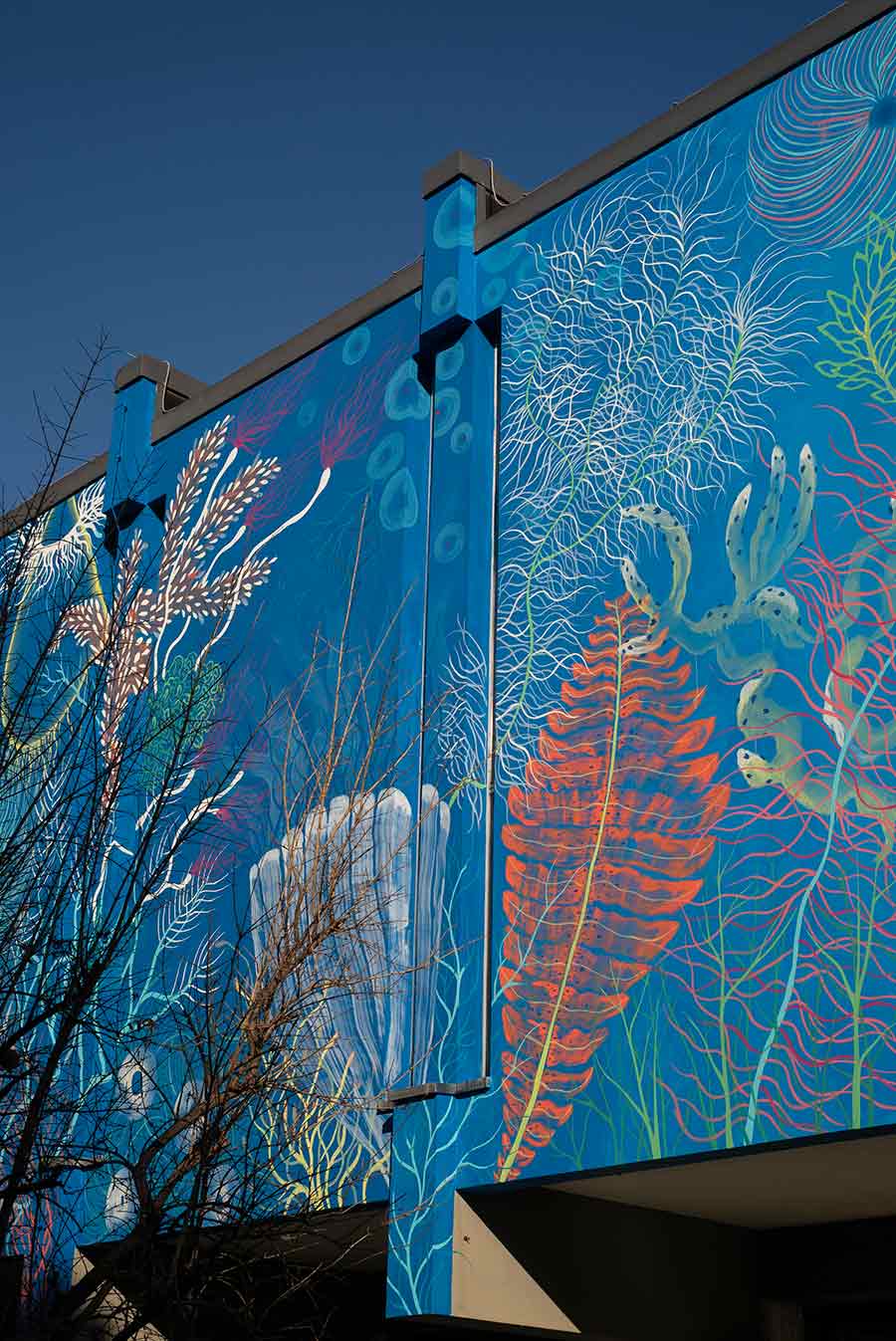
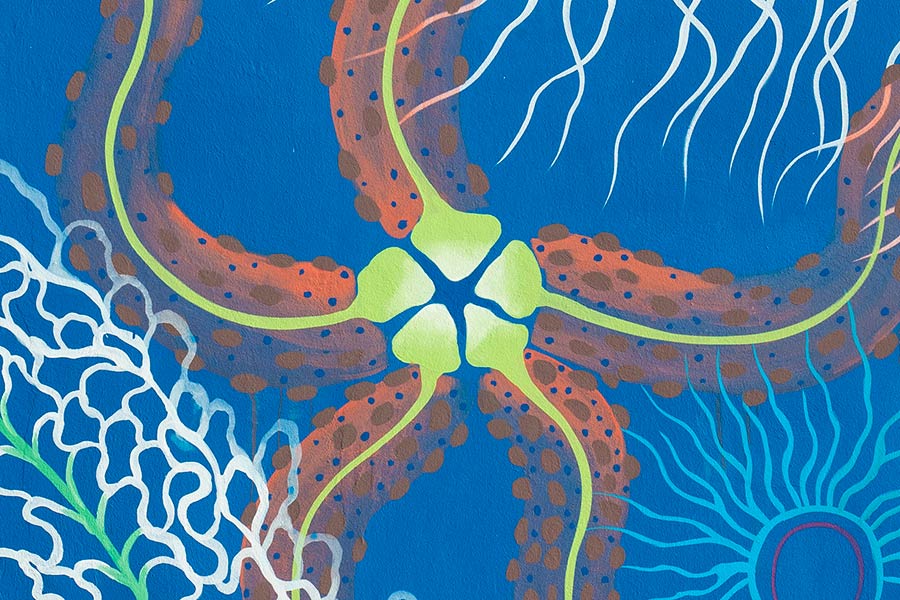
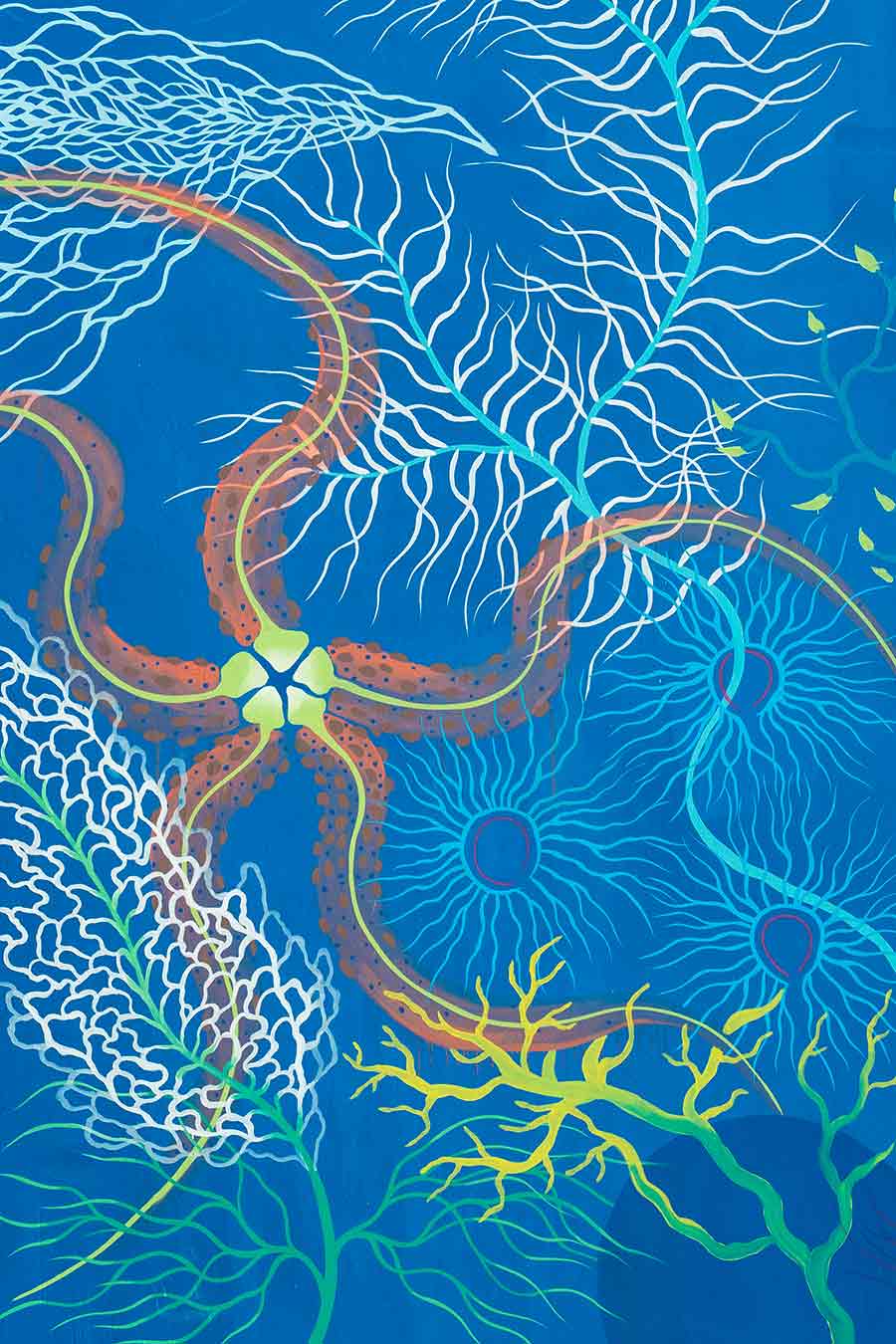
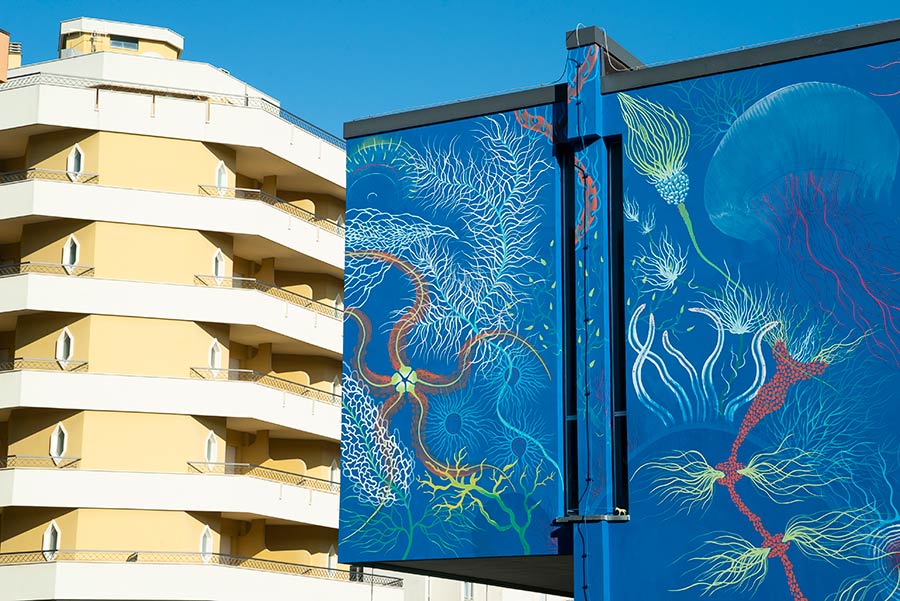
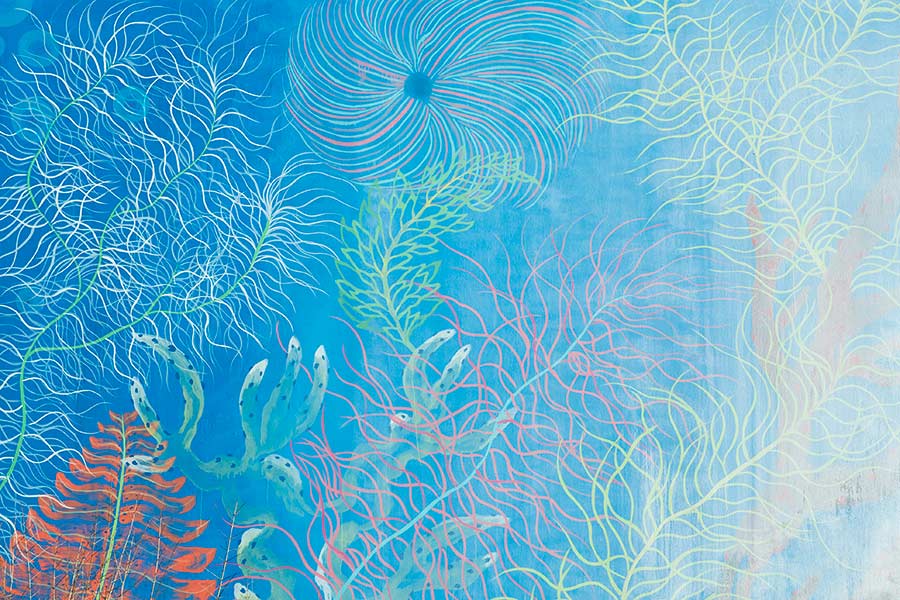
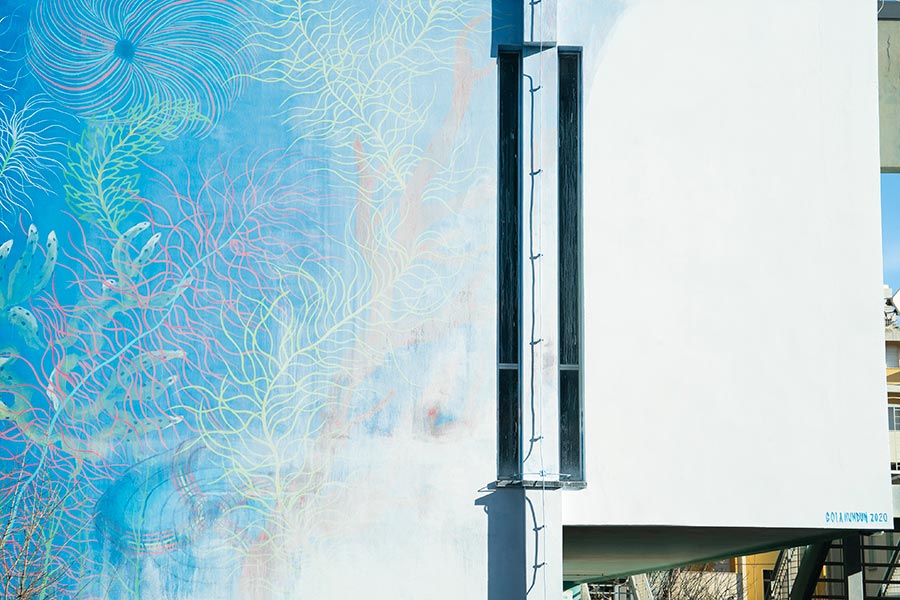
“The artwork invites us to think about the lack of empathy we demonstrate towards the rest of the species and to the action/reaction process that ensues”, says street artist and muralist Gola Hundun. An environmentalist at heart and scientific lover of nature, the artist has painted this interesting ocean-themed mural in his hometown of Bellaria-Igea Marina in Italy this month as a way to focus on the bleaching of coral and the damage that the tourism industry can do to our natural treasures.
Mimicking the subtle changes of our developmental practices on the ocean and its species, Gola’s façade presents a scene that becomes less and less visible as it reaches the completely white corner of the wall. “The white space symbolizes means the absence,” he tells us, “the emptiness, the loss of the ecosystem that is caused by men.”
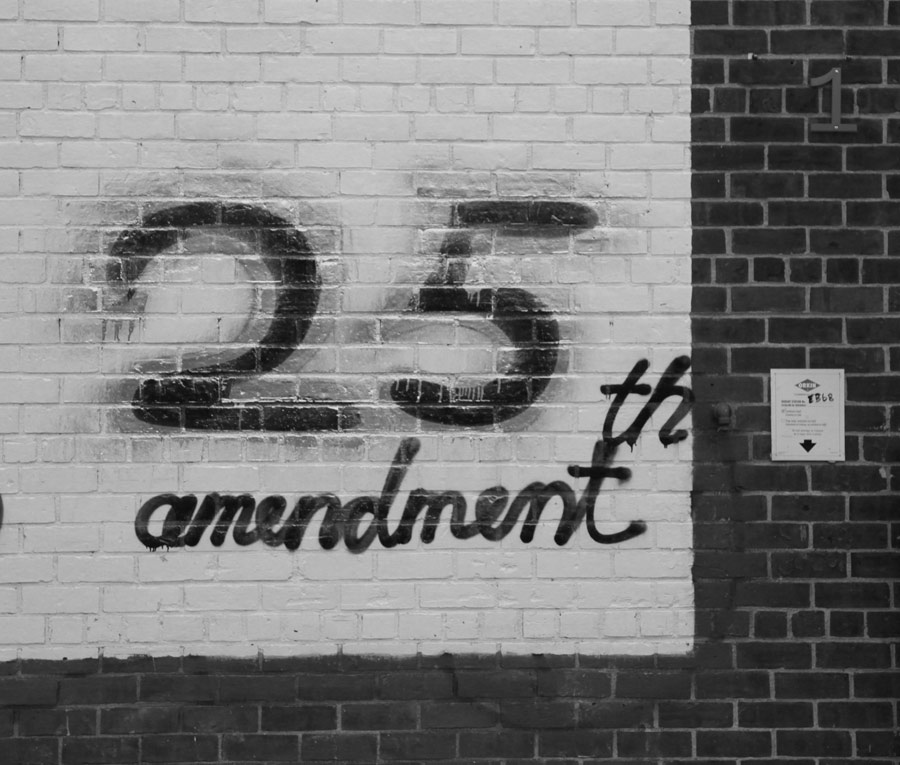
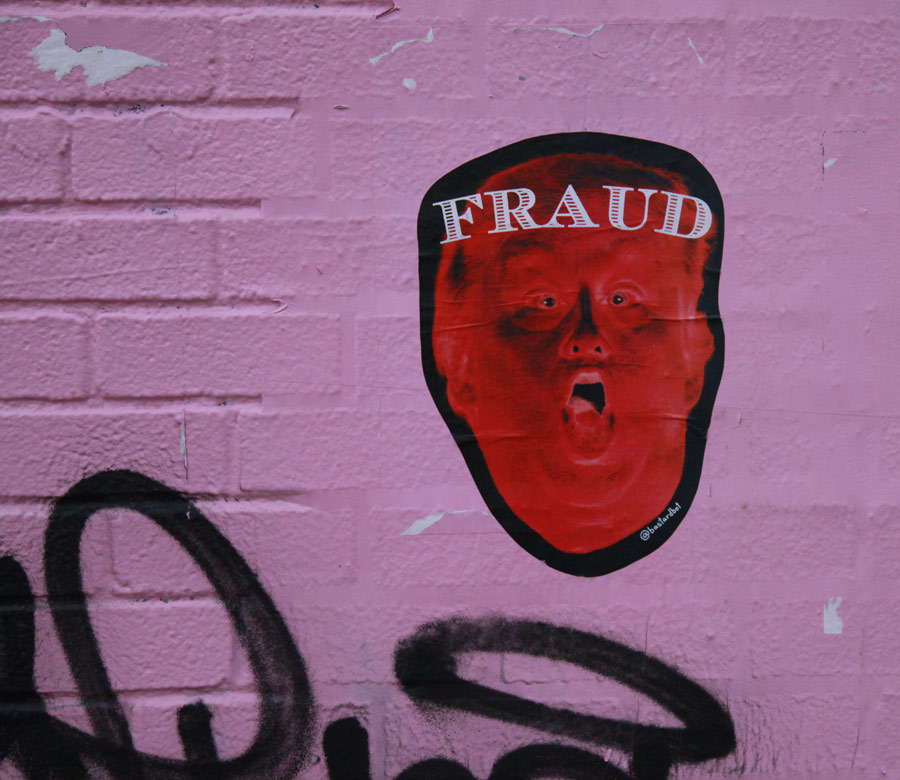
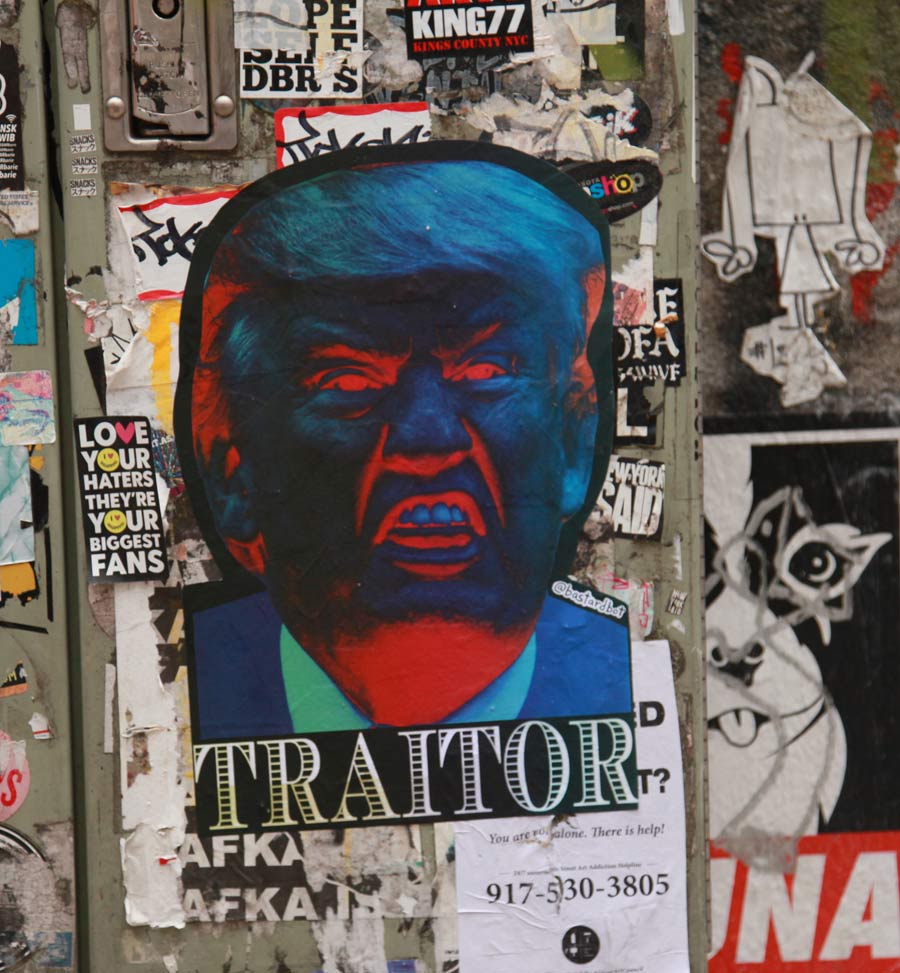
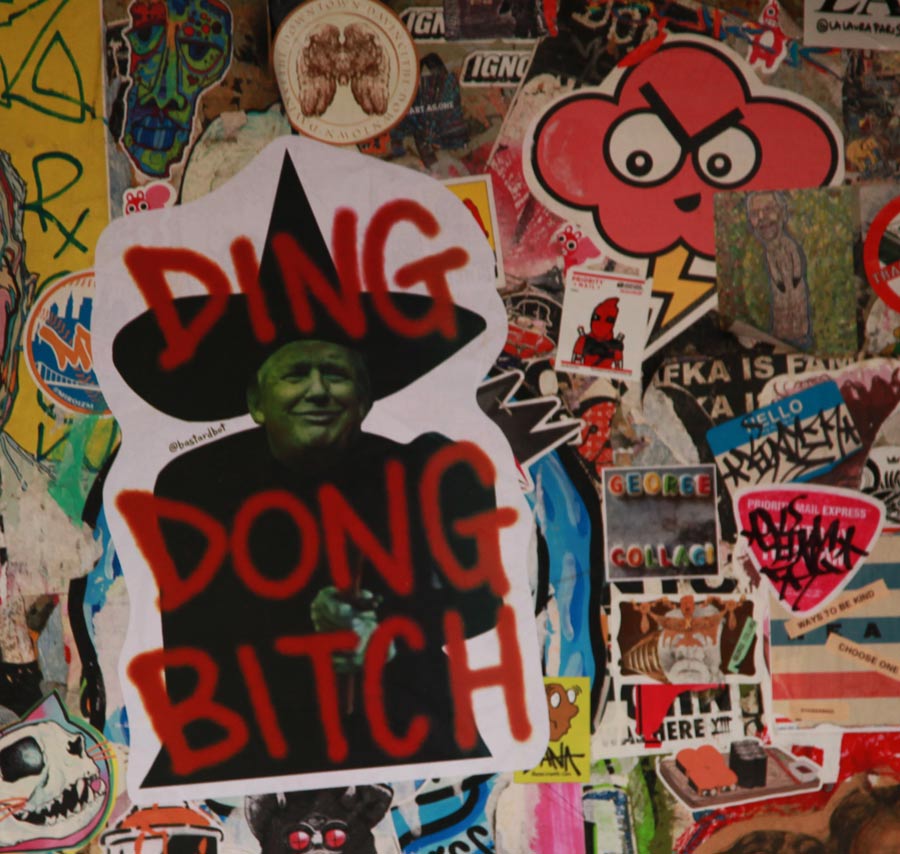
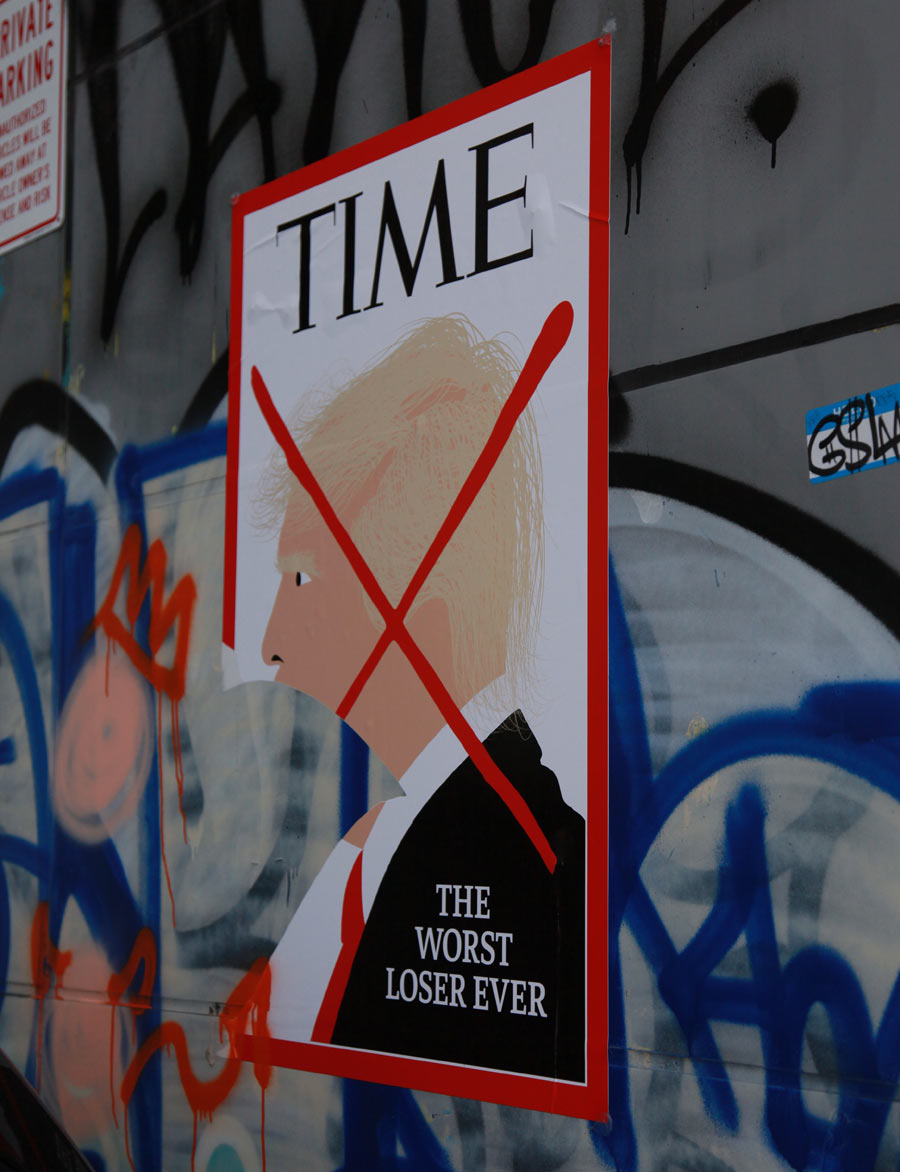
Now that the orange man has been censored by social media he’ll have much more time to pack his boxes and do some deep vacuuming of the living room furniture.
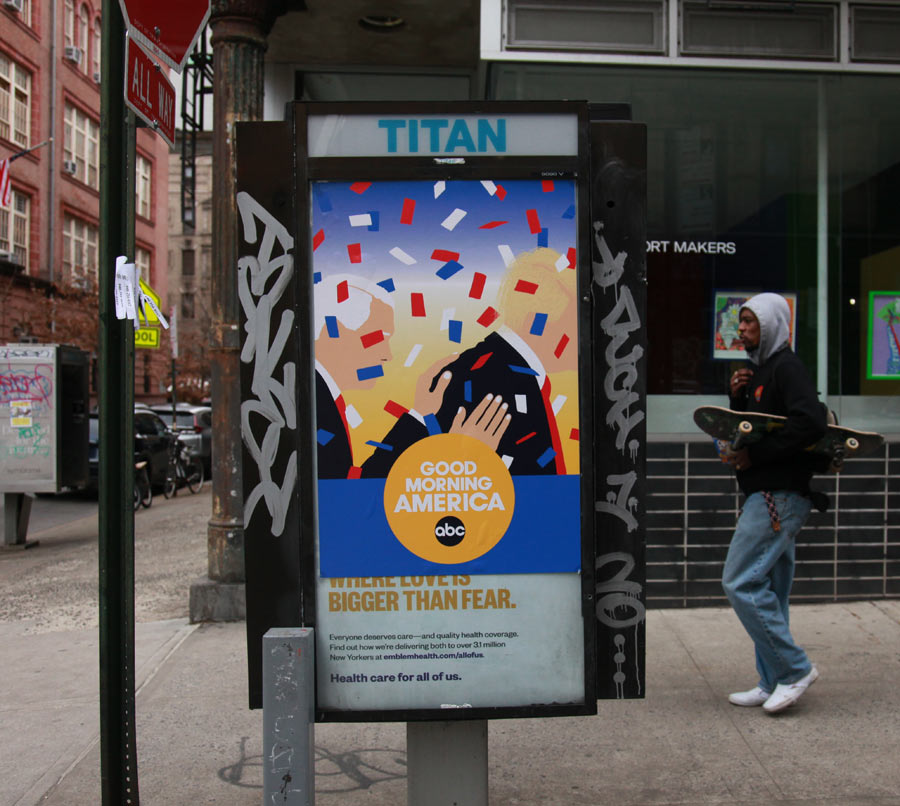
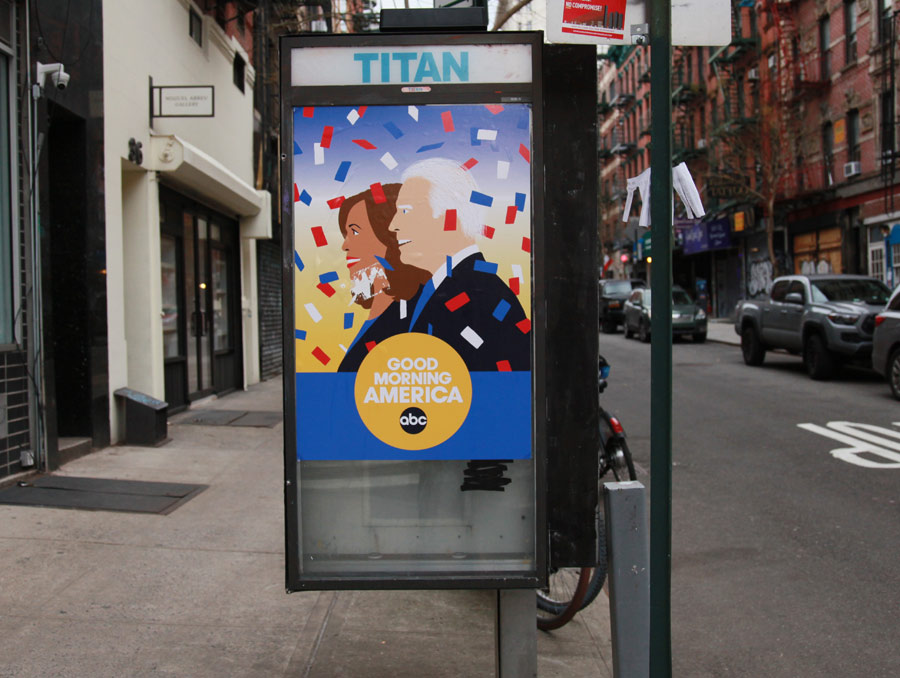
All tolled, this week was perhaps the most effective public demonstration of white privilege on parade for everyone to see – and one that was beamed across the world, including into the countries who once looked to the US for leadership and promise. BLM could not have made a more powerful and impactful statement about the systemic inequality that is baked into American society. Did you see all those video split screens of how police treated the different crowds?
Trump is on his way out, but as the author Thomas Frank likes to say, Trumpism is here to stay.
Ahhhh, but the future is unwritten. Where’s you marker?
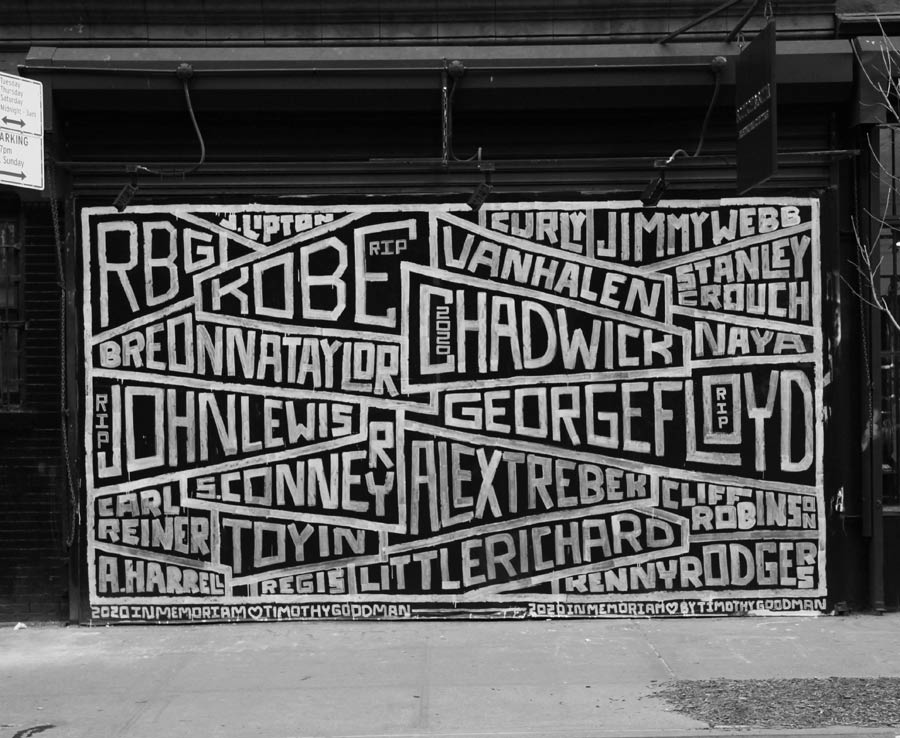
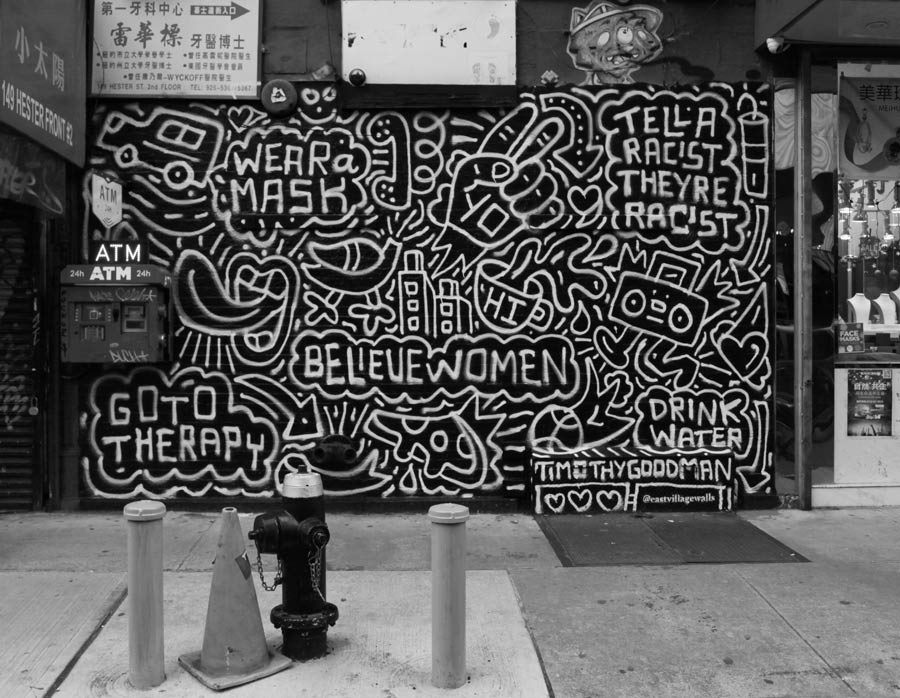
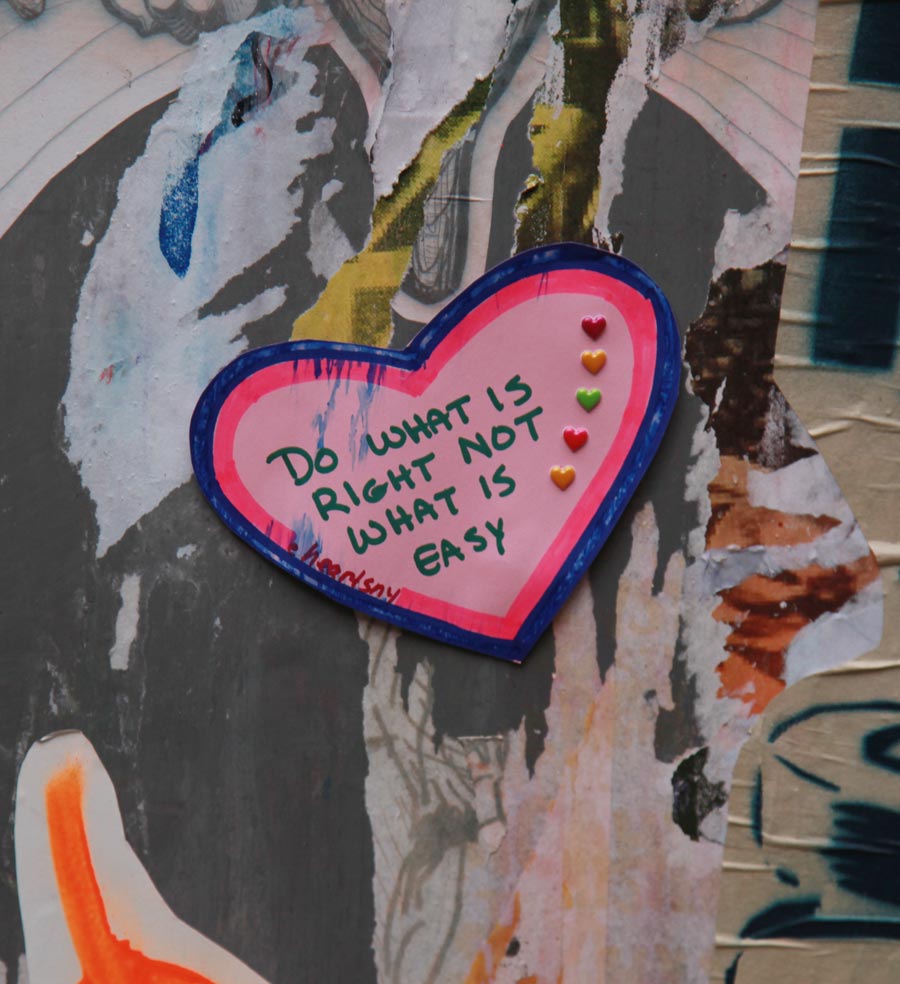
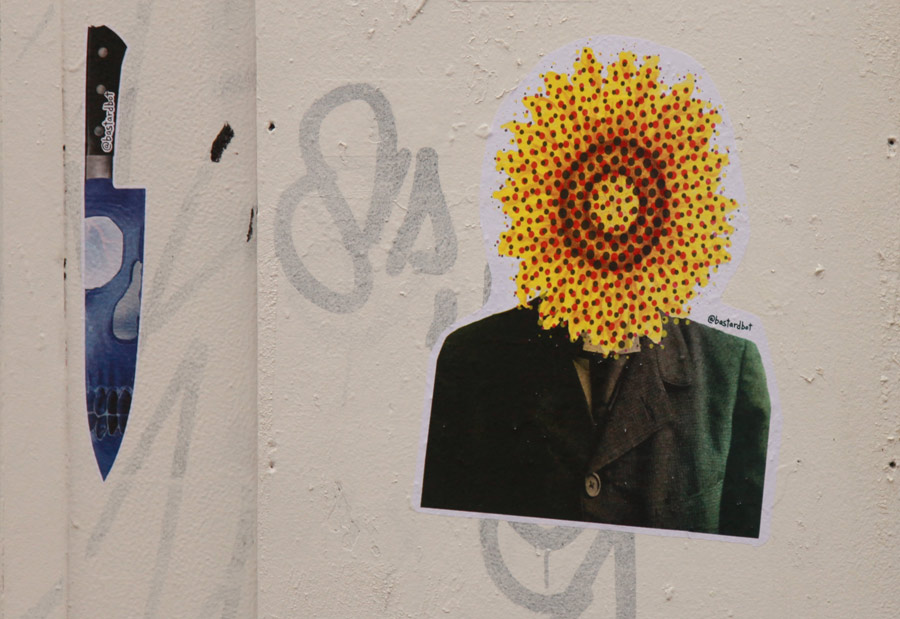
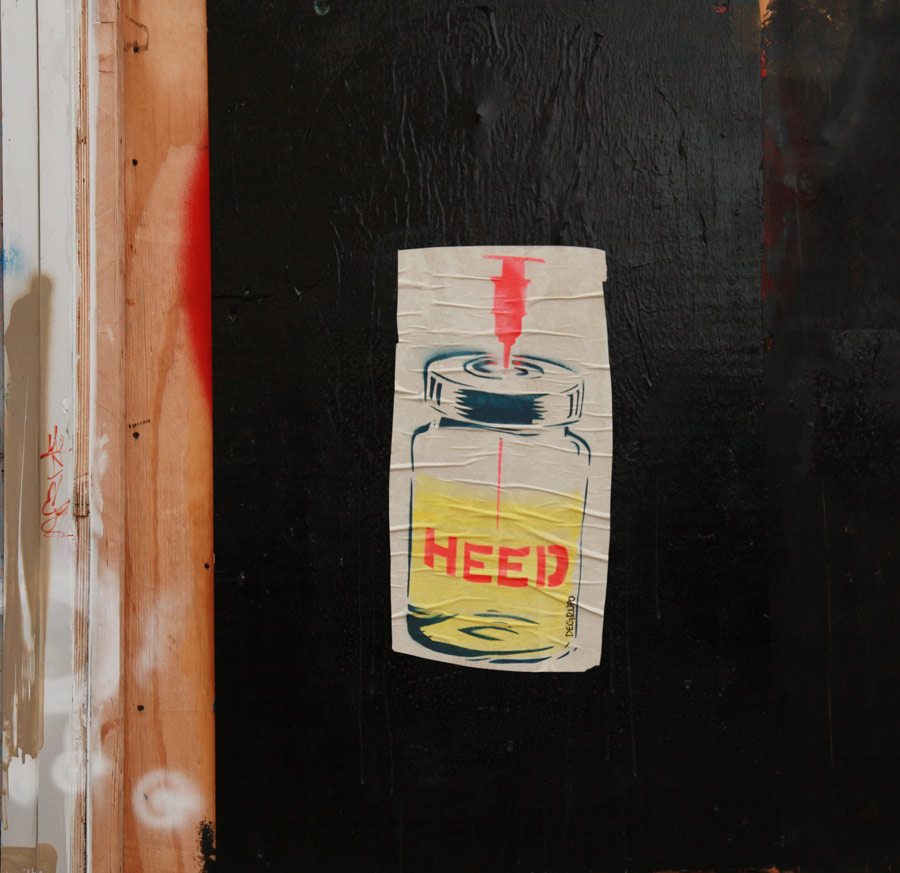
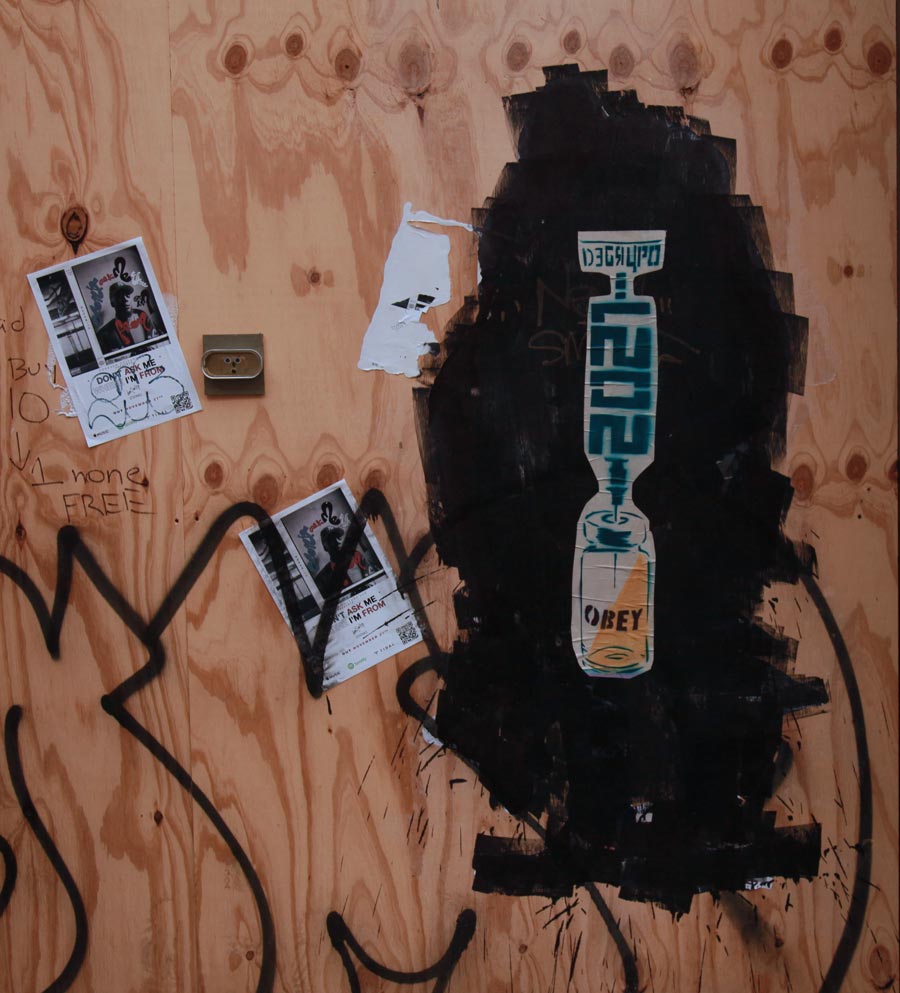
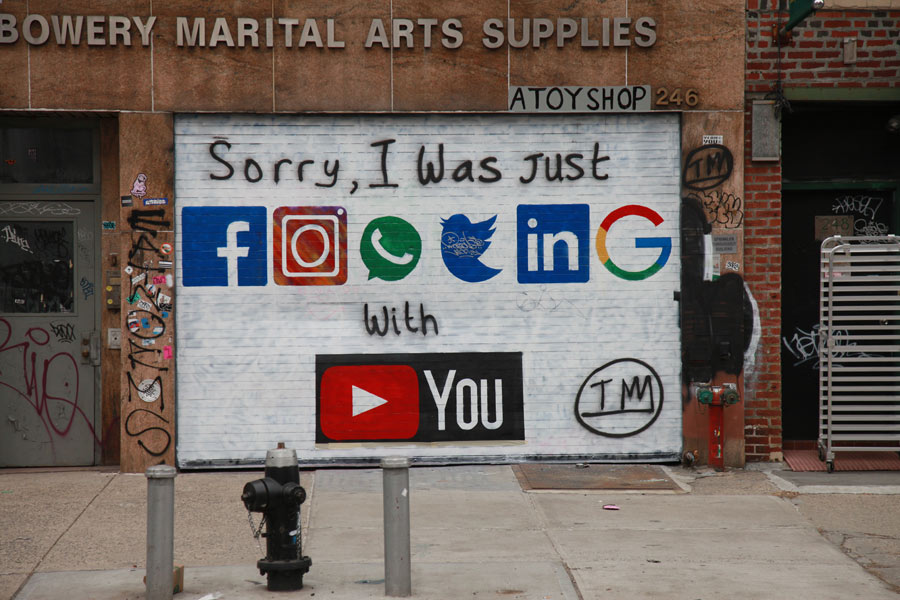
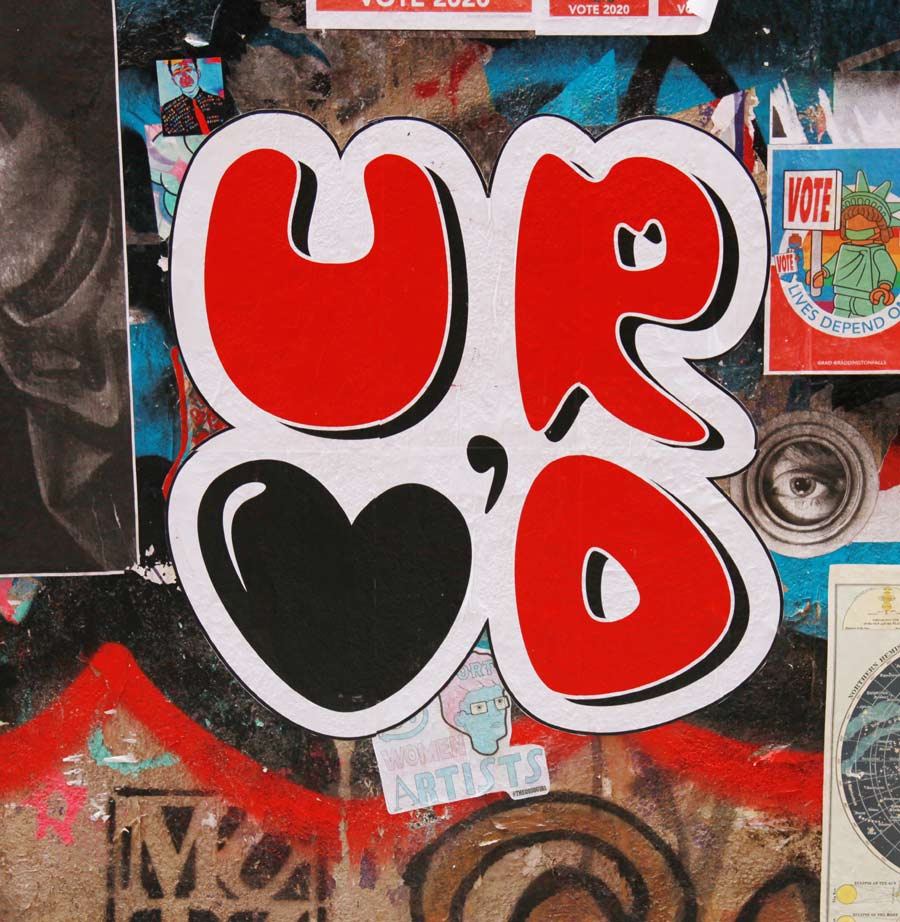
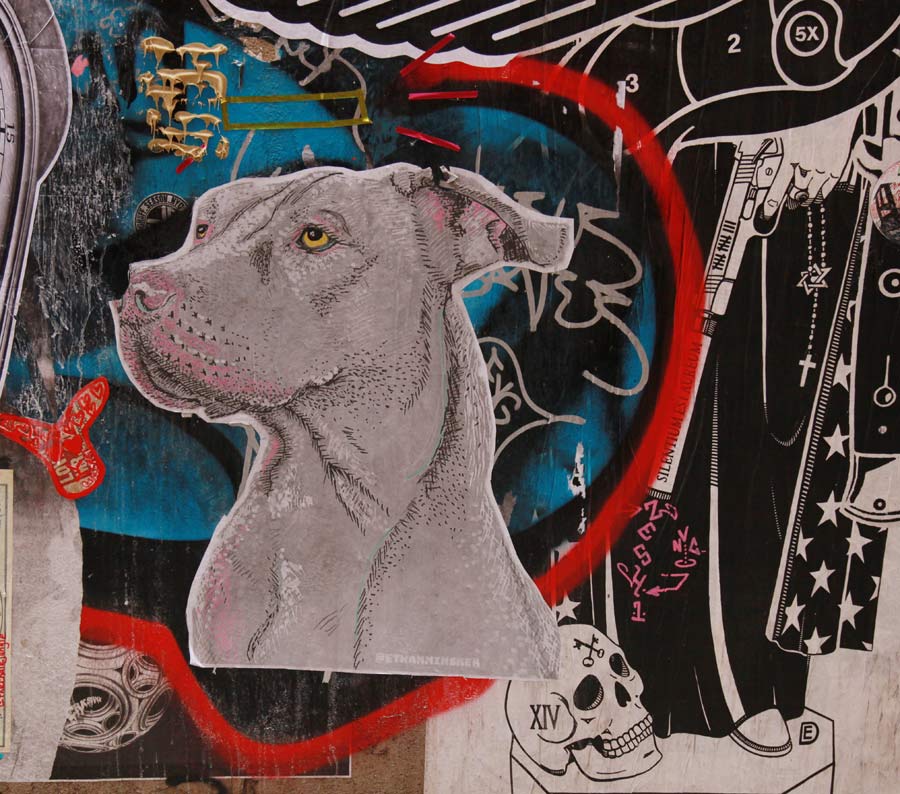
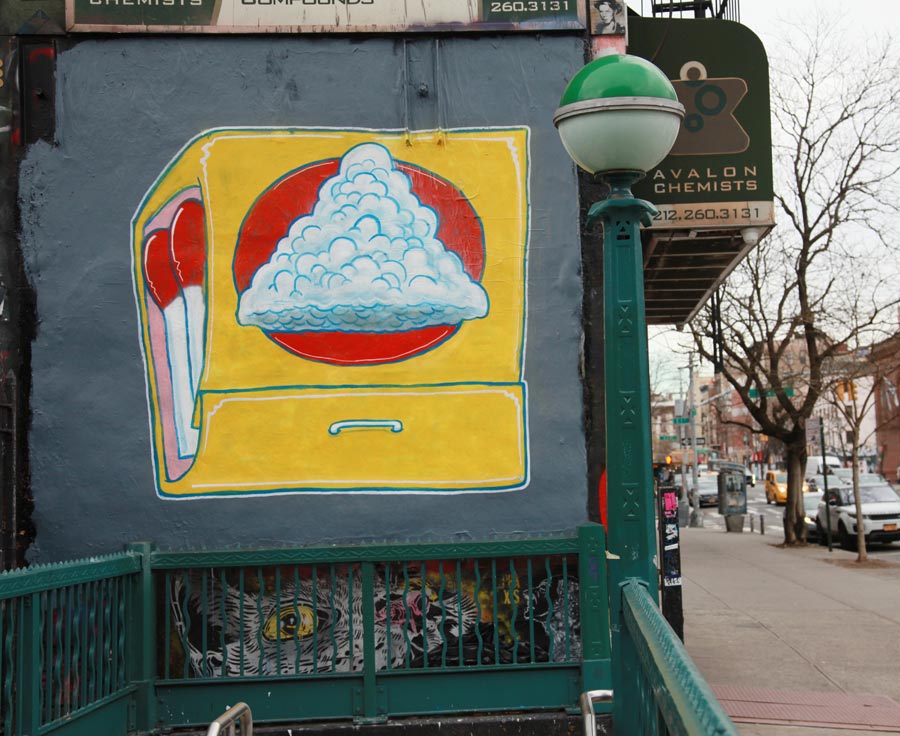
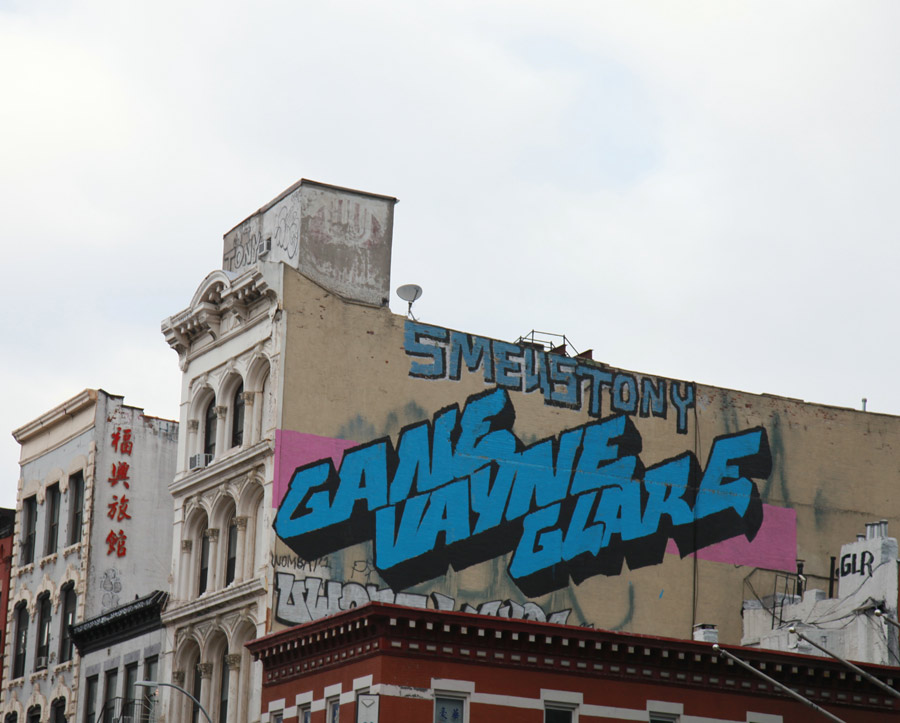
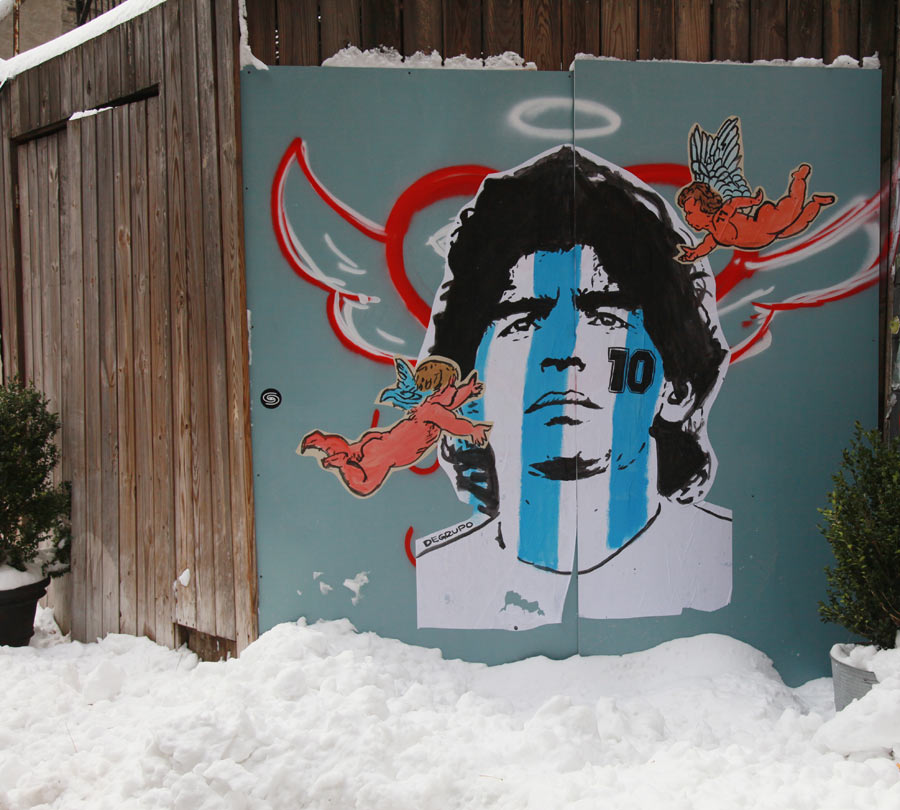
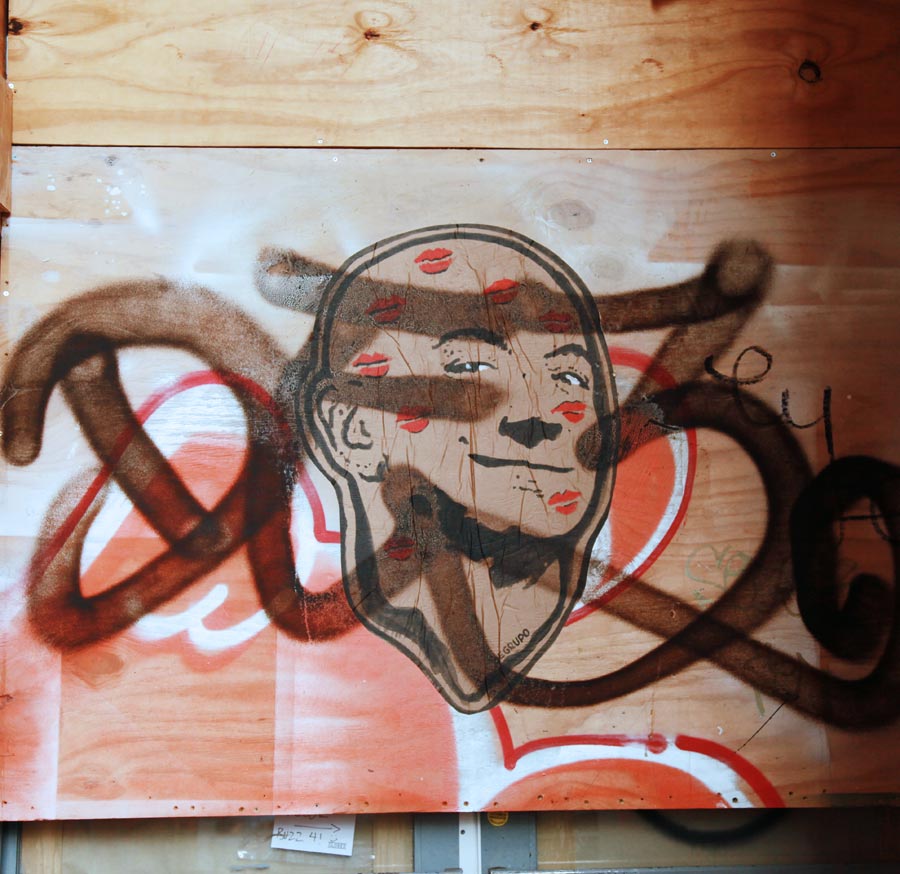
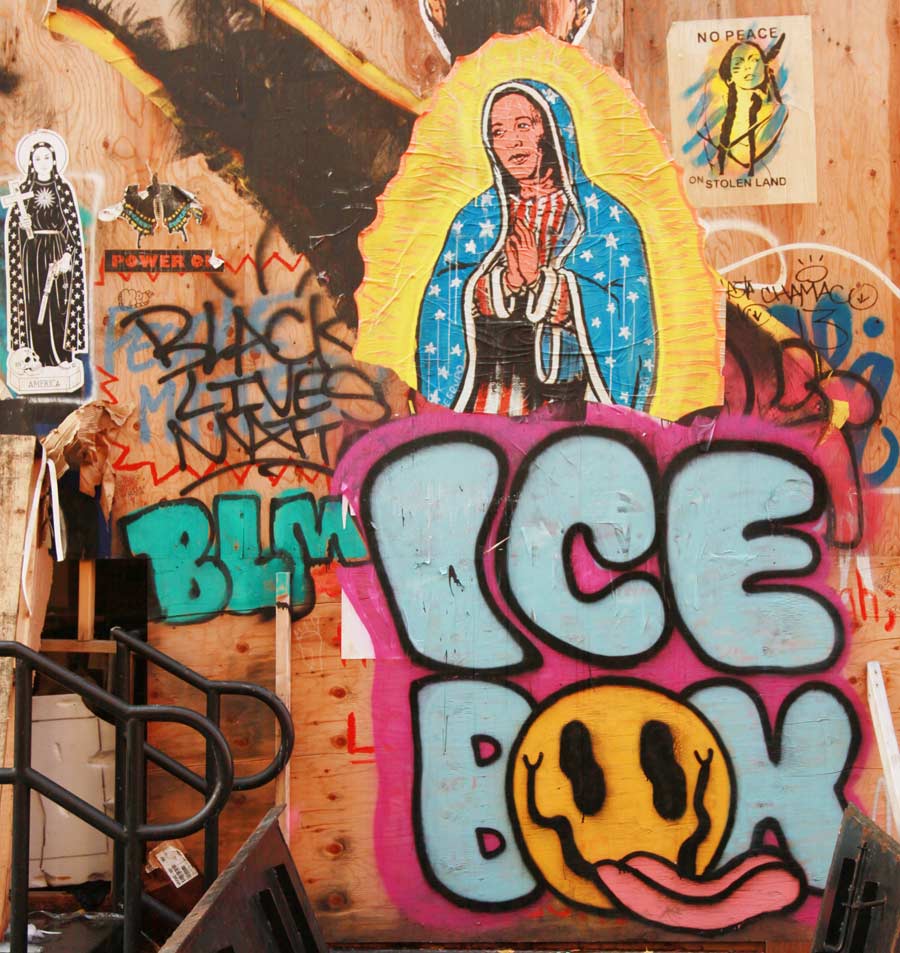
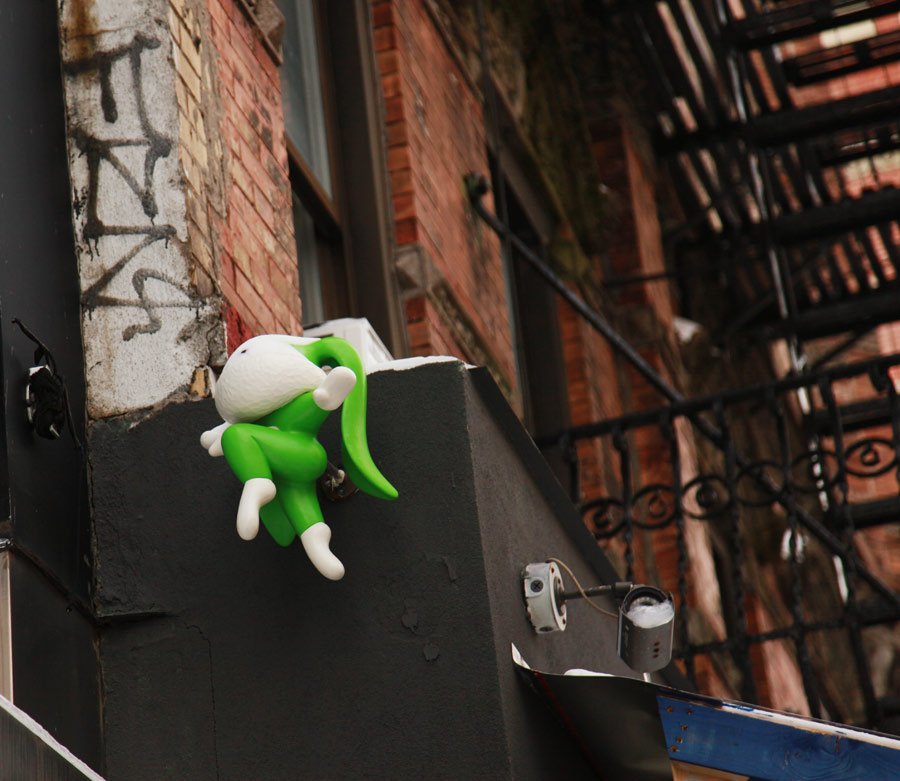
Here’s our weekly interview with the streets, this week featuring Adrian Wilson, Bastard Bot, De Grupo, Ethan Minsker, Gane, Glare, HeartsNY, Lunge Box, Timothy Goodman, Wane, Winston Tseng, and You Are Loved. Yes, you are loved.
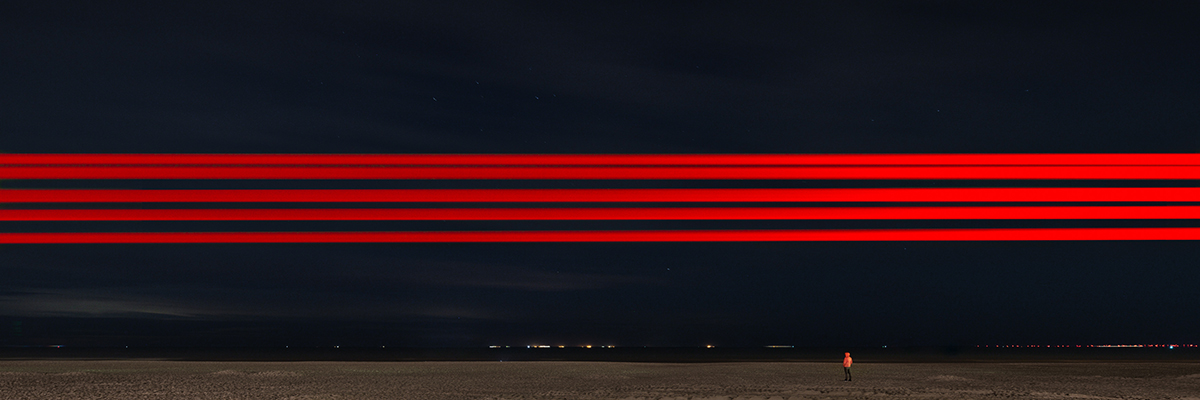
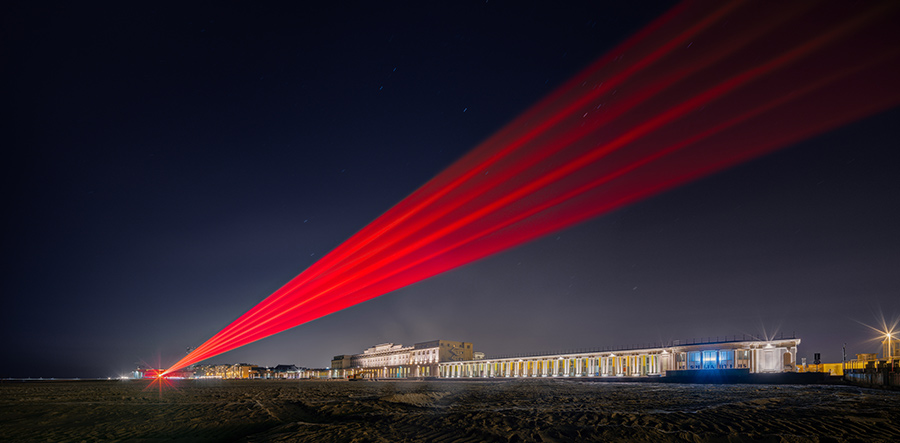
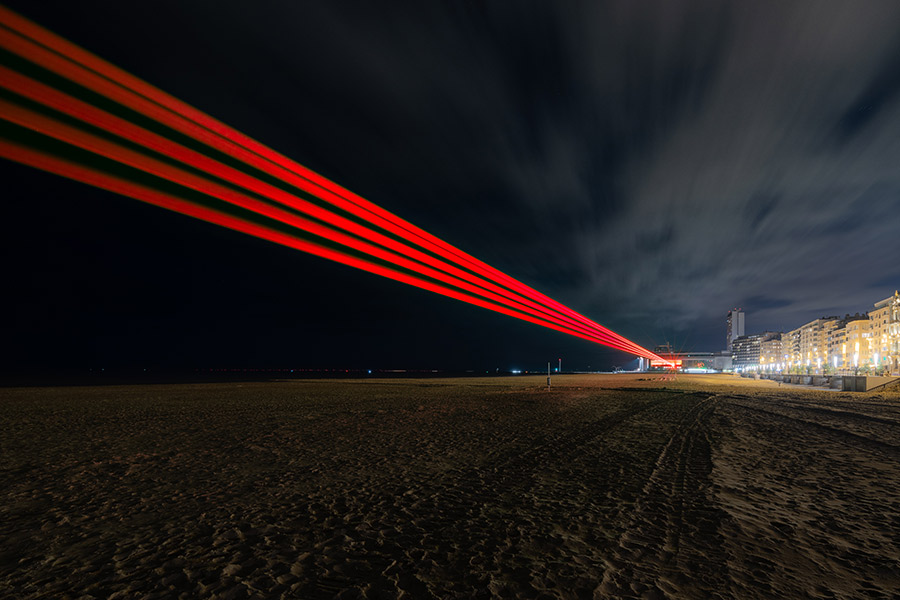
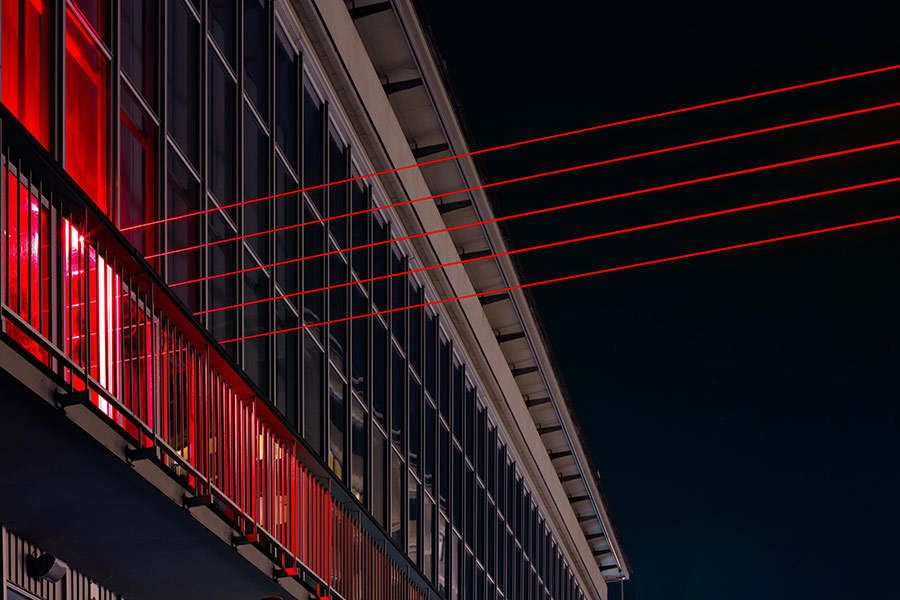
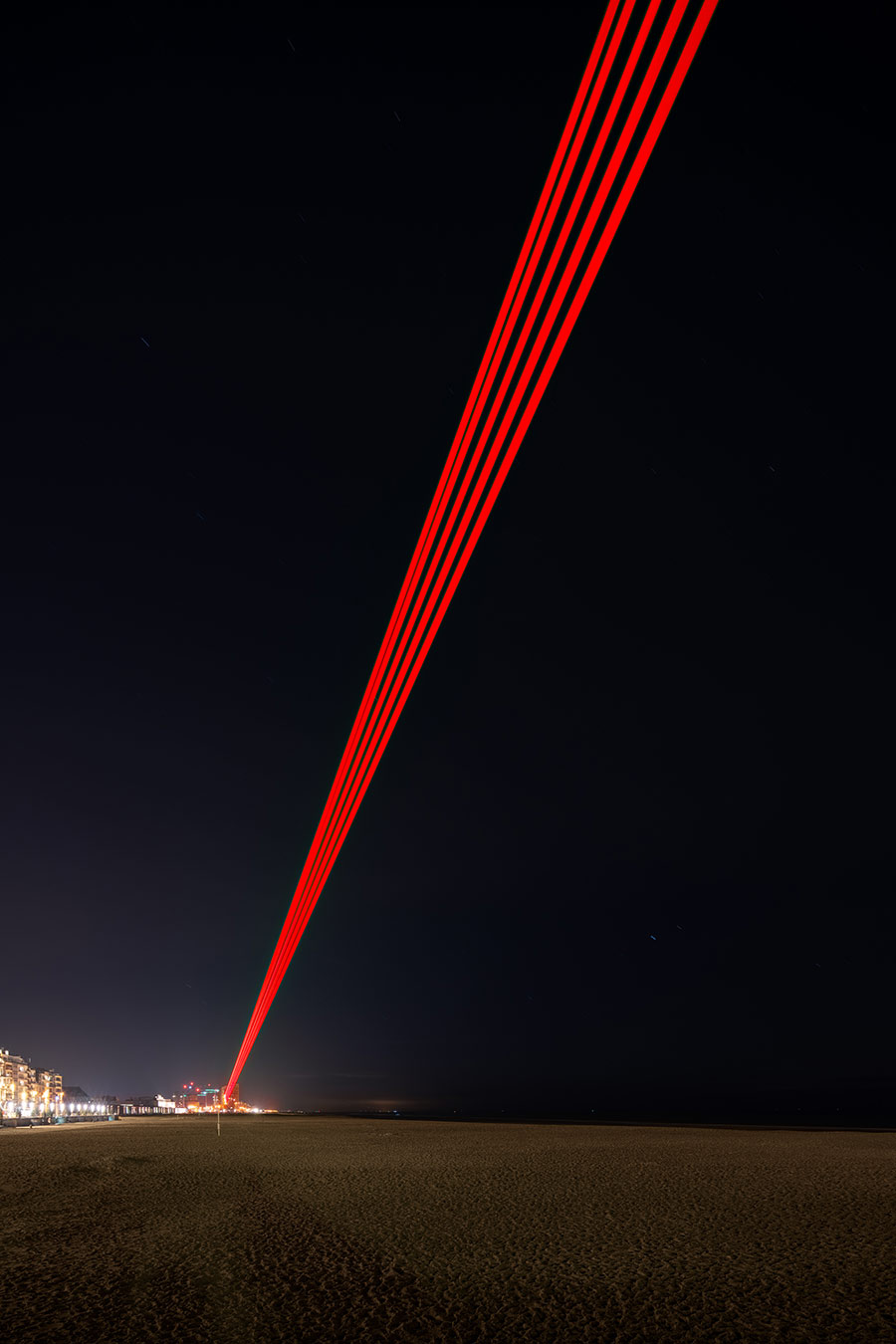
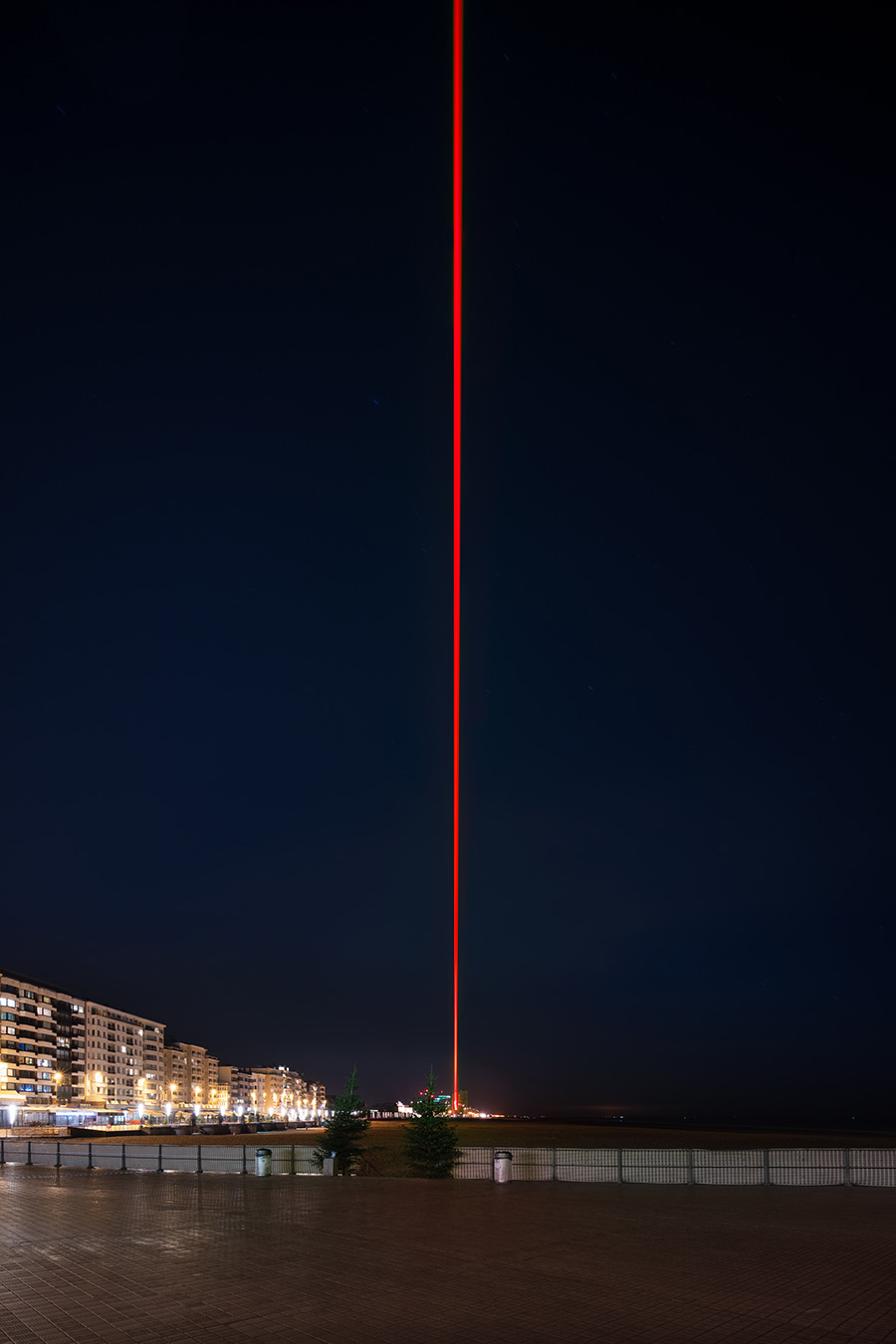
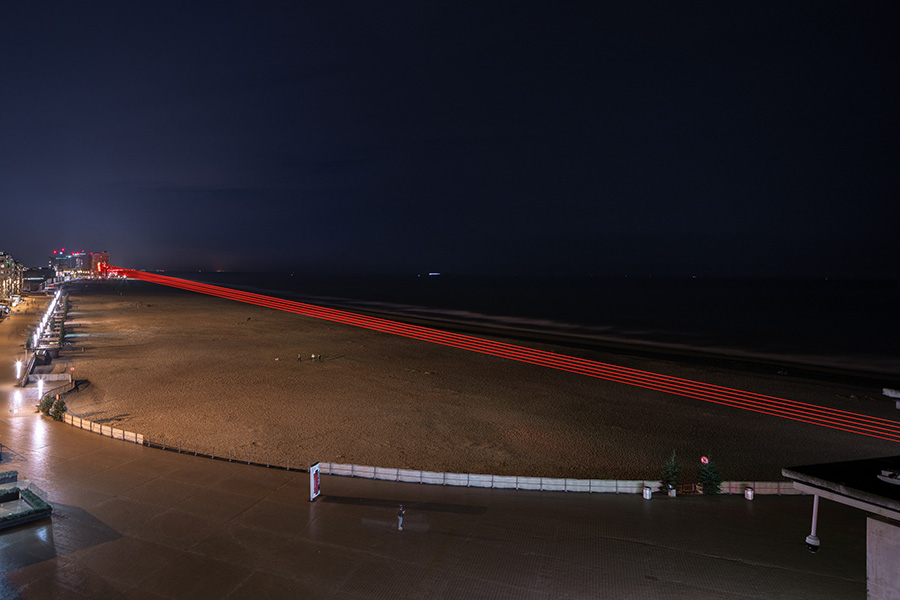
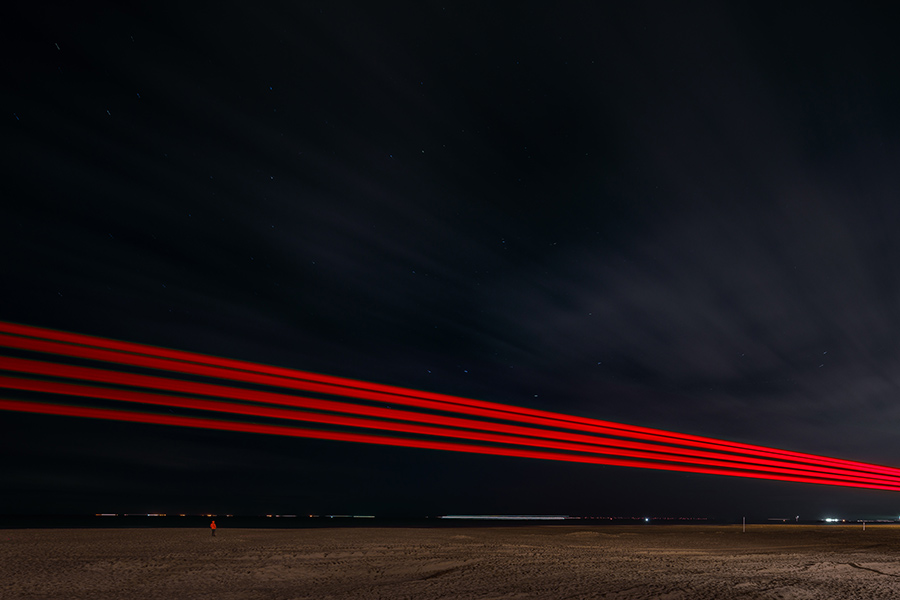
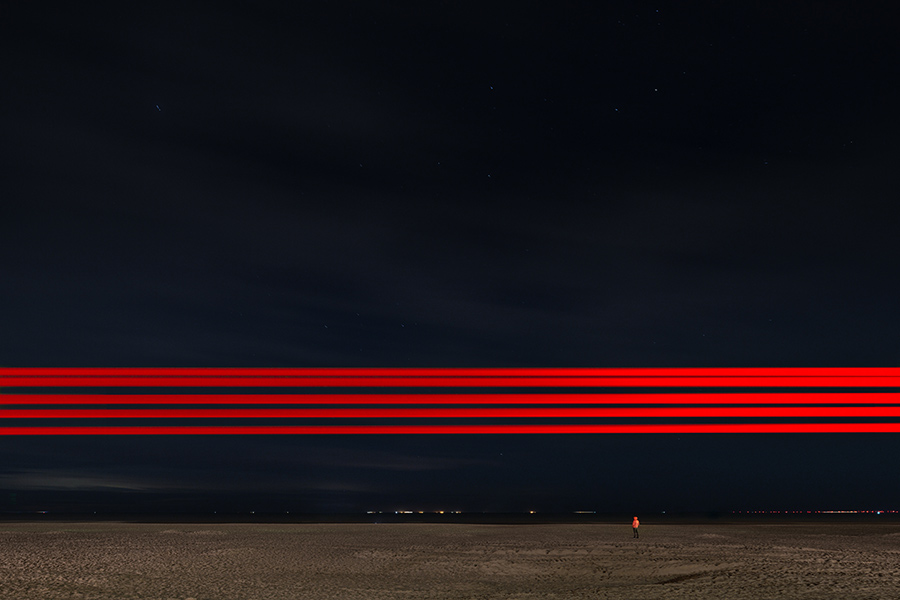
When in Oostende, Belgium recently the conceptually minded artist took some of these dimensions in hand as well, blasting 5 high-powered lasers into the sky to transform open air and to create new visual experiences for anyone lucky enough to witness it from great distances and up-close perspectives as well.
We are riveted by the idea: That this projected light form is repurposed from its industrial and war applications to be presented for the public simply as an aesthetic entity – with its own deliberate transcendence; claiming space, altering it, commanding it, re-defining sightlines delineating new borders with righteously crimson beams of electromagnetic radiation powered light.
When one considers modern light masters like Dan Flavin, Mary Corse, James Turrell or Olafur Eliasson, you understand instinctively that it is only through accident or alert experimentation that such powerful effects such as these that we can be afforded the opportunity for discovery, and only inquisitive minds like SpY’s would push this idea so far that it becomes a revelation.
Our weekly focus on the moving image and art in the streets. And other oddities.
Now screening : 1. Medicos Del Mundo #Esperanza #AlwaysHope 2. SOFLES / The Minibus (feat. Treas) 3. SpY / Luna
BSA Special Feature: Medicos Del Mundo #Esperanza #AlwaysHope
Today we present an inspiring video that reaches all the corners of the world – which is where Doctors of the World goes. The organization looks past the geographic and political barriers to care for all of us. Here film directors, directors, and artists – across five continents – participate in telling lived stories of people on the front line.
New graffiti porn from Brisbane this week as Sofles and Treas take camping to a new dimension in aerosol madness. The team of Grug & Bustaflux keep the audio details and effects tight with camerawork that trips and makes the heart skip by After Midnight Film.
SpY / Luna
Can you trust your eyes? Is that the moon?
SpY draws an indirect connection to the moon and the television depictions of 1969 showing a team of astronauts landing on it. The Madrid installation artist uses the simplest of gestures to make clarion statements. Installed on one of the construction cranes of the fifth tower of the Caleido complex in the north of Madrid, SpY hangs the moon in the sky with an inflatable nylon structure illuminated with high intensity LED system.
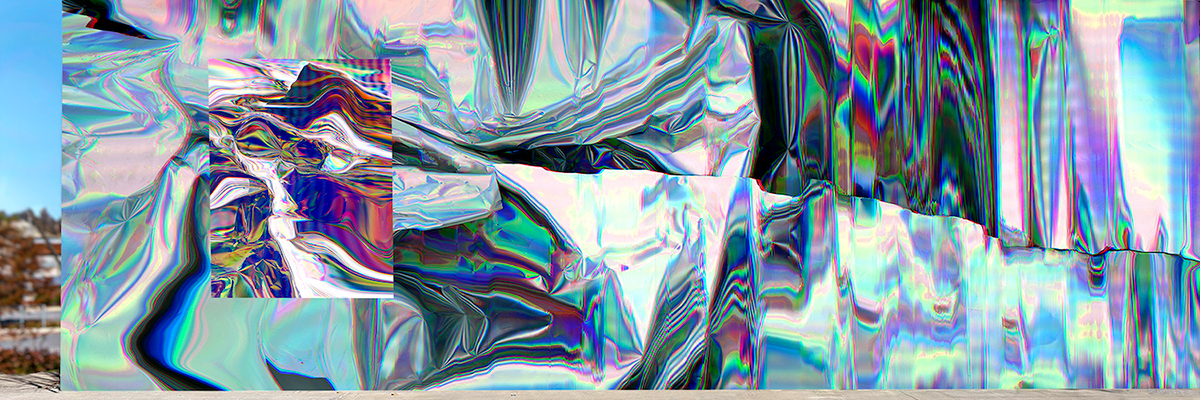
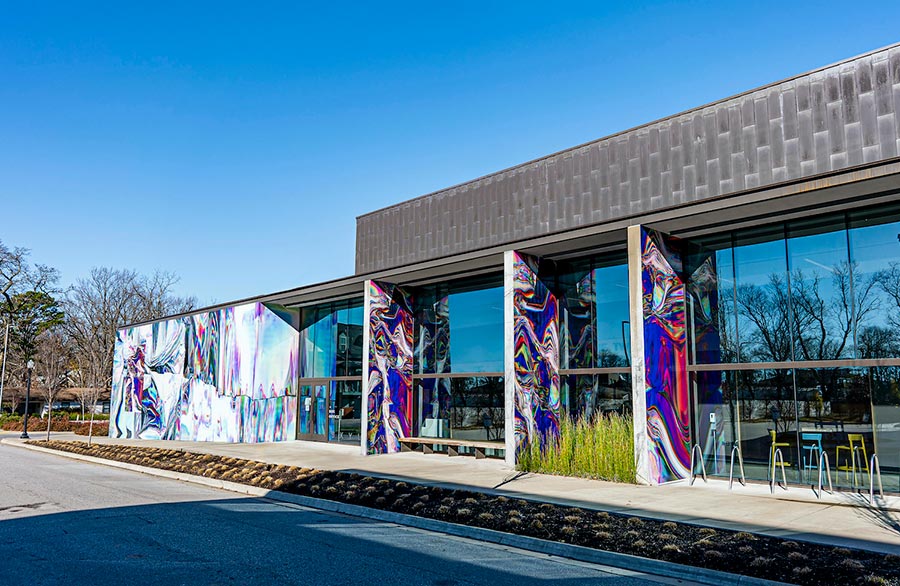
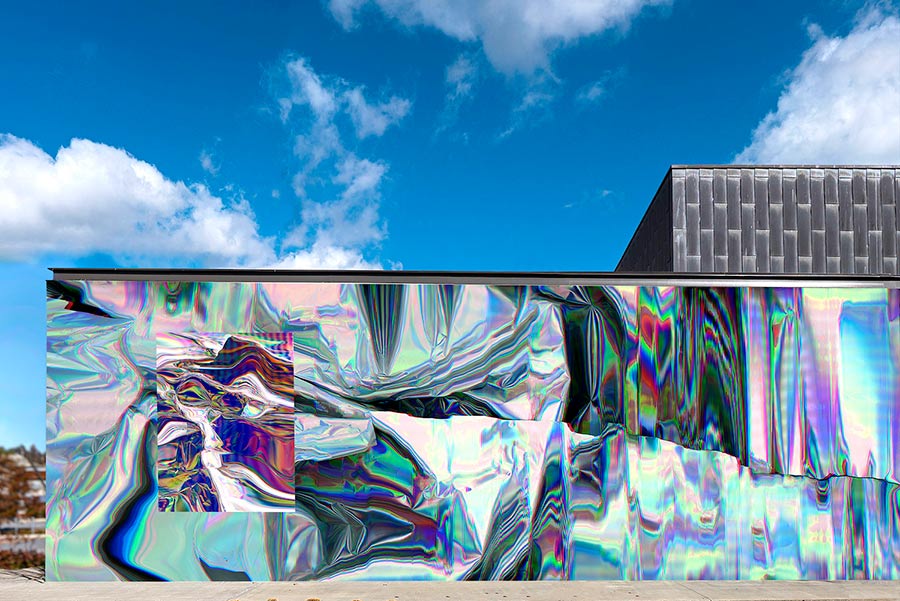
A psychedelia of this moment, the modulated visual liquid was produced by the artists use of digital copies made of shiny aluminum papers. Printed on vinyl, she transformed this exterior into a trippy grid of lenswork that allows passersby to see fields that instantly challenge imaginations.
Vieux says she enjoys stretching beyond limits of data and physical space, a description analogous for some with cinema itself.
“In this piece, I wanted to disrupt the solid geometries of the architecture with a hyperreal fluid painting placed in the landscape,” she says, and something in the description makes it conversant with the chaos and surrealist quality of US life today.
“I reflected on these ideas in a cultural/political context,” says Vieux, “thinking that a larger takeaway of this piece is that through disrupting and dissolving boundaries we can create a fluid open space where there’s room to unite.”
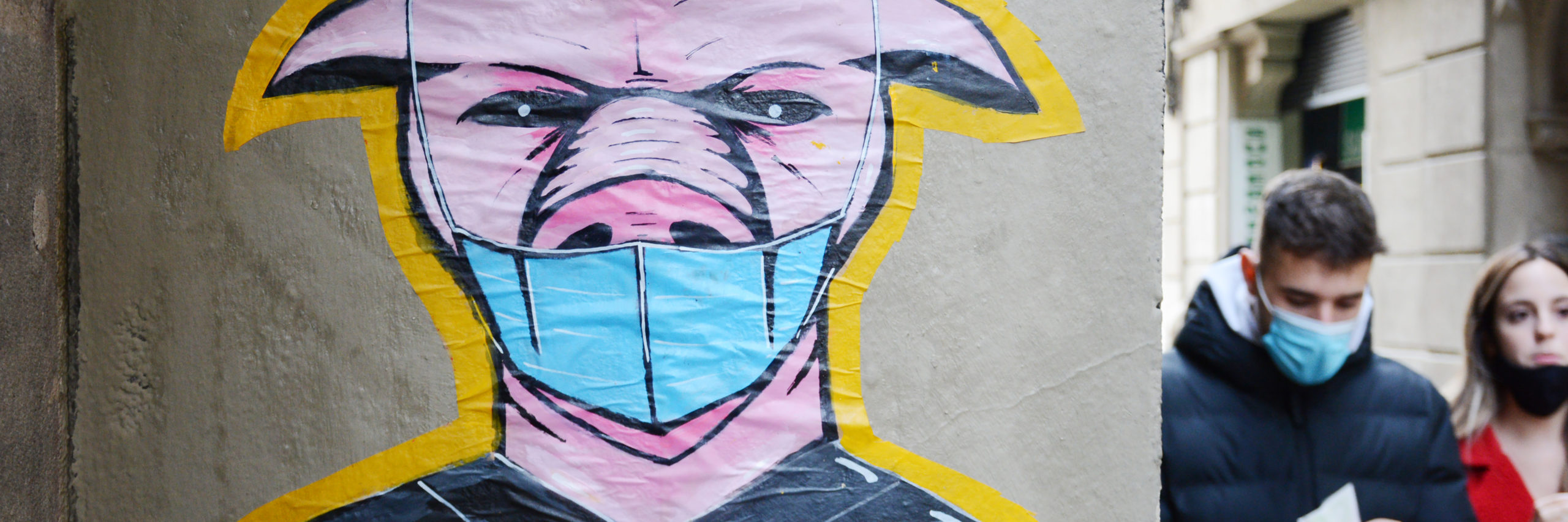
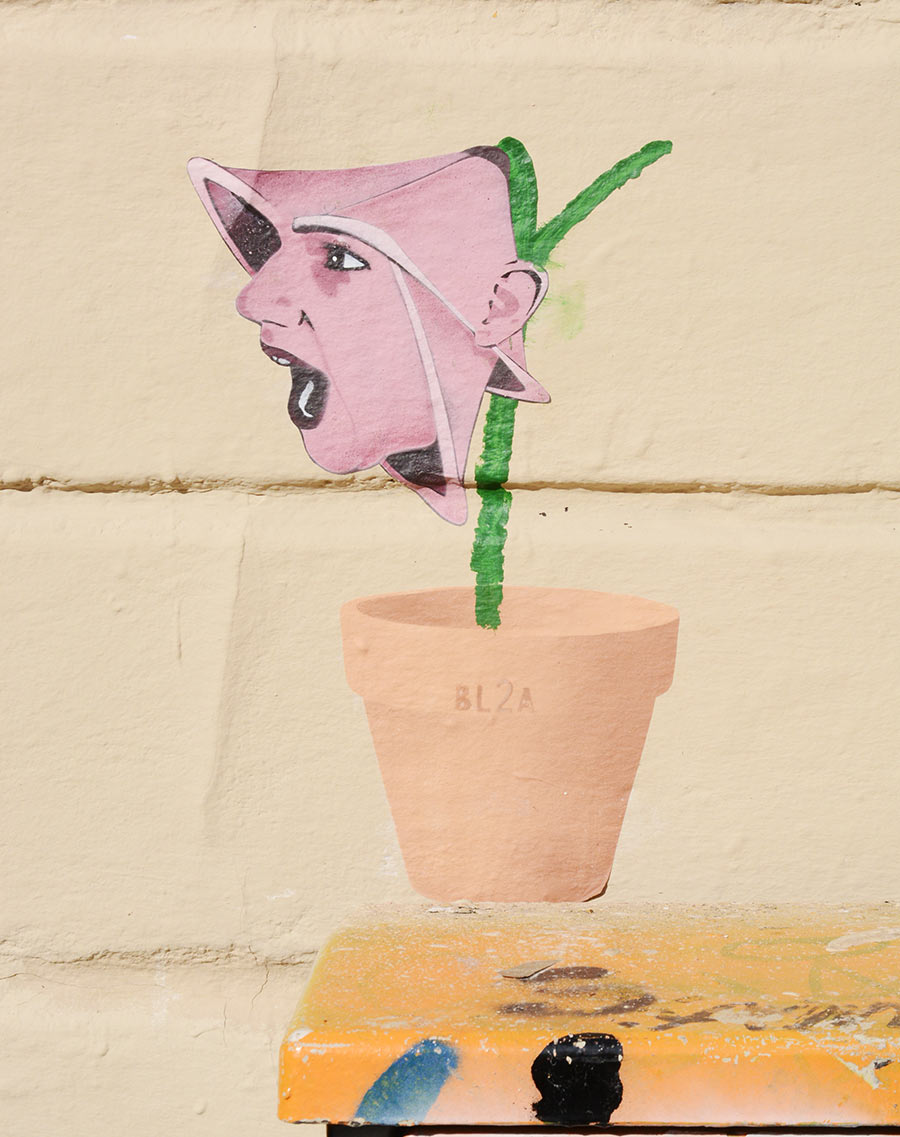
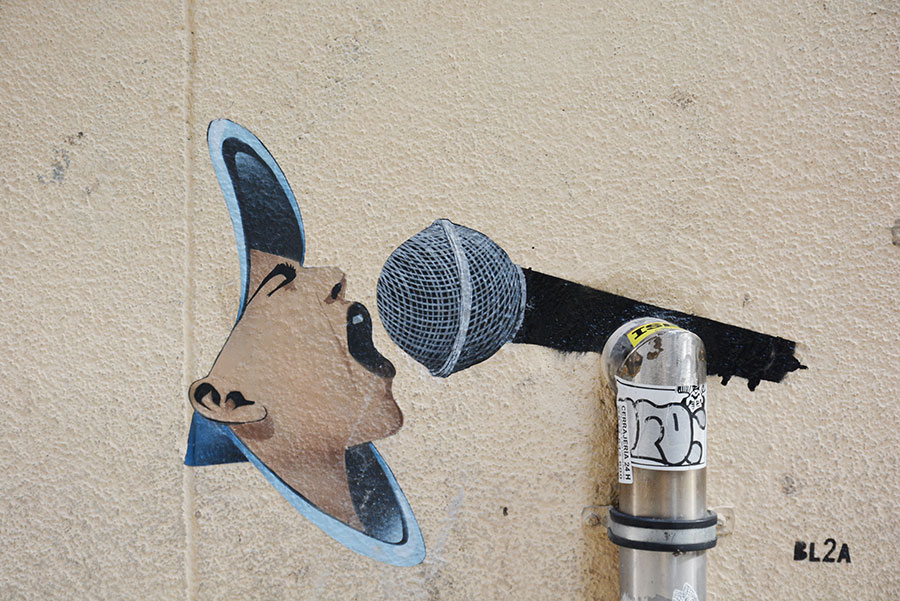
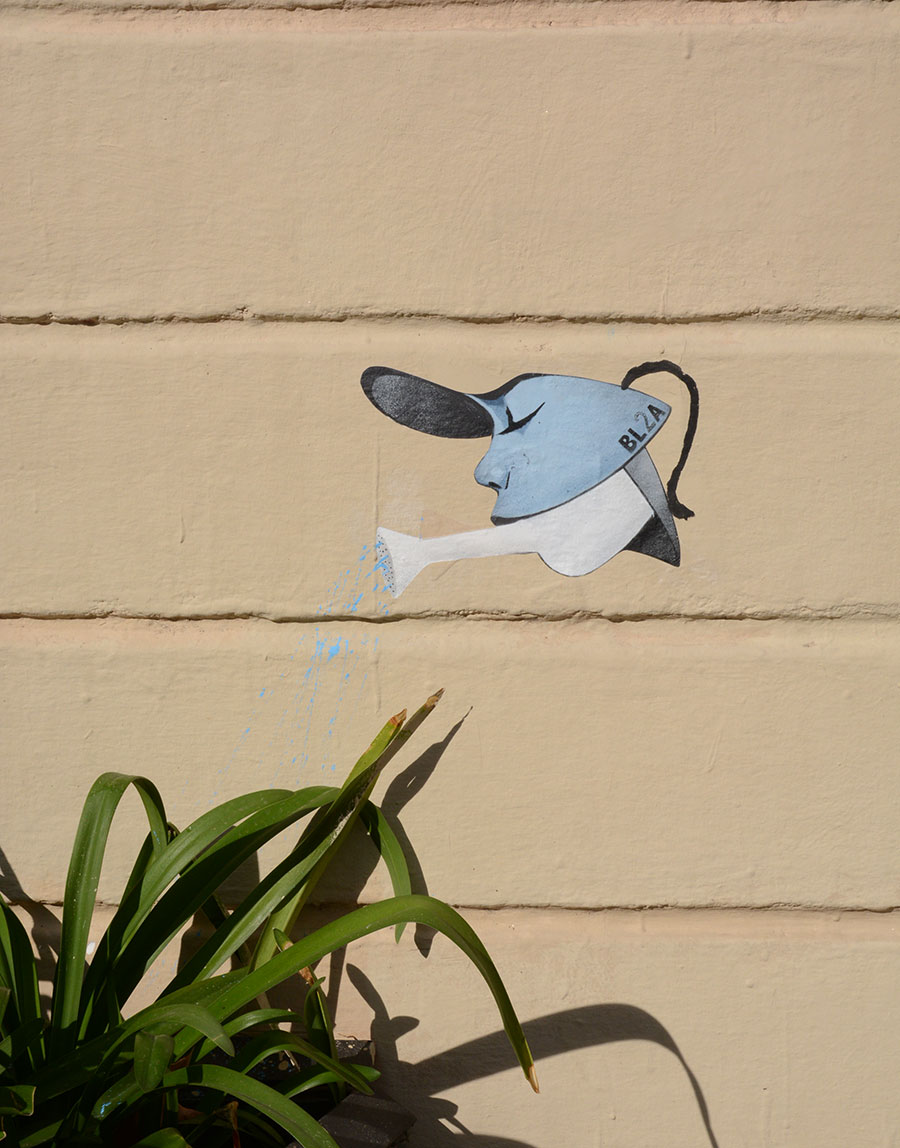
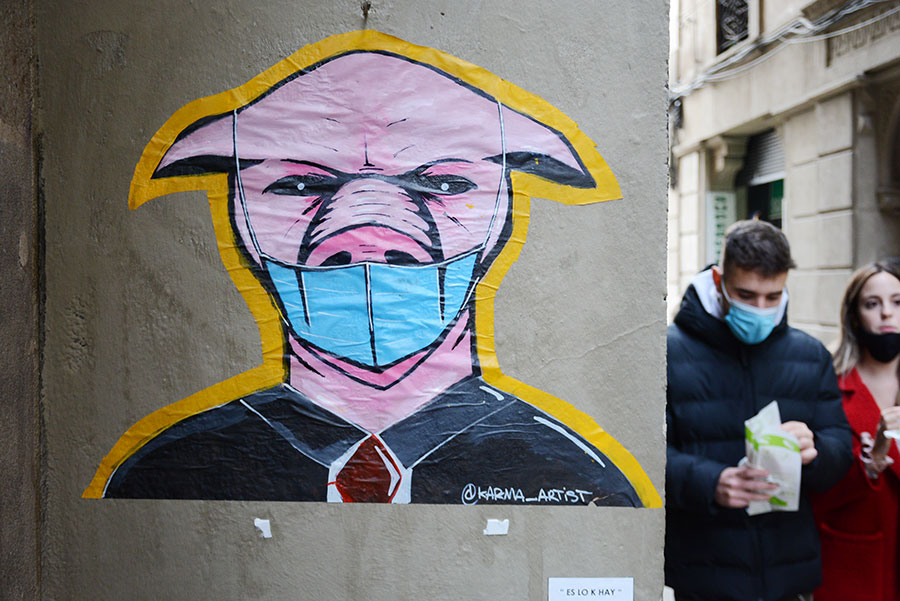
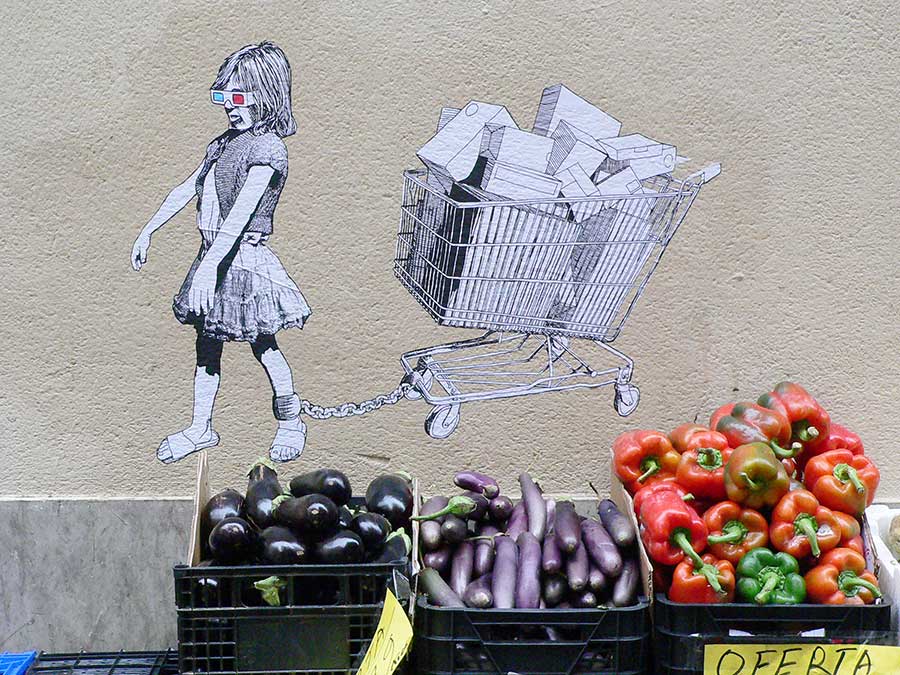
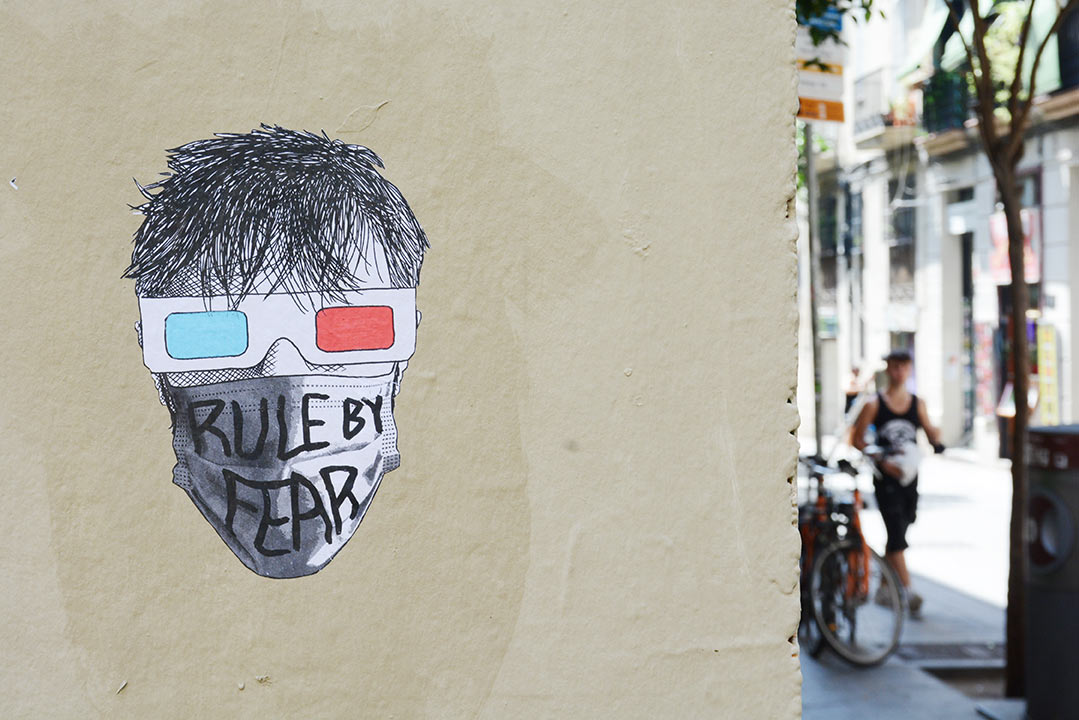
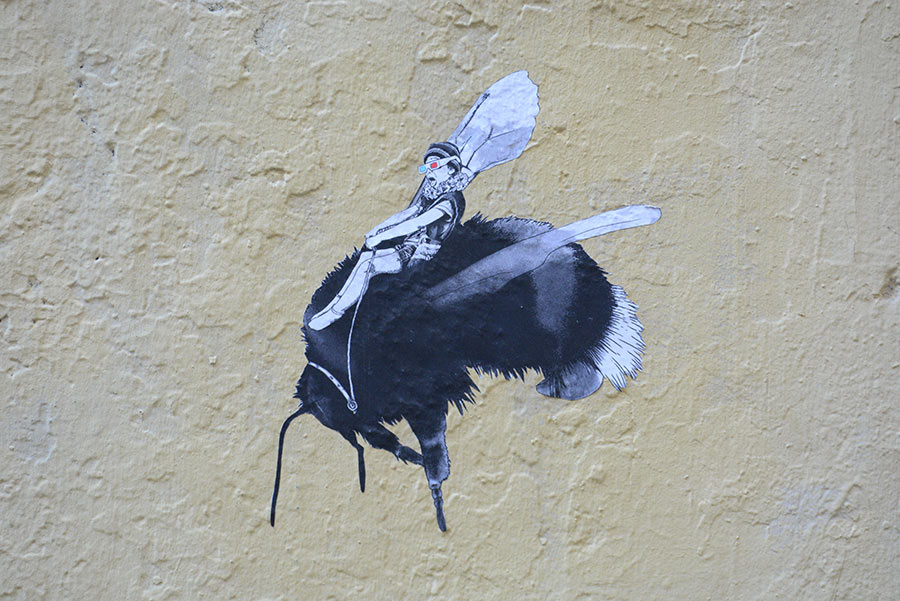
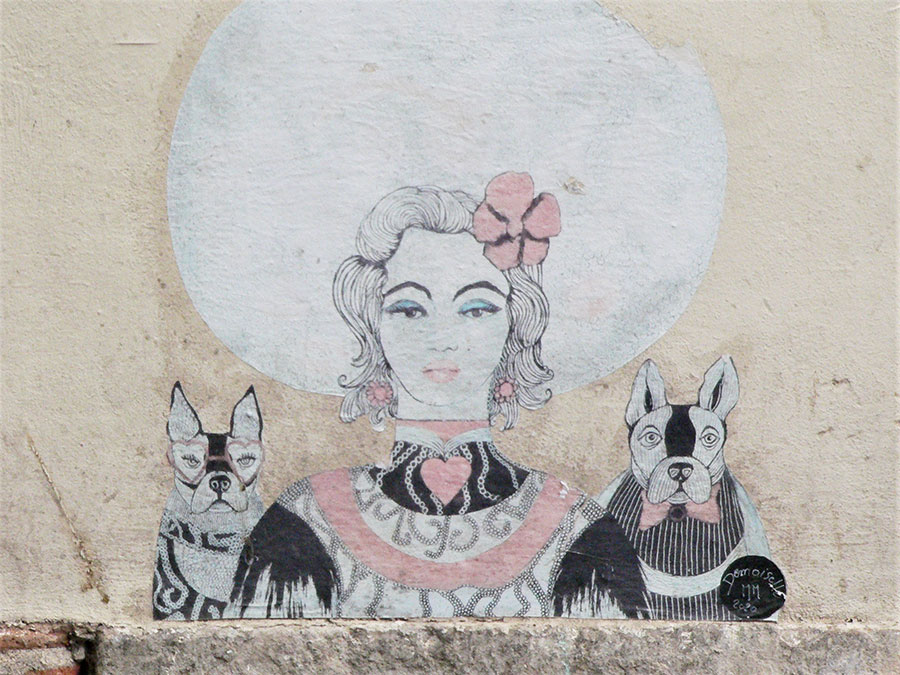
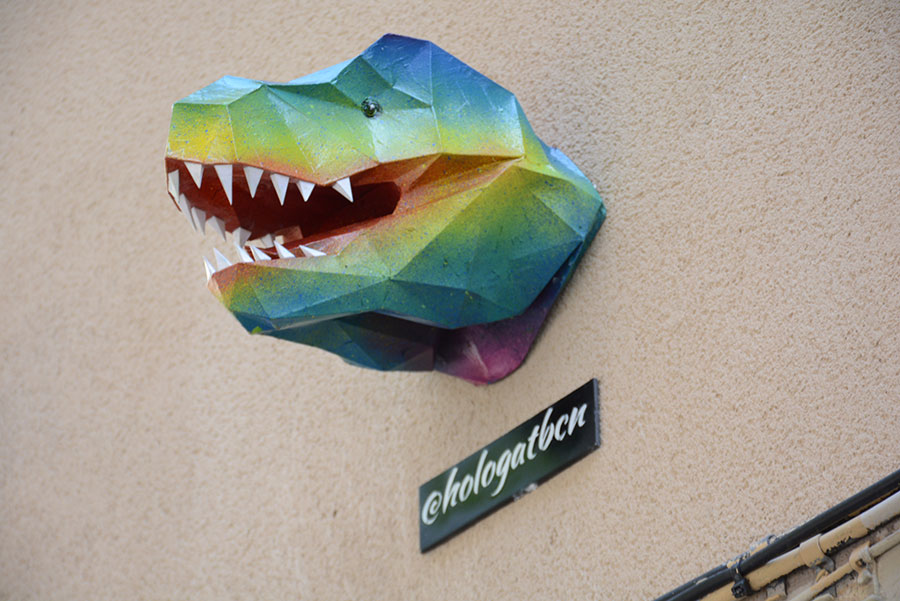
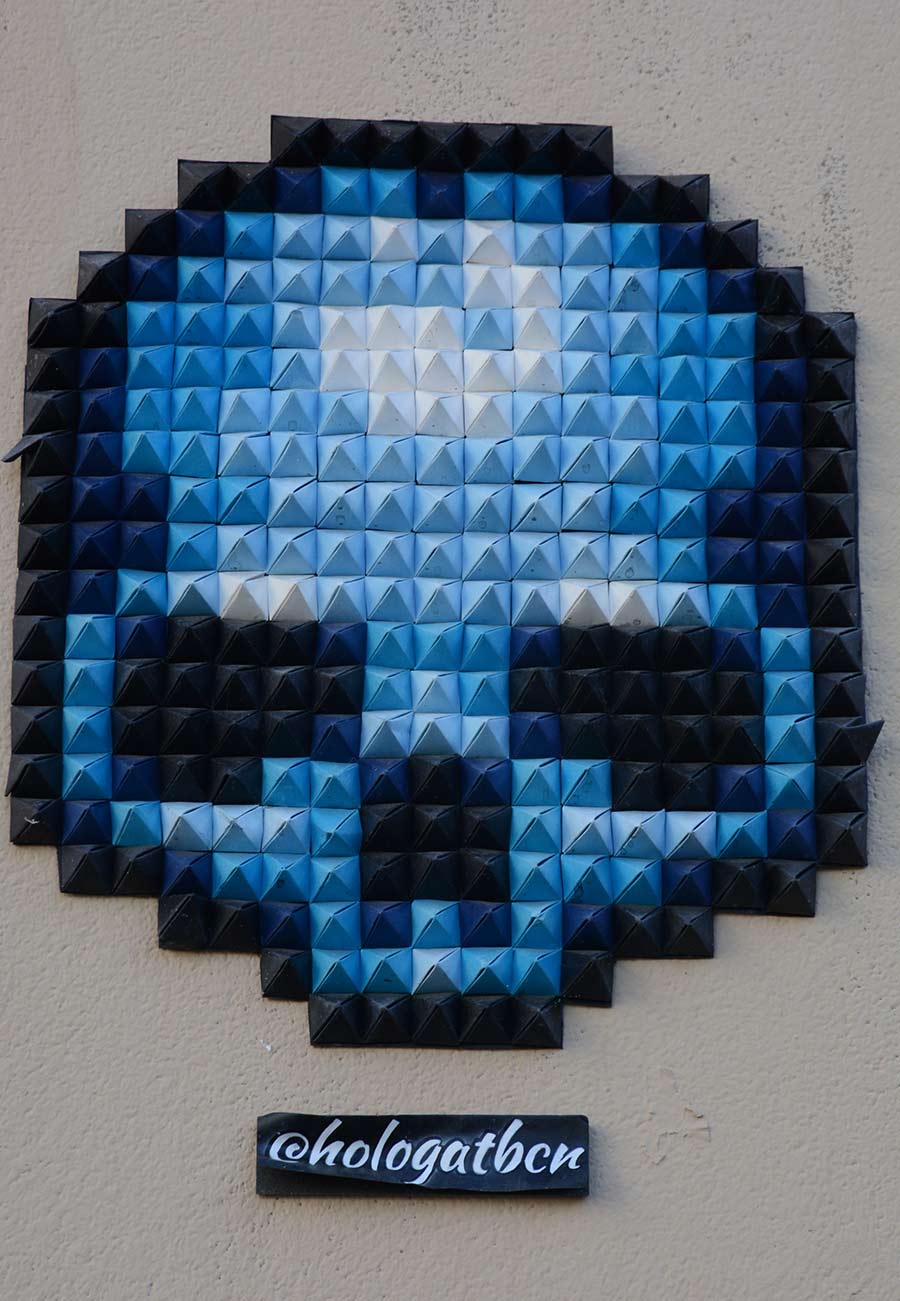
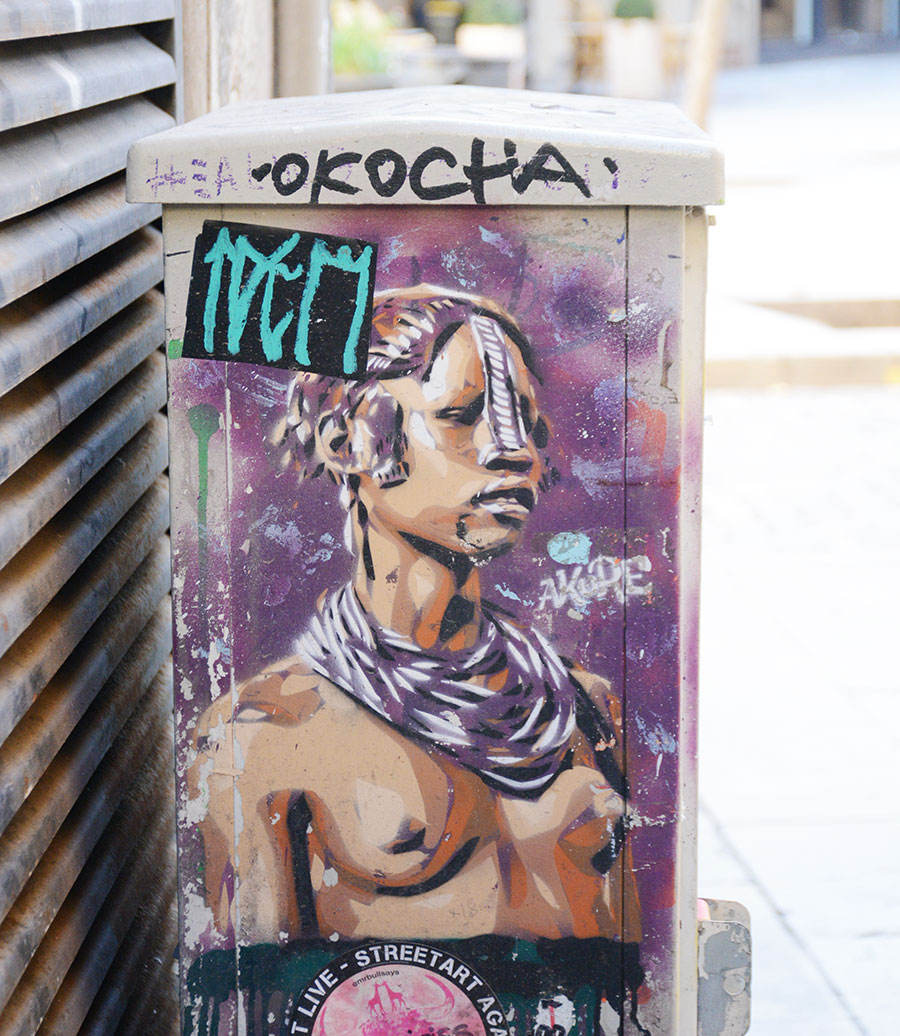
Graffiti and street art are cyclical in many ways – reflective of society, urban planning, politics, current events, demographics… Currently the city of Barcelona is pushing hard on cleansing itself of the wild graffiti and street art that brought it so many tourists 15 years ago.
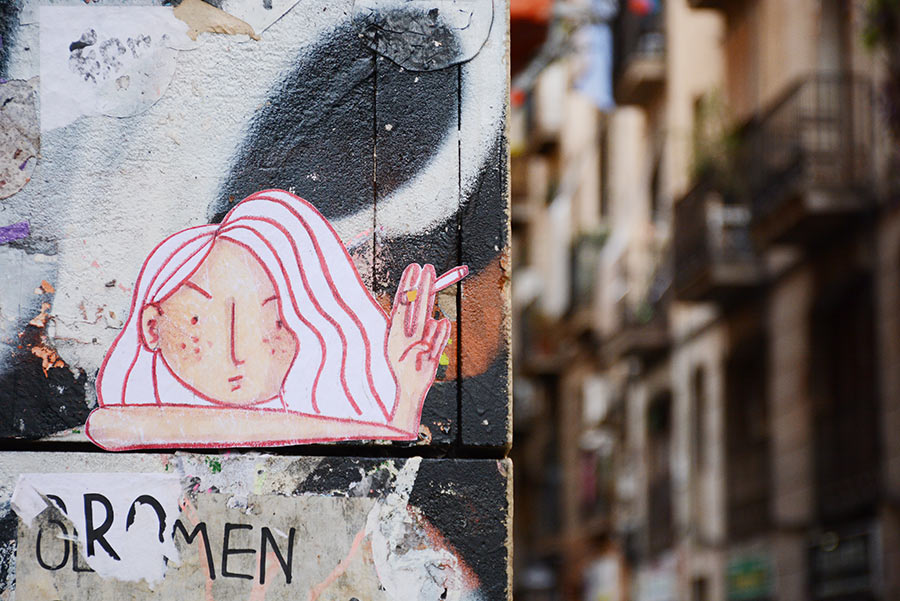
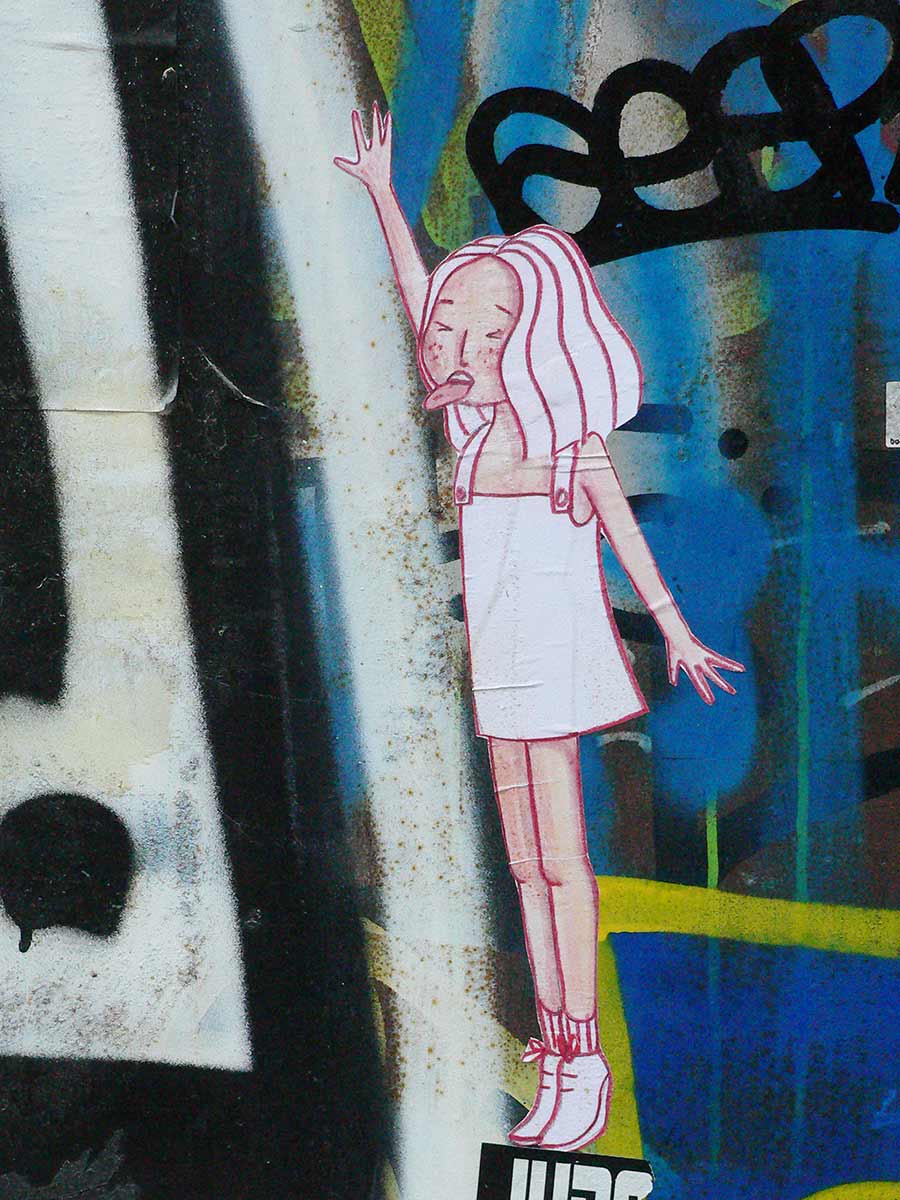
With the pendulum of real estate development and gentrification swinging from aesthetic chaos to antiseptic order, street artists are changing tactics as well, opting for smaller pieces that are quickly and surreptitiously installed.
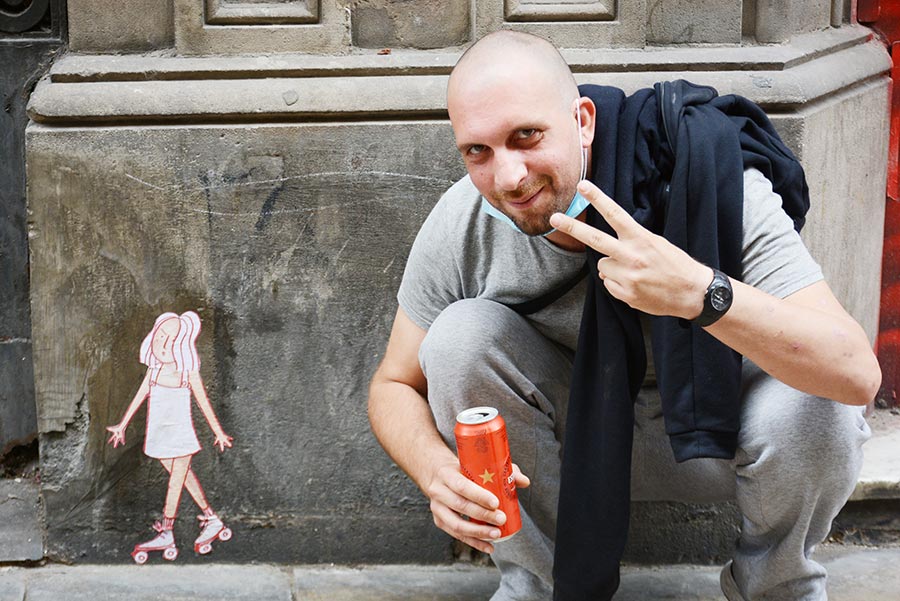
“The Raval / Ciutat Vella neighborhood used to have 4 or 5 ‘orchards,’” says photographer Lluis Olive-Bulbena, using a slang term to describe empty areas between blocks where freelance painters like to adorn abandoned walls. “Nowadays there are only one or two.”
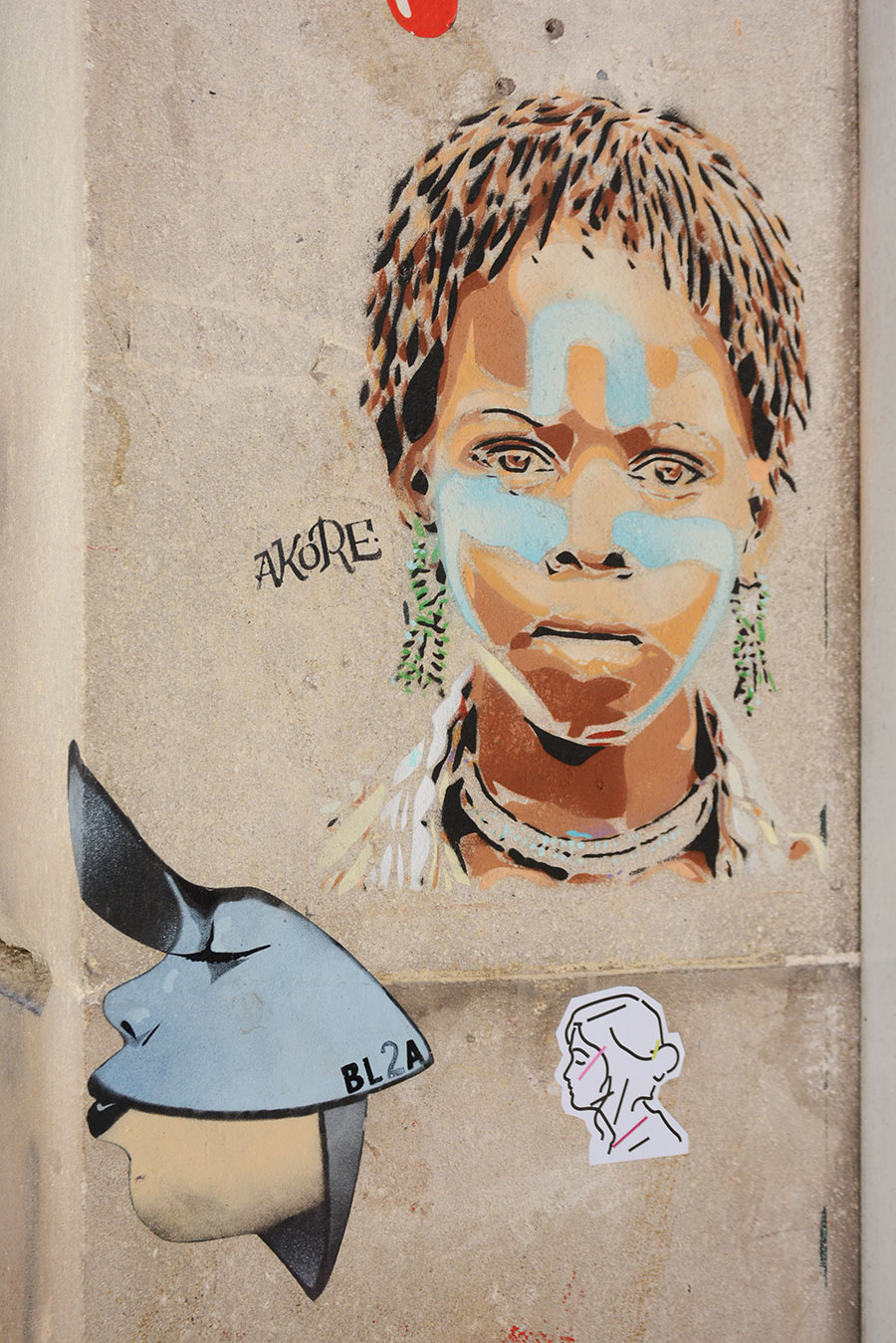
We’re pleased to introduce a number of artists specializing in smaller works; artists with names like BL2A, Karma, and Radical Playground. Each has their own style and each are part of a new wave using a smaller canvas, sometimes ingeniously; the sticker, the stencil, paste-ups, even ceramic – on the streets of Barcelona.
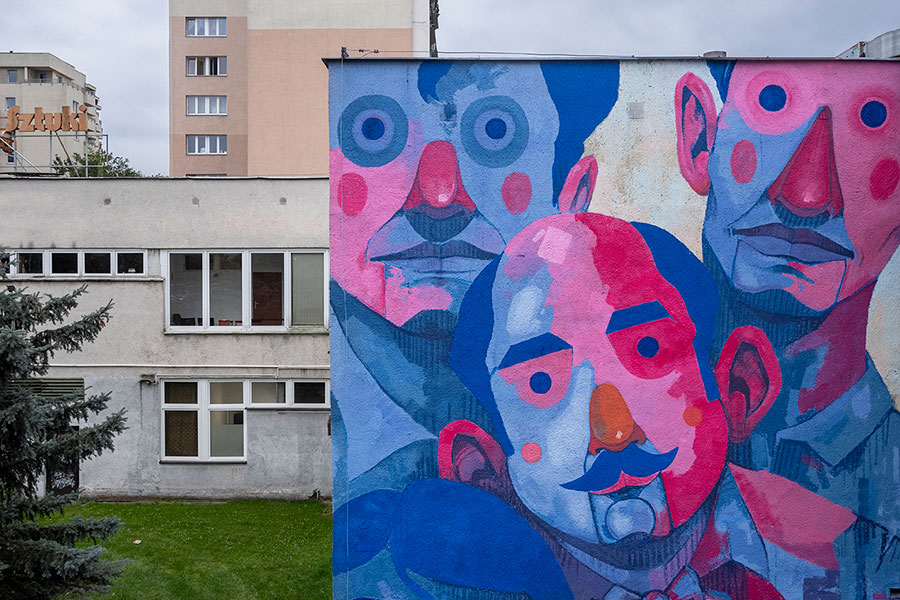
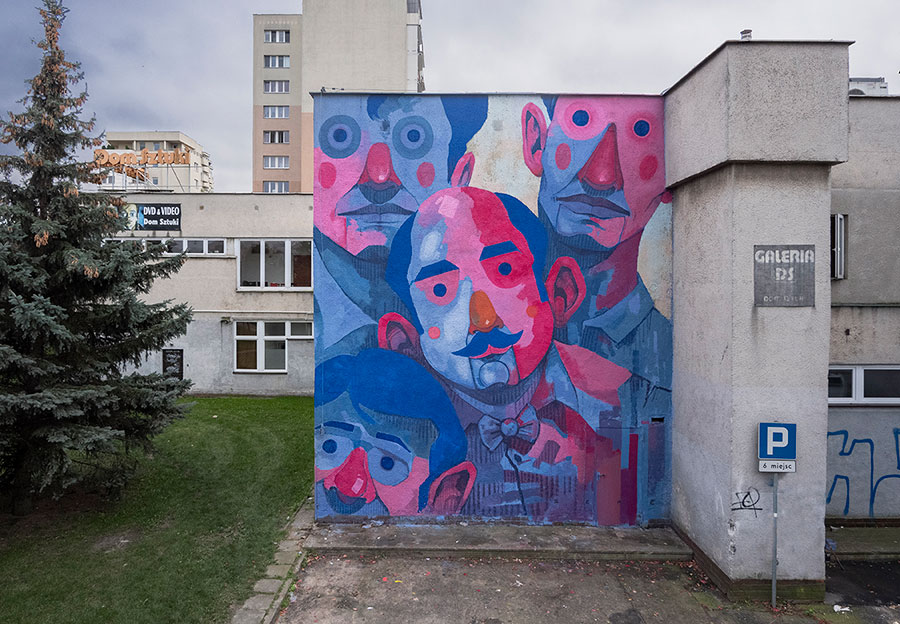
As you make your resolutions for the new year, you may find yourself trimming the bushes of your life, pruning away the unproductive branches, as it were. Polish poet Tadeausz Nowak (1930-1991) may have been thinking of clearing away the dead brush when he wrote about “ludzikowie” (petty people) in his “Frolic Psalm”.
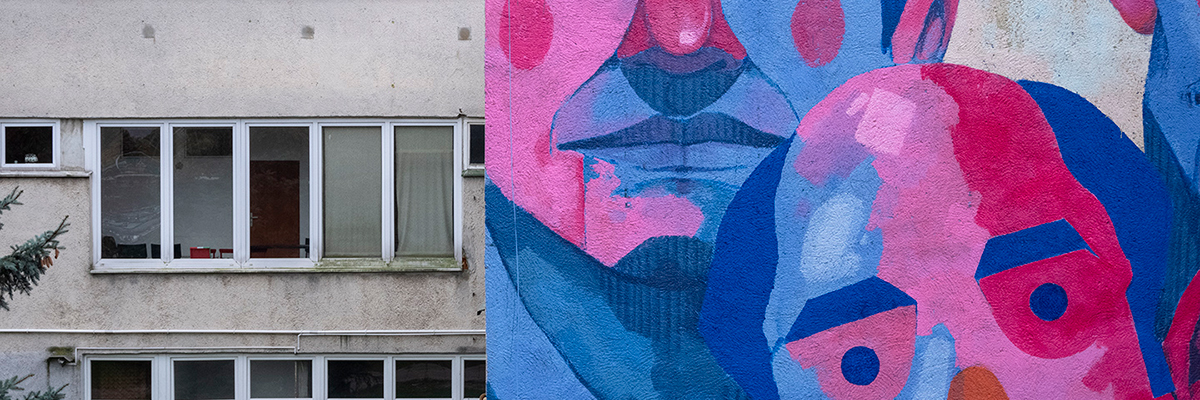
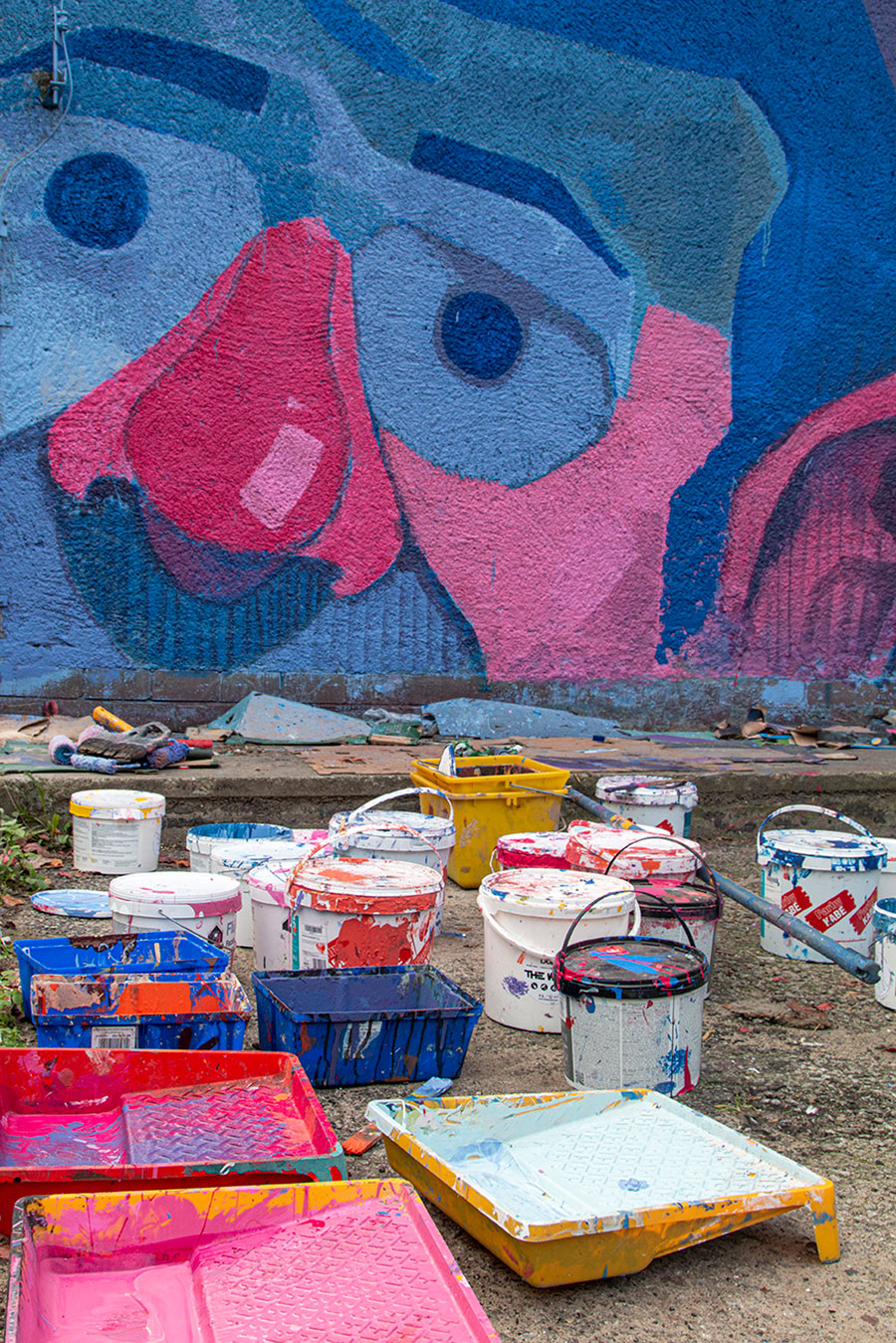
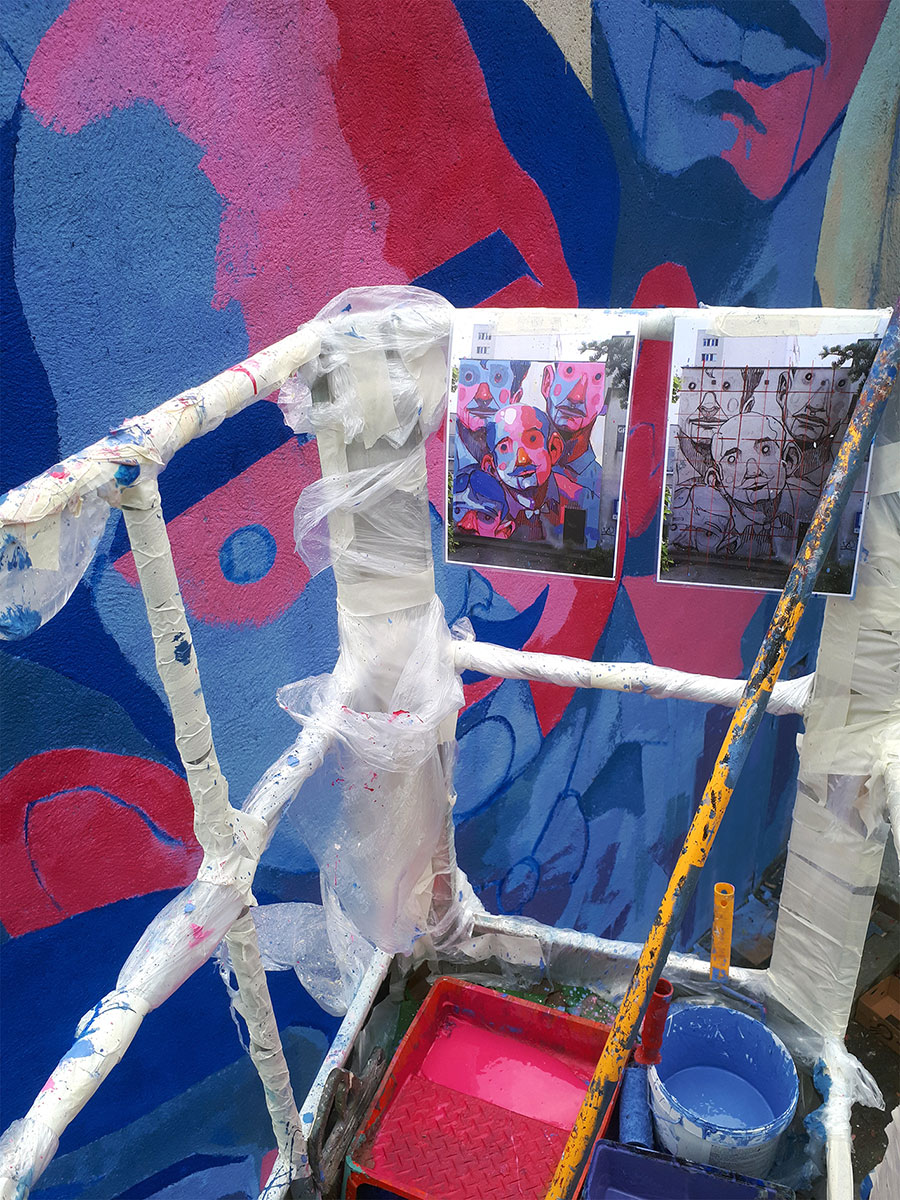
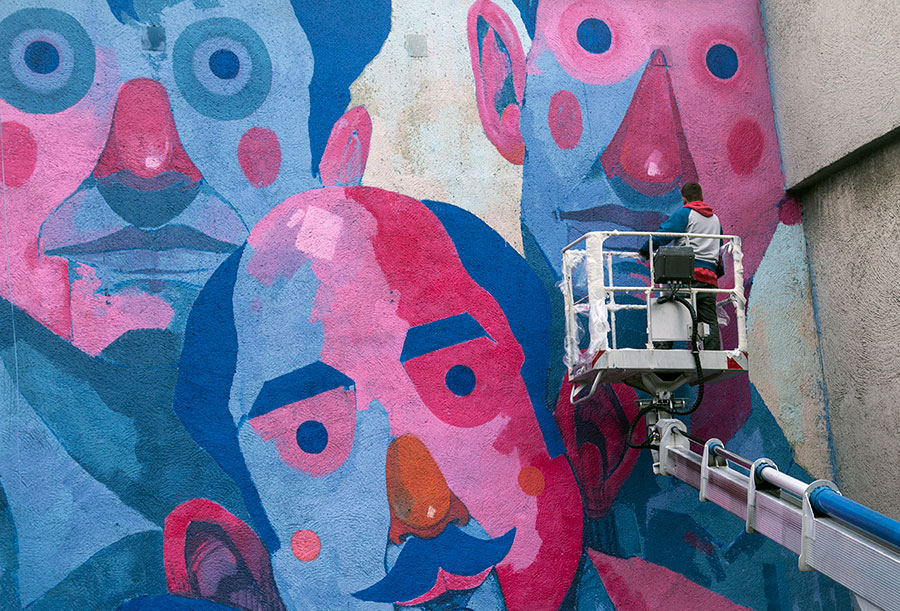
Polish street artist Michał ‘Sepe’ Wręga was born in Warsaw and tells us about this new mural he painted in his hometown as a tribute to the poet. Always in touch with his graffiti roots, Sepe now plays with a sophisticated palette like an illustrator and painter, giving these figures a maudlin cheer, mired as they are in trifling fixations.
To better describe his intentions with these pink and blue painterly depictions, Sepe quotes Nowak for us: “Heaven, oh heaven, pricked with spears, pierced through with a cow’s horn, poor petty people standing beneath with their God swamped in plaster”.
“The glacier has melted by about one meter annually since the turn of the millennium,” says Swedish street artist Vegan Flava. In fact, he says, the southern peak was Sweden’s highest mountain until two years ago as the 40 meter thick glacier continues to melt due the warming of the atmosphere. Now it is lower than the northern peak.
Today we are looking at the artists’ newest mural in Linköping, the title of which references this specific melting occurence “From Here to the Southern Peak.”
The circuitous artist mind imagines a bird from the roots of a blue corn flower in the Swedish province of Östergötland, and this painter meditates on the birds’ flight over rooftops up to the Southern Peak.
Vegan Flava’s interconnectedness of themes reminds us that one vital life system is affected by and often dependent upon the next. “Everything we humans build and live from depends on a stable climate,” Vegan Flava says, “like our water supply, agriculture, infrastructure and healthcare.”
Welcome to the first BSA Images of the Week of 2021 !
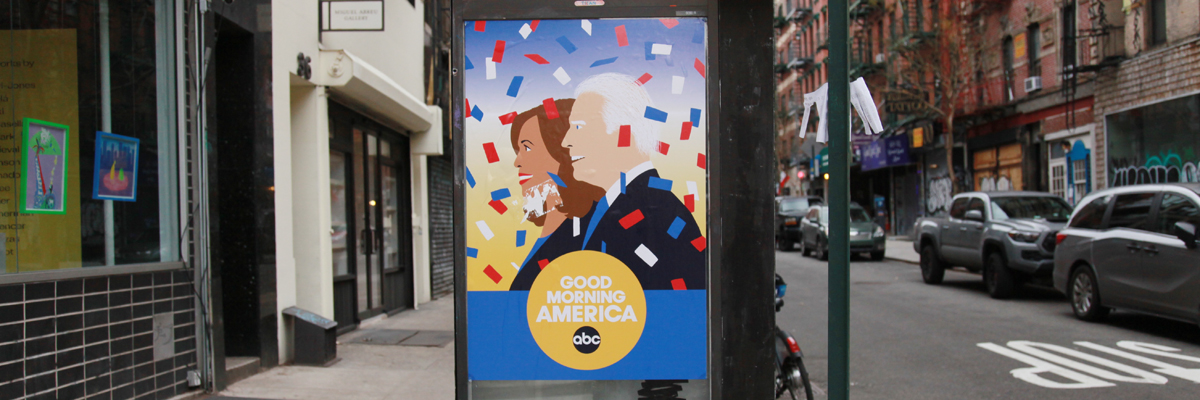
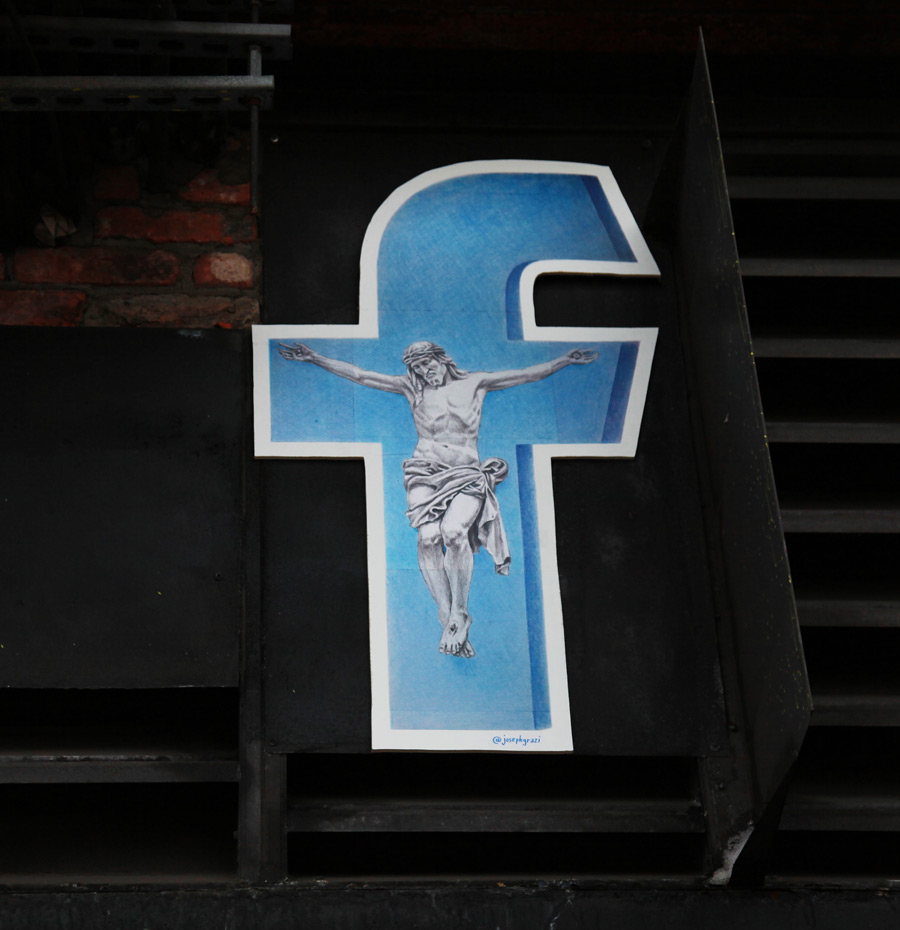
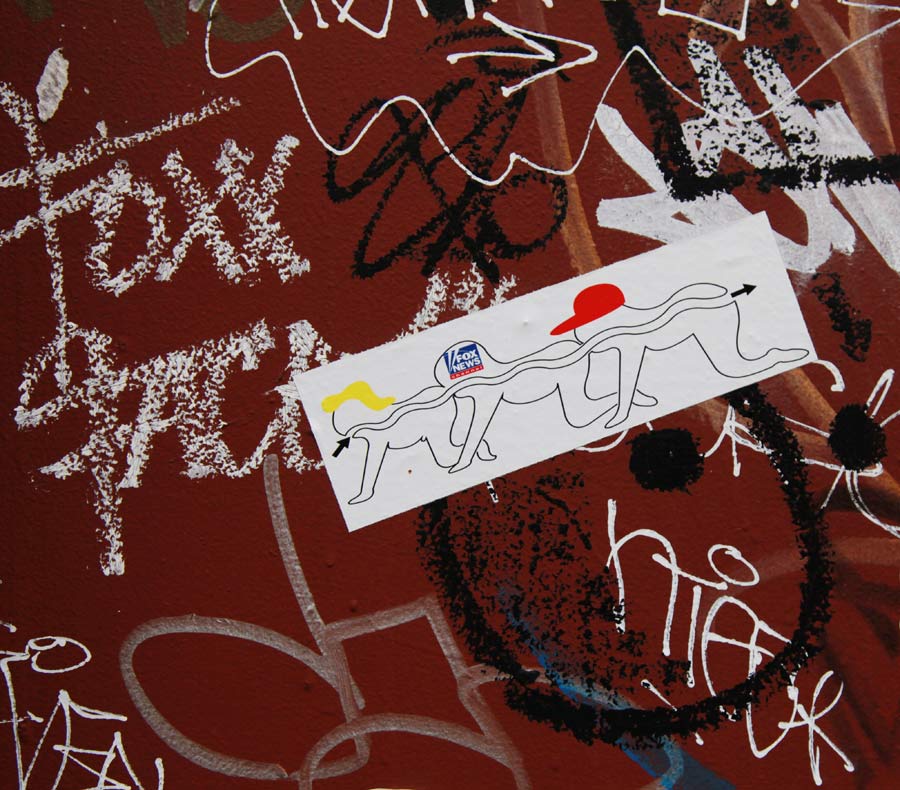
We start our collection this week with an image of Christ crucified on a Facebook logo. If this is the level of subtlety that we can expect from the new year…gurl, we in trubble.
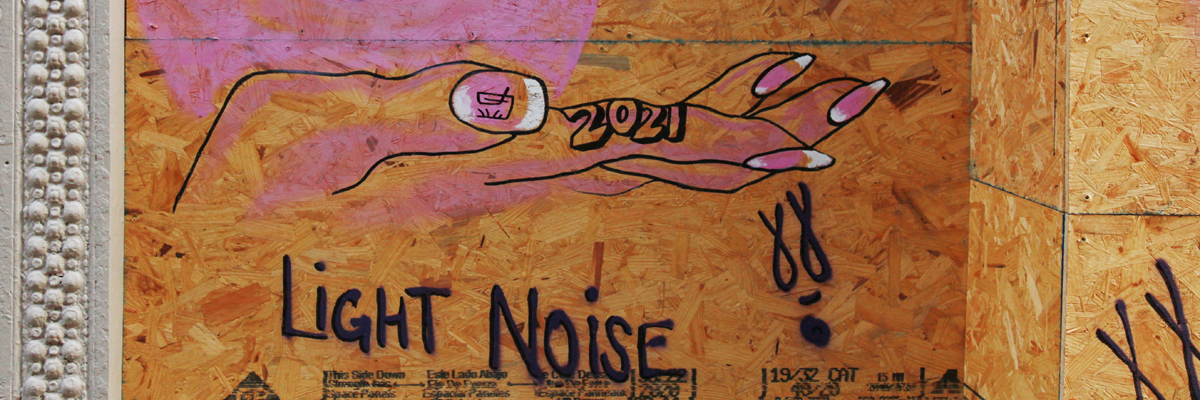
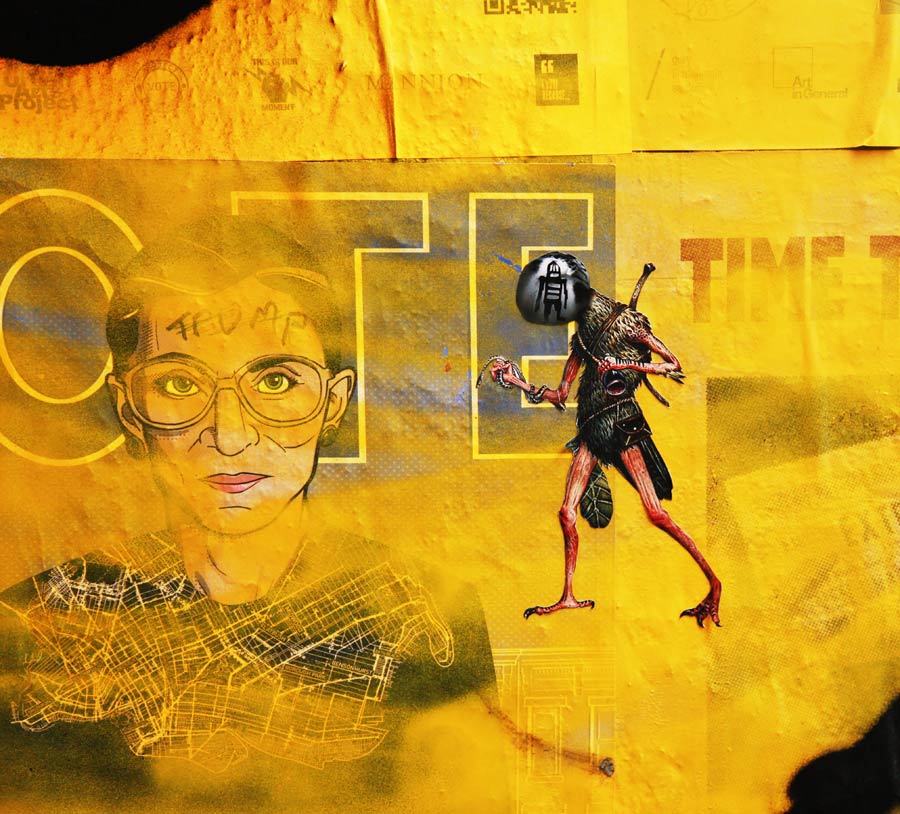
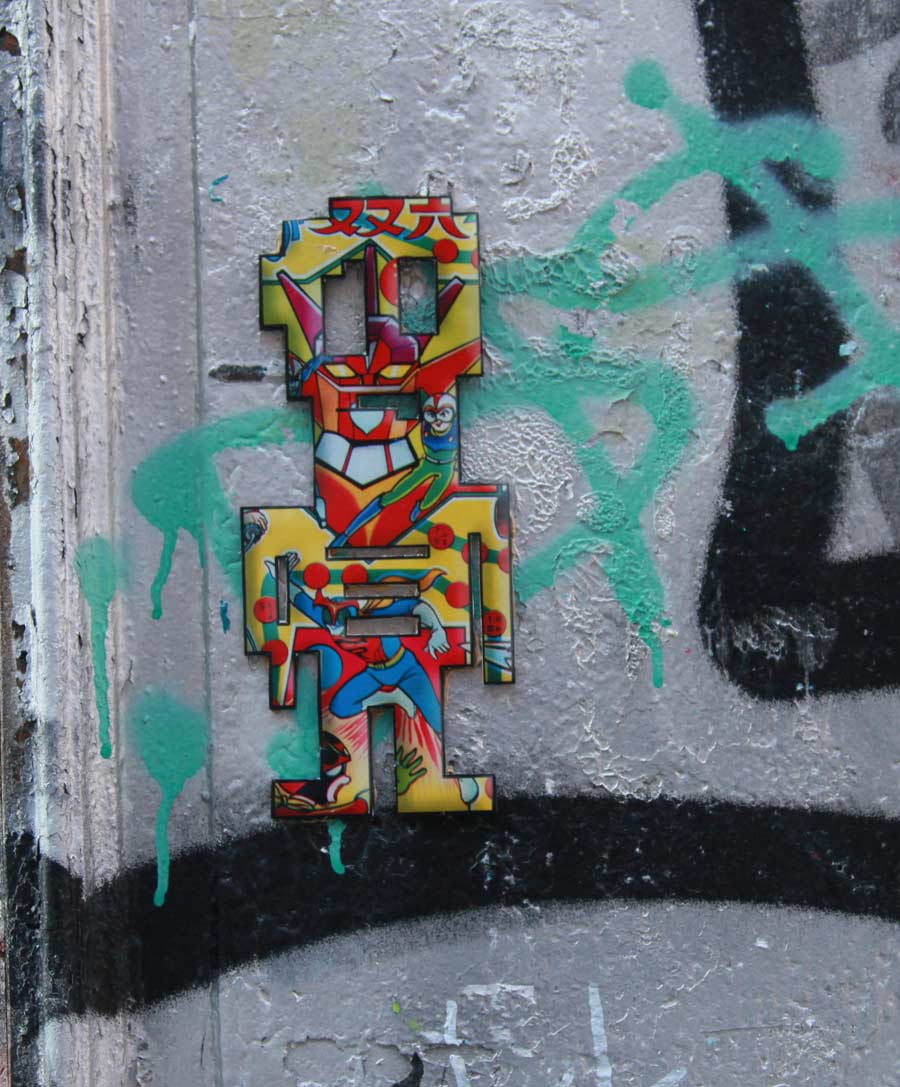
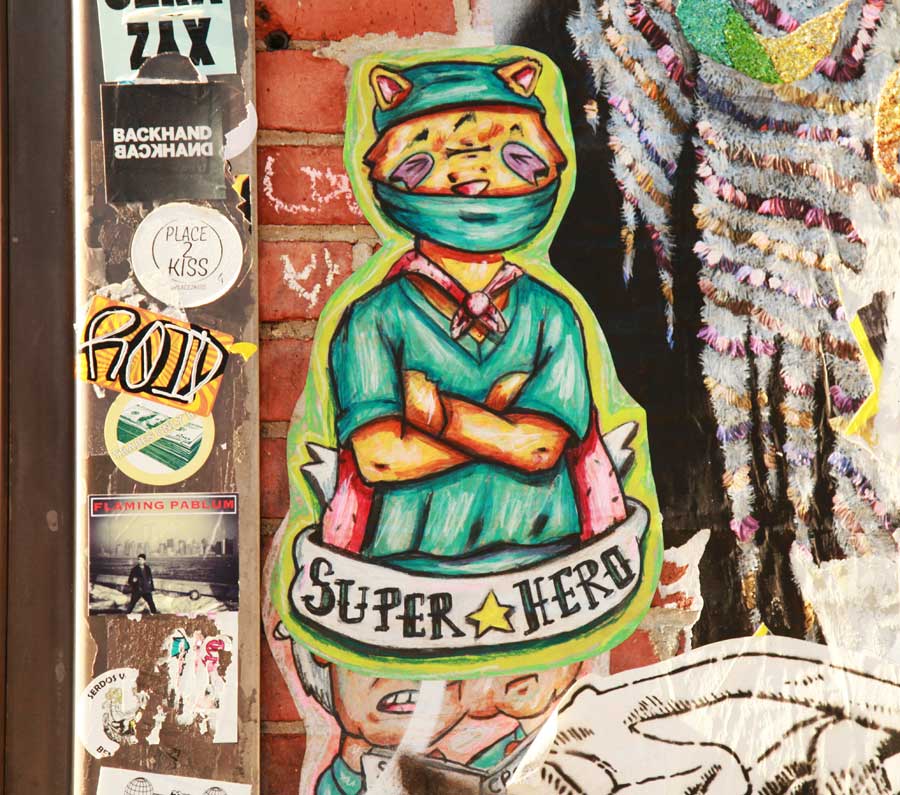
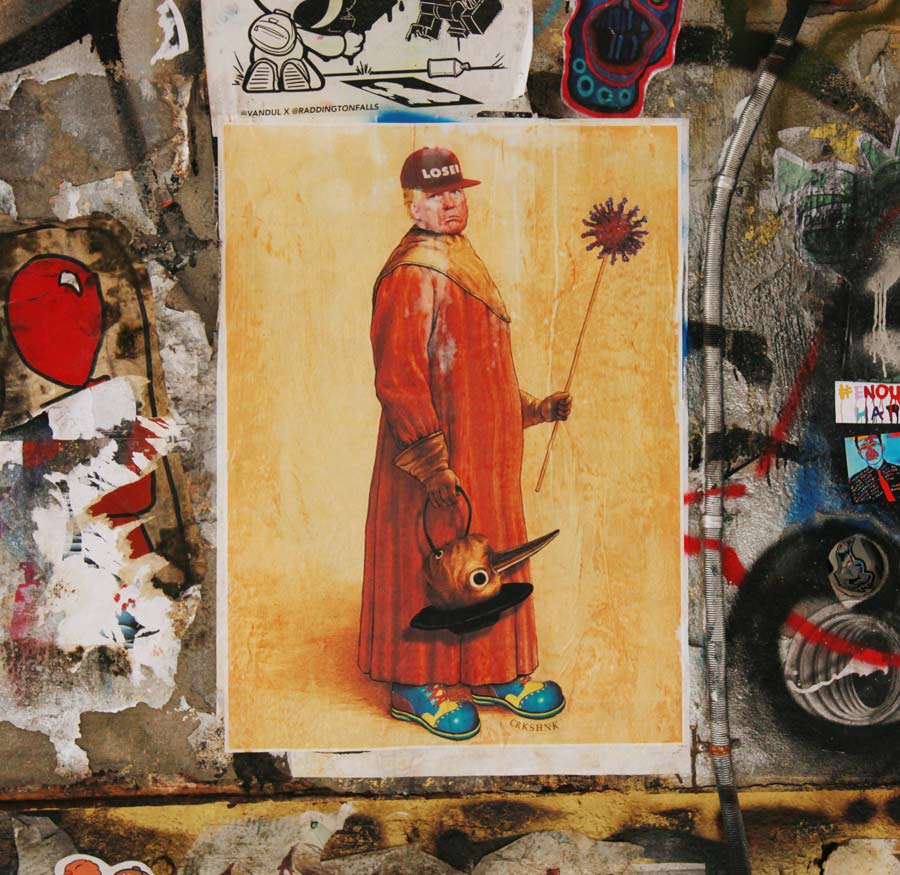
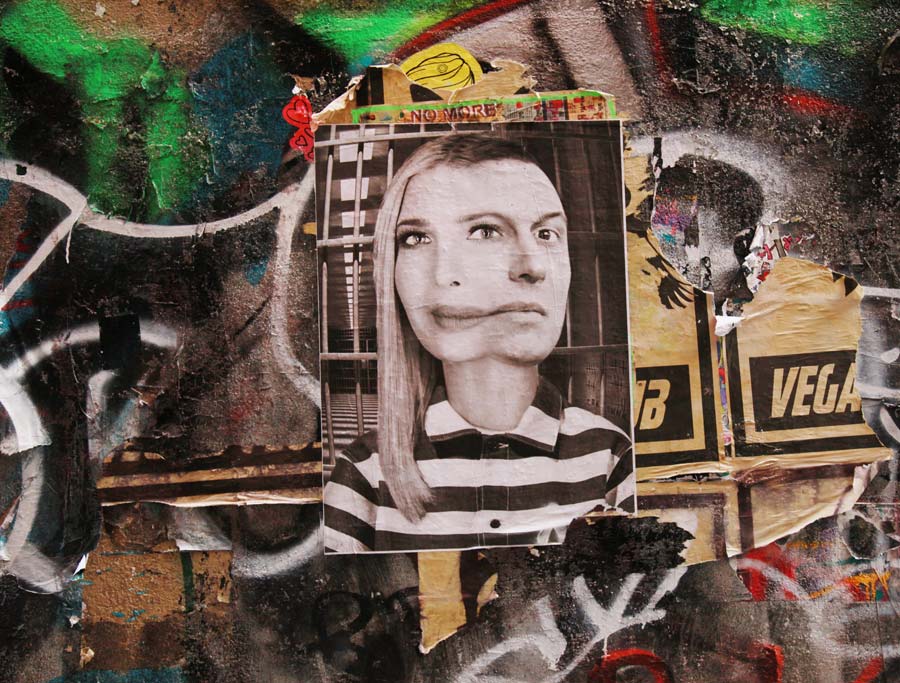
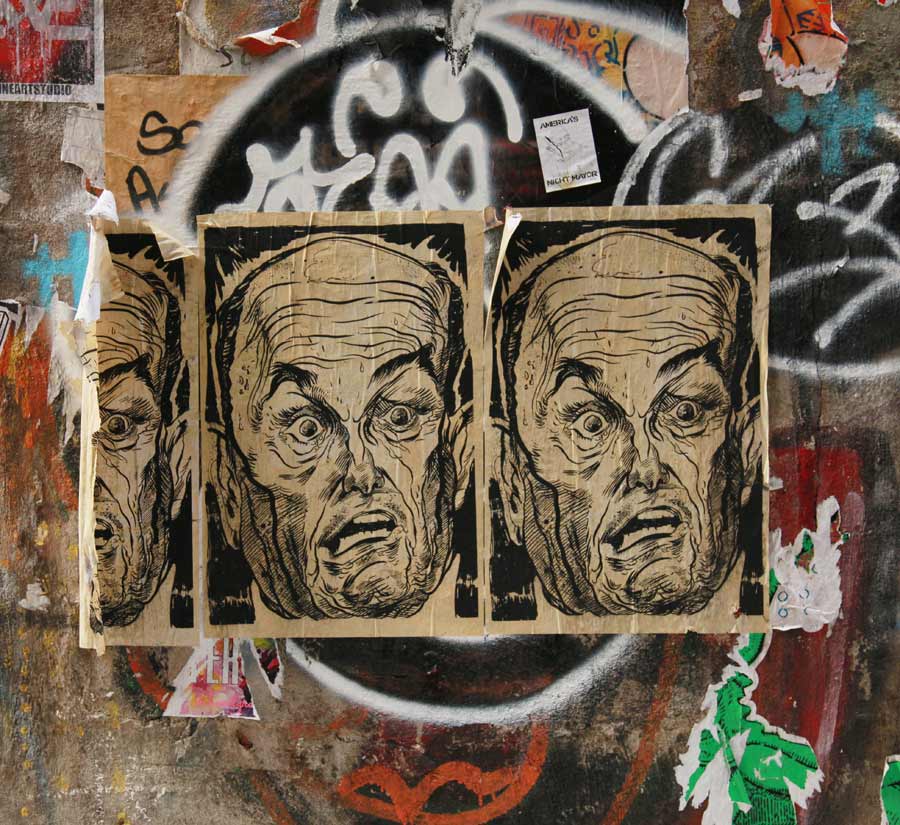
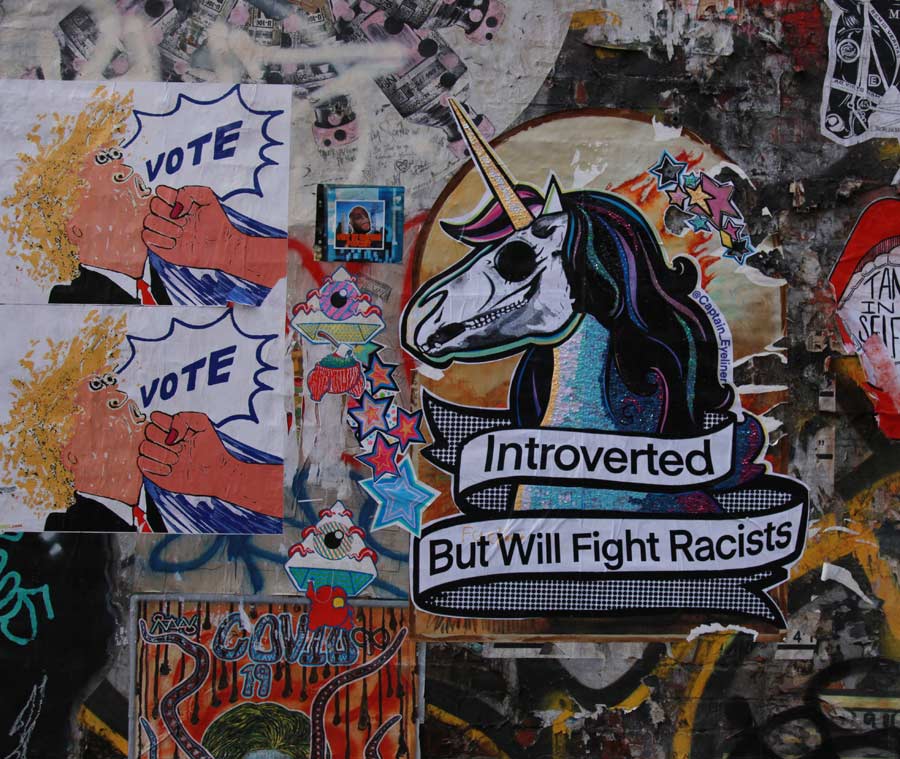
In fact, we have found that much of the organic street art that we find today has become increasingly strident in opinions expressed, especially around themes of social justice and political skullduggery. It’s all mixed in with favorites like pop figures, sports figures, cats. In a way, the artists are ahead of us, so we consider these images as the tea leaves for what is coming.
How will you interpret these messages from the street? Will you become emboldened? Scared? Or will they not have any impact on passersby?
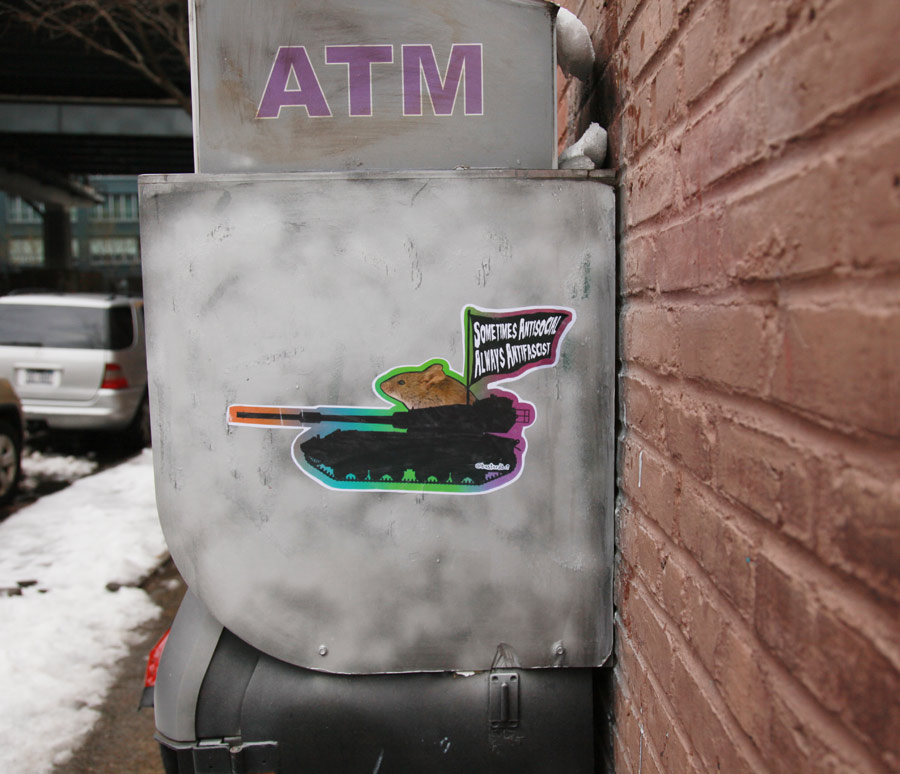
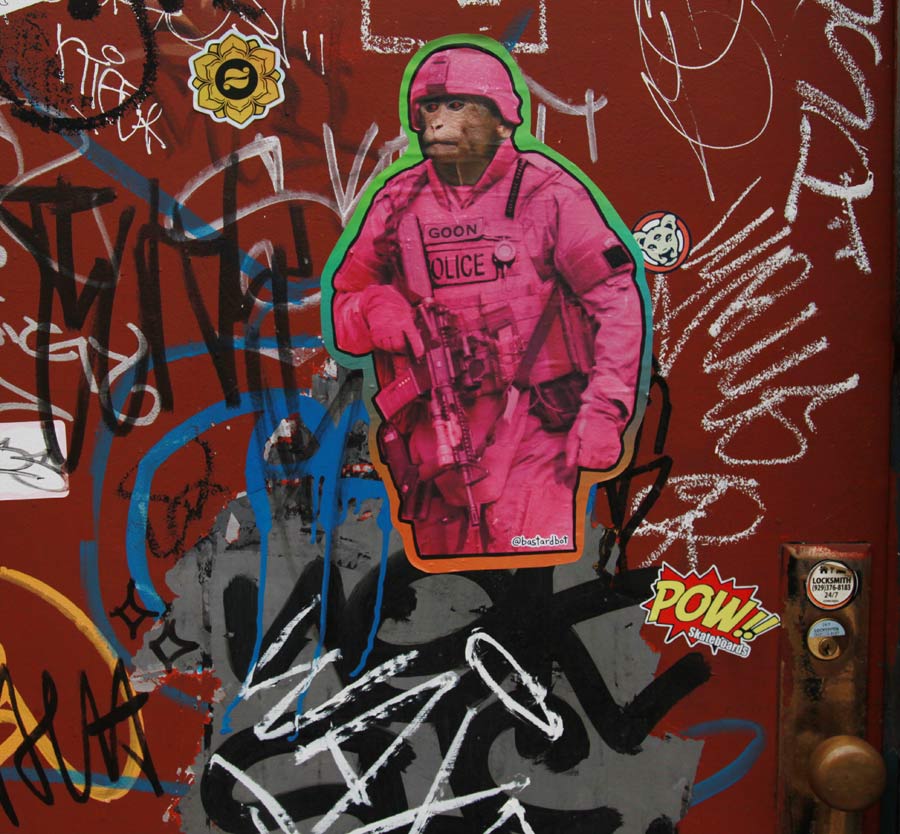
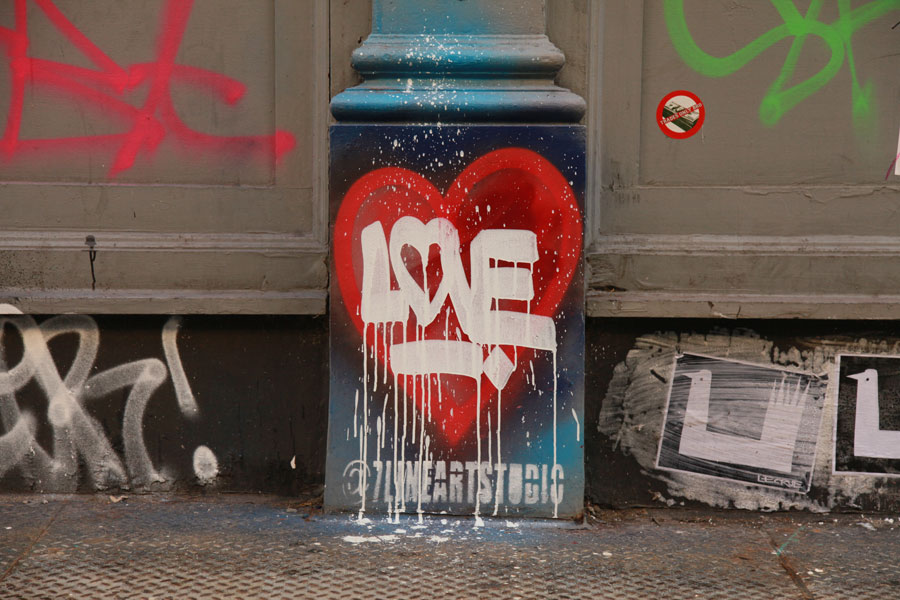
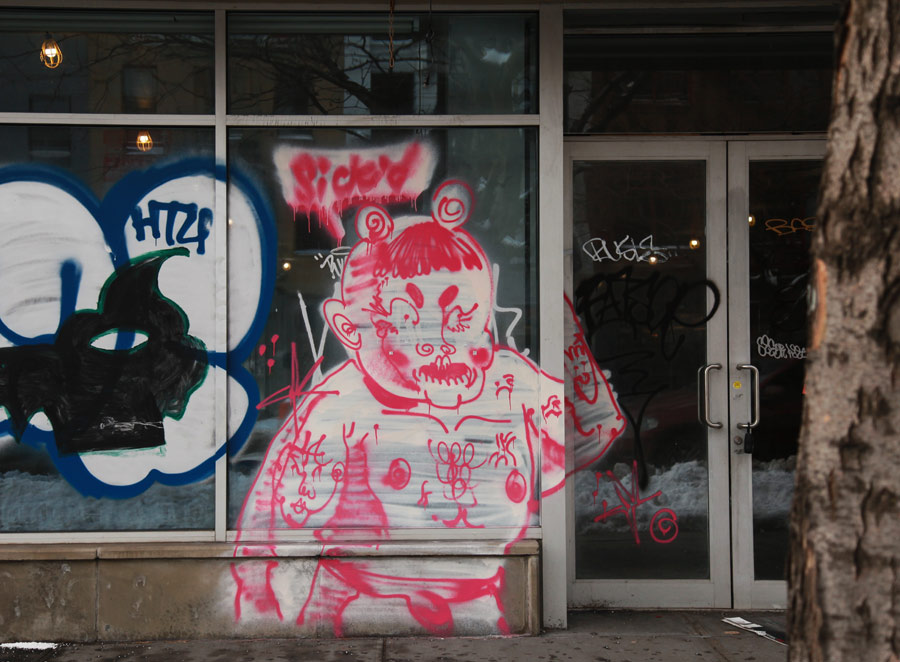
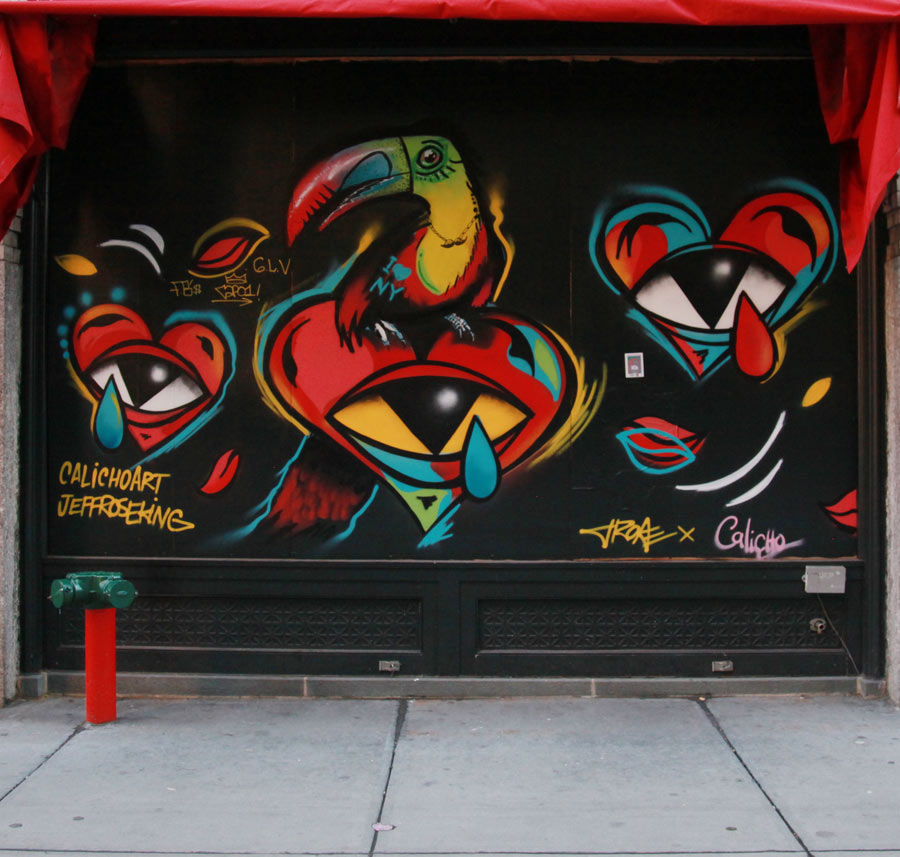
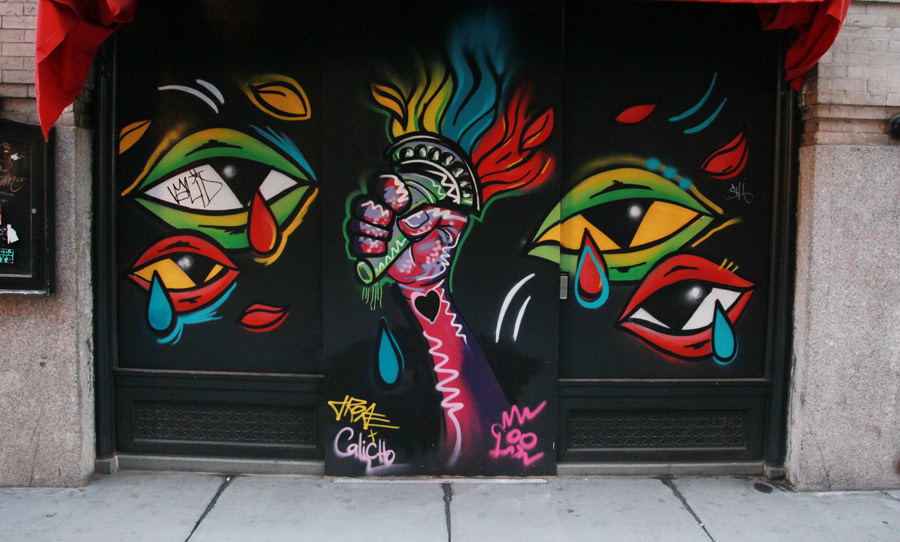
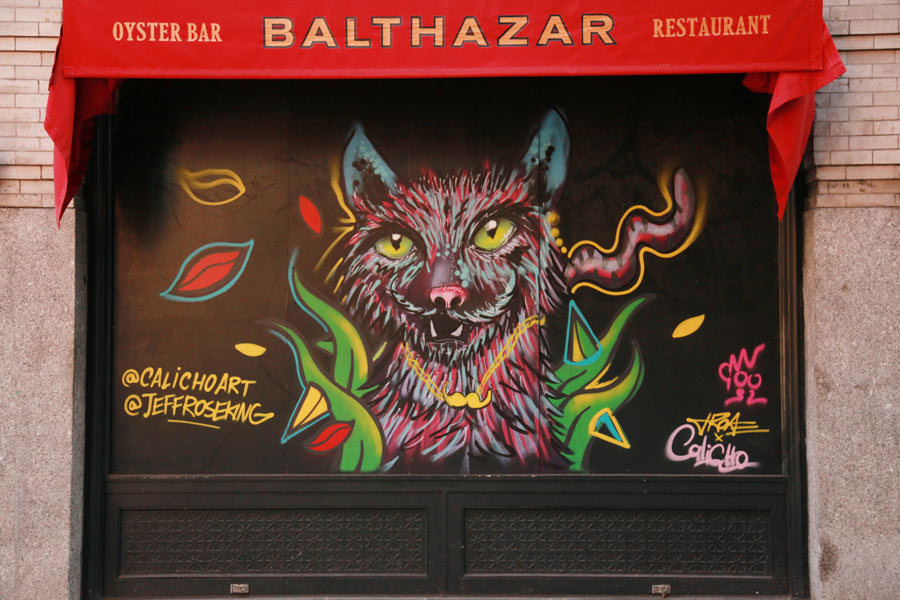
Here is our weekly interview with the streets, this week featuring 7 Line Arts Studio, Bastard Bot, Calicho Art, Captain Eyeliner, Calisi Maultra, City Kity, CRKSHNK, David F Barthold, Degrupo, Elle, Jeff Roseking, Joseph Grazi, NohJColey, Poi Everywhere, Sickid, Sticker Maul, and Stikman.
Spanish artist Gonzalo Borondo, from Valladolid, arrives at LuzMadrid Festival with Redentora, a site-specific installation that continues his steady movement …Read More »
 BROOKLYN STREET ART LOVES YOU MORE EVERY DAY