All posts tagged: Ted Riederer

Windows Into Masao Gozu: A Reflection by Ted Riederer on the Art of Urban Memory

Windows Into Masao Gozu: A Reflection by Ted Riederer on the Art of Urban Memory

In the charged aftermath of 1960s protest movements, artists began taking their practices beyond galleries and into the streets, forging a new relationship with public space and everyday materials. The Situationists, for example, sought to interrupt the routines of daily life by wandering the city without a plan, using these aimless drifts to reveal the city’s hidden psychological and political layers. Around the same time, Gordon Matta-Clark carved literal voids into abandoned buildings, turning architecture itself into sculpture and critique. It was during this fertile moment, when early graffiti writers were claiming walls and conceptual artists were transforming the urban landscape, that Masao Gozu began his own quiet, obsessive project in New York. Though not street art in the conventional sense, Gozu’s decades-long practice of photographing and reconstructing building façades from the Lower East Side resonates with the same spirit: using the city itself as subject, surface, and raw material. In the essay that follows, artist and curator Ted Riederer—who first met Gozu while directing Howl! Happening—offers an intimate portrait of an artist who transforms dereliction into devotion, and time itself into sculpture.


During the Pleistocene 1970s and 80s, New York street art culture coalesced into a variegated art form. What began with simple tags ended with museum exhibitions. In the early 80s, when East Village street artists were painting and posting on derelict buildings, Masao Gozu was disassembling them and reconstructing them into monuments. I first met Gozu when I was the artistic director of Howl Happening: An Arturo Vega project. We mounted his exhibition Timeframe in the Fall of 2017. I was awestruck by his all-encompassing quasi-spiritual devotion to his work. Piece by piece he dismantled abandoned buildings. Piece by piece he methodically rebuilt them in his studio. In disassembling and reassembling a puzzle of bricks, he was in search of a fleeting moment in time. His work is not street art, rather art made with the streets.

Born at the end of WW2, Masao Gozu grew up in rural Nagano, Japan, where his family had lived for ten generations. Like many other artists his age, Gozu was discouraged by what he perceived as a lack of opportunity in the reconstruction and occupation of post-war Japan. He applied to art school in the United States as an escape and was accepted into the Brooklyn Museum Art School.
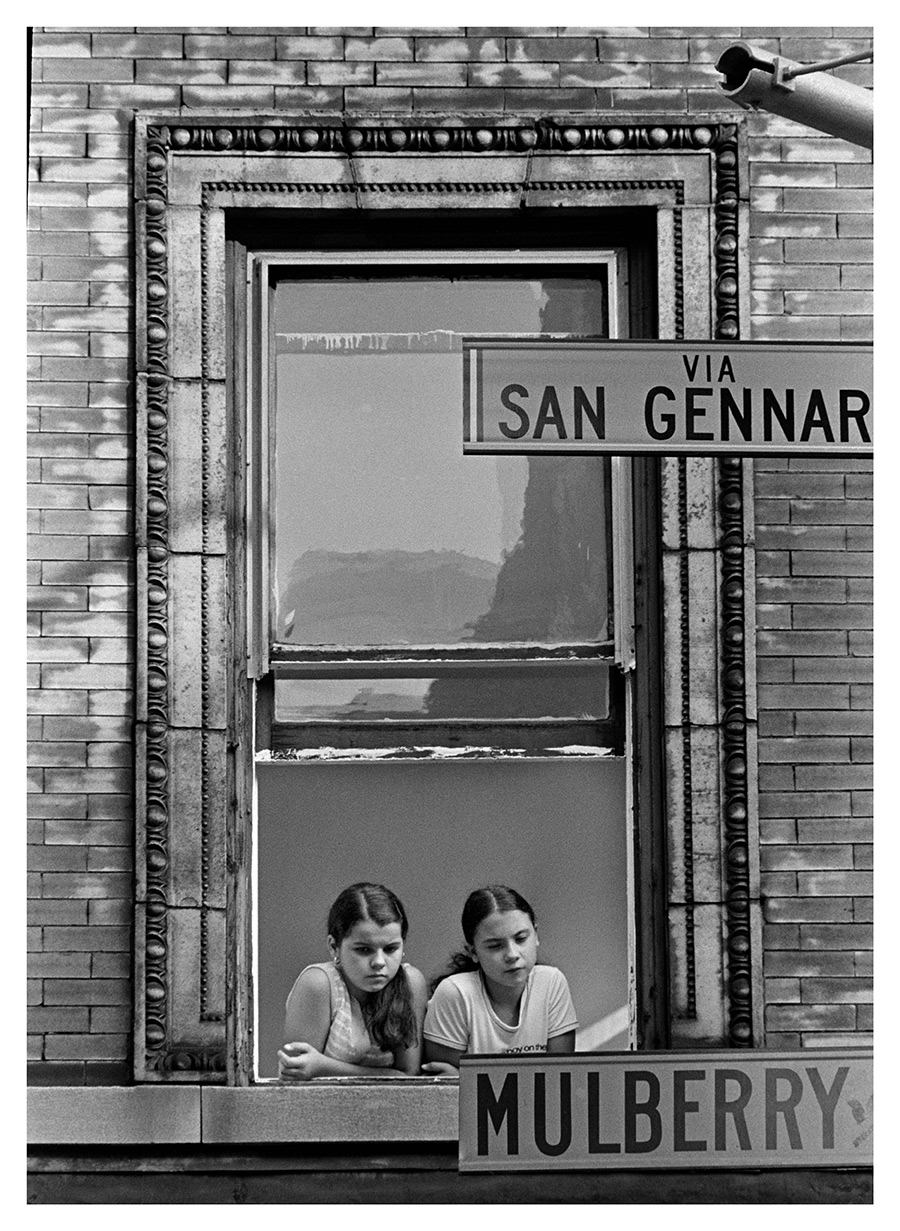
Masao Gozu, Mulberry Street, Little Italy, New York, 3 p.m., August 21, 1978. From the 33 Windows Series. (photo © Courtesy of the artist and Court Tree Collective)

There is an under-reported history of Japanese artists contributing to the vibrant downtown art scene in New York during the 1970s and 80s. Artist and friend Toyo Tsuchiya, who moved to New York in 1980, attributed his own immigration to an enticing article about the New York art scene published in the Japanese art magazine Bijutsu Techo. Unable to relate to the stiff, formal academic art world reigning in Japan during these years, Tsuchiya described arriving in New York and being quite surprised to find an established and thriving community of avant-garde Japanese artists on the Lower East Side, centered for the most part, around Kazuko Miyamoto’s Gallery Onetwentyeight.

Penniless and alone, Gozu had moved to Brooklyn in 1971. At the Brooklyn Museum Art School he studied under Reuben Tam, a landscape painter. Through this community, Gozu found other artists who helped him find work and housing. 1971 is also the year he began taking pictures of windows.
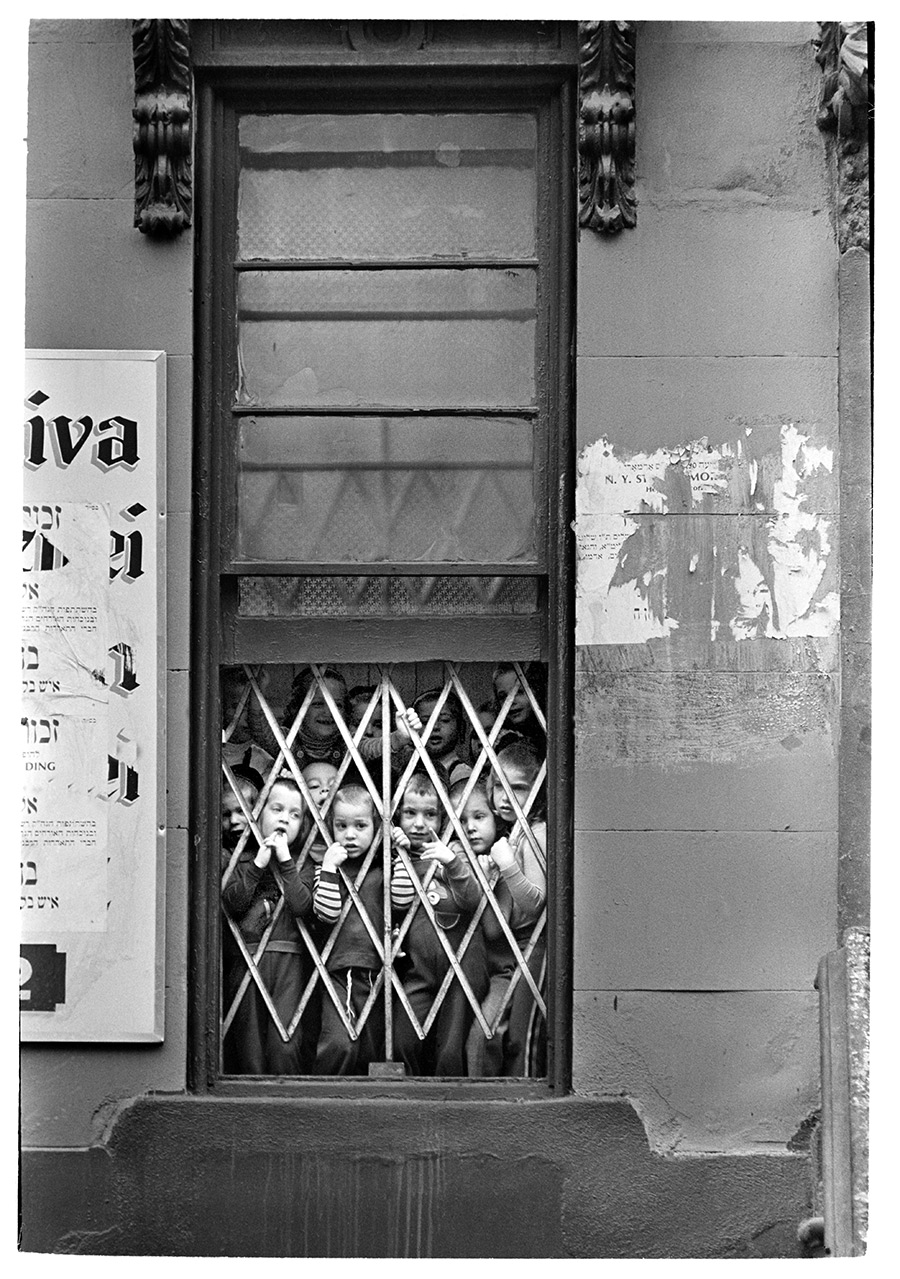
Masao Gozu, Williamsburg, Brooklyn, 4 p.m. October 12, 1980. From the 33 Windows series. (photo © Courtesy of the artist and Court Tree Collective)

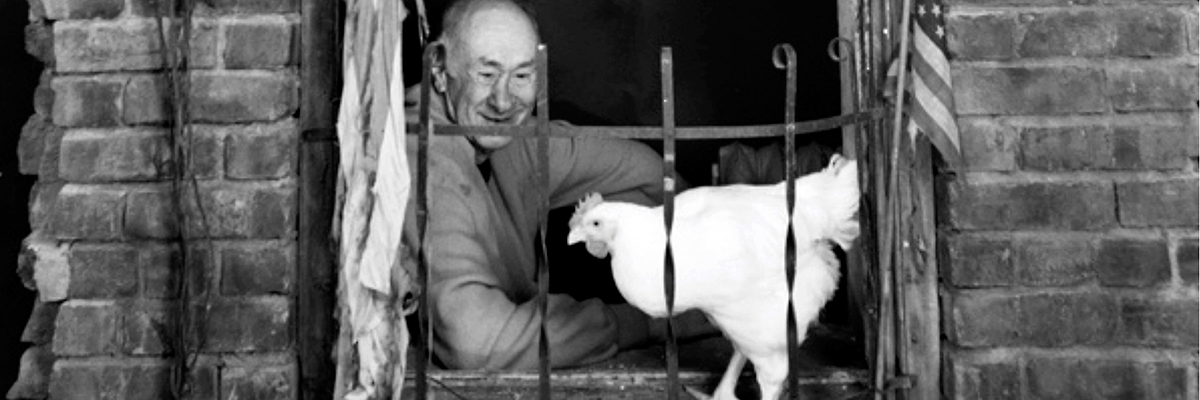
Stalking parades, street fairs, and feast days, Masao Gozu photographed the diverse residents of New York’s immigrant neighborhoods peering out apartment window frames. In almost all of the photographs of windows, the subjects are gazing at some action outside the frame of the window, either on the street below or up in the sky above. This series entitled 33 Windows references the number 33 which in Buddhism is a sacred number representing infinity.

Gozu’s Window Series captures the “zeitgeist” of New York in the 70s and 80s with as much aesthetic appeal as some of the storied photographs of the city such as those by Robert Frank, Diane Arbus, and Alfred Stieglitz. There is, however, something distinct and unique in Gozu’s artistic vision. Through the repetition of his formal composition in which the window frame is always centered in the photograph, Mazao Gozu’s pictures represent less of a documentation of everyday life, and more of an investigation into time and form.

This conceptual nod to the architecture of the window is reminiscent of the work of Bernd and Hilda Becher whose pictures of industrial structures from the same time period evade the categorization of traditional landscape photography. Their “tableau-like arrangements …always created and conceptualized according to the same parameters, inscribe themselves in the presentation space.” The Bechers label their work as Anonyme Skulpturen or Anonymous Sculptures.”¹
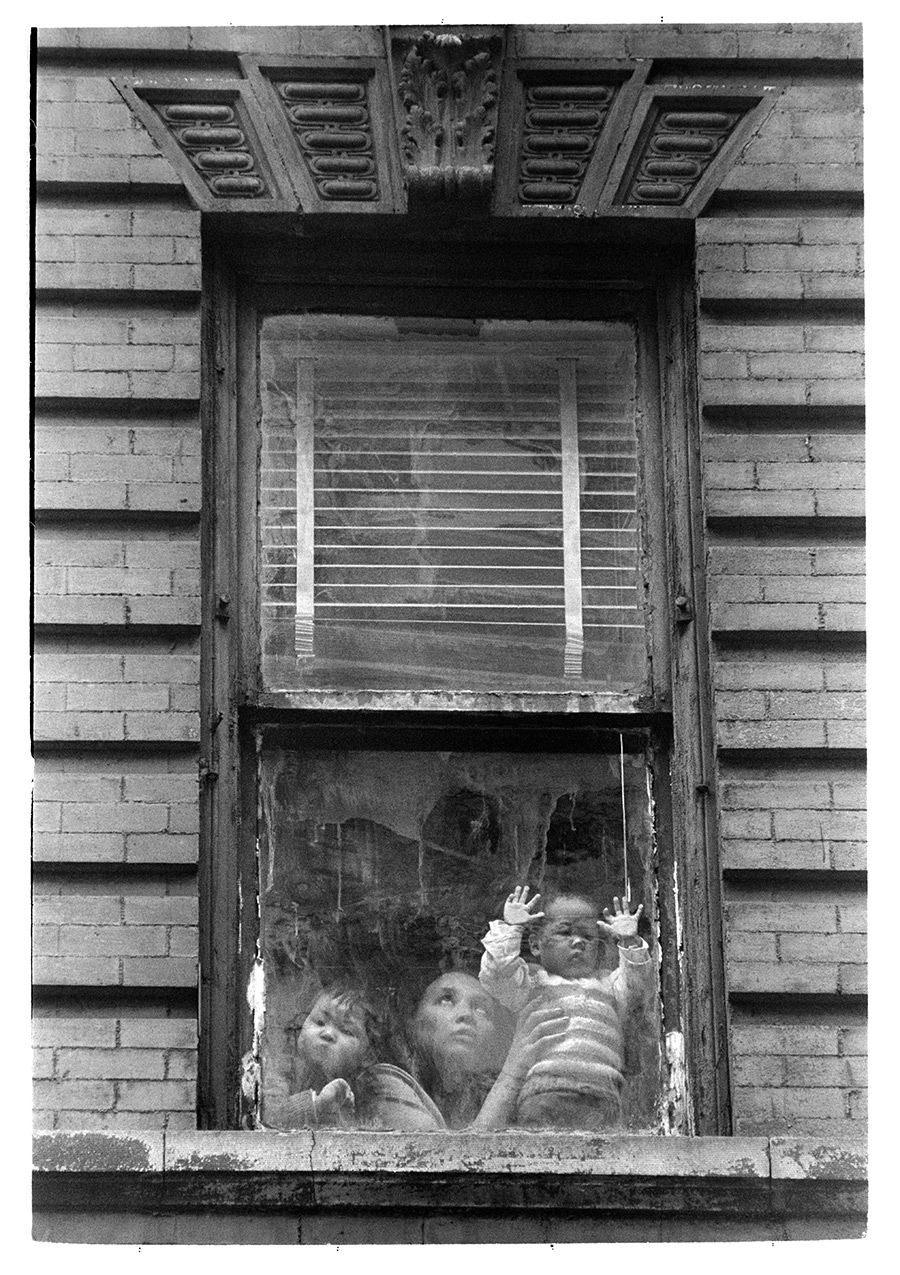
Masao Gozu, Pell Street Chinatown, New York, 4 p.m. January 10, 1975. From the 33 Windows series. (photo © Courtesy of the artist and Court Tree Collective)

In his other photographic series 264, and Harry’s Bar, the practice and discipline of taking repetitive photographs over the course of years from the same position again and again hints that photography was a tool in part of a much larger conceptual practice. In Harry’s Bar, Gozu hunted the precise moment when a bar patron appeared in the exact position in lower left windowpane of a bar at 98 Bowery. To produce a series of 20 photographs, Gozu spent five years rigorously tracking and hunting the absolute image.

I asked Gozu how he transitioned from taking pictures of buildings to making sculptures with buildings. He answered that, “It started with Harry’s Bar.” Masao writes, “When it closed, I saw a sign that said ‘Everything for Sale’ and had the idea of buying the entire window and exhibiting it at a photo exhibition with photo. I tried to negotiate with the bar, but it didn’t work out.”
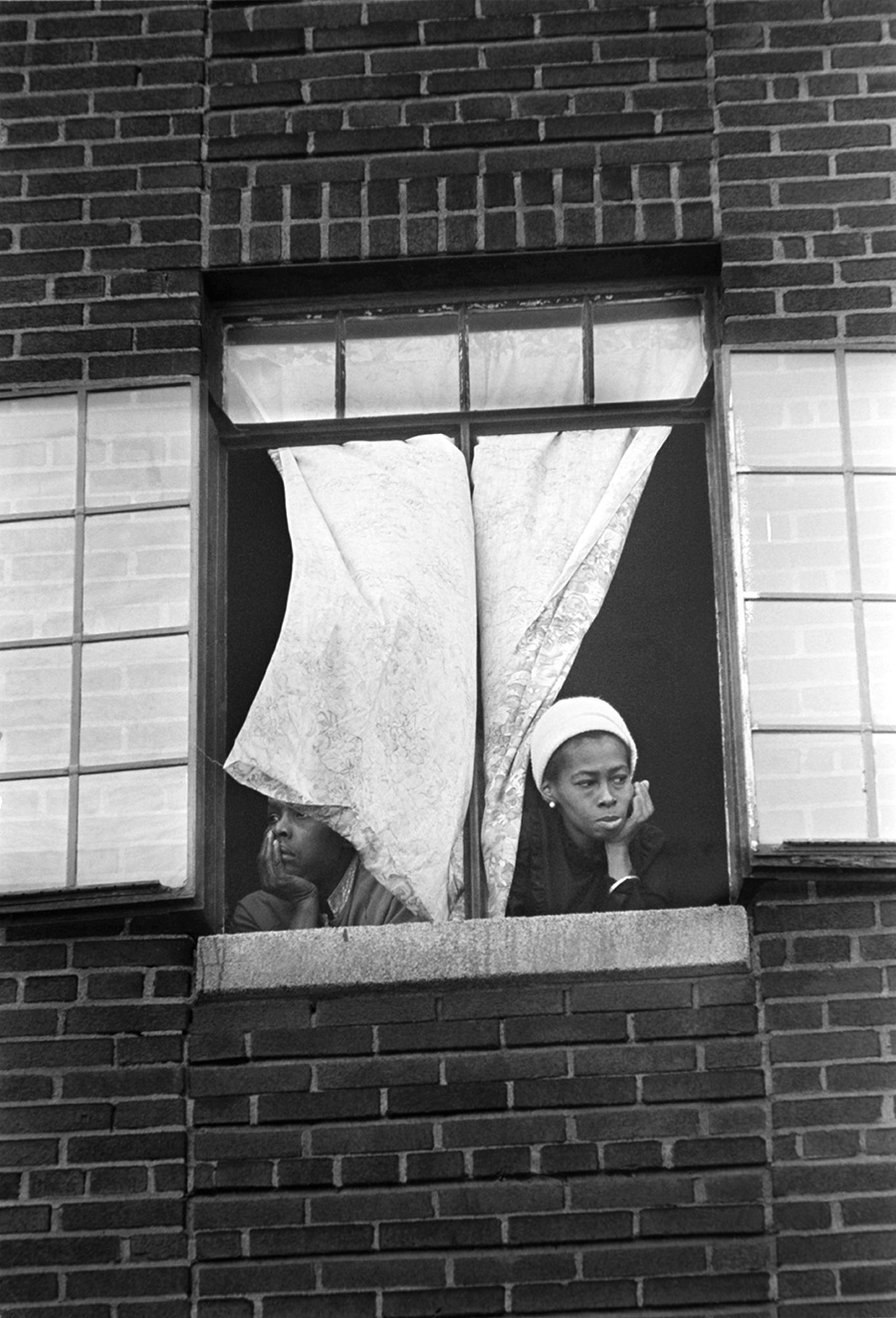
Masao Gozu, Atlantic Ave, Brooklyn, 4 p.m., November 1, 1975. From the 33 Windows series. (photo © Courtesy of the artist and Court Tree Collective)

Masao continues, “Then, around 1983, I came across a destroyed building near Wall Street area and tore off the bricks and window frames from the surface, carried them to my apartment, and rebuilt them. It was an ordinary apartment, so the living room floor sank, so I quickly secured space in the basement of a nearby East village apartment and started assembling the windows.”

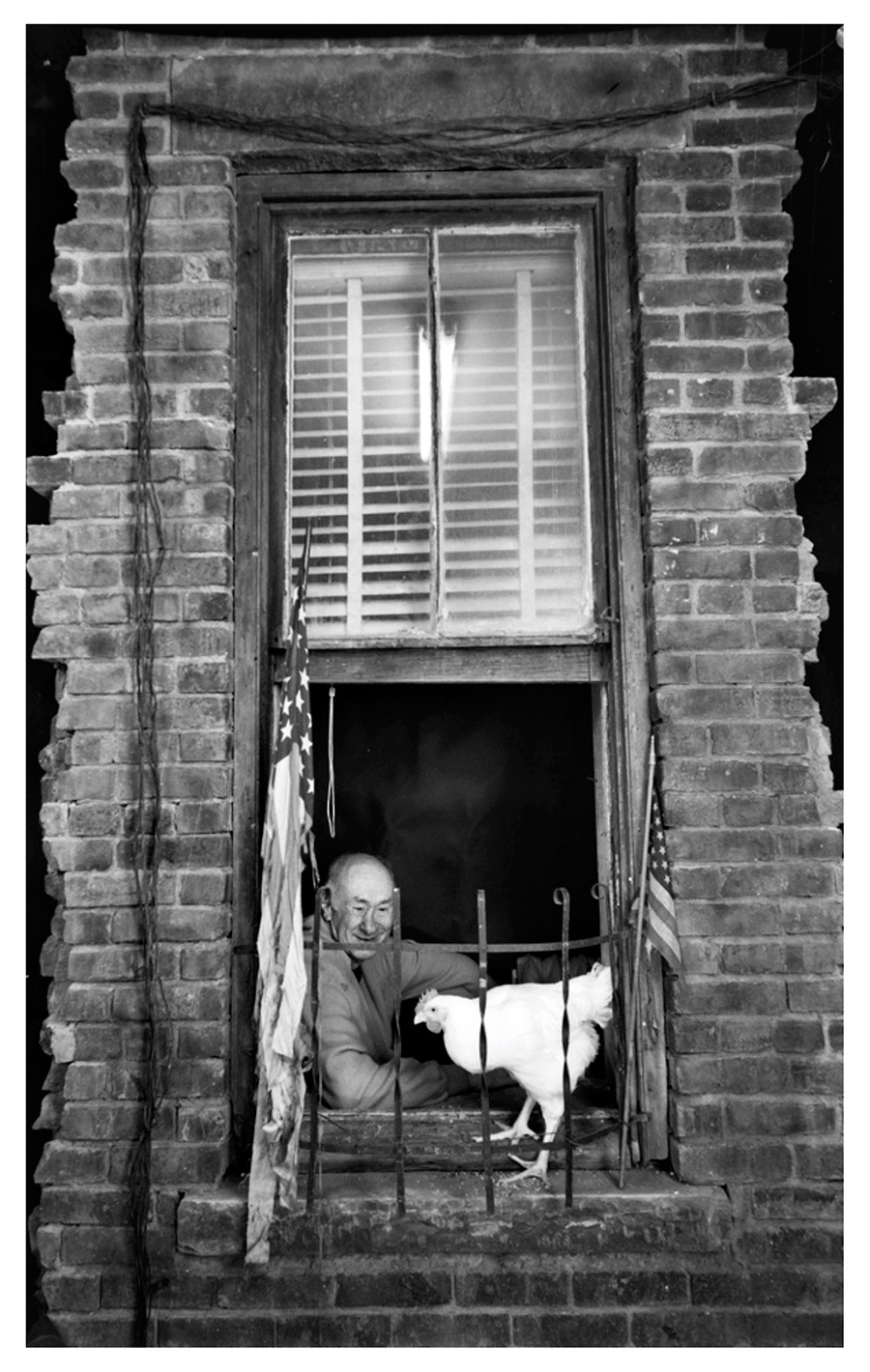
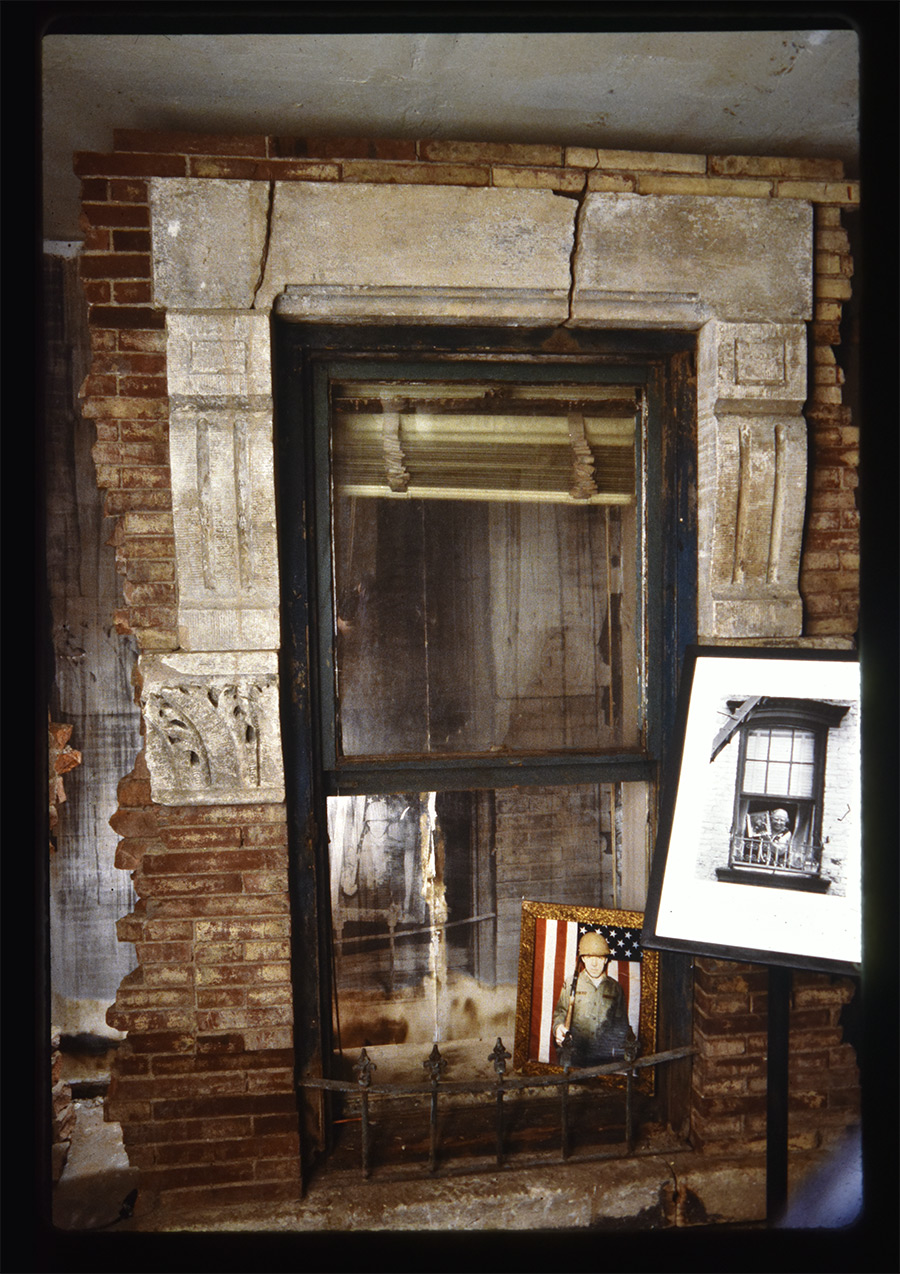
In his quest to capture the fleeting images he chased, Masao methodically marked, numbered, and then removed the bricks, glass panes, and mortar from the window frames of abandoned buildings in the East Village, reconstructing them in his studio. He enlisted his neighbors as models and dressed the windows with taxidermy, curtains and flowers. By staging the photos, he could have more control over the subject and composition, yet it’s clear that, in the process of making these pictures, Gozu’s persistence and meticulous rebuilding allude to the fact that his use of photography belied his affinity for sculpture.

Masao Gozu, Studio installation, 3 p.m., July 7, 1985. (photo © Courtesy of the artist and Court Tree Collective)

It’s difficult to imagine anyone attempting to steal entire sections of buildings in today’s New York, but the East Village was lawless during the 1970s through the early 1990s. Heroin addiction and then crack were endemic to the East Village. In October of 1975, the city was hours away from bankruptcy as mayor Abraham Beame announced to the press, “I have been advised by the Comptoller that the City of New York has insufficient cash on hand to meet its debt obligation due today… Now we must take immediate action to protect essential life support systems of our city to preserve the well-being of all our citizens.”²

Robbery and assaults were reported at all-time highs, and as middle-class families abandoned the city so did landlords abandon and neglect buildings. Squatting was rampant up until the late 1980s.

Artists like Gozu were taking advantage of the city’s demise. Dismantling buildings is reminiscent of the work of Gordon Matta-Clark who staged a series of actions in the early 1970s in abandoned buildings in the Bronx and in piers along Manhattan’s waterfront which exist today only in photographs. Masao says he was not aware of Gordon Matta-Clark at the time.
Masao Gozu, Studio installation, 2 p.m., June 12, 1984. (photo © Courtesy of the artist and Court Tree Collective)

During this period photography expanded sculptural practice, “It permitted the sculptors of the 1960s and 1970s to emerge from their studios and the white cubes of galleries and museums, and to make remote desert zones, downtrodden urban districts, indeed the entire social environment, the venues of their spatial/sculptural interventions. The expansion of the sculptural field as we know it from Earth Art and Street Art was based essentially on the authenticating, indexical character of the photographic image.” ³
Masao Gozu, Studio installation inspired by the photo Williamsburg, Brooklyn, 1976. (photo © Courtesy of the artist and Court Tree Collective)

Masao Gozu staged 8-10 of these photographs. They were laborious, physically strenuous, and time-consuming. These actions were also physically dangerous. One night, he recounted, he was carrying pieces of a building and a tripod back to his studio when he was surrounded by police who had been tipped off that someone matching Gozu’s description was carrying a shotgun. Later, in an abandoned building in the Bronx, two men threatened to shoot him.

Reconstructing the windows as set pieces planted a sculptural seed. As he constructed these windows, Gozu realized that the solemnity of an empty window frame without the human figure was the embodiment of the ephemeral state that he had long sought to capture through his pictures. By removing the figure from the window, Gozu, as he recently described, now saw the empty frames as mirrors, “empty windows are now the stage that can reflect me.”
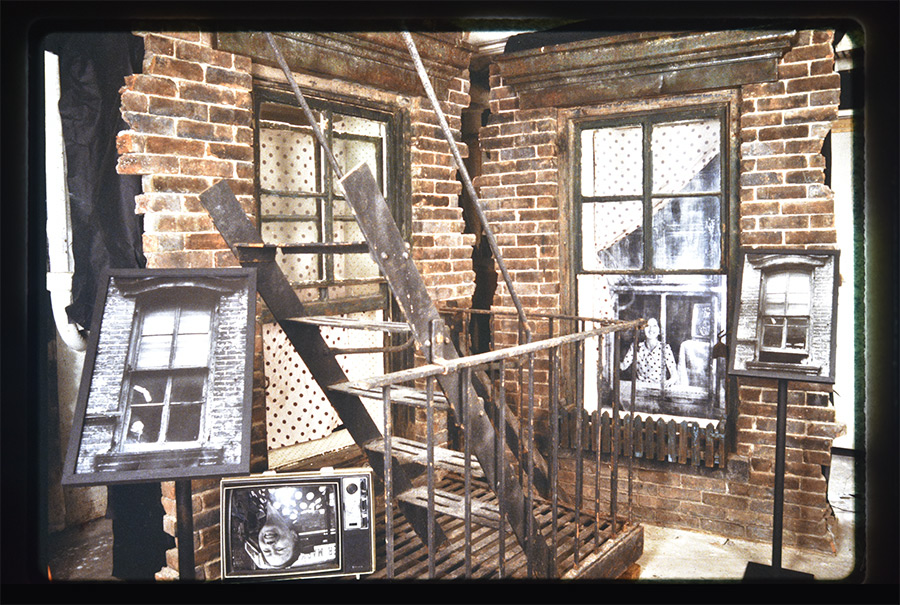
Masao Gozu, Studio installation inspired by the photo Mott Street Chinatown, 1973. (photo © Courtesy of the artist and Court Tree Collective)

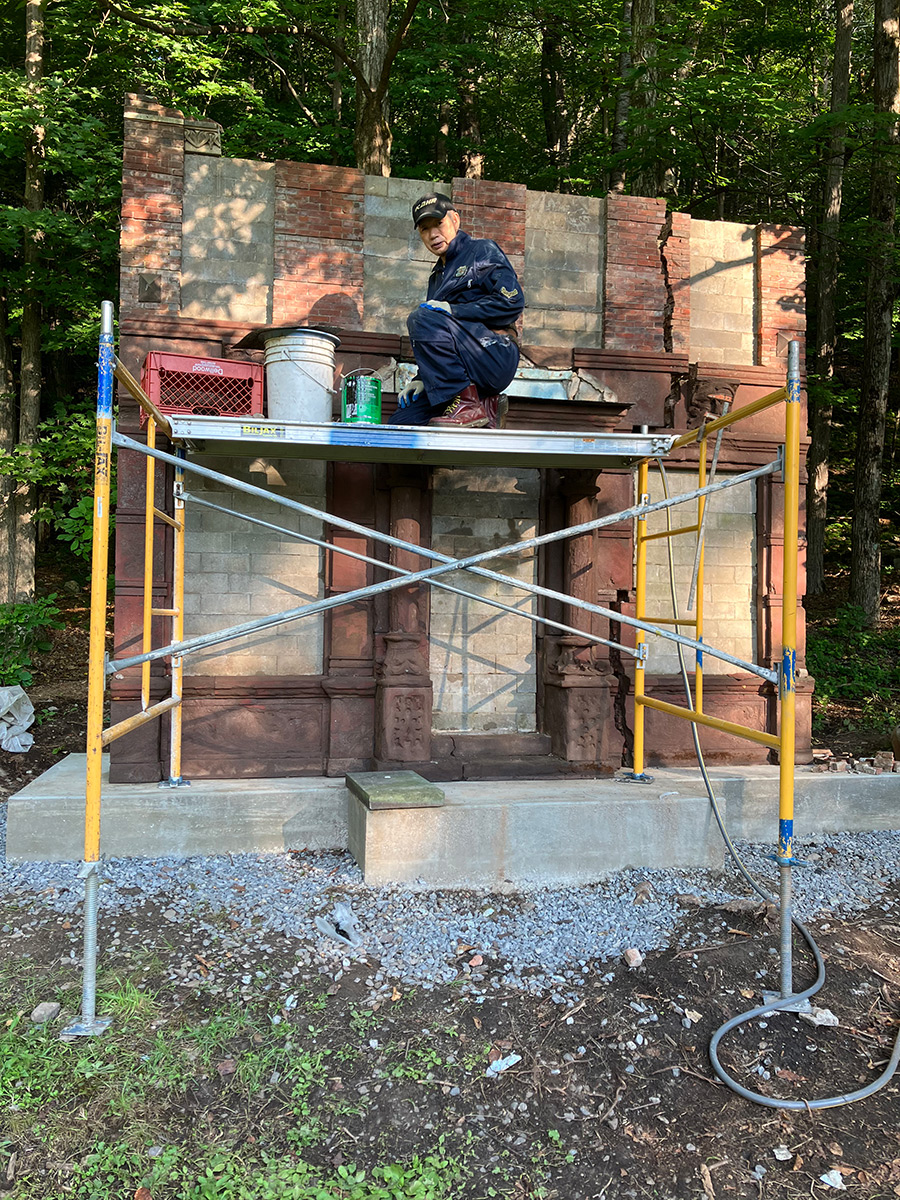
During the installation of his show Time Frame, I marveled as he hoisted section upon section from his perch atop metal scaffolding. The determination, rigor, and discipline that Gozu demonstrates in his work is inspirational. He will spend five years taking photographs from the same spot, and thousands of hours assembling tons of rock to create a sculpture which is a monument to the fragility of time, a concept that he calls “Nagare” or stream, in which he sees himself as an ephemeral moment in the span of eons.

As I write about Masao, I can conjure a 3 am Bowery moment in the 1980s when, with a cart full of bricks, Masao passes Keith Haring painting his first large-scale mural on the corner of Bowery and Houston.
___________________________________________
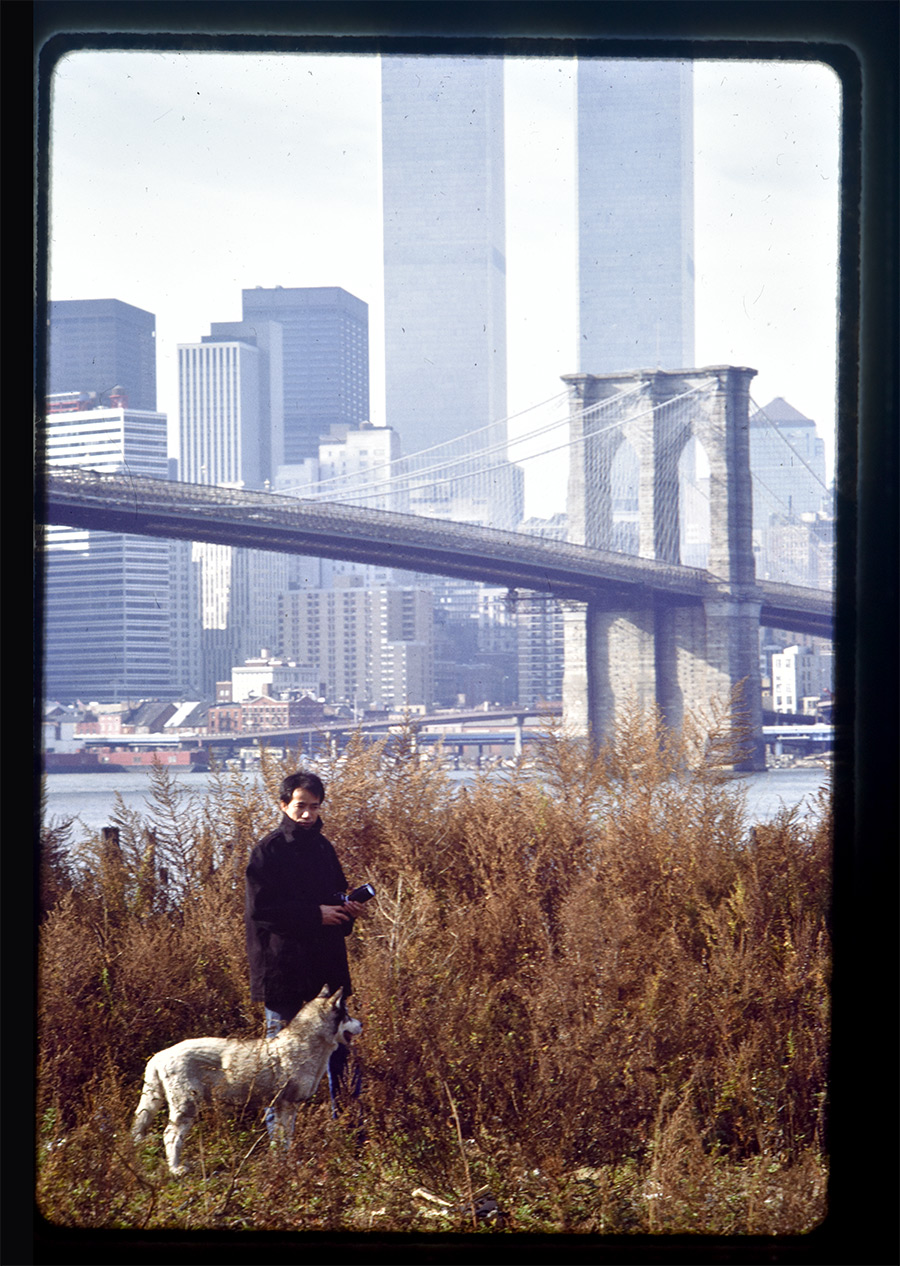
Portrait of the Artist, Dumbo Brooklyn, 1985. (photo courtesy of Yumiko)
Portrait of the Artist, Woodstock, NY, July 2023. (photo © Liam McKeon. Courtesy of Robert Perl)

¹ Bogomir Ecker, Raimund Kummer, Friedemann, Malsch, Herbert Molderings(ed.), Lens/ Based Scuplture, The Transformation of Sculture Through Photography, exhibition catalog, Academie der Kunst , Berlin, and Kunstmuseum Lichtenstein, Vaduz, 2014, 86.
² Jeff Nussbaum, The Night New York Saved Itself From Bankrupcy, The New Yorker, October 16, 2015.
³ Roxana Marcoci(ed.) The Original Copy. Photography of Scultpure, 1839 to Today, With essays by Roxana Marcoci, Geoffrey Batchen and Tobia Bezzola, exhibition catalog, Museum of Modern Art, New York, 2010, 154.


About the Writer:

Ted Riederer is a multidisciplinary artist and curator whose practice merges punk ethos with poetic interventions. A former band member and the Founding Artistic Director of Howl! Happening: An Arturo Vega Project in New York’s East Village, Riederer has exhibited widely, from PS1 and the Liverpool Biennial to galleries in Berlin, Lisbon, and Bangladesh. His international project Never Records blends performance, vinyl, and community engagement.
Read more
Graffiti as Concept: Tommy Lanigan-Schmidt’s Impact on 1960s New York’s Streets

Graffiti as Concept: Tommy Lanigan-Schmidt’s Impact on 1960s New York’s Streets

Special guest Ted Riederer shares the story of a New York artist who, as a gay street youth, made his mark with bold, conceptual graffiti. Blending street culture with high-concept art, his early works challenged boundaries, reshaped graffiti history, and paved the way for a pioneering career in immersive installations and social activism.


by Ted Riederer


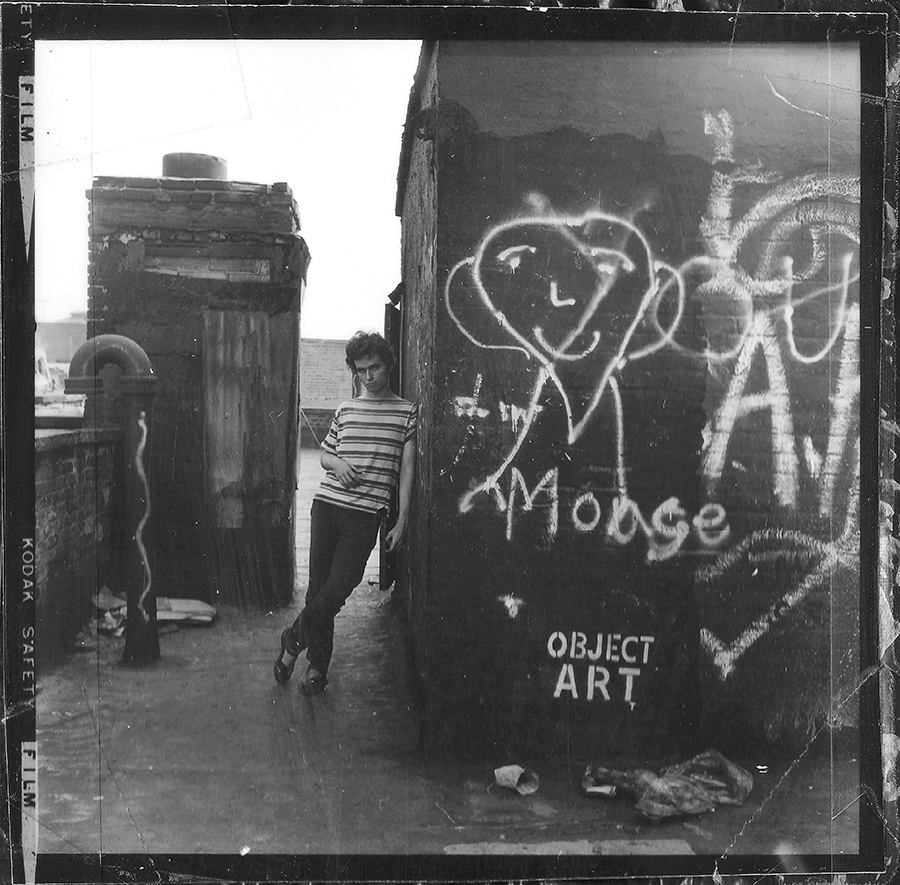
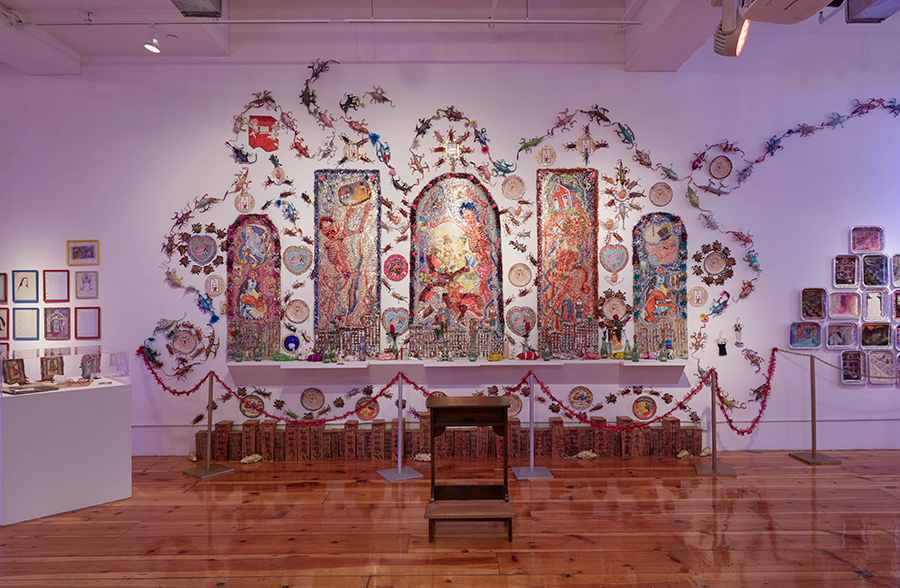
Thomas Lanigan-Schmidt, whose work is collected by prestigious institutions like the Metropolitan Museum of Art, the Whitney Museum of American Art, MoMA, and the Brooklyn Museum, and who was honored by President Barack Obama, began his career as a conceptual graffiti/street artist in the late 1960s. Known for his numinous sculptures and installations crafted from everyday materials like staples, cellophane, paper bags, and Scotch tape, Tommy’s journey started with a bold move. At just 20 years old, in 1968, he launched a spray paint stencil campaign on 4th Street in the East Village—a calculated street art action that reshaped and rewrites the many narratives of graffiti history.

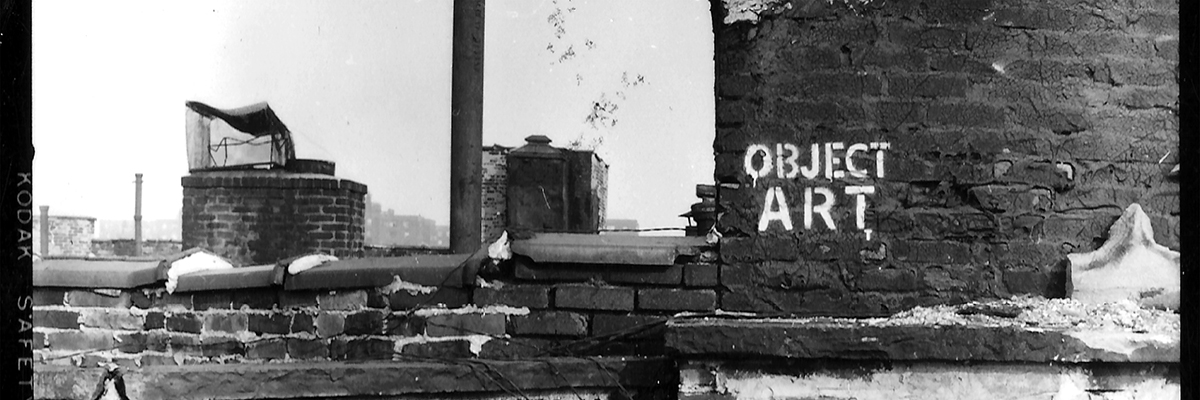
Tommy Lanigan-Schmidt. The image from the scanned contact sheet appears courtesy of the artist and photographer Robert Rosen.

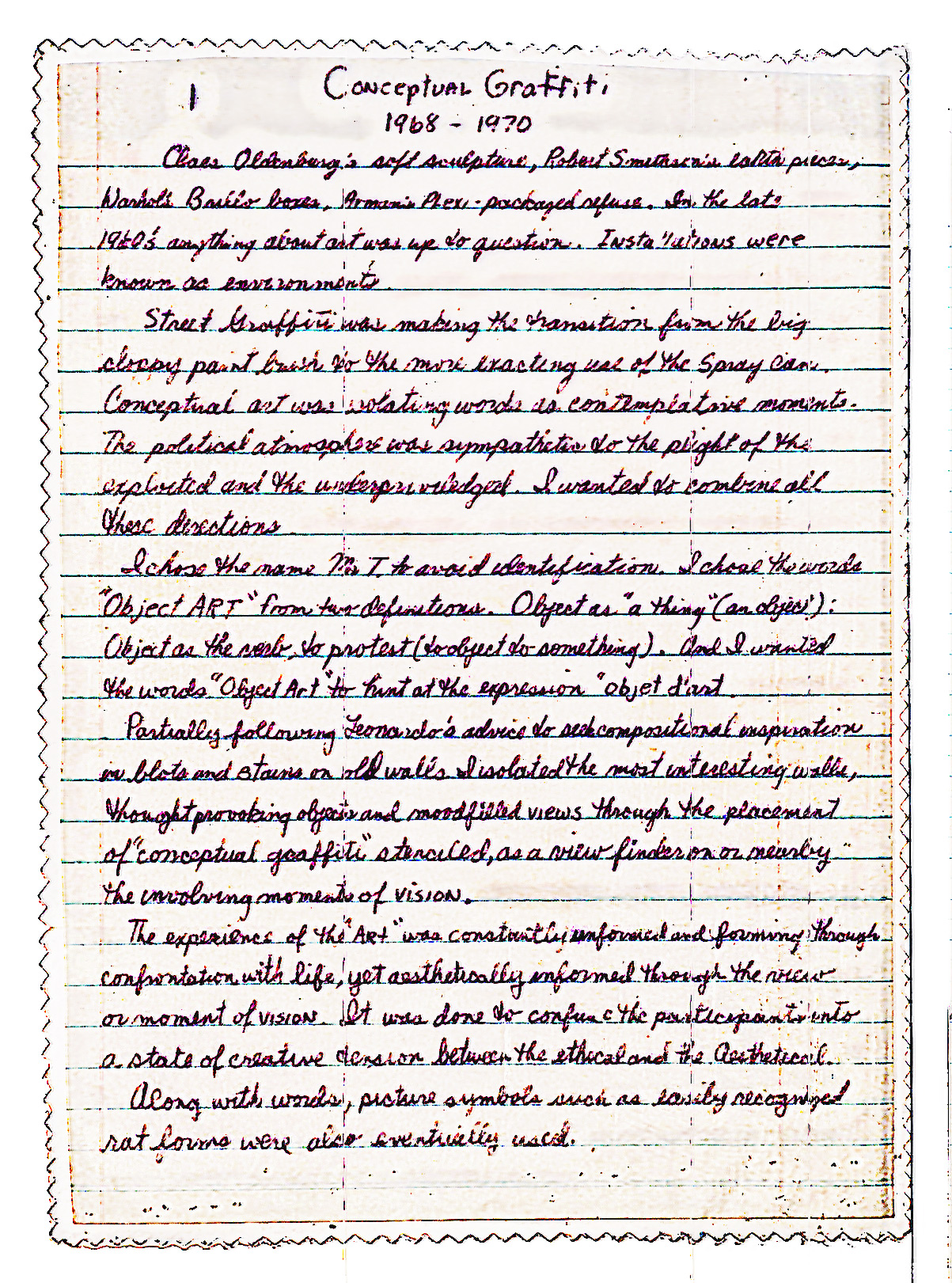
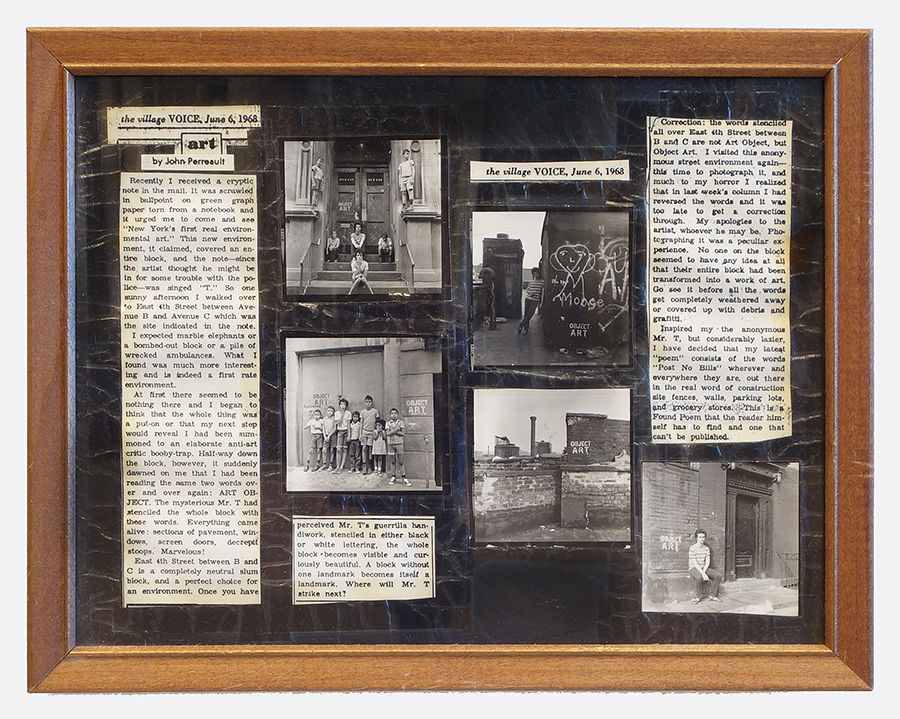
I first met Tommy in 2004 at the School of Visual Arts, where he instantly became one of my favorite professors. In 2018, when I was the Artistic Director of Howl! Happening: An Arturo Vega Project, I co-curated an exhibition of Tommy’s work, which The New York Times described as a “revelation.” In preparation for the exhibit, Pavel Zoubok Gallery, along with the team at Howl, scanned hundreds of photographs and documents from the artist’s personal archive. We discovered a long-forgotten framed collage made from Village Voice clippings and photographs taped to a black plastic bag. This collage illuminates one of the first recorded acts of conceptual graffiti in New York City. An even more remarkable find was a handwritten manifesto from 1970, in which Tommy describes his philosophy behind this early work. This thoughtful and articulate document shows a level of sophistication beyond the artist’s years.

When I recently interviewed Tommy at the Mary Manning Wash Rehabilitation Hospital, he reflected on this formative period in his life. In 1967, after two semesters at Pratt, he ran away from his home in Linden, New Jersey. His father had derailed his artistic aspirations by enlisting Tommy as a ditch digger—ditch digging was the entry-level job for a career in construction. The night before his first day of construction work, Tommy fled home and hitchhiked to Times Square with 57 cents in his pocket.

Tommy found the Times Square scene to be “too rough,” so he made his way to the Village, where he found both safety and camaraderie among a vibrant community of gay street kids. One of these kids got him a job at an employment agency as a messenger. With regular, albeit meager, income, Tommy migrated east looking for cheap rent. He eventually found an apartment on 4th Street between Avenue B and C. He recounted, “I think the landlord rented to me because he didn’t think I would last very long. That neighborhood was really dangerous.”

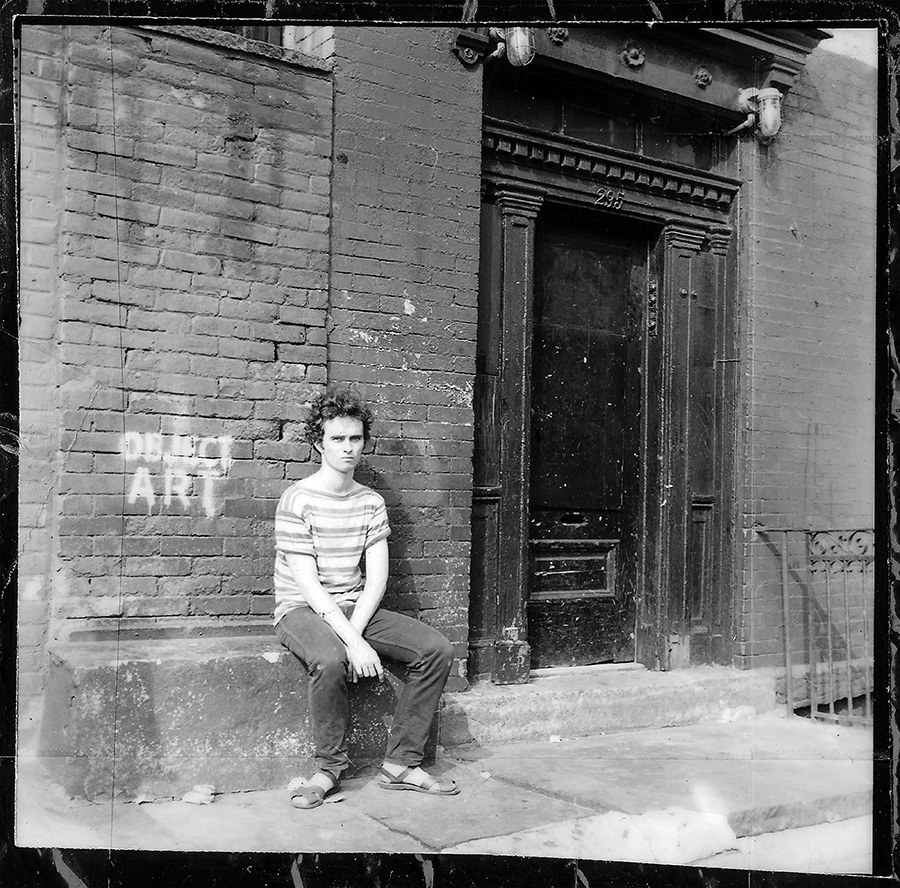
Tommy Lanigan-Schmidt. The image from the scanned contact sheet appears courtesy of the artist and photographer Robert Rosen.

Tommy, who often describes his life as full of unexpected, fortunate events, met the painter Christopher Scott on a corner outside the Museum of Modern Art after he couldn’t afford the entry fee. Scott was the partner of Henry Geldzahler, the curator of Contemporary Art at the Metropolitan Museum of Art. They adopted Tommy into their circle of friends and introduced him to the fecund theater scene that was thriving in the East Village. This scene included Charles Ludlam, Jack Smith, and John Vaccaro, along with institutions like La Mama Experimental Theater Club and Vaccaro’s Play-House of the Ridiculous. Tommy was deeply inspired by this new artistic community, especially Ludlam’s straightforward way of communicating, which avoided the pretentiousness often found in the Uptown art world.

Tommy described this period to me: “I was reading the Village Voice, reading John Perreault, and I said to myself, ‘I have to do something that connects with what they’re doing.’ So that’s how the street art happened. It was totally calculated, but it had to be true to who I am at the same time. Why graffiti? Graffiti was already considered art by the street kids, which was all the gay kids who I hung out with, but no one listened to them. I wanted to make something that wouldn’t look like graffiti but would be graffiti. It would have a conceptual element going through it, but it would have mostly a romantic element going through it. The reverie of being there was what I wanted it to be mostly about. This was art that couldn’t be bought. It had to be walked away from.”

Tommy instigated his project by sending a cryptic ransom note to Village Voice art critic John Perreault, signing it “Mr. T.” “I wanted them to think I was some crazy forty-year-old,” Tommy remembered. In a Village Voice article published on June 6, 1968, John Perreault wrote, “Recently I received a cryptic note in the mail. It was scrawled in ballpoint pen on green graph paper torn from a notebook, and it urged me to come and see ‘New York’s first real environmental art.’”

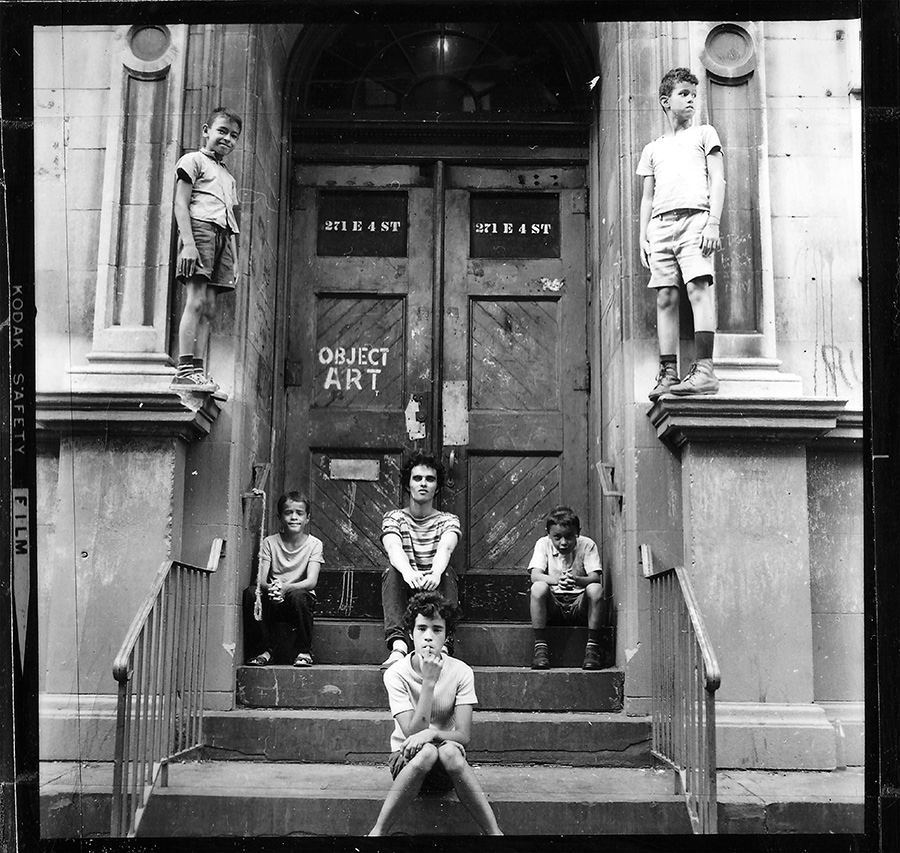
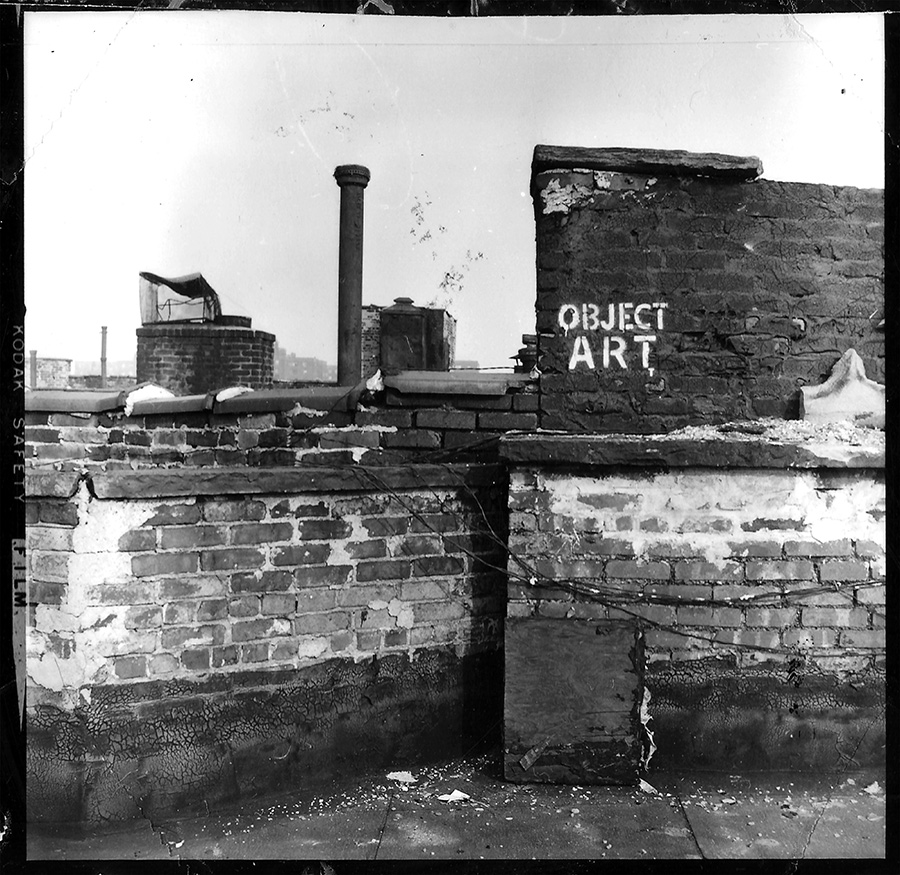
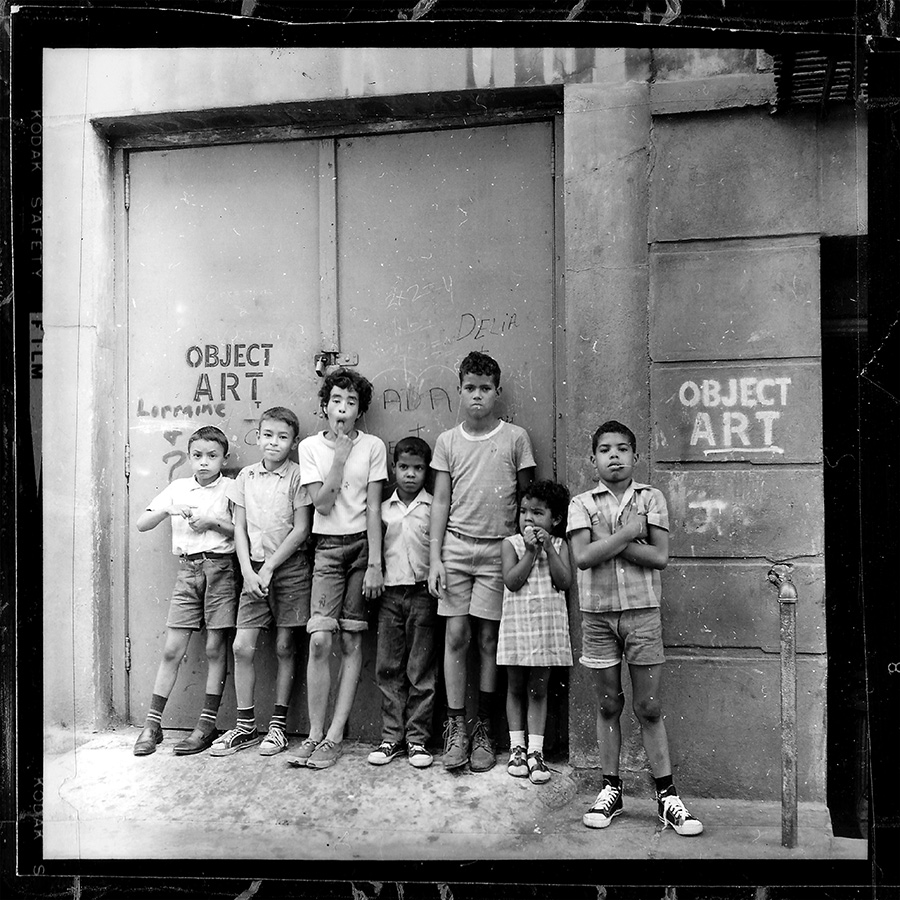
Tommy had covered 4th Street with a white spray-painted stencil that read “OBJECT ART.” In his 1970 manifesto, Tommy wrote, “Street graffiti was making the transition from the big sloppy paint brush to the more exacting use of the spray can. Conceptual art was isolating words as contemplative moments. The political atmosphere was sympathetic to the plight of the exploited and the underprivileged. I wanted to combine all these directions. I chose the name Mr. T to avoid identification. I chose the words ‘OBJECT ART’ from two definitions: Object as ‘a thing (an object)’; Object as the verb, to object (to object to something). And I wanted the words ‘OBJECT ART’ to hint at the expression ‘object d’art.’”

Tommy Lanigan-Schmidt. The image from the scanned contact sheet appears courtesy of the artist and photographer Robert Rosen.

I spoke with Al Diaz, one of the graffiti artists behind the 2023 exhibition and book New York City of Kings: A History of New York Graffiti. I wanted to find out the state of graffiti in 1968 to fully understand the context of Tommy’s stencils.

Diaz explained, “Graffiti in the late 60s and 70s was more of a sport, quantity over quality. Julio 204 surfaces in 1967/68. It’s the first appearance of a name and number tag, even before Taki 183. What Tommy was doing was more ambitious. Instead of trying to communicate with the esoteric community of other taggers, Tommy was attempting to communicate with the public at large. Graffiti at the time was written by a local kid who addressed everyone in the neighborhood saying, ‘I’m here.’ It’s different than what Tommy was doing. He was appropriating that public space.”

Tommy Lanigan-Schmidt. The image from the scanned contact sheet appears courtesy of the artist and photographer Robert Rosen.

Tommy wrote, “Partially following Leonardo’s advice to seek compositional inspiration in blots and stains on old walls, I isolated the most interesting walls, thought-provoking objects, and modified views through the placement of ‘conceptual graffiti,’ stenciled, as a viewfinder on or nearby the involving moments of vision. The experience of the ‘Art’ was constantly unformed and forming through confrontation with life, yet aesthetically informed through the view or moment of vision. It was done to confuse the participants into a state of creative tension between the ethical and the aesthetical.”

Scanned from the contact sheet cutouts in Tommy’s collage, photographer Robert Rosen’s beautiful photographs not only capture Tommy’s stencils, but they also document the transition from graffiti made with a brush to graffiti made with the spray can. One photo even captures the murmuration of carrier pigeons on the horizon. When I showed Tommy Rosen’s group portrait of kids from the neighborhood posing with an “object art” stencil, he exclaimed, “Those kids have to be in their 70s now.”

Tommy Lanigan-Schmidt. The image from the scanned contact sheet appears courtesy of the artist and photographer Robert Rosen.

Tommy wrote, “Coming from a working-class background, I understood that the Bauhaus concept of people as bees in a hive was totally dehumanizing to the people it professed to help.”

This street art campaign was only the beginning. Tommy continued his practice with “environmental art,” transforming entire buildings into immersive installations and converting his own apartment into a gallery space. These endeavors were all featured in The Village Voice, with the gallery specifically highlighted in an article by Charles Ludlam.

Tommy Lanigan-Schmidt. The image appears courtesy of the artist and Pavel Zoubok Fine Art.

The rediscovery of Perreault’s article from The Village Voice, Rosen’s photographs, and, most importantly, Tommy’s writings, is extraordinary. These documents provide insight into the early history of New York graffiti, a now ubiquitous global art form. This history also helps us understand the egalitarian underpinnings of an artist who is deeply concerned with social justice issues. Tommy was honored by President Obama in 2009 for his participation in the Stonewall rebellion and appears in front of the Stonewall with other youth in a well-known photograph by Fred W. McDarrah entitled Celebration After Riots Outside Stonewall Inn.

Photo ©Fred W. McDarrah, Celebration After Riots Outside Stonewall Inn. Front row Nelly (Betsy Mae Koolo), Chris (Drag Queen Chris), Roger Davis, Michelle and Tommy Lanigan-Schmidt, 1969.

Al Diaz, who co-wrote SAMO with Jean-Michel Basquiat, reflects, “We didn’t understand completely what we were doing with our public writing project back then. Tommy’s art and writing help me define and understand more deeply what we were trying to do. Tommy’s stencils helped jumpstart his career just as SAMO helped jumpstart ours.”

Even though he has retired from teaching, Tommy continues to educate us through his work and the story of his life. He is actively making work from the bed of his rehab hospital. “Some of my best work,” he claims.

Tommy Lanigan-Schmidt. Portrait of the artist by Jason Wyche appears courtesy Howl! Happening: An Arturo Vega Project.

Scenes from Tommy Lanigan-Schmidt installation views from the exhibition Tenemental: With Sighs Too Deep For Words (Nov/December 2018).

Tommy Lanigan-Schmidt. Installation view from the exhibition Tenemental: With Sighs Too Deep For Words. Courtesy of Howl! Happening: An Arturo Vega Project and the photographer Jason Wyche.

About the Author: Ted Riederer


Described as a “one-time refugee from punk and sometime band member,” Ted Riederer has traveled the world equipped with painting supplies, electric guitars, amplifiers, old LPs, record players, drum kits, hard disk recorders, photography gear, a vinyl record lathe, and long-stemmed roses. His artistic journey has taken him from the Americas to the Antipodes, with his work exhibited both nationally and internationally at venues such as PS1, Prospect 1.5, Goff and Rosenthal Berlin, Nicole Klagsbrun Gallery, Jack Hanley Gallery (San Francisco), Marianne Boesky Gallery, Context Gallery (Derry, Ireland), David Winton Bell Gallery (Brown University), the University of South Florida Contemporary Art Museum, the Liverpool Biennial, and the Dhaka Arts Center in Bangladesh.

Riederer’s acclaimed project, Never Records, has traveled from New York to Liverpool, Derry, New Orleans, Texas, Kansas City, Brooklyn, Amman, and London, where it was sponsored by the Tate Modern. In addition to his artistic endeavors, Riederer served as the Founding Artistic Director of Howl! Happening: An Arturo Vega Project, a non-profit gallery and performance space in the East Village. The New York Times has recognized Howl! Happening as “instrumental to the history of the area.”


Read more
BSA Film Friday: 08.01.14

BSA Film Friday: 08.01.14

Brooklyn-Street-Art-Berlin-NY-Screen-Shot-2014-07-30-at-10.00.50-PM


BSA-Video-Friday3-Jan2014-b

Our weekly focus on the moving image and art in the streets. And other oddities.

Now screening :

1. This Is Berlin Not New York

BSA Special Feature: This is Berlin, Not New York

“We’re trying to express the poetry of what we are doing in a non-traditional way”

New York collectivist artist stories are still happening thank God, even if the midsummer  bleached out sun of an August day on tenement bricks awakens you now in Ridgewood, Queens or Bedstuy, Brooklyn now instead of the Lower East Side or Williamsburg.

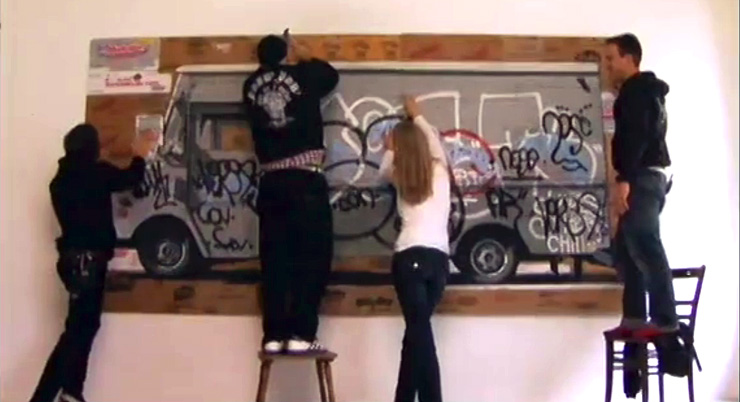
But why experience the creative chaos here only when you can find an equally tilted staircase in a Berlin neighborhood, and even more abandoned possibilities just by climbing on a plane at JFK?  The Antagonists Movement, a self formed crew (or gang) of 10 artists were inspired to pick up their collected works and ideas and transport them to Berlin in ’07 to mount shows and make art and meet people and sell t-shirts.

Brooklyn-Street-Art-Berlin-NY-Screen3 Brooklyn-Street-Art-Berlin-NY-Screen2

We’re so drawn to this story because the collective we were part of called “Open Ground” on Grand Street in Williamsburg did an amazingly similar cultural exchange with Wedding in ’05 with an artists group there and they also came to BK to mount a show in our space. We called it a “Williamsburg Wedding” and even then both these sister neighborhoods were beginning to feel the twinkling fingers of gentrification. We all could begin to feel it getting the upper hand; an increased call for the professionalization of art, and dwindling space to experiment and fail and experiment and succeed.

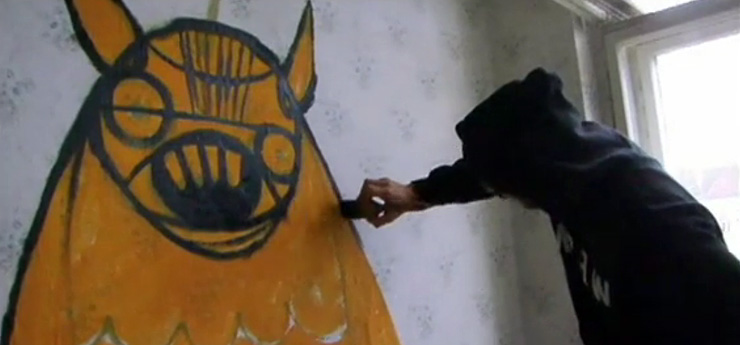
So when we saw the unpolished cacaphony of Ethan Minkers film, comprised of low-fi video and stills and doodles and animation and sound quality that veers from ditch to highway to hallway, we swooned. We knew these poems of discovery were inscribed on his heart as they are on the hearts of many artists still. The film stands on its own as a collection of events and conversations and collaborative craziness, which when stitched together with blunt instruments and colorful yarn creates a comfortable quilt on which to crash on the floor next to your friend who is on the couch.

This is Berlin, but really this state of mind is stateless.

Thanks and congratulations to these folks: Arturo Vega, Ted Riederer, Ethan H. Minsker, Richard Allen, Brett Farkas, James Rubio, Un Lee, and Crispy T.
Screenplay By: Ethan H. Minsker Directed By:Ethan H. Minsker
Produced By: Antagonist Movement.

<<>>><><<>BSA<<>>><<<>><><BSA<<>>><><<>BSA<<>>><<<>><><BSA
 
Please note: All content including images and text are © BrooklynStreetArt.com, unless otherwise noted. We like sharing BSA content for non-commercial purposes as long as you credit the photographer(s) and BSA, include a link to the original article URL and do not remove the photographer’s name from the .jpg file. Otherwise, please refrain from re-posting. Thanks!
 
<<>>><><<>BSA<<>>><<<>><><BSA<<>>><><<>BSA<<>>><<<>><><BSA
Read more