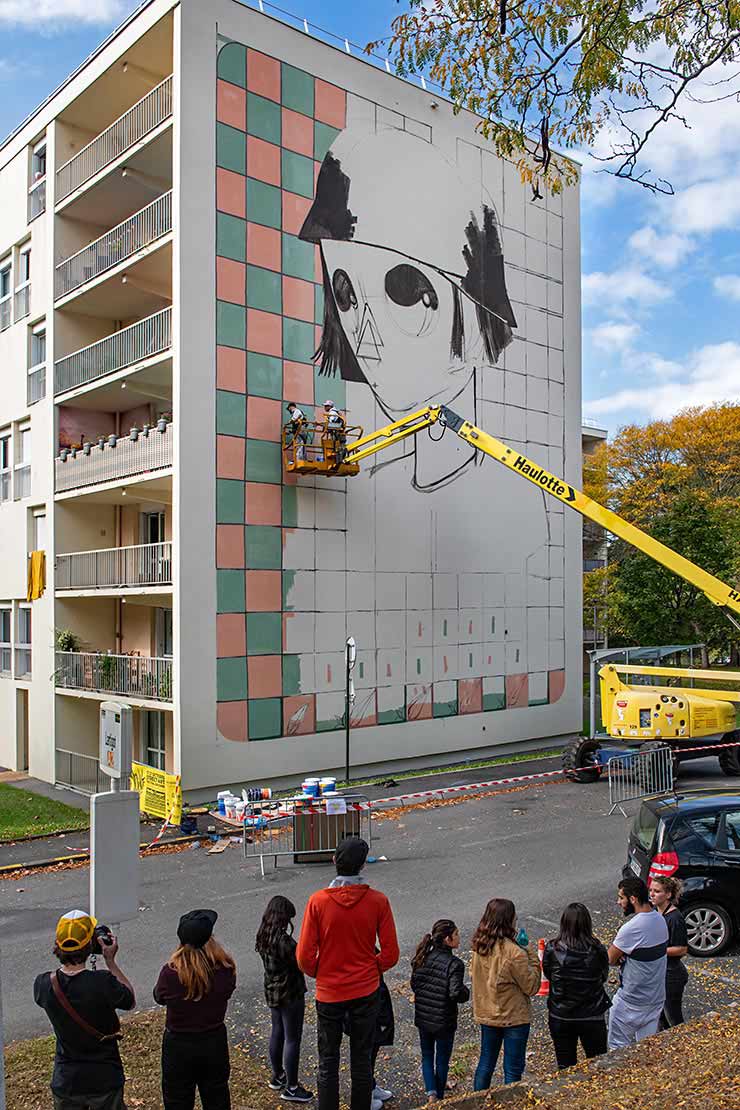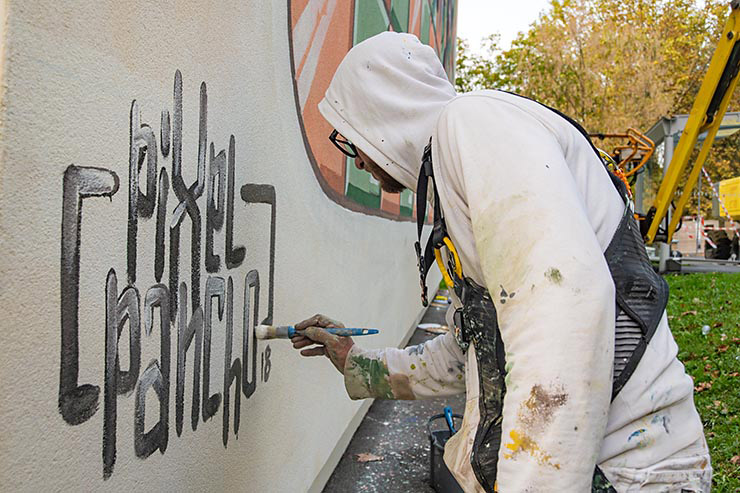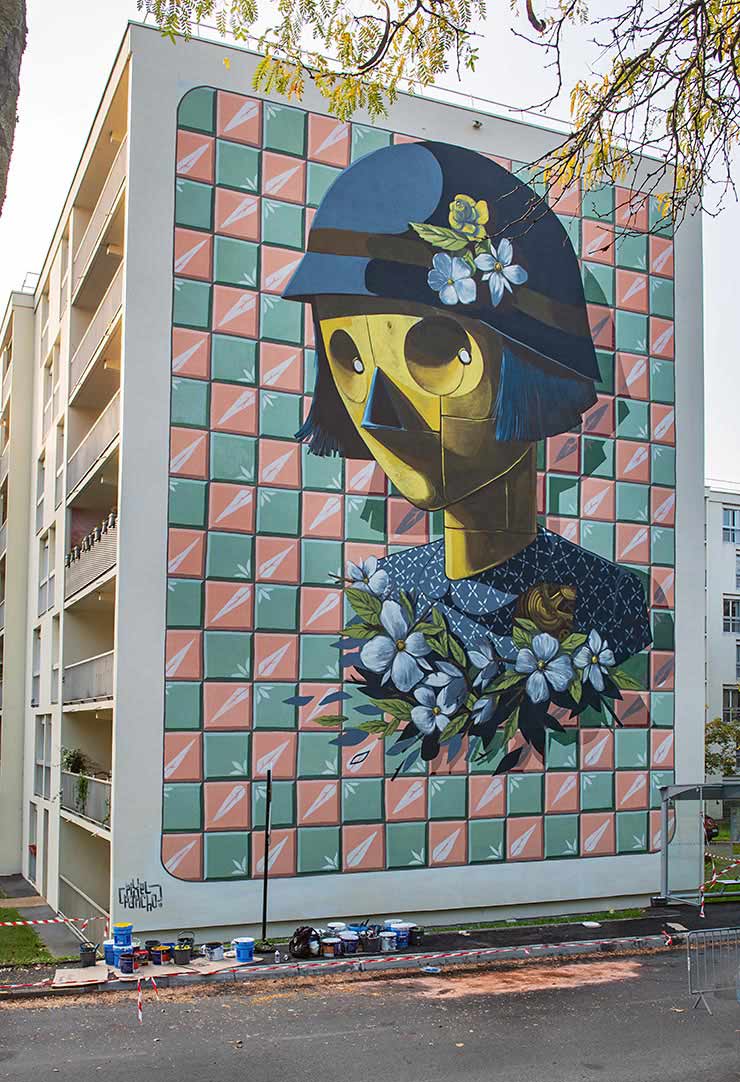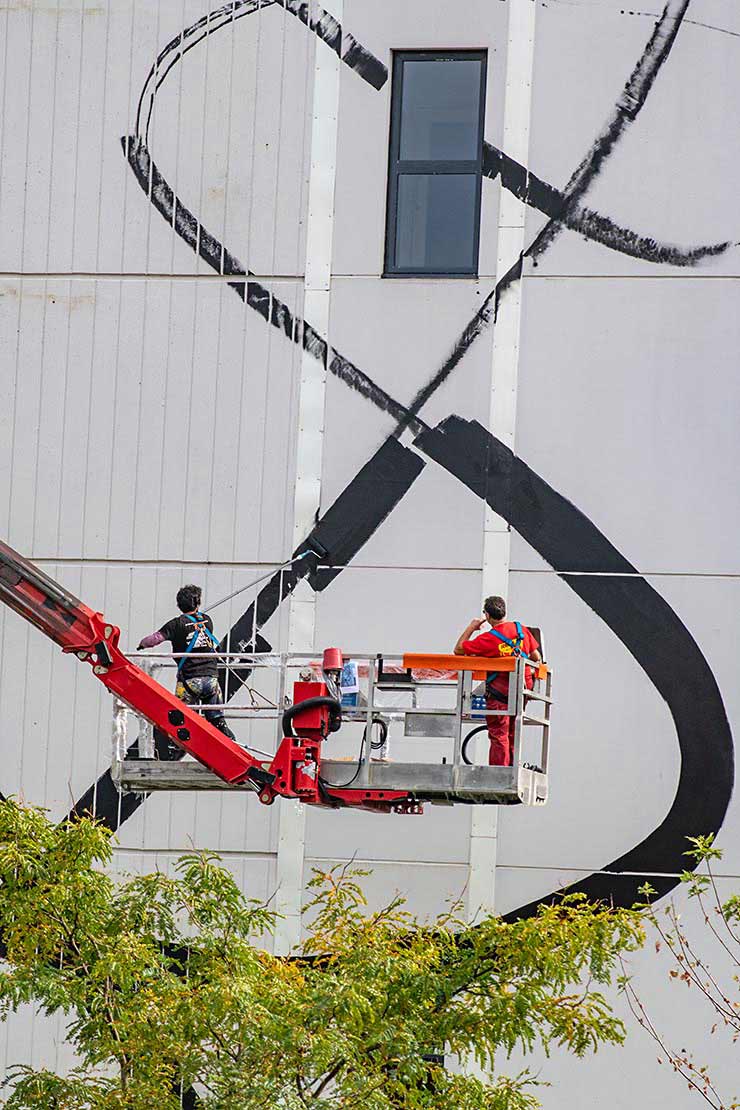
All posts tagged: Taroe

ALL CAPS: Building a Street-Level Archive in Rotterdam

ALL CAPS: Building a Street-Level Archive in Rotterdam

Street-art festivals are often judged by the size of the walls, the names on the roster, and the photographs that circulate afterward. ALL CAPS has been playing a longer game in Rotterdam.

Founded in 2018 by Daniël Claessens and Dave Vanderheijden as POW! WOW! Rotterdam, and renamed ALL CAPS in 2022, the festival has spent successive editions moving through different parts of the city, adding new walls rather than routinely painting over the old ones. Vanderheijden stepped away in 2024; today Claessens continues as artistic director, working with managing director Katherina Doxiadis and the Rotterdam team.
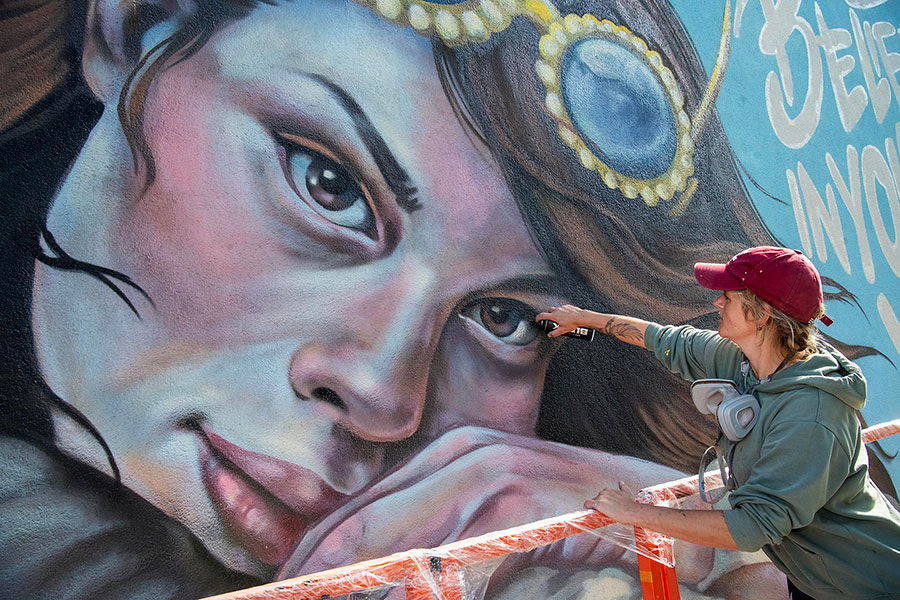
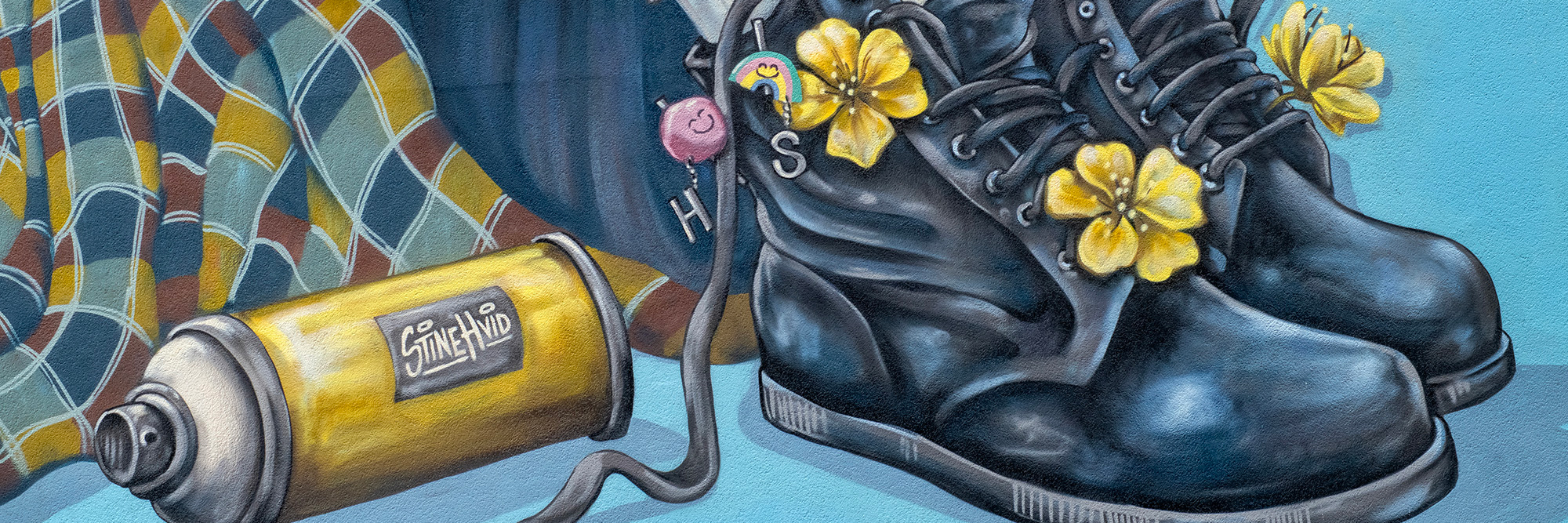
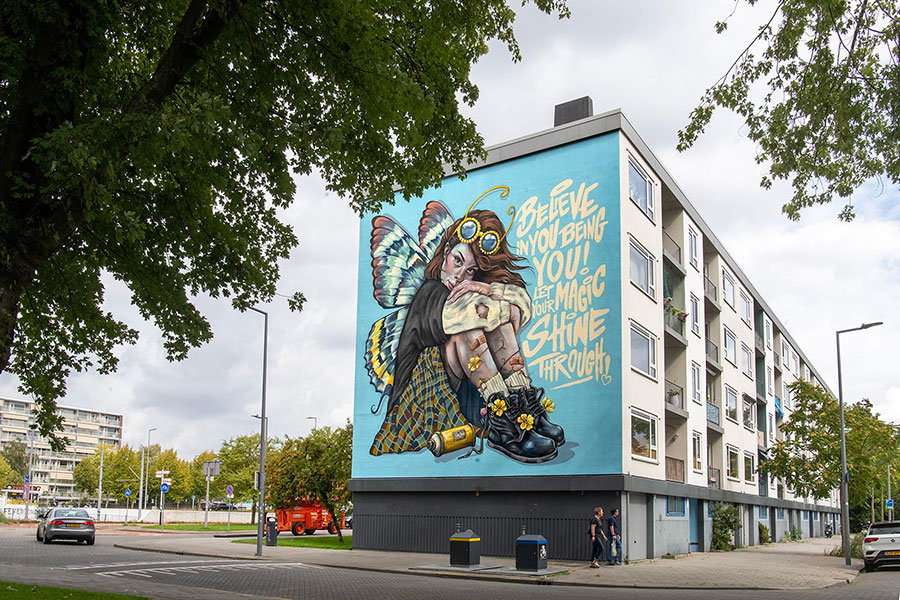
Stine Hvid. All Caps Festival 2026. Rotterdam, The Netherlands. (photo © Martha Cooper)

The result is less a temporary showcase than an accumulating public record — graffiti, murals and street art settling into neighborhoods here across Rotterdam, the Netherlands, long after the visiting artists have moved on. This year the festival landed in Lombardijen, Rotterdam-Zuid, continuing a pattern of working outside the most obvious cultural corridors and letting new areas of the city itself become part of the curatorial equation.

That matters because ALL CAPS is not simply chasing names, but exposing talent. Claessens and the team travel, look at walls, visit other festivals, trade recommendations with organizations abroad, and keep an eye on what is actually happening in the field. Their stated aim is to show a broad spectrum of graffiti and street art, bringing together Dutch artists, Europeans and artists from farther afield, with newer names sharing the program with people who have been at it for a while.

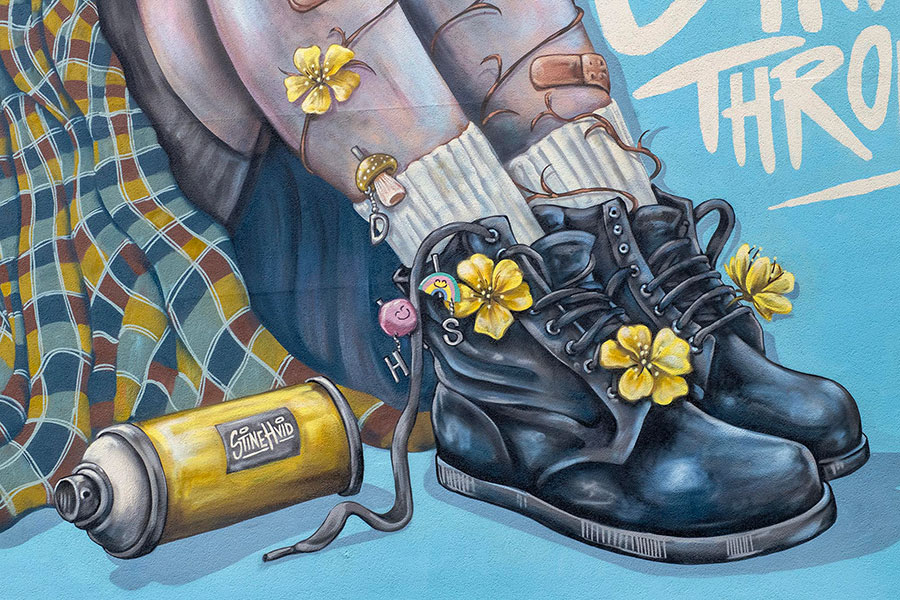
Stine Hvid. All Caps Festival 2026. Rotterdam, The Netherlands. (photo © Martha Cooper)

The program also creates a useful tension in how they work. “Artists with us get complete artistic freedom,” ALL CAPS says in the interview below. At the same time, artists learn about the neighborhood, who lives there, and what issues matter to the people locally. The process steers clear of “design by committee” but also raises artists’ awareness so the wall isn’t treated like a blank object dropped from the sky, ready to be Instagrammed for clicks.

The other distinction becomes clearer after the festival is over. ALL CAPS says most of its walls are intended to remain for years, and the organization does not normally erase one festival wall to make room for the next. It goes looking for another wall instead. Over time, that begins to produce something closer to an open-air collection spread through the city — not fixed, not precious, not simply a switchable platform for trends, and still vulnerable to demolition, renovation, weather, and whatever else happens in public space.
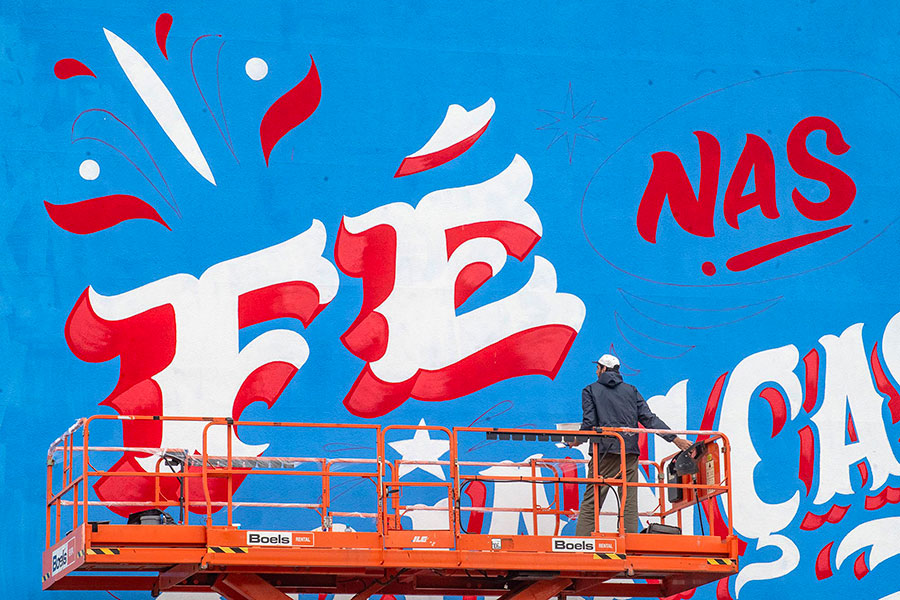
Filipe Grimaldi. All Caps Festival 2026. Rotterdam, The Netherlands. (photo © Martha Cooper)

ALL CAPS runs on a mixed public/private model: its published 2024 financing plan projected 45 percent from subsidies, 24 percent from funds, 25 percent from partners and sponsors, and 6 percent from audience and earned income. It’s useful transparency at a time when street-art festivals can double as branding platforms and gallery-owner showcases — especially for a culture built by graffiti writers who were sometimes criminalized for putting their names on the same public spaces that brands now pay to occupy.

This year, particularly experienced eyes moved through the scene as well. Martha Cooper was in Rotterdam photographing the festival, joined by her respected peer and friend Nika Kramer, who also contributes to this feature. Cooper hardly needs an introduction in graffiti circles; Kramer has built a substantial photographic record of her own around graffiti, street art, hip-hop and the people who make those cultures move.

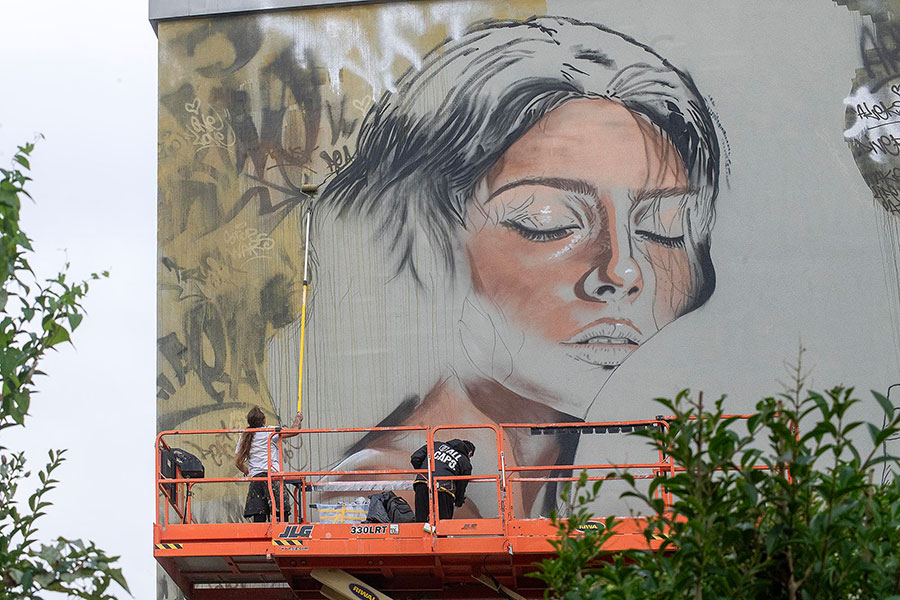
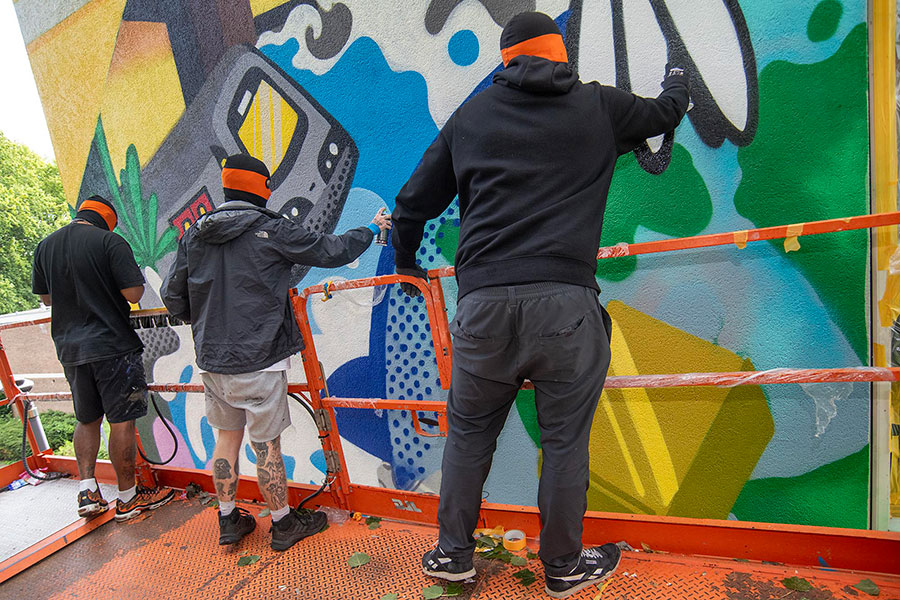
The photographs do more than document completed walls. They catch the people behind the story: artists up in the lifts, paint moving across concrete, neighbors stopping to watch, equipment in the street, conversations at ground level — all the activity surrounding a mural before the spectacle leaves and the work becomes part of the street and the city.

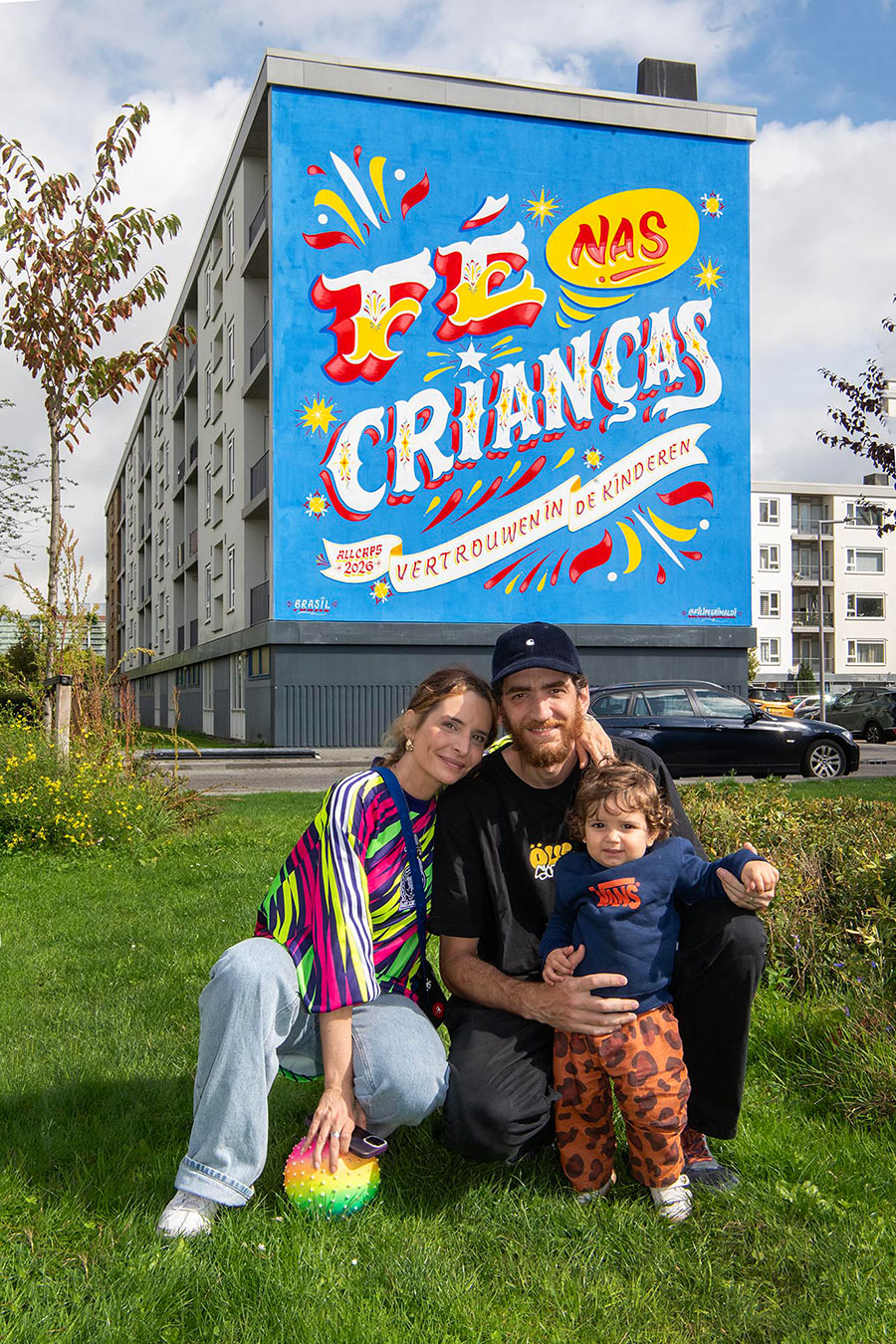
Filipe Grimaldi. All Caps Festival 2026. Rotterdam, The Netherlands. (photo © Martha Cooper)

Below, ALL CAPS talks about how the artists are chosen, how much freedom they get once they arrive, and why the organization would rather keep looking for another wall than erase the one it painted last year.

BSA: How do you choose the artists each year, and how important is it that they come from graffiti or street-art backgrounds rather than the gallery world?

ALL CAPS: We always know far in advance approximately how many walls we are doing in a certain neighborhood, so we know how many artists we need for the selection. Daniel tries to show the broad spectrum of what is possible within street art or Graffiti and also show what’s relevant at the moment.

Daniel (and I) travel a lot to see other Festivals or murals and get to know artists from around the world. We also work with many organizations around the world that suggest artists, or we do exchanges.

Within the festival, it’s important that the work fits the neighborhood we’re going to; it’s important the quality, but also, of course, the person, since we were doing so many things at the same time. It’s different than doing a single mural project. 

We don’t have the strict criteria that you have to come from the graffiti scene or other communities. It’s important that the quality is good, that it’s a good fit, and that we show the whole spectrum.

We try to select one third of the artists from overseas, one third from Europe, and one third from the Netherlands, and we also try to combine newer talent with the big names.
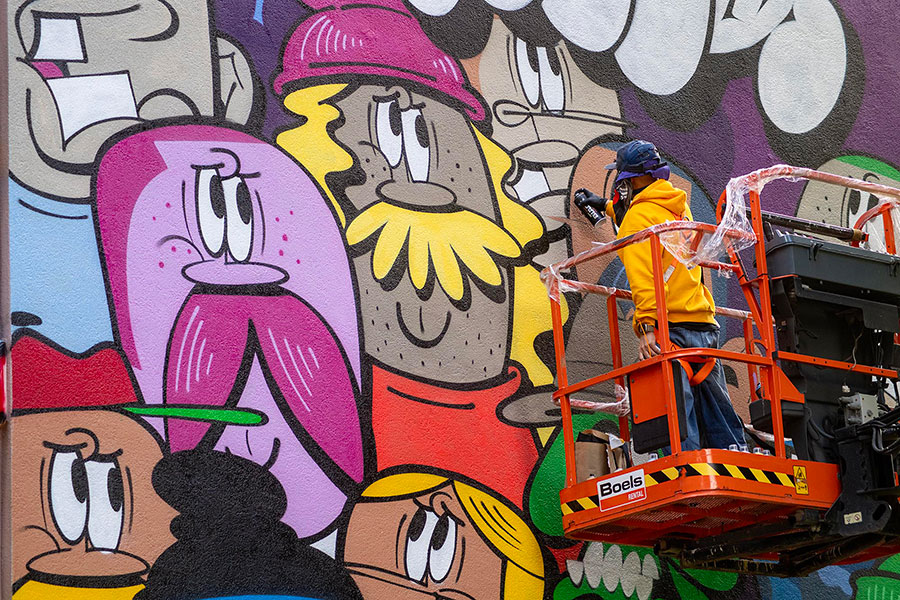
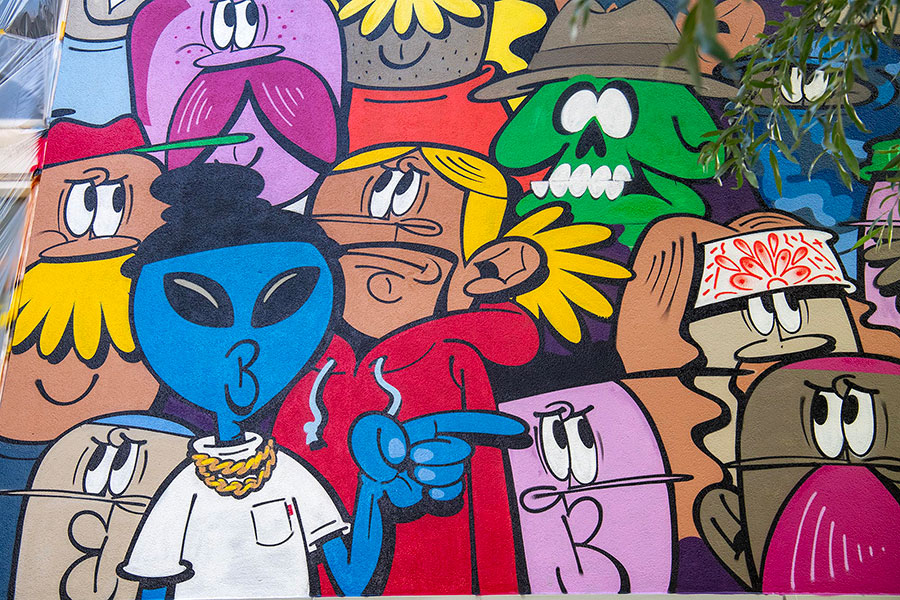
Jay Flow. All Caps Festival 2026. Rotterdam, The Netherlands. (photo © Martha Cooper)

BSA: How much freedom do artists have creatively once they arrive—are they responding to the neighborhood and local residents, or are most murals planned in advance?

ALL CAPS: Artists with us get complete artistic freedom, but we find it important to tell them what neighborhood we’re in, what kind of people live there, and what the most important issues over there are. 

For a couple of years, we have also worked with a theme that’s broad enough to fit your work: last year, the theme was “I will change the world,” in our opinion, focusing on hope. 

The only thing we don’t allow is political statements, religious statements, or offensive work; that’s why we ask for a sketch upfront.
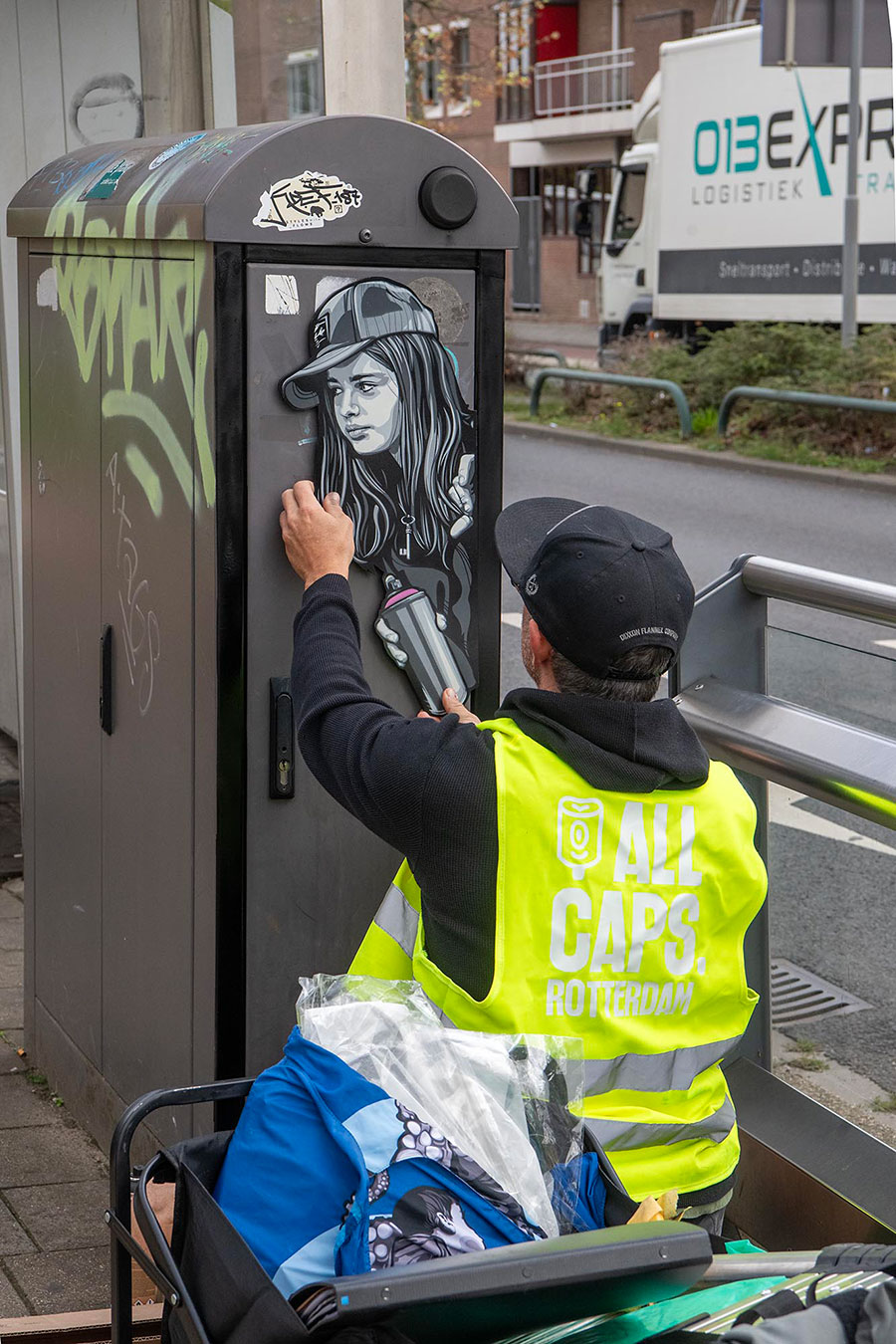
Joe Iurato. All Caps Festival 2026. Rotterdam, The Netherlands. (photo © Martha Cooper)

BSA: What happens to the walls after the festival ends: how long do the works usually stay up, who decides when they are replaced, and do any become permanent landmarks?

ALL CAPS: In most cases, our walls are there to stay: we get most of the walls from housing corporations, and we tell them that unless there are pressing issues, we want to keep them up for at least five years.  We never paint over the festival walls; we always start looking for new ones. 

Of course, sometimes we have building walls being torn down or renovated, and then it’s a different case, but the idea is to create an open-air museum in areas of the city where art is not common.
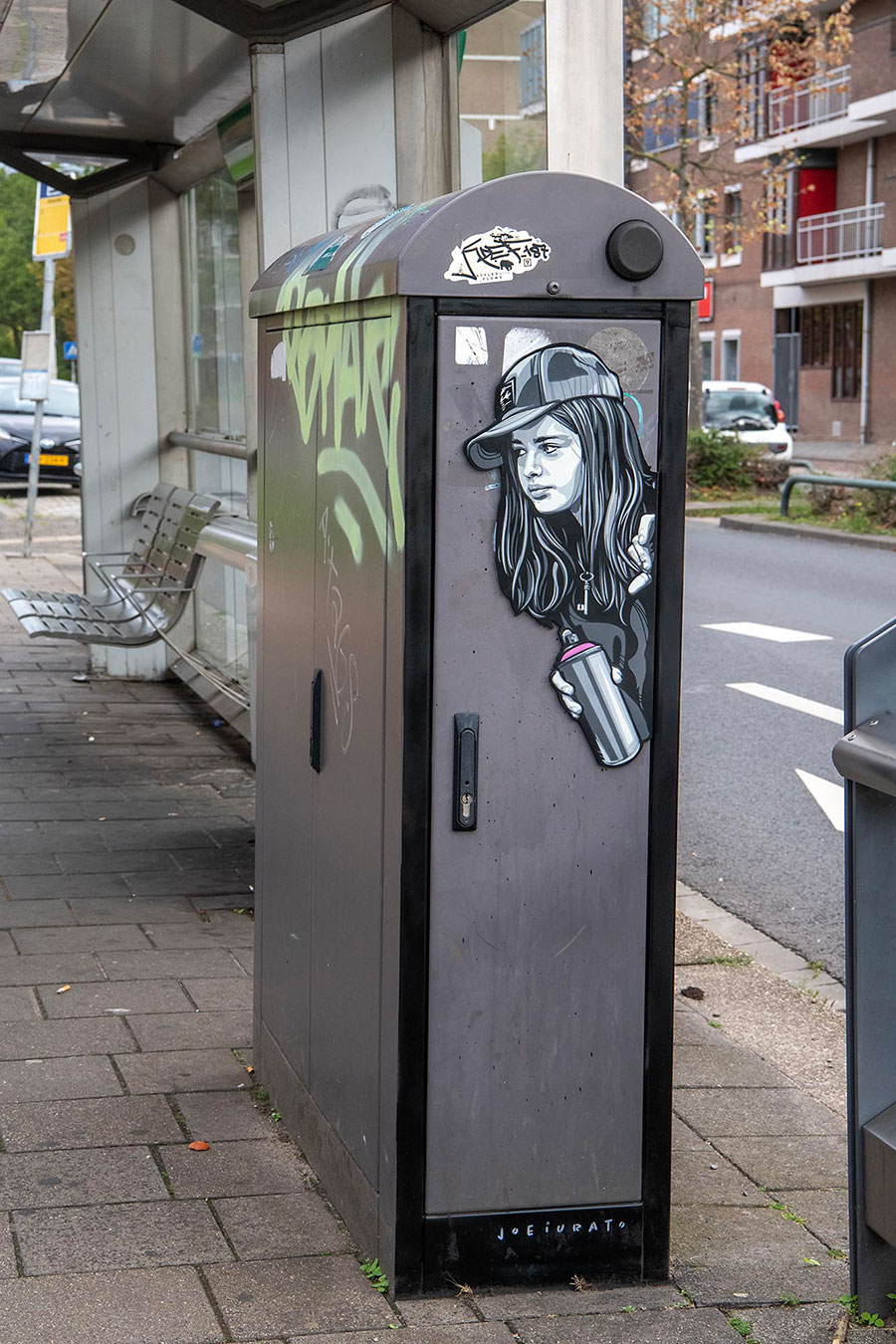
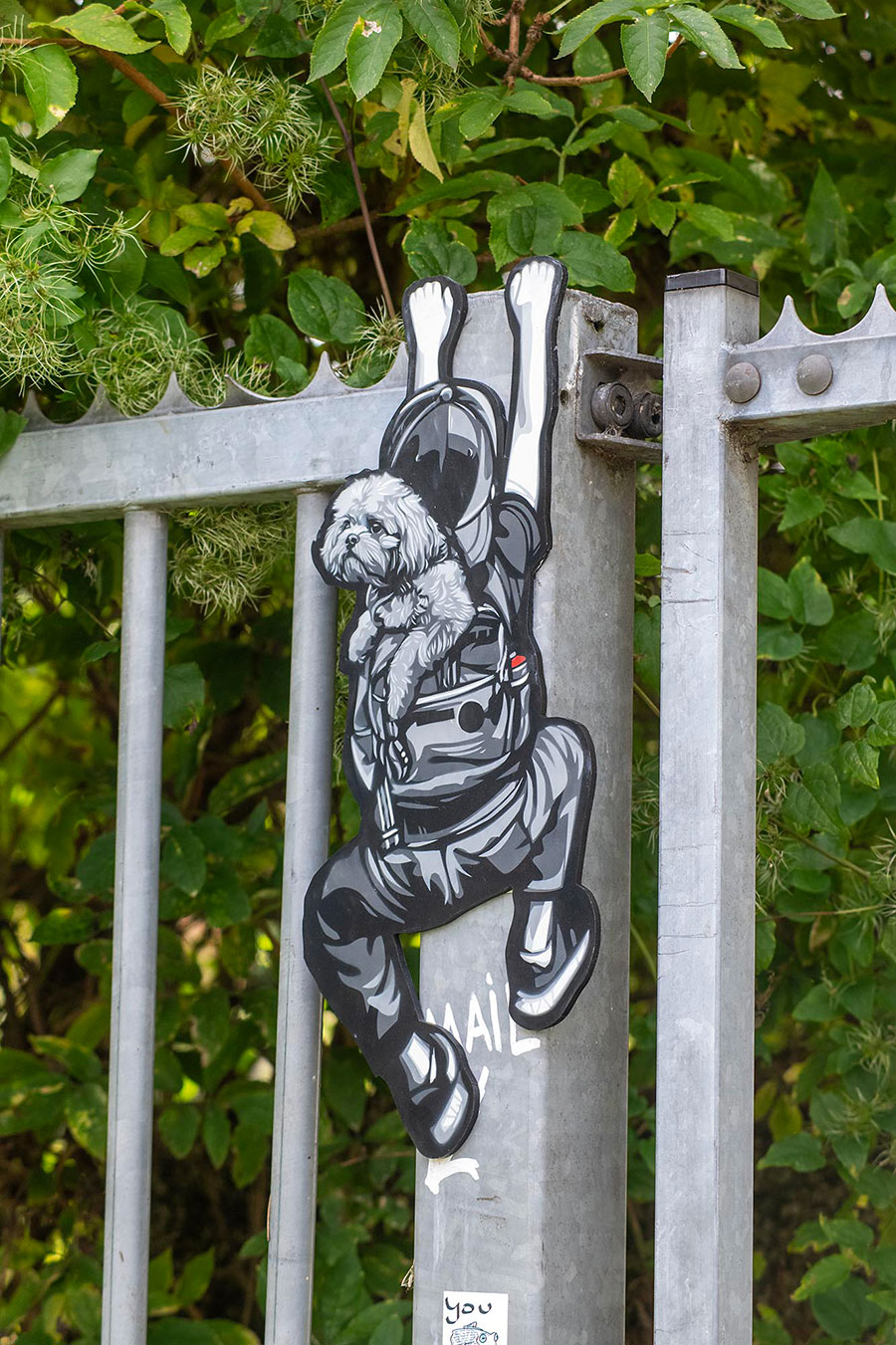
Joe Iurato. All Caps Festival 2026. Rotterdam, The Netherlands. (photo © Martha Cooper)
SFHIR. All Caps Festival 2026. Rotterdam, The Netherlands. (photo © Martha Cooper)
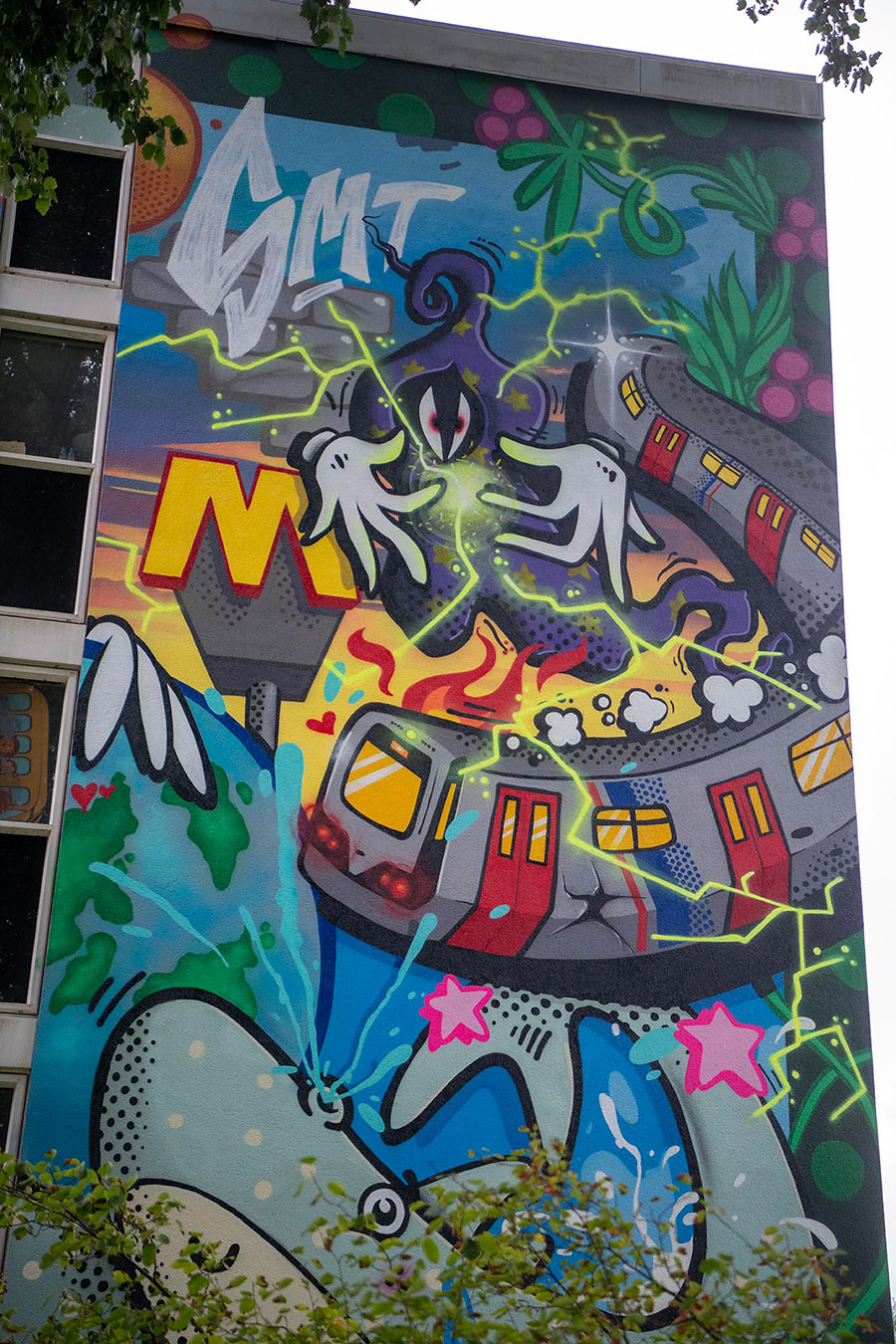
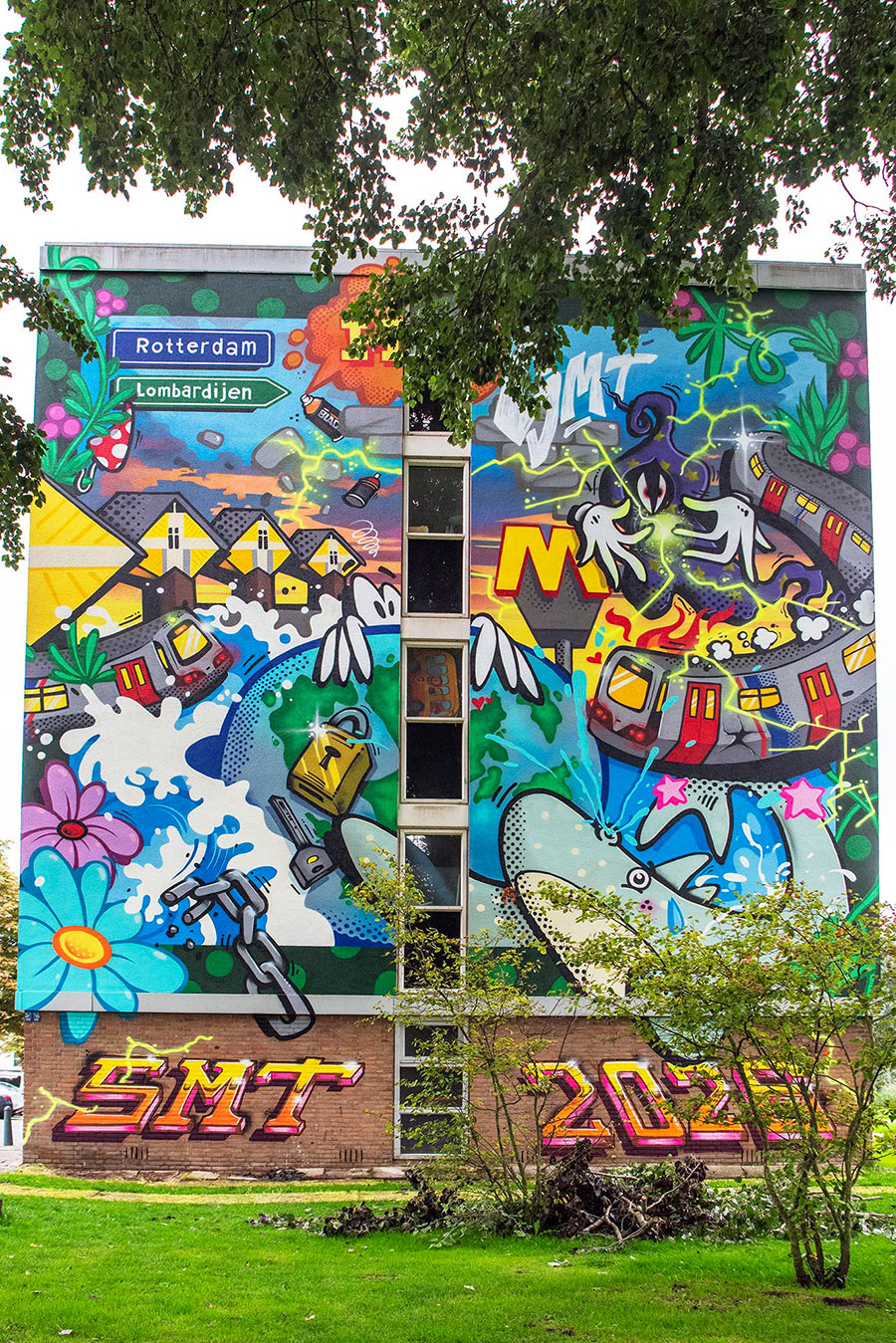
SMT CREW. All Caps Festival 2026. Rotterdam, The Netherlands. (photo © Martha Cooper)
Hard Thirteen. All Caps Festival 2026. Rotterdam, The Netherlands. (photo © Martha Cooper)
Tuig OMA. All Caps Festival 2026. Rotterdam, The Netherlands. (photo © Martha Cooper)
IQUE. All Caps Festival 2026. Rotterdam, The Netherlands. (photo © Martha Cooper)
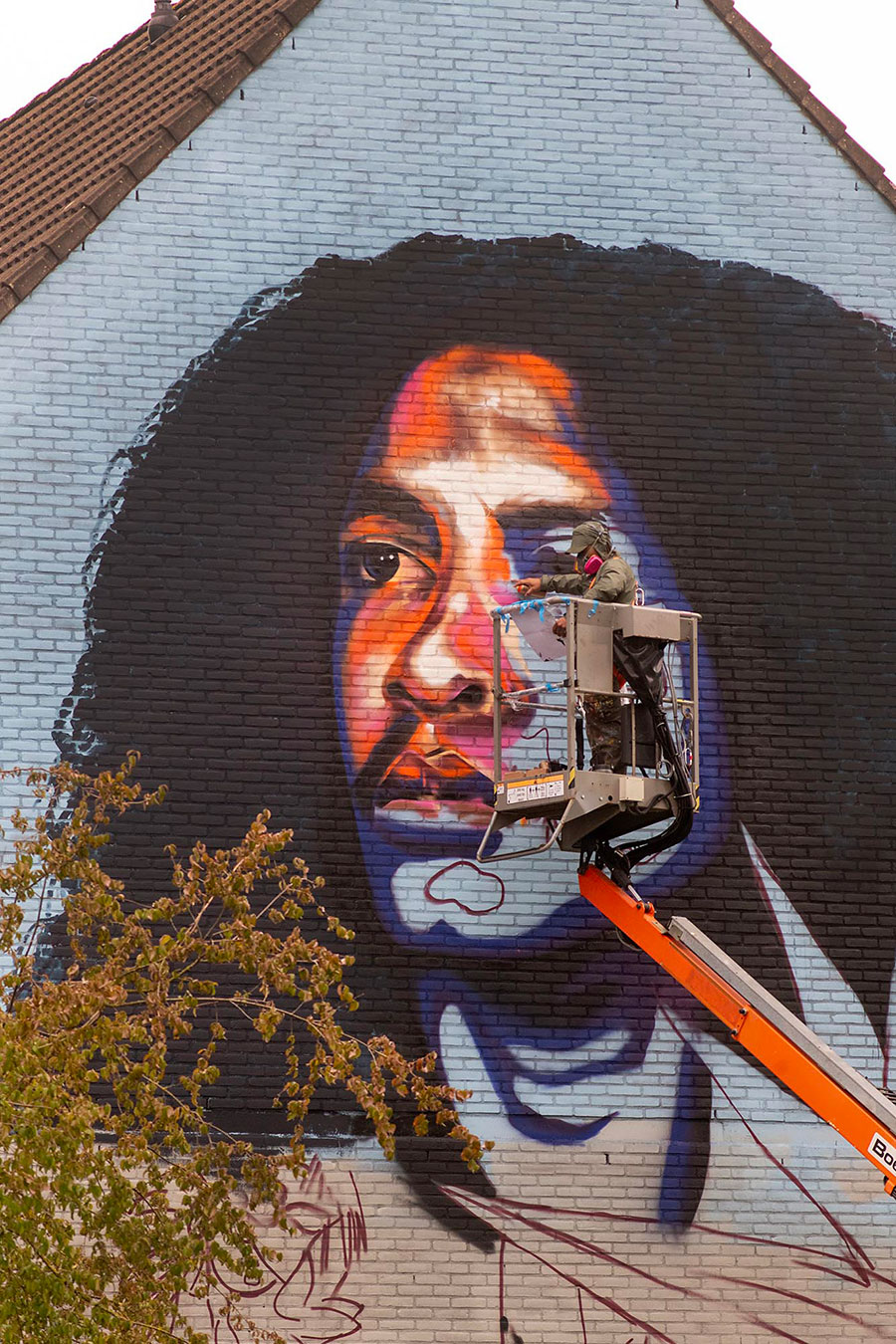
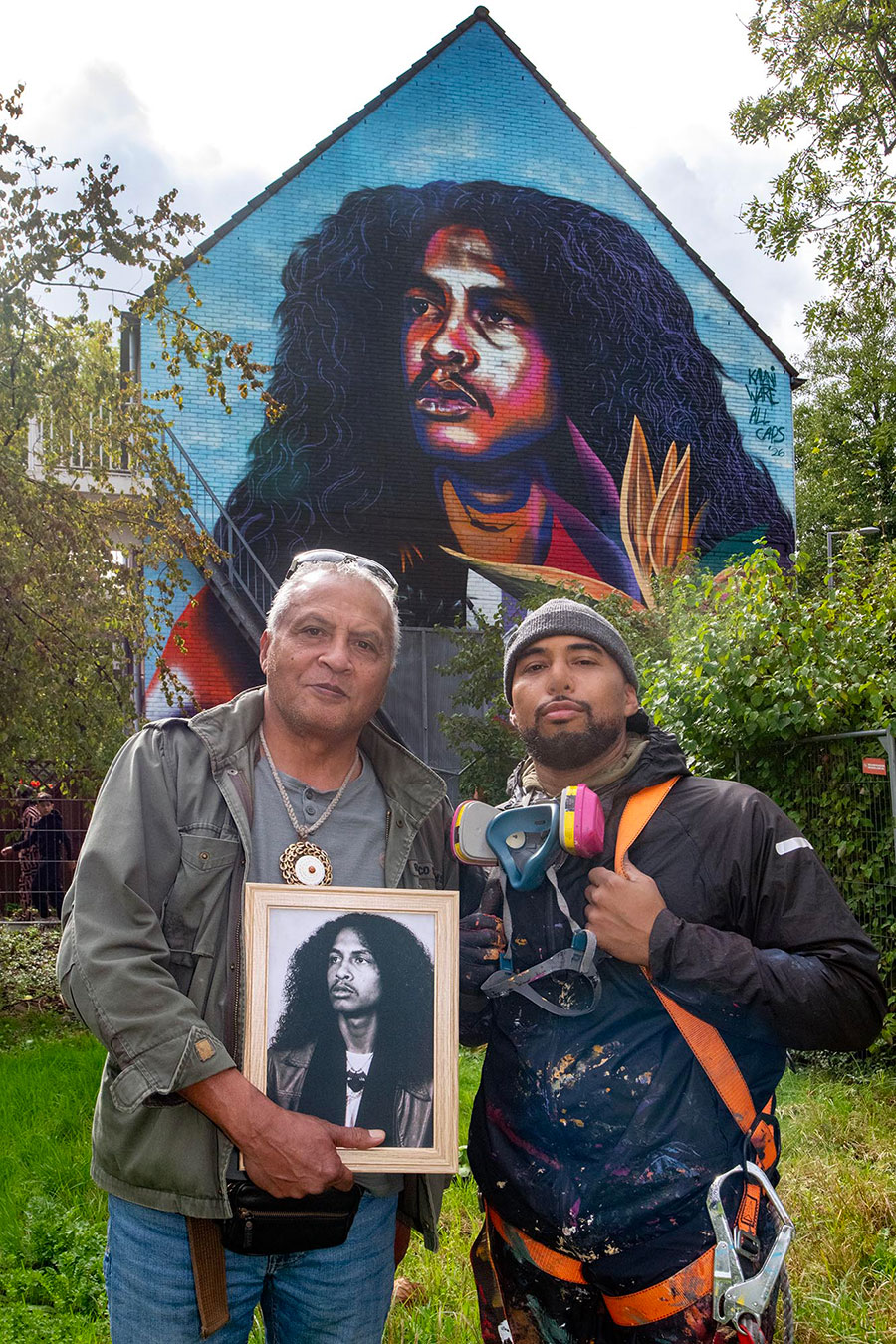
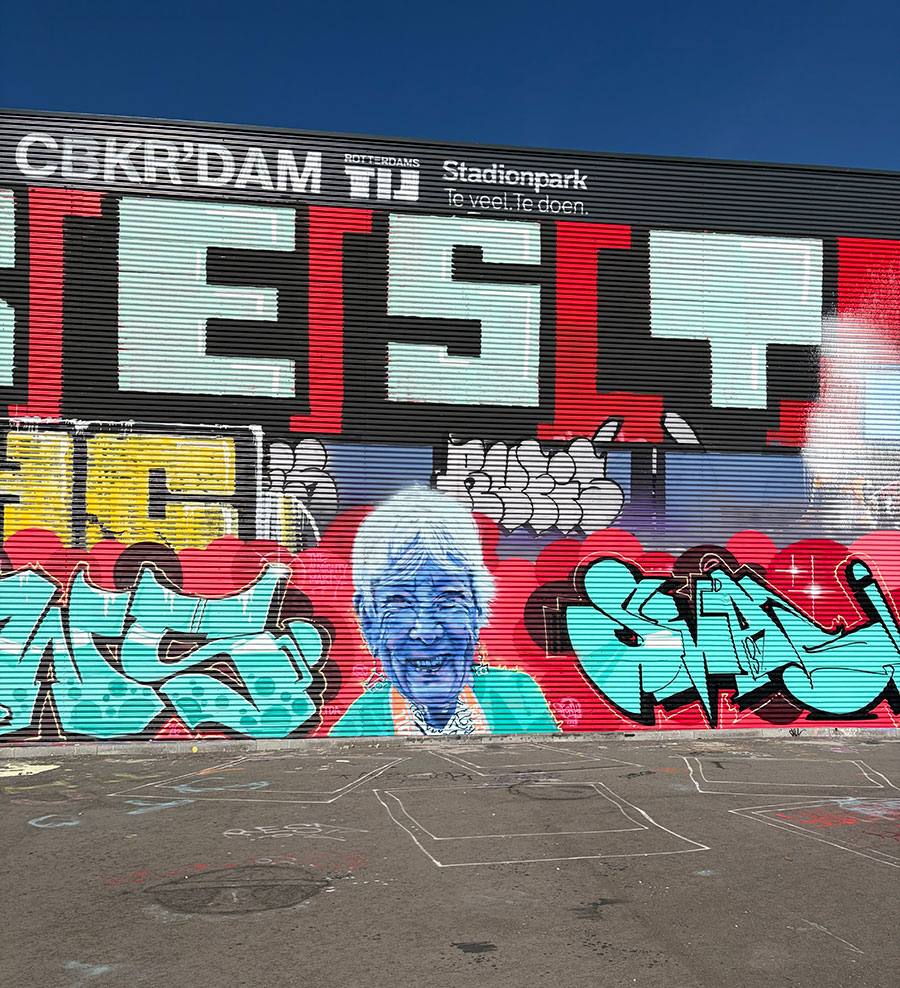
Kalani Ware. All Caps Festival 2026. Rotterdam, The Netherlands. (photo © Martha Cooper)

Kalani’s own roots lie in California and Hawaii, but he also shares family ties with the Lombardijen neighborhood. His father-in-law is a true native of Lombardijen and walked these very streets in his youth. Kalani based this portrait on a 1978 photograph of his father-in-law at 17. In the mural, he wears a Hawaiian floral garland, known as a lei, crafted with Bird of Paradise flowers. A bloom cherished by both men.

While parts of the piece are photorealistic, the artist also incorporates more abstract shapes. These areas allow him to experiment with saturated colors and rich textures. Kalani even intentionally used the texture and color distribution caused by rain in the lower part of the hair. This marks the first time Kalani has created a portrait on such a grand scale. The different elements come together as an ode to his own roots, those of the neighborhood and above all, his wife’s family.

– Birgit van Beek / All Caps.
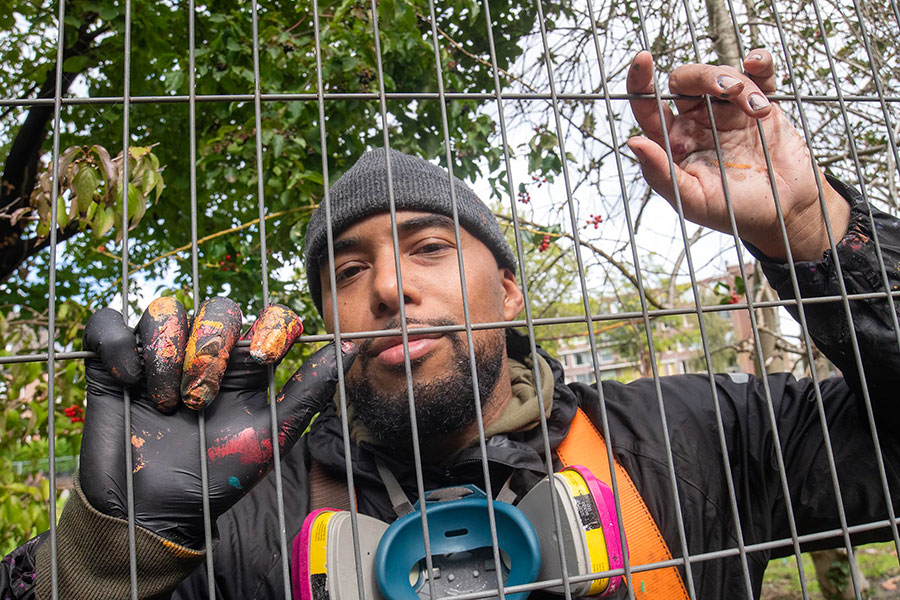
Kalani Ware. All Caps Festival 2026. Rotterdam, The Netherlands. (photo © Martha Cooper)
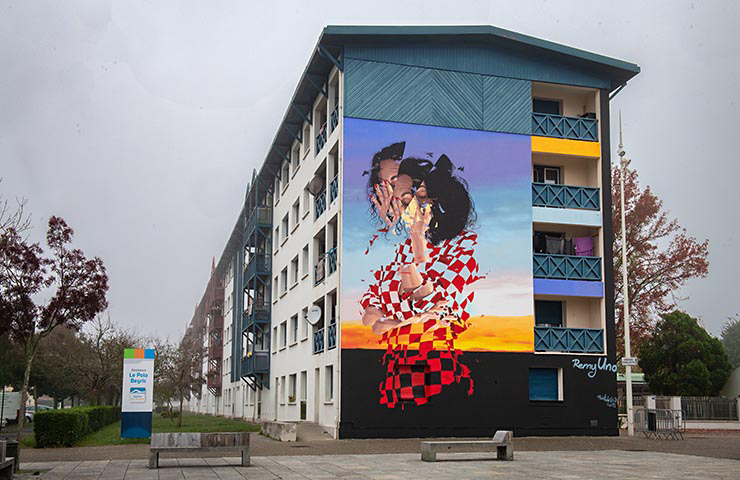
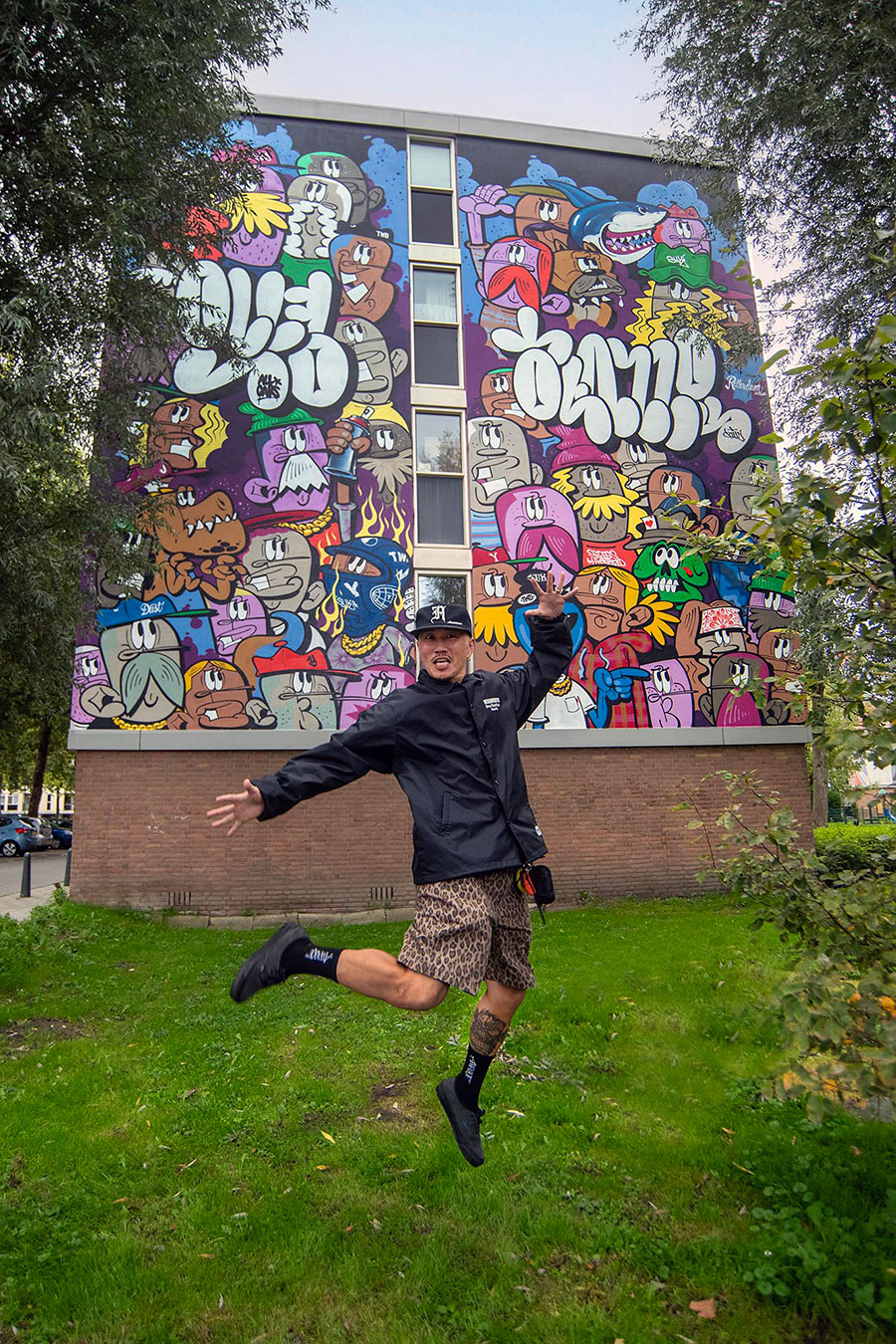
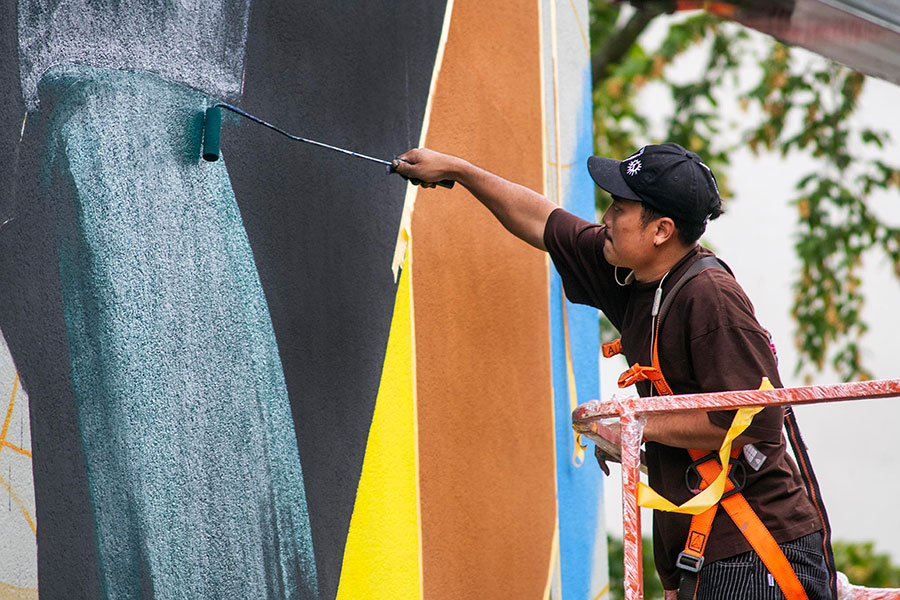
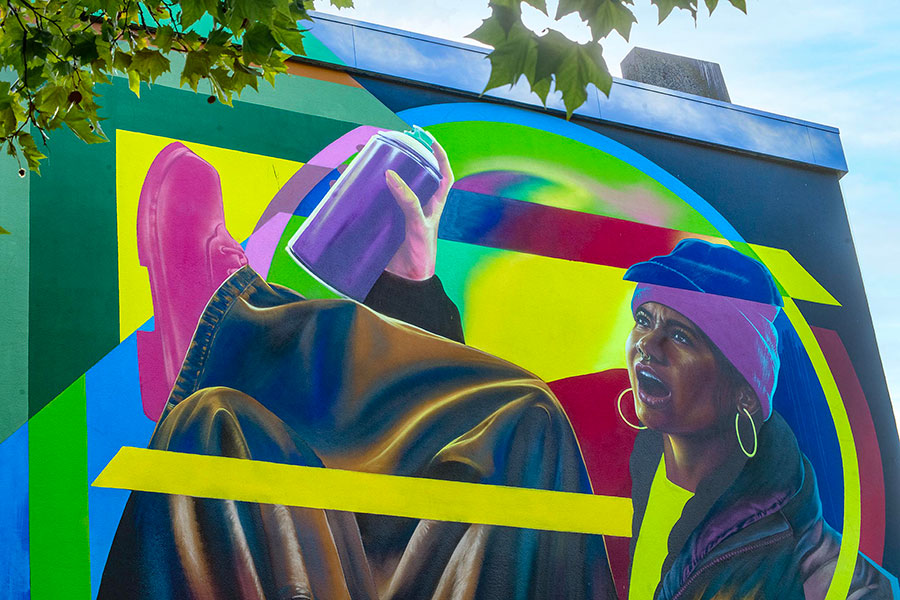
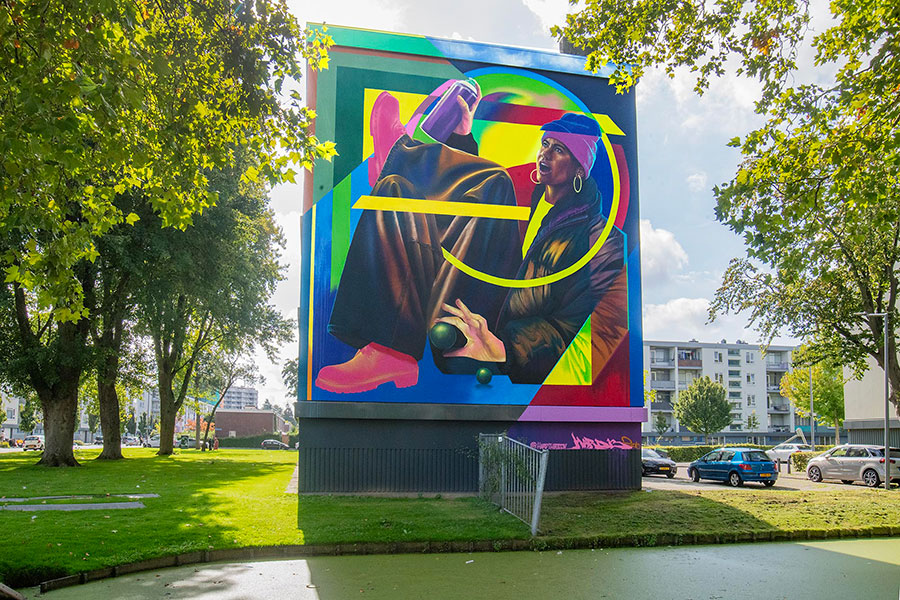
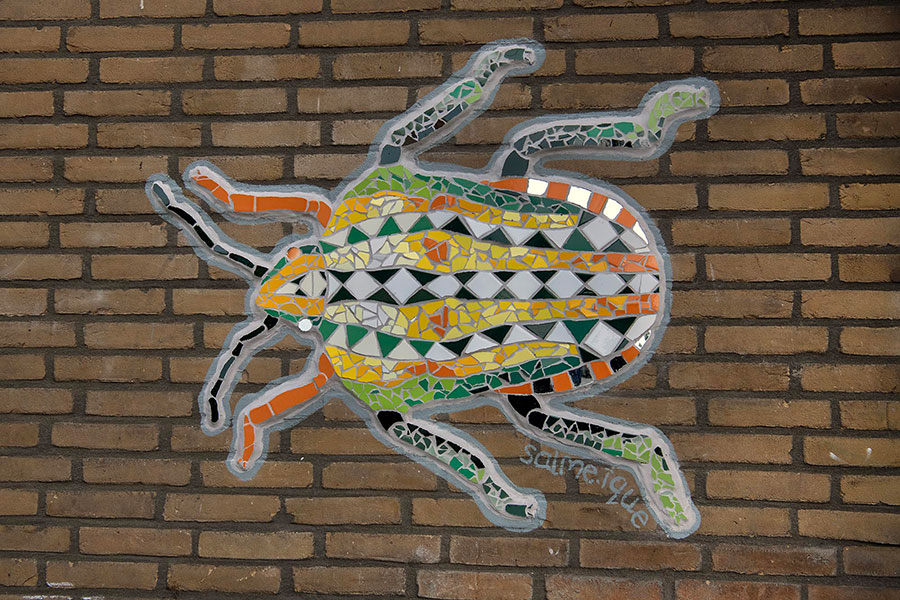
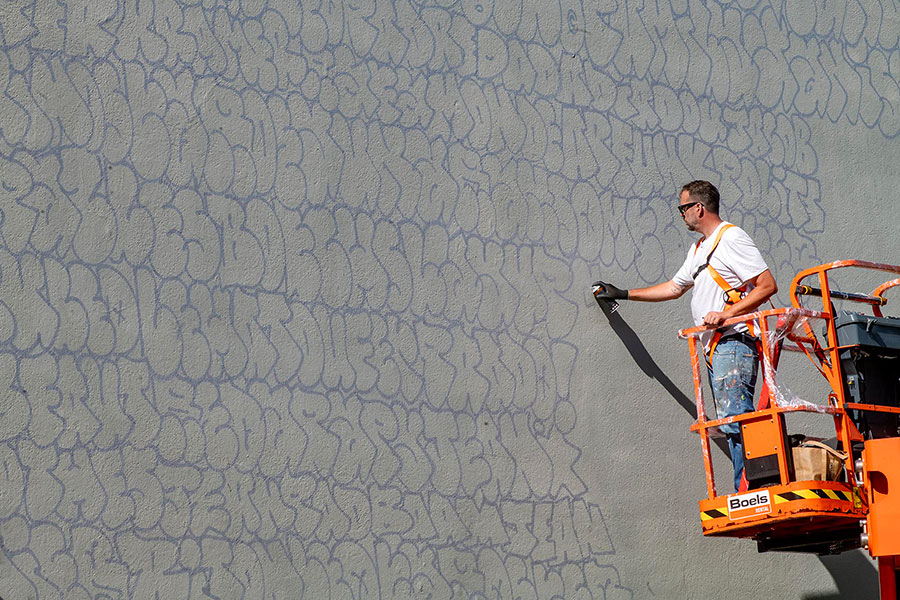
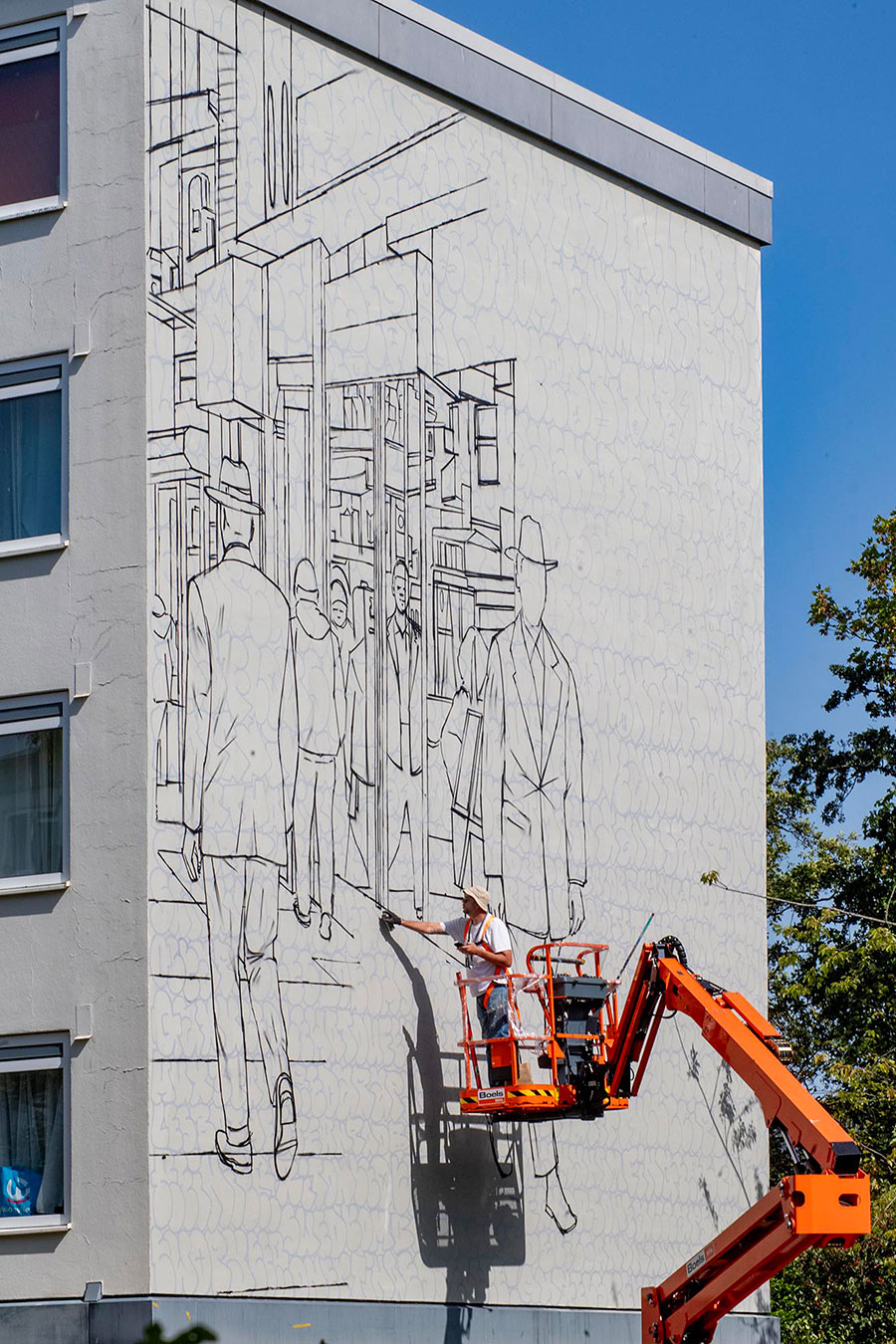
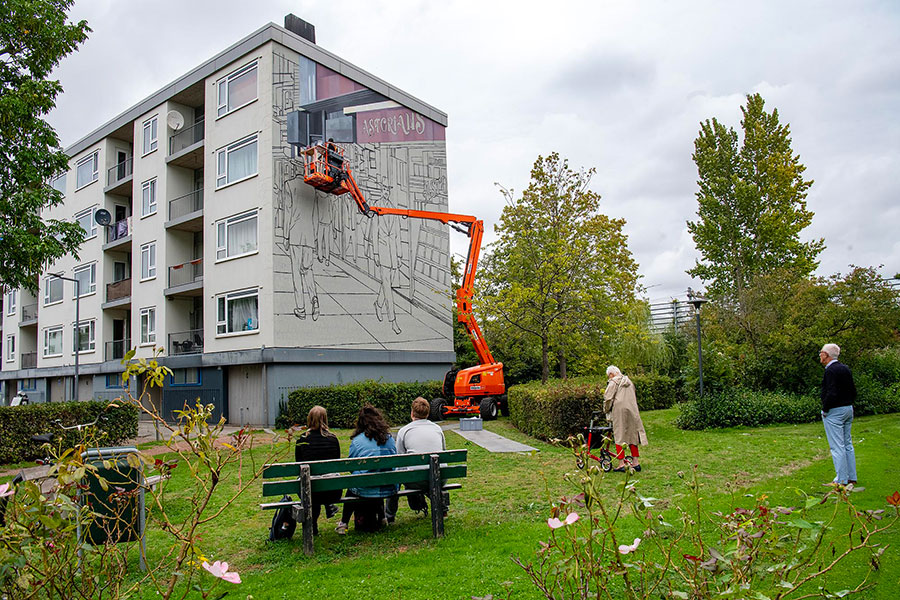
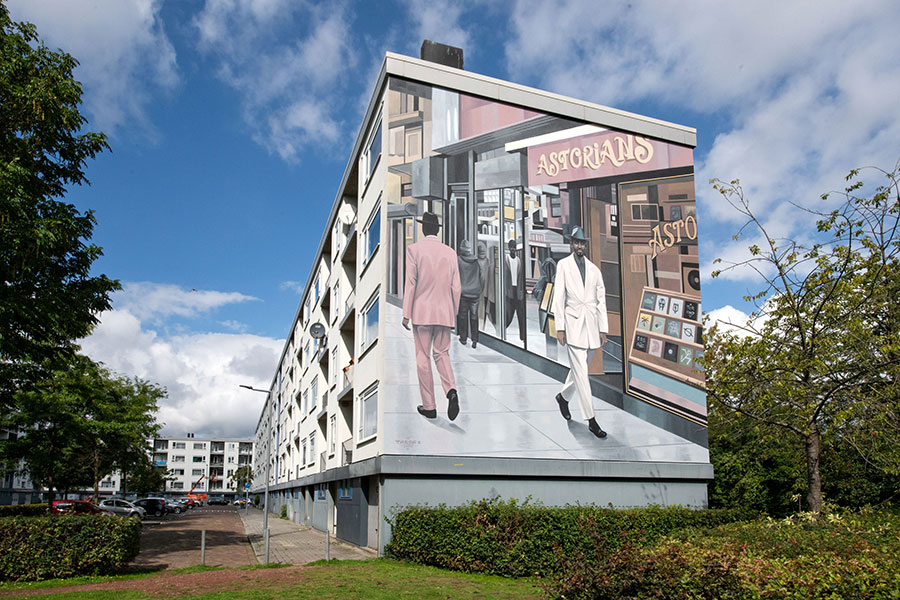
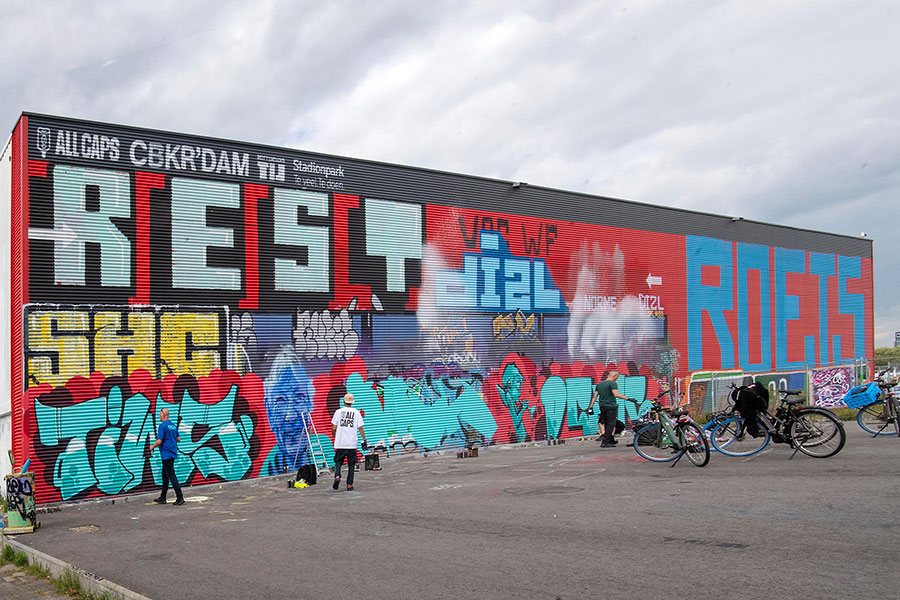
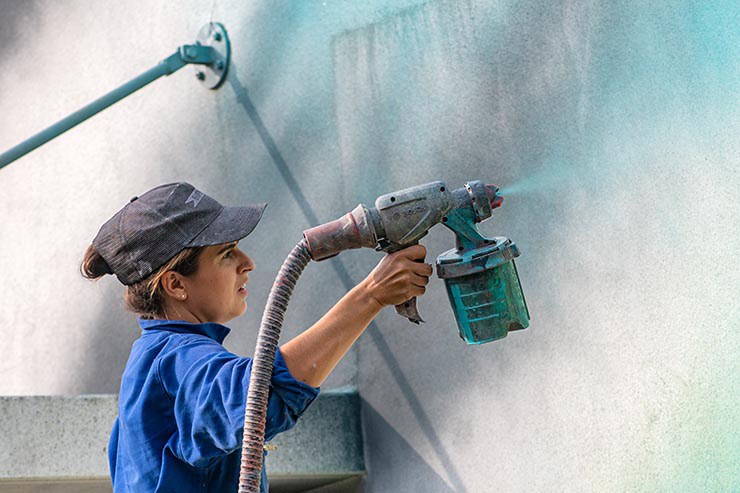
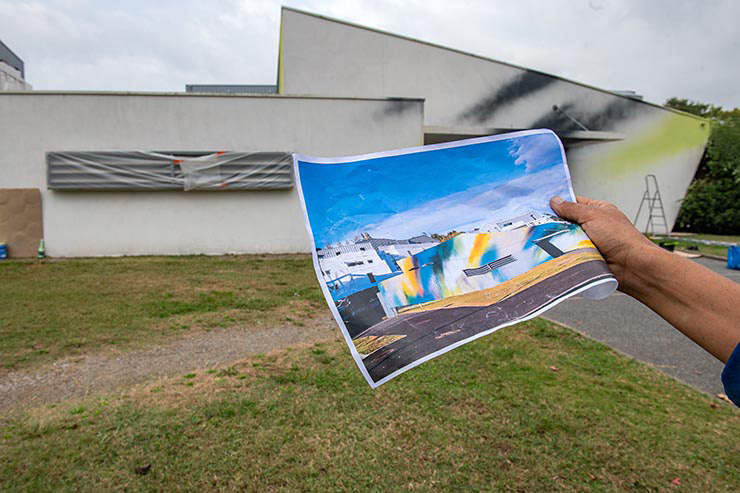
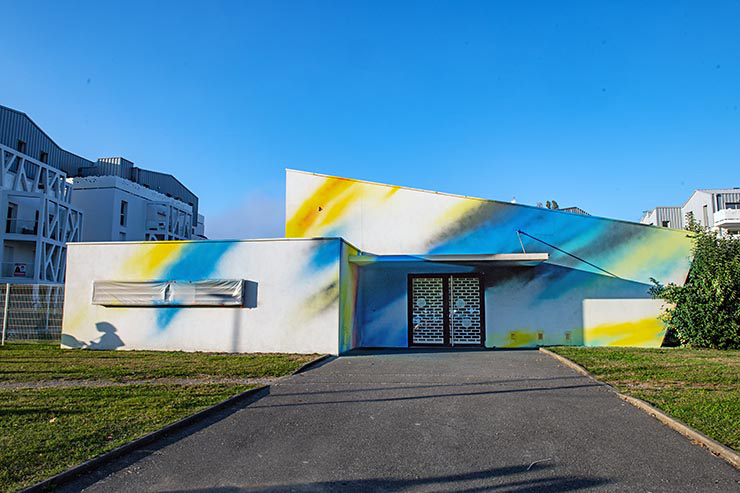
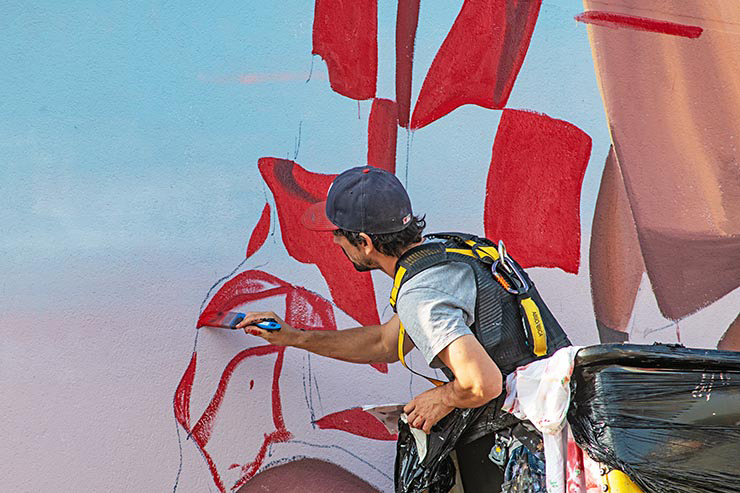
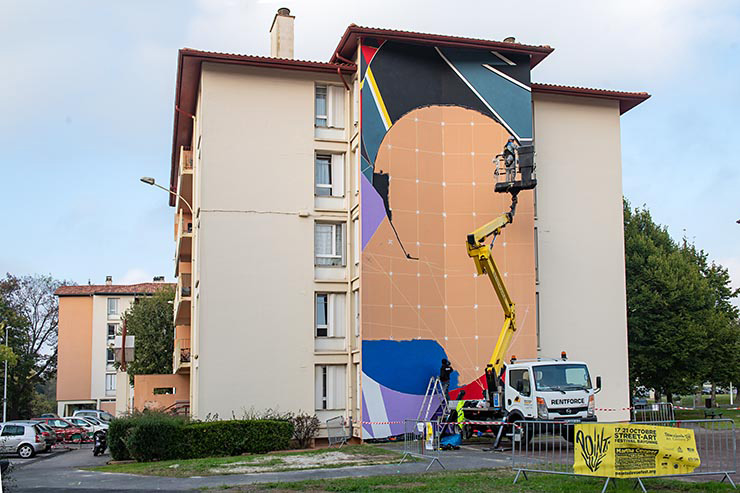
Taroe. All Caps Festival 2026. Rotterdam, The Netherlands. (photo © Martha Cooper)
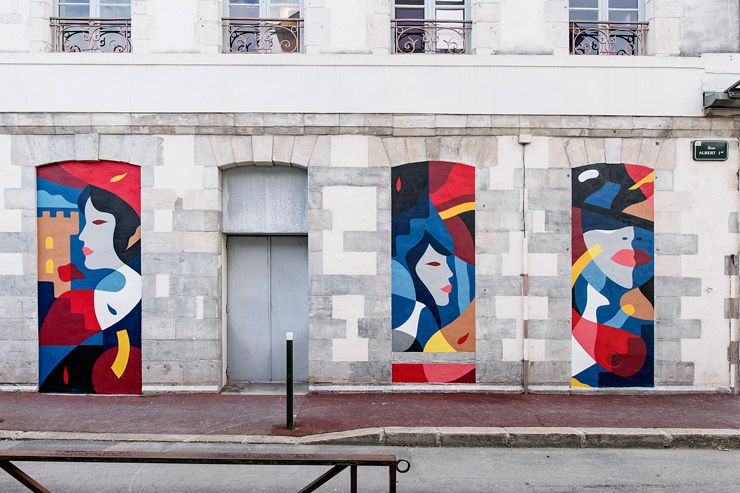
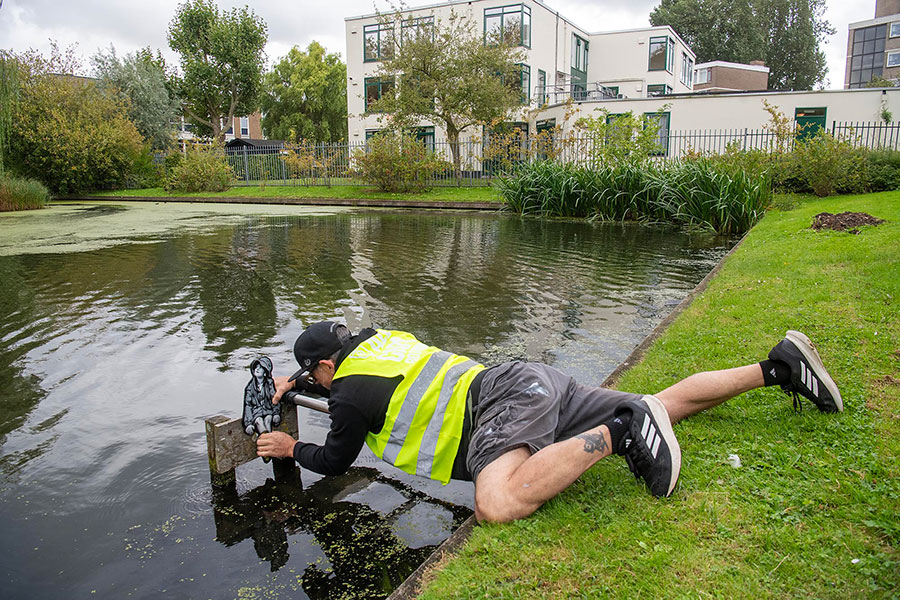
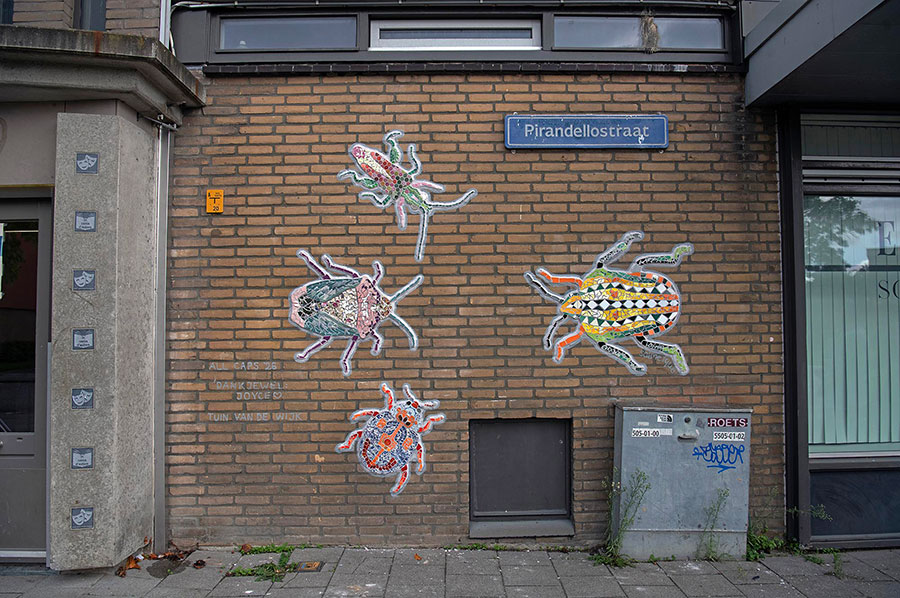
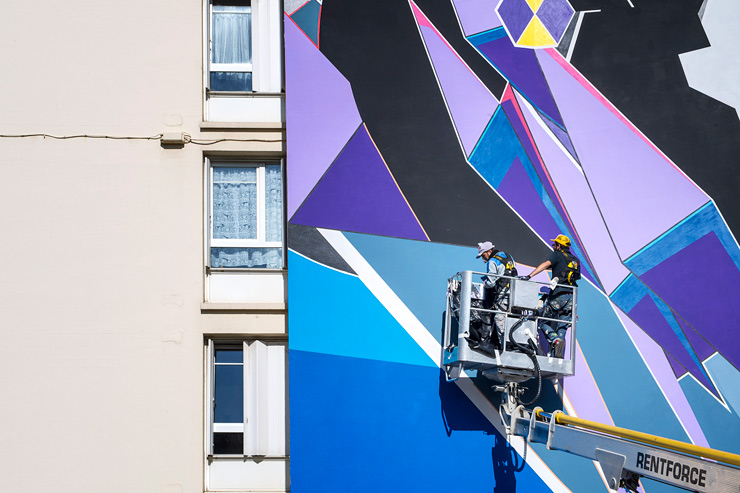
Taroe. All Caps Festival 2026. Rotterdam, The Netherlands. (photo © Nika Kramer)
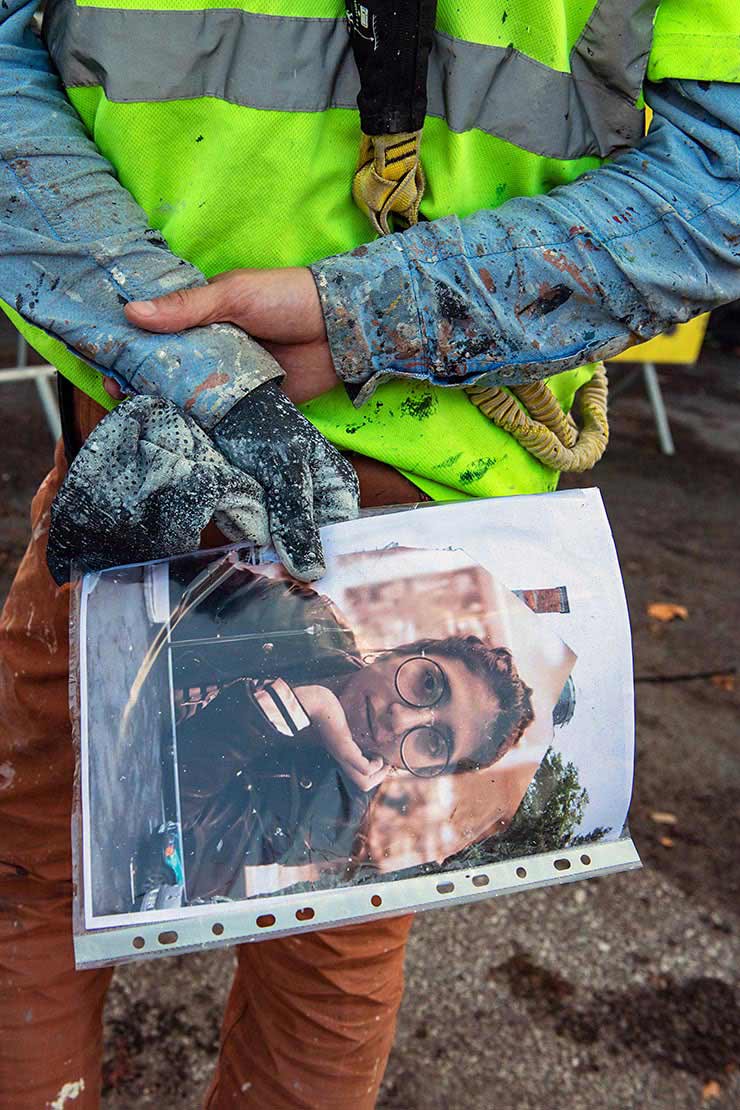
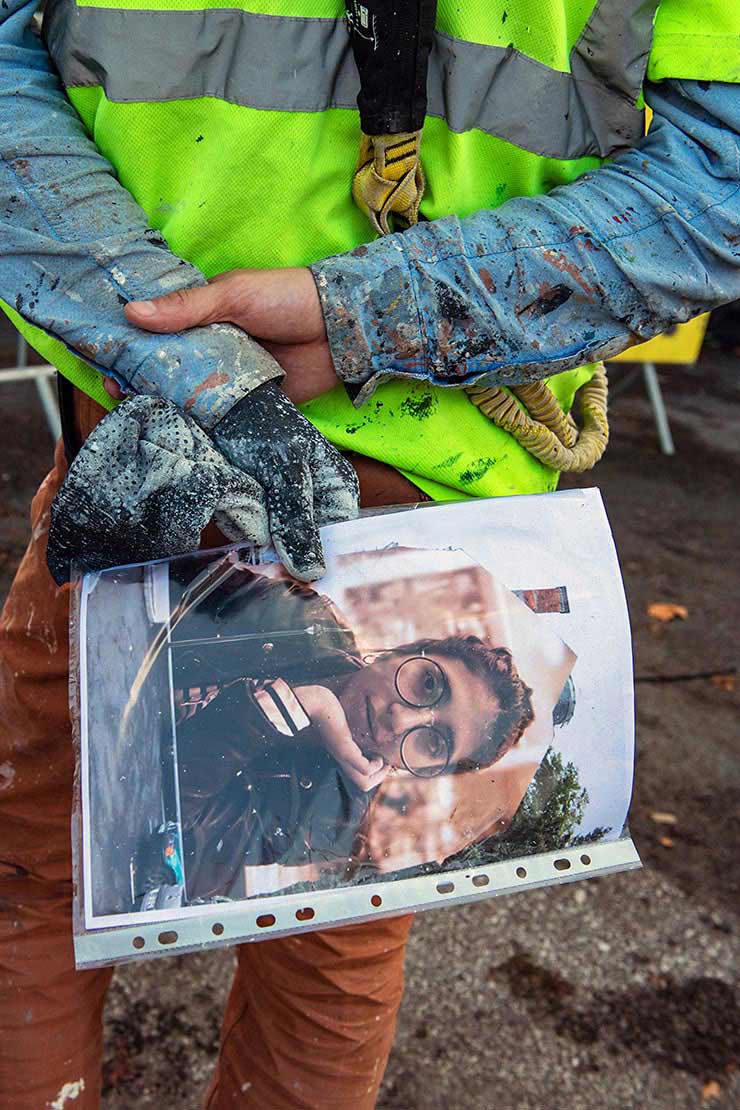
FONKI painting a portrait of Martha on the Curators’ Wall. All Caps Festival 2026. Rotterdam, The Netherlands. (photo © Martha Cooper)
FONKI. Curators’ Wall. All Caps Festival 2026. Rotterdam, The Netherlands. (photo © Katherina Doxiadis)
Read more
Highlights From A Colorful “Asalto”: Zaragoza’s Premier Street Art Festival Flourishes

Highlights From A Colorful “Asalto”: Zaragoza’s Premier Street Art Festival Flourishes

Zaragoza’s Asalto Festival, in its recent edition, once again demonstrates a magnetic pull in the world of street art, attracting both local talent and international artists. Nestled in La Jota, one of Zaragoza’s most historic neighborhoods, the festival radiated creativity on the streets from September 15 to 24. Not only did it reclaim its mural game, but it also embraced a spectrum of activities reminiscent of its pre-pandemic grandeur.

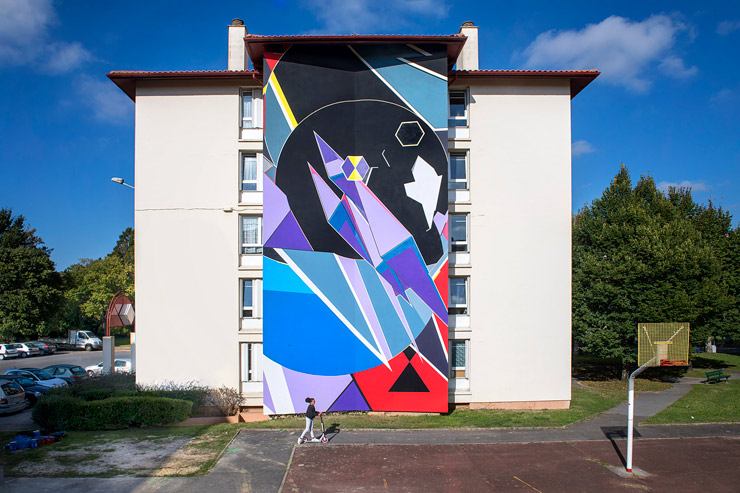
Taroe. Festival Asalto 2023. Zaragoza, Spain. (photo courtesy of Festival Asalto)

This year artists from diverse backgrounds converged on Zaragoza’s streets: Taroe from France drew inspiration from a working-class neighborhood in the United States, promising to carry a touch of Zaragoza to his next destination. Stelios Pupet of Greece unveiled a pixelated female figure, marking his first significant piece in Spain. Anetta Lujkanova from Finland introduced a mural evoking dreams and local folklore, while Italy’s Giulio Vesprini paid homage to La Jota’s gardens in his distinct style, infusing both the name of the neighborhood and his signature numerical touch. Ceciro from Uruguay showcased a potent depiction of women’s emancipation, and Zaragoza’s own Miguel Hcuar, now a London resident, brought a vivid pop art dream to life.

Taroe. Festival Asalto 2023. Zaragoza, Spain. (photo courtesy of Festival Asalto)

One of the standout initiatives was from 3dfiti, which cleverly bridged the tangible and digital realms through 3D printing. They orchestrated a city-wide treasure hunt with 3D printed art pieces, leveraging social media’s power and engaging attendees in an immersive game.

Taroe. Festival Asalto 2023. Zaragoza, Spain. (photo courtesy of Festival Asalto)

This year’s edition also resurrected the Asalto Fair, celebrating both local and national artists. Noteworthy documentary screenings, including Carlos Saura’s “Las paredes hablan” and Boa Mistura’s “Crossroads”, added depth to the festival’s narrative.

Now in its eighteenth year, Asalto continues to be a beacon of community engagement with  workshops, guided tours, tournaments, and more – underscoring a commitment to inclusivity and cultural enrichment. The festival’s blend of grassroots energy, global artistic prowess, and the embracing of innovative mediums makes it a celebration of not just art, but also the community and the city it celebrates.

Miguel Hcuar. Festival Asalto 2023. Zaragoza, Spain. (photo courtesy of Festival Asalto)
Ceciro. Festival Asalto 2023. Zaragoza, Spain. (photo courtesy of Festival Asalto)
3DFITI. Festival Asalto 2023. Zaragoza, Spain. (photo courtesy of Festival Asalto)
Stelios Pupet. Festival Asalto 2023. Zaragoza, Spain. (photo courtesy of Festival Asalto)
Anetta Lujkanonva. Festival Asalto 2023. Zaragoza, Spain. (photo courtesy of Festival Asalto)
Art Fair. Festival Asalto 2023. Zaragoza, Spain. (photo courtesy of Festival Asalto)
Art Talks. Festival Asalto 2023. Zaragoza, Spain. (photo courtesy of Festival Asalto)
Read more
“Points De Vue” Festival 2018 Spans Styles and the Basque Region in Bayonne, France.

“Points De Vue” Festival 2018 Spans Styles and the Basque Region in Bayonne, France.

“Today there are nearly 80 works – paintings and installations,” says Alban Morlot, “to discover in the inner city and its periphery.”

Mantra. Points De Vue Festival 2018. Bayonne, France. (photo © Martha Cooper)

The founder and curator of Points de Vue is speaking about his city, Bayonne in the south of France, which straddles the Basque region and boasts the language throughout this region and neighboring Spain. Here on both sides of the the Adour river running through the small city, you will find new installations from this years invited 20 or so artists from the urban art scene including folks like the Portuguese Pantonio, Italian Pixel Pancho, French Mantra, French Koralie, Venezuelan Koz Dox, German 1UP Crew, and the American graffiti and Street Art documentarian Martha Cooper.

Spawned a few years ago from Morlot and his team at Spacejunk, the community/privately funded festival has produced a range of large public works throughout the city. Similarly, the storefront Spacejunk space on rue Sainte Catherine in the Saint-Esprit district of Bayonne had hosted a cultural and artistic association that spans genres and disciplines; hosting classes, talks, performances and exhibitions of modern artists drawn from the worlds of of Street Art, LowBrow, and Pop Surrealism. After a great number of group and solo shows Spacejunk is now entering their 11 year celebrating counter-culture.

Mantra. Points De Vue Festival 2018. Bayonne, France. (photo © Martha Cooper)

Bayonne is stitched together geographically and socially with nearby Biarritz and Anglet, so the Basque area of about 130,000 has enough fans and practioners to support this five day festival. Alban tells us that the usual staff of 3 who run Spacejunk couldn’t do the festival without the generous enthusiasm and efforts of 40 volunteers, 10 interns and 1 senior technician.

An eclectic mix of artists invited to create new works in the public space reflect the alternative environments that have been showcased at Spacejunk: influences from a number of subcultural narratives including comics, punk, tattoo, skater culture, graffiti, and of course, Street Art.

Mantra. Points De Vue Festival 2018. Bayonne, France. (photo © Martha Cooper)

With very special thanks to Ms. Cooper and Ms. Kramer we have today new images to share with BSA readers from this autumns’ edition of Points de Vue. We also had an opportunity to speak with Mr. Morlot about his approach to the festival.

BSA: How did you conceive of Points de Vue?
Alban Morlot:
I have work for Spacejunk art center for almost 15 years and have run the art center of Bayonne – Basque Country – since 2007. During this time I’ve met many artists from all over the world who have work in public space previously. At that time, French public authorities were under-informed about street art mutations so it was difficult to organize outside projects with street artists – who many people automatically associated to vandalism.

I was frustrated at not being able to take advantage of their presence and their talent to develop their aesthetics in situ. It was during that time that the idea of a festival sprouted in my mind – but it was only later that the planets were aligned!

Equipped with years of experiences, I wanted to set up an event that could represent the variety of the creative styles being used in public space and to provide an educational approach in the same time. The underlying idea is to show the multiplicity of artistic points of view, to confront them, and to offer to the wider audience the opportunity to enrich themselves with others’ eyes.

Mantra. Points De Vue Festival 2018. Bayonne, France. (photo © Martha Cooper)

BSA: What’s your criteria as an organizer when inviting the artists to participate?
Alban Morlot: First, I make sure that the artistic selection is consistent with the purpose of the festival: to discover the extent of the current creations happening in public space. Then it’s the walls that guide me in my research. The context, the format, the situation… are all criteria that I integrate before launching a personalized invitation to an artist.

Most of the time, I invite artists whom I have already met because I like building relationships that go beyond the “one shot”. I know that it could be possible to pass up several editions before I can propose an invitation to such and such artist, but I prefer to wait the right moment, try to gather the best conditions and do a serious proposal so that from the artworks there emerges the pleasure of painting.

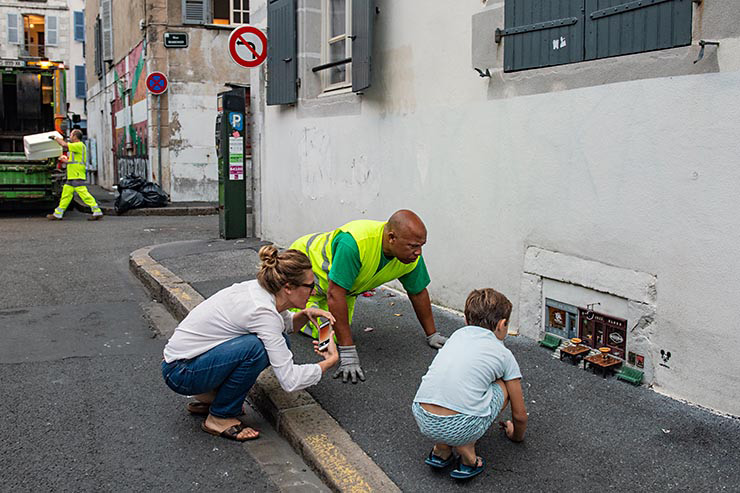
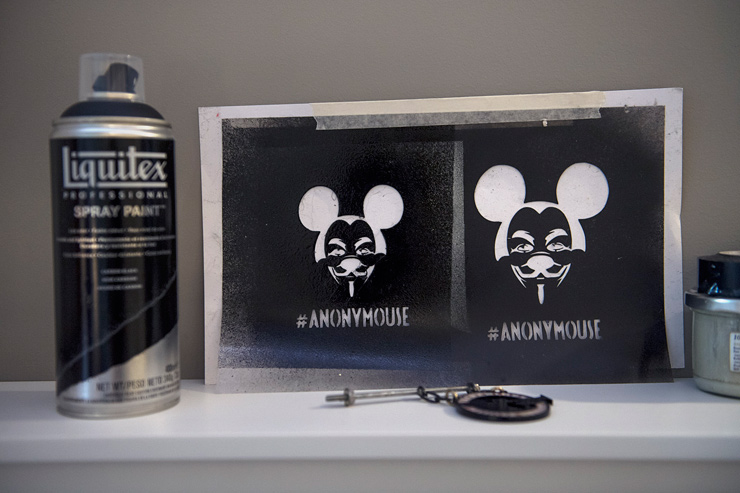
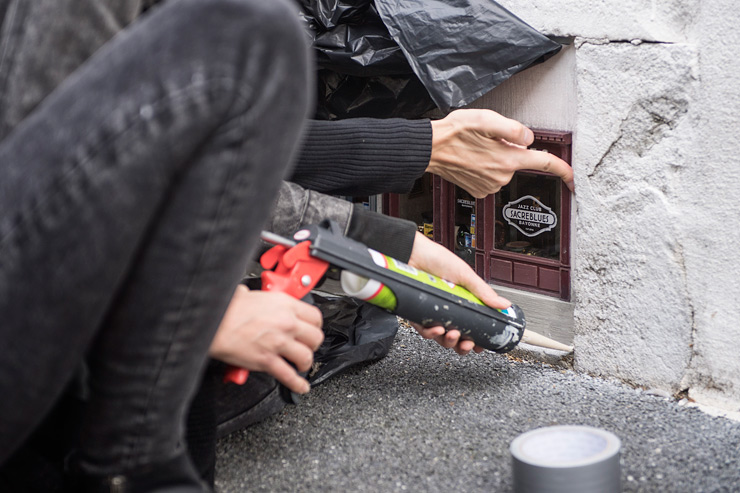
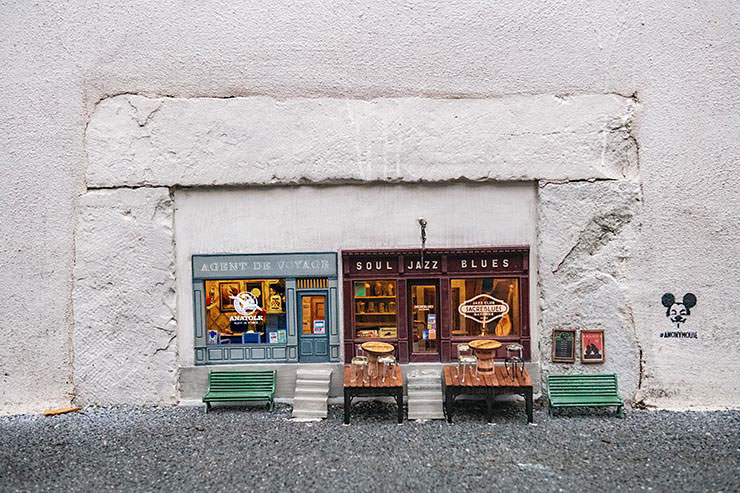
Anonymouse. Points De Vue Festival 2018. Bayonne, France. (photo © Martha Cooper)

Then I try to build a singular identity for the festival “Points of View”. The Basque Country is located between France and Spain. It is important in this context to boost cross-border artistic exchanges between the northern Basque Country (Iparralde) and the south (Hegoalde).

Last but not least, I try to encourage the presence of female artists because they remain largely underrepresented in this artistic scene.

Anonymouse. Points De Vue Festival 2018. Bayonne, France. (photo © Martha Cooper)

BSA: Bayonne is also known for its political murals. Do you encourage the artists to be political with their work as well?
Alban Morlot: Generally, I do not allow myself to intervene in the process of artistic creation. I give my opinion if necessary but for me, once the selection is complete, I trust them. I want to allow everyone to practice his or her job with good conditions and it can happen if each part knows his appropriate place.

That said, I do not hesitate to convey the history of the region that welcomes them, because here as elsewhere, there is a story, a people and a language. It is political in a sense, but in the noble meaning!

Anonymouse. Points De Vue Festival 2018. Bayonne, France. (photo © Nika Kramer)

BSA: Do you see Points de Vue purely as a beautification of the city or do you see it to make a social impact within the community?
Alban Morlot:
In no way should our action be seen as decoration. Otherwise, I would not give carte blanche to the artists. No, I undertake a cultural project that aims to promote the meeting between artists and the public, generates exchanges, curiosity, in order to support everyone to be emancipated as a citizen.

Of course, I am not unaware of the social, economic, touristic considerations nor the impact of the festival on urban renewal programs. Culture is transversal and this is its strength, but I do not want to be polluted by other considerations that could divert me from the basics of the festival. I want to give artists the opportunity to work on a wall as they would in their studios and give them the opportunity to meet each other.

Anonymouse. Points De Vue Festival 2018. Bayonne, France. (photo © Nika Kramer)

BSA: How do you see the arts in public space making a difference to society? Should that be the mission or art in public space?
Alban Morlot: Art in the private space or in the public space plays the same role. The unprecedented recognition of urban art is one of all manifestations of social upheaval that we go through in modern societies. I think there’s a break with previous artistic movements because it more closely allies with the aspirations of today’s people – with think tanks who want to reinvest public spaces, etcetera. Art has always been an indicator of the evolution of society.

Anonymouse. Points De Vue Festival 2018. Bayonne, France. (photo © Martha Cooper)

BSA: What sort of support do you get from the city’s government for the implementation of the festival?
Alban Morlot: Since the Spacejunk art center is already identified by public authorities, we also receive support from these partners for the festival; This is a form of financial and logistical support. In addition, the festival is also supported by private companies and, thanks to all of these contributors, we manage to present a festival that is both qualitative and open to all.

Lorcolors. Points De Vue Festival 2018. Bayonne, France. (photo © Martha Cooper)

BSA: What’s the reaction of the residents of Bayonne when they see the artists at work and the completed murals?
Alban Morlot:
I must say that I was surprised by the reception that the Bayonne’s inhabitants (and vistors from nearby) have reserved for the festival. I spent almost 6 years defending this project with people who were ultimately quite afraid of the reaction of the public. But the reactions of the population were immediately enthusiastic! Martha (Cooper) even told me that it was quite unusual to see so many people on the streets coming to see the artists work. It is true that I strongly emphasized that it was a chance to see the artists in creation residencies!

Additionally, different from other events, an urban art festival leaves traces on the city which gain a certain value in time, and we are pleased that so many artists have come to the Basque country.

Lorcolors. Points De Vue Festival 2018. Bayonne, France. (photo © Martha Cooper)

Lorcolors. Points De Vue Festival 2018. Bayonne, France. (photo © Martha Cooper)

Remy Uno. Points De Vue Festival 2018. Bayonne, France. (photo © Martha Cooper)

Remy Uno. Points De Vue Festival 2018. Bayonne, France. (photo © Martha Cooper)

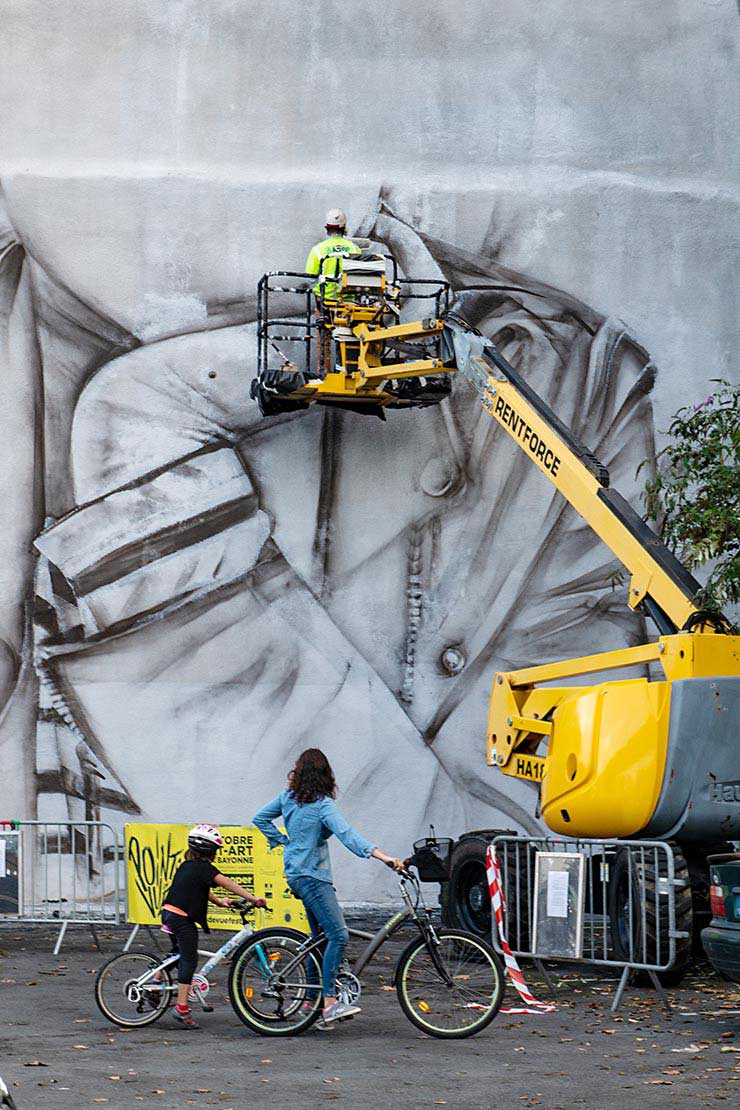
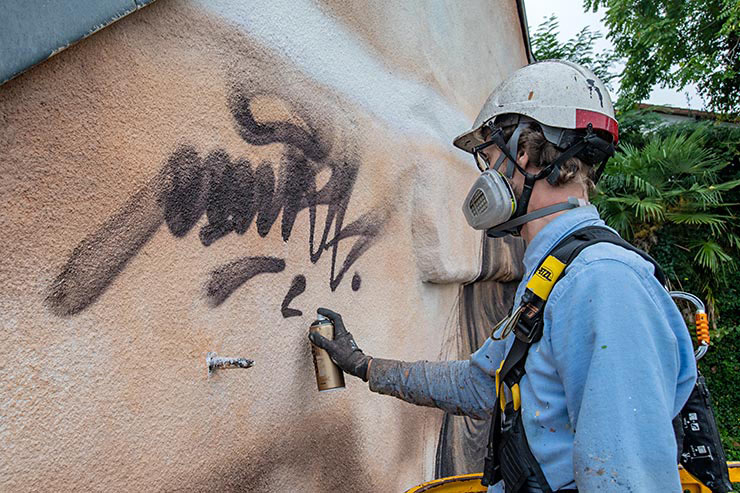
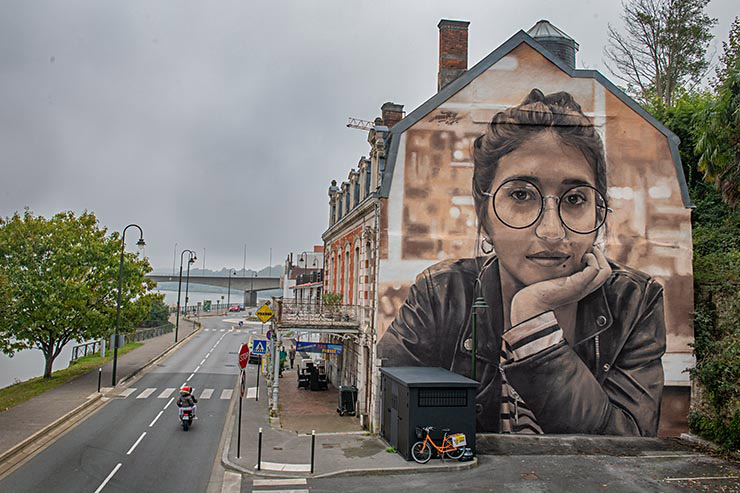
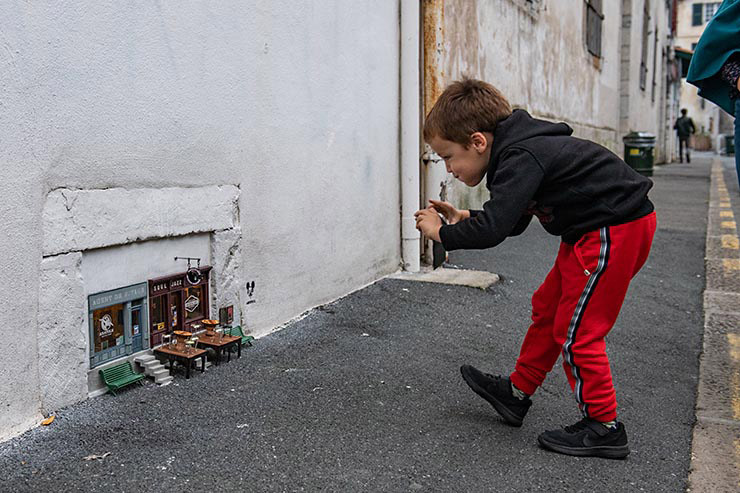
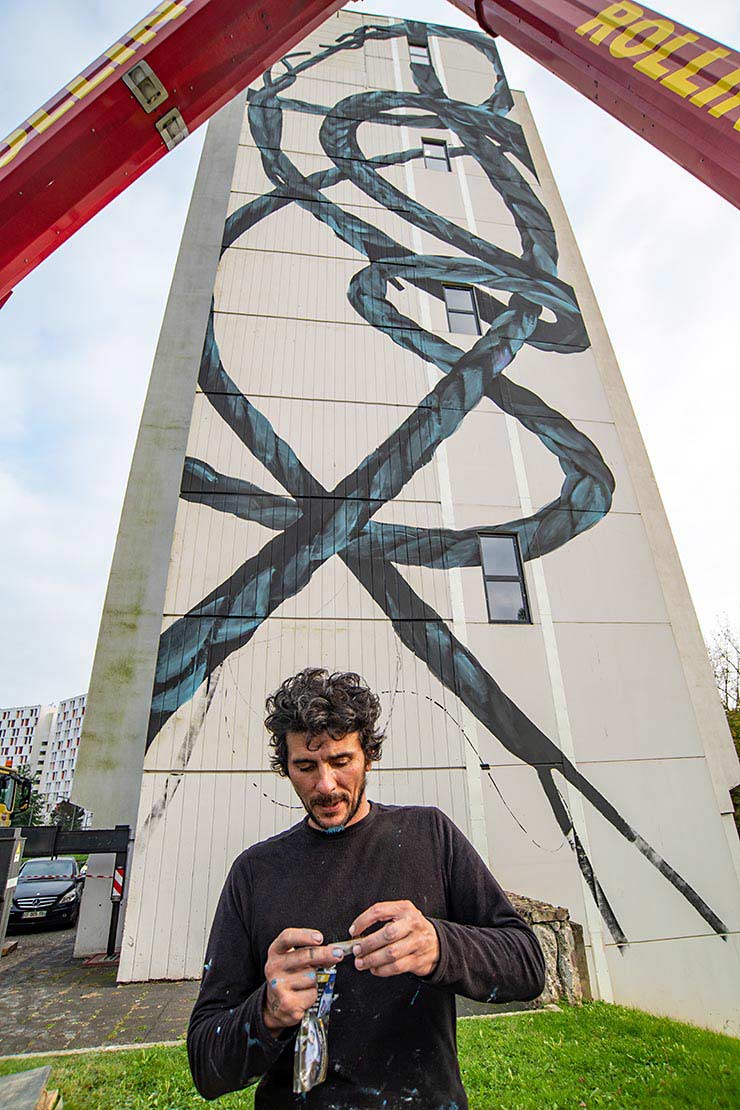
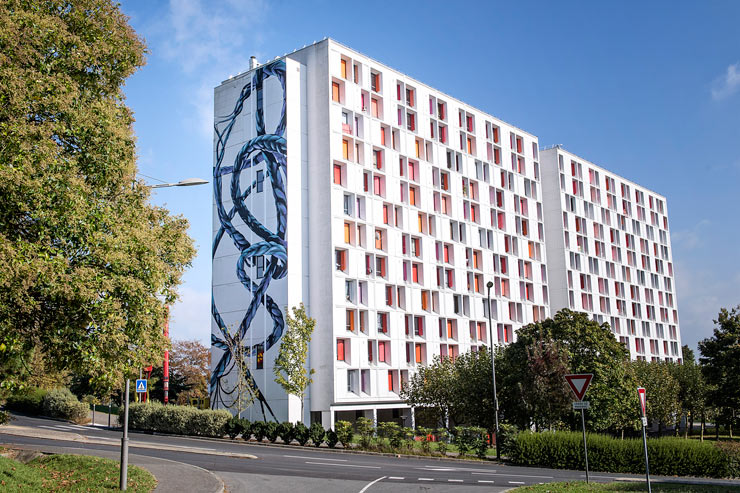
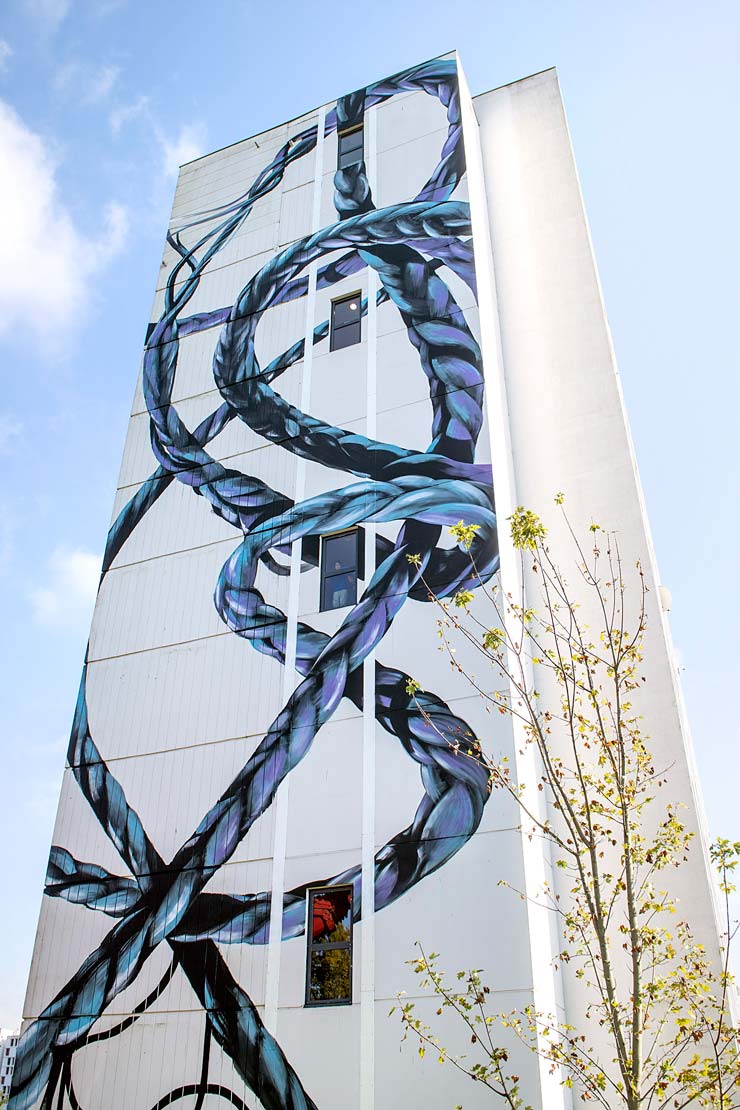
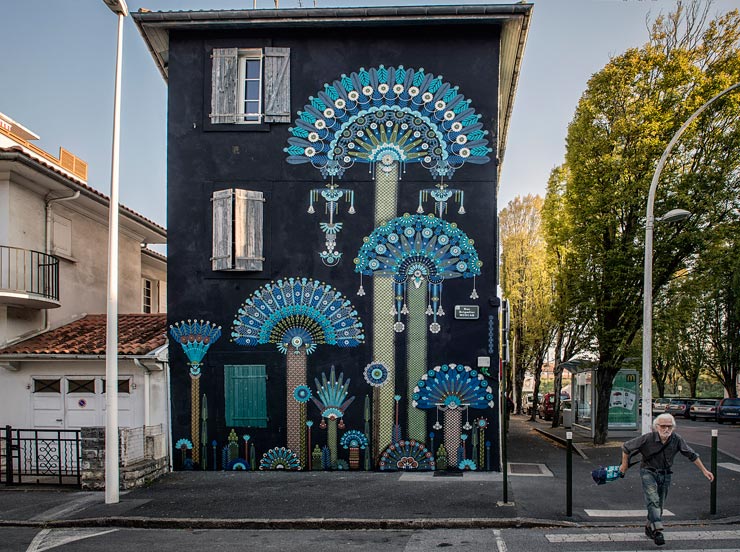
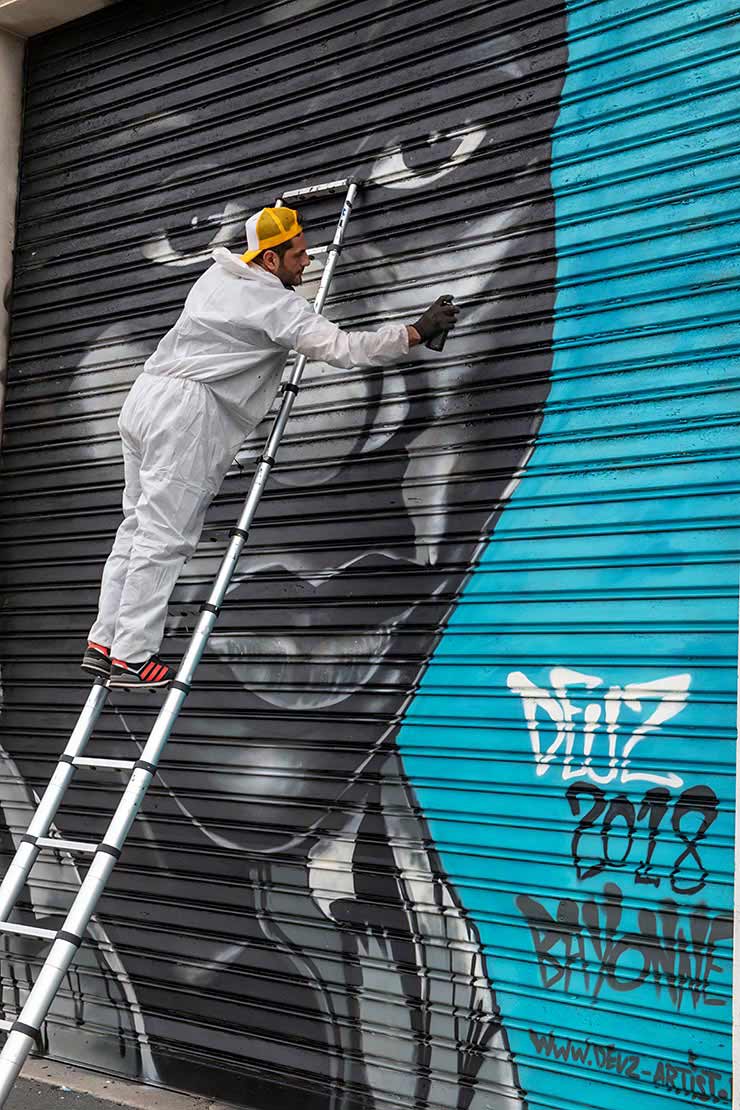
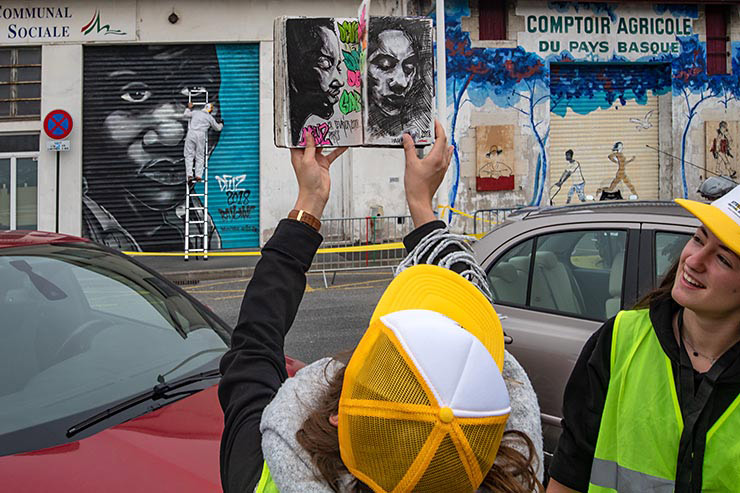
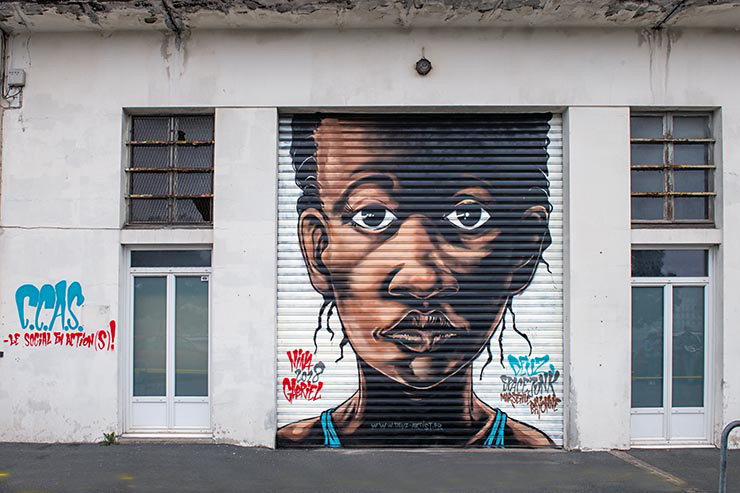
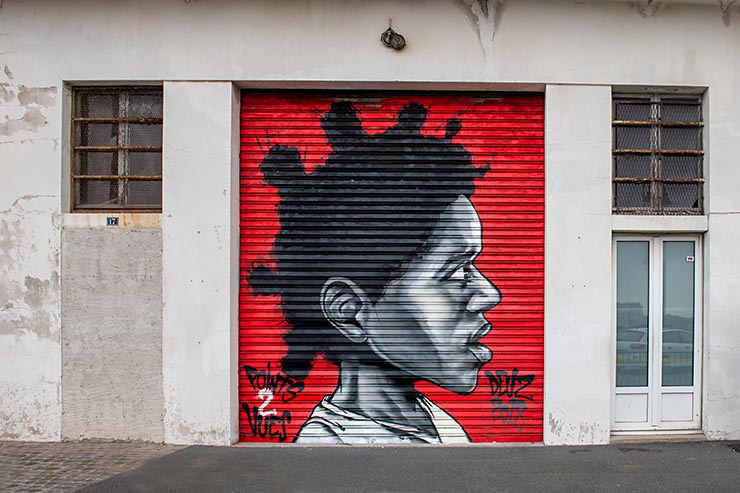
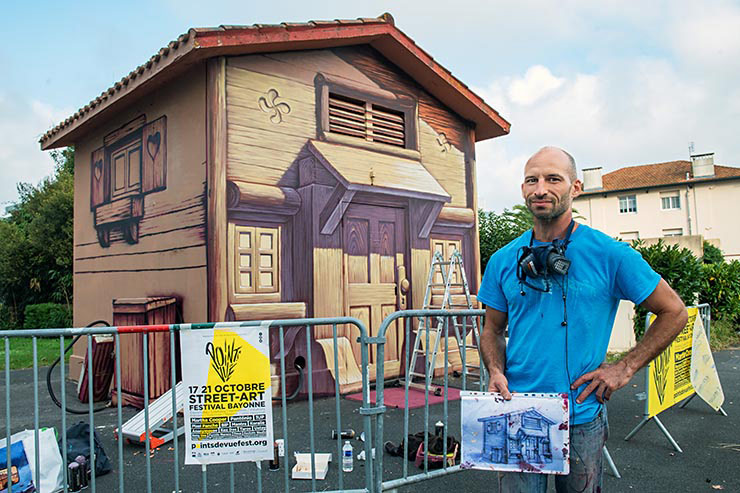
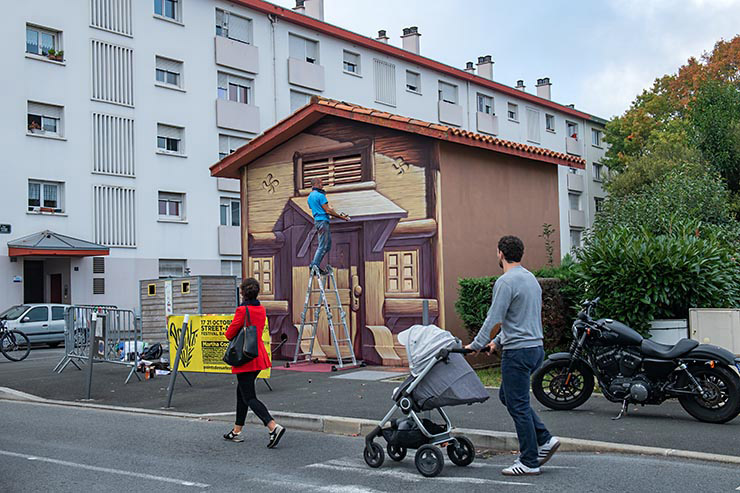
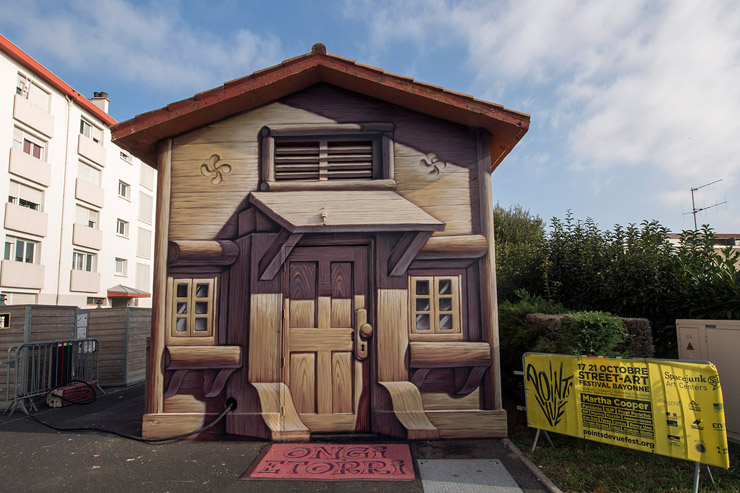
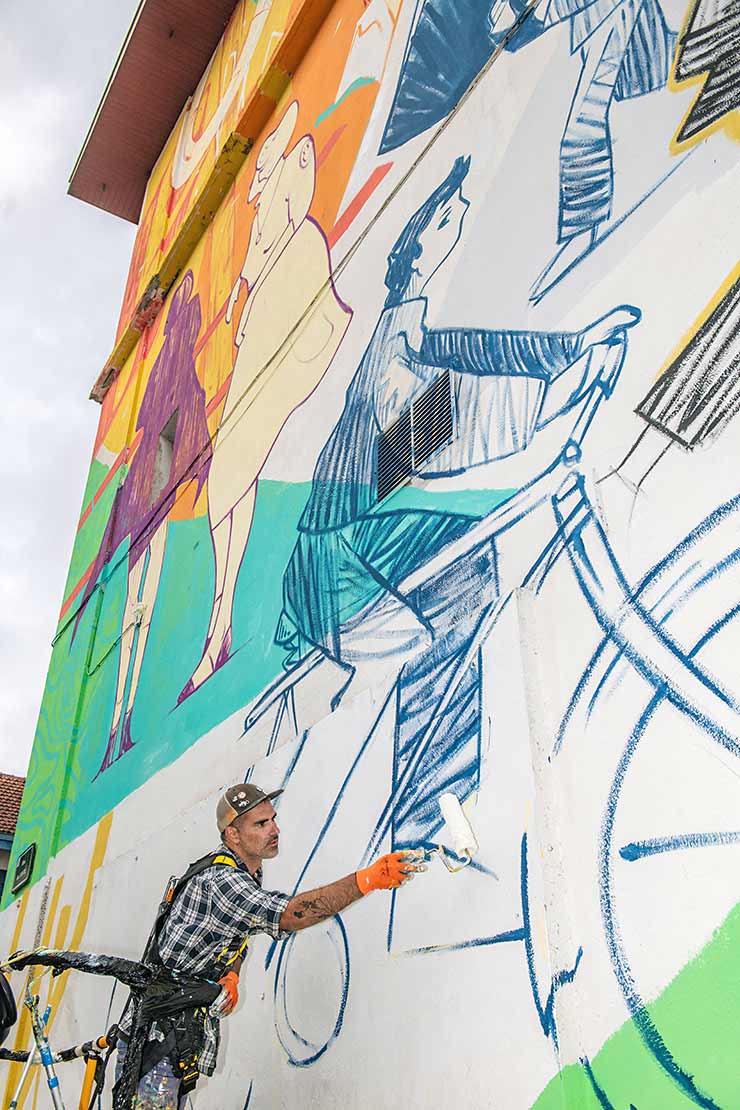
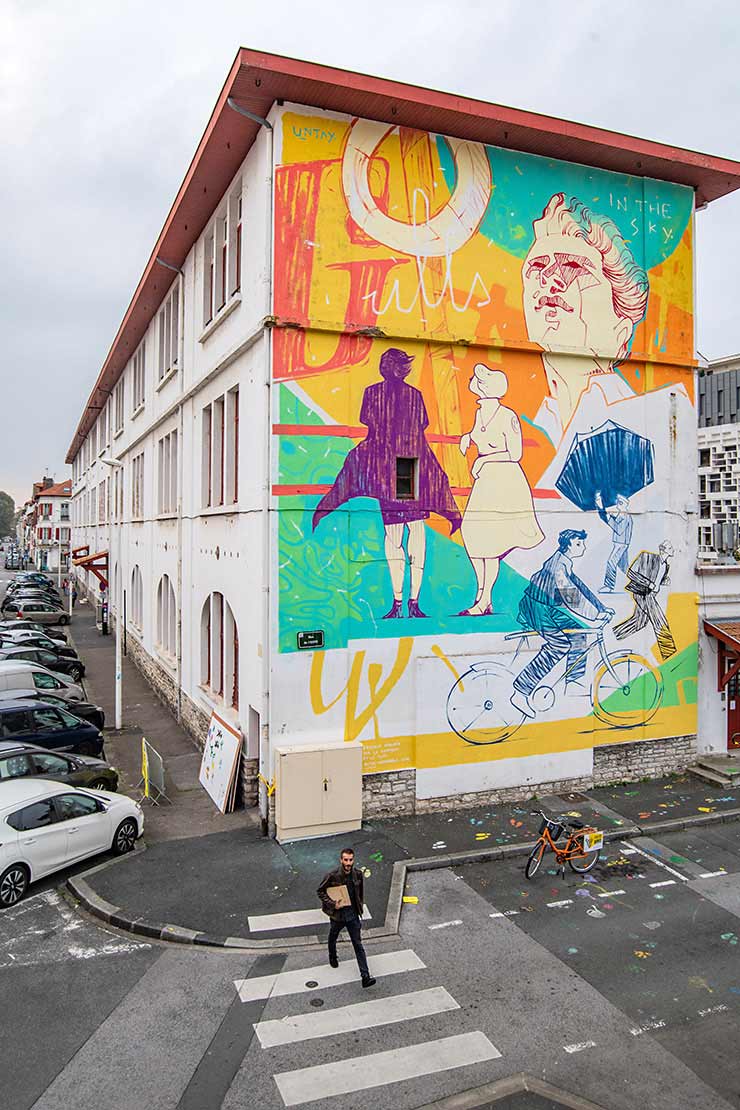
Taroe. Points De Vue Festival 2018. Bayonne, France. (photo © Nika Kramer)

Pixel Pancho. Points De Vue Festival 2018. Bayonne, France. (photo © Martha Cooper)

Pixel Pancho. Points De Vue Festival 2018. Bayonne, France. (photo © Martha Cooper)

Pixel Pancho. Points De Vue Festival 2018. Bayonne, France. (photo © Martha Cooper)

Pantonio. Points De Vue Festival 2018. Bayonne, France. (photo © Martha Cooper)

Pantonio. Points De Vue Festival 2018. Bayonne, France. (photo © Martha Cooper)

Pantonio. Points De Vue Festival 2018. Bayonne, France. (photo © Nika Kramer)

Pantonio. Points De Vue Festival 2018. Bayonne, France. (photo © Nika Kramer)

Koralie. Points De Vue Festival 2018. Bayonne, France. (photo © Nika Kramer)


Fermin Moreno. Points De Vue Festival 2018. Bayonne, France. (photo © Martha Cooper)

Fermin Moreno. Points De Vue Festival 2018. Bayonne, France. (photo © Nika Kramer)

Fermin Moreno. Points De Vue Festival 2018. Bayonne, France. (photo © Nika Kramer)

Deuz. Points De Vue Festival 2018. Bayonne, France. (photo © Martha Cooper)

Deuz. Points De Vue Festival 2018. Bayonne, France. (photo © Martha Cooper)

Deuz. Points De Vue Festival 2018. Bayonne, France. (photo © Martha Cooper)

Deuz. Points De Vue Festival 2018. Bayonne, France. (photo © Martha Cooper)

Petite Poissone. Points De Vue Festival 2018. Bayonne, France. (photo © Martha Cooper)

Petite Poissone. Points De Vue Festival 2018. Bayonne, France. (photo © Nika Kramer)

Reskate Studio. Points De Vue Festival 2018. Bayonne, France. (photo © Martha Cooper)

Reskate Studio. Points De Vue Festival 2018. Bayonne, France. (photo © Nika Kramer)

Reskate Studio. Points De Vue Festival 2018. Bayonne, France. (photo © Nika Kramer)

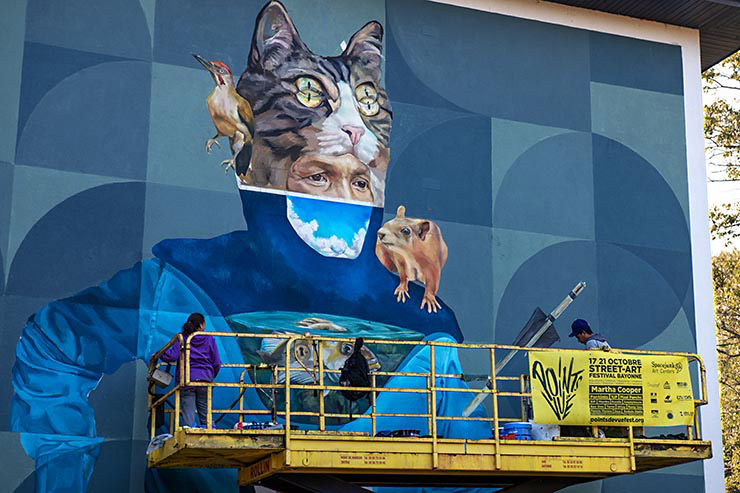
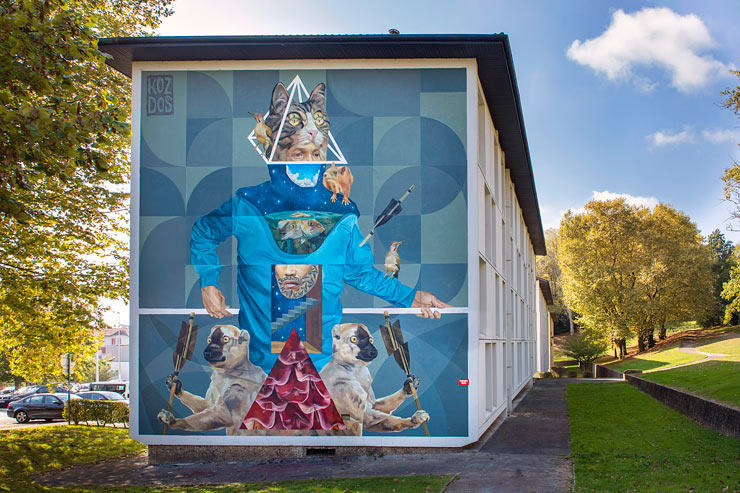
Koz Dos. Points De Vue Festival 2018. Bayonne, France. (photo © Martha Cooper)

KOZ DOS
“Punto y flecha sobre el plano”

“Dreams and the subconscious have been the genesis of my work lately. I do try not to put limits on myself or to follow a pattern when I create. The elements that are in my subconscious are the sketches to draw information from. At the same time it’s also the beginning of something that exists and that might be real and logic in our minds. It is the treatment of color, composition and form that unify all the elements and symbols, creating fantastic characters that in turn shed light to a parallel universe.

A central theme in my research for quite a while now, is the confrontation of the human versus the beast and nature. I look for harmony and coexistence through the treatment of images and the plastic arts.

In this project, titled “Punto y flecha sobre el plano” I wanted to work with the construction of the elements within the piece as something tangible, like our dreams, using lines and points on the plane or the wall in this case. Most of everything in our universe is composed of circles and lines so in this piece I wanted to give importance to the geometric form but imbued with a dreamlike quality.

When we are able to verbally communicate with each other we are able to arrive to important accords. Reaching an agreement means that we can coexist with each other. We have the tools at our disposal to do so but very often we put our focus on damaging ourselves by rejecting our origins, destroying our cultures and traditions and mowing over everything as we march on.”

Koz Dos. Points De Vue Festival 2018. Bayonne, France. (photo © Nika Kramer)

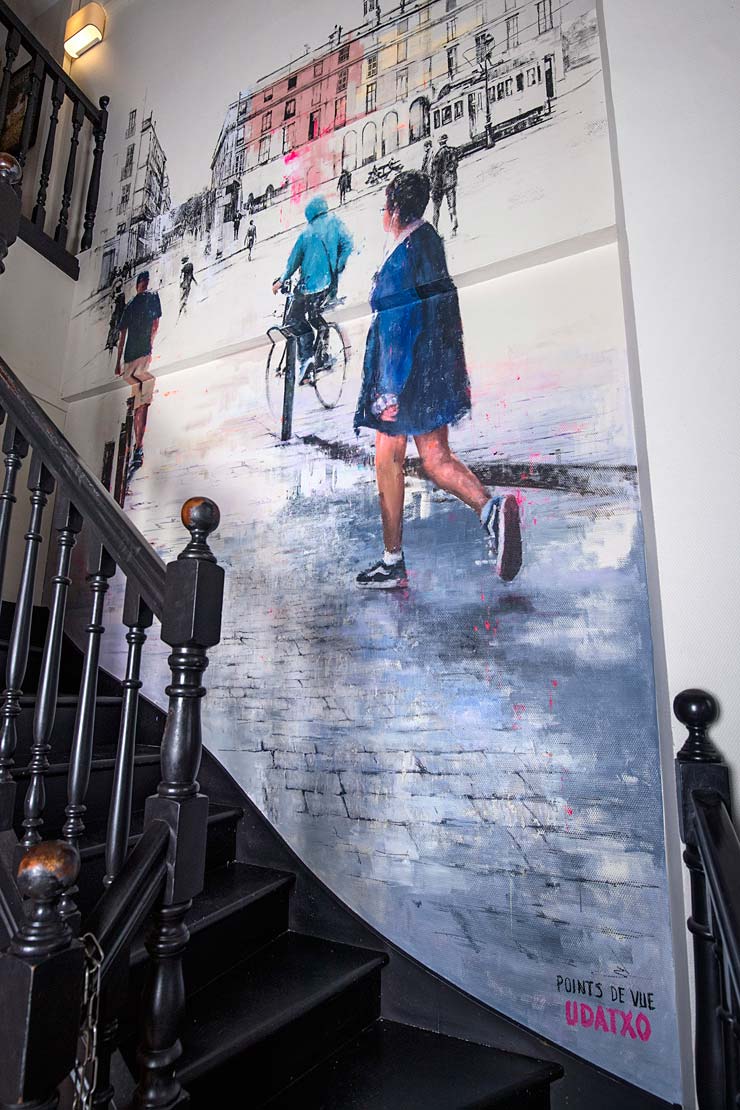
Udatxo. Points De Vue Festival 2018. Bayonne, France. (photo © Nika Kramer)

Landroid. Points De Vue Festival 2018. Bayonne, France. (photo © Martha Cooper)

Landroid. Points De Vue Festival 2018. Bayonne, France. (photo © Martha Cooper)

Landroid. Points De Vue Festival 2018. Bayonne, France. (photo © Nika Kramer)

Flow . Deza. Points De Vue Festival 2018. Bayonne, France. (photo © Martha Cooper)

Untay. Points De Vue Festival 2018. Bayonne, France. (photo © Martha Cooper)

Untay. Points De Vue Festival 2018. Bayonne, France. (photo © Martha Cooper)

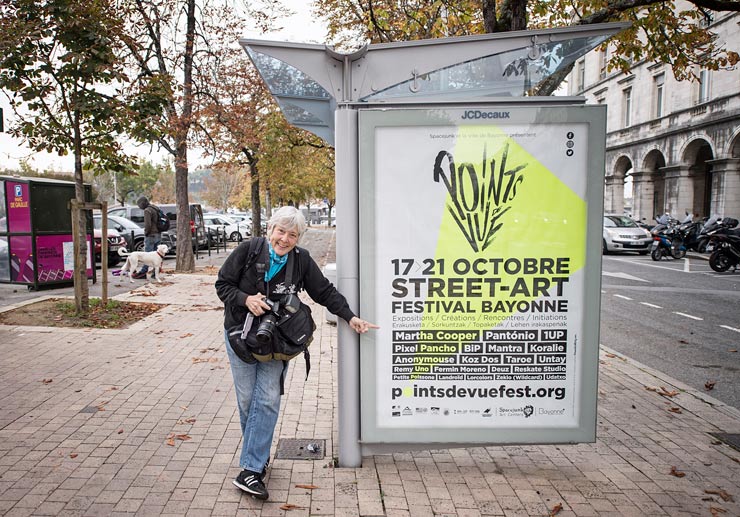
Points De Vue Festival 2018. Bayonne, France. Photo of Martha Cooper by Nika Kramer.

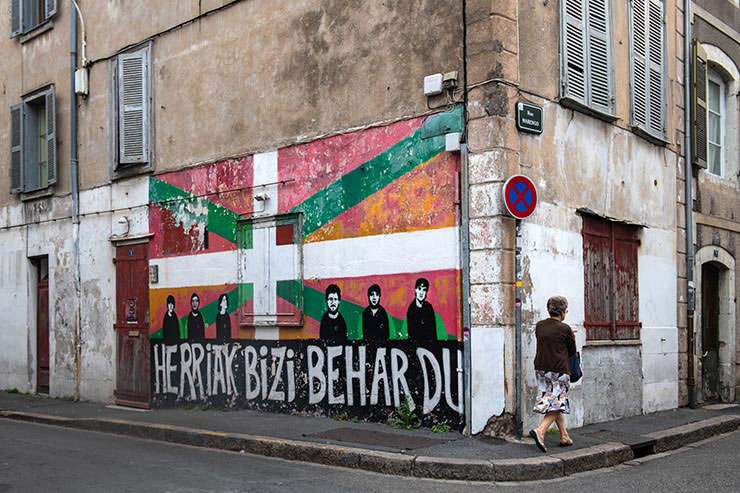
Vintage political mural in Bayonne, France written in the Basque language, translated as “The People Must Live”. (photo © Martha Cooper)

Vintage political mural in Bayonne. (photo © Martha Cooper)

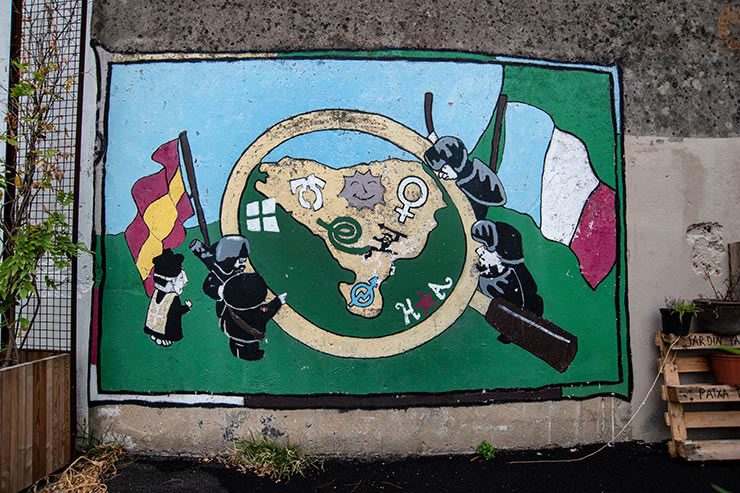
Vintage political mural in Bayonne, France written in the Basque language. (photo © Martha Cooper)

Read more