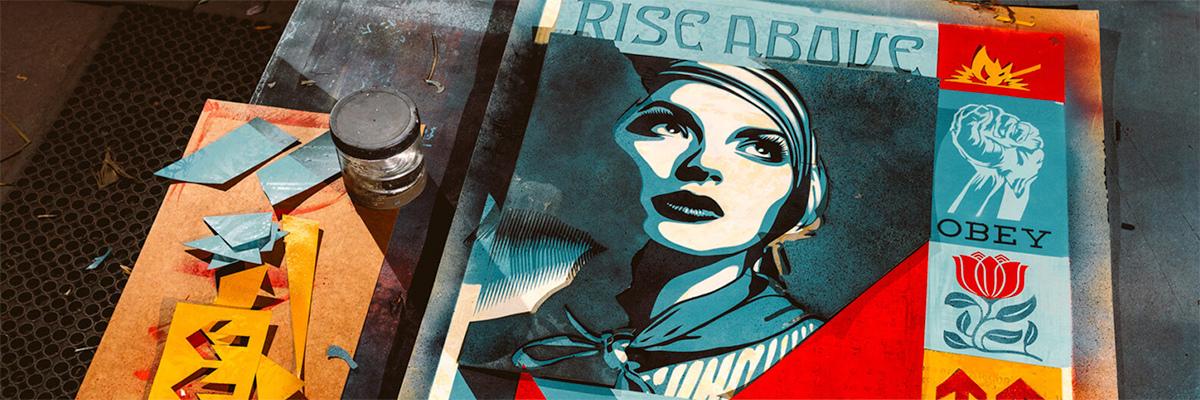
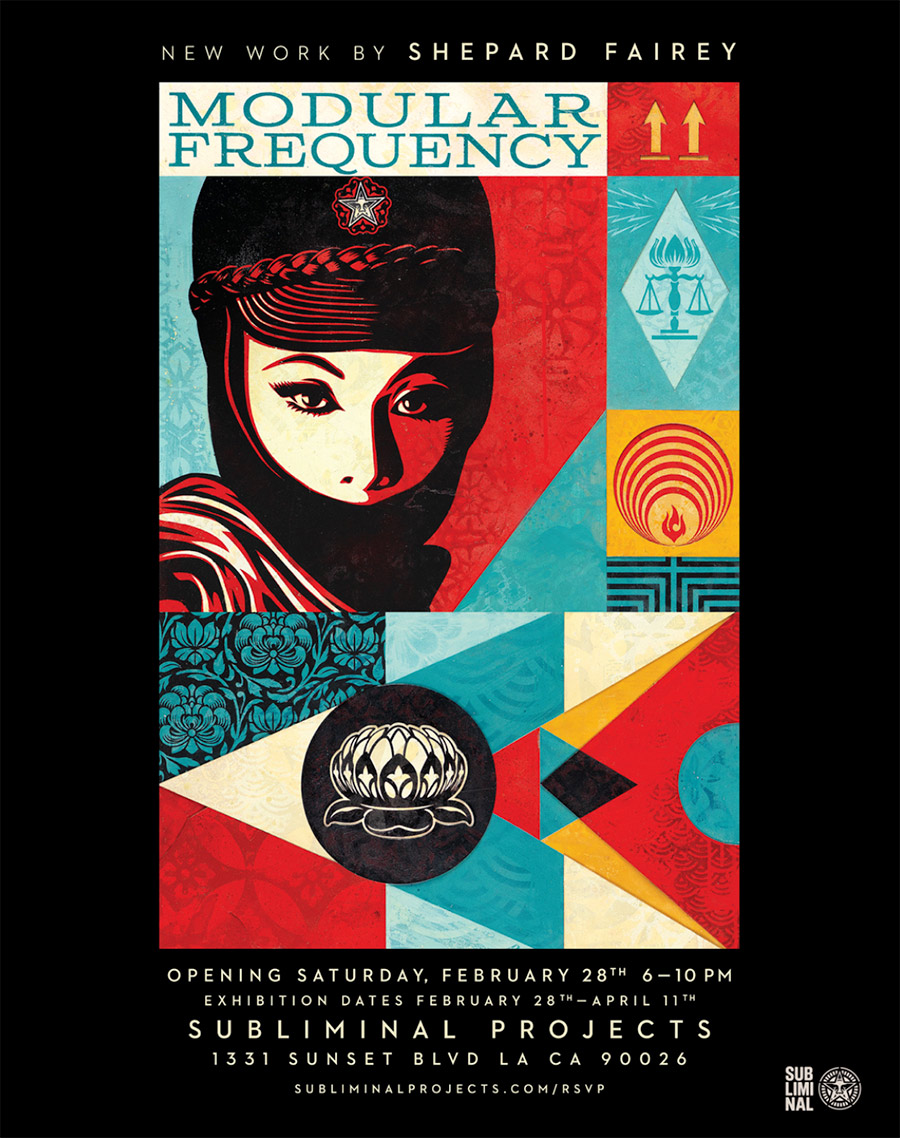
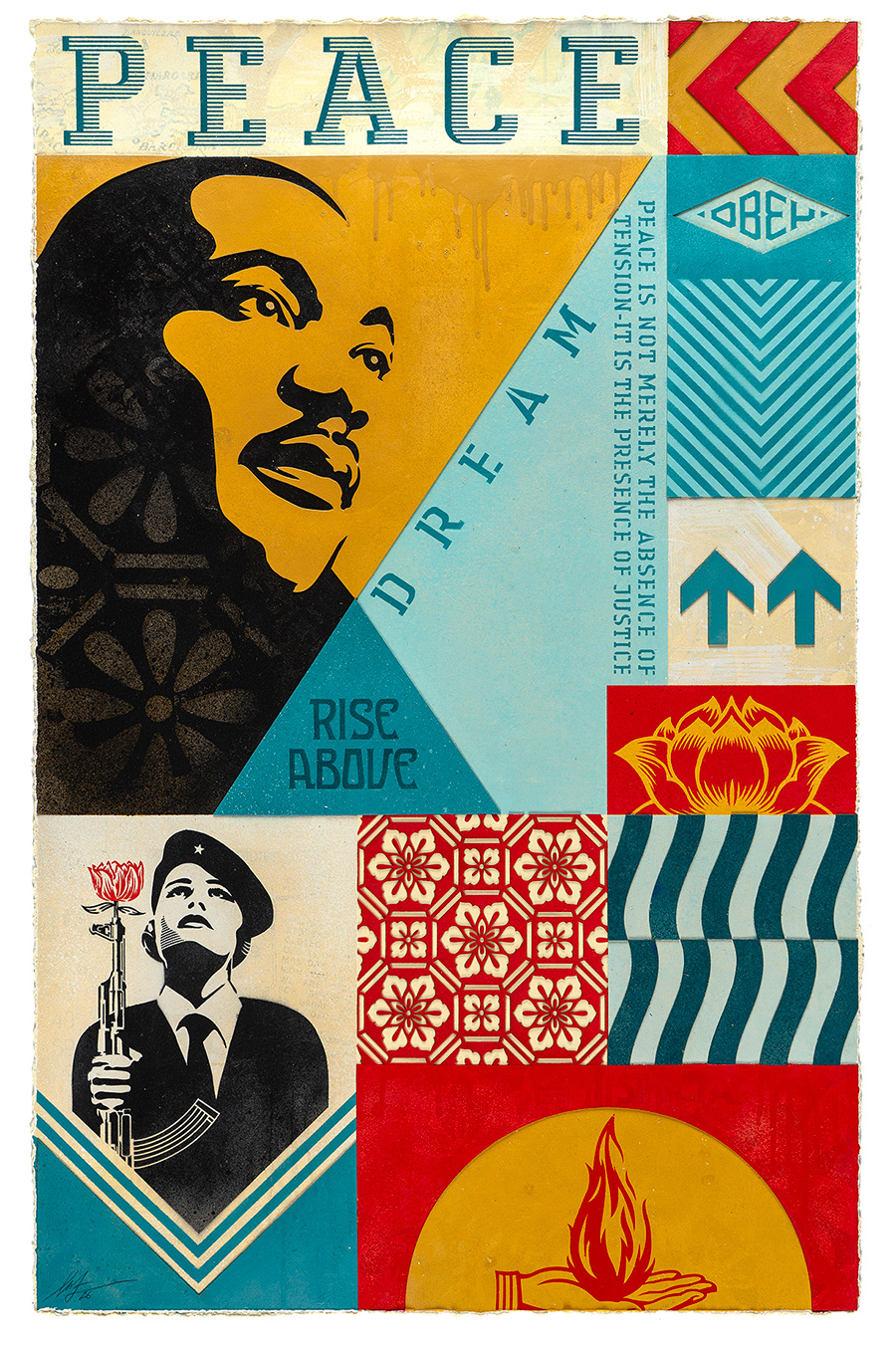
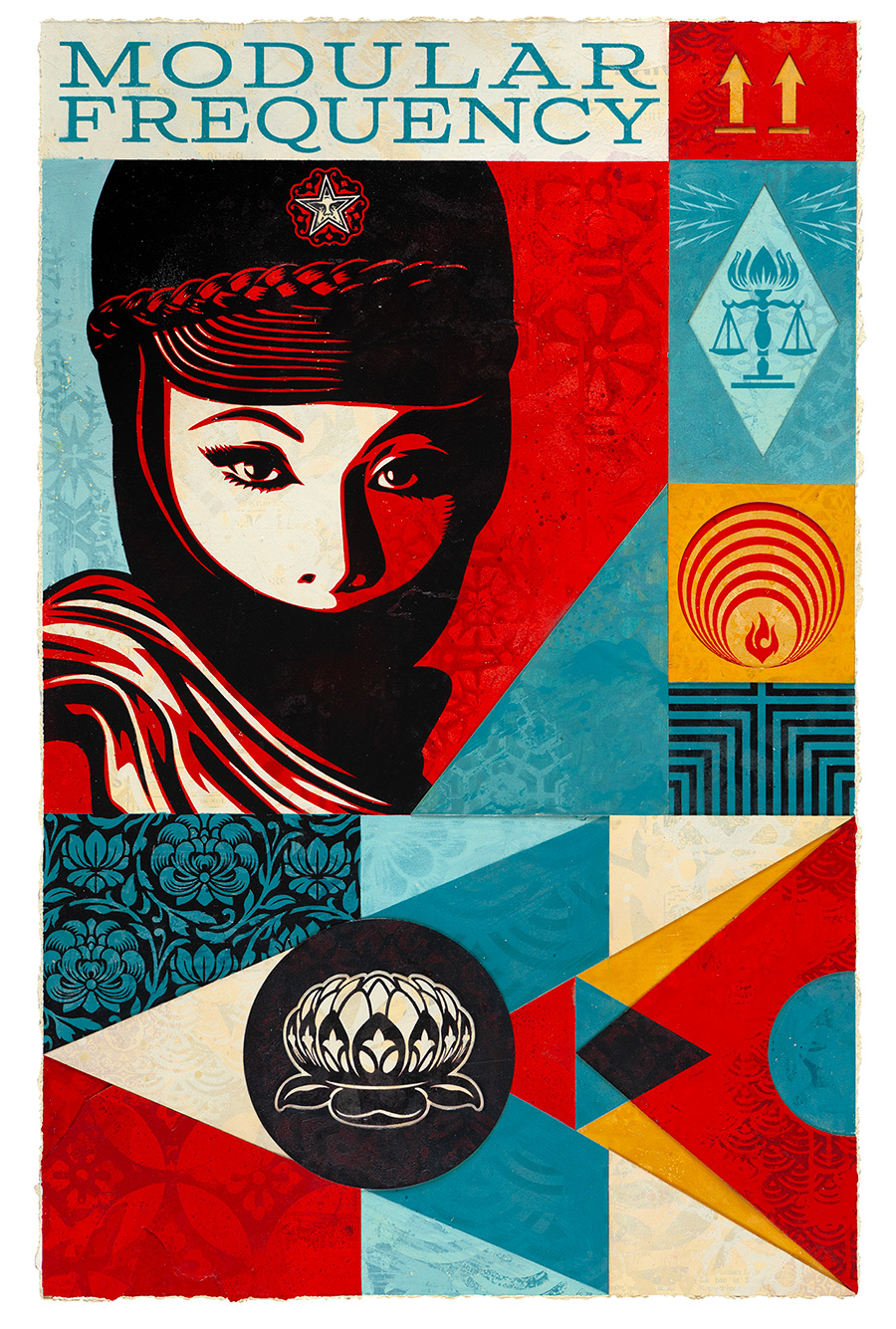
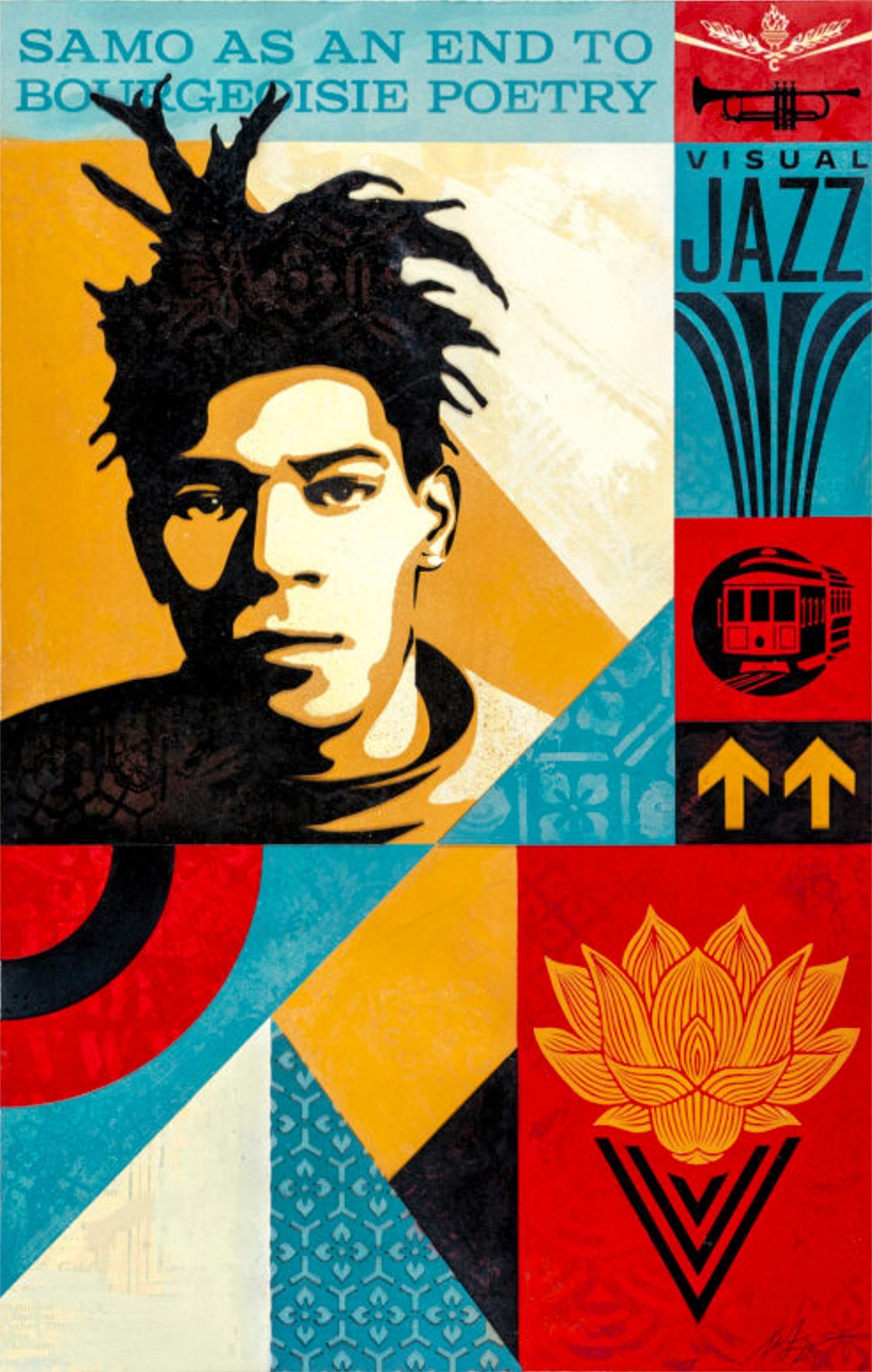
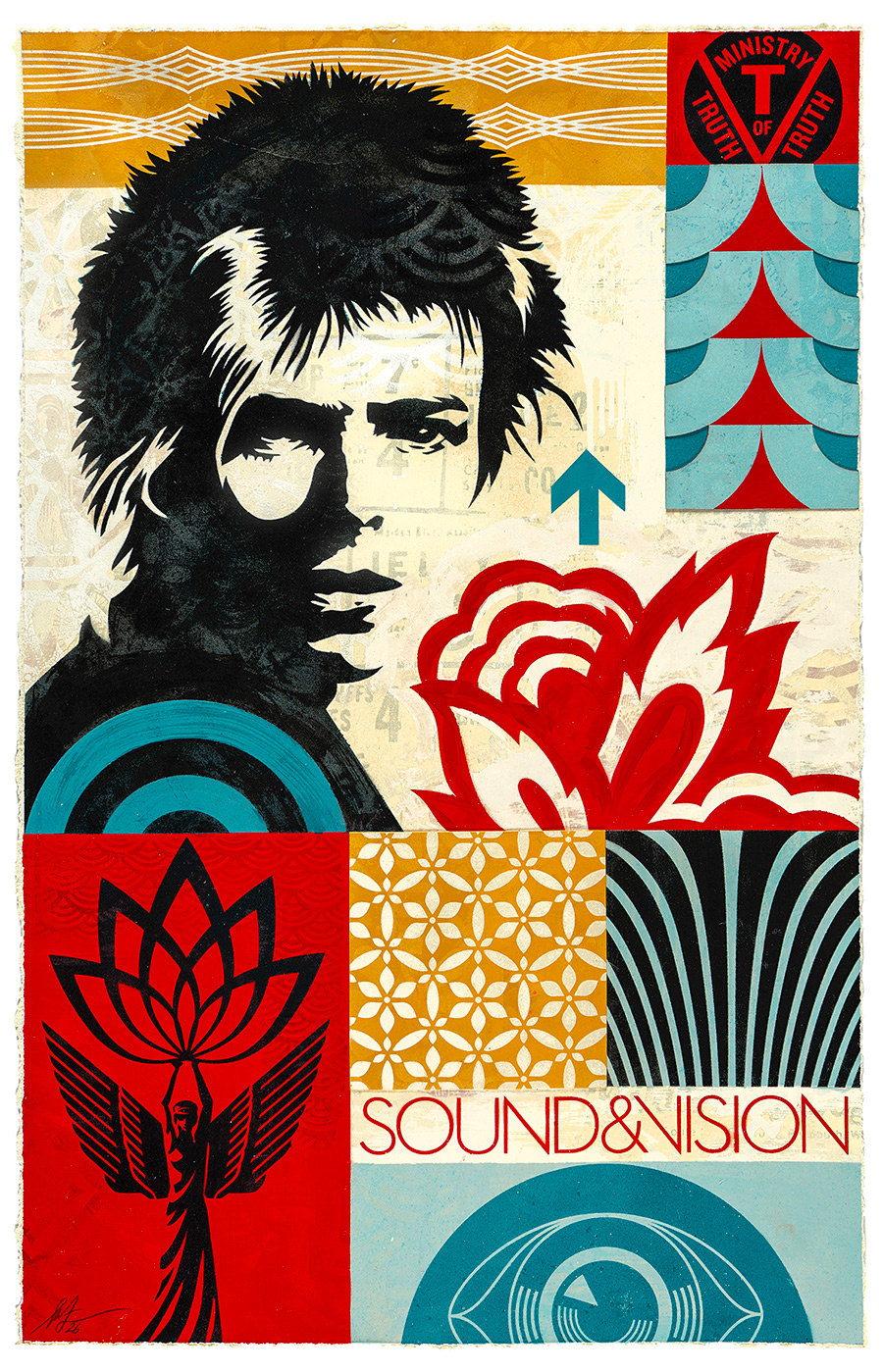
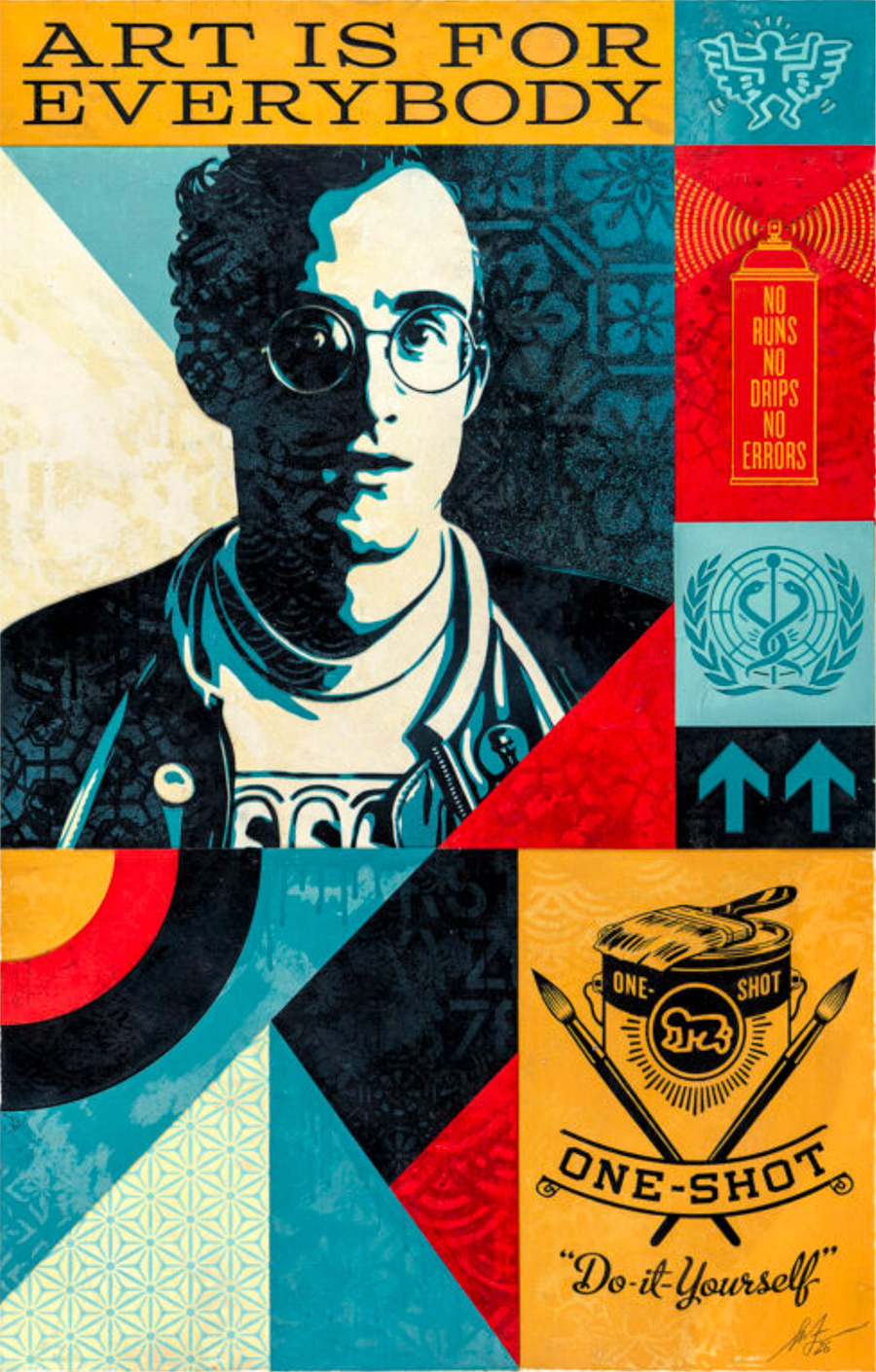
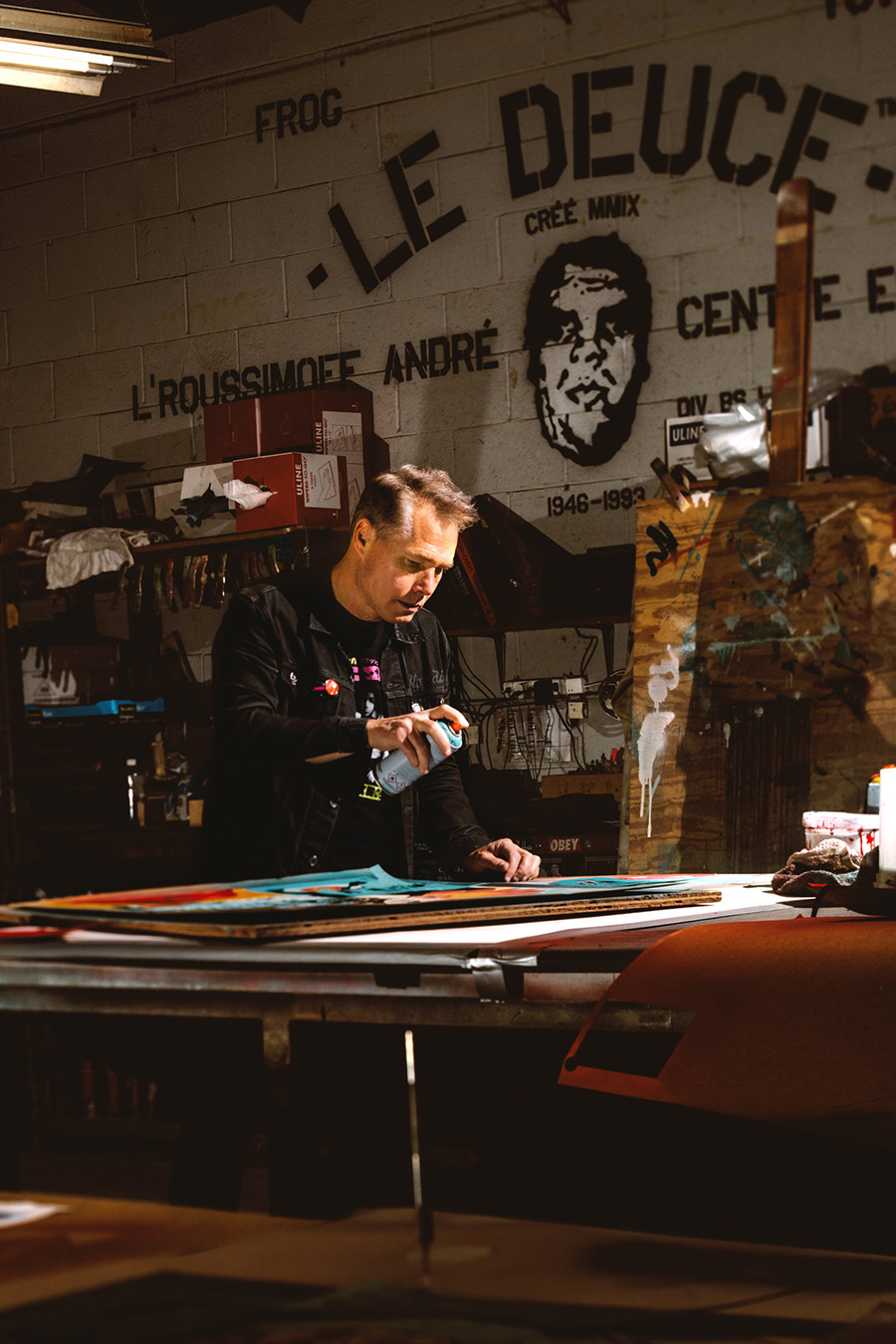
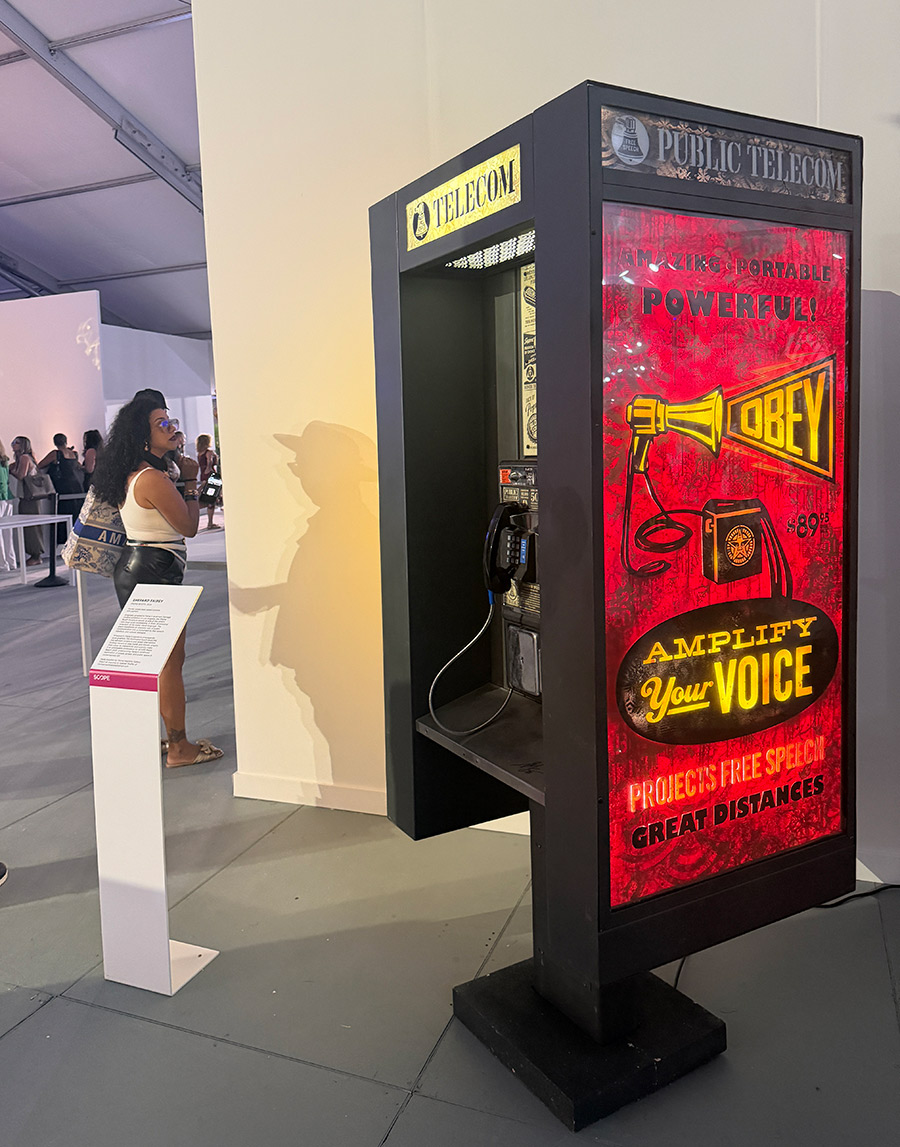
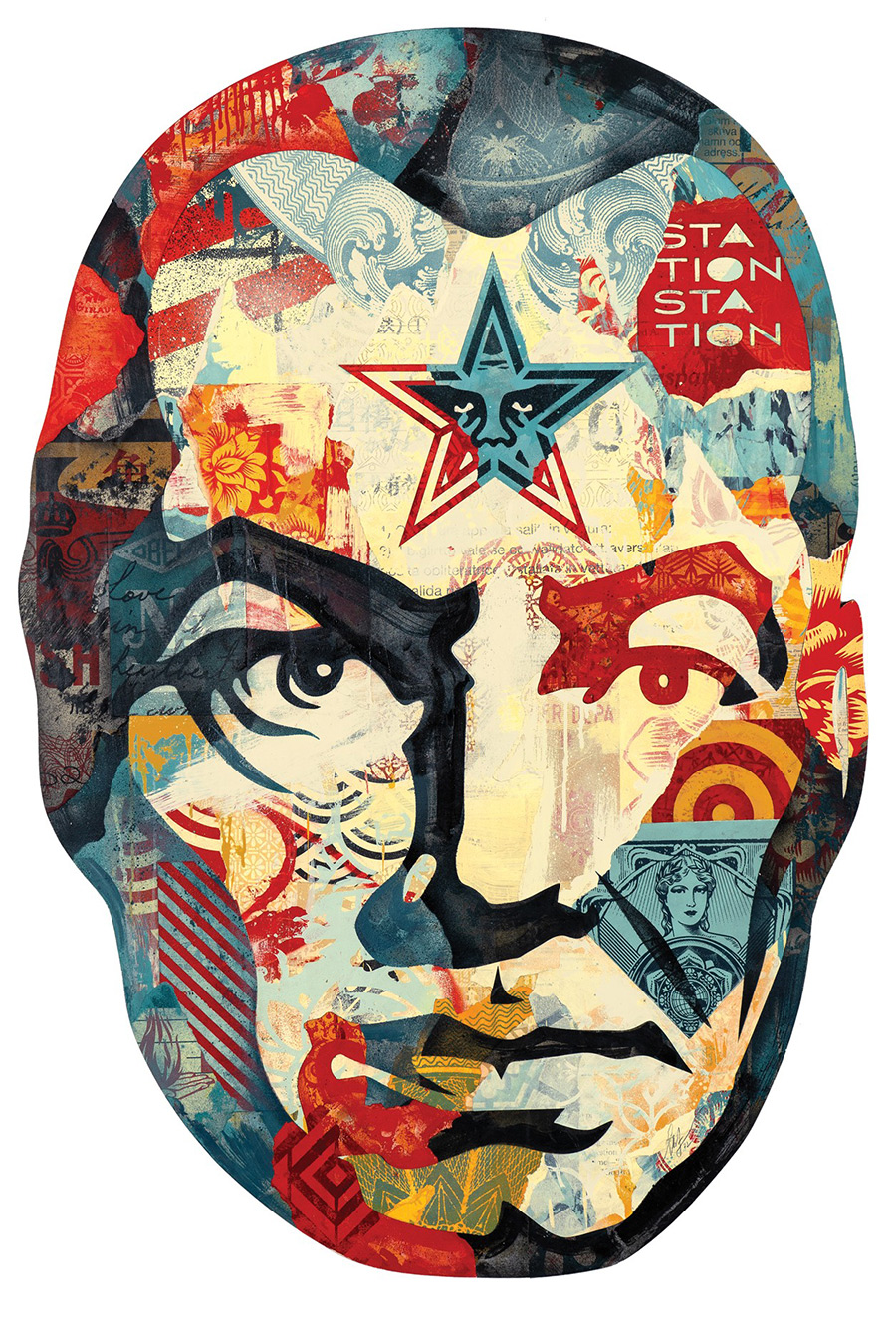
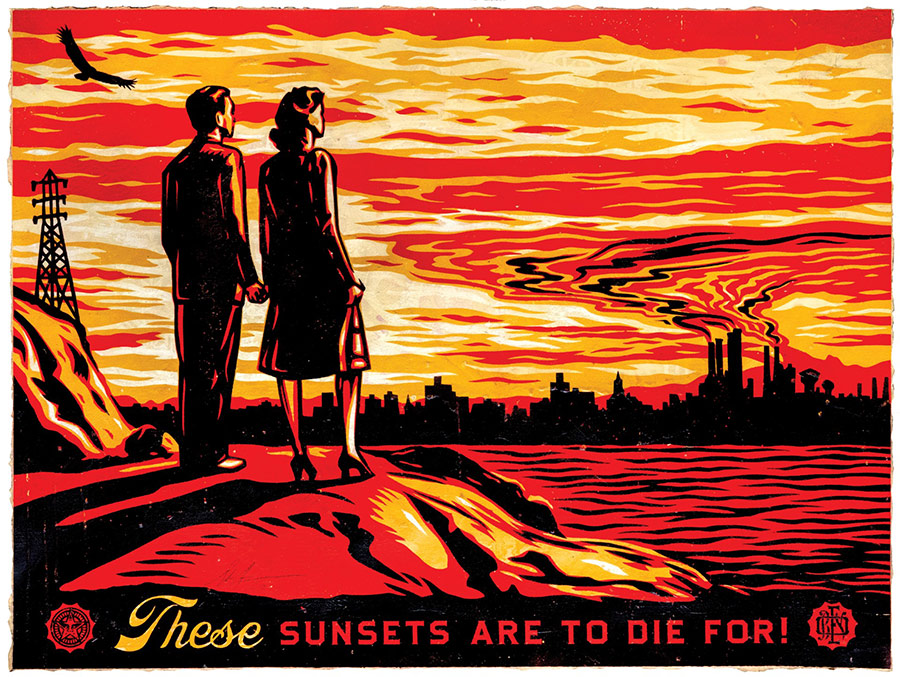
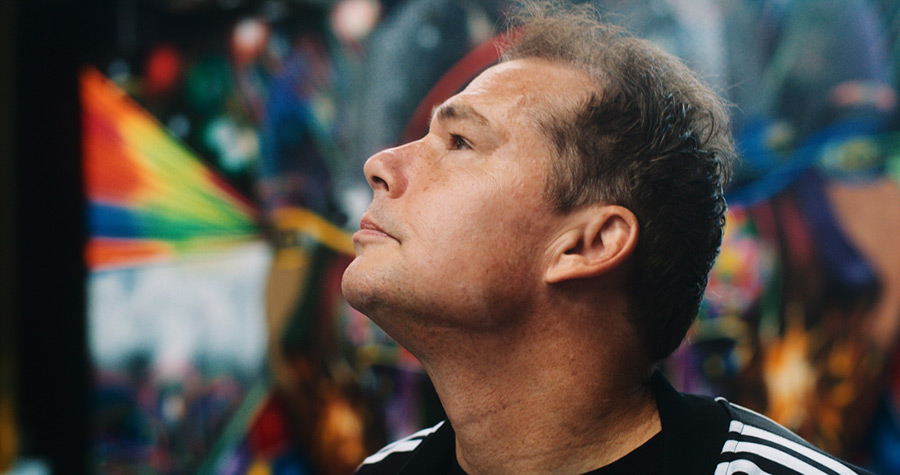
In Modular Frequency, Shepard Fairey returns to Subliminal Projects with a body of work that feels less like a recap than a sharpened presentation of where his language has landed—and where it’s still mutating. The show gathers new mixed-media pieces into a single, intentional atmosphere: street-born immediacy retooled for the gallery wall, where pattern, portraiture, and typography can stack up, scrape back, and reveal their own archaeology.
To quote ourselves from a few weeks back, the exhibition showcases “three decades of modular geometry … into a tight visual rhythm.” That rhythm is the point of entry here: a pulse built from Constructivist angles, propaganda-era clarity, new ventures into the color palette, and the saturated pressure of pop culture, all reorganized into compositions that you can scan quickly—then return to slowly, detail by detail.
Shepard Fairey. “MKL Modular”. Modular Frequency. (photo courtesy of the gallery)
Fairey’s own framing is rooted in the experience of living inside a constant feed. “I’m confronted with an overwhelming number of images and messages daily,” he says, and these works feel like a mature and practiced response to that condition: taking the barrage and compressing it into symbols you can hold in your mind—icons and archetypes that keep circling back to peace, justice, and environmental responsibility. Hung in salon-style groupings that orbit shared themes, the installation lets the pieces talk laterally, collectively radiating like planets in the darkness—separate bodies, shared gravity.
Coinciding with the opening, the project spills into print in a way that echoes the show’s punch and cadence: the two new screenprints Modular Sound & Vision and Dreams of Peace translate the series into collectible form, alongside a letterpress print titled Modular Frequency. And in the wider wake of the exhibition, collaborations extend the conversation—most concretely, the co-signed “Frequency” print with ADD FUEL, which ties Fairey’s modular iconography to a tile-pattern sensibility that feels both ornamental and insurgent.
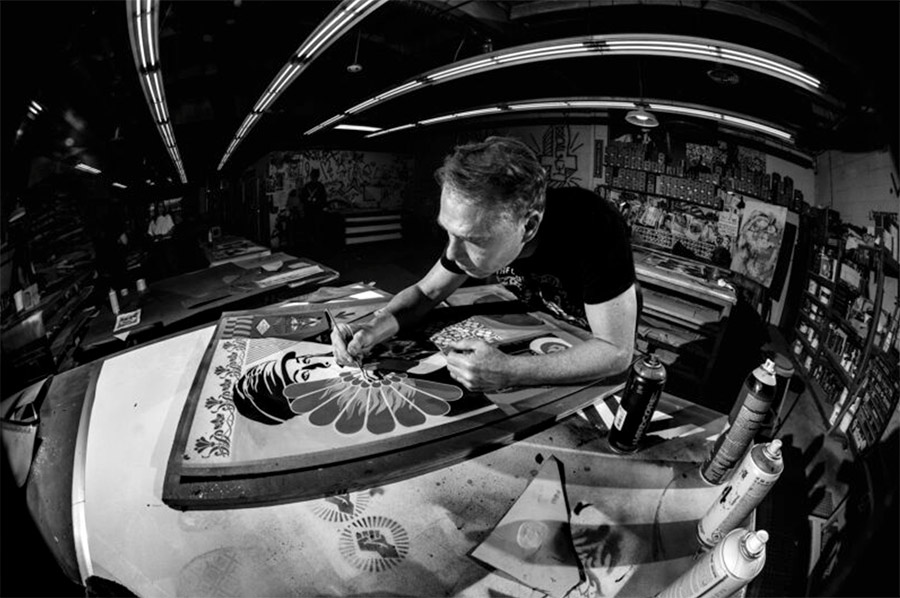
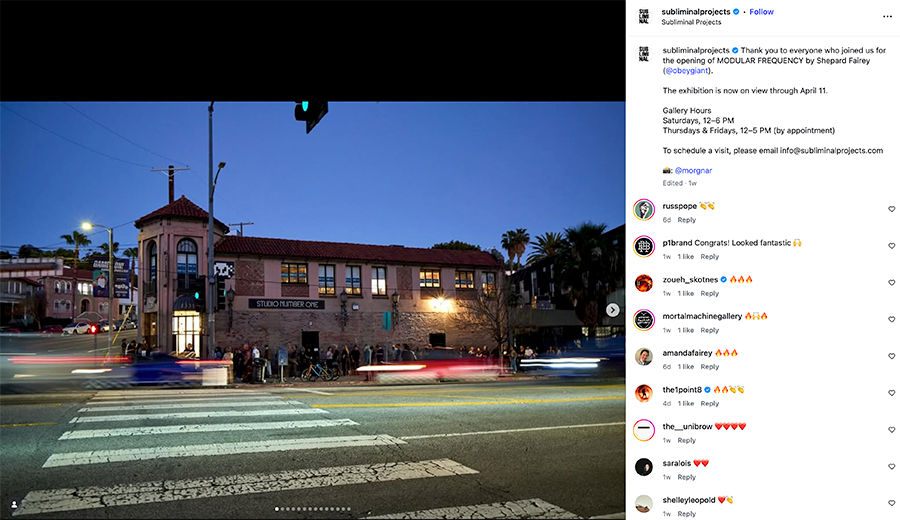
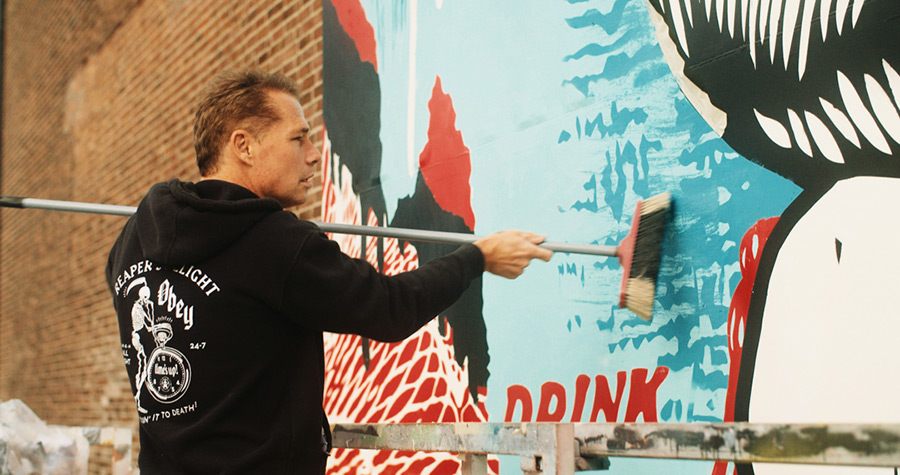
Shepard Fairey. “Mujer Fatal Modular”. Modular Frequency. (photo courtesy of the gallery)Shepard Fairey. “Basquiat Modular”. Modular Frequency. (photo courtesy of the gallery)Shepard Fairey. “Bowie Modular”. Modular Frequency. (photo courtesy of the gallery)Shepard Fairey. “Rise Above Rebel Modular”. Modular Frequency. (photo courtesy of the gallery)Shepard Fairey. “Art Is Fore Everybody Modular”. Modular Frequency. (photo courtesy of the gallery)Shepard at work in the studio for Modular Frequency. (photo courtesy of the gallery)Shepard at work in the studio for Modular Frequency. (photo courtesy of the gallery)Opening night for Shepard’s Modular Frequency at Subliminal Projects in Los Angeles, CA. (photo Instagram)
Shepard Fairey’s Modular Frequency is now open to the general public. Click SUBLIMINAL PROJECTS for hours, scheduled events, directions and other details.
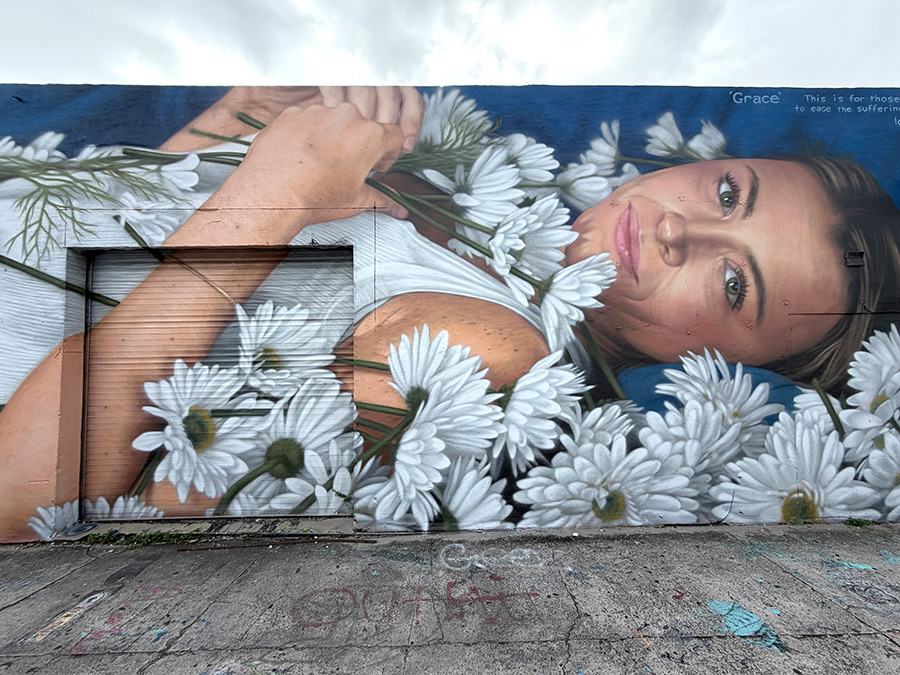
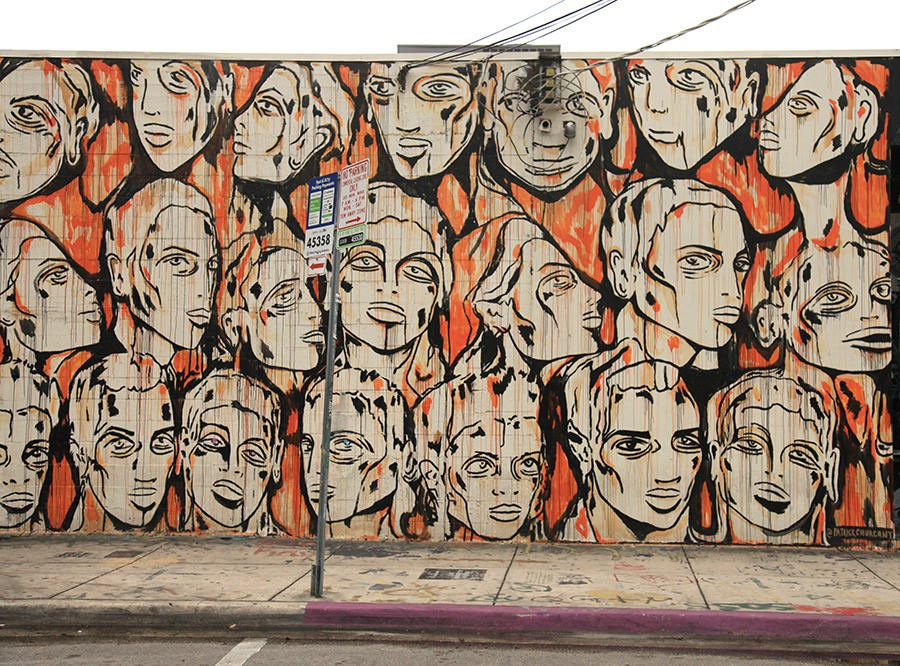
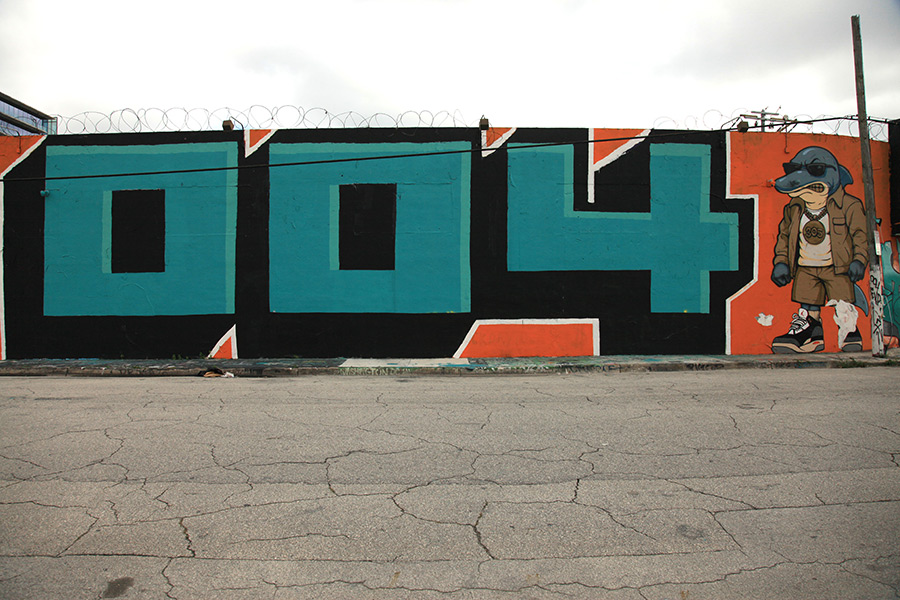
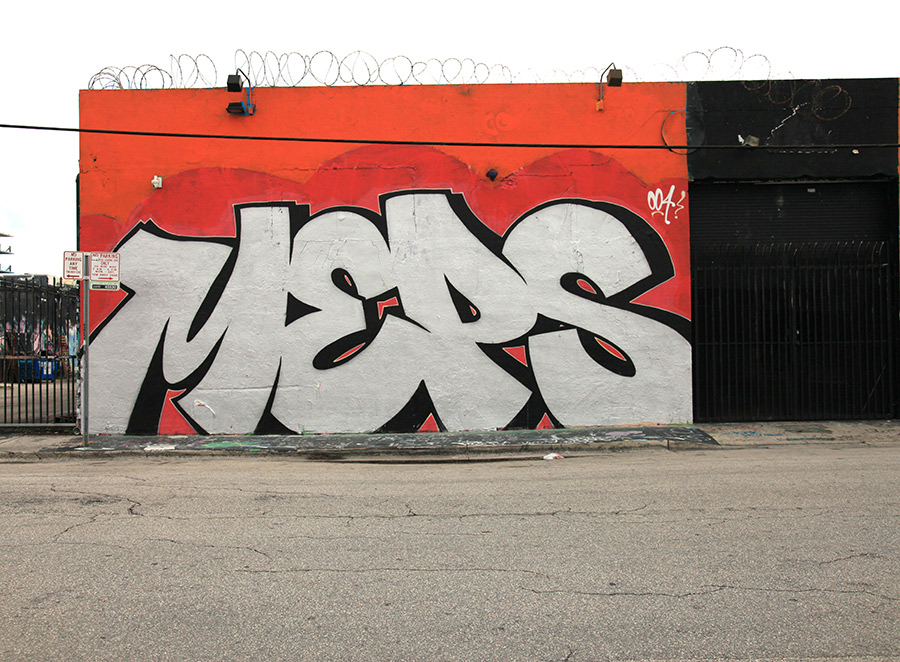
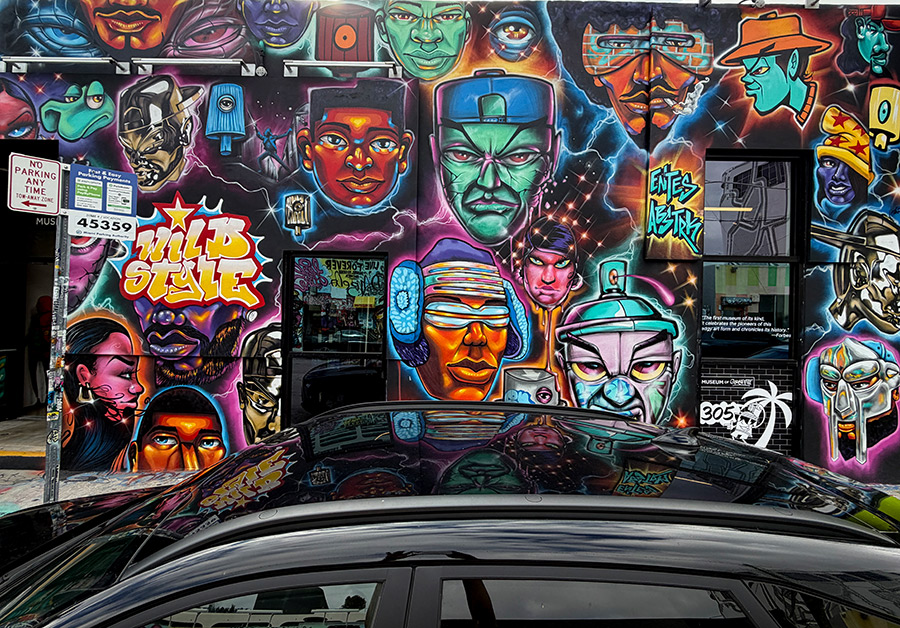
Welcome to BSA Images of the week, where we have been surfing through street art in Miami for 7 days. Wynwood keeps upping the ante in terms of spectacle: the entire neighborhood this week has been awash in events, openings, dinners, tours, panel discussions, gallery openings, exhibition boxing, live music performed in store windows, boisterous rooftop cocktails, sponsor ‘activations’, stickers, t-shirts, lanyards, festivalized clubs with fire jugglers and whirling light shows, and pop-up playgrounds in nontraditional venues like parking lots and warehouses. Many people catch these events when they look up from their phones.
Clubs with long lines on the sidewalk are running hot on reggaeton and Latin trap, colliding Bad Bunny’s stadium-sized hooks with Karol G, Rauw Alejandro, Feid, and Peso Pluma, all cut and slammed into sweat-soaked house – with EDM drops. It’s loud, physical, and relentless — the sexy fashion and sleek swagger on the nighttime sidewalk is all fueled by a heavy bass heartbeat blasting out the door and off the roof. If your window panes are thumping rhythmically louder than the air conditioner hum inside the hotel room at 2 am, you are in Wynwood. Also, why are you asleep, bro?
Oops — almost forgot to mention the painting. These days, the lineup is broad: graffiti writers, street artists, mural painters, and plenty of contemporary artists testing their footing out in public. The range of styles is wide — genuinely wide — and if we’re being honest, a fair number of walls double as neatly disguised brand exercises, selling trends back to us in fresh packaging.
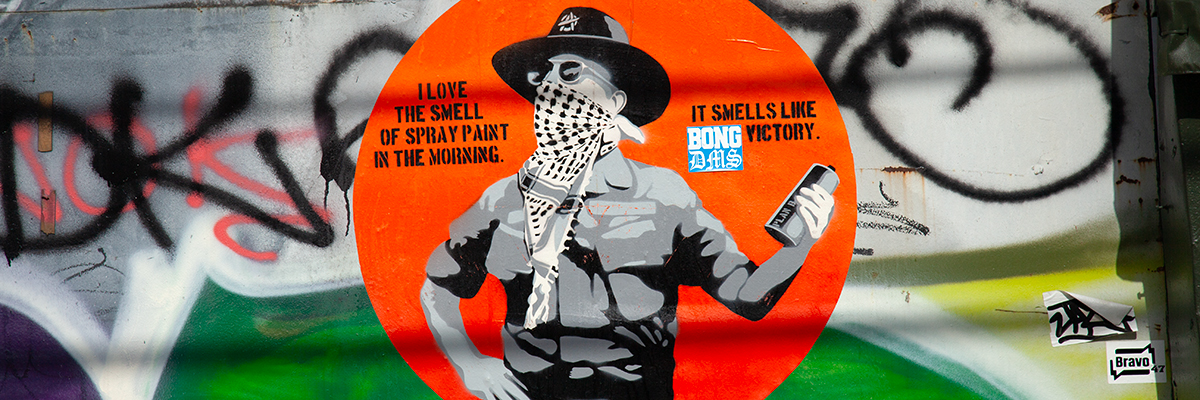
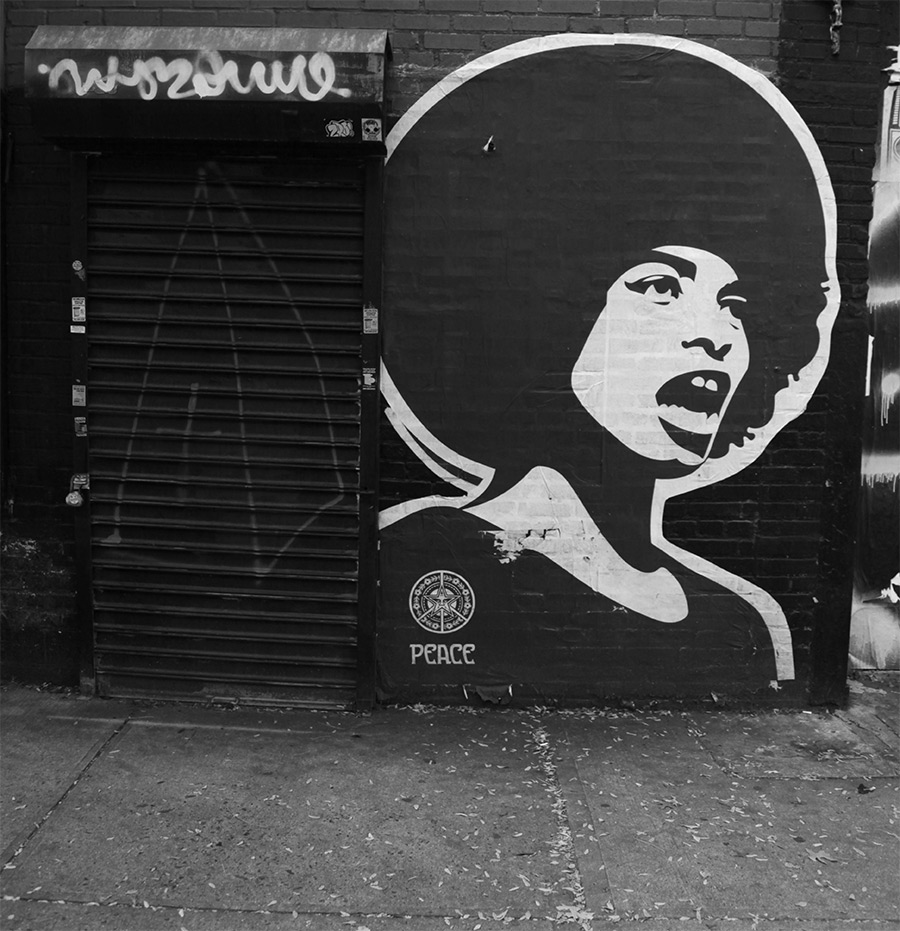
We’ve met plenty of real creators along the way — people with muscle memory, ideas of their own, and a sense of why this work matters. But there’s also a growing crowd of art-fair regulars who’ve vacuumed up the look of graffiti and street art, mixed it with a few drips and gestures, and sent it right back out. In their work, you’ll spot familiar DNA — KAWS, Basquiat, Fairey, Warhol, Banksy — sliced, layered, splashed, and lettered across the surface. It’s street art by collage and citation, often stripped of the context that made those references meaningful in the first place.
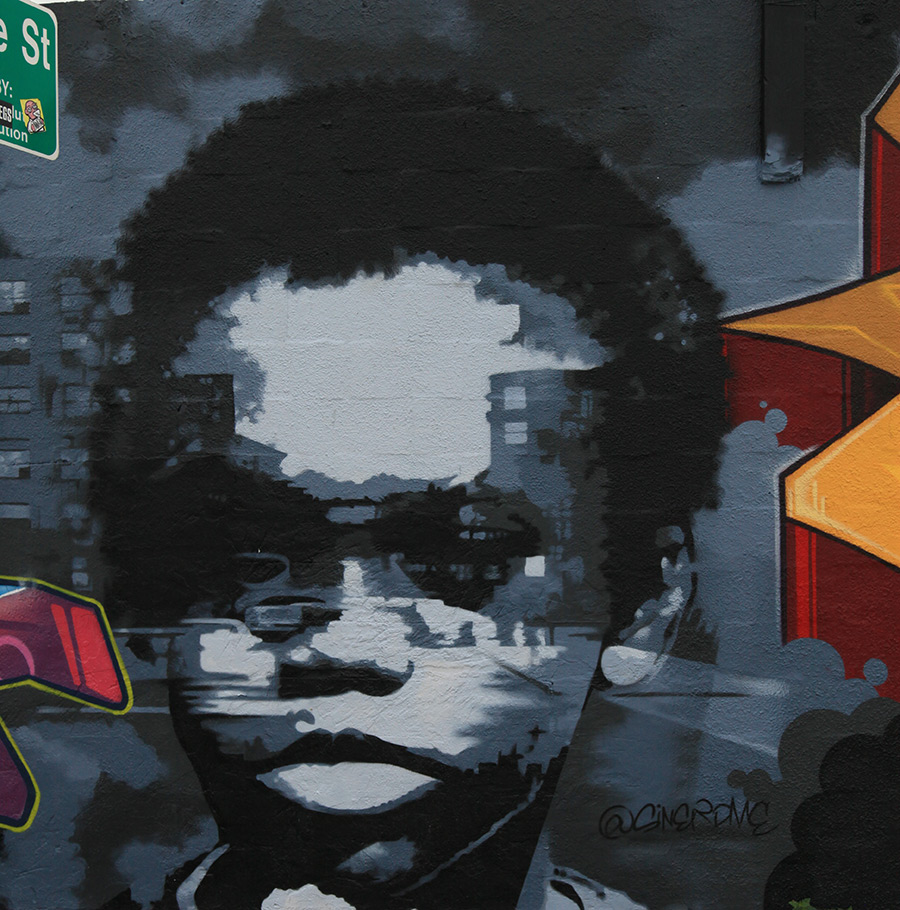
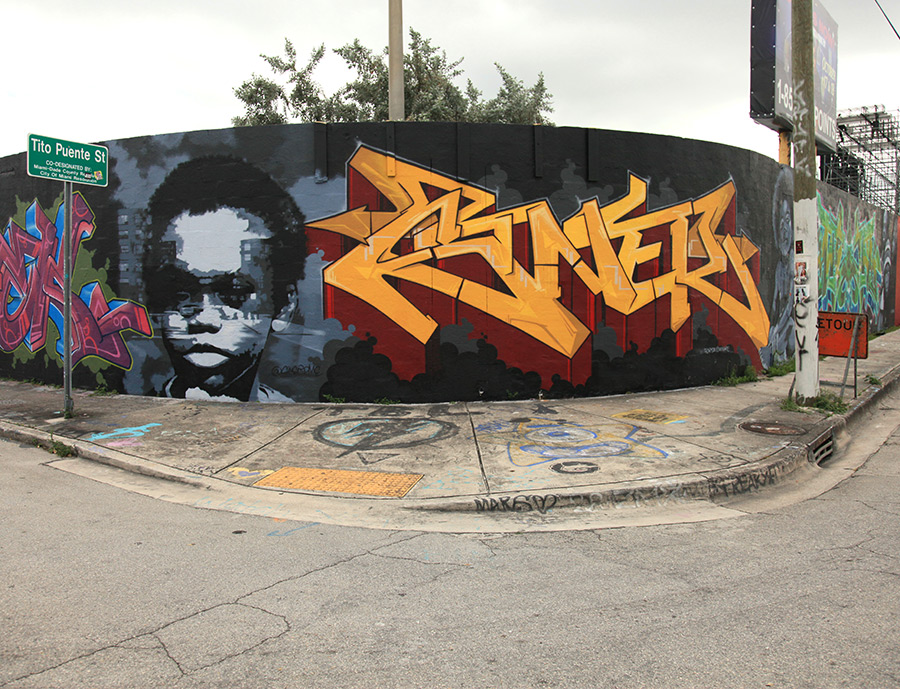
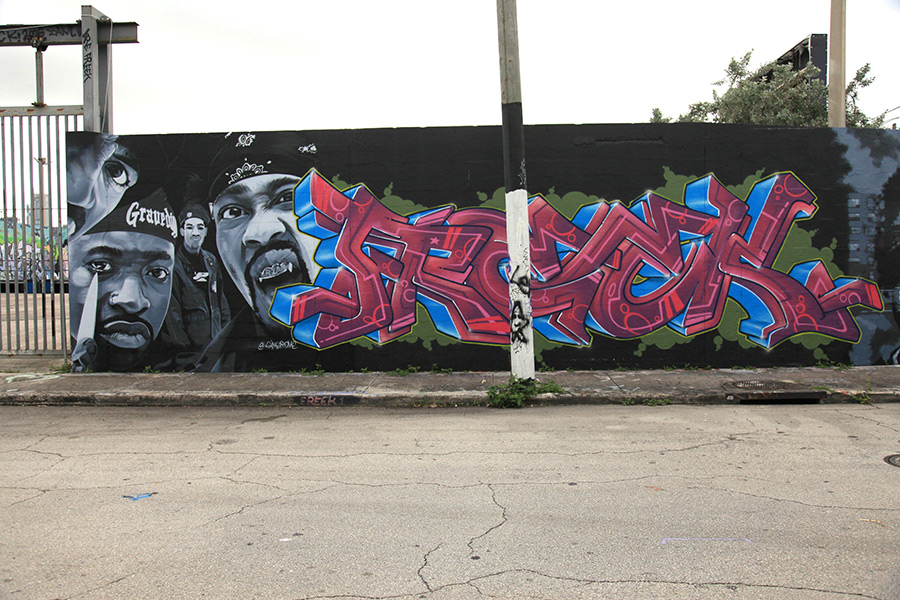
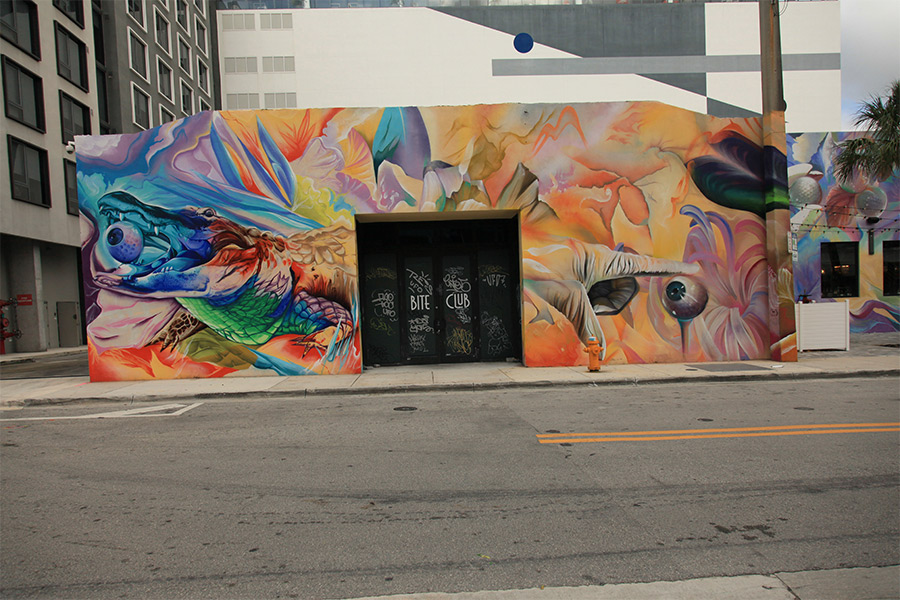
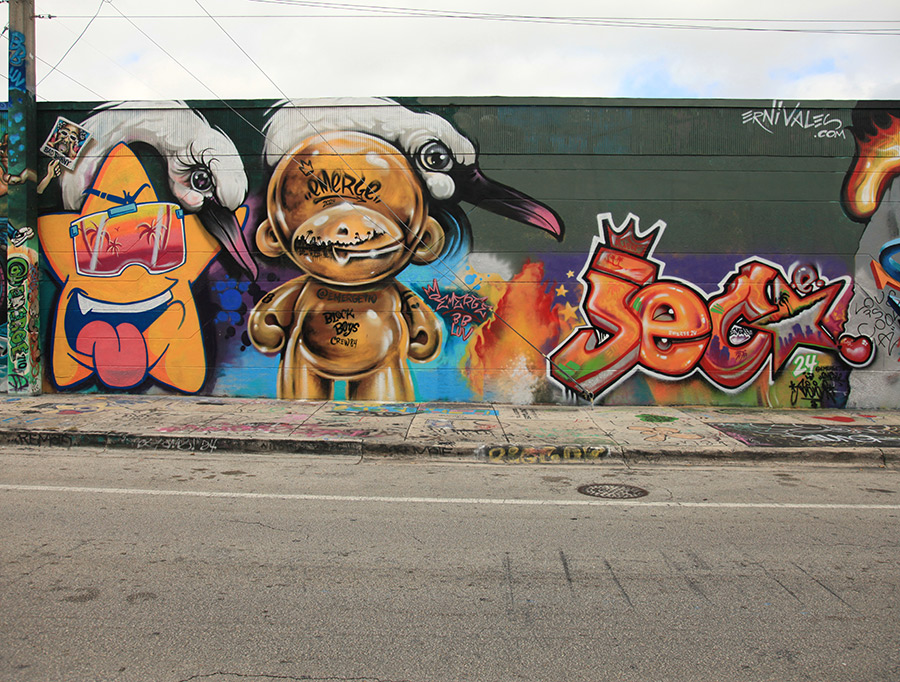
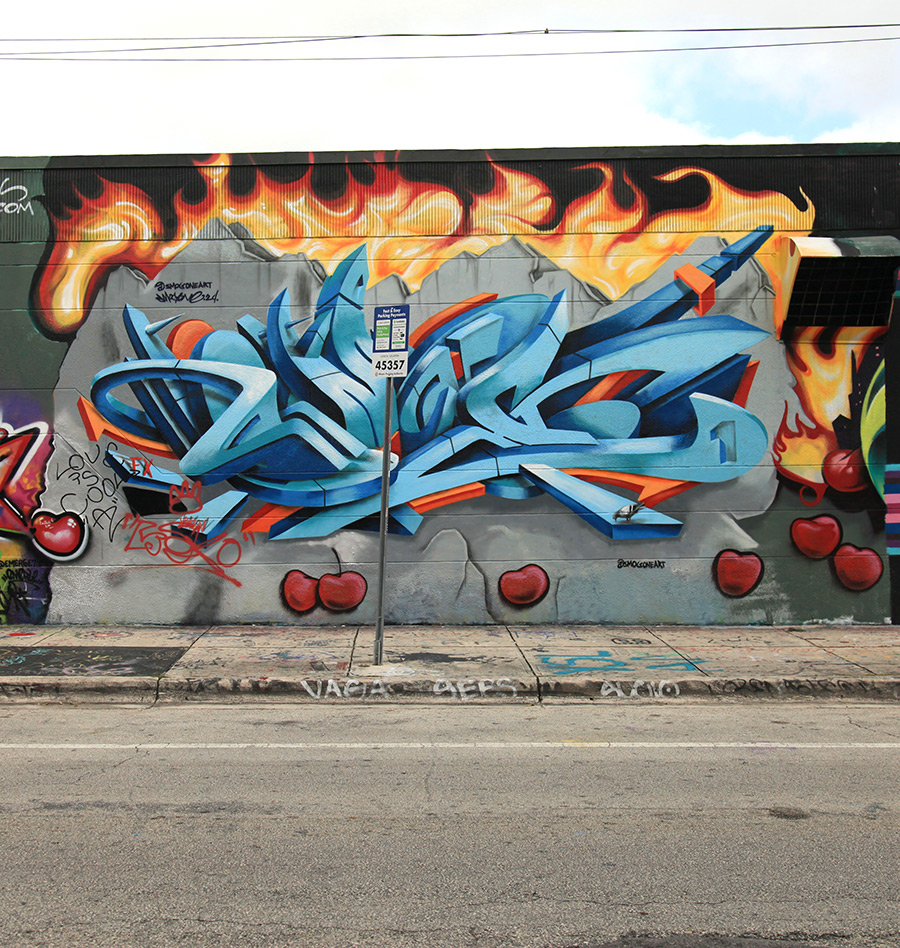
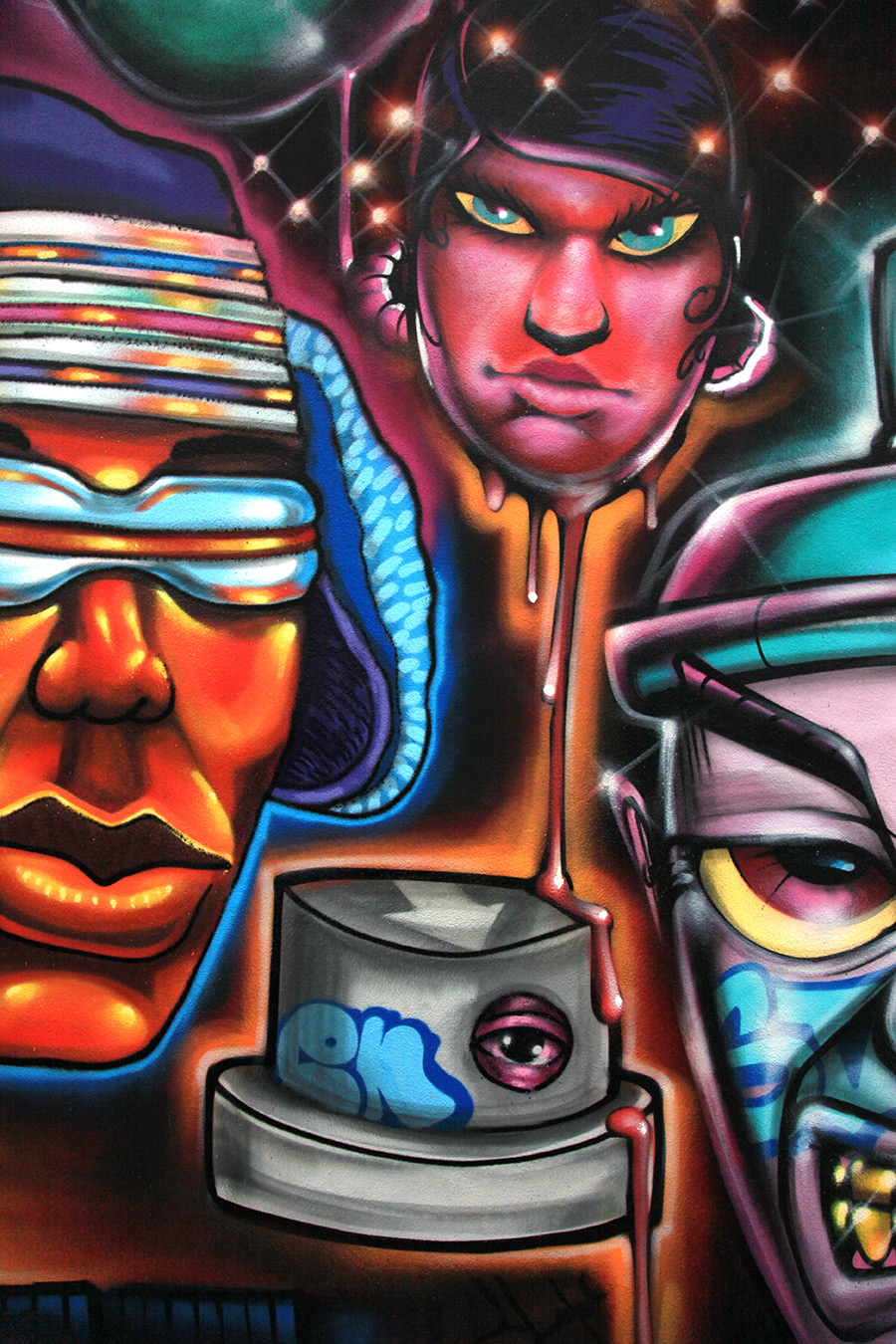
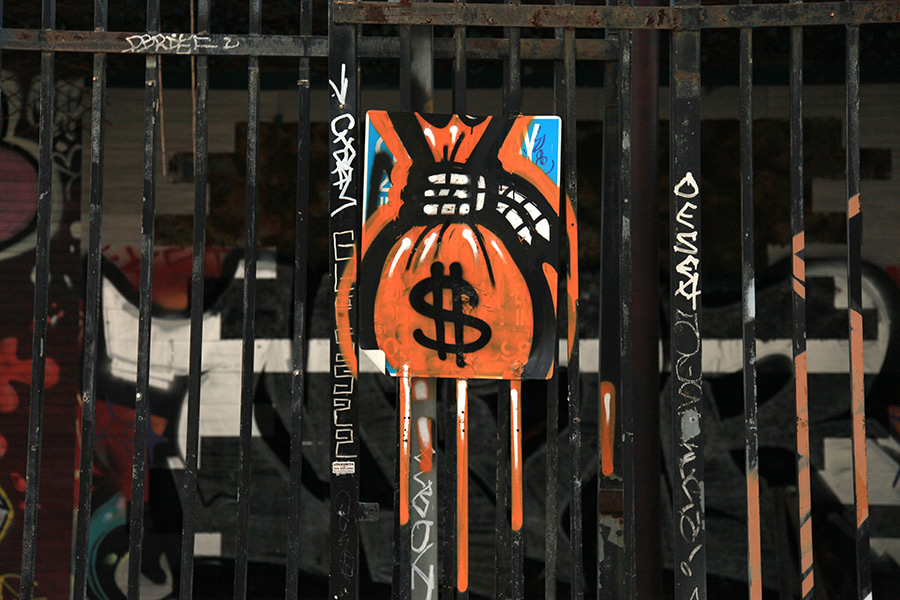
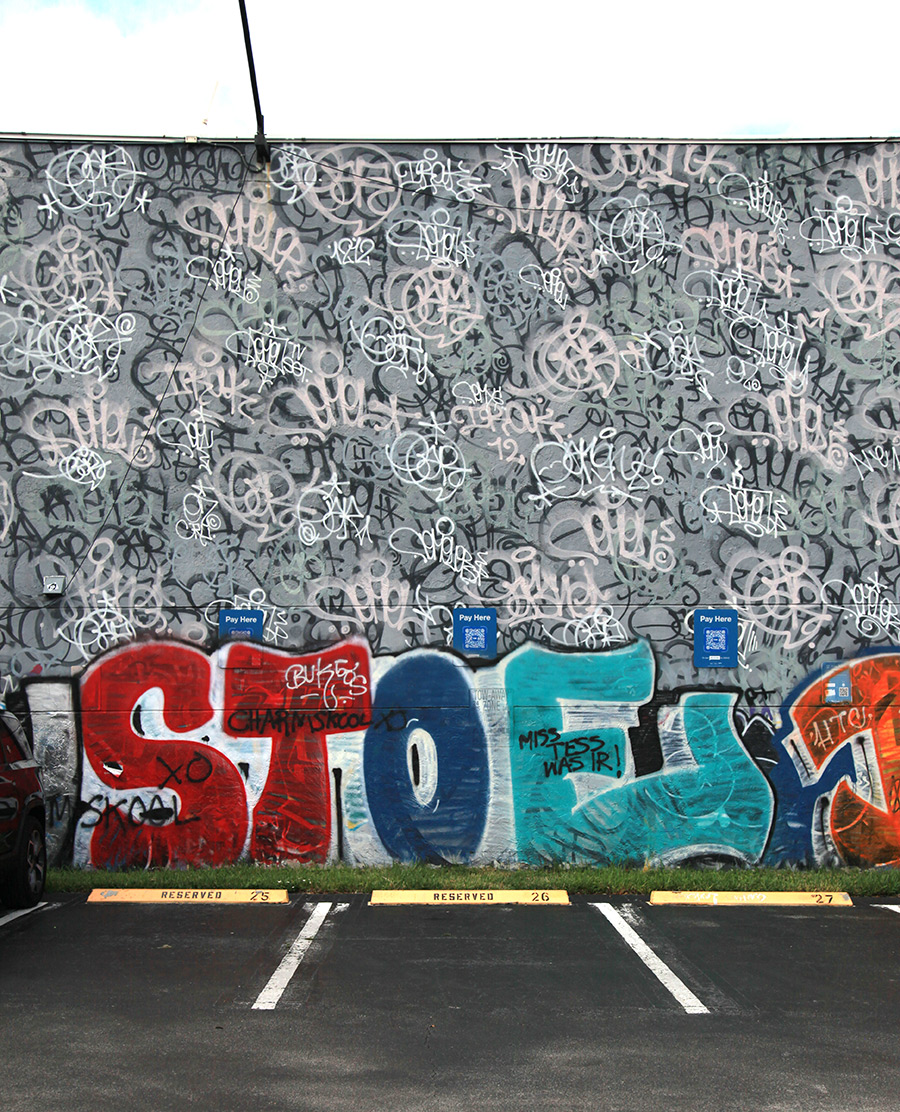
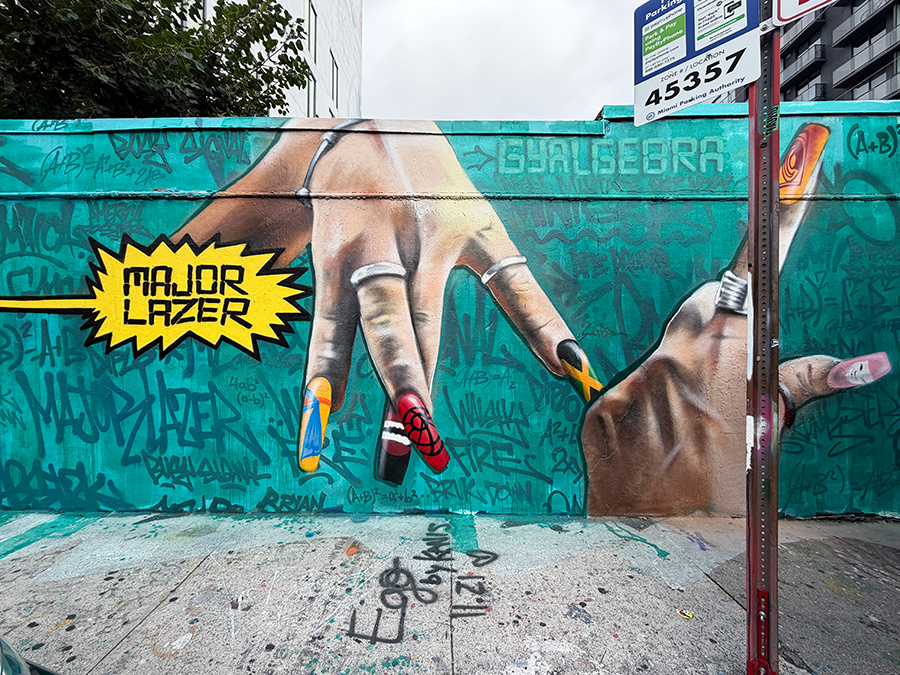
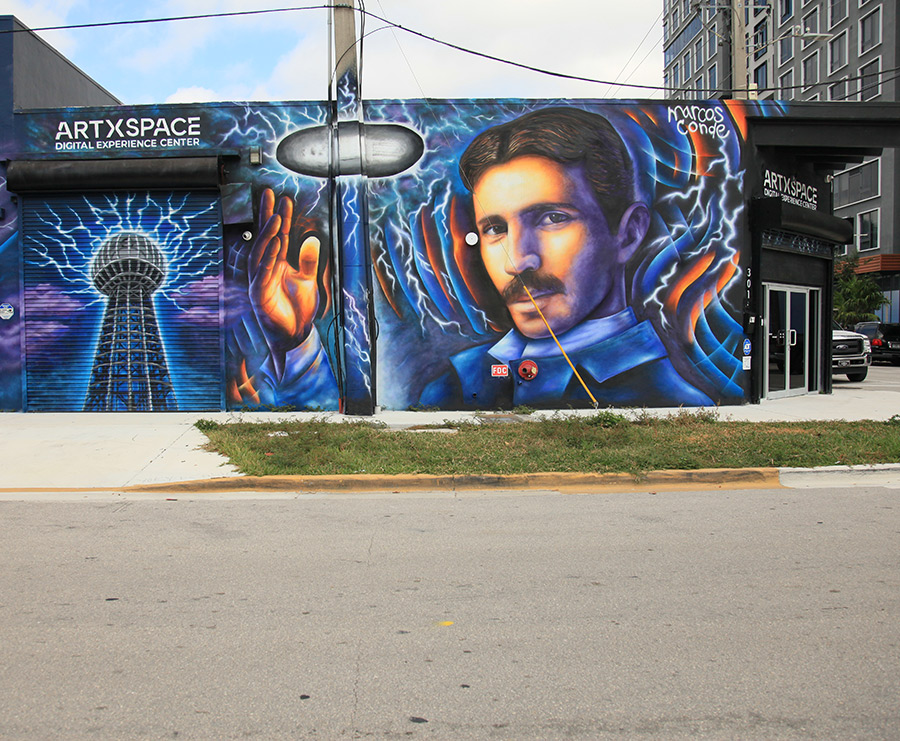
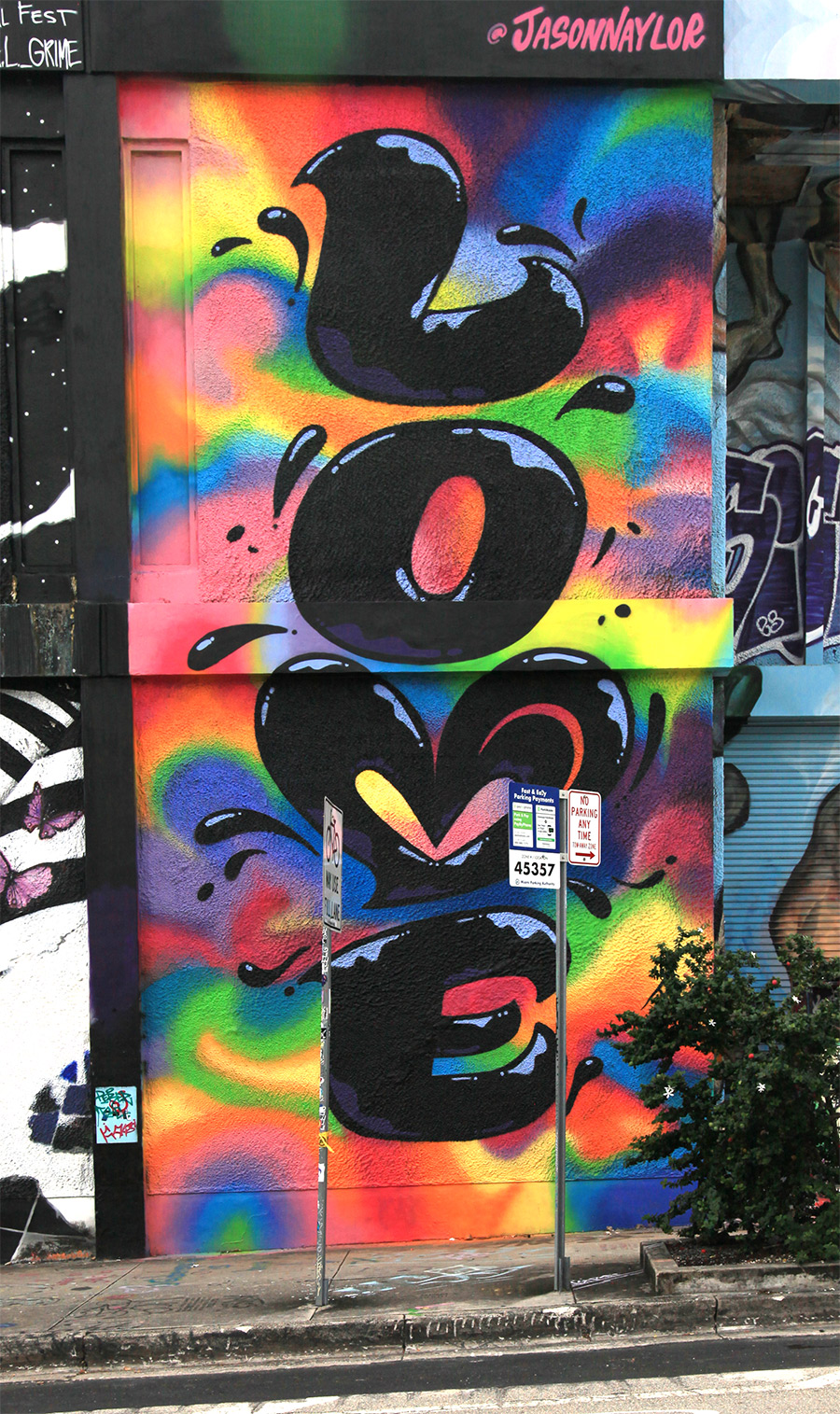
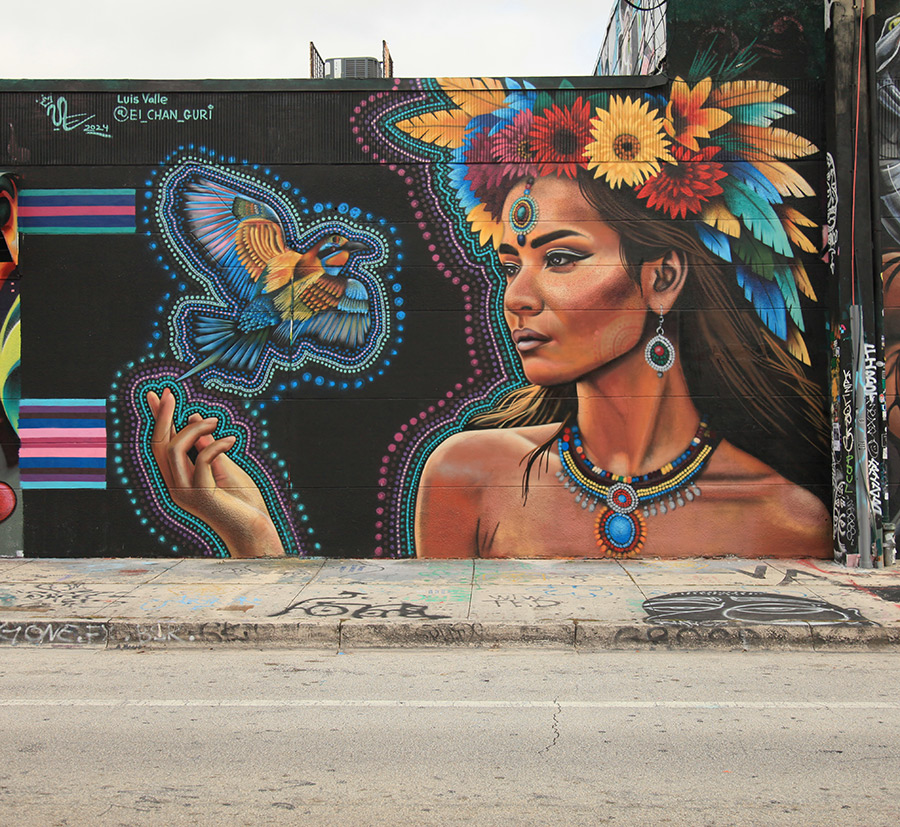
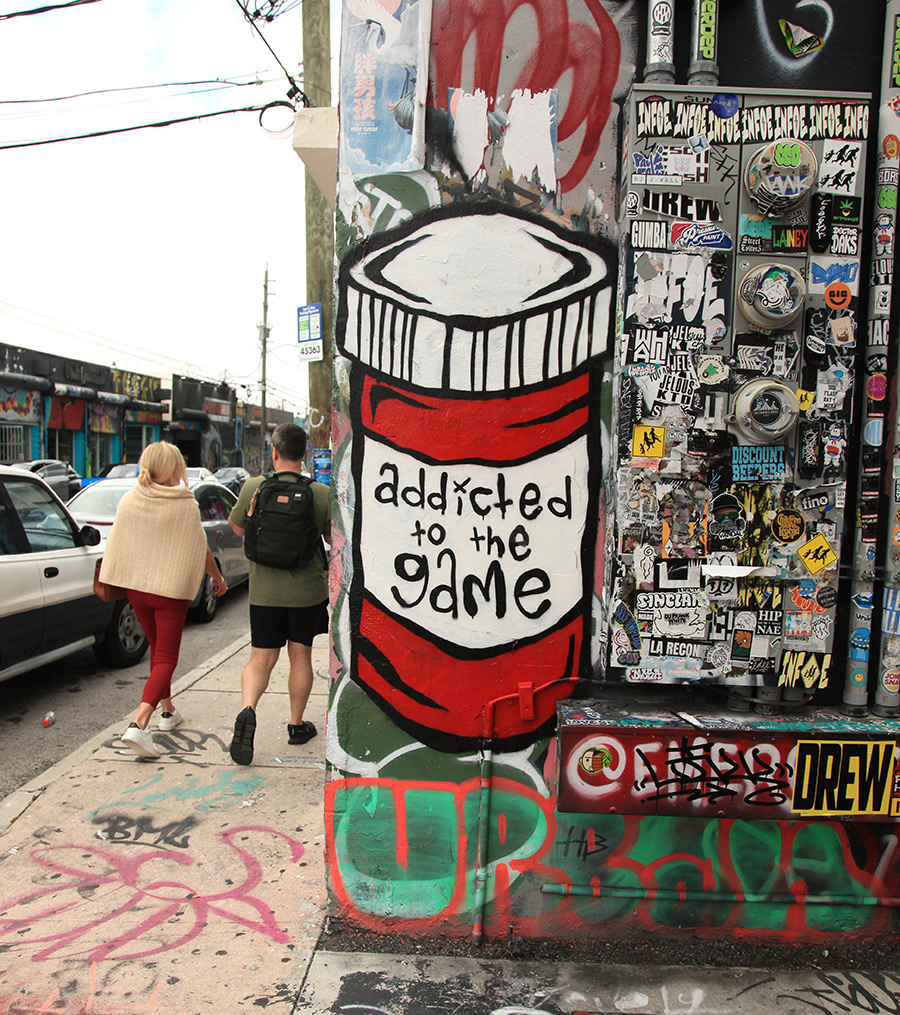
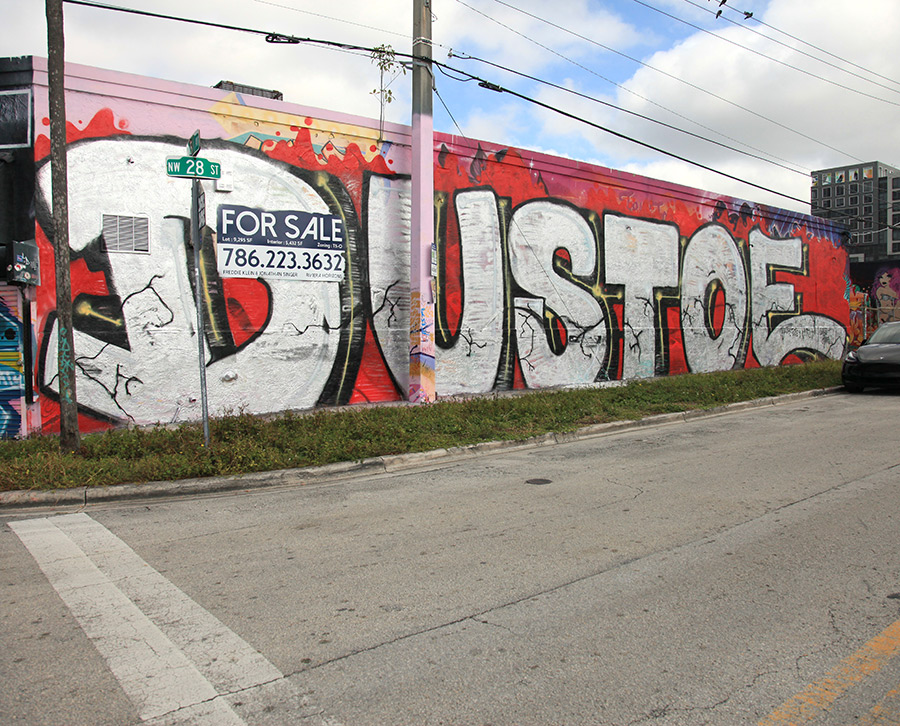
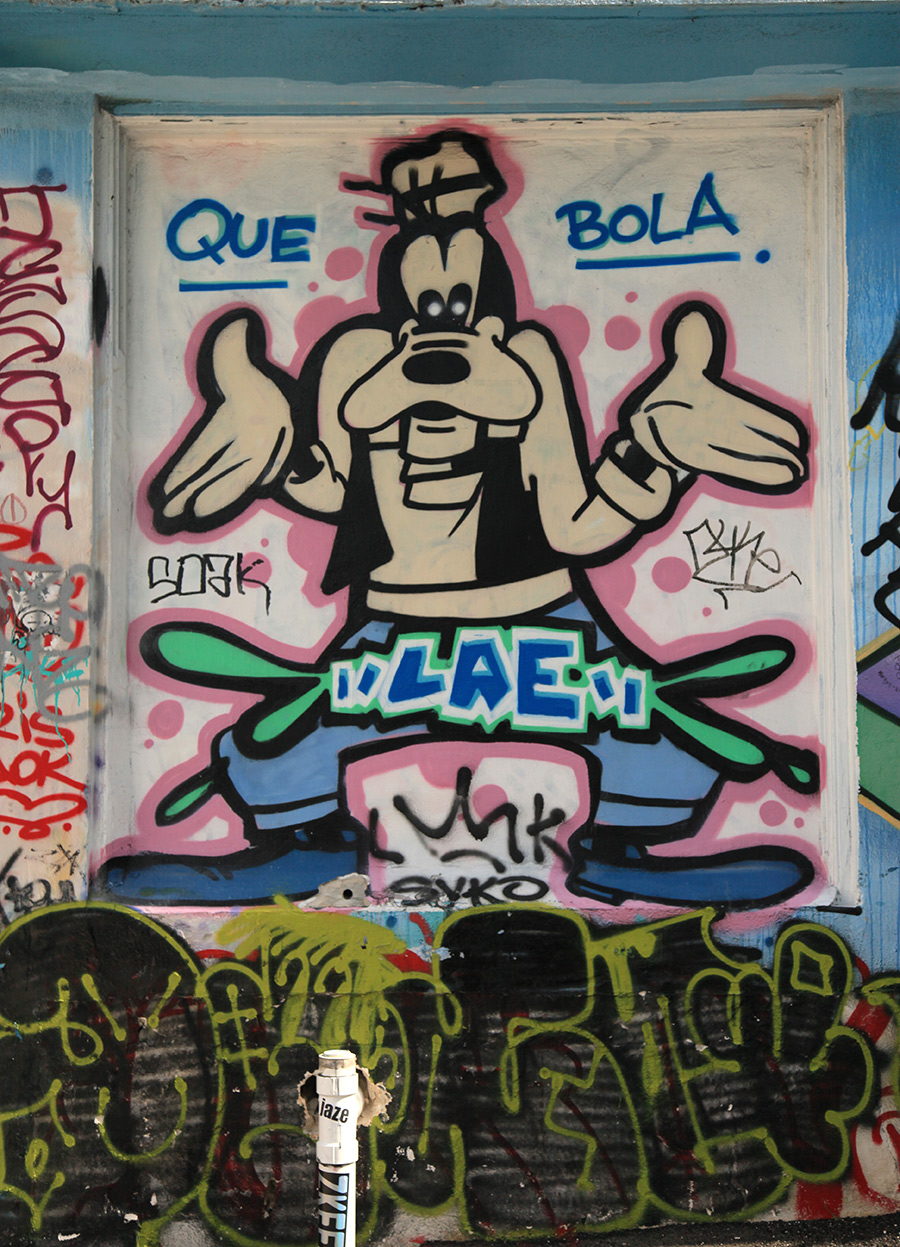
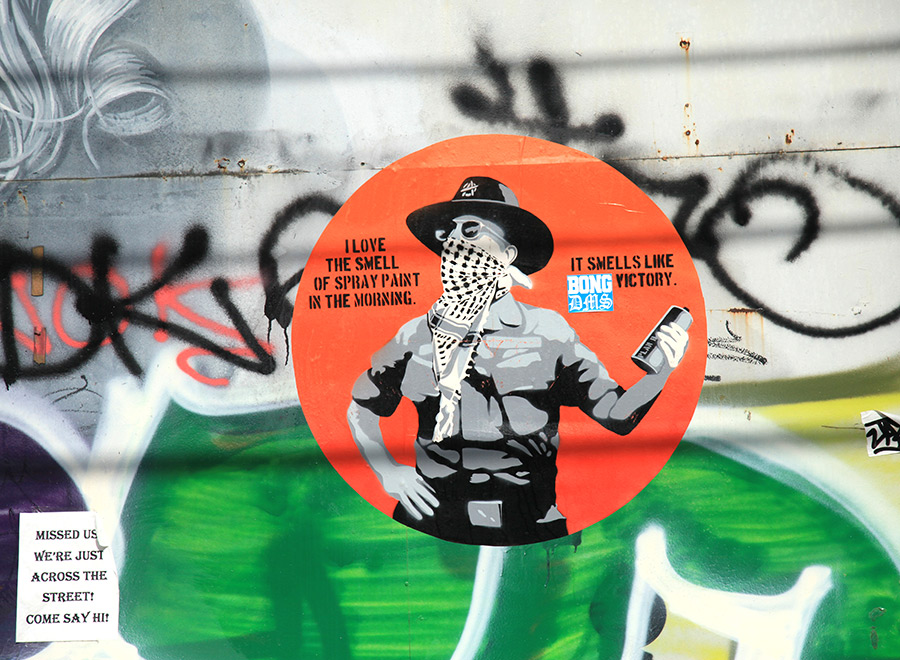
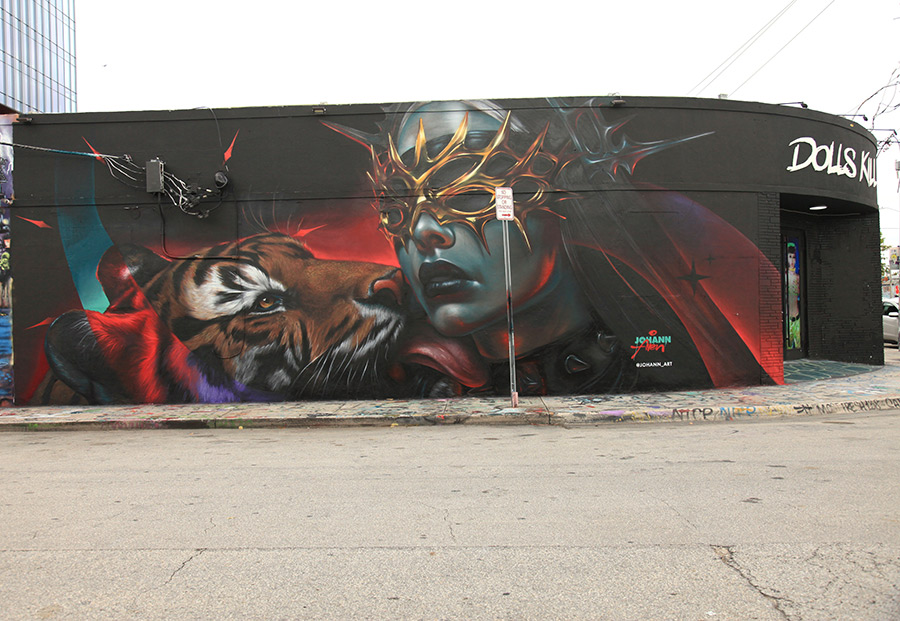
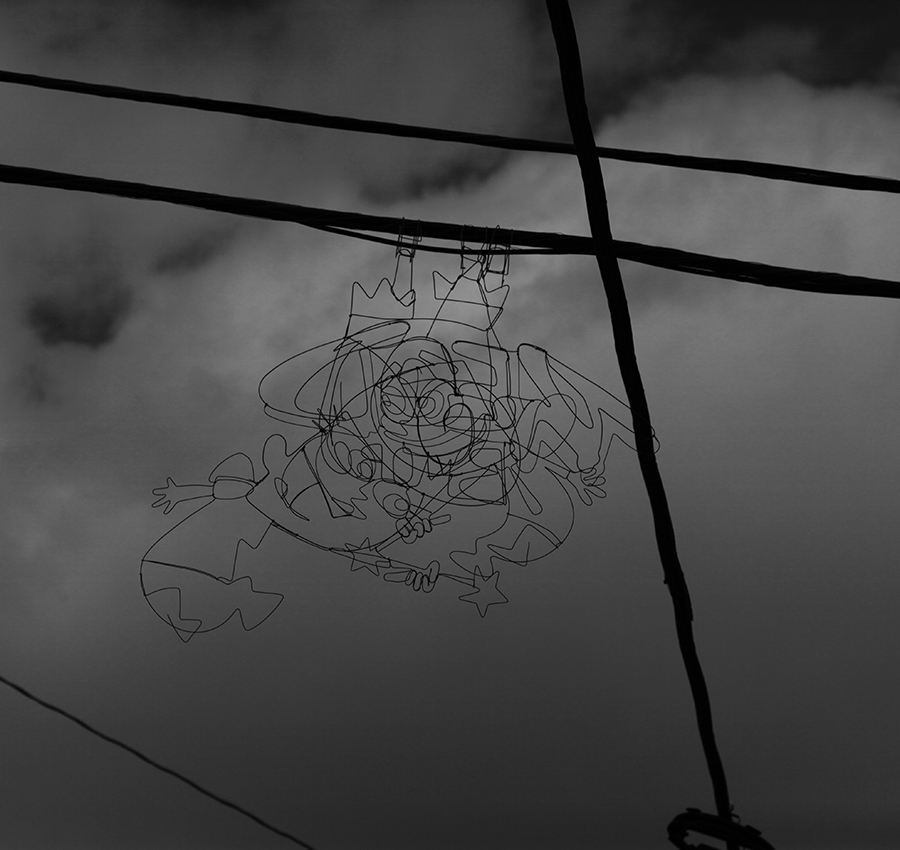
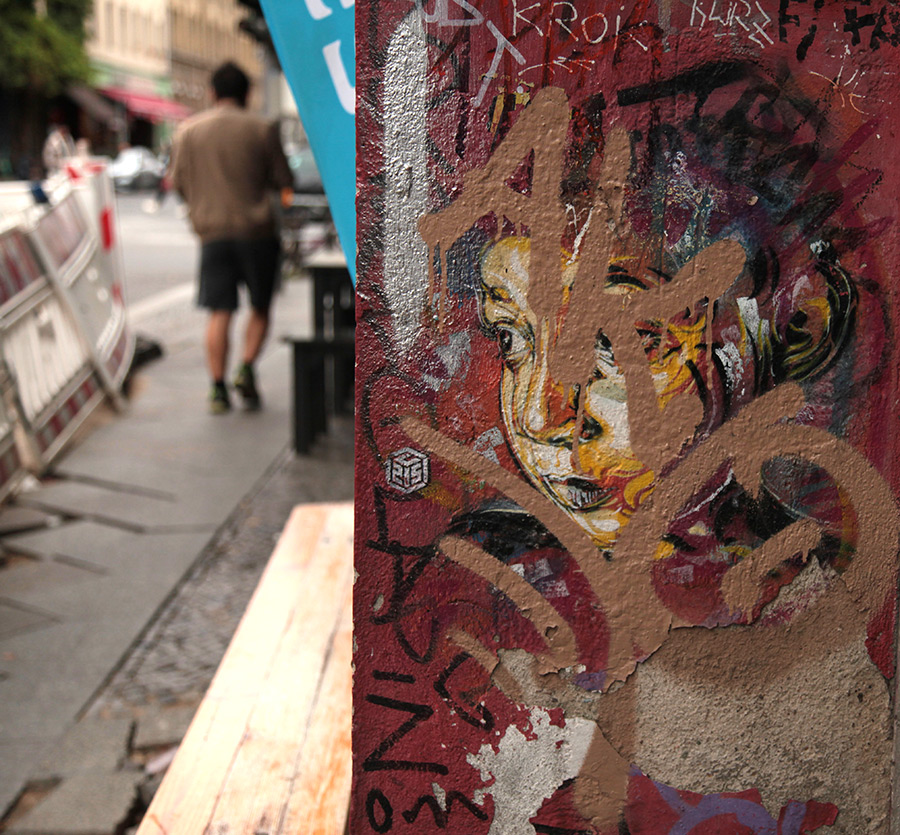
Here’s a selection of works seen on the street this week in Wynwood, Miami, including: Aine, BK Foxx, Dirt Cobain, Dustoe, Earsnot, EMERGE, Entes, Gyalgebra, Jason Naylor, Johann Aven, Lae, Luis Valle, Marcos Conde, MEPS, Patrick Churcany, Saturno, Shepard Fairey, SMOG ONE, STOE, and TATS004.
A new show brings together three artists whose work has created instantly recognizable visual systems that rely on repetition, symbols, and cultural icons. While two are rooted in unsanctioned work in public space and the third is identified with the gallery and market system, all three have generated debates about art’s role in mass culture and have extended their practices into new contexts through collaboration.
Shepard Fairey (US) began in the late 1980s with his Obey Giant sticker campaign and became widely known for his 2008 Hope poster for Barack Obama. His work blends graphic design, propaganda aesthetics, and pop culture, often described as politically engaged and connected to punk and DIY culture. Fairey maintains a long-standing commitment to public space through posters, murals, and interventions, while also working in galleries and commercial arenas worldwide.
Invader (France) began in the late 1990s and is known for his prolific and, some would say criptic, ceramic mosaic “invasions” of pixelated characters installed on city walls. His work is described as playful, systematic, and grounded in both nostalgia and the strategies of street art, with thousands of pieces spread worldwide with a marketing panache that rivals the other two show men here. Invader’s practice is fundamentally based in unsanctioned public interventions, making urban space his primary exhibition surface.
Damien Hirst (UK) rose to prominence in the late 1980s and 1990s as part of the so-called Young British Artists, a term that is evergreen and could easily be applied today or any day, but that is a different story. His work spans installation, painting, and sculpture, often addressing themes of mortality, spectacle, and the value of art in the market. Overlapping his show mates practices, Hirst has created large-scale outdoor sculptures and commissioned public displays, but unlike Fairey and Invader, his practice is not rooted in unsanctioned public space and is primarily mediated through institutions and collectors.
Triple Trouble underscores both the divergence and overlap in the practices of Fairey, Hirst, and Invader. Fairey and Invader bring decades of direct engagement with unsanctioned public space, and Hirst’s influence has been shaped through institutional and market frameworks, yet all three employ systems of repetition and iconic imagery that reach wide audiences. By staging collaborative works one may examine the point where street culture, contemporary art, and mass media converge. Conceptually the theme stretches each to meet the other, and in the process, clears new ground for experimentation – while illustrating the individual practice in stronger relief
Newport Street Gallery in London, in association with HENI, presents Triple Trouble (10 October 2025 – 29 March 2026), an exhibition of new collaborative works by Shepard Fairey, Damien Hirst, and Invader.
Welcome the BSA Images of the Week! Recent exhibitions, festivals, mural programs, and artist movements demonstrate that street art’s vitality continues to evolve—shifting from unsanctioned and underground to mainstream and institutional, and then back to the public streets. Far from fading, the street art and graffiti movement continues to adapt and engage more people, sparking dialogue about art, culture, creativity, property, politics, and its role in urban life. Our inbox at ABC runs like the city itself: fast, loud, nonstop—thankfully, this deli coffee is strong.
Global Graffiti Festival: The Meeting of Styles international graffiti festival just took over Rruga B Street in Kosovo’s capital, marking its 9th edition in Pristina. The city’s embrace of this festival – and the participation of artists from as far afield as Europe, the Americas, and Asia – underscores how the street art movement continues to span the globe, including places that rarely feature in mainstream art news.
As we speed through block parties, outdoor concerts, graffiti jams, and the end of New York’s summer art scene, we note next month’s arrival of the Gaza Biennale, a roving exhibition spotlighting artists from the embattled Gaza Strip. Previously exhibited in London, Berlin, and Athens, the show is a powerful cultural statement, taking place at 19 venues across 12 cities worldwide. The biennale’s New York iteration will span five days (September 10-14) at the non-profit art space Recess in Brooklyn.
Theatergoers have been flocking to Central Park’s Delacorte Theater for Twelfth Night, starring Peter Dinklage and Sandra Oh – in this New York tradition that’s open to everyone. Fans are lining up hours—even overnight—for free tickets, turning the event into a communal spectacle of Shakespeare for our treacherous time, of this moment.
“If this were played upon a stage now, I could condemn it as an improbable fiction.” (Twelfth Night, Act III, Scene IV)
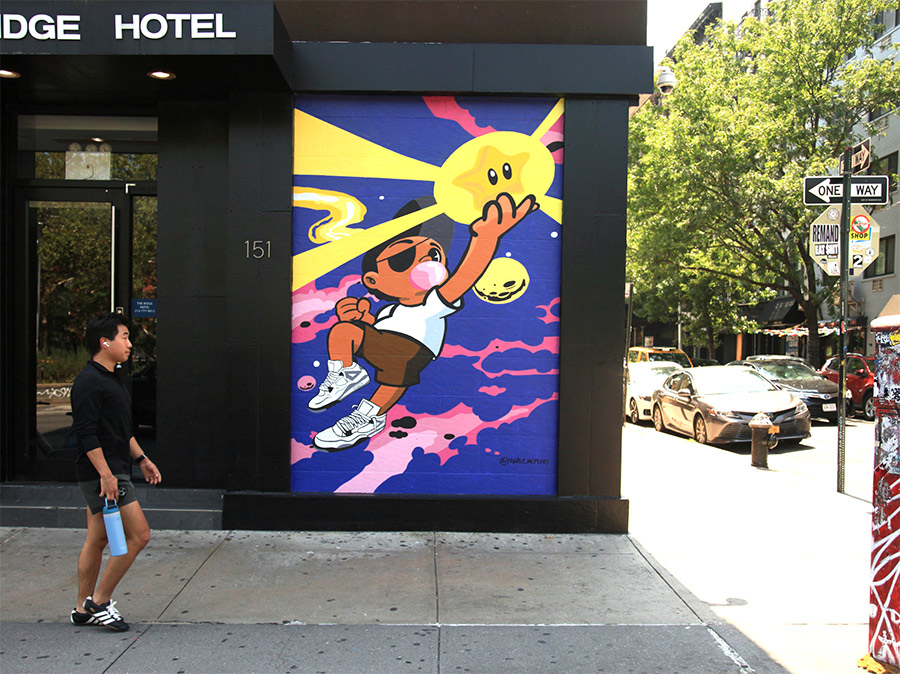
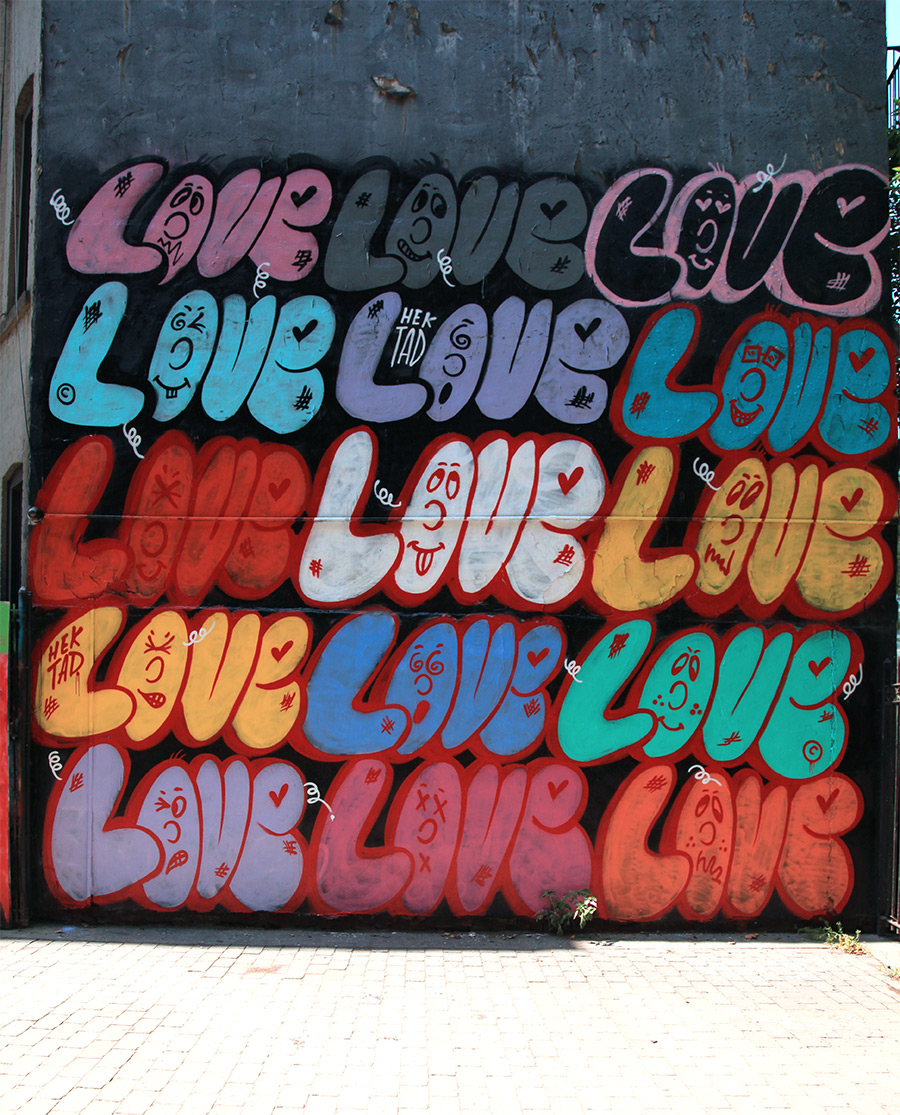
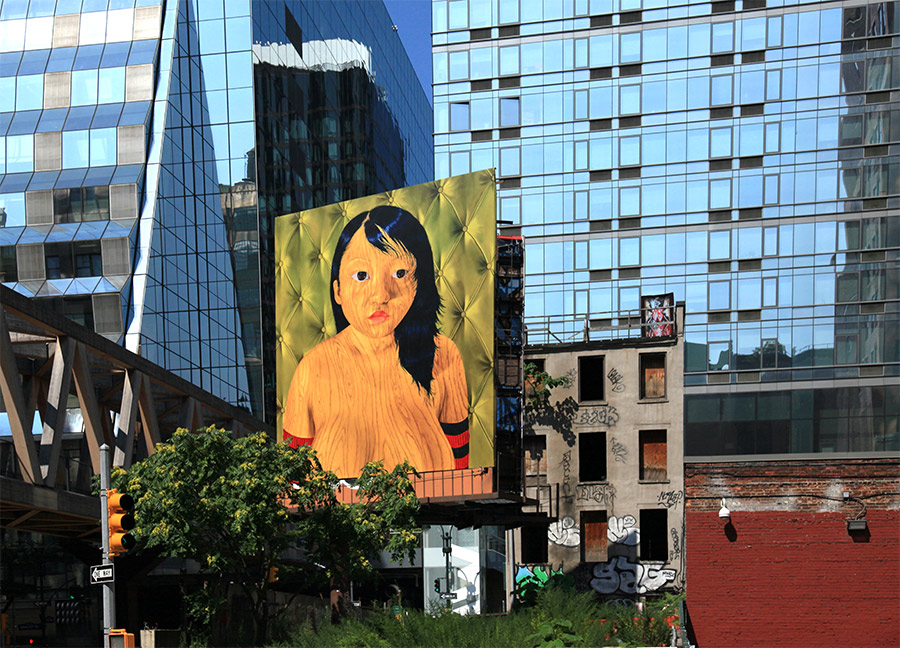
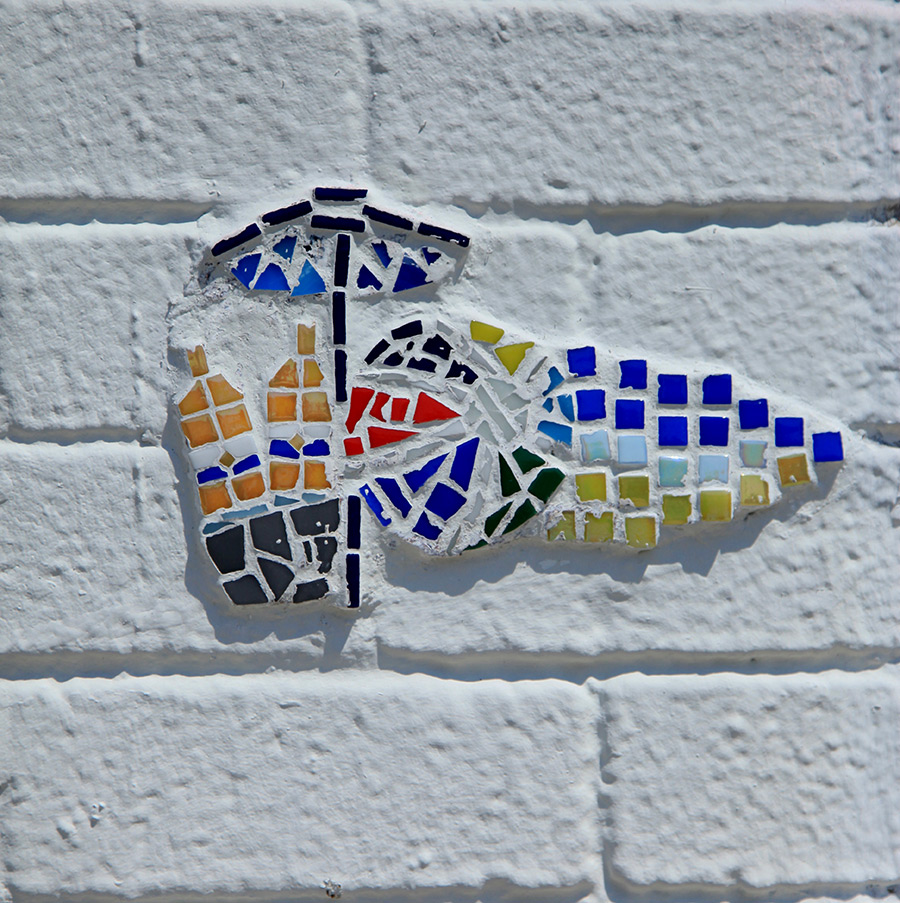
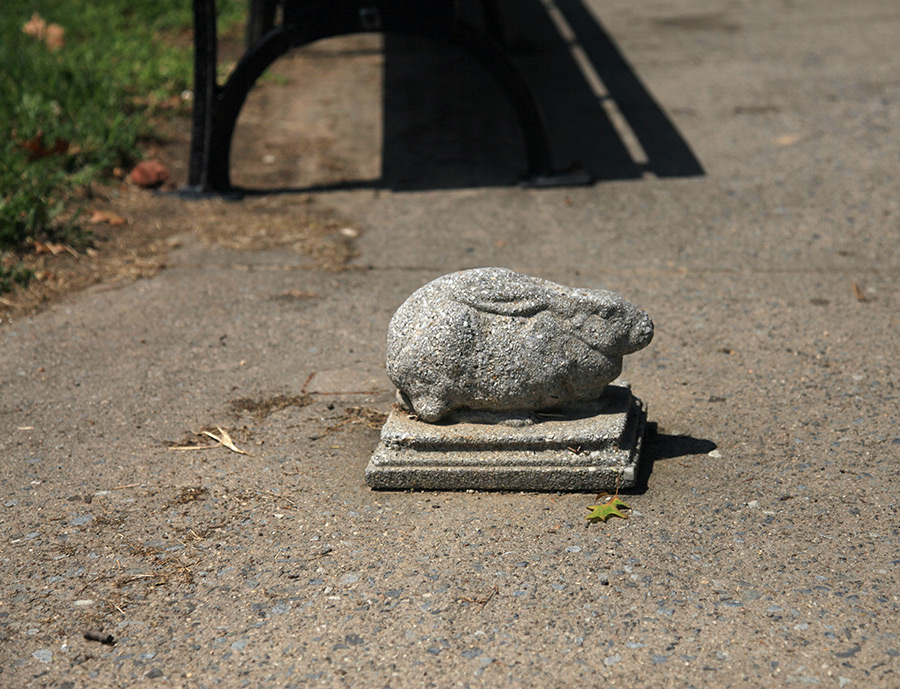
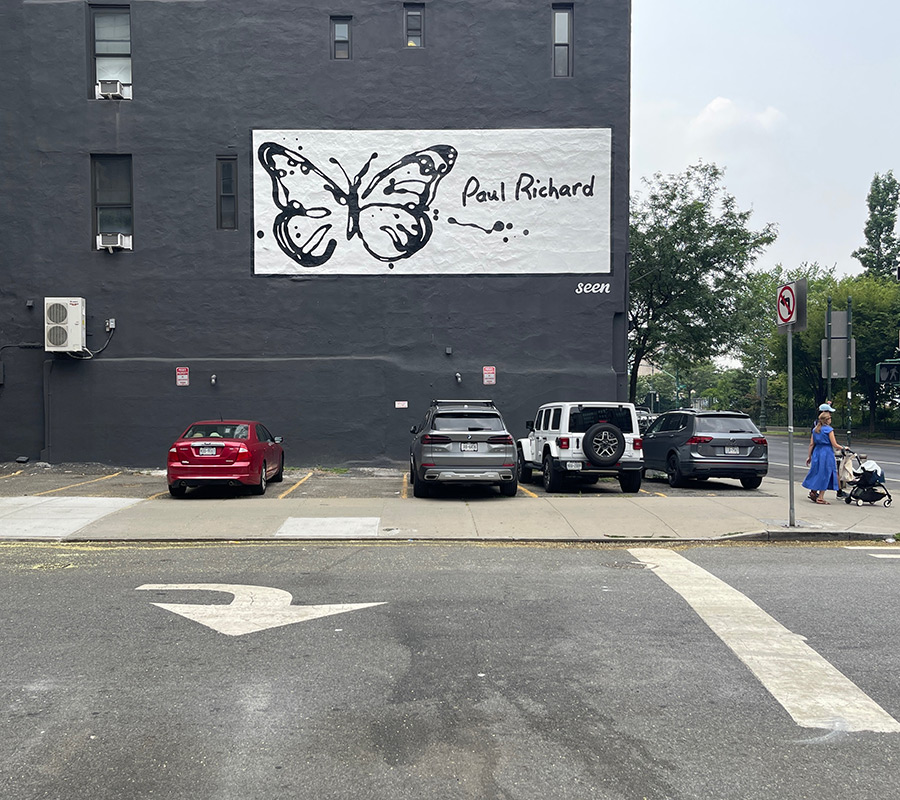
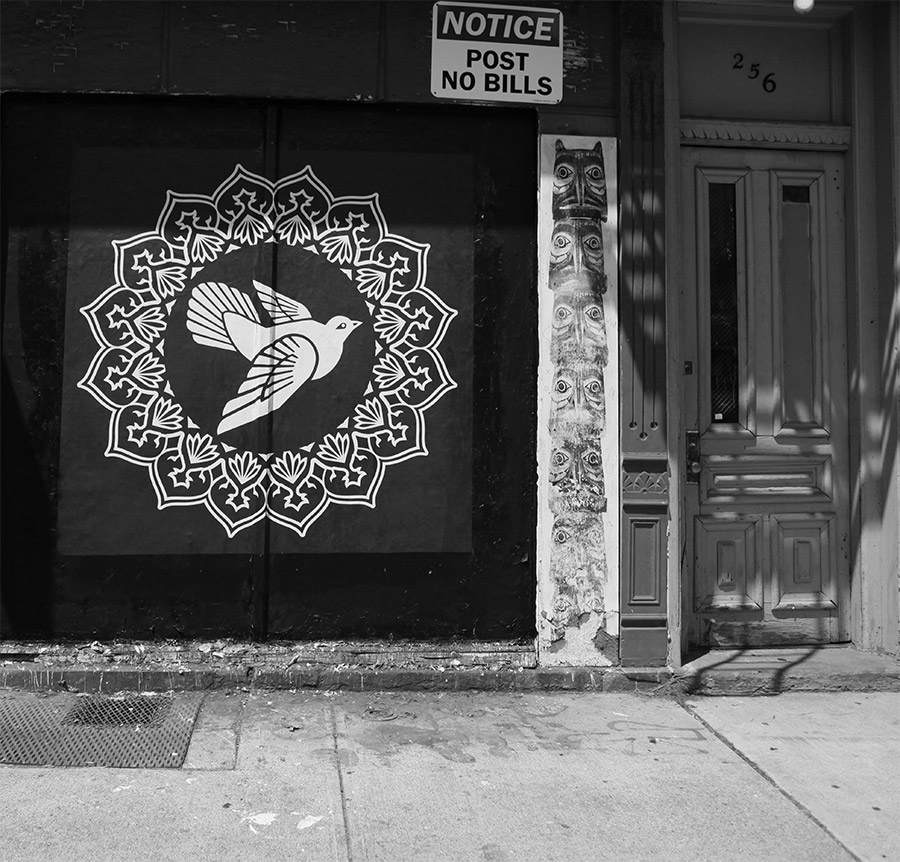
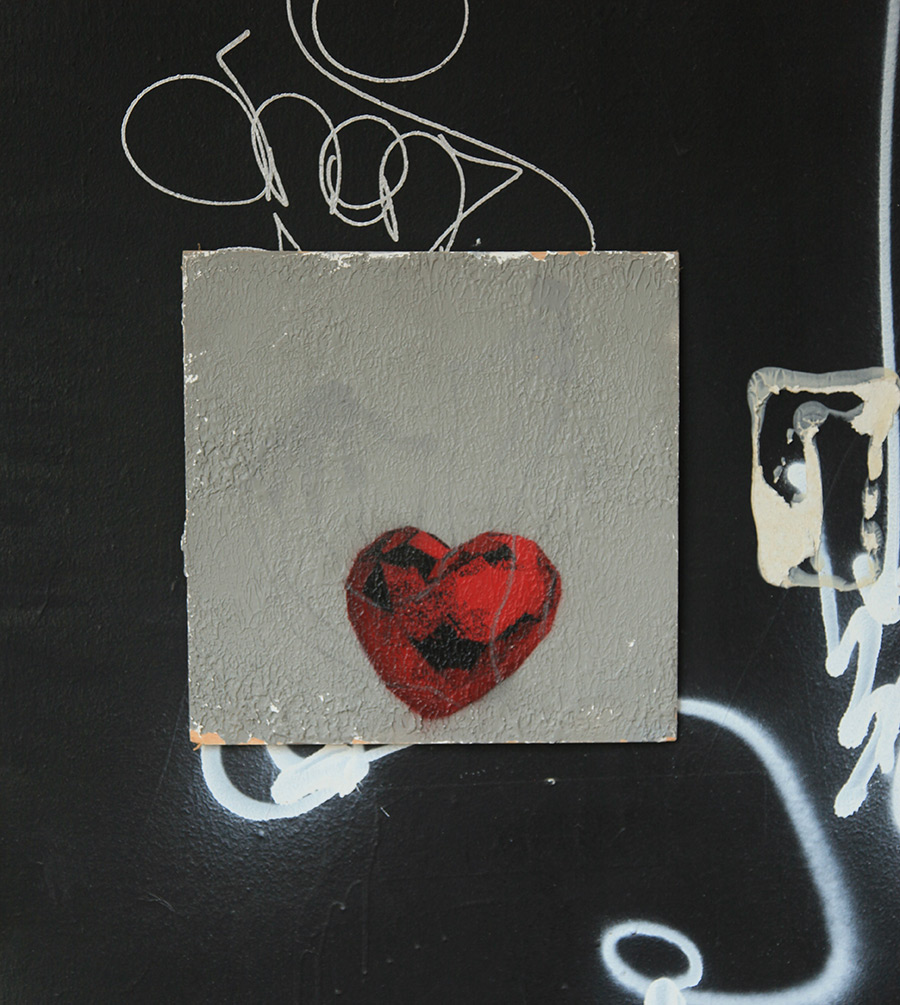
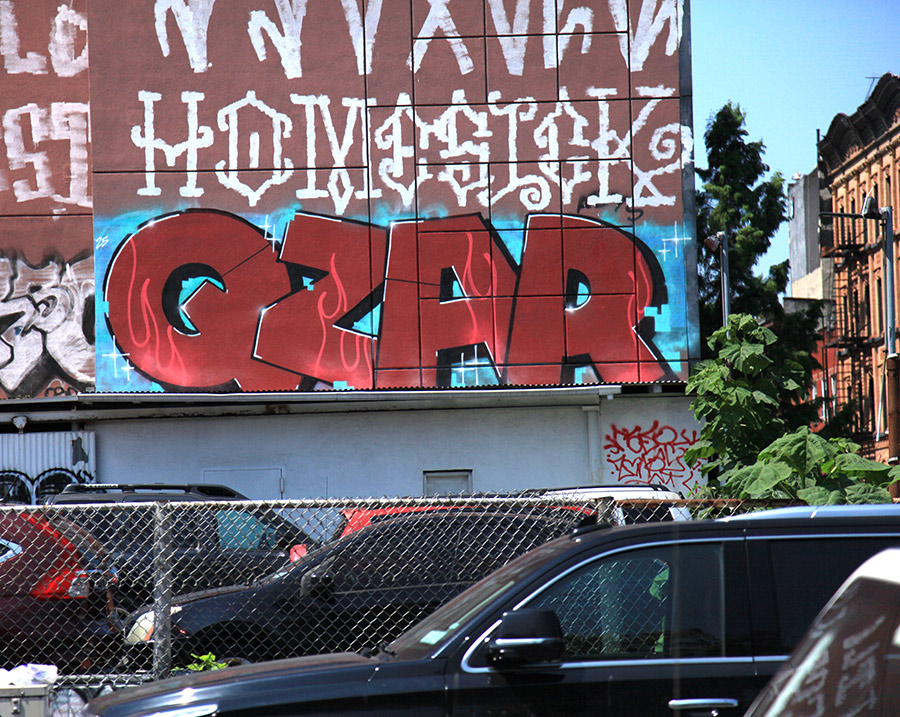
Here’s our weekly interview with the street, this week featuring works from Acet, AIC Mosaic, Below Key, Benny CRuz, Hektad, Homesick, JerkFace, Marly McFly, Obey, Paul Richard, Qzar, Sasha Gordon, Shepard Fairey, Tom Bob NYC, and Werds.
If you know Shepard Fairey, then you already know: he’s never been one to sit back and let the powers that be go unchecked, from his own plugged-in and purposeful wiseguy perspective. From Andre the Giant Has a Posse wheatpastes in the ’90s to “Hope” posters on campaign walls, his work straddles the intersections of street art, punk defiance, political critique, and populist propaganda with a purpose. He’s a true lifer—rooted in skate culture, DIY ethos, anti-authoritarian graphics, and a conviction that art can and should speak truth to power.
In this new poster campaign, DEI-TY, Shepard zeroes in on a cultural moment when long-standing efforts to make society more inclusive are being flipped upside down by those seeking to divide and conquer. Always direct, yet heavy with symbolism and art/design history, the new poster artwork pulls from Orwellian surveillance aesthetics and throws an unmistakable orange glow over its intended subject. Yes, it’s Trump—but it’s also a larger warning learned from our human history to beware of personality cults, shallow populism, and manufactured outrage.
What follows is a wide-ranging interview that captures Fairey’s frustration, clarity, and urgency—served up with the kind of seasoned insight that comes from decades of navigating art, activism, and political absurdity. Now you’ll see a sharpness in his tone that speaks to the times: an artist who considers the stakes clearly and isn’t mincing words. If you’ve followed his career, you’ll recognize the heat generated by his signature mix of bold graphics and civic fire. If you’re new to it, welcome to the resistance—art’s not dead, and Fairey’s not done.
At the end of the article, you’ll find a selection of previous works that speak to the arc of Shepard’s creative and cultural engagement. Youcan also download the new DEI-TY poster for free, to print, paste, share, and use however you see fit. Once again Fairey demonstrates that in the face of rising intolerance and authoritarian power plays, silence is complicity—and art is one hell of a megaphone.
_____________
BSA: Your poster flips the acronym DEI from a framework for equity into a confrontation with authoritarian ego. In a list of topics to address, what gave you the spark for this specific artwork?
Shepard Fairey: Of course, the verbal assault on the DEI programs at colleges and corporations infuriated me, but it became something more serious when Trump began to rescind funding to colleges and deny contracts to companies with DEI programs. I think Trump attacks DEI because he associates it with “woke” people who don’t support him. The bottom line is that Trump rewards those who stroke his ego and punishes those who don’t. Having someone that shallow and petty influence policies that impact millions is incredibly dangerous. In my original post, I laid out the definitions of Diversity, Equity, and Inclusion because they are concepts that are pretty hard for a rational, fair-minded person to disagree with. Here they are again:
Diversity: the condition of having or being composed of differing elements: variety.
Equity: the quality of being fair and impartial.
Inclusion: the act or practice of including people who have historically been excluded (often because of their race, gender, sexuality, or disability).
BSA: Many times, you have critiqued cults of personality and authoritarianism with your work. In DEI-TY, the term “self-proclaimed deity” seems aimed squarely at that. Is it the figure or the ideology that folks have beef with?
Shepard Fairey: Both. I’ve described Trump, the specific “self-proclaimed deity” referred to in the print, as the festering zit that is the hideous manifestation of the underlying bacteria. The analogy isn’t entirely accurate, though, because in Trump’s case, his influence makes the bacteria even more toxic. It’s a brutal cycle. Trump encourages his followers to scapegoat the vulnerable, vocalize and act on their worst prejudices, and then he feels emboldened to behave like a dictator and double down on the most inflammatory rhetoric and cruel policies. This is a cycle and culture that erodes civility and democracy.
BSA: You’re offering these prints as free downloads, which suggests a sense of urgency and mass mobilization. Do you see DEI-TY as part of a larger visual resistance? How do you hope people will use it?
Shepard Fairey: I always want people to mobilize. I use my art to inspire people to care, because they won’t act if they don’t care. Some of my pieces, such as DEI-TY, can also serve as tools to convey an idea… tools I’d like anyone to be able to use if they are inspired. Visibility for a counter-narrative is essential to mobilizing people and shifting culture.
BSA: How do people navigate the increasing weaponization of terms like “DEI” in political and media discourse? Do you see this poster as an intervention in a culture war? As an aside, how much of this is a genuine concern to average people, and how much is ginned up to get us to fight with each other?
Shepard Fairey: DEI should be unassailable as an idea. Somehow, Trump has turned people against bedrock principles of American philosophy like diversity, equity, and inclusion, which should be universal, while normalizing lying, scapegoating, and undermining democracy, all of which should be universally unacceptable. Yes, the culture war is his aim, and the attacks on DEI don’t impact everyone directly, but I’m a believer in the concept that injustice anywhere threatens justice everywhere.
BSA: This new imagery echoes some of your earlier pieces that blend Orwellian surveillance aesthetics with activist messaging. What’s different about DEI-TY?
Shepard Fairey: You’re right about the Orwellian aesthetic. Trump is a fascist and a menace. He doesn’t genuinely believe in freedom, except for the freedom to be a dictator. He is very Big Brother-esque in his approach to purging dissenters from government and education. The main difference is that this print uses orange (for obvious reasons) and this print addresses general principles AND specific villains. I’d love for 1984 to be irrelevant, but unfortunately, it might be more relevant in this moment than ever before in U.S. history.
SHEPARD IS OFFERING THESE TWO NEW POSTERS ABOVE FOR FREE. CLICK HERE FOR A FREE DOWNLOAD
Following are a few from the vault from Fairey that run parallel in political, social, and stylistic spirit.
Statement from Shepard Fairey for the release of the new poster:
“Please read the words DIVERSITY, EQUITY, and INCLUSION and think deeply about their meaning – individually and collectively.
Diversity: the condition of having or being composed of differing elements: variety.
Equity: the quality of being fair and impartial.
Inclusion: the act or practice of including people who have historically been excluded (often because of their race, gender, sexuality, or disability).
DEl is meant only to enhance the priority of our institutions and workplaces to provide equal opportunity to the many groups that make up our beautifully diverse nation.
These formerly unassailable ideas have been aspirationally woven into our nation’s entire history, even if our idea of who is equal has thankfully evolved to include more than just white men.
From the Declaration of Independence to the 14th Amendment granting equal protection for all citizens, to the 15th Amendment granting Black men the right to vote, to the
19th Amendment granting women the right to vote, to the Civil Rights Act outlawing discrimination based on race, color, religion, sex, or national origin, we have moved toward a more fair and less discriminatory society. The symbolism of the Statue of Liberty as a welcoming beacon to those fleeing forms of discrimination to find refuge in the melting pot of the US is a cornerstone of the American story. The current attack on DEl is nothing less than a betrayal of American values and aspirations. The attack on DEl is very literally a Republican policy of discriminating against those who oppose discrimination in their businesses and organizations.
When have racism, sexism, homophobia, or the like been okay in plain sight from our leadership, much less turned into law that punishes those trying to provide equality? I feel like I’m in a dystopian mirror world. Terrifyingly, this is here and now, and catalyzed mainly by one power-hungry narcissist who is a deranged, egomaniacal, insecure, tyrannical, yapster. If you oppose the mean-spirited embrace of discrimination like I do, please use every tool at your disposal to push back, especially by voting in EVERY election, including the midterms. We have power in numbers if we use it!”
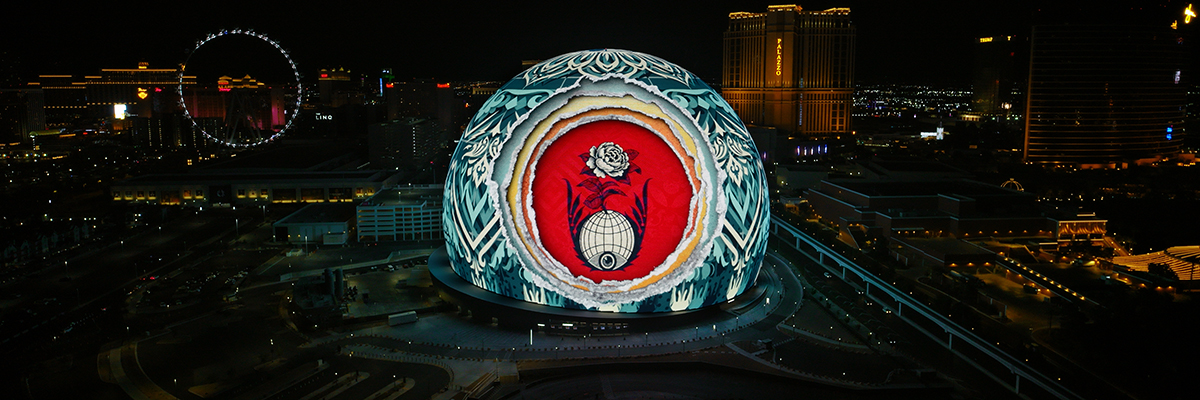
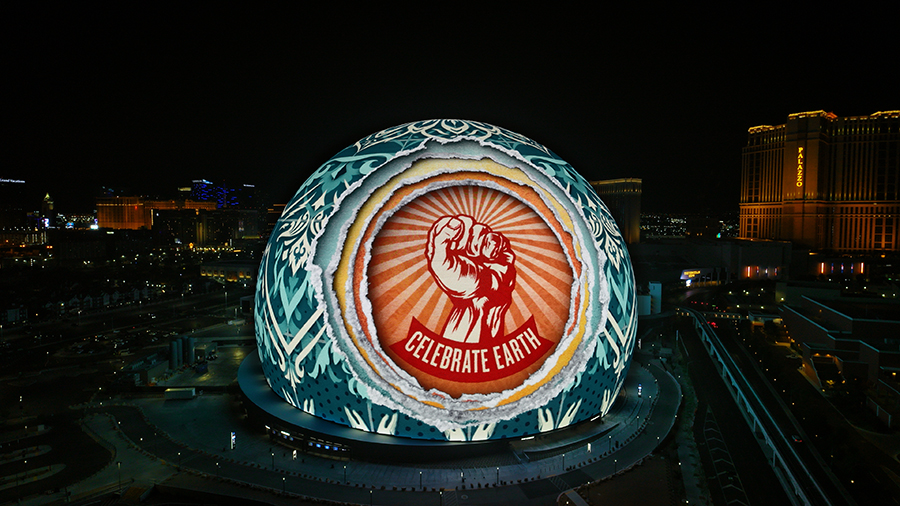
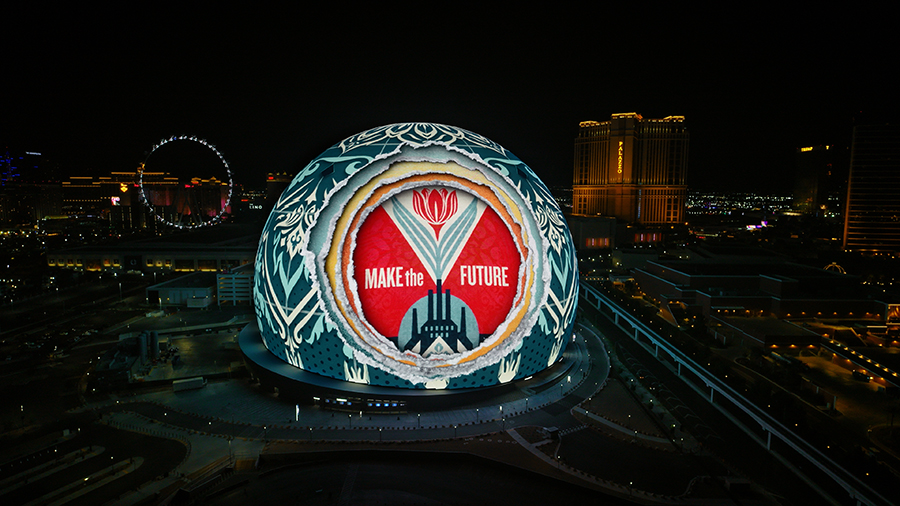
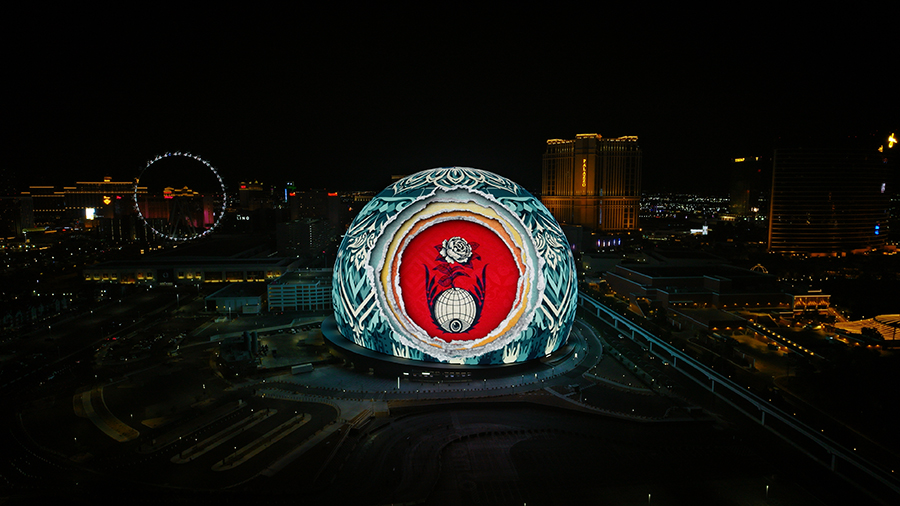
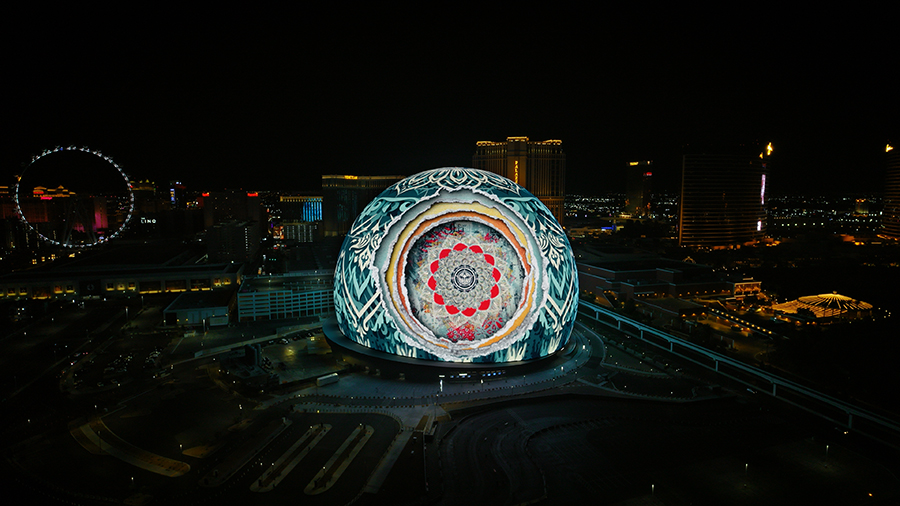
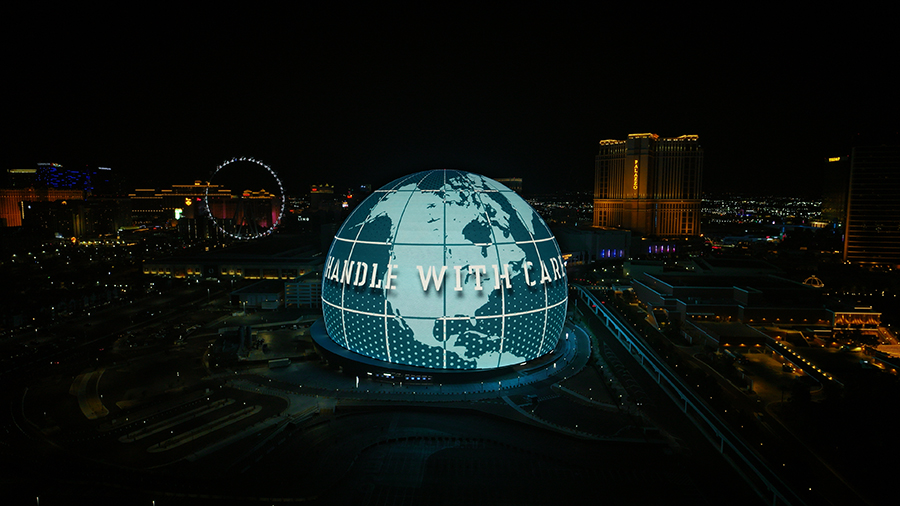
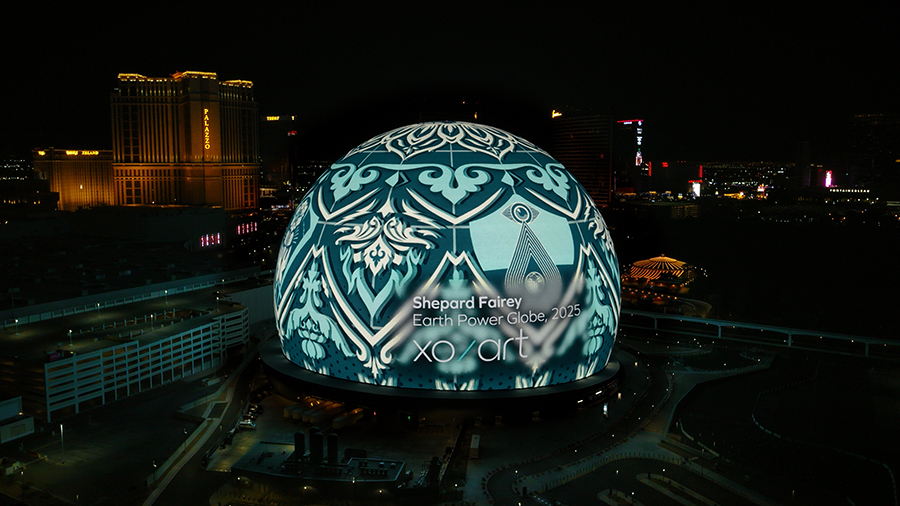
Okay, it was a sphere. Shepard Fairey’s Sphere. At least for a month.
Yes, it was street art… on a whole new level. We’ve been questioned endlessly over the last two decades about the true nature of art in the public sphere—pulling apart and examining the progenitors, the aspirations, the elements that comprise street art, graffiti, public art, and advertising—mainly because we wanted to understand the genesis of this story. Today we find that sometimes it all merges into one.
The opportunity to get your work up there, animated, glowing across 1.23 million puck-shaped LEDs, is awe-inspiring, no matter what you utter. This Exosphere swells the art and the message—Fairey’s familiar visual nomenclature—upward and spinning into the night sky, at once familiar and universal, activist and entertaining, reassuring and unsettling. Yes, it’s like getting up on a wall, except this one powers its content with 150 NVIDIA RTX A6000 GPUs, each packing 10,752 cores and 48 GB of memory, ensuring smooth high-res rendering.
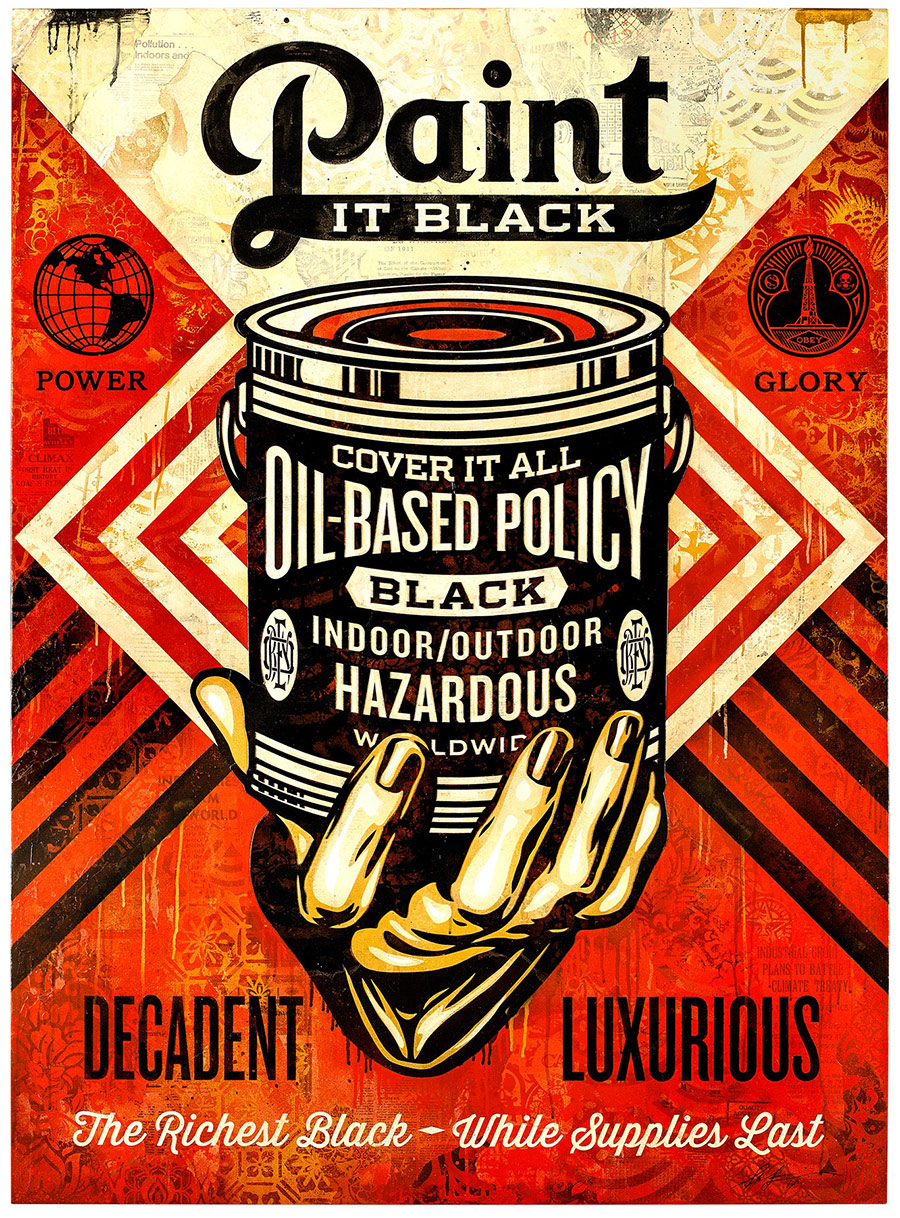
Created for Earth Month 2025 as part of the Sphere’s XO/Art program, Earth Power Globe is a 90-second animated mandala that merges Fairey’s bold graphic language with environmental themes and symbols. It pulses with life—air, water, and vegetation coursing through his palette—reminding us of both the earth’s fragility and the unfathomable force that nature can be. Nested within the rotating layers are references to ecological threats and utopian ideals, brought together in a style that is distinctly Fairey: floral, political, defiant, hopeful.
Shepard wasn’t alone in making it happen, and he always gives credit. The animation was brought to life with the help of The Mayda Creative Co. and MA+Group, whose teams helped translate his flat graphics into a fully immersive, kinetic experience—one that plays nightly on this, the largest LED screen on earth. For an artist whose career began with wheatpasted André the Giant posters, the moment may feel cosmic.
But Fairey’s presence in Las Vegas this month wasn’t limited to the Sphere. He also served as a guest judge for the XO Student Design Challenge, where students from the Las Vegas area submitted Earth Day-inspired designs for a chance to see their work projected onto the same Exosphere. It’s the kind of crossover between professional artist and next-gen creator that feels right—especially here, where public visibility, bold ideas, and a serious dedication to playfulness come together.
A la Fairey, the project blends art, message, and technology into something more than the sum of its parts. It’s street art, sure—but turned inside out, lit up, and rotating.
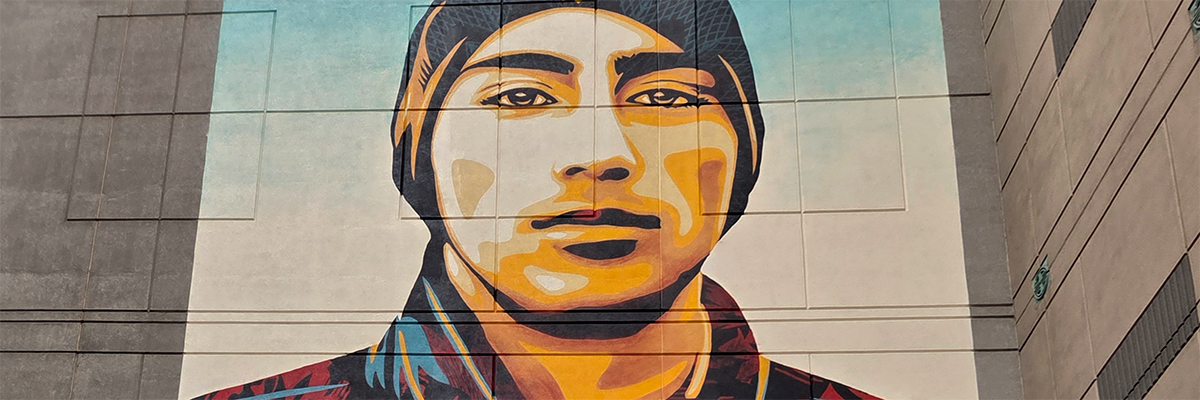
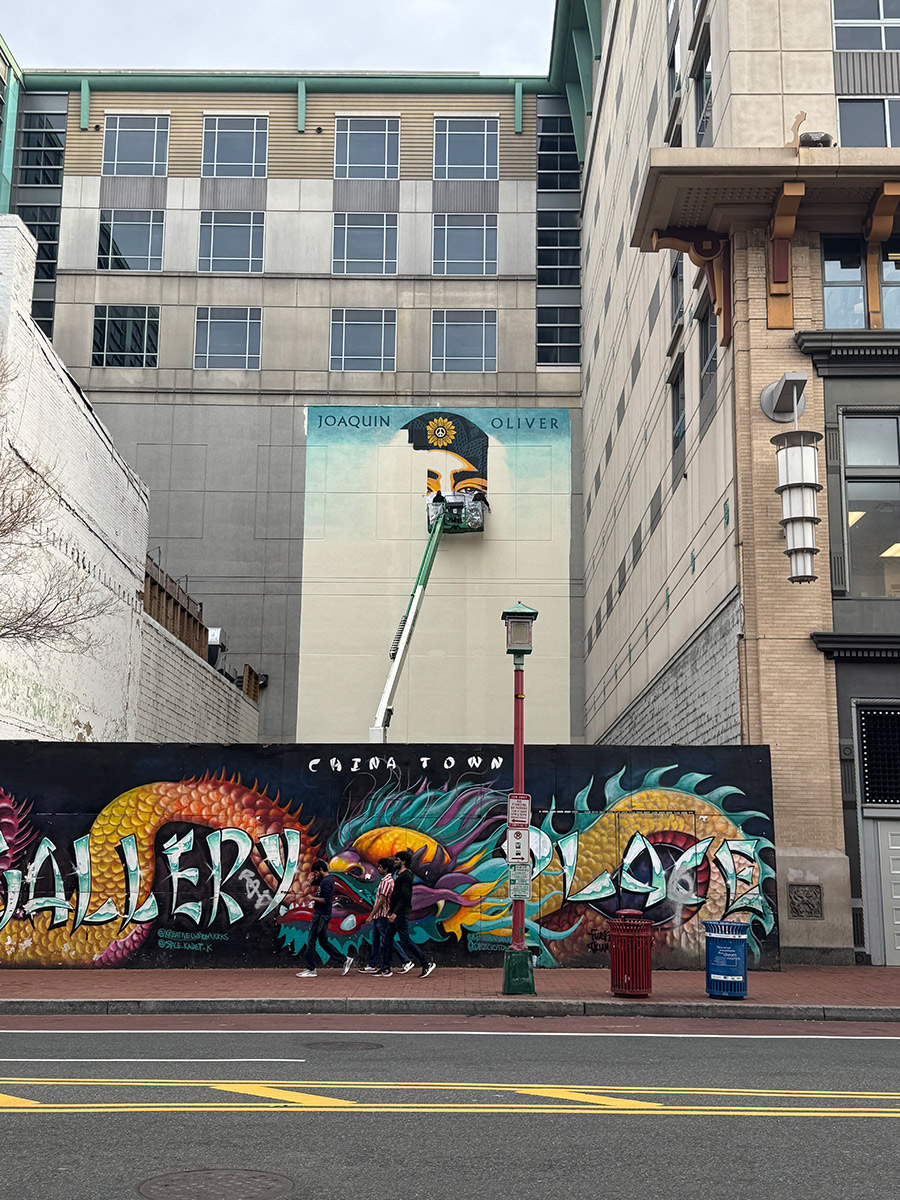
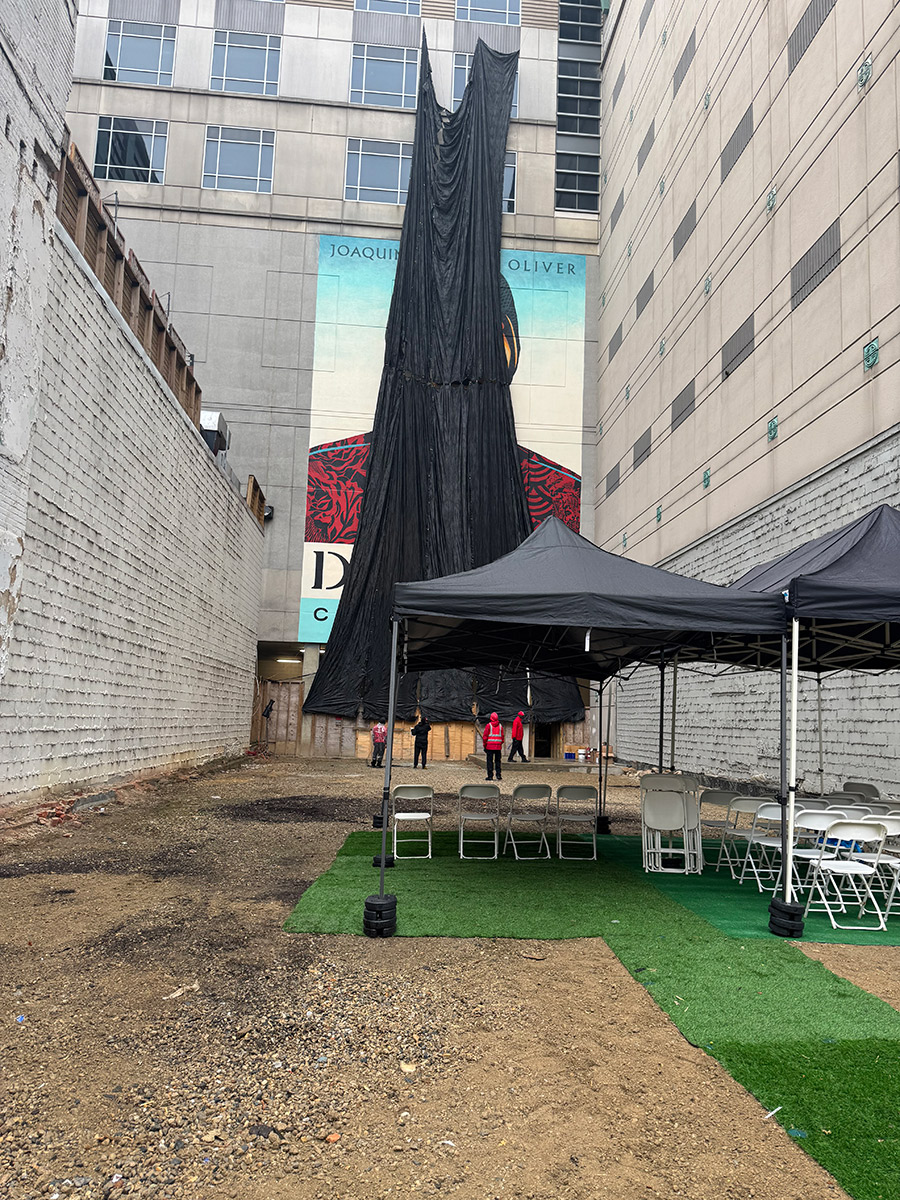
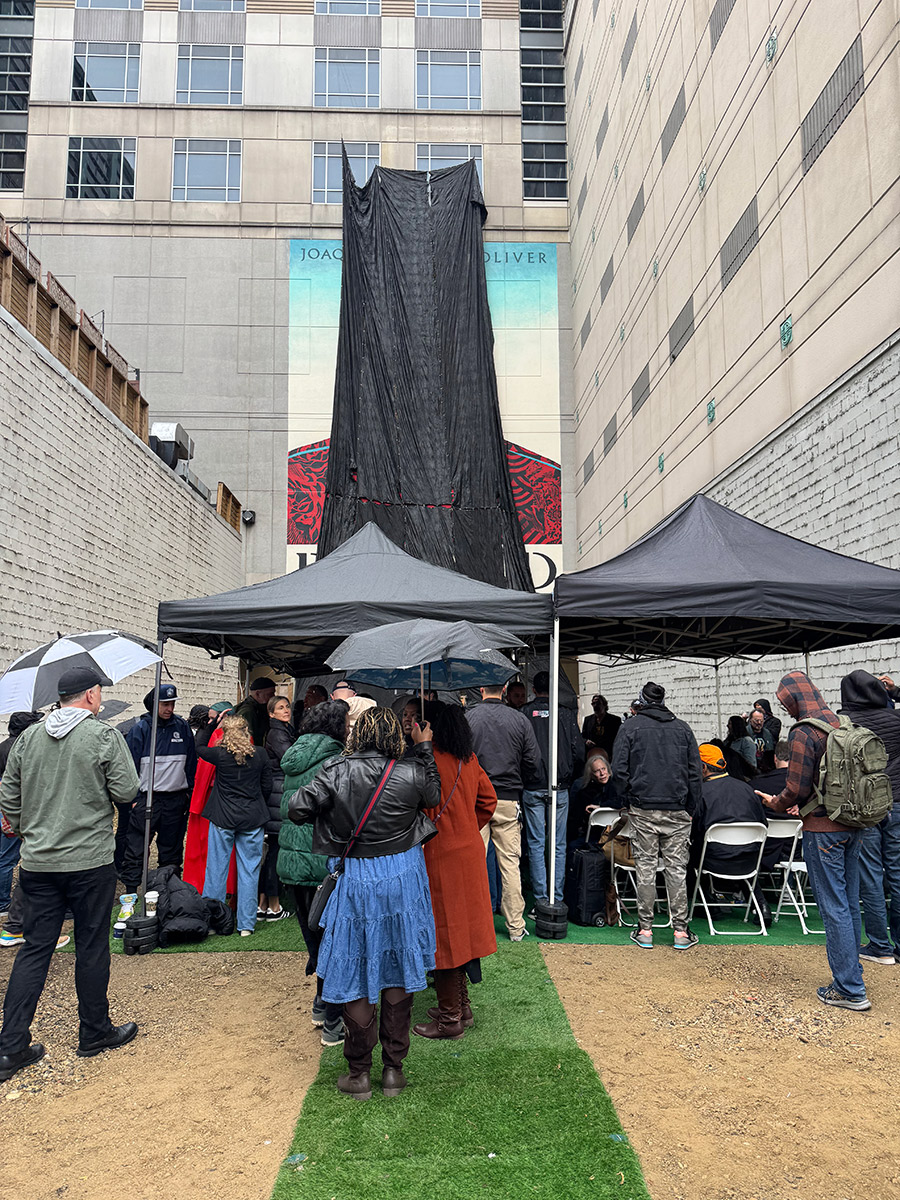
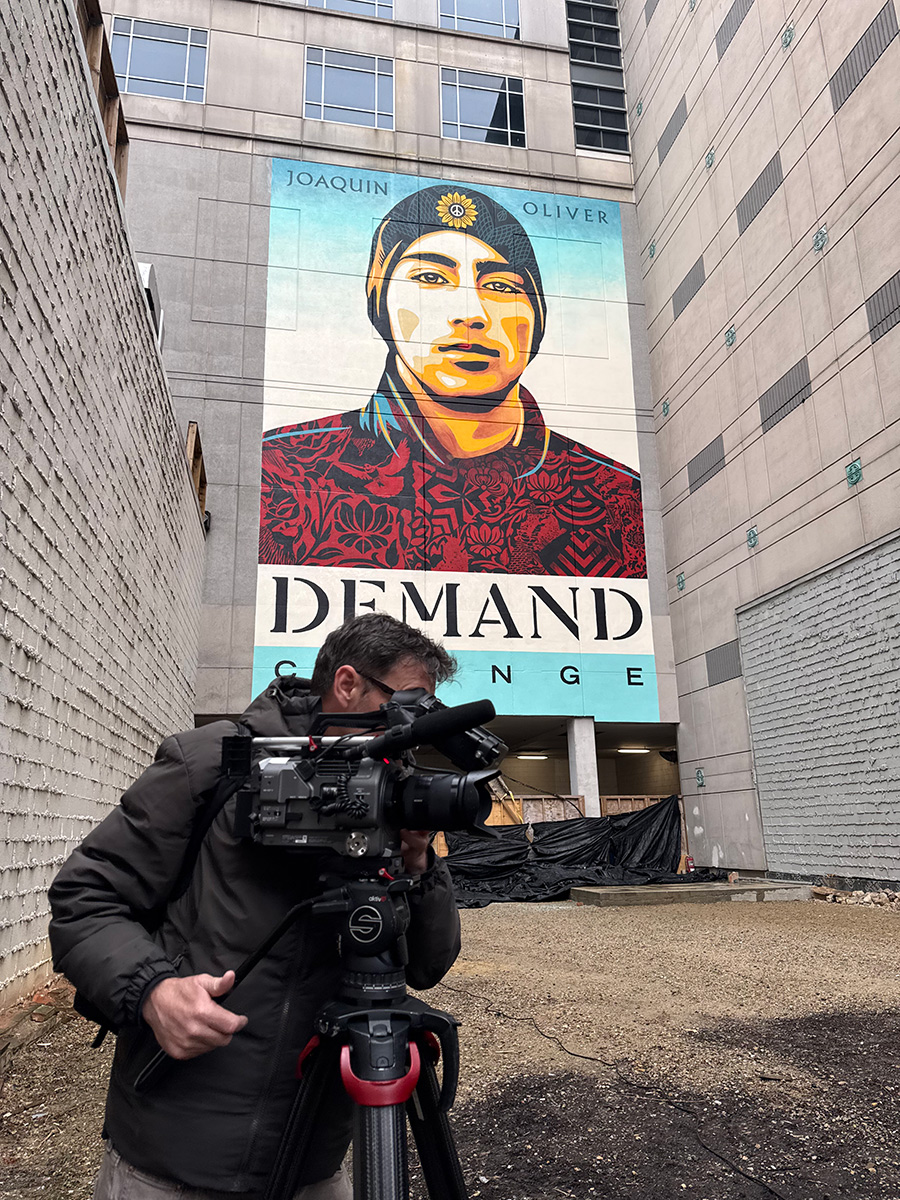
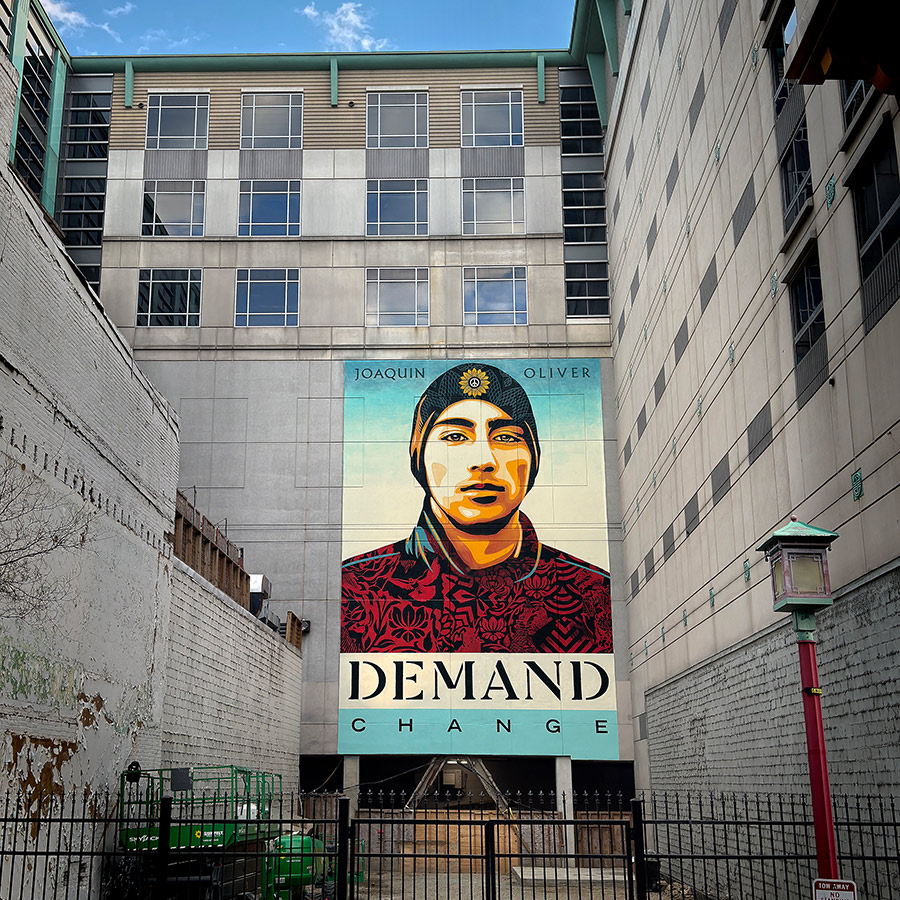
Shepard Fairey has unveiled a new six-story mural titled We Demand Change in Washington, D.C., a solemn and visually arresting tribute to Joaquin “Guac” Oliver, one of the 17 victims of the 2018 mass shooting at Marjory Stoneman Douglas High School in Parkland, Florida. Installed at 618 H Street NW in Chinatown—just steps from the Capital One Arena—the mural bears Oliver’s portrait above the words “Demand Change,” a frank call to action and a reflection of Fairey’s decades-long commitment to social justice through art.
Shepard Fairey. Joaquin Oliver – Demand Change. Washington, D.C. (photo courtesy of Woolly Mammoth Theatre Company)
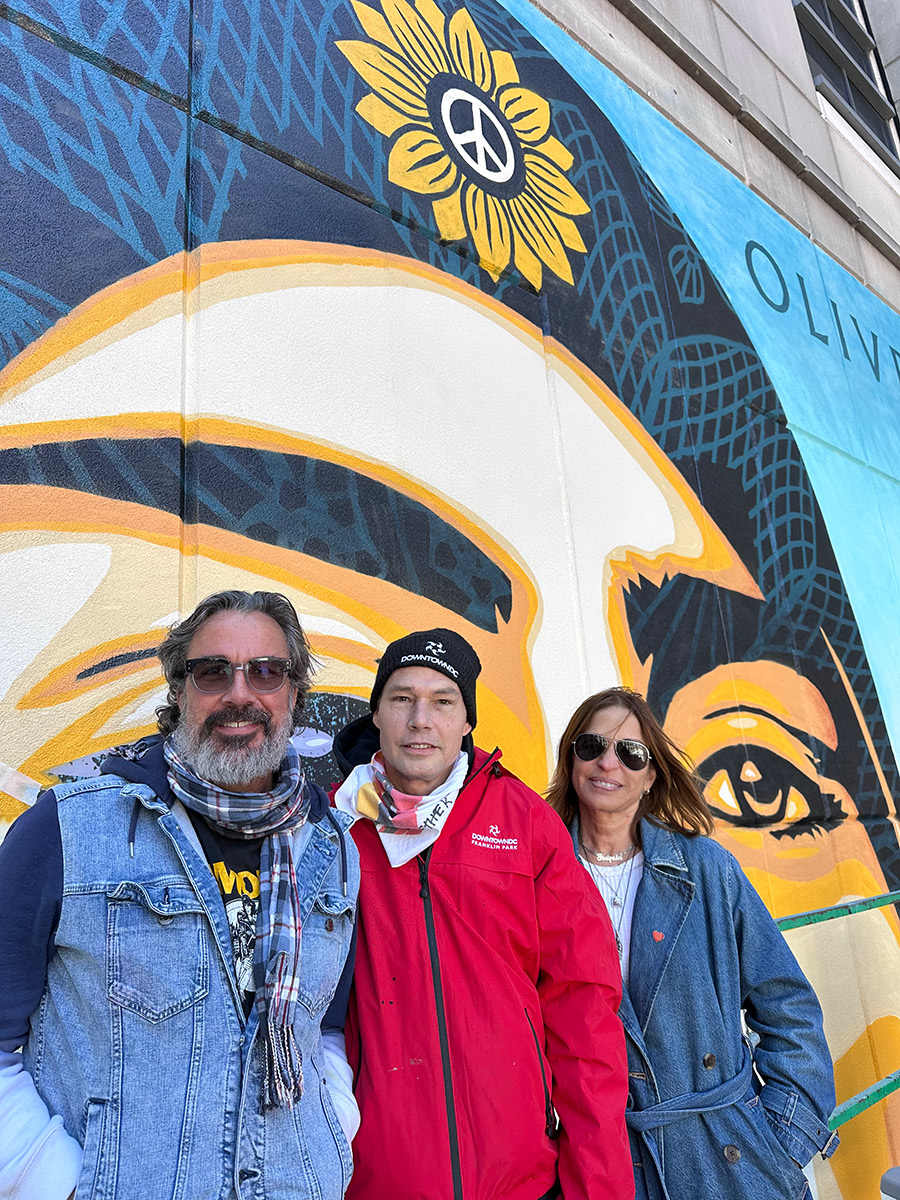
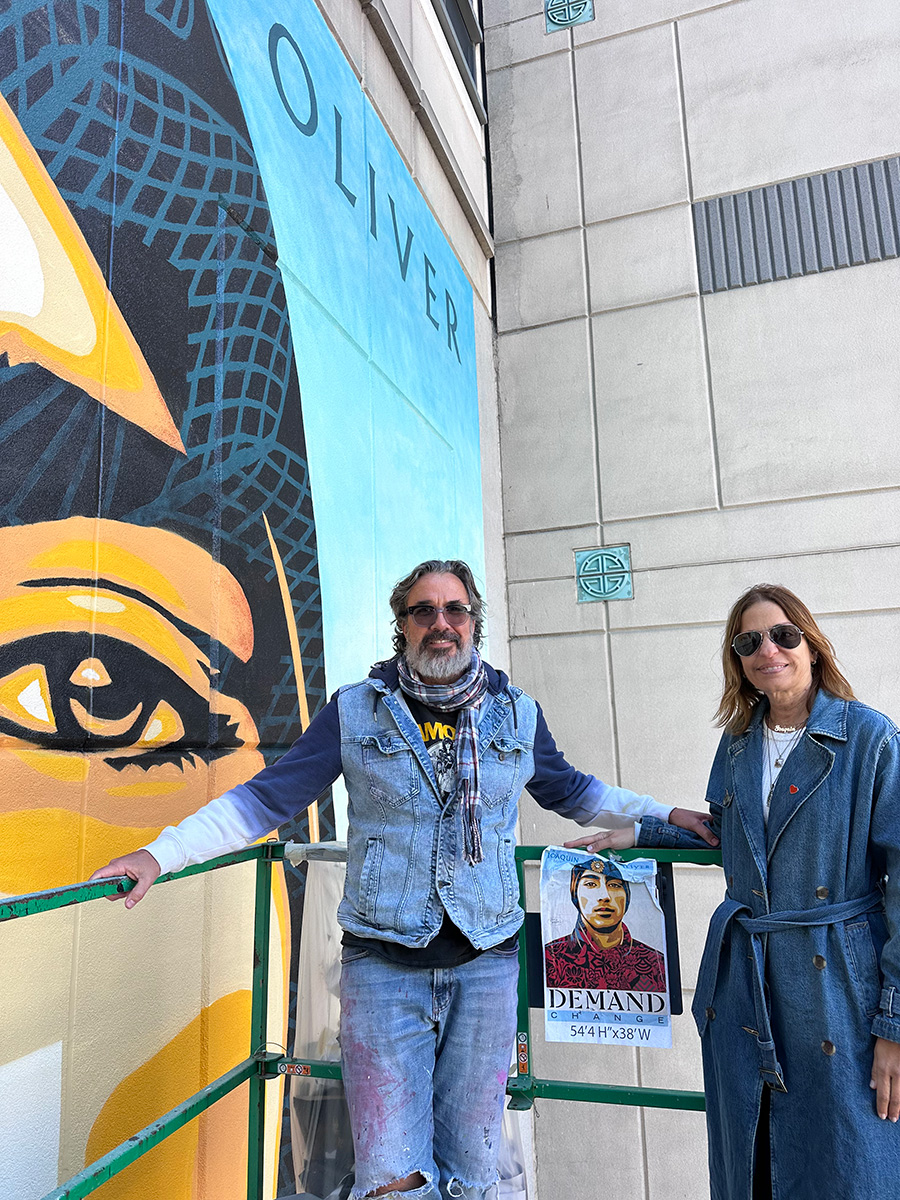
The mural was painted by Fairey alongside Joaquin’s father, Manuel Oliver, himself a visual artist and activist. It was unveiled on March 24, 2025, marking the seventh anniversary of the historic March for Our Lives rally. This project was realized through the collaboration of several organizations committed to ending gun violence: Change the Ref (founded by Joaquin’s parents, Manuel and Patricia Oliver), Woolly Mammoth Theatre Company, DowntownDC Business Improvement District, and March for Our Lives.
Fairey’s statement underscores the deeply personal nature of this project: “Gun violence is an issue I’ve addressed in my art going back to the 90s, but no project has ever had the emotional weight that this one does.”
Shepard Fairey. Joaquin Oliver – Demand Change. Washington, D.C. Shepard in the middle with Joaquin’s parents Manny and Patricia. (photo courtesy of Woolly Mammoth Theatre Company)
The mural continues a long tradition in street art and graffiti of public memorials and political expression—from tributes honoring the victims of 9/11, to revolutionary slogans of the Arab Spring, to stenciled portraits from the Black Lives Matter movement, and even the Cold War-themed subway murals of New York pioneer Lee in the 1980s. These works transform walls into spaces of mourning, protest, and resolve. Fairey’s tribute to Joaquin joins that lineage while directly confronting the consequences of inaction in the face of American gun violence.
For the Oliver family, and for Fairey, the mural is more than a visual landmark—it is a call for legislative change and cultural reckoning. “There aren’t enough walls to pay tribute to all who have died tragically,” Fairey says. “It is time for us to demand change.” The mural is permanent, but the demand it voices is urgent and ongoing.
Shepard Fairey. Joaquin Oliver – Demand Change. Washington, D.C. (photo courtesy of Woolly Mammoth Theatre Company)Shepard Fairey. Joaquin Oliver – Demand Change. Washington, D.C. (photo courtesy of Woolly Mammoth Theatre Company)Shepard Fairey. Joaquin Oliver – Demand Change. Washington, D.C. (photo courtesy of Woolly Mammoth Theatre Company)Shepard Fairey. Joaquin Oliver – Demand Change. Washington, D.C. (photo courtesy of Woolly Mammoth Theatre Company)
Statement from Shepard:
“My crew and I, along with Manny Oliver, Joaquin Oliver’s dad, just completed this 6-story Demand Change mural in the Chinatown district of Washington, DC. Gun violence is an issue I’ve addressed in my art going back to the 90s, but no project has ever had the emotional weight that this one does. Joaquin Oliver was one of 17 people shot and killed at Parkland High… he was 17 at the time, the same age as my younger daughter Madeline. My art is a reflection of my values: human rights, justice, peace, equality, and yes, family values.
I put the value of my family and anyone else’s family ahead of the right to bear arms without conditions. The founders of the U.S. included in the Declaration of Independence the idea that we are all endowed with unalienable rights, among which are Life, Liberty, and the pursuit of Happiness. Gun violence takes those unalienable rights away from too many people. Guns kill more kids now than car accidents, and no one debates that driving a car comes with conditions around safety and responsibility. I hope that anyone who sees this mural is intrigued by who Joaquin Oliver was/is and can understand that he had huge promise and meant the world to his parents Manny and Patricia. Manny, Patricia, and I don’t want other families to lose their kids to gun violence. This mural is not just a tribute to Joaquin but a reminder that there is a huge human consequence to gun violence, and there aren’t enough walls to pay tribute to all who have died tragically. It is time for us to demand change!
We must use our voices and our actions, especially including our votes, to push for change. Joaquin could be your son, brother, cousin, or friend. Please check out and support what Manny Oliver is doing as an artist and activist with his organization Change the Ref. Also, check out Manny’s play “Guac” if it comes to your town. Thank you to my crew of Nic Bowers and Rob Zagula, as well as Manny Oliver for their help on the mural—also, big thanks to Lukas from Downtown DC for securing the wall and resources. Also, thank you to Wooly Mammoth Theater for hosting Manny’s play and helping facilitate this project!”
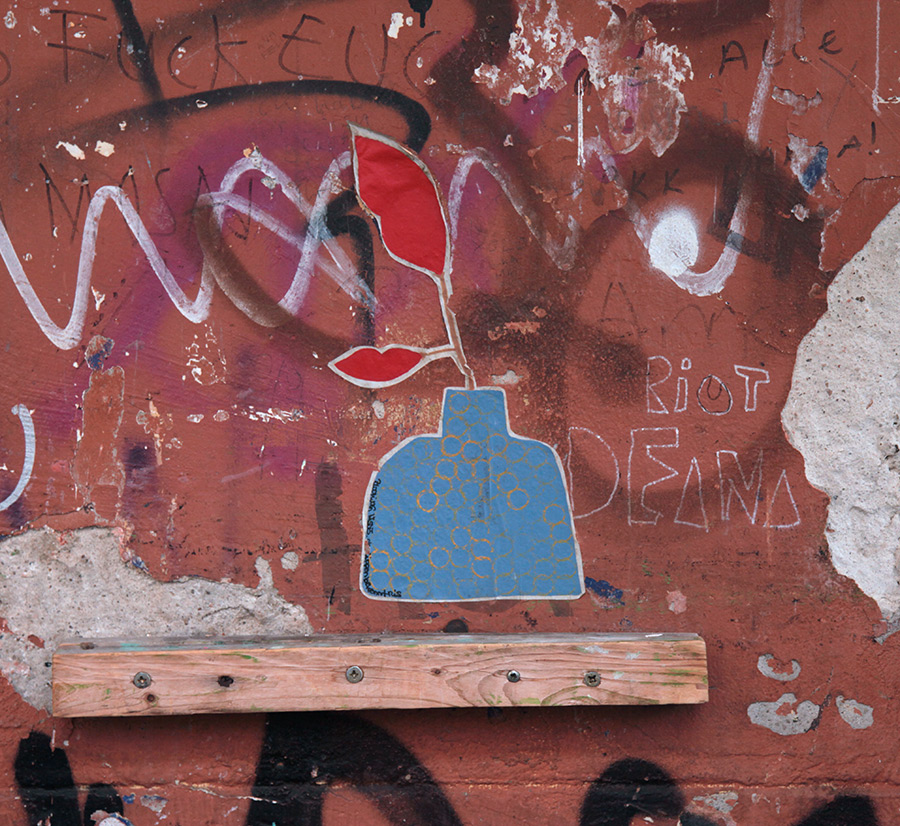
The beat on the street is washed in autumn sunlight, cooler nights, and traffic jams. If you hear cars honking, you know its New York in the fall. Street artists and graffiti writers are still hard at work, or play, and we like to capture their work here, before it is gone.
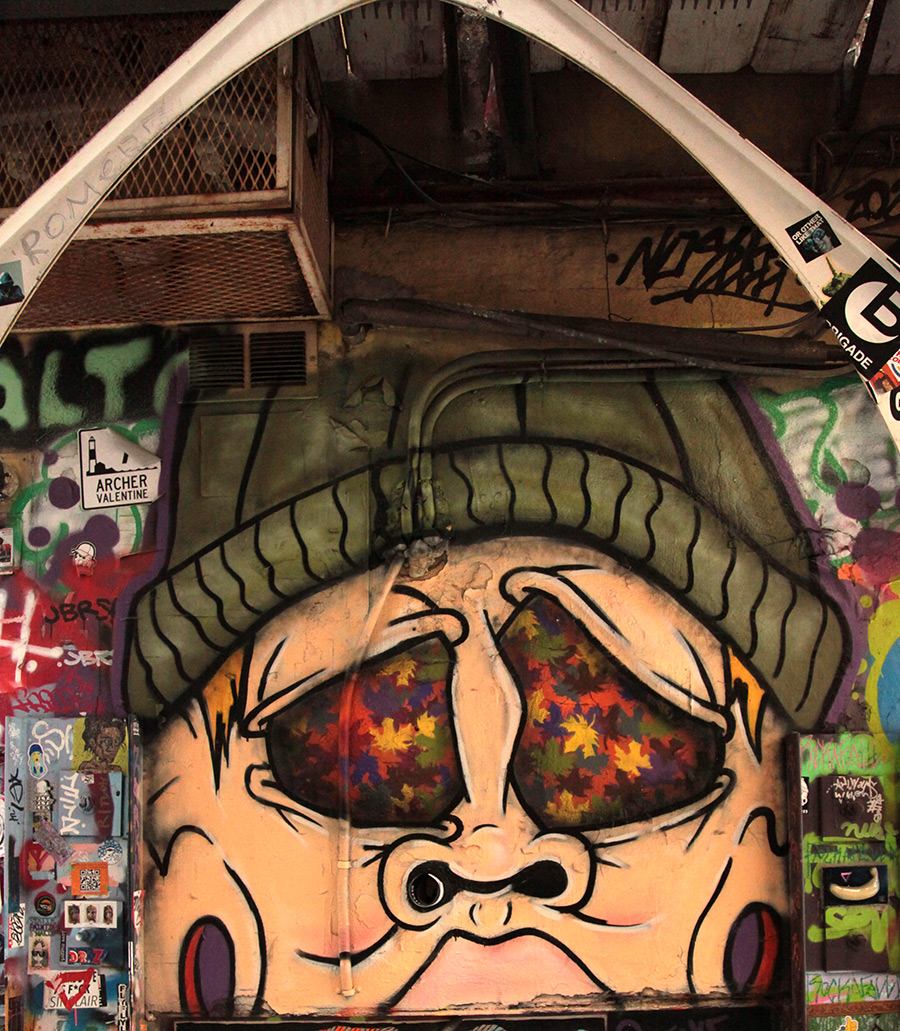
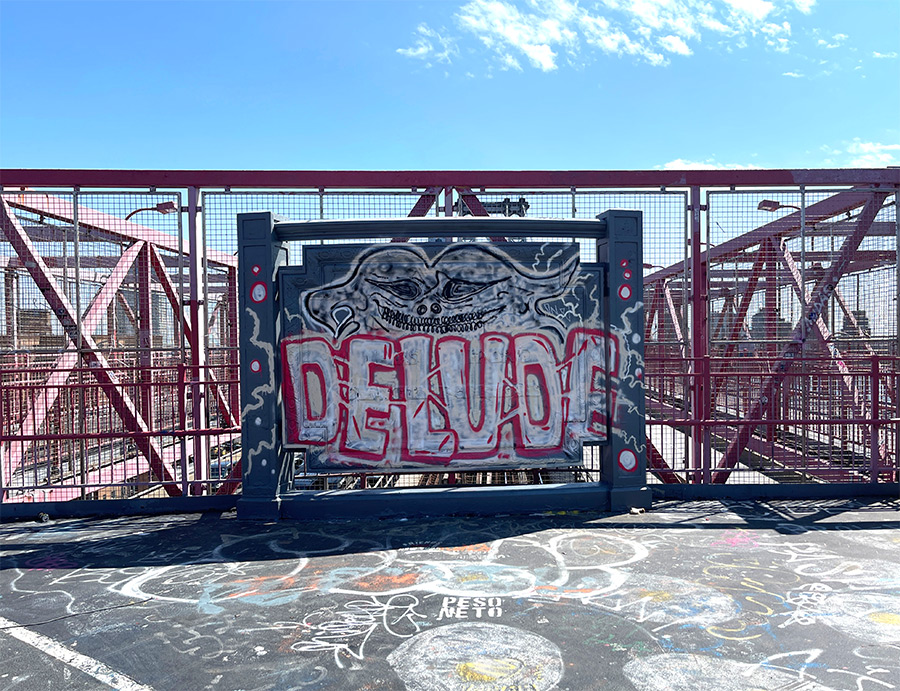
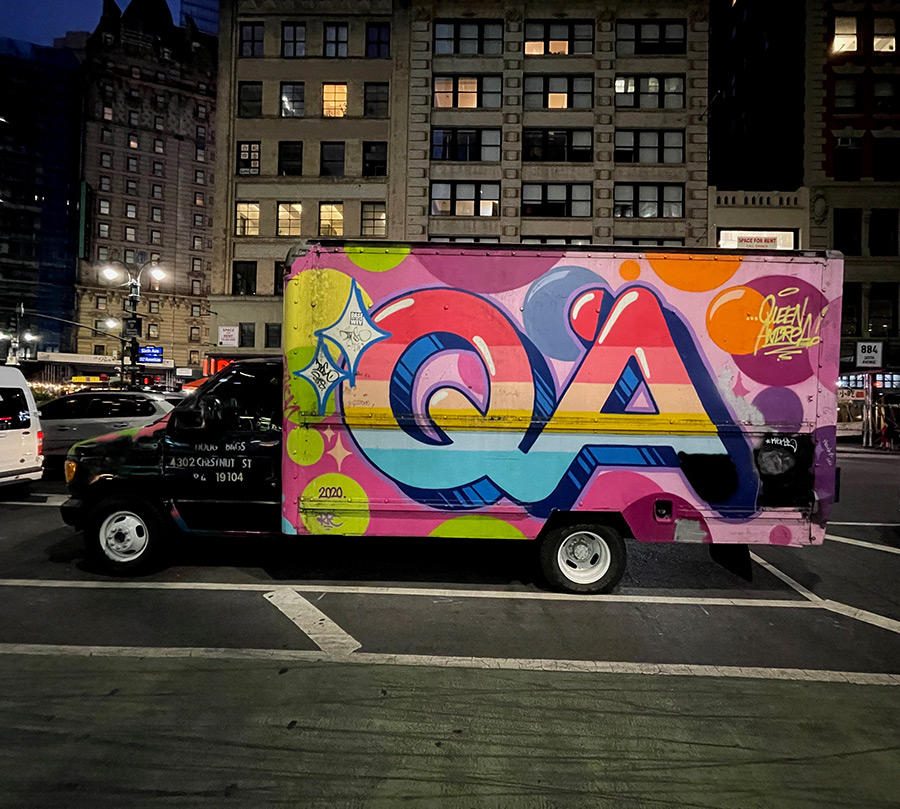
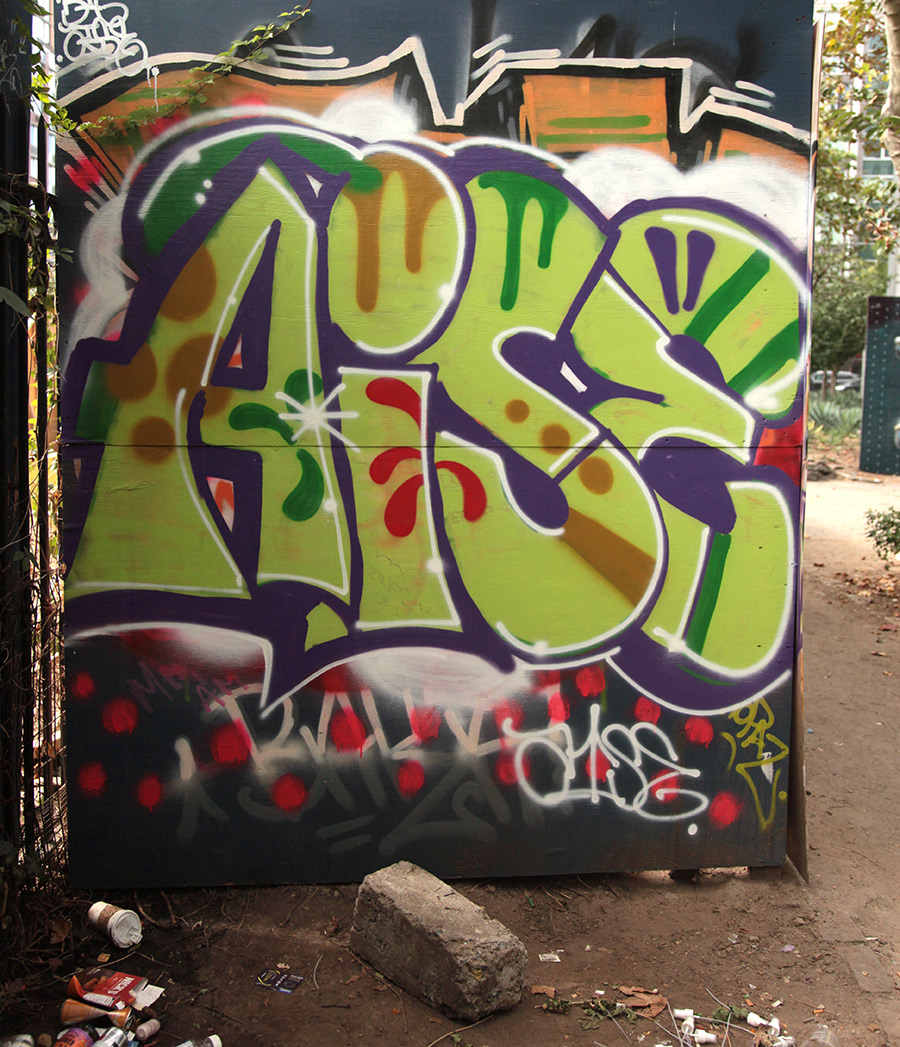
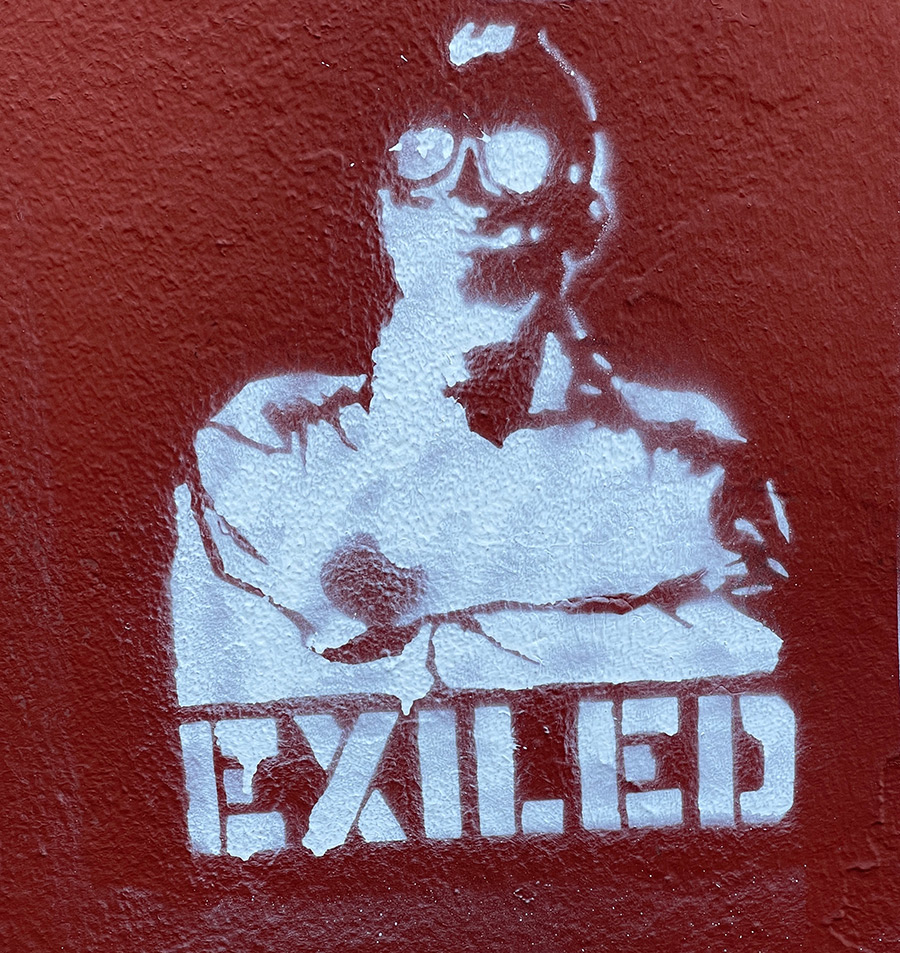
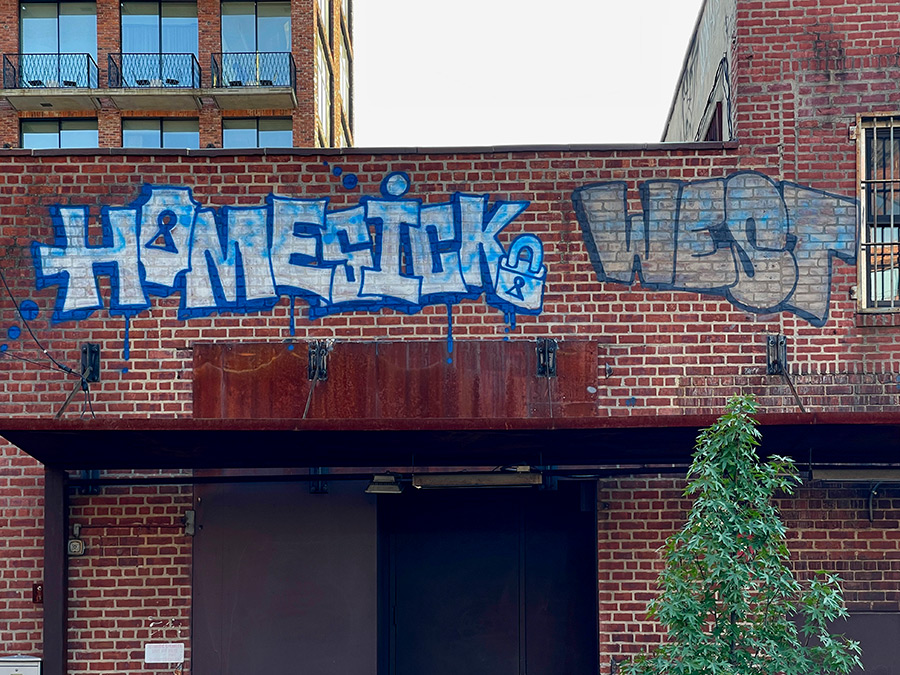
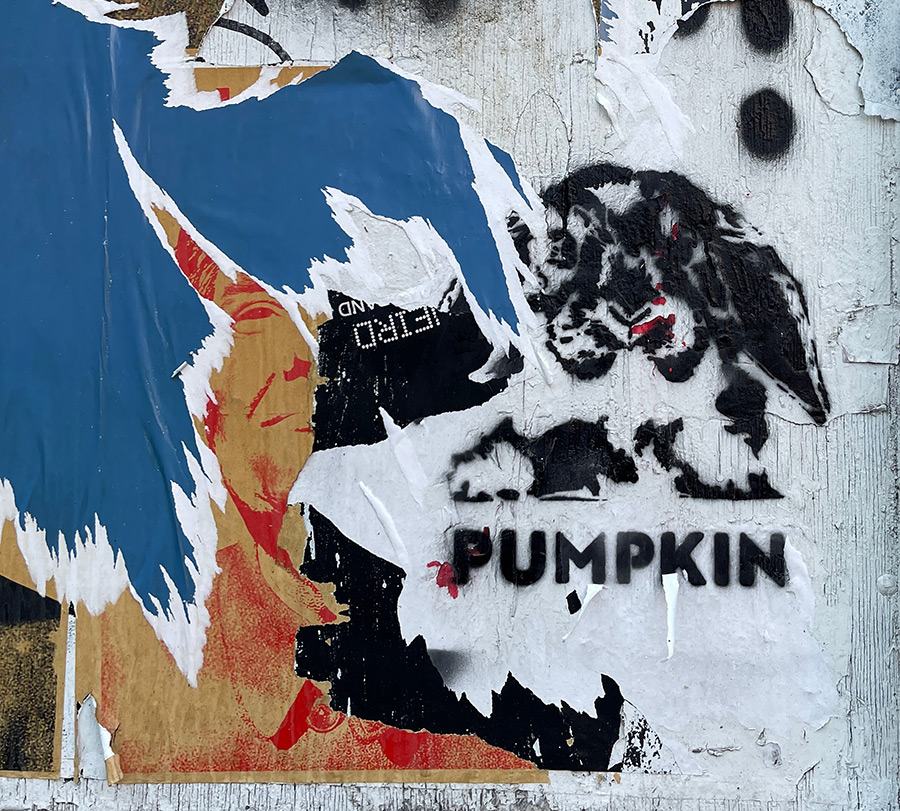
And here we go boldly into the streets of New York to find new stuff from: Shepard Fairey, C215, Obey, Homesick, Queen Andrea, Steve the Bum, Boom, Pumpkin, Exiled, Stytte, Delude, Fader, and Aise.
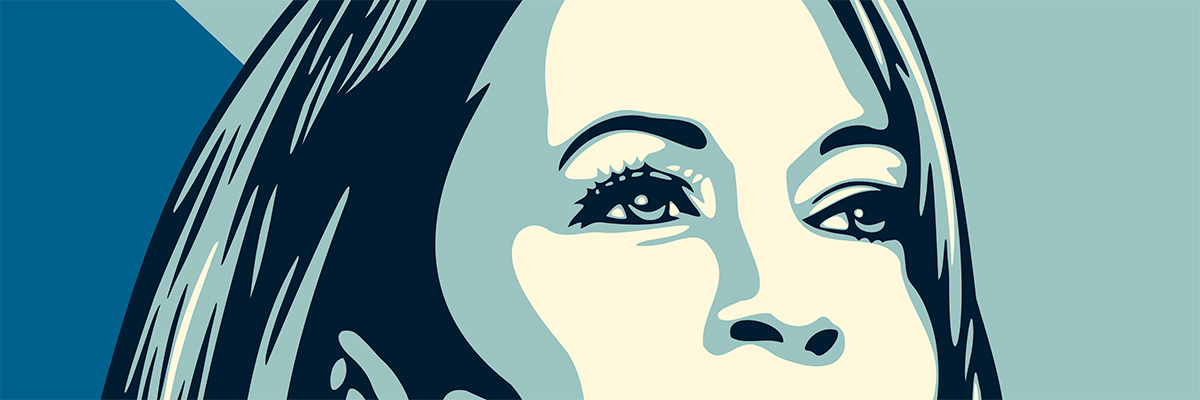
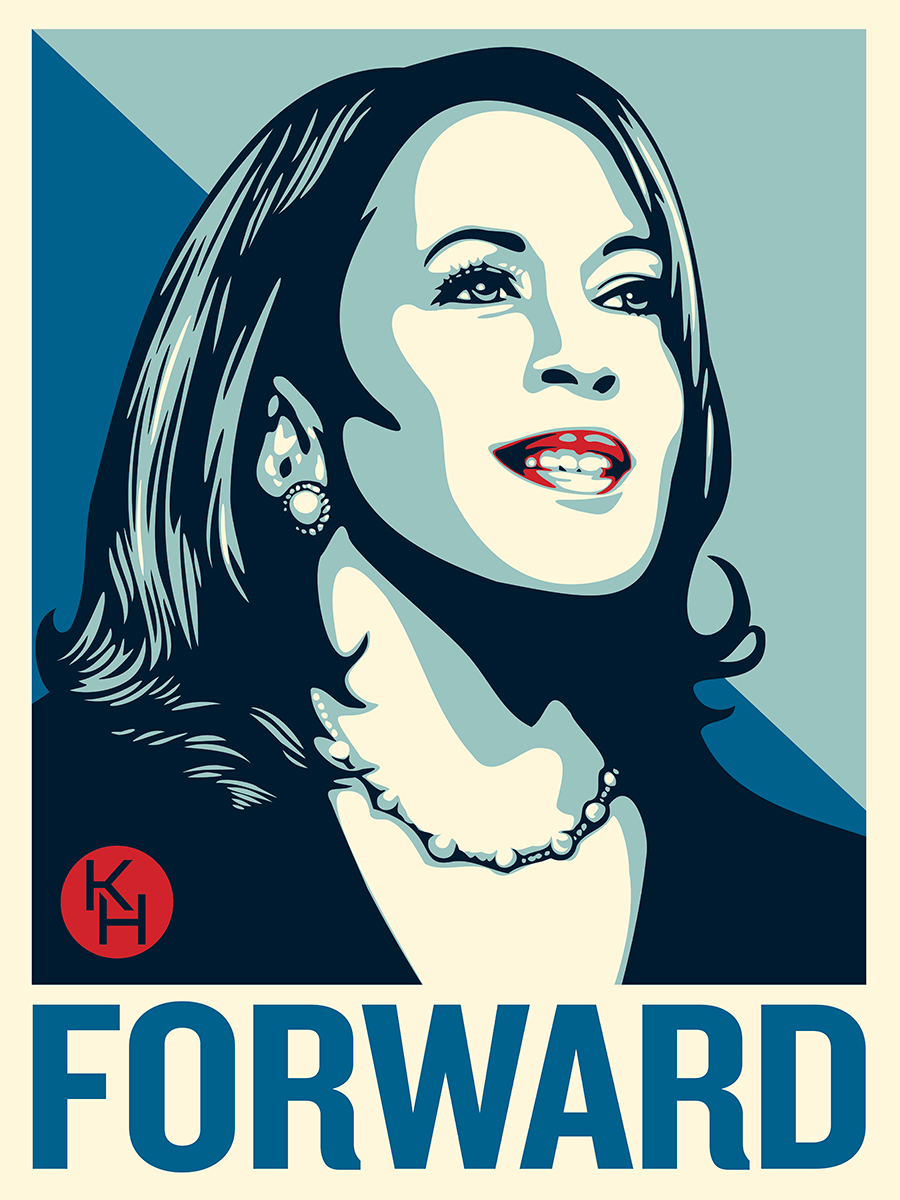
On the night Kamala Harris accepts the Democratic nomination, street artist Shepard Fairey reveals his new poster, which is available for home printing. This follows his iconic “HOPE” poster of Barack Obama, with the latest design focusing on the theme of “FORWARD.” While Harris may not have the same popularity or charisma as Obama, she has committed to advancing the country, contrasting with the Republican candidate, who appears to offer a look back to better times. Her potential administration would likely include many of the exact key figures as Obama and Biden—Blinken, Yellen, Rice, Austin, Holder—offering a hint of what’s to come. With roughly 70 days remaining, Americans are buckling their seatbelts yet again.
“We are not going back.” These words from Kamala Harris summarize the moment we are in, and in order not to go back, we must go FORWARD! While we have not achieved all the goals we might be seeking, we are making progress – all in the face of expanding threats and regressive political adversaries.
But we are not going back. In fact, we have a very real opportunity to move forward. If we act we can move forward our desire for a healthy planet, for corporate accountability, toward equality and away from racism, sexism, xenophobia, and homophobia, for equitable access to opportunity, for full access to the medical care we want or need, for fair and just immigration policies.
I believe VP Kamala Harris and her VP pick Tim Walz are our best chance to move forward. They are our best chance to push back on encroaching fascism and threats to democracy, and our best chance for creating the world we all desire and deserve. Politics is messy… but messy is no excuse for checking out. Messy is the work and the work can be joyful. Messy is what it takes to get through the daunting mess in pursuit of a better future. But we only win if we show up. Be ready for Nov. 5. Check your voter registration status now.
This art is a tool of grassroots activism for all to use non-commercially. I was not paid for it and will not receive any financial benefit from it. I created this work purely in pursuit of a better future. Let’s get there together! ~ Shepard Fairey
Art by Shepard Fairey. Reference photo by Lawrence Jackson / Biden for President is licensed under CC BY-NC-SA 2.0; For personal, non-commercial use only.
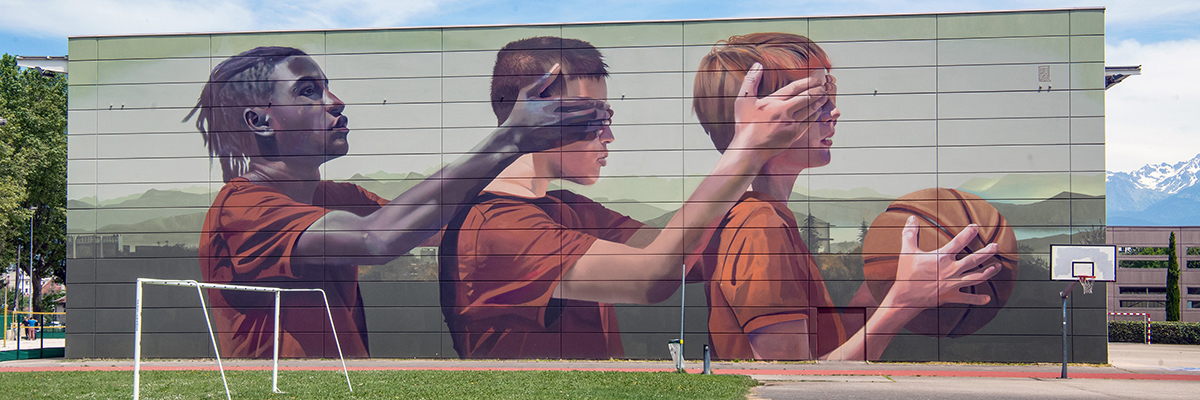
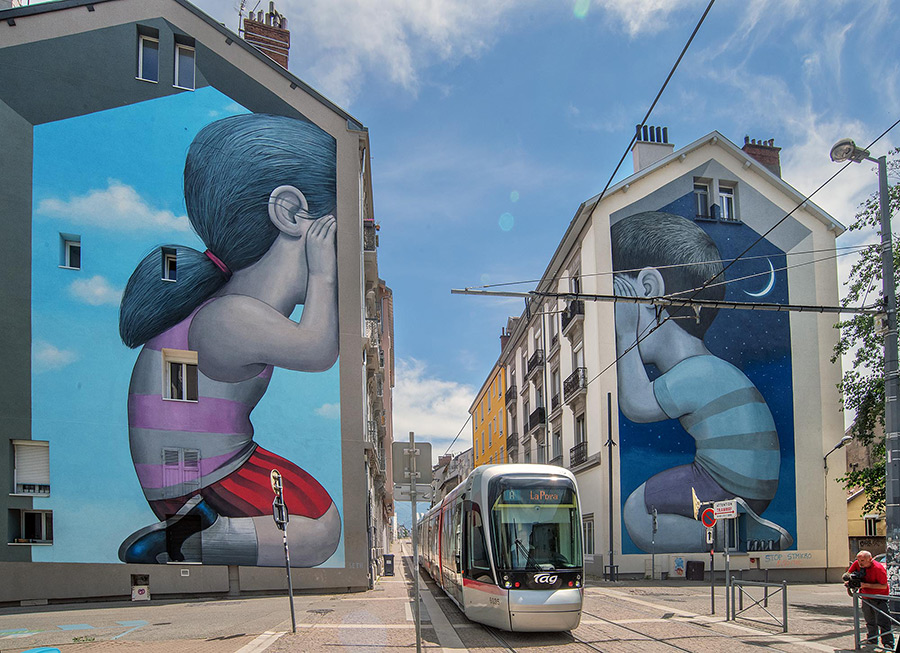
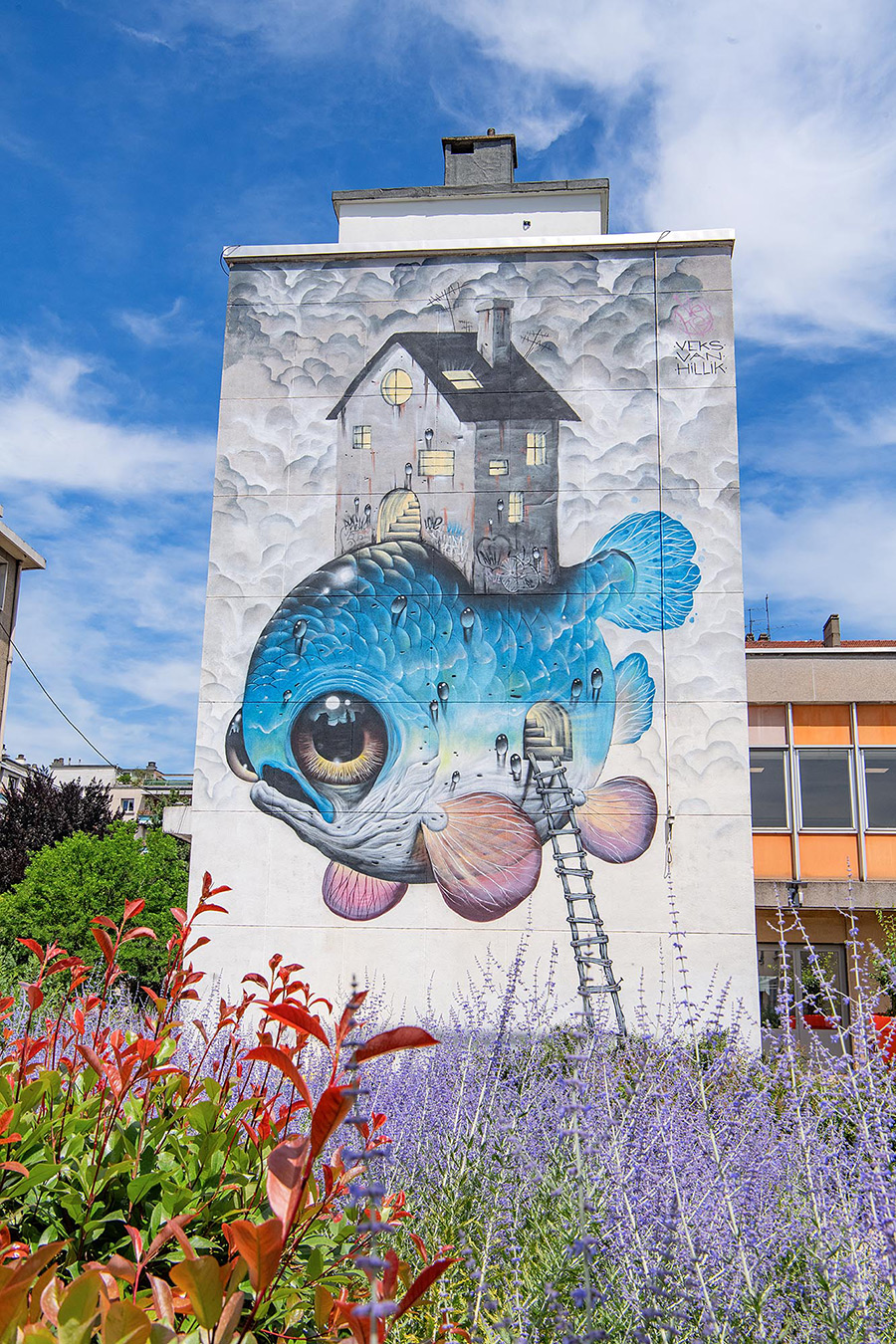
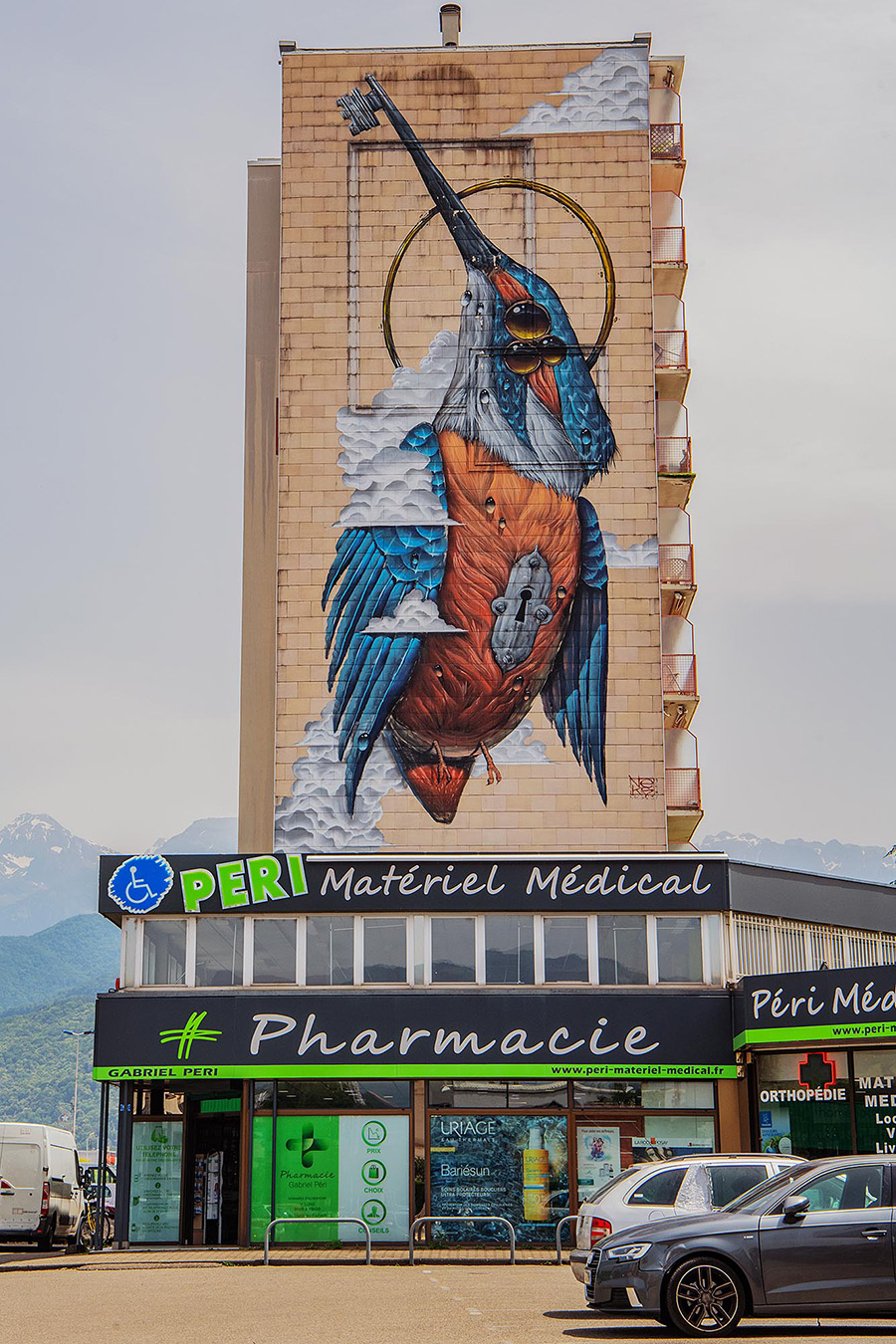
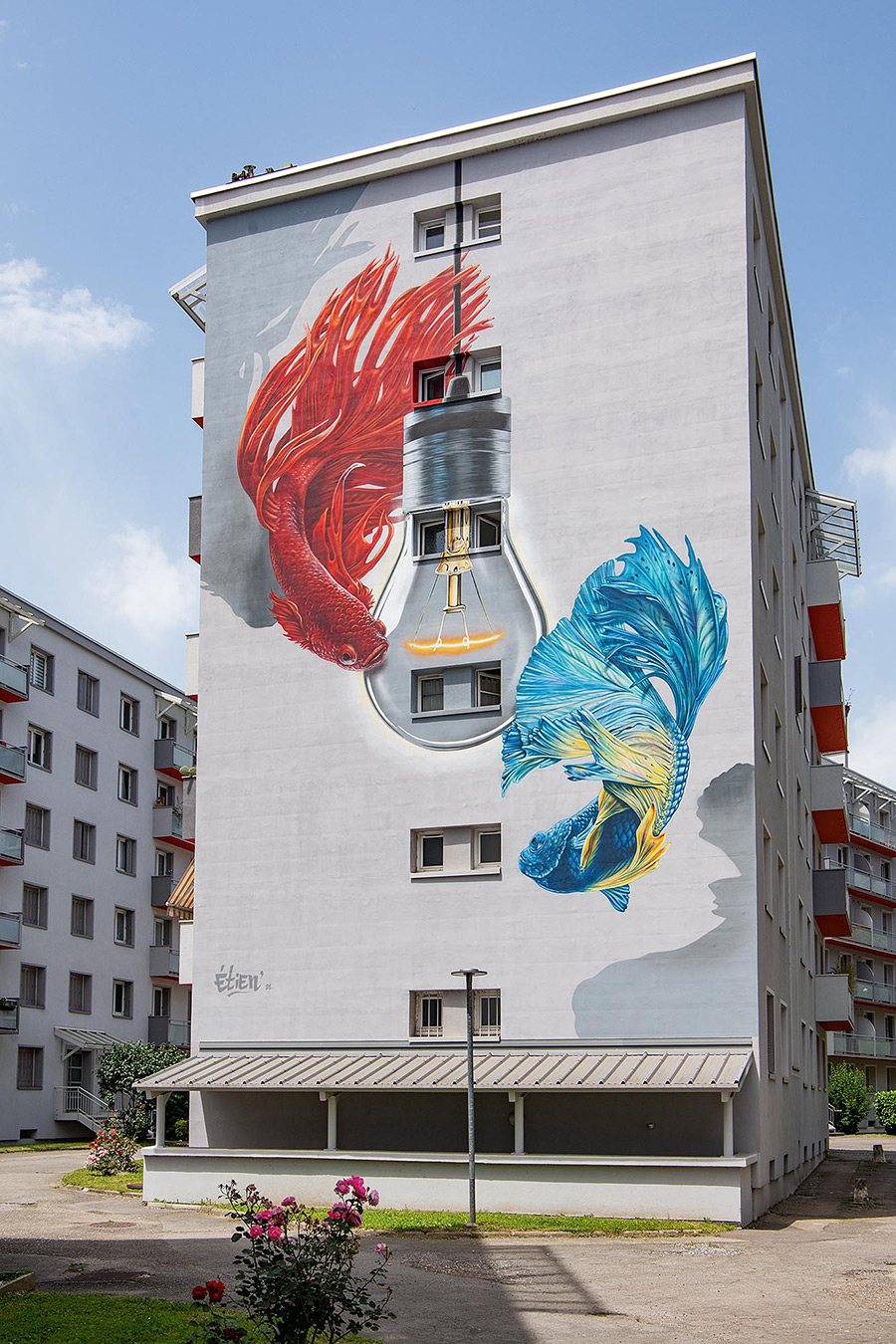
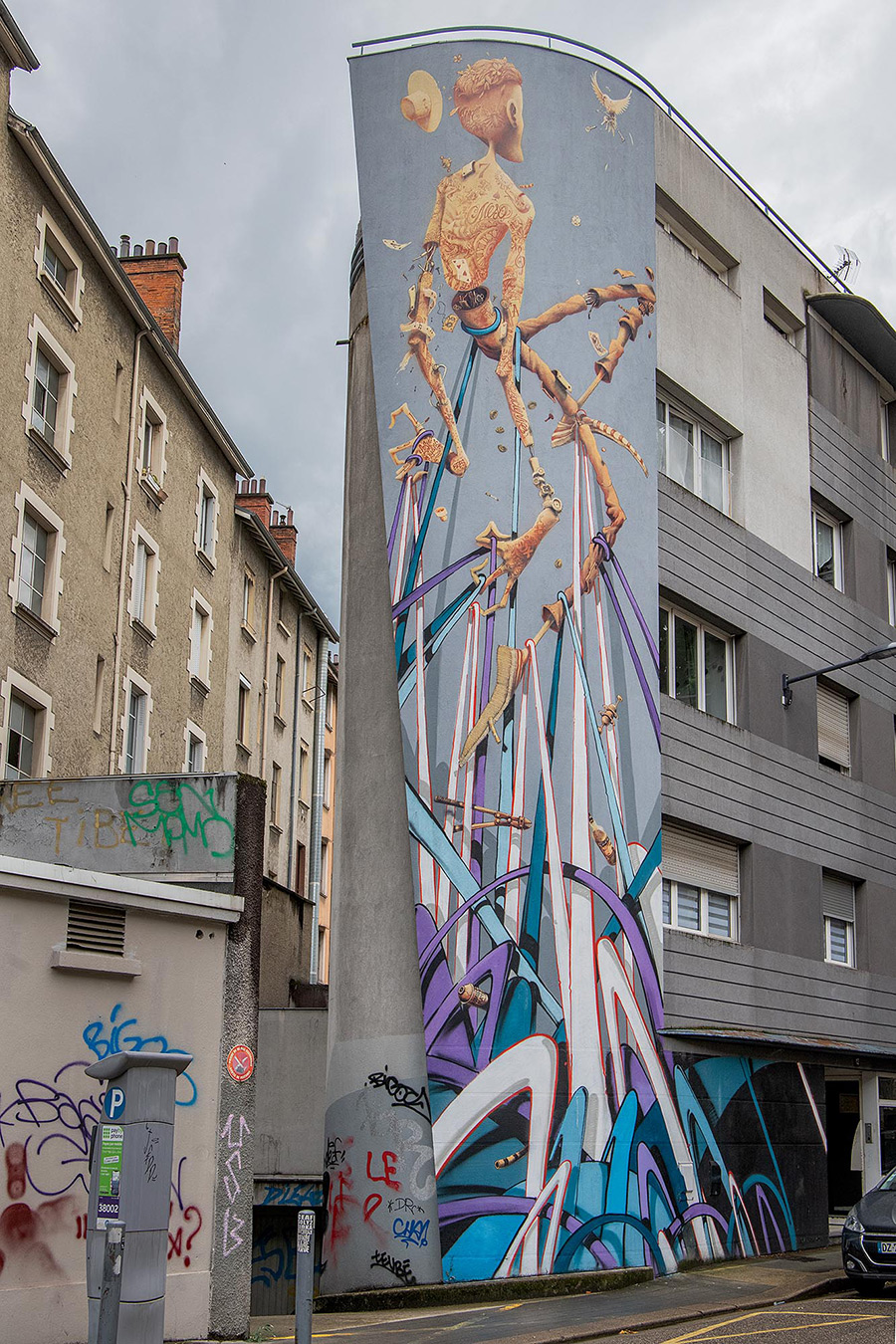
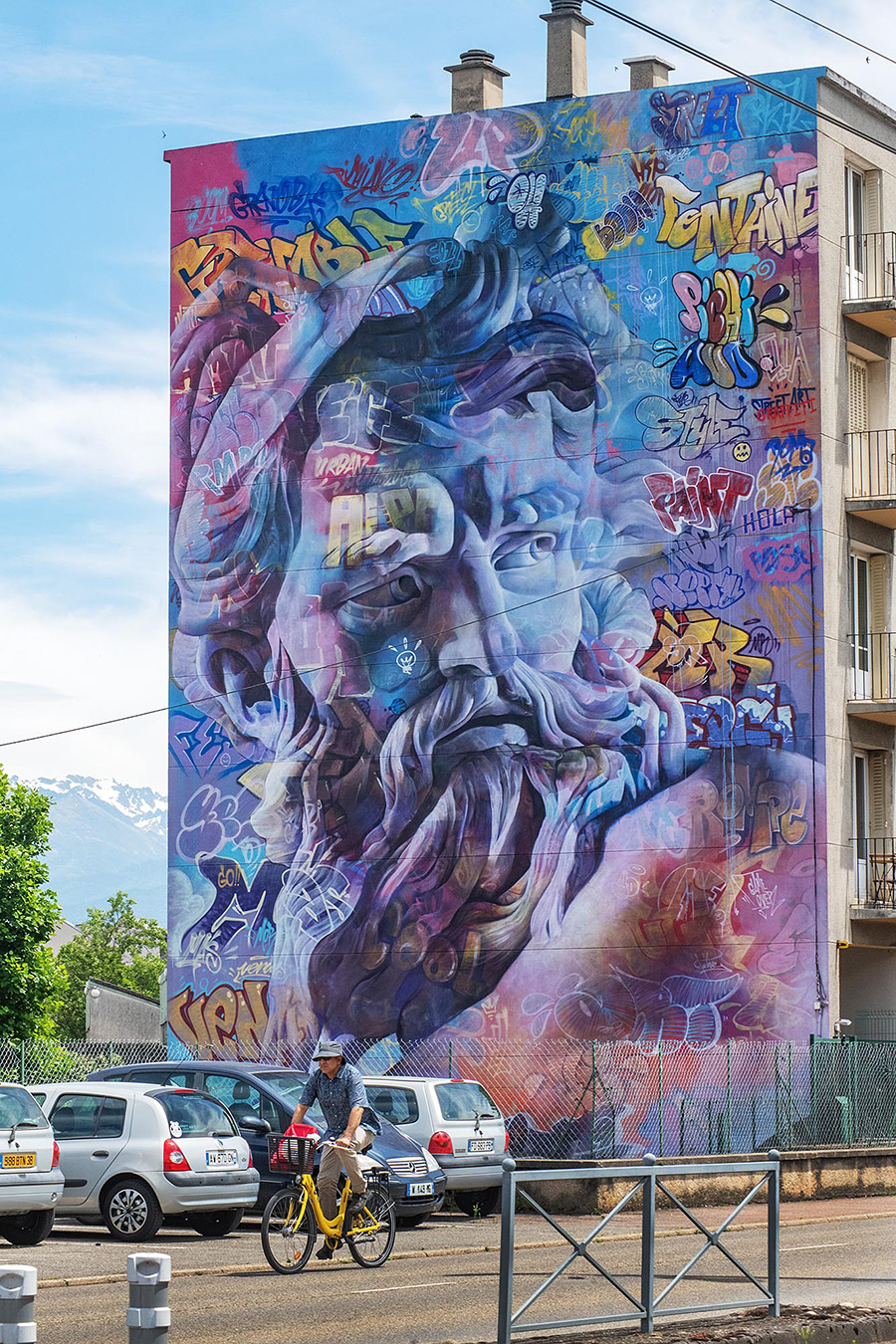
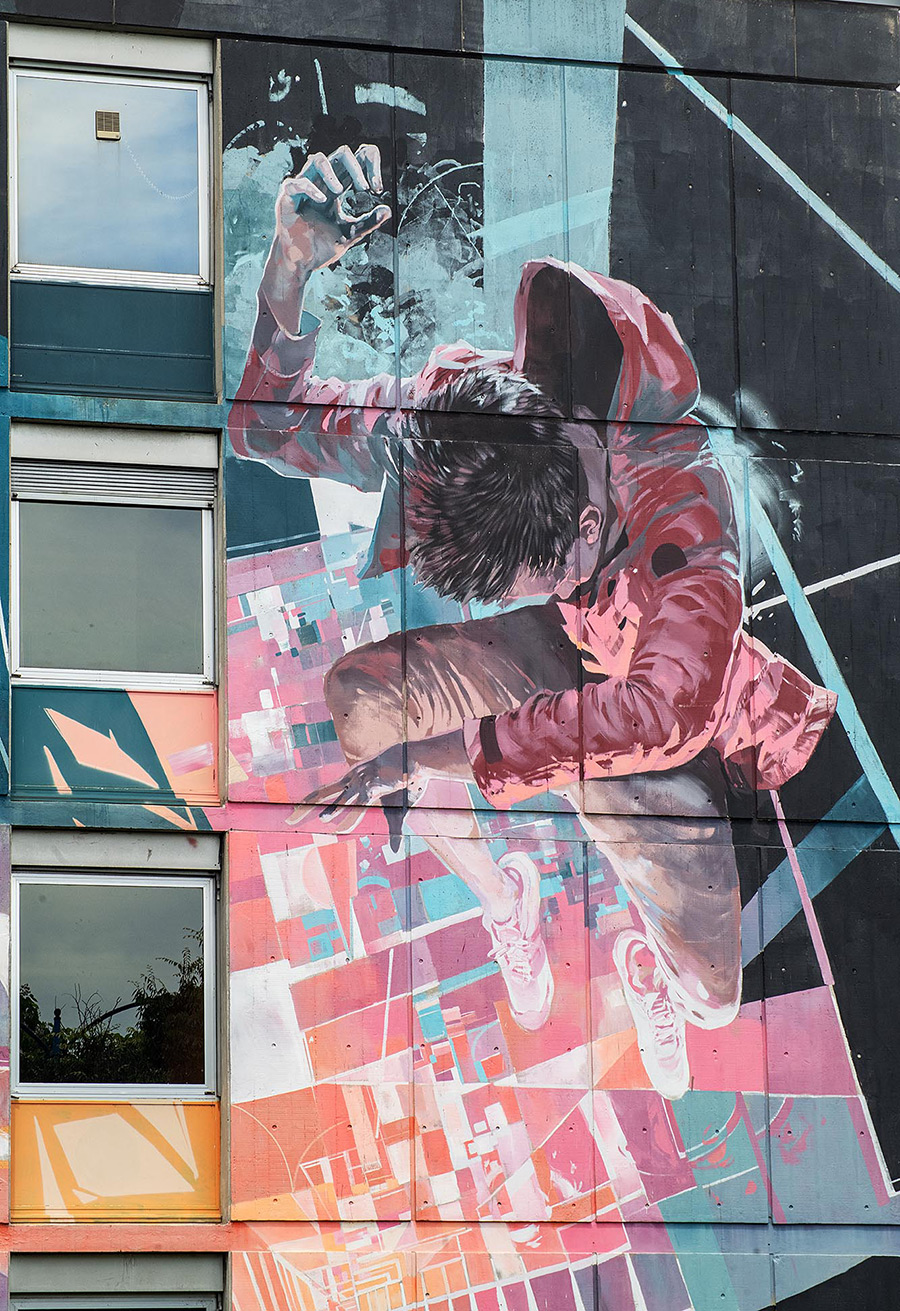
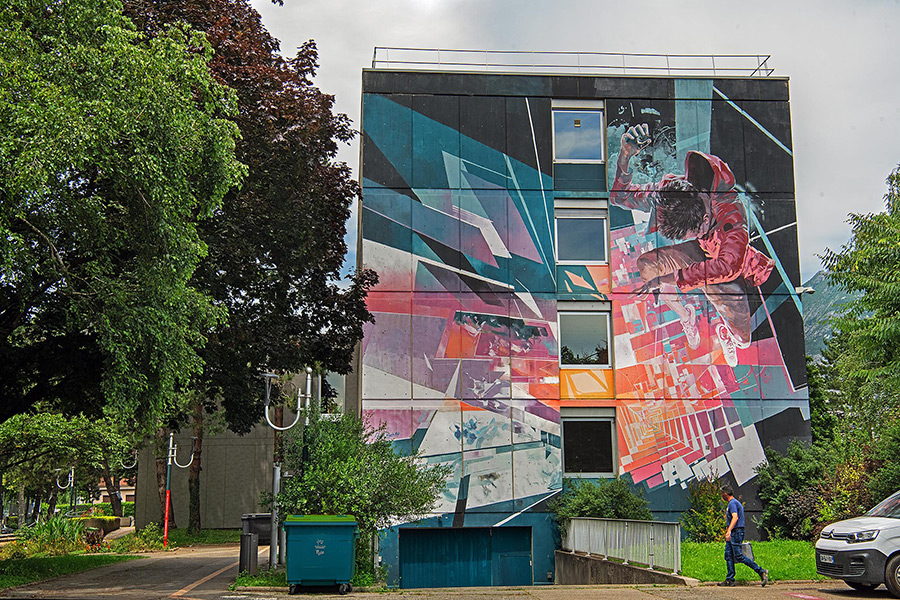
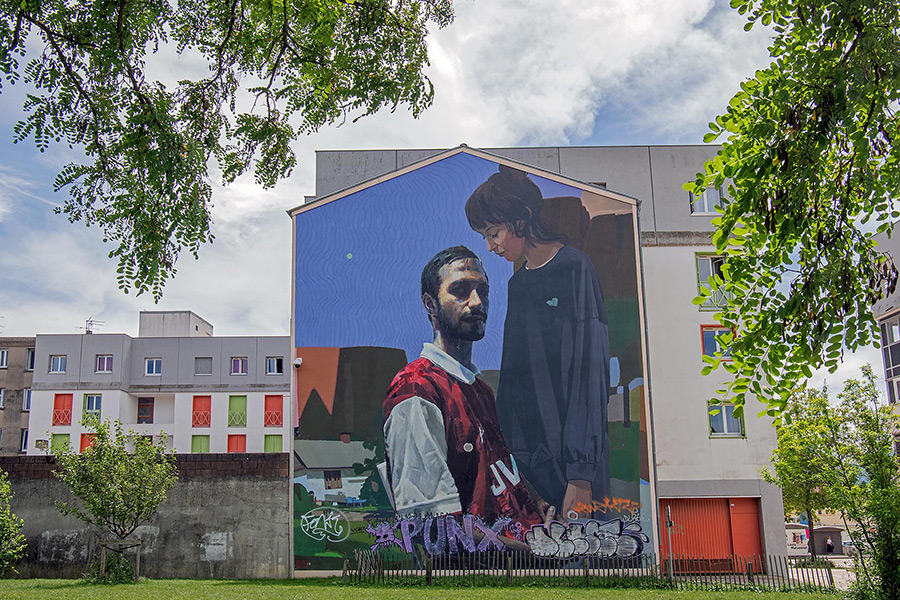
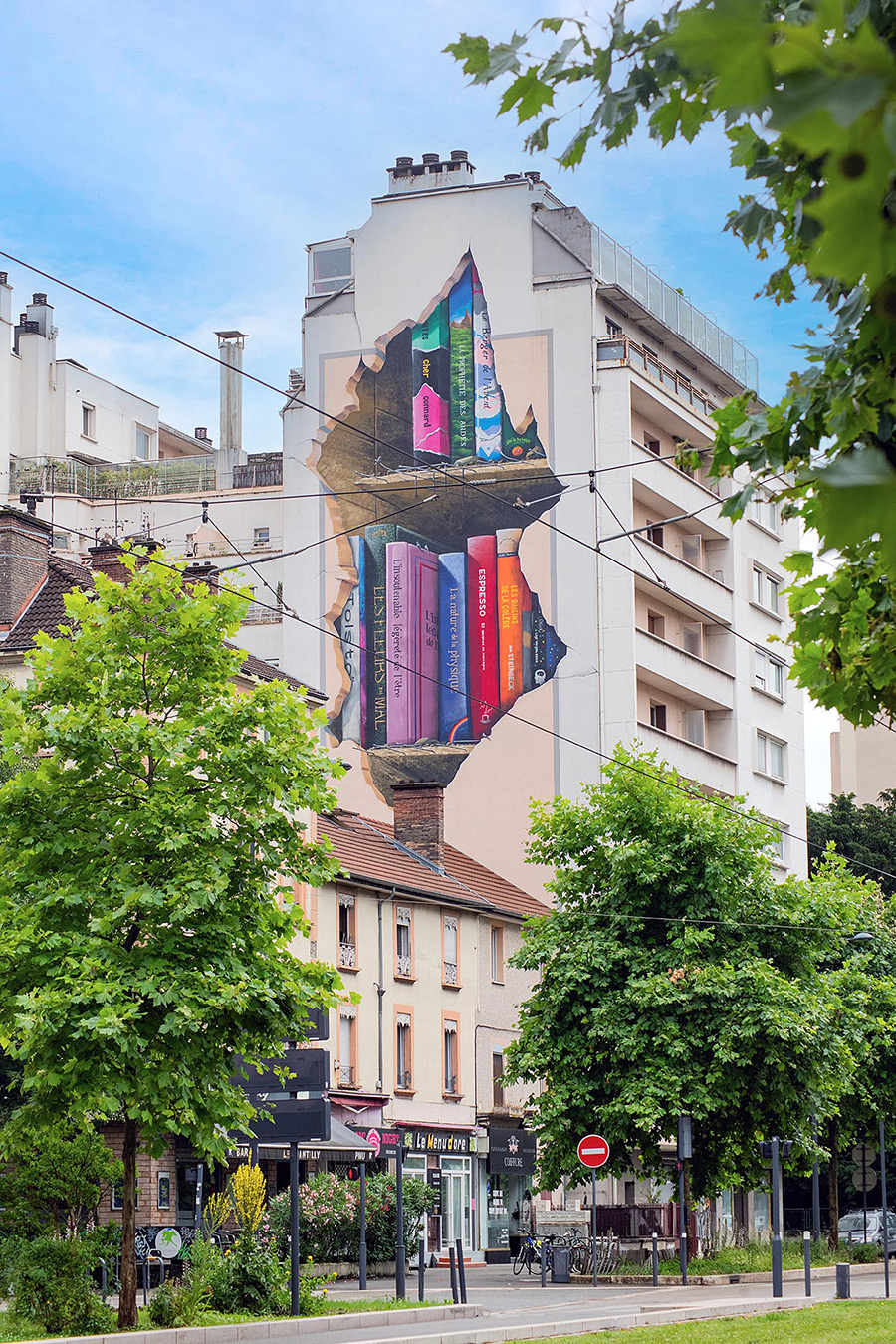
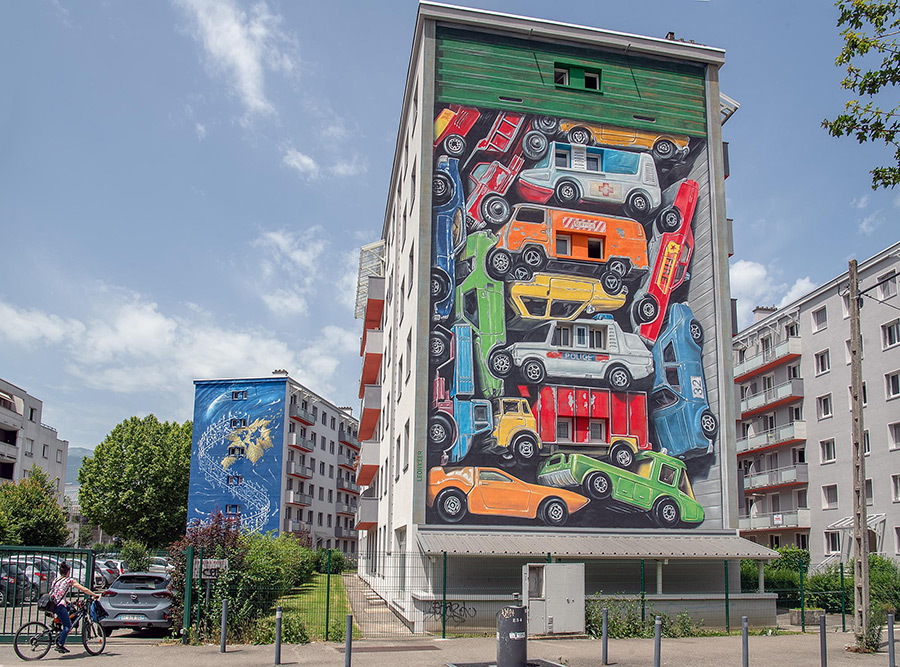
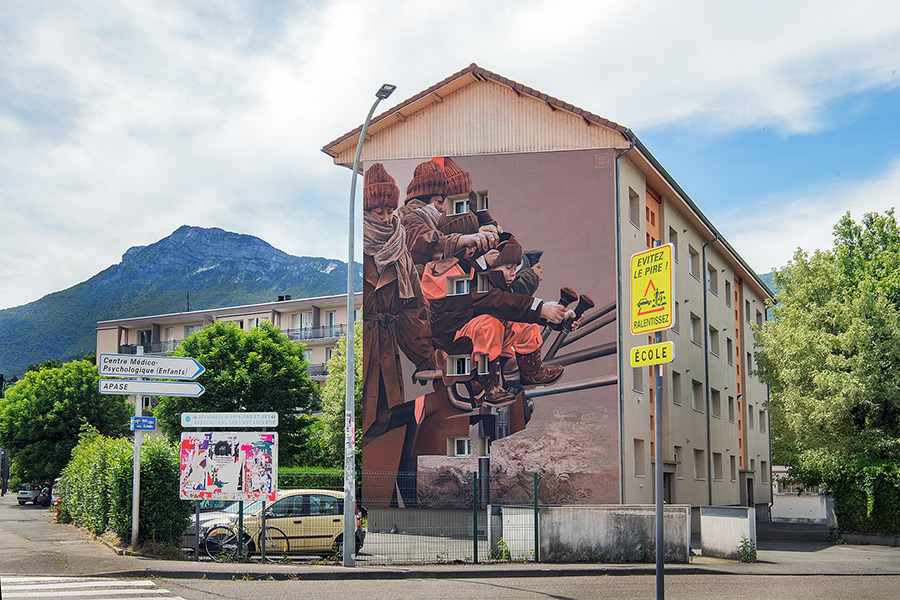
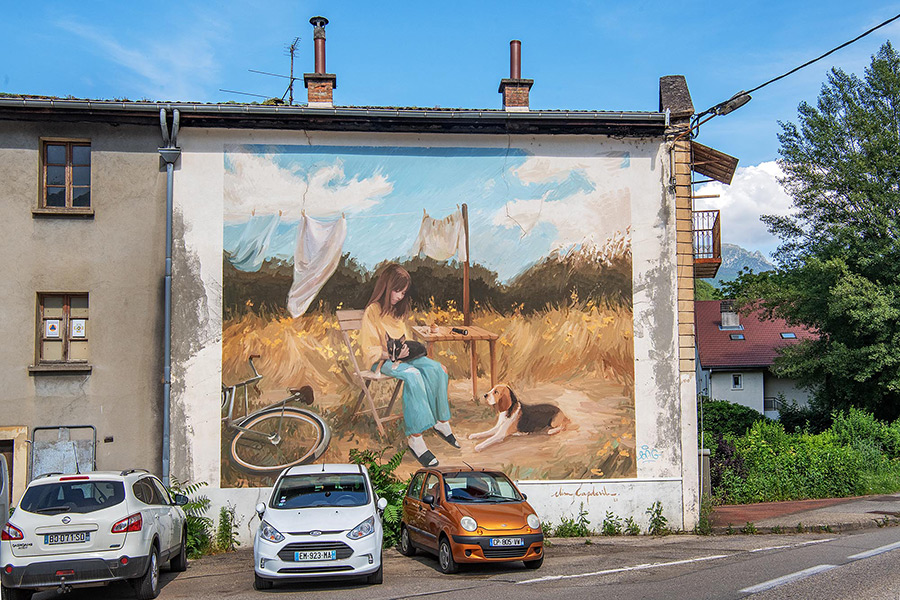
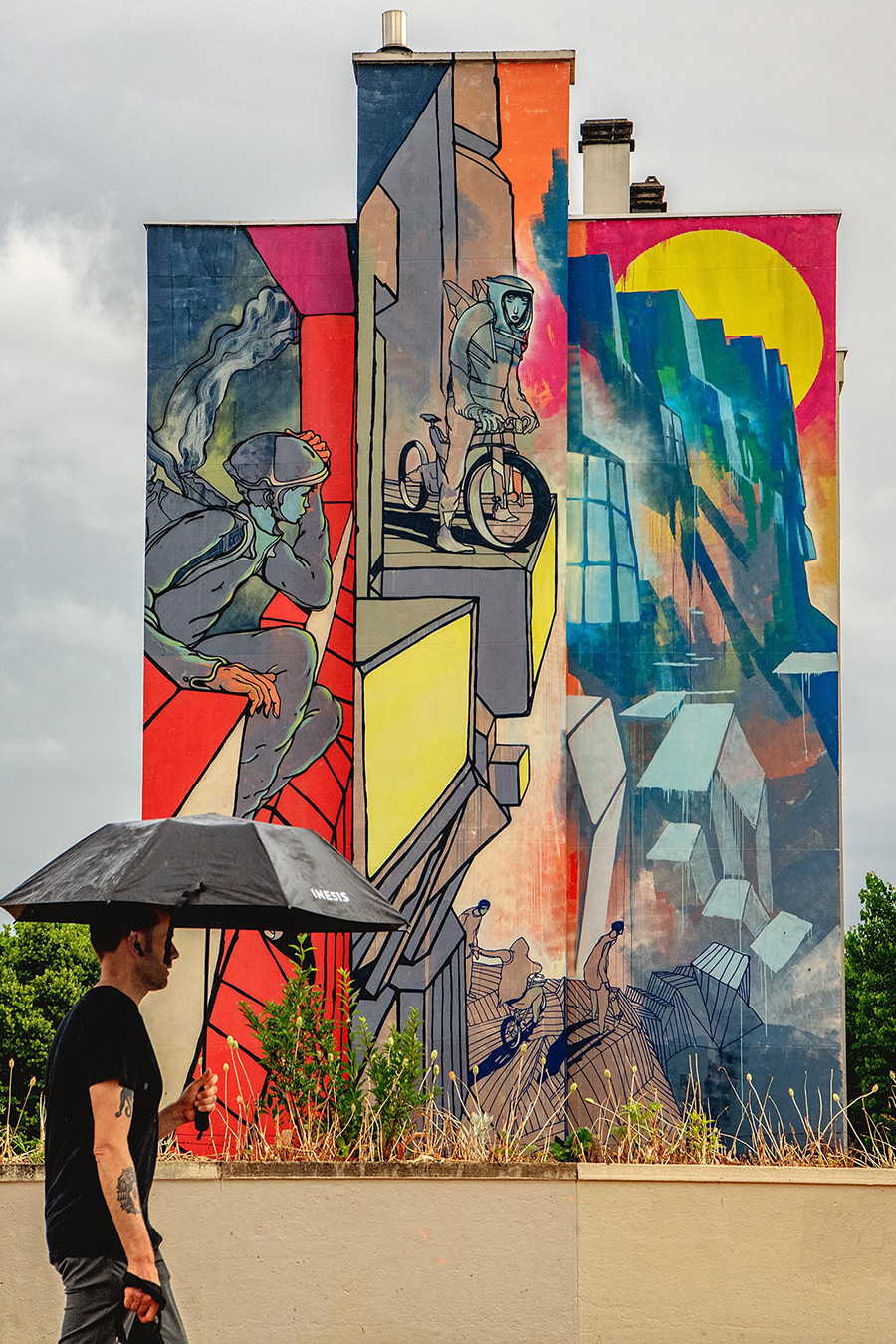
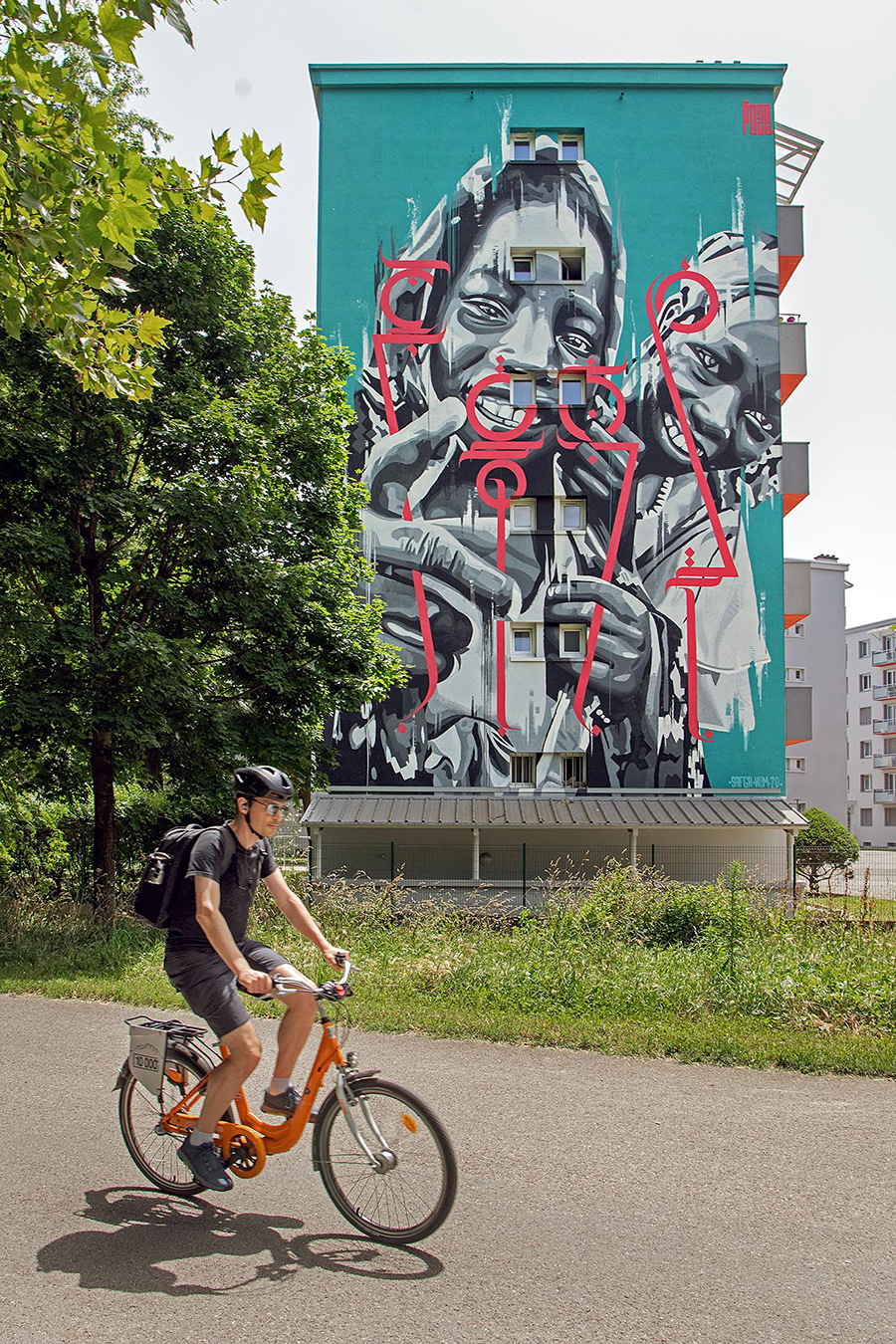
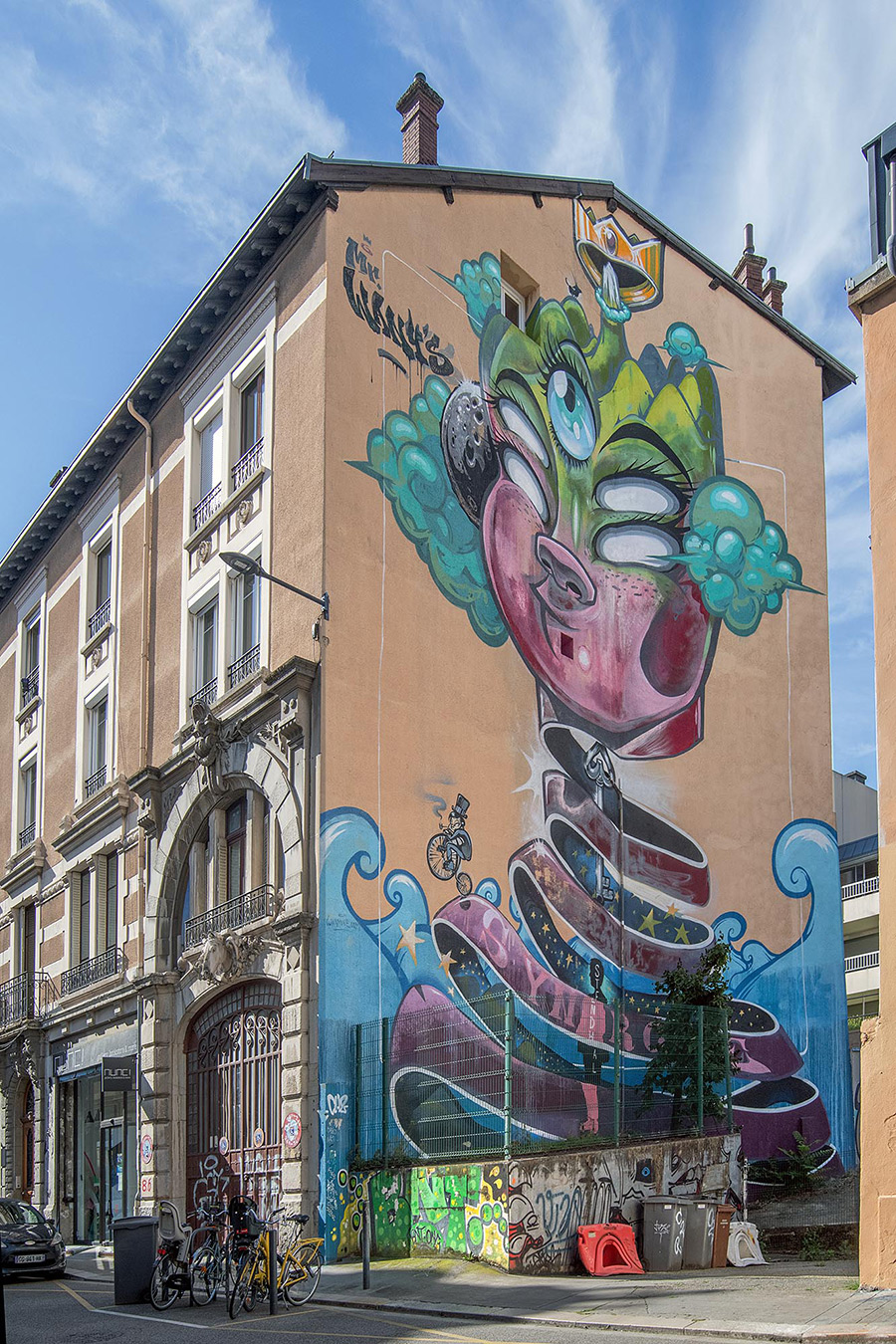
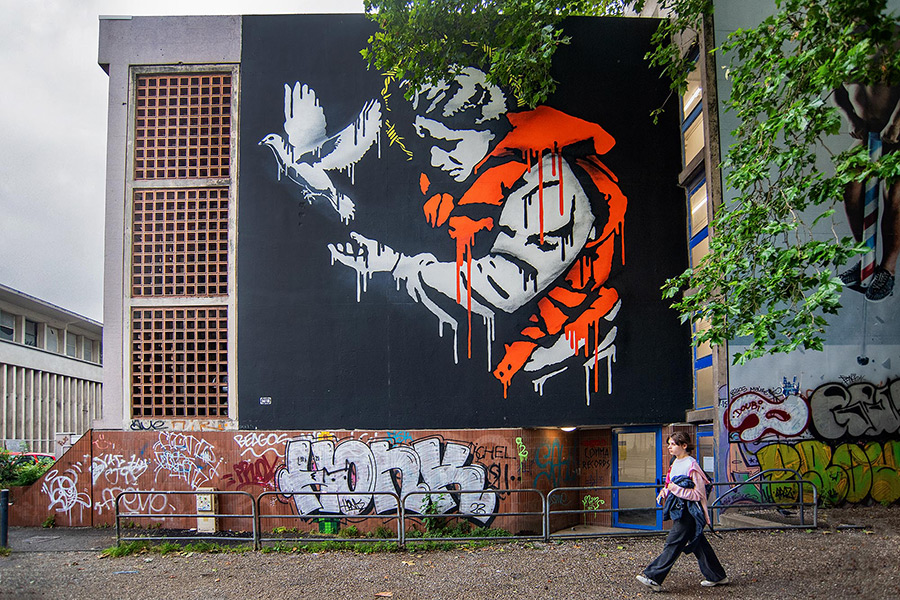
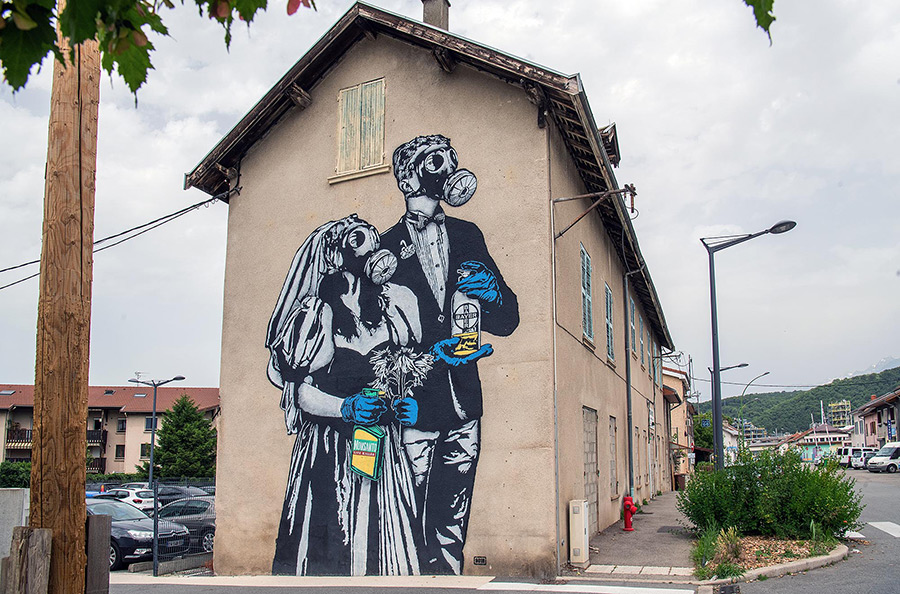
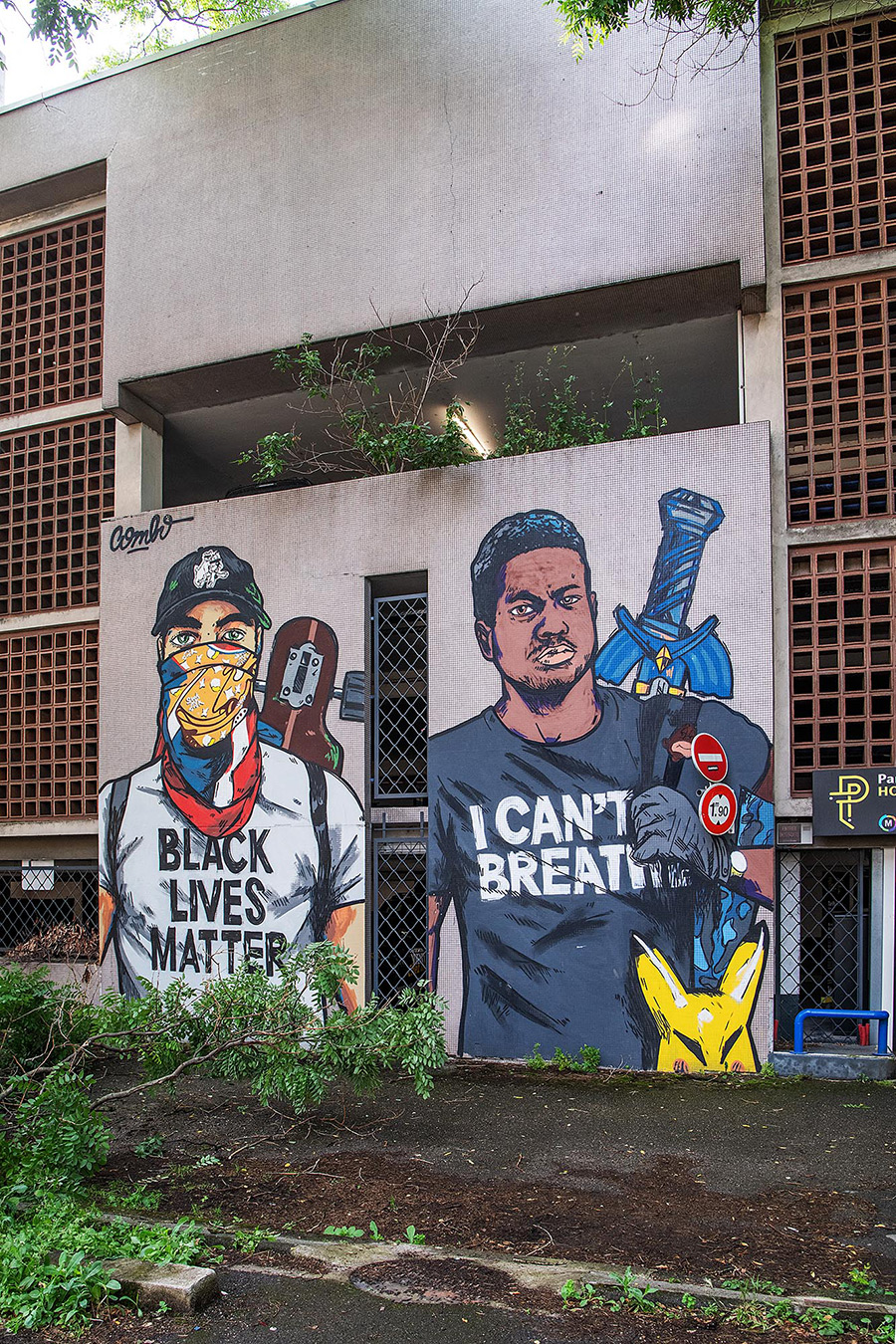
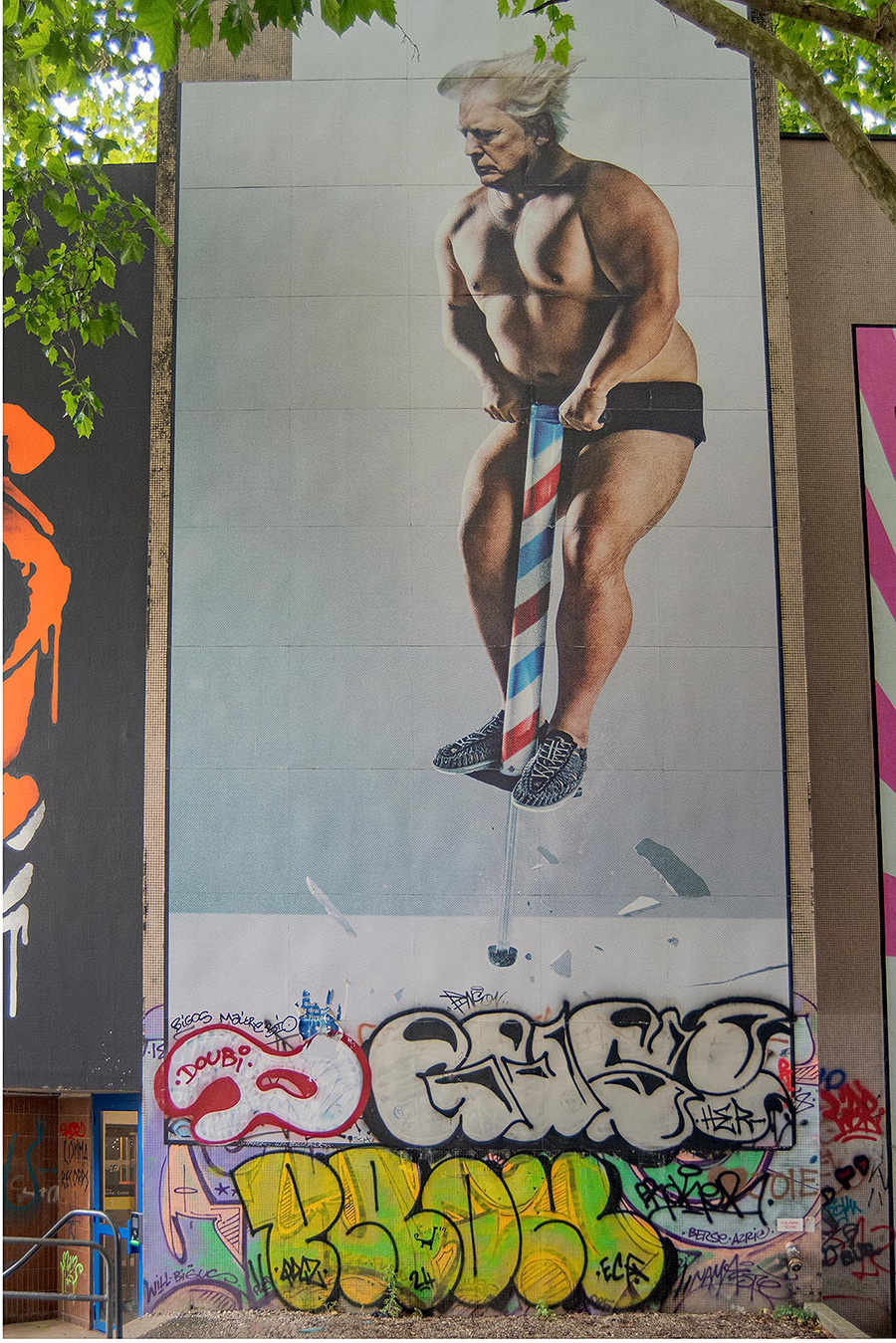
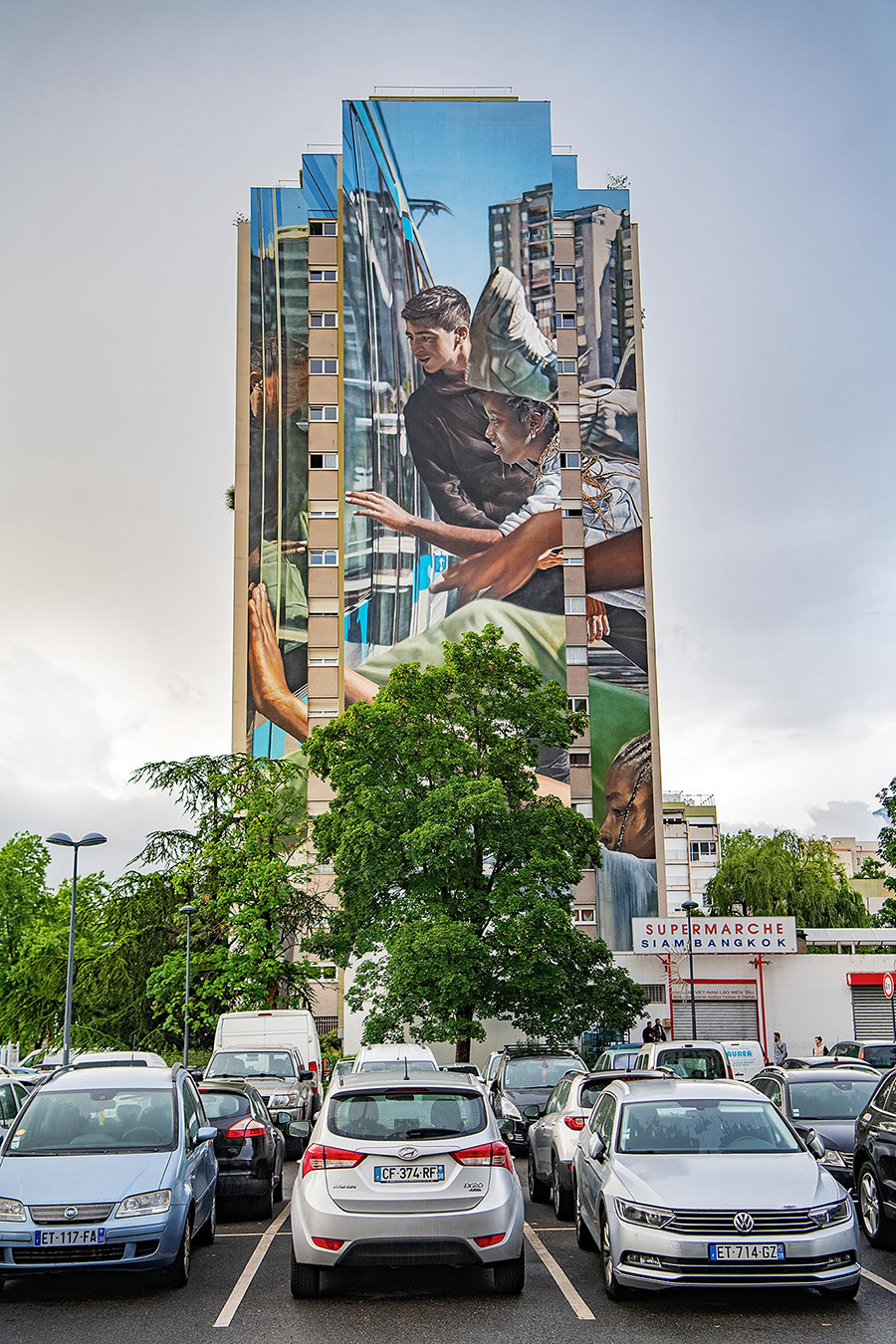
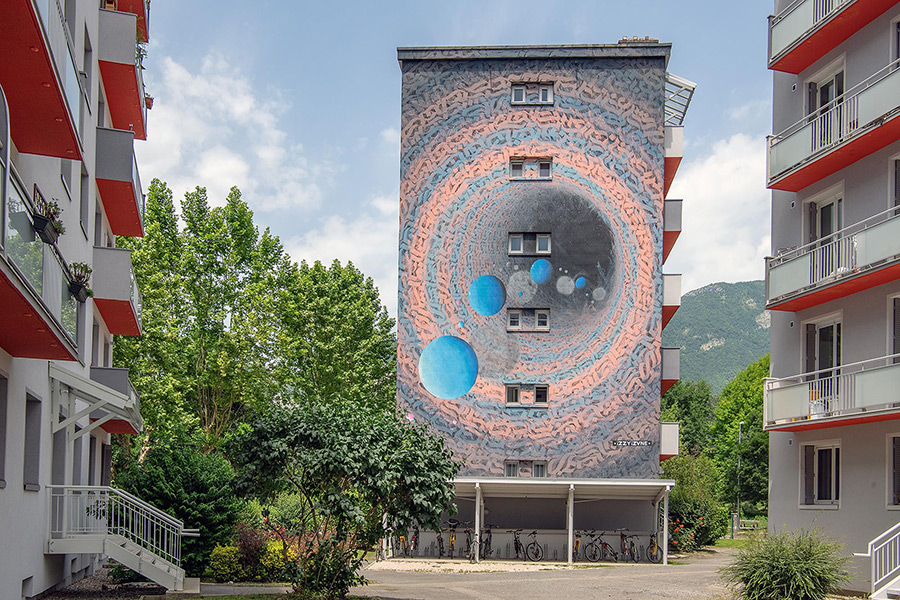
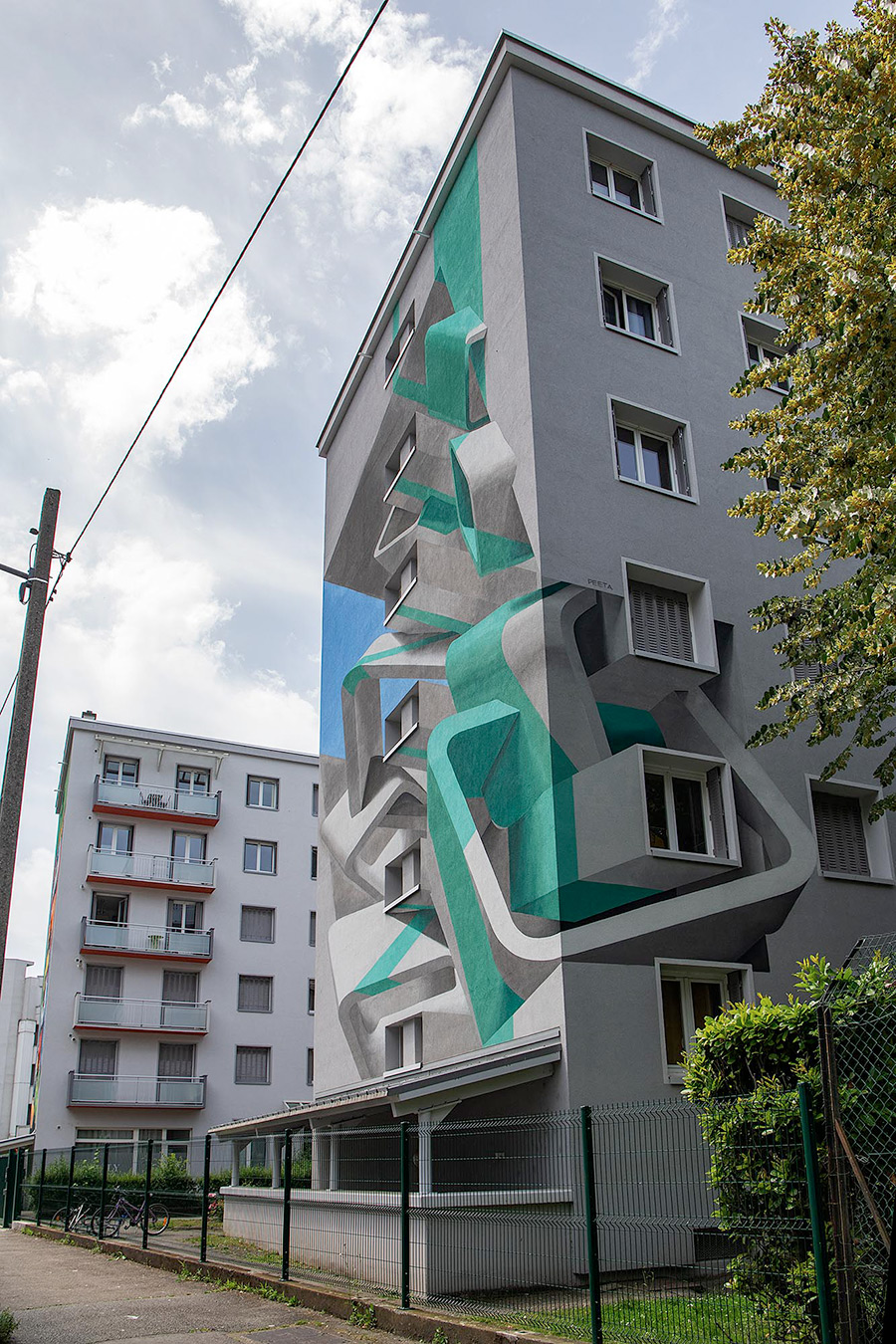
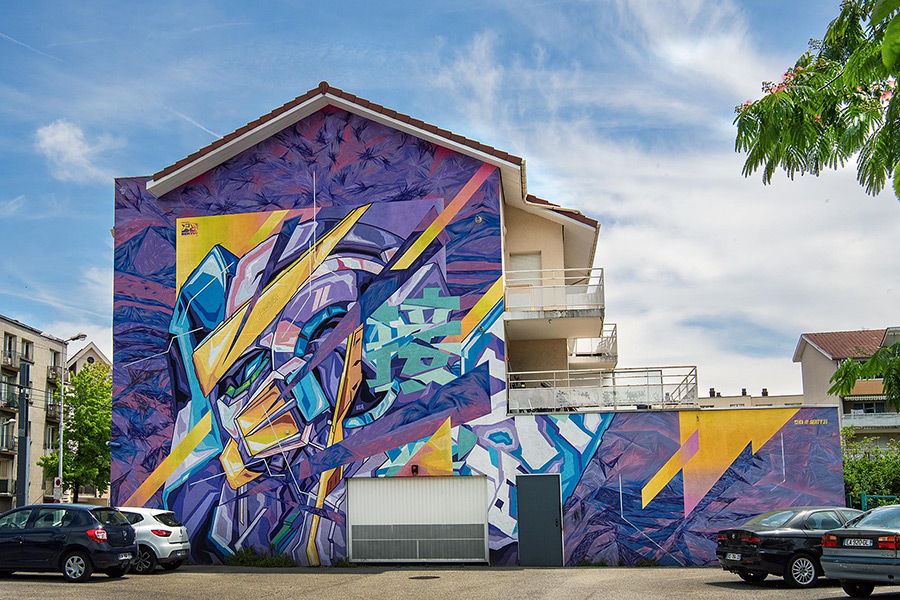
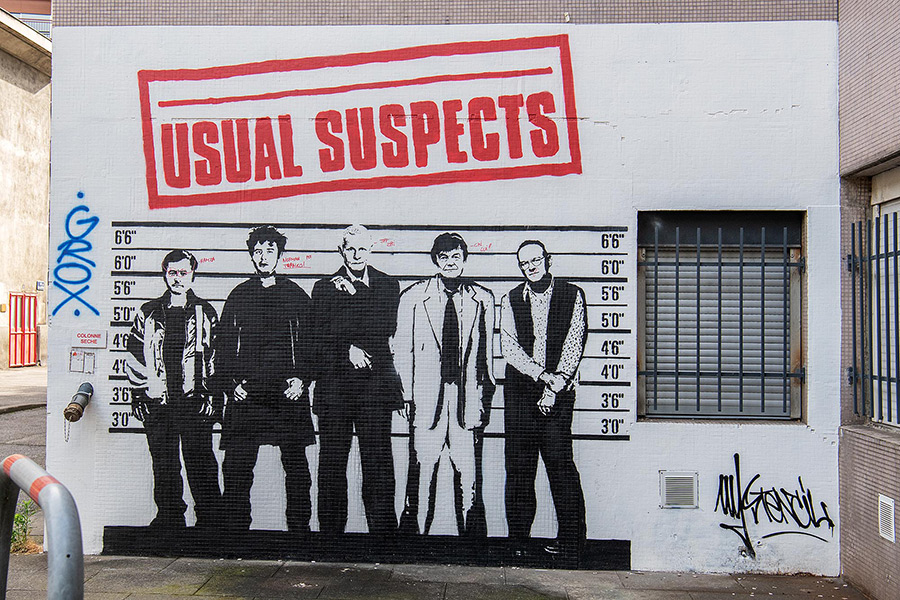
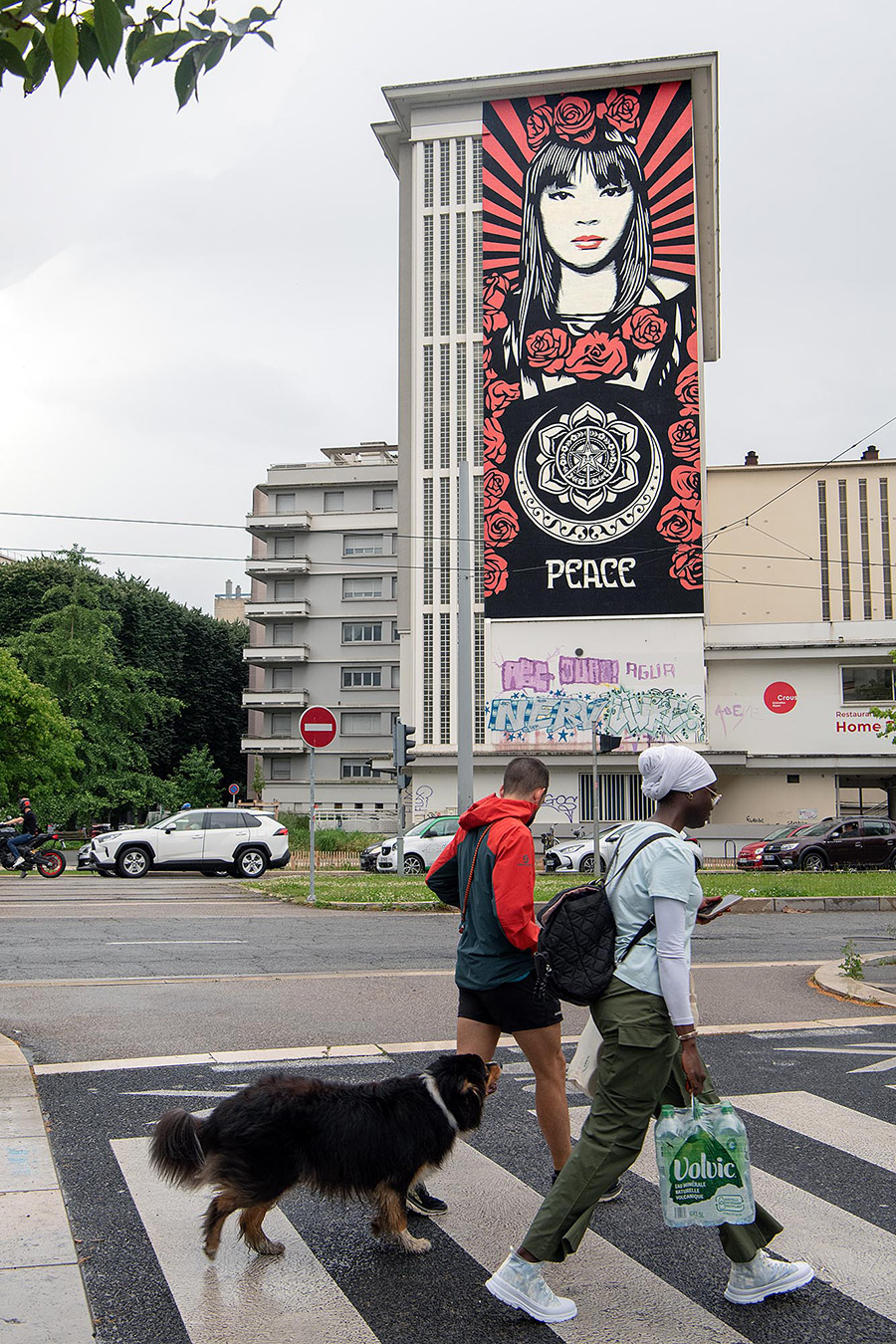
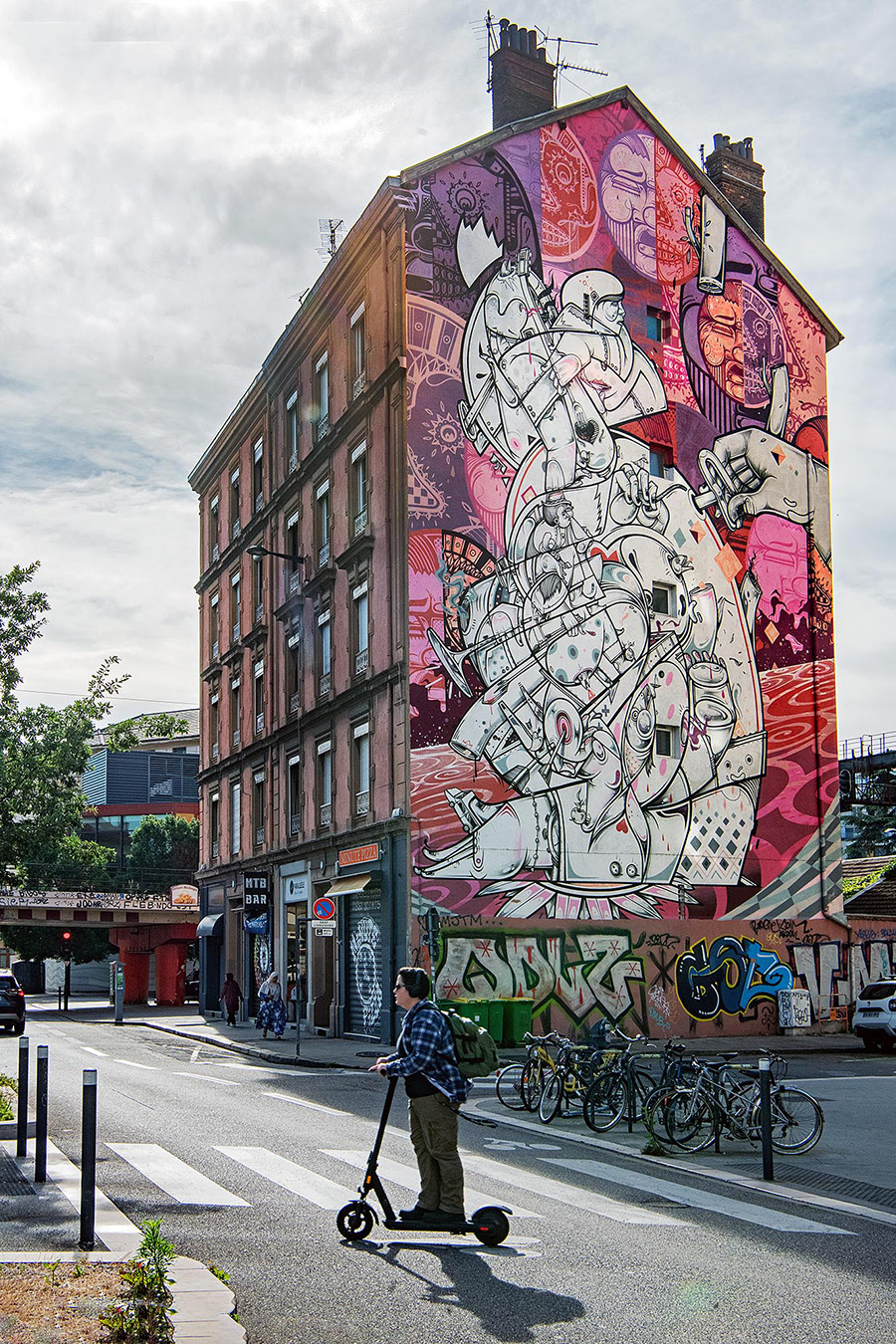
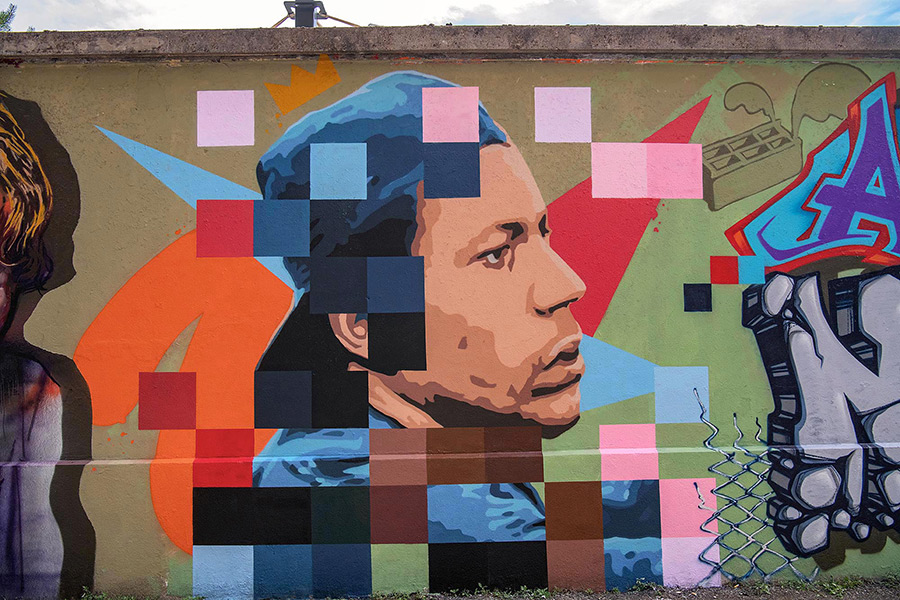
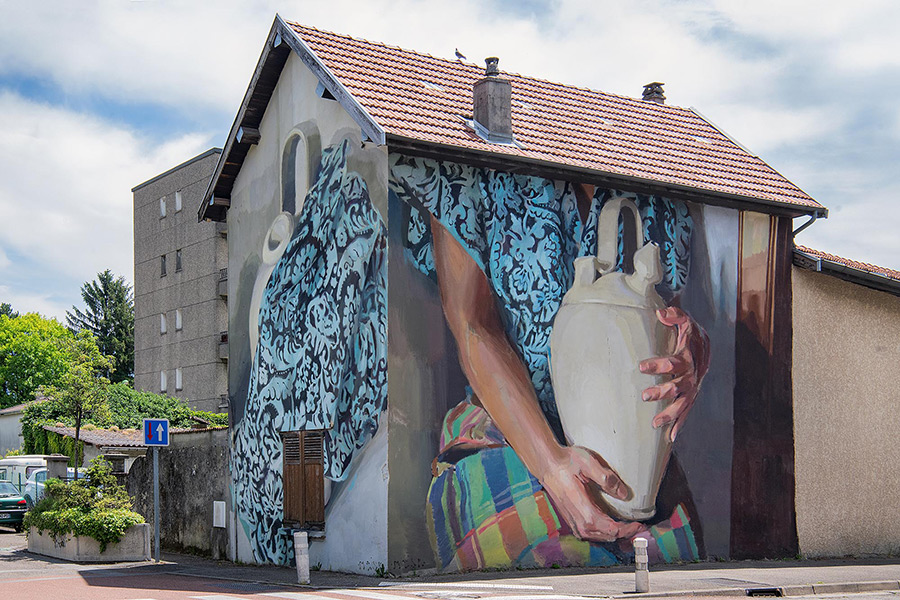
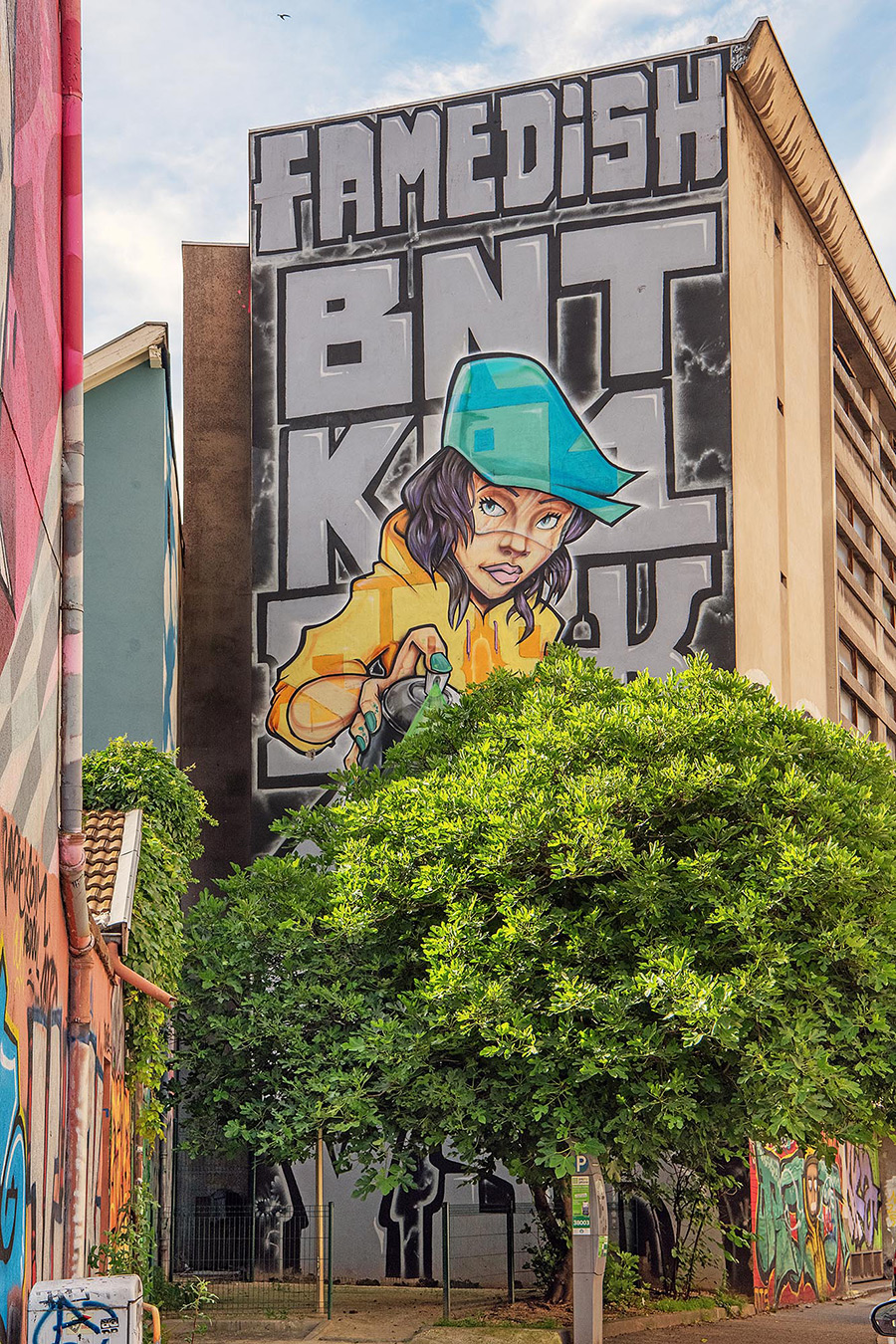
This is part 2 of a series of new works from the 10th Annual Street Art Fest Grenoble, with photographs by veteran photographer Martha Cooper. The massive variety, quantity, and quality of works at Grenoble place it ahead of many festivals, as you can see here. Many of the murals are in context with their surroundings and collaborate with them in a meaningful way. For its 2024 edition, the Street Art Fest Grenoble-Alpes celebrates its 10th anniversary under the direction of Jérôme Catz and The Spacejunk Art Center. Today we focus strictly on the big statements, and there are many.
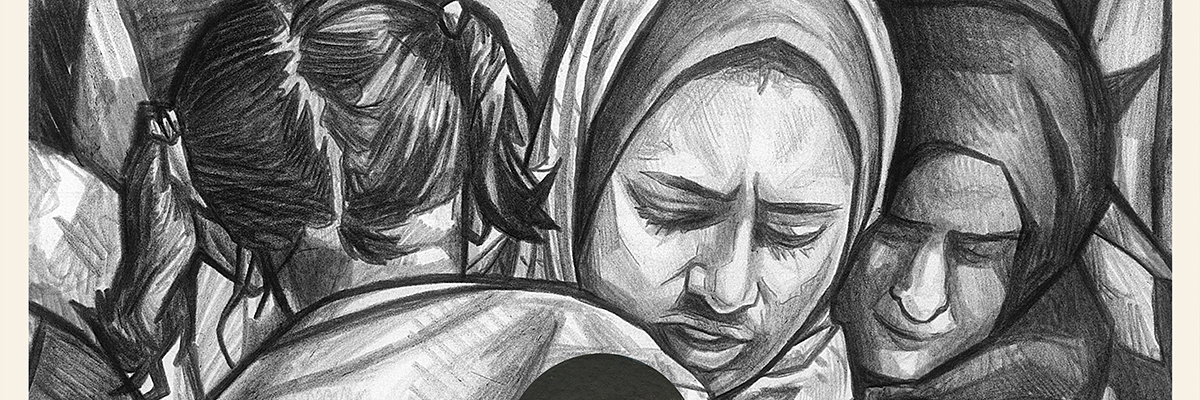
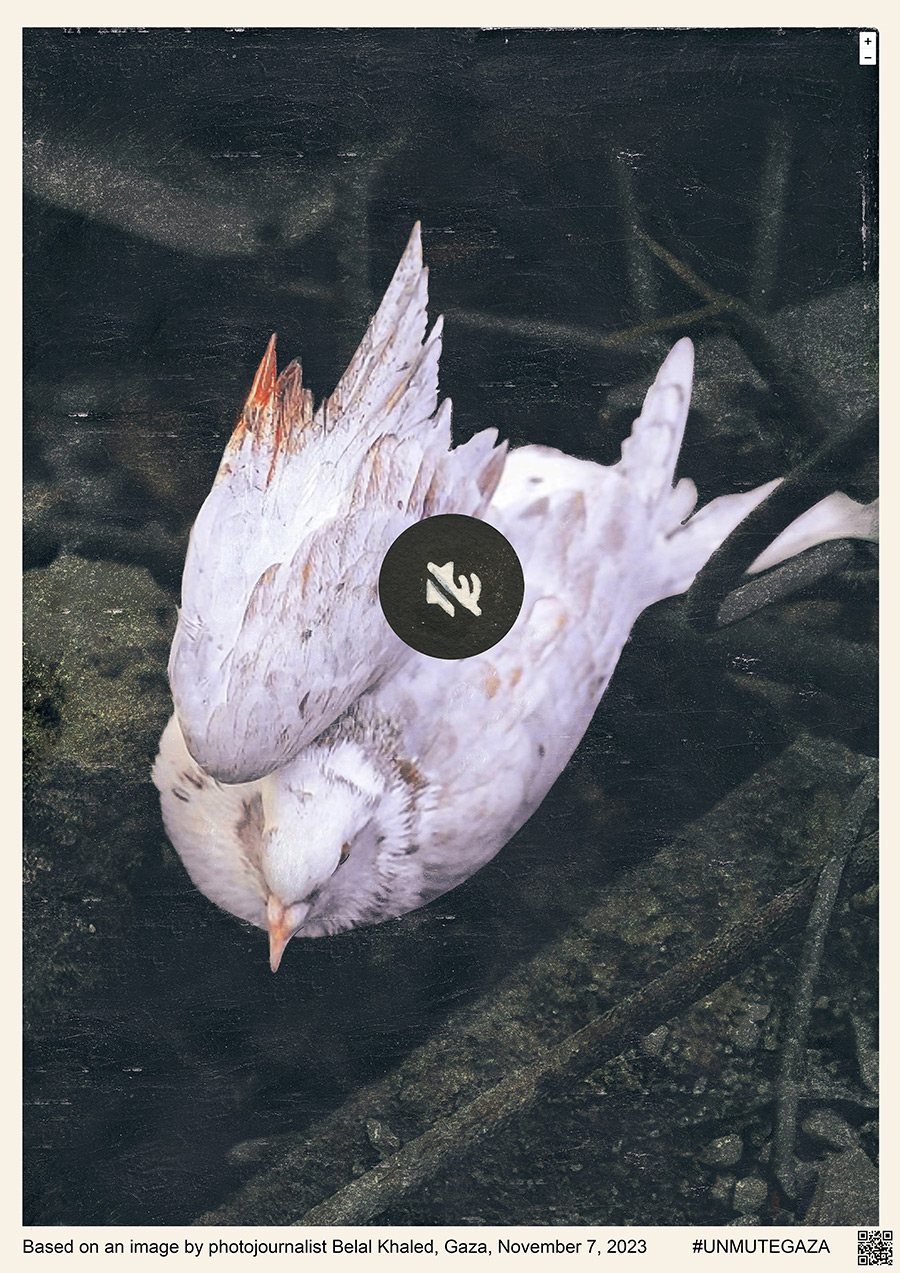
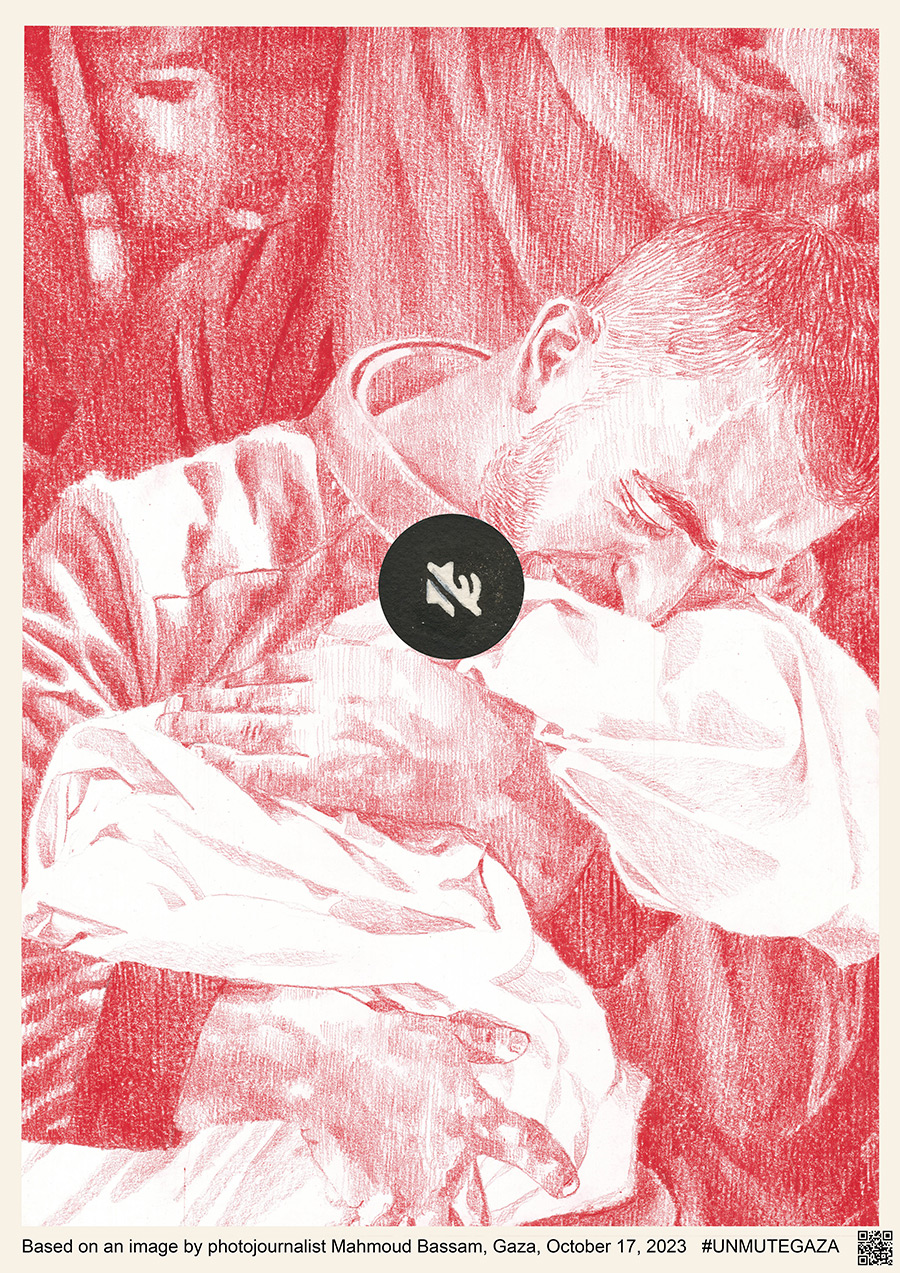
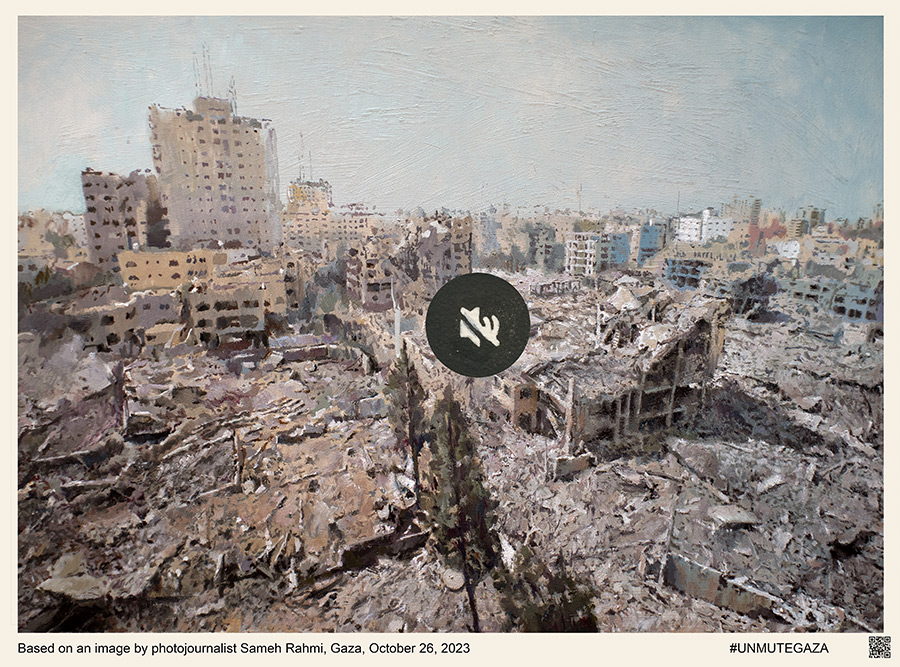
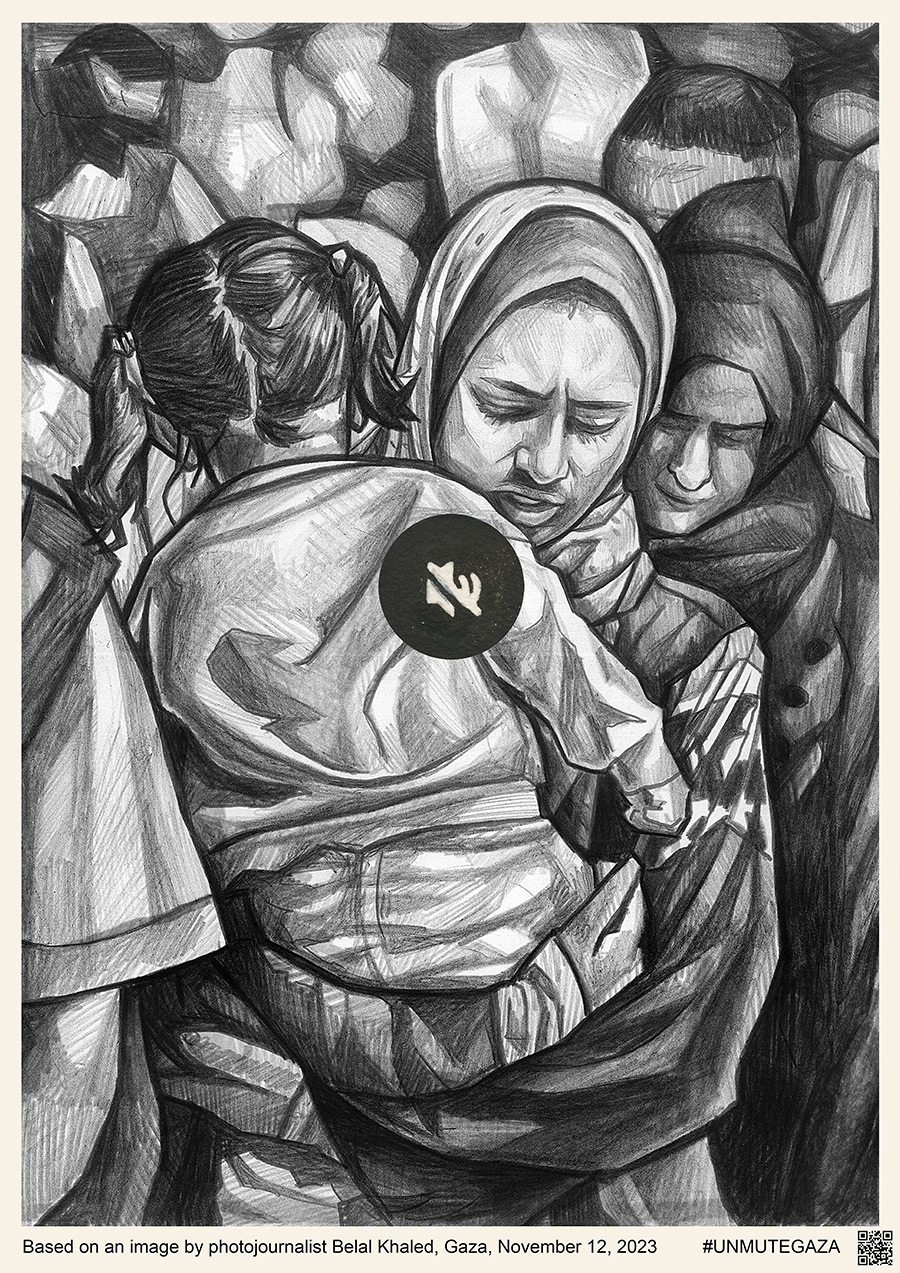
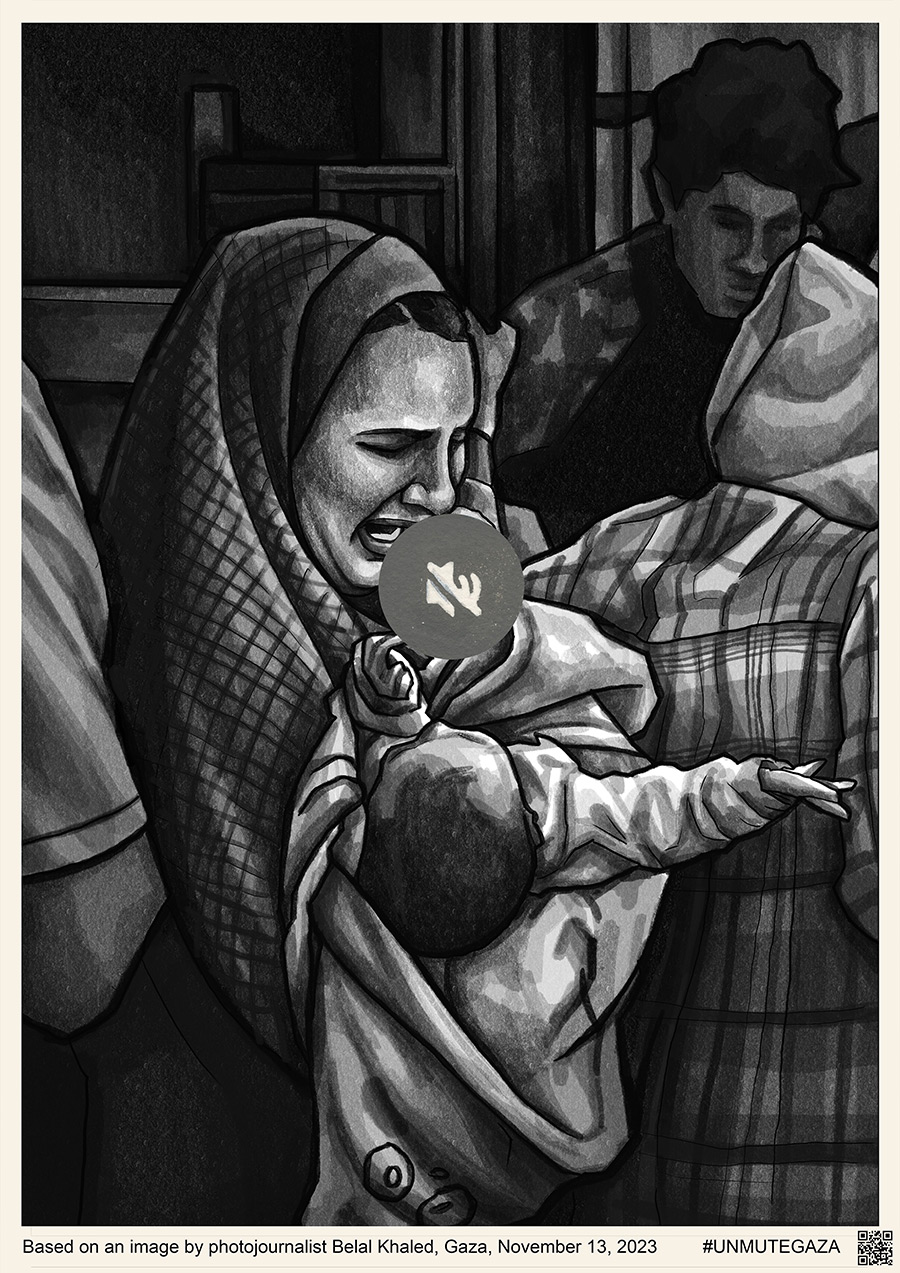
In the midst of ongoing turmoil, the Gaza Strip is engulfed in a conflict that has now stretched into its fifth harrowing month. The escalating violence has led to the tragic loss of over 30,000 lives, including countless children, marking a somber chapter. Amidst this backdrop of sorrow and chaos, a beacon of artistic activism addresses the darkness: Unmute Gaza, a bold initiative melding the worlds of photojournalism and visual art to break the silence surrounding the war’s devastating human toll.
Unmute Gaza represents a collective outcry against the indifference of the global community and media. This creative coalition has rallied around the poignant snapshots captured by five courageous Gazan photojournalists: Belal Khaled, Mahmoud Bassam, Sameh Nidal-Rahmi, Saher Alghorra, and Majdi Fathi. These photographers’ raw, unfiltered depictions of life amidst conflict are translated by artists worldwide. The striking images, reimagined as paintings and sketches, serve not only as powerful testaments to the human spirit but also as rallying cries for action and empathy.
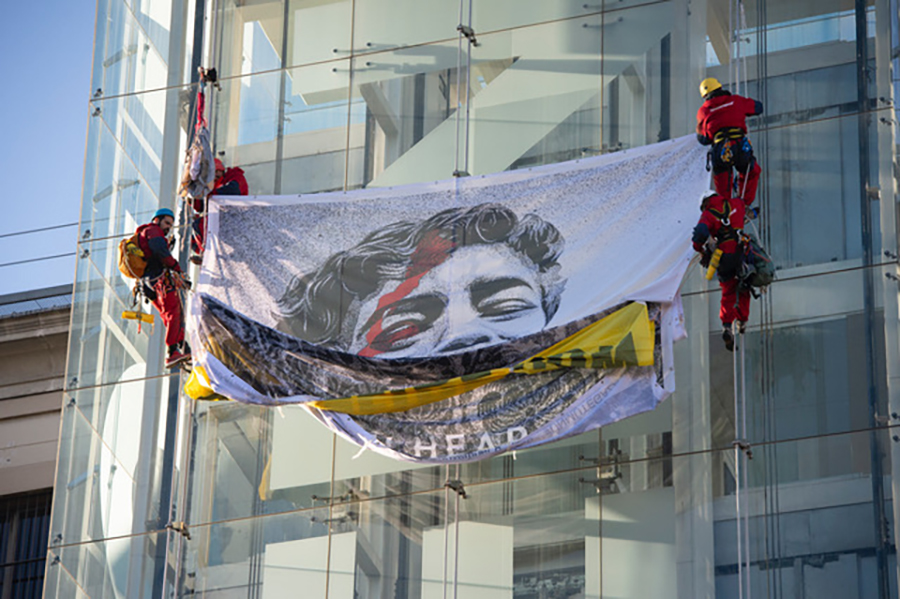
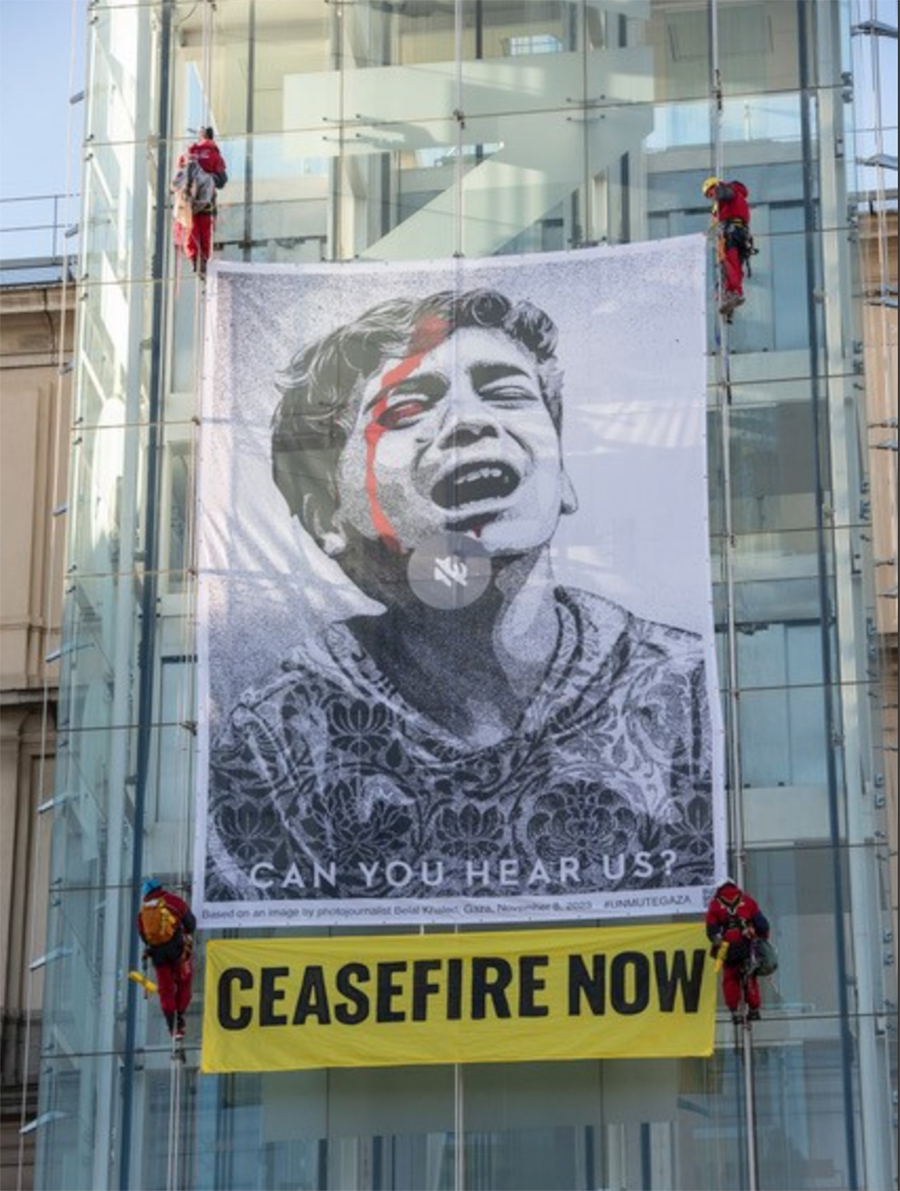
Highlighting the intersection of activism and art, the Unmute Gaza movement recently partnered with environmental powerhouse Greenpeace to unveil a compelling piece by renowned artist Shepard Fairey (video below). Inspired by Belal Khaled’s haunting imagery, Fairey’s work—portraying a blood-stained Palestinian child beneath the pleading words “Can you hear us?”—was dramatically displayed at Madrid’s Reina Sofia Museum. This collaboration epitomizes the campaign’s reach and impact, with Unmute Gaza’s message resonating in public spaces across 83 cities in 30 countries worldwide, urging us to confront the harsh realities of war and to amplify the plight of people demanding to be heard.
CLICK HERE TO DOWNLOAD THE FILES FOR PRINT FREE OF CHARGE
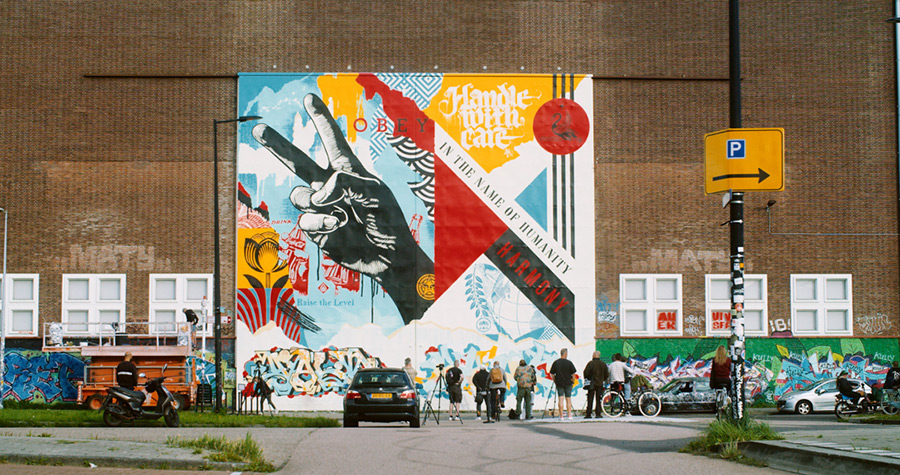
As we usher in the new year, it’s exhilarating to embrace a project that embodies a powerful message: “Raise the Level.” This initiative, resonating with the ethos of elevating our discourse on critical issues, reminds us that respectful, high-quality debate is not only possible but necessary. Steering clear of personal attacks, we all have the capability to engage constructively in meaningful conversations.
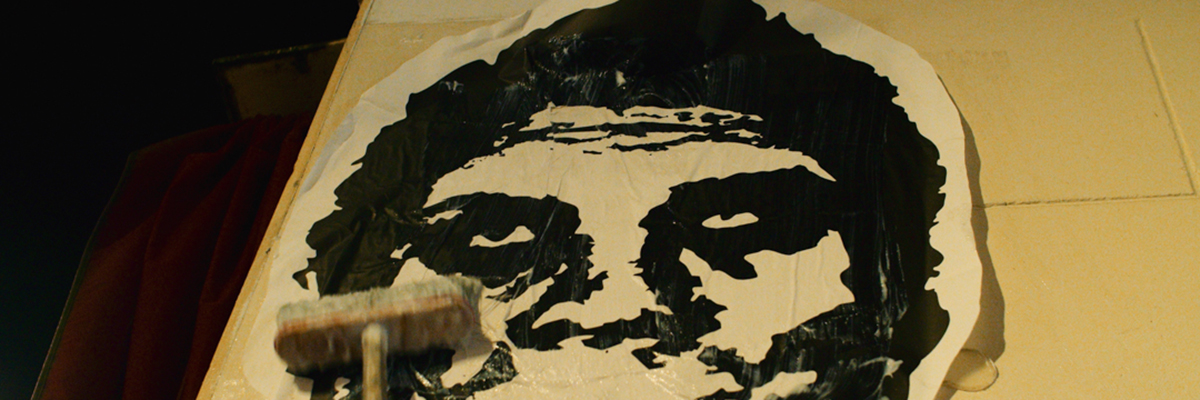
Shepard Fairey. Still from the movie. (image courtesy of Straat Museum)
In this spirit, we are thrilled to introduce the collaboration between STRAAT Museum and renowned artist and activist Shepard Fairey, in a project aptly named “Raise the Level.” This endeavor is brought to life through an extraordinary five-minute documentary that offers an intimate glimpse into Shepard Fairey’s creative process and his mission to use art as a catalyst for change.
The documentary, crafted by filmmaker Lidewij Hartog, follows Shepard Fairey during his visit to Amsterdam in August 2023. This visit marked a significant moment for Fairey, as he showcased his “Printed Matters: Raise the Level” exhibition at the STRAAT Gallery. But his contribution went beyond the gallery walls. Fairey left an indelible mark on the city by creating a monumental mural on the museum’s outdoor wall and adding a distinct artwork to the museum’s permanent collection.
Shepard Fairey. Still from the movie. (image courtesy of Straat Museum)
Shepard Fairey: Raise the Level – a short doc on Shepard Fairey in Amsterdam by Straat Muesum and Lidewij Hartog.
STRAAT Museum proudly presents “Shepard Fairey: Raise the Level.” This documentary not only captures the essence of Fairey’s artistic journey in Amsterdam but also delves into the motivations and aspirations driving his art. Join us in experiencing the impact of Shepard Fairey’s work and his ongoing dedication to using art as a medium to inspire societal change.
Shepard Fairey. Still from the movie. (image courtesy of Straat Museum)
Spanish artist Gonzalo Borondo, from Valladolid, arrives at LuzMadrid Festival with Redentora, a site-specific installation that continues his steady movement …Read More »
 BROOKLYN STREET ART LOVES YOU MORE EVERY DAY