 BROOKLYN STREET ART LOVES YOU MORE EVERY DAY
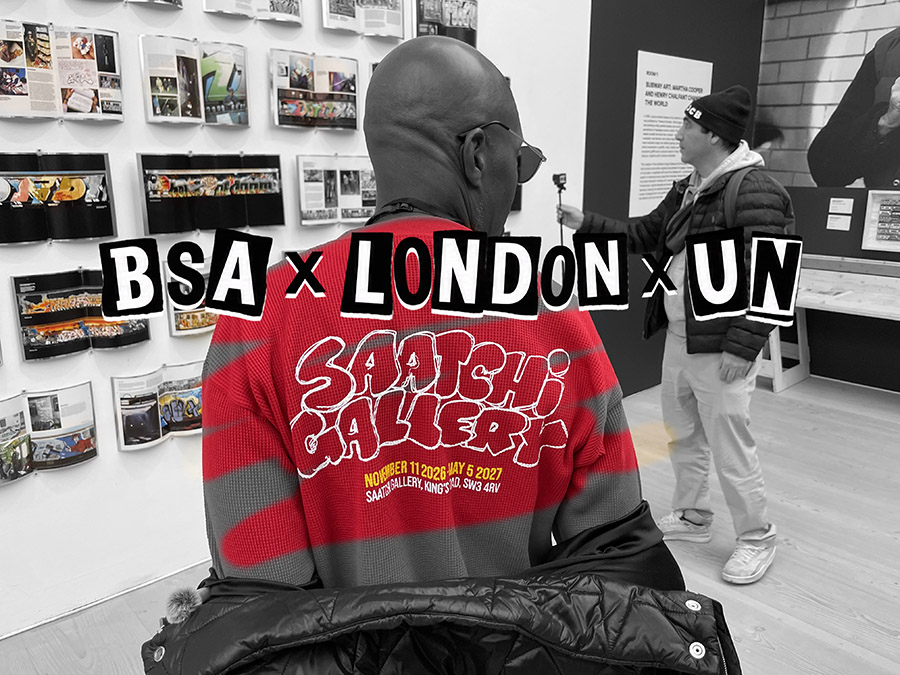
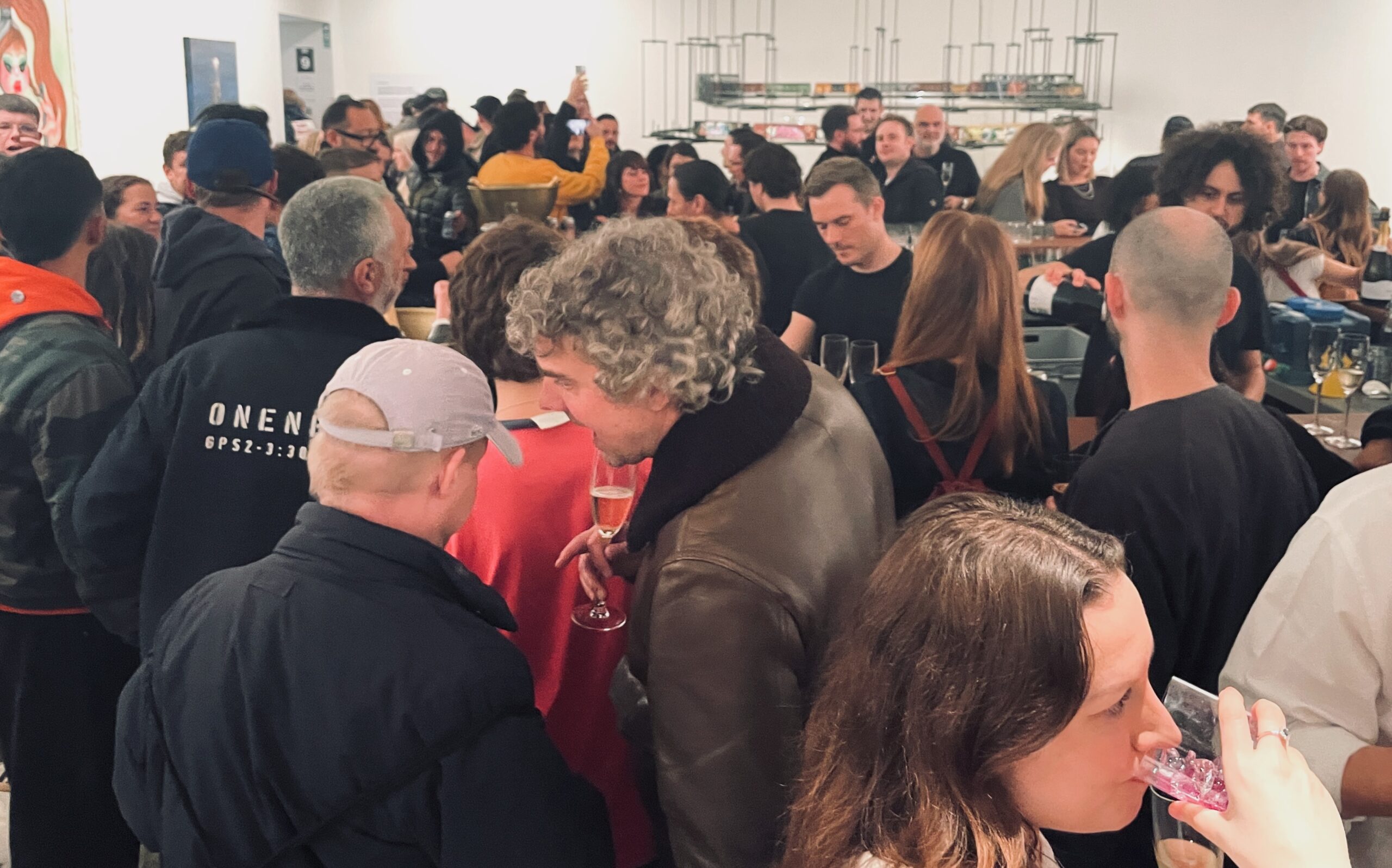
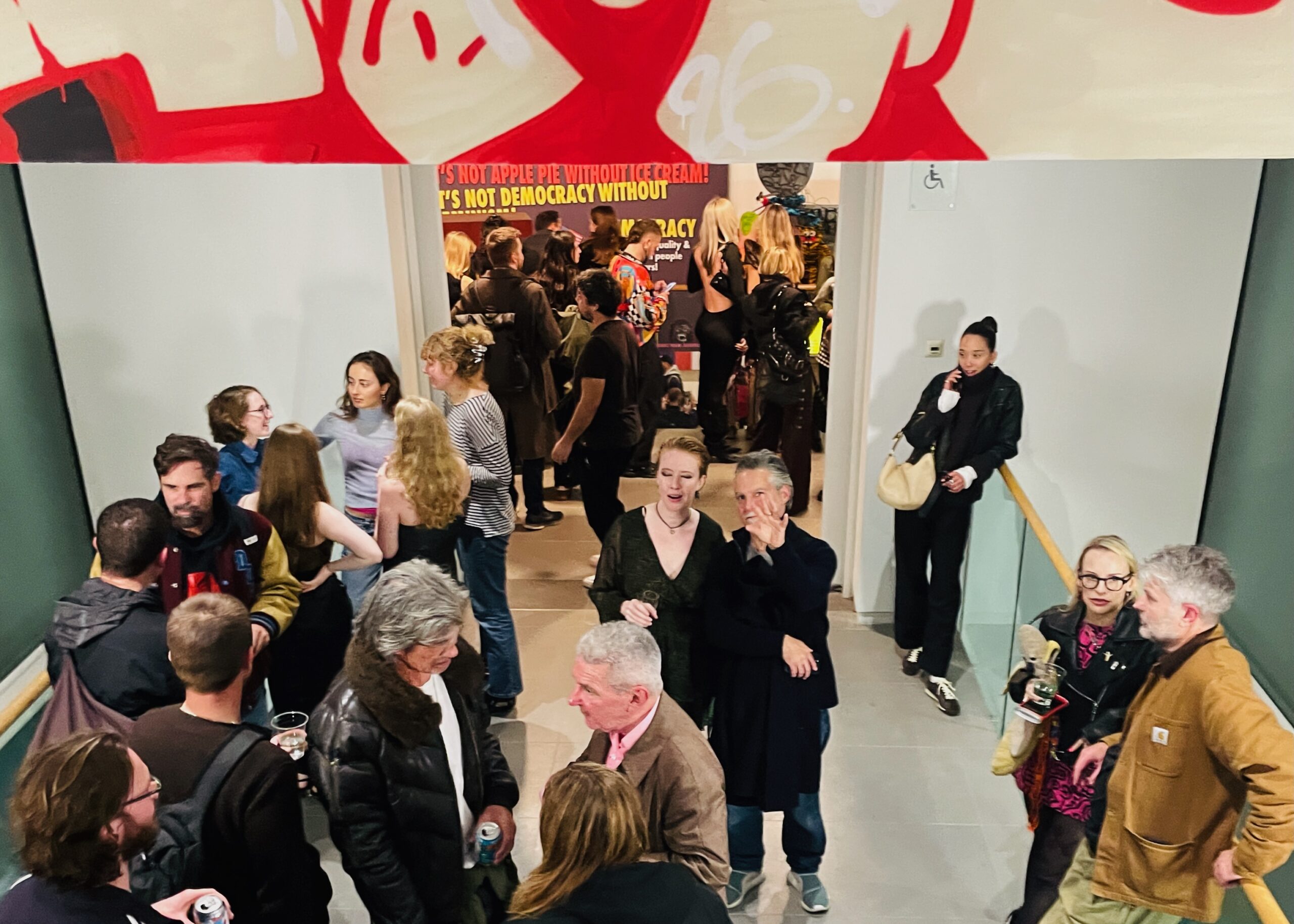
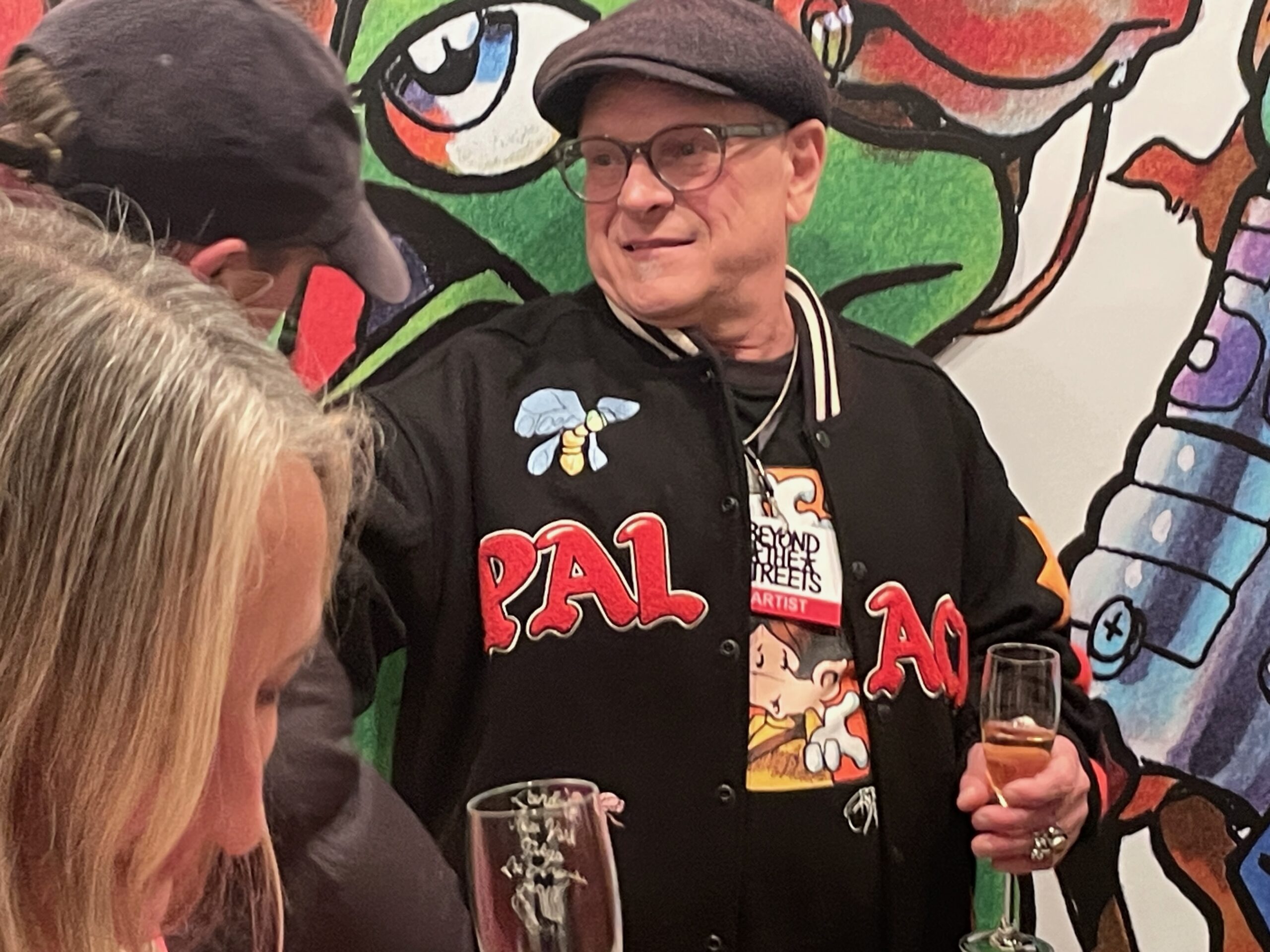
Here are more scenes from Tuesday’s opening of BEYOND THE STREETS in London, where a formidable cast of participating artists turned up to celebrate, compare notes, and pose for a photograph, or 15. The line of guests snaked through the Saatchi Gallery courtyard, beneath the grand archway decked in holiday greenery, and onto the sidewalks of King’s Road, while inside, graffiti writers, street artists, curators, musicians, DJs, and assorted cultural celebrities mingled across generations and disciplines.
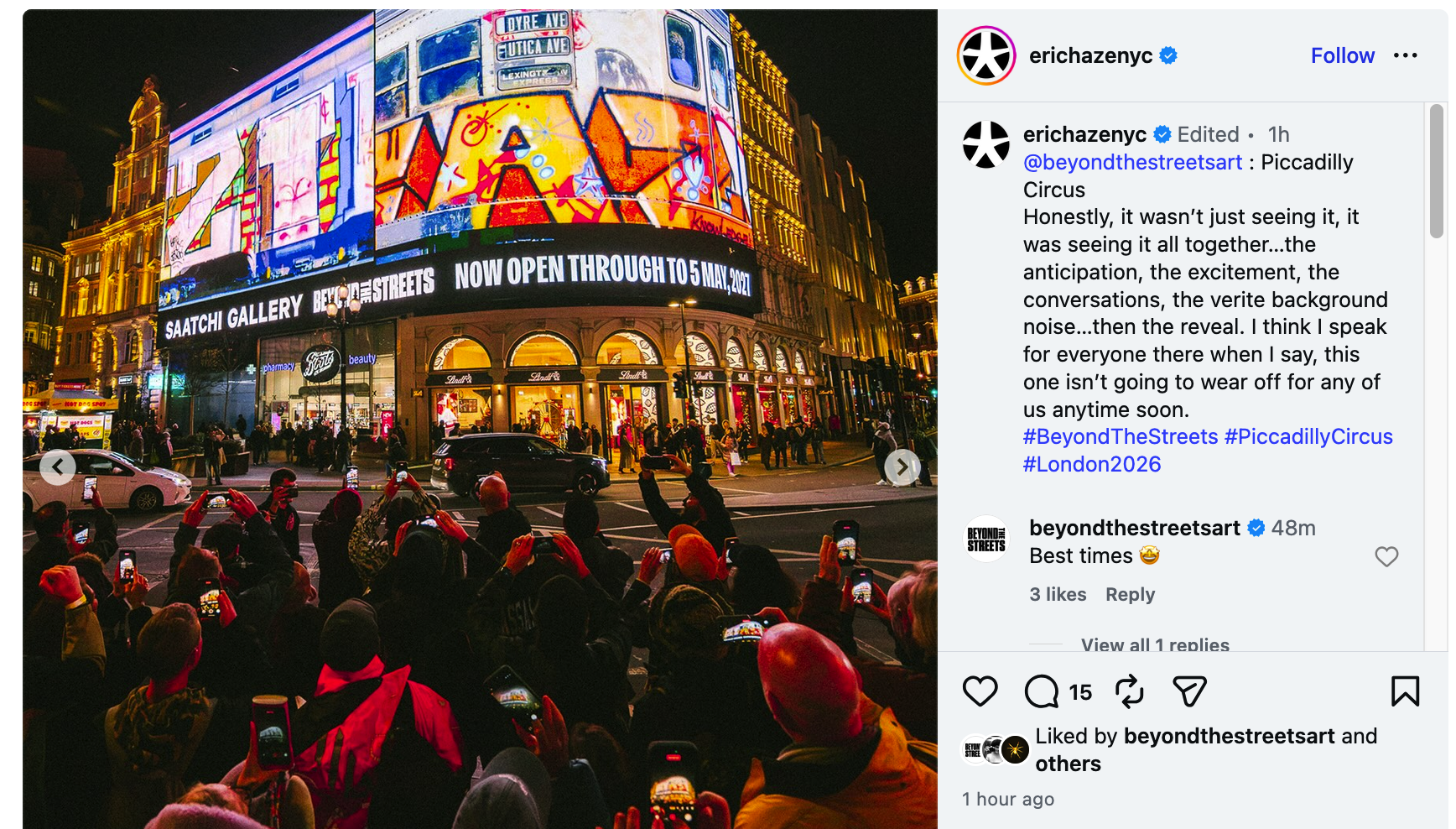
The following afternoon, the full force of the fandom was on display when Roger Gastman and Amanda hosted a four-hour book signing with participating artists. By 2:15, they had to cut off the line; there was no way to accommodate everyone before the event ended at 4. Later, a busload of artists headed into the London Underground to catch a ten-minute presentation of their work lighting up the giant screens at Piccadilly Circus at 7:30 pm.
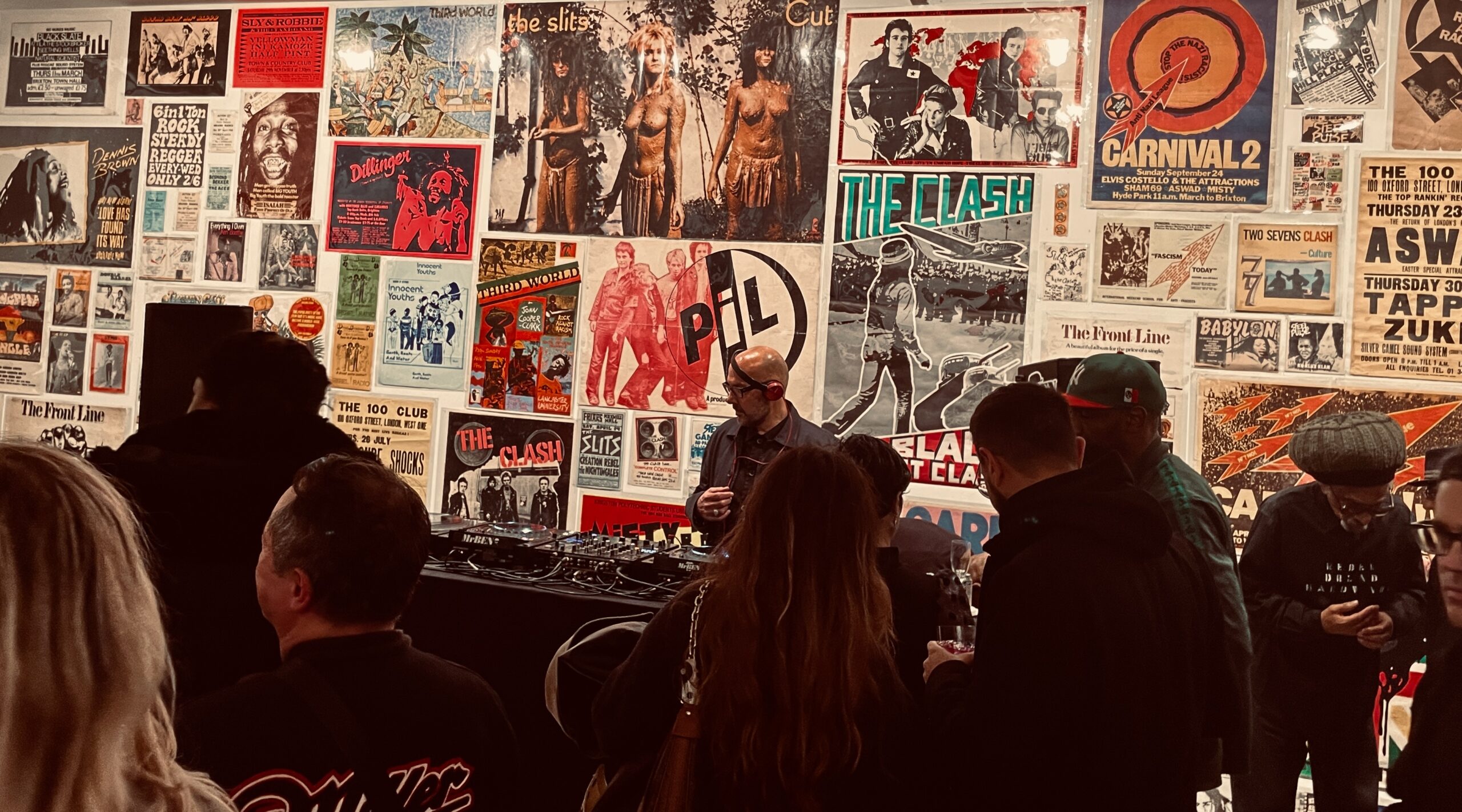
It was a proper cultural racket — part punk gig, part ska all-nighter, part graffiti family reunion — with a dizzying collision of talent, styles, street credibility, celebrity, diehard fans, and the sometimes unlikely bedfellows of graffiti, street art, political activism, music, fashion, and DIY culture. No exhibition can tell every story, and each edition of BEYOND THE STREETS puts certain crews, histories, and personalities in the spotlight while others remain outside the frame. But give Gastman another 50 exhibitions in another 50 cities, and he might just get around to telling the whole unruly history. In the meantime, here’s another look at some of the artists and work making this London edition worth the trip.
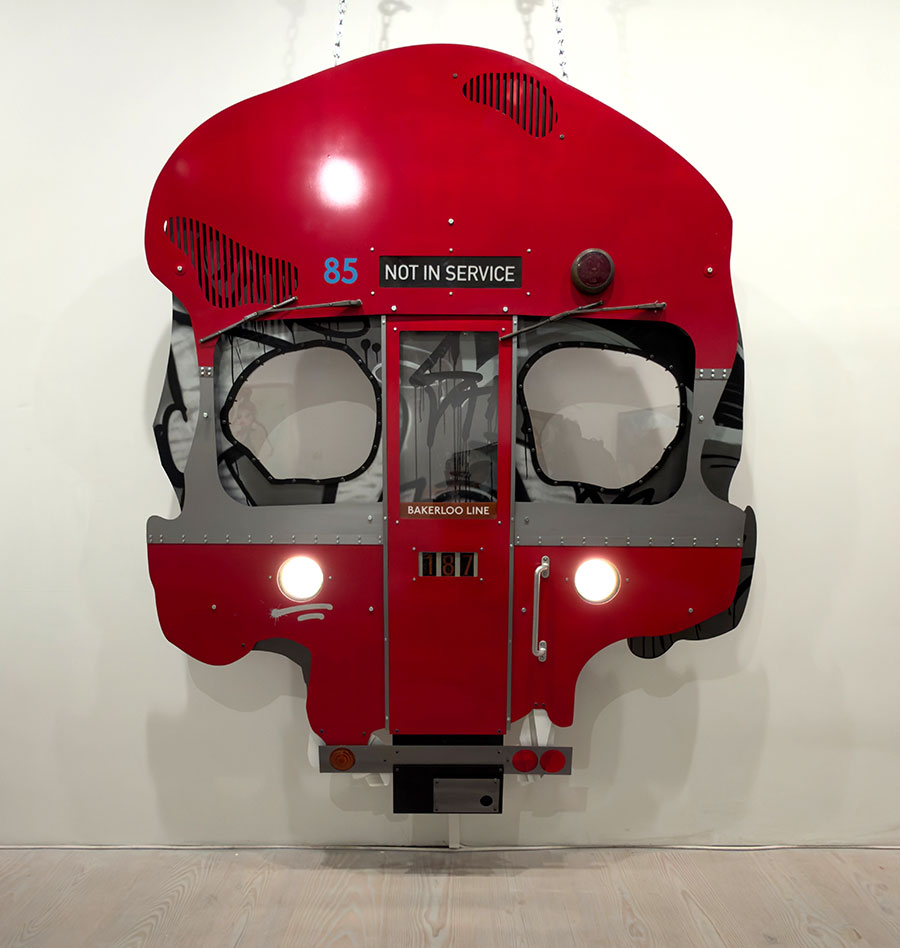
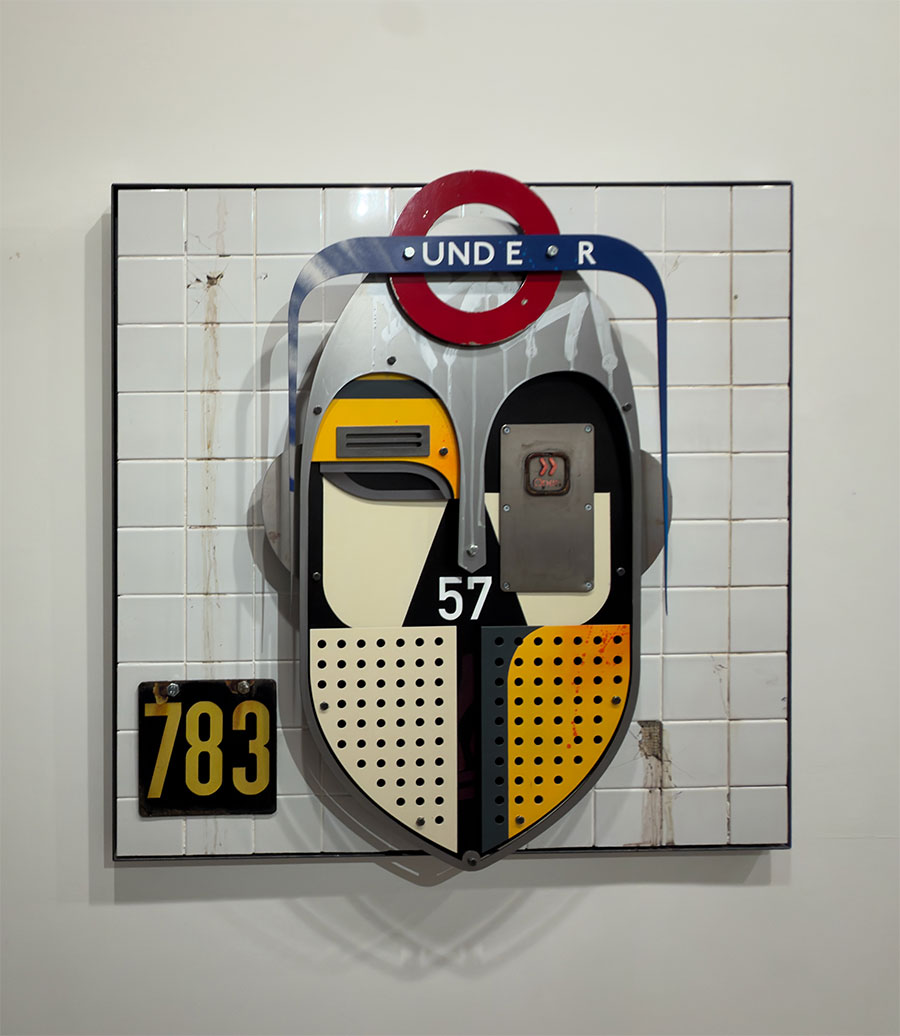
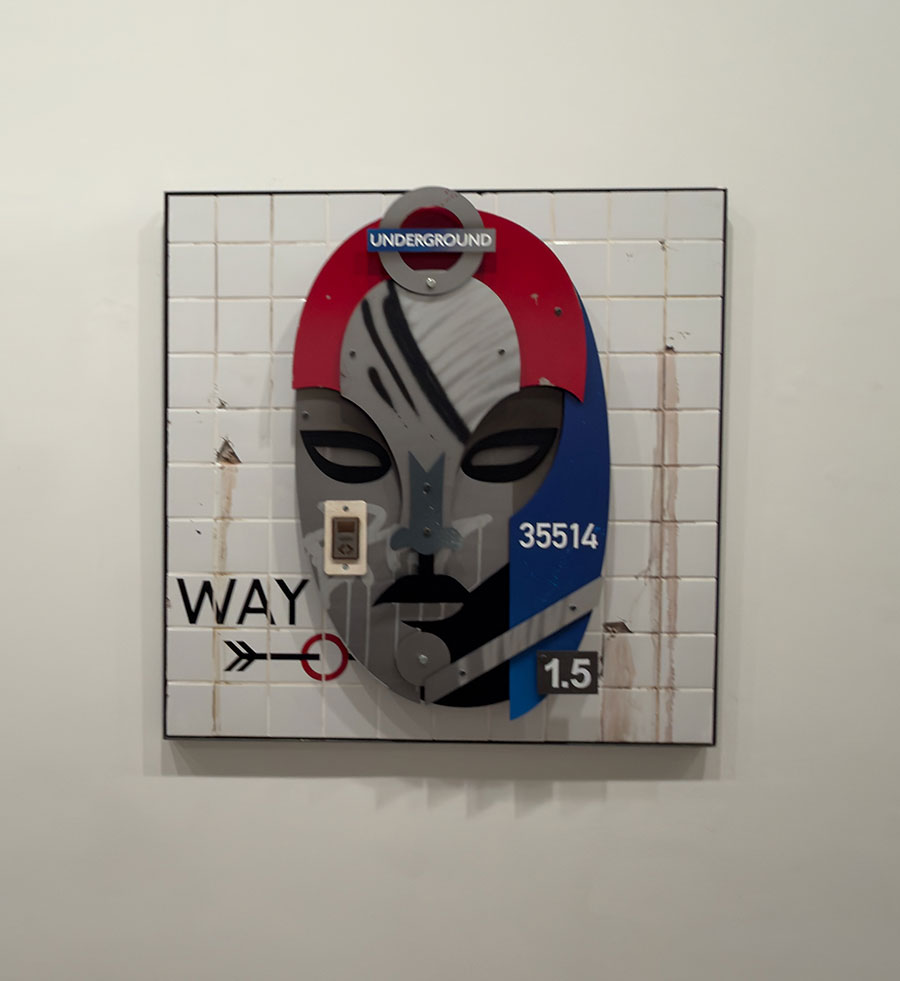
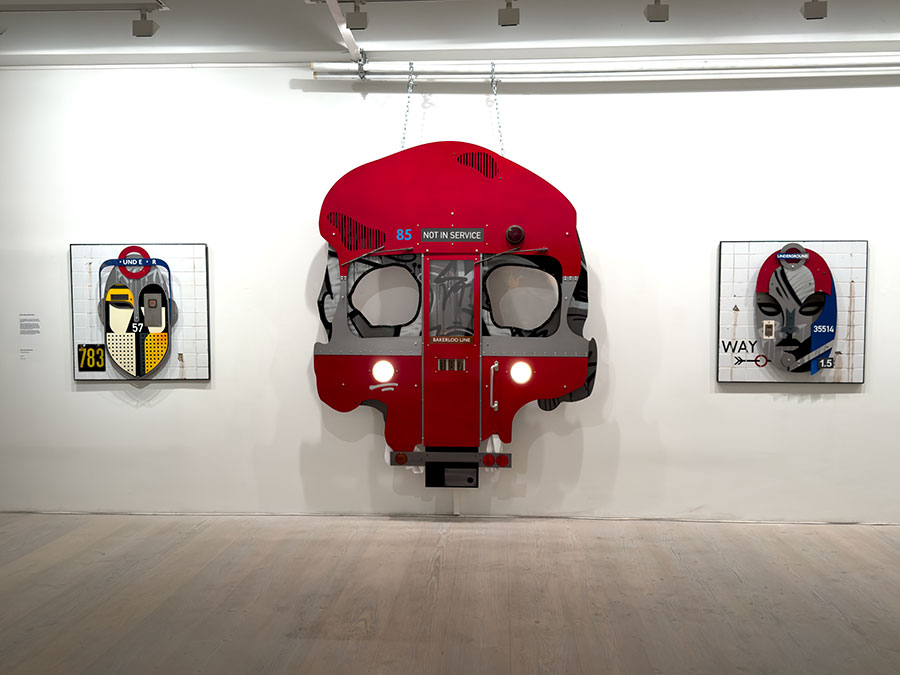
Berlin’s Rocco and His Brothers have built a reputation for elaborate unauthorized interventions, political pranks, and architectural disruptions that openly question the rules governing public space. At Saatchi, they turn London’s own Underground infrastructure into a collection of industrial faces, including a deconstructed red Bakerloo Line train front and masks assembled from transit signage, mechanical components, and the familiar visual language of the Tube. It’s a fitting translation of their graffiti roots and fascination with urban systems: the trains may be out of service, but the mischief is running on schedule.
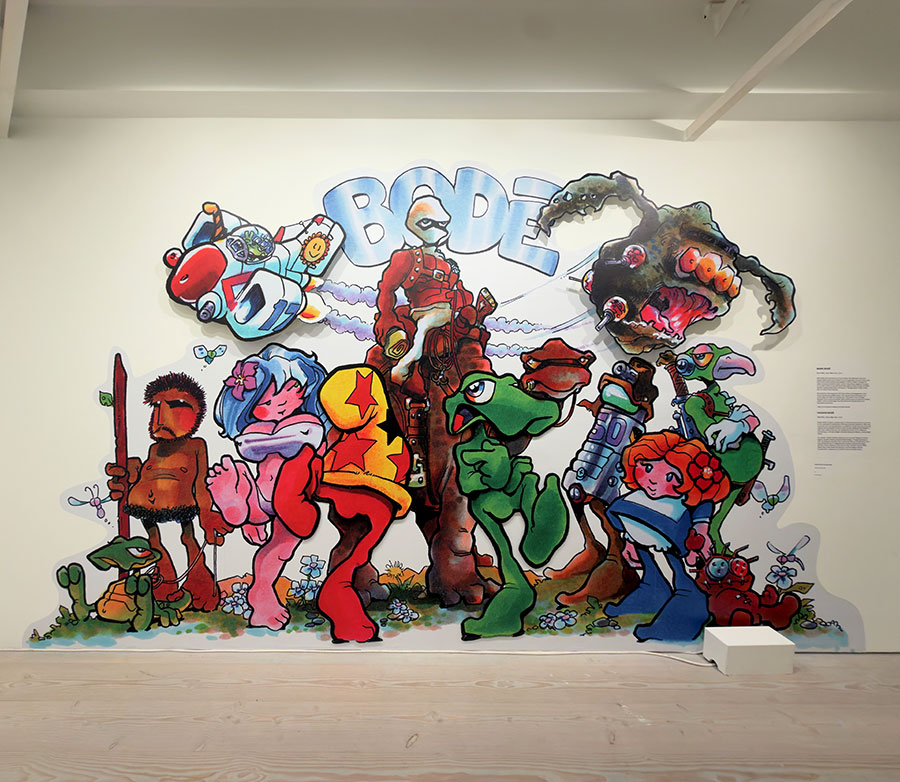
Mark Bodé carries forward and expands the psychedelic cartoon universe created by his father, the underground comics pioneer Vaughn Bodé, whose Cheech Wizard, lizards, and peculiar creatures became essential ingredients in the visual vocabulary of early New York graffiti. At Saatchi, original drawings, illustrated artifacts, a painted model train, and a sprawling, colorful wall installation show how their eccentric cartoon kingdom crossed from comics into subway cars, murals, and contemporary street culture. With exaggerated anatomy, rude humor, science-fiction fantasies, and near-total disregard for polite society, the Bodé characters show that graffiti’s artistic family tree has some pretty strange relatives.
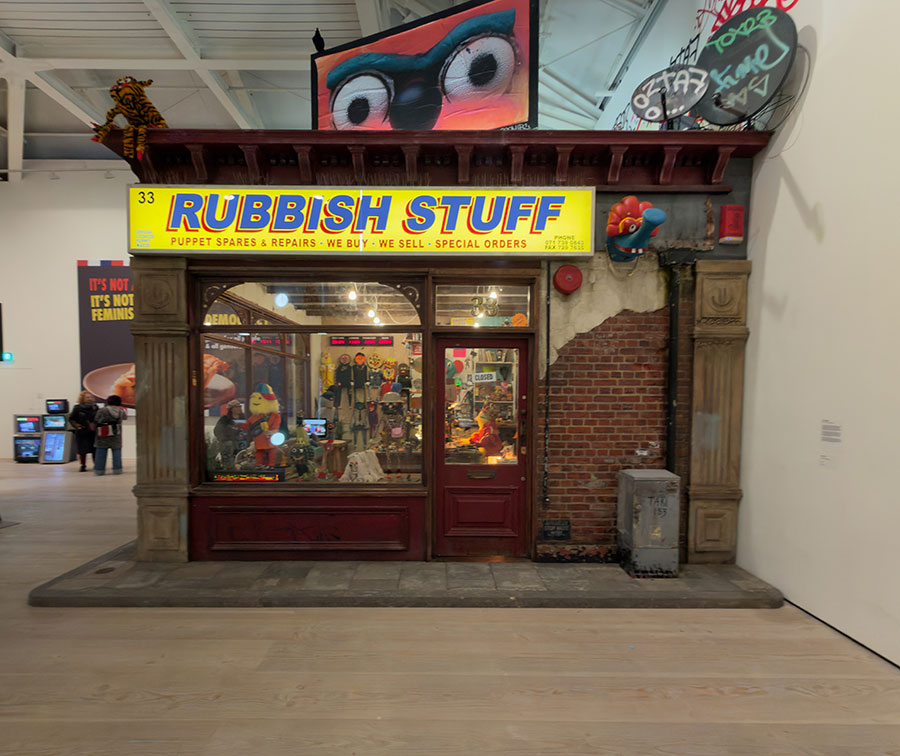
London street art veteran Paul Insect emerged from the city’s 1990s rave-flyer, graffiti, and DIY culture, developing a mischievous practice that mixes painting, collage, puppetry, found materials, and his appetite for the absurd. His Rubbish Stuff Puppet Shop at Saatchi recreates an inviting and chancy ramshackle neighborhood business, packed with animated characters, handmade puppets, castoffs, and assorted nonsense. Here he extends the junk-shop installations he previously created for BEYOND THE STREETS and his years of puppet-making with the late Brooklyn artist BÄST. It’s part puppet theater, part repair shop, part affectionate tribute to the peculiar things people collect and make, with the distinct possibility that everything inside has a screw loose, including the management.
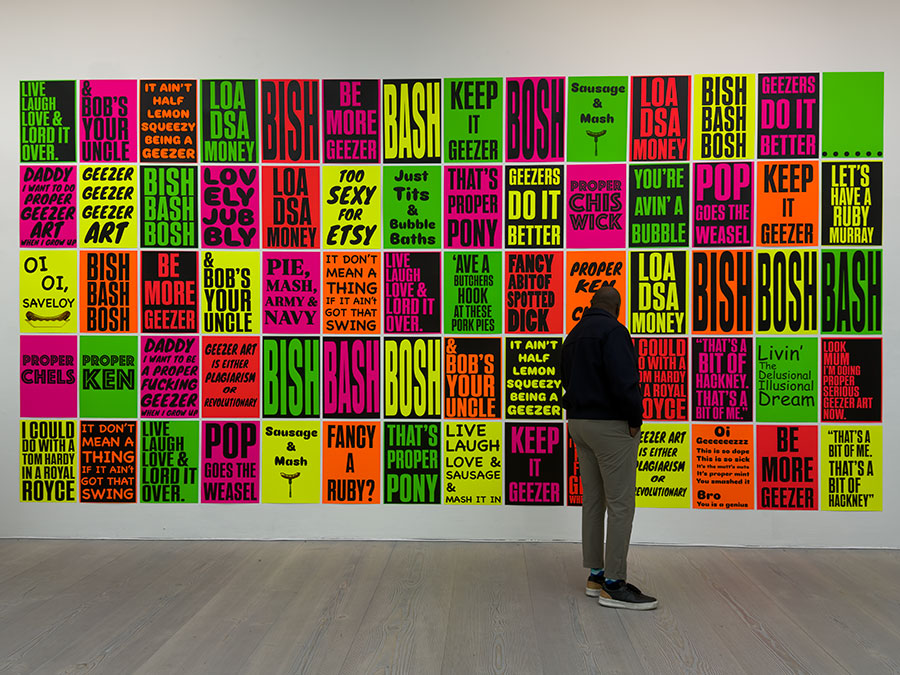
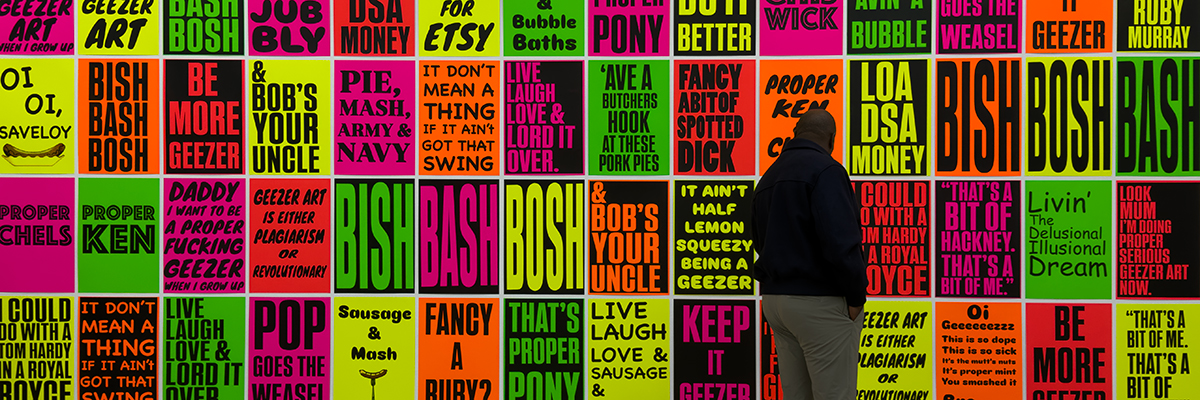
Iranian-born, London-based artist Aida Wilde uses screen printing, typography, and public interventions to take on gentrification, displacement, consumer culture, and the politics of everyday life. Her wall of fluorescent posters at Saatchi is a riot of British slang, cheeky double entendres, and working-class humor, with declarations like “Bish Bash Bosh,” “Proper Geezer,” and “Loadsa Money” delivering a rapid-fire lesson in the language of the streets. Through projects including Print Is Power and Sisters in Print, Wilde keeps the DIY tradition alive, proving that a good poster can deliver a political message and take the piss at the same time.
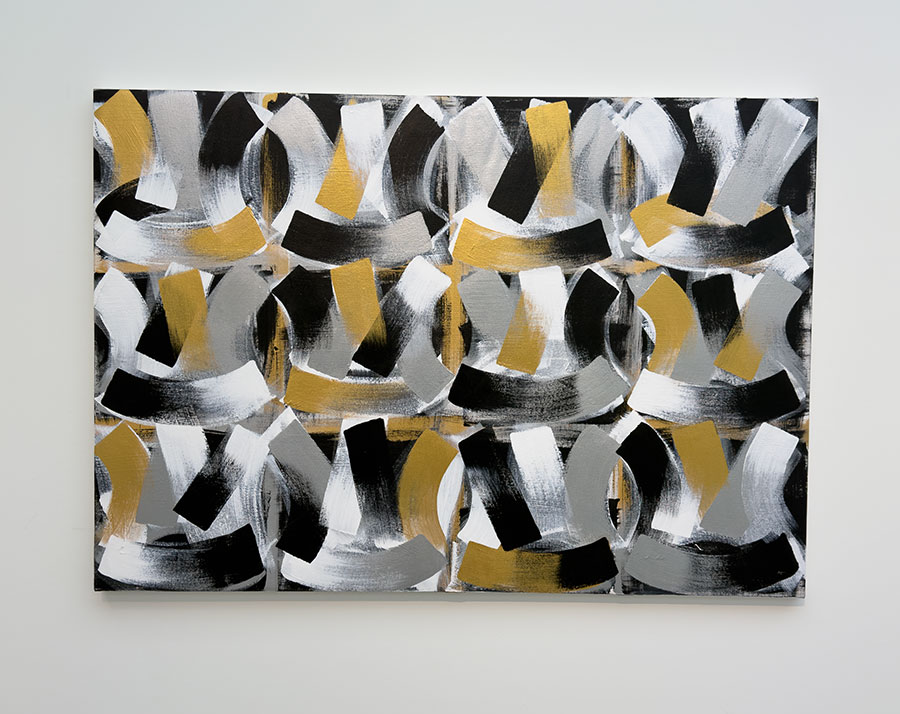
New York graffiti pioneer Eric Haze helped design the visual identity of hip-hop, creating influential logos, album covers, and graphics for artists and labels including the Beastie Boys, LL Cool J, and Tommy Boy Records. At Saatchi, his newer generation paintings, The Golden Age (2019) and Zero Gravity 1 and 2 (2026), trade familiar typography for sweeping brushstrokes, intersecting forms, and tightly composed arrangements of black, white, gray, and gold. The visual discipline remains, but the emphasis has shifted from graphic identity to a more painterly rhythm.
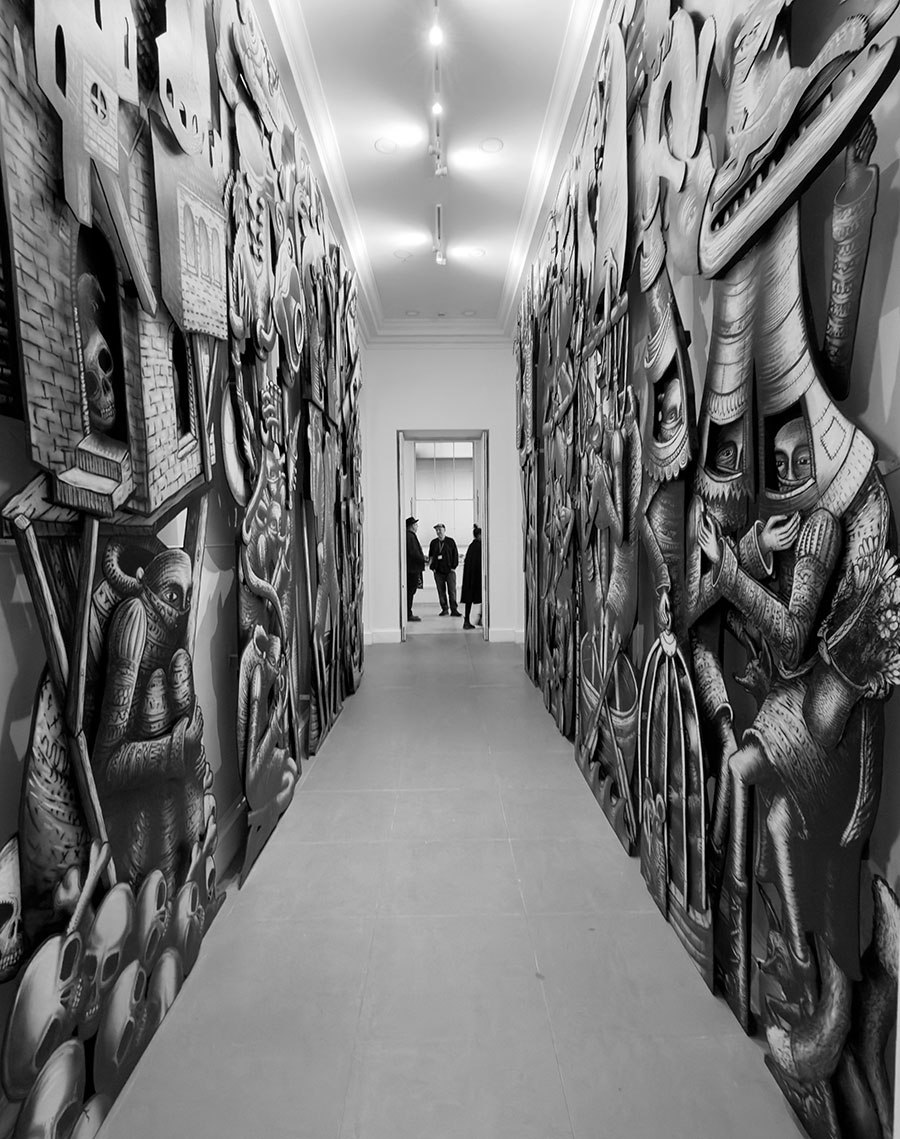
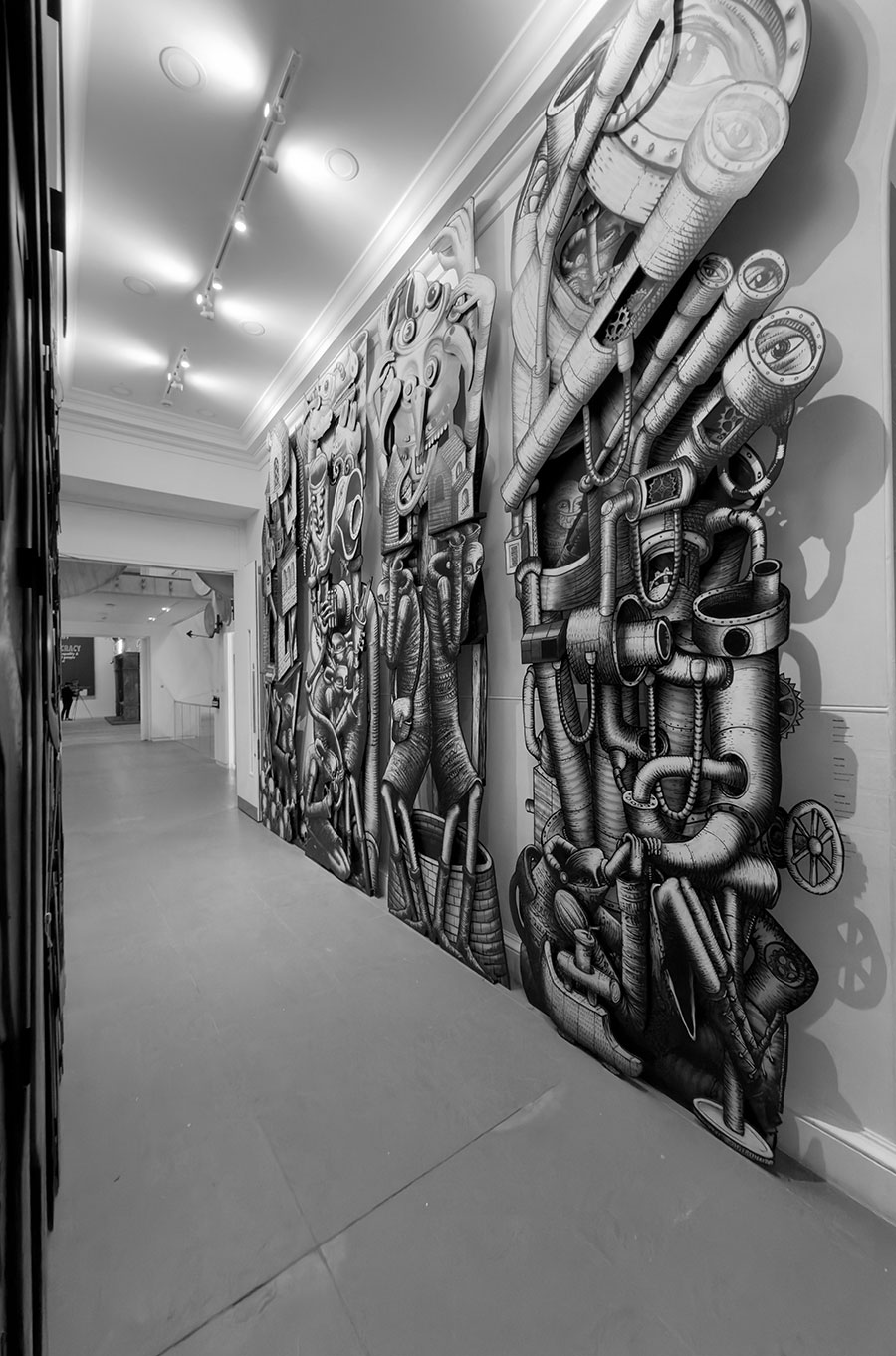
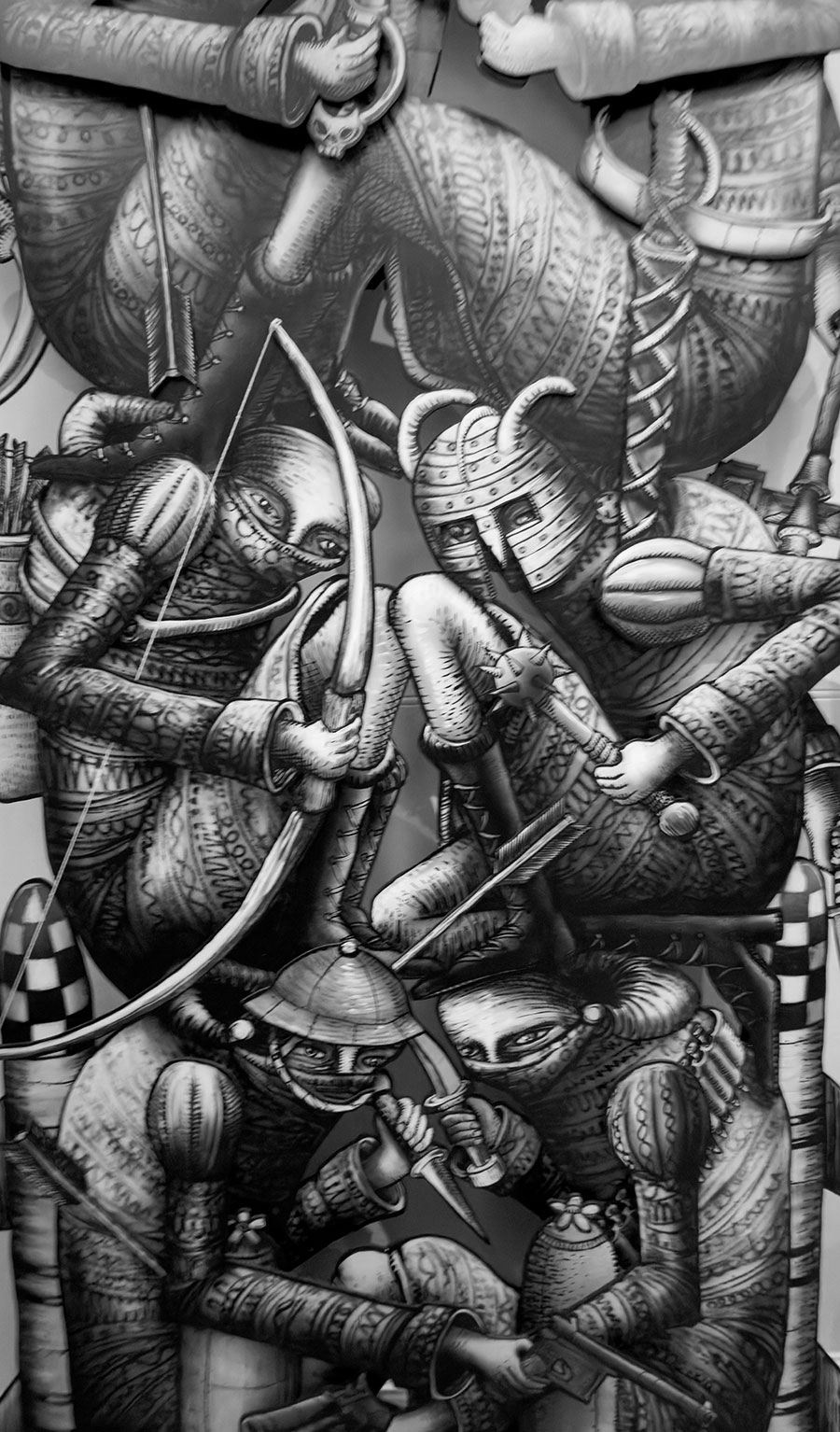
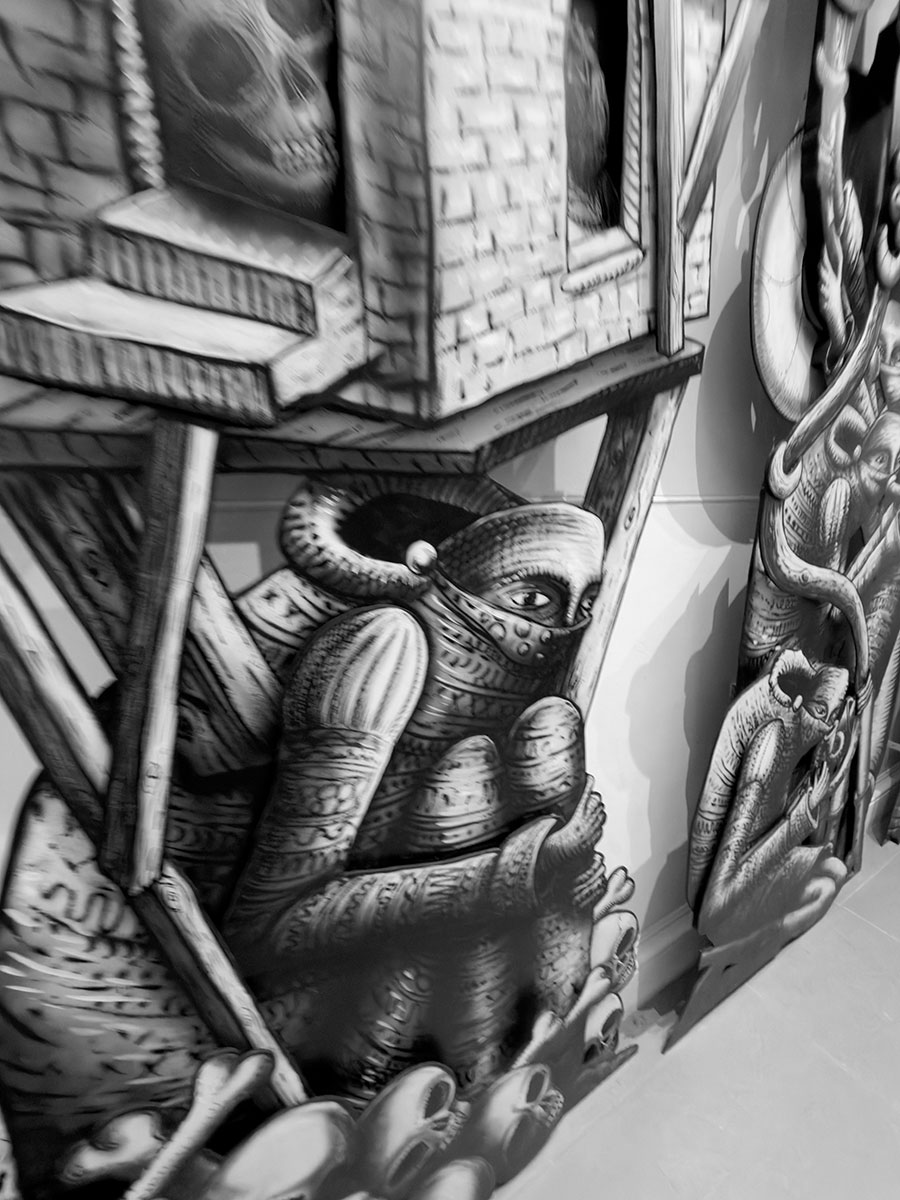
British artist Phlegm emerged from DIY comics, zines, and abandoned industrial spaces, developing his astonishing black-and-white universe of mysterious creatures, medieval-looking figures, intricate machinery, and architectural fantasies that may operate by their own private logic. At Saatchi, his enormous sculptural wall installation transforms an entire corridor into a densely populated imaginary civilization, where masked warriors, watchful eyes, elaborate piping, furtive figures, and impossible mechanical contraptions climb the walls in detailed relief. Part medieval engraving, part Tim Burton’s Sweeney Todd with Helena Bonham Carter running the factory, it’s a triumph of obsessive craftsmanship and storytelling, even if nobody can explain what the hell all these people are up to.
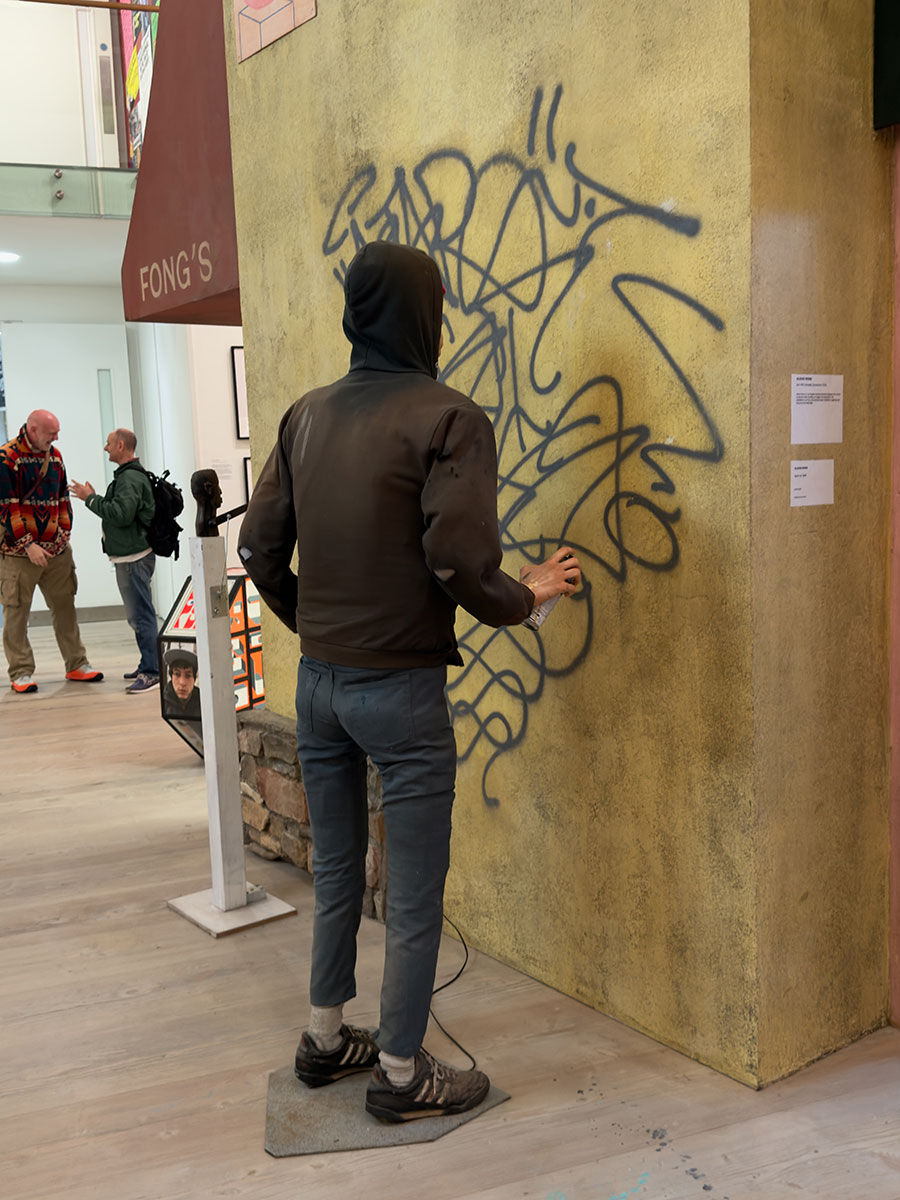
San Francisco’s Barry McGee, known on the streets as TWIST, has spent decades bringing graffiti, underground comics, skate culture, and the visual disorder of city life into museums without making it all respectable. Here his familiar architectural approach returns in a life-size cluster of weathered storefronts, including Fong’s and Sport Ltd., complete with graffiti, an animated tagger, barred doors, battered facades, and the atmosphere of a neighborhood the property developers haven’t monetized yet. It extends the improvised street environments McGee has built for years, celebrating the characters, contradictions, and accidental beauty of urban life before someone arrives with a renovation permit and jacks up the cost of living.
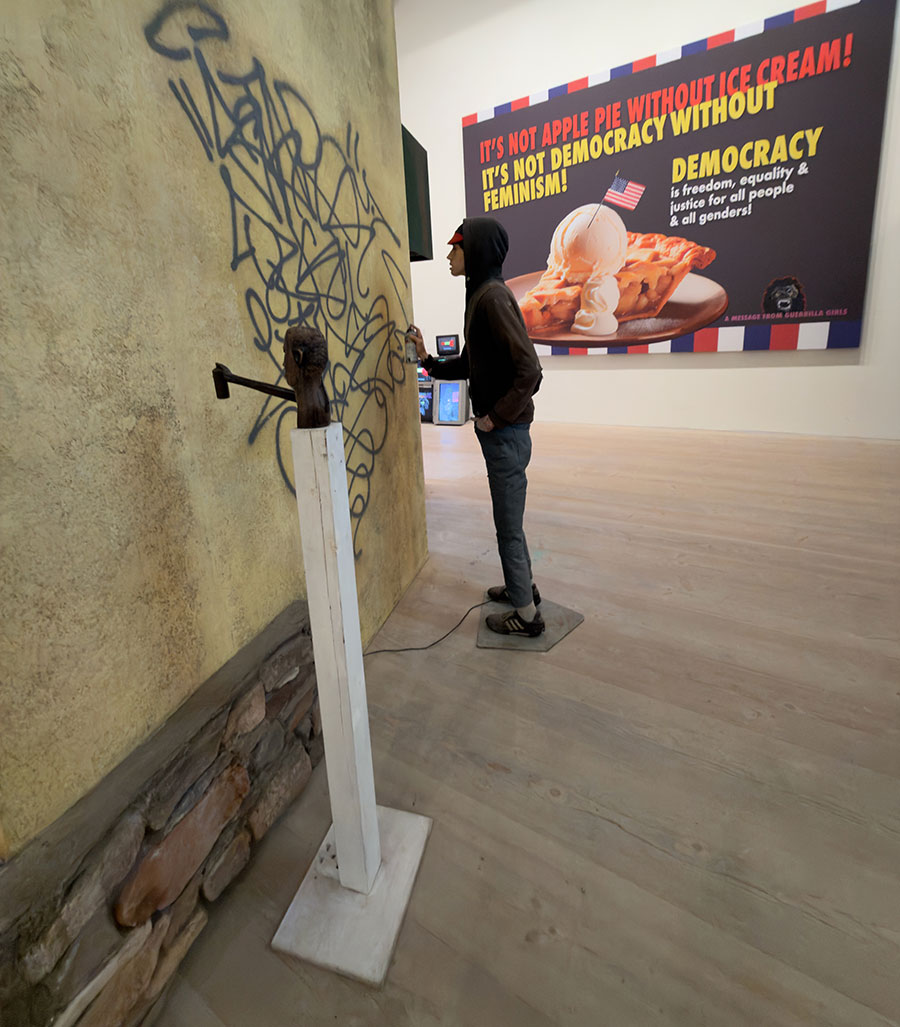
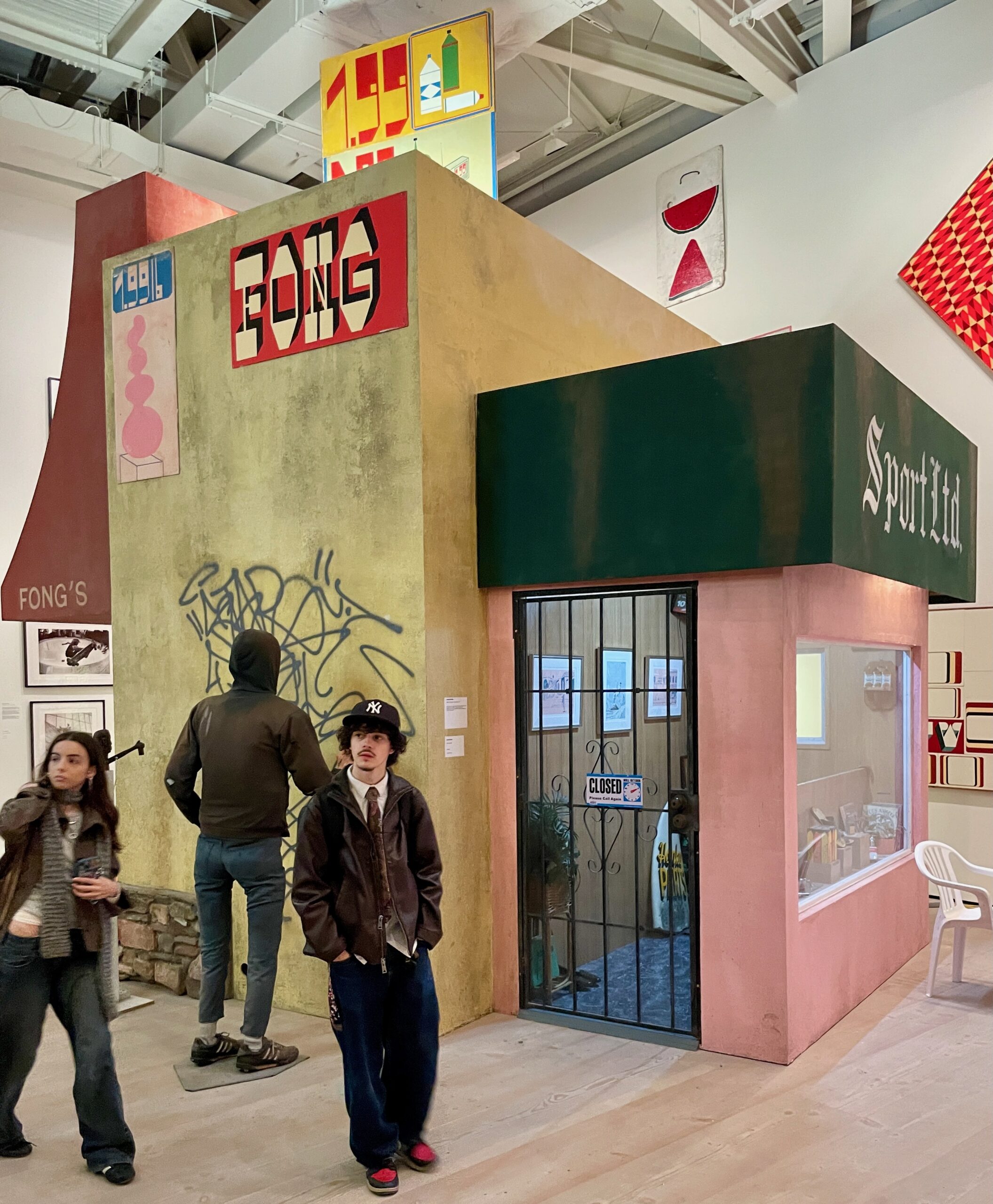
Barry McGee. Beyond The Streets London. Saatchi Gallery. (photo © Jaime Rojo)
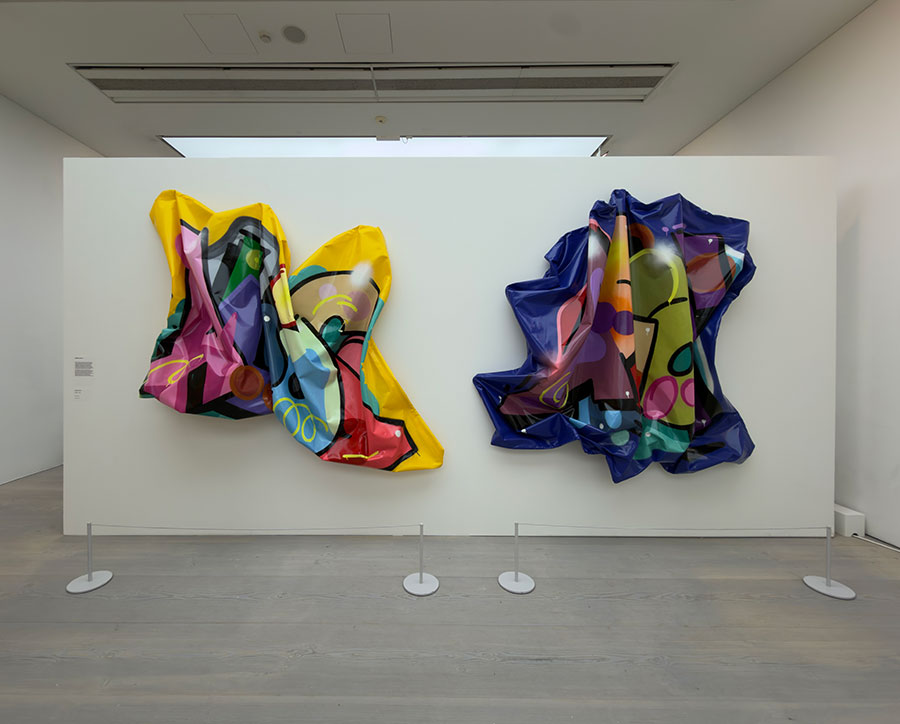
Germany’s MOSES & TAP emerged from the European train-writing scene and have spent years pulling graffiti apart, experimenting with abstraction, industrial materials, and the relationship between a painted image and the surface carrying it. Here, the reconstructing continues- two brilliantly colored, collapsed panels continue their recent SHIMMS investigations, inspired by the flexible coverings of freight wagons, compressing graffiti lettering and color into giant, crumpled, three-dimensional compositions. After decades of painting moving trains, they’ve brought the surfaces indoors and folded them like industrial origami.
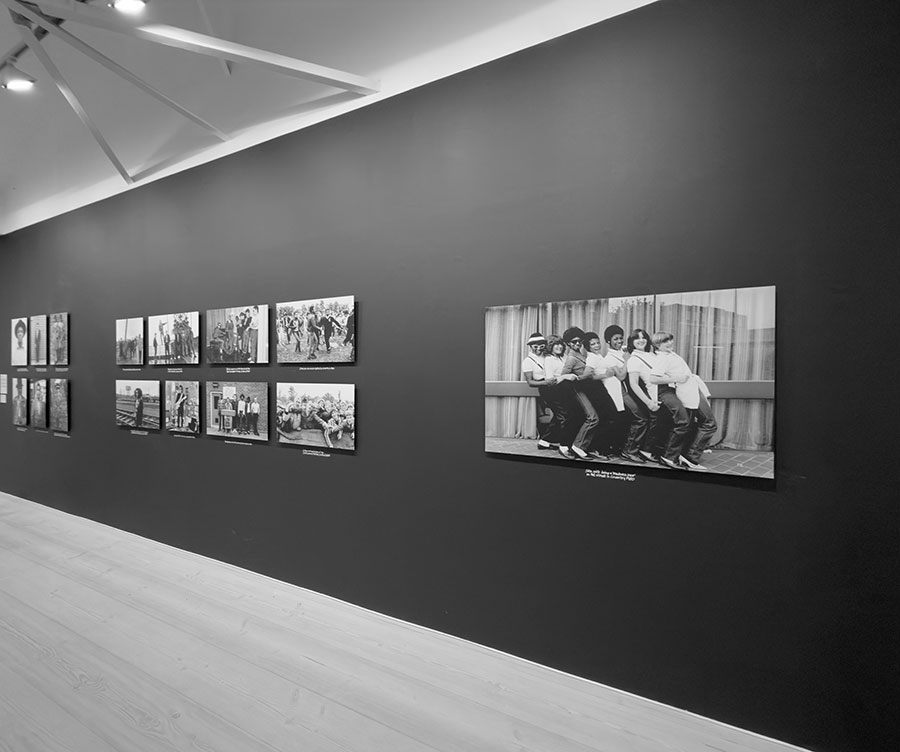
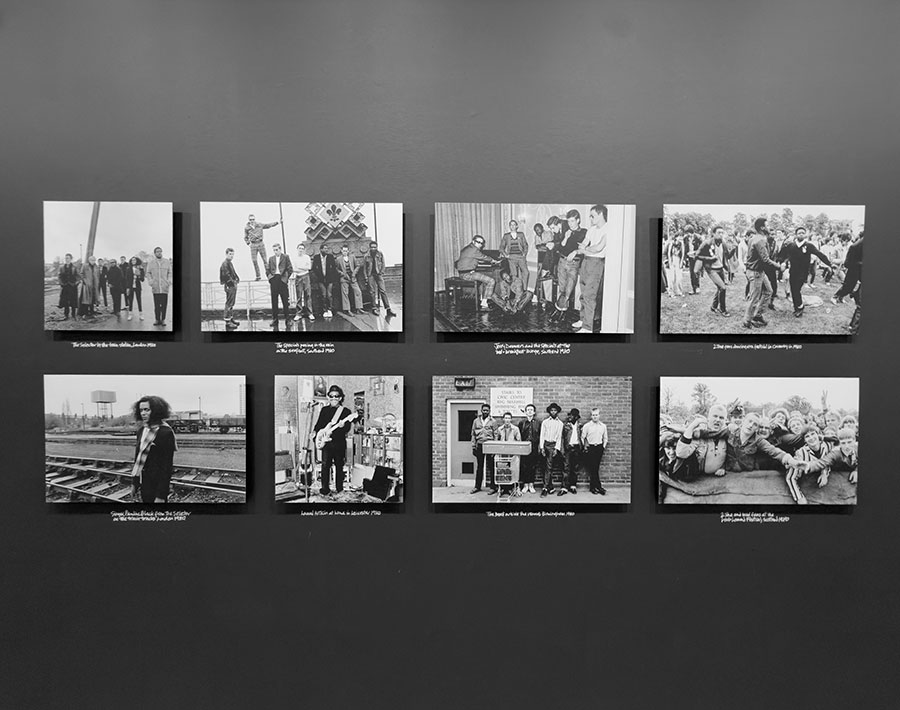
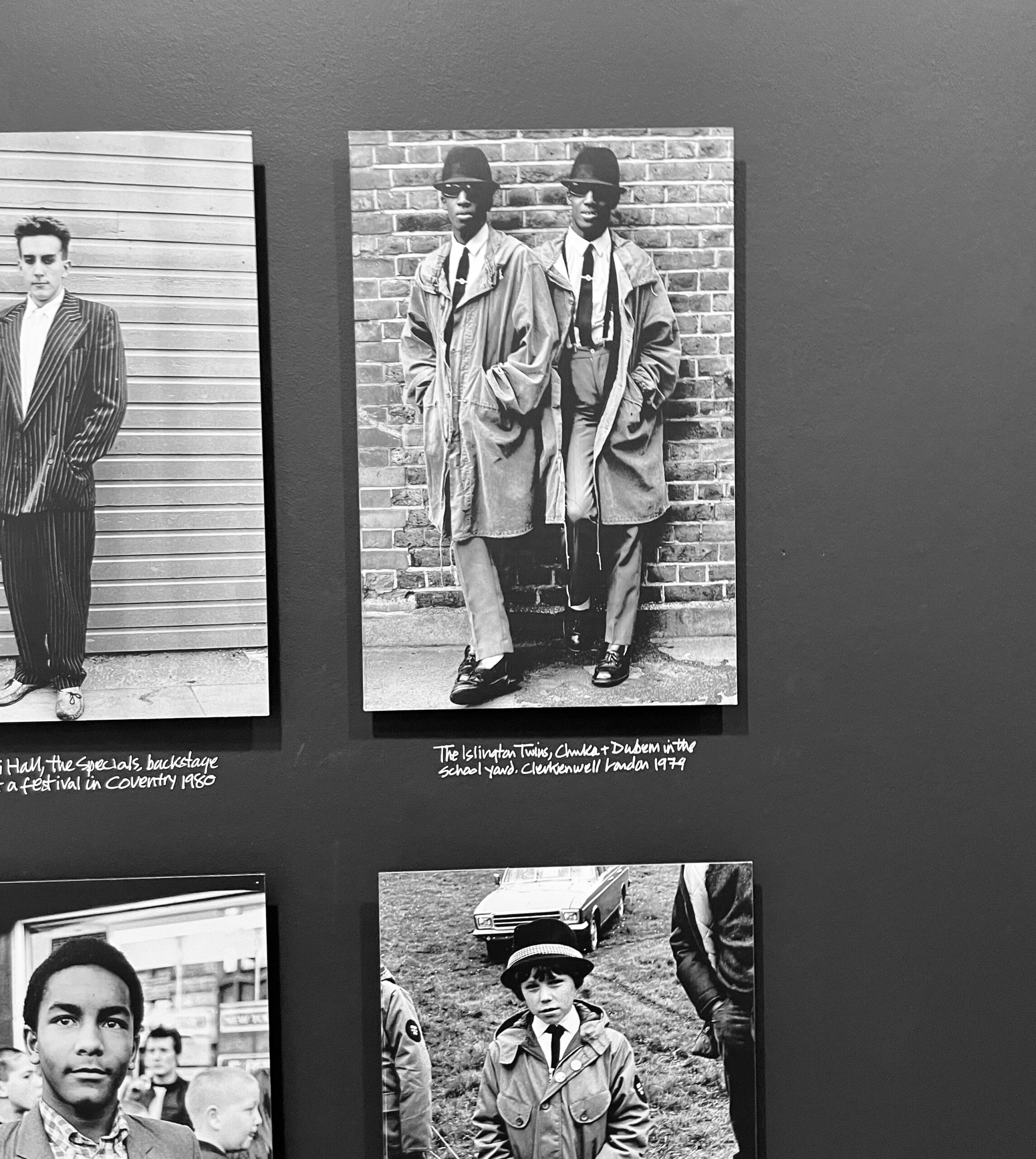
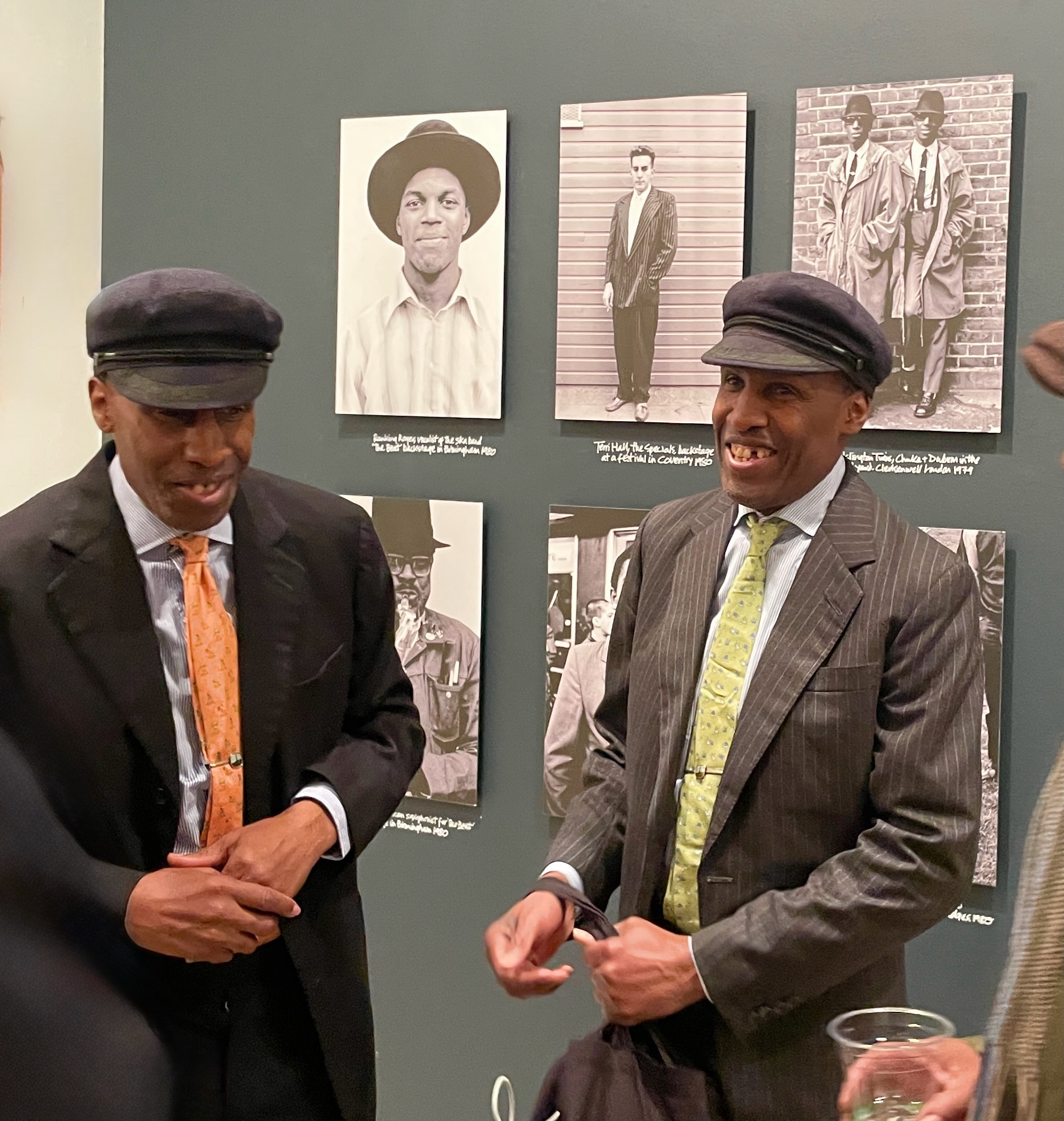
London-born photographer Janette Beckman documented punk, ska, 2 Tone, and early hip-hop before these movements became respectable cultural history, capturing the people, music, and street fashion that defined them. Her black-and-white photographs at Saatchi, taken between 1979 and 1981 during her years shooting for Melody Maker and other music publications, feature musicians, rude boys, young fans, and the extraordinary crosscurrents of Britain’s ska revival, from The Specials and The Beat to sharp-dressed kids who could teach a master class in attitude. Beckman later took her camera to New York’s emerging hip-hop scene, building a photographic record of generations that created their own culture.
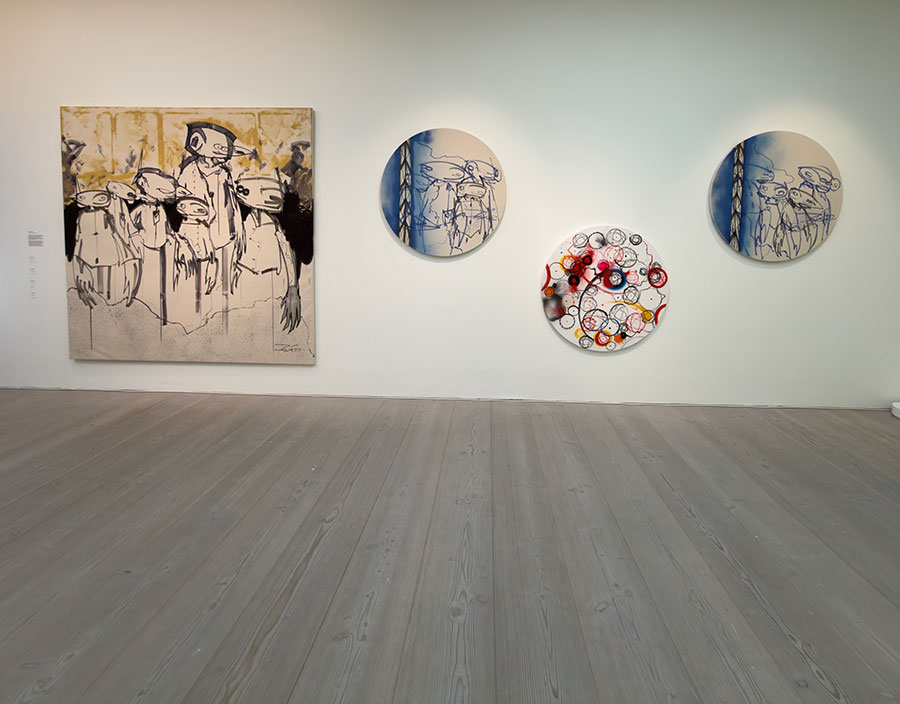
New York graffiti pioneer FUTURA 2000 helped revolutionize subway painting by moving beyond traditional lettering into atmospheric abstraction, futuristic forms, and a visual language that connected graffiti with punk, hip-hop, and contemporary art. In these pieces, his familiar orbiting circles, gestural lines, and bursts of color share space with loosely rendered, long-nosed characters whose sideways expressions suggest visitors from another planet, possibly wondering how they ended up in Chelsea. FUTURA has spent more than four decades demonstrating that graffiti never needed to stay inside the lines.
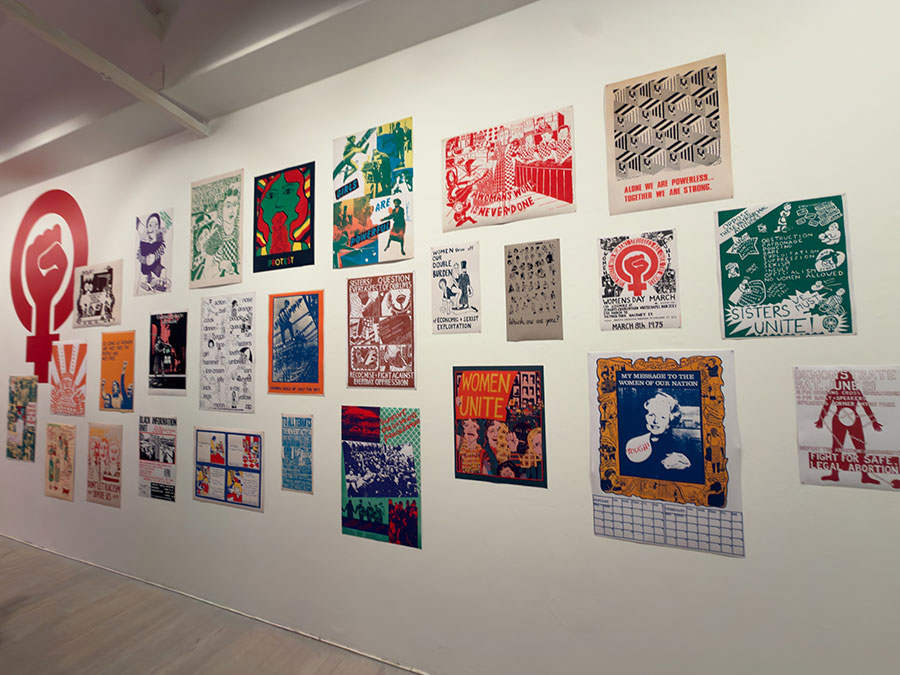
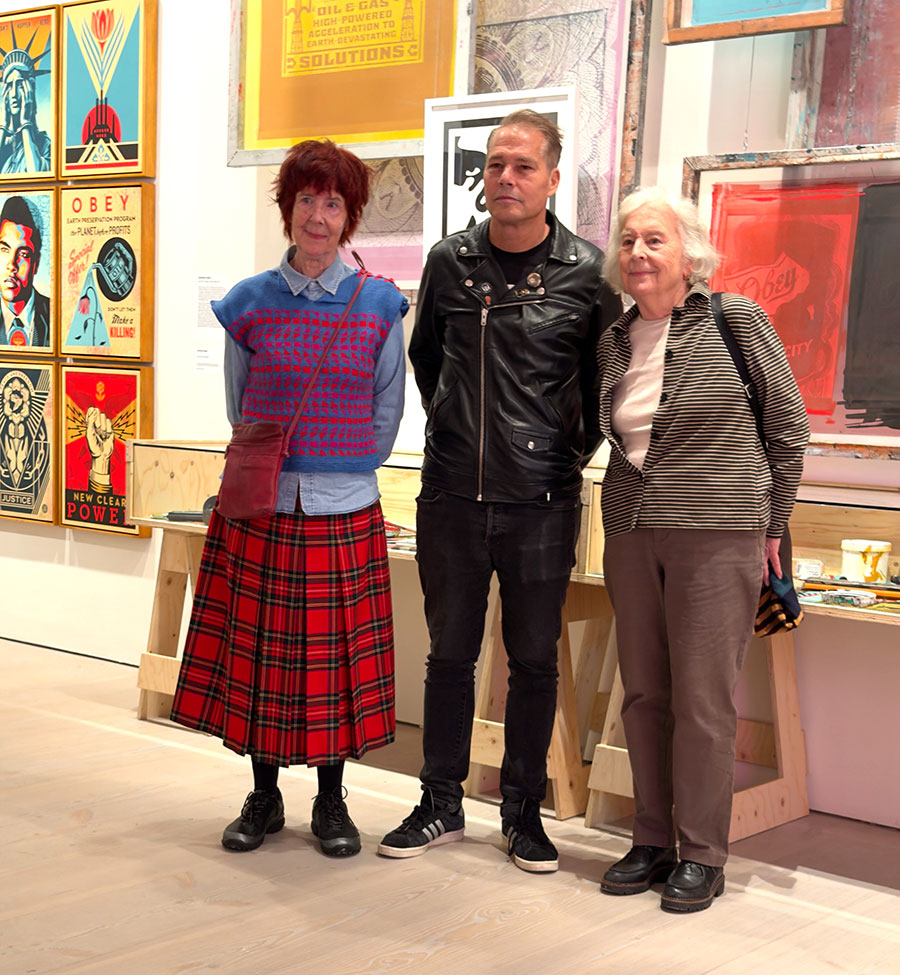
Founded in London in 1974, See Red Women’s Workshop turned screen-printed posters into instruments of feminist activism, challenging sexism, racism, housing inequality, reproductive injustice, and the everyday absurdities of patriarchy with sharp graphics and sharper slogans. Their colorful prints cover a substantial wall at Saatchi, where founding members Suzy Mackie and Pru Stevenson attended the press preview, a living connection to the collective’s history and to the contributions of Julia Franco, who died in 1980, and Sarah Jones, who died in 2007. Working collaboratively, often with donated materials, secondhand equipment, and very little money, these women showed that a printing screen, a few pots of ink, and a well-aimed argument could cause serious trouble for the establishment.
All week BSA is in London with Urban Nation Museum to talk to people about the street art and graffiti scene and Urban Nations’ celebrations of 10 years of existance.