All posts tagged: Rene Lerude

“War & Order”, War Is a Racket: The Art of Profit and Power at Frost Gallery

“War & Order”, War Is a Racket: The Art of Profit and Power at Frost Gallery

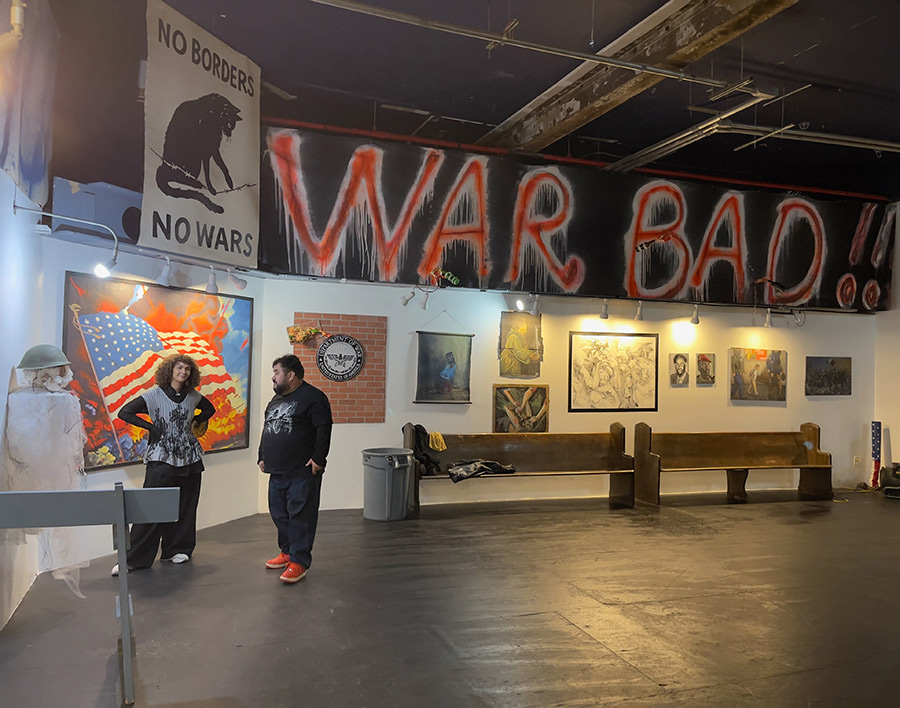
After a successful, painful, and funny take-down of the Dollar bill at their last group show, the artists-run collectivists at 148 Frost Gallery are smoking again with their newest installations and canvases related to the biggest money-maker of all time: War.

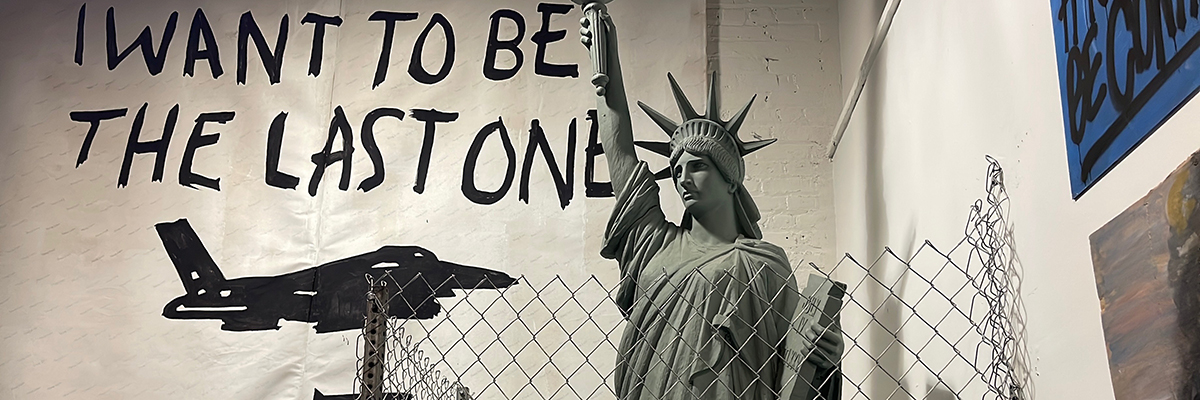
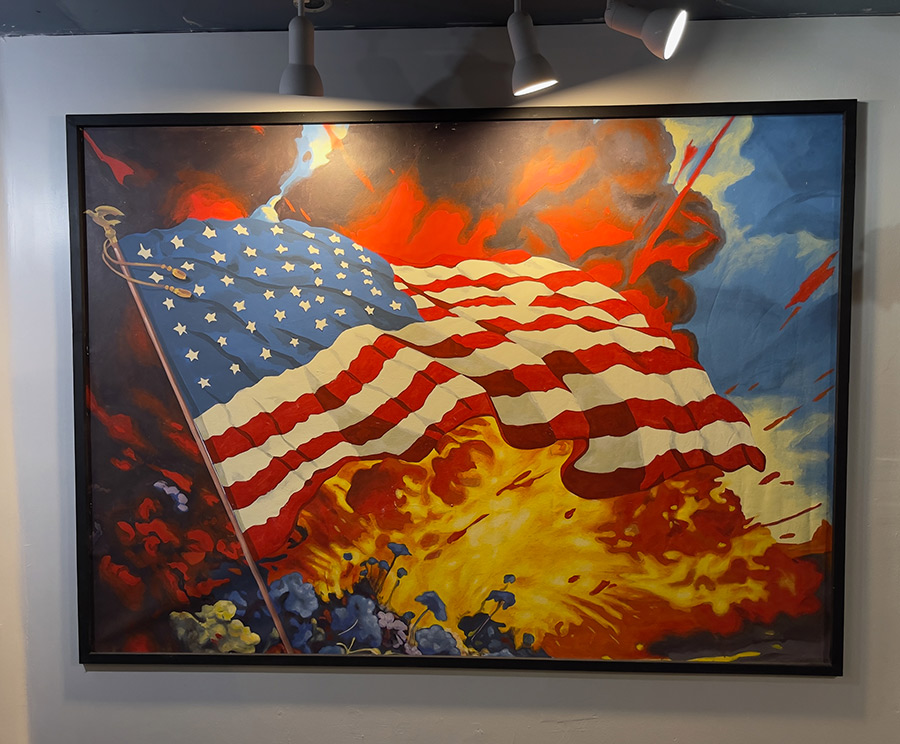
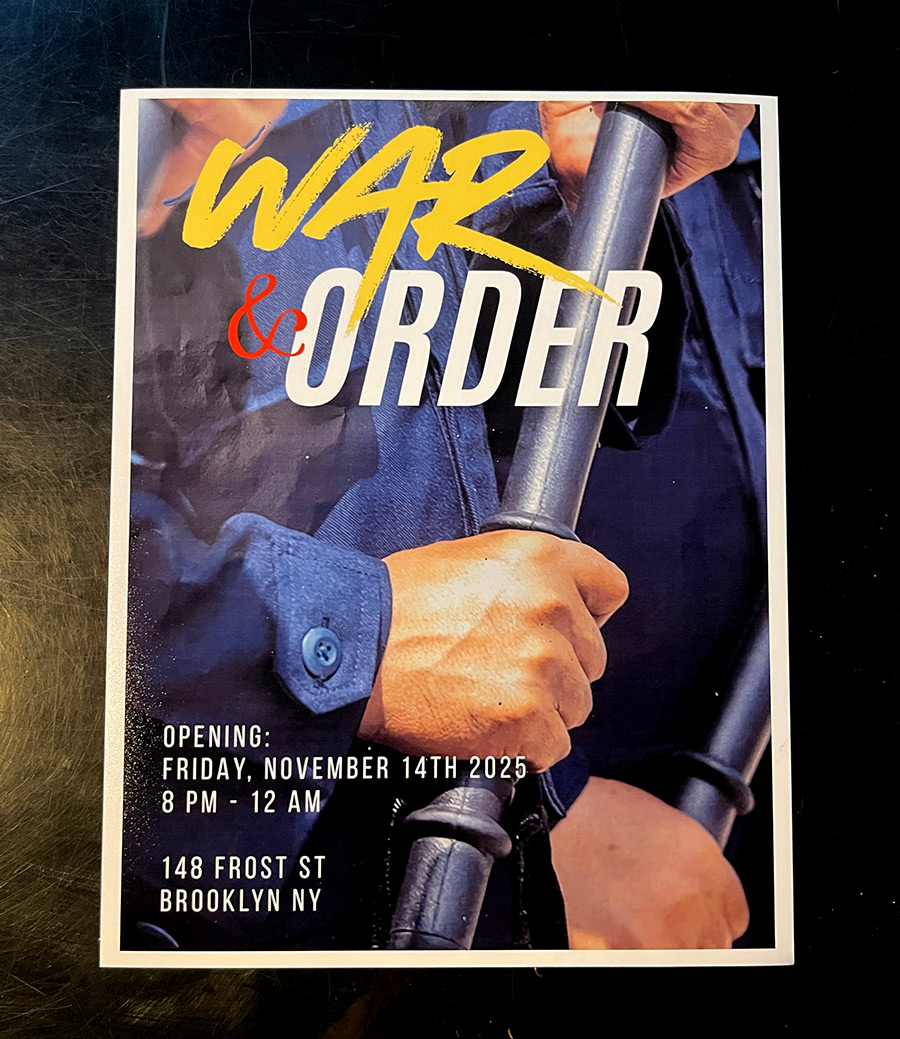
“War & Order” features street artists, contemporary artists, outside artists and those adjacent ruminating on the role and roll of the war machine in the 2020’s with Gabriel Specter, Renelerude, Escif, Dan Sabau, Kazuhiro Imafuku, M Shimek, and Cash4 on the march.
Specter. Detail. “War & Order” 148 Frost St. (photo © Jaime Rojo)

Between those two shows, this gallery may have captured the moment prophetically, like a seer in a storm, evaluating the past and anticipating what is next.

A century, at the rise of the so-called American Century, it had just become clear that undermining a nation’s currency through inflation was instrumental to eroding its economic and social order – Lenin is reported to have posited it as a beststrategy. Keynes agreed, and observed that a rampant inflation that debauches your currency secretly will  confiscate wealth, breed inequality, and shatter the trust that underpins society. Not that we’re headed toward rampant inflation, but the similarities of these days and those days leading to world wars are striking, including our own media’s consistent underreporting of the dollar’s loss of value and global influence.

During WWI, all major governments resorted to a programmed money printing. Whether by design or incompetence, the results were undeniable: economic destabilization, often hyperinflation, internal chaos, political upheaval, and war. For many decades people swore that we would never let that happen again. But most of those people are dead now, and the dollar today is worth a nickle, compared to a century ago.
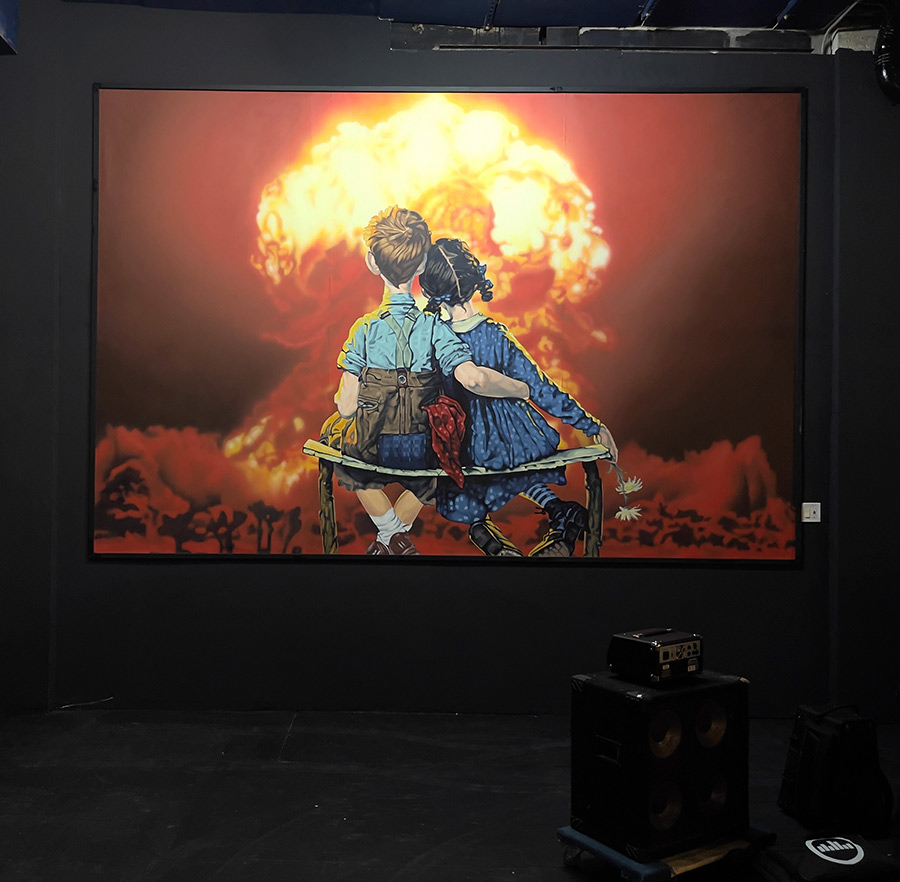
Specter. “War & Order” 148 Frost St. (photo © Jaime Rojo)

What is that saying, often paraphrased, “history doesn’t repeat, but it often rhymes.”?

“War and Order” enlists international and local artists for a pointed, and occasionally mischievous, look at the world we’ve managed to build for ourselves. It doubles as inquiry and needling social commentary, with each artist charting our tangled relationship with war, the creeping architecture of the police state, and the long shadow of militarism, surveillance, and planetary harm—all unfolding in an age where social media spins narratives and we scroll past catastrophe.

Rene Lerude. Detail. “War & Order” 148 Frost St. (photo © Jaime Rojo)

Murals, installations, paintings, and performances push these ideas, probe our past, and interrogate the present. It’s uncomfortable, for sure. What comes next, we have a dreadful guess. But there is a countenance of repairing the broken, correcting injustices, healing pain – even though this is not the focus. As the organizers put it, the exhibition is “our protest, our loud speaker to the world—an unedited, unsilenced voice.”

Rene Lerude. “War & Order” 148 Frost St. (photo © Jaime Rojo)
Rene Lerude. Specter. “War & Order” 148 Frost St. (photo © Jaime Rojo)

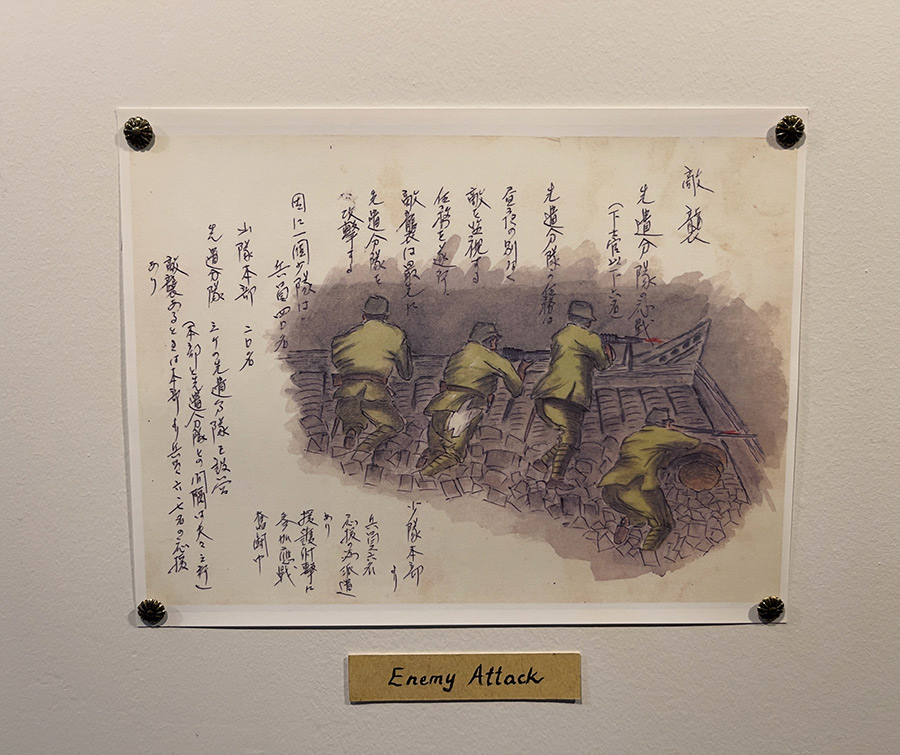
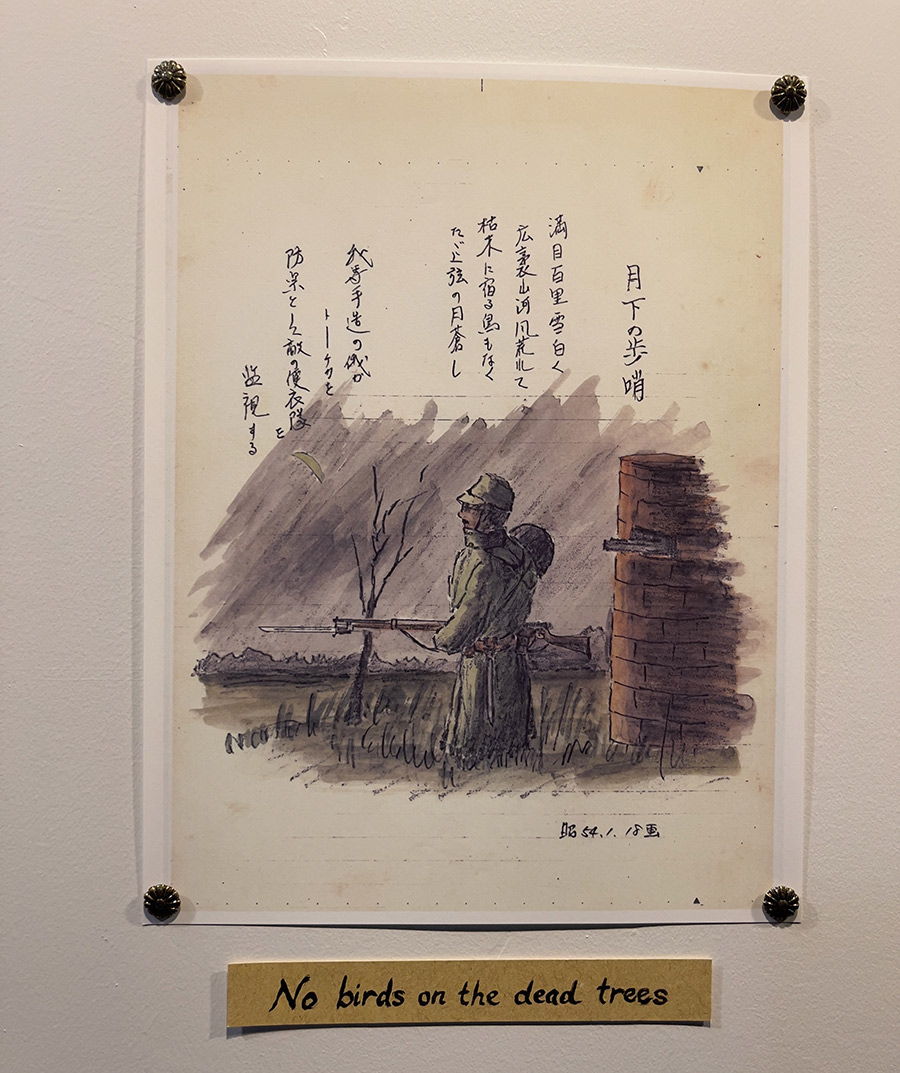
Kazuhiro Imafuku’s watercolors read like a plaintive diary of a soul under siege—an illustrated reckoning as he “displays and deciphers” his grandfather’s service in the Manchurian war. Though distant in time and culture, the story feels painfully familiar to the stories of soldiers here and abroad today. His grid of small works echoes the disarming clarity of Escif’s massive hand-painted banners hanging around the homemade gallery space, where the Spanish conceptualist delivers coded commentary in a deceptively plain voice, sharpened by deep critique. Elsewhere and throughout, artists confront imperial overreach, immigration persecution, and high-tech terror without flinching—perhaps daring us not to look away.

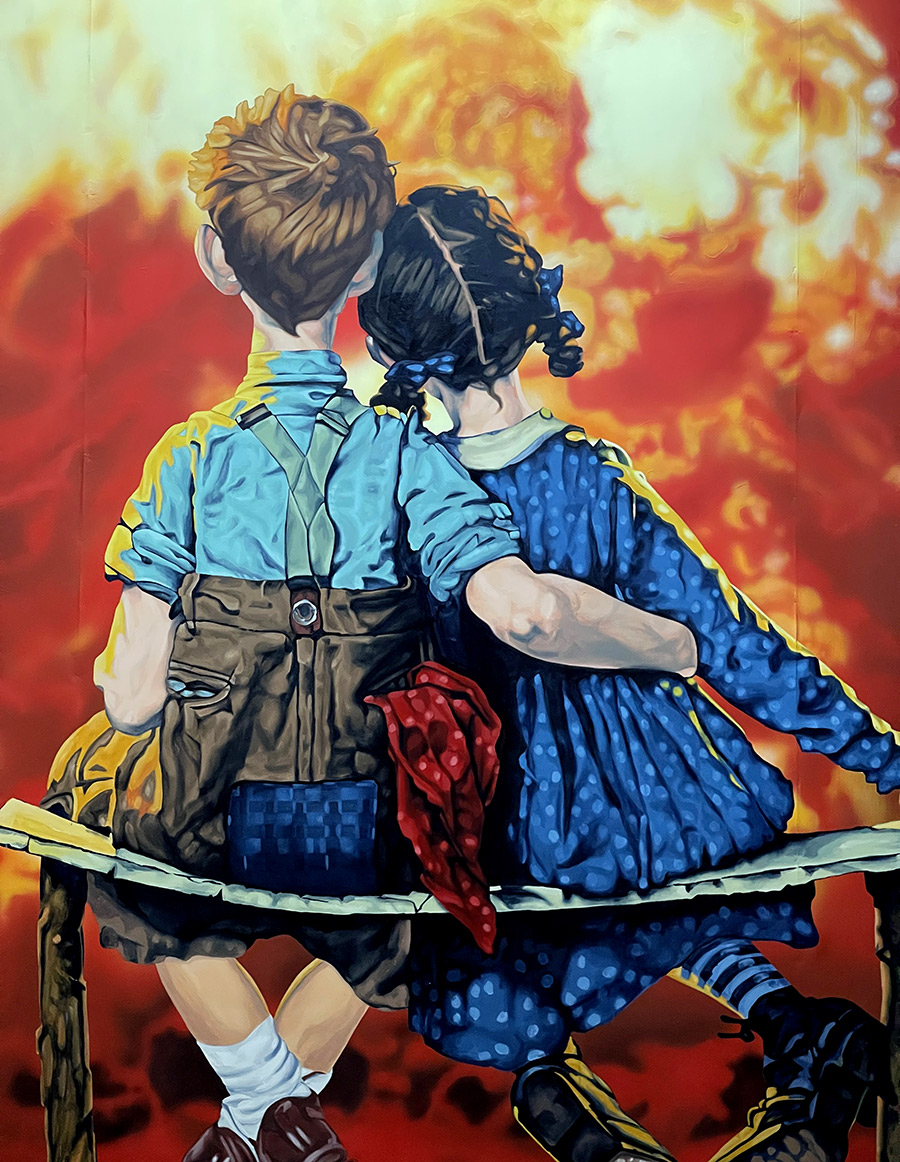
Specter’s opus “Expressive Love” calls to mind the glib narcissism of the 20th century westerner historically, a simplistic Norman Rockwell sentimentality that sees the ideal in spite of the truth. It also calls to mind the last enormous propaganda push that engulfed continents for the profits of a few, the fake ‘war on terror’ of the 2000s, when an Internet meme featured UK Prime Minister Tony Blair happily posing for a selfie before a hellfire scene from the oilfields of Iraq.

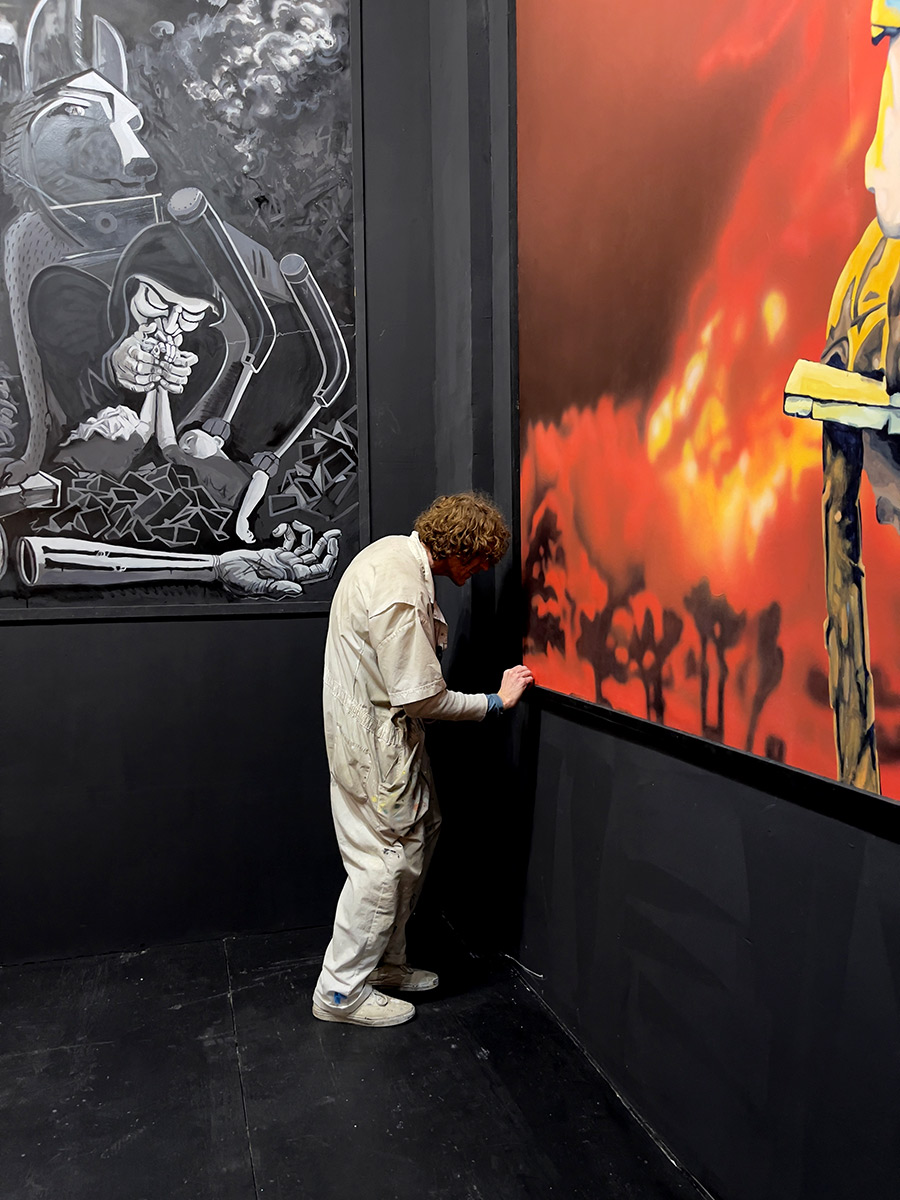
Adjacent to Specter, the French street artist Rene LeRude presents a disjointed monochrome macabre missive of winners and losers updated with dark tech, echoing the dimension, and disconnected field of vision of Guernica by Picasso – a phalanx of streaming cameras mounted to the wall next to it make sure the scene is monitored and broadcast for best effect. These are the suffering and distorted figures that Picasso was protesting, reported without humanity in black and white back then; atrocities committed against civilians; violence unleashed by authoritarian regimes. LeRude’s own neo-cubism strikes a similarly expressive distortion, his own moral indictment.
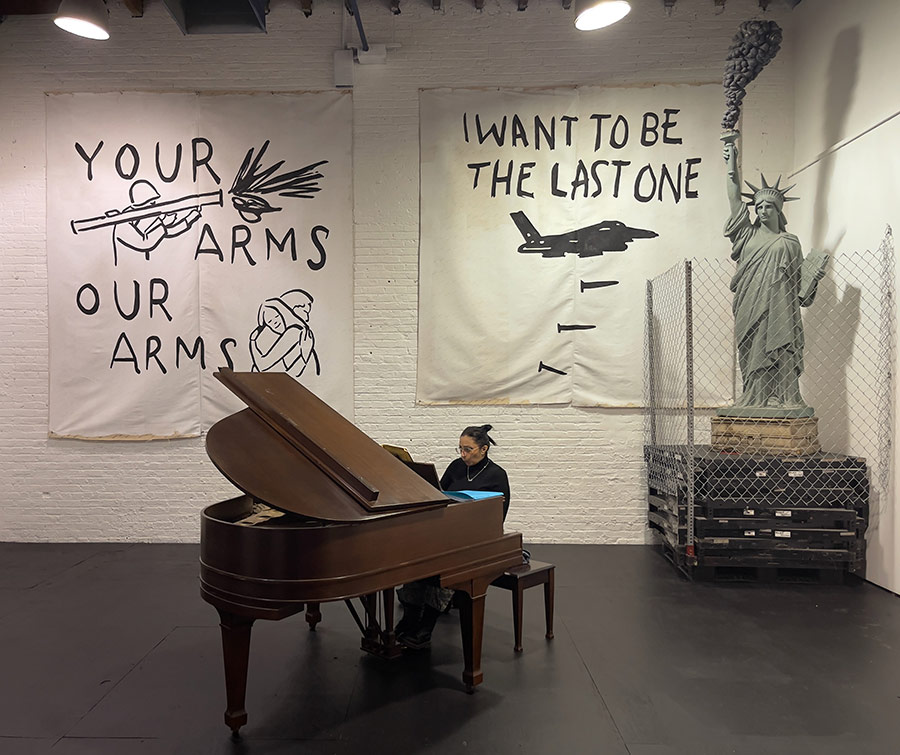
Escif. Specter. Plantina at the piano. “War & Order” 148 Frost St. (photo © Jaime Rojo)

This is the kind of work you can still encounter in Brooklyn today, in a warehouse space that brings together music, art, theater, and other forms that resist easy classification. Rooted in DIY culture, punk, activism, and inclusion, Frost doesn’t need to be idealized—only recognized for its commitment to fostering conversations that many would rather sidestep.
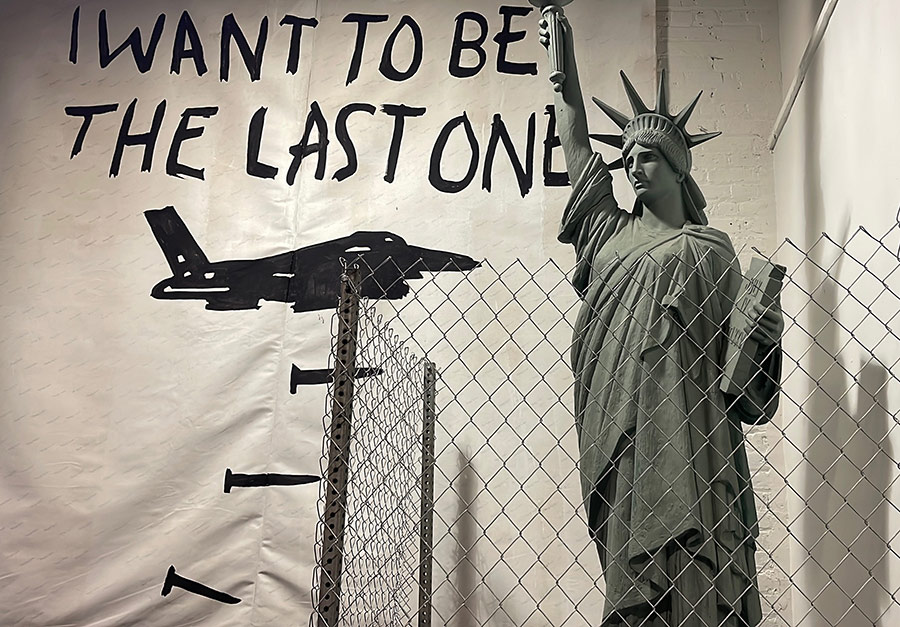
Escif. Specter. “War & Order” 148 Frost St. (photo © Jaime Rojo)

We spoke with curators and artists Gabriel Specter and Rene La Rude about the show,

Brooklyn Street Art: “War & Order” is described as both a social study and a critique of global affairs. What was the initial spark that inspired you and the other artists involved in the show to frame the exhibition around the tension between war and order, and did the original idea evolve as you and the rest of the artists began discussing the show?

Gabriel Specter: The initial spark was our current political state. Where freedom of expression and protest are being silenced. We wanted to make a show where the artist could speak their minds without censorship. Each artist added their voice, and through that, there was a natural evolution of the original idea.

BSA: The exhibition explores our “personal and collective relationships to war and the threat of the police state.” How do you balance your own perspective as an artist with the collective voices and experiences represented in the show?

GS: Part of having your own perspective is about respecting and listening to others perspectives at the same time so the show reflected that type of idea creating a nice balance.
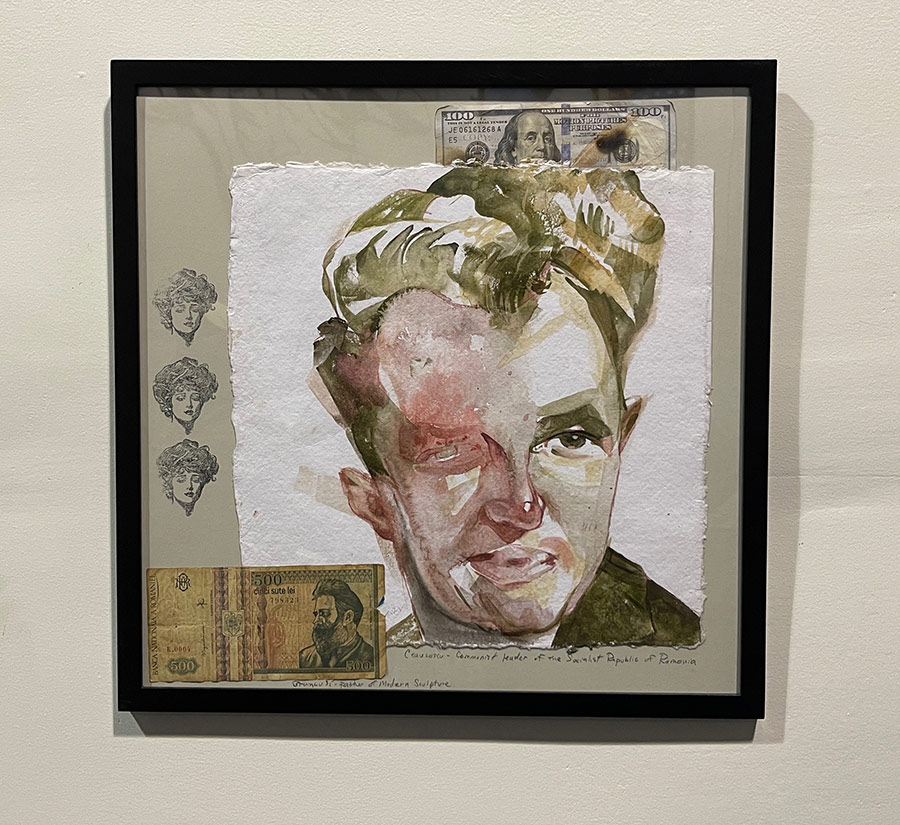
Dan Sabau. “War & Order” 148 Frost St. (photo © Jaime Rojo)

BSA: The show is described as “our protest, our loudspeaker to the world.” How do you see visual art functioning as a form of protest or resistance today—especially in an era dominated by social media and engineered narratives? 

GS: I feel like people are starting to value real interactions more and word of mouth is coming back in vogue so I believe the underground has a real power to effect change and as they say a picture tells a million words!

BSA: Since we have known you, and your work on the streets, you have been consistent with delivering messages highlighting a scope of social issues that are relevant to our society. When you began this practice social media and AI didn’t exist. Do you think these new digital tools are useful for you in the transmission of your work? If so how?

Dan Sabau. “War & Order” 148 Frost St. (photo © Jaime Rojo)

GS: New tools are always helpful, can save time, make you more self-sufficient and help you reach new audiences but they can also dilute a lot of your messages and take away the edge and reality of what you’re trying to get across.

BSA: The exhibition includes murals, installations, and paintings. How did you decide which mediums best convey the urgency and emotional weight of these themes? I think the combination of mediums gives an overall experience and that is what we were really trying to achieve. 

GS: We have the power of scale in the murals, the intimacy of the smaller paintings and the raw visceral nature of the installation.
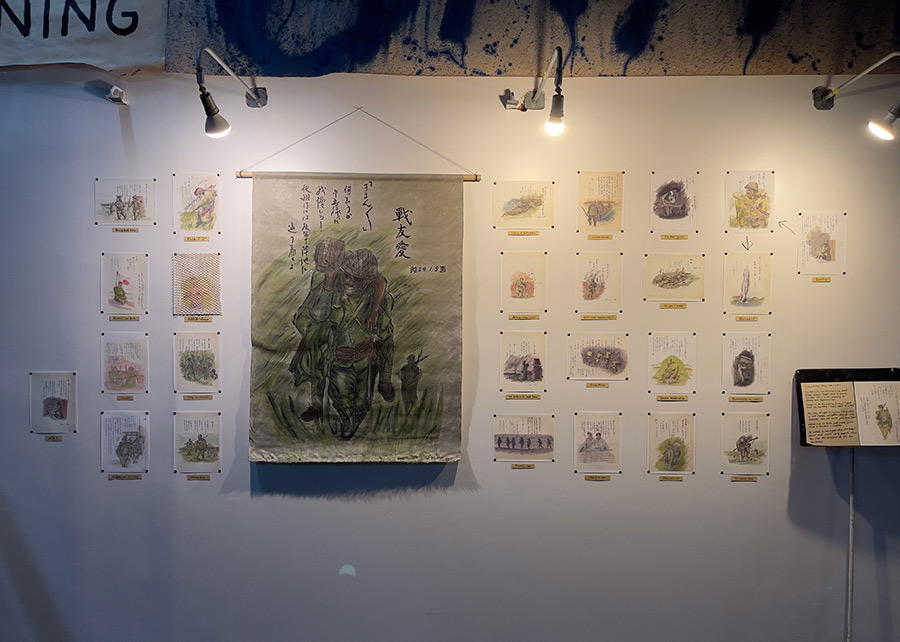
Kazuhiro Imafuko. “War & Order” 148 Frost St. (photo © Jaime Rojo)

BSA: In an age of “mass desensitization to violence,” what emotional or intellectual response do you hope visitors will leave with after experiencing War & Order? 

GS: I hope they care about people’s lives and recognize that life is important even the lives of those you disagree with. People are not pawns, they are flesh and blood and we should never forget this.
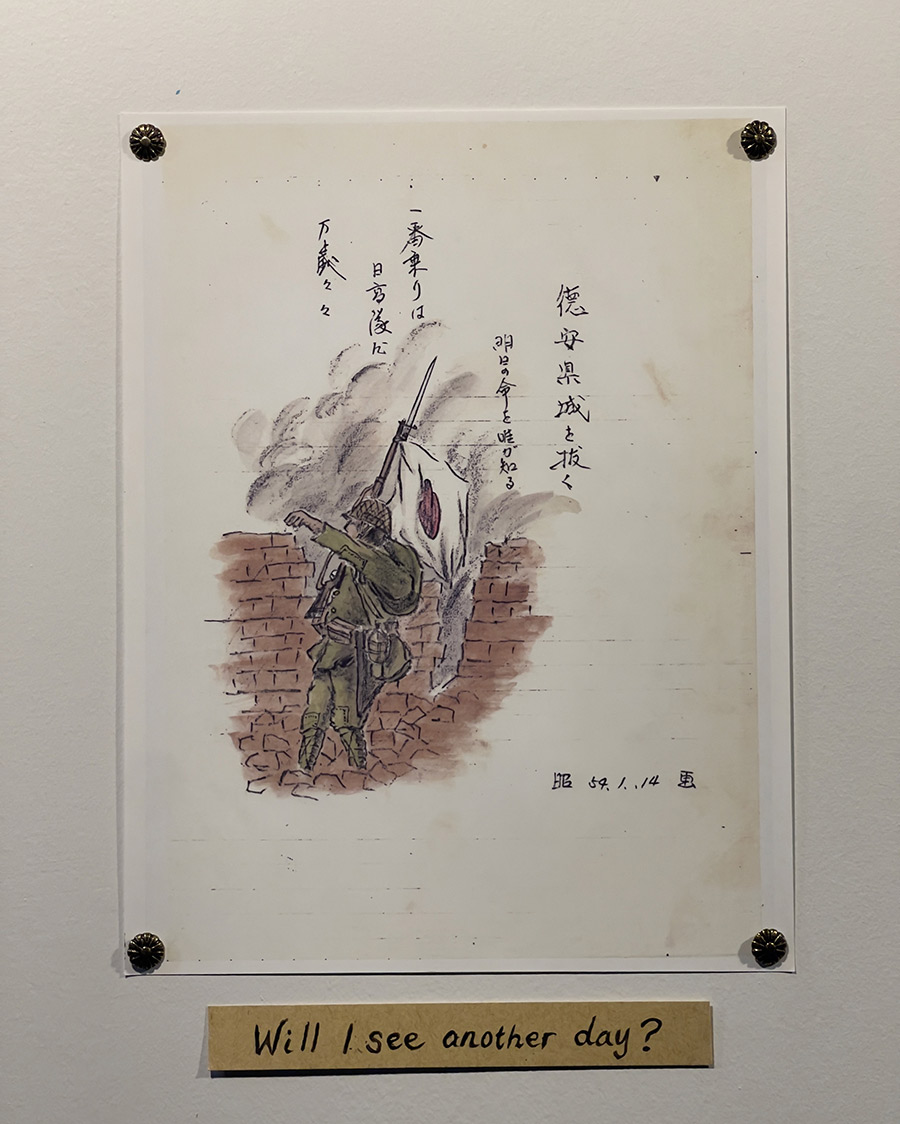
Kazuhiro Imafuko. “War & Order” 148 Frost St. (photo © Jaime Rojo)

BSA to Specter and Rene LaRude: The murals are compelling and powerful, with references to both Picasso and Rockwell. How did you decide to use these two paintings as inspiration for your murals? 

GS: I chose the work by Rockwell as inspiration exactly for this reason that it is revered as a romantic time in American history. The kids depicted would have been of “The Greatest Generation” 

We still cling to this American Iconography today. It is rebranded and used for promoting a xenophobic political message, so for me this iconography was the perfect tool to use to flip the narrative.

Rene LaRude: It wasn’t an easy decision given the impact the piece has had over the years. 

I wanted to make use of certain things from Guernica, narrative, composition, and of course colour (or lack thereof) to apply it to what is happening now.

The piece is about Gaza and the litany of war crimes that have been committed. I wanted to honor the original composition and change elements to stories relevant in Palestine. The use of greyscale is because Gaza has been turned into a land of rubble. even things which are not grey are covered in dust.

My effort is certainly overly dense and packed in but then again, that’s just what I wanted to get across in many ways. 
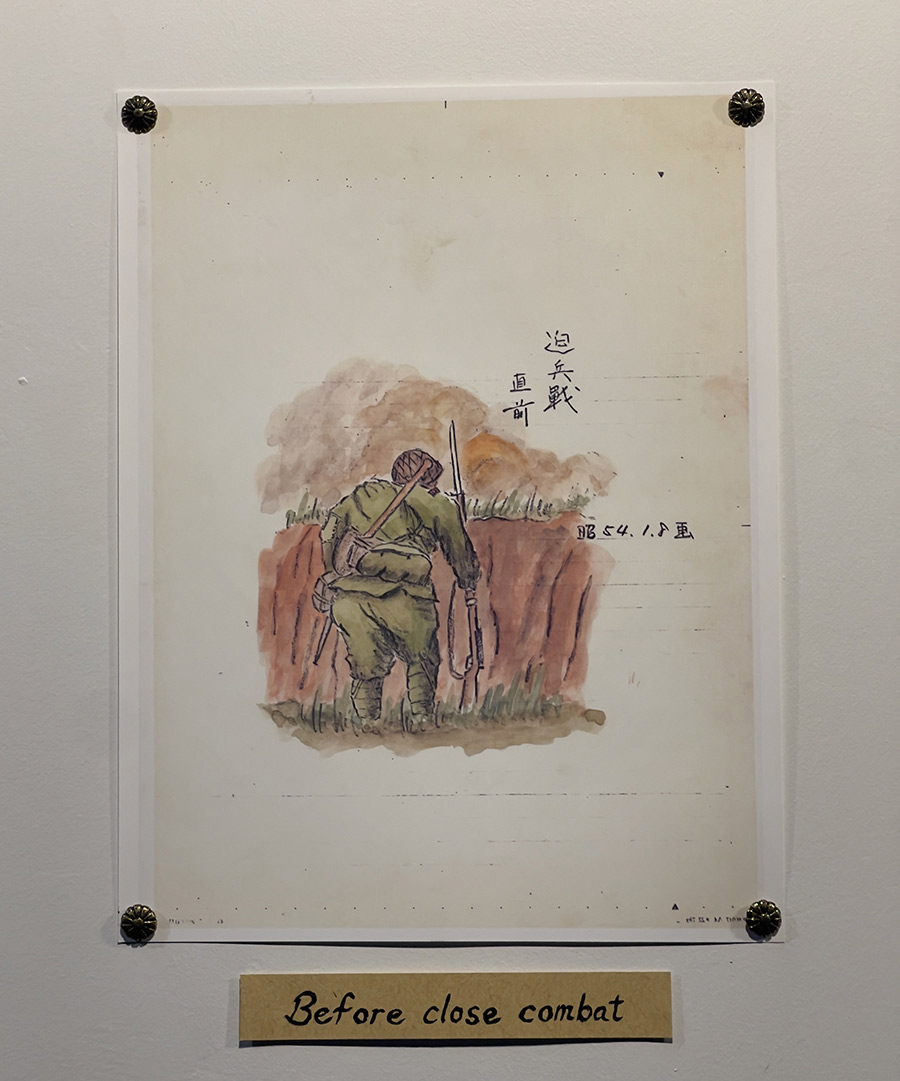
Kazuhiro Imafuko. “War & Order” 148 Frost St. (photo © Jaime Rojo)

All warfare is based on deception.

Sun Tzu (544–496 BC?) – Ancient Chinese Military Strategist
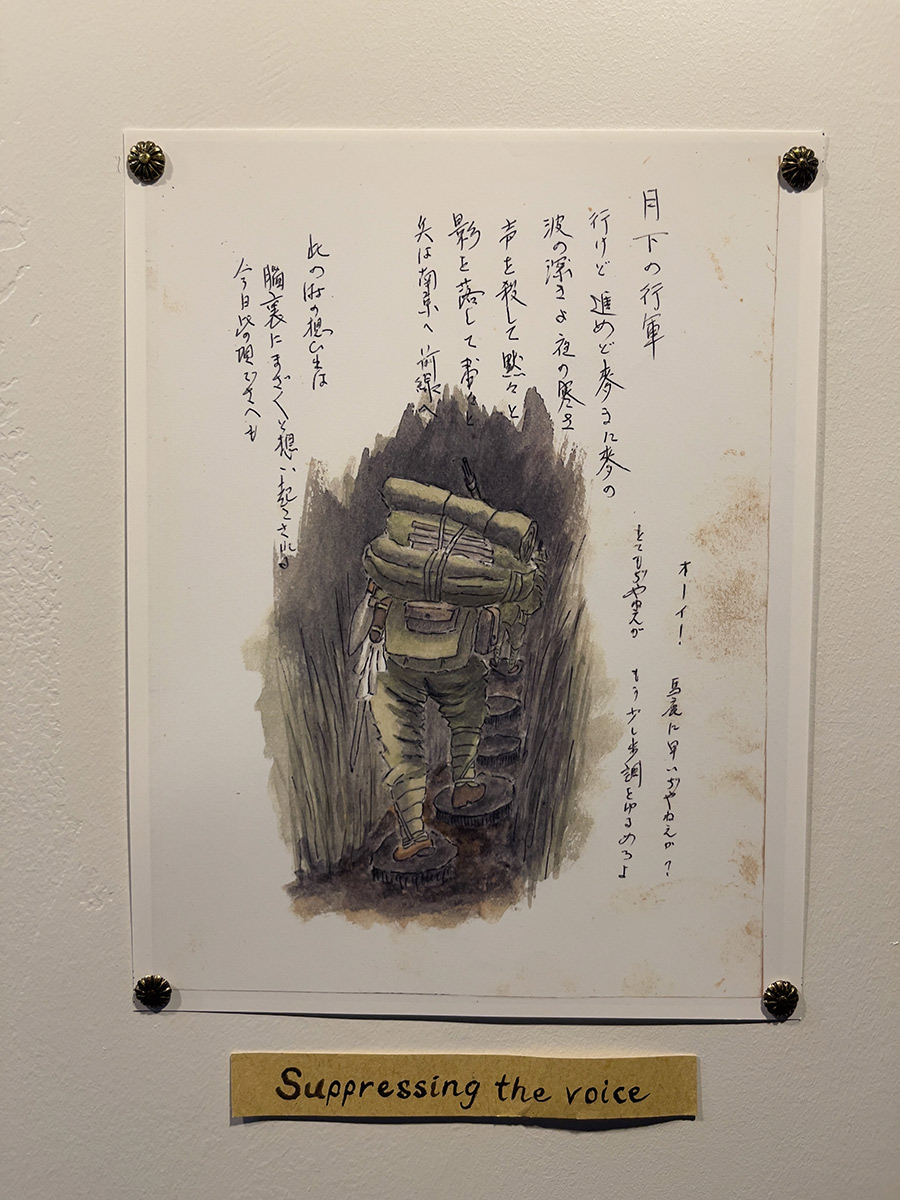
Kazuhiro Imafuko. “War & Order” 148 Frost St. (photo © Jaime Rojo)
Kazuhiro Imafuko. War & Order” 148 Frost St. (photo © Jaime Rojo)
Kazuhiro Imafuko. “War & Order” 148 Frost St. (photo © Jaime Rojo)
“War & Order” 148 Frost St. (photo © Jaime Rojo)

If my soldiers were to begin to think, not one would remain in the ranks.

Frederick the Great (1712–1786) – King of Prussia

Rene Lerude. “War & Order” 148 Frost St. (photo © Jaime Rojo)
Specter. “War & Order” 148 Frost St. (photo © Jaime Rojo)
Kazuhiro Imafuko. Specter. “War & Order” 148 Frost St. (photo © Jaime Rojo)
“War & Order” 148 Frost St. (photo © Jaime Rojo)
Specter. “War & Order” 148 Frost St. (photo © Jaime Rojo)
“War & Order” 148 Frost St. (photo © Jaime Rojo)
Read more
Alex Itin & Rene Lerude In the Streets: Contrarians, Punchlines, and Miles Davis

Alex Itin & Rene Lerude In the Streets: Contrarians, Punchlines, and Miles Davis

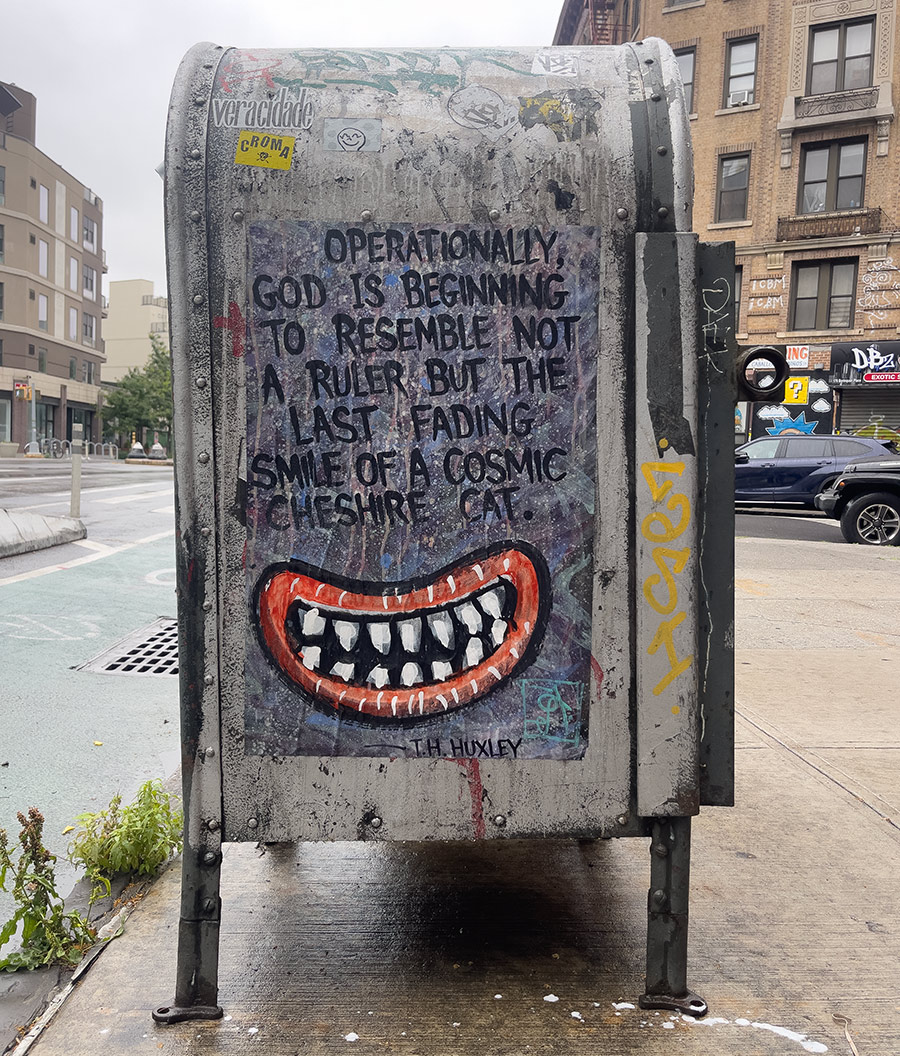
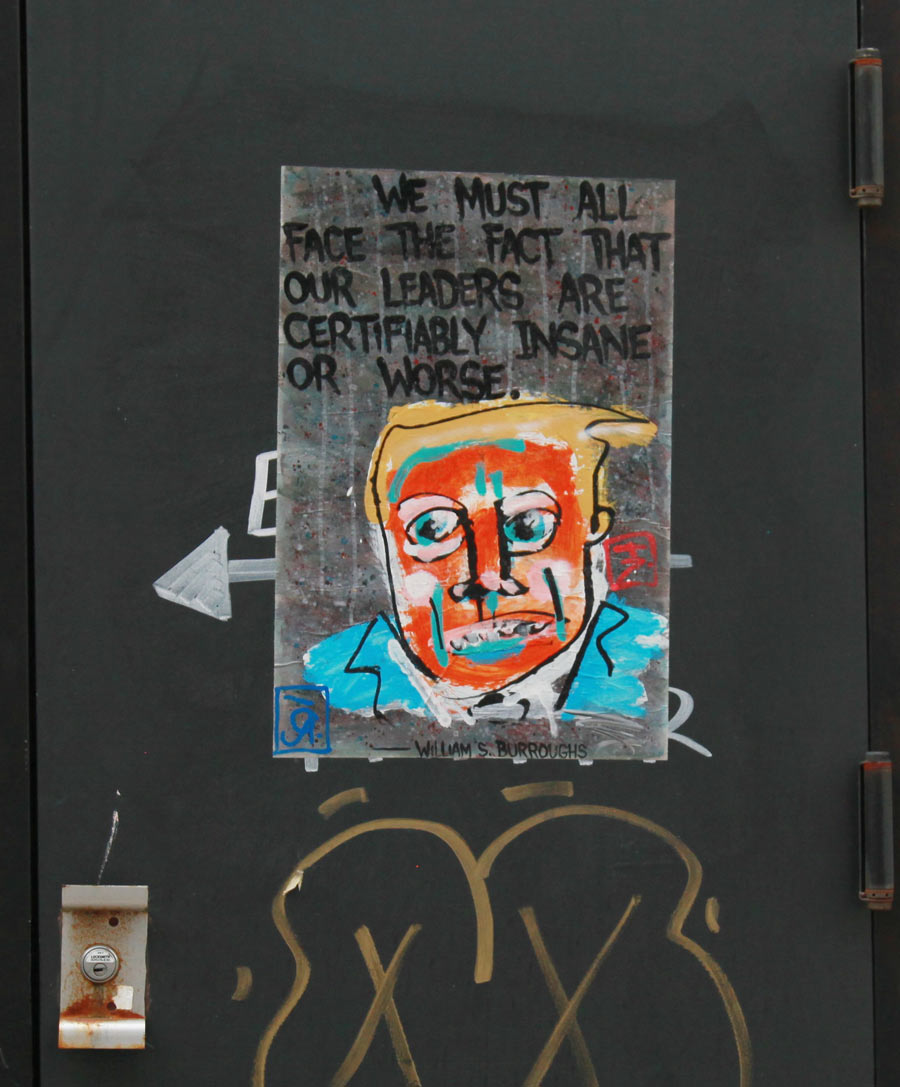
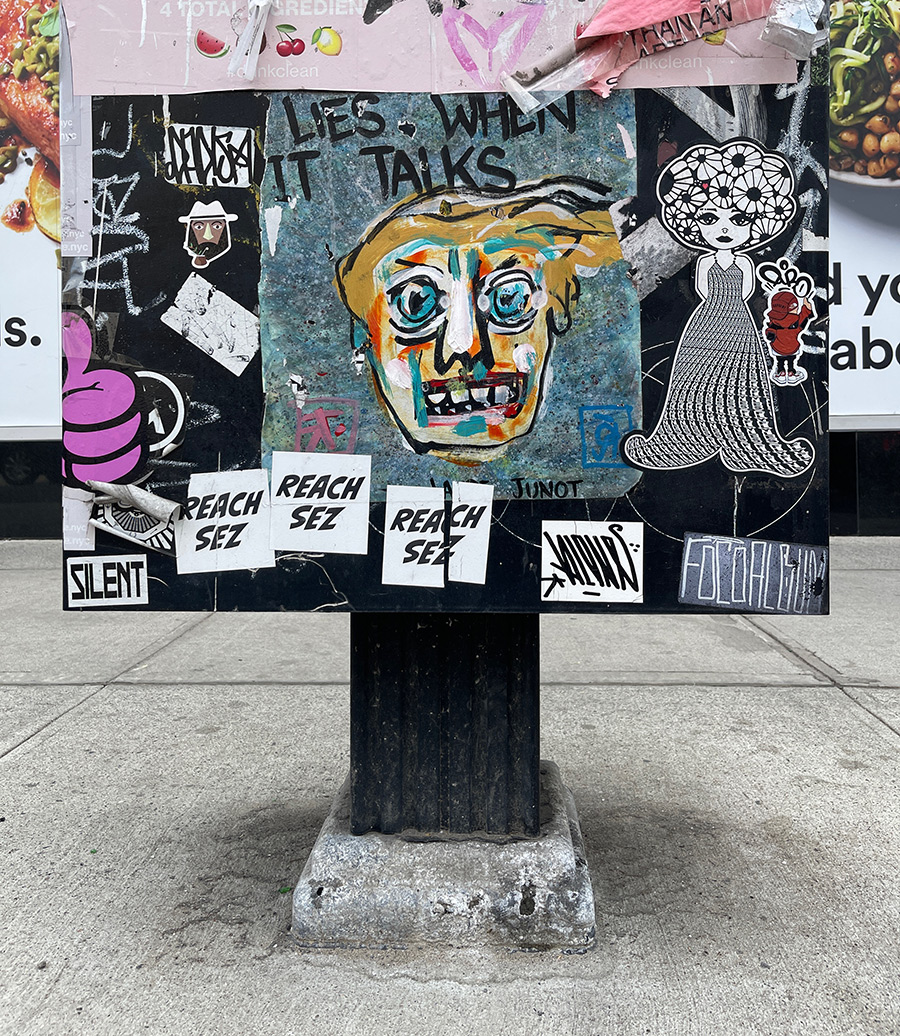
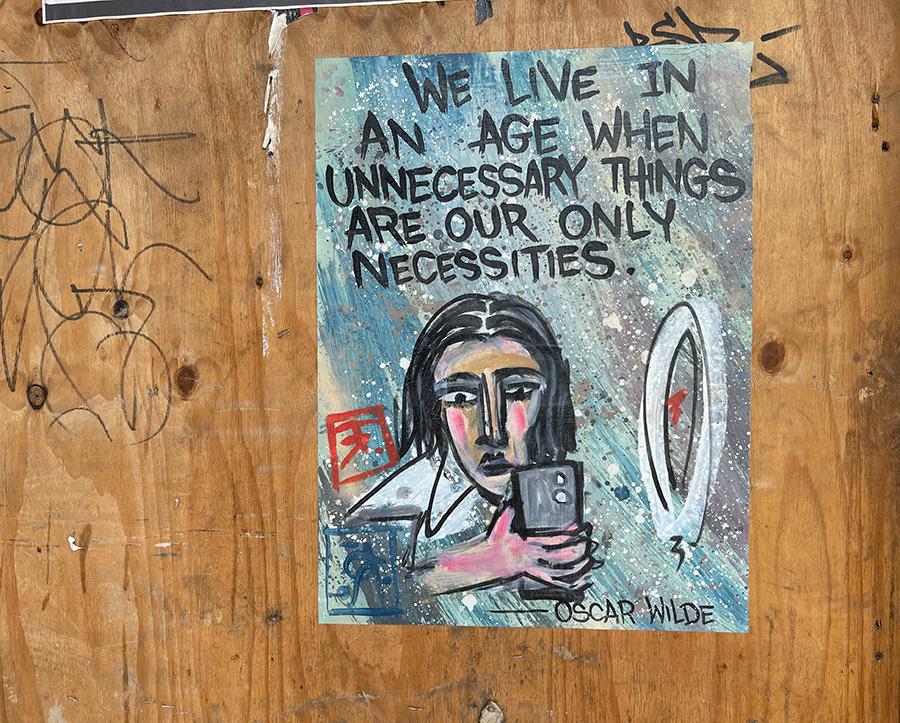
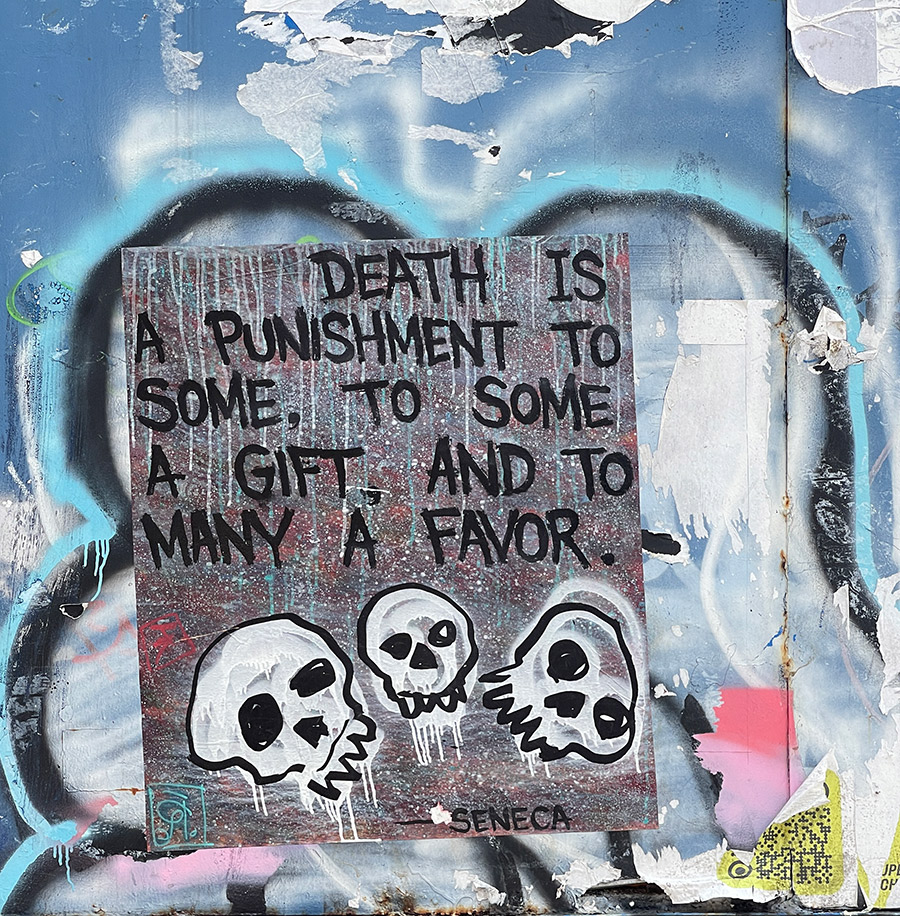
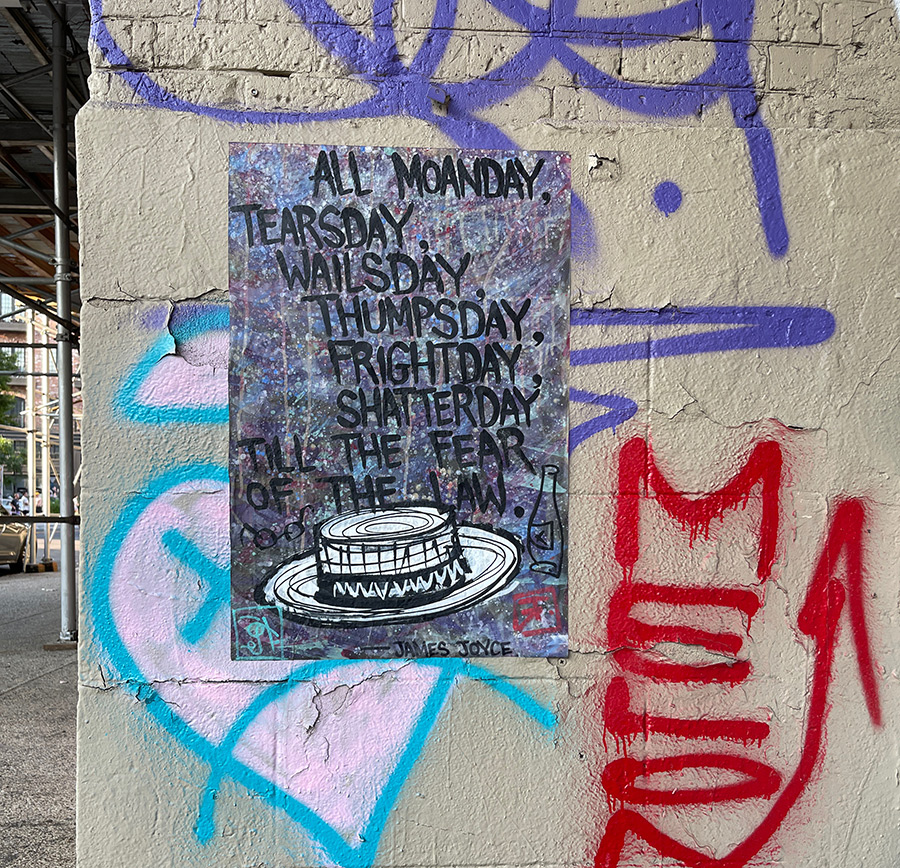
Rene Lerude & Alex Itin aren’t populists chasing the lowest common denominator with their hand-rendered one-off posters and stickers. As street artists, you might call them intellectual pranksters: observers who like their wisdom salted with cynicism, their philosophy dressed in humor, and their politics wrapped in that oily fish paper called irony. Look at the company they keep — literary heavyweights, satirists, philosophers, and contrarians. Instead of quoting hip-hop pioneers, political activists, or contemporary street philosophers, they platform Wilde, Bierce, Carlin, Vidal, and Burroughs onto that empty boarded-up lot you just trudged past.

Alex Itin. Rene Lerude. (photo © Jaime Rojo)

Their words are colorfully tinted weapons, cutting through hypocrisy and mocking social pretensions. Their figures are caricature, maudlin, murky, and nearly masterfully messy. The style and understatement are of the moment, yet it carries a timeless skepticism — a stoic philosophy rooted in reason, rationality, and inquiry.

Popping up on the street often enough to grab your attention, the bards and seers they quote give you a good sense of where their heads are at: Oscar Wilde, Seneca, James Joyce, Junot Díaz, Laurence J. Peter, William S. Burroughs, T.H. Huxley, Francis Bacon, Ambrose Bierce, Gore Vidal, and George Carlin. It’s a crew of contrarians, cynics, and truth-tellers — a reminder that Rene & Alex are carrying these voices into the street not as decoration, but as conversation starters, provocations, and the occasional punchline.

Alex Itin. Rene Lerude. (photo © Jaime Rojo)

Naturally, we had to talk with them, to see how they plug into the current street art scene and the fiercely independent energy of the artist-directed 17 Frost Gallery in Brooklyn that has been mounting shows by various curators over the last decade or more. That space has had more lives than a stray cat — raw, investigatory, and, when you least expect it, collaborative in a magpie sort of way. Are all the real artists today disillusioned, disgusted and absurdly darkly funny? Maybe. Or maybe every generation of free-thinkers has simply been awake, willing to poke at sore spots, willing to question conventional wisdom. With language that performs as much as it provokes, Rene & Alex show a respect for the long arc of human thought — always filtered through the grin of a trickster.

Alex Itin. Rene Lerude. (photo © Jaime Rojo)

Brooklyn Street Art: When did you decide to collaborate with your art?
RENE: I started making stickers to put up in bars relating to alcohol, amusing insights, quips, etc. This was around 2016. I ran out of good ones fairly quickly, so this just opened up to any topic I found interesting. Originally, these were just markers on the white stickers. I then decided to make backgrounds that looked like surfaces I was working on — paint-splattered and marked from years of use. Essentially, an abstract mess. One late evening at the Frost Gallery, Alex saw a bunch which had room under the text and went to town. That was that.

ALEX: While curating at 17 Frost Gallery, I became inspired by the open-mic Sundays we were running that attracted mostly musicians and stand-up comedians, and the odd poet. I wondered if you could do a similar thing with visual artists, street artists, and graf people. We started doing Tuesday sticker nights. One could work on any media, but the sticker game was the unifying concept: low cost, popular, public, and open for low-stakes creative collaboration… but mostly it was an excuse to hang out and meet lots of like-minded artists.

One of the things I always like to talk with artists about is money — how to make it, keep it, shake it out of trees, etc. It’s an interesting thing as a bill is about the size of a sticker. Surviving as an artist is brutal stuff, so educating yourself and your community about legal and financial questions is just good practice.

Alex Itin. Rene Lerude. (photo © Jaime Rojo)

“One of the things I always like to talk with artists about is money — how to make it, keep it, shake it out of trees, etc. Surviving as an artist is brutal stuff, so educating yourself and your community about legal and financial questions is just good practice.” — Alex

In one such conversation, I was ranting about music, copyright laws, and how people in a band get or don’t get paid. I said something like Miles Davis got paid, the band usually didn’t (unless they brought the song with them). And I think I pretended to be an angry bassist ranting about Miles. A friend walked in the door and announced with great authority that Miles Davis owes him money. That joke sort of stuck and Rene wrote down the quote, and I drew a trumpet. For a while, it was just “Miles Davis owes me money,” signed by any of his many collaborators. Eventually, we started looking for other quotes.

BSA: What’s your collaboration process? Do you pass the artwork back and forth, or do you work on it together in the studio?
RENE: I start the process by producing a couple of hundred stickers and posters from newsprint. Then comes the lengthy task of going through one of dozens of aphorism books and writing them all out. I pass this on to Alex and wait. He gives them back to me, I archive them, then we split them amongst ourselves.

Alex Itin. Rene Lerude. (photo © Jaime Rojo)

“I see the country in a dangerous place, and positive bromides are not as important as anger and cogent analysis of our present state. So I wanted a bit of salt and burn… while still being funny.” — Alex

ALEX: The first collaborations were done together at 17 Frost, but eventually we were passing them back and forth in envelopes, often between London and New York.

BSA: How do you choose the spots in the street to place the final work?
RENE: If it’s a sticker, somewhere in the cut where it won’t get taken over, but still in decent reading distance. Posters just anywhere that might rock a while.

ALEX: Placement is for me just part of putting up stickers. It’s usually a walk and improvised art installation. I try to hug up to artists I like or to try and interact with text or image. Rene hangs most of the posters, so I’m not sure how he chooses spots for those.

Alex Itin. Rene Lerude. (photo © Jaime Rojo)

BSA: Alex, do you draw the characters before or after the words are given to you by Words on the Street?
ALEX: Rene usually does the background and text, and I work into that.

BSA: Are the characters based on real humans? Are they portraits of people you know or see in public space?
ALEX: Some of the drawings are just cartoons with broad archetypes, but also there are a lot of portraits of the various quoted people. These are drawn from photos — a thing I never do in my own studio practice. There are also a lot of Trump portraits.

BSA: Rene, you use quotes from famous people, politicians, and literature. Do you sometimes write your own thoughts and use them in collaboration with Alex?
RENE: I have done a few myself, though I’ll check to make sure it hasn’t been said before — in as much as you can. Alex does more frequently than me, so we have done quite a few of those over the years.

ALEX: I have written a few quotes attributed to -itin. “Branding is for cattle” is a favorite.

Alex Itin. Rene Lerude. (photo © Jaime Rojo)

BSA: Many times the messages and drawings are funny, salty, biting, and poignant. Is it hard to keep a balance when doing the art? Do you even think about keeping a balance?
ALEX: One of the things I was playing with was the overly positive, banal affirmation-type quotes you see in a lot of street art. I see the country in a dangerous place, and positive bromides are not as important as anger and cogent analysis of our present state. So I wanted a bit of salt and burn… while still being funny.

BSA: The current political atmosphere must be a bonanza for your creativity and productivity in your art. Do you feel overwhelmed by the dangerous path the country is going? If you feel angry at the current administration’s actions and policies, do you use your art to channel the anger?
RENE: Oddly enough I haven’t made any new posters or stickers in a couple years. Most quotes worth their salt are in some way timeless — vernacular can be different, but the sentiments always come to relevancy as time passes. That said, it’s come to a point where more of them are becoming relentlessly applicable as the weeks and months pass.

ALEX: The second term has created a quandary. I got okay at doing Trump, but I just don’t want to see his face or give any more attention to that narcissist. So it’s a quandary.

Alex Ititn. Rene Lerude. (photo © Jaime Rojo)


Read more
BSA Images Of The Week: 08.24.25

BSA Images Of The Week: 08.24.25

Welcome to BSA Images of the Week!

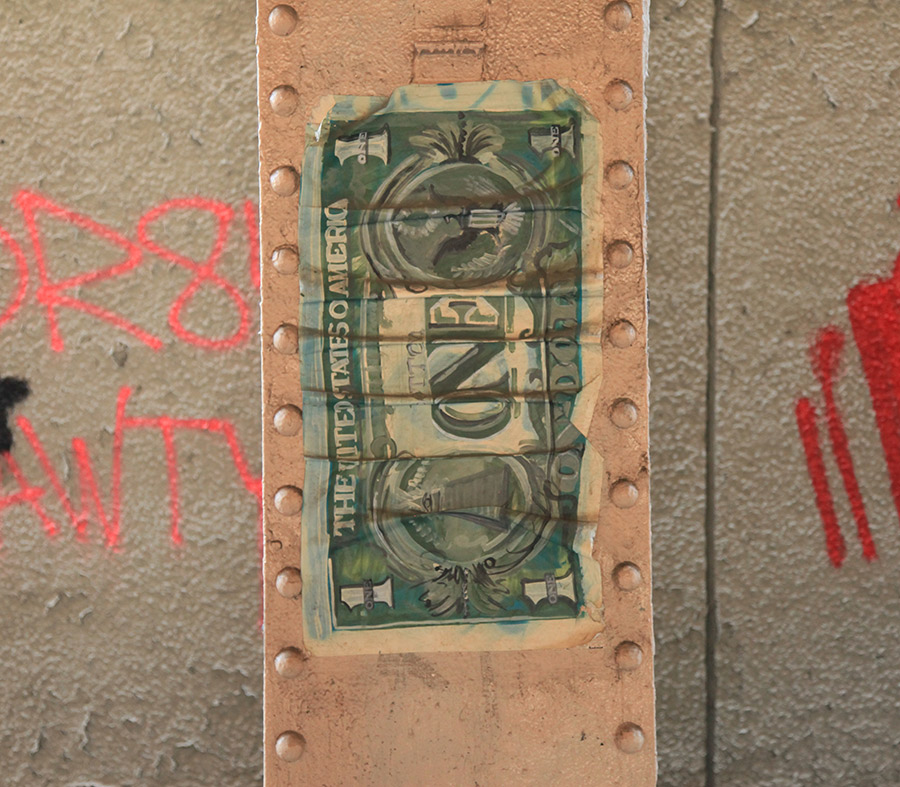
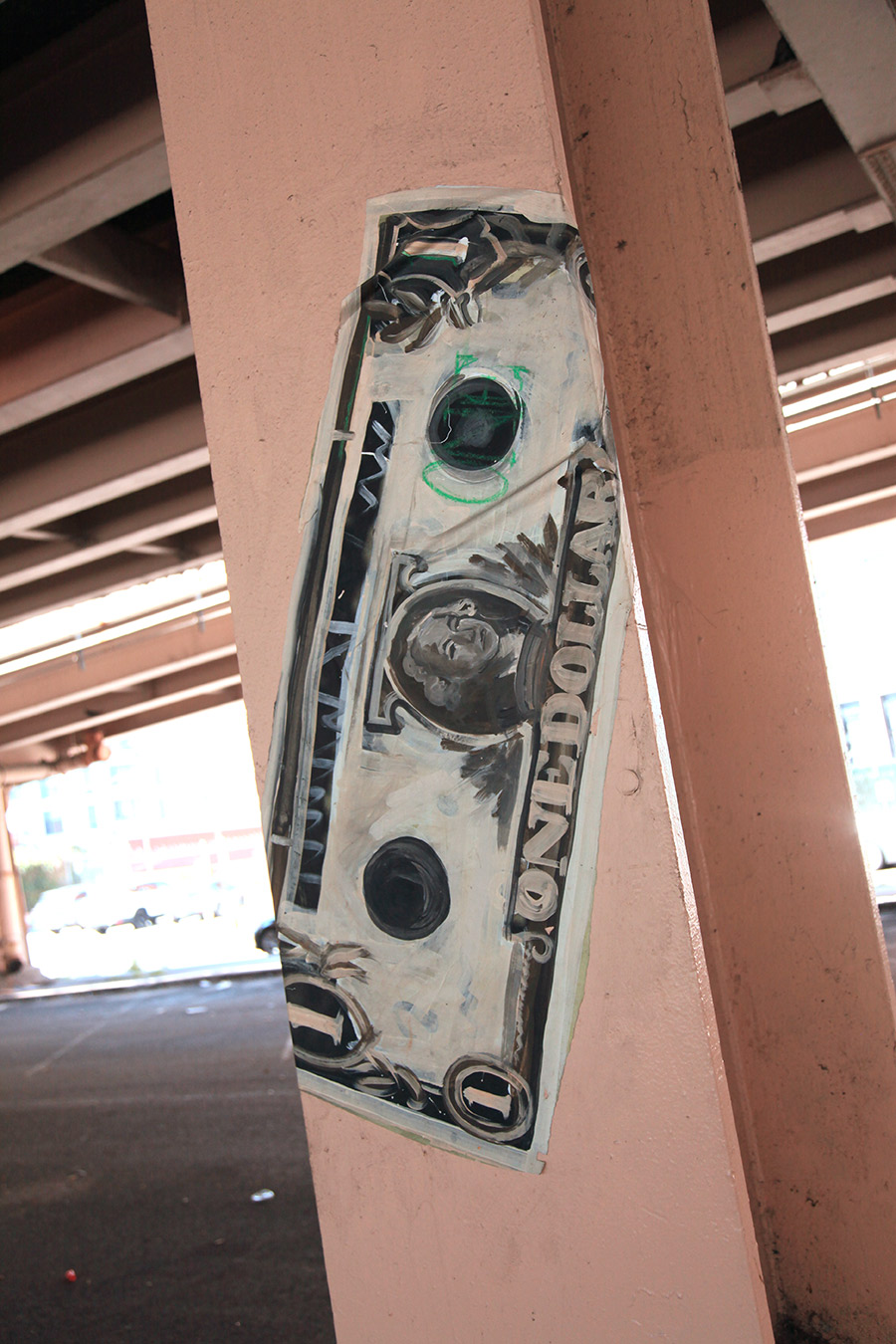
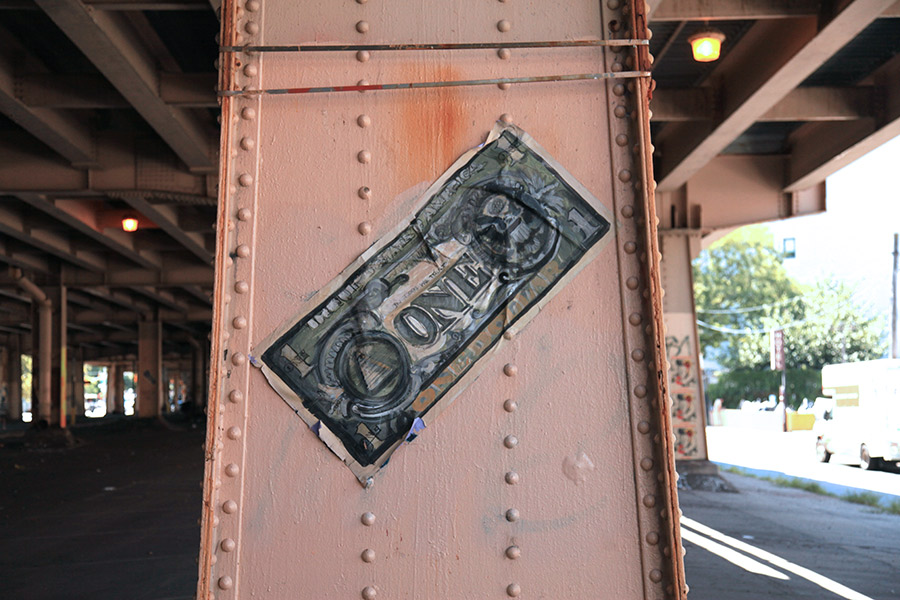
When discovering a series of currency-themed street art in the city this week, we were reminded of the relentless daily pressure there is today to make ends meet—and of the regular headlines showing how the big players run their own schemes to squeeze the public. It also calls to mind the 1980s hip hop track “What People Do for Money” by Divine Sounds, with its sly reminder: “They’ll sell their soul to the devil, just to make a dime.” (See video at end of posting)

Whether it’s war profiteering, scamming public programs, turning charities into piggy banks, buying up public goods to squeeze ratepayers, or preaching salvation from the cabin of a private jet, corporations, banks, and street hustlers only differ in scale, not intent.

The news today is littered with examples: Ukraine’s mineral wealth carved into joint ventures, relief funds turned into jackpots by fraudsters, children’s hospitals doubling as executive perk machines, Wall Street creeping into your utility bill, and preachers registering private jets to their ministries.

From the street perspective, this may look like the same hustle that they do – but with a press release accompanying it.

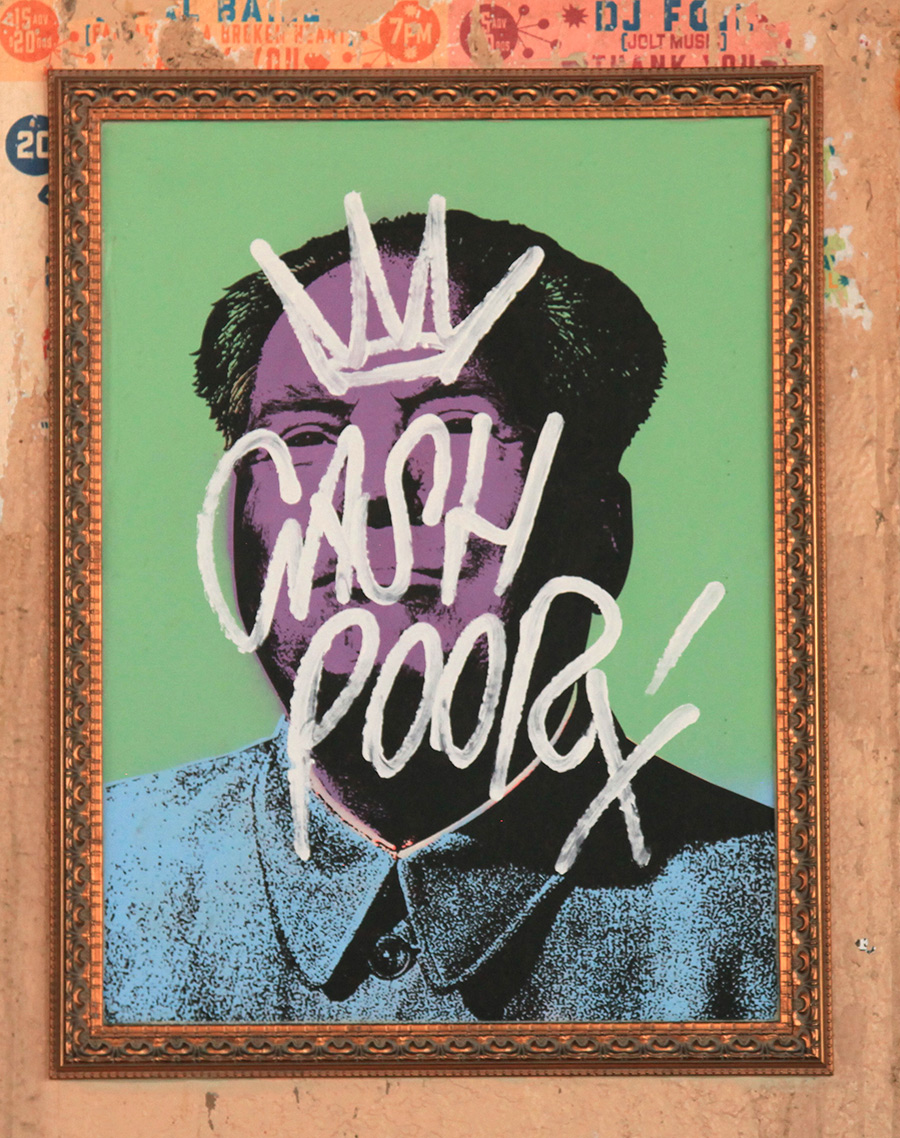
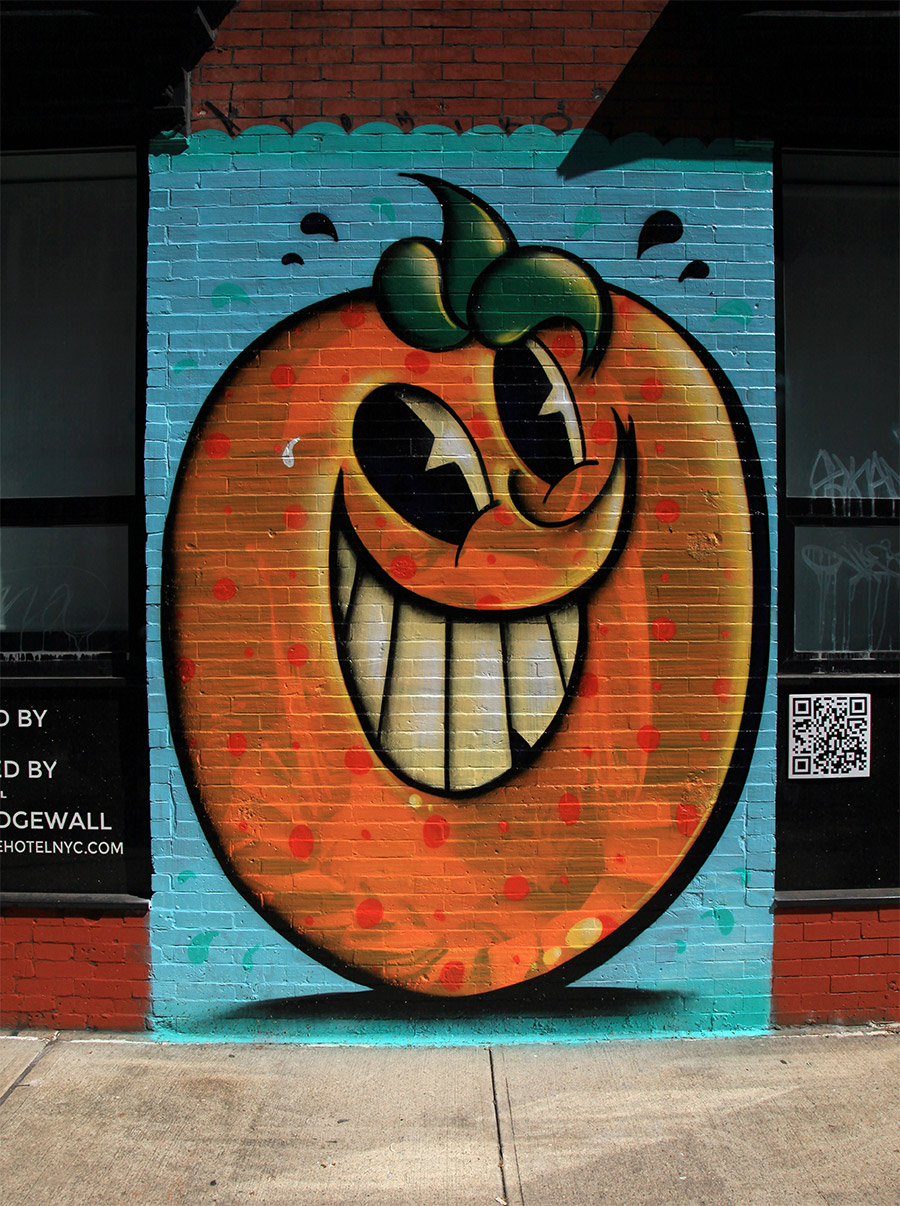
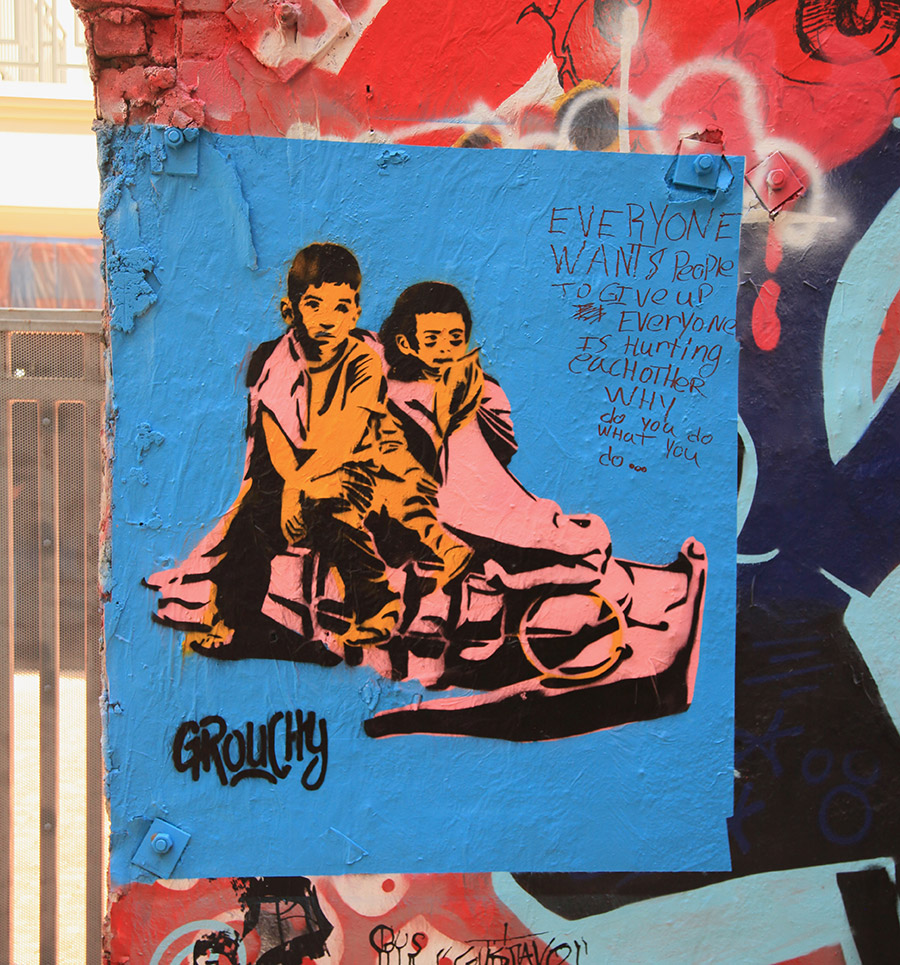
Here’s a survey of our weekly interview with the street, featuring Atomiko, Cash4, Drones, Grouchy, Jappy Agoncillo, Rene Lerude, Skewville, TFP Crew, and Zexor.

Cash4 (photo © Jaime Rojo)
Rene Lerude (photo © Jaime Rojo)
Unidentified artist (photo © Jaime Rojo)
Atomiko (photo © Jaime Rojo)
Grouchy (photo © Jaime Rojo)
Unidentified artist (photo © Jaime Rojo)
Skewville (photo © Jaime Rojo)
Drones (photo © Jaime Rojo)
Unidentified artist (photo © Jaime Rojo)
ZEXOR tribute. (photo © Jaime Rojo)
Jappy Agoncillo (photo © Jaime Rojo)
Unidentified artist (photo © Jaime Rojo)
TFP (photo © Jaime Rojo)
Unidentified artist (photo © Jaime Rojo)
Untitled. Broadway, NYC. August 2025. (photo © Jaime Rojo)

What People Do For Money – Divine Sounds

Read more