All posts tagged: Rene

Alex Itin & Rene Lerude In the Streets: Contrarians, Punchlines, and Miles Davis

Alex Itin & Rene Lerude In the Streets: Contrarians, Punchlines, and Miles Davis

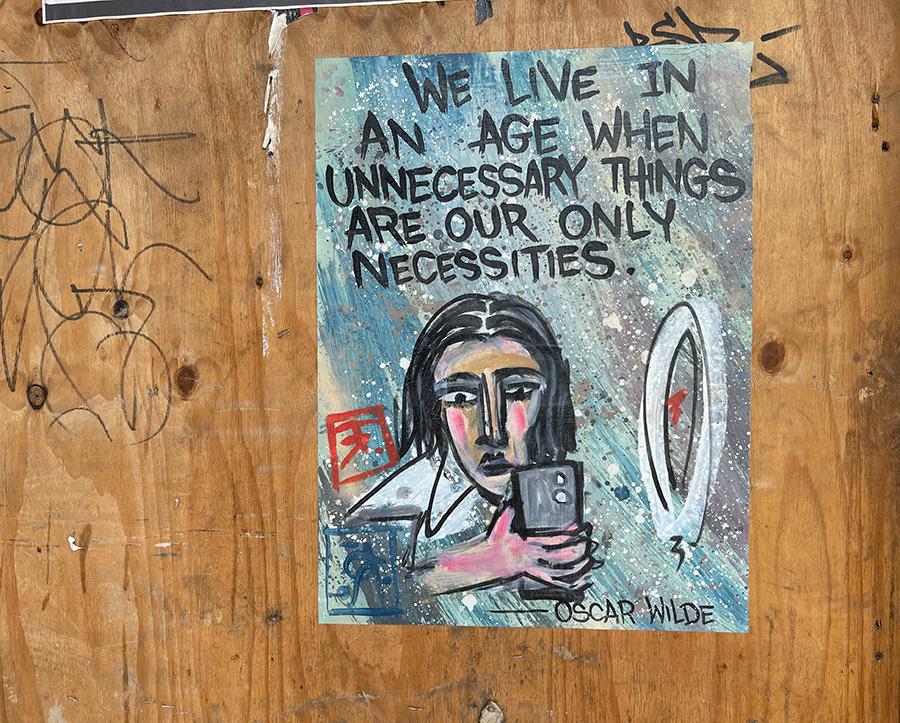
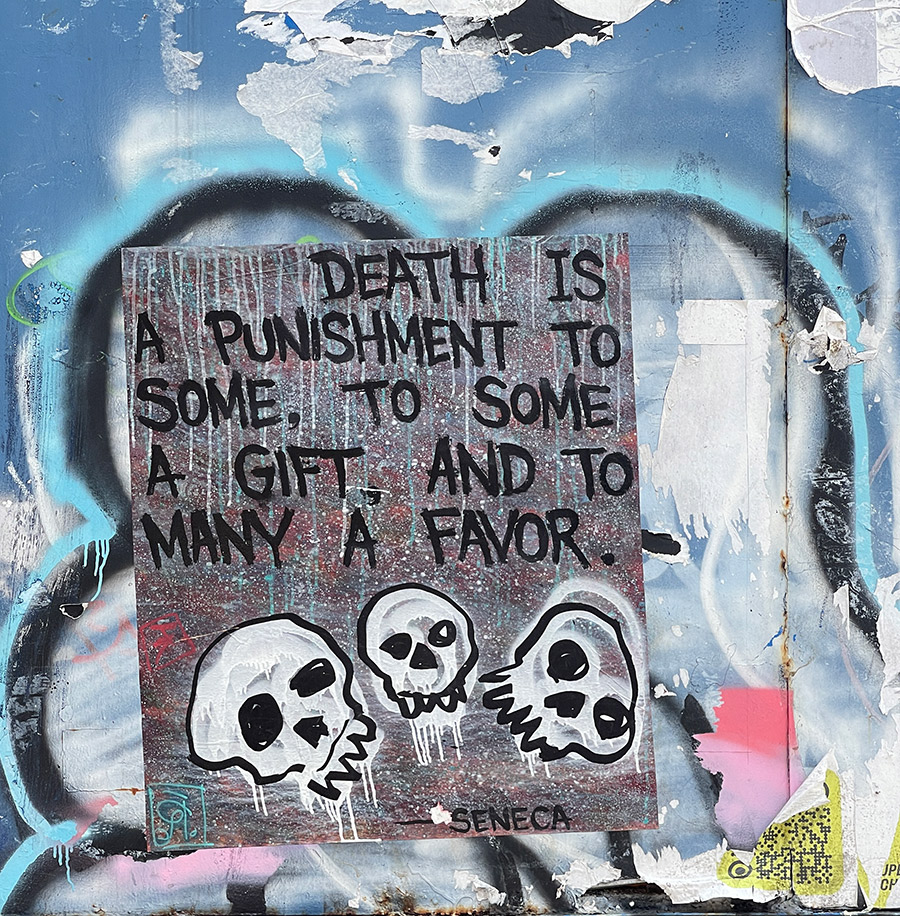
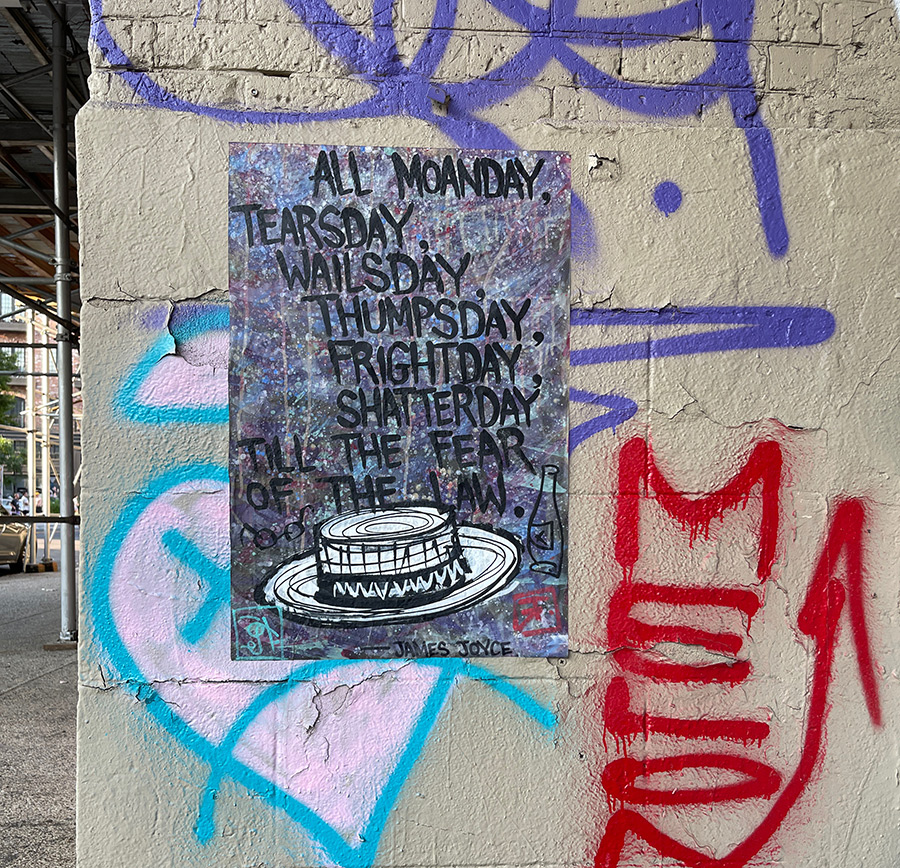
Rene Lerude & Alex Itin aren’t populists chasing the lowest common denominator with their hand-rendered one-off posters and stickers. As street artists, you might call them intellectual pranksters: observers who like their wisdom salted with cynicism, their philosophy dressed in humor, and their politics wrapped in that oily fish paper called irony. Look at the company they keep — literary heavyweights, satirists, philosophers, and contrarians. Instead of quoting hip-hop pioneers, political activists, or contemporary street philosophers, they platform Wilde, Bierce, Carlin, Vidal, and Burroughs onto that empty boarded-up lot you just trudged past.

Alex Itin. Rene Lerude. (photo © Jaime Rojo)

Their words are colorfully tinted weapons, cutting through hypocrisy and mocking social pretensions. Their figures are caricature, maudlin, murky, and nearly masterfully messy. The style and understatement are of the moment, yet it carries a timeless skepticism — a stoic philosophy rooted in reason, rationality, and inquiry.

Popping up on the street often enough to grab your attention, the bards and seers they quote give you a good sense of where their heads are at: Oscar Wilde, Seneca, James Joyce, Junot Díaz, Laurence J. Peter, William S. Burroughs, T.H. Huxley, Francis Bacon, Ambrose Bierce, Gore Vidal, and George Carlin. It’s a crew of contrarians, cynics, and truth-tellers — a reminder that Rene & Alex are carrying these voices into the street not as decoration, but as conversation starters, provocations, and the occasional punchline.

Alex Itin. Rene Lerude. (photo © Jaime Rojo)

Naturally, we had to talk with them, to see how they plug into the current street art scene and the fiercely independent energy of the artist-directed 17 Frost Gallery in Brooklyn that has been mounting shows by various curators over the last decade or more. That space has had more lives than a stray cat — raw, investigatory, and, when you least expect it, collaborative in a magpie sort of way. Are all the real artists today disillusioned, disgusted and absurdly darkly funny? Maybe. Or maybe every generation of free-thinkers has simply been awake, willing to poke at sore spots, willing to question conventional wisdom. With language that performs as much as it provokes, Rene & Alex show a respect for the long arc of human thought — always filtered through the grin of a trickster.

Alex Itin. Rene Lerude. (photo © Jaime Rojo)

Brooklyn Street Art: When did you decide to collaborate with your art?
RENE: I started making stickers to put up in bars relating to alcohol, amusing insights, quips, etc. This was around 2016. I ran out of good ones fairly quickly, so this just opened up to any topic I found interesting. Originally, these were just markers on the white stickers. I then decided to make backgrounds that looked like surfaces I was working on — paint-splattered and marked from years of use. Essentially, an abstract mess. One late evening at the Frost Gallery, Alex saw a bunch which had room under the text and went to town. That was that.

ALEX: While curating at 17 Frost Gallery, I became inspired by the open-mic Sundays we were running that attracted mostly musicians and stand-up comedians, and the odd poet. I wondered if you could do a similar thing with visual artists, street artists, and graf people. We started doing Tuesday sticker nights. One could work on any media, but the sticker game was the unifying concept: low cost, popular, public, and open for low-stakes creative collaboration… but mostly it was an excuse to hang out and meet lots of like-minded artists.

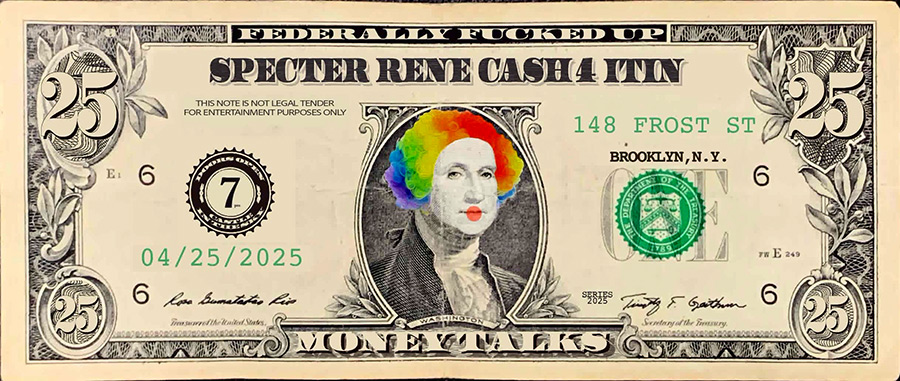
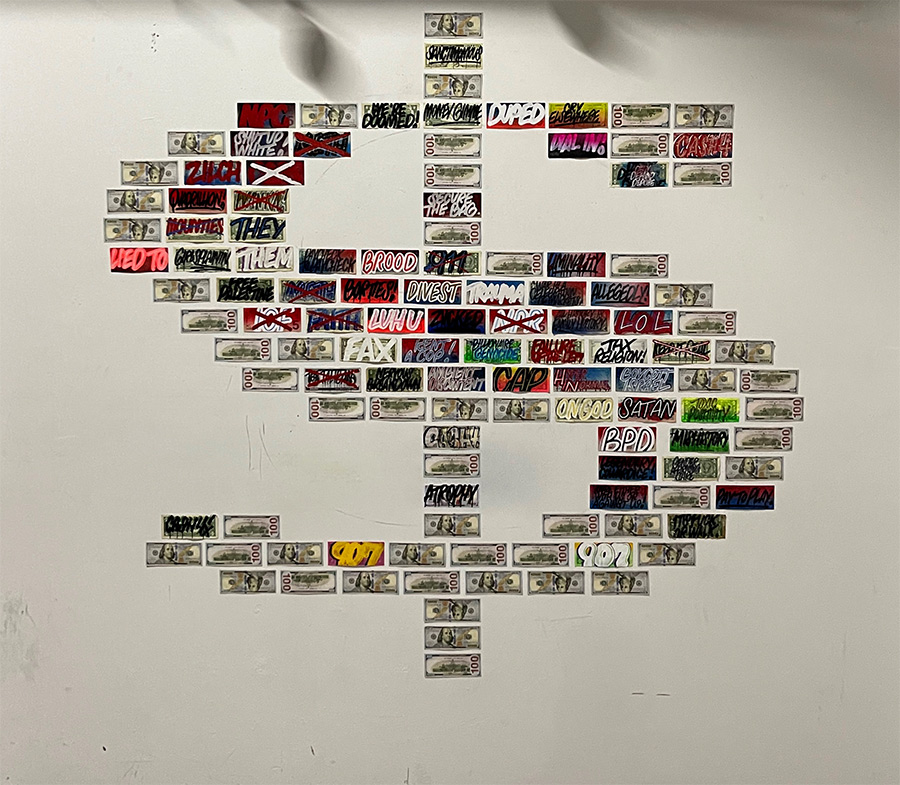
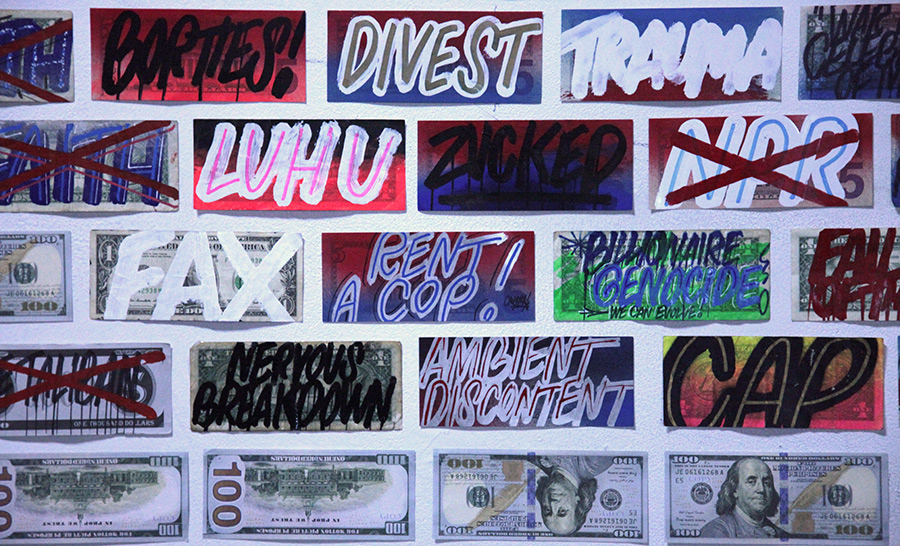
One of the things I always like to talk with artists about is money — how to make it, keep it, shake it out of trees, etc. It’s an interesting thing as a bill is about the size of a sticker. Surviving as an artist is brutal stuff, so educating yourself and your community about legal and financial questions is just good practice.

Alex Itin. Rene Lerude. (photo © Jaime Rojo)

“One of the things I always like to talk with artists about is money — how to make it, keep it, shake it out of trees, etc. Surviving as an artist is brutal stuff, so educating yourself and your community about legal and financial questions is just good practice.” — Alex

In one such conversation, I was ranting about music, copyright laws, and how people in a band get or don’t get paid. I said something like Miles Davis got paid, the band usually didn’t (unless they brought the song with them). And I think I pretended to be an angry bassist ranting about Miles. A friend walked in the door and announced with great authority that Miles Davis owes him money. That joke sort of stuck and Rene wrote down the quote, and I drew a trumpet. For a while, it was just “Miles Davis owes me money,” signed by any of his many collaborators. Eventually, we started looking for other quotes.

BSA: What’s your collaboration process? Do you pass the artwork back and forth, or do you work on it together in the studio?
RENE: I start the process by producing a couple of hundred stickers and posters from newsprint. Then comes the lengthy task of going through one of dozens of aphorism books and writing them all out. I pass this on to Alex and wait. He gives them back to me, I archive them, then we split them amongst ourselves.
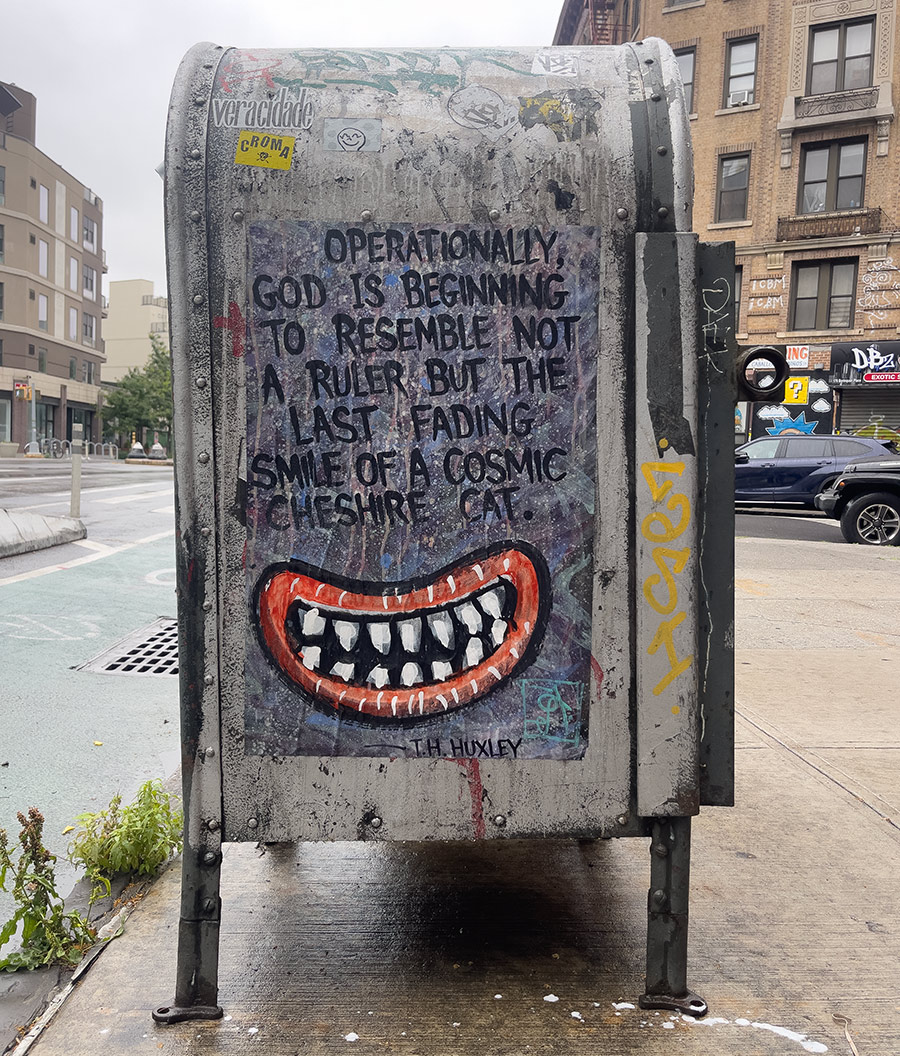
Alex Itin. Rene Lerude. (photo © Jaime Rojo)

“I see the country in a dangerous place, and positive bromides are not as important as anger and cogent analysis of our present state. So I wanted a bit of salt and burn… while still being funny.” — Alex

ALEX: The first collaborations were done together at 17 Frost, but eventually we were passing them back and forth in envelopes, often between London and New York.

BSA: How do you choose the spots in the street to place the final work?
RENE: If it’s a sticker, somewhere in the cut where it won’t get taken over, but still in decent reading distance. Posters just anywhere that might rock a while.

ALEX: Placement is for me just part of putting up stickers. It’s usually a walk and improvised art installation. I try to hug up to artists I like or to try and interact with text or image. Rene hangs most of the posters, so I’m not sure how he chooses spots for those.
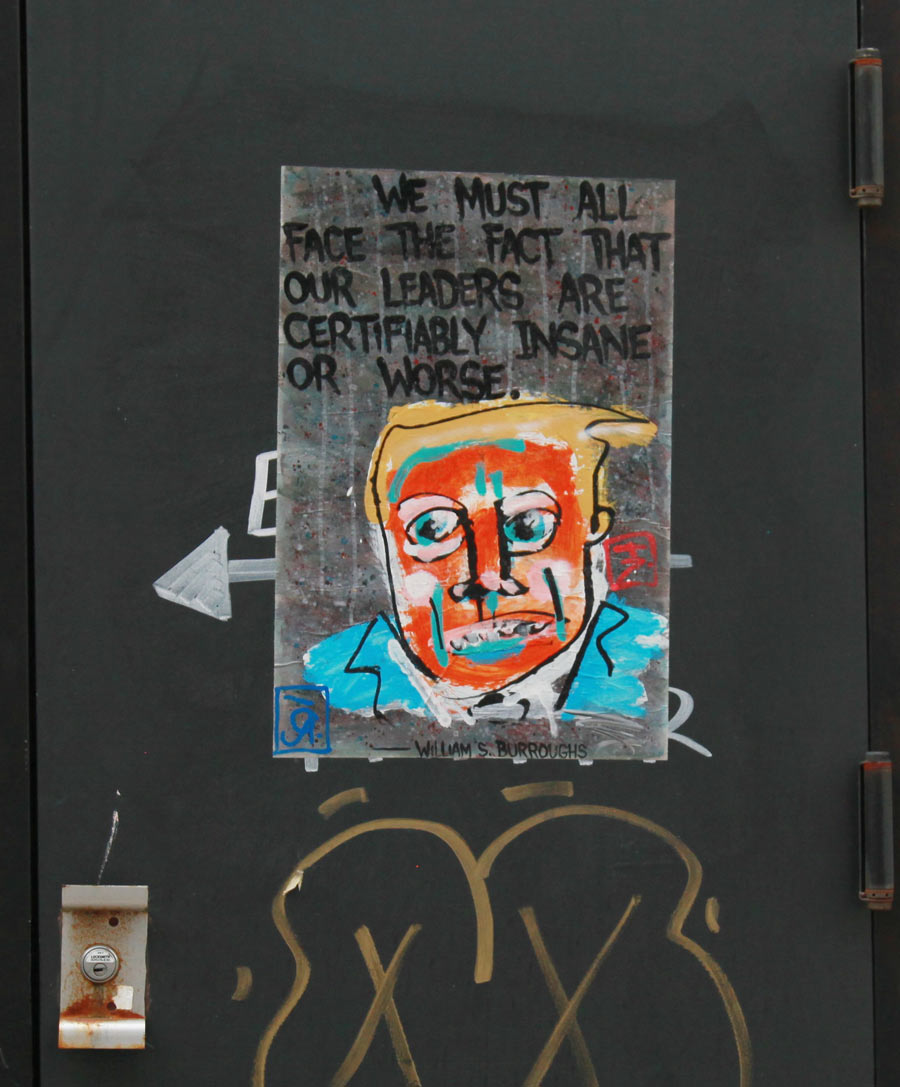
Alex Itin. Rene Lerude. (photo © Jaime Rojo)

BSA: Alex, do you draw the characters before or after the words are given to you by Words on the Street?
ALEX: Rene usually does the background and text, and I work into that.

BSA: Are the characters based on real humans? Are they portraits of people you know or see in public space?
ALEX: Some of the drawings are just cartoons with broad archetypes, but also there are a lot of portraits of the various quoted people. These are drawn from photos — a thing I never do in my own studio practice. There are also a lot of Trump portraits.

BSA: Rene, you use quotes from famous people, politicians, and literature. Do you sometimes write your own thoughts and use them in collaboration with Alex?
RENE: I have done a few myself, though I’ll check to make sure it hasn’t been said before — in as much as you can. Alex does more frequently than me, so we have done quite a few of those over the years.

ALEX: I have written a few quotes attributed to -itin. “Branding is for cattle” is a favorite.

Alex Itin. Rene Lerude. (photo © Jaime Rojo)

BSA: Many times the messages and drawings are funny, salty, biting, and poignant. Is it hard to keep a balance when doing the art? Do you even think about keeping a balance?
ALEX: One of the things I was playing with was the overly positive, banal affirmation-type quotes you see in a lot of street art. I see the country in a dangerous place, and positive bromides are not as important as anger and cogent analysis of our present state. So I wanted a bit of salt and burn… while still being funny.

BSA: The current political atmosphere must be a bonanza for your creativity and productivity in your art. Do you feel overwhelmed by the dangerous path the country is going? If you feel angry at the current administration’s actions and policies, do you use your art to channel the anger?
RENE: Oddly enough I haven’t made any new posters or stickers in a couple years. Most quotes worth their salt are in some way timeless — vernacular can be different, but the sentiments always come to relevancy as time passes. That said, it’s come to a point where more of them are becoming relentlessly applicable as the weeks and months pass.

ALEX: The second term has created a quandary. I got okay at doing Trump, but I just don’t want to see his face or give any more attention to that narcissist. So it’s a quandary.

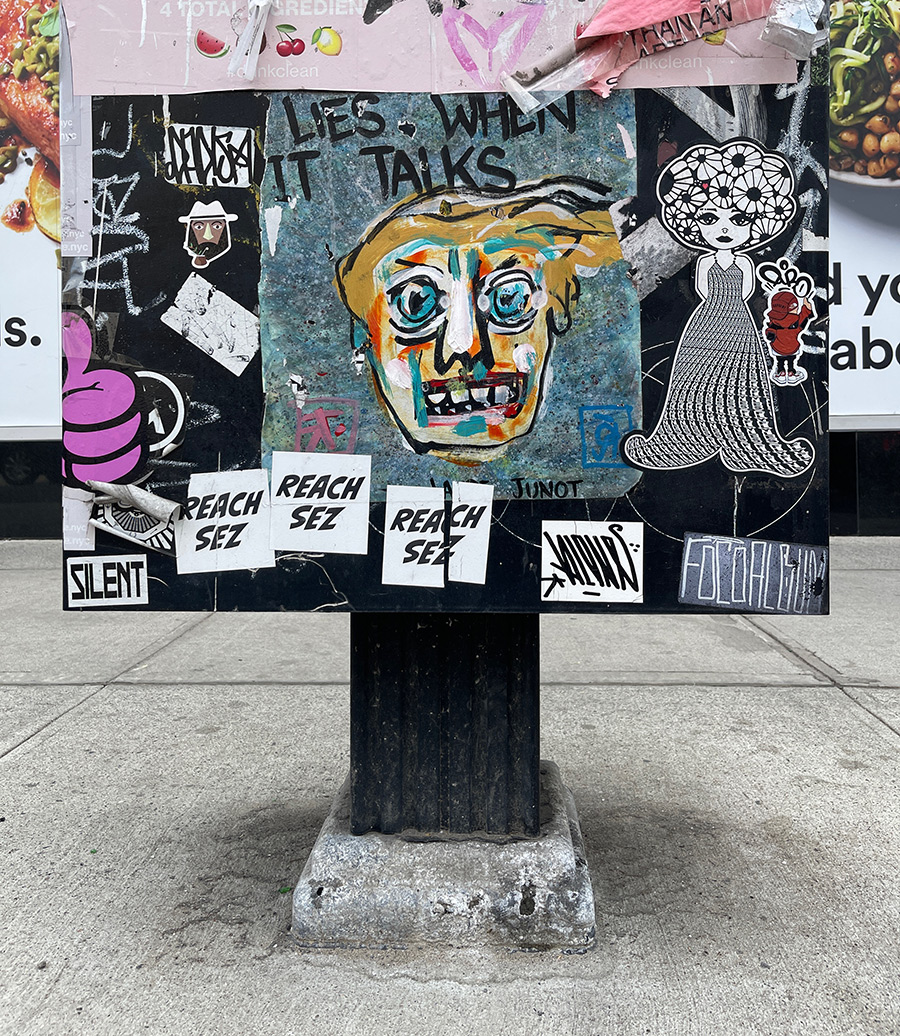
Alex Ititn. Rene Lerude. (photo © Jaime Rojo)


Read more
“Money Talks” on Frost Street – With Gabriel Specter

“Money Talks” on Frost Street – With Gabriel Specter

BSA Interview, Williamsburg, Brooklyn, May 2025


If you’ve ever wandered down Frost Street and caught a whiff of turpentine, weed, and burned toast, you may have walked right past the unmarked doorway where Williamsburg still quietly seethes and happily bubbles with creative resistance.

A community center, performance space, art gallery, flea market hybrid, the space welcomes you to the latest show, “Money Talks,” which doesn’t need an opening reception flier. It has its gravity and pull — the kind that draws a packed audience into a labyrinth of rooms, exhibition spaces, and performances. A sign of success, it spills onto the spring Friday night sidewalk, where smokers and sharp talkers hold court between sets by a shaggy 70s rock band that might or might not be ironic.

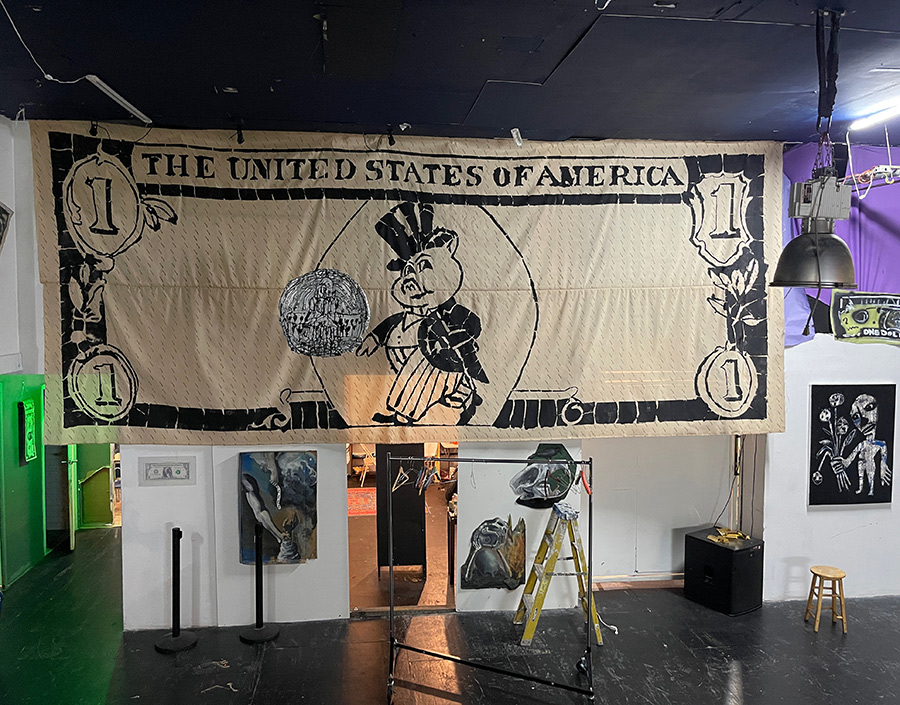
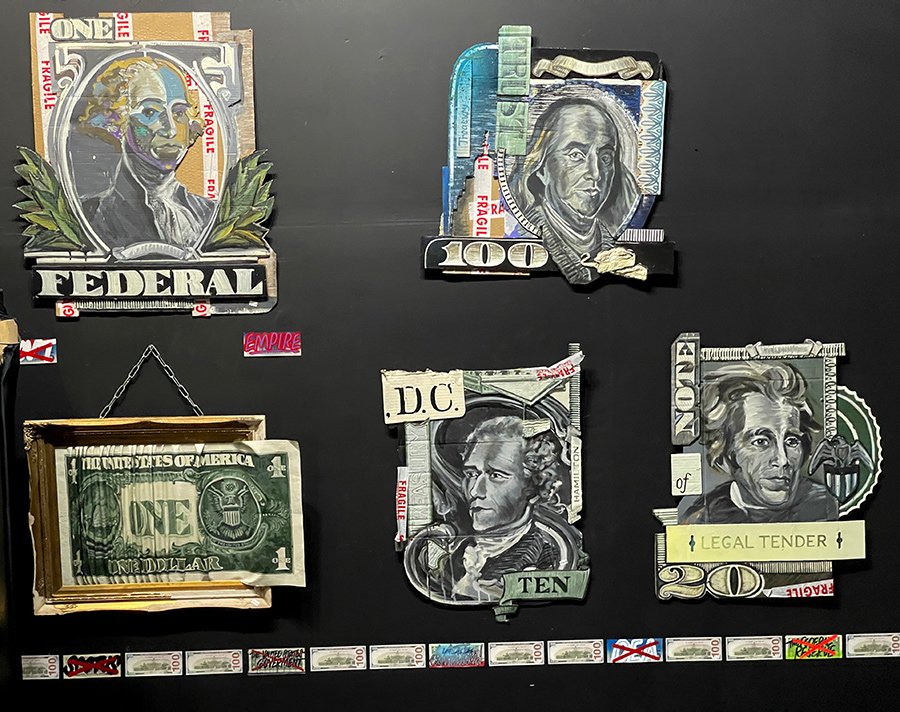
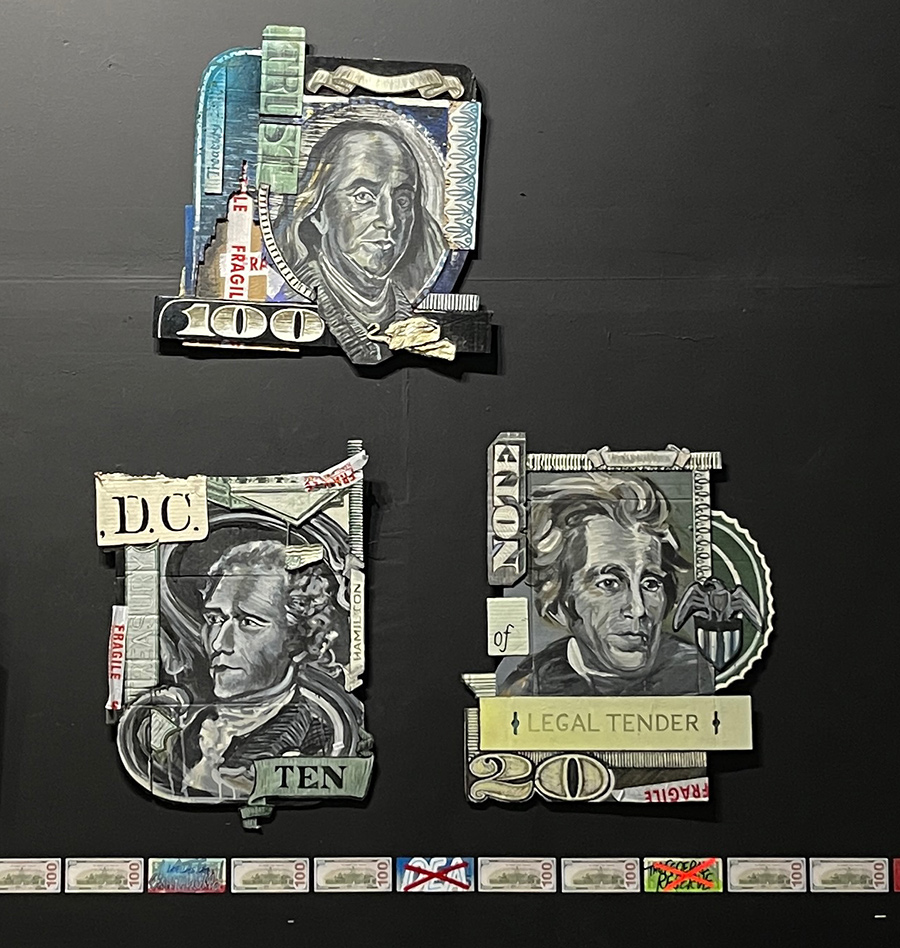
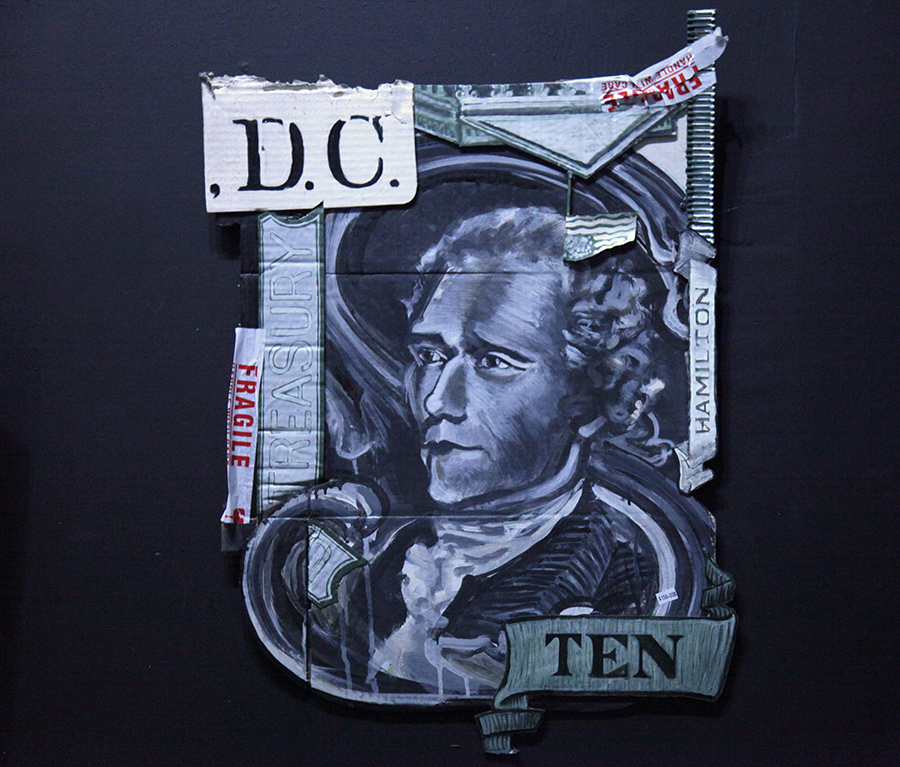
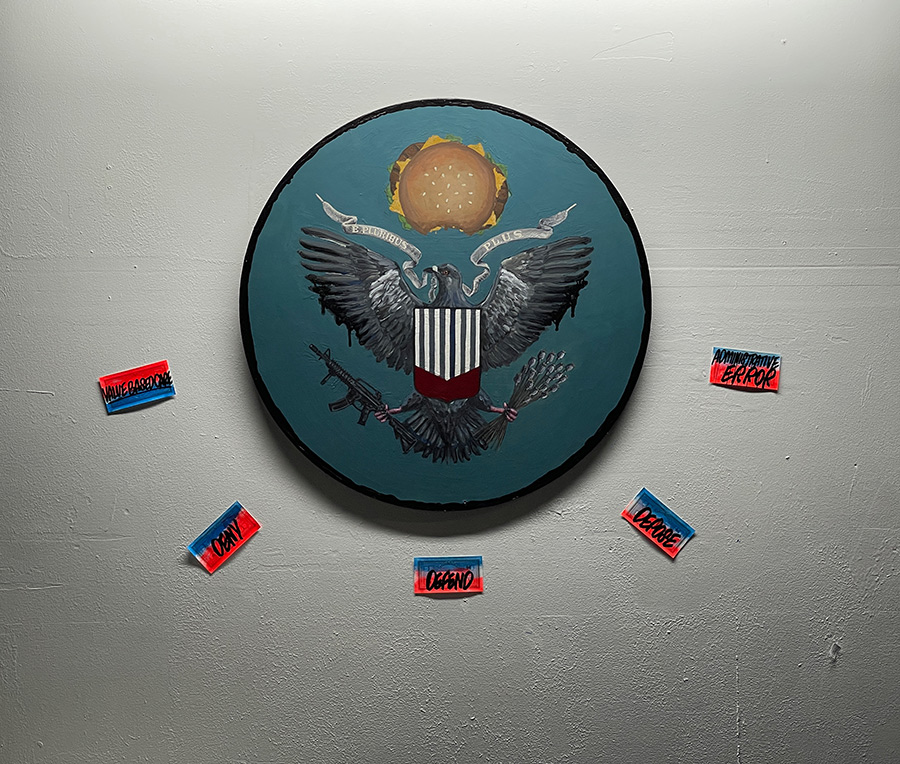
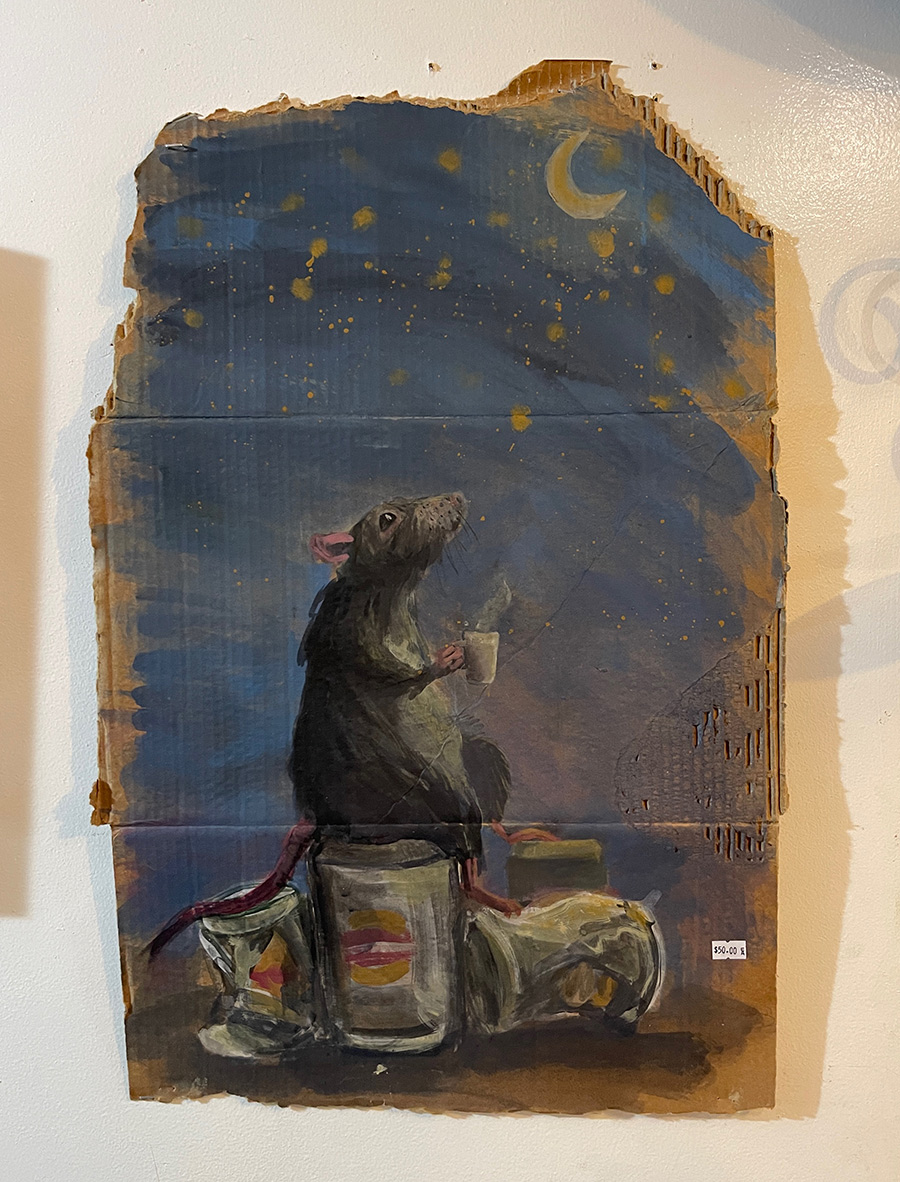
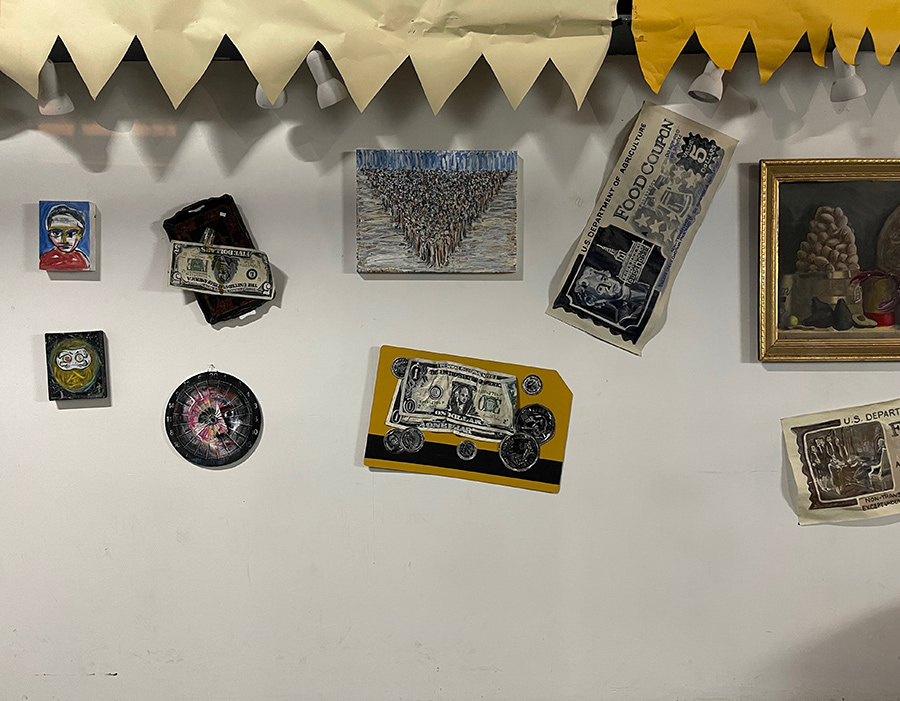
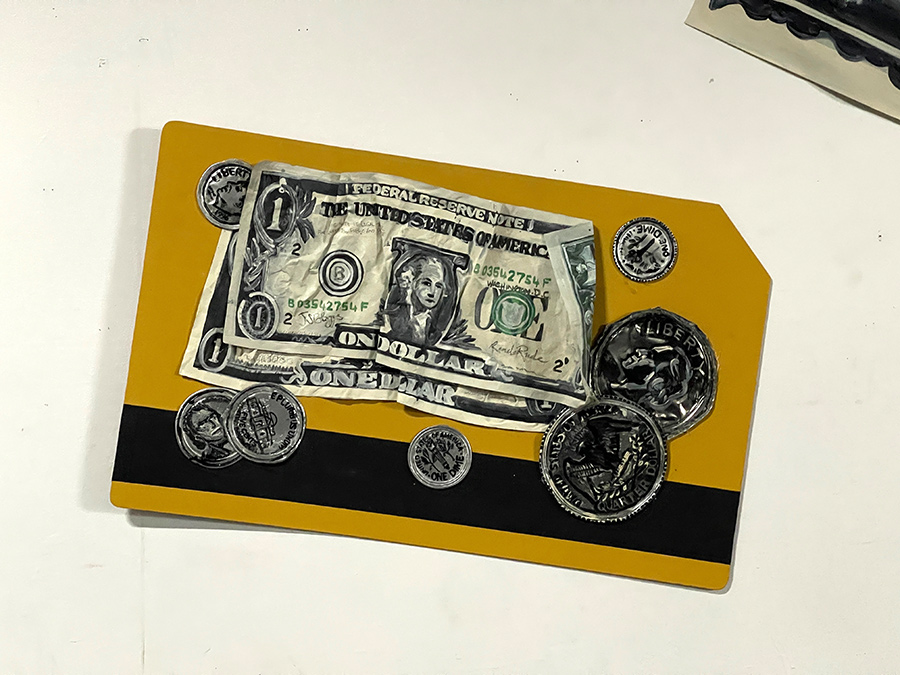
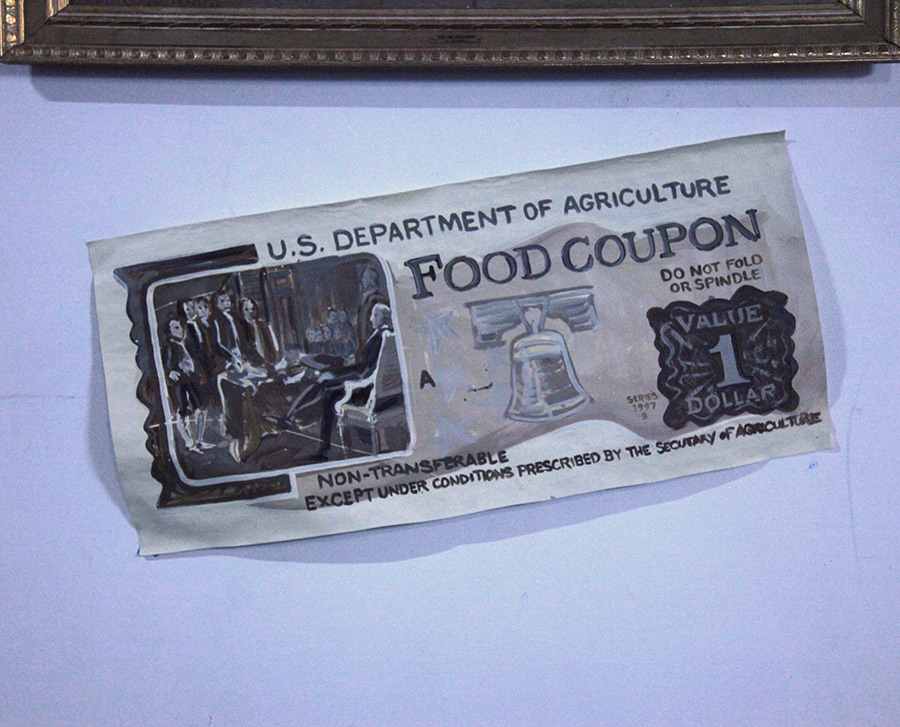
Inside, four artists — Specter, Rene, CASH4, and ITIN — served up a visual demolition of American currency and its cultural metaphors. It wasn’t bitter, but it wasn’t sweet. Like the Williamsburg of old, before the glass condos, this was salty, smart, funny, blunt. No manifestos on the wall, just wry, sharp-tongued critique told in paper pulp, paint, and political memory.
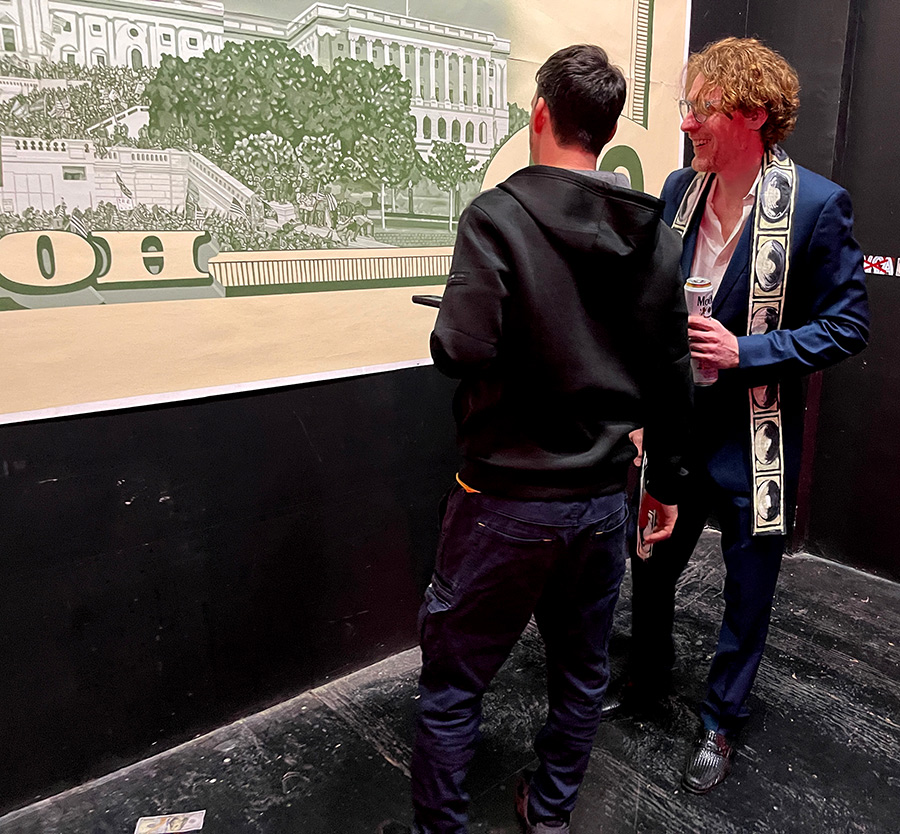
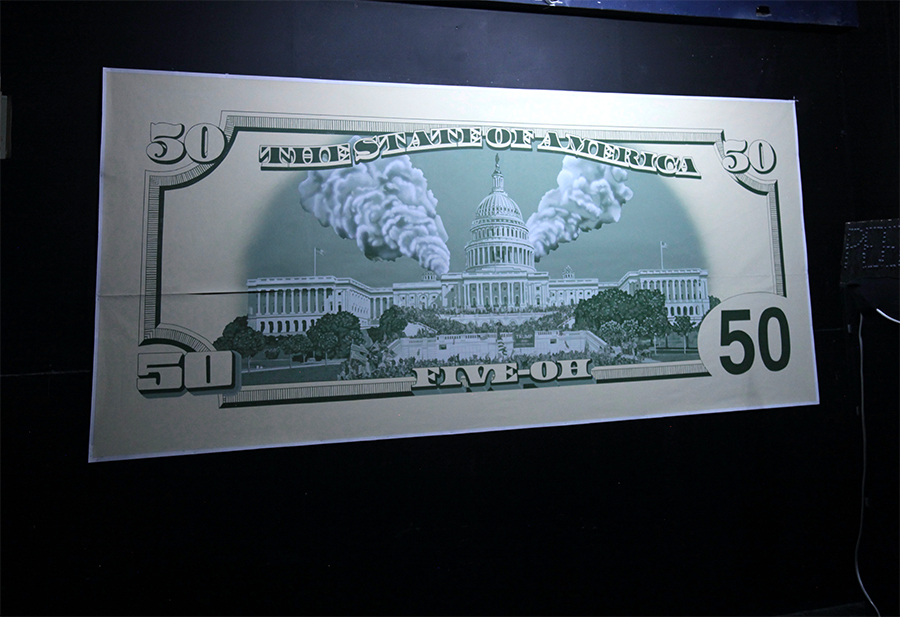
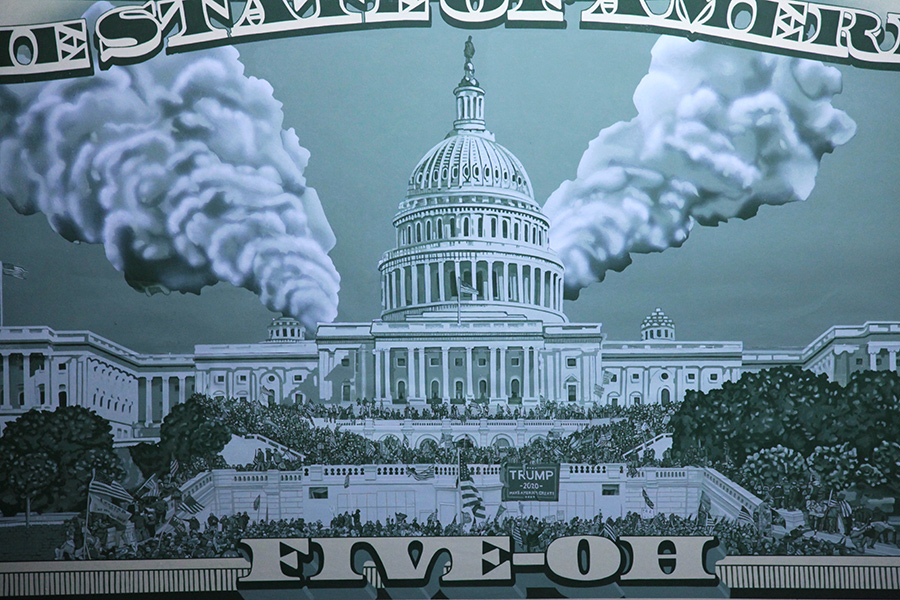
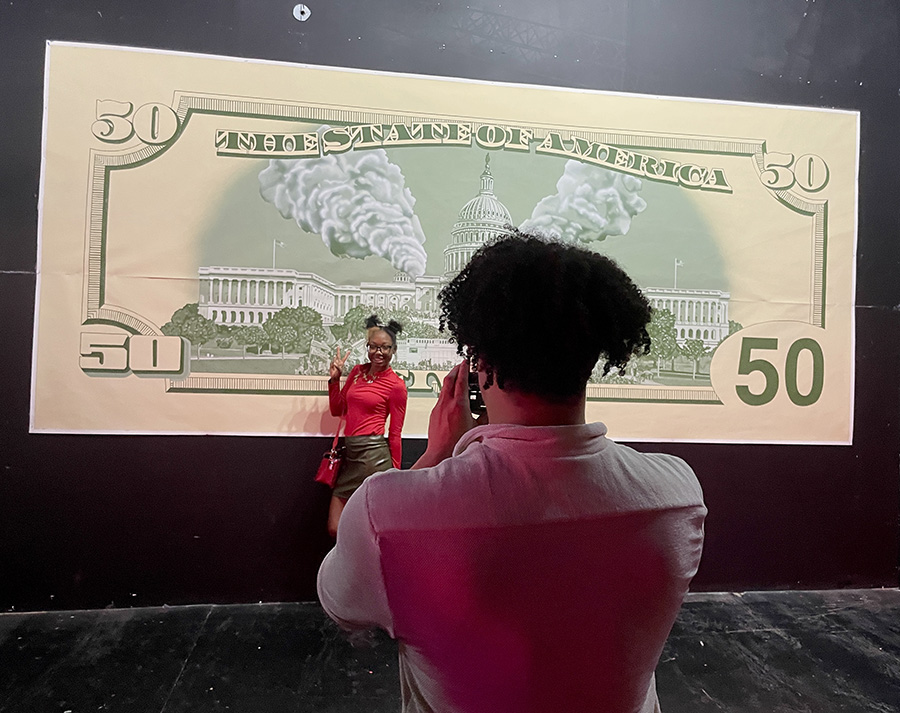
The anchor piece? Gabriel Specter’s massive currency-redesigned The State of America. A redux of the reverse of a dollar bill — if it had lived through January 6. The Capitol dome smokes like a symbol under siege, while foregrounded rioters pose in shades of government green. It’s beautifully executed, deeply personal, and visibly furious — a portrait of patriotism cracked in half. The loft is loud, the floor sticky, the ideas sharp. Money Talks doesn’t have a social media campaign, instead you feel like it has conviction. It doesn’t need a QR code. The rent may be high, but the spirit here is still gloriously low-rent — and unbought.

Specter, a visual bard of the 2000s and 2010s Brooklyn scene, known for work that didn’t just decorate the streets but spoke to social realities, talked to us about this piece — and about the spirit of a space that still knows how to host shows that mean something.


Gabriel Specter. Money Talks. (photo © Jaime Rojo)

BSA: How would you characterize the space where “Money Talks” took place — not just physically, but in terms of its function as a creative platform? Is it more of a cultural incubator, a performance venue, or a kind of underground laboratory for dissent?

GS: The best way to describe the space is talking about the people who occupy it. Each person coming in and out of the studio, the workshop, performance and gallery space shapes it into a one-of-a-kind arts venue. To answer whether it is a cultural incubator, performance venue, or underground laboratory of dissent, I would say all three apply. We’re inclusive of all forms of expression but we have an anti-establishment edge. Respect and kindness overrides difference of opinion.
Gabriel Specter. Money Talks. (photo © Jaime Rojo)

BSA: Your painting The State of America, featuring figures from the January 6th Capitol riot, was a powerful centerpiece. What emotional or psychological space were you in while creating it, and how did the act of painting become a way to process or confront that moment in history?

GS: Because of the amount of detail required to execute the work, I had to focus on the rendering of each figure in the painting. I was physically trying to individualize them, an accurate representation of what was happening. My brain was not focused on anything other than the actual painting of it. It put me in a meditative state creating it.

As I would take breaks from the laborious rendering, I would take a step and look at what I’d completed so far. Because I was trying to be so accurate about representing each individual, the stepping back and seeing them altogether, it honestly brought up a lot of hatred. For what they represented, and what they did on that day. In doing this painting, I was painting a lot of patriotic things and my version of patriotism is a lot different than what the scene depicts.


BSA: The exhibition seems to grapple with money not just as currency, but as a symbol of power, manipulation, and social fracture. Was the show intended as a direct critique of American capitalism, or are you also exploring more personal or ambiguous relationships to money and value?

GS: Each artist in the exhibition has their own take and I can only speak to my own. So yes, my work was a critique of money as a tool for manipulation, and how this has seeped into societal values. But as I said, every artist contributing took Money Talks as a way to take back power with money.

Gabriel Specter. Money Talks. (photo © Jaime Rojo)

BSA: You’ve been making work since the 2000s, including street pieces that captured daily city life and the people who live here. How has your perspective — and your medium — evolved in response to the widening economic divide and the political climate of recent years?

GS: I think my work has evolved to the times we are living in. I feel more than ever that my work needs to draw a line in the sand and represent my values as a human. I don’t try to take sides but I express what I think is right and I feel there is a sickness in our society at the moment.


Gabriel Specter. Money Talks. (photo © Jaime Rojo)
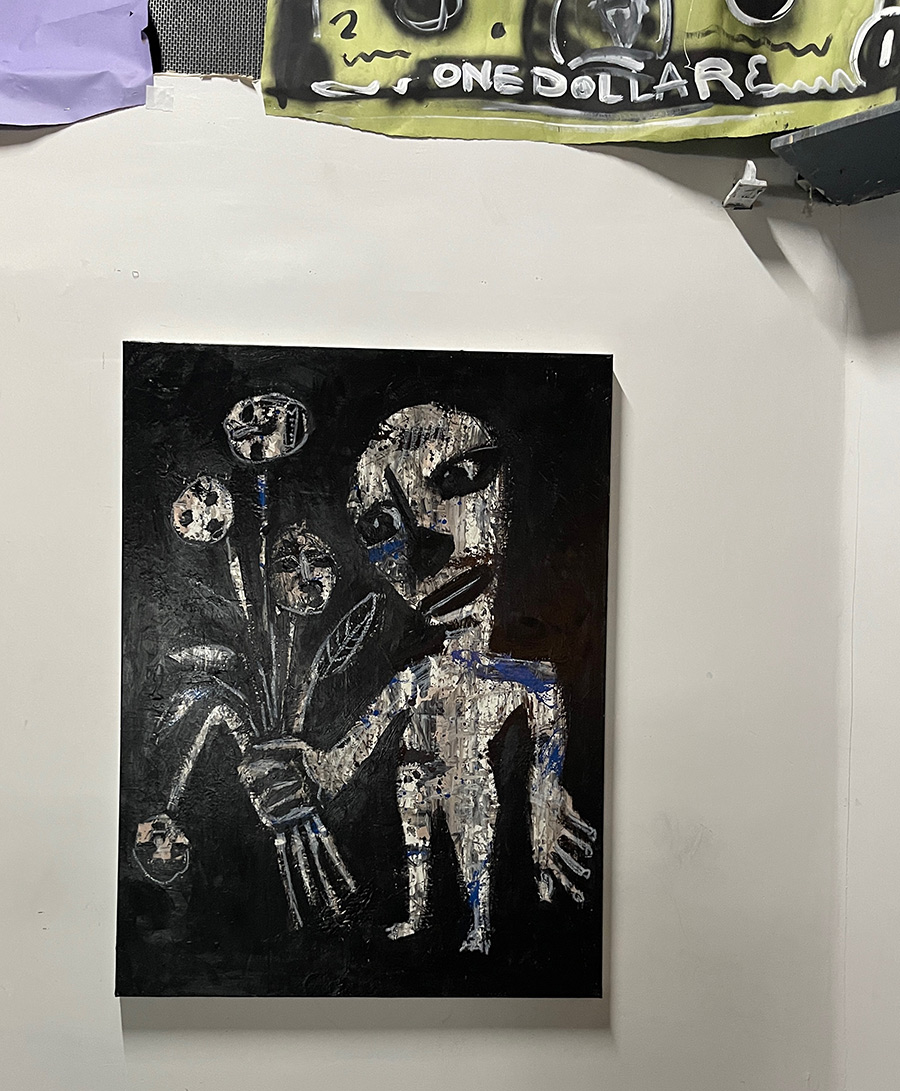
Itin. Money Talks. (photo © Jaime Rojo)
Rene. Cash4. Money Talks. (photo © Jaime Rojo)
Rene. Money Talks. (photo © Jaime Rojo)
Rene. Cash4. Money Talks. (photo © Jaime Rojo)
Rene. Money Talks. (photo © Jaime Rojo)
Cash4. Money Talks. (photo © Jaime Rojo)
Itin. Rene. Specter. Cash4. Money Talks. (photo © Jaime Rojo)
An ironic shot, perhaps recalling the fake image of “Photo Op” montage with Prime Minister Tony Blair taking a selfie with oil exploding behind him. Created in the mid-2000s by artists Peter Kennard and Cat Picton-Phillipps (known collectively as kennardphillipps). Rene. Specter. Cash4. Money Talks. (photo © Steven P. Harrington)
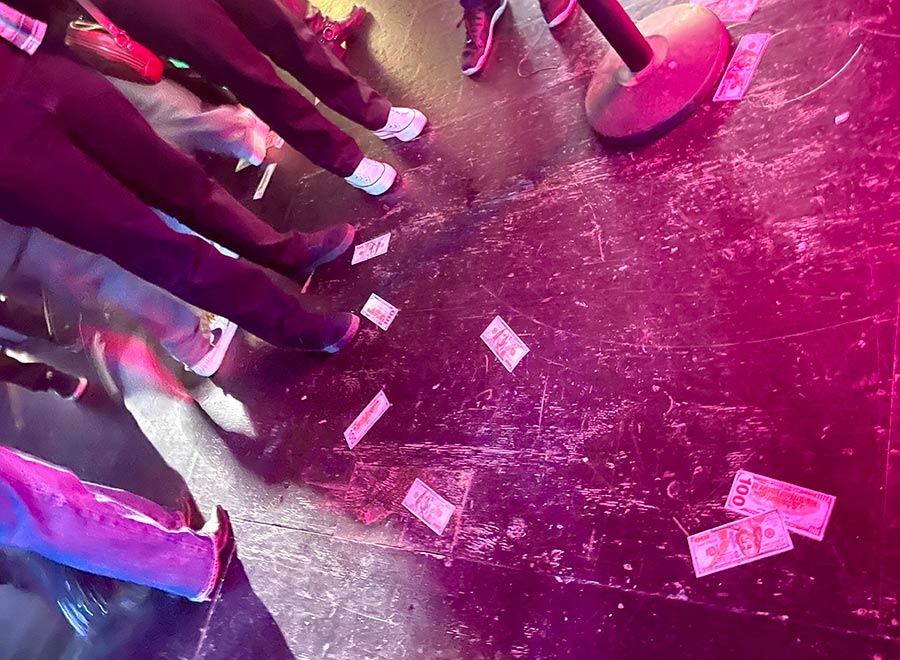
Fake money looking just like real money on the floor. Itin. Rene. Specter. Cash4. Money Talks. (photo © Steven P. Harrington)
Read more
BSA Images Of The Week: 05.11.24

BSA Images Of The Week: 05.11.24

Welcome to BSA Images of the Week.

This week, St. Patrick’s Cathedral on Fifth Avenue was suddenly flooded with pealing bells and congregants. In a historic moment for the Catholic Church, Pope Leo XIV, born in Chicago, was chosen, following in the footsteps of his predecessor Francis and his namesake Leo XIII, who was widely admired for his steadfast advocacy for migrants and laborers at the turn of the 20th century. Many observers have noted that the selection of an American pope may reflect a conscious decision by the College of Cardinals to offer a moral counterbalance to the growing tide of authoritarianism and exclusionary politics seen in some of today’s global leadership. With roots in a city shaped by immigration, industry, and social struggle, Leo XIV arrives at a time when such grounding may prove especially relevant. Best wishes to all of us.

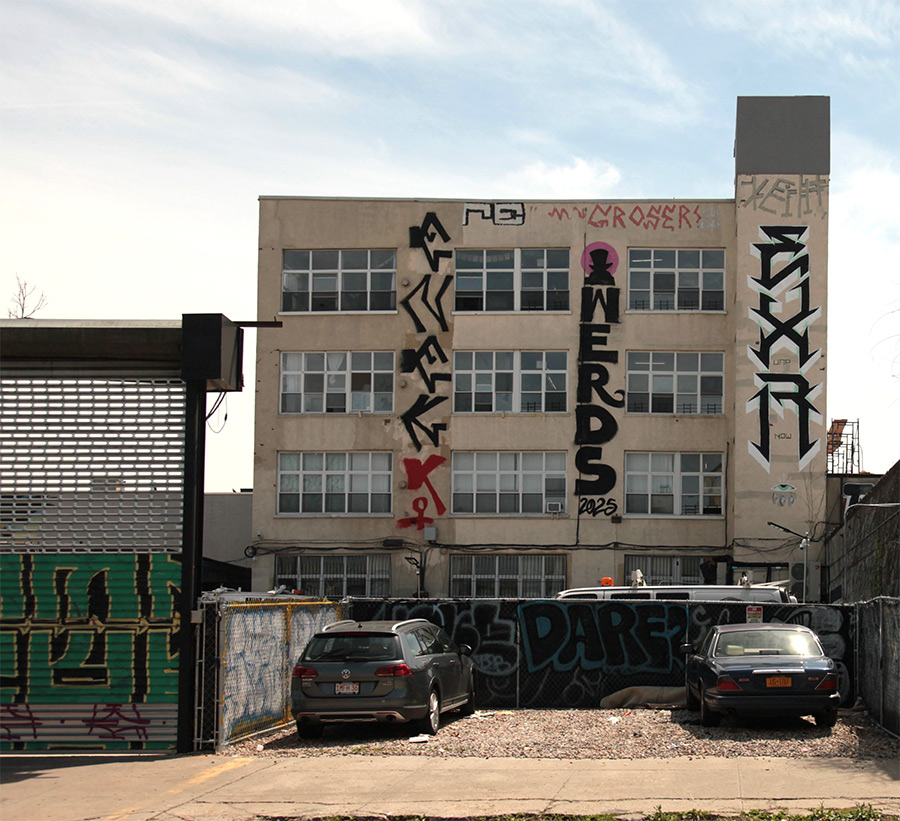
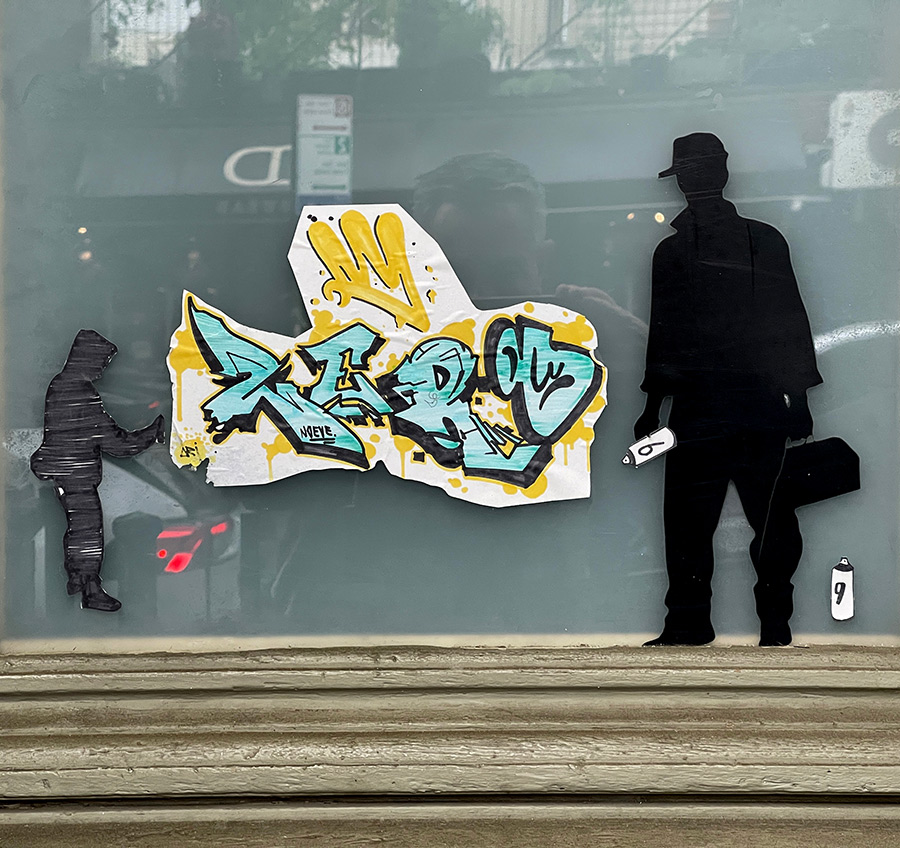
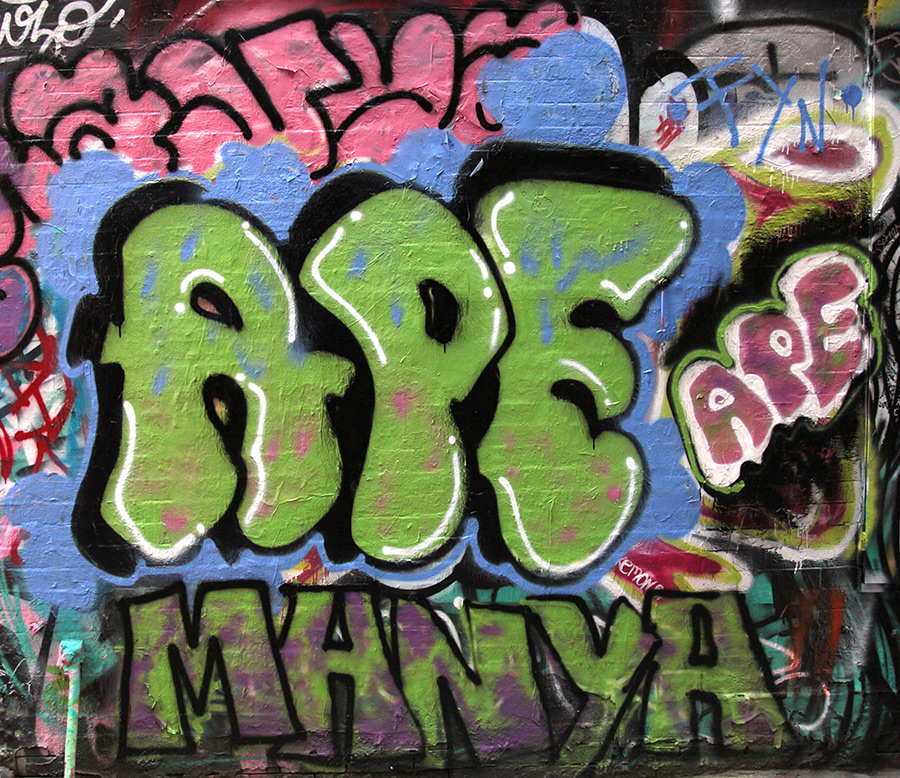
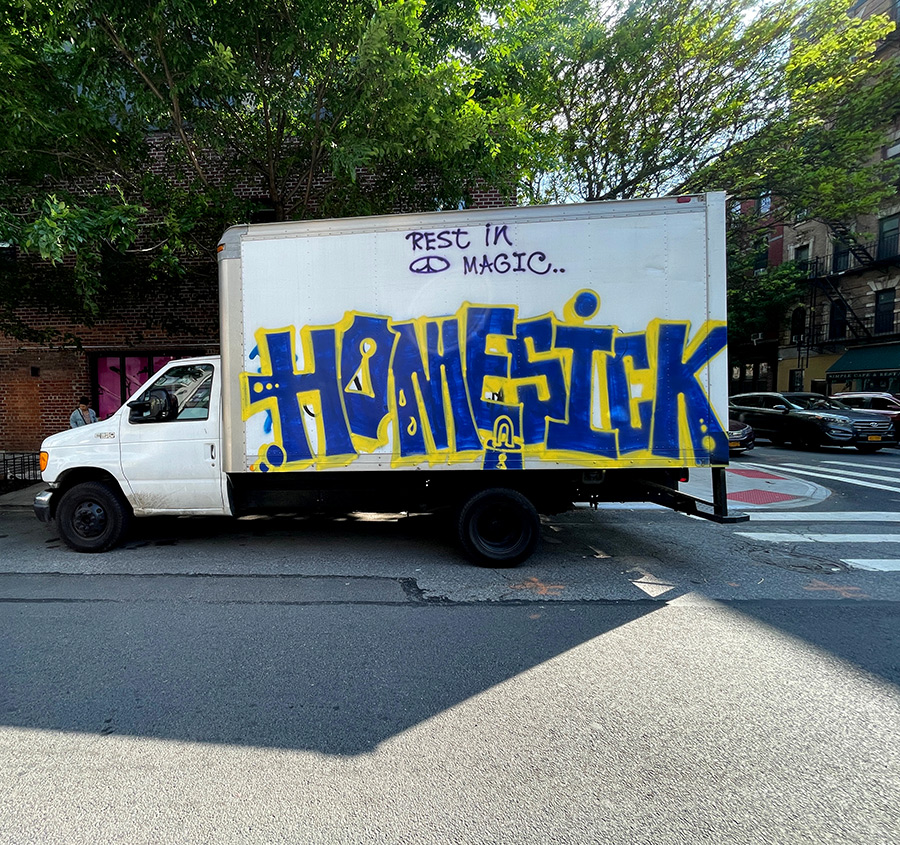
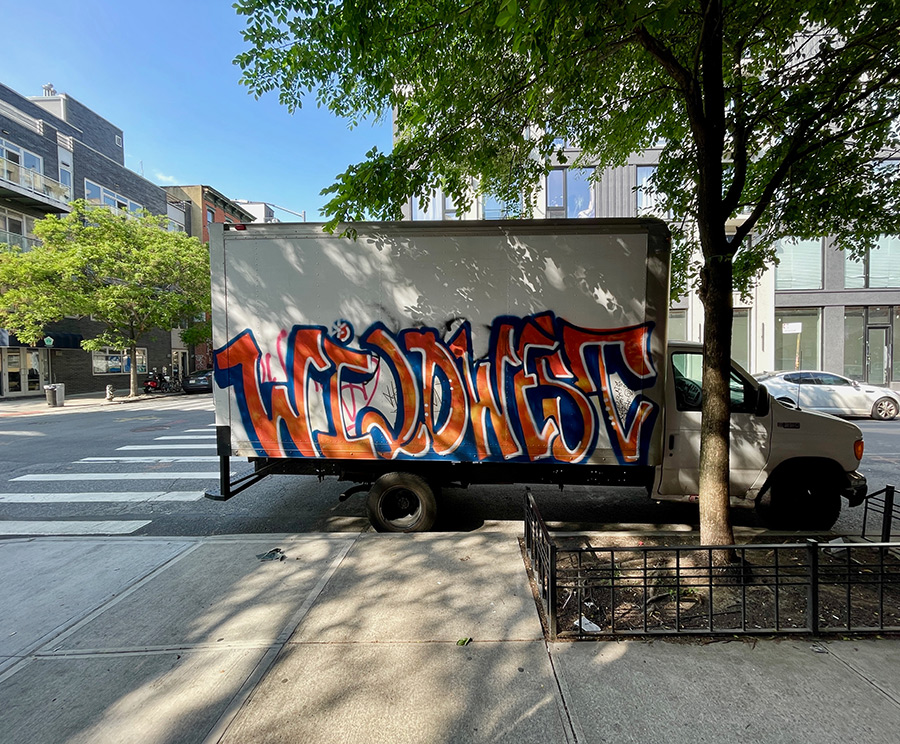
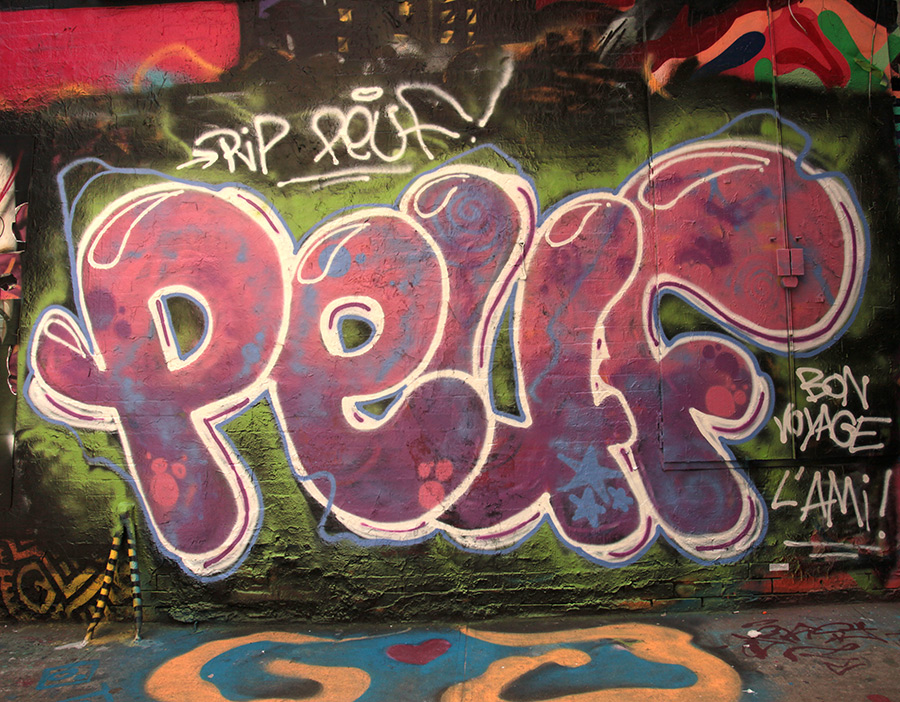
So here’s some of this week’s visual conversation from the street, including works from Homesick, Gabriel Specter, Clint Mario, Werds, IMK, EXR, Jorit, Wild West, JEMZ, Ribs, Diva, Ellena Lourens, APE, NOEVE, ENEKKO, Rene, Happy, Disoh, Peuf, and Off Key.

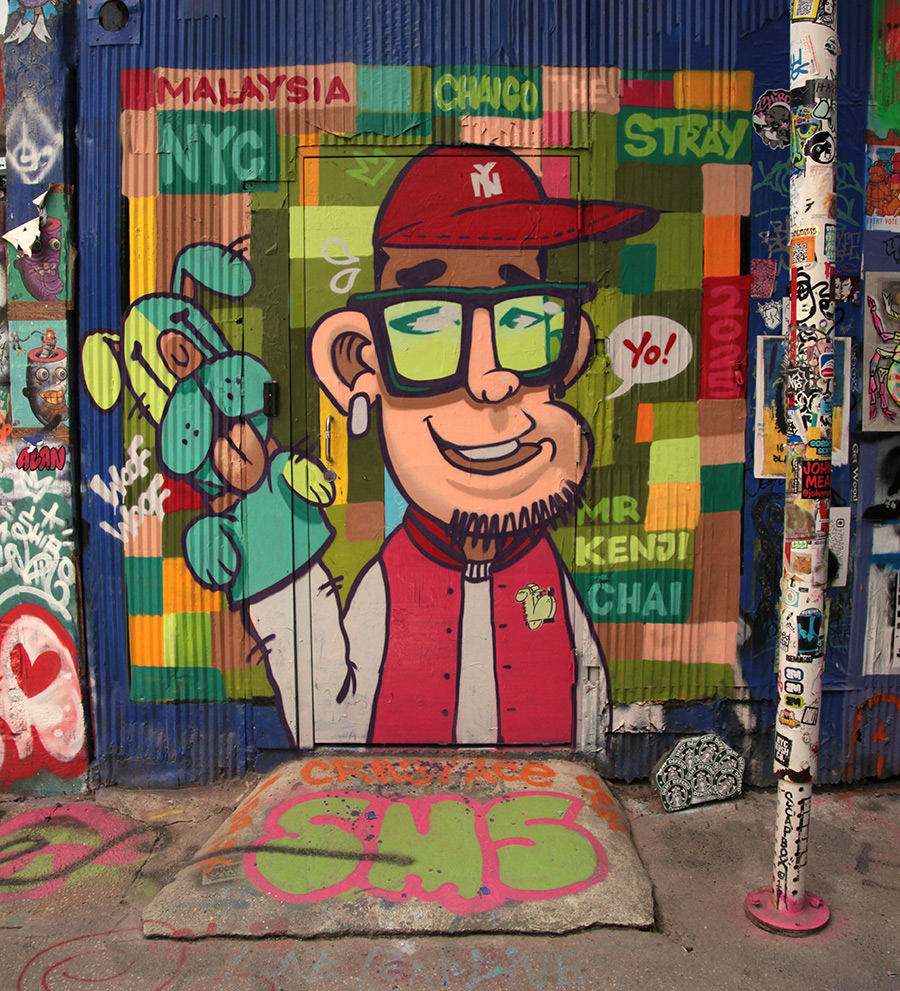
Mr. Kenji (photo © Jaime Rojo)
RIBS (photo © Jaime Rojo)
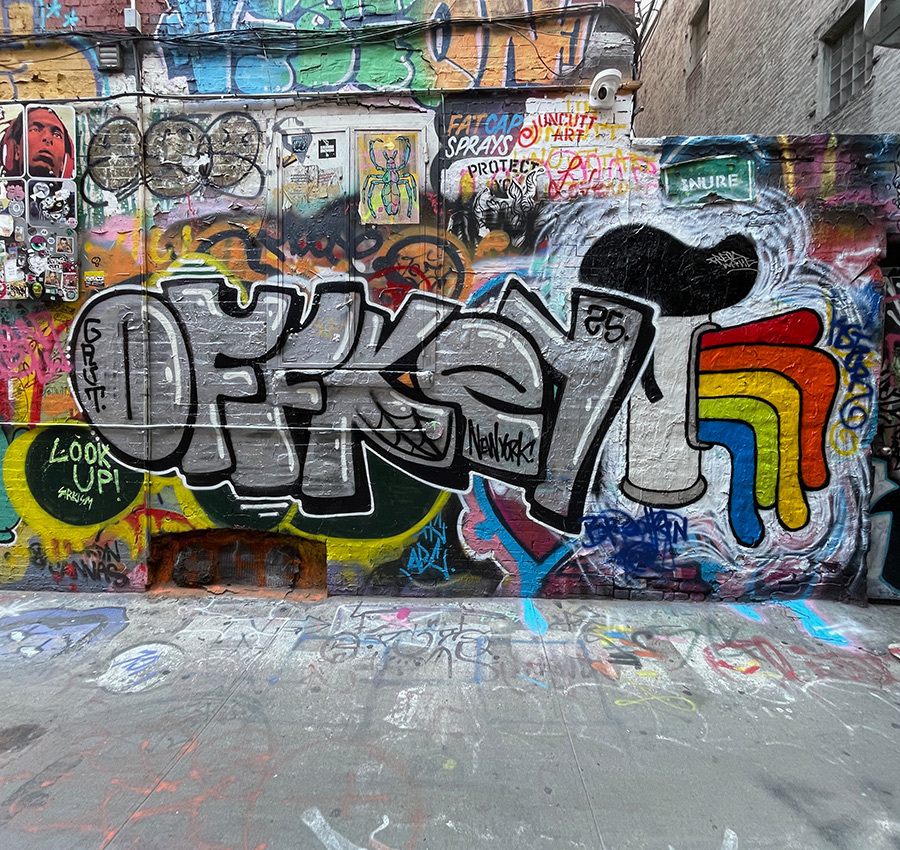
Off Key (photo © Jaime Rojo)
Clint Mario (photo © Jaime Rojo)
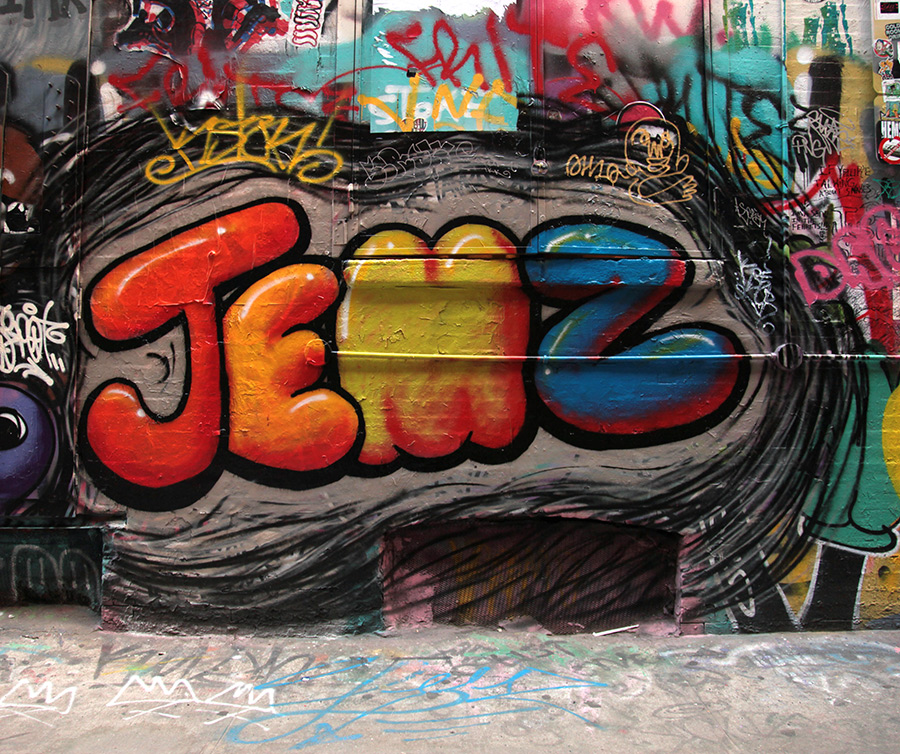
JEMZ (photo © Jaime Rojo)
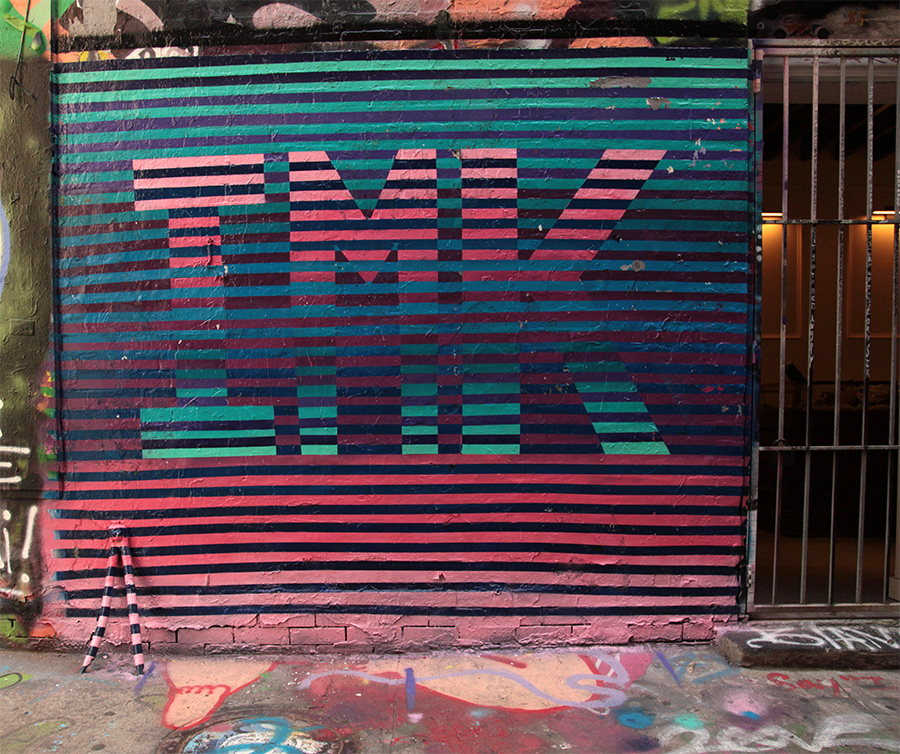
IMK (photo © Jaime Rojo)
DIVA (photo © Jaime Rojo)
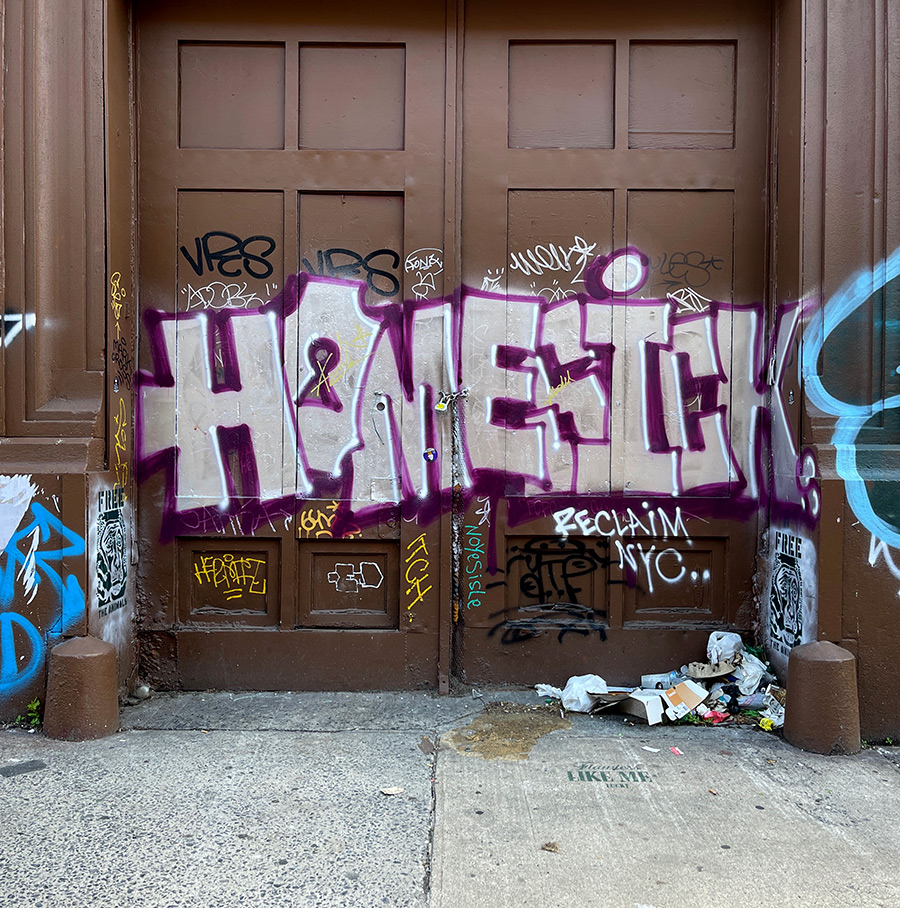
HOMESICK (photo © Jaime Rojo)
WILD WEST (photo © Jaime Rojo)
PEUF (photo © Jaime Rojo)
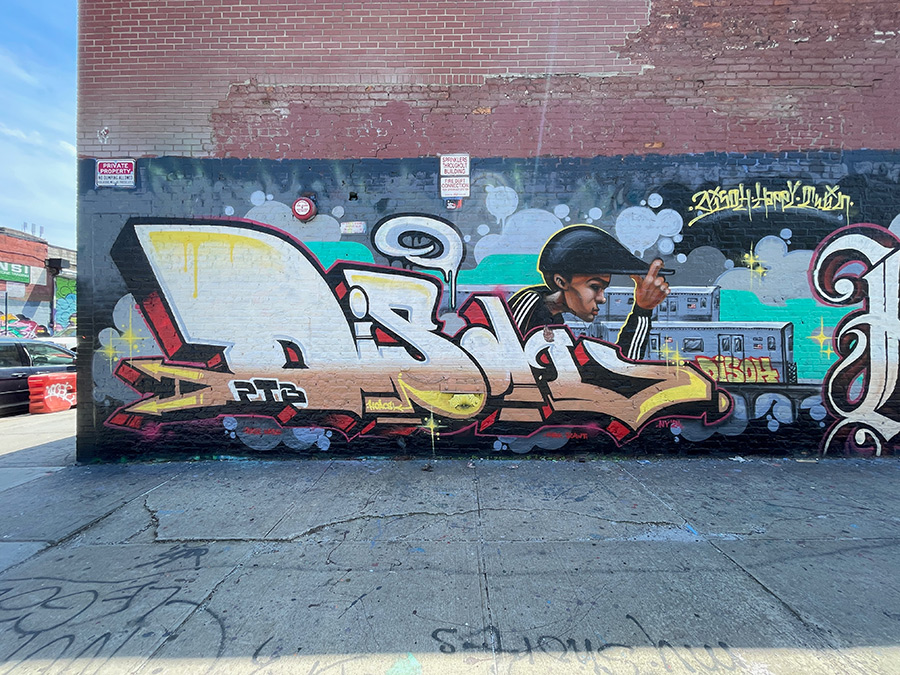
DISOH (photo © Jaime Rojo)
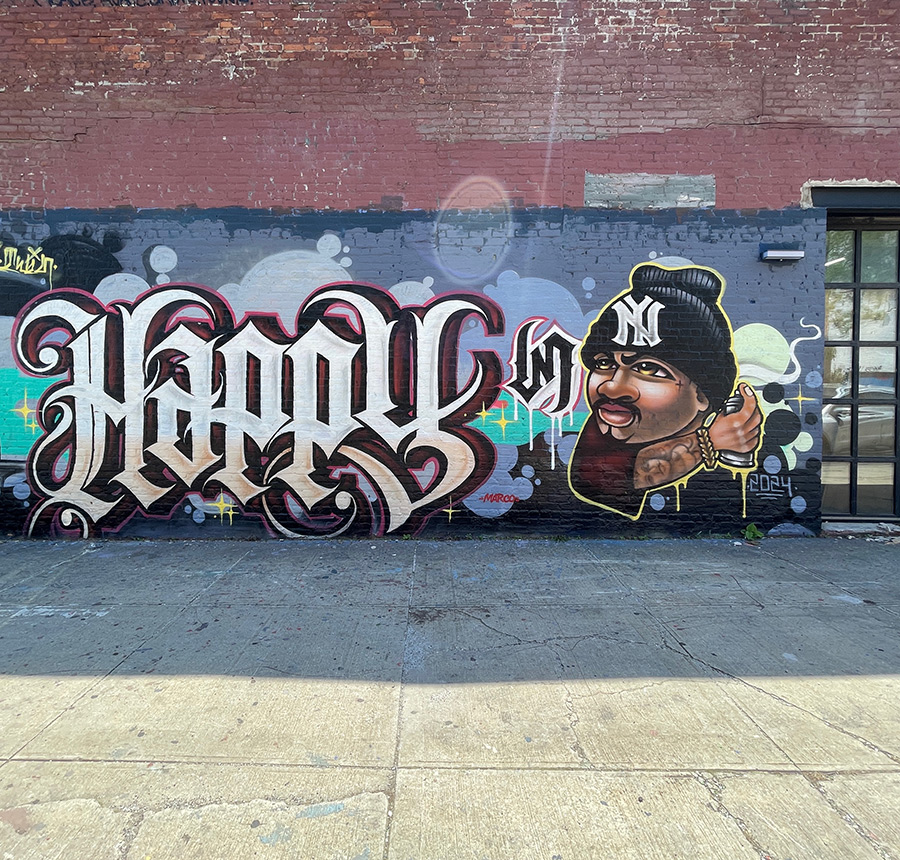
HAPPY (photo © Jaime Rojo)
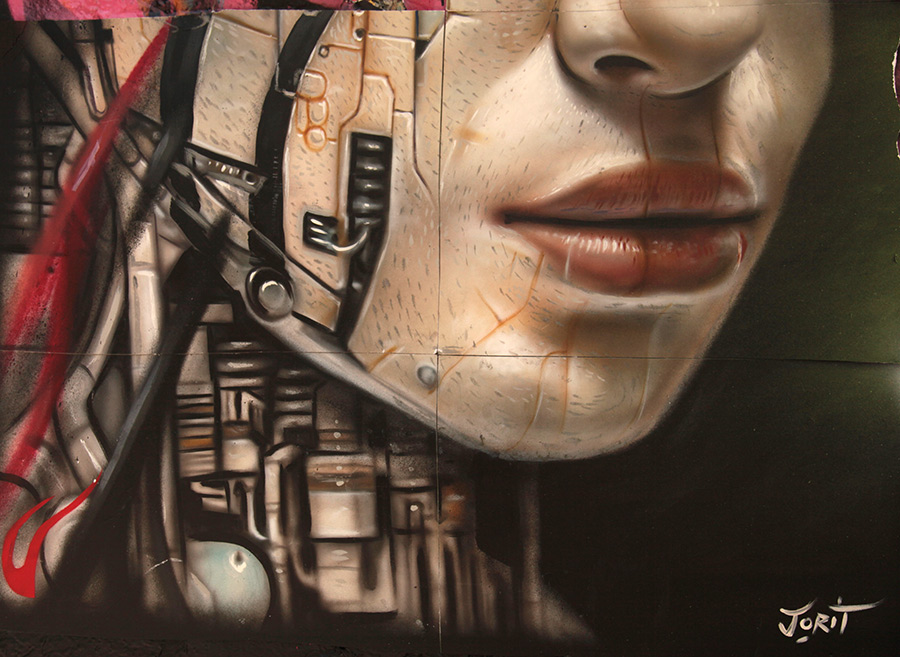
JORIT. This is a detail of a partially destroyed piece. (photo © Jaime Rojo)
Specter and Rene collaboration. Detail. (photo © Jaime Rojo)
Specter. Rene. (photo © Jaime Rojo)
ENEKKO. WERDS. EXR. (photo © Jaime Rojo)
NOEVE (photo © Jaime Rojo)
APE (photo © Jaime Rojo)
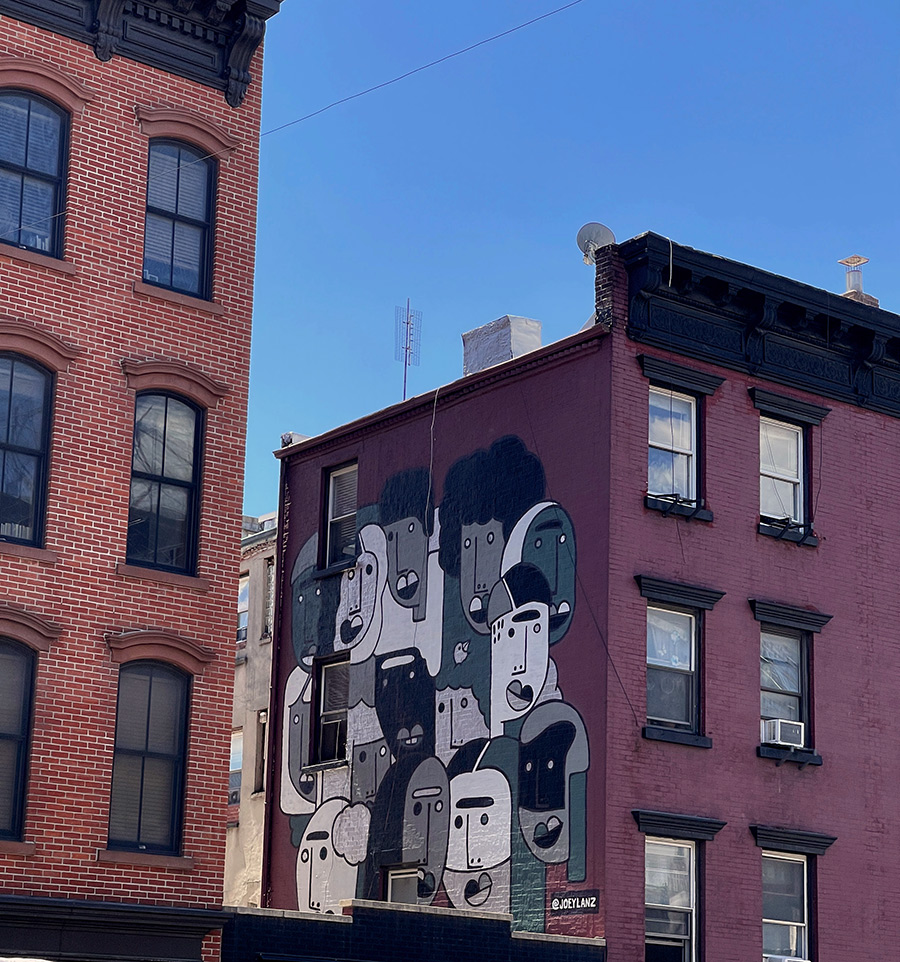
Joey Lanz (photo © Jaime Rojo)
Ellena Lourens (photo © Jaime Rojo)
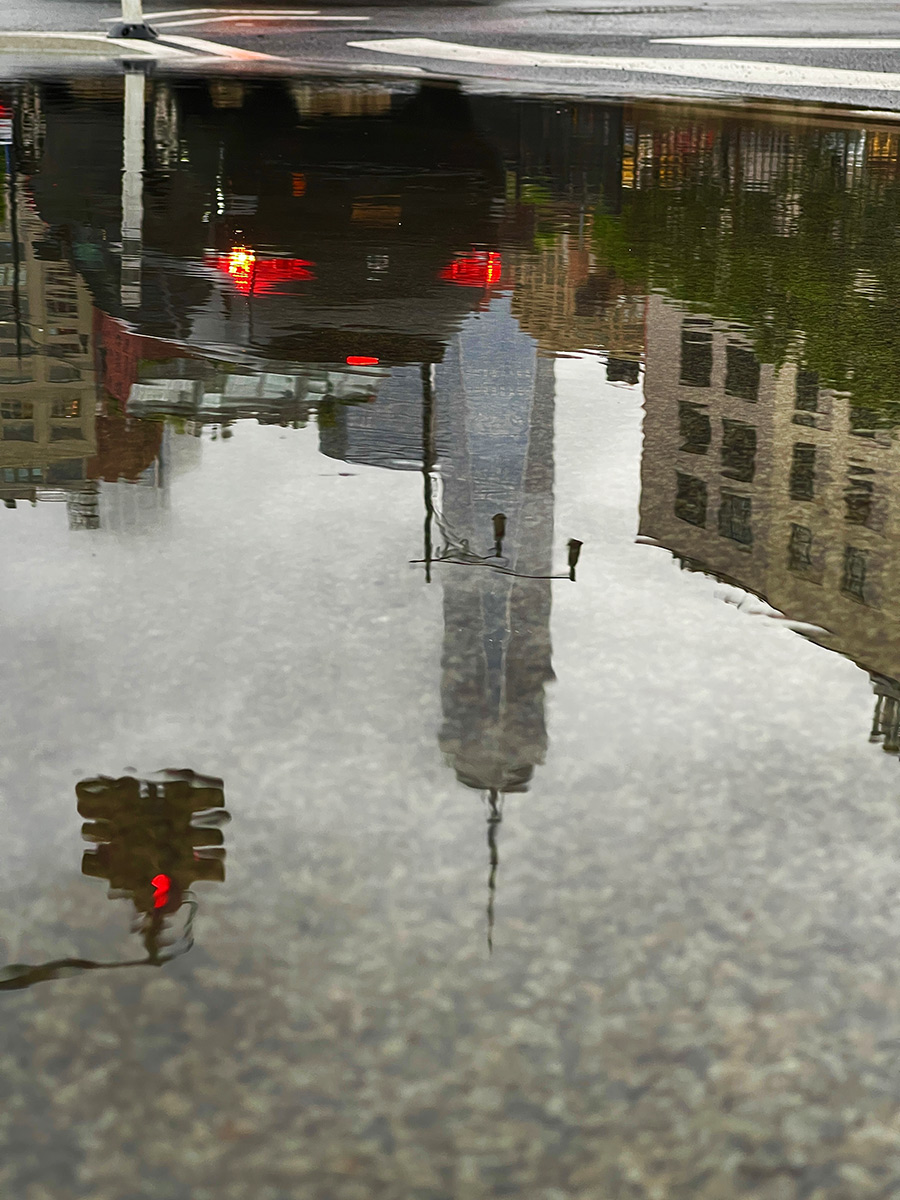
Untitled. Freedom Tower. Manhattan, NY. Spring 2025. (photo © Jaime Rojo)
Read more