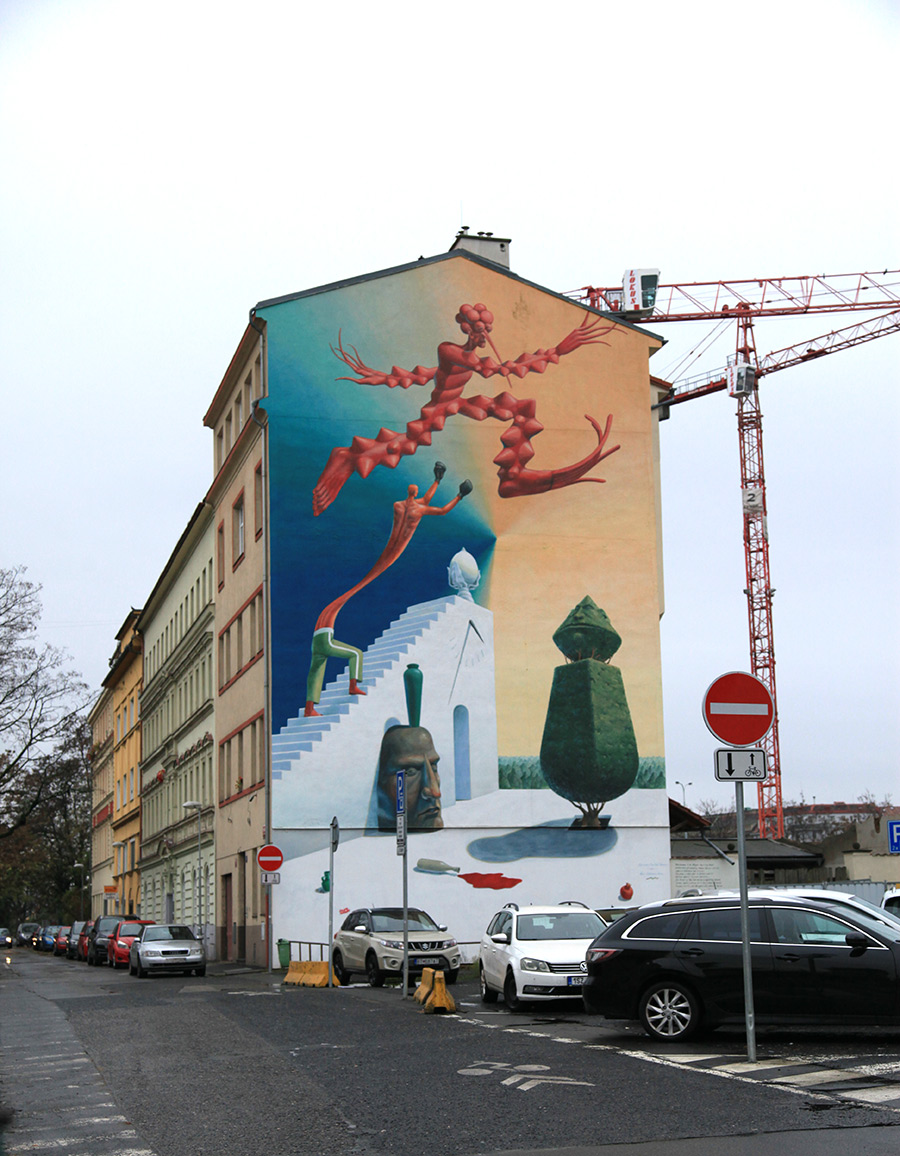
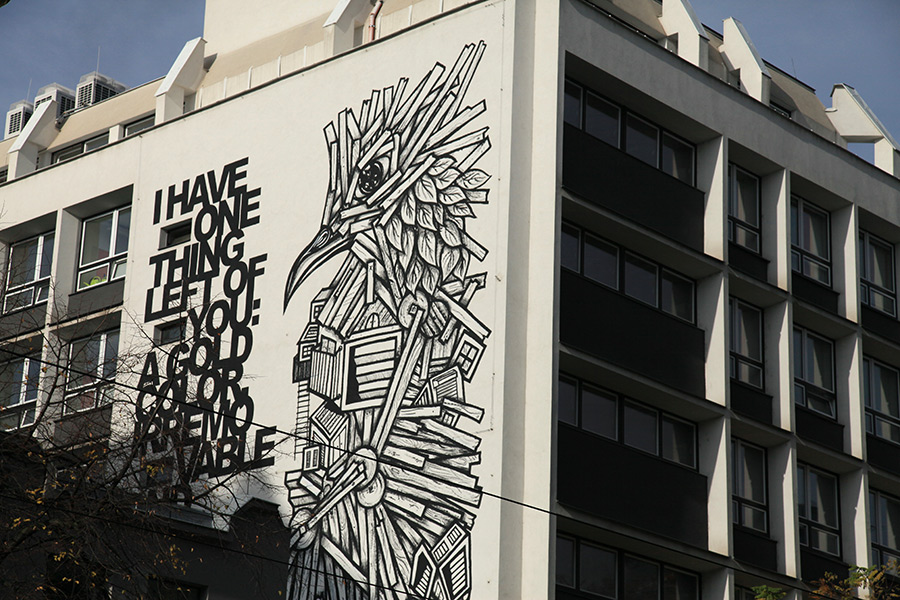
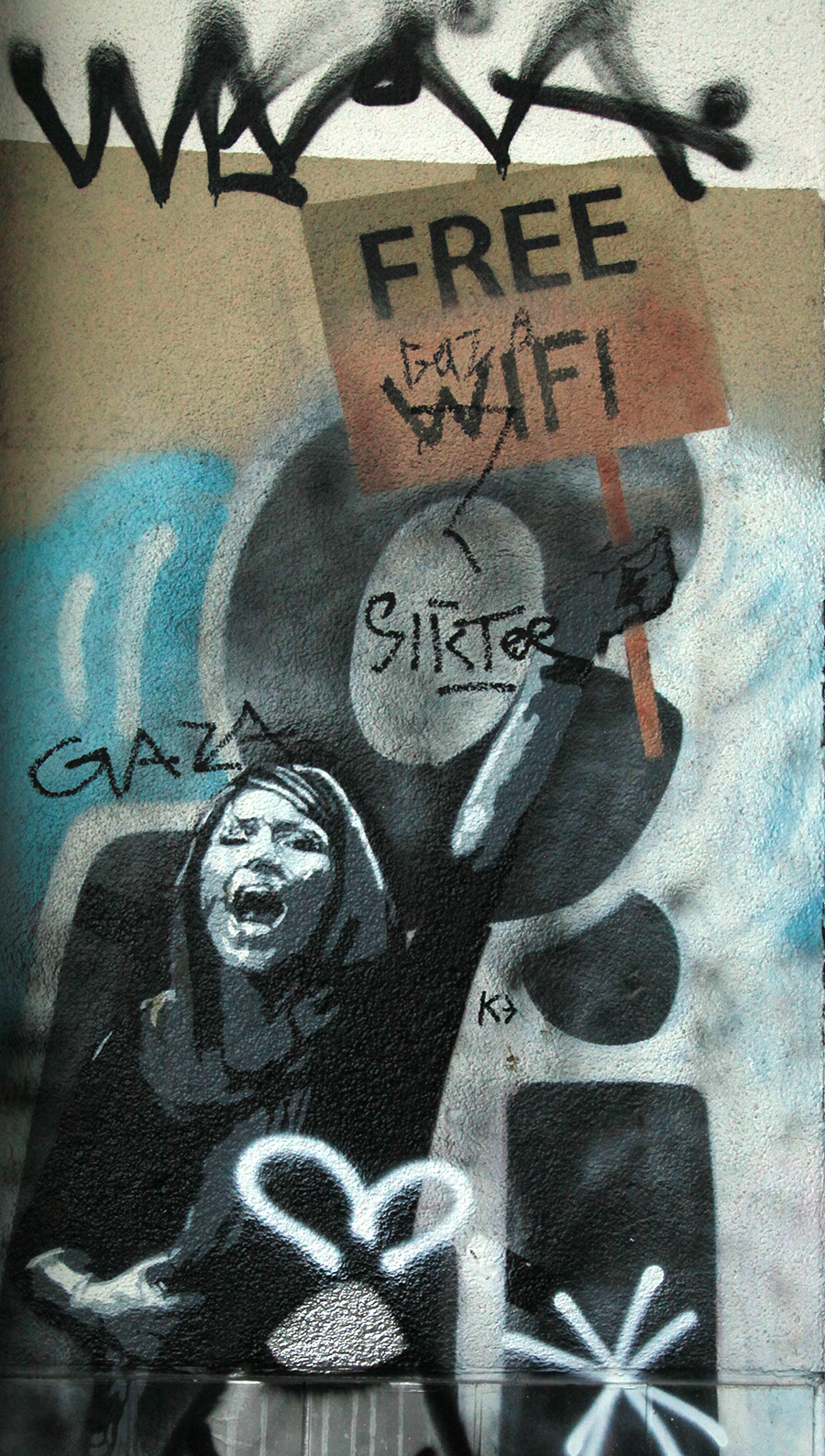
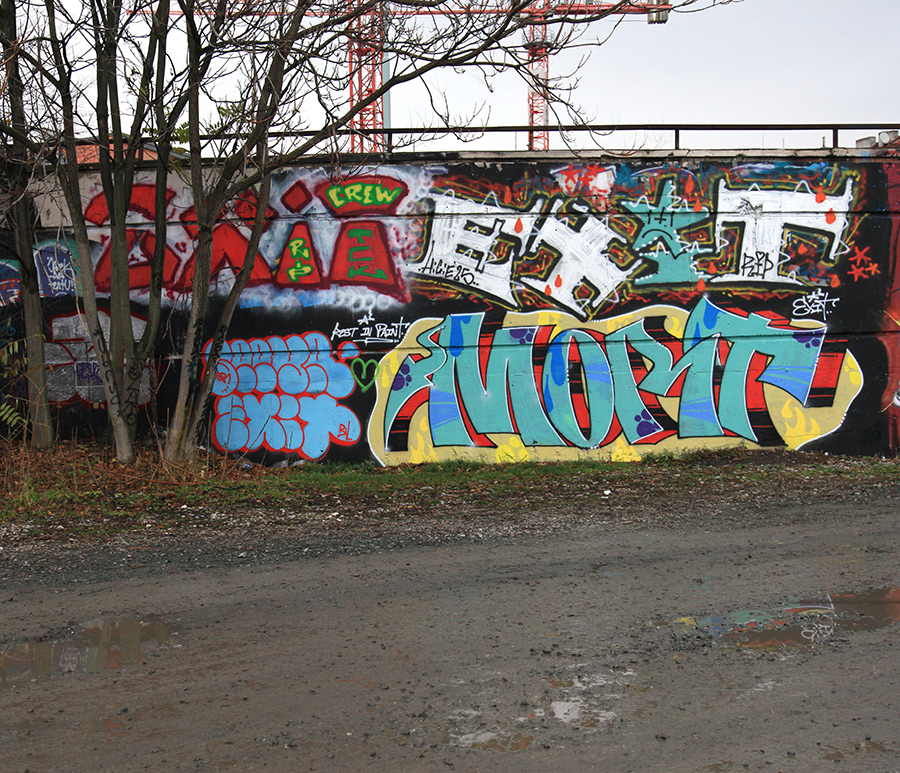
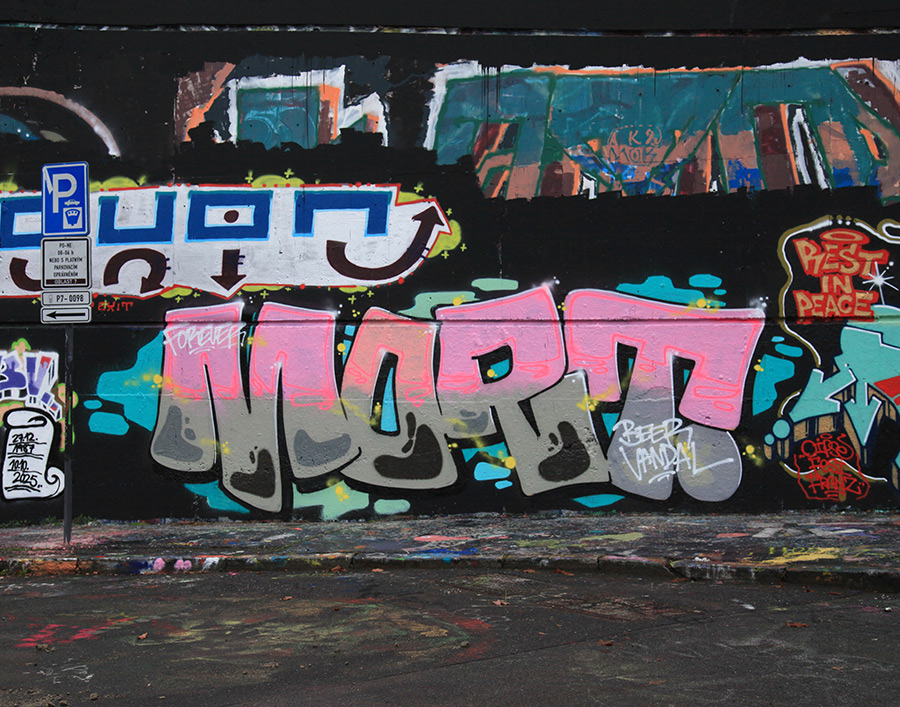
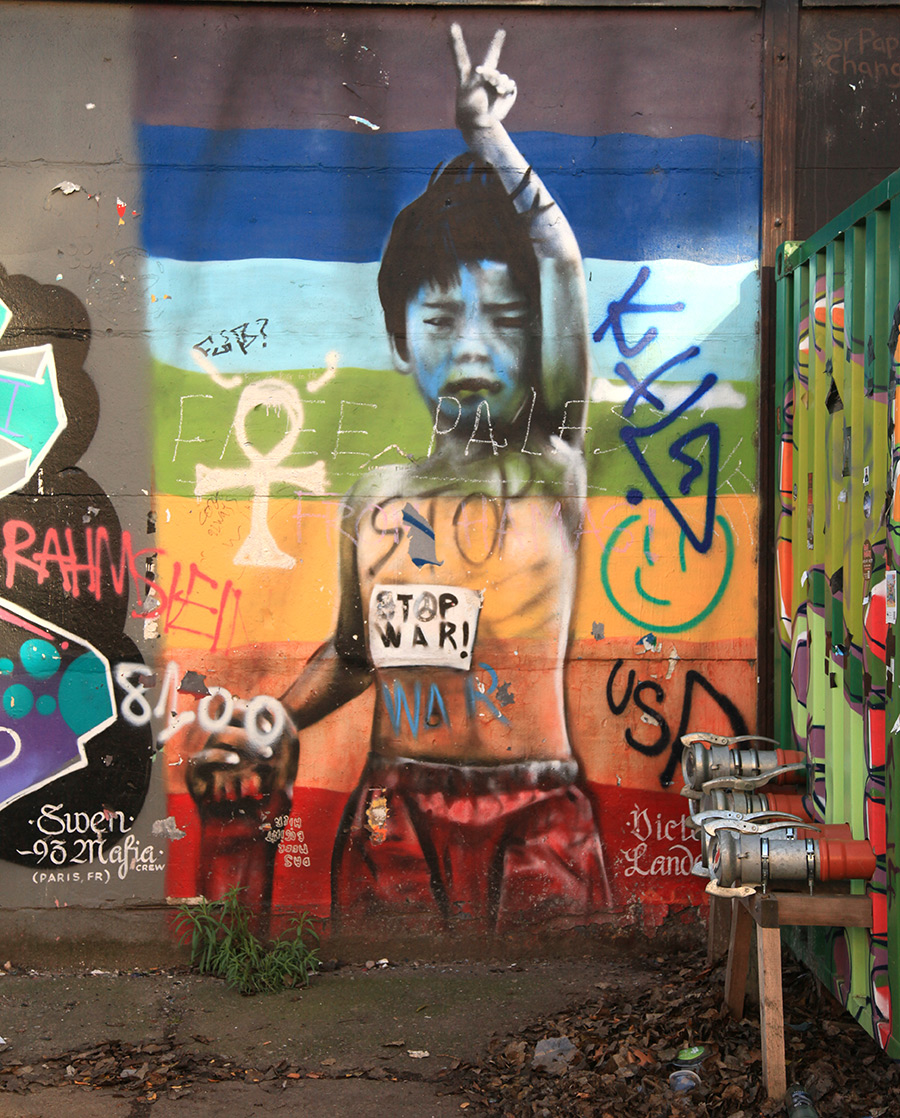
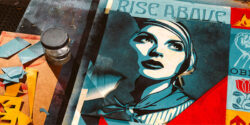
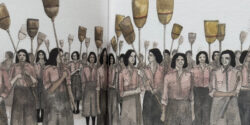
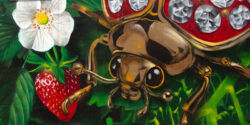
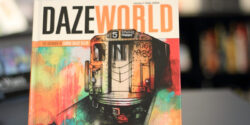
We’re celebrating the end of one year and the beginning of the next by thanking BSA Readers, Friends, and Family for your support in 2025. Picked by our followers, these photos are the heavily circulated and “liked” selections of the year – shot by our Editor of Photography, Jaime Rojo. We’re sharing a new one every day to celebrate all our good times together, our hope for the future, and our love for the street. Happy Holidays, Everyone!
The most successful murals are created within the context of a community. Too often, street art festivals operate with little regard for the neighbors they affect—the residents, families, and sacred spaces that surround the work. What is framed as a “gift” can instead resemble a form of cultural imperialism, delivered by self-appointed benefactors.
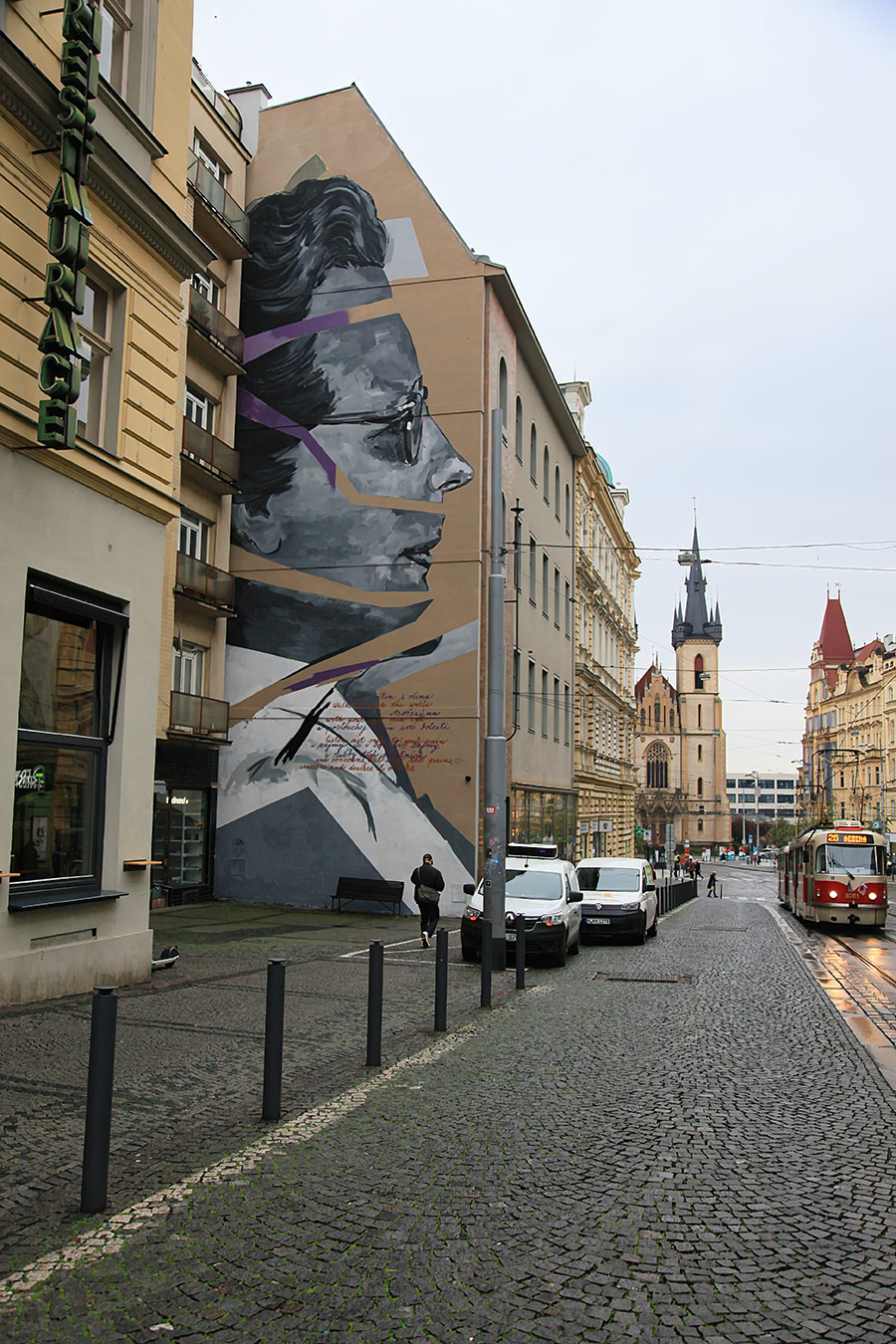
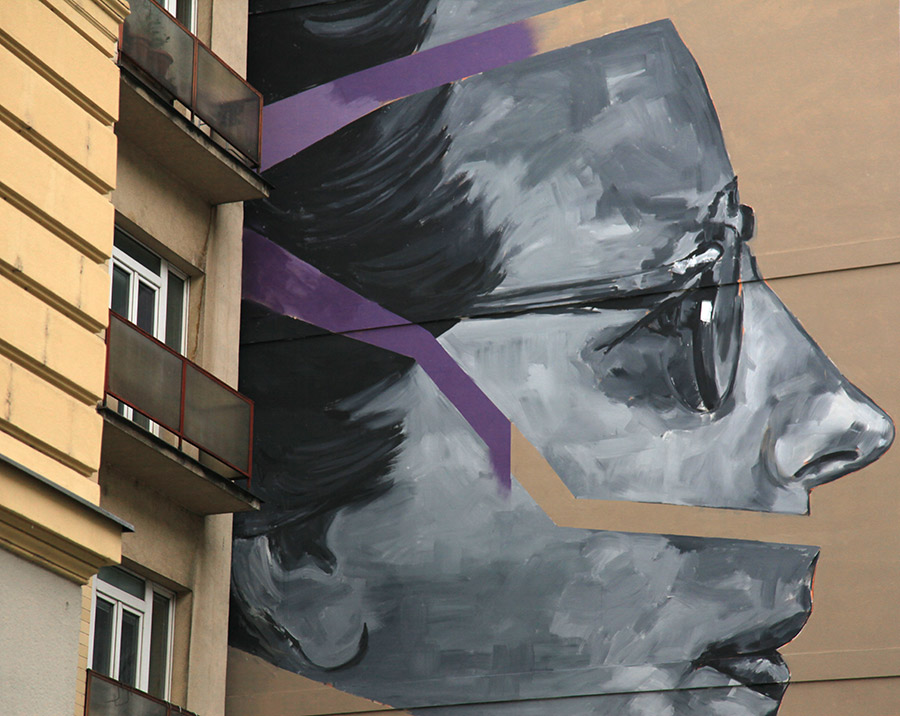
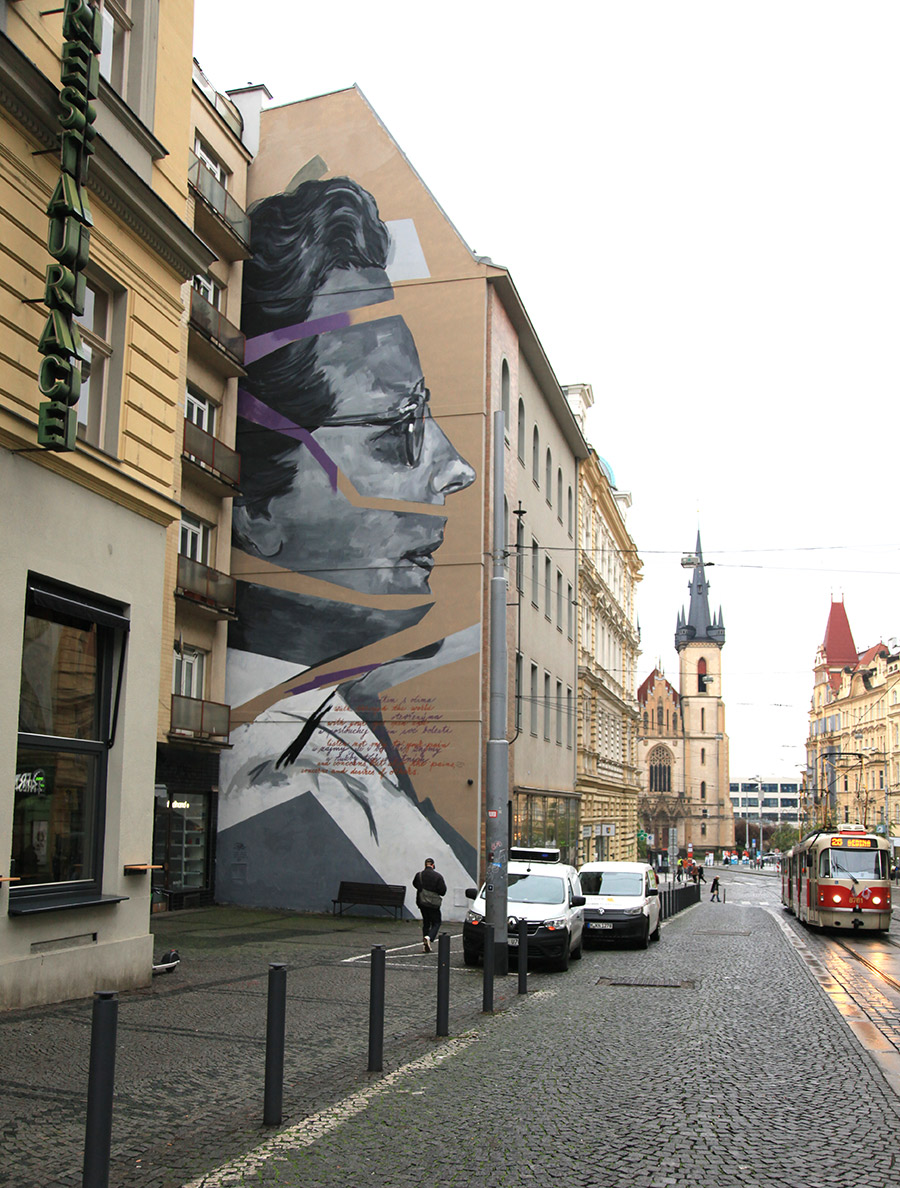
In Prague this fall, however, we saw a contemporary approach applied to the portrait of a culturally significant figure, and the result felt measured, grounded, and in balance with its setting. Here is a modernist profile of Milada Horáková, who was a Czech democratic politician and resistance fighter executed in a 1950 Stalinist show trial. In Prague she stands as a powerful cultural symbol of moral courage, civic resistance, and the enduring trauma of communist repression, commemorated through memorials, street names, and public remembrance.
At the base of the graphically interrupted portrait is a quote from her, translated as “Walk through the world with your eyes open and listen not only to your pain and concerns, but also to the pains, concerns and desires of others.”
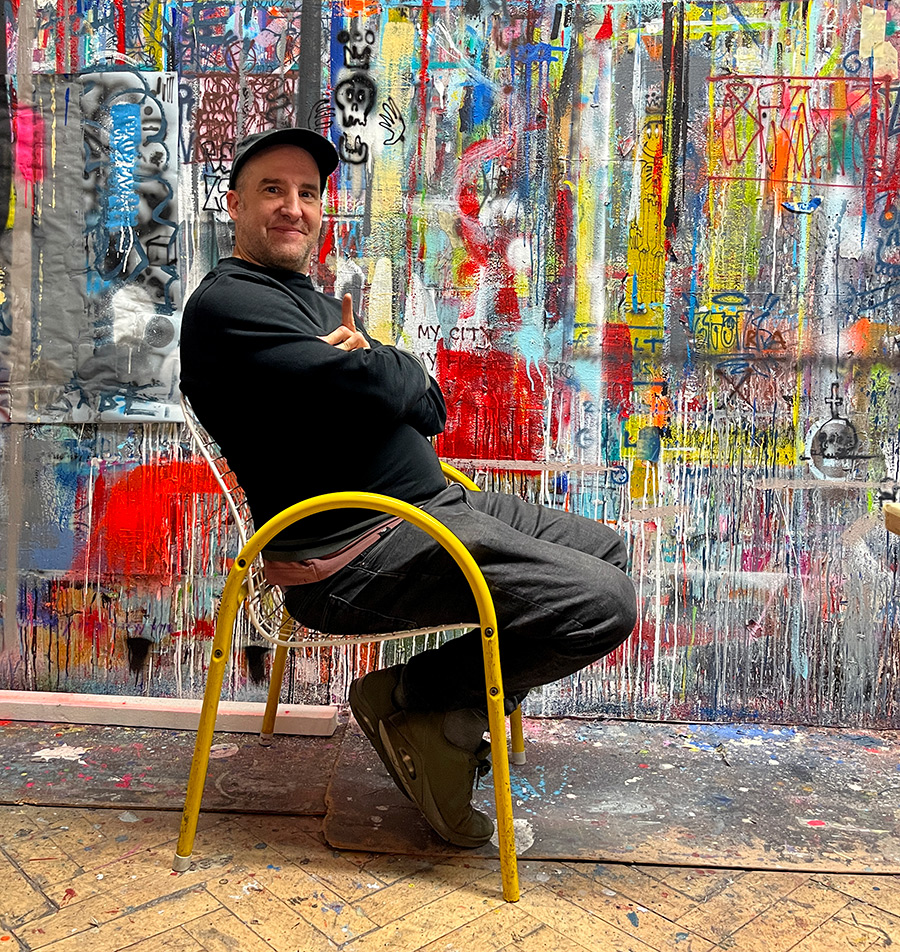
Michal Škapa (b. 1978, Prague), known in graffiti circles as Tron, is one of the defining figures of the Czech graffiti movement. He emerged in the first wave of Prague writers in the early–mid 1990s, active in influential crews such as DSK, CAP, NUTS, and TOYZ. His reputation grew not only through his presence on Prague’s walls and train lines but also through some of his under-the-radar painting exploits — always a symbolic moment for graffiti writers testing their ambition.
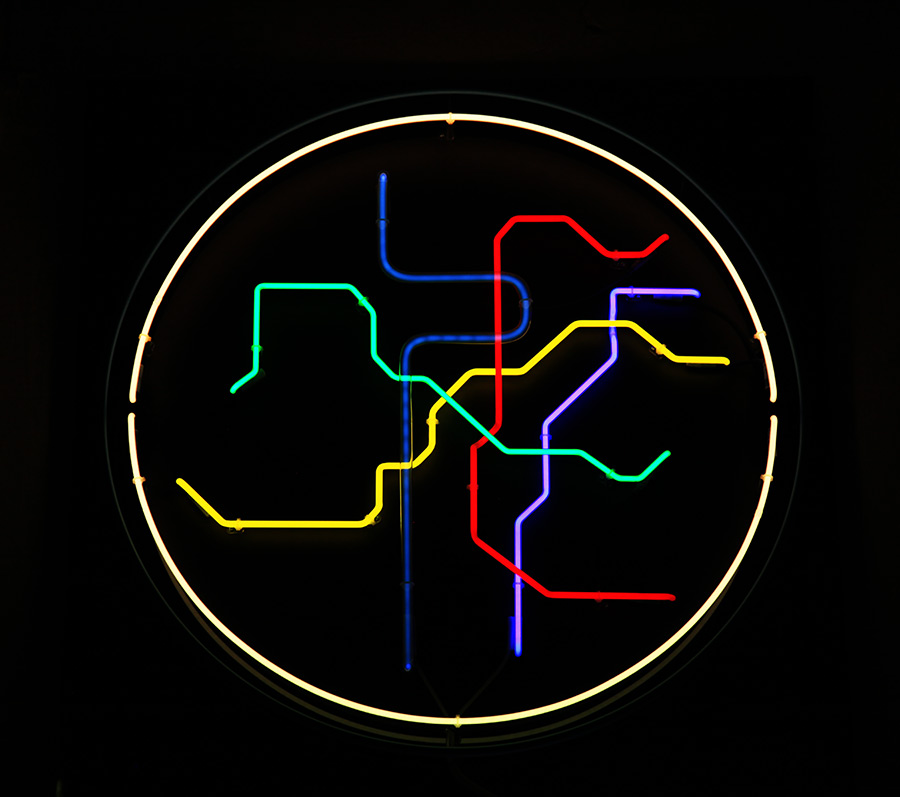
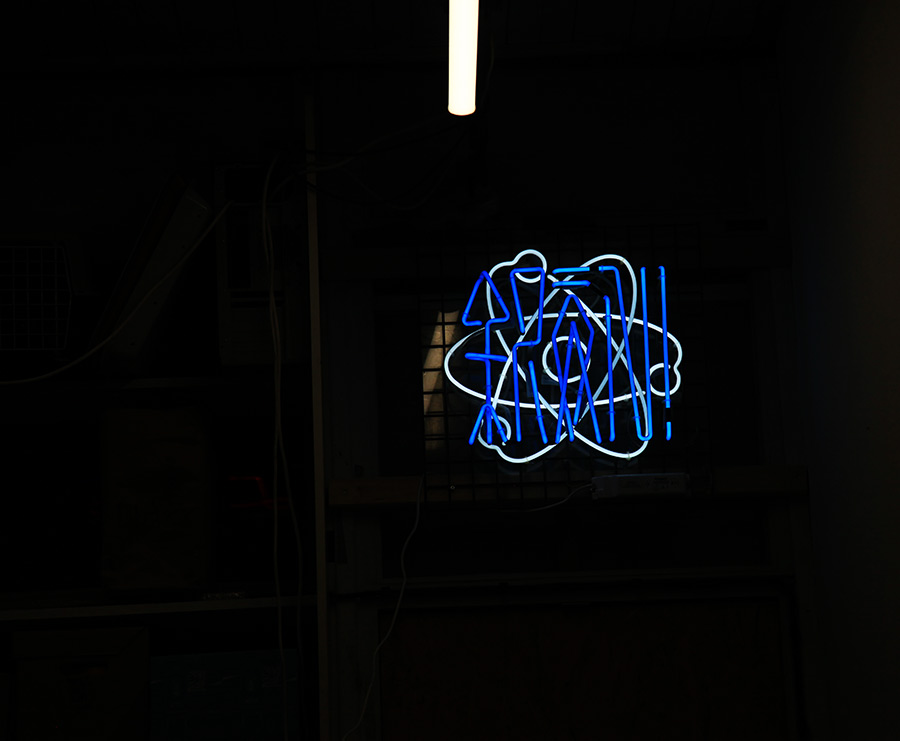
Over nearly three decades, he has expanded from traditional graffiti into murals, airbrush figurative work, acrylic “manuscript” abstractions, neon and light installations, and site-specific projects, while maintaining a clear connection to the tempo, structure, and discipline of lettering. His long associations with Trafačka/Trafo Gallery and MeetFactory placed him within two of Prague’s most important hubs for post-1990s urban and contemporary art, and his work with The Chemistry Gallery and the Urban Pictus festival may have brought him greater international reach.
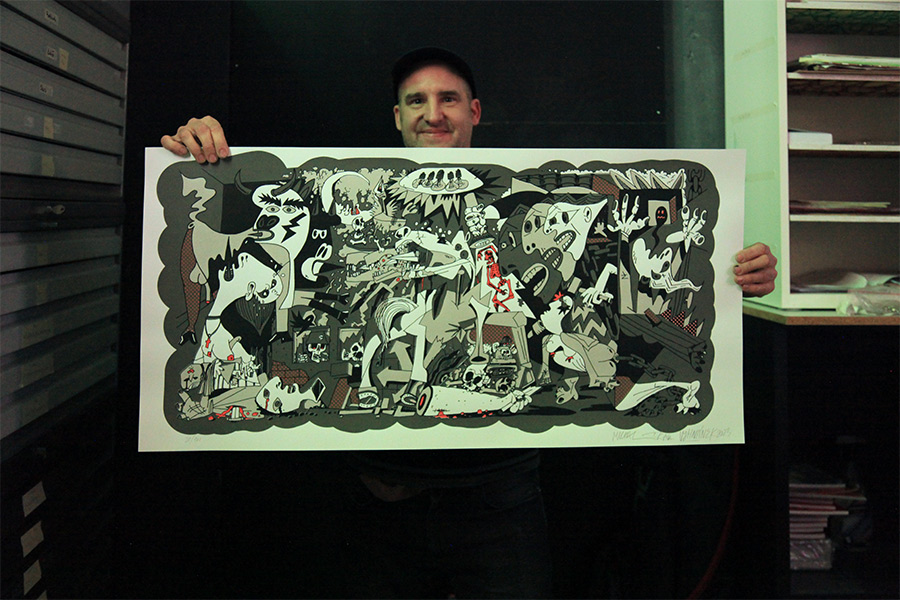
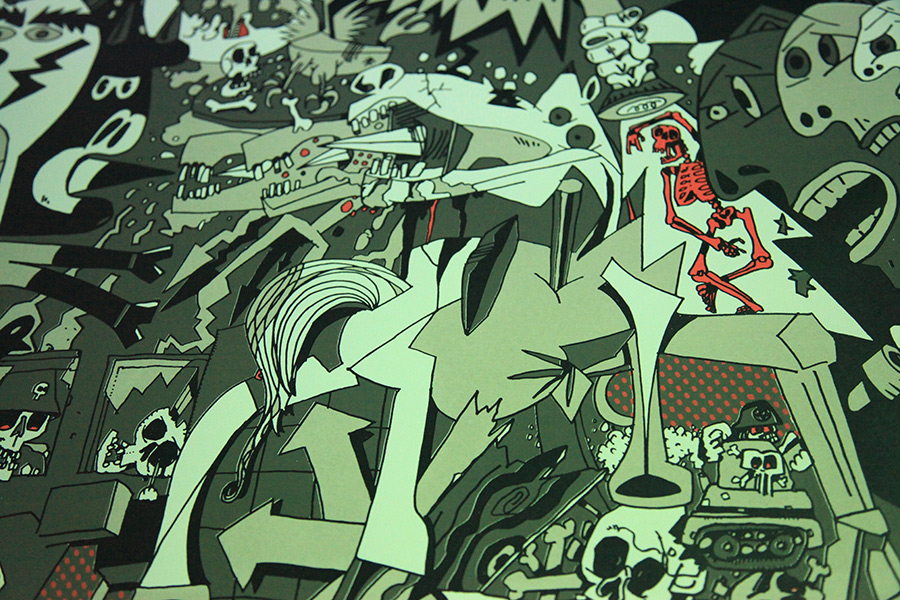
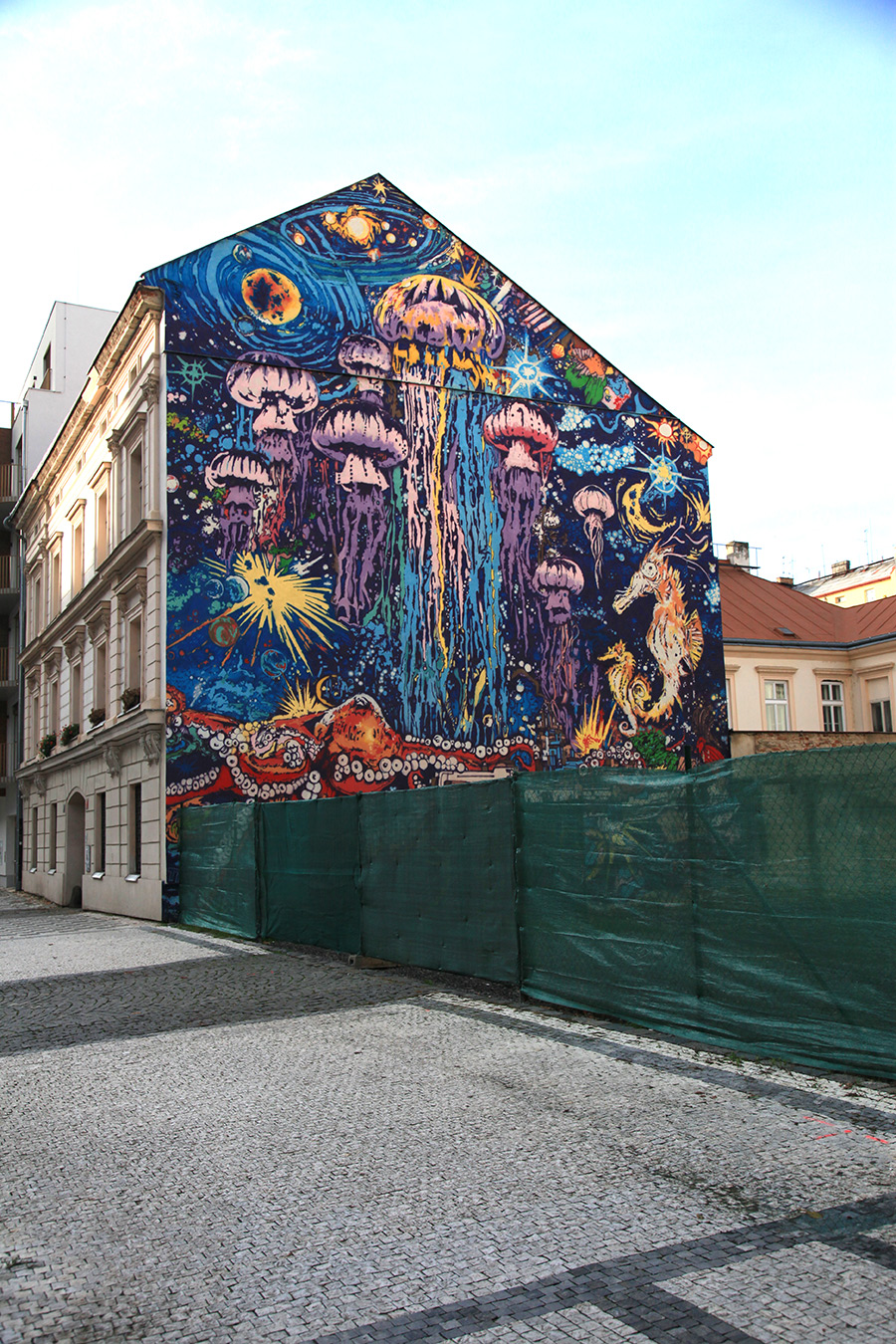
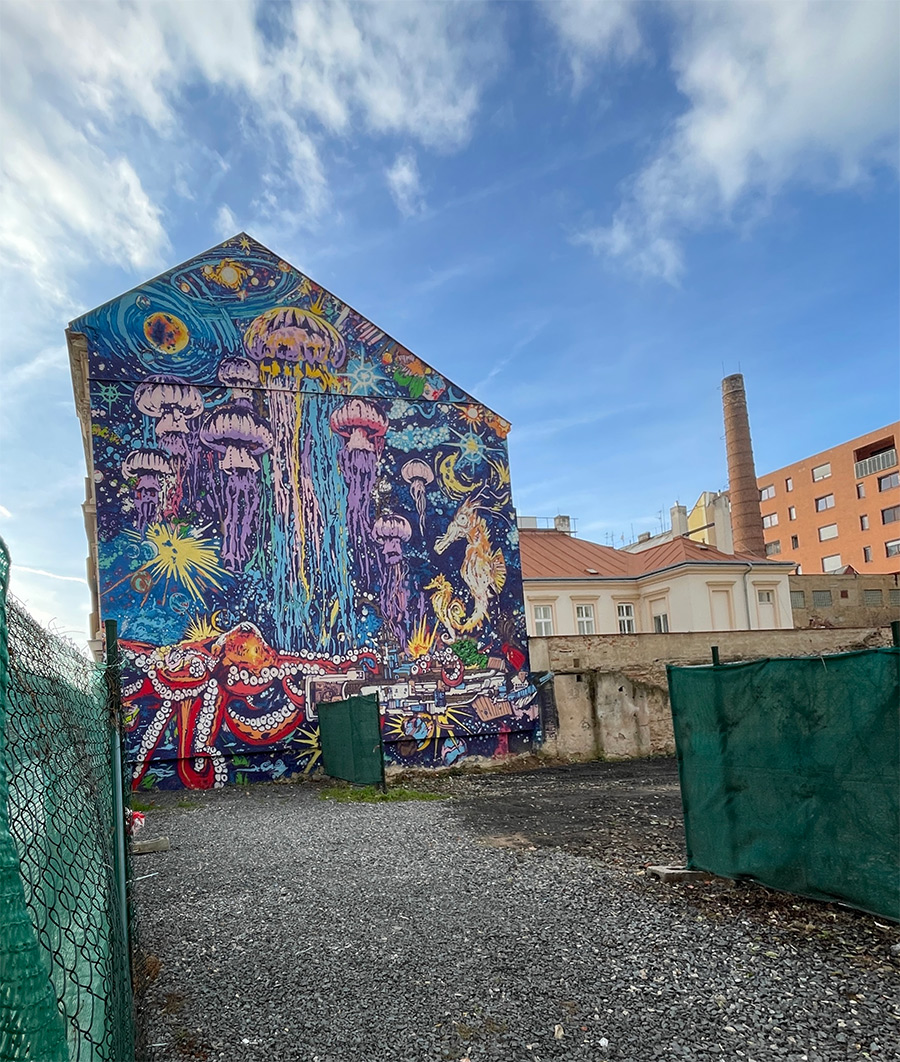
Within the Czech Republic, Škapa is recognized as an artist who successfully bridged illegal writing, large-scale public works, and the gallery world. He co-founded the Analog!Bros serigraphy workshop, creates commercial visual works and has exhibited across significant Czech venues. On the mural tip, he is associated with massive works such as Kosmos — a 350-meter mural along the runway wall at Václav Havel Airport — and Vesmír medúz (The Universe of Jellyfish) in Prague’s Karlín district for Urban Pictus, both large semi-abstract compositions that merge cosmic imagery with undersea forms. His illuminated works for the Signal Festival and other public commissions may further assert his role in redefining how Czech graffiti vocabulary evolves into a contemporary visual language.
Škapa’s trajectory parallels that of many European artists who began as train writers in the 1990s and gradually expanded into broader artistic practices, yet his work feels distinctly rooted in Prague’s cultural landscape. Writers of his generation absorbed global influences through books, films, and early media circulation, but their reinterpretation of those sources unfolded within a city experiencing dramatic social and urban transformation.
In contrast to artists who favor punchline-driven street interventions or pop-derived collage, Škapa’s work leans toward atmosphere — cosmic, psychological, occasionally sci-fi — a sensibility shared by several Czech artists who transitioned from the underground into muralism, abstraction, and installation. The local ecosystem of DIY spaces, collectives, and multi-disciplinary hubs like Trafačka and MeetFactory helped shape this approach, and Škapa stands out as one of the artists who synthesizes and creates accordingly.
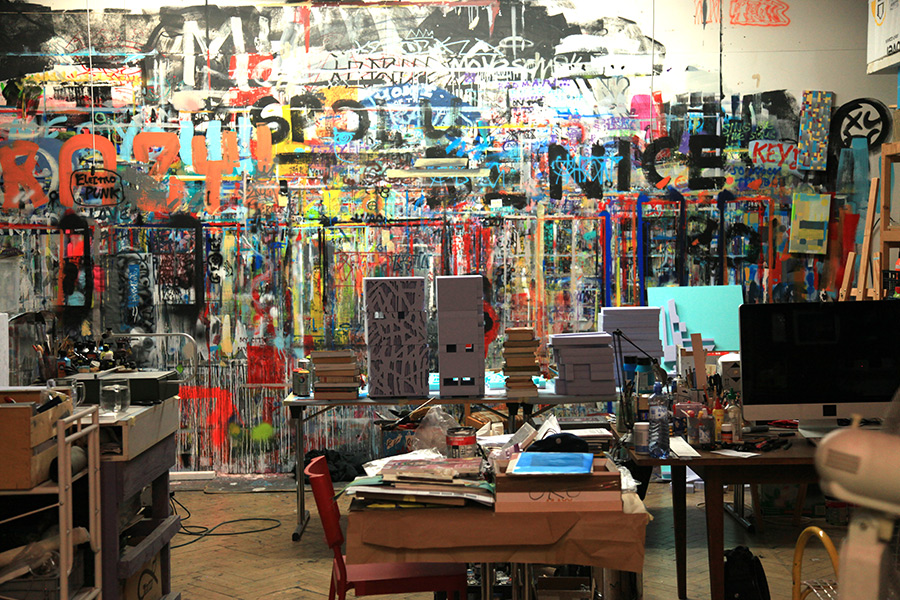
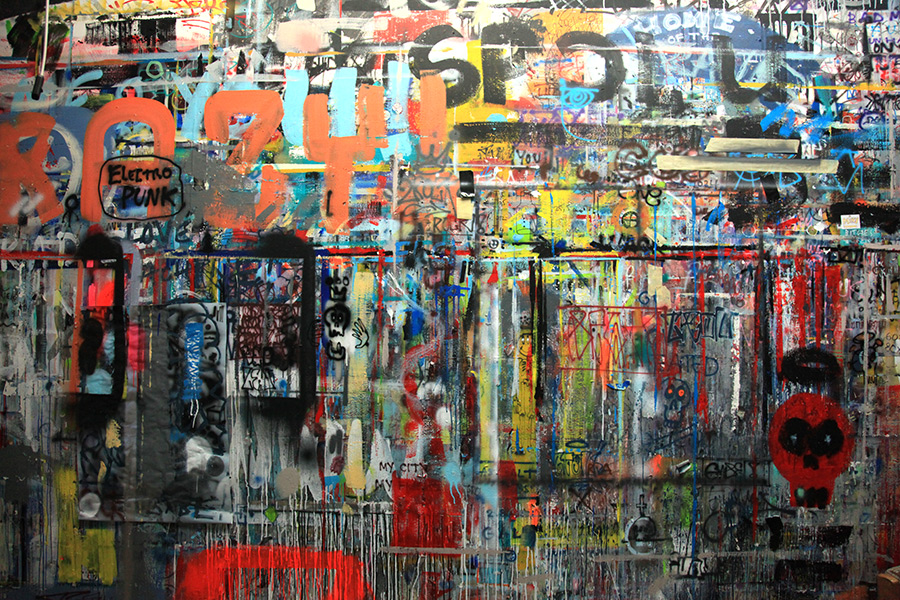
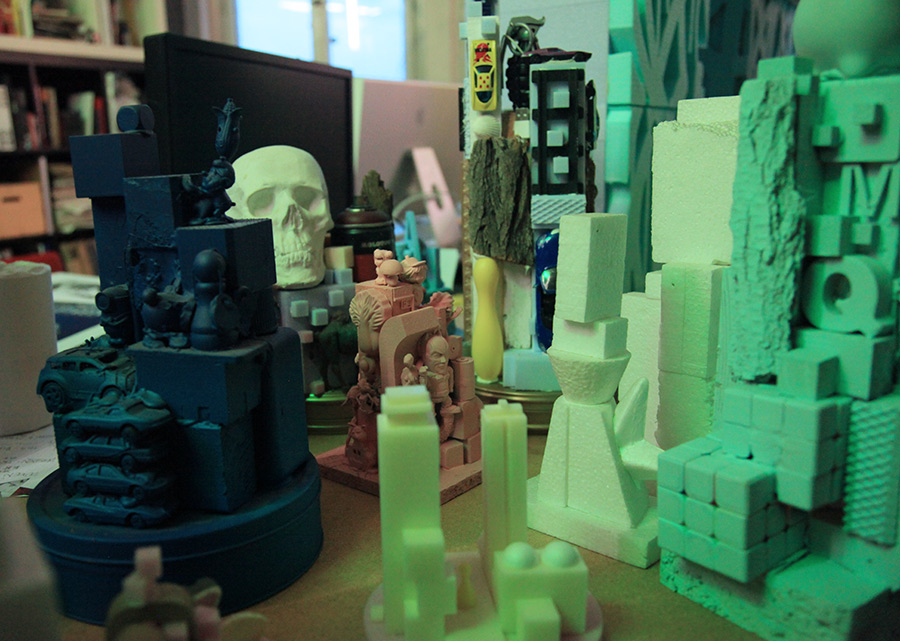
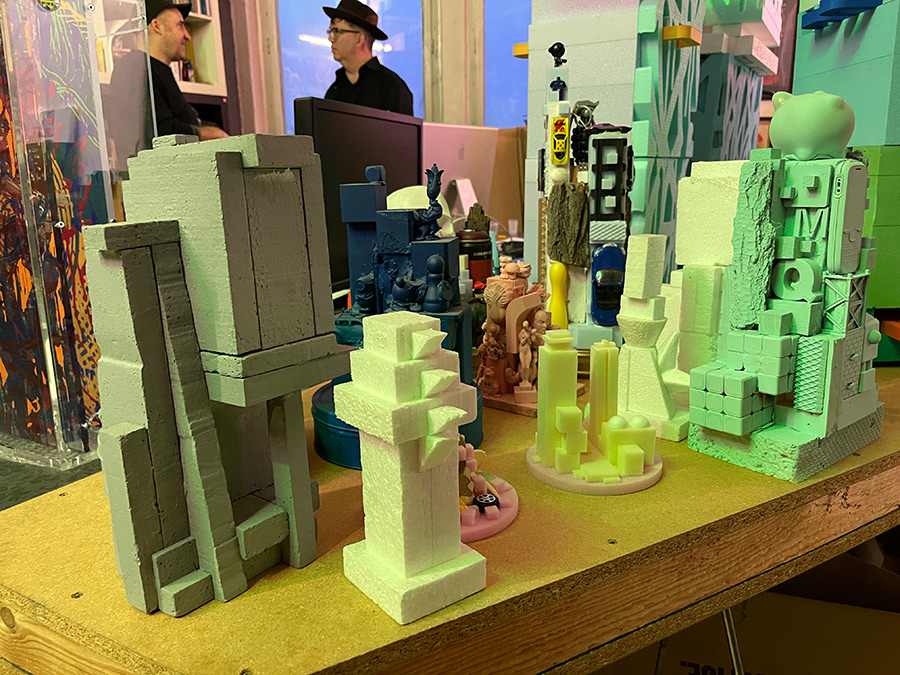
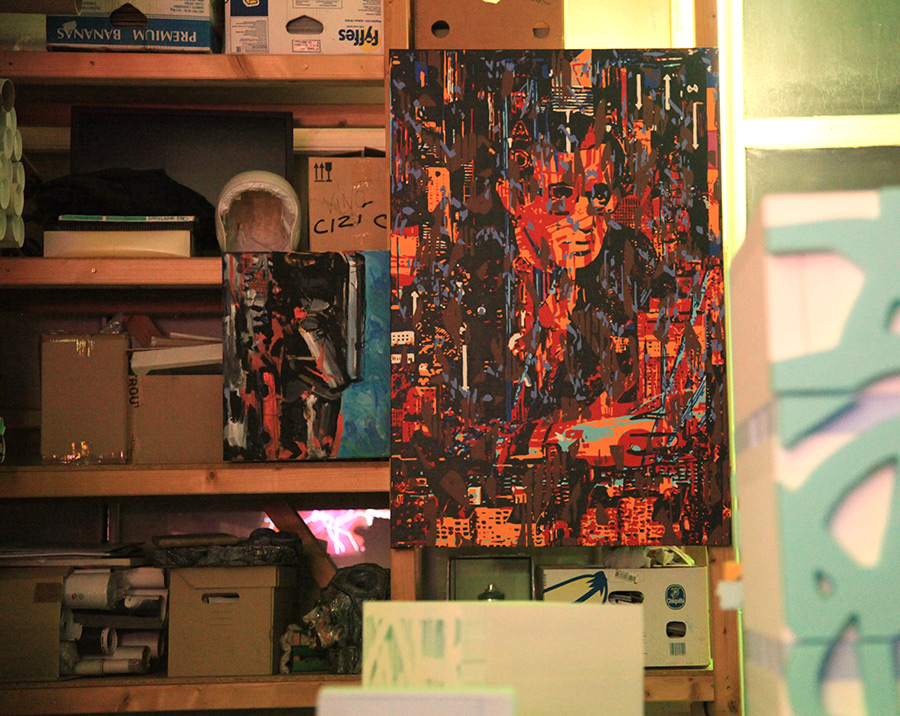
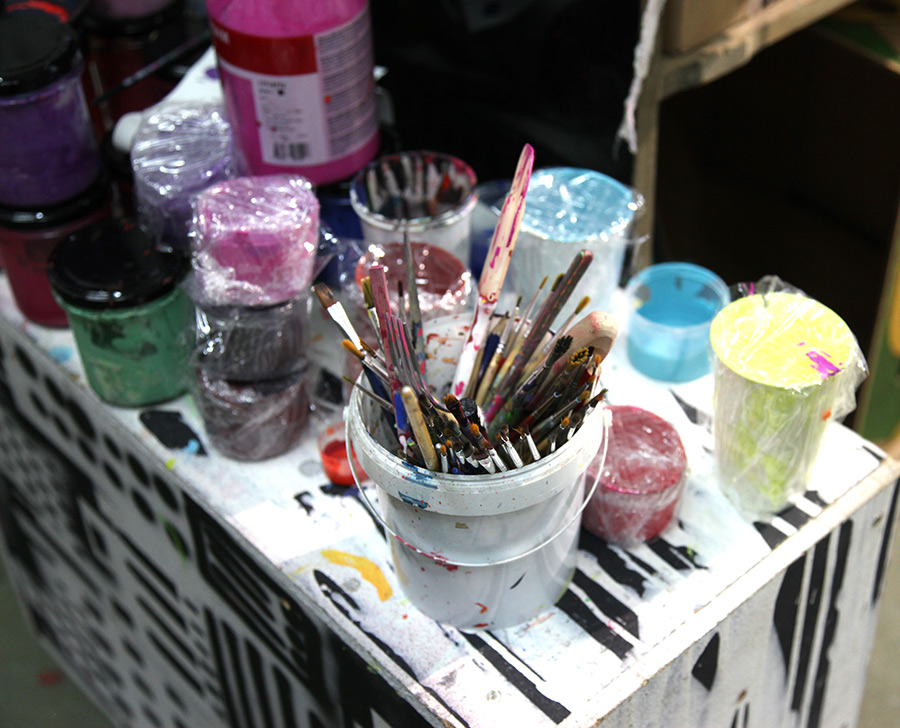
We had the opportunity to tour the artist’s studio, see many of his works in progress, to read the layering of the walls, and to learn from his wide-ranging experience and storytelling what themes drive him. Among them were these three: the construction of a personal alphabet, cross-media experimentation, and the transformation of graffiti experience into contemporary practice.
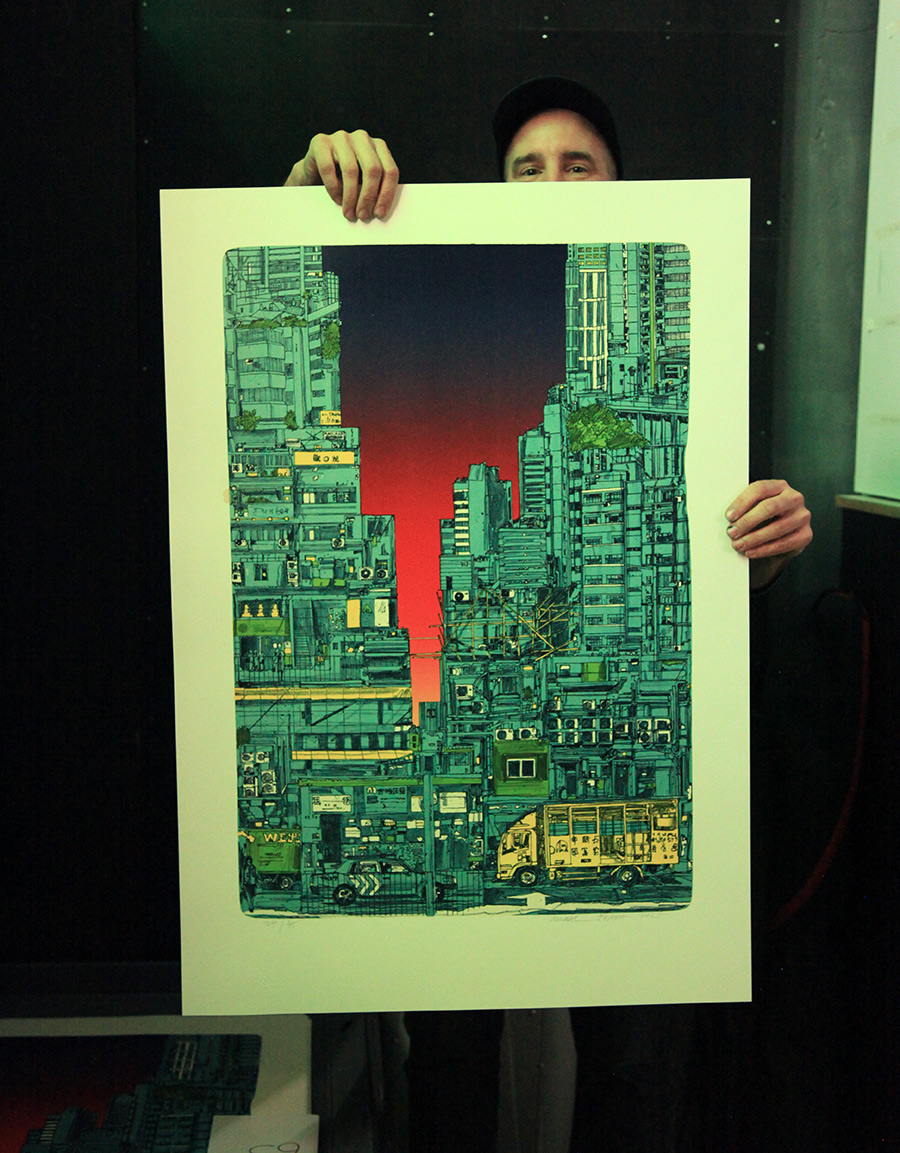
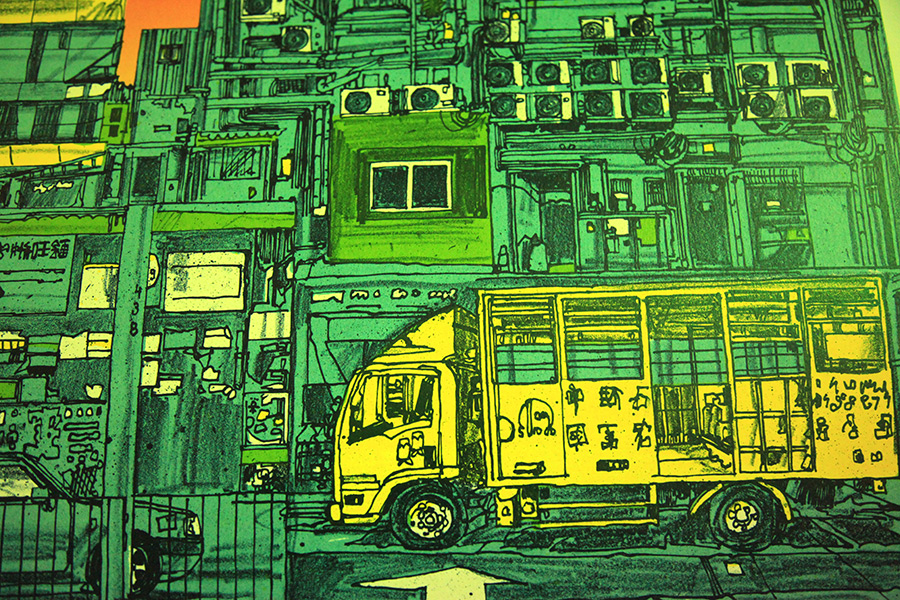
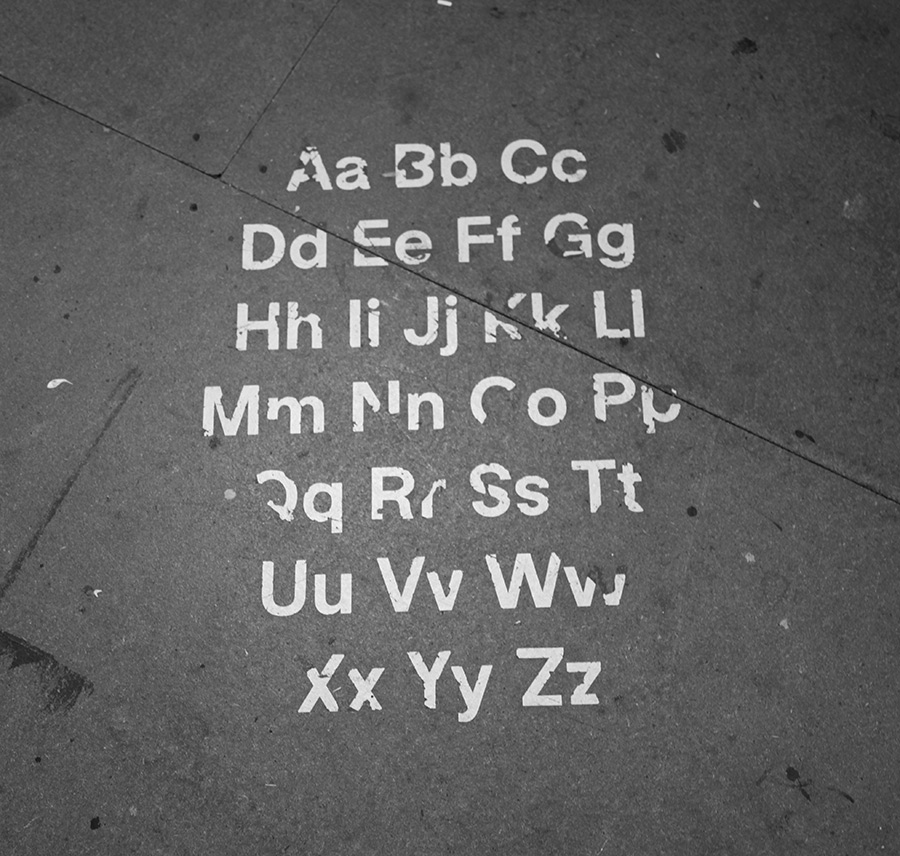
Škapa’s studio makes clear how central his self-created alphabet is to his practice — a system that merges graffiti logic with global typographic traditions. He describes it as “based on the Latin alphabet but mixed with inspirations from Brazil, heavy-metal logos, ruins, all kinds of writing systems,” his is a layered script that allows him to embed messages and structure his compositions. Some of his works contain readable words; others dissolve into semi-abstract fragments that behave like scaffolding or urban grids. Skapa is in love with the urban cityscape and its language pushes up like a raised grid into many of his works.
As he put it, “I work with my own alphabet… I put some messages in the canvas. You can find the letters if you look.” His alphabet becomes both a personal code and a generative architecture, a way to “build” cities, atmospheres, and imagined systems that tie back to his years on the street.
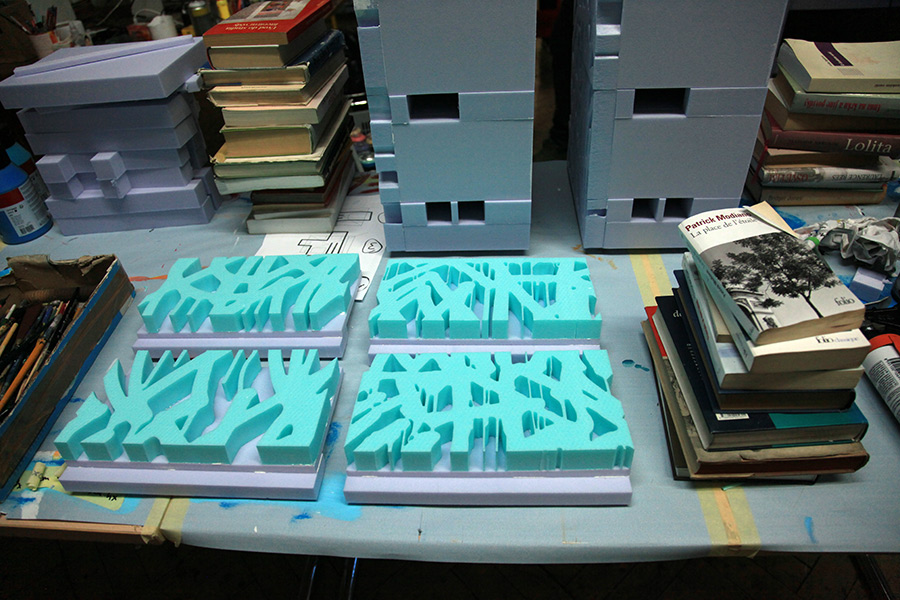
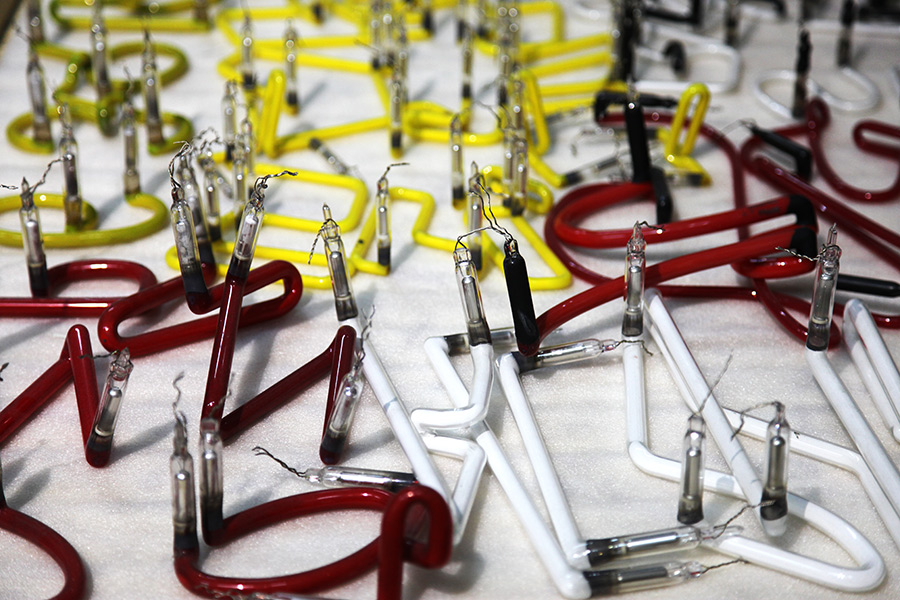
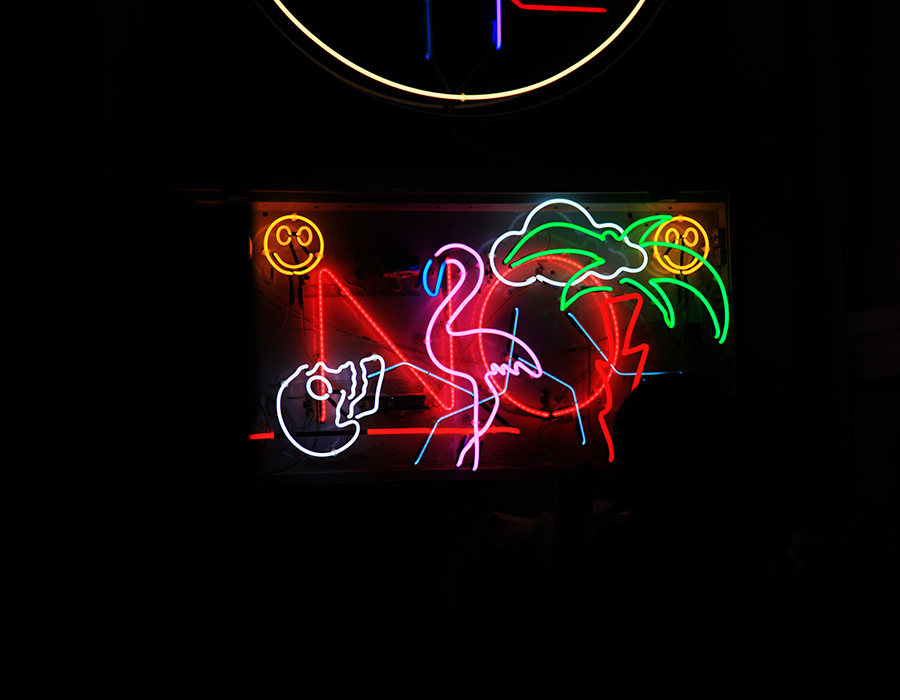
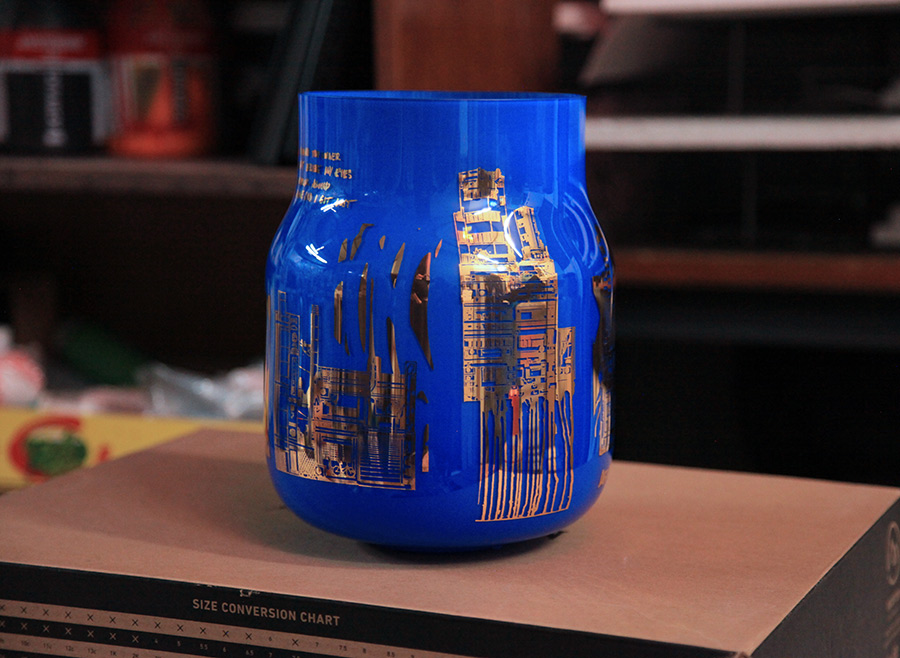
With great appetite for discovery, Škapa moves fluidly between media — neon, lithography, silk-screen, drawing, comics, hand-painted canvases, sculptural models — driven not by stylistic restlessness but by a desire to test how each material can host or distort his visual language. His collaborations with Czech glass studios illustrate this curiosity. He showed us vases produced through layered techniques involving silk-screened transfers, hand-drawn enamel lines, and kiln-fused materials.
“I love to experiment,” he said. “I’m still searching. I change styles a little, but it’s all connected.”
His neon-cube sculptures, glass models, and smoked-glass vessels borrow from Czech glassmaking’s legacy while extending it into a hybrid territory shaped by graffiti structure, sci-fi atmosphere, and architectural imagination.
It Emerges from Graffiti as Origin, Ethos, and Continuum
Škapa’s early years as a writer in post-revolution Prague remain a defining foundation for the artist. He recounts discovering graffiti in a city that felt grey and decaying, then experiencing the shock of Berlin’s scene and, later, painting trains in New York just before 9/11.
“It was like shining diamonds in the grey,” he said of graffiti’s arrival in 1990s Prague.
The energy of those years — improvisation, risk, collaboration, and an irreverent sense of possibility — continues to shape his work. He is clear that he is not “bringing graffiti into the gallery,” but rather transforming its mindset:
“You cannot take it from the streets and just exhibit it. You have to transform it.” His temporary, large-scale installations — painted walls later repainted white, layered panels reassembled into new environments — reflect graffiti’s ephemerality while channeling its instinct for immersion, confrontation, and city-scale rhythm.
Škapa’s studio practice reveals an artist who continues to translate three decades of experience into a visual language that is still expanding. His alphabet operates as both structure and code — a personal script rooted in graffiti’s devotion to the written mark. His cross-media experiments, moving from neon to lithography to Czech glass, reflect a sustained curiosity about how ideas behave when they migrate across materials and traditions. And his grounding in early graffiti culture remains an ethical engine, shaping how he thinks about improvisation, community, and the life cycle of artworks.
Taken together, these themes show how Škapa has built a practice inseparable from Prague’s cultural landscape while remaining fully engaged in a broader conversation about how street-born creativity transforms within contemporary art.
Launched in 2022 and heading into its third edition in 2026, Urban Pictus is the mural festival shaping Prague’s public art future. Co-founded by Petr Hájek and Petr Kopal of The Chemistry Gallery, the biennial brings together the city’s cultural institutions, municipal partners, and an evolving network of post–Velvet Revolution creative districts. In a city defined by Gothic spires and Baroque curves, Urban Pictus doesn’t shy from the friction of graffiti and street art—it uses it. The festival has activated walls across Prague 1, 6, 7, 8, and 10, inserting large-scale muralism and street-rooted practices into the visual rhythm of a city known for its architectural legacy.
On our recent visit to the so-called City of a Hundred Spires (real count: more like 500), that energy was hard to miss. Prague’s street scene is compact but loaded, less sprawling than some but no less charged. Writers and muralists work tight: from industrial edges to sanctioned façades, they’re building a visual grammar that feels deliberate, hybrid, and defiantly local. You can see the push and pull—between reverence and rebellion, tradition and disruption. What’s emerging is a language that mixes studio finesse with graffiti instinct: abstract fields, narrative symbols, pop-text hits, and gestures that still carry the urgency of the street. The trains and tunnels haven’t gone quiet either—graffiti here still breathes fast, and the old codes hold.
Beyond being a wall project, Urban Pictus is a mural-driven platform with gallery exhibitions, guided tours, workshops, and crossover projects that build bridges between institutional and informal public-voiced scenes. Born out of The Chemistry Gallery’s commitment to newer voices in contemporary urban art, the festival walks both sides of the line between the street and the gallery.
Across its first two editions, Urban Pictus has hosted a sharp and varied roster: Innerfields (Germany), AEC / Interesni Kazki (Ukraine), M-City (Poland), Gorka Gil (Spain), Michal Škapa (Czech Republic), and Tim Marsh (France/Spain). More recent editions have added Toy_Box, YBR, Malujeme Jinak, Zeb One, and Matěj Olmer (Czech Republic), as well as Yessiow (Indonesia), expanding the festival’s reach across Europe and beyond.
With 2026 on the horizon, here are a few standout murals we caught on the ground this fall.
Toy_Box (Czech Republic) is known for blending classical painting, comic art, and street aesthetics. Her mural on Milady Horákové Street in Prague 7 honors the politician Milada Horáková on the 75th anniversary of her execution by the communist regime, depicting her portrait in fractured forms alongside a bilingual quote.
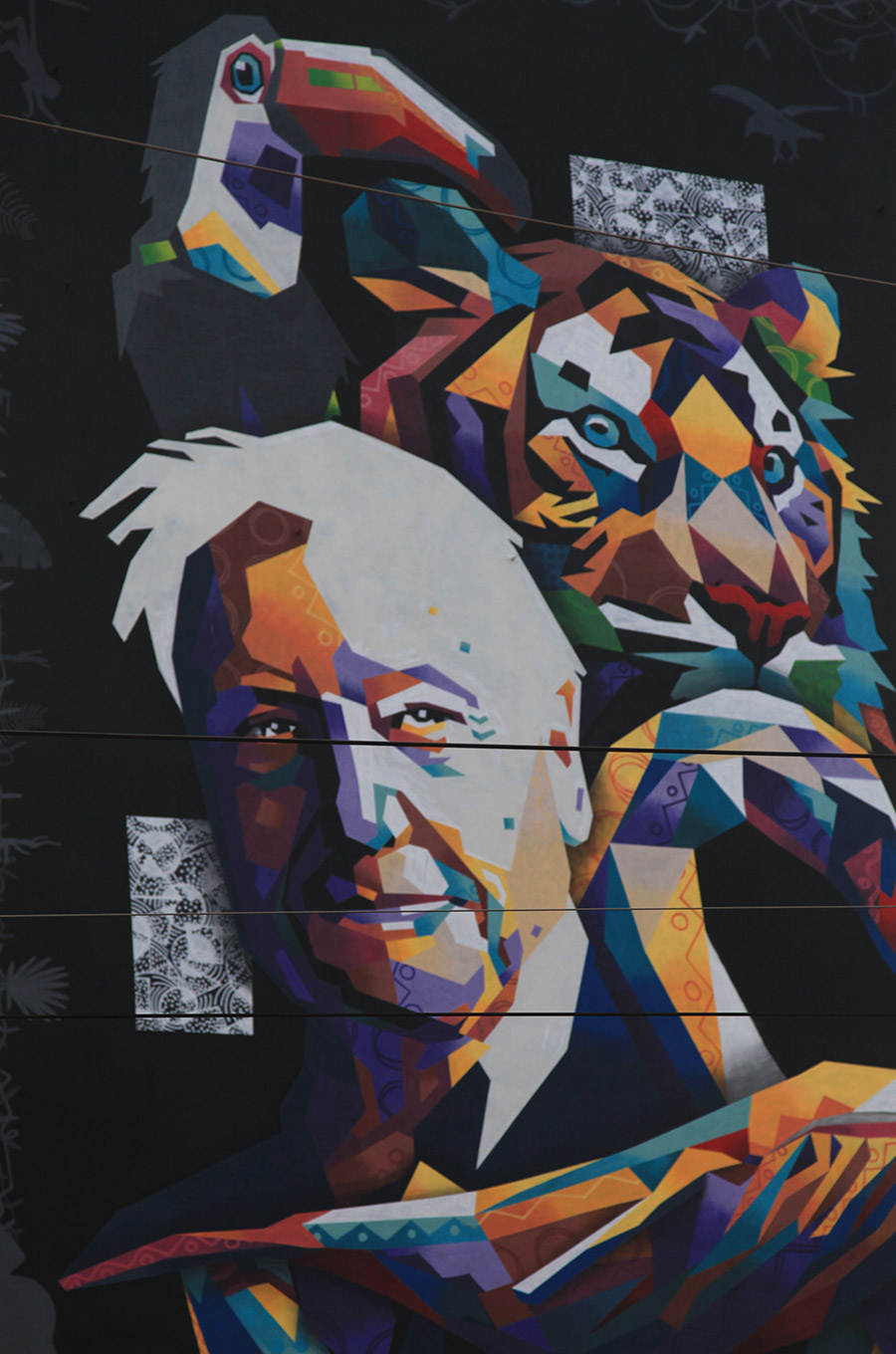
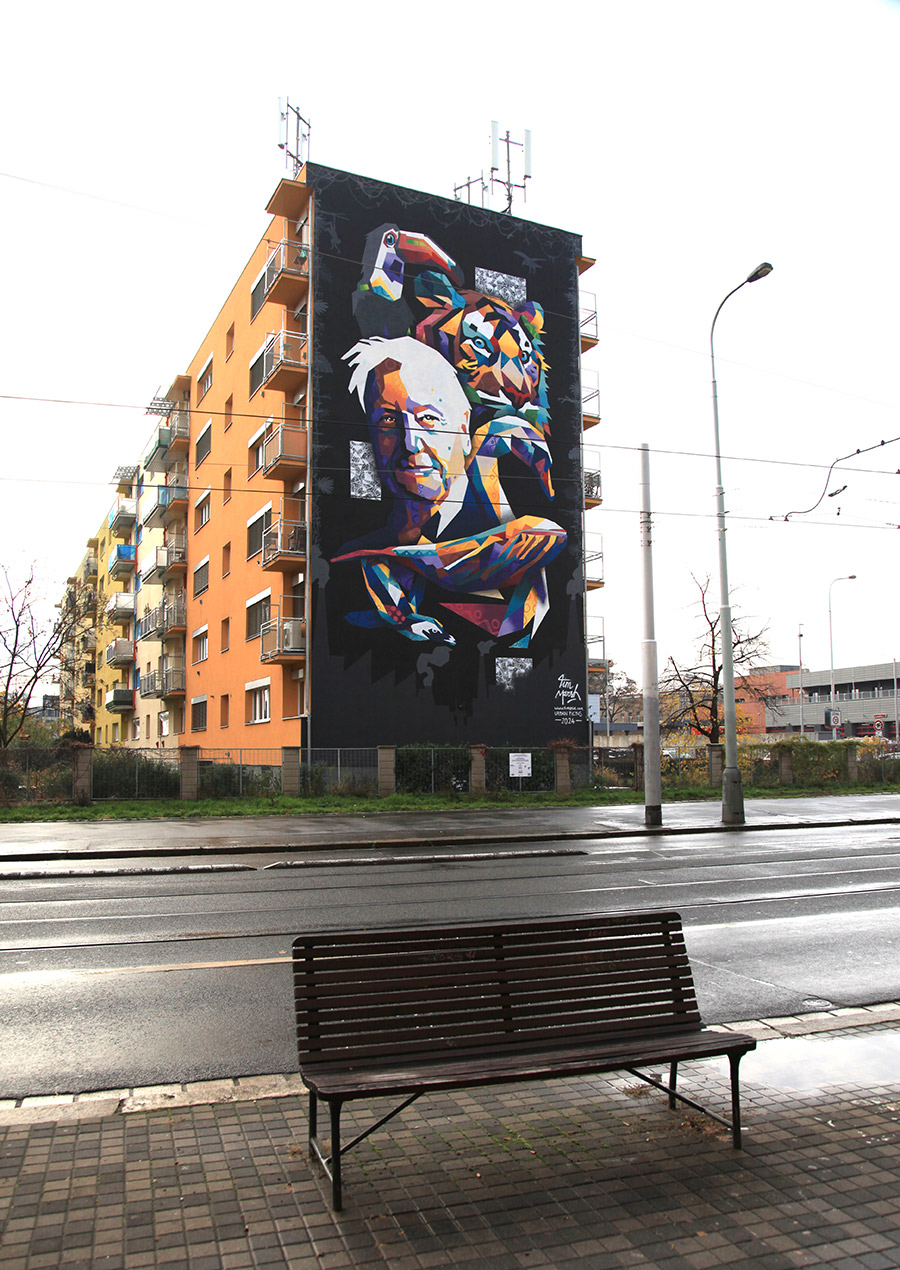
Tim Marsh (France/Spain) works in geometric abstraction, using bold colors and masking-tape precision. His 22-meter mural in Holešovice portrays David Attenborough surrounded by animals, part of his ongoing series celebrating biodiversity.
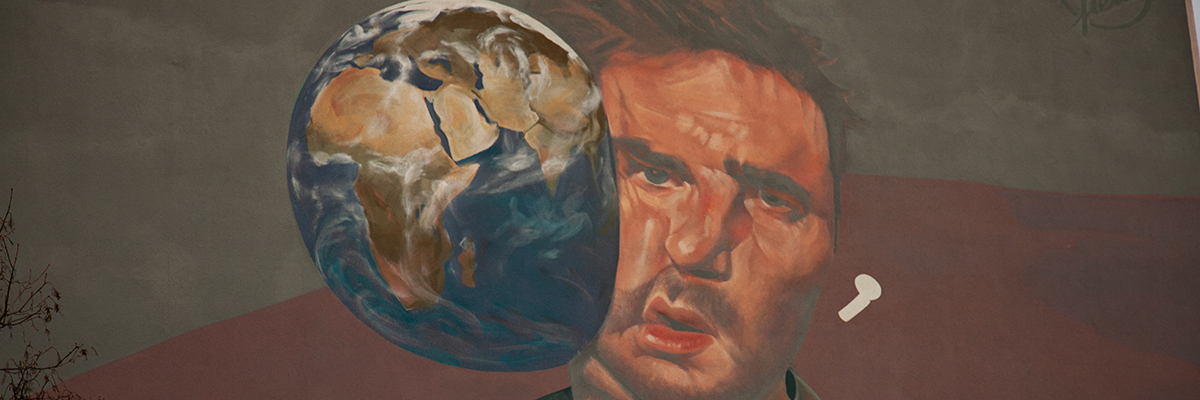
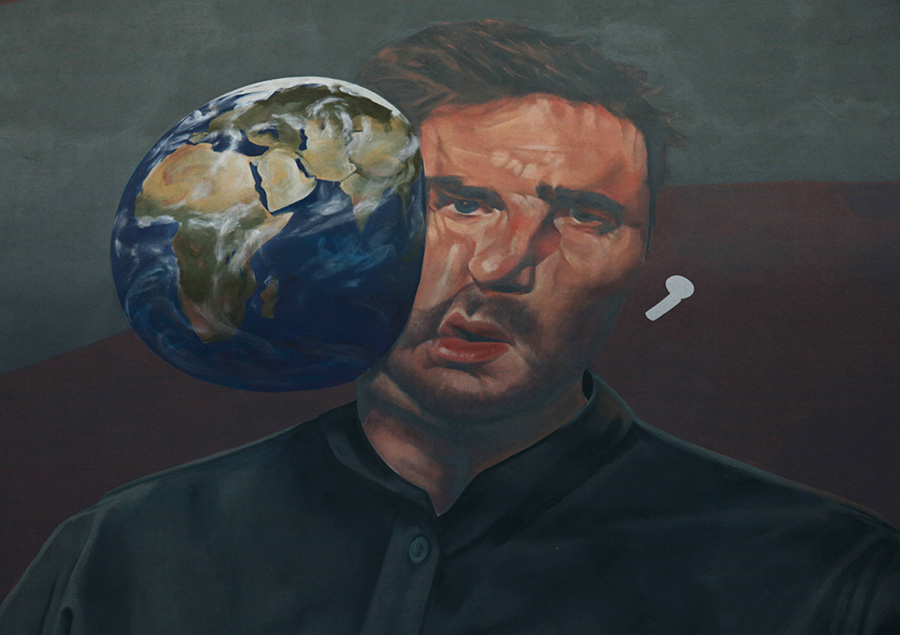
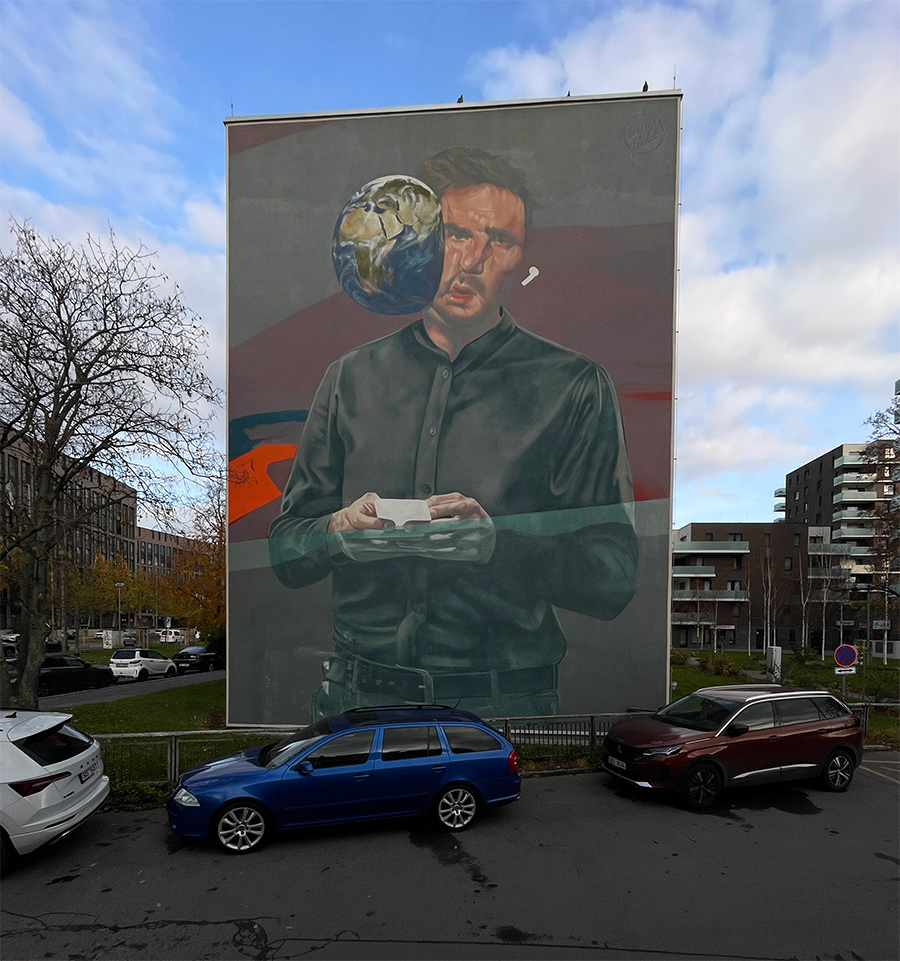
Innerfields (Germany), a trio known for blending realism and symbolism, painted a mural in Karlín of a figure staring at a smartphone while a levitating Earth floats nearby, striking him in the head—a reflection on digital distraction and environmental neglect.
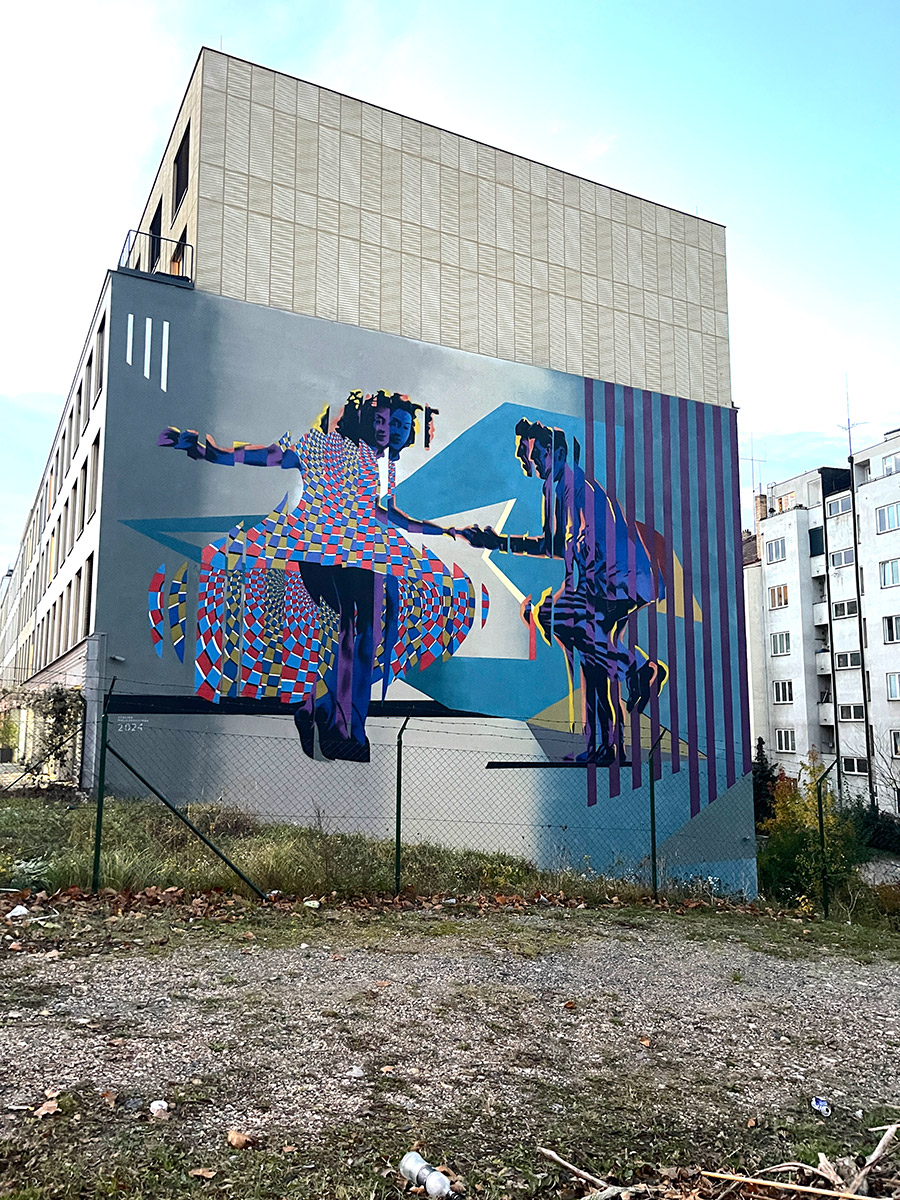
Lukáš Veselý / Malujeme Jinak (Czech Republic). The brothers use optical tricks and graphic design to bring kinetic energy to this university environment. Their Holešovice mural on a student residence features abstract dancing figures that celebrate youth and movement.
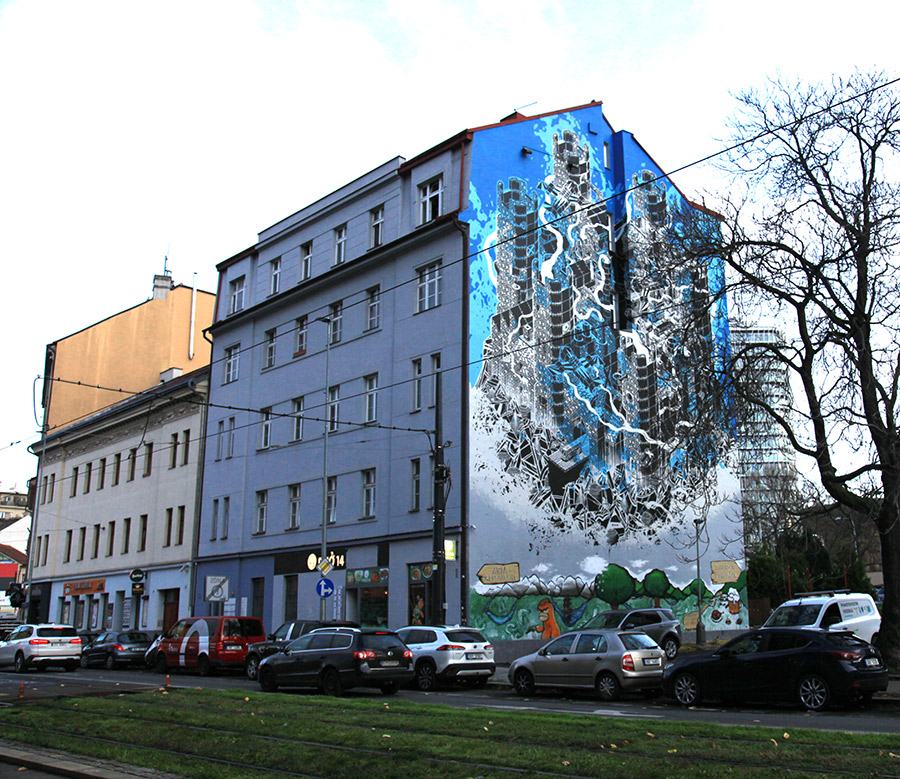
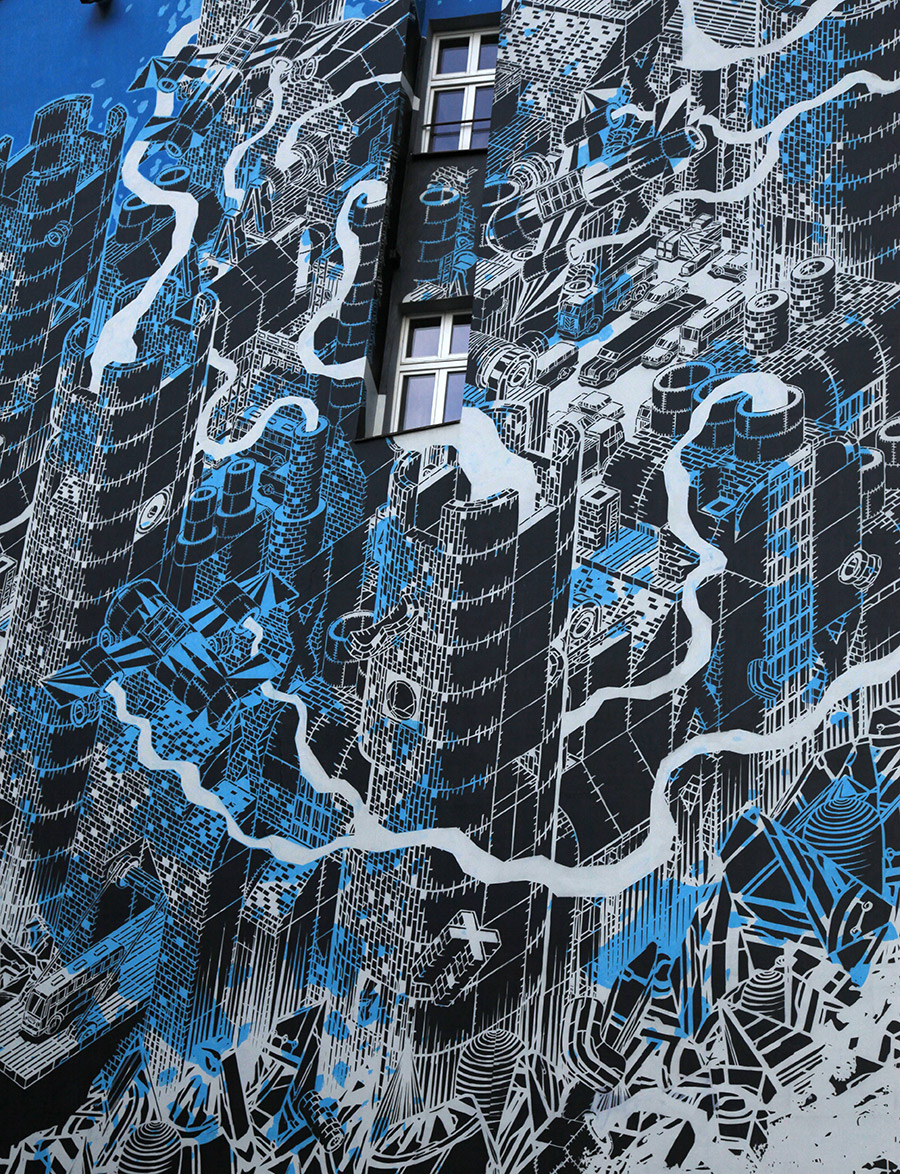
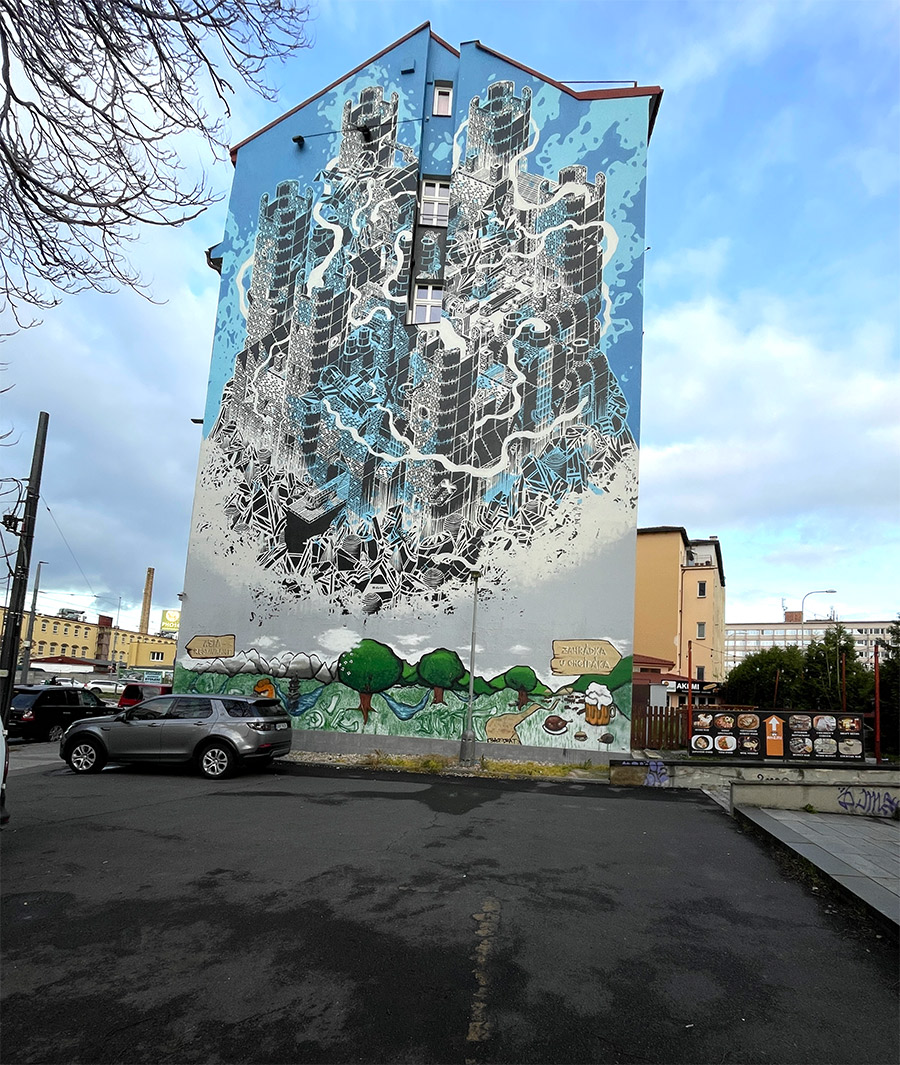
M-City (Poland) is recognized on many continents for his large-scale stenciled cityscapes with industrial themes. His mural in Invalidovna, “Road Ahead Closed,” presents a dense monochrome metropolis made from layered mechanical motifs and factory forms.
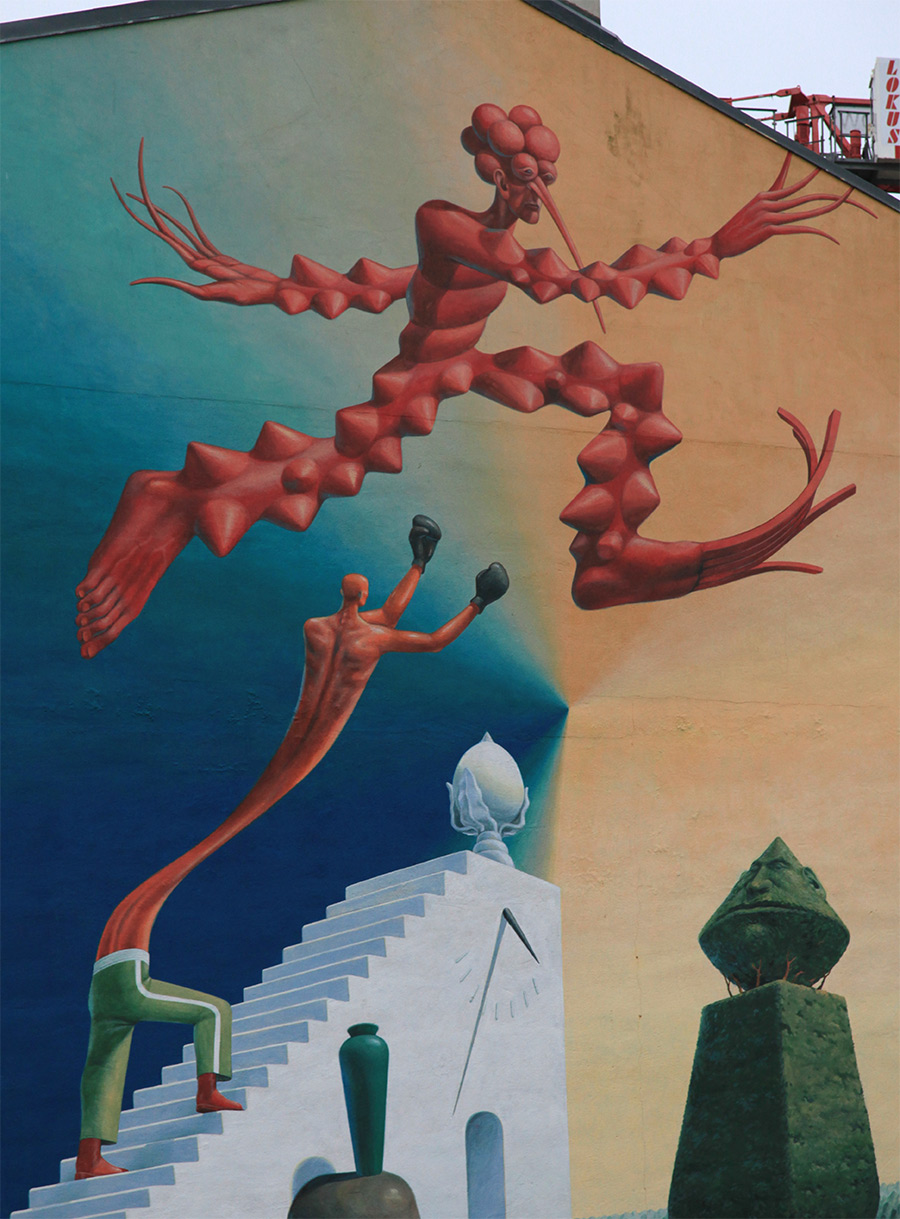
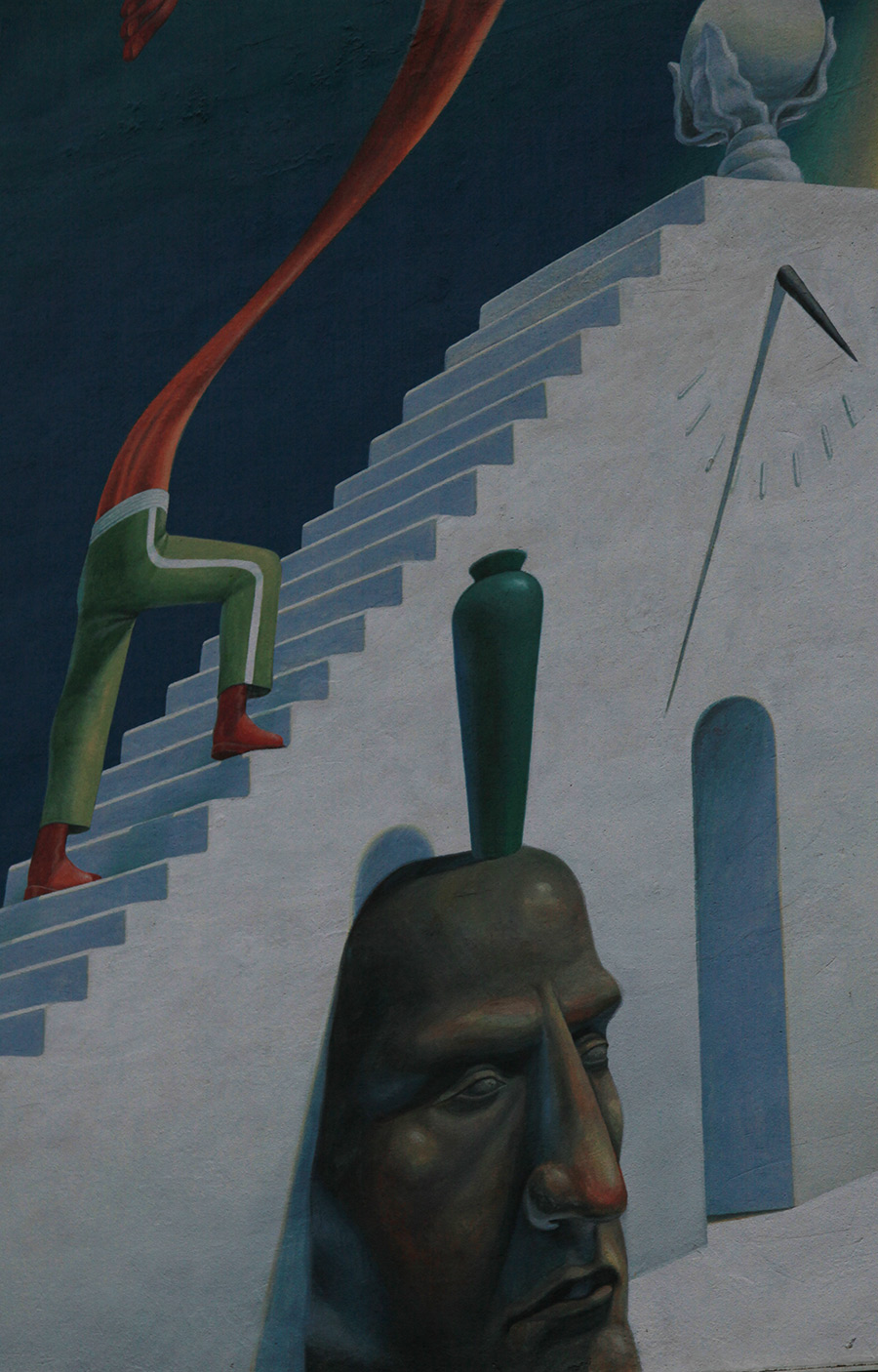
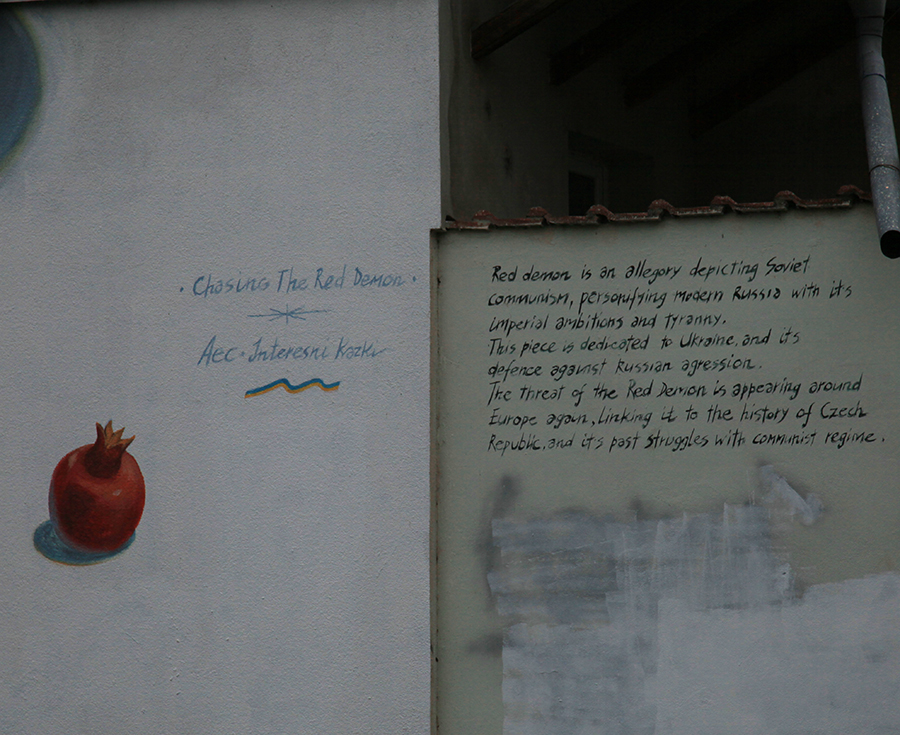
AEC / Interesni Kazki (Ukraine) is known for surreal, mythic, sometimes epic murals. His piece “Chasing the Red Demon” in Holešovice allegorizes resistance to Soviet imperialism, referencing both Ukrainian and Czech histories.
Michal Škapa (Czech Republic) brings a graffiti-rooted, semi-abstract style to murals, often with cosmic or social themes. His Vesmír medúz (“Universe of Jellyfish”) in Prague’s Karlín district for the 2022 edition of “Wall Street Prague”, the inaugural version of what would later become Urban Pictus. Škapa painted a vertical mural that depicts glowing, jellyfish-like forms ascending like spacecraft against a dark background. The piece reflects his signature fusion of street art energy and speculative futurism, creating a surreal visual field that floats somewhere between deep sea and outer space.
Dede Bandaid (Israel) uses warm-toned urban illustration with metaphorical motifs. His mural “Ambitions” in Žižkov, created with poet Nitzan Mintz, pairs wooden animals with a Czech-language poem about creative drive and personal sacrifice.
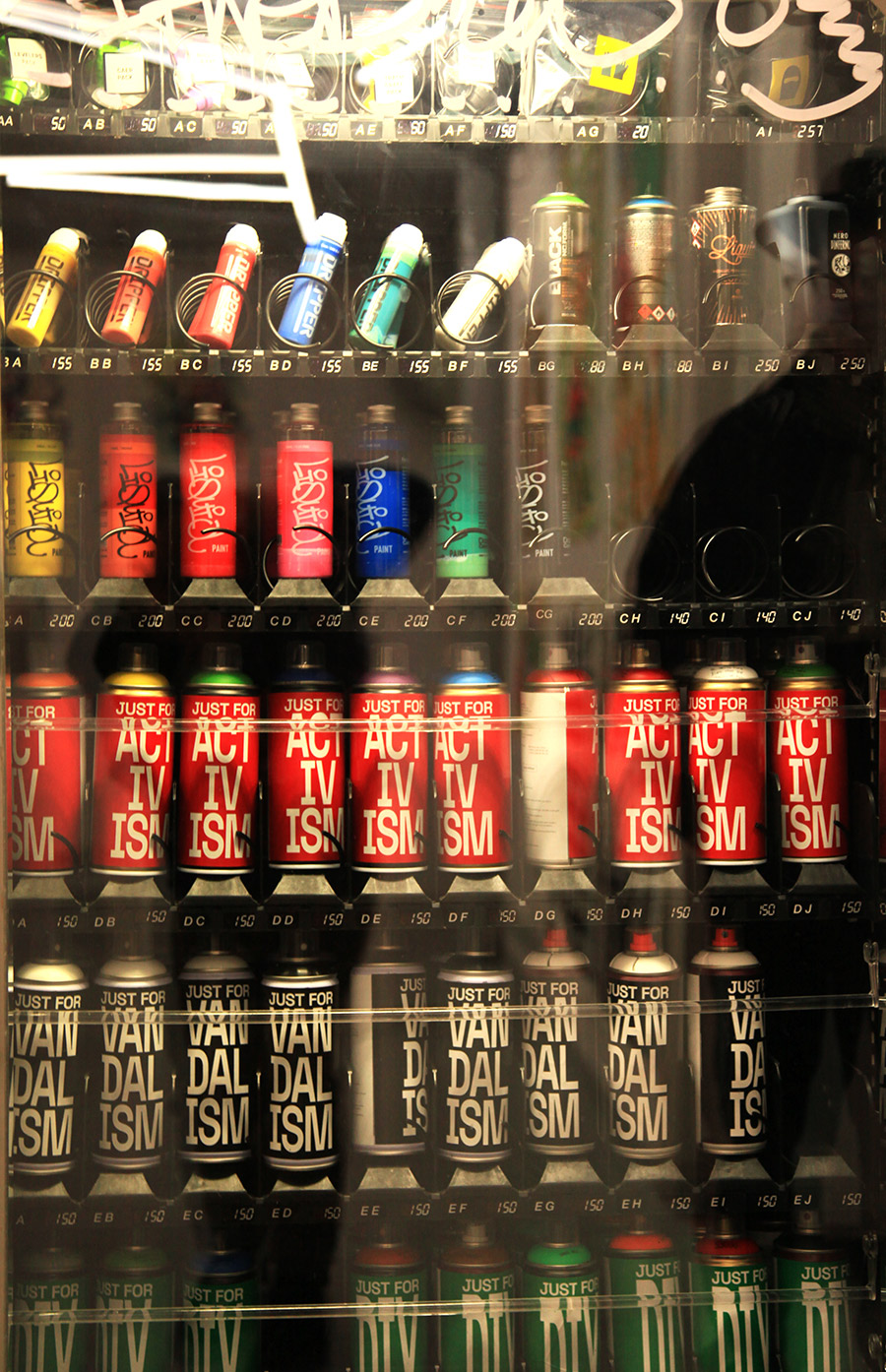
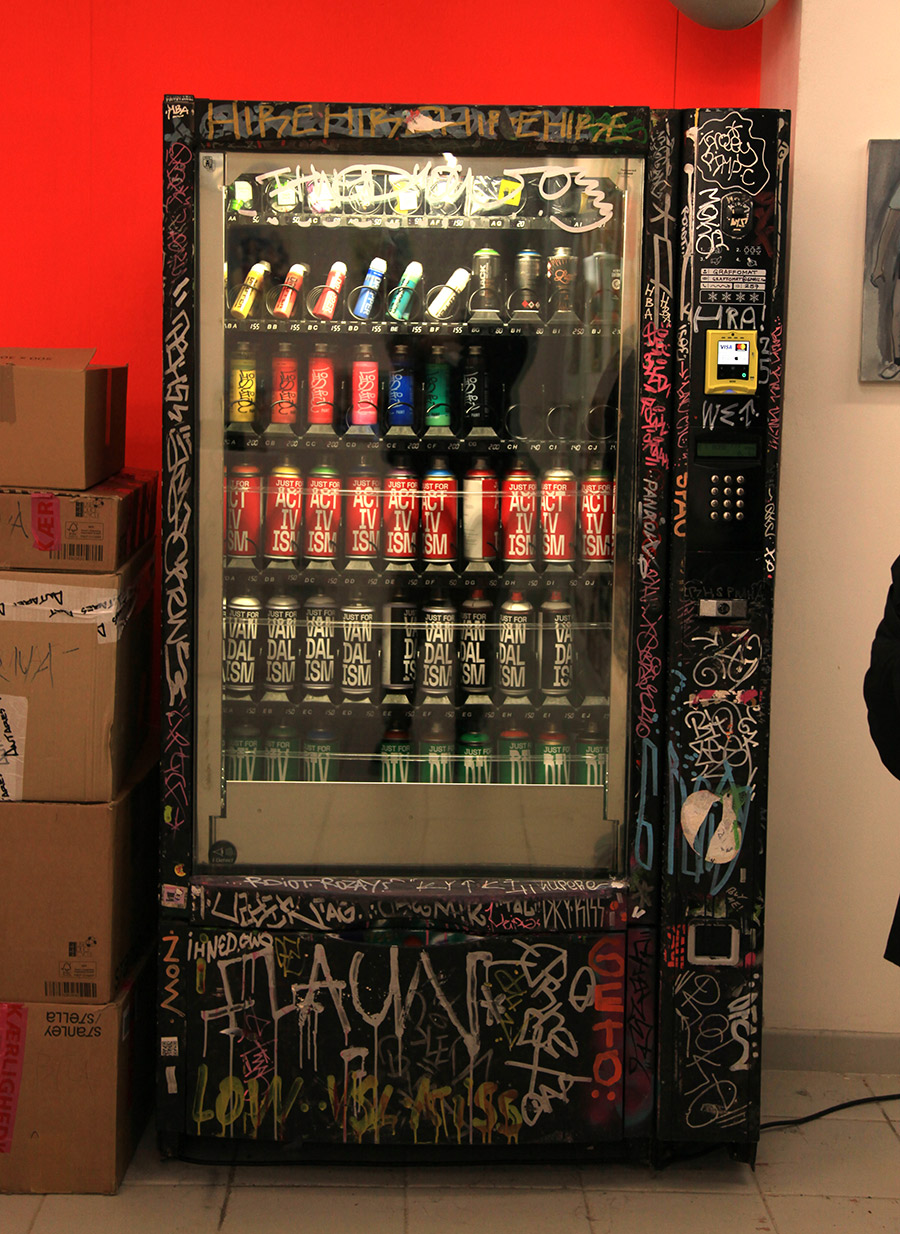
EPOS 257 (Czech Republic) is a conceptual street artist known for anonymous public interventions. His “Graffomat” installation—shown at Urban Pictus 2025—is a vending machine that dispenses spray cans, satirizing the boundary between sanctioned art and illegal graffiti.
Our thanks to Chemistry Gallery and the many folks who volunteer to make this festival a success. Our thanks to our partner Urban Nation Museum (UN) in Berlin for their support as we bring the art on the streets and people of Prague to BSA.
This week we’re hitting Berlin and Prague on a quick-turn street survey, looking at how each city is evolving its own visual language in real time. You feel the contrast immediately: Berlin may still carry the reputation for boundary-stretching experimentation, but Prague is stepping forward with its own confident push — inventive palettes, disciplined letterforms, and murals that challenge the assumptions of what belongs in a city celebrated for its Gothic and Baroque silhouettes. Where Berlin is sprawling now with more sanctioned façades and yet an intense train graffiti scene, Prague concentrates its energy into transitional zones and tight networks of writers and muralists. Both cities are accelerating — but Prague surely has a particular spark right now, maybe because it’s new to us, or because you can divine a kind of tension between reverence and rebellion that makes walls talk in new ways.
Berlin’s streets are currently balancing big, commissioned façade murals with a still-active, letter-based graffiti scene that keeps pushing trains, rooftops, and hidden spots. Artists and writers are freely mixing spray paint with stencils, paste-ups, installations, and interventions, turning infrastructure and abandoned spaces into experimental laboratories. Political and social commentary remains central and fully reflects the conversations you hear, with quick-strike formats like posters and stickers addressing gentrification, migration, targeted geopolitical screeds, and a sense of increasing surveillance. At the same time, more legal and curated walls are emerging, opening opportunities for scale and collaboration while possibly sharpening a tension with the underground scene. If that’s a correct assessment, Berlin points toward an even sharper split: increasingly hybrid mural practices on sanctioned surfaces and faster, more disruptive actions in the rest of contested spaces, which tourists may not sense are diminishing, but locals assure you they are.
Smaller in scale than Berlin but fueled by a strong talent pool, Prague’s hybrid of academically inclined muralism and street-taught graffiti culture feels agile and confident. It is a city where the past stands tall, and the future writes itself across the margins. Maybe you would say it thrives on a tension between its historic Gothic and Baroque architecture and a new generation that likes to test what belongs elsewhere on the city’s walls. You’ll find those who push a hybrid language of abstract fields, figurative lines, and unconventional color, and others inject an assertive brand of pop-inflected text and graphic punch. As it is the 21st century, we are interested in finding conceptual figures we hear about who are raising questions about public space and control. At the same time, the graffiti scene keeps the pulse fast and restless: rooftops, tunnels, and rail corridors loaded with wild palettes, overlapping styles, and formats that nod to tradition, while stretching its edges. You’ll find most of this in transitional spaces — industrial seams, construction coverings, legal walls, and edges just beyond the postcard views.
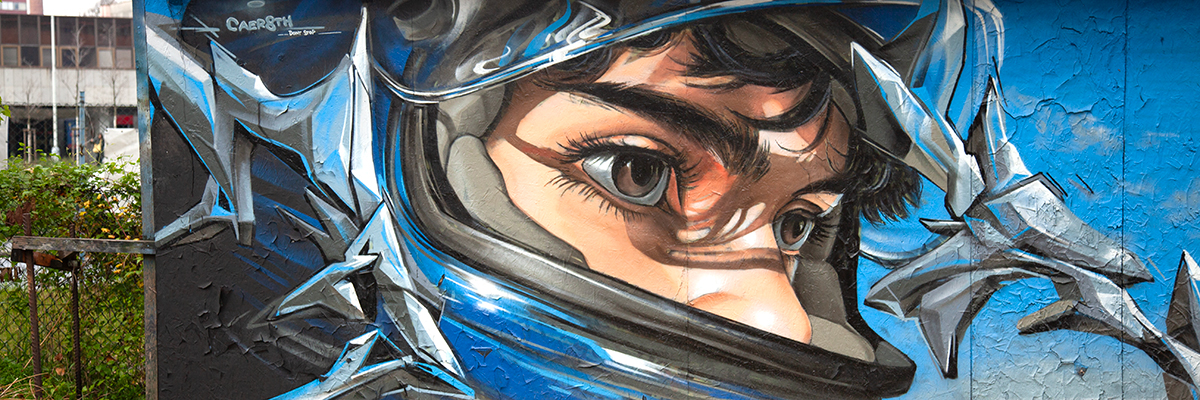
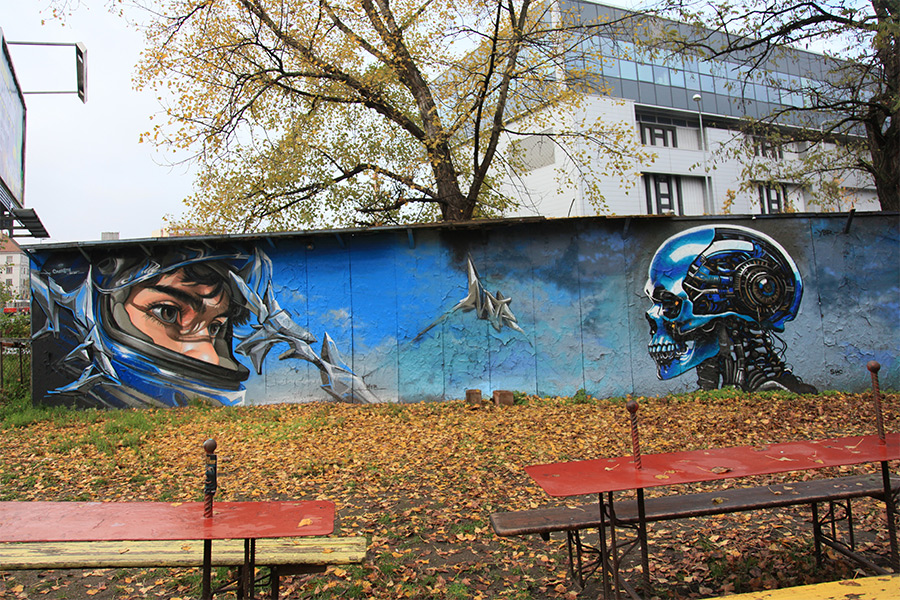
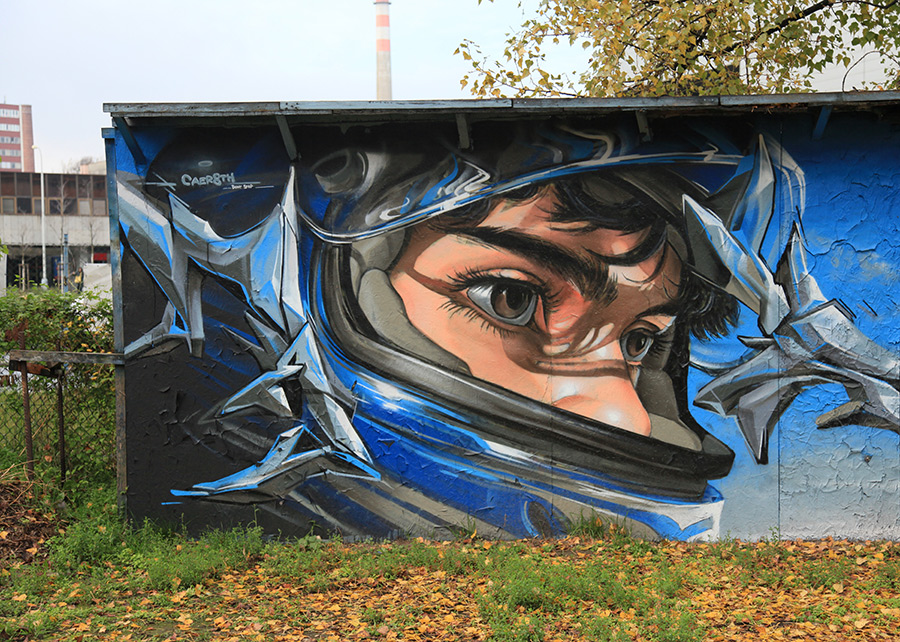
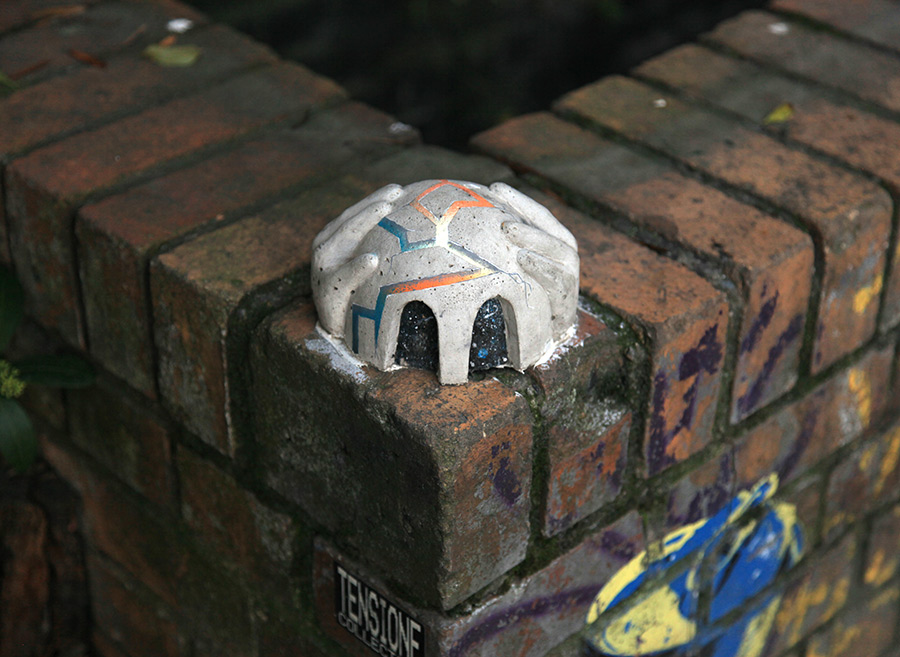
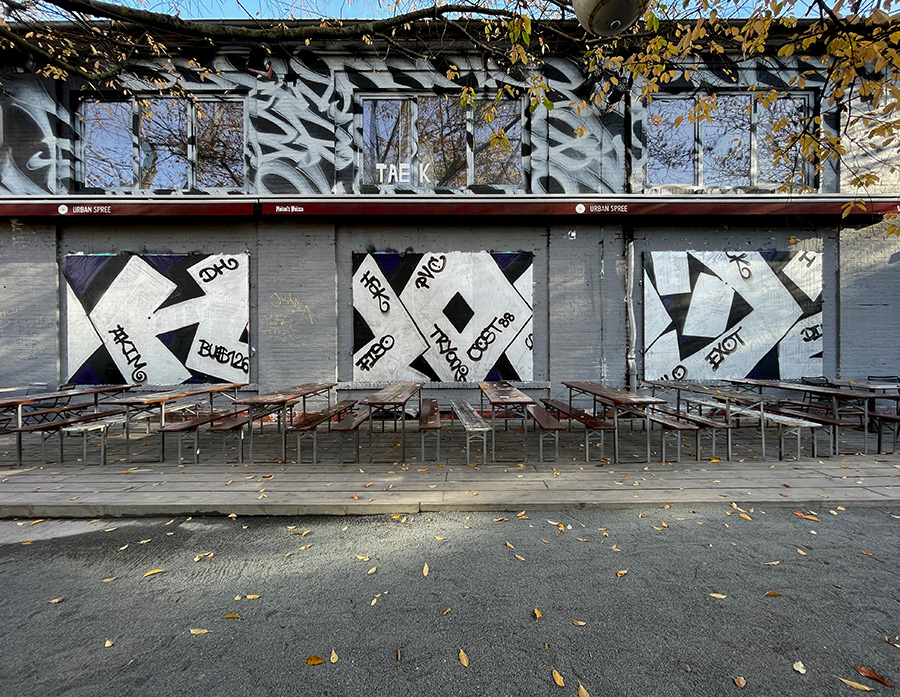
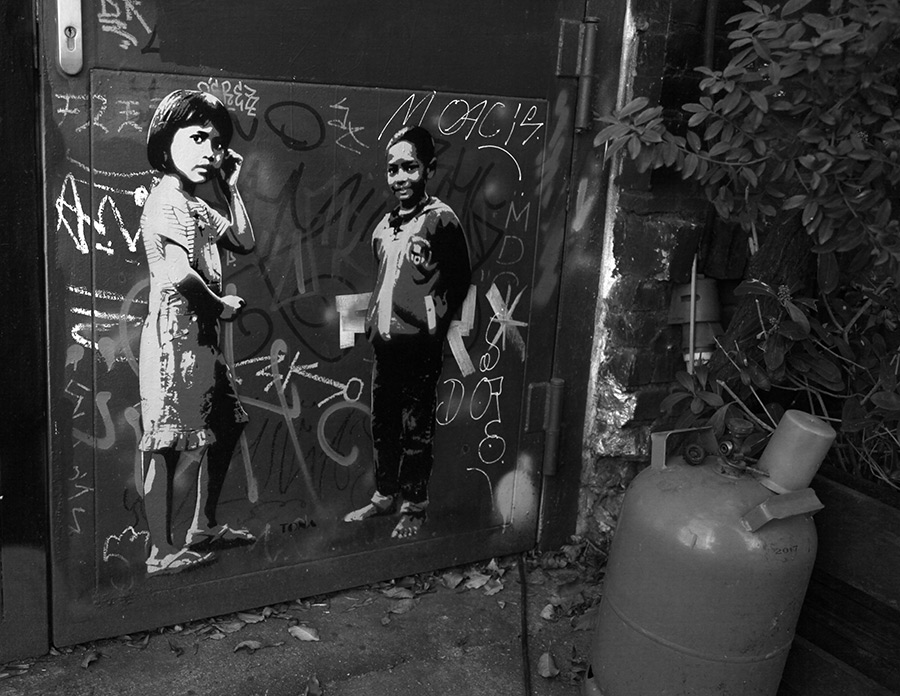
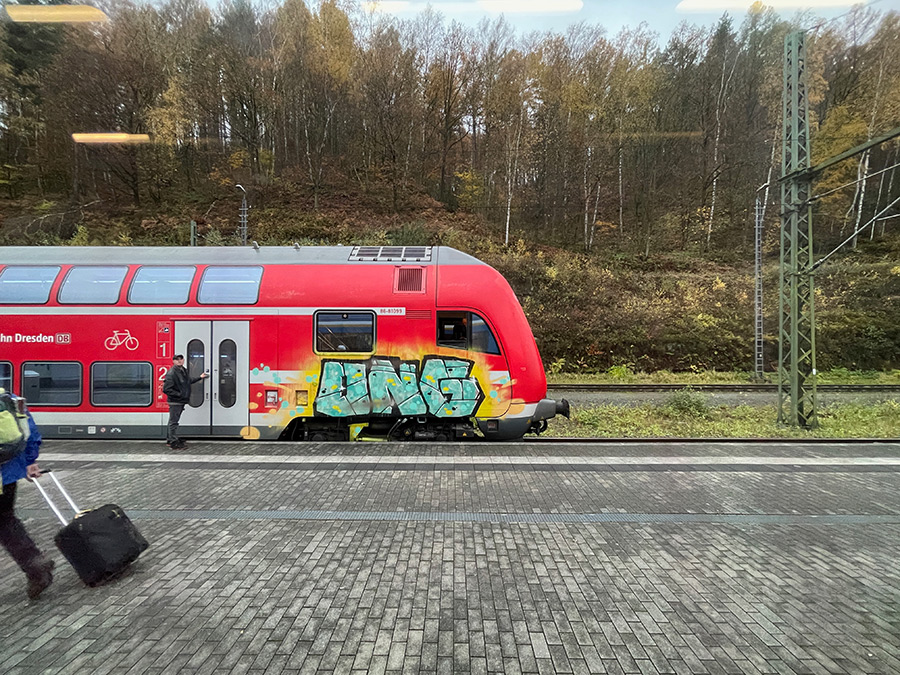
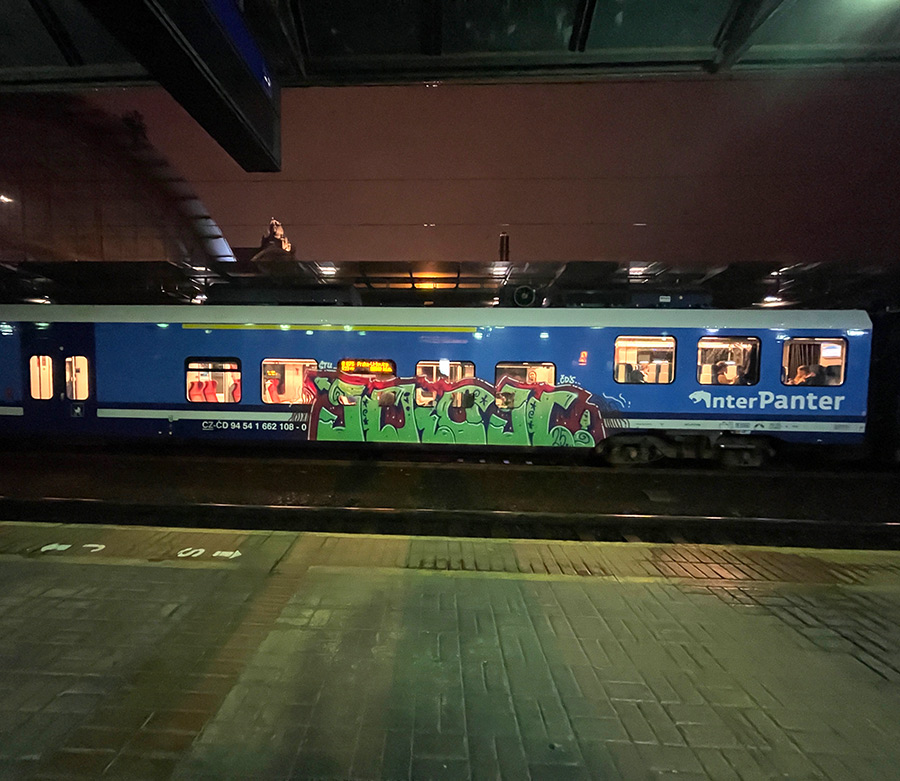
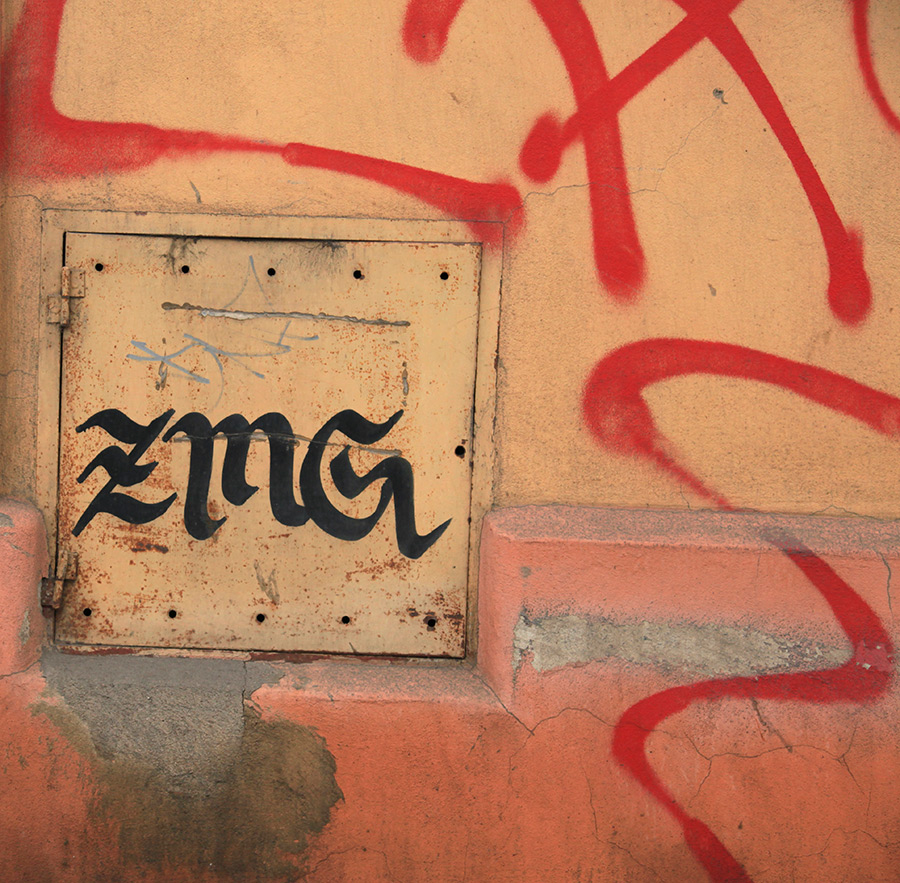
Here is a quick drop into a melange of things we found in both for our weekly interview with the street, this week featuring 1UP Crew, B.S., Caer8th, Dibs, Exit RIP, EXOT Diamonds, Gunther Schaefer, MORT RIP, ONG, Paradox, Phoebe Graphy, Tona, XOXO, ZMG, and Zosen Bandito.
 BROOKLYN STREET ART LOVES YOU MORE EVERY DAY