Named in honor of photographer Martha Cooper—whose lifelong commitment to documenting everyday life, cultural expression, and human dignity has shaped how communities around the world are seen and understood—the Martha Cooper Scholarship (MCS) supports long-form documentary photography that reflects shared human experience and social responsibility. For the 2027 cycle, the Foundation Berliner Leben will award its third Martha Cooper Scholarship, continuing a multi-year commitment to sustained, thoughtful photographic practice.
The scholarship offers a photographer from Africa, Asia, or Latin America the opportunity to spend 10 months developing an artistic documentary project that engages with contemporary social realities and contributes to greater cross-cultural understanding. In line with values often emphasized by Urban Nation Museum, the program recognizes documentary photography as a vital tool for visibility, dialogue, and empathy in an increasingly complex world.
The Martha Cooper Scholarship is grounded in the annual theme of Fresh A.I.R., Stiftung Berliner Leben’s residency program, which addresses current social and political conditions while foregrounding the diversity of lived experience and perspective. The selected 2027 scholar will live and work in a Fresh A.I.R. residency in Berlin-Schöneberg throughout the scholarship period. The current call is for the 12th class of Fresh A.I.R, running from February 2027 to November 2027.
Click HERE to learn more about the Martha Cooper Scholarship and who qualifies to apply.
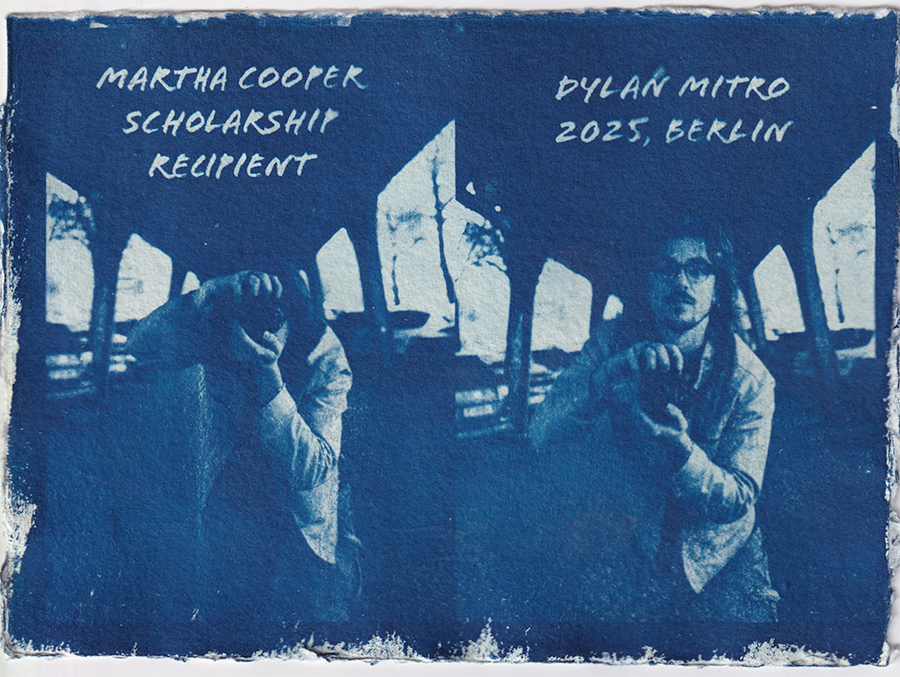
The first Martha Cooper Scholarship was awarded to photographer Dylan Mitro for the 2025 MCS. Mr. Mitro was chosen from dozens of submissions. Dylan successfully completed his scholarship in November of 2025 with an exhibition of his proposal and work in Berlin. Click HERE and HERE to read about Dylan’s work during his time as the MCS Scholar in Berlin.
The second Martha Cooper Scholarship was awarded to photographer Mourad Fedouache of Morocco for the 2026 MCS. Mr. Fedouache will arrive in Berlin on February 1st to begin his 10-month residency as the second MCS Scholar, which will conclude in November of this year.
The first Martha Cooper Scholar in Photography, Dylan Mitro, has completed his residency year of study and development in Berlin. Along the way, he became more closely aligned with his identity as a documentary photographer, a storyteller, an archivist of history, and a member of the queer community. Looking back on his project of study hosted by Berliner Leben and Urban Nation Museum, he says his appreciation for social movements came into focus, as did his role as aphotographer in capturing people and preserving cultural memory.
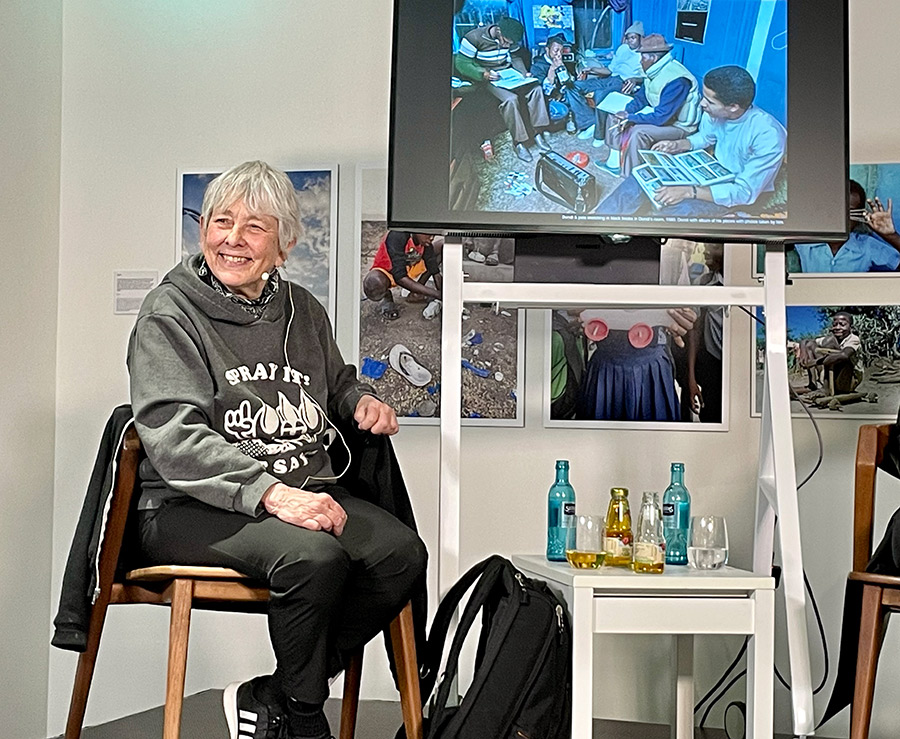
We spent a few hours speaking with him in the rooftop space atop the Urban Nation Museum talking about his experiences over the past year and looking at the materials that he created. We took away a few lessons on culture, art, preservation, and being present.
“Before I can be a person with a camera, I have to be a person they can trust… I cannot be exploitative, especially with communities that have been exploited so much.”
Photography Isn’t Just Style; It’s Witnessing.
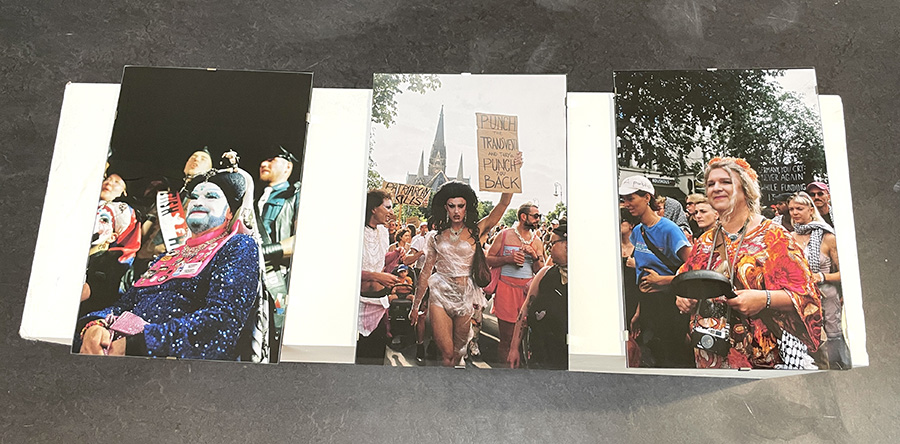
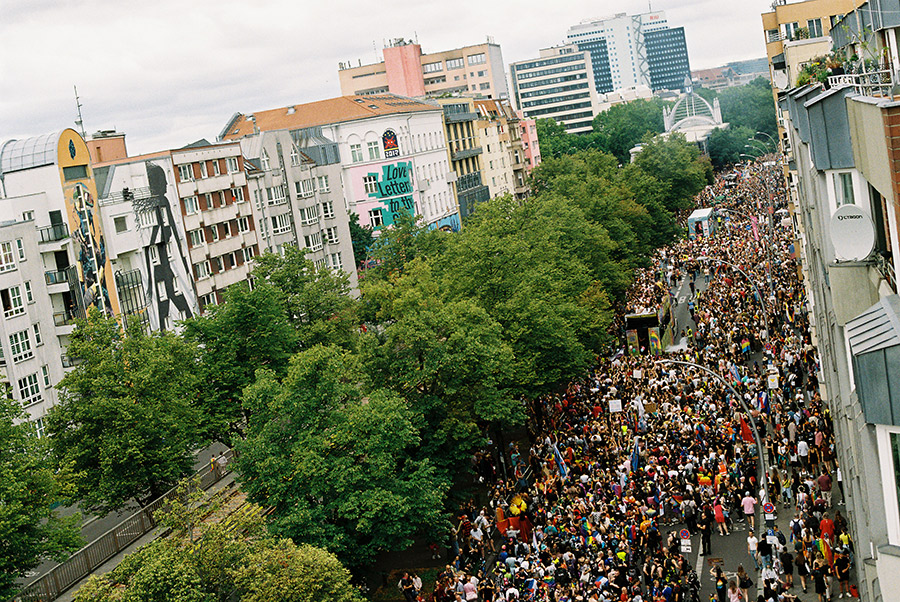
For Dylan Mitro, the camera has become less an instrument of aesthetics than a way of being present when history is unfolding before him. His “24 hours of protest” sequence of photos from animated and boisterous marches and demonstrations on the streets of Berlin is where this becomes clearest. He describes being in the street, whether raucous or quietly vigilant, with “thousands of people coming towards me,” running through the crowd and asking, “Can I take your photo?” as events unfolded in real time.
That sense of urgency and adrenaline is exactly what he admires in Martha Cooper’s work: her “always on” state, the way she treats the street as a field site and people as subjects rather than props. Dylan understands, as Martha does, that the most meaningful images are not staged or pretty; they are “honest and raw,” capturing people at protests, in queer nightlife, and in ordinary moments of showing up for one another. When he looks back at his protest images this year and says, “This is why I’m doing it,” he’s telling us that he recognizes that these fleeting, unposed encounters would otherwise vanish, leaving no trace in official records. Street photography through an ethnological lense, in his hands, becomes a way of witnessing courage and vulnerability in the moment and preserving it for those who come after.
“In the moment it’s so high energy, but then when you see the photos you’re like—okay, this is why I’m doing it.”
Archiving and Re-Photography are Acts of Care and Resistance.
Dylan’s unconventional project of re-photographing and reactivating historic photos begins in the archive and brings people to speak to us here, now. He related his experience of making contact with private collectors of LGBTQ+ history and organizations who have documented queer history in Berlin, sifting through collections, commercial advertising, and personal stories without quite knowing what he was looking for. Possibly because people hid their identity for protection, some things were just out of reach, and Mitro related how images “appear… in this almost ghostly, haunting way.” From our perspective, this work looks like a fresh battle against erasure.
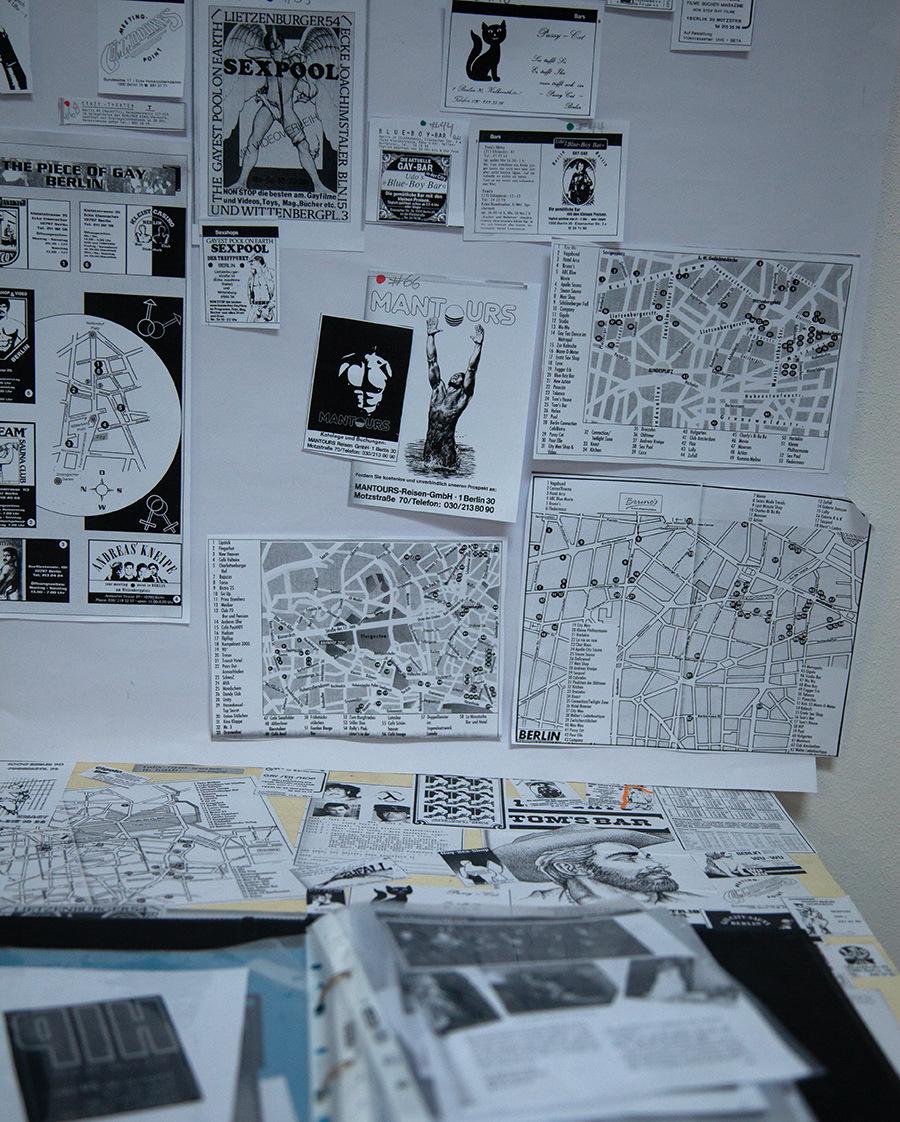
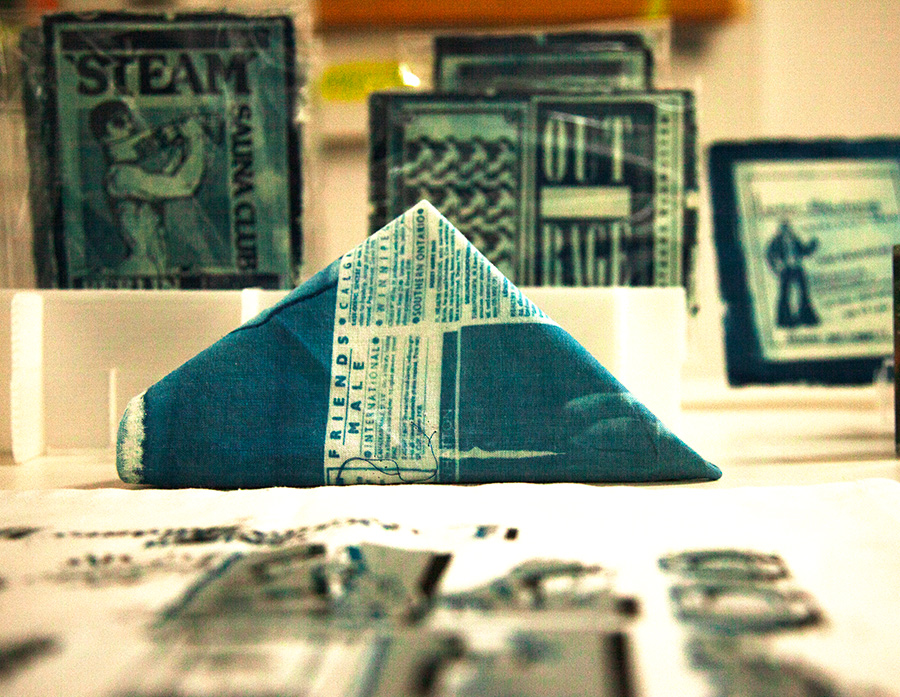
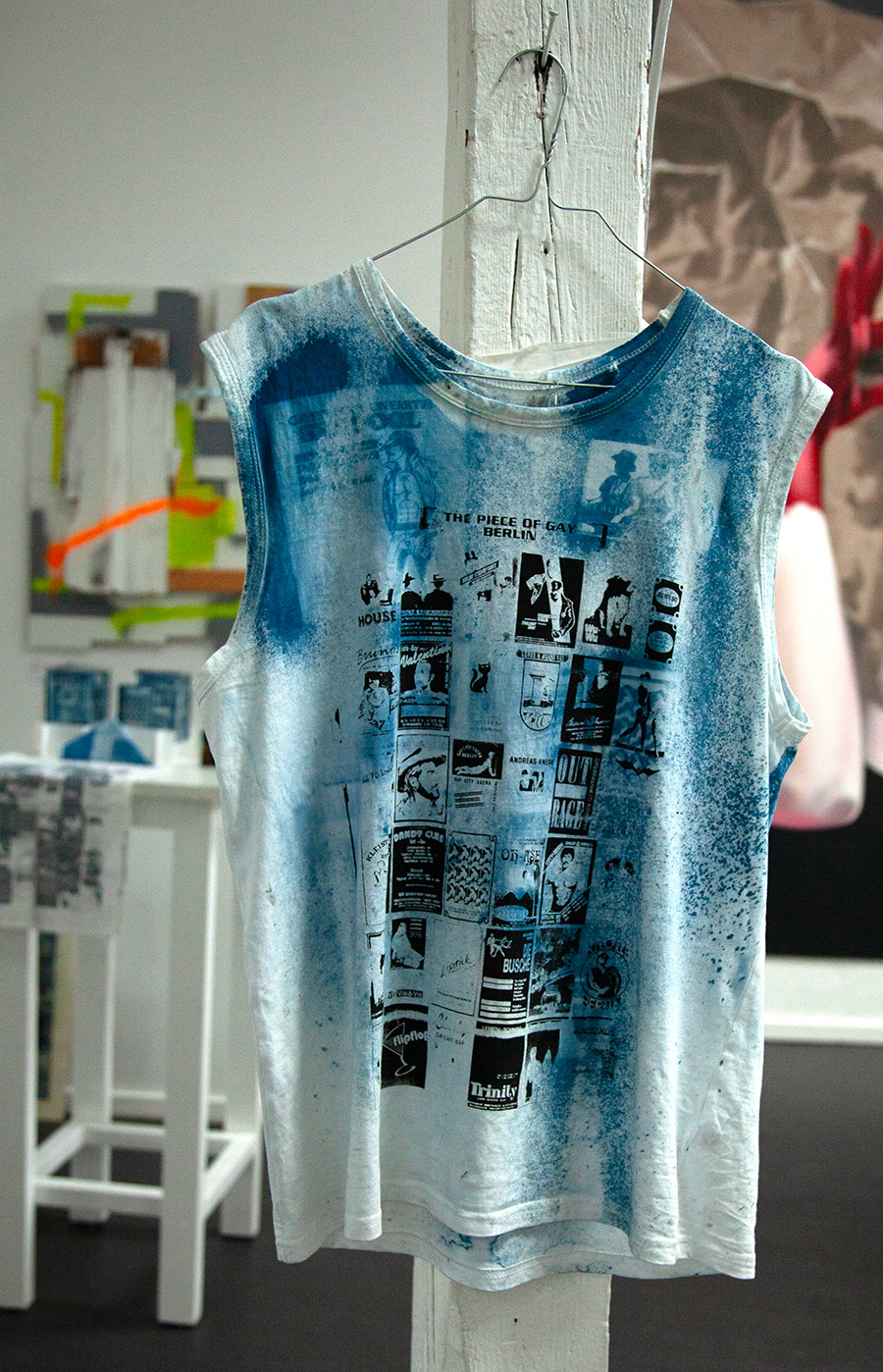
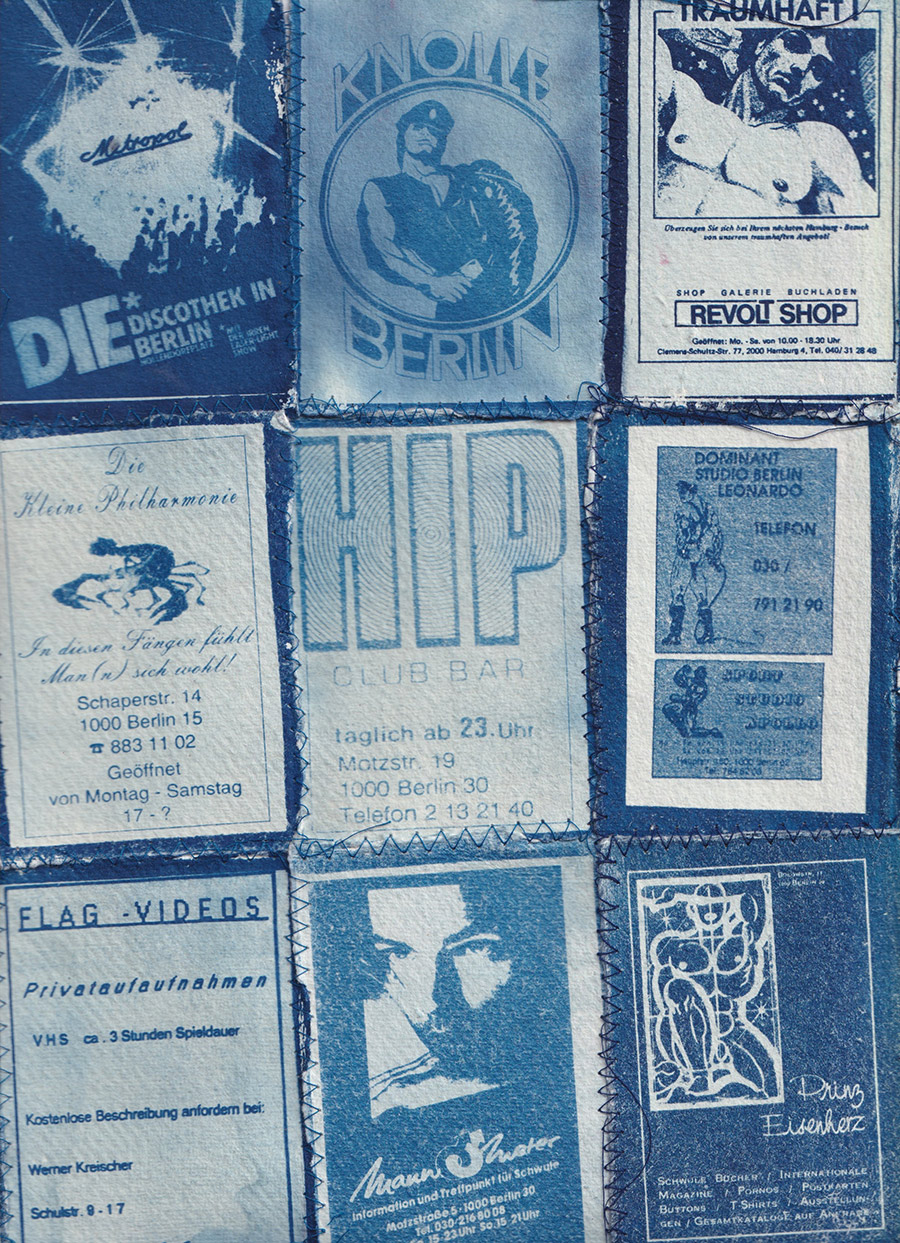
His research led him to retrace the locations of social clubs and bookstores and to pore over a varied and deep selection of printed and digitized materials at the LGBTQIA+ archives at the Schwules Museum in Berlin, including the publication Berlin von Hinten. Thanks to the careful collecting and preservation by many in the Berlin community, the artist says he found himself faced with an overwhelming array of diverse materials to study. Mitro brought his own scanner into the reading room, mechanically capturing pages to “deal with later,” making sure nothing important slipped past him in the flood. When he began making cyanotypes from sex journals, classifieds, and Berlin bar magazines like Berlin von Hinten, he was not merely appropriating images but changing their context and use, turning fragile, easily discarded ephemera into durable goods like book pages, prints, even shirts that he wore into the public and to the opening of his exhibition.
“The beautiful thing about an archive is you don’t know what you’re looking for when you go in, and then it just appears to you in this almost ghostly, haunting way.”
Thoughtful in his description of this self-created research process, he appears fully aware of an ethical minefield that he kept seeing in the materials: the sexualization of hustlers, questions of consent, the AIDS epidemic unfolding in the background, and the way one scandalous case can be used to demonize and smear an entire community. He also remarks on how much things have changed as queer culture has learned from its own past and become more equitable and inclusive. For him, to re-photograph, to print, to bind, is to refuse both erasure and simplistic moral panic. It is an act of care for those who lived through those years and a quiet resistance to the ways queer histories are flattened, censored, or selectively remembered.
Passing the Torch: How New Artists Build on Earlier Legacies
Dylan repeatedly frames his work as a kind of “grief politics” — a way to process his own grief and “collective grief” through images and stories. While he handles materials that can be considered crass, campy, or uncomfortable, he treats them as evidence of what previous generations built so that people like him can enjoy the relative freedoms they have now. During the conversation, we recalled that on earlier Zoom calls in the year, he talked about “recognizing the work that our ancestors have done… so we can enjoy the freedoms that we have now,” and he confirmed that this became central to his mission. In practical terms, this shows up in small but telling decisions.
Looking over materials and images, he noticed that many photographs in these magazines are uncredited or minimally credited; however, it was vital for him to reconstruct a credit page in his own book from the publication’s credit lists, even when he could not match each image to a specific name. He sees this as “doing the work for the crediting now,” anticipating a future researcher who might ask “who took this?” and refusing to leave them with a dead end.
His admiration for the photographer Martha Cooper is also part of it: he recognizes that she endured periods when her work was underappreciated, then gradually became a reference point for entire scenes and was treasured for their historical significance. By aligning his practice with her documentary, ethnological approach — attentive, long-term, grounded in real communities — Mitro is situating himself in a lineage of photography that tells our stories to each other and future generations.
When Time, Space, and Support Open a Path for an Artist
Dylan Mitro arrived in Berlin after a decade in Toronto, working punishing 14–15-hour days on commercial shoots and features, a rhythm he describes as “so unsustainable.” The residency allowed him to step off that treadmill and begin a course of study in a new city on another continent. He talked about the stark contrast: in the exact moment that he got the news about being selected for the residency, he learned the news of a close family member’s illness. As he talks, you realize that the year in Berlin became a hinge between these two realities — a chance to focus on his art and a forced confrontation with “what are these next chapters of my life?”
“It’s grief politics… how do I deal with my grief that’s also collective grief? And I deal with that in all of my work.”
With a new perspective, removed from Toronto, he considers that he cannot simply “jump right back into the way I was living.” While he regroups in Ontario and supports family, you can see that the residency gave him room to experiment: scanning archives, learning cyanotype techniques, organizing negatives by place, developing a whole book, and then pivoting mid-project to the “24 hours of protest” series that ties everything together. Along the way, he learned how to structure a day when nobody is calling call time, manage the pressure to enjoy and study the city, and answer the uncomfortable question he keeps coming back to: “Why are you doing it. The support he receives — from the scholarship, the residency, and mentors — may make it possible for him to build a thoughtful, ethically grounded body of work that he could not have assembled in the gaps between commercial gigs.
Regarding his project, the cultural ground keeps shifting, and Mitro couldn’t have been more timely. In a political climate in the Western world where there is a backtracking on human rights and queer and trans lives are attacked and simplified, this kind of photography and archiving says: we were here, we are complex, and our images won’t disappear.
Throughout the conversation, Dylan connects his work directly to the present rise of fascism and reactionary politics. He notes that people now often say, “You can be queer anywhere in the city,” as if dedicated spaces and organizing structures were no longer necessary. He counters this by pointing back to history: earlier generations had to fight for those spaces and used them to manage when “the world kind of feels so helpless.” At the same time, he sees how quickly media and political actors can weaponize isolated events — a murder, a scandal, a stereotype — to brand entire communities as dangerous, from gay men in the 1990s to immigrants and trans people today.
That’s precisely why he went to the archive, sat with the original materials, and made new work grounded in lived experience rather than sensational headlines. His insistence on consent and trust in photographing protests, especially when working with trans folks, is part of the same refusal to flatten people into symbols. He’s acutely aware that much of the public visual language around queerness is still dominated by highly sexualized images, corporate Pride floats, and what he and the sponsors describe as “rainbow capitalism.”
By pairing reactivated archival images with new, candid protest photographs, Mitro constructs a more layered record: people organizing and dancing, grieving and celebrating, dressing up and just existing. In the shadow of book bans, anti-trans legislation, and cultural backlash, his project quietly insists that queer and trans lives are not a recent “trend” or a single issue to be voted up or down. They are entire worlds, spanning decades, and his camera — like Martha Cooper’s — is there to make sure those worlds are seen and remembered.
“I know I’m not going back to the life that I had before… I’m really reshaping how things are gonna be moving forward.”
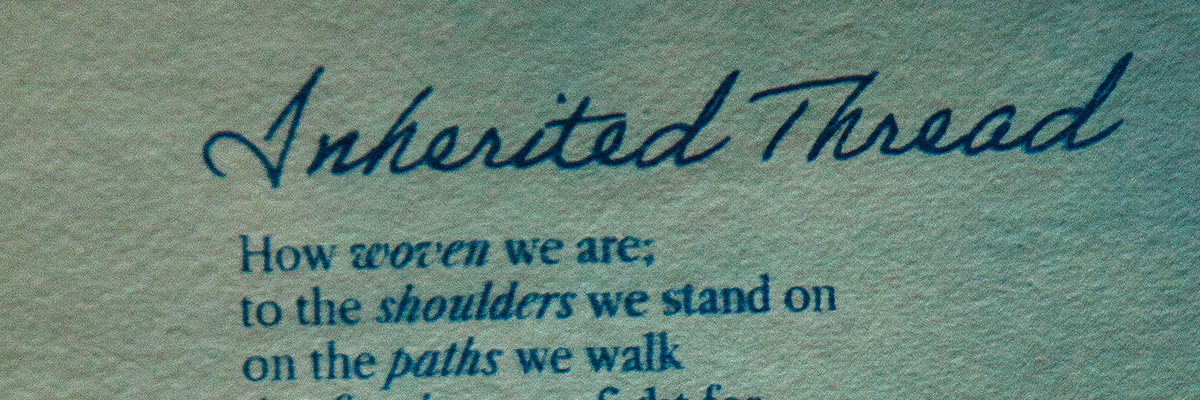
Click HERE to read our first interview with Dylan, where he speaks in depth about their project Inhereted Thread for their Fresh A.I.R. Residency and the Martha Cooper Scholar for Photography 2025.
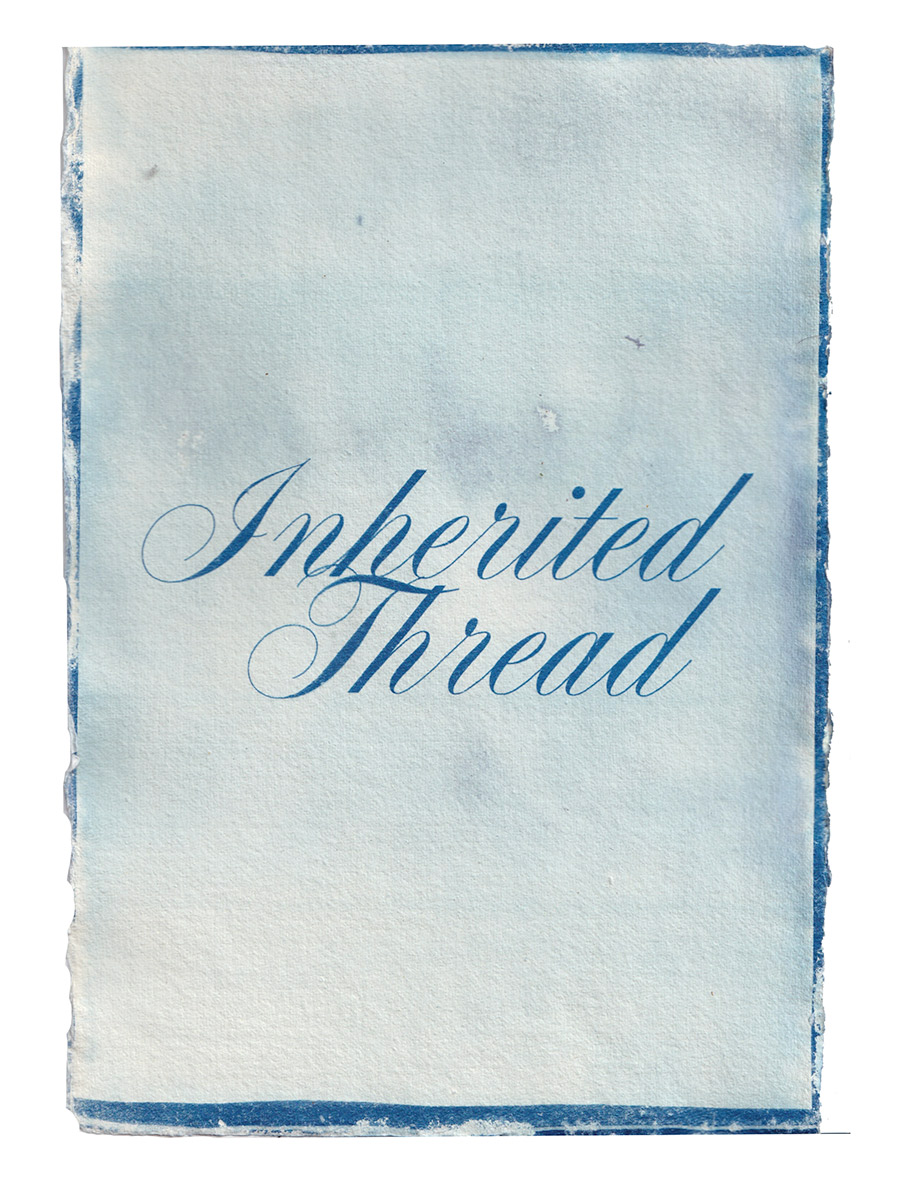
Berlin has always been a city that remembers through reinvention—a fitting place for the first recipient of a photography scholarship named in honor of a pioneering ethnographer whose seventy-year career preserved worlds in flux. The recipient of the first Martha Cooper Scholarship for Photography, the Canadian photographer and researcher Dylan Mitro, has spent recent months in the city exploring its queer memory through Inherited Thread, a project that draws together archival study, re-photography, and contemporary documentation. Their work, soon to be exhibited in Berlin, revisits Schöneberg’s queer nightlife ecology from the 1980s onward, asking how we inherit histories that were often hidden, erased, or displaced—and how we might keep them alive through art and documentation.
Inherited Thread takes as its starting point Berlin von Hinten, a gay tourism atlas first published in 1981 that catalogued Berlin’s bars, bookstores, and venues at a time when queer life existed largely in coded networks. From this modest guidebook, Dylan reconstructs a cultural topography: visiting surviving sites, mapping closed ones, and photographing their present forms. Their fieldwork extends into the archives of the Schwules Museum and Spinnboden, where they piece together ephemera—ads, zines, snapshots, and personal notes—that once charted a thriving but precarious social world. Each recovered address becomes a point of dialogue between past and present, what was lived, and what remains.
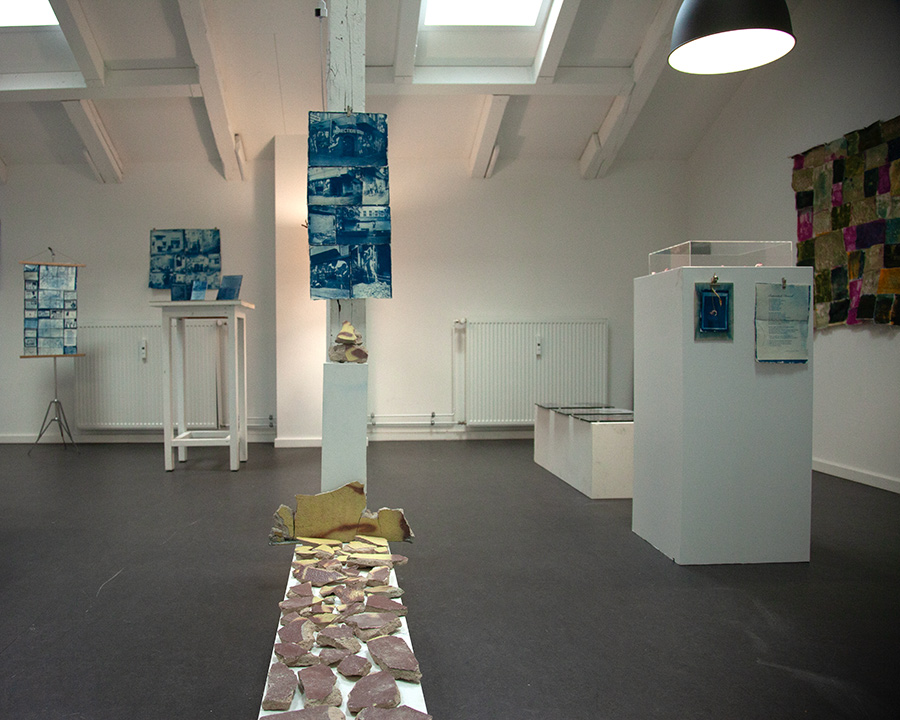
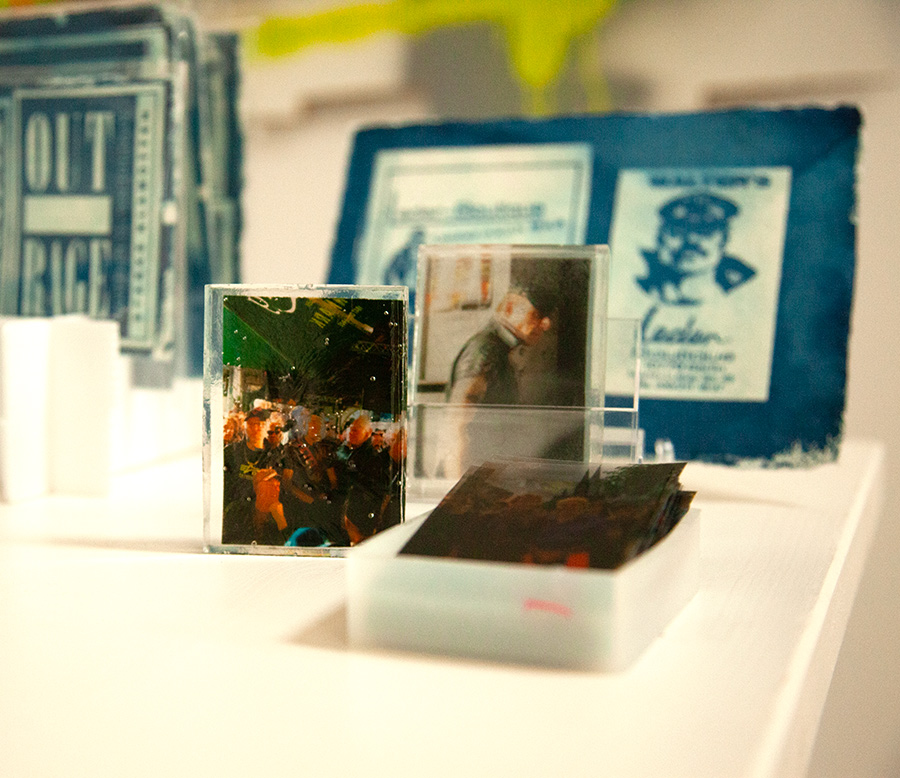
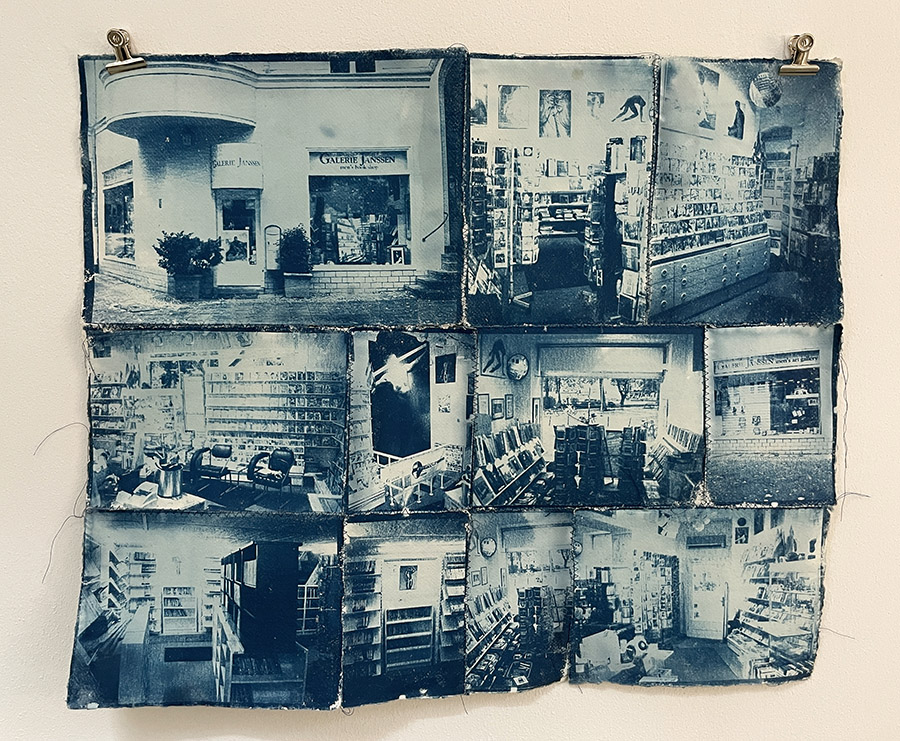
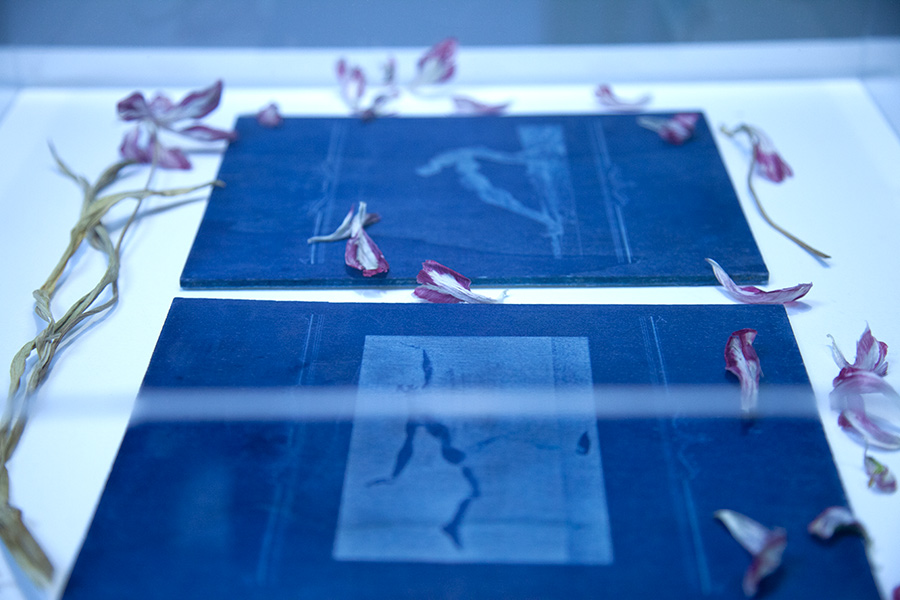
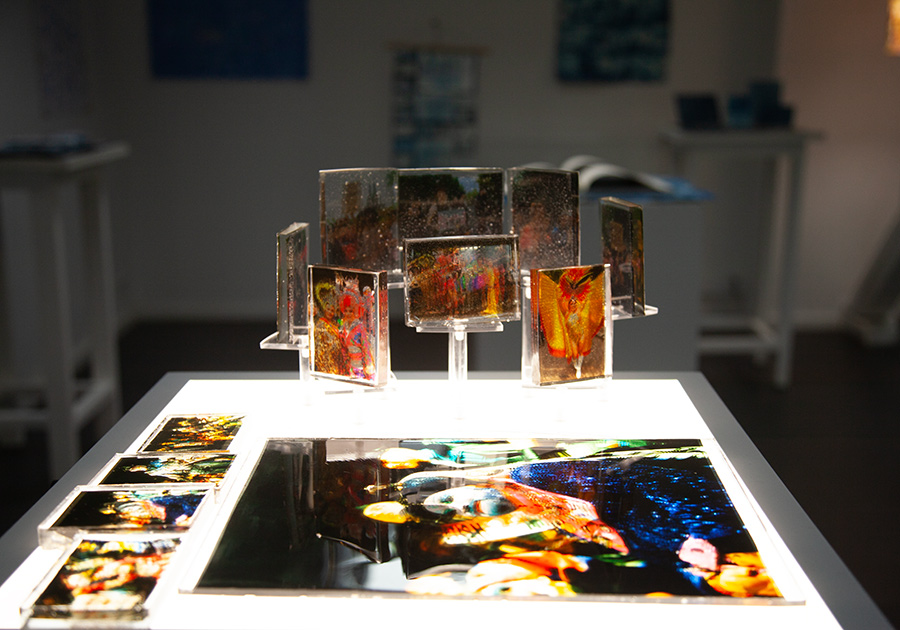
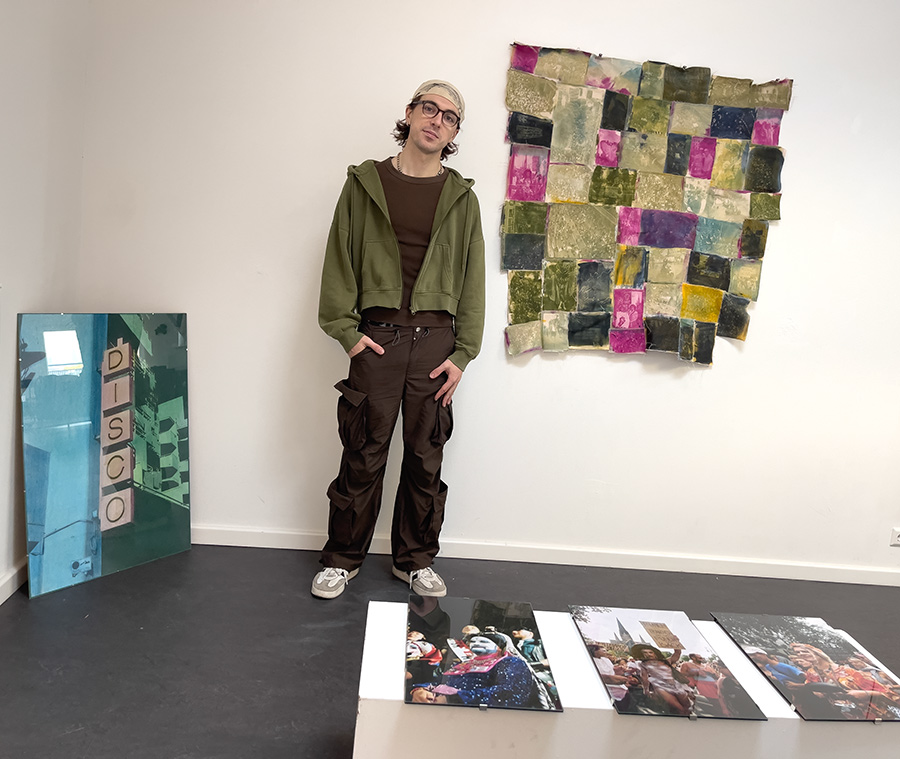
Materially, the project echoes themes of loss and persistence. Cyanotype quilts made from archival interiors fade from clarity to a certain ghostliness; resin-encased photos hold light like memory suspended, and weatherproof plaques marking the sites of vanished community. These gestures of preservation aren’t presented as nostalgia; they propose to keep history embodied and visible. Mitros’s own approach to documentation asserts that the everyday places where people gathered, danced, and organized are as vital to collective memory as any monument.
As Dylan prepares for their Berlin exhibition in November, Inherited Thread unfolds as a living, site-specific memory atlas of queer life—stitched from archival guides, re-photographed spaces, and the testimony of those who remember. It reflects a city still negotiating its relationship to memory, visibility, and belonging. And like the scholarship’s namesake, whose life’s work has championed careful observation, human imagination, and dignity, Dylan’s practice reminds us that documentation, when done with empathy and rigor, is itself an act of care.
“Inherited Thread attempts to better understand our Queer histories through archival ephemera. Dylan has conducted research in the LGBTQIA+ archives of the Schwules Museum. Focussed on the historic publication Berlin Von Hinten, a Gay tourism atlas first published in 1981, showcasing nightlife and community spaces that defined Berlin in the 1980s and 1990s. Revisiting and mapping forgotten landscapes through printmaking and photography, this project seeks to explore the inheritance of historical LGBTQIA+ spaces, and how to keep their stories alive.”
Following is our interview with the artist, researcher, and photographer.
I. Artistic Practice and Methodology
Brooklyn Street Art:For the exhibition for the Fresh A.I.R. you are using cyanotype printing on cotton-rag paper and making a quilt with some of them, positioning photography within a tactile, craft-based framework. Could you elaborate on how this interplay of image and textile informs the conceptual and affective dimensions of the project?
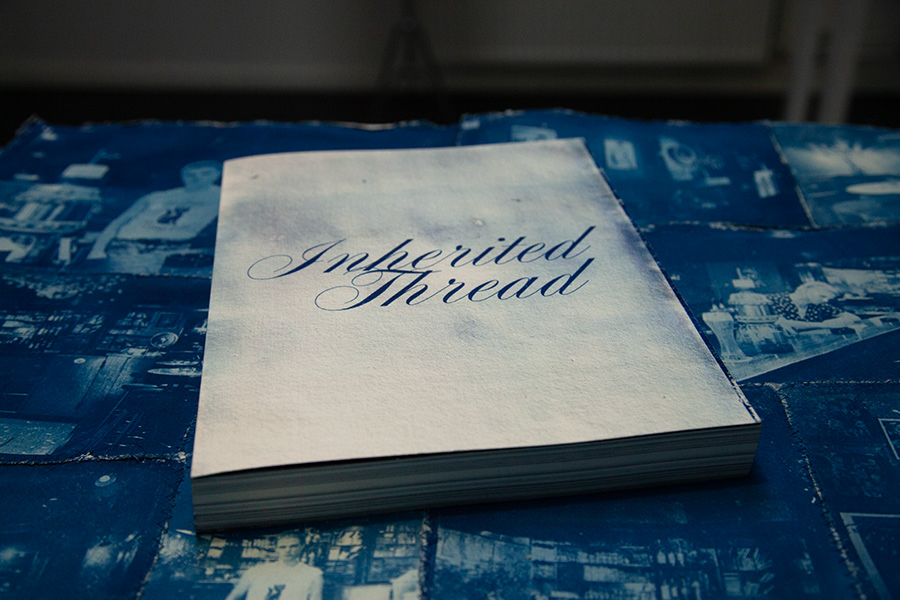
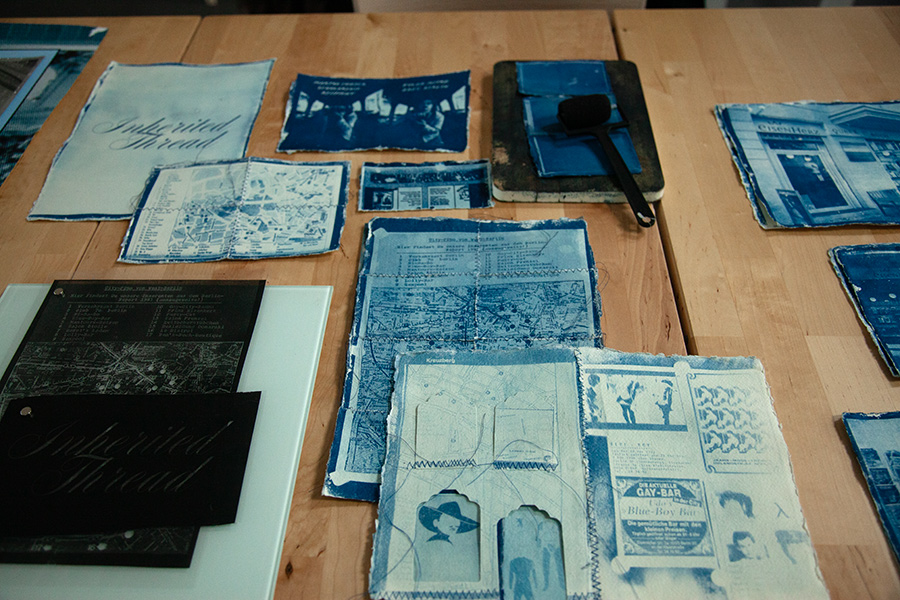
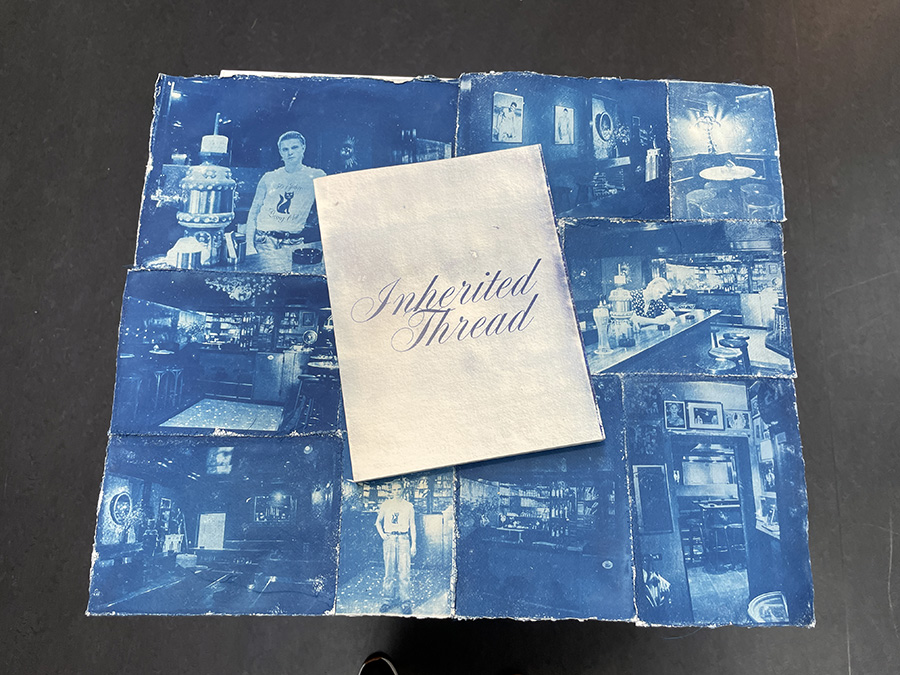
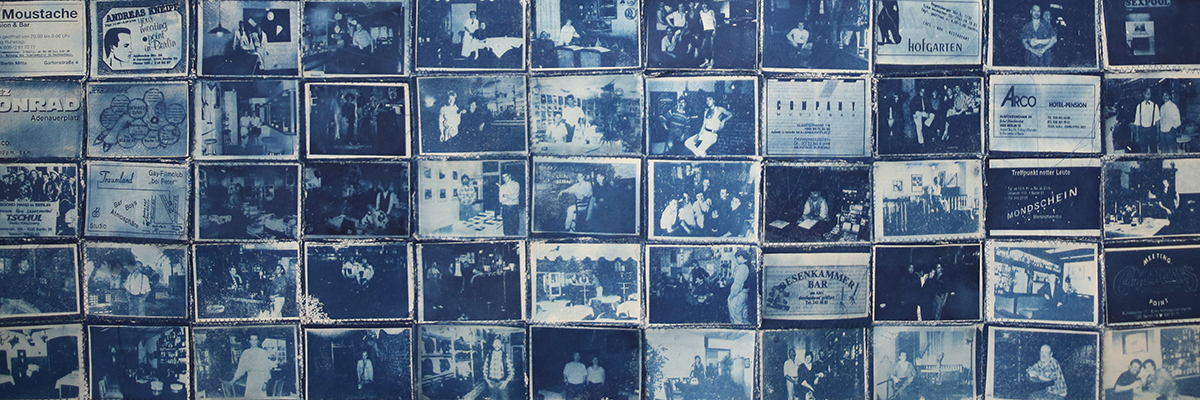
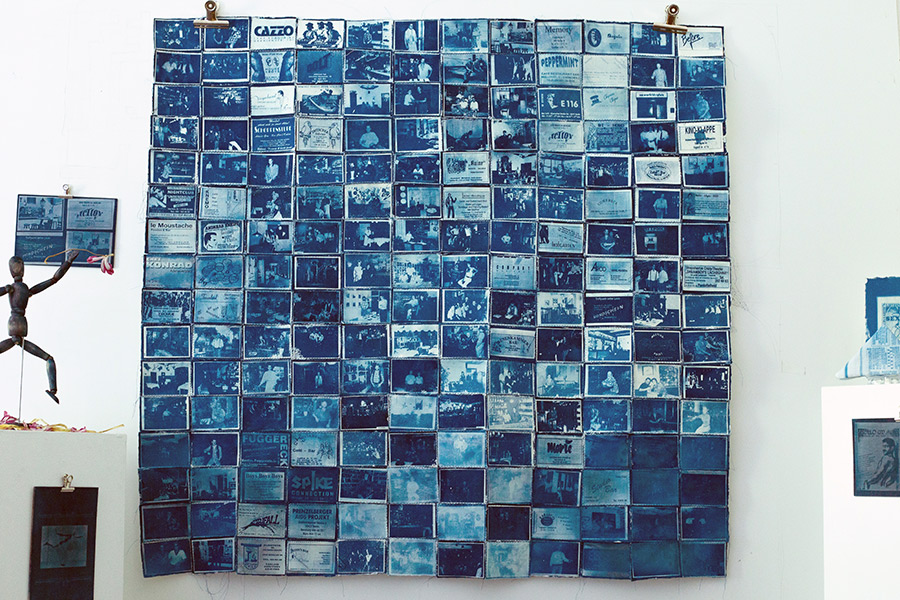
Dylan Mitro: My concept for this work involved printing cyanotypes on cotton rag paper and quilting them together, sourcing the material from a 1980’s and 1990’s Gay Tourist Publication titled ‘Berlin Von Hinten’ by Bruno Gmünder. This journey of research has been such a vast exploration of Berlin’s history, I felt I was having to sew together the LGBTQIA+ history that I was learning, as an attempt to retell stories of the community here in Berlin. Through the cyanotype sun printing process, the images were printed one print at a time, so it was unpredictable how they would turn out. Once I had 100s of these prints finished, it was clear that some turned out more visible than others with ghost-like qualities. This process felt very metaphorical to our LGBTQIA+ history and how a lot of these people, places and stories had been lost to time.
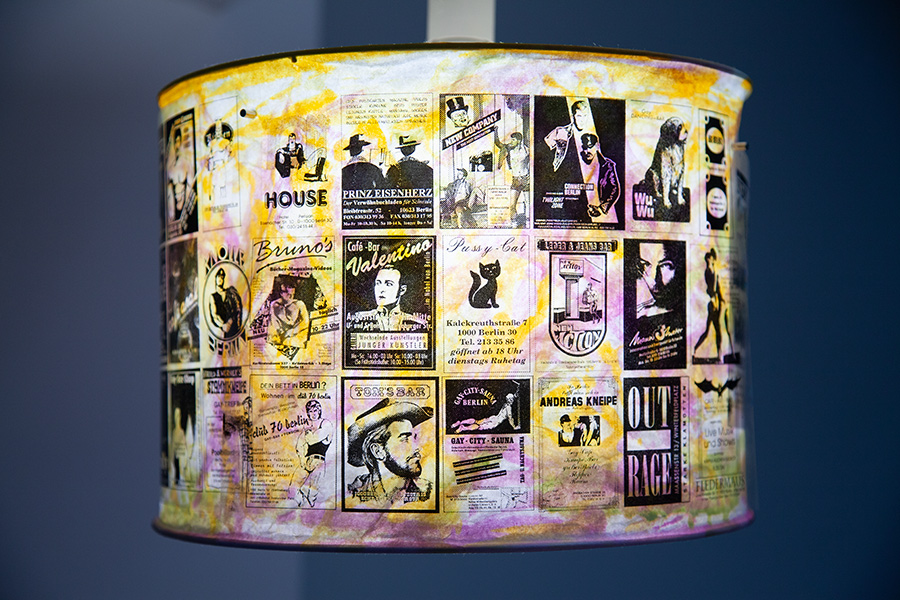
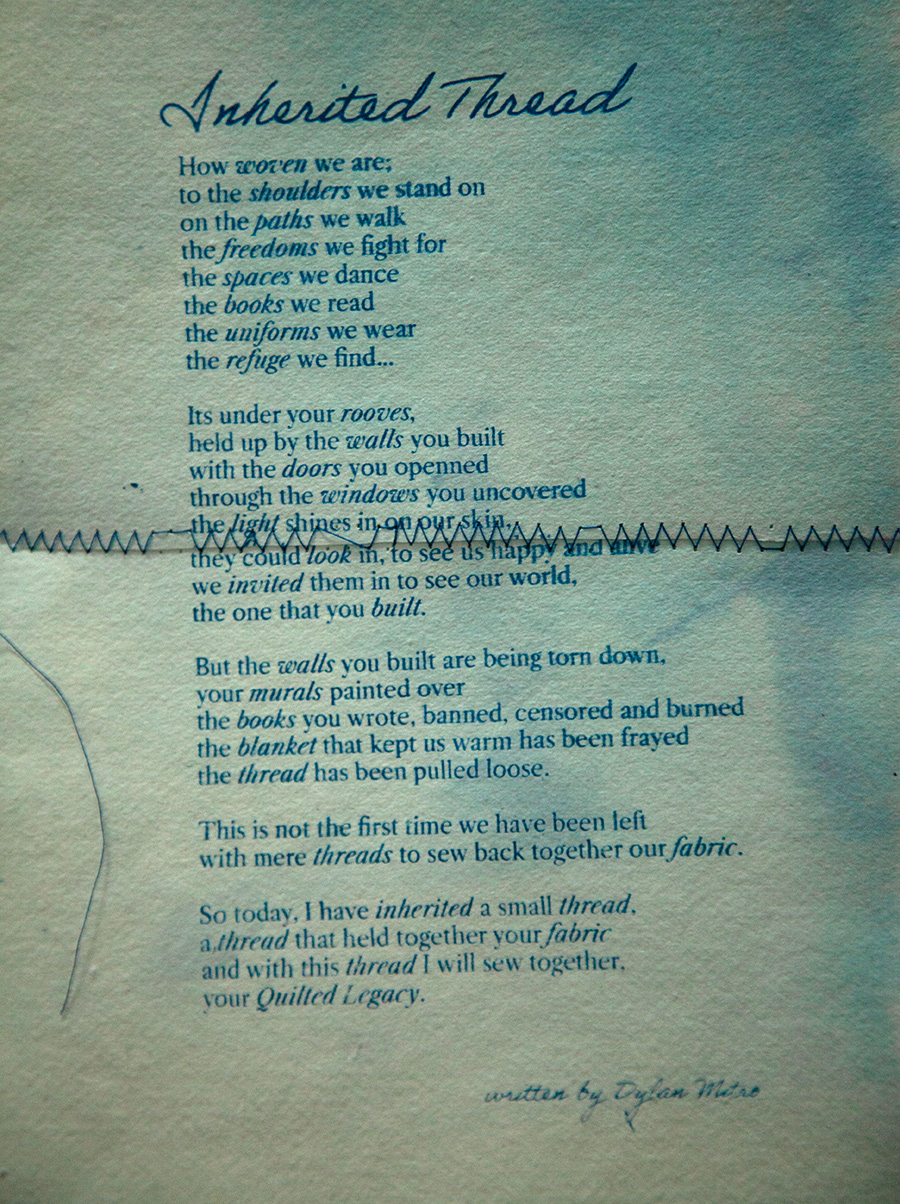
I decided to compose the cyanotypes like a quilt with both the photographs, advertisements and maps of Berlin’s; Gay, Lesbian Bars, Cafes, Discos, Travesti clubs, and sex shops. It felt like I was sewing back together a mere echo of these places and their stories from Berlin in the 1980s and 1990s. These two decades of the 1980s and 1990s are so poignant in the community, connected to the AIDS epidemic. As a Queer artist I try to navigate and understand further how to measure the loss the community faced in this time. With my body of work titled ‘Inherited Thread’ to both refer physically to the ways I have quilted together the cyanotype prints, but also to refer to the process this research has taken me on, in threading together the question of how, we as the next generation of the LGBTQIA+ community inherit the stories and spaces of those that came before us.
BSA: You will be drawing extensively on archival materials from Berlin Von Hinten (1981–1997). How do you approach the ethical and aesthetic considerations of working with such archives—particularly when recontextualizing them within a contemporary queer landscape?
DM: I think when dealing with any LGBTQIA+ historical material, you have to understand how personal perspective affects your lens, as the landscape within the community has changed. There was much to consider when dealing with a body of work like the ‘Berlin Von Hinten’. First, this book was mainly made for ‘Gay’ male tourists, looking to explore the homosexual life of Berlin, but was not limited to just that perspective. It shared both Trans and Lesbian spaces in its publication as well. But when dealing with the ethics of the ‘Berlin Von Hinten’ publication itself, it is necessary to acknowledge that it was made from and for a masculine, predominantly white gay male clientele.
So I had to acknowledge that, though this was a rich part of Berlin’s LGBTQIA+ history, it was certainly a limited perspective and not the full picture of the scene. Looking at any ‘Gay’ history, you have to acknowledge how prejudice and exclusionary rhetoric within the scene was certainly present and still exists in the present. I was approaching these books as a Gender Queer artist who is also a tourist trying to discover Berlin but from a contemporary lens. Approaching the research and acknowledging the influence this publication had within the Gay community is important. This work has not been intended to criticize the publication but to celebrate the way it was able to so intimately time capsule part of the 1980s and 1990s Gay scene here in Berlin through its writing, mapping and photography.
A majority of the aesthetics I was interested in were the advertisements in the publication. A lot of the focus is catered to the homoerotic, macho, masculinity. This aesthetic is not what I personally prescribe to. Still, I find the use of this homoerotic aesthetic to market sexually charged spaces for Gay tourism at a time within the peak of the AIDS epidemic very interesting. So all of this was considered as I worked through these published books.
BSA: You will be creating/presenting many of these historical photos and places re-photographed. What is the protocol for doing this?
DM: I could not have started any of this research without the support and access to the wonderful Schwules Museum Library and archive. I owe a lot of this research to their continued support. My protocol to present these historical photos was to take high-quality scans of these pages within the Berlin Von Hinten. These pages included photos of rare glimpses into the interiors of LGBTQ+ spaces in Berlin in the 1980s and 1990s. I recorded all of the accreditation of photographers that were published within the book and reprinted them within my research. As I was researching, I wasn’t only collecting photographs of these establishments but also their advertised addresses.
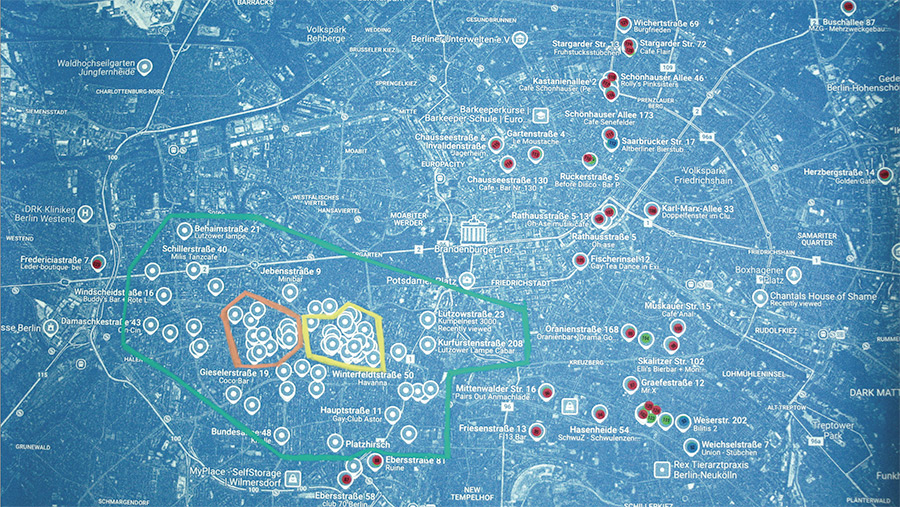
After the scans were finished, I created my own photo negatives on transparent acetate paper of the historical images. These photo negatives were made to print cyanotype copies of the images. After I digitally documented the addresses of these spaces into a Google Maps folder to create a digital map of where these places existed. From there, I was able to understand which of these places were still open and operating as the same business 40 years later. From the 200 businesses I documented, only 12 were still open; operating under the same name. So as a part of the project I visited some of those establishments and worked to photograph them the way they were in the original book 40 years later.
BSA:When you revisit surviving venues to echo the 1980s interior shots, how do you determine vantage point, focal length, framing, and lighting to balance fidelity to the historical images with your own authorial choices? What does re-photographing do in reference to history?
DM: I approached the photographs more organically, trying to document these spaces in a way that would allow for the environment’s ambience to speak for itself and for it to be understood within the photographs. I wanted to think if these photos were to be viewed in 40 years from now, how could these be a documentation of the spaces themselves, like the photos from the Berlin Von Hinten. I made sure to photograph the rooms without any customers in them, as the photos were more about the environment. I am attempting to continue the documentation and archive these current spaces as they are now, before they are lost to time. So it does feel like I am continuing the narrative of archiving to prevent the story of these places from being lost.
BSA: Provenance, description, and preservation must be a challenging process: What is your workflow for recording provenance and metadata (dates, addresses, names/roles, consent, cross-references to Berlin von Hinten) and for long-term preservation (file naming, etc)?
DM: My attempt at cataloging my findings and recording the metadata of researching was for a more artistic storytelling approach. To organize each of the places I had researched with its photograph, advertisements, and descriptions on each page. Recording when these places were established and which ones still exist. There are pages I have dedicated to crediting the authorship of these previous Berlin Von Hinten publications.
In the conversation around long-term preservation, I would consider my approach to be more artistic than technical. I still have to remind myself that this work is from the lens of an artistic practice over the short course of 10 months, and with that I feel it is still a work in progress with the intention of creating dialogue involving an open-ended question: how do we approach the idea of Inheritance of history within our LGBTQIA+ communities? – the answer is one that we each have to seek out and learn for ourselves. I have been working in LGBTQIA+ archives for years now, and it’s overwhelming how much material there is within the archives to be rediscovered. I hope others are inspired to dive into it.
II. Community, Space, and Memory
BSA:Central to the project are spaces such as Pussy Cat Bar and Eisenherz Book store, both historically significant to Berlin’s queer community. Can you talk about navigating the process of documenting these living spaces in a manner that both honors their historical legacies and engages with their present realities?
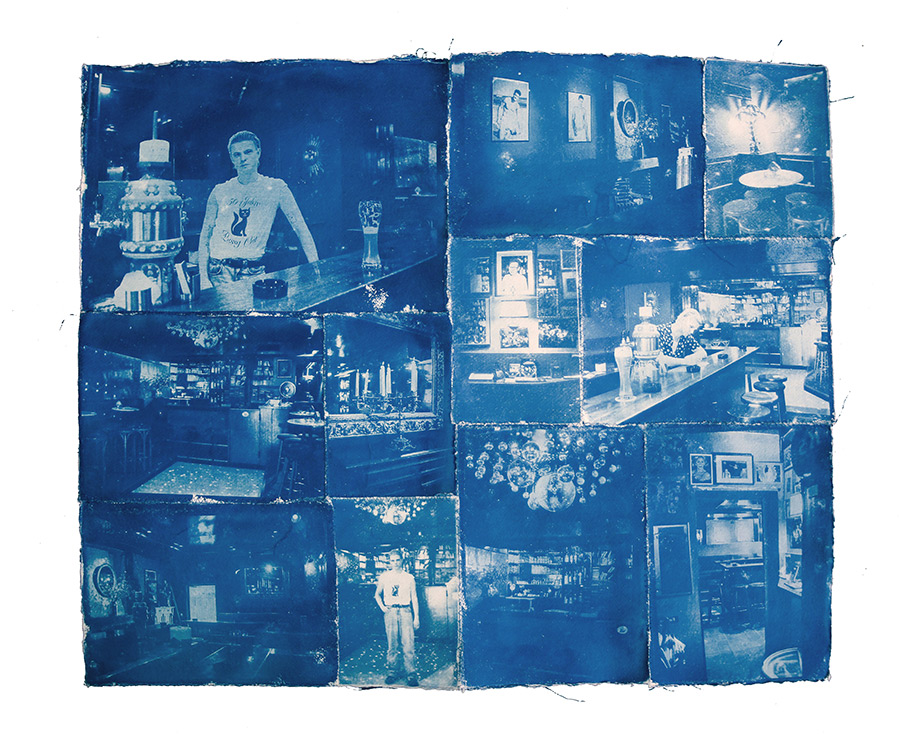
DM: The spaces I have photographed and interviewed were documented with very different approaches based on their history and contemporary positioning. Pussy Cat has been around since 1974, founded by two lesbians, and has always had its doors open to all, being very inclusive. When I photographed their space, I wanted to capture the ambience. The bar’s essence owes much to Daniela, Pussycat’s owner from 1998 until her death in November 2020; she’d worked there since 1982. Her former sidekick “Donna” (an employee since ’85) now runs the show, preserving Daniela’s legacy. I included portraits of the owner Donna and Jan, a young bartender who has been working there for just a few years. I spoke to Donna about the history of the bar, hearing stories about its legacy. While with Jan, I spoke about what it means for the next generation to be coming to a spot like Pussy Cat. I asked about the current climate, of the importance of a bar like Pussy Cat, and how it fosters intergenerational connections.
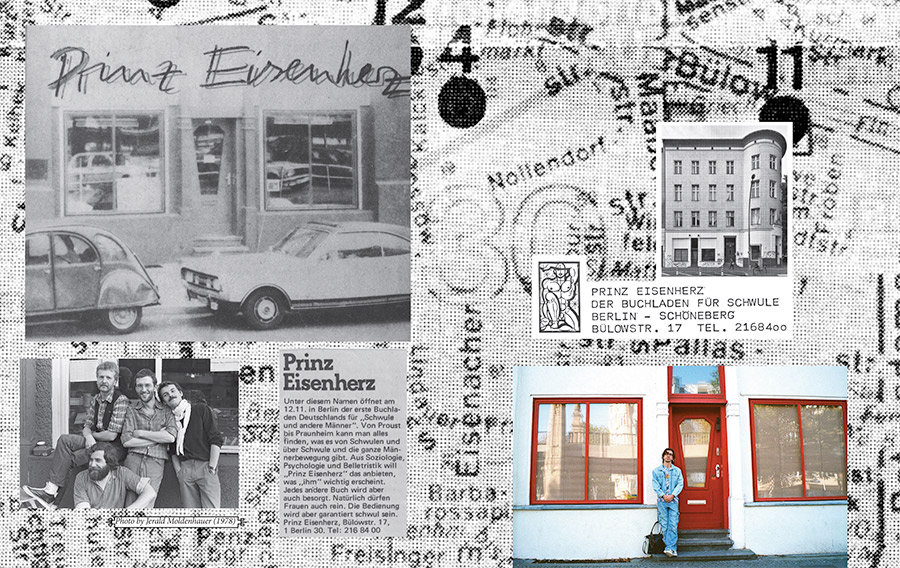
For Eisenherz Bookstore, it had a huge significance to Queer history here in Berlin. It is the longest-standing LGBTQIA+ bookstore in all of Europe. It opened in 1978, as a Gay bookstore called Prinz Eisenherz located at Bülowstraße 1, just down the street from my studio here at Fresh A.I.R. and across the street from where this project will be exhibited. Eisenherz is where the story of my research starts, as the founders of Berlin Von Hinten – Bruno Gmünder and Christian Von Maltzahn were two of the five founders of the Prinz Eisenherz bookstore.
When I photographed and interviewed the current owners of the Eisenherz, Roland Müller-Flashar and Franz Brandmeier, they talked about their involvement in the business since the 1980s. We spoke about how they changed the name and made the bookstore more inclusive over the years. They still to this day host book readings and gallery openings. As a business, I talked to them about their legacy and how vital their store is to the community. They shared with me photographs of the official opening in 1978 to contribute to the publication of the work. I photographed portraits of the owners and their colleagues to create a current time capsule of their store and the ones who keep it running. In a climate of LGBTQIA+ book bannings, it’s a significant social fabric for the community to access history and current local and international voices.
BSA:When you engage with events such as the Community Dyke March and Christopher Street Day, your work intersects with both activist and celebratory dimensions of queer visibility. How did your immersive engagement with these communities inform your visual and conceptual strategy or the outcome?
DM: I intend to document Queer history as a celebration. However, I cannot ignore that Pride is also a protest. I felt compelled to capture the ongoing struggles the community still faces and the freedoms we must continue to fight for. While in residence, there was Berlin Pride in July, and within 24 hours, there were three marches that I wanted to document. There was the Community Dyke March, the Christopher Street Day March, and the International Queer Pride for Liberation March. I think it is powerful to show those who show up in the streets, and to document their power.
Activism and celebration are not binary, and to celebrate the strength of their ability to show up in the streets and fight for rights and freedoms is important. I think it is essential to acknowledge how easy it is for us to forget the sacrifices that have given us our freedoms today. We are here today with the rights and freedoms we have because of the elders who came before us, and the activism in the streets they did. There is still so far to go, and I think it’s important to document and archive the ongoing fight for future generations to witness the brave trailblazers of today.
BSA:You’re pairing your visual works with interviews and a book, integrating oral histories with photographic documentation. What are the narratives and/or perspectives you’re most focused on to share with the public?
DM: I will have a book that will document the whole journey of my research and where it leads. This includes how many of these LGBTQIA+ spaces are on the verge of disappearing as the community shifts. I look to ask the community what it means to inherit these histories. How is the torch passed on and how can we find more intergenerational connections, threading a link to the past and finding more of a moral responsibility to them instead of just approaching them from the position as a consumer.
BSA:The inclusion of archival artifacts—such as pieces of the original mural wall outside Connection club and printed publications like Berlin Von Hinten—places in the foreground a dialogue between image, object, and place. How do these material elements shape the way people can react to your work?
DM: For the project to include archival artifacts like the Berlin Von Hinten publication and pieces of the exterior mural from Connection Club, I want to bring attention to the value and importance of these objects visually. For the Connection Club mural, it was unexpectedly demolished as I was in my residency, and I actively became a part of the project unexpectedly. The mural on the exterior of Connection Club was a large display of Gogo dancers and Drag Queens painted in 1997. The entire mural was coming down without any means of preserving it. I believe this was probably the Largest and oldest gay mural in the Schonenberg neighbourhood, and there was no relative concern about attempting to preserve it. So I decided to photograph and document the demolition and went into the dumpster of rubble to collect some of the broken pieces of the mural to exhibit as a part of the exhibition. It was an unexpected moment in the project that encapsulated the work into a physical object. We aren’t just losing the spaces for the community; we are also losing the artworks on their walls and the stories they tell. So having it in the exhibition allows the viewer to witness the continued deterioration of Queer spaces and the current climate.
BSA: Berlin’s queer history is both deeply entrenched and dynamically evolving. How do you situate your work within this broader historical continuum, and what conversations do you hope it sparks within institutional and public contexts?
DM: Berlin’s Queer history is so deep, it is why I was first drawn to this city. But I think once I arrived and started my research, I was so overwhelmed by how vast that history was. I didn’t know where to start or how to encapsulate it into a project. But I think once I familiarize myself with the context of how I am approaching Berlin, I can ask questions in my work without trying to answer them. I wanted to hopefully have people ask their own questions of how do we inherit our Queer histories, how do we memorialize not just the grief we endured, but to memorialize it.
To familiarize ourselves with how our community has come together throughout history to fight for the freedoms that can so easily be taken away—and are actively being taken away now. At a time when the digital age is isolating us further from each other, I hope this work encourages the public to find importance in our histories and actively engage with it. I wanted people to visit and support these places that are still around and respect their deep historical roots. I wanted to find the threads that link what we enjoy and consume today within the community because of what came before us. Hopefully more people will be inclined to go to places like Pussy Cat, Eisenherz bookstore, or the Schwules Museum Library Archive to find stories they are interested in finding out more about.
BSA:Did you find it difficult for the subjects you were pursuing to engage with you and to open up more with their stories and legacy? What are the challenges for an artist and researcher like you when asking people to be frank and open with you about their stories?
DM: From the beginning, I knew as an English-speaking outsider from Canada, I had to accept that I was approaching this project from that perspective. I did have some apprehensions at the beginning about approaching people to ask more about the history because I wanted to make sure I had enough knowledge of the history to ask the right questions. But I tried my best to immerse myself in the community to understand and feel what type of climate it truly is. Thankfully, the residence was located right in the heart of the historic Gay district of Schöneberg. From leather cruising bars to the Gay cafes, I visited them all, and within the context of being an outsider trying to learn more about the history of these places, I had to be patient.
As a Documentary film director, I have done many interviews in my life, so I am familiar with talking with strangers, but it was essential to gain trust with them. I do think that because I don’t speak German there was certainly a barrier to get through to get the most intimate version of the stories but there was a ‘matter of fact’ approach that most people I talked to gave. I noticed that each of the people I interviewed had a very clear understanding of ‘How things are now’. The community relies heavily on tourism, so its clientele has a transient mentality. I could really get a sense from each of them that it’s still a lot of work to keep up running a business and it’s not easy.
So for me to come in to ask questions and take up their time, I needed to be patient and work with them on their terms. Some places were more difficult than others, getting myself into some interesting situations, as some were quite closed off. In those moments, I had to respect their choices and pivot just to accept that there are countless other stories to focus on. For those who were open and invited me into their world to listen to their stories, I am eternally grateful. I hope that more Queers my age understand their responsibility to the community and become more interested in LGBTQIA+ history. It’s our obligation as the next generation to not only be consumers of the culture but to become active participants within the framework in an effort to keep these LGBTQIA+ spaces and stories alive.
Dylan is an alumnus of Class #10 of Fresh A.I.R. The project is an artist-in-residence program of the Berliner Leben Foundation. Dylan is the first recipient of the Martha Cooper Scholarship for Photography under Fresh A.I.R. They will be exhibiting their project at the Fresh A.I.R. exhibition opening on November 7th.
Fresh A.I.R. Scholarship Exhibition #10
“I AM FLUX: The Freedom of Being and the Possibilities of Becoming”
Opening Reception: Thursday, November 6, 2025, 7–10 PM Exhibition Dates: November 7, 2025 – March 29, 2026 Opening Hours: Tuesday/Wednesday: 10 AM – 6 PM Thursday to Sunday: 12 PM – 8 PM Location: Project Space of the URBAN NATION Museum, Bülowstraße 97, 10783 Berlin
Open House: Saturday, November 8, 2025, 2–8 PM, Bülowstraße 7, 10783 Berlin
For more information about Fresh A.I.R. click HERE
For more LGBTQIA+ related projects under the Fresh A.I.R. Program click the links below:
We’re excited to introduce the inaugural Martha Cooper Scholarship (MCS), celebrating Martha Cooper’s legacy in capturing human cultures through photography. This scholarship presents a unique chance for photographers from Africa or Latin America to engage in an eleven-month artistic journey in Berlin.
As founding members of the Martha Cooper Library, we will select an individual who embodies her spirit, vision, and legacy alongside Martha and a panel of experts in art, academia, and photography and the Urban Nation Museum. This is not just a scholarship in her name; it’s an opportunity to contribute to a global dialogue and to represent the Urban Nation Museum and the Fresh Air program. The Fresh Air theme is “I AM FLUX: The Freedom of Being and the Possibilities of Becoming,” reflecting on human transformation and social issues.
If your artistry and vision resonate with these themes, this could be your path to making an impactful statement in documentary photography. Apply for this transformative opportunity to join us in continuing Martha’s story.
The Martha Cooper Scholarship (MCS) offers a unique opportunity for an individual from Africa or Latin America to dedicate themselves for eleven months to an artistic project through the medium of photography. With the newly announced MCS, the Foundation Berliner Leben acknowledges the importance of documentary photography and purposefully offers a production scholarship for professional photographers who use their photography in an effort to promote a positive impact on the world. The scholarship is based on the annual topic of Fresh A.I.R., the scholarship program of Stiftung Berliner Leben, which addresses social and political developments that affect us in the present, and highlights the diversity of human experience and perception of the world.
__________
The chosen photographer will be invited to live and work in one of our Fresh A.I.R. residencies in Berlin Schöneberg.
The current call is for the 10th class starting in January 2025 and ending in December 2025.
___________
Thematic Call: “I AM FLUX: The Freedom of Being and the Possibilities of Becoming”
Art can convey the relevance and complexity of themes of our time in unexpected ways. Under the title “I AM FLUX: The Freedom of Being and the Possibilities of Becoming,« the 10th class deals with the inexhaustible capacity for development and transformation of human beings and their perspectives on themselves.
We encourage artists to critically examine selected socially relevant thematic complexes and apply with projects that contribute to raising awareness about the call’s contents and enriching ongoing discourses.
Within the framework of »I AM FLUX,« three thematic fields of action, namely »HORIZONS OF BEING,« »WHISPERS OF EXISTENCE,« and »BEYOND LIMITS,« are being introduced. Project ideas will be supported in which at least one of the three thematic focuses finds expression in the artistic works.
1. “HORIZONS OF BEING” In the first thematic field of action, “HORIZONS OF BEING,” artists and cultural practitioners are invited to investigate the multi-layered and dynamic nature of gender identity. Through artistic expressions, the focus is primarily on embodiments, practices, and self-perceptions of people who do not identify with the gender assigned to them at birth.
Funding will be provided for: • Projects that address the diversity and manifestation of gender identity and/or the development and shaping of gender possibilities, realities, perceptions, and representations. • Projects that identify and critically artistically reflect upon the current heteronormative hierarchical structure of gender, both in its institutional and everyday routine forms. • Projects that promote a broader conception of gender.
2. “WHISPERS OF EXISTENCE” The second thematic field of action, »WHISPERS OF EXISTENCE,« is intended to emphasize the metaphysical dimension of art. The imagination is intended to be challenged and expanded in diverse ways through artistic expression.
Funding will be provided for: • Projects that place art as a metaphysical activity at the center, addressing and reflecting upon ontological questions. • Projects that artistically process a transgression of the experiential reality of the natural self.
3. “BEYOND LIMITS” The third field of action, »BEYOND LIMITS,« serves as a platform supporting the exploration of various approaches through which art and creativity, in conjunction with other influences, endeavor to redefine the boundaries of the human in new ways. Funding will be provided for: • Projects that aim to experimentally expand human potential or those centered around (self-)creation within the imaginative space of natural or technological (further) development. • Projects that examine ‘Creative Artificial Intelligence’ and the fundamentally changing possibilities of artistic expression resulting from applying the latest technologies. • Projects that delve into historical forms of surpassing bodily boundaries and explore the visions, opportunities, consequences, and dangers associated with them.
Application for a scholarship in 2025 Application deadline: Sunday, 21 April 2024 Applications are only accepted via Email: FreshAIR-office@stiftung-berliner-leben.de For a successful application, please include the following documents: • Curriculum vitae • Project outline/description • Budget plan
You can find further information about Fresh A.I.R. at
Spanish artist Gonzalo Borondo, from Valladolid, arrives at LuzMadrid Festival with Redentora, a site-specific installation that continues his steady movement …Read More »
 BROOKLYN STREET ART LOVES YOU MORE EVERY DAY