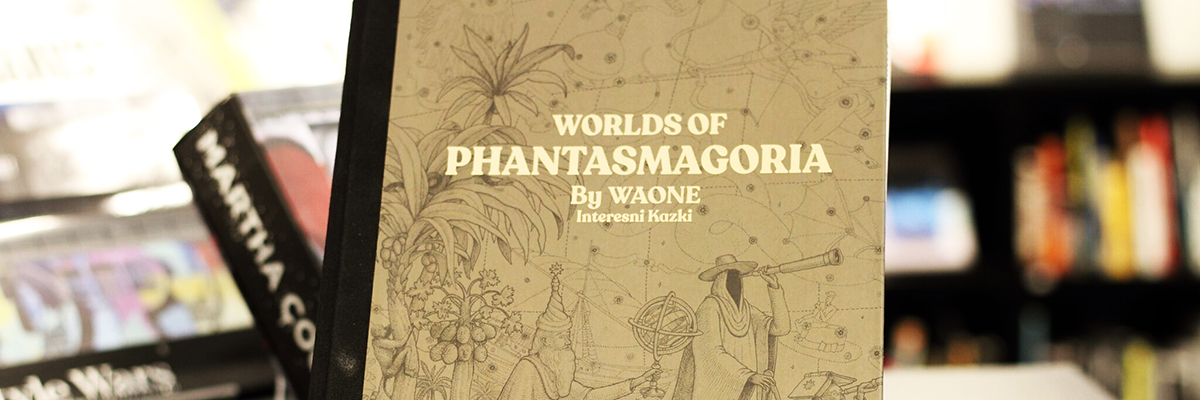
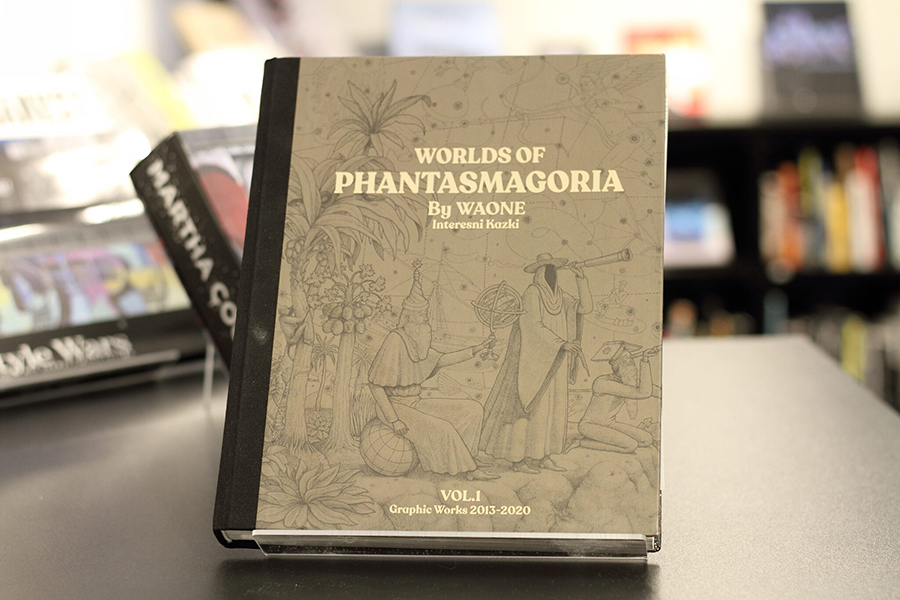
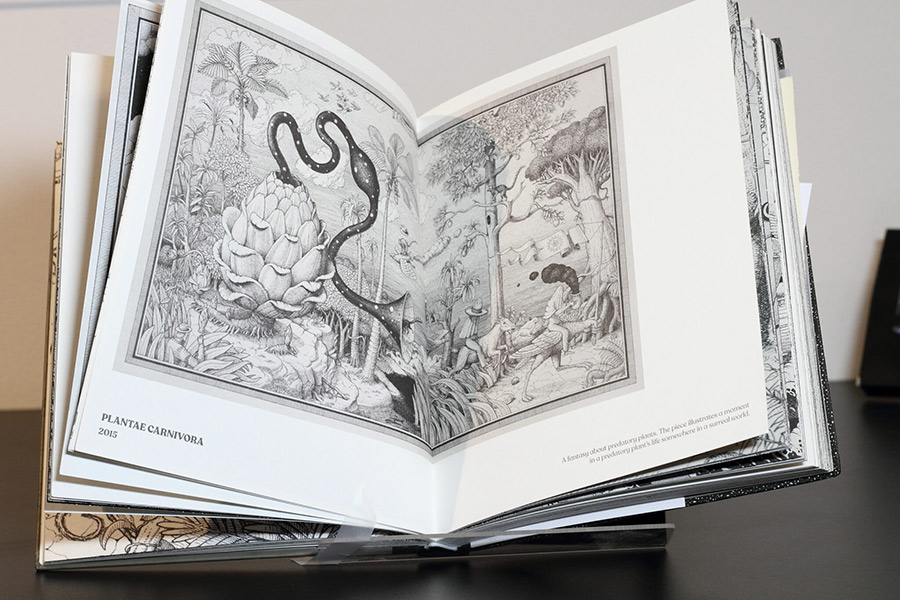
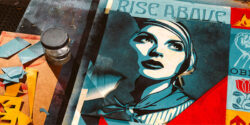
WAONE: Worlds of Phantasmagoria, Vol. 1. Vladimir Manzhos. 2020
Reprinted from the original review.
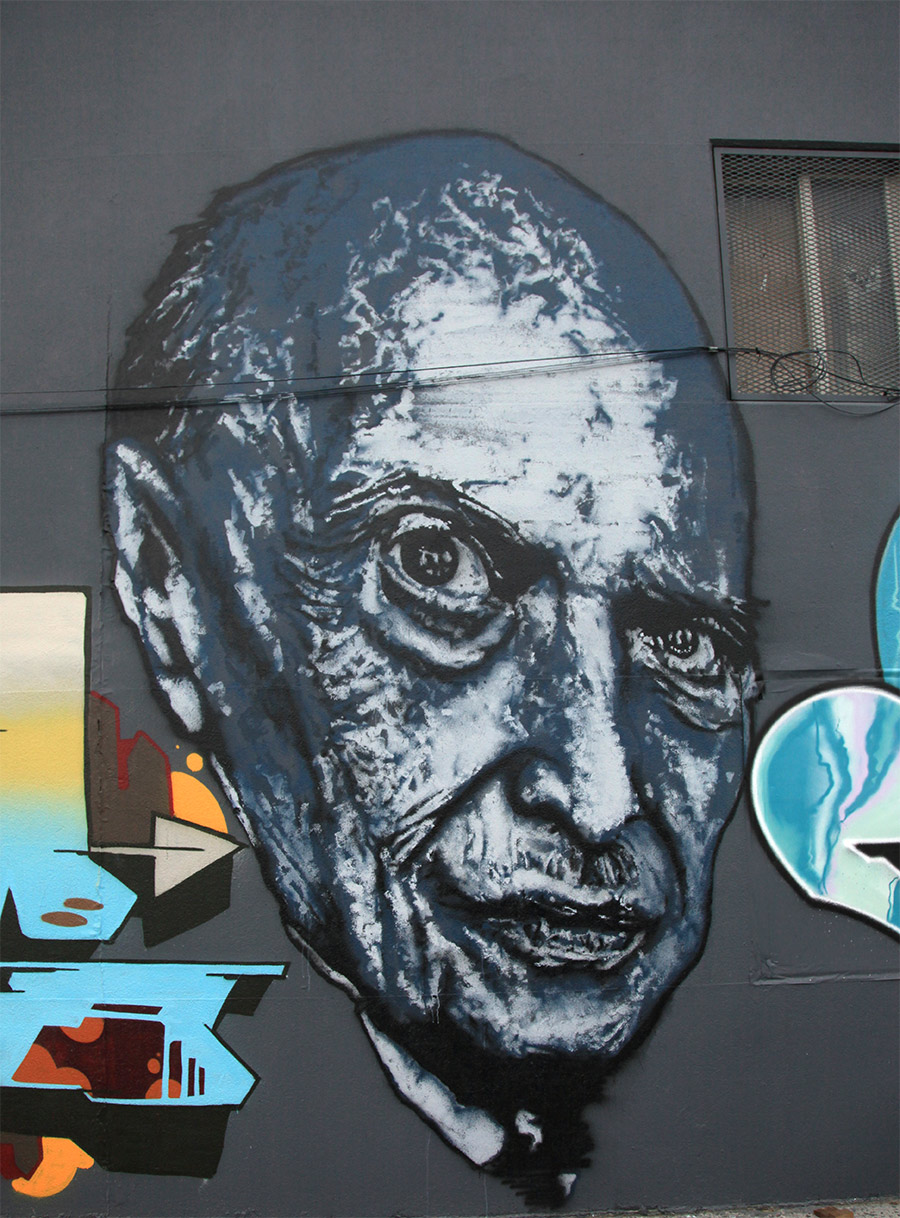
Worlds of Phantasmagoria, Vol. 1 is a comprehensive exploration of the monochromatic works of Ukrainian artist Vladimir Manzhos, known as WAONE. Spanning the years 2013 to 2020, this 208-page hardcover book provides a chronological view of his artistic evolution. It highlights his transition from large-scale, colorful murals in public spaces to intricate black-and-white compositions created in the studio.
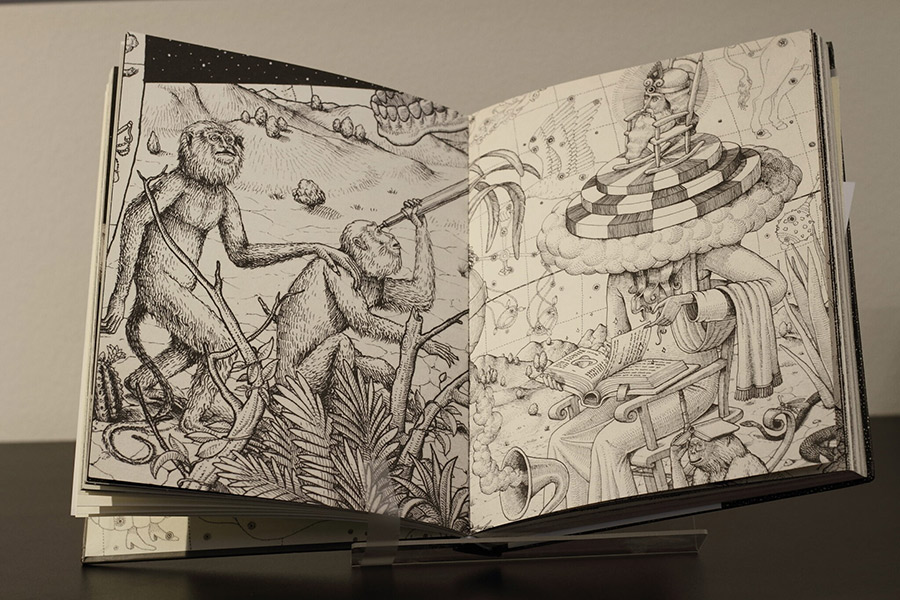
The book features a range of works, including murals, ink drawings, etchings, and lithographs, each accompanied by detailed narratives from the artist. These descriptions provide insight into WAONE’s creative process and the philosophical themes that underpin his work. Drawing inspiration from mythology, folklore, science, and personal introspection, his pieces weave together surreal imagery with symbolic depth.
With the aesthetics of a musty and mythical library, the illustrations open the preconceptions of psychology, offering myriad views through recombining familiar elements into unusual associations. In the process, you travel with Waone as he dedicates himself to this uncolorful view, which is nonetheless rich, if not tinged with a bit of antiseptic horror.
Text Steven P. Harrington & Jaime Rojo Fotos Eveline Wilson
Title: WAONE: Worlds of Phantasmagoria, Vol. 1 Published: WAWE 2020 Author: Vladimir Manzhos (WAONE) Language: English
Named in honor of photographer Martha Cooper—whose lifelong commitment to documenting everyday life, cultural expression, and human dignity has shaped how communities around the world are seen and understood—the Martha Cooper Scholarship (MCS) supports long-form documentary photography that reflects shared human experience and social responsibility. For the 2027 cycle, the Foundation Berliner Leben will award its third Martha Cooper Scholarship, continuing a multi-year commitment to sustained, thoughtful photographic practice.
The scholarship offers a photographer from Africa, Asia, or Latin America the opportunity to spend 10 months developing an artistic documentary project that engages with contemporary social realities and contributes to greater cross-cultural understanding. In line with values often emphasized by Urban Nation Museum, the program recognizes documentary photography as a vital tool for visibility, dialogue, and empathy in an increasingly complex world.
The Martha Cooper Scholarship is grounded in the annual theme of Fresh A.I.R., Stiftung Berliner Leben’s residency program, which addresses current social and political conditions while foregrounding the diversity of lived experience and perspective. The selected 2027 scholar will live and work in a Fresh A.I.R. residency in Berlin-Schöneberg throughout the scholarship period. The current call is for the 12th class of Fresh A.I.R, running from February 2027 to November 2027.
Click HERE to learn more about the Martha Cooper Scholarship and who qualifies to apply.
The first Martha Cooper Scholarship was awarded to photographer Dylan Mitro for the 2025 MCS. Mr. Mitro was chosen from dozens of submissions. Dylan successfully completed his scholarship in November of 2025 with an exhibition of his proposal and work in Berlin. Click HERE and HERE to read about Dylan’s work during his time as the MCS Scholar in Berlin.
The second Martha Cooper Scholarship was awarded to photographer Mourad Fedouache of Morocco for the 2026 MCS. Mr. Fedouache will arrive in Berlin on February 1st to begin his 10-month residency as the second MCS Scholar, which will conclude in November of this year.
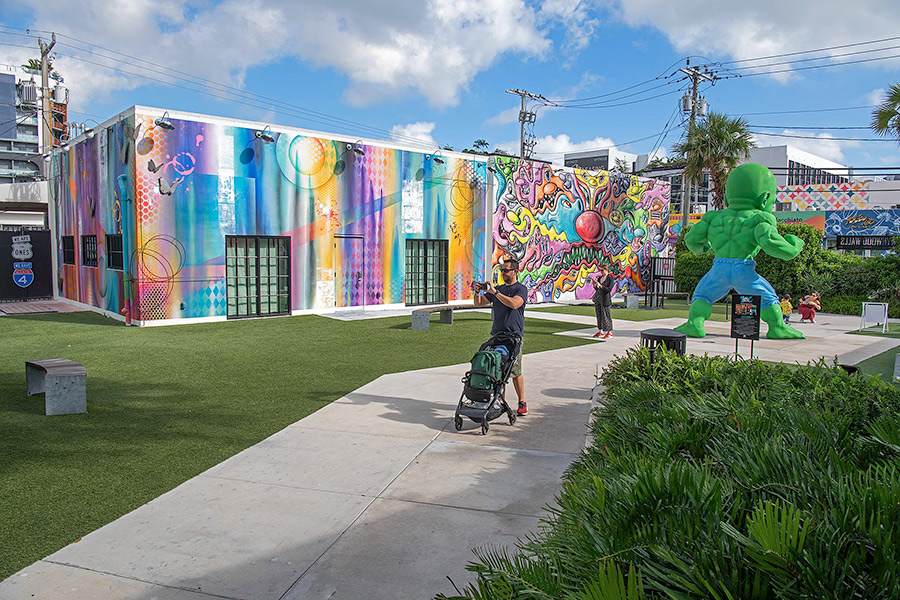
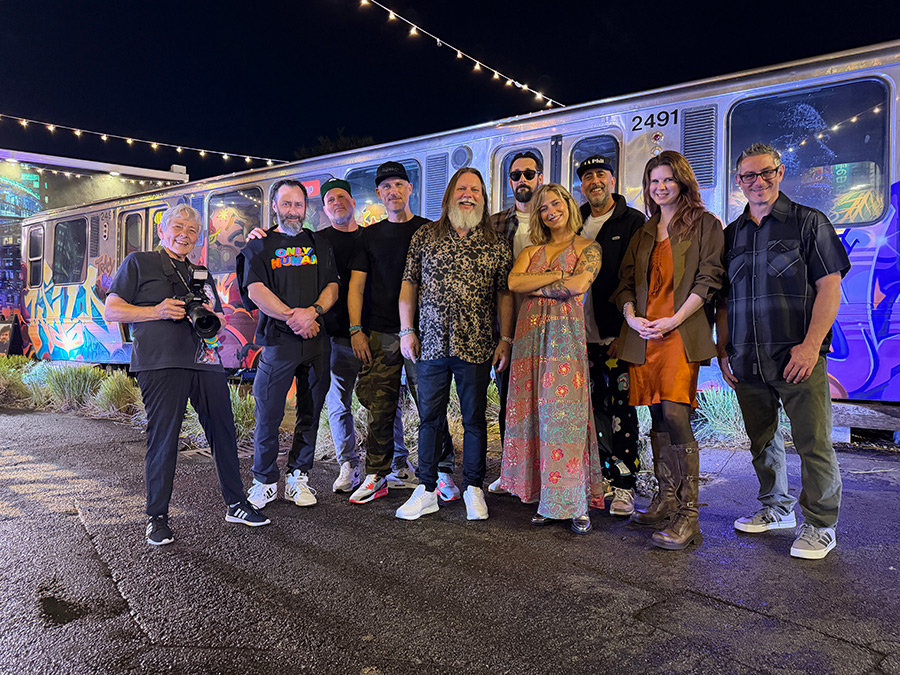
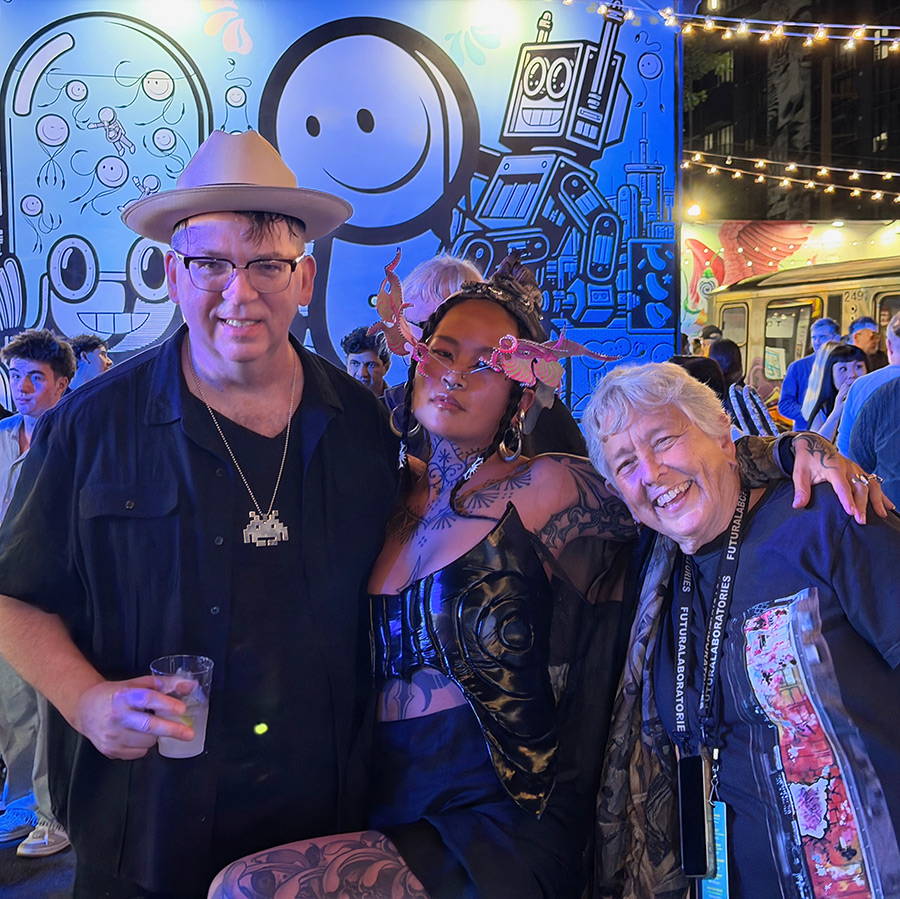
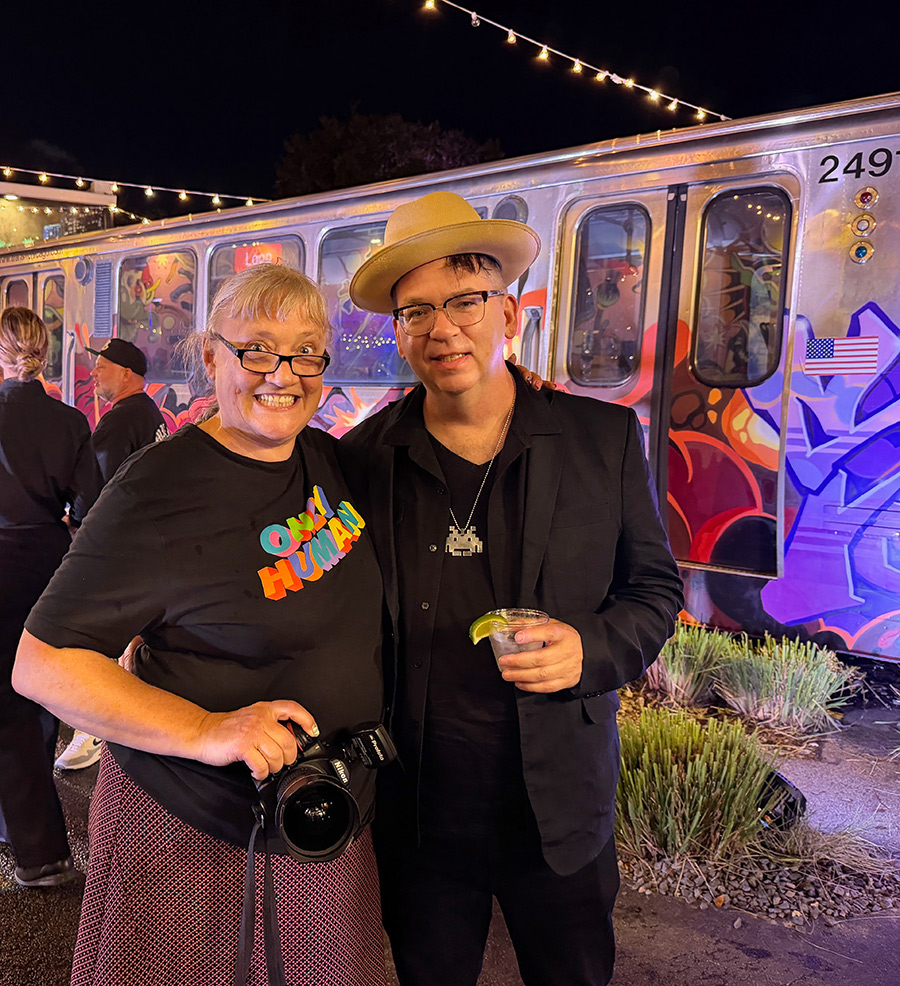
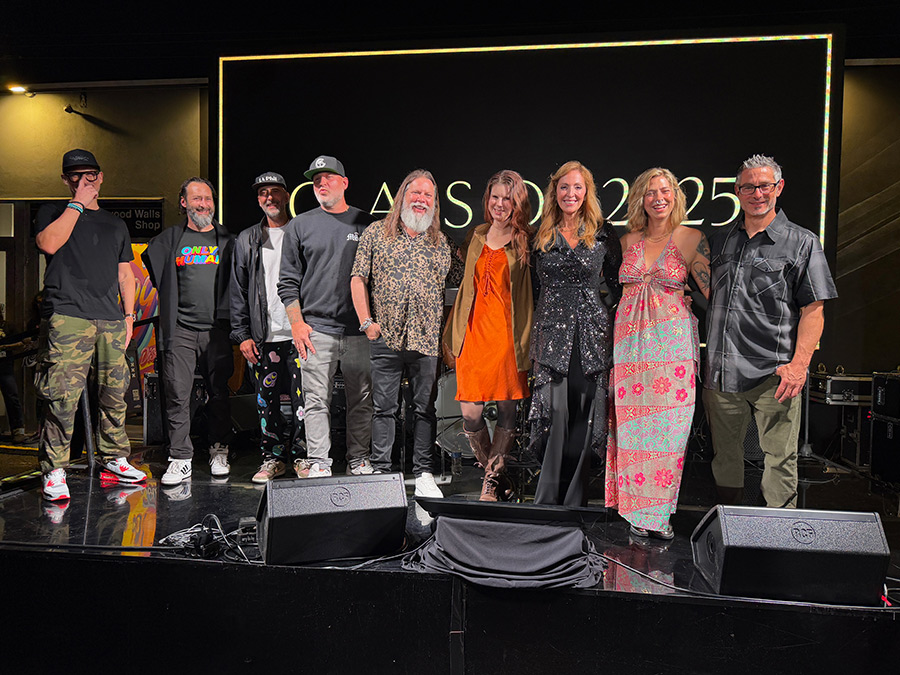
Wynwood Walls made its presence felt throughout Miami Art Week this December with a familiar mix of new murals, established names, and a thematic frame titled ONLY HUMAN. As crowds moved between fairs, pop-ups, concerts, dance floors, bars, receptions, painting jams, and private events, the Walls once again operated as both one of the primary anchors and an amplifier for street art during Art Basel week.
Developed by Jessica Goldman Srebnick, ONLY HUMAN positioned itself as a reflection on lived experience, emotion, and hand-made mark-making at a moment when digital production and AI are reshaping visual culture. The framing was intentionally broad, while the artist roster leaned toward painters with established reputations for figurative, symbolic, and calligraphic work.
New murals and installations unfolded across the site, with contributions by:
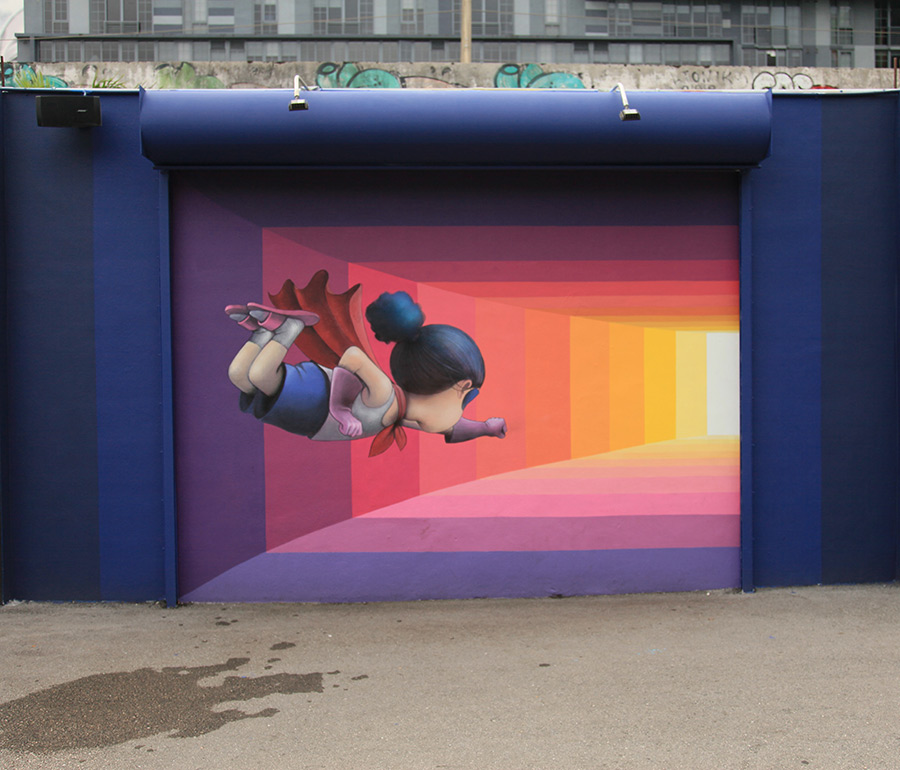
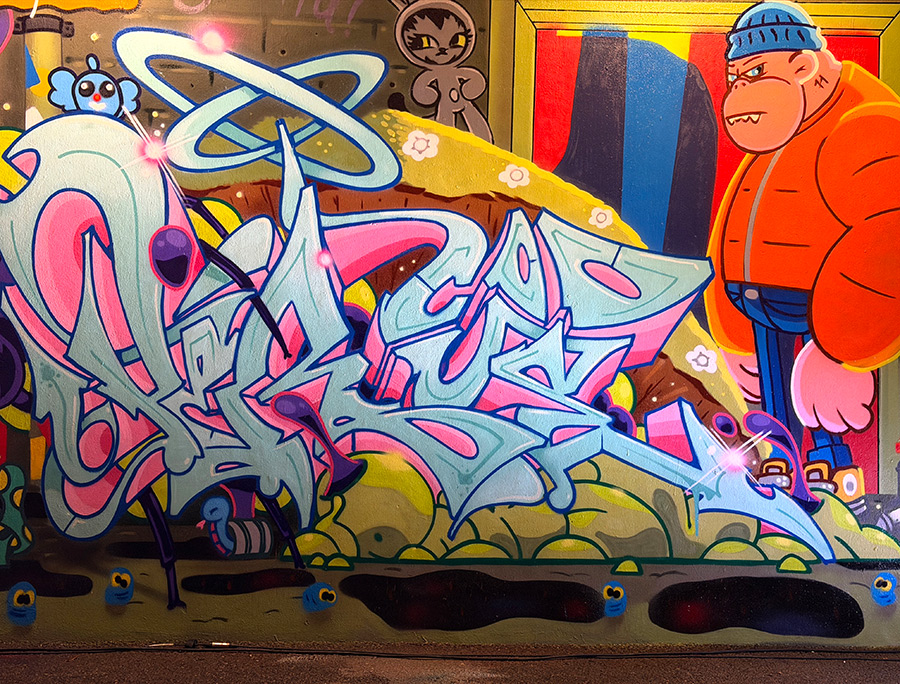
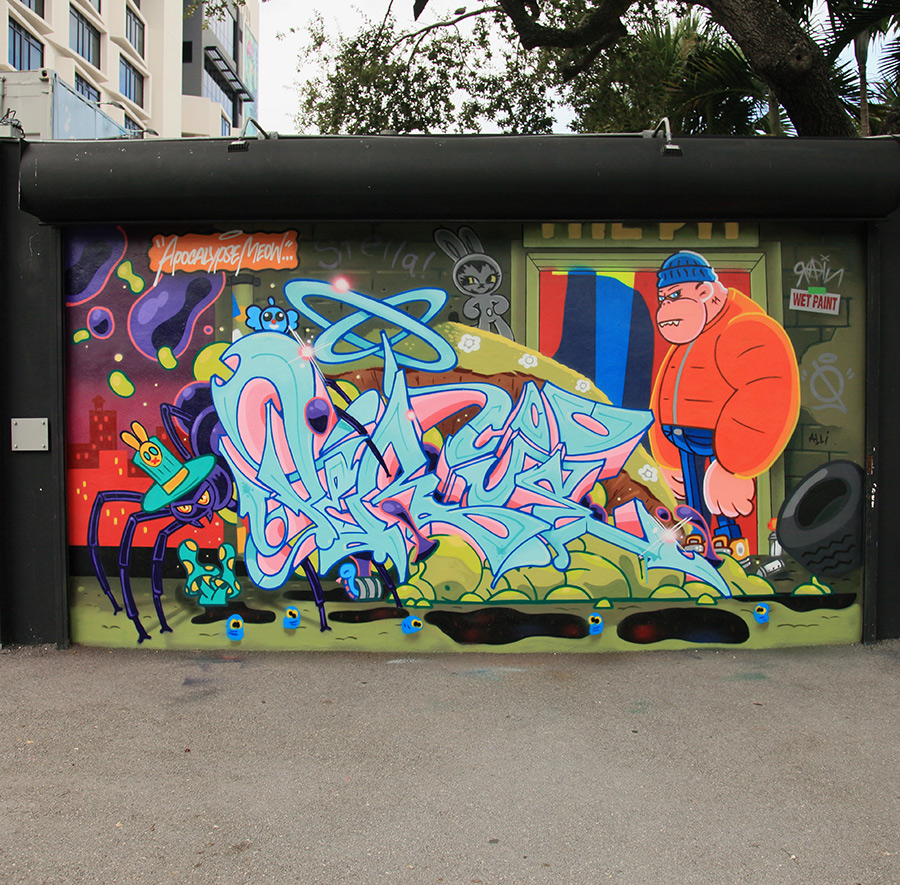
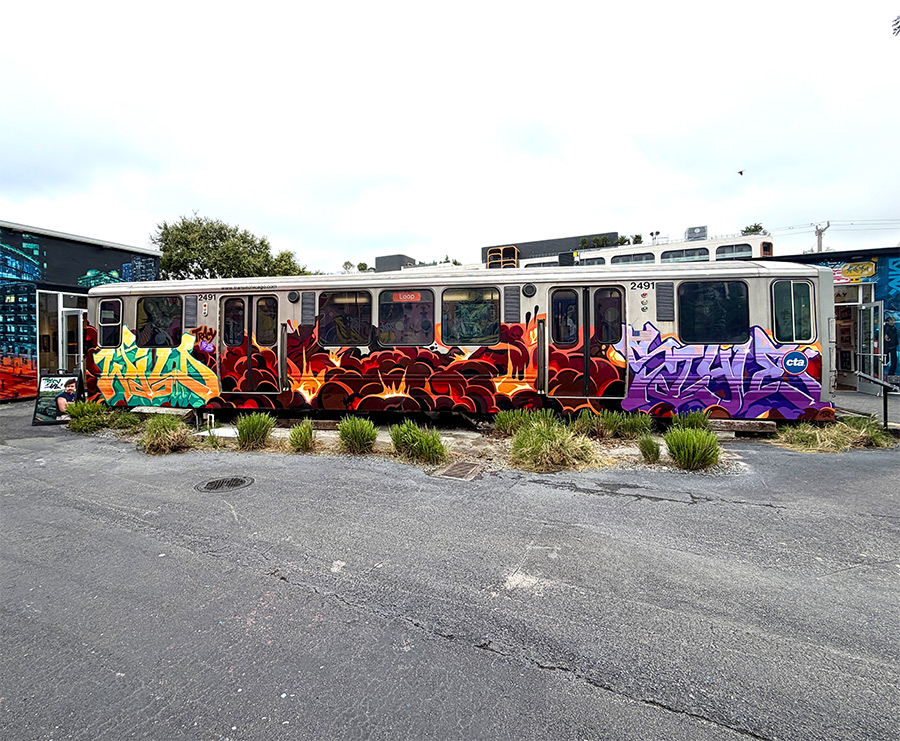
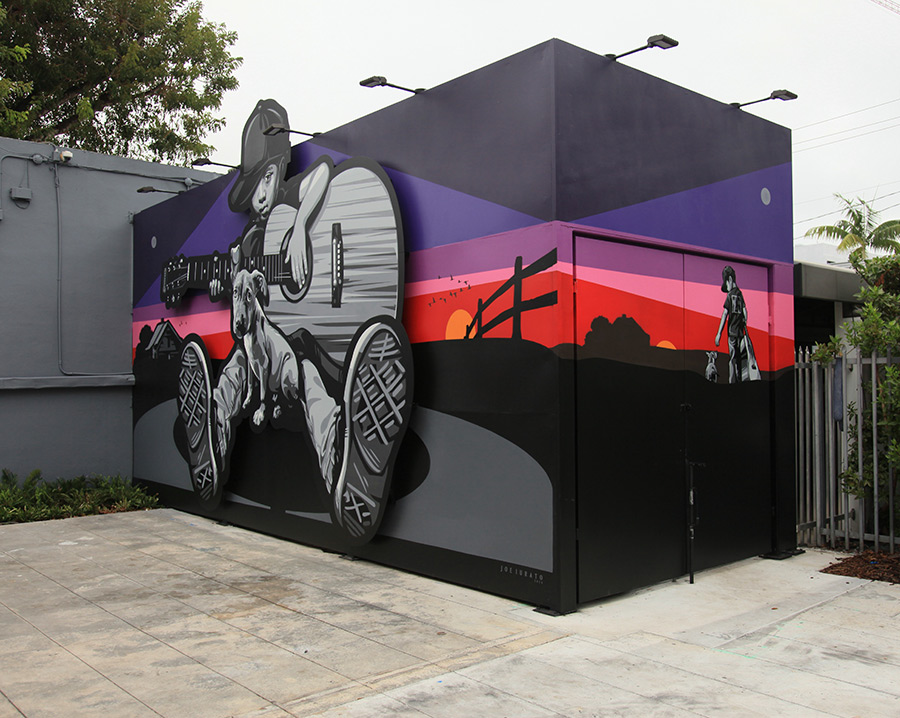
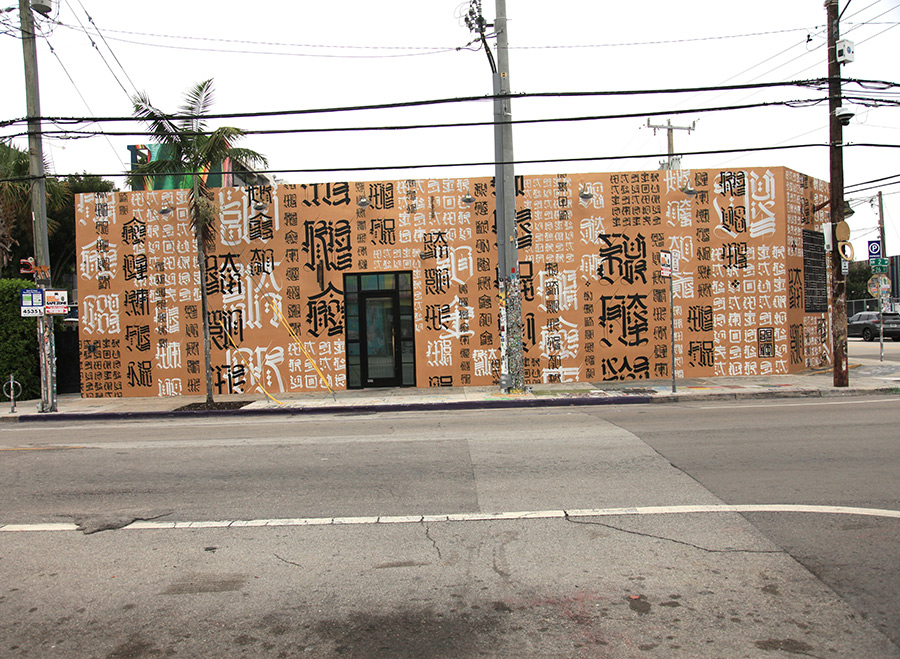
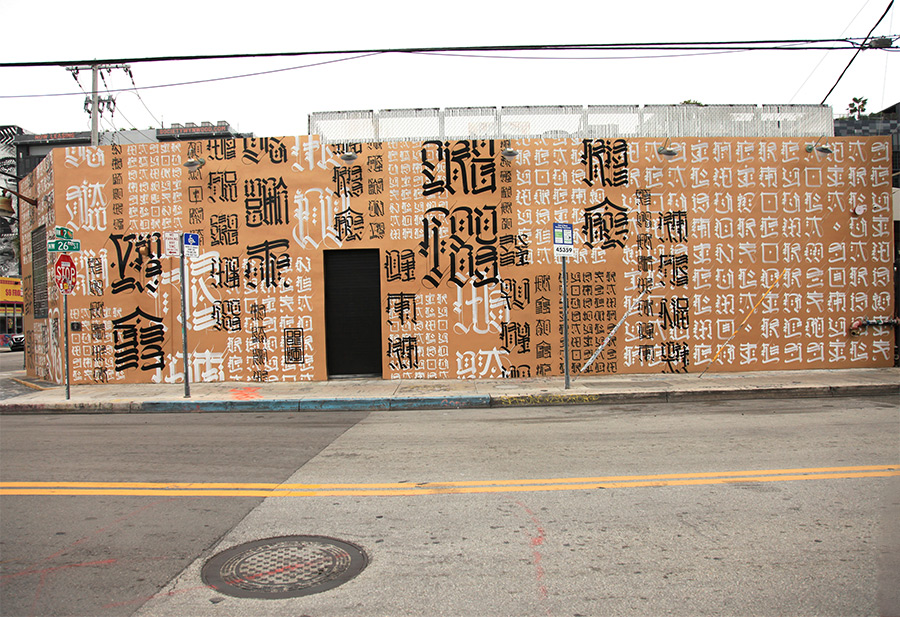
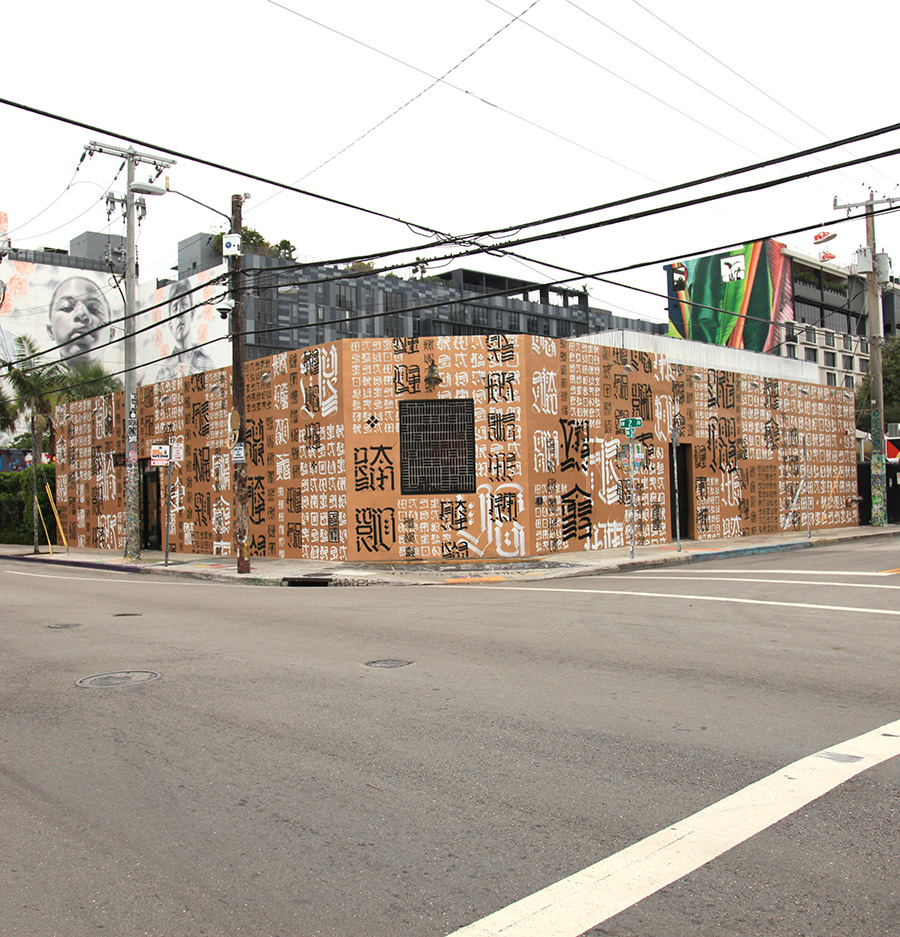
CRYPTIK, who brought his Sanskrit-influenced iconography and meditative symbolism to a prominent exterior façade SETH, continuing his long-running global narrative focused on childhood, memory, and displacement Miss Birdy, whose surreal figurative imagery explored interior worlds and states of reflection Joe Iurato, installing his signature hand-cut wooden figures that sit between drawing, sculpture, and quiet observation Quake, grounding the program in West Coast graffiti history by painting the Wynwood Walls train in motion, dedicating the piece to his friend and graffiti pioneer Tracy 168 Persue, placing his BunnyKitty character into an apocalyptic scenario where graffiti mutates and color intensifies RISK, reinforcing the Walls’ long-standing relationship with early graffiti writers and the culture’s foundational figures
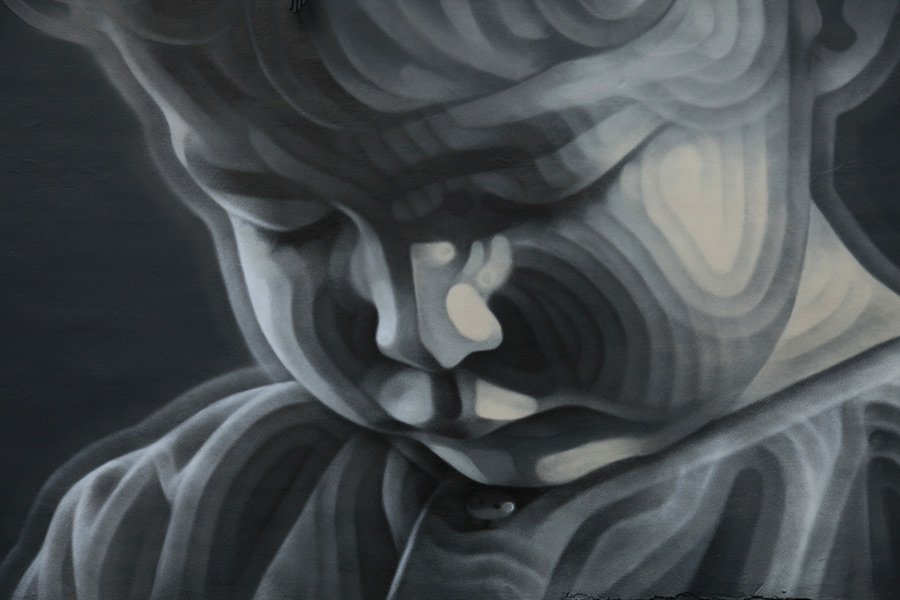
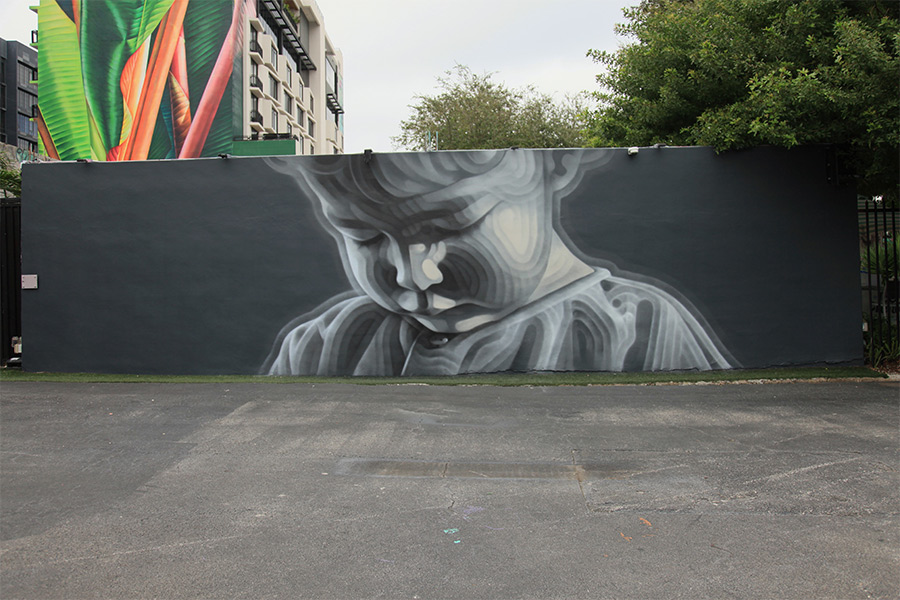
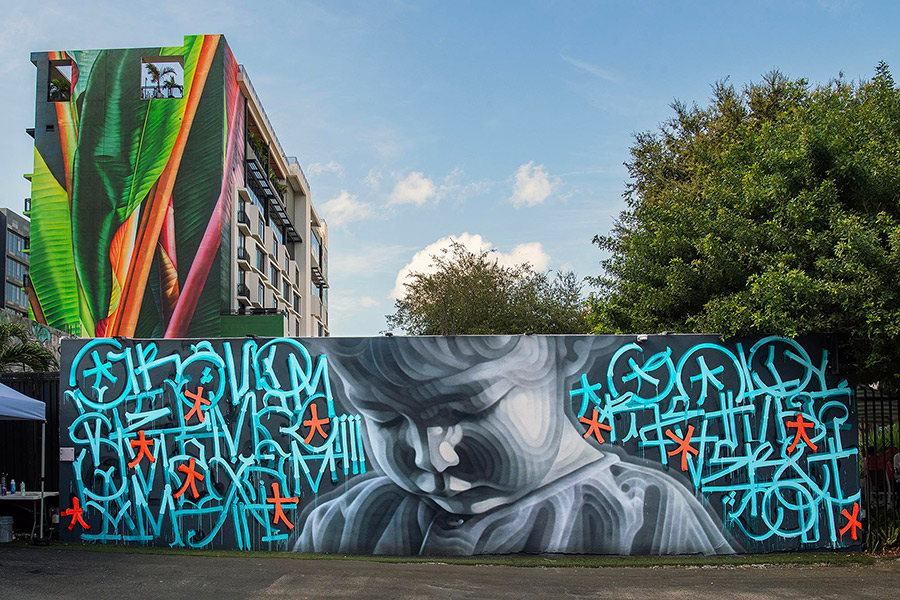
One of the most discussed moments of the week was the return collaboration by El Mac and RETNA, their first joint public work in more than a decade. The pairing carried historical weight, recalling an earlier period when large-scale figurative painting and calligraphic abstraction were helping redefine the possibilities of street art on monumental walls. With El Mac’s son serving as the subject, the work subtly marked a generational passage within a culture now several decades into its evolution.
In the compound, Goldman Global Arts Gallery extended the program with full studio exhibitions by:
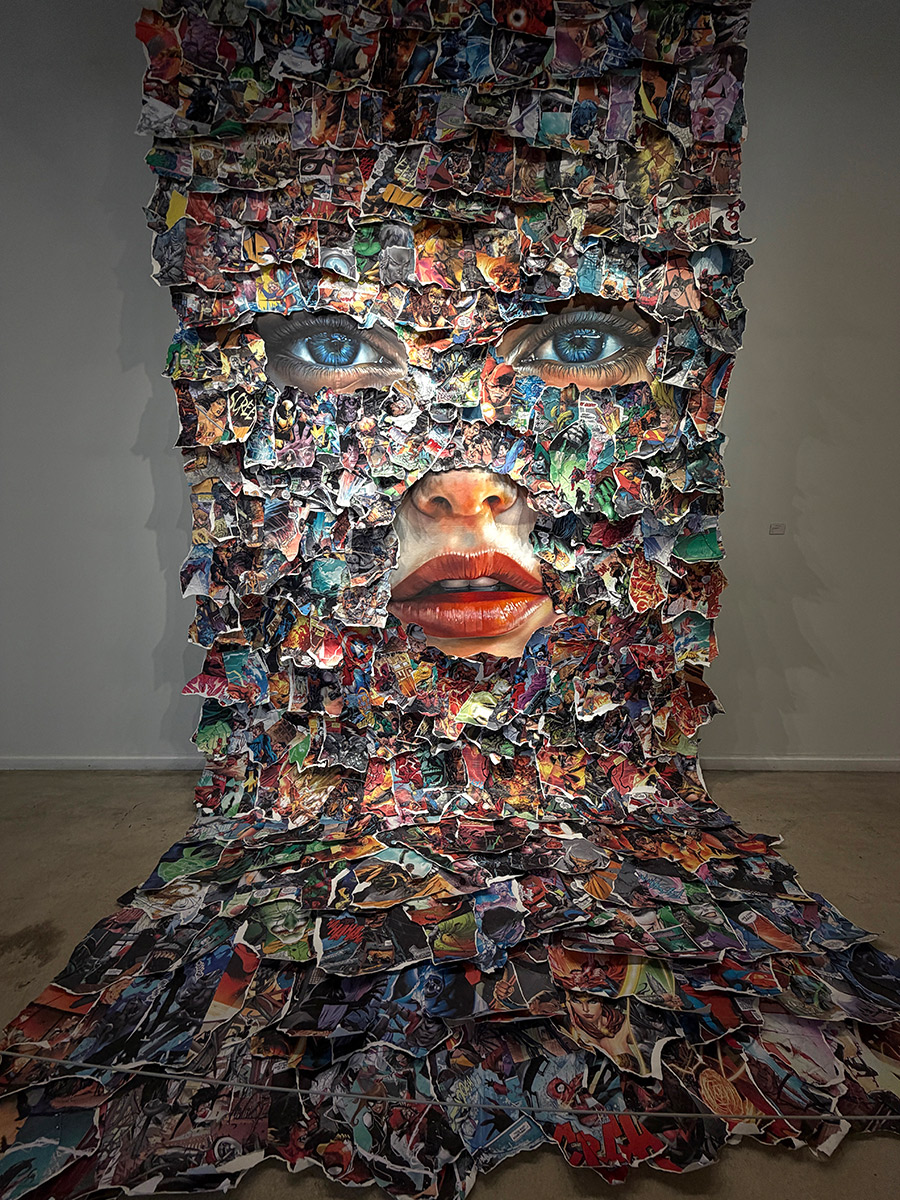
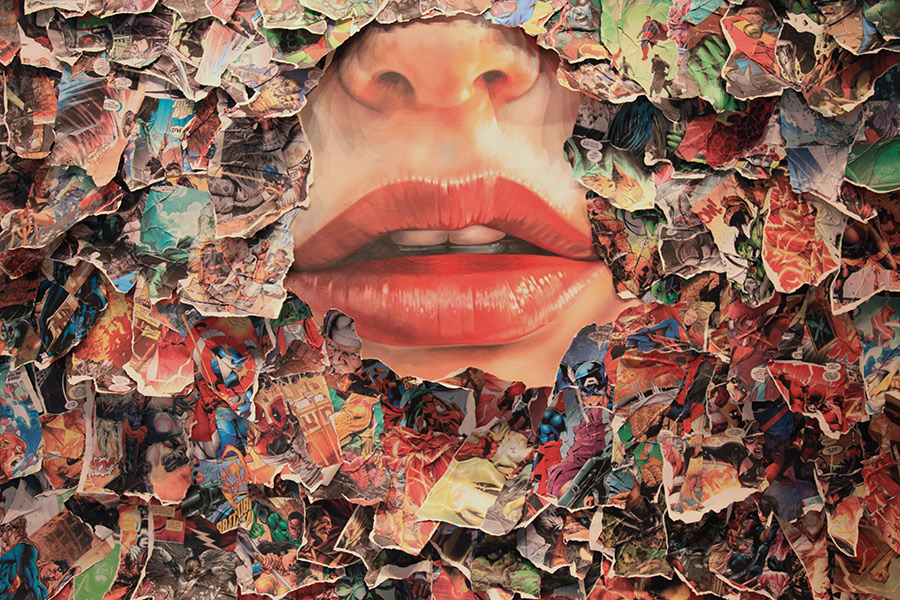
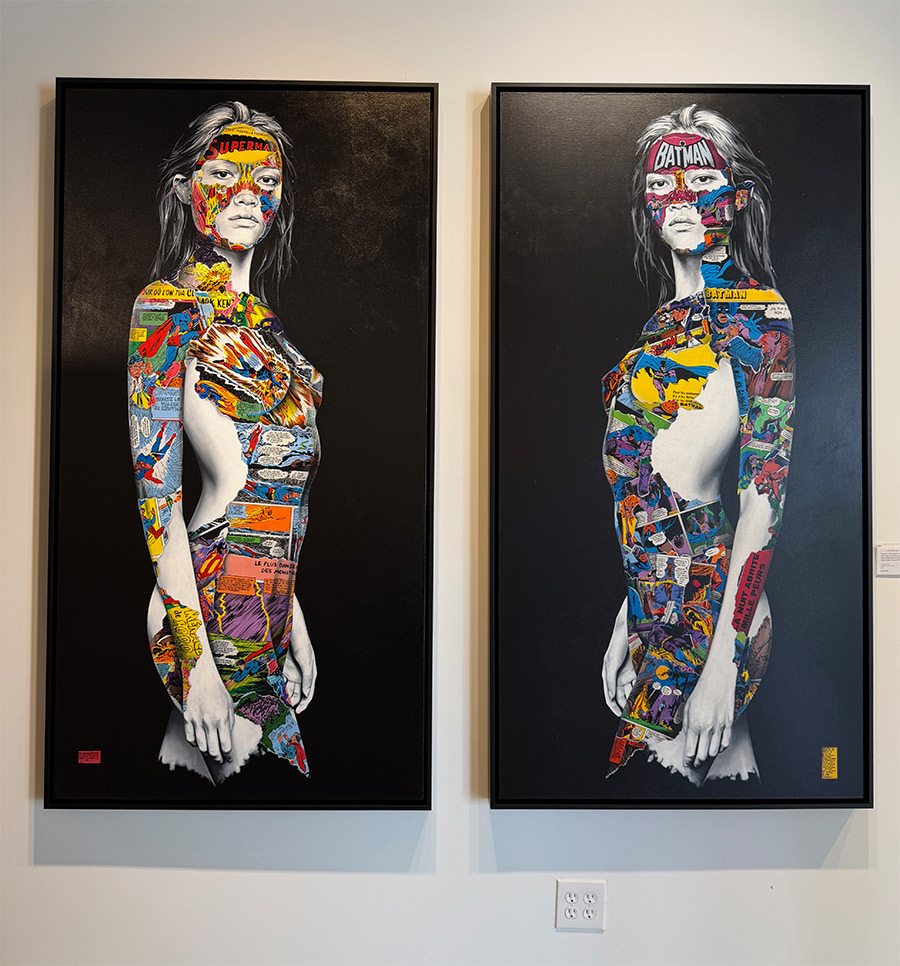
Hebru Brantley, presenting character-driven paintings and sculptural works that draw on pop imagery and storytelling, filtered through childhood, hero archetypes, and social commentary Simon Berger, showing portraits formed through controlled fracturing and impact on glass, using cracks, density, and light to construct faces that feel both precise and fragile Sandra Chevrier, exhibiting mixed-media portraits that layer comic-book imagery over the human figure, using those fragments to address identity, social/psychological pressure, and the public narratives imposed on private lives
These exhibitions echoed the outdoor program’s emphasis on the human figure and modalities of identity, while offering a quieter counterpoint to the crowds milling about the grounds outside—one grounded more in interior presence than the spectacle.
As in past years, Wynwood Walls also hosted private previews and invitation-only gatherings early in the week, including an artists dinner tied to the unveiling of the new works. While guest lists and details remain largely off record, these evenings functioned as bubbling and charged meeting points for artists, collectors, curators, academics, photographers, and figures from real estate, music, and civic life—part celebration, part networking ritual that has become a familiar, carefully managed, feature of Art Week.
In the end, ONLY HUMAN reinforced Wynwood Walls’ role as a highly visible platform balancing graffiti lineage with polished mural production and market-aware programming. For visitors, it offers consistent access to both widely recognized and less-circulated names; for artists, it remains a closely watched stage in the street art calendar.
Wynwood Walls, in Wynwood, Miami, is open to the public year-round. Click HERE for more information on directions, schedules, tickets, and special events.
We’re celebrating the end of one year and the beginning of the next by thanking BSA Readers, Friends, and Family for your support in 2025. Picked by our followers, these photos are the heavily circulated and “liked” selections of the year – shot by our Editor of Photography, Jaime Rojo. We’re sharing a new one every day to celebrate all our good times together, our hope for the future, and our love for the street. Happy Holidays, Everyone!
Caught it! She’s a pioneer photographer and supporter of the scene, and Martha Cooper continues to inspire street artists everywhere. Here’s a portrait from Swed Oner in Bushwick, Brooklyn, this fall.
Nearing two decades of this annual list, BSA has changed as the local and global street art/graffiti/fine art scenes have. Less interested in the celebrity and more interested in the people and passions that drive the need to express yourself creatively in public space, BSA has gone through whatever doors opened and a few that were slammed shut. Our shortlist for 2025 reflects a diversity within the street art, graffiti, and fine art worlds that many once assumed would become centralized and homogenized.
Sure, there is a lot of derivative drippy “street art” dreck at art fairs and on particular walls. Still, we suggest the scene is no longer best described as a single movement traveling toward institutional acceptance. We would also argue that it was never the goal, regardless of the Street Art hype of the 2010s. In an interconnected artist’s life, this ‘scene’ is a network of practices that share tools (reproduction, scale, public encounter), ethics (authorship vs anonymity, permission vs necessity), and stakes (who gets to speak in public, and how).
The common threads aren’t style, or even medium—they are circulation, context, and the social life of images. In that sense, this group of books doesn’t just document a year; it maps a portion of the expanded field where street culture, publishing culture, and contemporary art culture now overlap—sometimes comfortably, sometimes in productive friction.
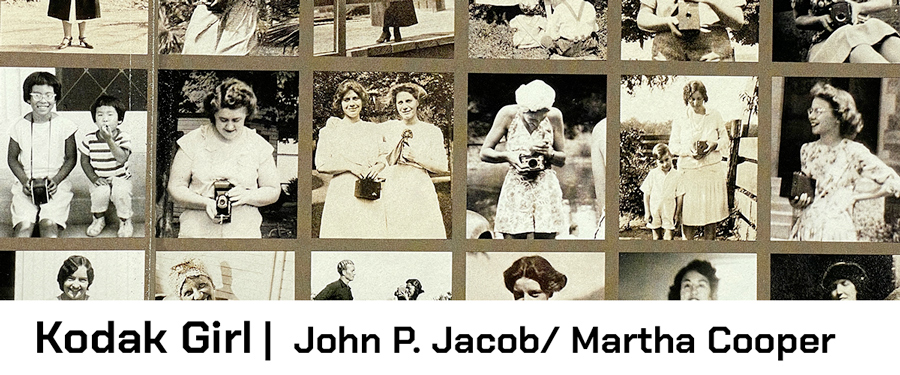
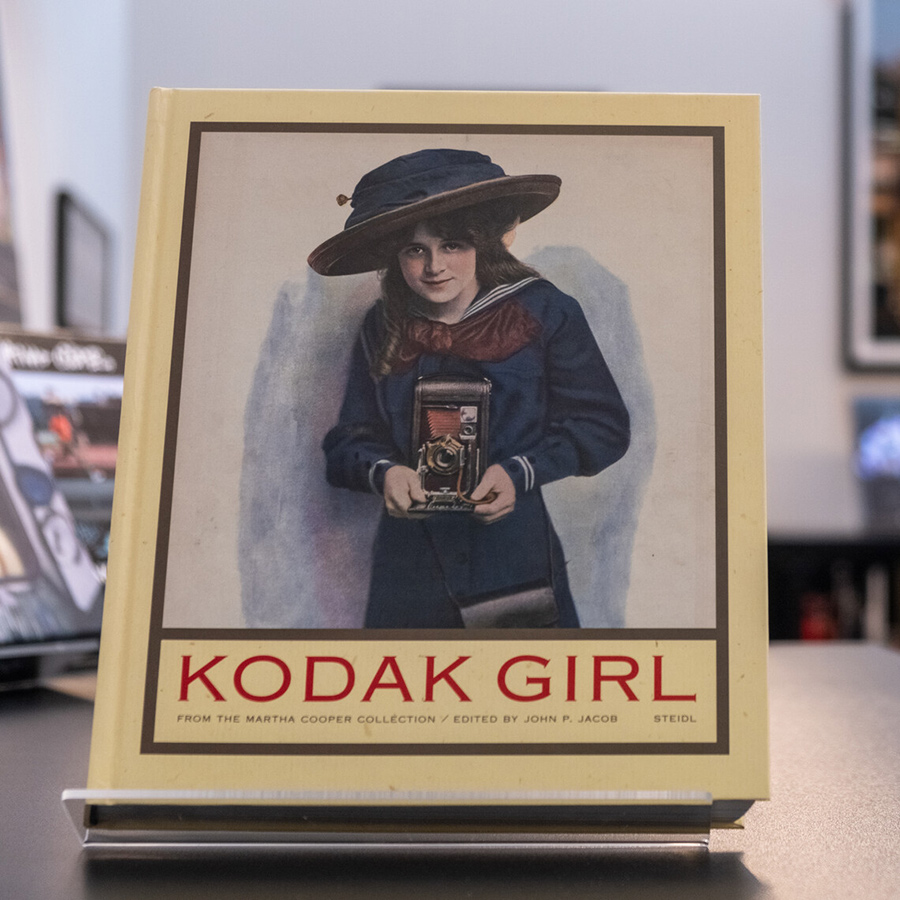
Books in the MCL: John P. Jacob (ed.). “Kodak Girl: From the Martha Cooper Collection”
Kodak Girl: From the Martha Cooper Collection. John P. Jacob (ed.). 2012
From BSA:
“Kodak Girl: From the Martha Cooper Collection“, edited by John P. Jacob with essays by Alison Nordström and Nancy M. West, provides an in-depth examination of Kodak’s influential marketing campaign centered around the iconic Kodak Girl. With a riveting collection of photographs and related ephemera, the book dives into the intersection of technology, culture, and the role of gender in the late 19th to the mid-20th centuries. It offers readers a comprehensive look at how Kodak not only transformed photography into a widely accessible hobby but also significantly influenced societal perceptions of women.
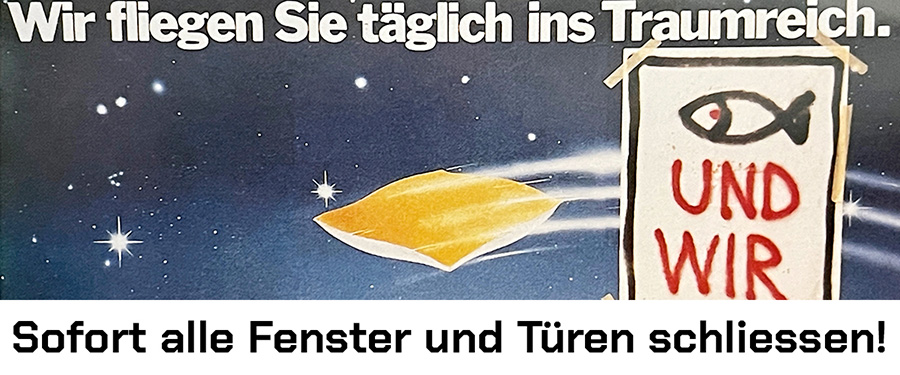
Sofort alle Fenster und Türen schliessen! (Immediately Close All Windows and Doors)
Poster campaign in Basel (Switzerland), 1986, by anonymous artists to highlight the Sandoz fire disaster in Schweizerhalle. Zine photographed and printed anonymously, Basel 1986. Self-published. No longer available for purchase.
From BSA:
On the night of November 1, 1986, Basel was told to “immediately close all windows and doors.” A fire ripped through a Sandoz chemical warehouse, and the Rhine River ran red with toxic runoff. Thousands of fish floated belly-up, and citizens were left in fear and fury, just months after the trauma of Chernobyl【1】.
When the authorities stumbled and minimized the danger, Basel’s artists and students seized the opportunity to express themselves on the walls. Within days, in the middle of the night, activists from the School of Design plastered the city’s billboards and poster kiosks with their furious responses【2】. They worked fast, stayed anonymous, and left the streets covered with raw, hand-painted images and biting slogans.
Interpreting Warmia’s Hidden Patterns from Above and Within
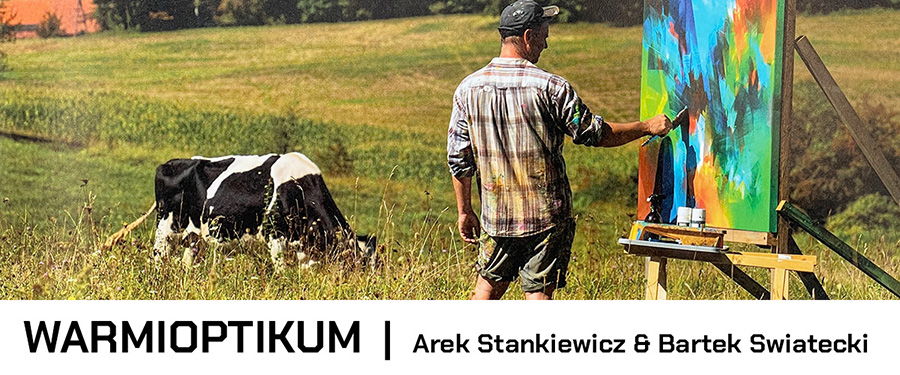
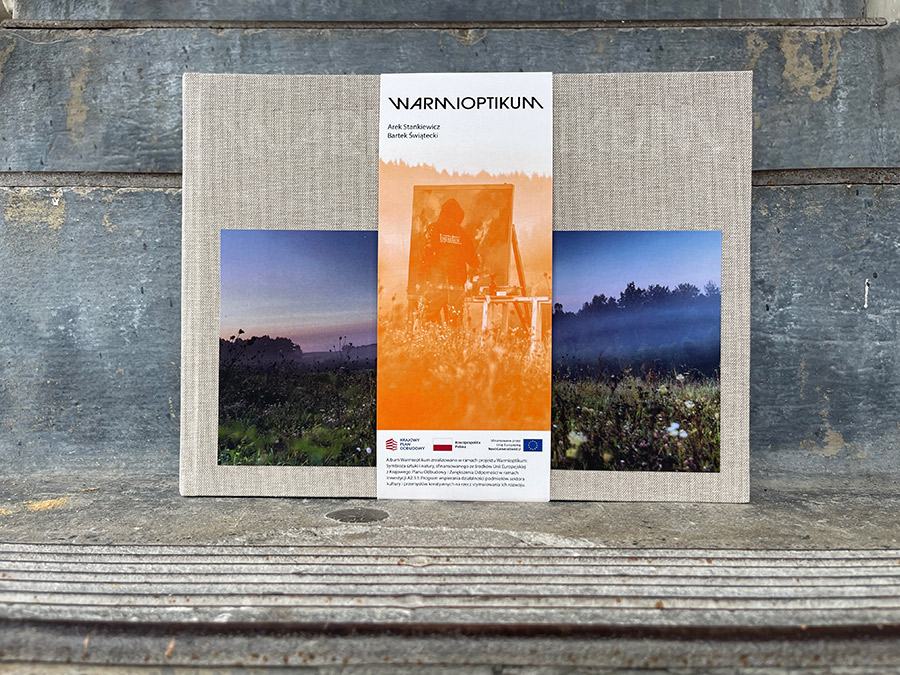
Bartek Swiatecki’s latest book, Warmioptikum, is a striking fusion of abstract painting and aerial photography, capturing the landscapes of Warmia, Poland, from a new perspective. Featuring Swiatecki’s expressive, in-the-moment paintings set against Arek Stankiewicz’s breathtaking drone photography, the book transforms familiar rural scenes into an evolving conversation between art and nature.
Swiatecki, known for his roots in graffiti and urban abstraction, takes his practice beyond the cityscape and into open fields, painting directly within the environment. Stankiewicz’s aerial lens frames these artistic moments, emphasizing their relationship with the land’s patterns, textures, and rhythms. As noted in the book’s foreword by Mateusz Swiatecki, Warmioptikum is a documentation and an exploration of how we perceive and engage with landscape, helping the reader see Warmia through “extraordinary perspectives and new, nonobvious contexts.”
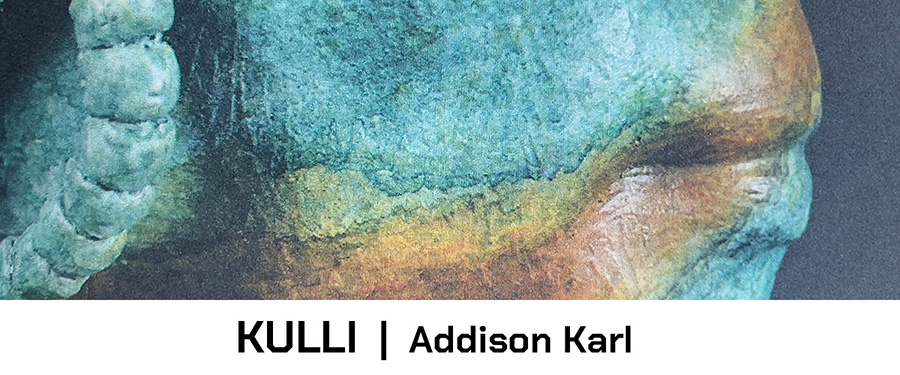
Addison Karl. KULLI. A Natural Spring of Artwork, Sculpture, Painting, Drawing, Public Art, and Inspiration. Self-published. Monee, IL. 2024.
From BSA:
Over the last two decades of covering the street art movement and its many tributaries, one of the deepest satisfactions has been watching artists take real risks, learn in public, and mature—treating “greatness” as a path rather than a finish line. Working at BSA, we’ve interviewed, observed, and collaborated with scores of artists, authors, curators, institutions, and academics; it’s been a privilege to see where they go next.
Addison Karl’s self-published 2024 monograph, “KULLI: A Natural Spring of Artwork, Sculpture, Painting, Drawing, Public Art, and Inspiration,” reads as a first-person chronicle from an artist who moved from the wall to the plaza to the foundry without losing the intimacy of drawing. Dedicated to his son—whose name titles the book—KULLI threads words, process images, and finished works across media: murals, cast-metal and glass sculptures, drawings, and studio paintings, all guided by a sensibility that treats color and material as vessels for memory and place.
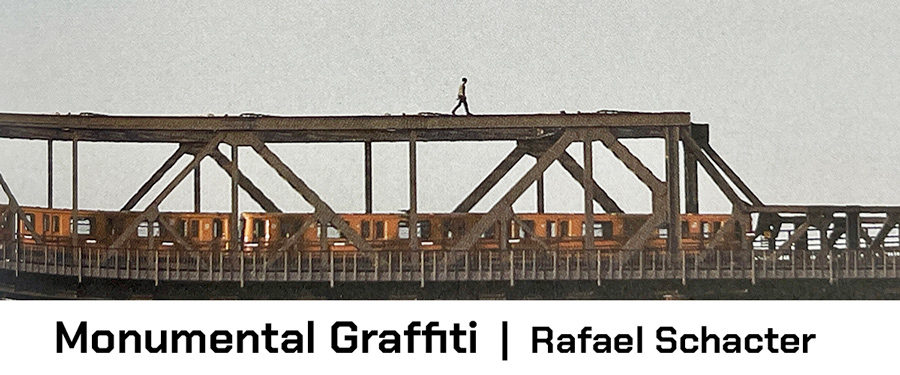
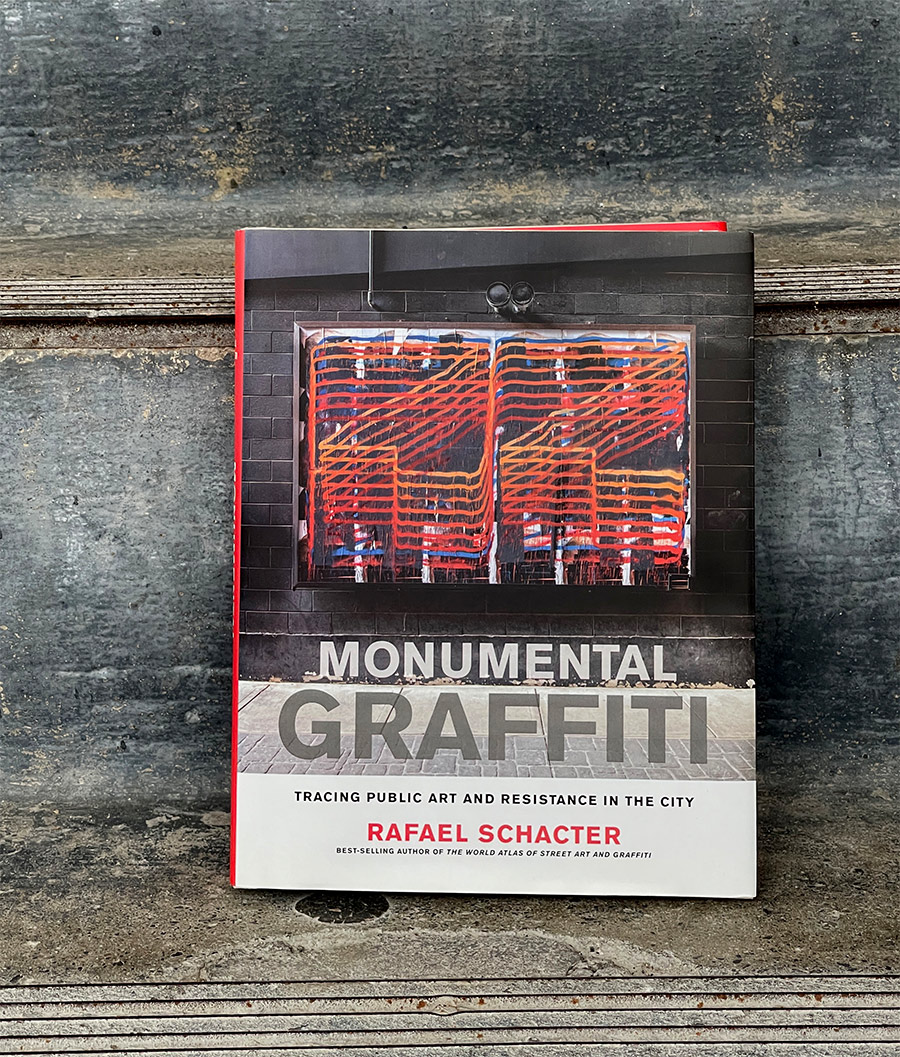
Rafael Schacter. Monumental Graffiti. Tracing Public Art and Resistance in The City. MIT Press. 2024
From BSA:
Graffiti is a living monument—an act of doing rather than keeping.
Rafael Schacter has been offering an alternative to institutional monumentality in his latest book Monumental Graffiti (2024). He buttressed his alternative view during his keynote speech for the New York 2025 Tag Conference (BSA is a sponsor). To a packed audience at the Museum of the City of New York, Schacter talked about a monumentality that is grounded in community, embodiment and the acceptance of transience as truth.
In his talk and his book, the London-based art historian argues that monuments and graffiti can illuminate each other: monuments don’t need to be grand or permanent, but can be understood—as their Latin root monere suggests—as acts that remind, advise, or warn. Drawing on counter-monuments and non-Western traditions, he would like to redefine monuments as socially and emotionally engaging public artifacts that may be ephemeral, community-driven, and conceptually monumental rather than physically imposing.
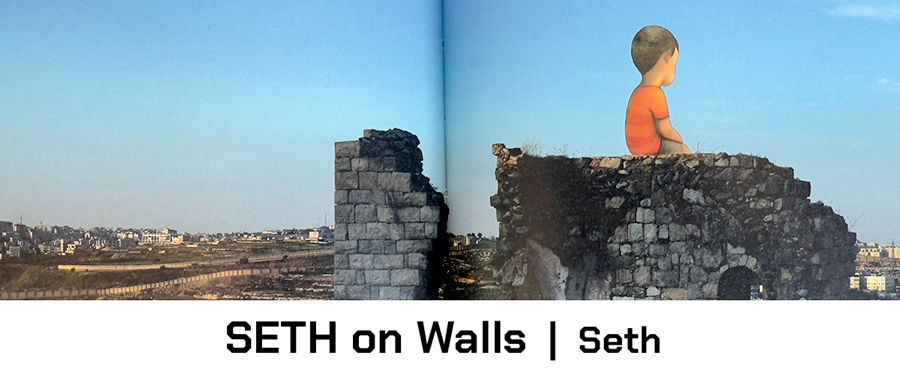
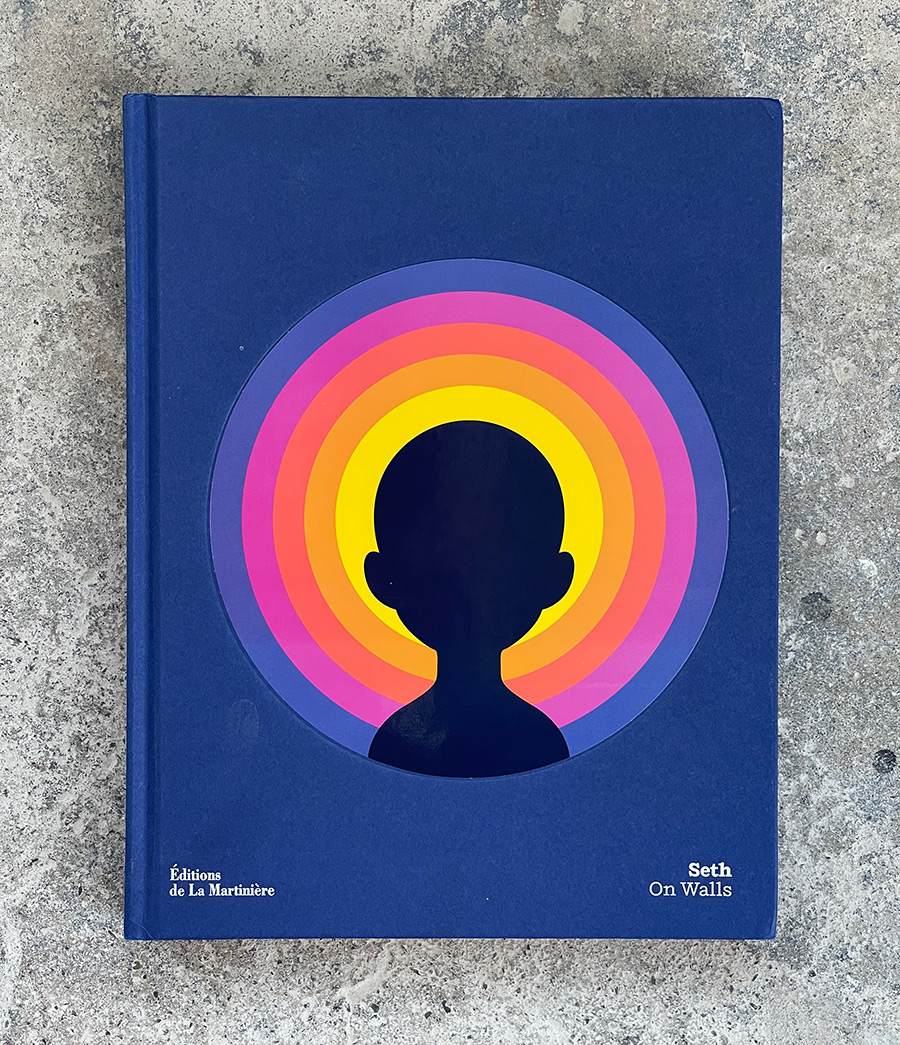
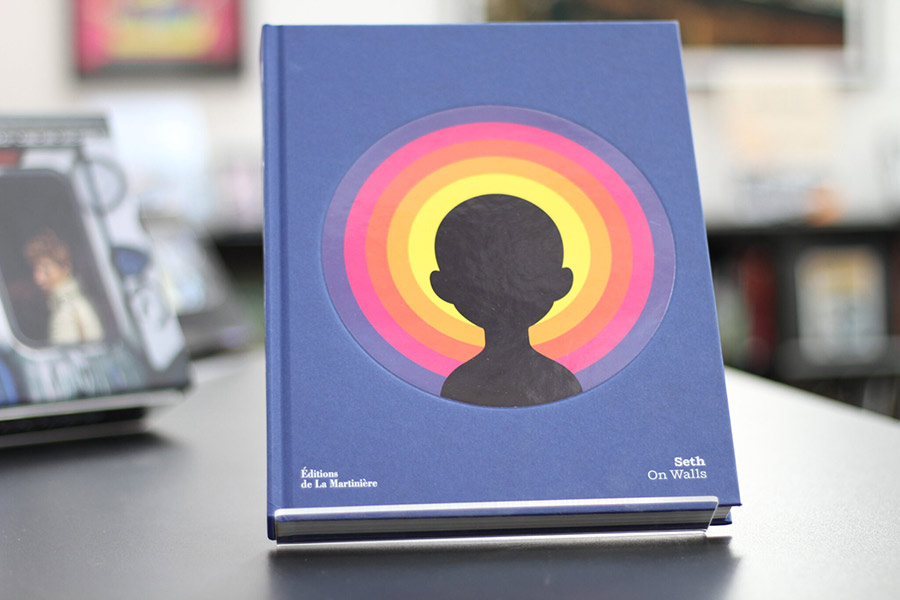
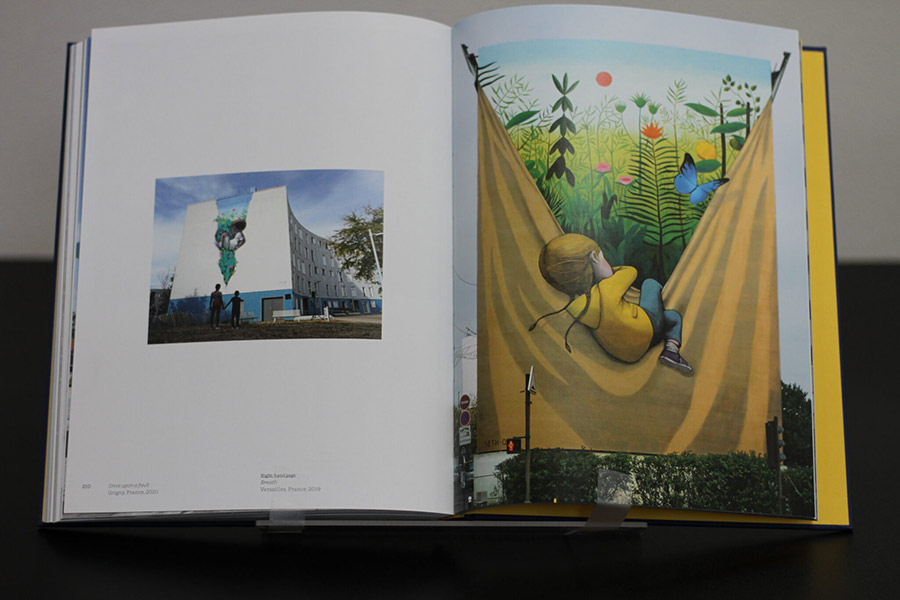
SETH on Walls. Editions de La Martiniere. 2022. Distributed by Abrams. An imprint of ABRAMS, 2023.
From BSA:
“In a world where the system alienates the most vulnerable, imposing a cynical or pessimistic outlook seems impossible to me,” says French street artist Seth. “Walls remain the space of resilience. Unlike cartoons, which leave no room for ambiguity, the choice to interpret a mural is essential. The curious are free to discover the hidden meaning.”
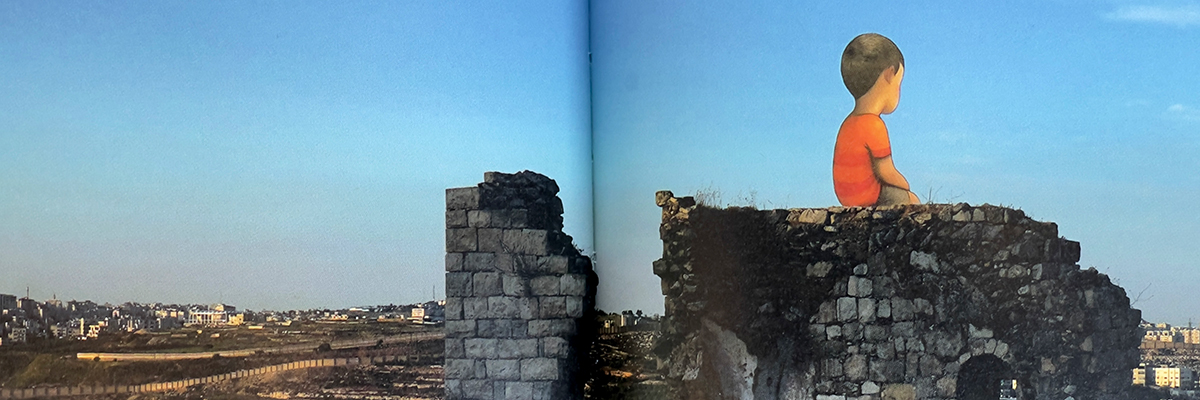
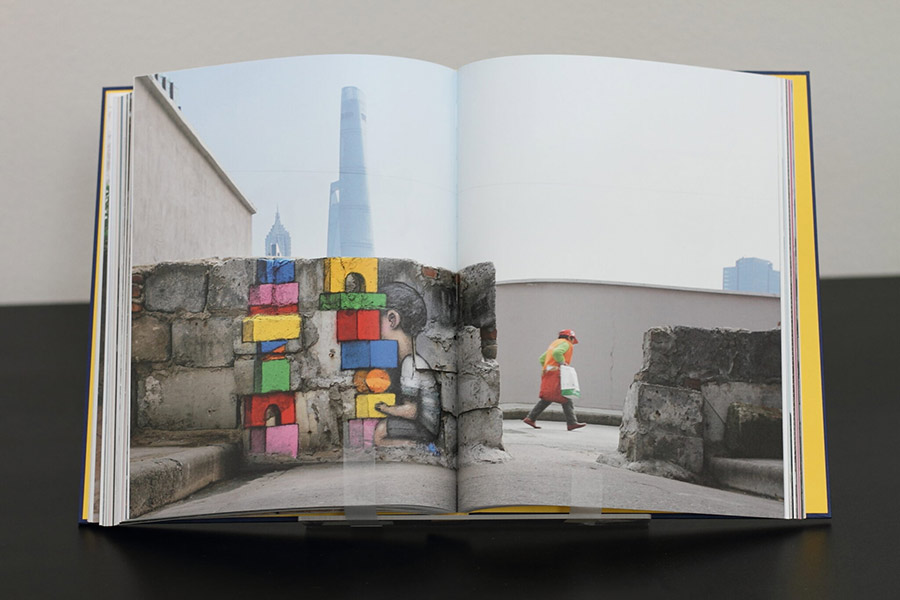
His new book “Seth On Walls” candidly offers these insights and opinions, helping the reader better understand his motivations and decisions when depicting the singular figures that recur on large walls, broken walls, and canvasses. A collection that covers his last decade of work in solo shows, group shows, festivals, and individual initiatives, you get the central messages of disconnection, connection, and honoring the people who live where his work appears.
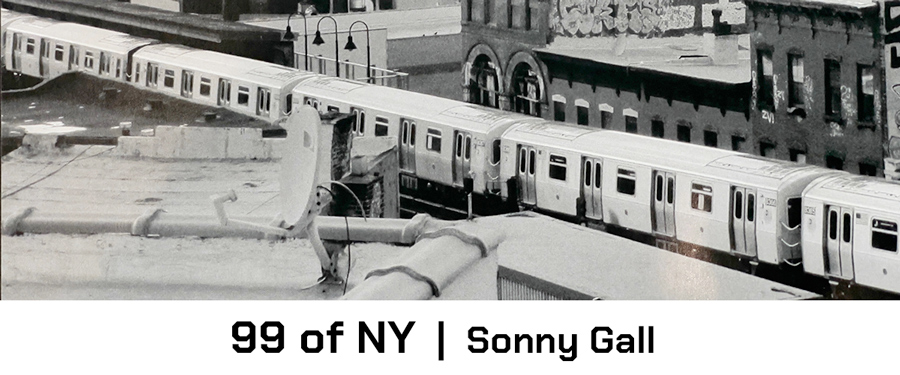
Sonny Gall. 99 of NY, released by King Koala Press with text by Mila Tenaglia. 2025.
From BSA:
Described by the publisher as “a compositional and documentary endeavor that unfolded naturally over the course of a decade,” 99 of NY gathers 99 photographs across 110 pages, printed in both color and black and white, in a durable hardcover, album-sized format. True to King Koala’s limited-edition tradition, it’s a finely produced object — modest in scale and rich in substance — that rewards slow looking and quiet reading.
Gall’s images vibrate and render when leaning toward the overlooked: empty lots in Queens, warehouse walls, families at home, scattered pigeons, playgrounds under scaffolding. They are fragments of a living city seen with patience and affection, moments that feel at once offhand and deliberate. Tenaglia’s accompanying texts deepen those impressions without overexplaining, their language as sharp and unadorned as the photographs themselves, yet evocative of the unseen – with a poetic wandering appropriate for the attitude of discovery. Together they capture what it means to move through New York — not as spectacle, but as encounter.
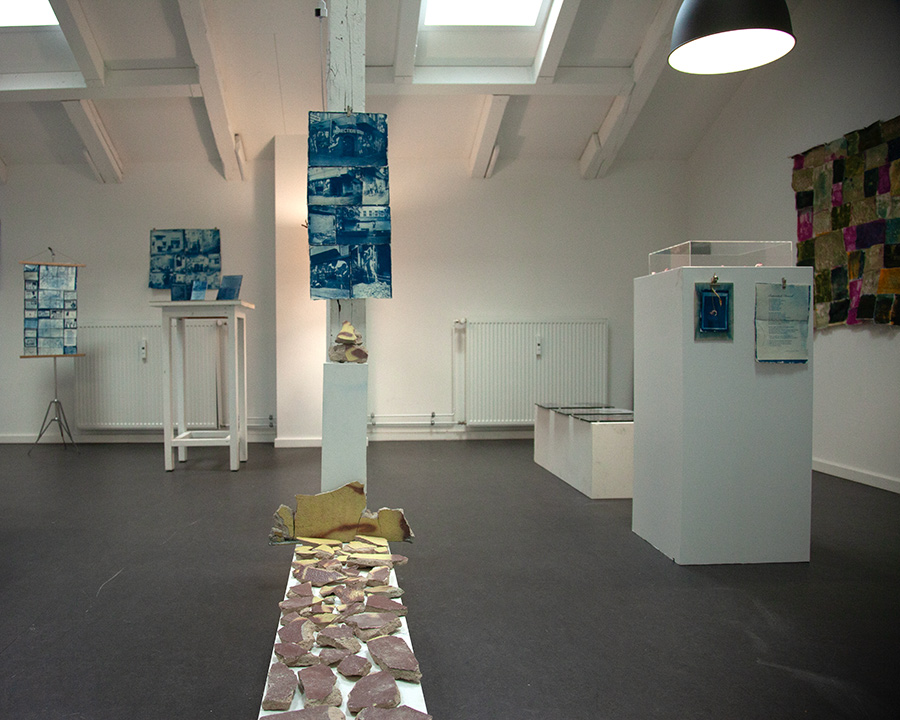
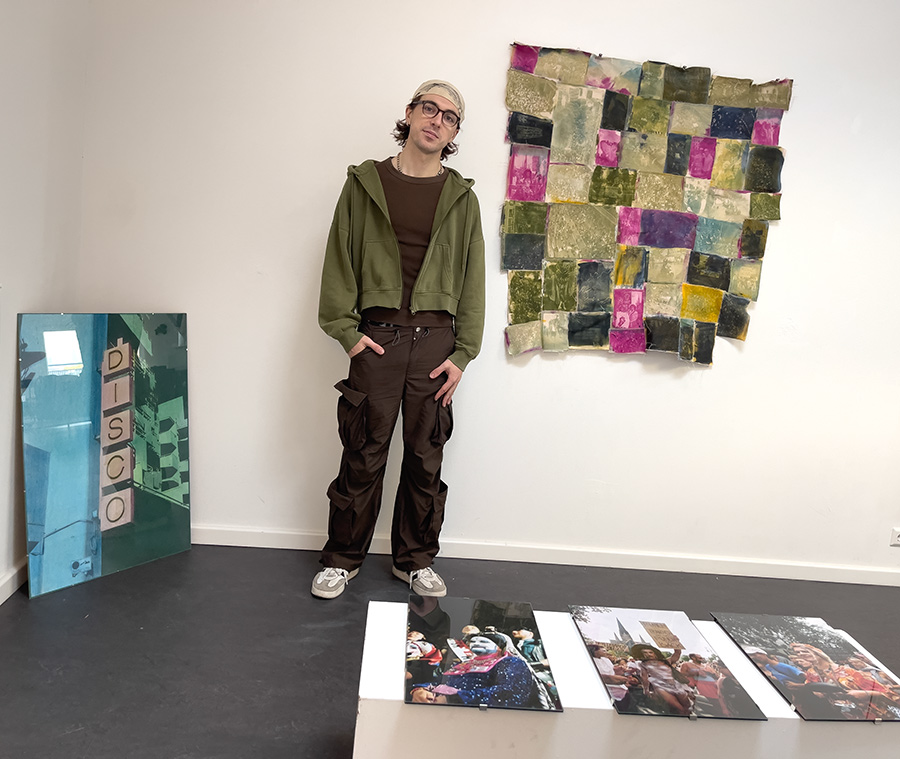
The first Martha Cooper Scholar in Photography, Dylan Mitro, has completed his residency year of study and development in Berlin. Along the way, he became more closely aligned with his identity as a documentary photographer, a storyteller, an archivist of history, and a member of the queer community. Looking back on his project of study hosted by Berliner Leben and Urban Nation Museum, he says his appreciation for social movements came into focus, as did his role as aphotographer in capturing people and preserving cultural memory.
We spent a few hours speaking with him in the rooftop space atop the Urban Nation Museum talking about his experiences over the past year and looking at the materials that he created. We took away a few lessons on culture, art, preservation, and being present.
“Before I can be a person with a camera, I have to be a person they can trust… I cannot be exploitative, especially with communities that have been exploited so much.”
Photography Isn’t Just Style; It’s Witnessing.
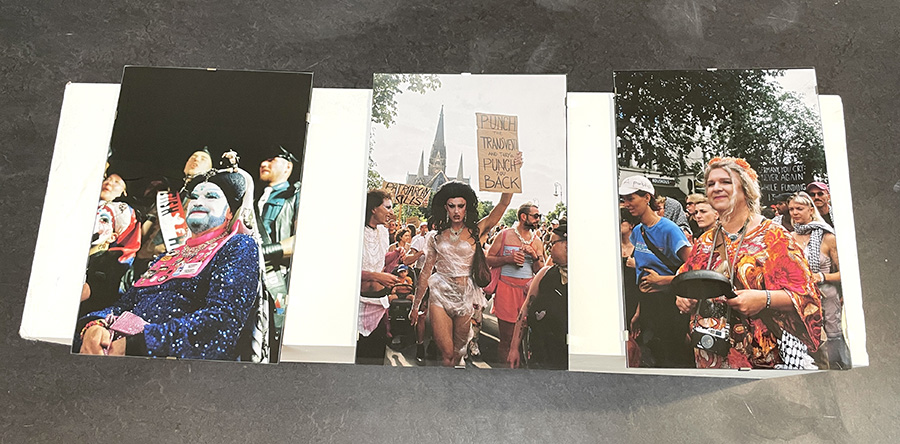
For Dylan Mitro, the camera has become less an instrument of aesthetics than a way of being present when history is unfolding before him. His “24 hours of protest” sequence of photos from animated and boisterous marches and demonstrations on the streets of Berlin is where this becomes clearest. He describes being in the street, whether raucous or quietly vigilant, with “thousands of people coming towards me,” running through the crowd and asking, “Can I take your photo?” as events unfolded in real time.
That sense of urgency and adrenaline is exactly what he admires in Martha Cooper’s work: her “always on” state, the way she treats the street as a field site and people as subjects rather than props. Dylan understands, as Martha does, that the most meaningful images are not staged or pretty; they are “honest and raw,” capturing people at protests, in queer nightlife, and in ordinary moments of showing up for one another. When he looks back at his protest images this year and says, “This is why I’m doing it,” he’s telling us that he recognizes that these fleeting, unposed encounters would otherwise vanish, leaving no trace in official records. Street photography through an ethnological lense, in his hands, becomes a way of witnessing courage and vulnerability in the moment and preserving it for those who come after.
“In the moment it’s so high energy, but then when you see the photos you’re like—okay, this is why I’m doing it.”
Archiving and Re-Photography are Acts of Care and Resistance.
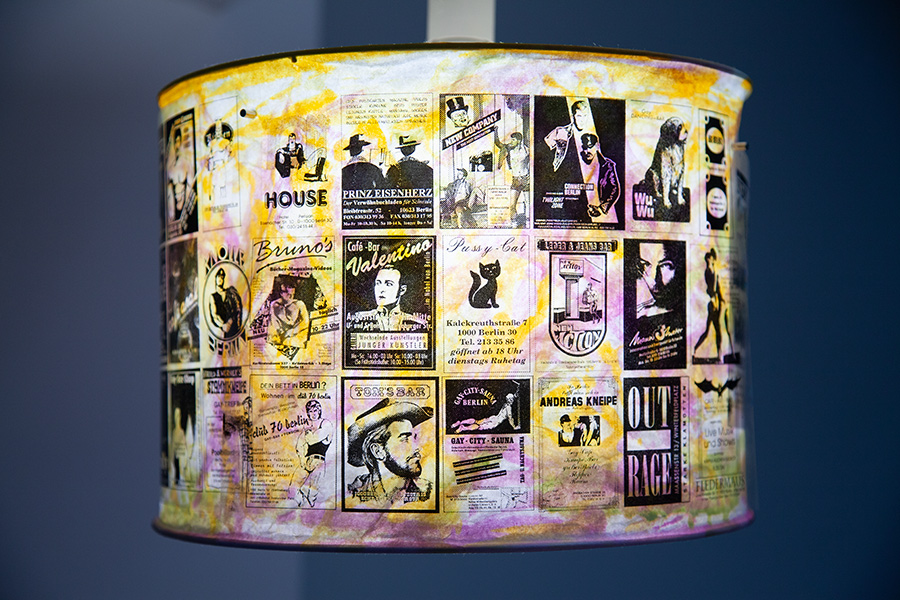
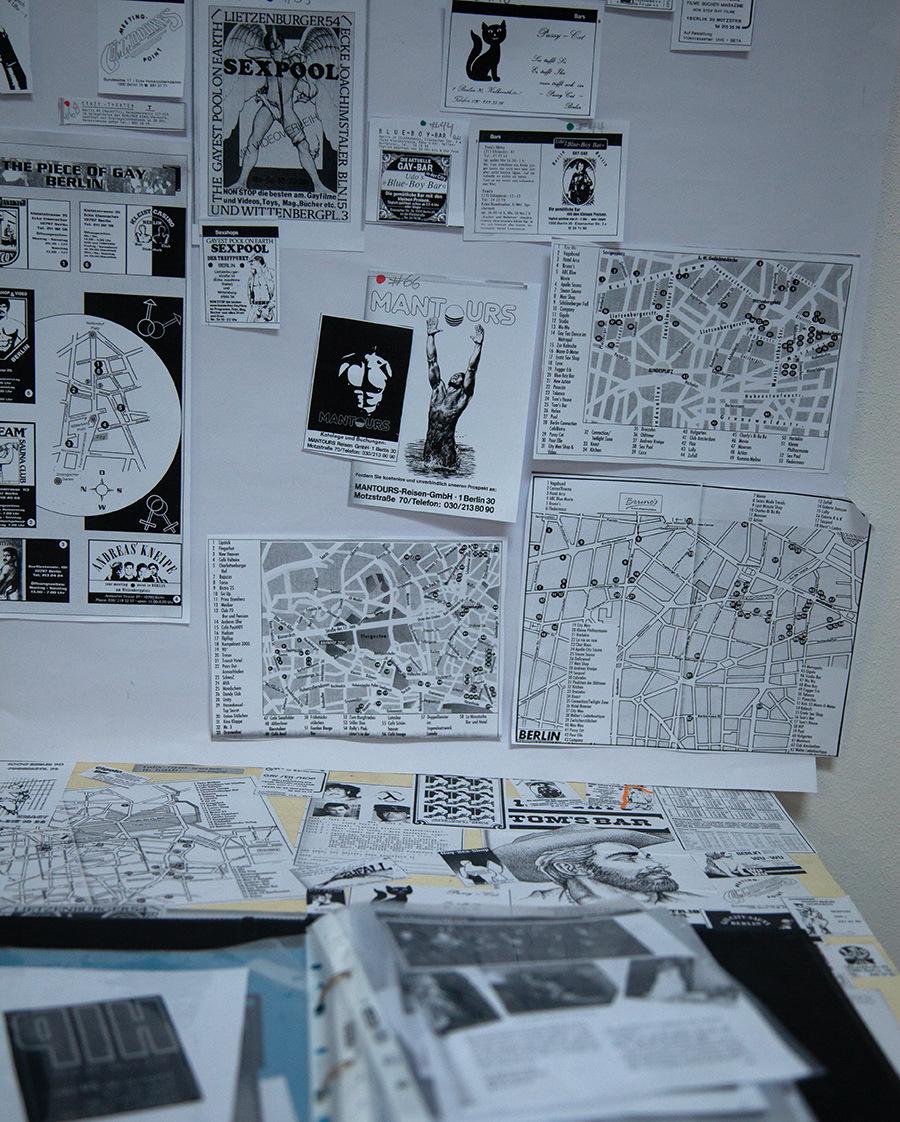
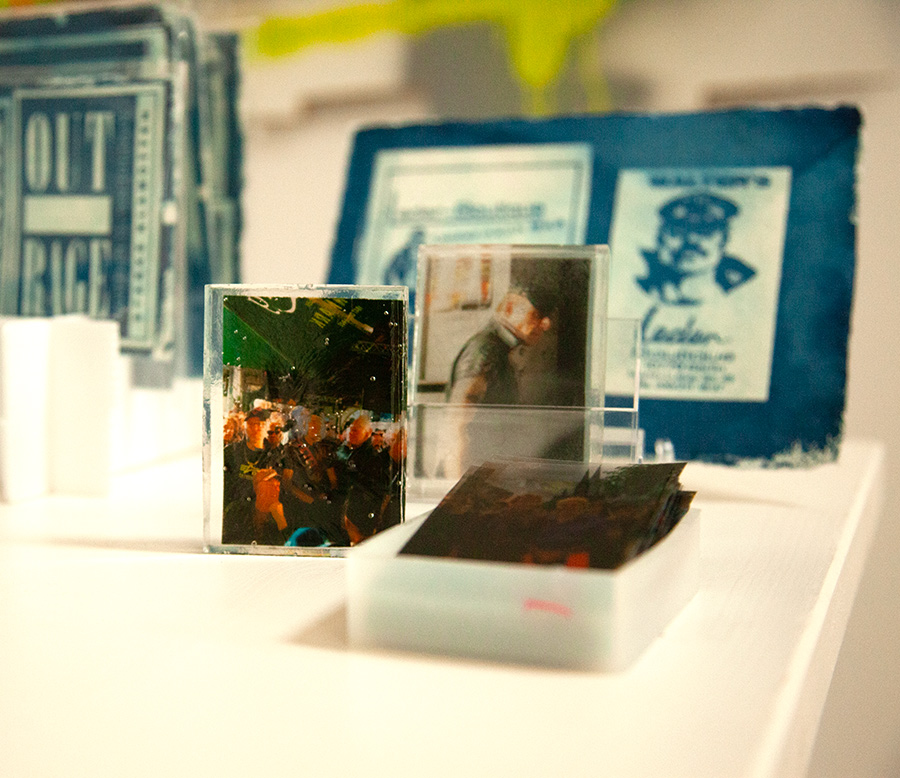
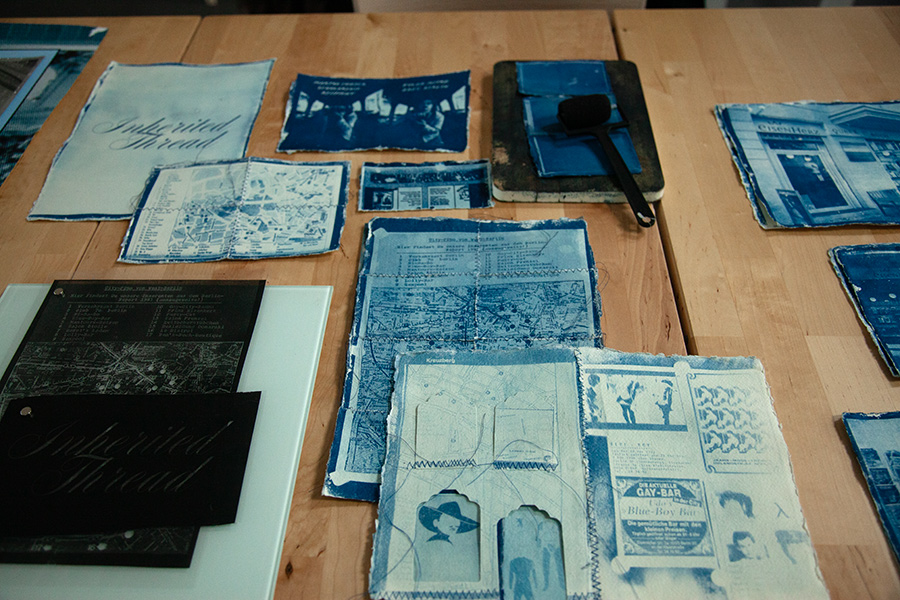
Dylan’s unconventional project of re-photographing and reactivating historic photos begins in the archive and brings people to speak to us here, now. He related his experience of making contact with private collectors of LGBTQ+ history and organizations who have documented queer history in Berlin, sifting through collections, commercial advertising, and personal stories without quite knowing what he was looking for. Possibly because people hid their identity for protection, some things were just out of reach, and Mitro related how images “appear… in this almost ghostly, haunting way.” From our perspective, this work looks like a fresh battle against erasure.
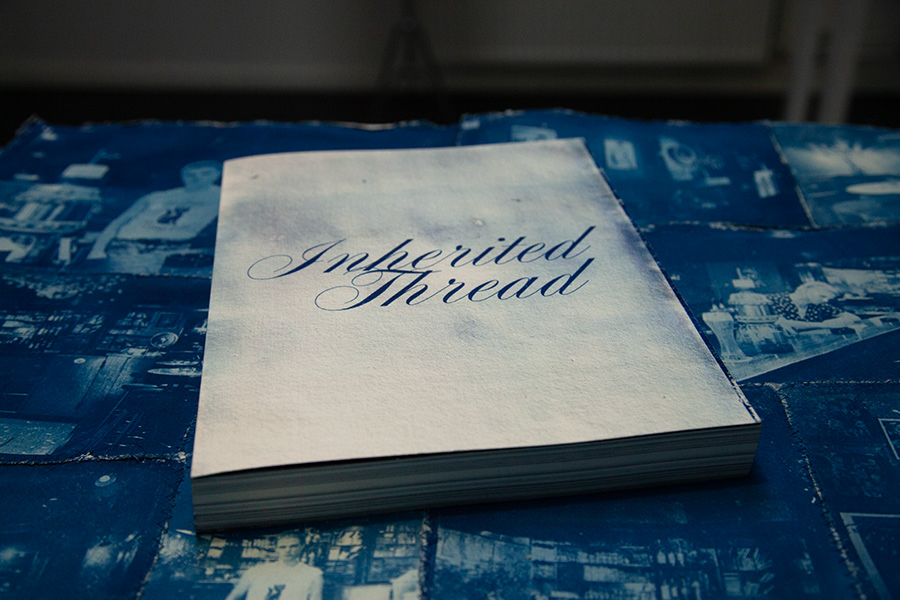
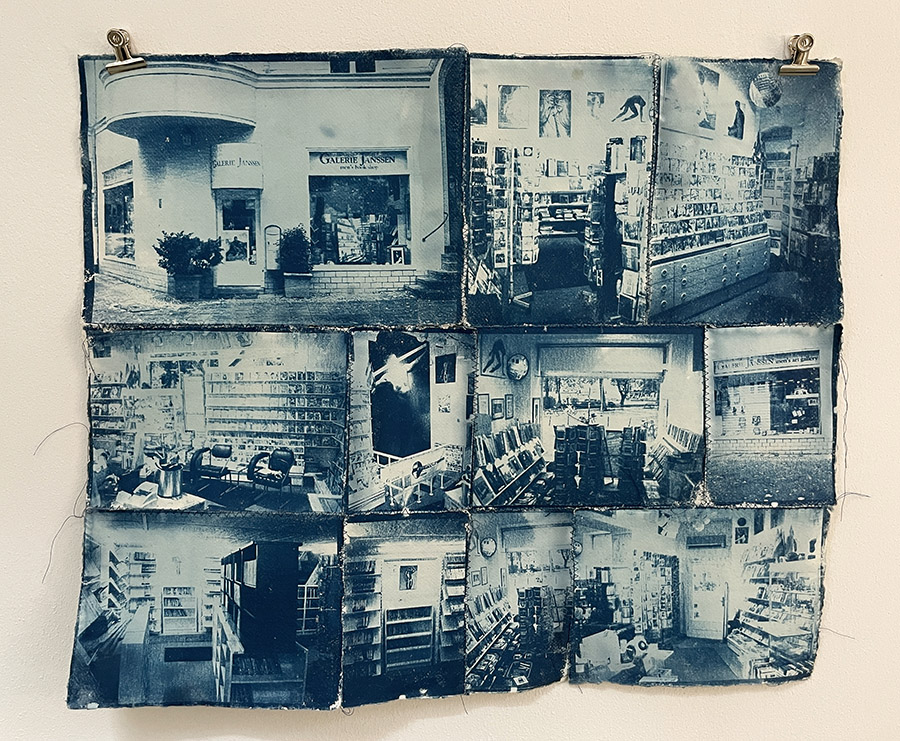
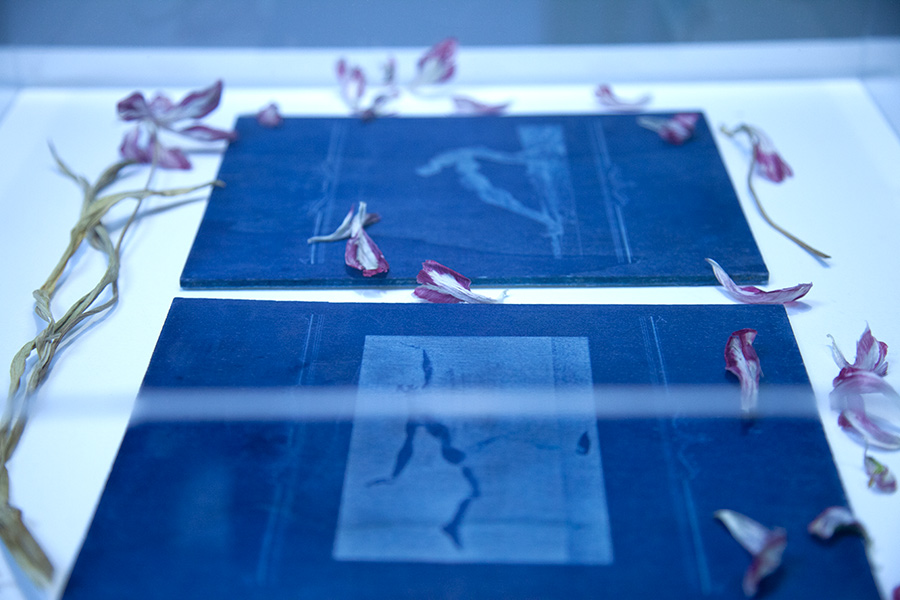
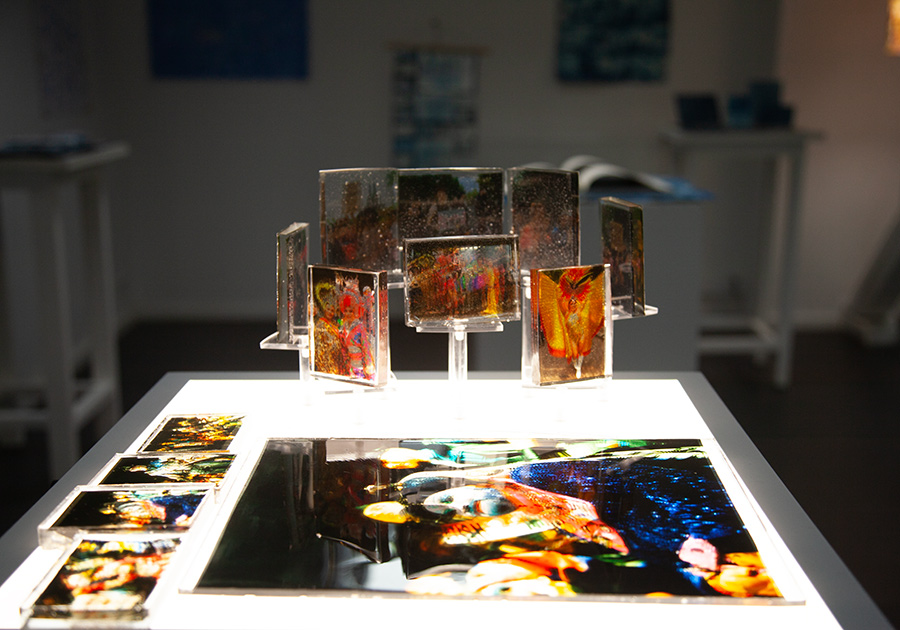
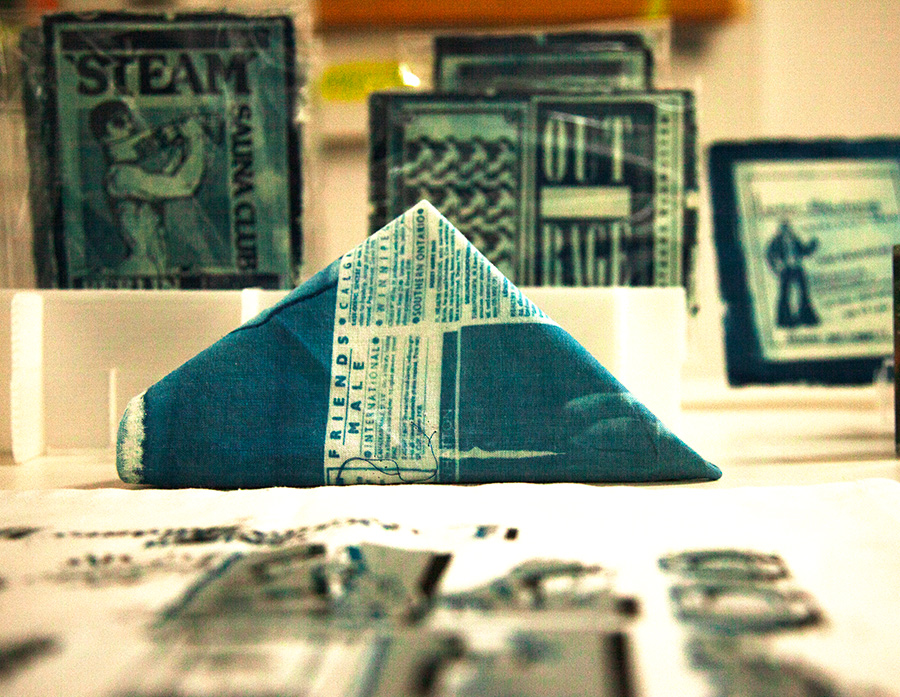
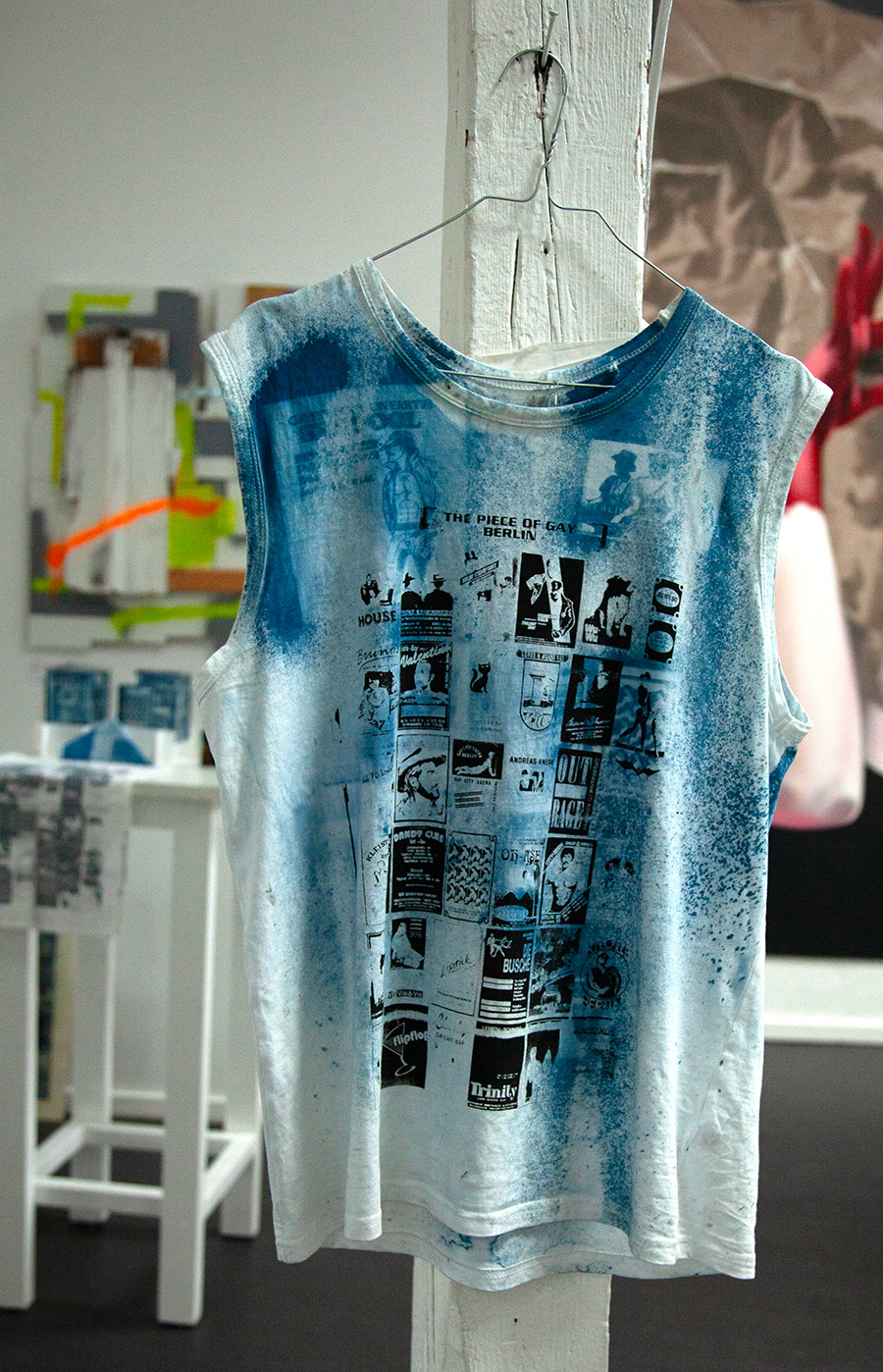
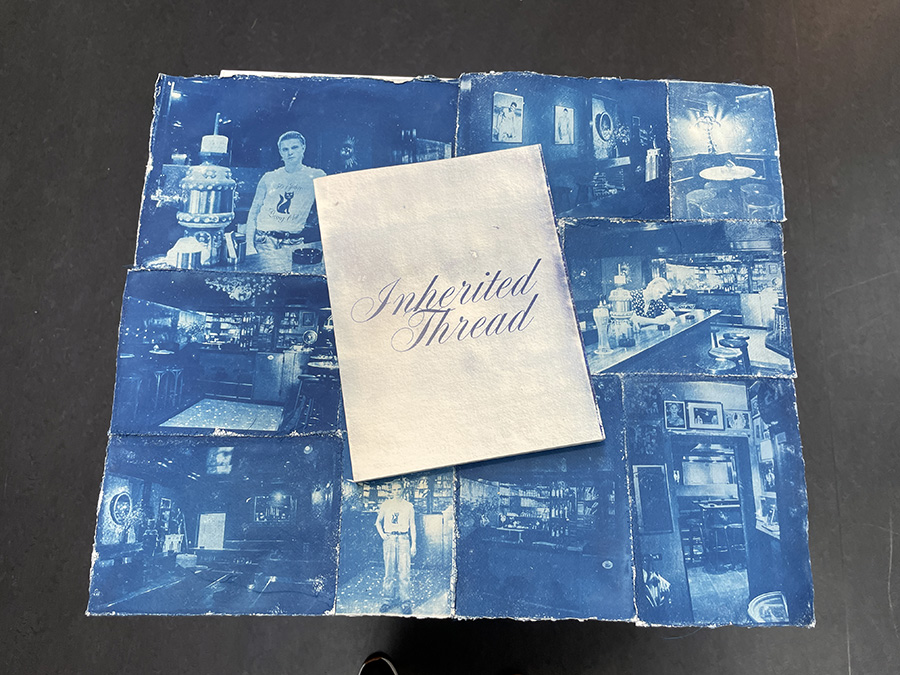
His research led him to retrace the locations of social clubs and bookstores and to pore over a varied and deep selection of printed and digitized materials at the LGBTQIA+ archives at the Schwules Museum in Berlin, including the publication Berlin von Hinten. Thanks to the careful collecting and preservation by many in the Berlin community, the artist says he found himself faced with an overwhelming array of diverse materials to study. Mitro brought his own scanner into the reading room, mechanically capturing pages to “deal with later,” making sure nothing important slipped past him in the flood. When he began making cyanotypes from sex journals, classifieds, and Berlin bar magazines like Berlin von Hinten, he was not merely appropriating images but changing their context and use, turning fragile, easily discarded ephemera into durable goods like book pages, prints, even shirts that he wore into the public and to the opening of his exhibition.
“The beautiful thing about an archive is you don’t know what you’re looking for when you go in, and then it just appears to you in this almost ghostly, haunting way.”
Thoughtful in his description of this self-created research process, he appears fully aware of an ethical minefield that he kept seeing in the materials: the sexualization of hustlers, questions of consent, the AIDS epidemic unfolding in the background, and the way one scandalous case can be used to demonize and smear an entire community. He also remarks on how much things have changed as queer culture has learned from its own past and become more equitable and inclusive. For him, to re-photograph, to print, to bind, is to refuse both erasure and simplistic moral panic. It is an act of care for those who lived through those years and a quiet resistance to the ways queer histories are flattened, censored, or selectively remembered.
Passing the Torch: How New Artists Build on Earlier Legacies
Dylan repeatedly frames his work as a kind of “grief politics” — a way to process his own grief and “collective grief” through images and stories. While he handles materials that can be considered crass, campy, or uncomfortable, he treats them as evidence of what previous generations built so that people like him can enjoy the relative freedoms they have now. During the conversation, we recalled that on earlier Zoom calls in the year, he talked about “recognizing the work that our ancestors have done… so we can enjoy the freedoms that we have now,” and he confirmed that this became central to his mission. In practical terms, this shows up in small but telling decisions.
Looking over materials and images, he noticed that many photographs in these magazines are uncredited or minimally credited; however, it was vital for him to reconstruct a credit page in his own book from the publication’s credit lists, even when he could not match each image to a specific name. He sees this as “doing the work for the crediting now,” anticipating a future researcher who might ask “who took this?” and refusing to leave them with a dead end.
His admiration for the photographer Martha Cooper is also part of it: he recognizes that she endured periods when her work was underappreciated, then gradually became a reference point for entire scenes and was treasured for their historical significance. By aligning his practice with her documentary, ethnological approach — attentive, long-term, grounded in real communities — Mitro is situating himself in a lineage of photography that tells our stories to each other and future generations.
When Time, Space, and Support Open a Path for an Artist
Dylan Mitro arrived in Berlin after a decade in Toronto, working punishing 14–15-hour days on commercial shoots and features, a rhythm he describes as “so unsustainable.” The residency allowed him to step off that treadmill and begin a course of study in a new city on another continent. He talked about the stark contrast: in the exact moment that he got the news about being selected for the residency, he learned the news of a close family member’s illness. As he talks, you realize that the year in Berlin became a hinge between these two realities — a chance to focus on his art and a forced confrontation with “what are these next chapters of my life?”
“It’s grief politics… how do I deal with my grief that’s also collective grief? And I deal with that in all of my work.”
With a new perspective, removed from Toronto, he considers that he cannot simply “jump right back into the way I was living.” While he regroups in Ontario and supports family, you can see that the residency gave him room to experiment: scanning archives, learning cyanotype techniques, organizing negatives by place, developing a whole book, and then pivoting mid-project to the “24 hours of protest” series that ties everything together. Along the way, he learned how to structure a day when nobody is calling call time, manage the pressure to enjoy and study the city, and answer the uncomfortable question he keeps coming back to: “Why are you doing it. The support he receives — from the scholarship, the residency, and mentors — may make it possible for him to build a thoughtful, ethically grounded body of work that he could not have assembled in the gaps between commercial gigs.
Regarding his project, the cultural ground keeps shifting, and Mitro couldn’t have been more timely. In a political climate in the Western world where there is a backtracking on human rights and queer and trans lives are attacked and simplified, this kind of photography and archiving says: we were here, we are complex, and our images won’t disappear.
Throughout the conversation, Dylan connects his work directly to the present rise of fascism and reactionary politics. He notes that people now often say, “You can be queer anywhere in the city,” as if dedicated spaces and organizing structures were no longer necessary. He counters this by pointing back to history: earlier generations had to fight for those spaces and used them to manage when “the world kind of feels so helpless.” At the same time, he sees how quickly media and political actors can weaponize isolated events — a murder, a scandal, a stereotype — to brand entire communities as dangerous, from gay men in the 1990s to immigrants and trans people today.
That’s precisely why he went to the archive, sat with the original materials, and made new work grounded in lived experience rather than sensational headlines. His insistence on consent and trust in photographing protests, especially when working with trans folks, is part of the same refusal to flatten people into symbols. He’s acutely aware that much of the public visual language around queerness is still dominated by highly sexualized images, corporate Pride floats, and what he and the sponsors describe as “rainbow capitalism.”
By pairing reactivated archival images with new, candid protest photographs, Mitro constructs a more layered record: people organizing and dancing, grieving and celebrating, dressing up and just existing. In the shadow of book bans, anti-trans legislation, and cultural backlash, his project quietly insists that queer and trans lives are not a recent “trend” or a single issue to be voted up or down. They are entire worlds, spanning decades, and his camera — like Martha Cooper’s — is there to make sure those worlds are seen and remembered.
“I know I’m not going back to the life that I had before… I’m really reshaping how things are gonna be moving forward.”
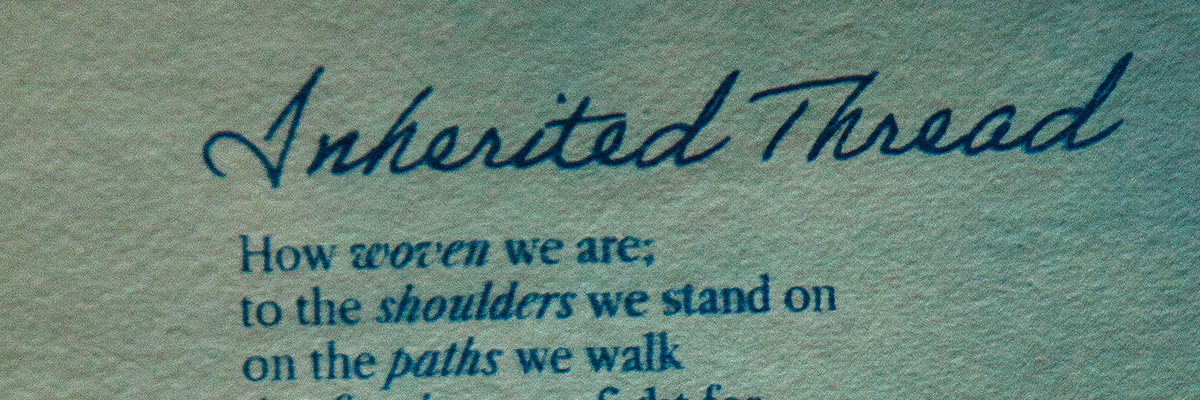
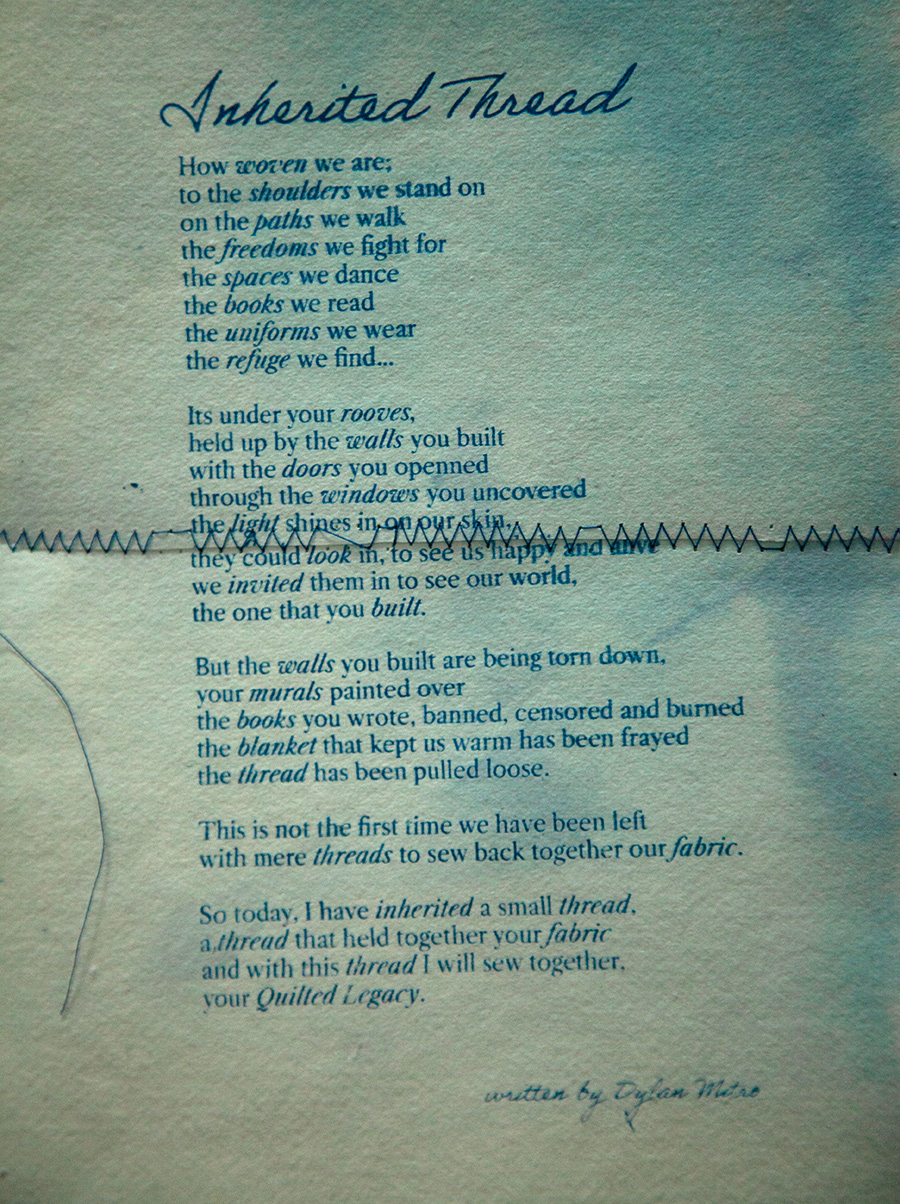
Click HERE to read our first interview with Dylan, where he speaks in depth about their project Inhereted Thread for their Fresh A.I.R. Residency and the Martha Cooper Scholar for Photography 2025.
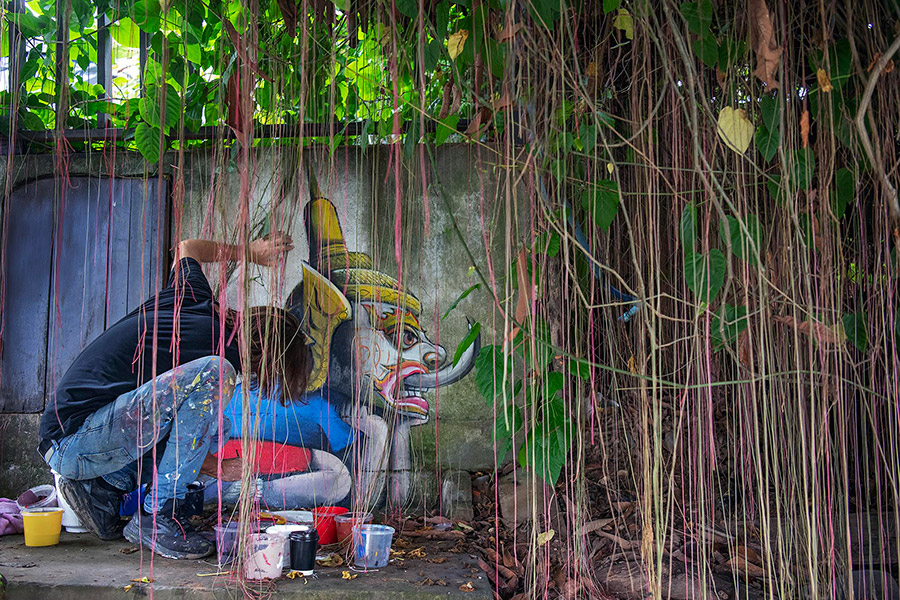
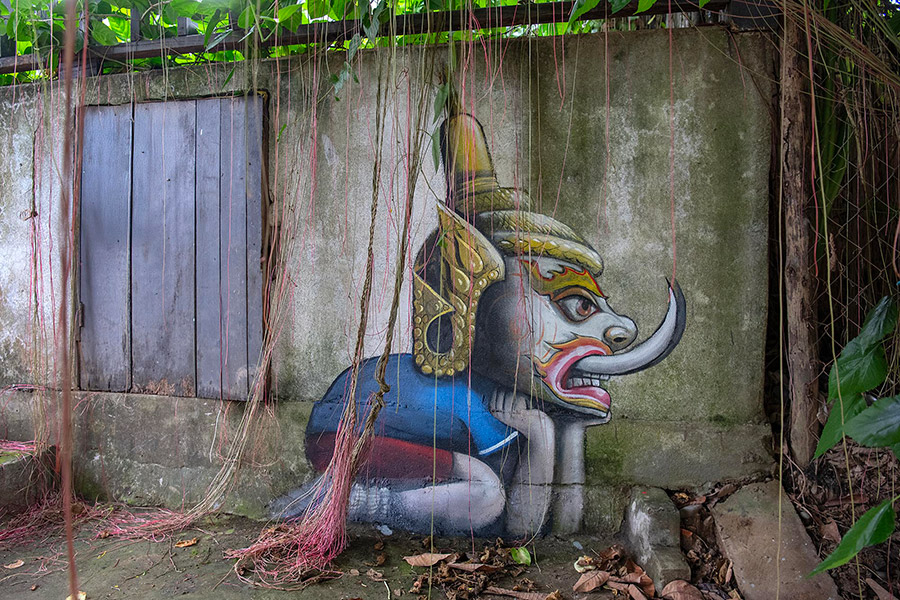
When Seth said ‘Laos,’ there was no way she was going to say ‘no,’ Martha Cooper will tell you.
After all, Laos is where she learned to drive a motorbike in the 1960s — a place she remembers by its dusty roads, warmth, and creative kids who know how to make their own fun. Sixty years later, she’s back with a camera in hand, documenting French street artist Seth Globepainter (Julien Malland) as he works his familiar magic at the edge of the Mekong.
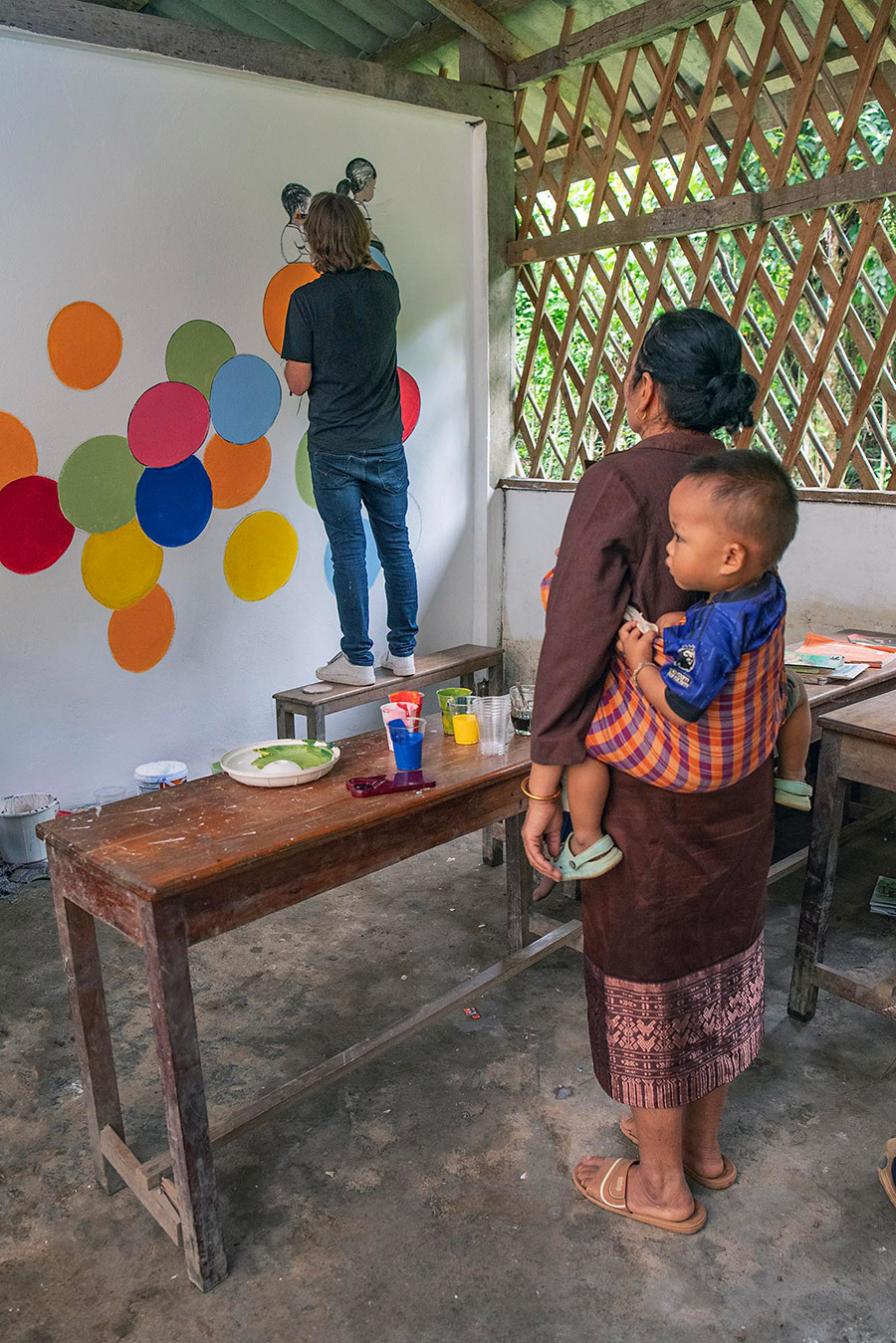
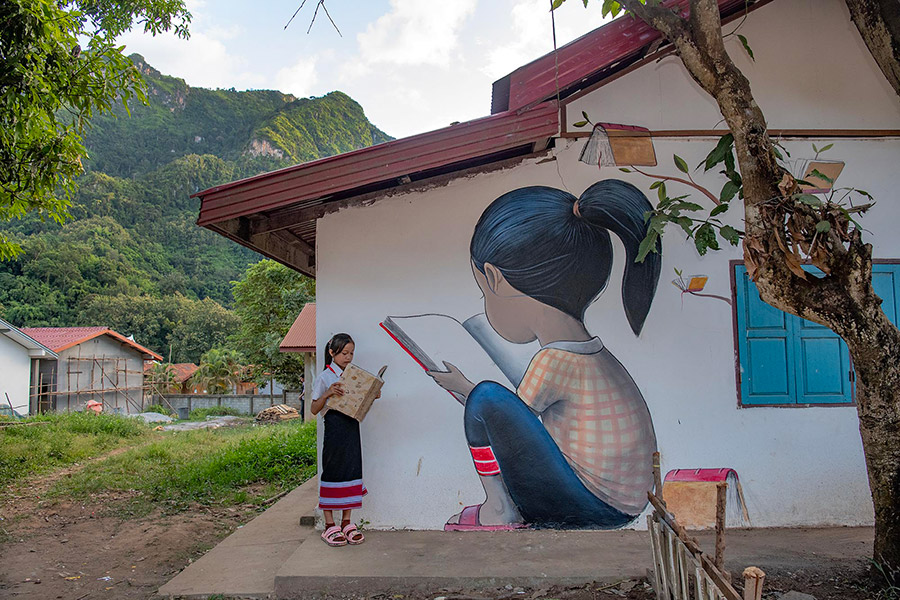
Luang Prabang — a UNESCO World Heritage town framed by two rivers — is a place where ritual and imagination walk the same path. Early mornings mean barefoot monks collecting alms; afternoons mean kids splashing by the river or painting bold birds across the school walls. Seth’s murals slide right into that rhythm: playful figures, wide-eyed wonder, a bit of folklore and fantasy — public art as storytelling through the words and images of kids.
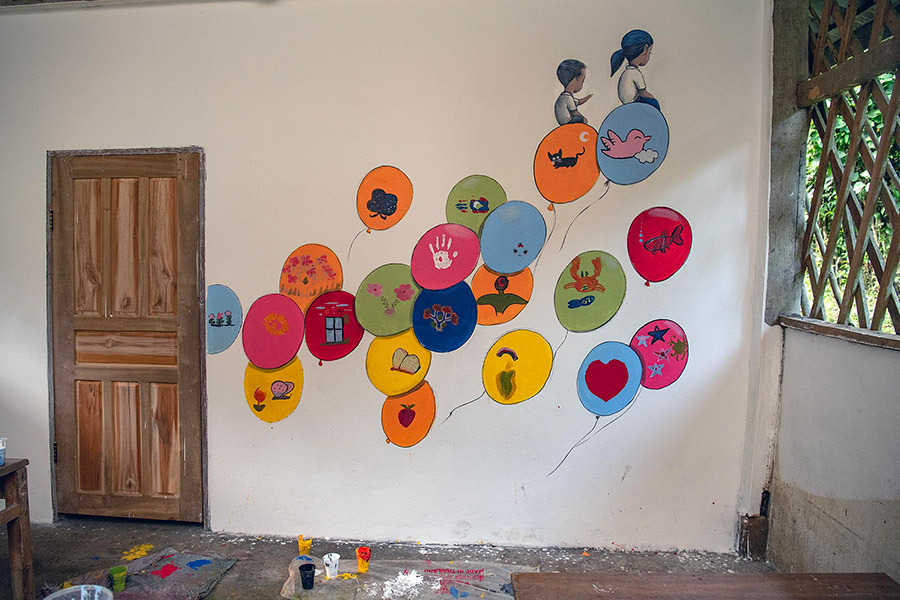
Seth was sure to stop at Lao Friends Hospital for Children, the only free pediatric hospital in Northern Laos. His mural — inspired by Hmong embroidered history cloths — became what he called an “extraordinary garden”on his Instagram – possibly one of heritage and healing. When Seth is around, young students are often seen taking brushes into their own hands, adding birds and shapes to a Free Expression Wall that gives them a chance to be collaborative. Martha, never far from the action, captures the imagination and concentration in their faces — the same instinct that drew her to kids on the streets of New York’s Lower East Side in the 1970s.
Further north in the rural Hoy Bor and Hoy Phoung villages, Seth teamed up with NKSEEDS to transform school walls into collaborative canvases. One piece — titled “Past Future” — honors Khmu tradition with a woman carrying her child. Another project invited every kid to paint a “fetish bird” flying toward the light. Students walked on bamboo stilts and played sport games together- and of course grabbed brushes as Martha documented small hands, bright colors, and the delight of making something permanent together.
Folklore, Masks, and Mischief
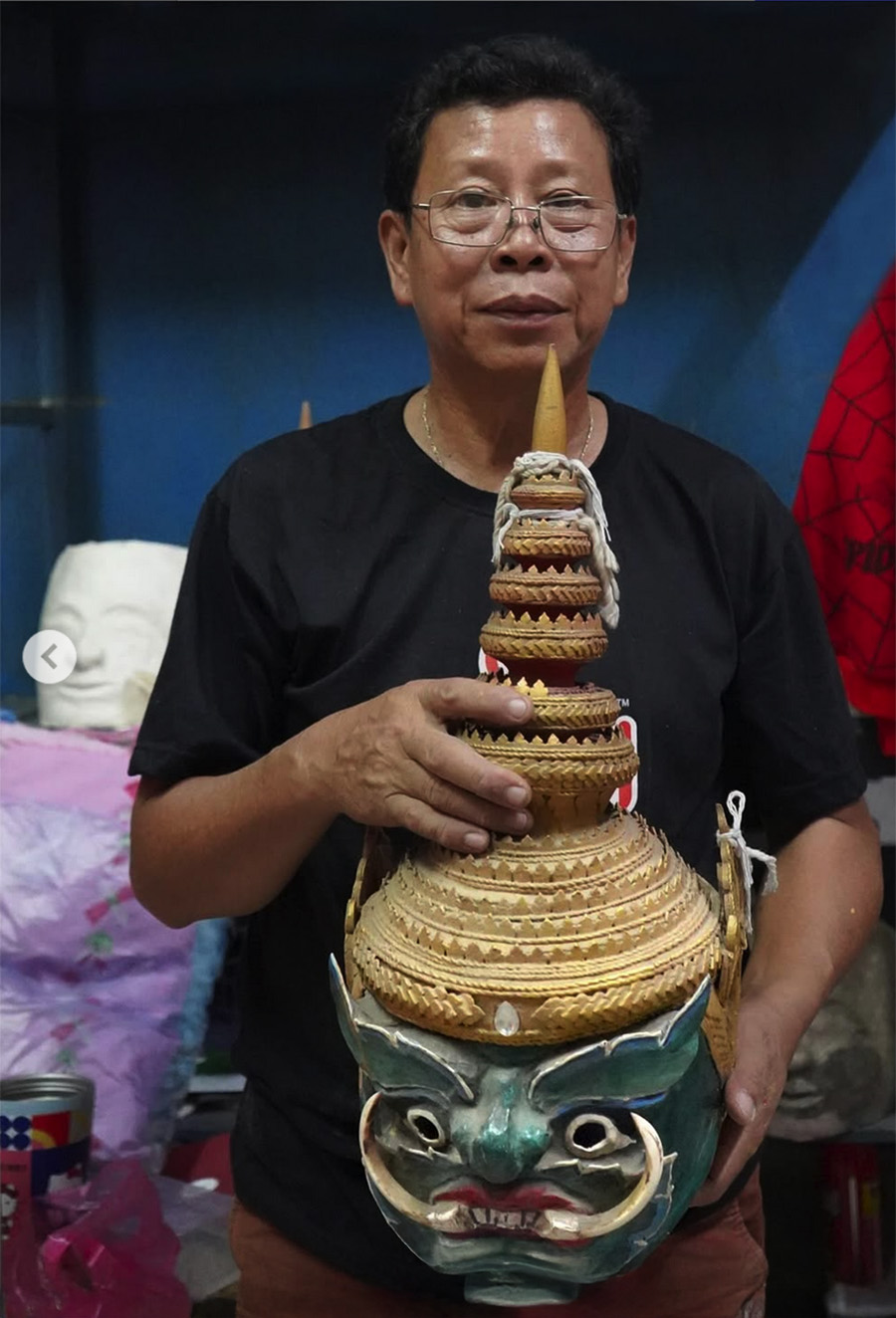
Meeting the Royal Ballet mask-maker in Luang Prabang gave Seth a new spark. He adapted a demon mask from the Phra Lak Phra Ram — Laos’ own Ramayana — and painted it atop the crouched body of a local kid. Minutes later, a boy wearing the real mask squatted beside the mural, turning tradition into a living side-by-side remix. Martha’s photos catch a perfect squeeze between imagination and reality that defines Seth’s work.
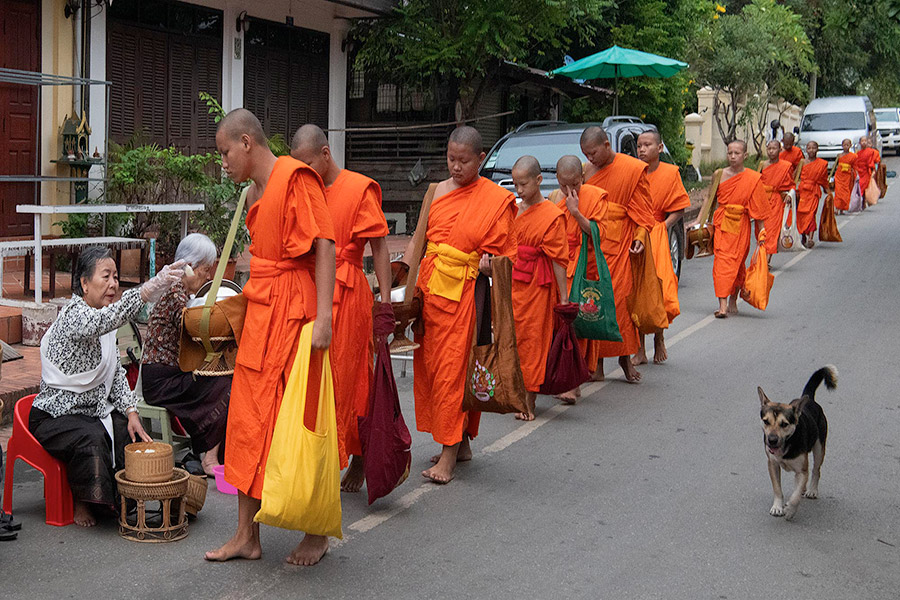
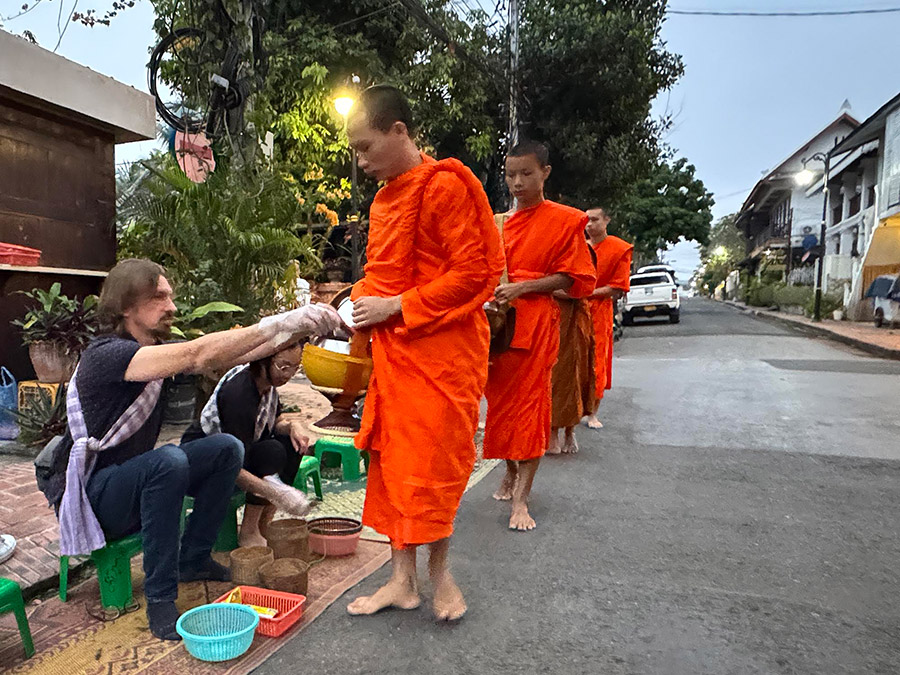
Martha also managed to document the alms-giving ritual at dawn that Seth participated in. Every morning, usually at dawn, Buddhist monks walk silently through the streets in a single line carrying bowls.
Laypeople — often sitting or kneeling — place food into the monks’ bowls. This food is usually prepared rice, fruit, or other simple offerings. In Laos, this ritual is widely observed. Laos is predominantly Theravada Buddhist, and alms-giving is a daily part of community life.
This trip marks another chapter in Seth and Martha’s shared habit of chasing childhood imagination across the world — Kenya, Haiti… and now Laos. With support from curator and author Alisa Phommahaxay (Asian Street Art: Une Anthologie), who helped open doors to schools, families, and the children’s hospital, they kept everything relaxed and personal: art made with people, not just for them.
In dusty schoolyards and along the Mekong’s quiet edges, a camera and a paintbrush appear to be a splendid combination that brings people a little closer. Kids still invent games from whatever’s nearby — bamboo poles, bare feet, a splash of color — and Martha still recognizes that spark in an instant. Walls evolve, decades pass, but that simple creative heartbeat remains easy to find.
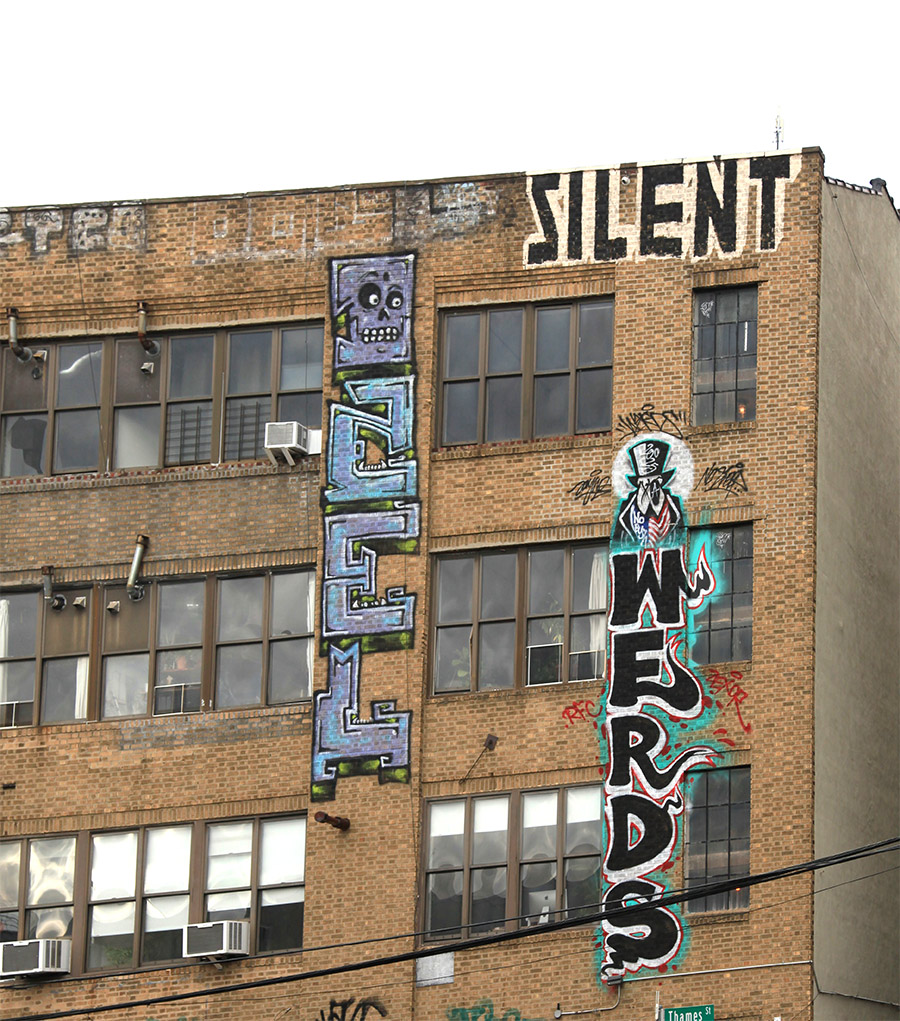
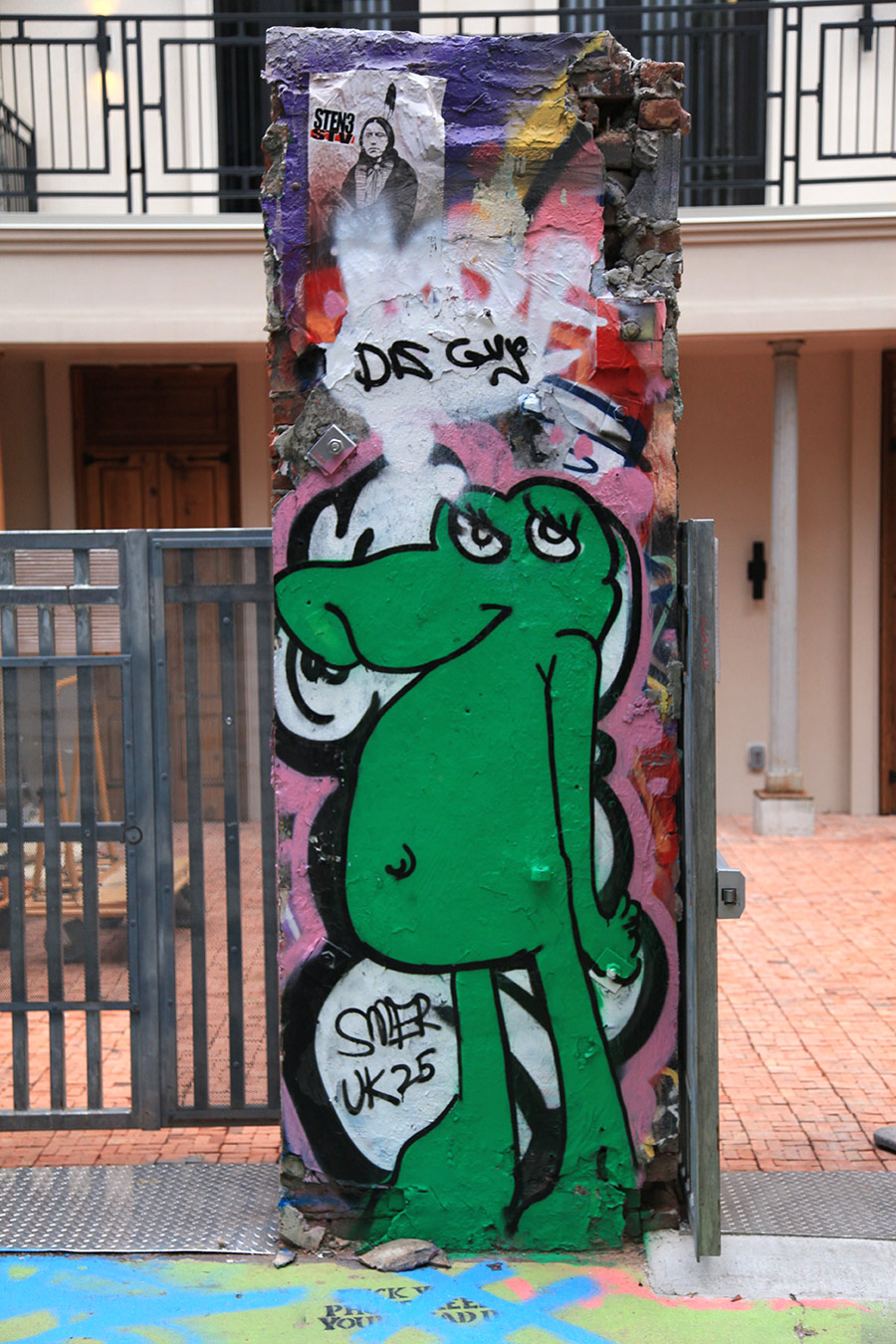
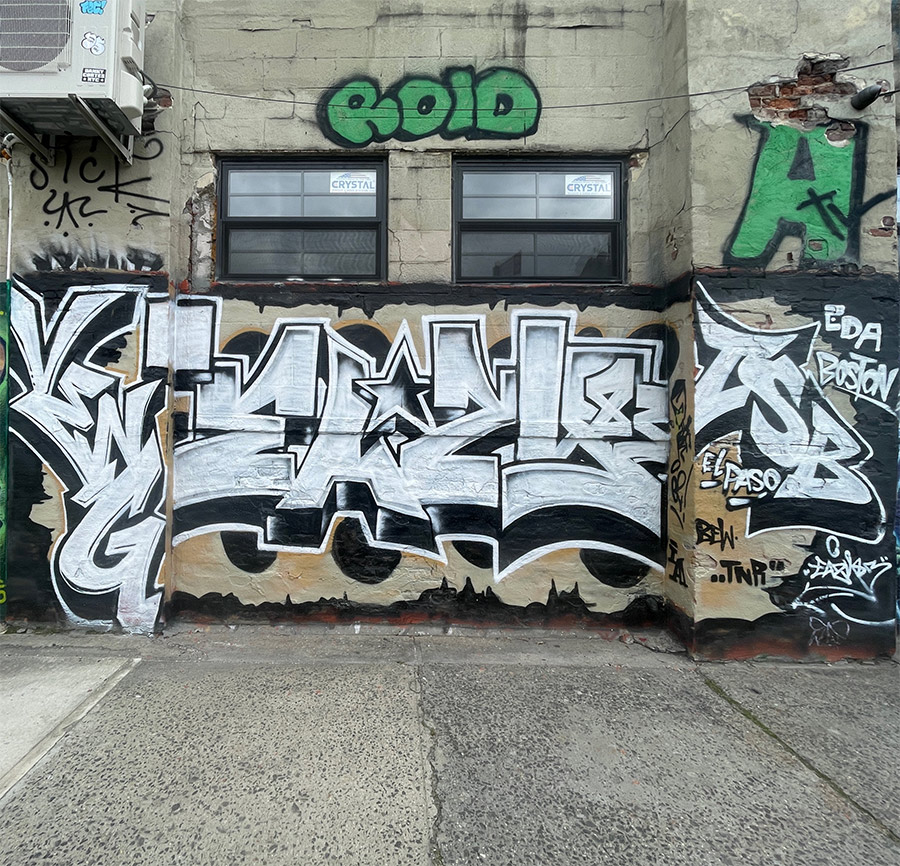
Welcome to BSA Images of the Week. Photographer Jaime Rojo hit the ground running upon getting back to dirty old Brooklyn this week from a Berlin/Prague tour. Lots to report from there on the walls, in the gallery, and in the museum spaces – and more to come for you to enjoy. In the meantime, here’s what he found on the streets of NYC; a mash-up of handstyles, graphics, pop cues, fine-art chops, humor, sarcasm, reverence, and straight-up rebellion — cultures colliding and talking back.
We begin the show with a new portrait of the much-loved graffiti and street art photographer Martha Cooper, based on a photo by Corey Nickols and painted by Swed Oner (Mathieu Taupenas) in Bushwick with Joe Ficalora and the Bushwick Collective by his side. Born in the south of France in the 80s, a graffiti writer in the late 90s, Swed Oner is now known for his hyper-realistic, monochrome portraits of people transformed into religious icons – featuring a “halo” motif for framing.
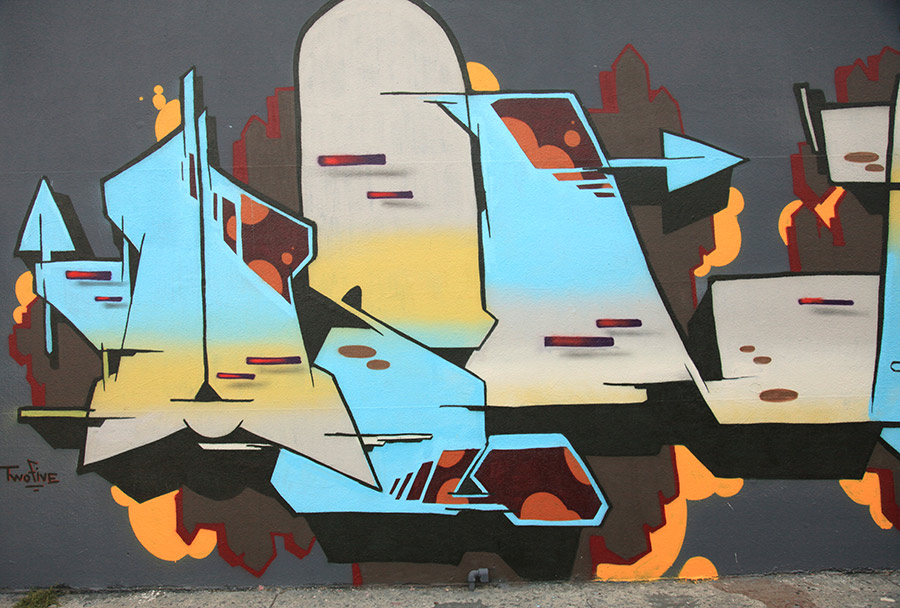
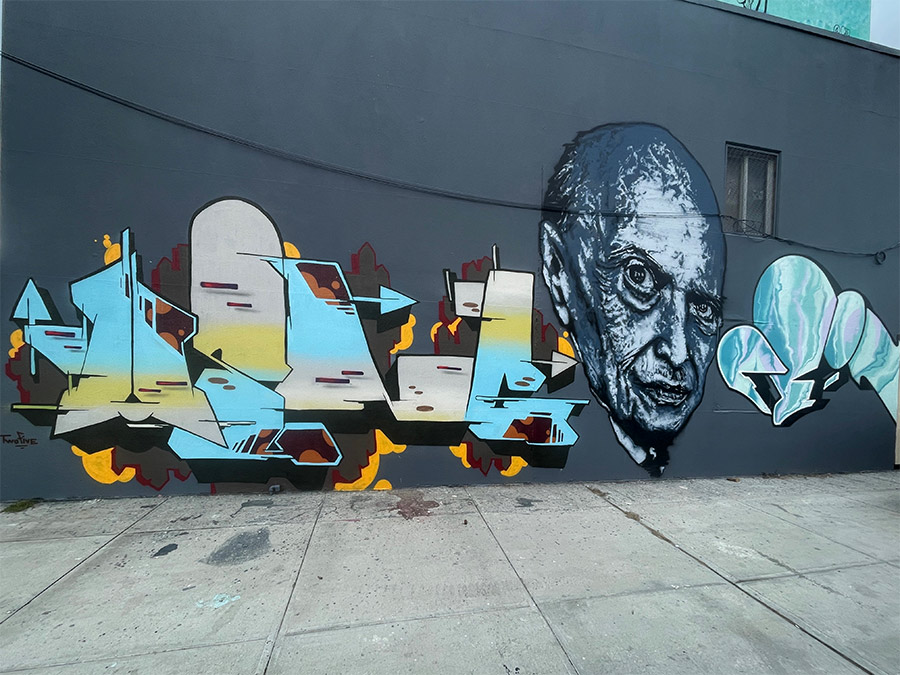
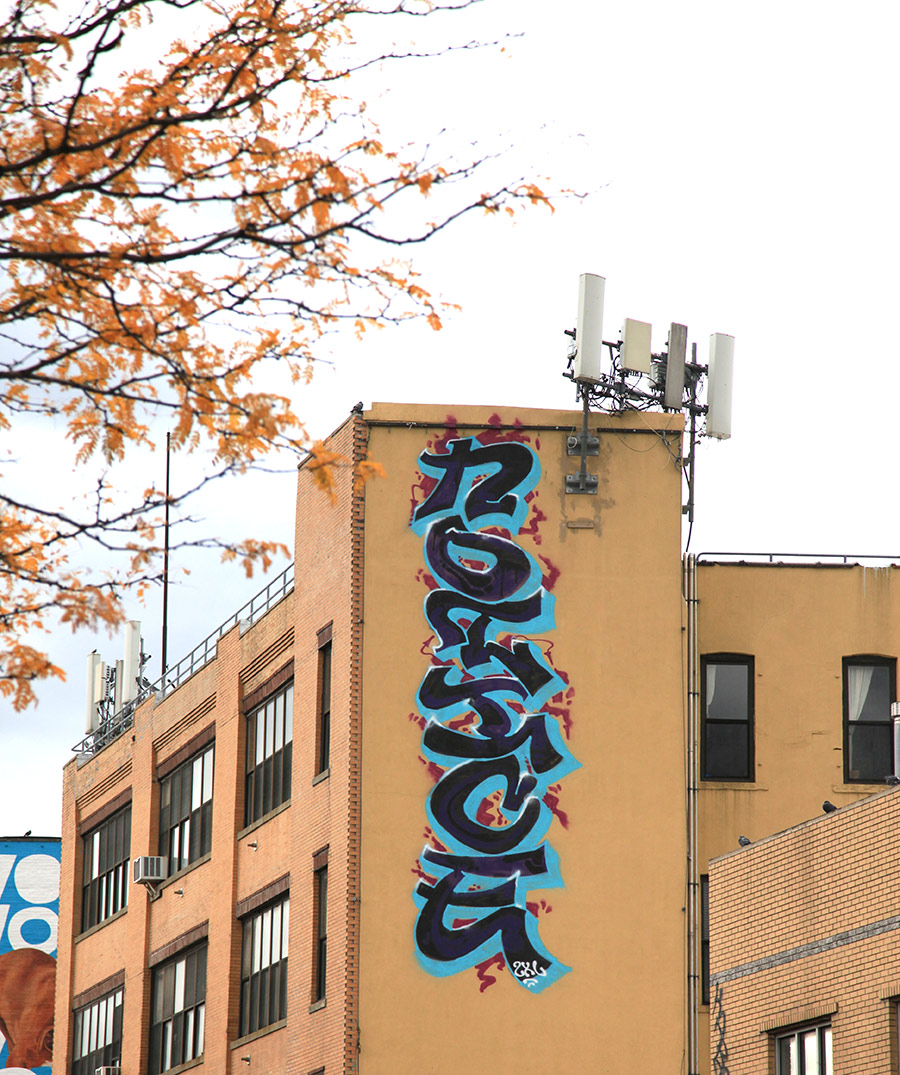
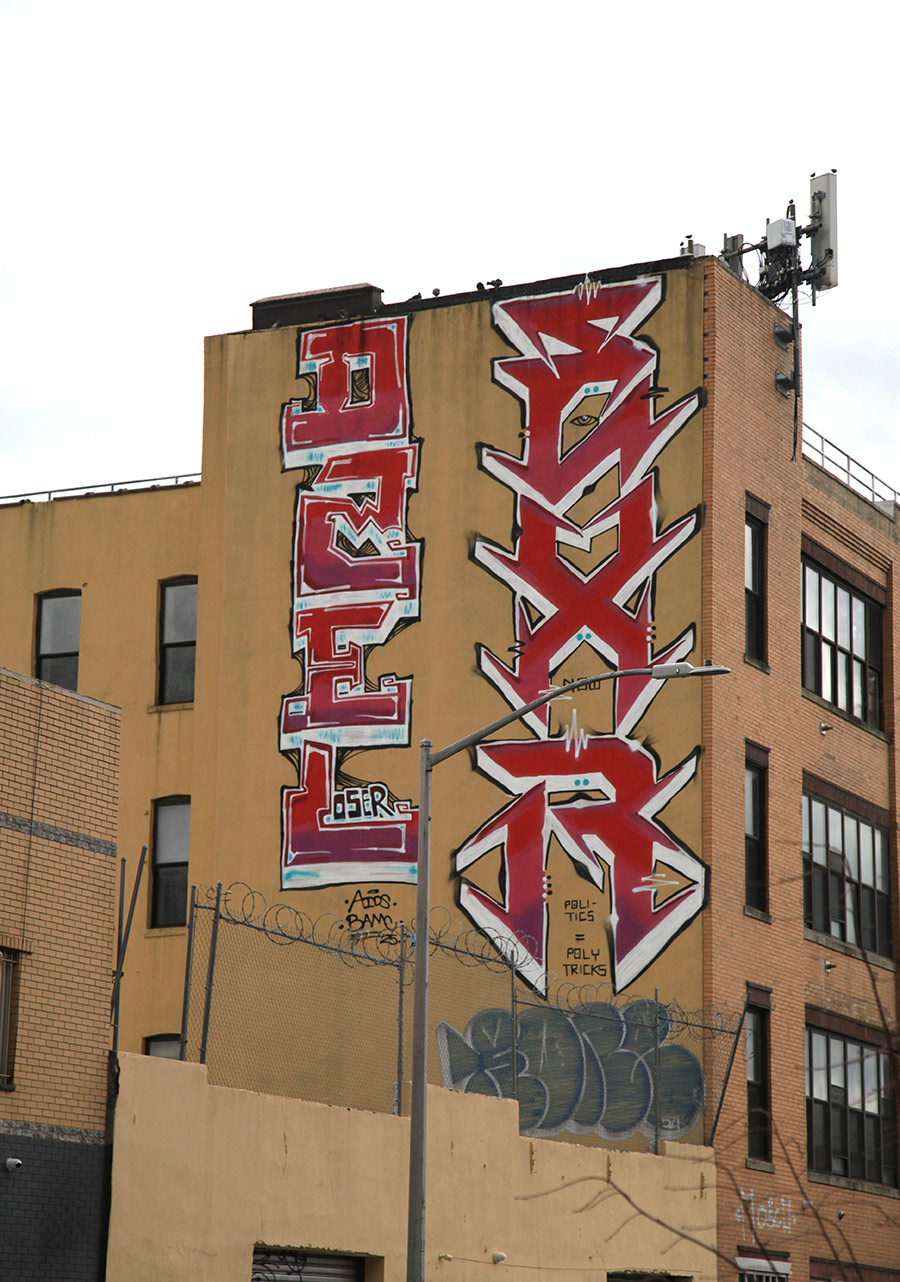
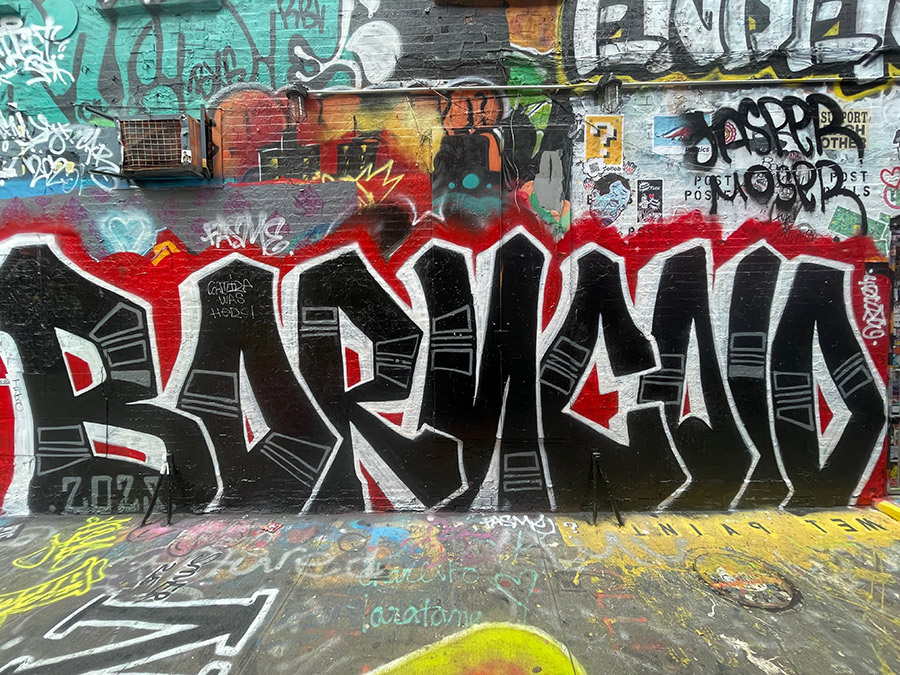
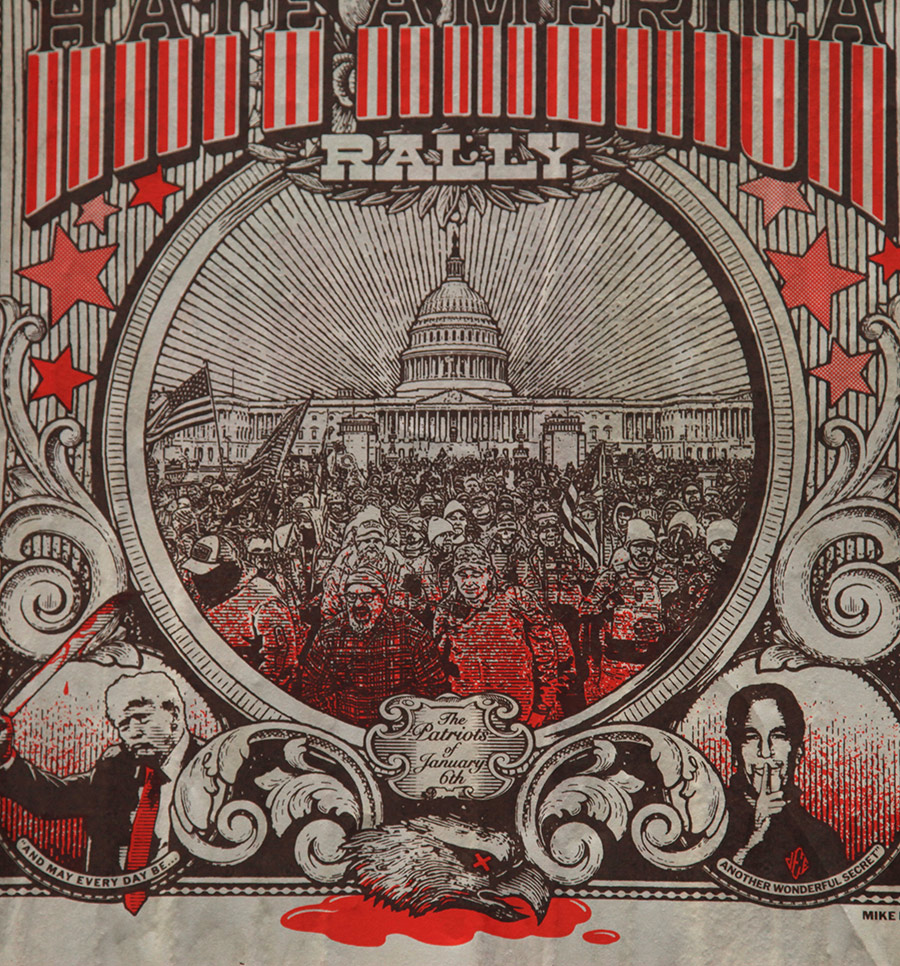
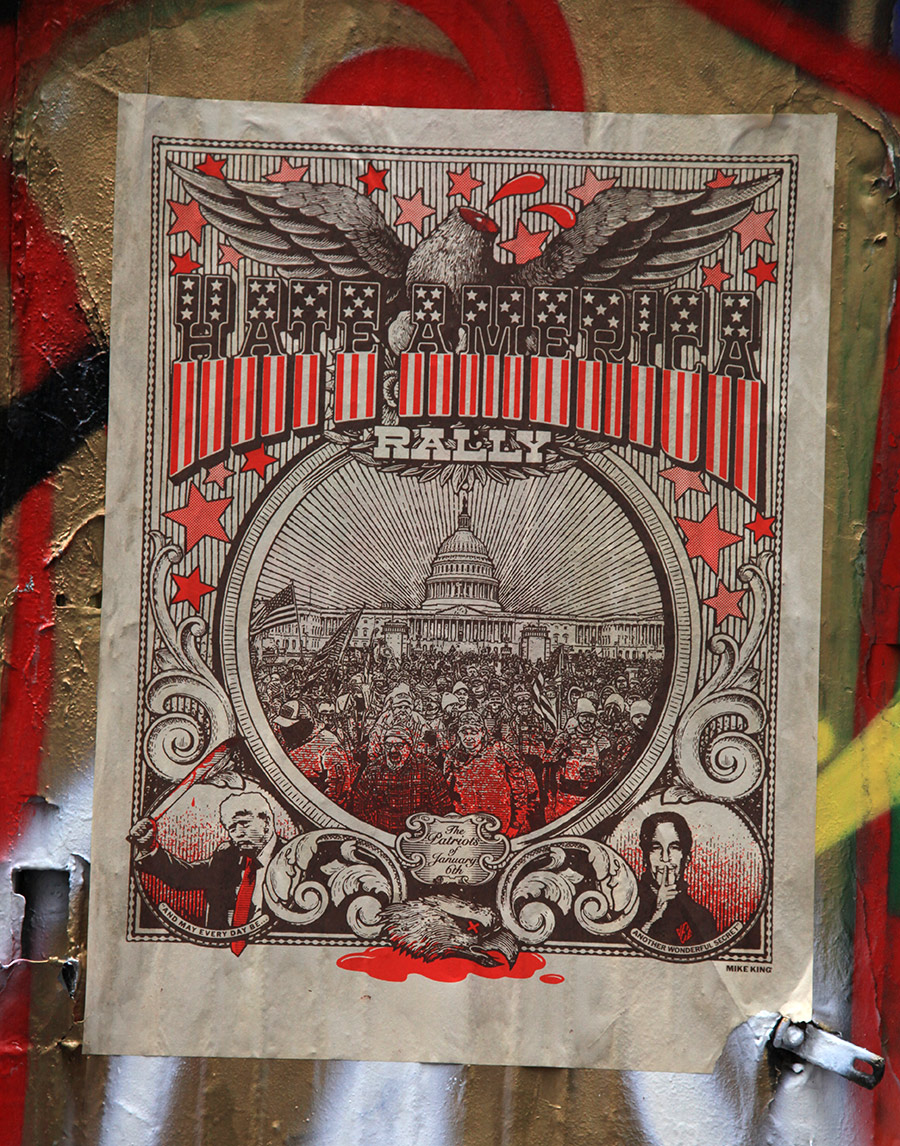
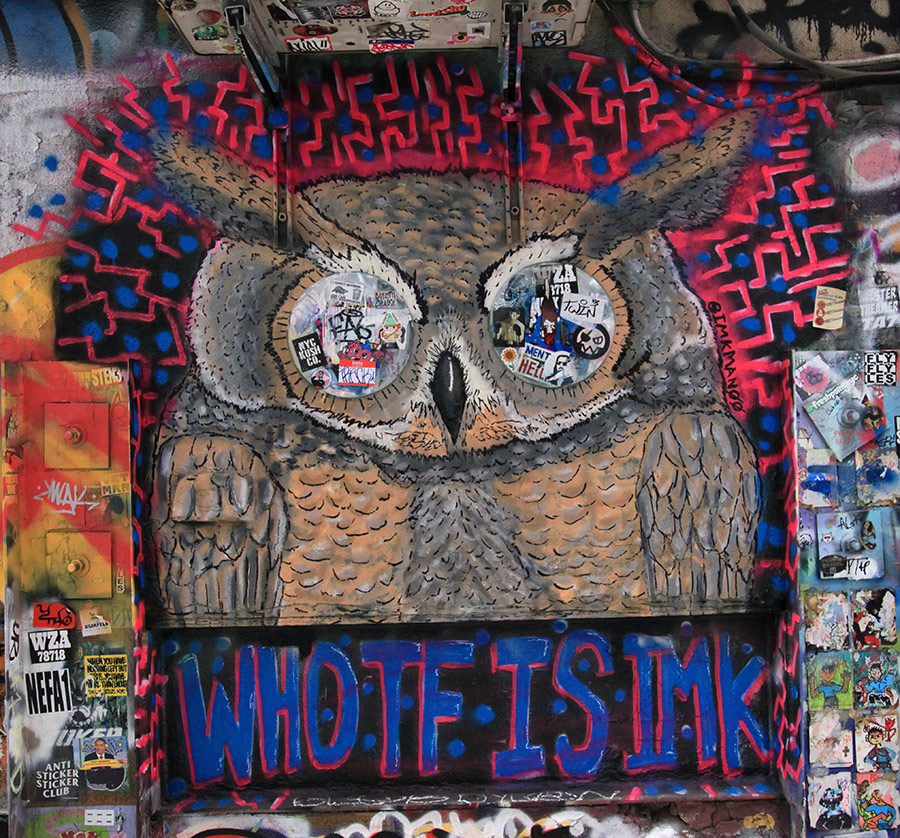
Featuring Dzel, EAZV, EXR, Gloom, Homesick, IMK, ISB, Jodi Da Real, KAMZ, Mike King, Notice, RIP Money, Shwan McArt, Silent, Smaer, Two Five, VENG, Warios, Werds, and ZOZS.
Welcome to BSA Images of the Week! The energy always builds on the streets of NYC as Halloween approaches. The night feels inky and dense, the air cold and damp, with dried leaves and bits of garbage lightly clattering across the sidewalk in sudden whirlwinds. The city’s nerves tightened this week as masked ICE agents descended on Canal Street, pursuing the sidewalk sellers of faux Chanel and Versace shades. And in a curious coincidence, the East Wing of the White House was reduced to rubble — surely a metaphor waiting to be explained.
A piece inThe Art Newspapertracks how the mayoral candidates view the arts: funding, creative-sector jobs, and affordability for artists.
In street art news, we were lucky to catch the naming of a NYC street after Jean-Michel Basquiat this week with his two sisters, step-mom, and the extended family – and an enthusiastic crowd. The City of New York dedicated the Jean-Michel Basquiat Way at The Bowery and Great Jones Street a few feet from JMB’s old studio. Some might consider it an irony that a former vandal gets his way, all these years later. Other’s recognize that these issues are not black and white, but are often GRAY.
Here’s our weekly interview with the streets, this time featuring Chusma, Dirt Cobain, JG Toonation, Mack & Frodrik, Merck, Modomatic, Outer Source, SAMO, Uncut Art, and Unfollow.
Seth: On Walls. Julien Malland. 2023. (photo courtesy of MCL)
Reprinted from the original review.
On Walls presents a decade of mural work by French street artist Julien Malland, known as Seth Globepainter. Published by Editions de La Martinière and distributed by Abrams, the book documents Seth’s travels through urban and rural communities worldwide, placing his distinct visual language into diverse local contexts shaped by history, conflict, and transition.
Seth’s imagery blends saturated palettes, geometric constructions, and elements of folklore. His recurring figures—faceless children—are staged within environments that suggest both vulnerability and resilience. Across 256 pages, On Walls traces a path from Phnom Penh to Palestine, from Haiti to Ukraine, each mural shaped by the physical and social landscapes where it was created.
Seth: On Walls. Julien Malland. 2023. (photo courtesy of MCL)Seth: On Walls. Julien Malland. 2023. (photo courtesy of MCL)
Title: SETH on Walls Published: Editions de La Martiniere. 2022. Distributed by Abrams. An imprint of ABRAMS, 2023. Author: SETH Language: English
Marc H. Miller is the kind of New Yorker who knows how to save the scraps. Posters, flyers, zines, and announcement cards that most people folded into back pockets and forgot — Miller kept them. Out of those boxes came Gallery 98, a living archive of downtown’s unruly art history, told through the paper that passed hand to hand.
The period that is most alive in this collection spans from the 1970s into the 1990s, when the city was both falling apart and brimming with invention. Cheap rents and abandoned buildings drew in art school kids, squatters, and the first waves of graffiti writers moving beyond the train yards. You see Blade, Lee, Daze, Crash, Lady Pink, LA II — writers who set the pace before names like Haring and Hambleton followed with their own vocabularies on the street.
Blade: From Subway Trains to International Galleries. Via Gallery 98. (image screenshot from the video)
The streets and clubs were full of crossings: drag performers, punks, hip-hop DJs, and young artists finding each other downtown. Groups like Colab squatted buildings and staged wild exhibitions; ABC No Rio opened as an outpost for confrontation and community. Ephemera from those nights — an invite, a Xeroxed flyer — is what Gallery 98 specializes in, proof that the most disposable things sometimes carry the longest shadows.
L.E.S. Sculpture Garden 1985. Via Gallery 98. (image screenshot from the video)
By the 1990s, the energy pushed into new corners. Ad Hoc Gallery, Skewville, Bast, Shepard Fairey — the next wave of artists who kept the mix alive, printing, pasting, and staging in ways that bent art back toward the street even as it was pulled into galleries. Gallery 98 carries these moments forward too, charting how one generation’s walls became another’s starting point.
Miller’s project isn’t nostalgic so much as archival. It’s about memory, about how the downtown scene keeps resurfacing through its paper trail. Some get nervous seeing counterculture artifacts priced and sold — but without this kind of attention, much of it would be lost entirely. Gallery 98 reminds us that history is often fragile, and sometimes the only way to keep it is to hold onto what was once throwaway.
Here are a few new clips that work both as a lesson and a showcase. All videos: written, edited, and narrated by Cole Berry-Miller. Text in quotes by Marc H. Miller
BLADE the Legend
“The rise of graffiti in the 1970s and 80s radically challenged many aspects of the mainstream art world. Blade (Steven Ogburn) was an early pioneer whose innate sense of color, scale and design earned him international recognition. Much of the material used in this video comes from a large collection of Blade material that Gallery 98 recently acquired from his longtime Bronx friend, Ronnie Glazer. “
Blade: From Subway Trains to International Galleries. Via Gallery 98. (image screenshot from the video)Blade: From Subway Trains to International Galleries. Via Gallery 98. (image screenshot from the video)L.E.S. Sculpture Garden 1985. Via Gallery 98. (image screenshot from the video)
Rivington School Sculpture Garden: Making Art Out of Junk Metal Found on The Street, 1985 – 1987
“In 1985, sculptors hanging out at No Se No, a Lower East Side artist-run bar, began using an adjacent empty lot to create a bizarre sculpture garden made up of pieces of junk metal found on the streets. The city would soon demolish its work, but it has lived on in photographs by Toyo Tsuchiya (1948 – 2017), who, in the year before he unexpectedly died, collaborated with Gallery 98 in creating a portfolio tracing the garden’s history.”
L.E.S. Sculpture Garden 1985. Via Gallery 98. (image screenshot from the video)L.E.S. Sculpture Garden 1985. Via Gallery 98. (image screenshot from the video)L.E.S. Sculpture Garden 1985. Via Gallery 98. (image screenshot from the video)
Breaking Into an Abandoned City-Owned Building to Mount an Exhibition About Real Estate, 1980
“When the artist group Colab wanted to present an exhibition about real estate abuses, they decided that the best way to get attention was to break into an empty city-owned building and mount it there. The exhibition was quickly shut down, but in a surprising twist, the Real Estate Show gave birth to the alternative art space ABC No Rio Dinero, which continues to thrive 45 years later.”
COLAB. Illegal Real Estate Show. Manhattan, NYC. 1980. Via Gallery98. (image screenshot from the video)COLAB. Illegal Real Estate Show. Manhattan, NYC. 1980. Via Gallery98. (image screenshot from the video)COLAB. Illegal Real Estate Show. Manhattan, NYC. 1980. Via Gallery98. (image screenshot from the video)COLAB. Illegal Real Estate Show. Manhattan, NYC. 1980. Via Gallery98. (image screenshot from the video)COLAB. Illegal Real Estate Show. Manhattan, NYC. 1980. Via Gallery98. (image screenshot from the video)
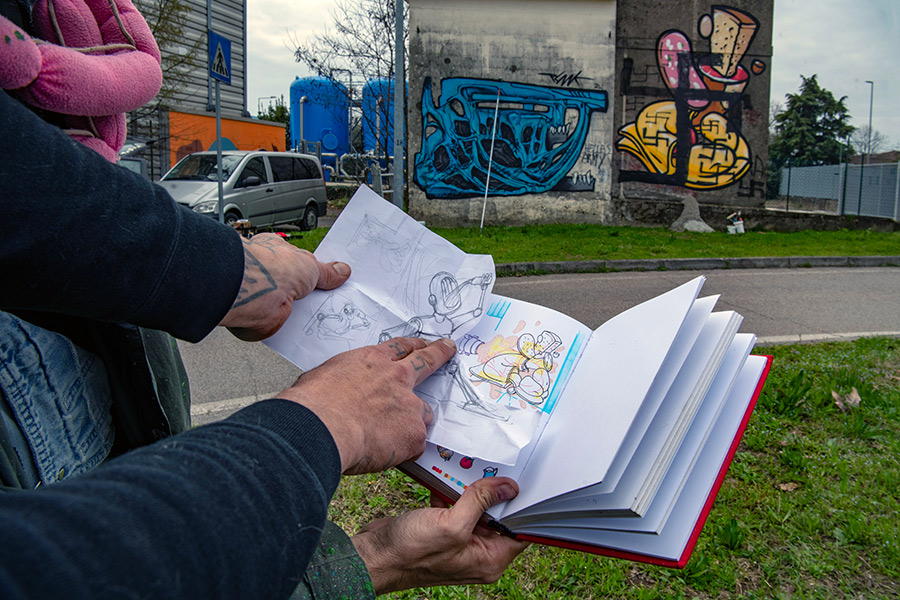
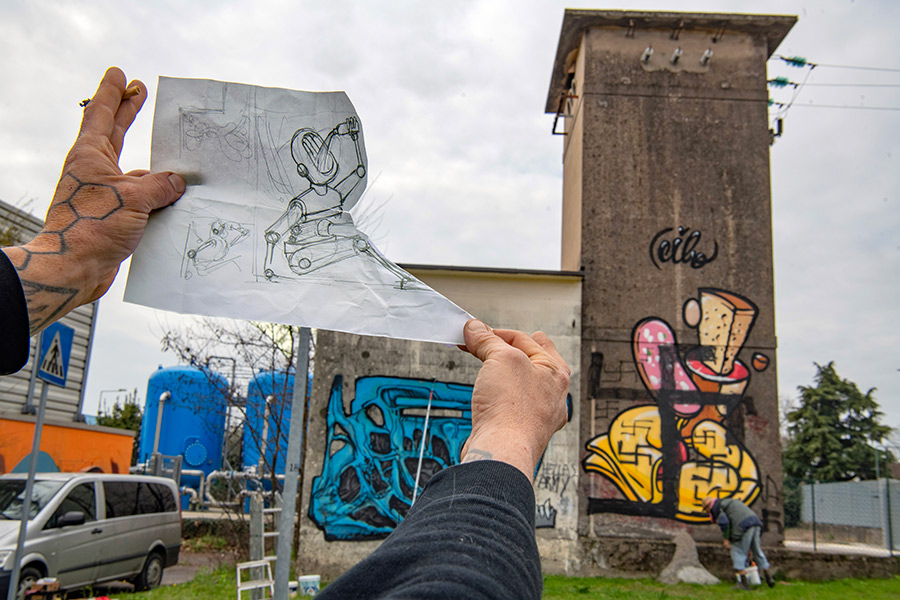
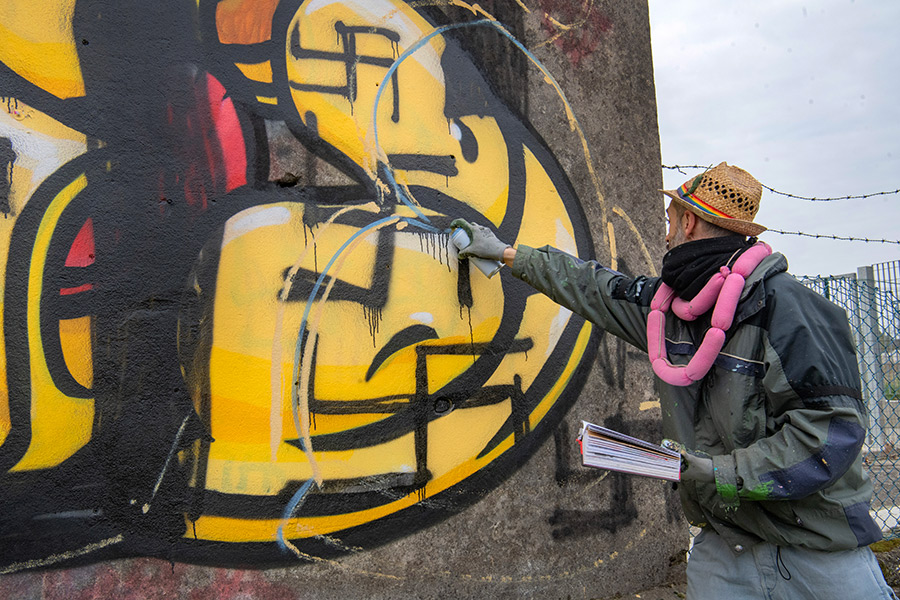
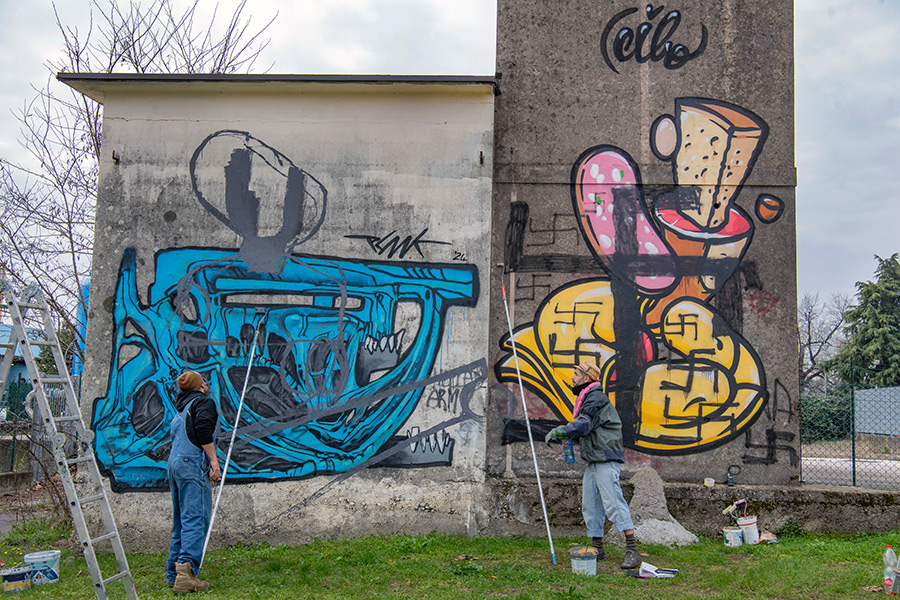
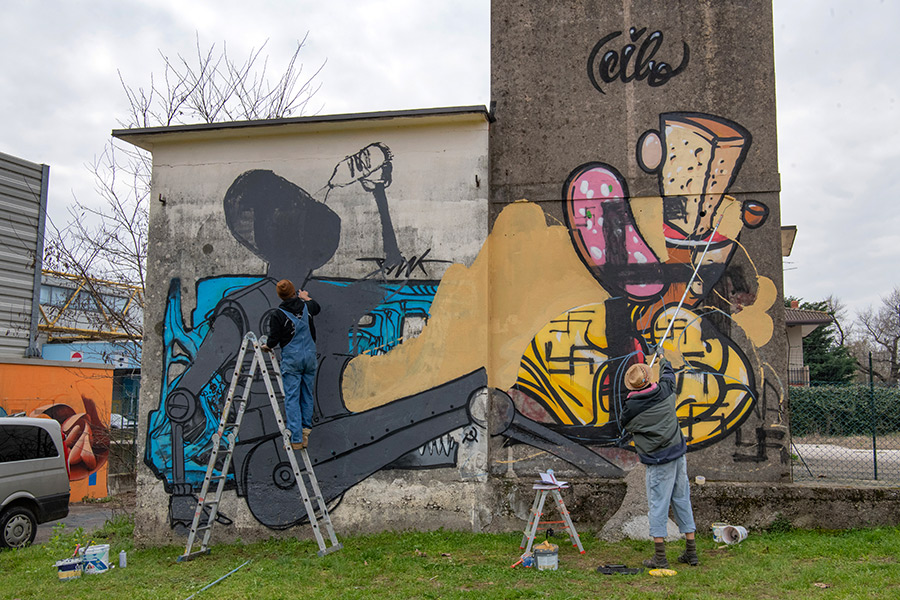
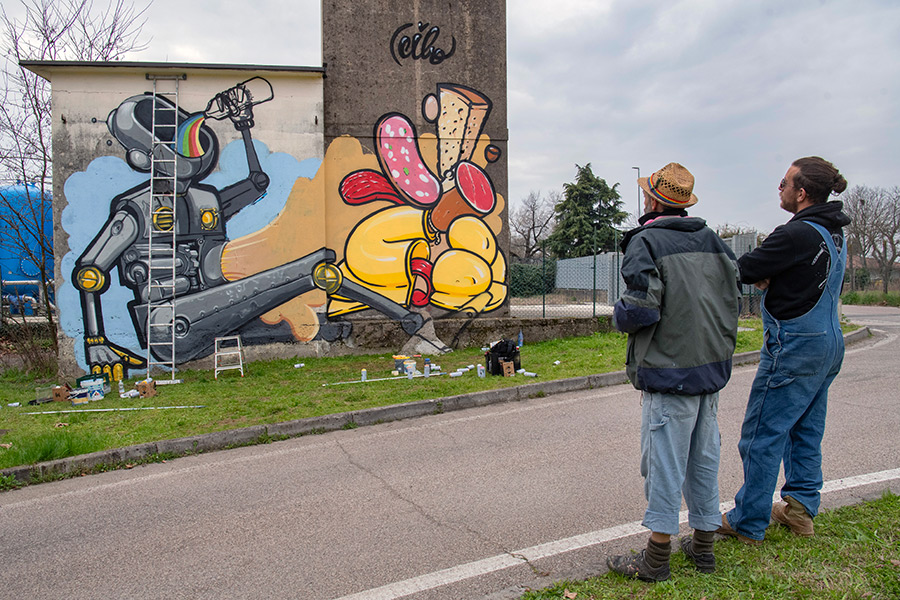
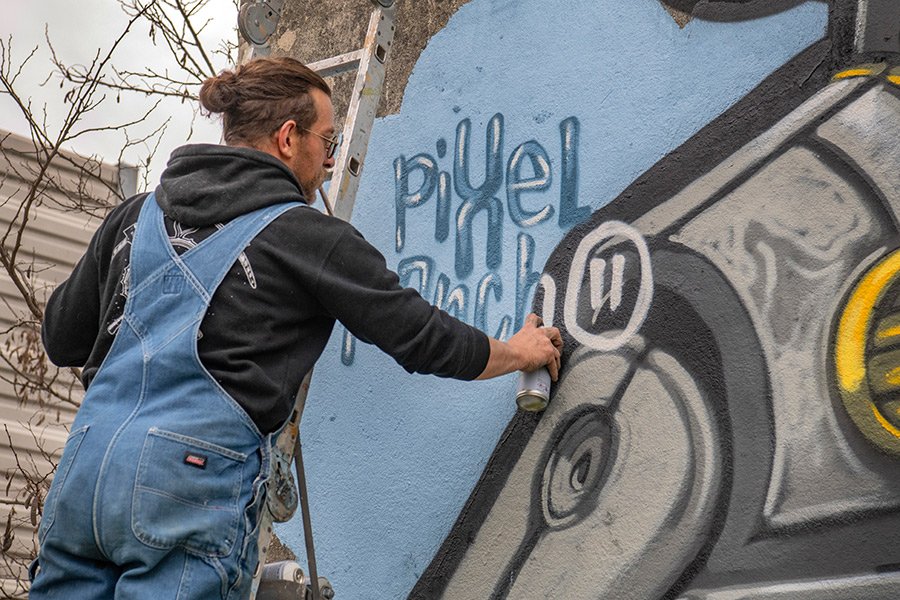
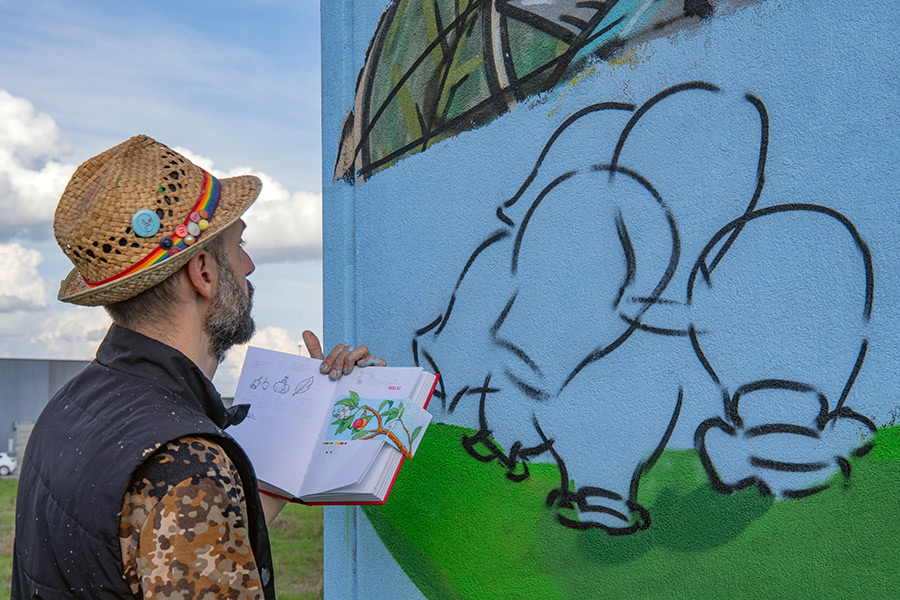
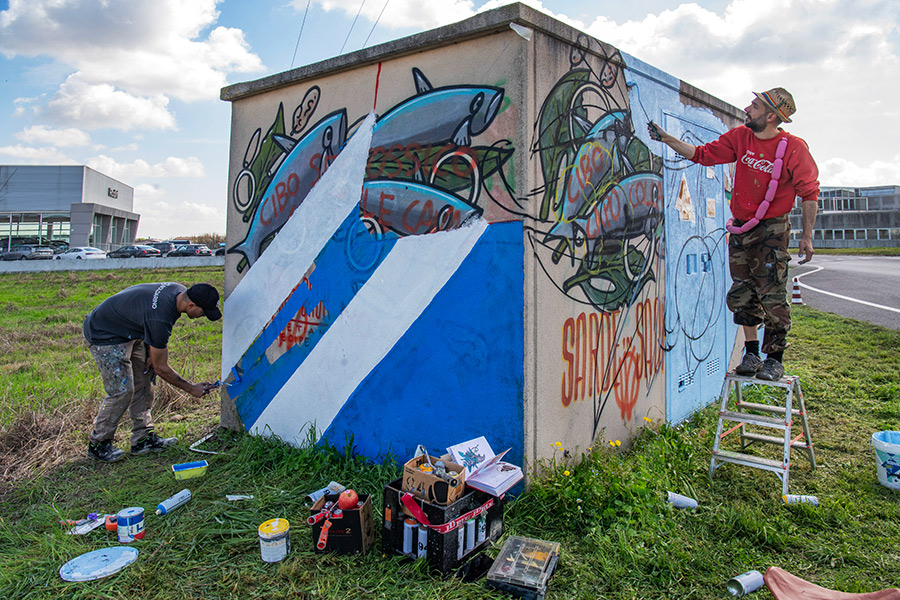
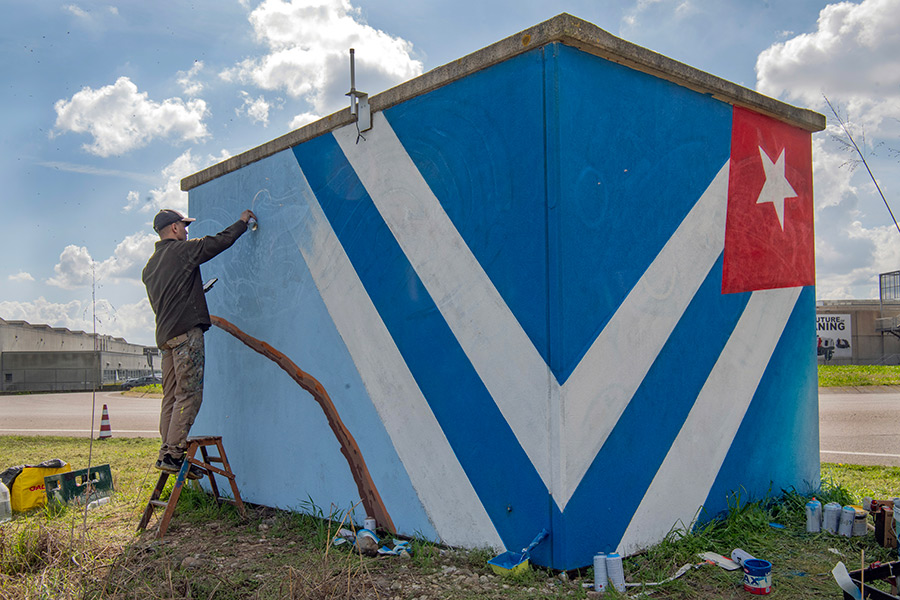
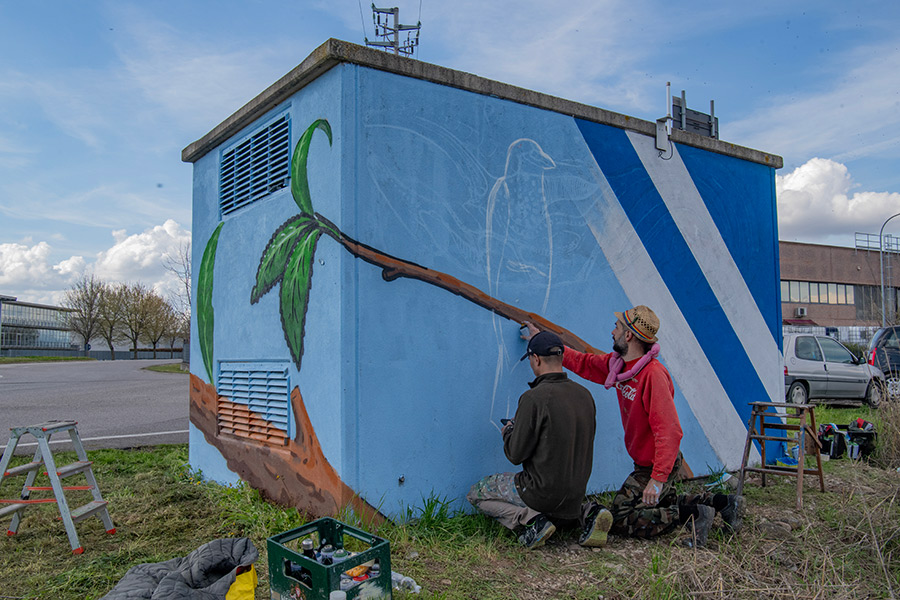
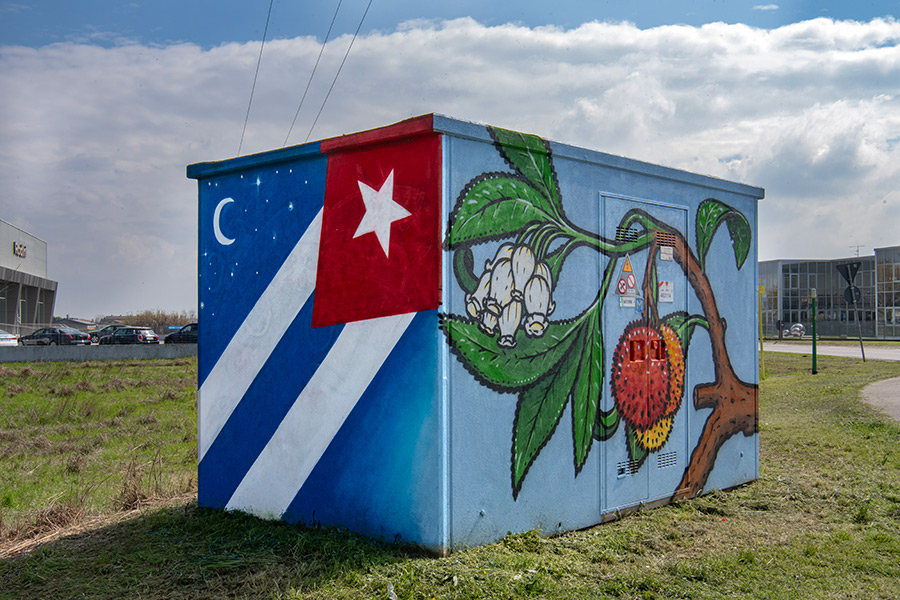
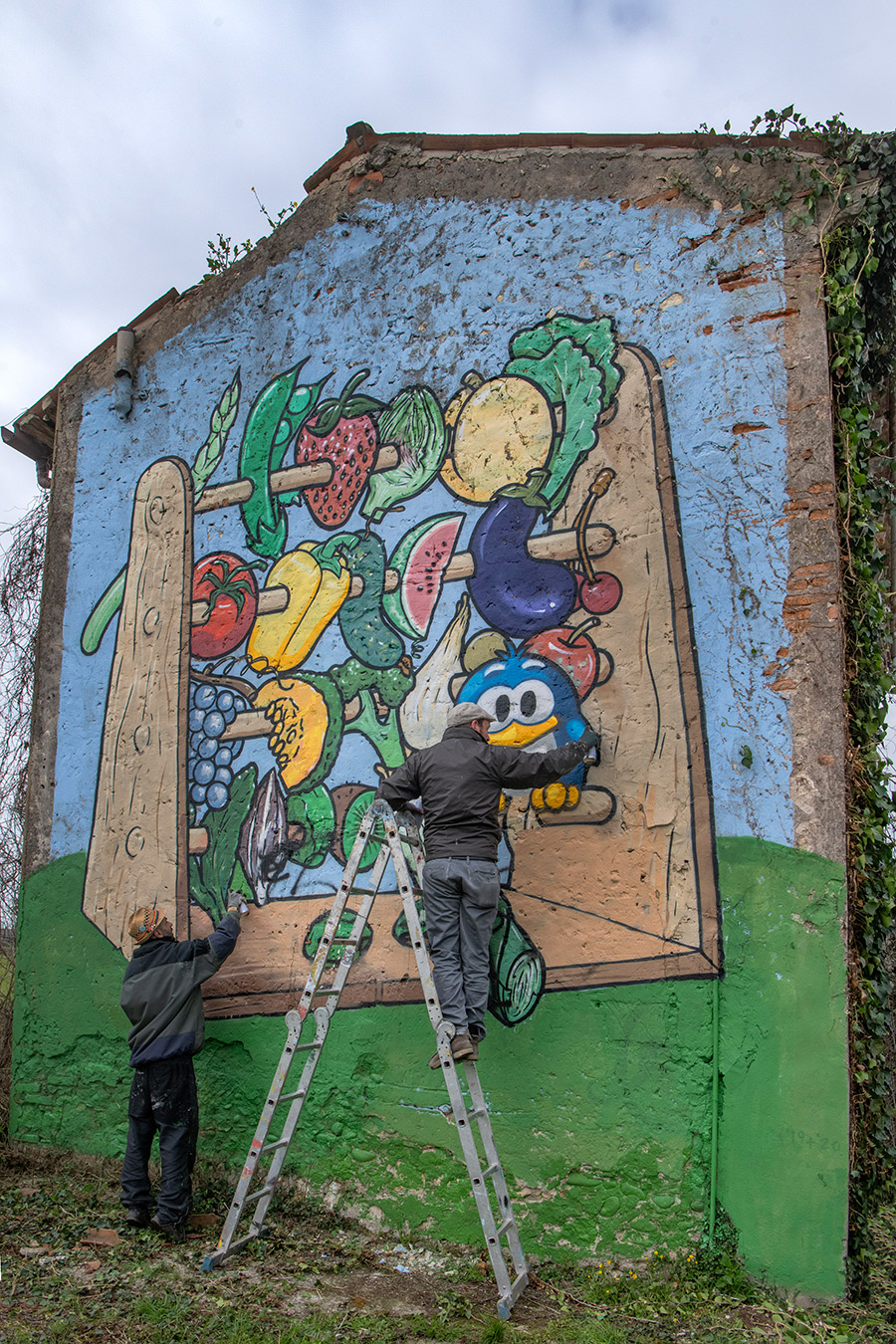
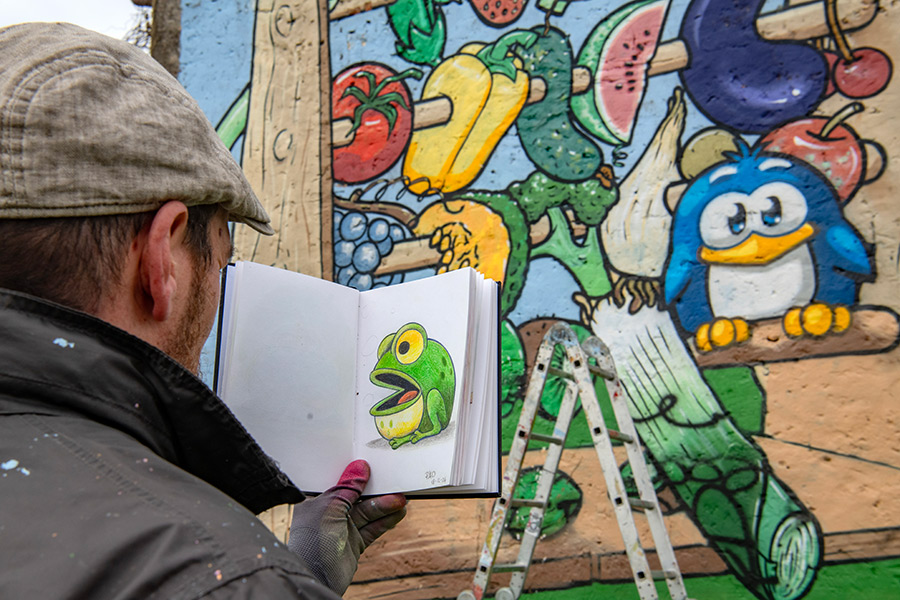
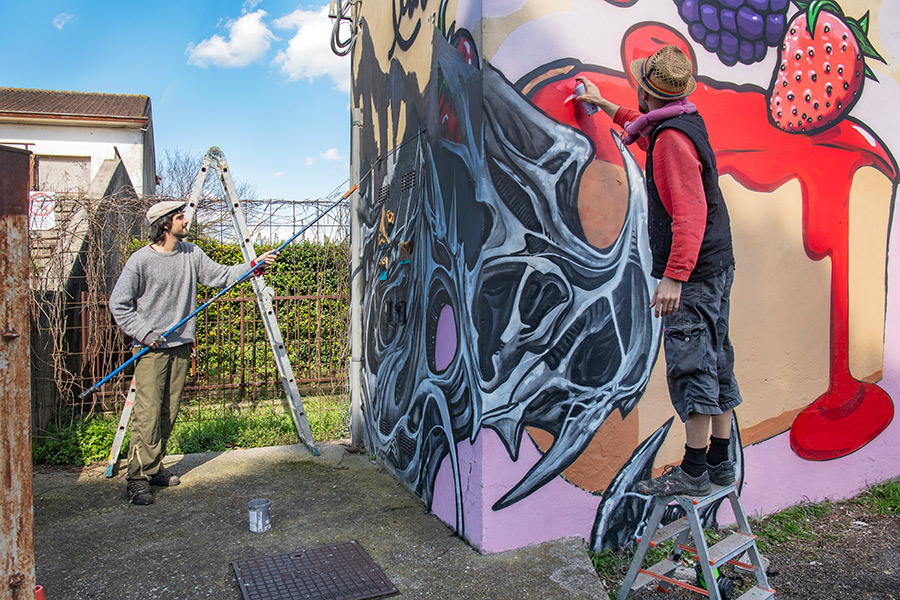
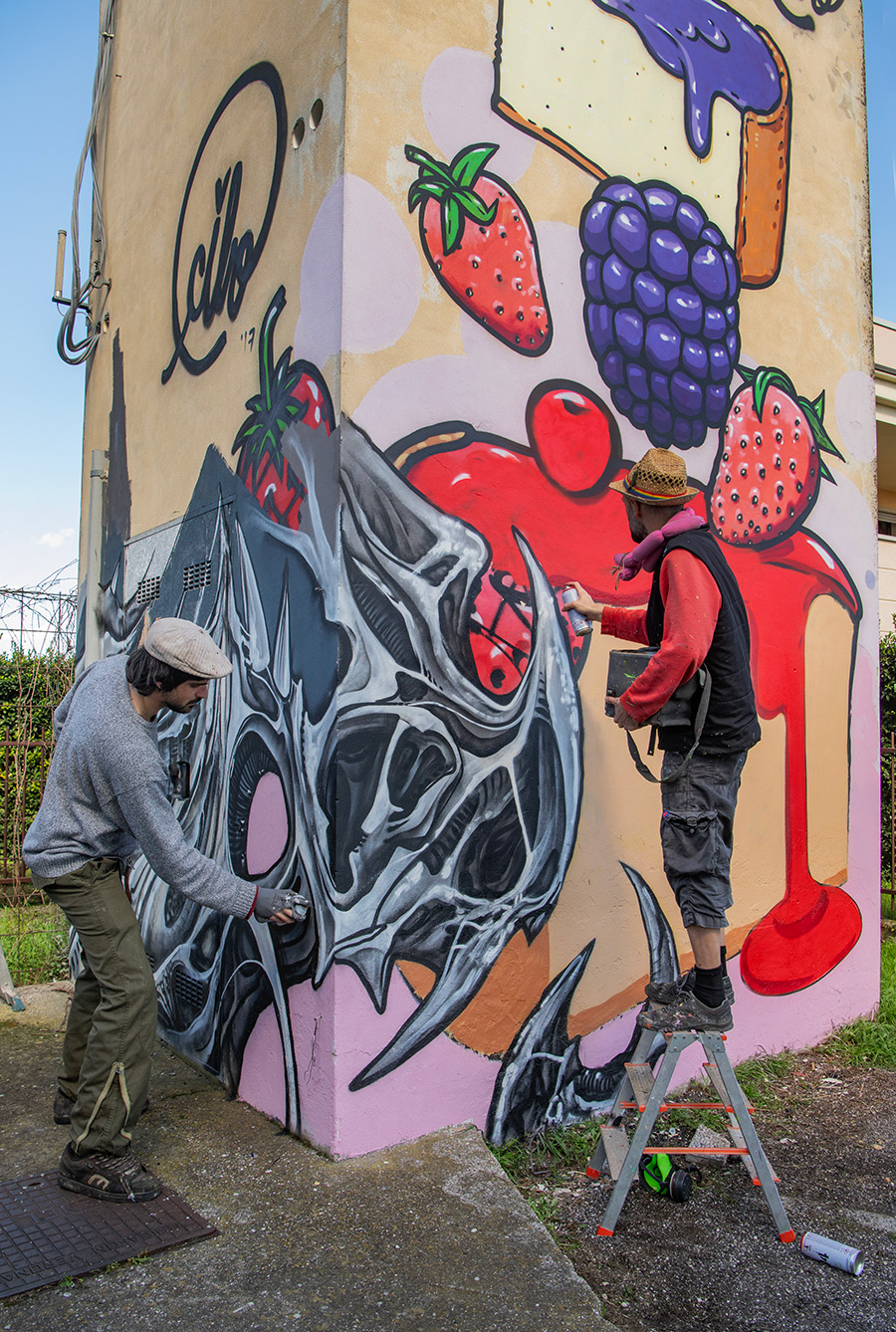
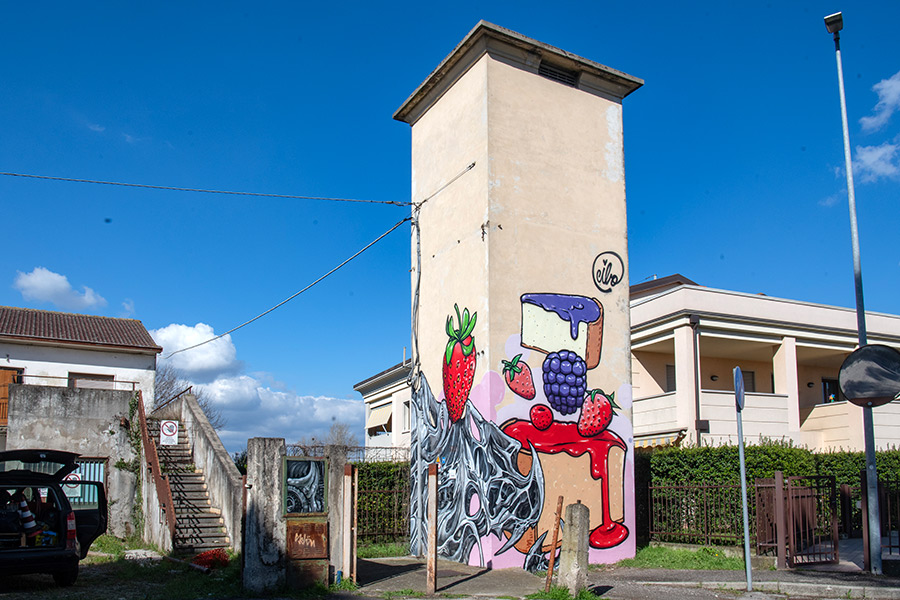
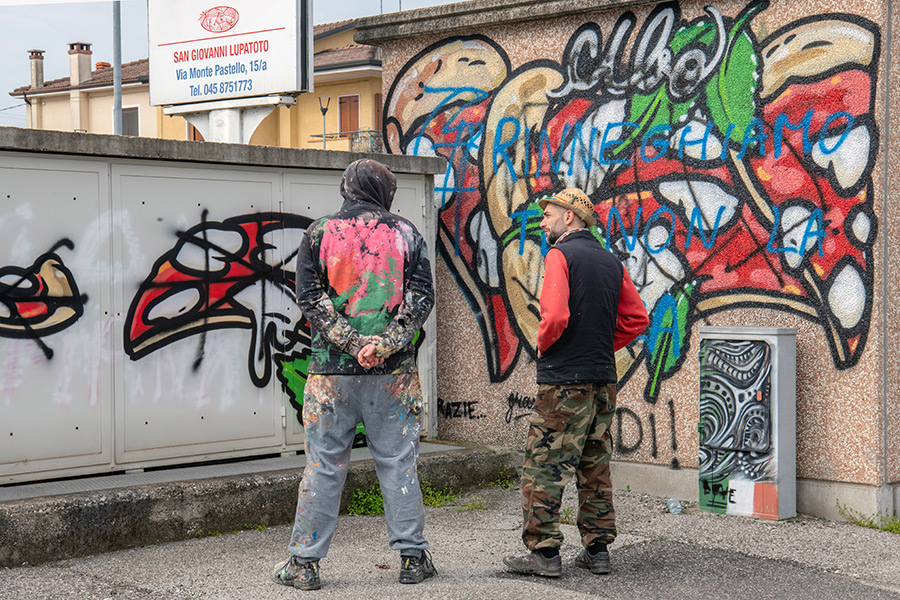
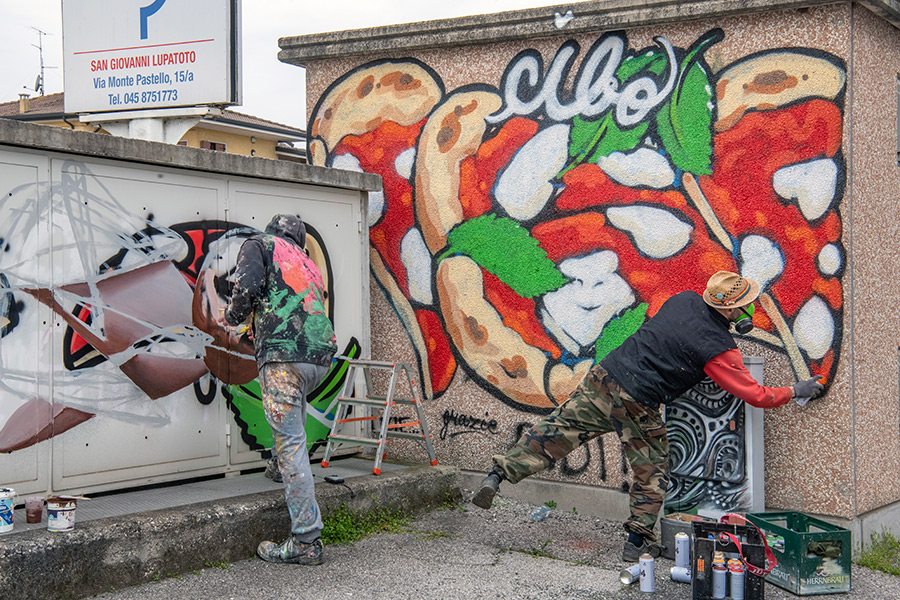
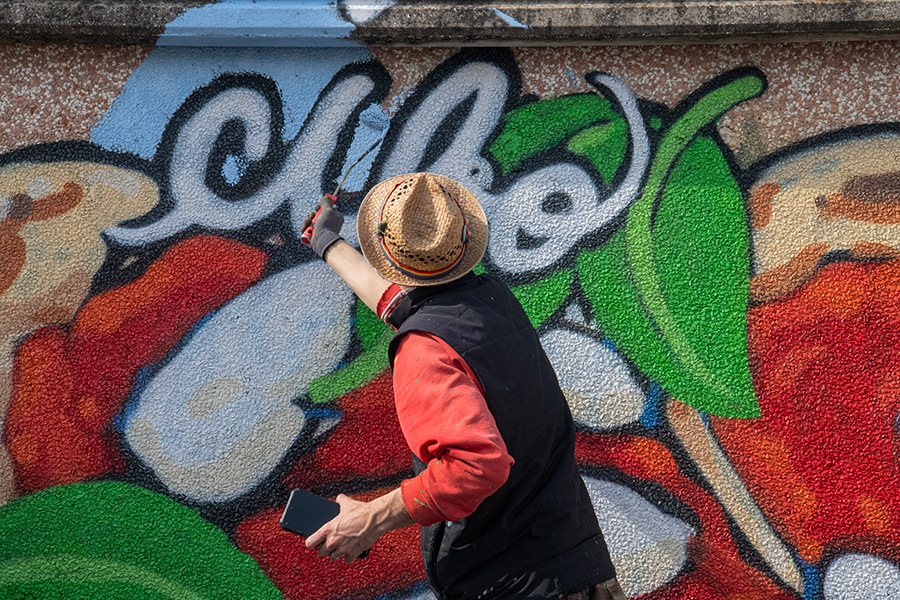
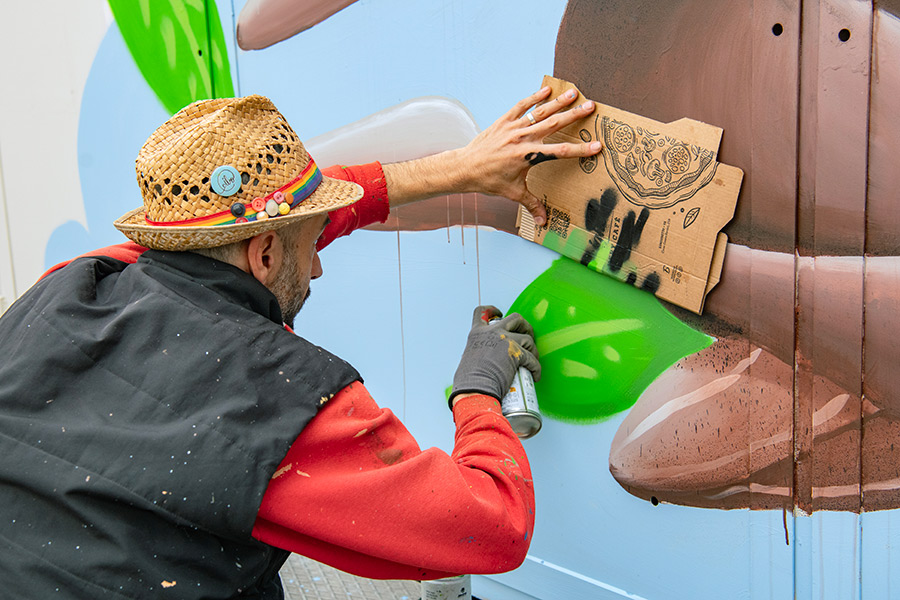
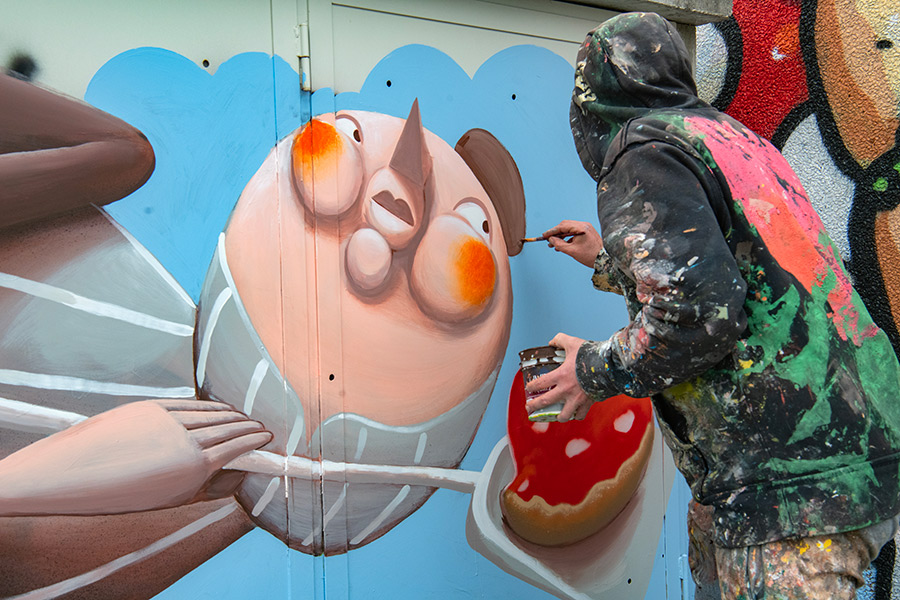
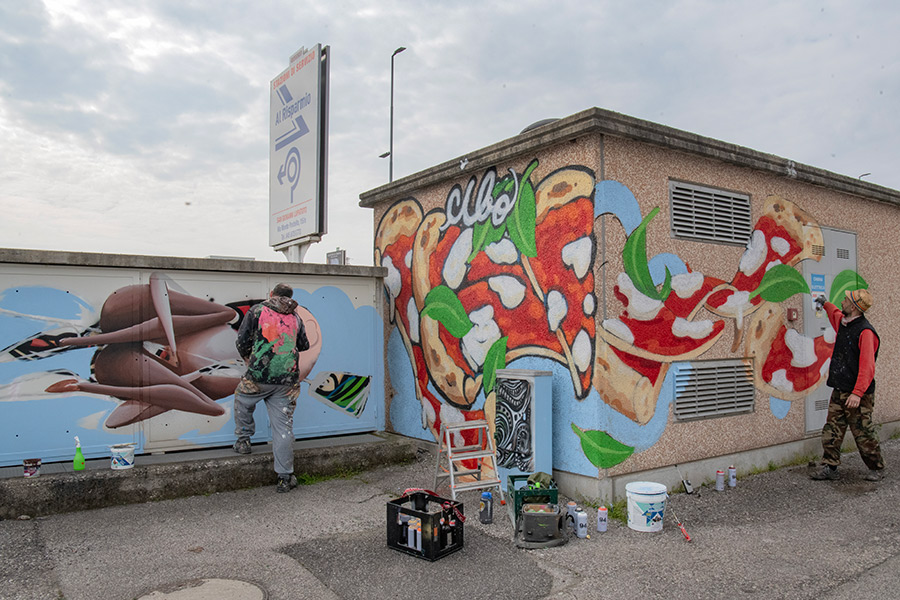
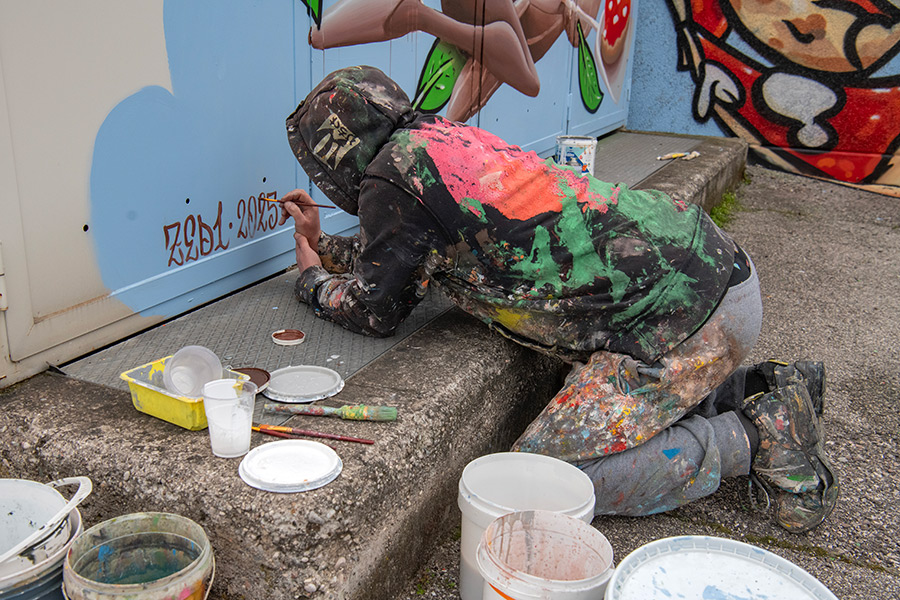
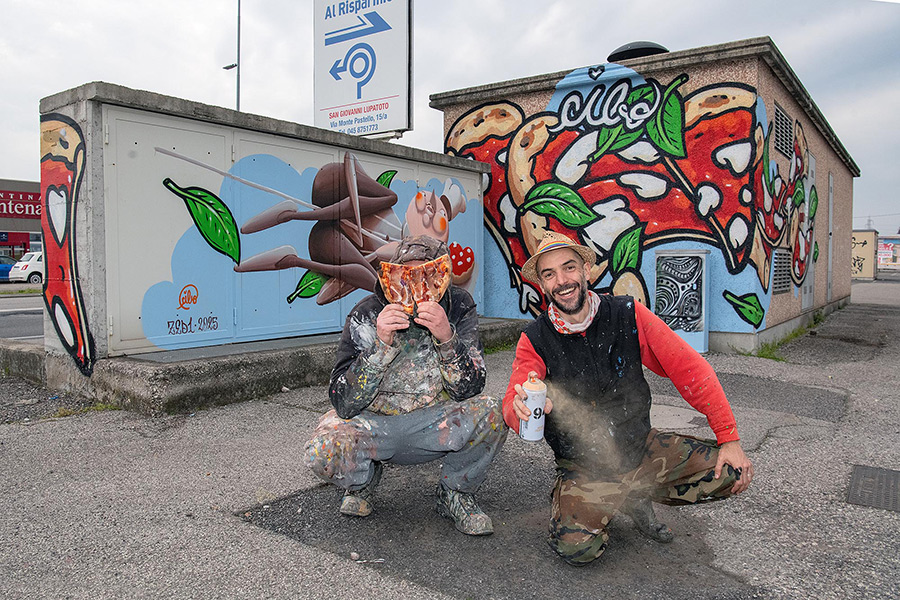
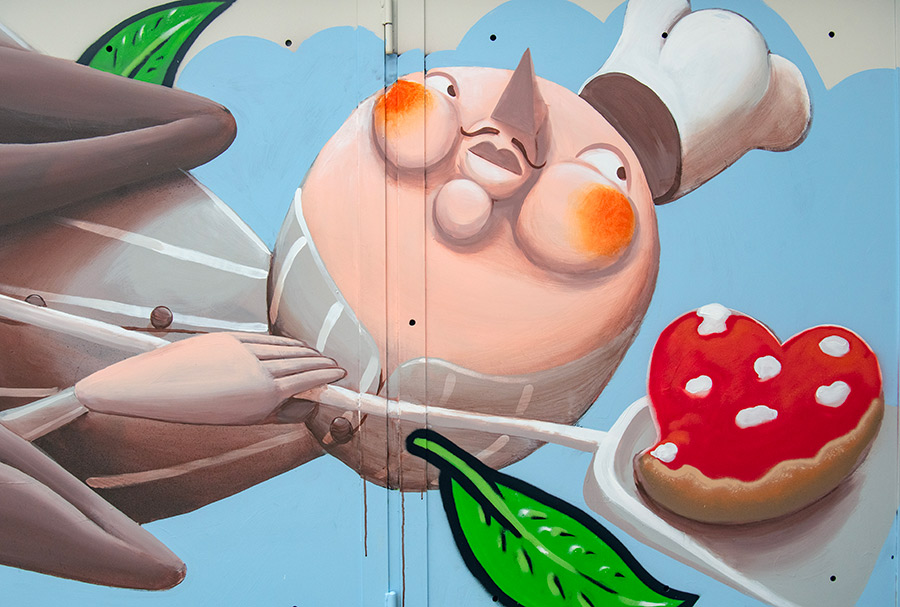
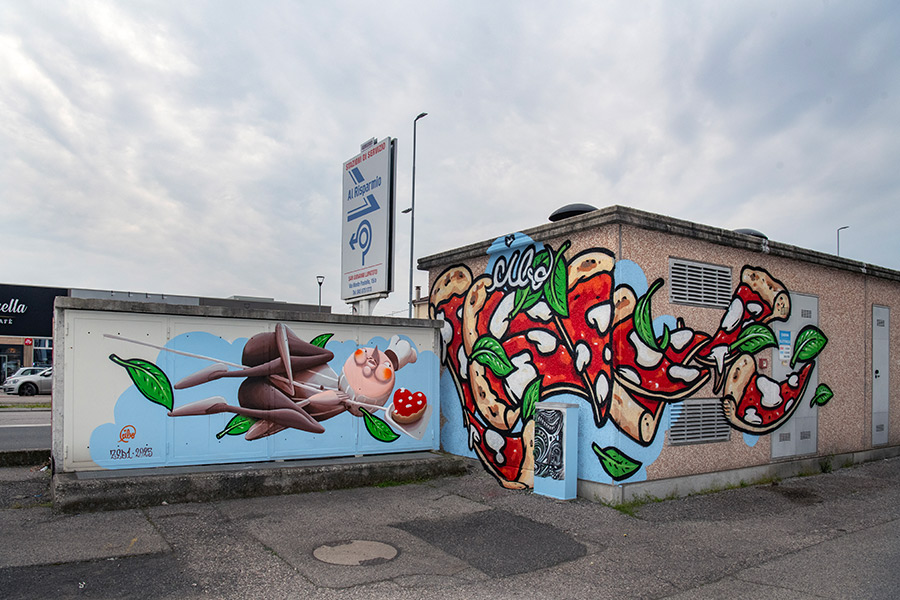
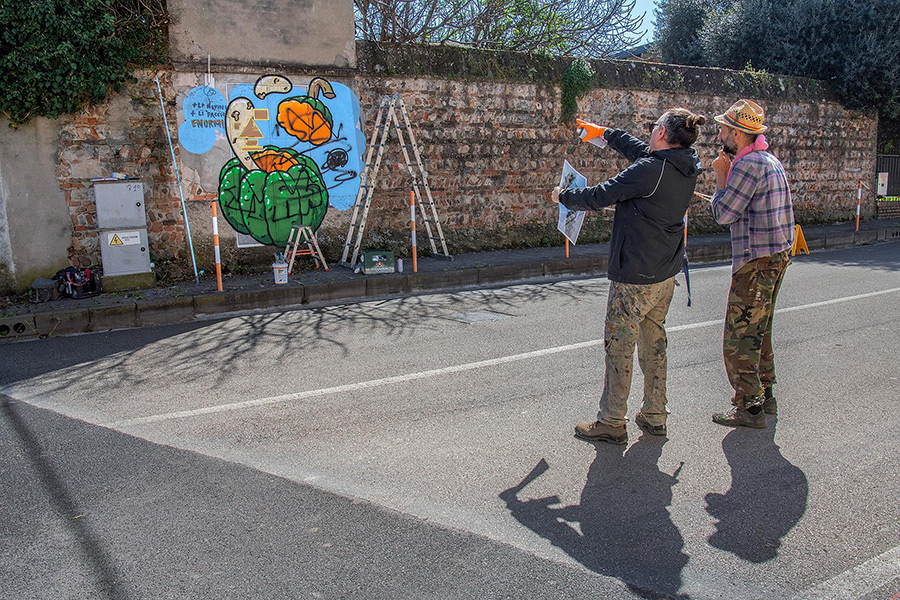
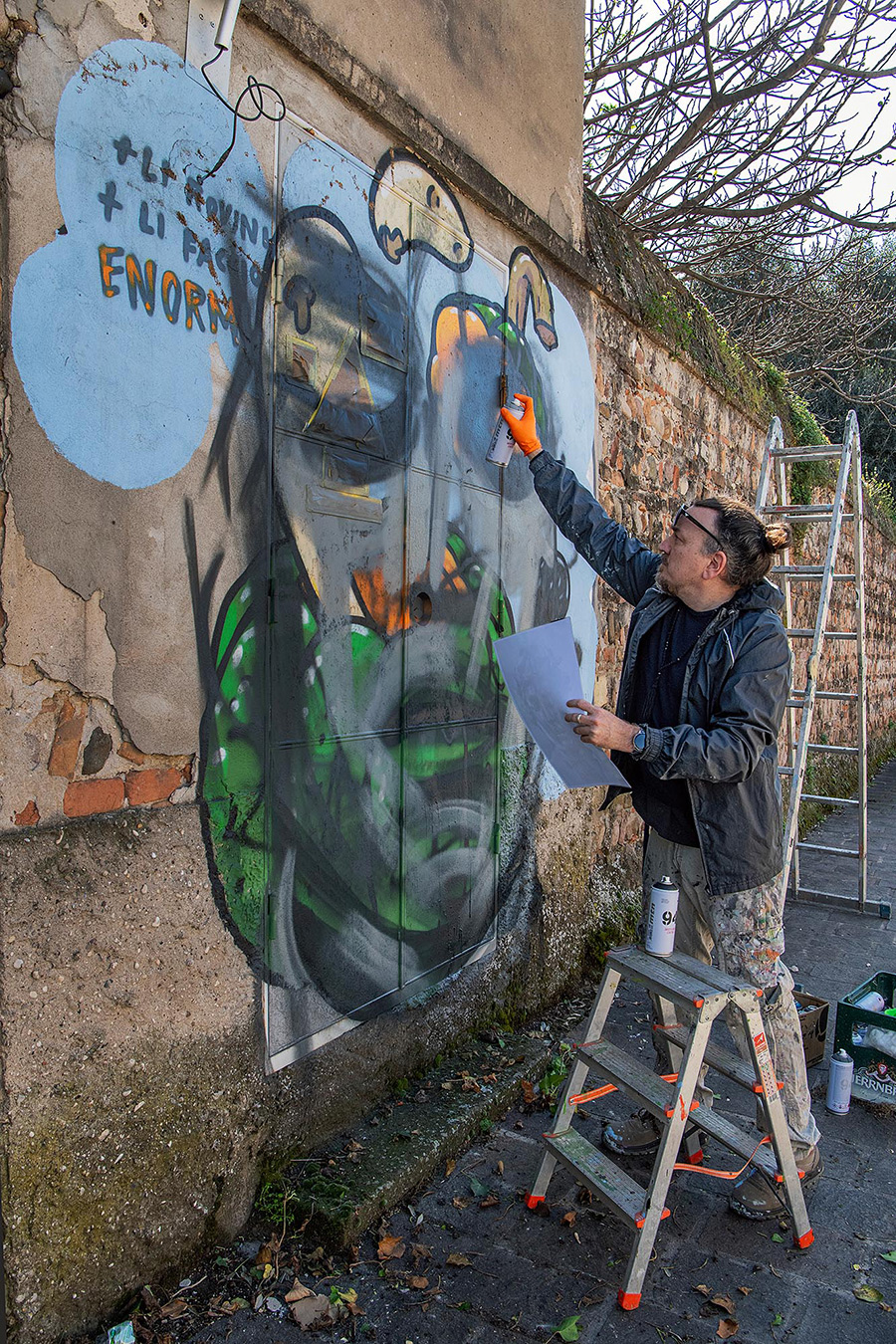
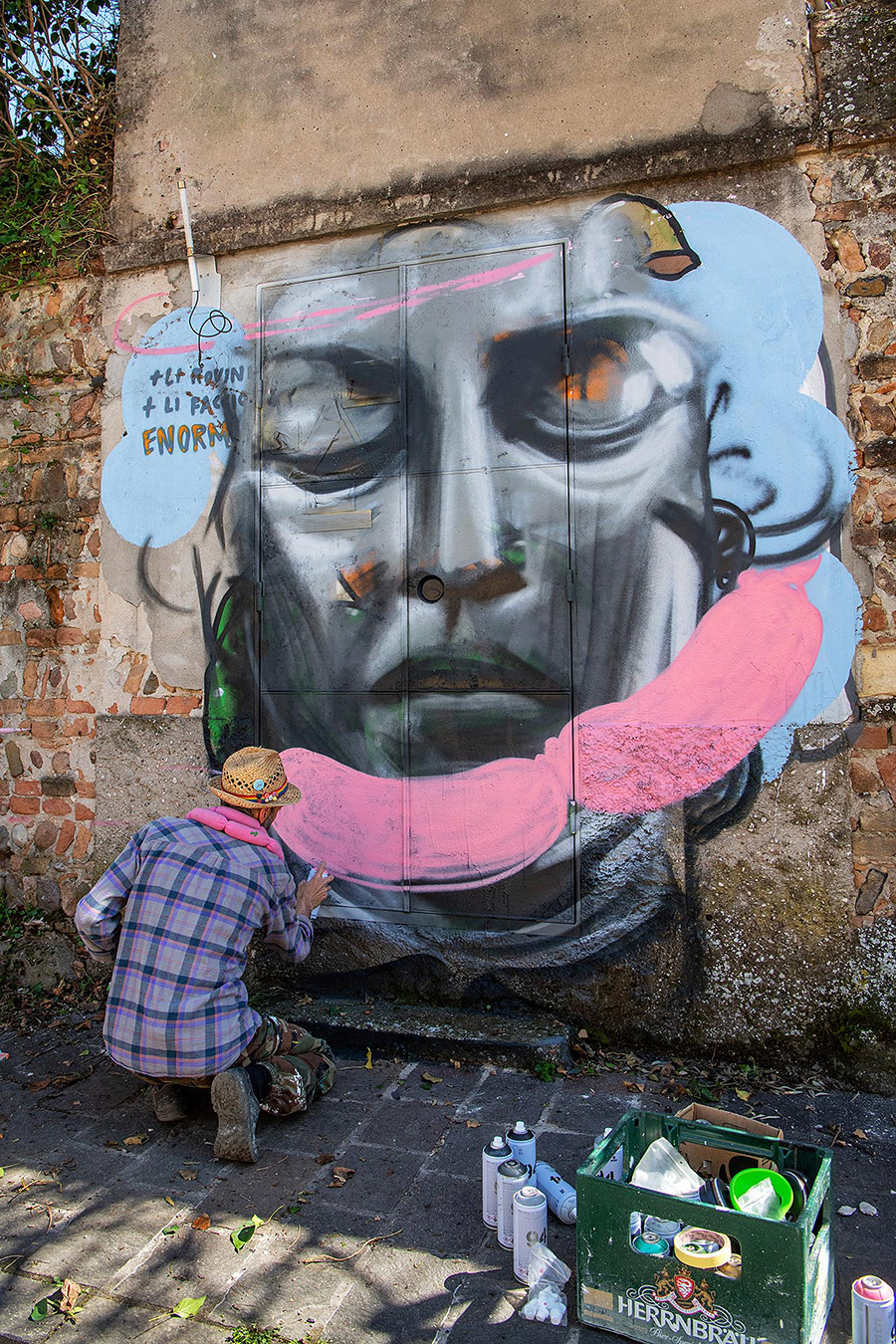
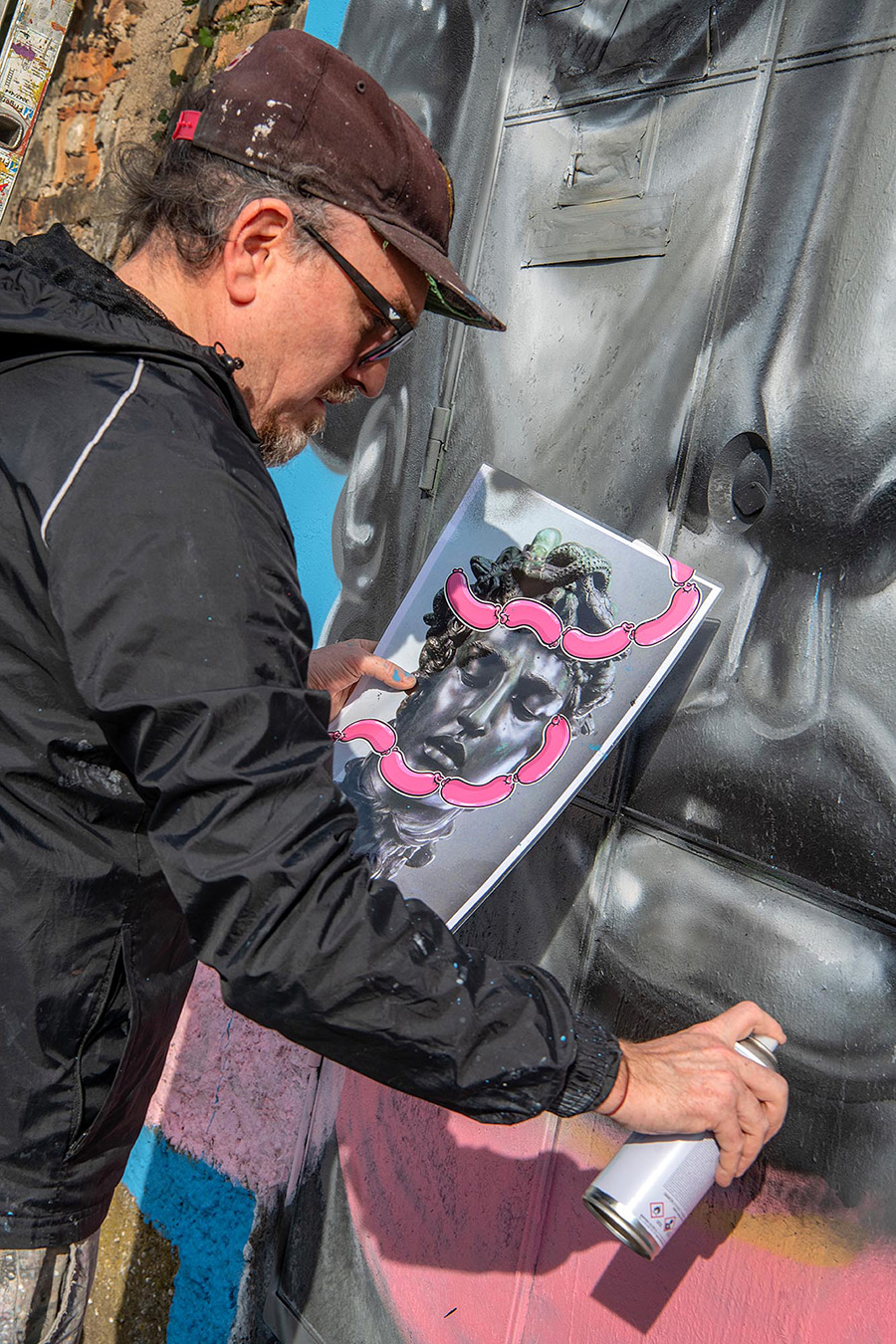
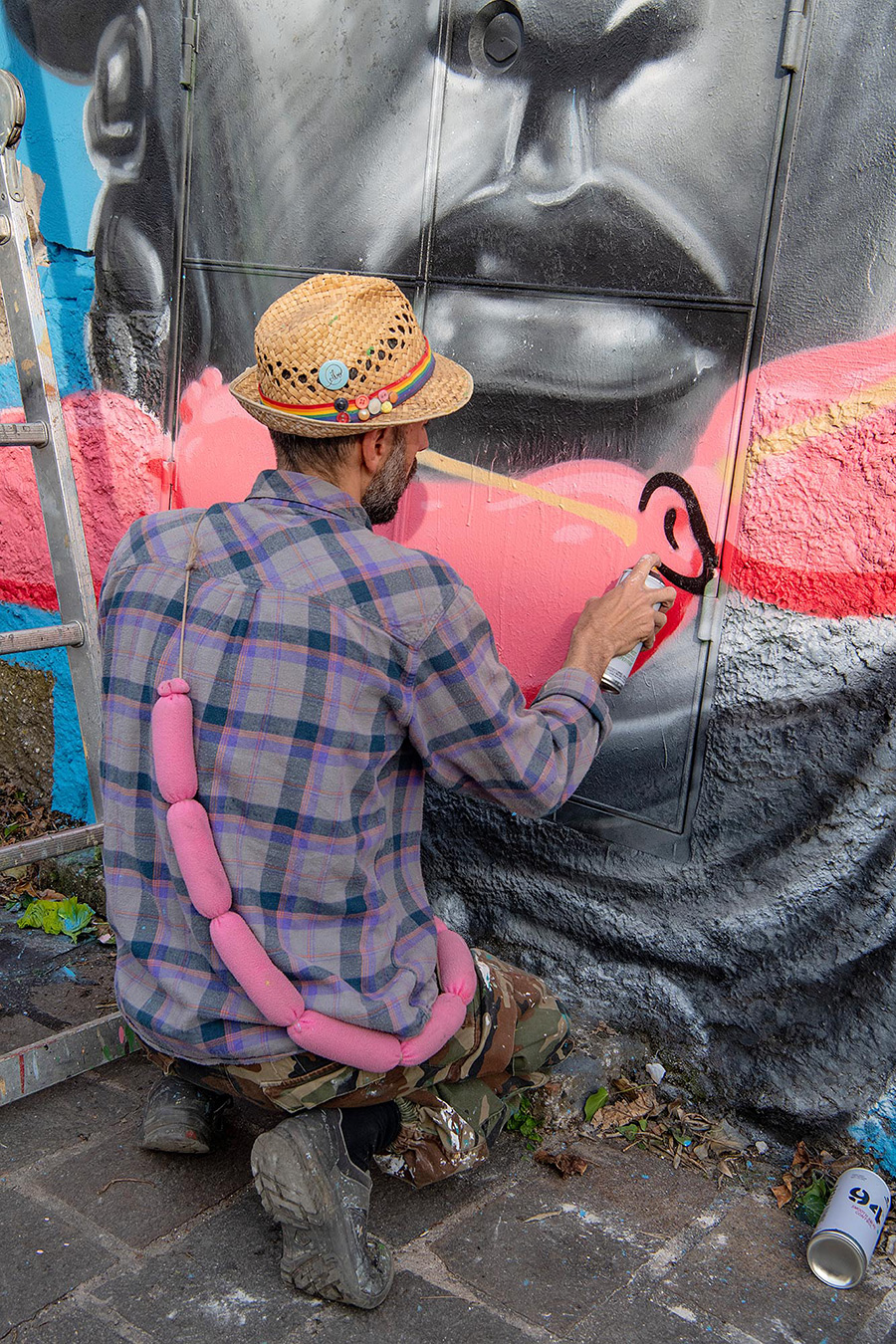
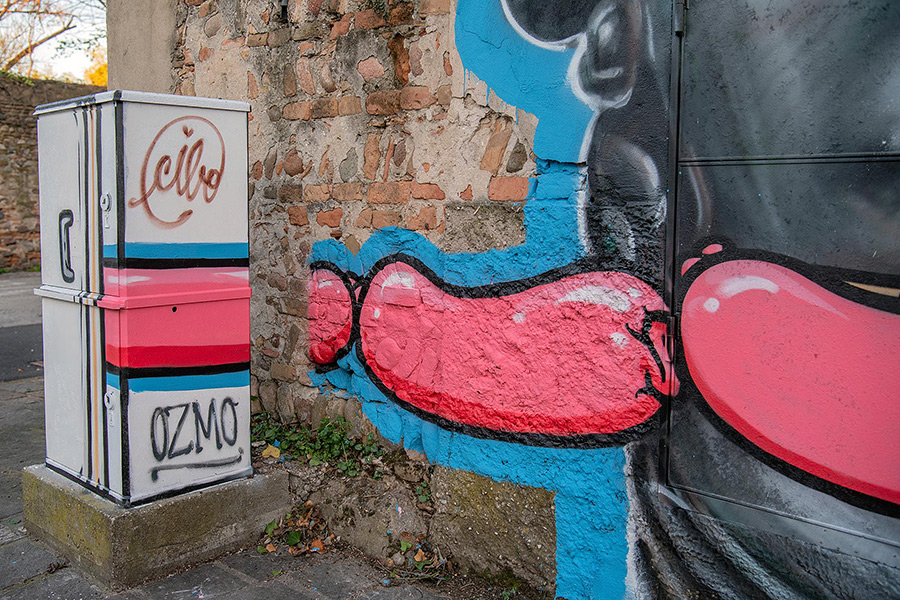
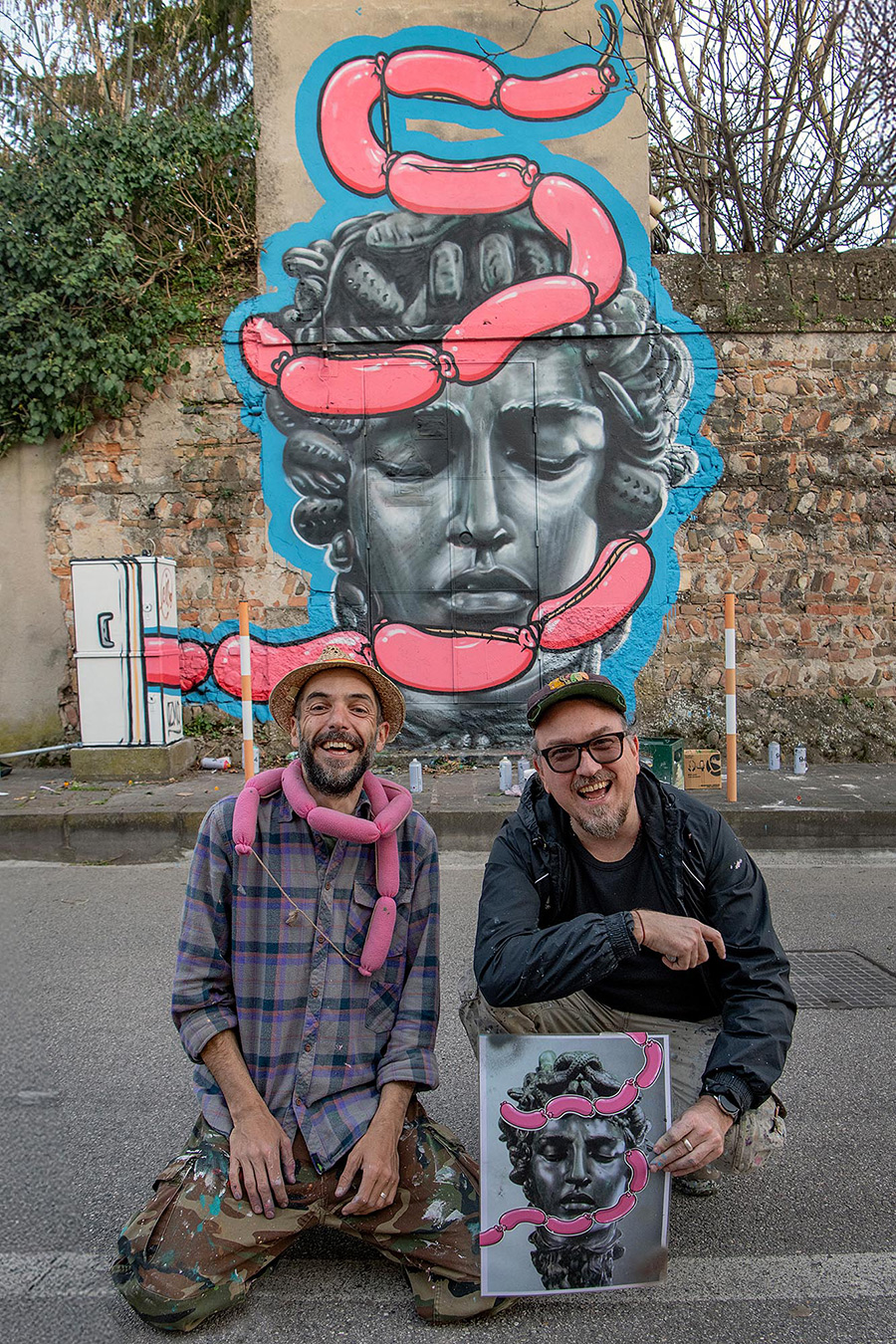
Street art, food, and antifascist activism collided on the walls of Verona – and we’re back for seconds. In Part I, we witnessed how local hero CIBO and a crew of international street artists turned hate-fueled graffiti into gourmet-inspired murals, reclaiming public space with humor and heart. Now, welcome to Part II of “Best Before. Street Art Against a Rancid Future,” where we dive even deeper into this unique festival of creative resistance. Here we have more exclusive Martha Cooper shots of the artists in action. Grab a slice of pizza and join us as we continue the tour of Verona’s transformed walls, proving that even the most bitter messages can be remixed into something surprisingly sweet.
Spanish artist Gonzalo Borondo, from Valladolid, arrives at LuzMadrid Festival with Redentora, a site-specific installation that continues his steady movement …Read More »
 BROOKLYN STREET ART LOVES YOU MORE EVERY DAY