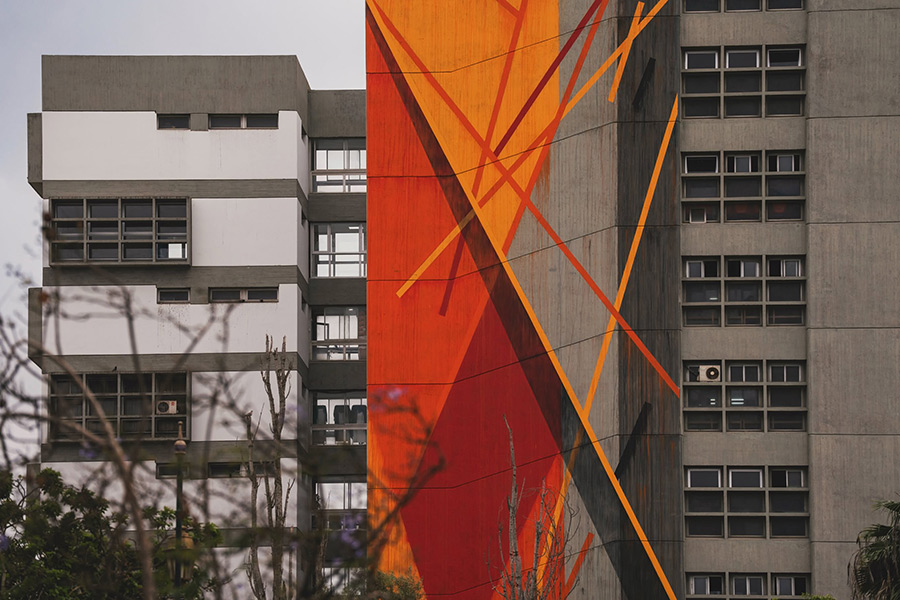
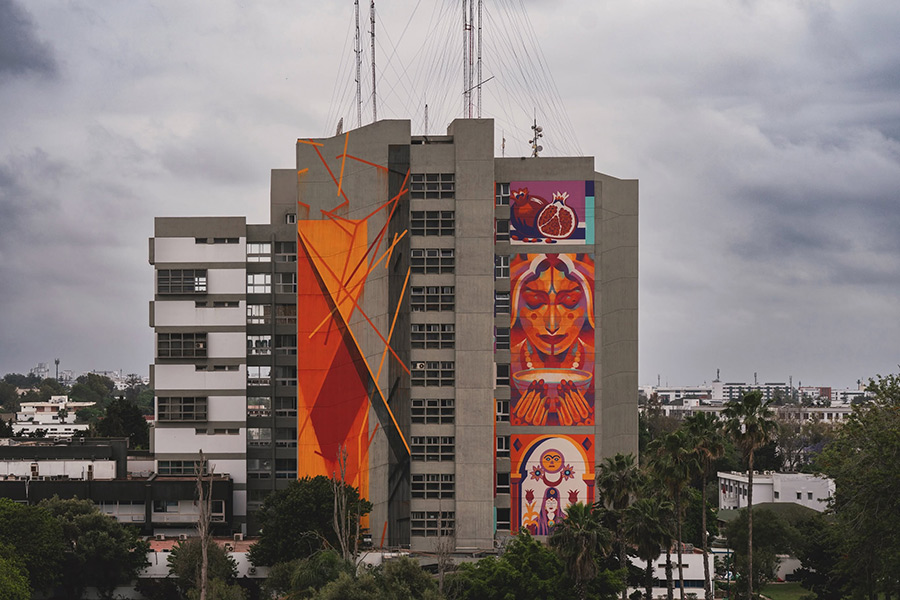
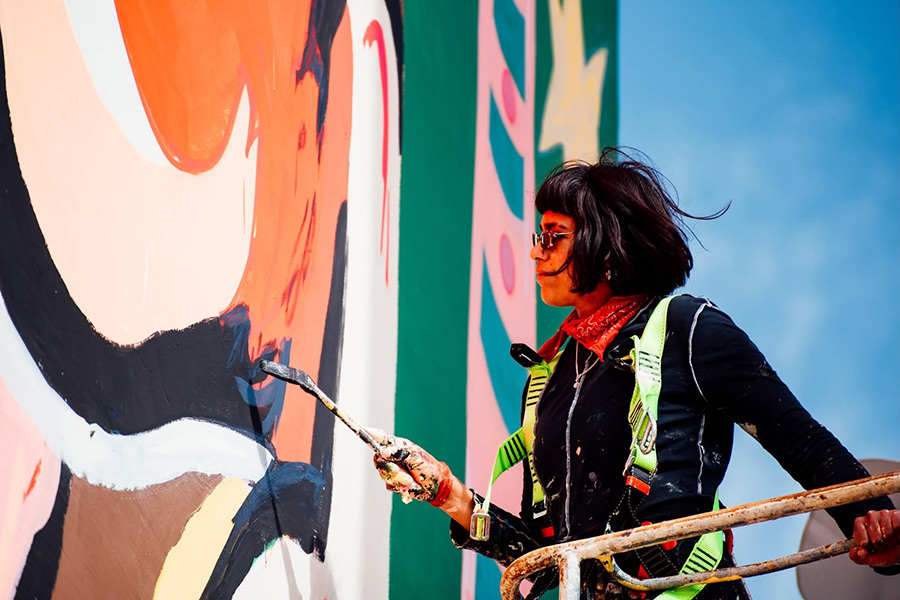
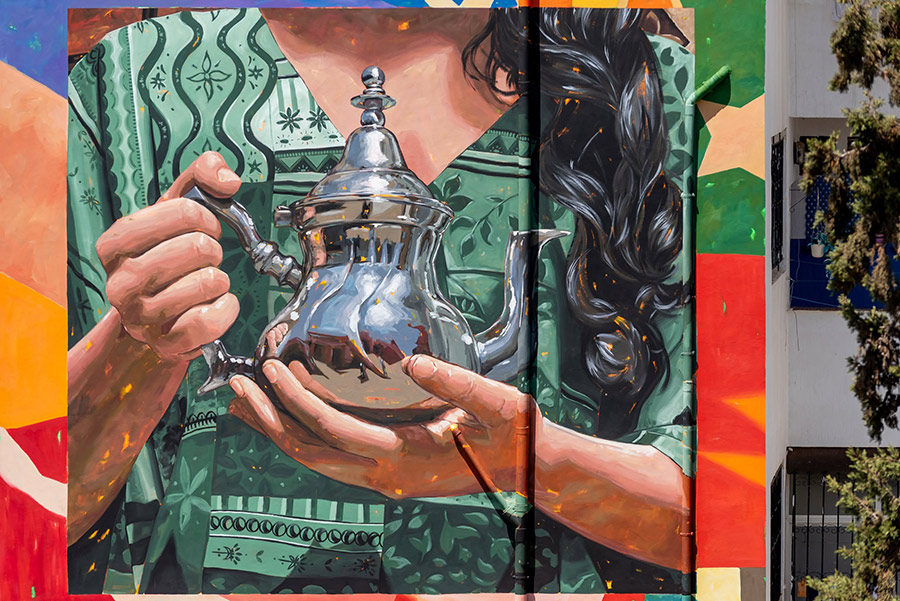
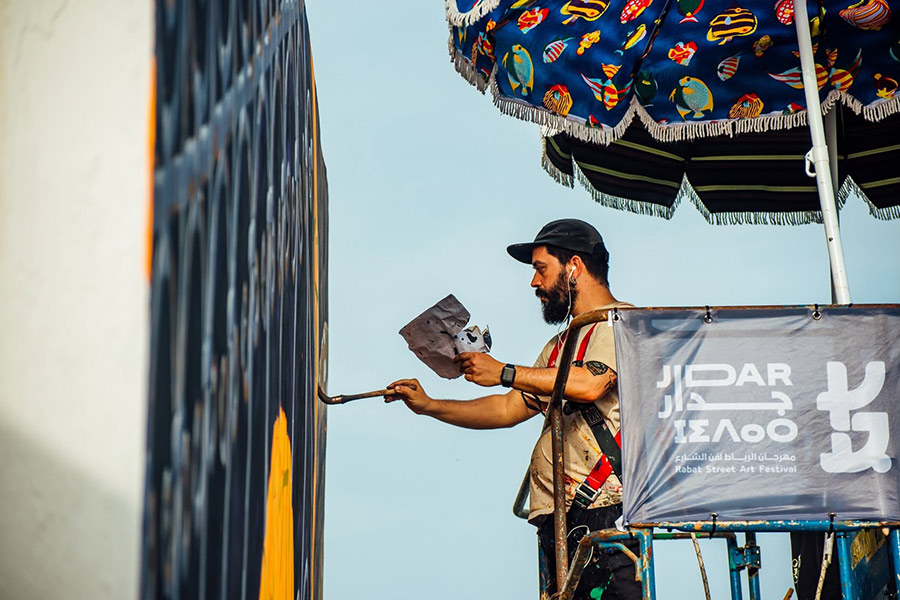
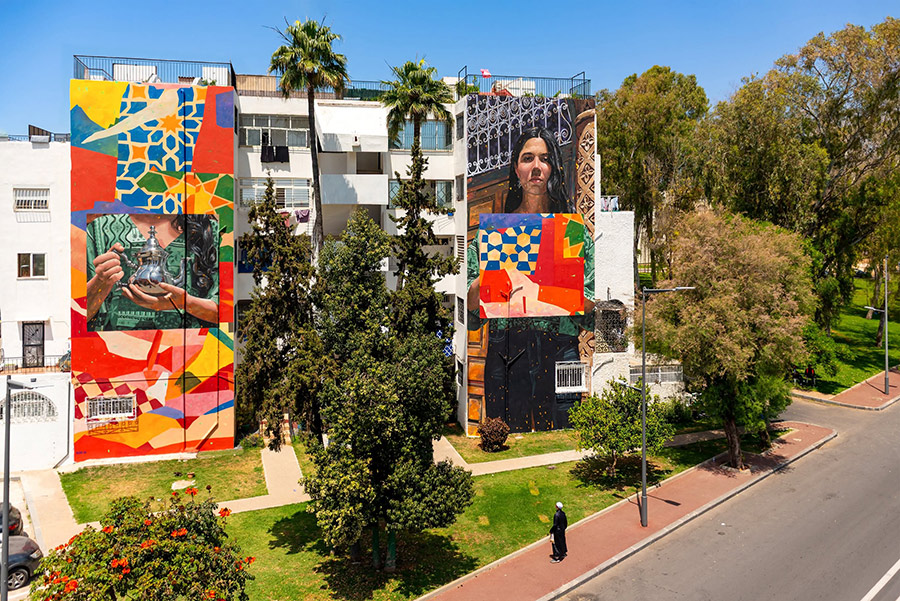
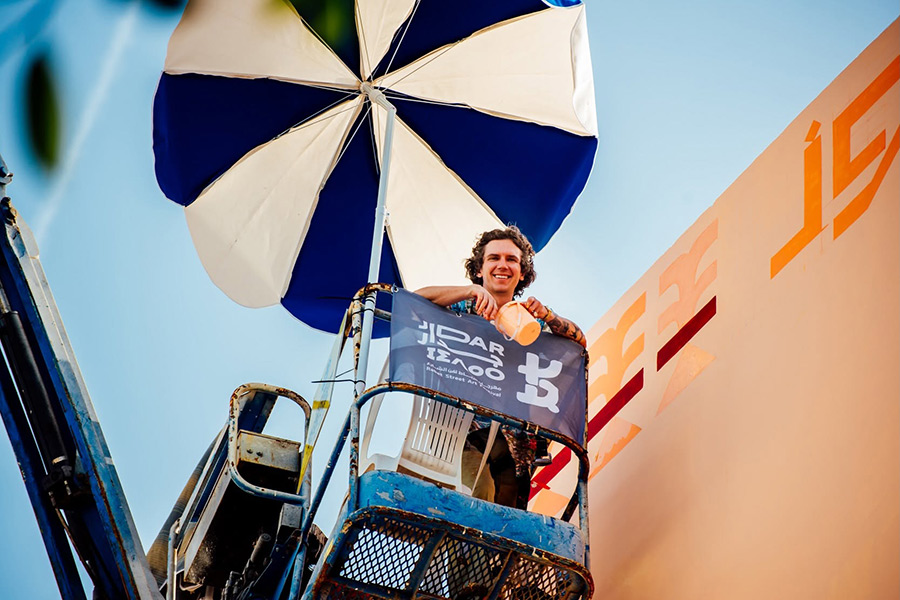
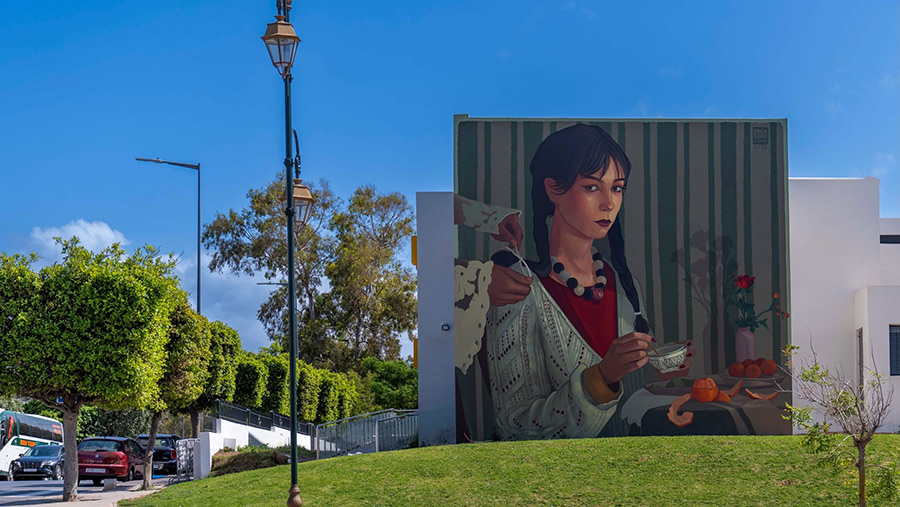
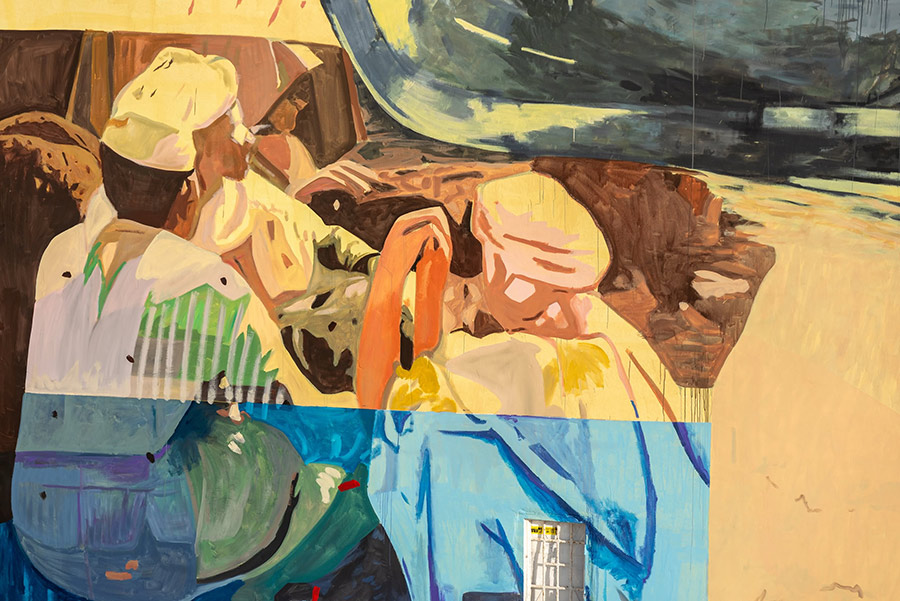
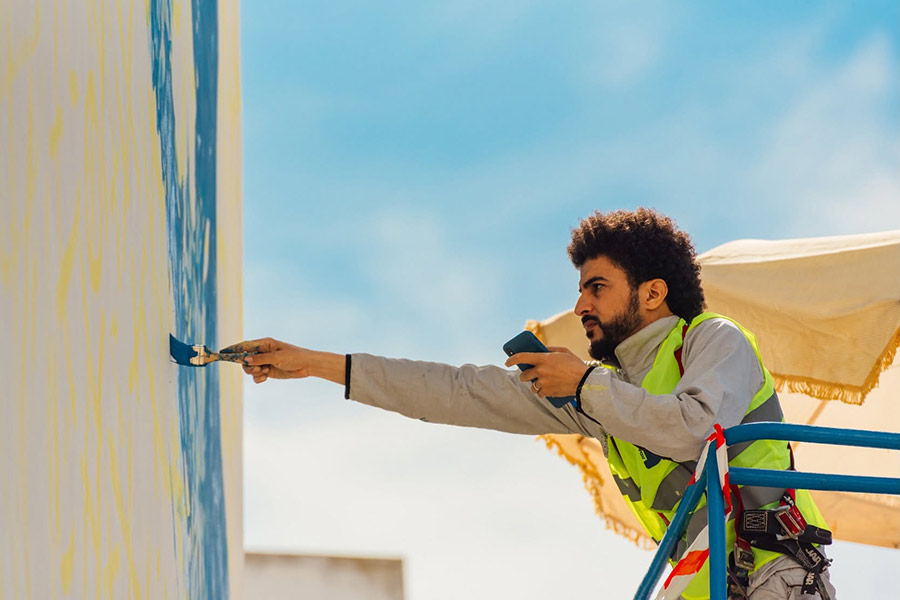
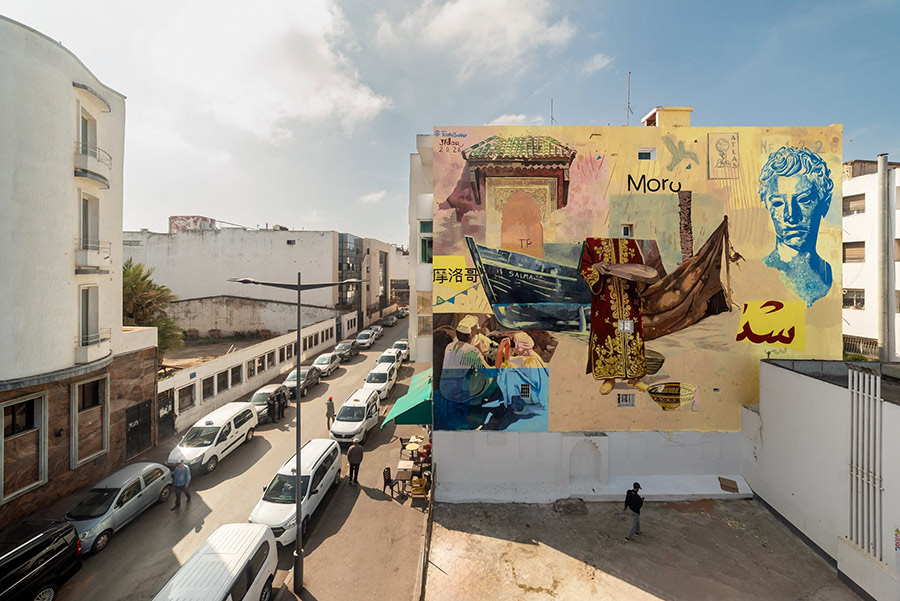
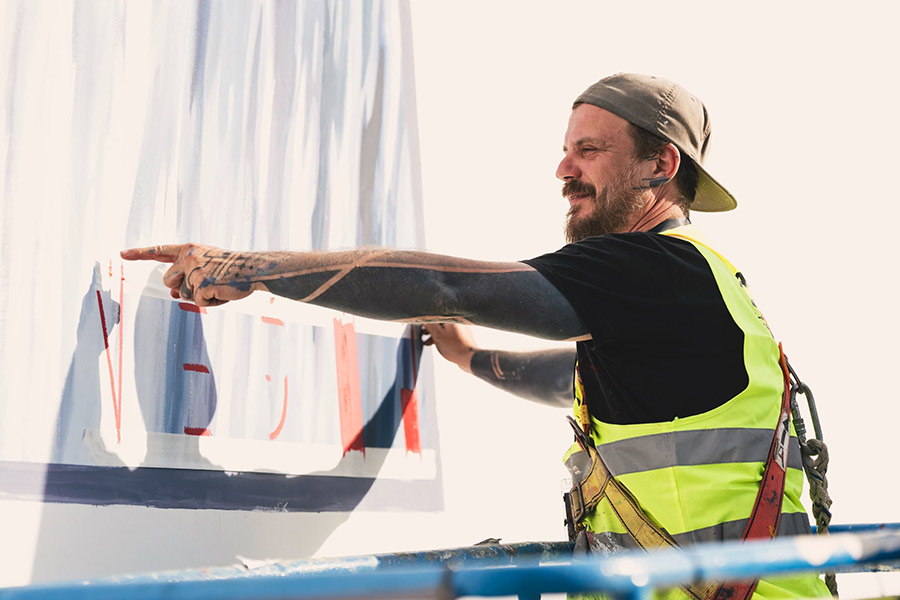
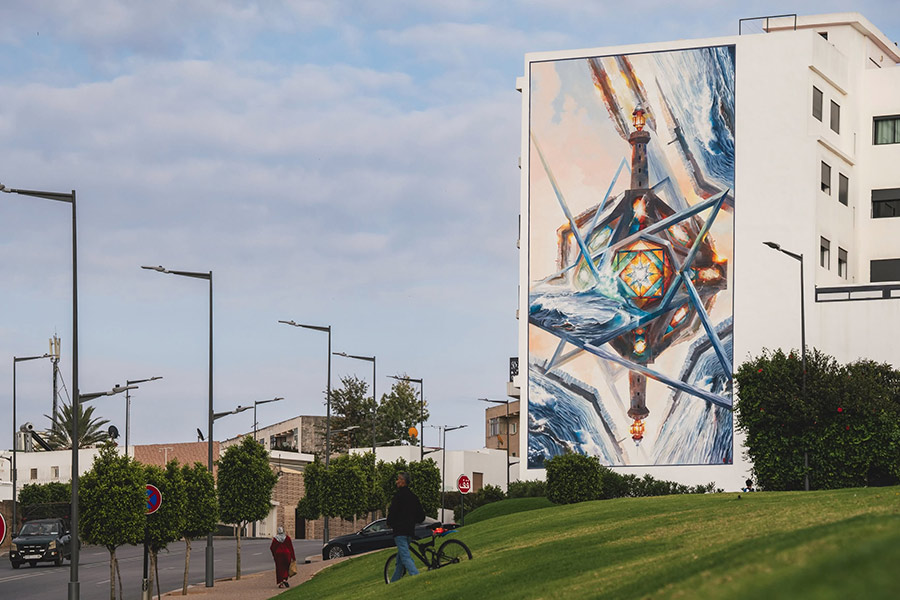
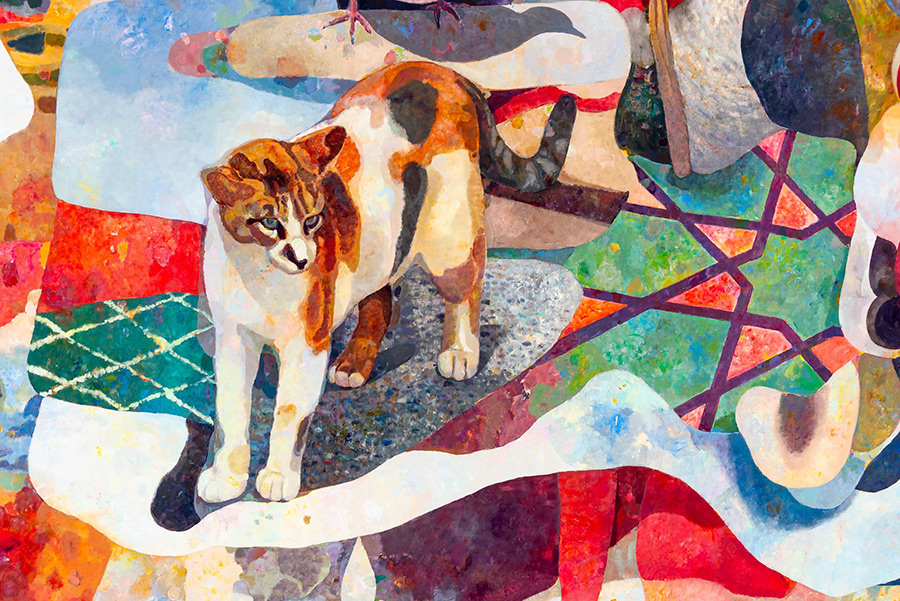
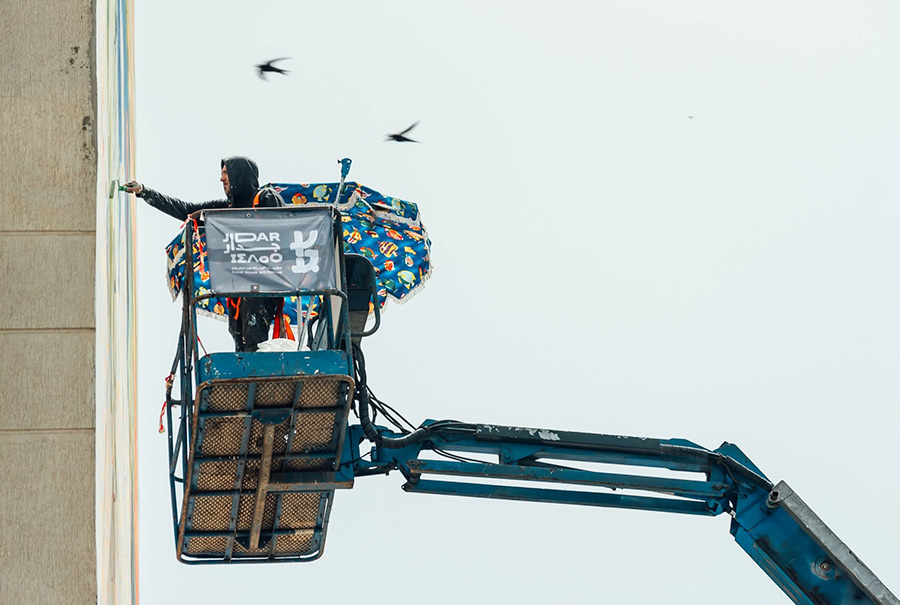
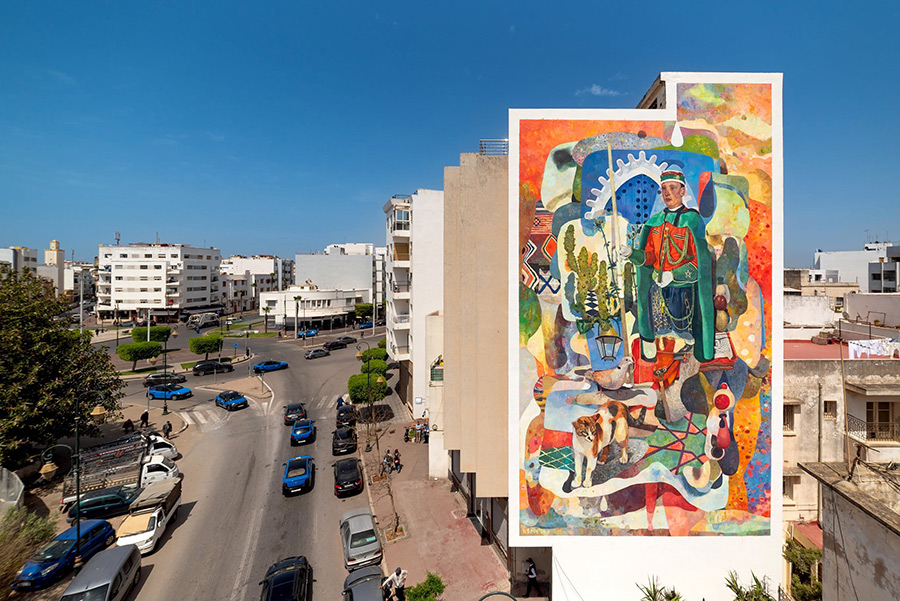
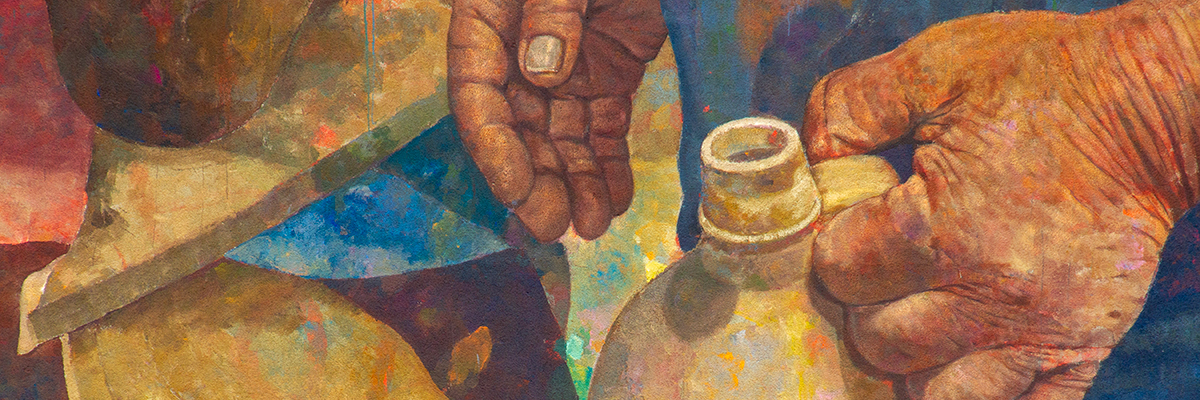
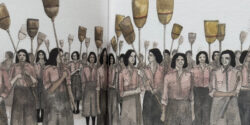
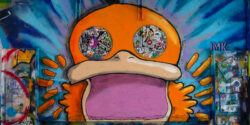
The Jidar – Rabat Street Art Festival returned to Morocco’s capital this spring for its 11th edition, spreading new work through neighborhoods including Hassan, L’Océan, Yacoub El Mansour, El Youssoufia, and Agdal-Riad. Launched in 2015 by EAC-L’Boulvart, the Casablanca-based nonprofit that has supported Morocco’s alternative music and urban-culture scenes since 1999, the festival has gradually built something more substantial than an annual collection of big walls: a locally rooted mural culture connecting Moroccan artists with practitioners from Africa, Europe, Latin America, and elsewhere.
This year’s framing, “Urban Dialogues,” emphasized transmission, exchange, and the relationship between artists and the neighborhoods they enter. The range of styles is broad — geometric abstraction, deconstructed and architectural lettering, figurative realism, illustration, graphic design, calligraphic and typographic approaches, pre-Columbian and neo-folkloric imagery, portraiture, and work drawing directly from Moroccan popular signage and ornament. Rather than asking everyone to conform to a single aesthetic, Jidar lets these themes and languages collide with Rabat itself, with respect for the culture: its architecture, street life, local visual codes, and the everyday character of distinct neighborhoods.
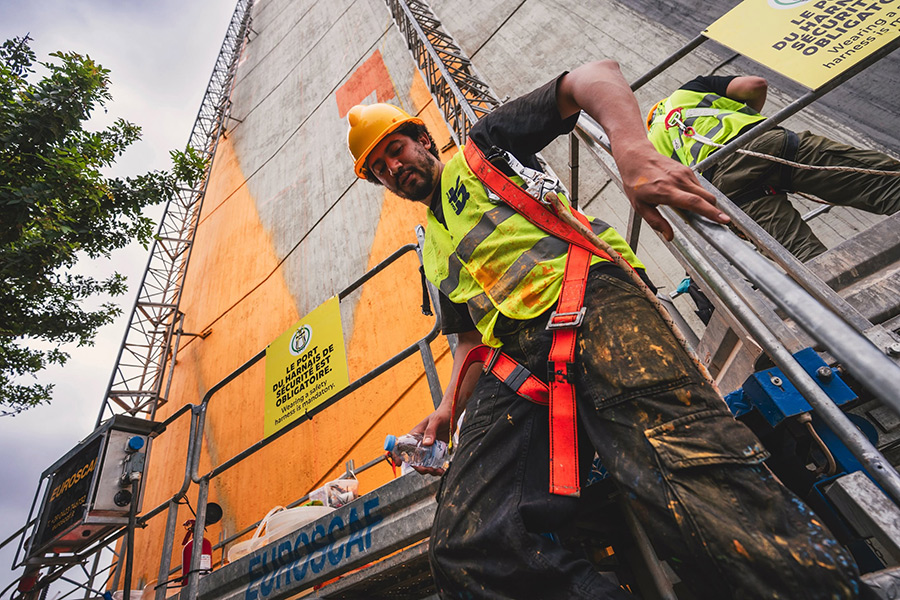
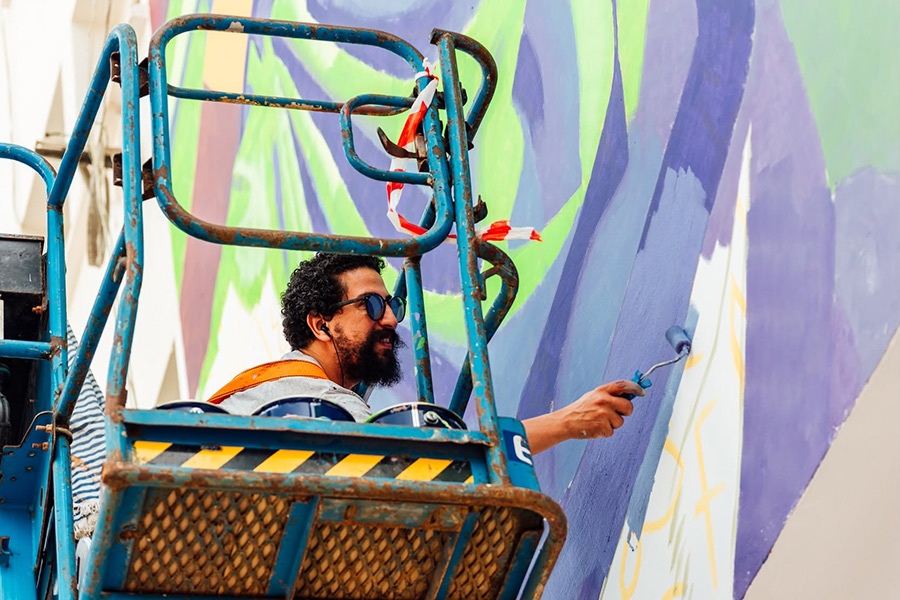
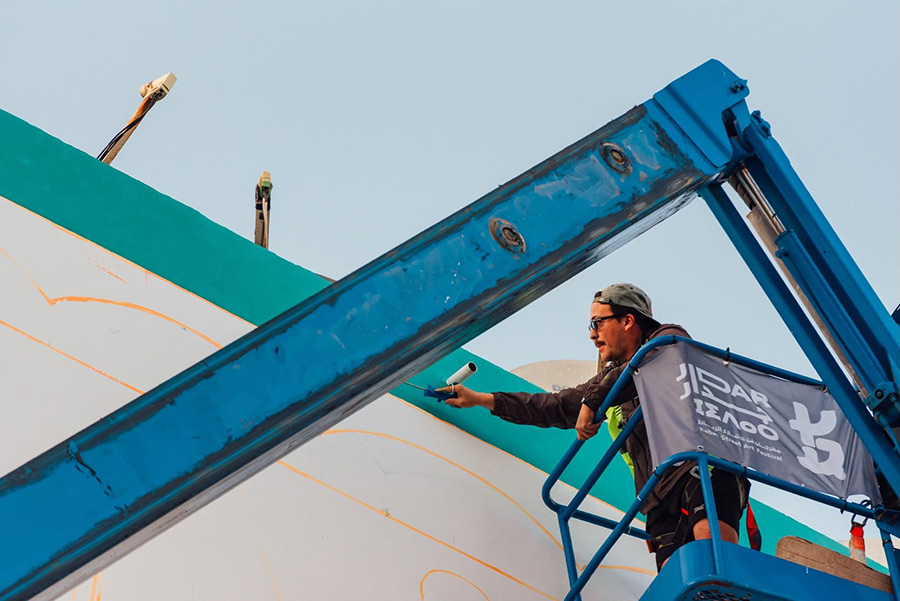
In some respects, Jidar moves beyond the familiar international mural-festival circuit. Rather than a stylistic free-for-all, a sly parade of a gallerist’s stable, or a thinly veiled tourism-building junket, the festival places strong work in conversation with the city’s own visual language, with savvy and swing. Its Collective Wall is not simply another showcase, but a working laboratory in which twelve emerging artists spend a week conceiving and painting a single large-scale work under the guidance of an experienced mentor. Organizers say that more than 100 emerging artists have passed through the program during its first decade, and that the festival has helped more than 30 Moroccan artists establish themselves internationally.
This year’s wall was directed by BAKR, a Moroccan artist whose work moves between typography, calligraphy, abstraction, and traditional references — and, importantly, who participated in the Collective Wall himself in 2019. That return from participant to mentor gives the program a satisfying generational continuity: skills, confidence, and experience are being recycled back into the scene rather than simply imported for a week and carried away again.
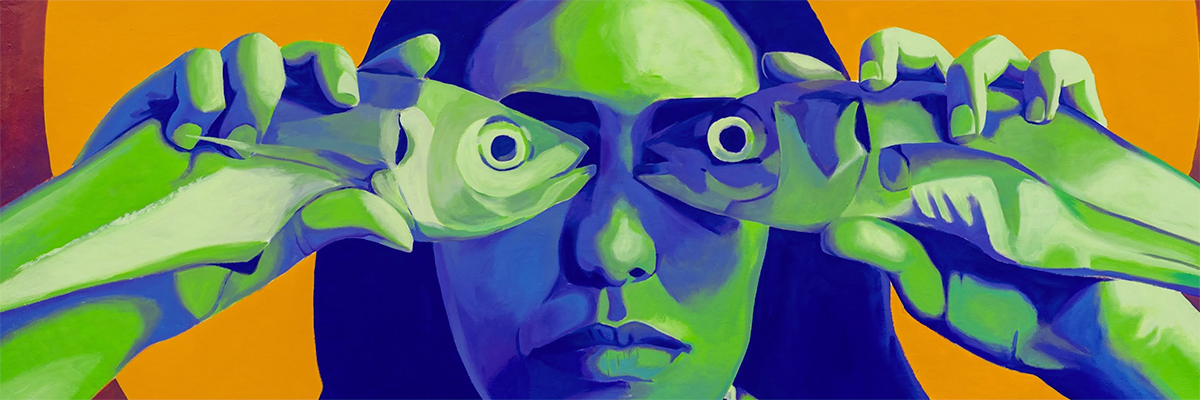
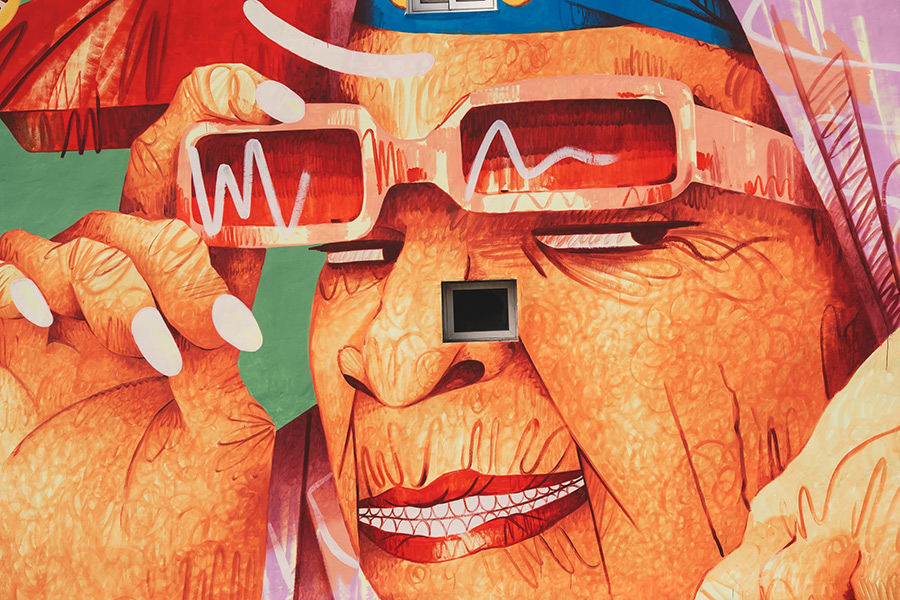
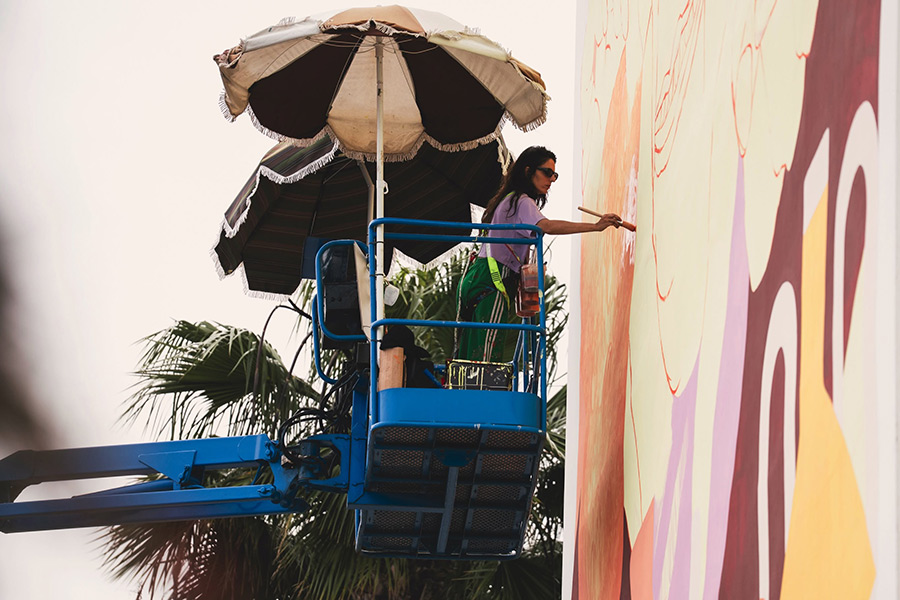
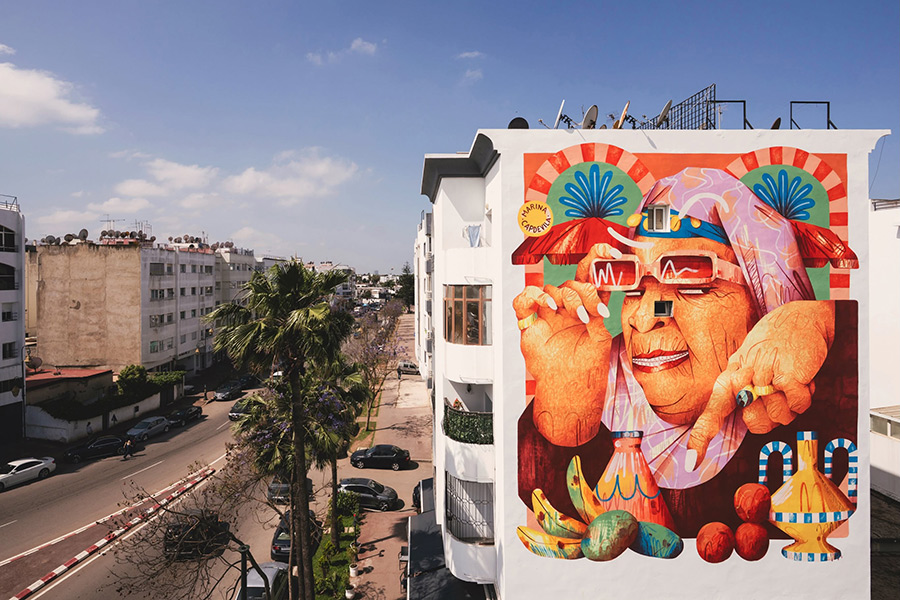
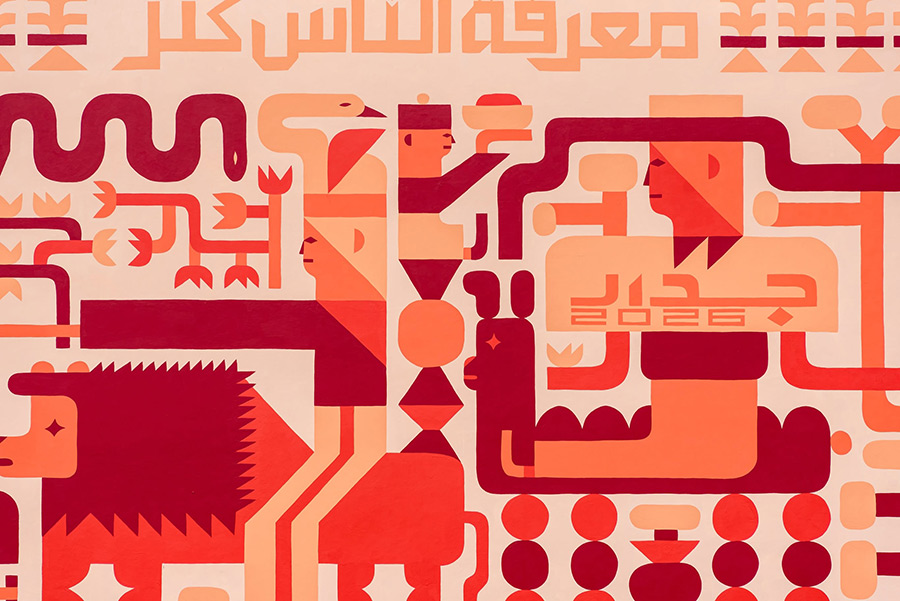
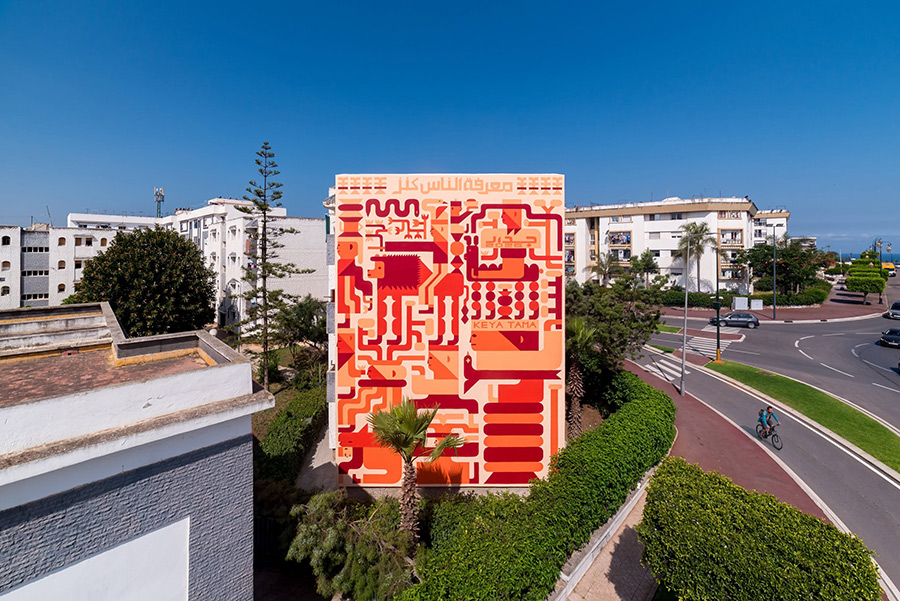
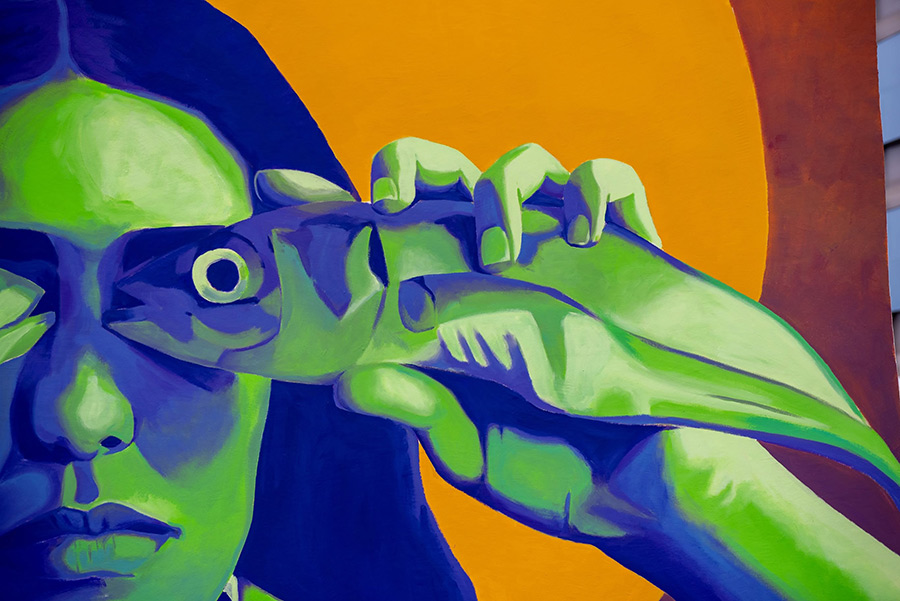
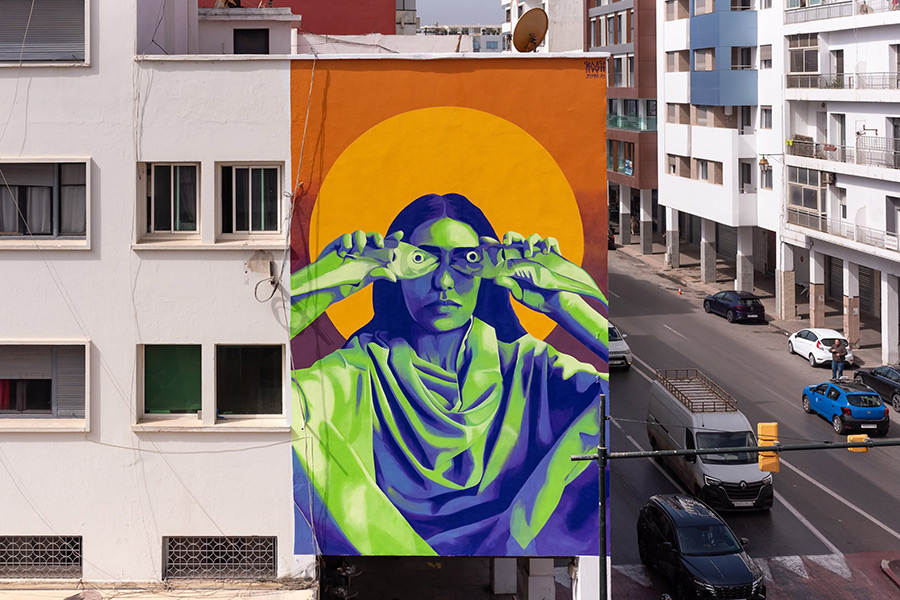
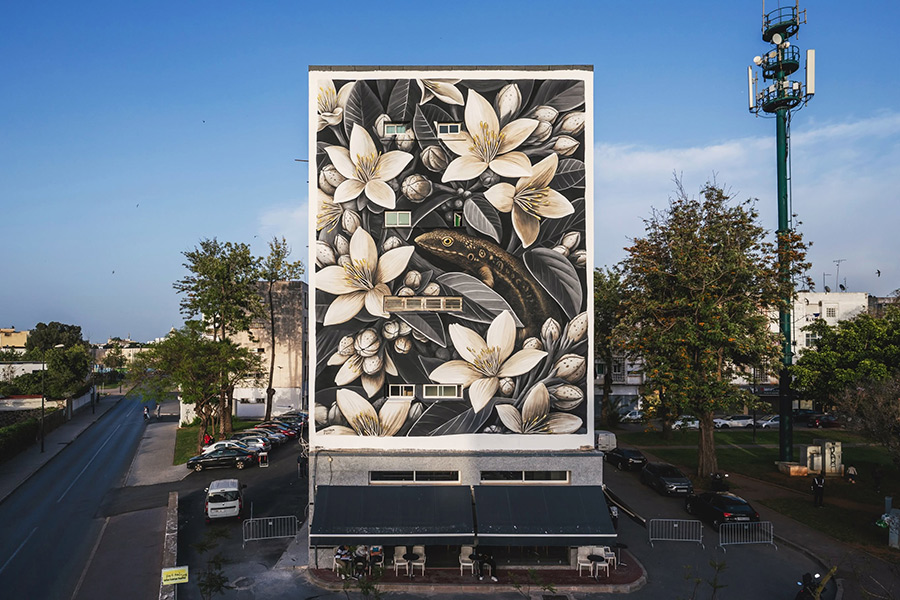
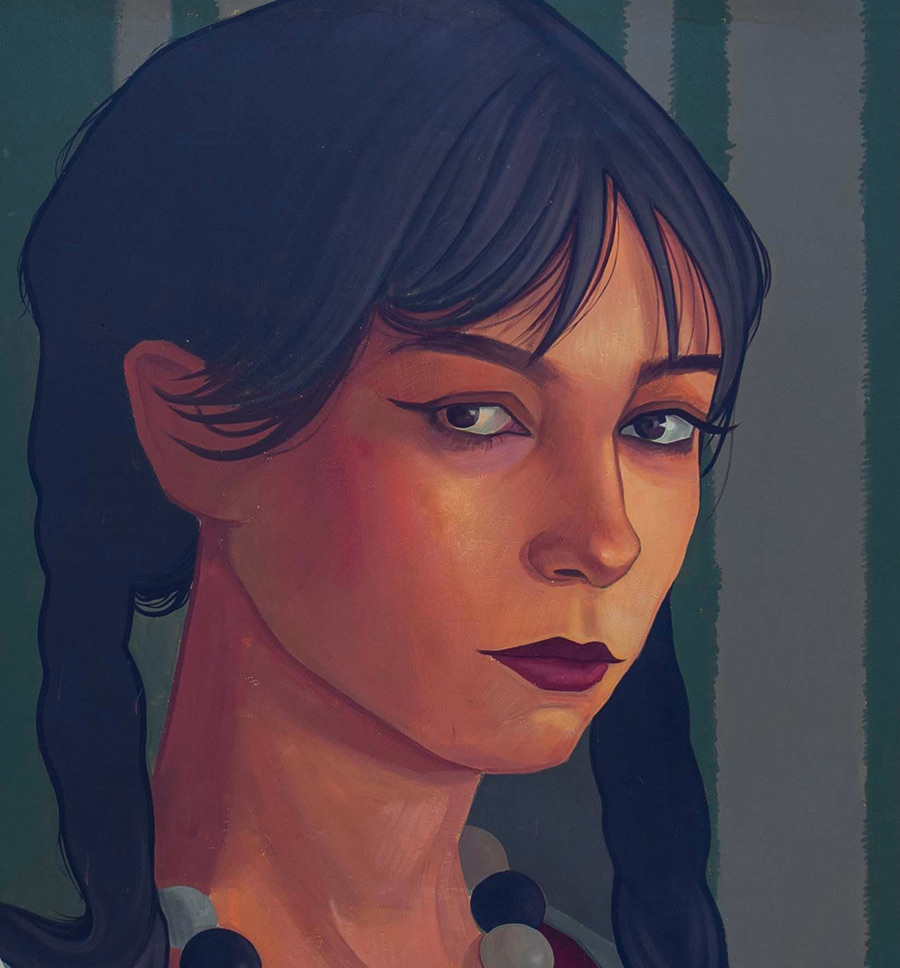
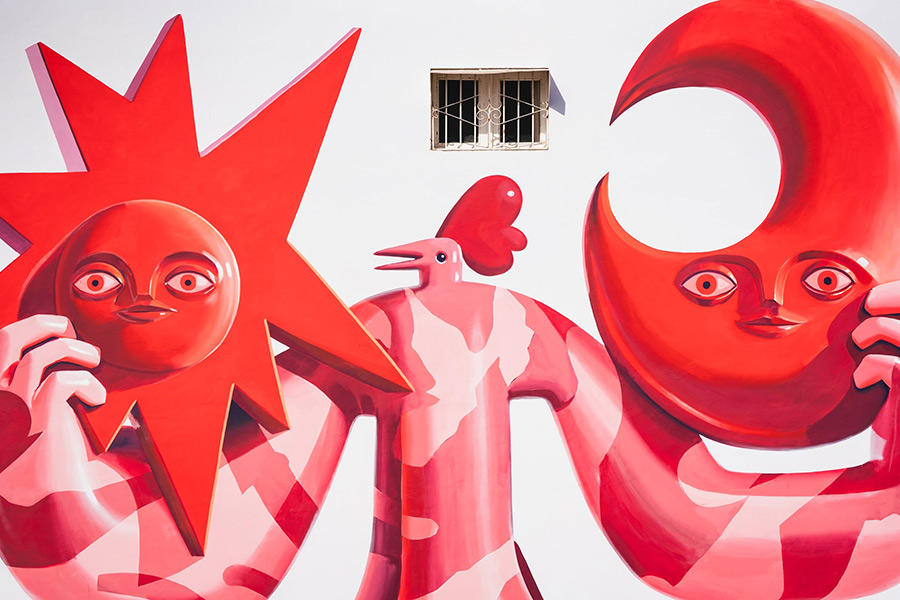
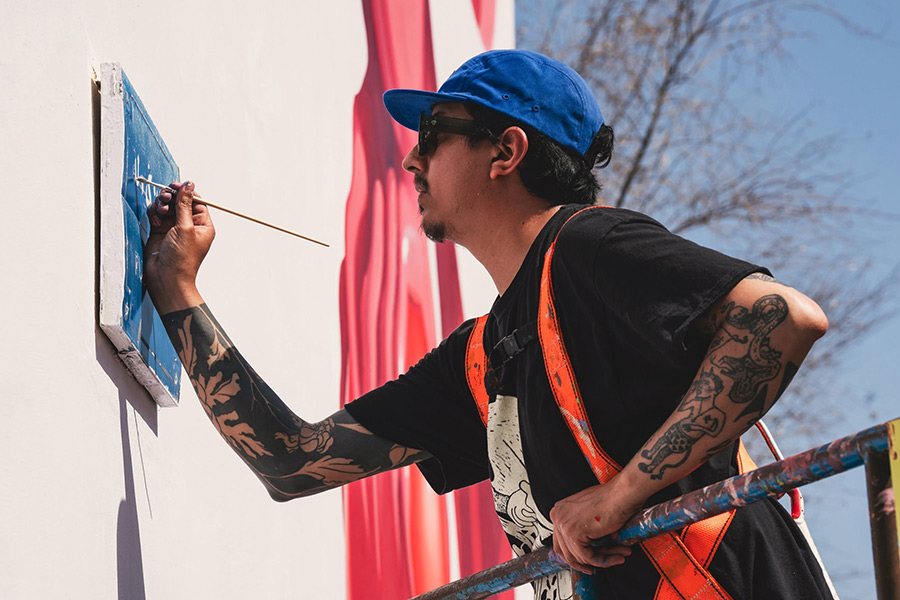
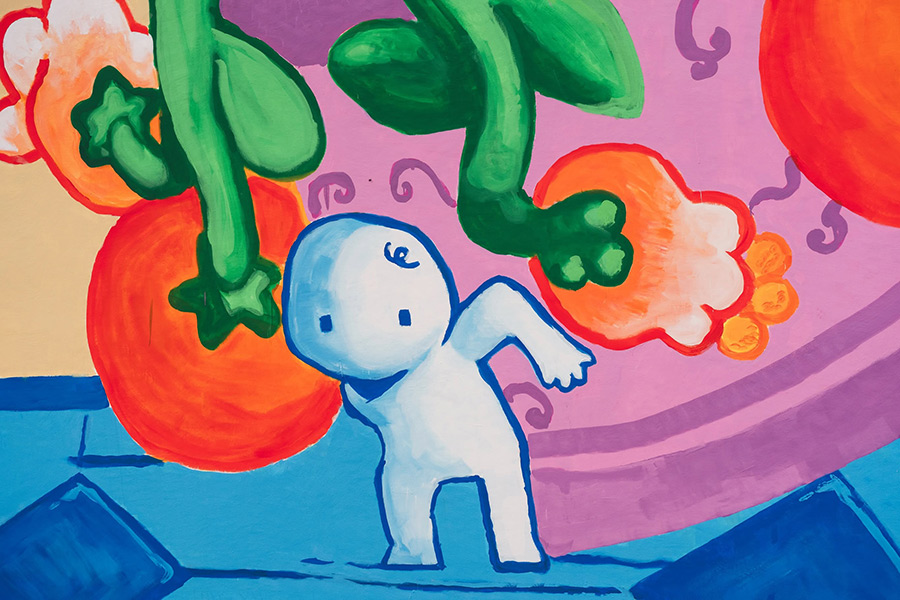
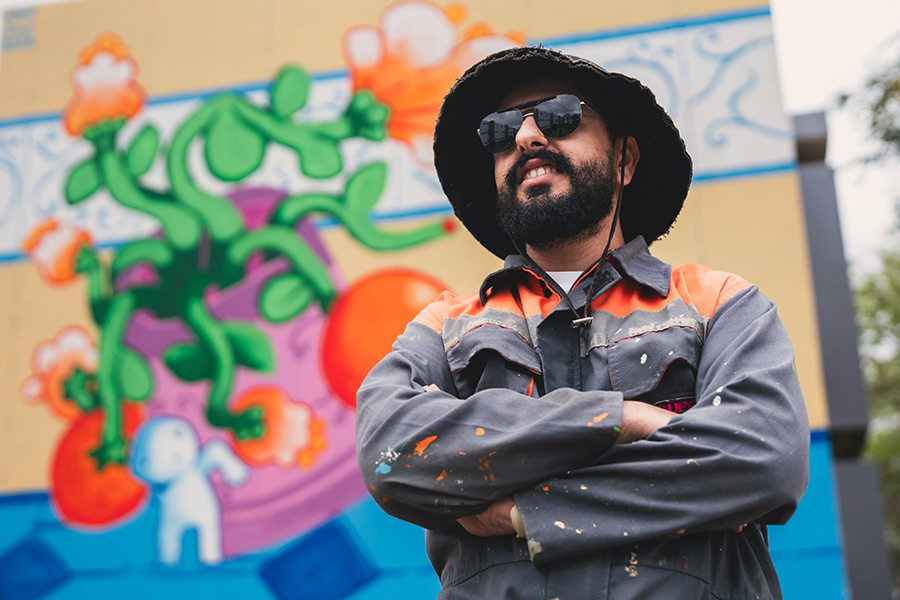
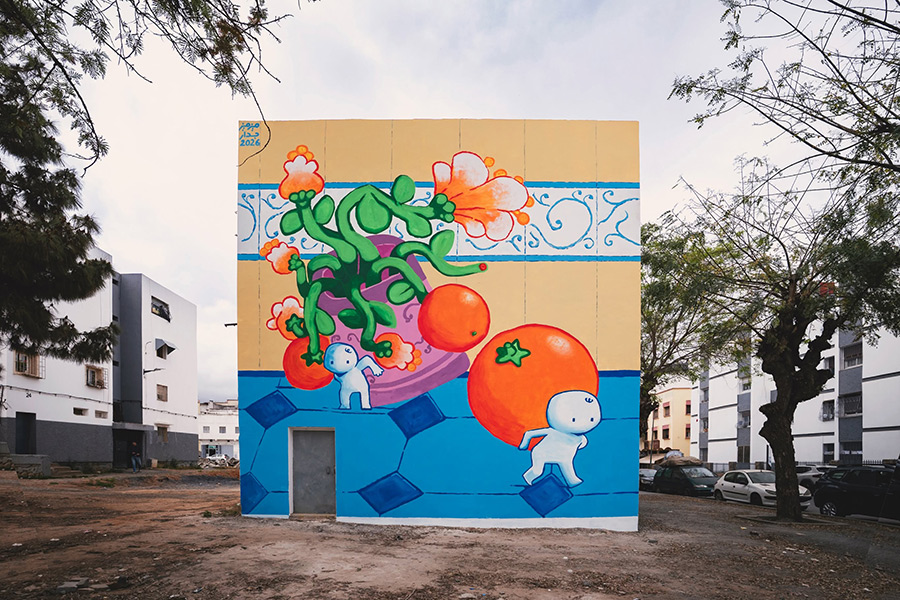
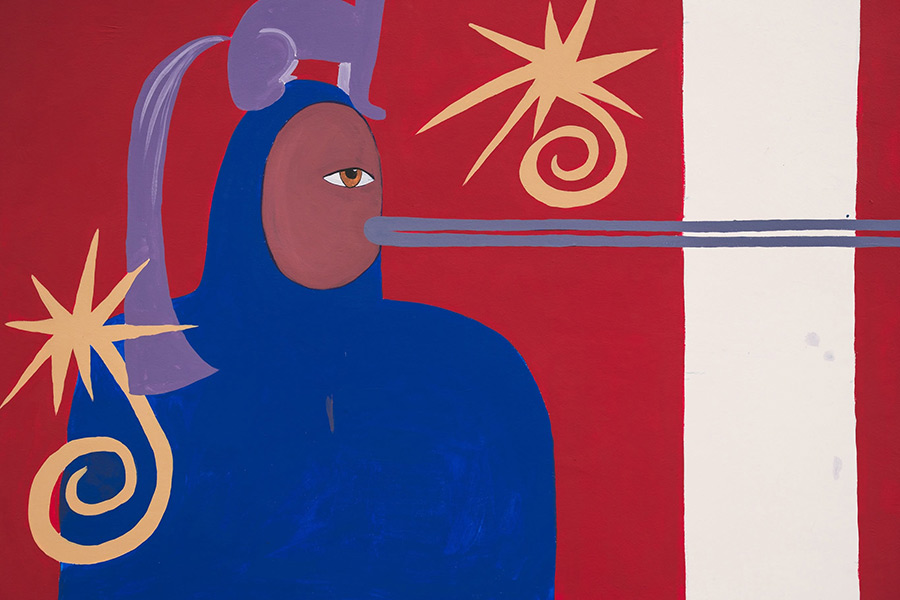
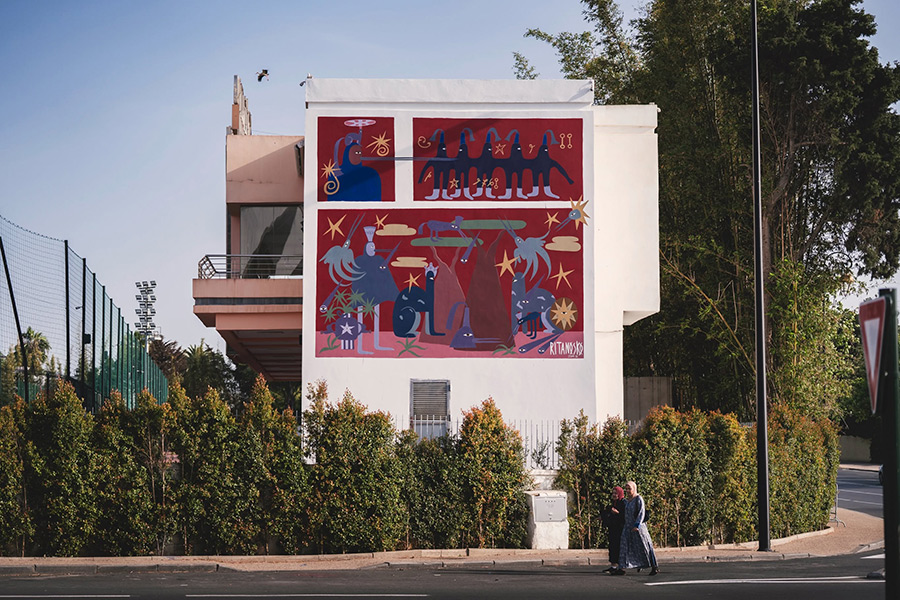
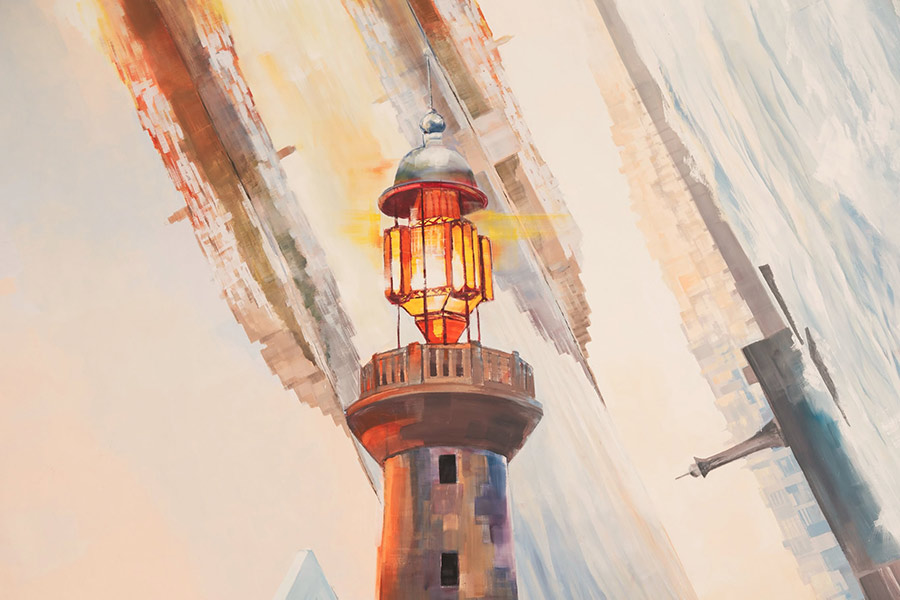
The completed 2026 edition added 15 new murals with the lineup of Marat Morik (Russia), Vesod (Italy), Marina Capdevila (Spain), Iramo (Morocco), Ruído (Portugal), Jumu Monster (Peru/Chile), Azpeger (Ecuador), Nassim Azarzar (France/Morocco), Keya Tama (South Africa), Guillem Font (Spain), Rosh (Morocco), Ritanosko (Morocco), Mizmiz (Morocco), and RDS (Morocco).
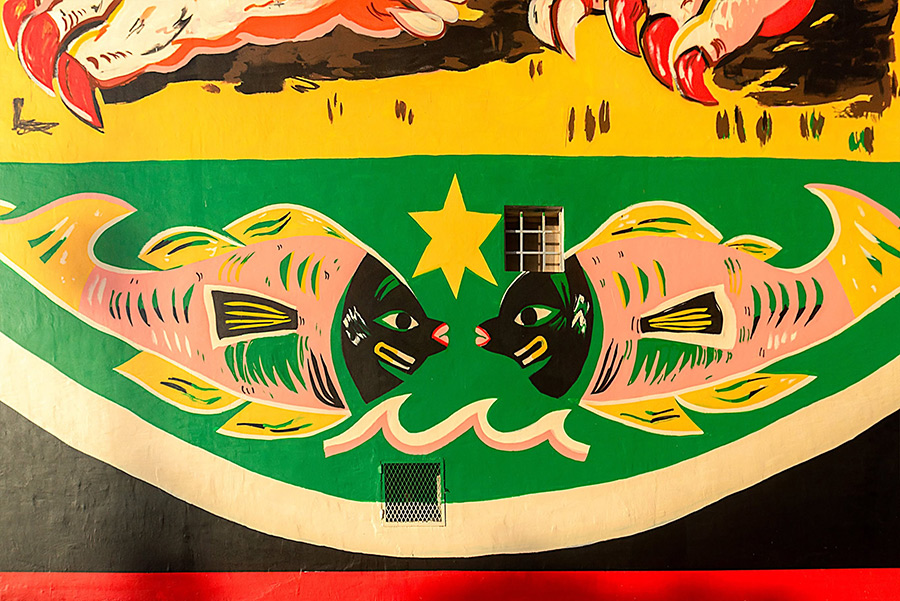
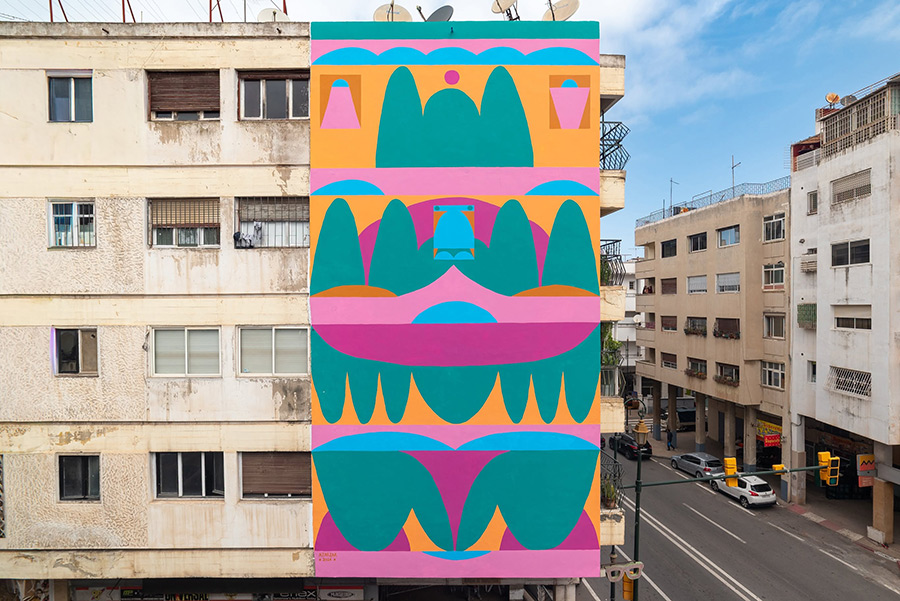
The mix gives Jidar a particularly interesting regional character: international approaches arrive in Rabat, but Moroccan artists and North African visual culture also remain conspicuous within the conversation — from Azarzar’s transformation of decorative truck graphics and popular signage into geometric language to Iramo’s engagement with Moroccan identity and contemporary iconography.
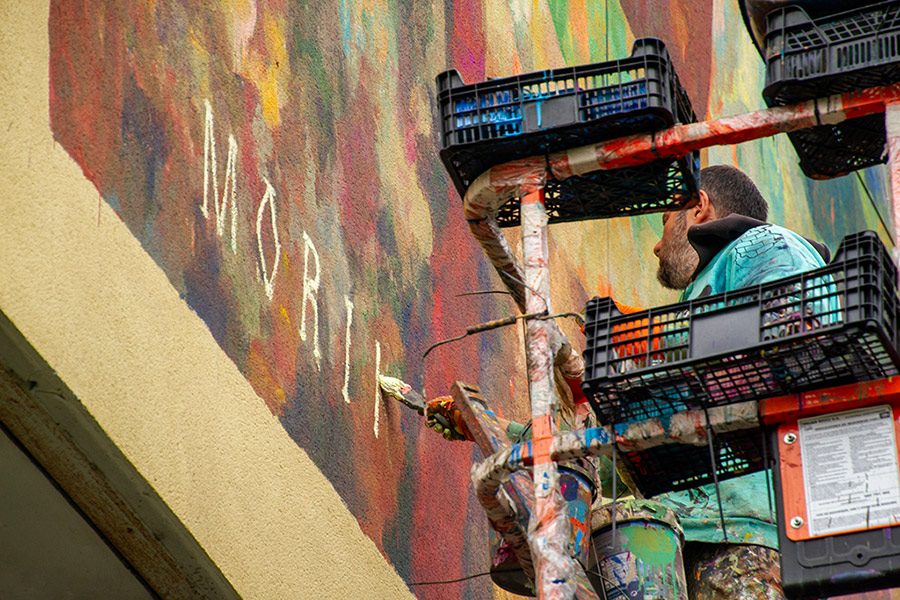
Meanwhile Jumu Monster brings pre-Columbian folklore and ritual forms, Azpeger pushes graffiti lettering toward architectural abstraction, Morik layers figuration with geometry and typography, and Vesod fractures the figure through Futurist and geometric structures. It feels less like a touring package of mural celebrities than a meeting point where quite different visual histories are temporarily given the same city to work with.
Parees Festival Brings Asturias’ Past and Future to Life
In its seventh year, the Parees Festival continues to enrich Oviedo’s urban landscape, adding three new murals and bringing its collection to a remarkable total of forty works. Local, national, and international artists have left their mark on the city through this contextual muralism festival, each piece echoing the rich cultural fabric of Asturias. Organized by the Oviedo Municipal Foundation of Culture, Parees stands out as one of the few mural festivals that authentically reflects the city’s community, history, and environment—almost as if the walls are narrating the soul of Oviedo.
This year’s festival underscores its commitment to Asturian identity by paying tribute to regional symbols such as Faro pottery, the iconic wooden clog (madreña), and the apple, deeply ingrained in local tradition. Through a careful process of artistic mediation led by the festival’s curators and the involvement of the Asturian community, Parees has once again created art that dialogues with its surroundings. As festival director Eduard Crespo puts it, “Parees is not just an encounter with urban art; it is a celebration of our roots, a window to the past, and a projection toward the future of Asturias. This is the true essence of the festival: dialogue, reflection, and the shared celebration of our identity.”
What sets the Parees Festival apart is its commitment to creating “contextualized murals” that go beyond decoration. Every mural results from a collaborative process involving the community, artists, and artistic mediators like the Raposu Roxu team. This participatory model allows murals to be authentic expressions of the local environment, giving residents a voice and capturing the region’s unique characteristics. With its focus on quality over quantity, Parees invests in each work’s durability and cultural significance, ensuring that each wall becomes a lasting visual conversation piece.
The festival extends this sense of dialogue and reflection beyond the walls, inviting residents and visitors to explore the murals through sustainable mobility initiatives like bicycle routes. In this way, Parees adds layers to Oviedo’s streetscape and encourages a thoughtful, environmentally friendly exploration of urban art.
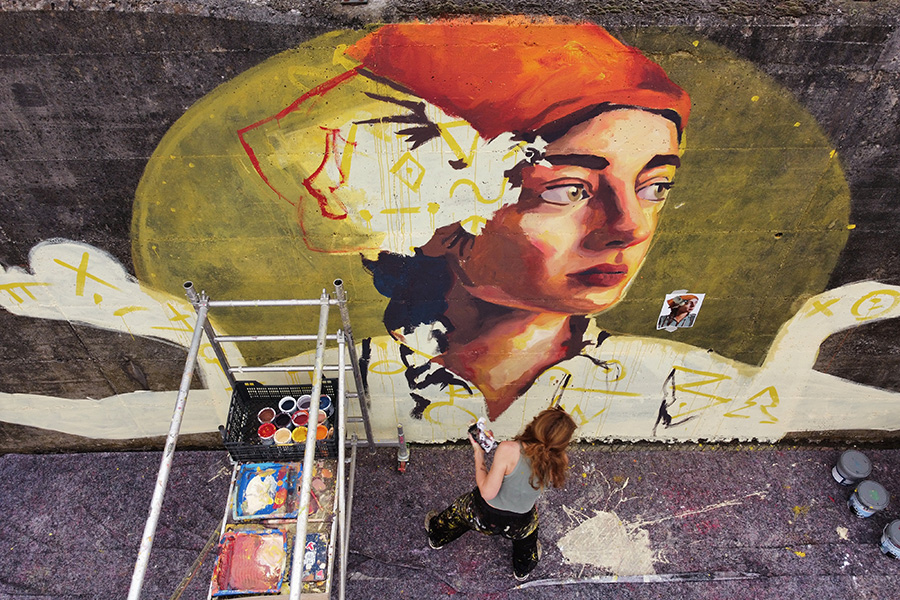
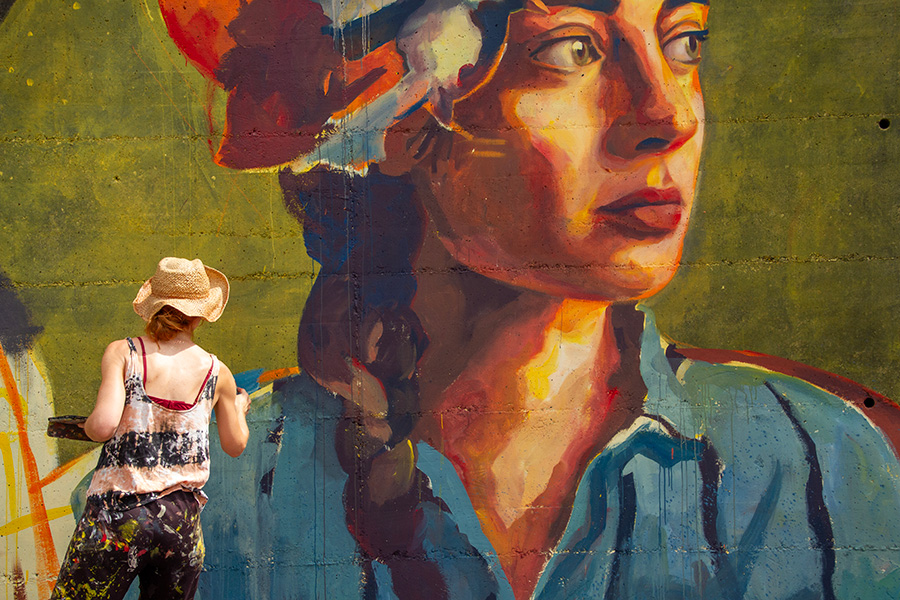
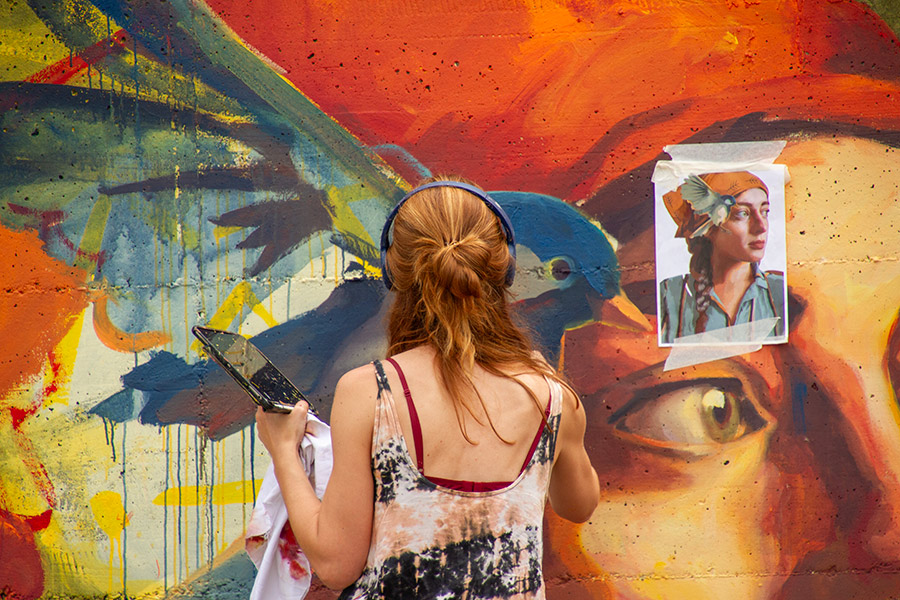
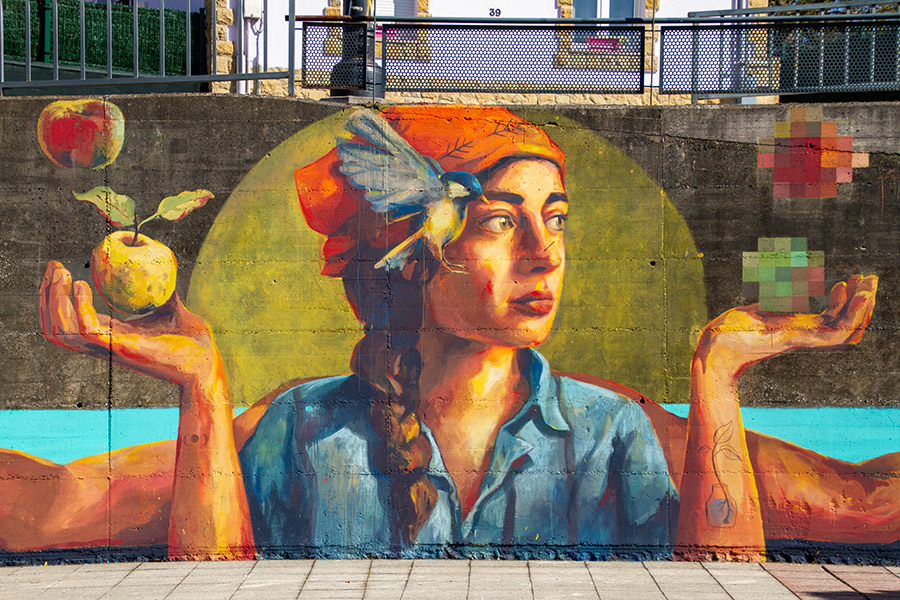
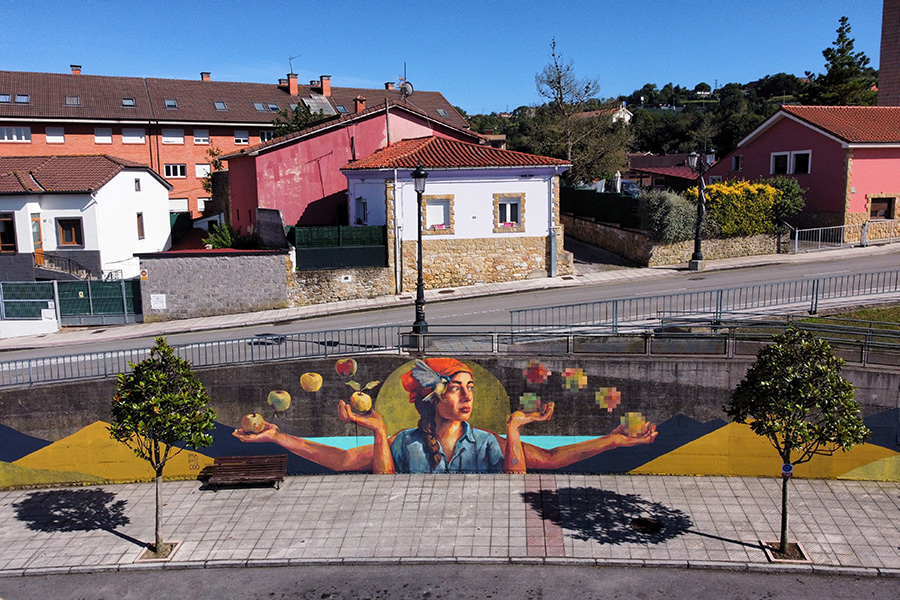
Mapecoo: Reflection on the Future of the Asturian Apple María Peña, known artistically as Mapecoo, brings attention to the uncertain future of Asturias’ emblematic apple, particularly those with a Denomination of Origin. In her mural, Peña visually contrasts traditional apple cultivation with elements of the digital age, possibly addressing the tension between preserving this essential regional crop and the fast-changing world around it. A vibrant palette and cultural symbolism; is it a tribute or a call to action?
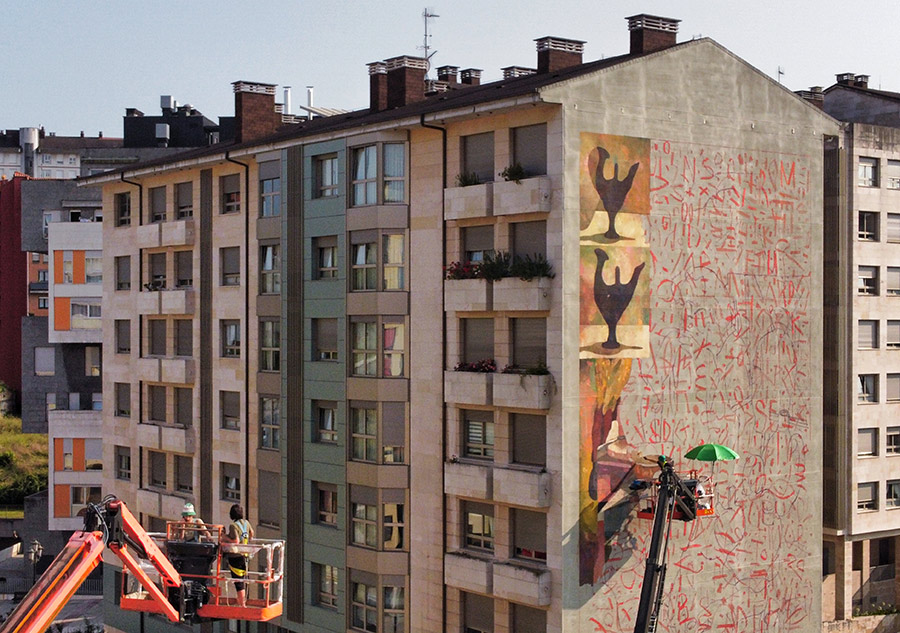
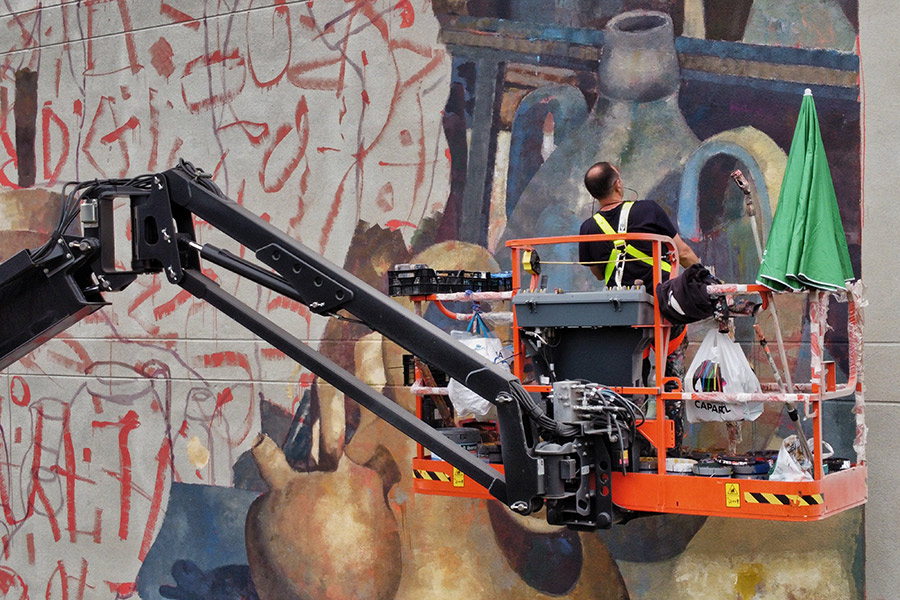
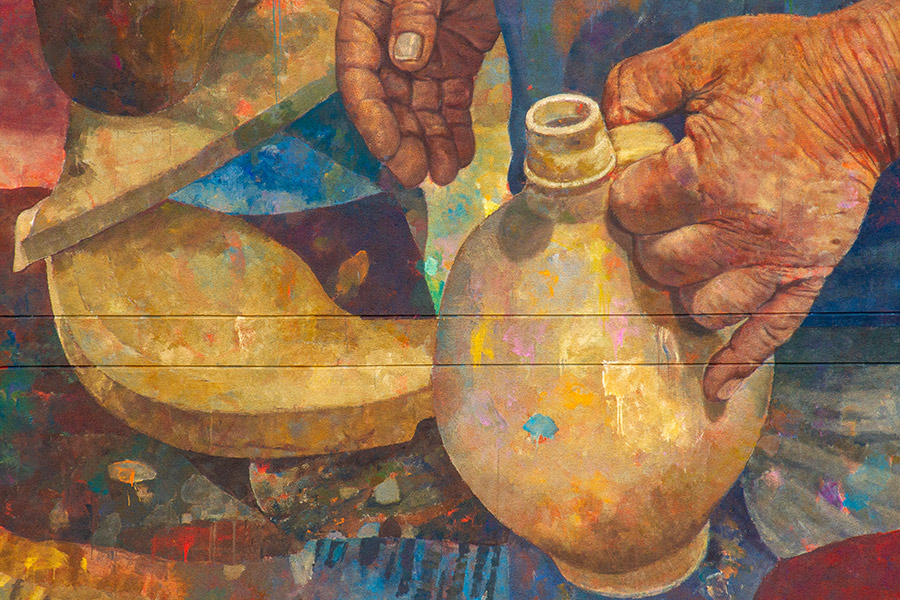
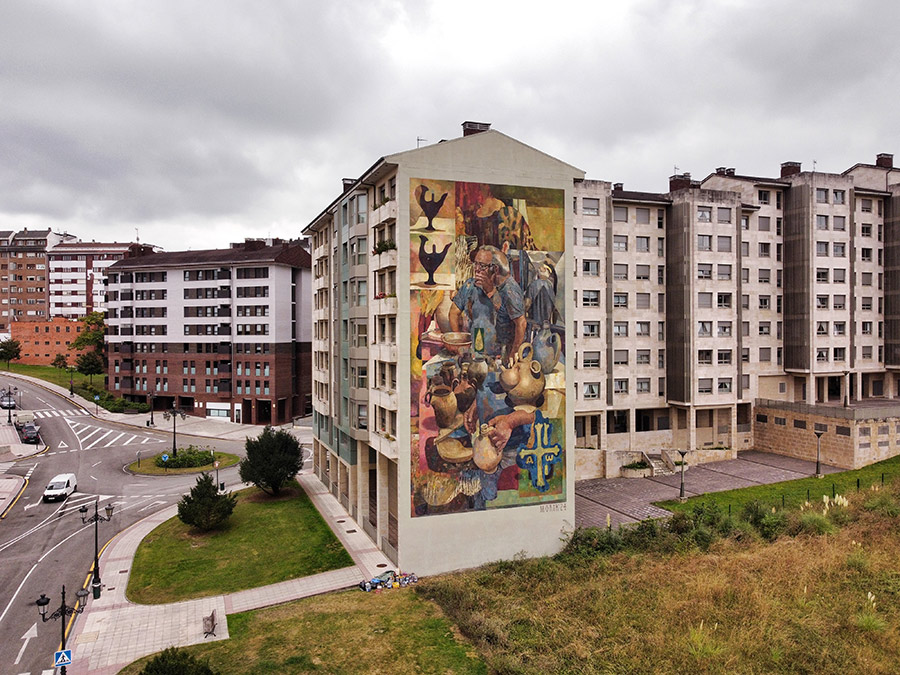
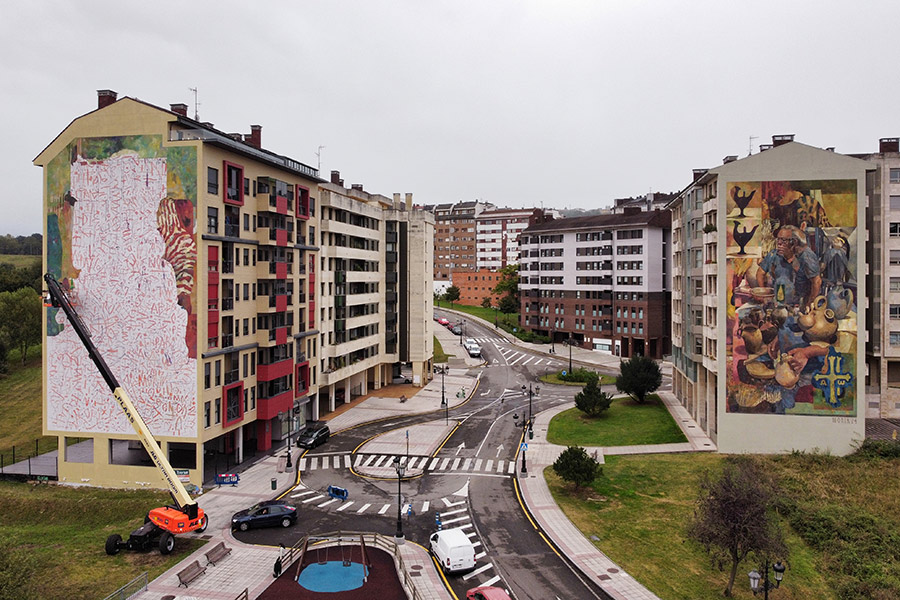
Marat Morik: The Legacy of Faro Marat ‘Morik’ Danilyan, an artist recognized for his dynamic compositions and reflections on cultural heritage, immortalizes the centuries-old pottery tradition of Faro in his mural on Luis Álvarez Fueyo Street. The artwork captures the essence of this ancient craft, urging passersby to acknowledge, celebrate, and hopefully preserve the deep cultural legacy that Faro pottery represents for Asturias.
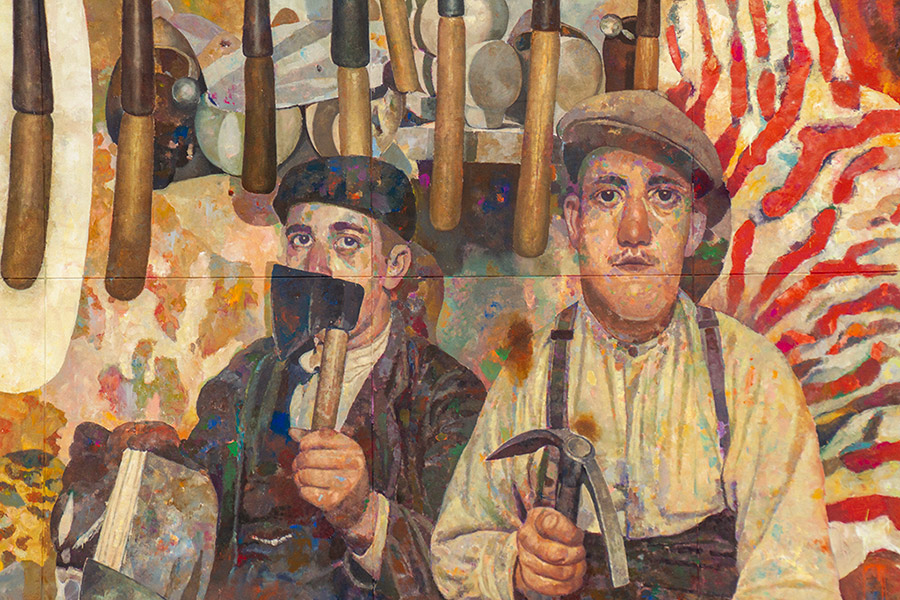
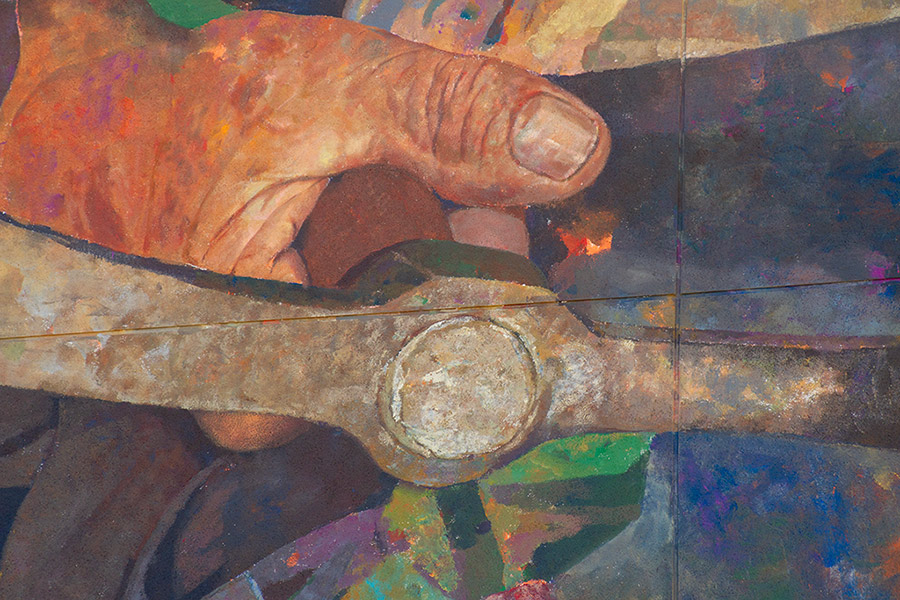
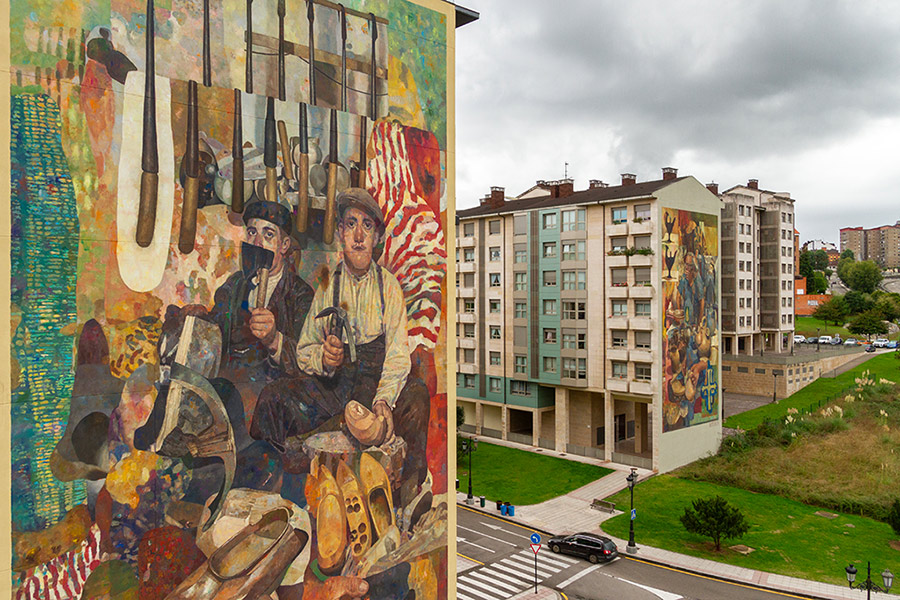
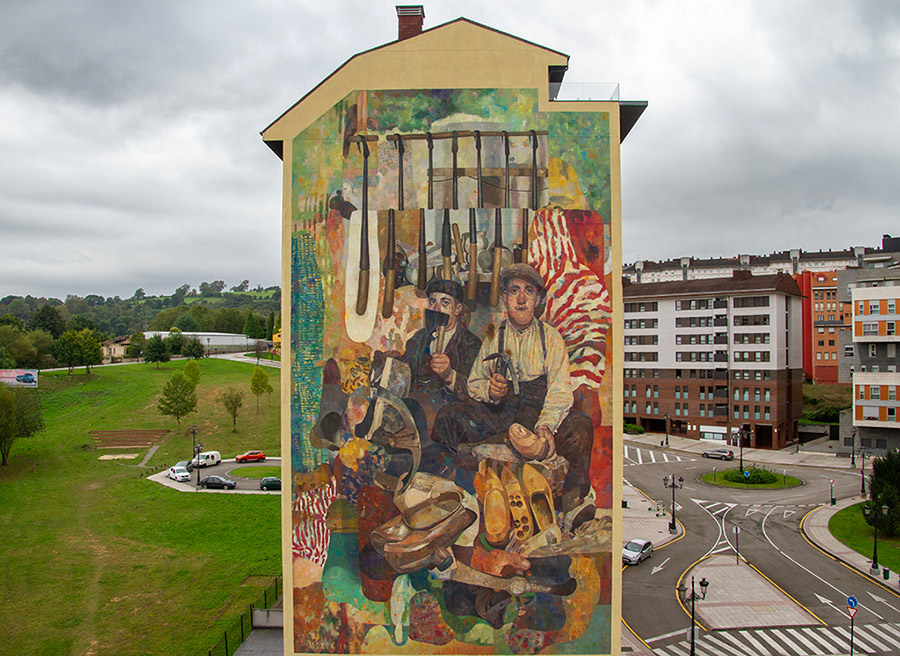
Marat Morik: Tribute to the Asturian Madreña On the same street, Morik pays homage to the madreña—a symbol of Asturian craftsmanship and heritage. Through this mural, he is preserving memories of the madreñera trade while sparking a reflection on the importance of sustaining traditional skills in the face of generational change. The piece resonates with Morik’s signature style, blending realism and not so subtle social commentary.
For decades, graffiti, street art, and contemporary art have spoken with one another, exchanging ideas, aesthetics, techniques, and attitudes along …Read More »
 BROOKLYN STREET ART LOVES YOU MORE EVERY DAY