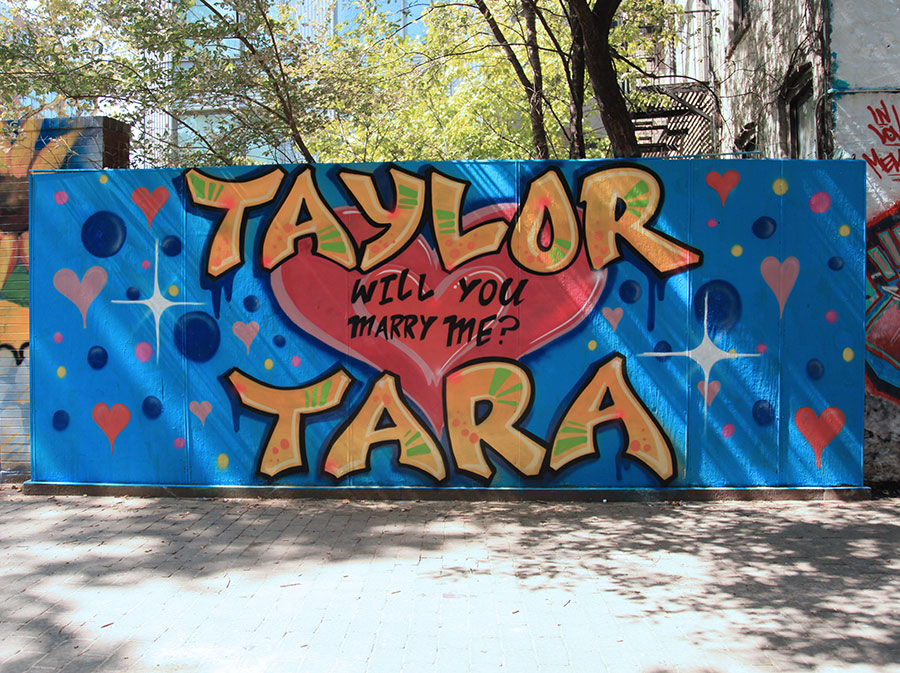
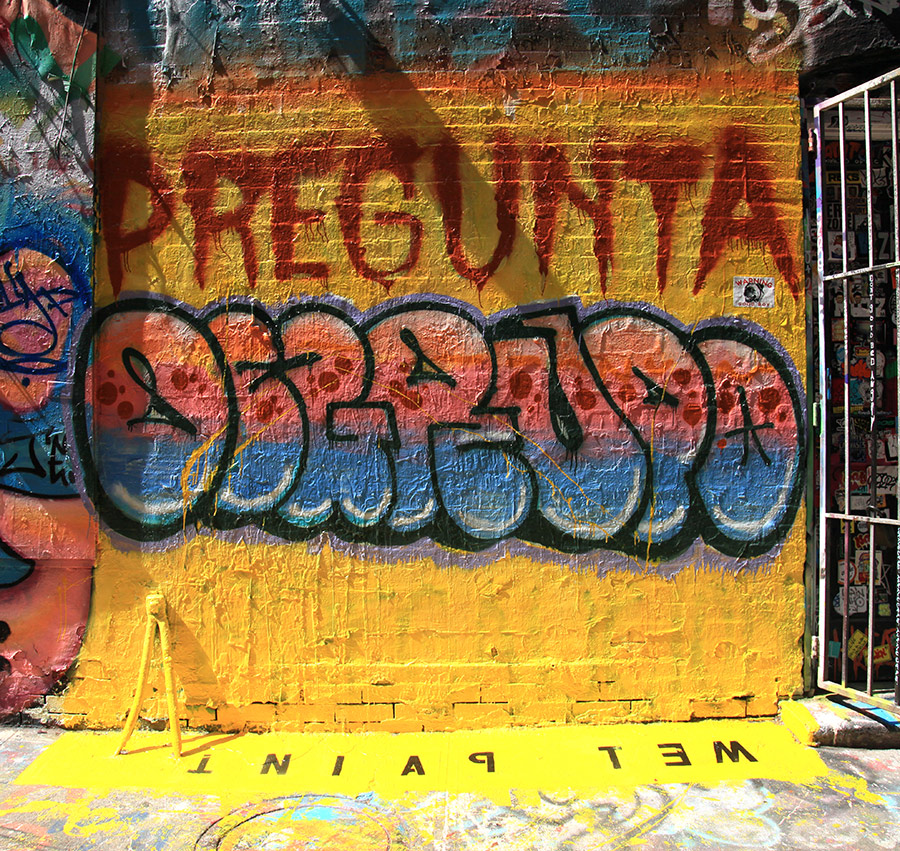
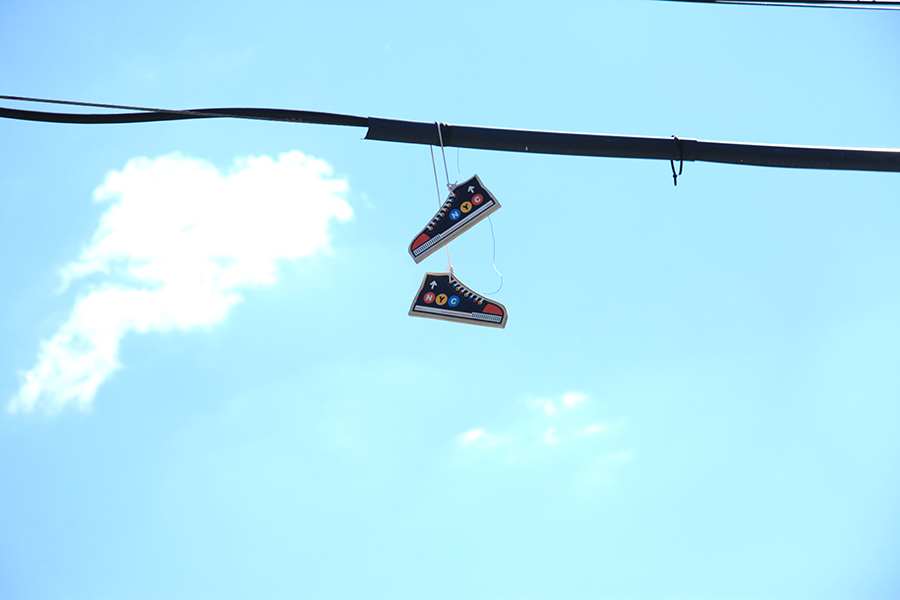
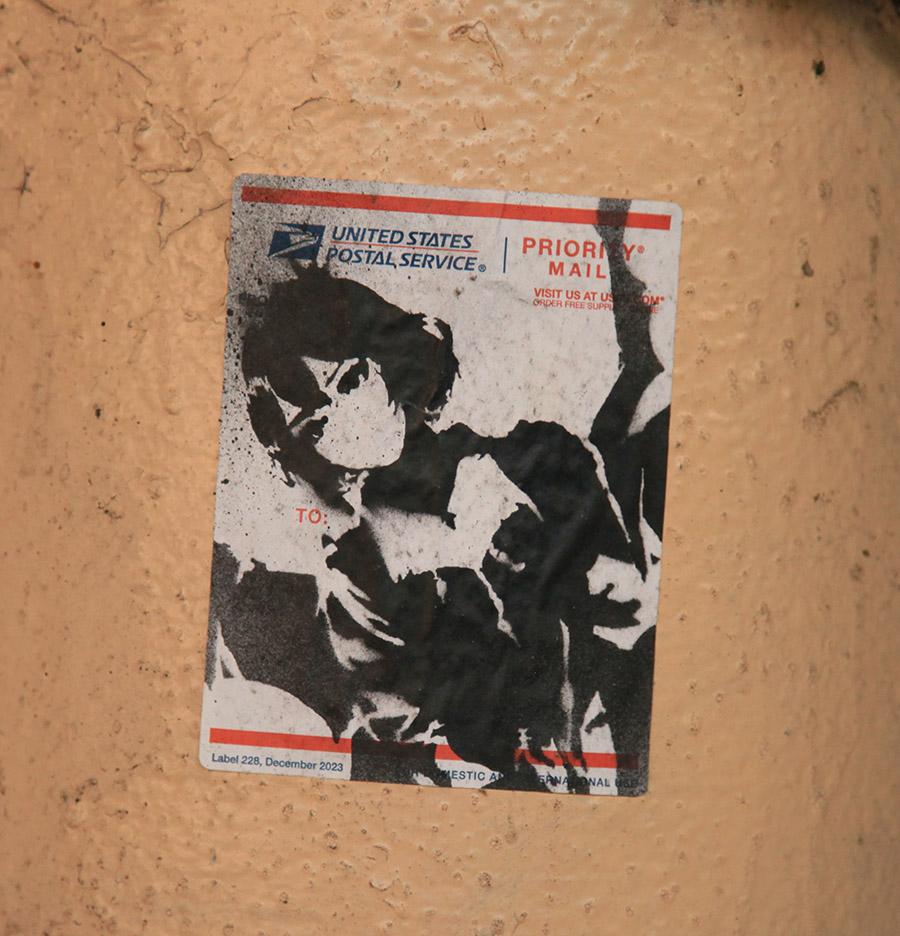
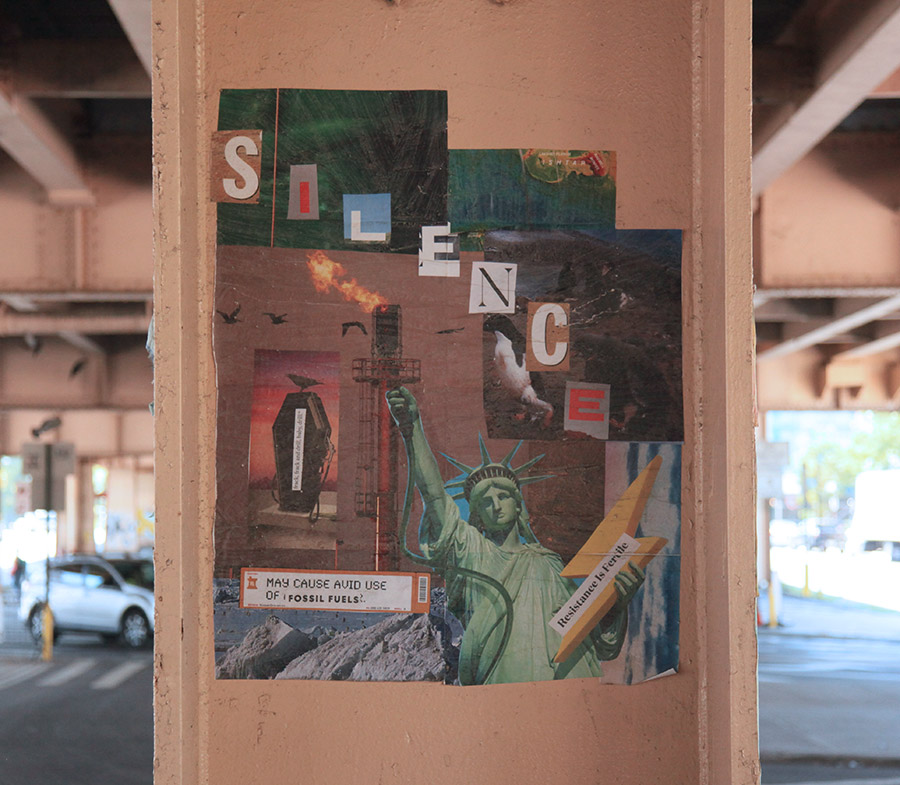
Welcome to BSA Images of the Week! New York’s streets are in overdrive—diplomats and protesters jostle around the UN, teens climb a tree outside a storefront to chase FakeMink’s latest haircut on the Bowery, fans mob Cardi B as she perches on an SUV outside a deli in the Bronx, throngs pour through the 99th San Gennaro Festival in Little Italy, and a sudden storm of black-windowed SUVs swarms with cameras at the Soho Grand—just as a double-decker tour bus lumbers onto the block, because of course it does. You skip the spectacle, grab a sour pickle from the Pickle Guys on Grand Street, and pedal home on your e-bike to the cat.
Re: the latest sniper shooting in the US that tears hearts and inflames passions; Fox News says, ‘America is divided and headed for civil war.’ What they should admit is, ‘We’ve spent 25 years programming division—and now we’re congratulating ourselves for the results. Pay no attention to the man behind the curtain.’
The sun is warm and bright, like that fateful New York day 24 years ago. It’s a shame that a generation of New Yorkers has grown up since then, and there is more war than ever.
At least we still have bodegas open at 3 a.m., subway preachers who bark and yelp, and the Mets breaking our hearts! Aaron Judge and the Yankees are still keeping the World Series on the perennial wish-list.
Oh yes, and Anna Wintour is leaving Vogue. For some, that will feel like the end of an era. Others will ask, “Anna who?”
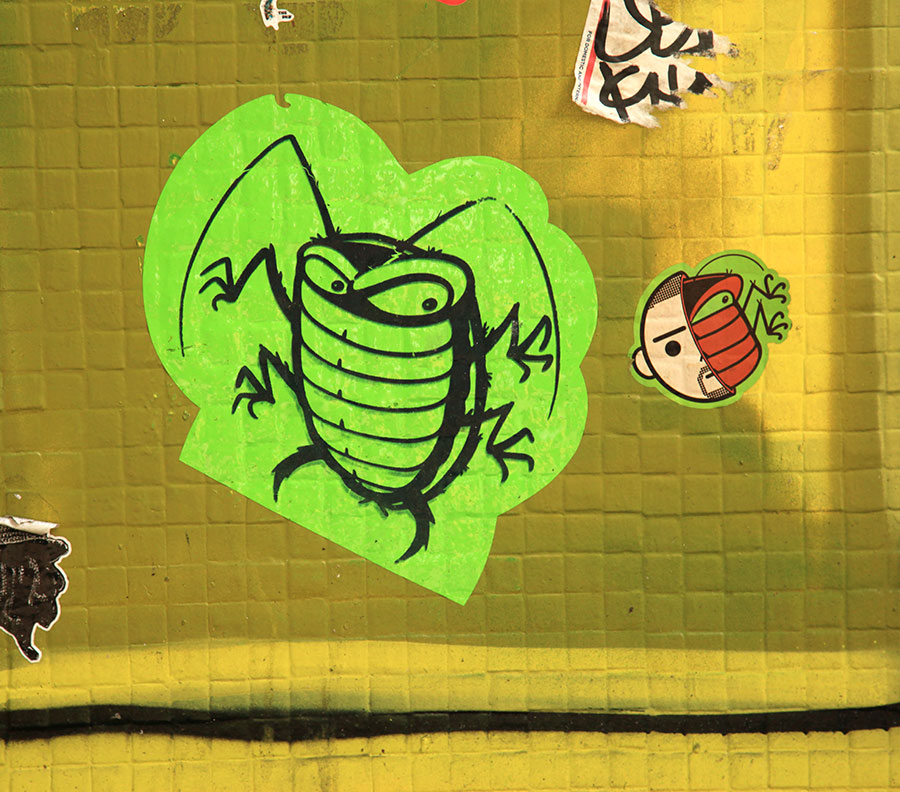
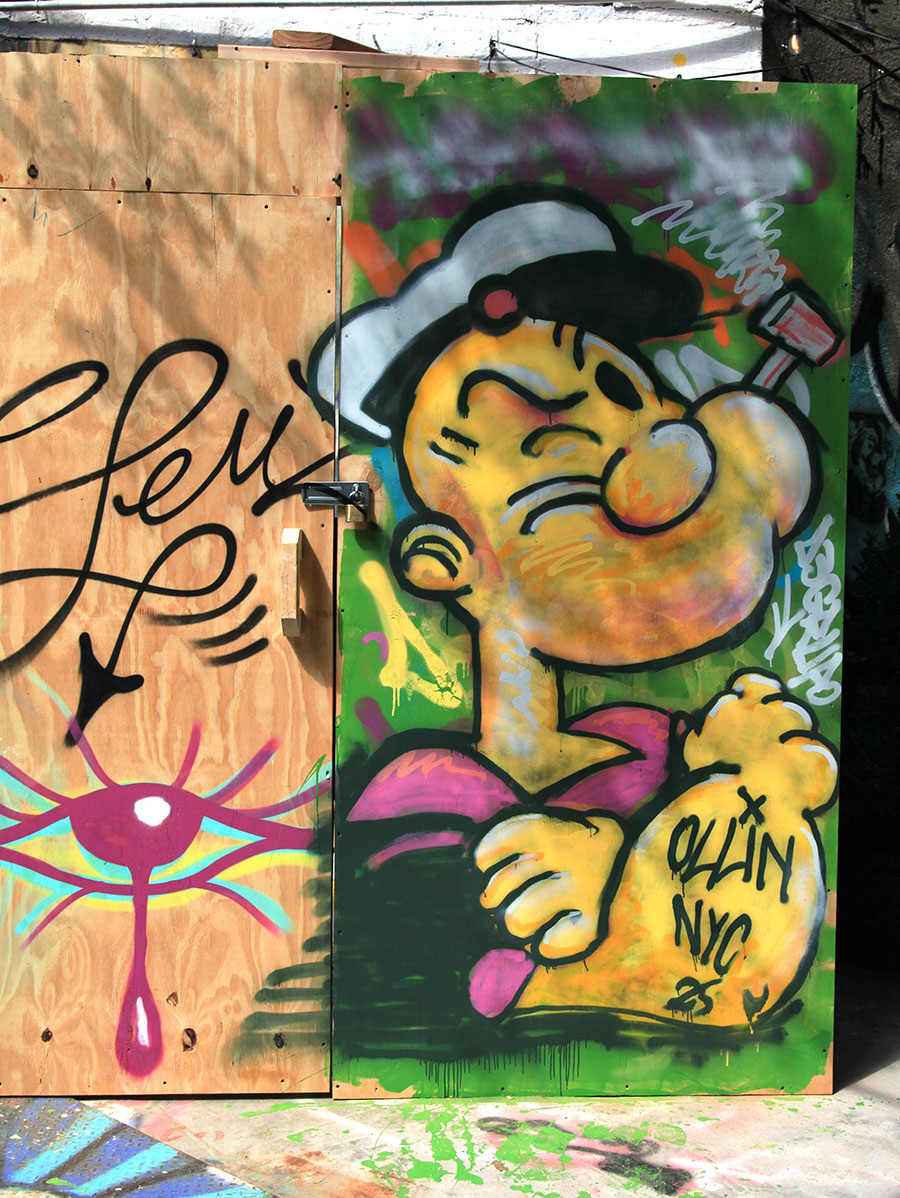
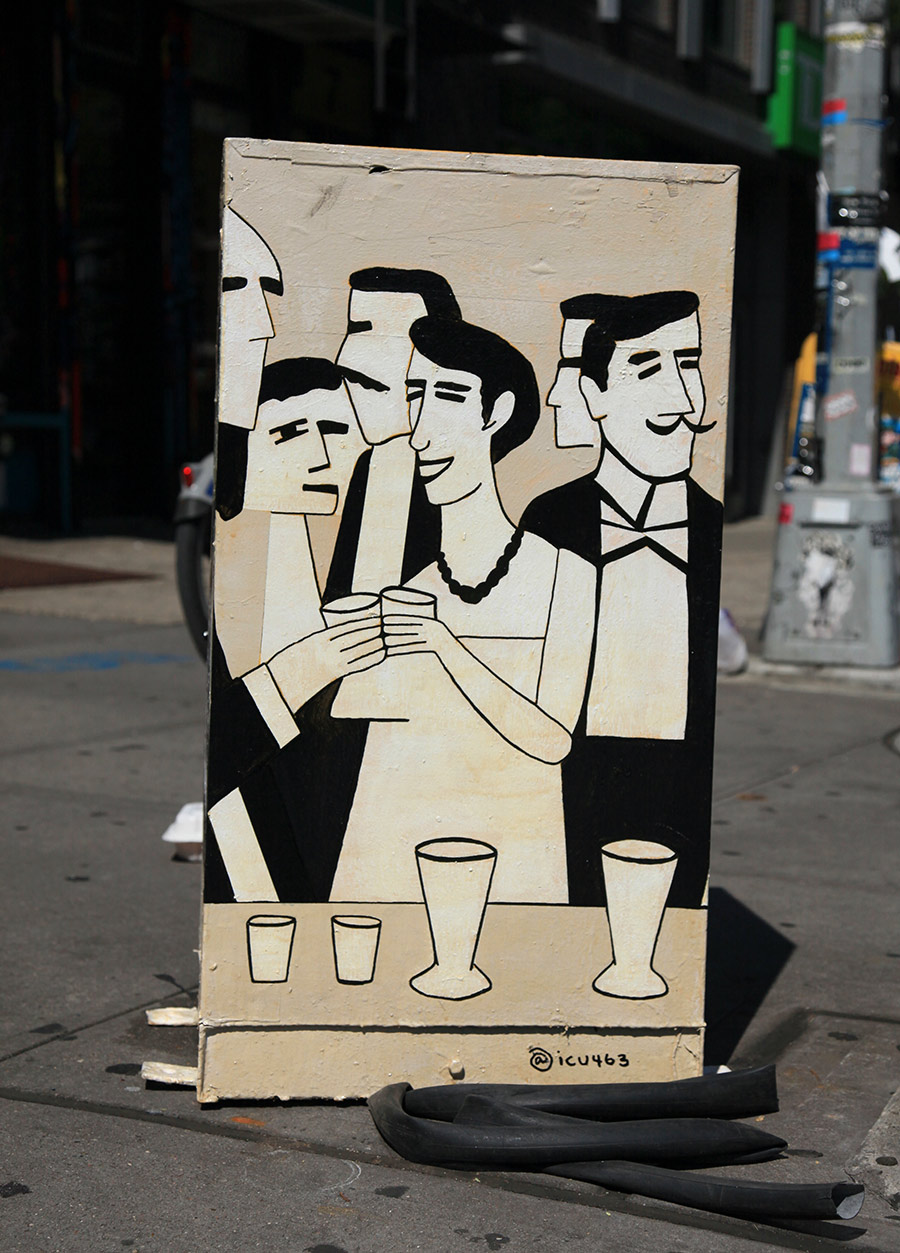
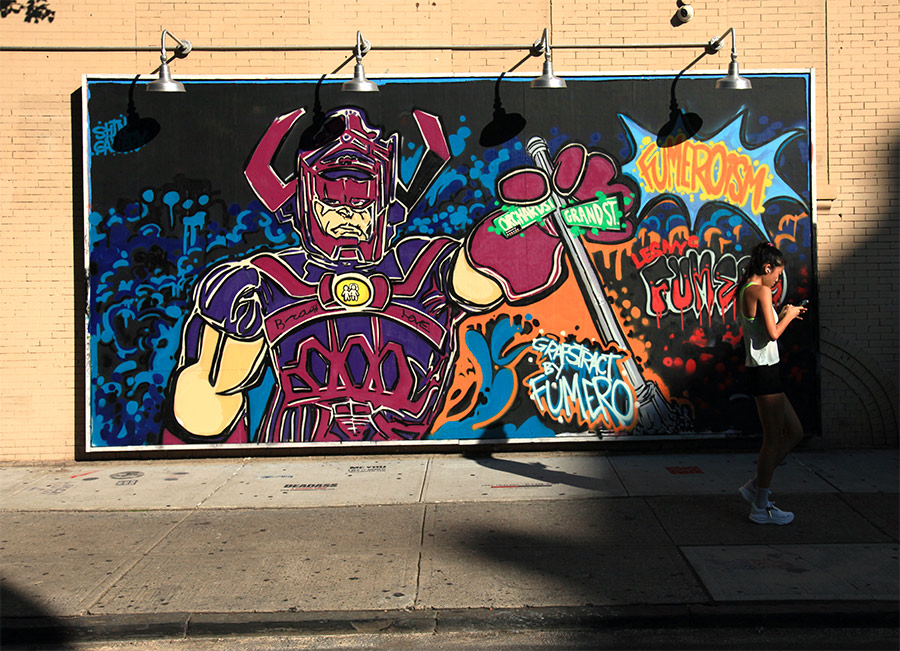
On our weekly interview with the street, we feature new stuff from De Grupo, Divock Okoth Origi, Eternal Possessions, Faile, Fumero, ICU463, IMK, Neko, Ollin, Turtle Caps, and ZamArt.
FKDL, “Figures of Style”, September 5 – October 4, 2025
French street artist and studio artist Franck Duval, better known as FKDL, has always approached the street with a different set of tools. Where most writers leaned on spray paint and stencils, he built images out of fragments—magazine clippings, advertising spreads, press photos—that carried the ghosts of another time. He collects, trims, and reassembles, distilling hours of scavenging into figures that shimmer with nostalgia and aspiration. These are stories you may recognize, yet they arrive altered, re-framed, and suddenly more mysterious. Stumbled upon in the street, they create a fleeting jolt of recognition; encountered in the gallery, they unfold into enveloping icons, polished until they appear almost too pristine to be real.
In his new exhibition Figures of Style at Galerie Taglialatella (September 5 – October 4, Paris), FKDL sharpens his vocabulary again. This time, the discarded pages of books—the blanks, the forgotten openings and endings—become fertile ground for his heroines. Onto these silent surfaces, he layers the saturated clippings of his archive, introducing simplified backdrops for women who feel both familiar and freshly conjured. They gaze back, figures carrying their own authority, commanding you to meet them on equal terms. Their presence is not quite nostalgic nor decorative: it’s assertive, charged, animated.
The daydream is cinematic and literary. FKDL’s compositions function like visual rhetoric, drawing on metaphor, image, and allegory. A hemline can suggest an entire character; a posture can signal resilience or restraint. He treats the female figure not as a symbol to be consumed but as a protagonist who shapes the narrative. At the same time, he broadens his scope to another love —introducing images of automobiles; dreamlike vessels of freedom and speed, their abstraction hinting at motion and desire rather than horsepower.
What separates FKDL from the familiar grammar of street art is his re-invention, his devotion to his archive as much as to the wall. His romance with the popular culture of another era elevates it into something aspirational, iconic, and just out of reach. By trusting the image to lead, FKDL creates art that sits between collective memory and personal imagination. The canvases of Figures of Style carry that duality: clean, singular, and mysterious—icons that seem to step forward from silence, asking to be remembered.
Marc H. Miller is the kind of New Yorker who knows how to save the scraps. Posters, flyers, zines, and announcement cards that most people folded into back pockets and forgot — Miller kept them. Out of those boxes came Gallery 98, a living archive of downtown’s unruly art history, told through the paper that passed hand to hand.
The period that is most alive in this collection spans from the 1970s into the 1990s, when the city was both falling apart and brimming with invention. Cheap rents and abandoned buildings drew in art school kids, squatters, and the first waves of graffiti writers moving beyond the train yards. You see Blade, Lee, Daze, Crash, Lady Pink, LA II — writers who set the pace before names like Haring and Hambleton followed with their own vocabularies on the street.
Blade: From Subway Trains to International Galleries. Via Gallery 98. (image screenshot from the video)
The streets and clubs were full of crossings: drag performers, punks, hip-hop DJs, and young artists finding each other downtown. Groups like Colab squatted buildings and staged wild exhibitions; ABC No Rio opened as an outpost for confrontation and community. Ephemera from those nights — an invite, a Xeroxed flyer — is what Gallery 98 specializes in, proof that the most disposable things sometimes carry the longest shadows.
L.E.S. Sculpture Garden 1985. Via Gallery 98. (image screenshot from the video)
By the 1990s, the energy pushed into new corners. Ad Hoc Gallery, Skewville, Bast, Shepard Fairey — the next wave of artists who kept the mix alive, printing, pasting, and staging in ways that bent art back toward the street even as it was pulled into galleries. Gallery 98 carries these moments forward too, charting how one generation’s walls became another’s starting point.
Miller’s project isn’t nostalgic so much as archival. It’s about memory, about how the downtown scene keeps resurfacing through its paper trail. Some get nervous seeing counterculture artifacts priced and sold — but without this kind of attention, much of it would be lost entirely. Gallery 98 reminds us that history is often fragile, and sometimes the only way to keep it is to hold onto what was once throwaway.
Here are a few new clips that work both as a lesson and a showcase. All videos: written, edited, and narrated by Cole Berry-Miller. Text in quotes by Marc H. Miller
BLADE the Legend
“The rise of graffiti in the 1970s and 80s radically challenged many aspects of the mainstream art world. Blade (Steven Ogburn) was an early pioneer whose innate sense of color, scale and design earned him international recognition. Much of the material used in this video comes from a large collection of Blade material that Gallery 98 recently acquired from his longtime Bronx friend, Ronnie Glazer. “
Blade: From Subway Trains to International Galleries. Via Gallery 98. (image screenshot from the video)Blade: From Subway Trains to International Galleries. Via Gallery 98. (image screenshot from the video)L.E.S. Sculpture Garden 1985. Via Gallery 98. (image screenshot from the video)
Rivington School Sculpture Garden: Making Art Out of Junk Metal Found on The Street, 1985 – 1987
“In 1985, sculptors hanging out at No Se No, a Lower East Side artist-run bar, began using an adjacent empty lot to create a bizarre sculpture garden made up of pieces of junk metal found on the streets. The city would soon demolish its work, but it has lived on in photographs by Toyo Tsuchiya (1948 – 2017), who, in the year before he unexpectedly died, collaborated with Gallery 98 in creating a portfolio tracing the garden’s history.”
L.E.S. Sculpture Garden 1985. Via Gallery 98. (image screenshot from the video)L.E.S. Sculpture Garden 1985. Via Gallery 98. (image screenshot from the video)L.E.S. Sculpture Garden 1985. Via Gallery 98. (image screenshot from the video)
Breaking Into an Abandoned City-Owned Building to Mount an Exhibition About Real Estate, 1980
“When the artist group Colab wanted to present an exhibition about real estate abuses, they decided that the best way to get attention was to break into an empty city-owned building and mount it there. The exhibition was quickly shut down, but in a surprising twist, the Real Estate Show gave birth to the alternative art space ABC No Rio Dinero, which continues to thrive 45 years later.”
COLAB. Illegal Real Estate Show. Manhattan, NYC. 1980. Via Gallery98. (image screenshot from the video)COLAB. Illegal Real Estate Show. Manhattan, NYC. 1980. Via Gallery98. (image screenshot from the video)COLAB. Illegal Real Estate Show. Manhattan, NYC. 1980. Via Gallery98. (image screenshot from the video)COLAB. Illegal Real Estate Show. Manhattan, NYC. 1980. Via Gallery98. (image screenshot from the video)COLAB. Illegal Real Estate Show. Manhattan, NYC. 1980. Via Gallery98. (image screenshot from the video)
For Mr. and Ms. Everyday, there is a feeling of being financially trapped, with no relief in sight. Remember the Princeton study from a decade ago that stated average people have almost no voice in making change?
Street artists often aim their spray cans at social and political fault lines, wielding invective and knife-sharp wit. Yet this week’s BSA interview with a pair of artists questions whether today’s practitioners still have the conviction to confront society’s social and economic ills. “One of the things I was playing with was the overly positive, banal affirmation-type quotes you see in a lot of street art,” says artist Alex Itin. “I see the country in a dangerous place, and positive bromides are not as important as anger and cogent analysis of our present state. So I wanted a bit of salt and burn… while still being funny.”
If the Princeton study still holds—and it does—then maybe it makes sense that artists confront this swilling morass of a kleptocracy and turn walls into soapboxes. After all, when billionaires and hedge funds treat your society like a yard sale and Congress keeps playing cashier, we could at least point out the absurdity. A stencil or mural won’t topple the problem, but it can cut through the haze, sharpen the joke, and remind us that resistance still has a voice—even if it has to shout from a brick wall.
This week, we have a lot of new stuff, particularly in the graffiti vein, from the Boone Avenue Festival in the Bronx a few weeks ago. Boone Avenue Walls is an artist-led, community-rooted street art festival in the Bronx, founded by renowned graffiti writer WEN C.O.D.. Organized by the Boone Avenue Walls Foundation, the event features large-scale murals and public art installations. Local and international artists are invited to paint in neighborhoods such as West Farms, Mott Haven, Foxhurst, and Hunts Point—often directly reflecting local pride and cultural touchstones of resilience and creativity. Many of these refer to music stars and reflect our fascination with celebrity. Some of these pieces were under production when we stopped by, while others were so fresh that you could still smell the fresh paint.
On our weekly interview with the street, we feature AESOP ONE, Albertus Joseph, Busta Art, Call Her Al, El Souls, EWAD, MELON, Miki Mu, NEO, Pazzesco Art, Persue, Pyramid Guy, Sue Works and Tony Sjoman.
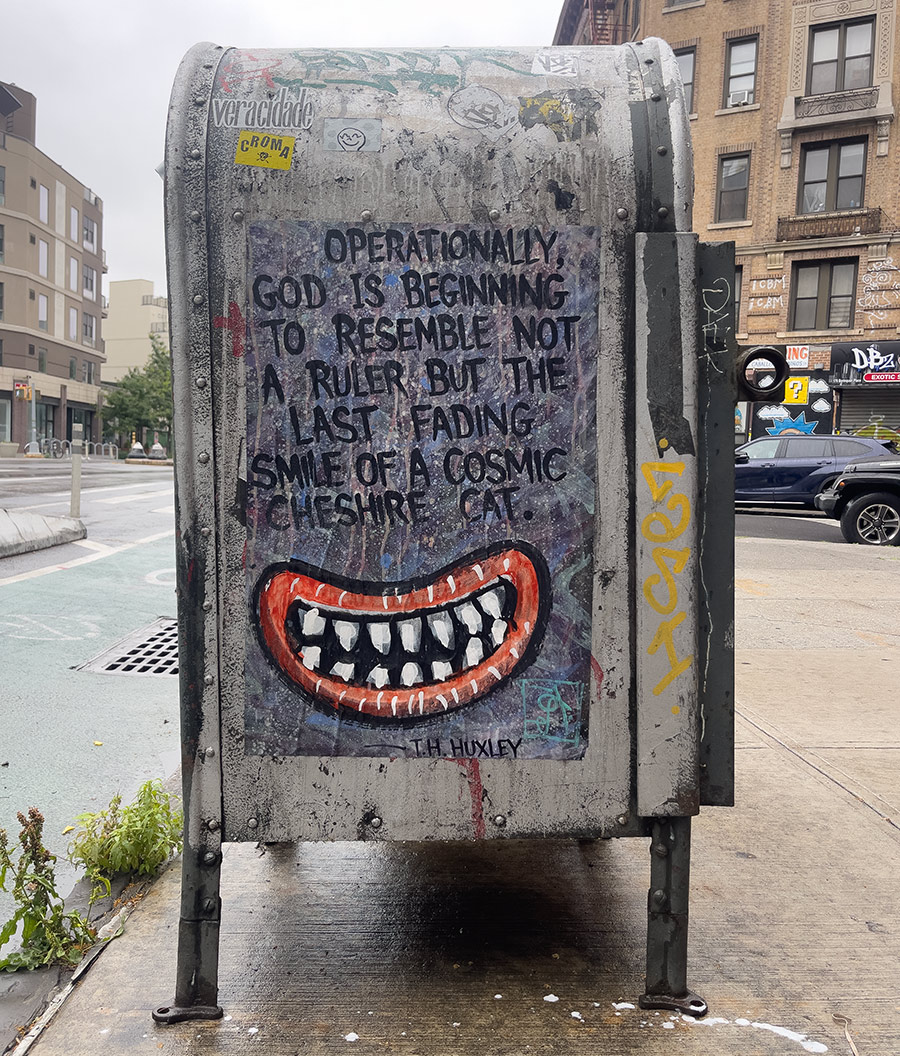
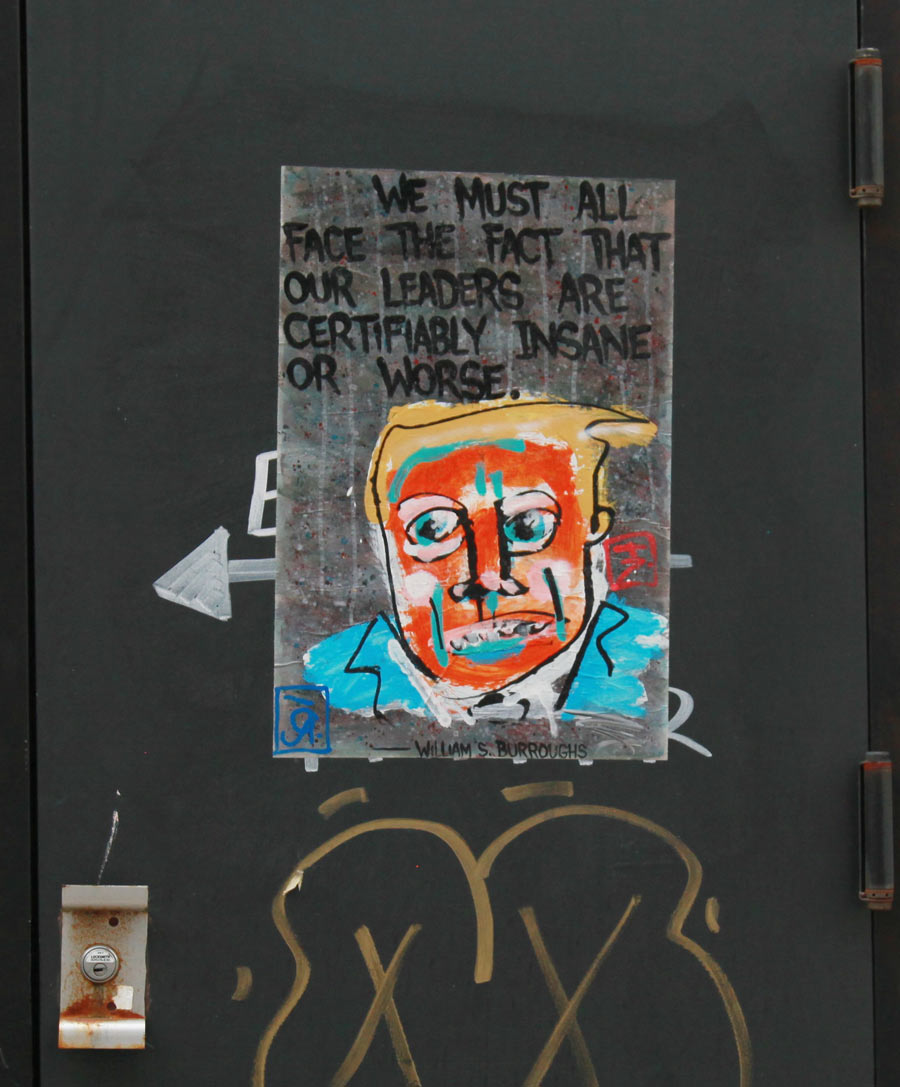
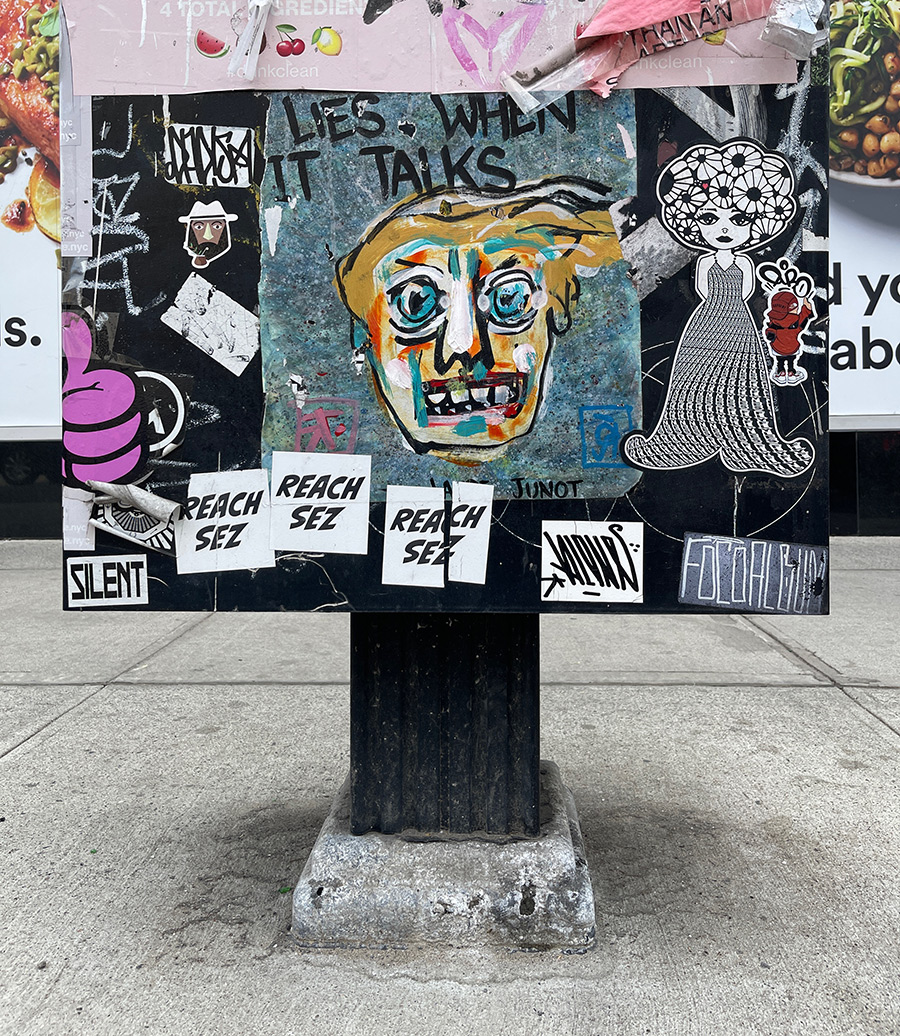
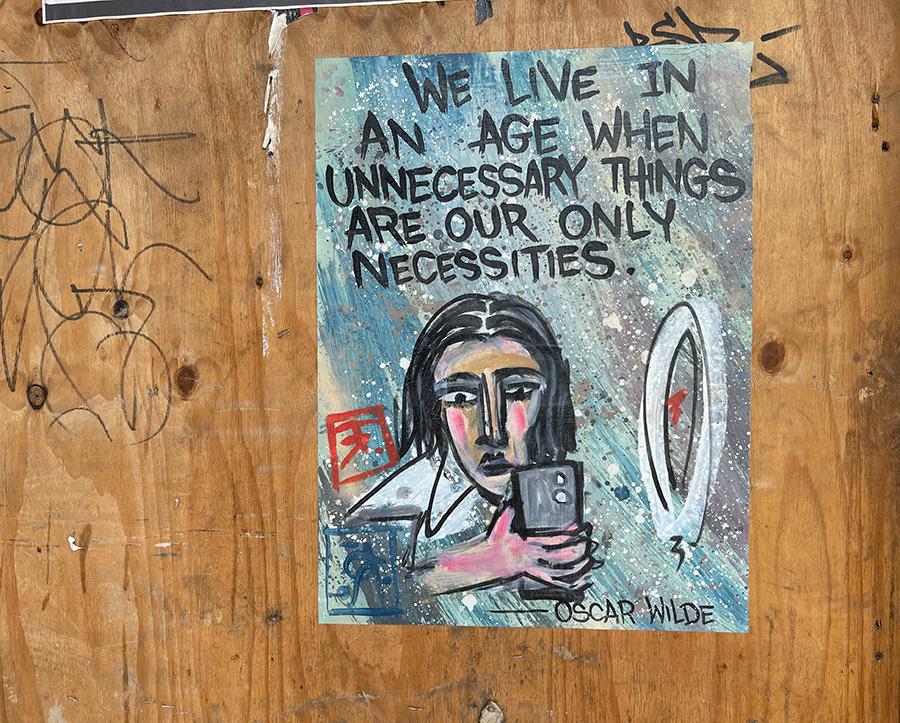
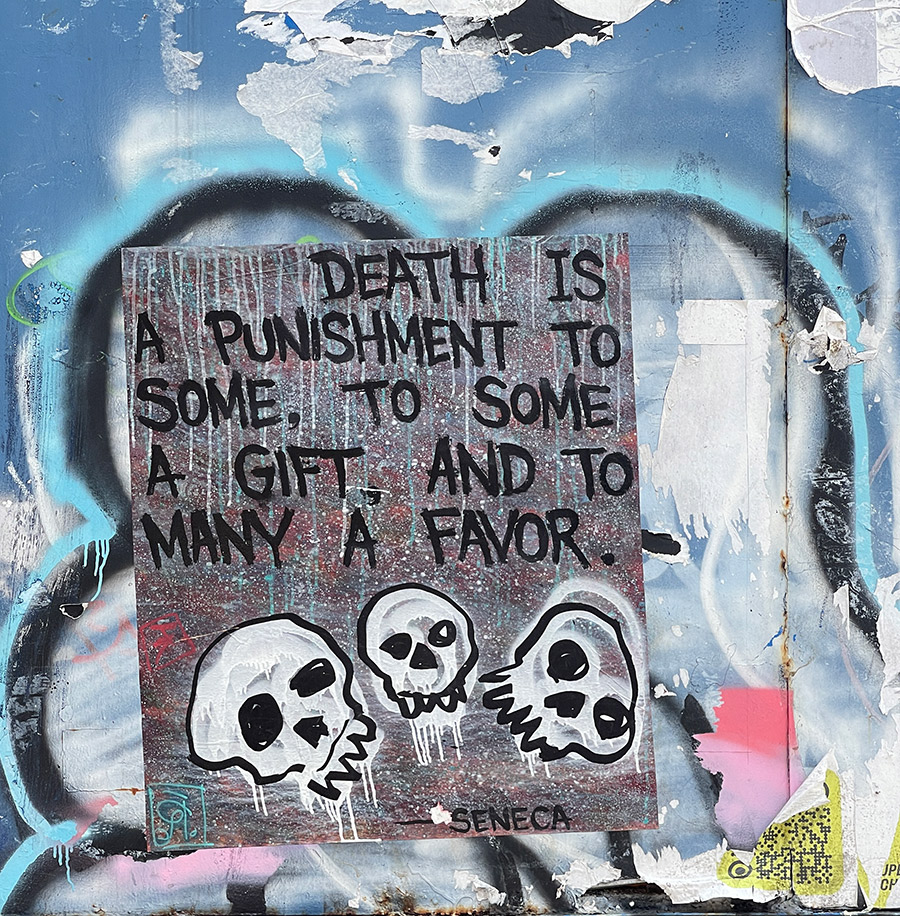
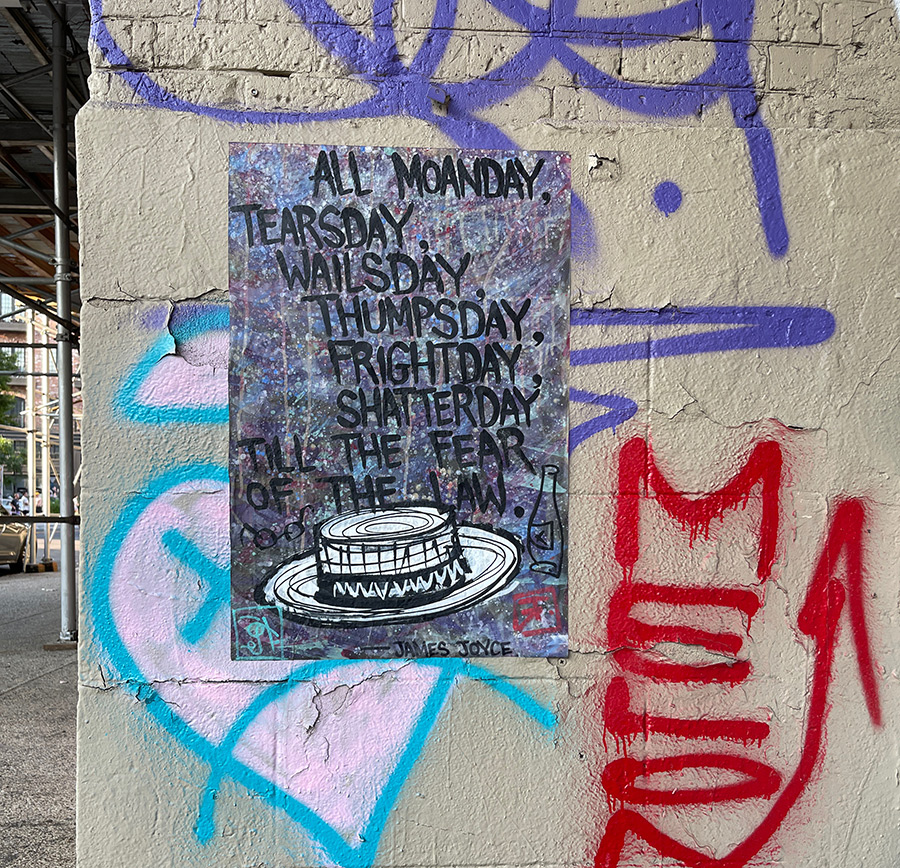
Rene Lerude & Alex Itin aren’t populists chasing the lowest common denominator with their hand-rendered one-off posters and stickers. As street artists, you might call them intellectual pranksters: observers who like their wisdom salted with cynicism, their philosophy dressed in humor, and their politics wrapped in that oily fish paper called irony. Look at the company they keep — literary heavyweights, satirists, philosophers, and contrarians. Instead of quoting hip-hop pioneers, political activists, or contemporary street philosophers, they platform Wilde, Bierce, Carlin, Vidal, and Burroughs onto that empty boarded-up lot you just trudged past.
Their words are colorfully tinted weapons, cutting through hypocrisy and mocking social pretensions. Their figures are caricature, maudlin, murky, and nearly masterfully messy. The style and understatement are of the moment, yet it carries a timeless skepticism — a stoic philosophy rooted in reason, rationality, and inquiry.
Popping up on the street often enough to grab your attention, the bards and seers they quote give you a good sense of where their heads are at: Oscar Wilde, Seneca, James Joyce, Junot Díaz, Laurence J. Peter, William S. Burroughs, T.H. Huxley, Francis Bacon, Ambrose Bierce, Gore Vidal, and George Carlin. It’s a crew of contrarians, cynics, and truth-tellers — a reminder that Rene & Alex are carrying these voices into the street not as decoration, but as conversation starters, provocations, and the occasional punchline.
Naturally, we had to talk with them, to see how they plug into the current street art scene and the fiercely independent energy of the artist-directed 17 Frost Gallery in Brooklyn that has been mounting shows by various curators over the last decade or more. That space has had more lives than a stray cat — raw, investigatory, and, when you least expect it, collaborative in a magpie sort of way. Are all the real artists today disillusioned, disgusted and absurdly darkly funny? Maybe. Or maybe every generation of free-thinkers has simply been awake, willing to poke at sore spots, willing to question conventional wisdom. With language that performs as much as it provokes, Rene & Alex show a respect for the long arc of human thought — always filtered through the grin of a trickster.
Brooklyn Street Art:When did you decide to collaborate with your art? RENE: I started making stickers to put up in bars relating to alcohol, amusing insights, quips, etc. This was around 2016. I ran out of good ones fairly quickly, so this just opened up to any topic I found interesting. Originally, these were just markers on the white stickers. I then decided to make backgrounds that looked like surfaces I was working on — paint-splattered and marked from years of use. Essentially, an abstract mess. One late evening at the Frost Gallery, Alex saw a bunch which had room under the text and went to town. That was that.
ALEX: While curating at 17 Frost Gallery, I became inspired by the open-mic Sundays we were running that attracted mostly musicians and stand-up comedians, and the odd poet. I wondered if you could do a similar thing with visual artists, street artists, and graf people. We started doing Tuesday sticker nights. One could work on any media, but the sticker game was the unifying concept: low cost, popular, public, and open for low-stakes creative collaboration… but mostly it was an excuse to hang out and meet lots of like-minded artists.
One of the things I always like to talk with artists about is money — how to make it, keep it, shake it out of trees, etc. It’s an interesting thing as a bill is about the size of a sticker. Surviving as an artist is brutal stuff, so educating yourself and your community about legal and financial questions is just good practice.
“One of the things I always like to talk with artists about is money — how to make it, keep it, shake it out of trees, etc. Surviving as an artist is brutal stuff, so educating yourself and your community about legal and financial questions is just good practice.” — Alex
In one such conversation, I was ranting about music, copyright laws, and how people in a band get or don’t get paid. I said something like Miles Davis got paid, the band usually didn’t (unless they brought the song with them). And I think I pretended to be an angry bassist ranting about Miles. A friend walked in the door and announced with great authority that Miles Davis owes him money. That joke sort of stuck and Rene wrote down the quote, and I drew a trumpet. For a while, it was just “Miles Davis owes me money,” signed by any of his many collaborators. Eventually, we started looking for other quotes.
BSA:What’s your collaboration process? Do you pass the artwork back and forth, or do you work on it together in the studio? RENE: I start the process by producing a couple of hundred stickers and posters from newsprint. Then comes the lengthy task of going through one of dozens of aphorism books and writing them all out. I pass this on to Alex and wait. He gives them back to me, I archive them, then we split them amongst ourselves.
“I see the country in a dangerous place, and positive bromides are not as important as anger and cogent analysis of our present state. So I wanted a bit of salt and burn… while still being funny.” — Alex
ALEX: The first collaborations were done together at 17 Frost, but eventually we were passing them back and forth in envelopes, often between London and New York.
BSA:How do you choose the spots in the street to place the final work? RENE: If it’s a sticker, somewhere in the cut where it won’t get taken over, but still in decent reading distance. Posters just anywhere that might rock a while.
ALEX: Placement is for me just part of putting up stickers. It’s usually a walk and improvised art installation. I try to hug up to artists I like or to try and interact with text or image. Rene hangs most of the posters, so I’m not sure how he chooses spots for those.
BSA:Alex, do you draw the characters before or after the words are given to you by Words on the Street? ALEX: Rene usually does the background and text, and I work into that.
BSA:Are the characters based on real humans? Are they portraits of people you know or see in public space? ALEX: Some of the drawings are just cartoons with broad archetypes, but also there are a lot of portraits of the various quoted people. These are drawn from photos — a thing I never do in my own studio practice. There are also a lot of Trump portraits.
BSA:Rene, you use quotes from famous people, politicians, and literature. Do you sometimes write your own thoughts and use them in collaboration with Alex? RENE: I have done a few myself, though I’ll check to make sure it hasn’t been said before — in as much as you can. Alex does more frequently than me, so we have done quite a few of those over the years.
ALEX: I have written a few quotes attributed to -itin. “Branding is for cattle” is a favorite.
BSA:Many times the messages and drawings are funny, salty, biting, and poignant. Is it hard to keep a balance when doing the art? Do you even think about keeping a balance? ALEX: One of the things I was playing with was the overly positive, banal affirmation-type quotes you see in a lot of street art. I see the country in a dangerous place, and positive bromides are not as important as anger and cogent analysis of our present state. So I wanted a bit of salt and burn… while still being funny.
BSA:The current political atmosphere must be a bonanza for your creativity and productivity in your art. Do you feel overwhelmed by the dangerous path the country is going? If you feel angry at the current administration’s actions and policies, do you use your art to channel the anger? RENE: Oddly enough I haven’t made any new posters or stickers in a couple years. Most quotes worth their salt are in some way timeless — vernacular can be different, but the sentiments always come to relevancy as time passes. That said, it’s come to a point where more of them are becoming relentlessly applicable as the weeks and months pass.
ALEX: The second term has created a quandary. I got okay at doing Trump, but I just don’t want to see his face or give any more attention to that narcissist. So it’s a quandary.
Beauty and relevance are often measured by youth; street artist/muralist Marina Capdevila flips the script with humor, intelligence, empathy, and her own style of caricature. From Falset to Barcelona to walls across continents, her work has always carried a certain irreverence toward cultural clichés, replacing them with something both slyly funny and disarmingly affectionate. In “Forever Gold: The Glorious Age,” she brings that sensibility to Pforzheim, a city with a long history of craft and refinement, transforming its legacy of jewelry and watchmaking into a meditation on age, resilience, and the sparkling currency of a lived experience.
Marina Capdevila. Forever Gold: The Glorious Age. Pforzheim, Germany. (photo courtesy of the artist)
Capdevila has built her reputation by making elders her heroes—those often overlooked in many Western cultures. Here, two older women share a private, playful moment: one fastening earrings onto another, their laughter and conspiratorial glances are charged with dignity and warmth. It’s an image that appears deceptively simple but operates on multiple levels. A gesture of care. A nod to adornment as ritual. A reclamation of style and vitality that refuses invisibility. In Capdevila’s hands, it becomes both portrait and proclamation.
The mural settles into Pforzheim’s streetscape not as an ornament but as a conversation with history. Gold, the city’s calling card, is reimagined not as metal but as metaphor—character, wisdom, a glow that will not dim. Like the best of public art, Forever Gold speaks to its place while widening its lens.
Marina Capdevila. Forever Gold: The Glorious Age. Pforzheim, Germany. (photo courtesy of the artist)
Capdevila’s humor keeps the piece buoyant; her palette keeps it alive. People are people, wherever you are. Beneath the surface wit, there is a serious critique of our collective assumptions about beauty, femininity, and time. In celebrating aging not as decline but as an ascendant force, she joins a lineage of muralists who transform city walls into stages for new myths. And in Pforzheim, her protagonists gleam as vivid, indispensable figures of the now.
Marina Capdevila. Forever Gold: The Glorious Age. Pforzheim, Germany. (photo courtesy of the artist)Marina Capdevila. Forever Gold: The Glorious Age. Pforzheim, Germany. (photo courtesy of the artist)Marina Capdevila. Forever Gold: The Glorious Age. Pforzheim, Germany. (photo courtesy of the artist)Marina Capdevila. Forever Gold: The Glorious Age. Pforzheim, Germany. (photo courtesy of the artist)Marina Capdevila. Forever Gold: The Glorious Age. Pforzheim, Germany. (photo courtesy of the artist)Marina Capdevila. Forever Gold: The Glorious Age. Pforzheim, Germany. (photo courtesy of the artist)
Welcome to BSA Images of the Week! This is the last weekend of the summer for some, a celebration of workers’ rights for others. Labor Day’s parade began in 1882 in Union Square, New York City. Now, unions are under attack, as they have been for a long time. However, without your labor, this city would not exist as it does today.
Labor Day in New York is more than just a long weekend — it’s a reminder of the people whose work has shaped the city and inspired workers’ movements worldwide. From builders and transit crews to teachers, caregivers, and service staff who keep daily life moving, New Yorkers have always been at the forefront of fighting for dignity and fairness on the job, often at great personal sacrifice. Like the uncommissioned art and permissioned art that fills our streets, some labor is public, visible, and often underappreciated — yet it leaves an unmistakable mark on the life of the city. We honor that history and salute the many workers across the five boroughs who carry it forward every day, with grit, pride, and a determination that makes New York what it is.
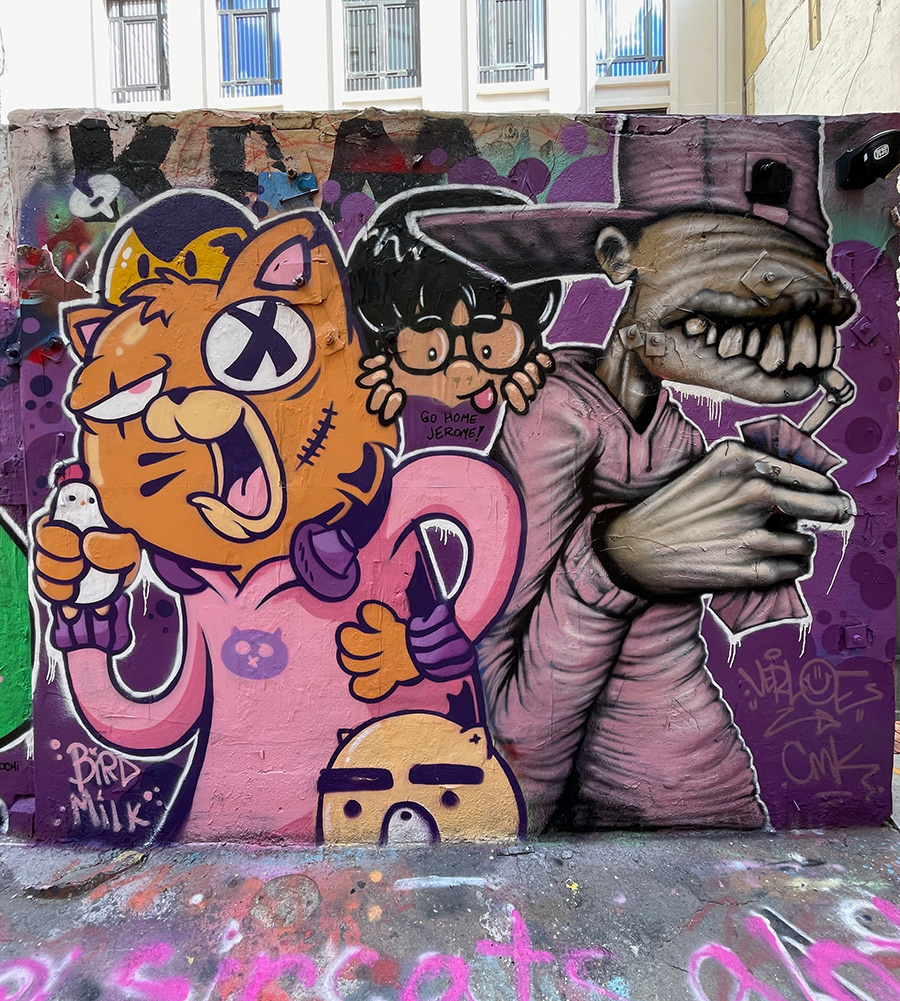
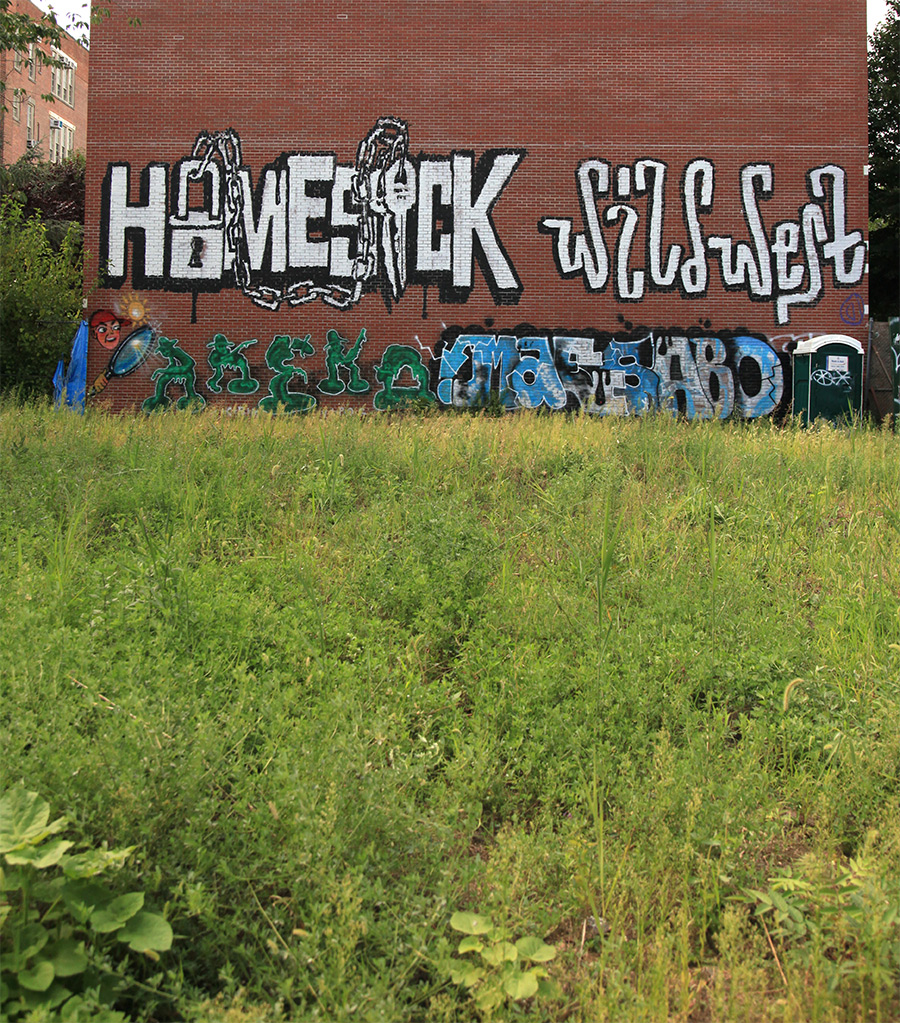
Here’s our weekly interview with the street, this week featuring works from Bird Milk, Crash, Duke A. Barnstable, Homesick, Molly Crabapple, PAGED, SAMO@, SAMOI, TFP Crew, and Wild West.
The Sidewalk Artist. Directed by David Velez & Brandon Rivera via Vimeo. (image still from the video)
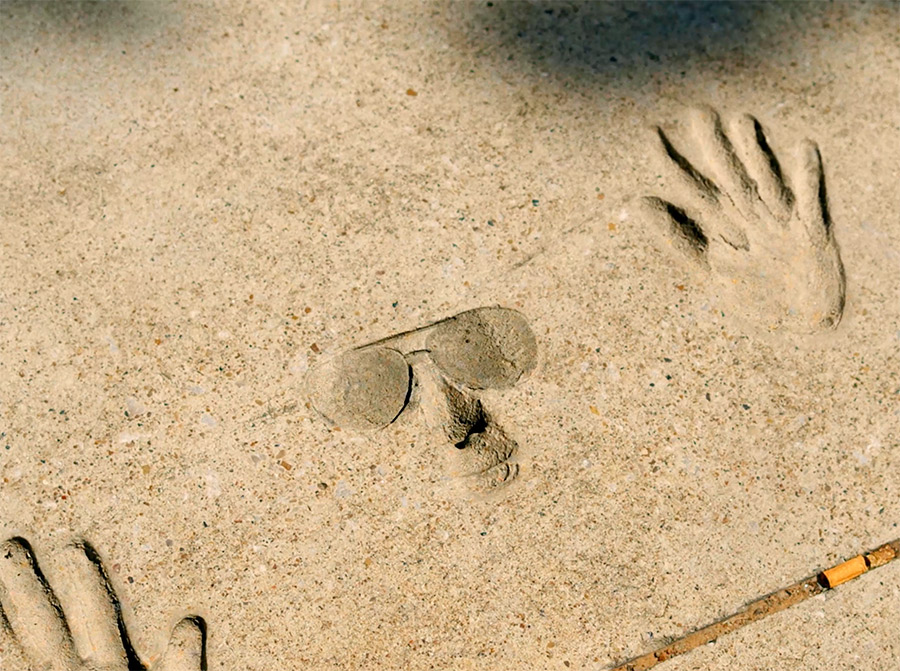
You’re used to spotting it on city walls, rolling trucks, the back of a traffic sign — the marks of those who feel compelled to leave a trace. The Sidewalk Artist, a new short directed by David Velez and Brandon Rivera, introduces us to a character whose canvas is neither brick nor steel, but the soft gray of suburban concrete. Set in North Texas, the film brings us to driveways and sidewalks where a man’s small gestures carry the same urge to exist in public space that has driven generations of unsanctioned artists.
A documentary film crew follows a contractor who leaves his mark on concrete sites throughout a North Texas town, featuring Juan Manuel Portillo. Directed by David Velez & Brandon Rivera.
His name is Juan Manuel Portillo, a contractor whose habit is to fold personality into the most utilitarian of surfaces. What others see as flat and functional, he treats as an opportunity to shape memory: a curve pressed here, a mark set there, a moment of authorship drying into permanence before anyone has time to second-guess it. You may even find it absurd, but perhaps that’s the point. His style isn’t about scale, spectacle, or consistent topic — it’s about presence. The story would almost seem too improbable if you hadn’t seen it for yourself. Uncommissioned, unpermissioned, and often overlooked, these modest inscriptions feel as vital to Manuel as a throw-up on a subway car might feel to an OG writer in NYC.
The Sidewalk Artist. Directed by David Velez & Brandon Rivera via Vimeo. (image still from the video)
What you sense most is his attitude: unhurried, sincere, quietly amused by the notion of calling any of this art. Yet the parallels are clear. This is kin to street art, even if transplanted to cul-de-sacs and lawns; it is still about finding space outside the sanctioned order, about leaving something behind. With cinematography by Emily Sanchez and music by Brian Green, The Sidewalk Artist paints a portrait of a maker who doesn’t so much demand attention as quietly alter the ground you walk on. In doing so, it reminds us that the impulse to create outside permission slips and institutions can surface anywhere — whether on a concrete slab in Texas or a forgotten wall in Brooklyn.
The Sidewalk Artist. Directed by David Velez & Brandon Rivera via Vimeo. (image still from the video)The Sidewalk Artist. Directed by David Velez & Brandon Rivera via Vimeo. (image still from the video)The Sidewalk Artist. Directed by David Velez & Brandon Rivera via Vimeo. (image still from the video)The Sidewalk Artist. Directed by David Velez & Brandon Rivera via Vimeo. (image still from the video)The Sidewalk Artist. Directed by David Velez & Brandon Rivera via Vimeo. (image still from the video)
Over the last two decades of covering the street art movement and its many tributaries, one of the deepest satisfactions has been watching artists take real risks, learn in public, and mature—treating “greatness” as a path rather than a finish line. Working at BSA, we’ve interviewed, observed, and collaborated with scores of artists, authors, curators, institutions, and academics; it’s been a privilege to see where they go next.
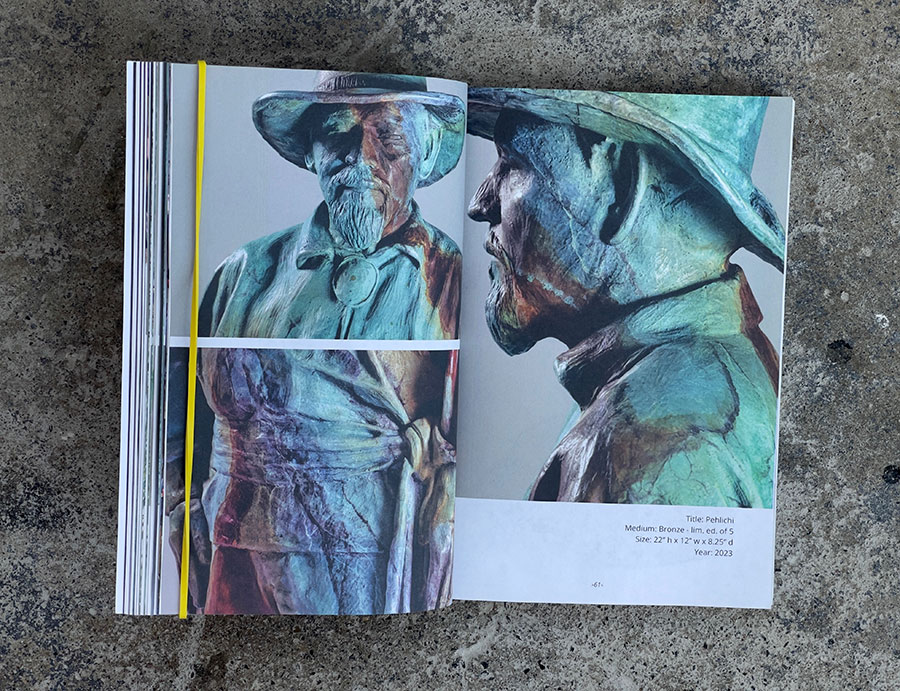
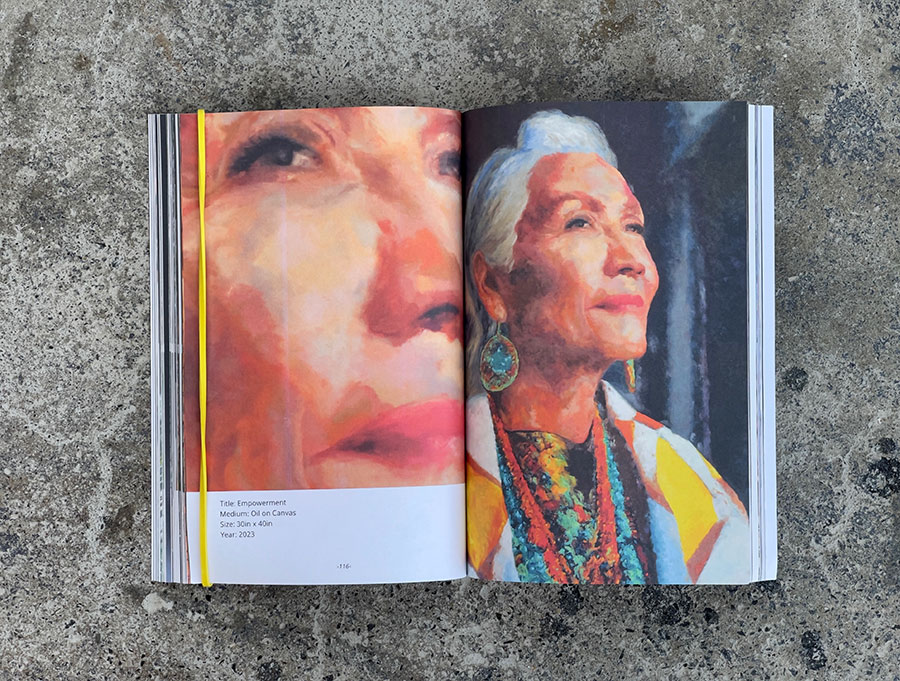
Addison Karl. KULLI. A Natural Spring of Artwork, Sculpture, Painting, Drawing, Public Art, and Inspiration. Self-published. Monee, IL. 2024.
Addison Karl’s self-published 2024 monograph, “KULLI: A Natural Spring of Artwork, Sculpture, Painting, Drawing, Public Art, and Inspiration,” reads as a first-person chronicle from an artist who moved from the wall to the plaza to the foundry without losing the intimacy of drawing. Dedicated to his son—whose name titles the book—KULLI threads words, process images, and finished works across media: murals, cast-metal and glass sculptures, drawings, and studio paintings, all guided by a sensibility that treats color and material as vessels for memory and place.
Trusted observers have mapped this evolution in plain terms. WALL\THERAPY once summarized Karl’s arc “from blank slate, to paper, to mural, to installation, to unoccupied public space,” a concise description of how a drawing-led street practice broadened into public art and beyond. The book situates headline projects within that trajectory: “In Service,” his 2019 McPherson Square Metro mural in Washington, DC—roughly 64 feet along aluminum panels—honors veterans, showing how a hand-drawn hatch can scale to civic form. In Atlanta, the cast-iron BeltLine sculpture Itti’ kapochcha to’li’ (“little brother of war”) roots contemporary public space in Chickasaw story and material logic.
Along the way, BSA documented Karl’s shift into sculpture and his view that public work demands accountability: “It makes you really understand the world in a really different way – of how you take responsibility for what you are doing.” Read together, these frames make KULLI a ledger of experiments—how a printmaker’s line climbed buildings, then solidified into bronze and glass—developed over more than a decade of international projects, including the opening of URBAN NATION in Berlin.
Crucially, the book lets Karl define his own stakes. “Each canvas is not just a painting; it’s a mirror reflecting the viewer’s own inner world,” he writes—an artist’s statement that clarifies why the outdoor work invites dialogue rather than spectacle. Biographical notes reinforce the point: Denver-born, Phoenix-raised, of Chickasaw and Choctaw descent, Karl’s foundation in printmaking underpins his cross-disciplinary approach; his patinas deliberately recall turquoise, and his public commissions translate personal narrative into shared space. Read KULLI as a record of that translation—how a drawing-based street practice consolidated a public voice and expanded into sculpture without losing the hand, the story, or the invitation to look harder.
Addison Karl. KULLI. A Natural Spring of Artwork, Sculpture, Painting, Drawing, Public Art, and Inspiration. Self-published. Monee, IL. 2024.
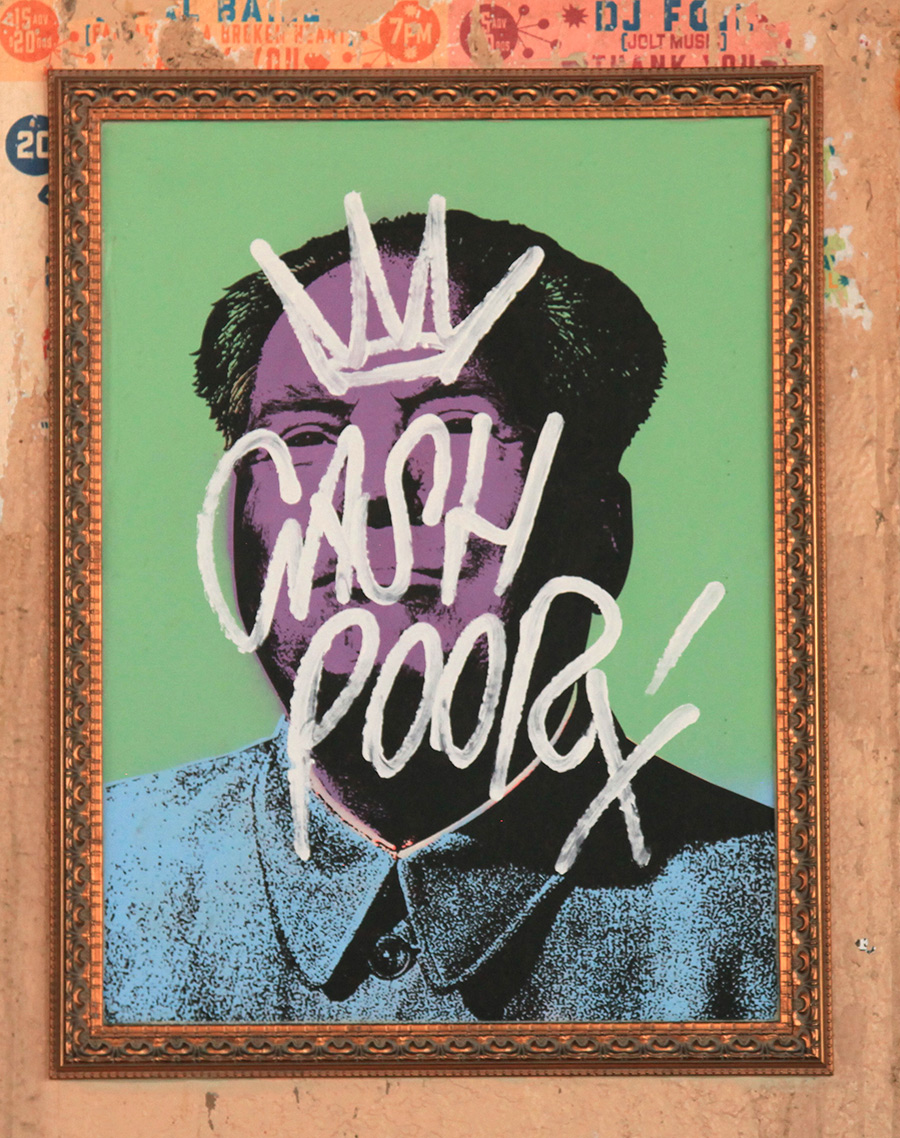
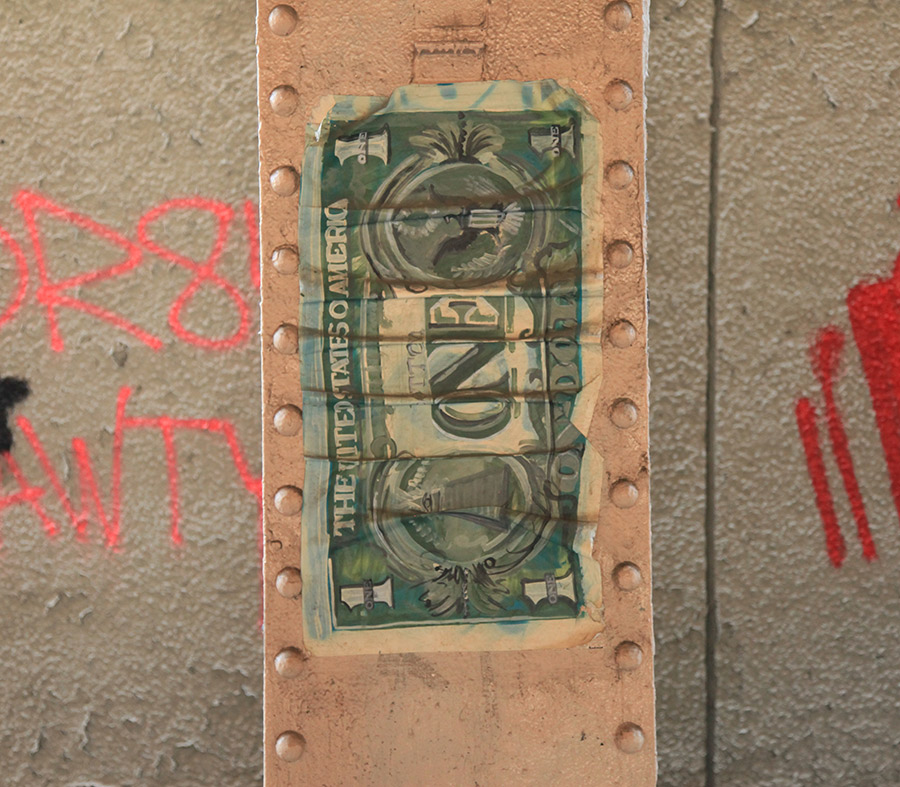
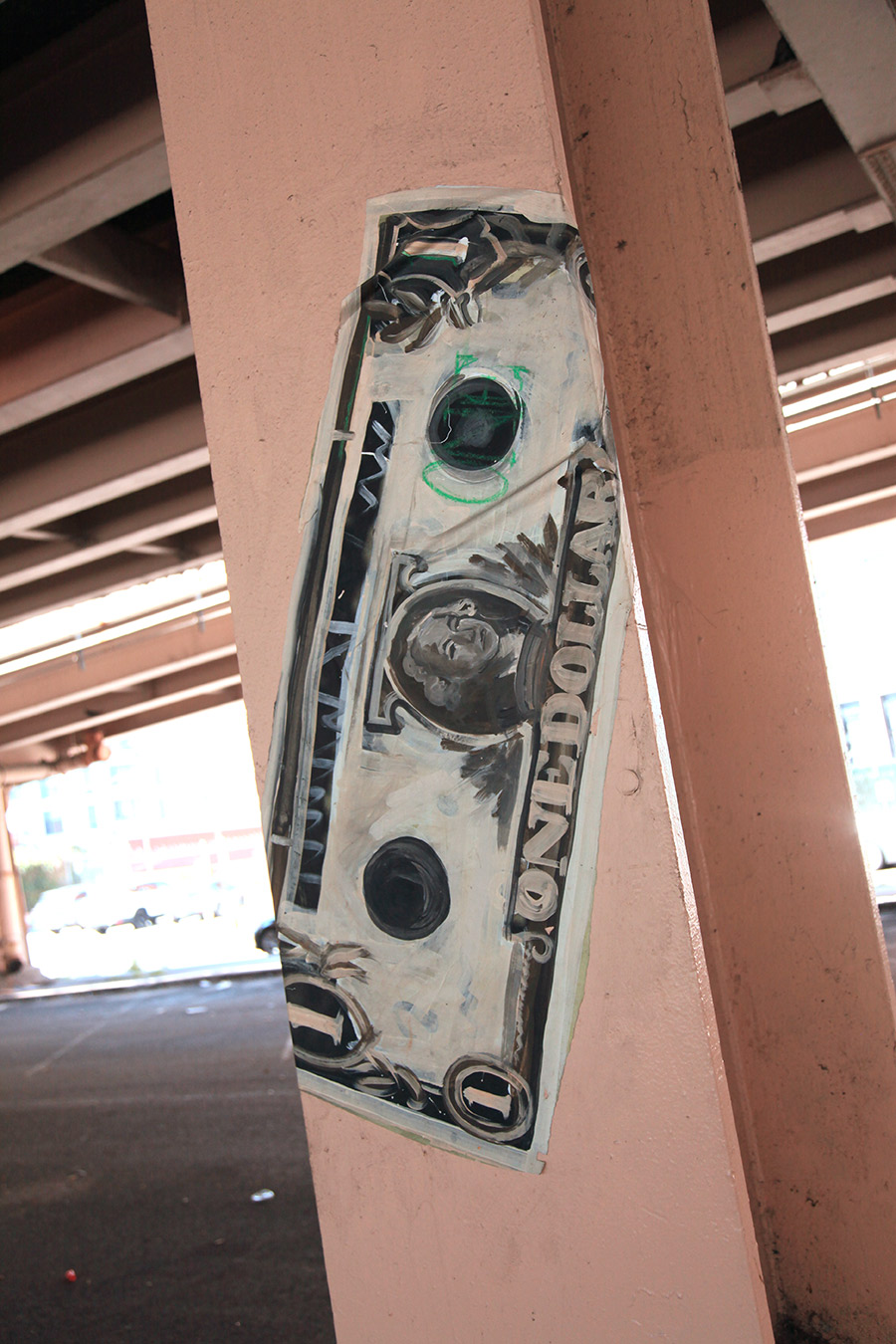
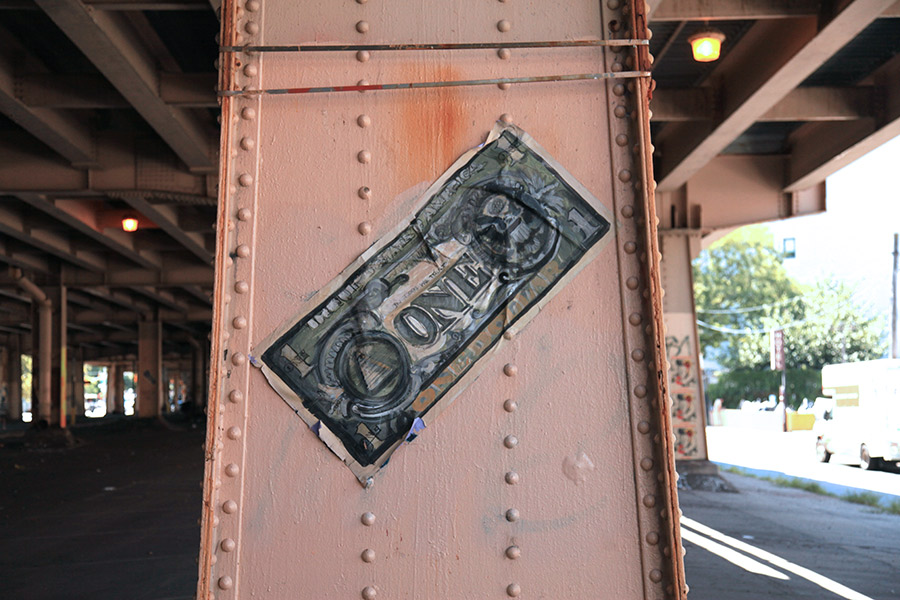
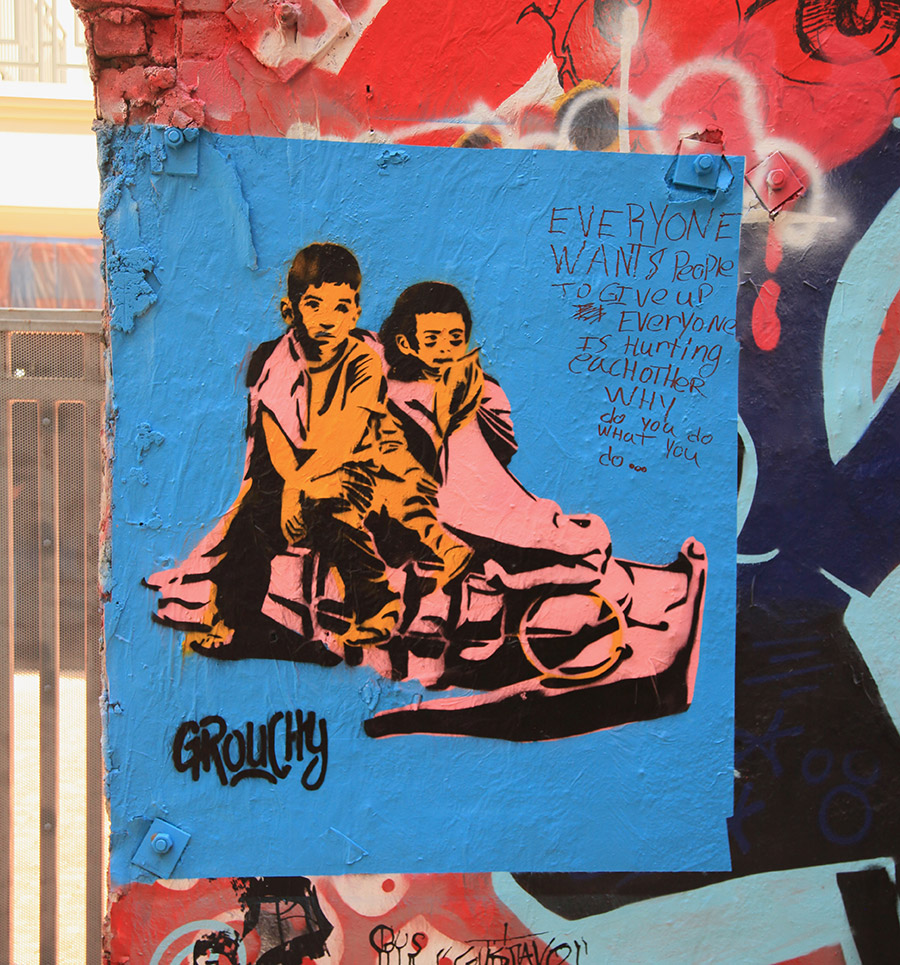
When discovering a series of currency-themed street art in the city this week, we were reminded of the relentless daily pressure there is today to make ends meet—and of the regular headlines showing how the big players run their own schemes to squeeze the public. It also calls to mind the 1980s hip hop track “What People Do for Money” by Divine Sounds, with its sly reminder: “They’ll sell their soul to the devil, just to make a dime.” (See video at end of posting)
Whether it’s war profiteering, scamming public programs, turning charities into piggy banks, buying up public goods to squeeze ratepayers, or preaching salvation from the cabin of a private jet, corporations, banks, and street hustlers only differ in scale, not intent.
From the street perspective, this may look like the same hustle that they do – but with a press release accompanying it.
Here’s a survey of our weekly interview with the street, featuring Atomiko, Cash4, Drones, Grouchy, Jappy Agoncillo, Rene Lerude, Skewville, TFP Crew, and Zexor.
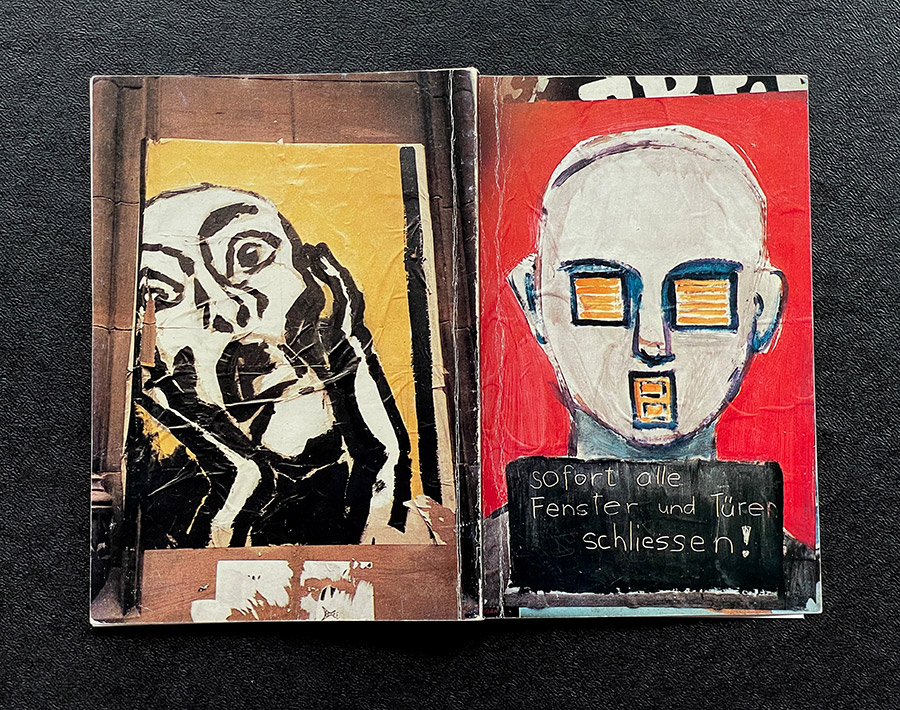
Sofort alle Fenster und Türen schliessen! (Immediately Close All Windows and Doors)
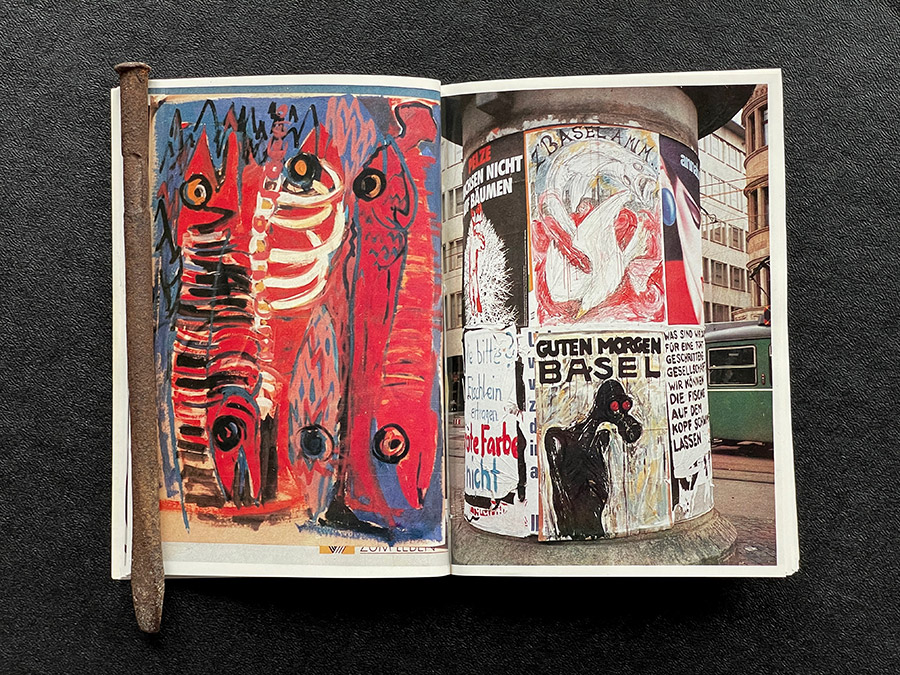
On the night of November 1, 1986, Basel was told to “immediately close all windows and doors.” A fire ripped through a Sandoz chemical warehouse, and the Rhine River ran red with toxic runoff. Thousands of fish floated belly-up, and citizens were left in fear and fury, just months after the trauma of Chernobyl【1】.
Poster campaign in Basel (Switzerland), 1986, by anonymous artists to highlight the Sandoz fire disaster in Schweizerhalle. Zine photographed and printed anonymously, Basel 1986.
When the authorities stumbled and minimized the danger, Basel’s artists and students seized the opportunity to express themselves on the walls. Within days, in the middle of the night, activists from the School of Design plastered the city’s billboards and poster kiosks with their furious responses【2】. They worked fast, stayed anonymous, and left the streets covered with raw, hand-painted images and biting slogans.
Poster campaign in Basel (Switzerland), 1986, by anonymous artists to highlight the Sandoz fire disaster in Schweizerhalle. Zine photographed and printed anonymously, Basel 1986. (Text translation: “Close all windows and doors immediately!”)
“Two nights after the incident, when it was not yet known what the outcome would be for the health of the people in the region, countless activists, especially artists and students, set out to cover the commercial posters on billboards and pillars with their own artistic statements,” recalls Bernard Chiquet. “The booklet that followed was printed anonymously and the artists also remained anonymous, of course, because otherwise there would have been a threat of prosecution.”【2】
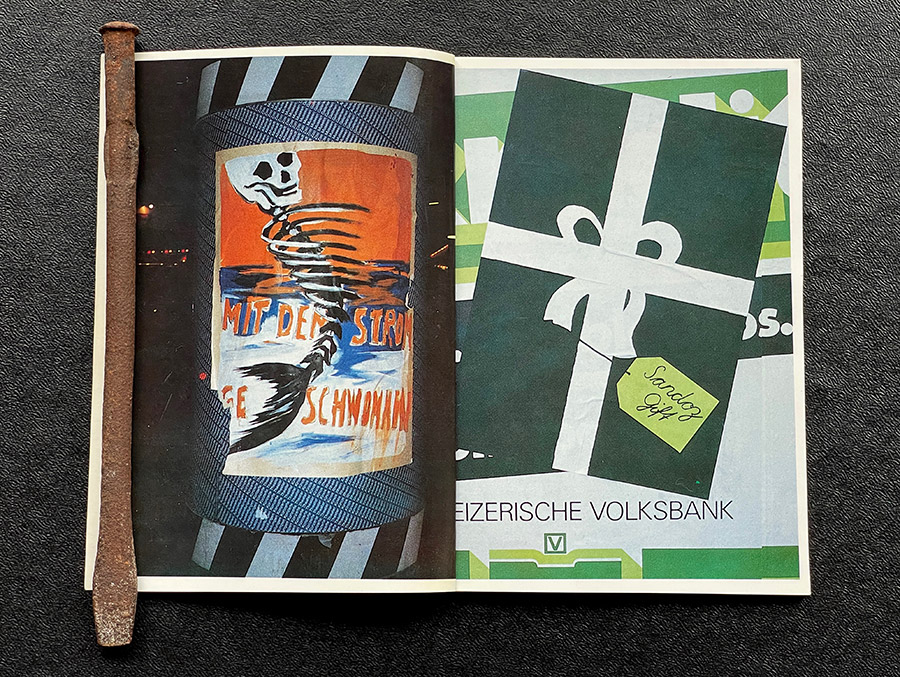
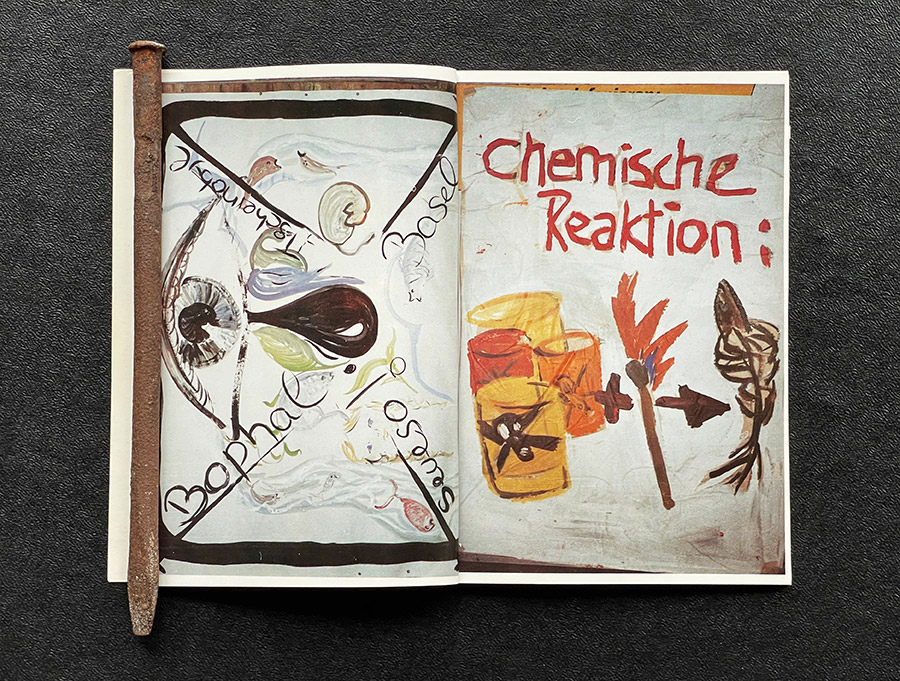
The images were brutal and urgent: skeletal fish swirling in poisoned currents, corporate logos twisted into symbols of death, slogans like “Today the fish – tomorrow us,” and darkly comic fakes such as “SANDOZ invites you: Fish dinner for all.” Some mocked advertising language, others screamed in gestural strokes and scarlet hues. It was fear, rage, and satire – made public art.
Poster campaign in Basel (Switzerland), 1986, by anonymous artists to highlight the Sandoz fire disaster in Schweizerhalle. Zine photographed and printed anonymously, Basel 1986. (Text translation: Left page. “Swam With The Current”. Right page. “Sandoz poison (Swiss People’s Bank)”
Most of the posters were torn down by morning, but an anonymous zine preserved the action. “Sofort alle Fenster und Türen schliessen!” documented the protest campaign in photographs and slogans. Distributed one year after the fire, it kept alive the moment when Basel’s walls shouted what many would not say aloud【3】.
This was more than vandalism. It was a public service: a way for oppositional voices to be seen, a way to hold power accountable. The artists stayed hidden, but their images spoke for thousands. Decades later, their urgency feels just as sharp. Street art like this doesn’t just decorate a city – itmay defend it.
Poster campaign in Basel (Switzerland), 1986, by anonymous artists to highlight the Sandoz fire disaster in Schweizerhalle. Zine photographed and printed anonymously, Basel 1986. (Text translation: Left page. “Seveso – Bophal – Tschernobyl – Basel”. Right page. “Chemical Reaction”Poster campaign in Basel (Switzerland), 1986, by anonymous artists to highlight the Sandoz fire disaster in Schweizerhalle. Zine photographed and printed anonymously, Basel 1986. (Text translation: Right page. (Furs do not grow on trees. Basel on my Rhine (those are the first lyrics of the traditional Basel hymn in Alemannic dialect). Excuse me? Do little fish not tolerate red color? Good morning Basel. What an advanced society we are: We can make fish swim upside down.)Poster campaign in Basel (Switzerland), 1986, by anonymous artists to highlight the Sandoz fire disaster in Schweizerhalle. Zine photographed and printed anonymously, Basel 1986. (Text translation: Right page. “Excuse me? Little fish do not tolerate red color?” “Good morning Basel”)Poster campaign in Basel (Switzerland), 1986, by anonymous artists to highlight the Sandoz fire disaster in Schweizerhalle. Zine photographed and printed anonymously, Basel 1986. (Text translation: Left page. “While further downstream, you had to watch out for the song of the Loreley, bigger dangers were lurking in Basel. Three fat-bellied, gluttonous monsters dominated the banks of the Rhine here and had fun coloring and poisoning the waters every day. When the people finally realized what terrible monsters had spread here at their expense, the fish were long dead, the Loreley had long since fallen silent, and some of them were overcome with deep sadness, others with great anger!
Sources [1] Wikipedia, “Sandoz chemical spill” (Schweizerhalle, Basel, Nov. 1986). [2] Historisches Museum Basel – 1. November 1986 Poster Campaign documentation. [3] 1. November Büchlein (1987, anonymously published photo zine).
We wish to offer our most heartfelt gratitude to BSA collaborator Mr. Bernhard Chiquet for his generous donation of the Zine and for taking the time to translate the text on the posters into English.
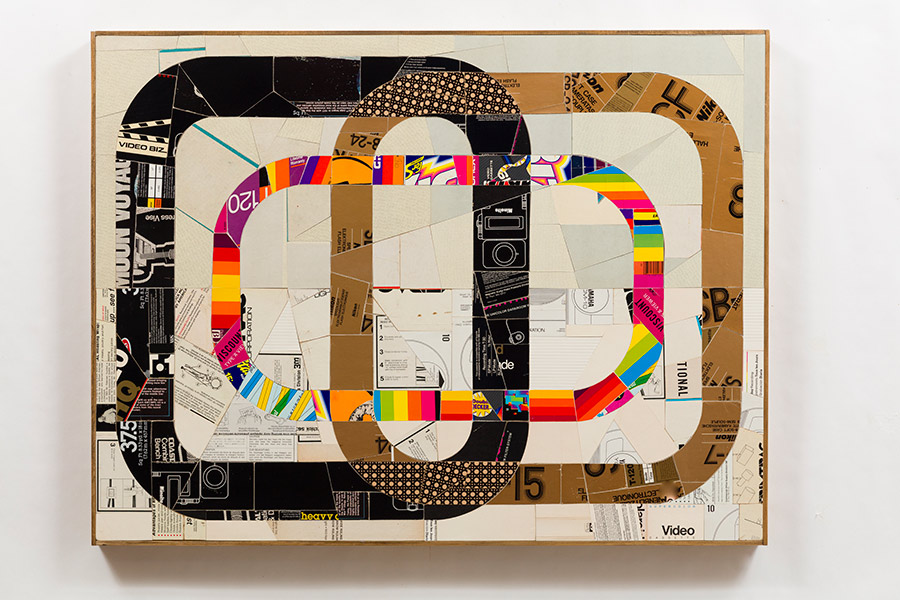
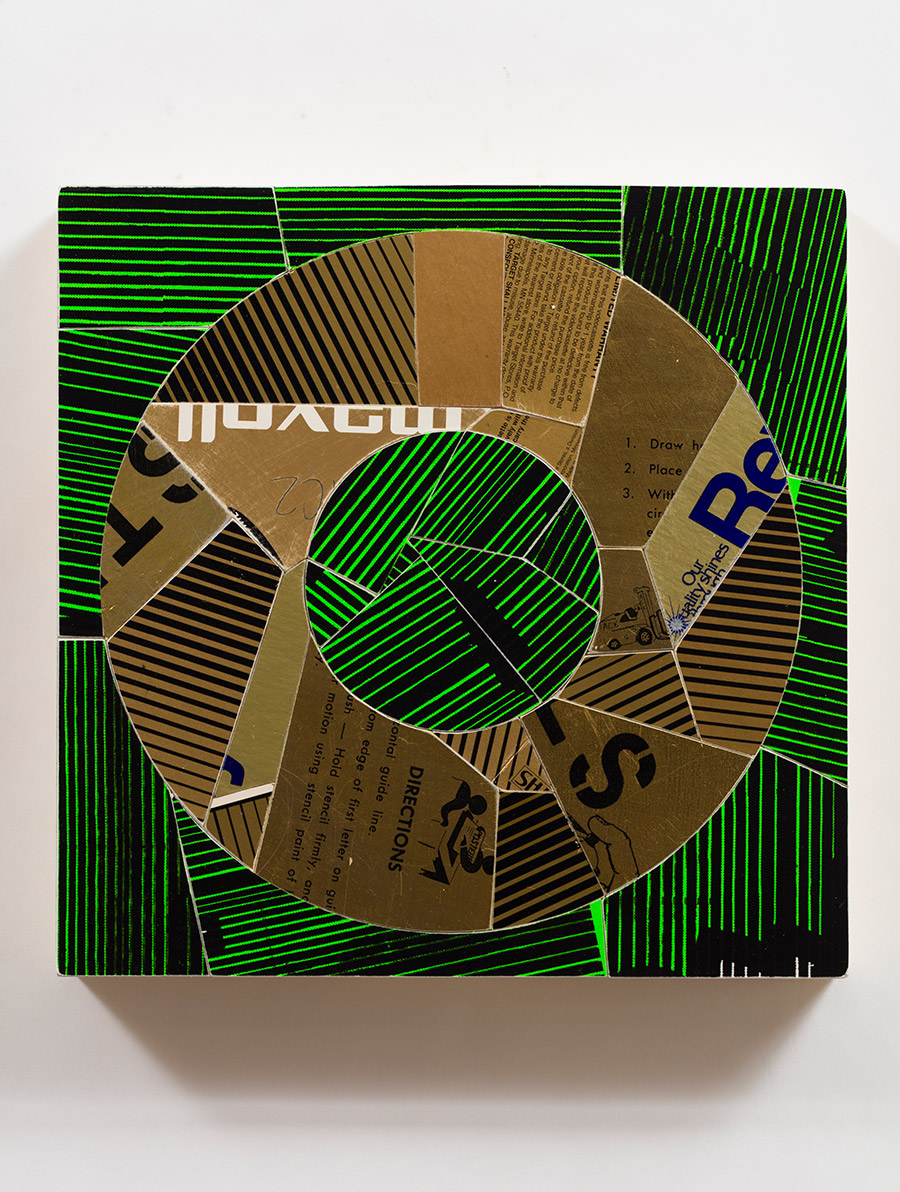
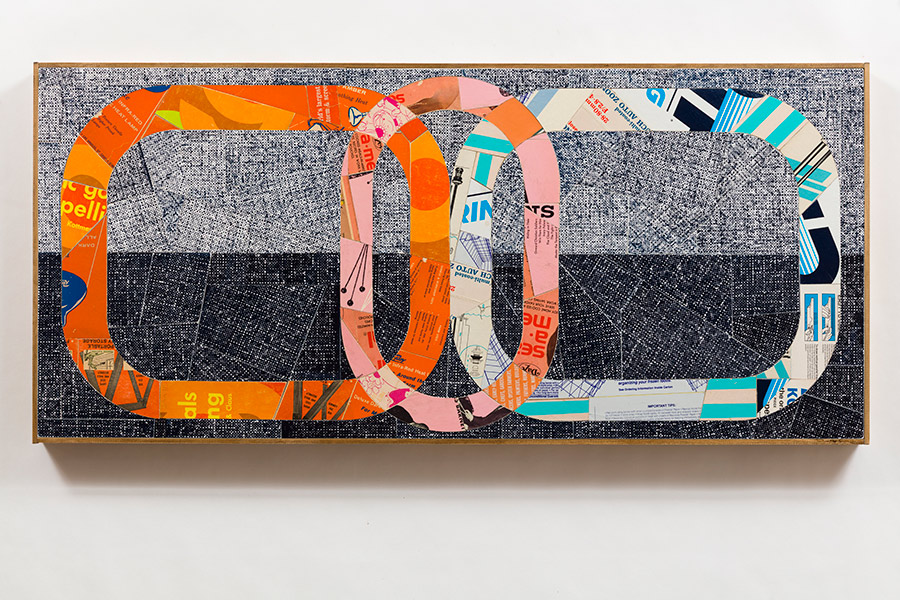
Heron Arts in San Francisco presents RECLAMATION this August, a two-man show featuring Augustine Kofie and Erik Otto, who transform personal wreckage into fresh work. Forty new pieces, curated by Tova Lobatz, put both artists in a head-on conversation about loss, recovery, and what can be built out of the ashes.
Augustine Kofie. Reclamation. Heron Arts, San Francisco, CA. (image courtesy of the gallery)
Kofie, a Los Angeles veteran with roots in early ’90s graffiti, lost his house, studio, and archive in the Eaton Canyon Fire this January. For some, that would have been the end of the story. Instead, he’s back at it, slicing up pressboard, salvaged posters, and mid-century packaging into collages that look as sharp as they are stubborn. Ever the clever mind, he calls his circles “rotationships”—a way to wrestle with balance and structure—but you can read them as a sign of survival too.
Erik Otto. Reclamation. Heron Arts, San Francisco, CA. (image courtesy of the gallery)
Otto, San Francisco born and bred, comes at it differently. After too many funerals and a body that betrayed him, his response wasn’t to tighten control but to let it go. The new paintings are looser, washed in saturated color and improvised gestures, equal parts grief and grace. Where Kofie rebuilds from fragments, Otto dissolves them, turning shock into hazy atmospheres and flickers of light.
Together, the show is less about tidy closure than about the messy processes of life, loss, and finding some way to reclaim yourself. Rather than sounding the trumpet, it’s two artists working through the rubble in public. In a culture that likes glossy endings, RECLAMATION reminds us that sometimes survival and perseverance look like glue, tape, and a few luminous layers of paint.
Augustine Kofie. Reclamation. Heron Arts, San Francisco, CA. (image courtesy of the gallery)Augustine Kofie. Reclamation. Heron Arts, San Francisco, CA. (image courtesy of the gallery)Erik Otto. Reclamation. Heron Arts, San Francisco, CA. (image courtesy of the gallery)Erik Otto. Reclamation. Heron Arts, San Francisco, CA. (image courtesy of the gallery)
 BROOKLYN STREET ART LOVES YOU MORE EVERY DAY