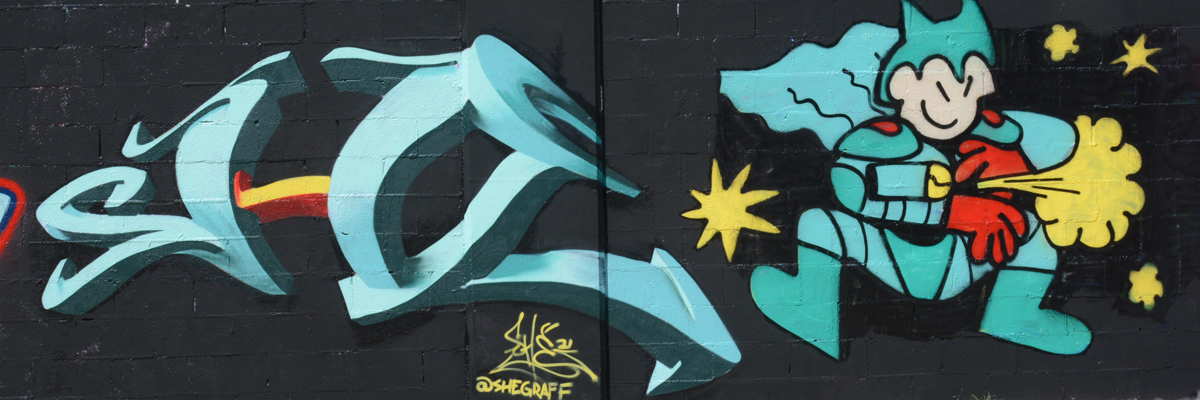
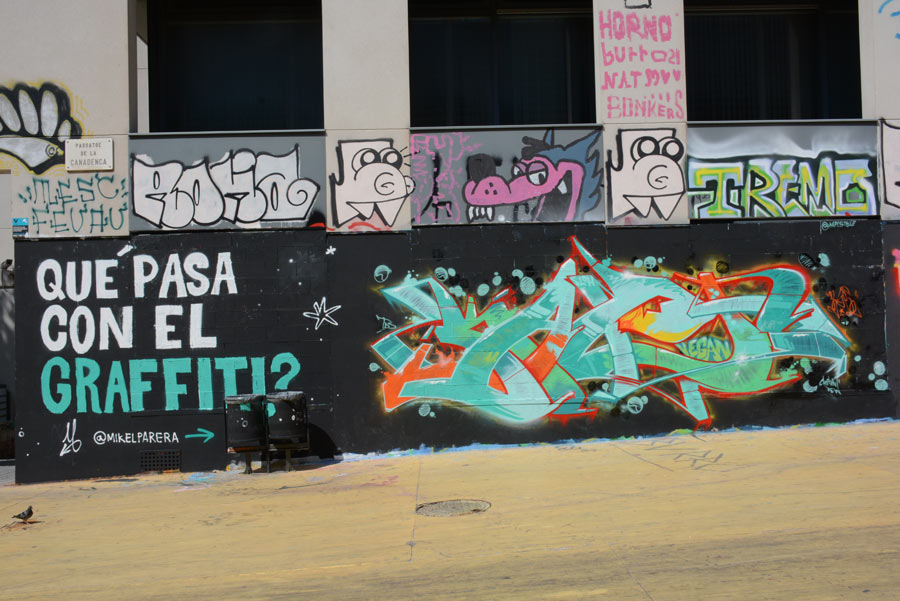
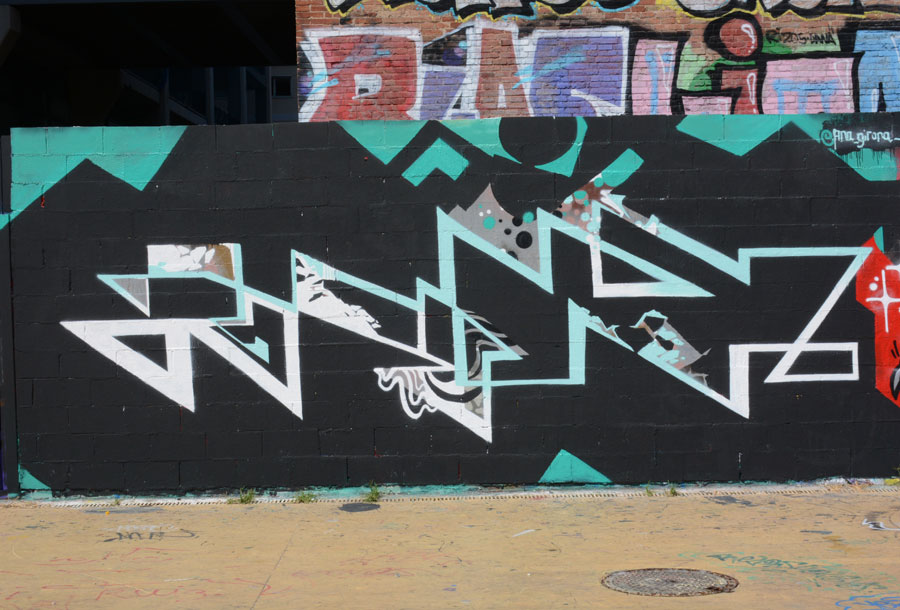
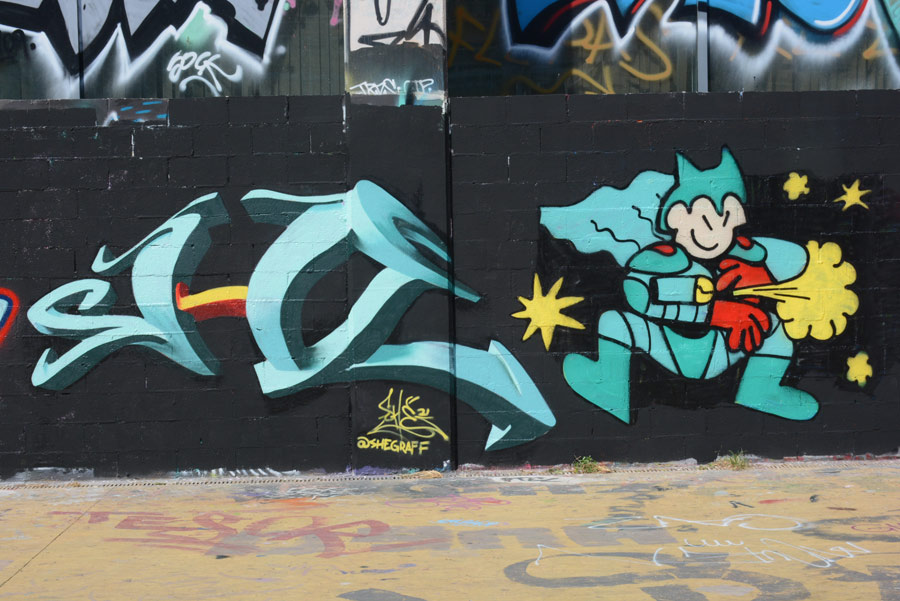
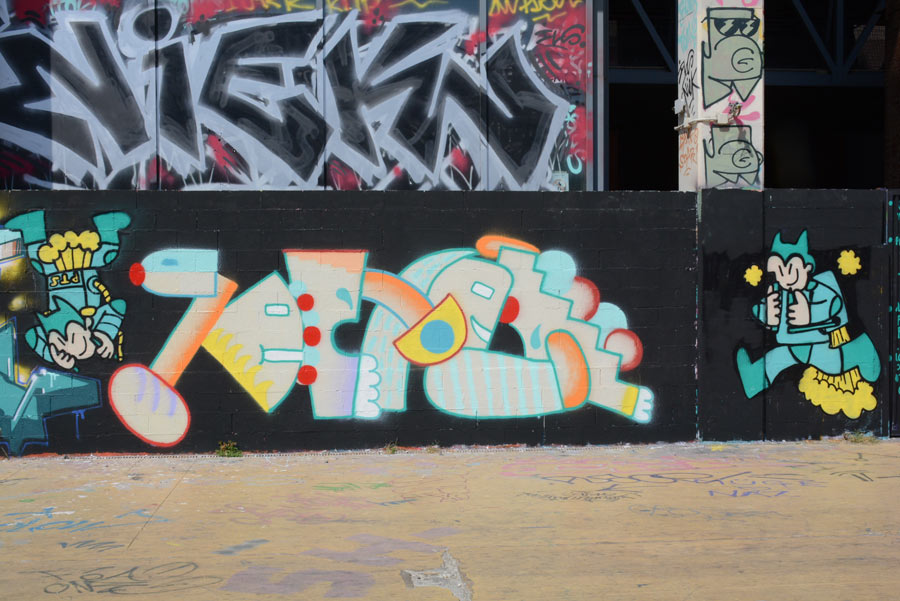
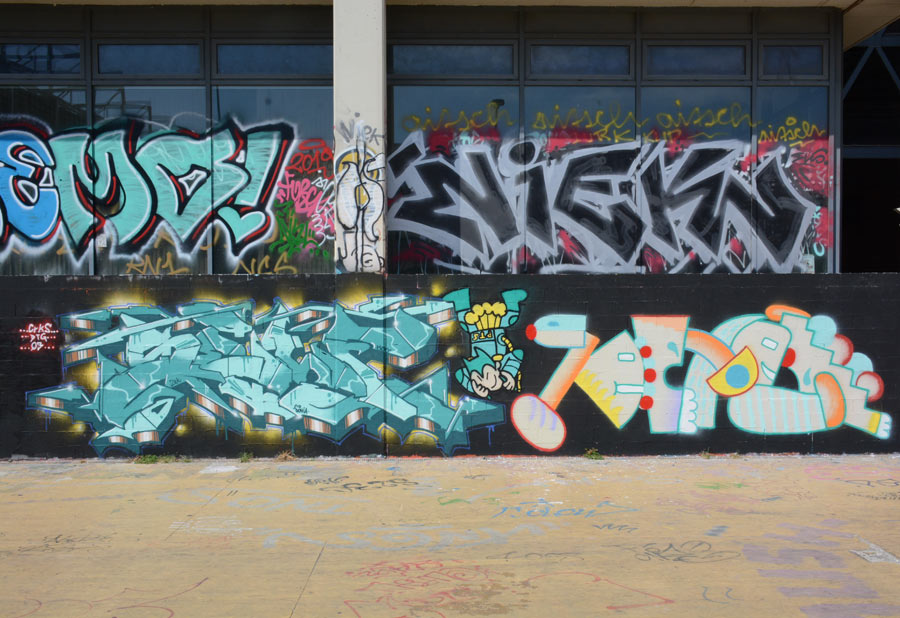
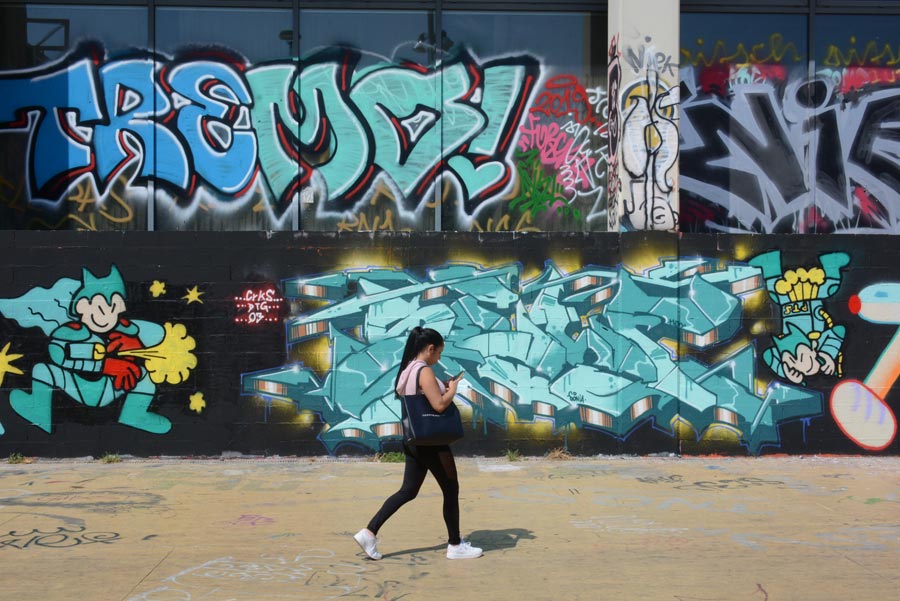
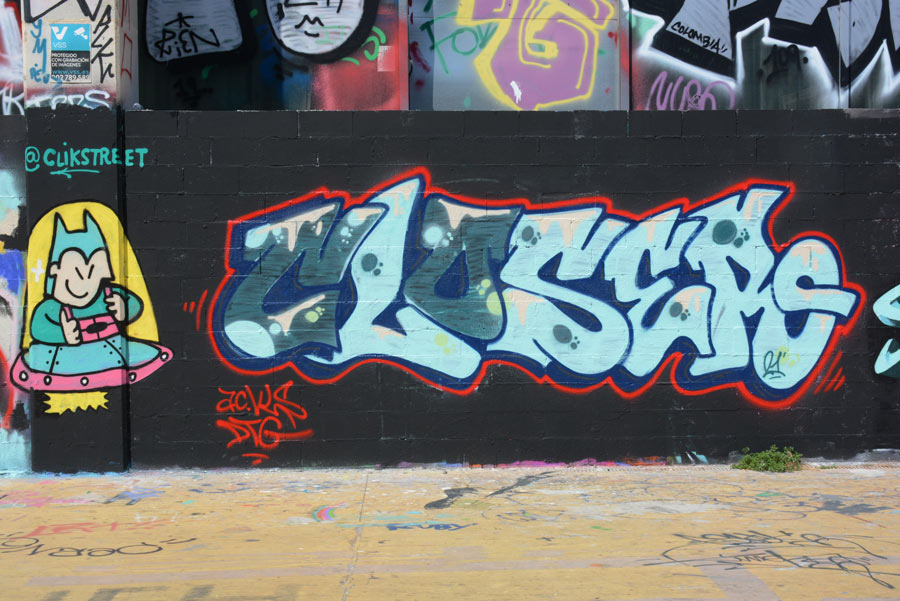
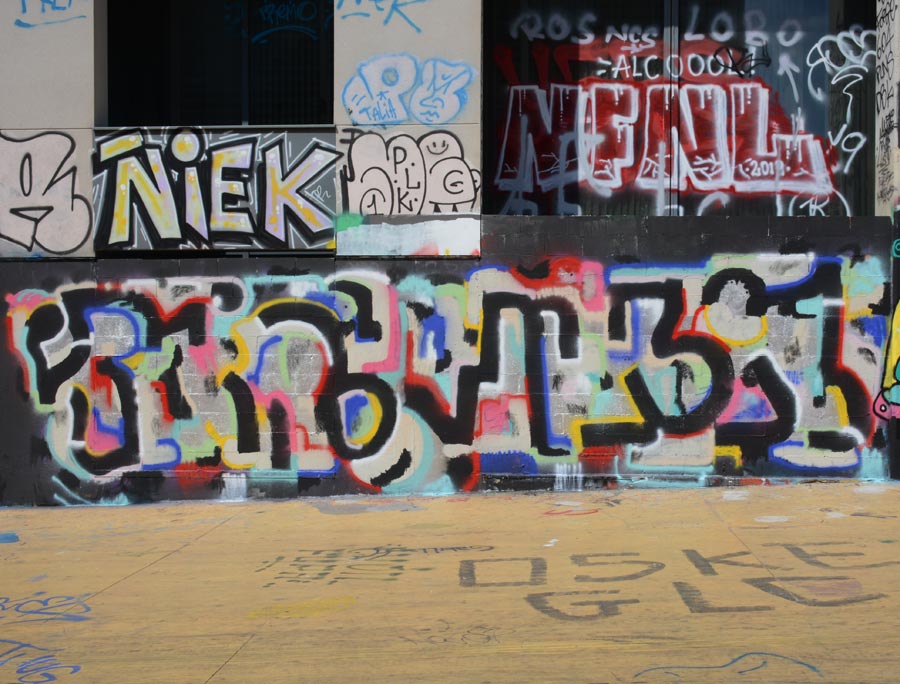
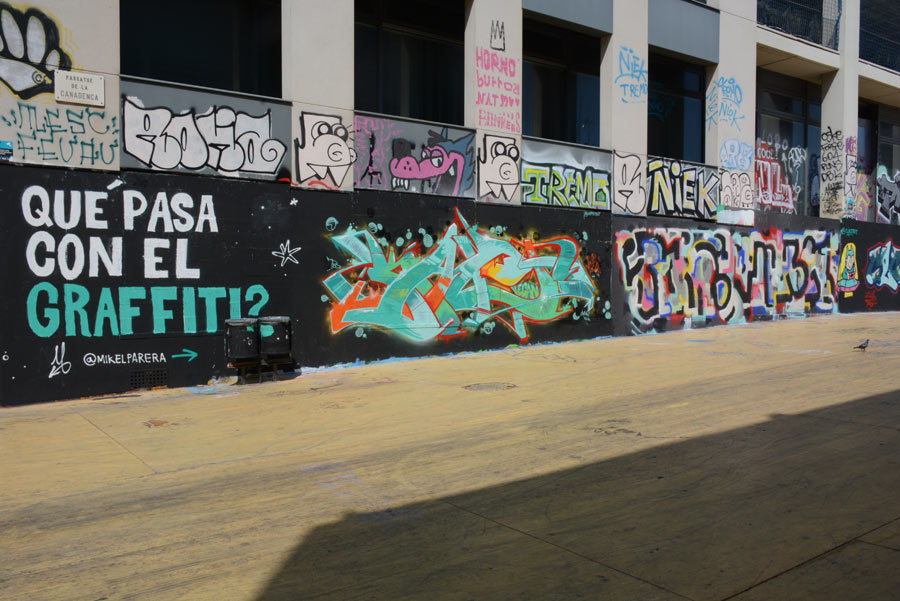
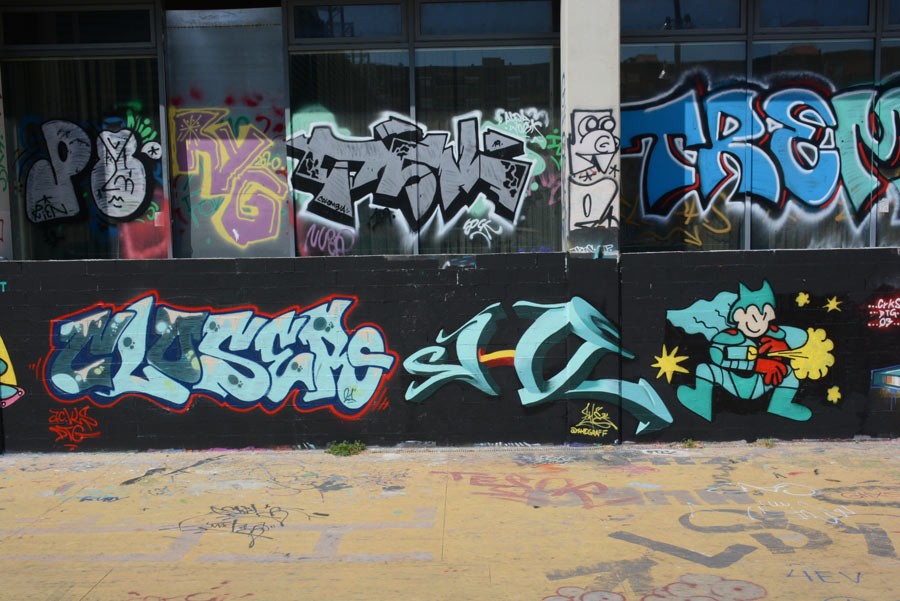
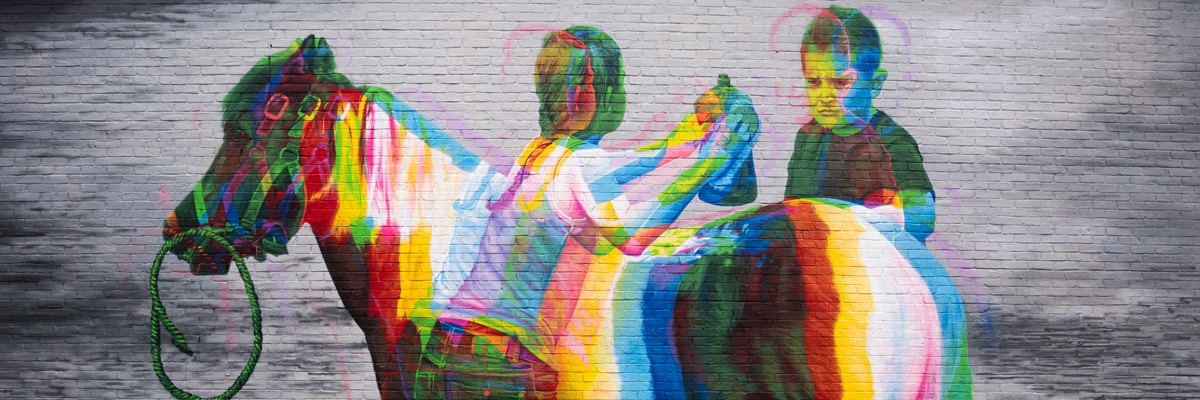
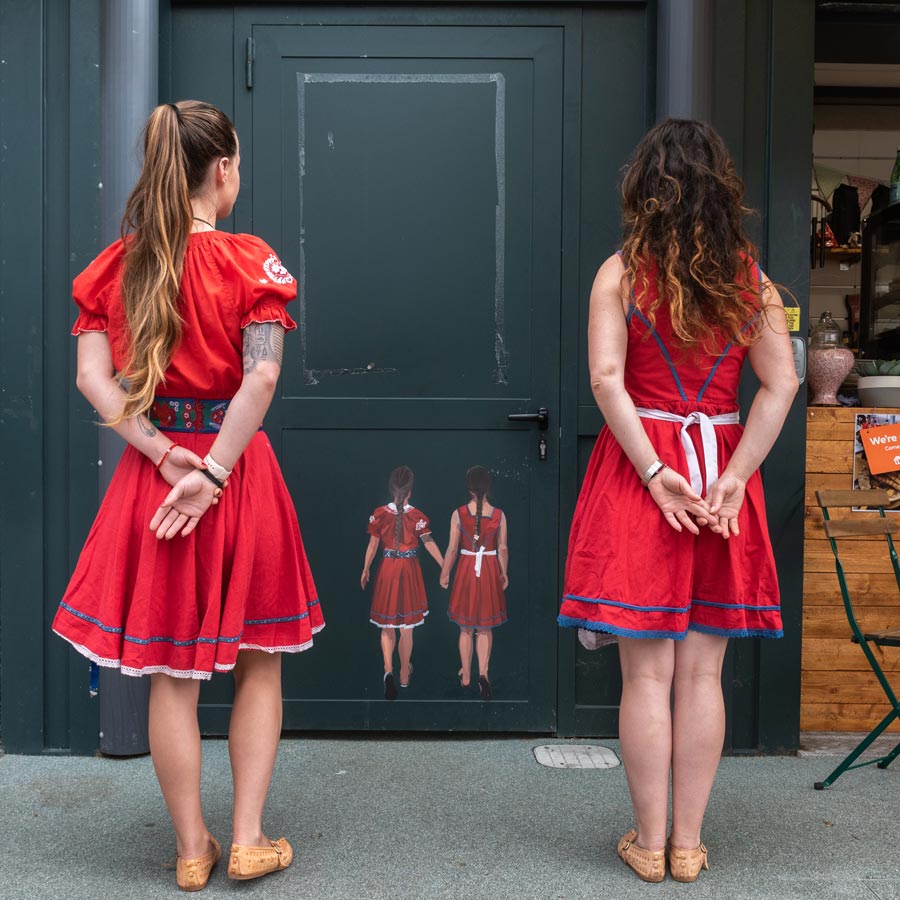
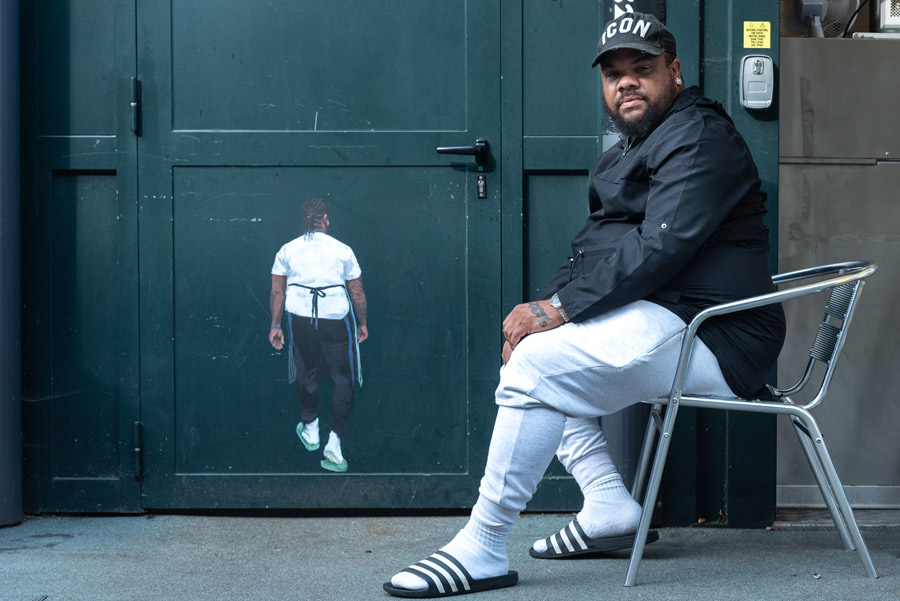
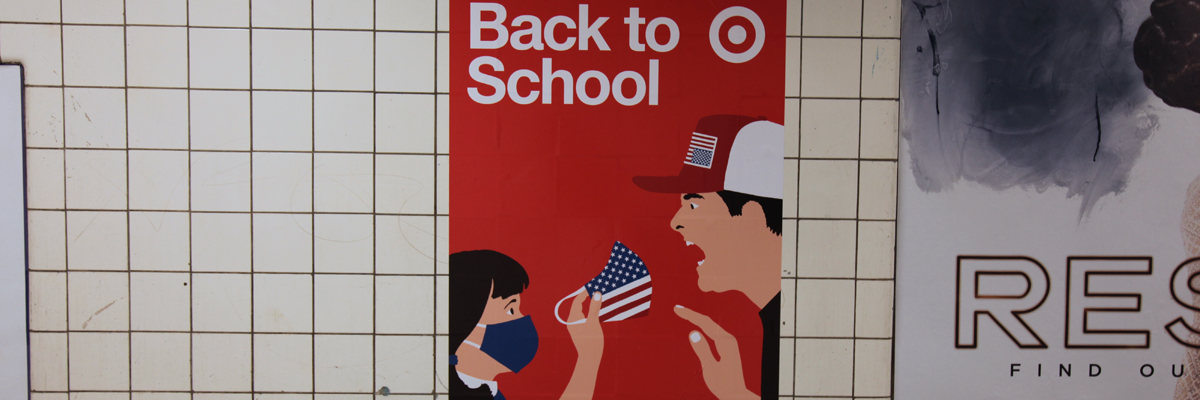
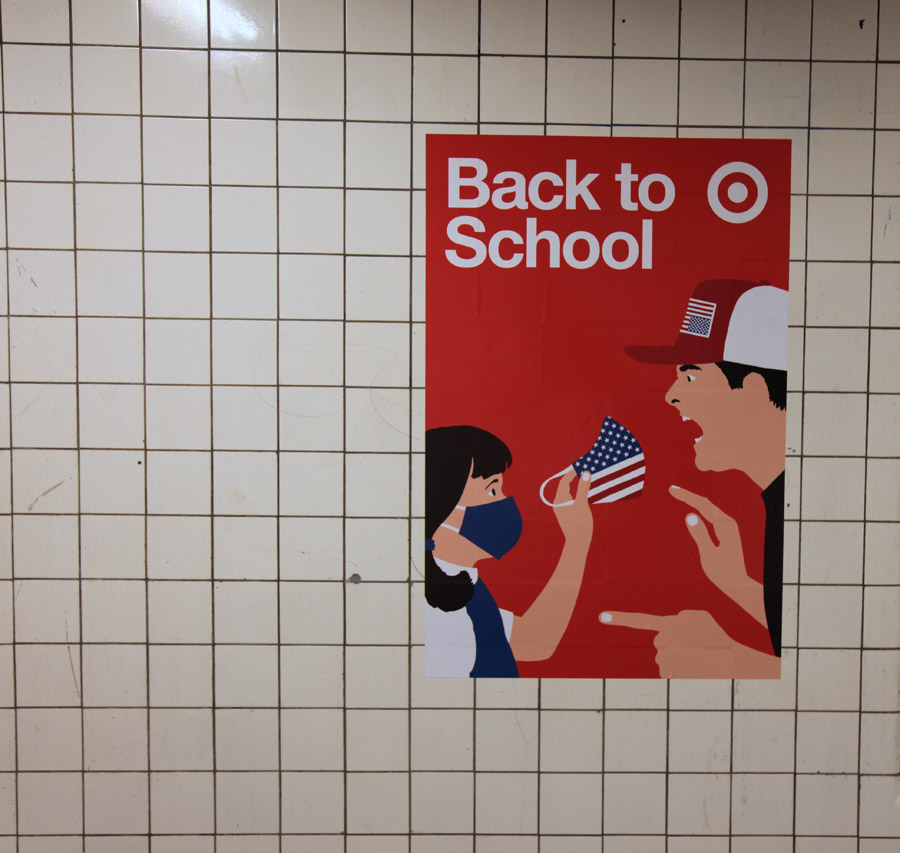
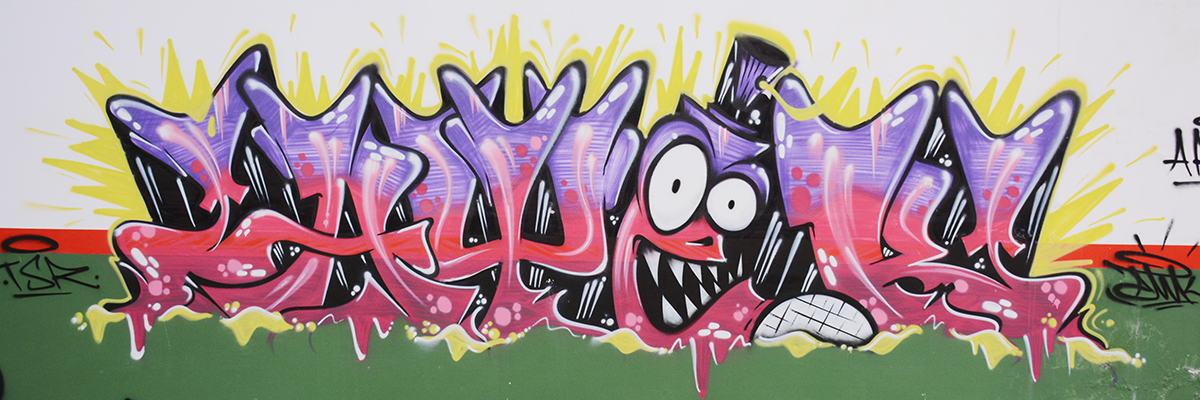
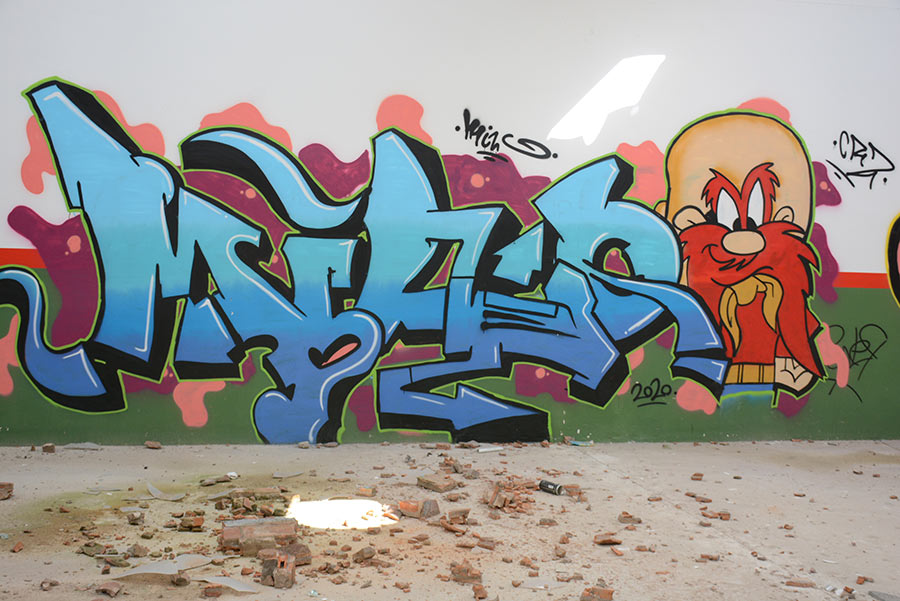
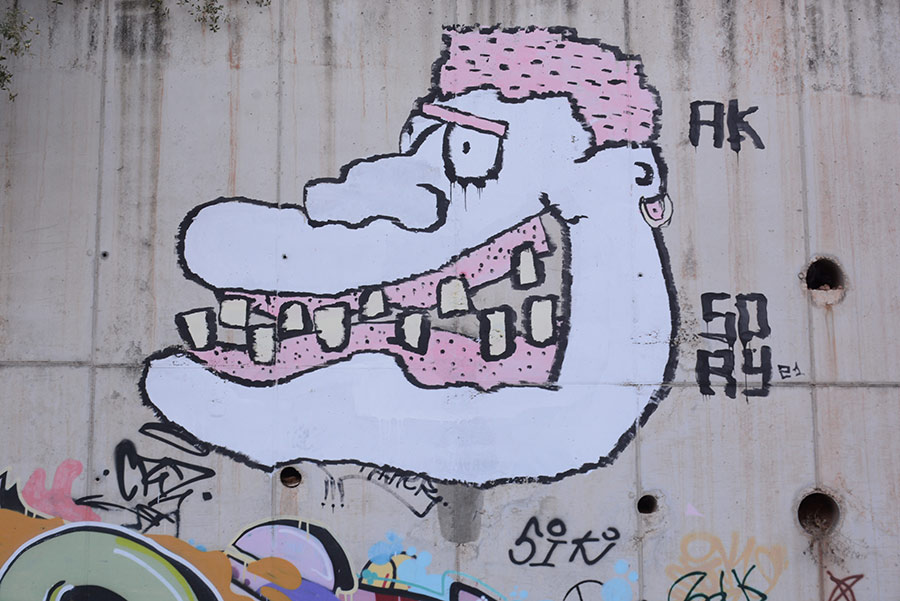
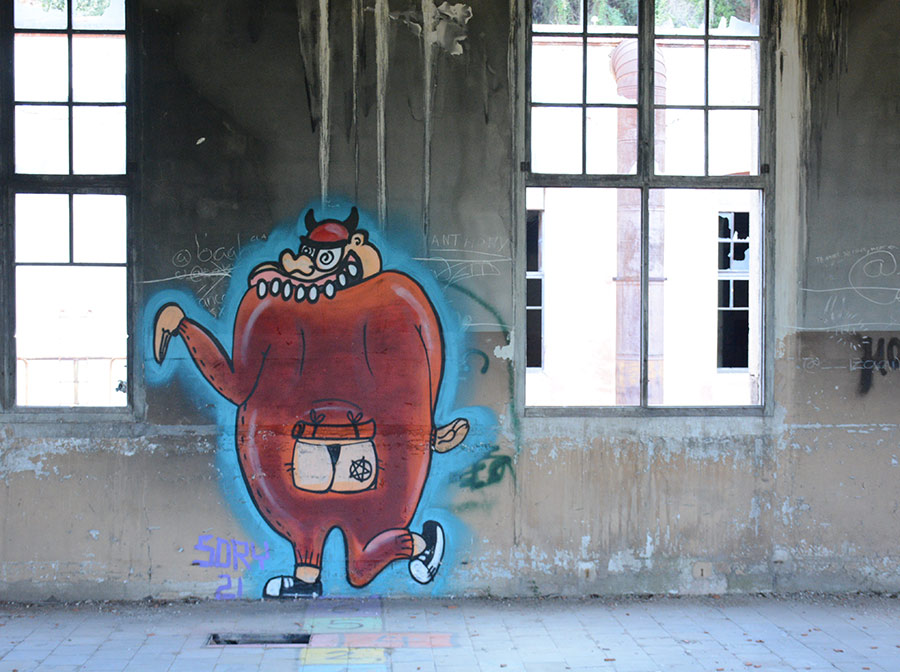
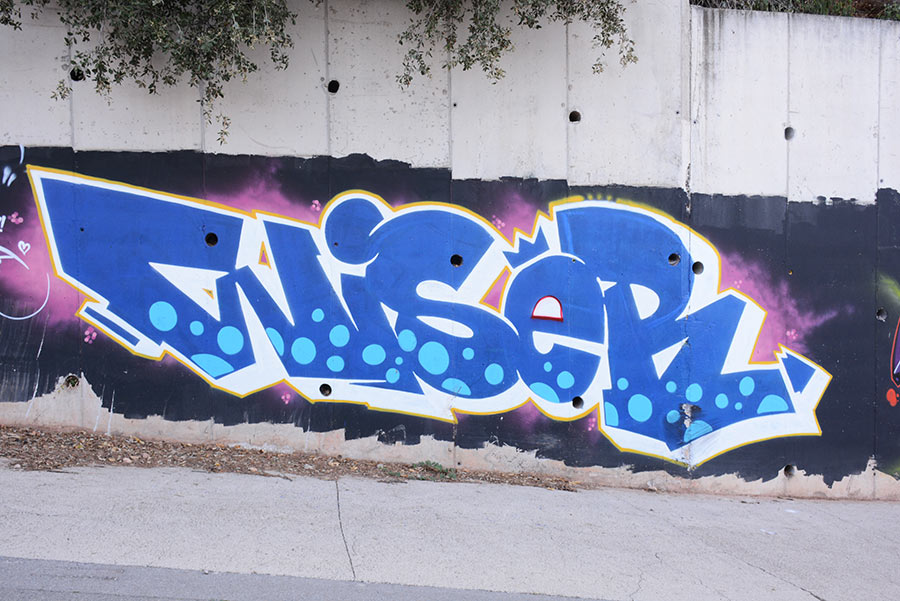
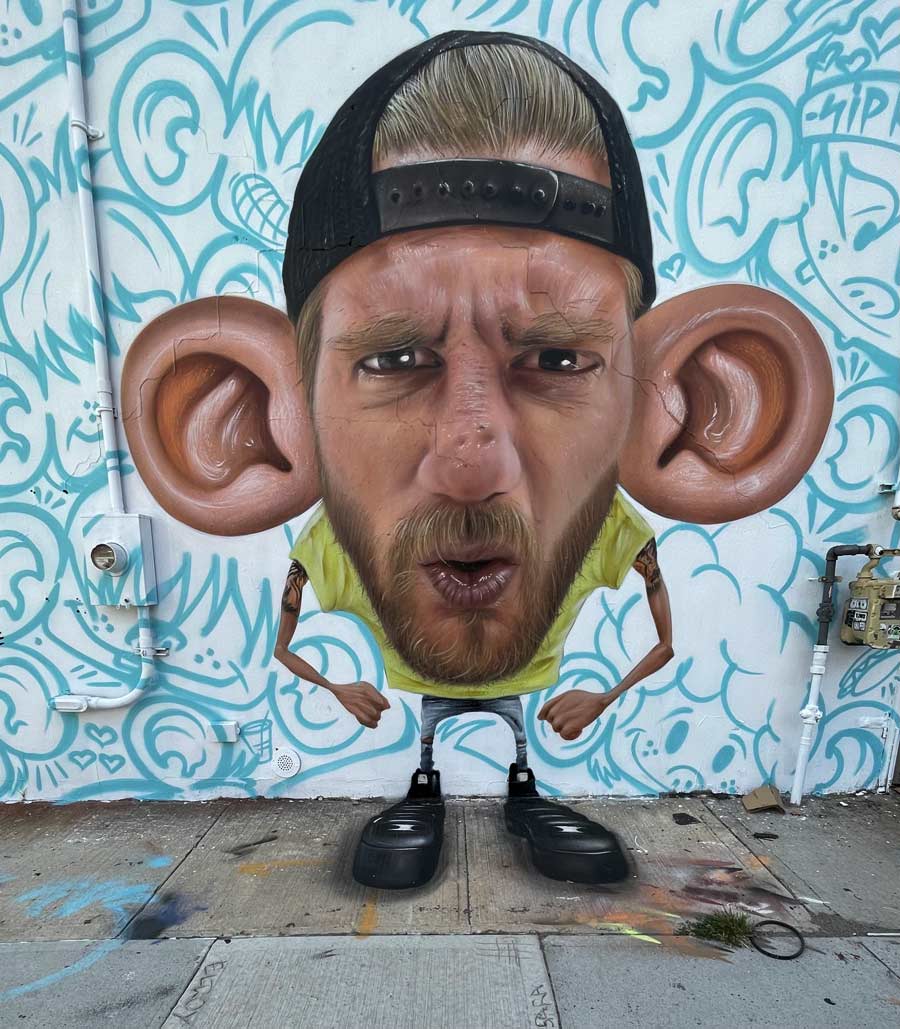
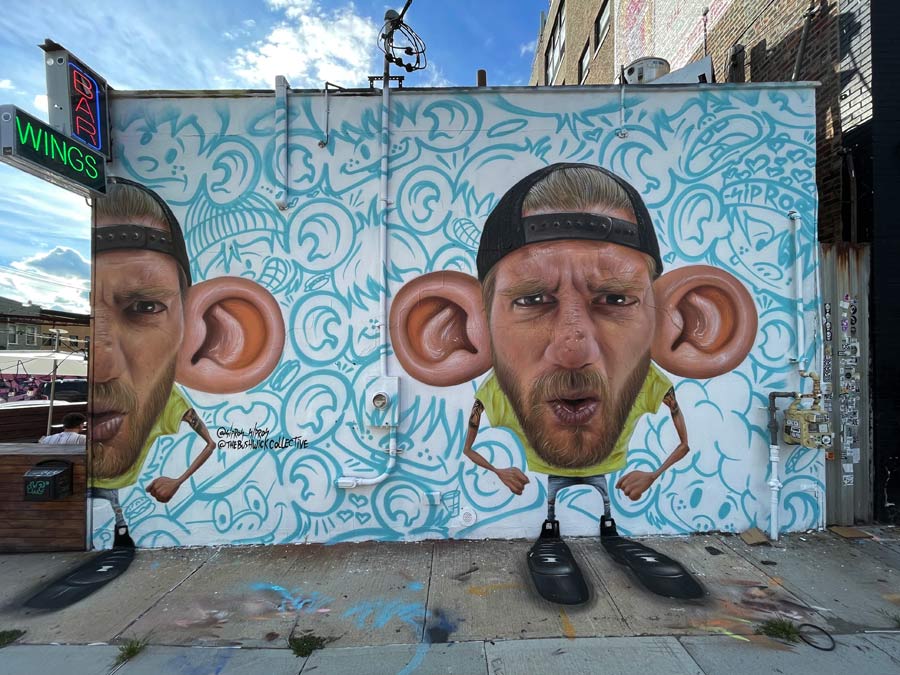
In a bit of cynical irony on the street, creative director/UX designer Mikel Parera teams up with this cluster of graffiti/street artists in Barcelona to parody the grey lines between using art as activism and merely imitating styles to push content. This new collection of graffiti styles are completely divorced from any contribution to or critique of society. The advertising “Creative” is portrayed little more than pre-meditated aesthetic manipulation – in service of a brand.
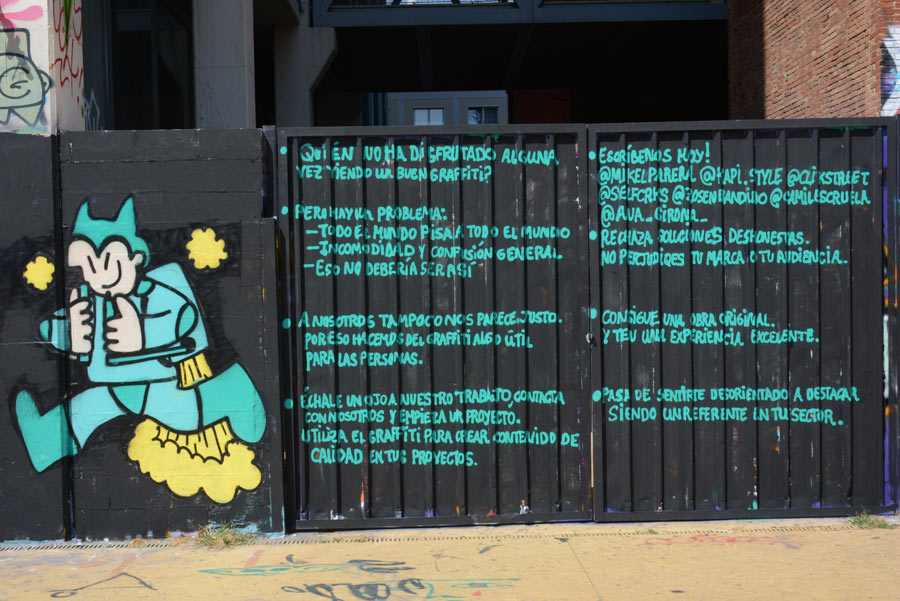
Roughly translated, here is his wall screed – naturally followed by Instagram handles.
“Who has not ever enjoyed seeing good graffiti? But there is a problem: – Everybody steps on everybody – General discomfort and confusion. – That shouldn’t be like that. It doesn’t seem fair to us either. That is why we make graffiti useful for people. Take a look at our work, contact us and start a project. Use graffiti to create quality content in your projects. Write us today! Refuse dishonest solutions. Don’t hurt your brand or your audience. Get original work and have an excellent experience. Go from feeling disoriented to standing out, being a benchmark in your sector.”
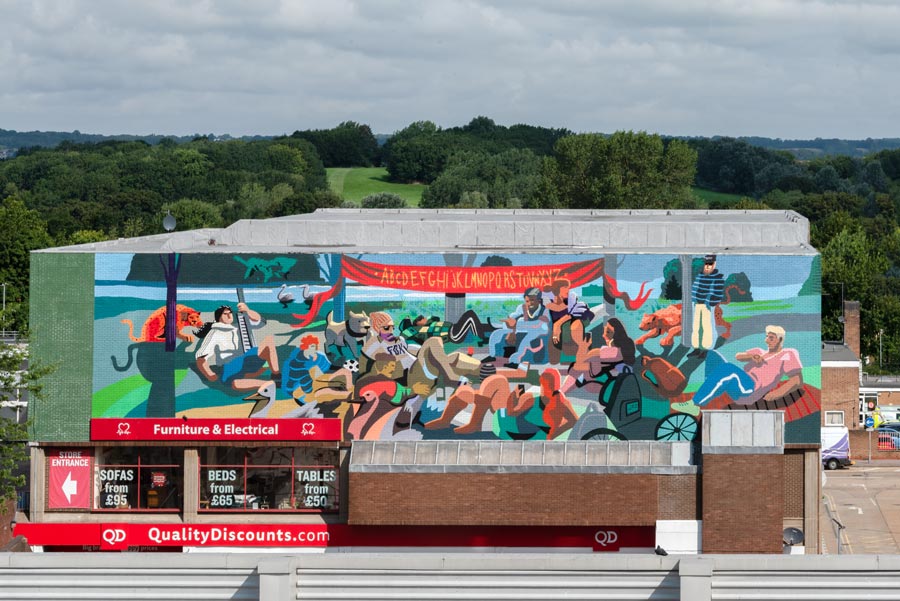
“We are committed to improving our town centre and art and culture has a big part to play in its future,” says Leader of Basildon Council Councillor Andrew Baggott. “We are also committed to climate change and are working towards a carbon net-zero borough by 2050.”
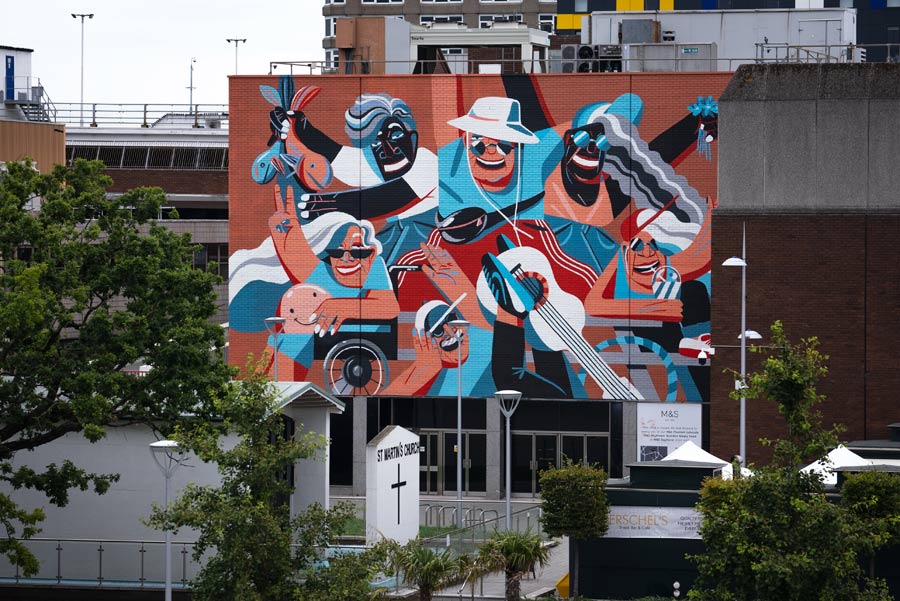
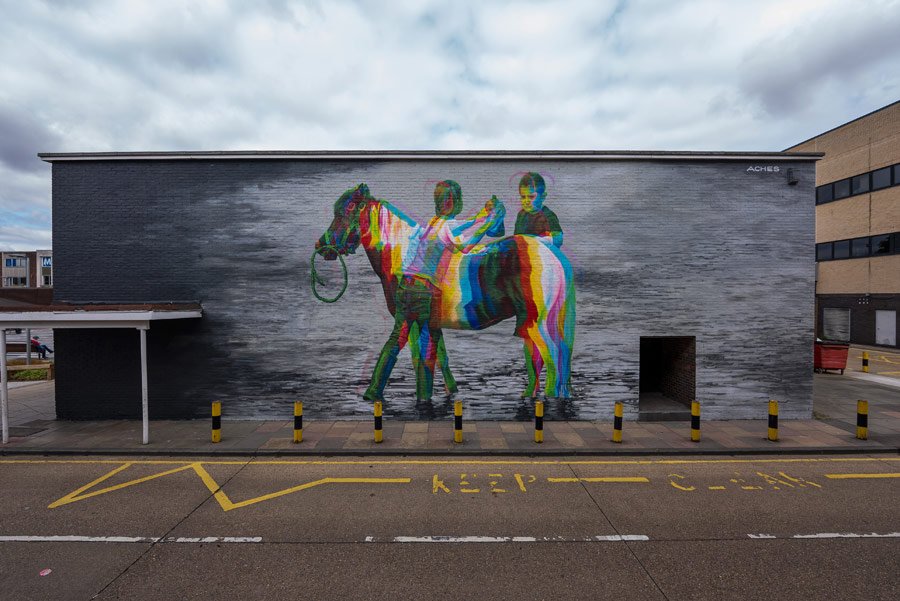
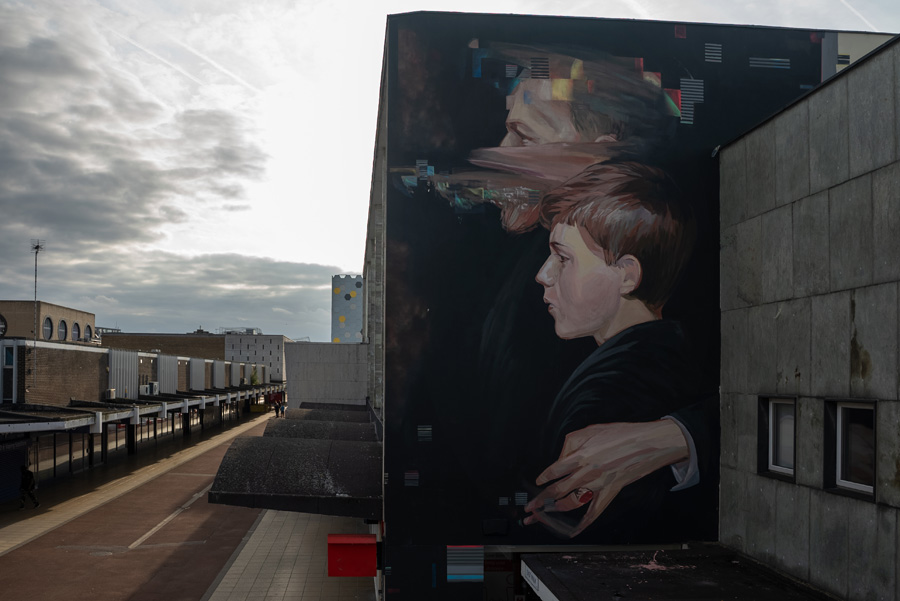
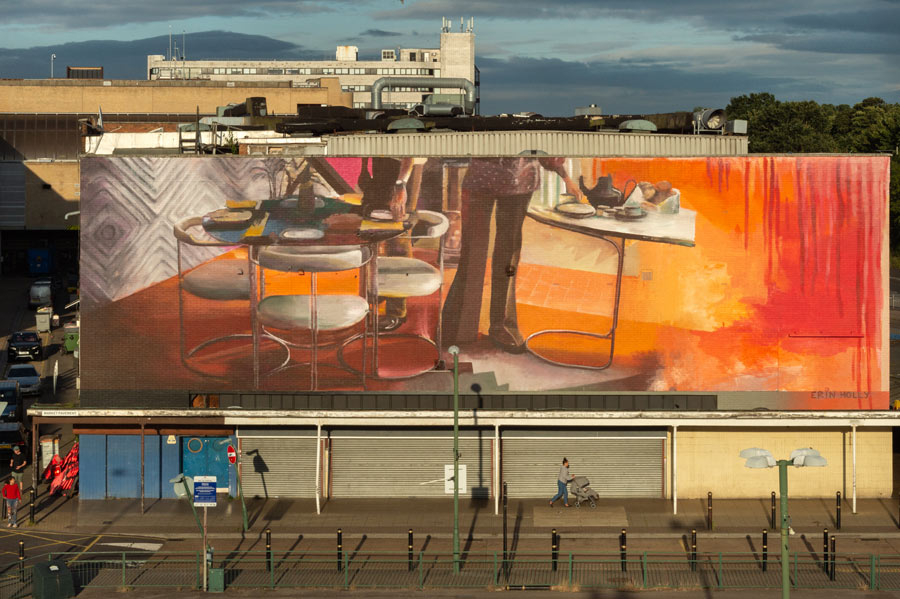
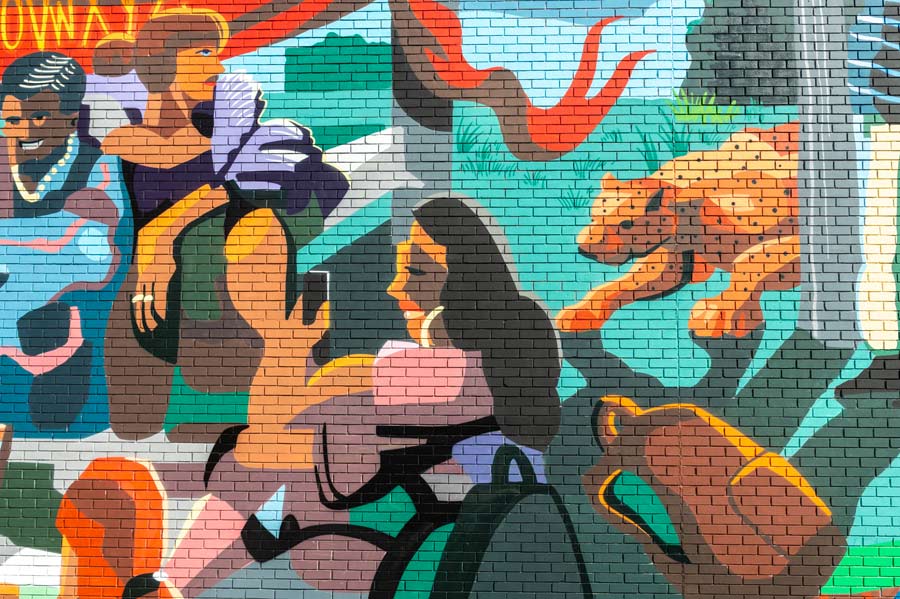
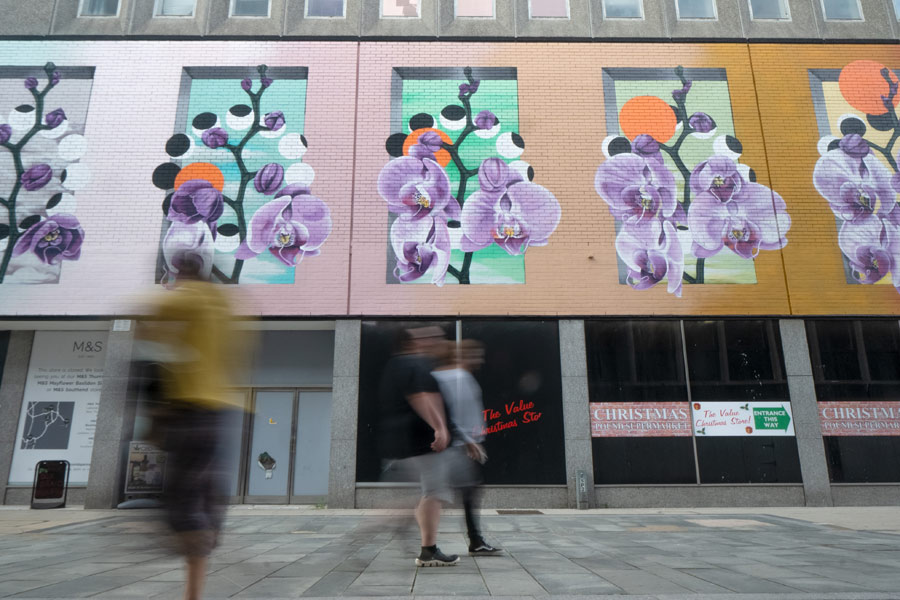
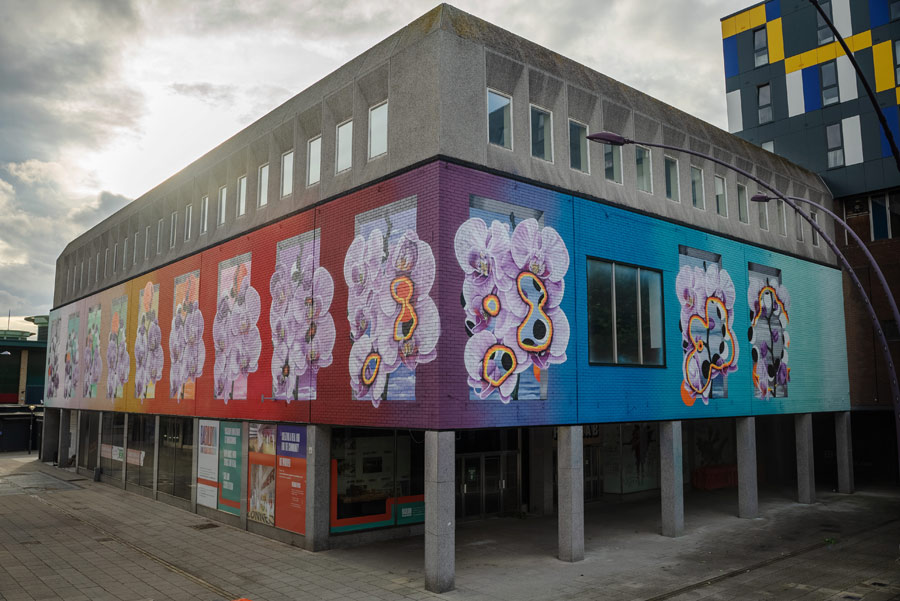
With a new street art initiative called Our Towns, curators Doug Gillen and Charlotte Pyatt are tying together environmental and social concerns with new large-scale murals here in the Essex, UK town.
Partnering artists with the local schools, university, market and community organizations, Gillen and Pyatt have been introducing new public artworks all summer by international artists like Arches (Ireland), Franco ‘JAZ’ Fasoli (Argentina/Italy), and Marina Capdevila (Spain), as well as homegrown UK talents including Erin Holly, Gabriel Pitcher, INSA, Michele Curtis, and Helen Bur.
While some on the roster are known for their street art and others have backgrounds in more formal studio practice, collectively perhaps their works are softening some of the brutalist edges of this town of just over 100,000 residents.
Owing its name to an idea of challenging ourselves to see art and public space in original and meaningful ways that affect positive change, the Re:Framed project is steered by two pros in street art cultural production and analysis. “We are dedicated to developing new and innovative strategies to reposition the role of culture in social and environmental conversations,” says a joint statement by the curators.
“The Our Towns: Climate project will be our most ambitious to date, the legacy for which will see Basildon join the growing number of cities and towns across the world adopting the Global Goals.”
Giving their partnership the moniker Re:FRAMED, Pyatt and Gillen have worked in production, strategy, consultancy and documentation with art on the streets for approximately the last decade and plan to coalesce artists and organizations around social and environmental themes going forward. With high-quality artists and artworks like these, you can look forward to the two reframing both contexts and conversations in public space in their future.
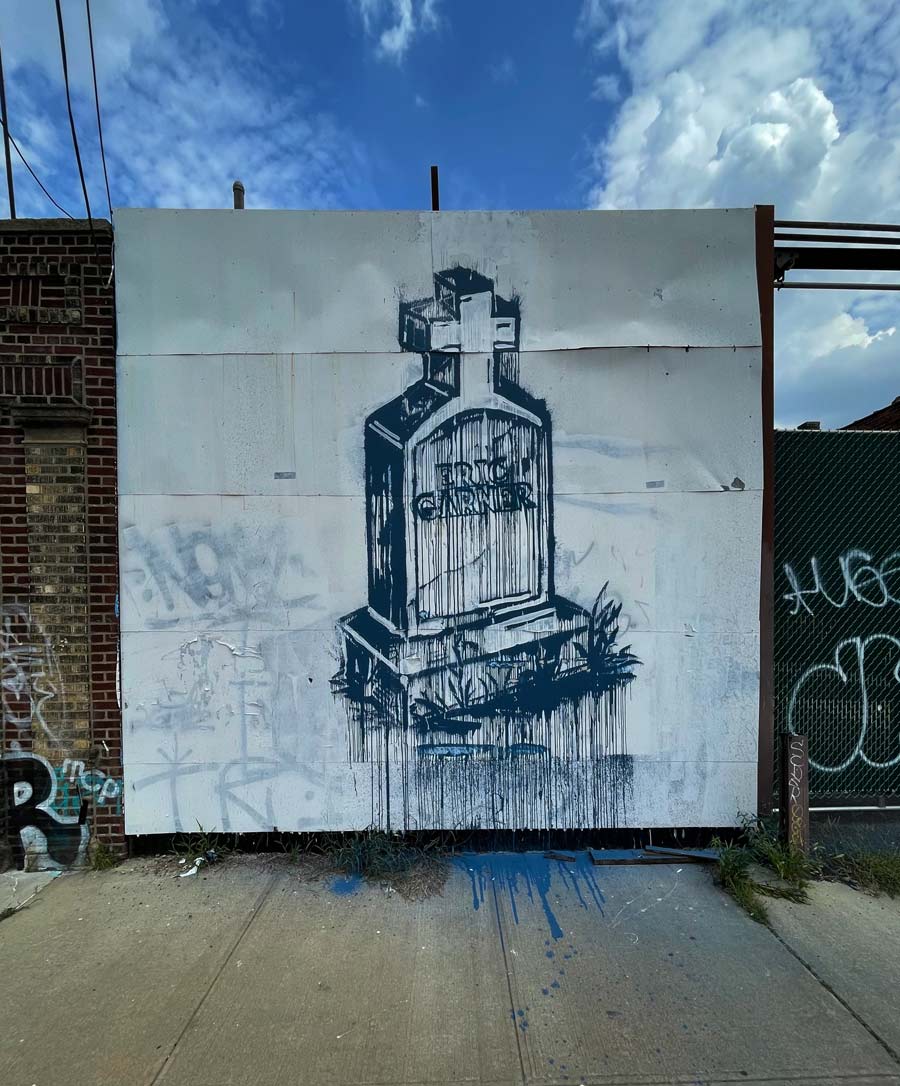
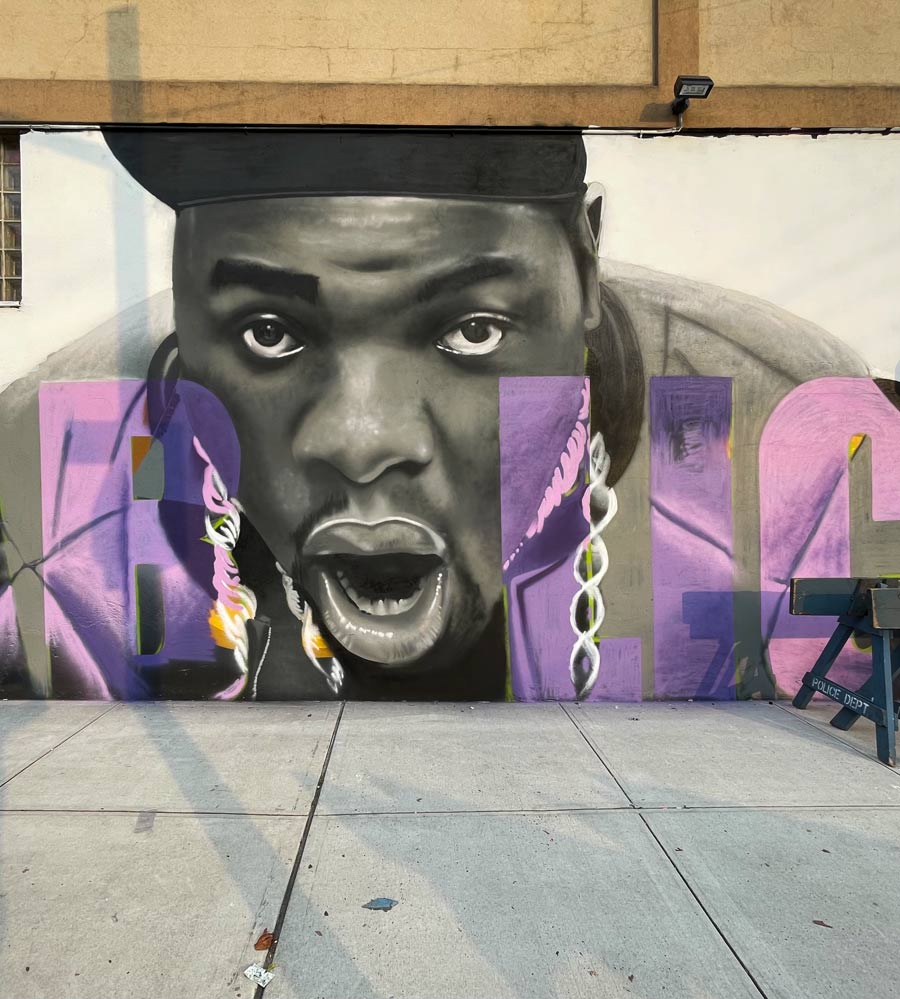
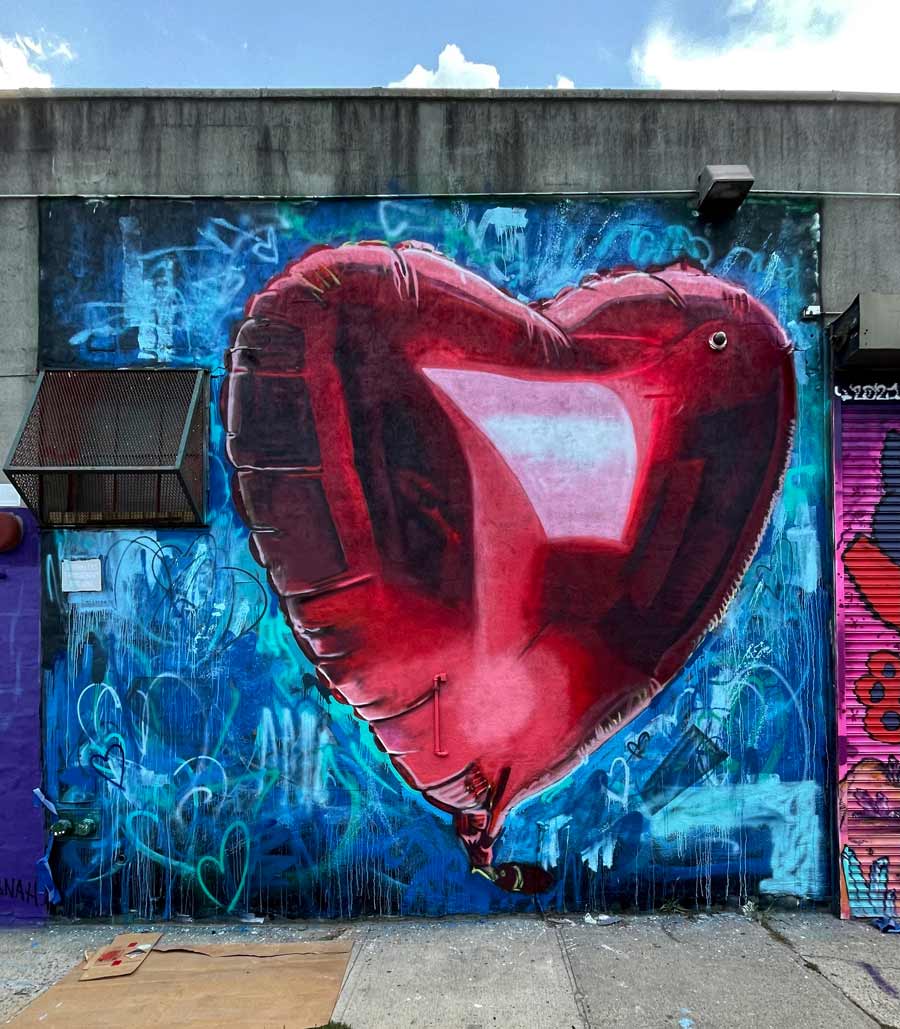
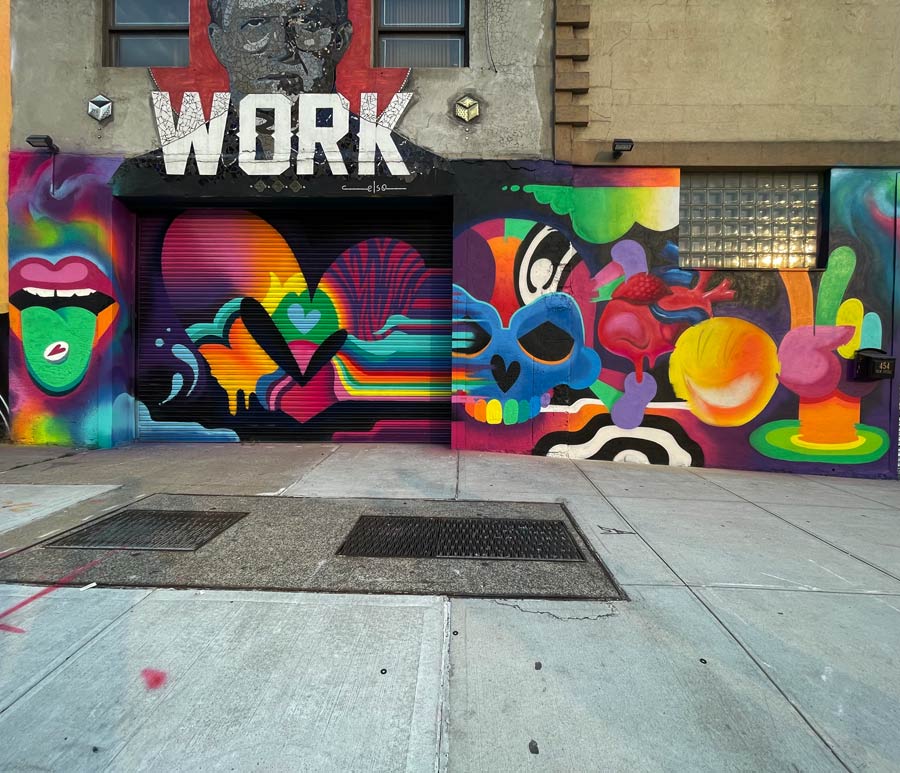
The summer storms keep coming, and yet somehow so does the incredible show of creativity on our streets; the celebration of murals and graffiti burners and painters and sculptors and characters and opinions and cogitations. However hot and steamy and hard New York can be sometimes, it also is positively ebullient and inspiring. We know our many differences are our greater asset, our combined aspirations a stunning new possibility.
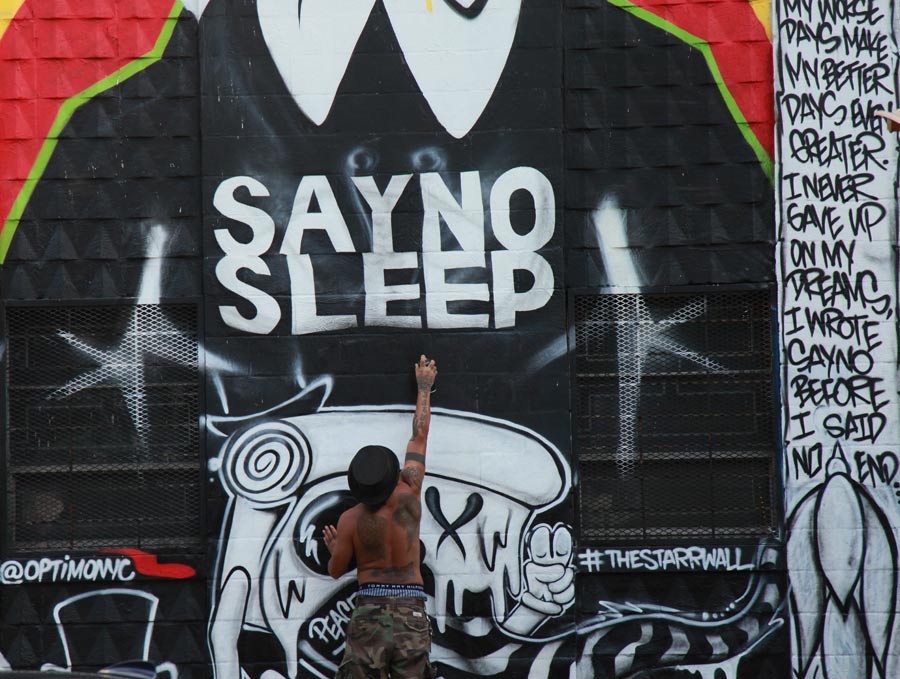
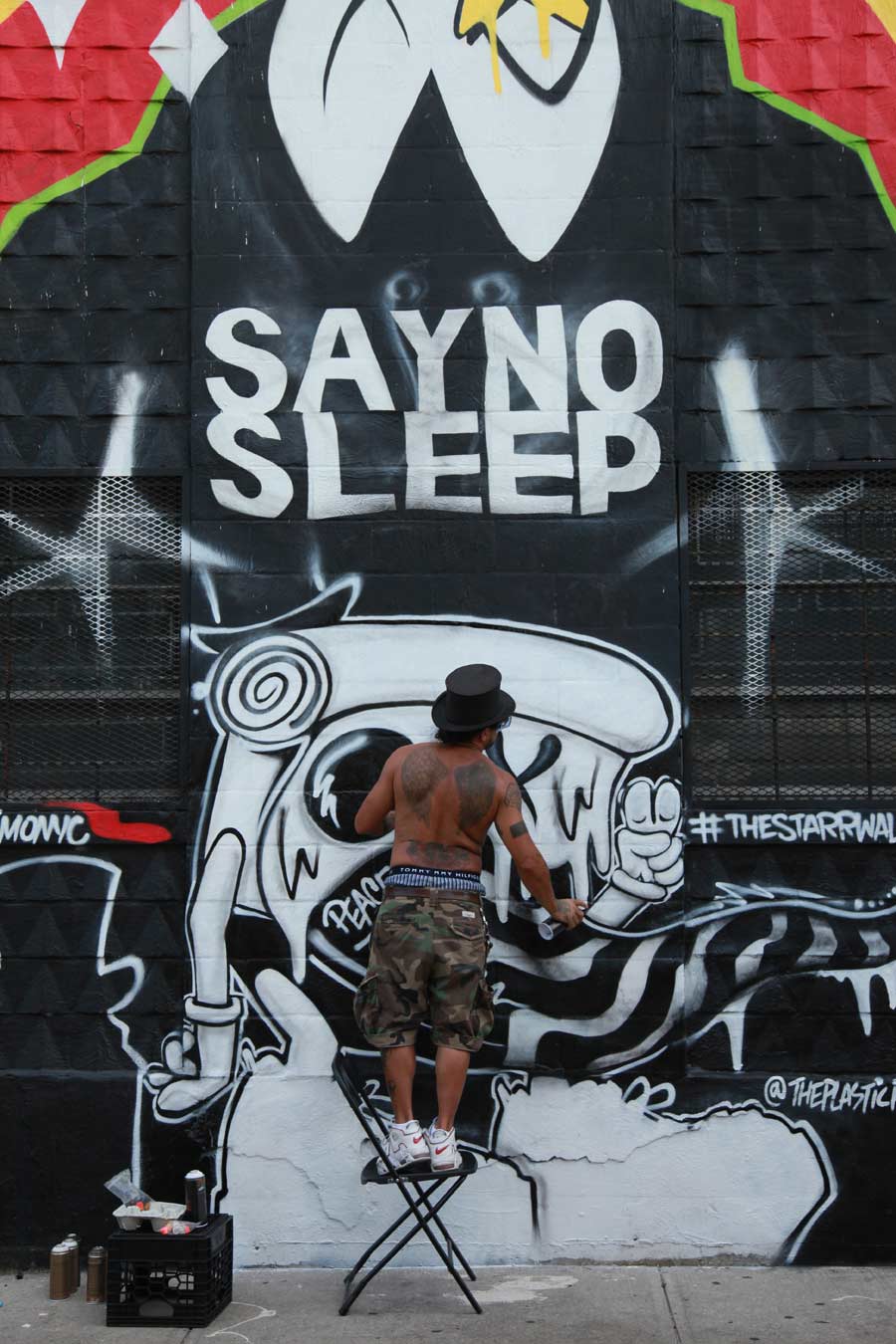
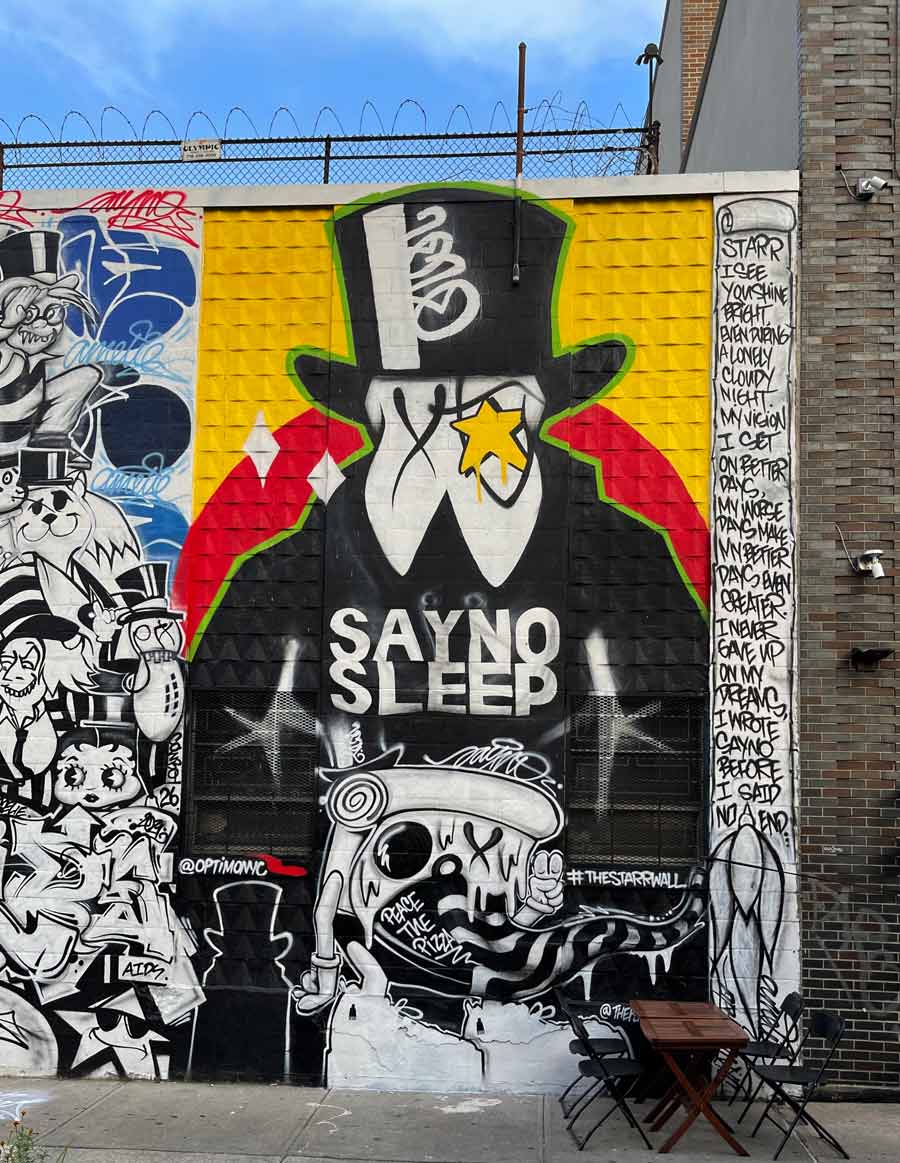
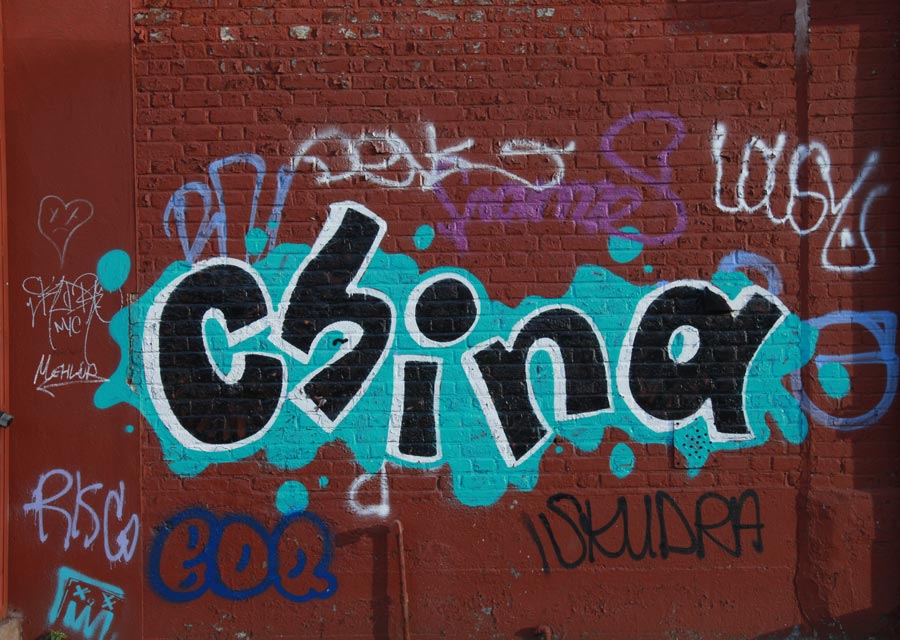
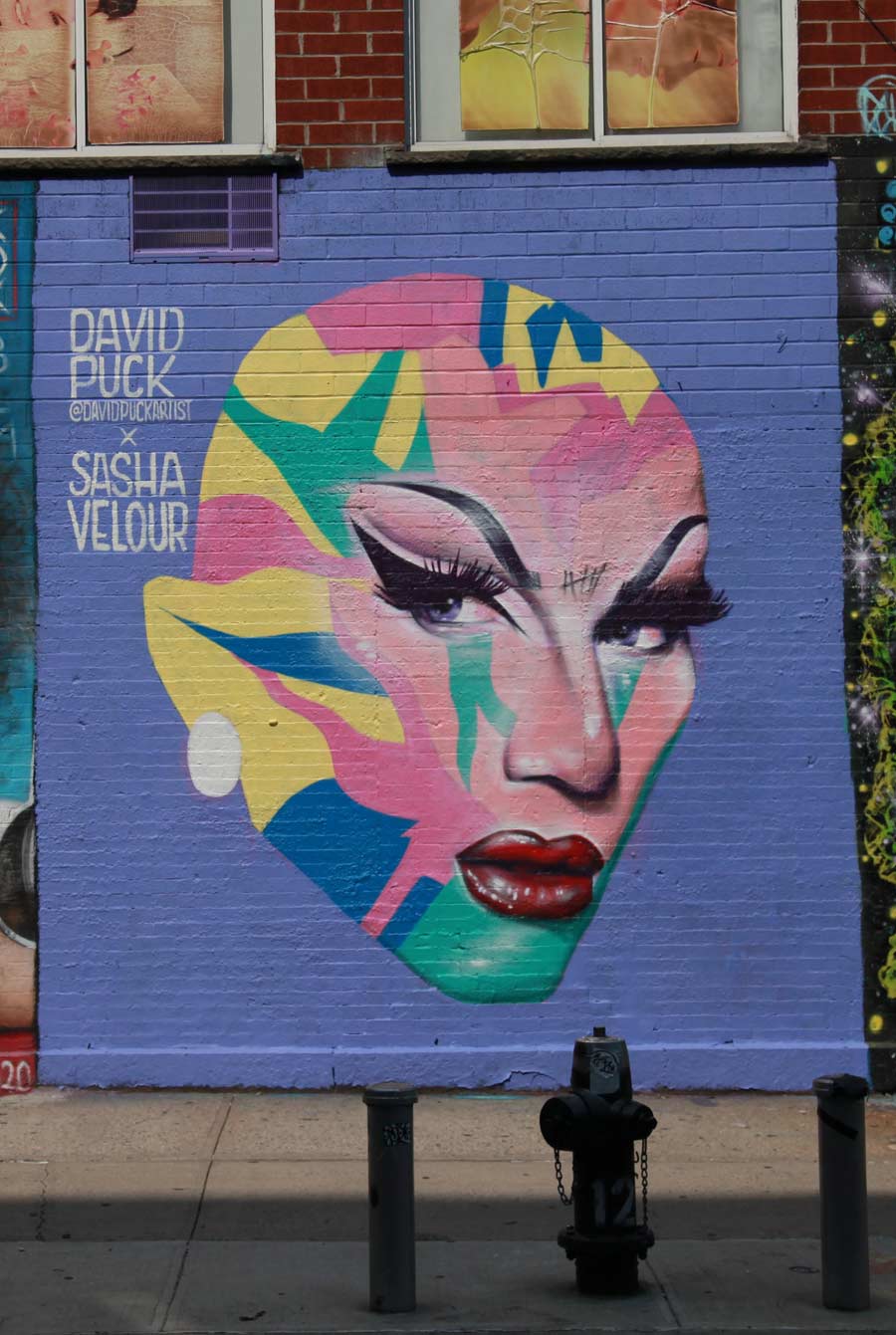
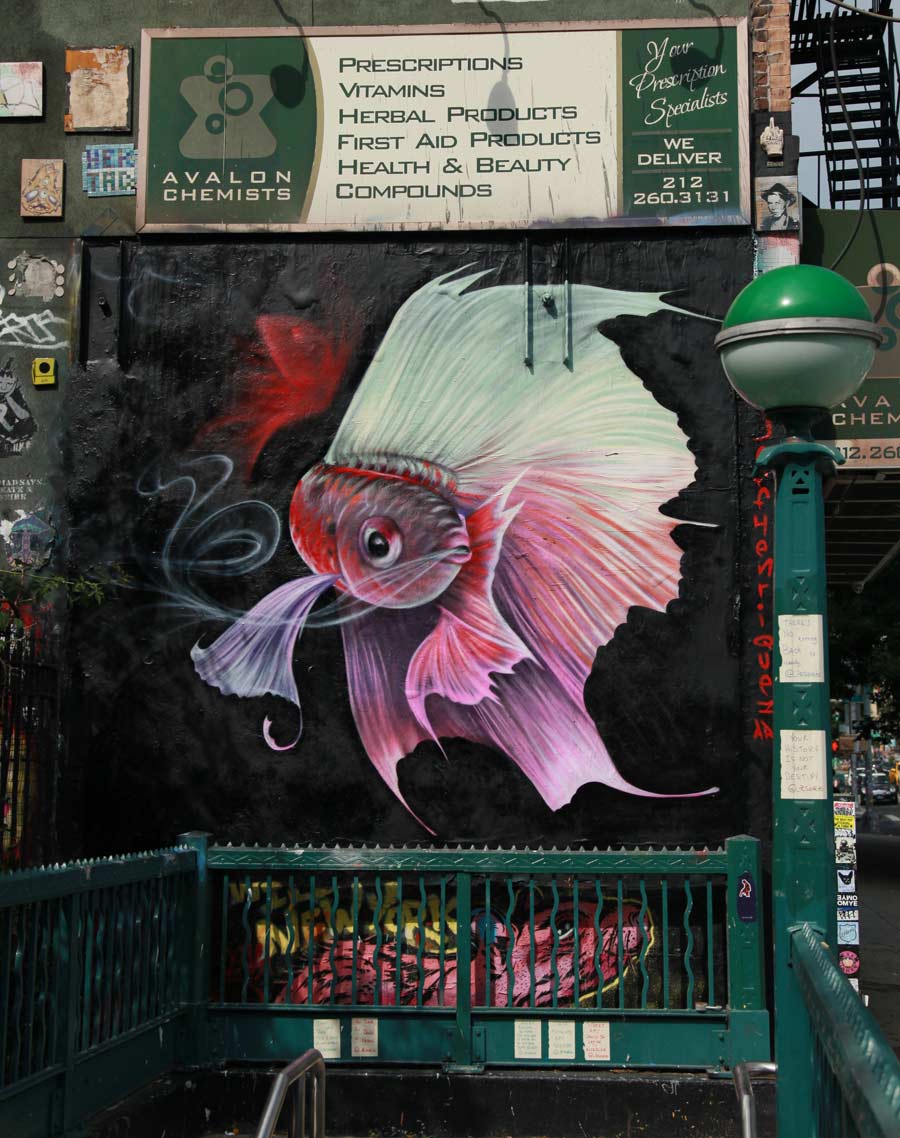
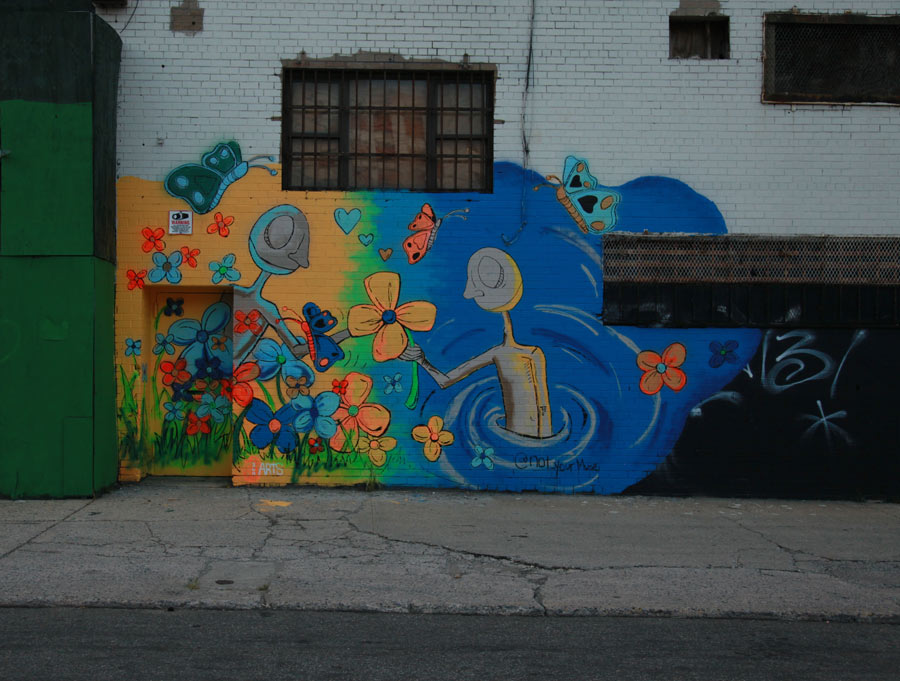
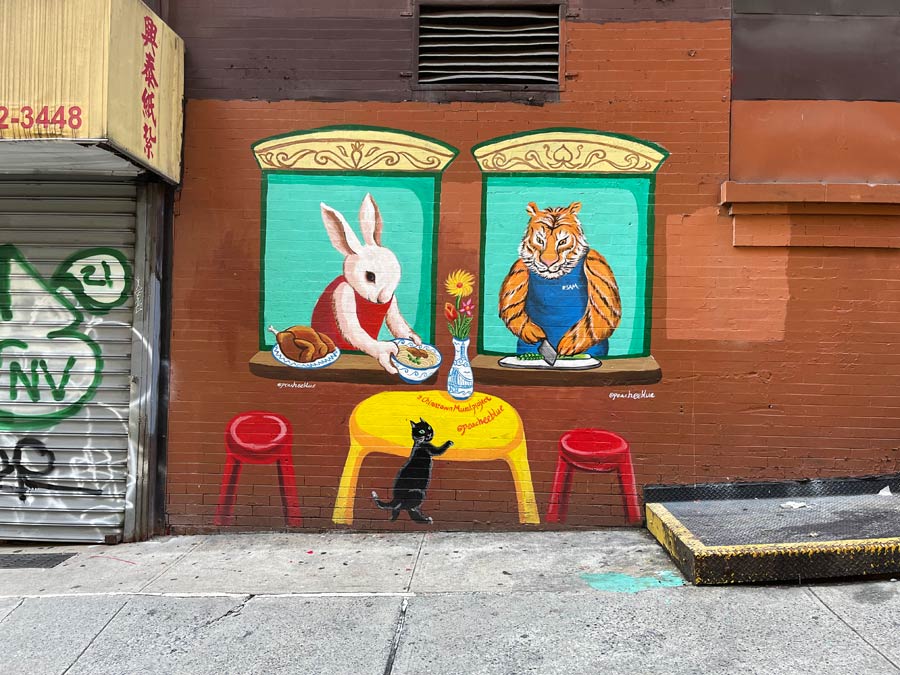
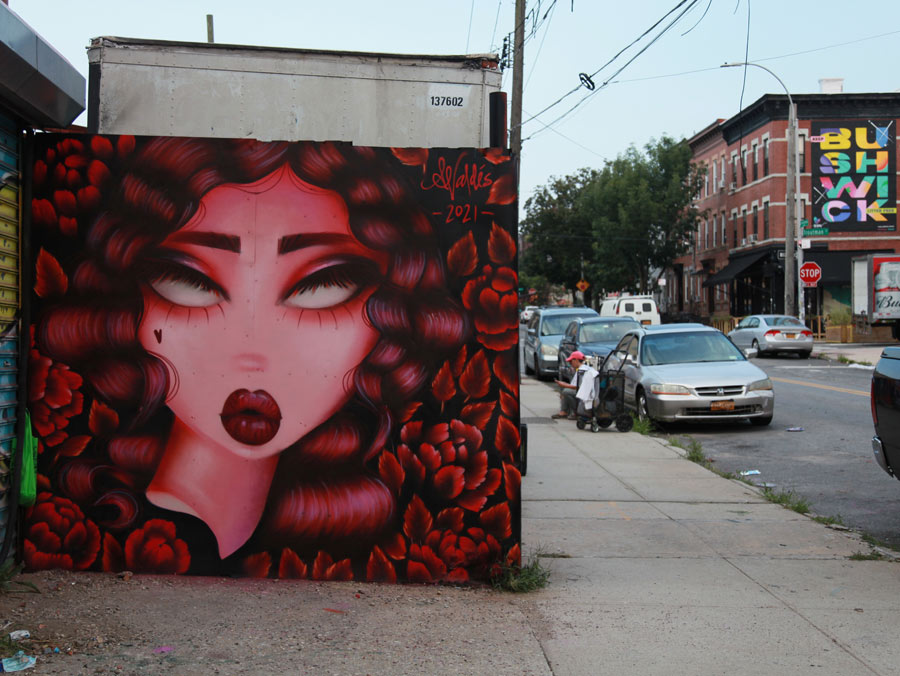
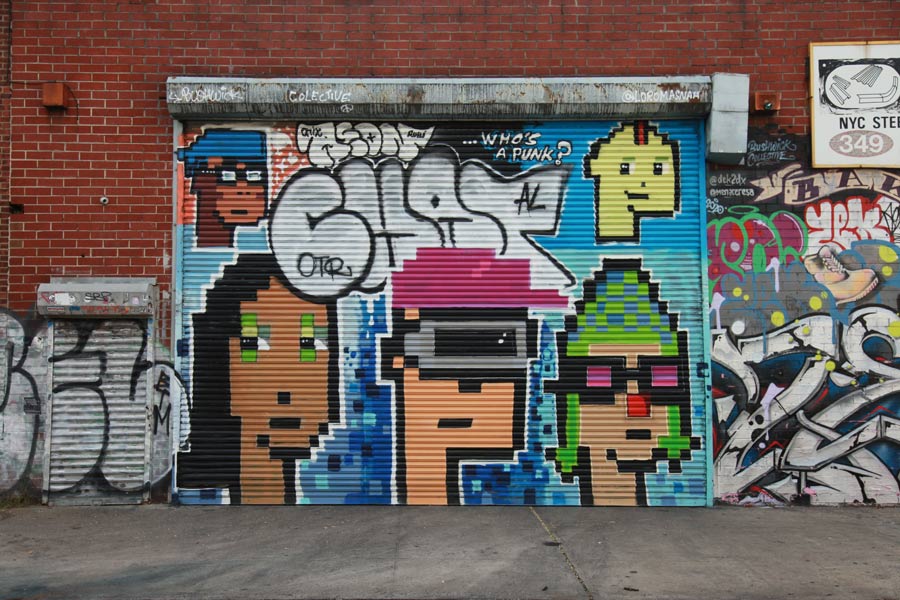
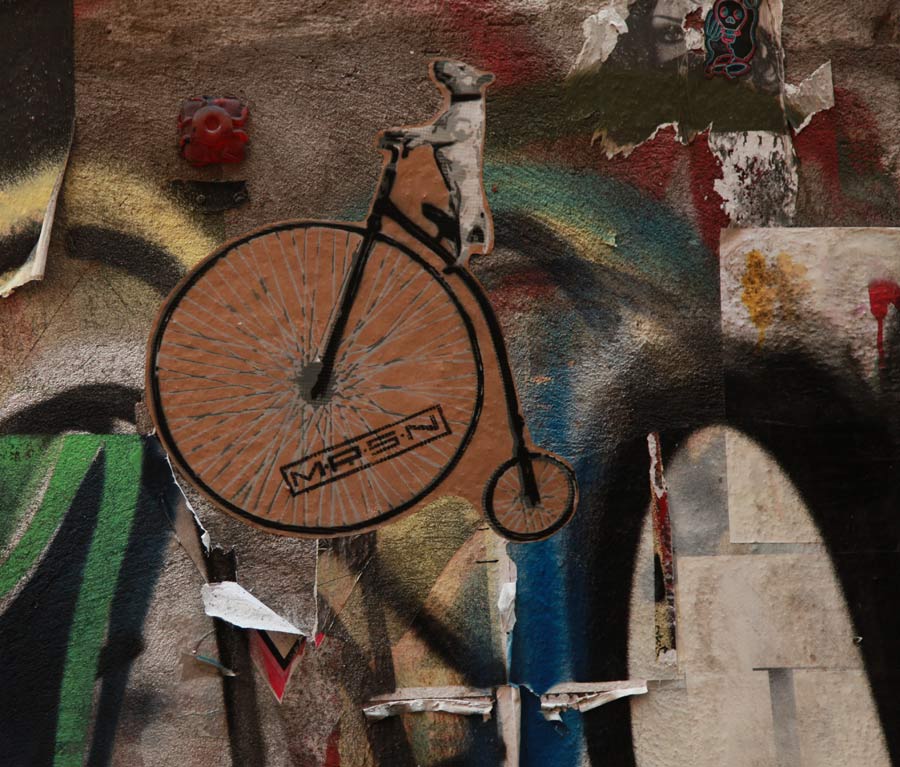
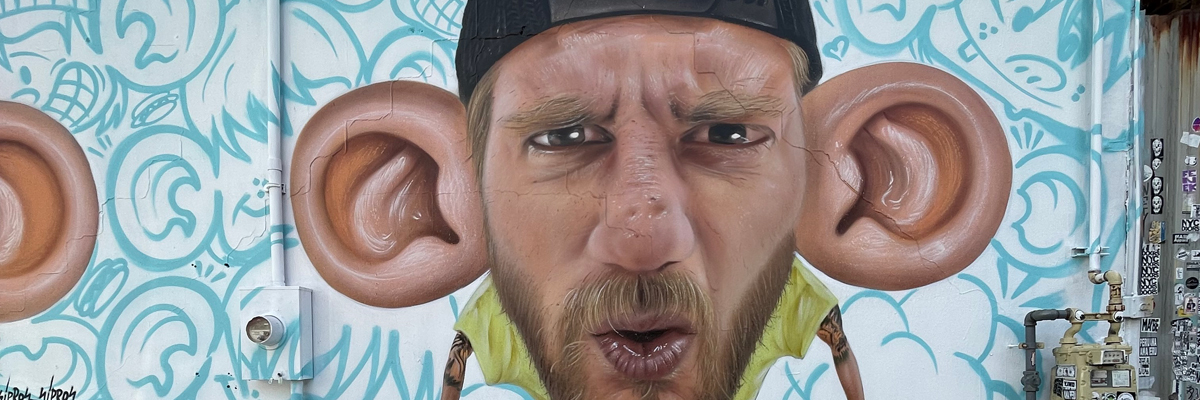
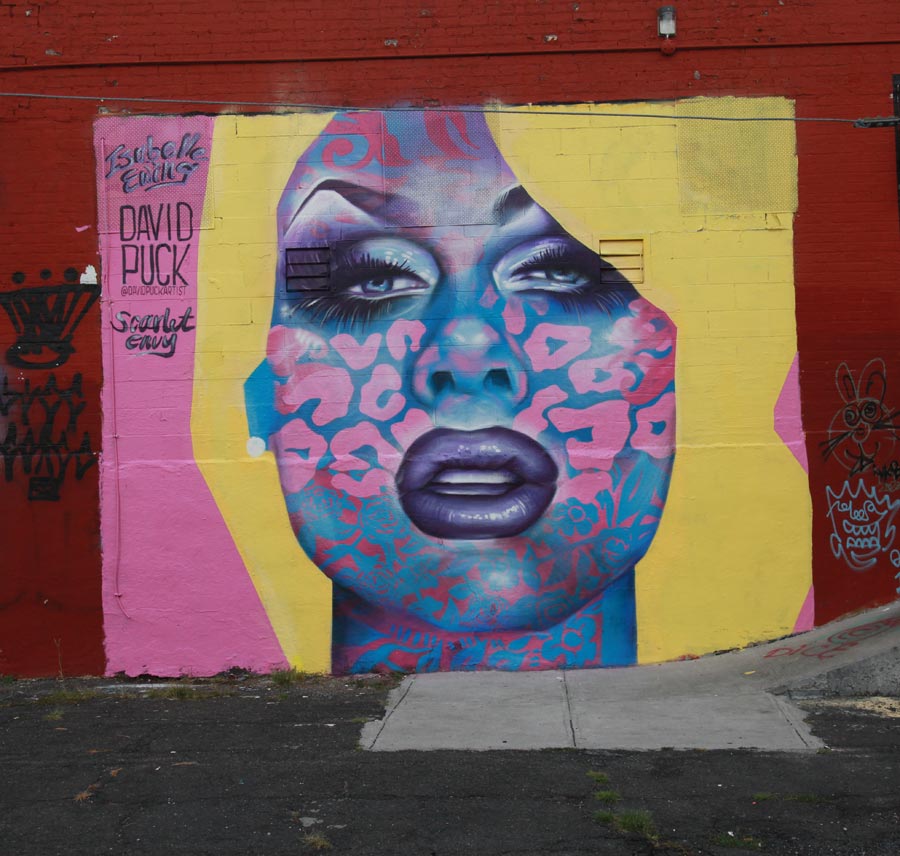
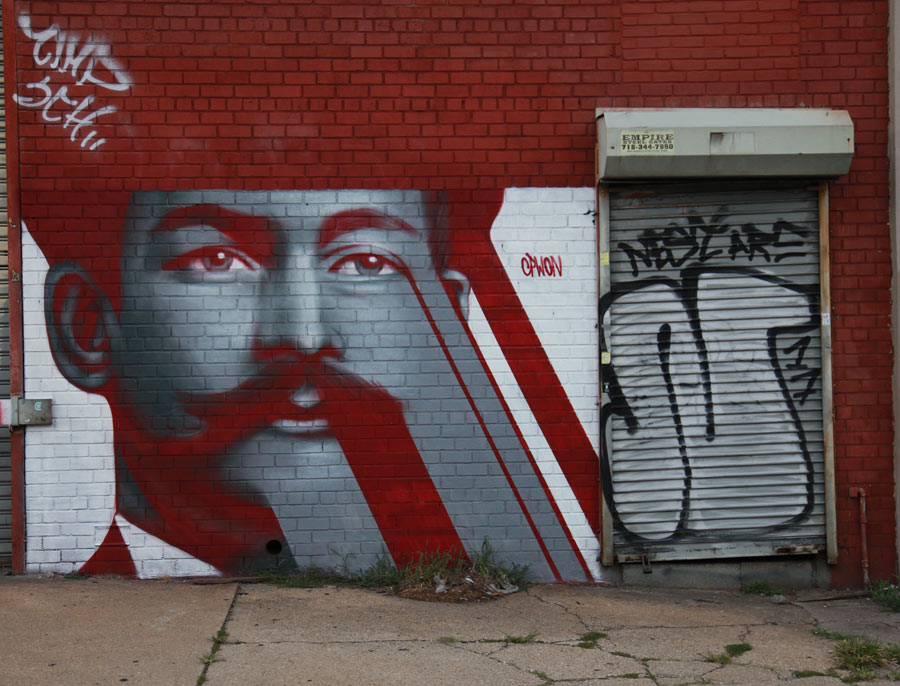
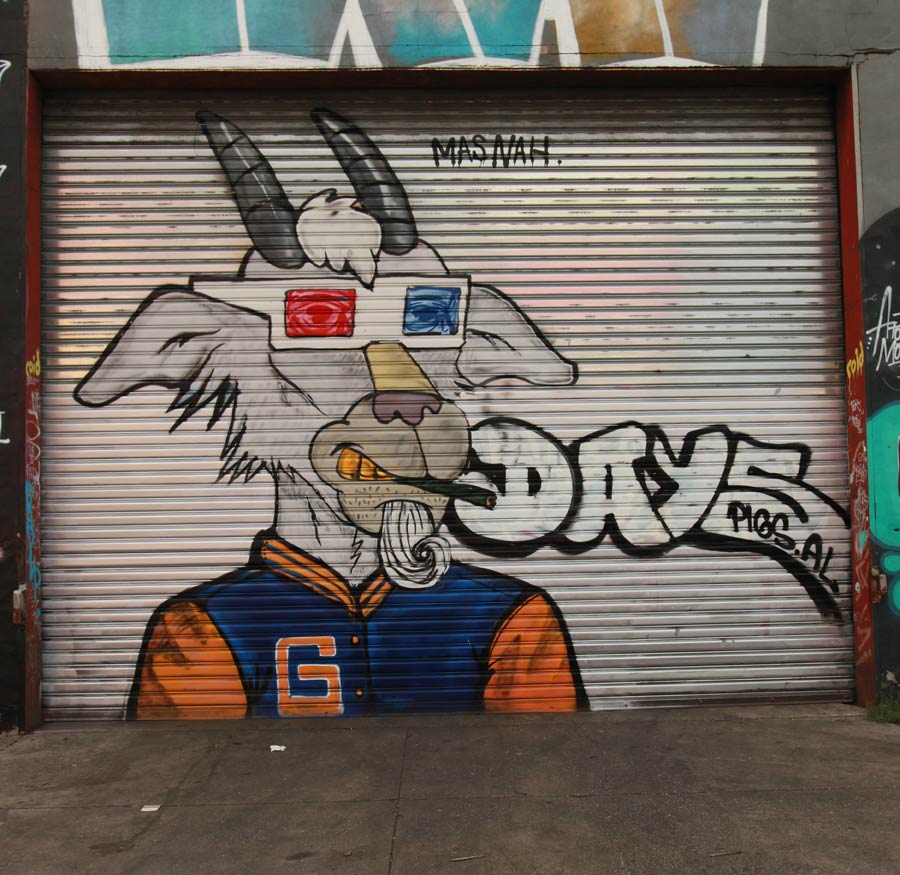
Here’s our weekly interview with the street, this week featuring A. Smith, Captain Eyeliner, China, Cody James, CP Won, David Puck, Gabriel Specter, Huetek, Iquene, Jason Naylor, Jitr!, Amanda Valdes, Lorenzo Masnah, M.R.S.N., Not Your Muse, Peachee Blue, Sara Lynne Leo, Sasha Velour, Say No Sleep, Tyler Ives, and Winston Tseng.
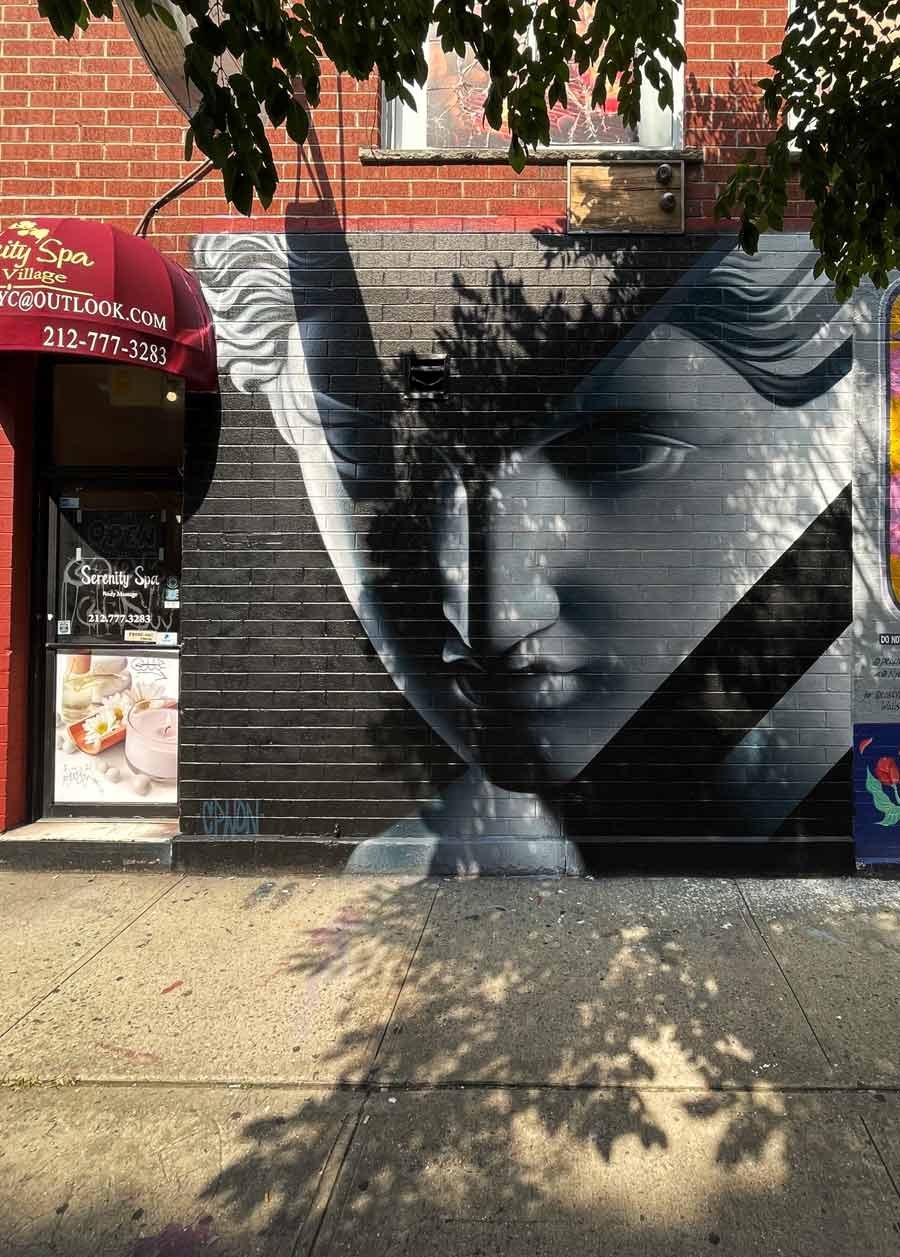
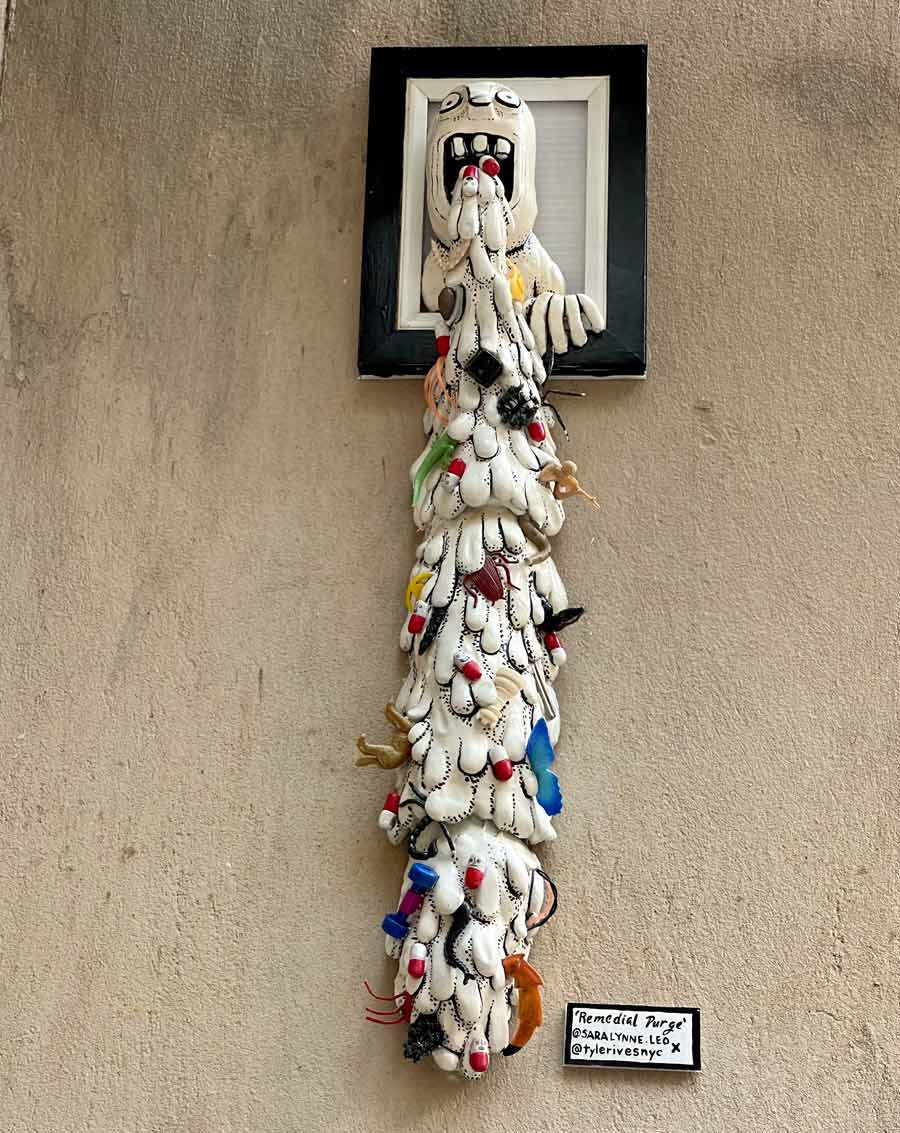
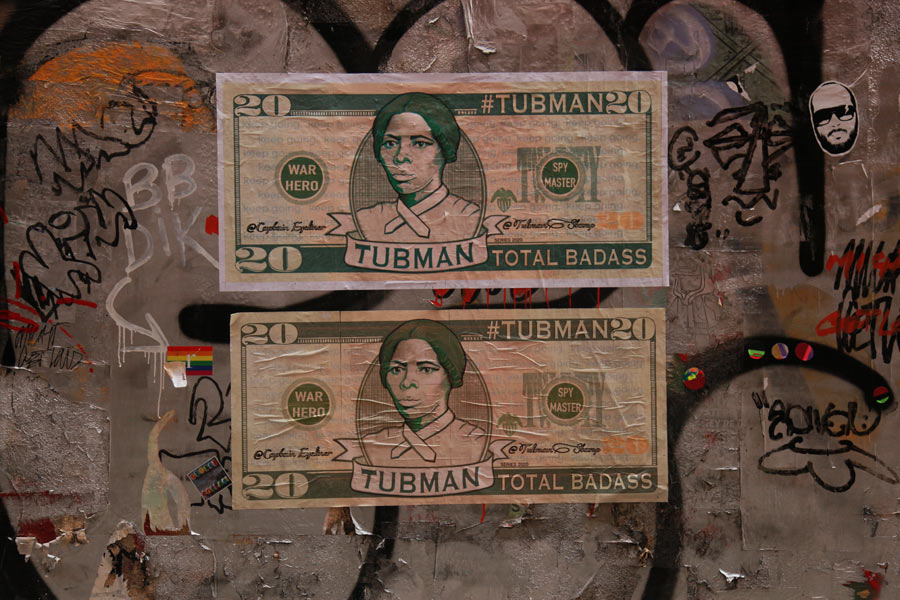
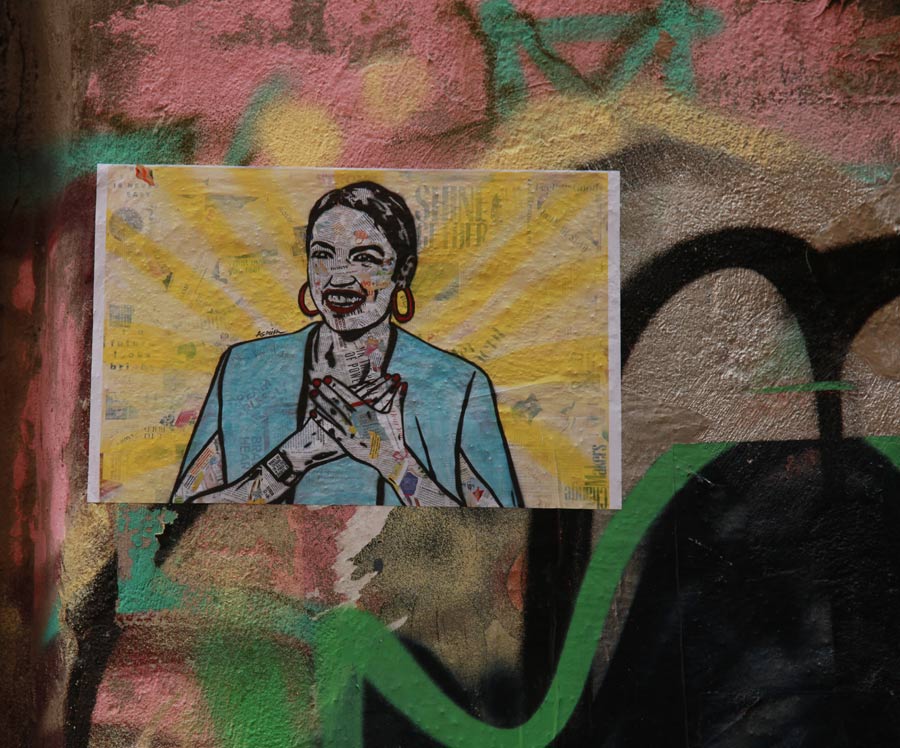
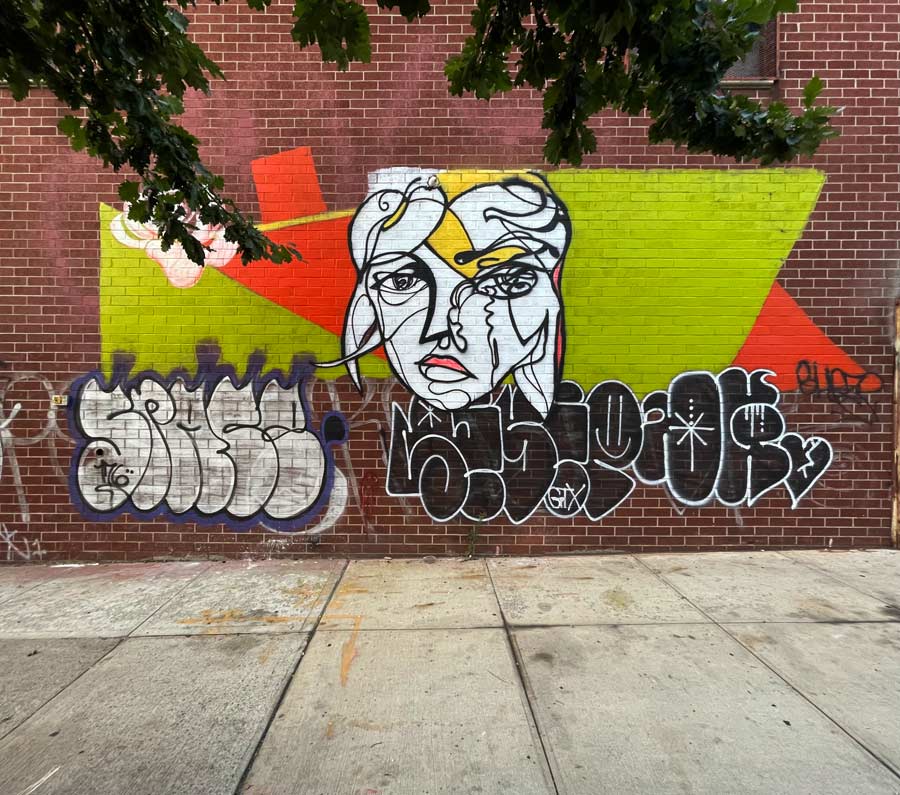
CP Won (photo @ Jaime Rojo)Say No Sleep (photo @ Jaime Rojo)Say No Sleep (photo @ Jaime Rojo)Say No Sleep (photo @ Jaime Rojo)Winston Tseng (photo @ Jaime Rojo)Sara Lynne-Leo in collaboration with Tyler Ives. “Remedial Purge” (photo @ Jaime Rojo)Captain Eyeliner (photo @ Jaime Rojo)A Smith (photo @ Jaime Rojo)Specter (photo @ Jaime Rojo)Huetek. Detail. Work in progress for The Bushwick Collective 10th Anniversary edition. (photo @ Jaime Rojo)Cody James. Work in progress for The Bushwick Collective 10th Anniversary edition. (photo @ Jaime Rojo)Jason Naylor. Work in progress for The Bushwick Collective 10th Anniversary edition. (photo @ Jaime Rojo)China (photo @ Jaime Rojo)Jitr! (photo @ Jaime Rojo)David Puck (photo @ Jaime Rojo)Iquena (photo @ Jaime Rojo)Not Your Muse (photo @ Jaime Rojo)Peachee Blue (photo @ Jaime Rojo)Amanda Valdes (photo @ Jaime Rojo)Masnah (photo @ Jaime Rojo)M.R.S.N. (photo @ Jaime Rojo)Unidentified artists (photo @ Jaime Rojo)
Staring at clouds and seeing images is Mother Nature’s Rorschach test about how one sees life’s possibilities; revealing winged angels and horned devils, a ship on the high seas, a milk maiden’s profile, a fire-breathing dragon.
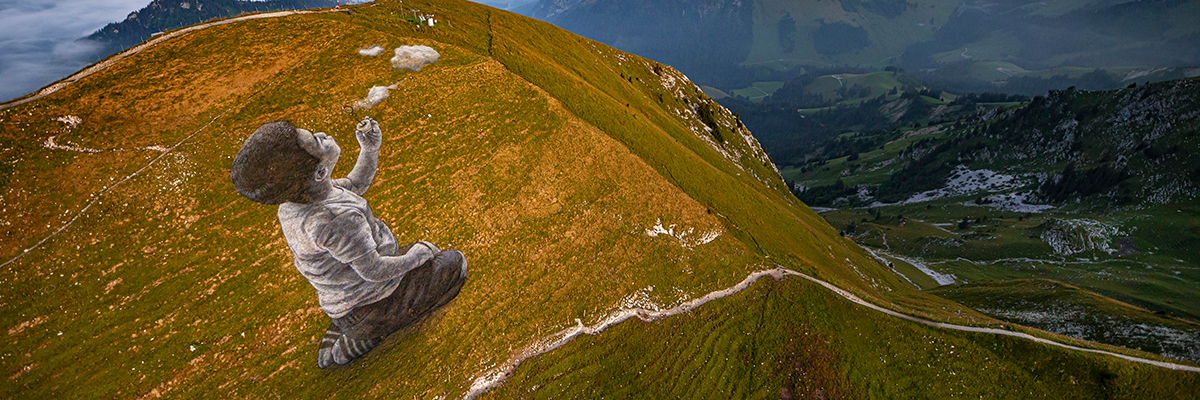
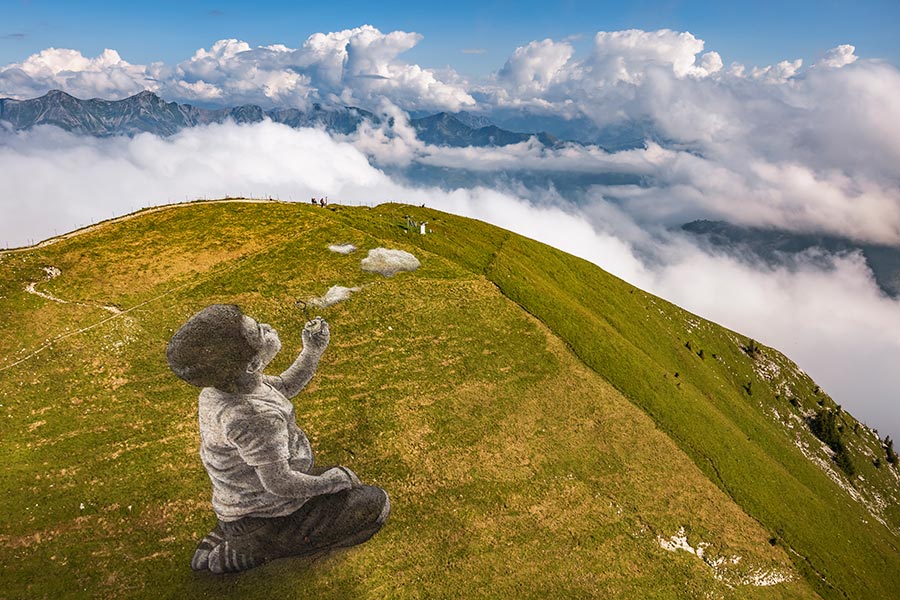
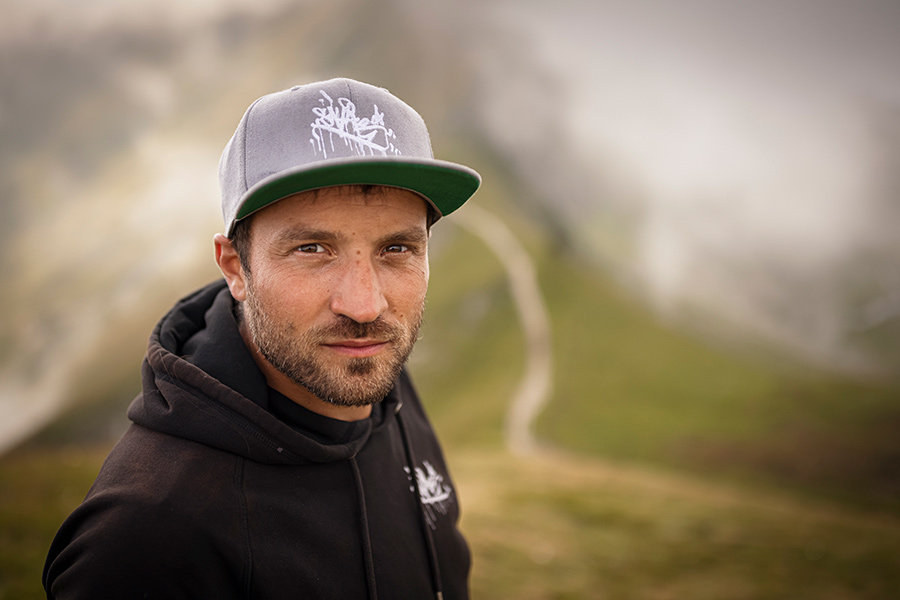
French-Swiss land artist Saype has had plenty of time recently to contemplate the clouds while painting on a grassy mountain and he thinks our vision of the future is reaching a point of clarity, despite our current seemingly cloudy perspective.
The rising, lushly green summit of Moleson-sur-Gruyeres in Switzerland can do that to you.
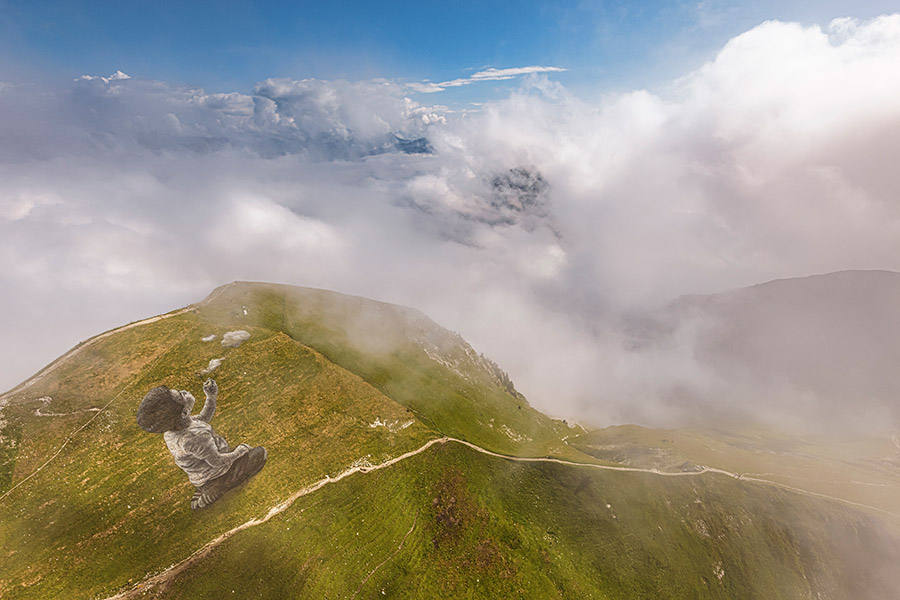
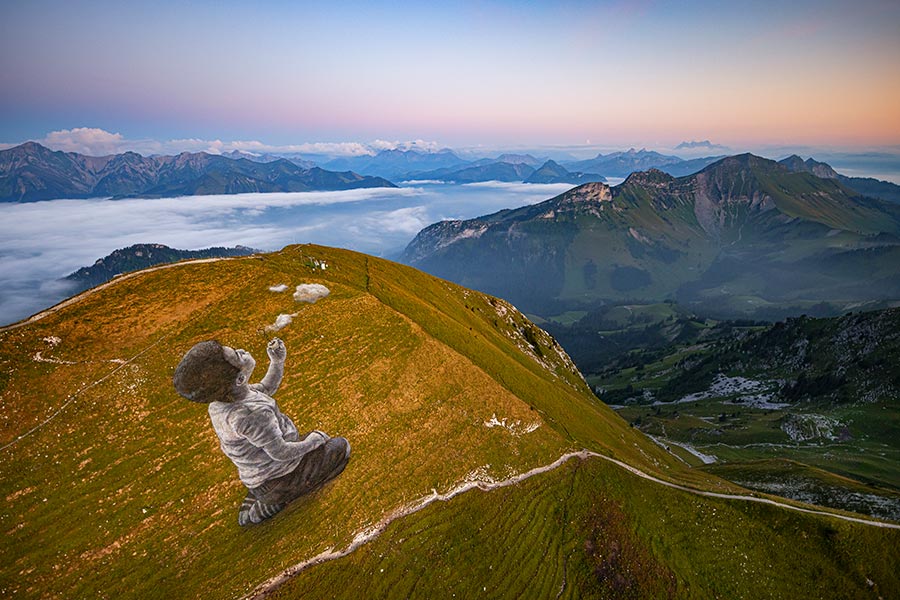
The artist’s newest ephemeral simulacrum depicts what appears as a child blowing clouds toward the horizon. He calls it “un nouveau souffle” (“a new breath”), he says, and he uses the framing of the majestic Friborg Pre-Alps to give flight to this novel fancy.
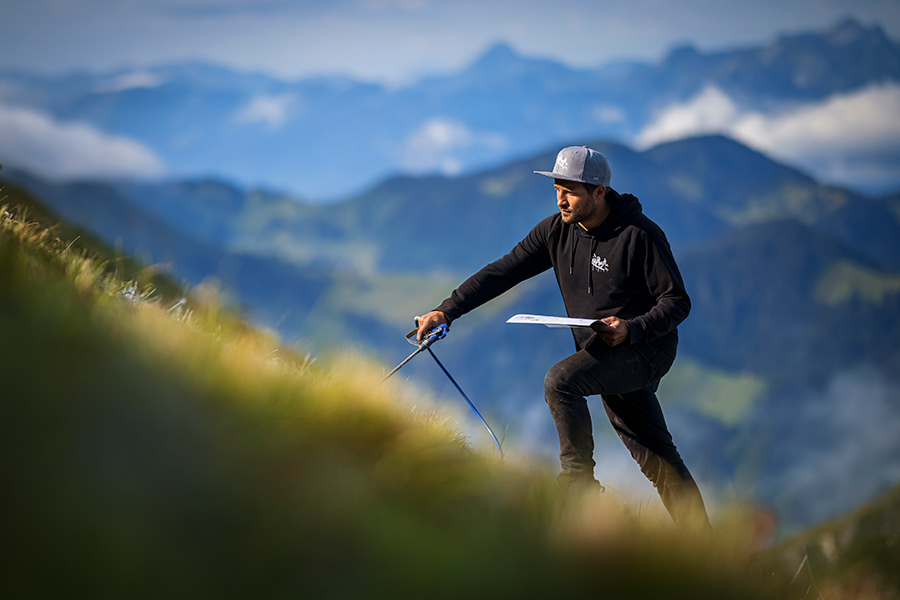
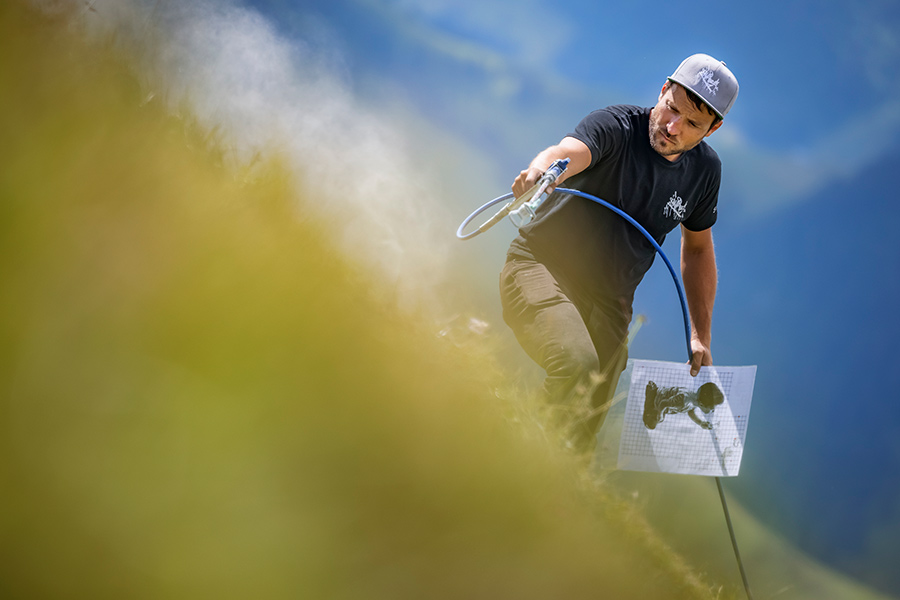
Seen on land from a great distance and especially when flying above, the new 1500 square meter fresco is of biodegradable pigments made out of charcoal, chalk, water, and milk proteins.
With time, this vision will fade. Hopefully, our ability to imagine stories, fancies, and promising futures will not.
Our weekly focus on the moving image and art in the streets. And other oddities.
Now screening: 1. Talking with Tony Tuan Luong AKA Tyle2 2. OLEK: I Have Nothing To Declare Except My Genius 3. Sofles in Brisbane featuring Gamo & Kitsa 4.MadC – Oasis
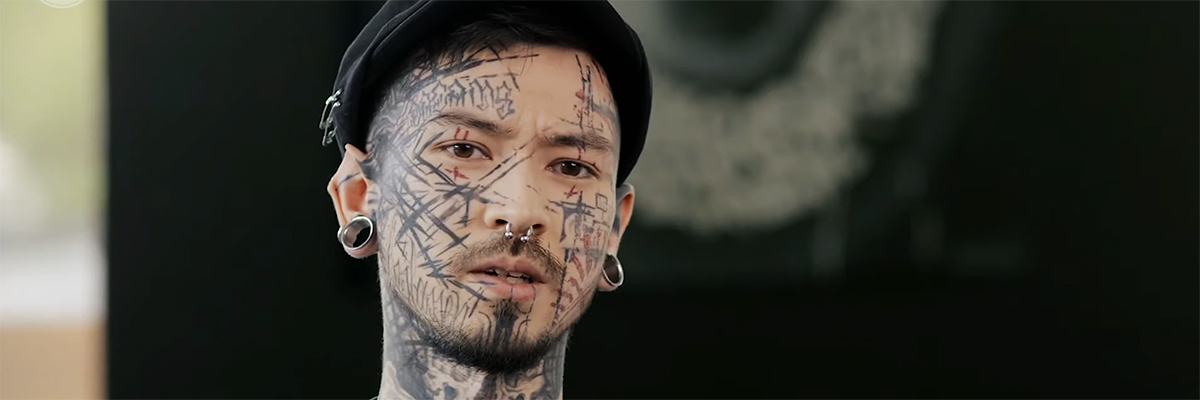
BSA Special Feature: Talking with Tony Tuan Luong AKA Tyle2
It’s thrilling to see the many twists and turns on the path of calligraffiti. Here we are introduced to Graffiti, Calligraphy, and Tattoo artist TONY TUAN LUONG aka TYLE2 from Offenburg, Germany, who gives a short interview in this first new “Artist Session” with the Molotov brand. Friday is always a great day for inspiration and we hope this can inspire you.
Artist Session with Tony Tuan Luong AKA Tyle2
OLEK: I Have Nothing To Declare Except My Genius
The Polish street artist has nothing but the usual to declare. She’s been saying it for years. If only you would listen.
Man1 on Hollywood Blvd via Birdman.
“A fun mural I shot with LA native Man1 in Los Angeles, CA,” says photographer and video documenter Birdman.
MadC – Oasis
Modern master of styles, MadC knows how to keep it tight and how to let it flow, like an ocean’s mists, across the walls she climbs and conquers. Its not just the dynamism, the scale. It’s also the confidence, the fact that you feel she can see it before she begins. She is an oasis.
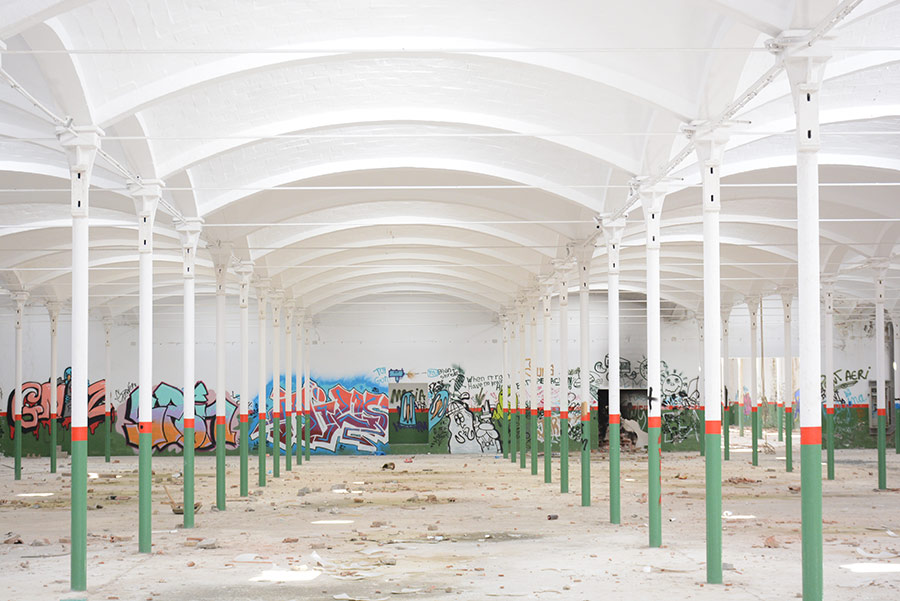
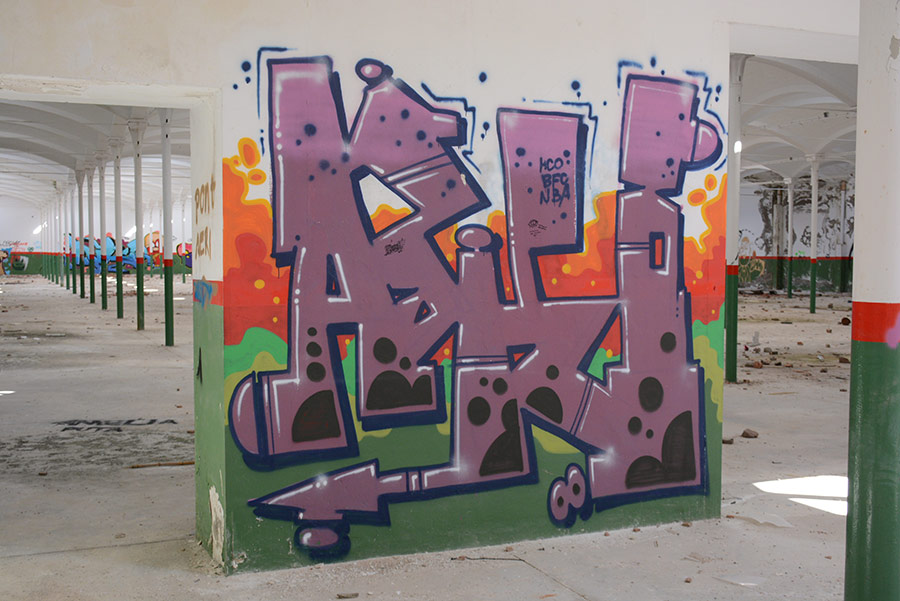
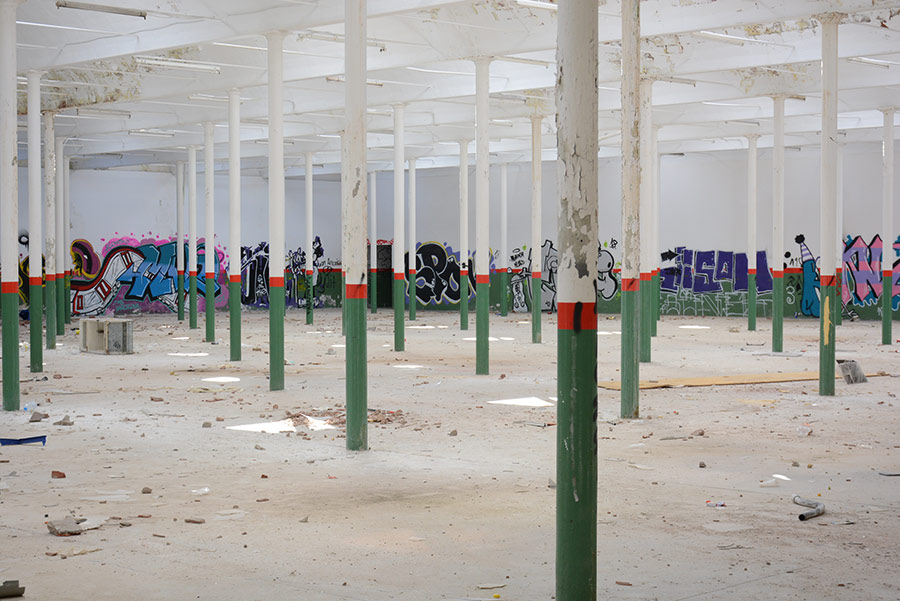
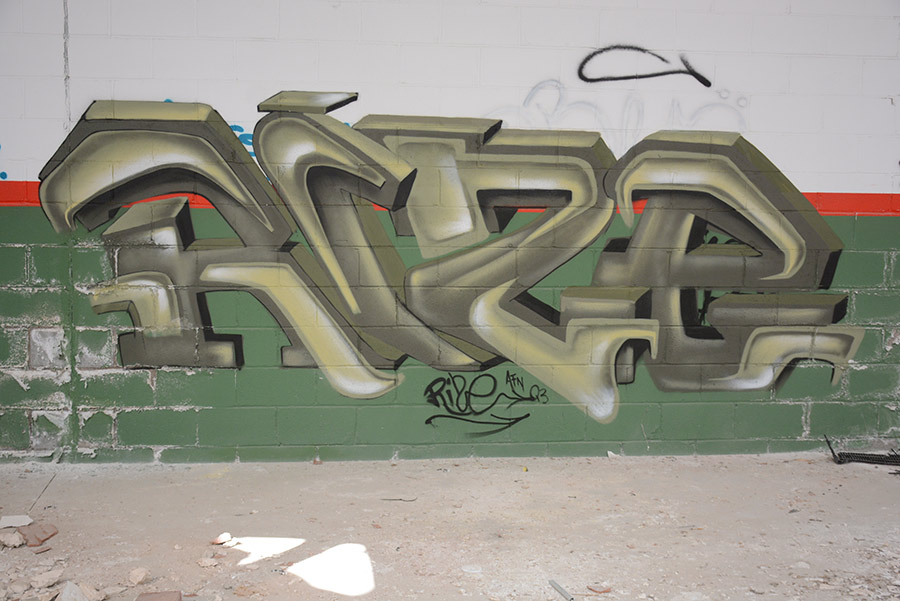
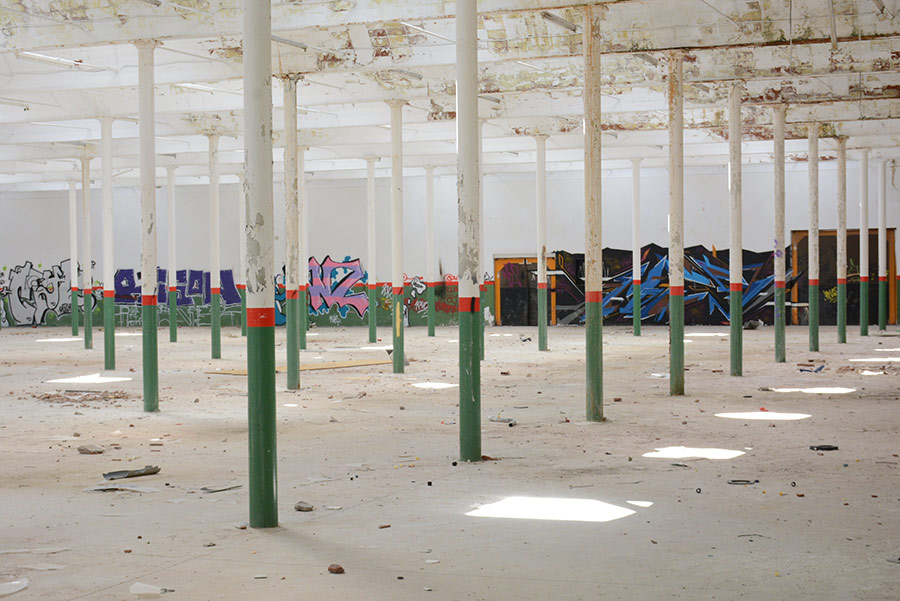
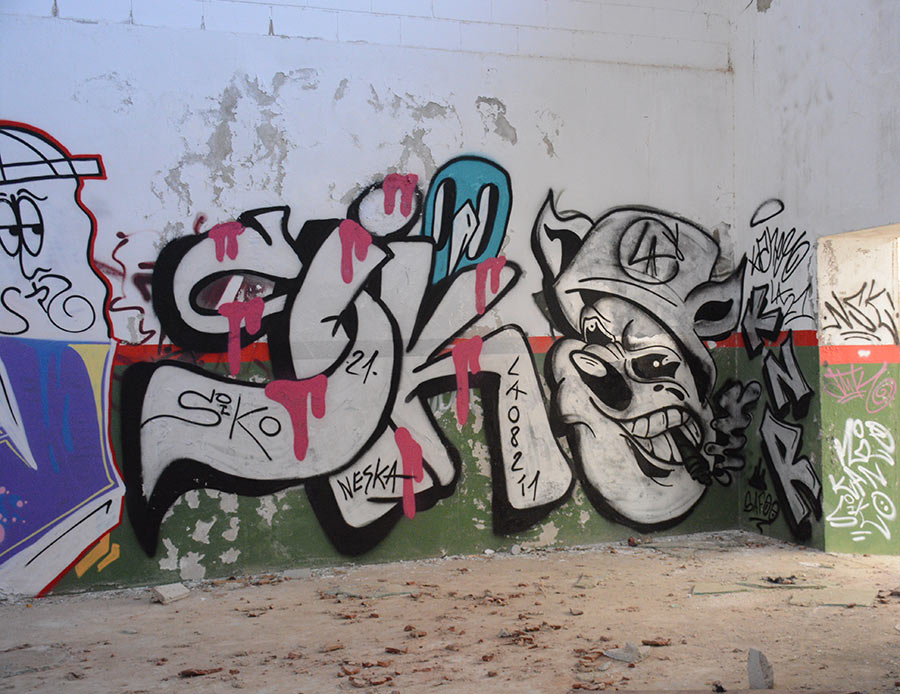
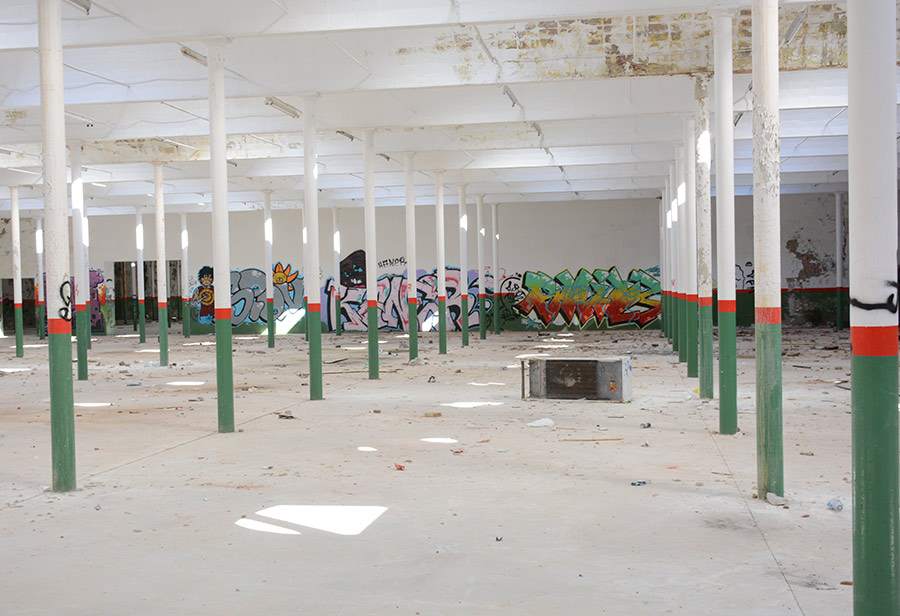
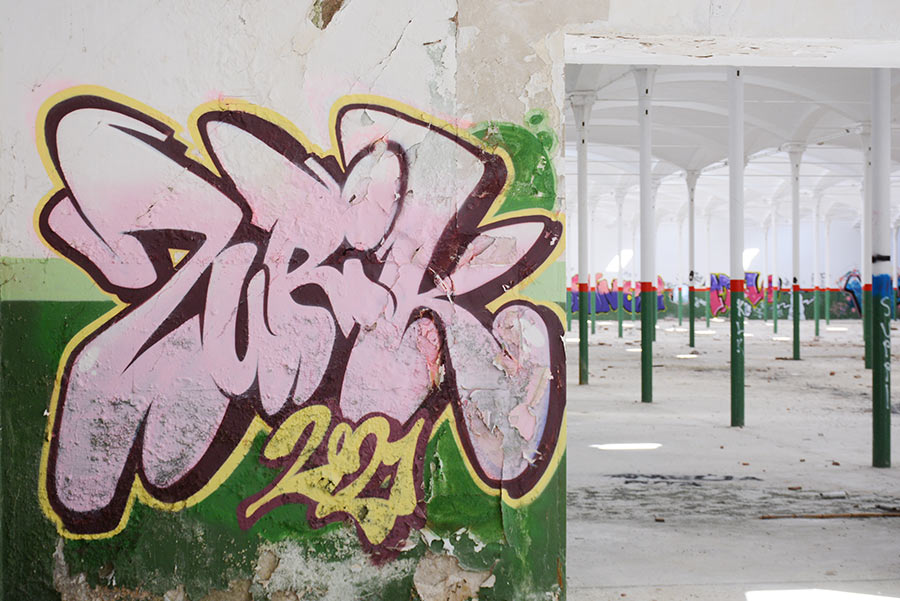
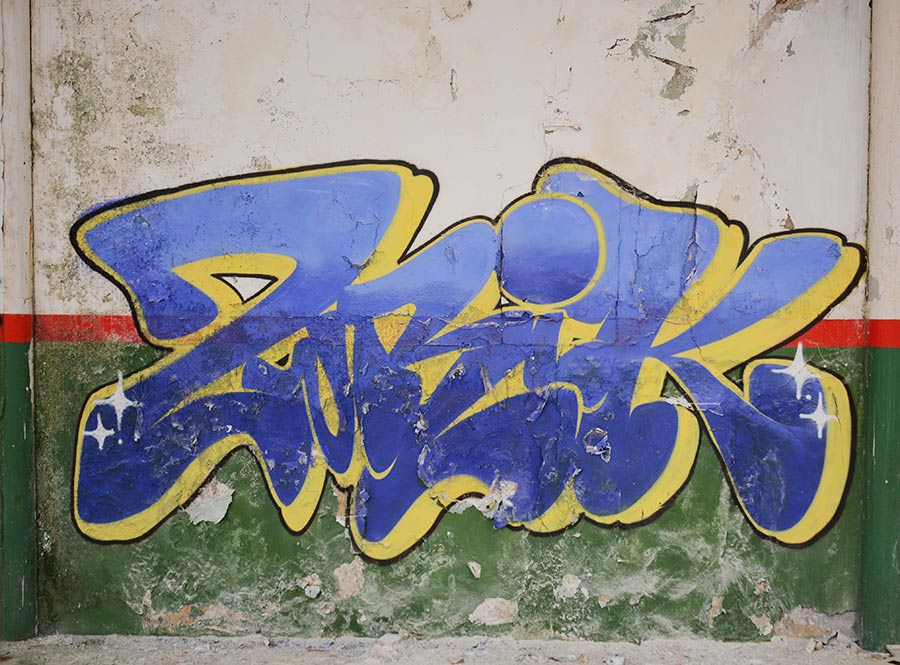
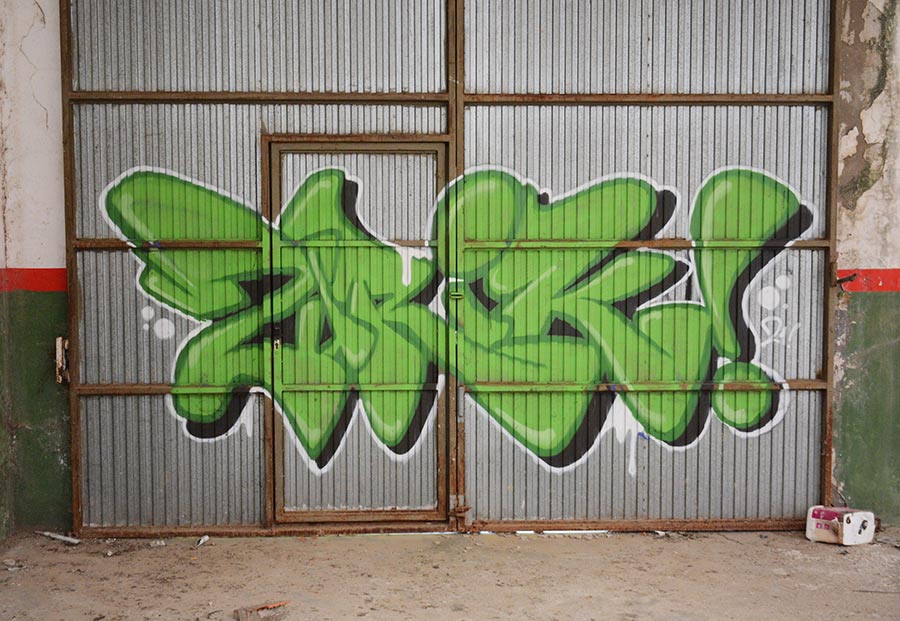
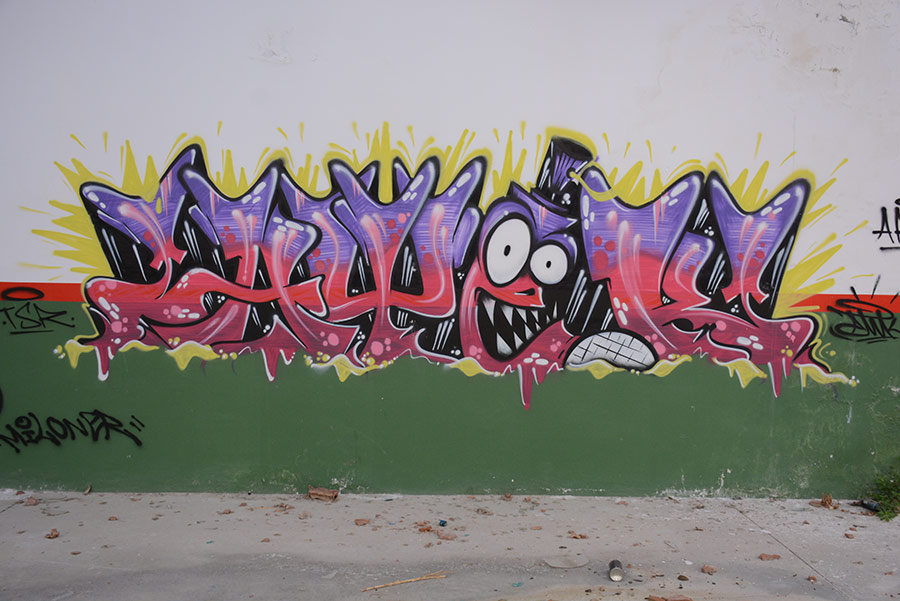
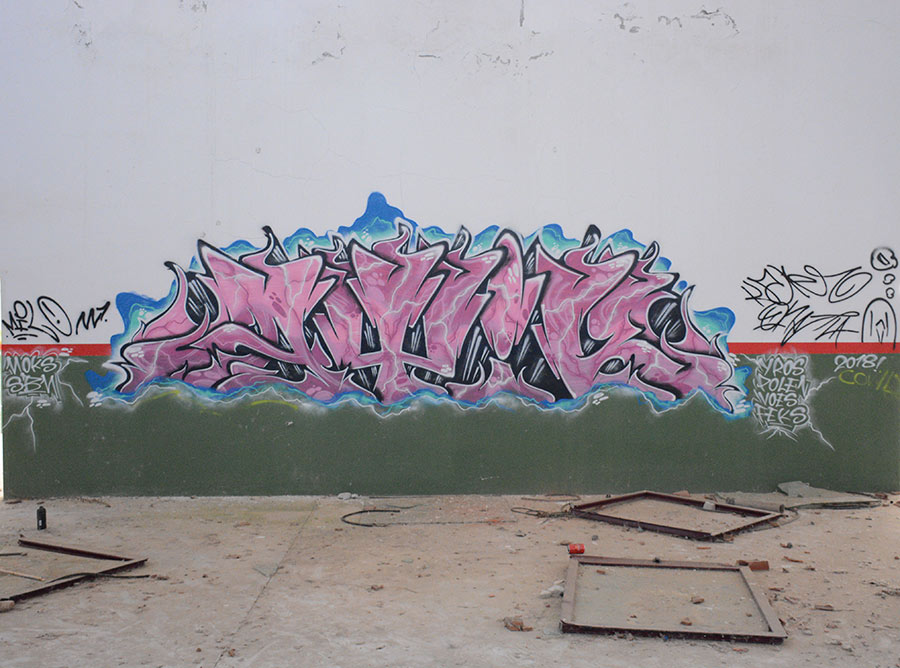
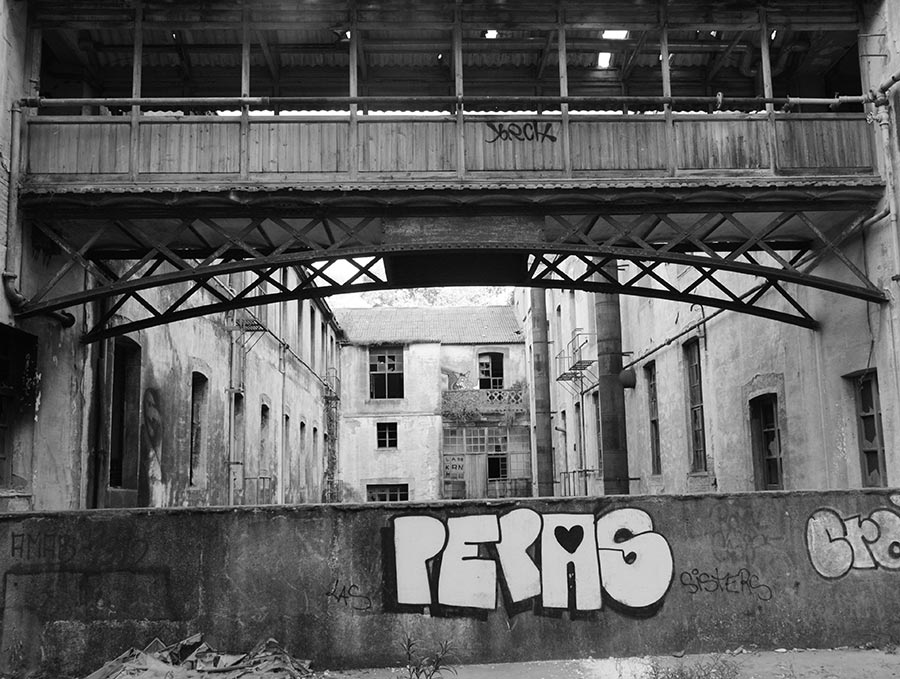
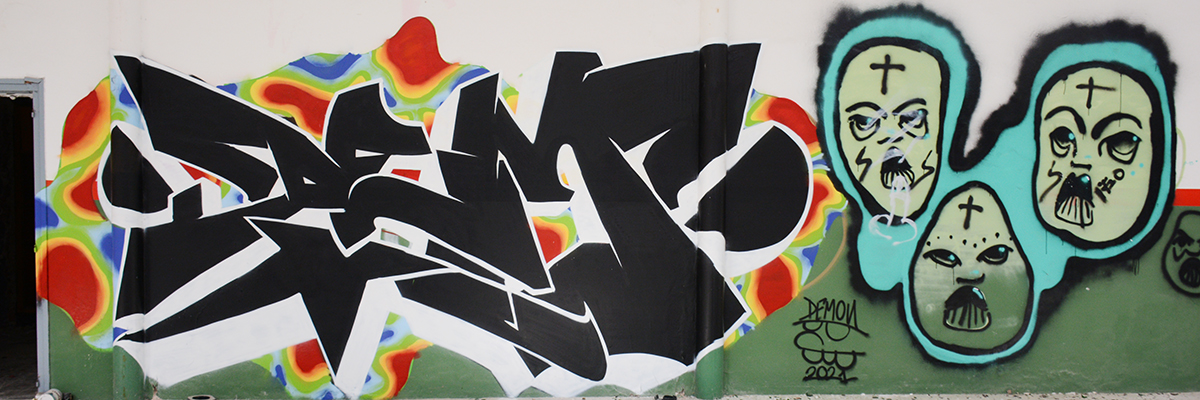
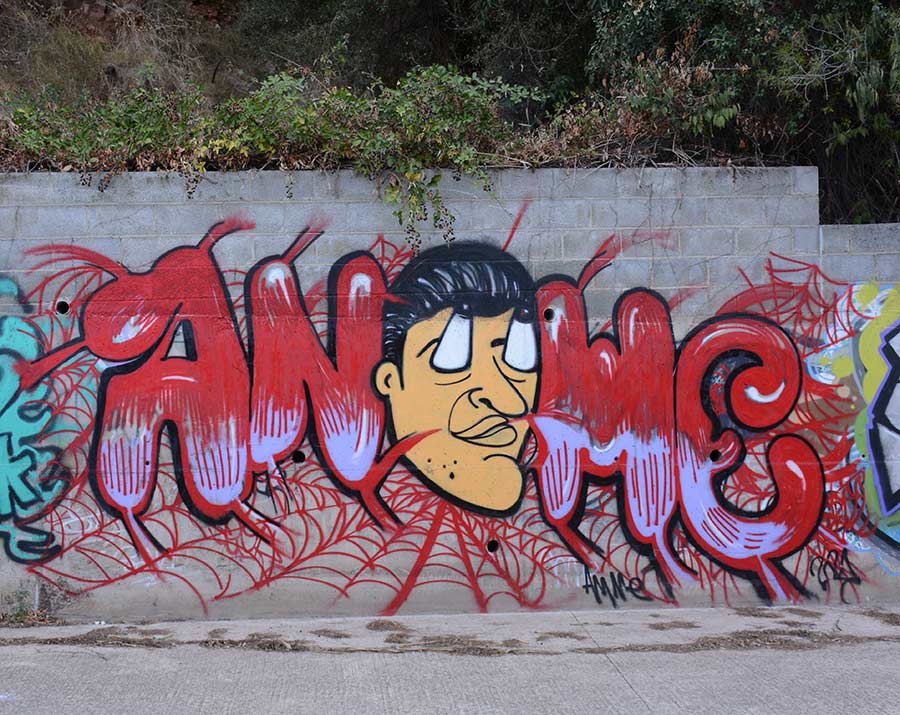
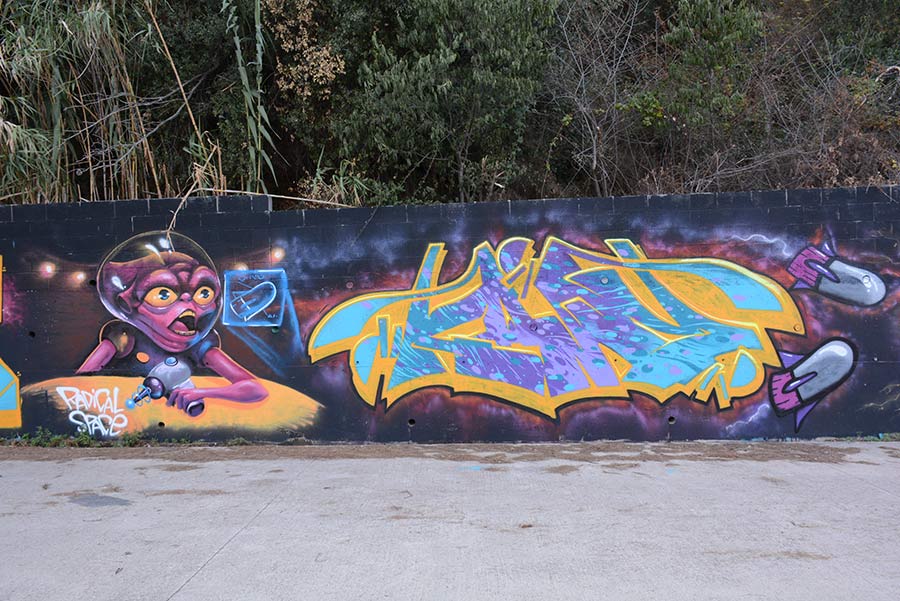
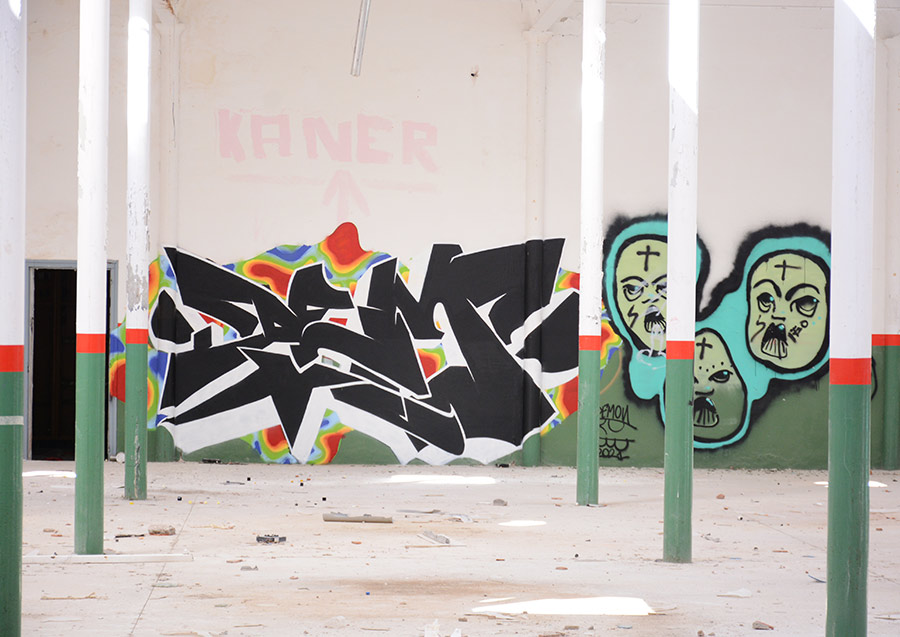
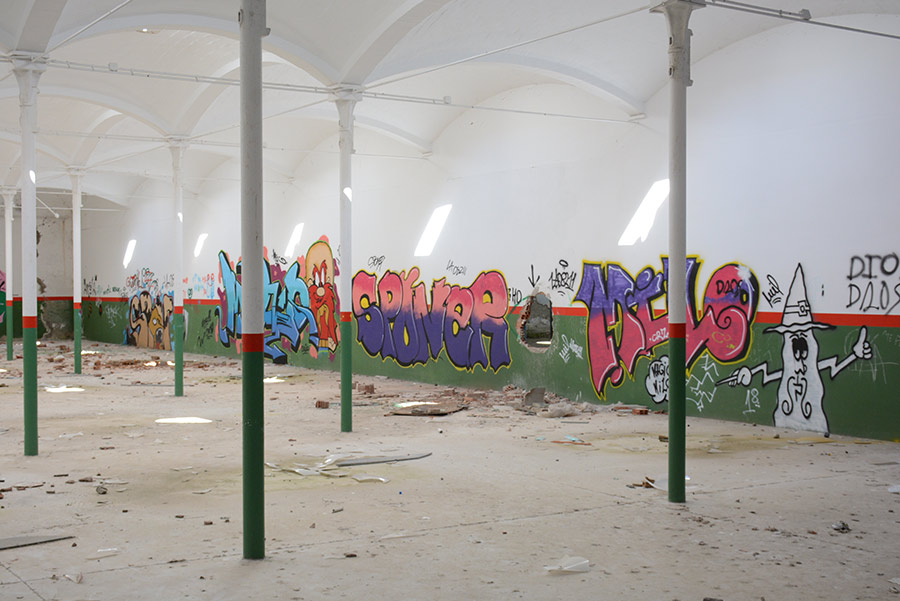
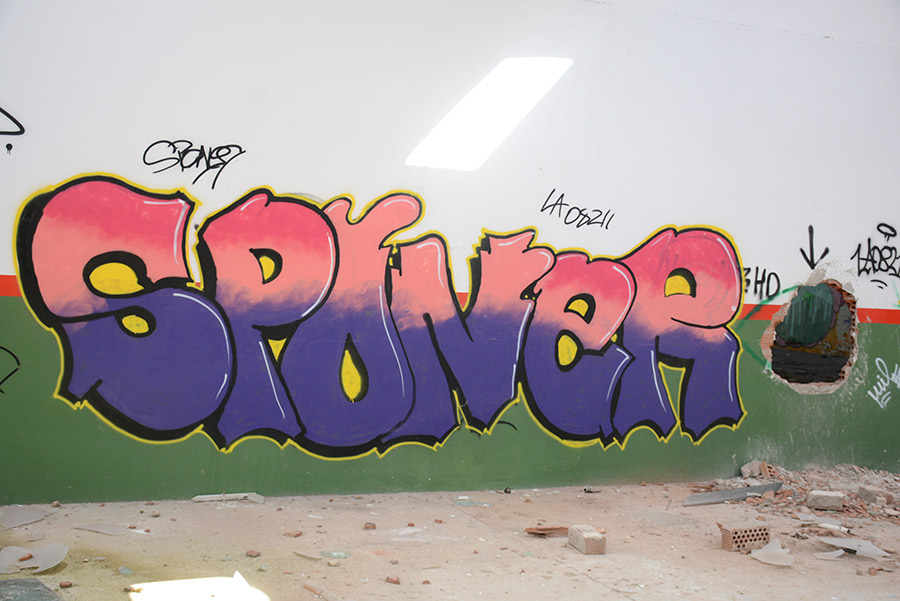
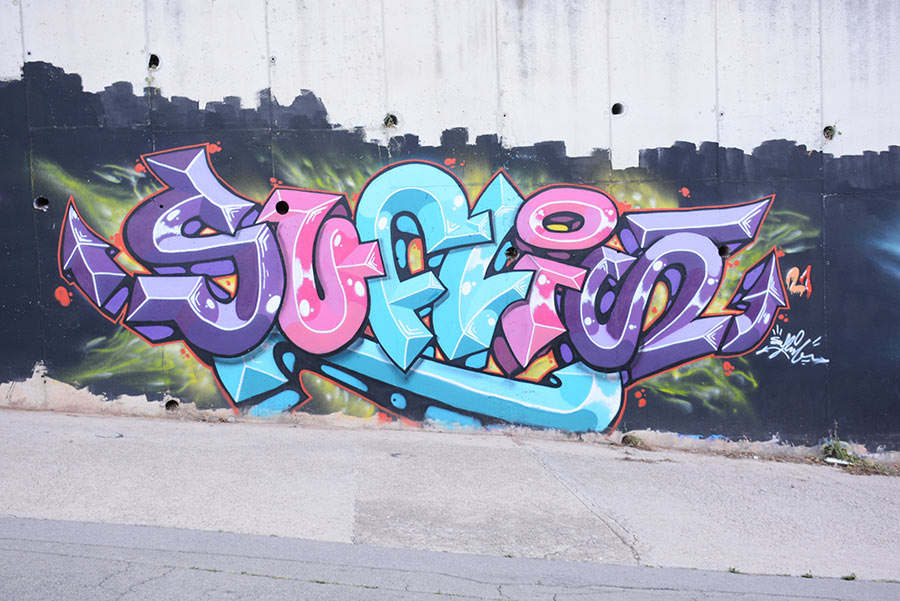
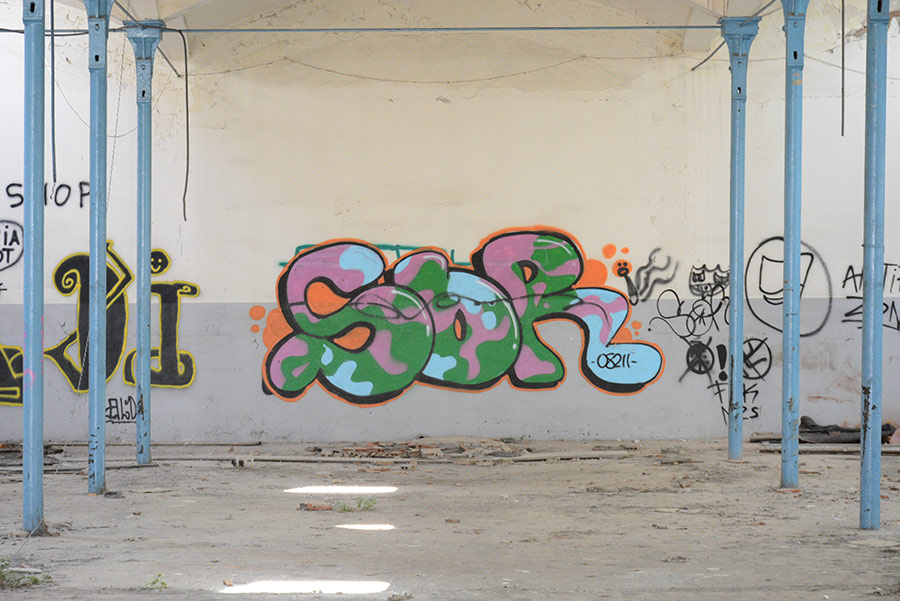
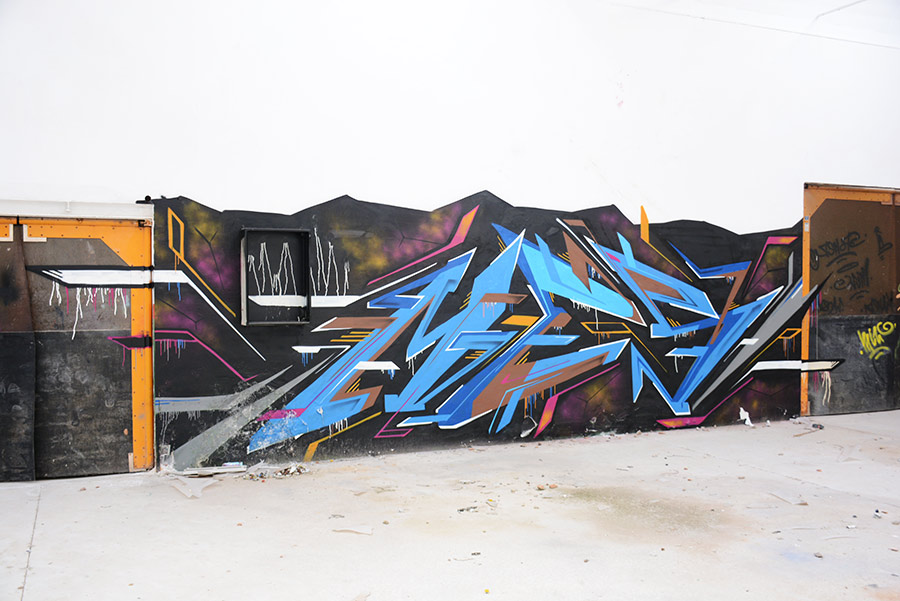
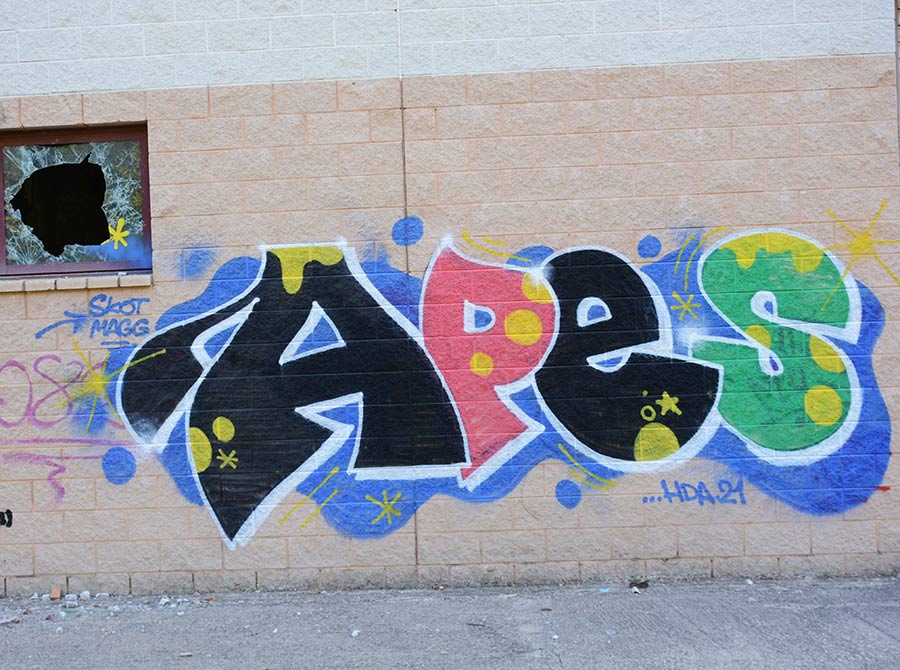
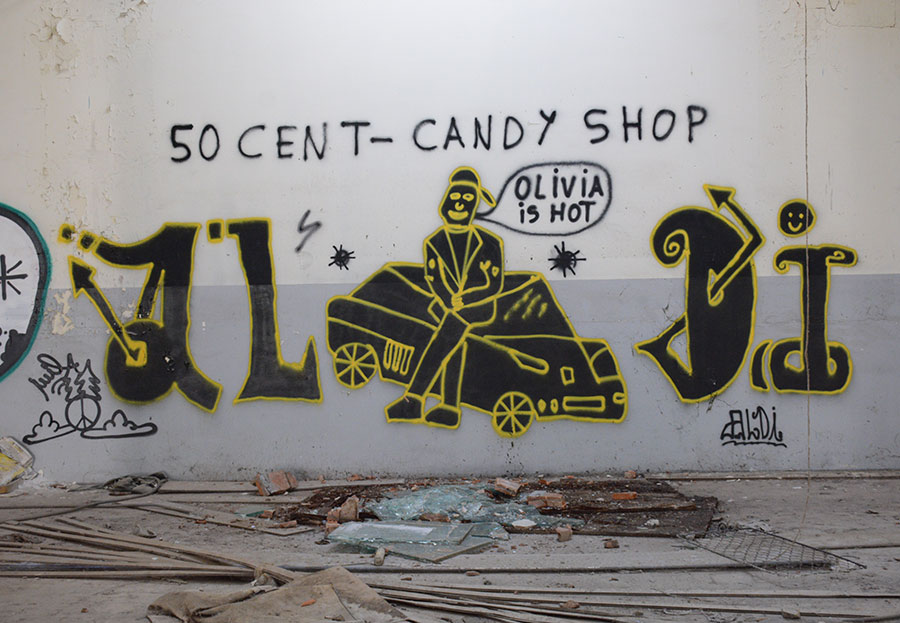
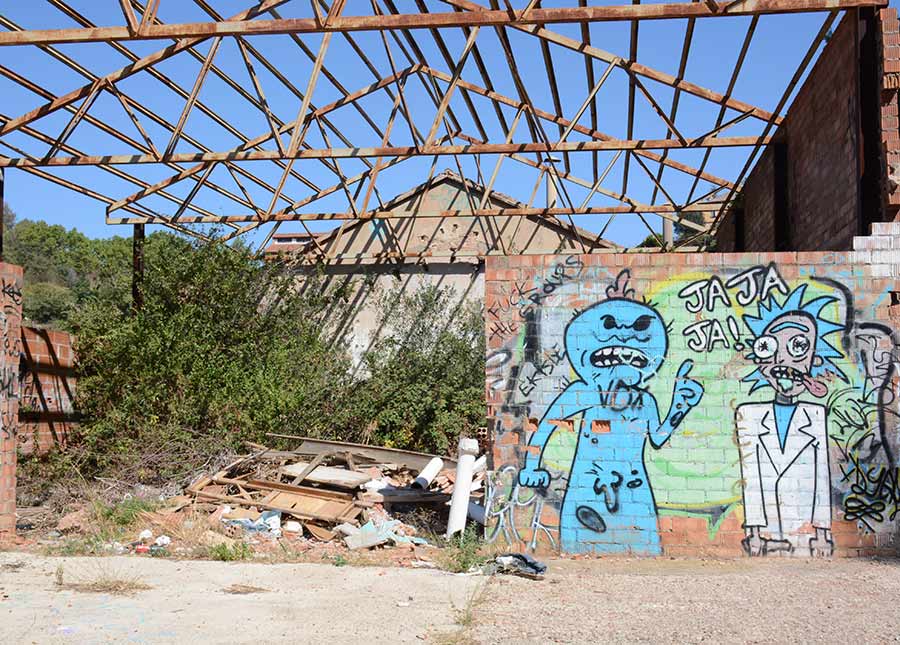
We return for Part 2 of this nearly incandescent display space in the northern woods of Catalonia discovered this month by photographer Lluis Olive Bulbena.
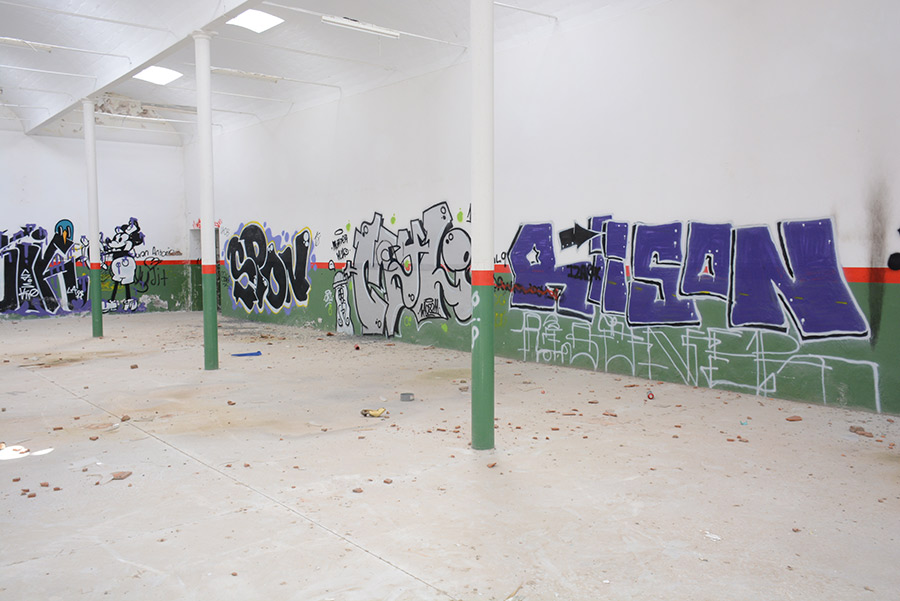
Such an idyllic light and quiet sanctuary for aerosol paintings are on offer for anyone making the effort to investigate. Here you can see the latest trends alongside classic styles of writing for this part of Europe, where lo-fi is as welcome as high-gloss and wild styling.
During a recent graffiti shooting outing the Spanish photographer and BSA contributor Lluis Olive Bulbena ventured into the woods of a remote region in the North of Catalonia.
When he finally found the site, he felt like he was rewarded for his efforts.
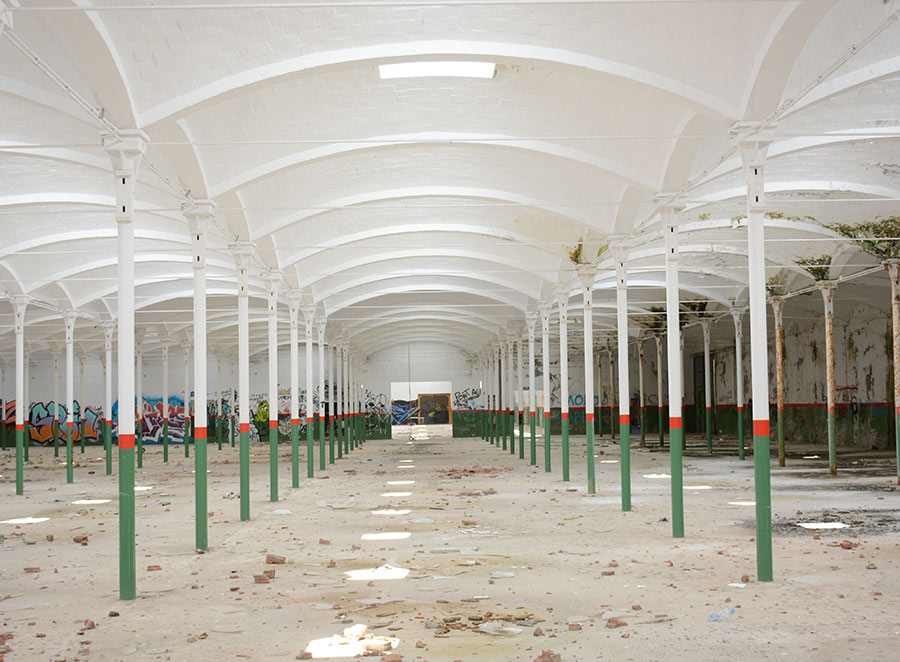
Graffiti writers are known to seek out of the way, abandoned and neglected buildings to practice their skills and otherwise “get up”. This complex of buildings once housed a textile factory in a region famous for its textile industry – an industry that was later decimated by floods.
While the architectural details of the buildings date to the beginning of the XIX century, existing documentation tracks this site as far back as the XVII century where the factories were employed in the manufacture of gunpowder. The following century, the records show that it was processing cotton. Now this not-so-secret site is an open gallery for the curious, hidden from the general public – but open to those who know where to look.
Enjoy our first installment of two – new images from a very old place:
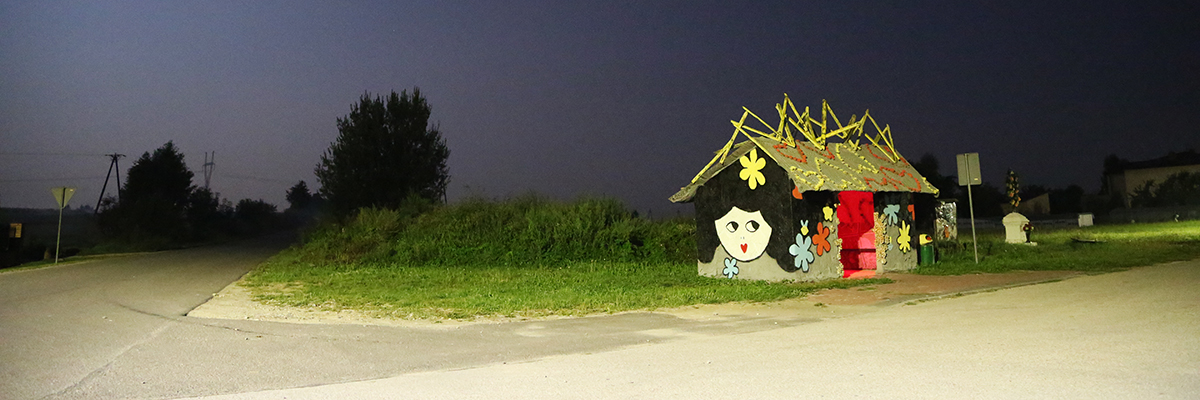
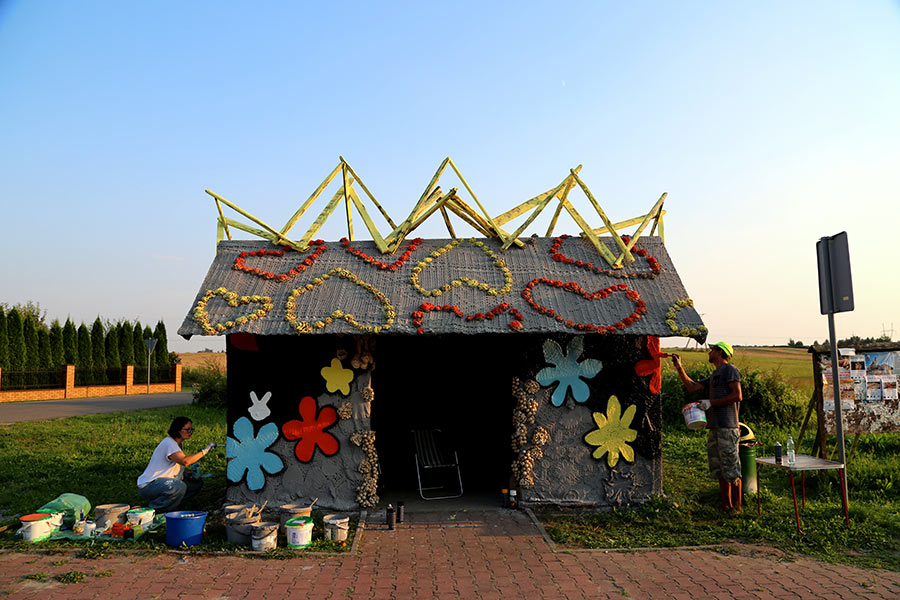
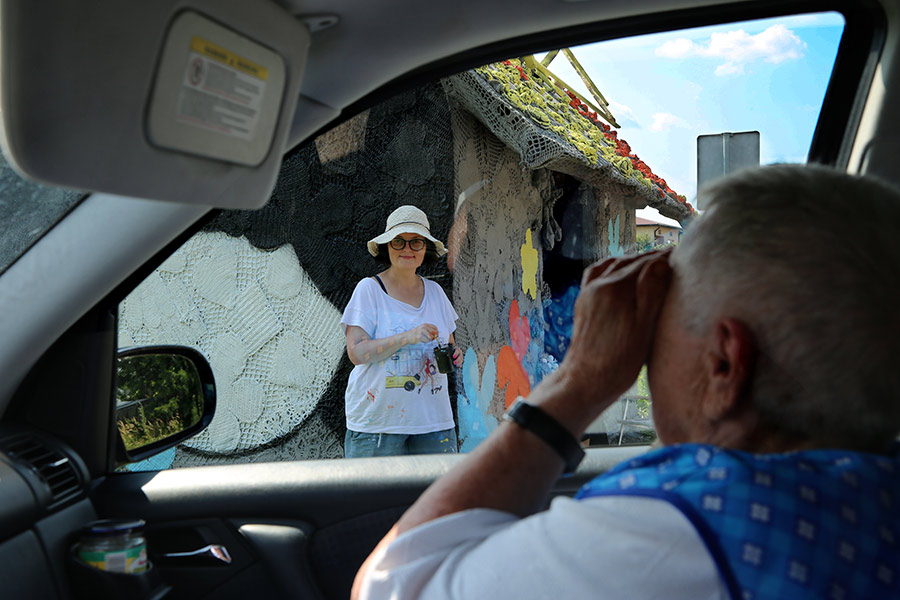
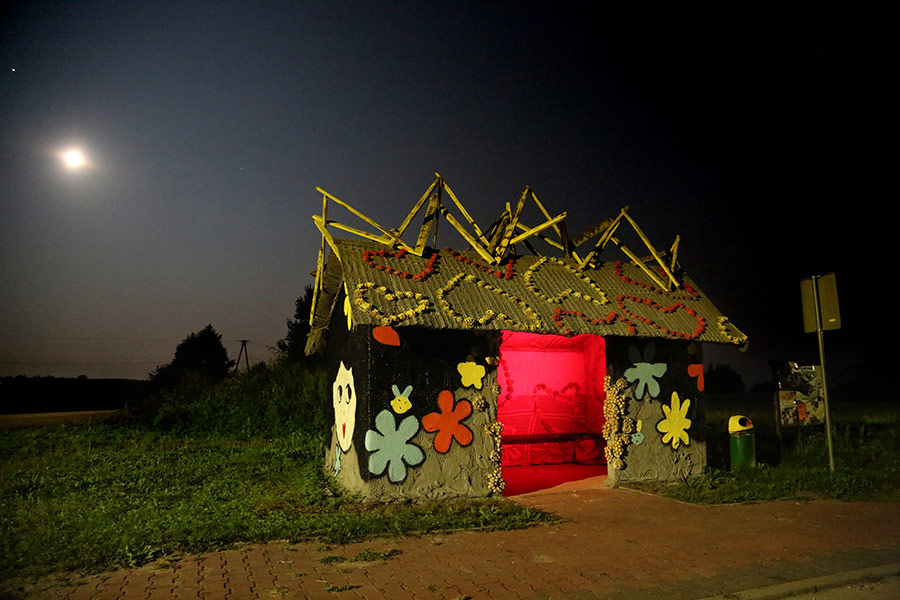
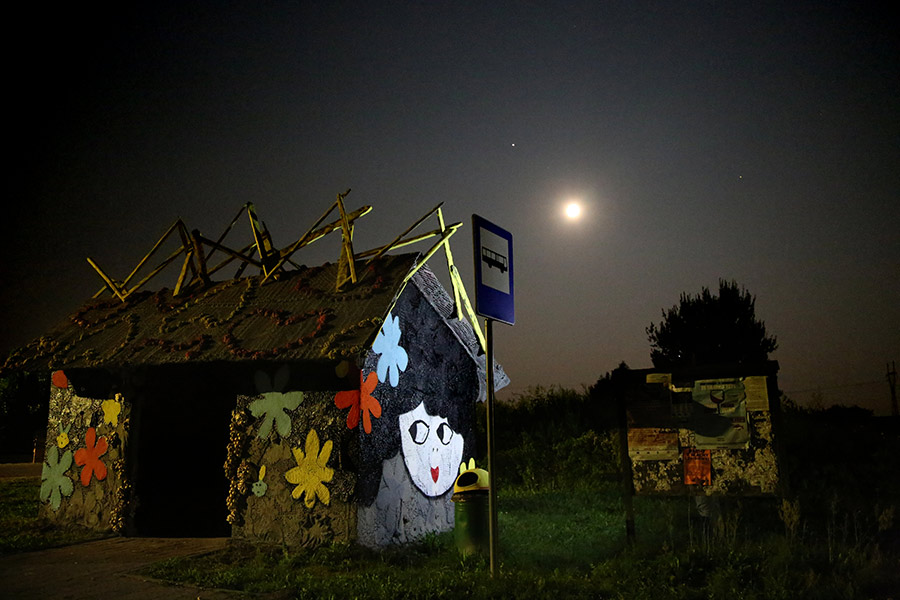
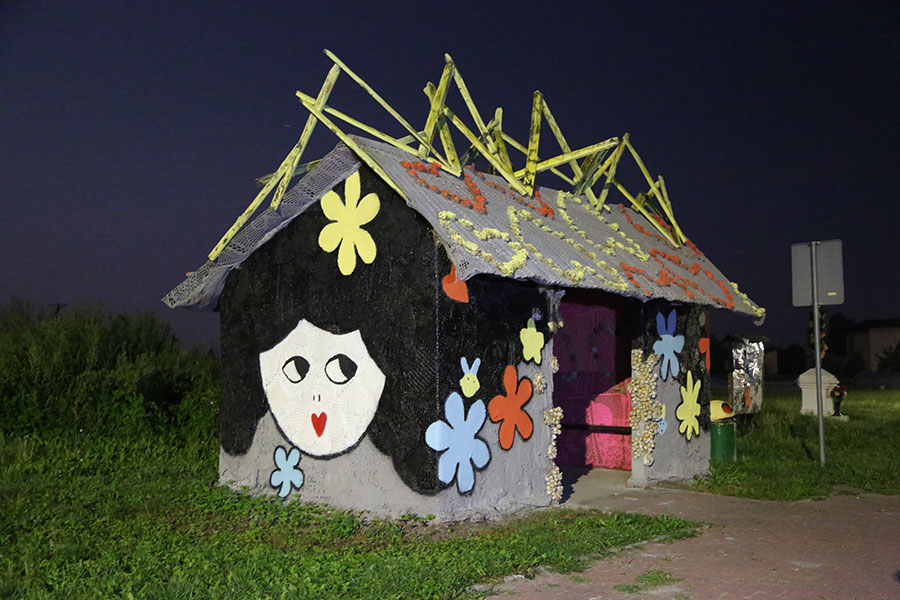
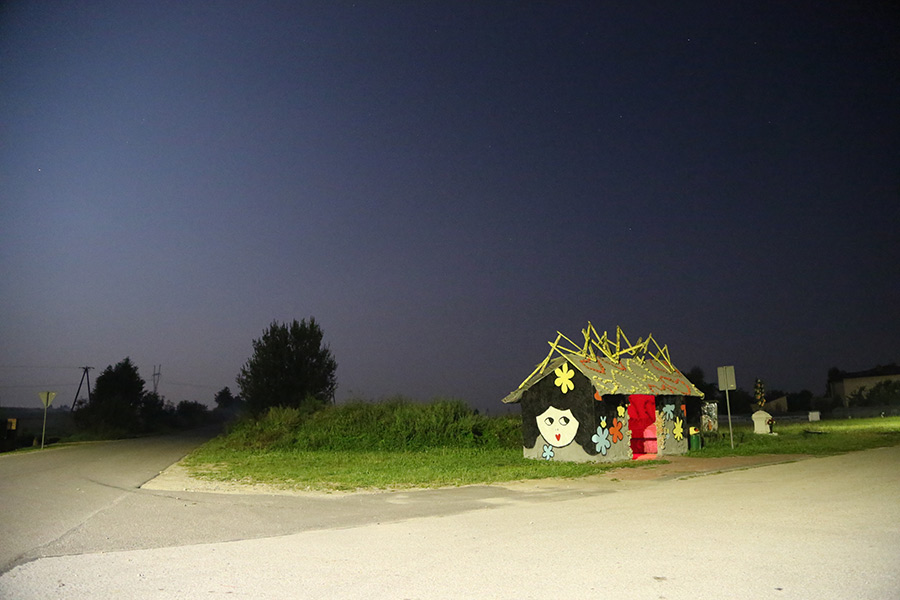
Typically a bus stop is not a place where you would discover someone of interest, but in Święcica Poland you could find the Queen of the Night following you out of the corner of her eye.
Olek in collaboration with Roksana Kularska- Krol and Sebastian Kularski. “A Community of Women”. Residency Przystanek. Swiecica, Poland. Summer 2021. (photo courtesy of Olek)
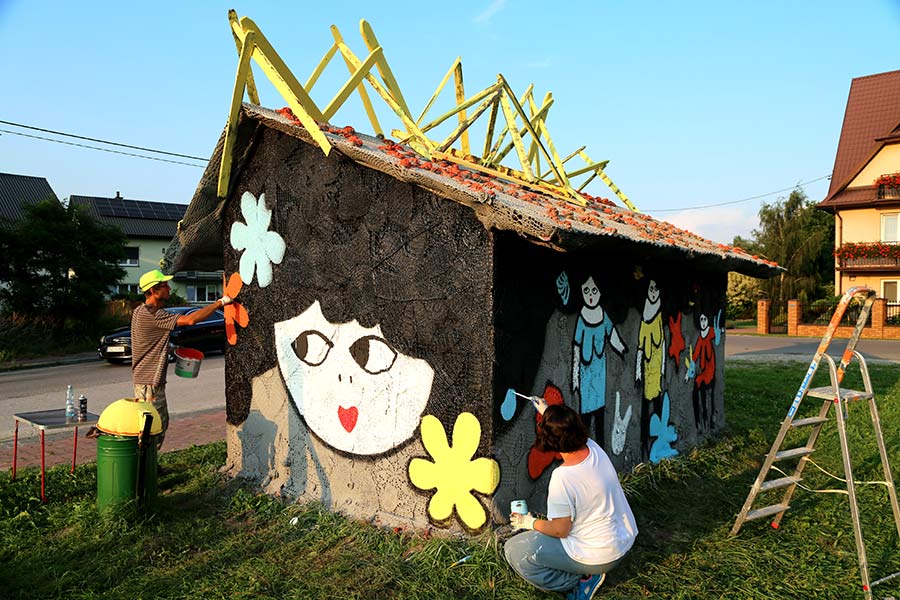
“Przystanek” is the Polish word for “bus stop” and street artist Olek has been curating this one for a few years, inviting new people to give their interpretation a proper place in the public square. This month artist Roksana Kularska- Krol (Roxi) paints Queens of the Night.
“These heroines are the embodiments of the archetype of the Great Mother (the Great Goddess, Queen of the Universe),” Olek tells us, “and by painting them, the artist shows that the seemingly distant world of myths and symbols is still alive, even when we are not aware of it.”
Olek in collaboration with Roksana Kularska- Krol and Sebastian Kularski. “A Community of Women”. Residency Przystanek. Swiecica, Poland. Summer 2021. (photo courtesy of Olek)
Painting for a little over a decade, Roxi completed this installation with the participation of Olek and with The Common Good of Our Village Association from Święcica. The roof treatment, “The Crown’, is provided by artist Sebastian Kularski.
Olek in collaboration with Roksana Kularska- Krol and Sebastian Kularski. “A Community of Women”. Residency Przystanek. Swiecica, Poland. Summer 2021. (photo courtesy of Olek)Olek in collaboration with Roksana Kularska- Krol and Sebastian Kularski. “A Community of Women”. Residency Przystanek. Swiecica, Poland. Summer 2021. (photo courtesy of Olek)
Olek tells us that the new painting is inspired by the strong, entrepreneurial women of Swiecica. What is a “Przystanek” (bus stop) really? Olek elucidates here, singing its many praises:
Przystanek means: The sound of the full moon Light of the dancing river Smell of vibration around purring kittens Expanding space To be touched by forest Sound of sunset resting on the forest Everything with the forest about the forest in the forest with the forest Drumming with the fire by the fire Thunderstorm Silence before and after Pierogies Singing happy chickens delivering your breakfast Rhythm of slow walk Smell of the cracking wood under your feet The weight of a kitten on your lap when you are creating Vibration of a candlelight That dances with a thunderbolt opening the sky The colors of a thought under a pen Vibrant stillness Radiant darkness Movement of drying wildflowers The sharp eye of the Hawk circling above you Transformation comes like death in its own time They take you from one dimension into another We Are The Grandchildren Of The Witches You Weren’t Able To Burn. My Crown is in my Heart, not on my Head. Many are invited, but few are chosen. My Universe is Paradise.
~ Olek
Olek in collaboration with Roksana Kularska- Krol and Sebastian Kularski. “A Community of Women”. Residency Przystanek. Swiecica, Poland. Summer 2021. (photo courtesy of Olek)Olek in collaboration with Roksana Kularska- Krol and Sebastian Kularski. “A Community of Women”. Residency Przystanek. Swiecica, Poland. Summer 2021. (photo courtesy of Olek)Olek in collaboration with Roksana Kularska- Krol and Sebastian Kularski. “A Community of Women”. Residency Przystanek. Swiecica, Poland. Summer 2021. (photo courtesy of Olek)
Developing a library of personal alphabets, coded symbols, muscle memory and intended meanings.
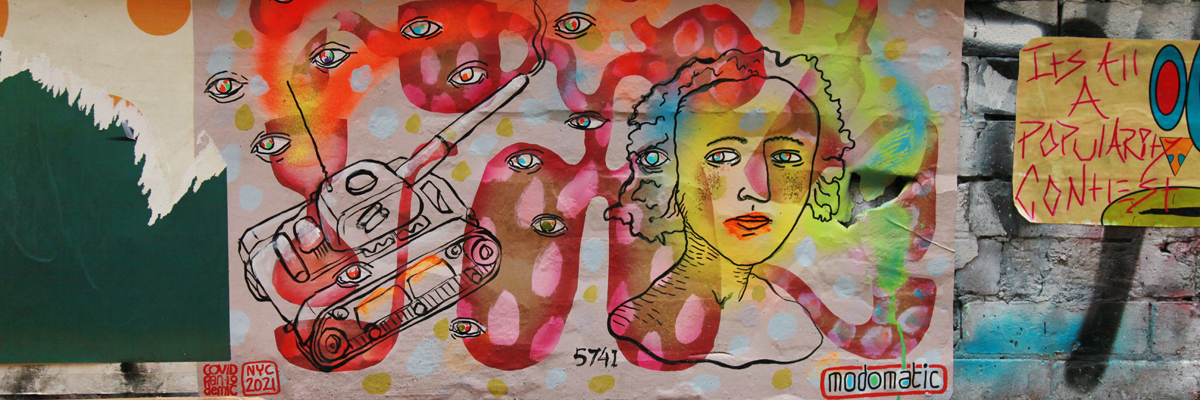
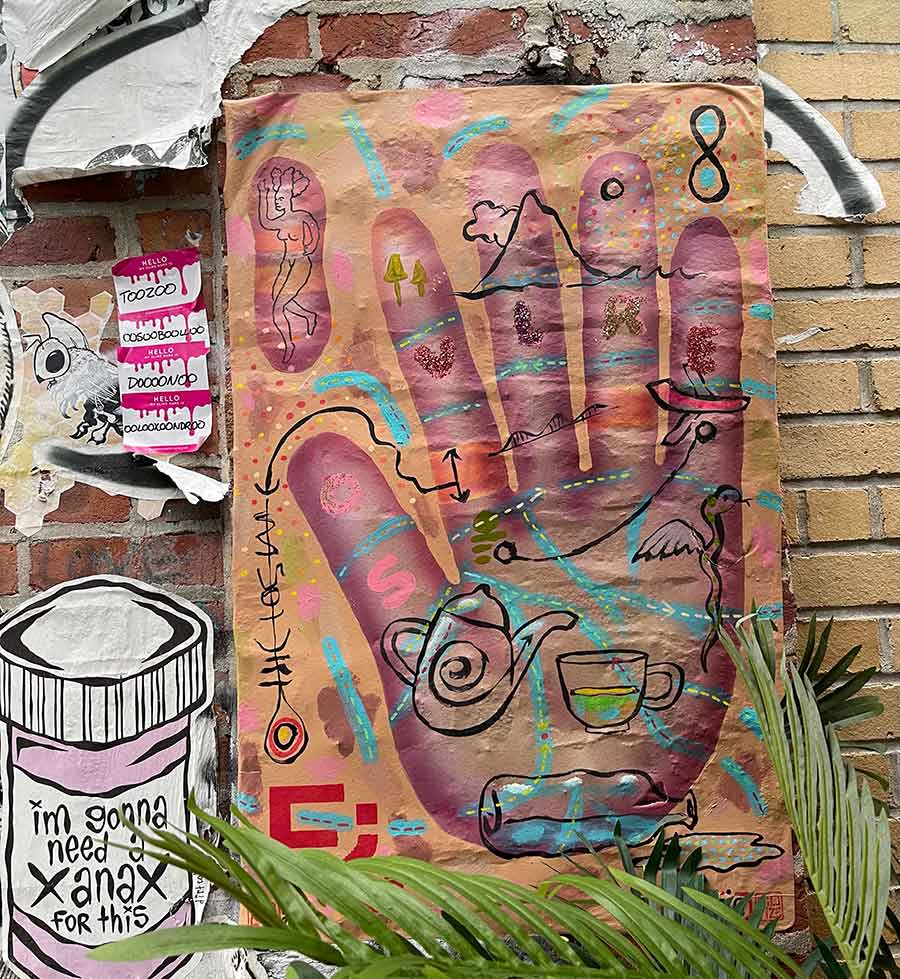
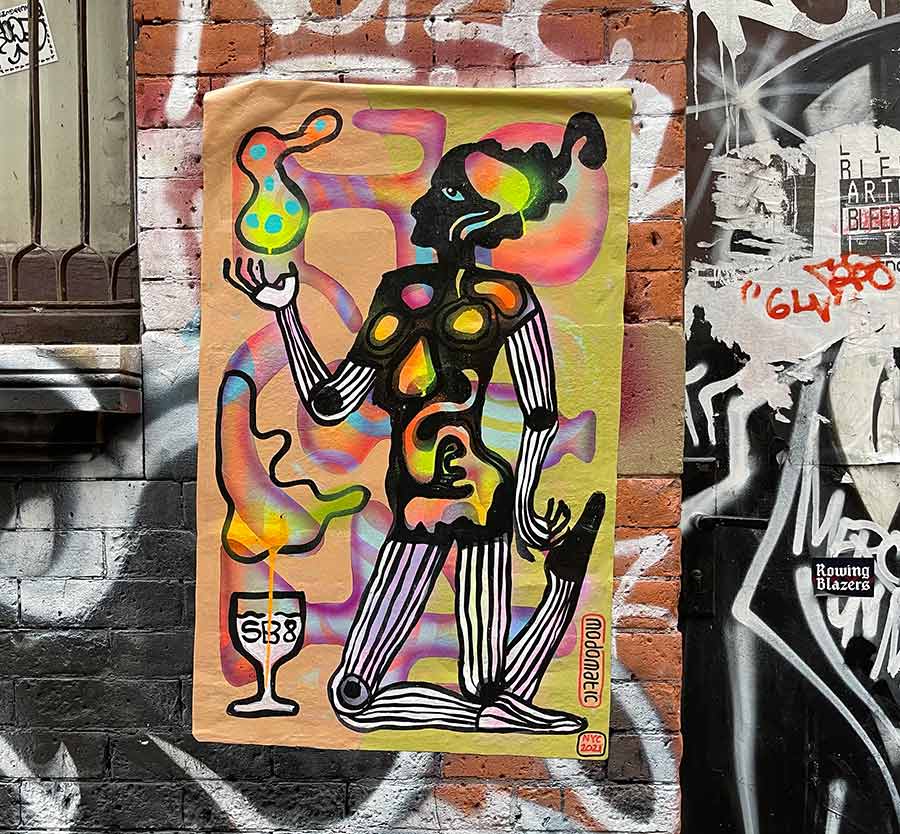
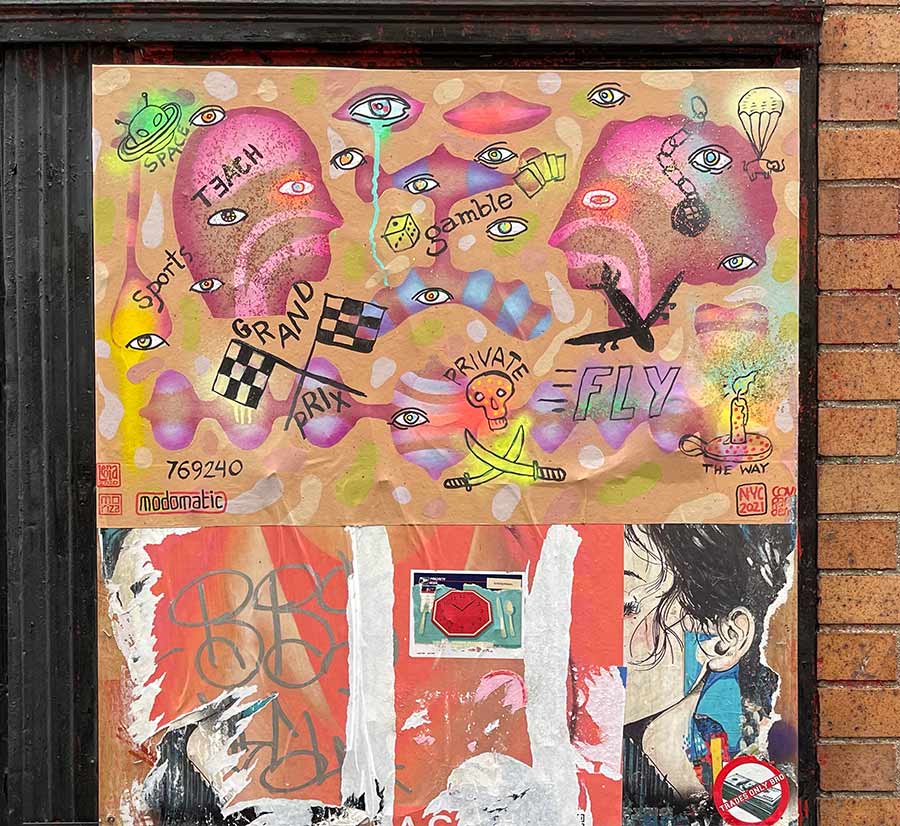
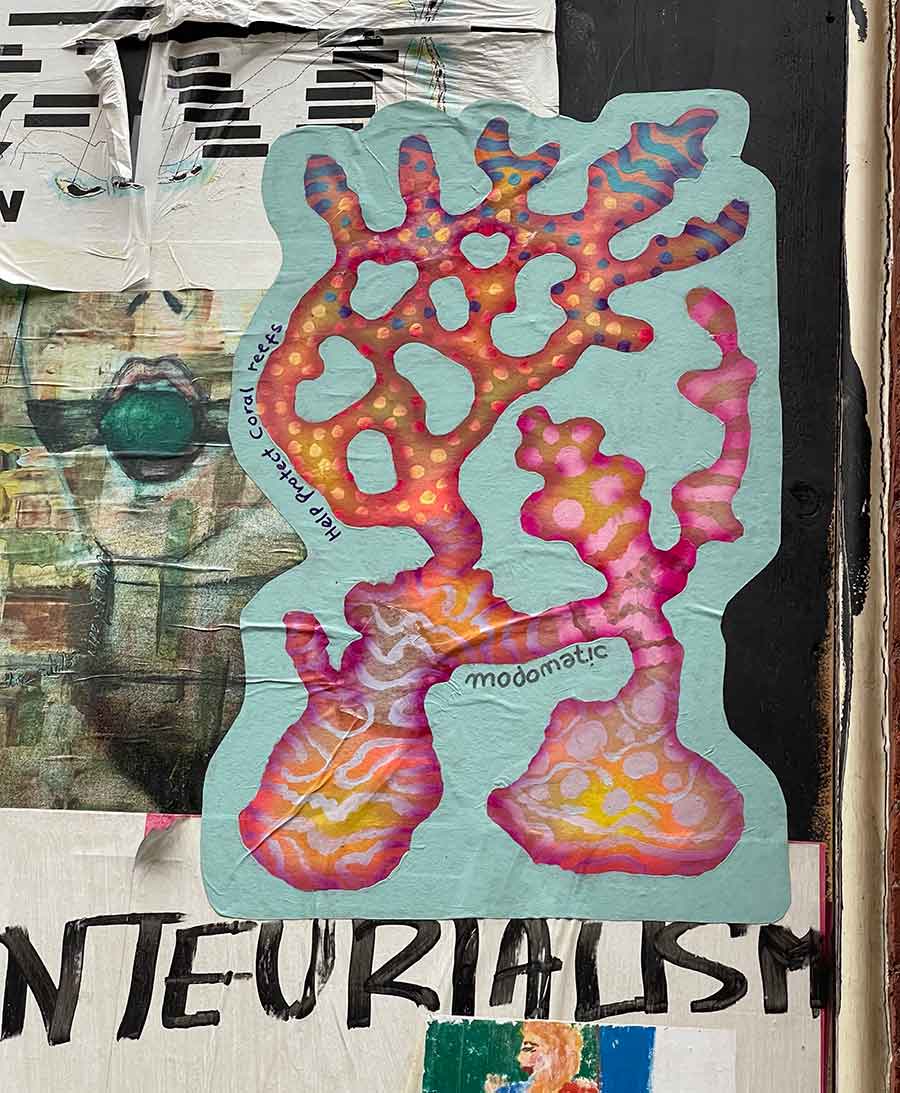
New York street artist Modomatic is finding his way among a crowded field of new additions to the conversation on the streets. His stylistic leanings are being road-tested, as it were, and he is developing his vocabulary before your eyes. We are pleased to have the opportunity to ask him about his sculptural works, his illustrative/diagrammatic works, and how he finds the space in between worlds that he inhabits to be a street artist in New York today.
BSA: The output on the streets is varied. You have what we think are 3D sculptures, wheat pastes with abstract forms, and a take on the pre-Hispanic codices, etc… Are you one artist with a busy mind or are you a collective of artists?
Modomatic: I’m one artist, with a busy mind and ways to extend working time. I constantly explore different ways of expressing myself and along the way created various forms of art, but basically, they’re all coming out of my imagination and started in my sketchbook. I produced a lot of kinds of work during the pandemic, and now using the street to distribute them, because I can’t keep them all. I used a lot of my existing art. I adjust them for the streets, enhancing them so that they can be viewed a little bit further away. Also, for example, the use of brighter and fluorescent colors. I’m still learning about street art, learning about the culture, the type of artwork, the artists, and the way people are installing their art and where they’re installing it. That actually informs, in a way, how to evolve my art to fit more into the environment and the street culture.
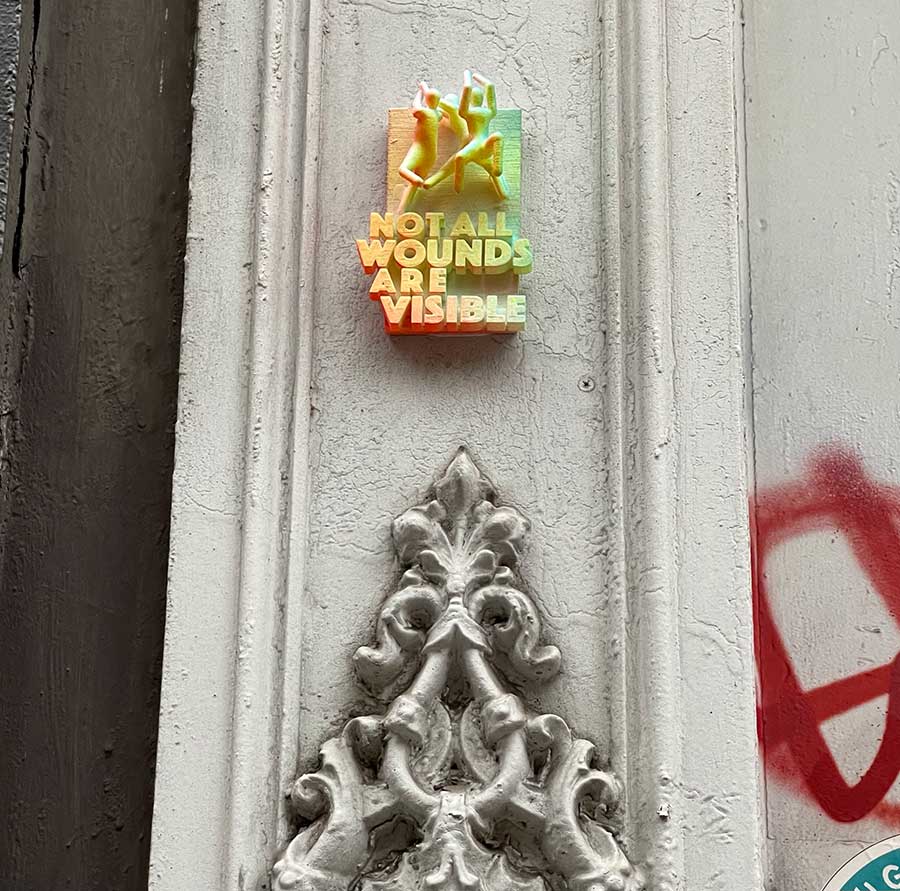
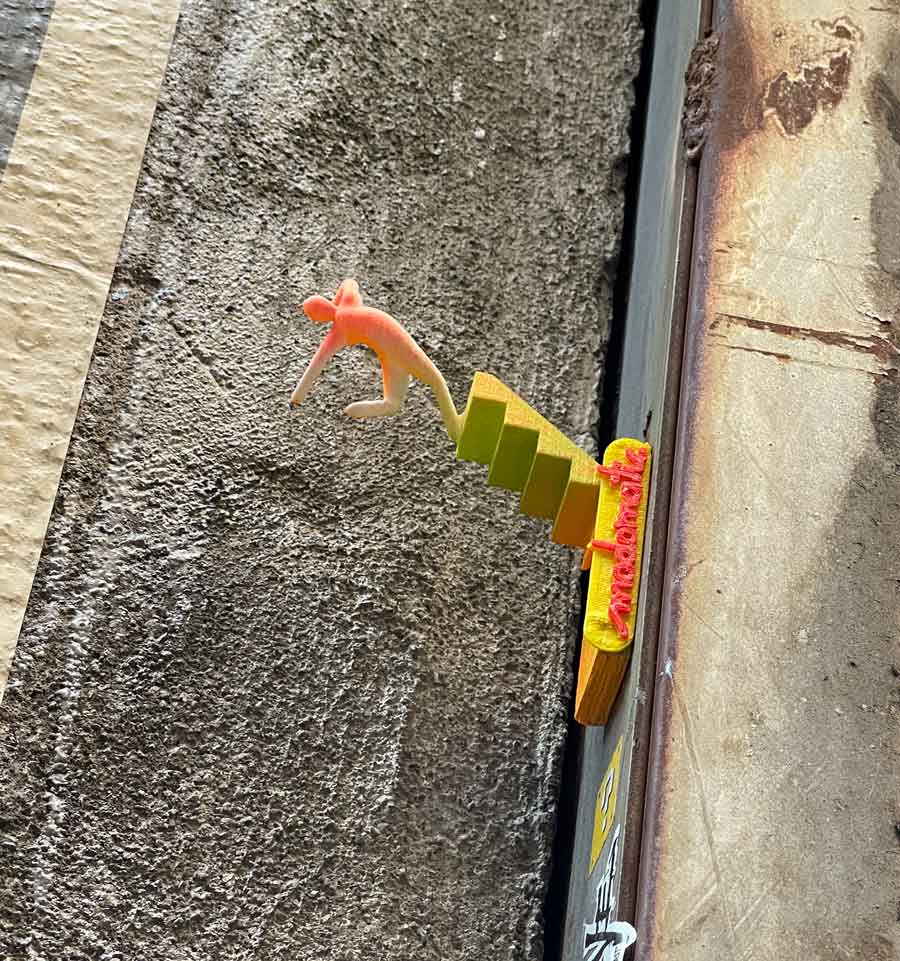
BSA:The 3D sculptures are usually human figures interconnected in dance-like movement. The pieces have words as well and sometimes they feature a staircase. Are the figures dancing? Or preventing each other from falling off the staircase? How do you select the text? Does the text follow the image or is it the opposite?
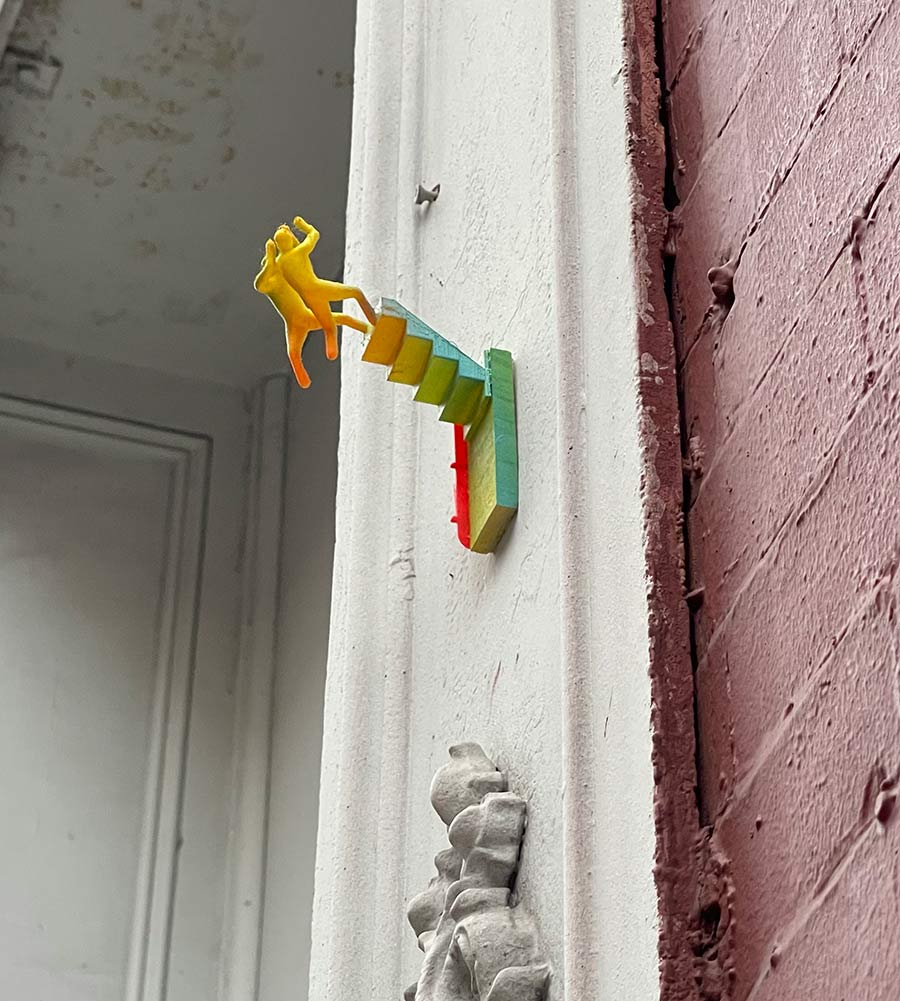
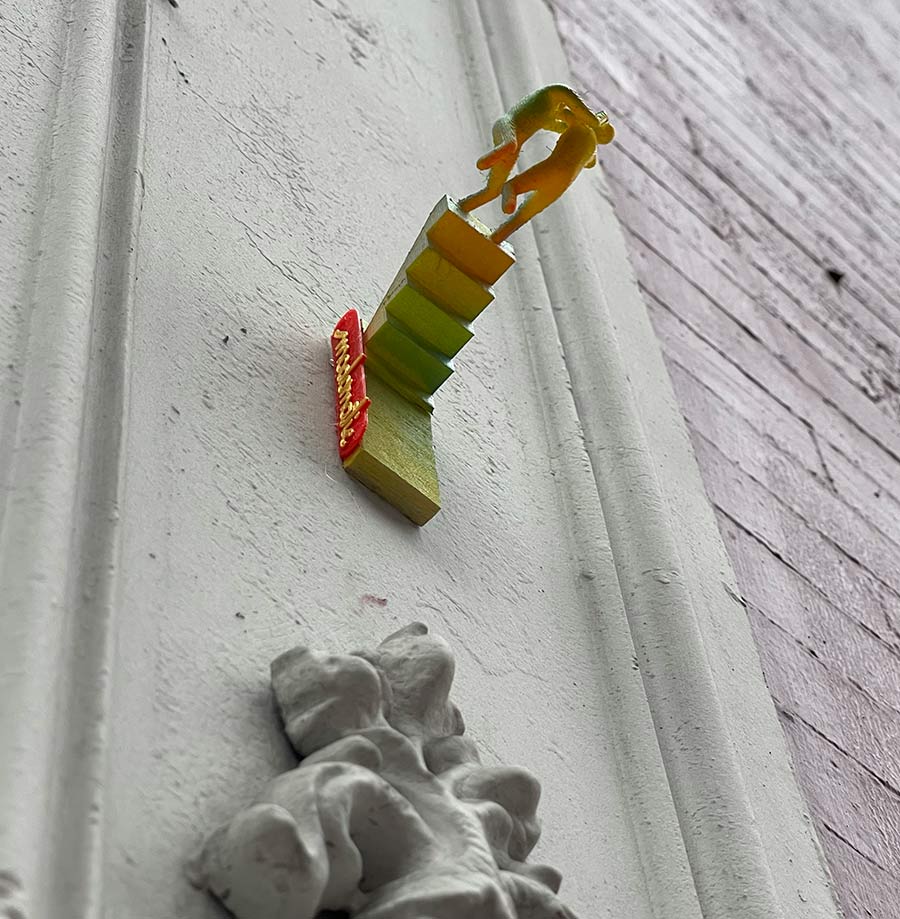
Modomatic: There are two different series of works on this 3D sculpture. One I called “Chasing the Unicorn.” This one has the stairs with a person (mostly a single person) climbing onto the end of the stairs. Chasing a unicorn for me is almost like you are climbing all the way up to the top at full speed, without knowing really, how far the stairs will go, so reaching the top could also mean reaching the end. I styled it to looked like the person is about to jump or about to, you know, desperately stop from falling.
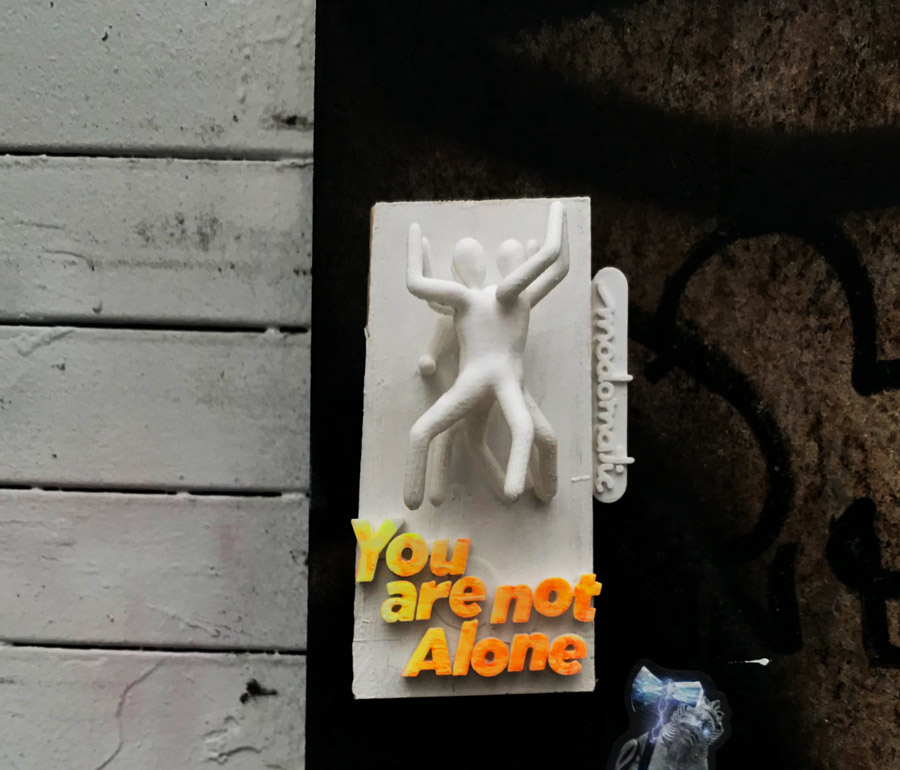
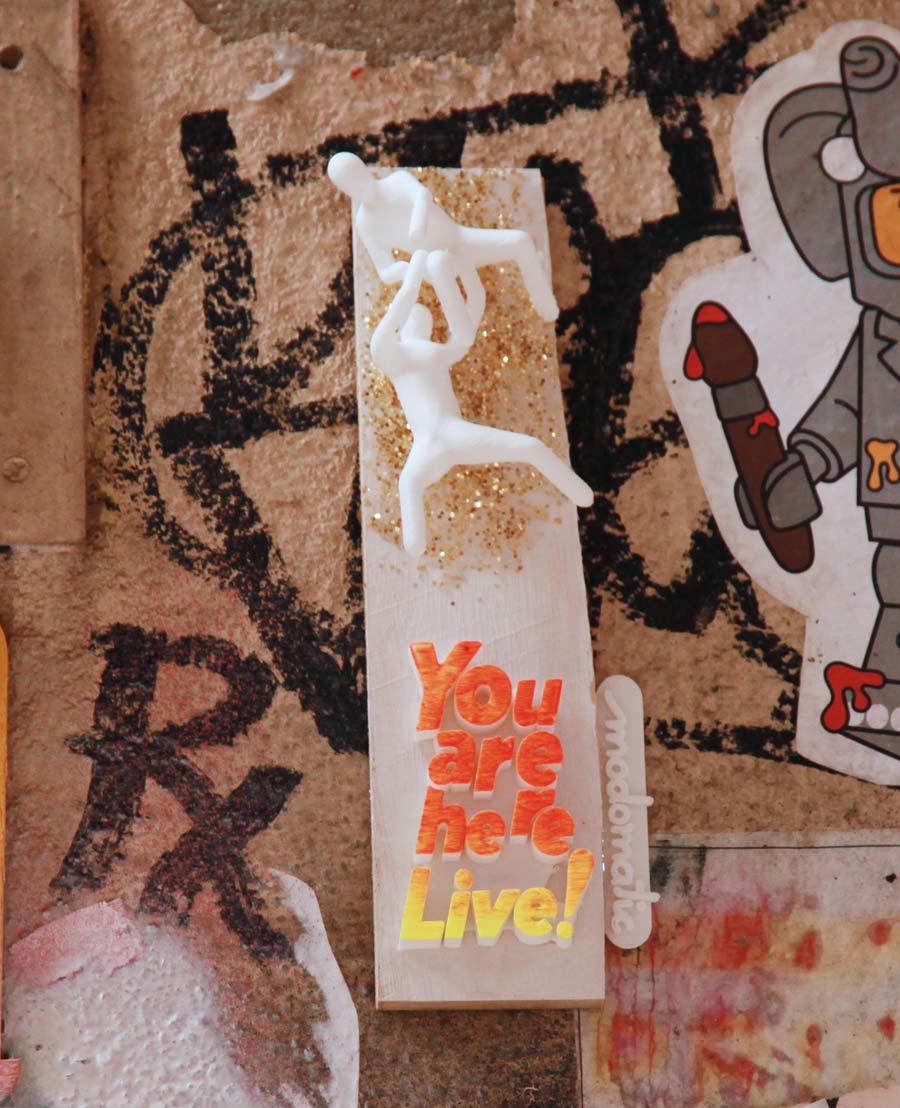
The second series of 3d sculptures are showing a small crowd of people supporting each other. They are holding each other in a group hug or propping up someone. The messages are positive and supportive of mental health. I am saying that we are not alone and they are aware of the problem and show that there is a willingness of others to help. The 3D people are not originally created for the piece – but they are being used to convey the message. I created the sculpture element for some other projects. As I said before, I have a body of work that I created during the last lockdown and these are the result of one of the experimentations I did with figures. So I created this series.
BSA:The inclusion of the staircase, in particular, is interesting to us. Do you care to elaborate a bit on its symbolism?
Modomatic: For me, the stairs are representing the effort that we take to get somewhere, to reach our goals, whether they are being successful, healthy, wealthy, or just getting out of the holes we are in. Usually, you know exactly the height that you’re going to climb, and what is at the end of it. But sometimes, as depicted in this series, when chasing the unicorn, you just go as fast as you can to climb to the top – not knowing where it ends.
Not knowing how far do you have to go also may mean risking overshooting the stairs. This could happen to us who are trying to get as much as possible, as fast as possible, by any means necessary.
In some pieces, I placed the stairs, upside down. For that moment in time when one is at the end of the stairs, going back down takes as much effort as it was going up.
Positioning yourself in between those times is kind of being invisible. People are going about ending their day, and starting their evening and you are somewhere in between.
BSA: Your wheat-pasted posters have an abstract/mystic aesthetic; with figures, numbers, and words. Is there a secret code to the message?
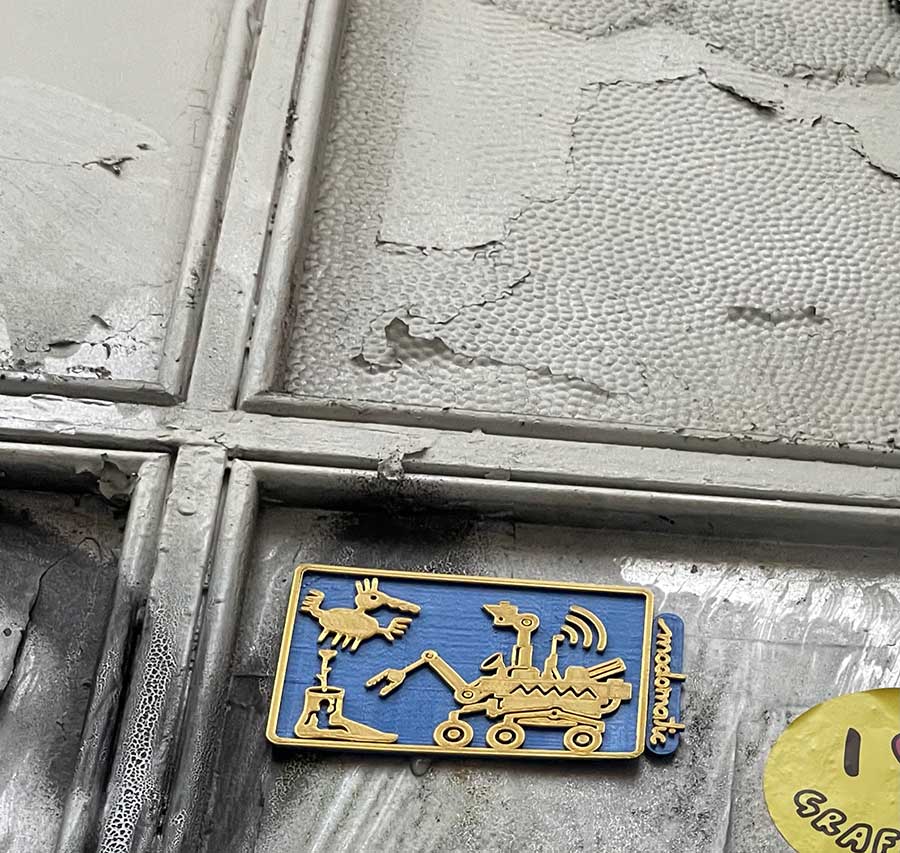
Modomatic: When I do the sketches, the original drawings, yes. There is some form of messaging that I wanted to get across with the symbols. In the sketchbook, I pretended to create a series of personal alphabets, coded symbols, or simple marks, each with the intended meaning. Then the collection becomes a library, like an icon library. The icons either stay imprinted in my mind, in my sketchbooks or are preserved for my digital work. As I started to produce artwork like posters and other different forms, in 3D or 2D, large or small, I started to use those elements and just basically created the composition.
BSA:We do see an influence from what appear to be Aztec Codex symbols in your work, sometimes mixed with modern war machines. What’s the genesis for this “fusion”?
Modomatic: I’d like to consider myself a collector. I take great pleasure in mixing things I collect to create something new. In creating some of my symbols I used scripts like Hindi, Arabic, Chinese characters, Japanese Hiragana and Katakana, and other ancient scripts. I practice my hand on them, and then at one point, they become just muscle memories. The fusion happens in the process of creation.
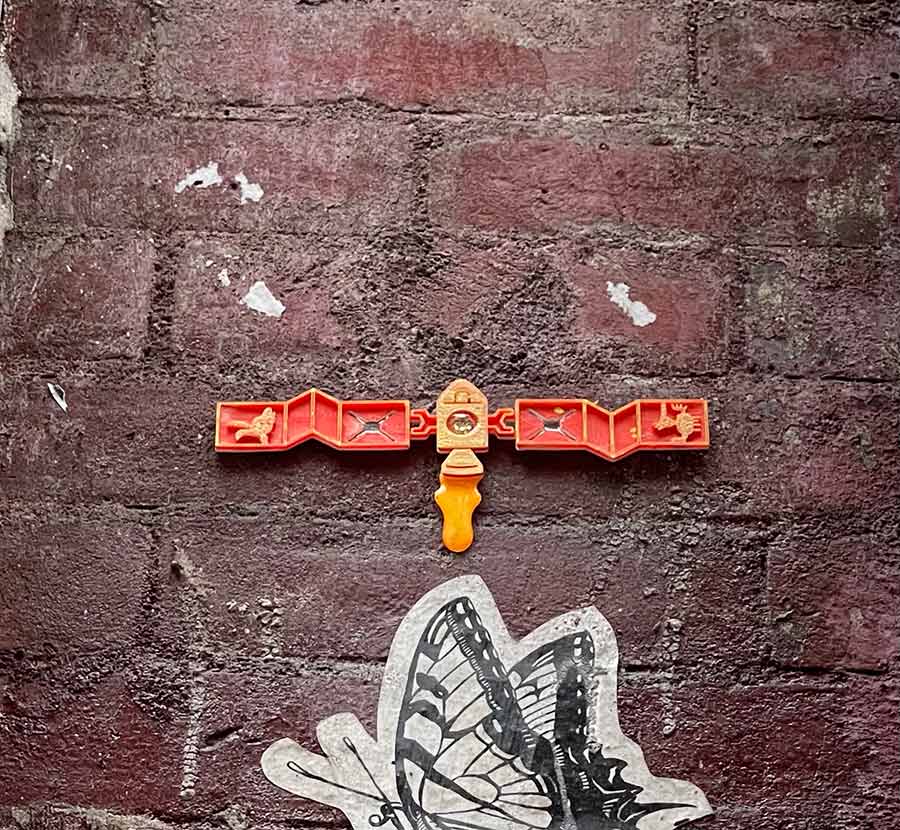
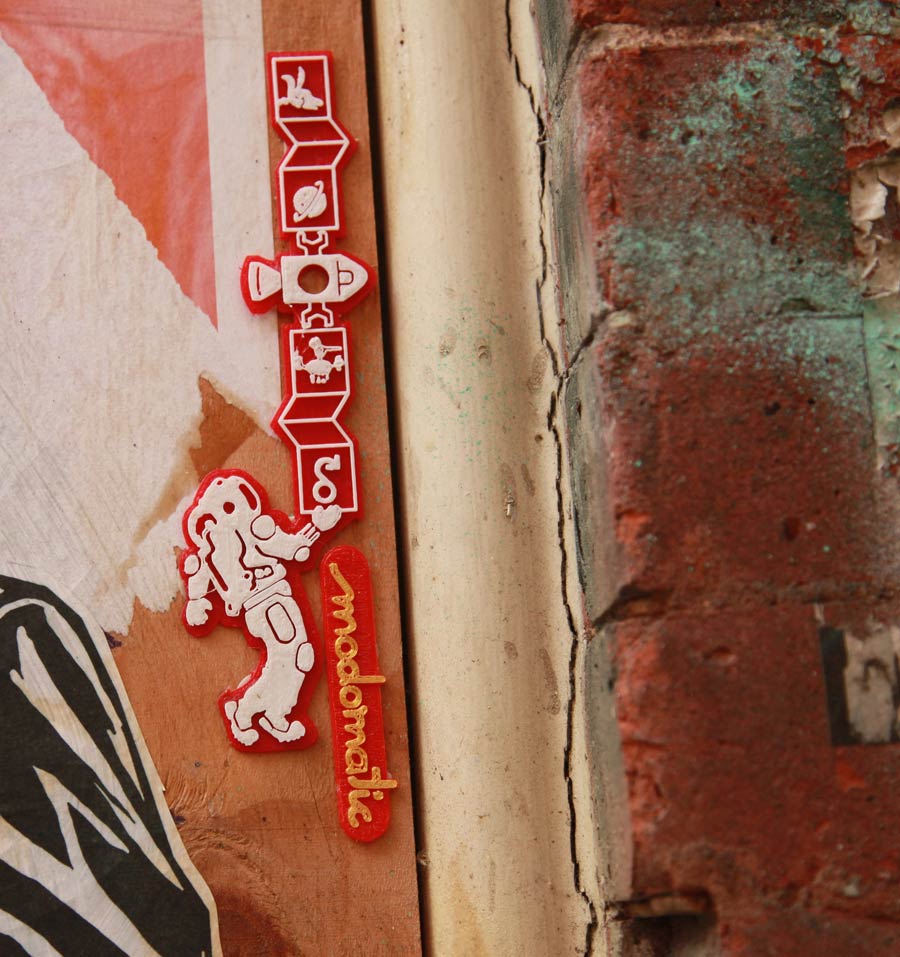
BSA:One piece, in particular, resembles the international space station to us, or perhaps a satellite. It also brings to mind Legos. Were you obsessed with Legos? Or maybe still are?
Modomatic: I think you are referring to my series AstroSnout. My kids and I love to play with Legos and other construction toys and their modularity is perhaps carried to these artworks. And recently we’ve been paying a lot of attention to the commercial space industries, with Space X and that sparks our imaginations. I do a lot of my art with my kids, and this is one of our fascinations. You can see that this group of works are more playful.
BSA:Did you like getting up in the streets of NYC during the initial Covid lockdowns when the streets were empty and nobody was around? What pushes you to share your work in the streets?
Modomatic: I get up in the street either early in the evening in the dusk, or early in the morning (5 am) where people are just coming out. I like that it is quiet but it’s not dead quiet. The early evening is when there’s just the confusion of time, between the receding of busy work and the starting of the nightlife. Positioning yourself in between those times is kind of being invisible. People are going about ending their day, and starting their evening and you are somewhere in between.
I share my art on the street because I think that it’s like the best gallery in the city.
You are the artist, you are also the curator, the gallery owner – well not really – but the gallery director and art installer. There’s a lot to figure out; where to put your art, how to position it with other art. I use proximity, as a form of admiration, so sometimes I put my art close to the other artists or work that I admire. I considered light and shadow, especially for the 3D art pieces. I also have to consider the fact that it might be taken down, or covered-up.
I love to find my 3D art has been painted over, finding it become part of the fixtures is my goal. I also love to see it emerging later on when the art covering it has decayed or been removed, and my piece started to reveal itself again.
I don’t hate that sometimes my art is taken away. I’d like to think that somebody liked them, not because they hate them.
I learned that’s the street, and I love that. I appreciate it.
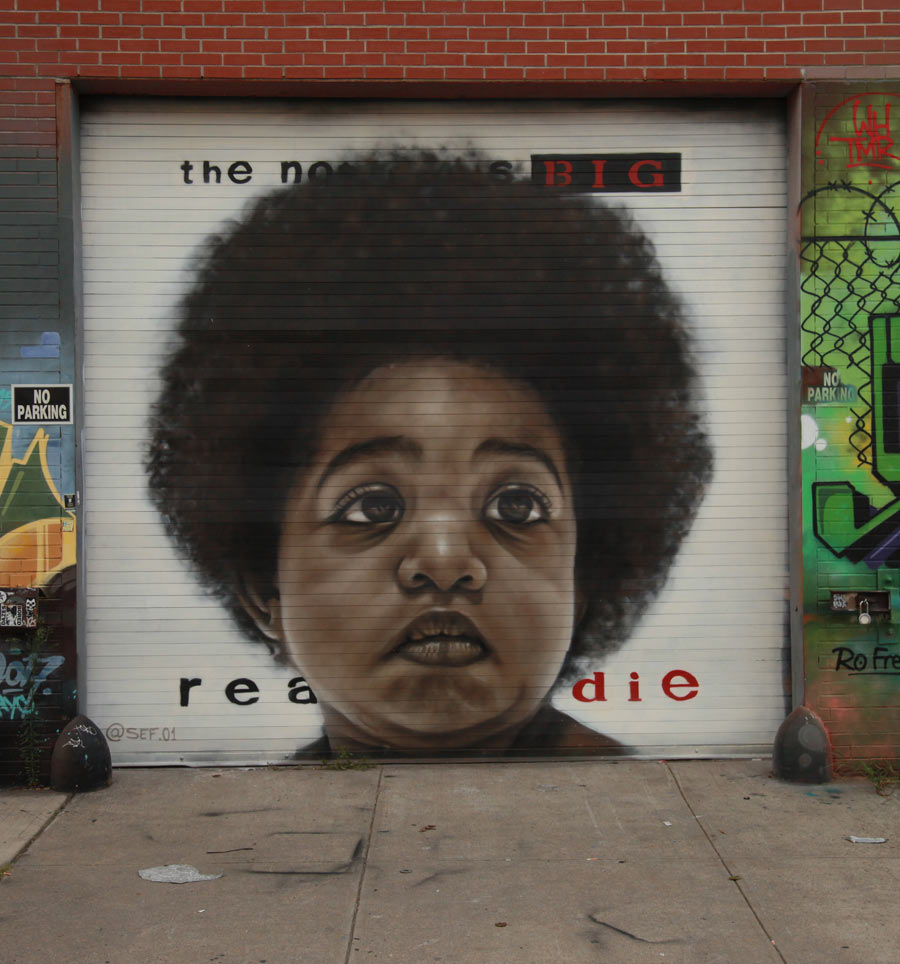
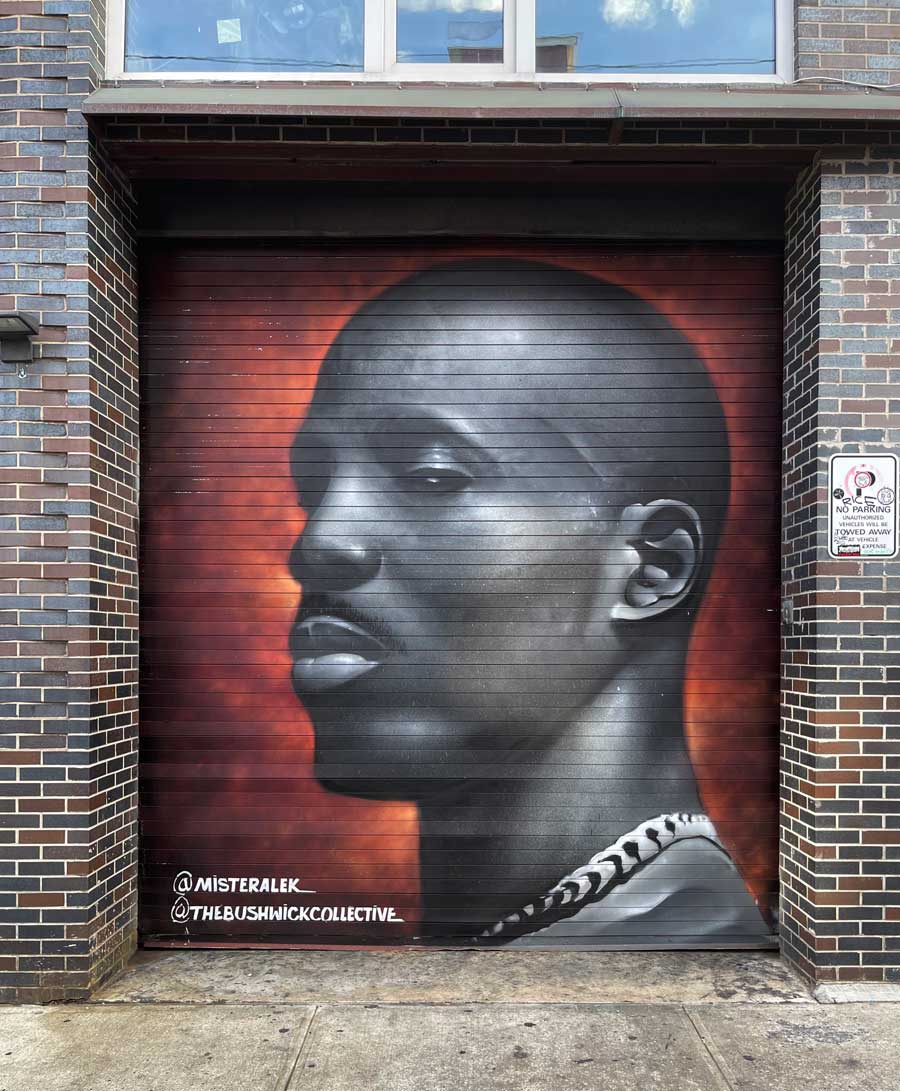
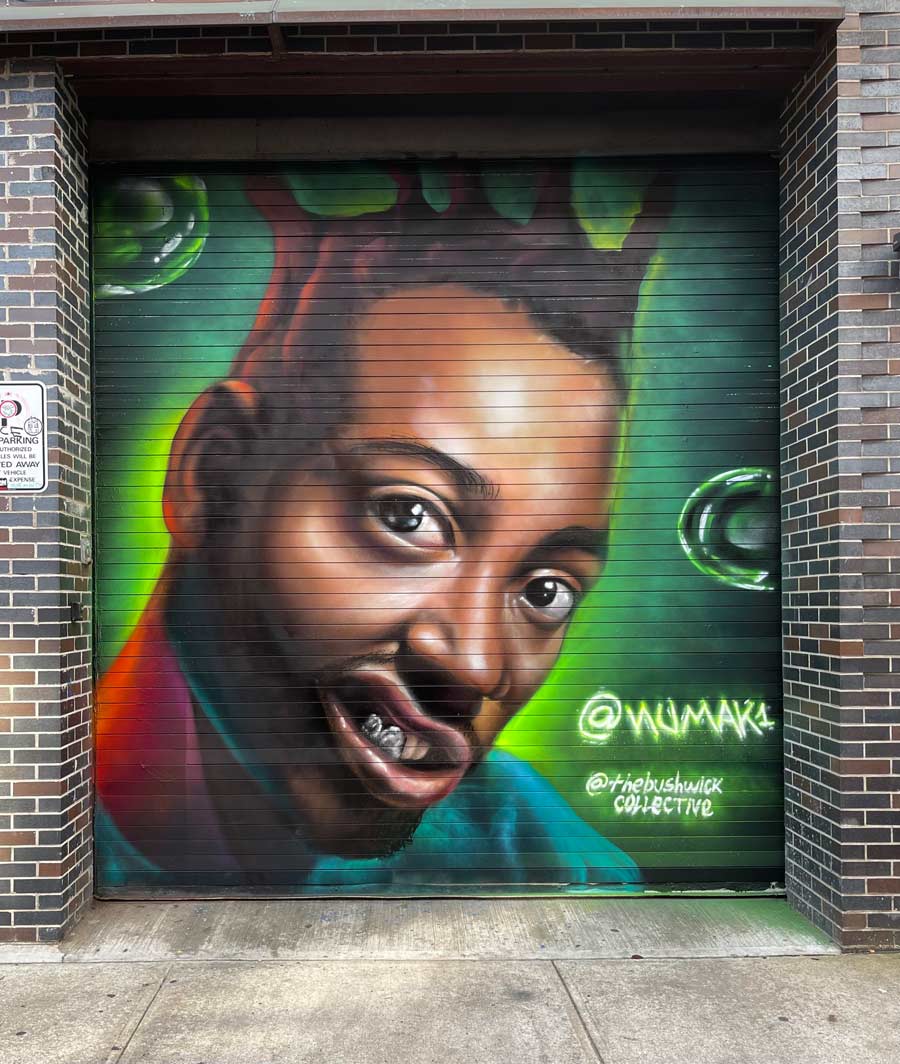
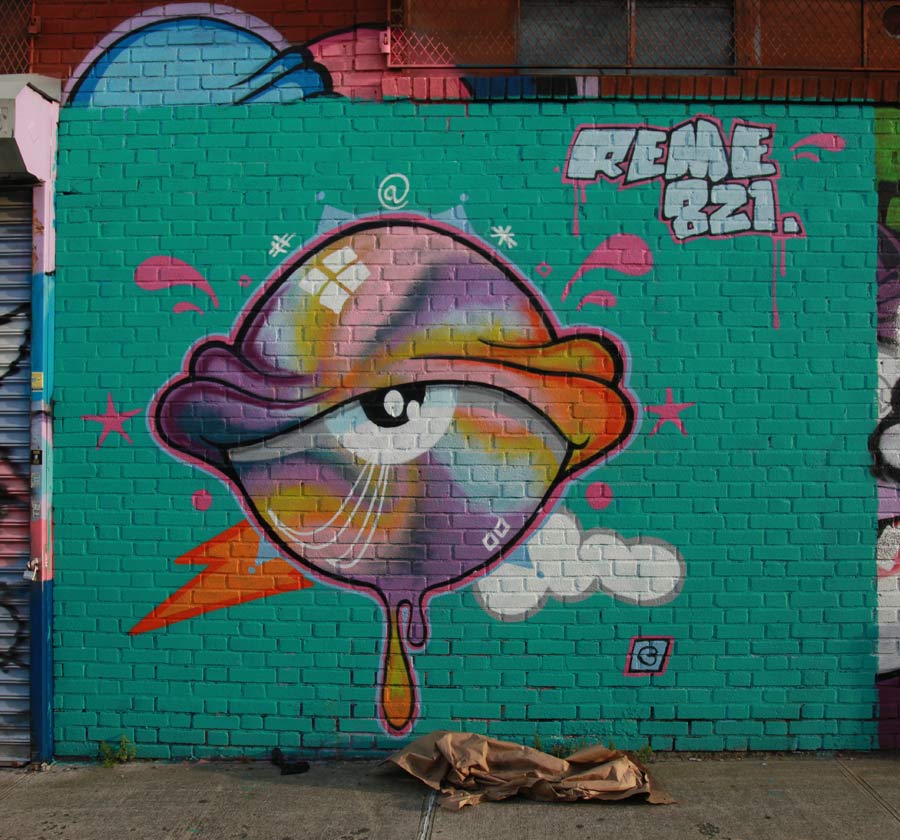
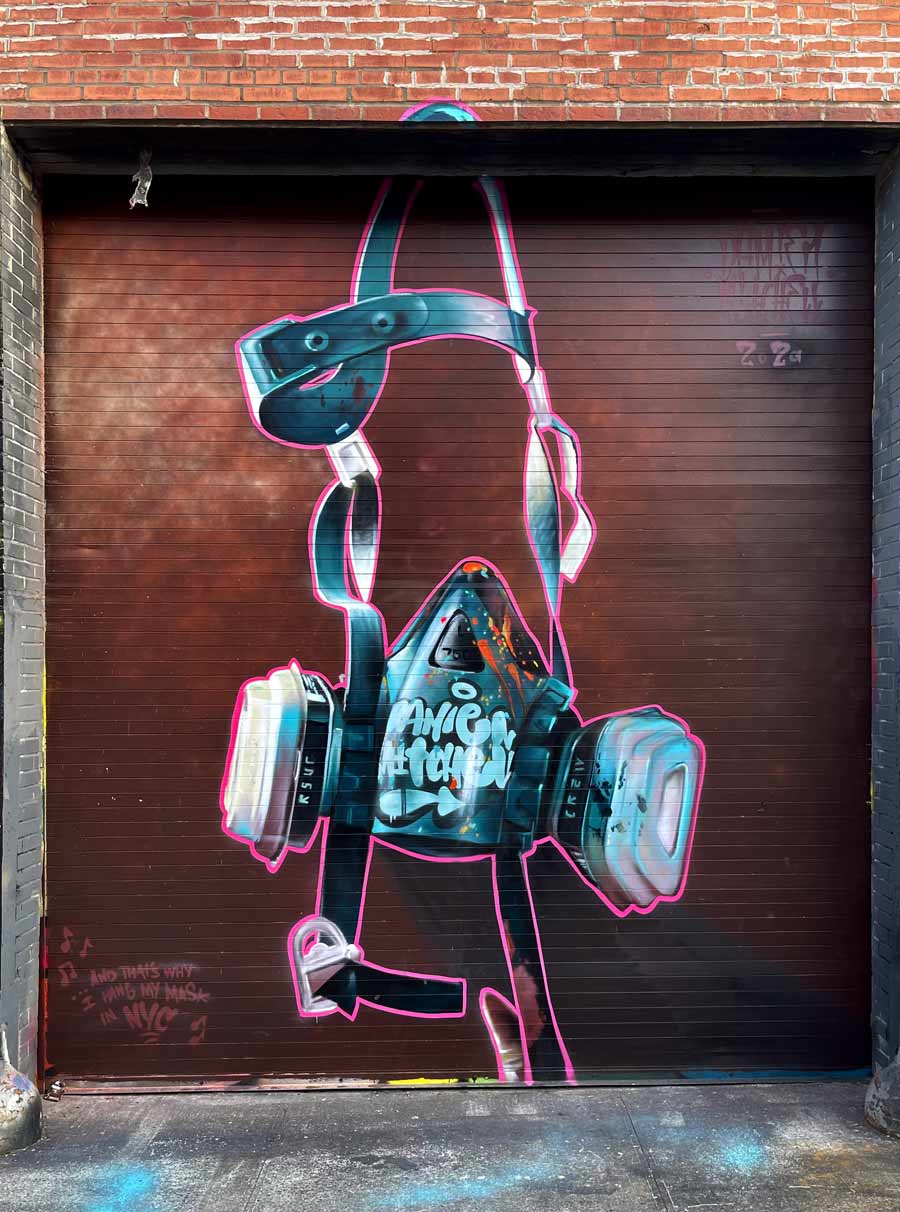
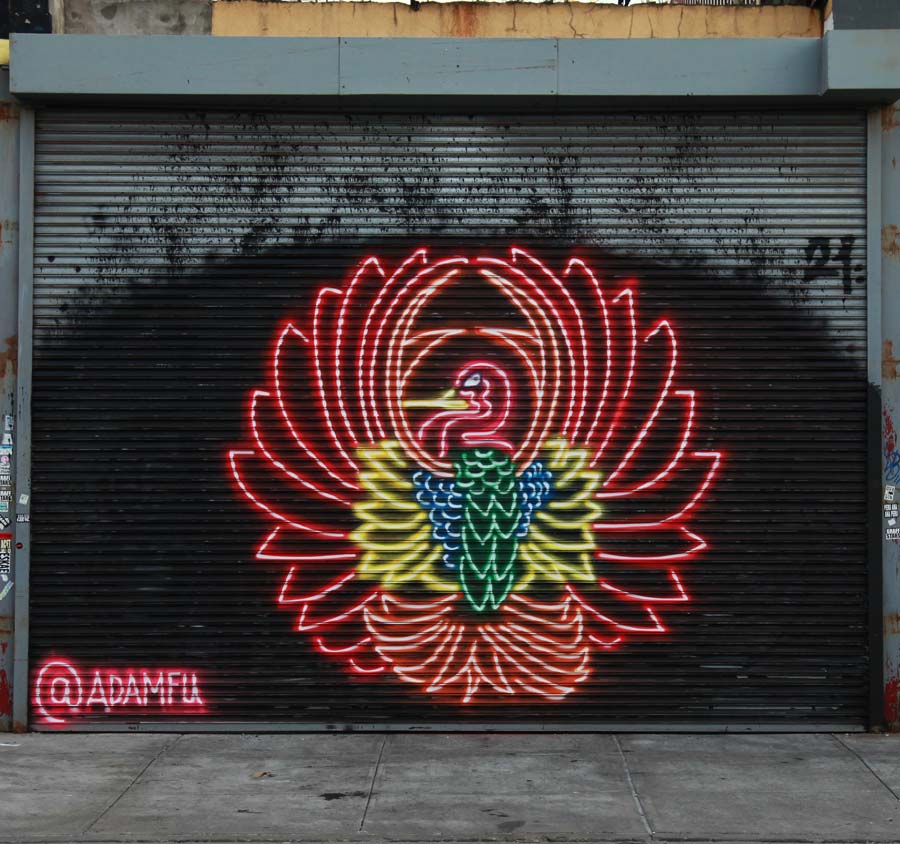
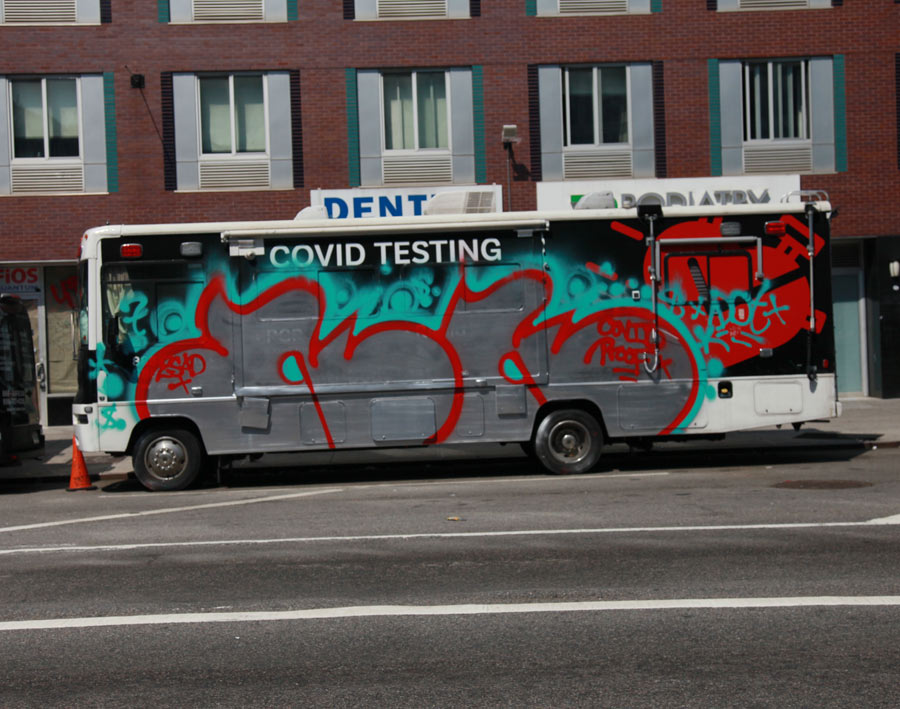
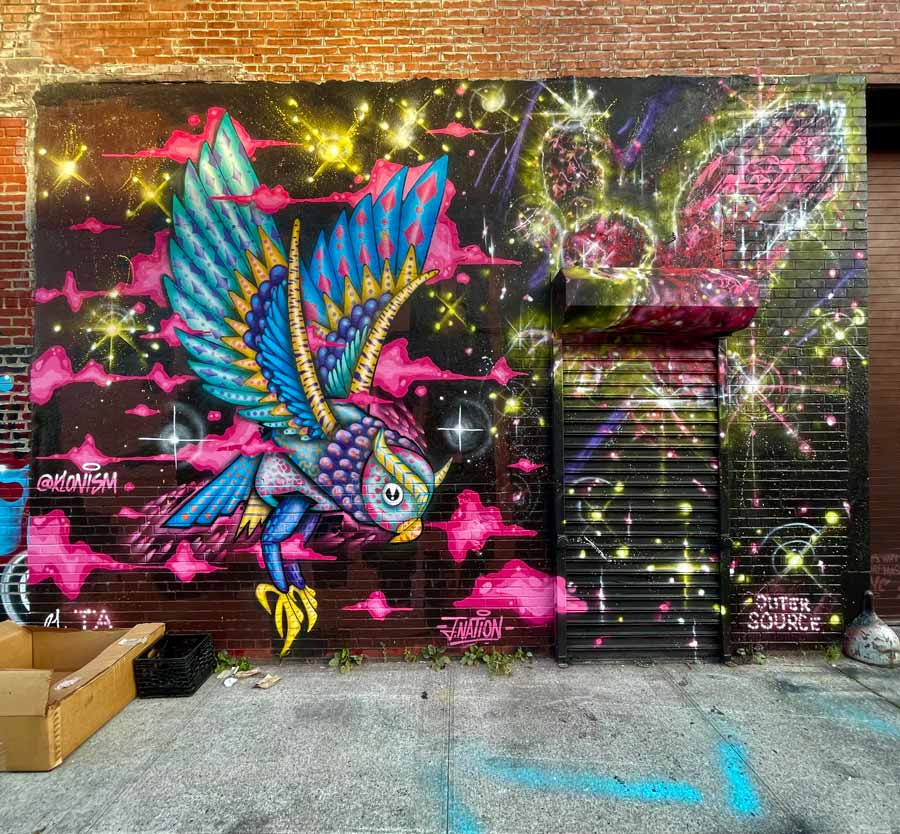
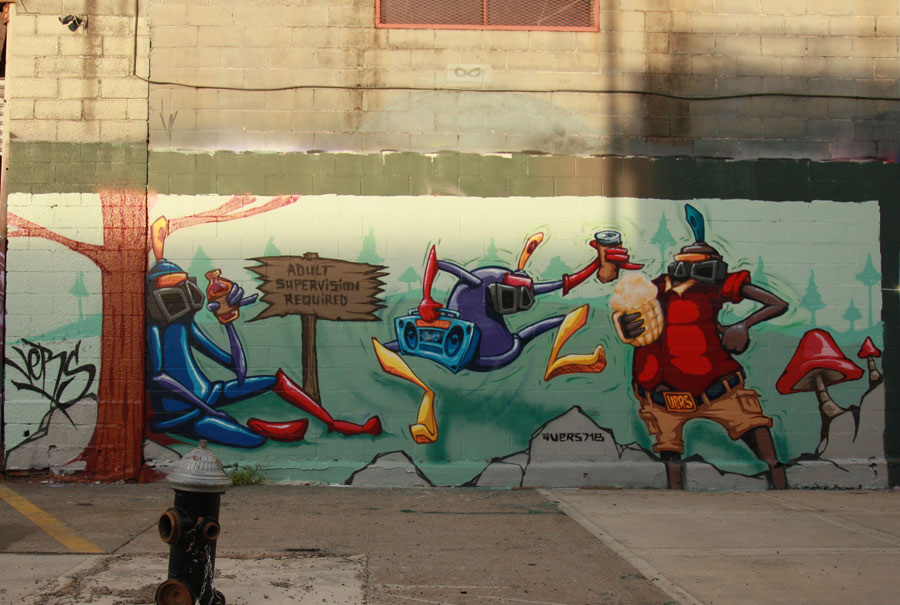
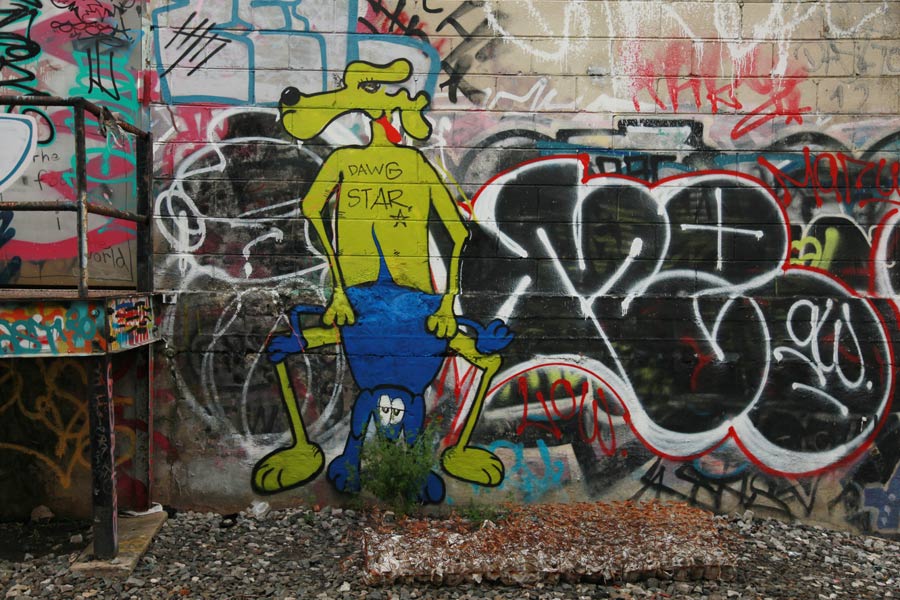
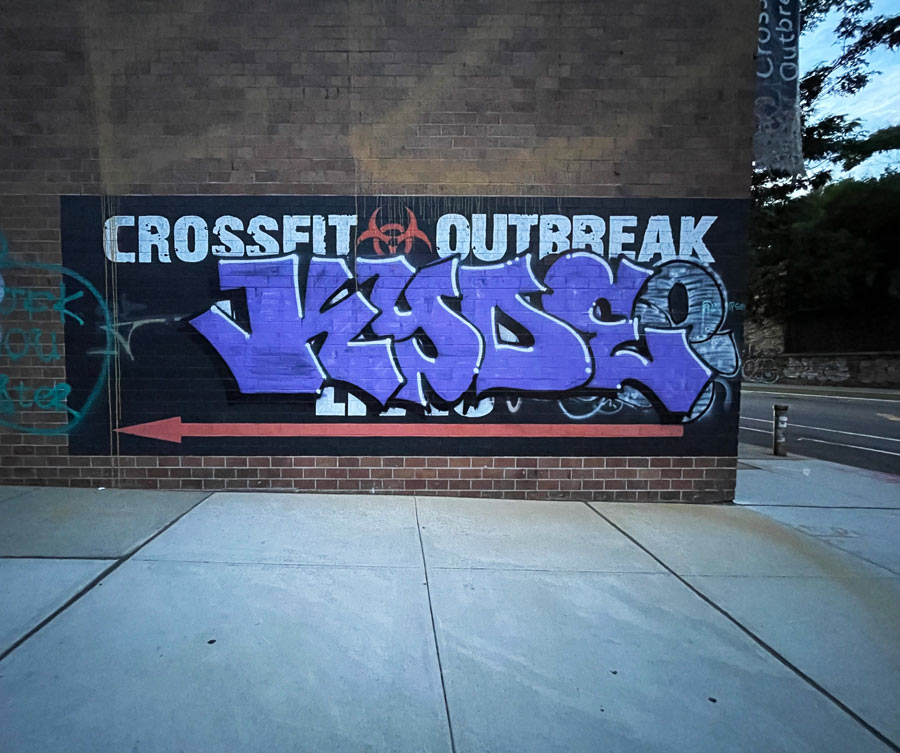
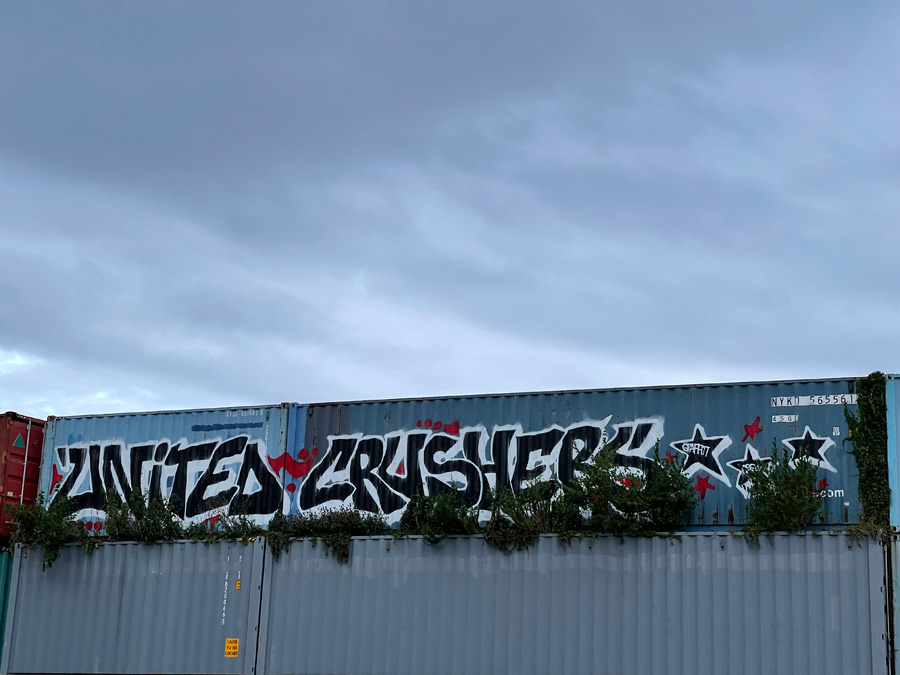
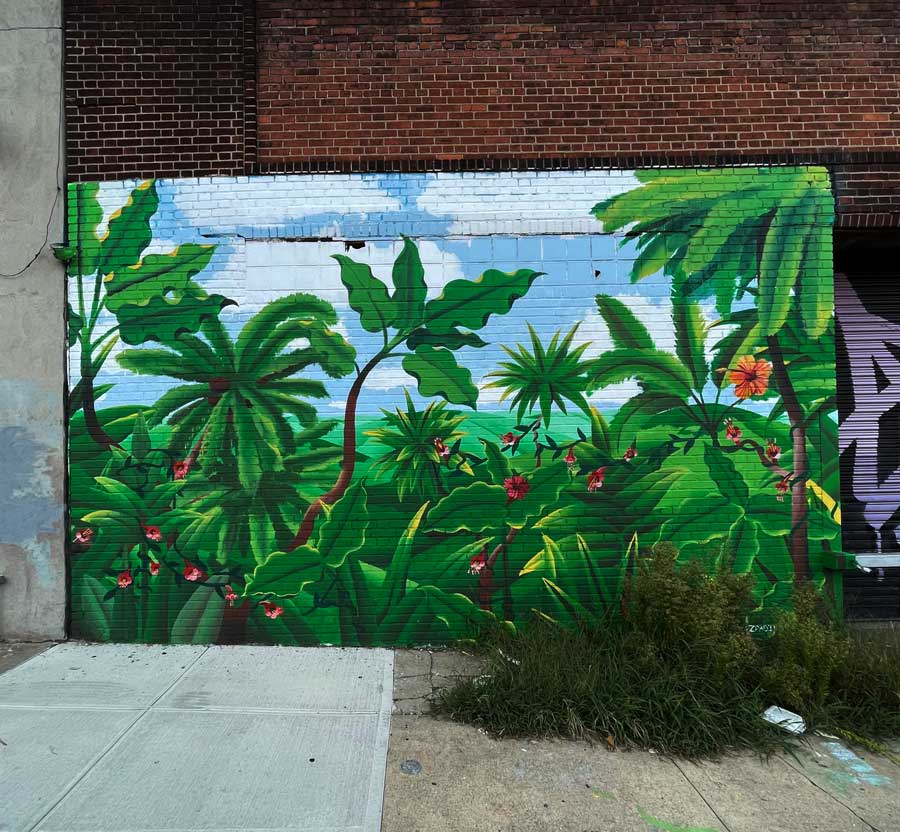
Did you catch the celebrities singing in Central Park last night before the rains of Hurricane Henri reached New York? Talk about electricity in the air! New York is a magnet for a pretty face, it would appear, and a grizzly or wild one too; and our street art proves it. Just a quick survey of murals in Brooklyn this week turns up many a fun face.
Here’s our weekly interview with the street, this week featuring Adam Fujita, Anthony Zpadilla, CP Won, Damien Mitchell, David Puck, Dwag Star, Jeyde, Lorenzo Masnah, Mister Alek, NotBanksy, Numak1, Outer Source, Outer Source, Reme821, Sef01, Sipros, United Crushers, and Vers718.
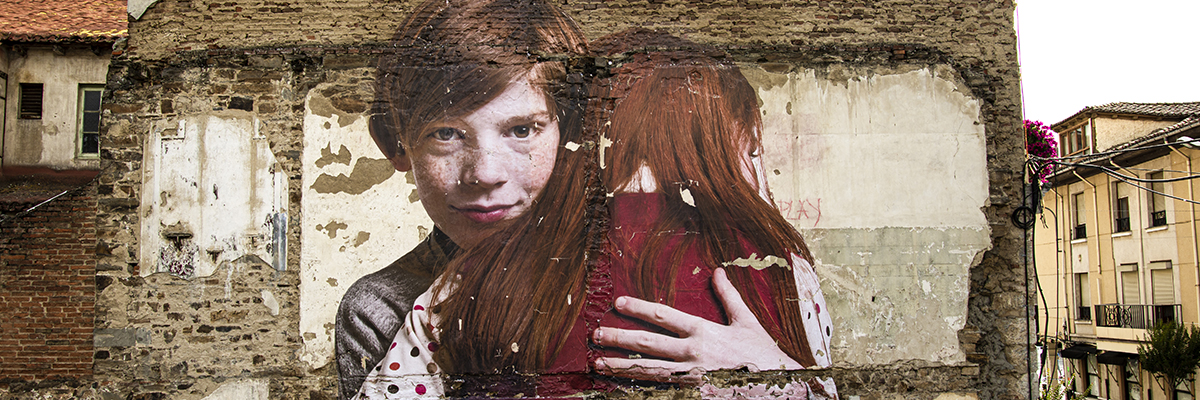
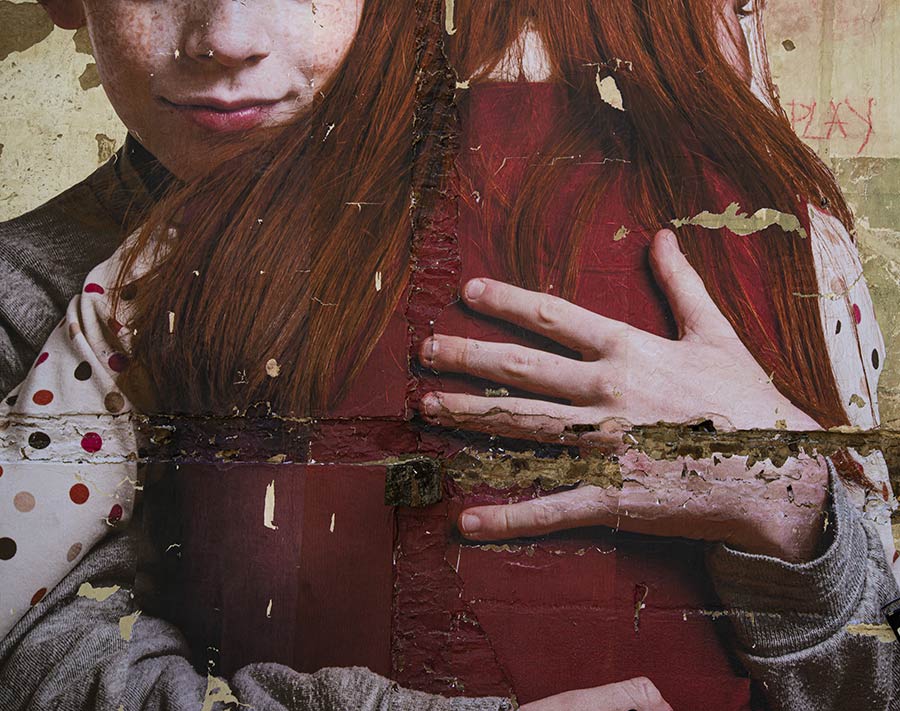
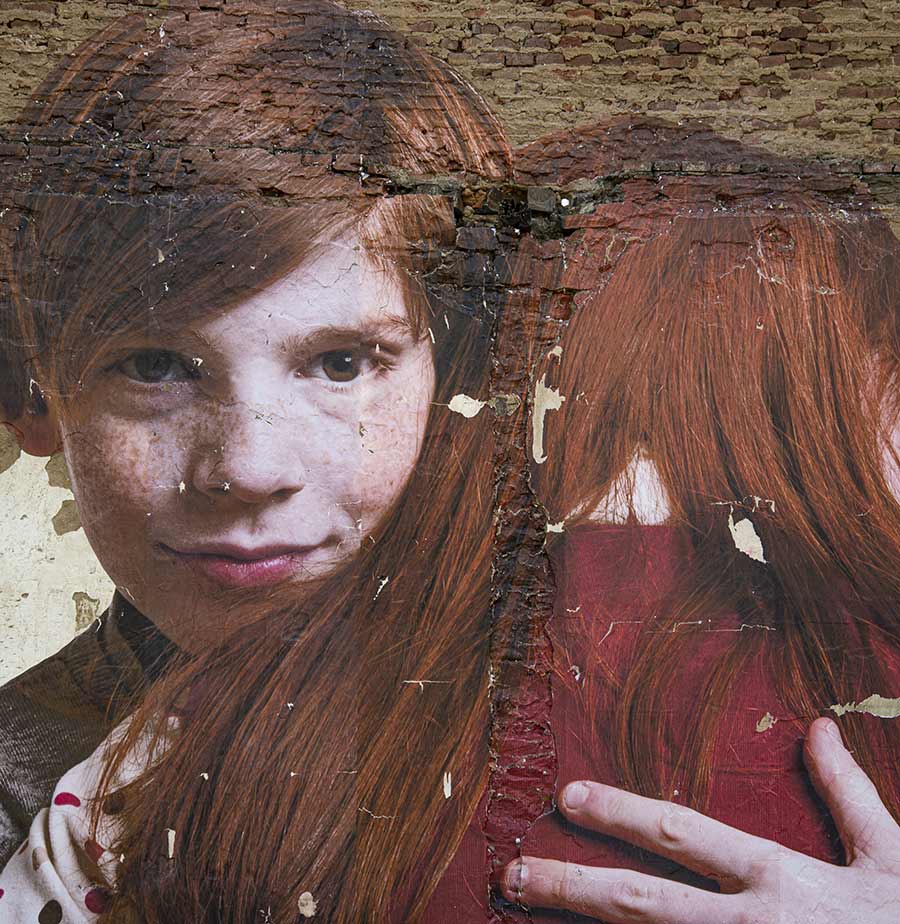
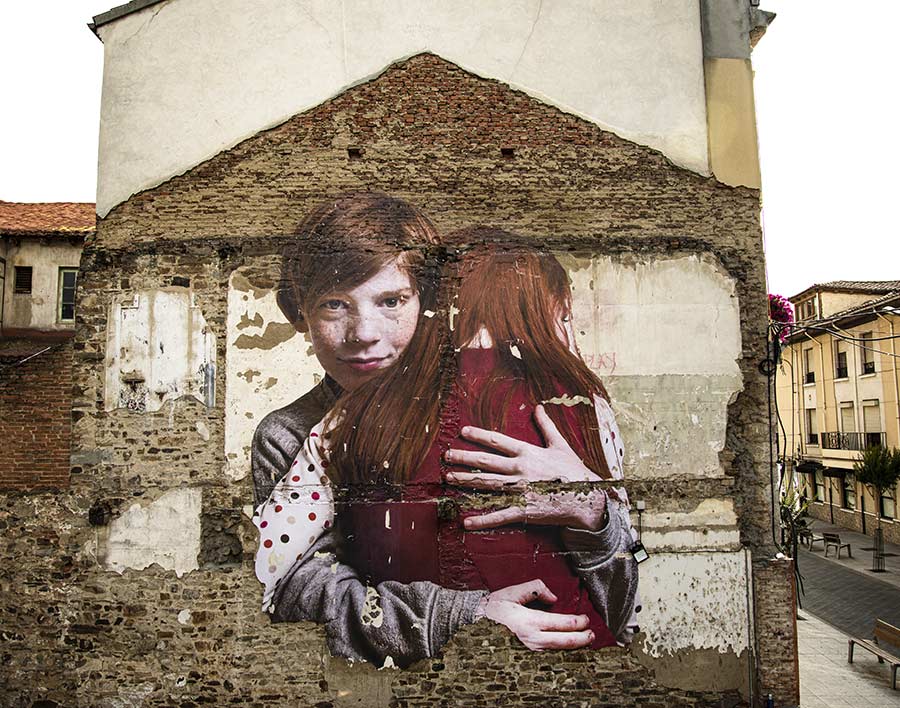
Italian street artist Bifido finishes this rough wall with the sweetest of sentiments here as summer draws ever nearer to its end. Quoting Keats, as romantics are wont to do, Bifido tells us his latest staged photo wheatpaste is transparent in its sentiment, opaque in his specific meaning.
“It is a hug, so it is something that can be shared,” he offers. “For this time I have nothing to say about this piece.” Enough said.
“You turned a wall of dust into an artwork,” says an organizer of the ArtAeroRap, the International Urban Arts Festival sponsored by a digital services firm with municipal and city partners. The current “2021 Vaccine Edition” features music and art installations and performances here in La Bañeza, a municipality located in León, Spain.
Mounted on a grizzled façade that fell apart while he was installation his new artwork on it, Bifido’s photographic mural is on one of the most decrepit walls we’ve seen in a while.
“I’m super proud of this piece because I chose a really, really bad wall.,” he tells us. “Full of dust, shitty things, holes, different materials and levels. I had a really good time there.”
“Stanotte, riesco ad immaginarti… So che indosserai la tua bellezza, un sorriso di tale gioia, così brillante e luminoso, come quando con occhi rapiti e doloranti, perso in una dolce meraviglia, io ti guardai, io ti guardai!”
Our weekly focus on the moving image and art in the streets. And other oddities.
Now screening: 1. Banksy: Great British Spraycation 2. NYC! Sound (Back) On 3. Sofles in Brisbane featuring Gamo & Kitsa
BSA Special Feature: Banksy : Great British Spraycation
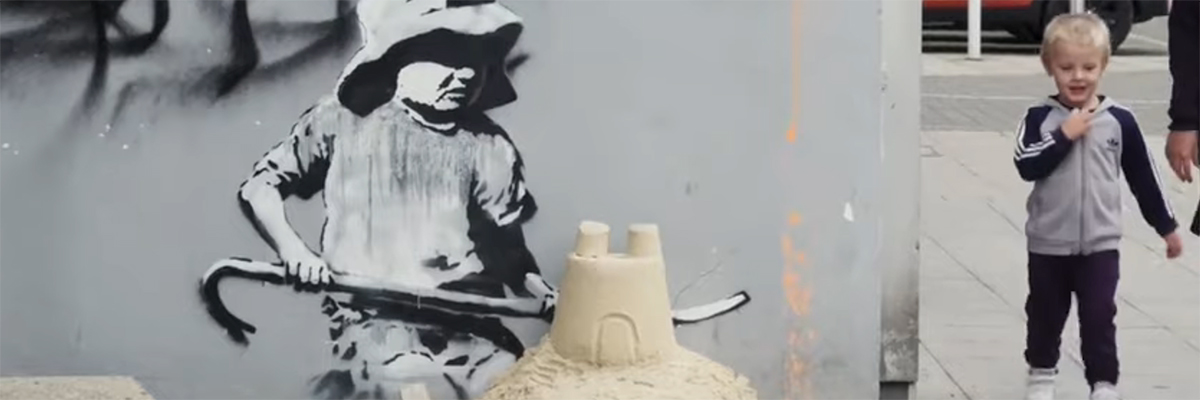
The summer days begin to wane and you’ve played all the games with your siblings and cousins three times or more. Before heading back to school, time to rummage around Uncle Bob’s garage and find a can of spray paint he used to fix a kitchen chair for Aunt Keisha. You wonder to yourself, “What could we do with this?”
BANKSY: Great British-Spraycation
NYC! Sound (Back) On
Been waiting for Covid to give us a break so New York could get back to our version of normal. This summer it’s still been hard but New York is definitely back in all its many ways. Makes us wanna dance!
Sofles in Brisbane with Feat. Gamo&Kitsa
You been getting up lately? Just released here’s a Brisbane, Australia wall jam with Sofles in collaboration with honored guests Gamo and Kitsa from Marseille, France.
 BROOKLYN STREET ART LOVES YOU MORE EVERY DAY