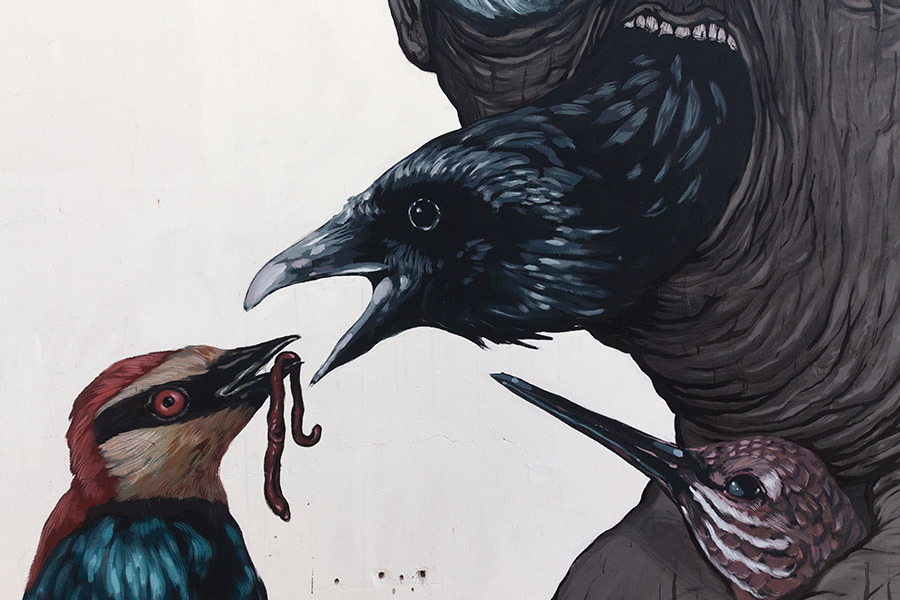
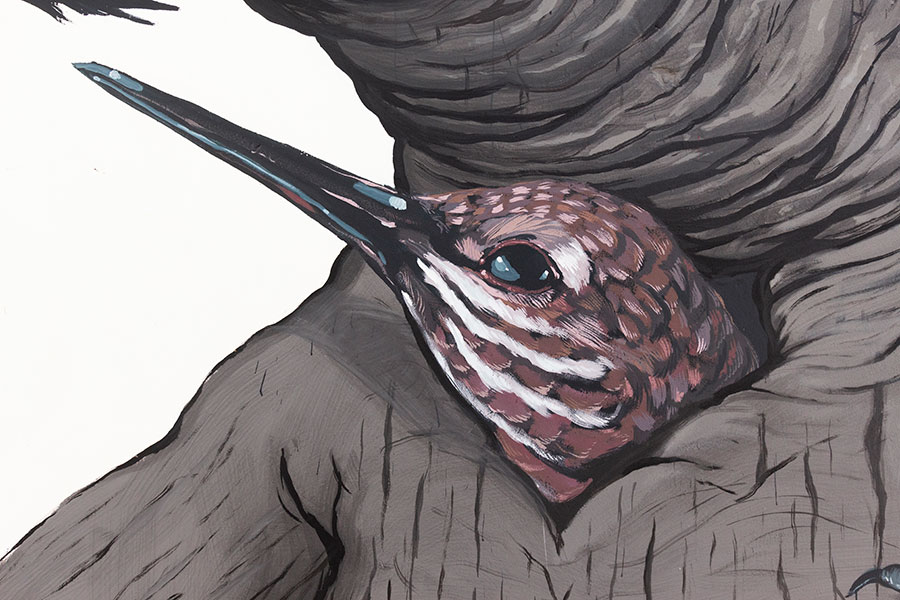
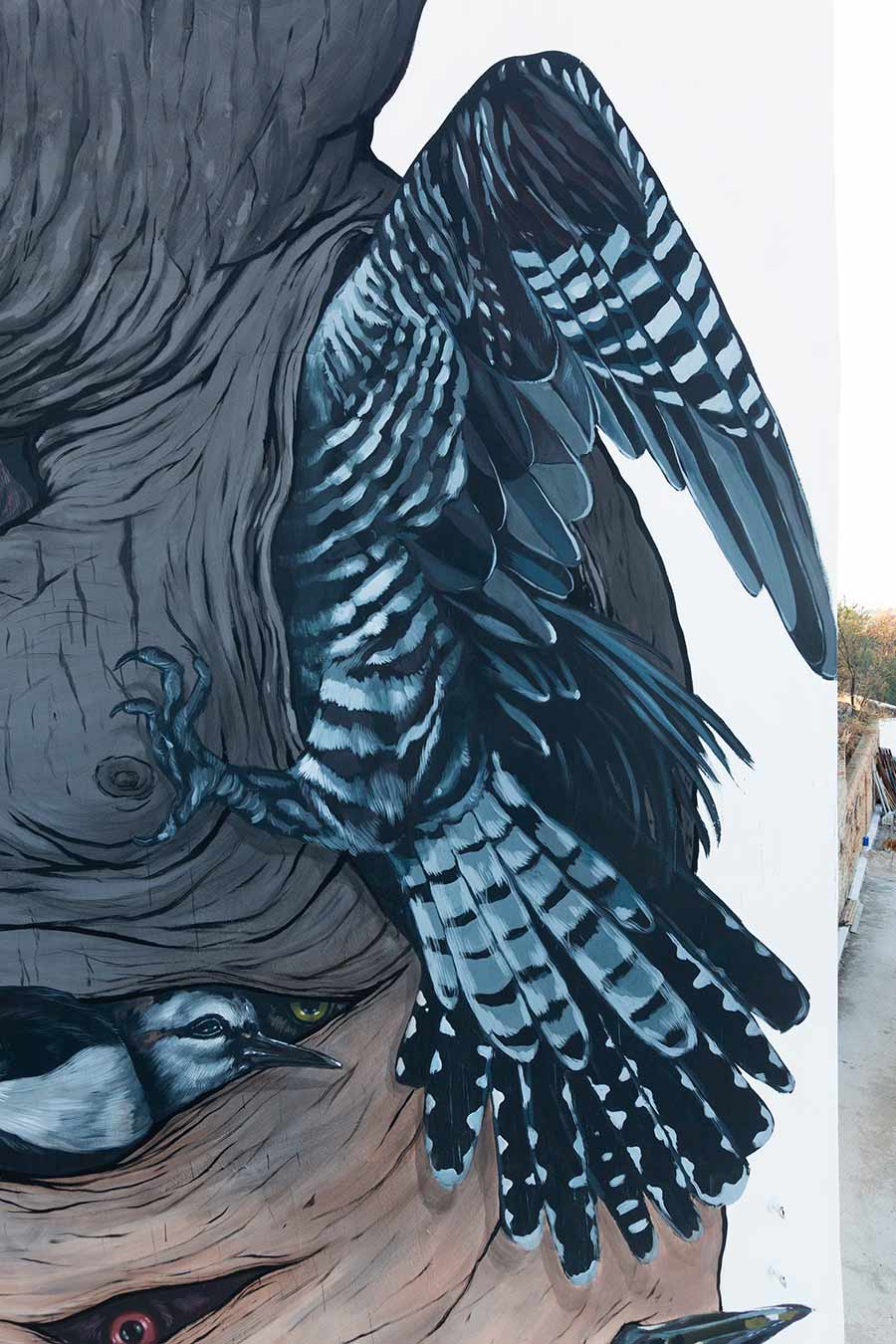
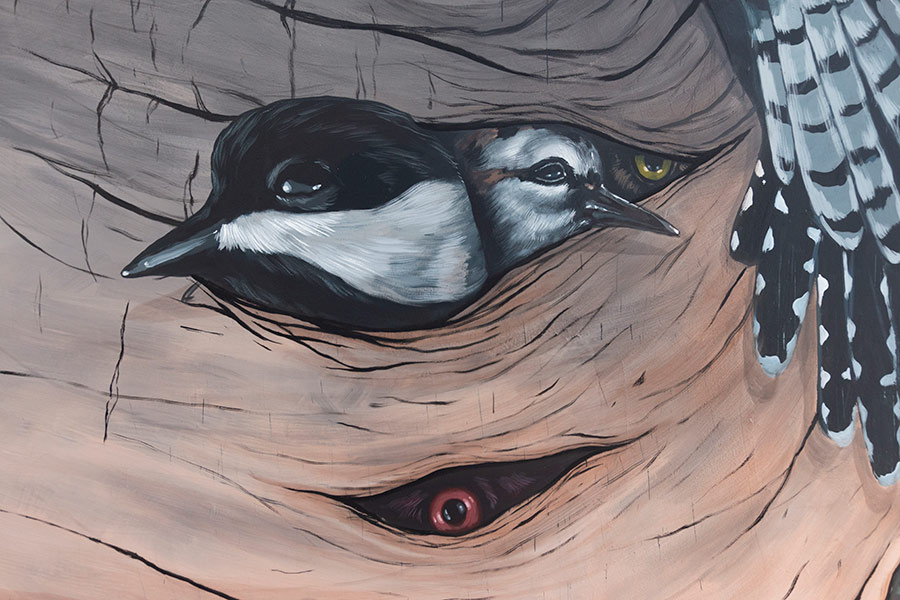
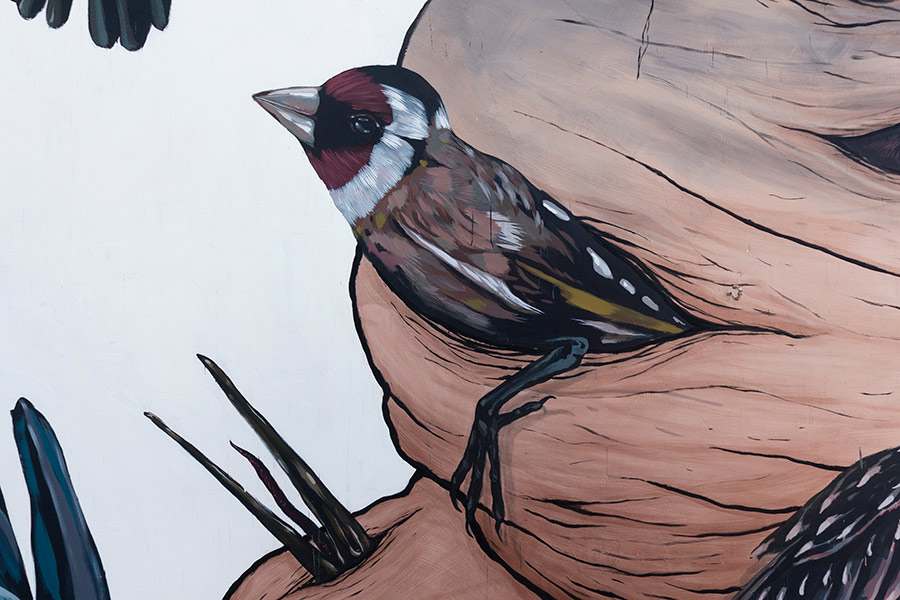
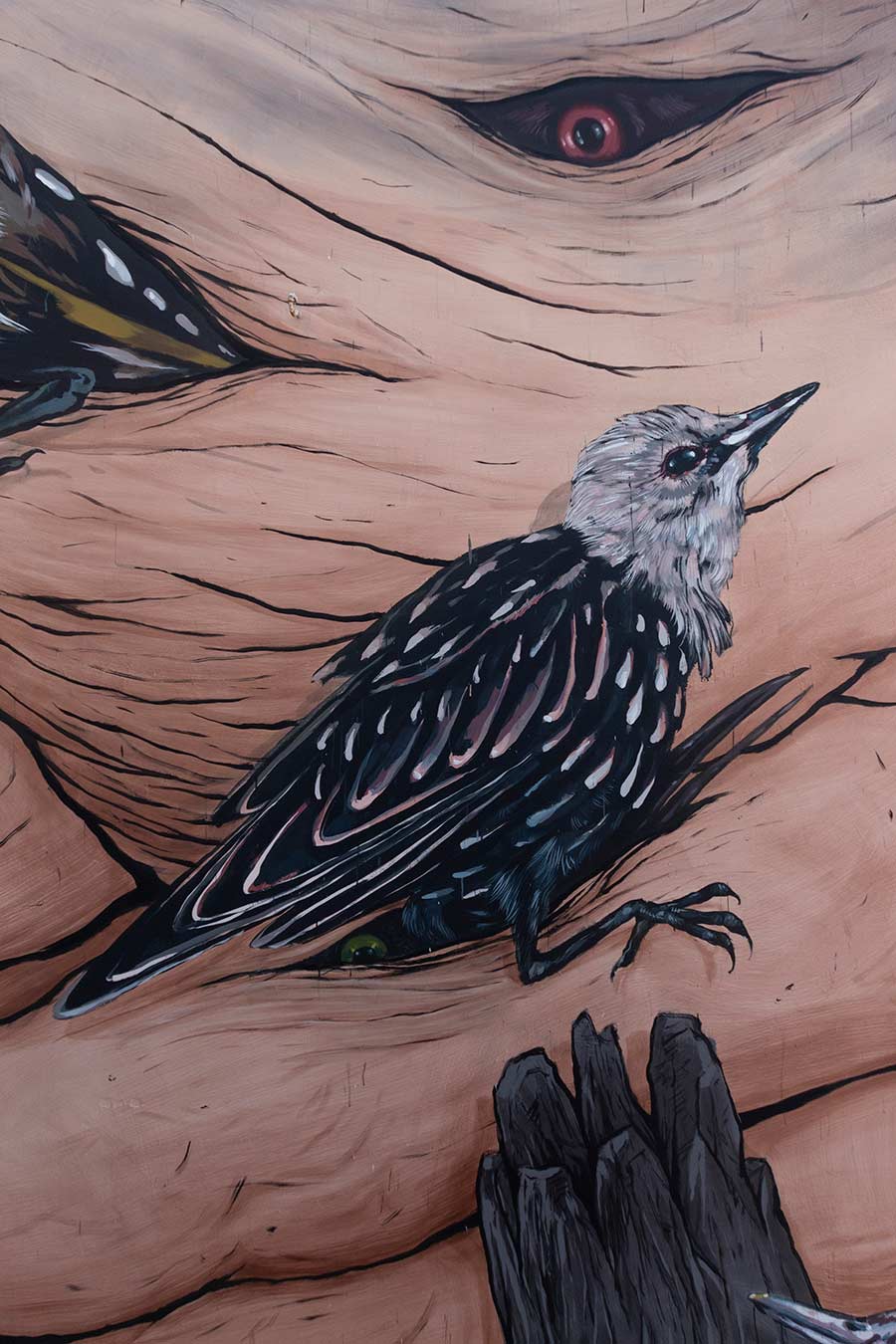
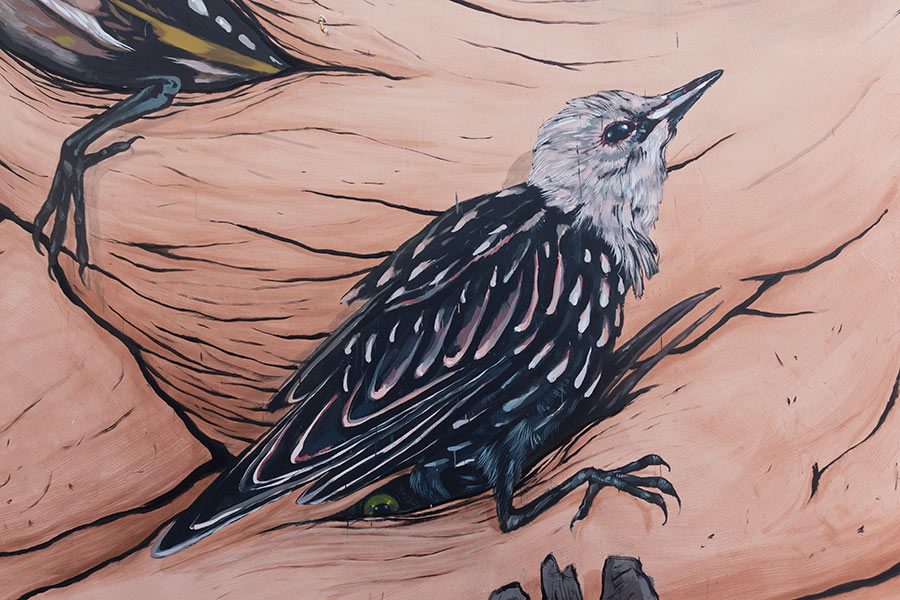
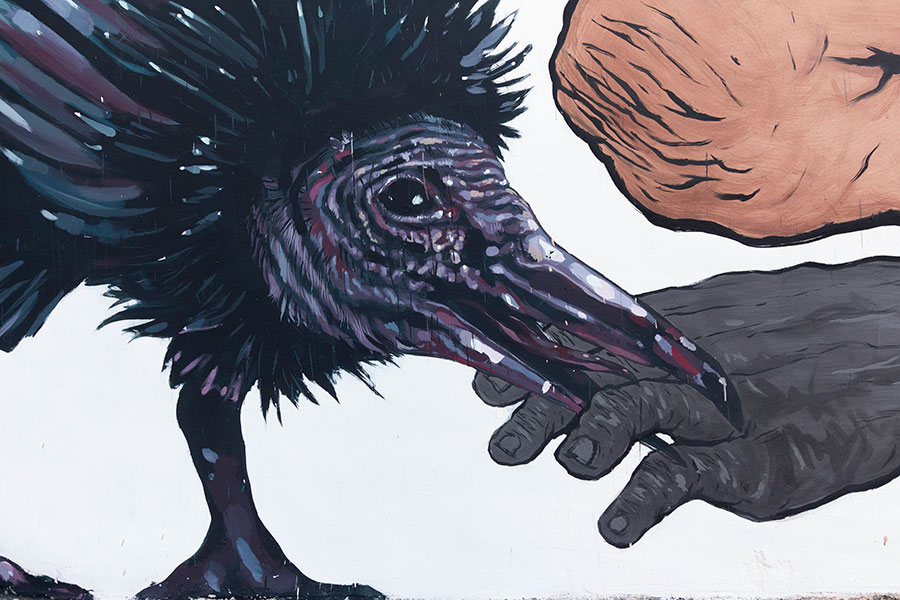
I am inhabited by a cry. Nightly it flaps out Looking, with its hooks, for something to love.
Sylvia Plath
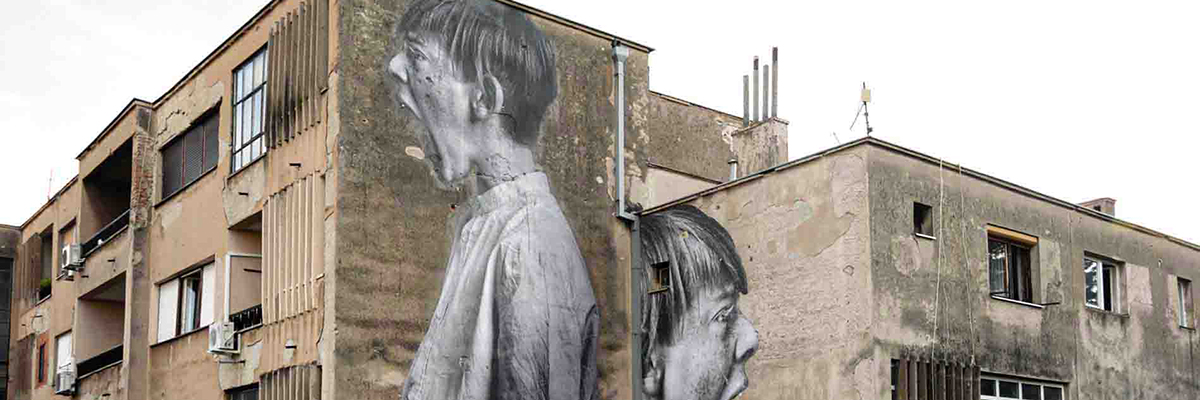
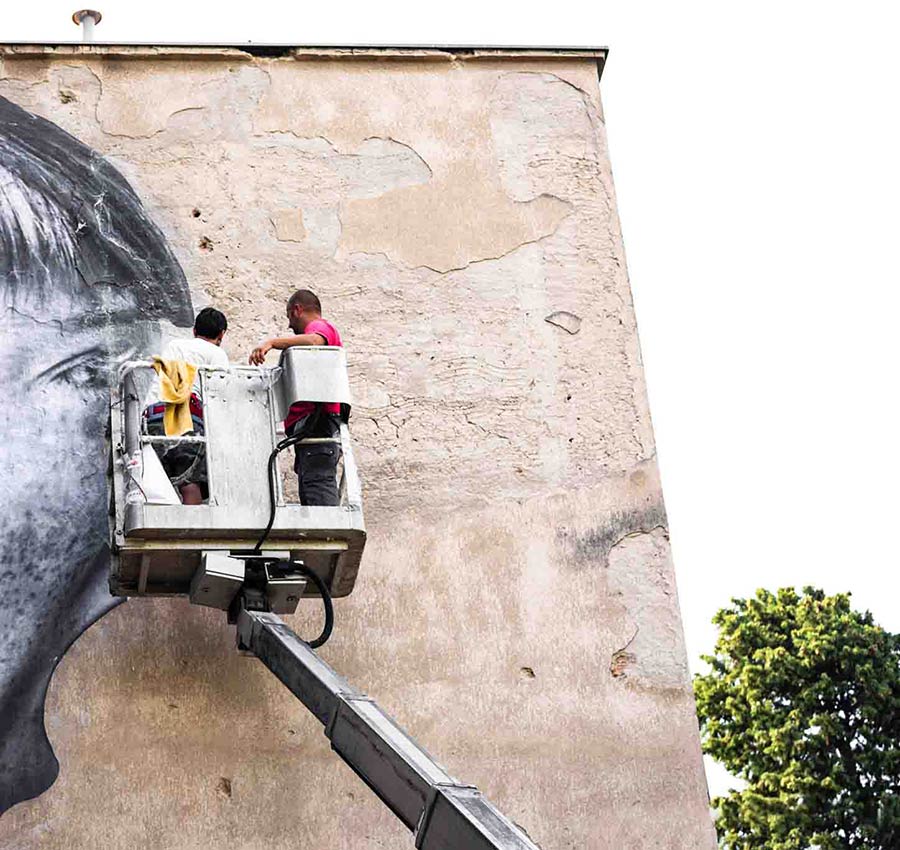
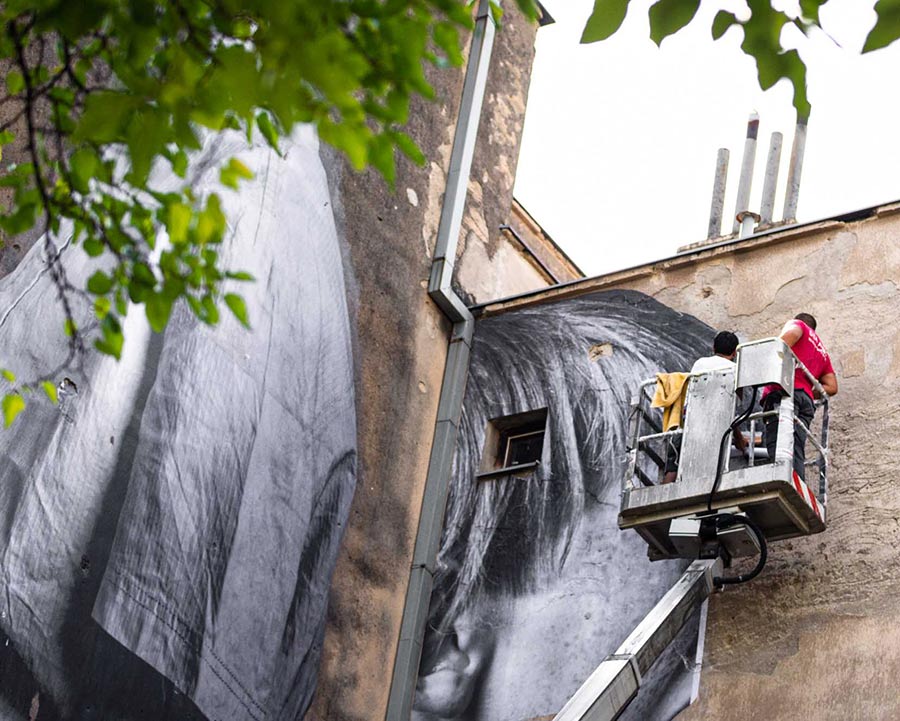
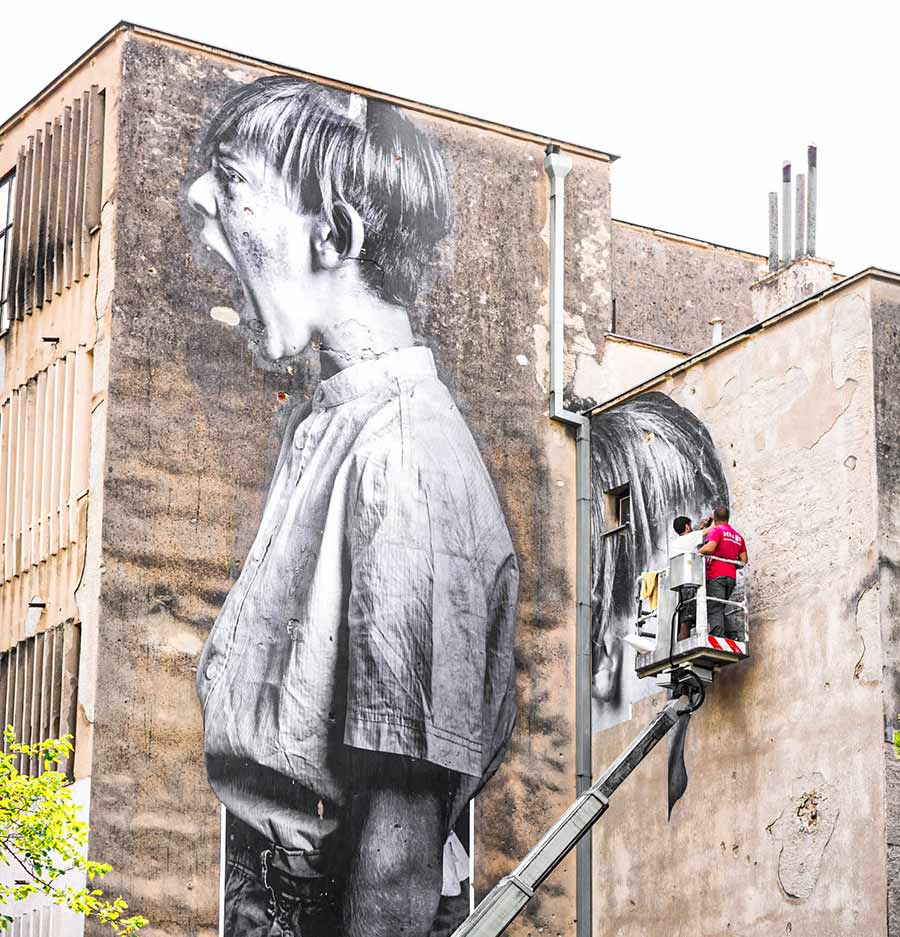
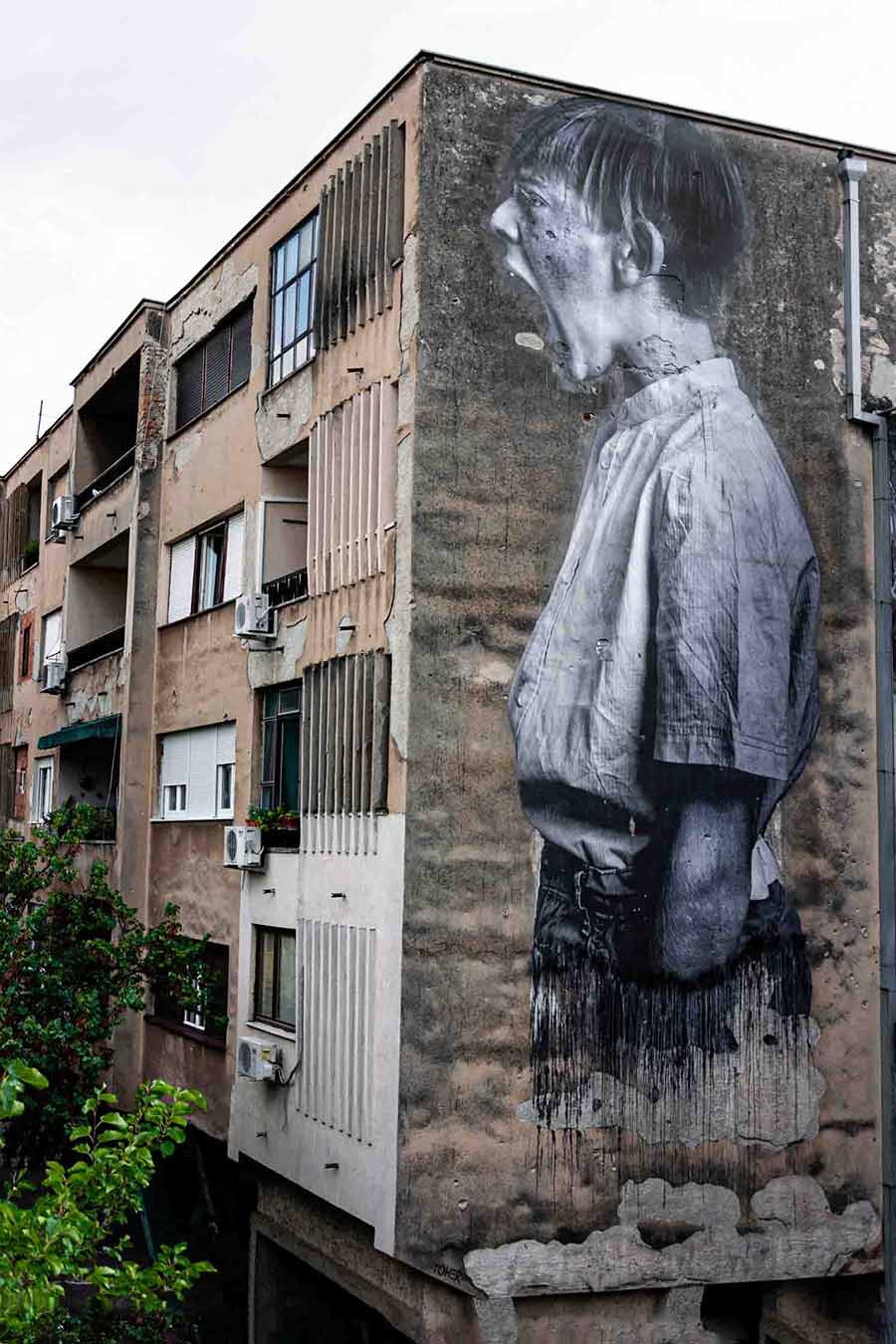
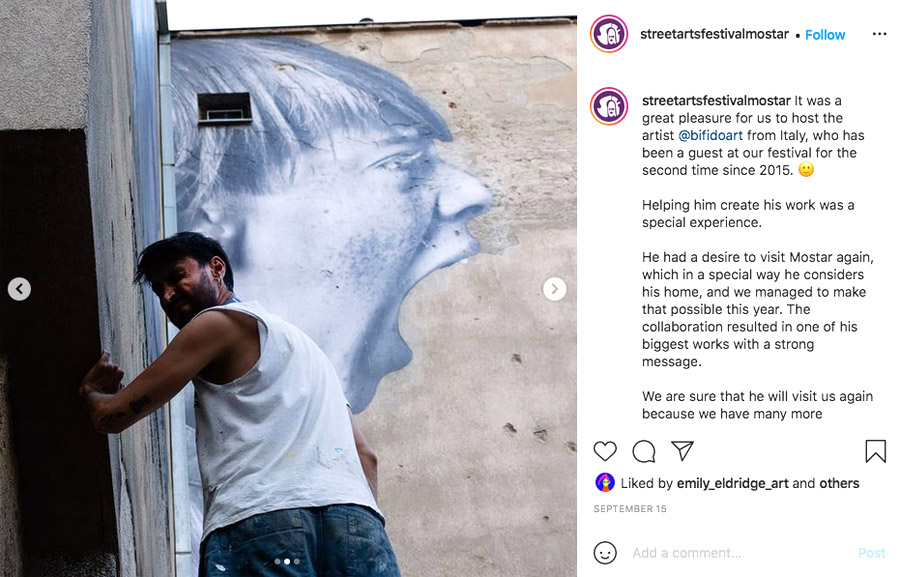
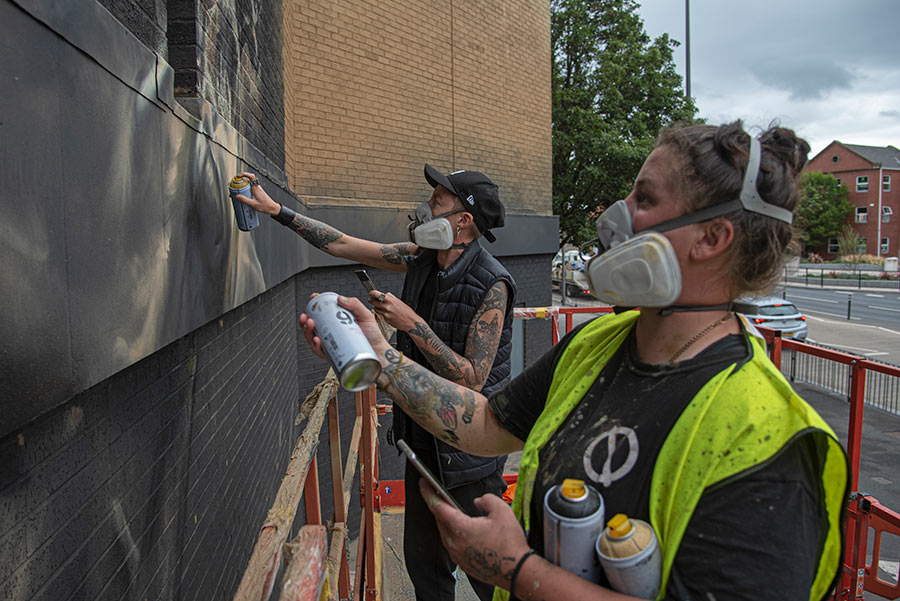
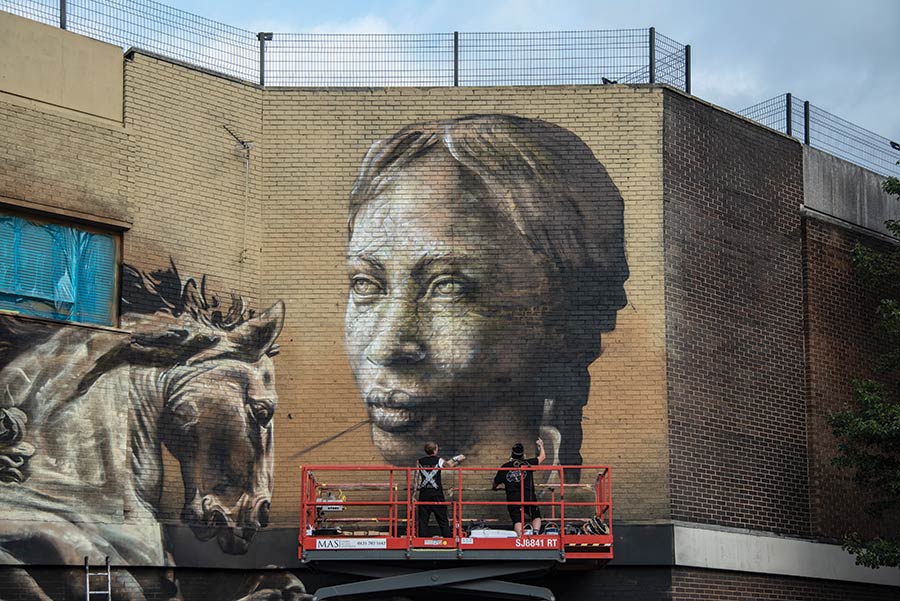
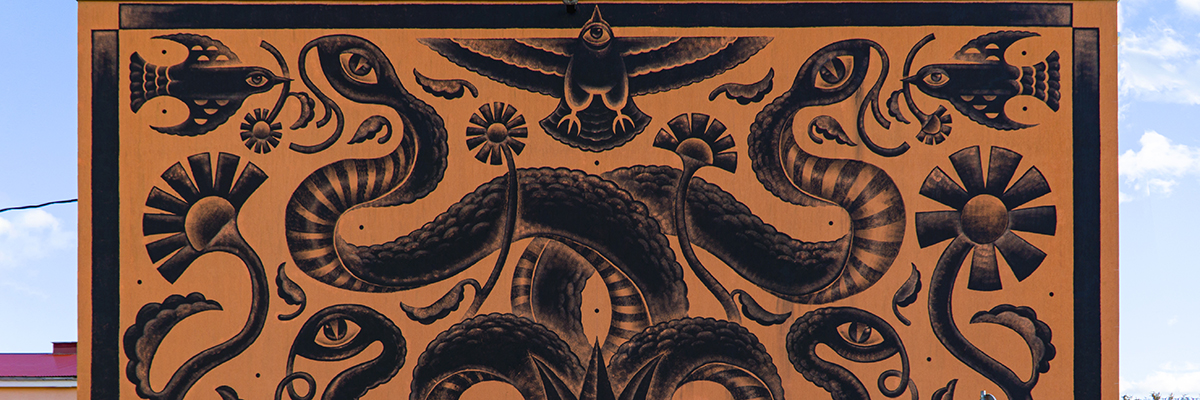
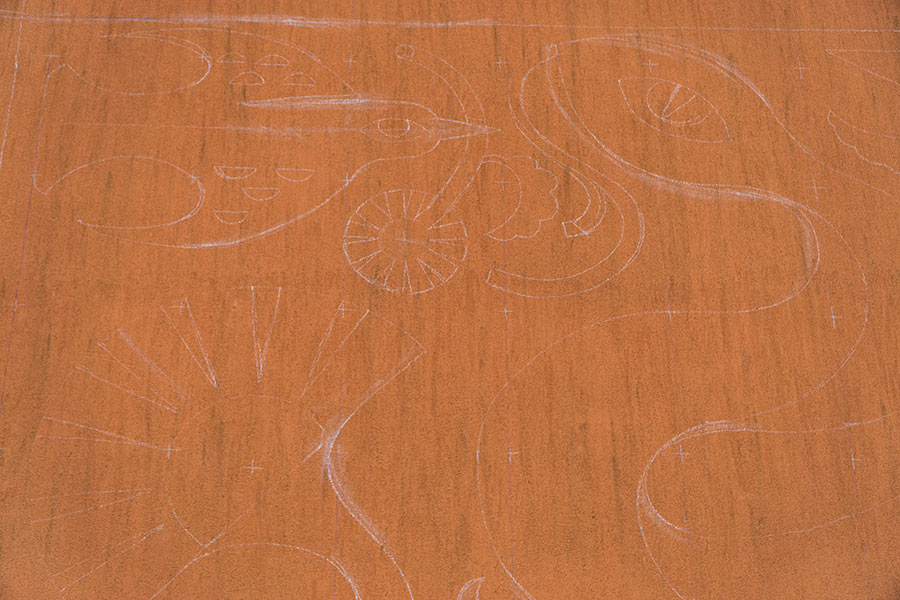
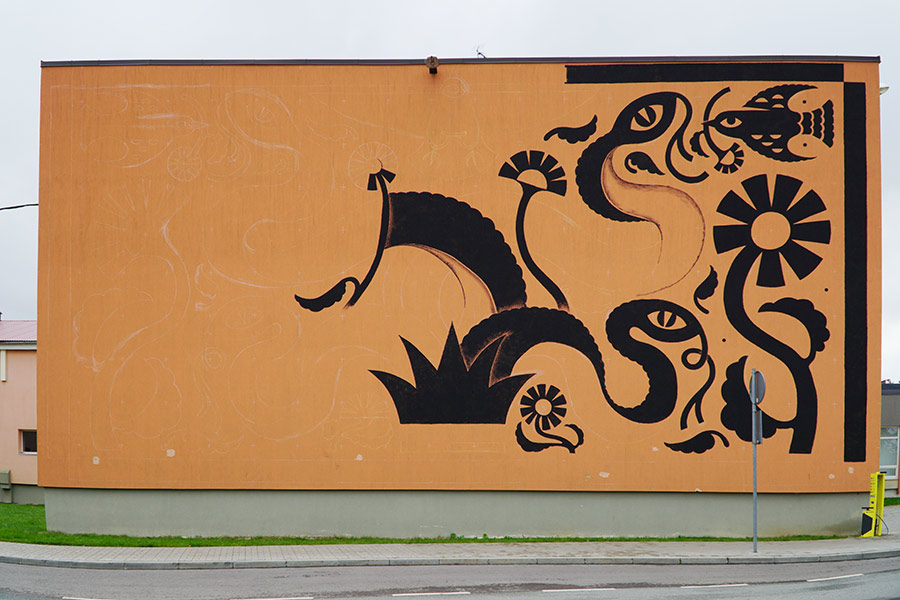
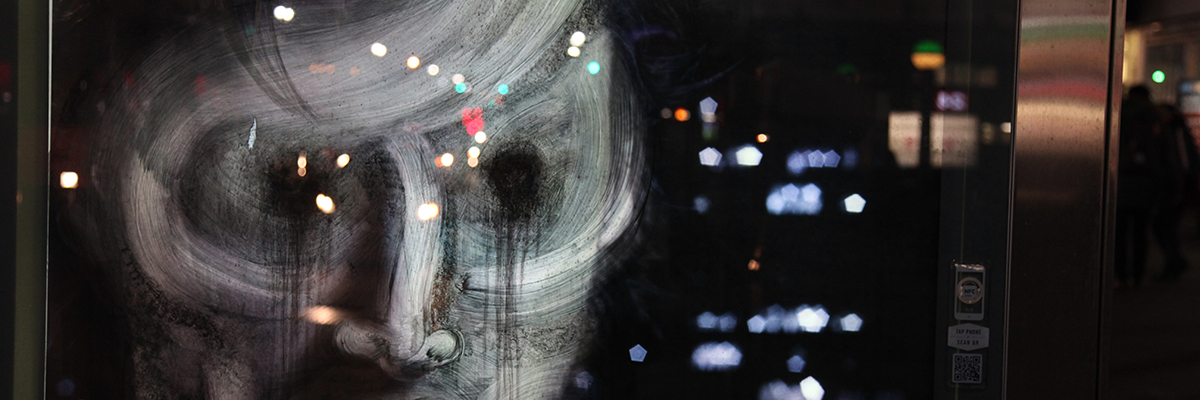
Street poet and street artist Bifido doesn’t mean to be morose, but here in Mostar he can’t help himself as he creates mirrored expressions of a sullen, ill-tempered youth on city streets. Part of the Bosnian /Herzegovinian street art festival named after this city of 113,000 Croats (48.4%), Bosniaks (44.1%), and Serbs (4.1%), the annual meeting of international and local artists produces a broad variety of artworks for the city.
Bifido. “Love Will Tear Us Apart”. Mostar, Bosnia and Herzegovina. (photo courtesy of the artist)
Bifido has been here before, and he says his feeling of ardor and confliction are hopelessly intertwined. “I have a special connection with this country,” he tells us of this city grown in the wake of and destruction of war; a gorgeous bridge now a symbol to many, one that rises over troubled waters. “I love Bosnia. I met her and I fell in love with her.”
The bridge, he says, is inhabited by an odd mix of memory, hope for the future, and questionable tourism trade that includes souvenir shops, odd perfumes, and “the most Bosnian thing you can find is the Ibrahimovic jersey (which is not Bosnian).”
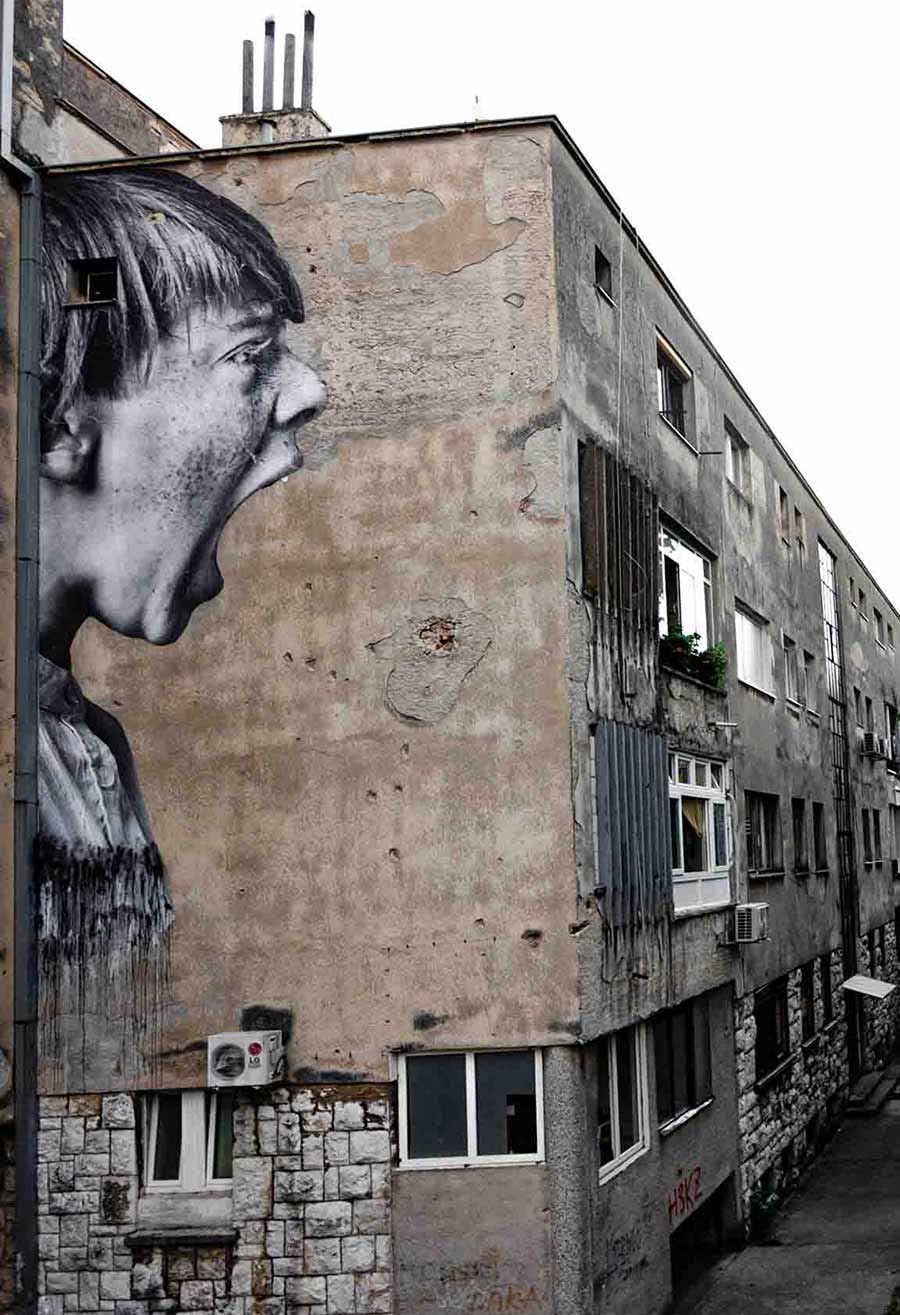
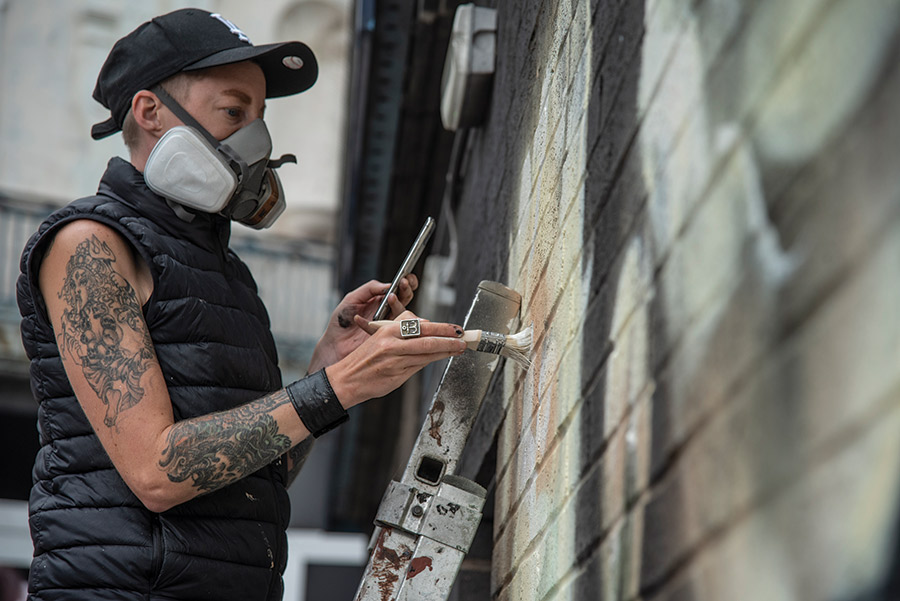
Bifido. “Love Will Tear Us Apart”. Mostar, Bosnia and Herzegovina. (photo courtesy of the artist)
But above all else, for Bifido, is the feeling of this city he returns to, and the feeling of the river that runs through it, the Neretva.
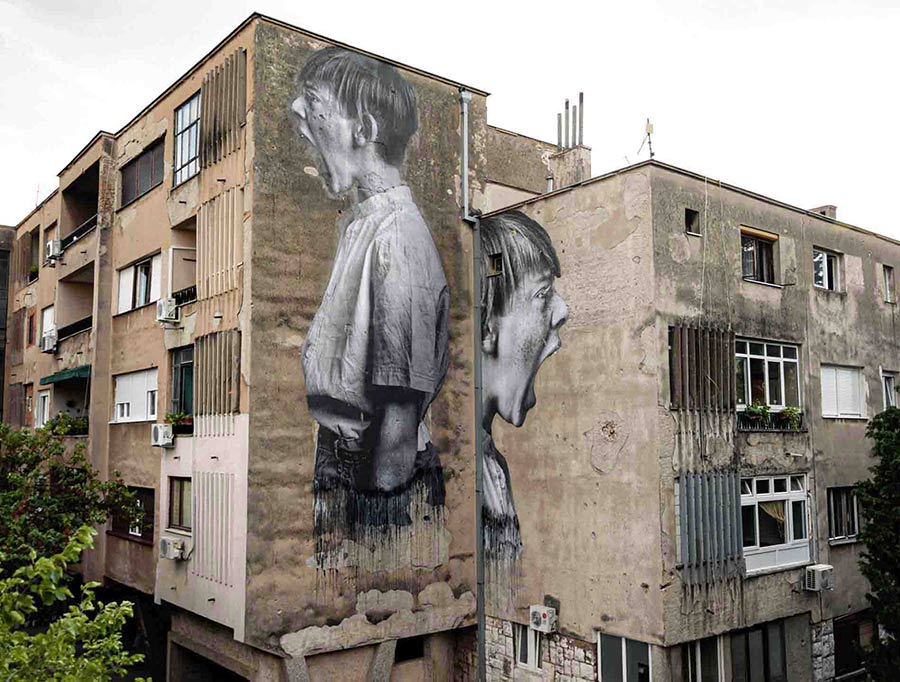
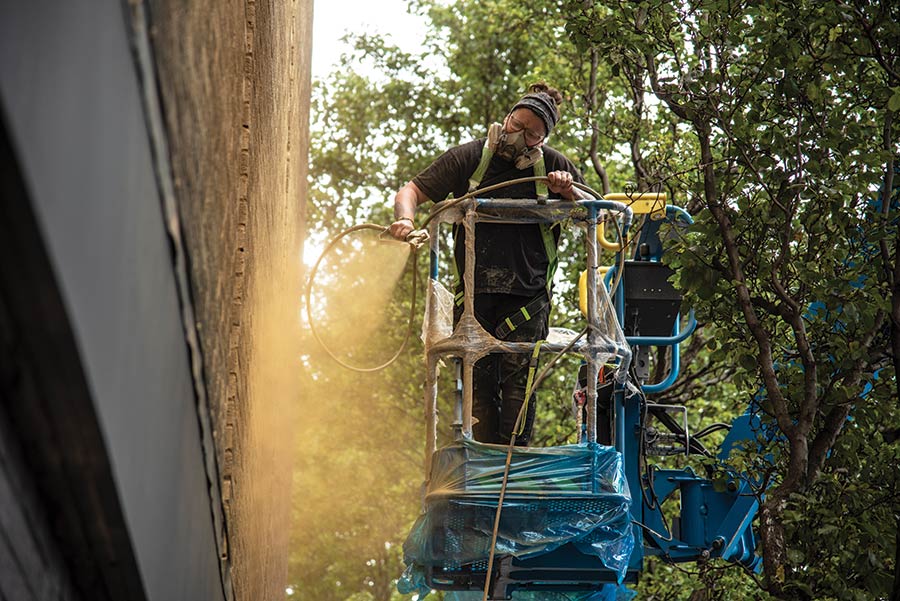
“Neretva is for me a state of mind,” he says. “It is not a river, is liquid melancholy. Every day we spend a couple of hours together.” “This work is my tribute to this land. To this city. To all the people who live there. Even the most assholes. A cry melted along the tortured walls. Walls of inhabited houses, of empty houses. The cry of the invisible.”
Bifido. “Love Will Tear Us Apart”. Mostar, Bosnia and Herzegovina. (photo courtesy of the artist)Bifido. “Love Will Tear Us Apart”. Mostar, Bosnia and Herzegovina. (photo courtesy of the artist)Bifido. “Love Will Tear Us Apart”. Mostar Street Art Festival. Mostar, Bosnia and Herzegovina. (photo courtesy of the artist)
Our weekly focus on the moving image and art in the streets. And other oddities.
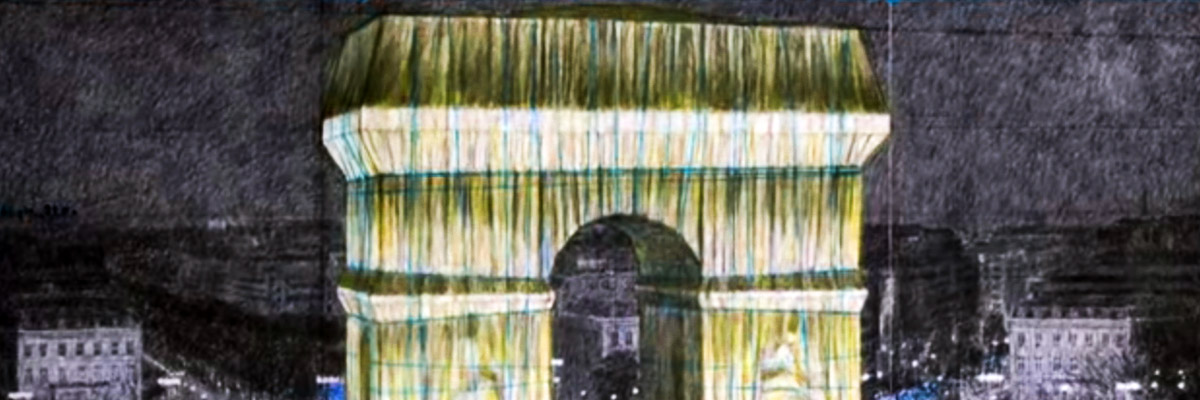
Now screening: 1. Christo and Jeanne-Claude, a Final Triumph in Paris
BSA Special Feature: Christo and Jeanne-Claude, a Final Triumph in Paris
Bet you are wondering when the big unveiling is! Dying to see what is underneath?
A tribute to the artists Christo and Jeanne-Claude, famous for their large scale, site specific outdoor installation, this is the final triumph! Or Triomphe, as you may wish.
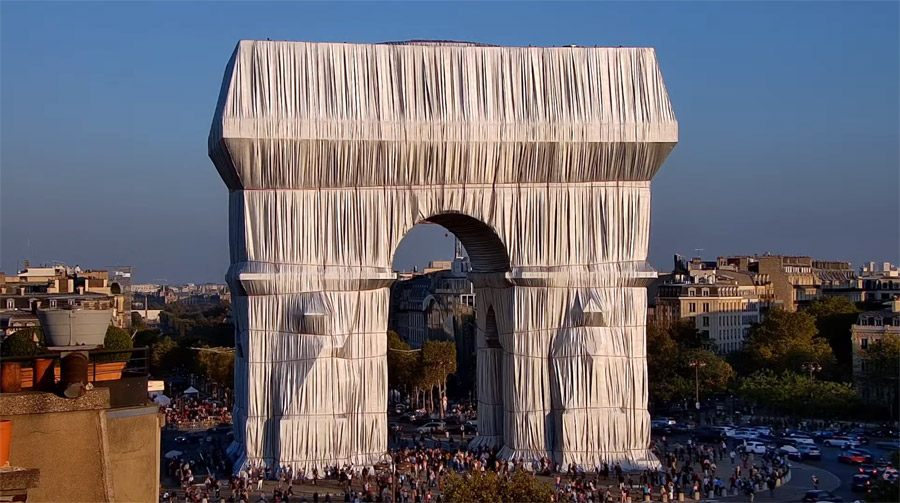
Climbers, cloth, and red rope have encased the famous monument and star that lies at the center of twelve radiating avenues, L’Arc de Triomphe this month – a public celebration of the work of the two artists and their lifetime of work together.
Today we dedicate Film Friday to this project and the various ways it is being described and interacted with by the public.
Christo and Jeanne Claude: L’Arc de Triomphe Empaqueté.
Christo’s L’Arc de Triomphe | 60 Years in the Making
Visitors swarm wrapped Arc de Triomphe
Christo and Jeanne-Claude: L’Arc de Triomphe, Wrapped – Live View
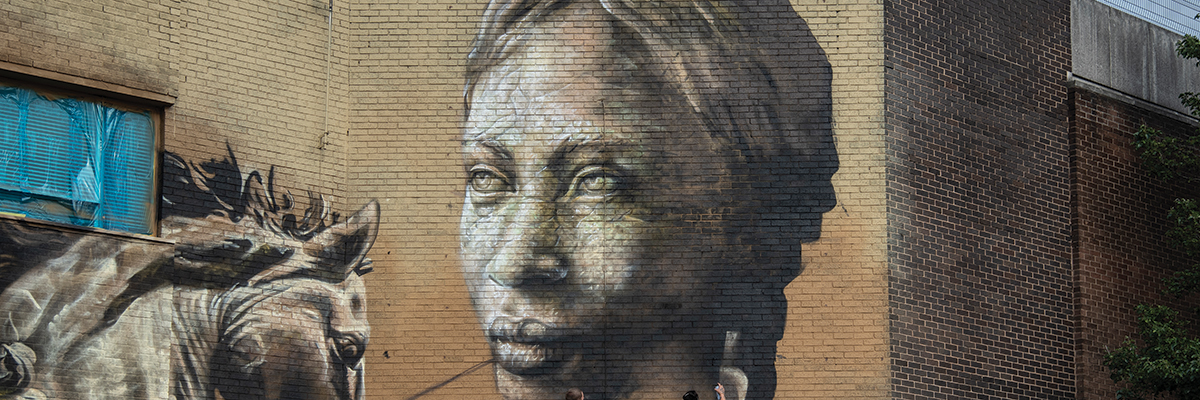
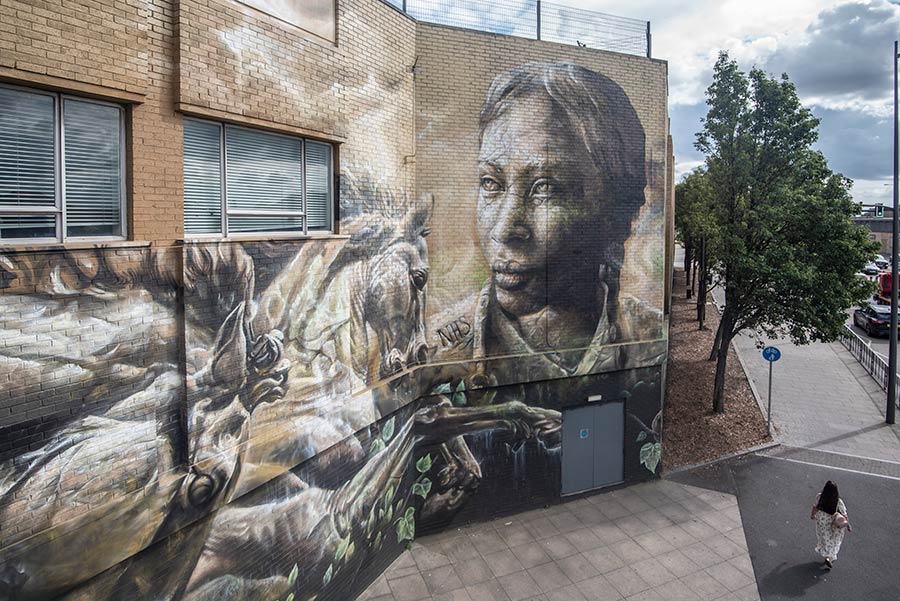
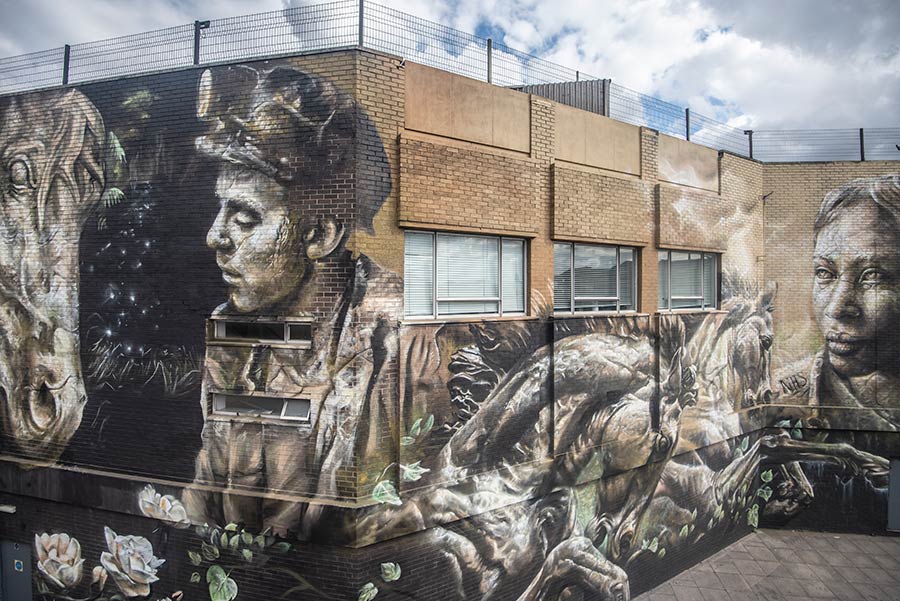
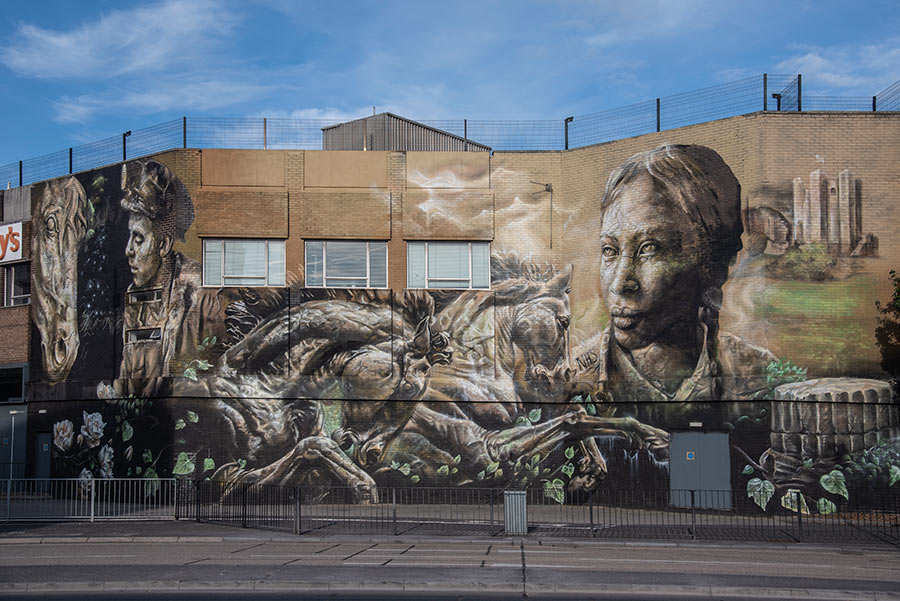
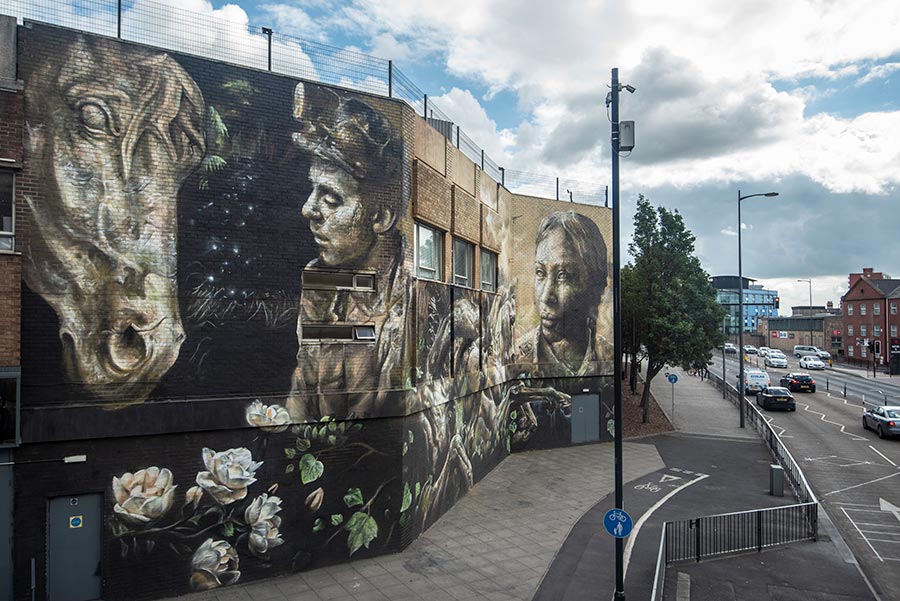
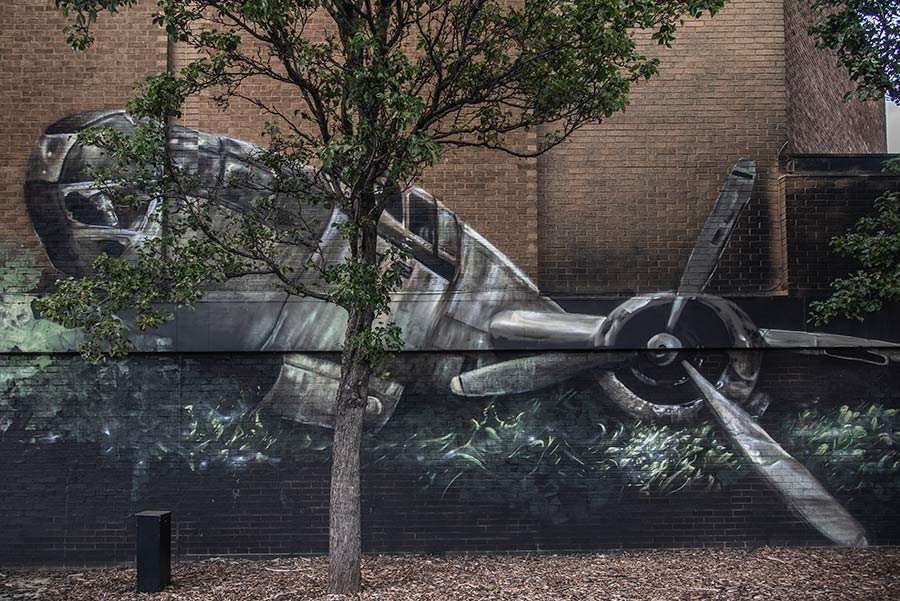
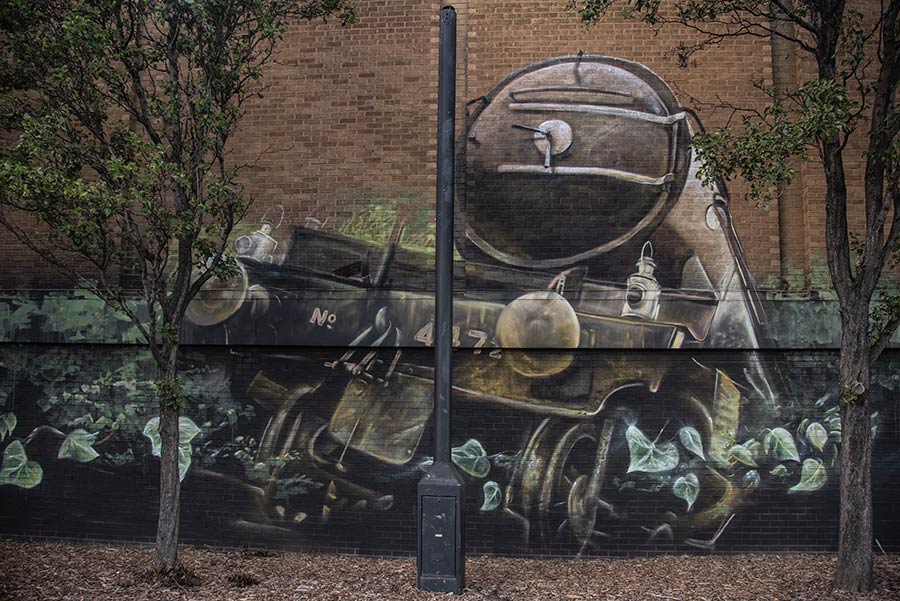
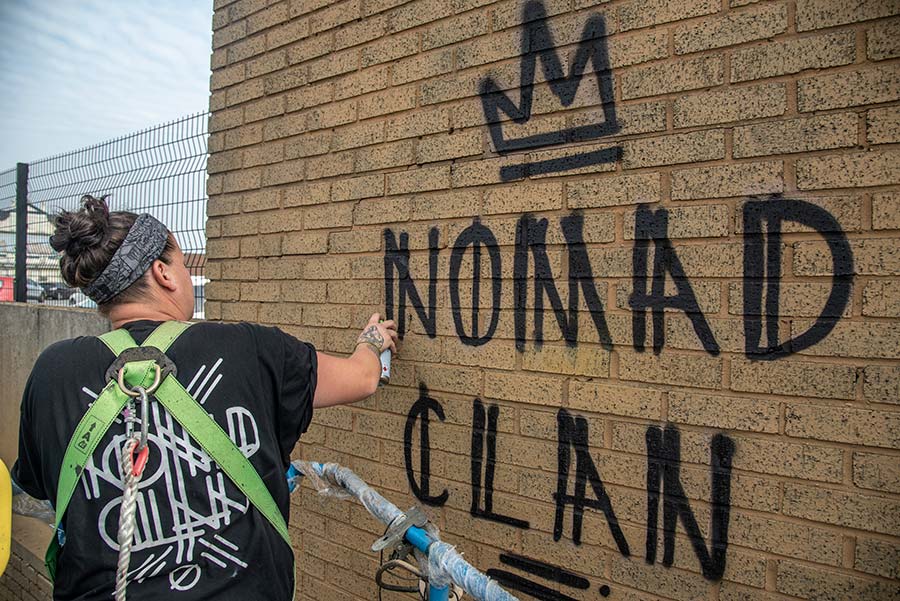
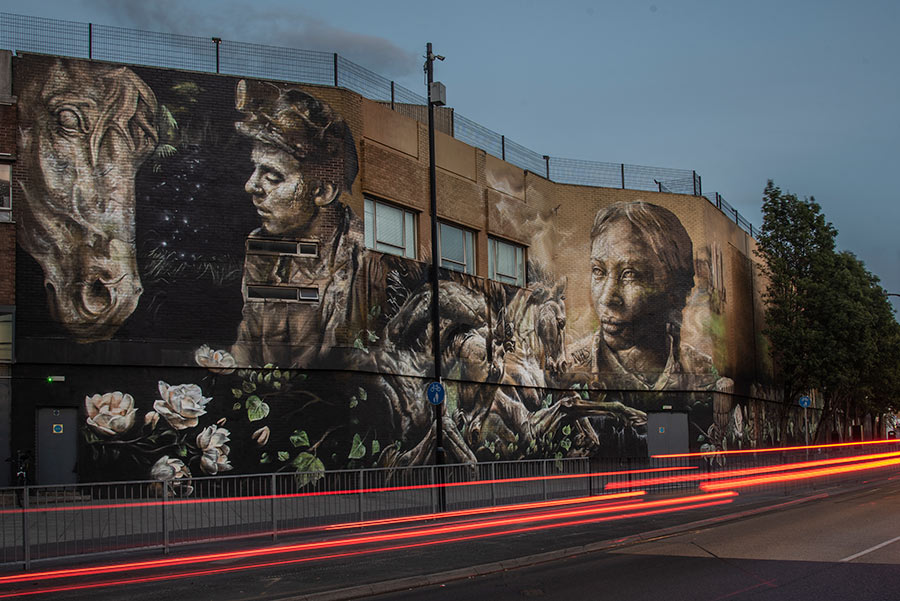
“It’s not often that artists get the chance to have their work in front of so many eyes,” says Hayler Garner of Nomad Clan, “and with that there’s a responsibility to have that piece resonate with the area.” Garner, along with Jay Gilleard, is talking about their new mural at the gateway to Doncaster in Yorkshire, northern England.
One of the largest they’ve done, “Future’s Past and Present” is meant to open up discussions in this part of town they say – and to pay homage to parts of the town’s history.
“From a coal miner with his pit pony to a female black NHS doctor, every part of this mural is intentional and tells a story,” they say. They also note that they’ve included other historical nods, including the town’s trade in aviation and locomotive transport, as well as having true Roman ruins and an iconic castle.
“On a personal level, honoring my Grandad’s coal mining heritage in Doncaster is another high point for me,” says Gilleard. “Keeping the memory of those brave miners alive and understanding the hardships of Northern industry that shaped where we are today.”
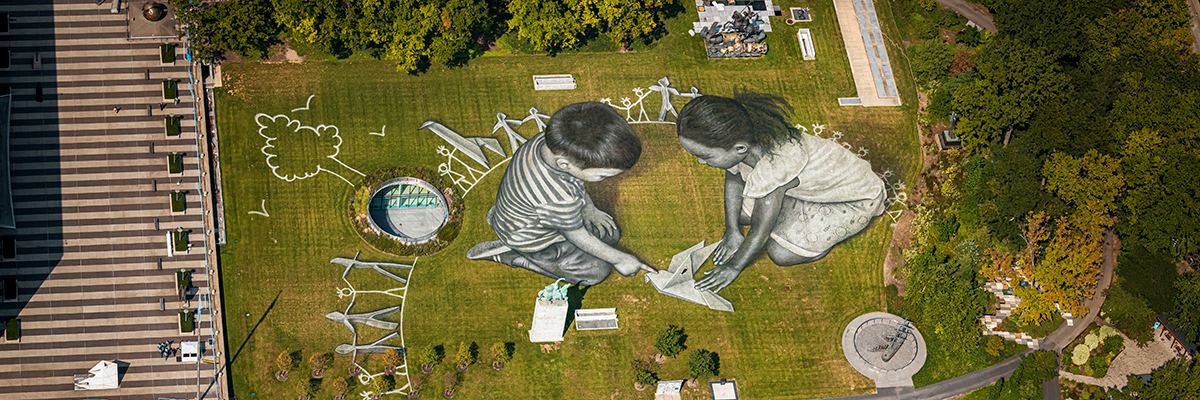
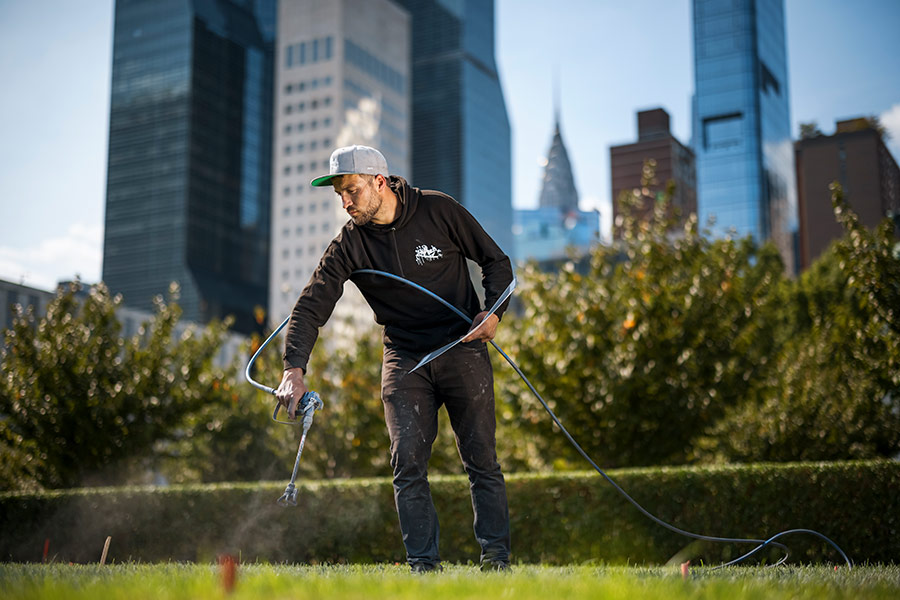
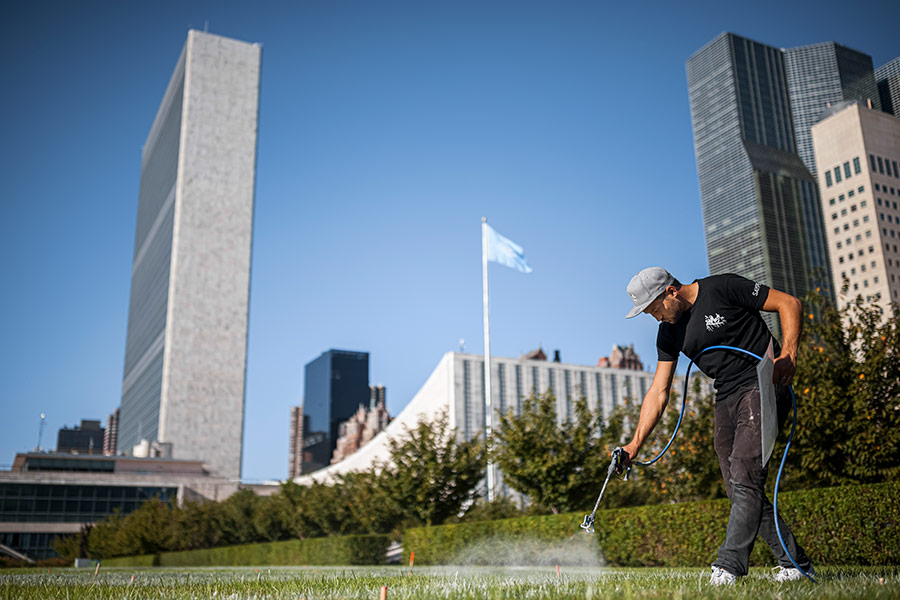
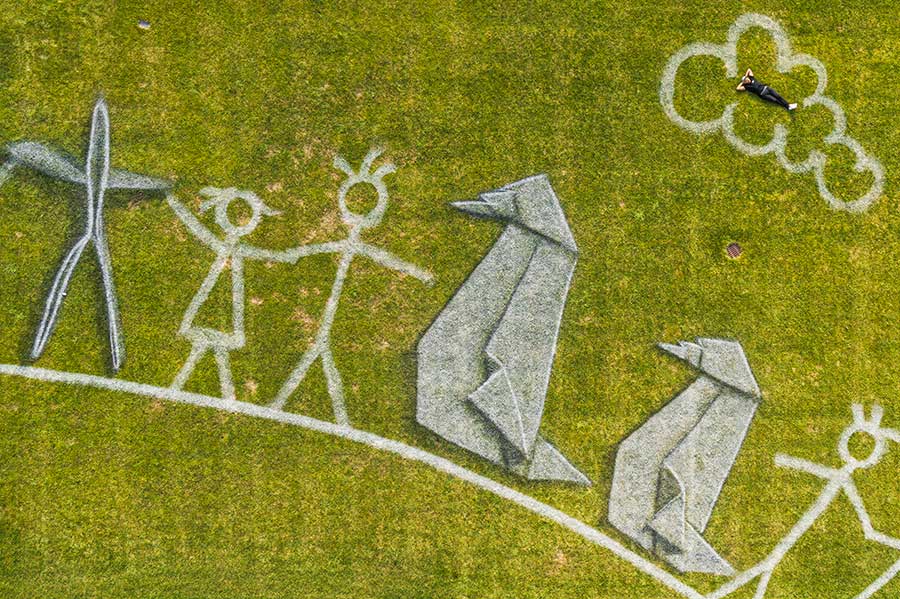
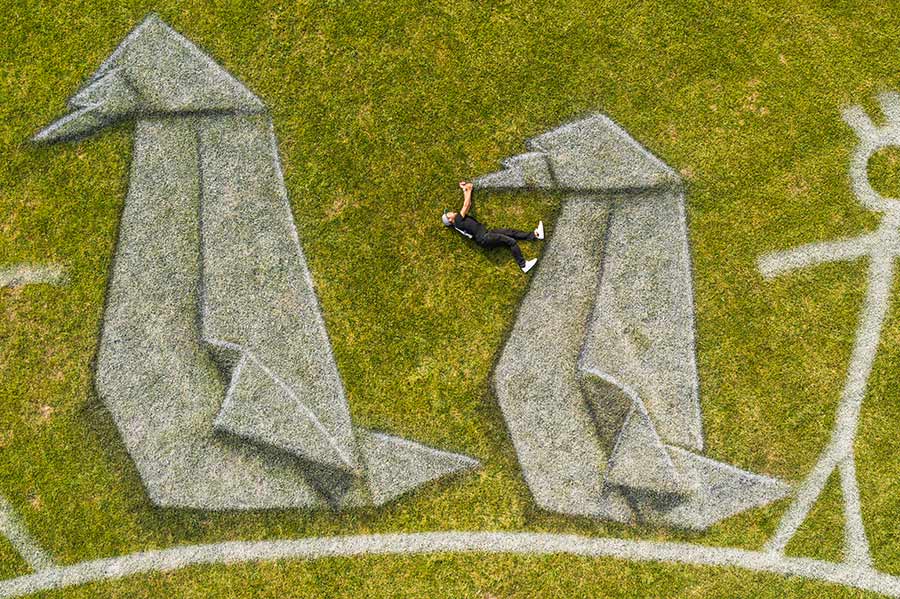
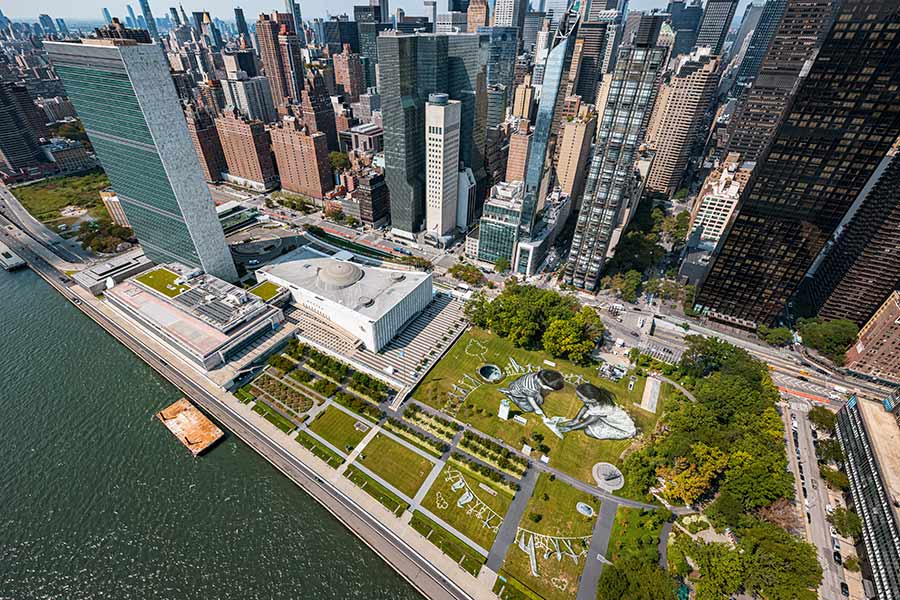
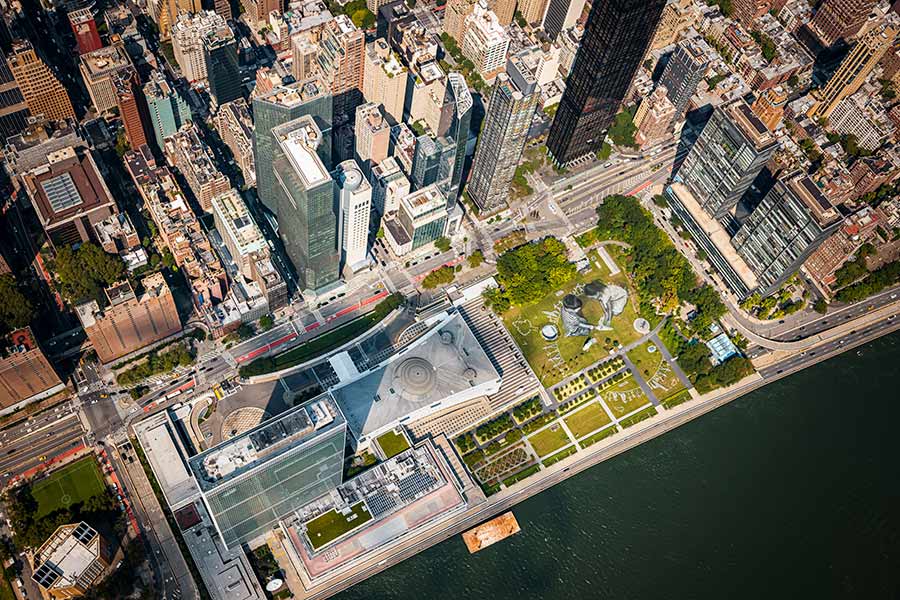
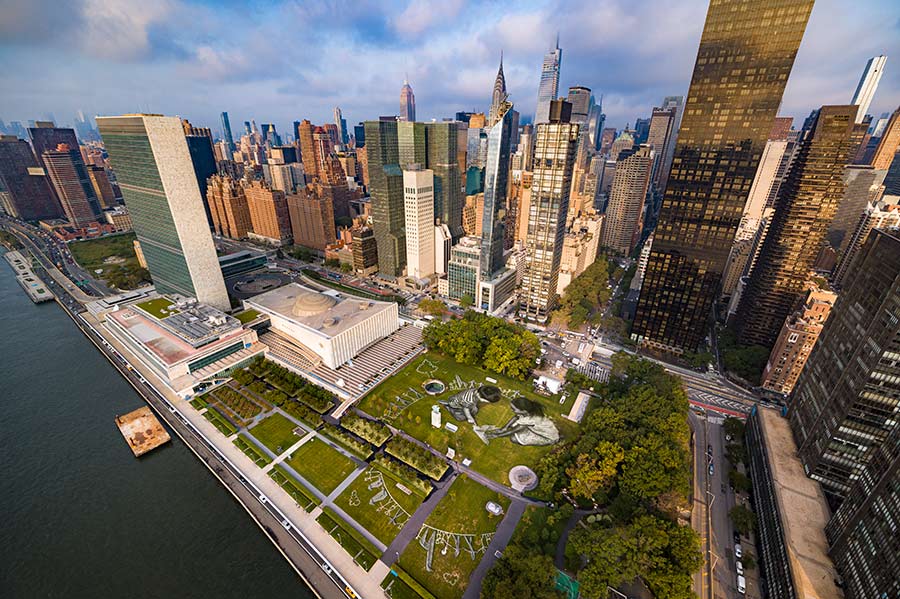
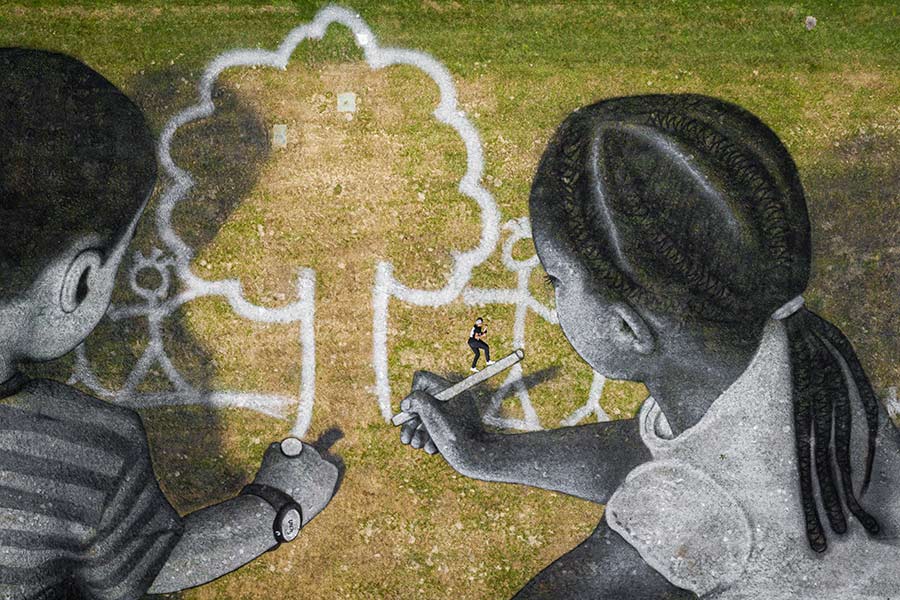
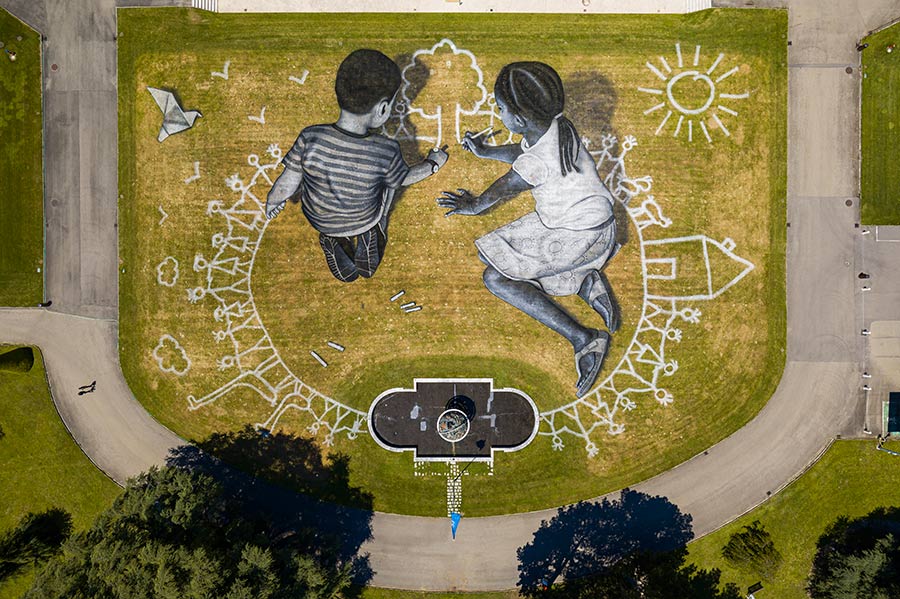
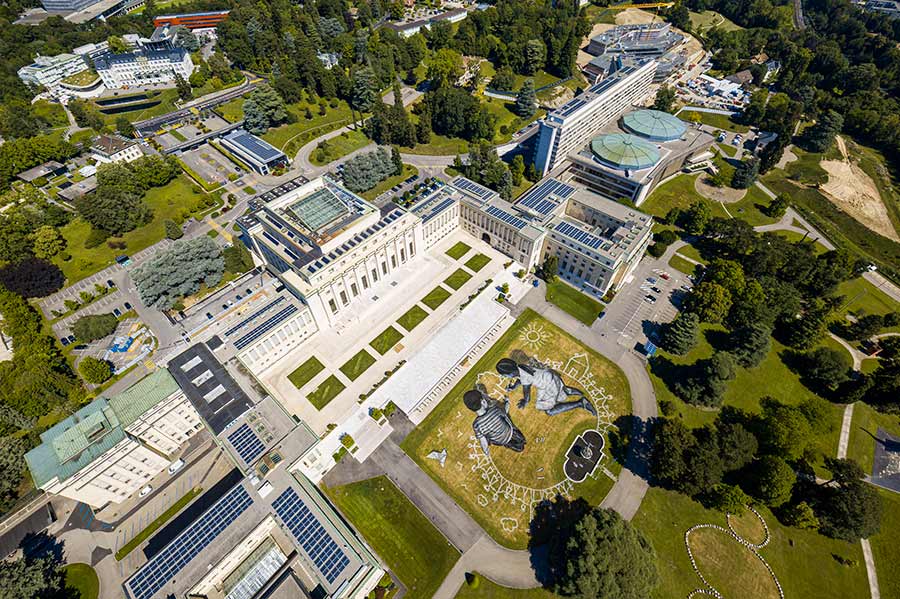
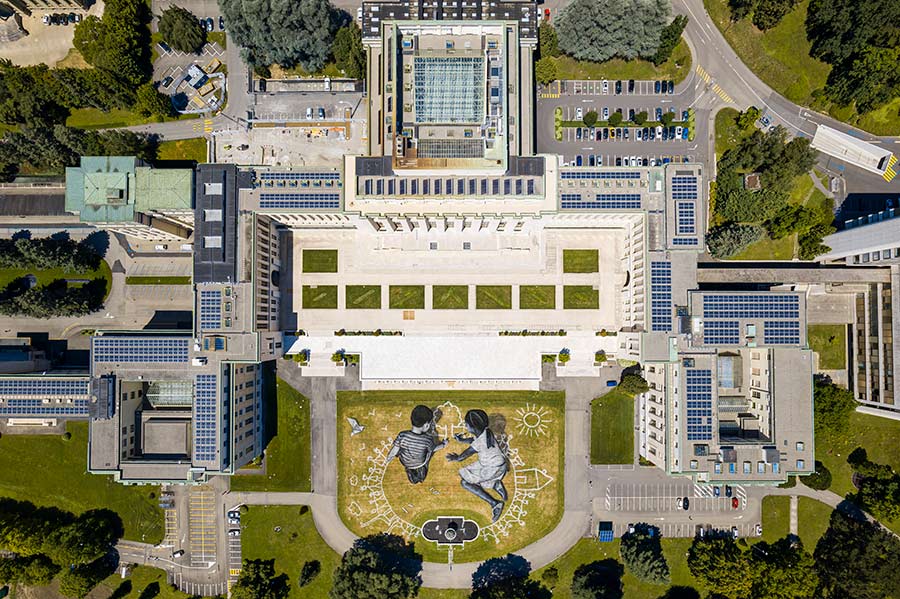
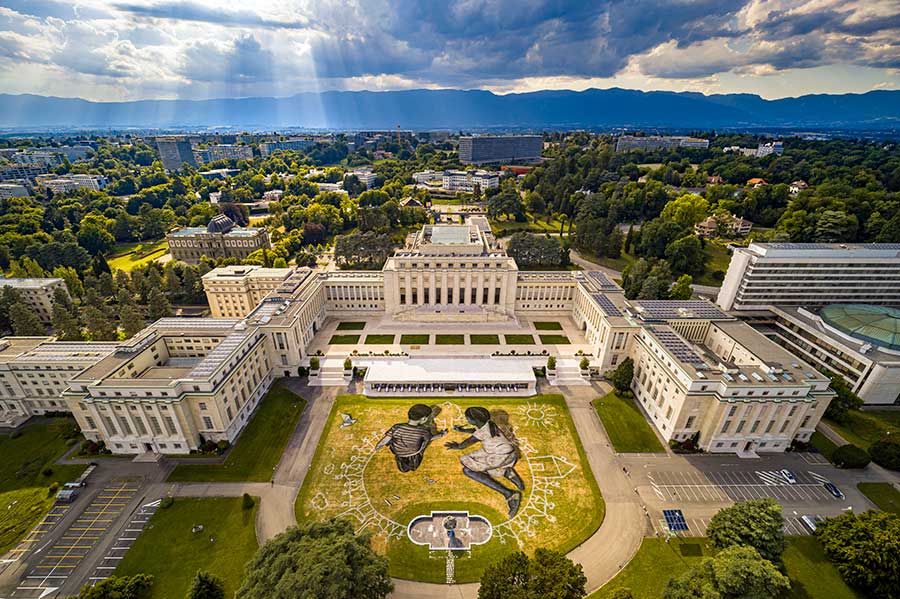
Completing a cross Atlantic bookending of public artworks that few ever could, the French-Swiss artist Saype was at the UN this week for the General Assembly meeting – and to complete a project he began at the UN in Geneva.
Entitled “World in Progress” representing two children drawing their ideal world, his new piece answers visually the one he completed – using the north Lawn of the U.N. headquarters to paint his 11,000 square meter celebration of the U.N.’s 75th Anniversary. Naturally, the fresco uses biodegradable paint. Saype says he hopes the work will appeal to the world leaders who are joined here in New York for their annual round of speaking and “Remind them that they must not lose sight of the luminous ideal of peace between nations – hand in hand with the preservation of their environmental world heritage.”
“Giant ephemeral landart painting by Swiss French artist Saype entitled ‘World in Progress’ representing two children drawing their ideal world, at the European headquarters of the United Nations in Geneva, Switzerland, Wednesday, June 24, 2020. The artwork covering 6000 square meters was produced with biodegradable paints made from natural pigments such as coal and chalk. The fresco, offered by Switzerland, for the the 75th anniversary of the signing of the United Nations Charter in San Francisco on 26.6.1945 will be inaugurated by Swiss Federal Councillor Ignazio Cassis, in the presence of the Director-General of the United Nations Office in Geneva, Tatiana Valovaya.”
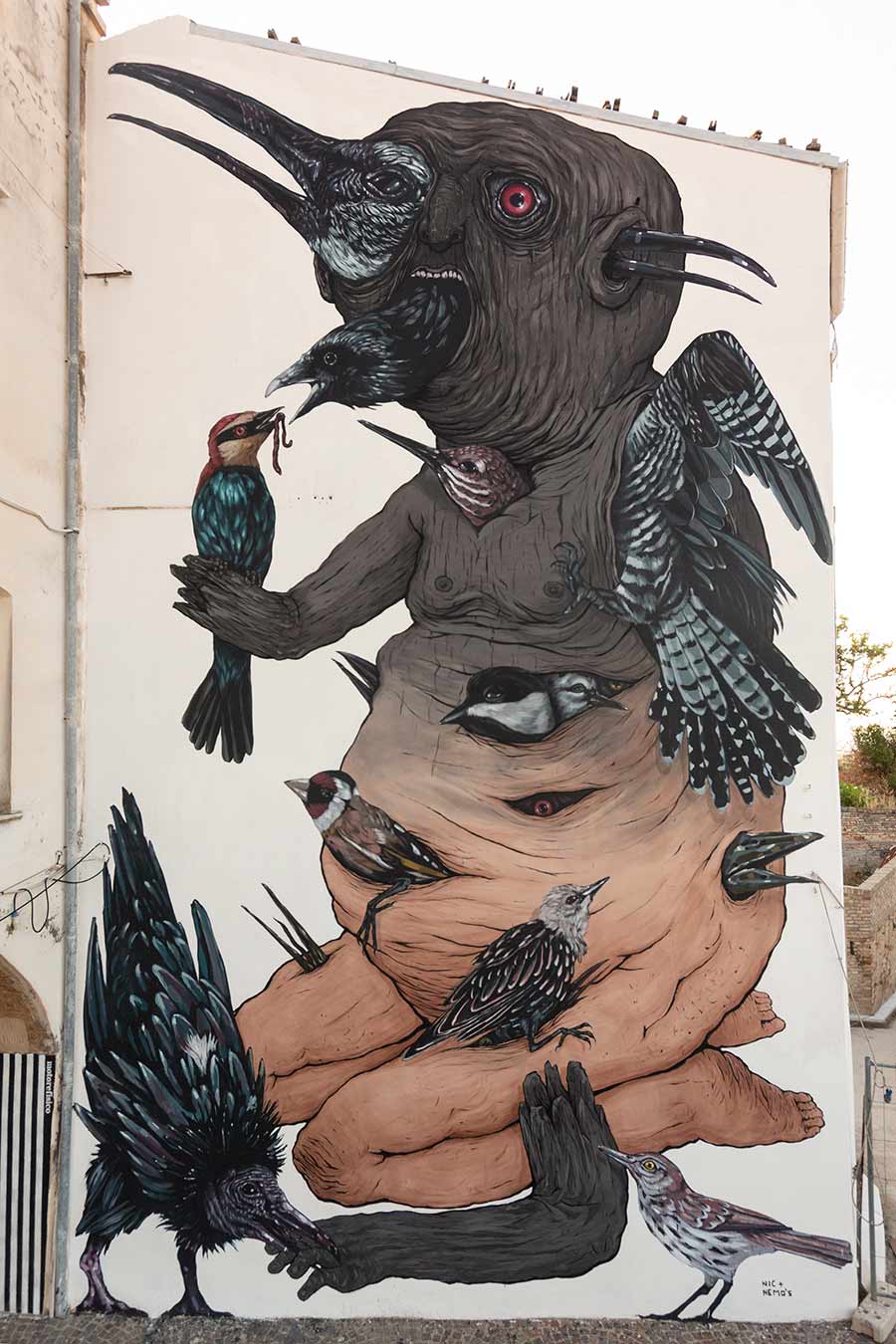
Ah, the feckless, sebaceous, inward-turned man; Bumbling through the world unaware and uncaring how his actions may impact the lives of others. Little does he know that the fire he starts will burn him as well.
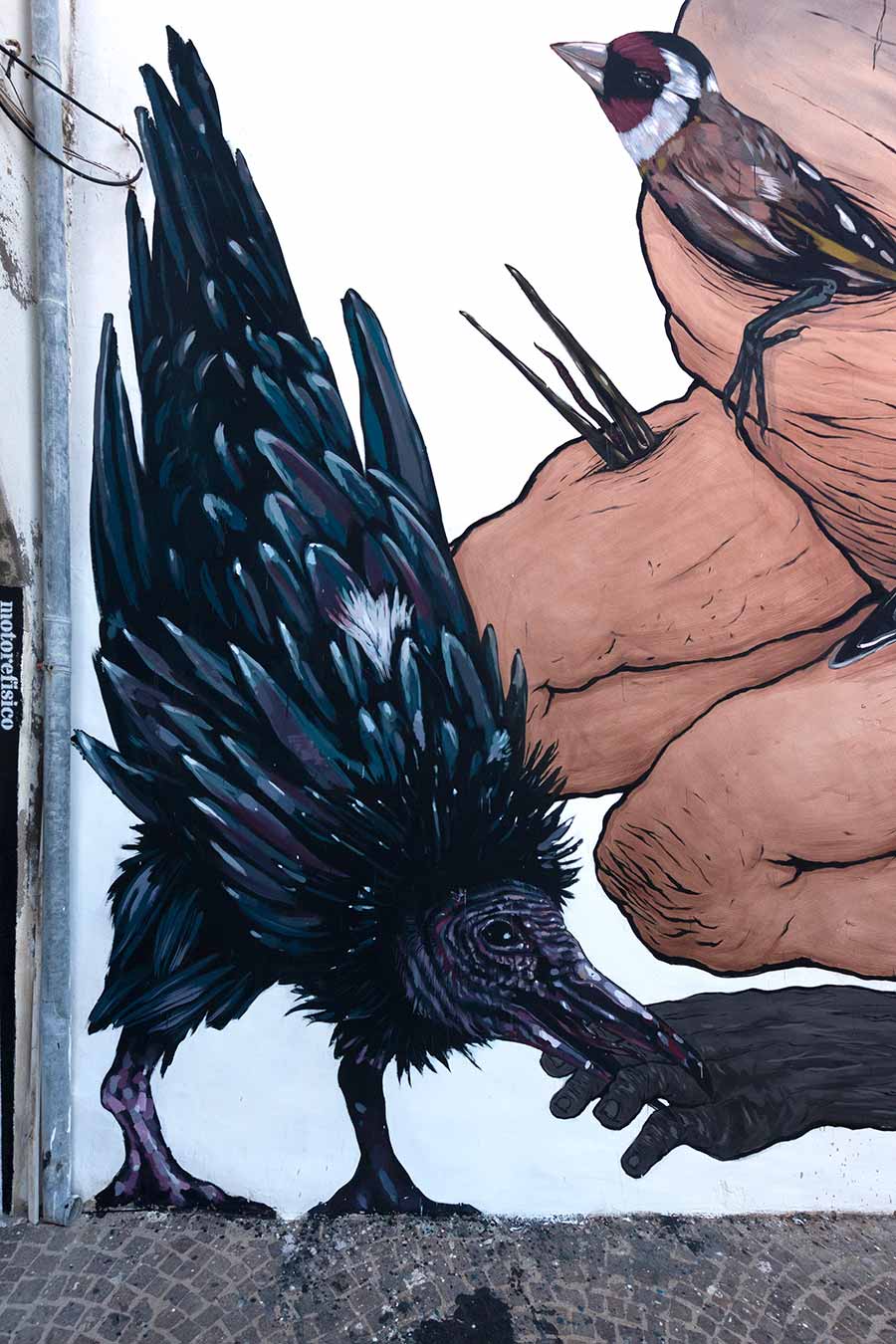
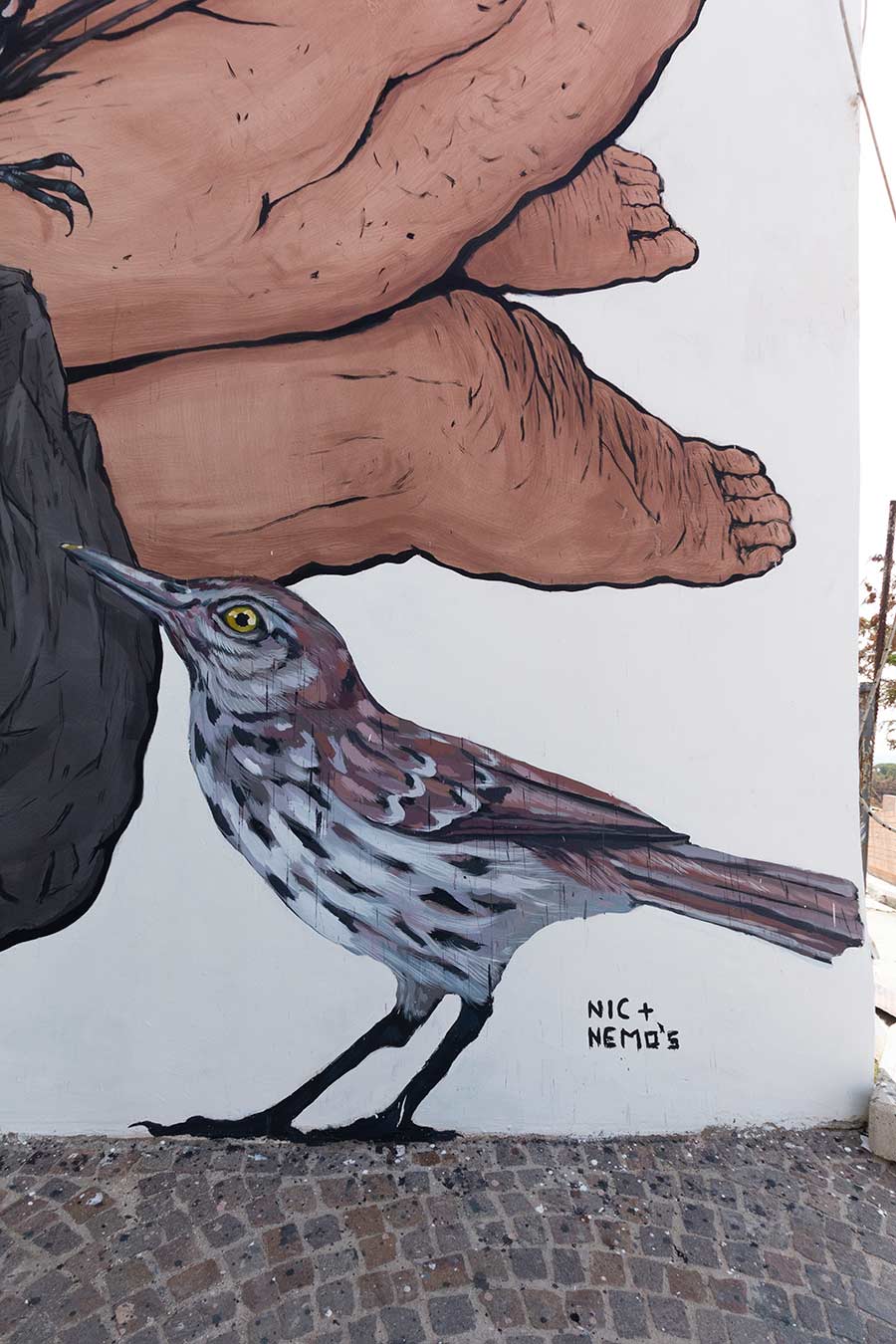
Italian street artists Nemo’s and Nicola Alessandrini created this awful and gorgeous scene on a wall in San Martino in Pensilis. The significance of its physical placement is alluded to by the burned upper body of the figure, the grotesque through whom is popping finely plumed birds who perhaps have just lost their homes.
“We painted it next to a natural area deeply wounded by a fire that broke out only a few days earlier,” Nemo’s explains. “The image was born from our intimate need to share in that wound and as an ode to a nature that resists and exists despite everything.”
It’s a strong image, one that rises up from a mountain once covered with trees. “Like every summer, many wooded areas throughout Italy are on fire due to several causes: the reckless action of man, arson, the effects of global warming and drought,” the two say in a formal statement.
“Land burning because of neglect, because of brutal will, because of auto-da-fé, showing the remains and waste from a humanity that is wholly inadequate to care for the land. Among the stumps of burnt trees, birds return to fly – the only witness to nature’s untamed return to life.”
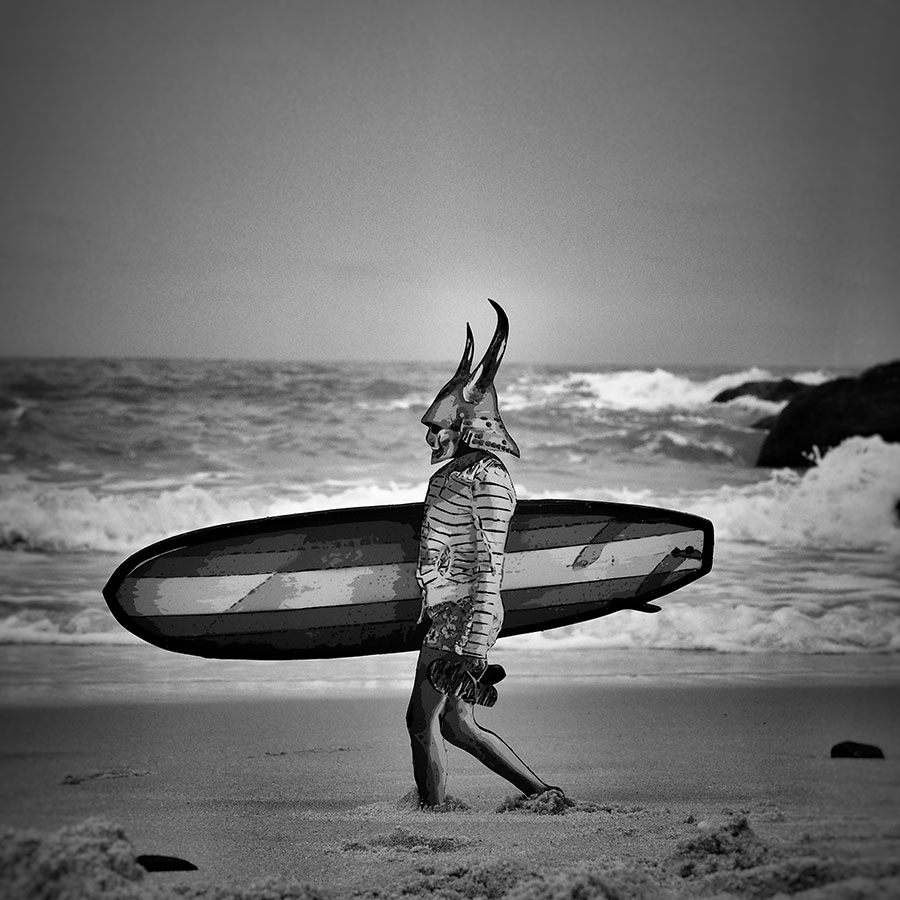
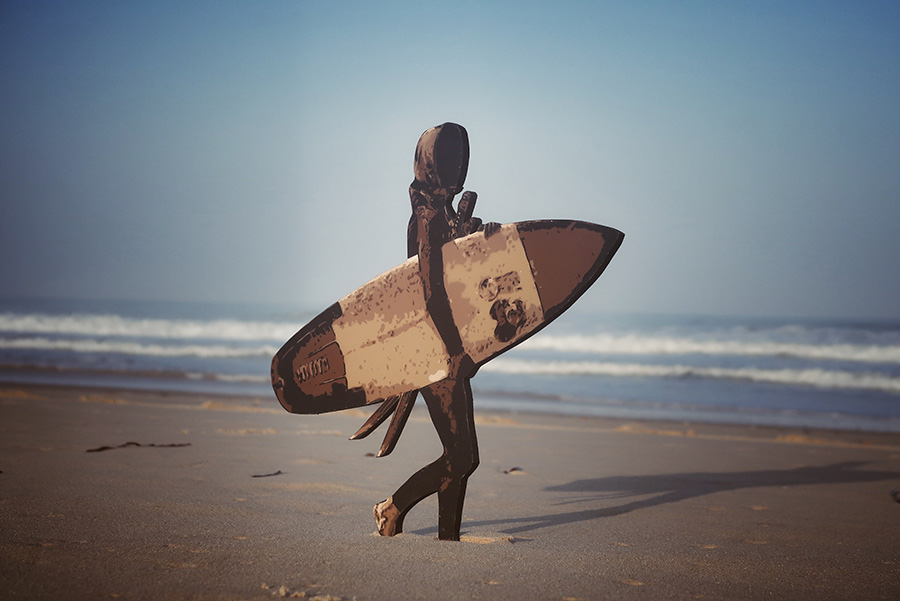
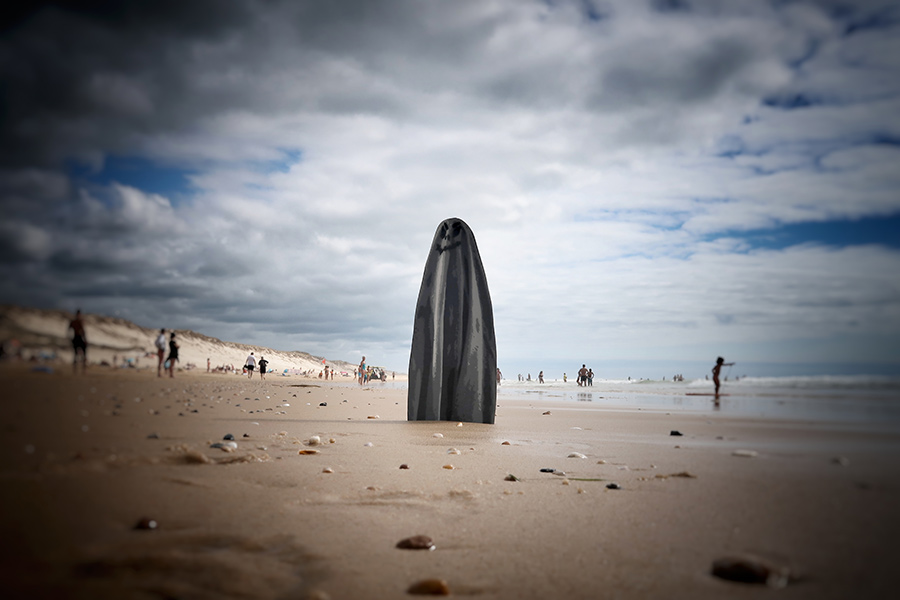
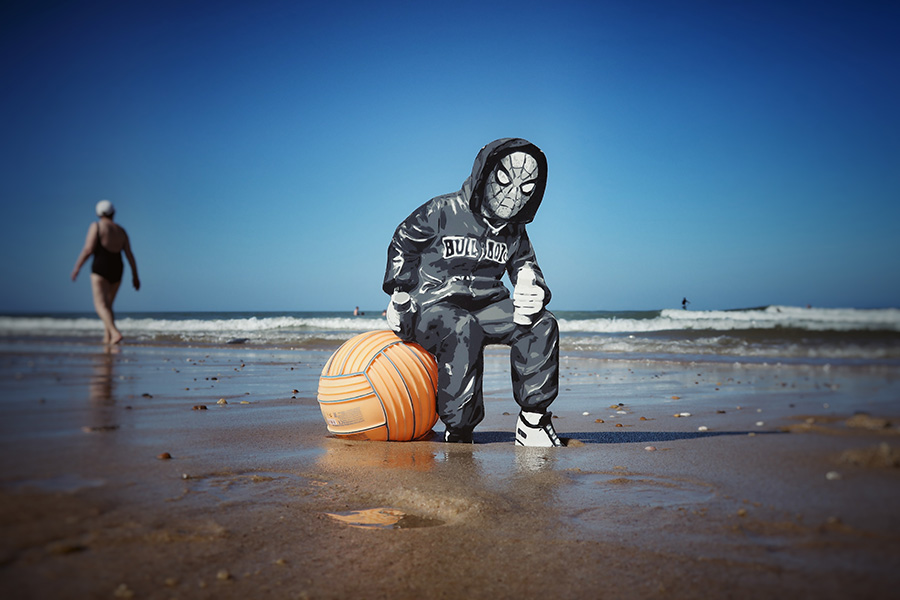
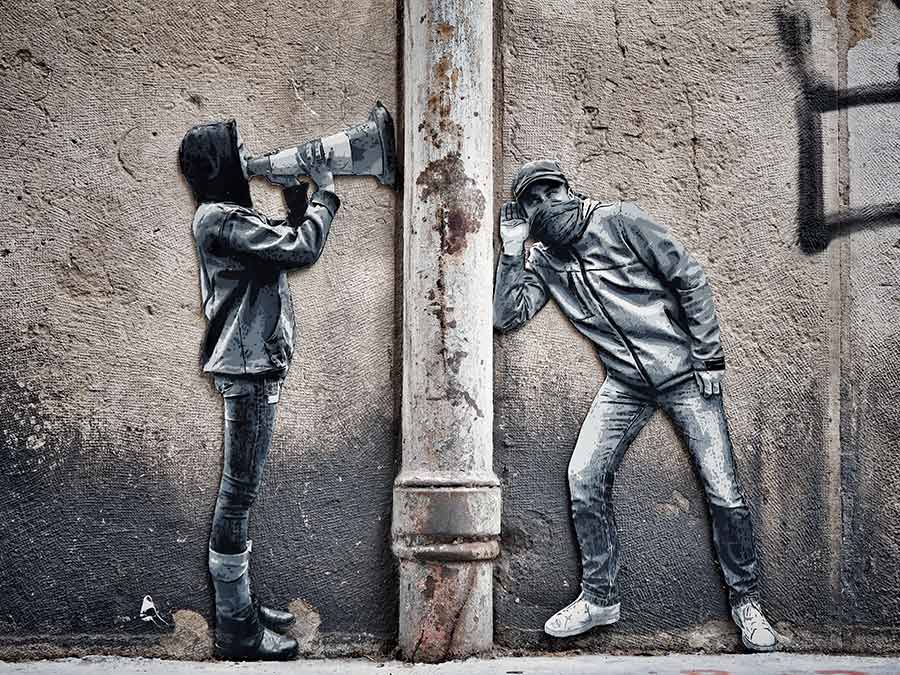
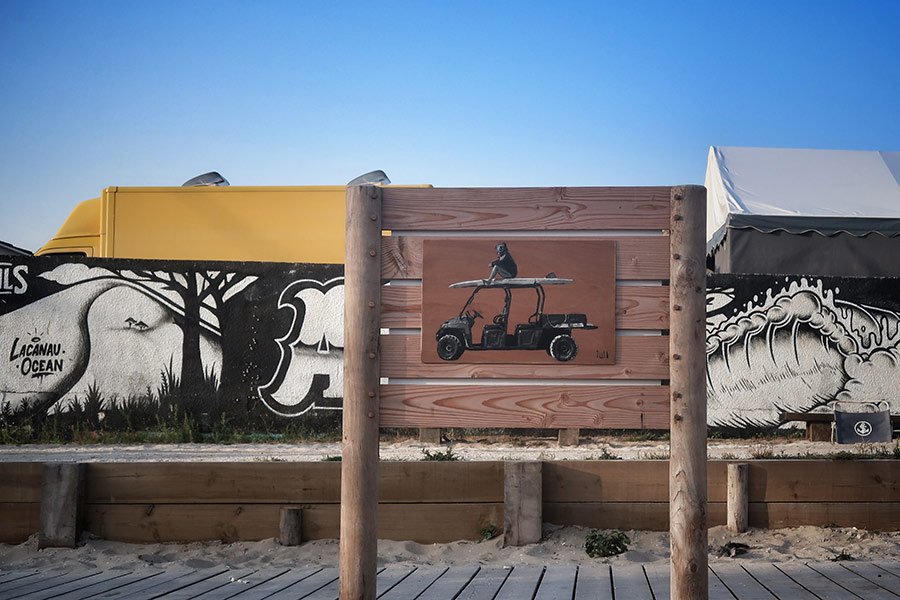
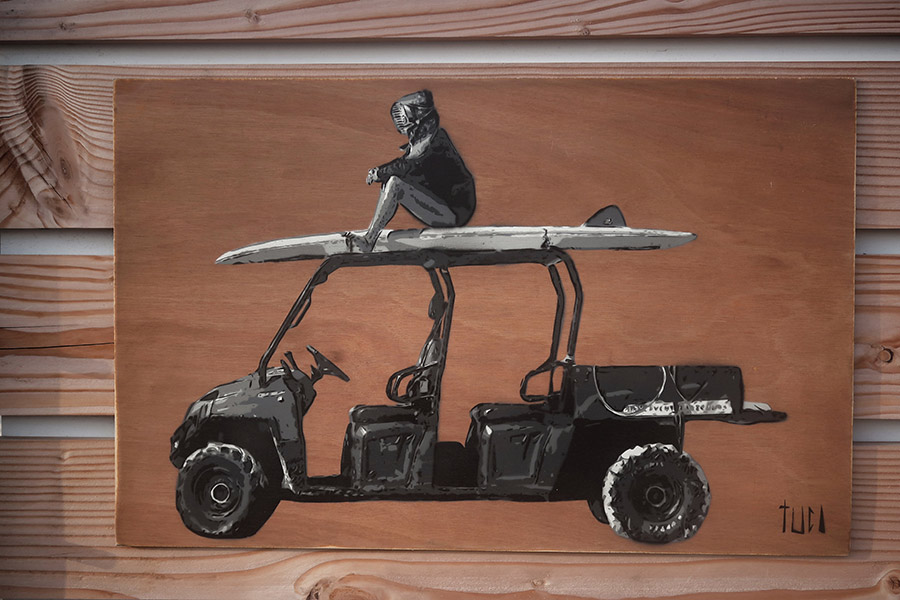
Perhaps more studied than the typical aerosol vandal, Tuco Wallach works for days in studio to prepare his works that go into the public sphere. Stencils based on his merged photo collages emerge as wood cutout Humasks, a uniquely titled campaign of figures he puts out under cover of night, or out in broad daylight, in his hometown in France.
Sometimes alone, often as a project with friends or with his family, Tuco shares his ideas and the process of putting work in public with his two young boys and his wife and others who those close to him. His craftsmanship is meticulous, precise, and his mind is immersed in a fantastic world that lies just inside one thin slice of yours.
He carefully cuts and finishes these “woodshapes”, and they are never far from him. “I always have a few ‘woodshapes’ with me and shoot them in streets or landscapes,” he says.
This summer his characters were stuck to walls, or posed in natural scenes long enough for him to photograph them, the magic captured for posterity. Tuco’s is an ongoing practice, one that entertains him and connects him with people, rather than separates him. Because his characters are shy, perhaps, they like to wear masks. He calls them “humasks”
We asked Tuco a few questions about his new campaign:
BSA:What is the new campaign “humasks” about? Tuco Wallach: After mixing for a long time humans and animals (“manimals”), I wanted to explore a new area : the masks and humans. I’ve always been very interested about masks in popular culture, movies, music… the subject is “infinite” for me. I began to make my first “humasks” just before the pandemic… Maybe the meaning has changed now. Perhaps it sounds a little “cliché”, but I wonder who’s behind the mask? We all are always wearing different masks with family, friends, and colleagues.
BSA:What is the process for selecting a figure for whom you will create a humask? Tuco Wallach: It depends – but my process doesn’t really change. All my drawings come from my pictures (not necessarily the masks). I shoot unknown people and I add a mask to their figure later, and create my stencil from that result. Sometimes the mask influences me regarding how I choose a figure, sometimes it’s the contrary. I make tests and and at some point, I feel it’s right.
BSA:When you have added the mask, does the figure become a new character? Tuco Wallach: Definitely it does for me. Each time the new figures become my ‘little friends”. They have a parallel life in my mind, like super heroes 🙂
BSA:There is a certain anonymity in putting street art up in public places. Do you wear a mask sometimes in public as well? Tuco Wallach: No. Just my cap and my bike. If I was wearing a mask when pastings my “humasks” I think it may become too complicated.
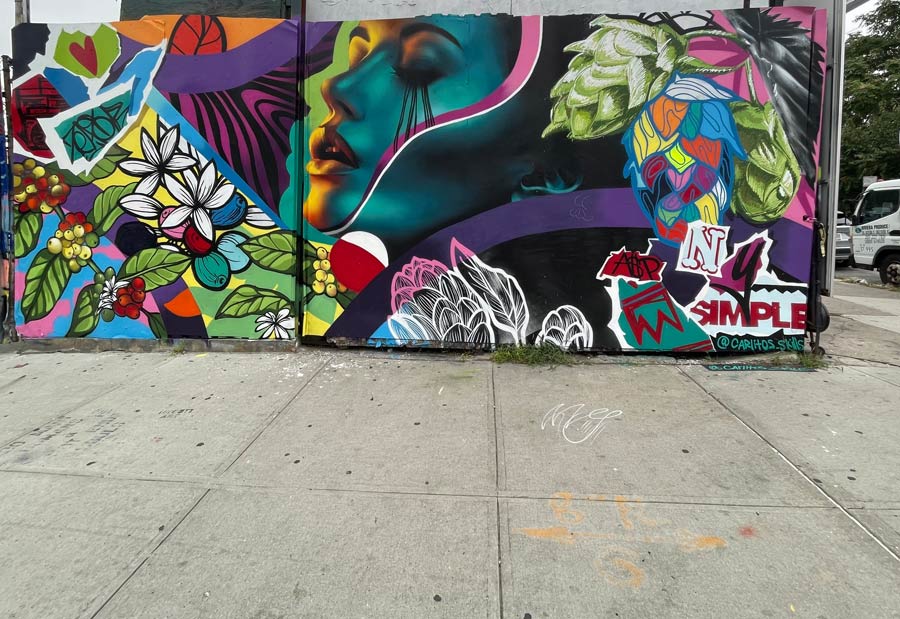
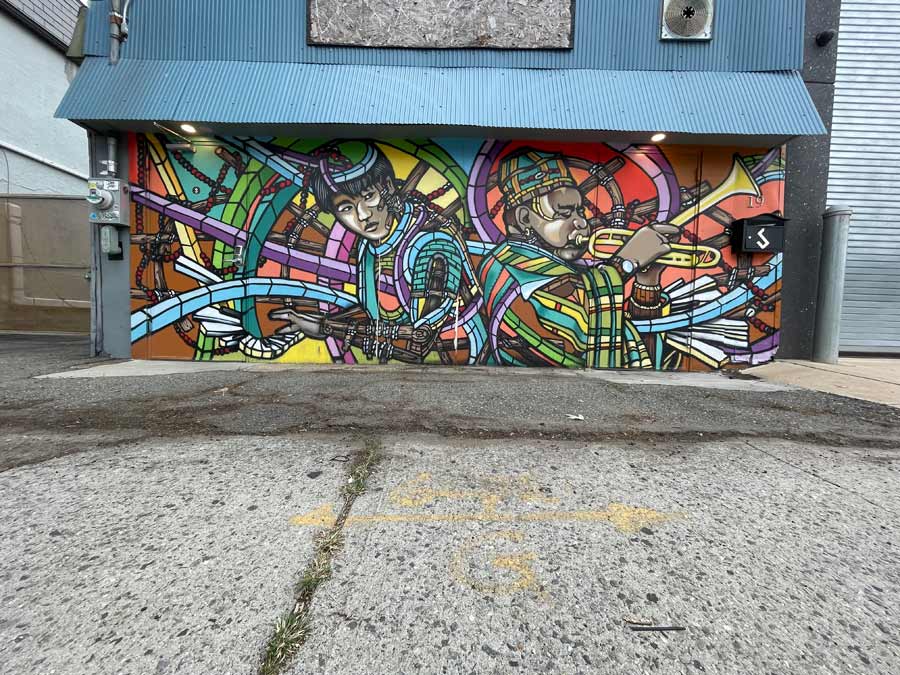
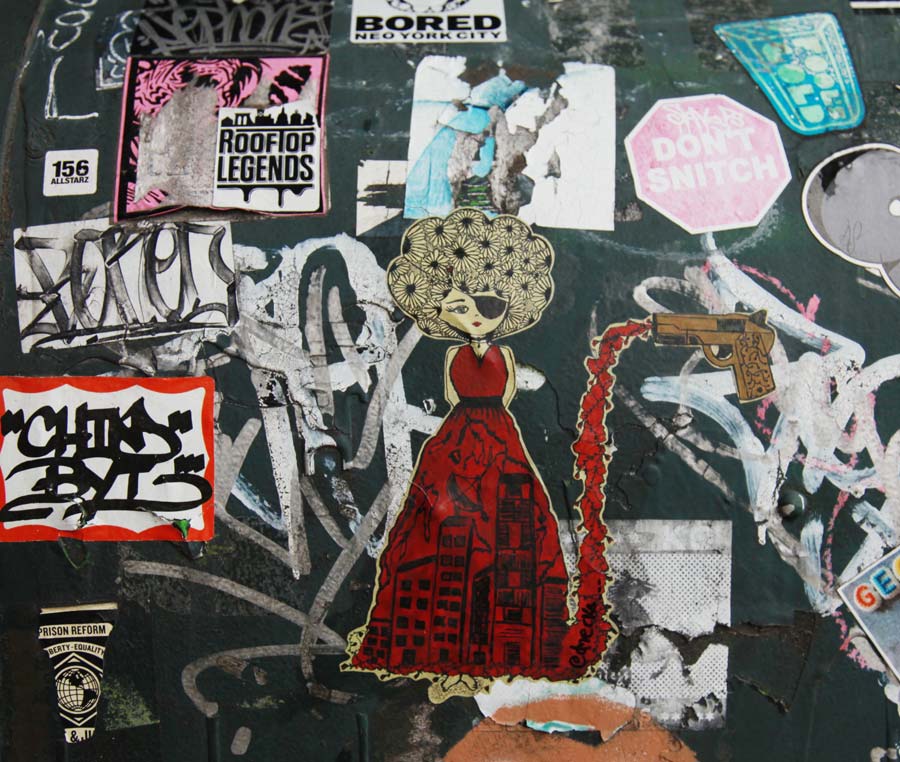
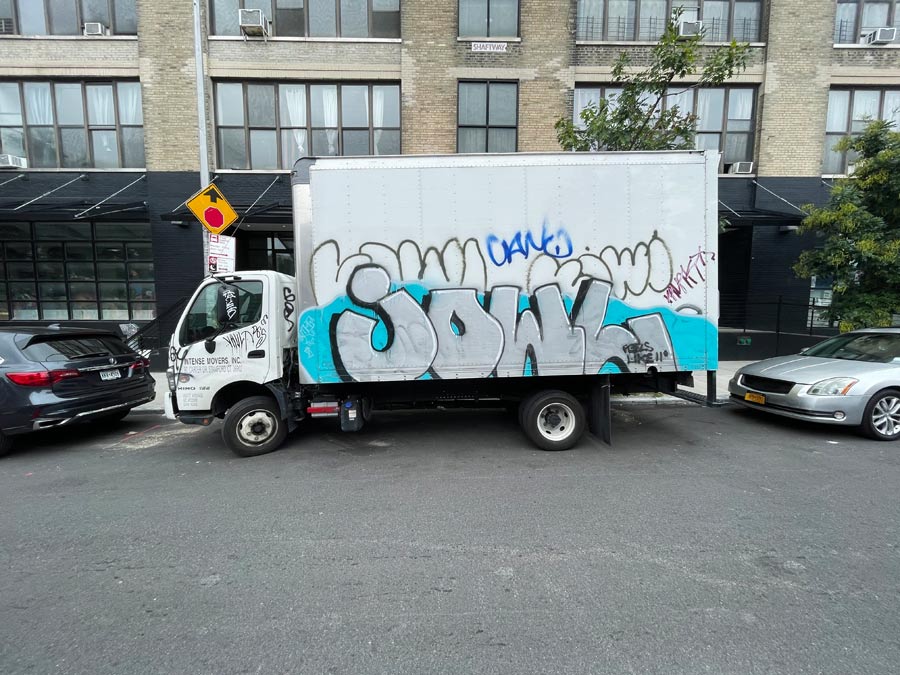
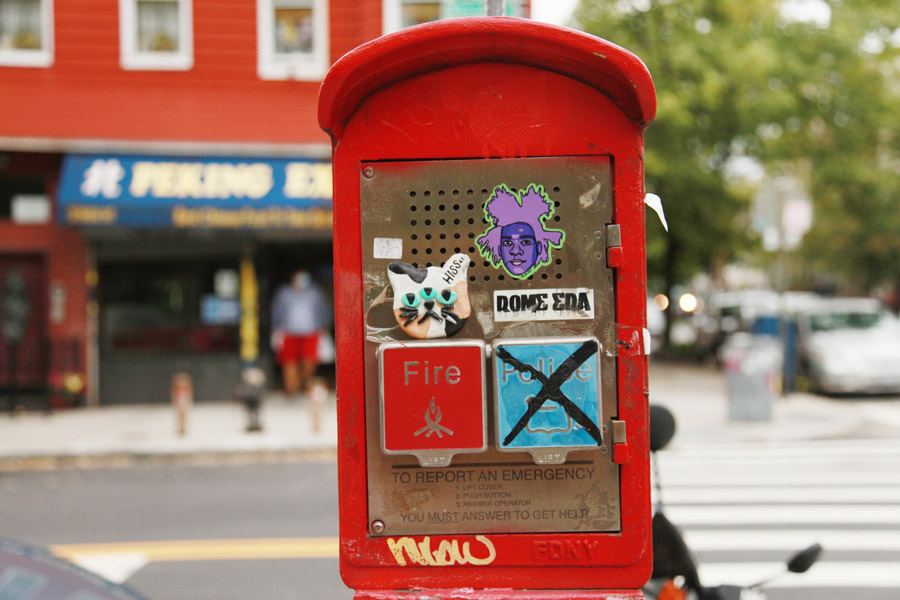
For all the flooding of our street art consciousness by the mural movement during the last handful of years, we’re still impressed by the completely organic personality of New York’s scene. New York has the ability to absorb countless graffiti and street artists from around the world and still retain its own particular attitude regardless. Prickly, preening, pensive, or ready to throw a punch, you are never quite sure what you will end up with the art on the streets here. However, you are guaranteed to see something unique — and you’ll never have time to be bored.
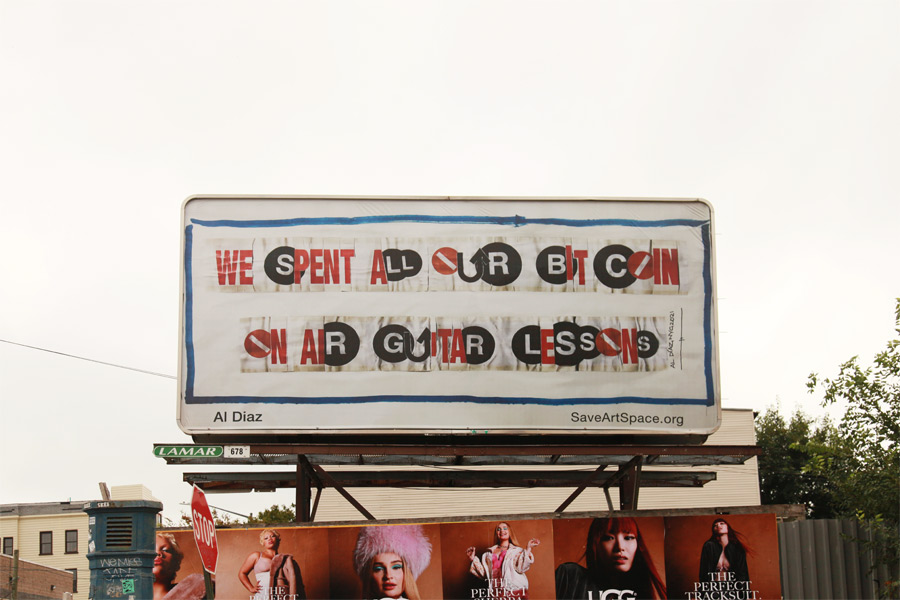
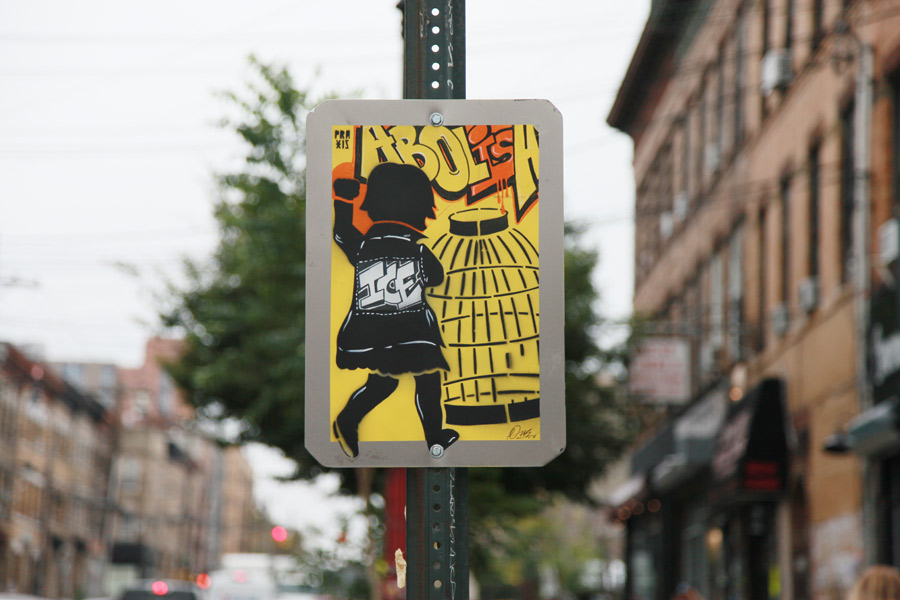
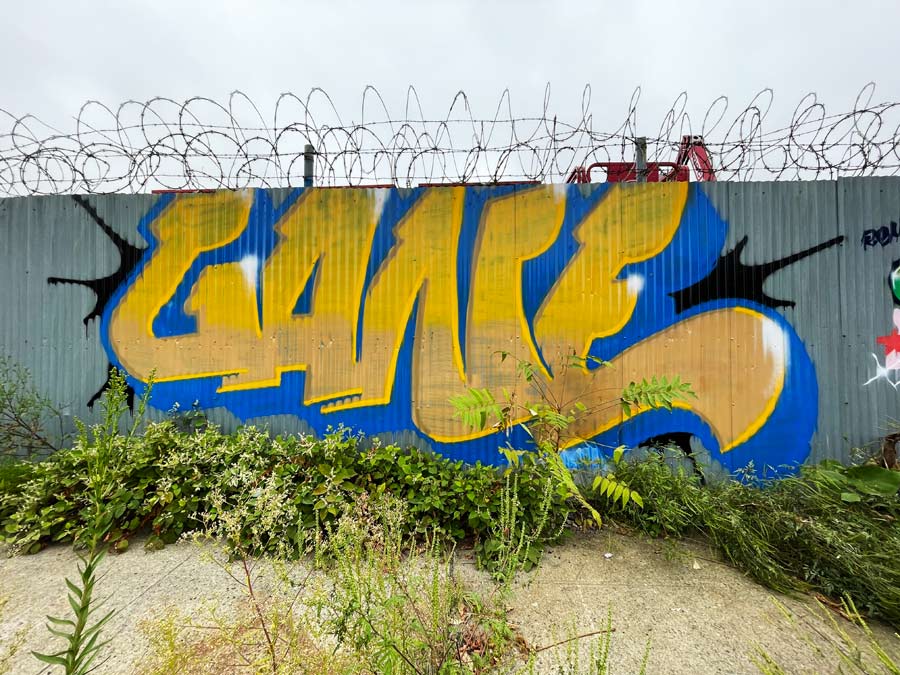
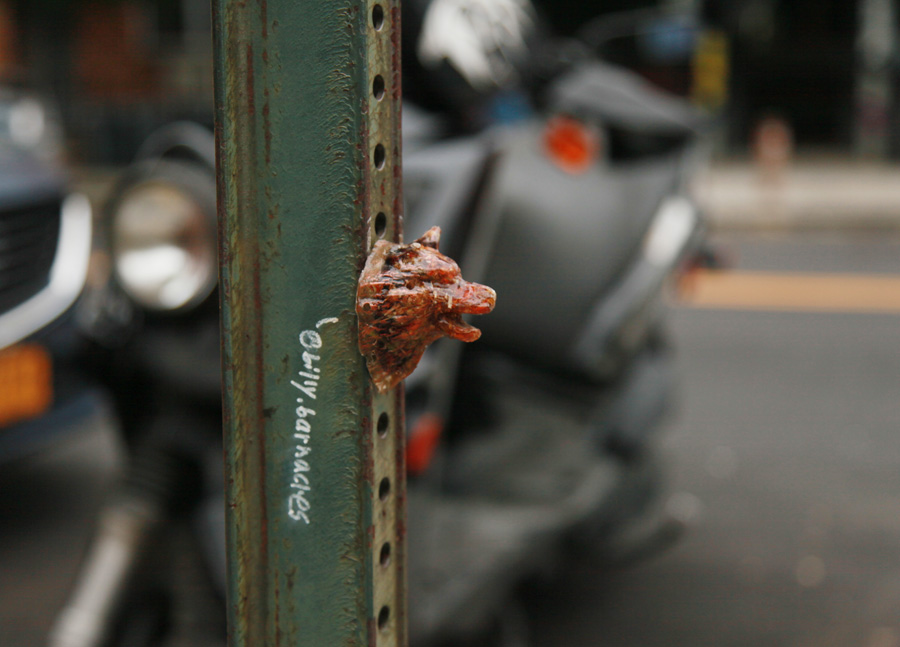
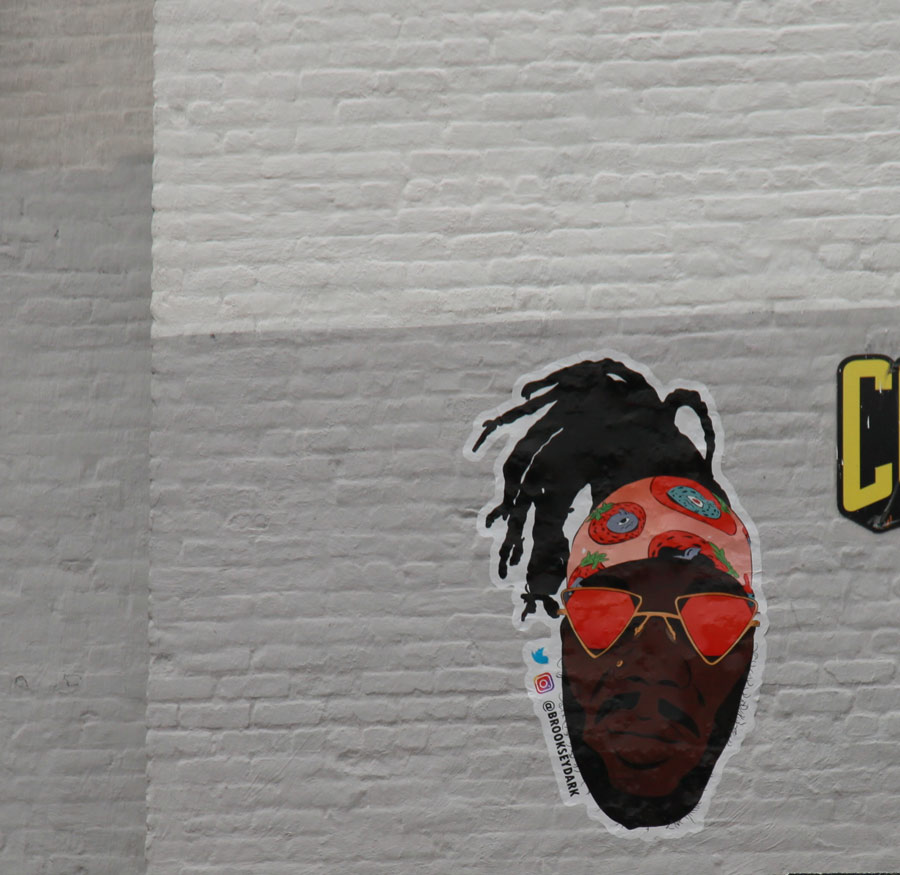
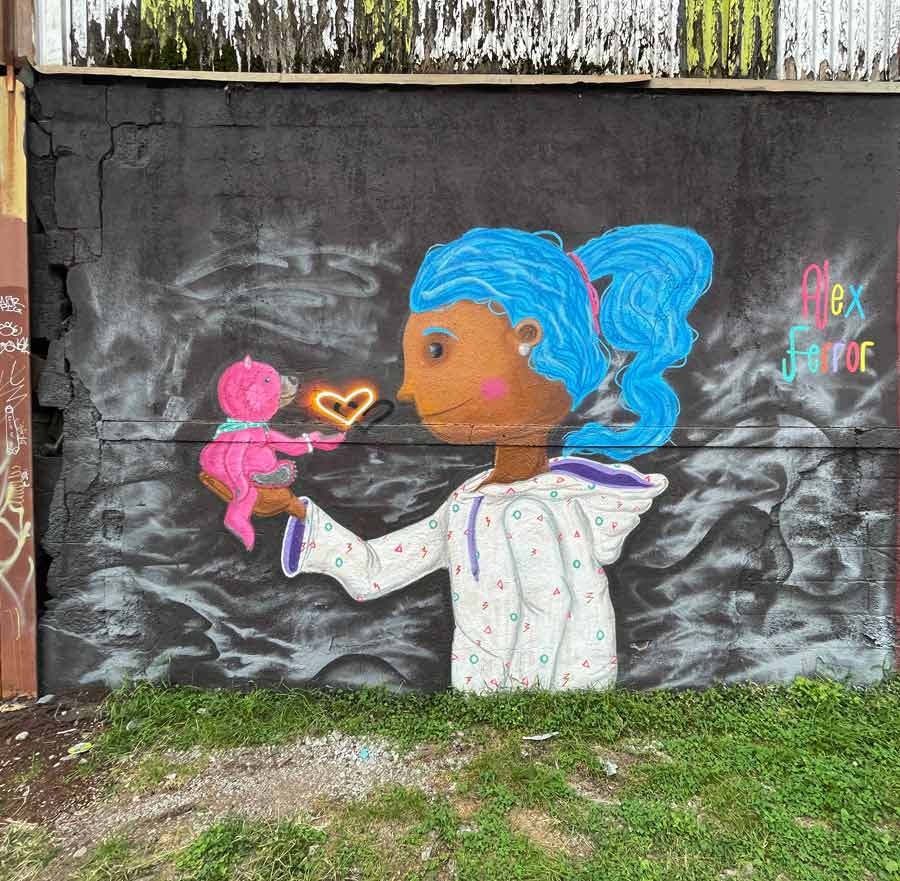
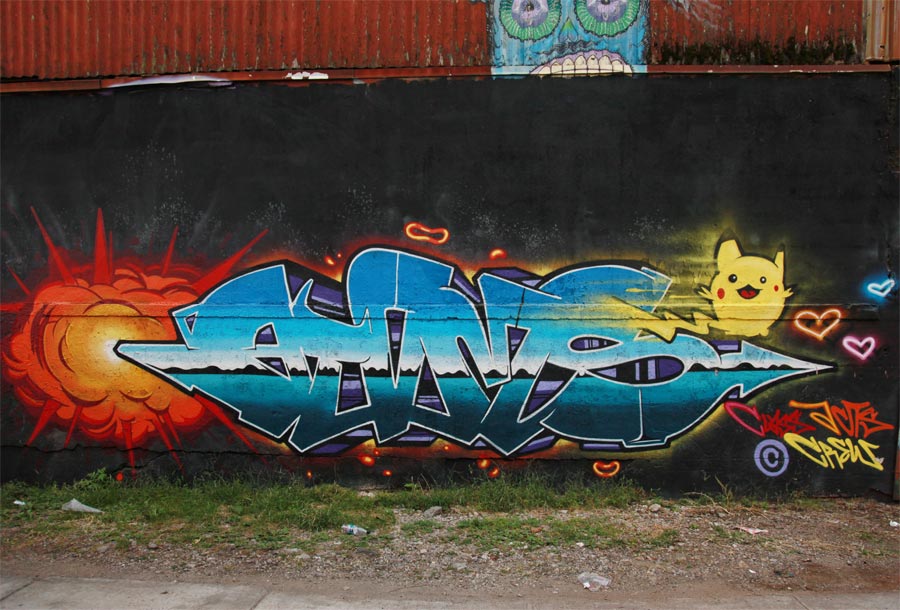
Here’s our weekly interview with the street, this week featuring Al Diaz, Alex Ferror, ATOMS, Billy Barnacles, Brooklsey Dark, Carlitos Skills, Don Rimx, Drecks, Duel1, Gane, Hiss, Jowl, Little Ricky, London Kaye, Lucky Rabbit, Praxis VGZ, Skewville, Smells, and UFO907 .
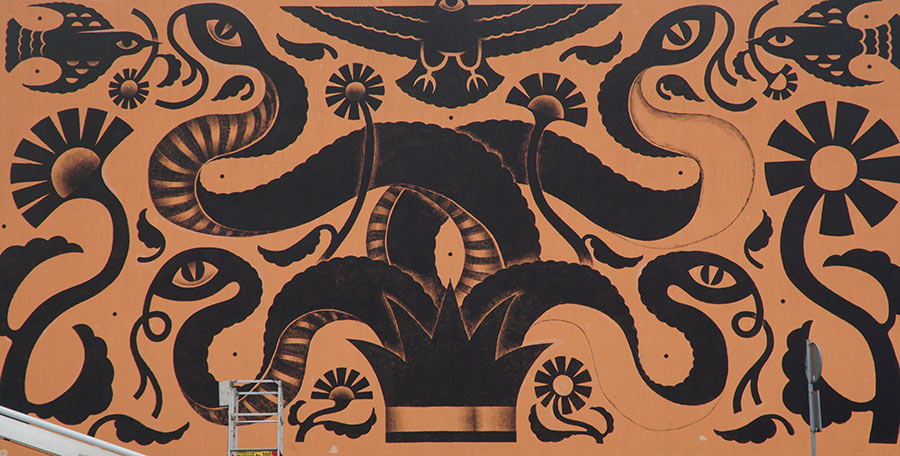
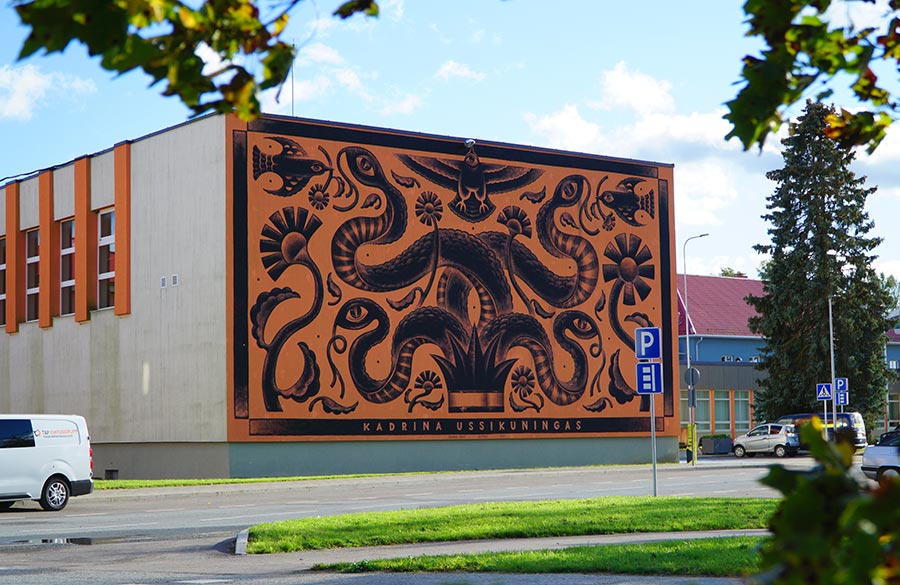
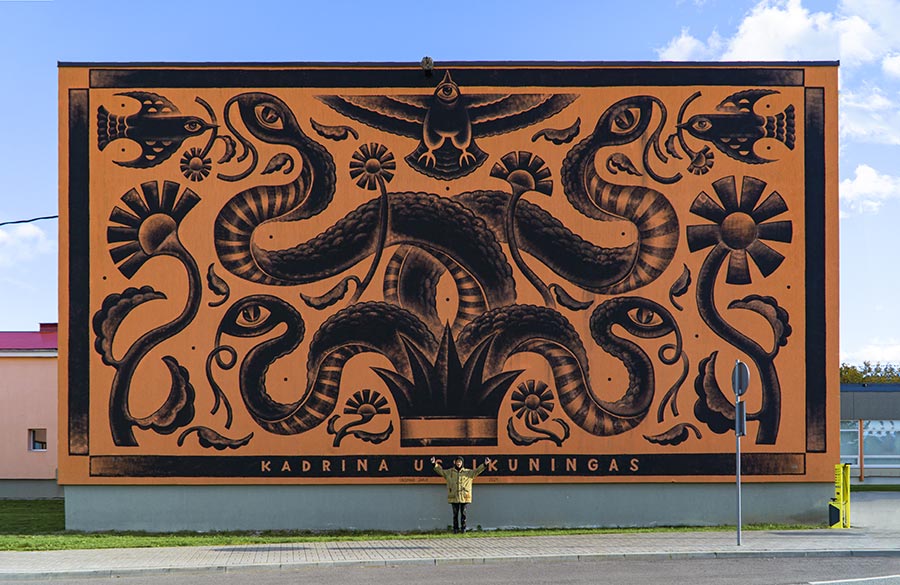
Graphic designer, video animator, illustrator, and artist Ingmar Järve also has done a fair share of illegal street art and legal walls at GUTFACE in the last few years – including participating in Estonia’s Rural Urban Art festival, which focuses on small towns there.
Last year he quit his job in advertising and went on his own away from Estonia’s capital of Tallinn on the Gulf of Finland to pursue a professional career solo in Tartu, a couple of hours southeast. Tartu is also where the Stencibility festival has run for a decade and the street art scene is more lively. He shows us this new mural he created for the local municipality of a small town in the north of Estonia called Kadrina.
“The artwork is inspired by an Estonian folklore character which I interpreted and illustrated,” he says, and you can tell he is proud of the clean lines and curving forms that refer to historical storytelling – as well as their similarity to current tattoo, skater and signage styles.
Our weekly focus on the moving image and art in the streets. And other oddities.
Now screening: 1. Thierry Mandon Living Outside
BSA Special Feature: Thierry Mandon Living Outside
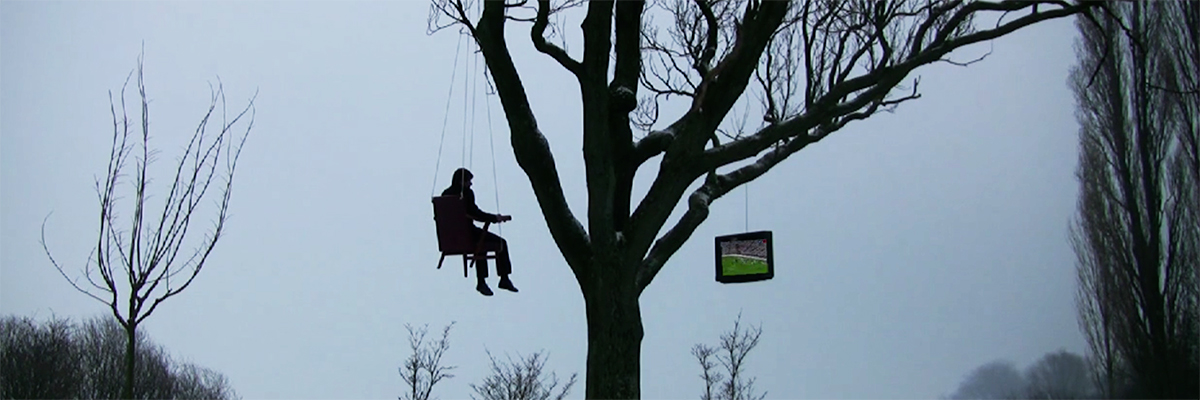
We dedicate this Friday’s edition of BSA Film Friday to French performance and conceptual artist Thierry Mandon. Mr. Mandon conveys his art through performances and installations by using himself as the subject of his compositions, his tableaus of unremarkable domesticity exposed publicly.
Video and photography open the door to the work with the rest of the world as only a handful of people are present while he dangles himself from abandoned buildings or performs an act of solitude openly on the streets. Day-to-day is elevated – the mundane activities of living reframed as sublime acts. Recontextualized, these ordinary moments spawn a feeling of performance, implicating you in the scene.
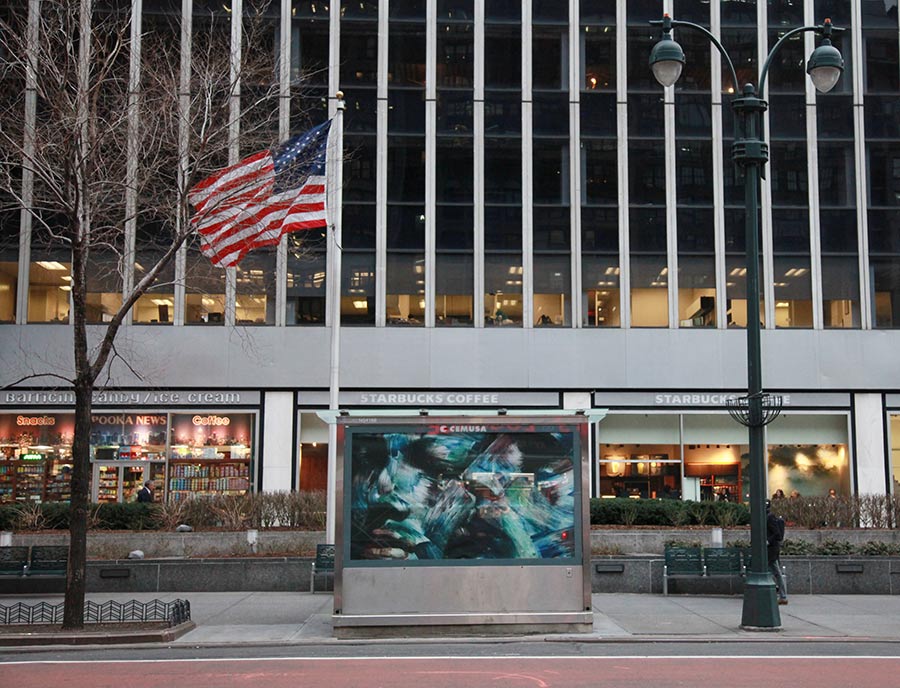
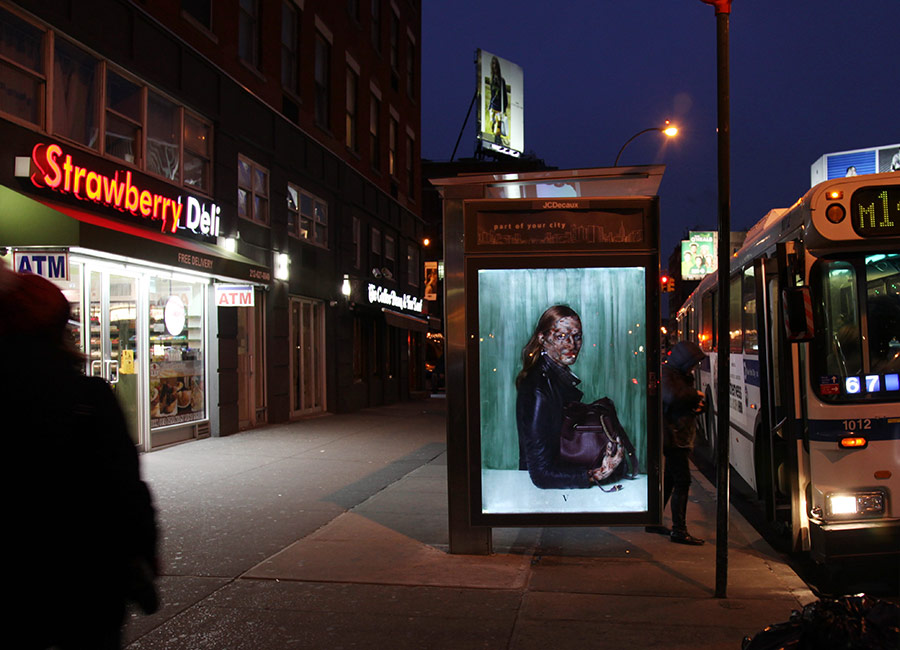
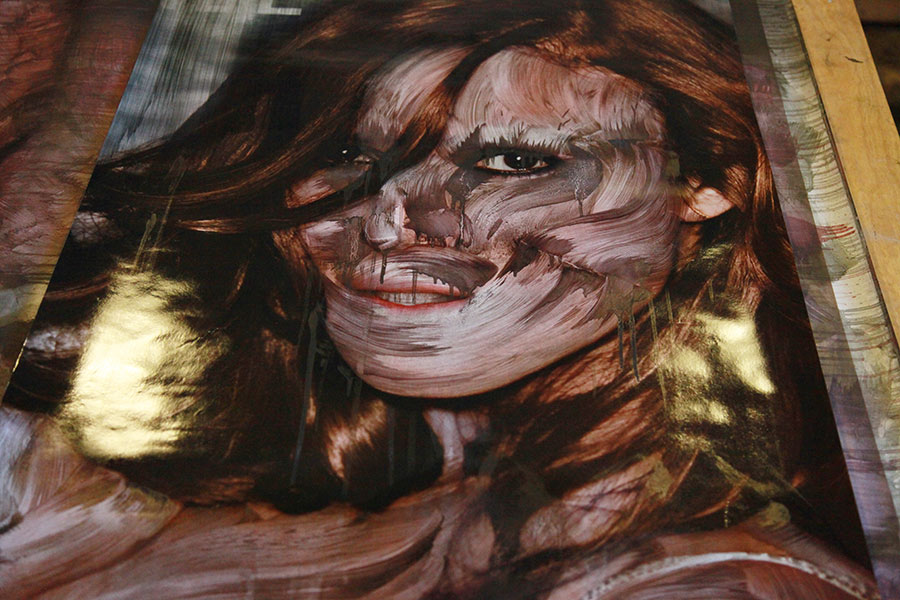
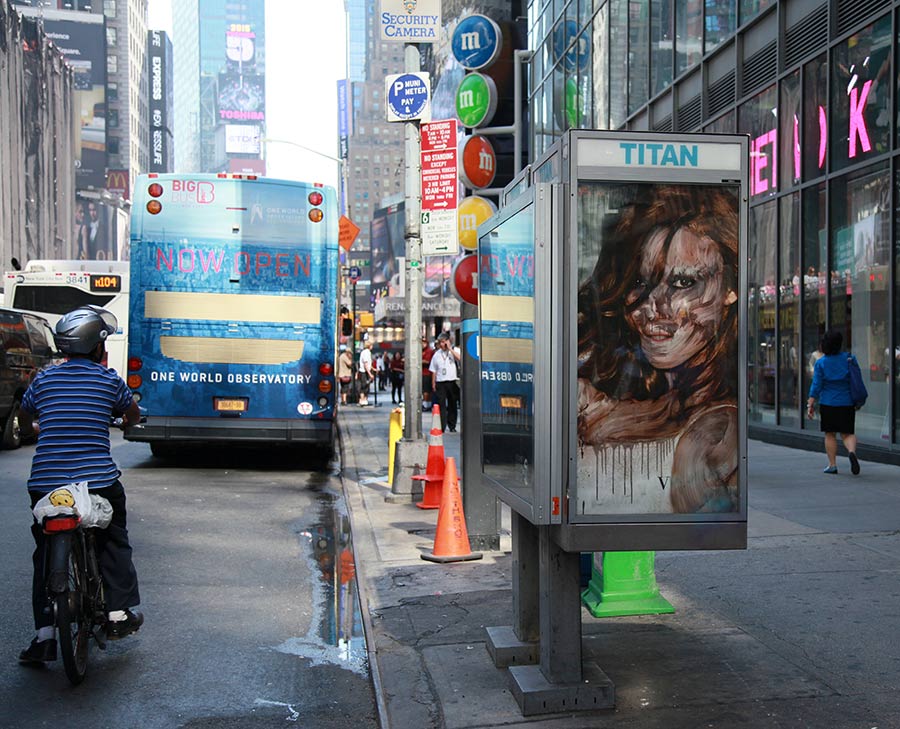
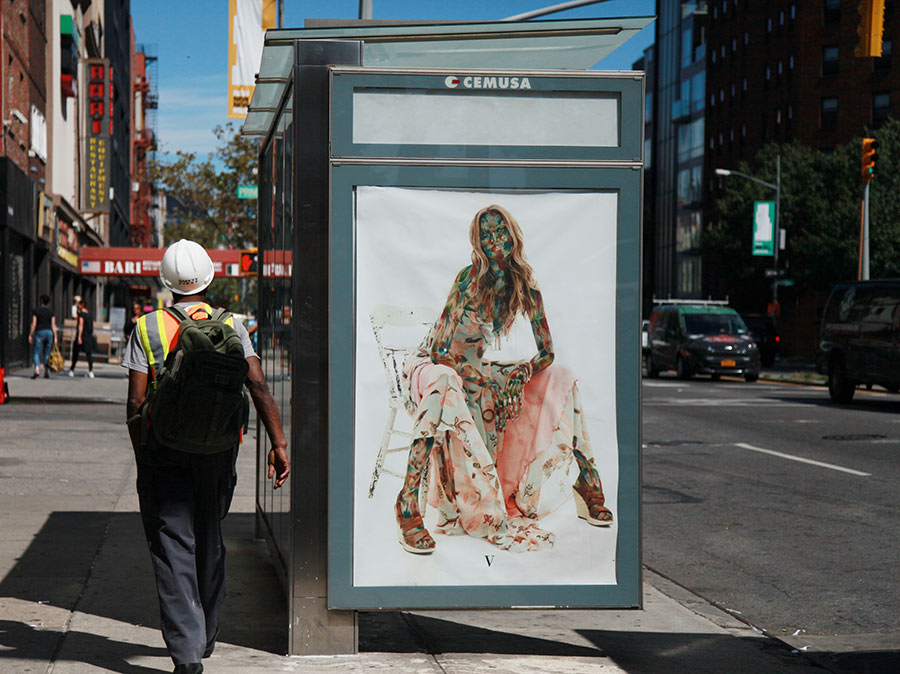
Vermibus, the Spanish street artist and activist based in Berlin is celebrating his 10th anniversary of adbusting on the streets of the world. We have previously written about his work on these pages here, here, here, and here, – and we have introduced his work to audiences during lectures and talks at festivals, classrooms, theaters, and museums.
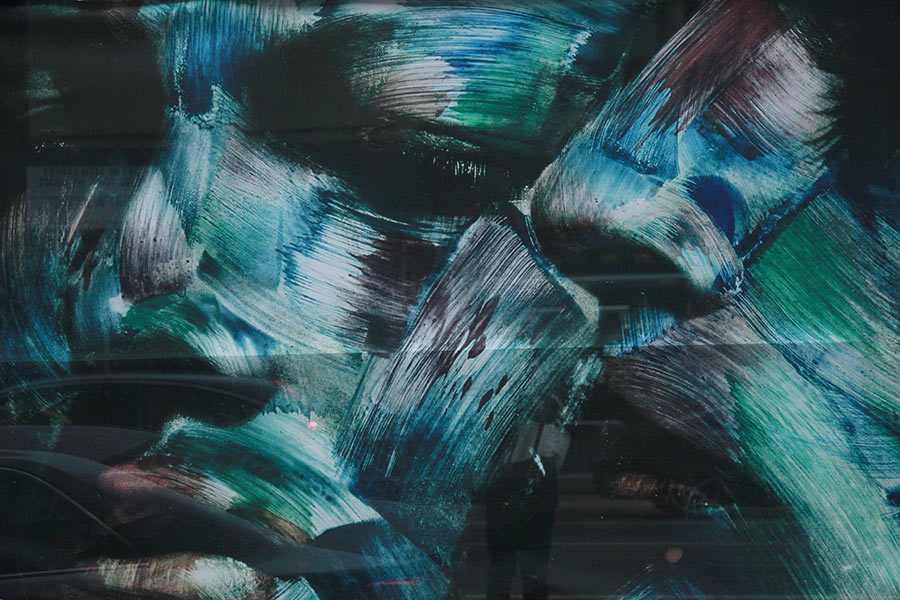
The power of his installation style is dual on streets; a back-lit critique of consumer culture/ beauty culture/ our luxury class system foisted on everyday people – as well as a hearty aesthetic trolling through the world of classical beauty and its shadows that hide the grotesque.
As long as we’re feeling nostalgic, we culled some photos from our archives to share with you from his visits to NYC in February of 2016 and in September of 2015.
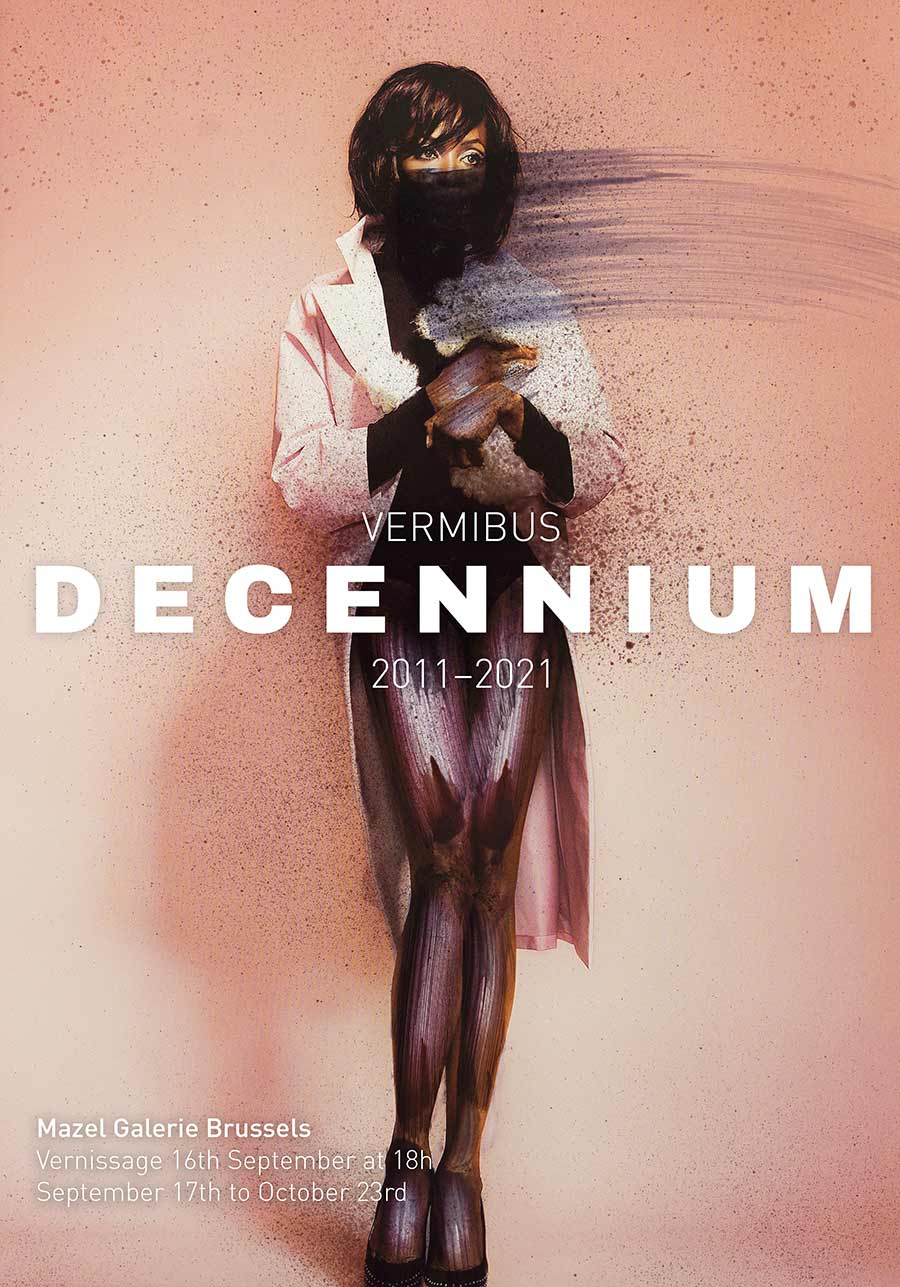
“Although this is the conceptual framework in which the artist has developed his work in the last 10 years, the interpretation of his work goes far beyond his counter-advertising militarism. Other fundamental aspects can be found in his work, such as his reflection on ownership, use of public space, appropriation, and re-interpretation of photography, a profound development of his personal technique or field study he makes while choosing locations, where to install his paintings, are essential for a full understanding of his work.
With his current exhibition ‘DECENNIUM’ the artist is bringing focus on this last aspect, and how the perception of his work changes in one space or another. Exploring how the context that holds his work has a direct relationship in how his message is understood, questioning whether it acquires or loses meaning exposed in one place or another.”
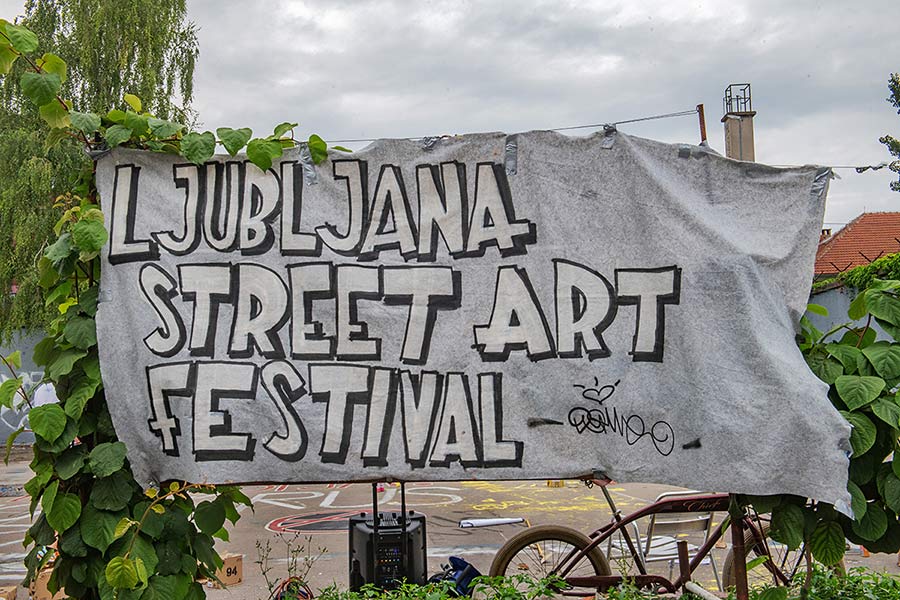
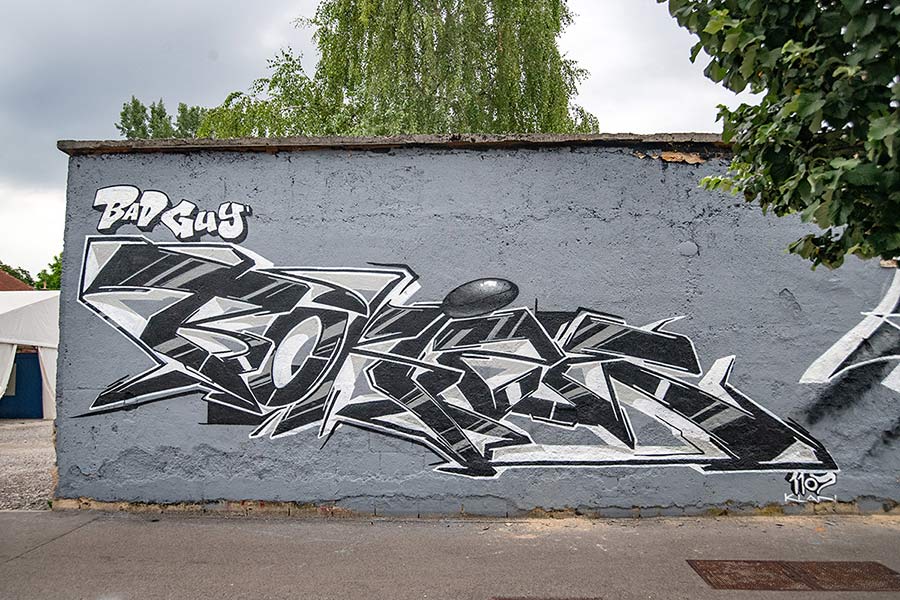
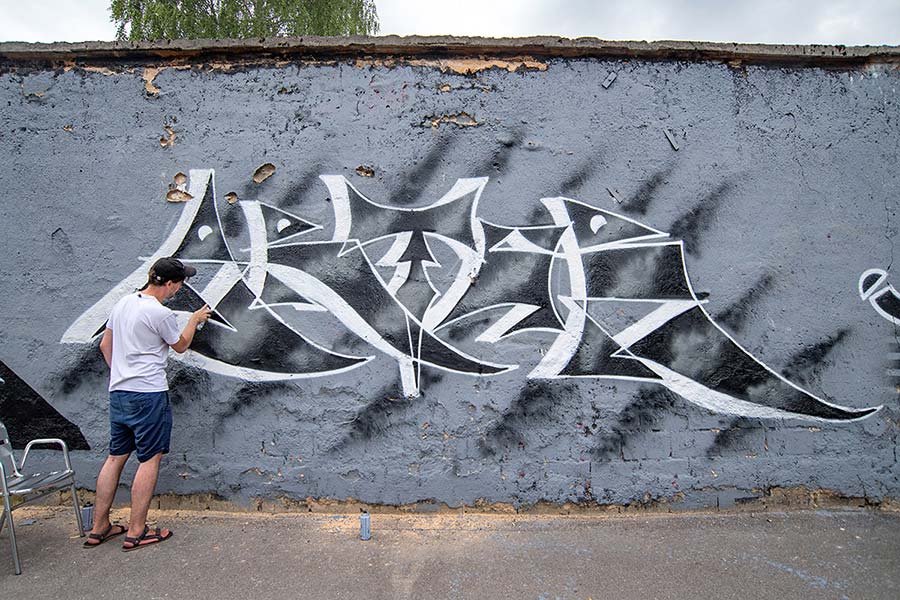
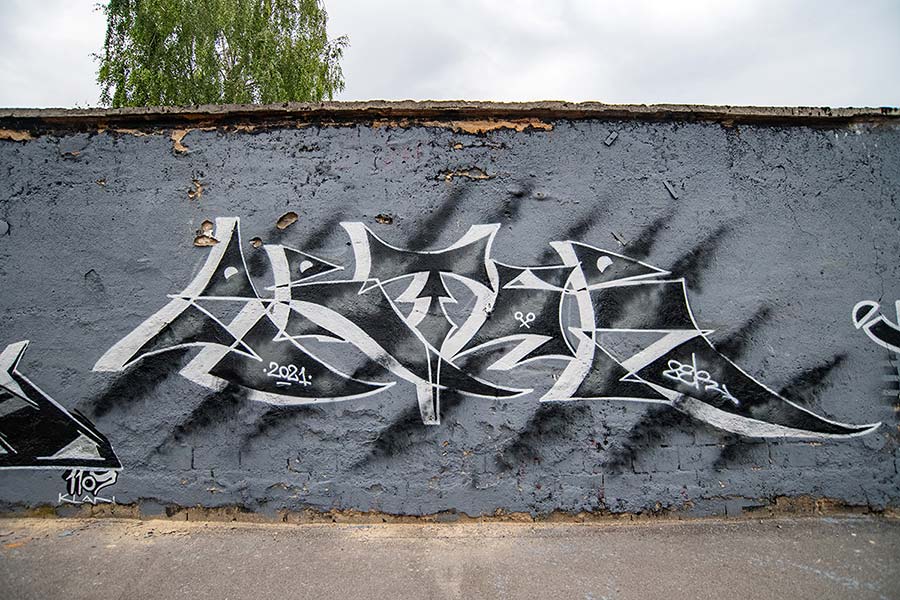
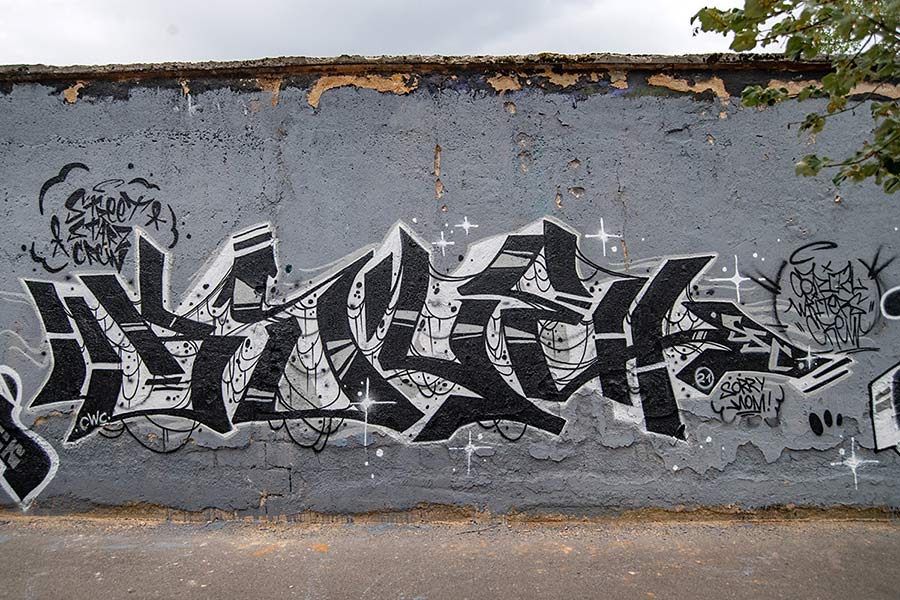
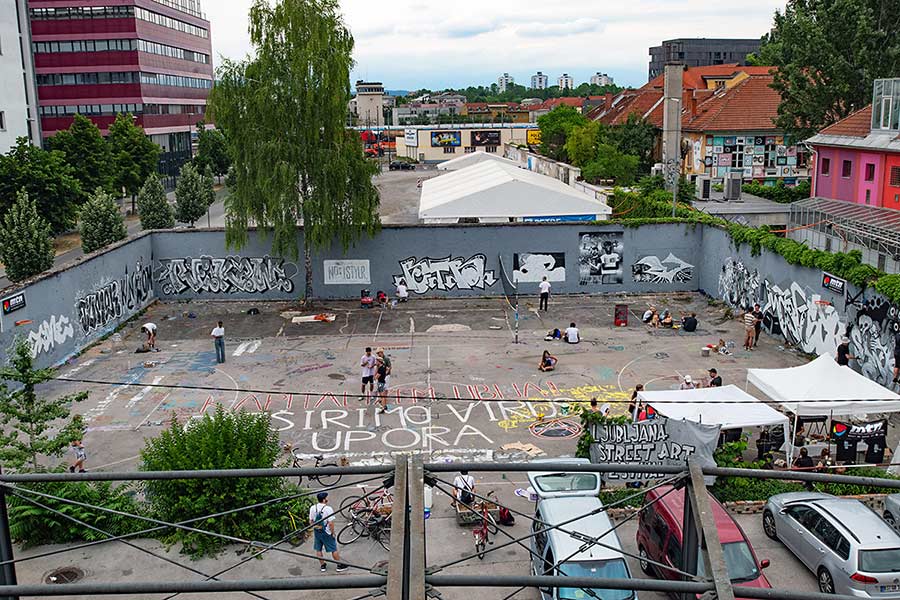
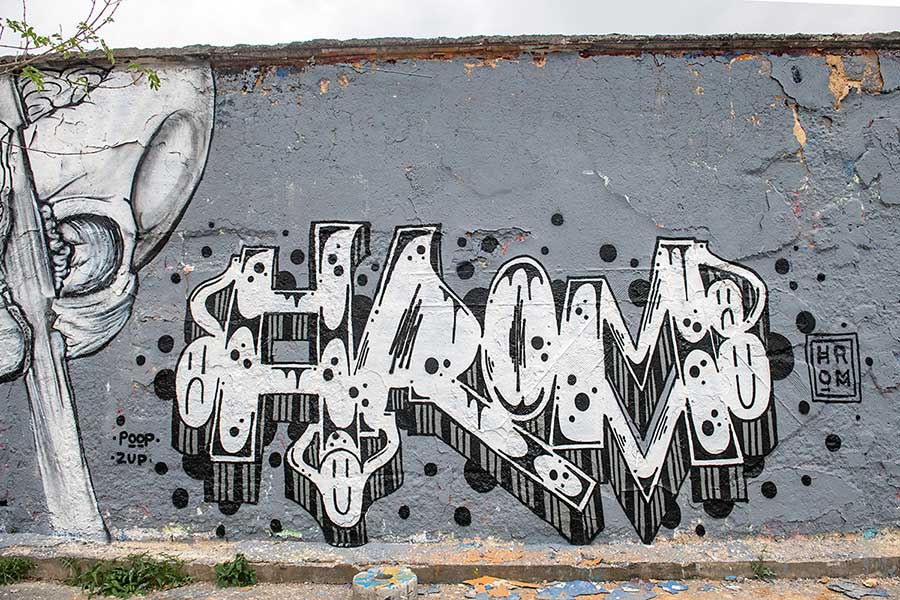
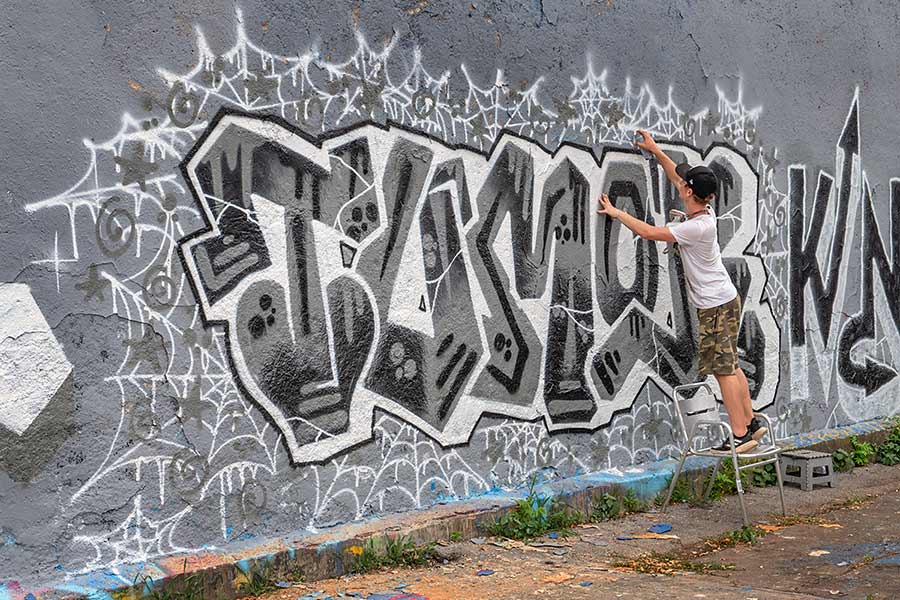
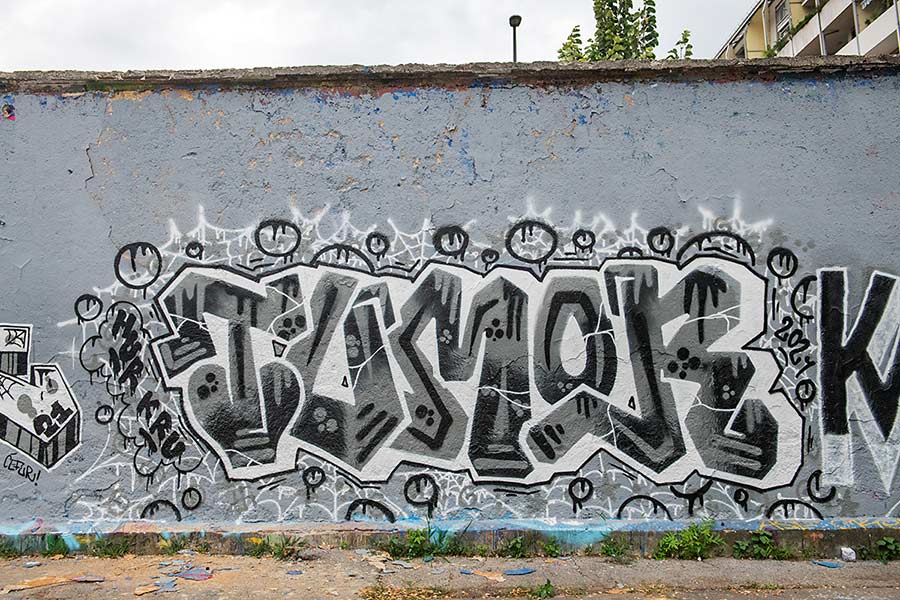
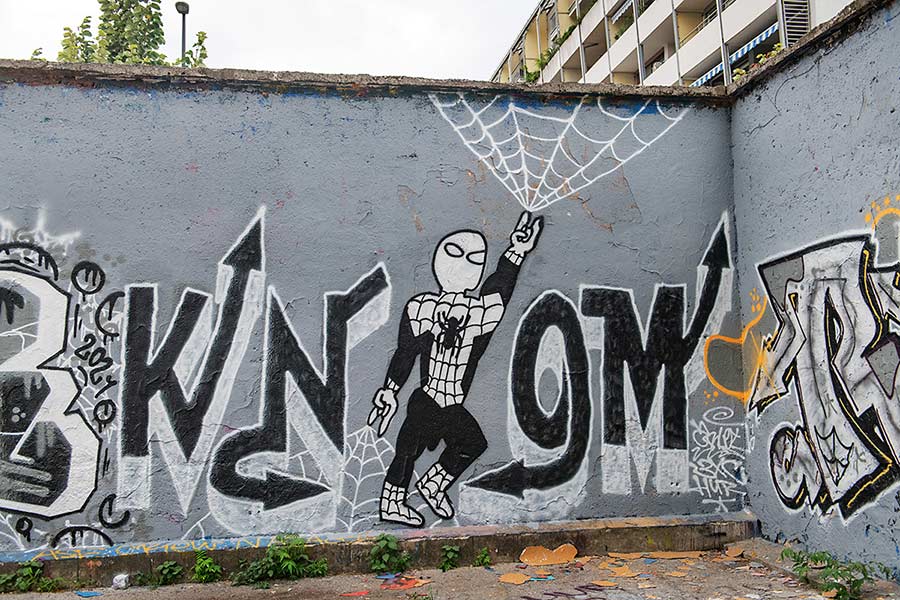
The Ljubljana Street Art Festival 2021 took place as a cultural festival this year in the capital of Slovenia with painting, lectures, panels, special events, and guests like street artists Escif, public installation artist Epos 257, cultural instigator/commentator Good Guy Boris, and global graffiti/street art documentarian and photographer since the 1970s, Martha Cooper.
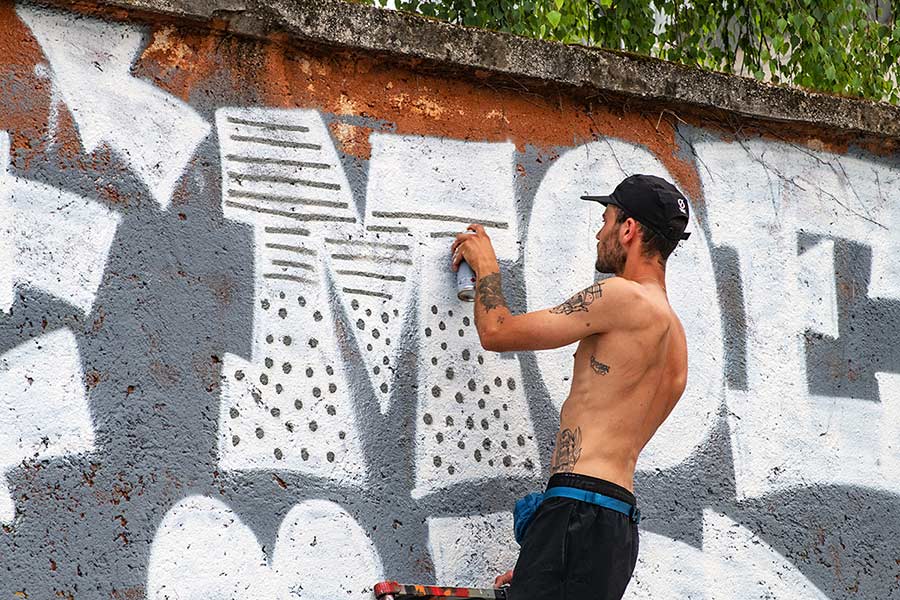
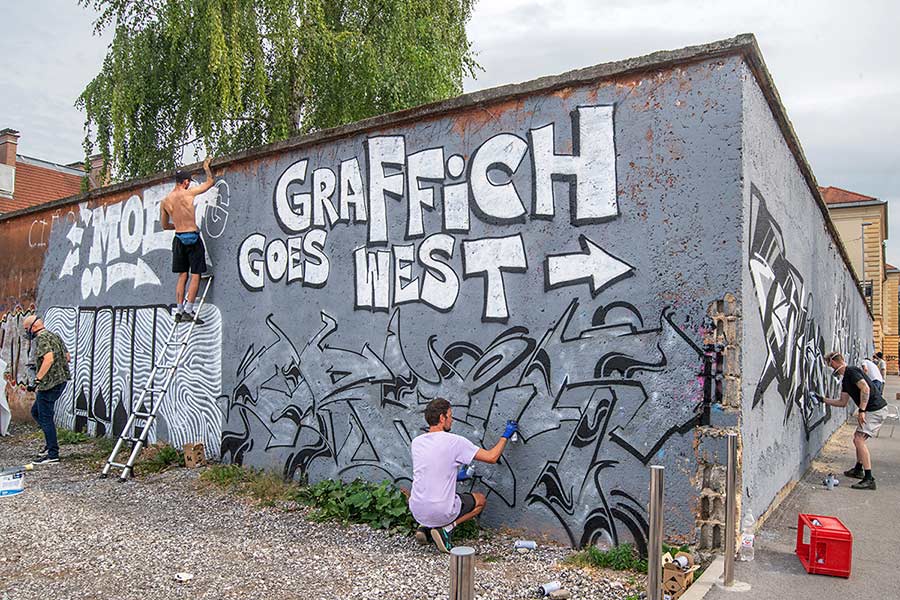
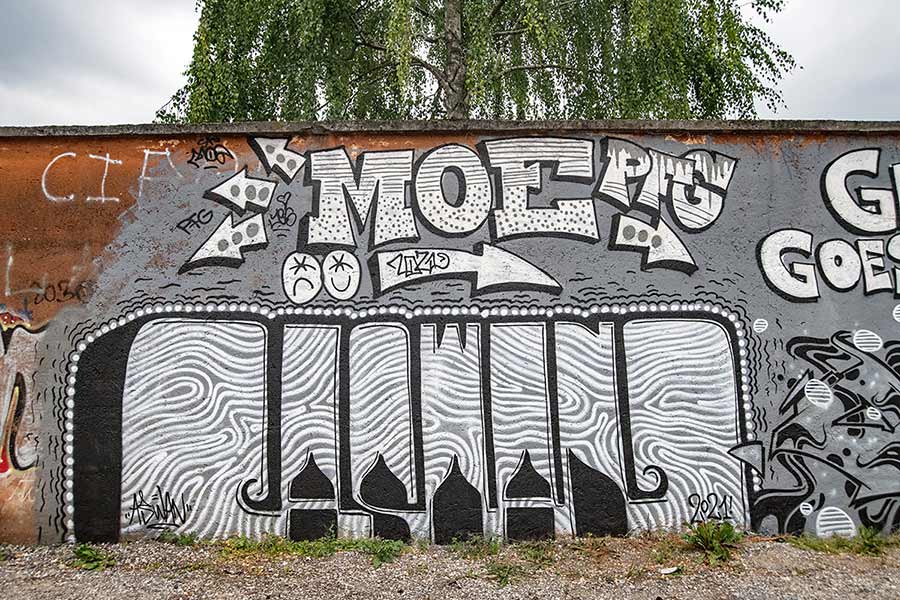
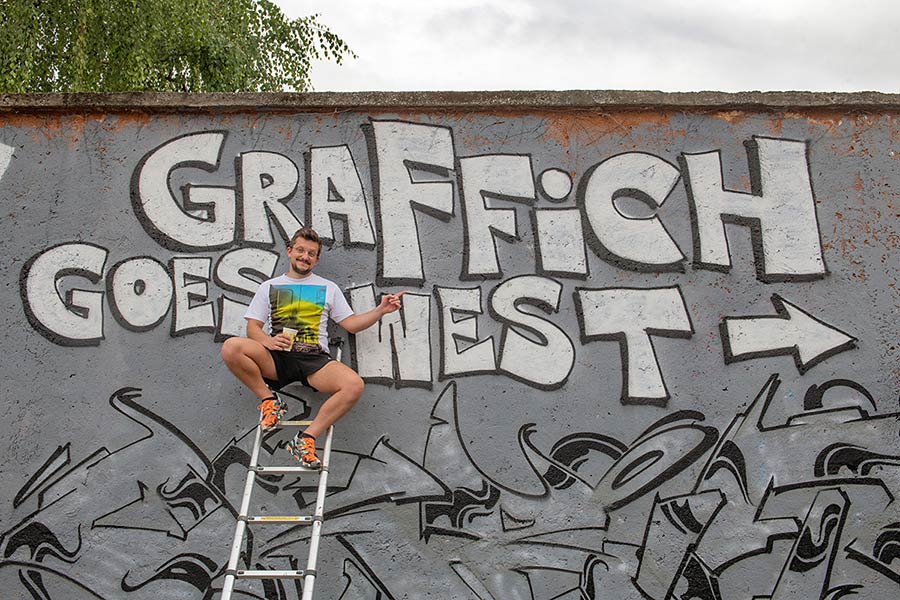
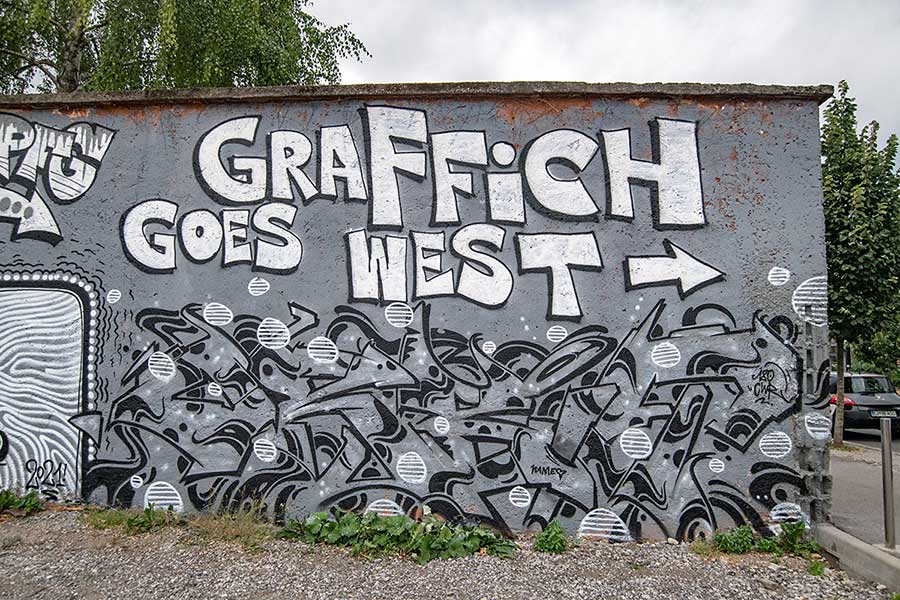
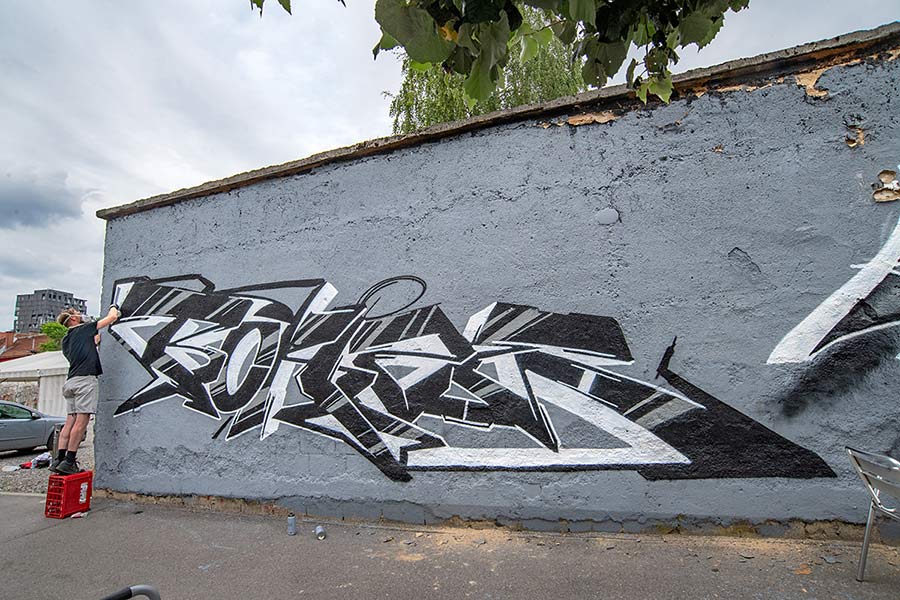
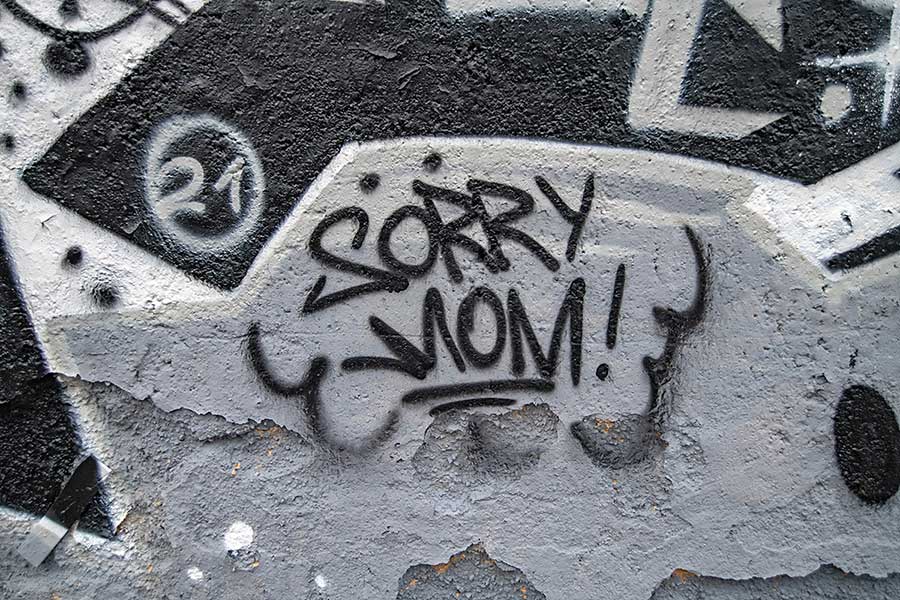
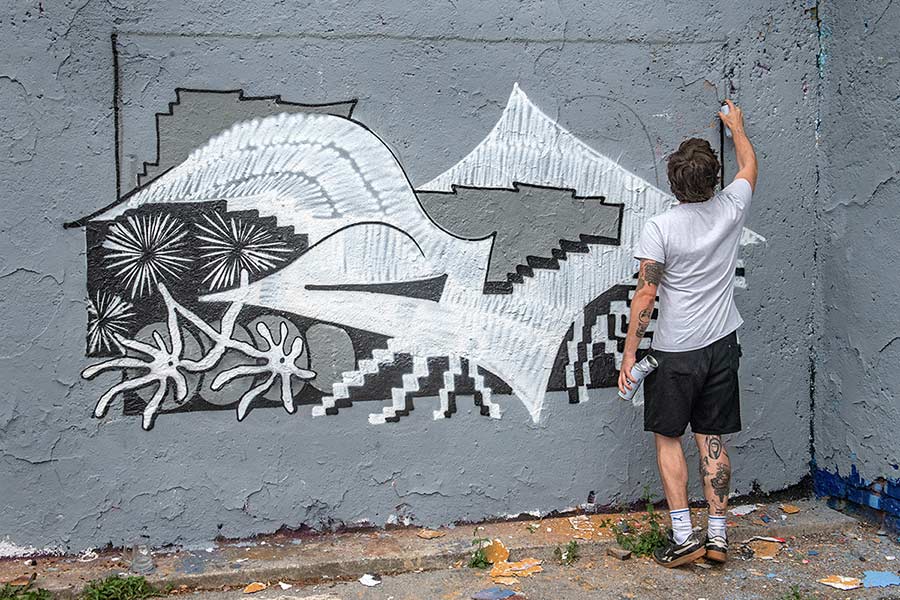
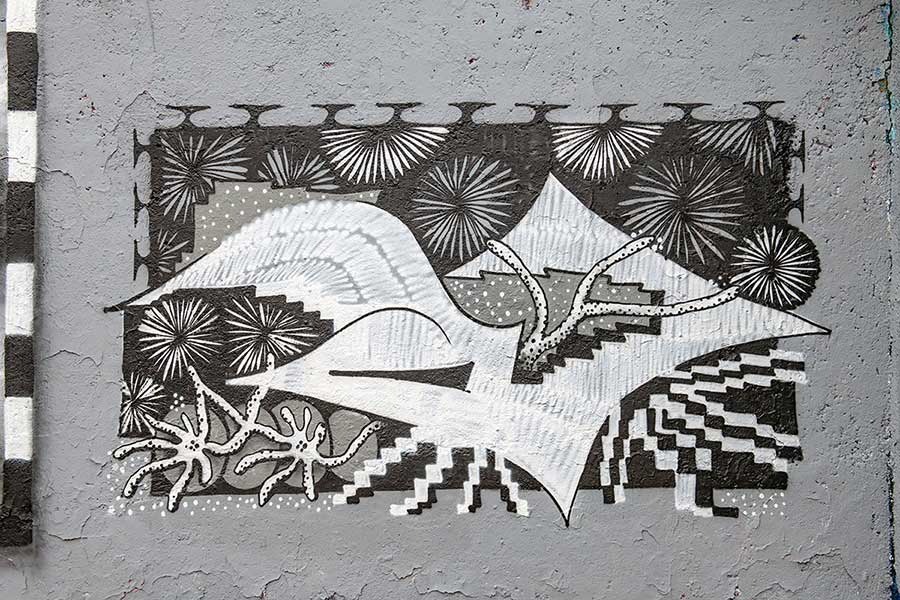
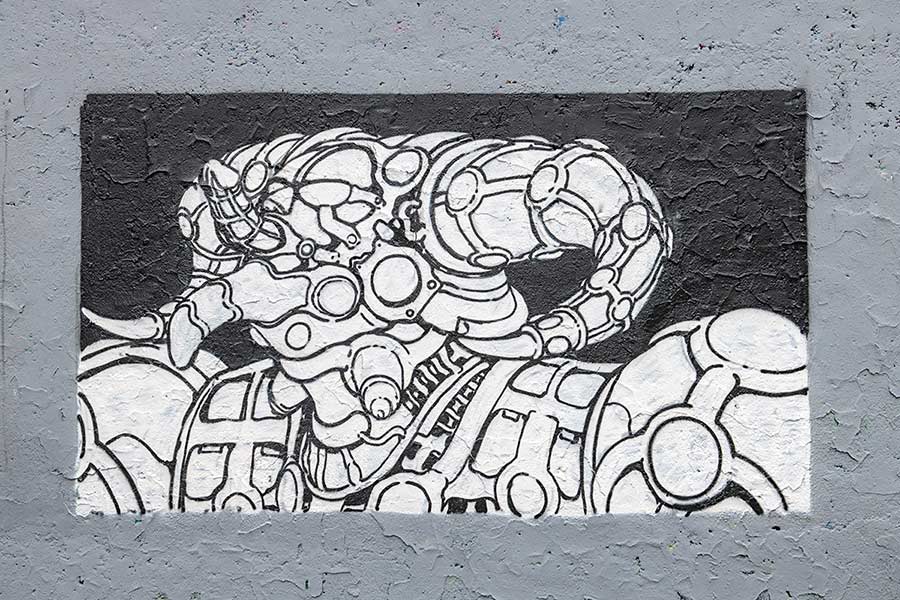
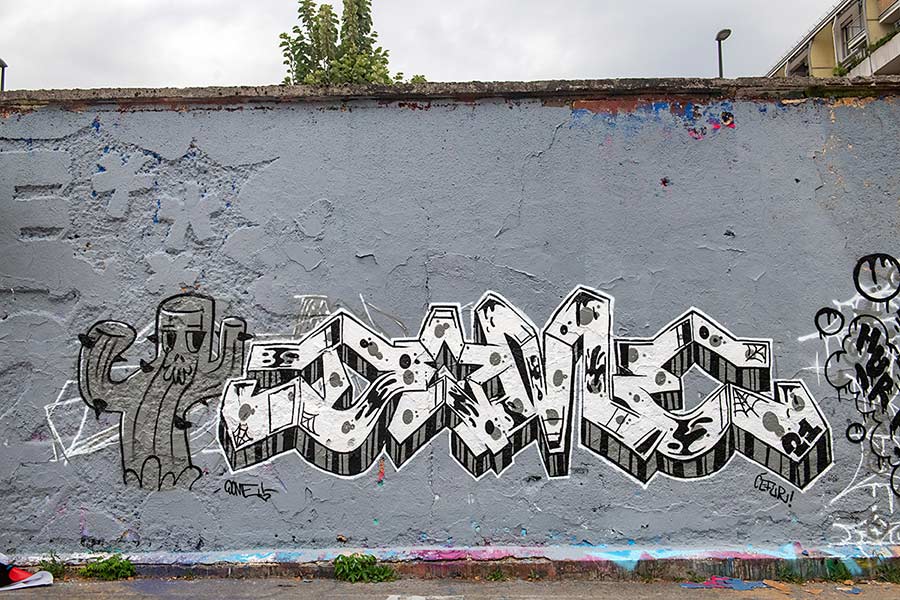
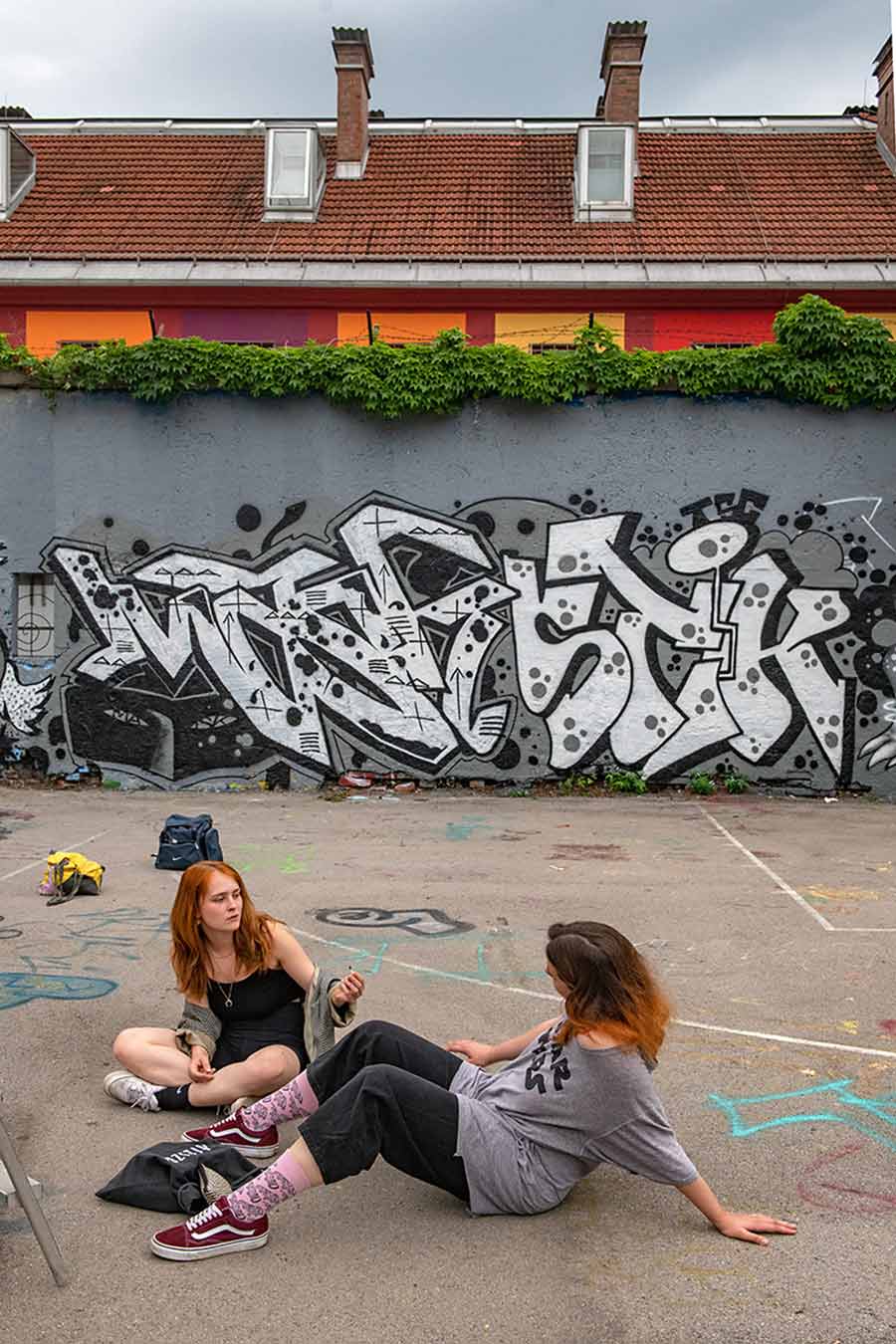
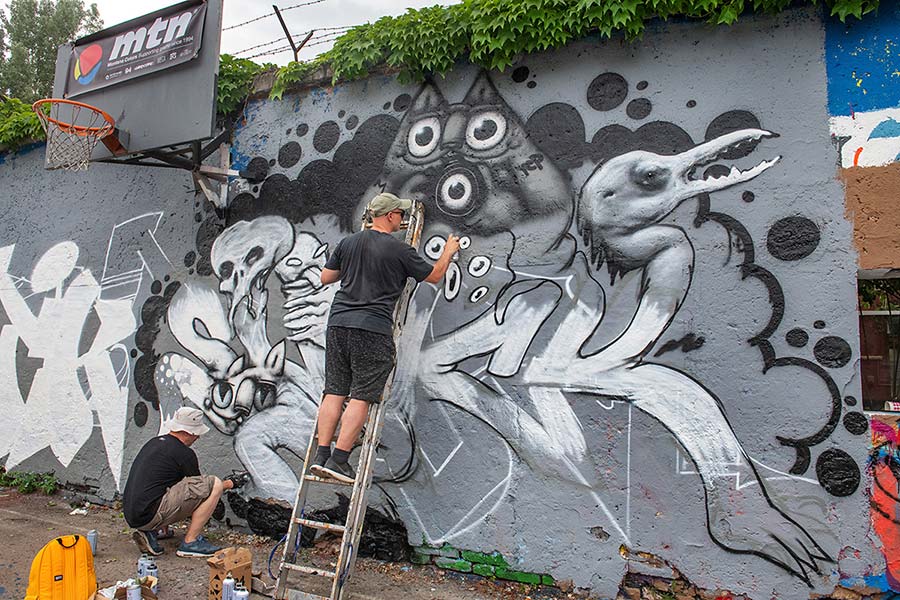
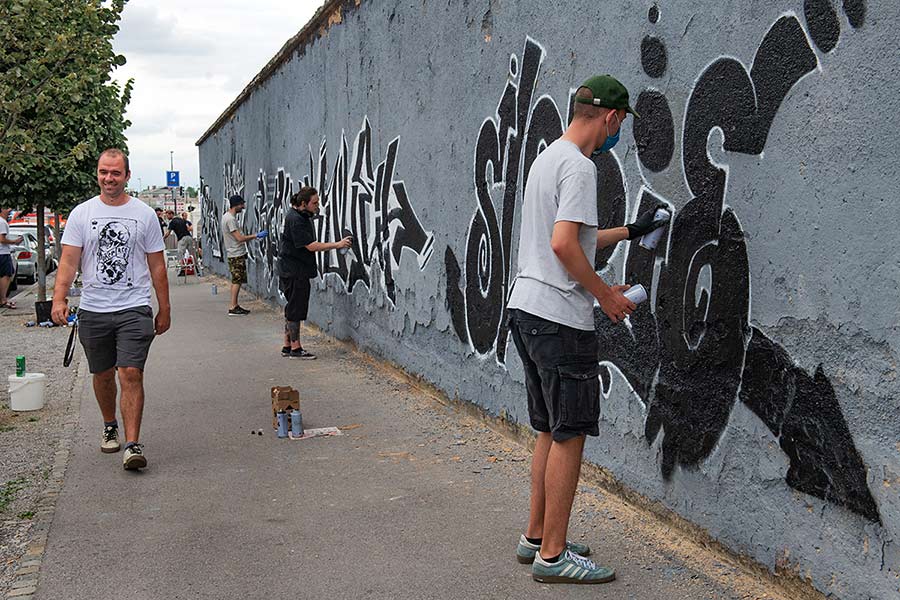
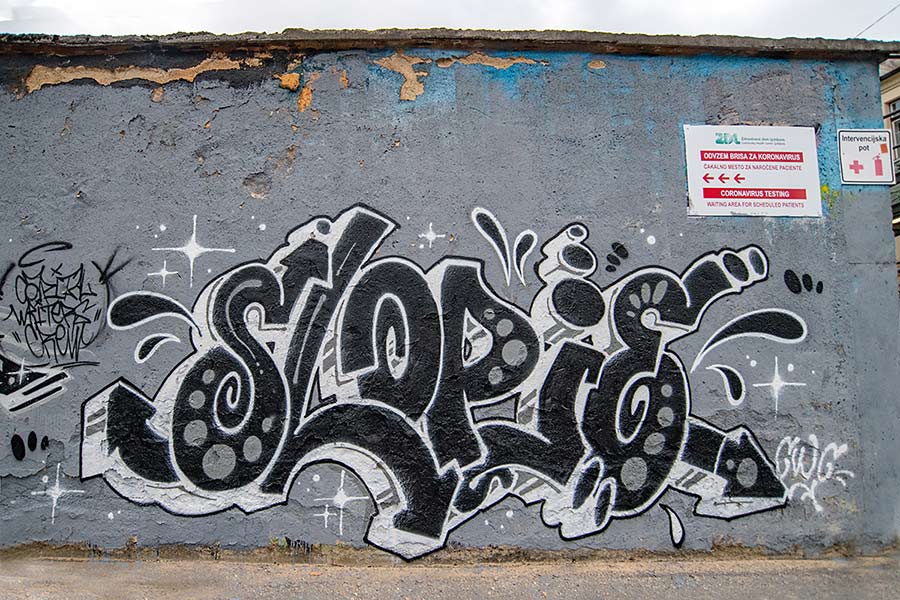
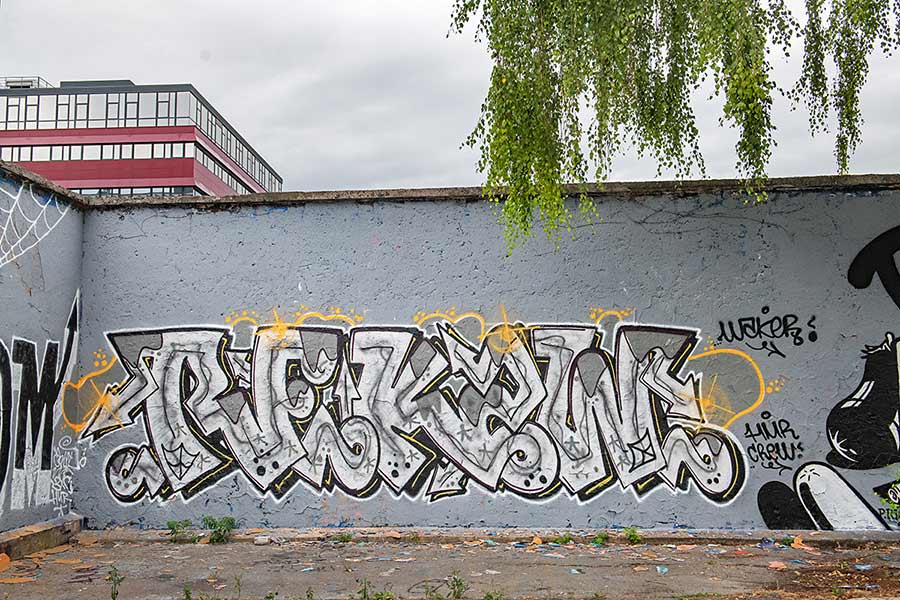
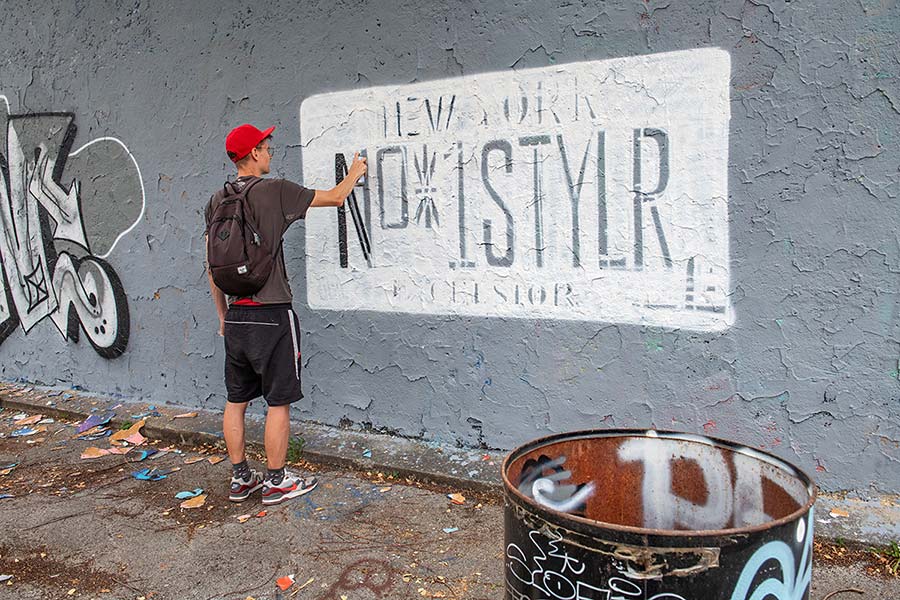
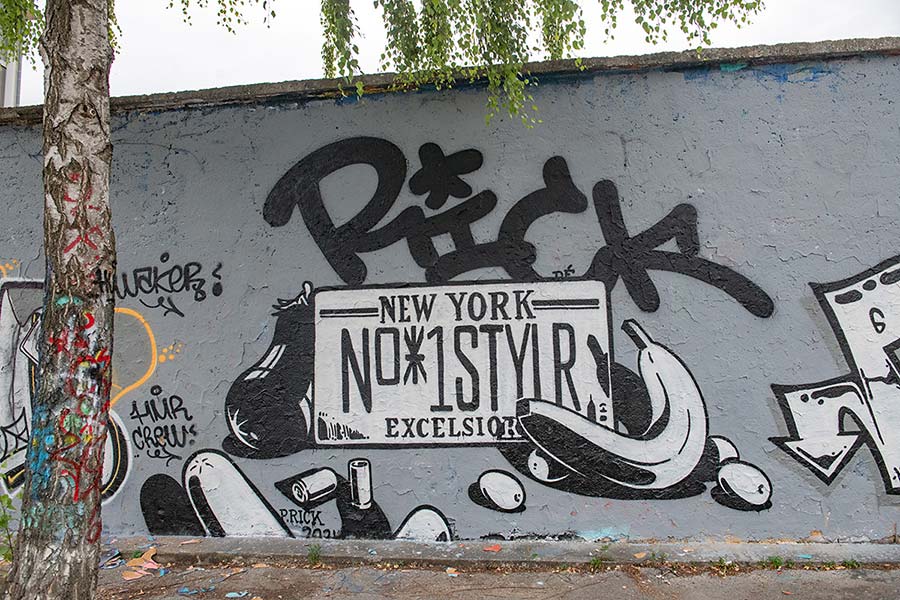
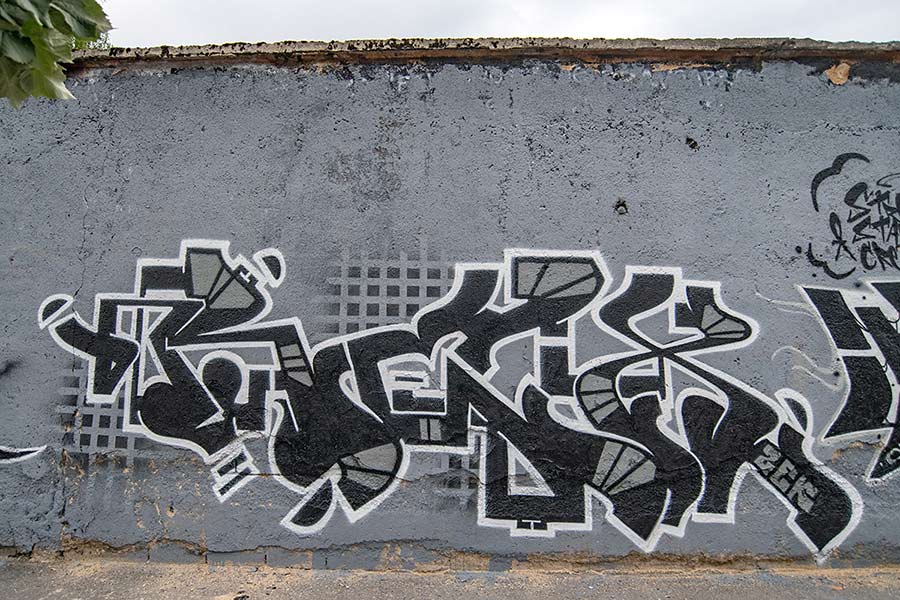
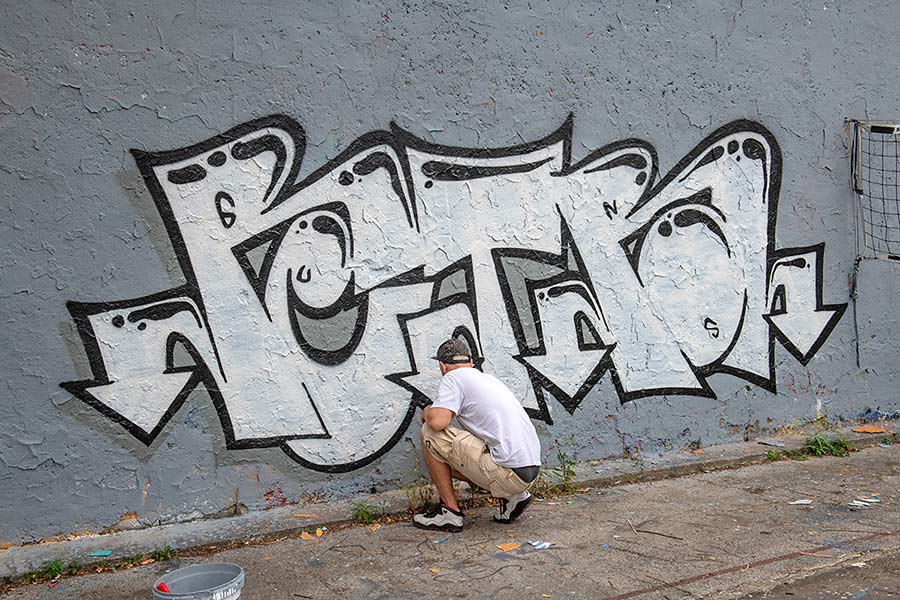
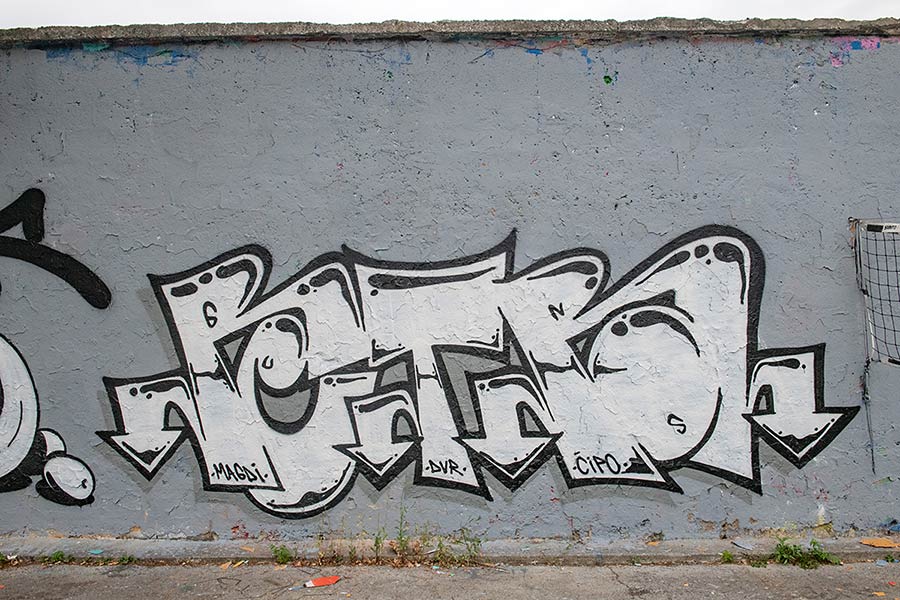
A unique event during this year’s festival included graffiti and street artists of various hand styles and influences crushing walls in monochrome. “The Left Over Graffiti Jam will give a chance to empty the leftover spray cans and hand the walls over to new generations to add to the layers of paint and subculture,” said the program’s description.
Based on the format of a graffiti jam, artists were invited to a series of walls to create while friends and fans set up impromptu picnics, parties, and took photos. The primary link between them all was their limited paint palette of whites, greys, and black paint that was allegedly “left over”. A historic place for many, this time the Hall of Fame was largely given over to new artists, aspiring writers, the new kids on the block. Whether it is still appropriately called a subculture or just “culture”, there is no doubt that the scene thrives on fresh blood and fresh paint.
The result brought more direct comparisons between styles and mastery – enabled by forcing artists to basically use the same materials for public expression. As an audience, you get a true sense of the writer’s personal style and poles of gravitational pull.
Luckily for us, Ms. Cooper shares her exclusive photos of the event here with BSA readers, while we speak with Sandi Abram, a co-founder of the festival with Anja Zver and Miha Erjavec.
A scholar and historian, Mr. Abram also gives us some context of graffiti here in the Balkans and helps us to position the significance of this festival.
BSA: Is there a history of the practice of graffiti and street art in Slovenia and specifically in Ljubljana? Or is it relatively new?
Sandi Abram: In Ljubljana, graffiti have a long history, beginning with World War II. During World War II, the territory of present-day Slovenia was occupied by German, Italian and Hungarian troops. The occupation of Ljubljana dates back to April 1941. The city was divided between Germany and Italy with barbed wire, roadblocks, military bunkers, machine gun nests and minefields.
In response to these events, the Liberation Front was formed. From 1942 to 1945, graffiti was used by individuals, various organizations and authorities as means of expression and as a reflection of socio-political events.
Soon after the occupation of Ljubljana, the so-called resistance graffiti by activists of the Liberation Front appeared on the walls. The first mass graffiti appeared in the shape of the letter V, short for “victory”, as a message to the occupiers that they would be defeated. Other symbols included the acronym for the Liberation Front (“OF”) or the stylized Triglav mountain (Slovenia’s highest mountain). The activists used numerous techniques to leave their mark on the occupied city, such as paste-ups, sgraffito, acid on shop windows, stencils, etc. I refer to these forms of expression as street art before street art; the techniques and strategies were a creative way to confront hegemony, a weapon of the weak, if I use the expression of anthropologist James C. Scott.
From this period, we also know of the so-called collaborator’s graffiti in the form of posters of Mussolini and the Italian king, leaflets also appeared on the streets occasionally. A particularly famous symbol of collaboration was the black hand with which the secret military units confronted the Liberation Army activists.
After the liberation of Ljubljana, post-war graffiti glorified leaders (e.g. Tito, Kardelj, Stalin) and the army (e.g., “Long live the Liberation Army!”). The symbols of communism (sickle and hammer) and praise for the Soviet Union (USSR) as representatives of the revolution and military allies were very common.
Graffiti as a predominantly leftist medium reappeared in socialist Ljubljana in the early 1980s as part of the punk movement, alternative subcultures, and sub political groups. This was also the time of coexistence between political graffiti and more sophisticated subcultural graffiti. On the one hand, punks sprayed “Johnny Rotten Square” to reappropriate space. On the other hand, fine arts students used graffiti as an alternative medium to paint canvases and the interior walls of underground cultural venues.
Finally, after a group of activists and independent artists occupied the former barracks of the Yugoslav People’s Army, today known as Metelkova, in the early 1990s, the first public and legal wall slowly emerged as a field of experimentation for new generations of budding writers. Today, the Metelkova City Autonomous Cultural Zone represents a cultural, artistic, social and intellectual hub where one also finds the Hall of Fame.
In the early 1990s, local artists incorporating the medium of graffiti started to emerge, an example being Strip Core. In more recent history, graffiti crews have left an important mark in the local public space, including ZEK Crew, Egotrip, 1107 Klan, Animals, and writers such as Vixen, Whem, Lo Milo, Rone84, and Planet Rick. Contemporary street artists who emerged from this scene include names like Danilo Milovanović, The Miha Artnak, Nataša Berk, Veli & Amos, Evgen Čopi Gorišek, Sad1.
BSA: We have talked previously about how your festival focuses on content, not on bringing in a dozen big-name artists just for the sake of having big names on your line-up. Why is this important to you?
Sandi Abram: Through LJSAF, we bring together international and local artists and scholars. The Programme Committee, which included me, Anja Zver, and Miha Erjavec, designed the festival events to encourage visitors to read the streets and participate in various activities.
For instance, the mission of the alternative tours and the street art conference is to interpret heterogeneous urban spaces, to explain the actors in the public space, the artistic and creative inspirations, the social struggles, to recognize and decipher ideologies of intolerance. So it is not only about producing the “text” (a mural as a thing-in-itself) but also sensitizing the public about the “context” of street art, i.e. the micro-location in the urban space. It is hard to understand a city if you do not “read” the screams on the walls – already the philosopher and sociologist Henri Lefebvre said that graffiti best illustrates the contradictions of contemporary society. They point out what is tolerated, what disappears.
Content co-creation is another important dimension of LJSAF. The festival events not only showcase young, emerging generations of street artists and scholars, they also provide a space, a productive crossroads for them to meet and collaborate. And for us, that is exactly the purpose of the festival’s art residencies, exhibitions, and graffiti jams. In short, street art is not only about big names, but a broad stream of unknown and underground creative minds joining forces.
“The festival events not only showcase young, emerging generations of street artists and scholars, they also provide a space, a productive crossroads for them to meet and collaborate.”
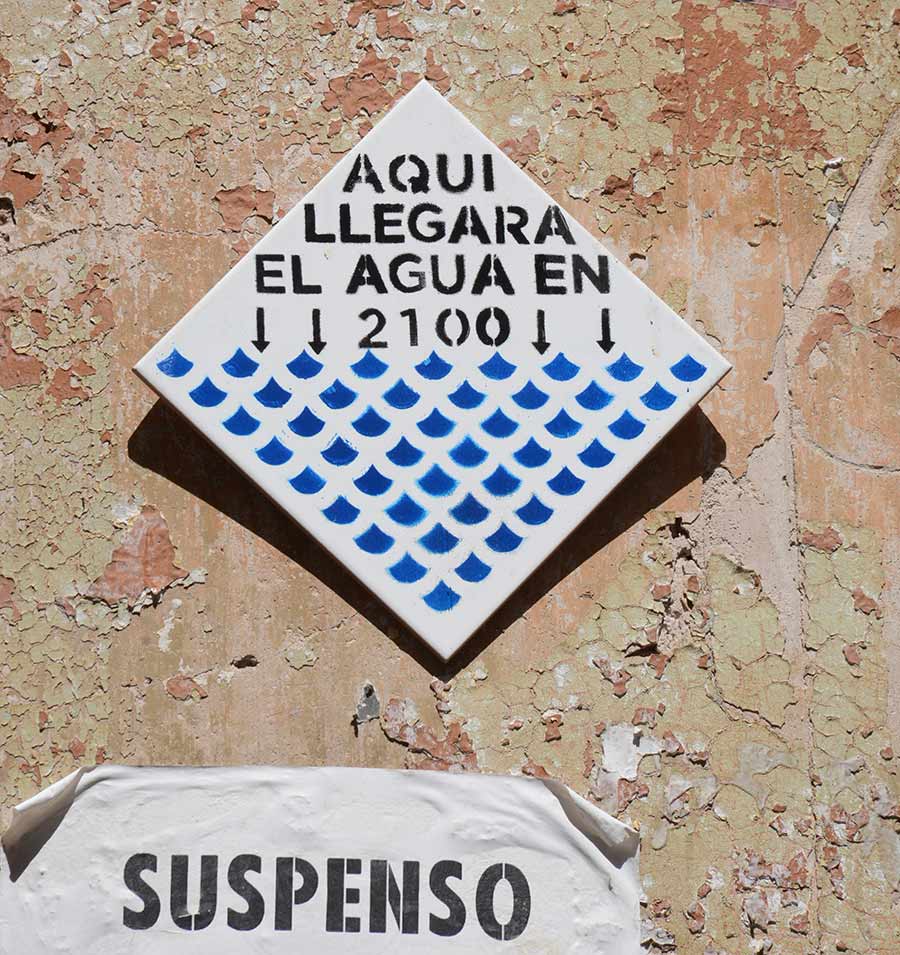
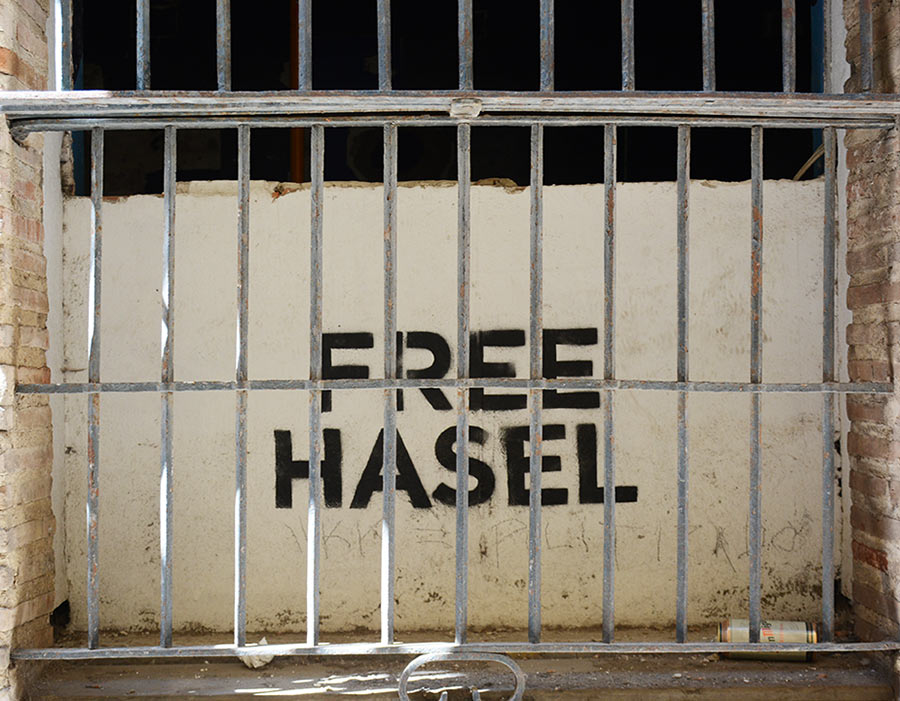
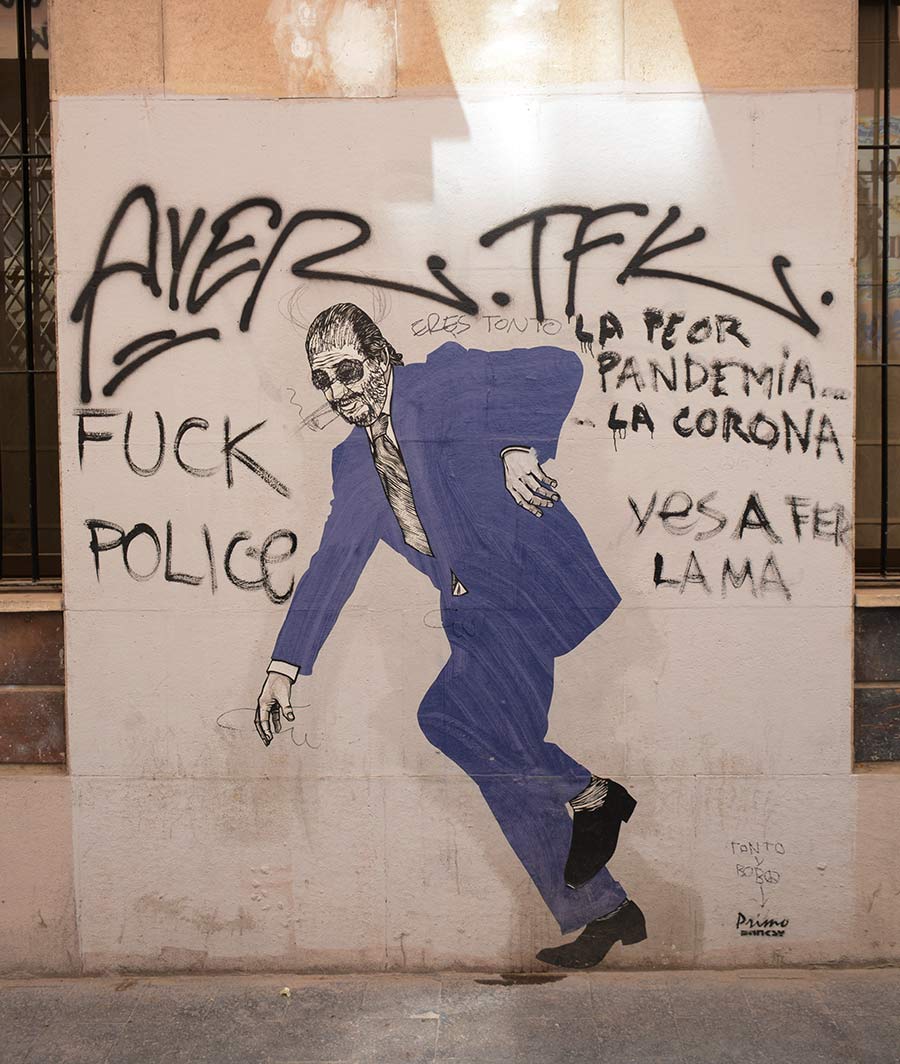
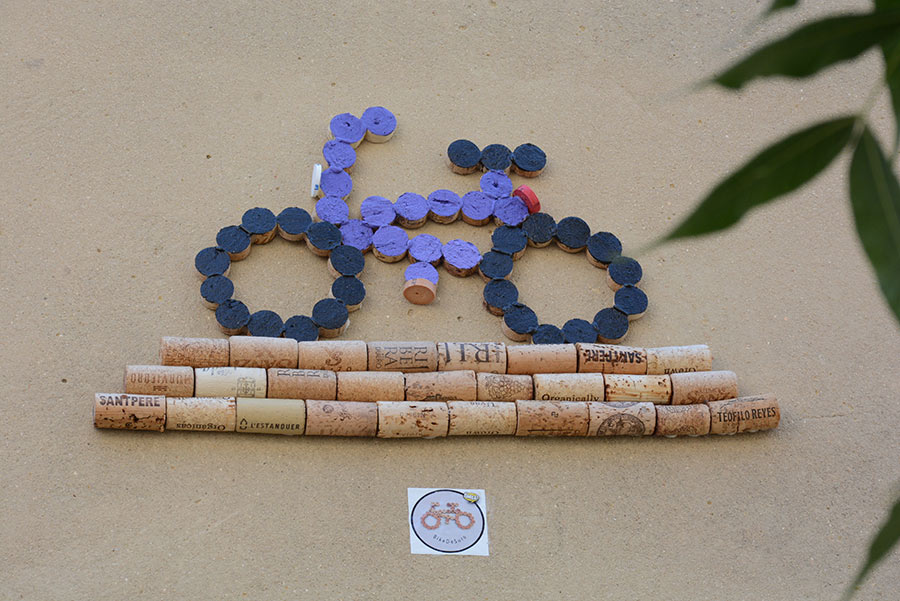
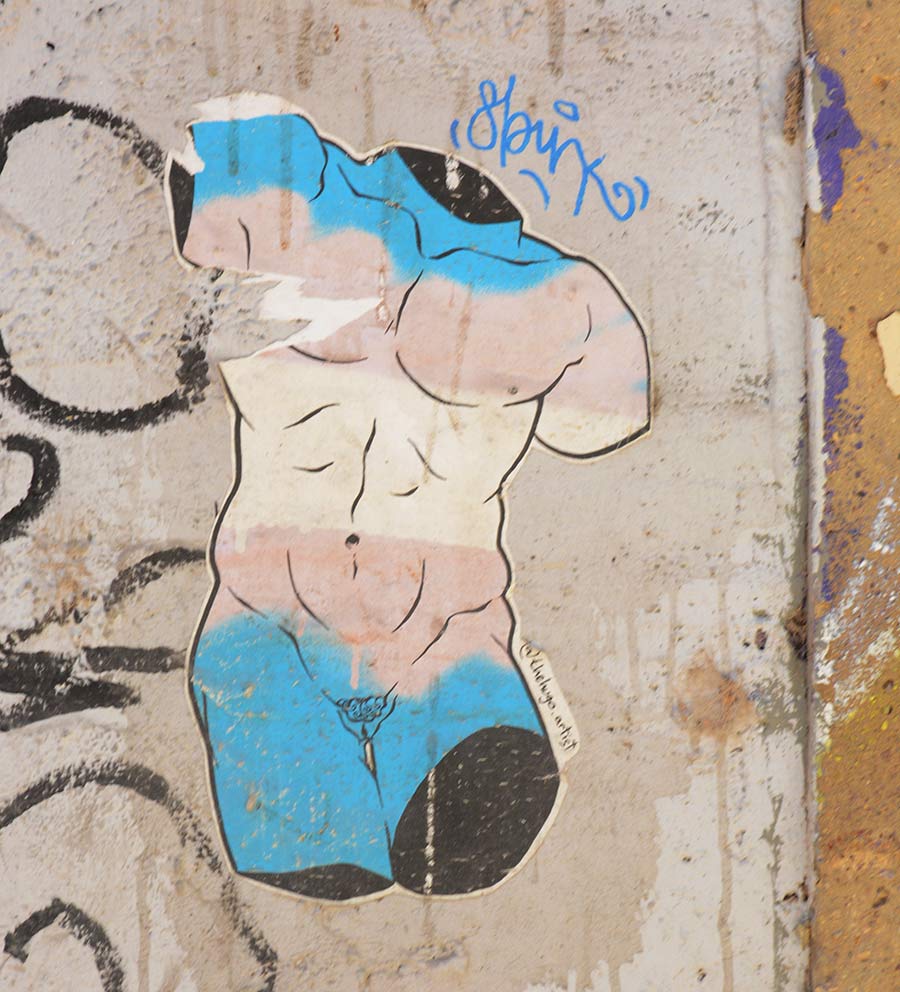
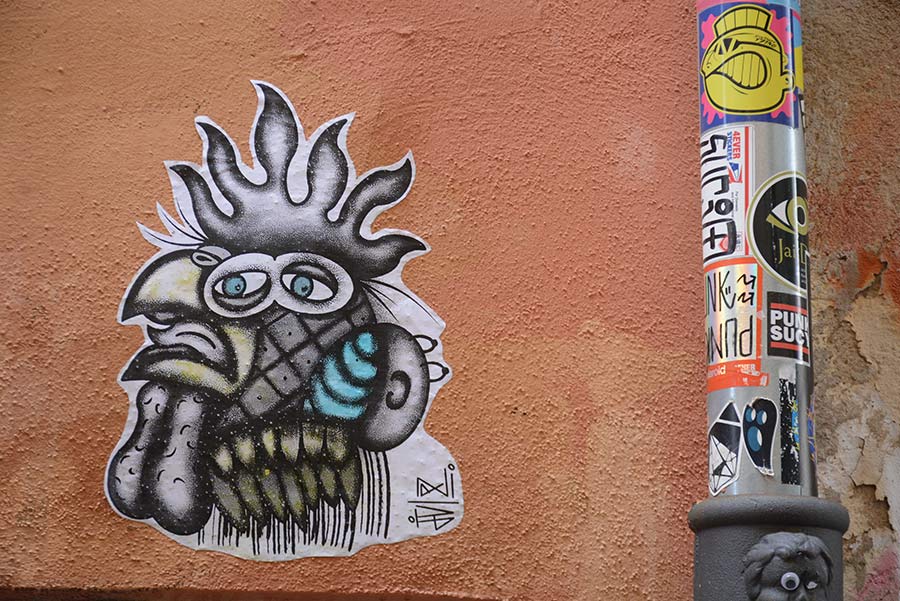
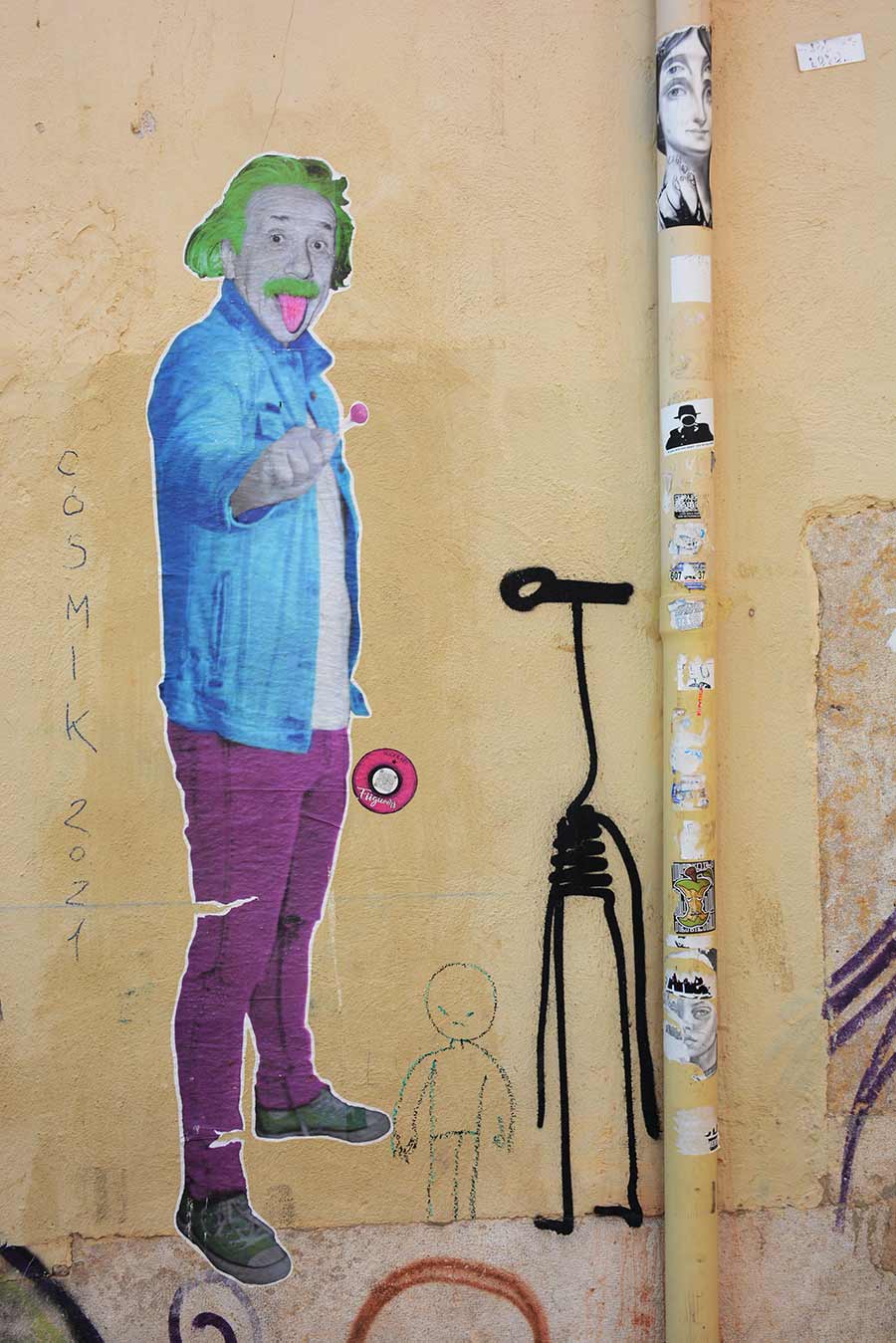
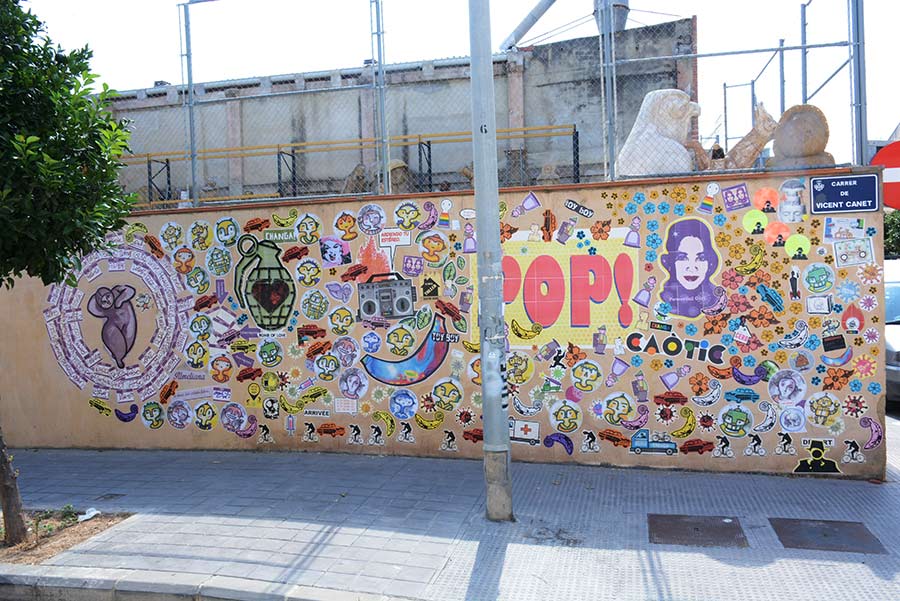
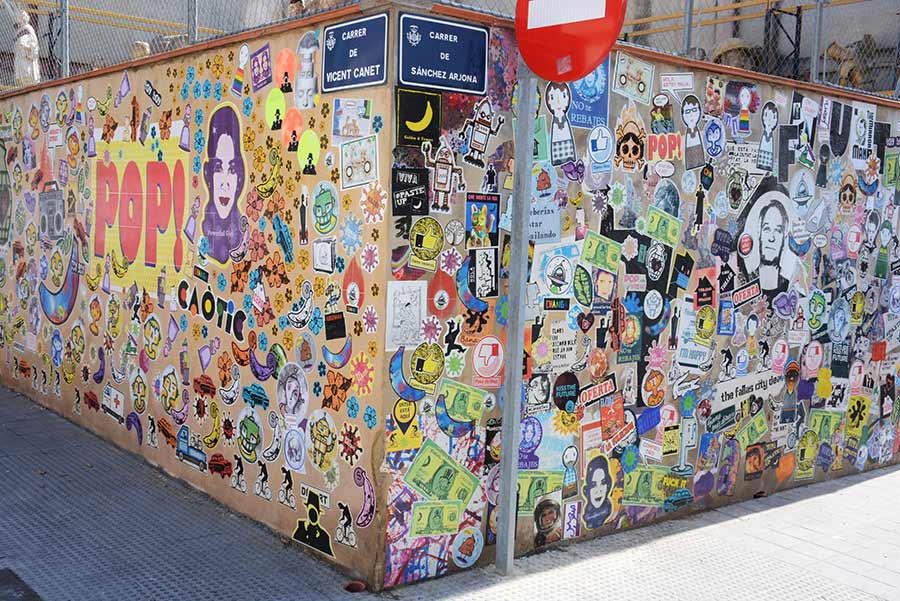
Stencils, wheat-pastes, and fevered texts by hand – they all are speaking to you in Valencia. Here in Spain, the pandemic has canceled Pamplona’s bull-running festival and Seville’s Holy Week procession. This month Valencia’s Fallas festival was held in the strictest of rules.
Thank God we all still have graffiti and street art! This week we have BSA contributing photographer Lluis Olive Bulbena sharing a few late summer beauties from his short trip to Valencia.
 BROOKLYN STREET ART LOVES YOU MORE EVERY DAY