Our weekly focus on the moving image and art in the streets. And other oddities.
Now screening: 1. Don’t Choose Extinction – UNDP | United Nations | Jack Black | Climate Action. 2. Os Gemeos: Secrets – Ep. 02 3. Hypercourt Dendermonde
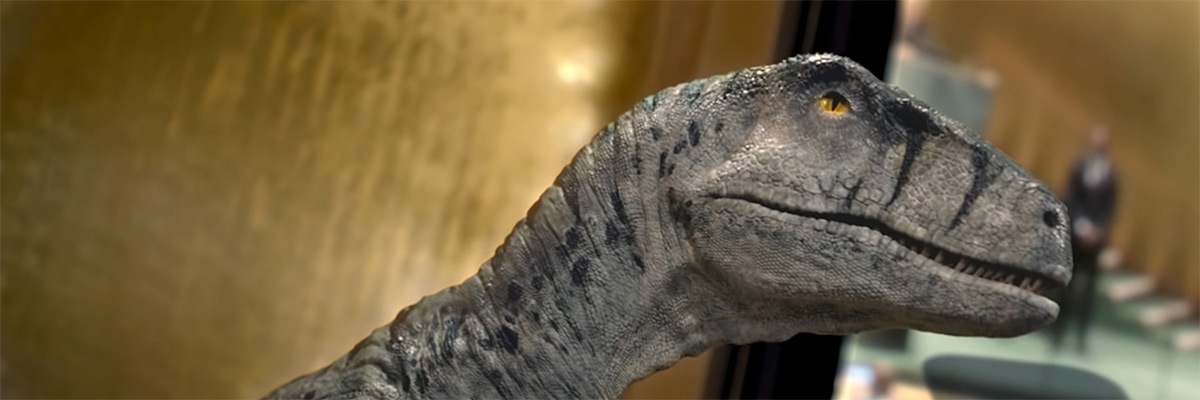
BSA Special Feature: Don’t Choose Extinction
“The world spends an astounding US$423 billion annually to subsidize fossil fuels for consumers – oil,…”
There is not really a lot to say after that.
Os Gemeos: Secrets – Ep. 02
Possibly more important anthropologically than their autobiographical artworks, OSGEMEOS has given us all a huge gift with this new series that documents the rise of hip hop culture at the precise juncture where it intersects with another city far away to the south. Through precise, on-point interviews, they point the spotlight on the crucial elements that formed and pushed “the culture” forward internationally, and personally.
Hypercourt Dendermonde
In the small city of Dendermonde in Belgium, the magic of the drone is helping to bring the new trend of painting basketball courts to video. Literally it seems like we are seeing one per week from all over the world – This one is with the Viewmasters2021 Project, which also created 5 murals around the city, along with this court designed and executed by Drukdoenerij (http://www.drukdoenerij.be) in collaboration with curator of the project Bart Warnier of Whamoffice.
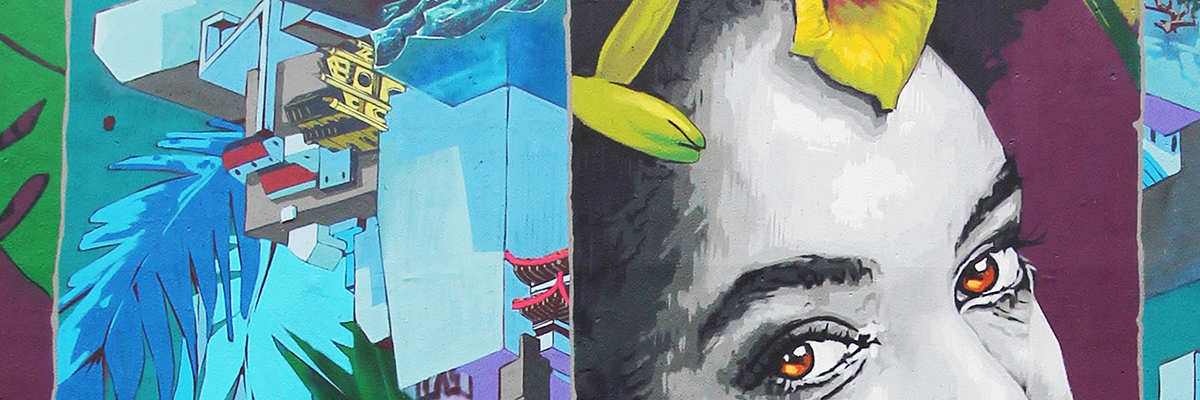
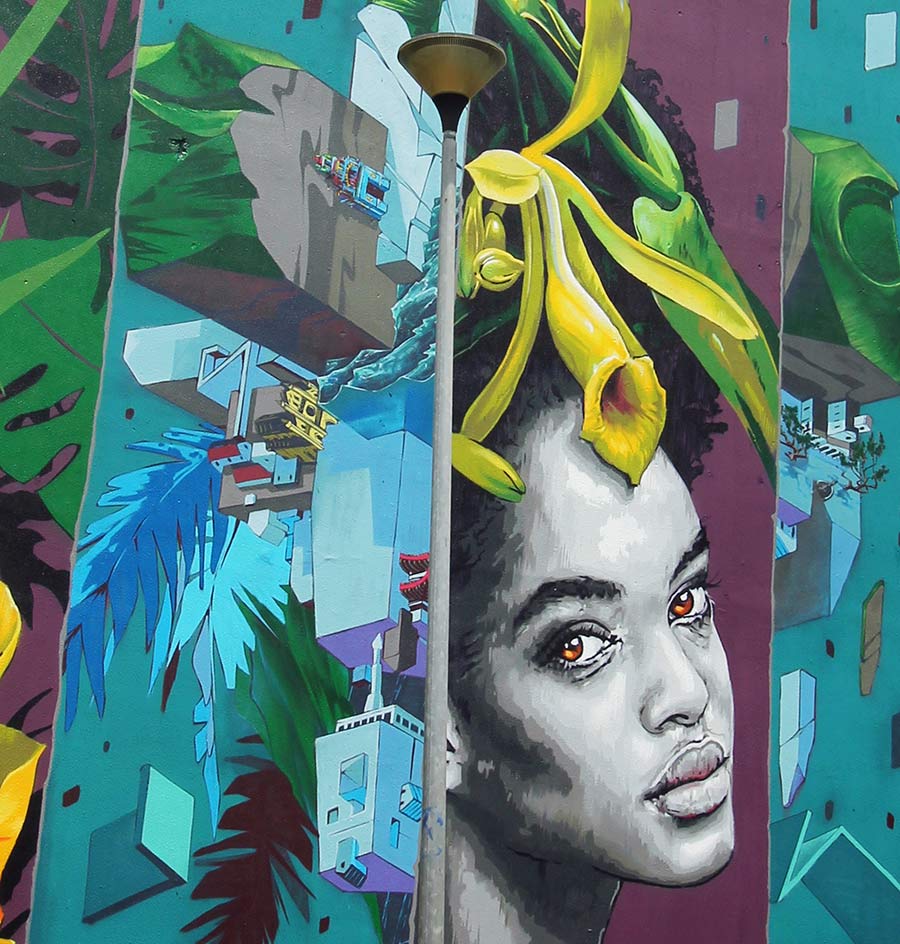
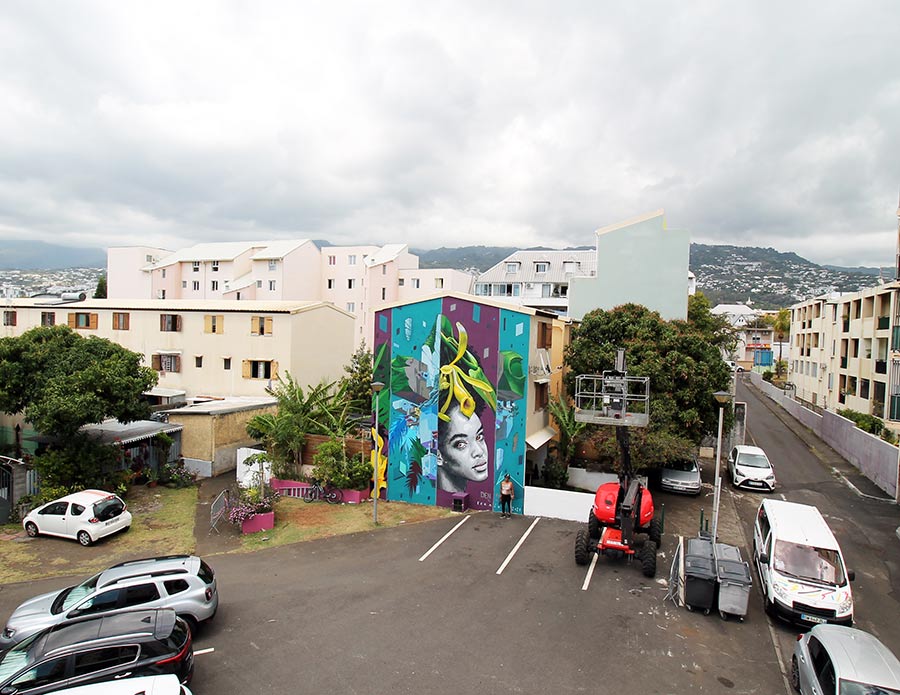
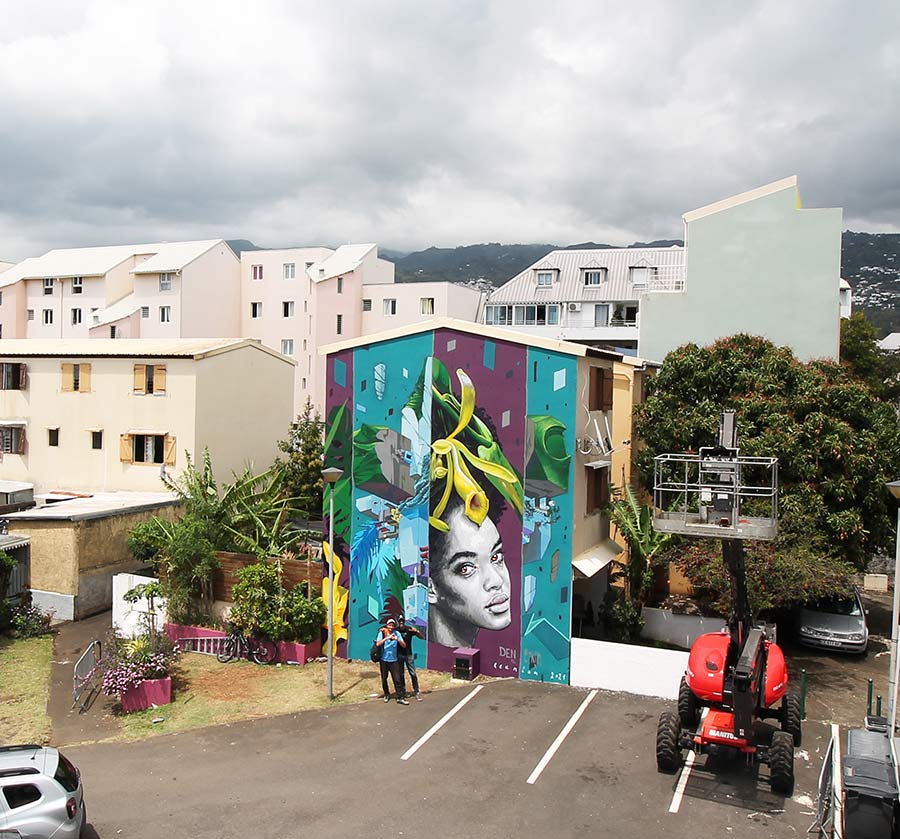
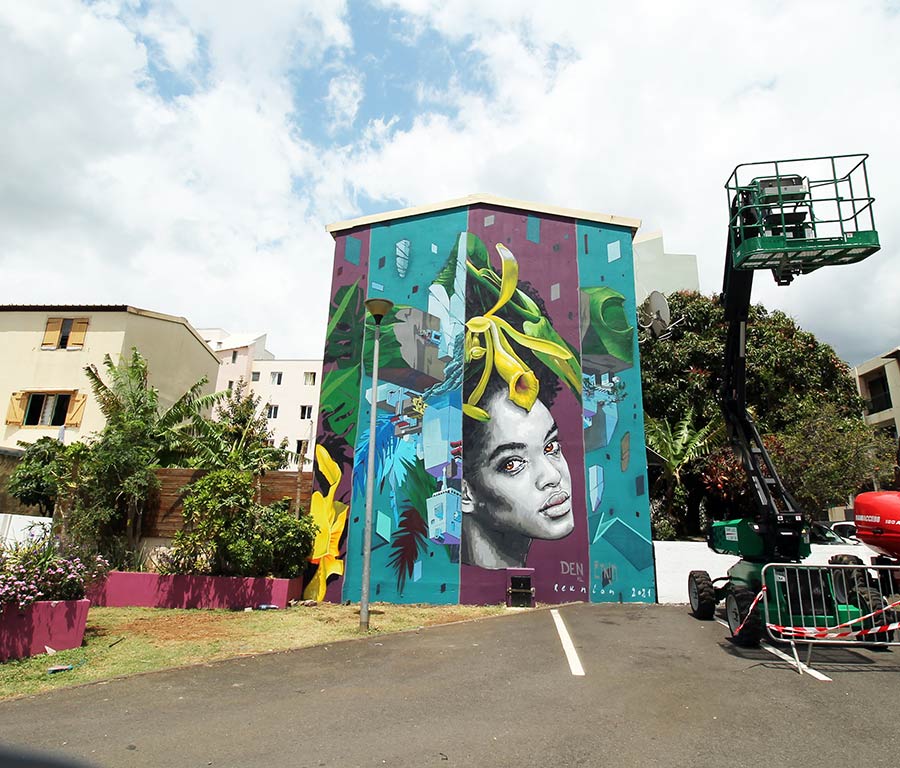
The deconstructing abstractionist Italian Etnik bravely couples with the lush portraiture of Spanish artist Den xl here in Réunion Island. And what a name that is – Réunion. Somewhere between Madagascar and Mauricius, this gorgeous island hosts a mural festival that joins these two distinct styles into a hybrid of futurism and naturalism.
Etnik & Den xl for Reunion Graffiti Festival. Reunion Island. (photo courtesy of the artists)Etnik & Den xl for Reunion Graffiti Festival. Reunion Island. (photo courtesy of the artists)Etnik & Den xl for Reunion Graffiti Festival. Reunion Island. (photo courtesy of the artists)Etnik & Den xl for Reunion Graffiti Festival. Reunion Island. (photo courtesy of the artists)
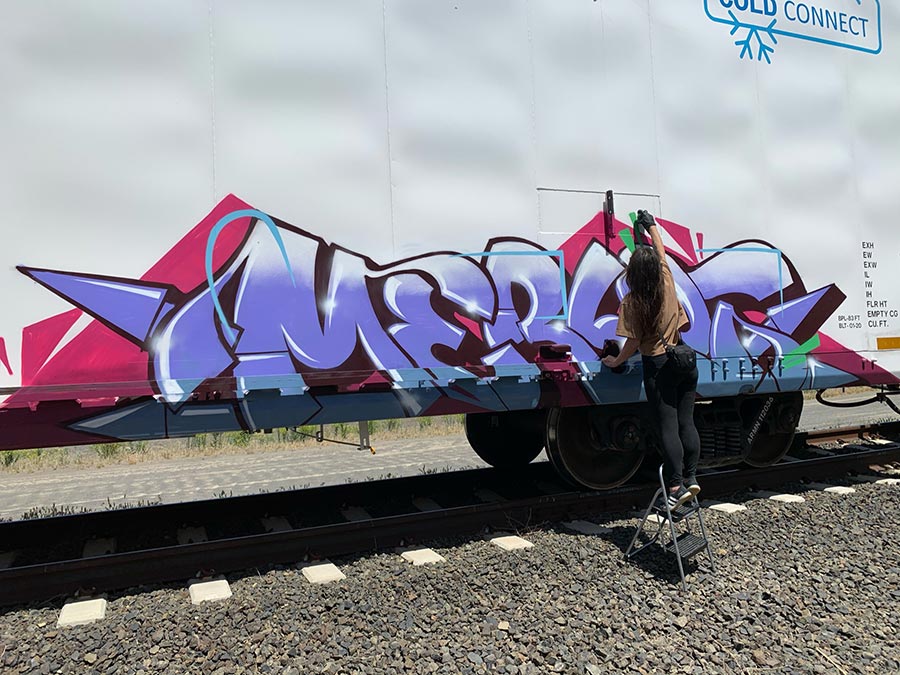
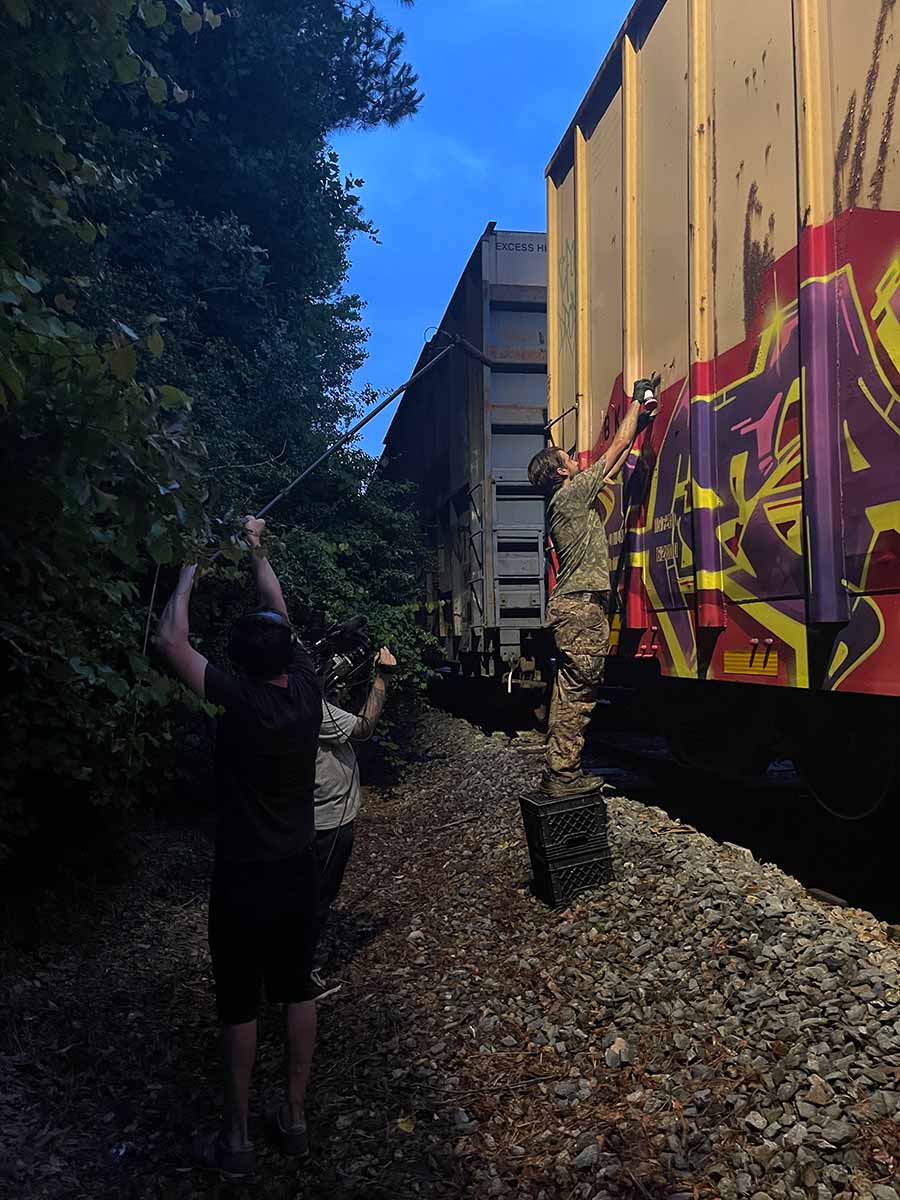
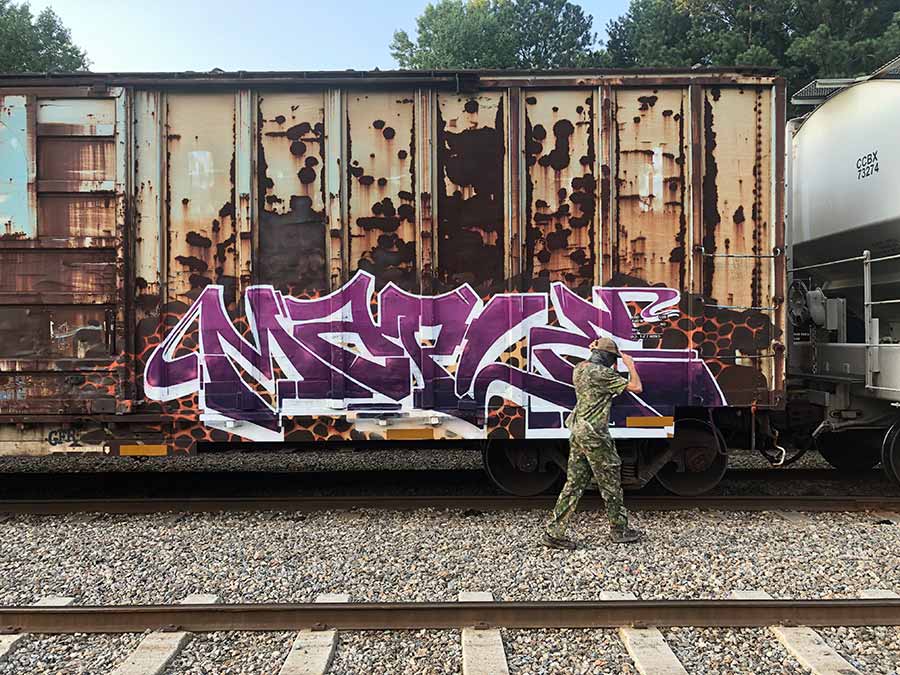
As you would know if you waited in the dark out in the open night for a freight train to paint, the earth vibrates and the rumbling can raise adrenaline levels with fear and excitement, and anticipation.
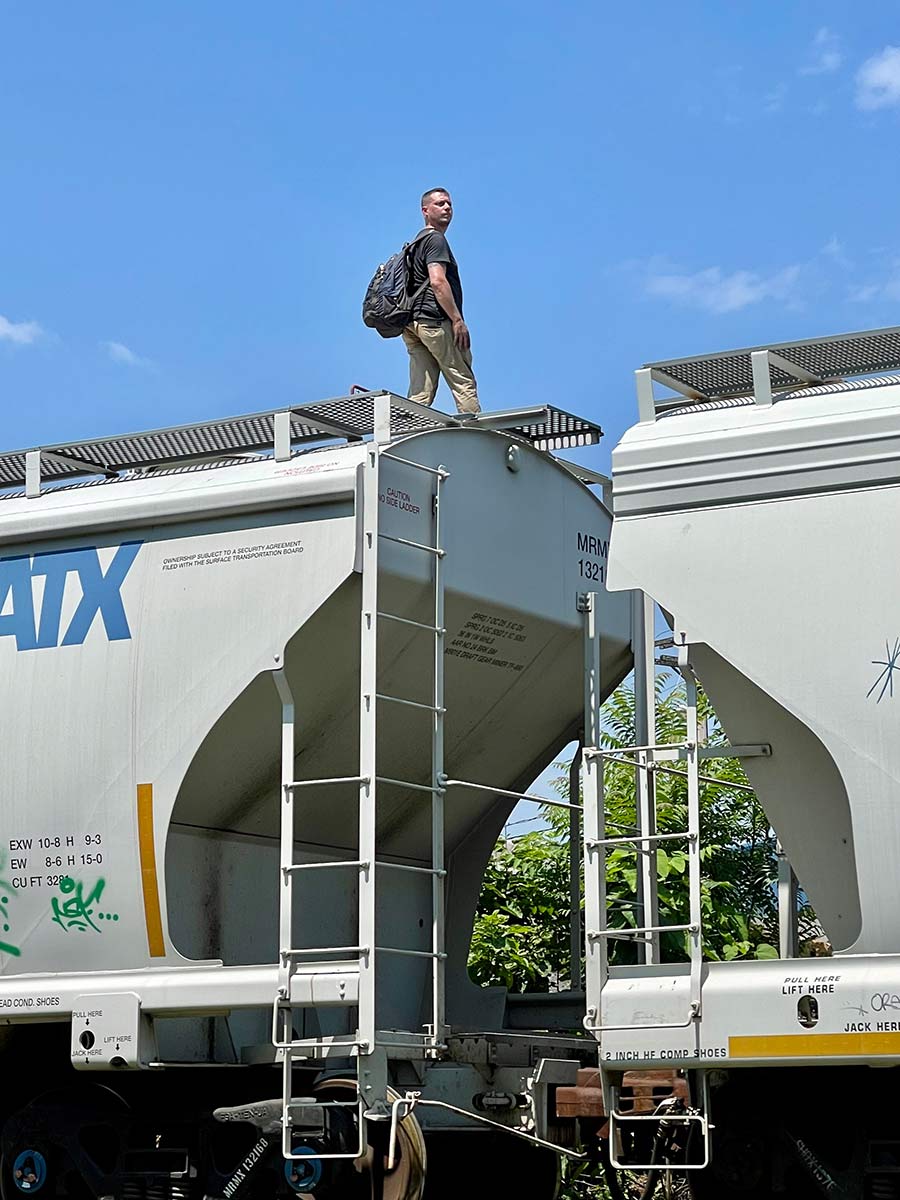
Time and again we hear the stories of isolation and community intertwined with “fright writing”, where a graffiti writer takes the “life and limb” thing a little too lightly, risking both to get up on a cross-country platform.
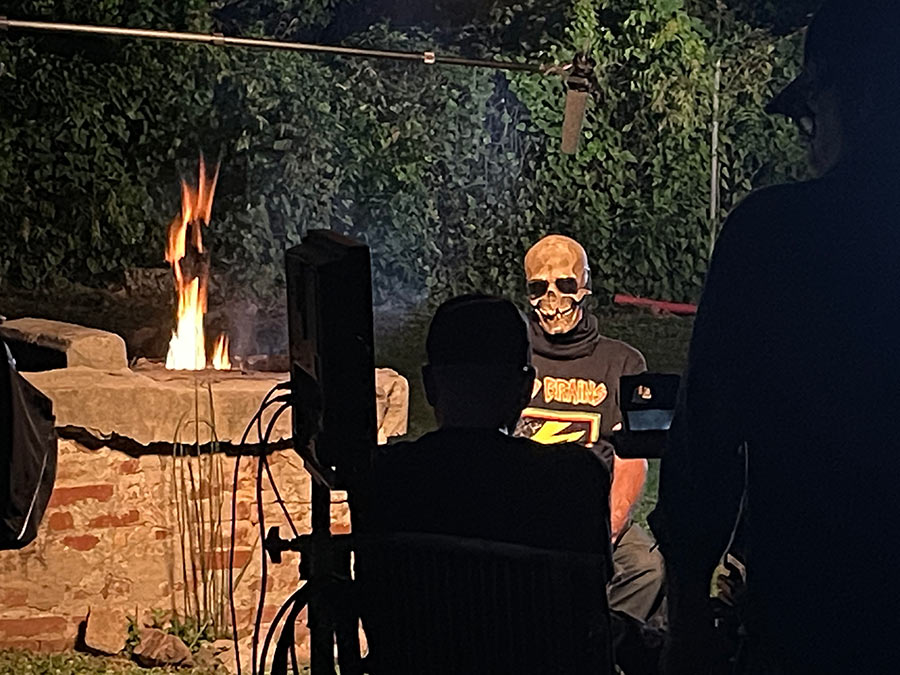
Next month graffiti historian, author, businessman, curator, disruptor, and film director Roger Gastman brings the freights Rolling Like Thunder to Showtime network with a new documentary that he promises will dive into “the secret underground world and history of freight train and graffiti culture, uncovering stories of myth-like artists, remarkable romances, competitive graffiti crews, and battles with the institution.”
It’s part of the network’s announced multi-year Hip Hop 50 initiative in collaboration with Mass Appeal, and will air on December 17th.
Roger sent us a few images from the film and behind-the-scenes shots to whet your aerosol appetite.
Imagine being able to grasp a piece of street art, thanks to a 3D model of the original mounted nearby and made specifically for the blind and visually impaired. We do not recall writing about such a development – and now that we have learned about it, we hope to hear of many more.
In October, following World Sight Day on the 14th, the first 3D models of murals for blind and visually impaired people were set up in Belgrade – led by Street Art Belgrade and a private commercial foundation. Following the first models’ installation in two locations, people were invited for a small street art tour like no other. Naturally, we have seen many sculptures and more three dimensional installations by artists over the last decades, but this is the first time you can witness that a direct translation of the painted work is created in dimensions that help others more fully appreciate the patterns, the relations, the forms at play with one another.
“Street art is considered the freest kind of art because, regardless of its passing character, it is on the streets that belong to everyone,” says Ljiljana Radošević, an art historian from the organization Street Art Belgrade.
“However, not everyone can see and experience it. In this way, we want to bring this contemporary art form closer to blind and visually impaired people and make that dynamic and creative world available to them.”
The two murals selected for the 3D models were done by the artist Weedzor, who’s been working on Belgrade’s streets since 2005 – cylindrical shapes that form the heads of a giraffe and a wolf. In addition to the 3D models placed at shoulder-level on the street, there is a description of the works in Braille. According to organizers, there are more 3D murals planned around the city.
“Any activity that contributes to the blind population having more things they can experience is very important,” says Nikola Djordjevic, president of the City Organization of the Blind in Belgrade in a press release for the program.
“This is not just an art exhibition, but this approach also shows respect for our population.”
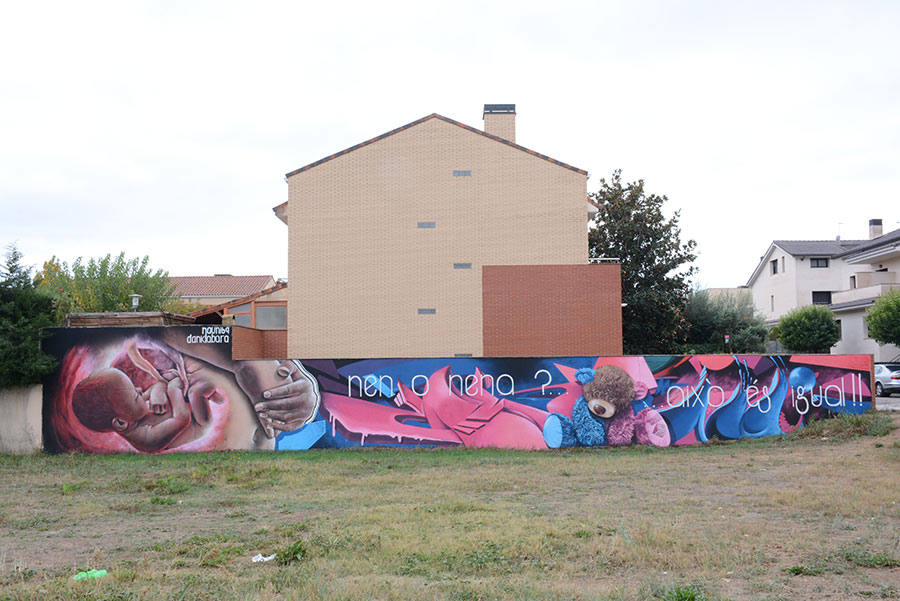
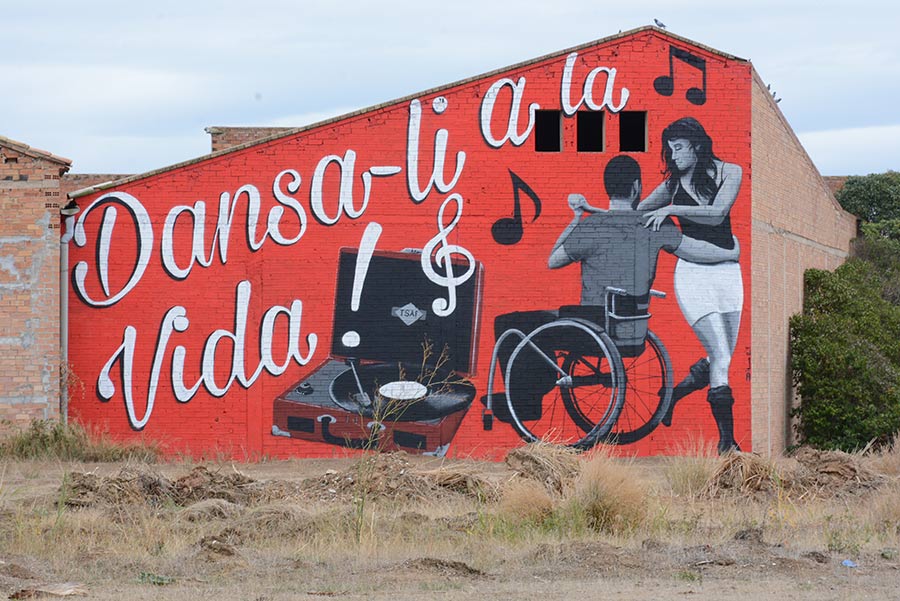
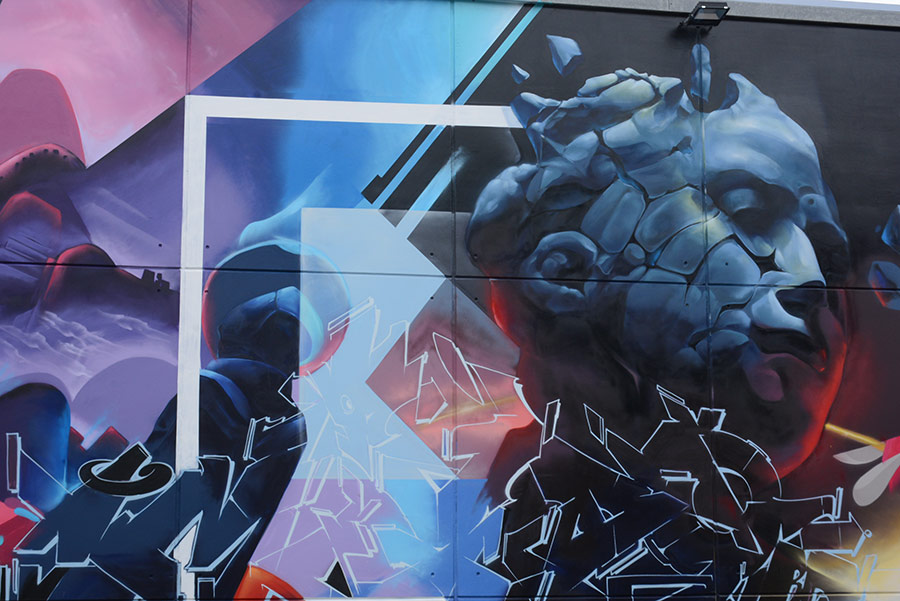
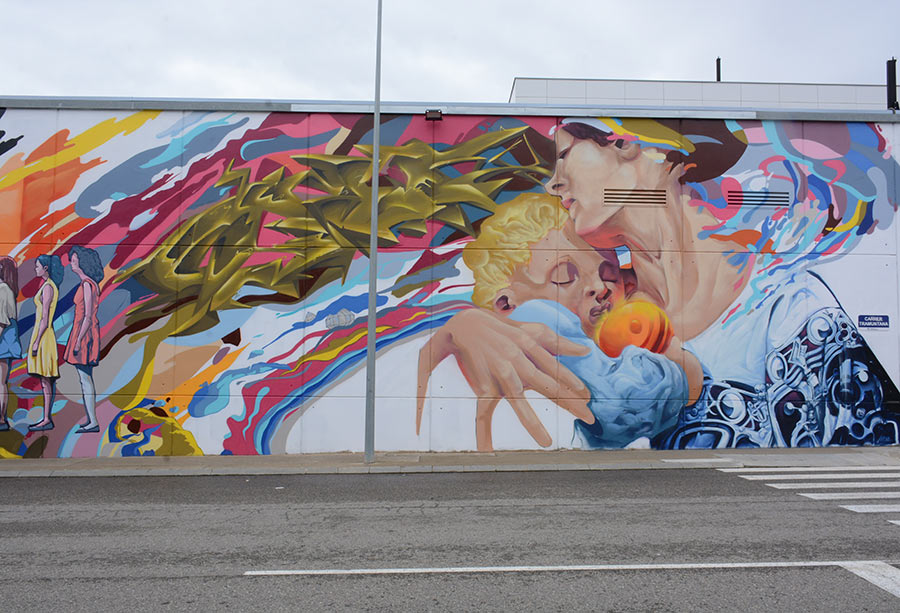
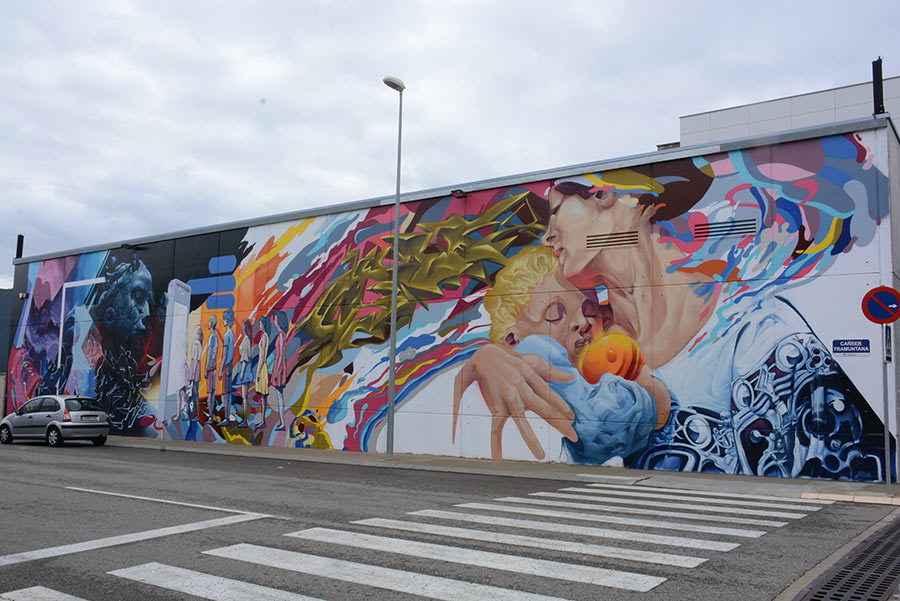
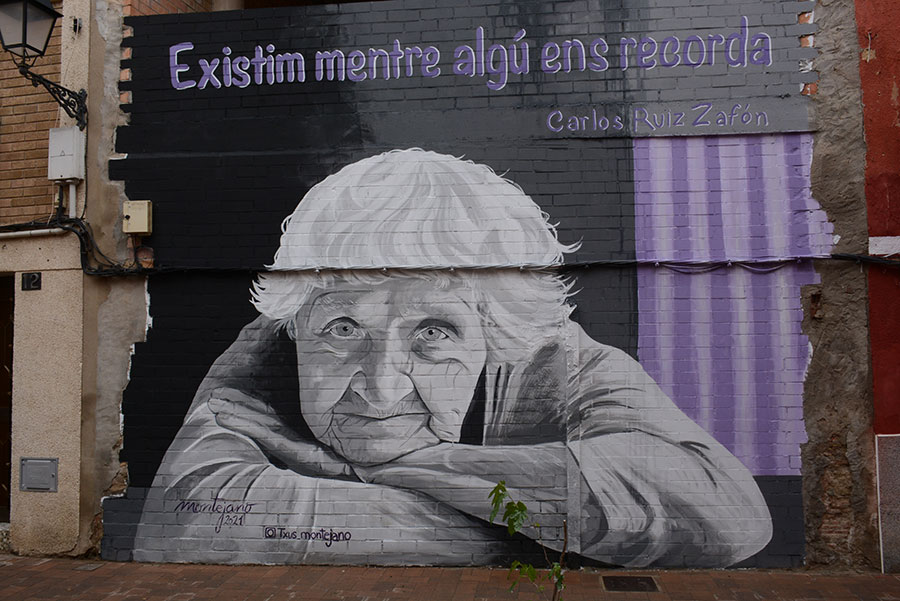
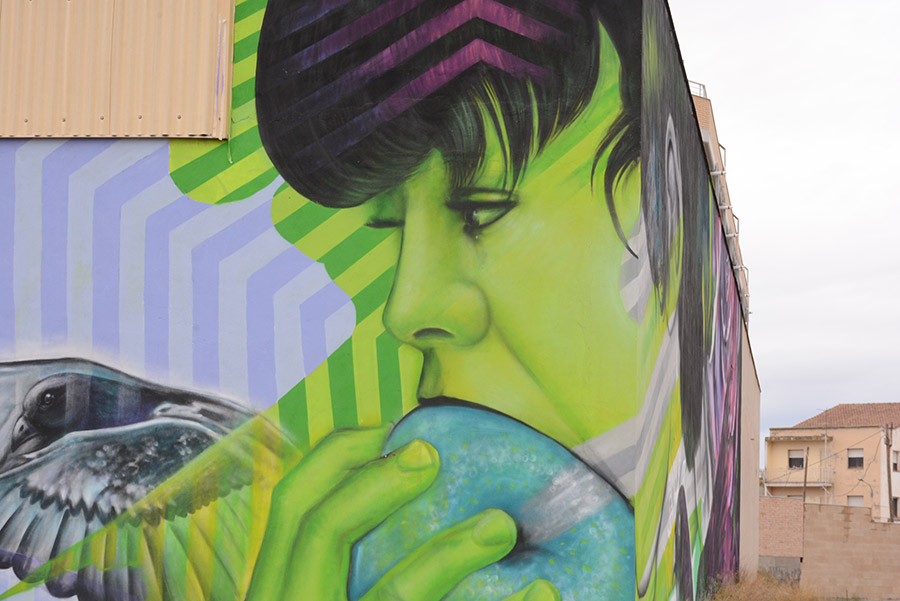
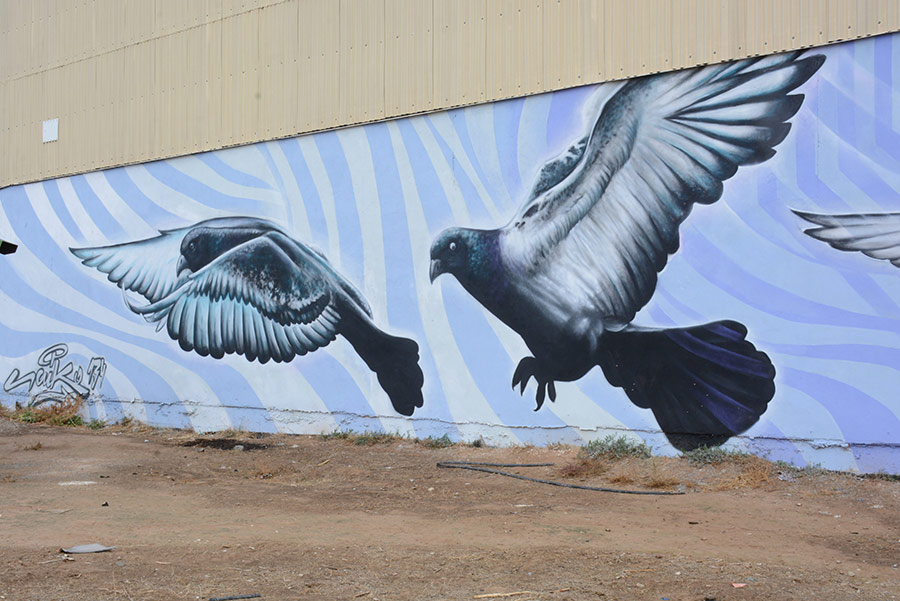
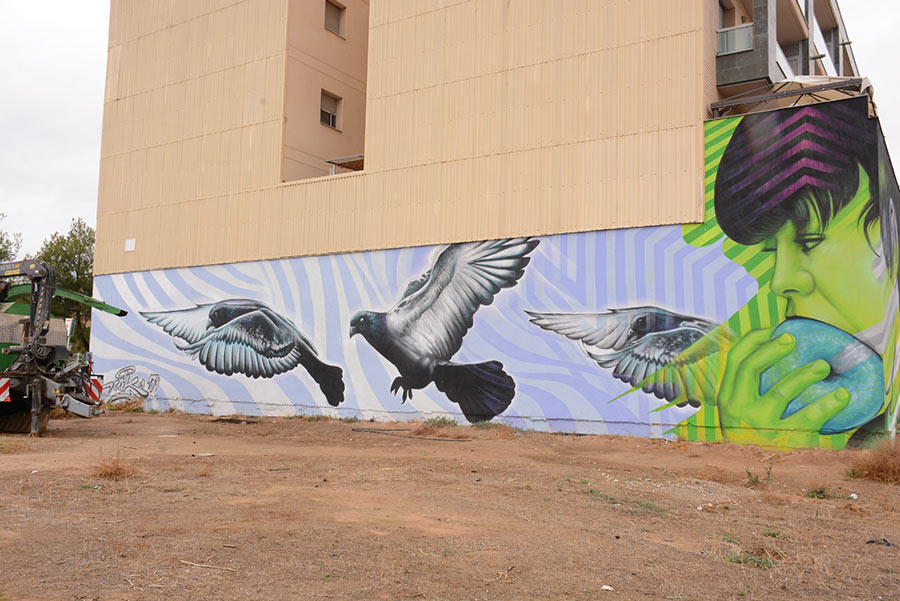
It’s their 5th annual street art festival, Torrefarrera, although you may more accurately call it a mural festival. For a small village of less than 5,000, they have about 40 murals now, and an interactive map online to help you find them, even fund them if you like. Deeply rooted in history and regional pride this northern town is convenient to the A-2 motorway which connects Barcelona and Zaragoza.
A municipality in the province of Lleida and an autonomous community of Catalonia, Spain, their festival has been drawing people out into the street and into the community in a way that appears to be gratifying to many in the community. They even frame it as an inclusive competition to garner most votes for favorite and present awards at a public ceremony. Sponsored by the municipality, local institutions, and a paint company, you’re unlikely to find transgressive, or even disagreeable themes – but possibly educational.
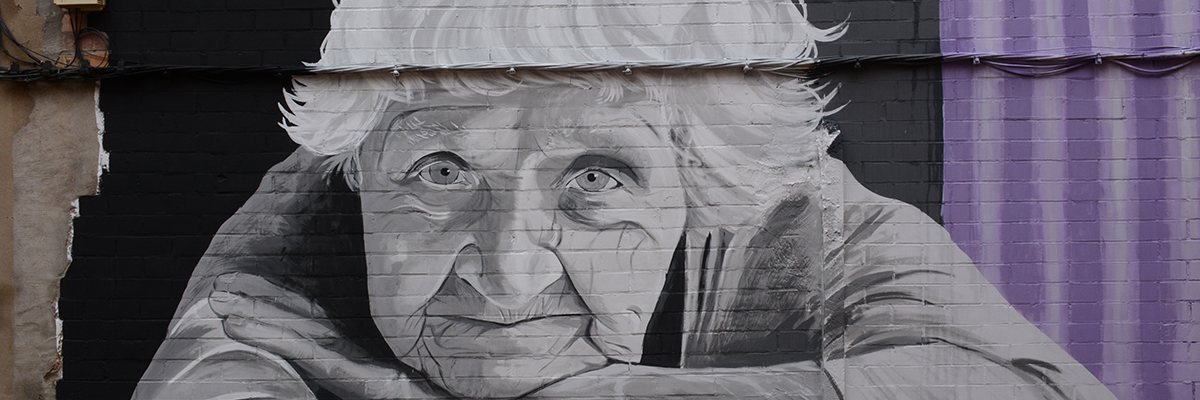
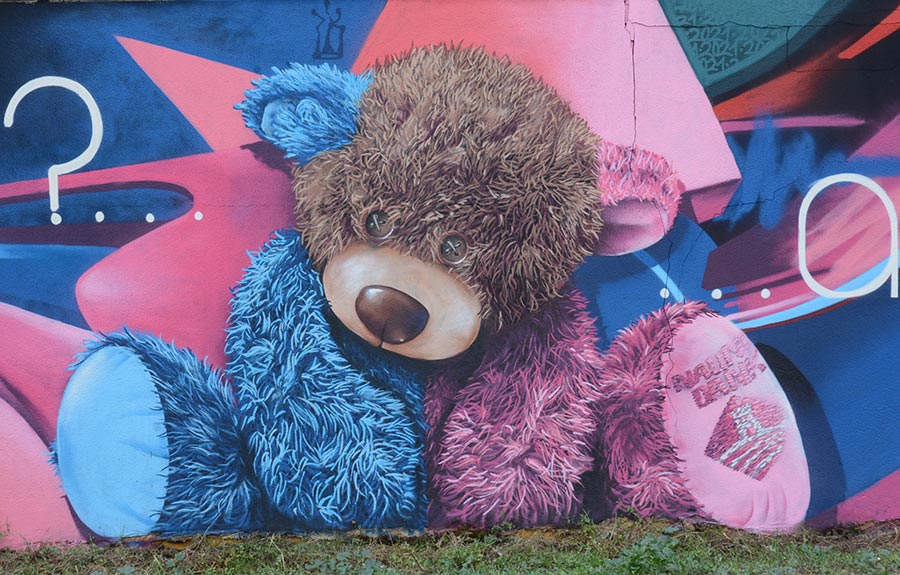
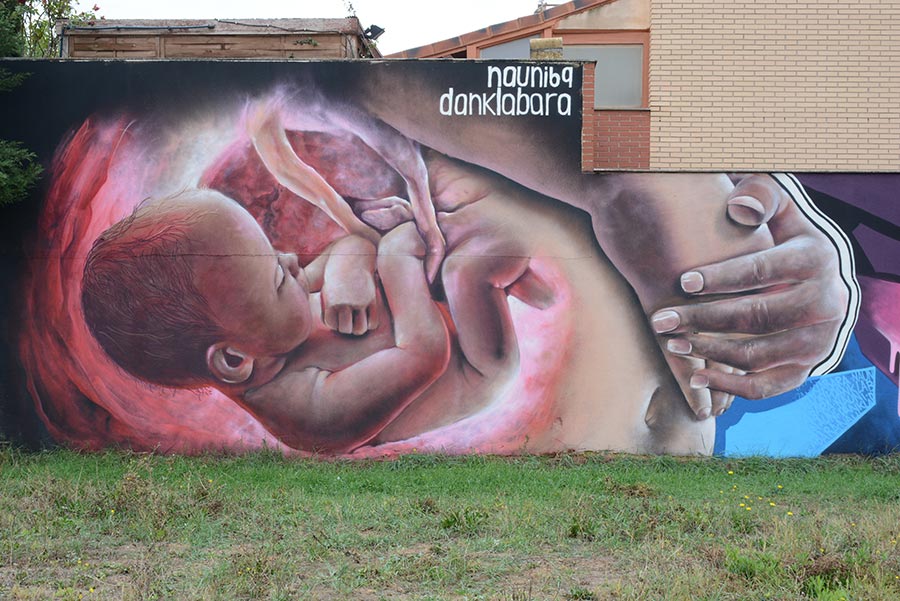
Photographer Lluís Olivé Bulbena took a drive a few hours north of his home recently to capture some of the new walls that went up during the September festival. Looks like he captured many of this years locally-sourced artistic participants who range from former graffiti writers to commercial artists, including Gasic Painter (from Tarragona), Dil (Lleida), Folk & Miedo (València and Alacant), Nauni 69 & Dank (Almeria), Txus Montejano (Lleida), and Saiko 134 (Terres de l’Ebre).
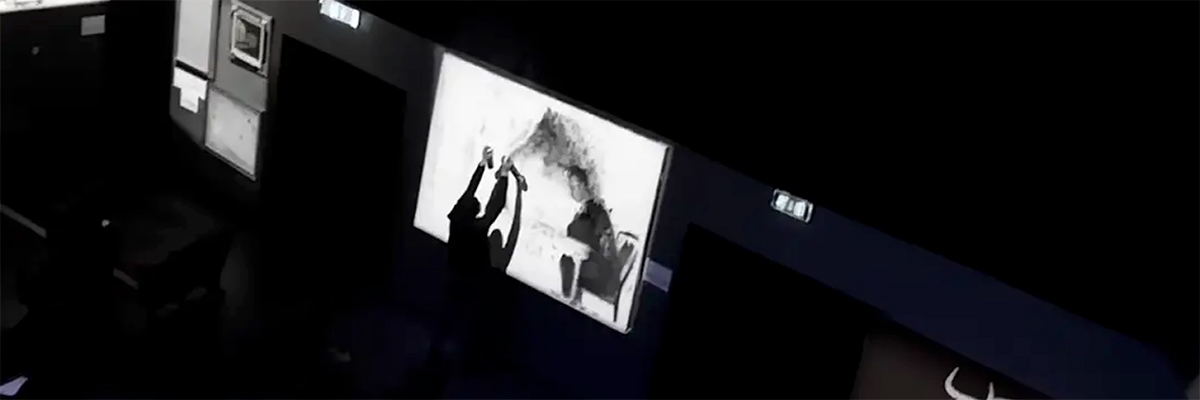
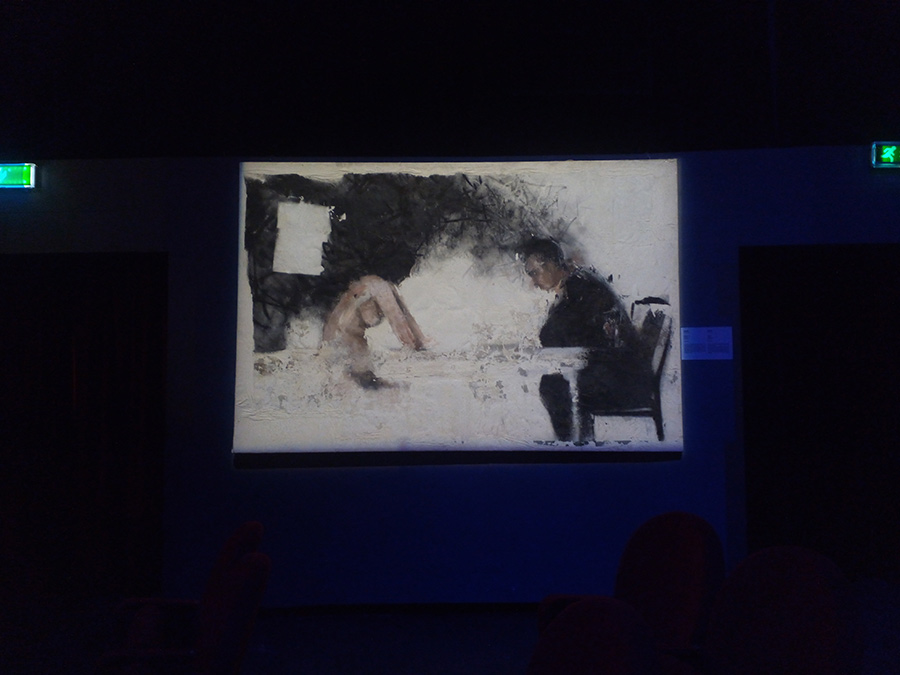
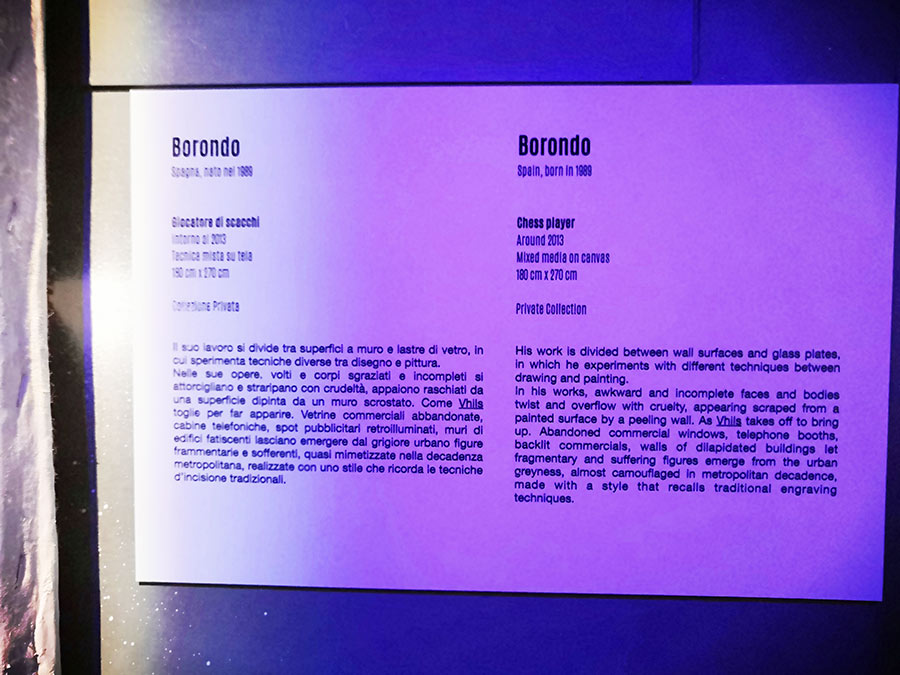
In a defiant act to reclaim the right to authorship and deny ownership and profit-taking, the Spanish graffiti writer/ street artist/ muralist/ fine artist is saying publicly that he, or one of his agents, has defaced his own work in an exhibition that is charging an entrance fee in Turin, Italy. The work in question, according to Gonzalo, was ripped out of a wall in an “abandoned” place by restorers who “claimed to be non-profit.”
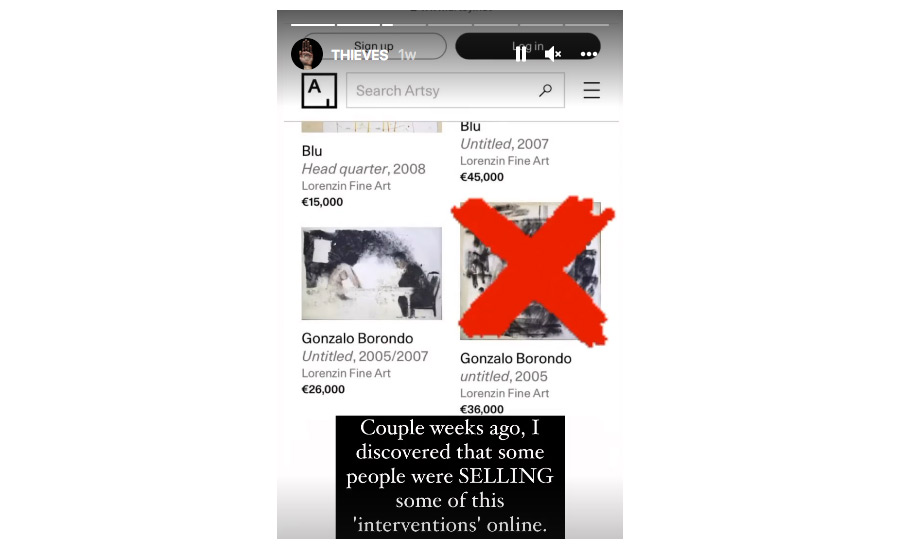
Not so, says the artist, who discovered some of the works for sale later on Artsy.com, and he posted about it on his Instagram stories. He also learned of one piece being shown in a commercial exhibit that opened in June called “Street Art in Blu 3” in the foyer to the auditorium at the Colosseo theater in Turin. Boasting 150 works by 36 artists, the ticketed show promised a spectacular experience and works by artists like Blu, Banksy, and 3D.
Screenshot of Borondo’s Instagram post appears to show the Artsy website selling pieces the artist says were taken without permission from public space.
That was not what he had planned when he painted the originals in their location-specific installations, says Borondo in an email. “These interventions in public space weren’t made with the intention to create objects to consume, but to dialogue and accompany their surroundings,” he says.
“Without their context, the interventions make no sense, the will and the intent of the artist have disappeared, so, in the end, the artworks don’t exist anymore,” he continues.
True enough, but once an artist has created a work, no one will ever be completely able to control how it is interpreted, how it is used – it may even be destroyed or integrated into other works by other artists – regardless of the original ‘intention’. Piss Christ by Andres Serrano used a religious icon never intended to be employed that way, Duchamp’s “Fountain” urinal was originally intended to be, well, a urinal, and Hirsts’ shark in formaldehyde doubtfully was intended to be used as someone’s private art by the Creator, or by the shark.
People are even now debating if any of those examples we give above make sense, or are ‘art’ – especially after their transformation or removal from their original context. But we get Borondo’s larger point, and even more, we understand his interest in deleting the image from a ‘for-profit’ carnival show like this one appears to have been. At the very least, a presentation of his work in this context detracts from his carefully built reputation as an artist.
The larger debate is still raging. Who owns street art – installed legally and illegally. What are the implications and limitations of intellectual property, and physical property? What is the role of documentation, or preservation – in light of the artists’ intention and the greater edification of future generations? And at which point is it worth fighting for, or about? We expect to hear these arguments for years to come.
Here is a video of the action courtesy of the artist.
Our weekly focus on the moving image and art in the streets. And other oddities.
Now screening: 1. CROSSROADS: Life in the Resilient City from Nils Clauss and Neil Dowling 2. VHILS – MEXICO A Film by Jose Pando Lucas 3. OS GEMEOS: SECRETS – Episode 01 – All paths lead to São Bento
BSA Special Feature: CROSSROADS: Life in the Resilient City
To live anywhere for any period, one needs to develope a certain resiliency, maybe even a strong cortex. During the Seoul Biennialle on Architecture and Urbanism this year, responsible urban growth was focused upon like never previously – with people and systems at their core.
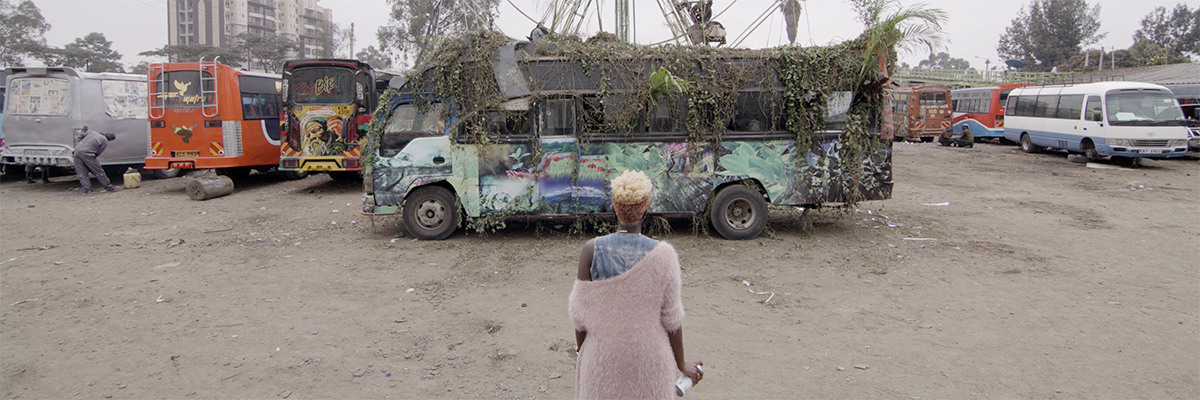
“Five cities. Five stories. This documentary looks at the urban experience from the perspective of people living at the interface of the changing world. In New York, Seoul, Mumbai, Paris and Nairobi creativity and imagination is necessary to survive and thrive as the cities they live in constantly evolve.”
This is the narrative based on CROSSROADS : Building the Resilient City by Dominique Perrault, General Director of Seoul Biennale of Architecture and Urbanism 2021
CROSSROADS: Life in the Resilient City from Nils Clauss and Neil Dowling
VHILS – MEXICO A Film by Jose Pando Lucas
“I met a witch. The most beautiful of all witches,” begins the latest fable by VHILS, as he travels from his home in Portugal to this land, one of magic and realism. Directed by Jose Pando Lucas.
OS GEMEOS: SECRETS – Episode 01 – All paths lead to São Bento
Here is a secret from the twins that you may not have known: all paths lead to São Bento. There are more secrets to be revealed here as the retelling of the genesis tales of graffiti and hip hop culture continue to come forth and to take their rightful position in the history that formed our culture today.
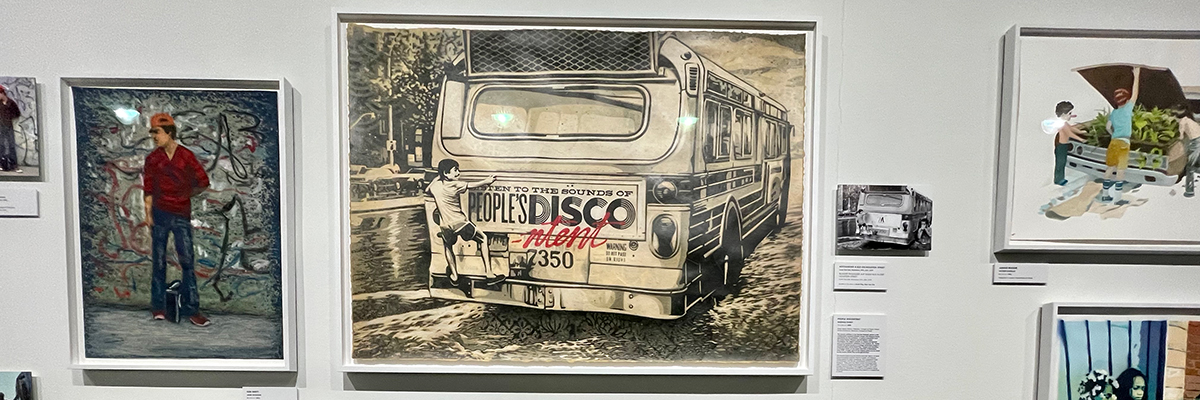
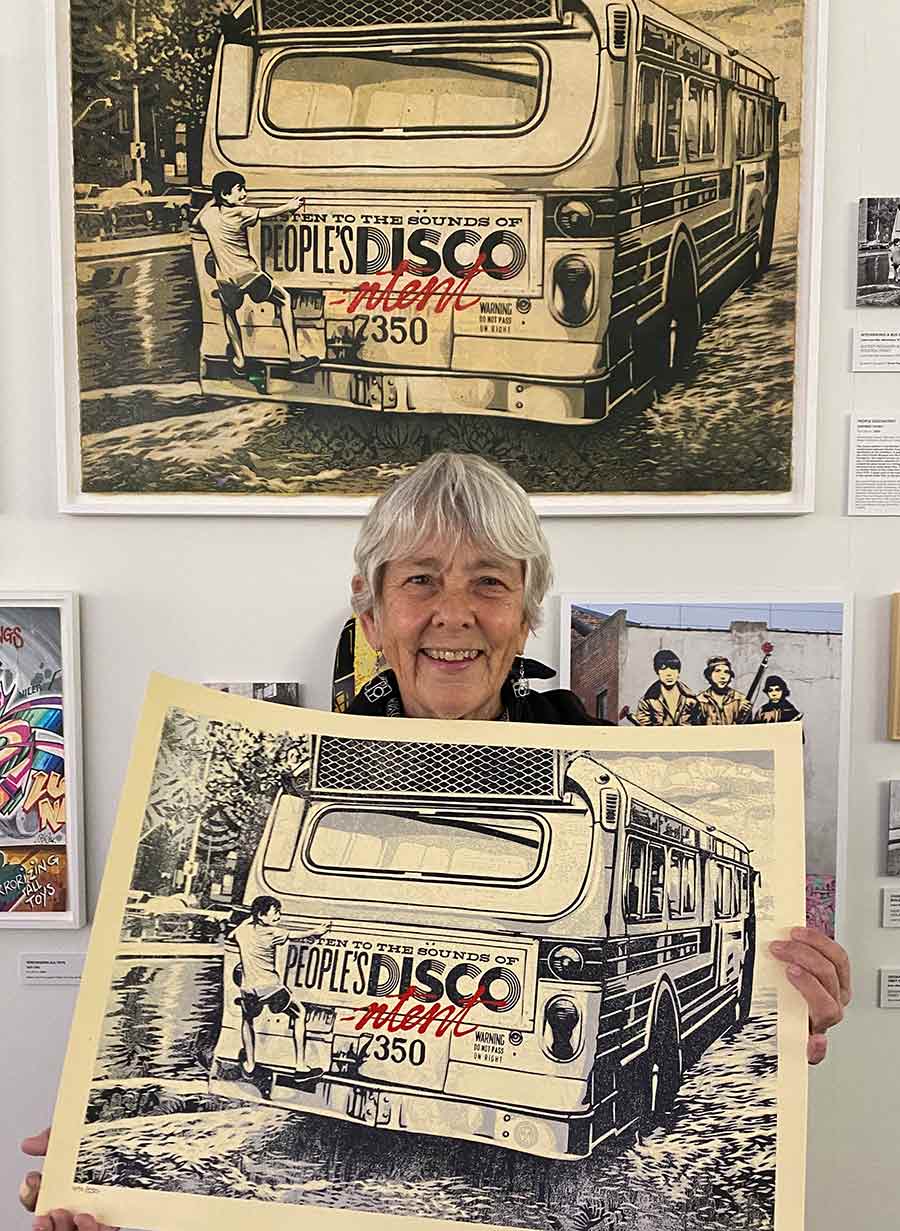
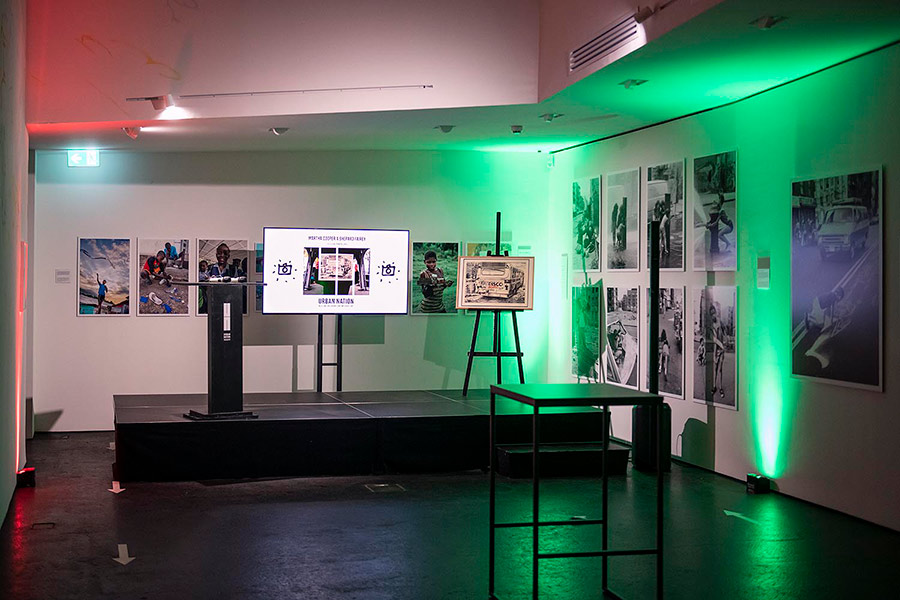
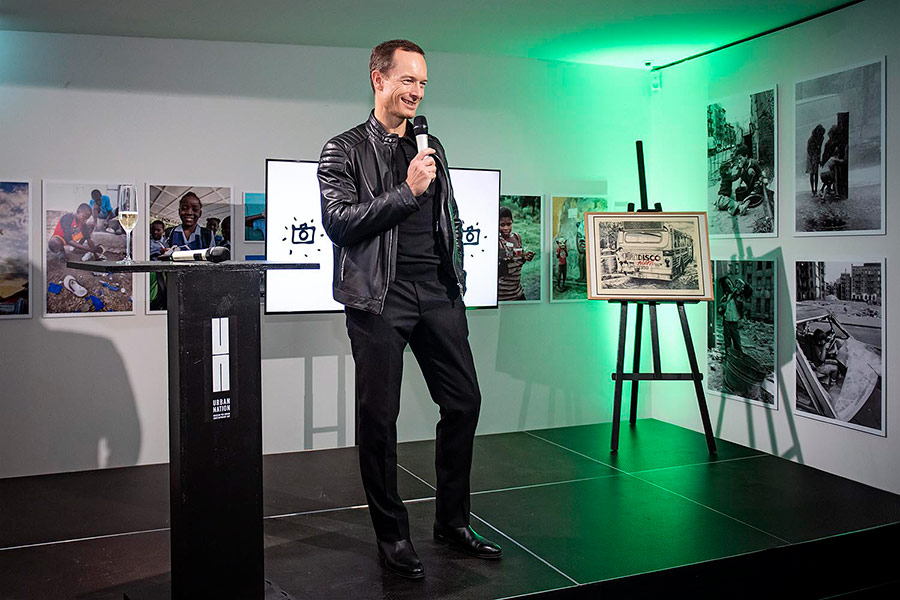
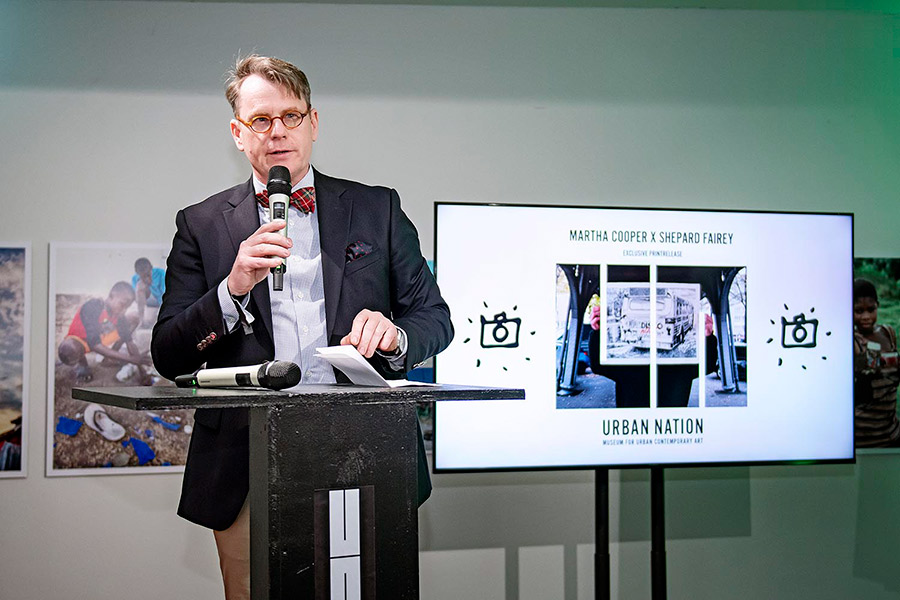
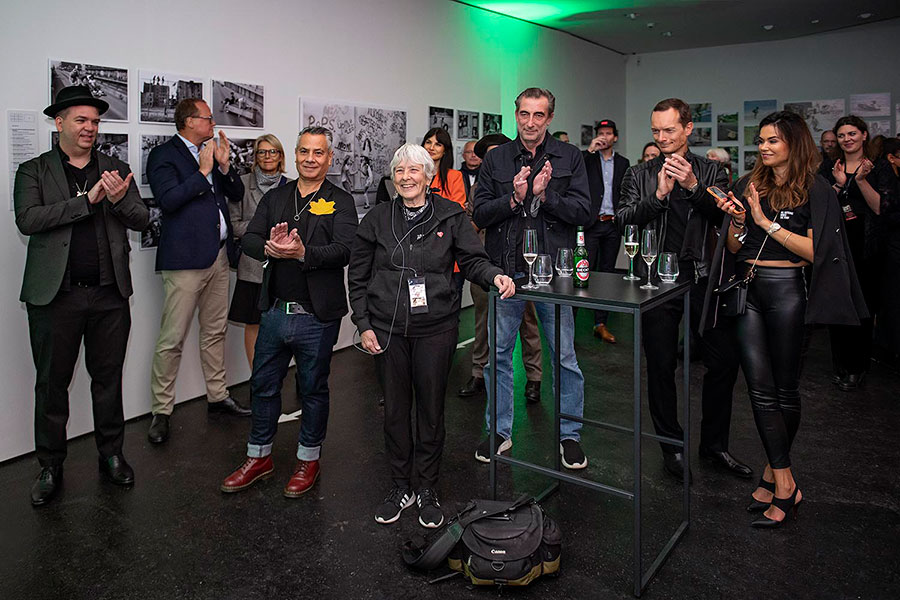
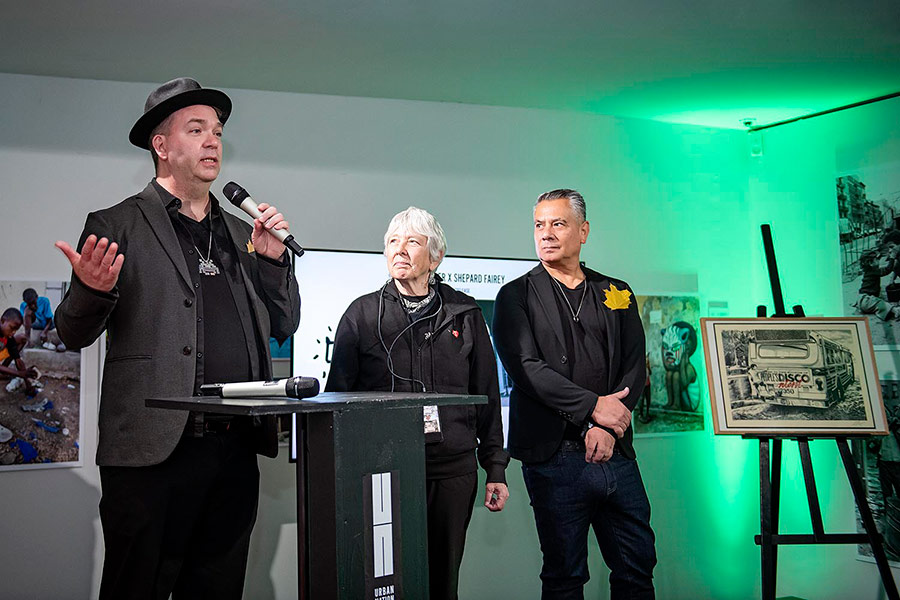
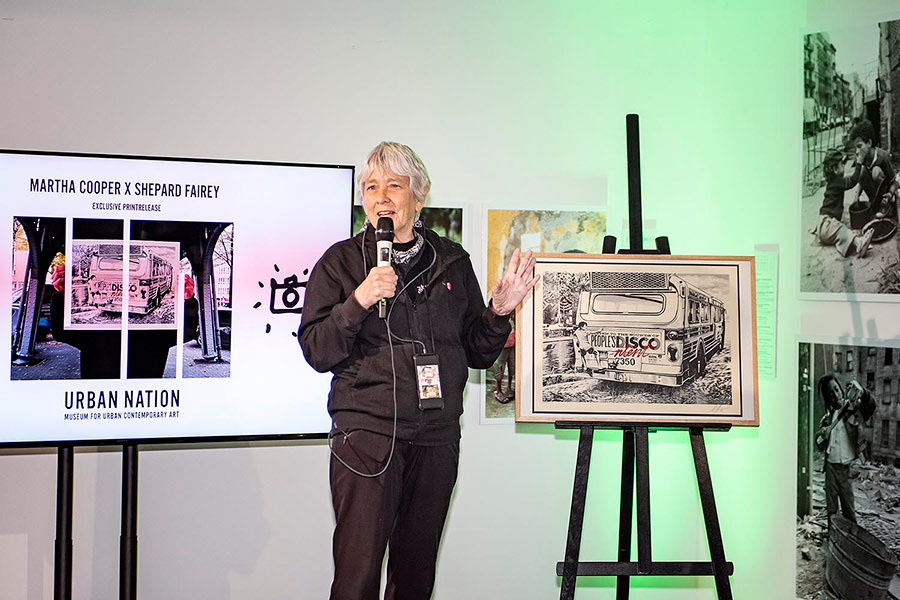
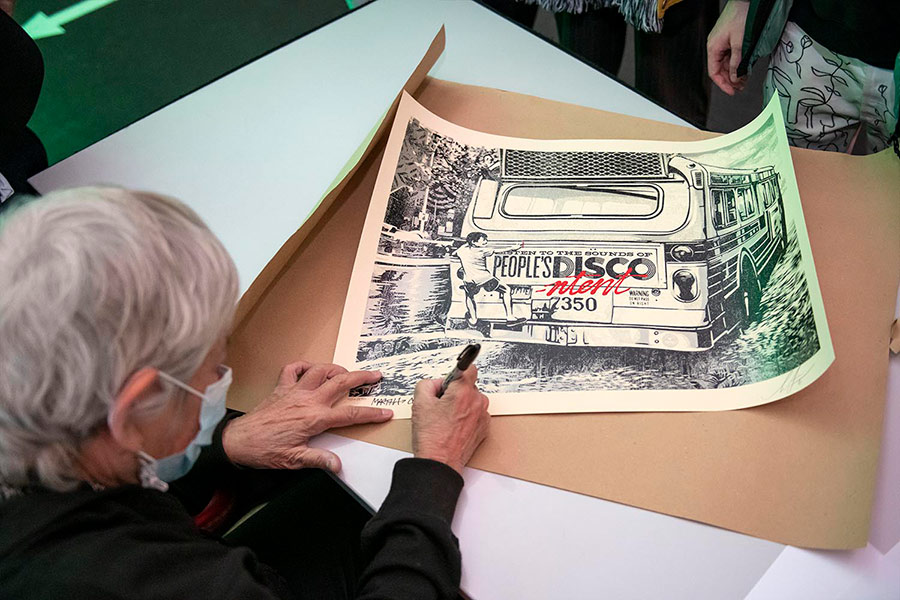
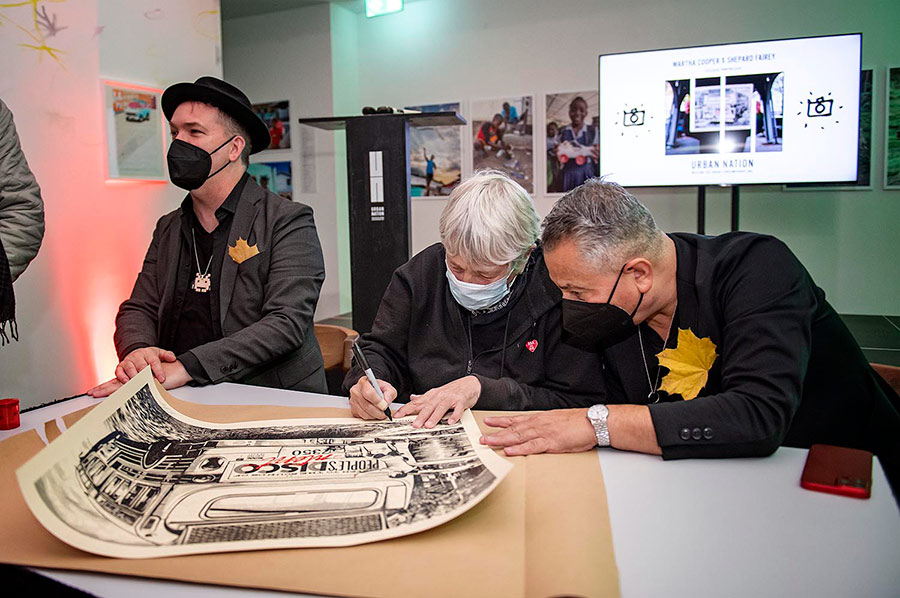
Today at 10:00 AM PDT Shepard Fairey will release his newest print and collaboration with Martha Cooper, “People’s Discontent”. Shepard’s long friendship with Martha has brought several collaborations throughout the years with Shepard remixing some of Martha’s most iconic photos from her Street Play series from the mid-’70s. The print already saw its European release in Berlin last Friday, October 30th at the Urban Nation Museum in Berlin with us and Martha in attendance.
“I teamed up with my good friend and documentary photographer, Martha Cooper, on a new print release called “People’s Discontent.” Martha Cooper has been photographing creative kids in action on city streets since the mid-1970s. I remixed one of Martha’s iconic photos from her book, Street Play, titled “Hitchhiking a Bus on Houston Street” that she shot in 1978 in the Lower East Side of New York City. There was no advertisement on the back of the bus in her original photo, and since disco was the rage in the late ’70s, I thought it made sense for me to add a disco radio station with the slogan, “Listen To The Sounds of People’s Disco.” I added the “DISCO-ntent” and the spraypaint can in the kid’s hand as if he sprayed that on there. It’s a nod to that era but also to what’s going on now with the unrest around social justice issues.”
“This limited edition print was first released through Urban Nation Museum in Berlin as part of their current show “Martha Cooper: Taking Pictures” curated by Jaime Rojo and Steven P. Harrington of Brooklyn Street Art and will soon be up on my website this Thursday at 10 AM PT. Check it out!” – Shepard Fairey
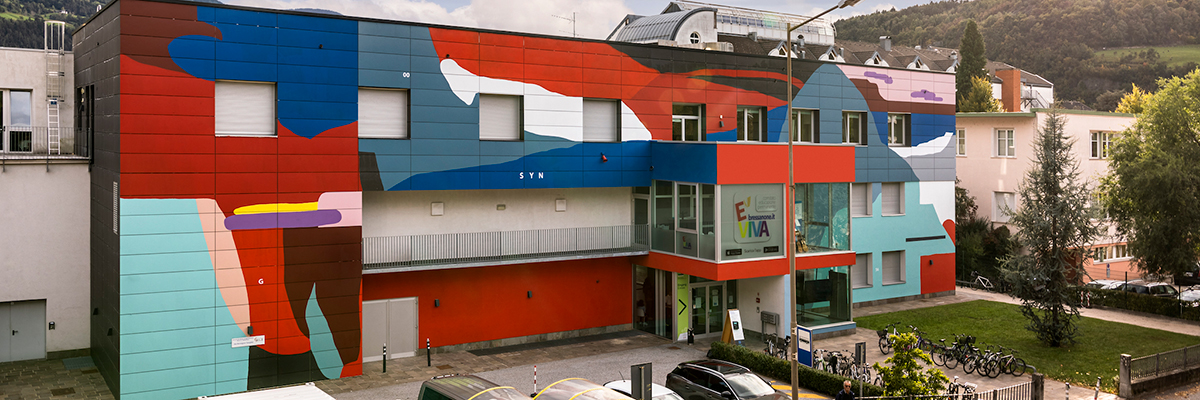
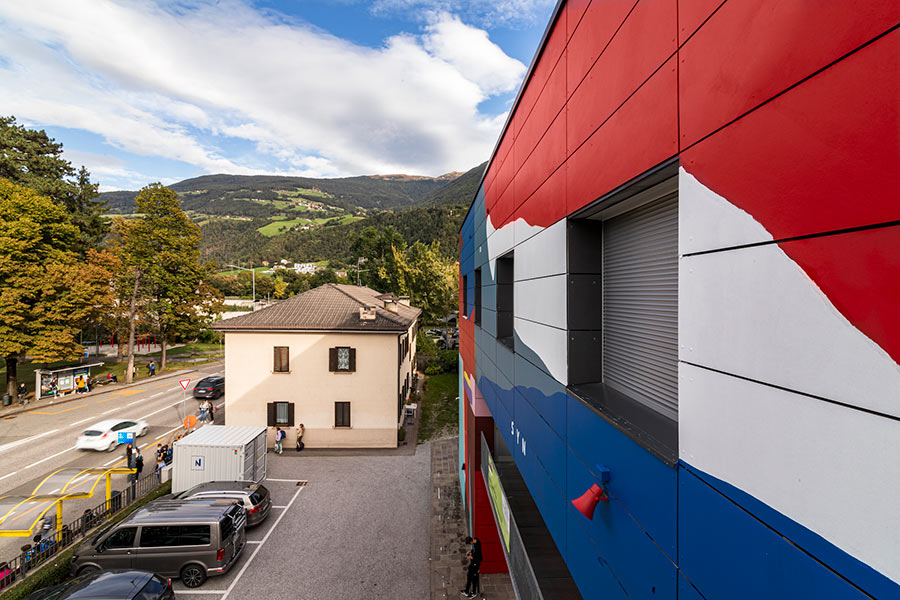
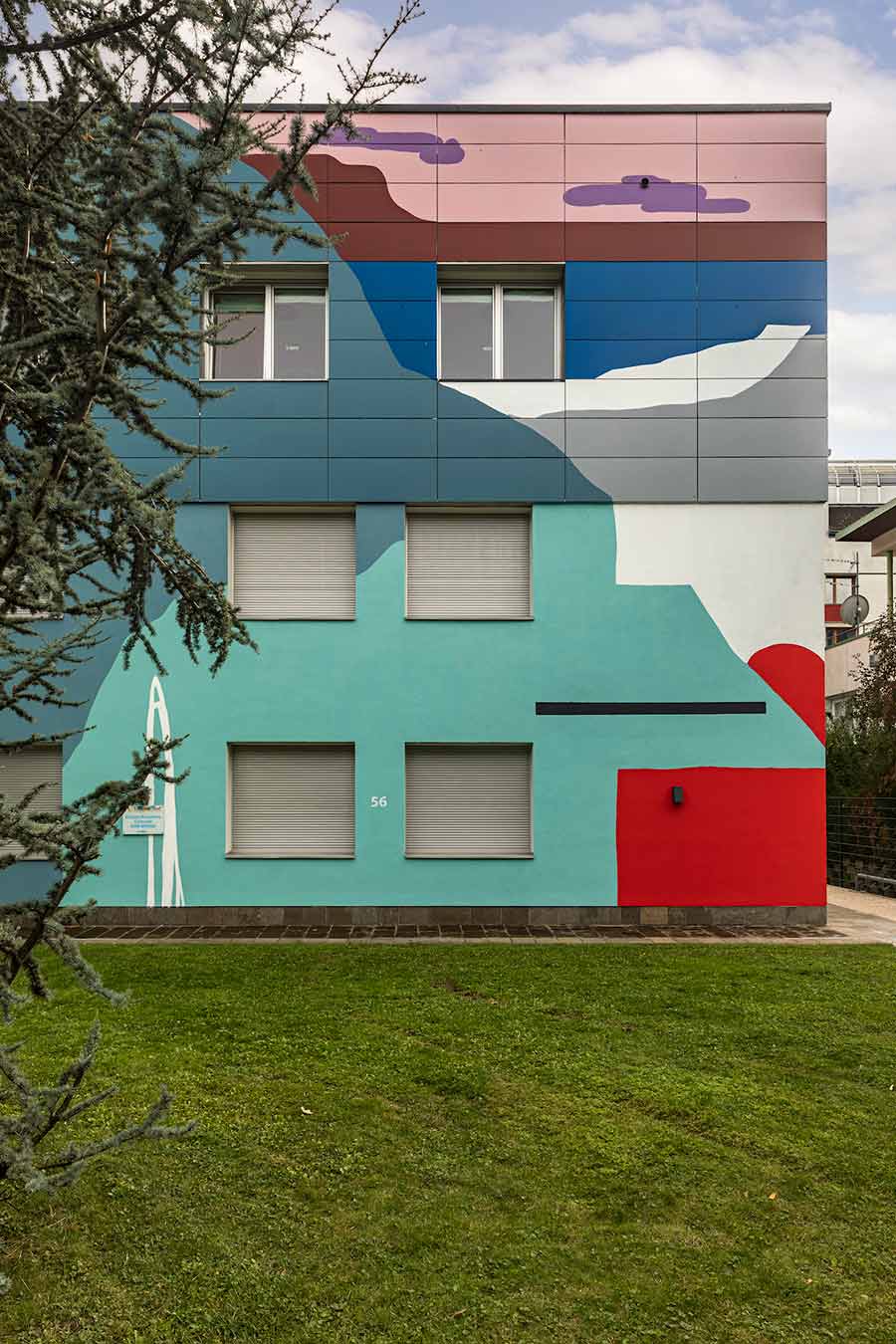
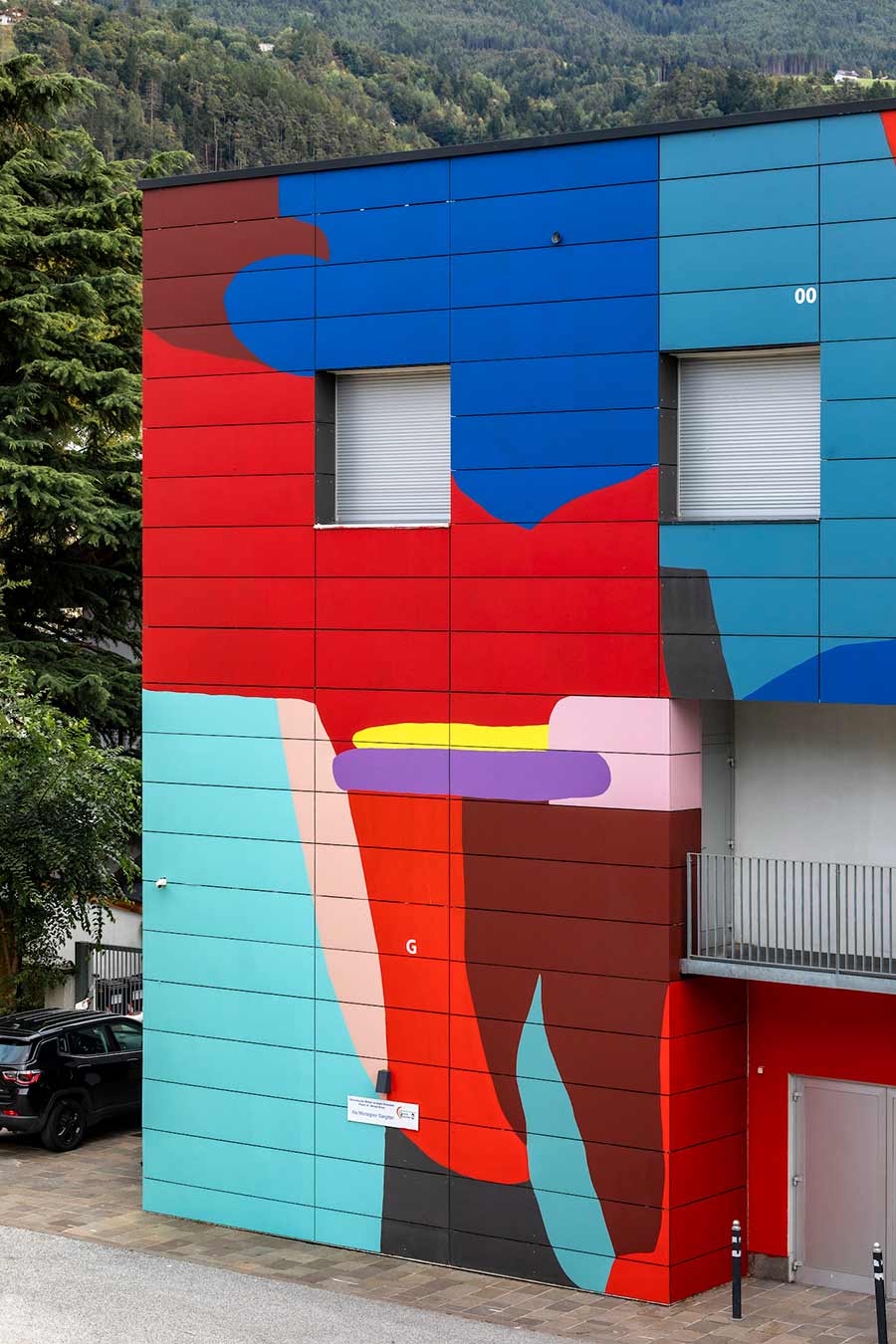
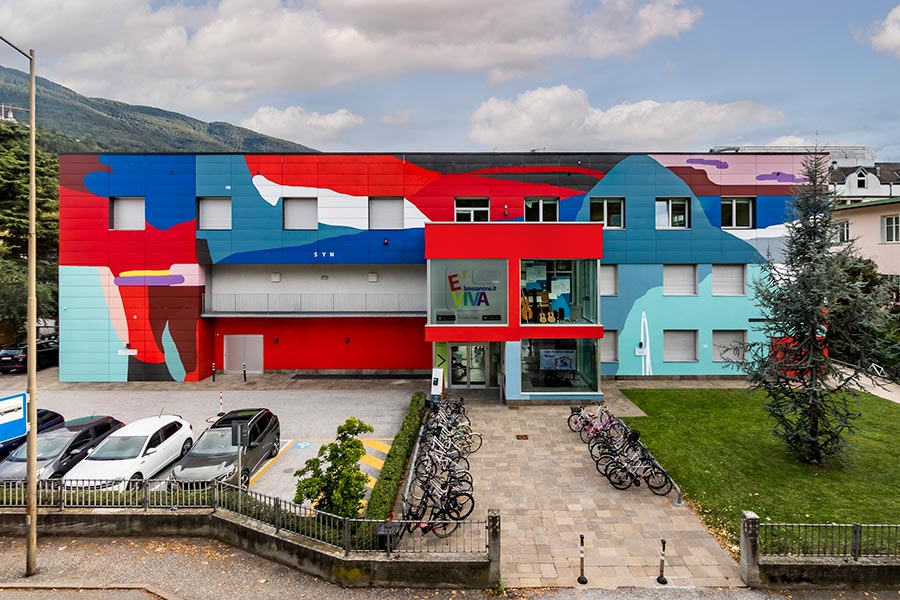
In other words, this new mural is not painted on a basketball court, as has been the case in many of our recent stories about this lover of pop abstract.
“My latest work is multiform and communicative,” he says, “an extension of the structure and the natural landscape in which it connects.” Based in Bressanone, Brixen in the northern part of Italy, Vestprini is considering this an intervention between art and architecture.
“Union, connection, cohesion, completion, complexity, contemporaneity,” he says, “these are the meanings that I bring with my new work.”
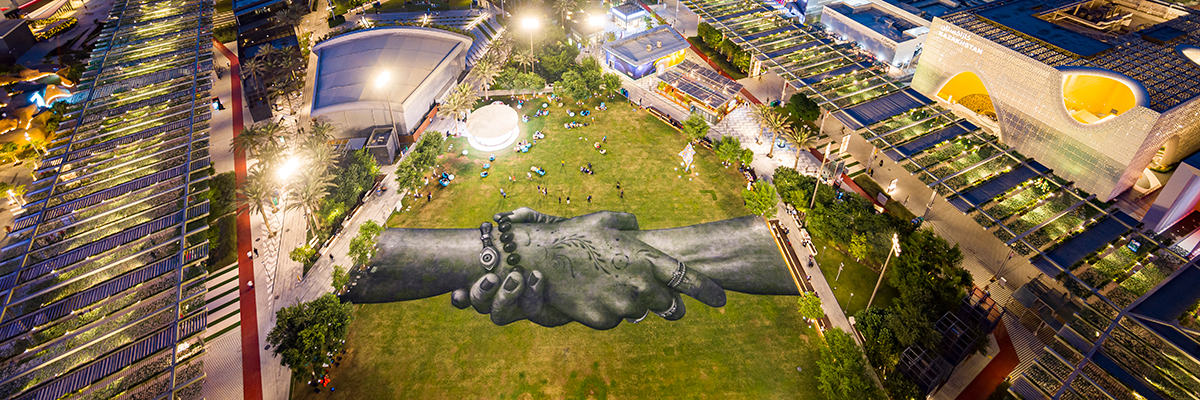
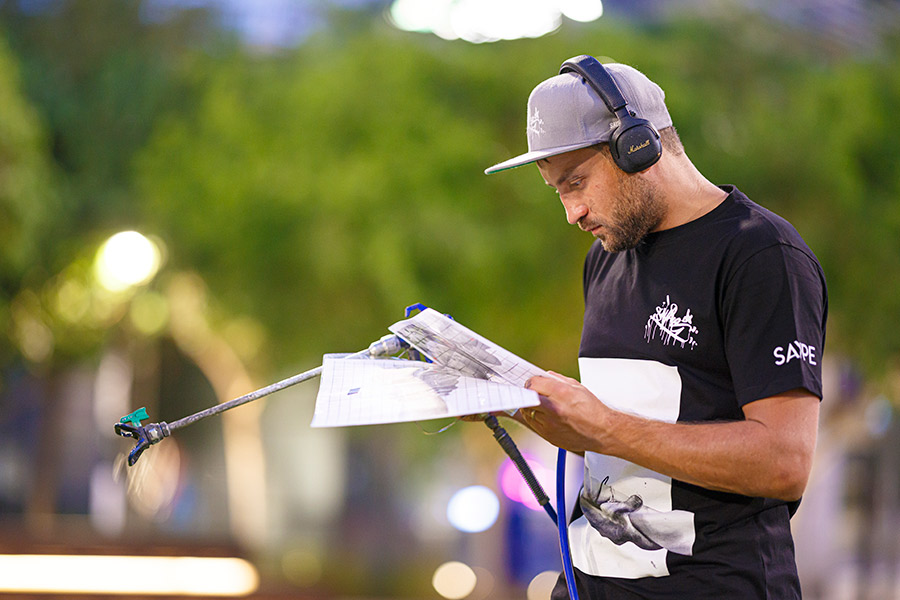
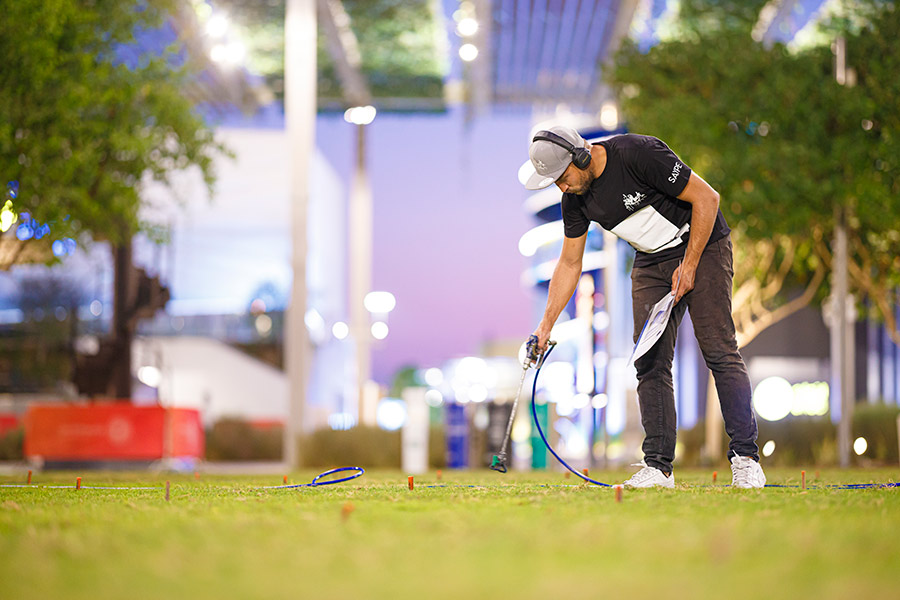
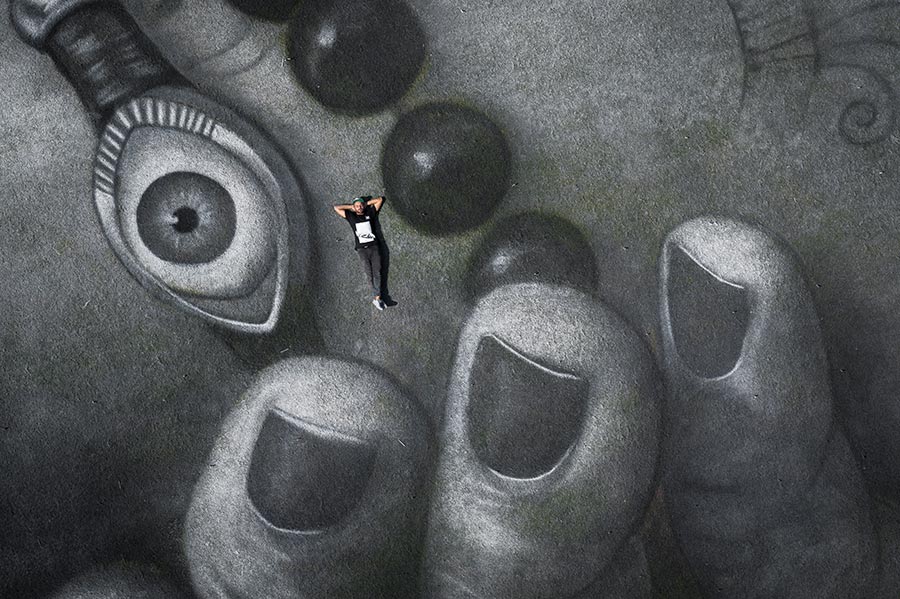
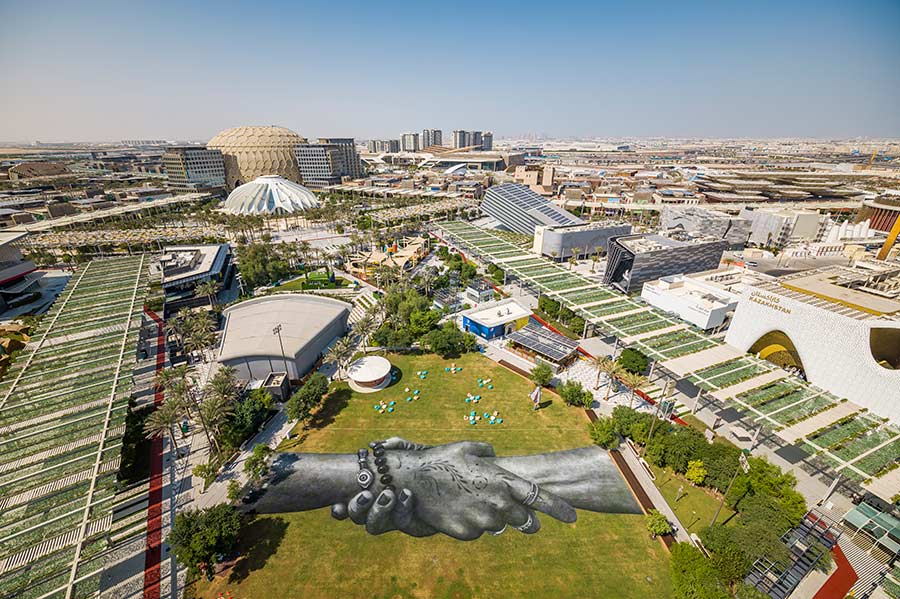
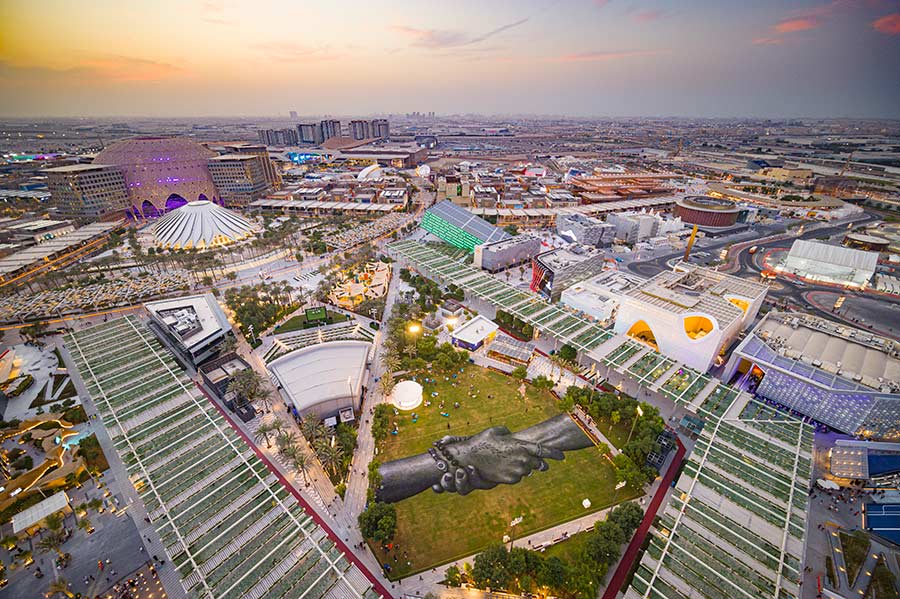
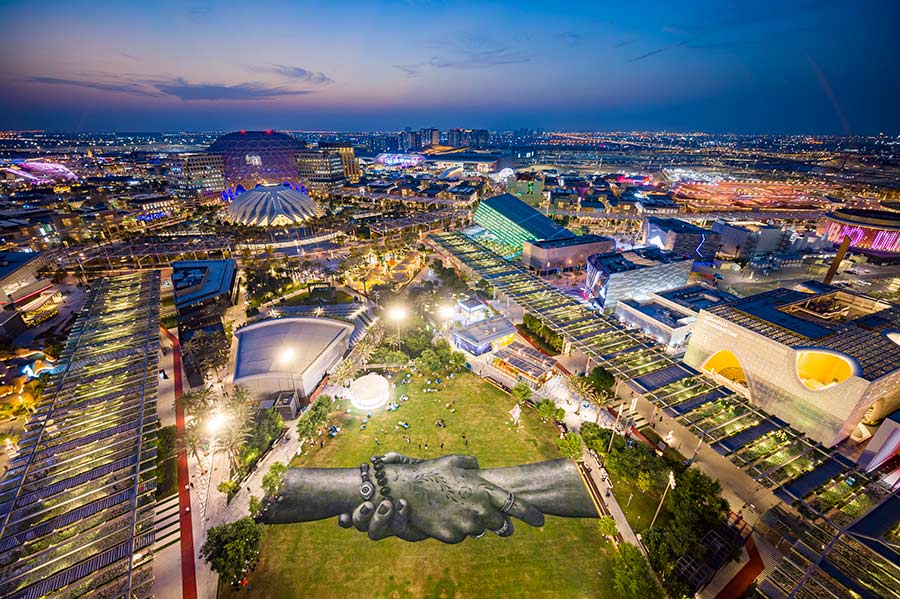
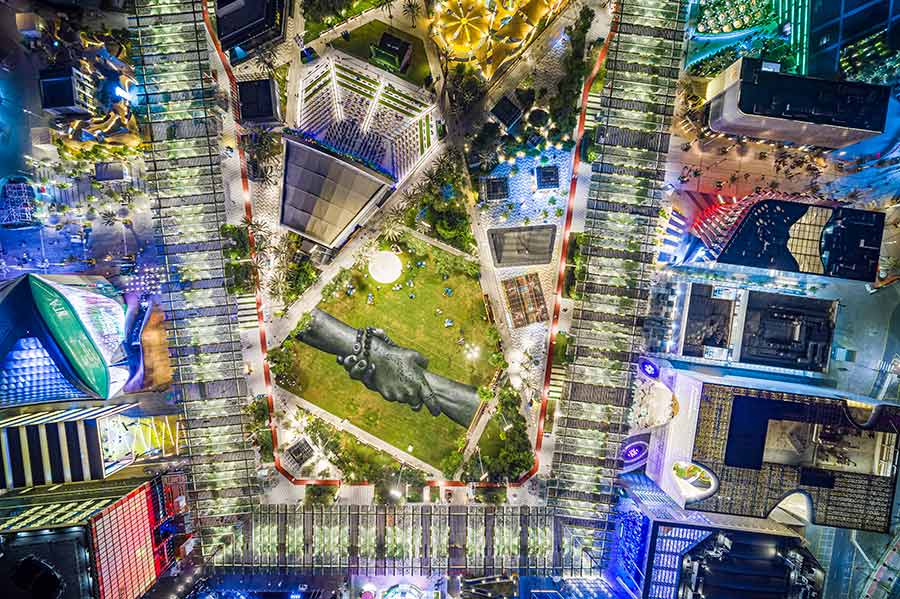
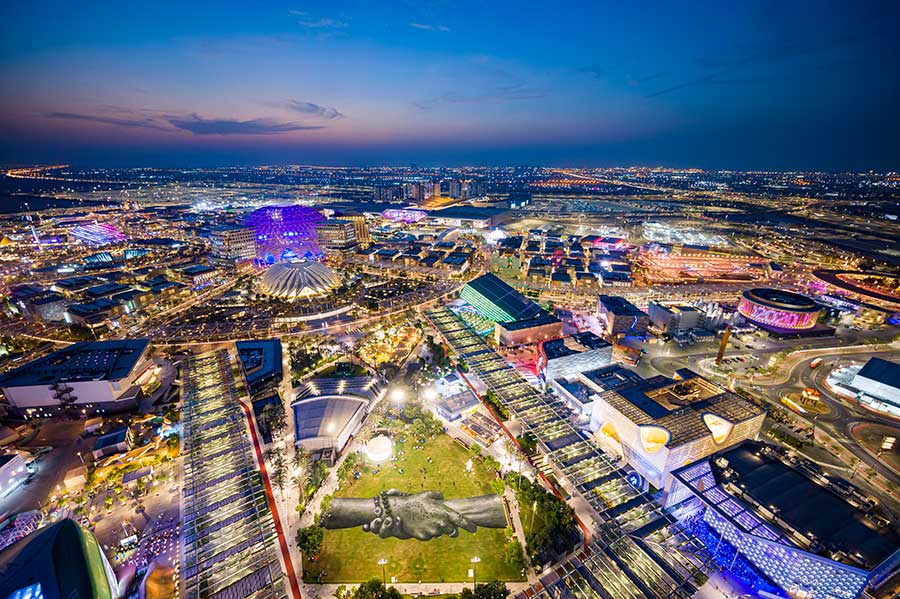
Now in Dubai for the Expo 2020 World Exhibition, the artist is supported by his home country of Switzerland to create this 1500 square meter image of unity. This installation, his 11th of the series, was completed on October 28th, and of course was created with biodegradable paint using charcoal, chalk, water, and milk proteins.
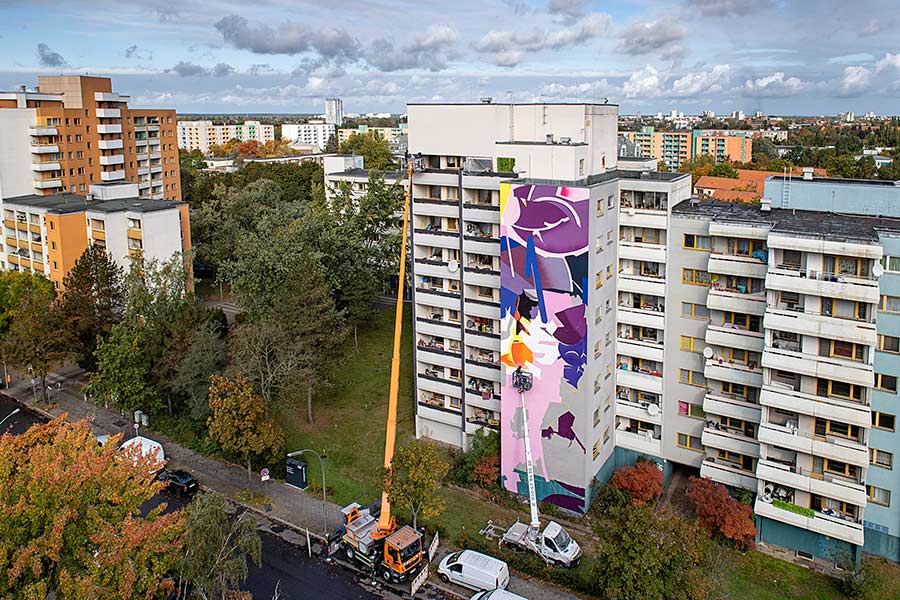
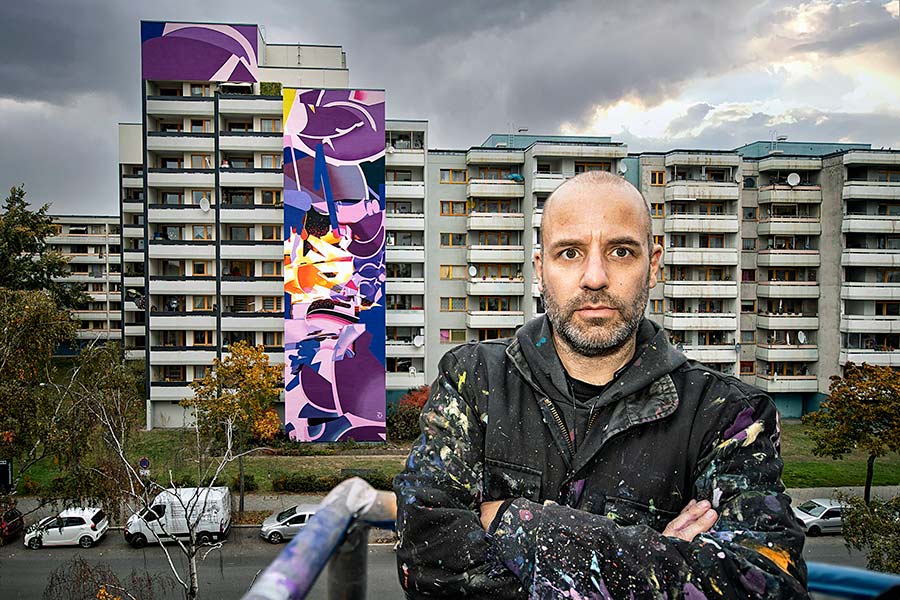
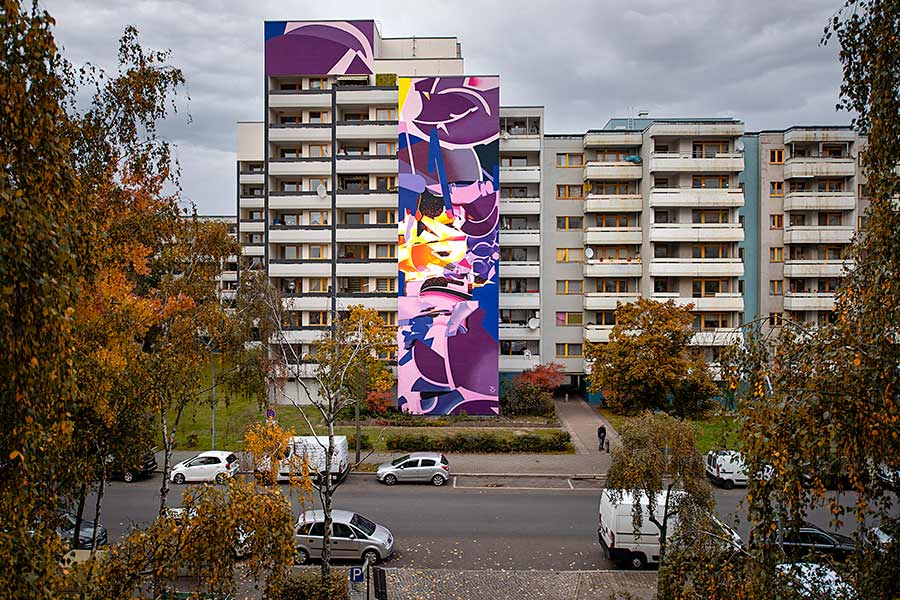
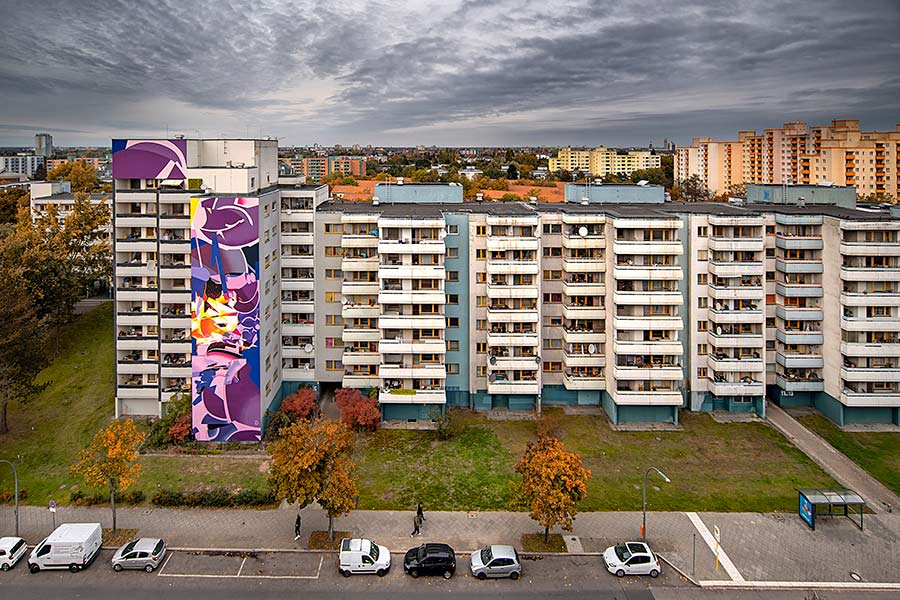
Venezuelan-born, Munich-based SatOne has graffiti-writing credentials dating back to the early 90s. Over time his letters went post-graffiti to imaginary worlds and science-fiction-inspired abstractions. Employed by big lifestyle, sport, and automotive brands over the last decade, his own work is full of movement and visual adventure-seeking.
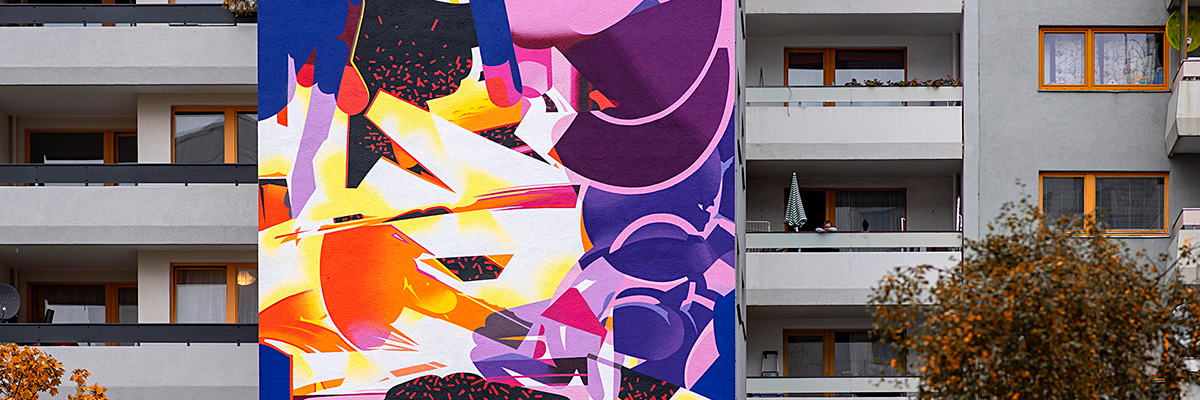
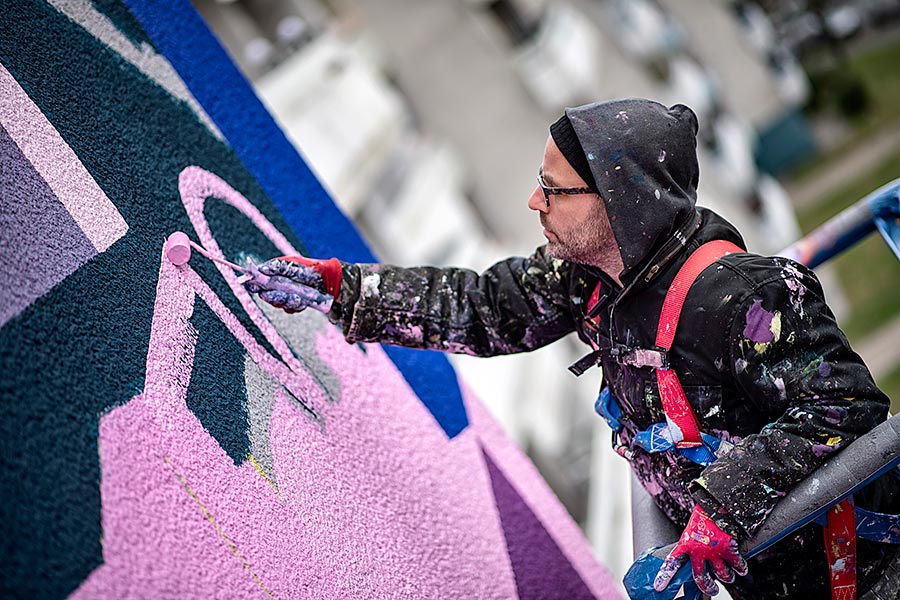
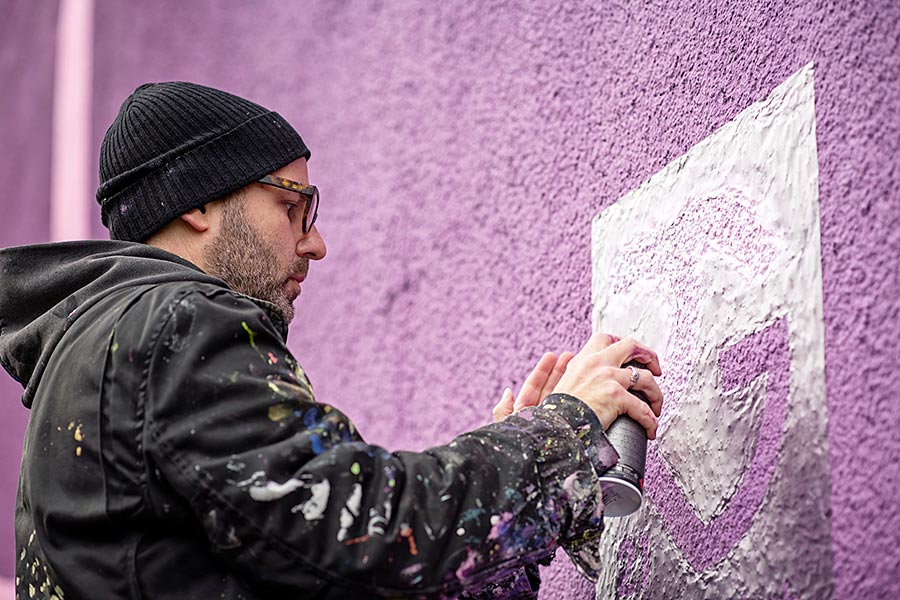
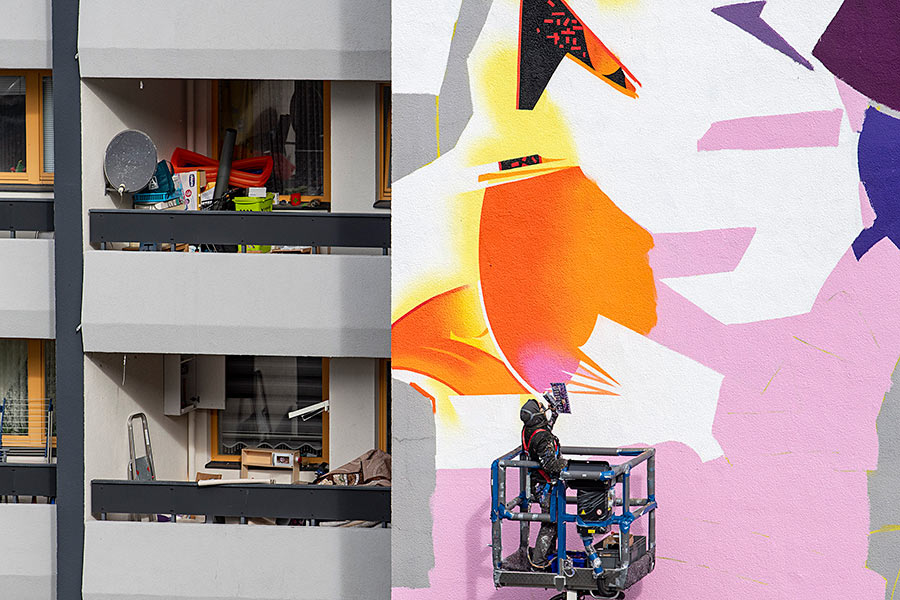
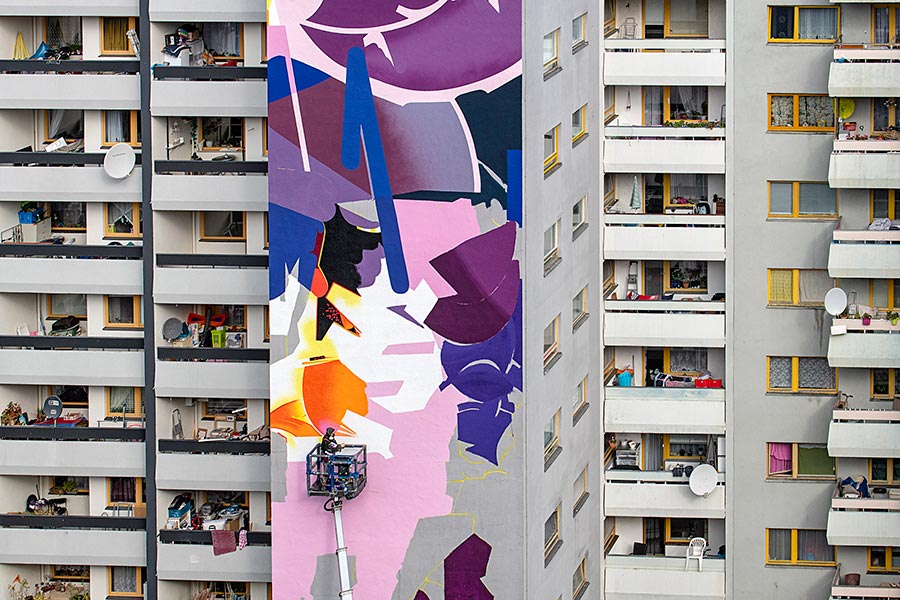
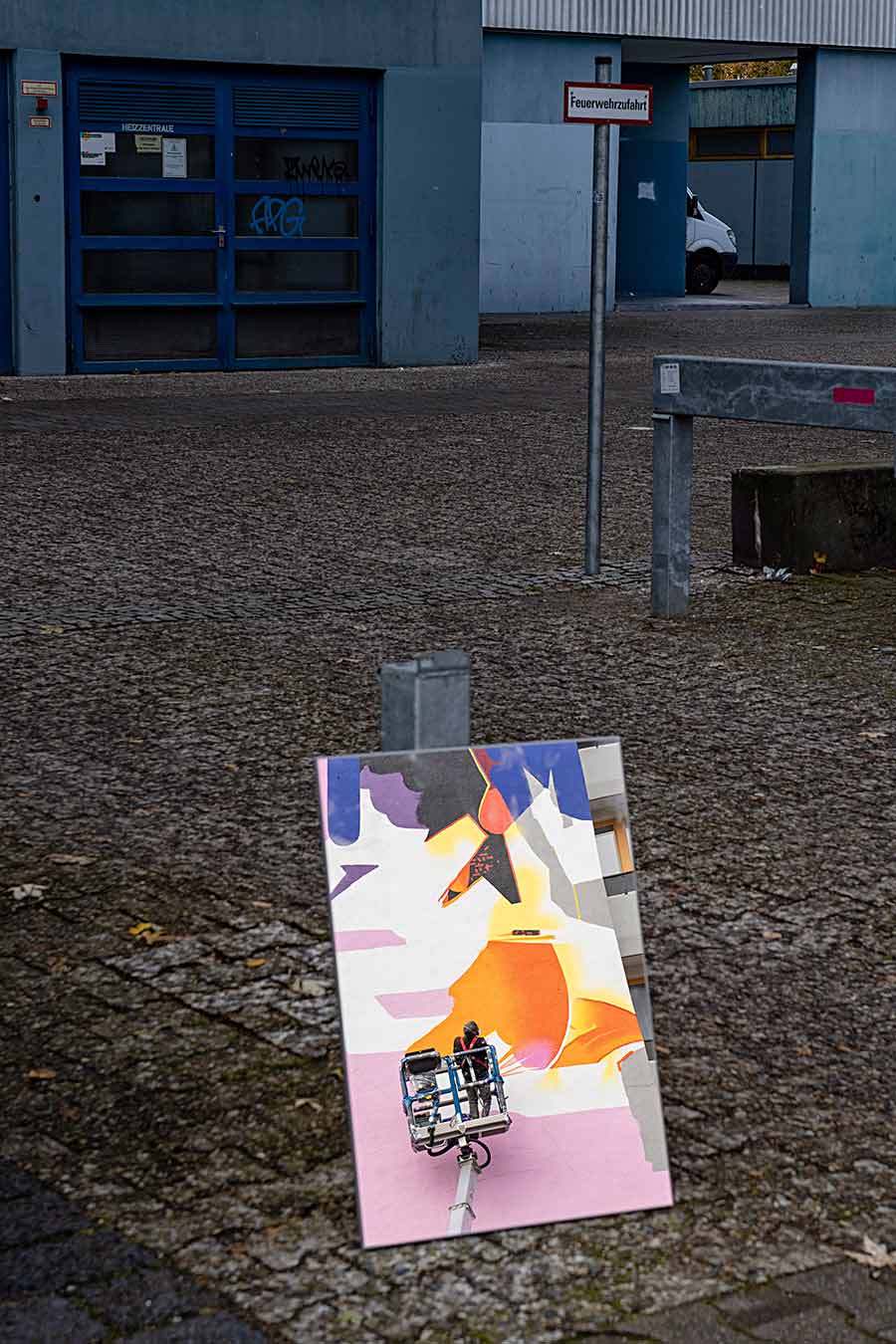
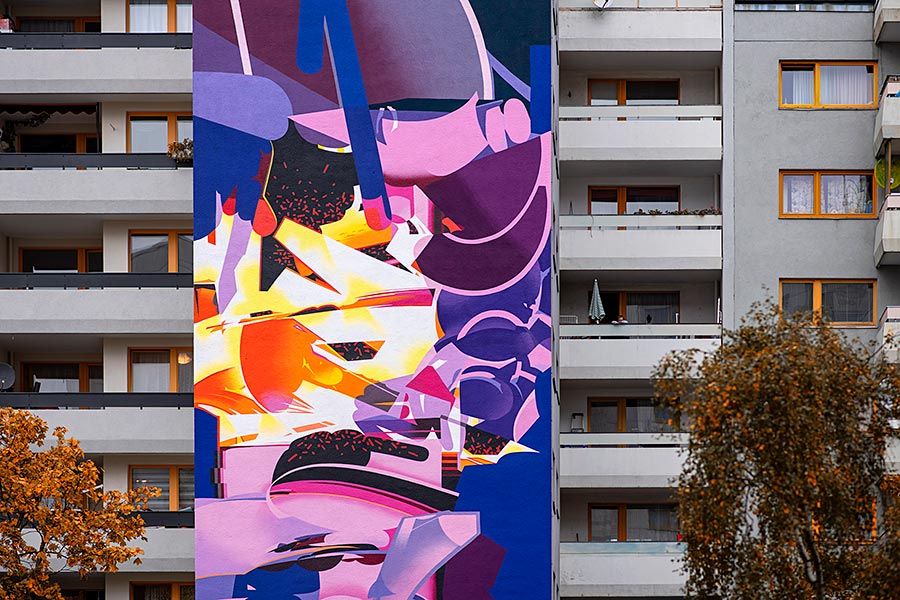
Here in Berlin to participate in the Urban Nation One Wall initiative in the neighborhood of Spandau, SatOne (Rafael Gerlach) says he thinks of it as “Coming Home”, and names his new massive mural the same.
“The strict, vertical lines of the balconies can be interpreted as overlapping plateaus or levels,” says the project description. “They are arranging themselves in a dynamic pictorial composition on the surface, and just as life itself they seem constantly in motion.”
With stunning new shots from Nika Kramer we bring you the newest piece by SatOne, who says “Thanks to the daredevils Samuel, Flo and Michelle.” You know who you are.
Happy Halloween and welcome to BSA Images of the Week!
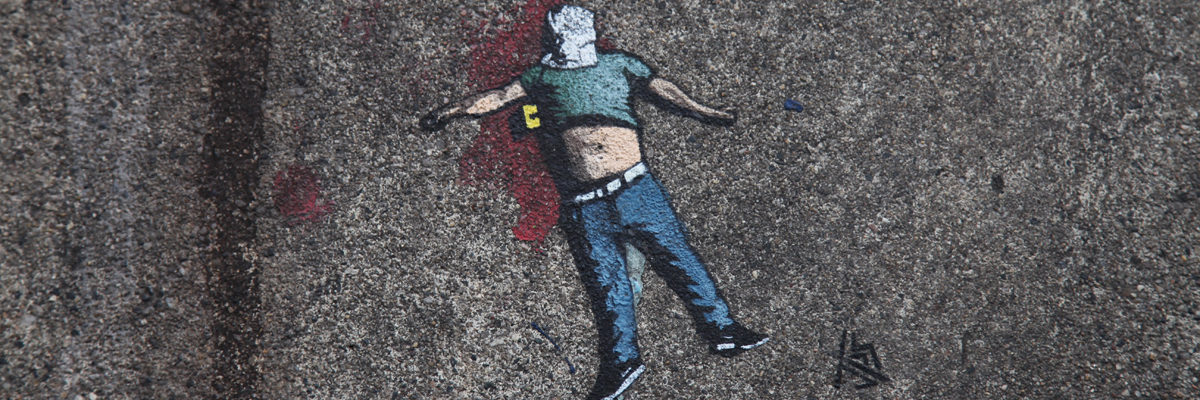
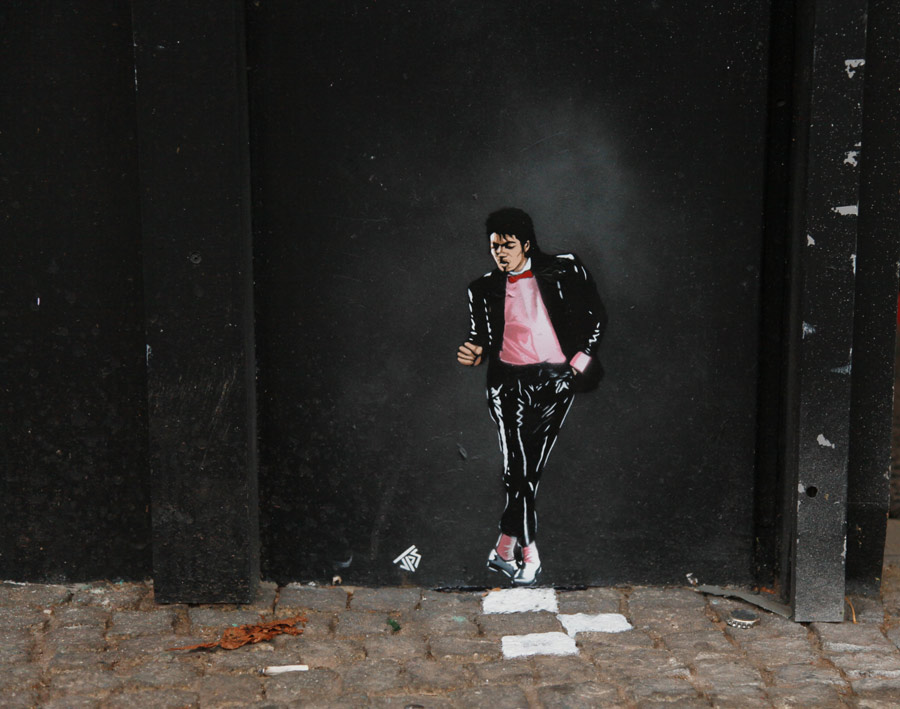
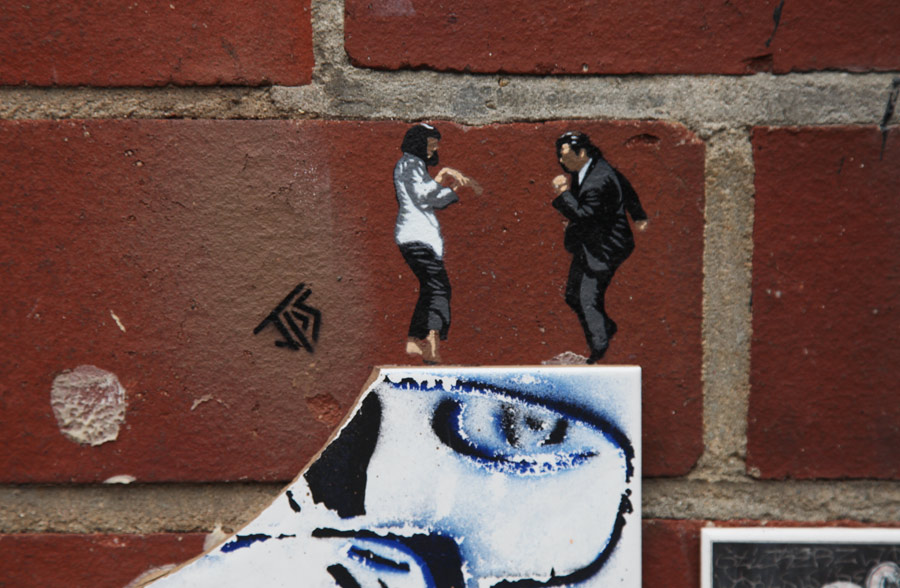
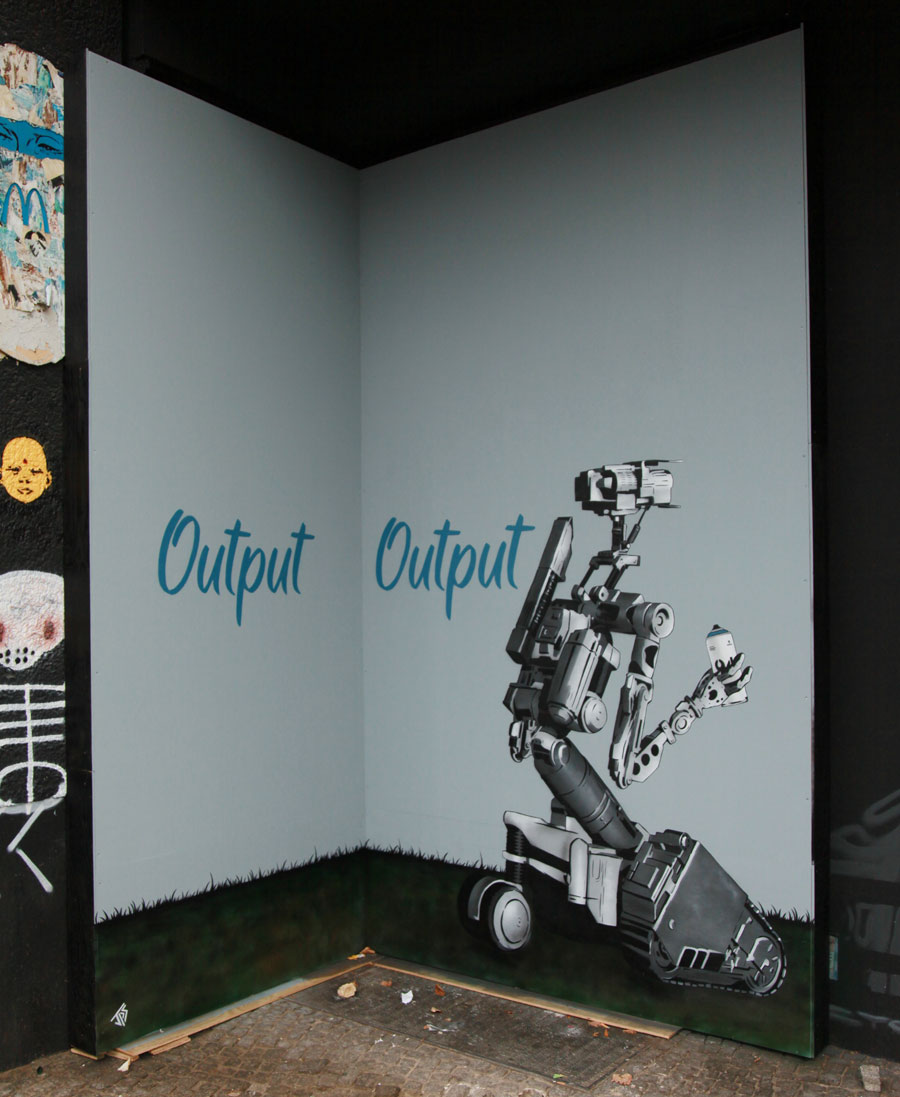
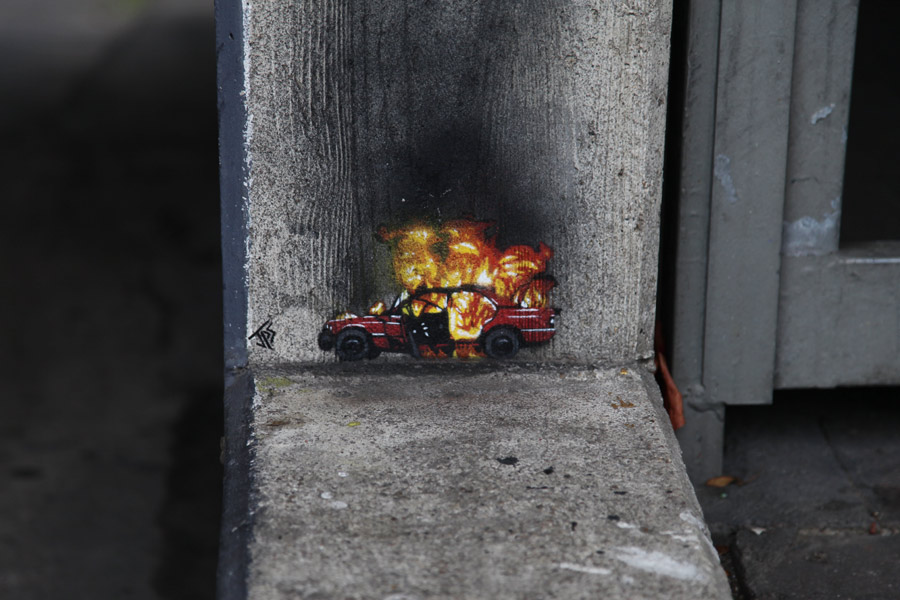
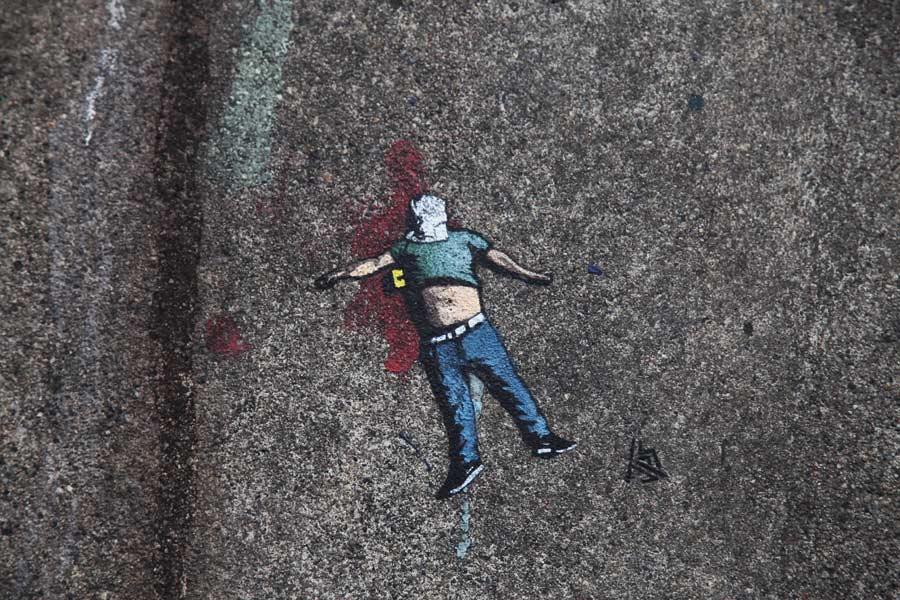
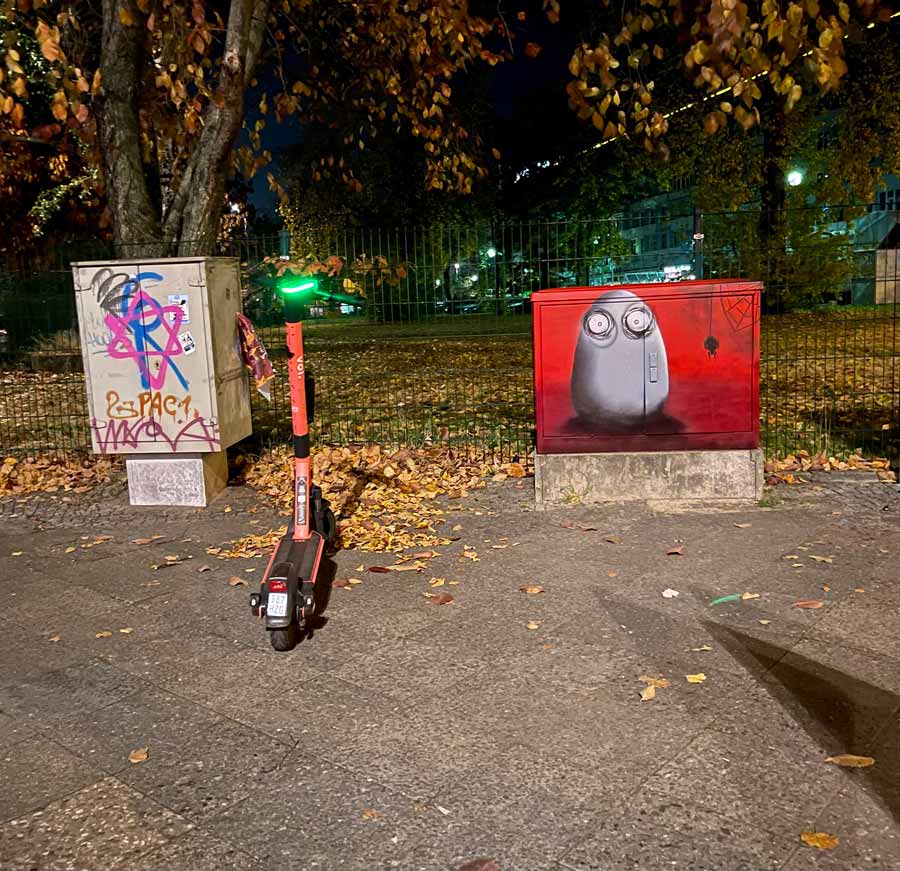
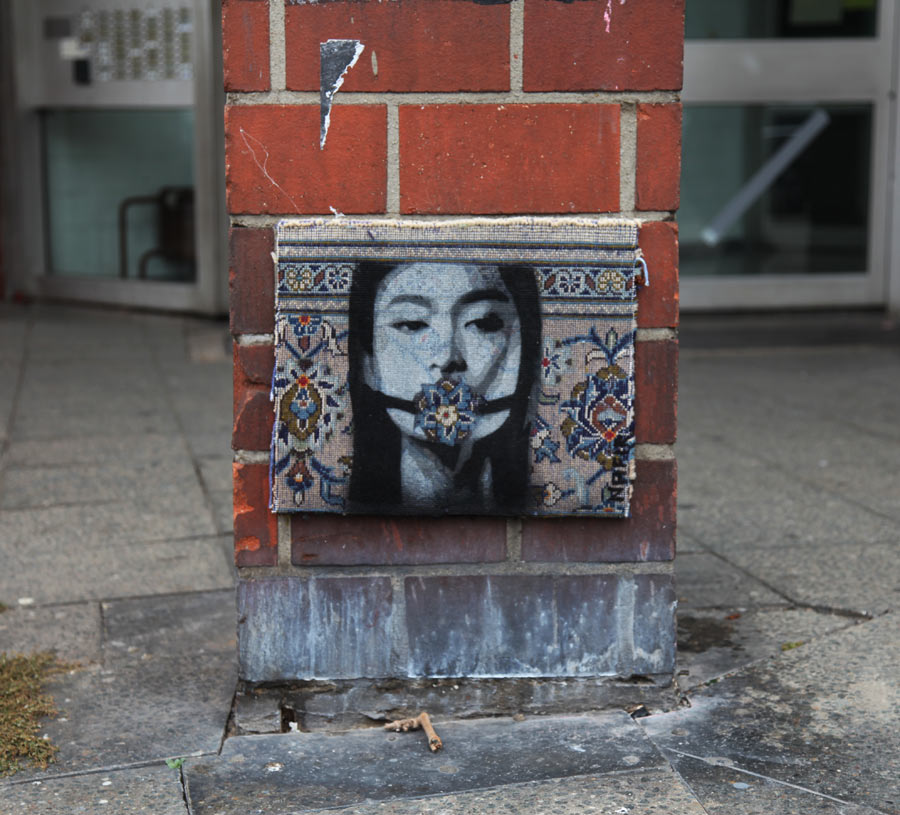
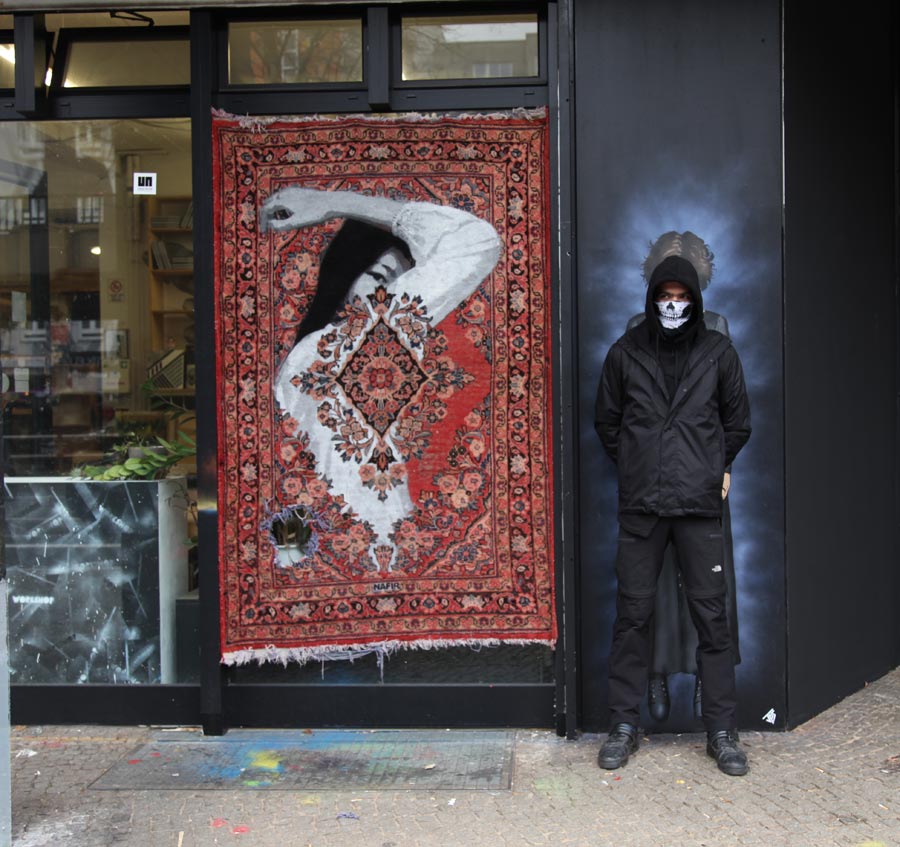
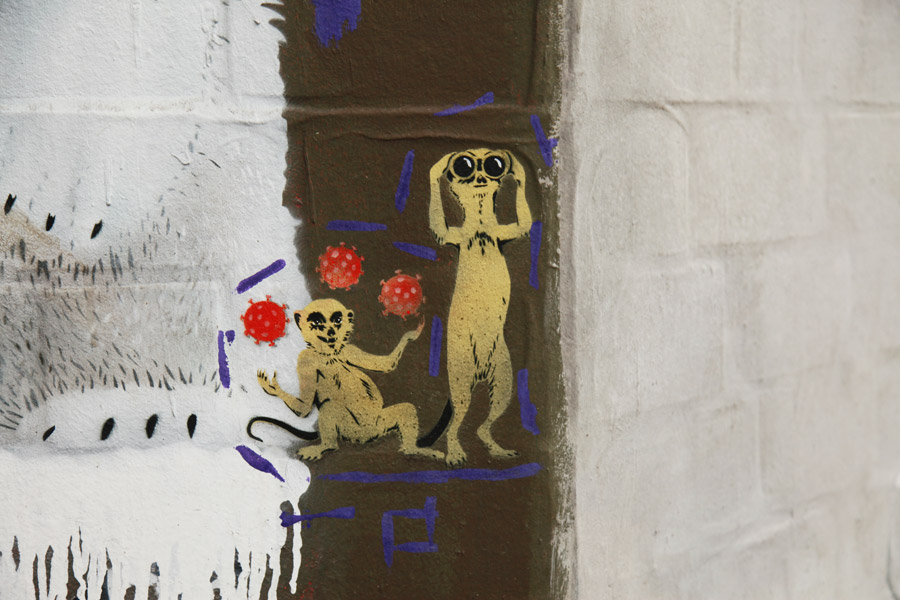
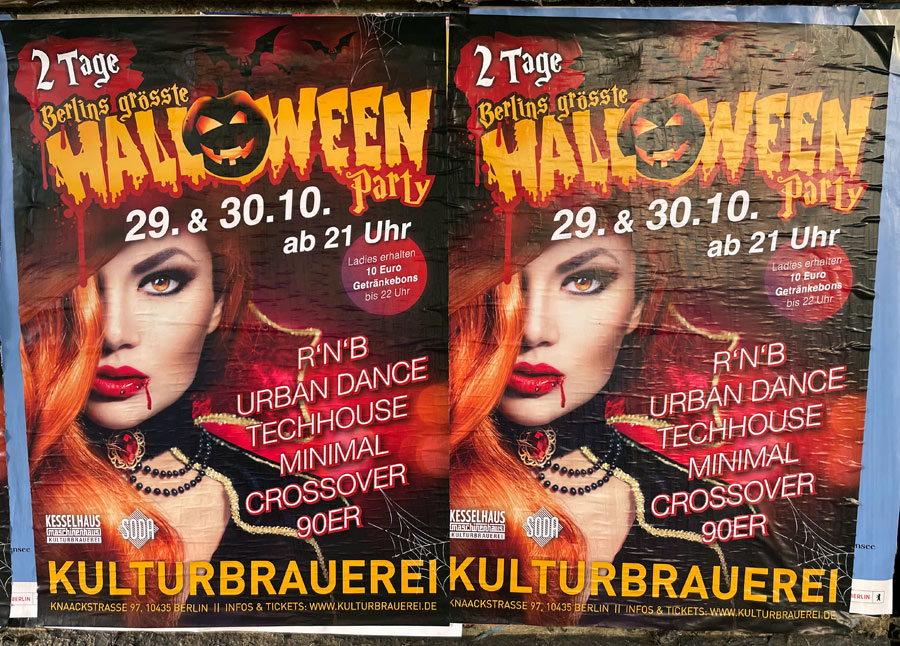
People have been in the Halloween spirit here in Berlin – and we keep seeing new pieces which may or may not be related to the holiday, but remind us of it anyway. Here’s a short collection of new stuff we discovered, including fresh pieces from Jaime Paul Scanlon AKA JPS and Nafir, who were both in town and hitting the streets with new collections of works.
Stay Safe and have fun!
Our interview with the street today includes JPS, Nafir, and a few anonymous pieces.
This one caught our eye for the merging of classic graffiti nerve, blunt style execution, sentimental velvety roses, inspirational verses, …Read More »
 BROOKLYN STREET ART LOVES YOU MORE EVERY DAY