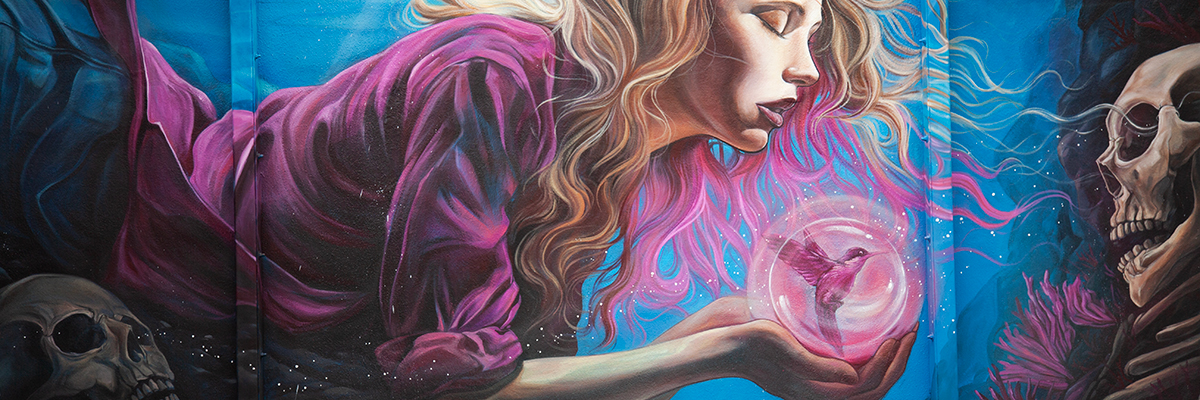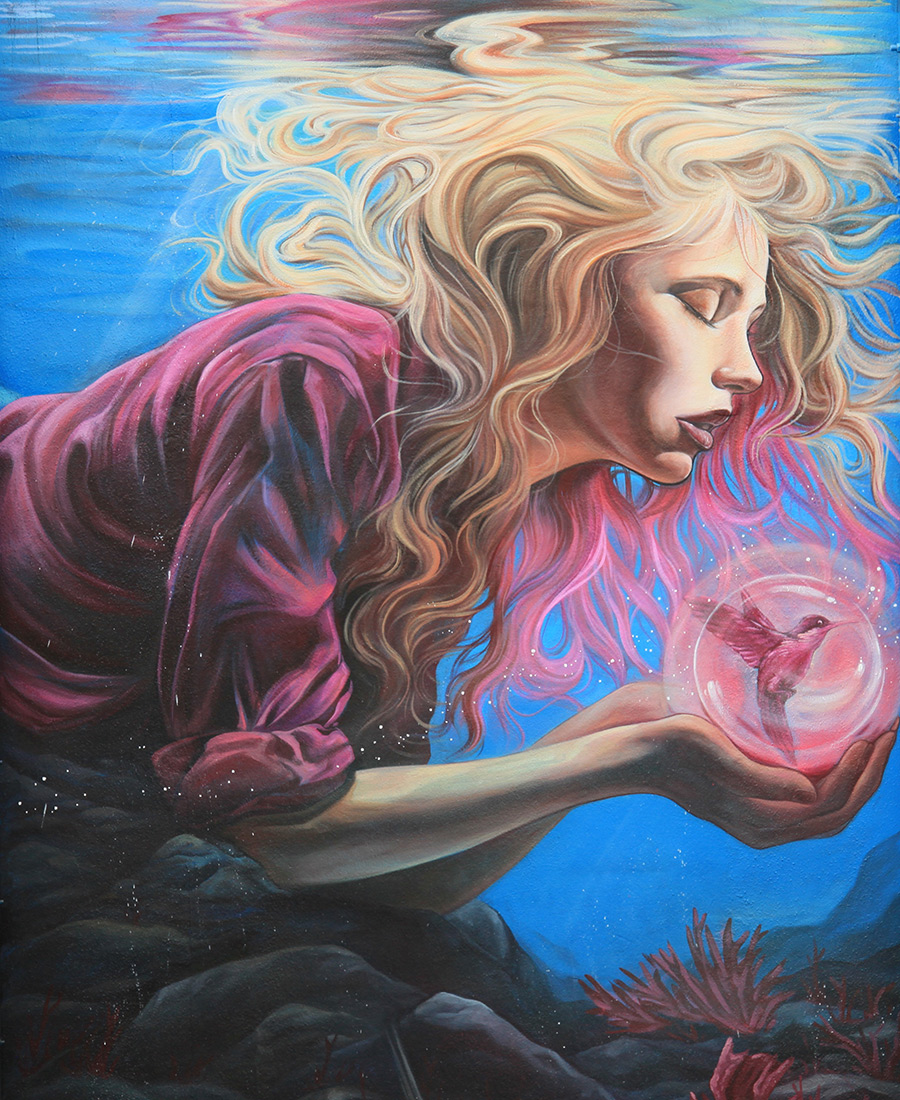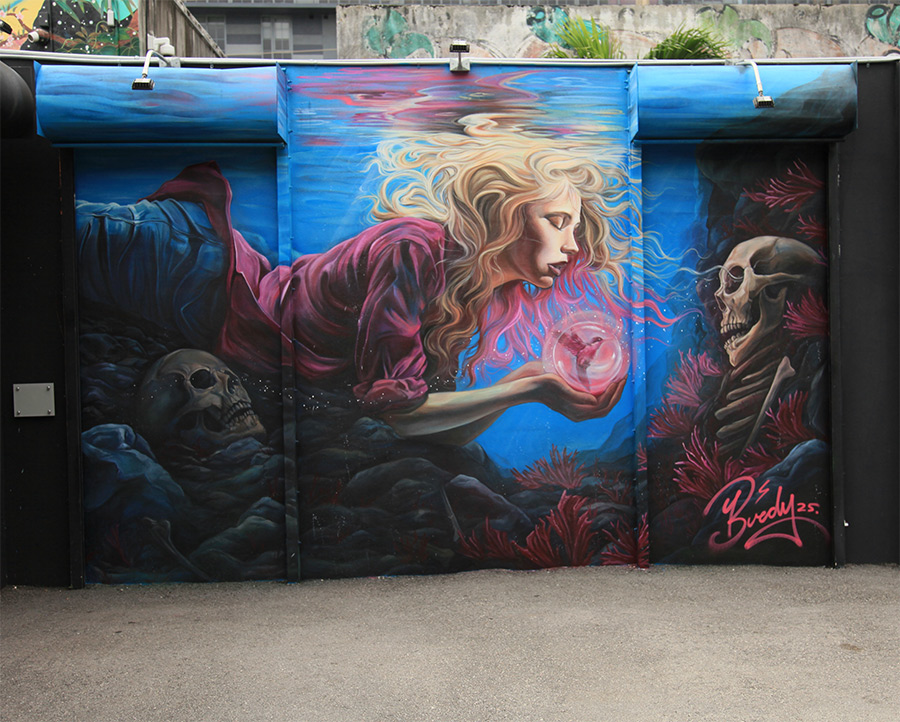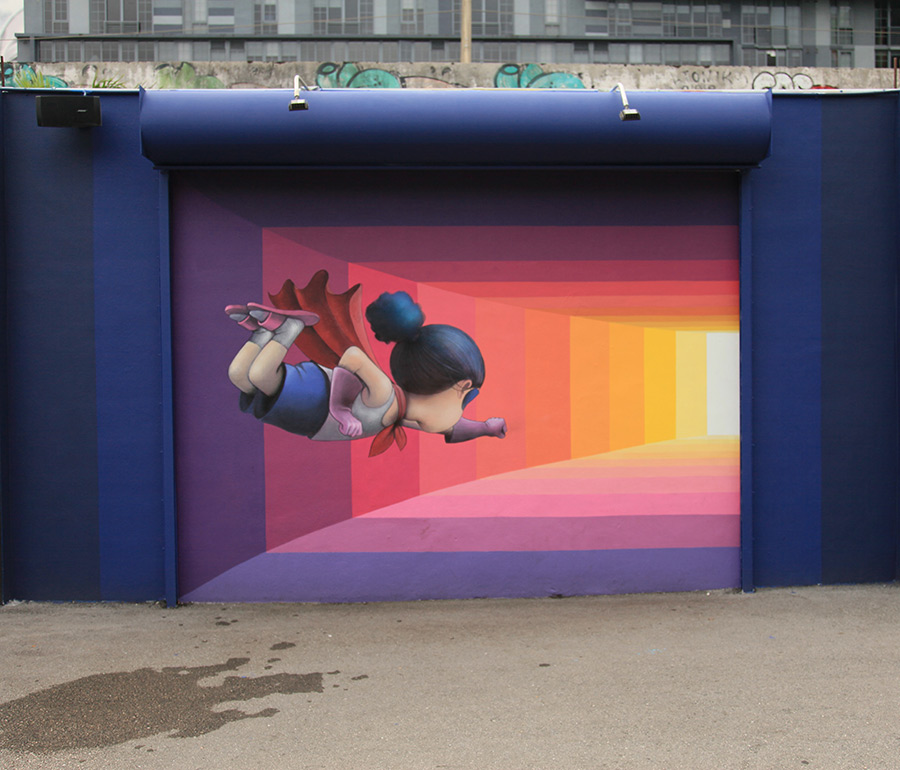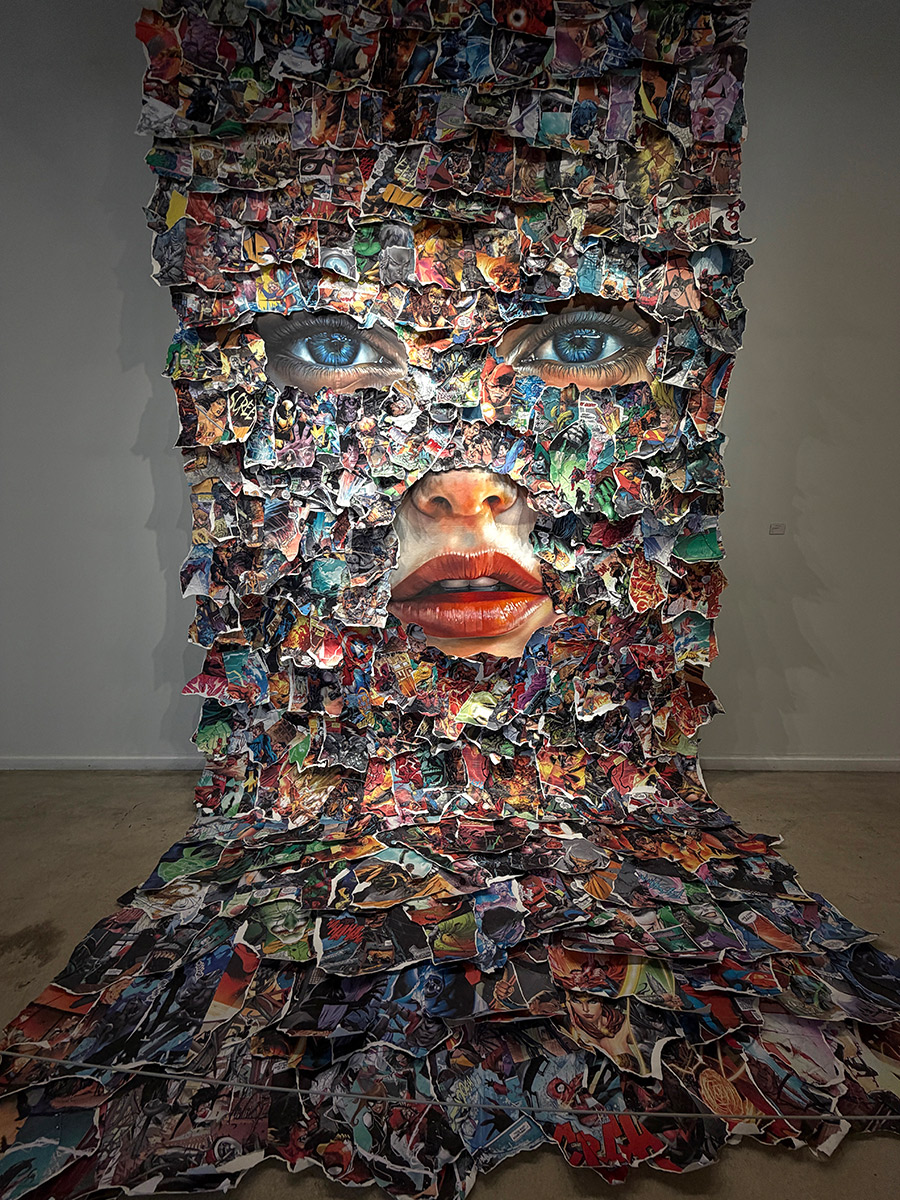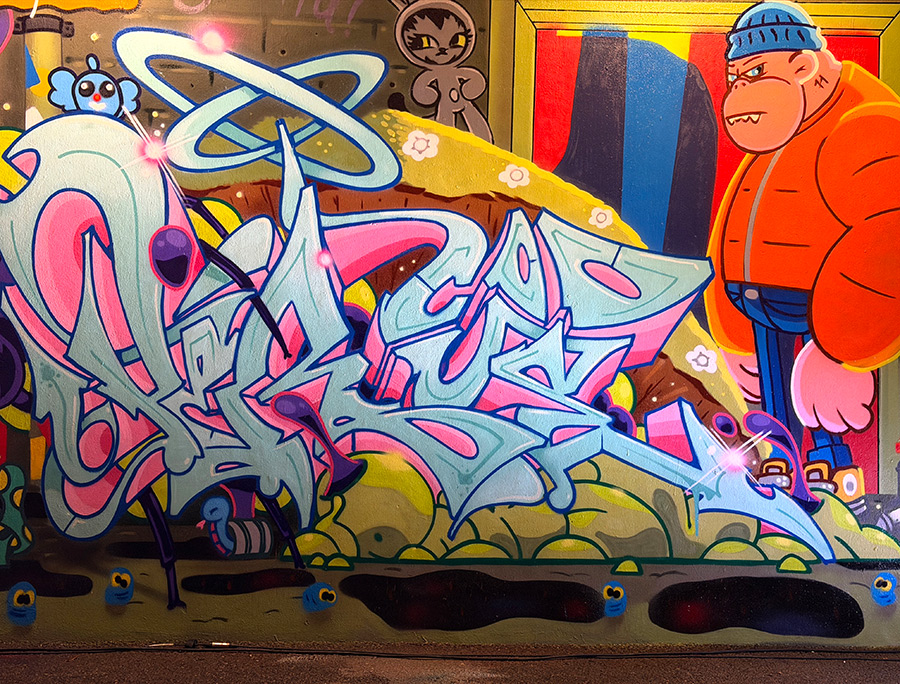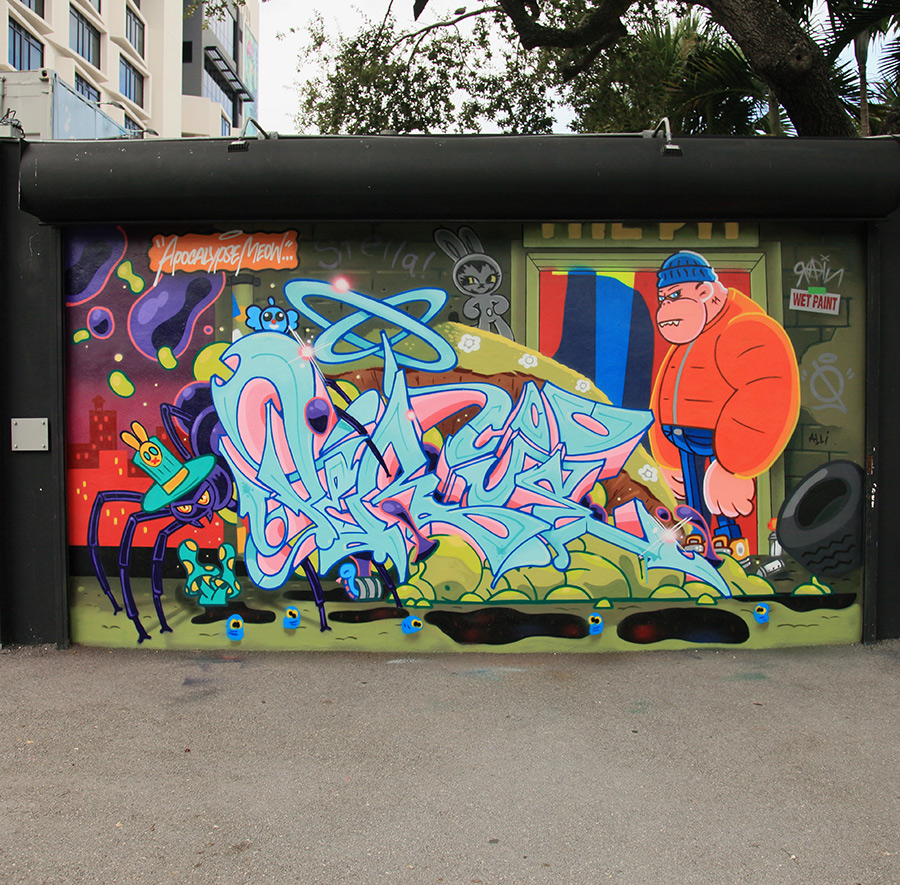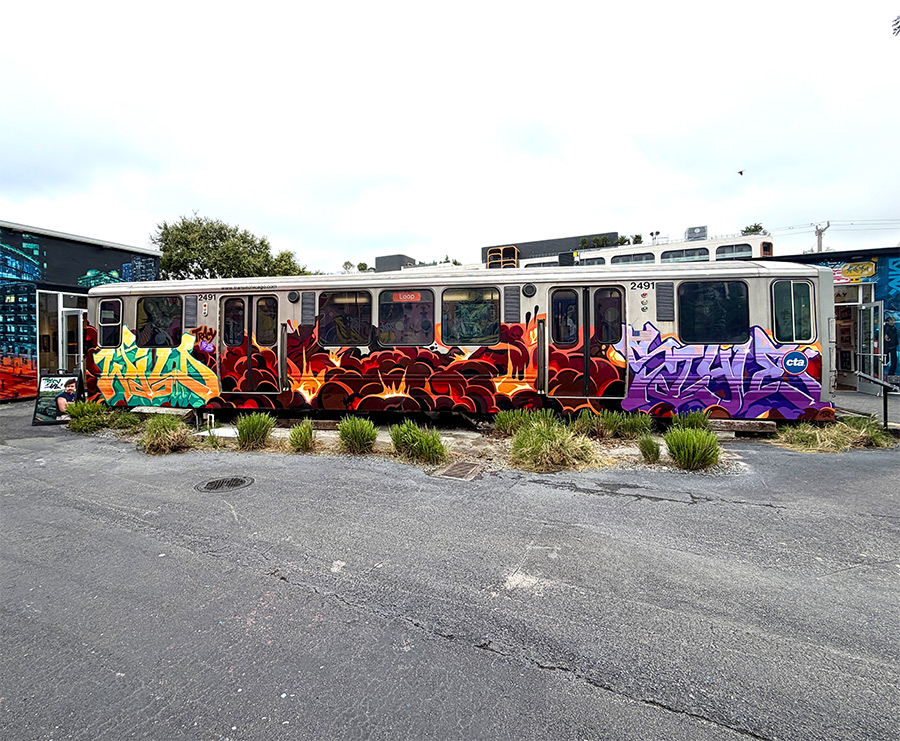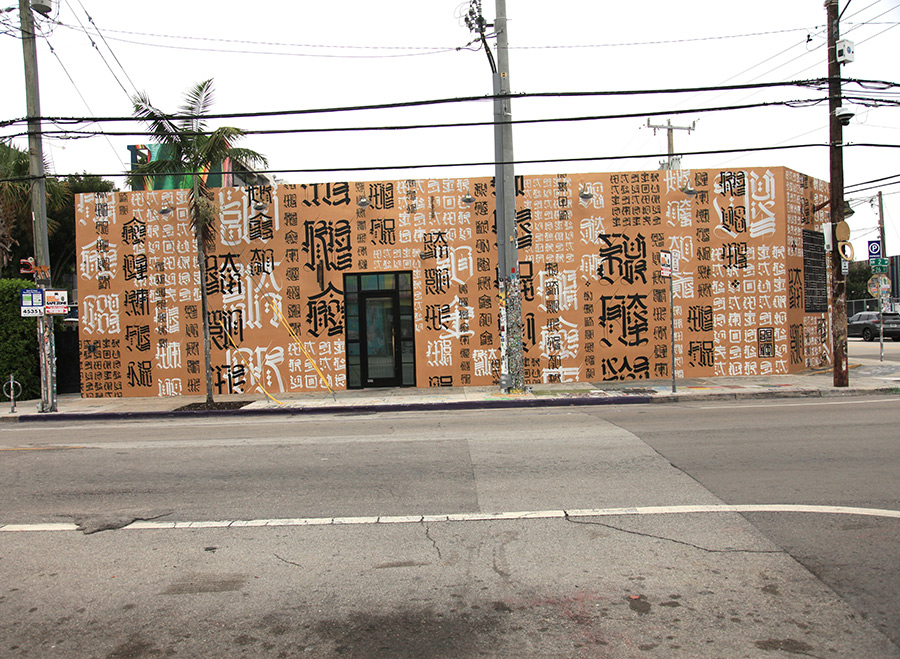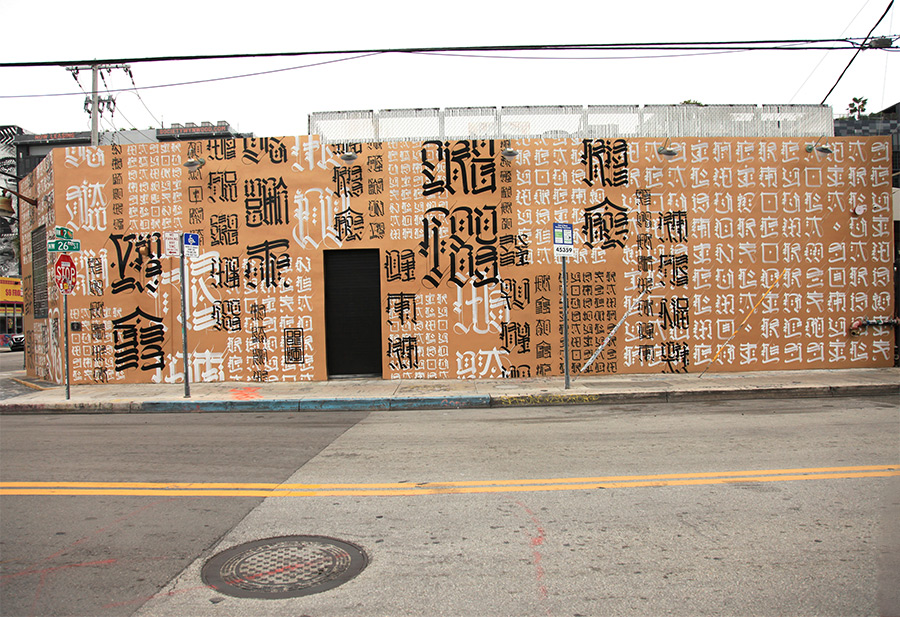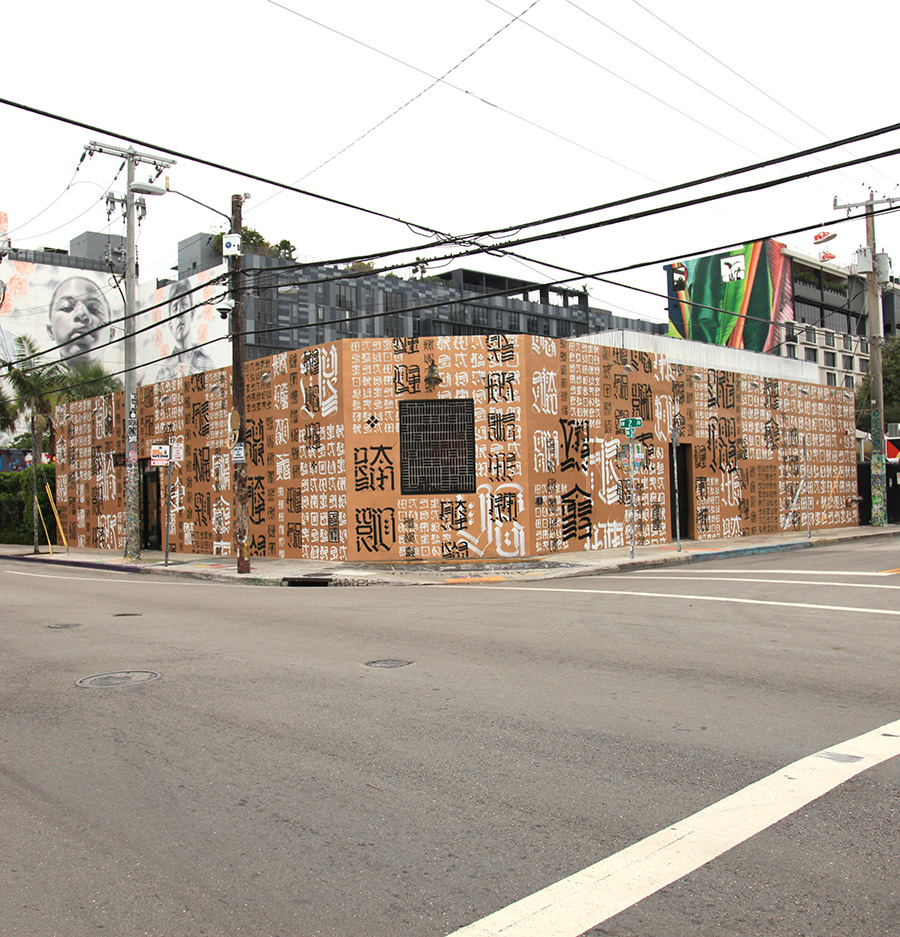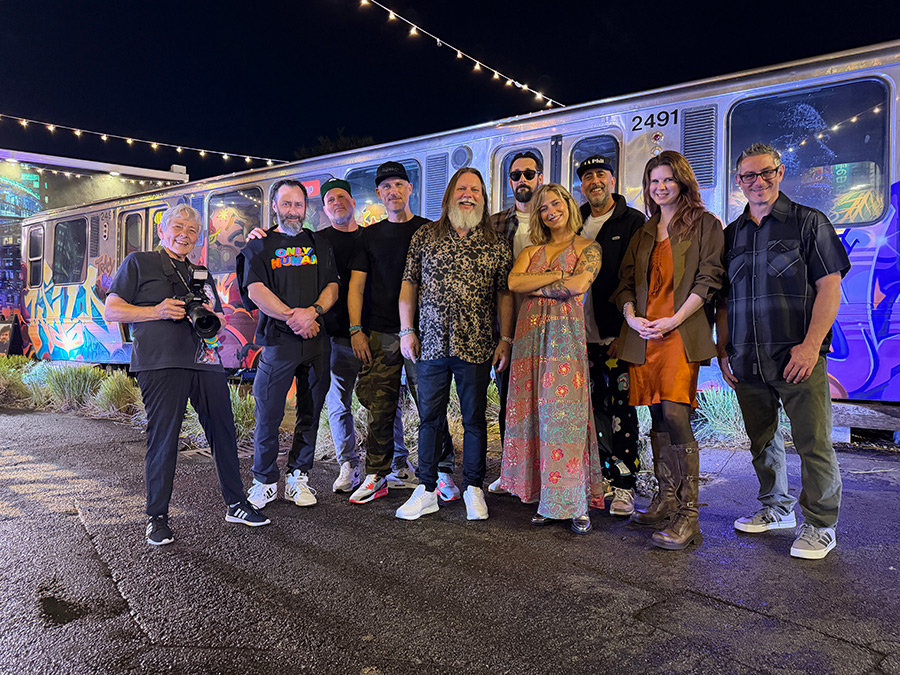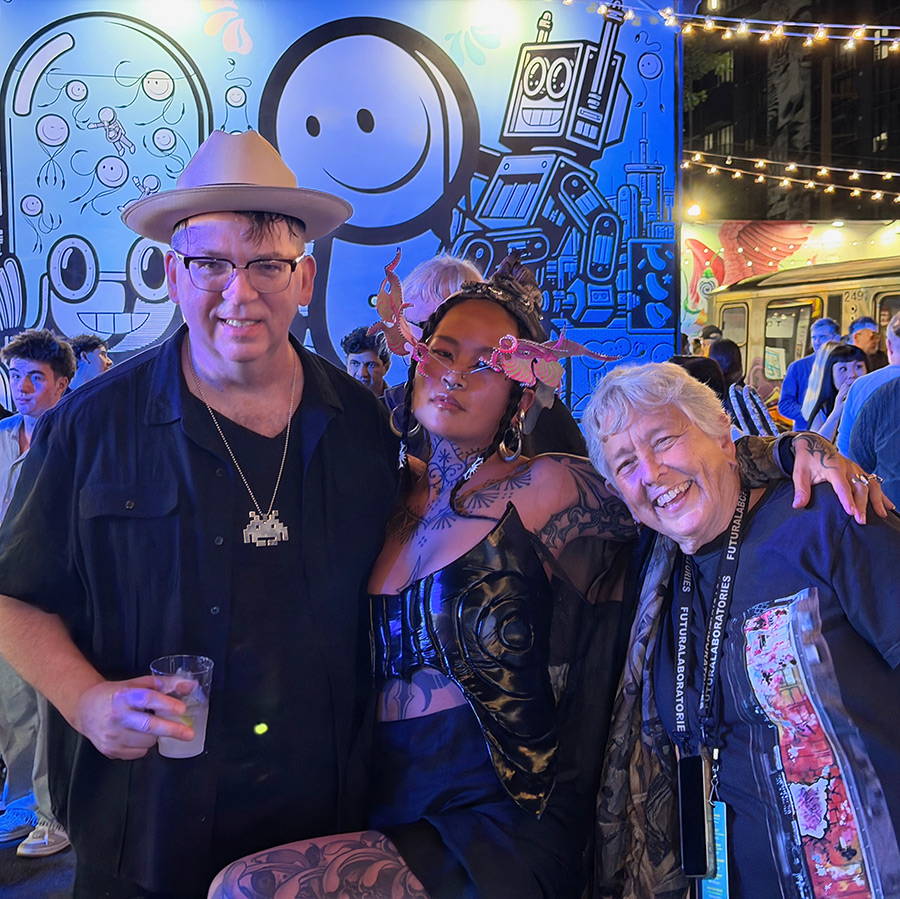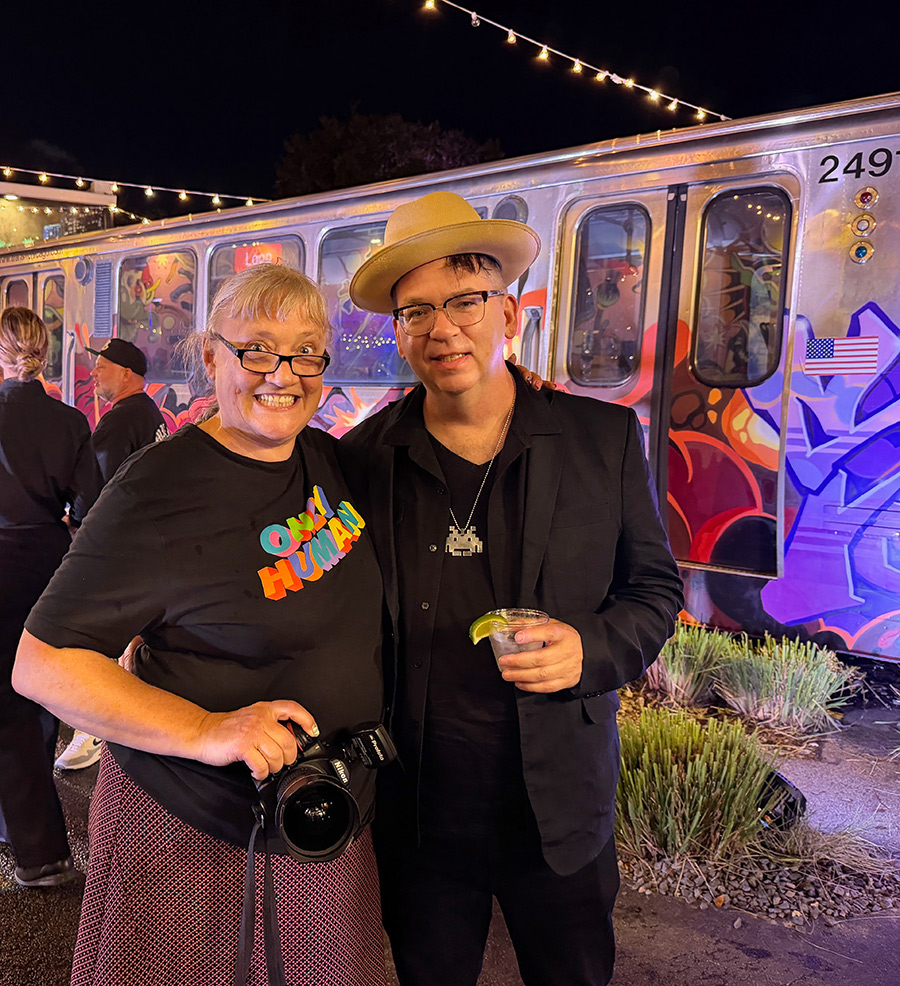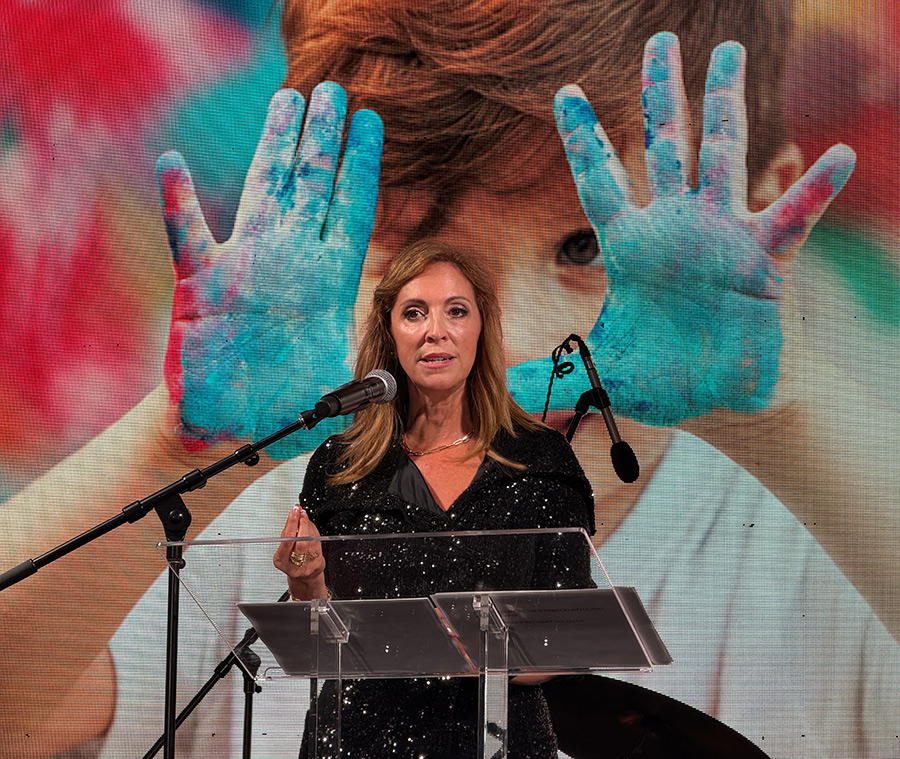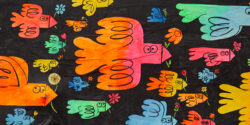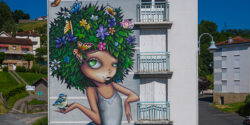
Seth: On Walls. Julien Malland. 2023. (photo courtesy of MCL)
Reprinted from the original review.
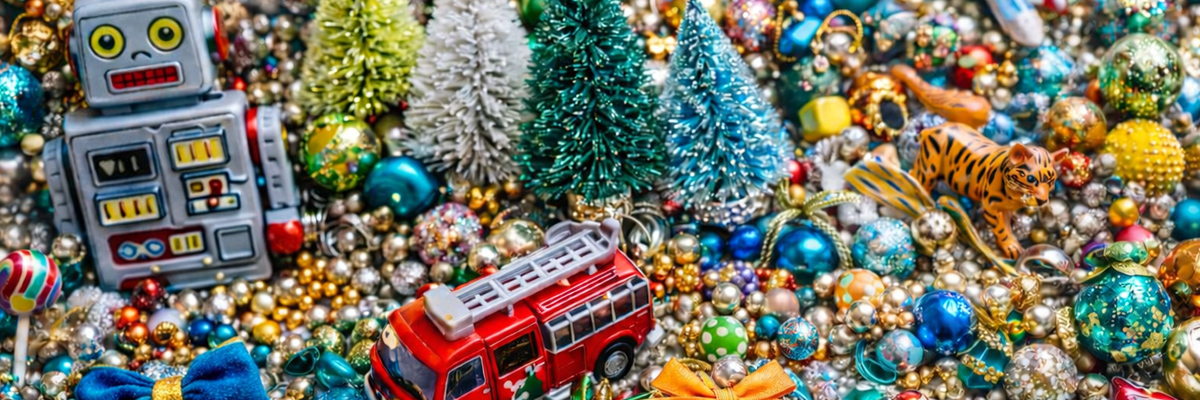
On Walls presents a decade of mural work by French street artist Julien Malland, known as Seth Globepainter. Published by Editions de La Martinière and distributed by Abrams, the book documents Seth’s travels through urban and rural communities worldwide, placing his distinct visual language into diverse local contexts shaped by history, conflict, and transition.
Seth’s imagery blends saturated palettes, geometric constructions, and elements of folklore. His recurring figures—faceless children—are staged within environments that suggest both vulnerability and resilience. Across 256 pages, On Walls traces a path from Phnom Penh to Palestine, from Haiti to Ukraine, each mural shaped by the physical and social landscapes where it was created.
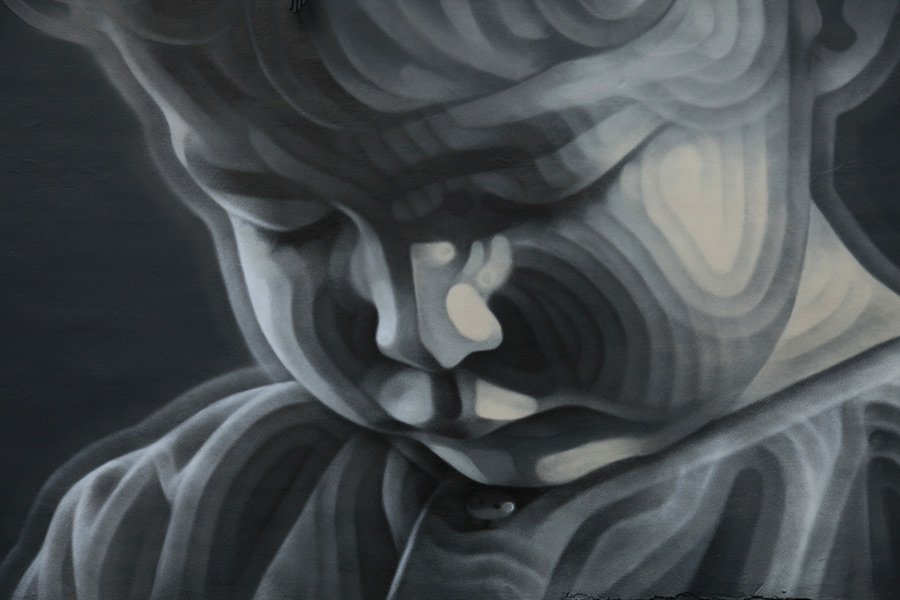
Seth: On Walls. Julien Malland. 2023. (photo courtesy of MCL)Seth: On Walls. Julien Malland. 2023. (photo courtesy of MCL)
Title: SETH on Walls Published: Editions de La Martiniere. 2022. Distributed by Abrams. An imprint of ABRAMS, 2023. Author: SETH Language: English
Welcome to BSA Images of the Week. This fall in New York institutional museum offerings, people are checking out “Sixties Surreal” at the Whitney, “Robert Rauschenberg: Life Can’t Be Stopped” at the Guggenheim, “Coco Fusco: Tomorrow, I Will Become an Island” at El Museo del Barrio, Yvette Mayorga’s “PLEA$URE GARDEN$” Midnight Moment in Times Square, “Monet and Venice” and “Seydou Keïta: A Tactile Lens” at the Brooklyn Museum.
The Whitney offers all Fridays free from 5–10 p.m., every second Sunday free, and if you’re 25 or under, it’s always free. The Museum of Modern Art welcomes New York State residents free of charge every Friday from 5:30–8:30 p.m. (proof of residency required). The Solomon R. Guggenheim Museum invites visitors to pay what they wish on Mondays and Saturdays from 4–5:30 p.m., with a suggested minimum of one dollar. The New-York Historical Society follows suit with pay-as-you-wish admission on Fridays from 5–8 p.m. And for those who prefer art in the Bronx, the Bronx Museum of the Arts remains free every day of the week. And right here in Brooklyn, the Brooklyn Museum opens its doors every First Saturday of the month from 5–11 p.m. for free admission with registration, and visitors are always welcome to pay what they can at the desk.
Meanwhile, much of our street art is busy with cats, pop icons, ambient dread, and general sweetness. For anyone assuming the scene remains activist or subversive, evidence is not plentiful. Still, it photographs beautifully.
Here is our weekly interview with the street, this week featuring Chloe, I Am Frankie Botz, Jappy Agoncillo, Jeff Rose King, Kam S. Art, Lucia Dutazaka, Mad Villian, Man in the Box, Manuel Alejandro, Nandos Art, Rommer White, Sonni, Sophia Messore, and Tone Wash.
Not that you don’t have free will and could quit your phone any time. Of course, you could.
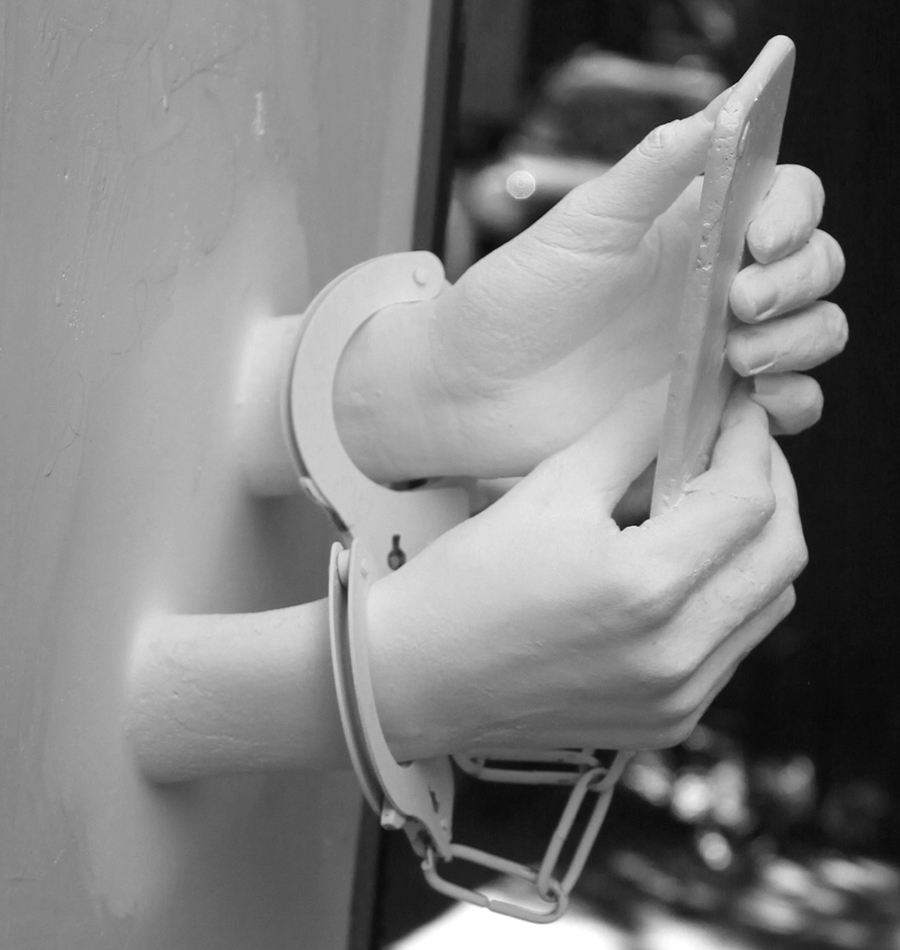
Street artist Leon Reid works conceptually often, and in this case, as a sculptor alongside you on the street in Bed-Stuy, Brooklyn. The message is self-explanatory, and yet, you would have to look up from your phone scrolling to see it, so many will miss it.
Brooklyn Street Art:The sculpture depicts a pair of handcuffed hands holding a mobile phone. The hands are restricted, yet the work’s title is “Of a Free Will”. Can you please elaborate? Leon Reid: Many times when I observe people holding their smartphones I ask “Is that person holding their phone because they want to or they need to?” It’s impossible to answer completely but still I wonder. 15 years ago, many folks used smartphones because they were curious about the potential of a new tool. Of course, advertising guided most people to buy smartphones, but then social media slapped advertising in everyone’s face 24/7/365. This exposure weakened the argument that we’re all using our phones because we want to. The infrastructure of our society is now designed around smartphones; you can’t enter certain buildings without it; in some cases you can’t travel, eat or see a doctor without it. I believe that we as a society decided to freely carry out the Free Will of technology corporations; we cuffed our own hands to it.
BSA:You’ve been installing your work in public for a long time. Have you noticed any differences in the difficulties inherent in installing works on the streets from the early days of your practice to today’s environment? LR: Yes, when I started writing graffiti in 1995, in most instances, we did not have to worry about surveillance cameras recording us; there simply were fewer cameras in existence.
Though I am not active as a graffiti artist as I once was, those doing it now must be prepared to be filmed -in fact many film themselves. The further you go back in graffiti history the more artists had to operate like ninjas. Stealth was a quality that was honored among writers. However, the exposure of graffiti and street-art through documentation has brought a broad acceptance of the art from -one that I never expected to see- so that many times artists can do their work in public with permission.
BSA: You mentioned that your work was defaced/vandalized within days of being put on the street. Why did you choose to restore it? LR: So this piece has gotten a lot of attention in the neighborhood because I believe most people are at a point where they can understand its message. Within a week, someone added two additional messages to the work; one was a statement about Immigration enforcement, the other about the Israel/Gaza War. I have my opinions on both of these topics however the markings made three unrelated messages on one artwork and they distracted from the original message. I removed the additional messages, but was conflicted in doing so. I’ve long known that once an artist puts their work on public display, they cannot control how the public interacts with it. If the messages persist, I have to let it be.
BSA:How has the rapid evolution of technology, such as the sophistication of smartphones, the apps, and Social Media, changed the way in which art is experienced now? Are there any pros or cons in your opinion? LR: So, in my ideal world, everyone would have the possibility to see great works of art -be it on the streets or in a museum- in person. This for a variety of reasons cannot happen. Most of us will only see great works of art through media. However sometimes, a great photographer can capture a great work of art in a moment; perhaps a child is able to touch a graffiti wall because they cannot do so in a museum, a photographer is there to snap the moment and the picture becomes a symbol of what that artwork can mean to people. If this photograph inspires people to see the work in person that is a pro. The con is if so many people turn up not to look at the work, but to photograph themselves beside it. If such a thing happens too much it can alter both the community where the work lives and the meaning of the work itself.
“Of a Free Will” is part of a larger street-art exhibition organized by Novo Collective titled “Playground of the Invisible”
POLINIZA DOS (or “Polinizados”) is the annual urban-art program at the Universitat Politècnica de València (UPV), running since 2006 and turning the Vera campus into a working outdoor studio each May. It’s organized by UPV’s Área de Acción Cultural and built around site-specific murals by invited artists—recent lineups have included 108, Lidia Cao, Musa71, Felipe Pantone, Gordo Pelota, Wasted Rita and Catarina Lira Pereira—alongside public programs like artist talks, guided walkthroughs (often led by painting professor Joan Peiró), and family workshops under “Menudo Poliniza”.
Some past editions have also added fanzine markets and campus exhibitions. With support from the Generalitat Valenciana’s Department of Education, Culture and Sport, the festival’s 20th edition (May 12–16, 2025) emphasized some of the “gestural” languages of contemporary muralism and produced fresh interventions – with an educational track open to the public. The works typically remain on campus from one edition to the next, a sort of living record of Valencia’s evolving perspectives and voices in street culture.
Our special thanks to photographer Luis Olive Bulbena, who provided some images of his recent visit to the campus.
Welcome to BSA Images of the Week. As Fall arrives the leaves turn, the lattes spice up, and Washington does its ghoul impression by shutting down the government, shuttering what’s public while pretending it’s principled. This great pumpkin is being hollowed out, and some appear to be waiting for it to collapse. Ah, but we’ve had these tricksters at our door before, their masks artfully placed.
Happily, street art runs the gamut, and not all of it is scary, despite the times. The first piece in this week’s collection seeks to be reassuring by quoting Bob Marley’s song Three Little Birds, when he sings, “Don’t worry about a thing because every little thing is gonna be alright”. (see the video at the end of today’s posting)
Let’s see what the street art tea leaves are saying. Here is our weekly interview with the street, this week featuring Barbara Galiniska, Below Key, Gane, Hope, Jason Naylor, Merk, Mike King, Miki Mu, Modomatic, Pin, Steph Costello, and Tover.
A new show brings together three artists whose work has created instantly recognizable visual systems that rely on repetition, symbols, and cultural icons. While two are rooted in unsanctioned work in public space and the third is identified with the gallery and market system, all three have generated debates about art’s role in mass culture and have extended their practices into new contexts through collaboration.
Shepard Fairey (US) began in the late 1980s with his Obey Giant sticker campaign and became widely known for his 2008 Hope poster for Barack Obama. His work blends graphic design, propaganda aesthetics, and pop culture, often described as politically engaged and connected to punk and DIY culture. Fairey maintains a long-standing commitment to public space through posters, murals, and interventions, while also working in galleries and commercial arenas worldwide.
Invader (France) began in the late 1990s and is known for his prolific and, some would say criptic, ceramic mosaic “invasions” of pixelated characters installed on city walls. His work is described as playful, systematic, and grounded in both nostalgia and the strategies of street art, with thousands of pieces spread worldwide with a marketing panache that rivals the other two show men here. Invader’s practice is fundamentally based in unsanctioned public interventions, making urban space his primary exhibition surface.
Damien Hirst (UK) rose to prominence in the late 1980s and 1990s as part of the so-called Young British Artists, a term that is evergreen and could easily be applied today or any day, but that is a different story. His work spans installation, painting, and sculpture, often addressing themes of mortality, spectacle, and the value of art in the market. Overlapping his show mates practices, Hirst has created large-scale outdoor sculptures and commissioned public displays, but unlike Fairey and Invader, his practice is not rooted in unsanctioned public space and is primarily mediated through institutions and collectors.
Triple Trouble underscores both the divergence and overlap in the practices of Fairey, Hirst, and Invader. Fairey and Invader bring decades of direct engagement with unsanctioned public space, and Hirst’s influence has been shaped through institutional and market frameworks, yet all three employ systems of repetition and iconic imagery that reach wide audiences. By staging collaborative works one may examine the point where street culture, contemporary art, and mass media converge. Conceptually the theme stretches each to meet the other, and in the process, clears new ground for experimentation – while illustrating the individual practice in stronger relief
Newport Street Gallery in London, in association with HENI, presents Triple Trouble (10 October 2025 – 29 March 2026), an exhibition of new collaborative works by Shepard Fairey, Damien Hirst, and Invader.
“Finding ‘an ALO’ in East London is something like stumbling across treasure.”, say Lara and Greg, curators of a new show of his work this month.
Italian-born, Hackney-based painter ALO (Aristide Loria) returns to BSMT with BARDO, his third solo exhibition at the Dalston gallery. Often described as an Urban Expressionist, he brings drawn, pattern-rich portraits from his street illustrations into the gallery, working with brushes, paint, and pens rather than spray. His practice grew in public view—portraits that could be found on doorways and arches—and here they are grounded and approachable.
BARDO opens with a private view on October 2nd and runs through the 12th, presenting 33 new works made during the last two years. Taking its title from a liminal “in-between,” the show holds figures in a quiet pause, with city and nature edging into frame. It’s a continuation of ALO’s steady line between studio and street—precise mark-making, bright palettes, and a human presence you may stumble upon outside or inside BSMT.
ALO (photo courtesy of BSMT)ALO (photo courtesy of BSMT)ALO (photo courtesy of BSMT)
Visit the Exhibition
“BARDO”. Opening, October 2nd, 6-9 pm
The show runs from October 3rd to October 12th, 2025.
First, some housekeeping: over the past few weeks, you’ve probably noticed we’ve been publishing less—and the site’s been buggier than Mayor Adam’s re-election campaign, the MTA’s subway announcement system, or a 2025 White House policy rollout. You’re right. BSA is in the middle of major technical upgrades, and it’s been a lift. Thanks for your patience. We’re entering our 18th year—more than 7,000 articles, 60,000 images, thousands of artists across six continents—and we’re focused on making our next chapter faster, cleaner, and steadier.
Keeping street art’s genesis years in view as we look at today’s evolving scene, the New York Times arts section declares the ’80s are back!—although a mostly privileged, mostly white version of the ’80s. “Downtown/Uptown: New York in the Eighties,” staged in a Beaux-Arts townhouse at 19 East 64th Street, packages art-school cool, downtown interdisciplinarity, and a confident graffiti-adjacent chic for polite Upper East Side viewing. It wasn’t thoroughly subversive at that time; the scene was perpetually status-signaling, and getting your name on the list at the door was paramount. Yet that mid/late-Boomer, budding cappuccino crowd could still be transgressive and forward-leaning, incorporating new tech and future-minded theory. The labels arrived in a rush: Neo-Expressionism, Appropriation, Neo-Pop/Commodity art, Simulationism (Neo-Geo), photo-conceptual work, street-adjacent practice, and graffiti, – or would that be neo-graffiti?
Someone once said of the ’60s, ‘If you remember them, you weren’t there’—and everyone laughed. Bowie said he barely remembered recording Station to Stationin the 70s, and a similar collective bemusement winked at the excesses of that time as well. So as we wind up the wooden banister on the Upper East side we wonder how many memories of the cocaine-ecstasy-fueled Downtown 80s club scenes still remain. With a lot of elbow room, you are welcome to gaze upon these paintings, sculpture, photos, and works on paper by Jean-Michel Basquiat, Ross Bleckner, Francesco Clemente, Eric Fischl, Guerrilla Girls, Peter Halley, Keith Haring, Jeff Koons, Barbara Kruger, Louise Lawler, Sherrie Levine, Sally Mann, Robert Mapplethorpe, Cady Noland, Ricky Powell, Richard Prince, David Salle, Kenny Scharf, Julian Schnabel, Andres Serrano, Cindy Sherman, Haim Steinbach, Tseng Kwong Chi, Andy Warhol, David Wojnarowicz, and Christopher Wool. Also, another question, if we may: Where were Uptown and Downtown specifically located at this time?
This new show shares a zip code with a collector base, a certain moneyed nostalgia, but little DNA with the scrappy, cross-pollinated Times Square Show of 1980, which actually mixed uptown and downtown with gusto, drawing from born-and-bred New Yorkers and informed by the street. A few artists, such as Haring and Basquiat, were also featured in that show, but the selected significance of the decade is presented with a different focus here. Fittingly, the paper of record just ran a valentine for the new show titled “New York’s Art Stars of the ’80s, Curated by One of Their Own.”
Ever clubby, and somehow, always away with friends this weekend.
As a related corollary, it was a pleasure to hear this week a panel led by one of the original ‘Downtown’ art critics, Carlo McCormick, in what was once SoHo—the late-’80s/’90s crucible where clubs bled into galleries, DIY shows met the street, and performance tangled with protest. Sorry, it is still Soho. At Great Jones Distilling Co., a short walk from the old Tower Records, and smack in the middle of a ghostly cloud of SAMO poetic missives, McCormick underlined that “street art” is a broad field with many lineages and methods, usually without permission or gallery contacts. His guests traced that arc: Ron English, an early subvertising billboard hijacker; Lady Aiko, a later-generation artist working stencils and character-driven iconography; and DAZE, an original NYC train writer from the late ’70s/early ’80s who carried yard energy into studios and the city. The talk acknowledged a period of collaboration and volatility—experimentation, AIDs related grief, fear and rage, thumping hedonism, hip-hop and punk, a rebirthed bohemia—and a city that has drifted steadily over decades toward finance-first priorities, even as artists kept testing the edges of public space and fought to stay here.
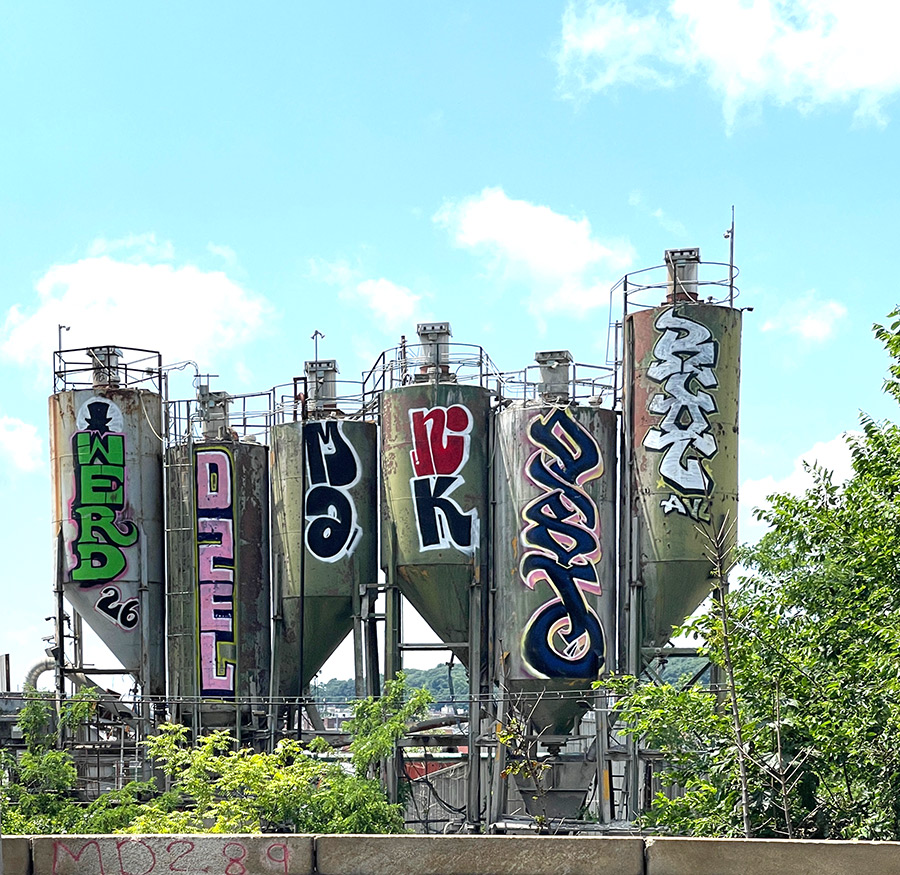
Here is our weekly interview with the street, this week featuring A Presidential Parody, Adam Dare, Bunny M., Captain Eyeliner, DZEL, EXR, Fer Suniga, HekTad, HOMESICK, MACK, Mario P, MR KING15, NO MORE WARS, RATCHI, SPAR, VES & Friends, and ZWONE.
As seasons turn in both hemispheres, one element binds them: water. Rivers, streams, and creeks carry our shared memory of motion—flowing, churning, glinting—and, as Whitman urged, “Flow on, river! flow with the flood-tide, and ebb with the ebb-tide!” In that spirit, Bartek Świątecki’s abstract color compositions read like water finding its course: geometry loosens into current, planes slip into eddies, edges catch light and blink it back to you.
Świątecki, working from Olsztyn, Poland, brings this language to walls most often, but just as readily to a canvas planted in a cow field when the site calls for it. His newest piece, finished in September and titled “The Endless River,” extends that vocabulary across a hometown façade—color moving like a surface of water through the city.
“I managed to finish a new wall in my hometown Olsztyn. I named it The Endless River / Olsztyn / Poland / 2025,” he says. The result is a clear invitation: stand at the bank, watch the composition flow, and let the city meet the river it suggests. And to end our swim, contemplate the rolling, gentle undulations of Philip Glass performing his “Opening.”
When graffiti and street art lace up hiking boots and head into rural or fully natural settings, some feel conflicted about the potential harm to plants, soil, and water. Naturalists argue that human hands should leave no trace—certainly not one out of harmony with the site. In the built environment, on the other hand—cities, towns, suburbs, strip malls, fast-food restaurants, roller rinks, bowling alleys, factories, condos, lawyers’ offices, hospitals, laundromats—the conversation around street artists and graffiti writers tends to focus on property and real-estate value, less on our impact on the Earth.
Sea162 (Alonso Murillo) is a Spanish graffiti/mural artist from the Madrid region, long associated with Collado Villalba north of the city. He began writing graffiti in the 1990s, later moving from classic graffiti into large-scale murals; his current approach merges graffiti know-how with site-responsive painting in natural or semi-natural settings.
He is known for a kind of “nature street art”: fauna and flora rendered on quarry faces, walls, and outdoor structures, frequently using earth-based pigments he gathered and developed from sites across Spain (including the Canary Islands). His compositions often integrate the rock’s relief to create volume, capitalizing on the site’s natural features.
Sea162’s approach has led him down paths street-art fans don’t typically associate with the culture, yet his evolution feels organic—especially as he has developed a practice with natural pigments. He has competed in Spain’s Liga Nacional de Graffiti in multiple editions (2021–2024). This year the Museo Nacional de Ciencias Naturales (MNCN-CSIC, Madrid) presented his 90×7 m mural “Evolución,” made with natural pigments and accompanied by a museum display about its materials and process.
He has participated in Spanish and European street-art initiatives, including painting a wolf at an outdoor rock-art event in France and multiple municipal or regional projects in Spain. His 2023 mural “El Tritón Miguelón” on the circular La Palla irrigation pond in Garcibuey (Salamanca) was selected “Best Mural of the World – April 2023” by Street Art Cities.
We asked Sea162 about his practice and this new installation:
Brooklyn Street Art:Can you tell us about the setting, the placement of the art? Is it a natural swimming “pool” somewhere in a forest? SEA162: It’s an old stone quarry in the village where I live northwest of Madrid. It is inside the mountains.
BSA: The objects depicted on the mural appear to be seashells. What can you tell us about the different species of shells you painted on the rocks? SEA162: It does look like seashells, but these are organic forms that connect with the forms of the rock in a free manner of expression.
BSA:You mentioned you used natural pigments collected from different places in Spain. What can you tell us about your process of collecting and making the pigments? Do you use plants, flowers, soil, and rocks? SEA162: I usually use rocks and pigments made from minerals.
BSA:Can you describe your process of planning and selection when you paint in a natural environment? SEA162: At the beginning, I try to find a way to connect with the place and the environment. After I select the location, I begin to work on the idea and its design
BSA:By using natural pigments, is it your intention for the artwork to be washed by rain and other natural elements? SEA162: I find it essential to take care, to protect the environment and the work for the future, by natural, yet resistant materials.
Welcome to BSA Images of the Week! Fall is here today, and summer’s crop of graffiti, street art, and murals has been a bounty in New York City this year. You’ll see it on your way to the park to lie under a tree.
All in all, America’s playing tug-of-war with itself, while New York shrugs, sprays another mural, and proves you can cram the whole world into one city block without it blowing up.
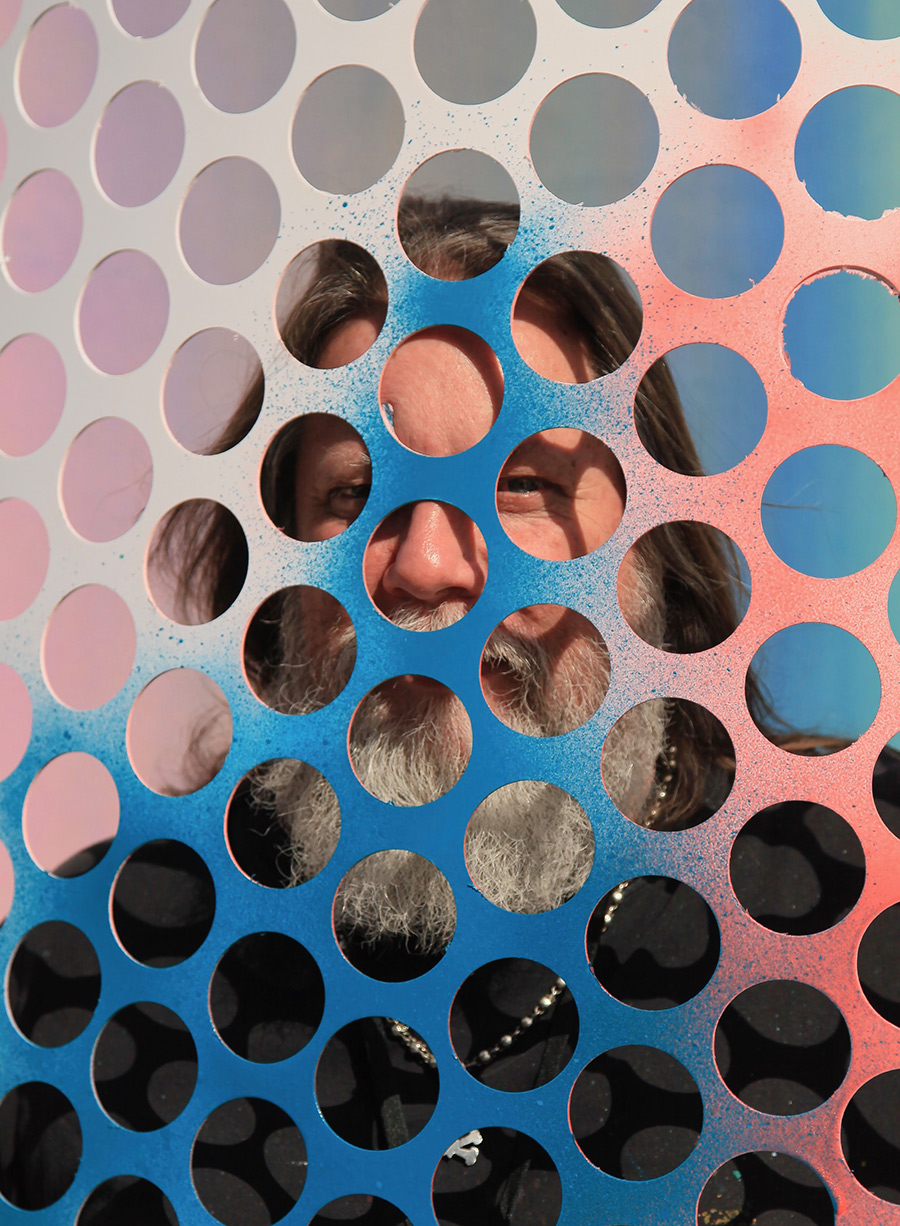
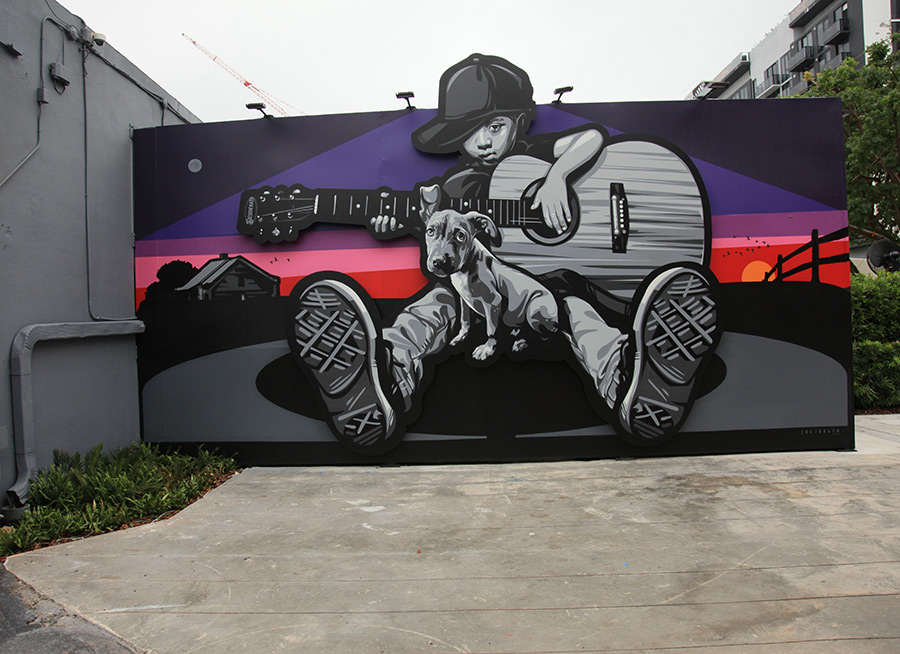
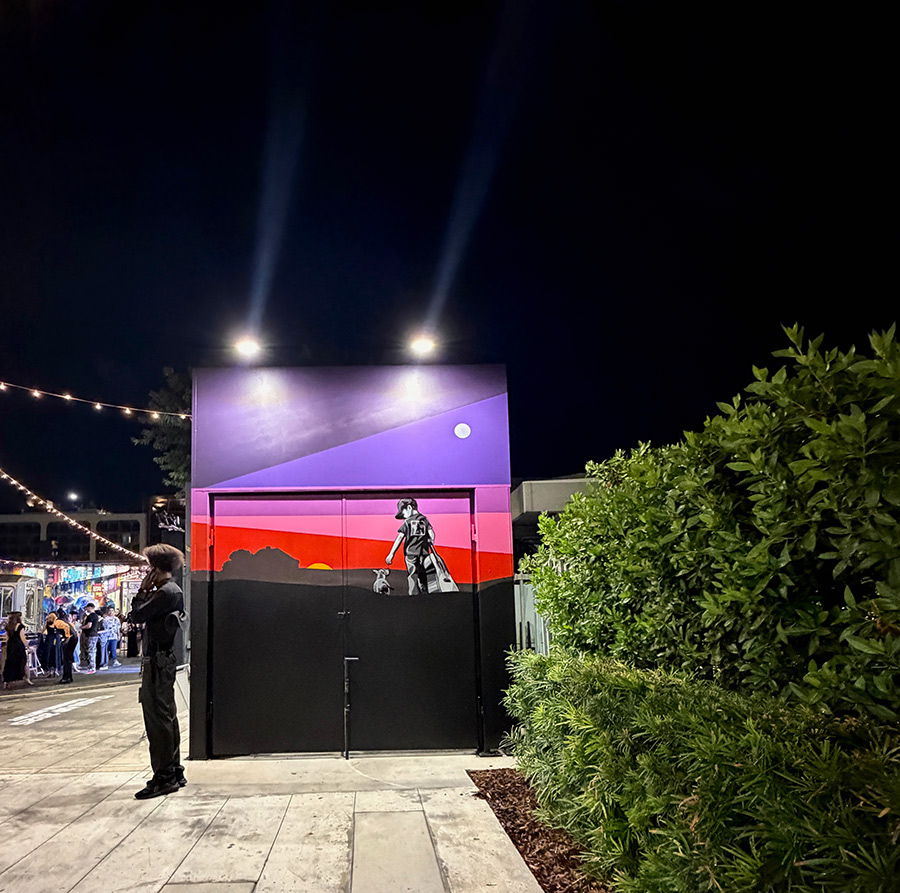
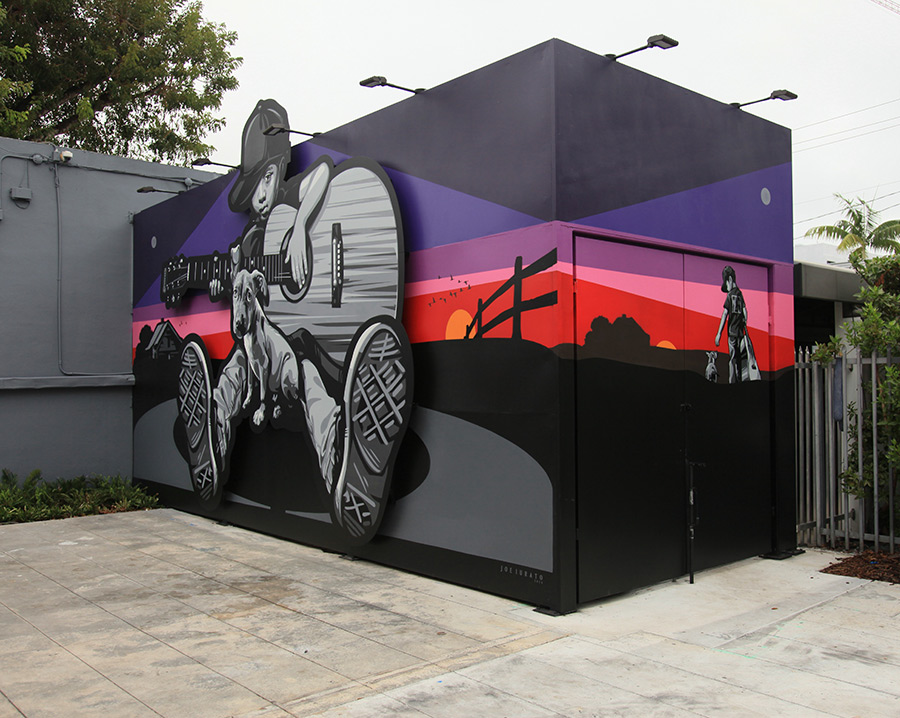
Here is our weekly interview with the street, this week featuring Allison Katz, Bikismo, Dattface, Hehuarucho, Joe Iurato, Low Poly, Manfo, Muck Rock, Sandman, and Shelby and Sandy.
“A psychological atlas drawn on a crumbling wall”.
Sometimes the artist’s description of their project is all you need to know. In the daily battering of your brain by the oligarchal media machine, you question your own judgment and perception, and shift the blame down the food chain, instead of up where it belongs. No wonder you are in such a state.
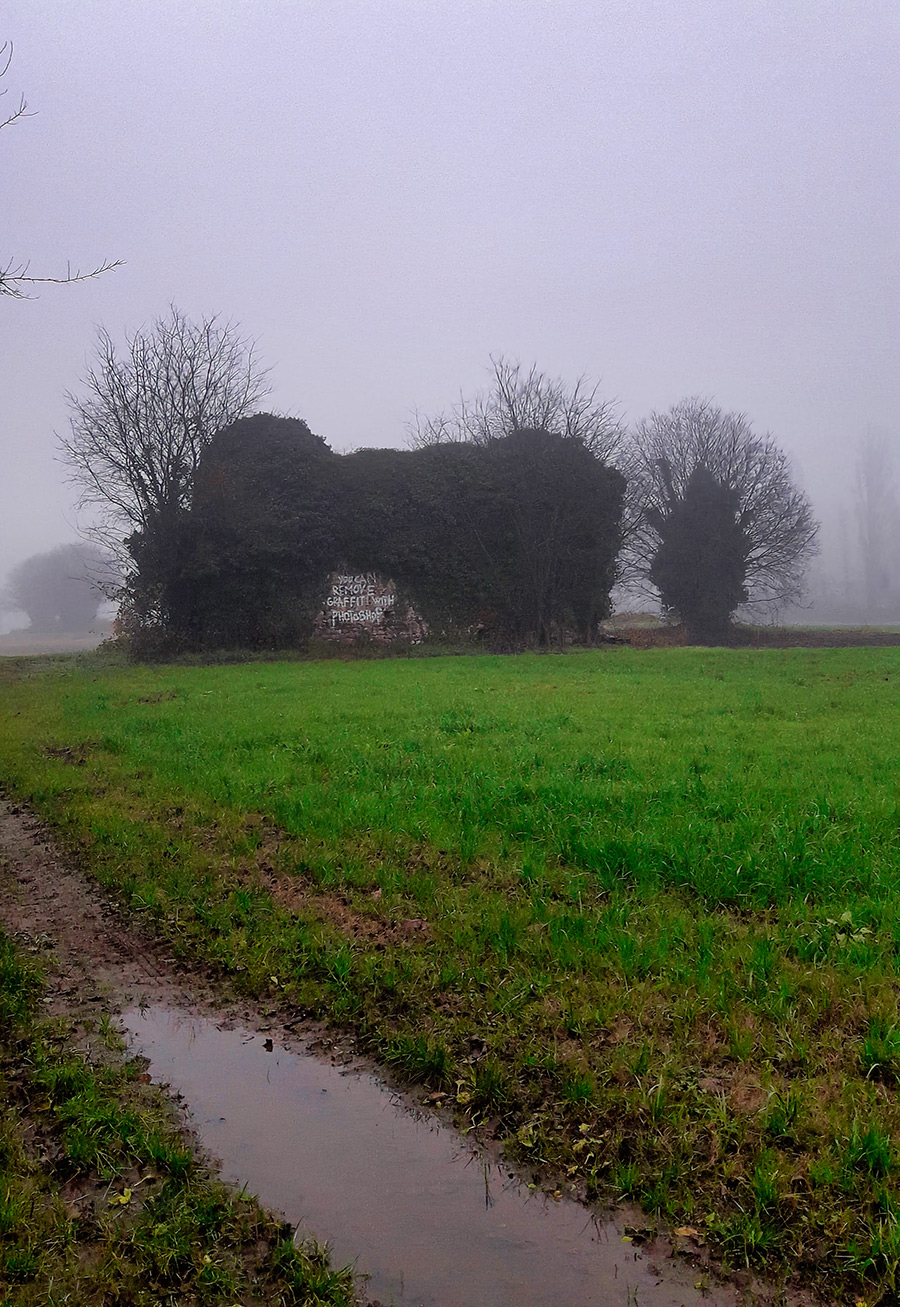
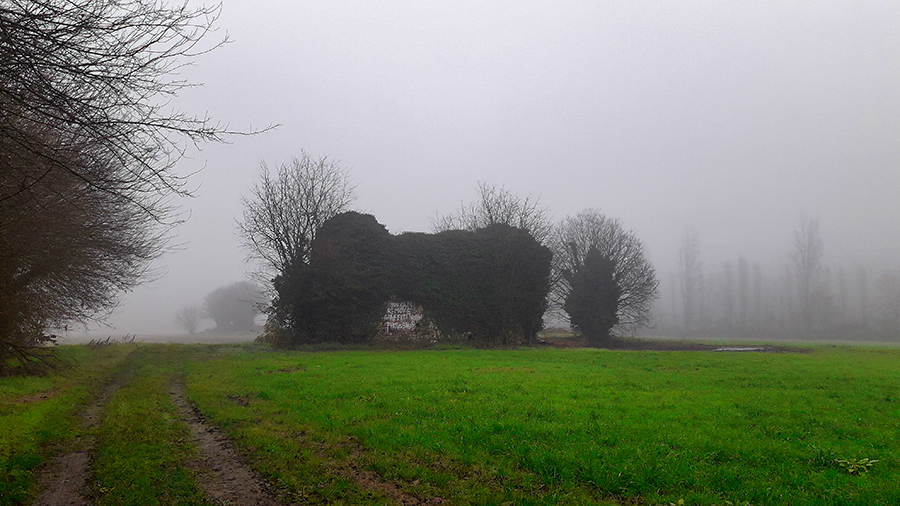
It’s nice to have Biancoshock back, after some time without news about him. He says he was lying low, but nonetheless, “I have more or less 50-60 unpublished projects.”
So here’s one, and if you see your brain in the mirror, it’s because the propaganda is raining so dang hard now. “The lands are arid surfaces, no longer capable of producing anything natural,” he tells us, “while all around, an Ocean of Pessimism engulfs everything.”
An Italian (born 1982 in Milan) conceptual street artist, known for his ironic and provocative public art installations, Biancoshock keeps his identity hidden, as usual. He first cut his teeth in the graffiti scene in the mid-1990s, spending nearly a decade tagging walls and exploring the underground world of street writing. In 2004, he shifted gears and launched what he calls an “Urban Hacking” practice – treating the city itself as a canvas for witty interventions using everyday objects.

Here, we see that the interventionist has also carried out his practice by hiking in the neglected urban landscape. Here we find his discussion about nation-states and psychological states is in full view, under deconstruction.
“The five continents outline a universe fragmented into smaller emotional states, coexisting and feeding off one another,” he says. “We are flooded with facts and images depicting a world in constant decline, often without realizing that what deteriorates the most, day by day, is our inner world.