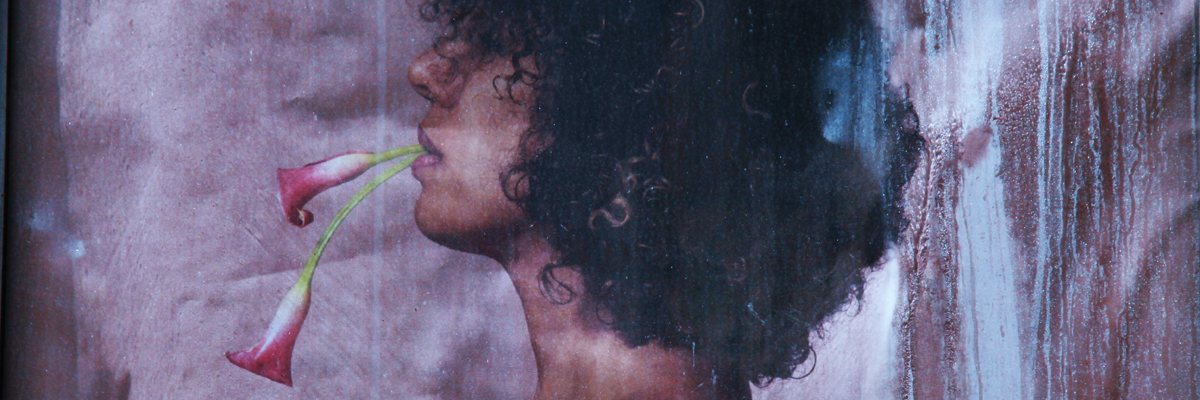
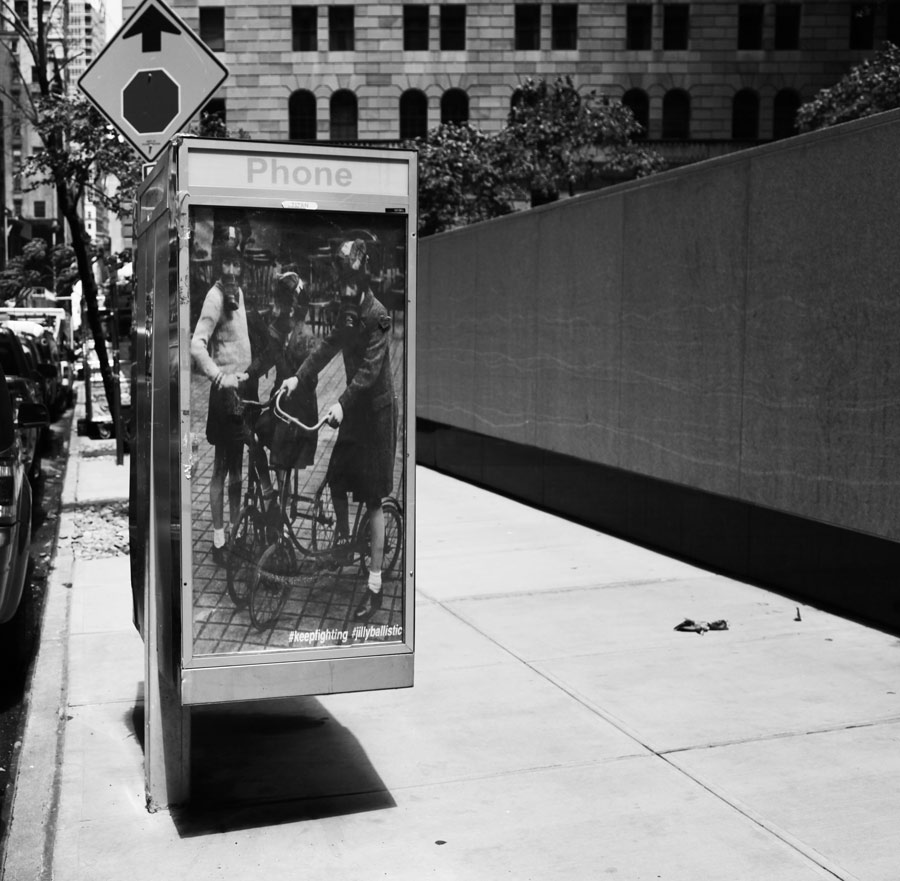
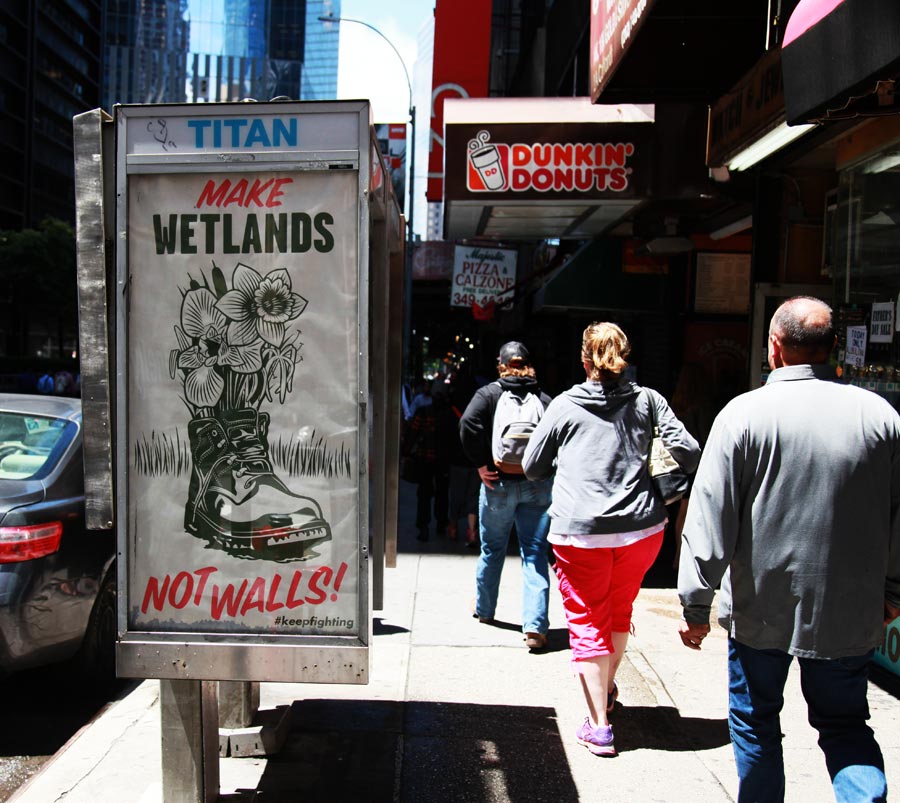
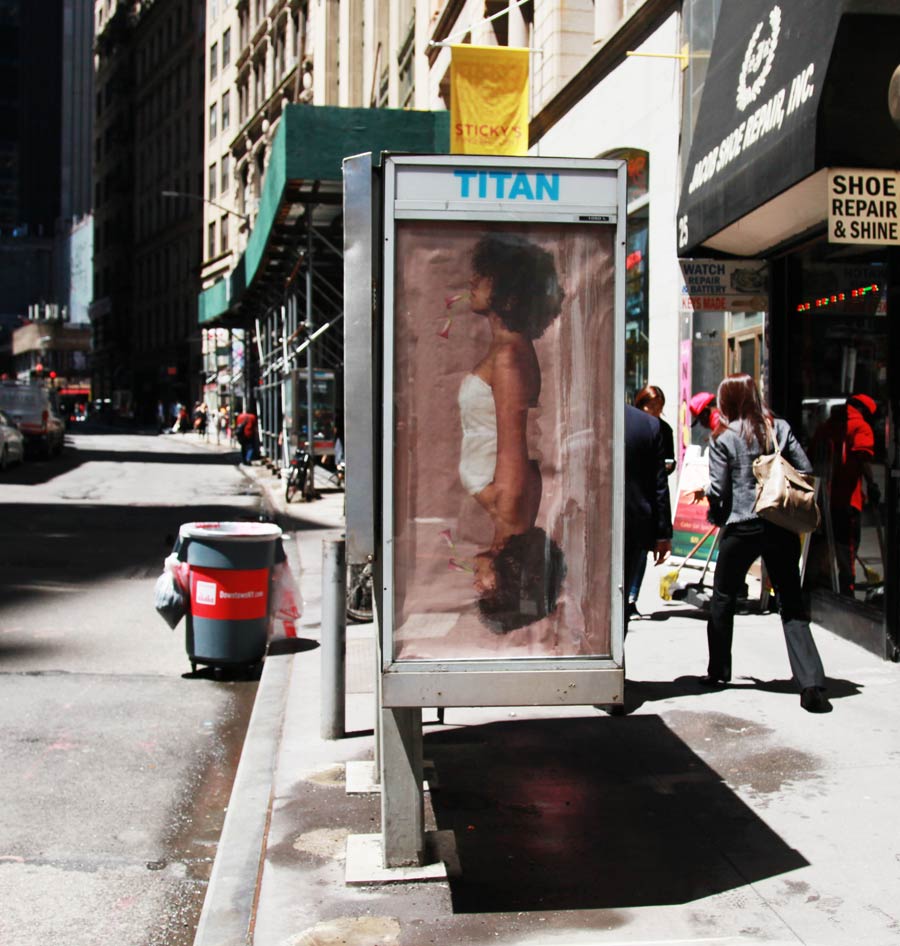
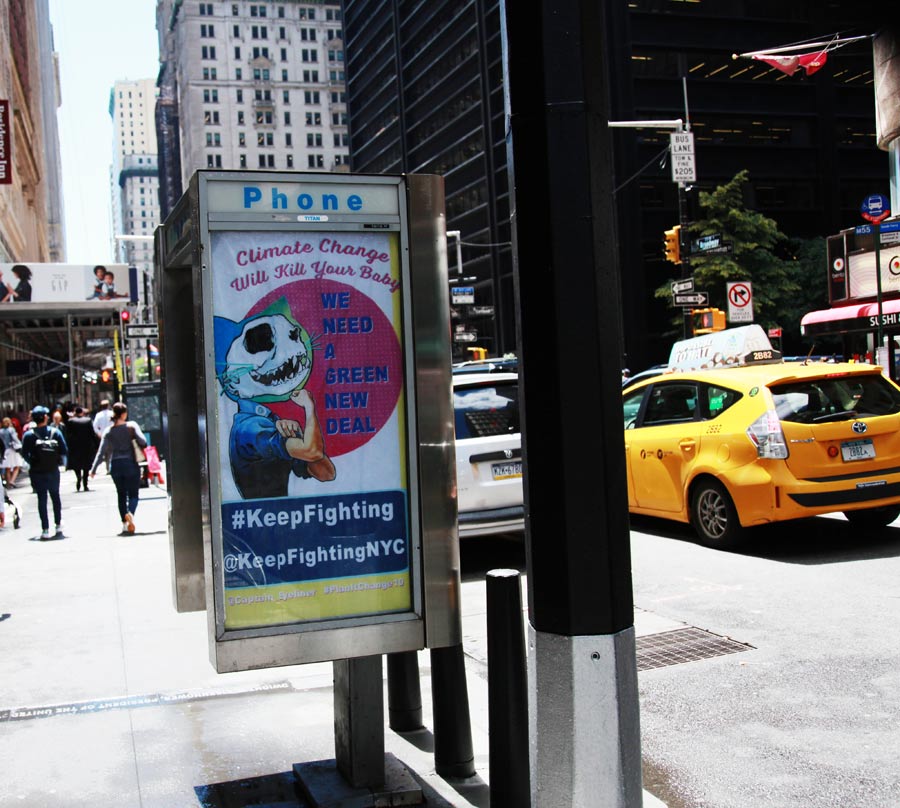
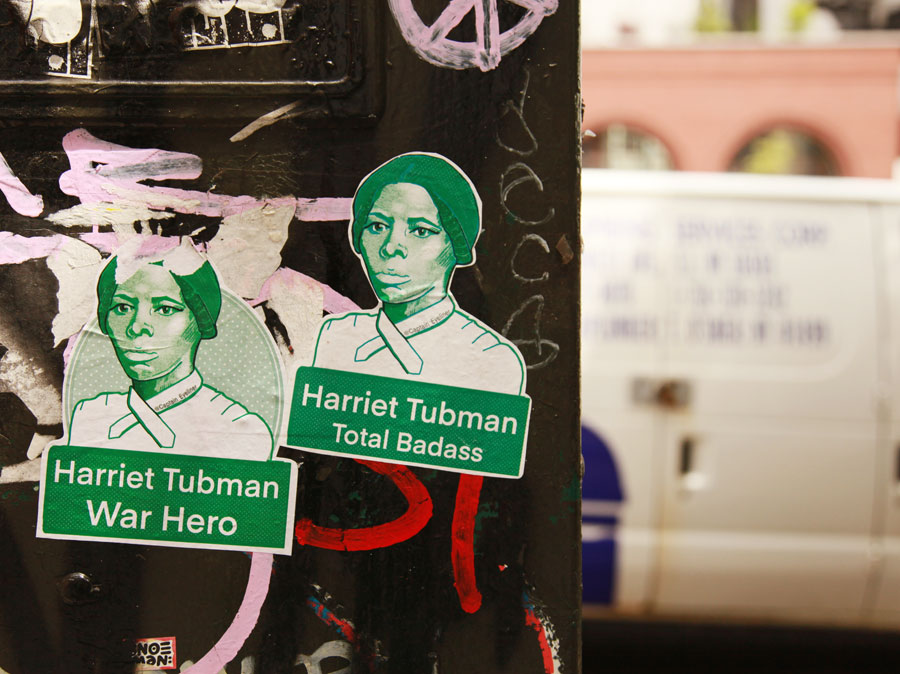
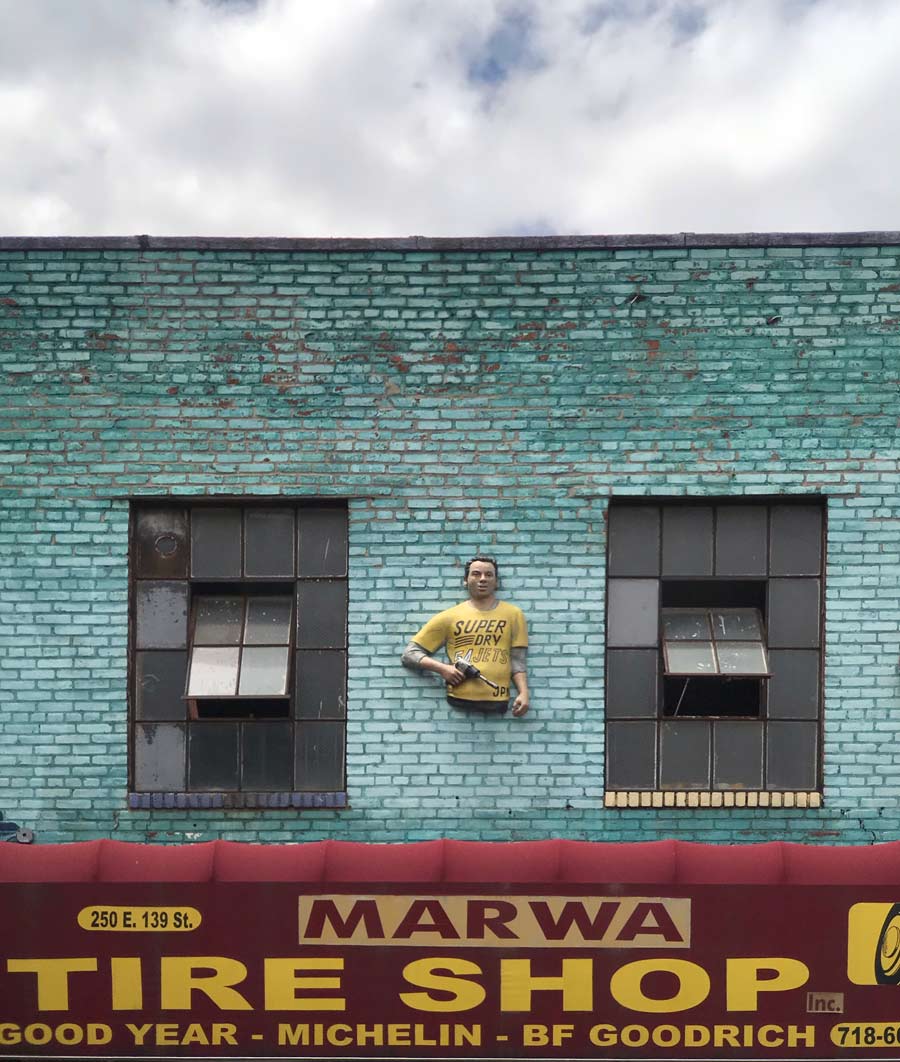
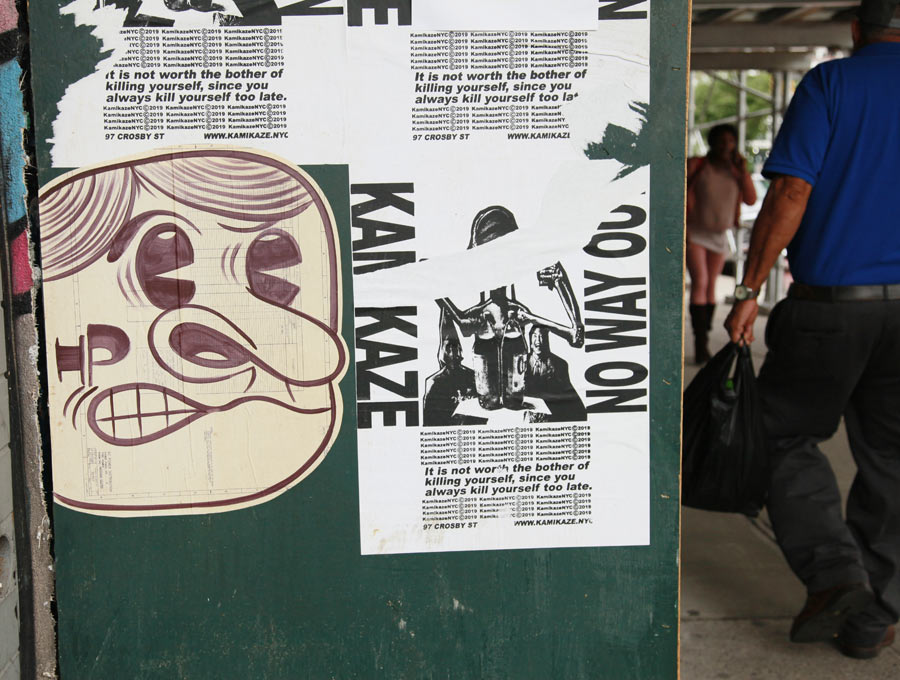
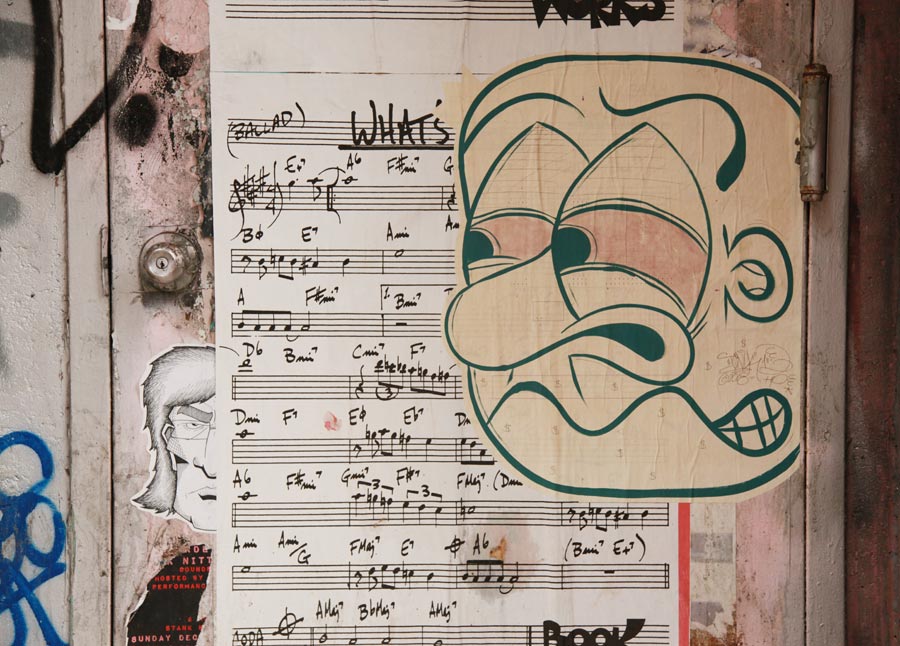
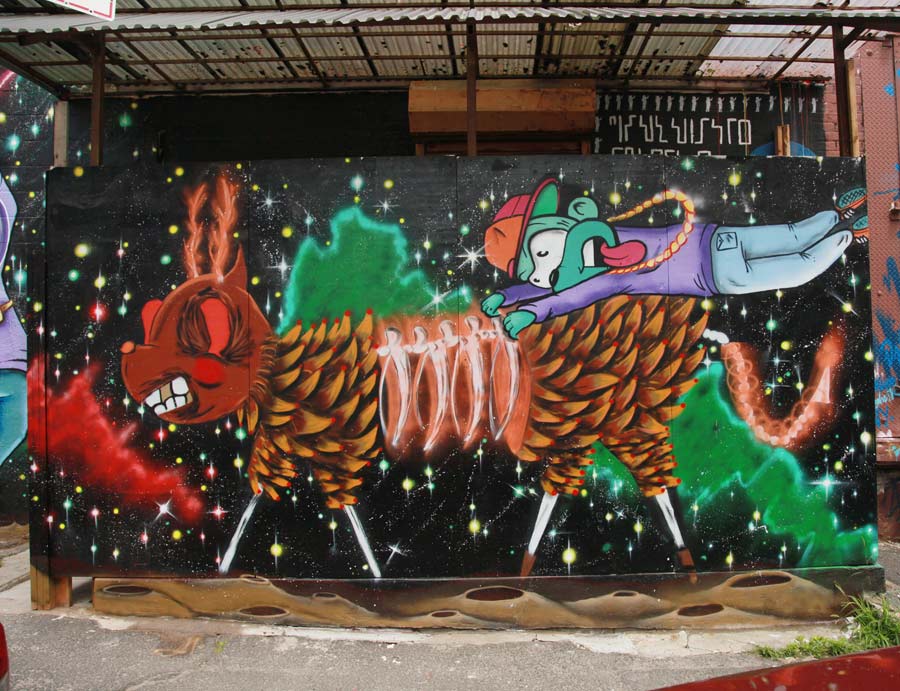
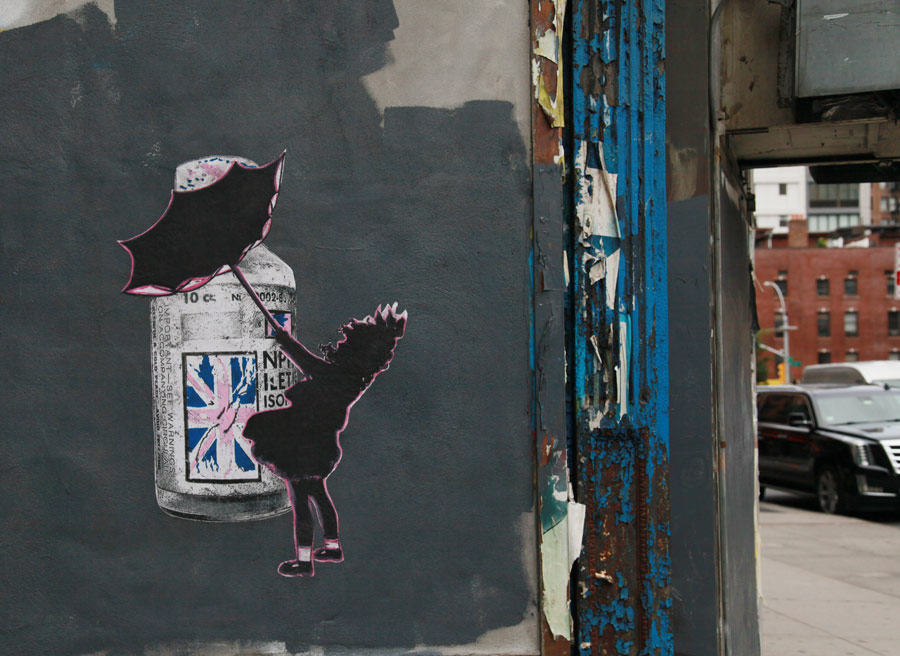
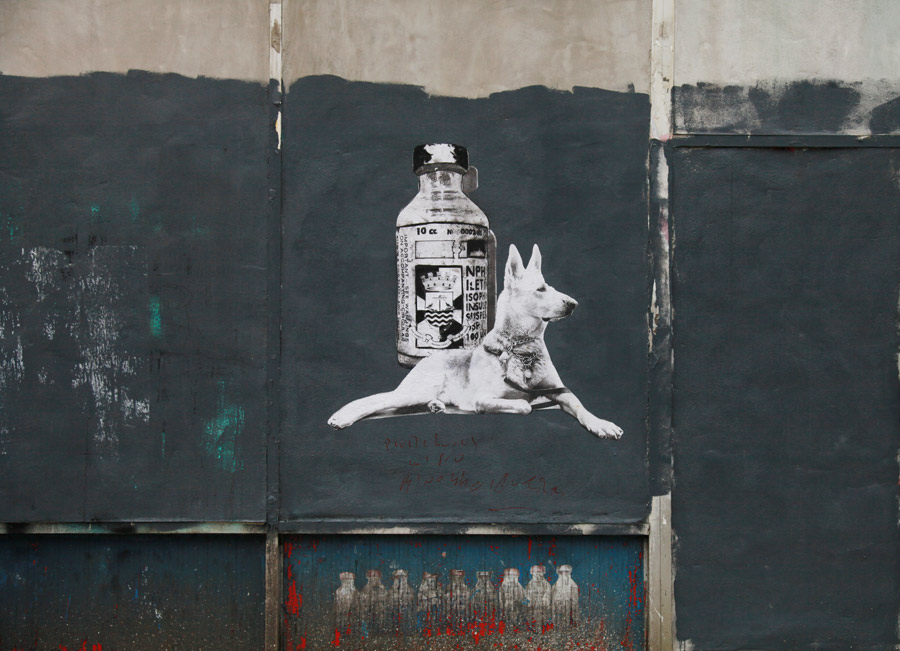
Street Artist and activist Abe Lincoln Jr. is one of the growing ranks of subvertising executives on the streets today who are flipping the script on public messaging. Phone booths on city streets were meant as a public accommodation but eventually they were commandeered for private advertising and endless campaigns of commercial speech.
With his new #keepfighting ad takeover campaign of art by himself and other artists, the self proclaimed agitator says we should continue fighting for what we believe in. What do you want to raise awareness about? That is up to you.
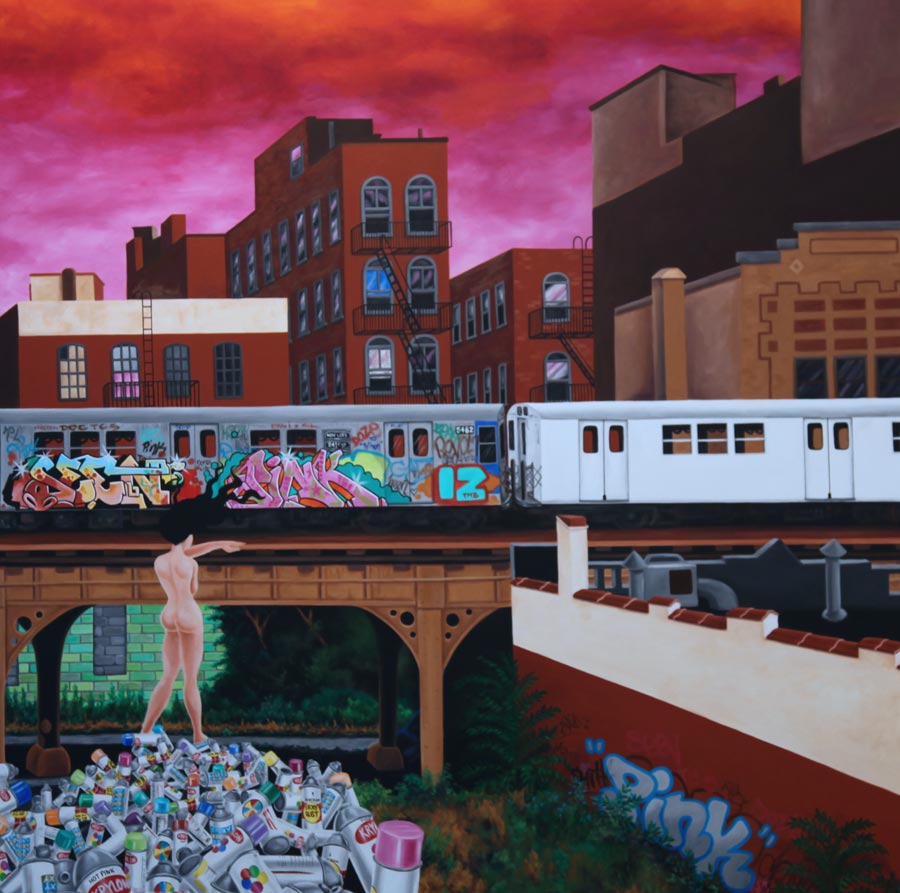
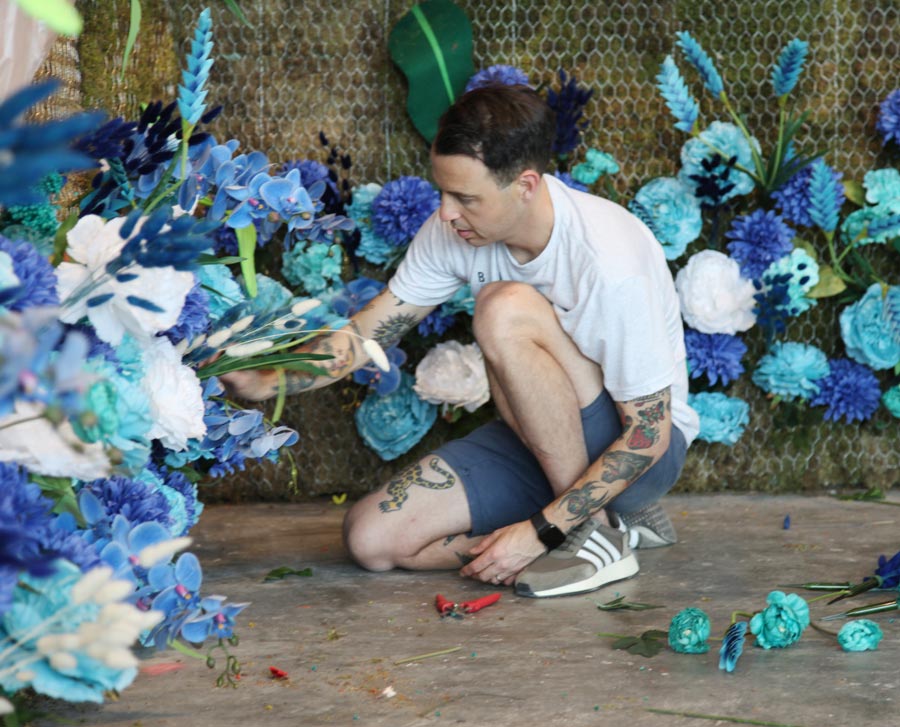
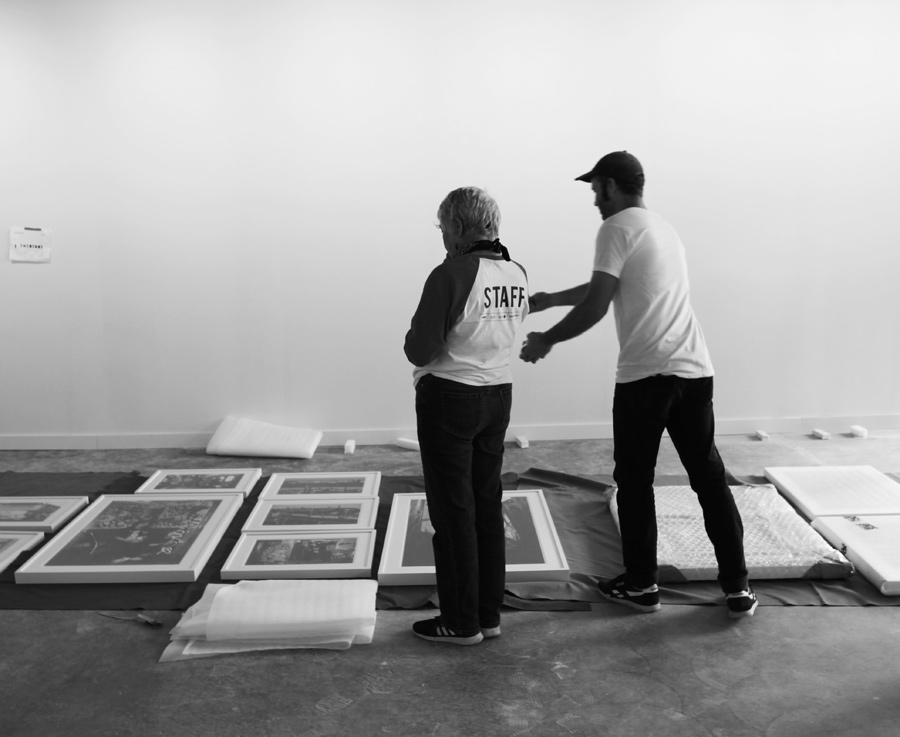
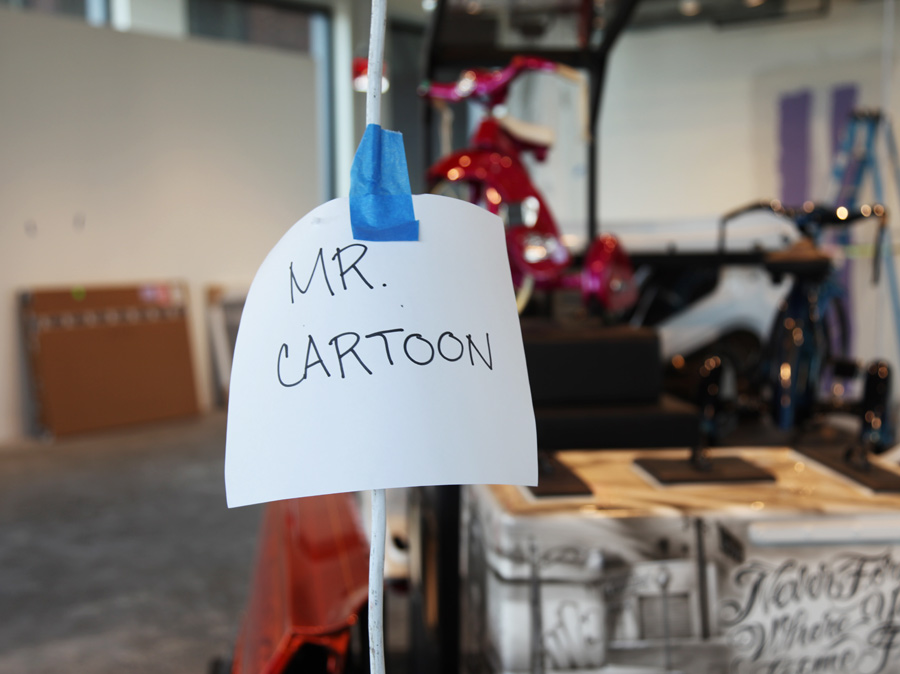
Hammering the display walls, sanding off the plaster bumps, the whirring and popping of construction drills: Two assistants are helping 1970s NYC subway writer Lee Quinones lay out a #2 train-car-length canvas on the floor while you are distracted by the Empire State building puncturing the Manhattan cityscape across the East River, a sweeping vista through the glass walls of this new high-rise in Williamsburg.
Nearby Cornbread’s notebook hangs next to his signature, a potent visual reverberation across five decades from graffiti’s Philly roots.
Elsewhere there are the sounds of woodsaws and metal clanging accompany the one-line drawings of freight-writer buZ blurr as historian Bill Daniel is completing his comprehensive mini-exhibition within this massive exhibition. With trains and photos and modern relics of American rail lore on display, this crucial antecedent of modern-day aerosol “writing” emerges and blows its chimes as well. This is a particular slice of the graffiti story that Mr. Daniel may describe, as he does in The Secret History of Hobo Graffiti, as “the dogged pursuit of the impossibly convoluted story of the heretofore untold history of the century-old folkloric practice of hobo and railworker graffiti.”
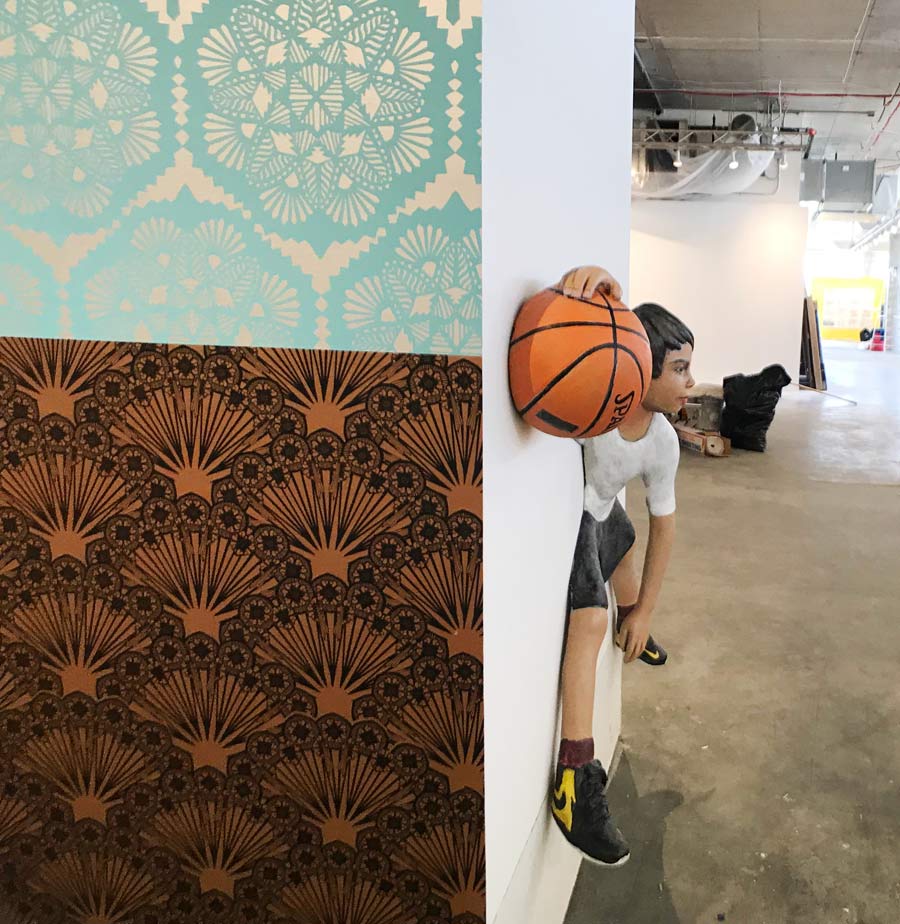
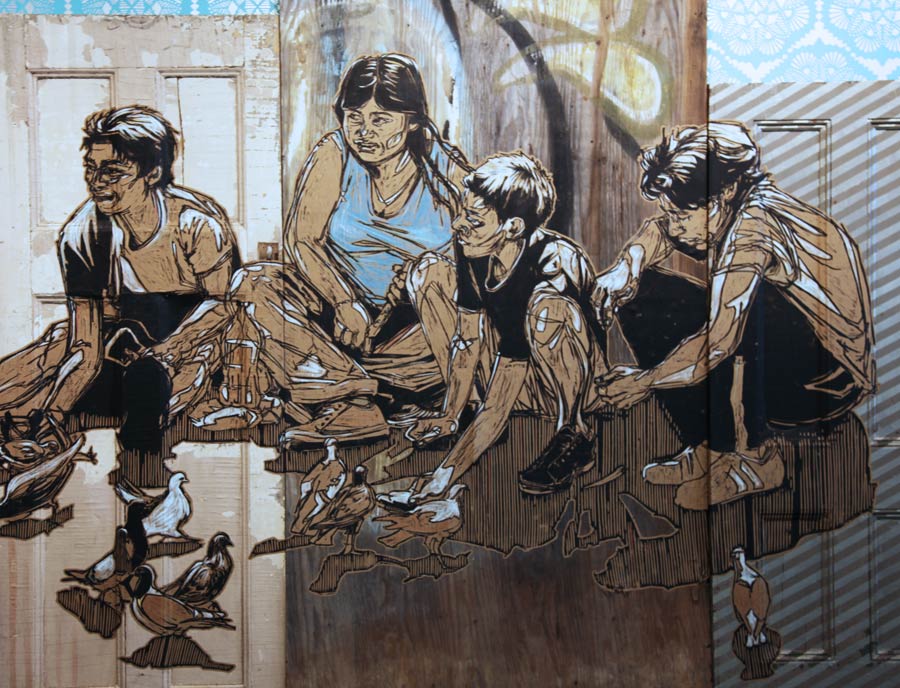
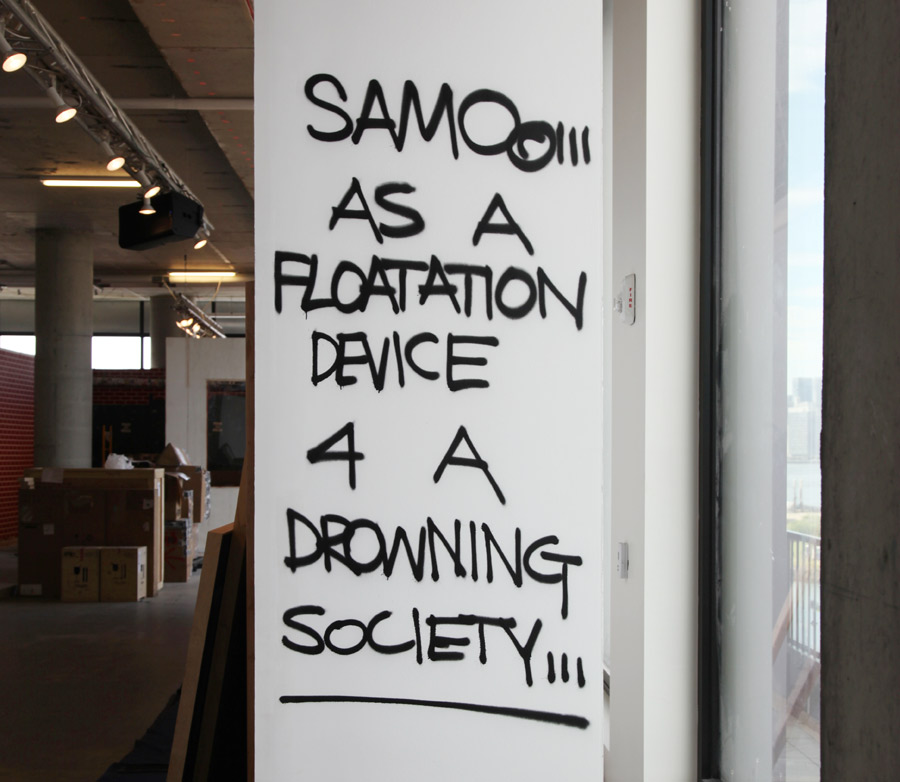
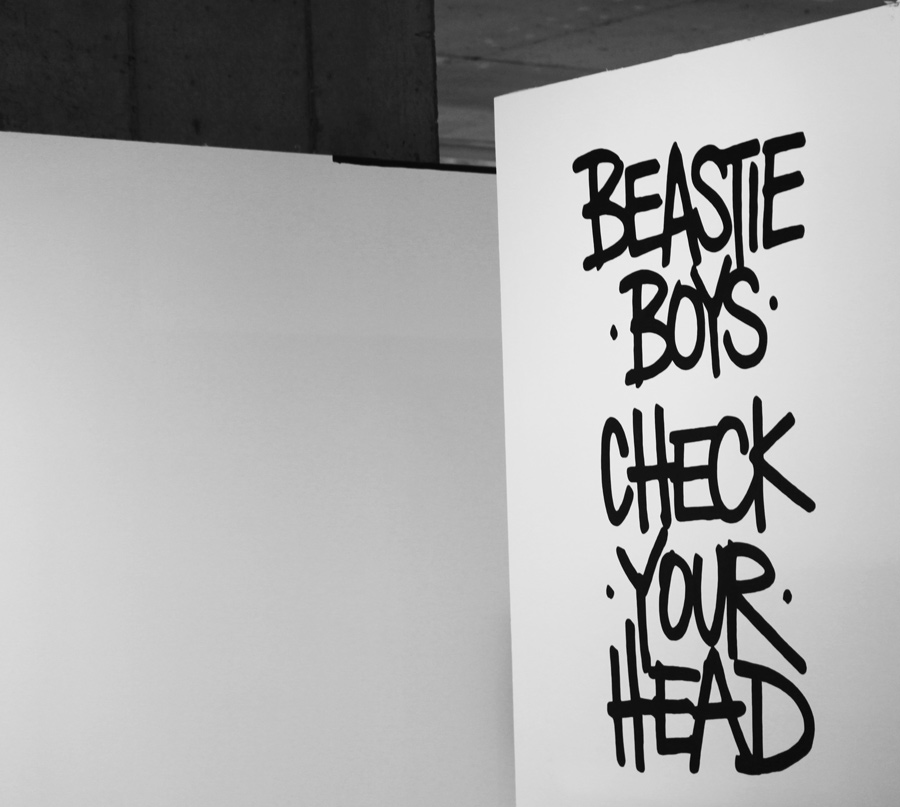
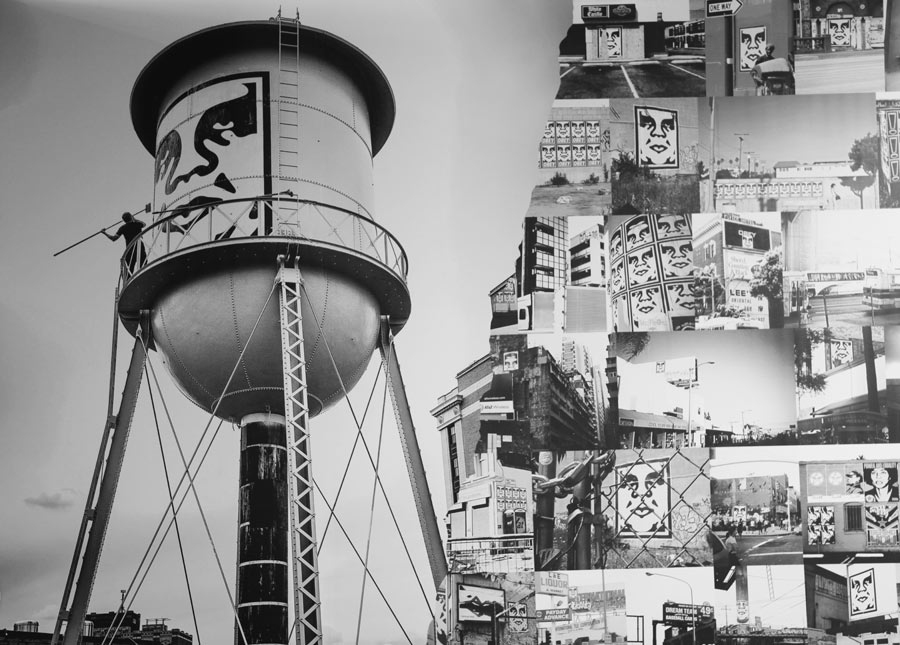
It’s an apt descriptor for Beyond The Streets as well. This multi-artist graffiti/Street Art-influenced exhibition directed by the discerning shepherd and seer Roger Gastman that is now mounting over two floors and 100,000 square feet in North Brooklyn tackles an endlessly convoluted evolutionary path. He says the size and composition of the exhibition has slightly changed since its first mounting last year in Los Angeles, and he is acutely aware that its location is in the city that claims a huge part of the graffiti genesis story, carrying perhaps a steep level of expectations.
Not that he has reason to worry: there are more hits here than a blowout at Yankee Stadium.
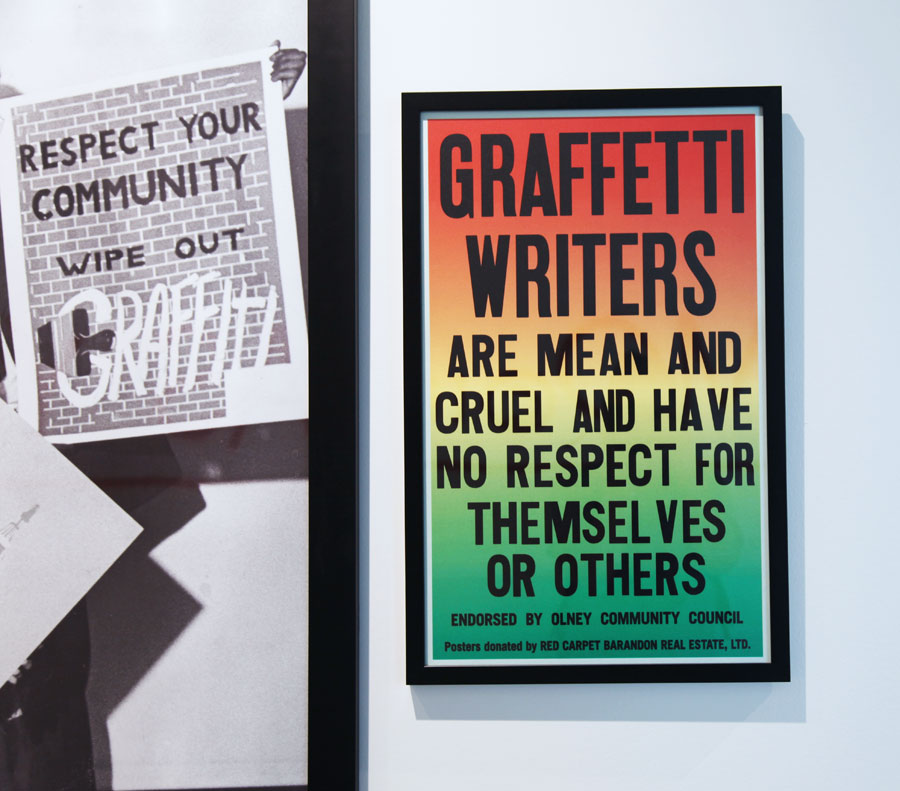
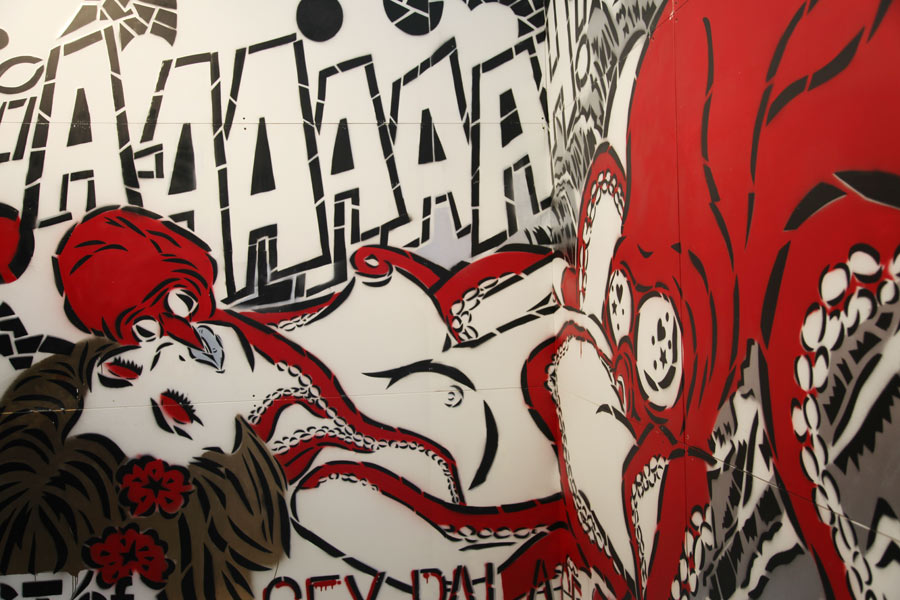
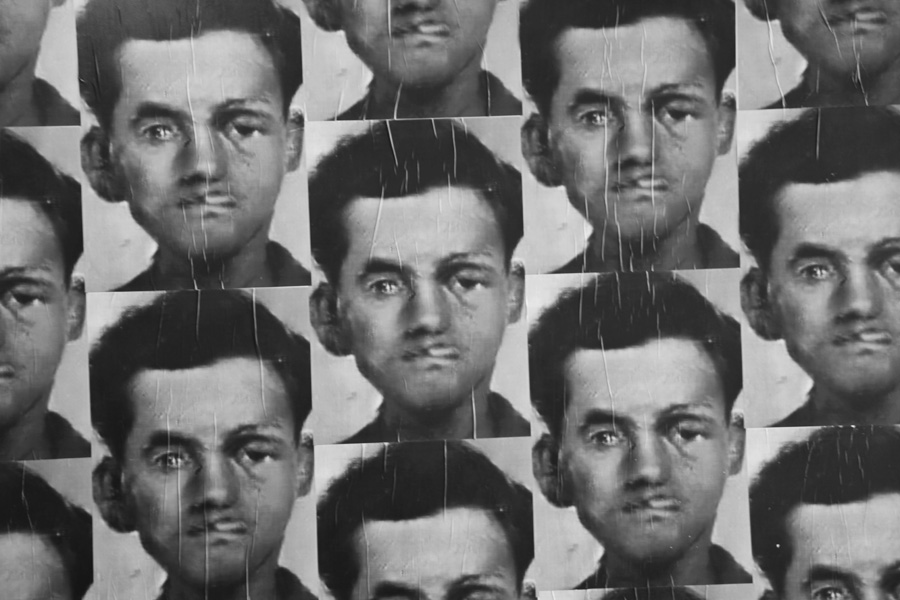
Like the blast of colors and pieces at a sunny Saturday afternoon Meeting of Styles jam, this show of many writers, photographers, documenters, collectors, painters, vandals, and attitudes won’t disappoint. You can see and construct your own version of a celebratory story that illustrates and reveals surprising ways that the street subculture has left its mark indelibly on the mainstream, yet often stayed separate.
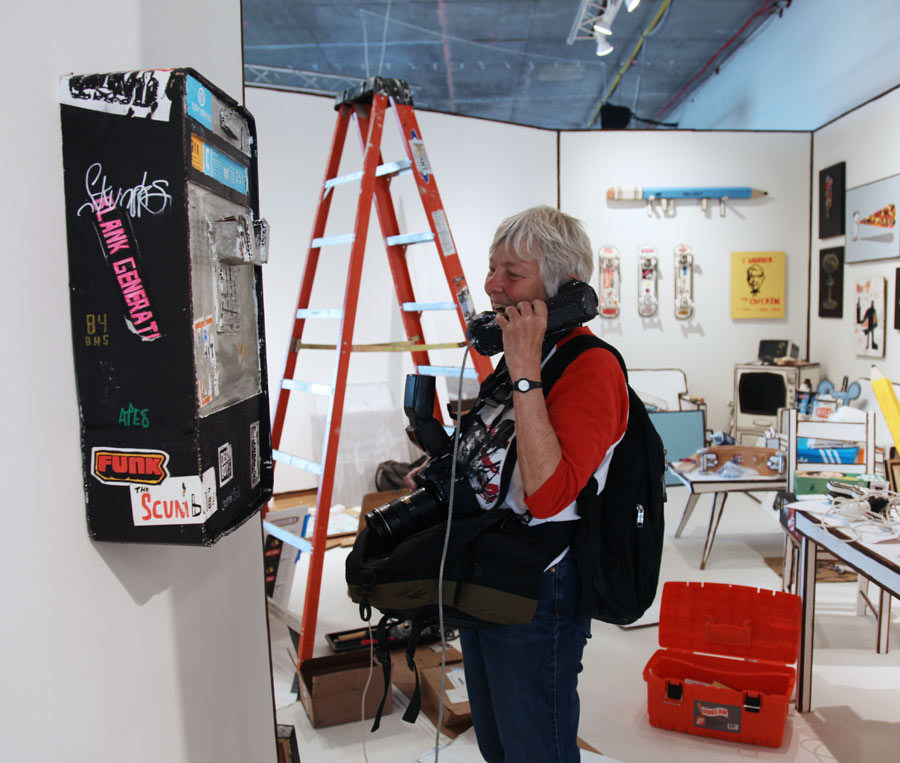
From the Beastie Boys wigs worn in the “Sabotage” music video to the camera Joe Conzo used to shoot the Cold Crush Brothers, to the MDF and cardboard pay phone by pop sculptor Bill Barminski, and Dash Snow’s hi-low societal slumming photographs depicting sex, drugs, rhyming and stealing, visitors easily will have a flood of images and histories to author their own convoluted version of the graffiti and Street Art tale.
Sometimes an enterprising artist creates their own initiative in a city and invites friends to come and paint walls that they secure – a small campaign or informal “festival, if you will.
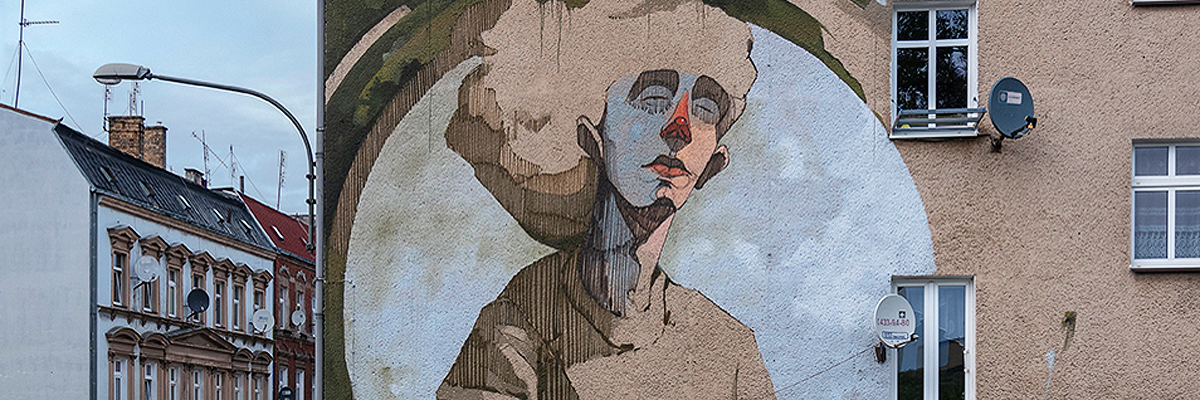
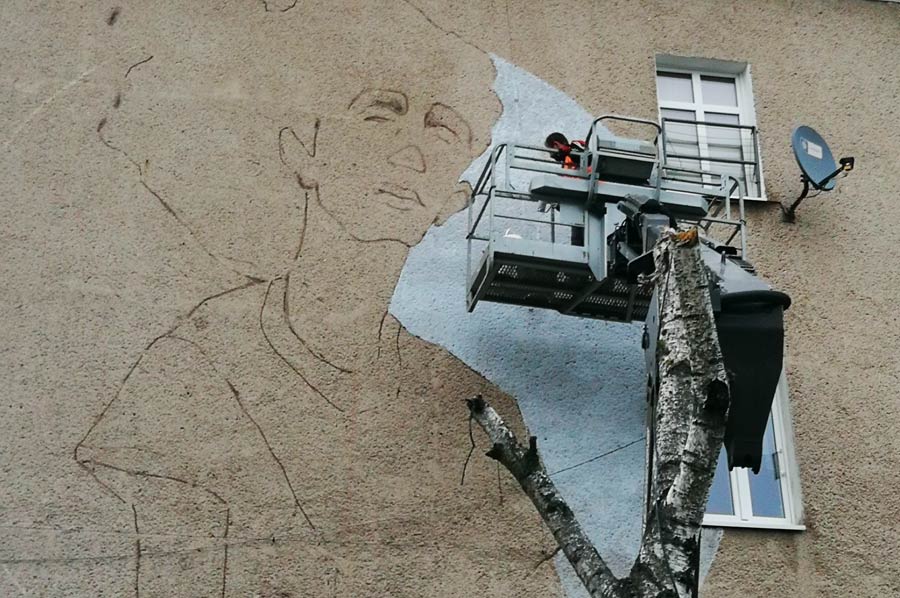
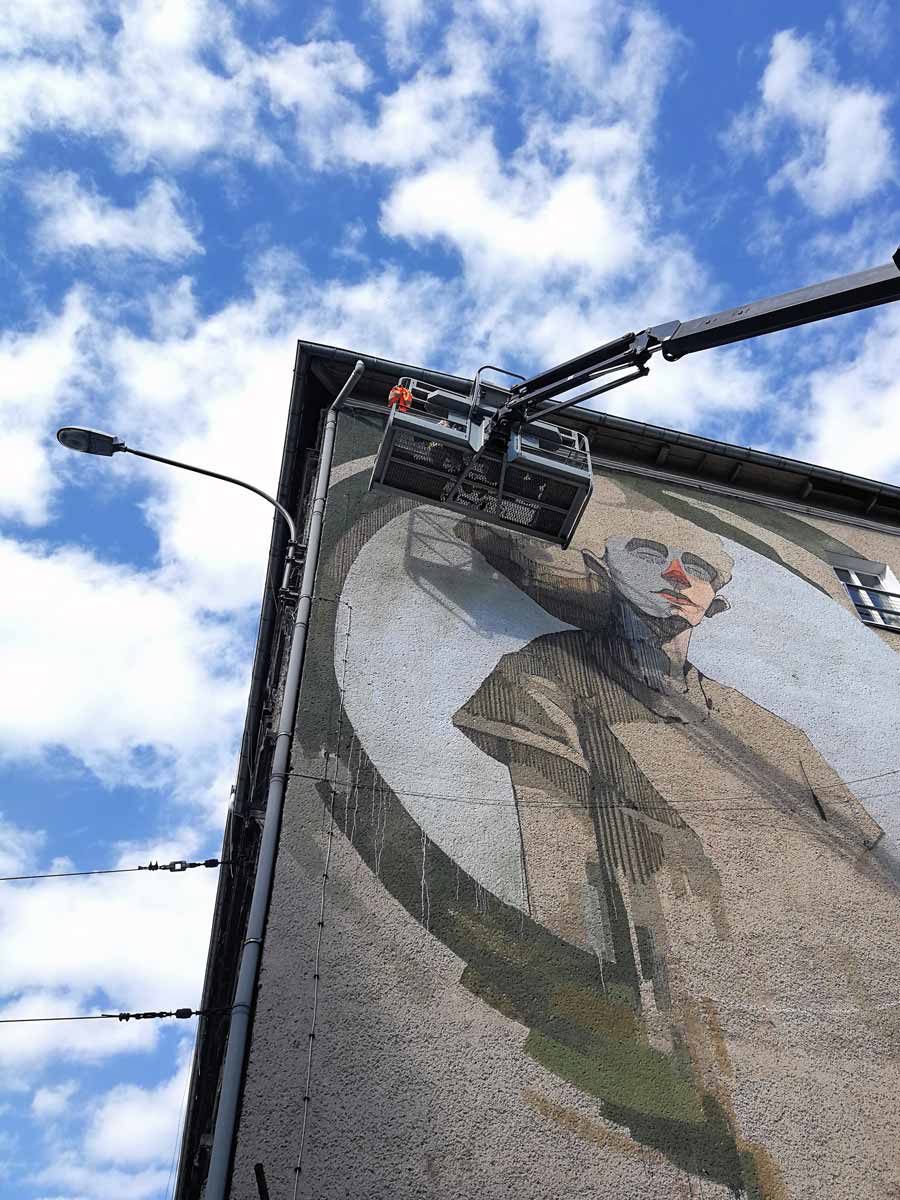
SEPE. OD/BLOKOWANIE 2.0. Szczecin, Poland, June 2019. (photo courtesy of the artist)
“I invited 3 artists to the project ‘OD/BLOKOWANIE’,” says the
billboard hi-jacker/adbuster named Lump here in Szczecin, Poland. The lineup
includes the Polish Sepe, the Greek graffiti writer/wheat-paster/painter Dimitris
Taxis, and the Spanish painter/Street Artist Zësar Bahamonte.
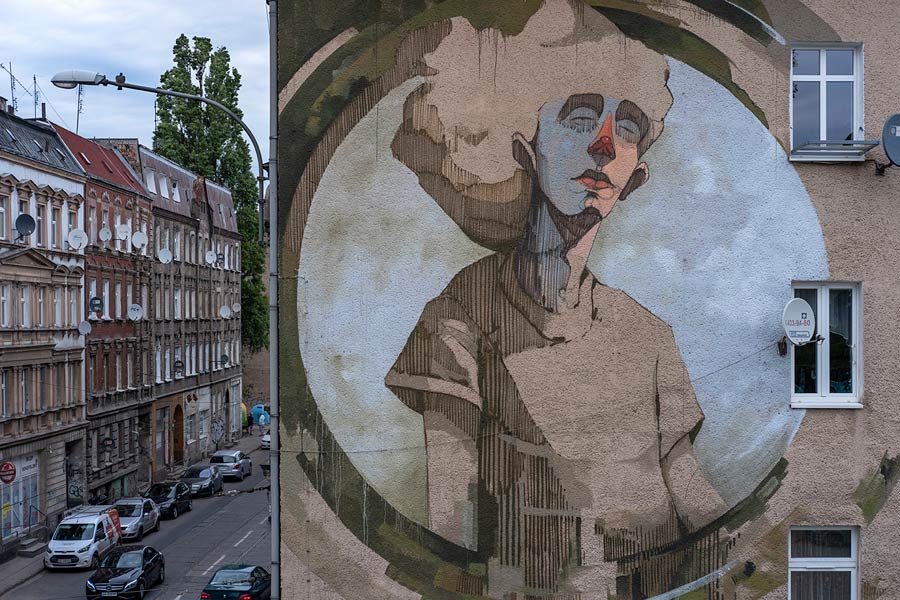
SEPE. OD/BLOKOWANIE 2.0. Szczecin, Poland, June 2019. (photo courtesy of the artist)
With a title like OD/BLOKOWANIE that translates roughly to “unblocking”,
you may imagine that Sepe is opening up a part of the city with his wall.
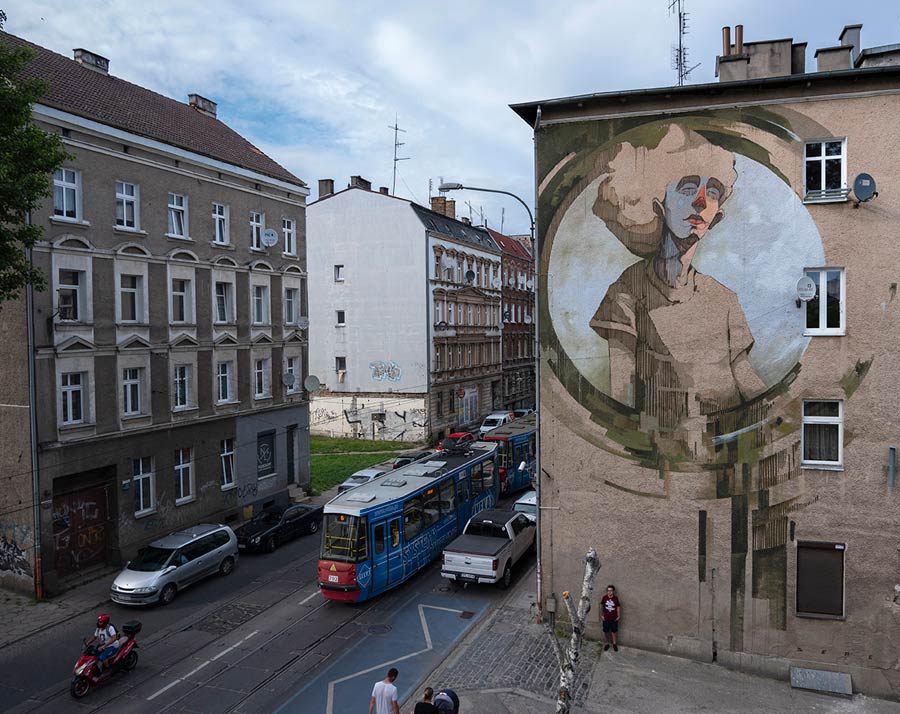
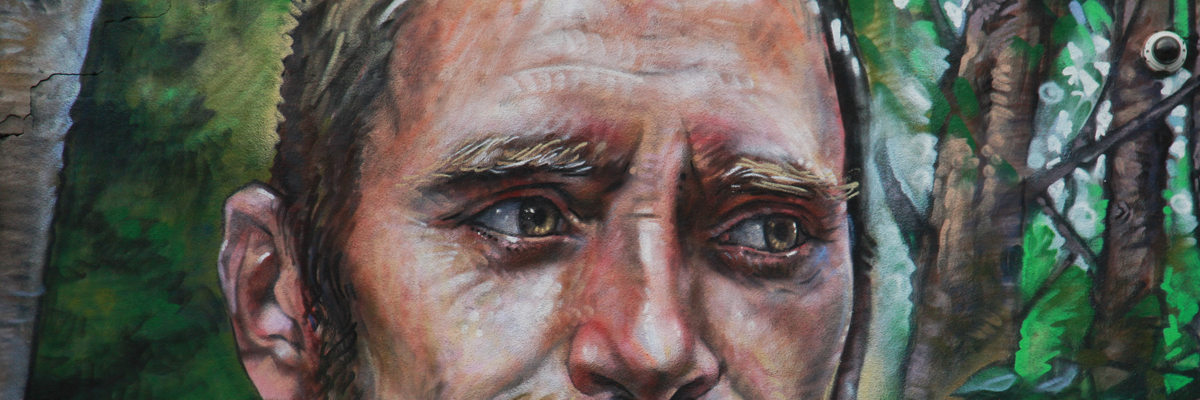
“I focused on melting the work into colors and forms of surrounding – warm greens and browns similar to the trees around,” says Sepe. “Also I used the walls’s natural plaster to make the work appear light and not so visually oppressive.” He calls the work, “There’s No Sea…”
SEPE. OD/BLOKOWANIE 2.0. Szczecin, Poland, June 2019. (photo courtesy of the artist)SEPE. OD/BLOKOWANIE 2.0. Szczecin, Poland, June 2019. (photo courtesy of the artist)
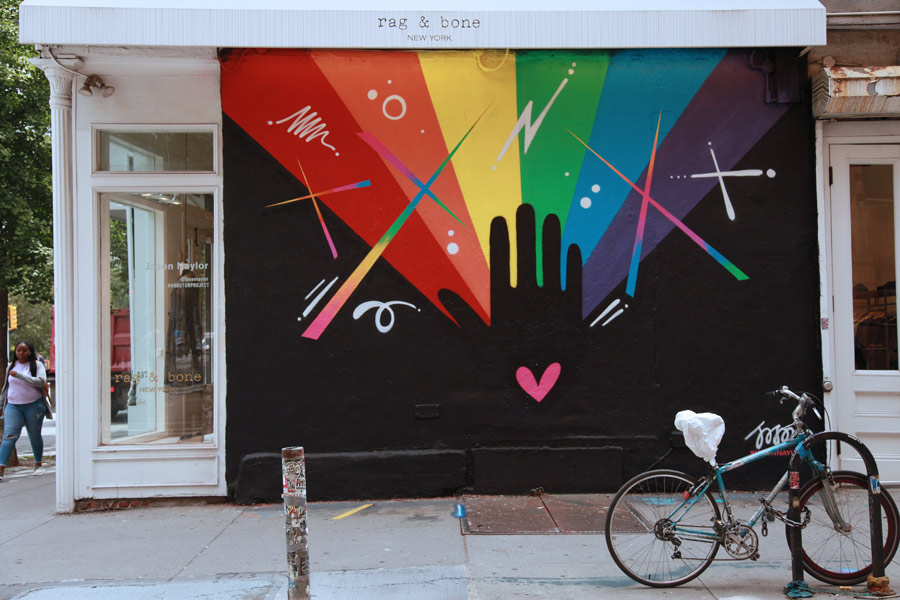
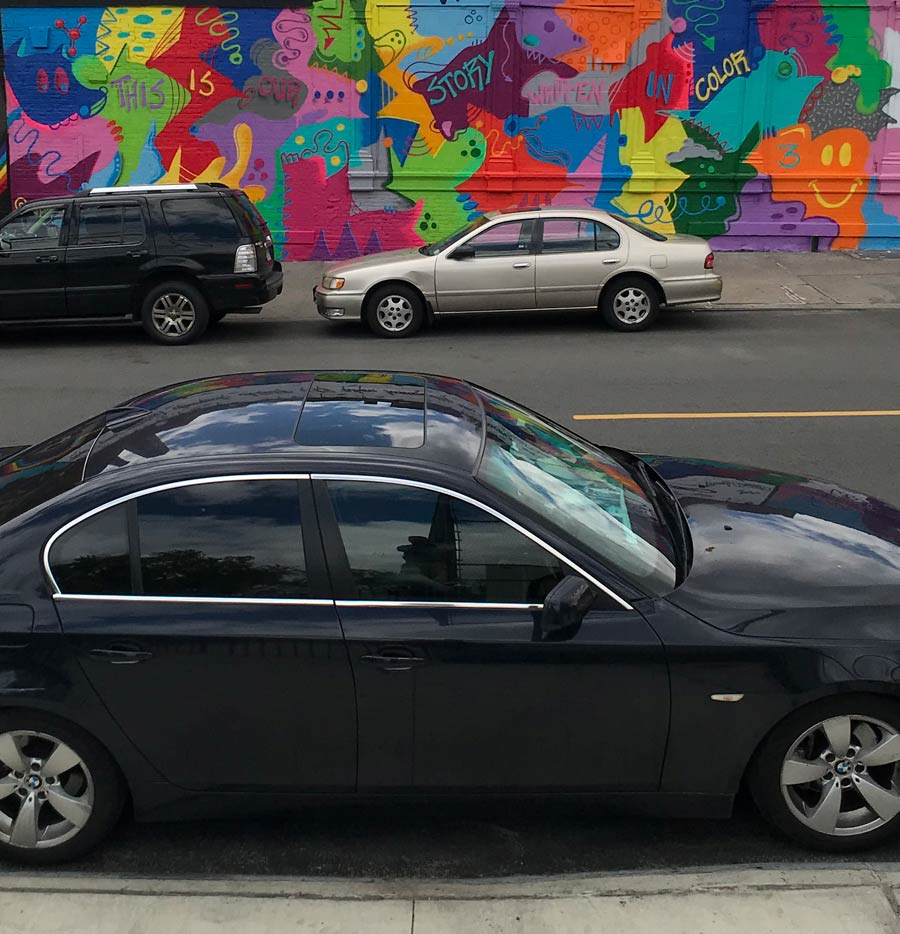
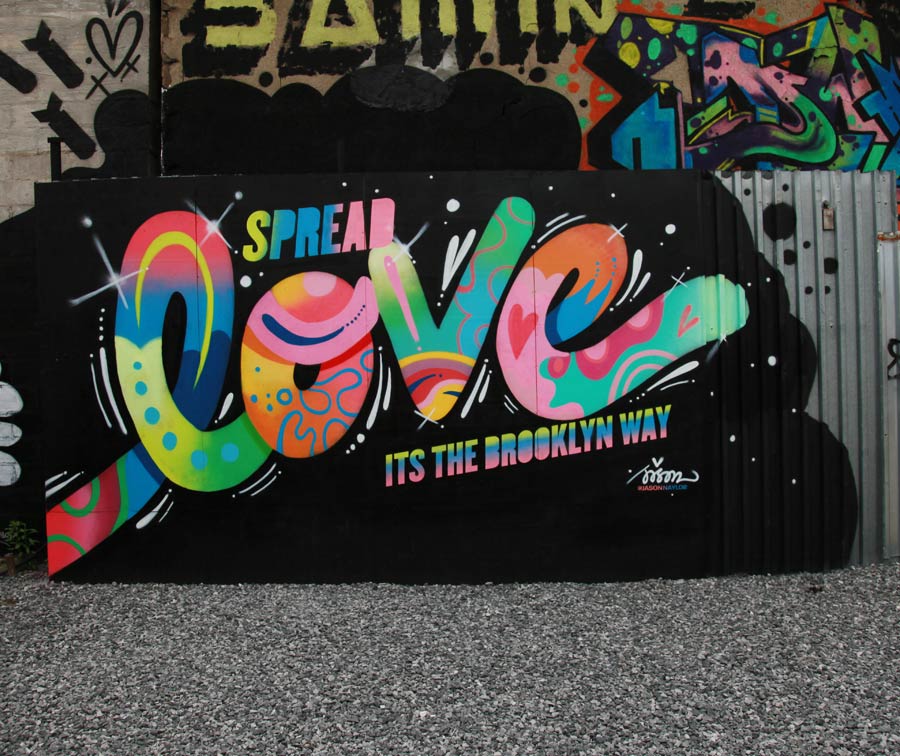
Its an exciting time for art in the public sphere right now in NYC as Roger Gastman and his huge team are seriously preparing 100,000 sf of space in Williamsburg to completely blow away graffiti and Street Art fans alike this week with Beyond The Streets. Meanwhile the city is pumping full of at least 50 sanctioned and unsanctioned World Pride murals, Garrison Buxton pulled off the 9th Welling Court grassroots mural festival in Queens, Joe Ficalora brought Rick Ross and a host of Street Artists to Bushwick for a block party, MadC was in town hanging with Crash, Joe Caslin and Tatyana Fazlalizadeh were putting up new pieces with L.I.S.A. Project yesterday, Queen Andrea finished her commercial Houston Wall gig, and a lot of ad hoc illegal and legal graffiti and Street Art is in full effect in all five boroughs. When it comes to art in the streets, New York says ‘Bring it!’
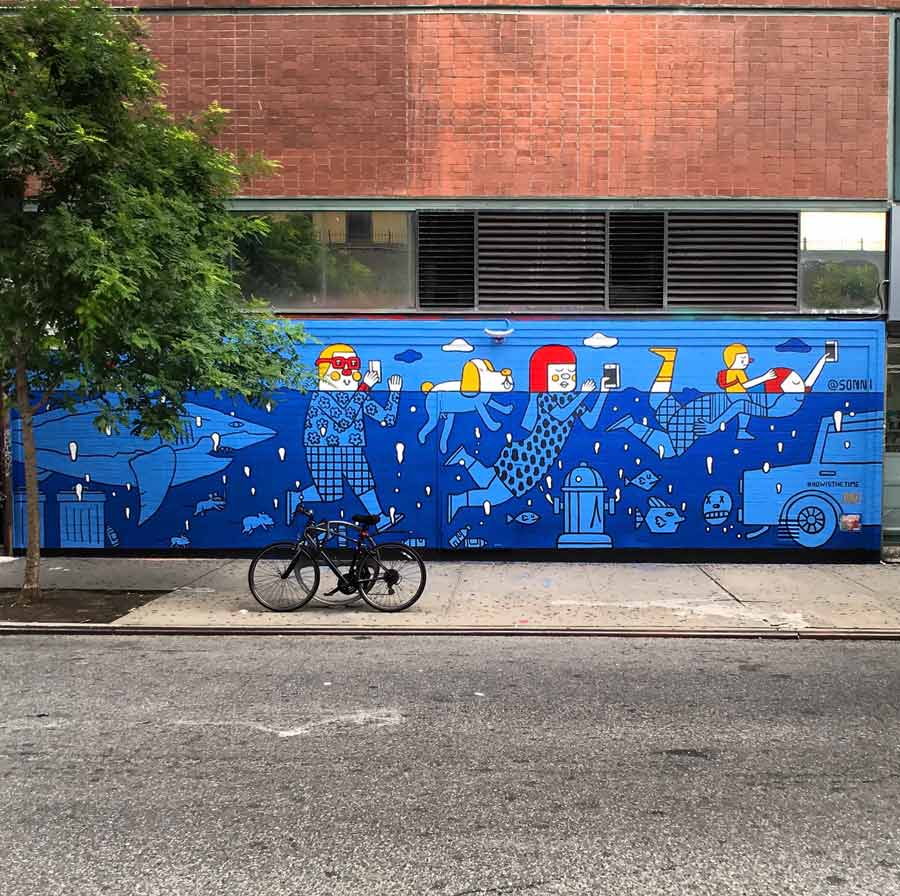
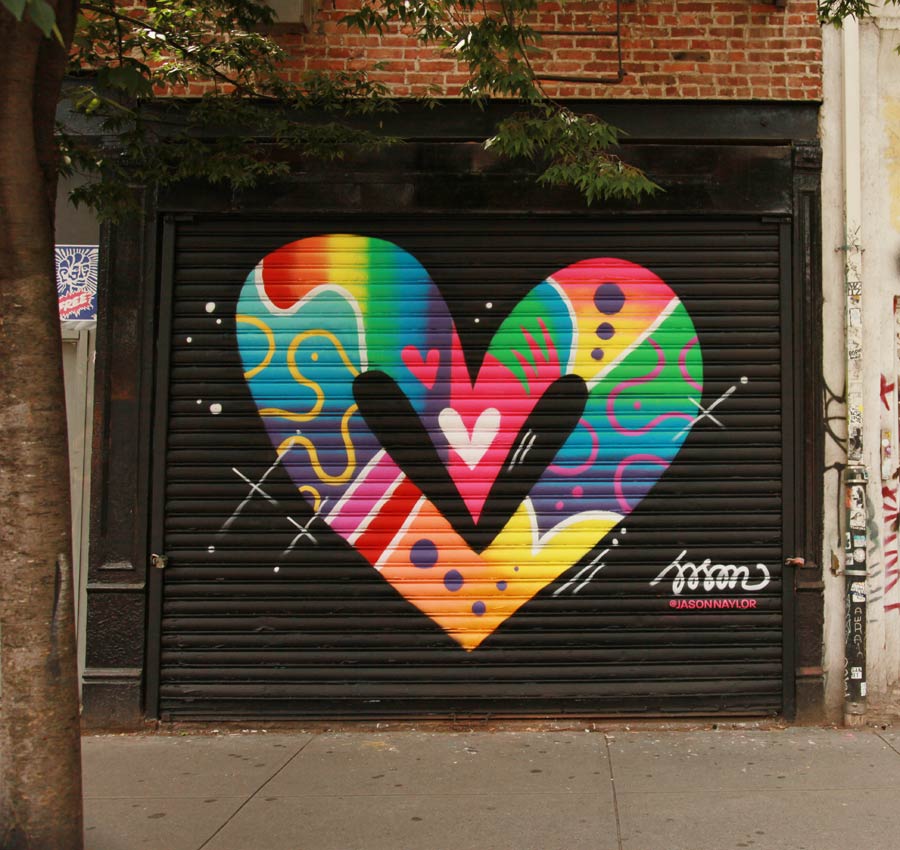
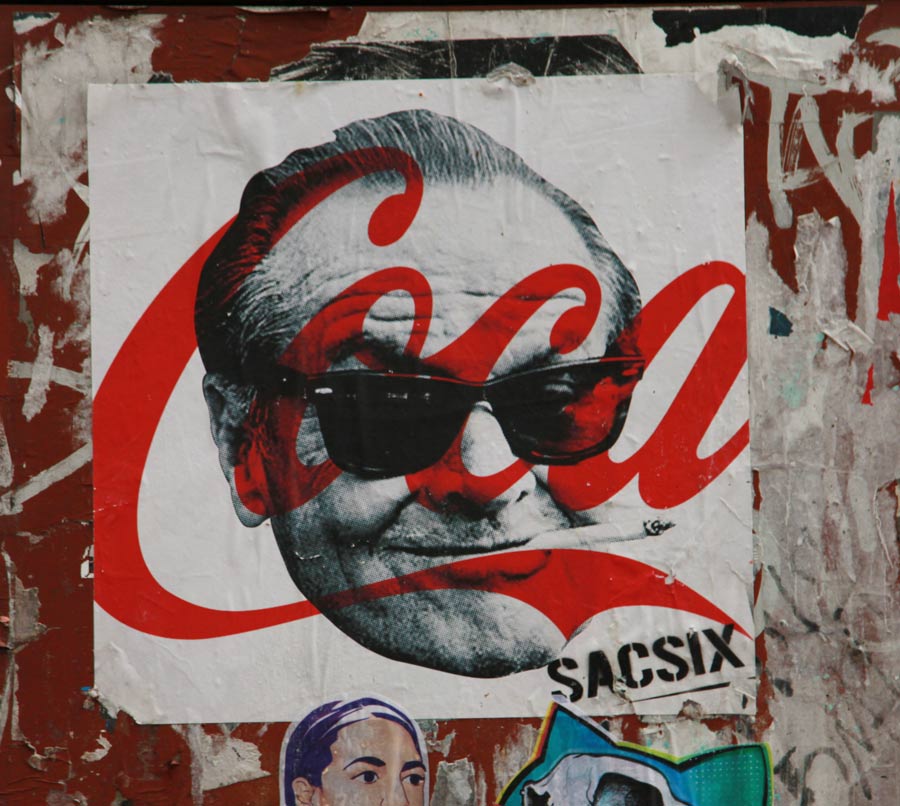
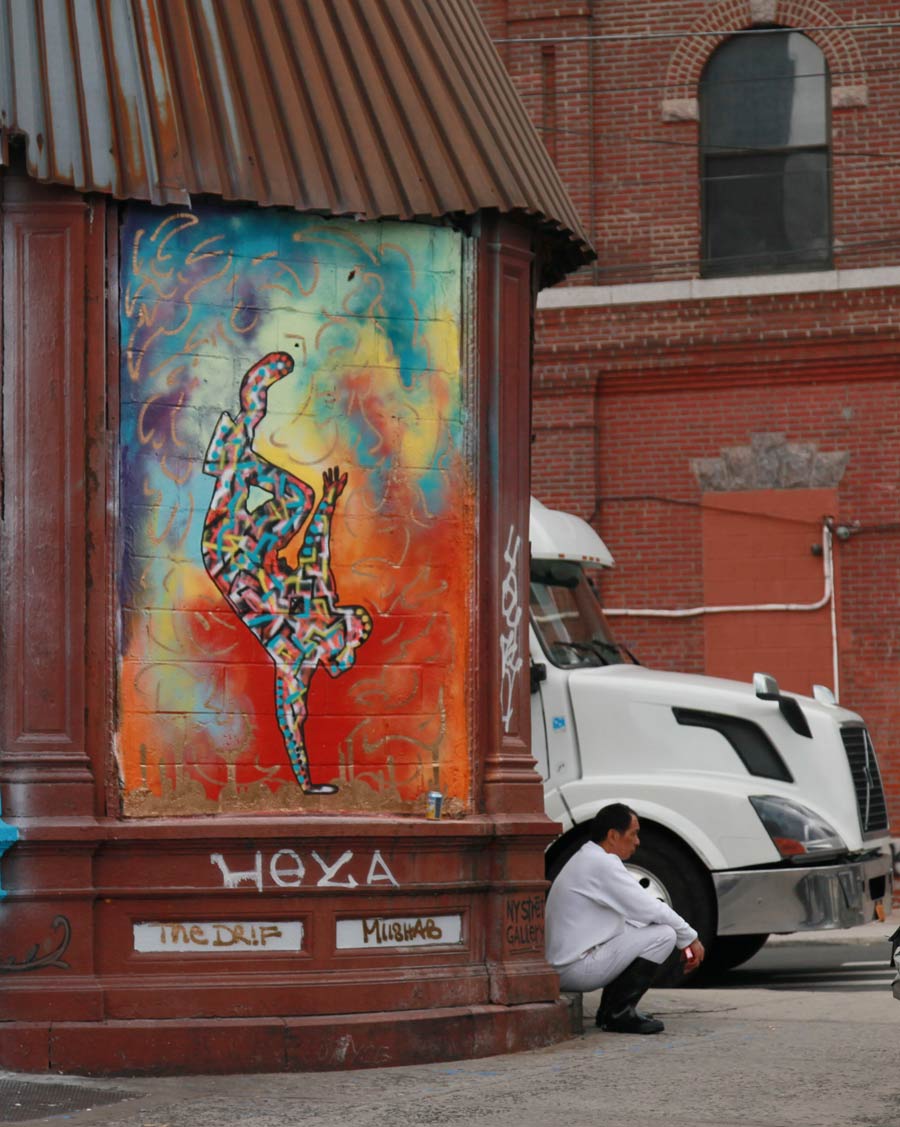
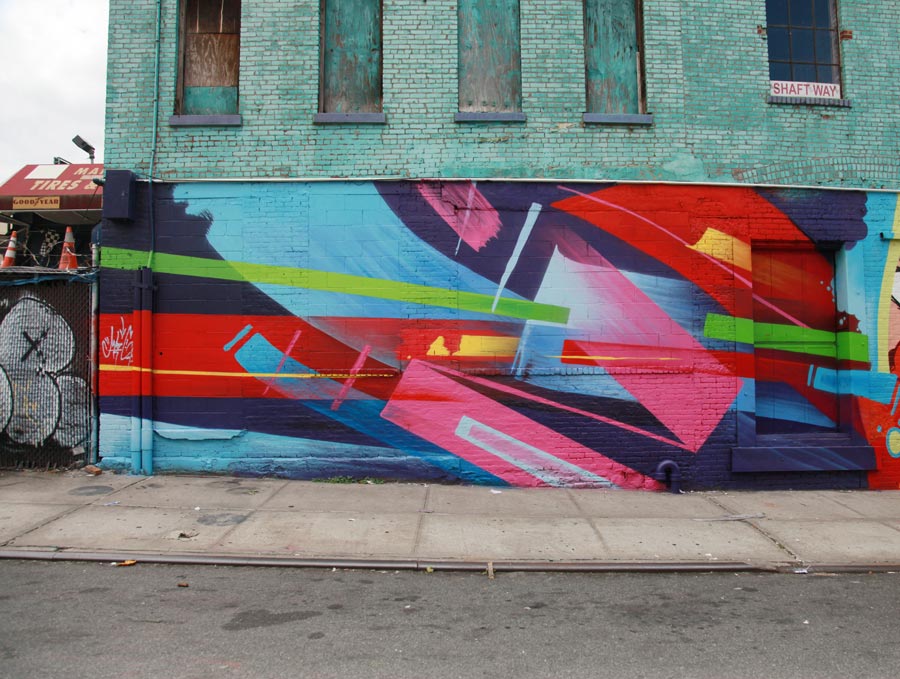
yeliner, Jason Naylor, John Ahearn, JPO, MadC, MeresOne, Misshab, Outer Source, Queen Andrea, Ramiro Davaro-Comas, SacSix, Sonni, Tonk Hawaii and The Drif.
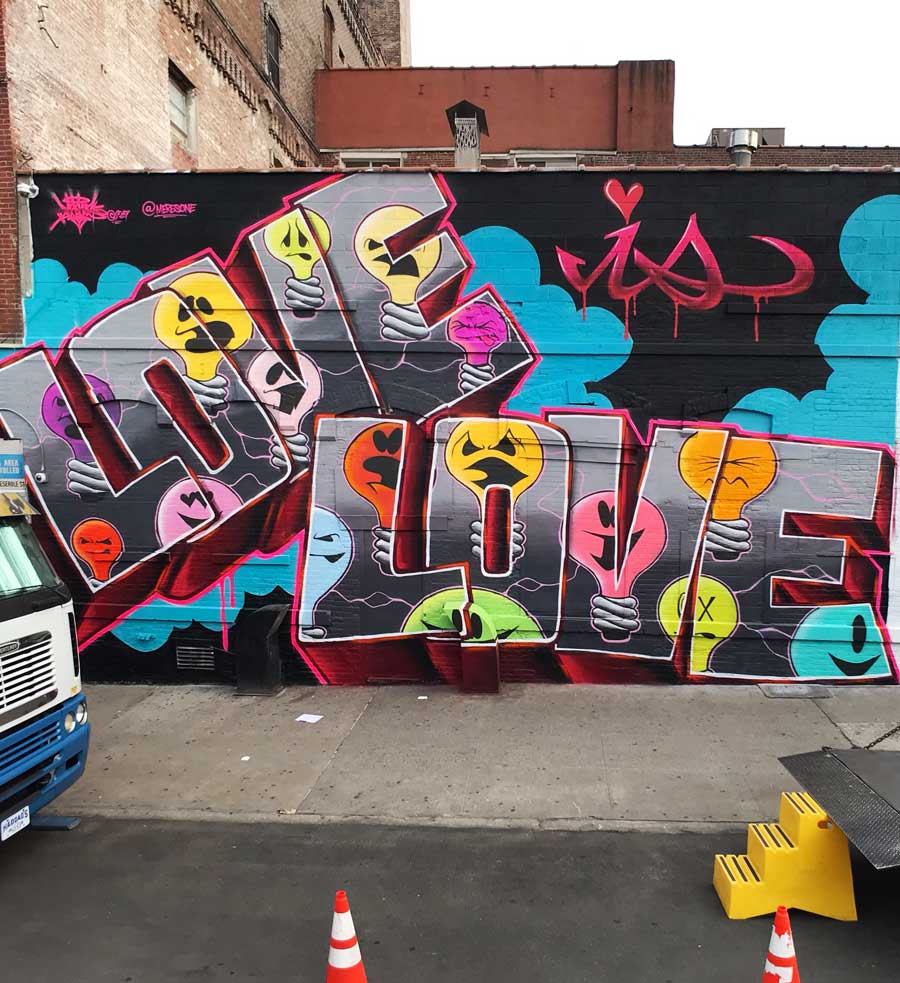
When a real graffiti head hits you in the heart, you know it’s going to burn brightly.
NYC writer Jonathan “Meres One” Cohen has been getting up on the streets for 3+ decades with his distinctive color-drenched style and “bright idea” icon and he has exhibited in venues as varied as Meeting of Styles, the Parish Art Museum, and the French Institute of Art.
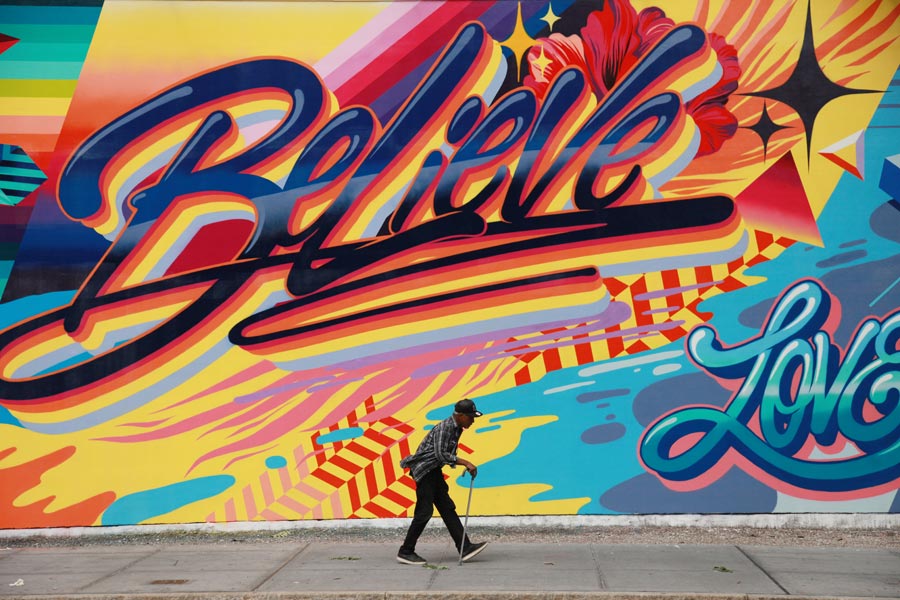
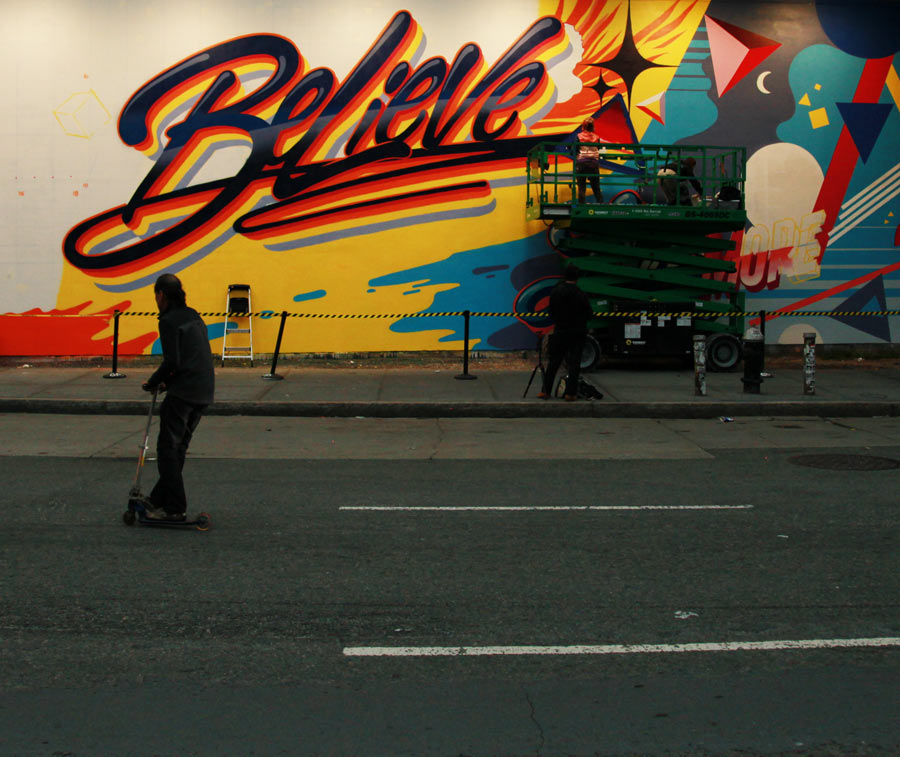
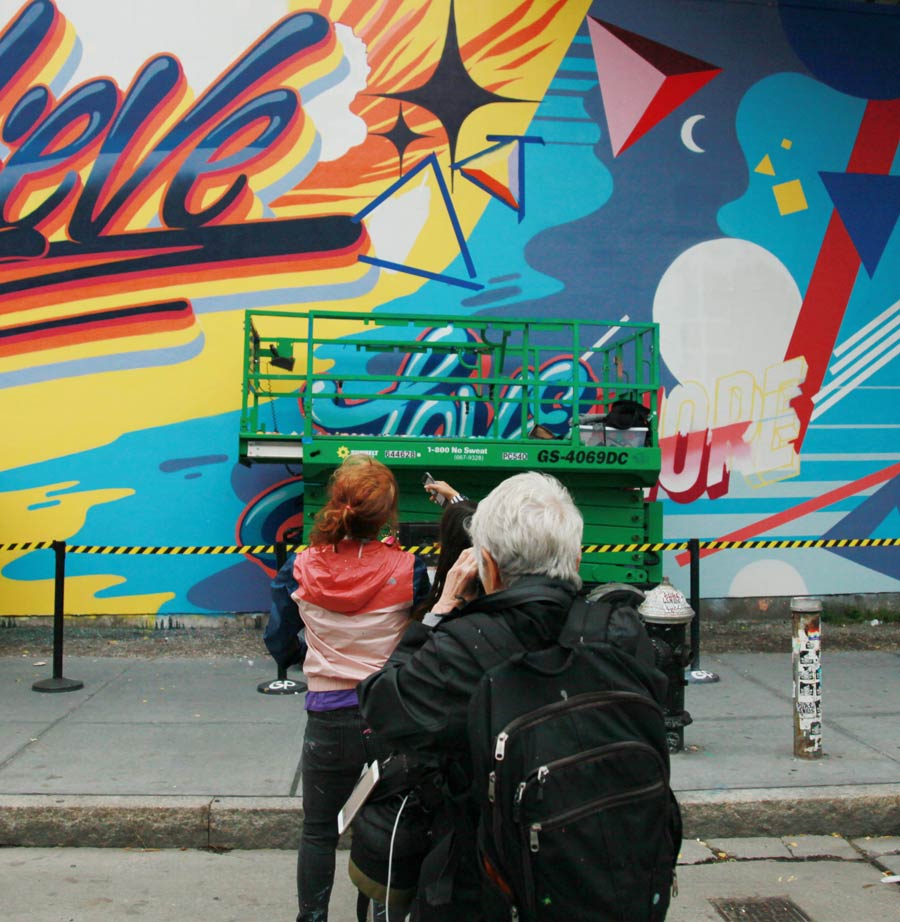
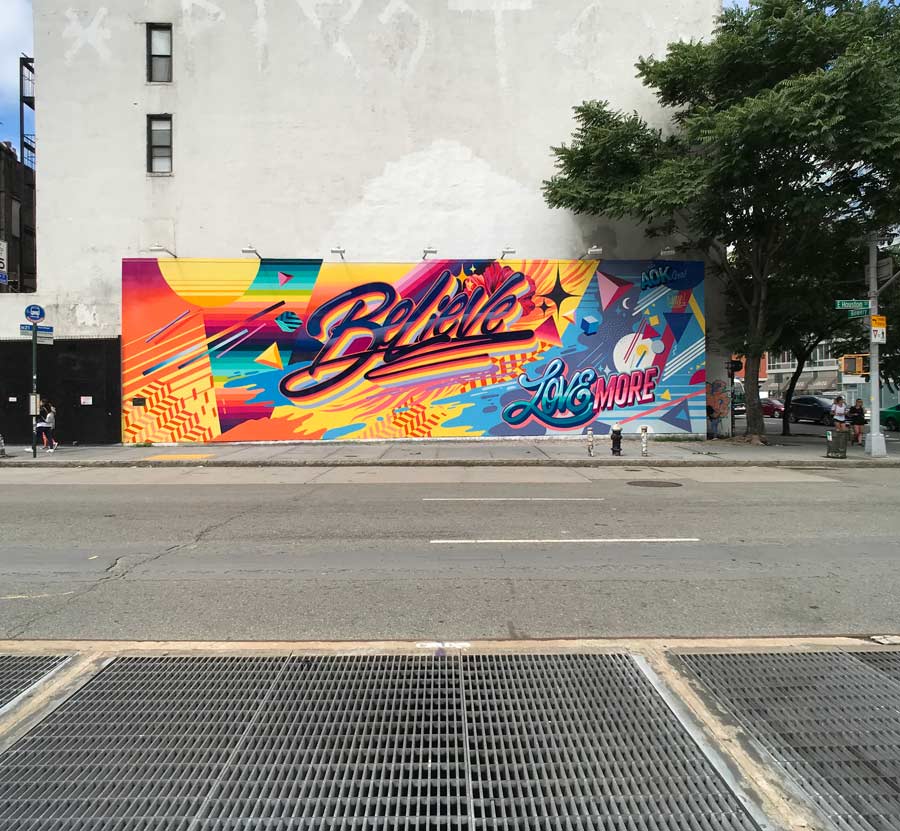
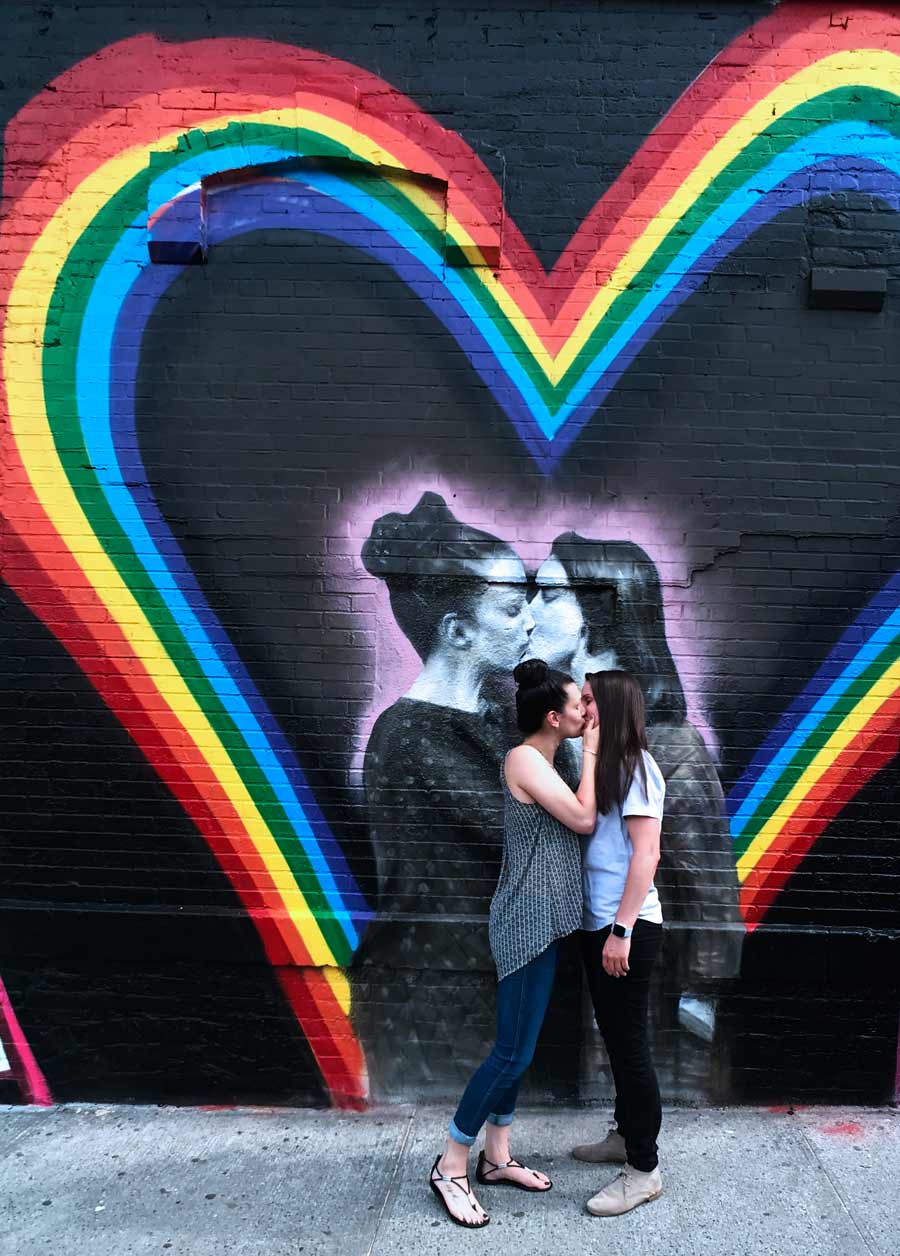
This month he has contributed his talent, name and heart to protecting the rights of LGBTQ+ people to celebrate the 5oth Anniversary of the Stonewall Riots that sparked a civil rights movement that burns today. We were lucky enough to catch it and grab a fast shot last week – and very lucky to ask him about it in an email conversation here where he shares his personal take on the topic “Love is Love”.
BSA: Besides the straight forward message of the campaign, some people may not see the connection and will wonder what’s your relevance to the LGBT community. How would you address that? MERES ONE: I am always puzzled by the “relevance” question. I marched and did hundreds of signs for “Black Lives Matter” and my intent or connection was not questioned. The mural is about love, about acceptance, about respecting boundaries and others’ choices and rights to love. As I have said before love and falling in love is a powerful uncontrollable feeling and no one should dictate the premises of such feelings. I obviously have friends living in a same-sex relationship, including Taylor and Lauren whom See TF painted next to this mural. My cousin is a lesbian rabbi – does that even matter? I think you answered that question for me perfectly at the wall when you said ‘sometimes it takes a majority to stand up for the rights of the minority.’ So maybe that is it. I am standing up and doing what I love for my friends and for strangers alike.
BSA: Why do you think some people have a hard time understanding that loving or love is one of the most personal acts and they try to dictate and control who we choose to love and partner with? MERES ONE: Actually very often I am asked why I think graffiti is misunderstood or represented vs. street art. I always answer that people tend to fear or dislike what they cannot understand. The segregation and judgment experienced by the LGBTQ+ community is mostly based on fear and misconception. It is unfortunately carried and supported by many clergymen and women, and it is supported by our own president and many elected officials. So again if we all became a spokesperson for love, if we all stood up for that right, we could make a difference. I feel that this initiative curated by the Lisa Project is gifting our city with 50 beautiful murals, but it is also opening dialogue. Sometimes maybe it will force dialogue and that’s amazing and a step forward.
BSA: The style of the message and the mural itself is reminiscent of a postcard. It exudes nostalgia. Do you think people are longing for simpler, kinder times? MERES ONE: It is for sure echoing a postcard, a time when people actually wrote and committed to their words. I hope and would love to know that the audience would use the wall as a backdrop to send a message of acceptance and love to whoever they want. I for one am, and I think many are, longing for some of the old New York, for kinder and more people-focused time. We are living in a very difficult era and it seems that so many basic rights which were fought for are being reversed by our current administration. So yes I think a lot of us are left with an uneasy feeling and worries.
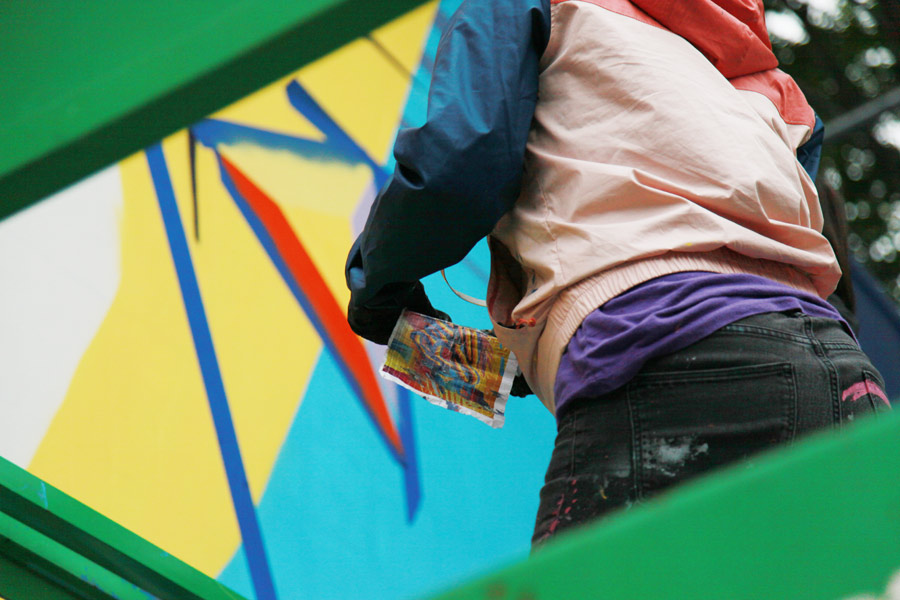
BSA: What was your experience with the passersby as you were painting? What were some of their reactions? MERES ONE: So many – mostly positive I will add. I try to give my attention to everyone as long as I am not all the way up on the lift. I heard funny comments, some passersby the first day were worried this was going to be a Colossal ad. I guess the lift and organization looked very professional and they were relieved to hear about the project and the birthing of new art on the block. Once my light bulbs were visible there was a lot of honking and shout outs from people driving by. I was surprised by the amount of genuine ‘thank you’s that came from people.
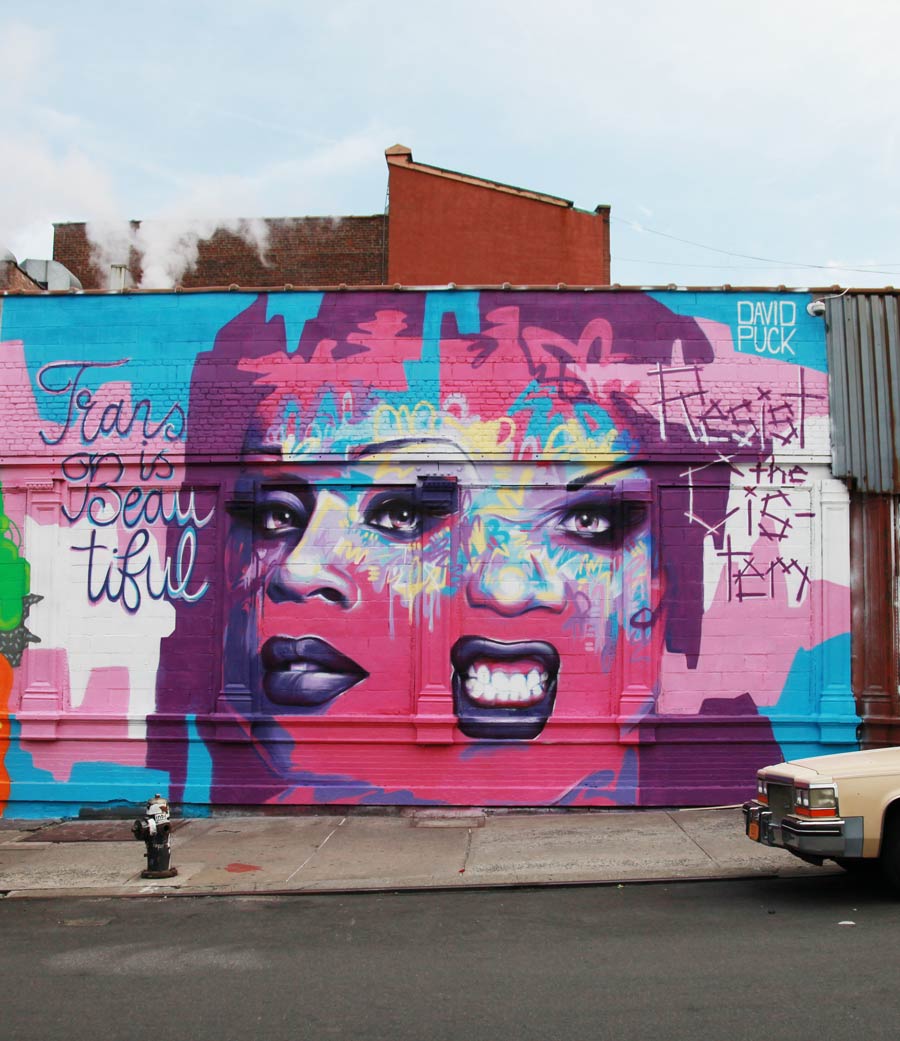
I love the fact that people read out loud “love is love” and kept on walking. The local businesses – from the owner of 3 Dollar Bill cheering us on, to the Wells bringing us cold water, to Saints coffee roaster thanking us, they all seemed really happy about this installation on their block. We managed to create a story thanks to the trust of the people at Lisa Project and people get to see a true narrative by me, See TF, JPO and David Puck. I feel people are relating to the wall and owning it in their personal way, and that was the goal here, so I am super pleased and humbled to have been part of it.
With
our thanks to Wayne and Rey at The LISA Project for organizing the artists for
this event.
Our weekly focus on the moving image and art in the streets. And other oddities.
Now screening : 1. NeverCrew – “Celsius” 2. Boulevard Paris 13 3. Isaac Cordal “Follow The Leaders” at Urvanity 2019 Madrid.
BSA Special Feature: NeverCrew – “Celsius”
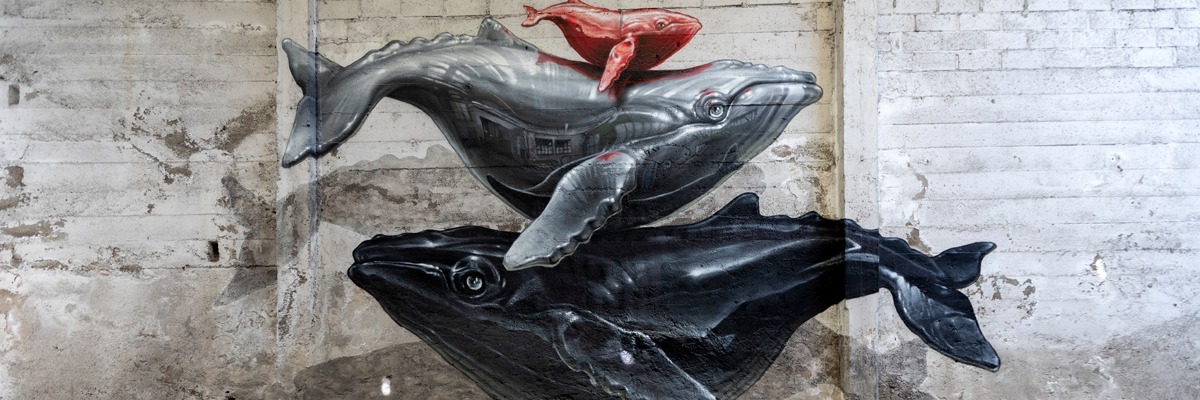
The streets are awash with artists visions these days, but few play so well with technology as these new whales from Nevercrew. The Swiss duo often use their work on the street to call attention to the plight of our water bodies, and the bodies that live within them. In these new multi-layered street pieces water is also the great reveal.
“Thermochromic paint allows us to create an immediate transformation,” Christian Rebecci tells us, “and at the same time it provides a silent litmus paper of the actual situation.”
Splashing the water upon the majestic animals certainly gives a look inside their living situation. The guys are calling it “Celcius”, an oblique reference to temperature and the effect rising temperatures due to climate change in fact changes the equation.
Boulevard Paris 13
With Mehdi Ben Cheikh at Galerie Itinerrance and Jérôme Coumet, the Mayor of Paris’ 13th arrondissement, this neighborhood of Paris has become a top-shelf open air museum over the last decade or so. With the common critique of the illegal Street Art movement evolving into a legal mural system of business development, one may overlook the few programs that have actually gotten the quality and the balance right. De facto public art for the 2010s, this execution has proven to pack a powerful visual punch and a possibly timeless quality. This newly produced video helps put the entire project’s best foot forward.
Isaac Cordal “Follow The Leaders” at Urvanity 2019 Madrid.
Radiating the drama dread of Isaac Cordal’s springtime installation at Urvanity Madrid is no easy task, but this commercial shoe brand took the time and dedicated their observation skills to help viewers reflect on the absurdities of our human condition.
No matter which year it is,
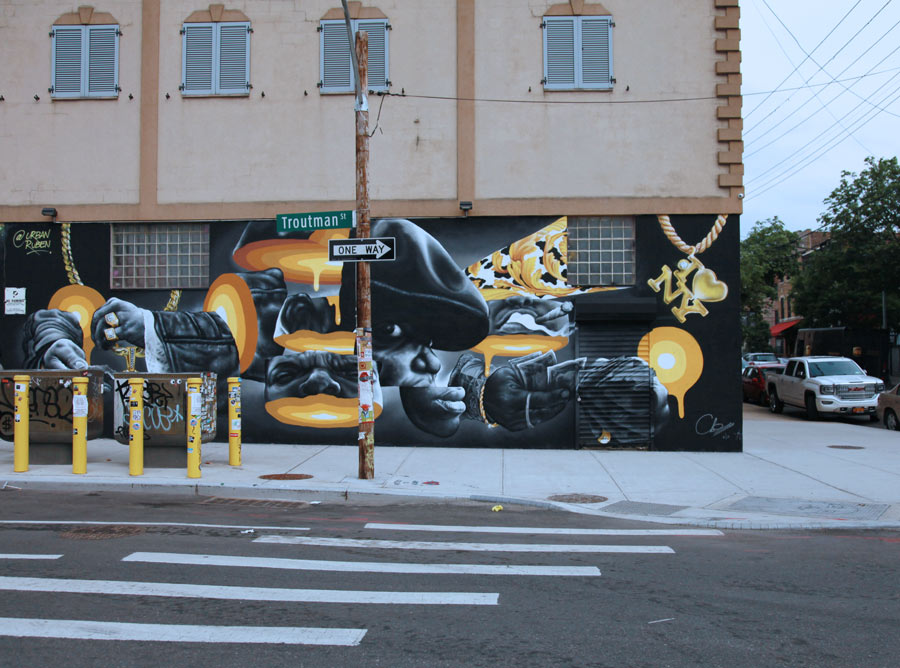
Biggie always seems to make the list and his newest portrait is by Ruben Ubiera
from Dominican Republic and its just in time for New York’s naming a street
after him. The street Biggie grew up on, Fulton Street and St. James Place in
Clinton Hill has just been renamed to “Christopher ‘Notorious B.I.G.’ Wallace
Way”.
When academics and post-modern esoteric
poets plunge into descriptions of graffiti sometimes they proffer colorful didactics
and clever terminology like “mark-making” and “gestural” to describe the
tagging practice. Conceptualist, graffiti writer, and multimedia artist MRKA
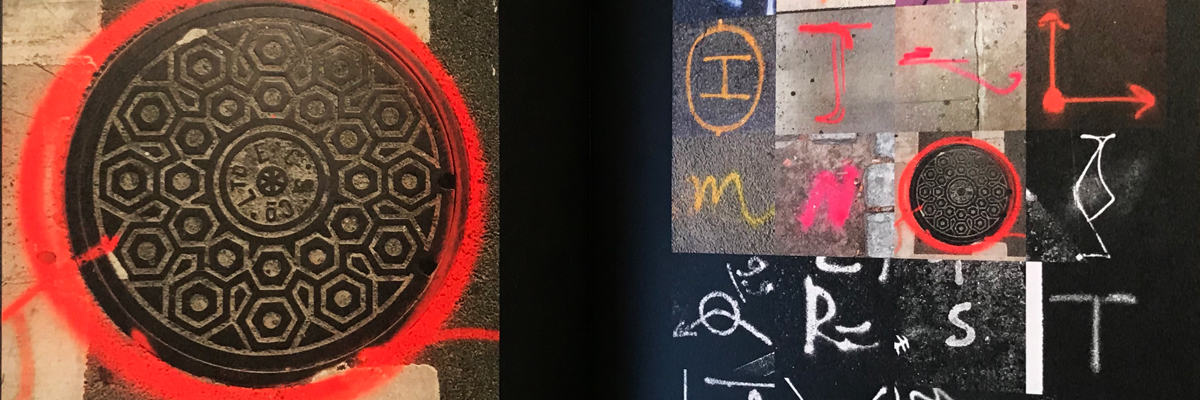
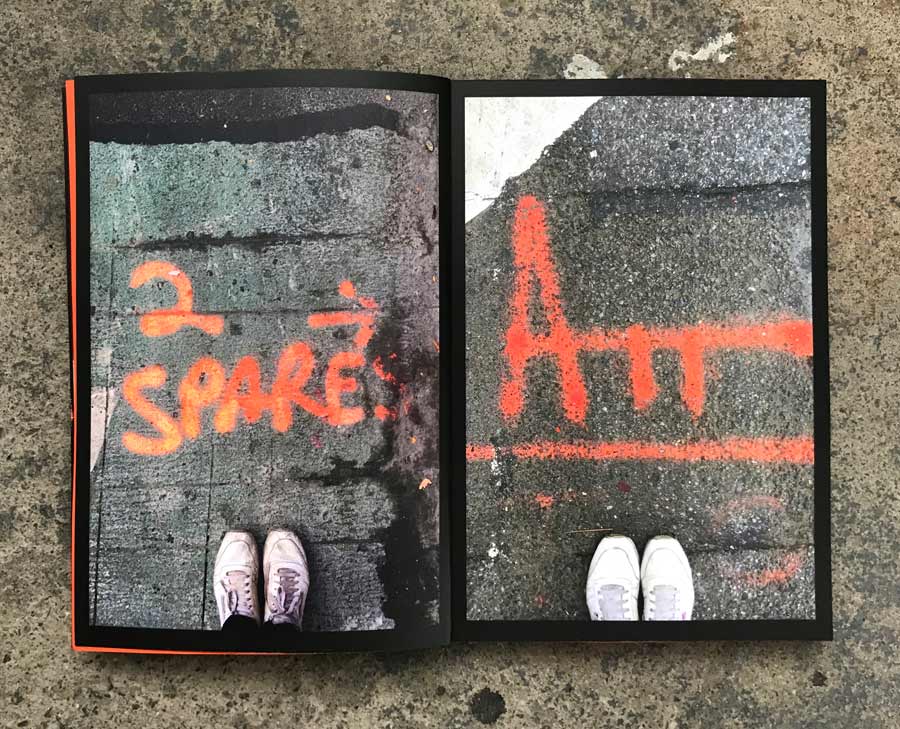
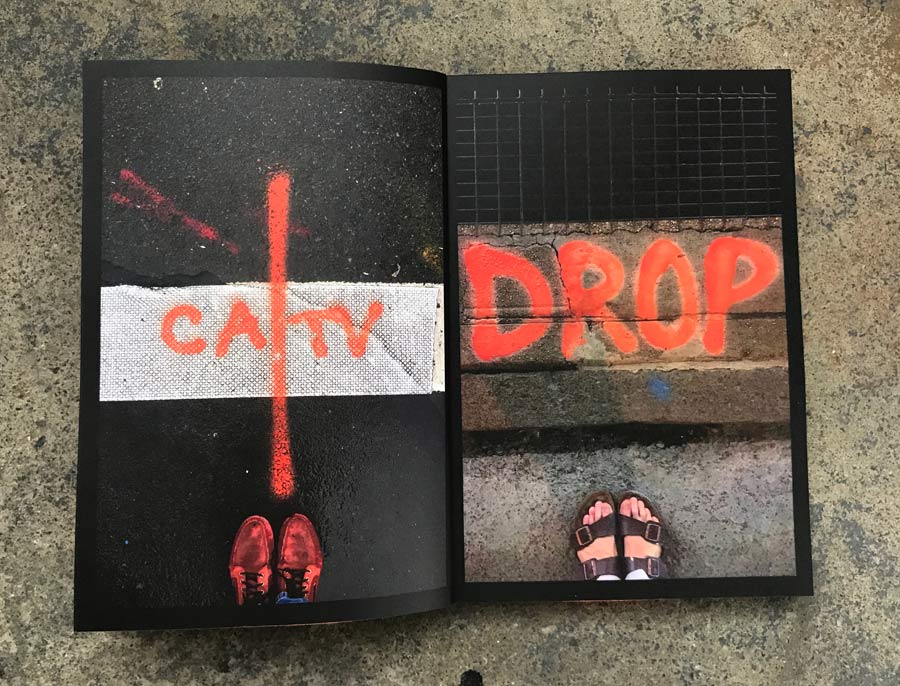
takes a step toward the mundane and discovers a new kind of poetry with his “Utility
Writers”.
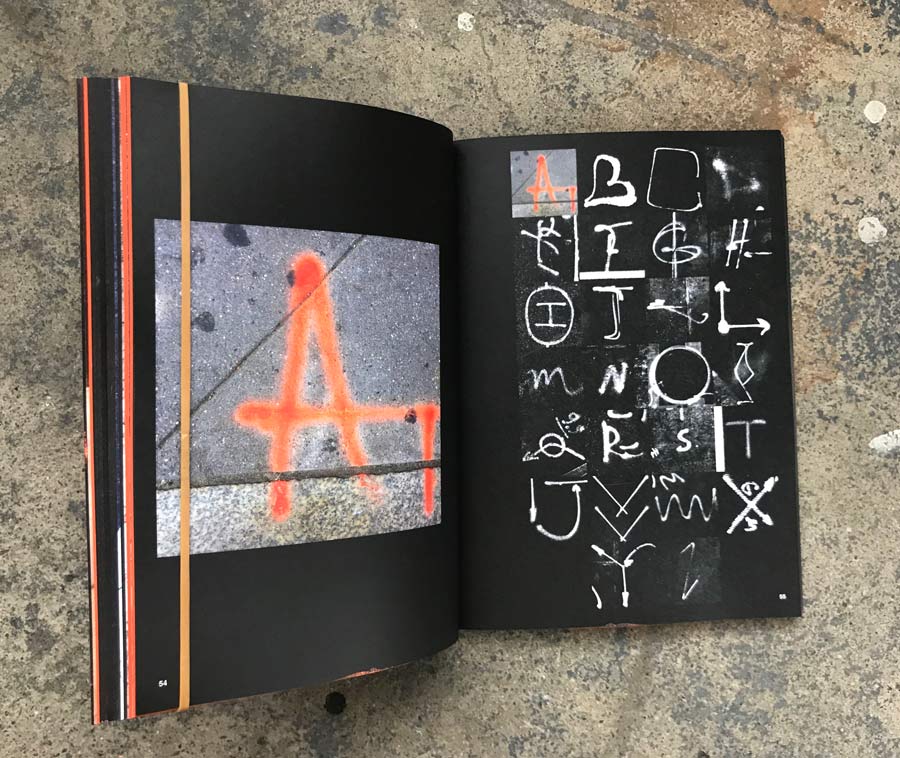
Utility Writers by MRKA. Wallplay. NYC
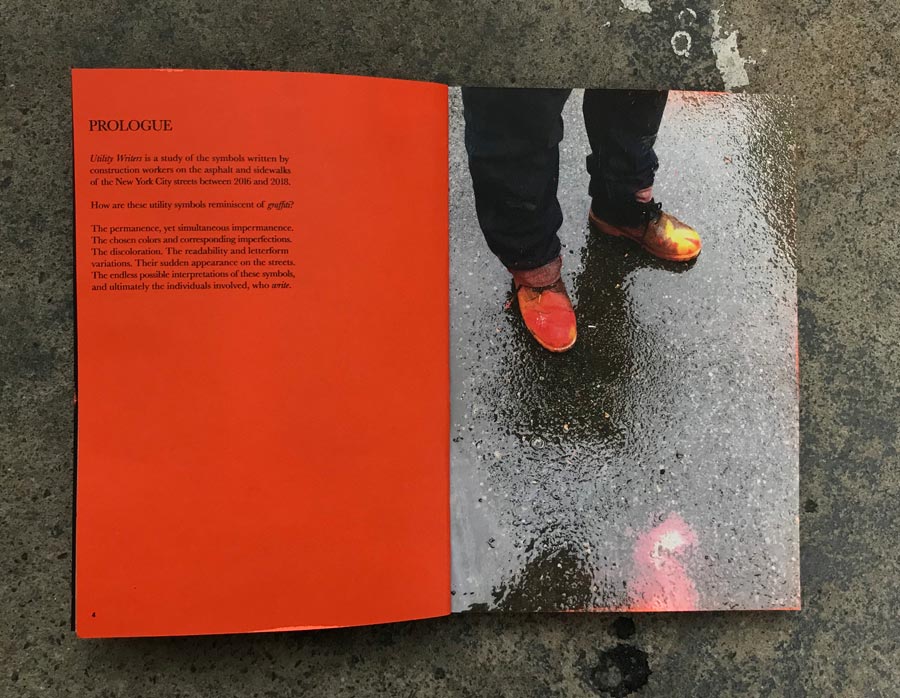
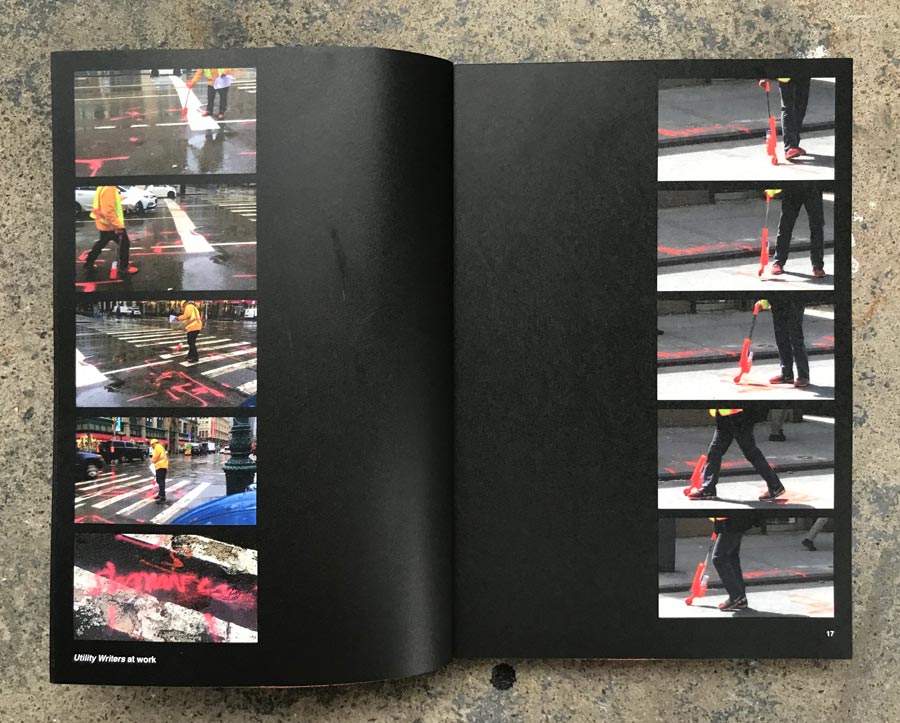
Paying homage to the physical expression as well as the visual one, MRKA re-frames the fluorescent utility symbols that construction crews communicate with and rely upon. Here he helps you see it as art and communication in his uniquely bright look at mark-making. In interviews with professionals who he features spraying the streets, you also learn that there is a certain pride of creation that overlaps the braggadocio of graffiti writers who hit up walls across cities.
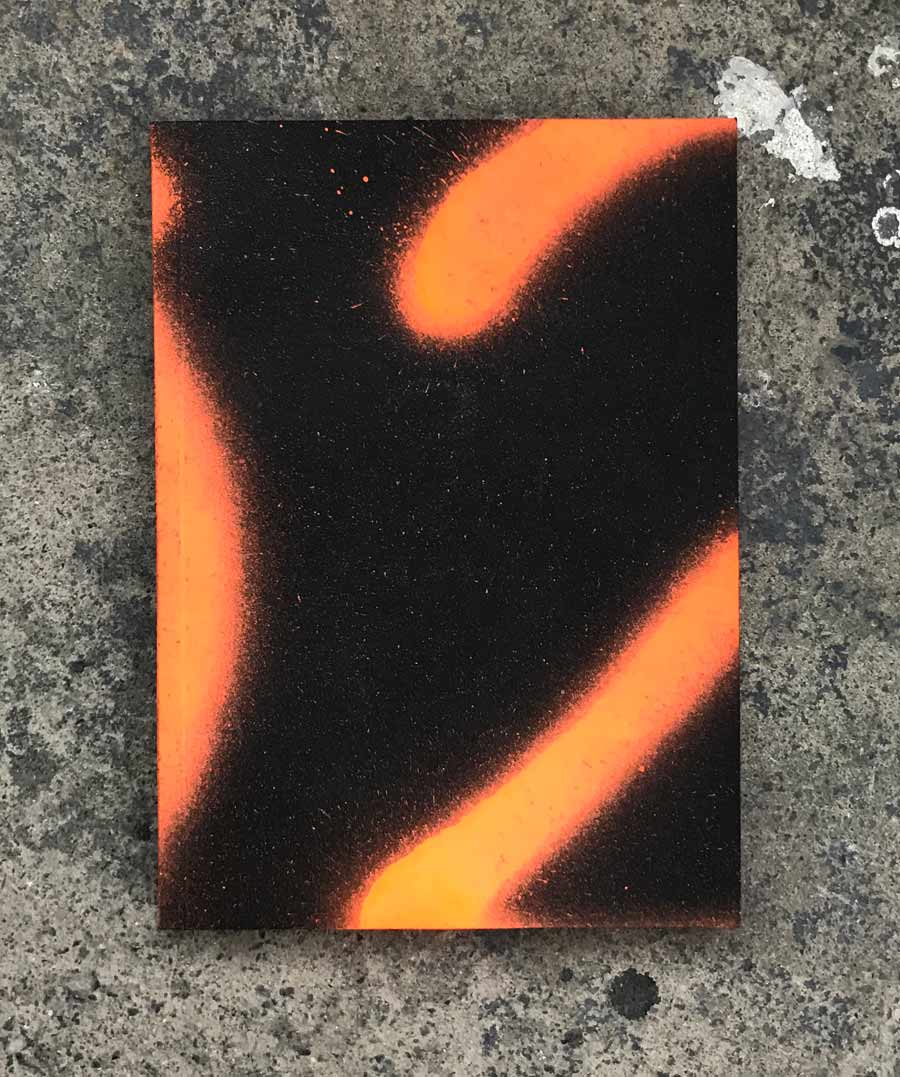
A limited edition book that was released to commemorate the solo exhibition that he procured in Manhattan last fall, “Utility Writers” also presents the MRKA’s own crafted alphabet derived from the directional urban hieroglyphics that we see and are blind to on our daily trip through the city.
Perhaps it is their individual
flair and sense of expression to which he is most drawn; It’s “the
endless possible interpretations of these symbols, and ultimately the individuals
involved, who write,” he says when describing his experience capturing the collection
of works on New York City asphalt and its sidewalks between 2016 and 2018.
“No matter where humans are or go, there is a good chance you may find a mark or story being told,” says Brazilian pixação writer and billboard crusher Sabio in an essay in which he tells us this need to leave something in public space is universal.
“The human hand can hold things, but more importantly it can mark a surface. For thousands of years we have left the writing on the wall, or in many cases, the ground. Look around you and find secret messages calculated and hidden everywhere. We live in big cities and a performance of shapes exist right beneath our feet.”
Study the method, study the panache, study the complete alphabets he has distilled, and you can understand the intensity of dedication MRKA employs to help draw the parallels.
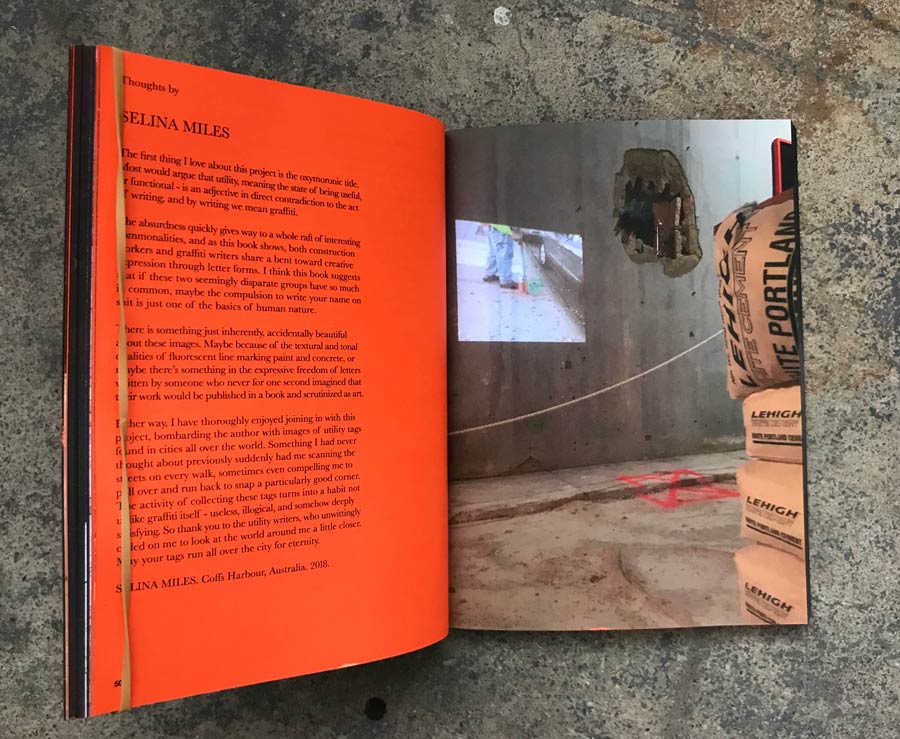
“…As the book shows, both construction workers and graffiti writers share a bent toward creative expression through letter forms,” says filmmaker Selina Miles here. “I think this book suggests that if these two seemingly disparate groups have so much in common, maybe the compulsion to write your name on shit is just one of the basics of human nature.”
Utility Writers. Designed and edited by MRKA. Cover Spray by Lebron718. NYC.
Photographer Lluis Olive took a quick
trip recently to Madrid and he did what he loves to do; took photos of graffiti
and shared with us his new discoveries. This one caught our attention.
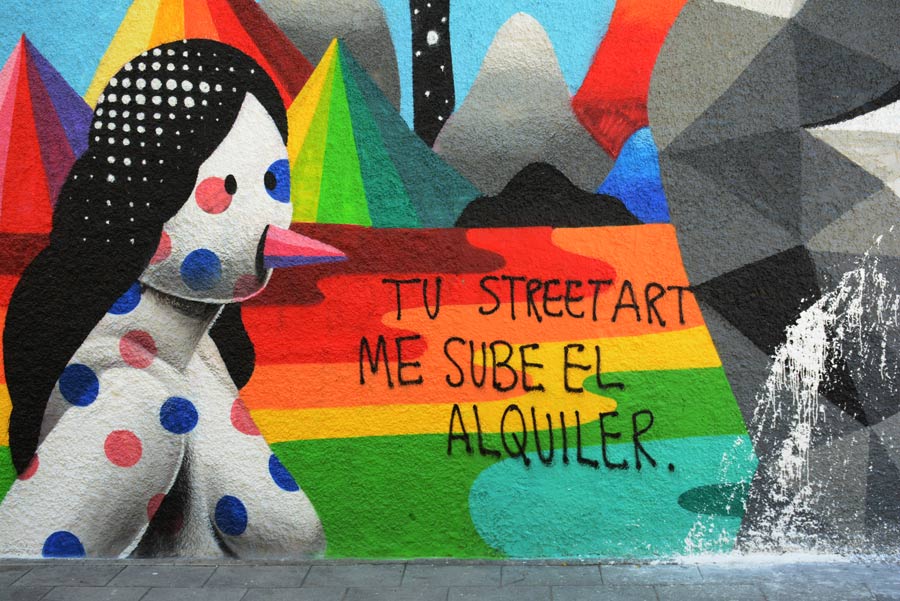
On Calle Embajadores he found
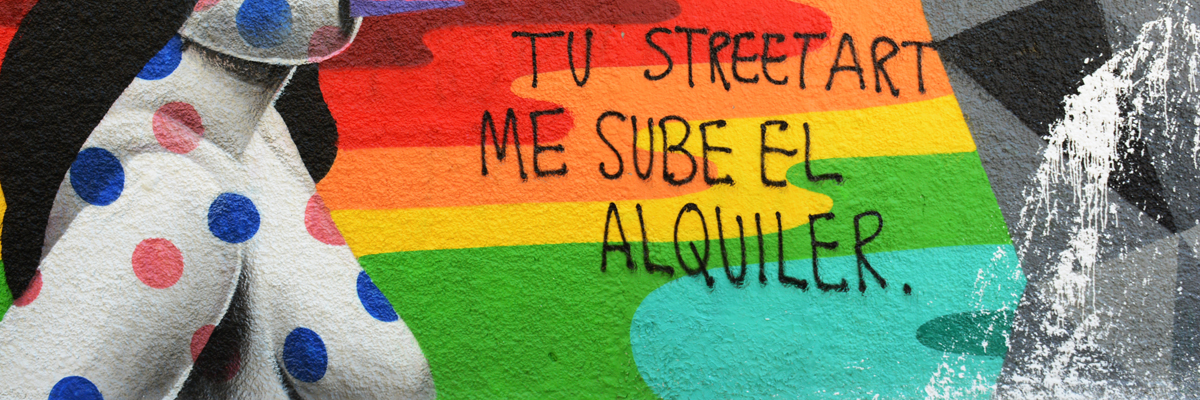
that a mural by the Madrid based artist Okuda was dissed with “Tu Street
Art Me Sube El Alquiler” or roughly, “Your Street Art Makes My Rent Go
Higher”.
And the writer has a point, going
to the heart of gentrification, and its connection to art.
It goes like this: Rotten,
abandoned, vermin infested and derelict neighborhoods with large industrial
buildings left in a state of decay are “discovered” by creatives who
make them their homes and studios. Artists work to make any environment
aesthetically pleasing, and that’s often their downfall.
Last night in a Brooklyn beer
garden a buddy told us that he had taken a complete toxic dump in the lot
behind his apartment and slowly transformed it into a beautiful garden. For his
efforts, he said, the landlord wanted to raise his rent because he now has an
attractive garden apartment that he should be charging a higher price for,
according to the market. Punished for success?
This aerosol defacement of Okuda’s
mural is a partially accurate statement– at least indirectly. But let’s not
scapegoat the artist as the one to blame for gentrification. That’s an
oversimplification of a complex cycle that no one appears able to diffuse
effectively because the incentivized real estate system is surely twisted in
many cities.
Jeez, that only took 50 years. “Stonewall Riot Apology: Police Actions Were ‘Wrong,’ Commissioner Admits”, cooed the New York Times this week. Of course the NYT headline at the time focused on how the helmeted, armed police were affected, rather than the couple of hundred citizens who they harrassed, intimidated and beat up for being many shades of LGBTQ – “Four Policeman Hurt in Village Raid”. Thankfully Macy’s and HSBC bank and all the corporations ran to the rescue of those folks in 1969 and throughout the 1970s and 1980s, 90s, right?
Aside from the multiple lessons we all continue to learn in the fights for people’s equality across society and in our institutions, one lesson comes through loudly and clearly: real, meaningful change almost never comes from the top down. Social, political, and economic justice comes from the grassroots, rank-and-file, everyday people fighting day after day, year after year.
That’s why we keep our eyes on graffiti, Street Art and all manner of expression on the street – its proven to be a reliable source for the vox populi.
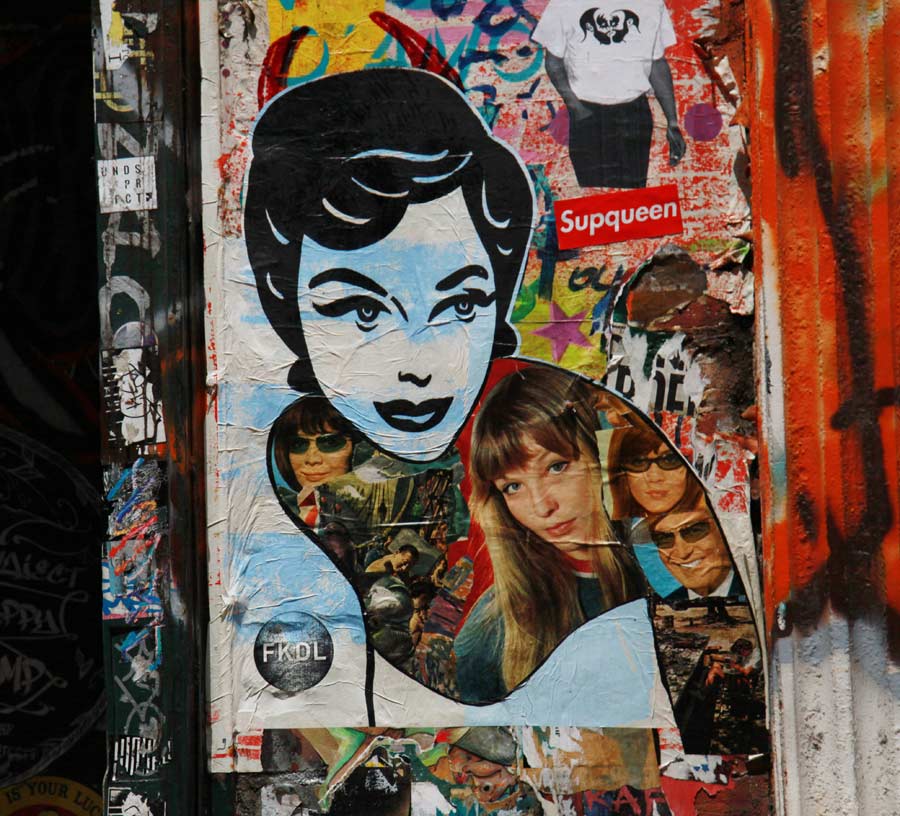
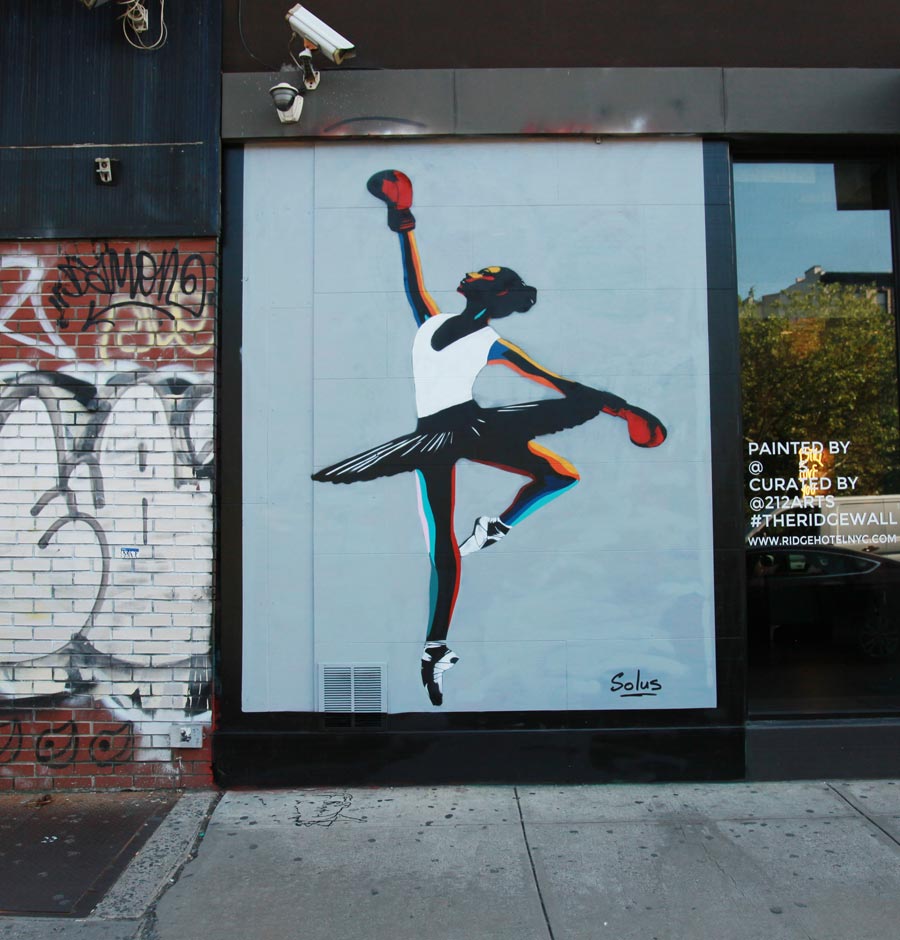
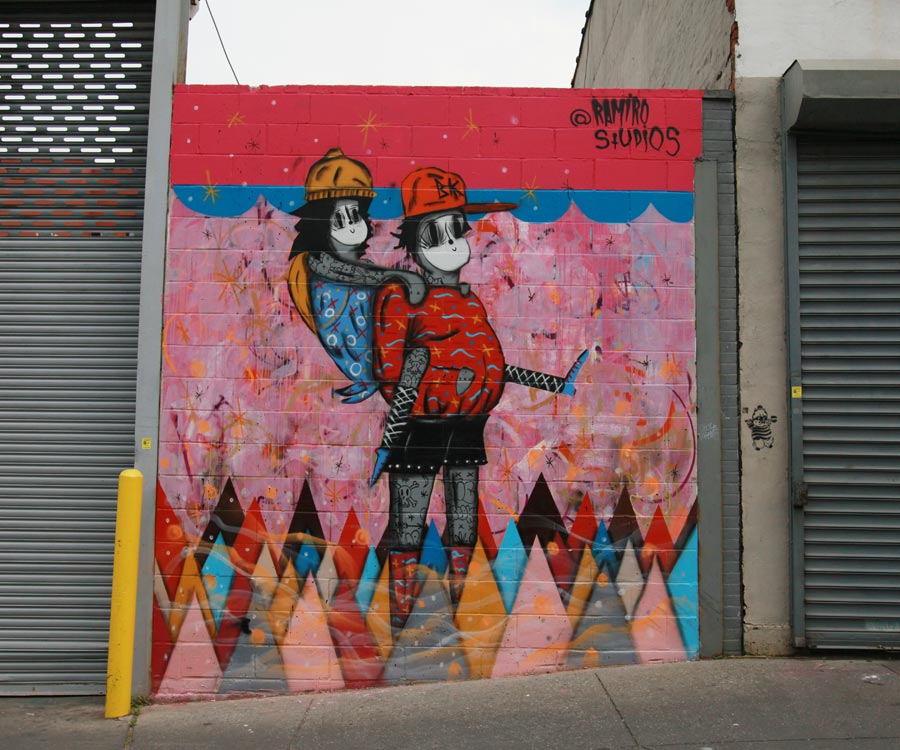
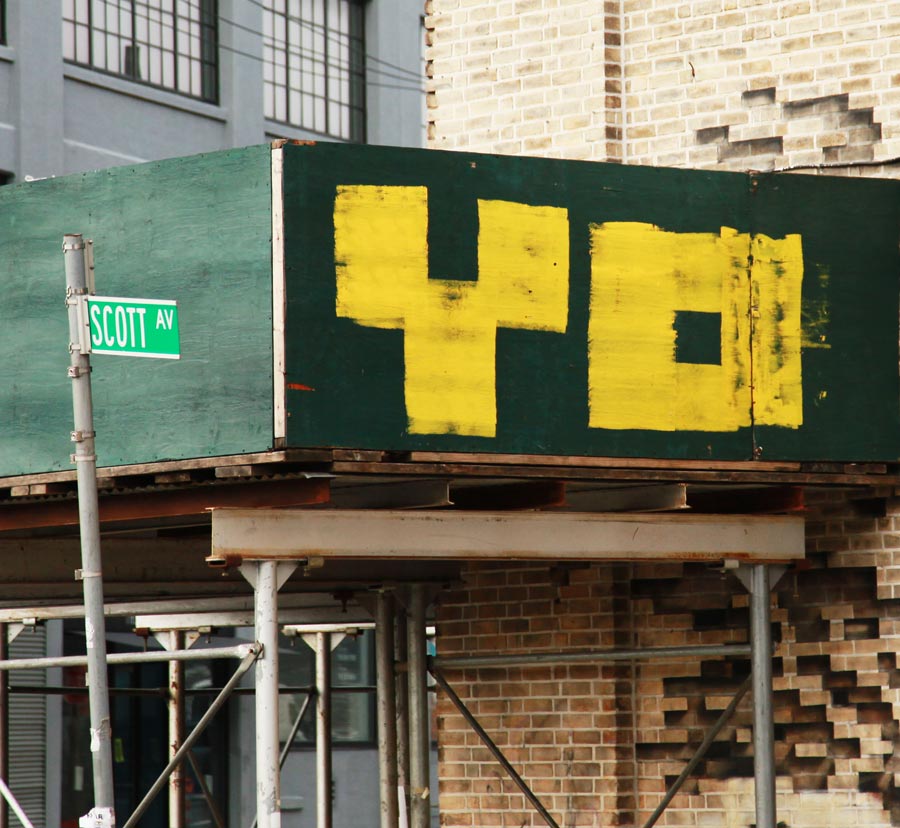
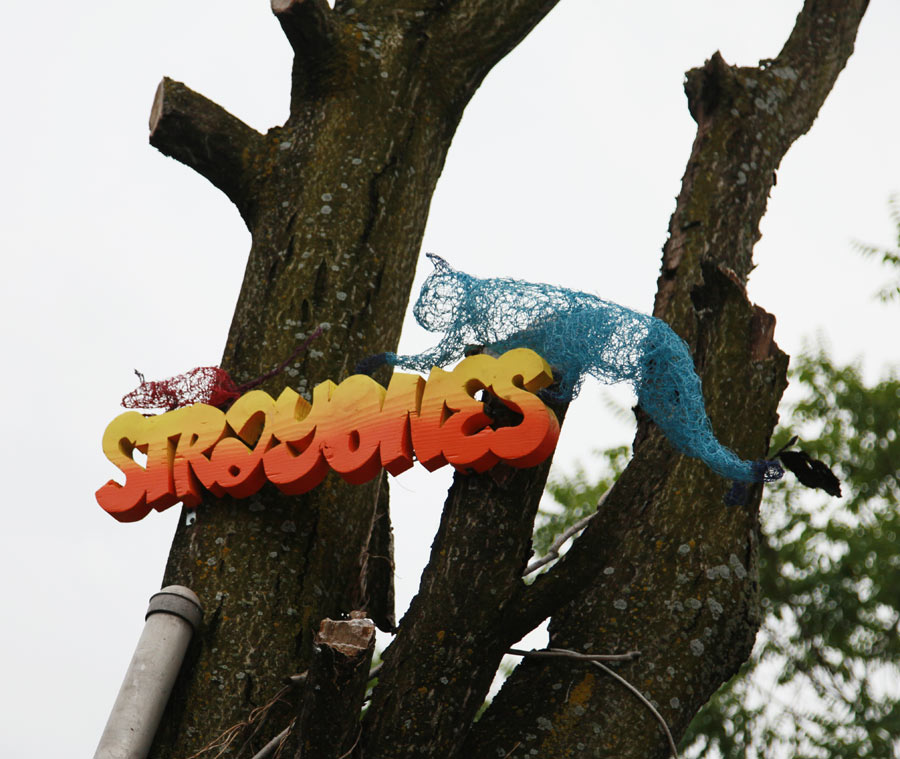
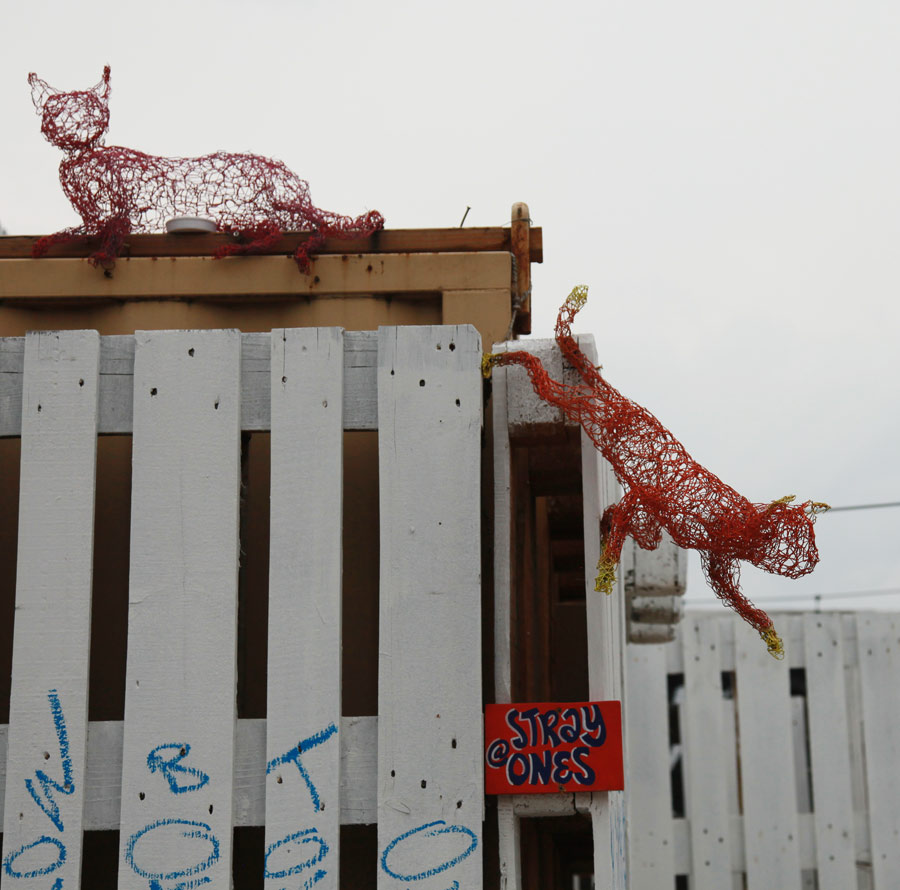
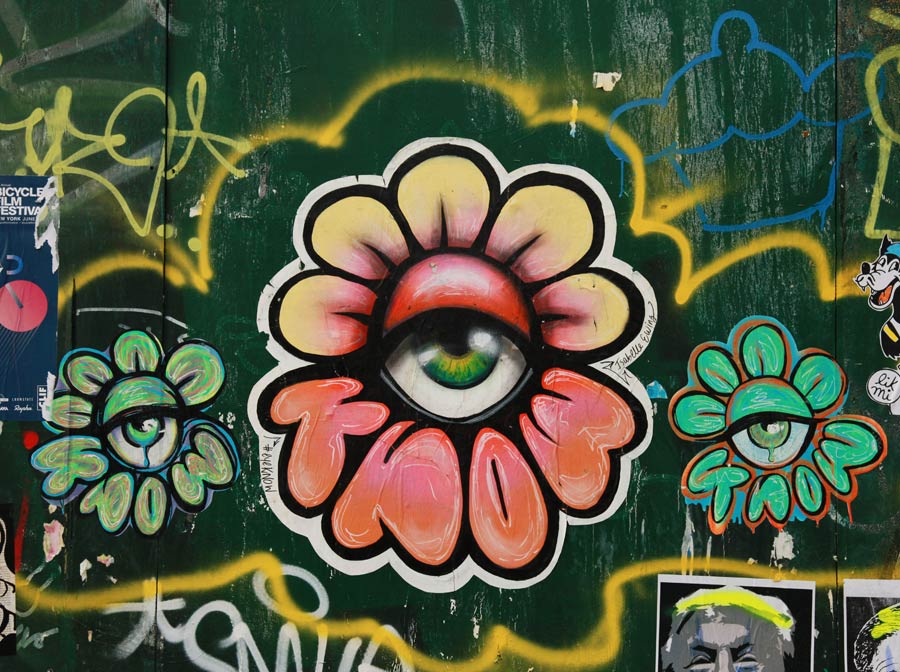
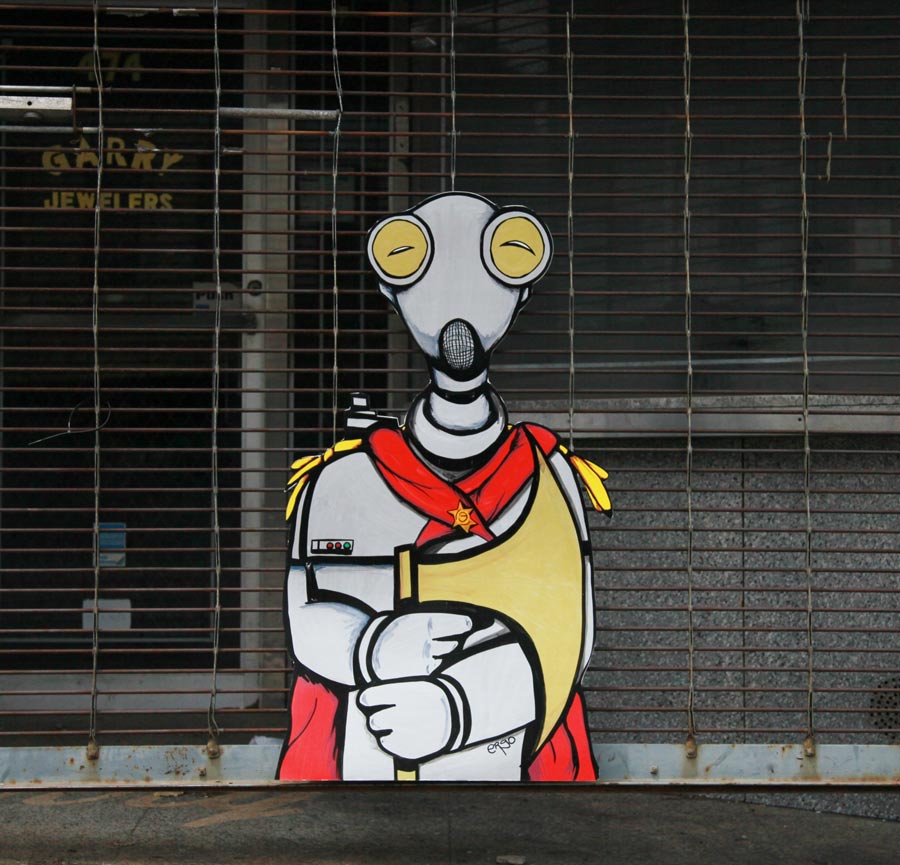
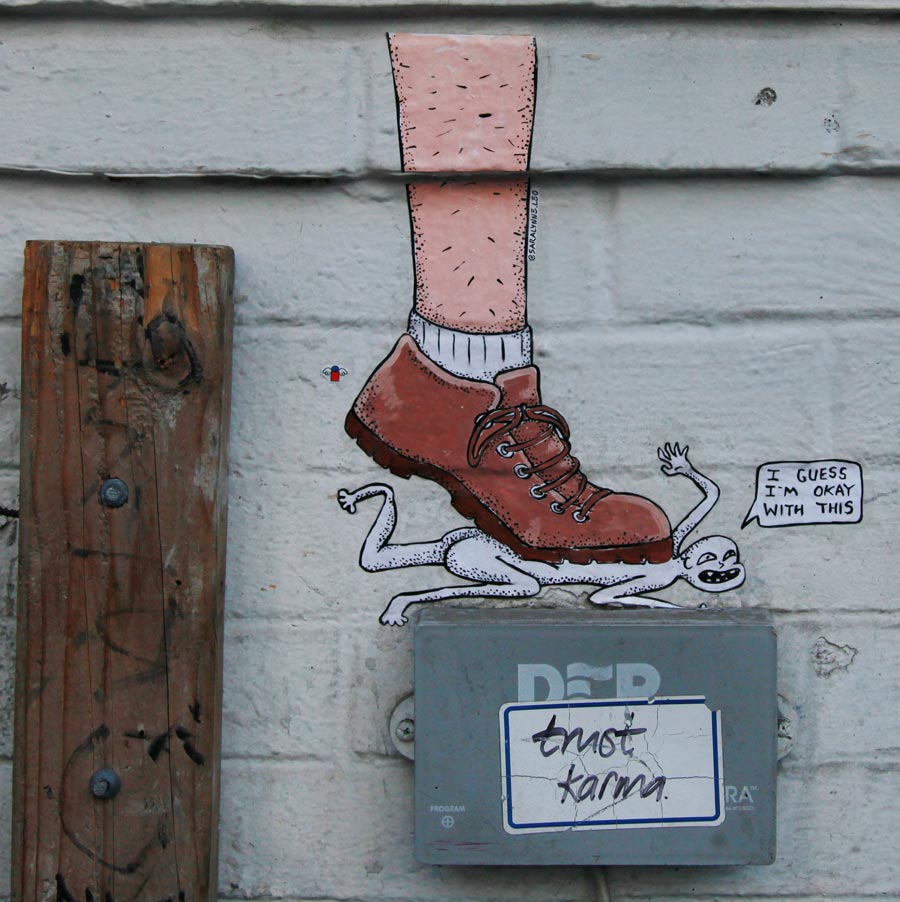
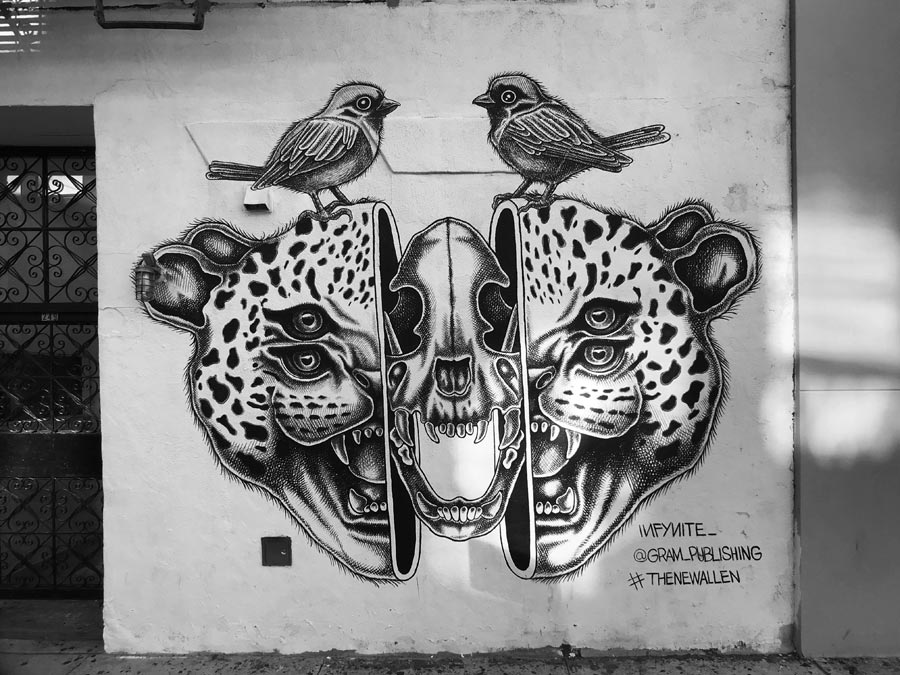
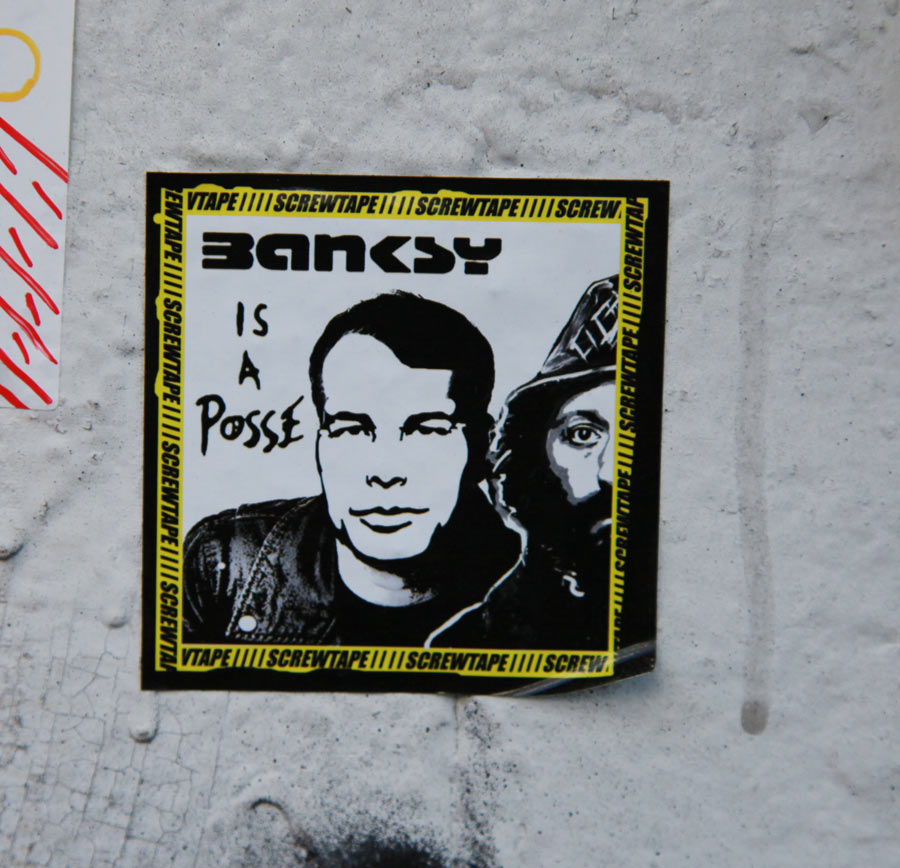
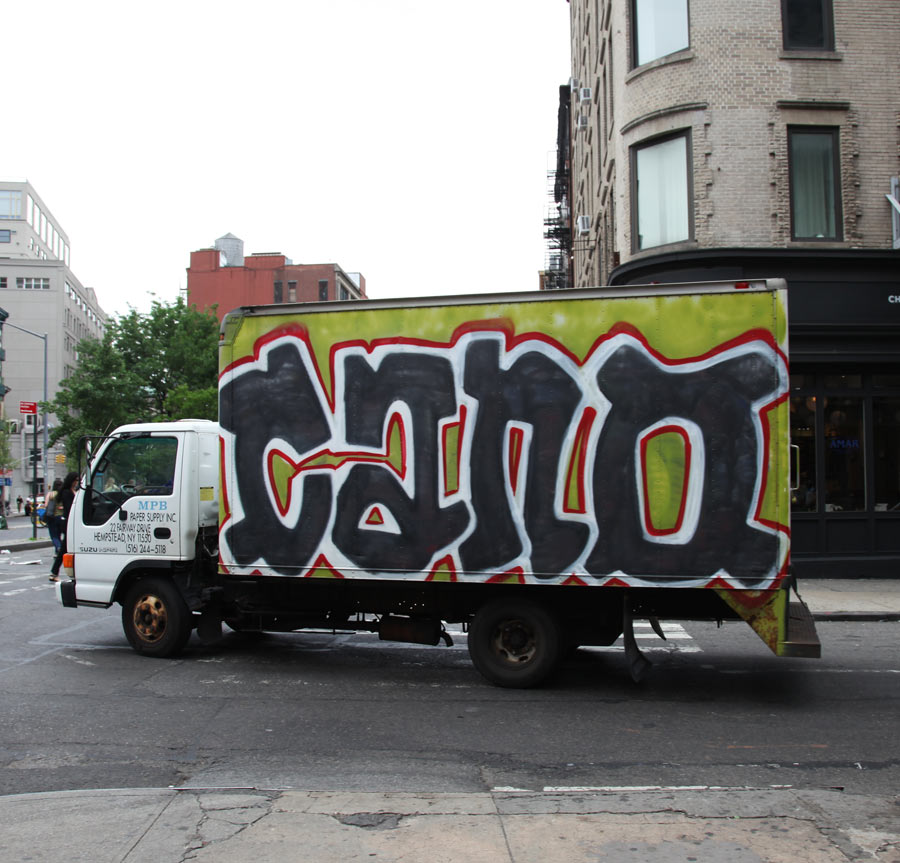
So here’s our weekly interview with the street, this time featuring CANO, Carl Paoli, Dain, David Puck, El Ergo, FKDL, Infynite, Isabelle Ewing, Justin T. Russo, Little Ricky, Meres One, Ramiro Davaro-Comas, Sara Lynne Leo, Screwtape, SeeTF, Skewville, Solus, and Stray Ones.
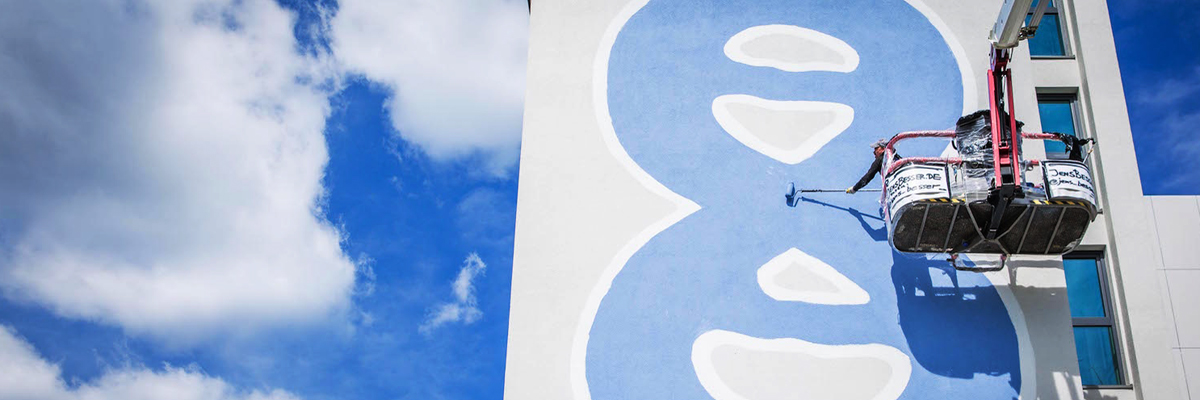
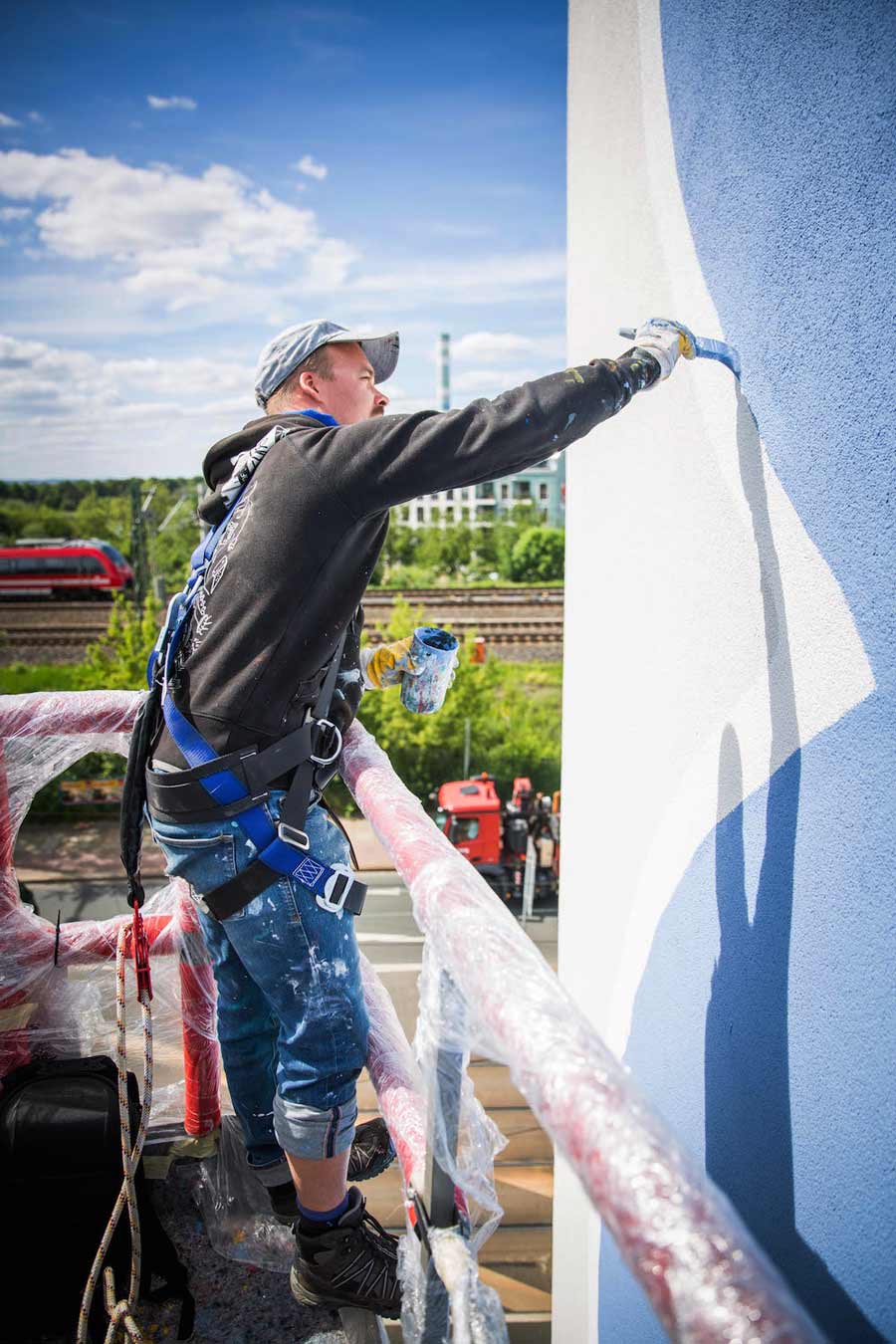
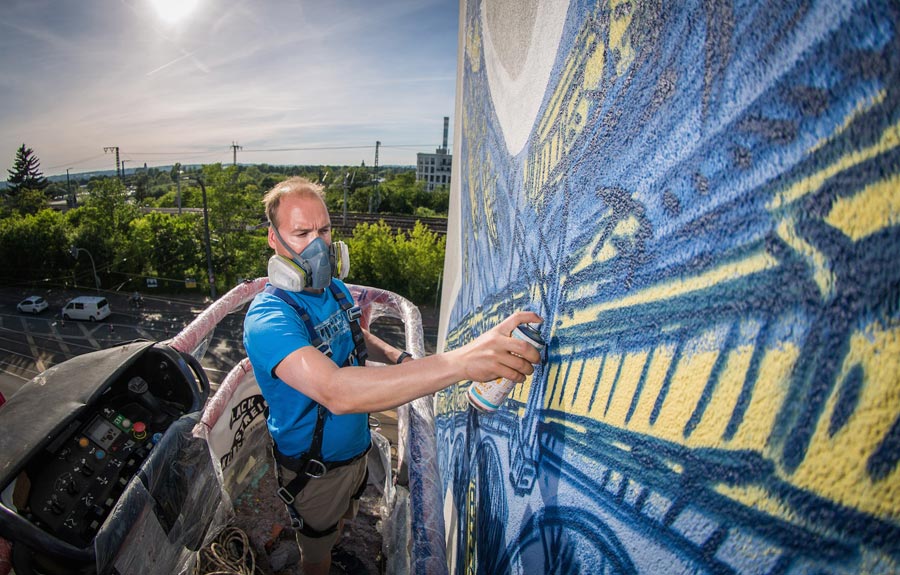
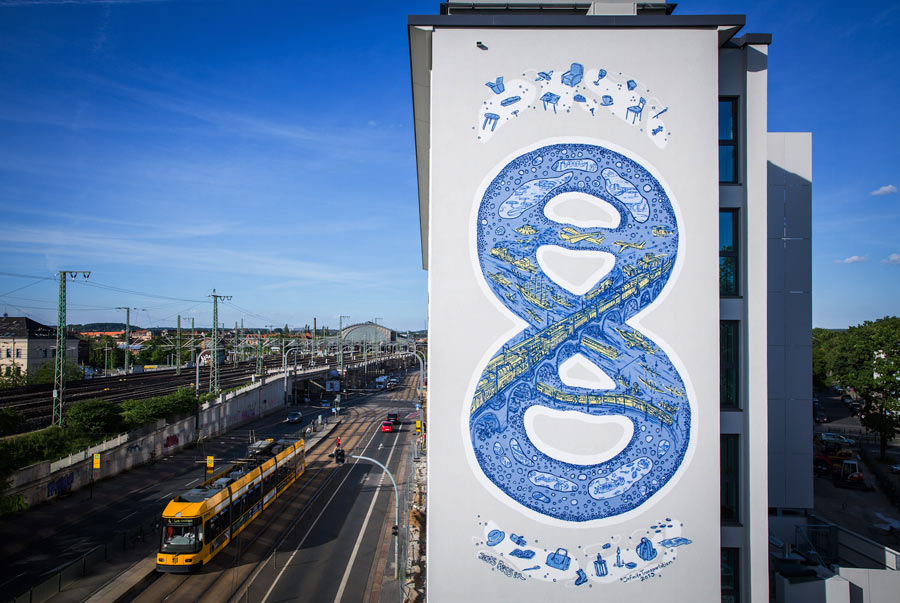
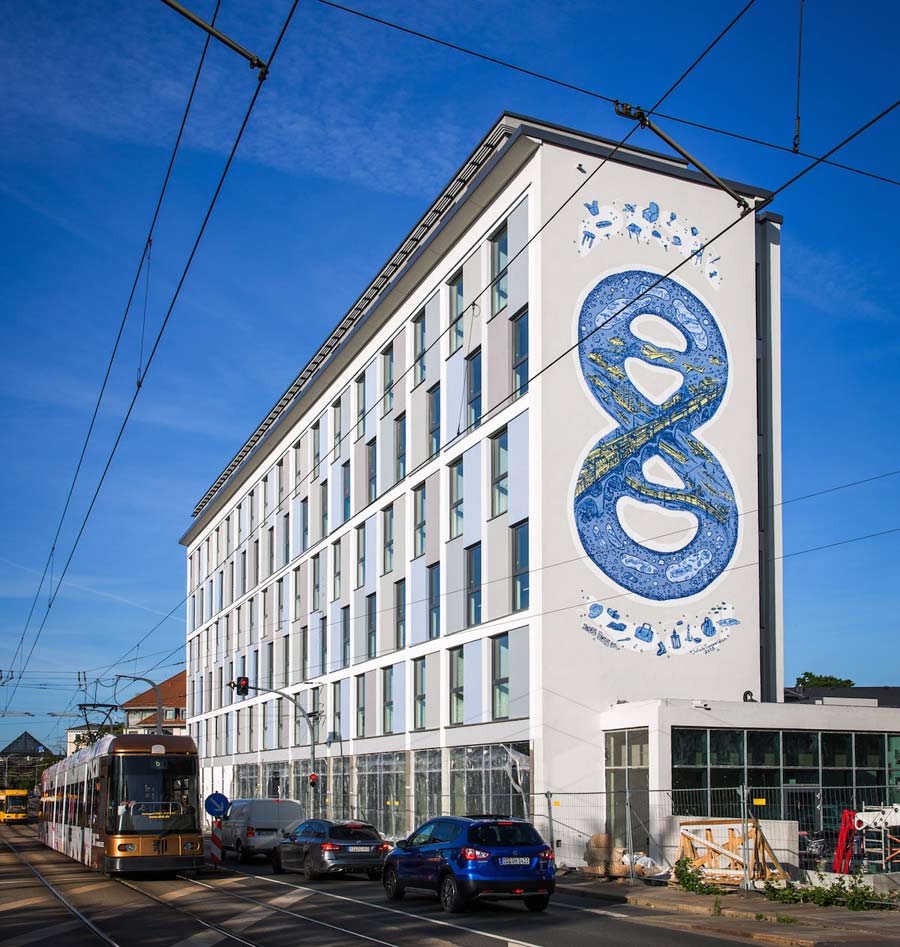
Urban artist and urbanist Jens Besser from Dresden, Germany paints the city into his city. An organizer of mural programs and avid bicyclist throughout this historic Saxony capital of a half million, Mr. Besser has a keen interest in all forms of transportation which keeps a city running 24 hours a day, seemingly infinitely.
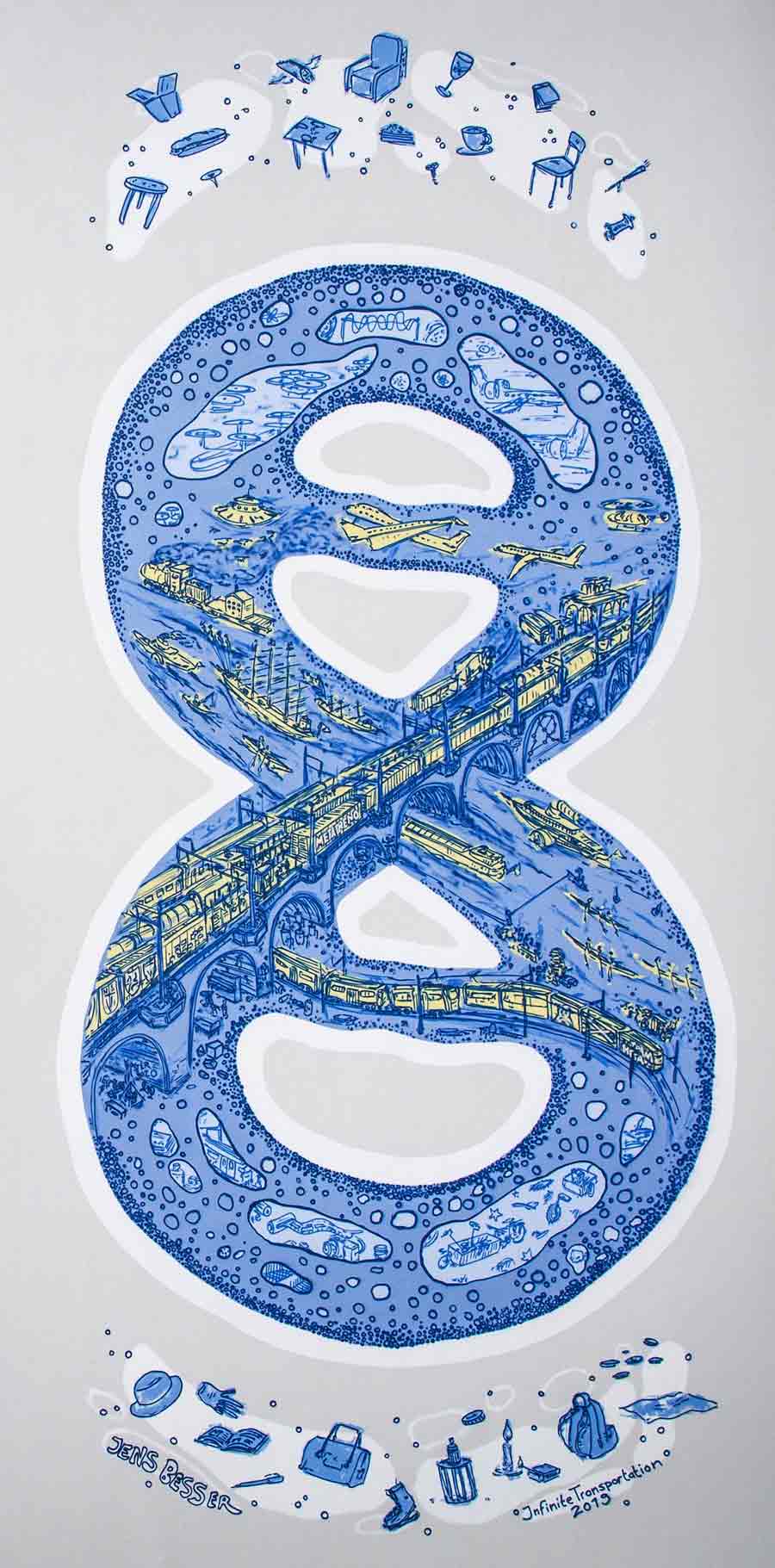
He used brushes and cans for a new mural he painted on the side of a hotel May 27 – June 3, and in it Jens includes many of these modes inside his illustration-style painting that runs along the looping symbol of infinity: trains, planes, drones, buses, boats, and of course bicycles. A world within his world, closer inspection will reveal details of city life to you if you take a moment – including a rave party under the bridge.
He tells us he took inspiration for certain elements from Adams & Itso, the artist duo known for finding and constructing domestic settings in the margins of urban life – see the #Metatreno hashtag on the side of passing freight. For Jens Besser, urban life is a theater, and on center stage here for this mural called “Der Unendliche Verkehr”, the city is an ongoing play of never-ending movement.
Our weekly focus on the moving image and art in the streets. And other oddities.
Now screening : 1. Non-Trivial – Jesse Hazelip 2. Banksy Overlooked in Venice 3. DEGON 12+1 Project / Contorno Urbano Foundation. Barcelona 4. Christian Rex van Minnen ponders aloud about the creative process and how words can’t really explain a painting. 5. Gonzalo Borondo MERCI. Teaser #2
BSA Special Feature: Non-Trivial – Jesse Hazelip
“People think ‘Oh, prison is for people that are bad.’ That’s
not the case. It’s a racist system. We need to raise the awareness on that.,”
says graffiti writer, street artist and fine artist Jesse Hazelip in this new
video.
In addition to speaking about his technique of engraving
animal skulls, he speaks about the US justice system of incarceration that he
compares to a “mass epidemic that is affecting marginalized people, mainly people
of color who are black and brown.”
Preach!
Banksy Overlooked in Venice
The Street Artist Banksy posted this video to cry crocodile tears on his Instagram during the Venice Biennale. “Despite being the largest and most prestigious art event in the world, for some reason I’ve never been invited.” Is the large seafaring vessel spread over multiple canvasses a self portrait, perhaps? It’s simply massive.
Christian Rex van Minnen ponders aloud about the creative process and how words can’t really explain a painting.
It begins with the heaviest of sighs.
“There’s never really a blank canvass moment in my process.
There is a constant cycle of paintings that are at very stages of completion”
“ I guess I see these as just one long continuous painting”
And so we end our excepts from the dramatic reading.
Thumbs up to visual effects editor Mike Gaynor.
Gonzalo Borondo MERCI. Teaser #2
Spanish Street Artist and installation artist Borondo is taking over a church, bringing the cathedral qualities of the dark forest with him. His teasers for this project (culminating as “Merci” on June 21) are as illuminating as they are elusive.
“The church has been closed for 30 years,” we wrote this week. “If you wait long enough the natural world will overtake this temple, covering it with moss, wrapping it with ivy, filling it with trees. “
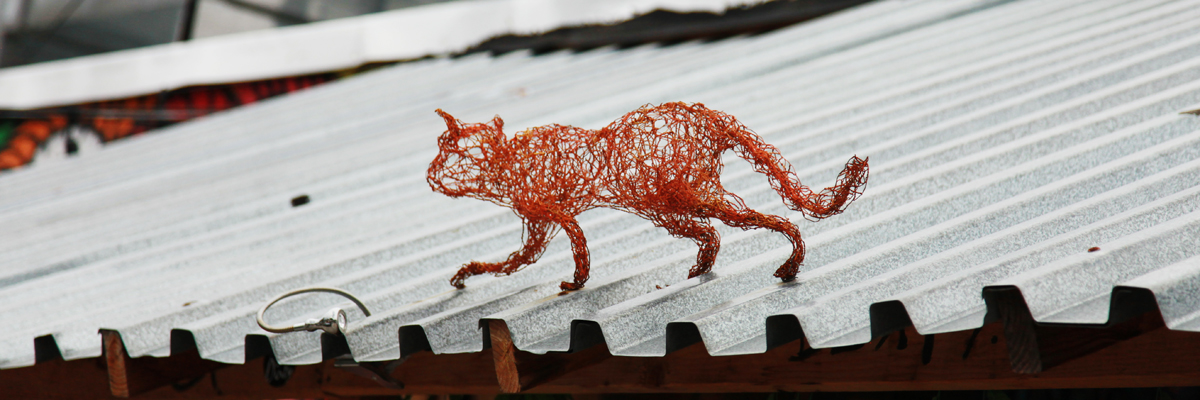
Street art welcomes all manner of materials and methods, typically deployed without permission and without apology. This hand-formed wire piece …Read More »
 BROOKLYN STREET ART LOVES YOU MORE EVERY DAY