 BROOKLYN STREET ART LOVES YOU MORE EVERY DAY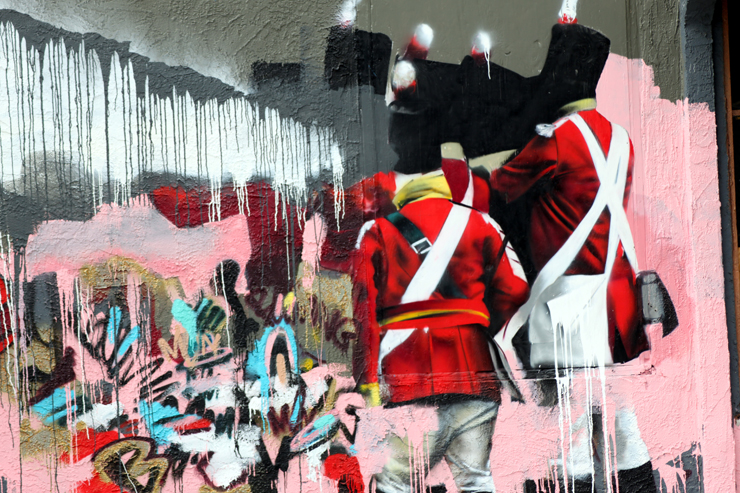
 We’ve got a love affair going on right now with everything Street Art. Part of the reason we know so much about it is because we can see images of it on the Internet. And of course in books, magazines, in apps, and if you are lucky, on the street.
Conor Harrington © Stefan Kloo
The photographs of a dedicated collection of fans, artists, documentarians, and more casual collectors spread the news all around the globe that there is a multi-lingual vocabulary of art in the public sphere developing almost daily almost everywhere. No one can doubt that photographers have played a key role in making the art form popular, helping make many names on the Street Art scene household names. Pursuing photos and putting them up on their Flickr pages, blogs and elsewhere, these photographers have been instrumental in spreading the word, educating, and generating interest in this art form among ordinary people who would have otherwise never viewed the art on the streets.
With the help of photographers who take their craft seriously and doggedly pursue the art in often off-the-beaten-path locations, an ephemeral history is recorded and preserved like never before. The Street Artists themselves have taken notice of the effectiveness of new platforms for communication and the most savvy of them have adopted new media to effectively promote and advance their work and their careers. Curators in galleries, museums, pop-up shows, myriad art festivals, and cultural institutions take notice of new names through images online and contact artists to offer them opportunities, and instant peer groups coalesce around an ever growing mound of images of work by street artists. Researchers and designers in industries from fashion to textiles to lifestyle to technology all invest time in scouring through photos and collections as resources to glean trends and make products and pitch new schemes. And of course blogs and print publications that are dedicated to documenting and tracking this art form research these growing sources of information for their arts coverage of this emerging movement.
To be sure, there are street art aficionados that have noticed the work of the photographers and are appreciative of the diligence and passion required to go after the art. It is also true that the public still needs a greater awareness of the role that photographers have played in the past and the role that they are playing now.
While many fans of Street Art are very familiar with the artist’s work, fewer are cognizant of the photographers who reliably capture and deliver the images of the work. And why would they? Many images one can see are unaccredited. In fact there is such little regard for the authorship of images that there is a growing practice of populating sites and building a reputation as a curator by simply filching the images without crediting the photographer.

We have asked three of today’s active Street Art photographers; Luna Park, Becki Fuller and Stefan Kloo, to talk about their experiences and opinions to help us illuminate the relationship between Street Art and the photographers that document it. Together they have perhaps 25 years of shooting Street Art, thousands of miles on their kicks, and thousands of hours and dollars spent pursuing and presenting the explosion of Street Art that we have fallen in love with.
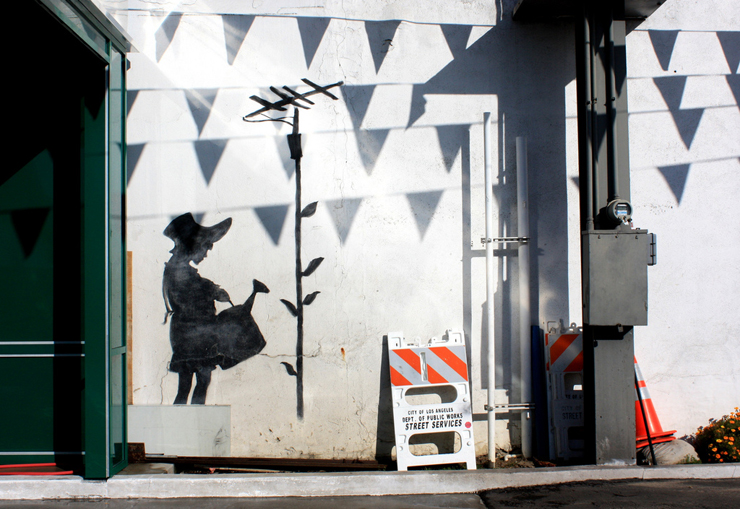
Banksy in Los Angeles © Luna Park
Brooklyn Street Art: You have been documenting Street Art for almost a decade now. How do you view your body of work and its relative importance to Street Art and history?
Becki Fuller: I think that street art is such an immediate and evolving form of expression that it can be easy to forget what an artist did last year, much less three or four or five years ago. Being a street art photographer is a lot like being a historian in that we carefully and thoroughly document the evolution of an artist’s technique and style in a way that would otherwise be lost. Each picture is then categorized and stored away, hopefully used or viewed again in the future. I think that it should be of no surprise that the other two photographers that I am being interviewed with are librarians! But as far as my street art photography collection goes, I have been covering the New York City area for a long enough period of time to amass a pretty comprehensive evaluation of what has been happening here. I don’t necessarily have the time to post or share a good portion of my photographs anymore, but that doesn’t mean that I didn’t take them! For people who are interested in putting together a book or some other project, my collection can, and has been, a good resource. To me, any time my pictures are published, it has the duel importance of helping an artist’s work to live on and to be seen by people all over the world as well as reinforcing the importance of photography (and photographers) in the street art world.
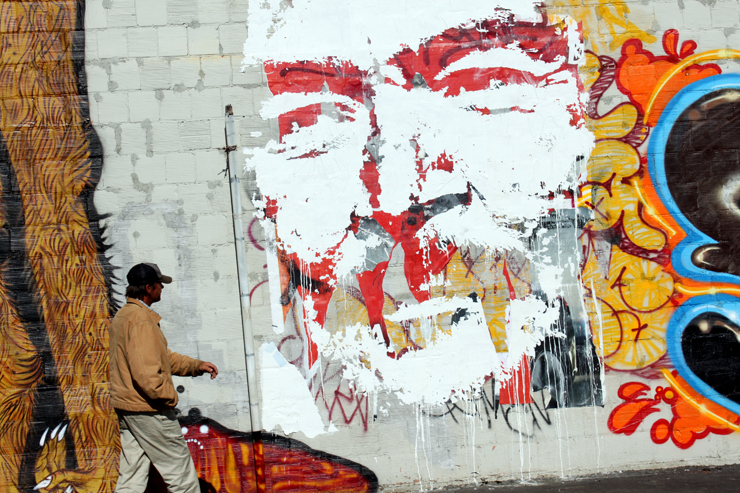
Vhils in San Diego, CA. © Stefan Kloo
Luna Park: Although I’m still a few years shy of having documented for a decade, street art has most certainly played an increasingly important role in my life over the last few years. Chronologically, my introduction to the world of street art coincided with my discovery of Flickr and the two have been inexplicably entwined for me ever since. Coming from a library science background professionally, the organizational possibilities of Flickr intrigued me from the get-go. As I began to amass more and more street art photographs, Flickr provided me with the perfect platform to both present and organize my work. It’s also been an incredible place to learn about street art and connect with the community. Although I never imagined at the time that my photo stream would one day grow to include over 7,500 images in 175 sets, it was my intention to create an archive of street art documentation from the very beginning. As an information professional, the tenets of credible and reliable sources of information are the foundations of my work. In my travels through New York City and beyond, I have sought out what I consider the best of current street art and, to the best of my ability, identified its makers. Enriched by the knowledge of the hive mind and supplemented with lively commentary and analysis from within the community, I believe my body of work has grown to become a well-respected resource.
Stefan Kloo: I feel rather privileged that I got to take these shots. I look at my catalog of photos about the same way I cherish my record or art collection. It’s testimony to my passions, my life in these times and the people I connected to through their work. Just keeping an eye on things, my posts are my mixtapes.
I love going back and looking at photos of older pieces, and it’s a thrill to see the evolution of certain artists, styles or the genre as such, but I’d much rather be surprised by a new piece in the street than looking at photos of those that no longer exist.
I’m convinced that street art is here to stay, so why look back when there’s so much clever beauty around us anytime? To write history, there I said it.
Without the photos, or films for that matter, Street Art would be an anecdote, and I wonder of course how serious we would take it if legend and lore were all that remained.
I love the idea that we were there when that dog and pony show came of age, which I got a good shot and get to tell about it.
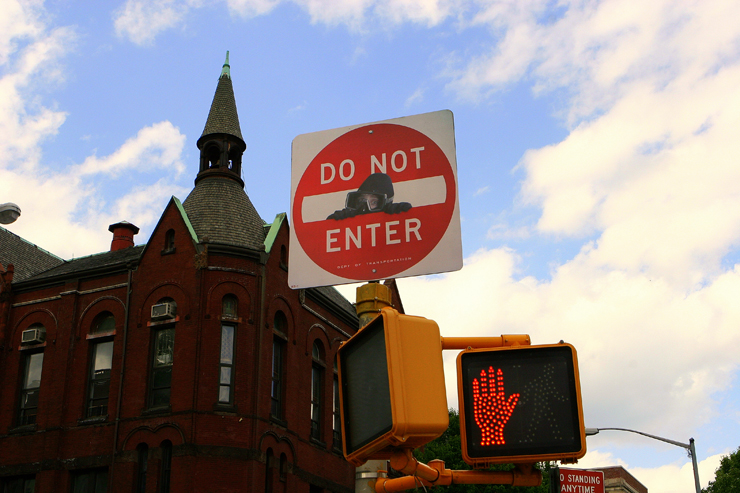
Dan Witz © Becki Fuller
Brooklyn Street Art: Street Art has become very popular across the globe with websites, blogs, week-long festivals, installations, shows in galleries and exhibits in museums. Do you think your work has helped the artists and street art and its popularity?
Becki Fuller: I think that photography – regardless of whose it is – has played an important and necessary role in growing the popularity of street art. If it weren’t for photography, few of us would know much about what’s going on outside of our immediate communities. But because of the images available online and in books, street artists can have a built-in global fan base. It was because of photography that I became aware of what Os Gemeos were doing in Brazil, what A1one was doing in Iran, or what Know Hope was doing in Israel, as I have never been to those countries.
Then there is the ephemeral nature of most street art – if you don’t document it right away, there may never be a chance for anyone to see it again. And realistically, 20 or 30 years down the road; a well-documented body of work is your legacy. Outside of a very small group of aficionados, few people talk about graffiti artists from the 80s who weren’t well documented and I think that the same will be true for street artists in the future.
Luna Park: While I am but one cog in the increasingly big wheel of international street art coverage, of course I’d like to think that my work has been meaningful and had an impact. I’ve been one of NYC street art’s biggest cheerleaders for the past six years, making it my business to hunt down and present the best the scene has to offer in a timely fashion. Through my travels, I’ve had the opportunity to explore the street art of other countries and in turn share these discoveries with others. I’ve developed and maintained close, personal relationships with many artists and fellow photographers, which in turn has enabled me to facilitate connections between artists and introductions to gallerists. I’ve even housed and fed visiting artists, guided them to suitable spots and arranged for wall space – I don’t think it gets any more helpful than that!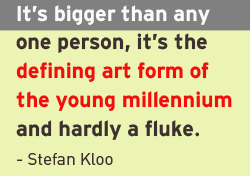
Stefan Kloo: Just as much as every other photo taken, every piece put out there, every gallery show and any other conversation on the topic had – the proliferation of street art is more than the sum of it’s parts. It’s bigger than any one person, it’s the defining art form of the young millennium and hardly a fluke.
I get the nod by the artists or street fiends – that’s got to be enough. Everything else is a bit of a fantasy, nothing that alone would drive this lunacy.
In photographing street art you have to be mindful that without the piece in the street there would be no photo, but that without the photo there may be less incentive to put the piece out in the first place. Yes, in most cases the work in the street is a selfless gift asking little in return than the thrill of putting it there, but consider how much an artist would be willing to invest and risk if there’s never any feedback, no comment on the work, no compliment or critique? If that coveted dialogue in the street becomes little less than shouting in the wood? Would all your creativity and moxy not become stifled or self-indulgent?
It’s that dynamic where the photographers and bloggers come into play – they can be counted on to digest, record and promote the ephemeral efforts of the artists.
Photographers are generally the first responders, reliable observers and quasi curators of the street galleries. The concerted effort to document the art by committed photographers must be an incentive to many artists, knowing that their work will have a much larger audience and longer shelf life. That fosters that dialog that in turn encourages and motivates the artists. It’s the vanity of the vandal that pulls the cart, and the photographer tickles that fancy.
To paraphrase McLuhan – If you talk about street art and the document of it, it always comes in pairs with one acting as the content of the other while obscuring the operation of both.
<<<> > << > < > < > > <<<>>>>>>BSA<<<> > << > < > < > > <<<>>>>>>BSA
Street Art Photographers: Capturing Ephemera Part 2
To see more of Stefan Kloo’s work go here.
To see more of Luna Park’s work go here.
To see more of Becki Fuller’s work go here.
Becki and Luna’s blog The Street Spot is here.