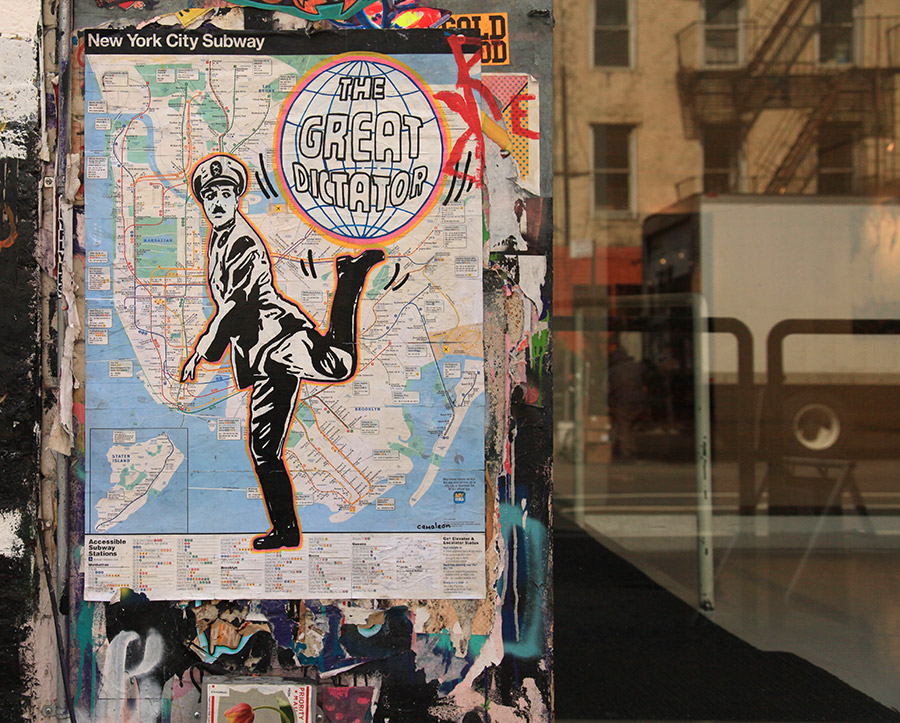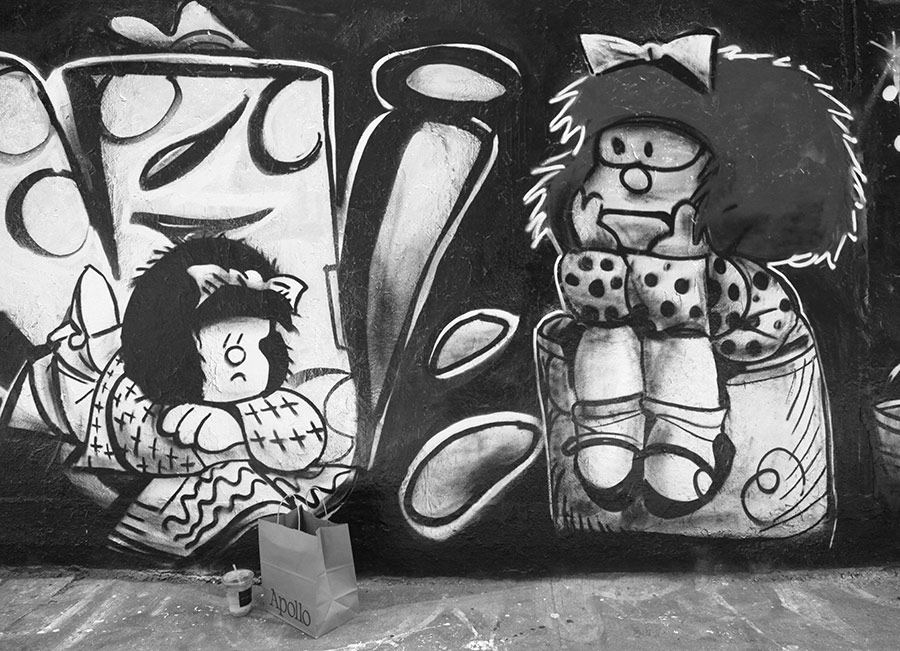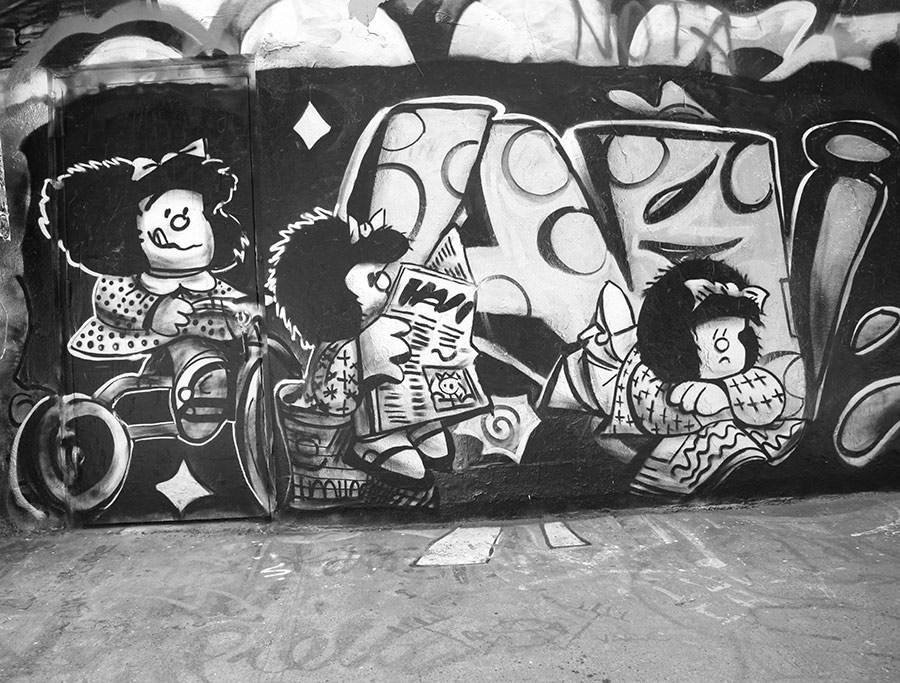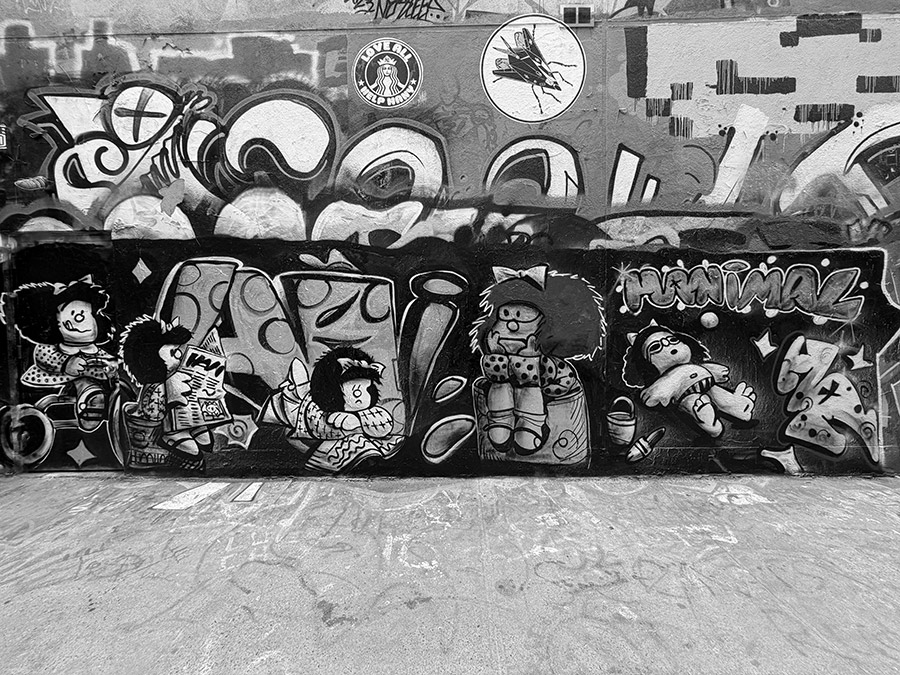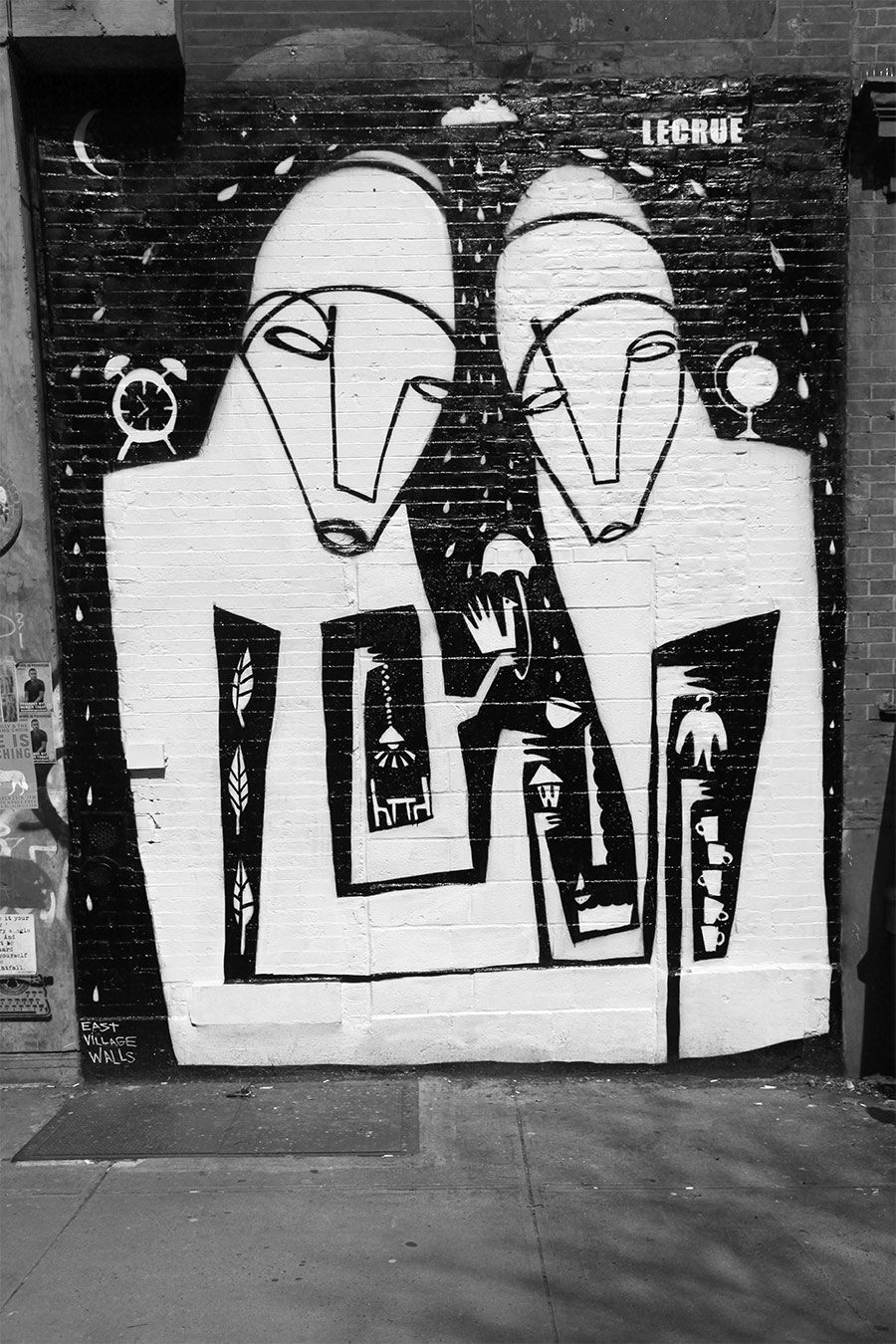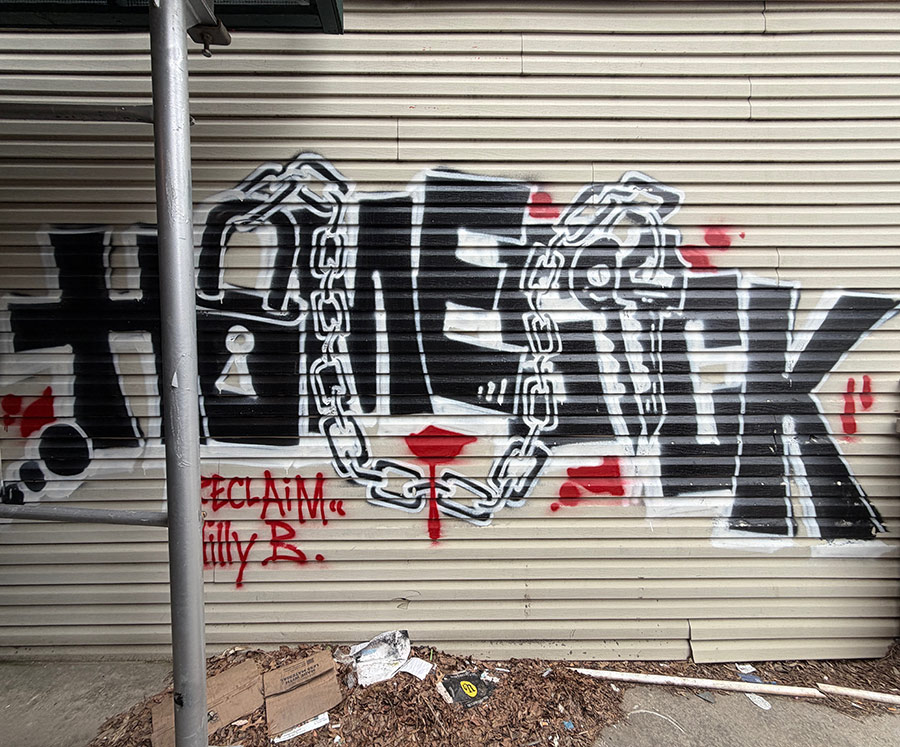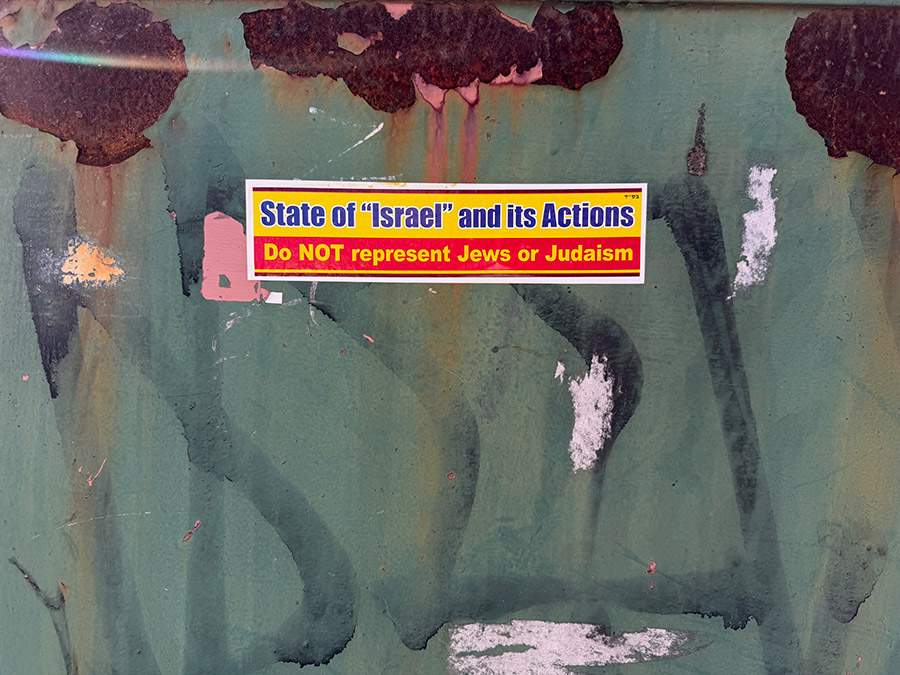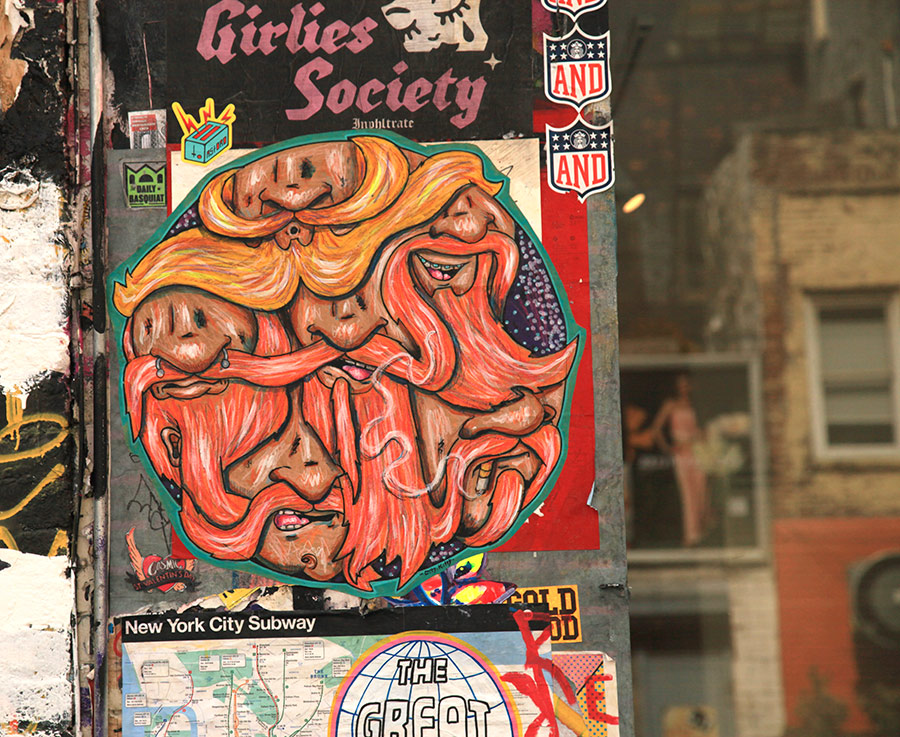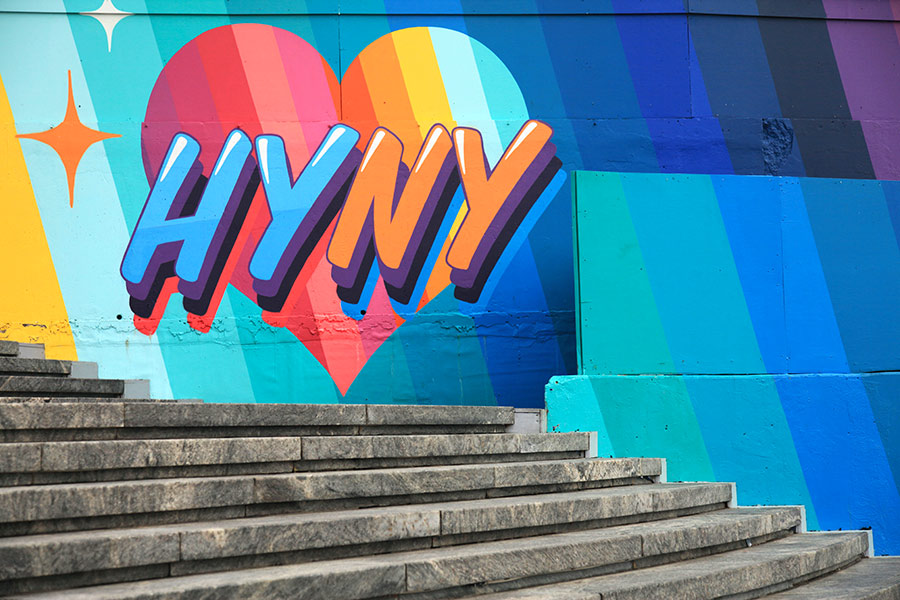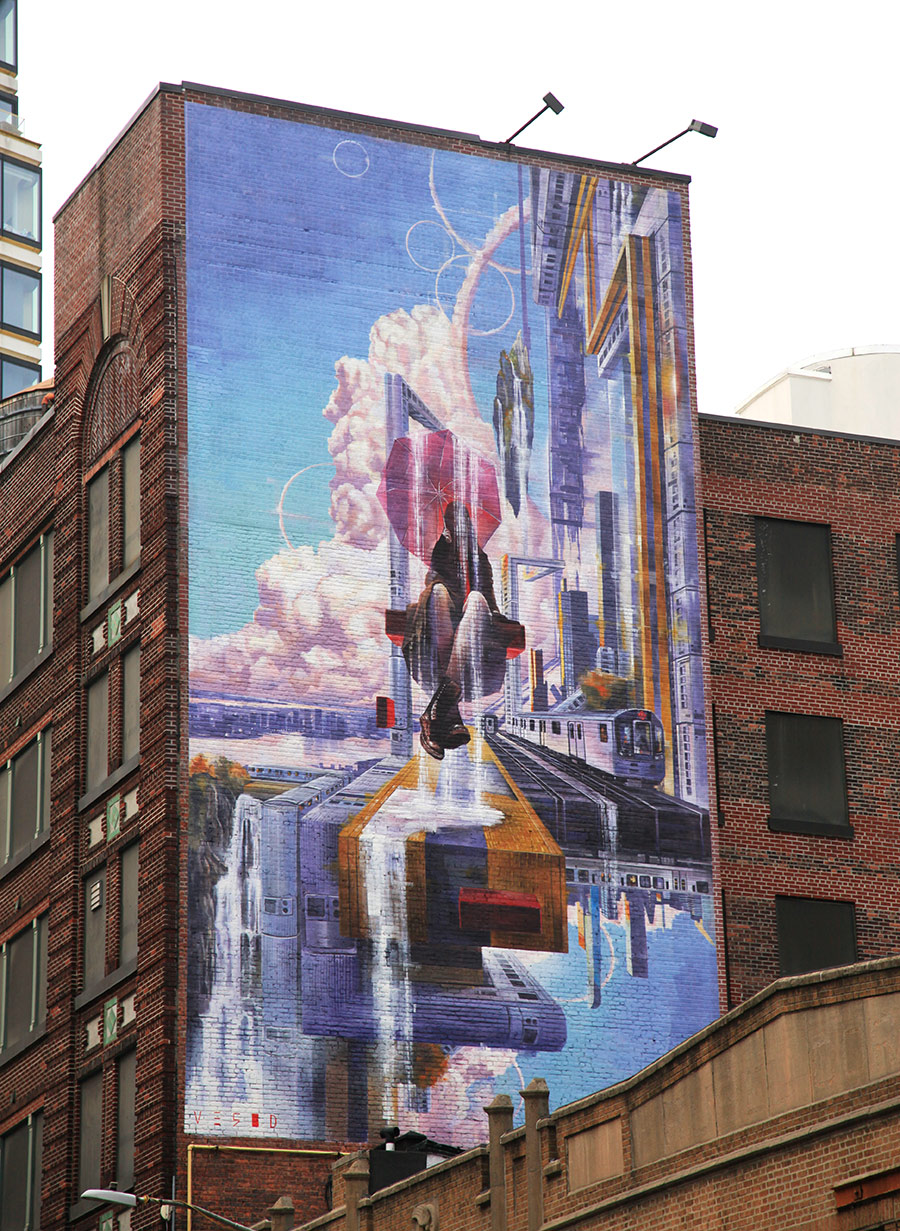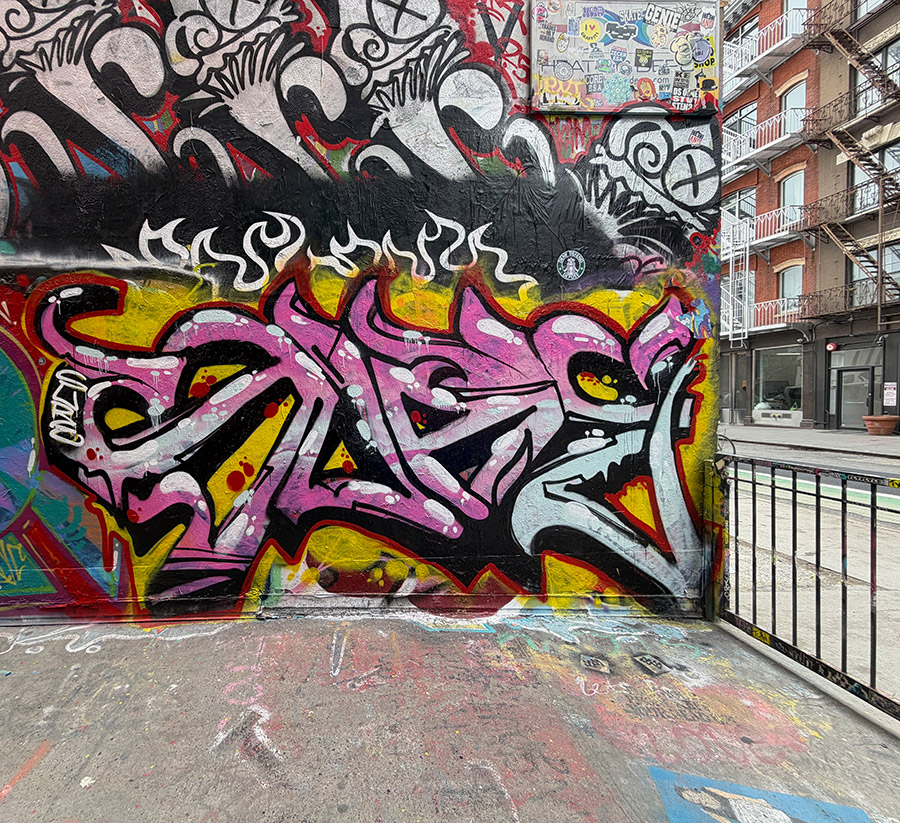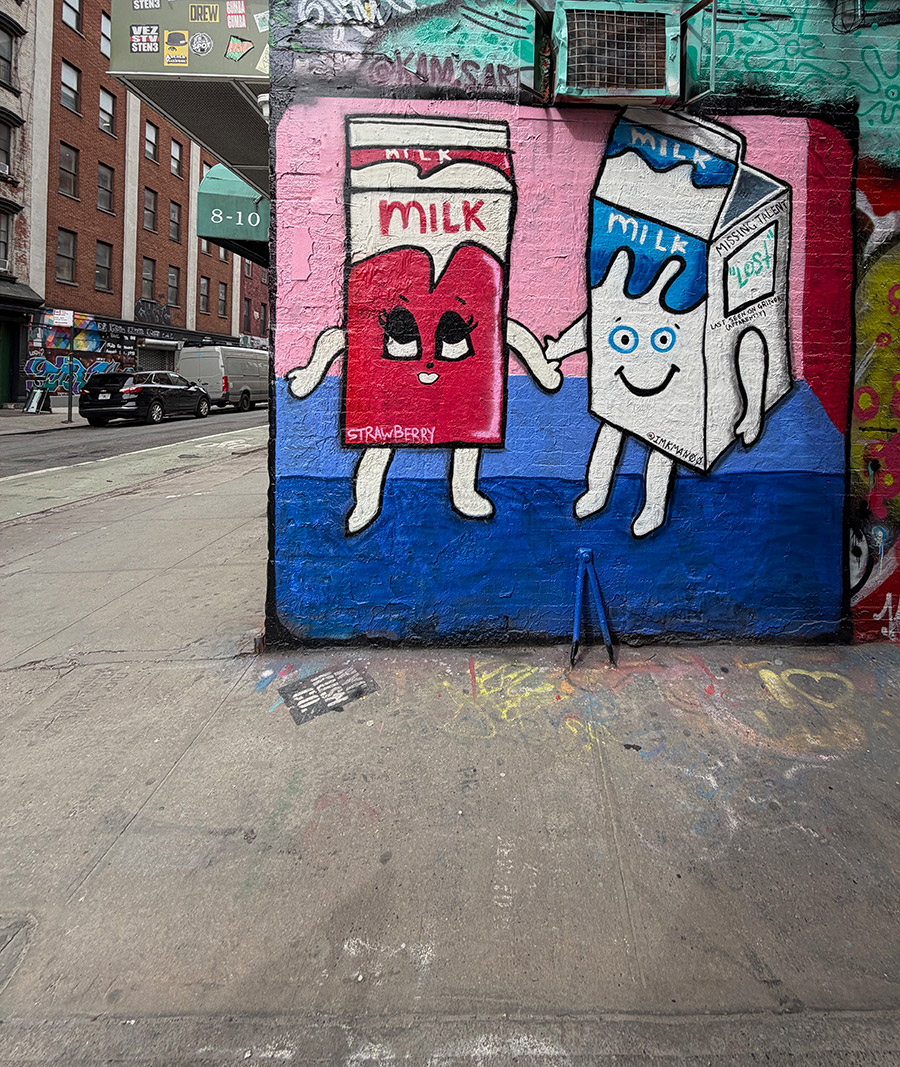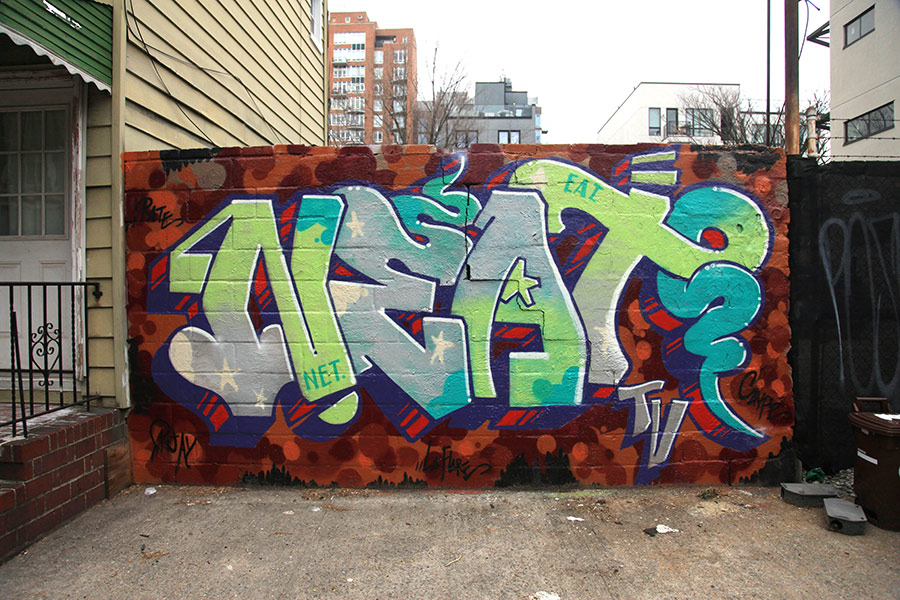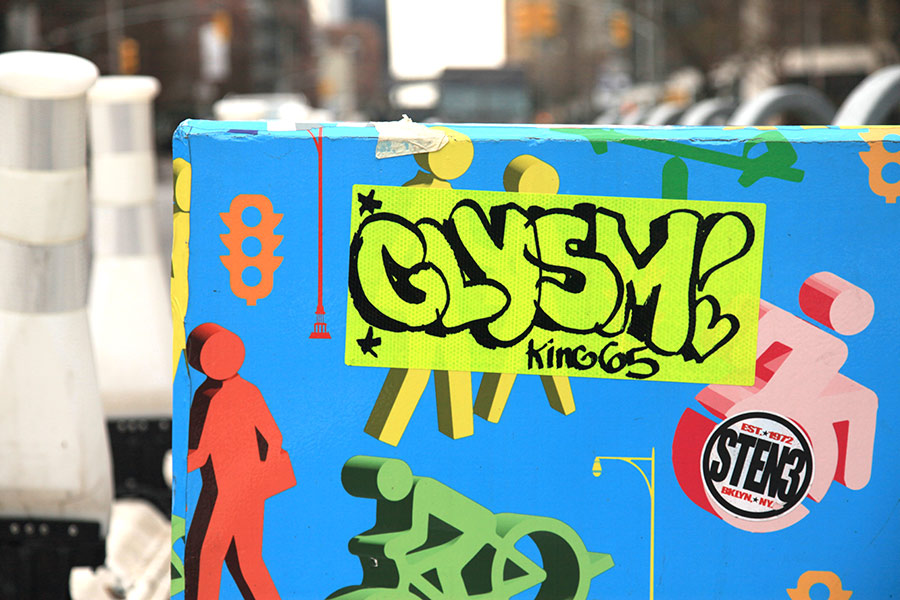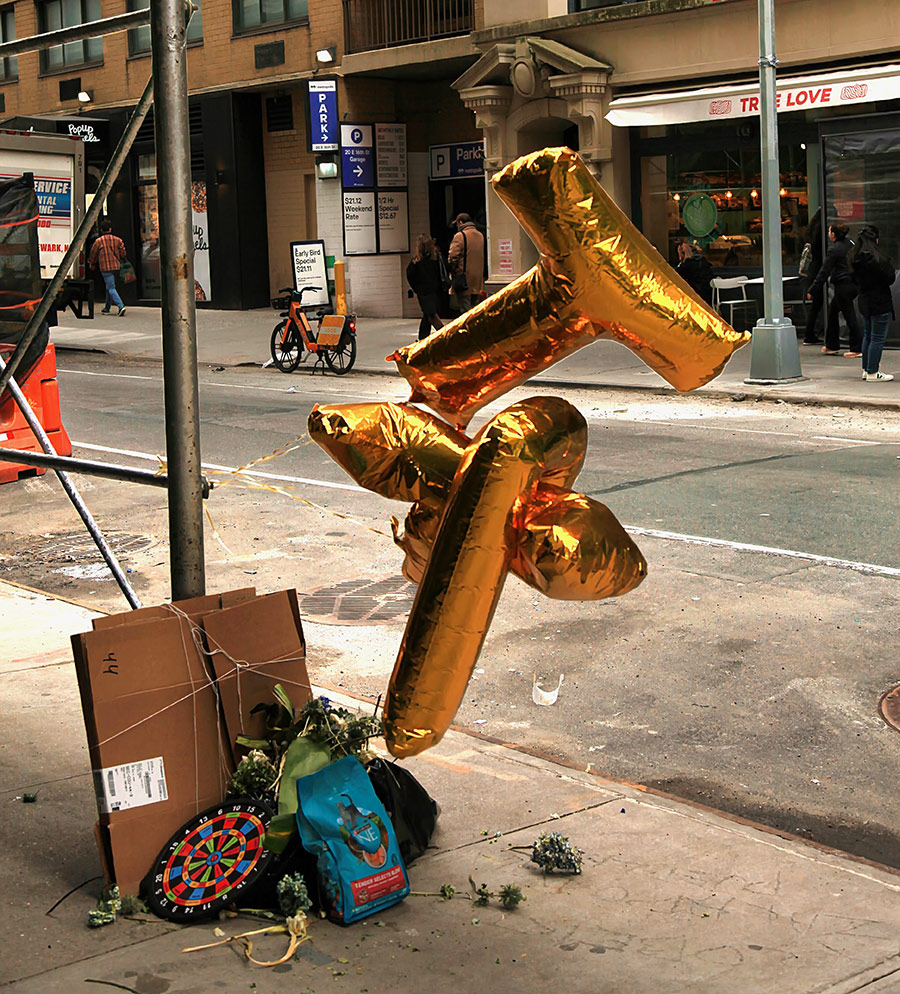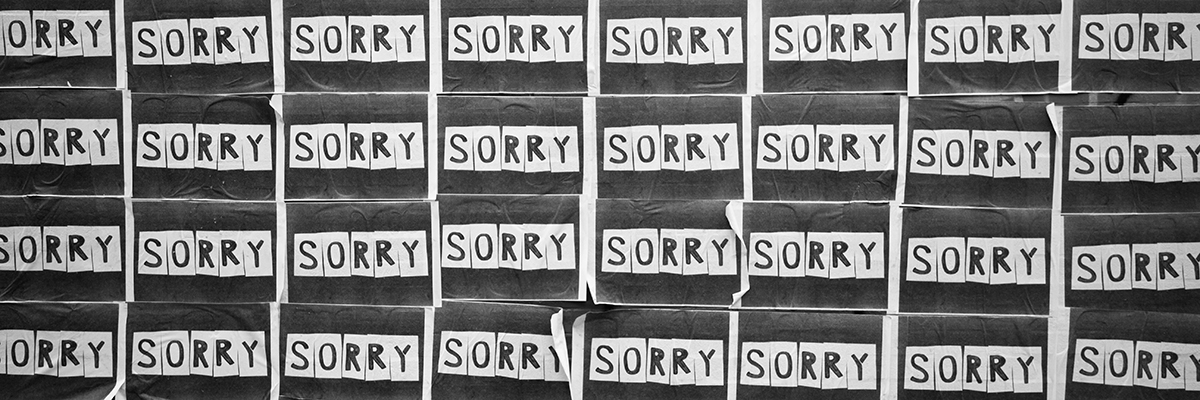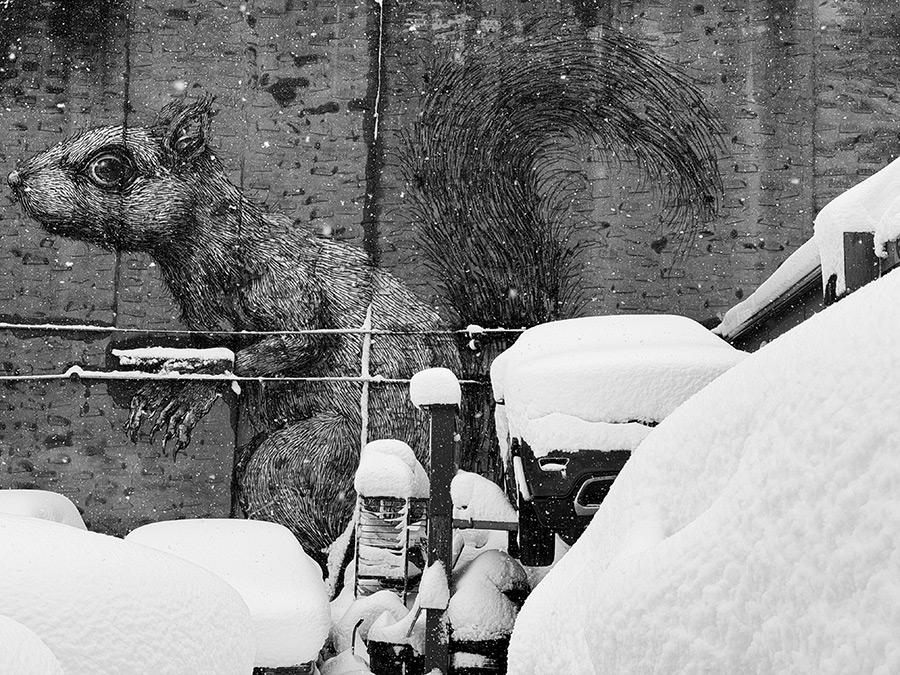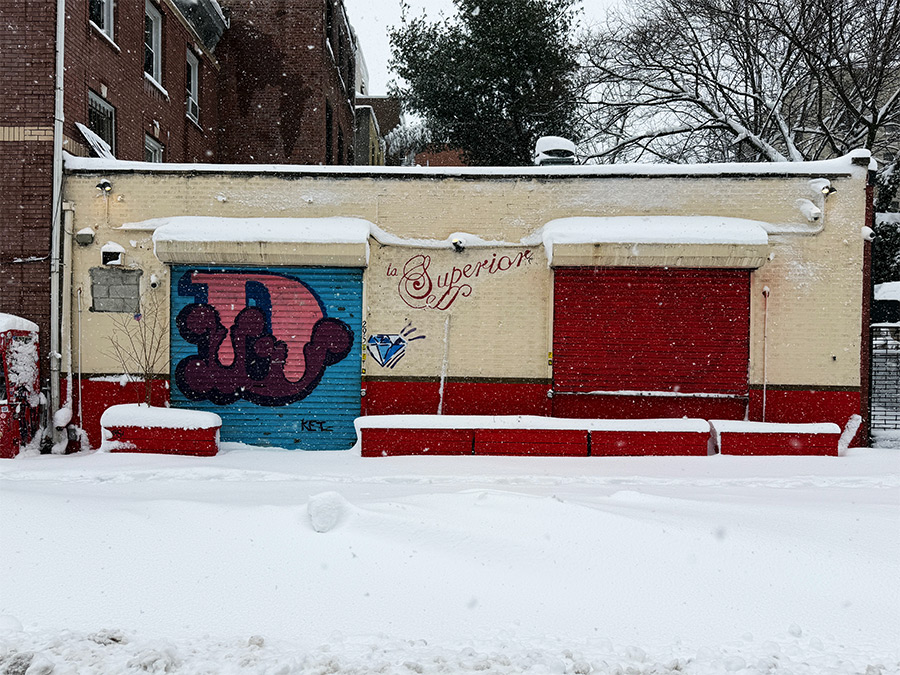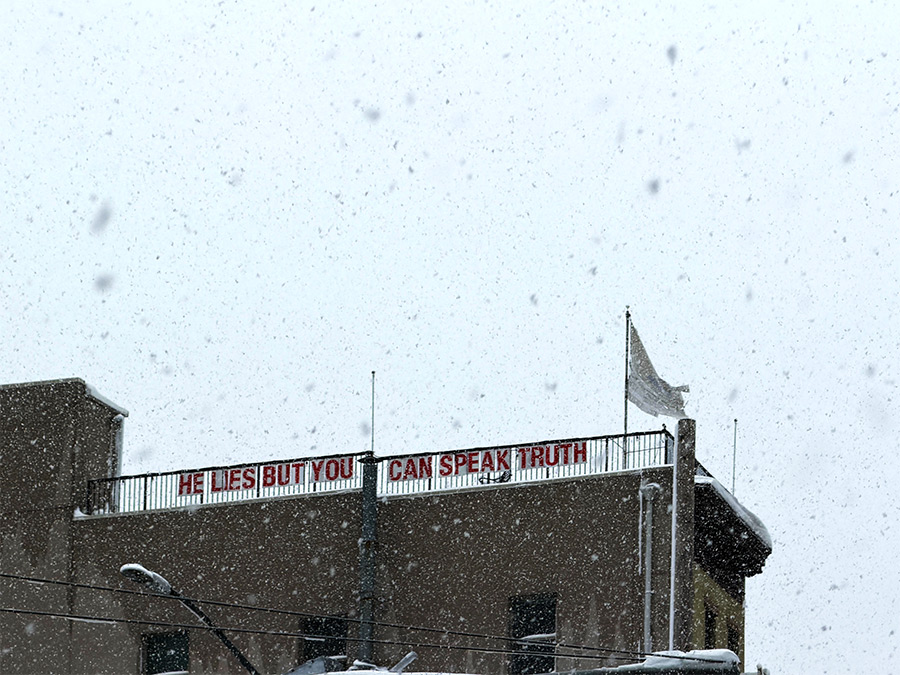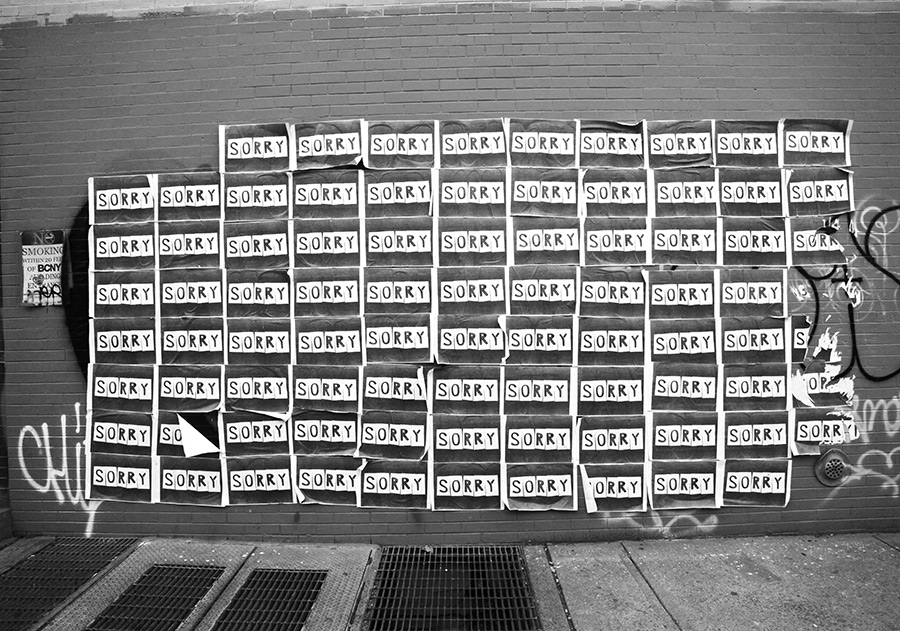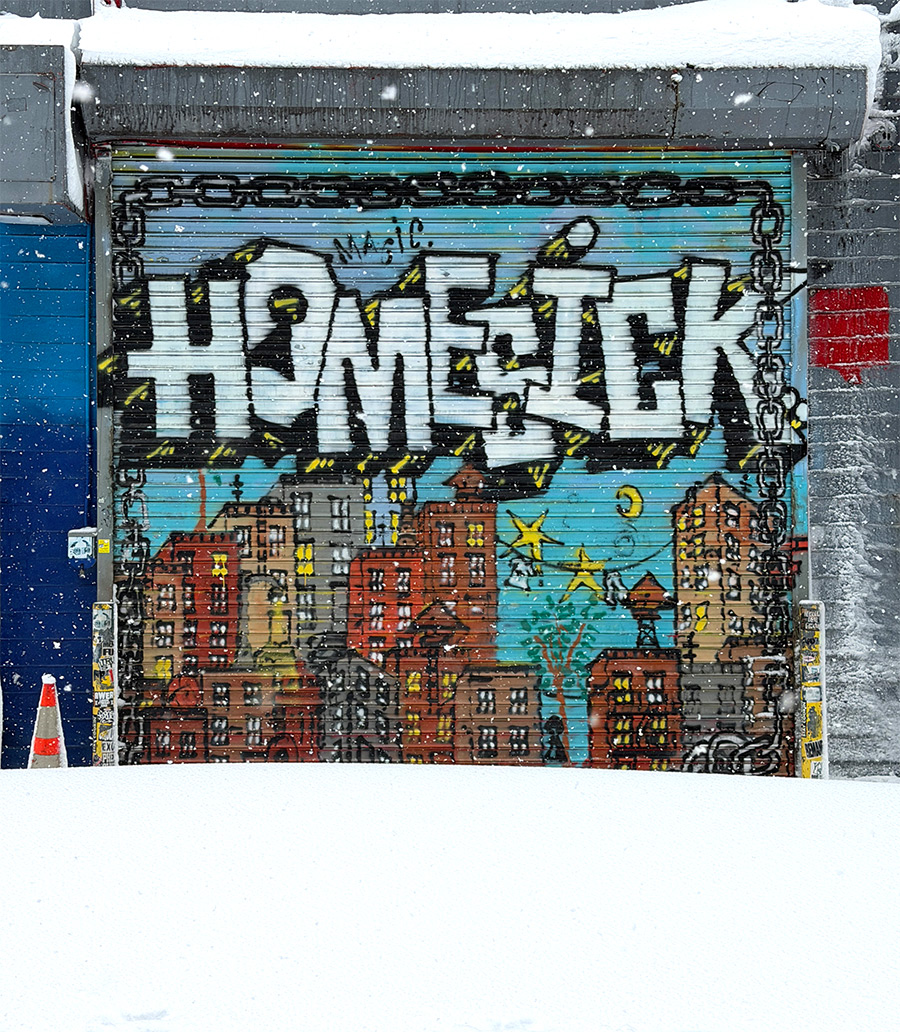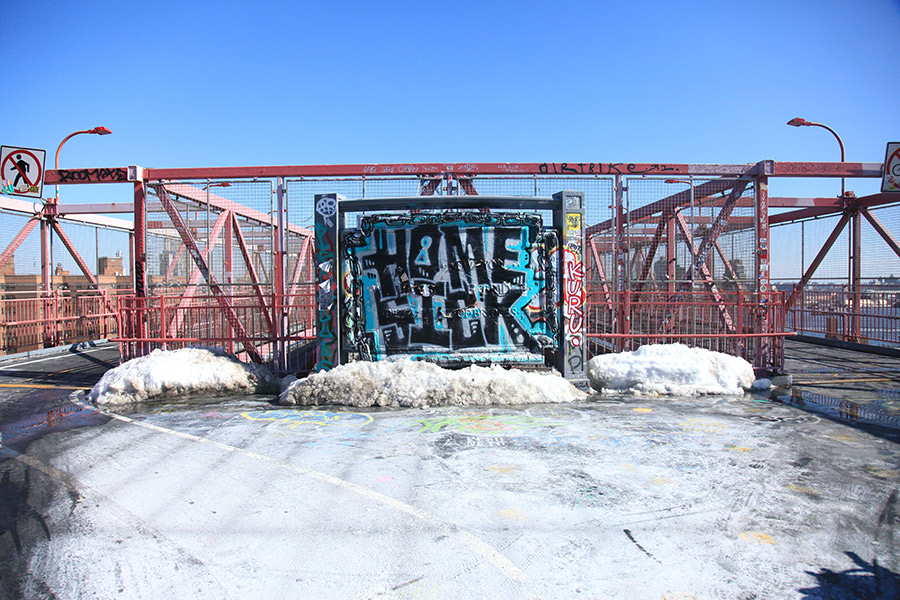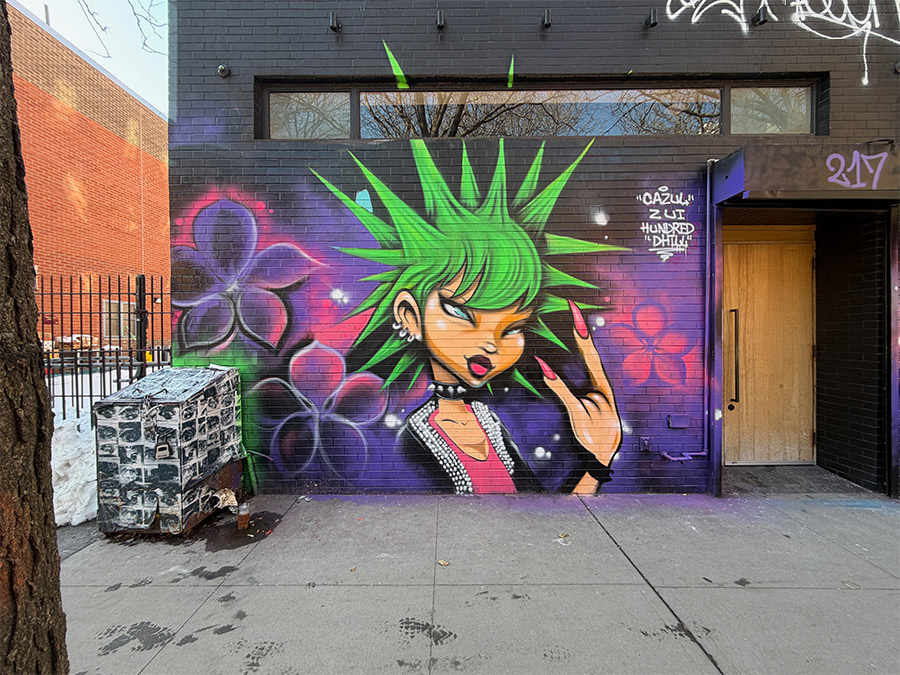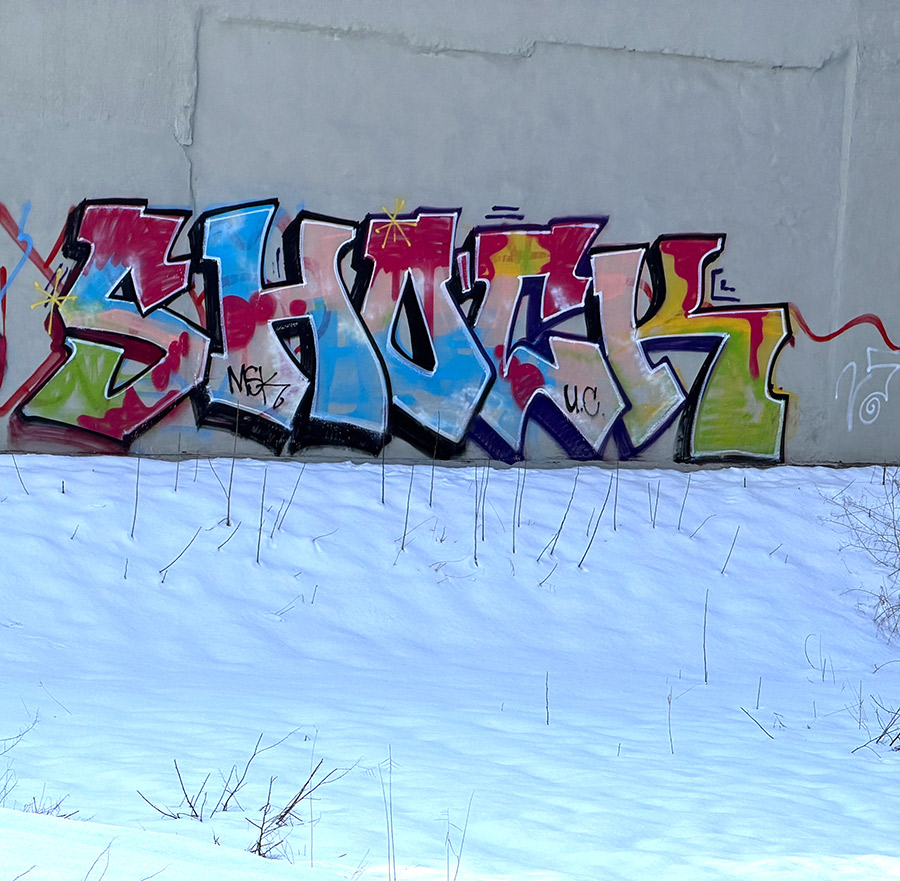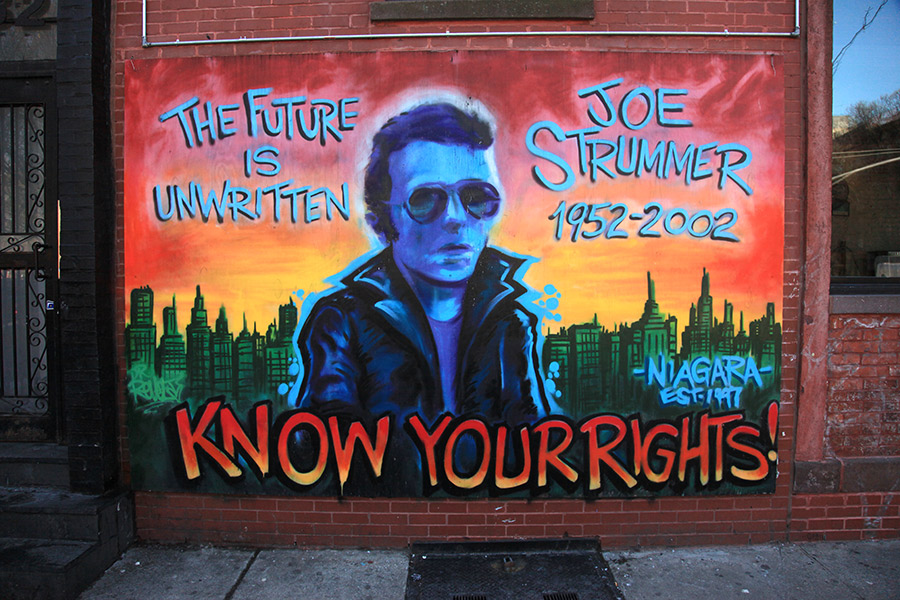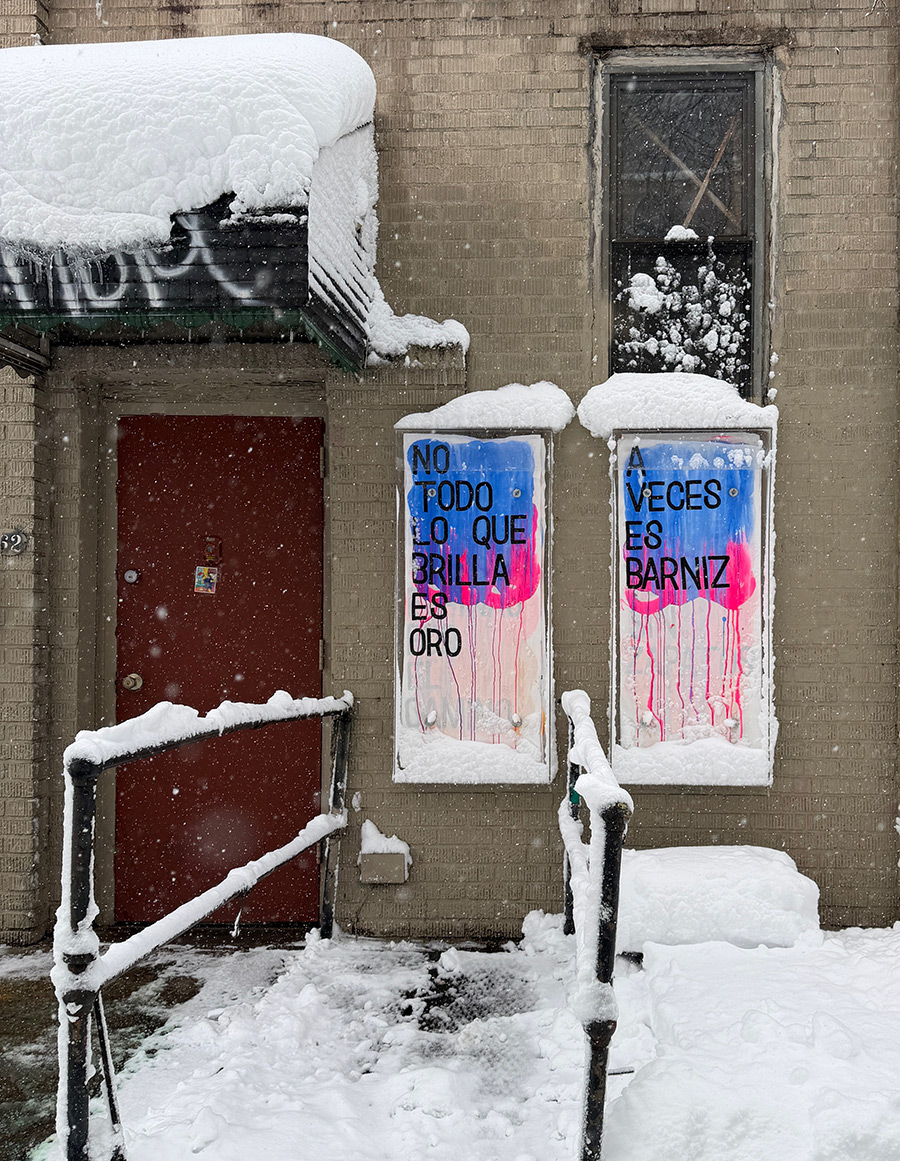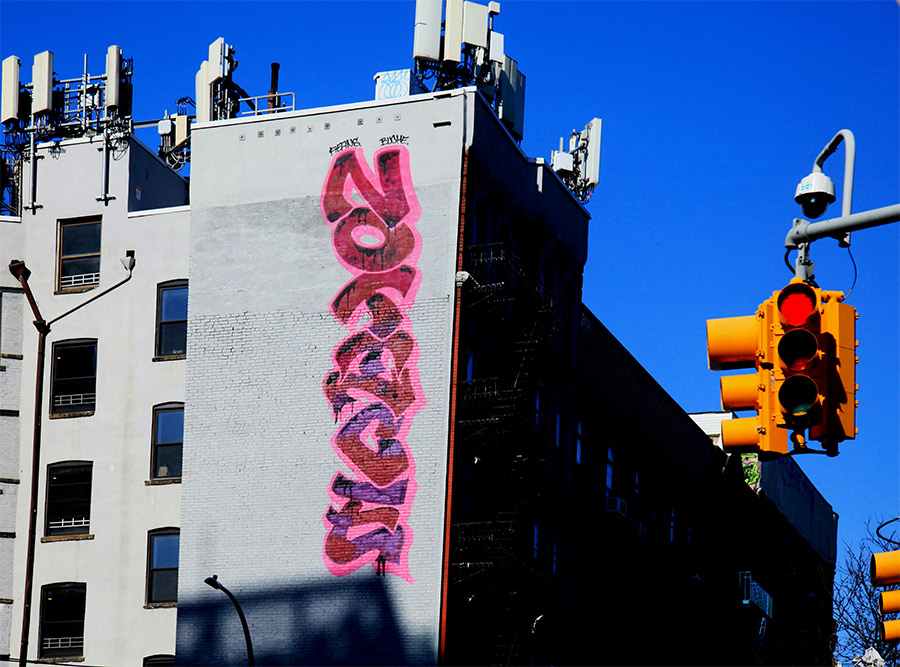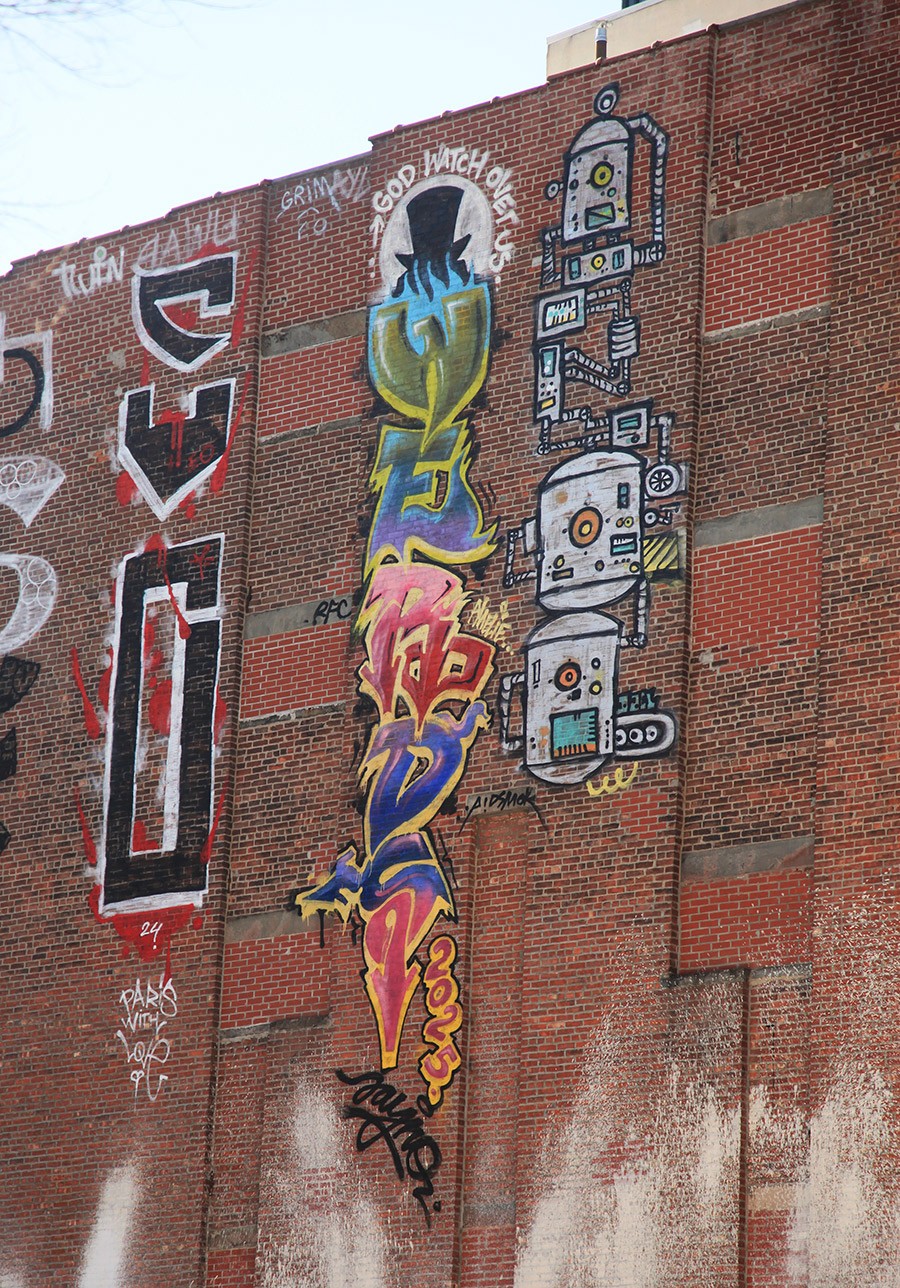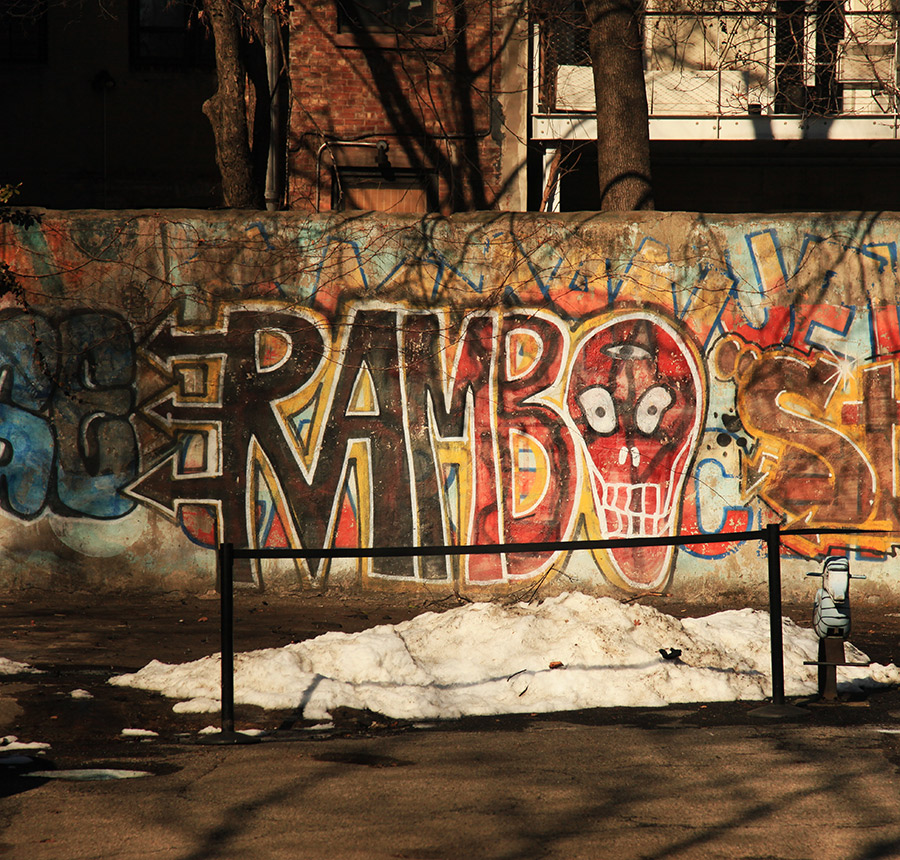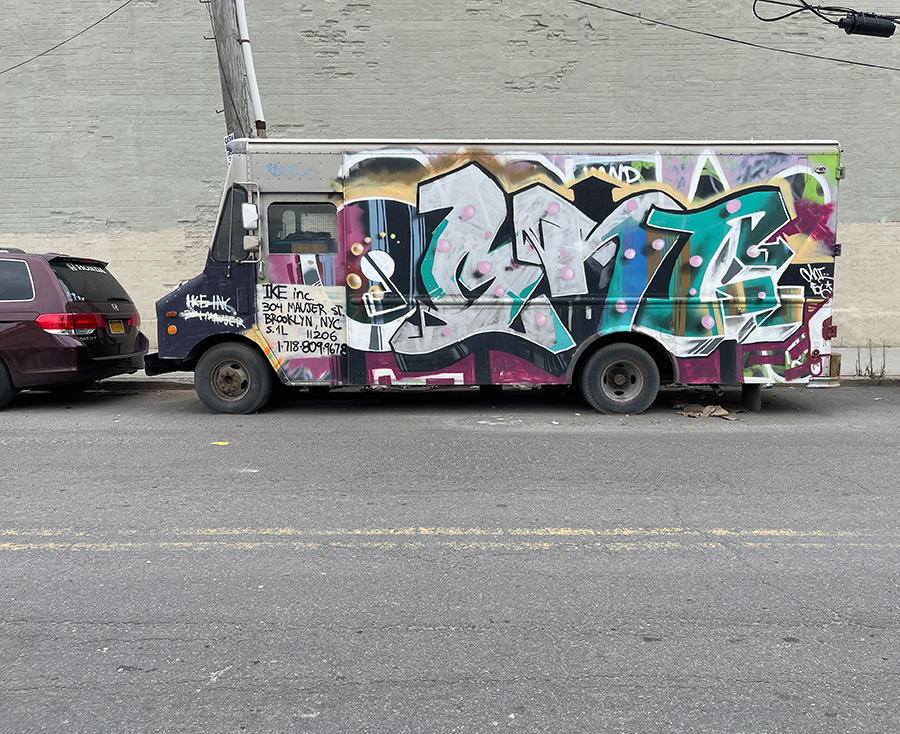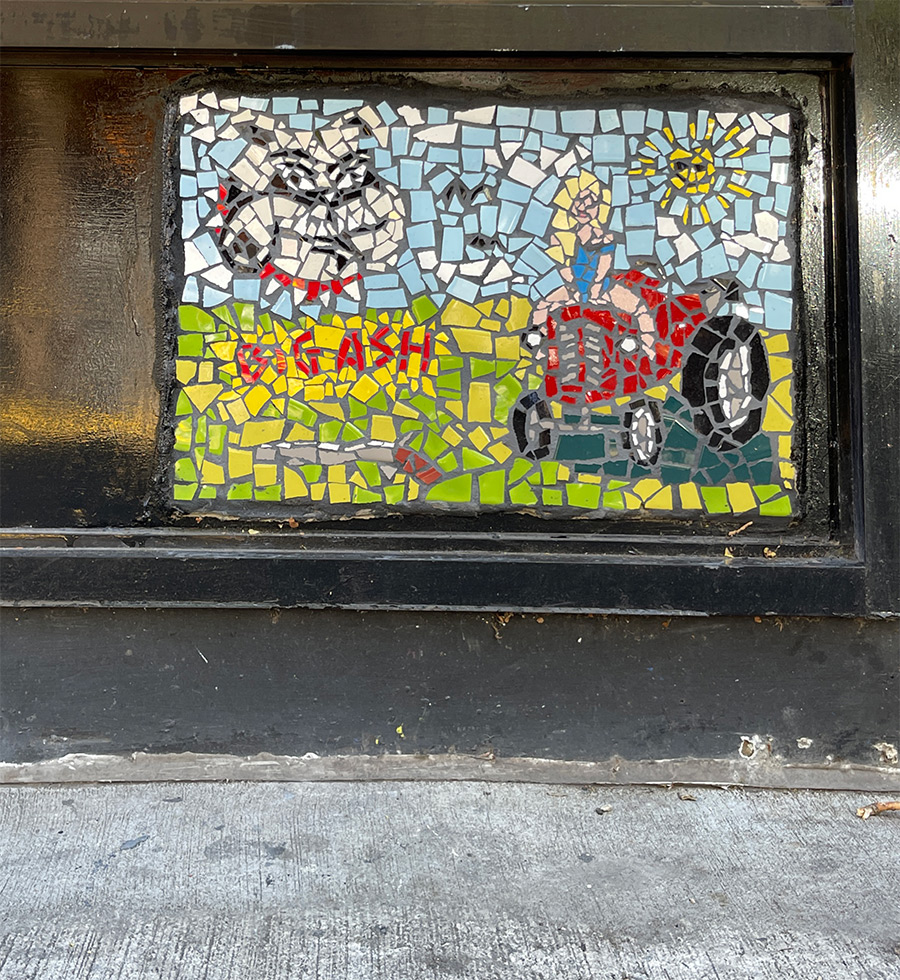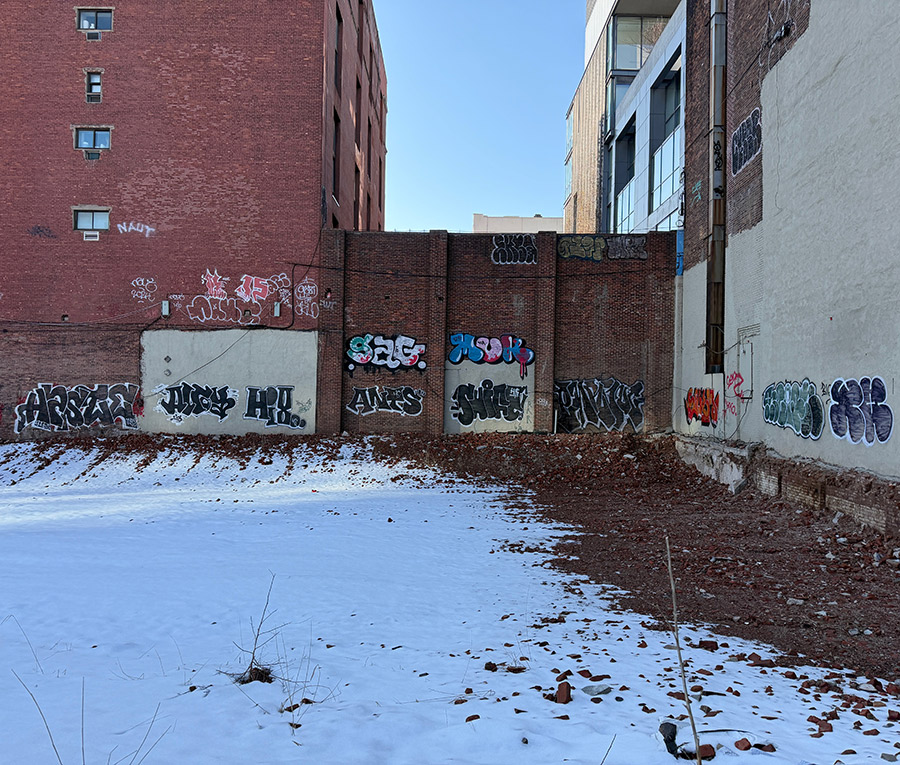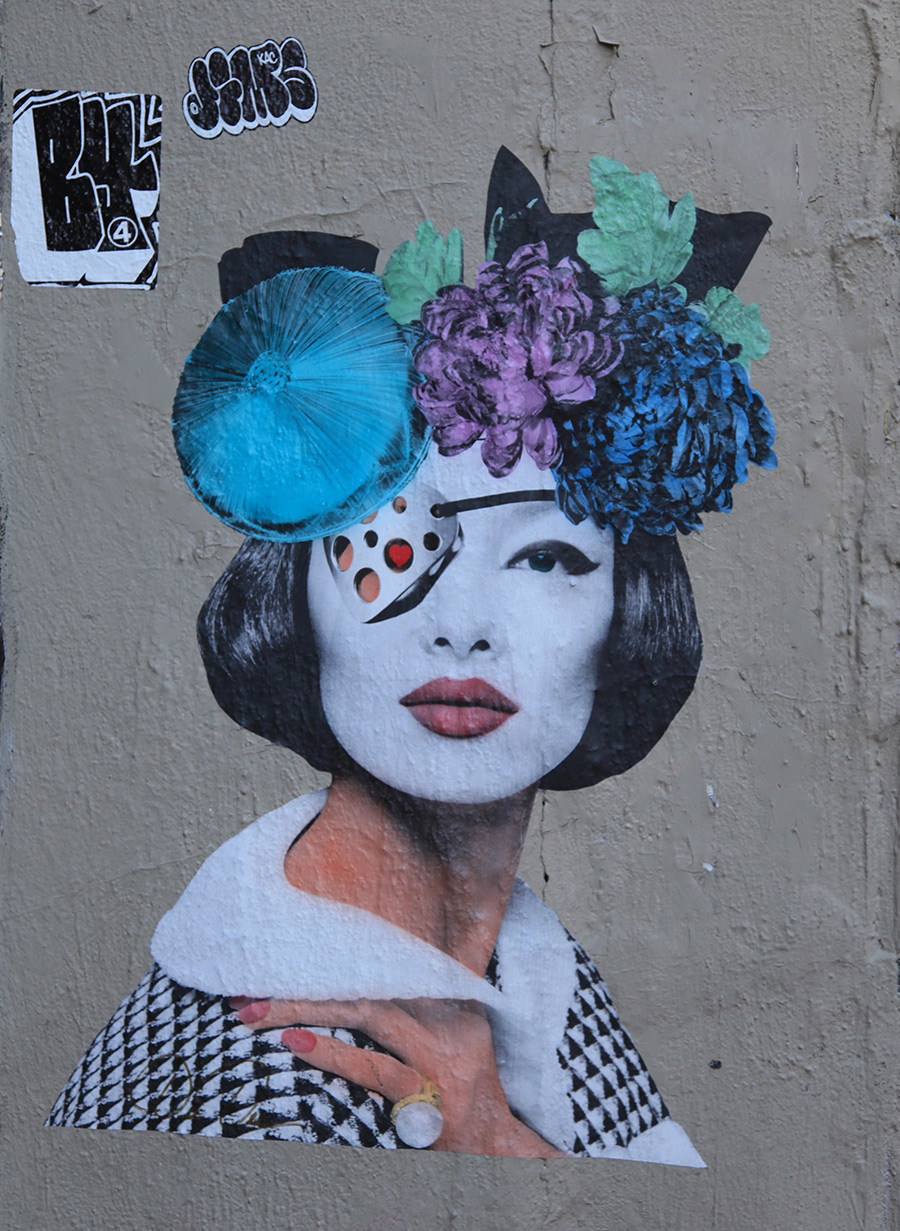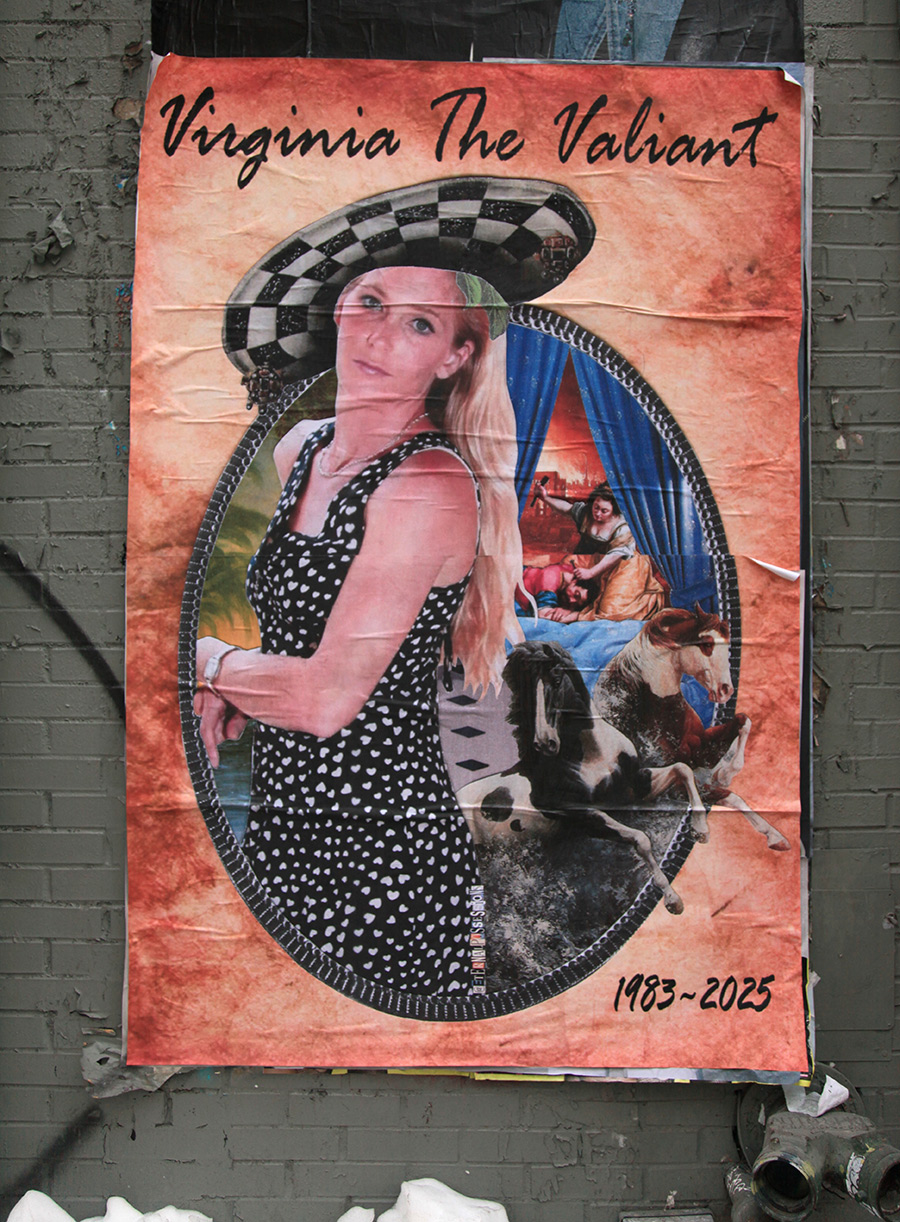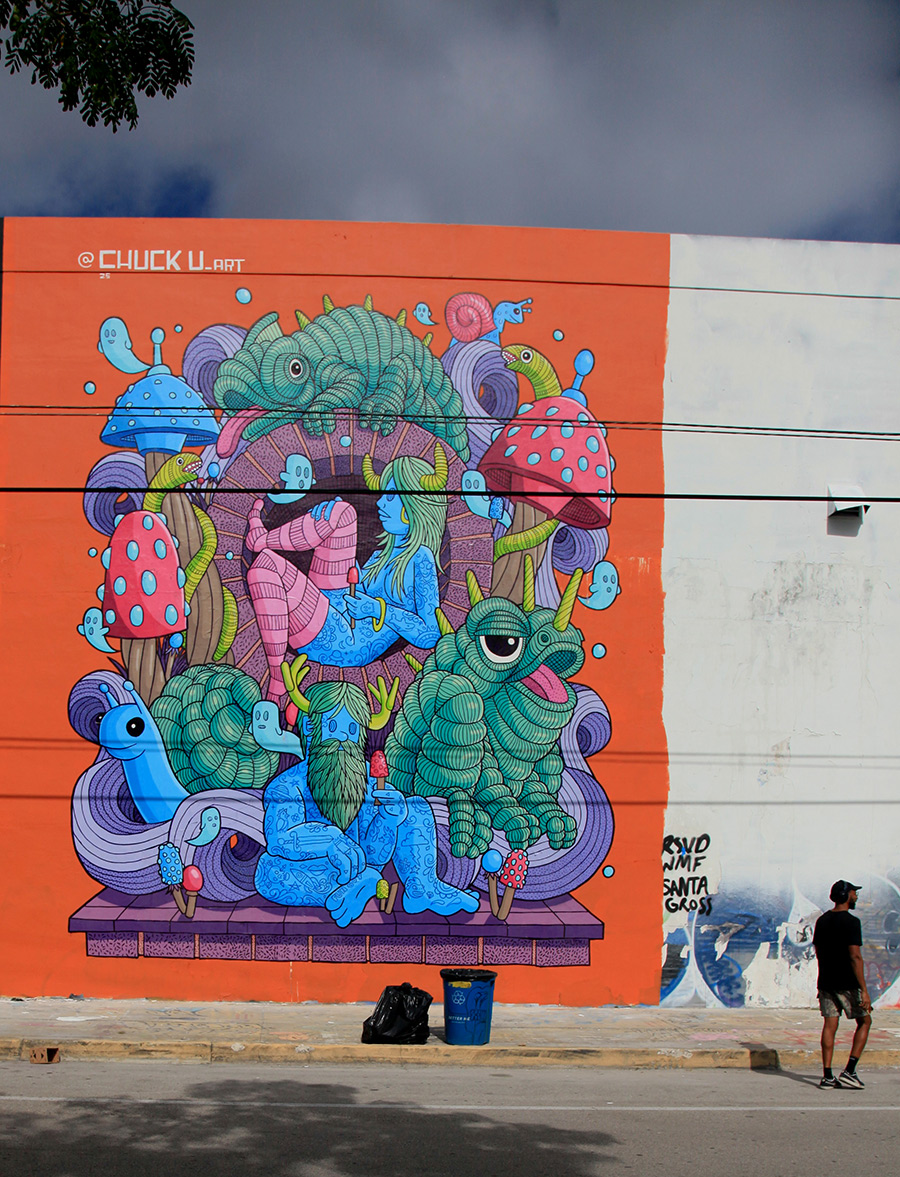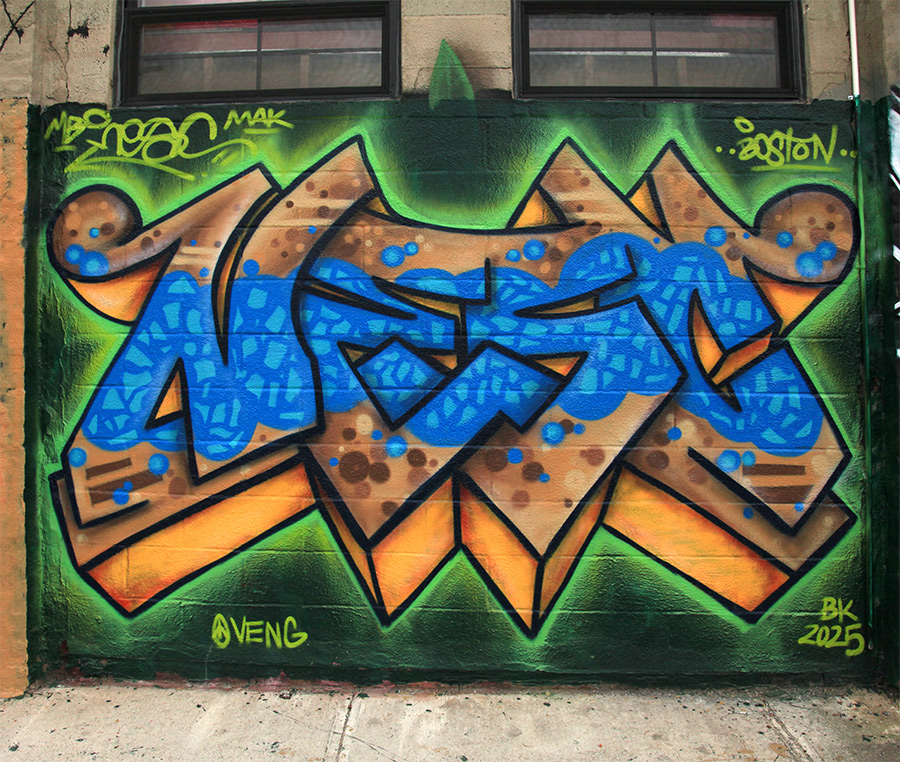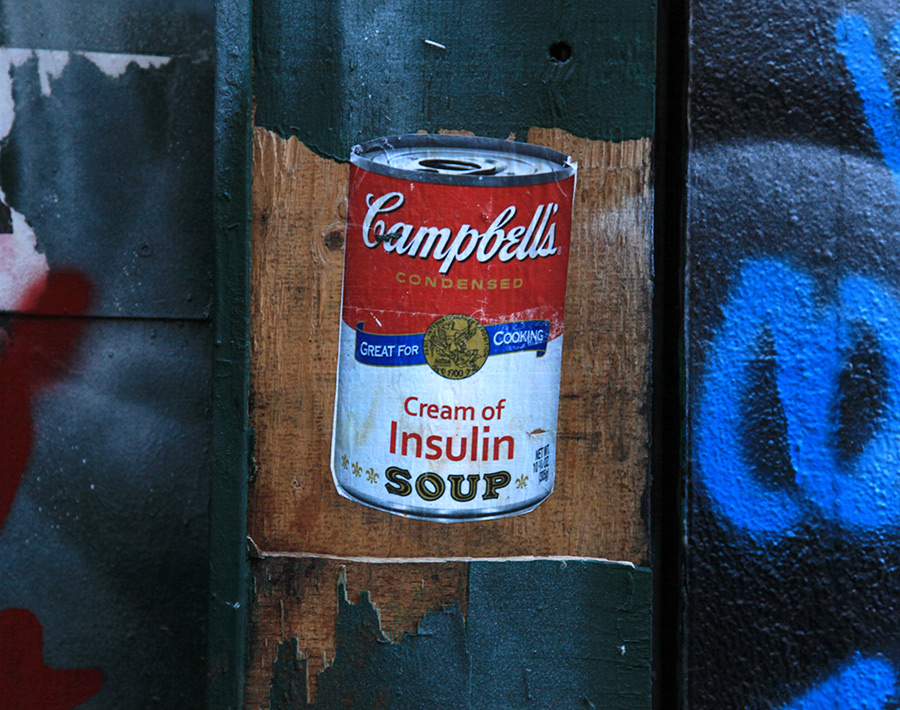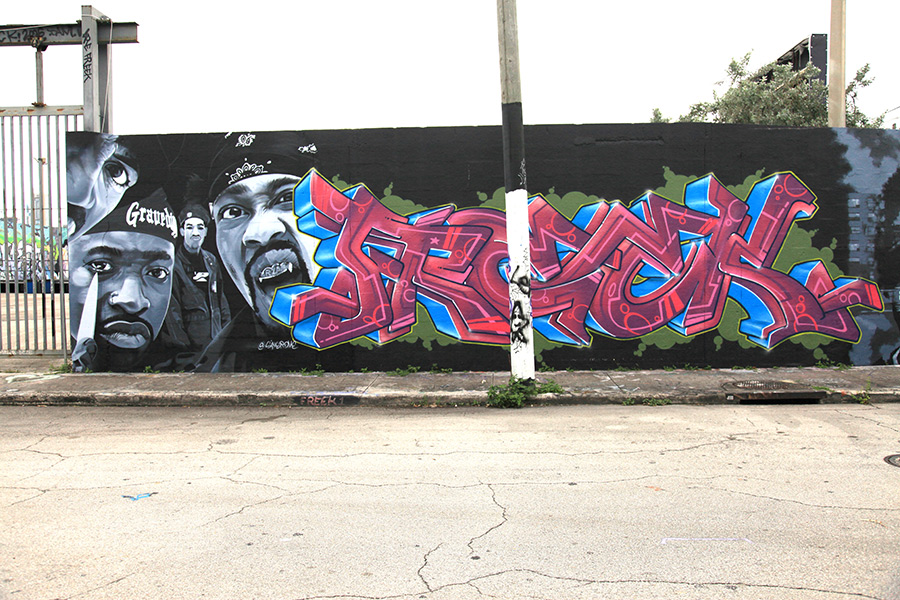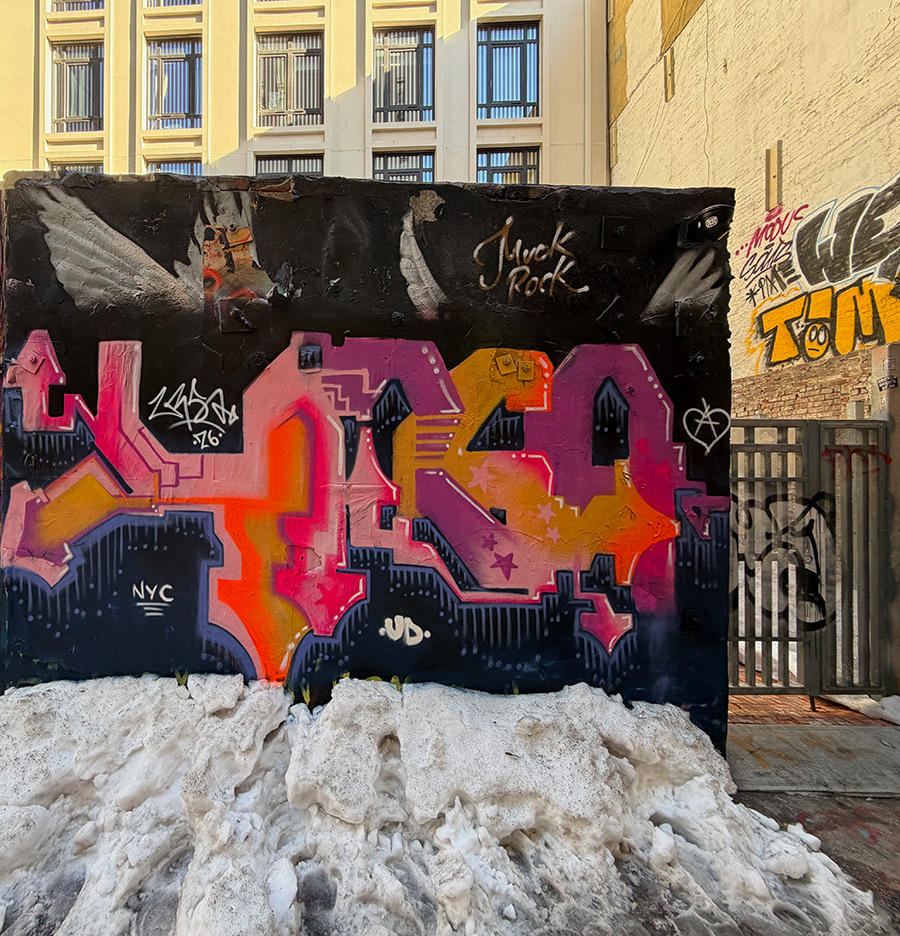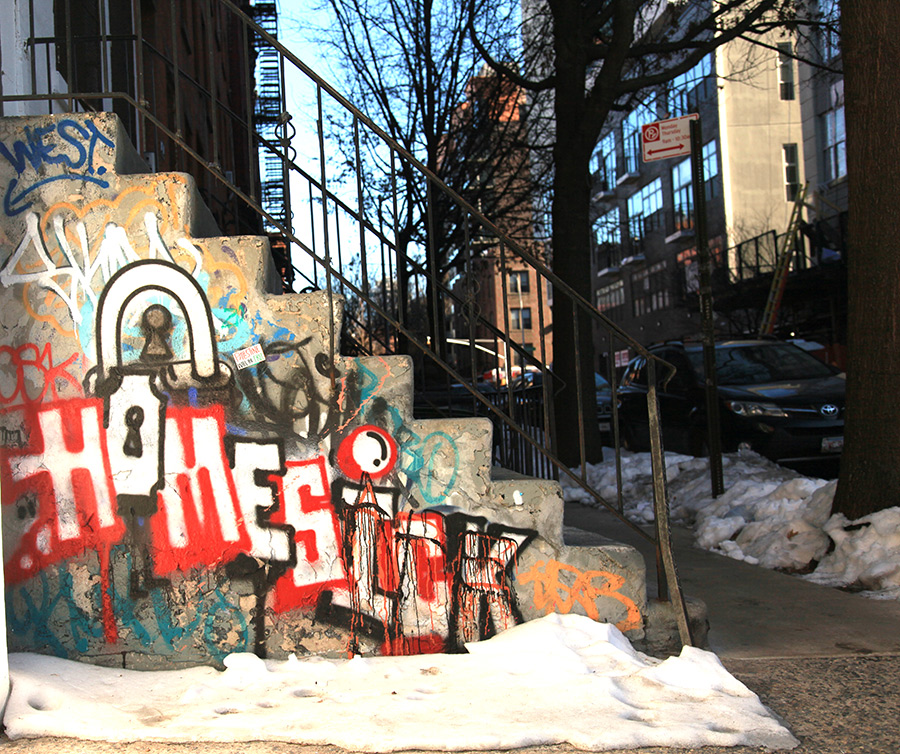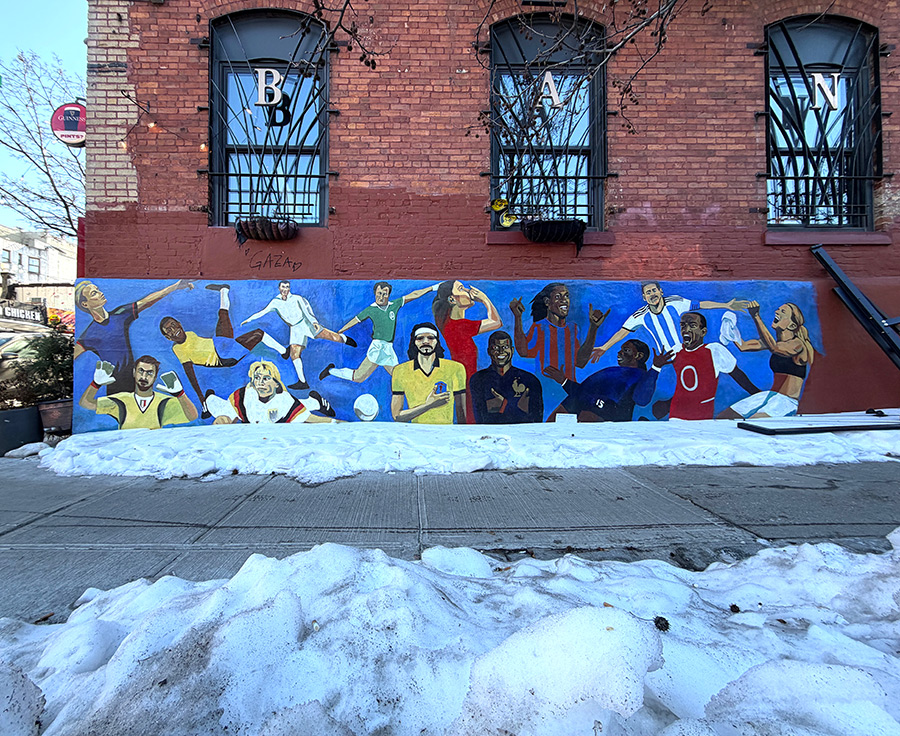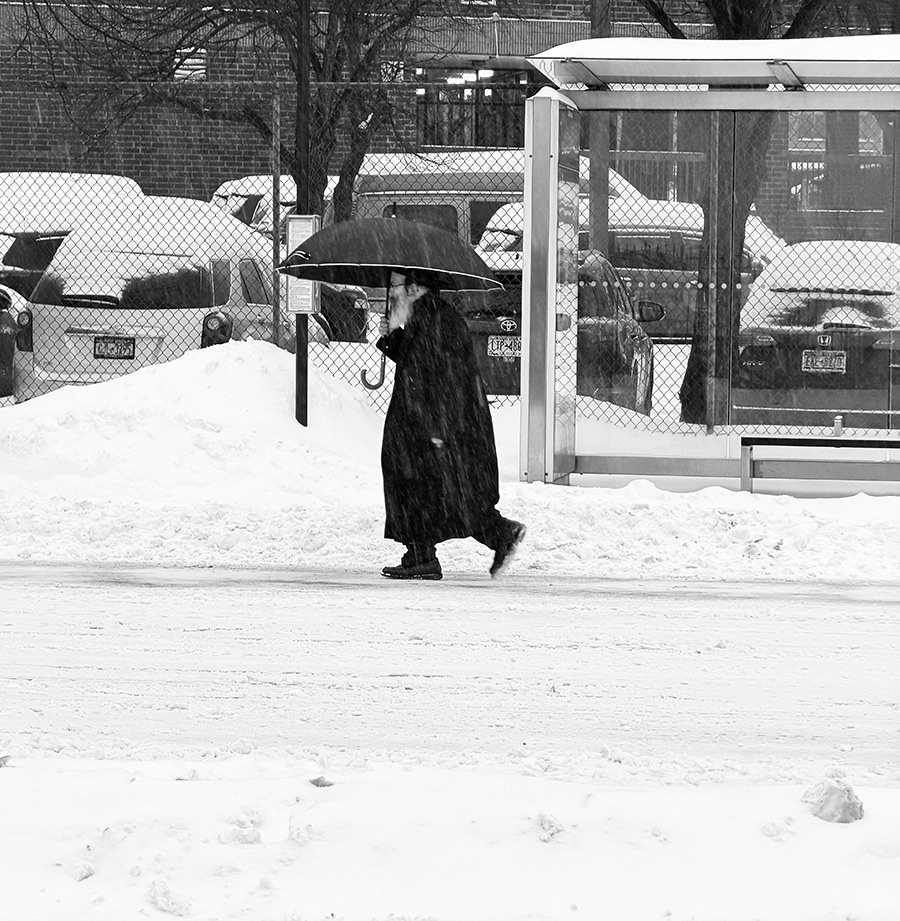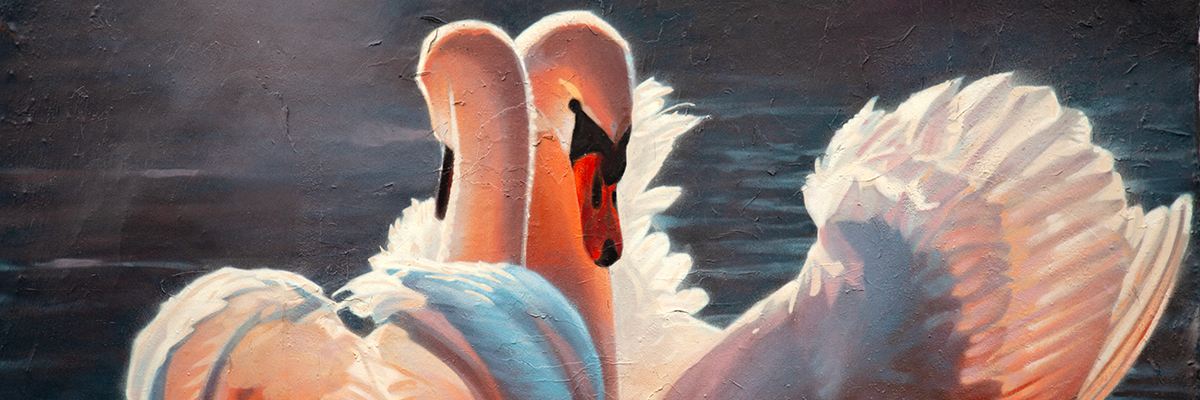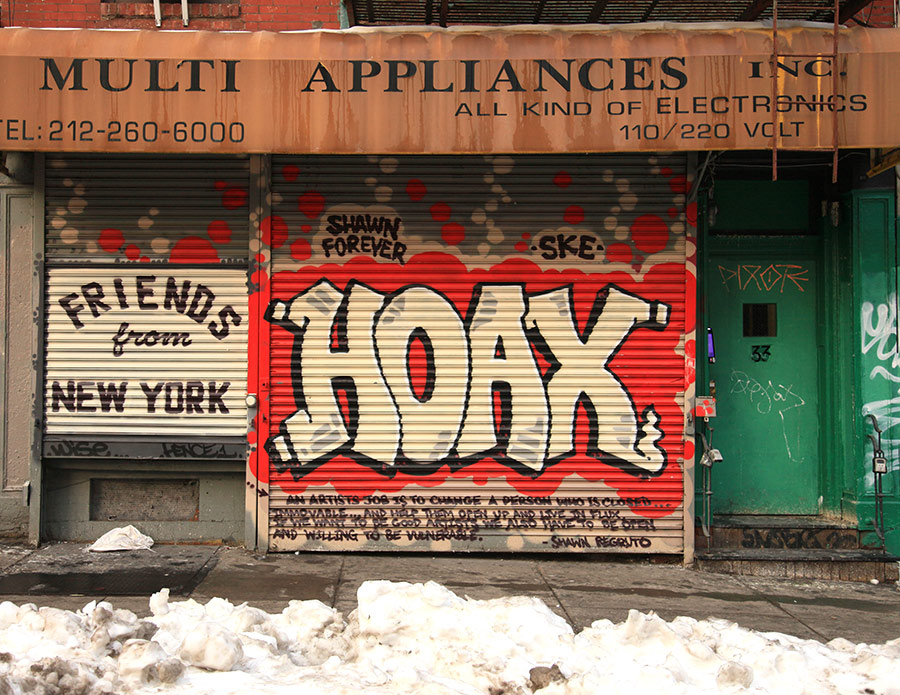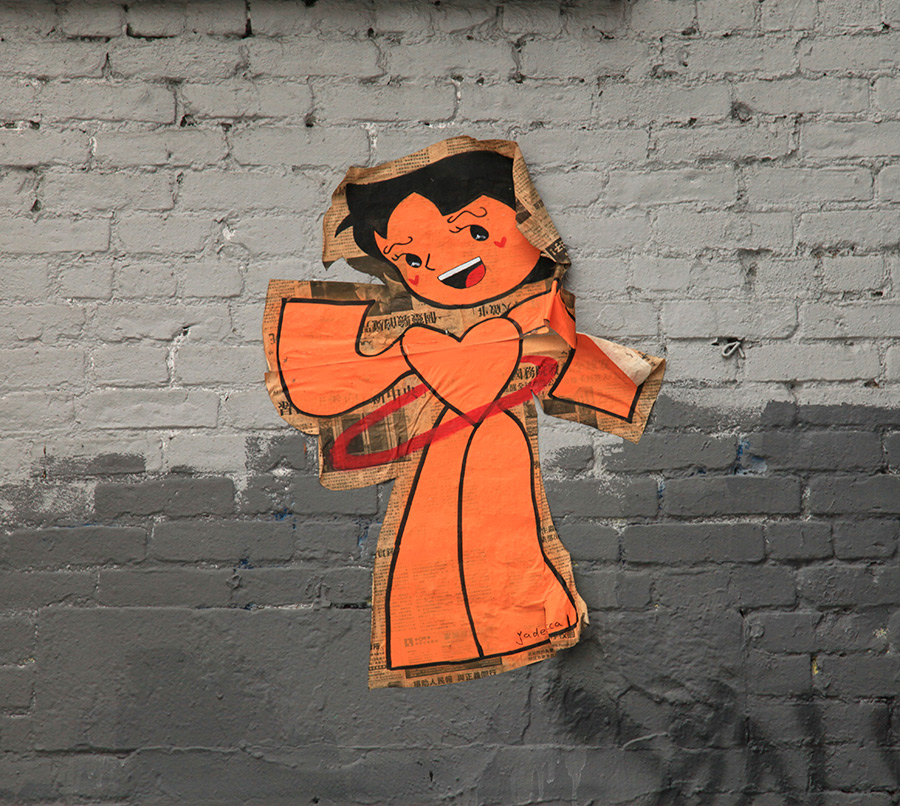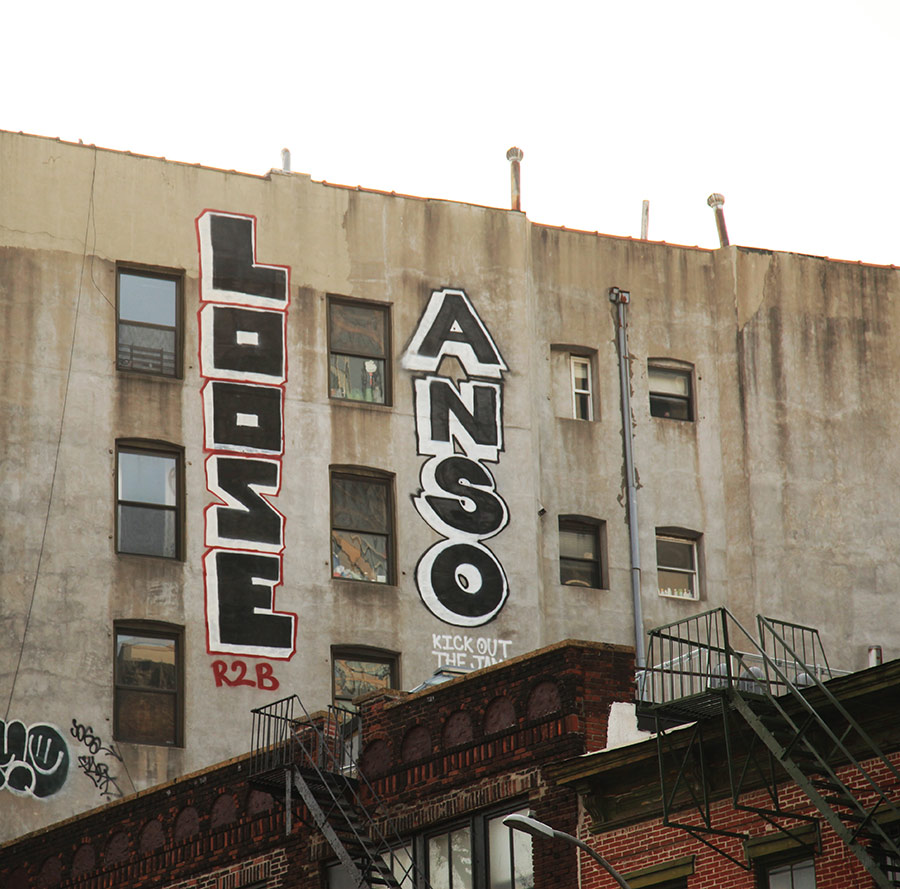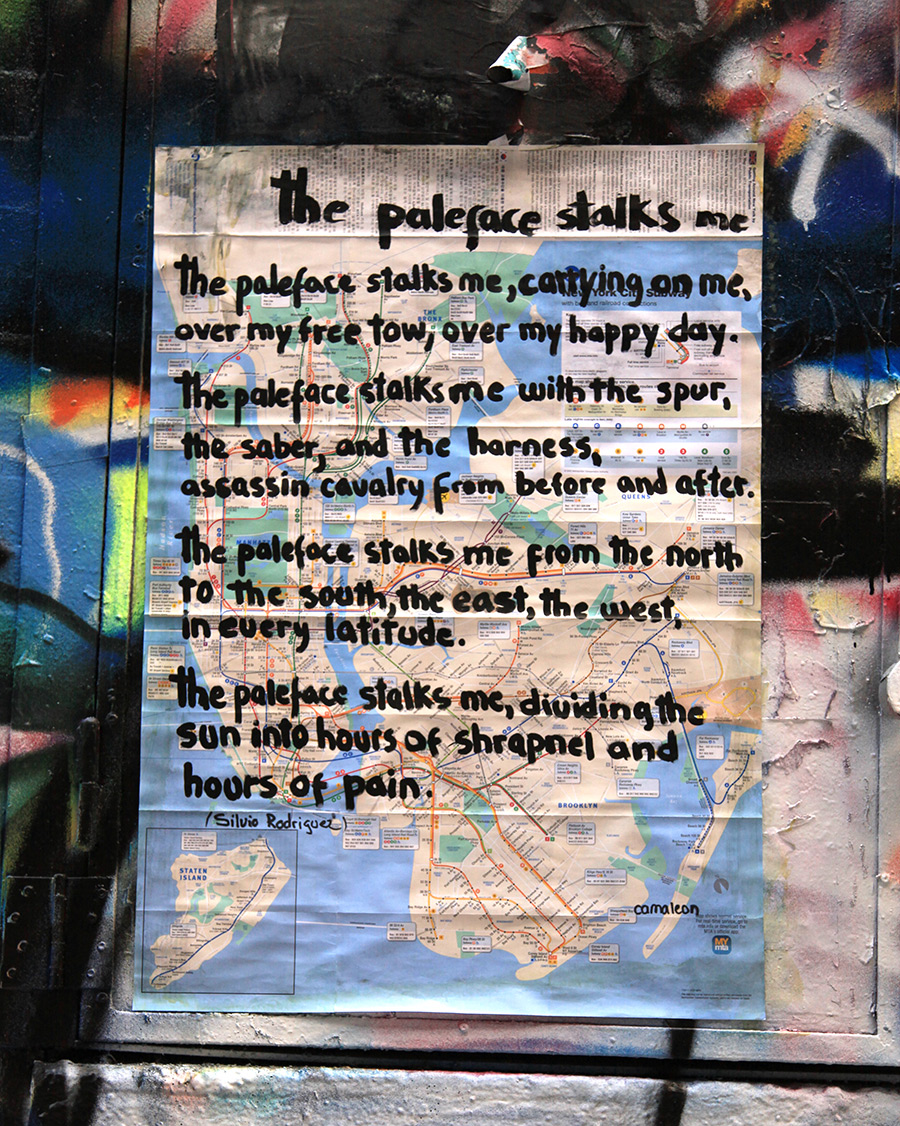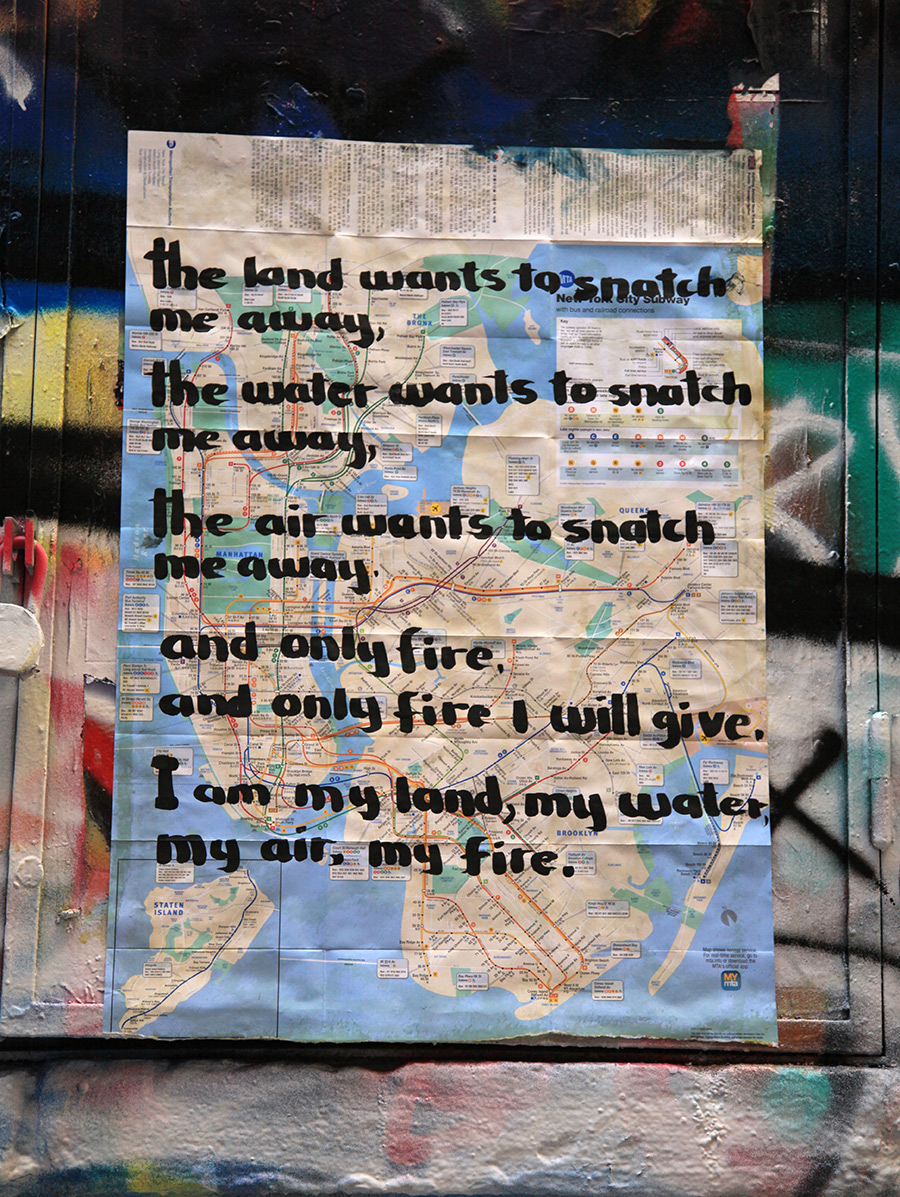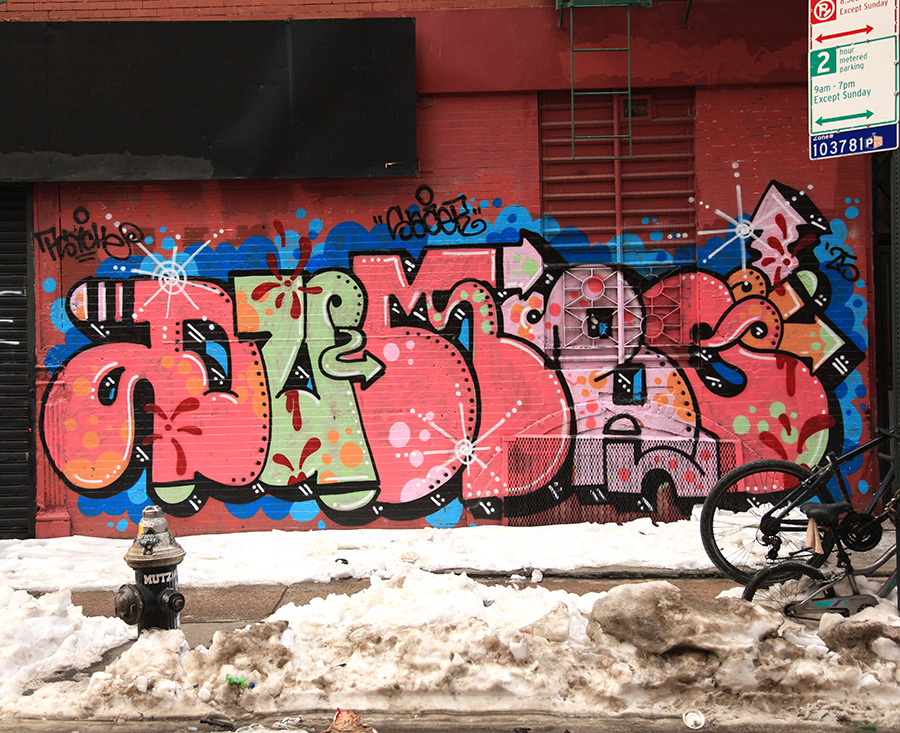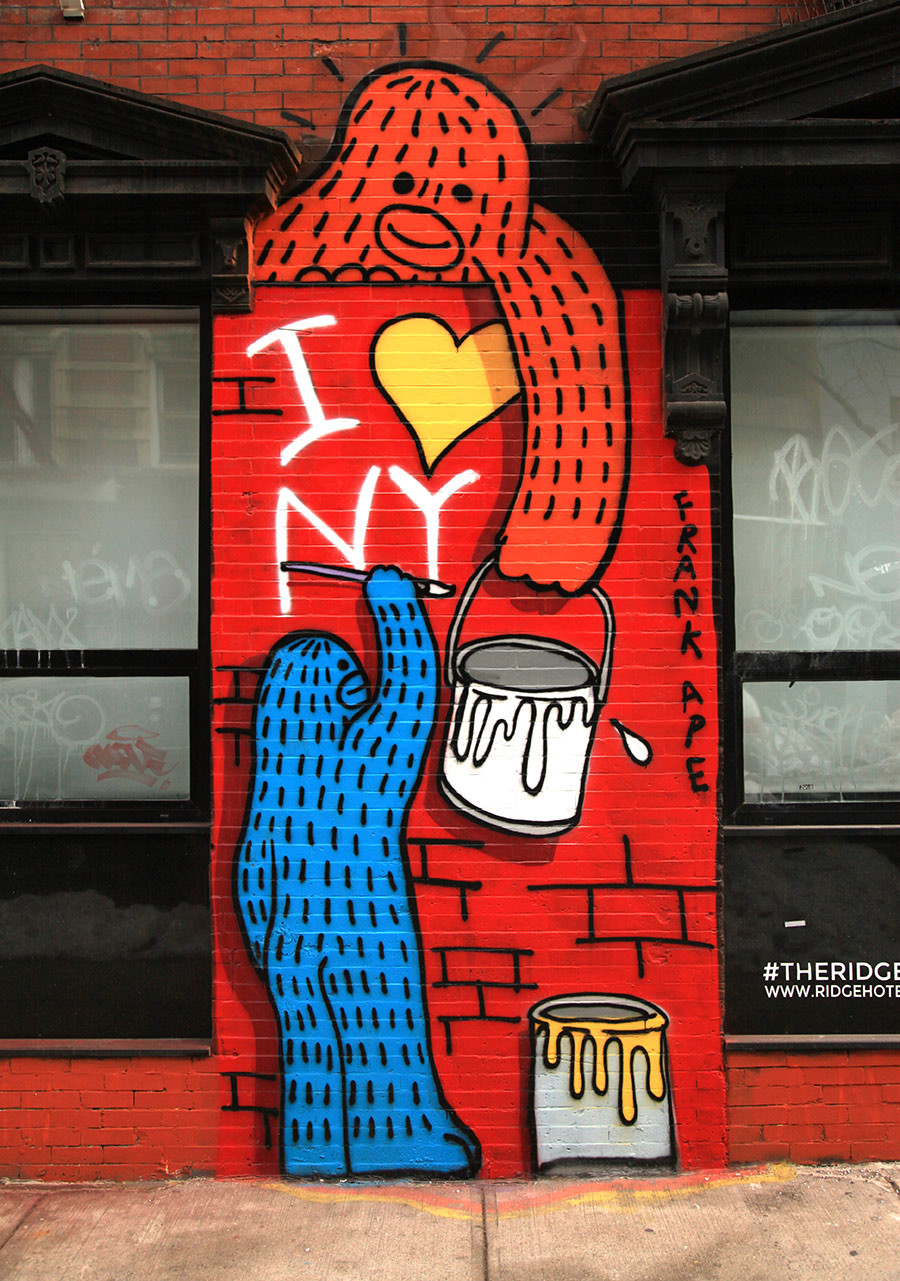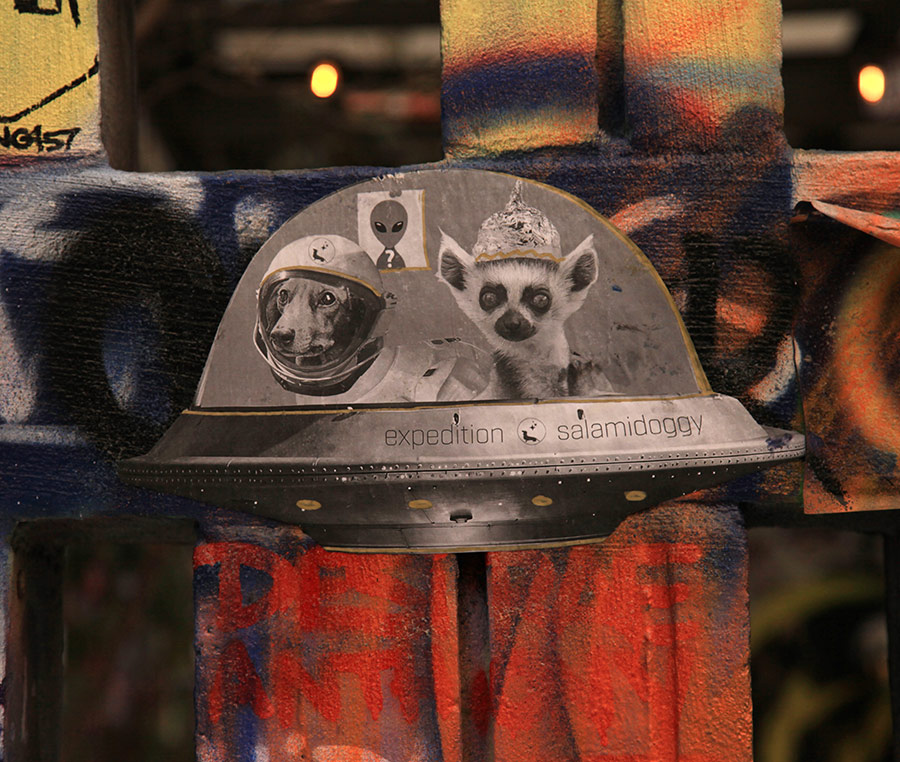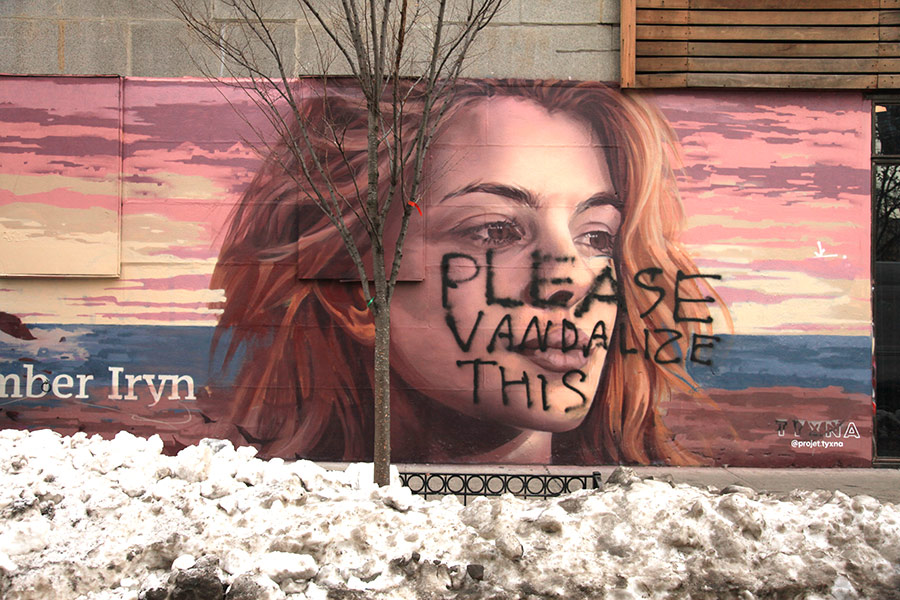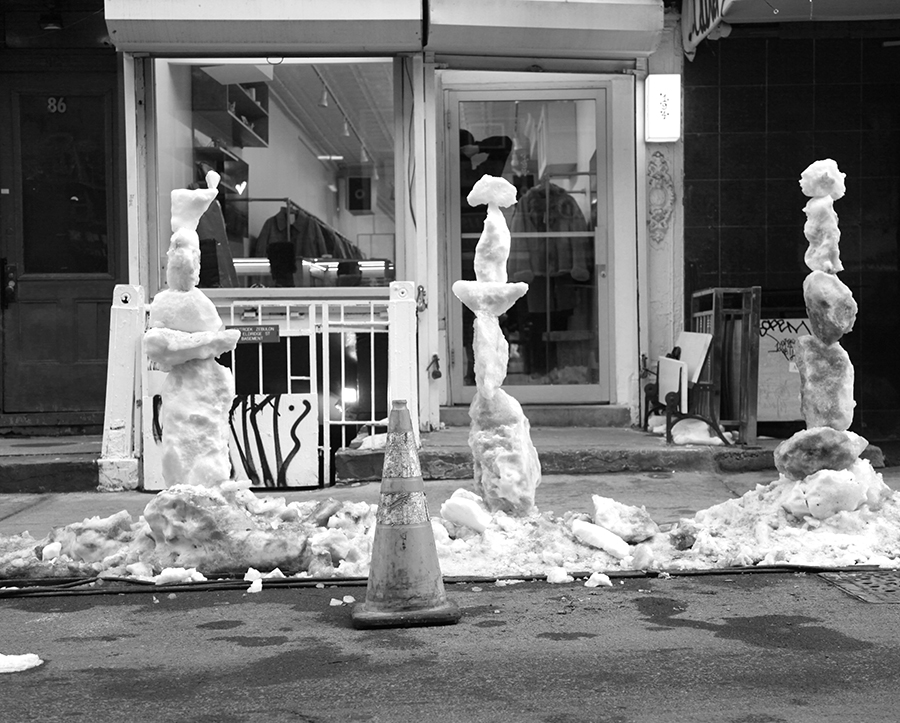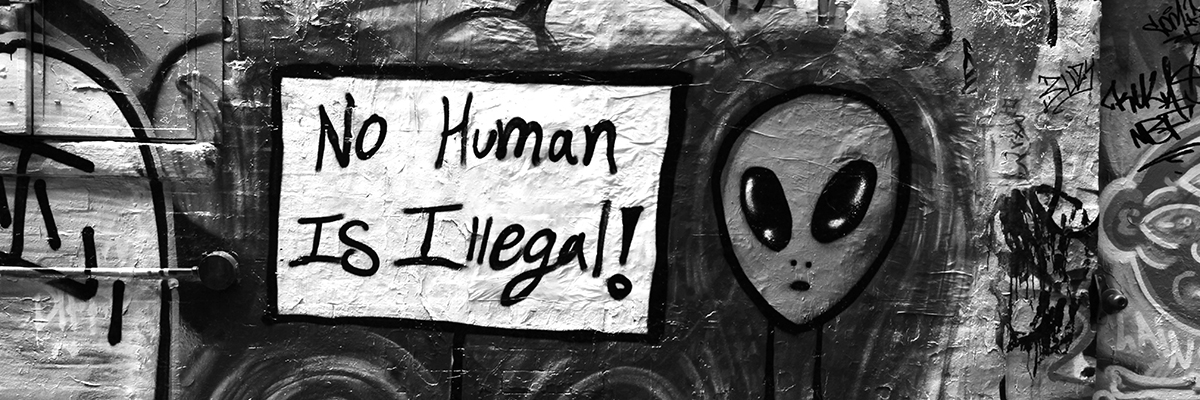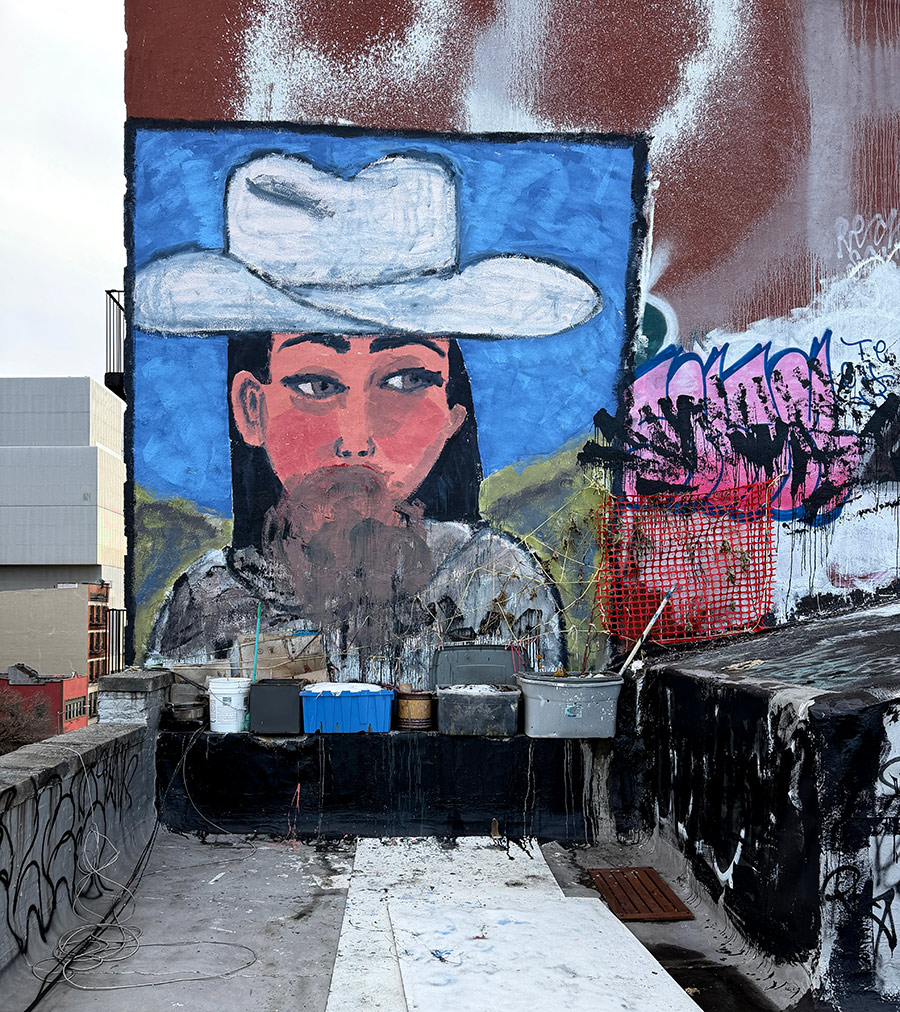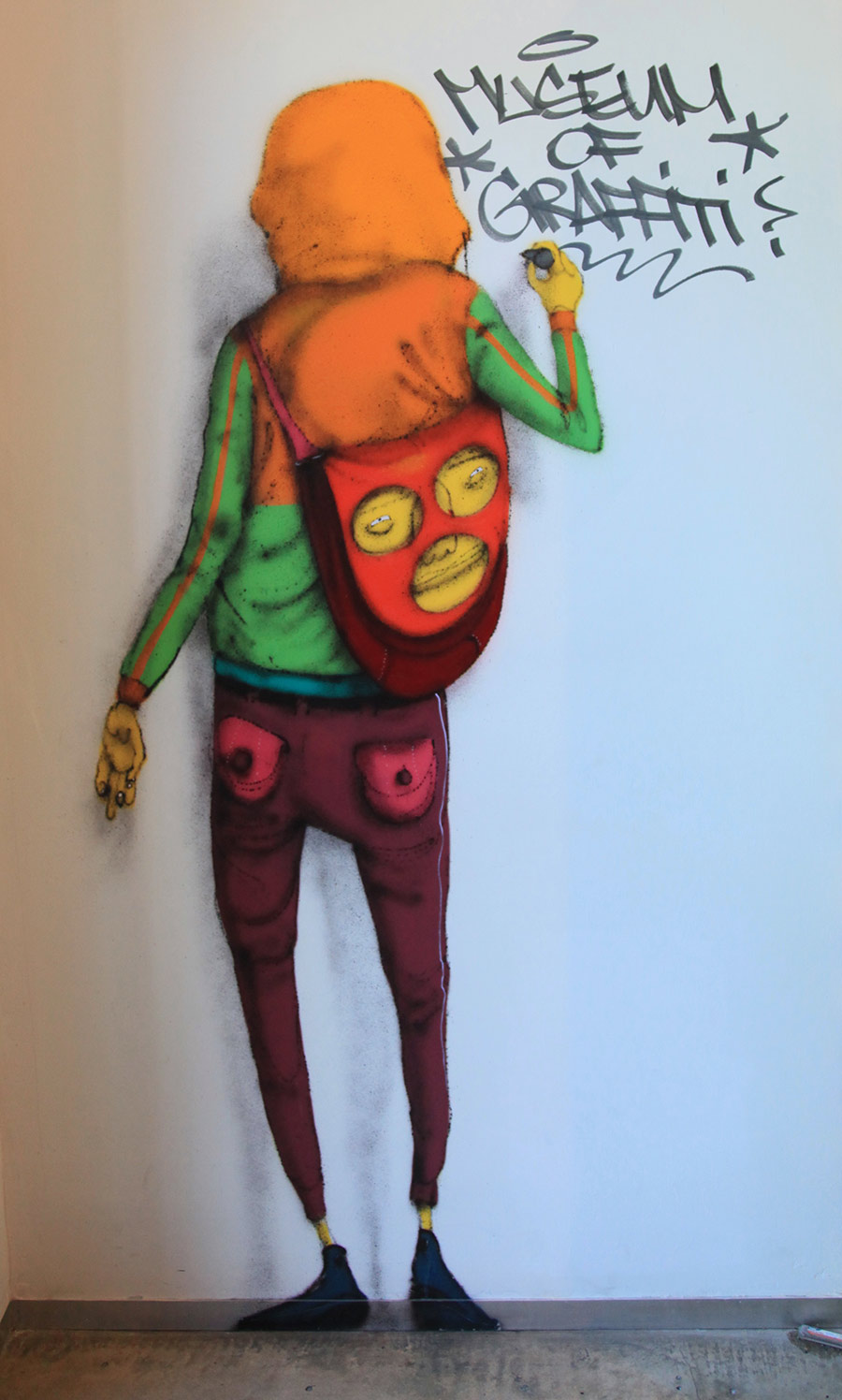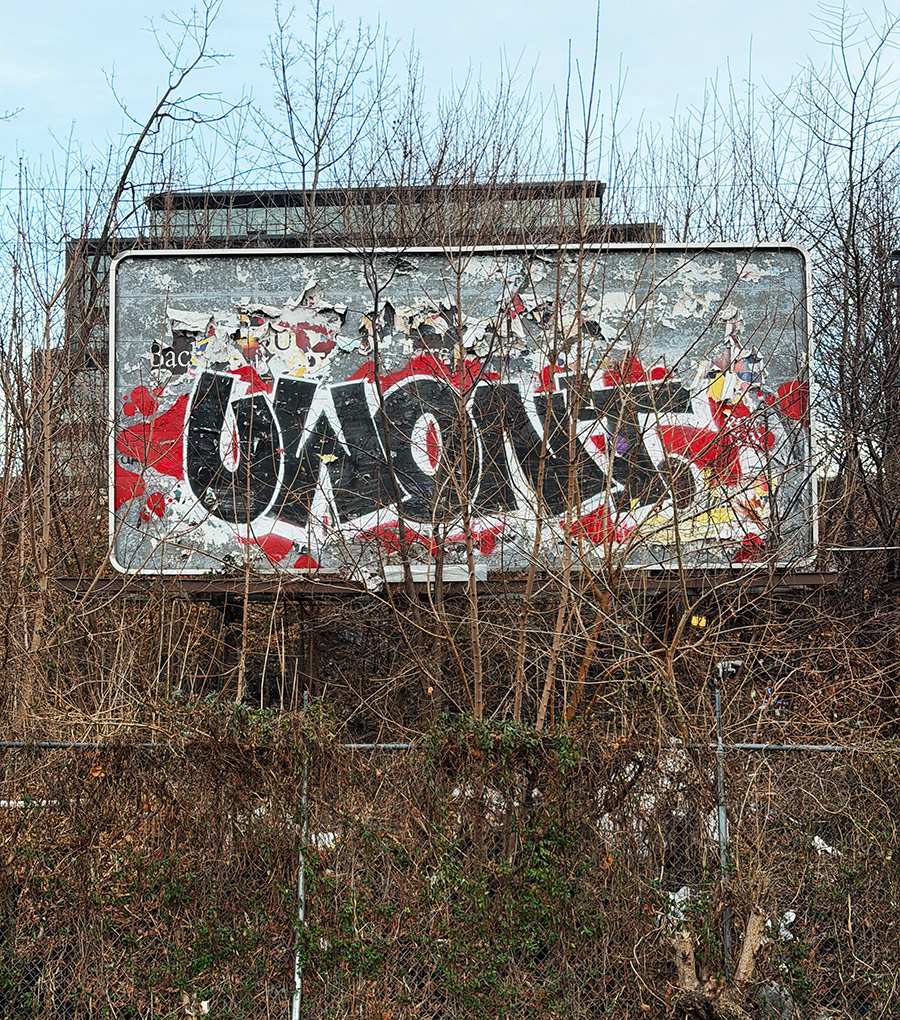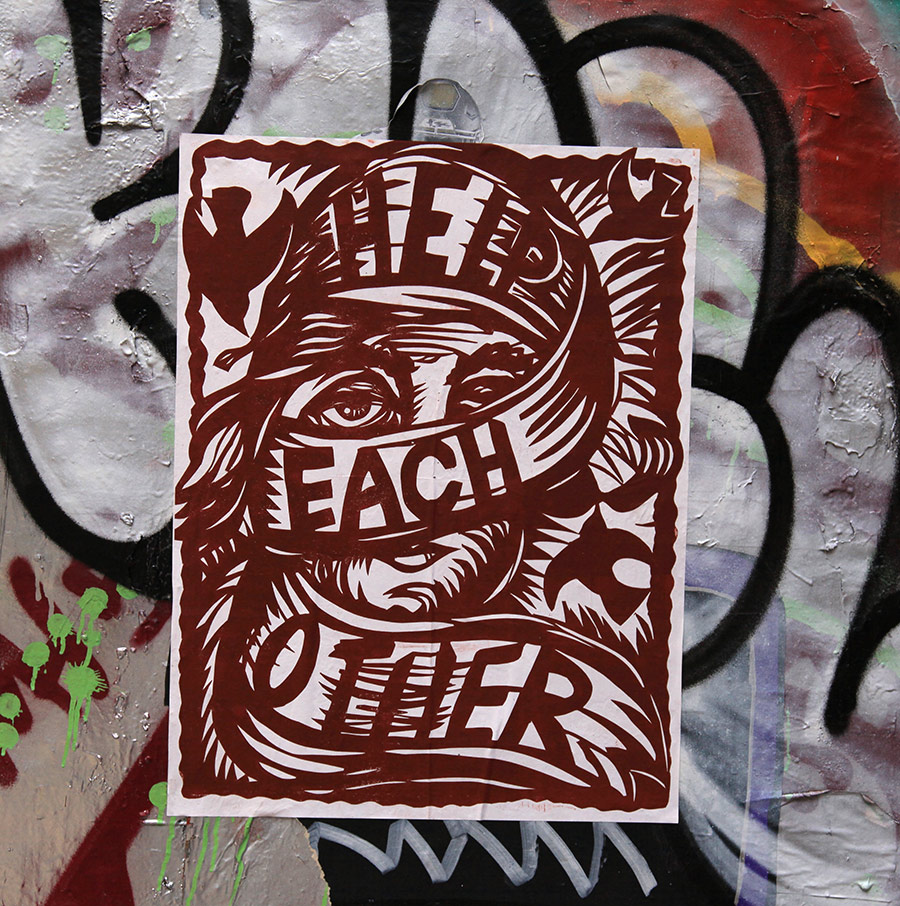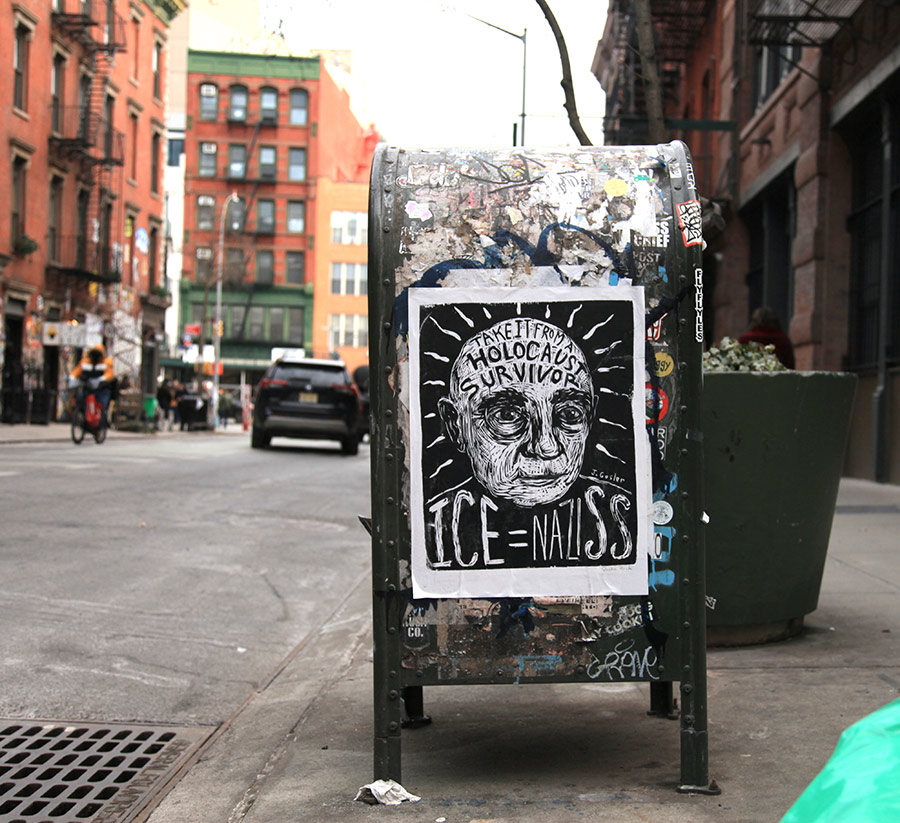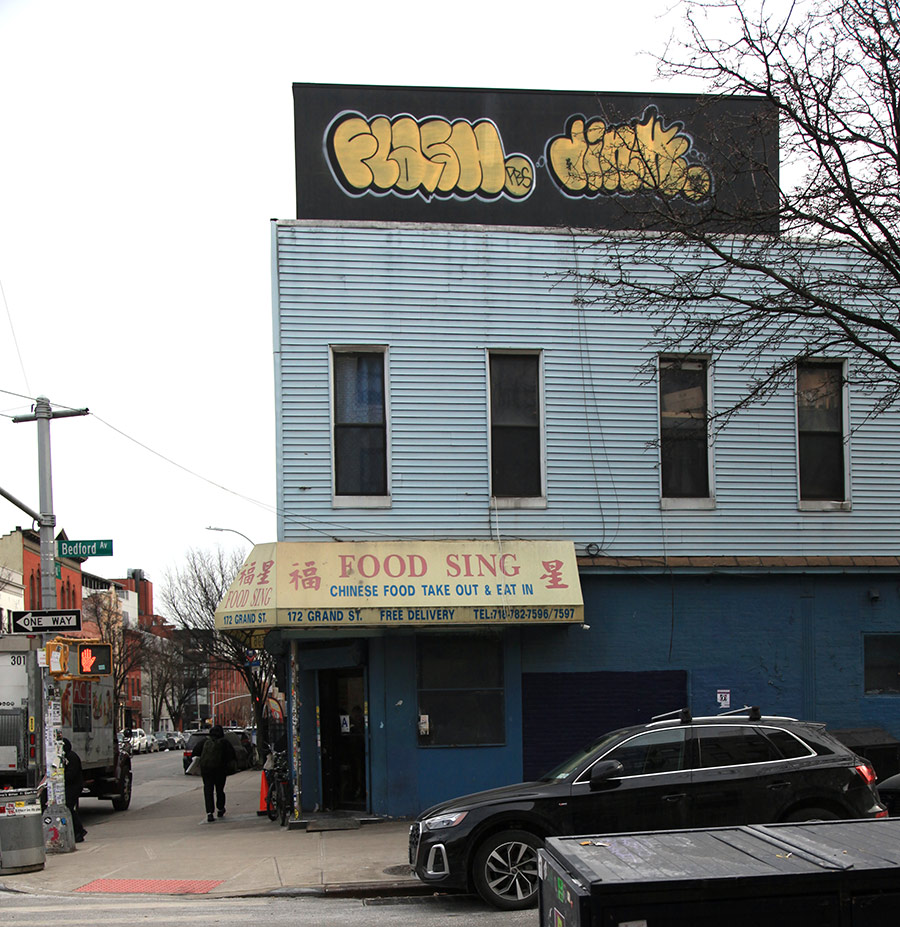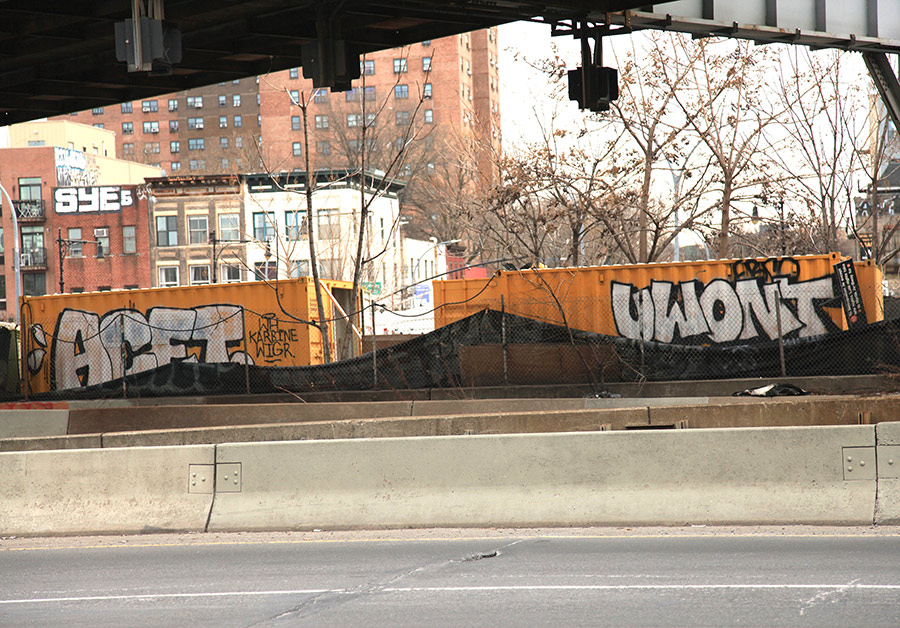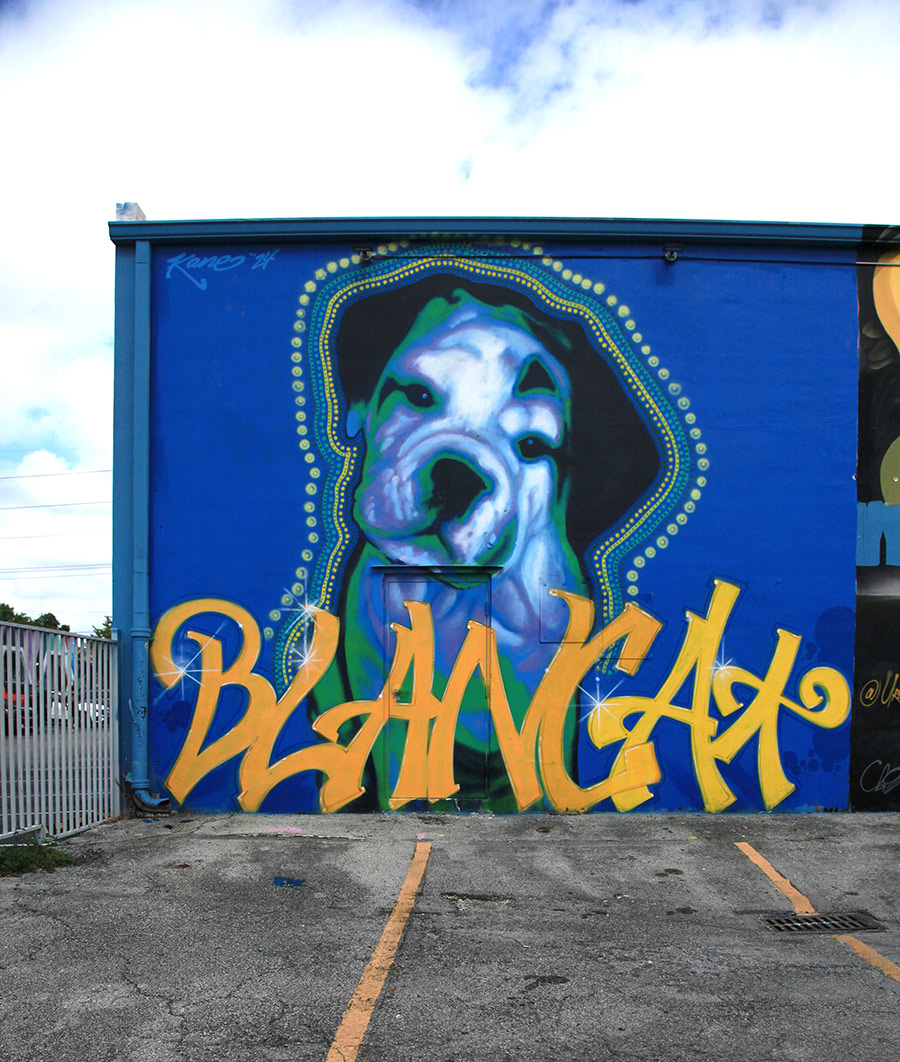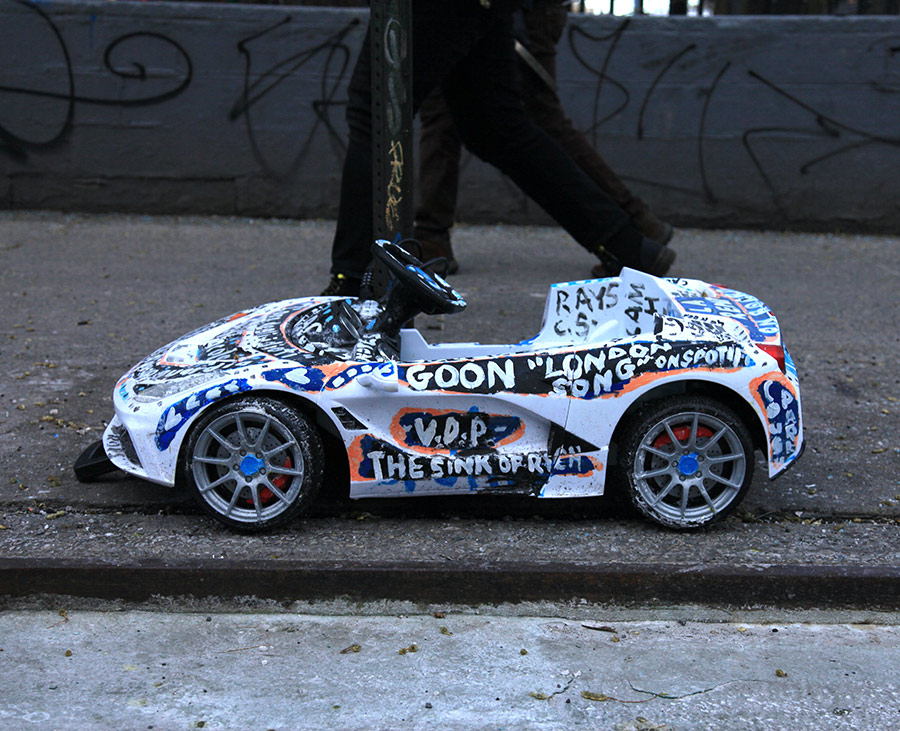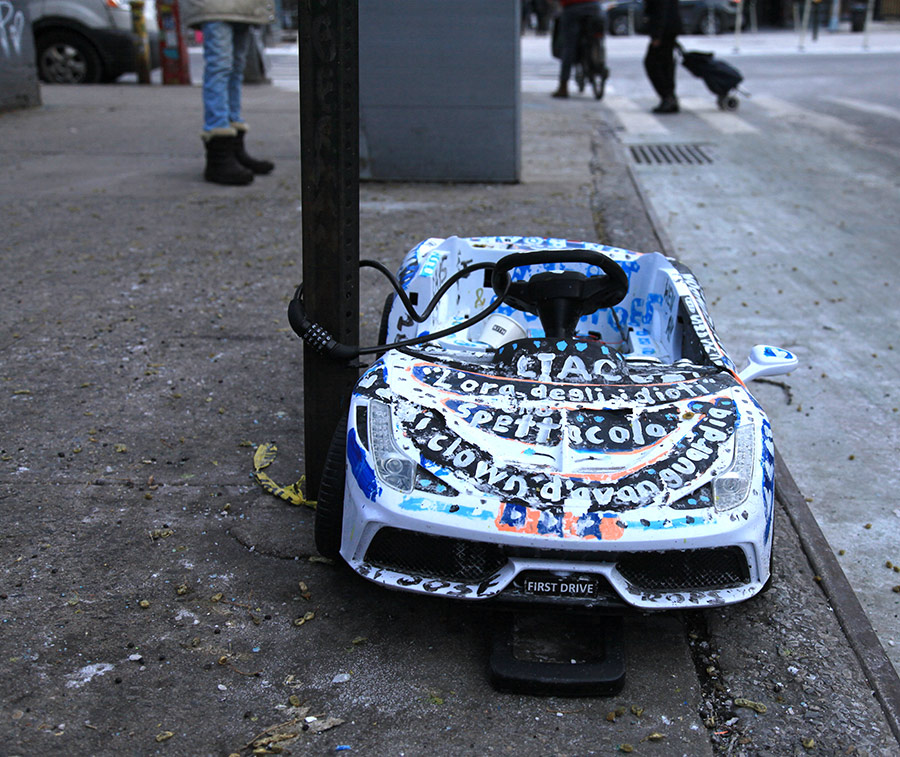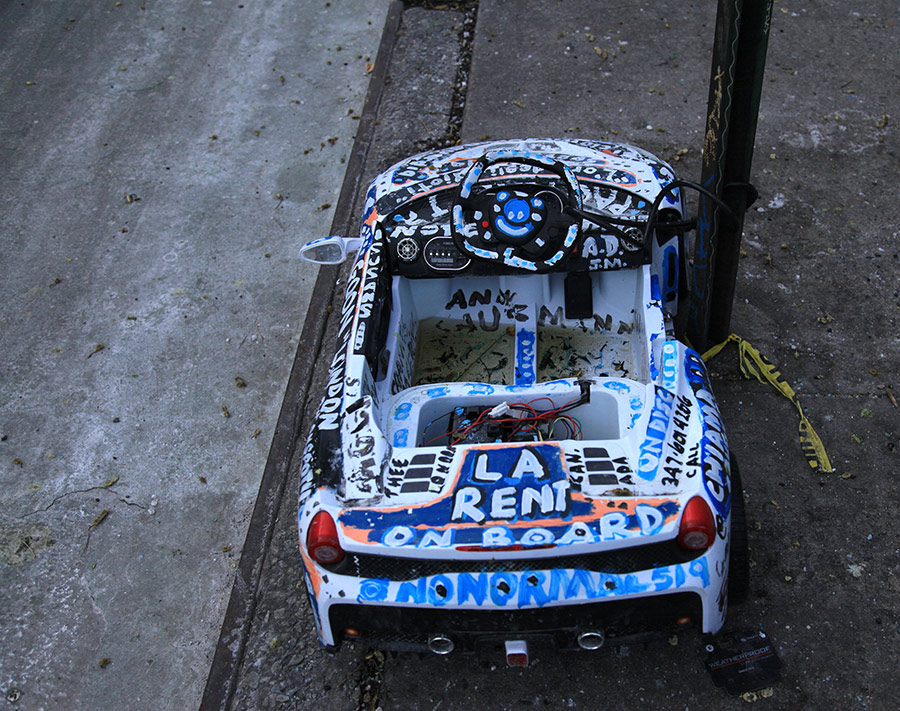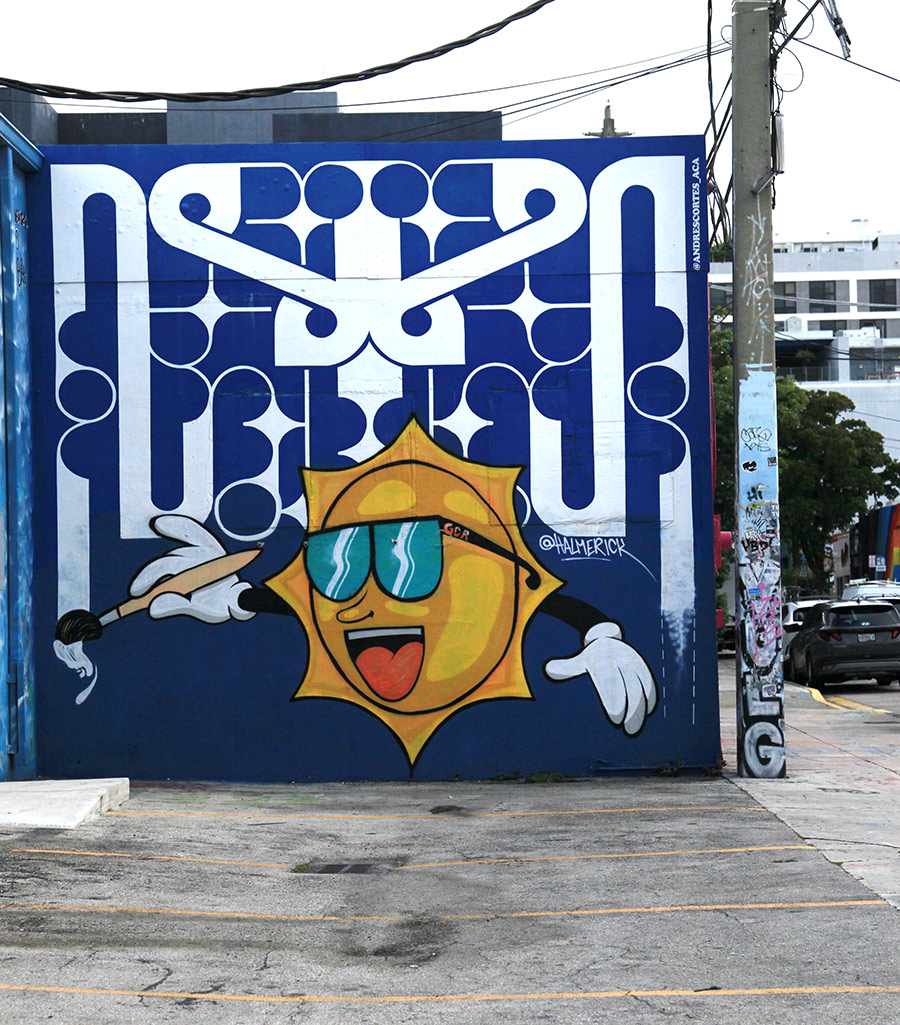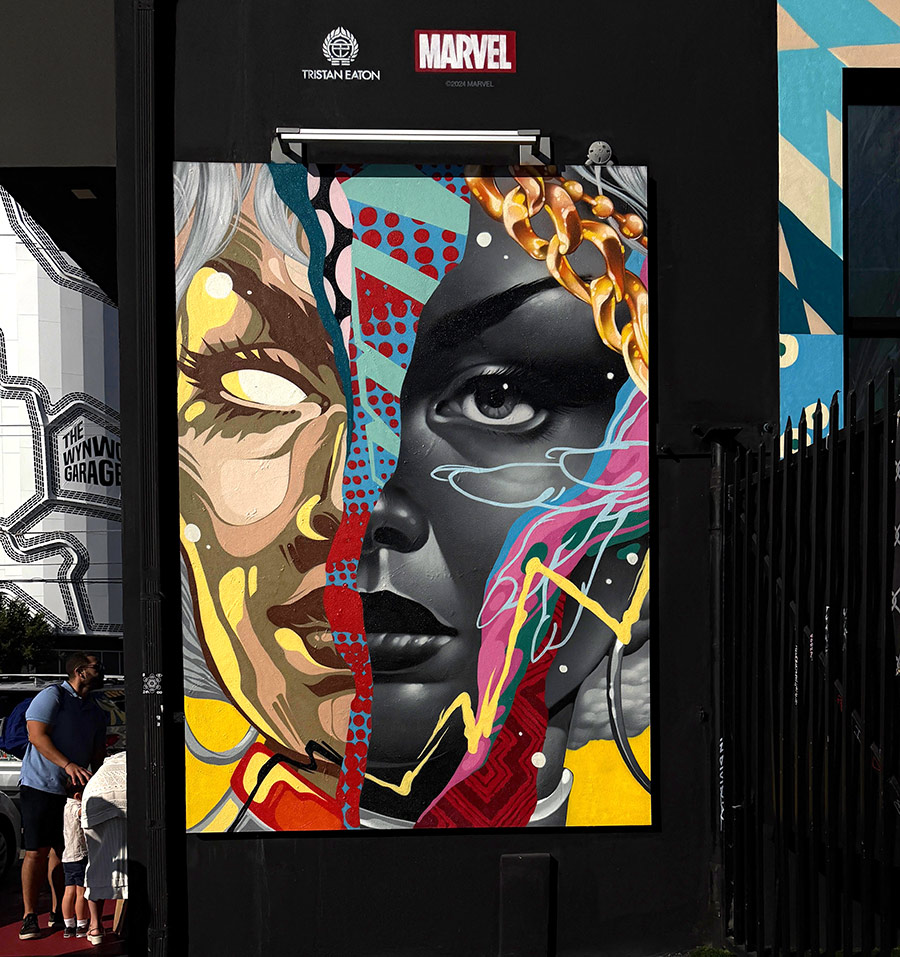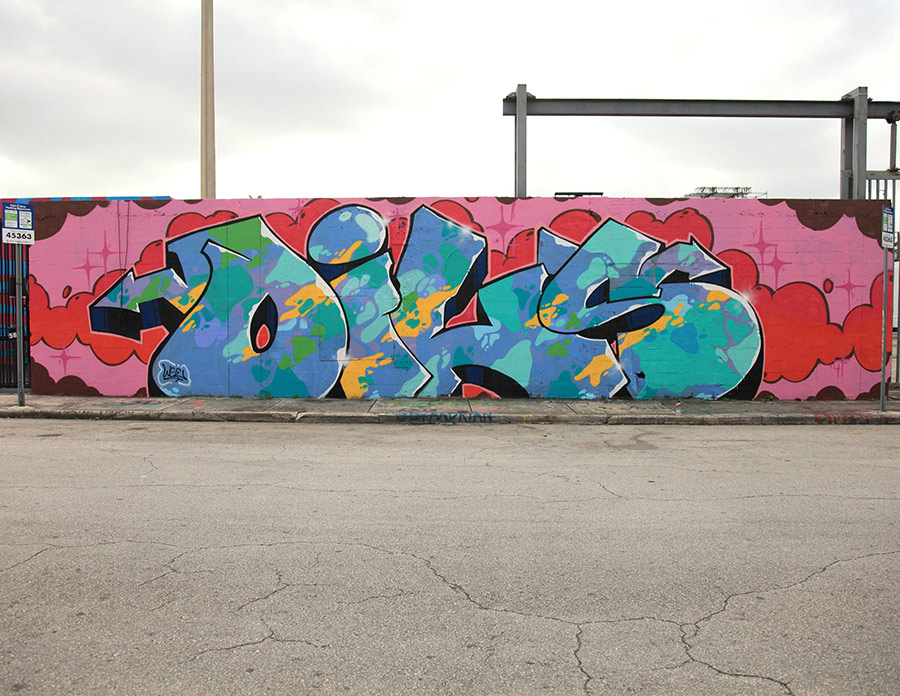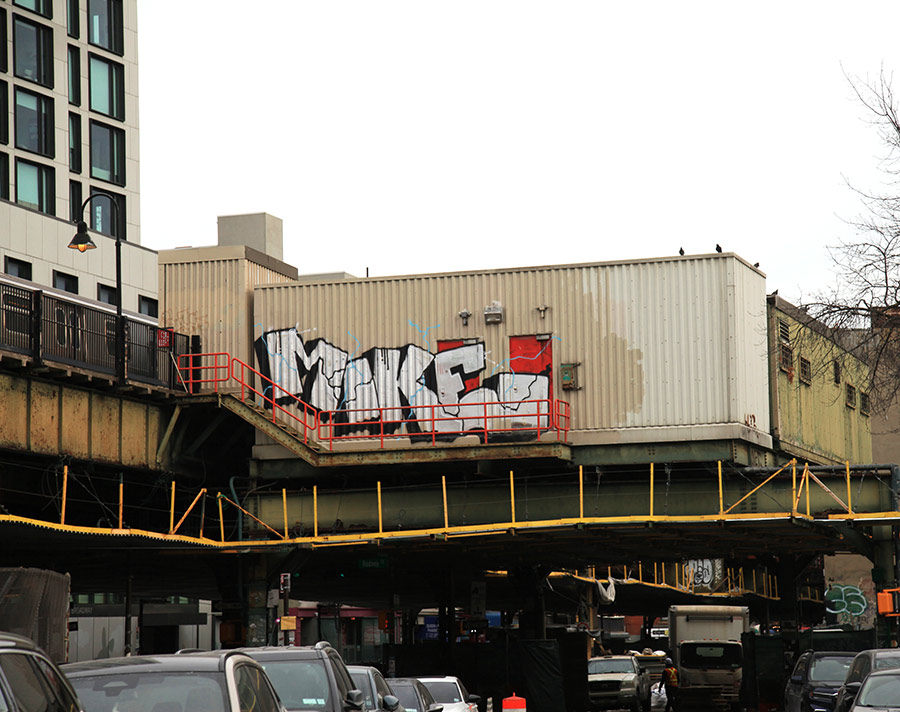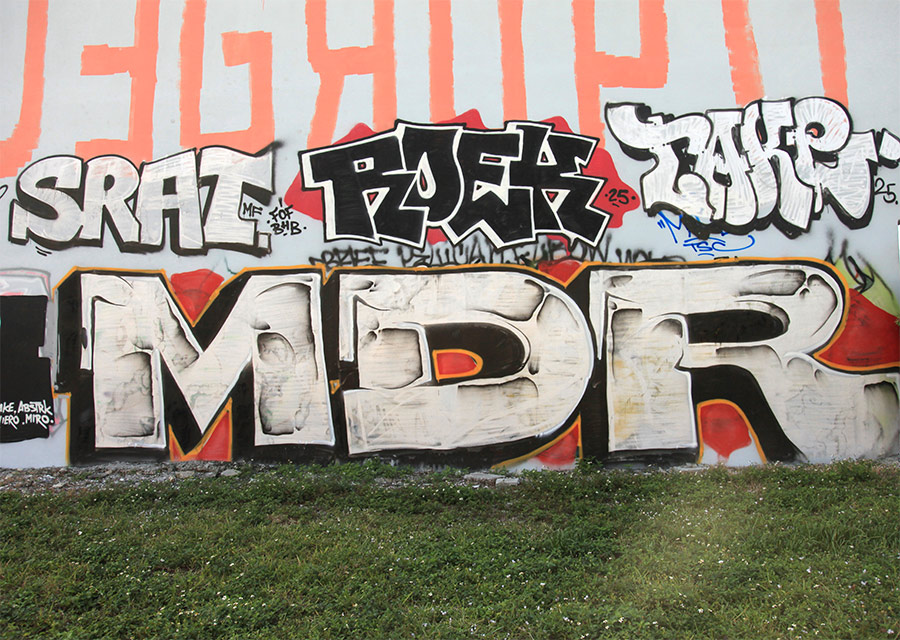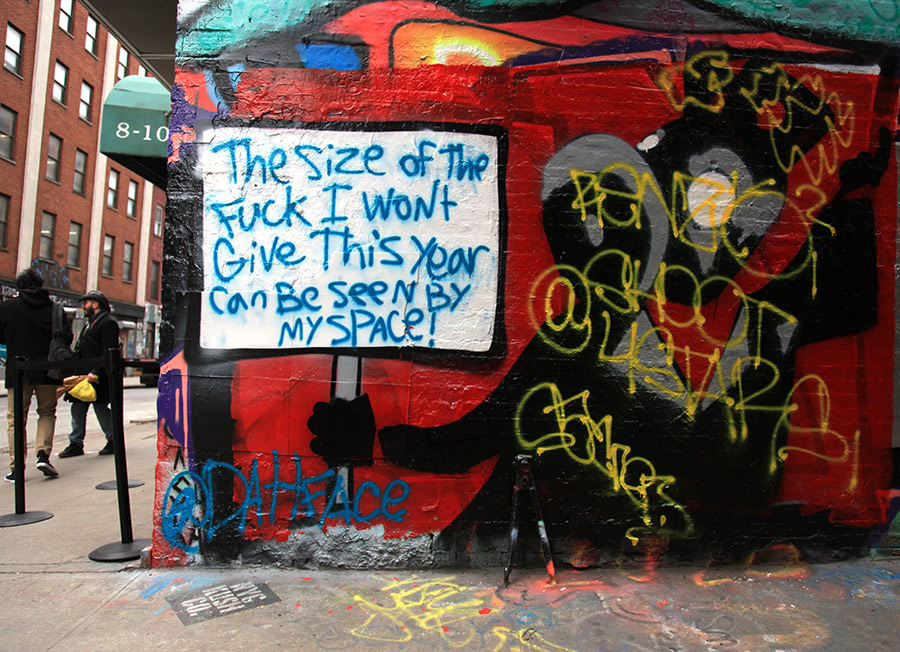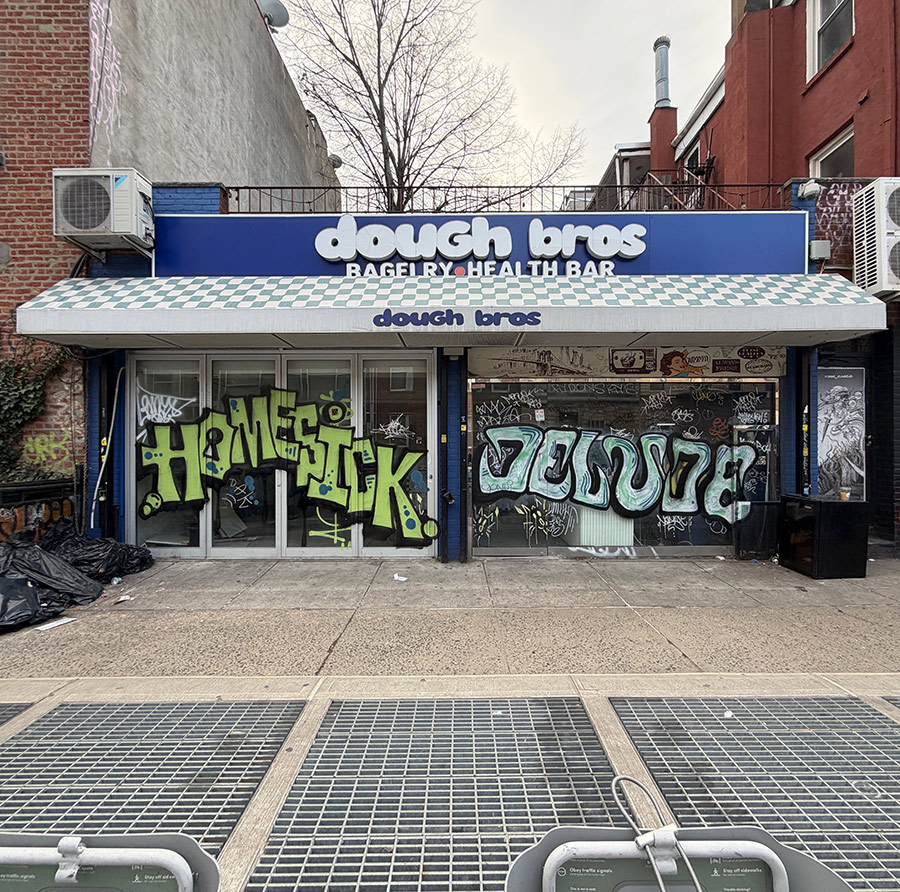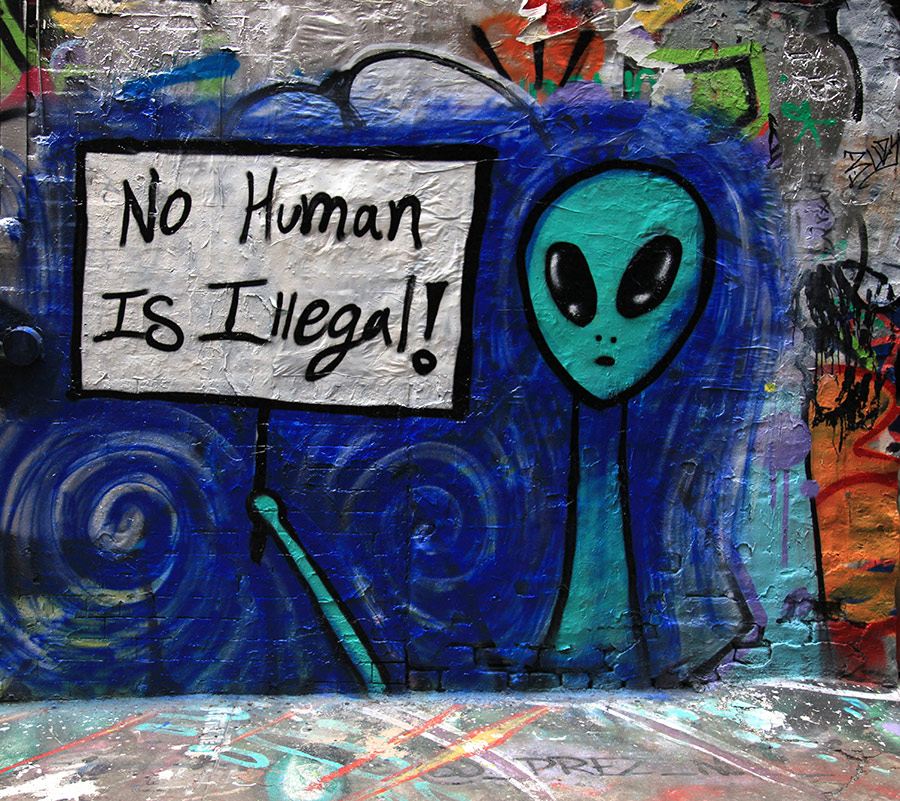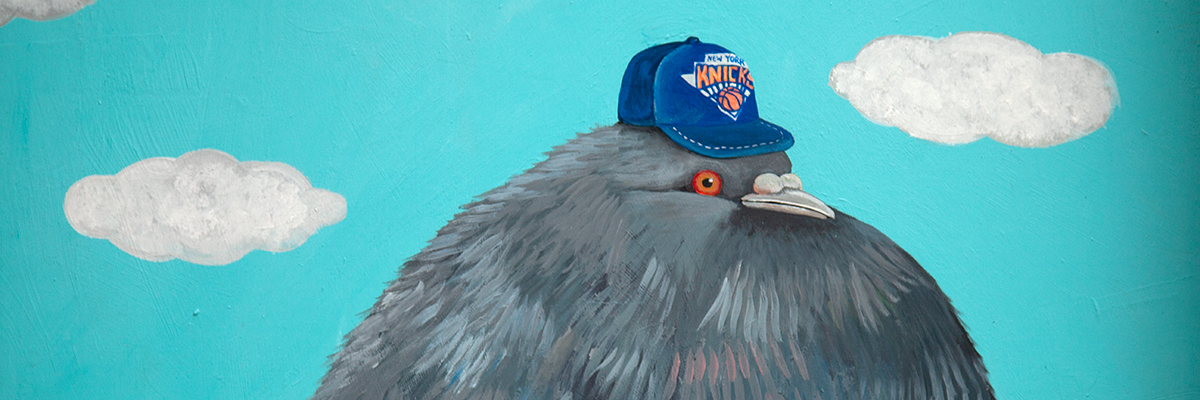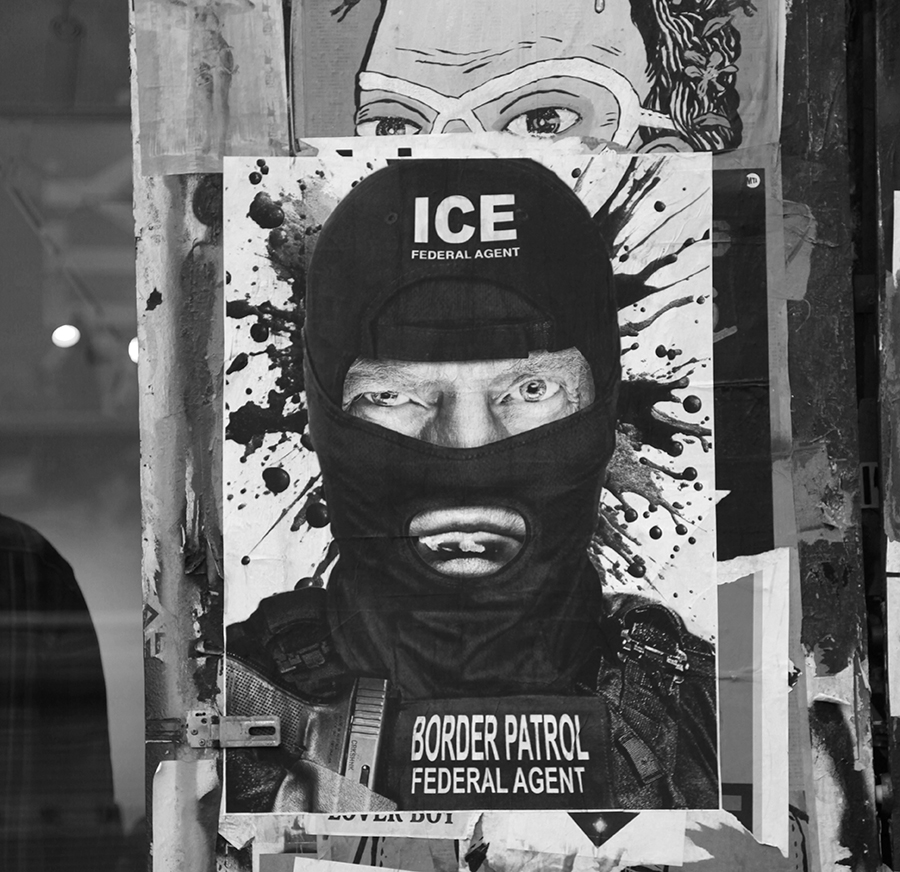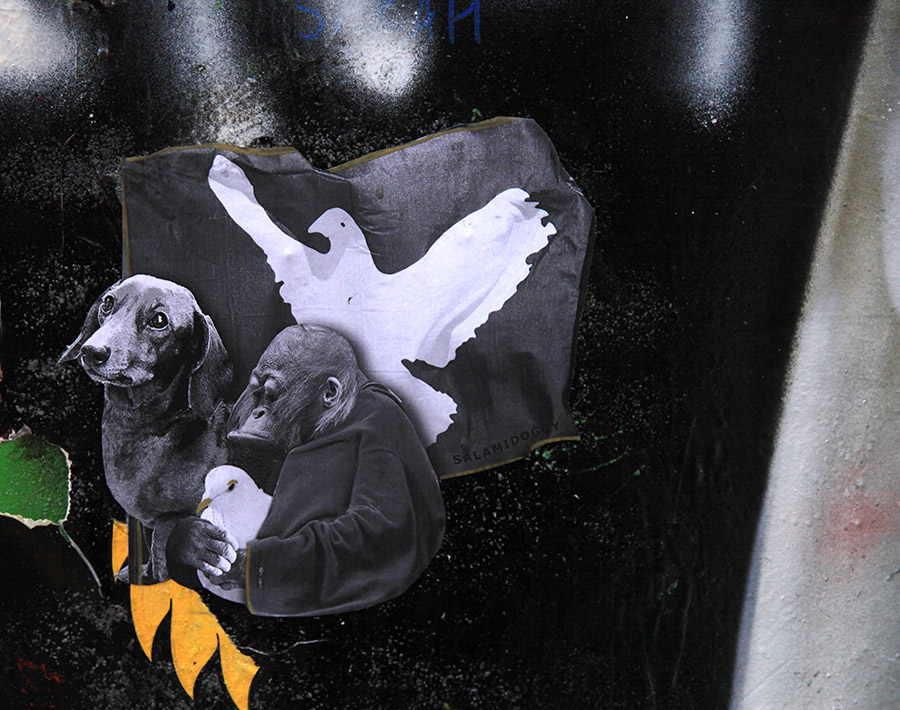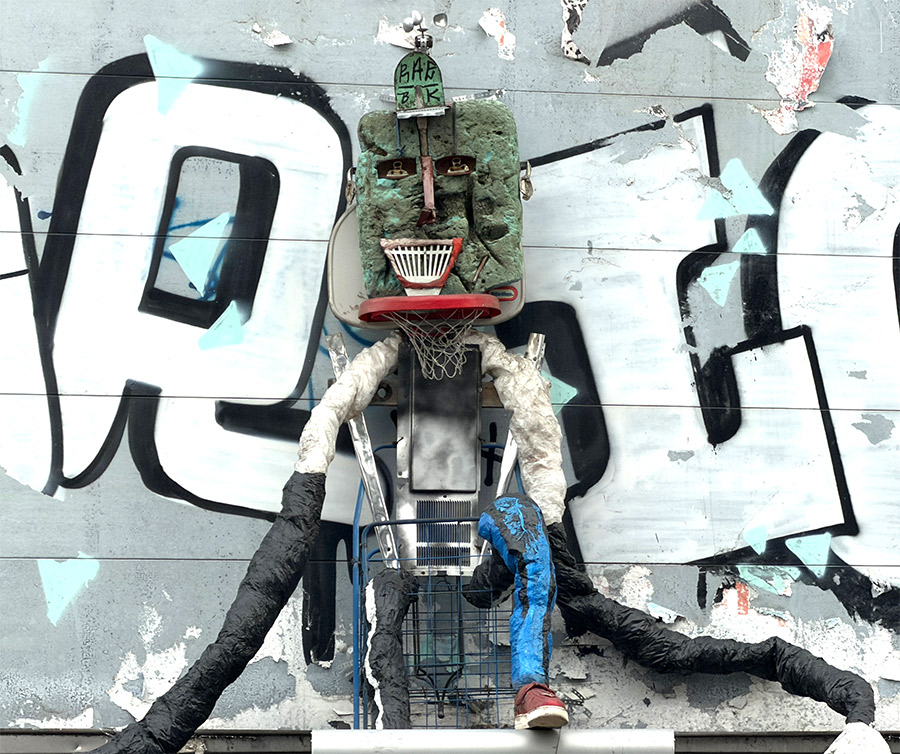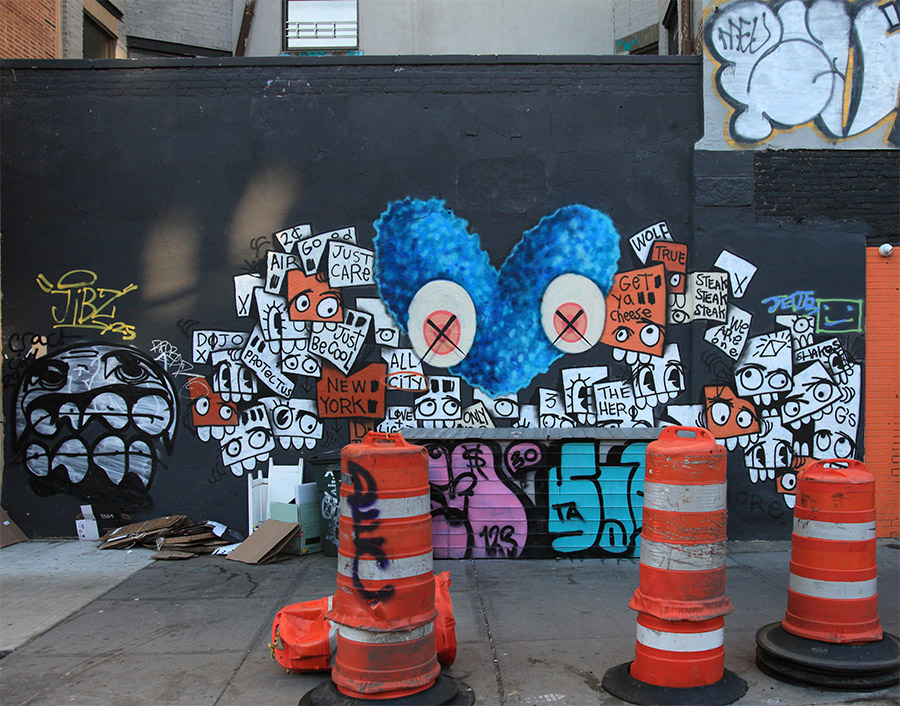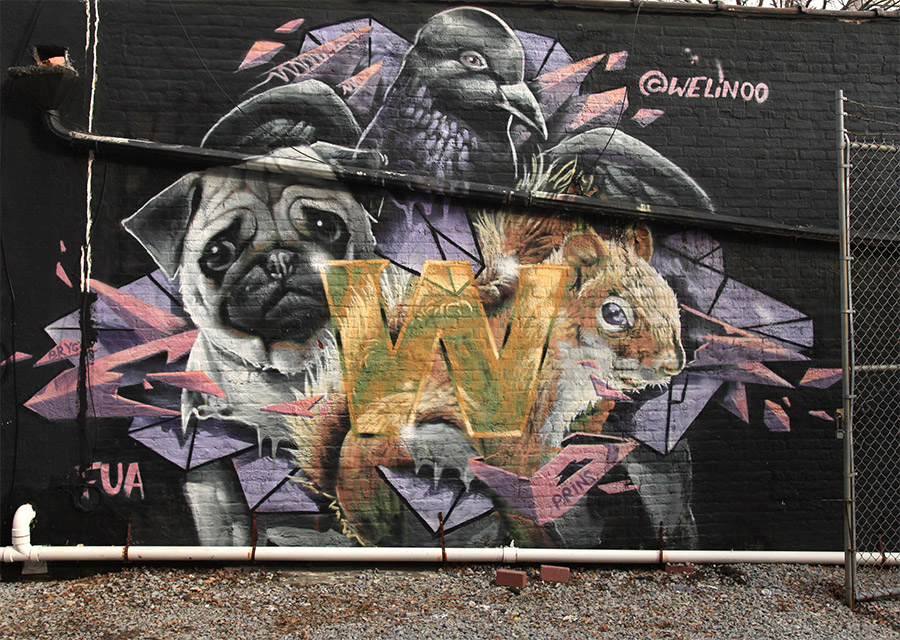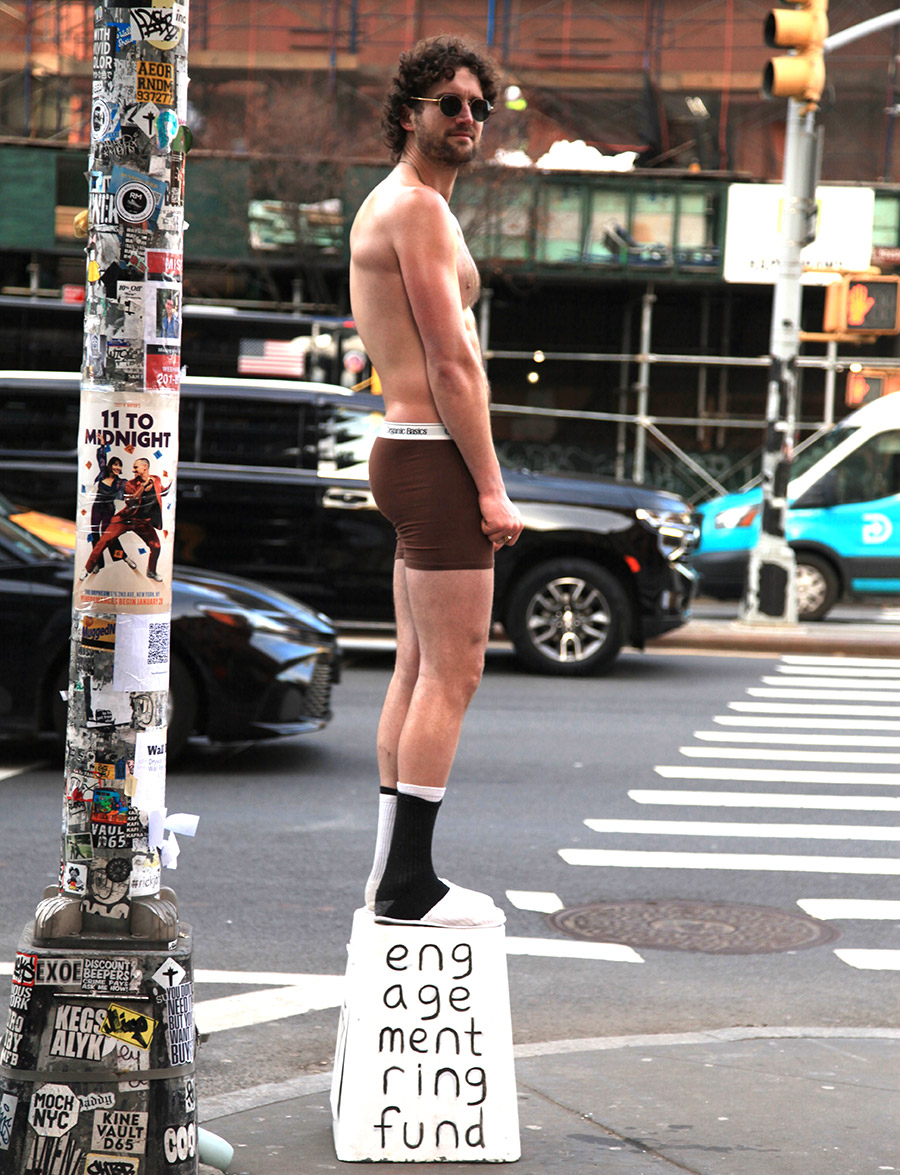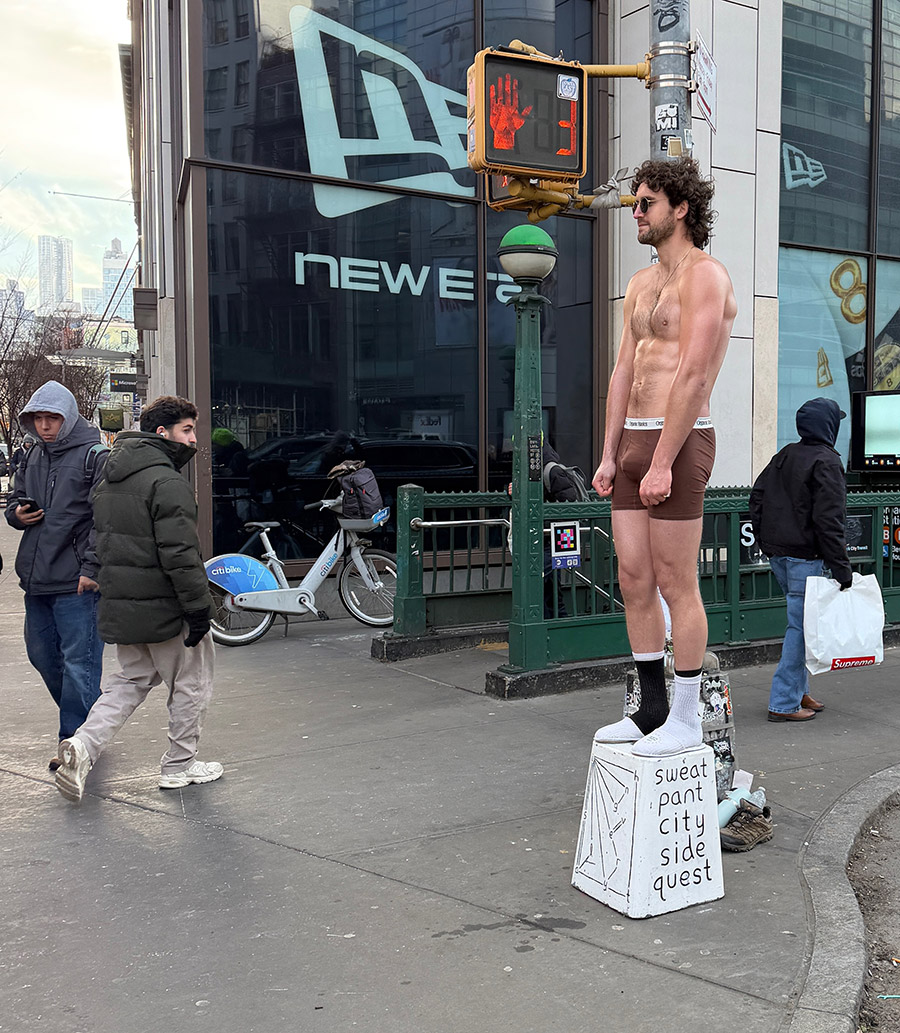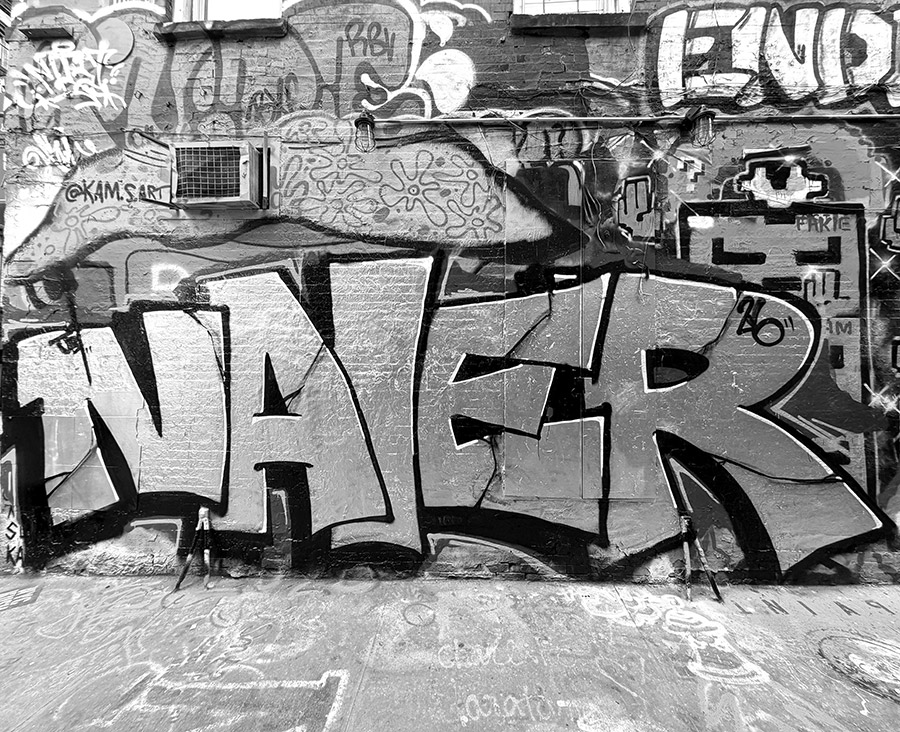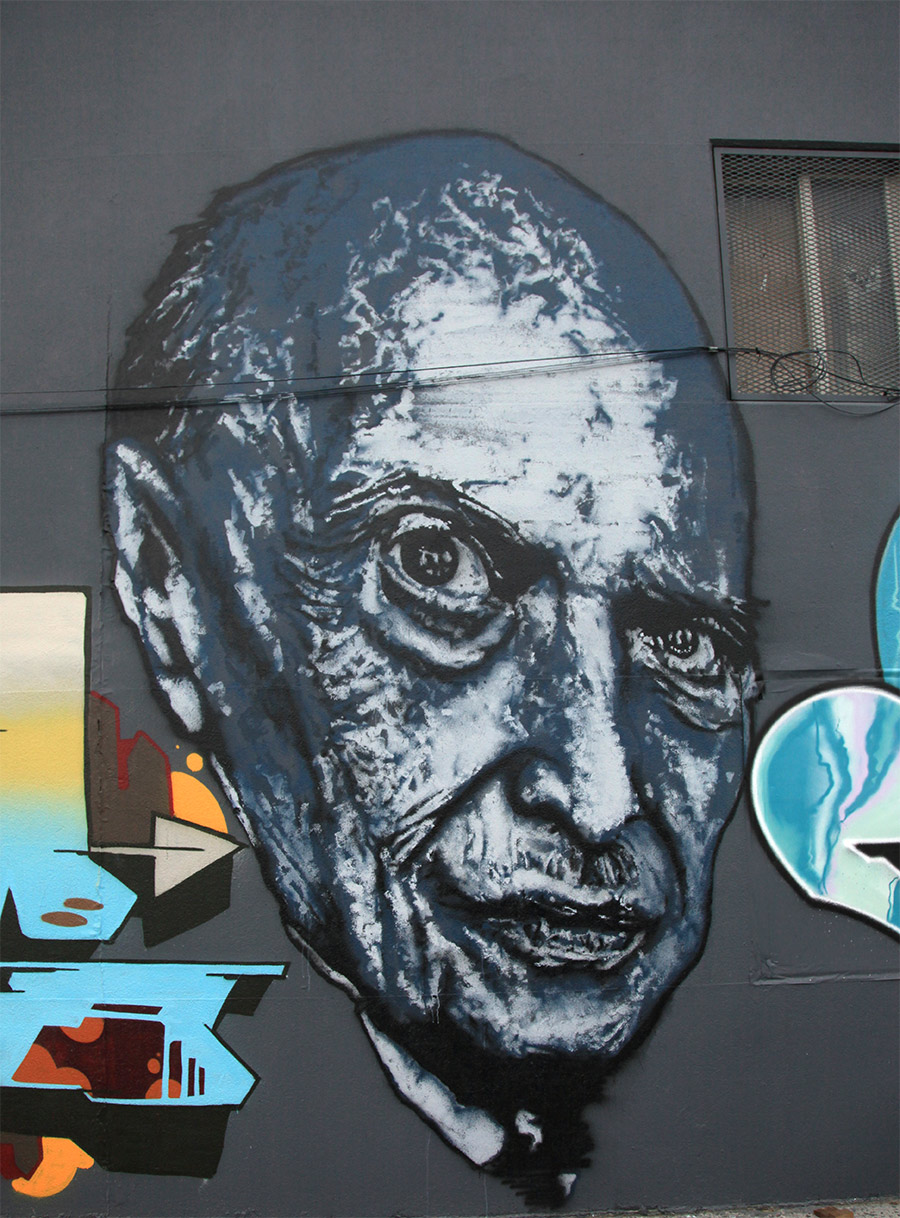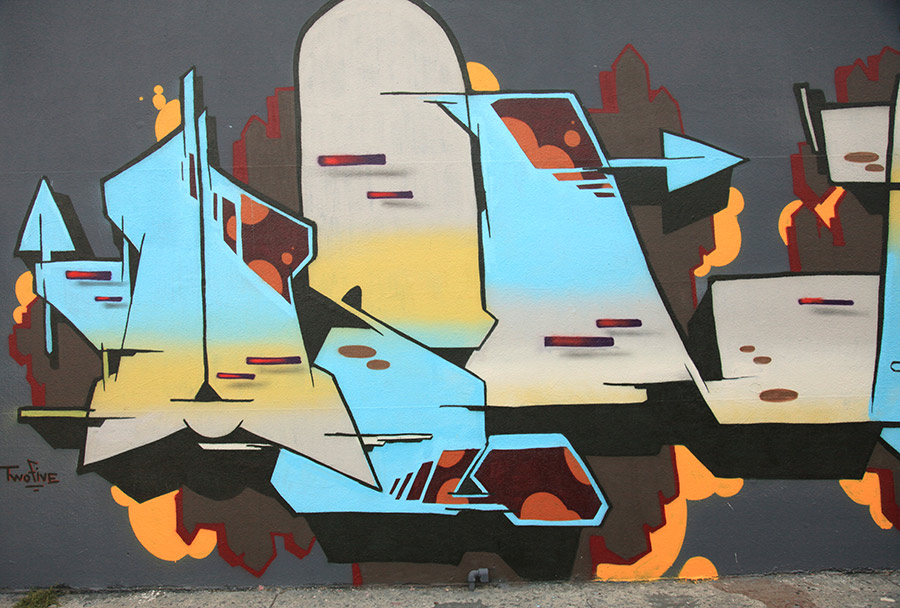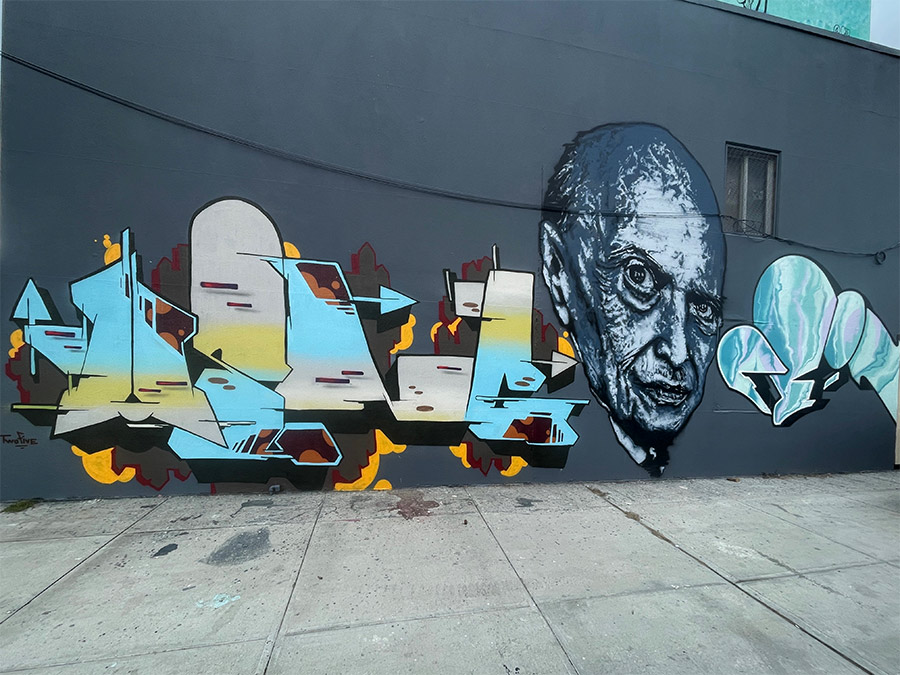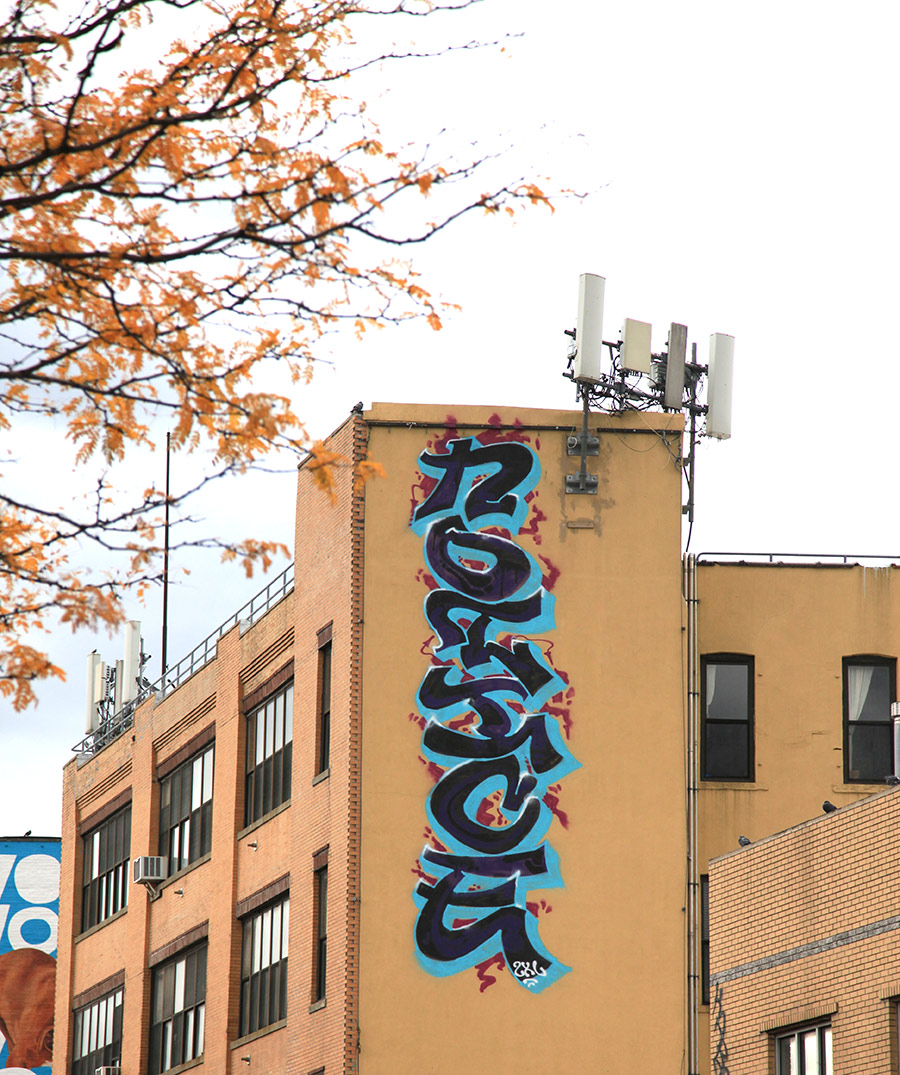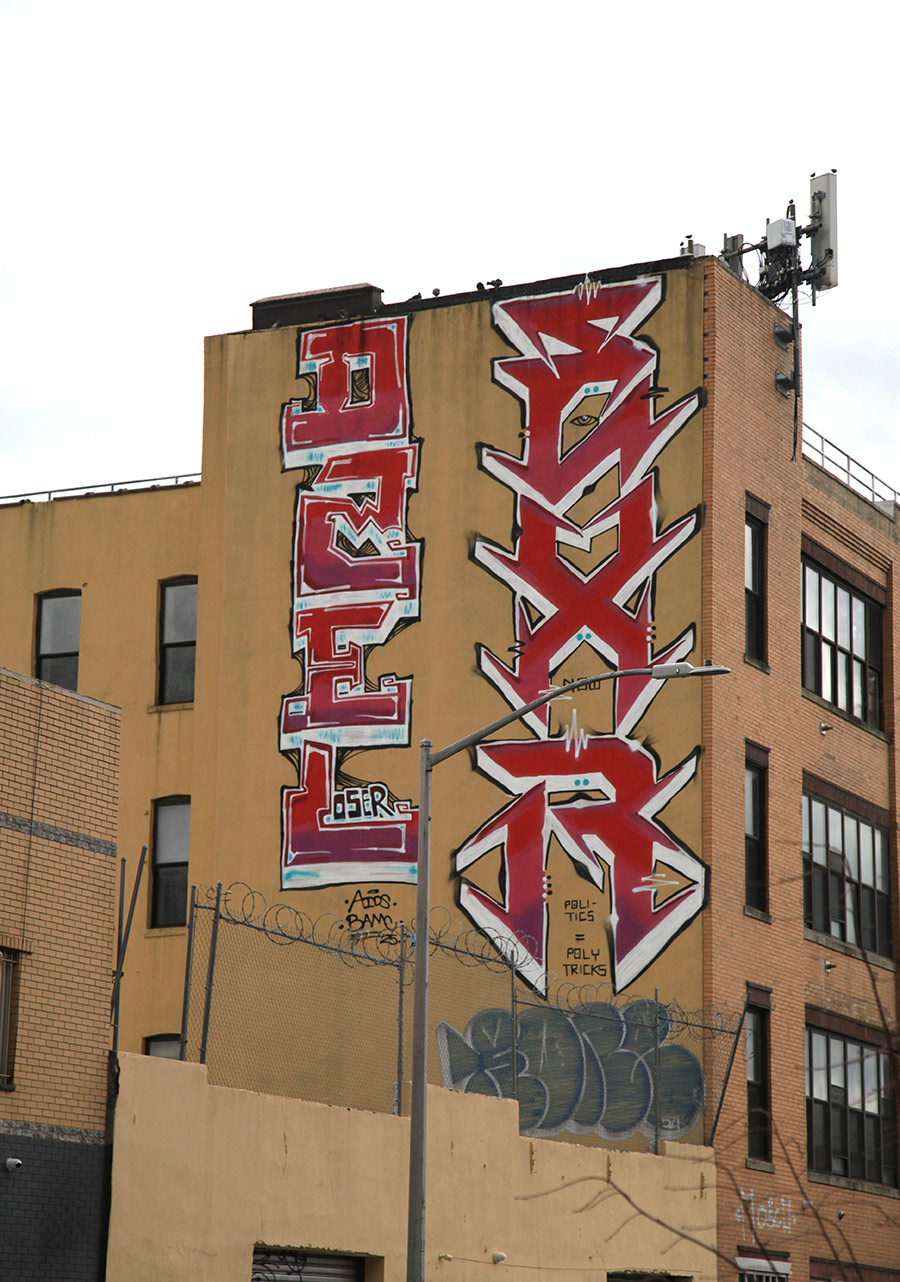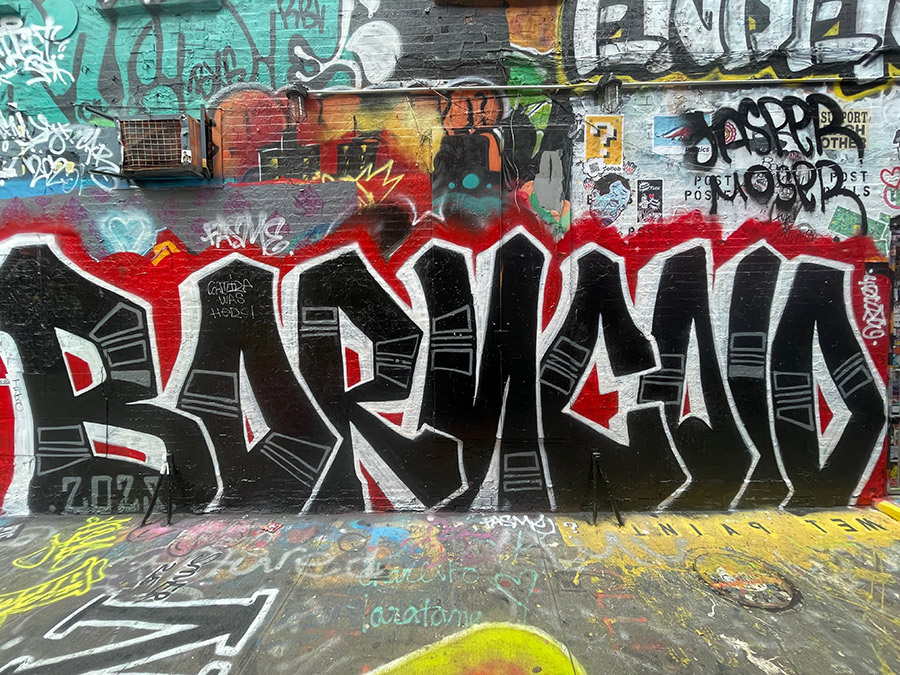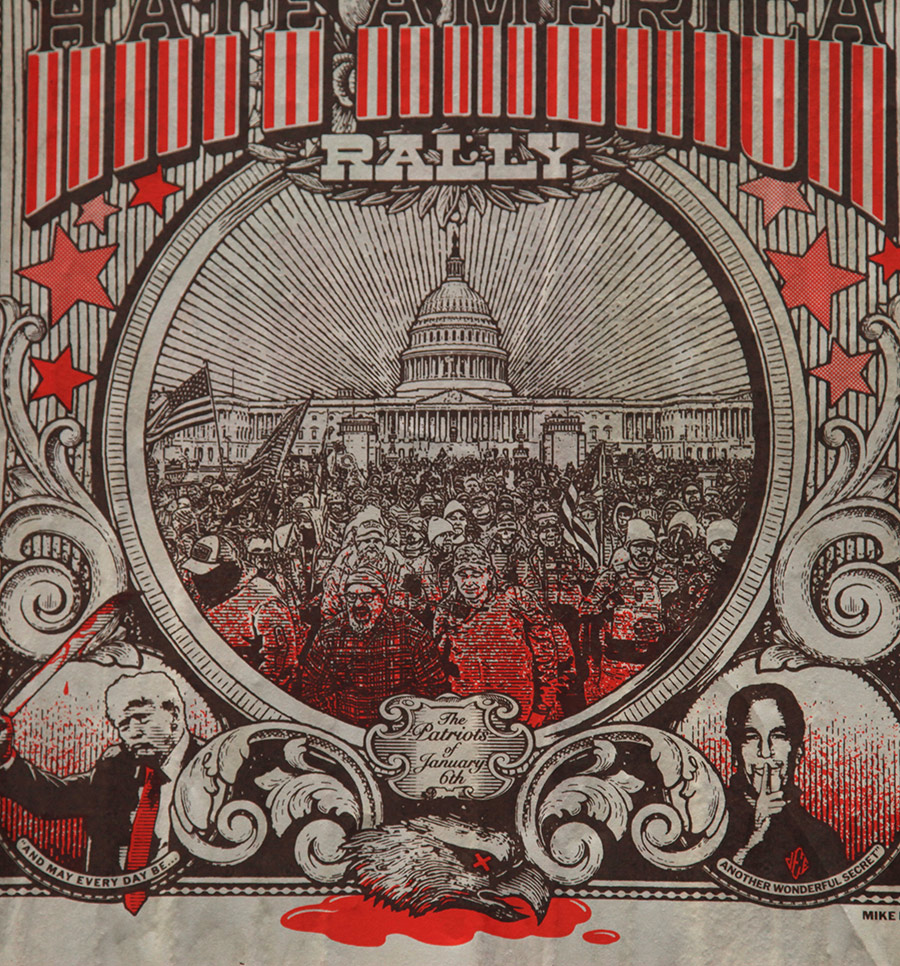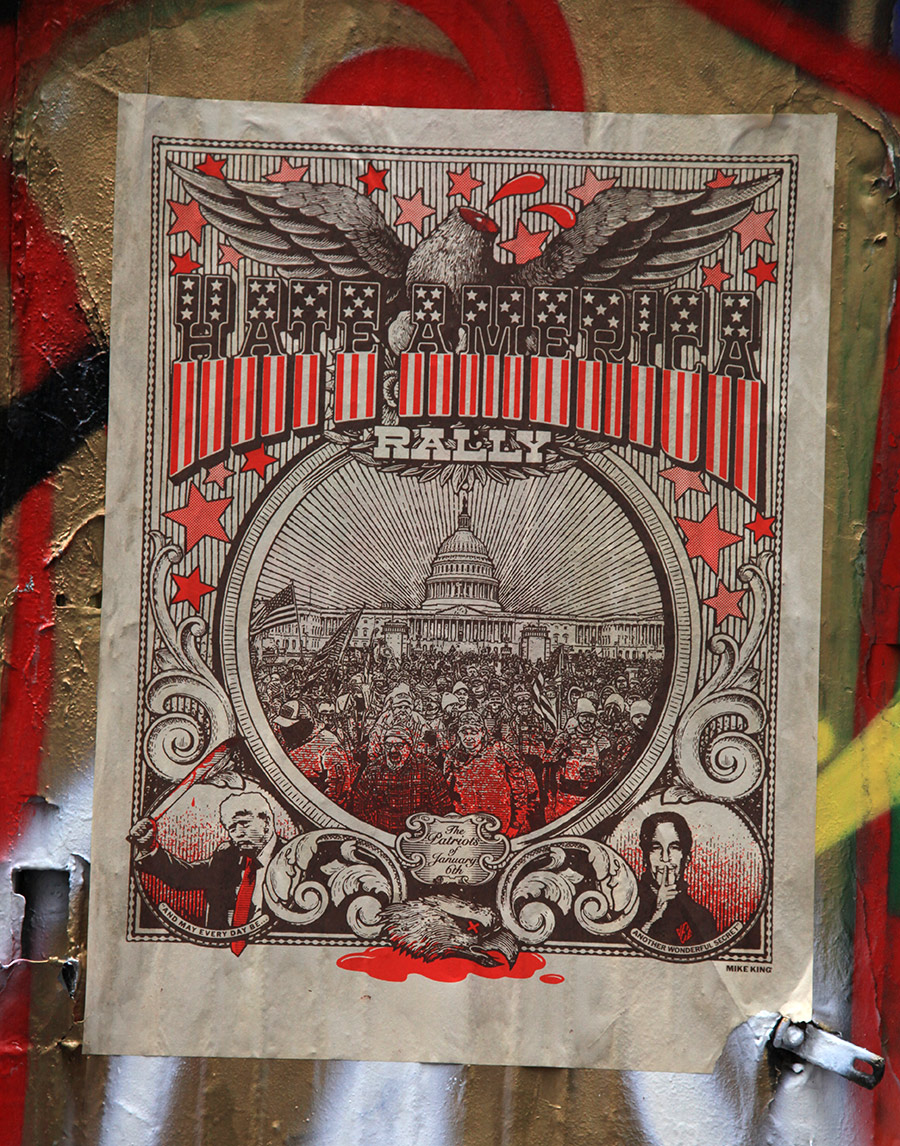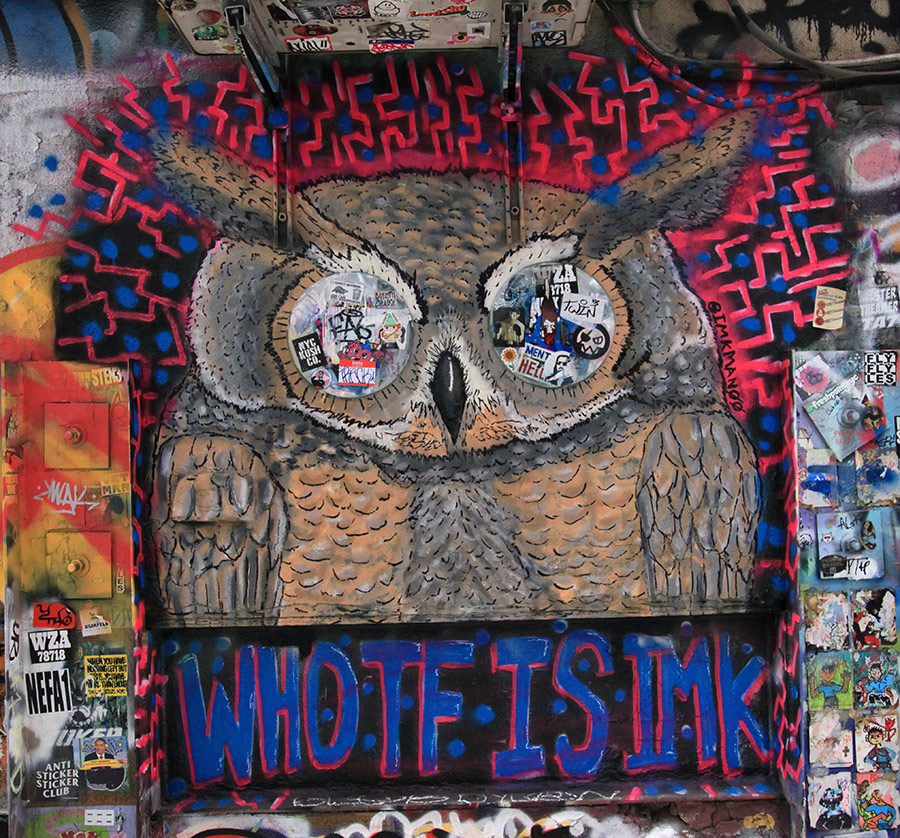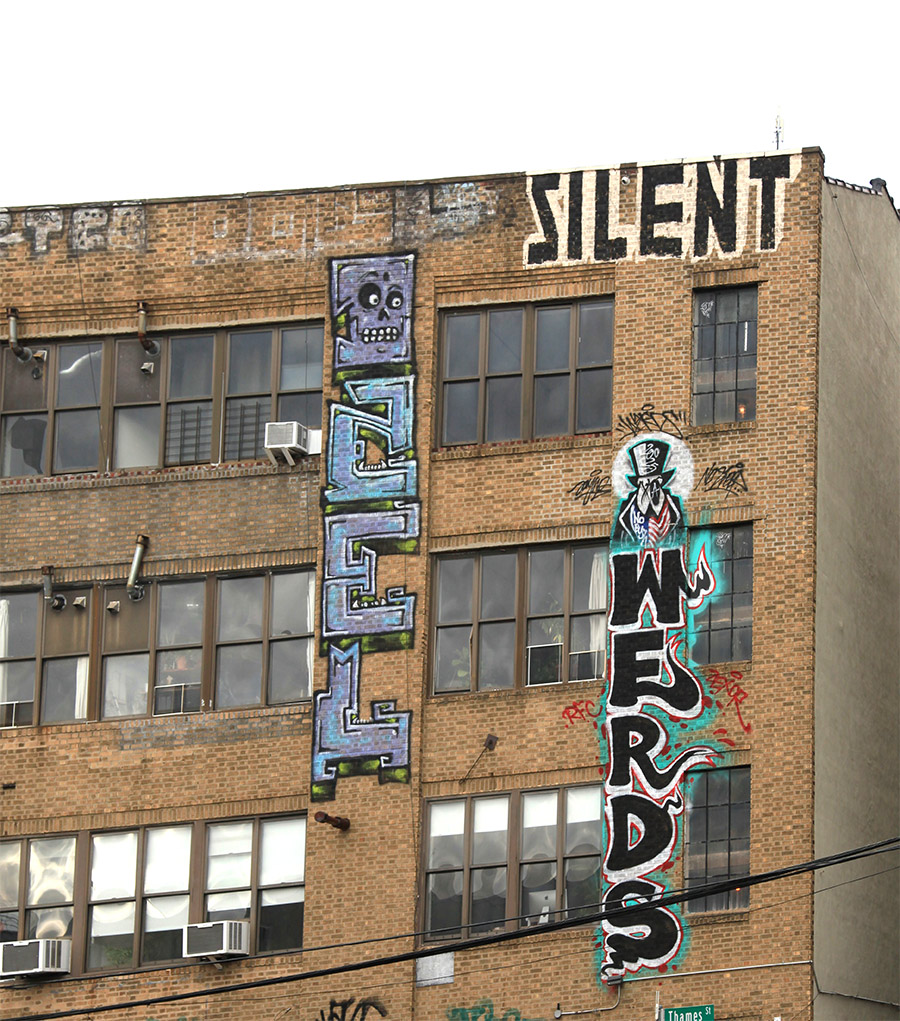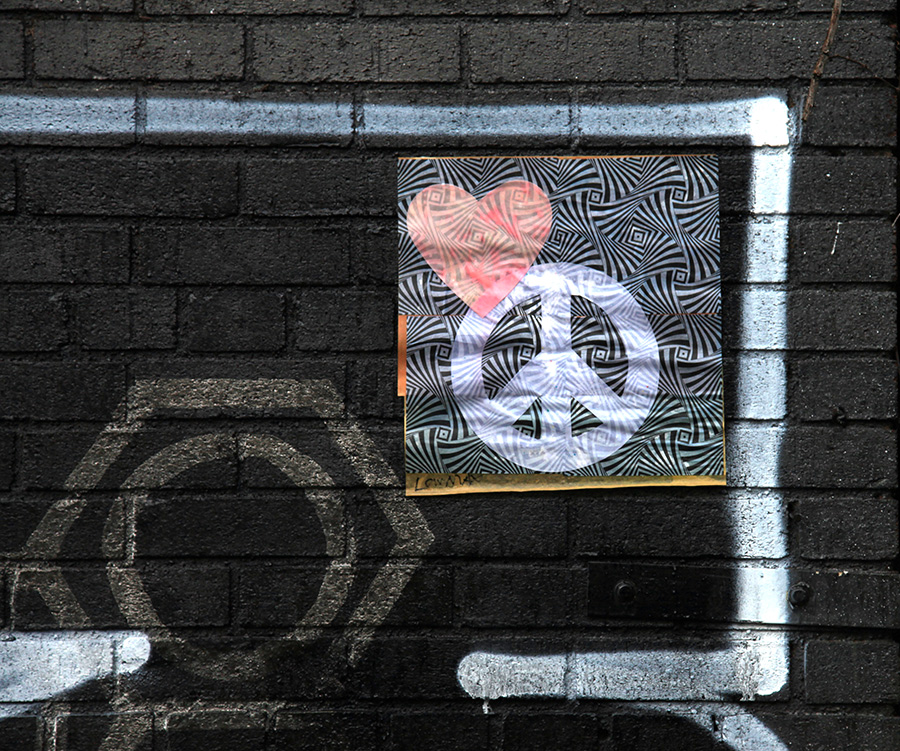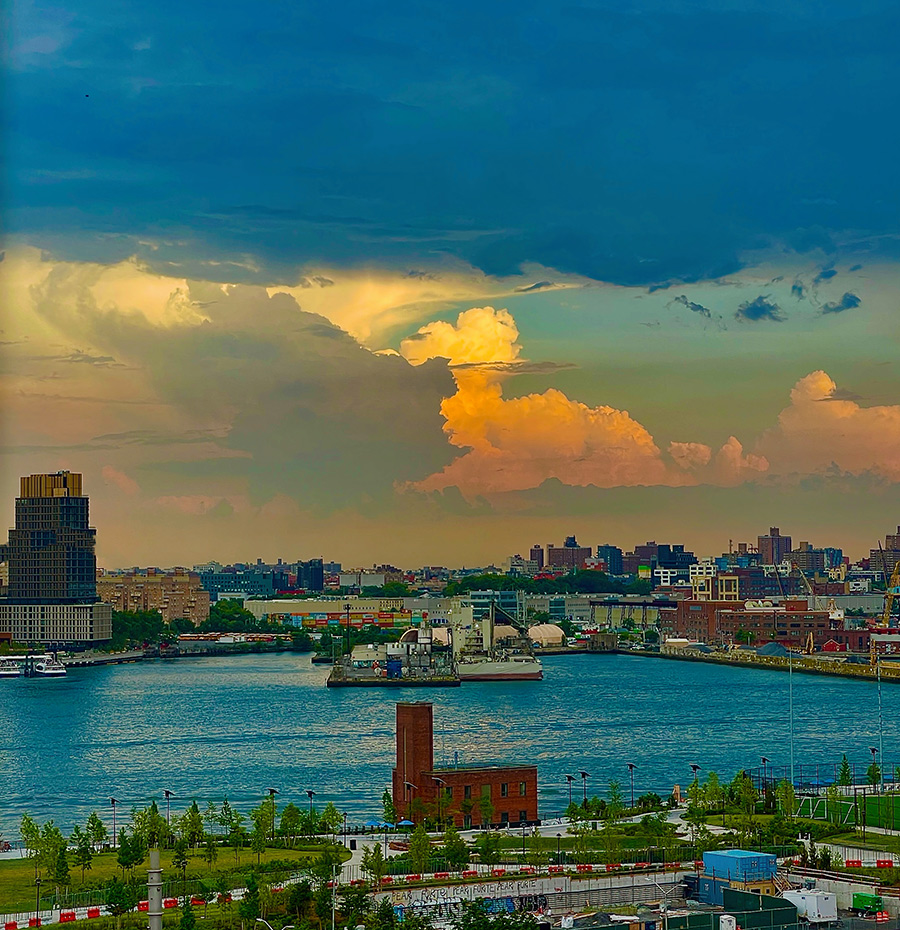
Welcome to BSA Images of the Week. Photographer Jaime Rojo hit the ground running upon getting back to dirty old Brooklyn this week from a Berlin/Prague tour. Lots to report from there on the walls, in the gallery, and in the museum spaces – and more to come for you to enjoy. In the meantime, here’s what he found on the streets of NYC; a mash-up of handstyles, graphics, pop cues, fine-art chops, humor, sarcasm, reverence, and straight-up rebellion — cultures colliding and talking back.
We begin the show with a new portrait of the much-loved graffiti and street art photographer Martha Cooper, based on a photo by Corey Nickols and painted by Swed Oner (Mathieu Taupenas) in Bushwick with Joe Ficalora and the Bushwick Collective by his side. Born in the south of France in the 80s, a graffiti writer in the late 90s, Swed Oner is now known for his hyper-realistic, monochrome portraits of people transformed into religious icons – featuring a “halo” motif for framing.
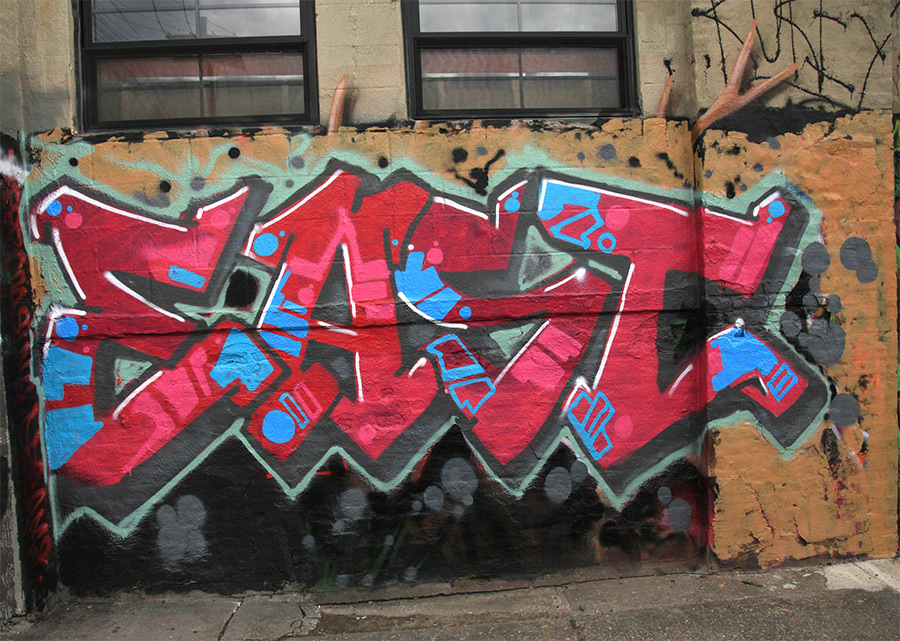
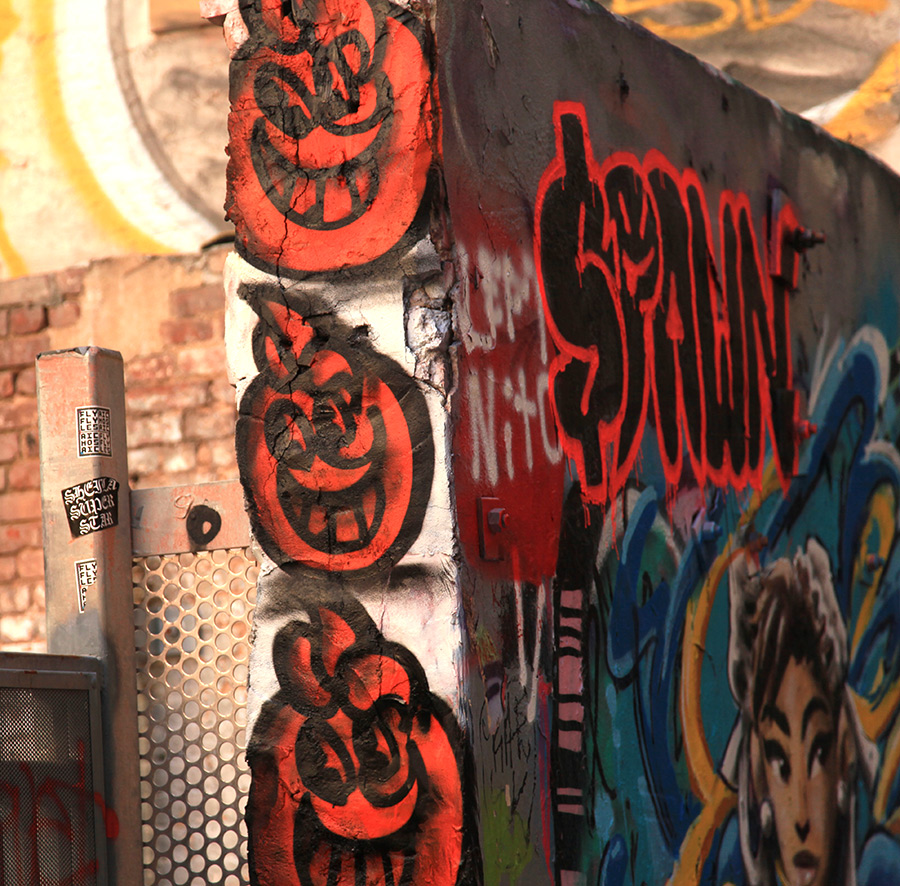
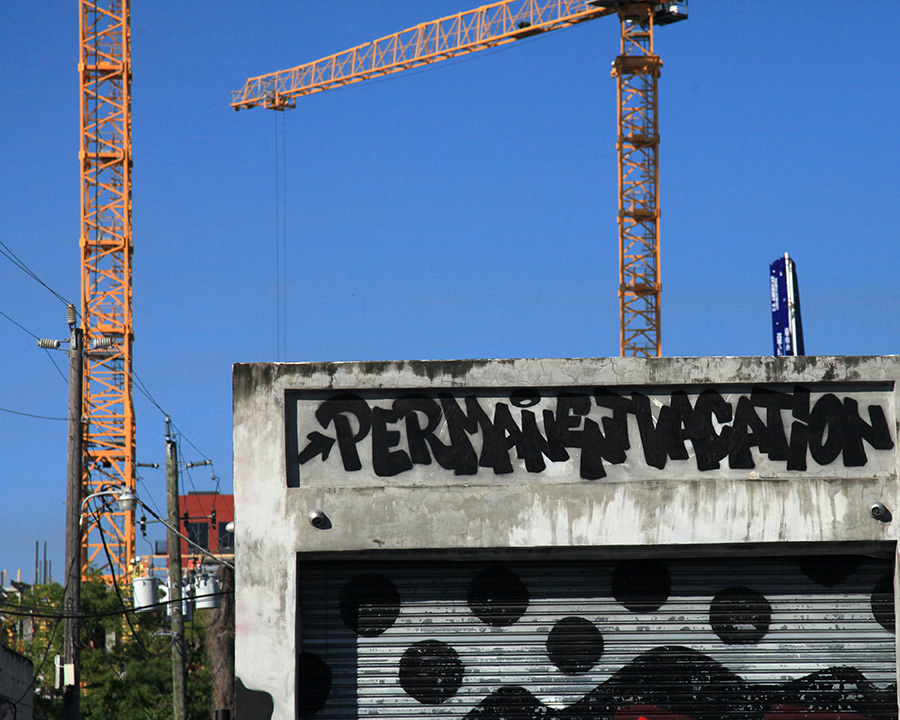
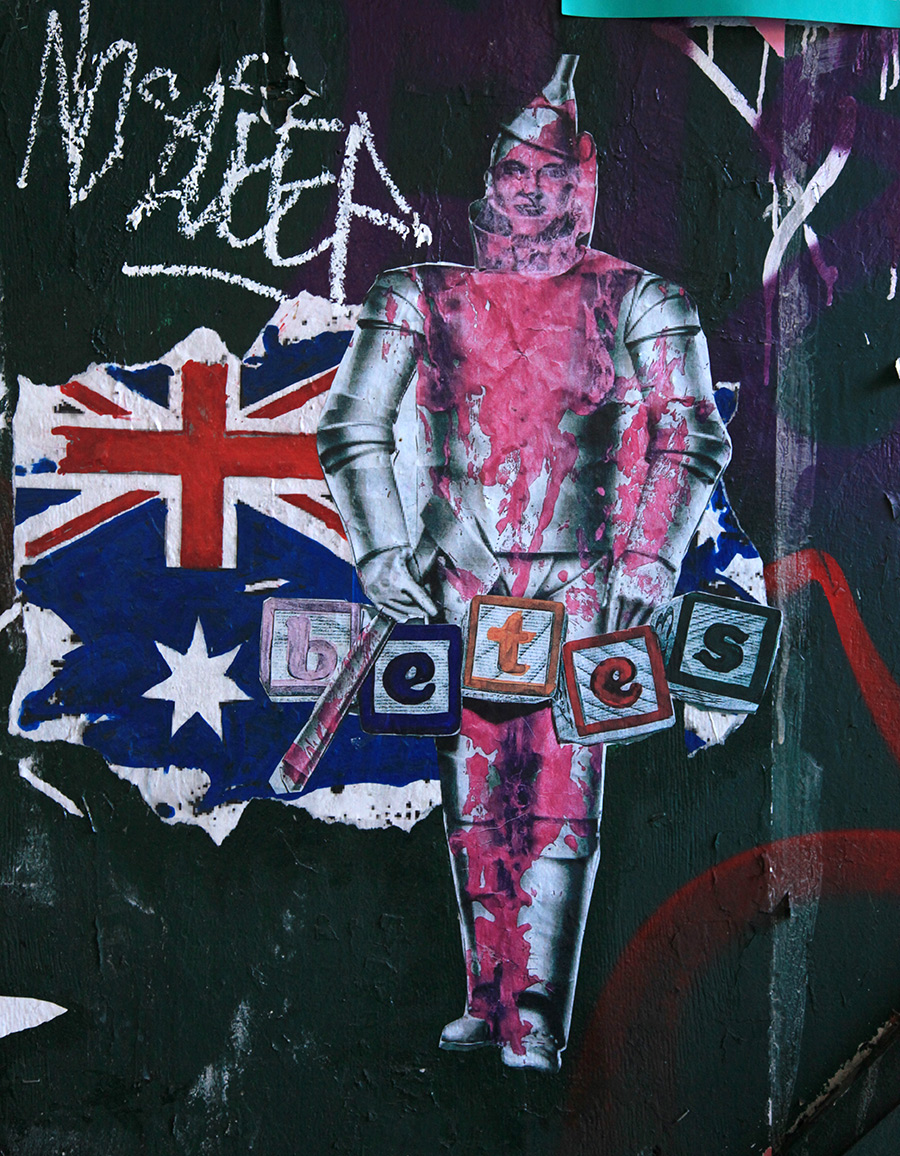
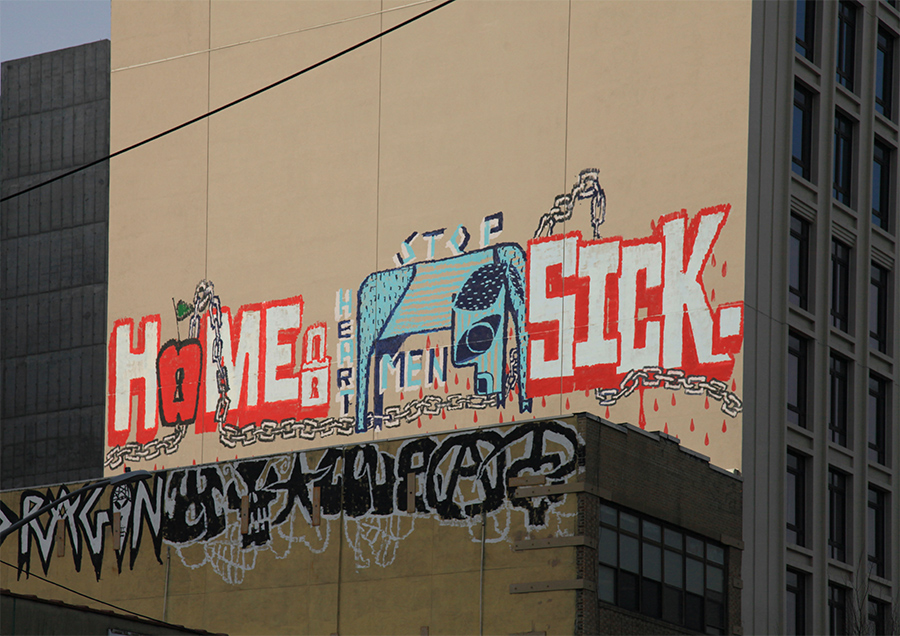
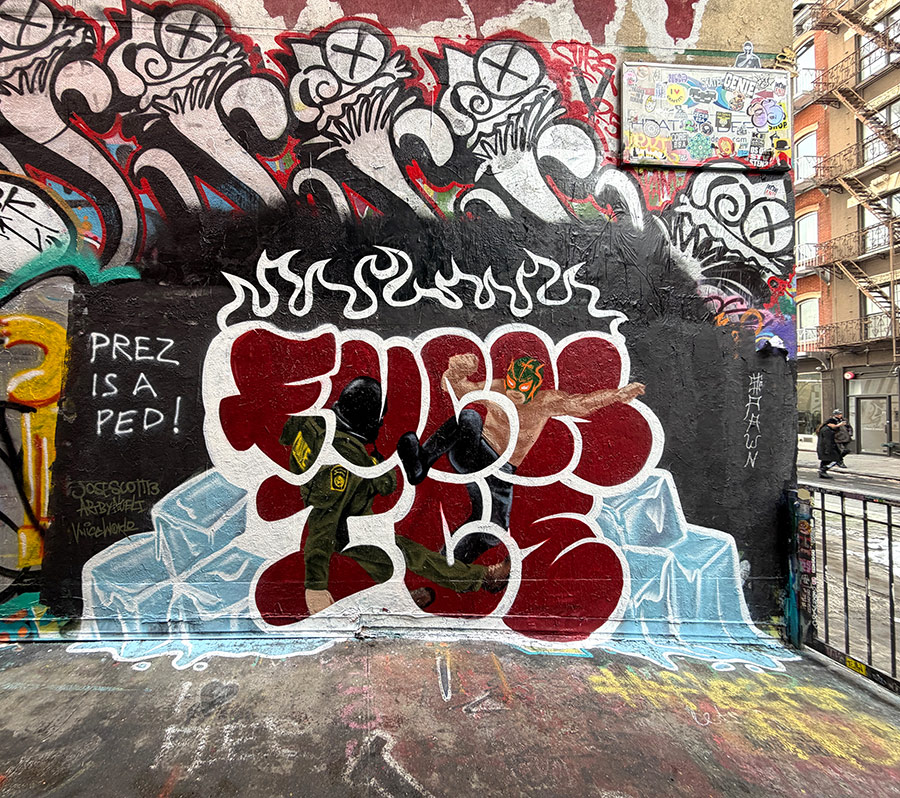
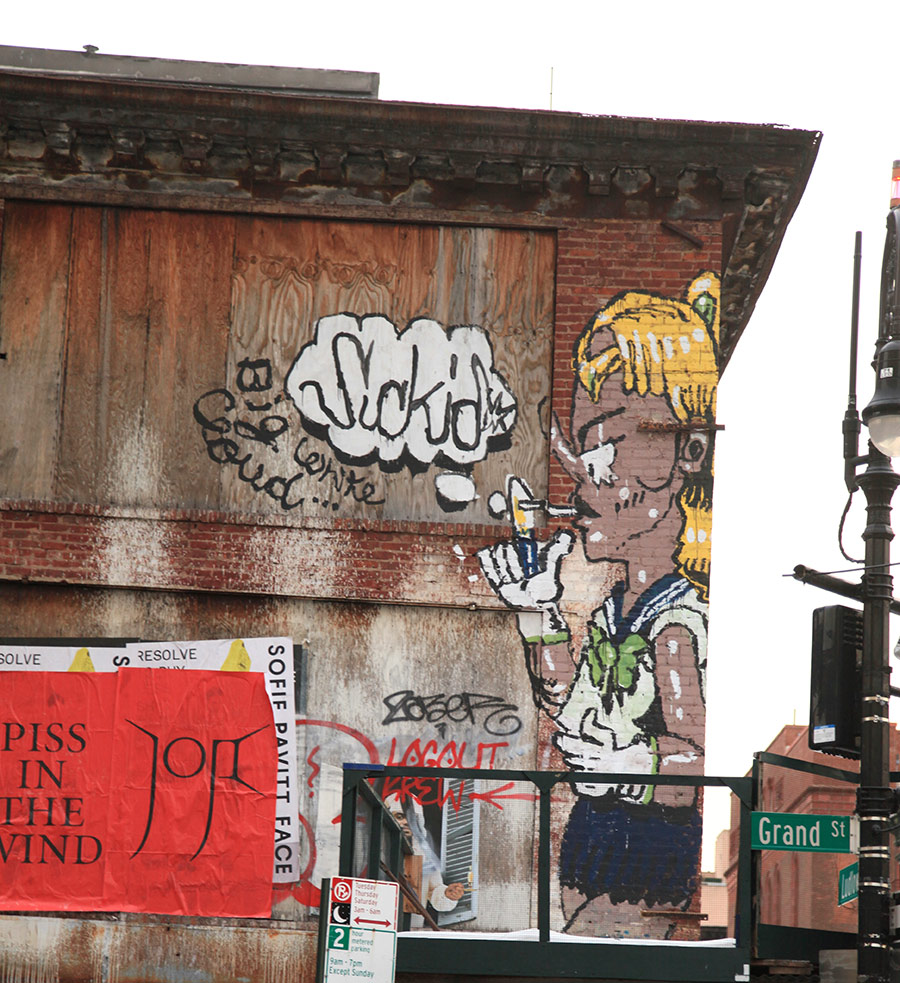
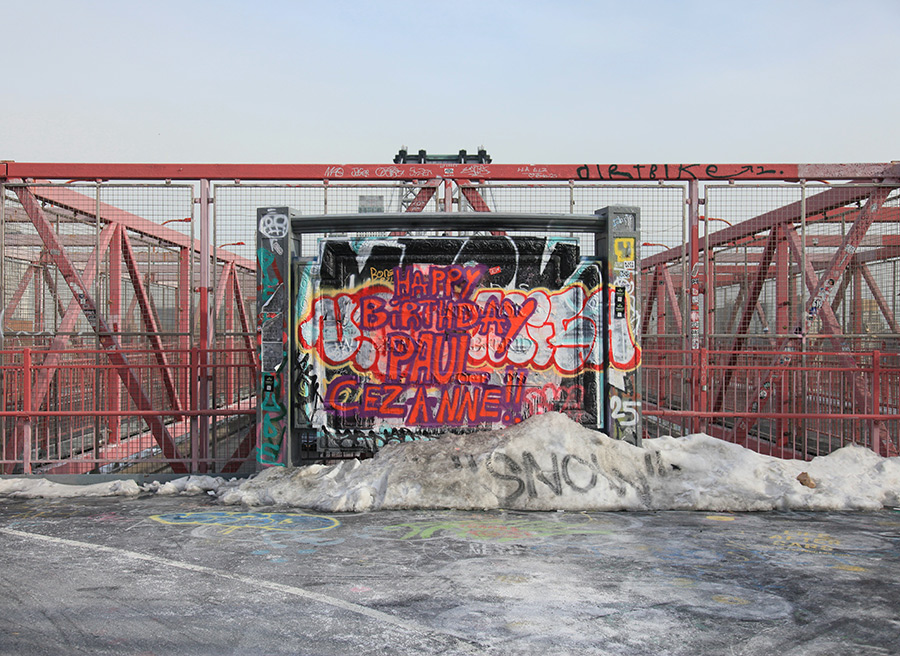
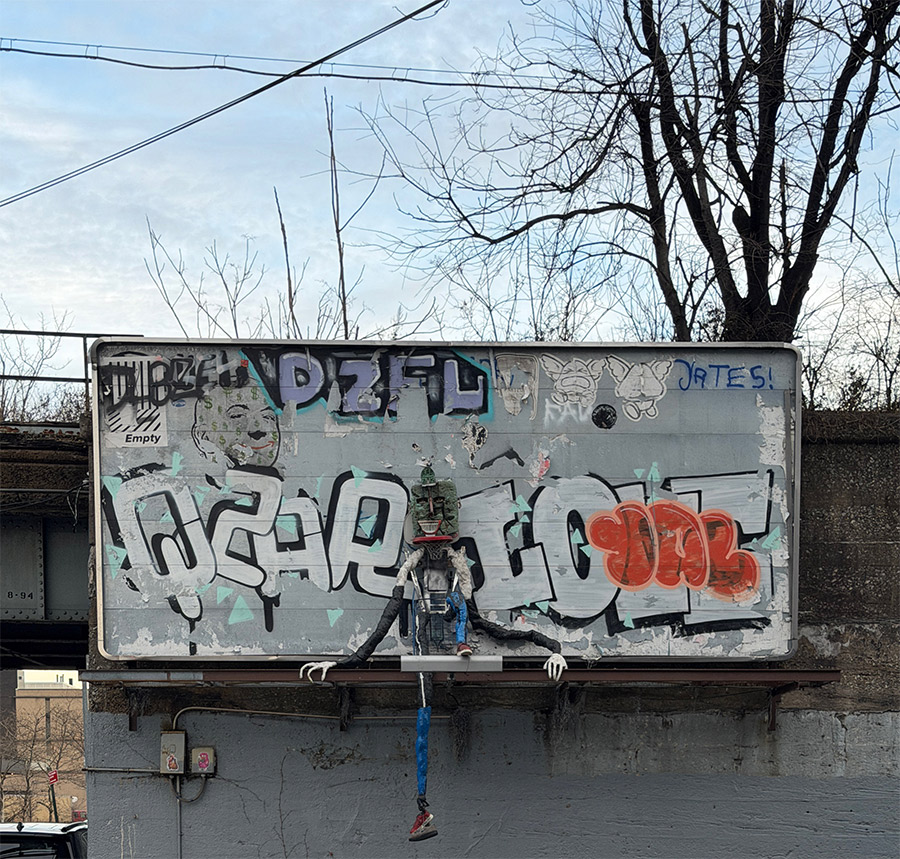
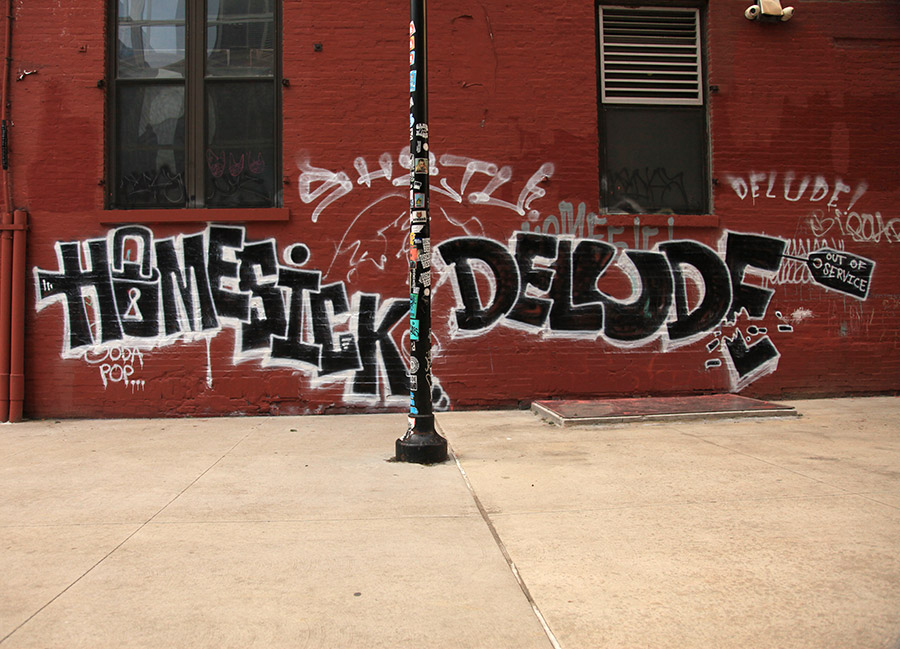
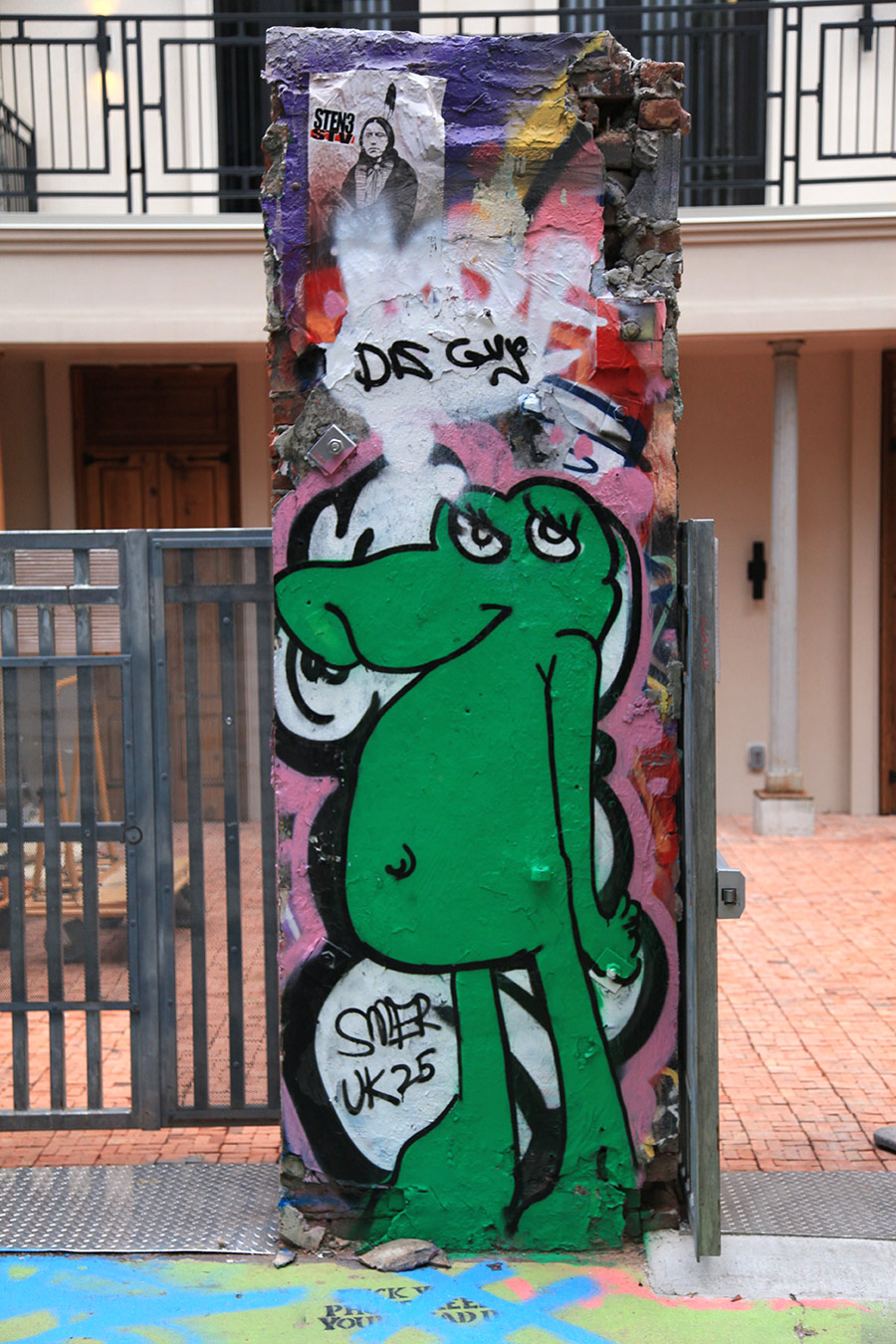
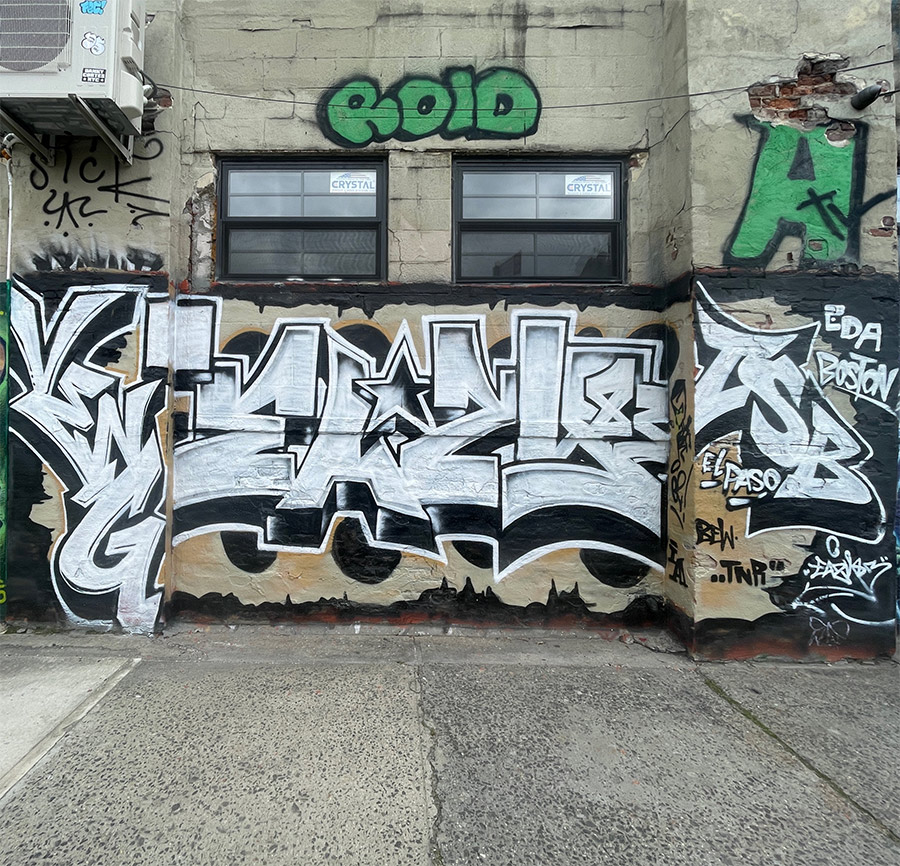
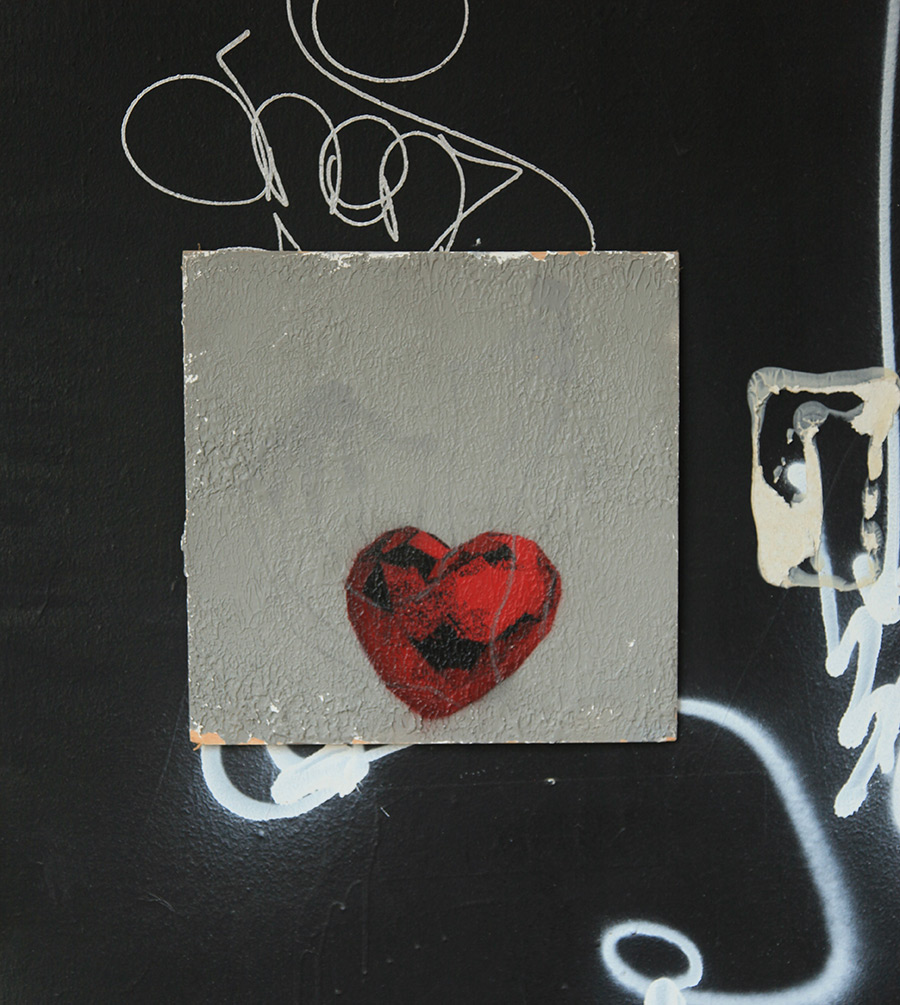
Featuring Dzel, EAZV, EXR, Gloom, Homesick, IMK, ISB, Jodi Da Real, KAMZ, Mike King, Notice, RIP Money, Shwan McArt, Silent, Smaer, Two Five, VENG, Warios, Werds, and ZOZS.
First, some housekeeping: over the past few weeks, you’ve probably noticed we’ve been publishing less—and the site’s been buggier than Mayor Adam’s re-election campaign, the MTA’s subway announcement system, or a 2025 White House policy rollout. You’re right. BSA is in the middle of major technical upgrades, and it’s been a lift. Thanks for your patience. We’re entering our 18th year—more than 7,000 articles, 60,000 images, thousands of artists across six continents—and we’re focused on making our next chapter faster, cleaner, and steadier.
Keeping street art’s genesis years in view as we look at today’s evolving scene, the New York Times arts section declares the ’80s are back!—although a mostly privileged, mostly white version of the ’80s. “Downtown/Uptown: New York in the Eighties,” staged in a Beaux-Arts townhouse at 19 East 64th Street, packages art-school cool, downtown interdisciplinarity, and a confident graffiti-adjacent chic for polite Upper East Side viewing. It wasn’t thoroughly subversive at that time; the scene was perpetually status-signaling, and getting your name on the list at the door was paramount. Yet that mid/late-Boomer, budding cappuccino crowd could still be transgressive and forward-leaning, incorporating new tech and future-minded theory. The labels arrived in a rush: Neo-Expressionism, Appropriation, Neo-Pop/Commodity art, Simulationism (Neo-Geo), photo-conceptual work, street-adjacent practice, and graffiti, – or would that be neo-graffiti?
Someone once said of the ’60s, ‘If you remember them, you weren’t there’—and everyone laughed. Bowie said he barely remembered recording Station to Stationin the 70s, and a similar collective bemusement winked at the excesses of that time as well. So as we wind up the wooden banister on the Upper East side we wonder how many memories of the cocaine-ecstasy-fueled Downtown 80s club scenes still remain. With a lot of elbow room, you are welcome to gaze upon these paintings, sculpture, photos, and works on paper by Jean-Michel Basquiat, Ross Bleckner, Francesco Clemente, Eric Fischl, Guerrilla Girls, Peter Halley, Keith Haring, Jeff Koons, Barbara Kruger, Louise Lawler, Sherrie Levine, Sally Mann, Robert Mapplethorpe, Cady Noland, Ricky Powell, Richard Prince, David Salle, Kenny Scharf, Julian Schnabel, Andres Serrano, Cindy Sherman, Haim Steinbach, Tseng Kwong Chi, Andy Warhol, David Wojnarowicz, and Christopher Wool. Also, another question, if we may: Where were Uptown and Downtown specifically located at this time?
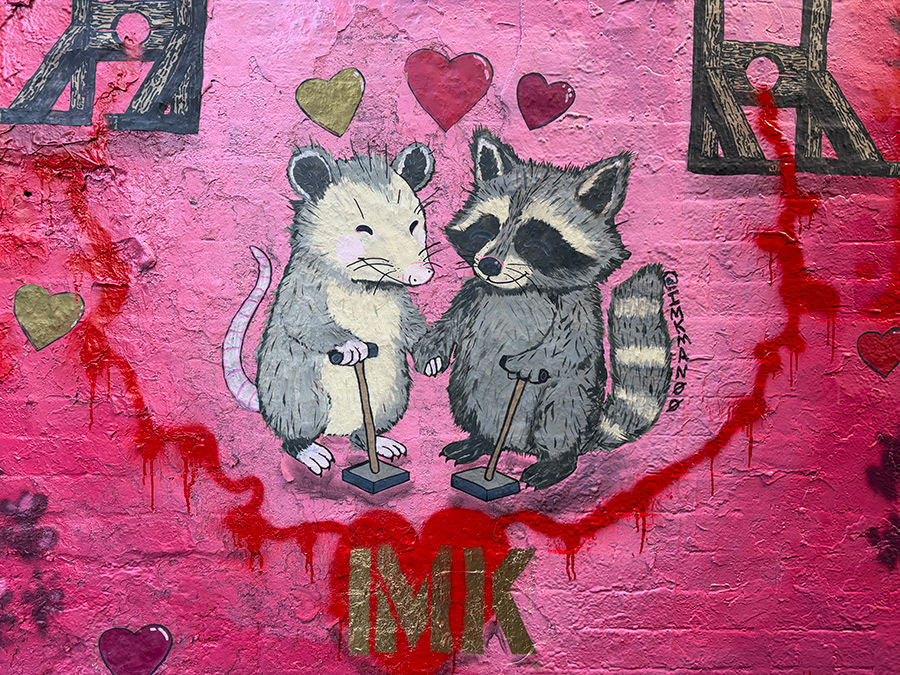
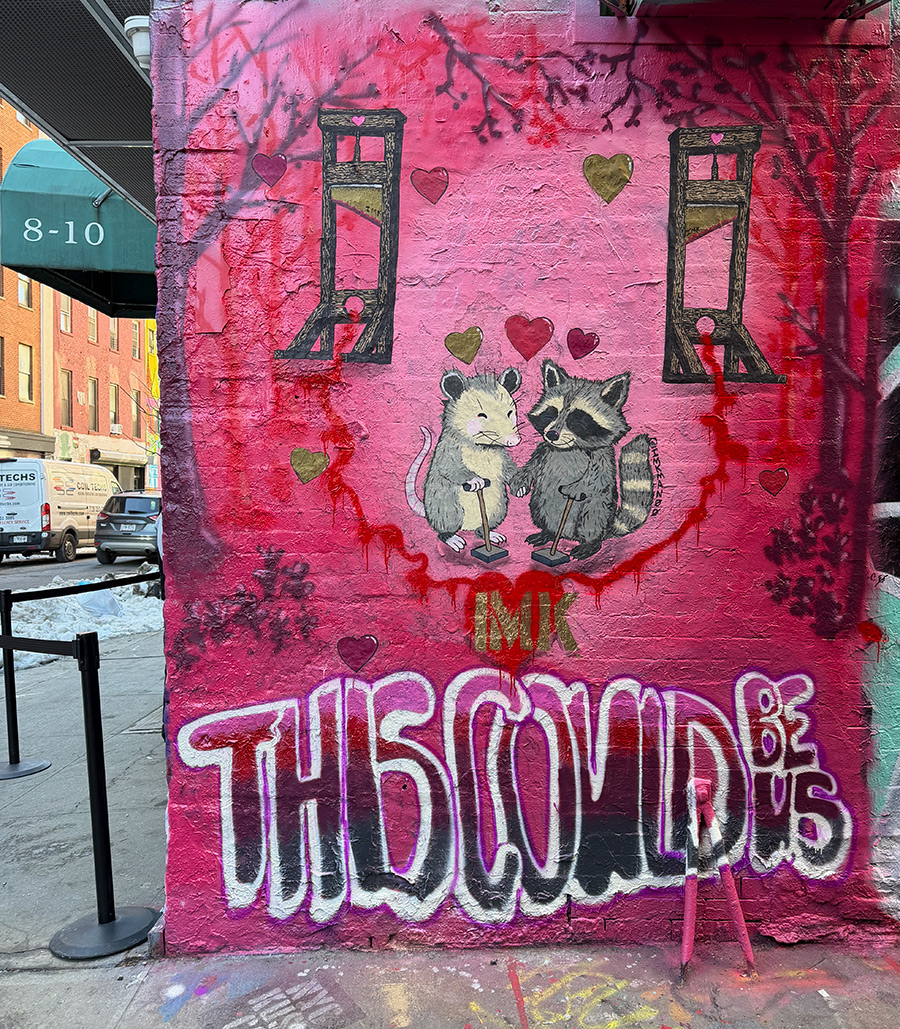
This new show shares a zip code with a collector base, a certain moneyed nostalgia, but little DNA with the scrappy, cross-pollinated Times Square Show of 1980, which actually mixed uptown and downtown with gusto, drawing from born-and-bred New Yorkers and informed by the street. A few artists, such as Haring and Basquiat, were also featured in that show, but the selected significance of the decade is presented with a different focus here. Fittingly, the paper of record just ran a valentine for the new show titled “New York’s Art Stars of the ’80s, Curated by One of Their Own.”
Ever clubby, and somehow, always away with friends this weekend.
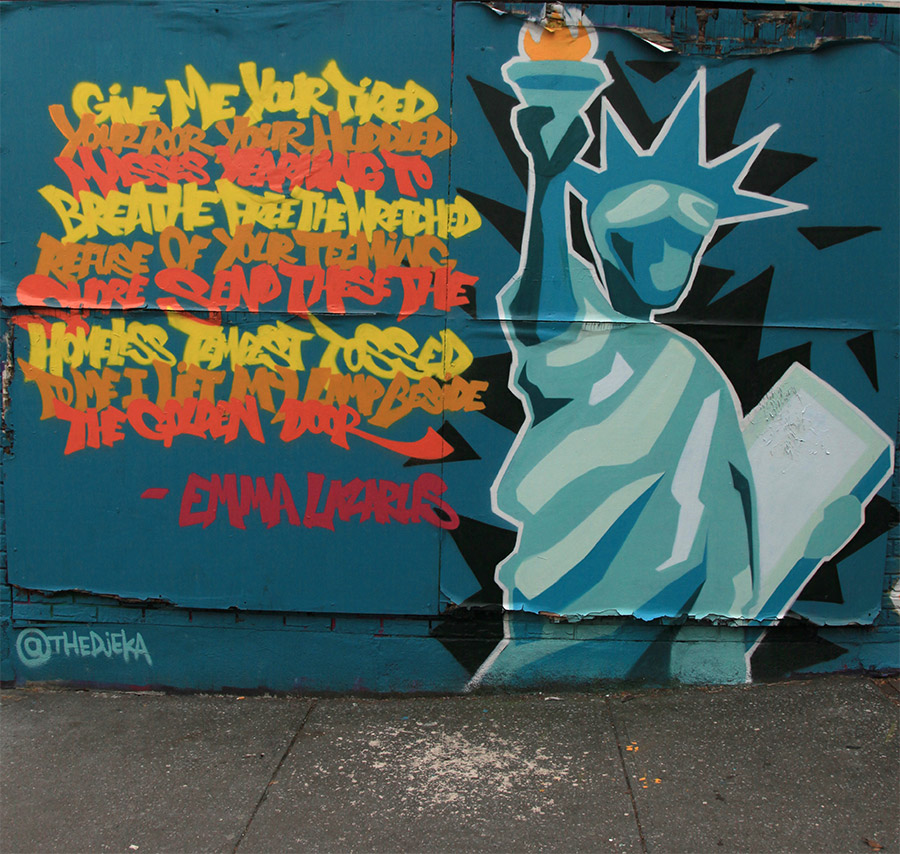
As a related corollary, it was a pleasure to hear this week a panel led by one of the original ‘Downtown’ art critics, Carlo McCormick, in what was once SoHo—the late-’80s/’90s crucible where clubs bled into galleries, DIY shows met the street, and performance tangled with protest. Sorry, it is still Soho. At Great Jones Distilling Co., a short walk from the old Tower Records, and smack in the middle of a ghostly cloud of SAMO poetic missives, McCormick underlined that “street art” is a broad field with many lineages and methods, usually without permission or gallery contacts. His guests traced that arc: Ron English, an early subvertising billboard hijacker; Lady Aiko, a later-generation artist working stencils and character-driven iconography; and DAZE, an original NYC train writer from the late ’70s/early ’80s who carried yard energy into studios and the city. The talk acknowledged a period of collaboration and volatility—experimentation, AIDs related grief, fear and rage, thumping hedonism, hip-hop and punk, a rebirthed bohemia—and a city that has drifted steadily over decades toward finance-first priorities, even as artists kept testing the edges of public space and fought to stay here.
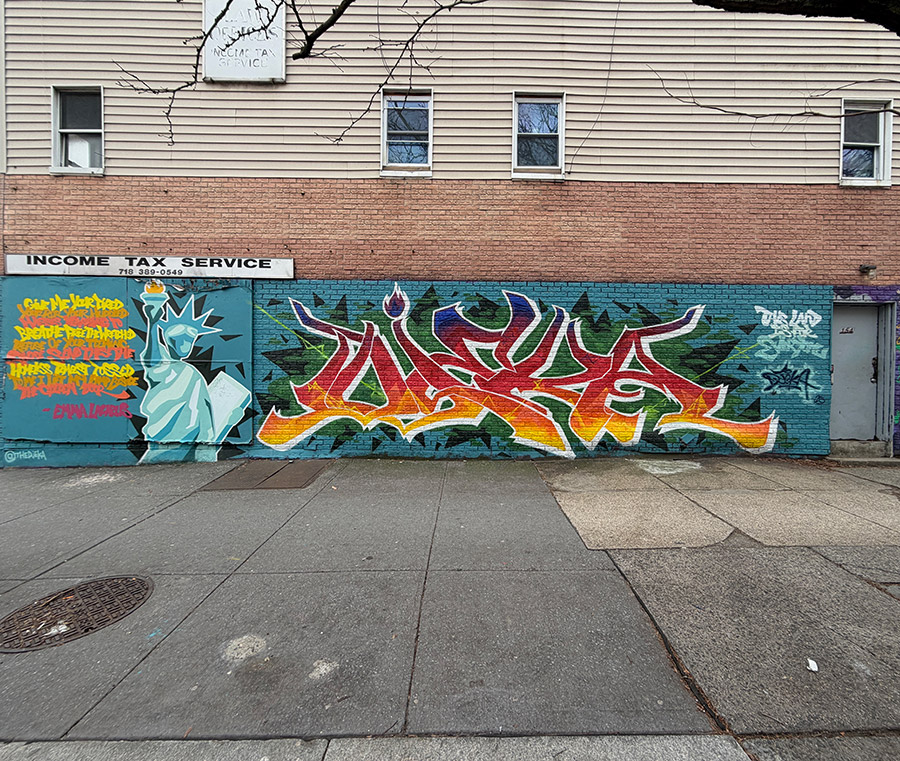
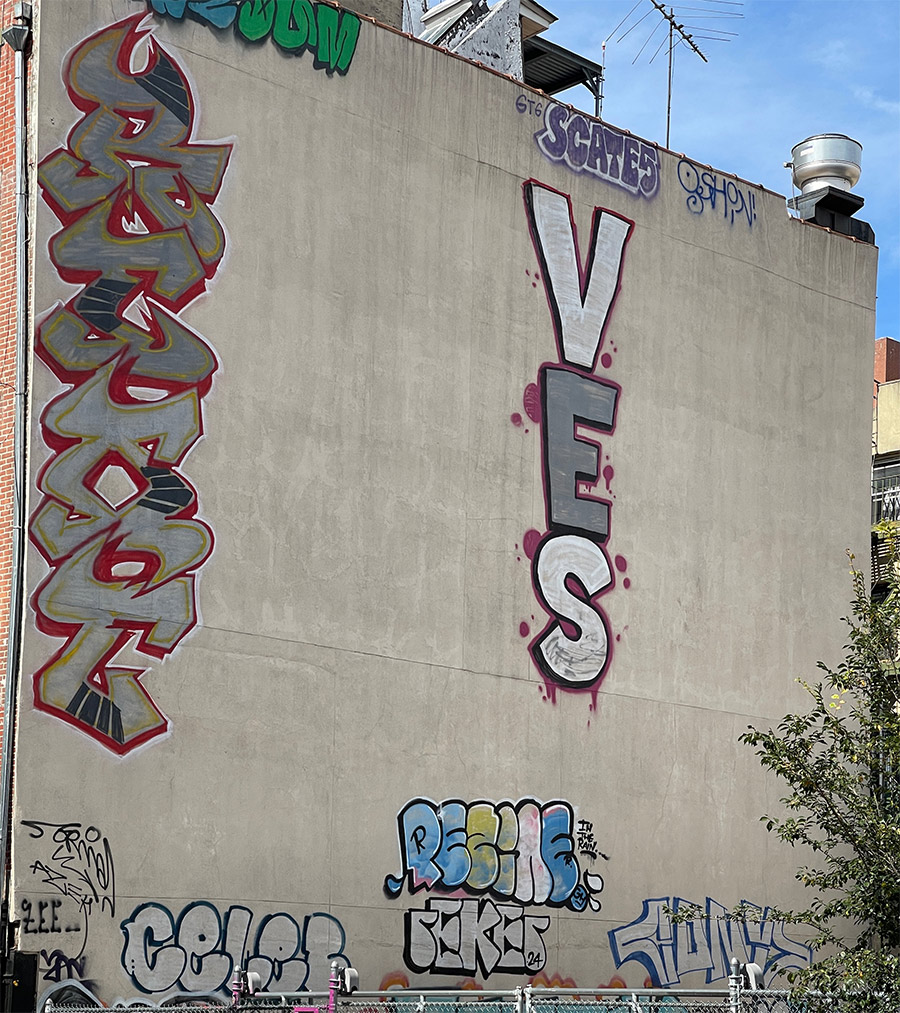
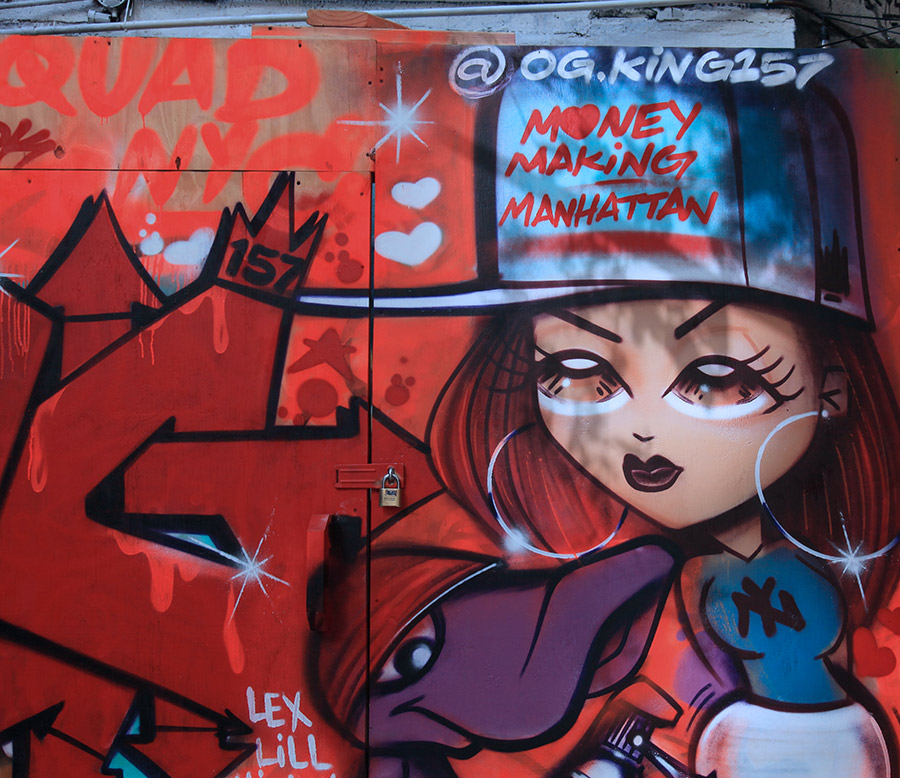
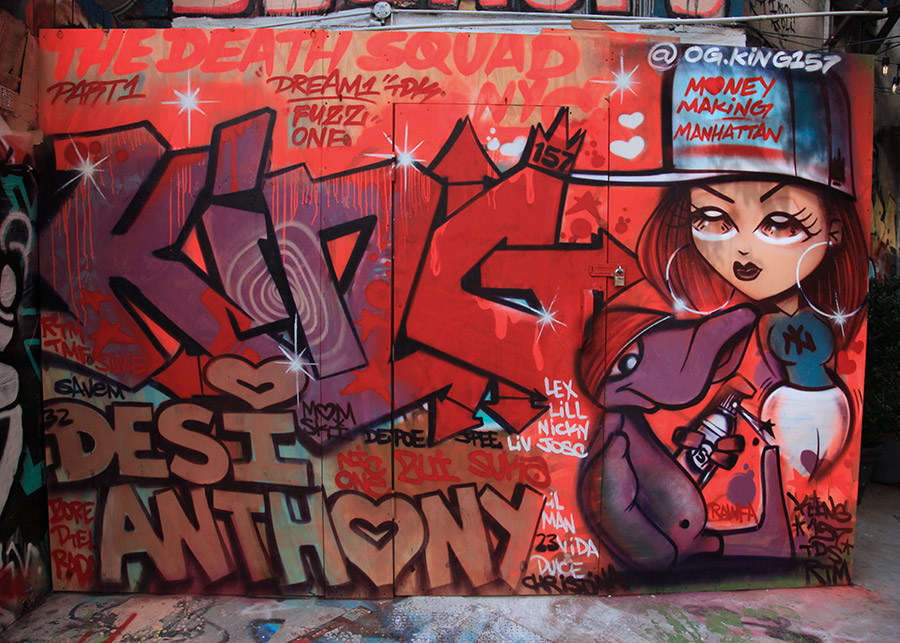
Here is our weekly interview with the street, this week featuring A Presidential Parody, Adam Dare, Bunny M., Captain Eyeliner, DZEL, EXR, Fer Suniga, HekTad, HOMESICK, MACK, Mario P, MR KING15, NO MORE WARS, RATCHI, SPAR, VES & Friends, and ZWONE.
Welcome to BSA Images of the Week! This is the last weekend of the summer for some, a celebration of workers’ rights for others. Labor Day’s parade began in 1882 in Union Square, New York City. Now, unions are under attack, as they have been for a long time. However, without your labor, this city would not exist as it does today.
Labor Day in New York is more than just a long weekend — it’s a reminder of the people whose work has shaped the city and inspired workers’ movements worldwide. From builders and transit crews to teachers, caregivers, and service staff who keep daily life moving, New Yorkers have always been at the forefront of fighting for dignity and fairness on the job, often at great personal sacrifice. Like the uncommissioned art and permissioned art that fills our streets, some labor is public, visible, and often underappreciated — yet it leaves an unmistakable mark on the life of the city. We honor that history and salute the many workers across the five boroughs who carry it forward every day, with grit, pride, and a determination that makes New York what it is.
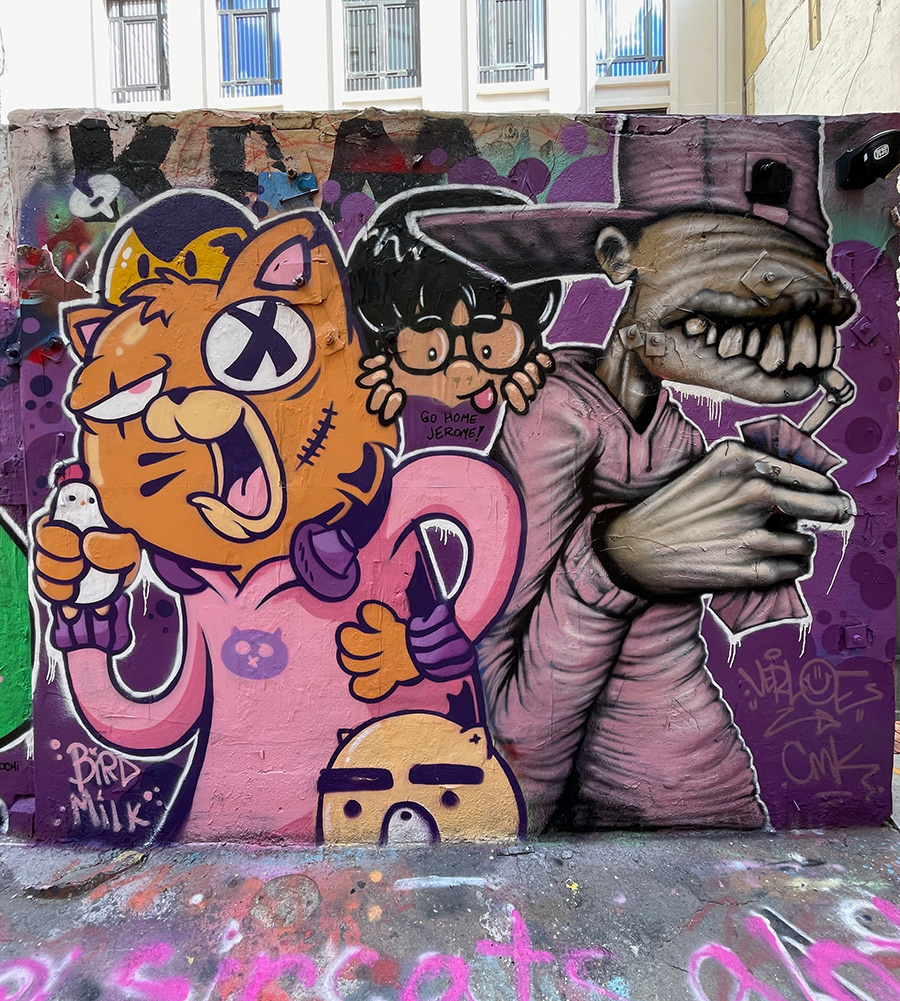
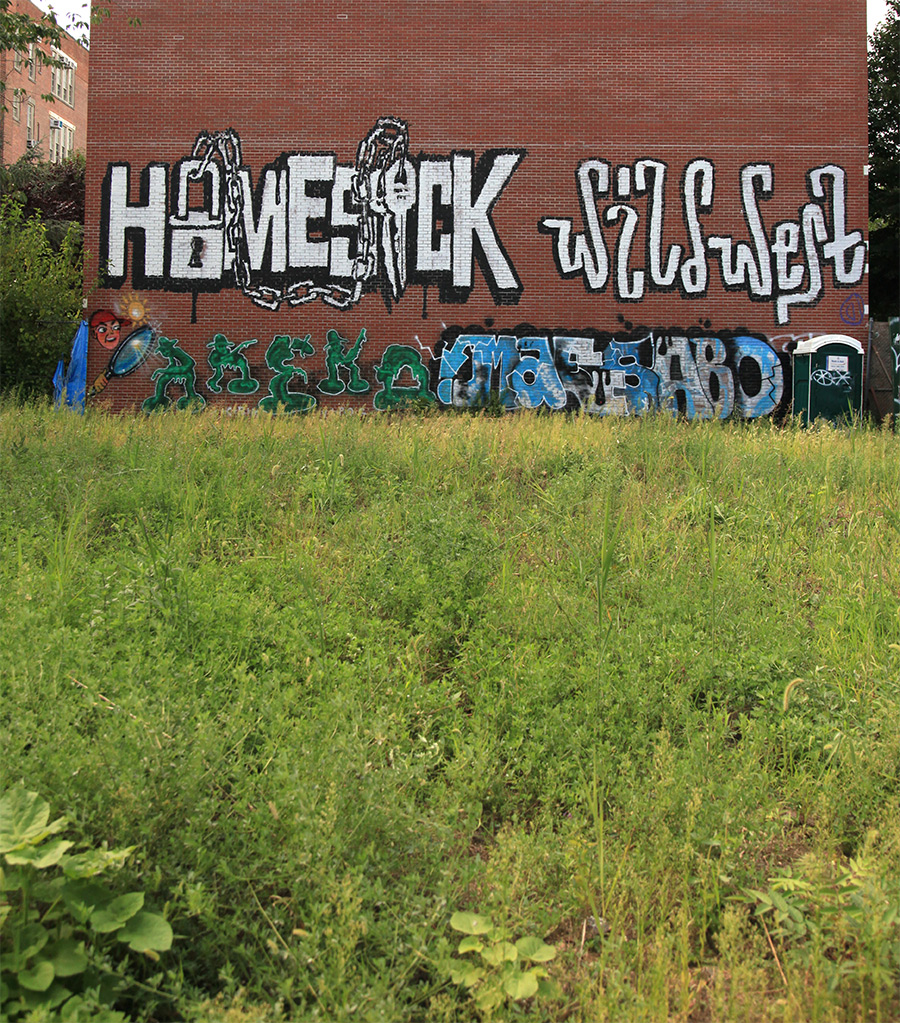
Here’s our weekly interview with the street, this week featuring works from Bird Milk, Crash, Duke A. Barnstable, Homesick, Molly Crabapple, PAGED, SAMO@, SAMOI, TFP Crew, and Wild West.
Welcome the BSA Images of the Week! Recent exhibitions, festivals, mural programs, and artist movements demonstrate that street art’s vitality continues to evolve—shifting from unsanctioned and underground to mainstream and institutional, and then back to the public streets. Far from fading, the street art and graffiti movement continues to adapt and engage more people, sparking dialogue about art, culture, creativity, property, politics, and its role in urban life. Our inbox at ABC runs like the city itself: fast, loud, nonstop—thankfully, this deli coffee is strong.
Global Graffiti Festival: The Meeting of Styles international graffiti festival just took over Rruga B Street in Kosovo’s capital, marking its 9th edition in Pristina. The city’s embrace of this festival – and the participation of artists from as far afield as Europe, the Americas, and Asia – underscores how the street art movement continues to span the globe, including places that rarely feature in mainstream art news.
As we speed through block parties, outdoor concerts, graffiti jams, and the end of New York’s summer art scene, we note next month’s arrival of the Gaza Biennale, a roving exhibition spotlighting artists from the embattled Gaza Strip. Previously exhibited in London, Berlin, and Athens, the show is a powerful cultural statement, taking place at 19 venues across 12 cities worldwide. The biennale’s New York iteration will span five days (September 10-14) at the non-profit art space Recess in Brooklyn.
Theatergoers have been flocking to Central Park’s Delacorte Theater for Twelfth Night, starring Peter Dinklage and Sandra Oh – in this New York tradition that’s open to everyone. Fans are lining up hours—even overnight—for free tickets, turning the event into a communal spectacle of Shakespeare for our treacherous time, of this moment.
“If this were played upon a stage now, I could condemn it as an improbable fiction.” (Twelfth Night, Act III, Scene IV)
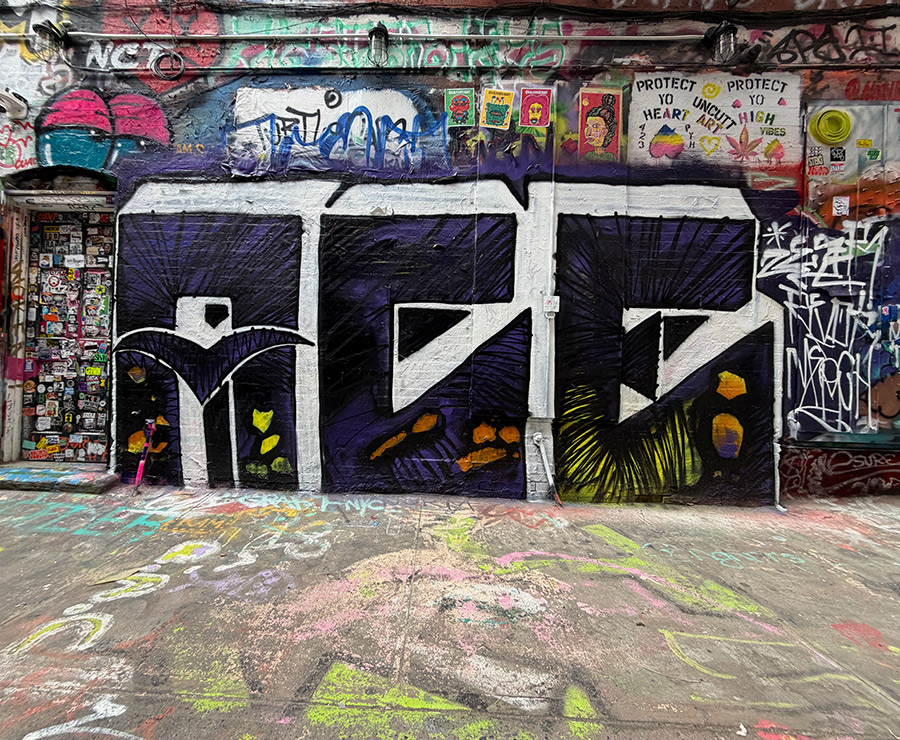
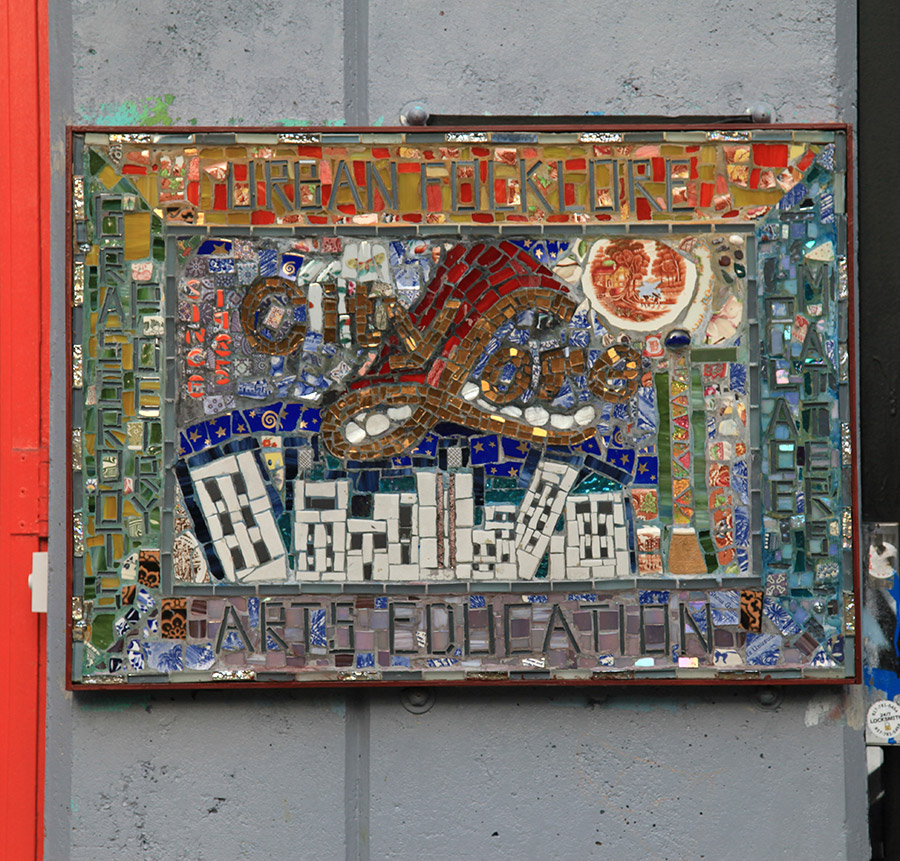
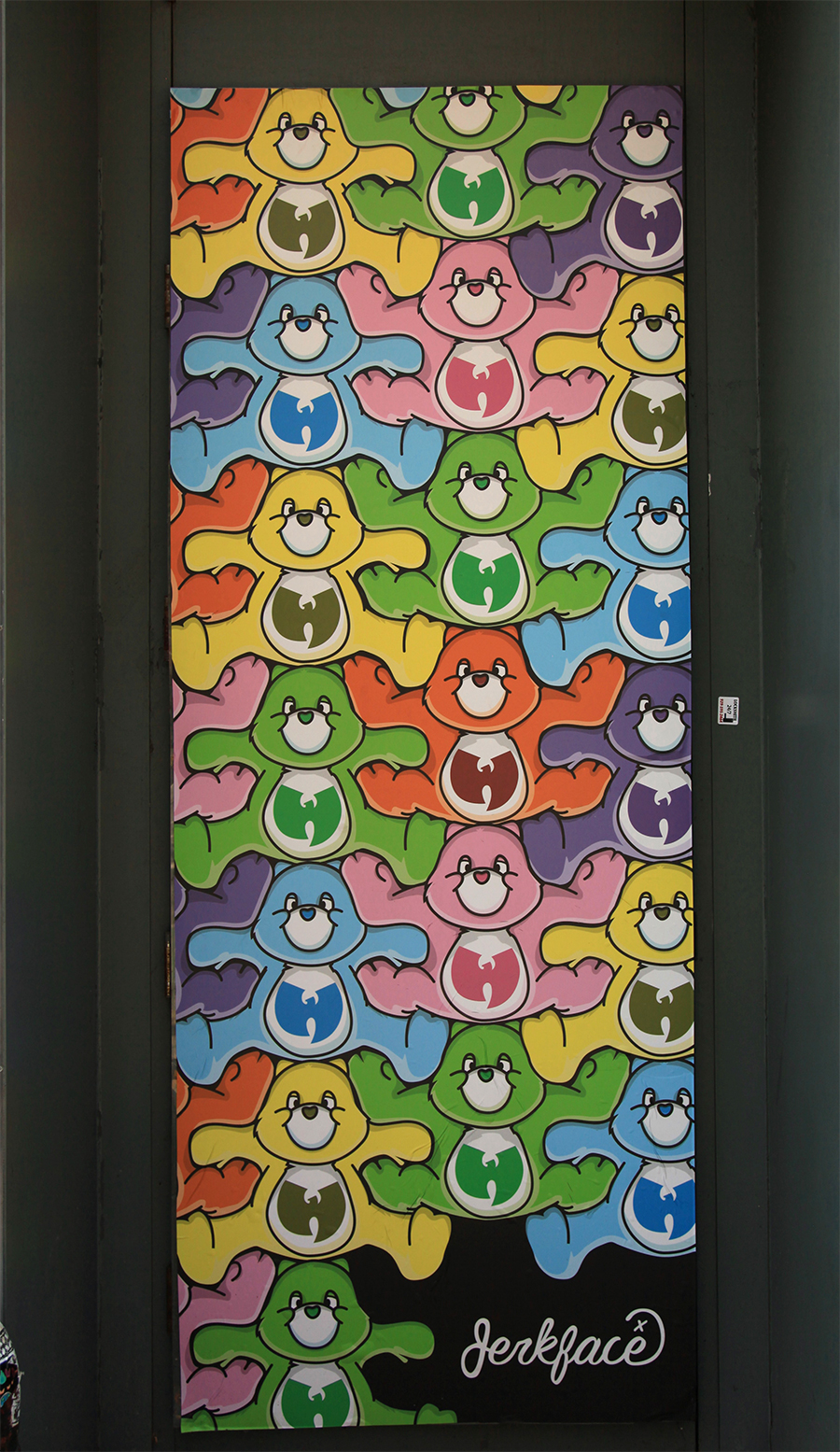
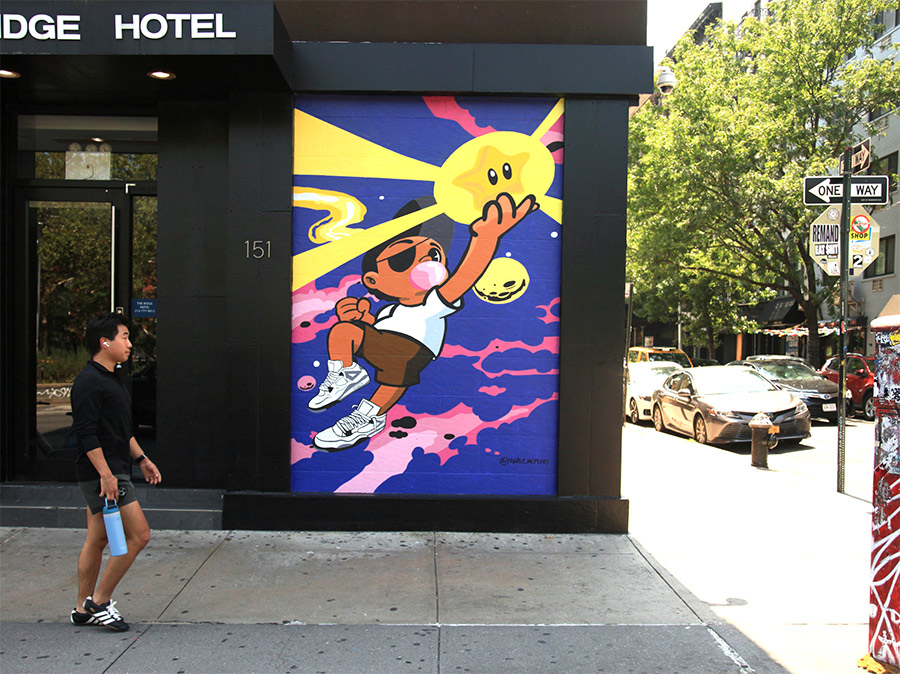
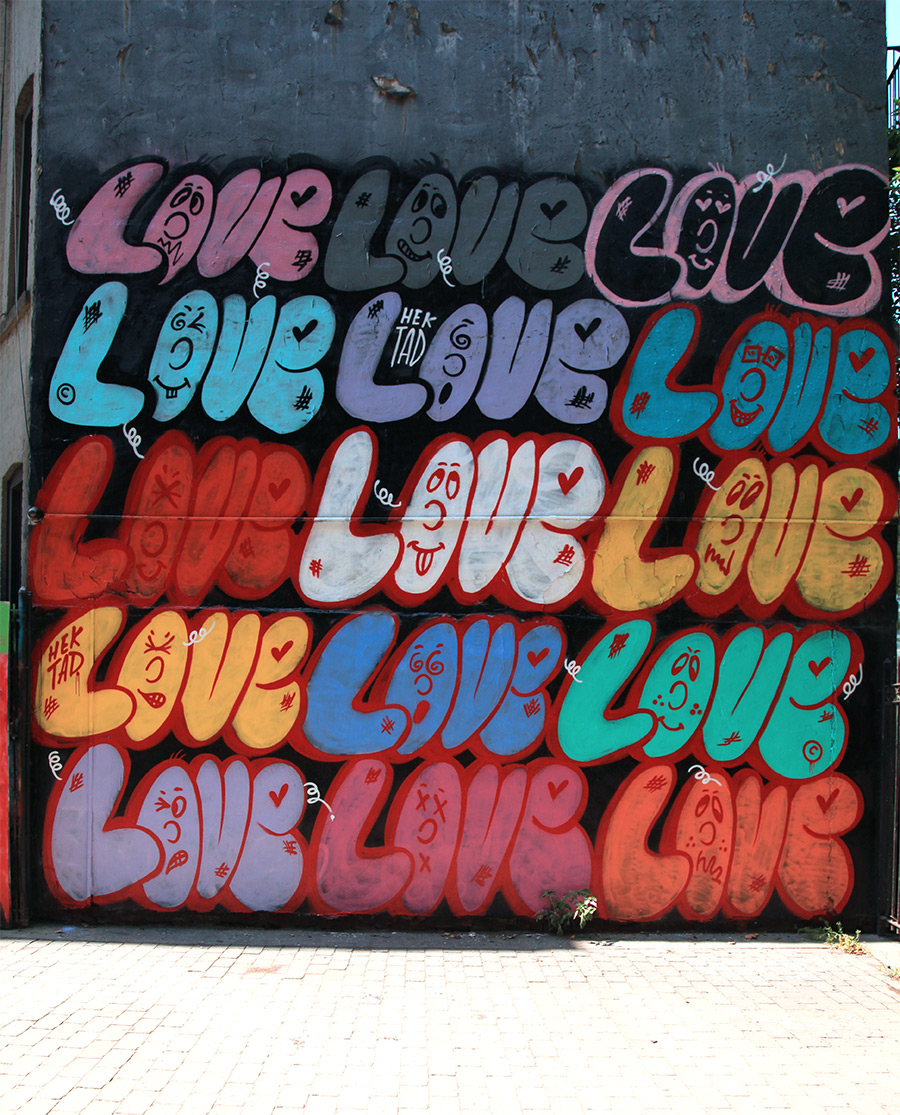
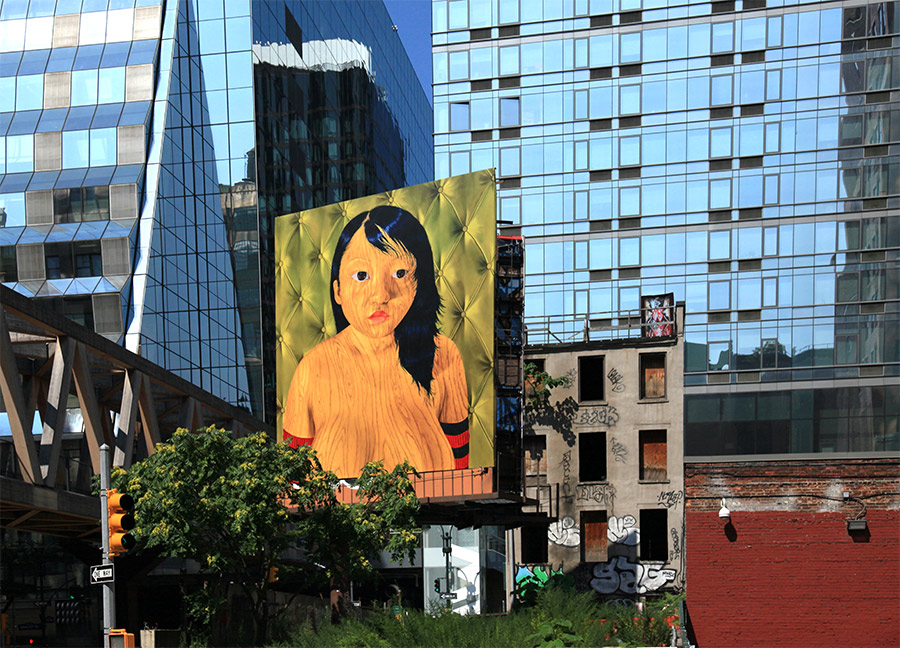
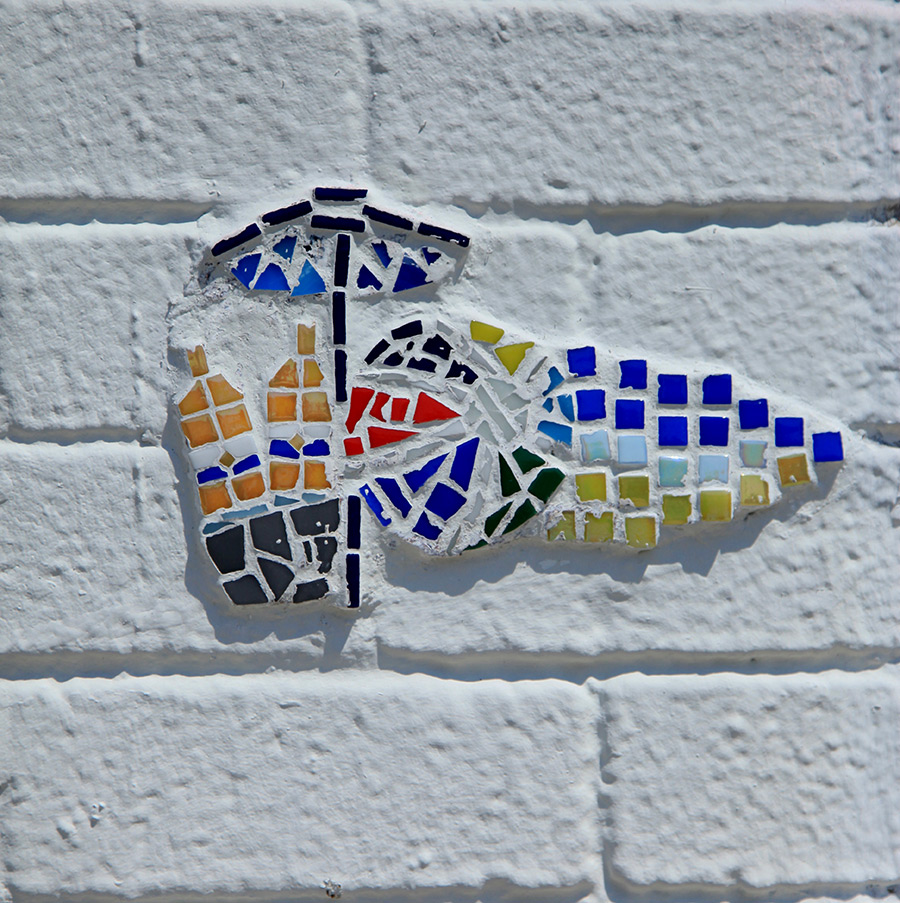
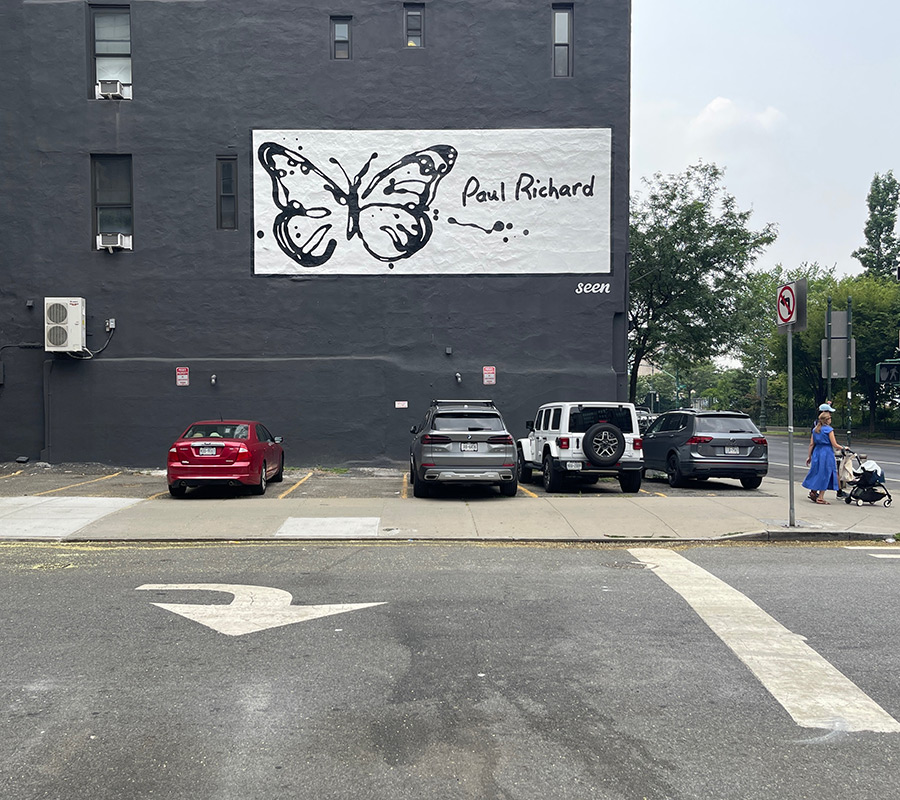
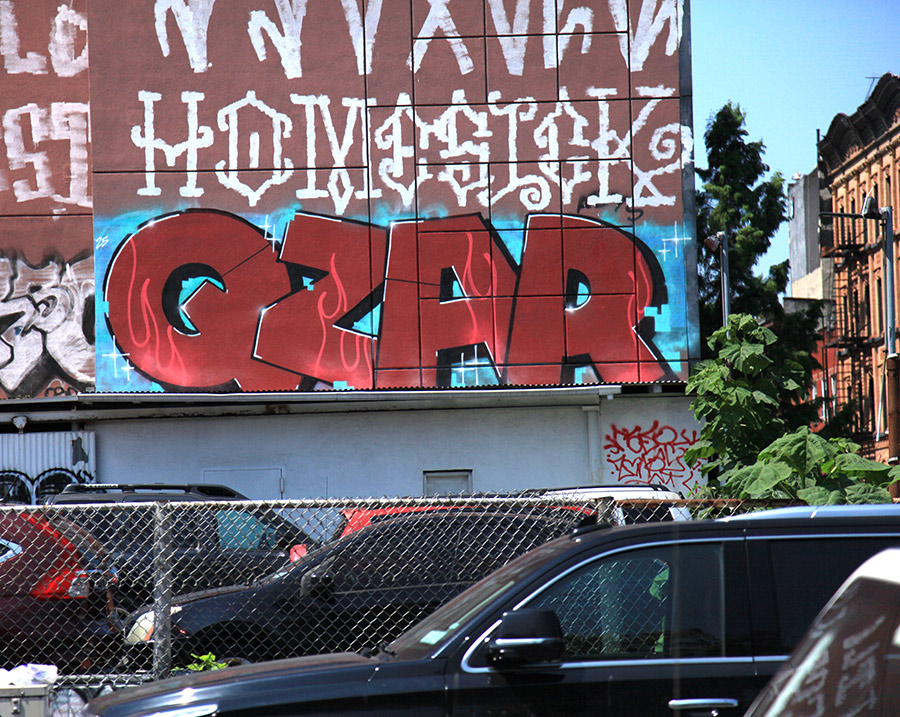
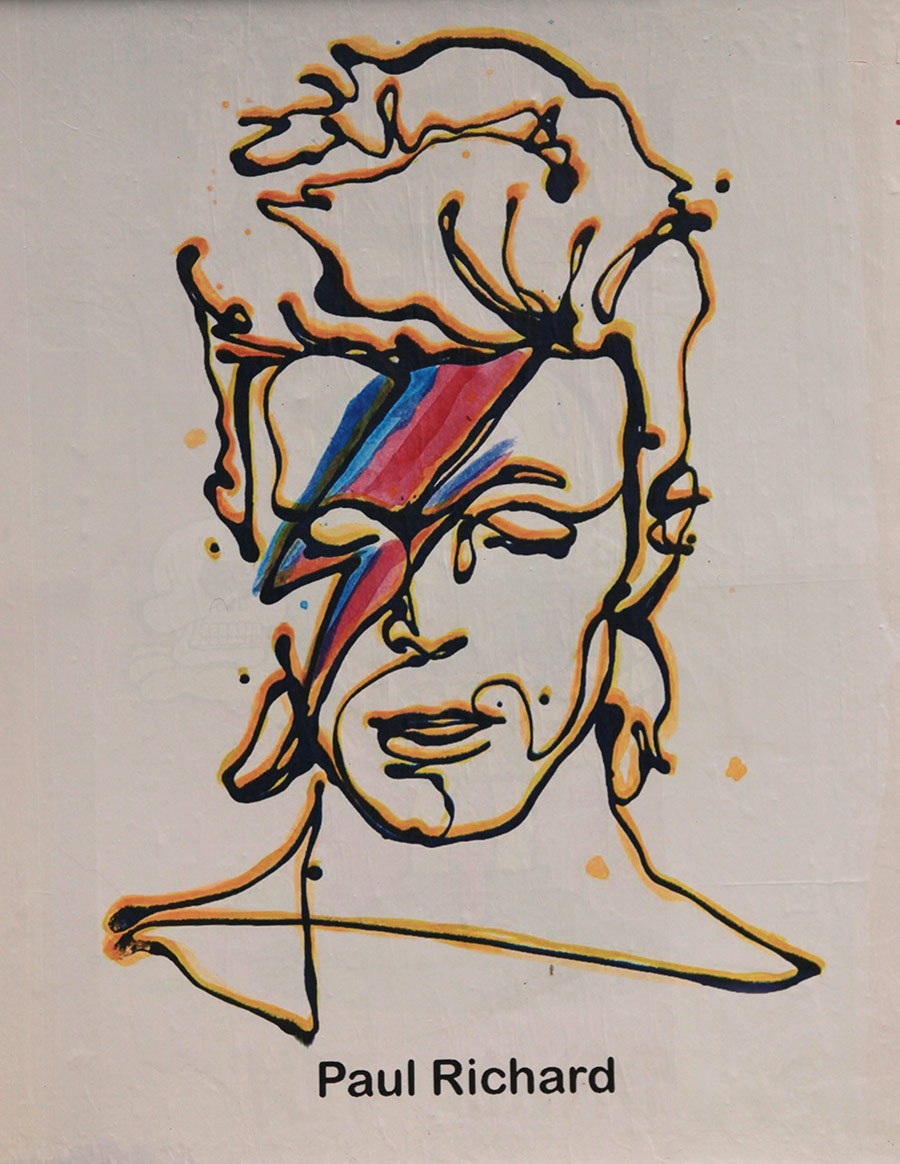
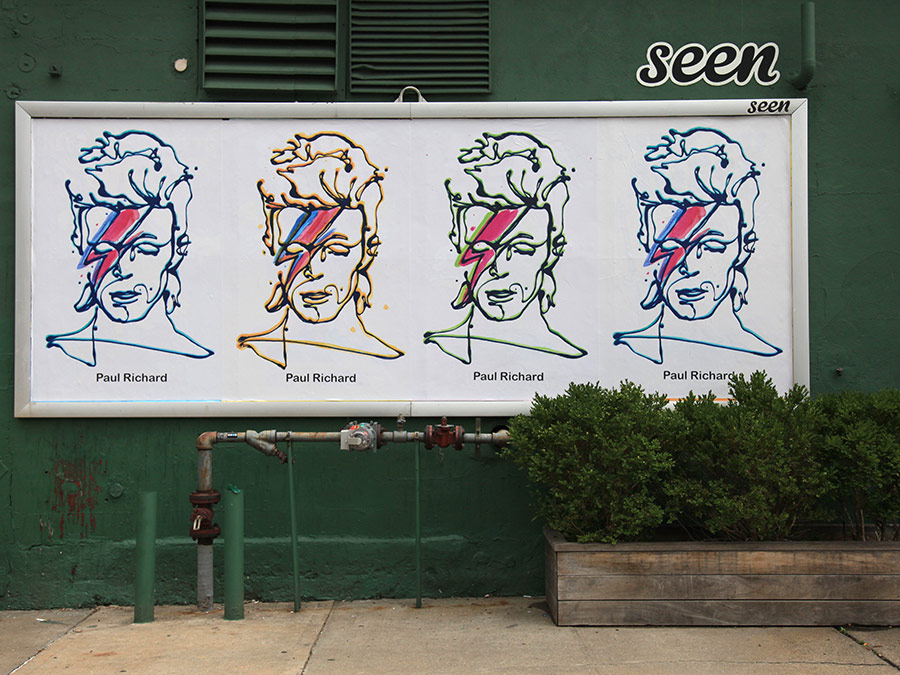
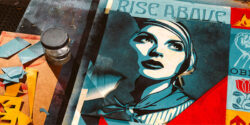
Here’s our weekly interview with the street, this week featuring works from Acet, AIC Mosaic, Below Key, Benny CRuz, Hektad, Homesick, JerkFace, Marly McFly, Obey, Paul Richard, Qzar, Sasha Gordon, Shepard Fairey, Tom Bob NYC, and Werds.
Welcome to BSA Images of the Week! It’s the Wild West out here, and there, there, there, and there. Is this deliberate? Does it all have to go up in a fireball, people? Honestly.
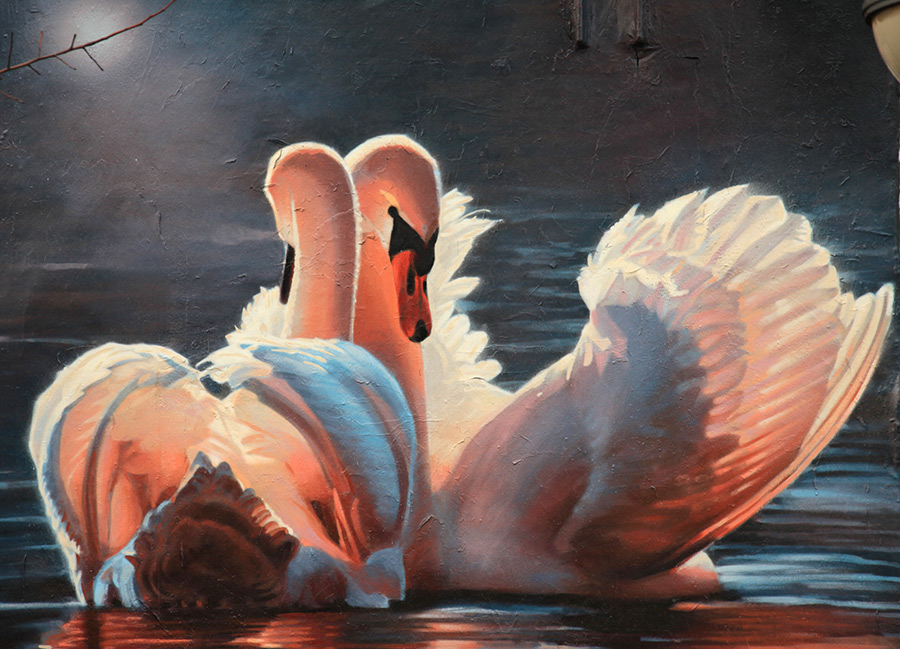
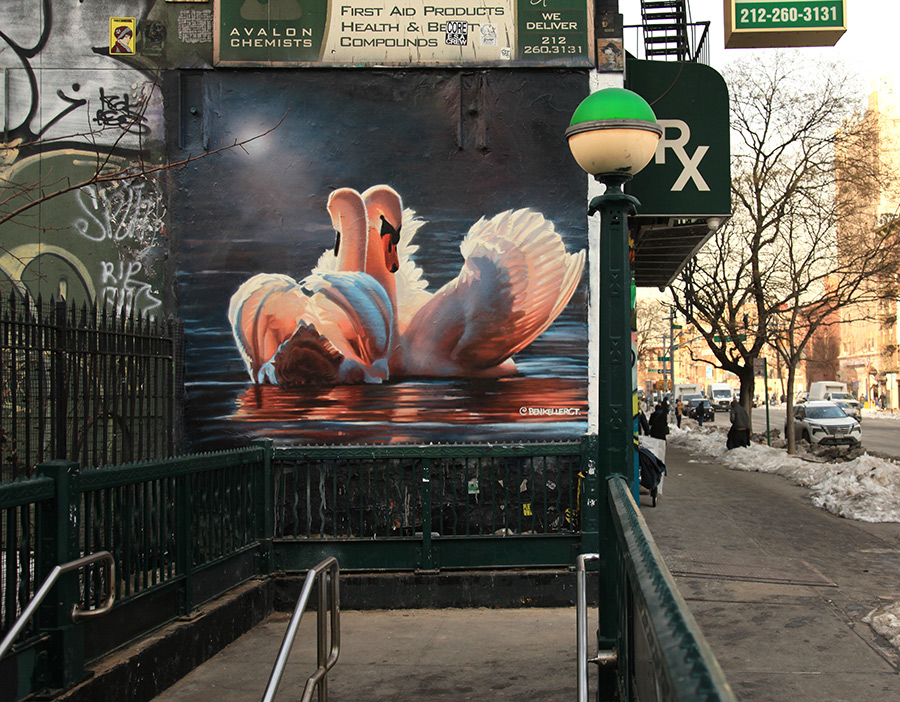
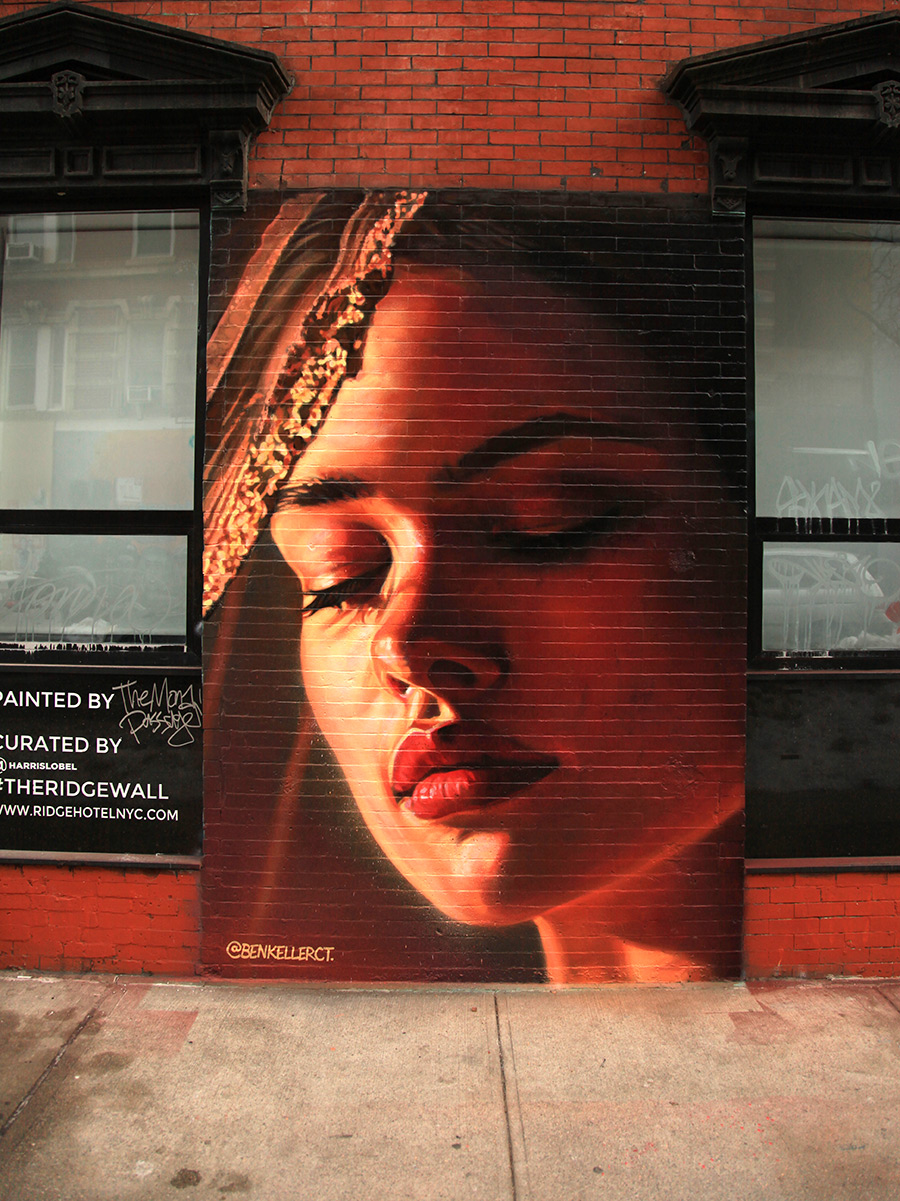
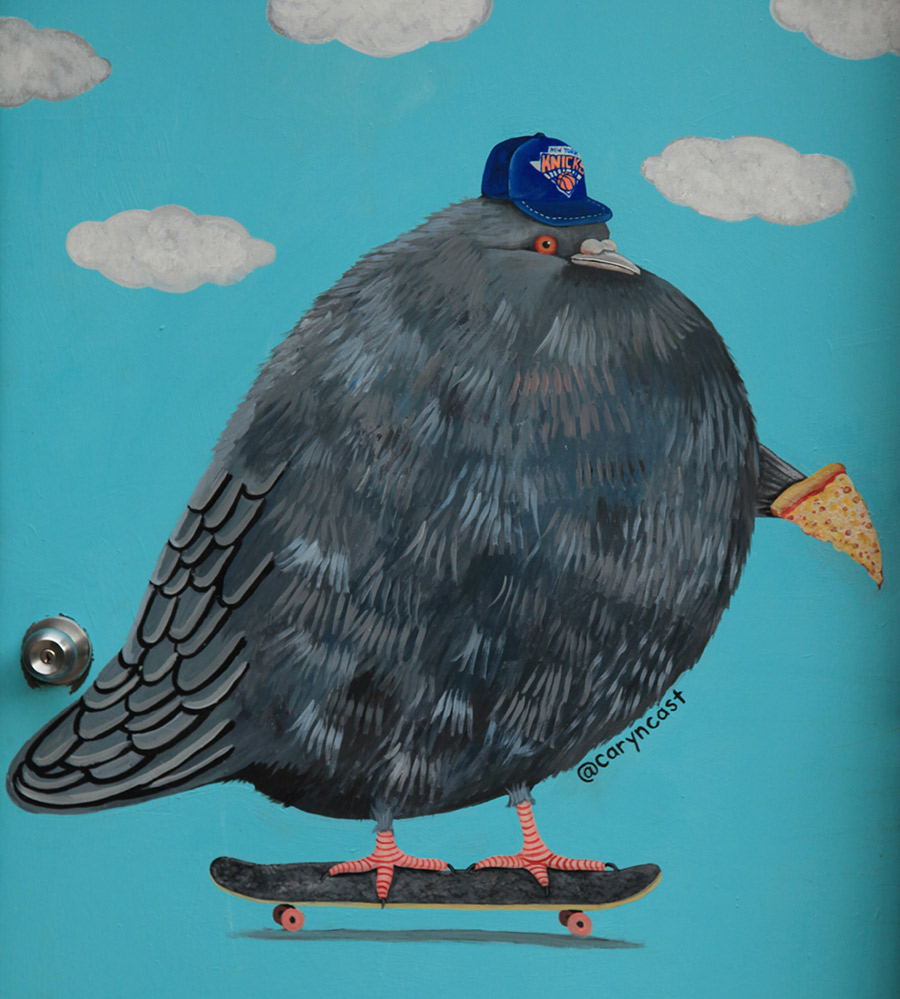
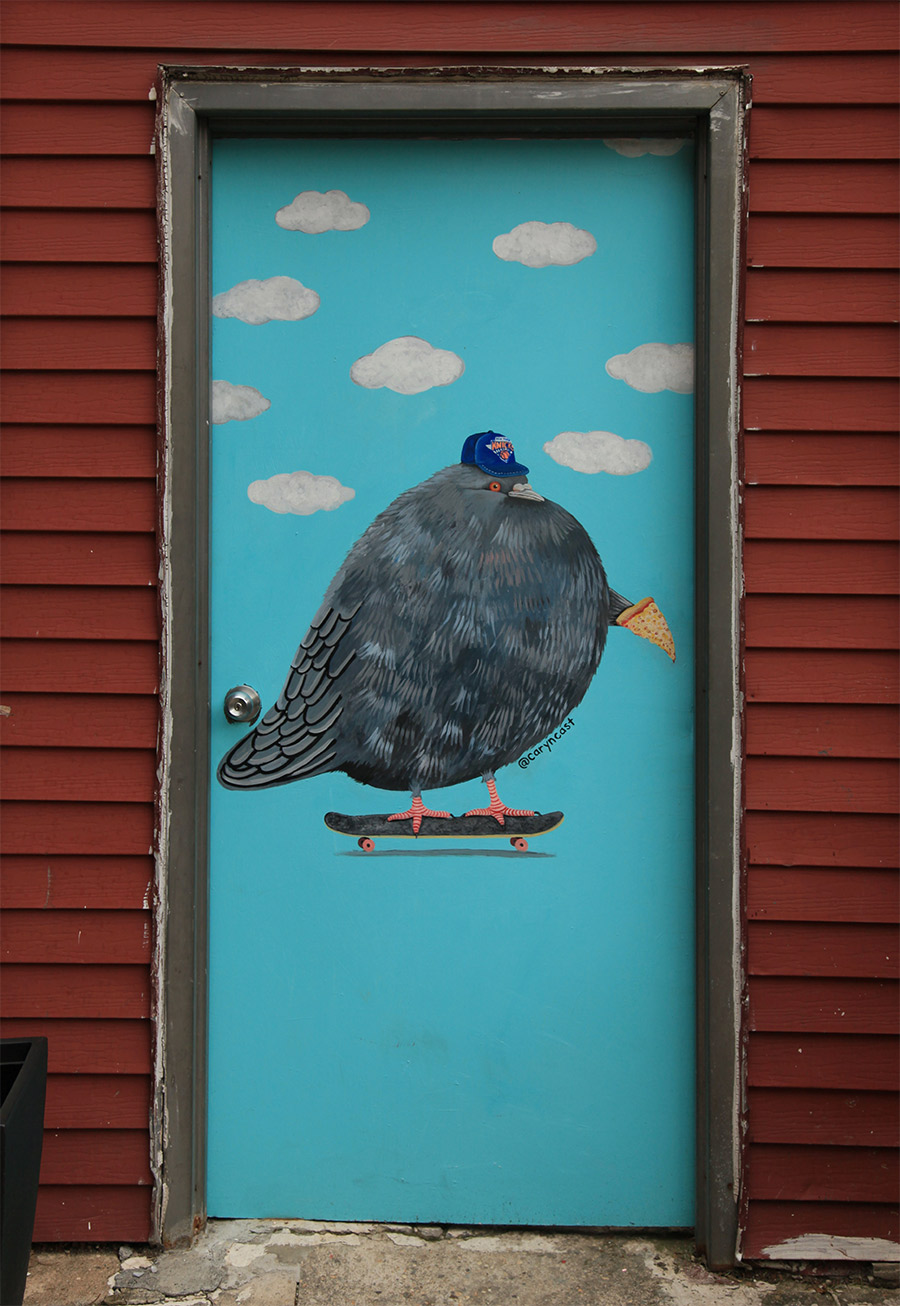
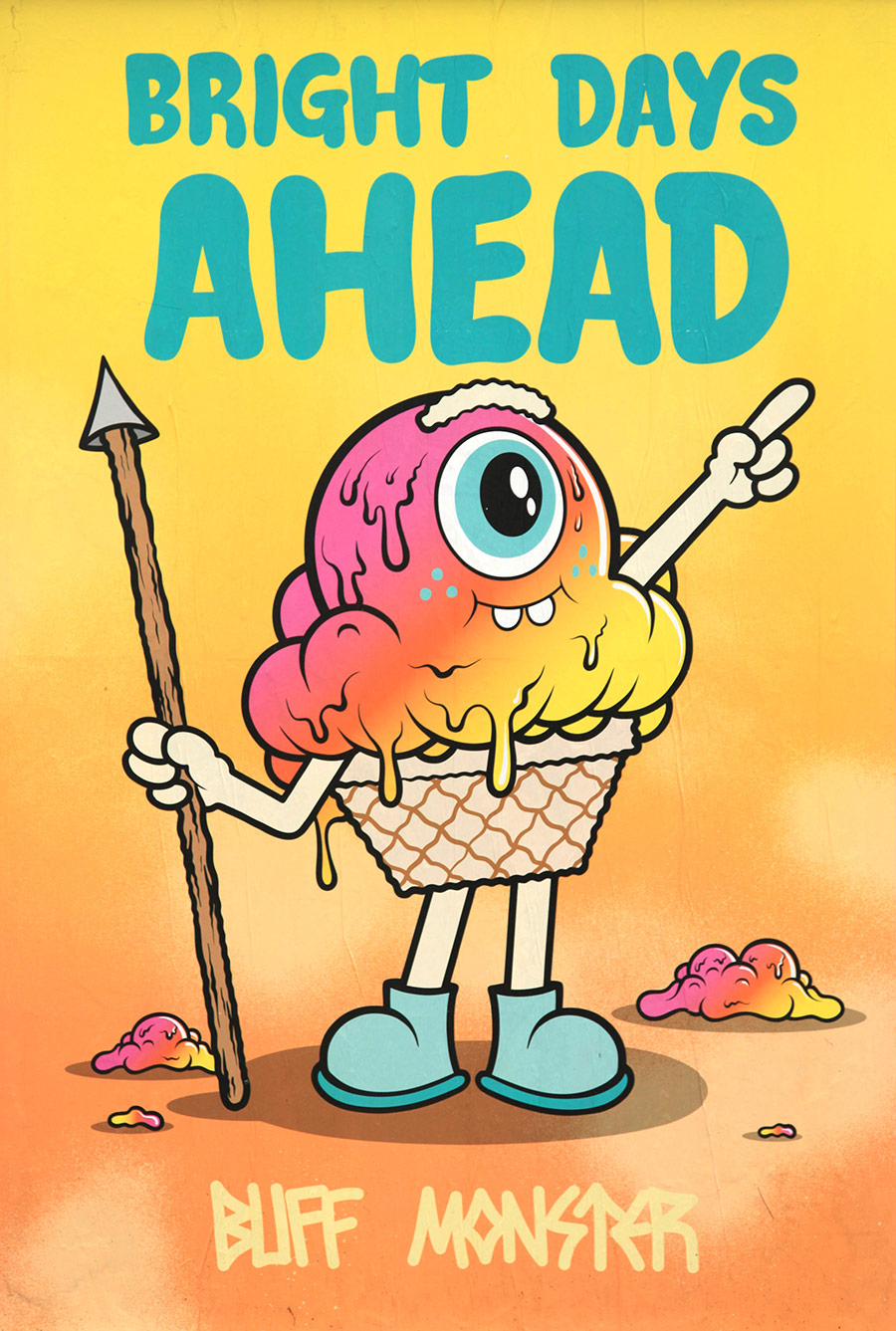
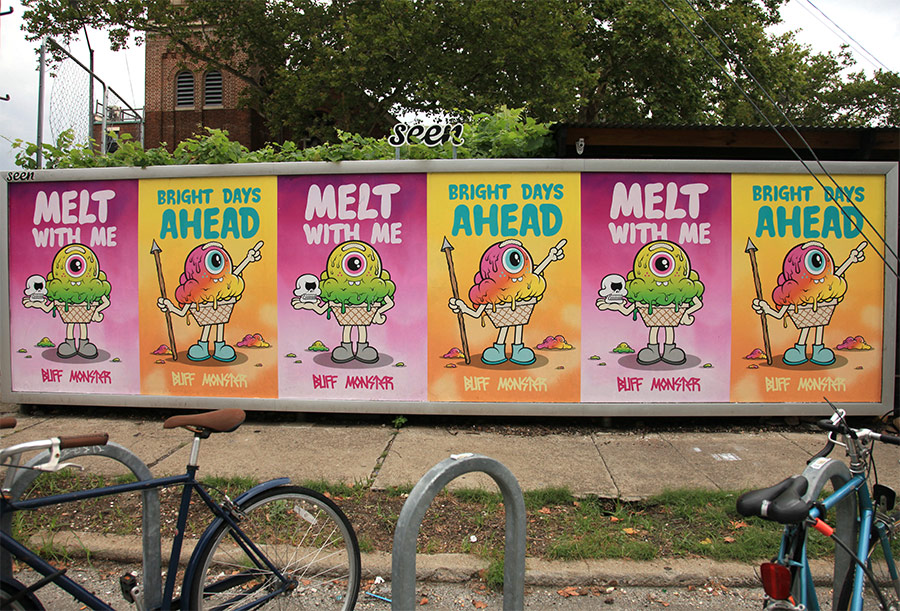
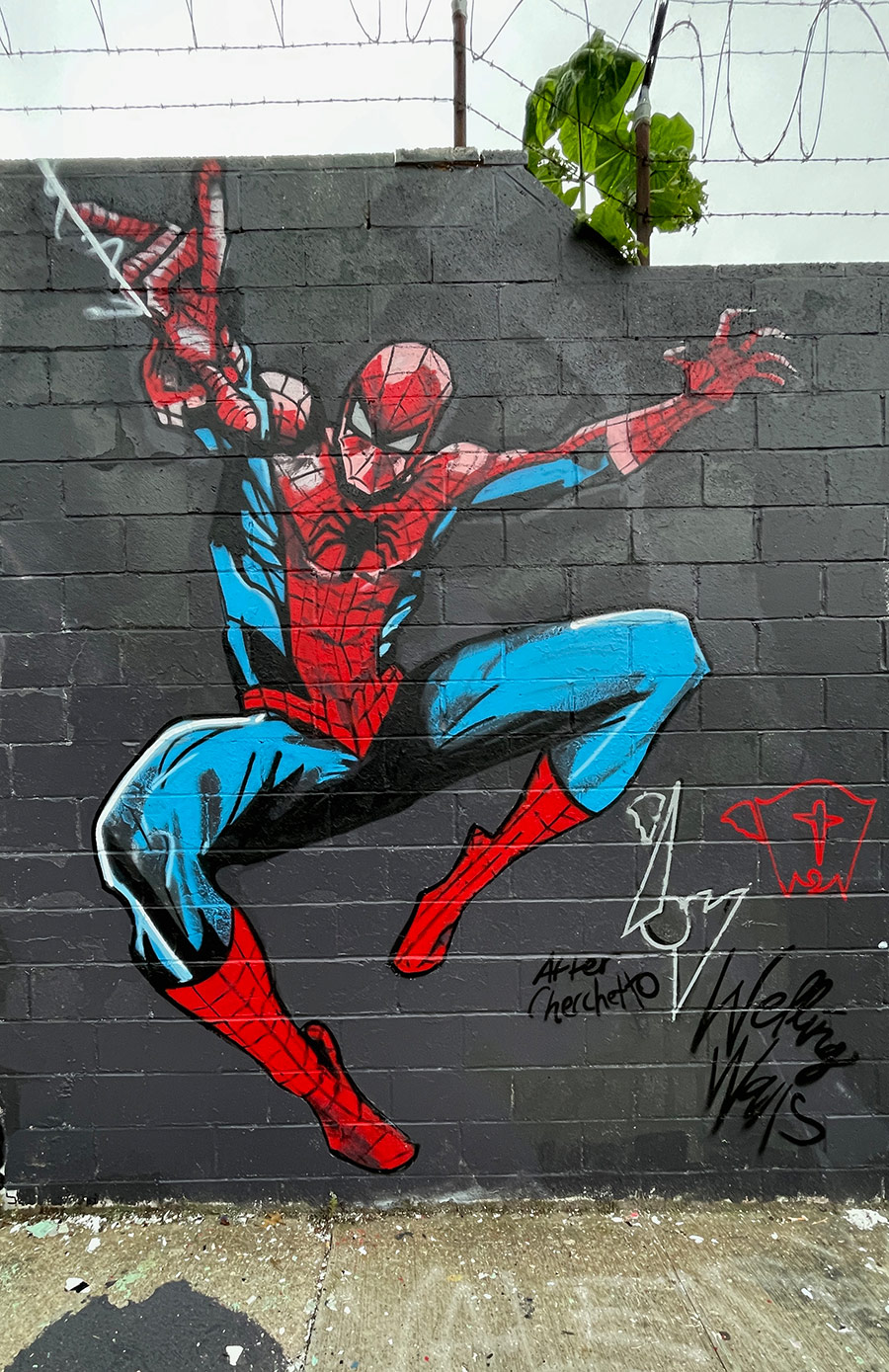
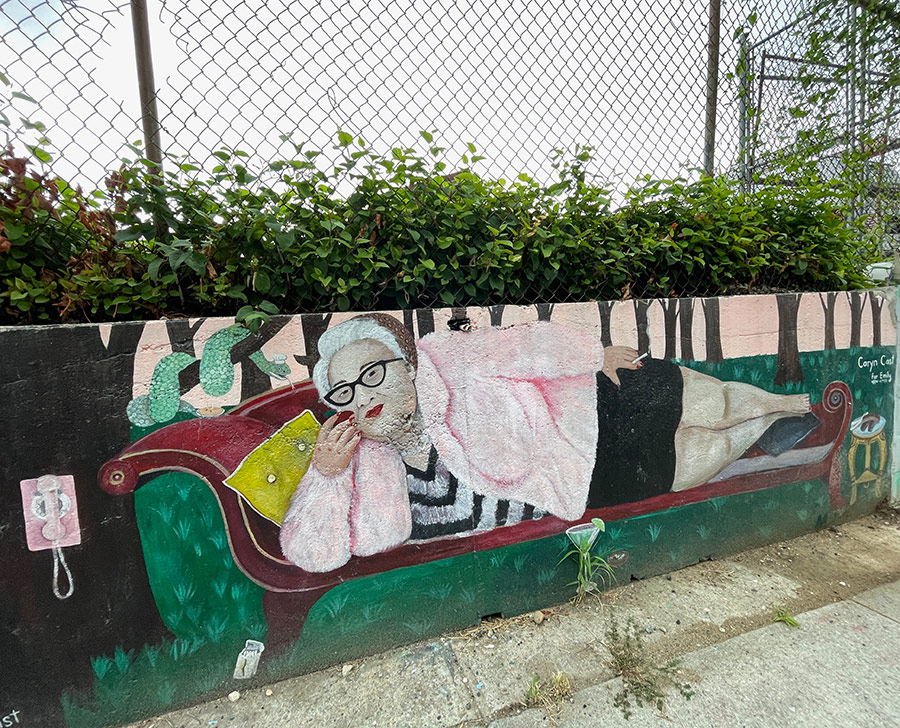
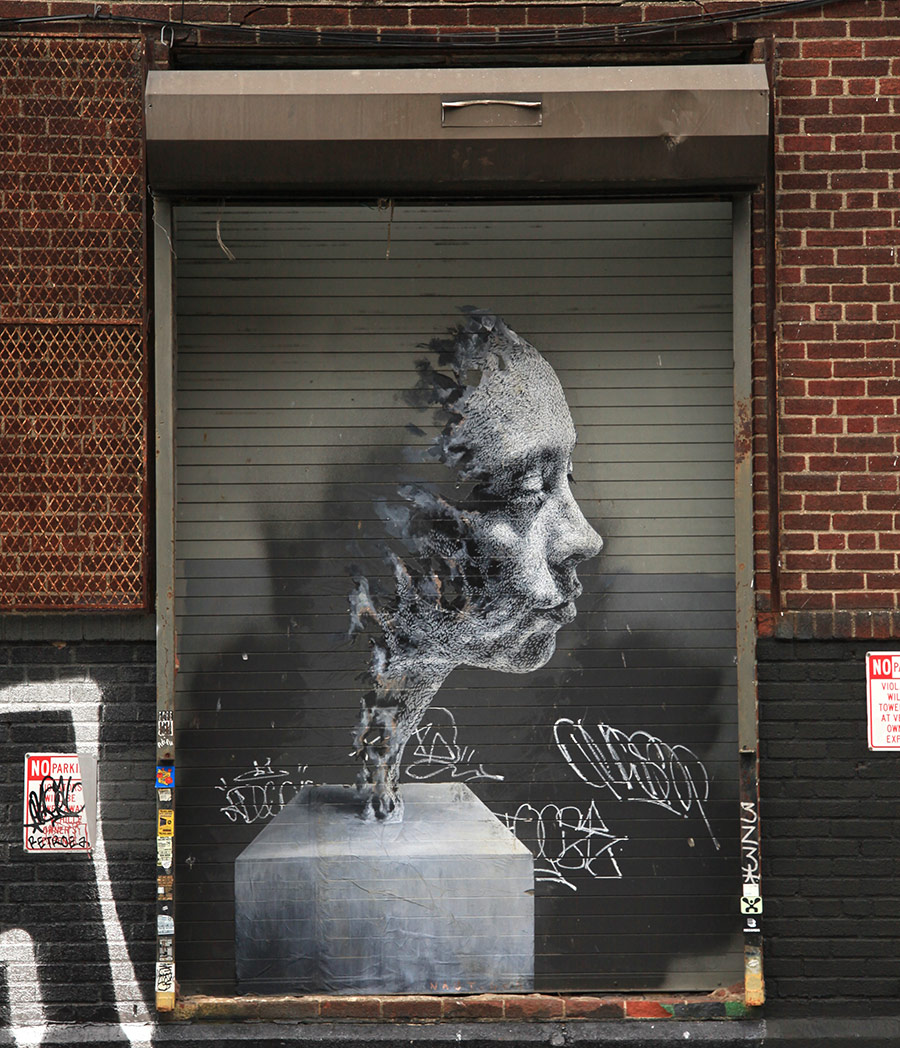
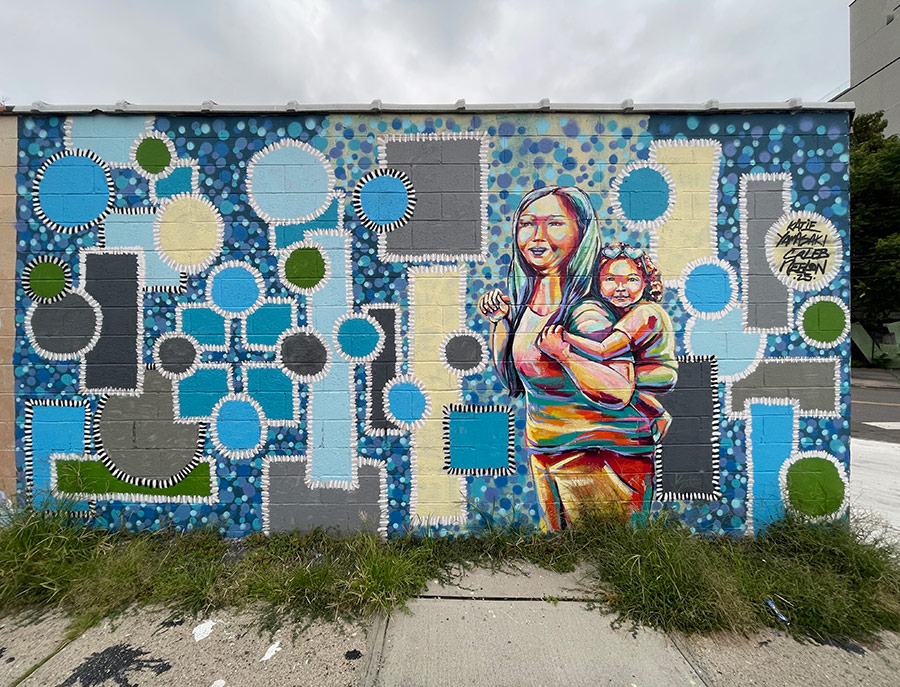
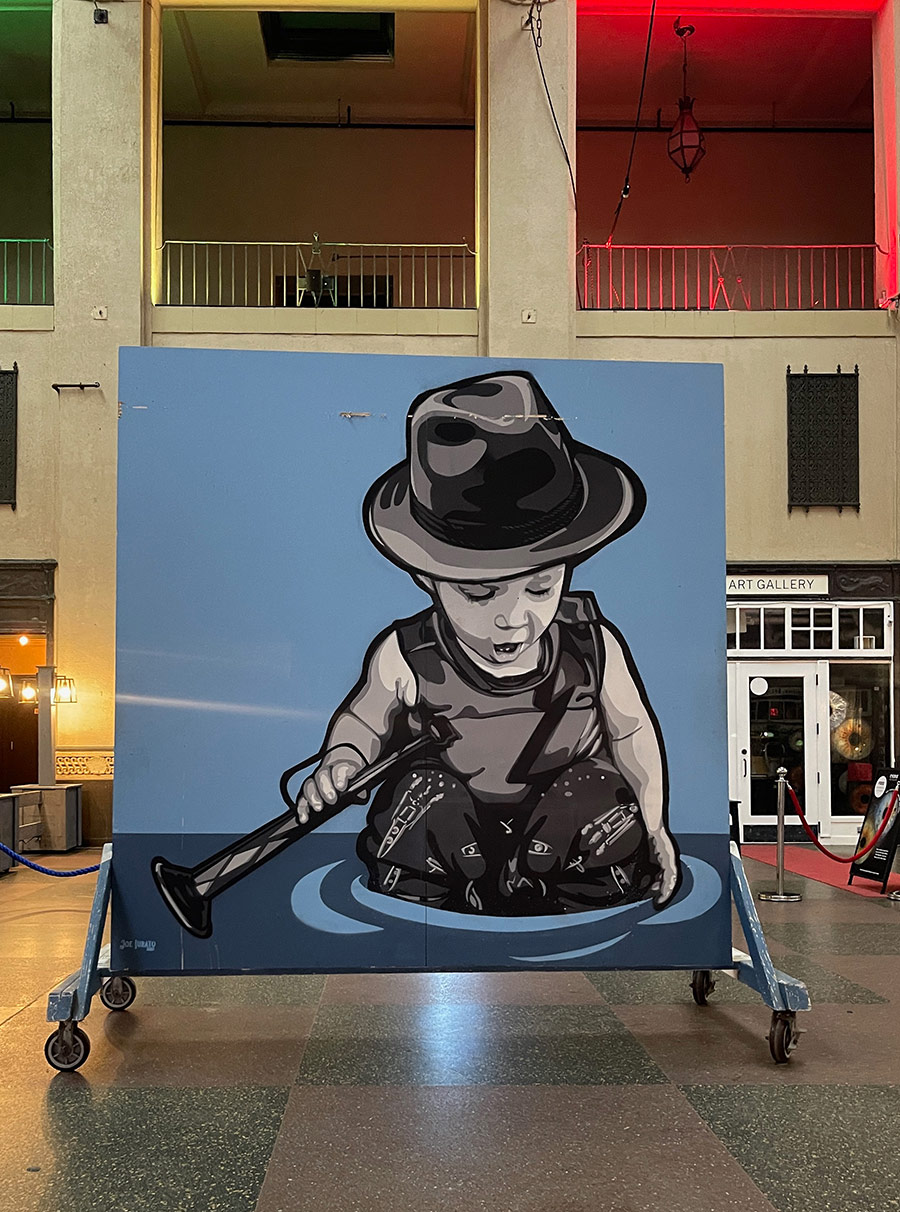
Here’s our weekly interview with the street, this time featuring Ben Keller, BIR, Buff Monster, Caleb Neelon, Caryn Cast, Fernando “SKI” Romero, Homesick, Joe Iurato, Kam. S. Art., Katie Yamasaki, Loky Oner, Marco Checcheto, NAST 404, Paul Richard, Porkshop, RUDE, Sky Adler, Wild West, and Yo Skills.
This week’s collection leans toward graffiti—city writers rekindling a romance with old styles, tracing our urban aesthetic lineage with fresh hands, new eyes, and scribes. Beyond that, the crime stats continue their long downward drift, despite some corporate outlets insisting our city is in daily chaos, as if Bedlam had moved in. Immigrants are valued members of New York’s sense of community and multi-culture, as ever, but a strangely well-funded machine would have you think differently- if they could. NYC is far more youthful, open-hearted, and innovative than that kind of thinking can imagine.
National heaviness seeps into the local air: relentless headlines, instability abroad, inhumanity and warmaking, higher costs, service cuts to some of the most in need, attacks on institutions—and on your search for sanity. You can feel it rumbling like the subway underneath: a slow, grinding disquiet, the weight of evident inequalities, the steady drip of absurdity and distraction.
Maybe that’s why the streets speak in heightened tones: sometimes glorious, other times surreal, opaque, saccharine, macabre. Rage simmers alongside wistful nostalgia. Escapism too. As old certainties dissolve, strange new forms begin to emerge. The atmosphere feels charged—thick with tension, possibility, change.
Everyone agrees New York is hot this summer—oppressively so—until, suddenly, there’s a breeze, a clear sky, and you exhale. Let’s go for a walk. How much of what is seen is real? How much is perception? How much is projection? Hard to say. Maybe it doesn’t matter. Maybe it’s all part of the picture.
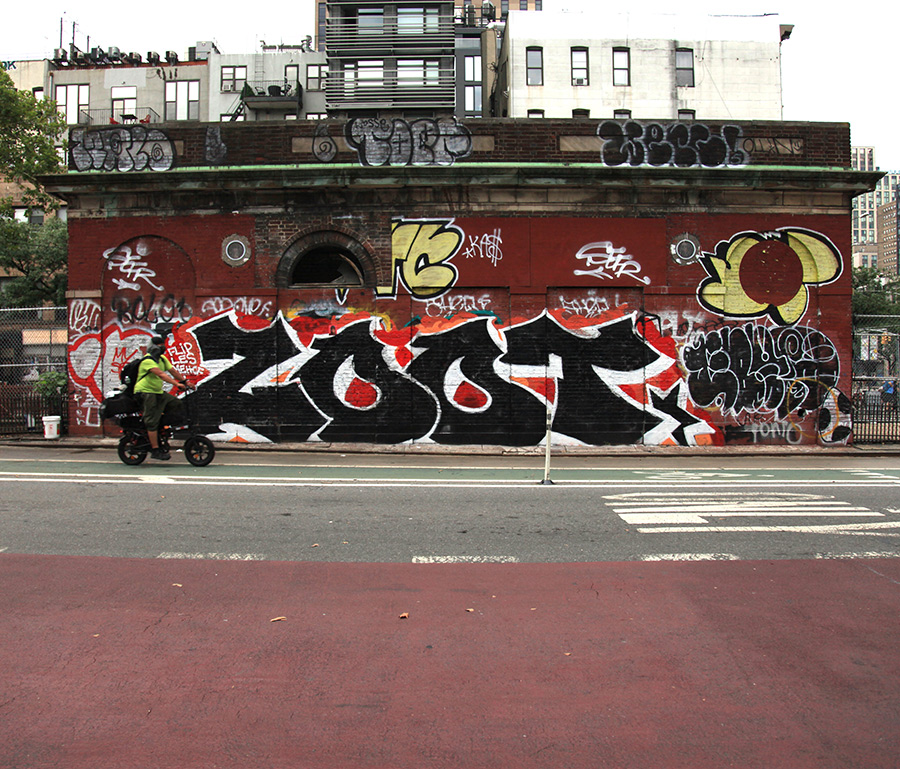
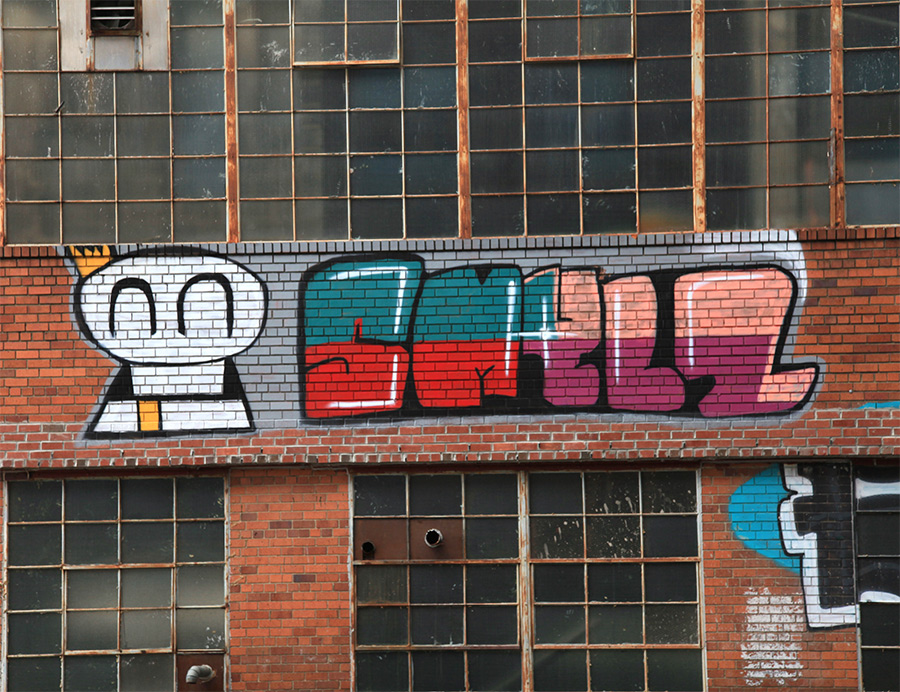
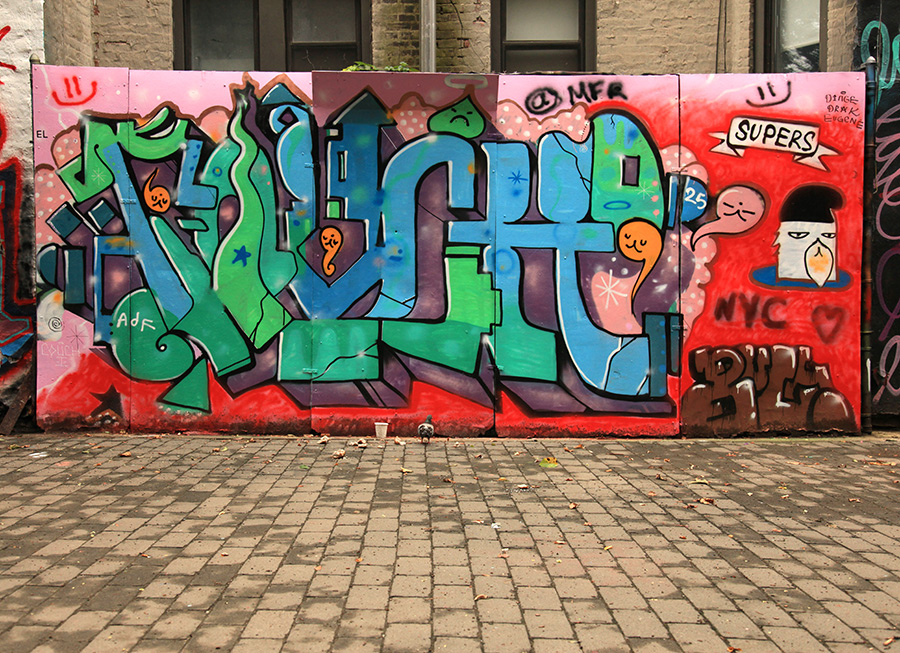
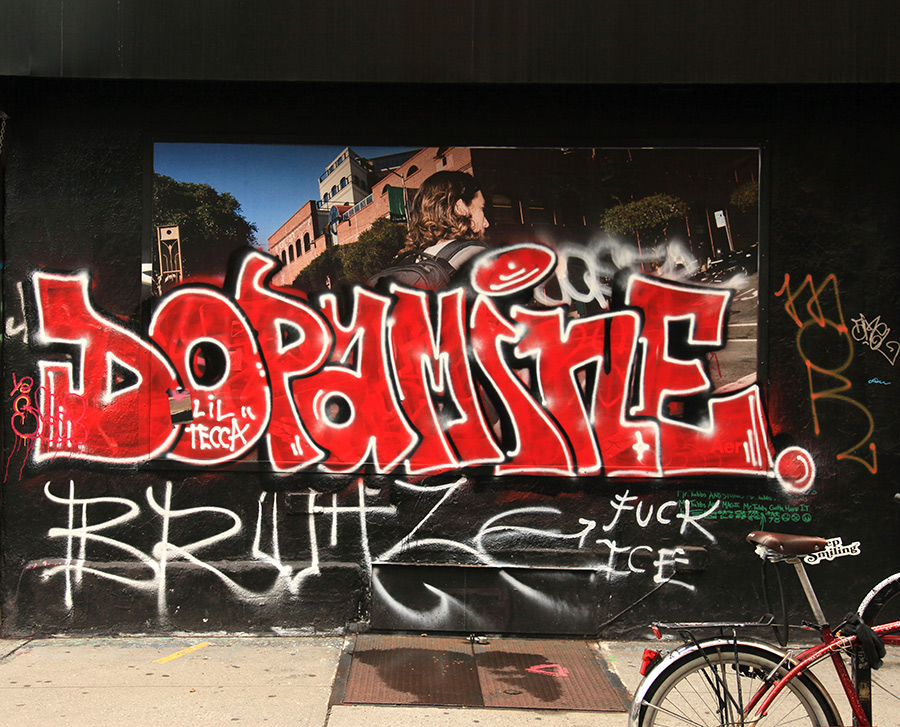
Here’s our weekly interview with the street, this week including Couch, D30, Dopamine, Homesick, Jappy Agoncillo, Kam S. Art, KEG, Nekst (tribute), RatchiNYC, Sefu, SMLZ, Sower Kerd, Wild West, and Zoot.
The George Floyd mural at Elgin and Ennis in Houston’s Third Ward has been quietly demolished — a move that caught many off guard, especially as the fifth anniversary of his death approached. More than a painting on a wall in the margins of the city, it was a community’s act of remembrance, a public reckoning, and a visual anchor for a moment when the country seemed to shift. To awaken.
And yet, here we are. Five years later, and it’s hard to say what lasting change took root. In some camps, being ‘woke’ is a pejorative, and going back to sleep is encouraged. The arc of justice bends, but it bends slowly. Or maybe it bends into circles.
Meanwhile in New York, a Banksy mural on a six-ton wall hit the auction block and… nothing. Not a single bid. Cue speculation: are we finally past the Banksy-buoyed street art boom that’s defined the last two decades? Or was the opening price just too steep? Maybe the rollout was sloppy. Maybe it was the economy. Whatever the reason, the silence in the salesroom is rare — and could signal a shift in the so-called urban contemporary art market.
And yet, the Banksy machine rolls on. At this point, there may be more Banksy museums than Starbucks — none sanctioned by the artist, of course, but still packing in the crowds. There’s The Banksy Museum in NYC, The World of Banksy in Paris, Museu Banksy in Barcelona and Madrid, and the touring Art of Banksy show, rolling through Jakarta, Melbourne, and Vancouver. It’s a brand now — maybe not quite as big as Mickey Mouse, but it’s definitely what cultural tourists reach for when they want a little edge with their museum day. What this says about the artist, the audience, or the architecture of commodified rebellion… you draw your own conclusions.
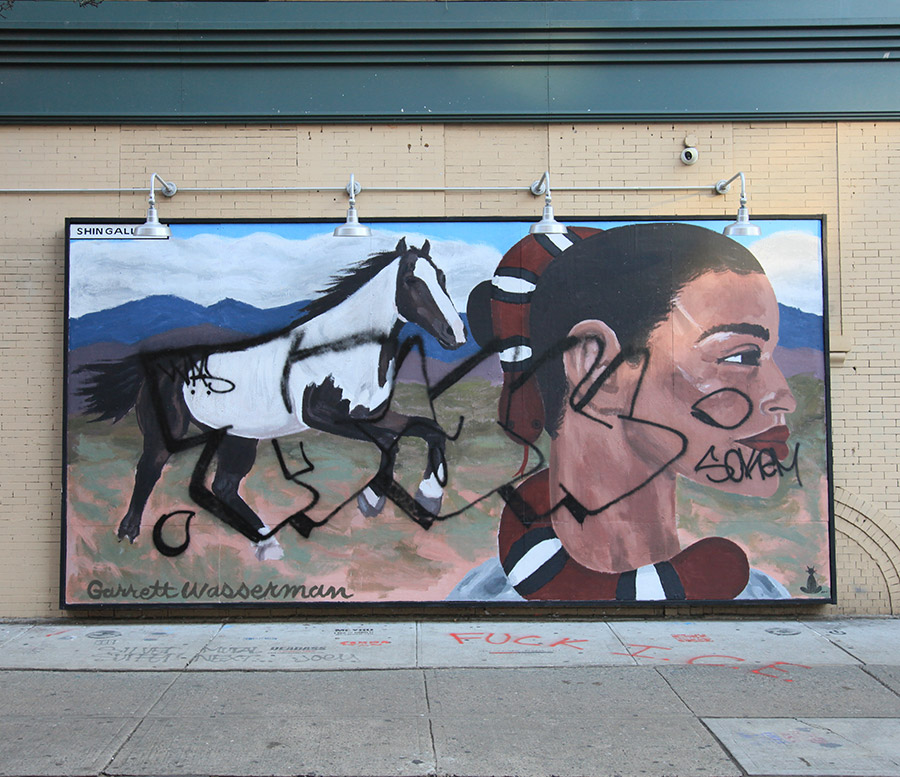
So here’s some of this week’s visual conversation from the street, including works from Shin, Crash One, GO, Ham, Hasp, Homesick, IMK, Jeff Henriquez, Mike King, Nela, Piggie the Pig, Queen Andrea, Stesi, Wetiko, Wild West, and Zimer.
This week, St. Patrick’s Cathedral on Fifth Avenue was suddenly flooded with pealing bells and congregants. In a historic moment for the Catholic Church, Pope Leo XIV, born in Chicago, was chosen, following in the footsteps of his predecessor Francis and his namesake Leo XIII, who was widely admired for his steadfast advocacy for migrants and laborers at the turn of the 20th century. Many observers have noted that the selection of an American pope may reflect a conscious decision by the College of Cardinals to offer a moral counterbalance to the growing tide of authoritarianism and exclusionary politics seen in some of today’s global leadership. With roots in a city shaped by immigration, industry, and social struggle, Leo XIV arrives at a time when such grounding may prove especially relevant. Best wishes to all of us.
So here’s some of this week’s visual conversation from the street, including works from Homesick, Gabriel Specter, Clint Mario, Werds, IMK, EXR, Jorit, Wild West, JEMZ, Ribs, Diva, Ellena Lourens, APE, NOEVE, ENEKKO, Rene, Happy, Disoh, Peuf, and Off Key.
You can trace the national/international headlines like veins across the map—the courts, the economy, the ports, the rising trade in arms internationally, the hollowing shelves, the smiling wolf-like threats to Medicaid that serves seniors and the poor and disabled, the silent waves of layoffs, the escalating prices and shrinking dollar, the protests, the bristling anger expressed at podiums and on TV screens toward citizens and people just trying to make a living. To people on the street these can feel like signs of a careful dismantling of a century of progress and rumblings of worse to come. The writing is on the wall, and a quiet unease drifts through the days.
Also on the wall today, our top image: a mural in Little Italy, New York, of Pope Francis, whose funeral was yesterday in Rome. A champion of the forgotten, a diplomat of peace, a voice for those left in the margins. More than 400,000 mourners filled the streets — world leaders and ordinary souls alike. Honoring his commitment to marginalized communities, approximately 40 individuals—including transgender people, prisoners, migrants, the homeless, and victims of human trafficking—were invited to be the final group to pay their respects before his burial at the Basilica of Santa Maria Maggiore in Rome. Cardinal Giovanni Battista Re called him “a pope among the people,” remembered not for the weight of his office, but for the lightness of his compassion.
With these news cycles to contemplate, many may be asking if we will rise to meet the moment. Certainly it looks like street artists continue to enter the fray of politics, human rights, technology, pop art, the environment… You never know what you will find in these confused days.
So here’s some of this week’s visual conversation from the street, including works from Banksy, Homesick, Jorit, Great Boxers, Ottograph, Skitl, Delphinoto, Oink Oink, and Cure.
BANKSY created Battle to Survive a Broken Heart during his New York City residency, Better Out Than In, in October 2013, unveiling a new piece each day for the entire month that had fans and collectors racing to new locations around the city to see his newest installation. He painted this stencil in Red Hook, Brooklyn, on the wall of a warehouse owned by Vassilios Georgiadis. After it was promptly vandalized, Banksy returned to restore it. The piece is now on display in the Winter Garden at Brookfield Place in Manhattan, ahead of its auction by Guernsey’s on May 21.
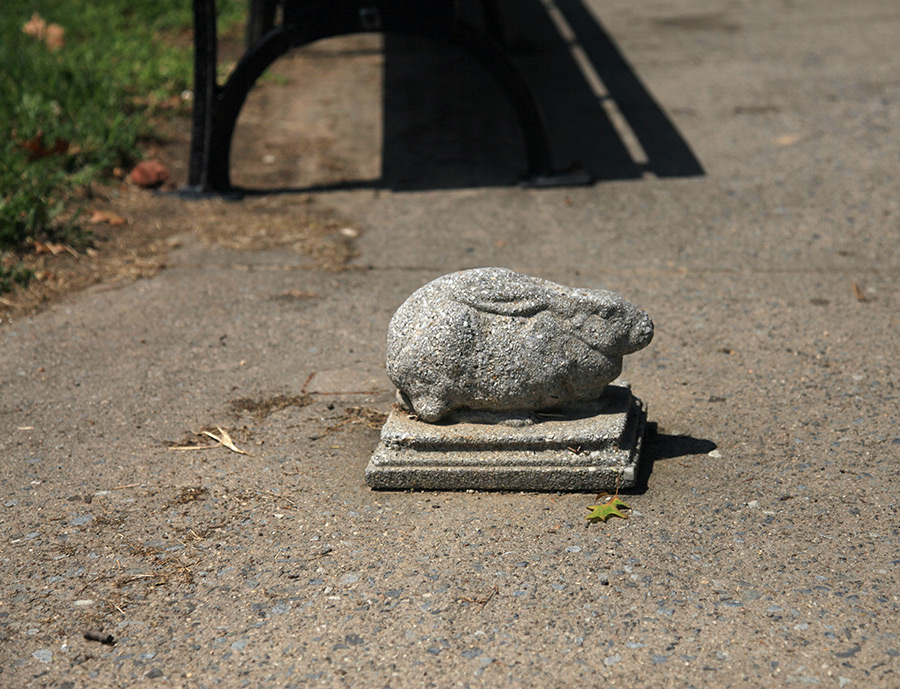
Welcome to BSA Images of the Week. Happy Easter, bunny.
Great stuff is out on the streets today, whether you are wandering aimlessly through the city or touring with a sense of purpose. Street art continues to evolve, even as it repeats. Can anyone doubt that there is a more relevant artform that can be instantly responsive to current events and take the longer view?
The city’s buzzing with art this spring—start with these must-sees, in addition to hitting the Botanical Gardens in Brooklyn and the Bronx and the local park and your neighbor’s tulip bed: At White Columns, Gordon Matta-Clark: NYC Graffiti Archive 1972/3 offers a rare look at early graffiti culture through the artist’s archival photographs (whitecolumns.org). Over in Industry City, Brooklyn native Michael “Kaves” McLeer presents Brooklyn Pop – A Brooklyn Dream, an immersive homage to the borough’s style and swagger, complete with full-scale subway replicas and vintage ephemera (brooklynbuzz.com). At the Whitney, Amy Sherald’s American Sublime brings together nearly 50 of her portraits in a commanding solo show that focuses on Black life with quiet power and elegance (whitney.org). Meanwhile, the Guggenheim hosts Rashid Johnson: A Poem for Deep Thinkers, filling the iconic rotunda with more than 90 works exploring Black identity, masculinity, and emotional depth (guggenheim.org). And at the Brooklyn Museum, Breaking the Mold: Brooklyn Museum at 200 celebrates the institution’s bicentennial with a wide-ranging exhibition that reflects its rich, complex legacy and commitment to representation (brooklynmuseum.org).
We continue with our interviews with the street, this week including Citty Kitty, Homesick, JerkFace, Eternal Possessions, Chupa, Android Oi, Staino, Masnah, Jaek El Diablo, Jay Diggz, Washington Walls, BC NBA, Busy, and Pytho.
Welcome to BSA’s Images of the week. Mockingbirds are bringing sprigs from the cold, grey, churning East River to build nests on the banks of abandoned lots of Williamsburg/Greenpoint before further ugly gentrification paves it over. Up and down the Brooklyn waterfront, it’s a procession of architectural mediocrity—glass boxes and bland slabs posing as progress. With few exceptions, these vertical office parks evoke visions of photocopier showrooms or surplus staplers stacked in a supply closet.
Magnolias and cherry blossoms are starting to bust out all over Brooklyn. Spring is here, and it’s coming in hot—and cold. April’s throwing weather tantrums like a toddler on espresso, bouncing us around like a pinball between heatwaves, cold snaps; all while dodging the political side-swipes we read and hear on social media and the press room. Add in soaring grocery bills (despite what the “official” numbers say), and it’s no wonder everyone’s feeling a little punch-drunk.
In a notable week for New York’s graffiti and street art scene, Dutch artist Tripl, also known as Furious, unveiled his decade-long project, Repainting Subway Art. This ambitious endeavor meticulously recreates the iconic 1984 book Subway Art by Martha Cooper and Henry Chalfant, with Tripl reproducing each original piece on European trains and re-enacting the accompanying photographs. The project culminated in the publication of the 196-page book that was featured Friday night and feted Saturday night.
Friday to a packed auditorium the Museum of the City of New York hosted a panel discussion on featuring Tripl, Cooper, Chalfant, and artist John “Crash” Matos. Moderated by graffiti scholar Edward Birzin and introduced by MCNY’s Sean Corcoran, the conversation delved into the evolution and global impact of graffiti and street art culture and the powerful reverberation of the book’s influence on generations of writers and artists.
Last night, Crash’s gallery WallWorks New York in the Bronx inaugurated the Repainting Subway Art exhibition, offering an immersive experience juxtaposing pages from the original Subway Art with Tripl’s reinterpretations. As word gradually spreads about this project, the graffiti and related communities will undoubtedly debate its significance—as homage, reinterpretation, and artistic intervention—while celebrating the obsessive dedication it took to recreate one of graffiti’s foundational texts from a contemporary, transnational perspective.
We continue with our interviews with the street, this week including stuff from Homesick, Kobra, Humble, Sluto, Wild West, V. Ballentine, Bleach, Toast, CAMI XVX, Vew, Tover, Dreps, Leaf!, Aneka, Kam S. Art, and John Sear.
This week, we have new stuff from New York and Miami, in our visual interview with the streets, featuring Homesick, Smells, SRKSHNK, Crisp, Dr. Revolt, TBanbox, Urwont, OSK OSK, ASIK107, Man in the Box, Dam Crew, Stef Skills, COF Crew, Danny Doya, JAYDEE, Cinco, and WKS Crew.