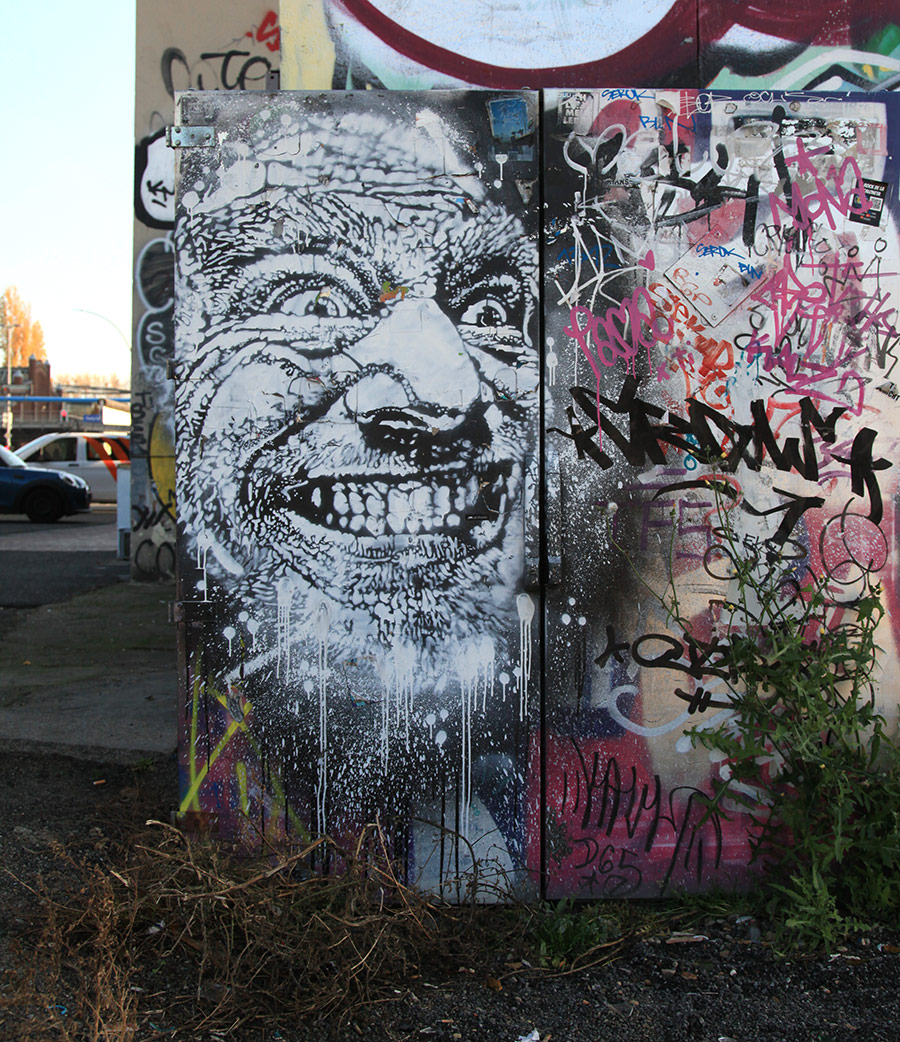
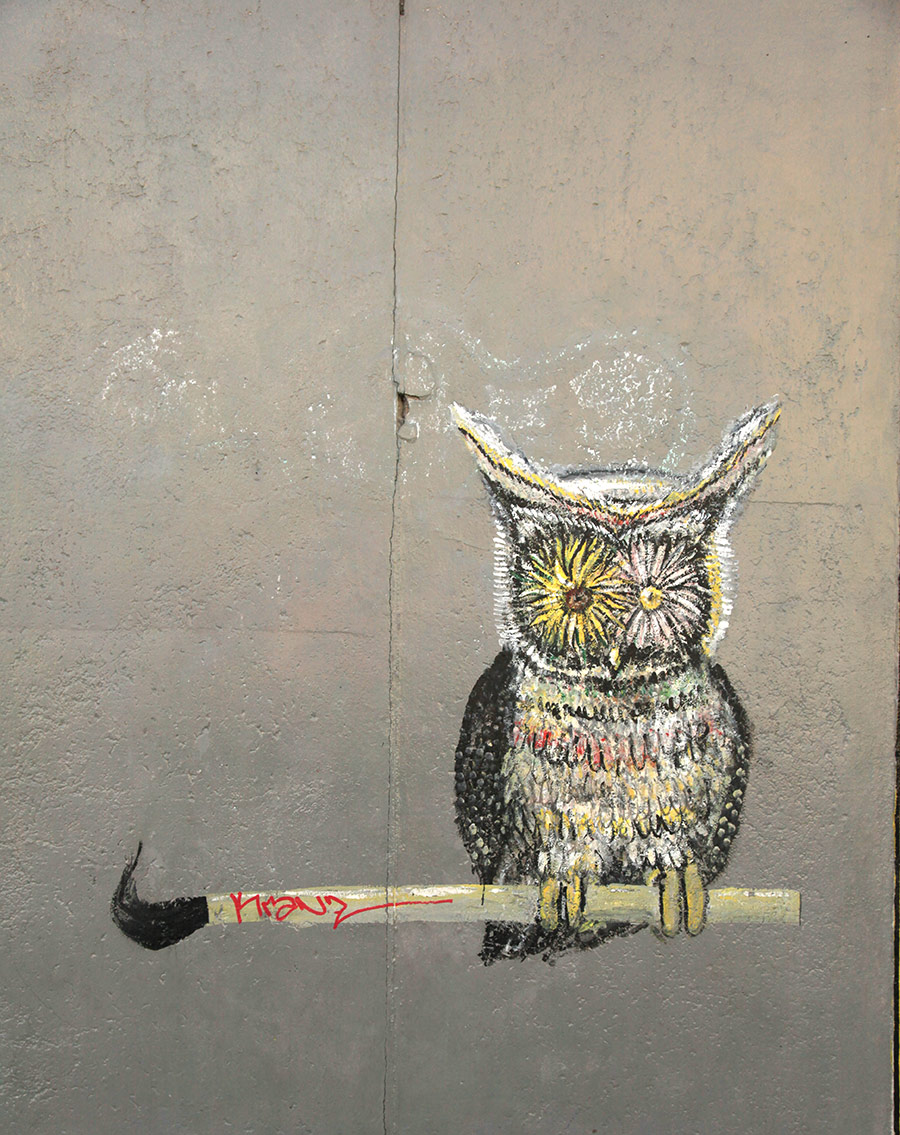
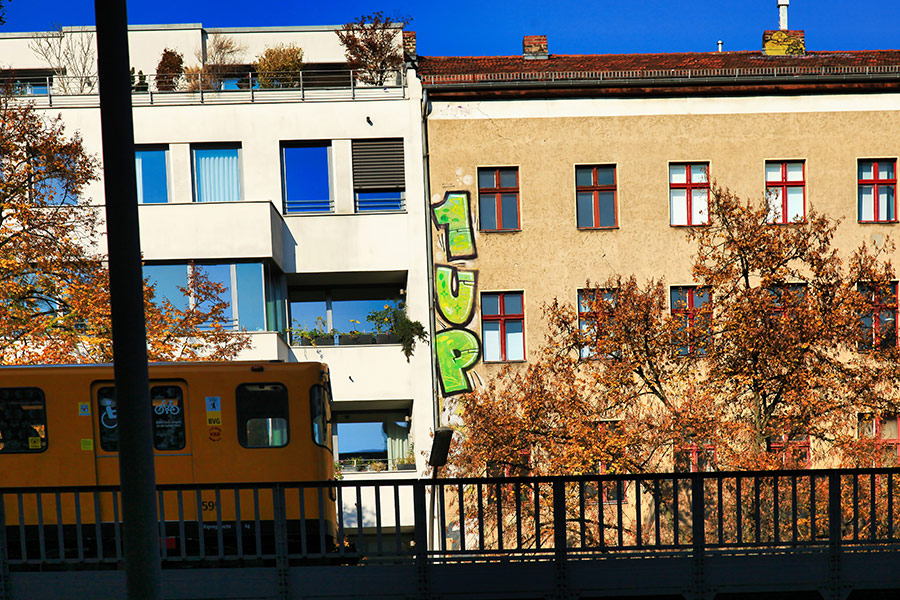
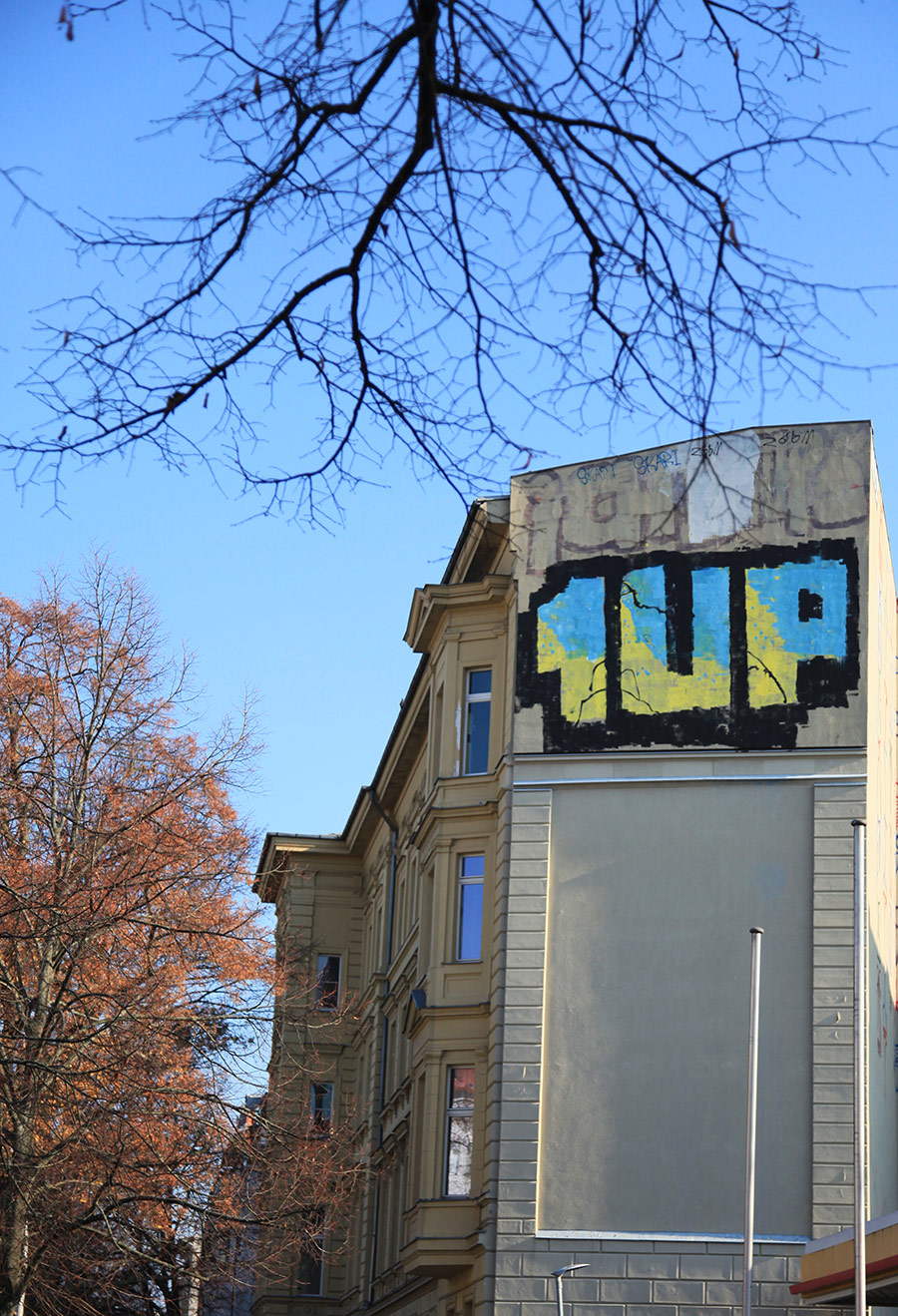
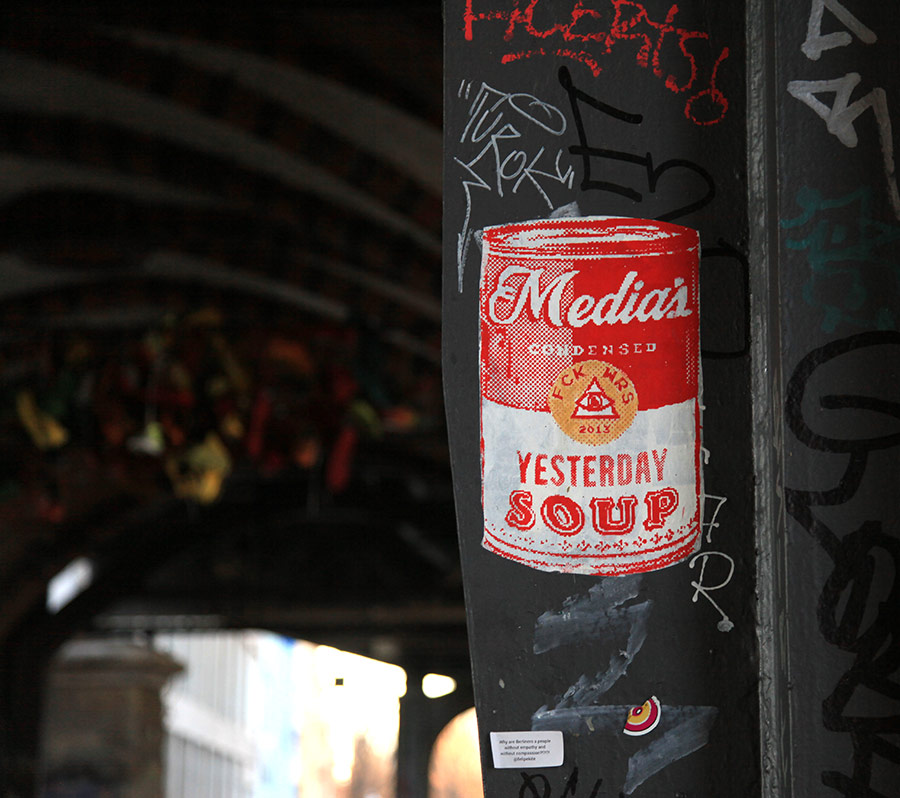
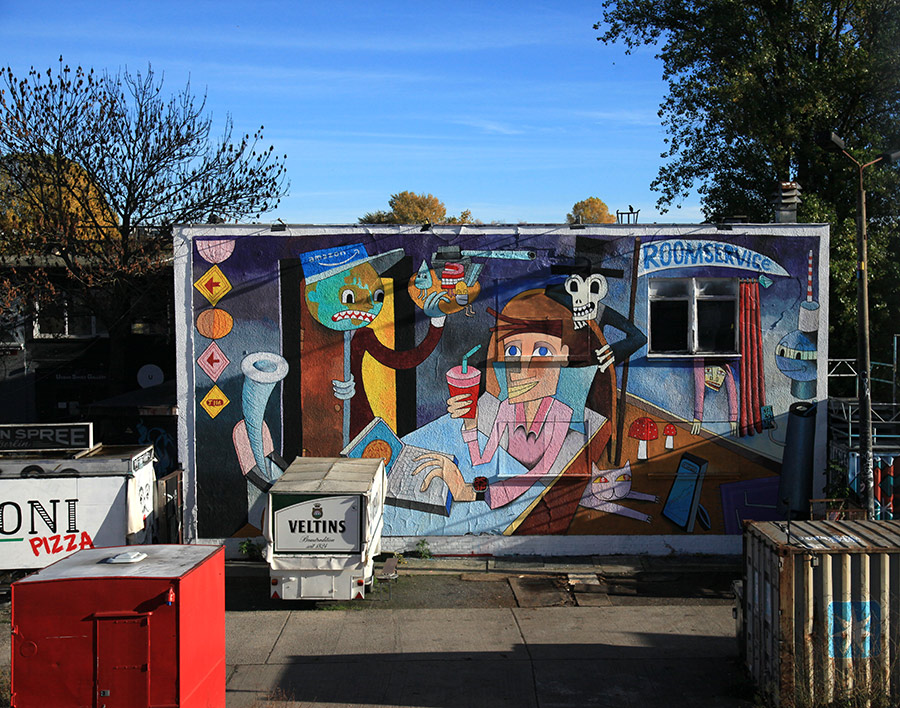
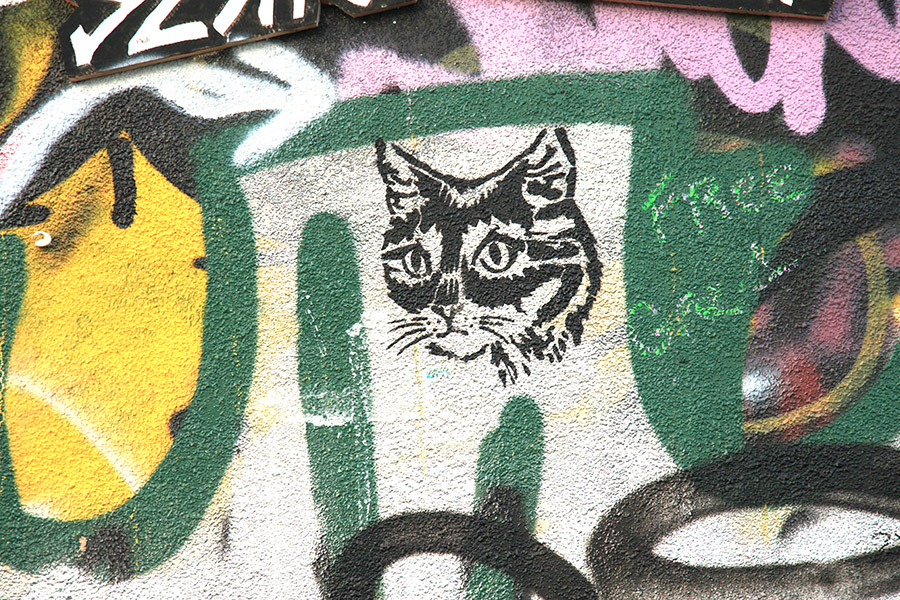
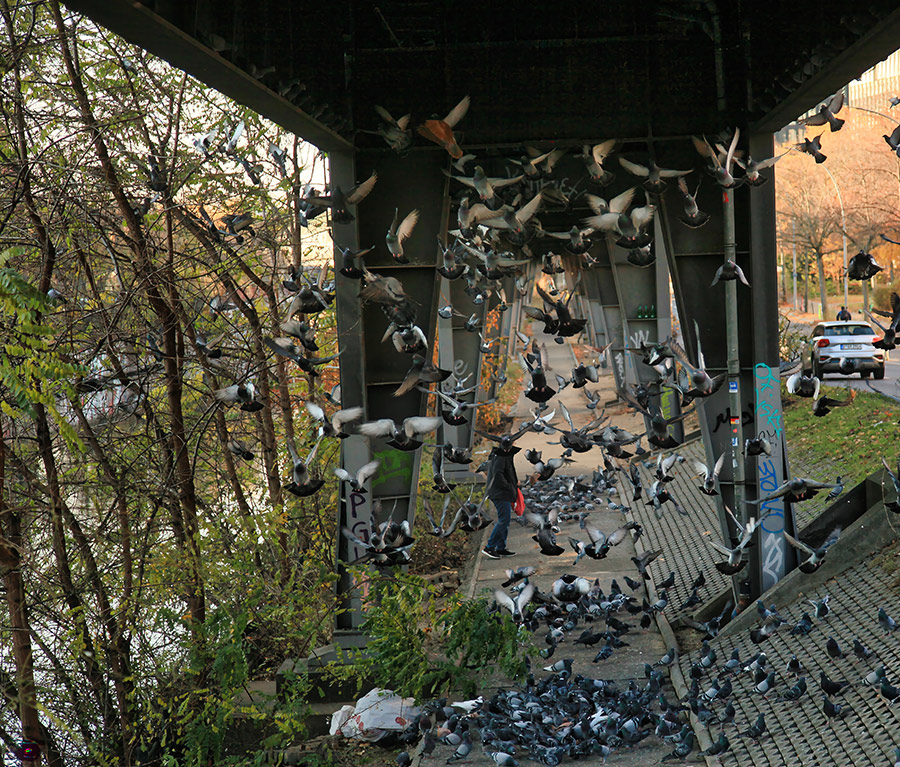
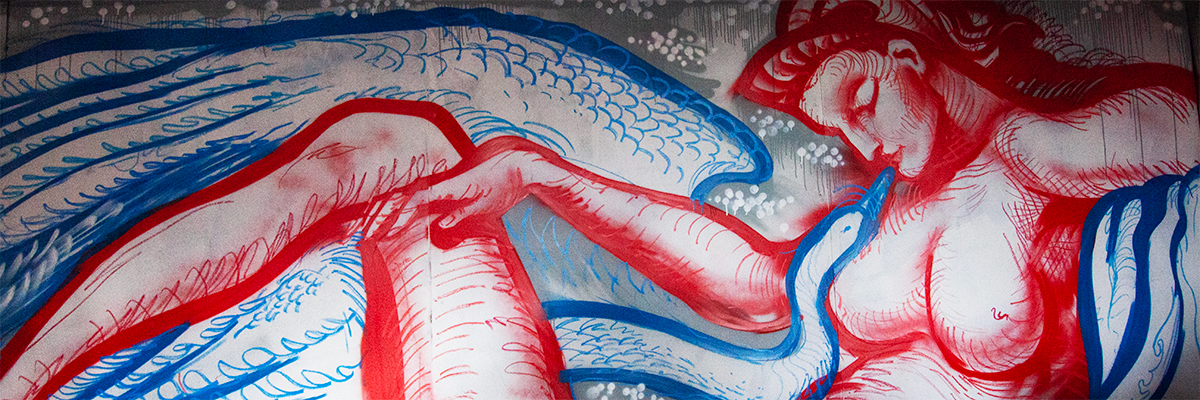
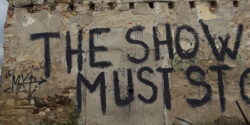
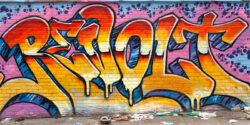
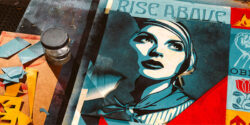
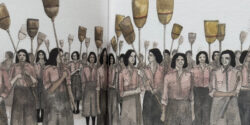
Aerosol, Avignon, astronauts, and an ornery ornithologist under the U-Bahn feeding hundreds of pigeons, making threats toward a visiting photojournalist about revealing her identity — it’s all part of a typical sunny fall survey of Berlin as we track the streets under the U3 from Urban Spree to Urban Nation on foot. It’s a hike, but why not? You’ve got to burn off last night’s Schultheiss beers that add to your girth and your bleary, sun-streaked view of the streets. Keep your eyes darting across surfaces and you’re rewarded in this city: stickers, tags, stencils of owls and cats, and Haring and Frida, impossible Berlin Kidz pieces sliding down walls from high altitudes, and 1UP tags in nearly every possible — and impossible — location.
Closer to Nollendorfplatz station, the formal murals from UN mix with a kaleidoscope of local spray — a lively conversation about fame, the environment, politics, gentrification, fear, love, and the many Paradoxes of life (see what we did there?).. Alive and kicking, shall we say, in Berlin. Next stop; Prague.
This week’s interview with the streets includes: 1Up Crew, Berlin Kidz, Cartonneros, Dylan Mitro, Erka, Kranz, Media’s, Paradox, Phoebe Graphy, Push X, The London Police, Unplatonic, and Victor Ash.
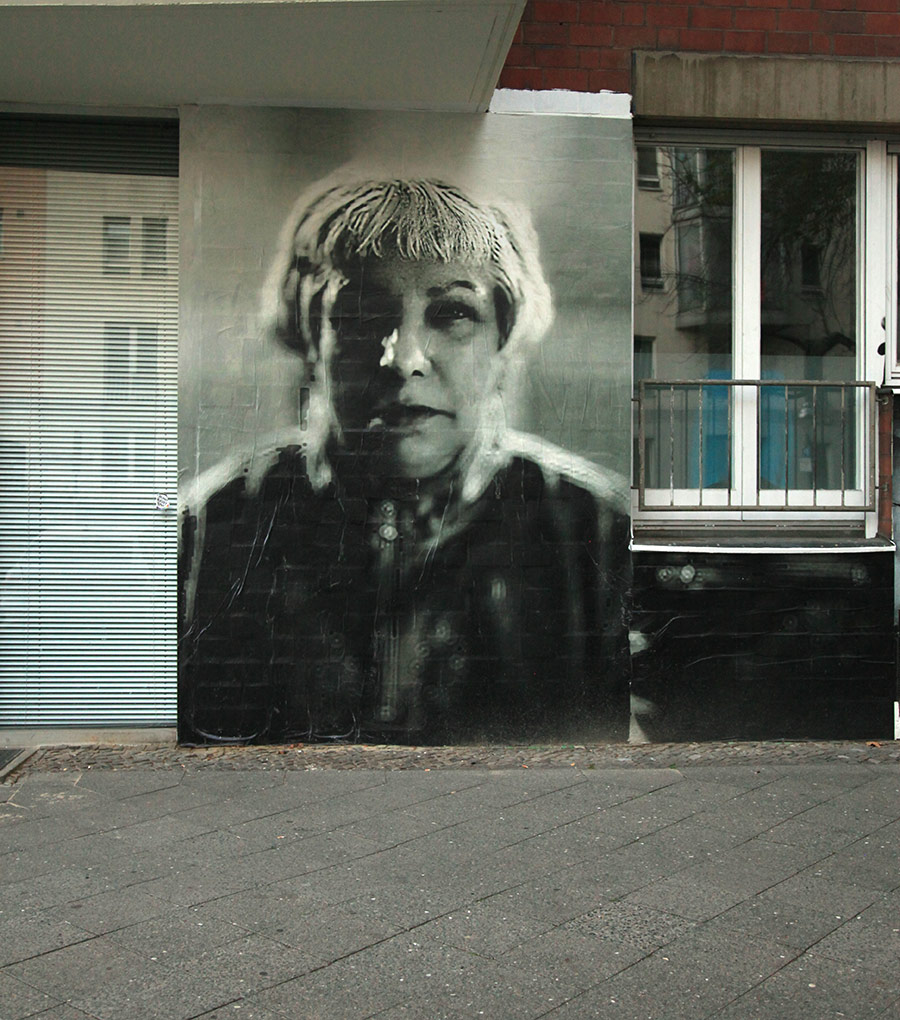
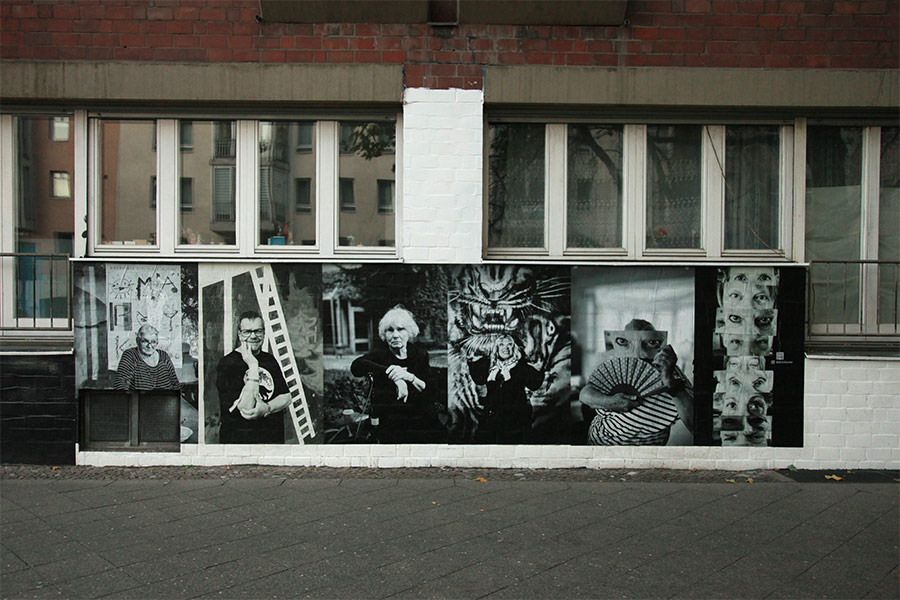
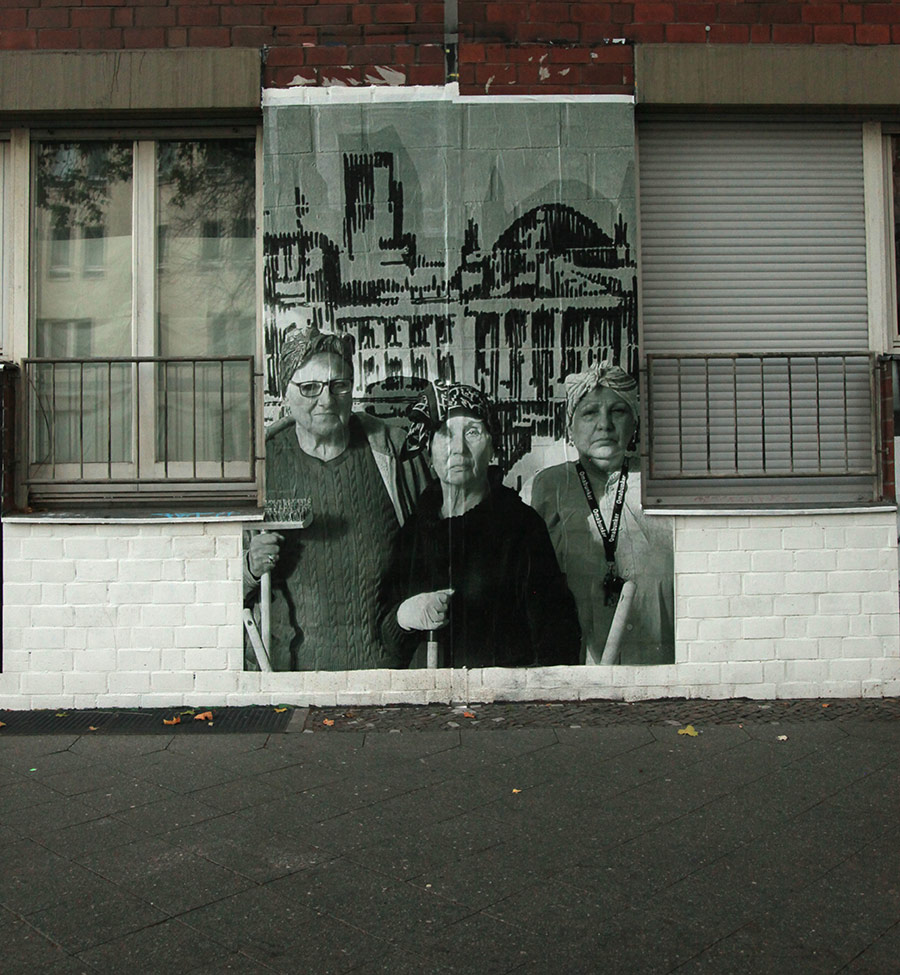
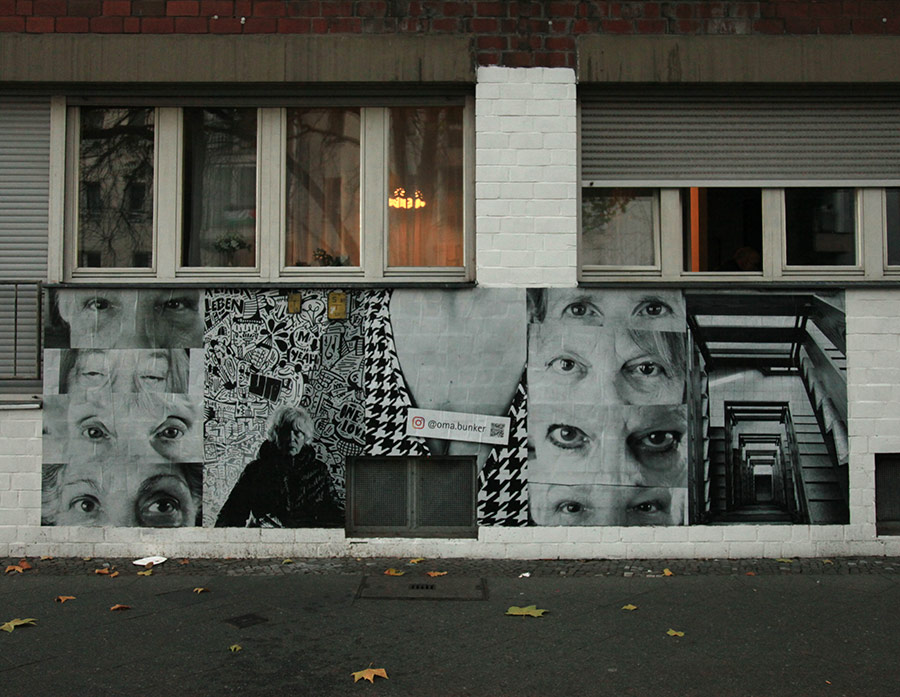
Canadian artist Dylan Mitro collaborated with residents of the so-called “Omabunker”—a senior apartment building near URBAN NATION in Berlin—to create the community wall project “Love Letter from the Omabunker.” During his Martha Cooper Fellowship, Mitro invited the folks who live there to photograph one another and their surroundings, turning everyday snapshots into large black-and-white portraits now covering the building’s façade.
The project reflects Martha Cooper’s documentary spirit—finding beauty and dignity in ordinary lives—while reworking it into a collective, site-specific gesture. Here, the street becomes both subject and canvas: the photographers and the photographed are the same people, turning their home into an image of itself and making visible a community that often may be unseen.
Welcome to BSA’s Images of the Week. We decided to dedicate this weekly survey to the artists of “Return 2 Burn”, its organizers, and the streets that brought us here.
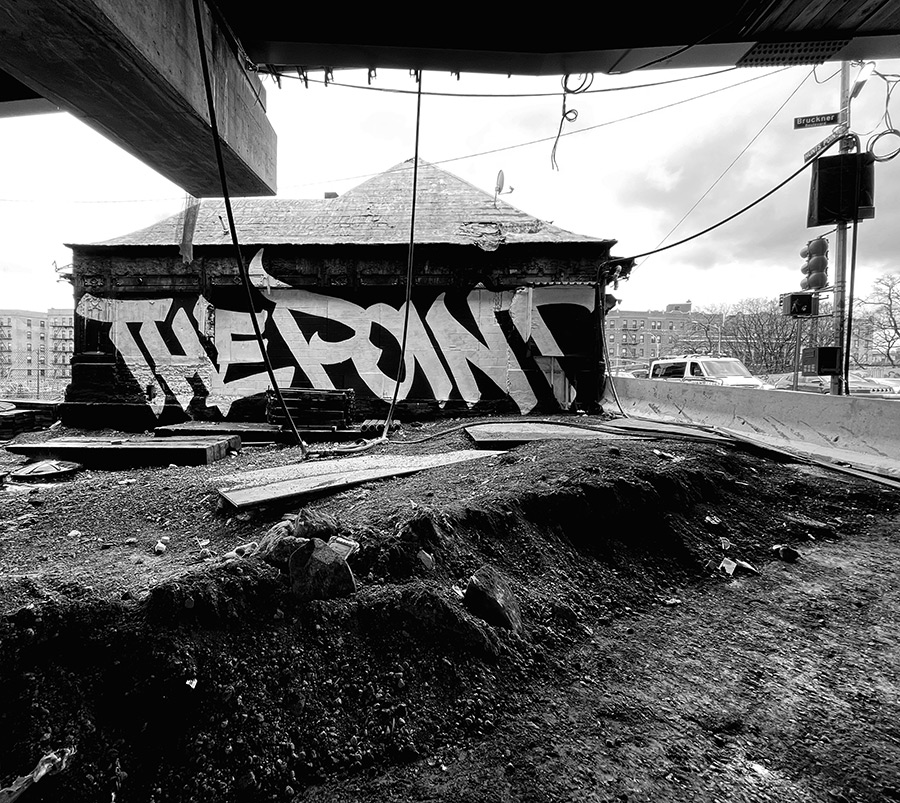
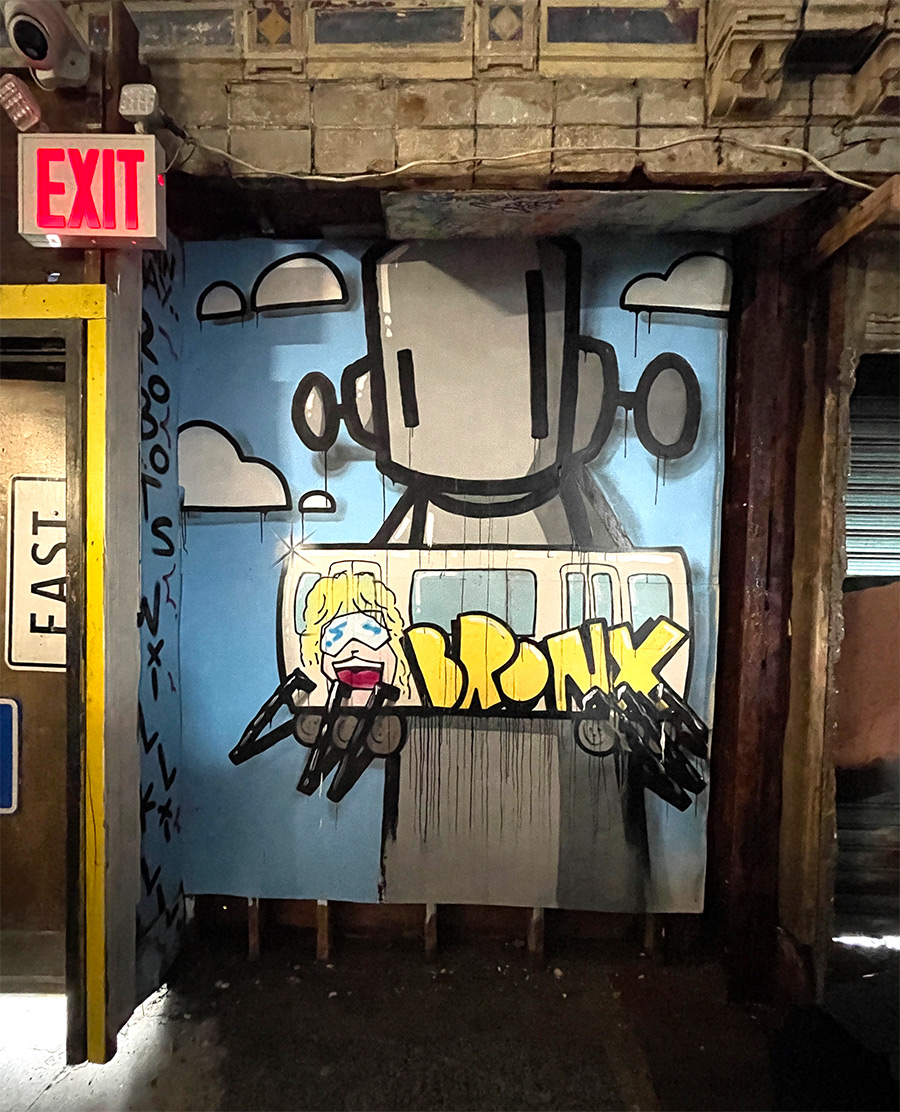
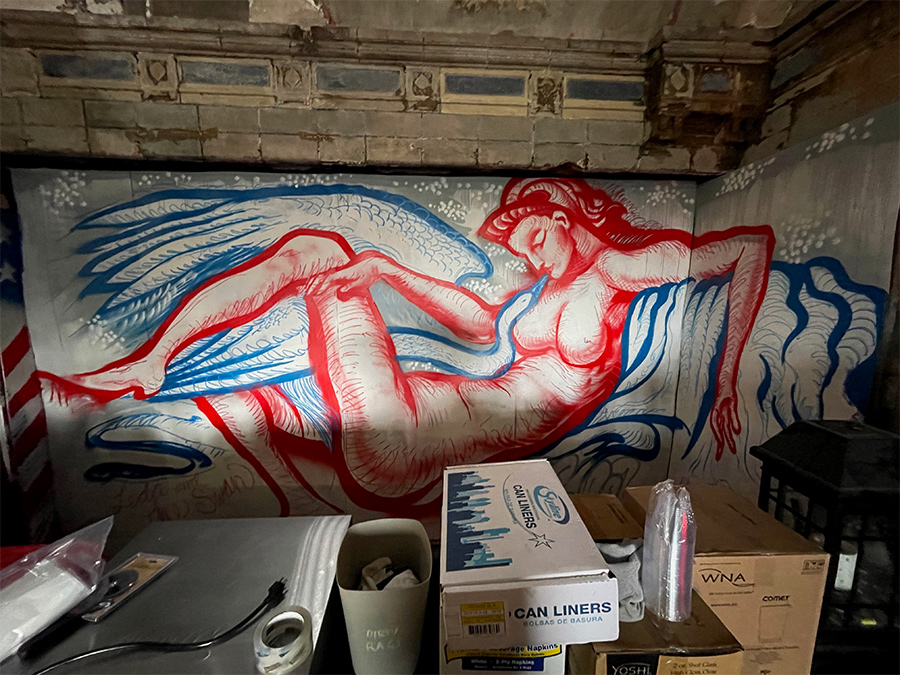
The new “Return 2 Burn” exhibition at the old train station in Hunts Point, Bronx, serves as a modern continuum of pivotal artistic moments from New York’s vibrant past, echoing the groundbreaking energies of the Fun Gallery, The Times Square Show, and initiatives by Collaborative Projects Inc. (Colab) and Fashion Moda. These seminal venues and events of the early 1980s, such as the Fun Gallery (1981-1985) and The Times Square Show of 1980, were instrumental in merging the diverse cultural and artistic energies of “uptown” and “downtown” scenes. They featured artists whose names would become prominent, like Jean-Michel Basquiat, Keith Haring, Futura, Rammelzee, Crash, Jenny Holzer, and many others whose work intertwined and intersected with the emergent graffiti and street art movements against a backdrop of punk, hip-hop, and an unprecedented cultural fusion that was happening across the city.
This week, the art world mourned the loss of Patti Astor, the trailblazing founder of the Fun Gallery and a pivotal character in Charlie Ahearn’s iconic film “Wild Style.” Her legacy, which has deeply influenced the intersection of hip-hop, graffiti, and urban culture, remains a testament to her visionary impact on New York City’s vibrant art scene.
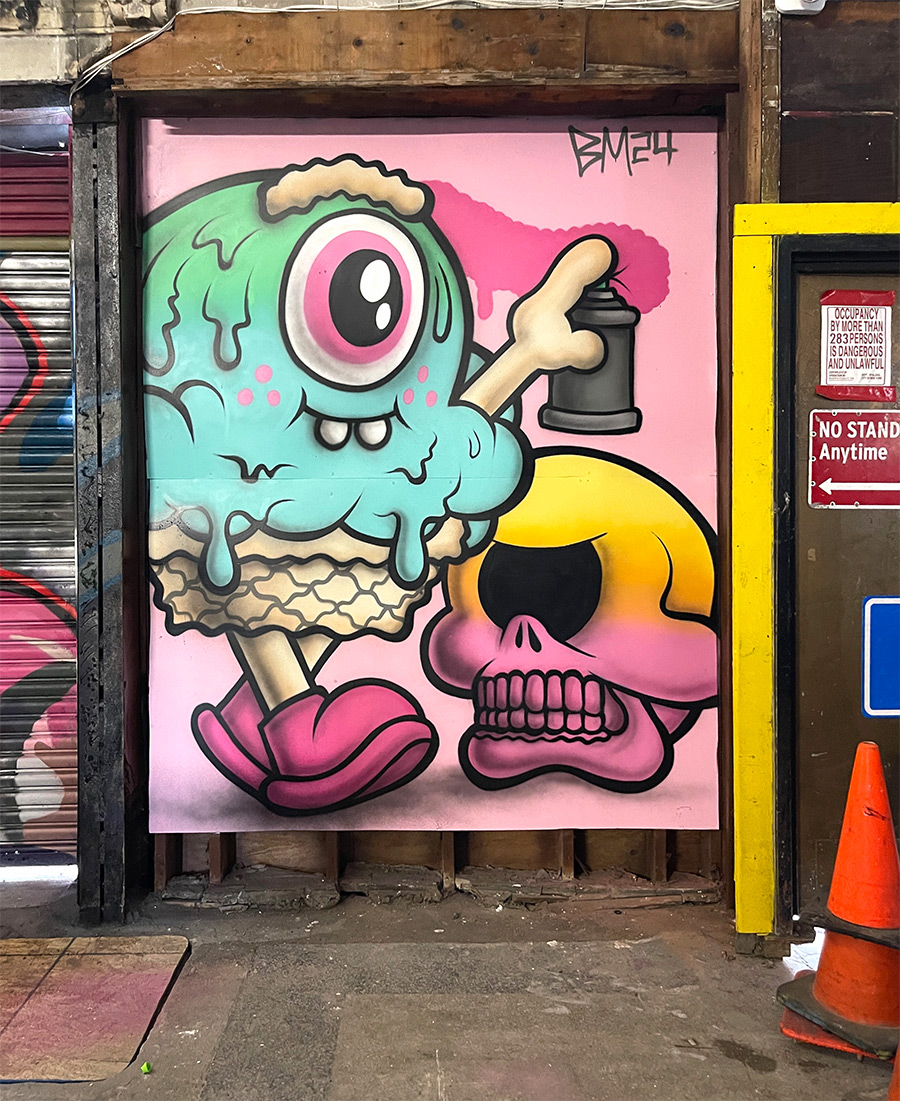
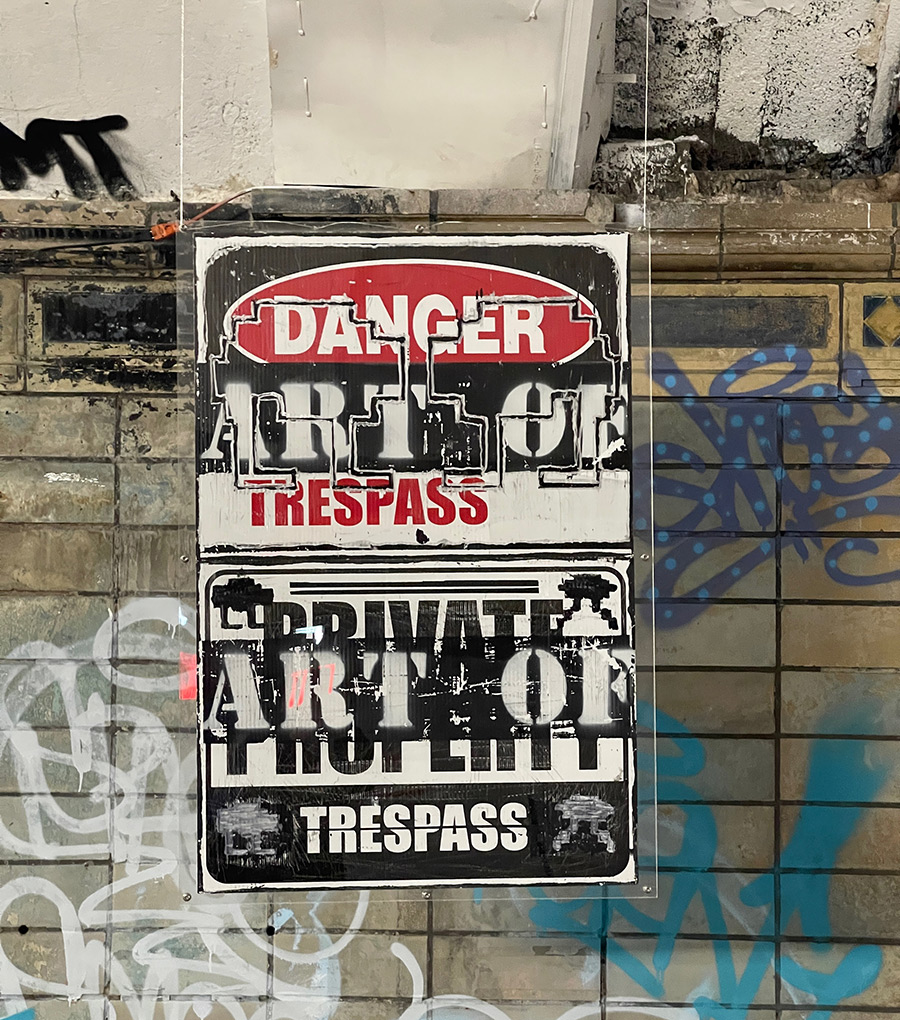
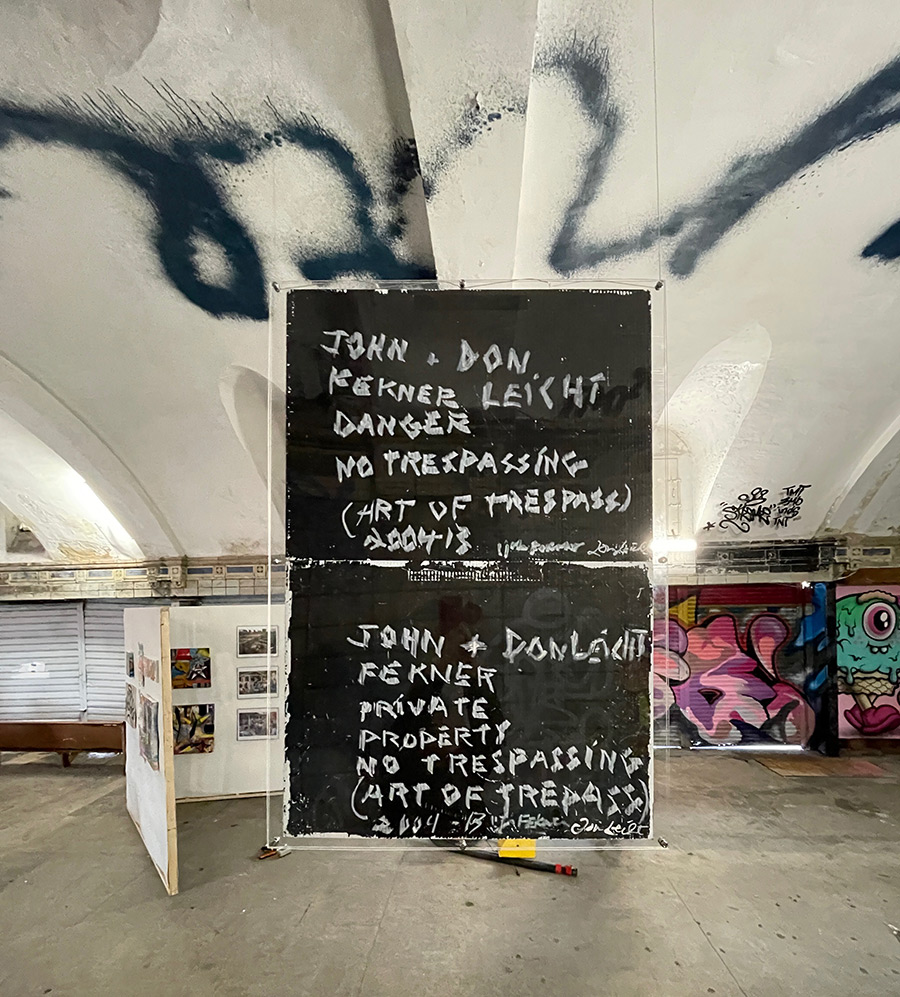
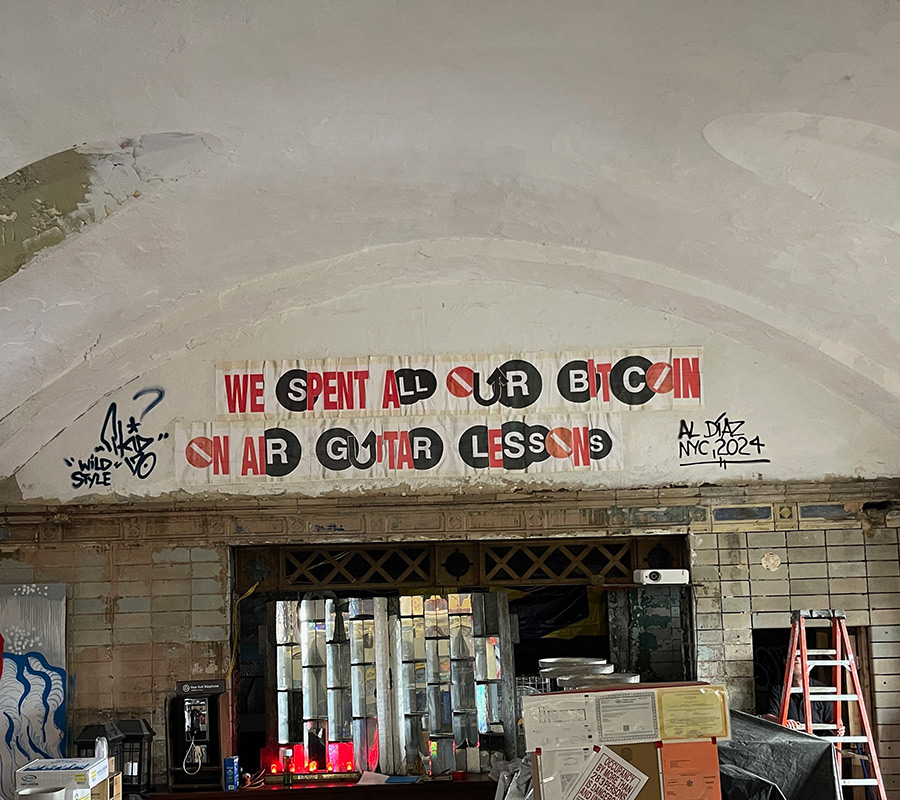
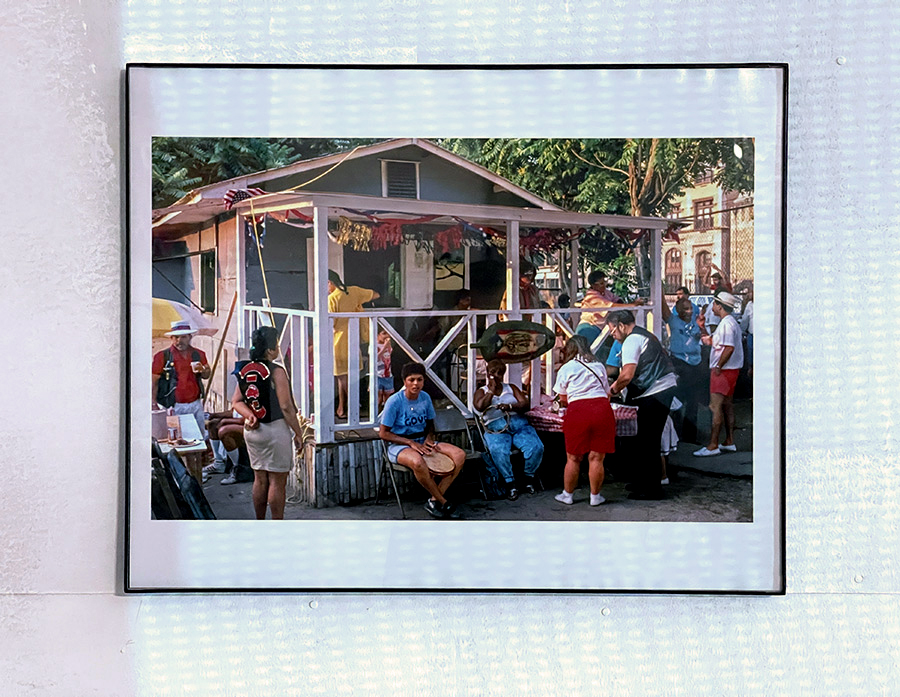
“Return 2 Burn” builds upon this legacy by featuring contemporary and enduring artists from those earlier movements like Skeme, Tkid 170, Martha Cooper, John Fekner, and Al Diaz—who notably co-created SAMO tags and cryptic texts on the street with Basquiat—linking the historical narrative of New York’s street art from its inception to the present. These artists’ work stood alongside others such as Chris from Robots Will Kill, Indie, Buff Monster, UFO907, and Wane for the vibrant opening night, celebrating an ongoing narrative of experimentation and discovery in the street art/graffiti scene today across this city’s boroughs. The atmosphere was electric, charged with the energy of fans, collectors, storytellers, and historical figures of the graffiti and street art scene.
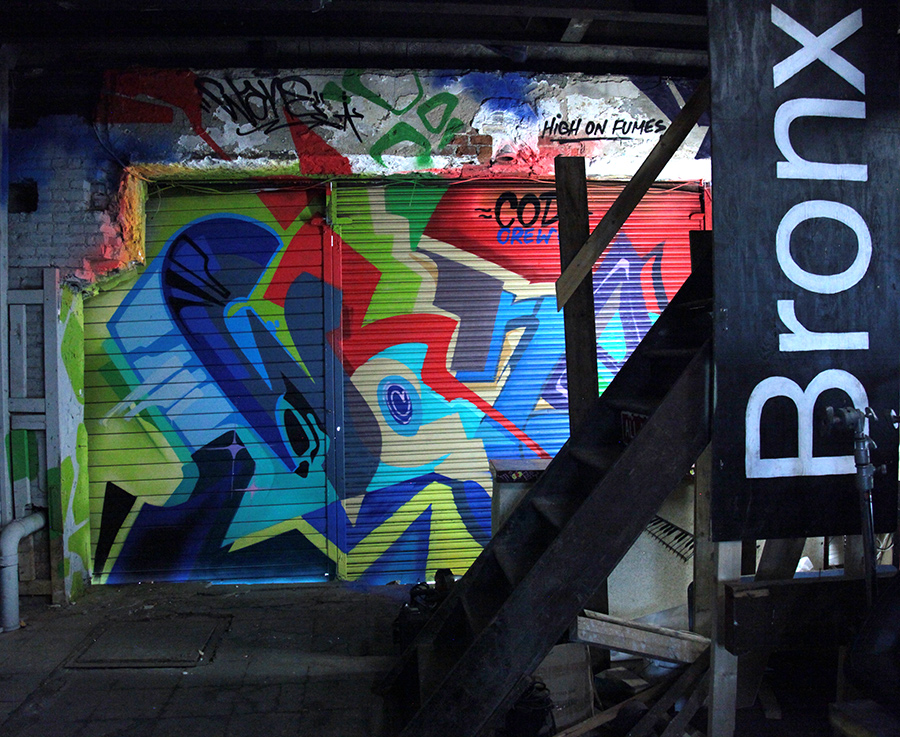
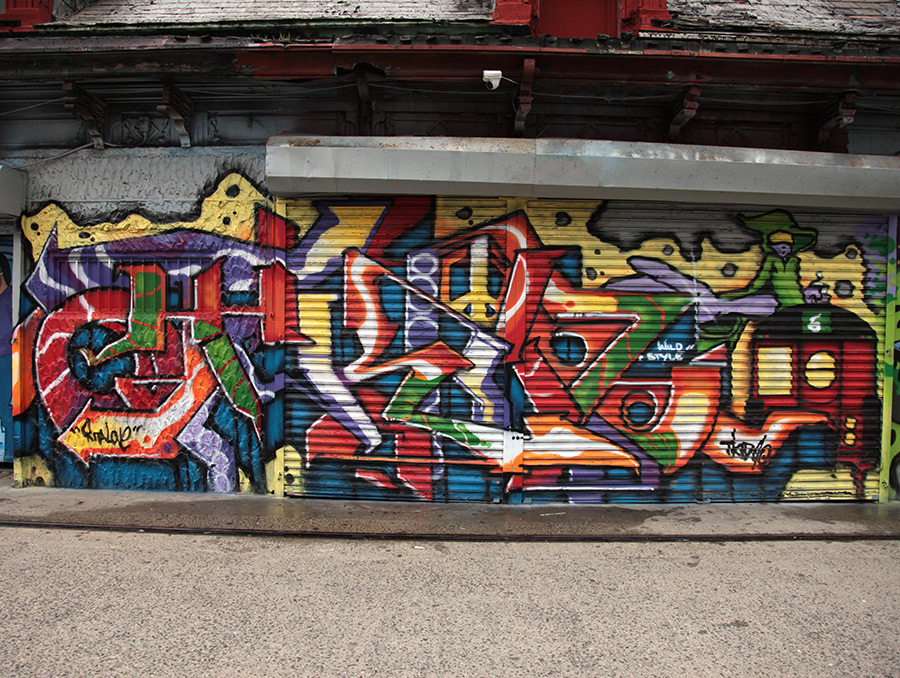
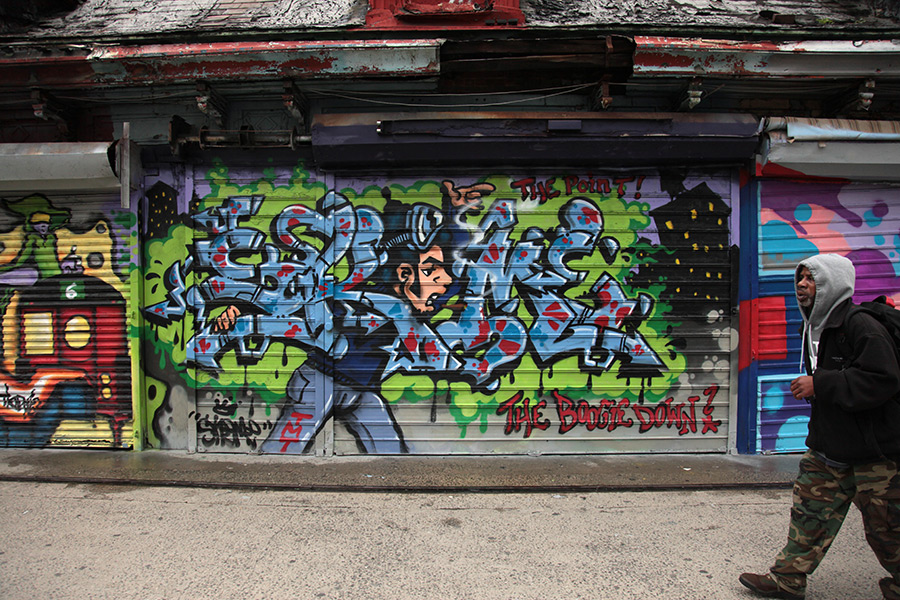
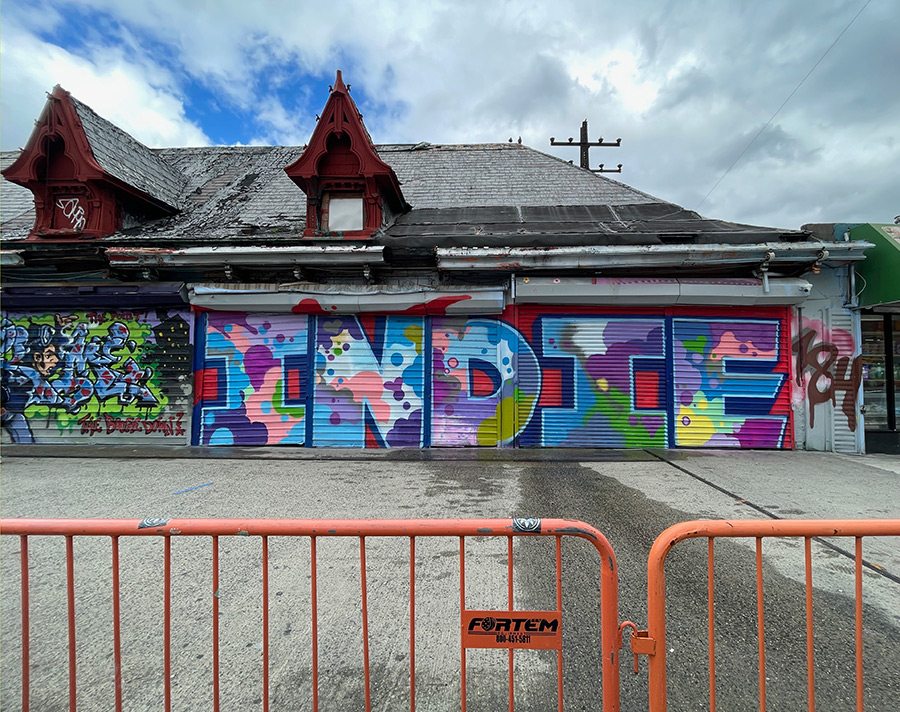
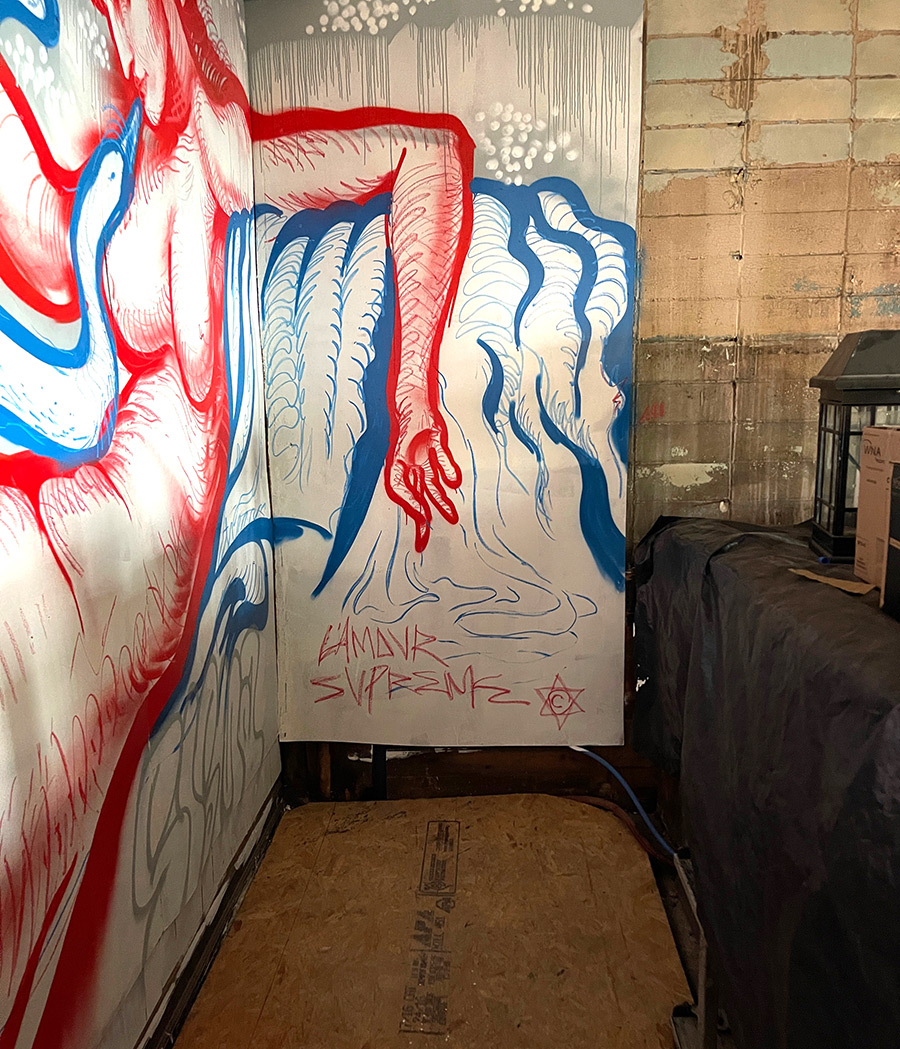
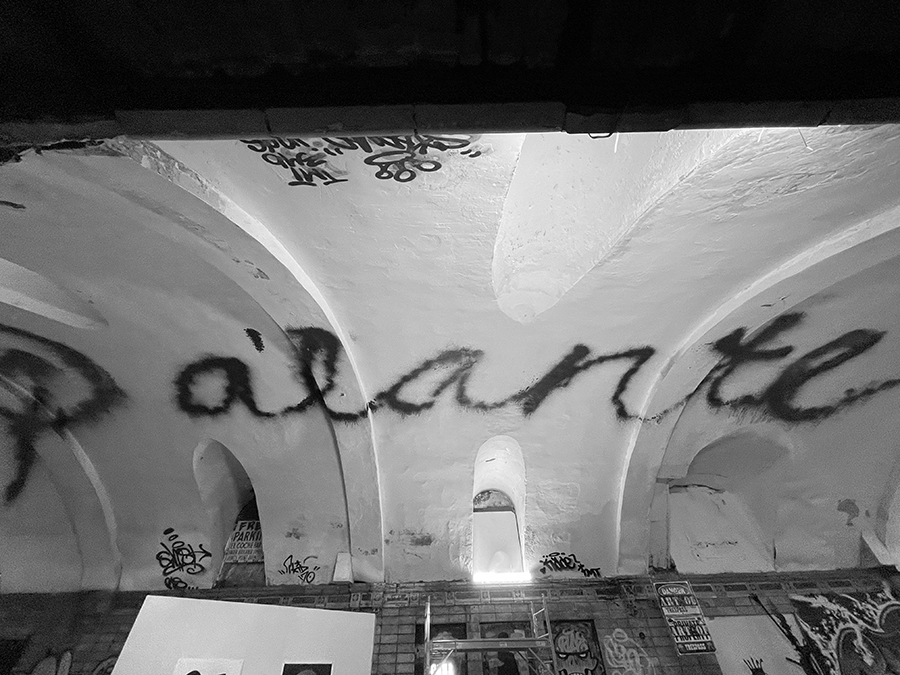
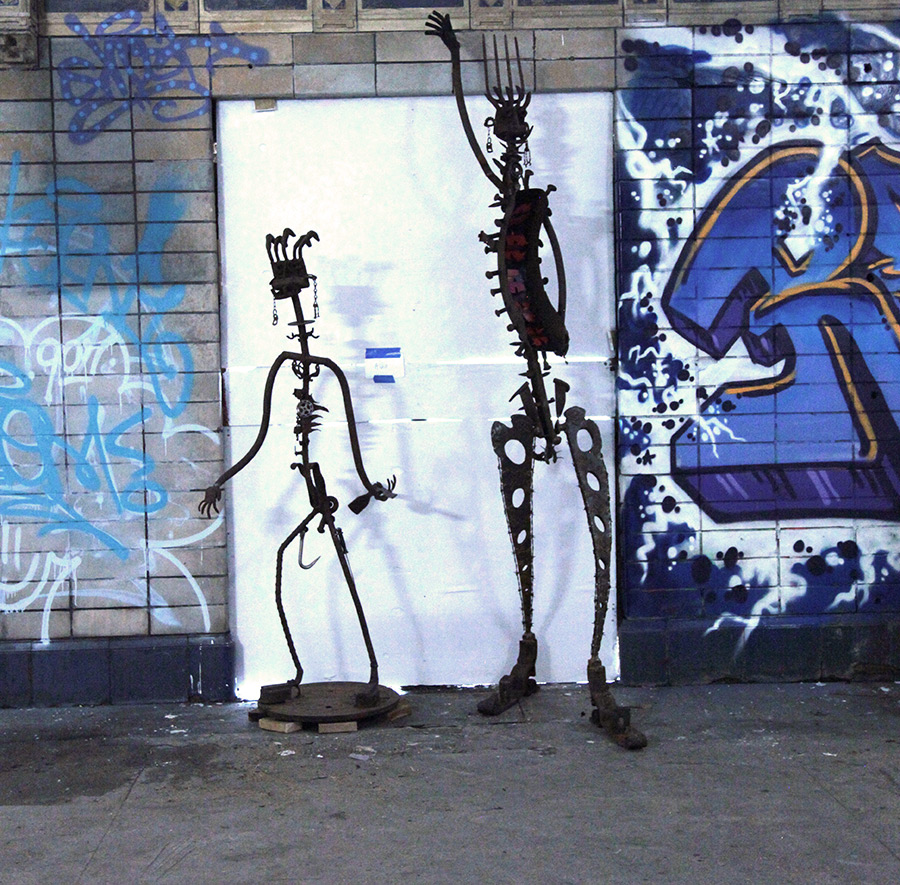
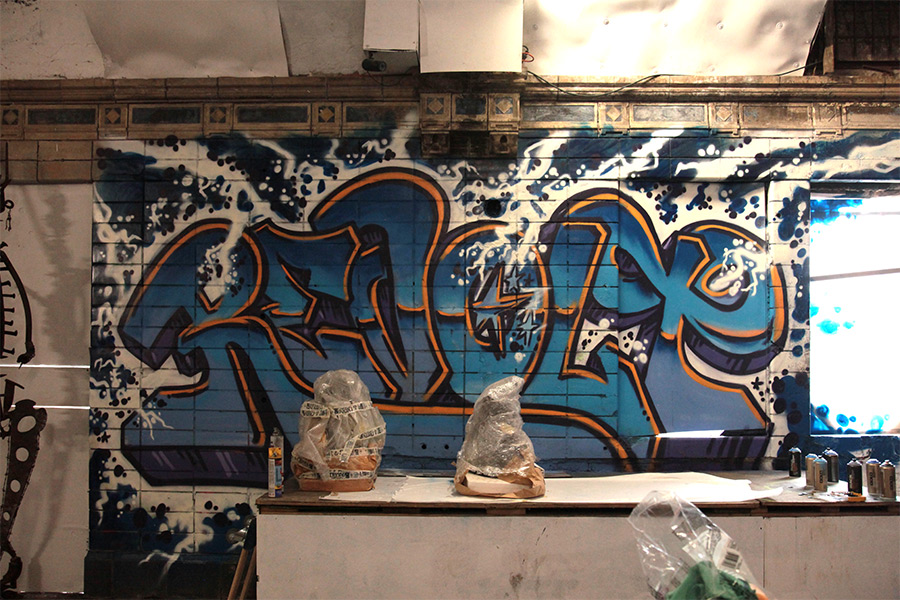
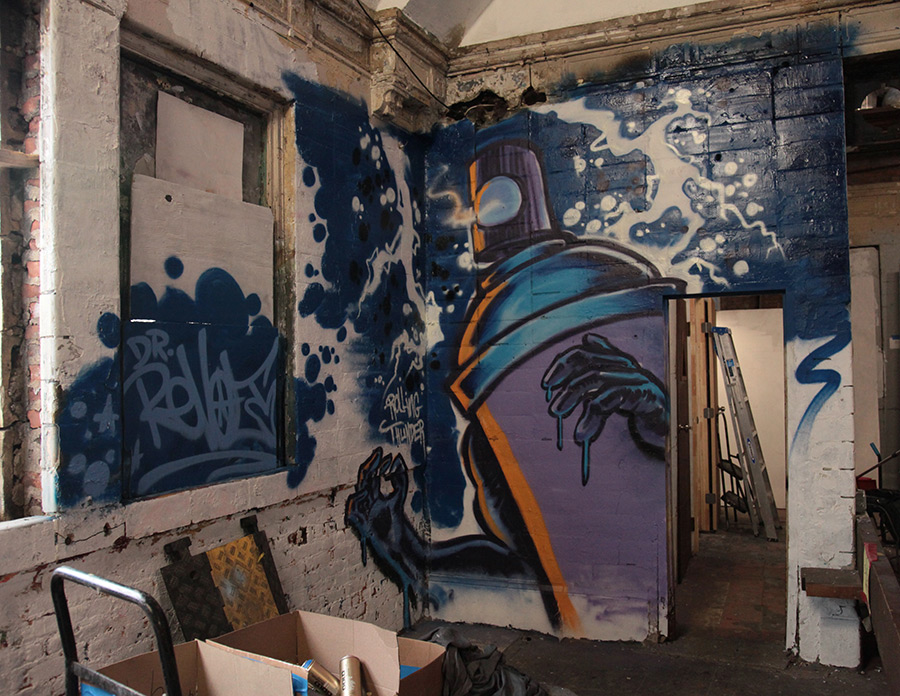
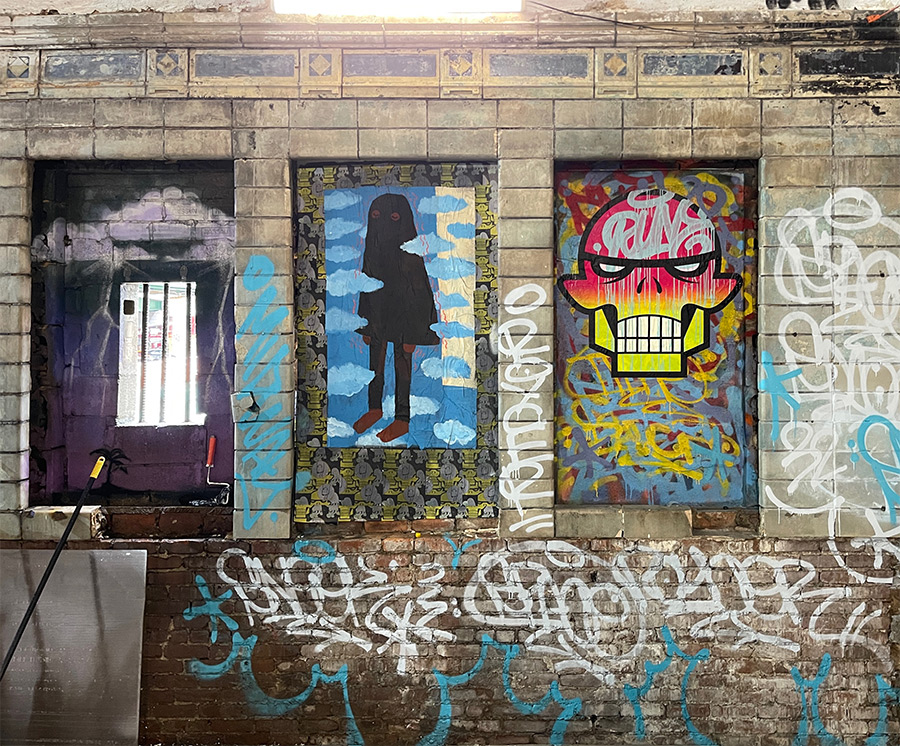
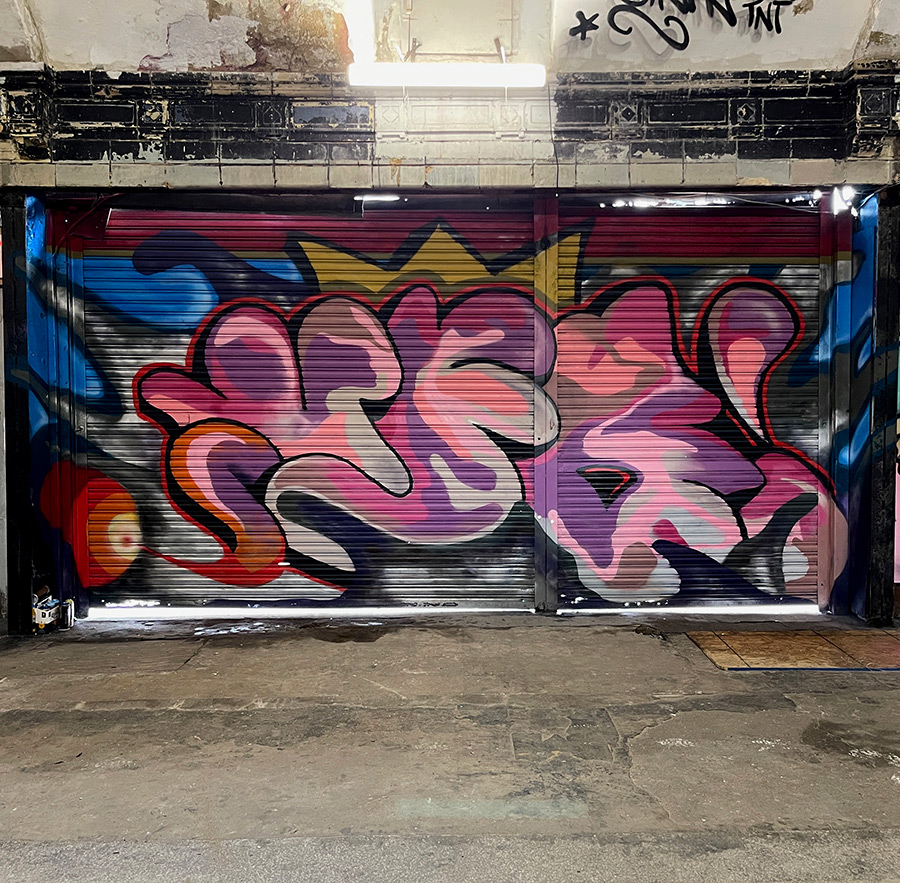
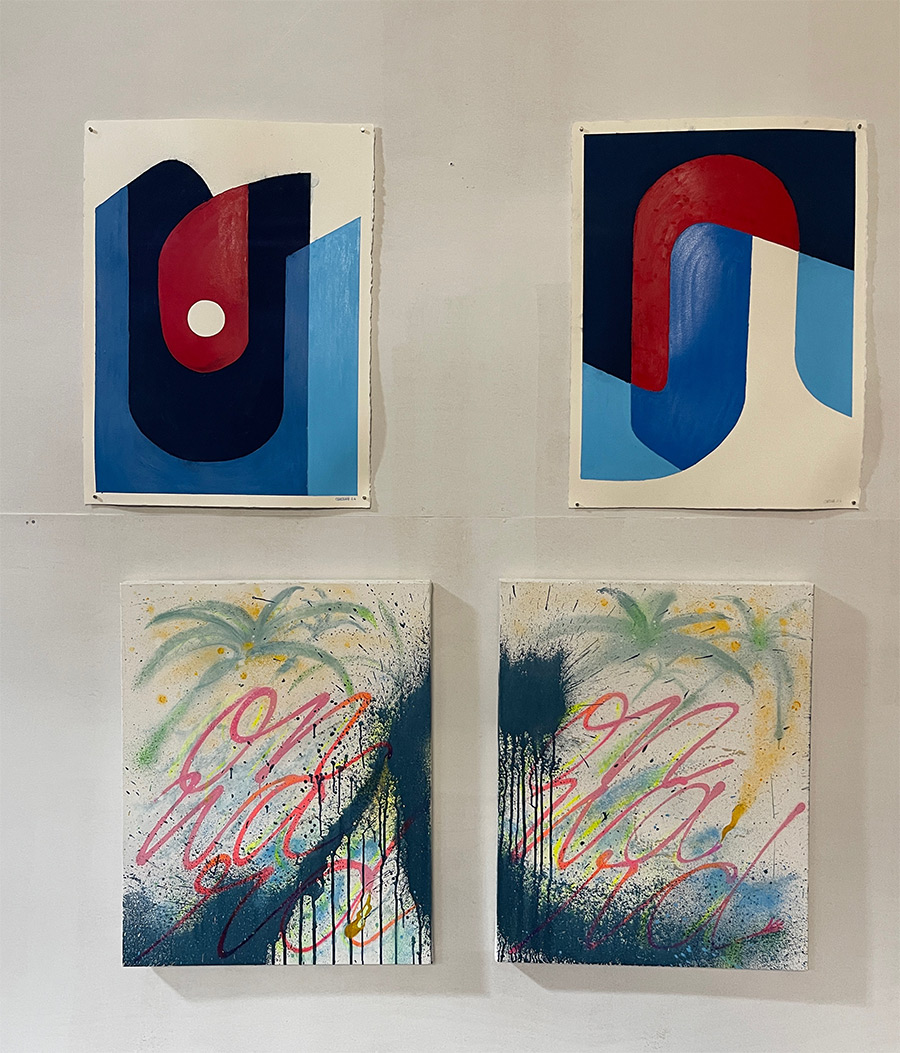
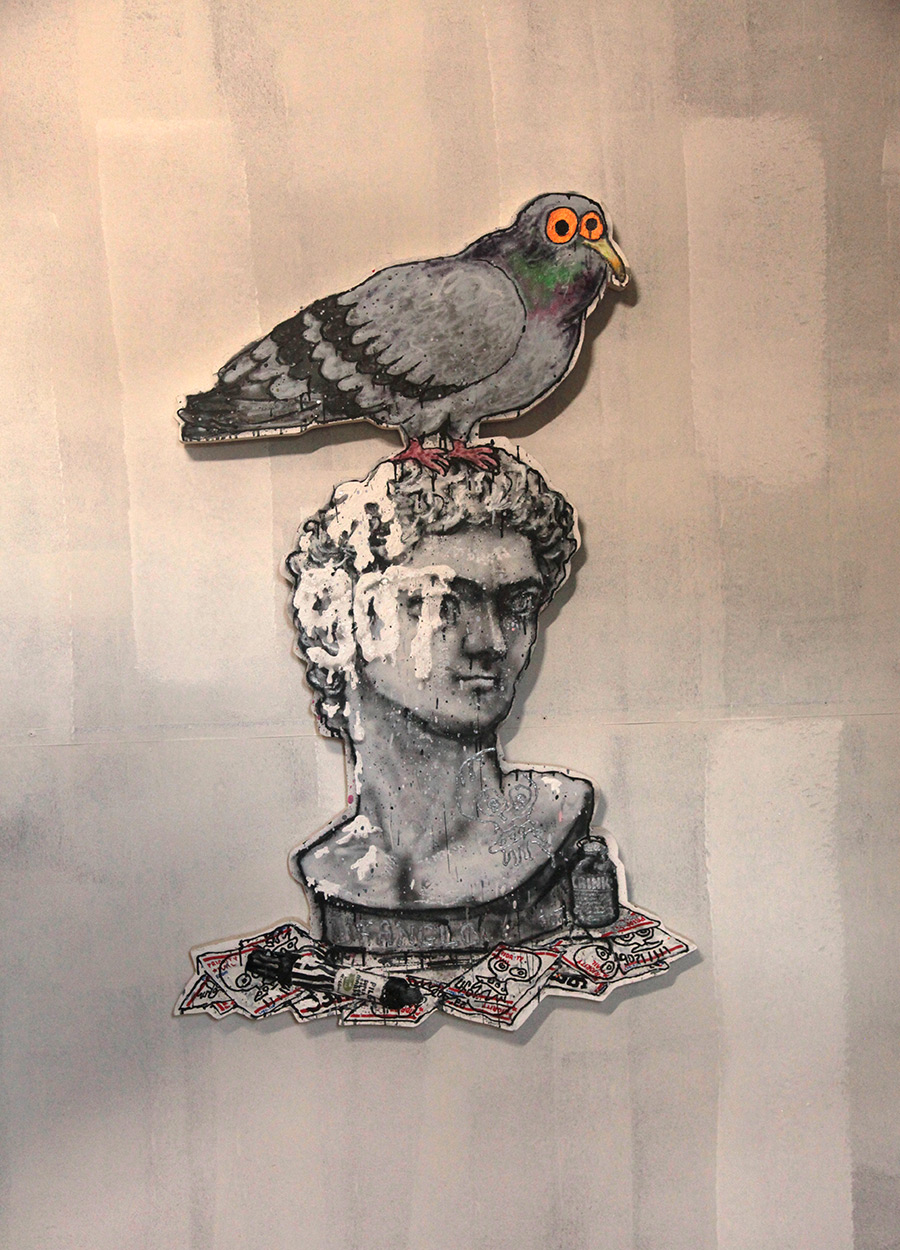
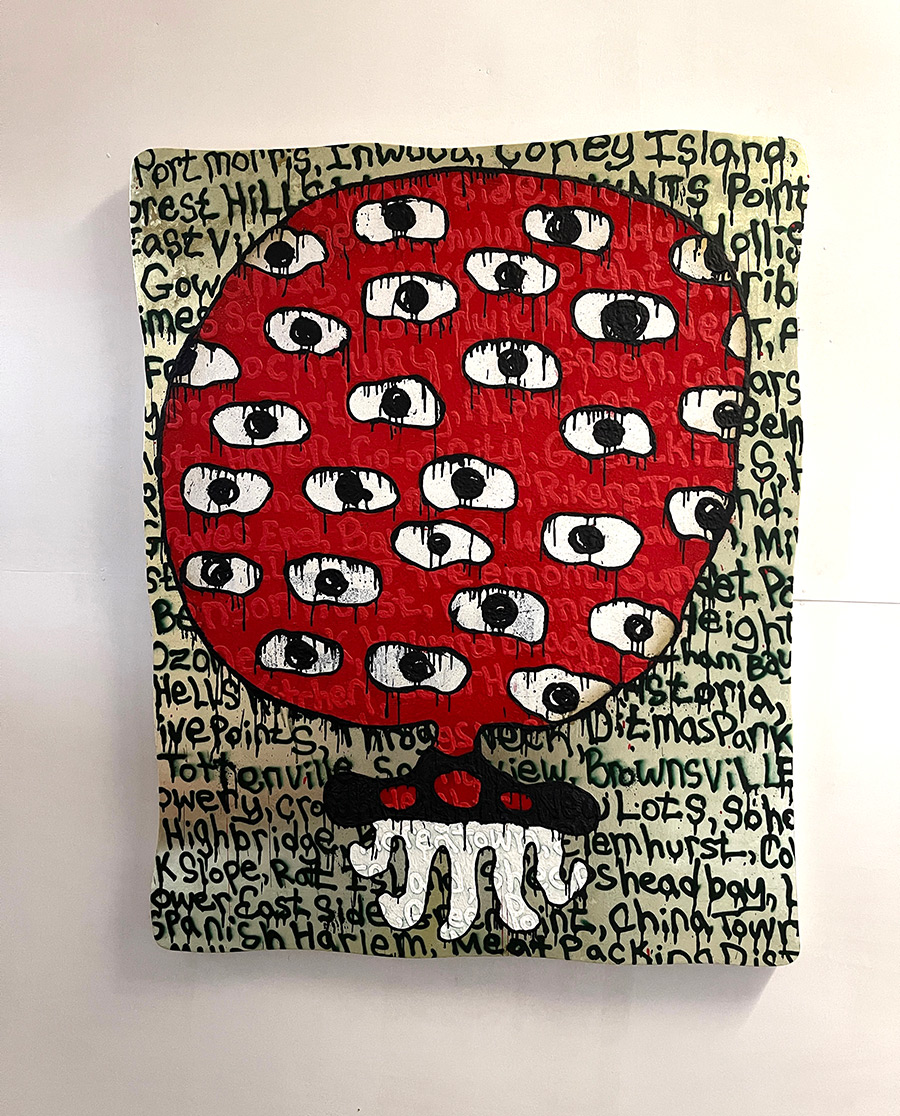
This collection of photos was shot while the exhibition was still being assembled—”work in process” shots. Their sometimes raw quality signals that the exhibition is a living entity produced by many hands; curator Robert Aloia says it is expected to evolve throughout the spring and summer.
The opening night crowd underscored the exhibition’s role as more than just a collection of artworks but also a gathering place for the community and a hopeful signpost for our collective creative future as we enter such uncertain times. It is a testament to the evolution of graffiti, street art, conceptual art, sculpture, public art, and muralism and their enduring significance in urban culture and public dialogue. The installed pieces—captured before the doors officially opened—are a diverse and dynamic reflection of the art movement, a snapshot of this moment at this location that recognizes the hundreds of artists whose work is on New York streets at any moment.
Through the visionary efforts of curators like Robert Aloia and Jennifer Giraldo of Outlaw Arts, and their collaboration with Majora Carter and James Carter of Bronxlandia, “Return 2 Burn” reminds us how exhibitions can serve as cultural synthesizers. The dedication of independent curators and organizers ensures that the legacy of New York’s unique art scene not only persists but also adapts and thrives, engaging new generations of artists and audiences alike. Moreover, the vital role of those who document, write about, and archive these events is crucial; without their work, such exhibitions’ rich history and transformative impact would not be preserved.
New York City has consistently nurtured subcultures by providing ample space, resources, and an environment conducive to growth—a spirit deeply embedded in the Punk D.I.Y. tradition. This creation of spaces for artists truly captures the essence of the city. And while we appear to be losing gallery spaces, we always have the streets. In New York City, D.I.Y. isn’t just a concept—it’s synonymous with NYC itself.
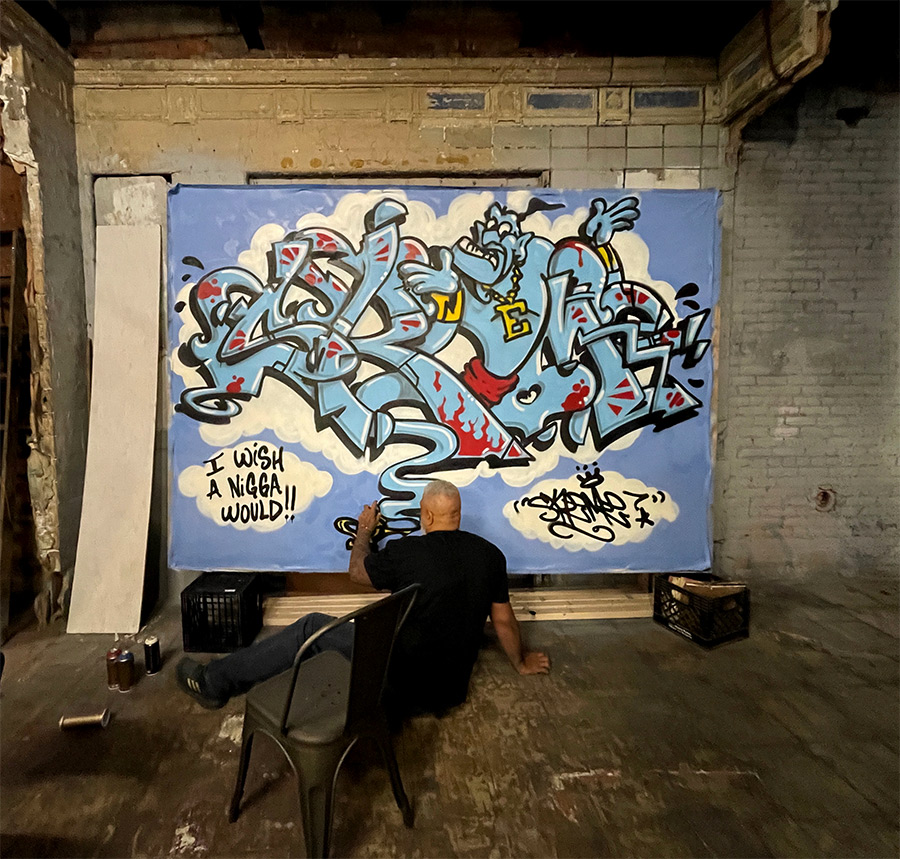
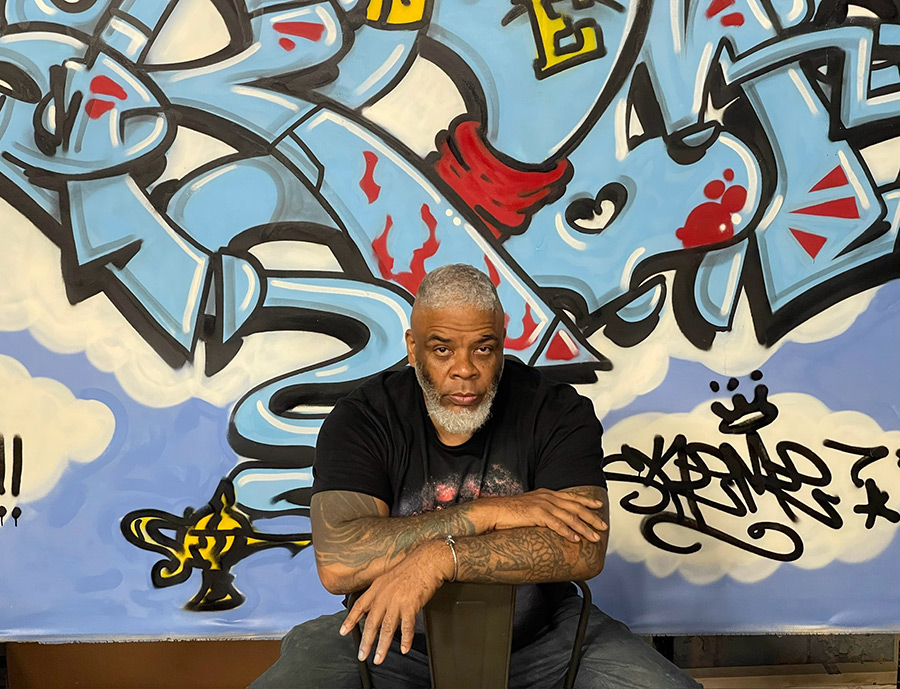
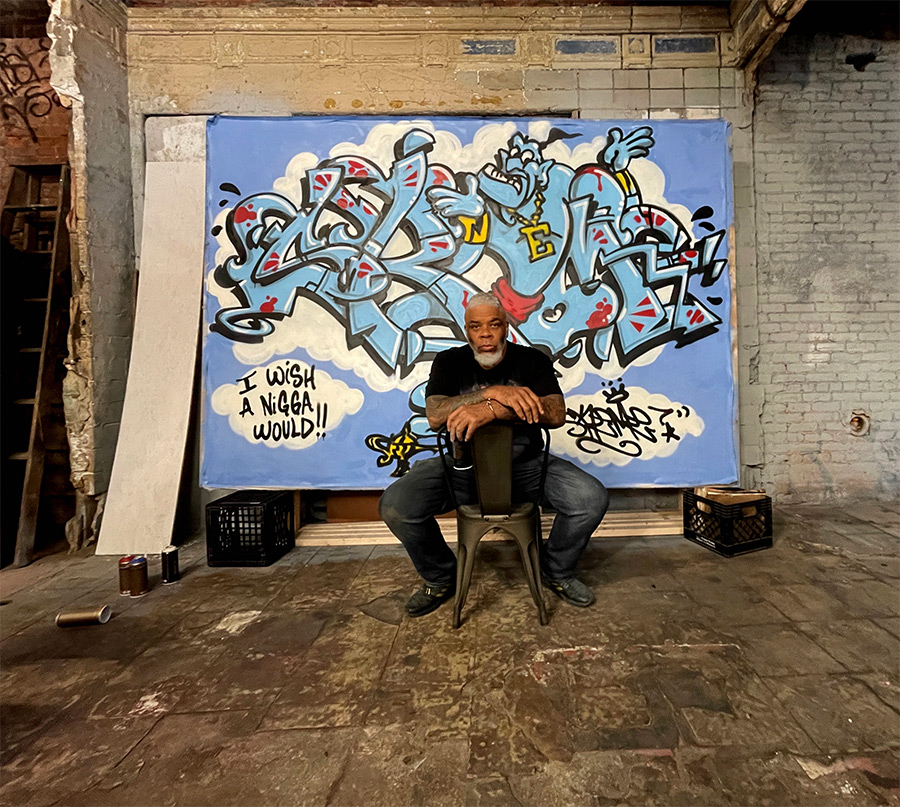
Skeme creating his latest for “Return 2 Burn”. Skeme, known as “Skeme the 3 Yard King,” is a prominent graffiti artist, celebrated within the graffiti community for his work in New York City during the movement’s early days. He was featured in the documentary “Style Wars,” a seminal film directed by Tony Silver and produced in collaboration with Henry Chalfant. The film is significant because it was one of the first documentaries to capture the graffiti subculture of New York City in the early 1980s.
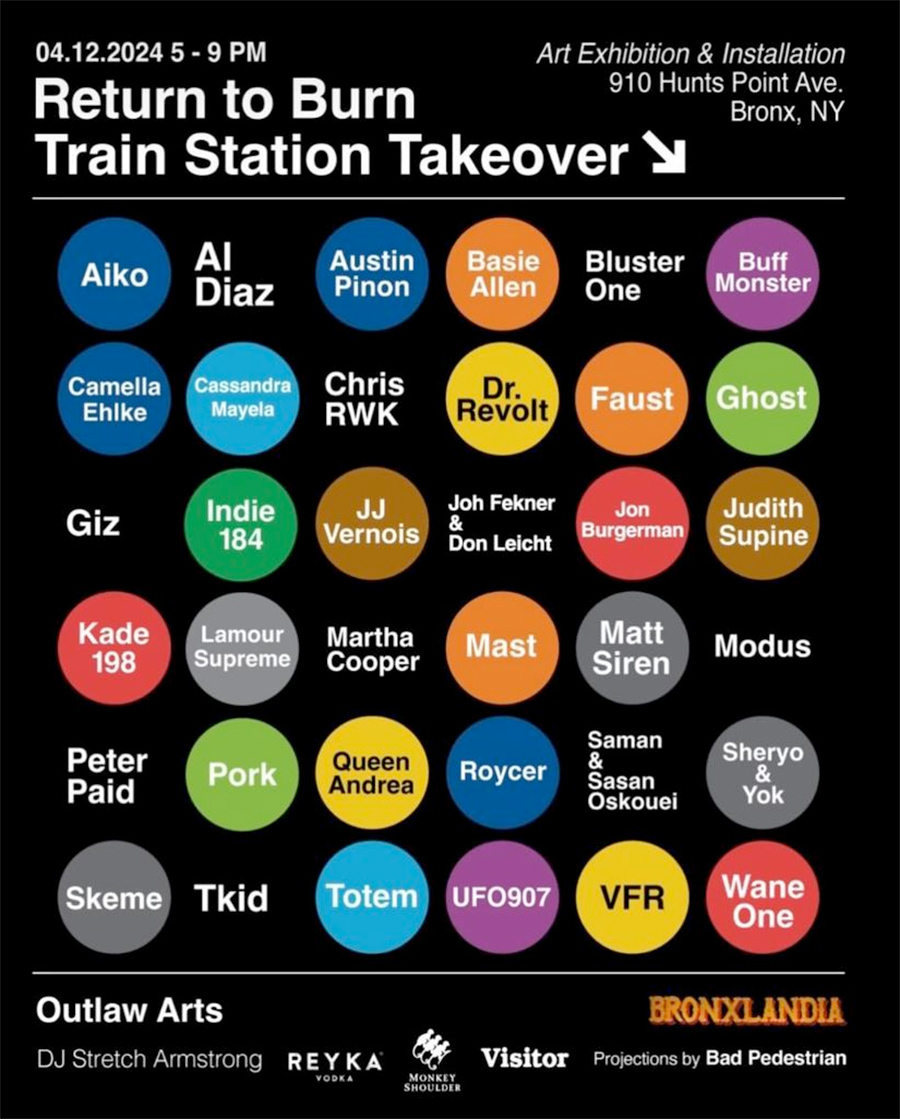
The lineup includes: Aiko, Al Diaz, Austin Pinon, Basie Allen, BlusterOne, Buff Monster, Camella Ehlke, Cassandra Mayela, Chris RWK, Dr. Revolt, Faust, Ghost, Giz, Indie 184, JJ Veronis, John Fekner, Jon Burgerman, Judith Supine, Kade198, Lamour Supreme, Martha Cooper, Matt Siren, Modus, Peter Paid, Pork, Queen Andrea, Roycer, Saman & Sasan Oskouei, Sheryo & Yok, Skeme, Tkid, Totem, UF0907, VFR, and Wane One
Spanish artist Gonzalo Borondo, from Valladolid, arrives at LuzMadrid Festival with Redentora, a site-specific installation that continues his steady movement …Read More »
 BROOKLYN STREET ART LOVES YOU MORE EVERY DAY