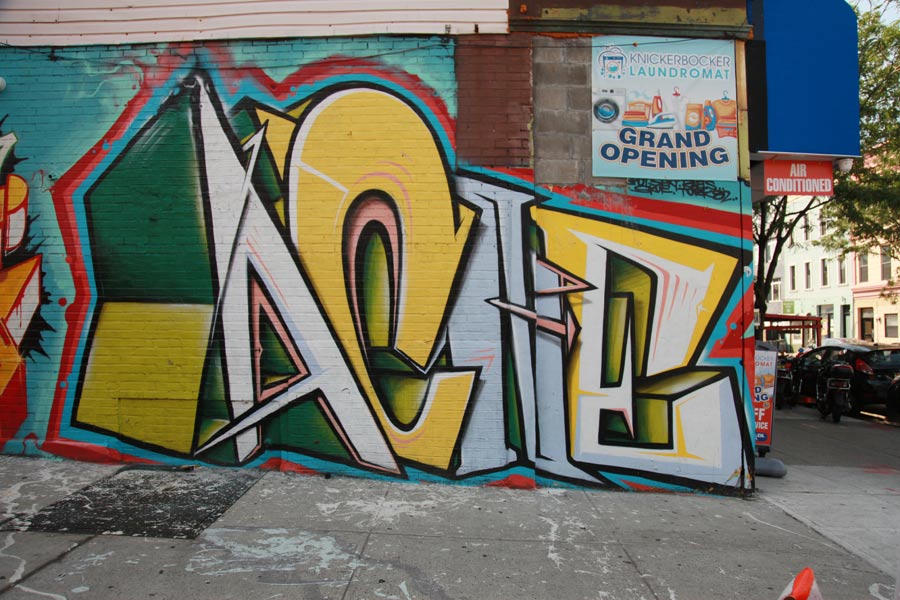
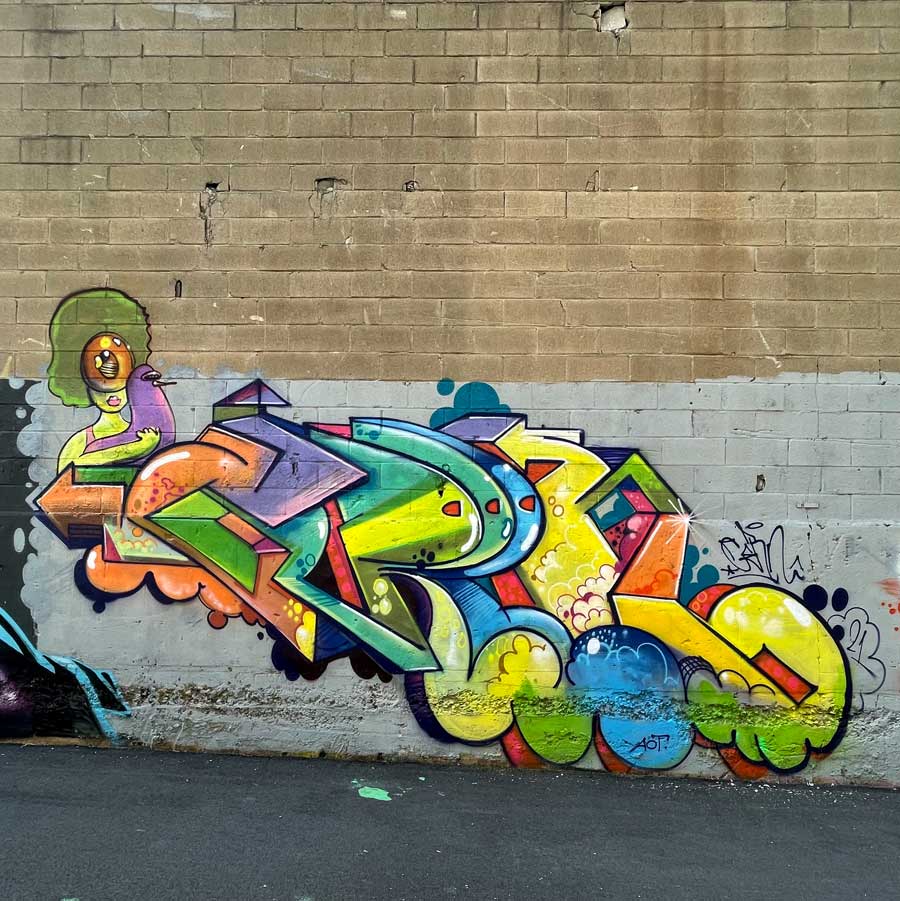
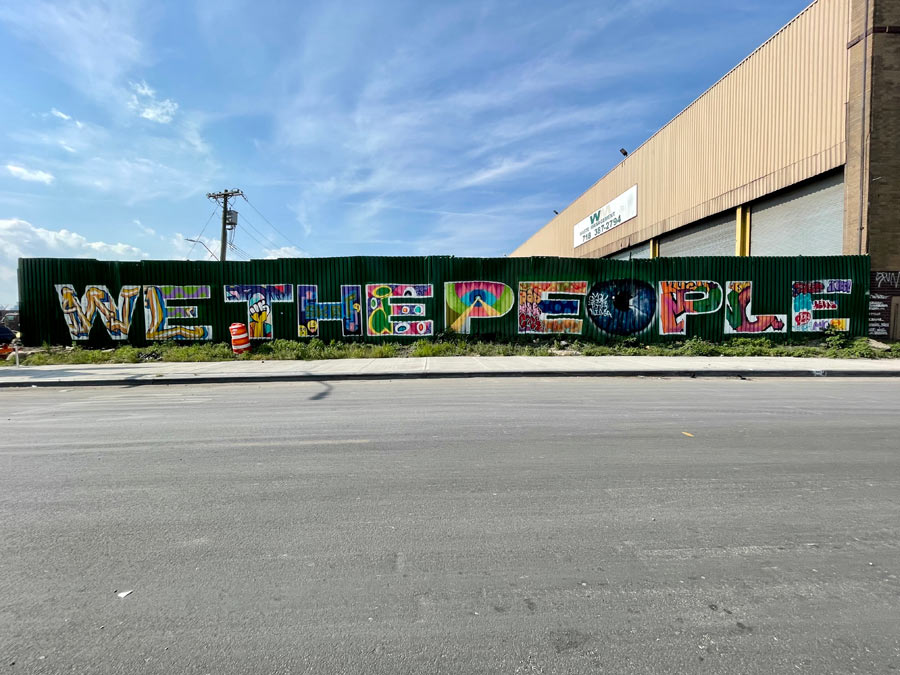
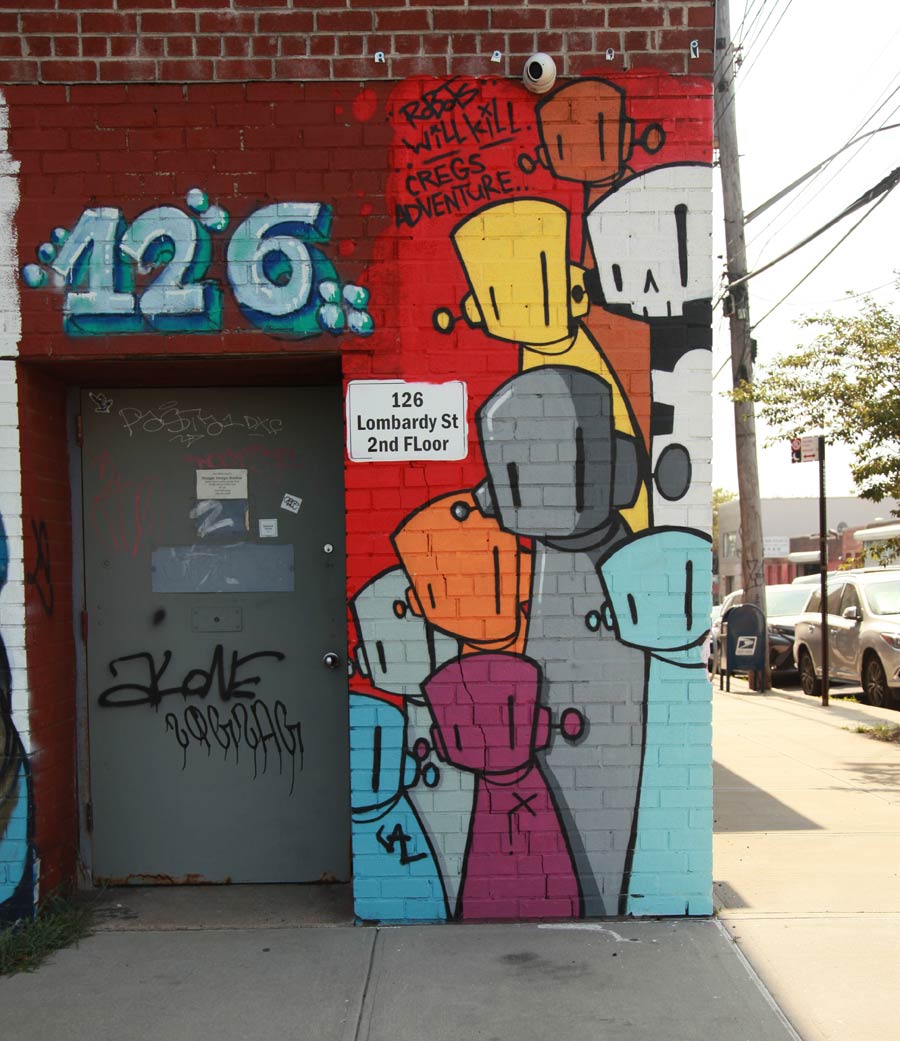
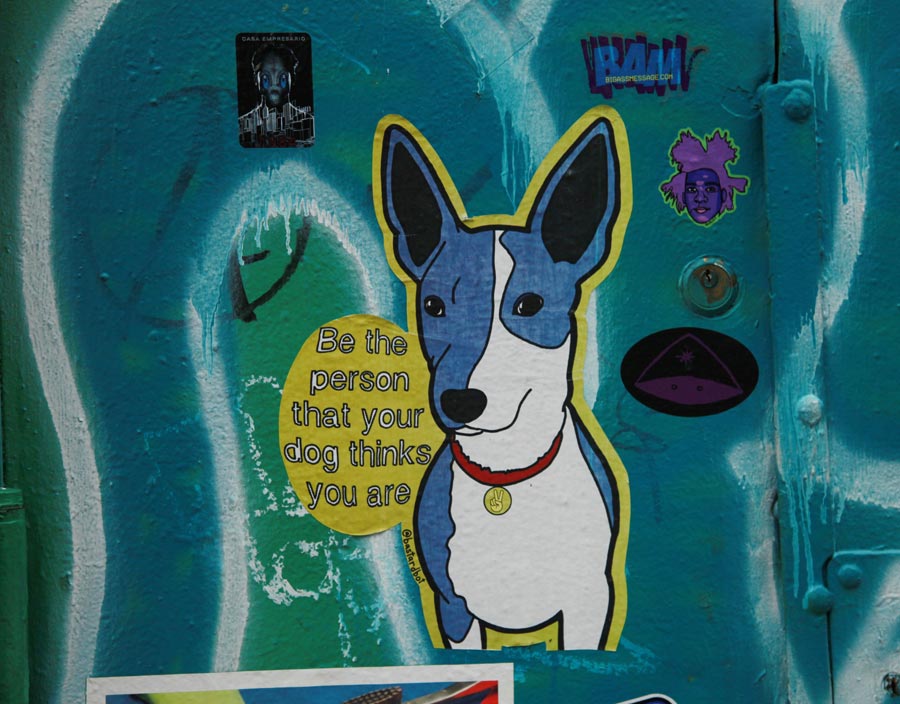
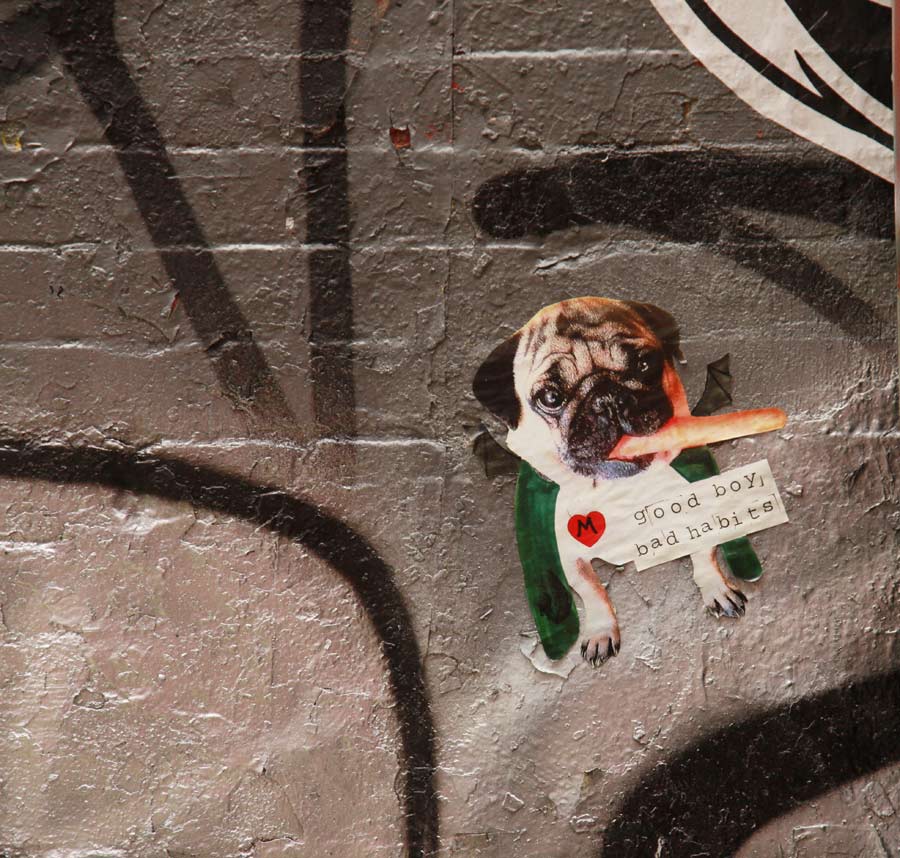
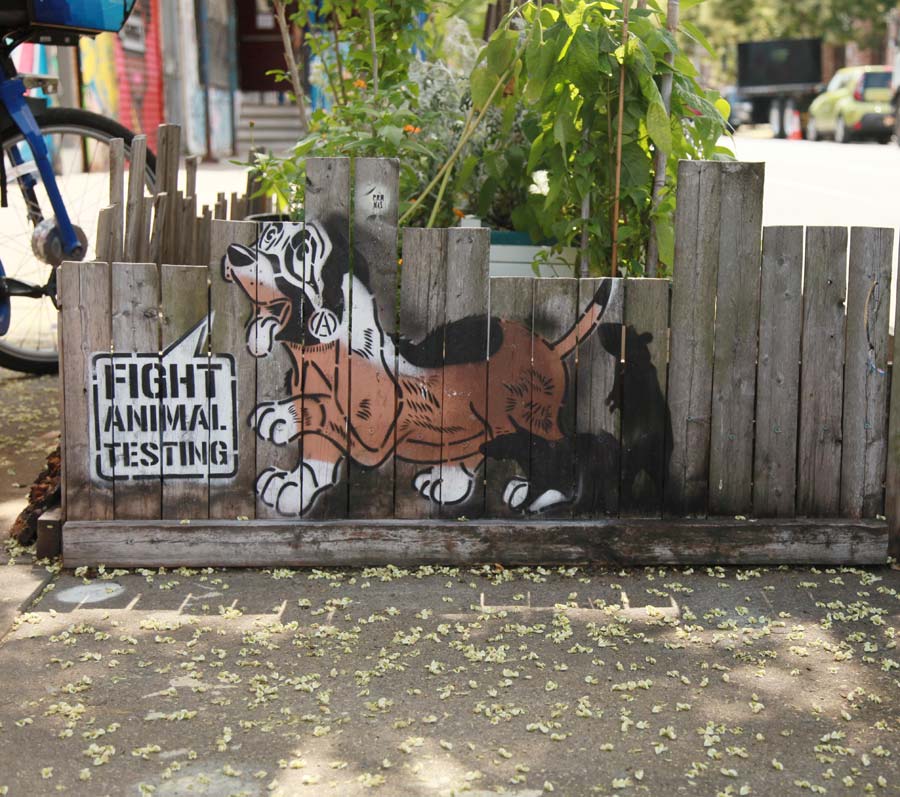
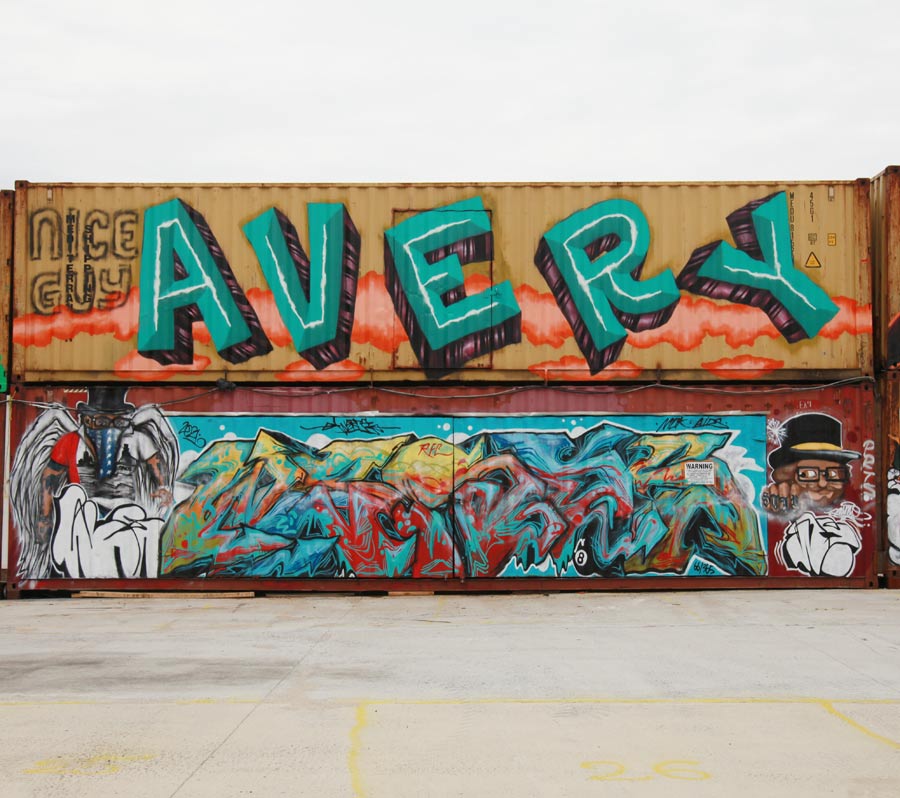
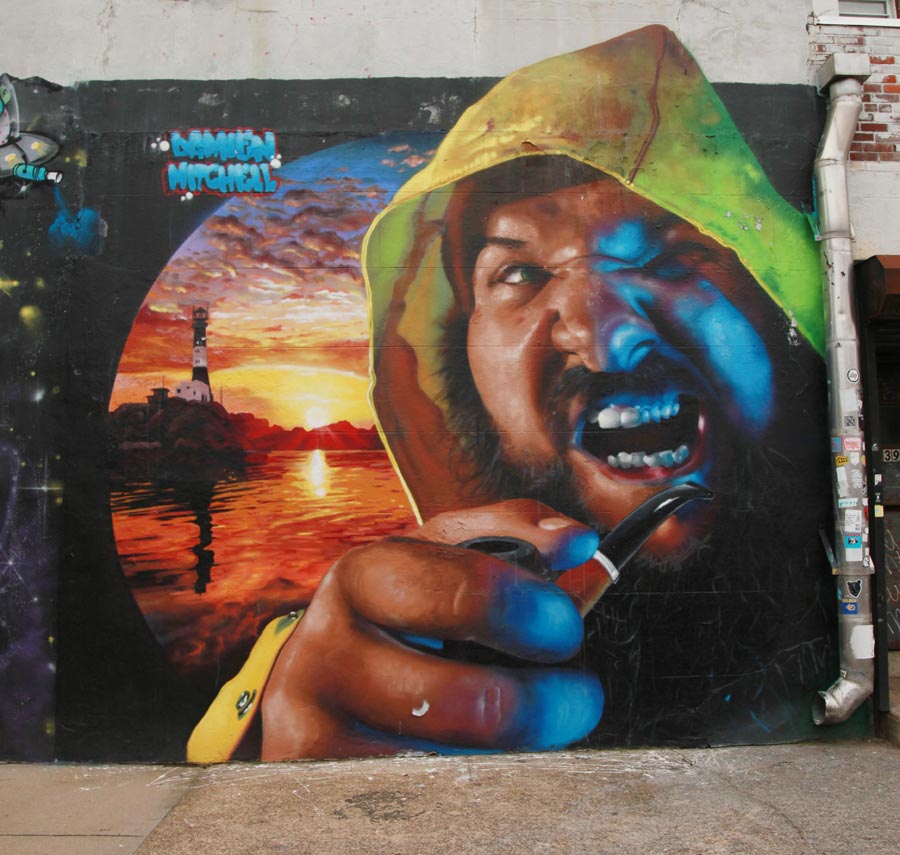
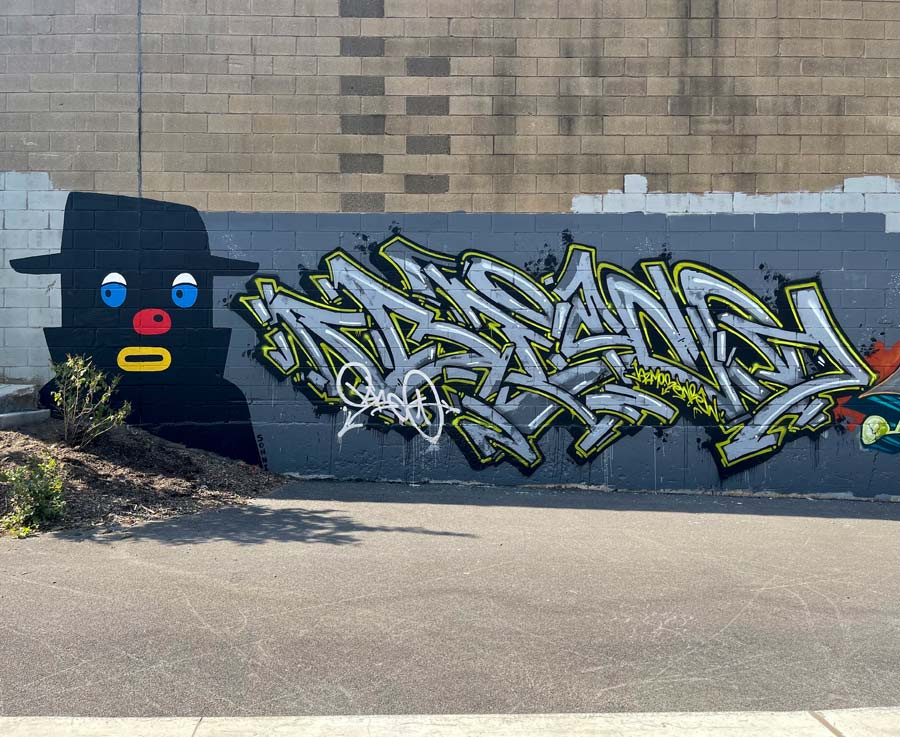
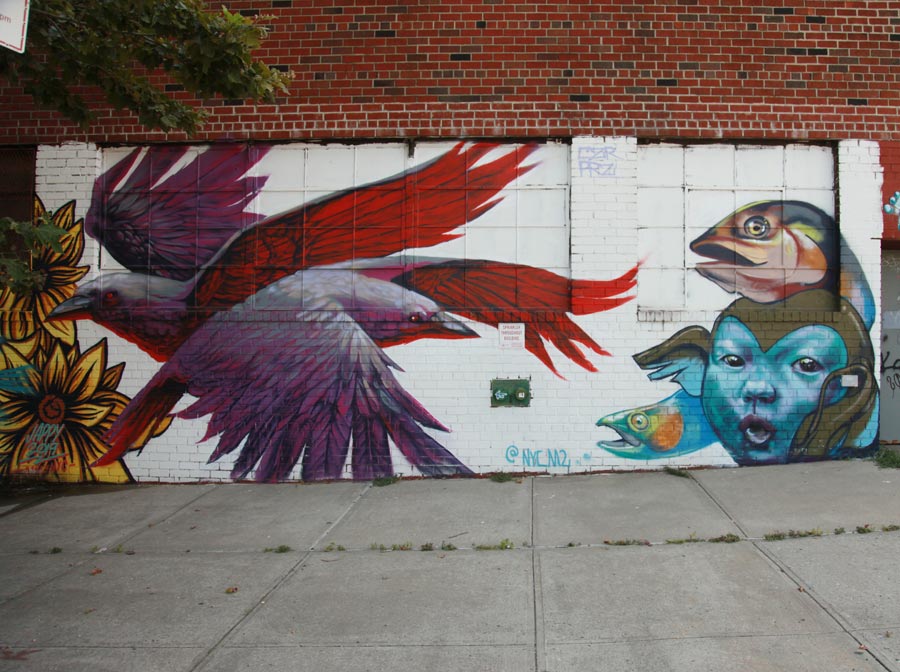
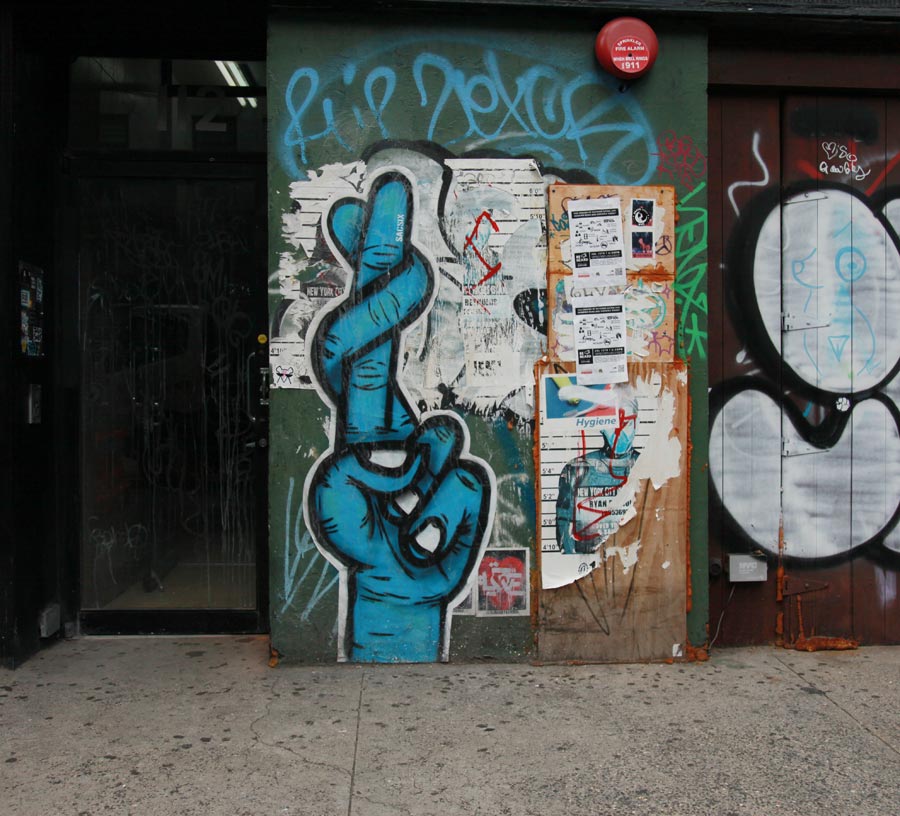
We pause to thank Mother Nature and the graffiti gods for blessing New York with an embarrassment of riches this summer. Amidst the swirling skirts and thunder thighs and sins of youthful exuberance, we are counting the beat of the street and the creative spirit that runs wild with or without permission.
Movie recommendation: Summer of Soulis the inspirational movie of this season, placed in thecontext of 1969 and timeless in its cultural resonance to 2021.
It’s been a hammering of the psyche again this week, as national and international news fixates on unvaccinated Covid patients flooding hospitals everywhere. Few mention that the price of vaccinations is gently bumping upward; a new subscription you didn’t realize you bought into like Netflix. Need a booster?
The art on the streets is banging onward, though, with new kids bringing the jokes, and the feels. OGs are up as well, including some people who have been on the street since we went off the gold standard – 50 years ago this week.
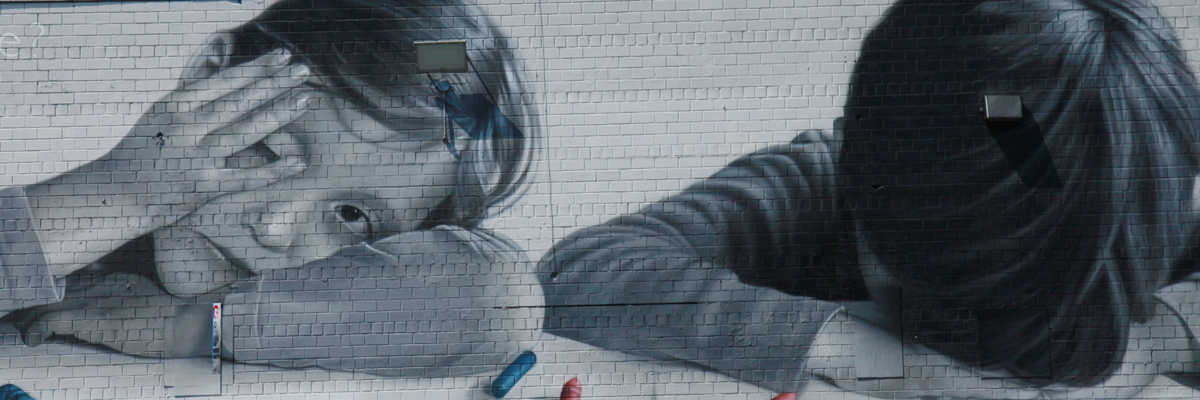
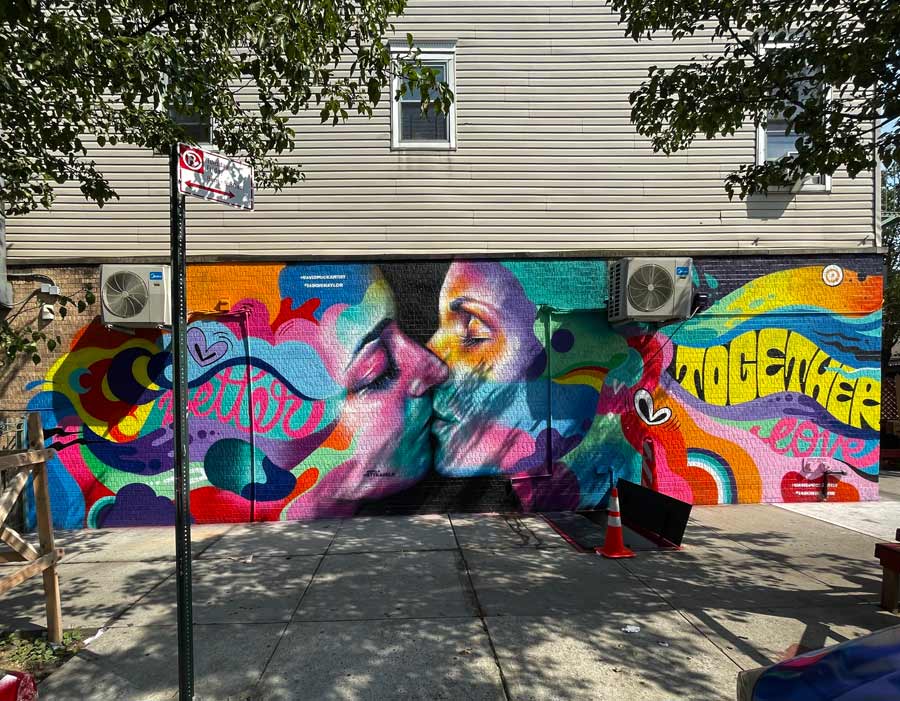
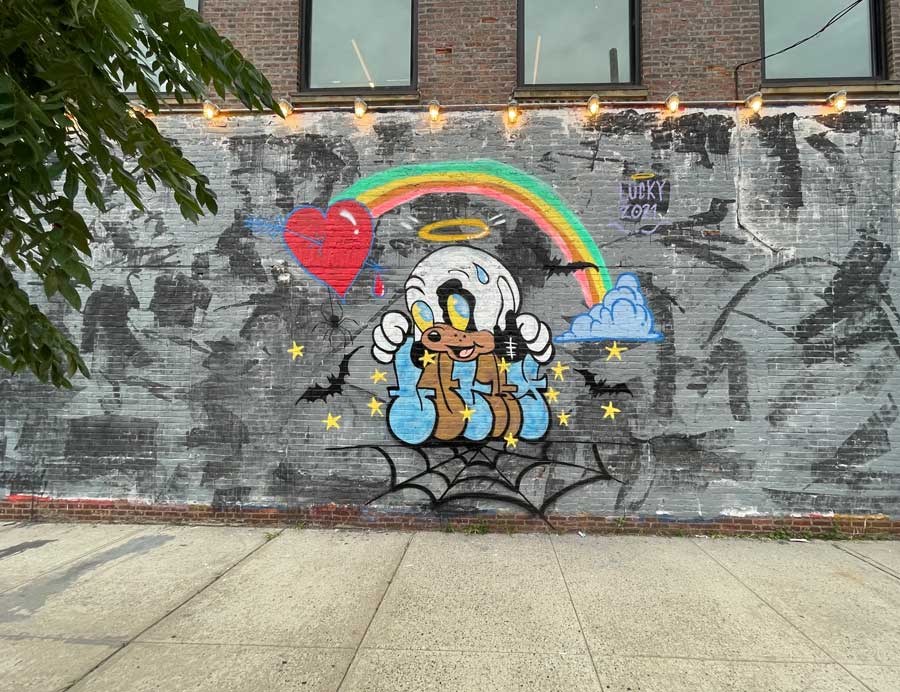
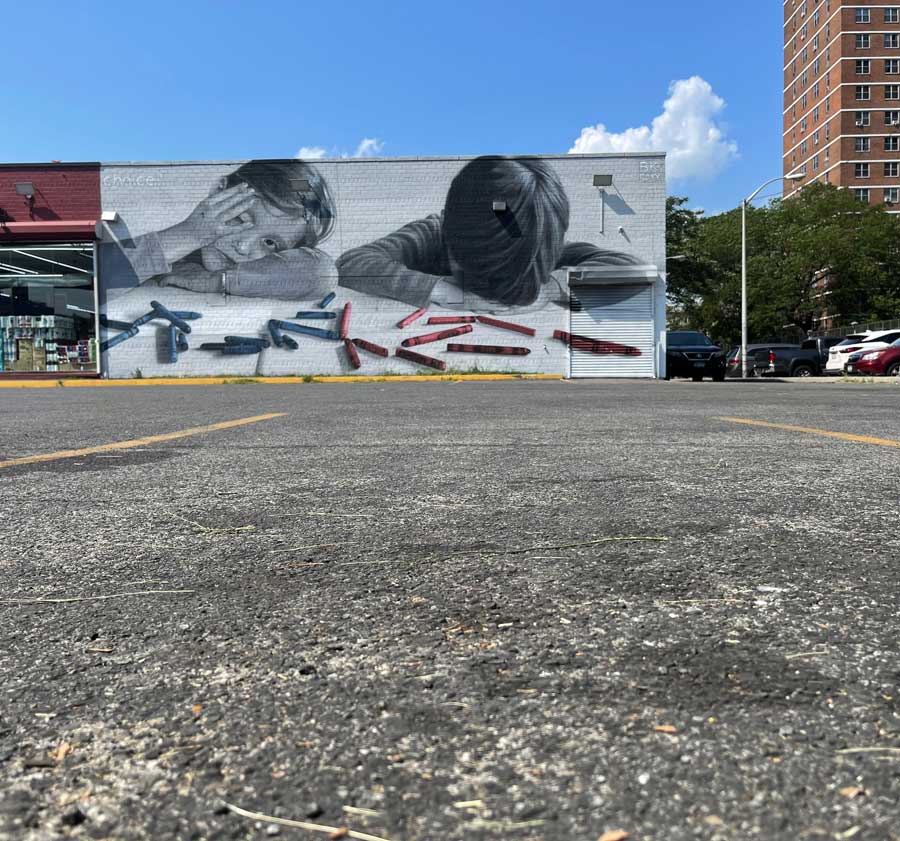
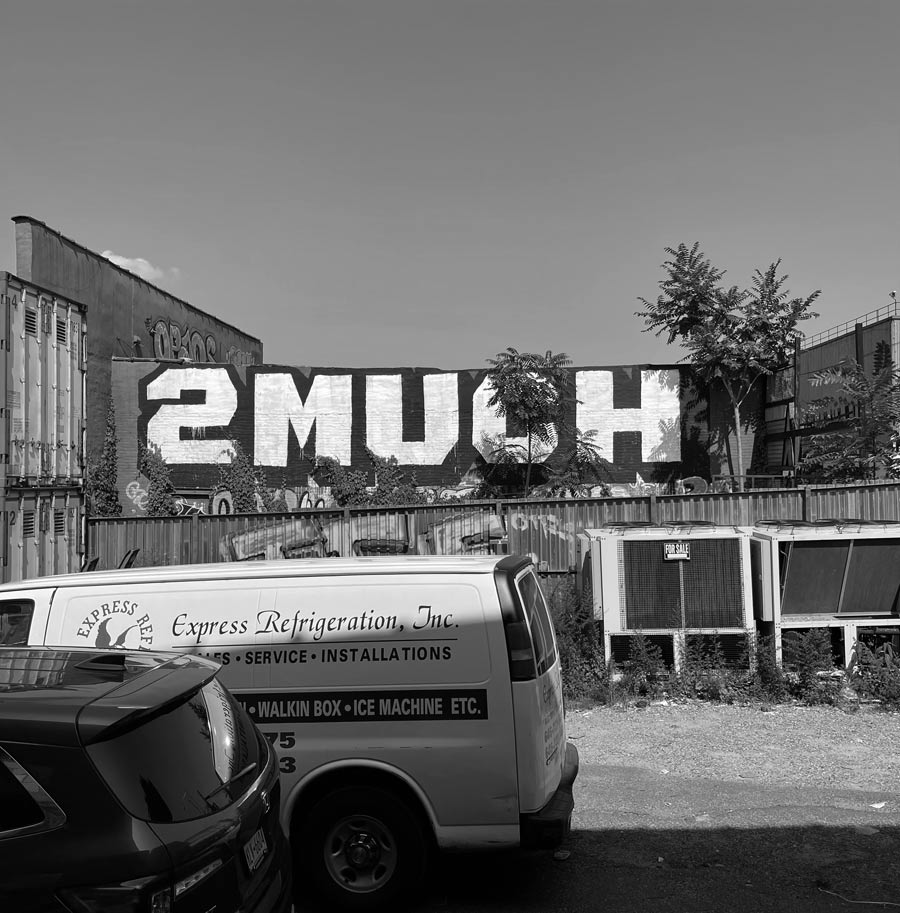
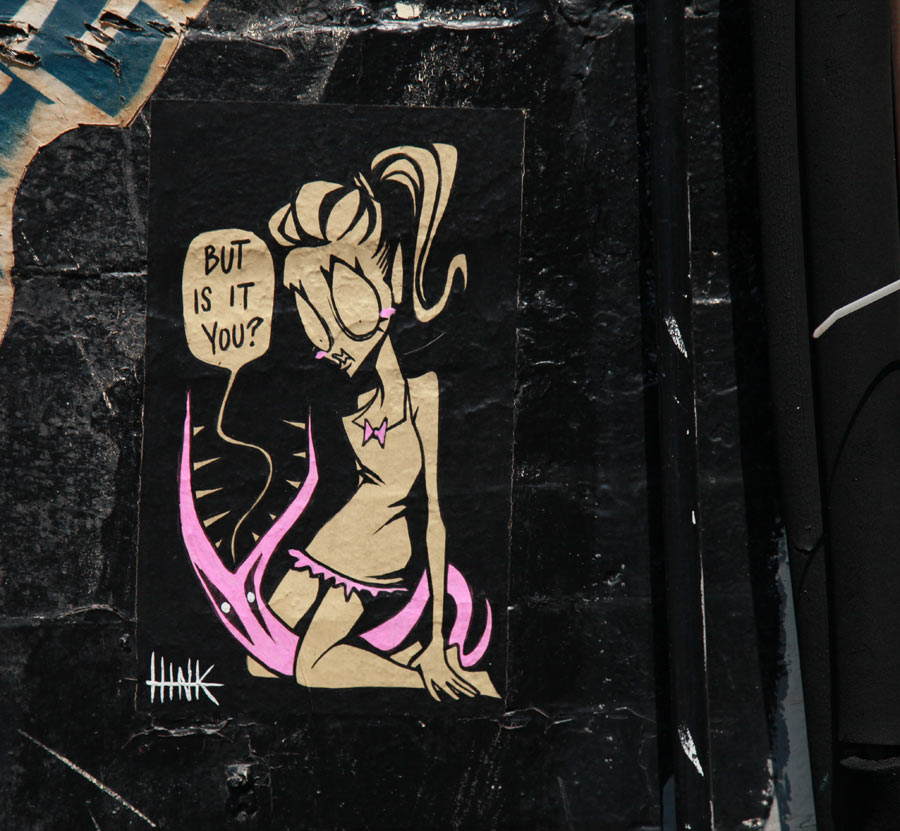
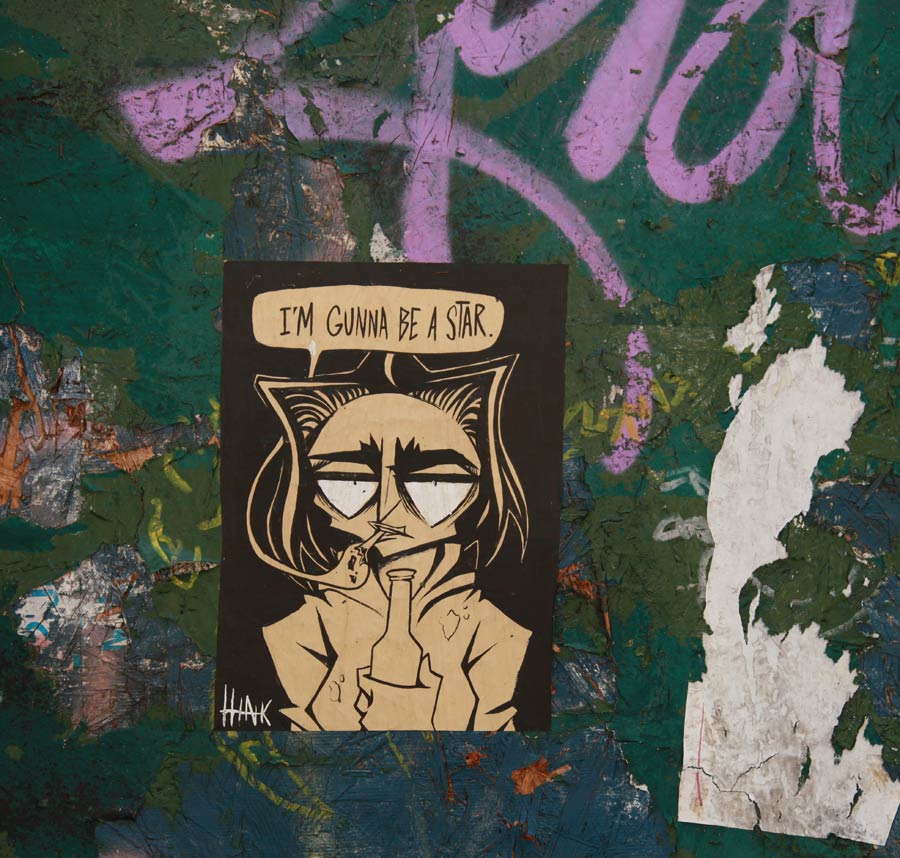
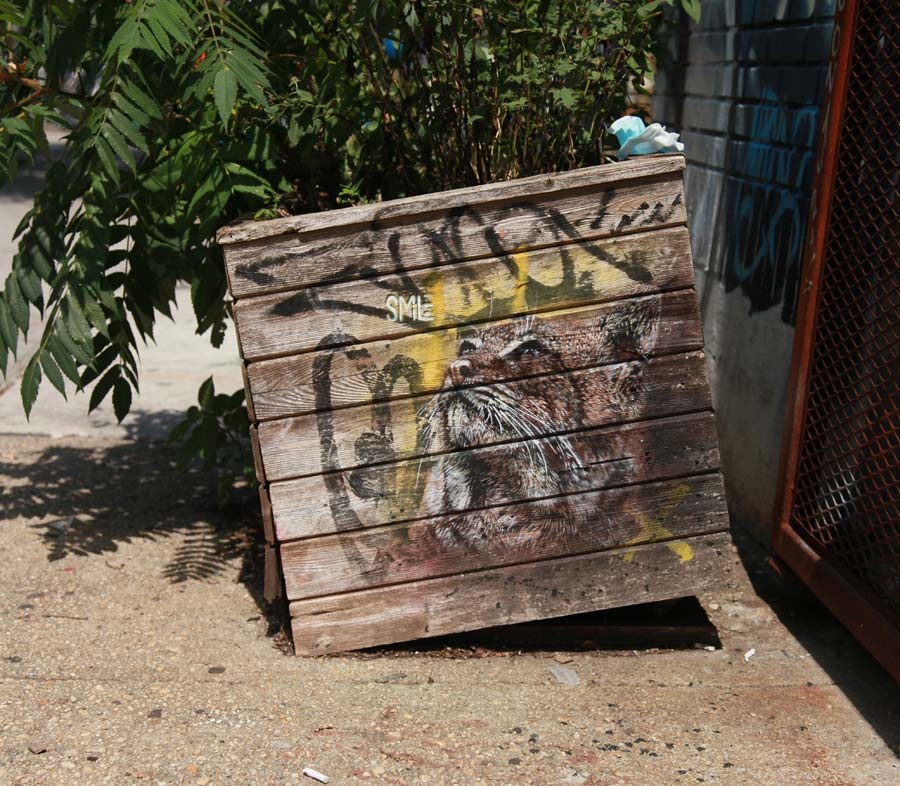
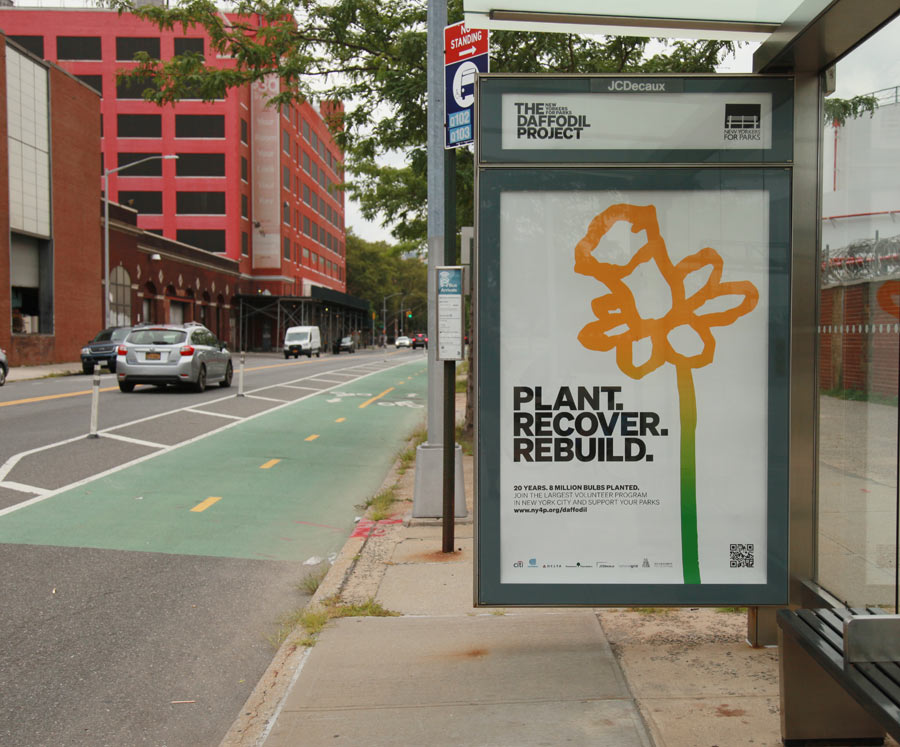
Here’s our weekly interview with the street, this week featuring A Lucky Rabbit, Acne, Bastard Bot, Cern, Chris RWK, David Puck, Jason Naylor, Michael De Feo, Sac Six, The Daffodil Project, We The People, Acne, Bastard Bot, M, Praxis, A Very Nice, Say No Sleep, Damien Mitchell, Sonni, Bisco Smith, NYCM2, BK Foxx, 2MUCH, Hink, Smile.
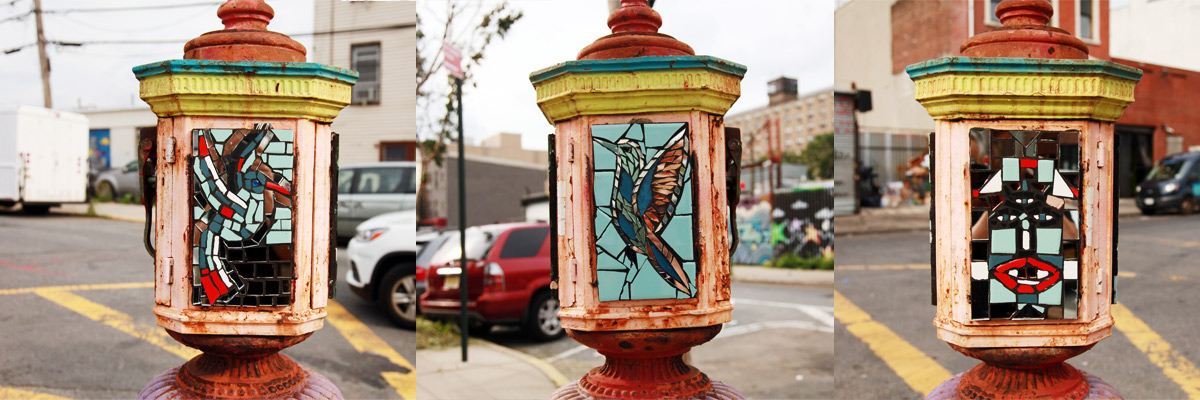
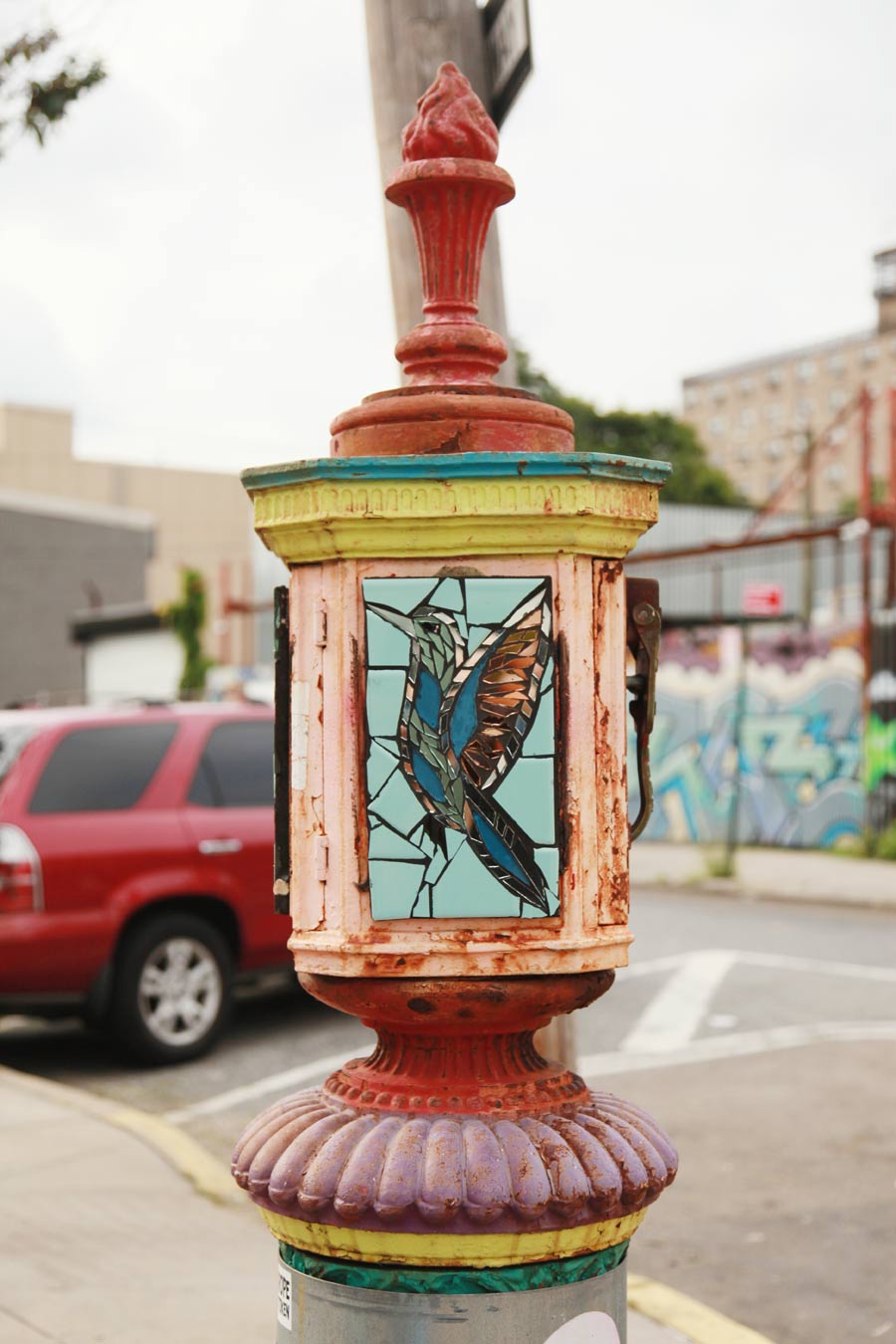
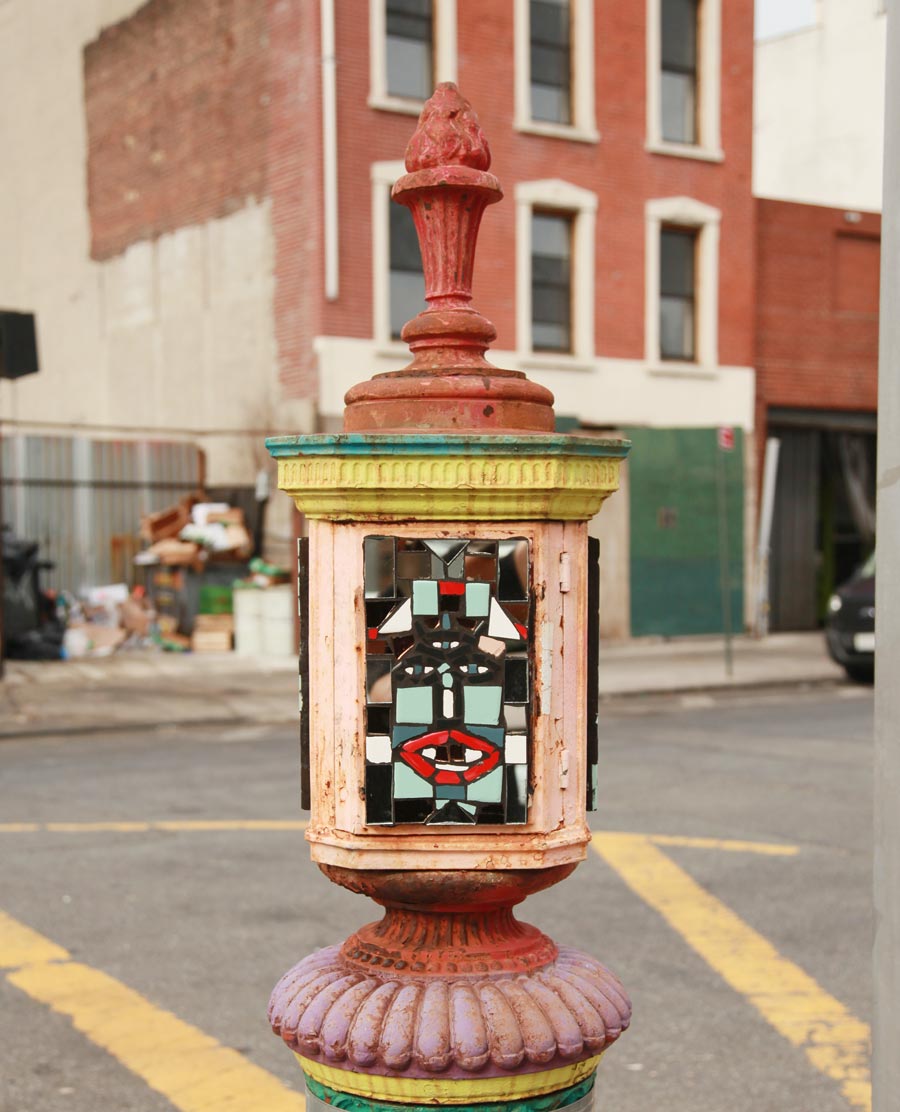
When it comes to street art, both legal and illegal placement is key – as is utilizing the stage to maximize impact. Decommissioned fire box alarms are historic reminders of an earlier New York, oddly popping up on your path where you witness soulless architecture actively blands neighborhood rich with history and character.
Once tied directly into an emergency network that would bring firetrucks within minutes, many are now ornate buoys bobbing in the concrete ocean, anchored to a world that lies underneath all of this. With ceramic and glass tiles applied illegally to these century-old sculptures with firey flames atop, some artists seize the opportunity for an artfully framed display to capture your attention – embellishing this street furniture with a certain flair in multiple locations of a neighborhood.
Now reconnected to one another by art, these ornately handsome and slim towers offer an exhibition you will only discover by astute observation of these street features that have become invisible to most. Each is small and distinct; one piece of art of a larger street exhibit.
Our weekly focus on the moving image and art in the streets. And other oddities.
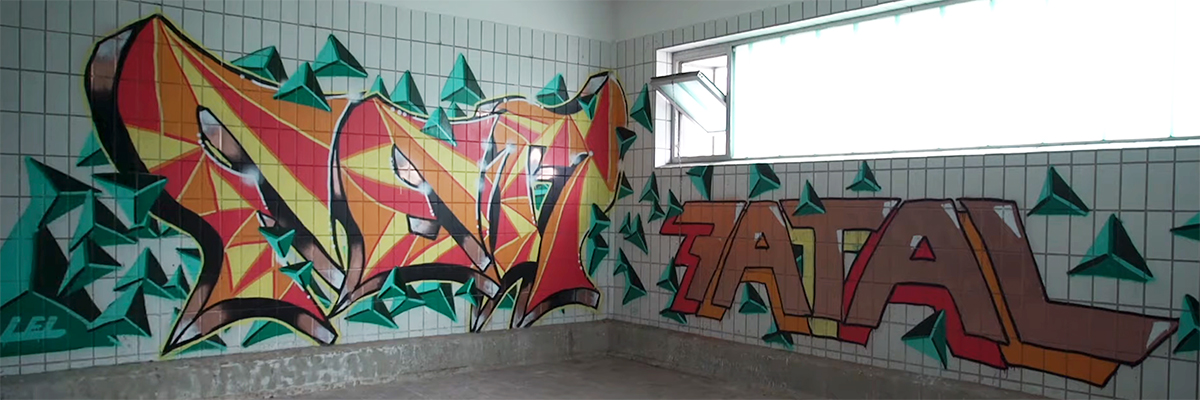
Now screening: 1. FEM – Graffiti Documentary 2. GRAFFITI TV: HUNGR 3. SOFLES / MARVEL
BSA Special Feature: FEM – Graffiti Documentary.
Now from Bremen, Germany – “Just like a sports addiction, or a sugar addiction, I’m basically addicted to graffiti.” Fem says she is like Sherlock Holmes, Crocodile Dundee, and Pipi Longstocking all rolled into one.
FEM – Graffiti Documentary. Via Spray Daily
GRAFFITI TV: HUNGR.
Speaking of crocodiles, here’s a summertime Hungr spraying out a wall ankle deep in water, wearing a pair of crocks.
SOFLES / MARVEL
Here you are again, about to be drawn into the Sofles vortex, this one particularly MARVELous.
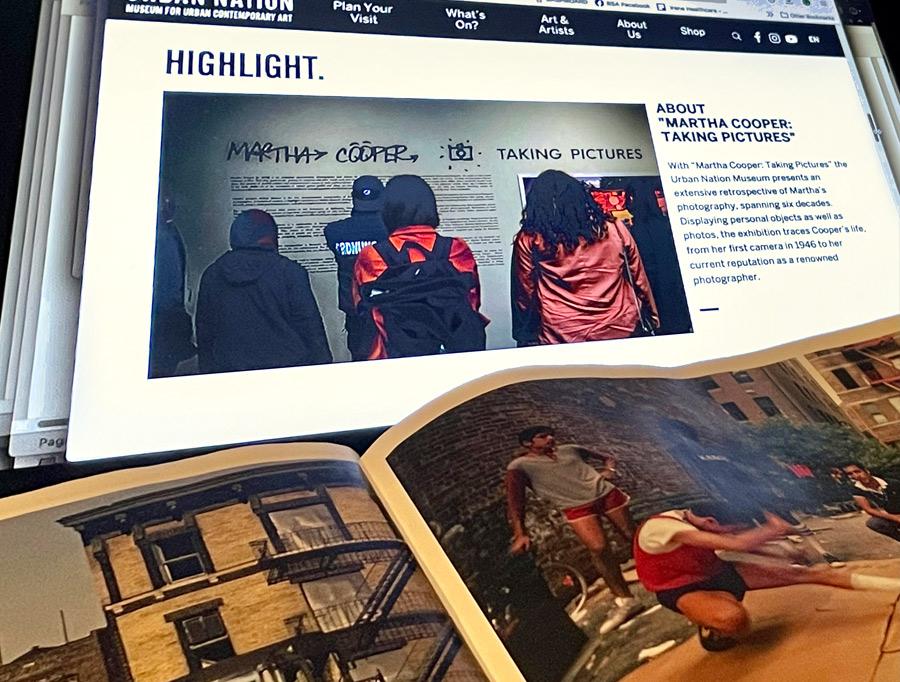
Our exhibition got a lot of great press and we like to highlight some of the articles once in a while just to remind you that the museum is now open after a long Covid-19 closure.
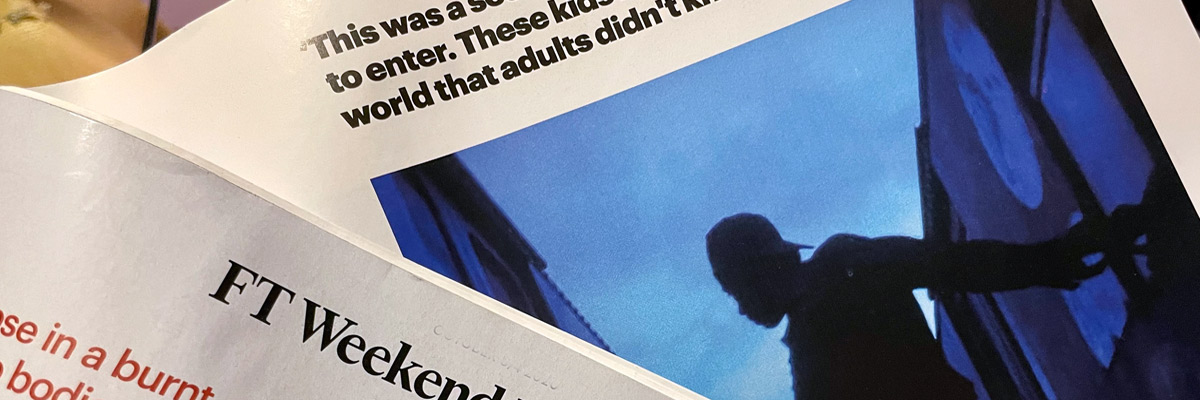
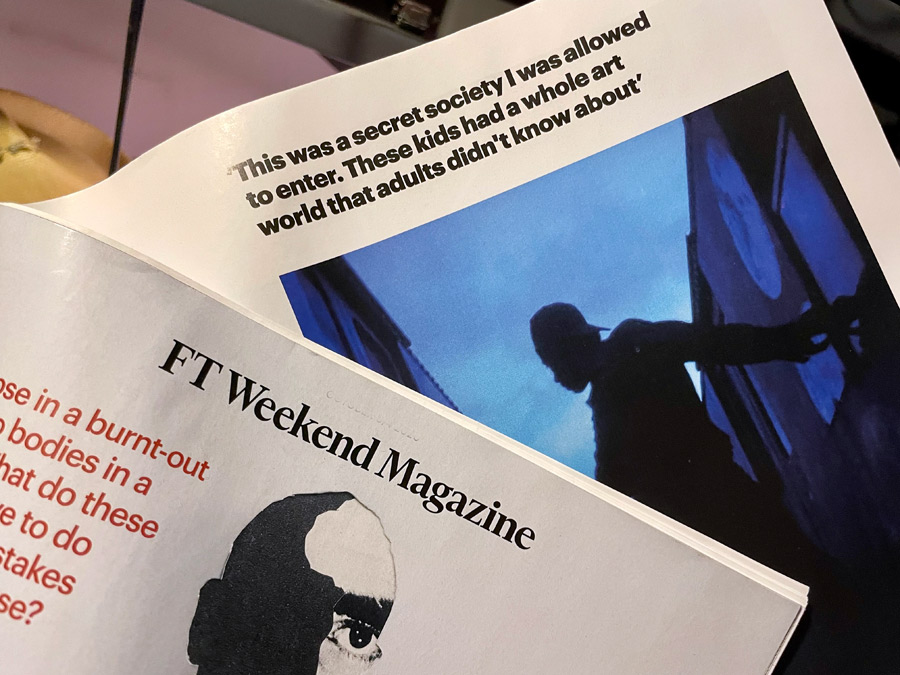
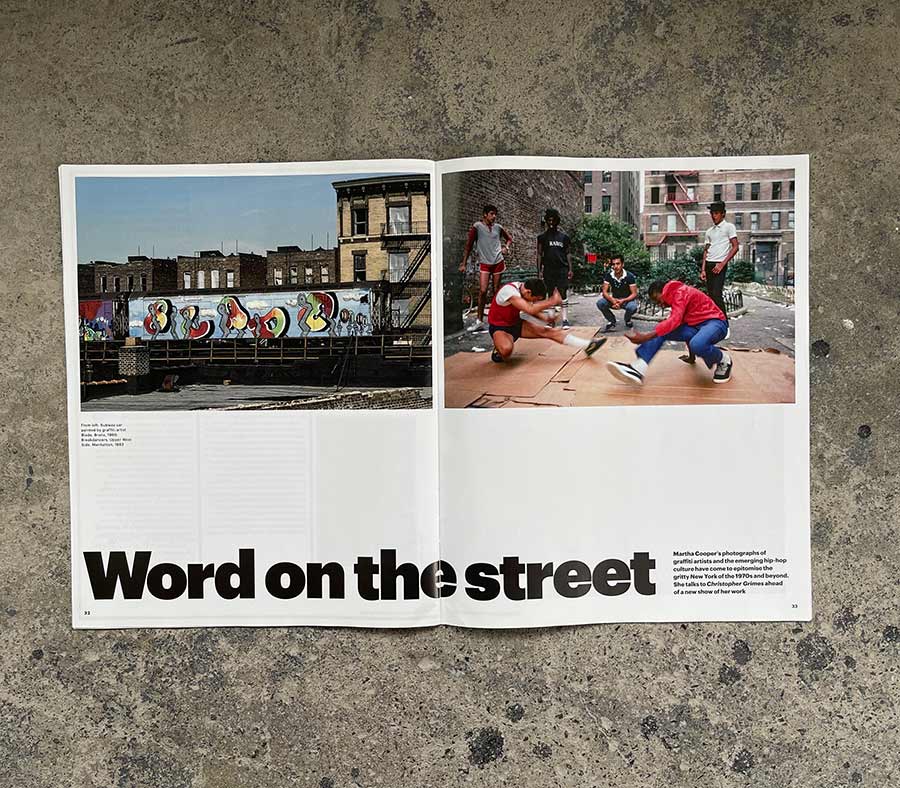
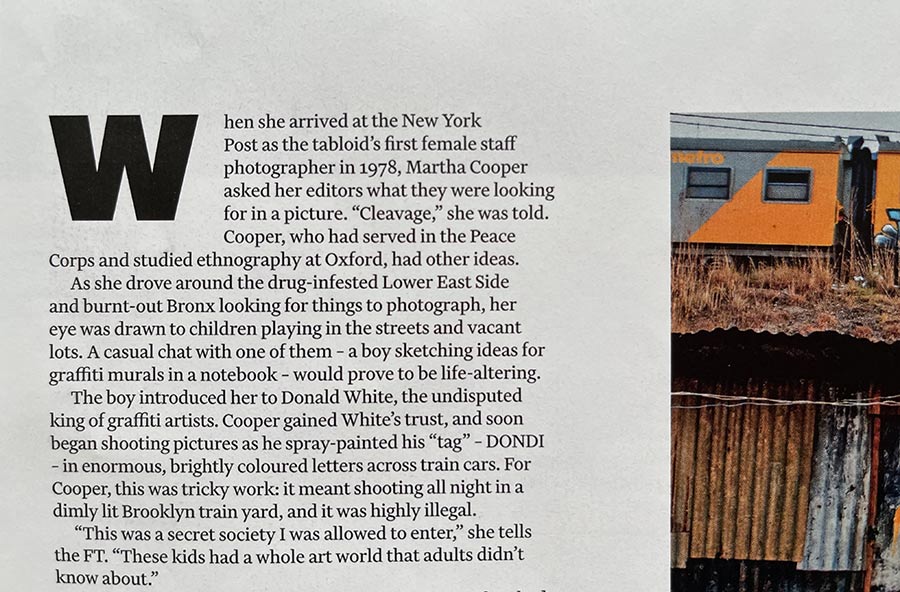
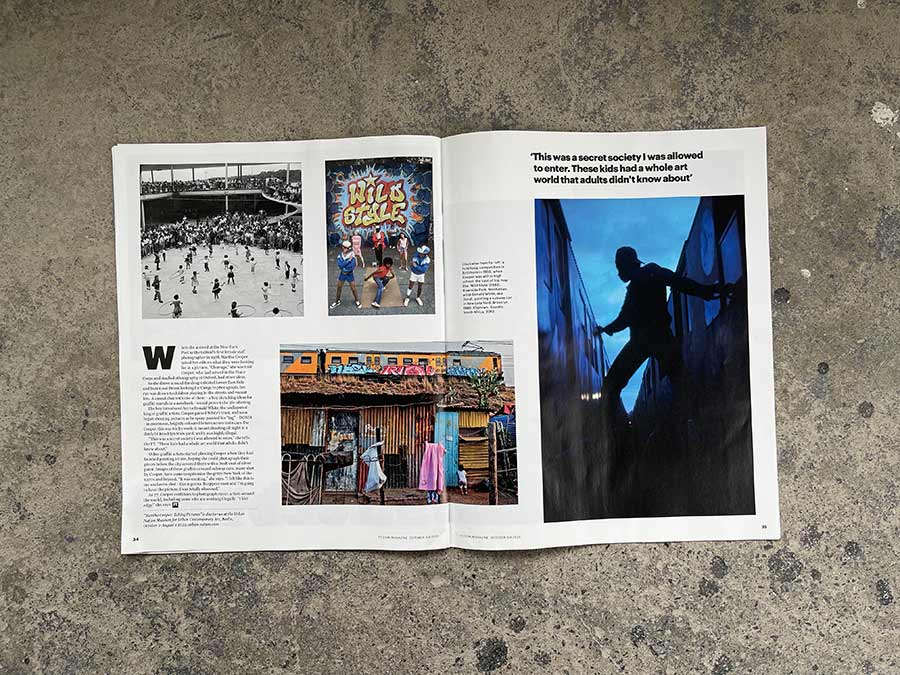
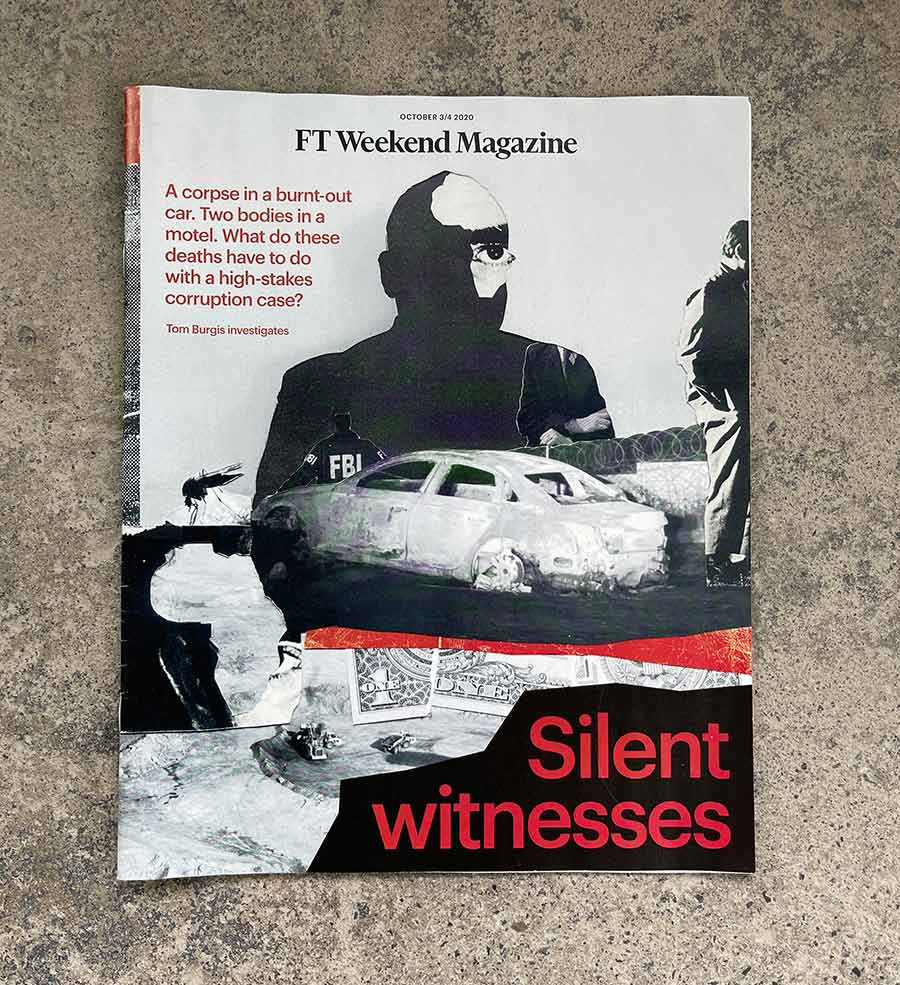
The Financial Times Sunday magazine did us the biggest favor by printing a multi-page spread about Martha Cooper and our retrospective of her work at at the URBAN NATION Museum – the first major and expansive photo and documentary exhibition of her career.
As the UN Website says “‘Martha Cooper: Taking Pictures’ sets new standards in the museum program. The curators Steven P. Harrington and Jaime Rojo (Brooklyn Street Art) , in close cooperation with Martha Cooper, have created a multimedia exhibition in which artistic works and documentary material are juxtaposed.
Martha Cooper: Taking Pictures. Urban Nation Museum Berlin. Financial Times Weekend Magazine LondonMartha Cooper: Taking Pictures. Urban Nation Museum Berlin. Financial Times Weekend Magazine LondonMartha Cooper: Taking Pictures. Urban Nation Museum Berlin. Financial Times Weekend Magazine LondonMartha Cooper: Taking Pictures. Urban Nation Museum Berlin. Financial Times Weekend Magazine London
The exhibition, Martha Cooper: Taking Pictures at Urban Nation Museum for Urban and Contemporary Art in Berlin is currently open to the general public. To learn more about the exhibition’s details and schedules click HERE
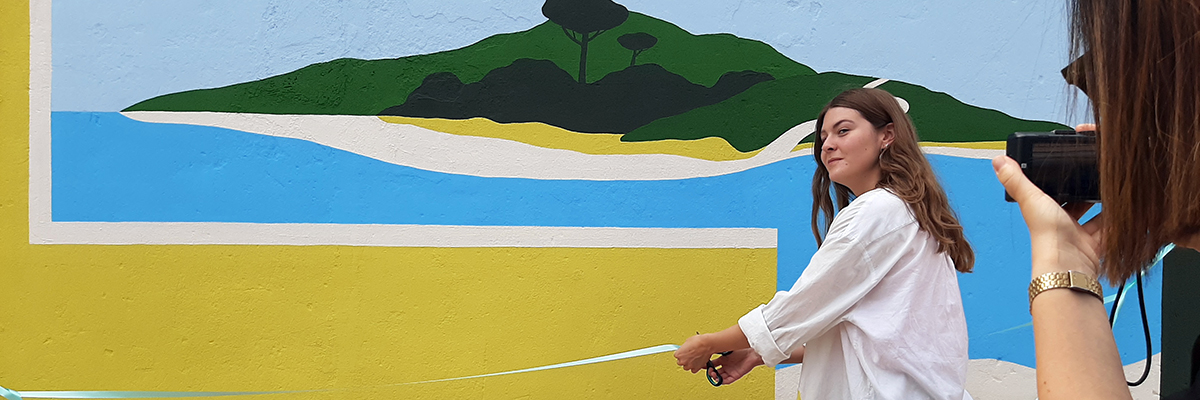
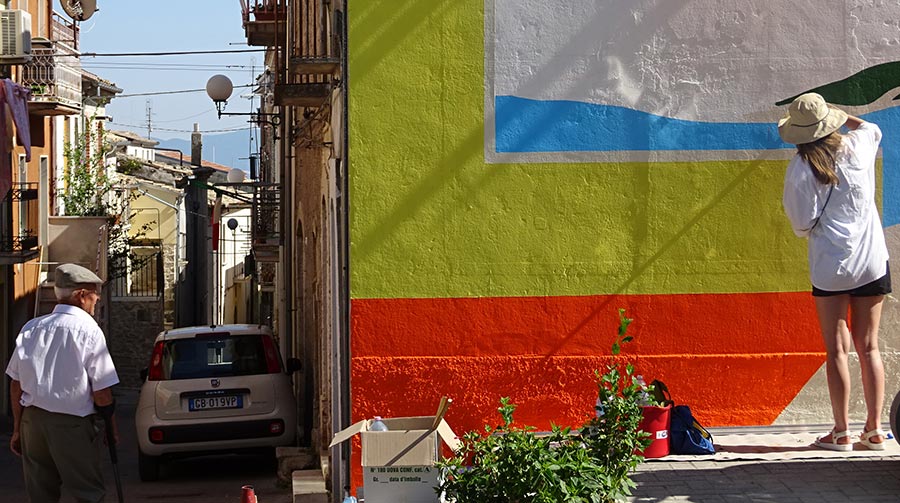
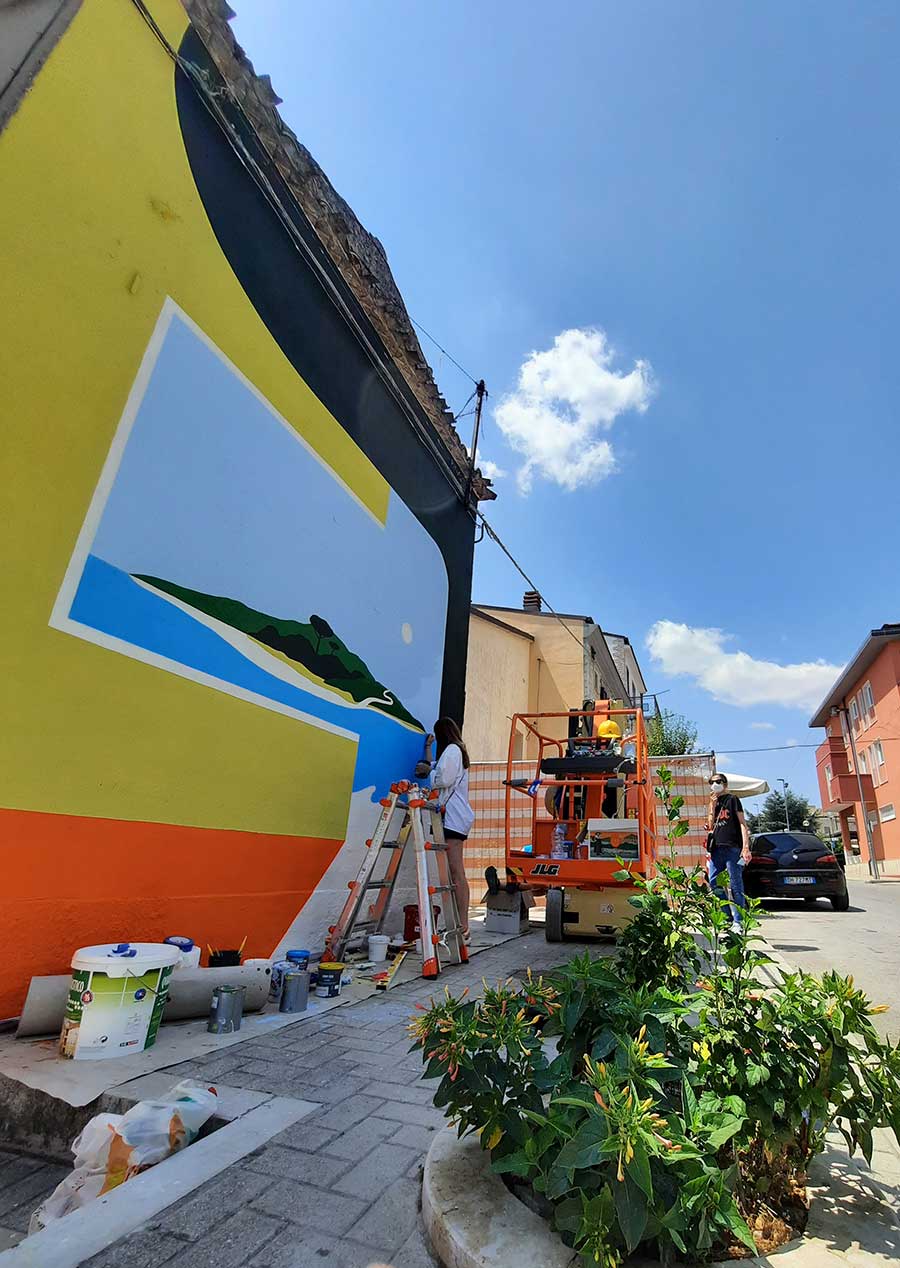
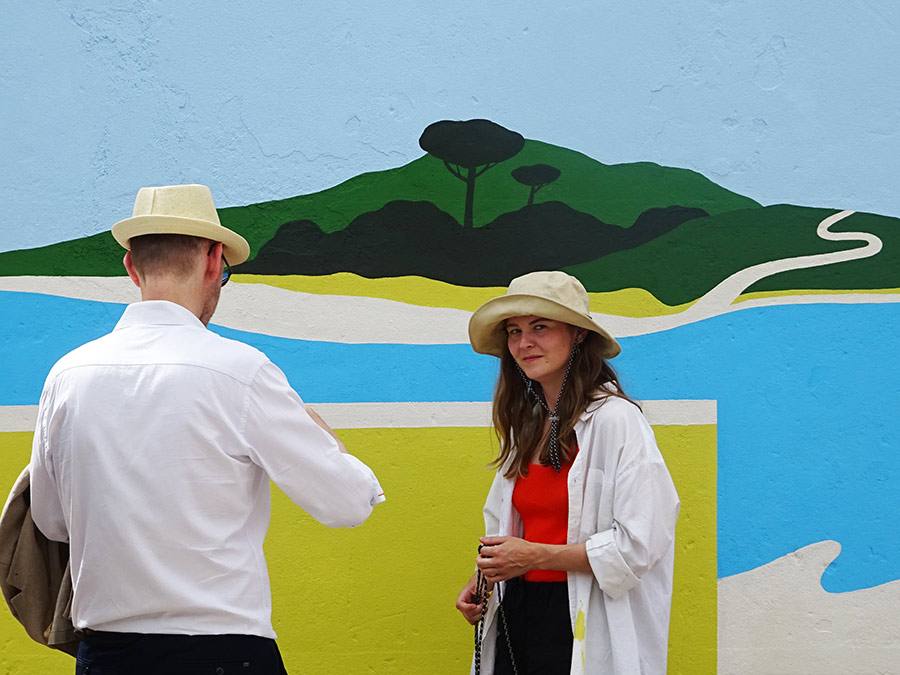
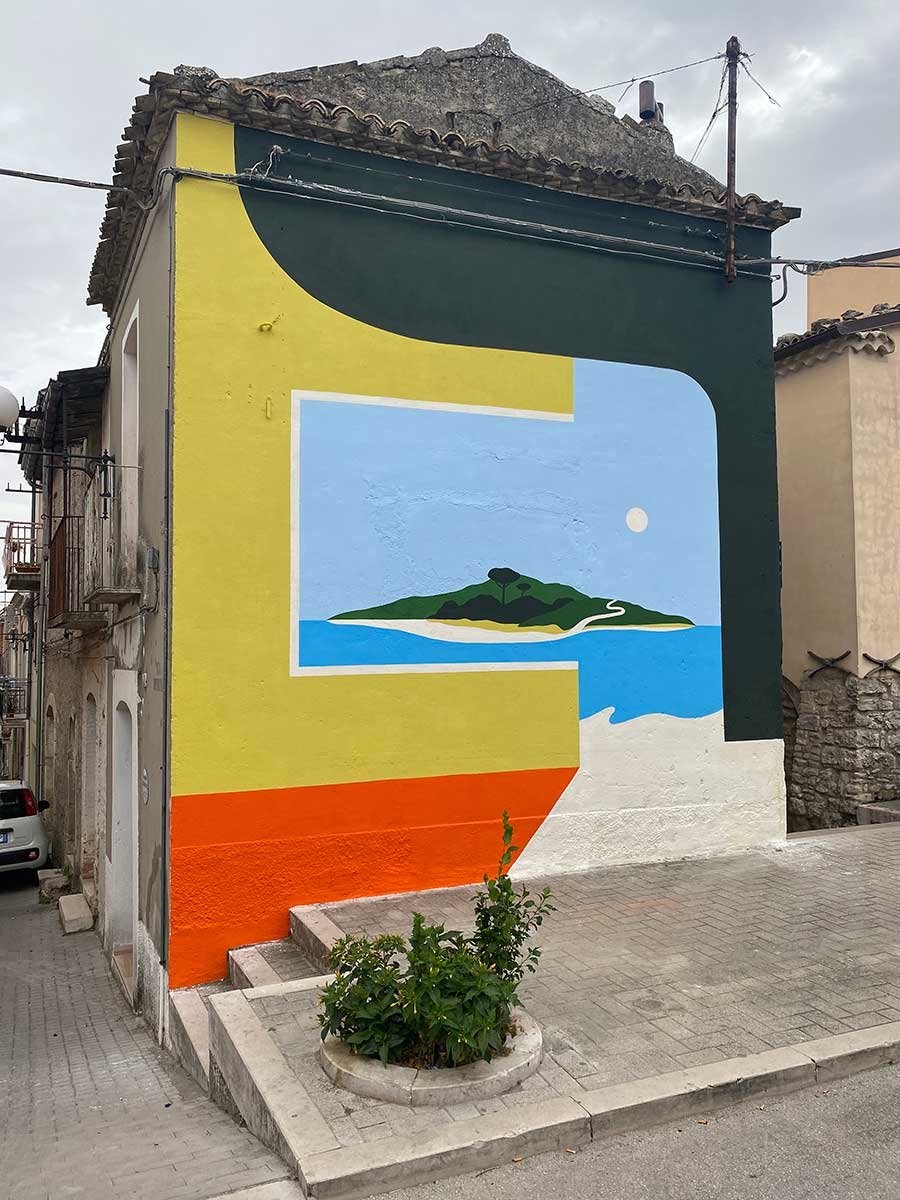
Maaike Canne’s “Daydream”, as she calls it, is meant to evoke parallel worlds that you may live in simultaneously.
Maaike Canne. “Daydream”. In collaboration with HollAndMe and Associazione Culturale Antonio Giordano. Santa Croce di Magliano, Italy. 2021. (photo courtesy of ACAG)
“Influenced by liminal spaces, architecture, and nature, this dreamlike mural is depicting the reality in between two worlds,” says the Dutch Painter here in Italy, “Worlds that live side-by-side, which feel familiar yet surreal at the same time.”
Maaike Canne. “Daydream”. In collaboration with HollAndMe and Associazione Culturale Antonio Giordano. Santa Croce di Magliano, Italy. 2021. (photo courtesy of ACAG)
It’s the 8th year of murals and art installations here in the Molise Region for ACAG – Associazione Culturale Antonio Giordano. The curated festival brings many artists to work in public space – 40 this year – expanding stylistically before passersby with genres as diverse as figurative, abstract, Illusion Art (anamorphic, and Post Graffiti.
Maaike Canne. “Daydream”. In collaboration with HollAndMe and Associazione Culturale Antonio Giordano. Santa Croce di Magliano, Italy. 2021. (photo courtesy of ACAG)
“We are excited to bring Dutch urban art to Molise by supporting the work of such an original, colorful and powerful creative mind,” – said Bas Ernst, a cultural attaché at the Dutch Embassy in Rome, which partnered with ACAG on the project.
Here in Santa Croce di Magliano, the new “Daydream” overlooks one of the busiest streets, itself instantly an integral part of the feeling of an open-air gallery here.
Maaike Canne. “Daydream”. In collaboration with HollAndMe and Associazione Culturale Antonio Giordano. Santa Croce di Magliano, Italy. 2021. (photo courtesy of ACAG)Maaike Canne. “Daydream”. In collaboration with HollAndMe and Associazione Culturale Antonio Giordano. Santa Croce di Magliano, Italy. 2021. (photo courtesy of ACAG)
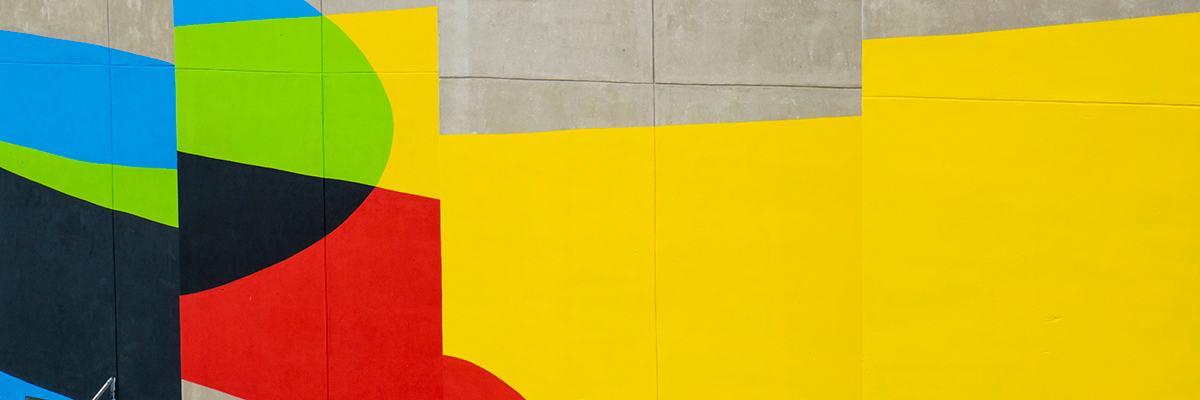
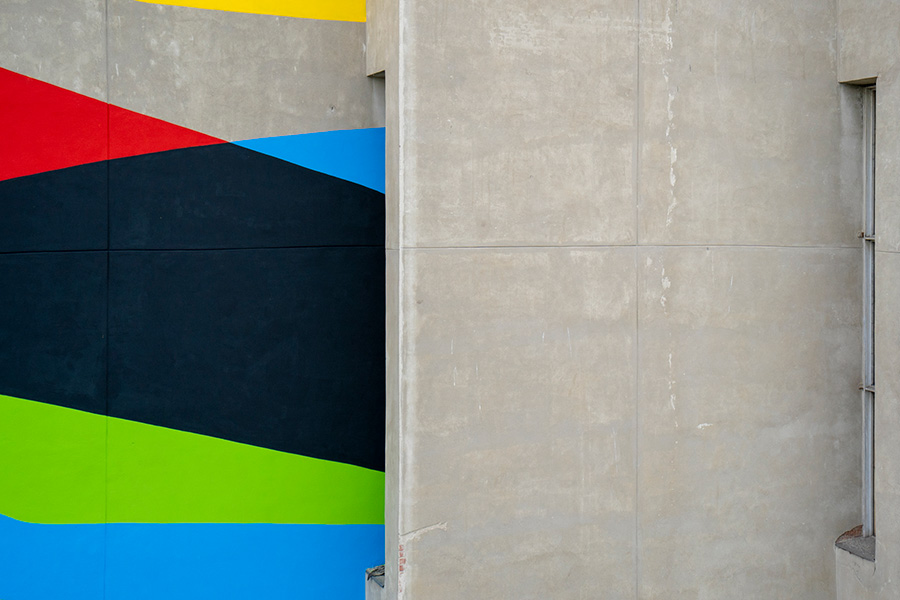
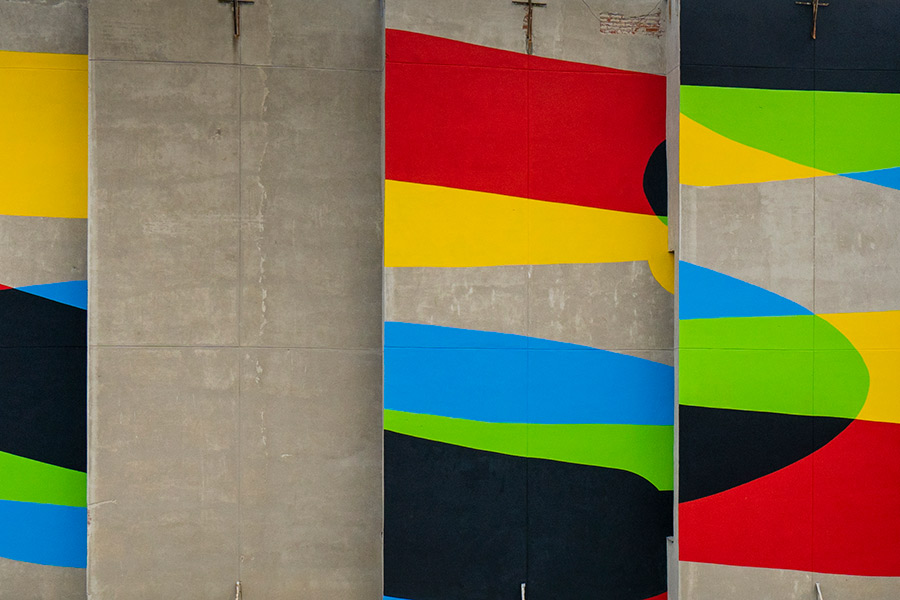
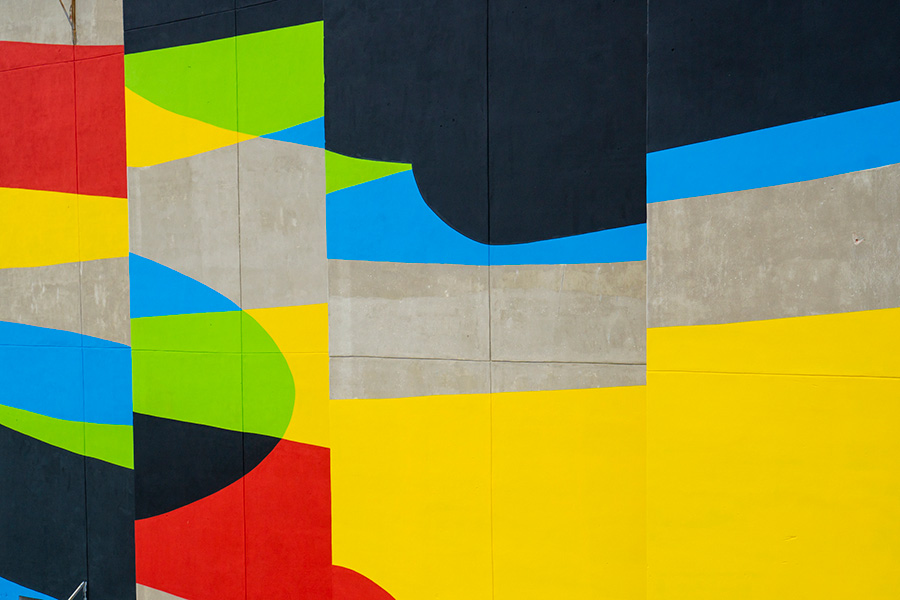
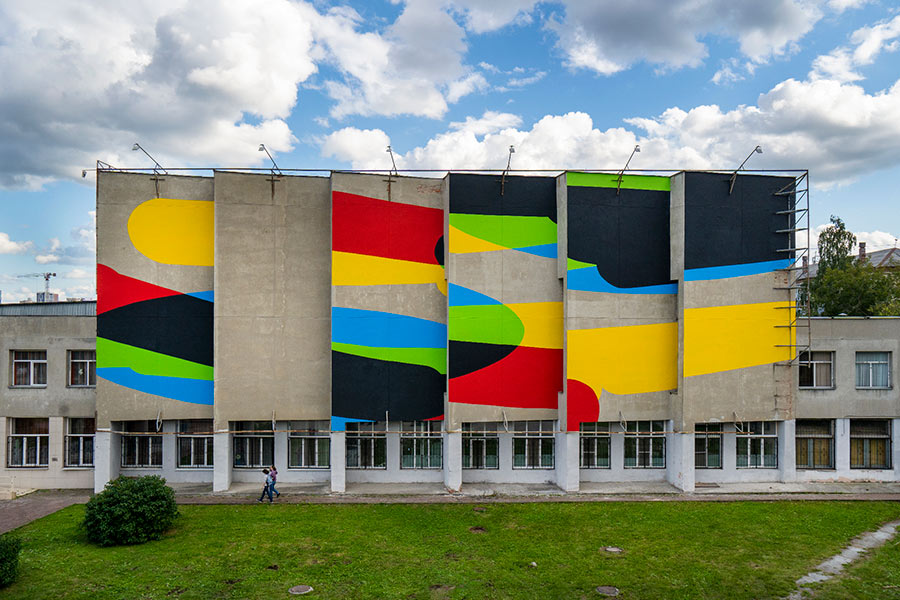
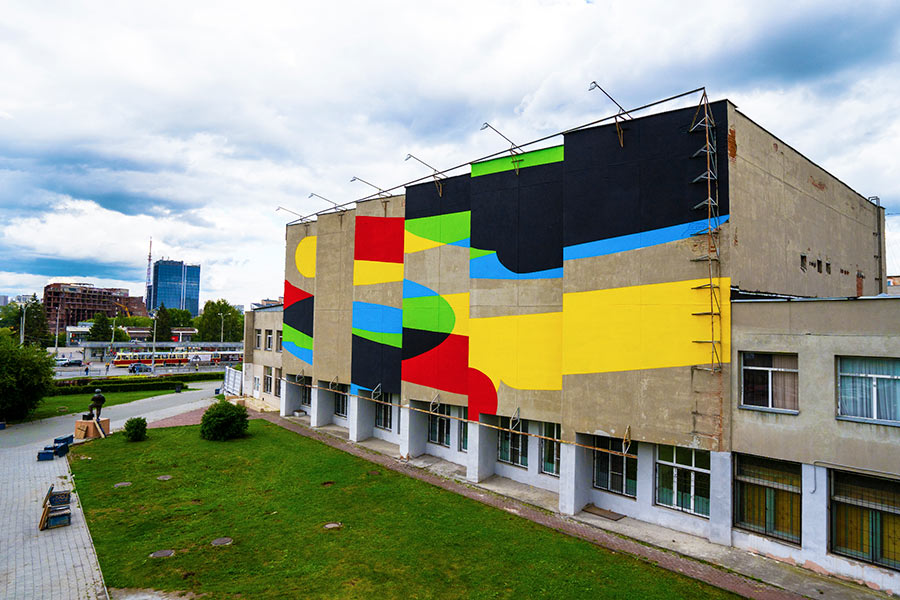
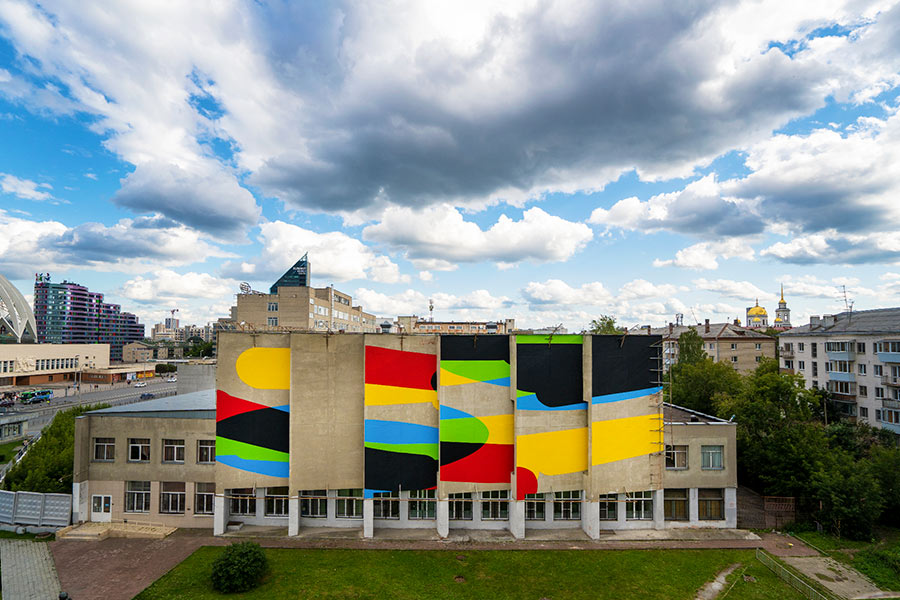
Argentinian abstractionist Elian is in Ekaterinburg riffing on a Russian rhythm of pop-hued panels. Well, except one. He calls the acrylic painting “Coloured Talismen and the Old New Spells”.
Elian Chali. “Coloured talismans and the old new spells”. Ekaterinburg, Russia. 2021. (photo courtesy of the artist)Elian Chali. “Coloured talismans and the old new spells”. Ekaterinburg, Russia. 2021. (photo courtesy of the artist)Elian Chali. “Coloured talismans and the old new spells”. Ekaterinburg, Russia. 2021. (photo courtesy of the artist)Elian Chali. “Coloured talismans and the old new spells”. Ekaterinburg, Russia. 2021. (photo courtesy of the artist)Elian Chali. “Coloured talismans and the old new spells”. Ekaterinburg, Russia. 2021. (photo courtesy of the artist)Elian Chali. “Coloured talismans and the old new spells”. Ekaterinburg, Russia. 2021. (photo courtesy of the artist)
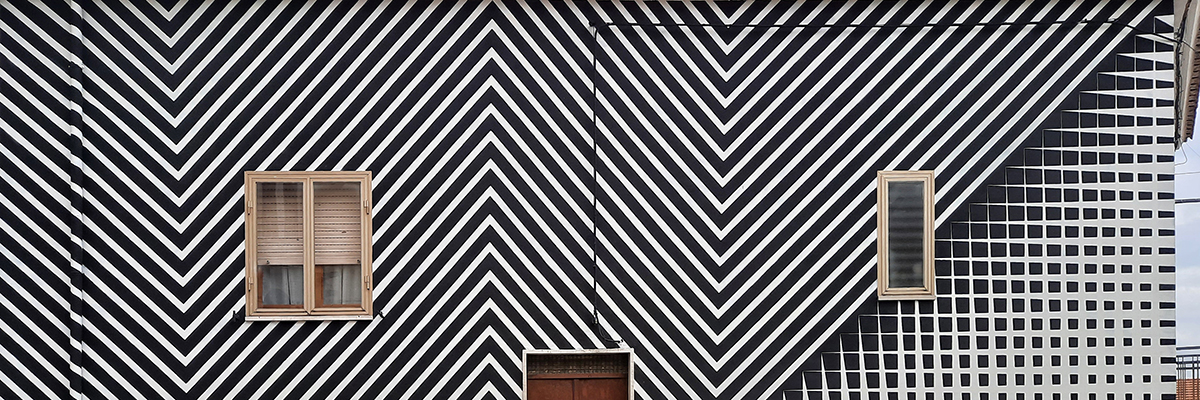
It’s impossible to imagine the contemporary built environment without considering the impact of street art and graffiti has had on not only city dwellers but our city’s designers and architects. While previous generations may have dismissed incorporating painting techniques beyond traditional frescoes or murals, the new generation considers it their birthright to bring modern art movement influences, including Optical Art, Kinetic Art, and straight-up tape art often used on the street.
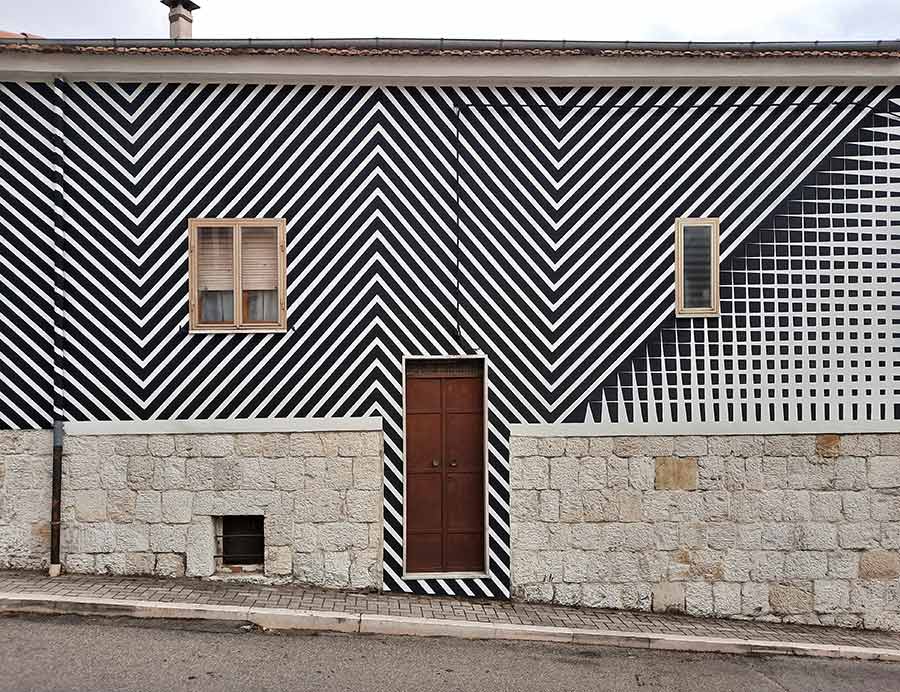
Motorefisico/Lorenzo Pagliara and Gianmaria Zonfrillo. “The Slash”. Premio Antonio Giordano. Santa Croce di Magliano, Italy. (photo courresy of Premio Antonio Giordano)
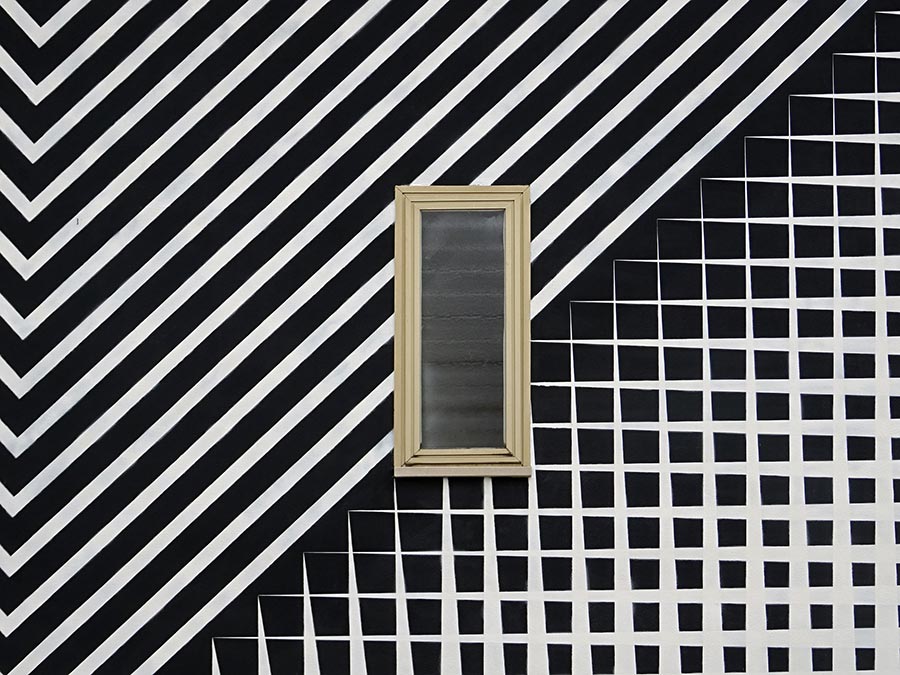
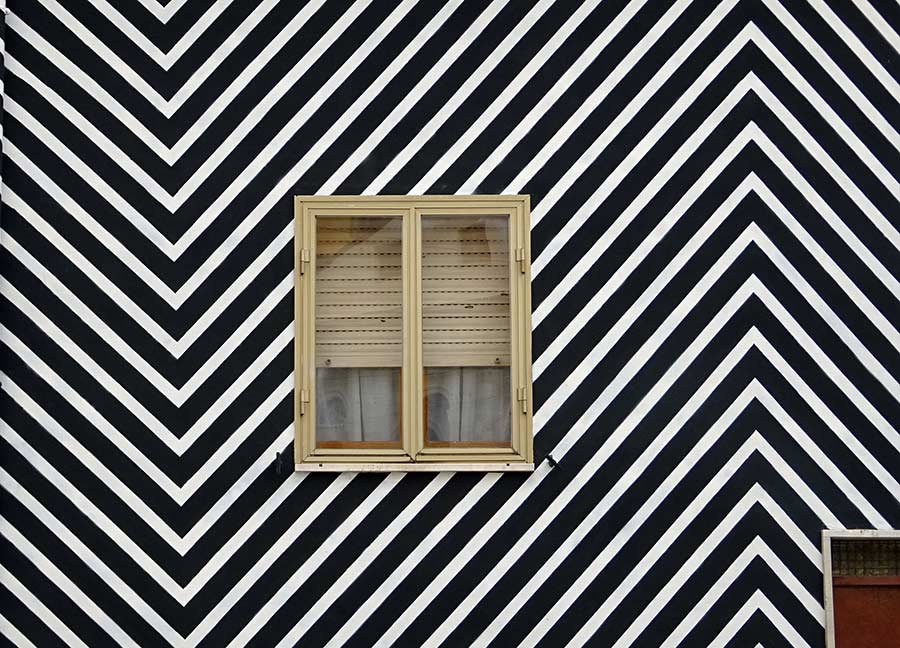
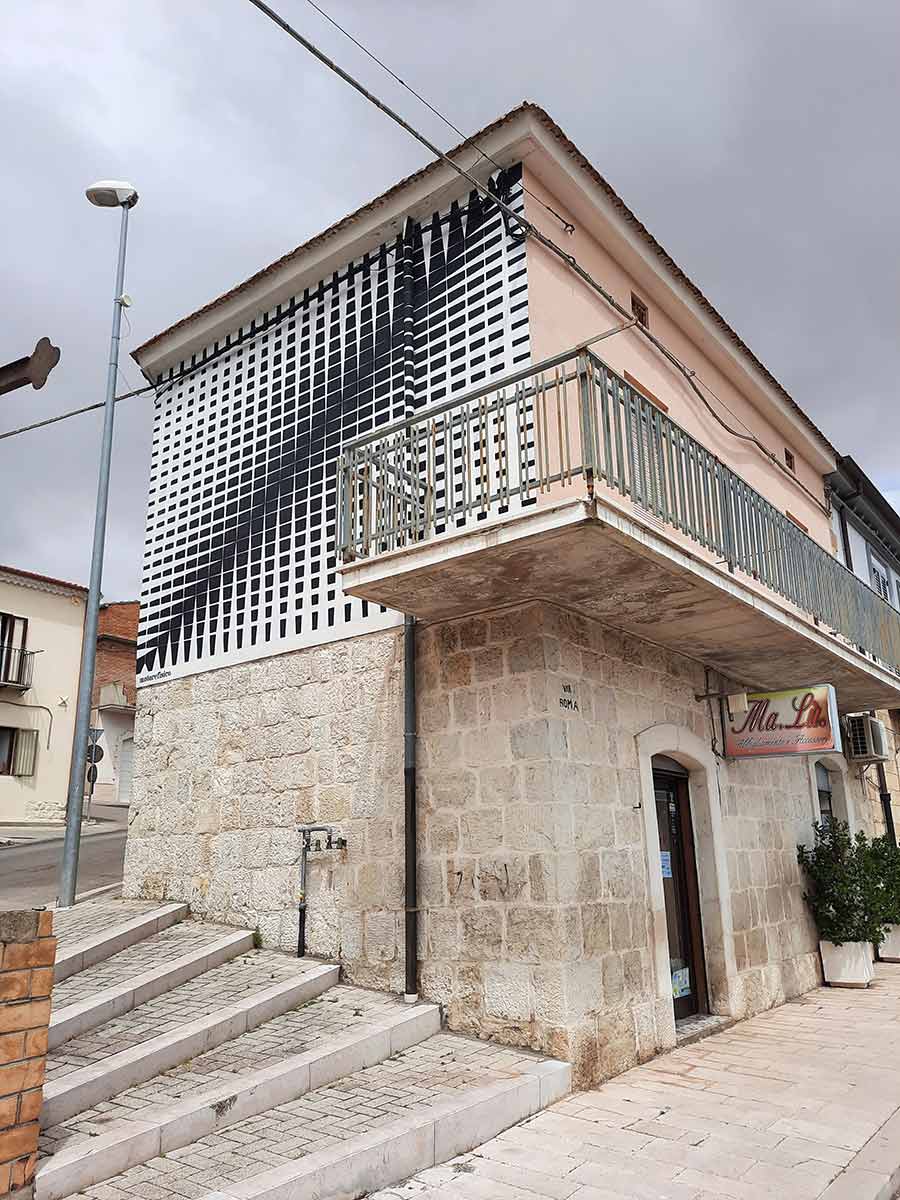
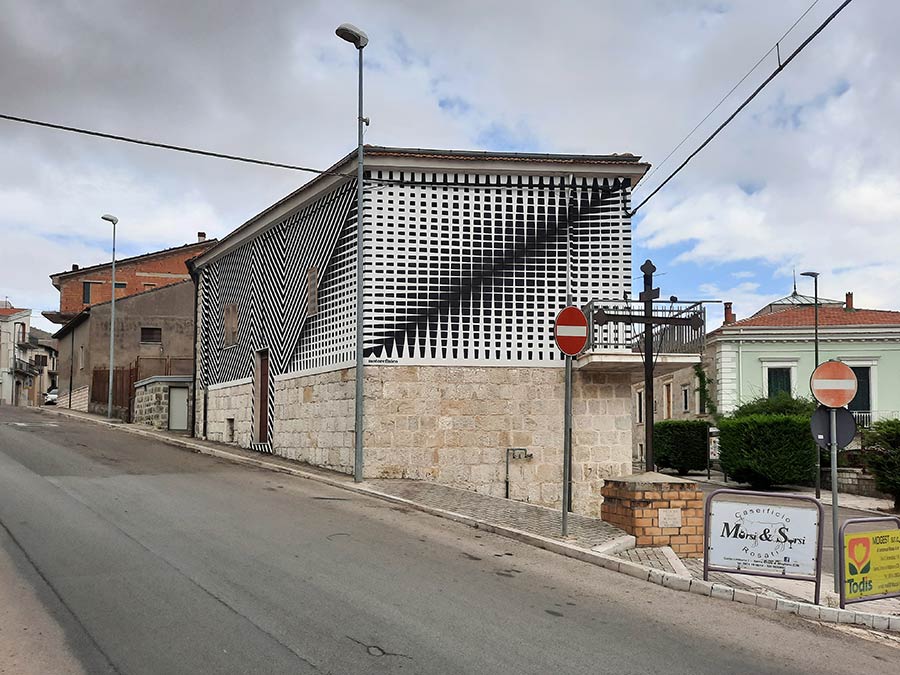
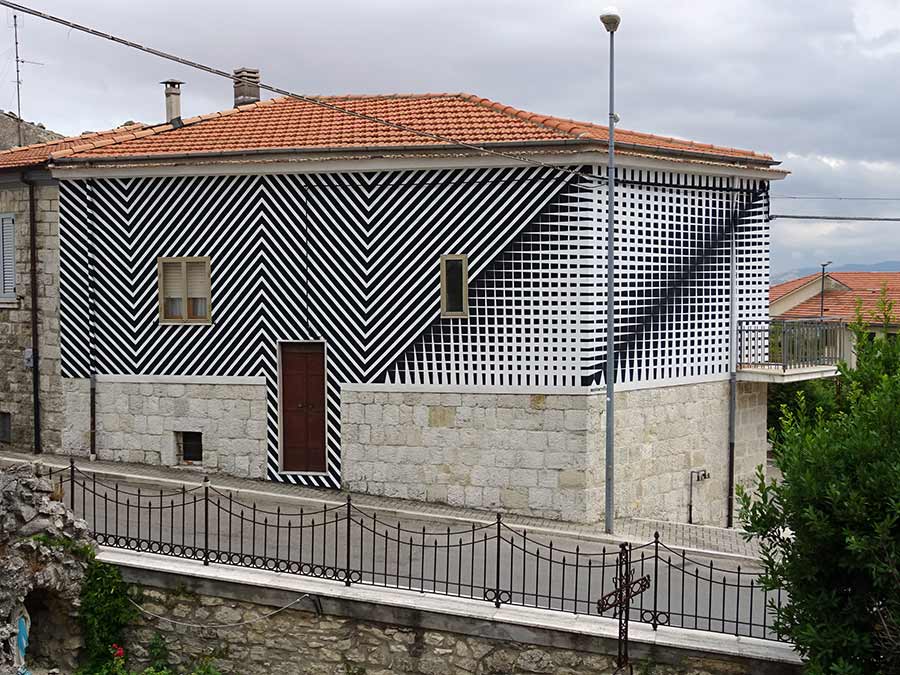
Rome-based architect/designers Lorenzo Pagliara and Gianmaria Zonfrillo consider themselves a street art duo as well – creating under the moniker Motorefisico. Working on city walls for them is simply an extension of their interior/exterior design interests along with video art and installation art as well. In their recent façade-painting project in Santa Croce di Magliano, Italy, Motoresfisico says they employed stencil techniques sometimes used by street artists to create exacting lines and illusionist effects to enhance the architectural feature of this building with two facades.
Motorefisico/Lorenzo Pagliara and Gianmaria Zonfrillo. “The Slash”. Premio Antonio Giordano. Santa Croce di Magliano, Italy. (photo courresy of Premio Antonio Giordano)
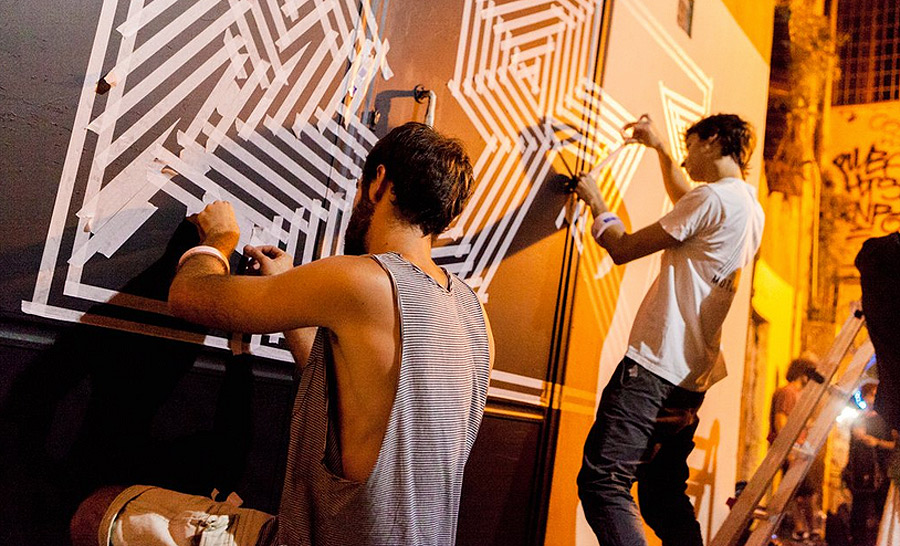
“We developed our geometric composition directly on the surface by creating a huge stencil with tape,” they say, “This allowed us to create shapes perfectly adapted.” Monochromatic and modernist, the composition pops with a kinetic three-dimensional effect. Suddenly a white box boasts a pedestrian-stopping display of intelligent design, something that is not always apparent on city streets and even less often has it been achieved with simple stencil technique.
Naming their architectural installation “The Slash”, the artistic duo completed it in conjunction with the 8th edition of the Antonio Giordano urban art award (Premio Antonio Giordano).
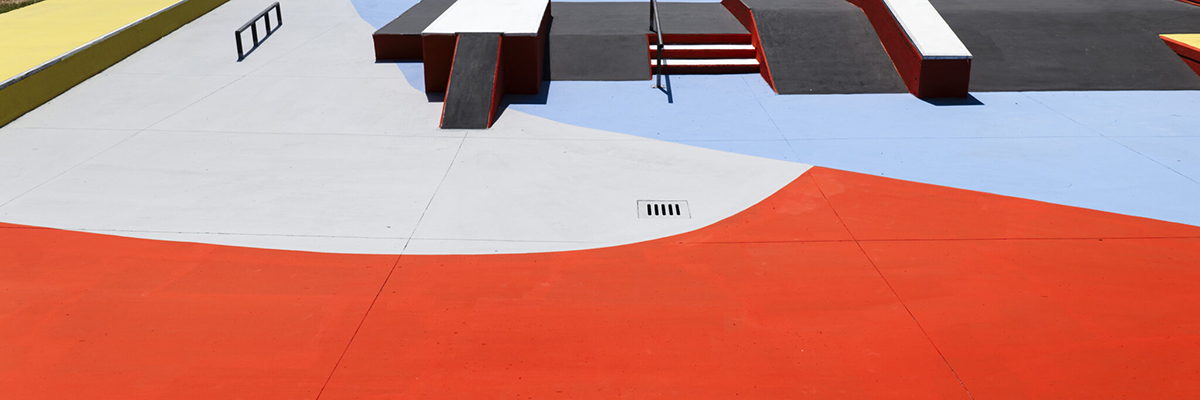
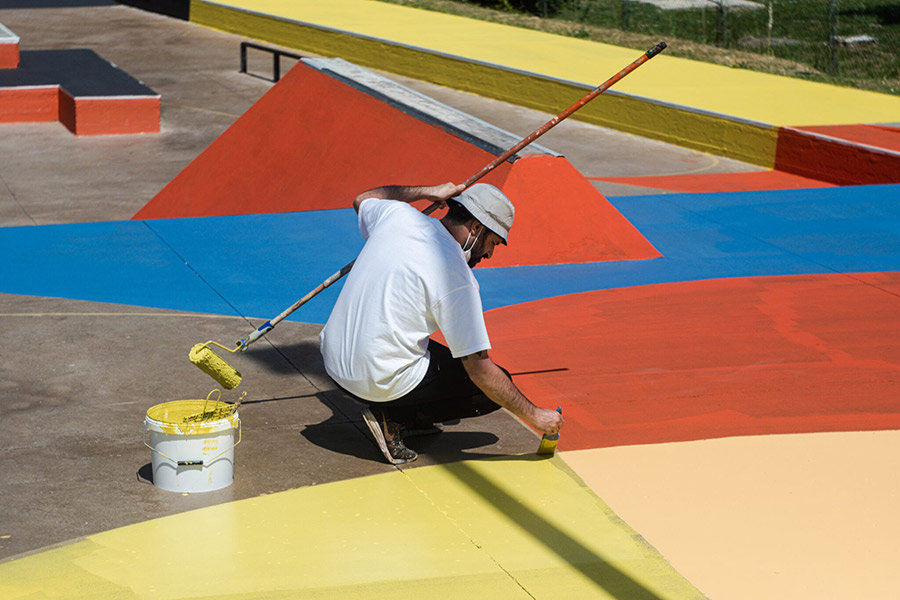
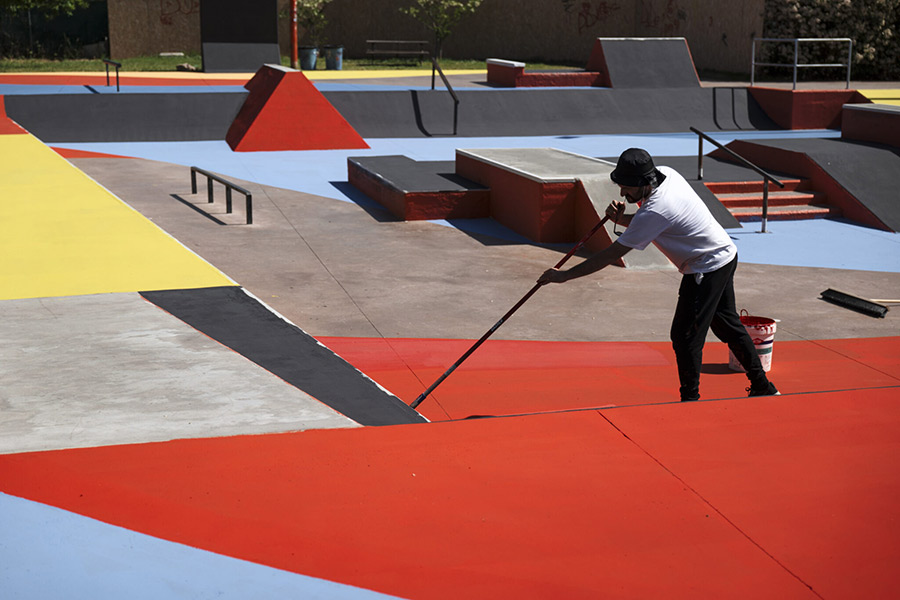
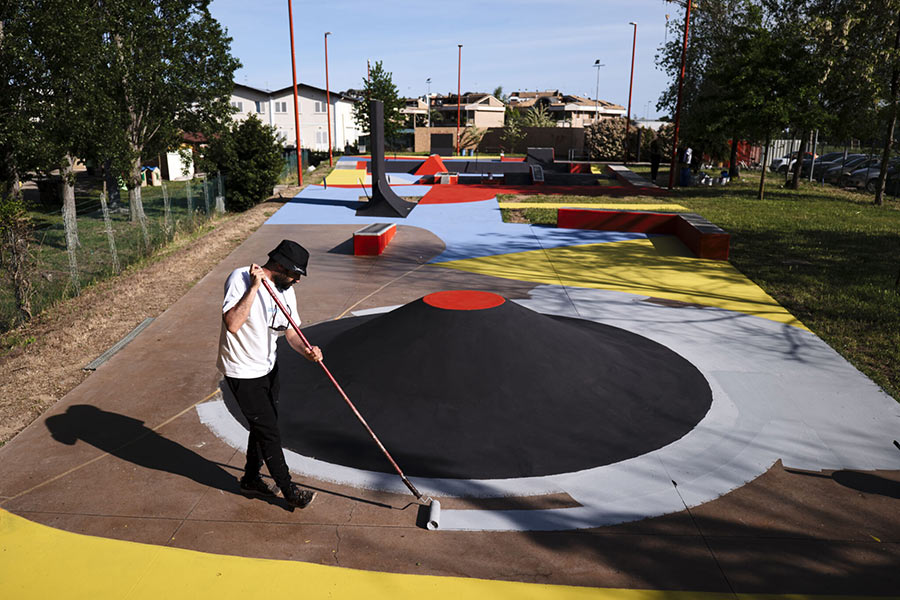
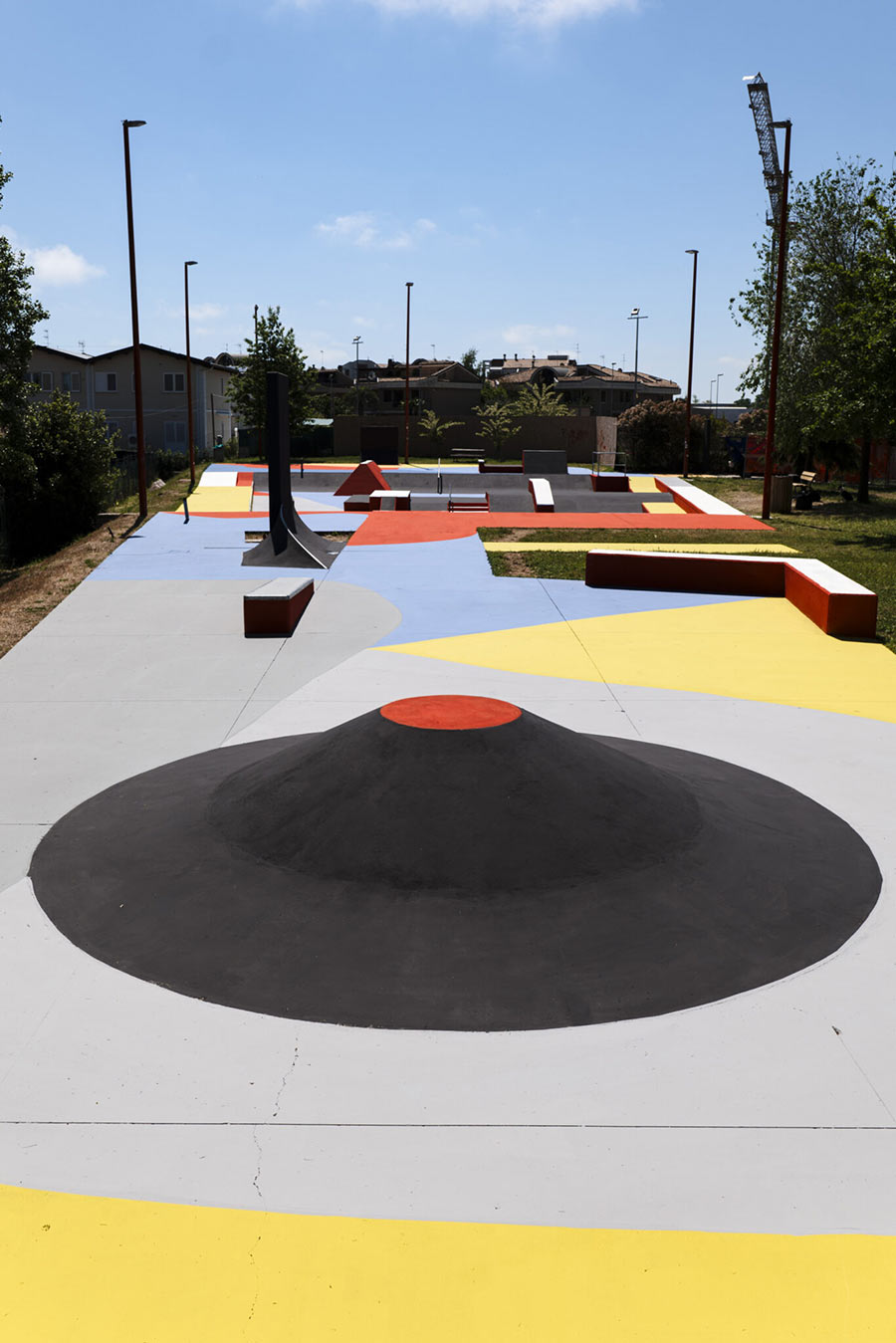
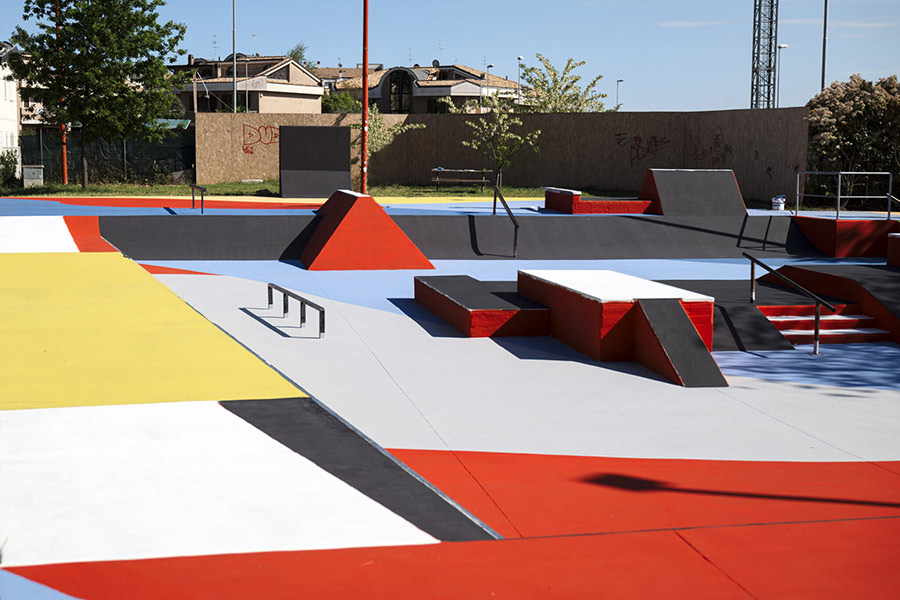
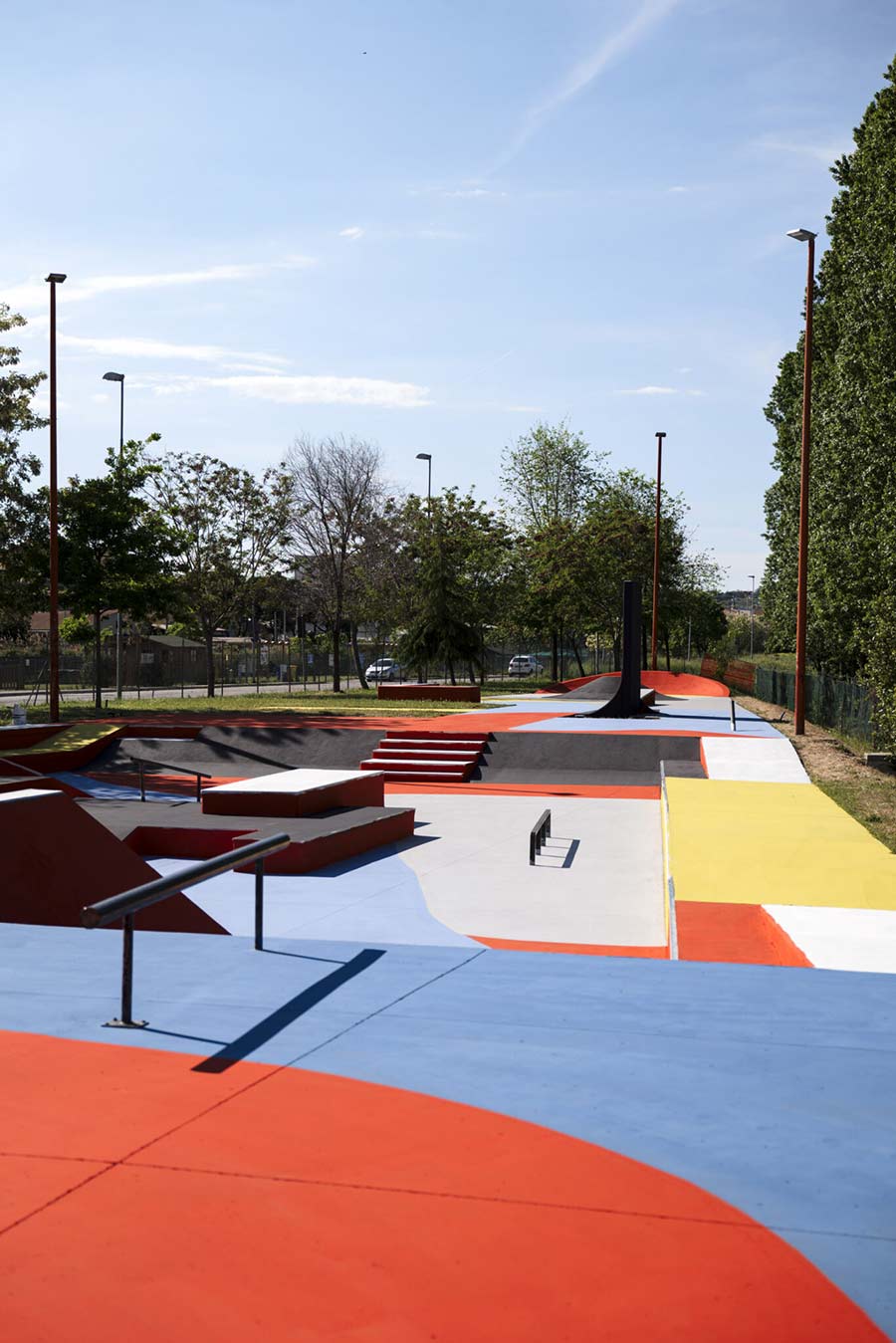
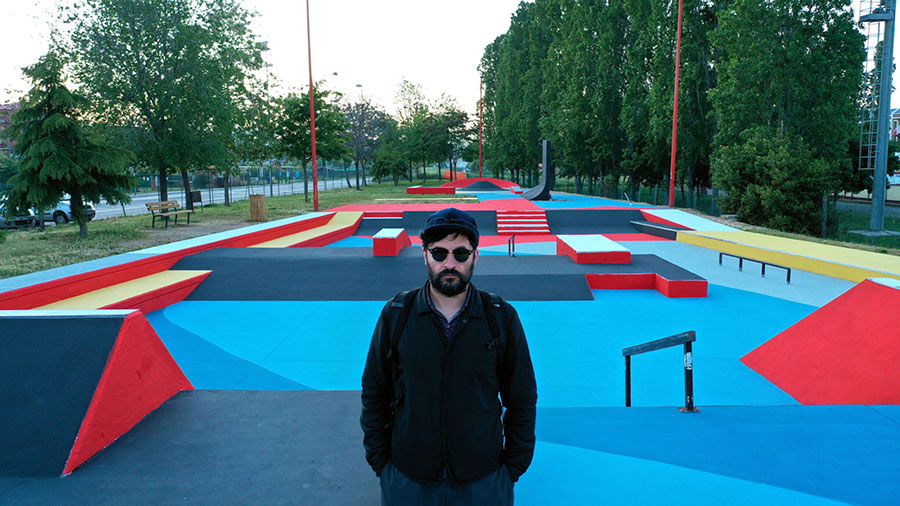
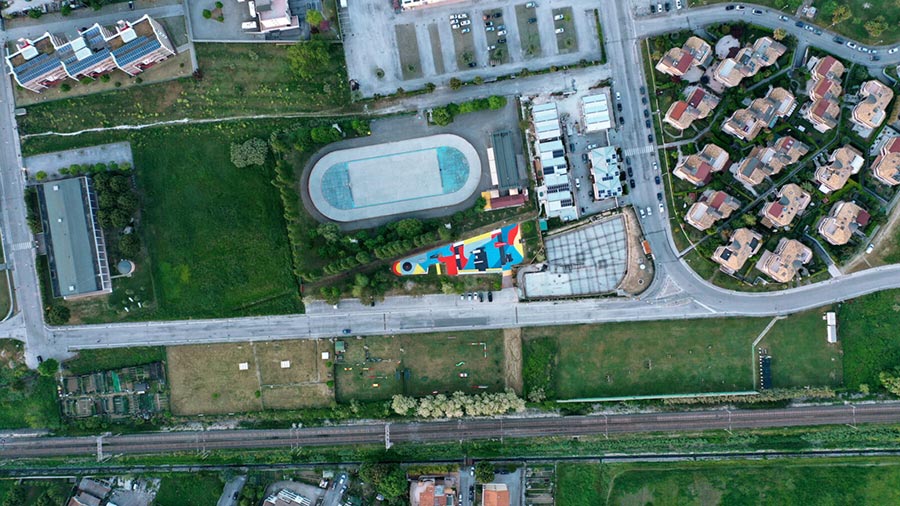
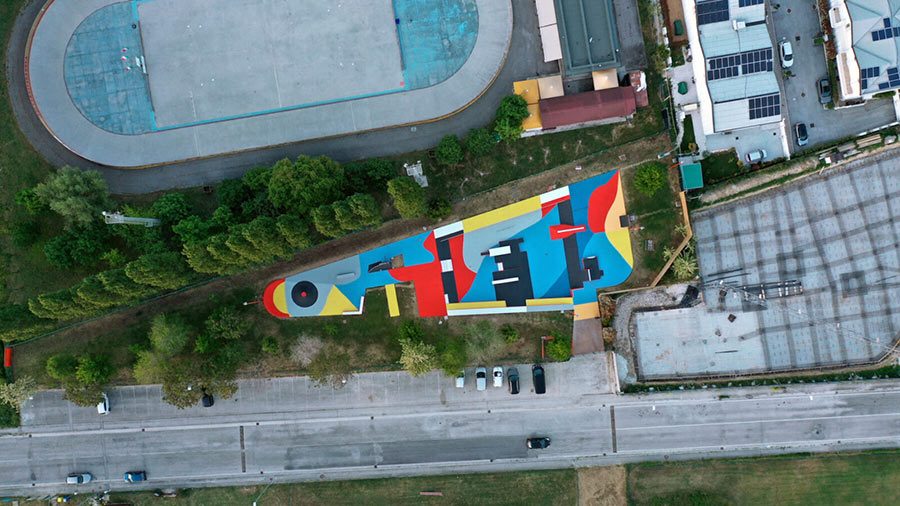
Giulio Vesprini is expanding his niche from flat planes of basketball to take on the multi-surface skate park here in Civitanova Marche, Italy. The opportunities for expression in such a dynamic space are rather endless and he says for him it is “a meeting point between culture, sport and nature.” With a big skating community here in this city on the Adriatic sea, you can imagine that Vesprini is headed toward skatepark design stardom. For him, it is just another opportunity to put his work in public space, and then watch people interact with it.
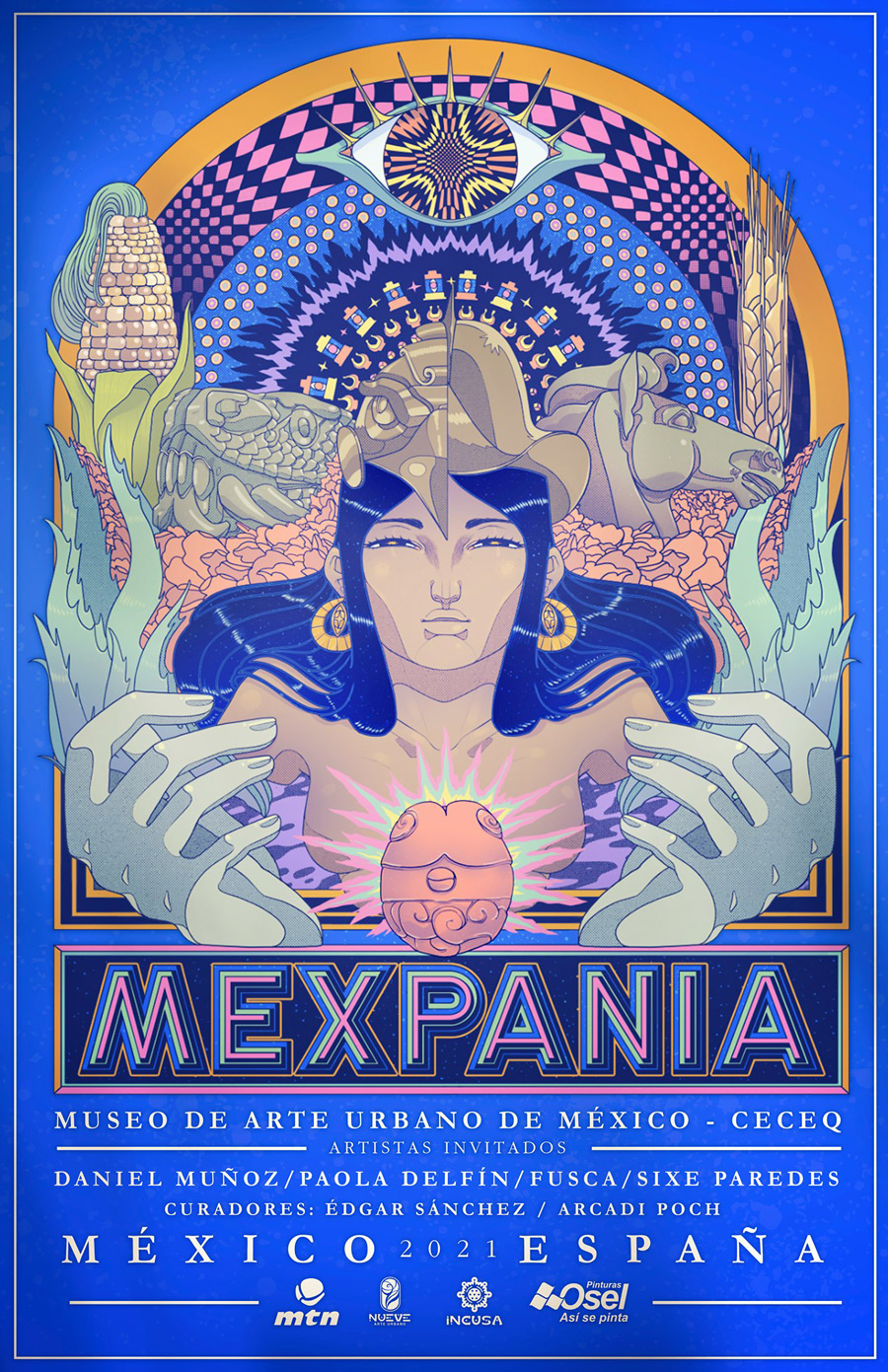
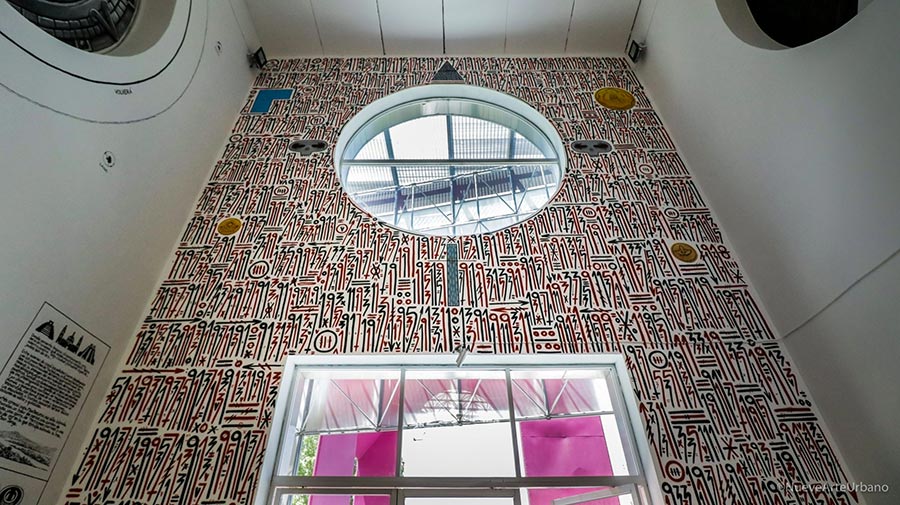
Édgar Sánchez and Arcadi Poch may not simply be curators of the new initiative called Mexpania that merges the cultures of Mexico and Spain. They are social scientists, anthropologists, historians, and some may say, alchemists. With the inaugural installations of this auspicious project primarily created inside the entrance and with only 4 national/international artists, you may be curious how these foundational works will influence future curatorial choices for this ever-growing museum dedicated to urban art, or arte urbano.
The Museo de Arte Urbano de México (MARUM) has been steadily and organically evolving these last ten years into a bonified attraction in the center of Querétaro thanks to the existing remarkable architecture and the driving force of the visionary Sánchez. Now with a partnership focused on the 500-year history of the Spanish migration to ancient Mexico, the opportunities to visually capture and illustrate the modern identity of a common culture must be daunting, but they have begun.
“We are the fruit of migration and miscegenation, of love and conflict that led to the mixing of our blood,” say the authors of Mexpania’s manifesto. “From that union was born an uncountable multitude of identities, ways of being, thinking, and believing.”
Daniel Muñoz
As an inaugural set of events and art-making, Mexpania presents what can only be considered an initial attempt to draw upon those themes and present an opening salvo. A calculated project to establish this entrance to the formalized museum, one that proposes to document and celebrate the movement of monumental art through streets and cities. The selections are a deliberate mixture of styles, histories, and identities that confront our ability to parse differences and similarities and emerge with one unique voice.
“The feeling is like entering a contemporary temple, which transports you to a sacred place dedicated to the mestizo and migrant nature of humanity,” say the two curators of the freshly combined works on the MARUM campus, as they call it. “It has not been an easy task to generate what we understand as a single piece by making such different artistic languages coexist and getting them to dialogue in harmony.” Just reviewing the 33 muralists on the exterior spaces of the campus gives one an opportunity to consider the richness of this locally grown, now globally expanded, multi-voiced culture.
Fusca
BSA is proud to be the first to present the new works in their new home and to welcome readers to regard these fresh murals in context inside an institution dedicated to urban art now rooting into the soil of one of the original forbears of the modern mural movement a century ago, Mexico. In a city visited on the streets by modern street art internationalists like ROA, Stinkfish, Jaz, Elian, Sens, Sego, Alexis Dias, Entes, Enter, Ever Siempre, and others – this too is the land that gave birth to the great muralists Diego Rivera, José Clemente Orozco, David Alfaro Siqueiros, Rufino Tamayo, Aurora Reyes Flores, Elena Huerta Muzquiz, and Rina Lazo.
Sixeart
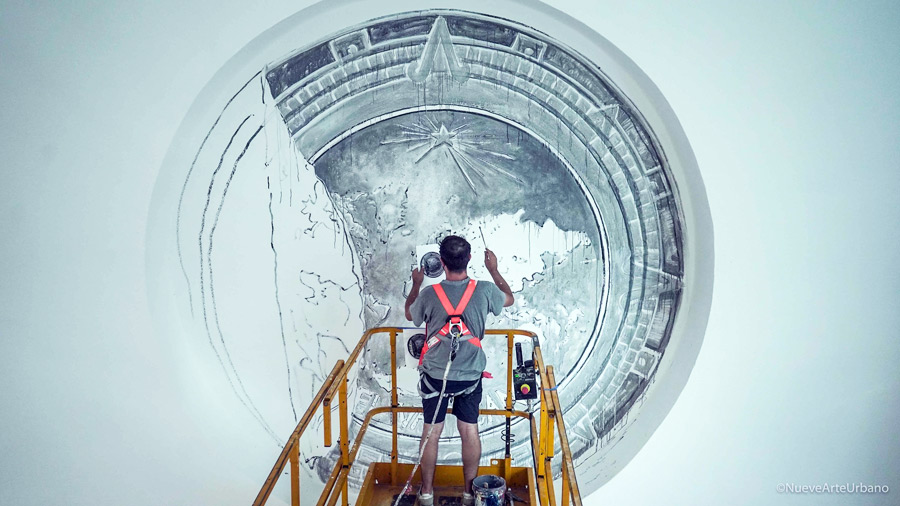
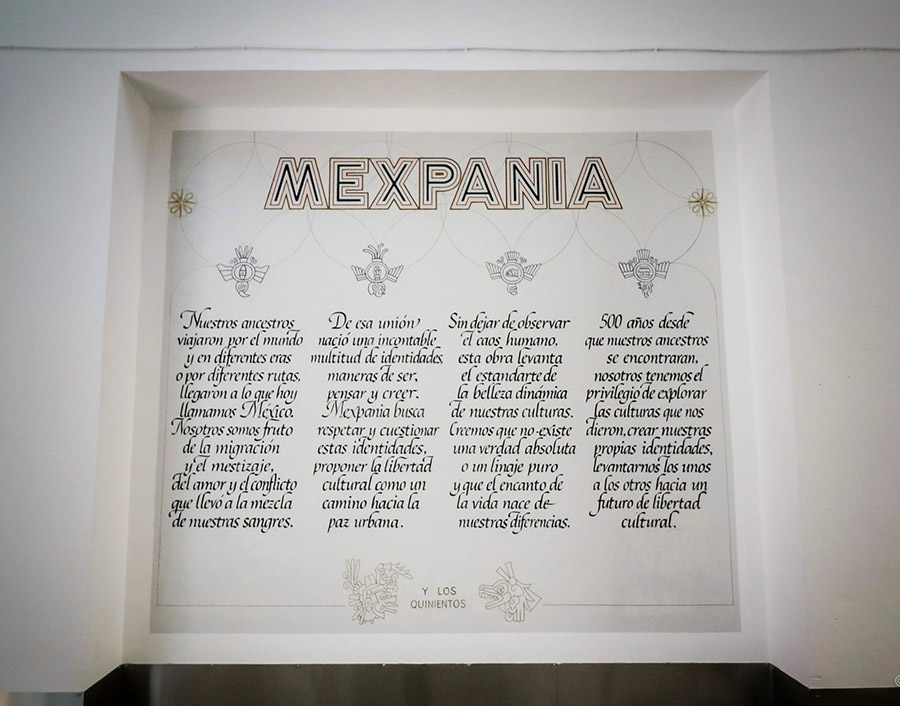
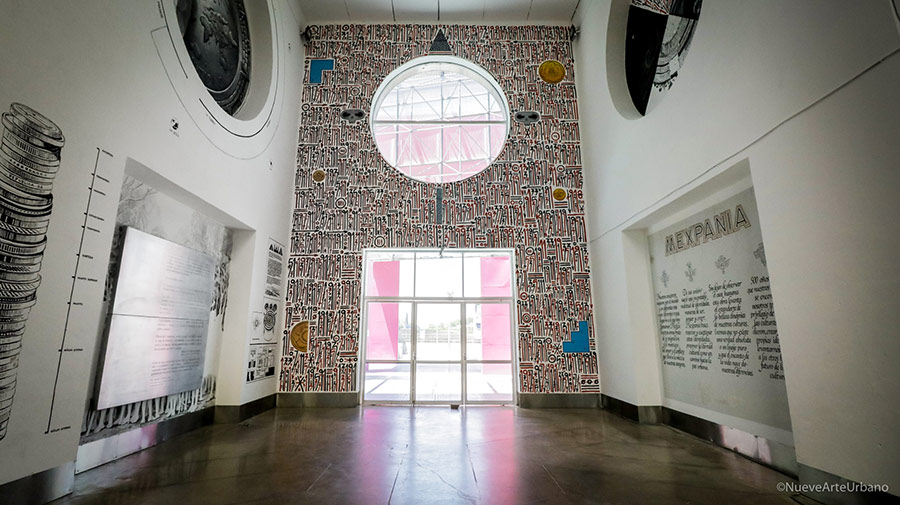
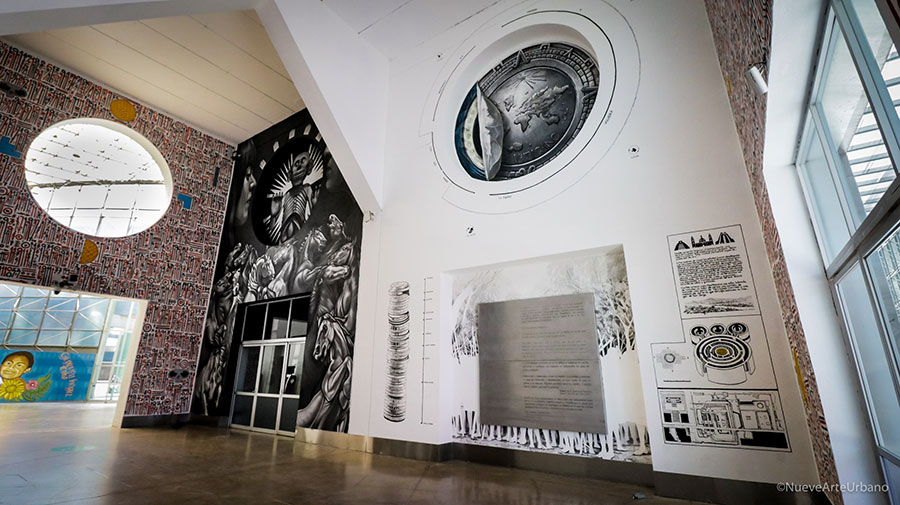
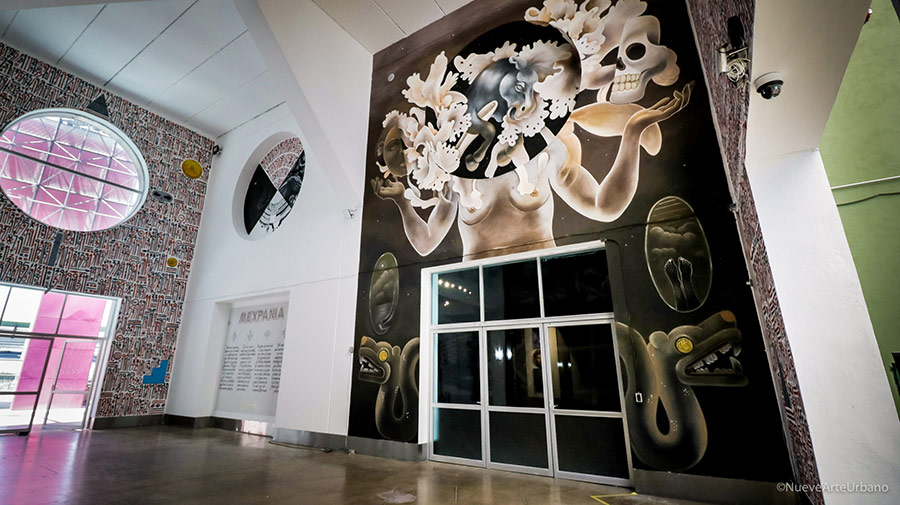
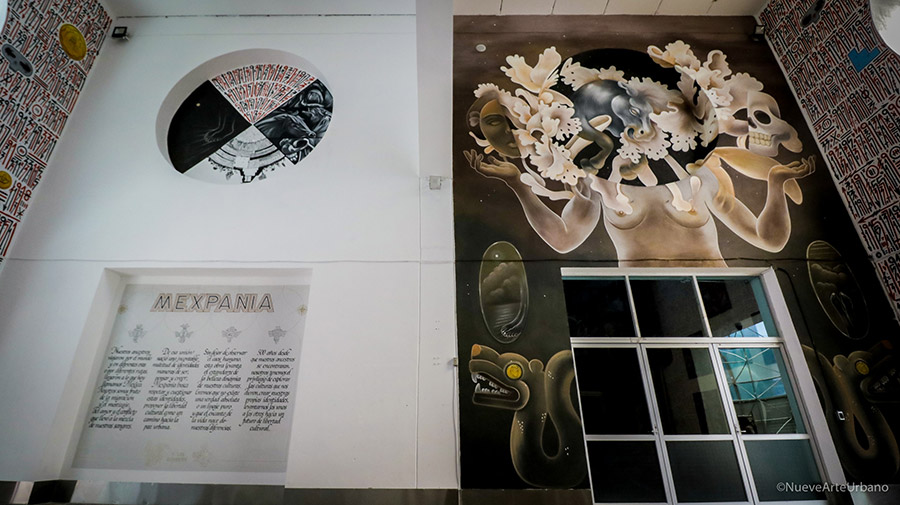
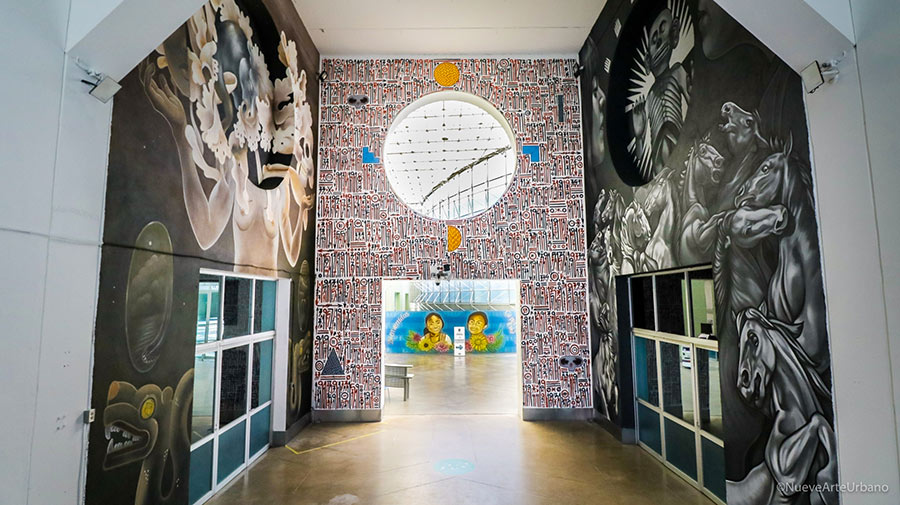
“Inside the venue, directly to the left, we see the introductory text to the project, calligraphed by the hand of the Mexican artist Jassiel Rivera and written by the two curators. Above the text, in the large circular niche, there is a joint work by four artists. It is a large X that represents Mexpania and defines the four elements of the whole being.”
“Our ancestors traveled the world and in different eras or by different routes, they arrived in what we now call Mexico. … Mexpania seeks to respect and question these identities, to propose cultural freedom as a path to urban peace. While observing human chaos, this work raises the banner of the dynamic beauty of our cultures. We believe that there is no absolute truth or a pure lineage and that the charm of life is born of our differences. 500 years after the first Spanish migration to ancient Mexico, we are privileged to explore the cultures that bequeathed us, create our own identities, and lift each other up toward a future of cultural freedom.” – Édgar Sánchez and Arcadi Poch. Curators.
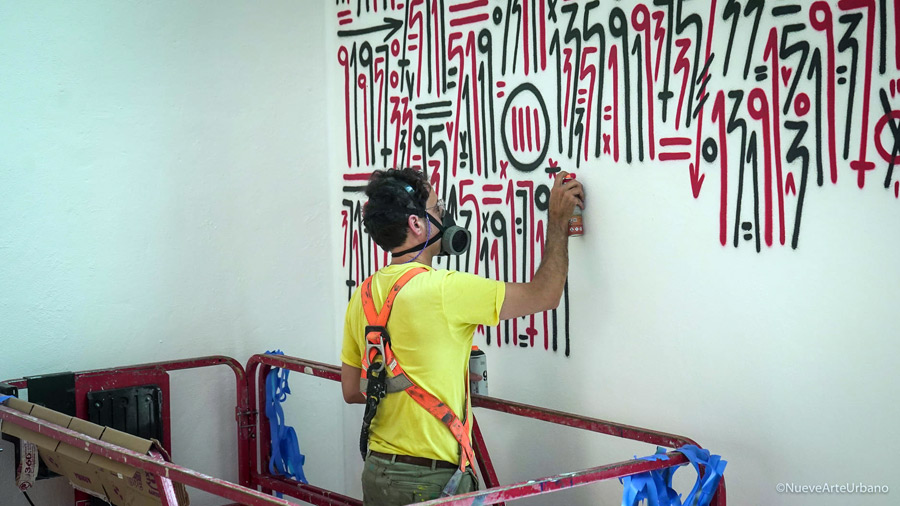
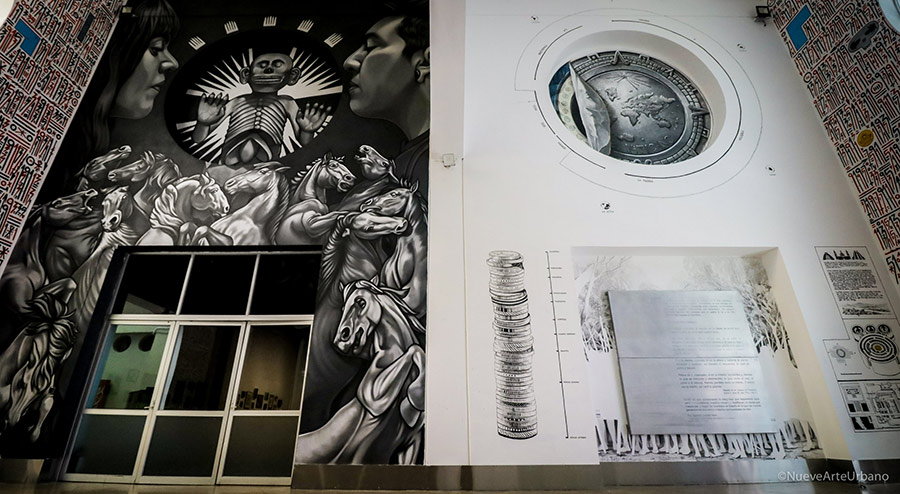
“Sixe, an artist of Catalan origin, occupies the two walls corresponding to the main entrances, the entrance, and the exit, with a numerical representation that occupies the entire surface. The enormous network in black and red is a symbolic and abstract representation of the data and events, loves and hates, pains, and hopes that emerged as a result of the great encounter between the multiple cultures of both continents. It is a contemporary codex, an abstract framework, in which the symbols of death are represented by skulls, the cross of the Catholic religion imposed by the Spanish, and other symbols that represent the balance of the cosmos, the new sun, and the eclipse of the civilization of ancient Mexico. We can also observe the gold coins that Daniel Muñoz incorporates in Sixe’s work, generating a dialogue between these two works.”
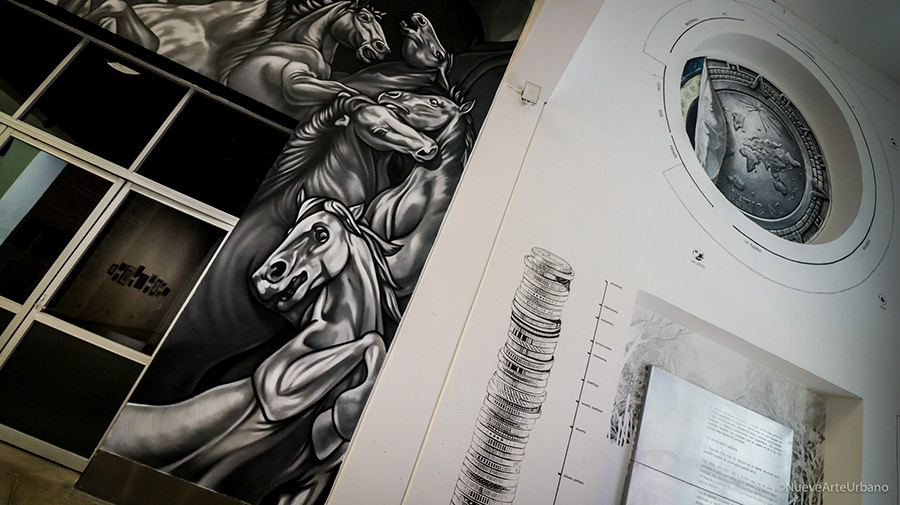
“On the front side and on the right we find the wall by Daniel Muñoz, a conceptual work with a great load of social reflection and critical thinking. Daniel talks about the power of money around domination and how it is able to make our cultures invisible. The large coin that presides over his work seems to cover the American continent and around the great circle, there are representations of the globe seen from different perspectives, creating a cartography of money. Behind the plaque that commemorates the inauguration of this space, and that contains an extract from the Florentine Codex, we observe a group of invisible indigenous women. Using these and other symbols, Daniel creates a representation of money as a motivation towards domination, but reinterprets its value with the phrase he writes around the central coin of the mural: ‘The Earth Will Return to Those Who Work It With Their Hands.’ “
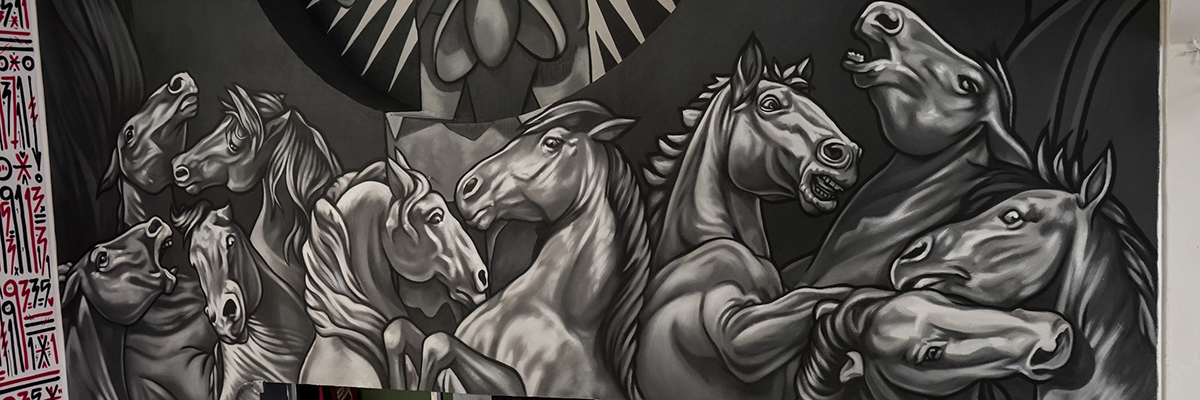
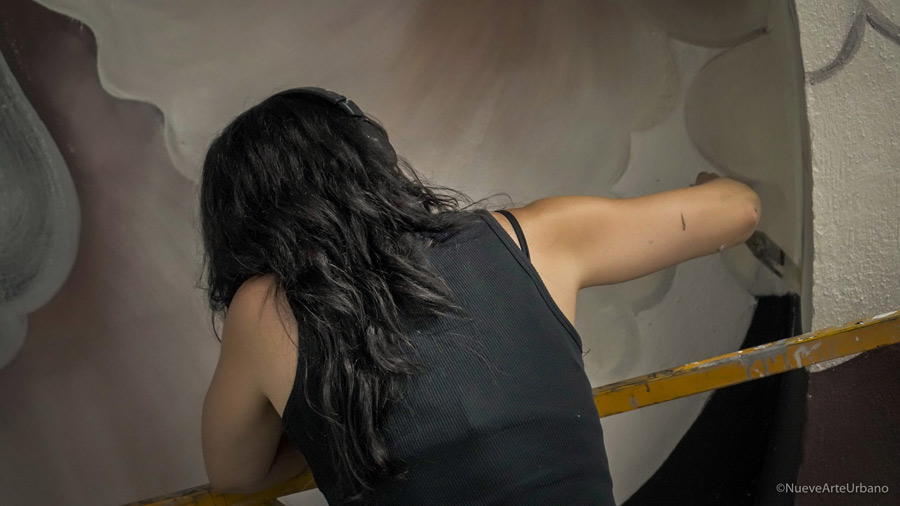
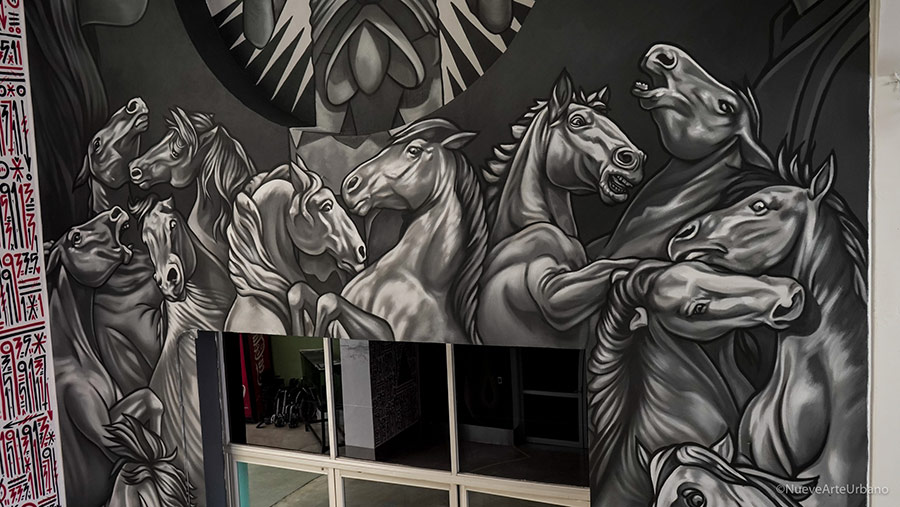
“Directly in front of the work of Fusca, appears, in black and white, the work of Paola Delfin. Mictlantecuhtli, the lord of the underworld, presides, radiant over a chaotic swarm of horses, and from them emerge, on the flanks, two mestizo identities. This deity representing death reigned over the underworld through which the dead traveled. It should be mentioned that despite the difficulties that lie in the Mictlan, this was not hell but a challenge that had to be faced after passing away if one wanted to reach the palace that is found after overcoming the difficult journey. The symbols embodied in this piece seem to recognize the enormous pains and sorrows of the past as strengthening challenges, which can give us fortitude and inspire us to live with good conscience.”
On the back wall to the left, Fusca uses timeless symbols to express subtleties behind the way we think. In moonlight-like colors, we see a representation of Coatlicue, the archetypal maternal deity of ancient Mexico, who as the legend tells us, gives birth to Huitzilopochtli, the cultural leader of the Mexica, who we still see on the Mexican national shield, represented by an eagle. This figure, who could be interpreted as the mother of Mexico, is intervened in such a way that an equine head instead of a serpentine one emerges from her neck. In this way, the deity and the horse are united in a single, mestizo figure. The piece expresses the emotion of living the fusion between different identities. These understandings of who we are can weaken or strengthen us. How can we better understand the past that created us to empower and liberate us? To build our own way of describing ourselves, to strengthen life in our future and that of our descendants?
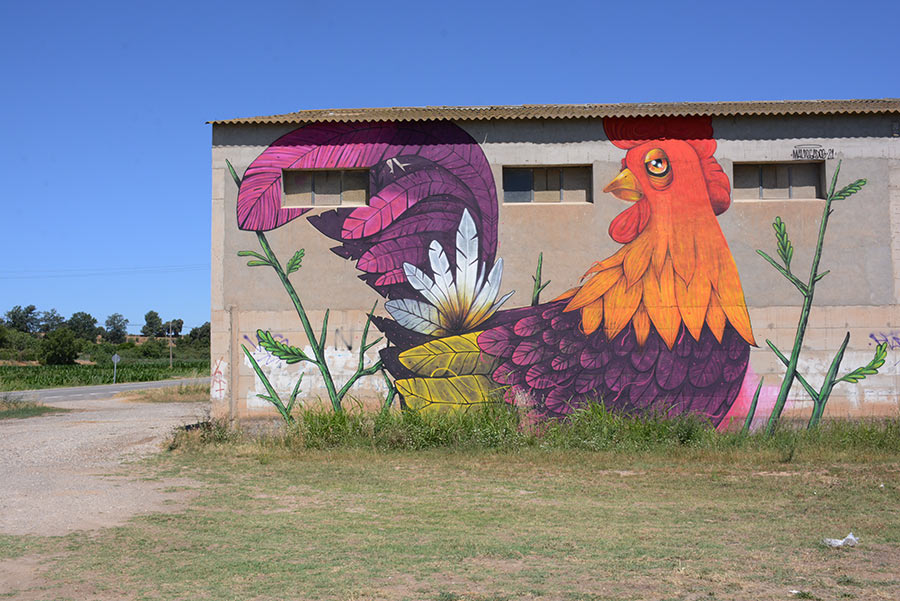
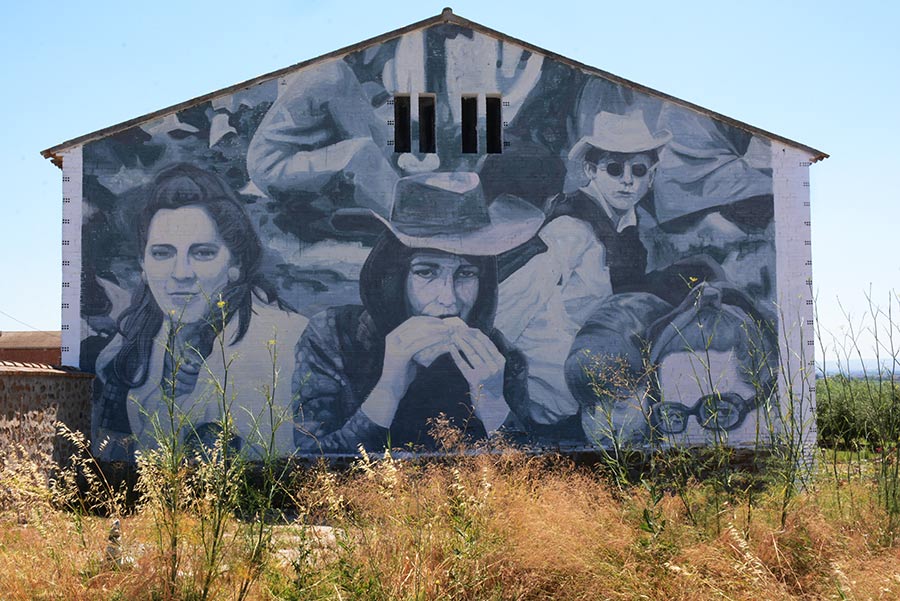
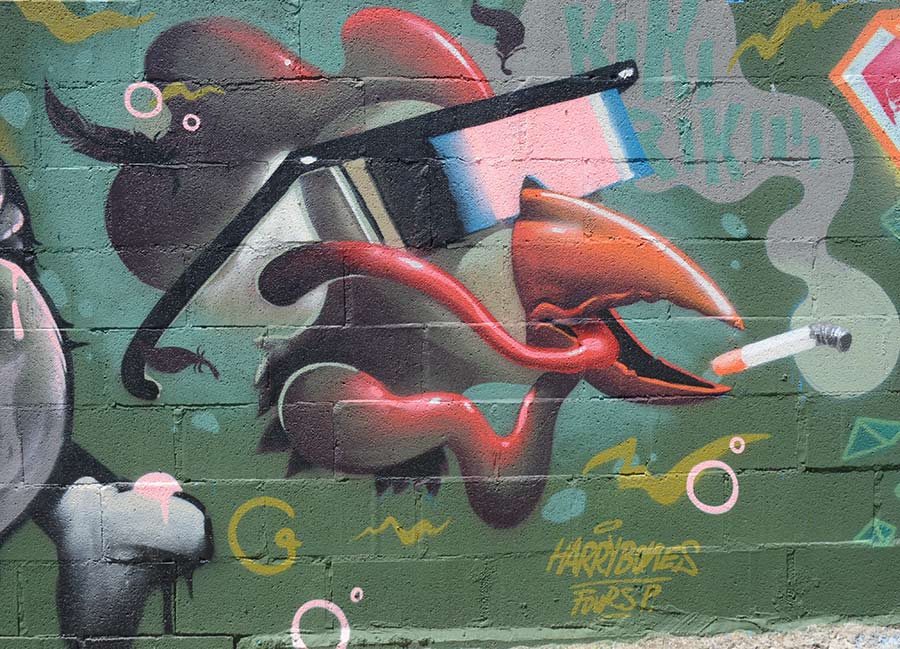
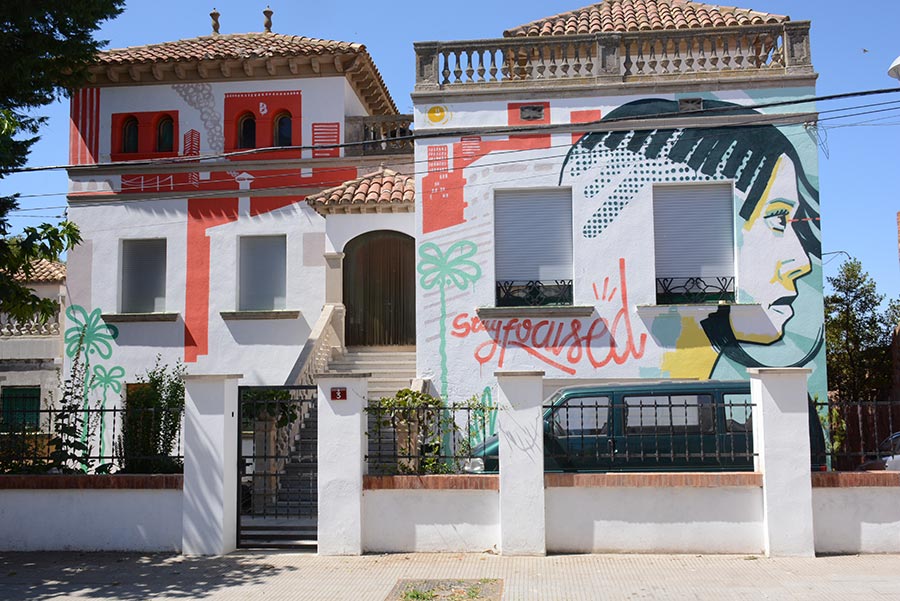
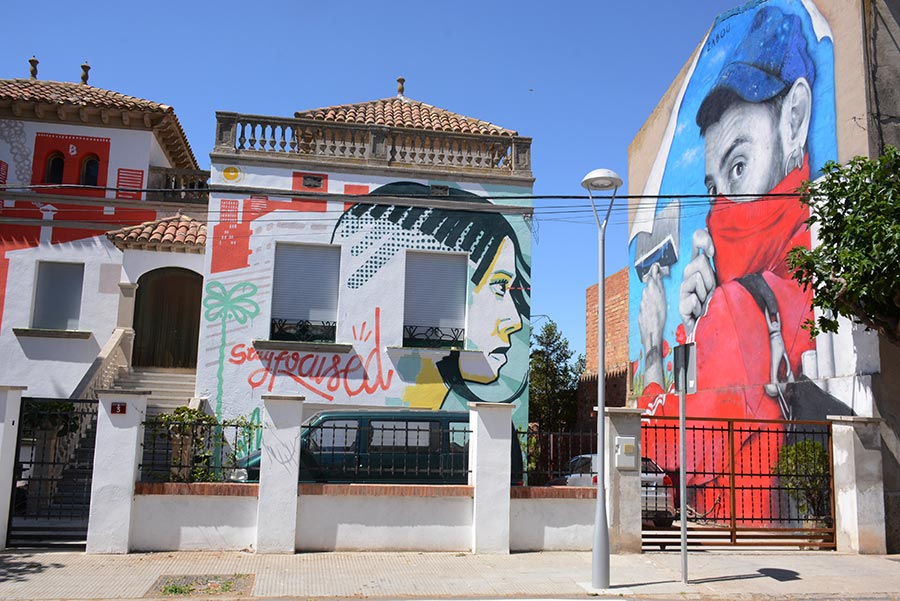
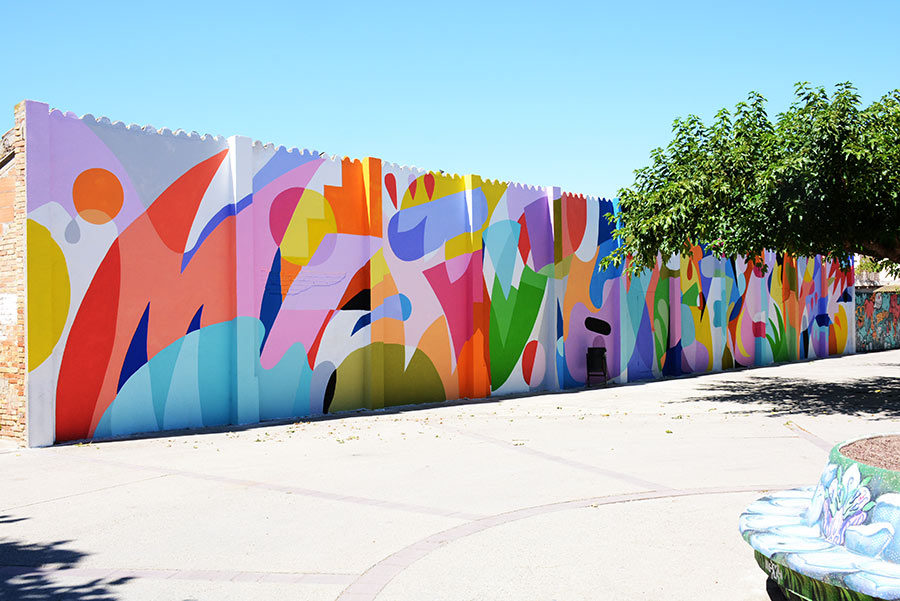
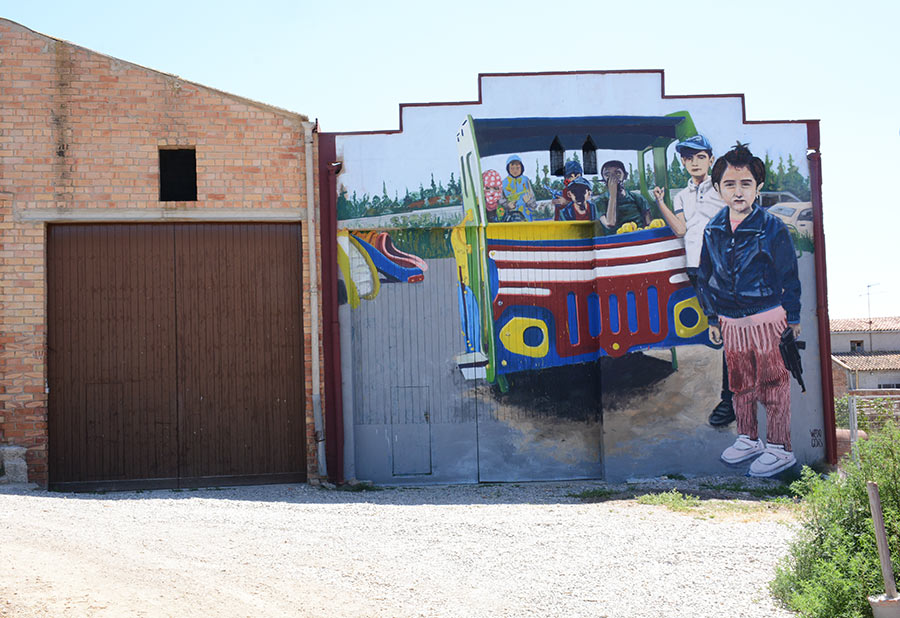
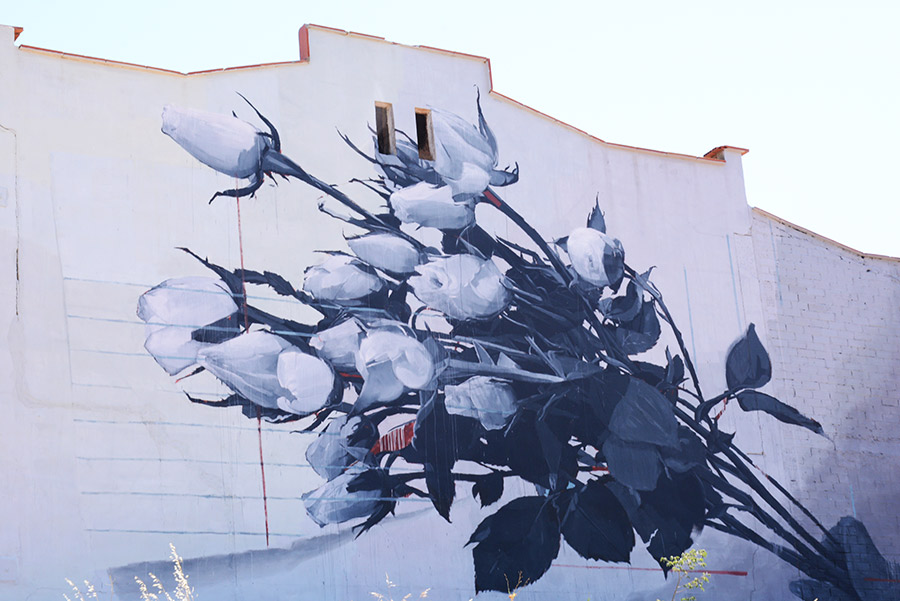
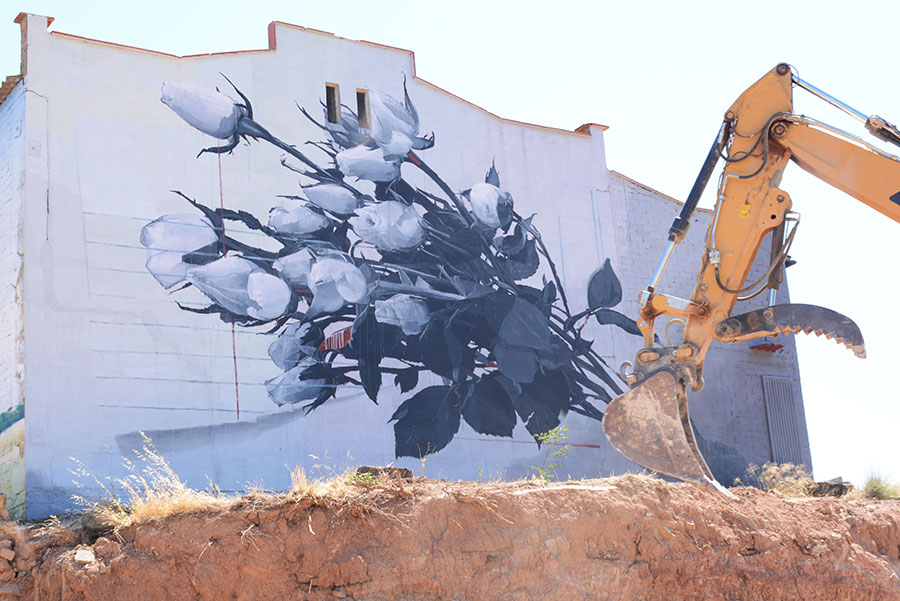
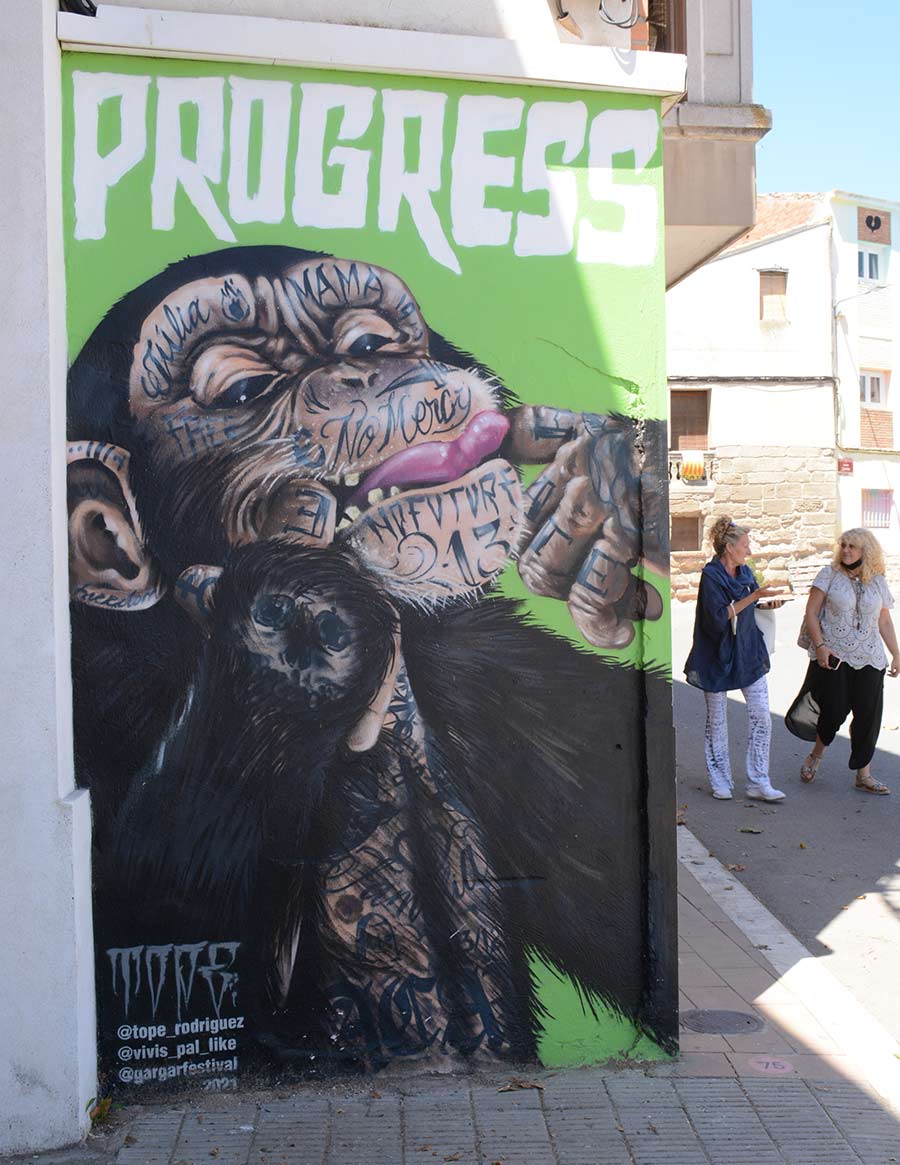
It’s been a struggle to mount art events in the last year and a half for many reasons. That includes the 6th edition of GarGar Murals and Rural Art Festival in Penelles, Spain.
Instead of grouping all the artists and events and fans together for one short period of high activity, the organizers this year decided “to progressively invite the artists in smaller numbers so they could paint more confidently and feel protected from the virus.”
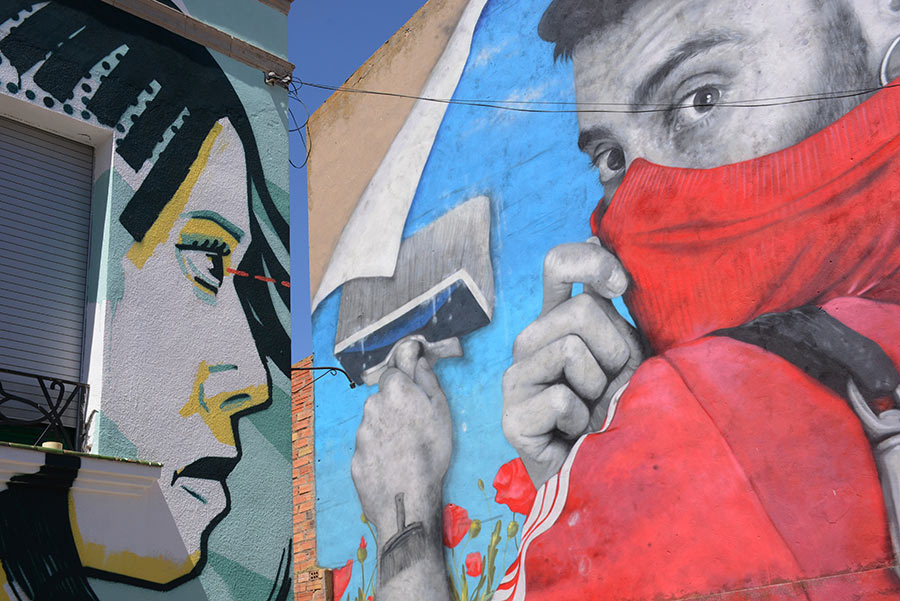
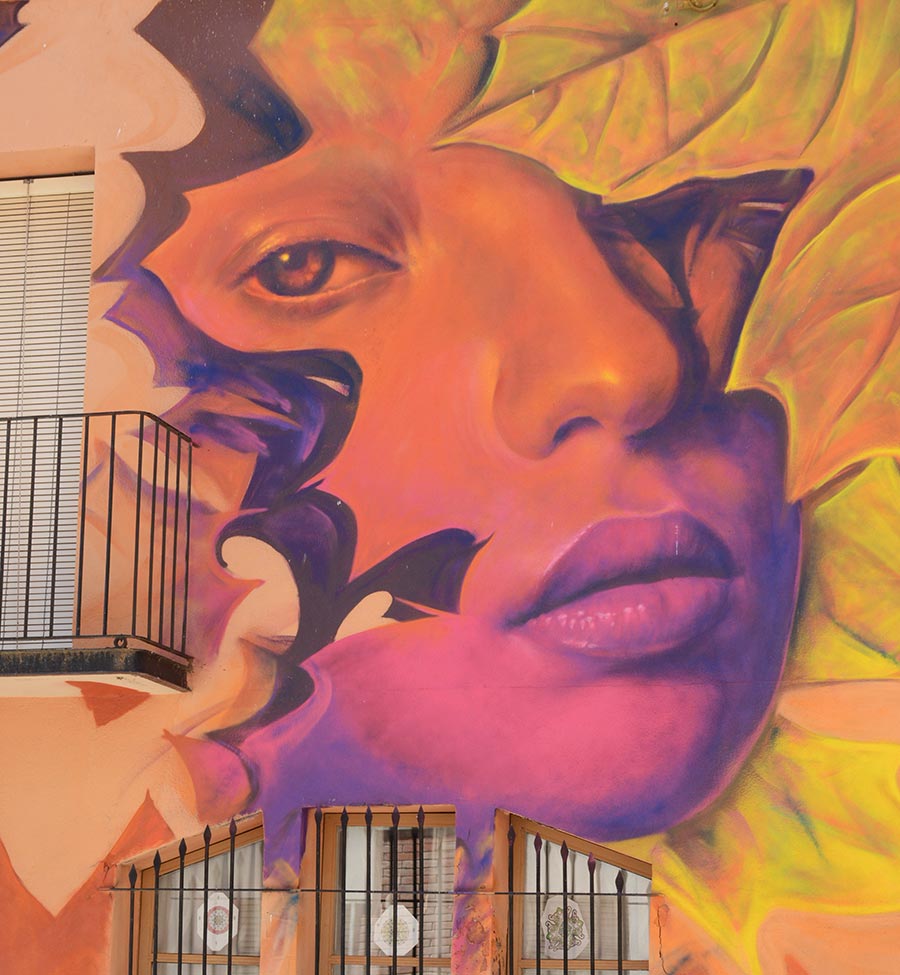
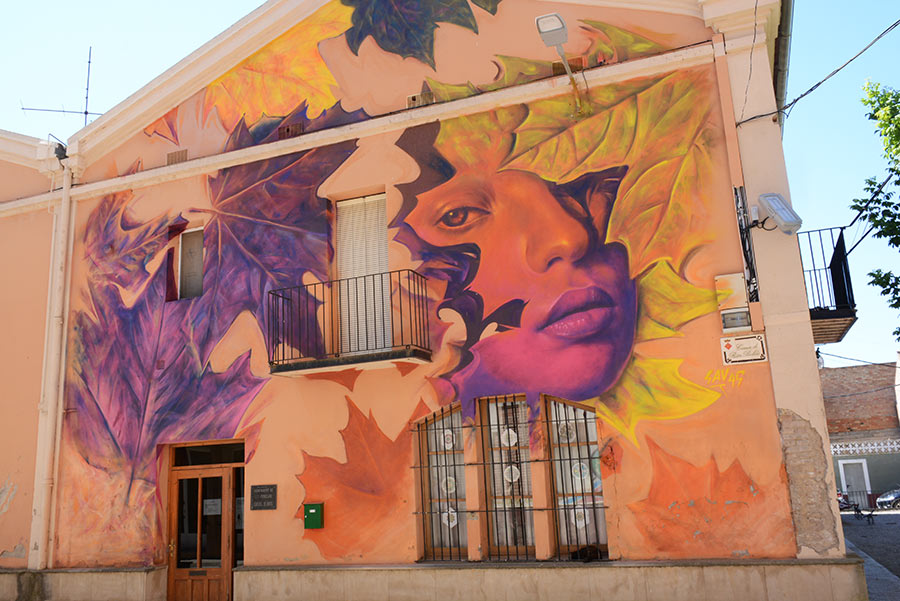
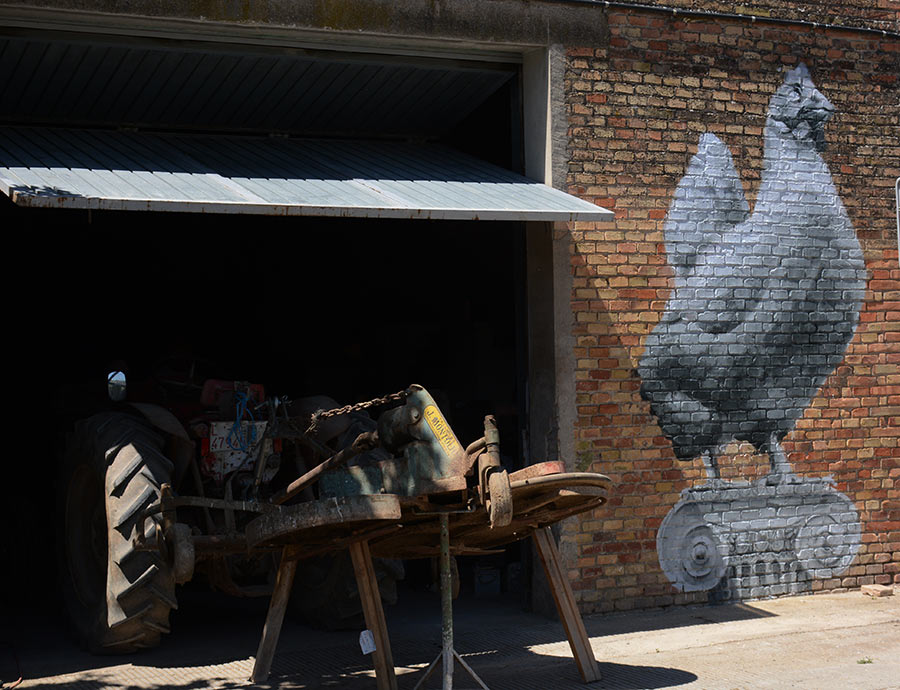
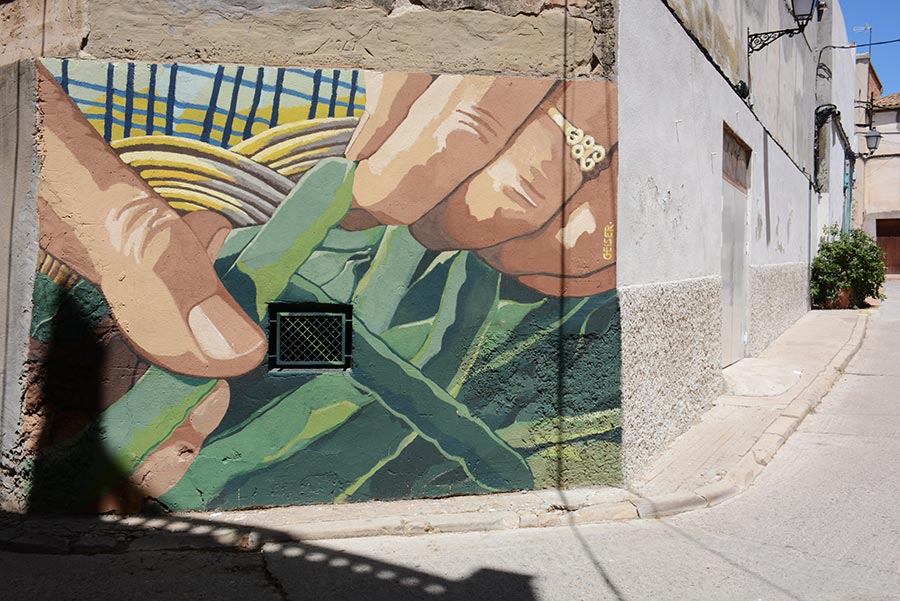
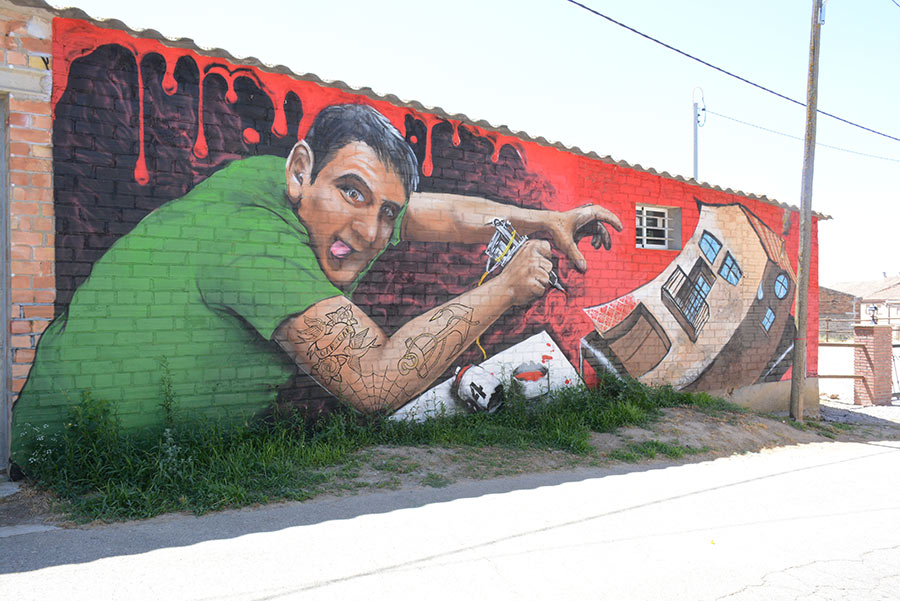
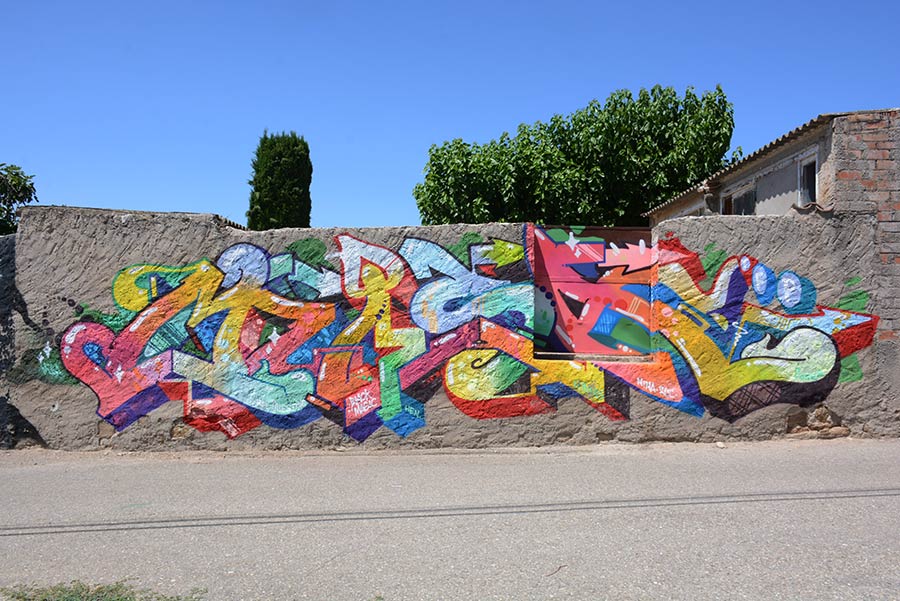
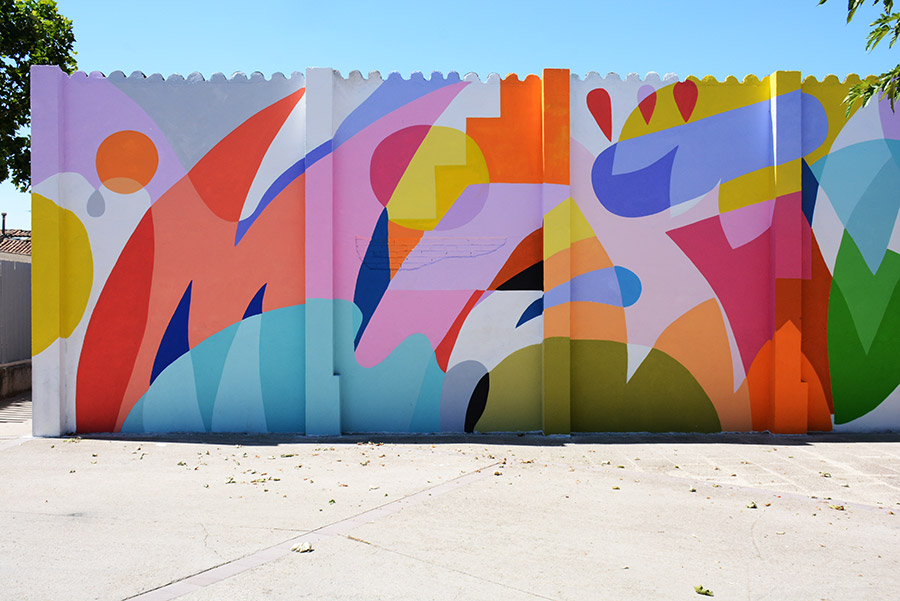
Now that all the 2021 murals have been painted, BSA collaborator Lluis Olive-Bulbena traveled an hour and a half from Barcelona to capture fresh paint! We thank him and we invite you to enjoy GarGar!
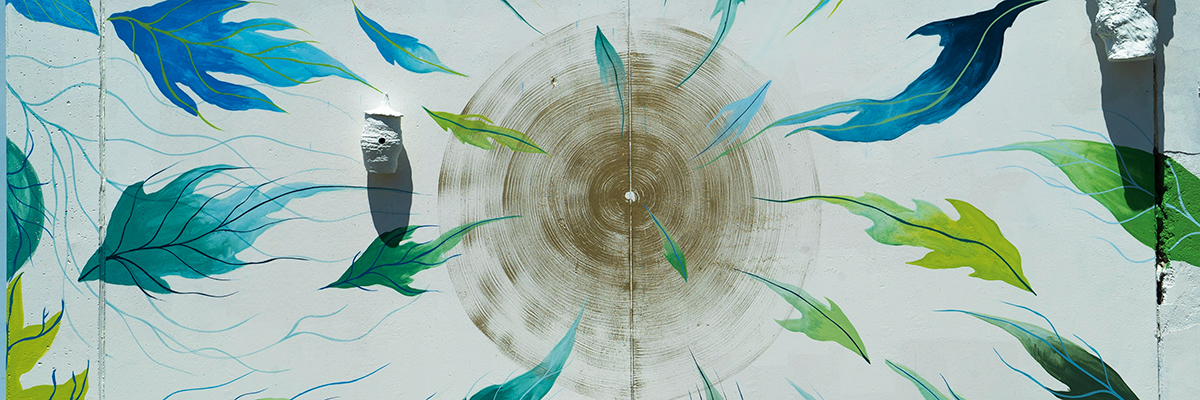
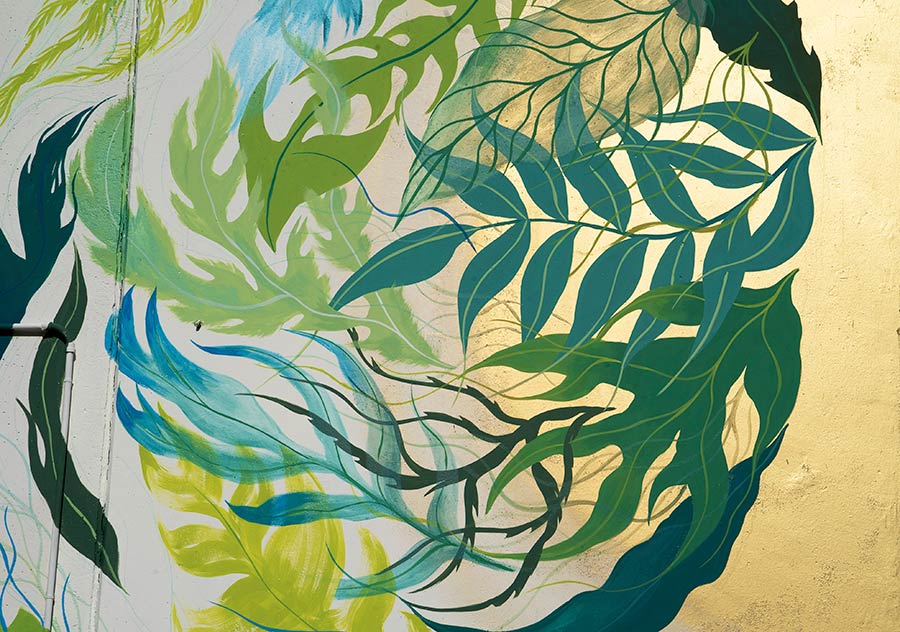
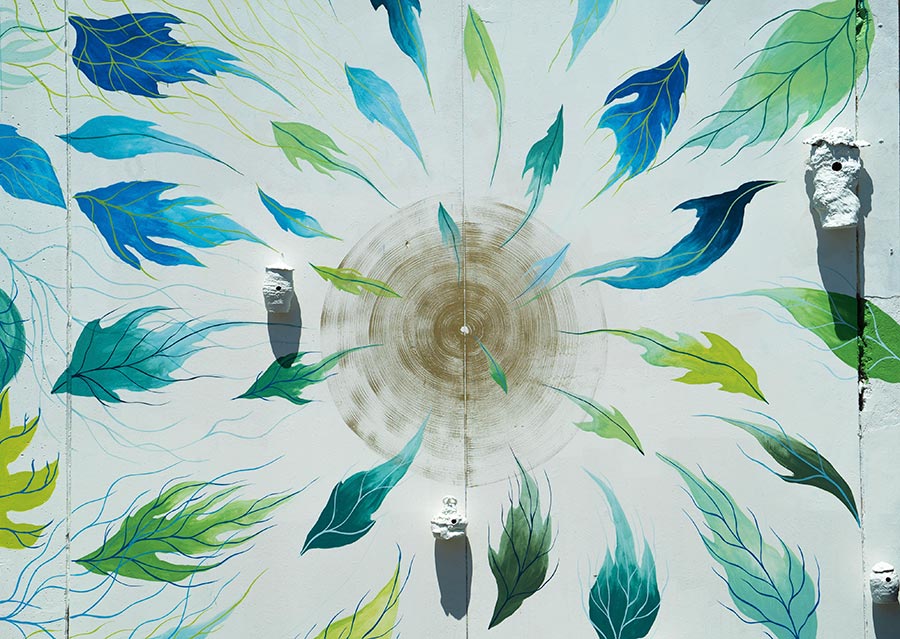
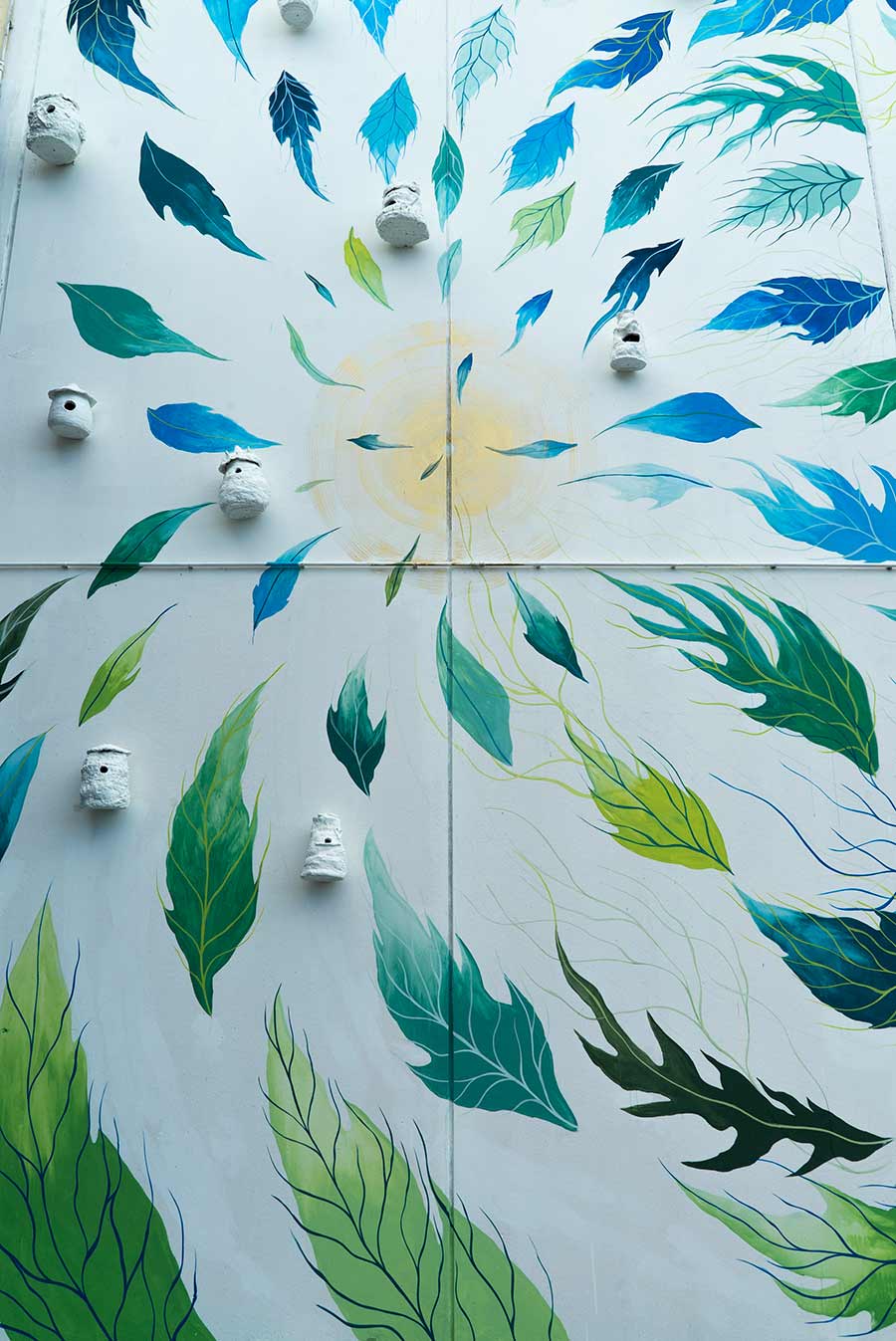
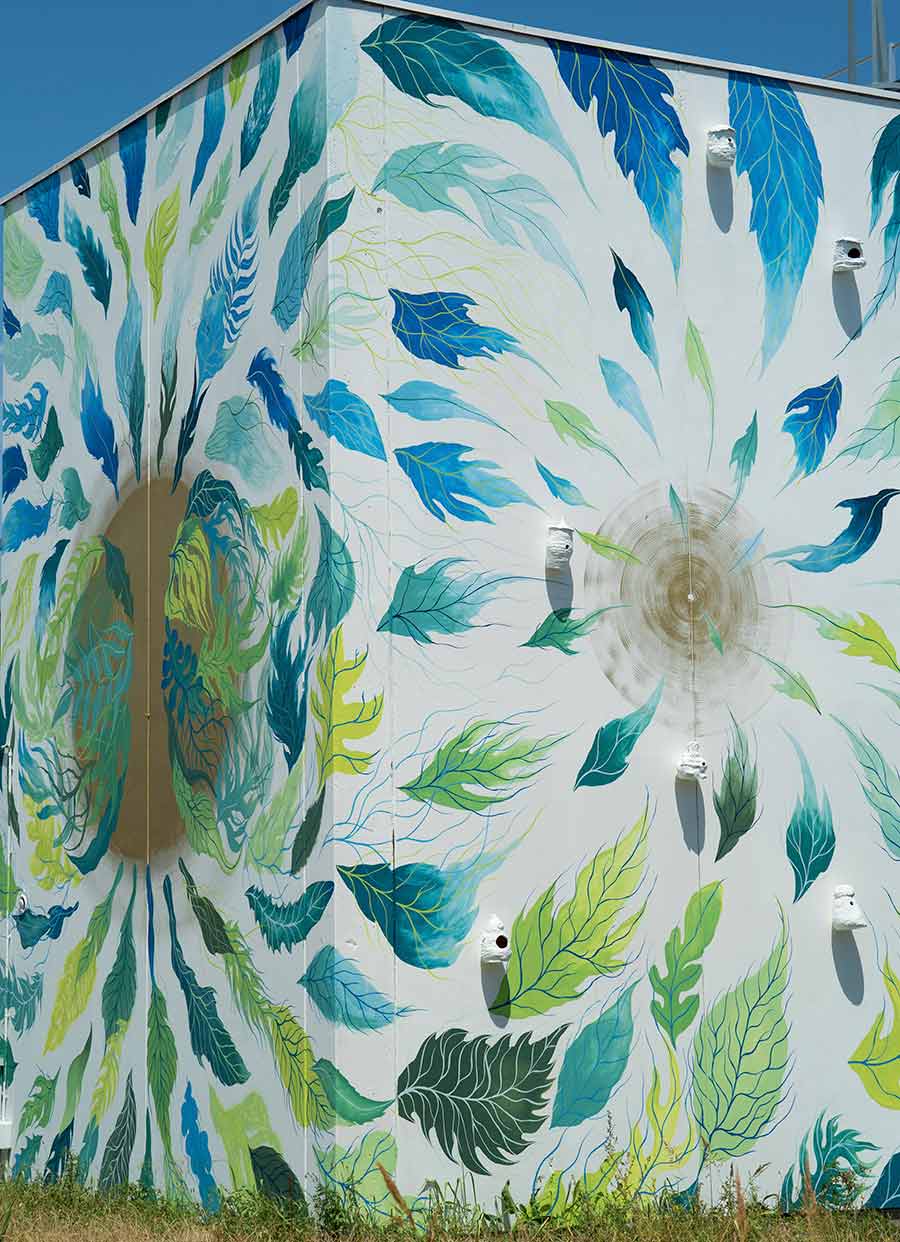
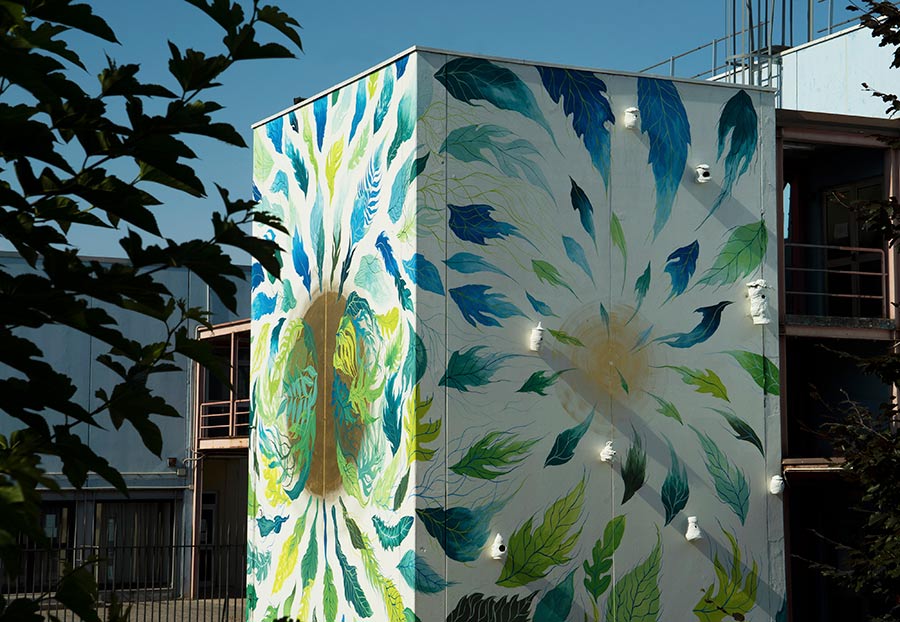
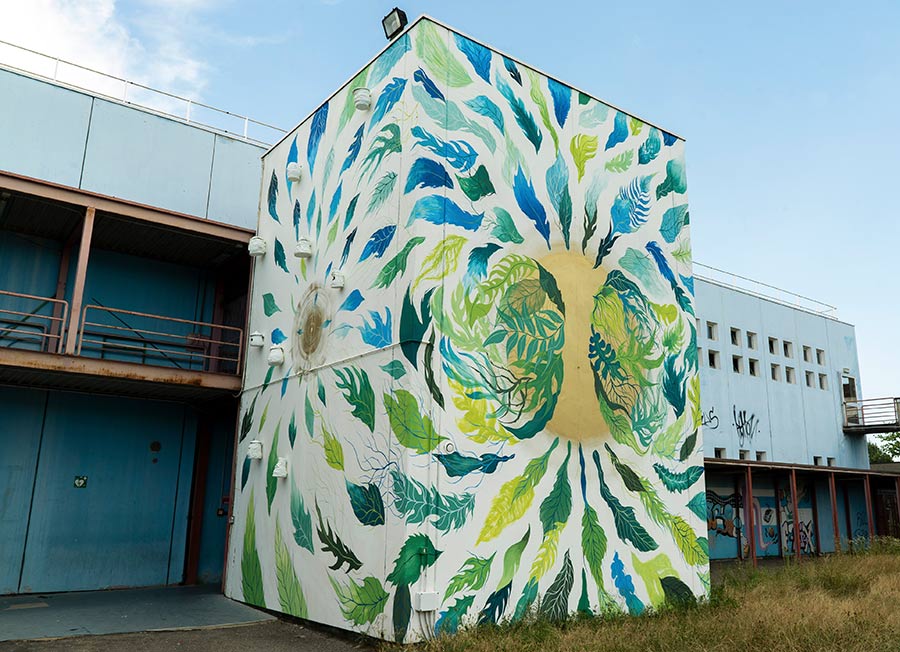
The first is to investigate buildings that are being reclaimed by nature and develop site-specific installations that work in harmony with the history of the relationship between architecture and nature. The second, of which we have an example for you today, is a mural installation on active buildings within cities, perhaps invoking a more integrated ecology of symbols and natural systems around it. These two lines of inquiry comprise his project “HABITAT”, a sincere stream of research that lies on the border between anthropic space and natural space
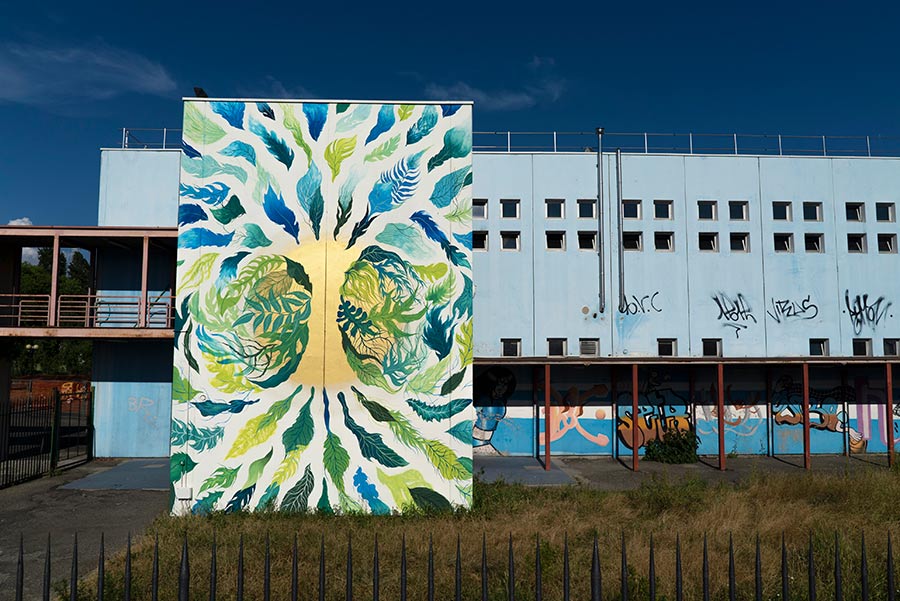
Here in Milan, the school façade will now display Gola’s dedication to life and its movements – called “Convective Motions”. While the mural composition begins from a central element of cosmic energy, a solar force that unravels centrifugally outward, he also has plans to do plantings around the mural and the property in September to extend the reach of the painted portion of his installation.
“Leaves are painted as if they were part of a fire explosion, following and growing the movement,” he tells us, “generates new ones – involving celestial bodies upon contiguous facades, symbolically returning toward the central sun in a perpetual cyclical movement.”
When completed and grown, Mr. Hundun says the entire composition will include endemic plants grass, bushes, hornbeam trees, dogwood trees, hazel trees, hawthorns, and an English oak placed on an axis with the tree painted on the wall.
“The idea is to create a simulacrum of the wood that is used to dress this municipality of Vimodrone – all spread before the building,” he says. “The tree of life here is the same kind you’ll find monotheistic or pagan religions. The two trees will be set in two movements: the painted one will be crystallized, whereas the real tree will grow inexorably.”
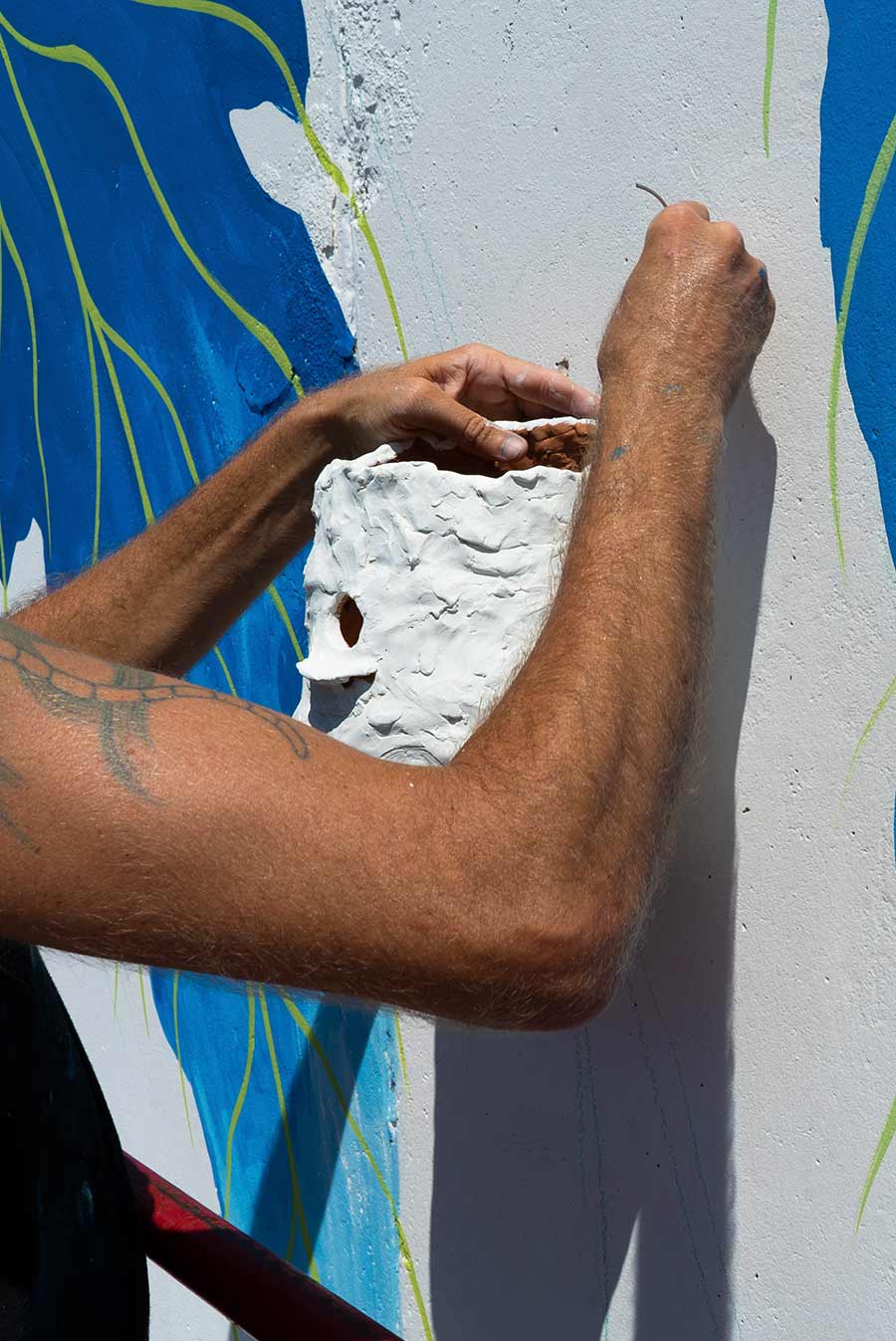
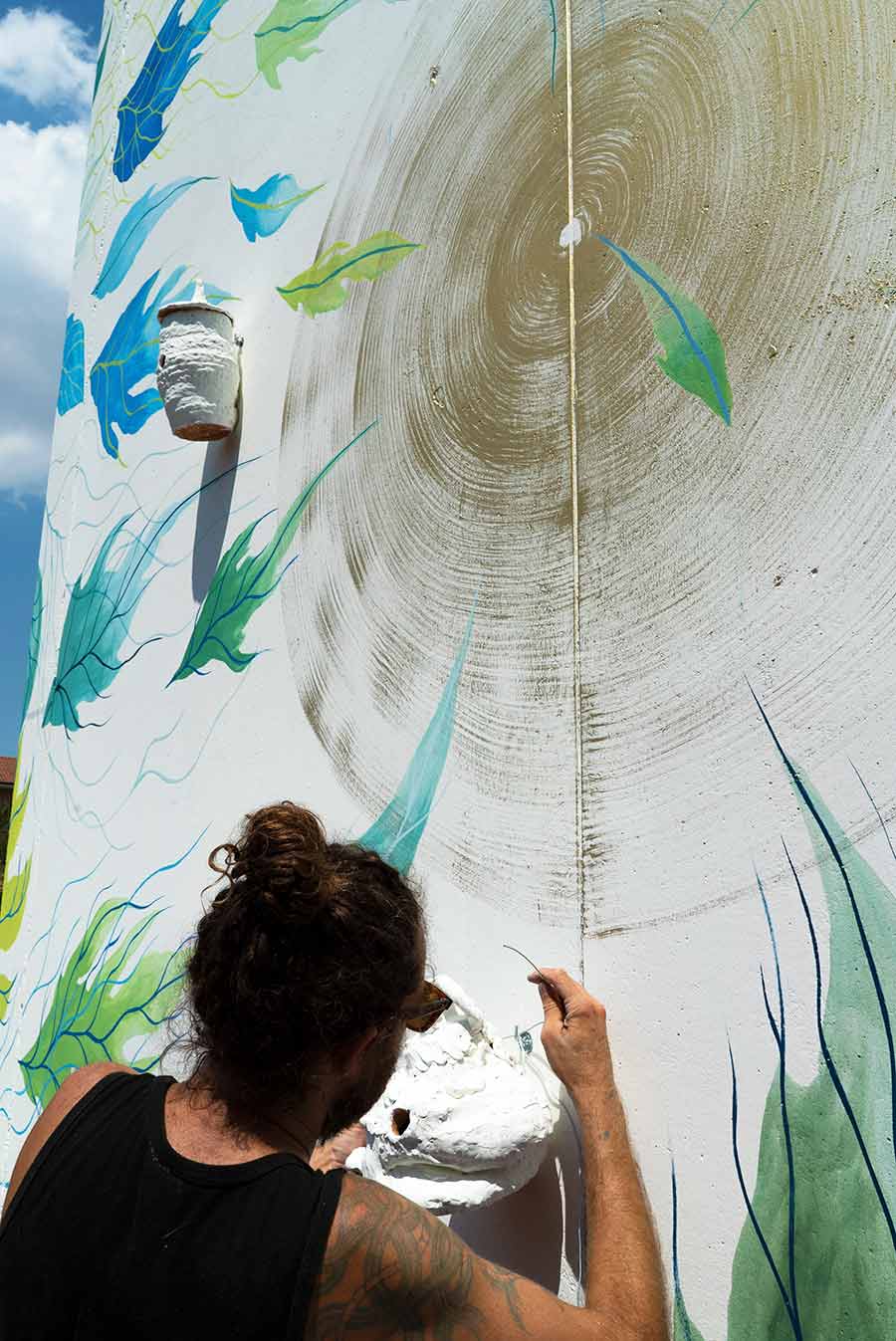
This project is organized by industri scenica – INNESCHI festival in partnership with VIMODRONE City Hall sustained by Fondazione di Comunità Milano Onlus Consultancy about nests by LIPU MILANO Pics iranacredi
 BROOKLYN STREET ART LOVES YOU MORE EVERY DAY