All posts tagged: Brooklyn Street Art

Guadalupe Maravilla: Mobile Healing with Sound and Vision. “Mariposa Relampago” / Art21

Guadalupe Maravilla: Mobile Healing with Sound and Vision. “Mariposa Relampago” / Art21

A transformed school bus becomes a mobile healing site at the US-Mexico border. This documentary short (Guadalupe Maravilla’s “Mariposa Relámpago”) follows the artist as he commemorates and confronts his journey to the United States as an unaccompanied, undocumented minor fleeing civil war in El Salvador in the 1980s.

Guadalupe Maravilla stands beside the bus like someone greeting an old companion, not a sculpture. Mariposa Relámpago is both vessel and instrument—rebuilt from recycled parts, covered in objects with personal and ancestral meaning, and driven along the same route he once traveled as an unaccompanied child leaving El Salvador. The bus hums with purpose: a mobile site for sound, memory, and much-needed psychological, spiritual, and cultural repair.

Guadalupe Maravilla. “Mariposa Relampago” (image © Art21 / Still from the video)

You sense immediately that this is not about spectacle; It is about returning—physically and emotionally—to the path that shaped him, and offering it back to others as a place for healing. Hopefully as a healing for him also.

Dreams, butterflies, lightning bolts gathering in a storm. Abuelitas speaking of healers who could heal a whole town. The wind moves through two harmonicas like spirits passing through a doorway. “Sound is really powerful,” he says, “a universal way of experiencing healing.”

Guadalupe Maravilla. “Mariposa Relampago” (image © Art21 / Still from the video)

Children caught in an inhuman system—misplaced, afraid, angry—brush against humanity at arm’s length, waiting for someone to see them. Everyone feels it, he says: plants feel it, babies feel it. The bus vibrates with hundreds of objects, each carrying a story, repurposed into a kind of medicine.

He remembers classrooms in New York where no one knew what he had survived, how necessary healing had become to him, and how elusive it was. He looks back to Maya ancestry, forward to communities from Philadelphia to Marfa, where new ceremonies unfold under watchful skies and border patrol blimps. “I had so many mixed feelings,” he admits.

But the work keeps moving—an ongoing story of resilience born of profound hurt, a bus as an instrument, sound as medicine, a journey retraced so others might find a way through it, too.

Guadalupe Maravilla. “Mariposa Relampago” (image © Art21 / Still from the video)

Director & Producer: César Martínez Barba / Art21

Read more
Books In The MCL: Vladimir Manzhos. WAONE: Worlds of Phantasmagoria, Vol. 1

Books In The MCL: Vladimir Manzhos. WAONE: Worlds of Phantasmagoria, Vol. 1

WAONE: Worlds of Phantasmagoria, Vol. 1. Vladimir Manzhos. 2020

Reprinted from the original review.

Worlds of Phantasmagoria, Vol. 1 is a comprehensive exploration of the monochromatic works of Ukrainian artist Vladimir Manzhos, known as WAONE. Spanning the years 2013 to 2020, this 208-page hardcover book provides a chronological view of his artistic evolution. It highlights his transition from large-scale, colorful murals in public spaces to intricate black-and-white compositions created in the studio.

The book features a range of works, including murals, ink drawings, etchings, and lithographs, each accompanied by detailed narratives from the artist. These descriptions provide insight into WAONE’s creative process and the philosophical themes that underpin his work. Drawing inspiration from mythology, folklore, science, and personal introspection, his pieces weave together surreal imagery with symbolic depth.

With the aesthetics of a musty and mythical library, the illustrations open the preconceptions of psychology, offering myriad views through recombining familiar elements into unusual associations. In the process, you travel with Waone as he dedicates himself to this uncolorful view, which is nonetheless rich, if not tinged with a bit of antiseptic horror.

Text Steven P. Harrington & Jaime Rojo     Fotos Eveline Wilson

Title: WAONE: Worlds of Phantasmagoria, Vol. 1
Published: WAWE 2020
Author: Vladimir Manzhos (WAONE)
Language: English

Click URBAN NATION BERLIN to continue reading

Read more
BSA Images Of The Week: 02.08.26

BSA Images Of The Week: 02.08.26

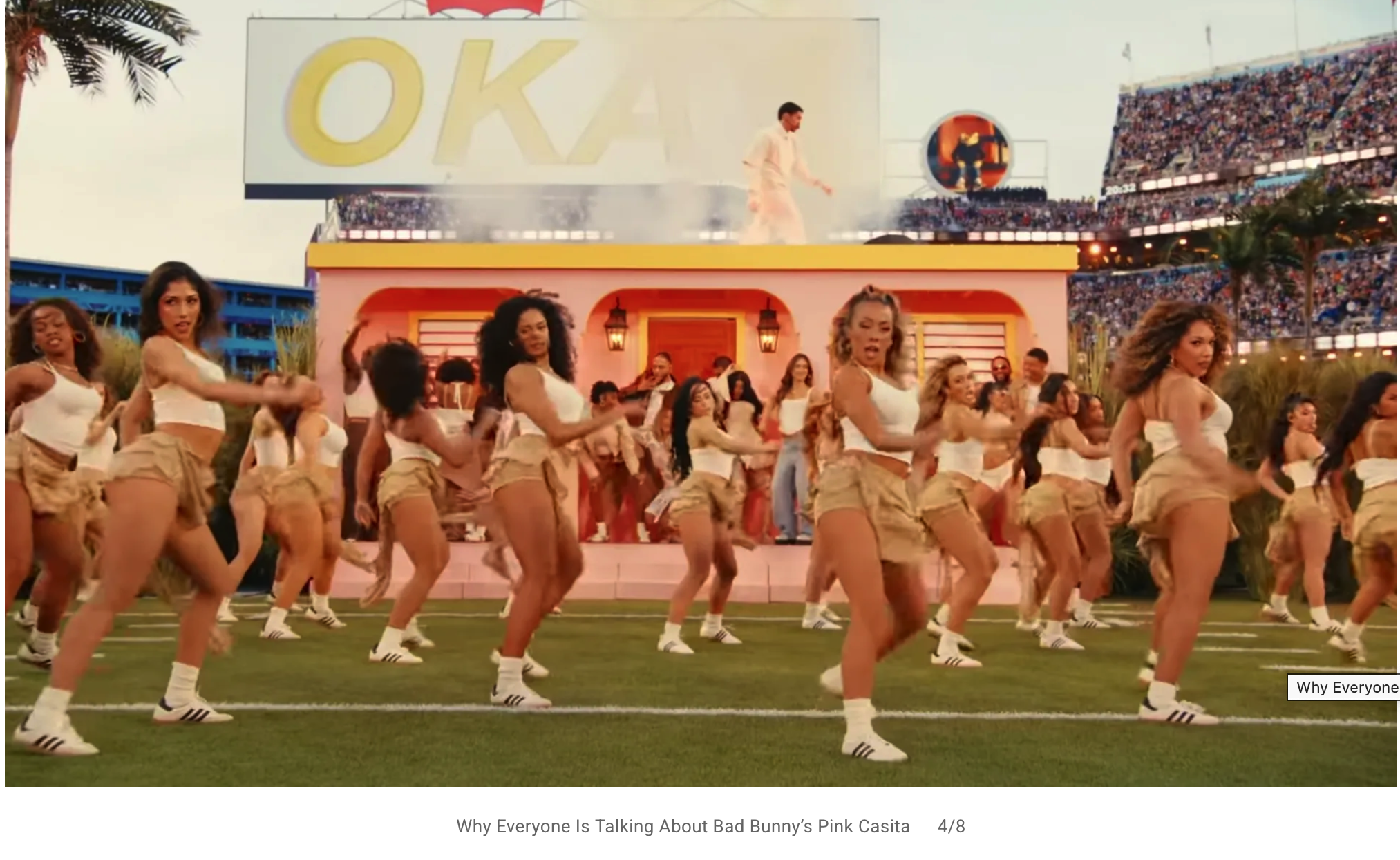
Welcome to BSA’s Images of the Week! It’s Superbowl day! Bad Bunny at half-time!

This week in NYC art news, vandalism of a politically charged mural is causing “debate“, an exhibition at the Noguchi Museum reimagines the city through unrealized designs, and the School of Visual Arts saw their chair of MFA Art Practice program resign after it was revealed that he featured several times in the latest release of the Epstein files. According to ArtReview, “Ross was formerly director of the Boston ICA, the Whitney and SFMoMA, and had been chair of the MFA Art Practice program at the SVA since 2009”.

The Year of the Horse is going to be celebrated in the city soon with Lunar New Year performances and public celebrations animating a lot of neighborhoods, Black History Month programming brings talks and performances across the city, and museums and cultural institutions participate in protest actions tied to ICE raids across the country.

Also, Tony from down the block is trying to figure out how to get a dozen roses for your sister Chambray before Valentine’s Day without blowing his entire paycheck from the funeral home, and the pressure is on for couples to make some cinematic gesture this week. But honestly, an afternoon wandering a museum together, followed by a pizza slice and a soda under fluorescent lights, still does the job better than any prix-fixe romance package ever could. These are not times to break the bank. Don’t stress; as a certain Chicago street artist used to say, “Don’t Fret.”

Here’s our weekly interview with the street, this week featuring ANSO, Ben Keller, CP Won, Frank Ape, Hoax, Homesick, Jose Scott13, Loose, Salami Doffy, Tyxna, Vnice World, Noeli, and Xara Thustra.

Ben Keller. Detail. (photo © Jaime Rojo)
Ben Keller (photo © Jaime Rojo)
CP Won for East Village Walls. (photo © Jaime Rojo)
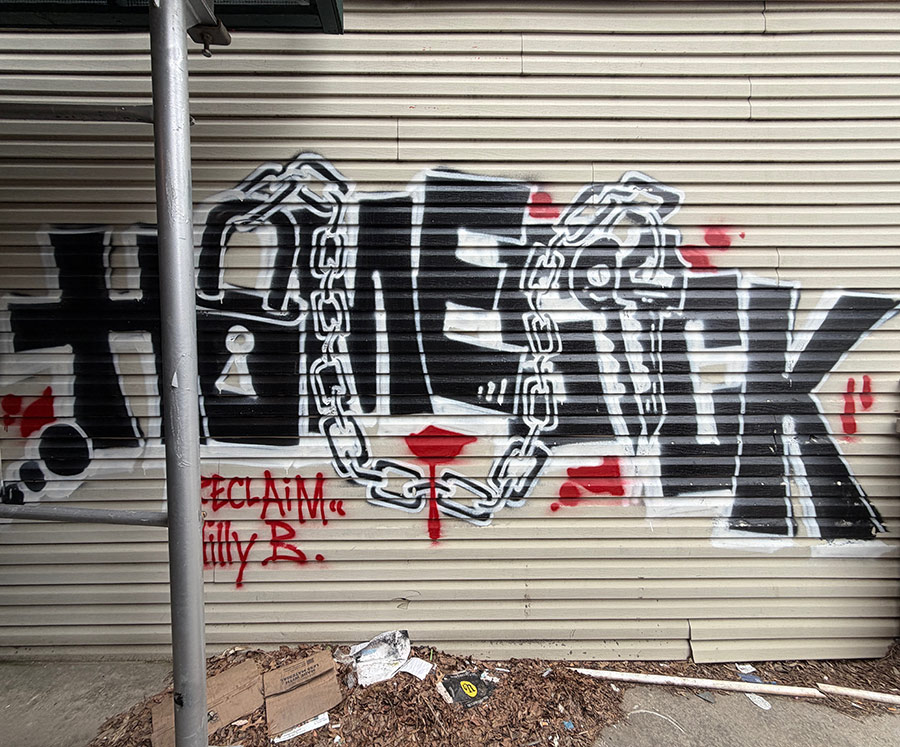
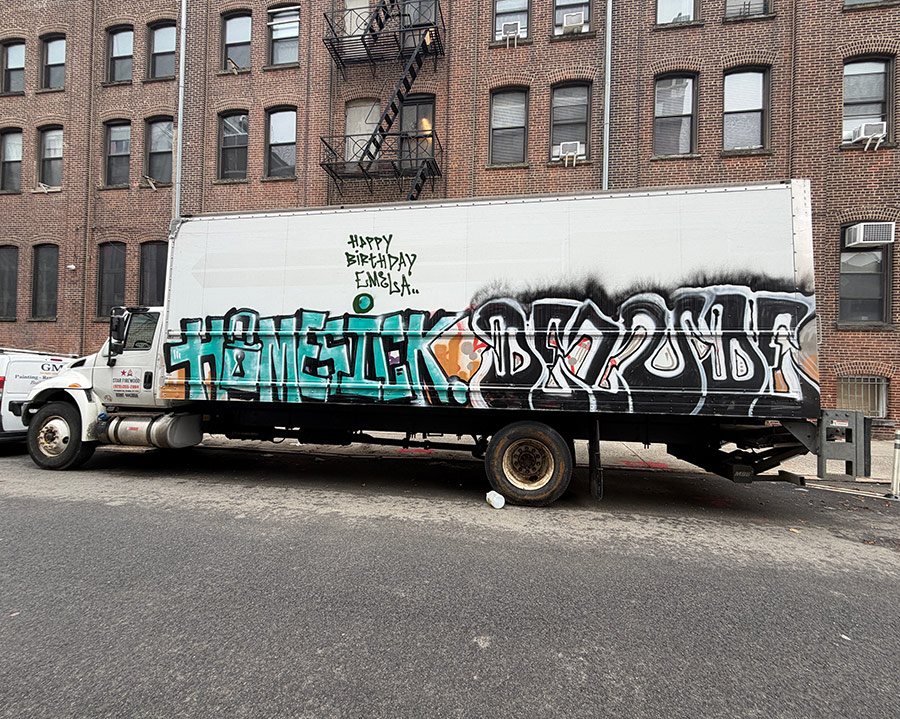
HOMESICK / Xara Thustra (photo © Jaime Rojo)
Jose Scott13 / Vnice World/ art by Noeli (photo © Jaime Rojo)
SICKID(photo © Jaime Rojo)
“Happy Birthday Paul Cezanne”, undoubtedly painted on or near January 19th, to celebrate the French Post-Impressionist painter whose explorations of form, color, and perspective helped bridge 19th-century Impressionism and the development of modern art movements such as Cubism. Unidentified artist (photo © Jaime Rojo)
“An artist’s job is to change a person who is closed… immovable…and help them open up and live in flux. If we want to be good artists, we also have to be open and willing to be vulnerable.” ~ Shawn Regruto. HOAX (photo © Jaime Rojo)
Jade (photo © Jaime Rojo)
LOOSE ANSO. “Kick out the Jams” (video at end) (photo © Jaime Rojo)
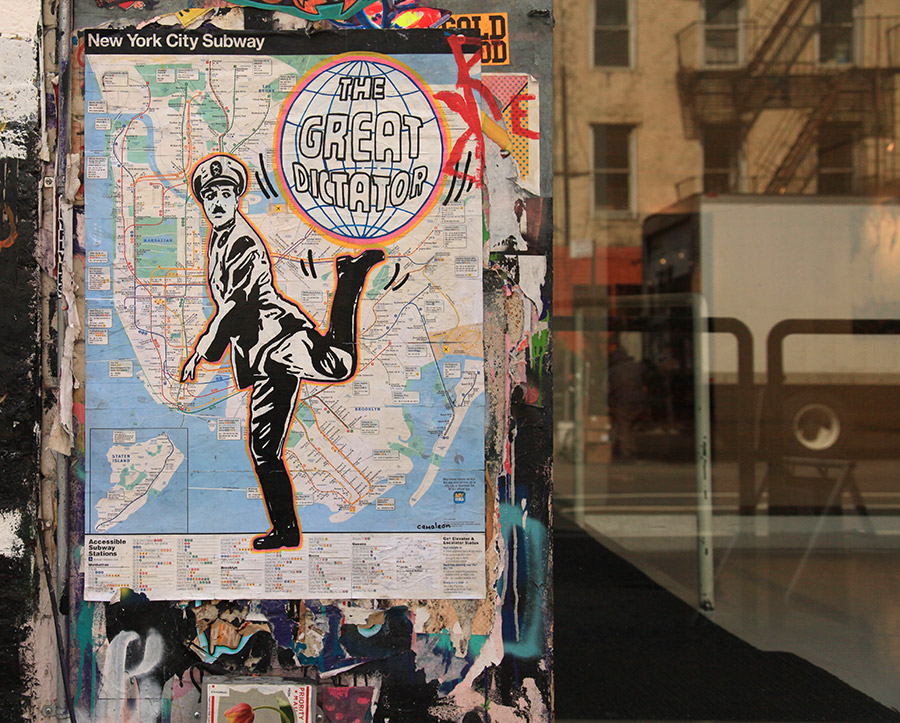
Unidentified artist quoting Silvio Rodriguez. Lines from Me acosa el carapálida threads across an NYC subway map, tracing how systems of power pursue and shape everyday movement through the city. (photo © Jaime Rojo)
Uniditenfied artist (photo © Jaime Rojo)
DUMBO (photo © Jaime Rojo)
Frank Ape (photo © Jaime Rojo)
Salami Doggy (photo © Jaime Rojo)
(photo © Jaime Rojo)

Murals like this new one in Manhattan, and an earlier example in Bushwick, have been appearing in cities including Washington, Miami, Los Angeles, and Chicago, depicting Iryna Zarutska, a victim of violence in Charlotte last summer. The campaign positions her death as a reductionist symbol within a broader, loosely defined narrative that unrestrained “street” crime has overtaken American cities. Her image — carefully selected and conventionally appealing to a certain segment — functions as a cherry-picked face for that message, which some critics view as echoing earlier eras of racially coded fear-based rhetoric that is on display again. Members of Chicago’s Ukrainian community have also pushed back, describing the murals as a cynical tactic and noting, according to local reporting, that the victim’s family was not consulted. The Guardian says the funders have ties to the MAGA movement and billionaire Elon Musk, and it asks, “Are they weaponizing her memory?” The accused attacker’s mom told the local newspaper that her son suffered from severe mental health problems. Whatever the case is, some on the street have decided the whole thing is sus, as the gamer kids say, and have been vandalizing the murals.

Untitled. Lower East Side, NYC. Winter 2026. (photo © Jaime Rojo)

MC5 – Kick Out The Jams

Read more
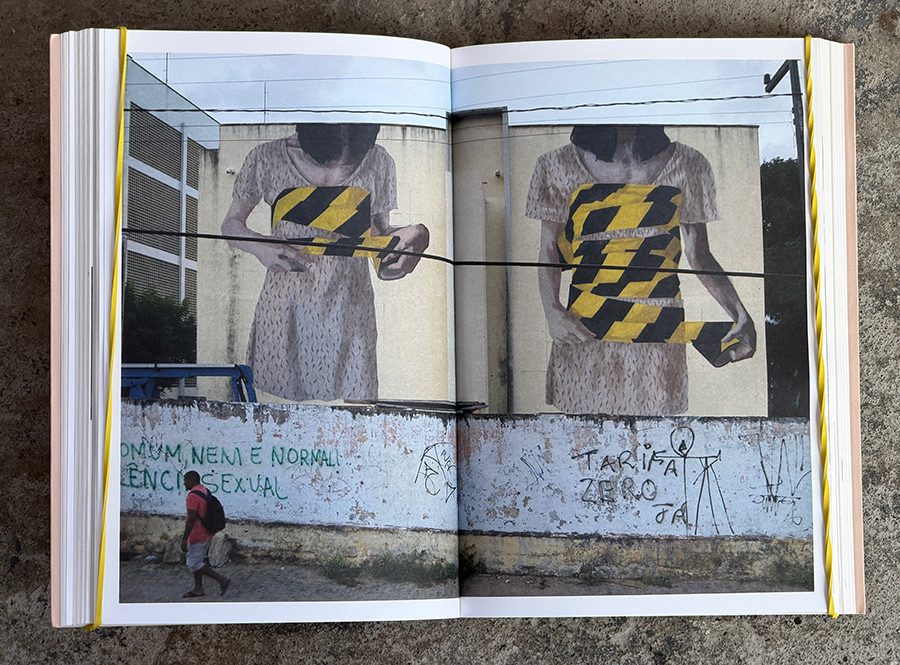
Books In the MCL: Bill Posters “The Street Art Manual”

Books In the MCL: Bill Posters “The Street Art Manual”

Bill Posters. The Street Art Manual. September, 2020.

Reprinted from the original review.

A field guide to resistance and reinvention, The Street Art Manual by artist and agitator Bill Posters is equal parts DIY toolkit, art history primer, and subversive etiquette handbook. Structured with the confidence of a seasoned practitioner and the welcoming, humorous tone of a supportive older sibling, the book offers practical instruction and philosophical grounding for anyone intent on engaging with public space creatively—and responsibly.

Posters, co-founder of the Brandalism project and known for controversial deep-fake online campaigns like Spectre, brings a broad knowledge of global activist art movements to the table. From Beuys’ notion of “social sculpture” to John Fekner’s typographic landmines and the ACT UP visuals of the AIDS crisis, the opening chapters trace a lineage of public dissent that informs his own practice. These references aren’t dusty citations but sharp reminders that creativity in the streets has always been more than aesthetics—sometimes it feels like survival, strategy, and classic satire.

Text Steven P. Harrington & Jaime Rojo     Fotos Eveline Wilson

Title: The Street Art Manual
Published: Laurence King Publishing. September 08, 2020
Author: Bill Posters
Language: English

Click URBAN NATION MUSEUM to continue reading.

Read more
Urban Nation Berlin “Love Letters To The City” Part 5

Urban Nation Berlin “Love Letters To The City” Part 5

BSA Special Edition

LOVE LETTERS TO THE CITY at Urban Nation Museum, Berlin

A newly released Interview snippet with curator Michelle Houston and Steven P. Harrington from the opening of the exhibit toys with the question of where art belongs and who gets to decide.

Has this been settled to your satisfaction?

Video credits: Commissioned by Stiftung Berliner Leben. Shot by Alexander Lichtner & Ilja Braun. Post-production, additional footage, graphics, and a final version by Michelle Nimpsch for YAP Studio/YES, AND… productions GmbH & Co. KG

“Love Letters To The City” is currently on view at Urban Nation Museum Berlin. Click HERE for more details about the exhibition, schedules, directions, events, and programs.

Read more
BSA Images Of The Week: 02.01.26

BSA Images Of The Week: 02.01.26

Welcome to BSA’s Images of the Week!

Dude, it’s bad out there. But it’s nice in here!

Here is our weekly interview with the street, this week featuring Caer8th, Chapa, D*Face, DOS Prague, ELOHS, MIOW, SEUK Prague, Smutty, TIBO!, and Urban Ruben.

D*Face (photo © Jaime Rojo)
Smutty gives sound advice. (photo © Jaime Rojo)
Urban Ruben in Wynwood, Miami. (photo © Jaime Rojo)
ELOHS (photo © Jaime Rojo)
NYC ART MOVEMENT (photo © Jaime Rojo)
Unidentified artist (photo © Jaime Rojo)
CHAPA (photo © Jaime Rojo)
UNLOSOPHY in Wynwood, Miami. (photo © Jaime Rojo)
TBO! (photo © Jaime Rojo)
CAER8TH. Detail. Prague. (photo © Jaime Rojo)
CAER8TH. Tribute to DOS in Prague. (photo © Jaime Rojo)
MIOW. Tribute to DOS in Prague. Detail. (photo © Jaime Rojo)
MIOW. Tribute to DOS in Prague. (photo © Jaime Rojo)
Tribute to DOS in Prague. (photo © Jaime Rojo)
FACTS. Tribute to DOS in Prague. (photo © Jaime Rojo)
SEUK. Tribute to DOS in Prague. (photo © Jaime Rojo)
Untitled. Brooklyn, NYC. January 2026. (photo © Jaime Rojo)

About last night…

Read more
The Martha Cooper Scholarship For Photography: Call for Application

The Martha Cooper Scholarship For Photography: Call for Application

Named in honor of photographer Martha Cooper—whose lifelong commitment to documenting everyday life, cultural expression, and human dignity has shaped how communities around the world are seen and understood—the Martha Cooper Scholarship (MCS) supports long-form documentary photography that reflects shared human experience and social responsibility. For the 2027 cycle, the Foundation Berliner Leben will award its third Martha Cooper Scholarship, continuing a multi-year commitment to sustained, thoughtful photographic practice.

The scholarship offers a photographer from Africa, Asia, or Latin America the opportunity to spend 10 months developing an artistic documentary project that engages with contemporary social realities and contributes to greater cross-cultural understanding. In line with values often emphasized by Urban Nation Museum, the program recognizes documentary photography as a vital tool for visibility, dialogue, and empathy in an increasingly complex world.

The Martha Cooper Scholarship is grounded in the annual theme of Fresh A.I.R., Stiftung Berliner Leben’s residency program, which addresses current social and political conditions while foregrounding the diversity of lived experience and perspective. The selected 2027 scholar will live and work in a Fresh A.I.R. residency in Berlin-Schöneberg throughout the scholarship period.
The current call is for the 12th class of Fresh A.I.R, running from February 2027 to November 2027.

Click HERE to learn more about the Martha Cooper Scholarship and who qualifies to apply.

Click HERE for the APPLICATION FORM

The first Martha Cooper Scholarship was awarded to photographer Dylan Mitro for the 2025 MCS. Mr. Mitro was chosen from dozens of submissions. Dylan successfully completed his scholarship in November of 2025 with an exhibition of his proposal and work in Berlin. Click HERE and HERE to read about Dylan’s work during his time as the MCS Scholar in Berlin.

The second Martha Cooper Scholarship was awarded to photographer Mourad Fedouache of Morocco for the 2026 MCS. Mr. Fedouache will arrive in Berlin on February 1st to begin his 10-month residency as the second MCS Scholar, which will conclude in November of this year.

Read more
Signals in the Urban Body: Stickers as Cultural DNA

Signals in the Urban Body: Stickers as Cultural DNA

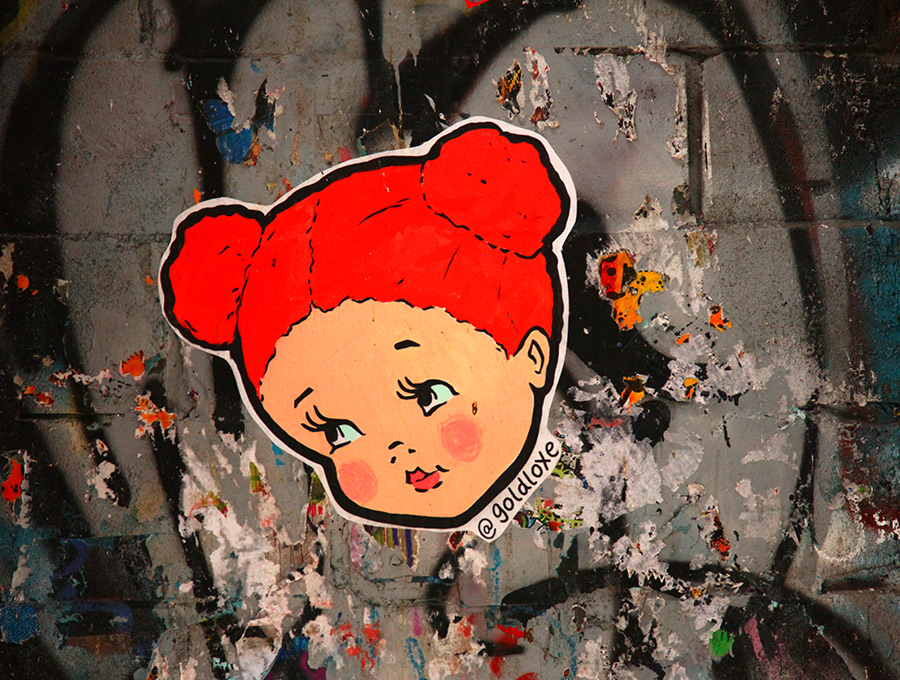
Handmade and hand-slapped stickers operate in the city the way cells operate in a living organism. Individually, they are small, fragile, and easily removed. Taken together, they form a dispersed system of signals—drawings, slogans, jokes, IDs (a writer’s tag repeated again and again), confessions, quotations—each carrying intent.

Some are one-off images, painted or drawn as if on miniature canvases. Others are produced in runs, repeated, and distributed across the city. One may deliver a political demand, a poetic longing, or a non-sequitur legible mainly to its author. None of them can claim permanence, yet their accumulation suggests a continuity of commentary.

Vigilante Vegan (photo © Jaime Rojo)

Seen up close, these stickers may resemble genetic material from society scattered across an urban surface. They are bits of cultural DNA, replicating with variation as they move from hand to hand and place to place. Certain motifs recur—icons, phrases, styles—mutating slightly with each appearance. Others fail to reproduce and disappear.

Together, they encode what the city is thinking, worrying about, resisting, or celebrating at this precise moment. Lamp posts, post office boxes, and the doors of rehearsal studios become sites of transcription, where ideas are copied, miscopied, promulgated, and reimagined.

Unidentified artist (photo © Steven P. Harrington)

A single sticker rarely tells you much, but through visual collection, comparison, and pattern recognition, meaning begins to emerge. Clusters form. Absence matters as much as presence. Humor can signal resilience; repetition can suggest anxiety; aggression may indicate a stress response.

In this way, sticker culture functions less as decoration or commentary than as diagnosis. The product of many pens, thick tips, brushes, and printers, these marks offer a way to read a city’s condition from the inside out. Outside.

Unidentified artist (photo © Jaime Rojo)
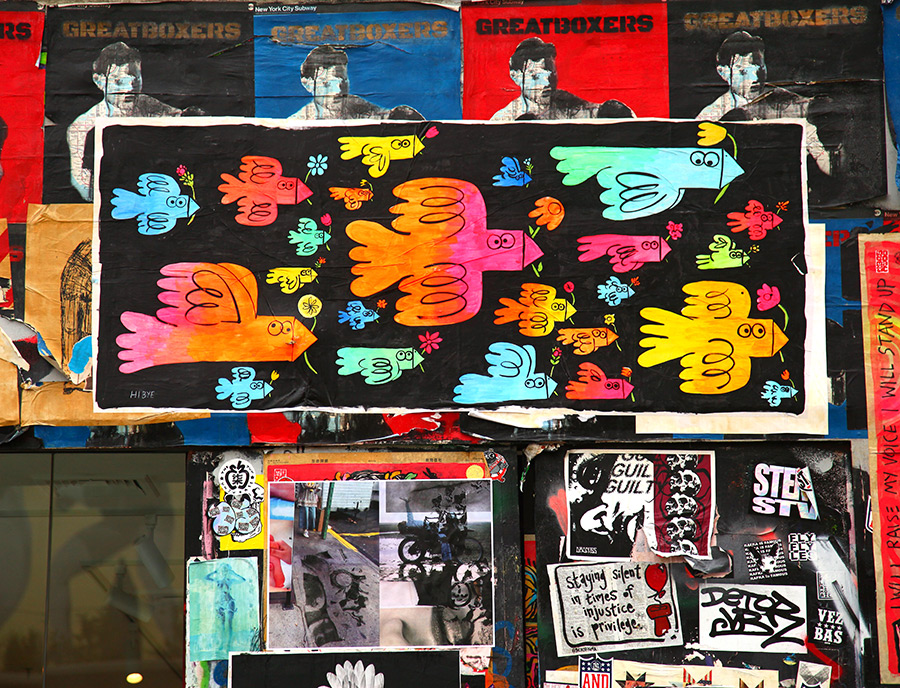
Great Boxers and other unidentified artists (photo © Jaime Rojo)
IMA MAKER (photo © Steven P. Harrington)
So Schoen (photo © Jaime Rojo)
Unidentified artist (photo © Steven P. Harrington)
Unidentified artist (photo © Jaime Rojo)
Unidentified artist (photo © Steven P. Harrington)
Drones, Black Ligma with other unidentified artists (photo © Jaime Rojo)
Unidentified artist (photo © Steven P. Harrington)
Unidentified artist and Sticker Maul (photo © Jaime Rojo)
Unidentified artist (photo © Jaime Rojo)
Unidentified artist (photo © Steven P. Harrington)
Warner Jesse (photo © Jaime Rojo)
Unidentified artists (photo © Steven P. Harrington)
Sharon Volpe (photo © Jaime Rojo)
Unidentified artist (photo © Steven P. Harrington)
Unidentified artists (photo © Jaime Rojo)
Read more
BSA Images Of The Week: 01.25.26

BSA Images Of The Week: 01.25.26

Welcome to BSA’s Images of the Week!

The New York Post is complaining that the new mayor is using 2,200 digital street kiosks to promote himself, rapper NAS mentions a generation of graffiti writers in his new song called simply Writers-“The Mic is a Marker I’m tagging more names”, the Metropolitan Opera has two murals by Chagall for sale, Trump was forced to back off his ideas about stealing Greenland in Davos, Canada’s PM gave a history-changing speech saying that US relations with the rest of the world have been ‘ruptured’ permanently, people in many cities, particularly in Minnesota, are going on strike and taking to the streets to demand ICE stop its attacks on people and its probable violations of human rights, and speaking of ice, more than half the US threatened with ice, snow and cold in massive winter storm.

The State of New York is under a State of Emergency due to the storm, which made it a good decision to get out earlier this week to document new street art and graffiti. This is typically a slower period for artists and writers, but in this city, the street is never static. There’s always an ongoing visual discussion unfolding in public, often reflecting the moment back at us.

As the weather intensifies, attention turns to those most affected—especially people without shelter and neighbors who may need help. If you can, check in on people nearby and offer what you’re able: a blanket, food, or a small bit of assistance can make a real difference.

Here’s our weekly interview with the street, this week featuring Acet, Dah Face, DASH, DELUDE, DIKS, DINK, FLASH, Hal Merick, Homesick, Kane, Mike, No Normal, Os Gemeos, Quaker Pirate, Trisan Eaton, Uwont, and Xara Thustra.

Unidentified artist (photo © Jaime Rojo)
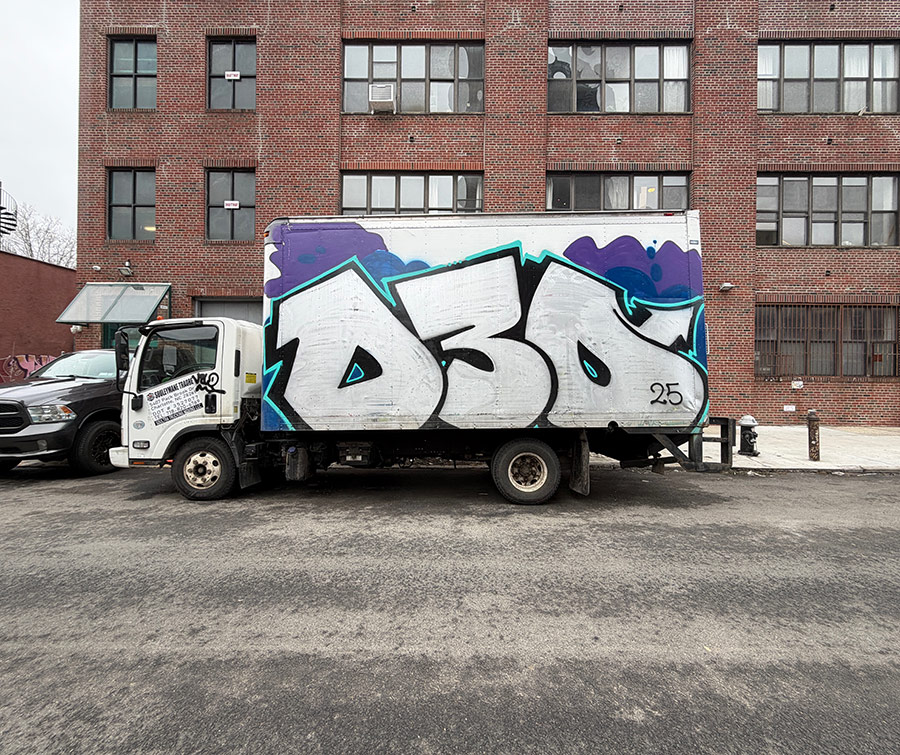
Os Gemeos (photo © Jaime Rojo)
UWONT(photo © Jaime Rojo)
Unidentified artist (photo © Jaime Rojo)
Quaker Pirate (photo © Jaime Rojo)
DASH (photo © Jaime Rojo)
FLASH DINK (photo © Jaime Rojo)
ACET UWONT (photo © Jaime Rojo)
KANE (photo © Jaime Rojo)
No Normal 519 (photo © Jaime Rojo)
Hal Merick (photo © Jaime Rojo)
Tristan Eaton (photo © Jaime Rojo)
DIKS (photo © Jaime Rojo)
MIKE (photo © Jaime Rojo)
MDR SRAT ROEK TAKE (photo © Jaime Rojo)
Dah Face (photo © Jaime Rojo)
HOMESICK DELUDE (photo © Jaime Rojo)
Unidentifed artist (photo © Jaime Rojo)

It looks like Xara Thustra is the artist behind the “STOP MEN” installation (sometimes interpreted as part of a larger, ongoing tag) on the Manhattan side of the Williamsburg Bridge. The letters are painted on a high, visible spot on the bridge structure, reportedly over several nights.


Read more
ENAMUR ART Returns to Les Franqueses del Vallès for Its Fourth Edition

ENAMUR ART Returns to Les Franqueses del Vallès for Its Fourth Edition

ENAMUR ART returned this January to Les Franqueses del Vallès with its 4th edition, continuing to build a locally rooted, artist-led platform for graffiti, music, and shared experience. Hosted in a municipality in Catalonia, Spain, located in the province of Barcelona and situated along Carrer de la Serra, the jam once again activated a long concrete wall as a public canvas, reaffirming the event’s commitment to graffiti as a lived, social practice – and naturally, some spectacle. What began as a modest initiative has grown into a recurring meeting point for writers, painters, neighbors, and friends from across the region.

CISE UNO. Enamur Art 2026. Les Franqueses, Spain. (photo © Lluis Olive-Bulbena)

This year, 24 artists painted nearly 100 meters of wall, working side by side in a session that emphasized exchange, spontaneity, and presence. The visual production unfolded alongside a program of live music by emerging local acts, grounding the event firmly in its community context. A free tote-bag customization workshop opened the door to younger participants and curious passersby, while the presentation of “Tornar a lluitar”—a song created by local youth with support from the Dula project—underscored ENAMUR ART’s ongoing interest in youth voices and collective expression.

CISE UNO. HITES HITEM. Enamur Art 2026. Les Franqueses, Spain. (photo © Lluis Olive-Bulbena)

Among the standout moments was the collaboration between Boogie and MarcNone, a pairing that carried both personal history and mutual respect. “This is more than a collaboration — it’s two friends doing what they love most: painting and living life,” MarcNone reflected. “The good vibes we share are reflected on the wall, and the result is for all of you.” The piece reads less as a formal duet and more as a conversation in paint, shaped by trust, rhythm, and time spent together.

“Thanks for the invitation and all the crazy cats out there for the good time and the nice talks,” says Boogie on Instagram. “Spanish writers are on a different level!”

HITES HITEM. Enamur Art 2026. Les Franqueses, Spain. (photo © Lluis Olive-Bulbena)

The event’s energy—part jam, part reunion—was carefully documented by photographer Lluis Olive and videographer Pol Casquett. As MarcNone and Boogie put it simply, “Graffiti connecting people.” With each edition, ENAMUR ART continues to prove that scale isn’t measured only in meters of wall, but in the strength of relationships built around them.

@enamur.art @marcnone

STAIN. Enamur Art 2026. Les Franqueses, Spain. (photo © Lluis Olive-Bulbena)
JAPON. Enamur Art 2026. Les Franqueses, Spain. (photo © Lluis Olive-Bulbena)
TROJAN. Enamur Art 2026. Les Franqueses, Spain. (photo © Lluis Olive-Bulbena)
YAWE. URI KTHR. WEDO GOAS. MARC ONE. Enamur Art 2026. Les Granqueses, Spain. (photo © Lluis Olive-Bulbena)
YAWE. Enamur Art 2026. Les Franqueses, Spain. (photo © Lluis Olive-Bulbena)
URI KTHR. Enamur Art 2026. Les Franqueses, Spain. (photo © Lluis Olive-Bulbena)
WEDO GOAS. MARC ONE. Enamur Art 2026. Les Franqueses, Spain. (photo © Lluis Olive-Bulbena)
ESLIC. Enamur Art 2026. Les Franqueses, Spain. (photo © Lluis Olive-Bulbena)
GEPSO. Enamur Art 2026. Les Franqueses, Spain. (photo © Lluis Olive-Bulbena)
YUBIA. Enamur Art 2026. Les Franqueses, Spain. (photo © Lluis Olive-Bulbena)
Mr. Manz, TCN CREW. Enamur Art 2026. Les Franqueses, Spain. (photo © Lluis Olive-Bulbena)
YPSOINFARTO. BOOGIESMI. Enamur Art 2026. Les Franqueses, Spain. (photo © Lluis Olive-Bulbena)
ASEM NAVARRO. Enamur Art 2026. Les Franqueses, Spain. (photo © Lluis Olive-Bulbena)
KIRE5. Enamur Art 2026. Les Franqueses, Spain. (photo © Lluis Olive-Bulbena)
JOEH. Enamur Art 2026. Les Franqueses, Spain. (photo © Lluis Olive-Bulbena)
MAGA. Enamur Art 2026. Les Franqueses, Spain. (photo © MAGA)


Read more
Before It Was Called Art: UGA, JonOne, Pixação at the Museum of Graffiti

Before It Was Called Art: UGA, JonOne, Pixação at the Museum of Graffiti

Steven P. Harrington

After Hours at the Museum of Graffiti

On a late-night private tour during the Art Basel week madness, with just two guests in tow, the Museum of Graffiti can feel less like a public institution and more like an unlocked archive after hours—quiet enough to hear details that usually get lost in daytime traffic: the cadence of a tag, the logic of a crew name, the way a single artifact can rearrange what you thought you “knew” about the early years.

Origins. The First Generation of Graffiti Art. Museum of Graffiti. Wynwood, Miami. (photo © Jaime Rojo)

Alan Ket, co-founder of the museum alongside Allison Freidin, has an advantage as a guide that goes beyond carrying the historian’s timeline in his head. He knows the people in that timeline. Together, Ket and Freidin have spent years building a place where those histories can be shown without being flattened into a slogan.

Three Arguments, One Program

The current program is structured like a three-part argument, each section reinforcing the next: the foundation of UGA-era legitimacy, the long arc of a writer who outlived the rules and the era that formed around graffiti, and a parallel street-writing tradition from Brazil that insists on its own terms. Around those anchors, interstitial context stations—about Subway Art, about a “Hall of Fame,” about what writing is when it’s more than a product—and those do real work in a short visit, especially when the museum is closed, and you’re not fighting a crowd.

Origins. The First Generation of Graffiti Art. Museum of Graffiti. Wynwood, Miami. (photo © Jaime Rojo)

Origins: Writing Enters Public History

The Origins exhibit opens with a title that doesn’t hedge: “UNITED GRAFFITI ARTISTS (UGA), 1972–1975 — The First Organized Graffiti Collective.” The wall text frames the early 1970s not as a hazy prelude, but as a moment when New York’s walls and trains became “the visual language of a new generation writing its name into history.” The intent is clear: to meet those writers as authors, not as an anonymous “phenomenon.”

Origins. The First Generation of Graffiti Art. Museum of Graffiti. Wynwood, Miami. (photo © Jaime Rojo)

In a key early moment, a 22-year-old sociology student at City College of New York, Hugo Martinez, pulls together a group, a show, and a generation of young writers emerging from an expanding visual movement. Seeking out Puerto Rican and African American writers, Martinez traces an early chain of connection—through HENRY 161, he meets active Washington Heights figures including SNAKE 1, SJK 171, MIKE 171, STITCH 1, and COCO 144—and invites them into something new: a collective, publicly legible, with a name that could travel.

The Canvases Reappear

The exhibition pins down a crucial milestone: UGA’s first exhibition at City College in December 1972, anchored by a 10-by-40-foot collaborative mural that drew coverage in The New York Times. That context explains why the newly surfaced canvases land with such force today. They aren’t “early work” in the abstract; they are evidence of one of the first moments graffiti writers entered an art context without shedding the culture’s DNA.

United Graffiti Artists Collective. Origins. The First Generation of Graffiti Art. Museum of Graffiti. Wynwood, Miami. (photo © Jaime Rojo)

Then Ket takes you to the proofs themselves—the ones that stop conversations. He describes the unveiling of the massive canvas as a reunion at the edge of disbelief:

“We opened yesterday—the first time anyone had seen the (mural by UGA) work publicly. Doze was here. Coco was here. Flint 707 was here. Mike 171 was here. Artists who were part of that original moment, or closely connected to it.”

And then the realization:

“A lot of people initially thought the paintings were replicas. Even people who knew the work. They couldn’t believe these were the original canvases.”

United Graffiti Artists Collective. Detail. Origins. The First Generation of Graffiti Art. Museum of Graffiti. Wynwood, Miami. (photo © Jaime Rojo)

UGA’s short-lived run broke cultural barriers that still echo graffiti’s resistance by many institutions today, timid as they are to recognize this movement. The 1973 Deuce Coupe live backdrop performance with the Joffrey Ballet, UGA on the cover of New York magazine, and early exhibitions—including the group show at the Razor Gallery in SoHo—all pushed that door open. Like coming across a great piece on the street—there one day, gone the next—UGA’s tenure was brief, explosive, and foundational.

Origins. The First Generation of Graffiti Art. Museum of Graffiti. Wynwood, Miami. (photo © Jaime Rojo)

Context That Carries Weight

The museum’s educational nodes function as interstitial primers, uncovering codes and influences that might otherwise be missed. Between the larger narratives, local histories offer insight into Miami’s scene, here with a focus on Tesoe and his highway sign writing. The tag, forever individual and cryptic to the everyday observer, is decoded and compared across multiple cities, enabling a handstyle compare and contrast.

Elsewhere, a closer look at style points to a youthful desire for flash and image, shaped by the tensions of New York’s 1970s streets—gang violence, territorial pressure, and a driving need among artists to create, to mark presence, and to be seen.

“SUBWAY ART: The Book That Changed Everything” is presented as the crack in the wall that allowed the rest of the world to look in. A quote from Daze underlines the point:
“I don’t think anyone could have anticipated the global impact that Subway Art has had on the culture. For many, it became the entry point to a worldwide phenomenon.”

Subway Art. Origins. The First Generation of Graffiti Art. Museum of Graffiti. Wynwood, Miami. (photo © Jaime Rojo)

“GRAFFITI HALL OF FAME — Strictly Kings and Better” shifts the lens from documentation to reputation—how writers judge writers. The inaugural class sets out clear benchmarks: CASE 2, DONDI, FUZZ ONE, IZ THE WIZ, and TRACY 168, with painted portraits by Beto Landsky. It points to a canon shaped internally, through practice, reputation, and peer recognition.

Origins. The First Generation of Graffiti Art. Museum of Graffiti. Wynwood, Miami. (photo © Jaime Rojo)

One of the most useful sentences in the building comes from PHASE 2, because it tells visitors what to value without preaching:

“Writing is centered on names, words, and letters… Writers agree without a doubt that there is an attitude and commitment within the soul that accompanies being a true writer… that one’s volume of work can in no way replace.”

JonOne: A Life Laid Out in Public

JonOne. JonOne. El Tiguere. Museum of Graffiti. Wynwood, Miami. (photo © Jaime Rojo)

The JonOne featured section reads as a biography laid out in public, a sprawling timelines history that holds back little, crowding in detail and storytelling. “JonOne — Key Milestones & Exhibitions” is dense on purpose, with purpose. The wall text defines tiguere as Dominican slang for someone street-smart and resourceful, then charts the arc from Washington Heights adolescence into 1980s New York graffiti, where the city “asserts its status as the capital of graffiti.”

The timeline—supported by the artist’s own handwritten explanations—allows visitors to track the evolution without forcing a “from trains to galleries” redemption narrative, as if commercial success retroactively absolved the past. It doesn’t skip the way things actually played out: Catholic school discipline, immigrant family pressure, street education, and the reconfiguration of practice in Paris.

JonOne. JonOne. El Tiguere. Museum of Graffiti. Wynwood, Miami. (photo © Jaime Rojo)

Ket’s words strike the right balance:

“I have been following Jon’s artistic journey since the 1980s in New York City and marvel at what he has accomplished with his signature tag. Once vilified, we now celebrate his artistic genius.”
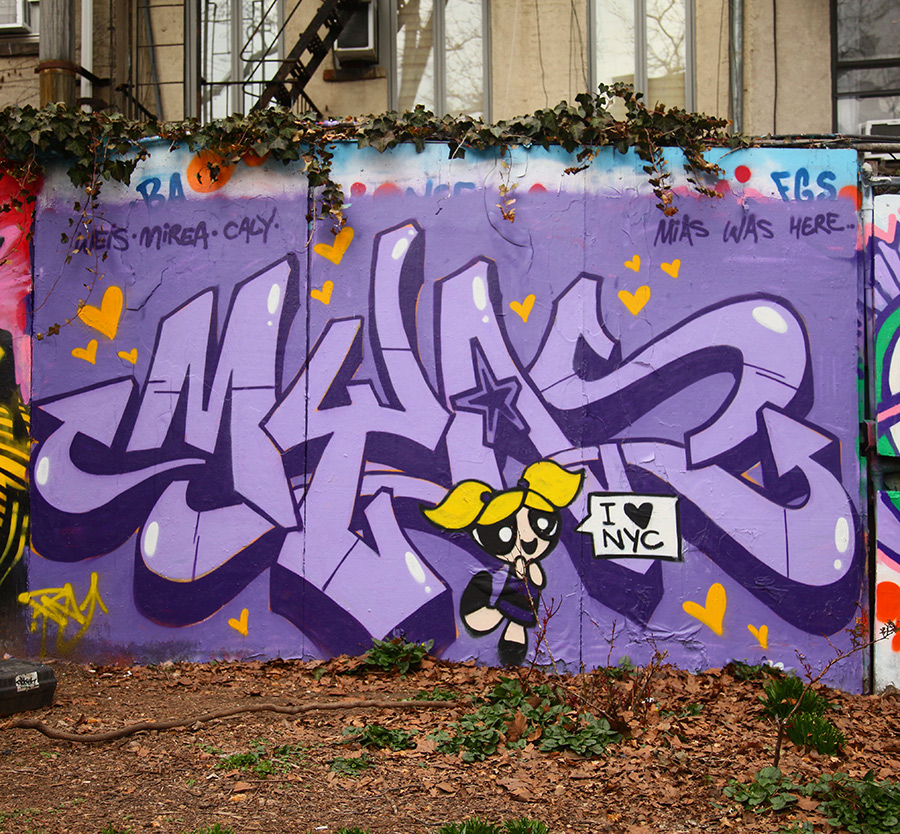
JonOne. JonOne. El Tiguere. Museum of Graffiti. Wynwood, Miami. (photo © Jaime Rojo)

Pixação: Writing on Its Own Terms

“PIXAÇÃO — MARKS OF REBELLION” opens with a question about whether you live on your own terms or follow a script written before you arrived. The wall text situates pixação historically—dictatorship-era Brazil, punk culture, São Paulo’s hard edges—while refusing oversimplification. Before conclusions form, it names the internal infrastructure outsiders often miss: hierarchies, disputes, archives, and community memory.

Pixação: Marks of Rebellion. Museum of Graffiti. Wynwood, Miami. (photo © Jaime Rojo)

When artists like LIXOMANIA!ZÉ, Cripta Djan, and Eneri bring pixação into the Museum of Graffiti during Art Basel, the question isn’t whether it’s art. It’s what it forces viewers to reconsider about culture, value, and voice.

Pixação: Marks of Rebellion. Museum of Graffiti. Wynwood, Miami. (photo © Jaime Rojo)

The Adjacent Economy

Adjacent Wynwood Art Gallery makes the museum’s economy explicit: a commercial-facing space where the work is translated into objects—canvases and small sculptures—without pretending that’s where any of it began. Artists who came up in the street, like UFO 907, alongside projects like Las Bandidas, sit within a now-expanded field of artists finding traction on different registers of the broader art world. Young collectors and die-hard old-school fans criss-cross, each eyeballing the other and the works for sale, well-lit and charged with sudden jolts of electricity.

Las Bandidas. Wynwood Art Gallery. Wynwood, Miami. (photo © Jaime Rojo)
UFO 907. Wynwood Art Gallery. Wynwood, Miami. (photo © Jaime Rojo)

Bathed in light and framed by white walls, the work is legible to a buyer while remaining tethered to the culture that produced it. This is also where familiar critiques tend to surface—often loosely aimed—circling class, race, commerce, vandalism, validation, and contradiction. The argument isn’t whether this belongs here—it’s what gets lost once it does. Most people, quietly and without much hand-wringing, agree on one thing: it’s good when artists can make a living, and it always has been. This gallery appears to contemplate the complexities, the backstories, and opens the expanse of studio expression that is global today, wide and varied, multistyled and multi-lingual.

Origins. The First Generation of Graffiti Art. Museum of Graffiti. Wynwood, Miami. (photo © Jaime Rojo)

Returning History to Its Authors

A daunting task, the Museum of Graffiti is telling the stories and assembling the language needed to explain to a broader audience how a culture built through vandalism and illegality also produced enduring forms of authorship, influence, and value. It gives voice to writers and artists who have hit the streets for more than five decades, across many cities. There is enough grammar here to choke on, and enough history to get buried under—but also enough evidence to make the tension unavoidable.

With each layer, a viewer understands why certain objects carry weight, and encounters enough names—accurate, specific, and placed in time—to keep the story from dissolving into lazy “legend” tributes. And because the guide is Alan Ket, co-founder of the museum, someone who can stand with writers in front of a newly unearthed UGA canvas and watch them realize it’s the real thing, the scholarship doesn’t feel like a lesson delivered from above; it feels like a history being returned to its authors, in public.

Origins. The First Generation of Graffiti Art. Museum of Graffiti. Wynwood, Miami. (photo © Jaime Rojo)
United Graffiti Artists Collective. Origins. The First Generation of Graffiti Art. Museum of Graffiti. Wynwood, Miami. (photo © Jaime Rojo)
KASE2. Origins. The First Generation of Graffiti Art. Museum of Graffiti. Wynwood, Miami. (photo © Jaime Rojo)
Tats Crew. Origins. The First Generation of Graffiti Art. Museum of Graffiti. Wynwood, Miami. (photo © Jaime Rojo)
TESOE. Origins. The First Generation of Graffiti Art. Museum of Graffiti. Wynwood, Miami. (photo © Jaime Rojo)
Las Bandidas. Wynwood Art Gallery. Wynwood, Miami. (photo © Jaime Rojo)
UFO 907. Wynwood Art Gallery. Wynwood, Miami. (photo © Jaime Rojo)

ORIGINS, JonOne, and Pixação: Marks of Rebellion are open to the general public MUSEUM OF GRAFFITI for information on schedules, events, and directions.

While at MOG, make sure to visit WYNWOOD ART GALLERY next door to see their current exhibitions featuring Las Bandidas, UFO907, and more.

Read more
BSA Images Of The Week: 01.28.26

BSA Images Of The Week: 01.28.26

Welcome to BSA Images of the Week!

Snowy. Hard to see through right now. The physical temperature here in NYC is low, but the rhetorical temperatures are spiking across the land. The battle for freedom is in the courts and Congress and in the streets again, with the demonized and disenfranchised reeling back on their heels. When pressure like this builds, it surfaces everywhere at once—across institutions and culture, on ballots, in courtrooms, and eventually on the street—because culture absorbs, and sometimes rejects, what power attempts to normalize.

Humans never tire of this story—our story—the one where autocrats punch down, reign briefly, and are eventually upended by resistance. Otherwise, why does it recur across centuries, across societies and school districts and states and strata and Shakespeare? Silly and careless as we are, immigrants and the descendants of immigrants let our guard down again, and those who mistake domination for virtue rise again, attempting to strip us all of liberty, to fracture us, to manufacture narratives of the “other.”

One thing people don’t tire of is what keeps reappearing on walls and signs in cities nationwide: reminders of our ideals of welcoming the stranger, embracing difference, and becoming stronger because of it. Walls—often instruments of exclusion—remain contested surfaces for street artists and rebels, carrying rebuttal, invoking memory, and thrashing out dissent in public view. Immigrants are the heart of New York, our DNA melded through toil, competition, and chutzpah. We know tyrants, many of us, as did our parents and grandparents—having escaped them, named them, and fought back against them.

Lo, beware of those who forget where we came from: everywhere.

DIEKA. Detail. (photo © Jaime Rojo)

From “The New Colossus” (1883), by Emma Lazarus:

“Give me your tired, your poor,
Your huddled masses yearning to breathe free…
The wretched refuse of your teeming shore.
Send these, the homeless, tempest-tost to me,
I lift my lamp beside the golden door!”

Here is our weekly interview with the street, this week featuring ACE, Caryn Cast, CRKSHNK, DELUDE, Dieka, Garret Wasserman, Homesick, Jibz, Jim Power, Mosaic Man, Naiver, Qzar, Rae, Salami Doggy, and Welinoo.

DIEKA (photo © Jaime Rojo)
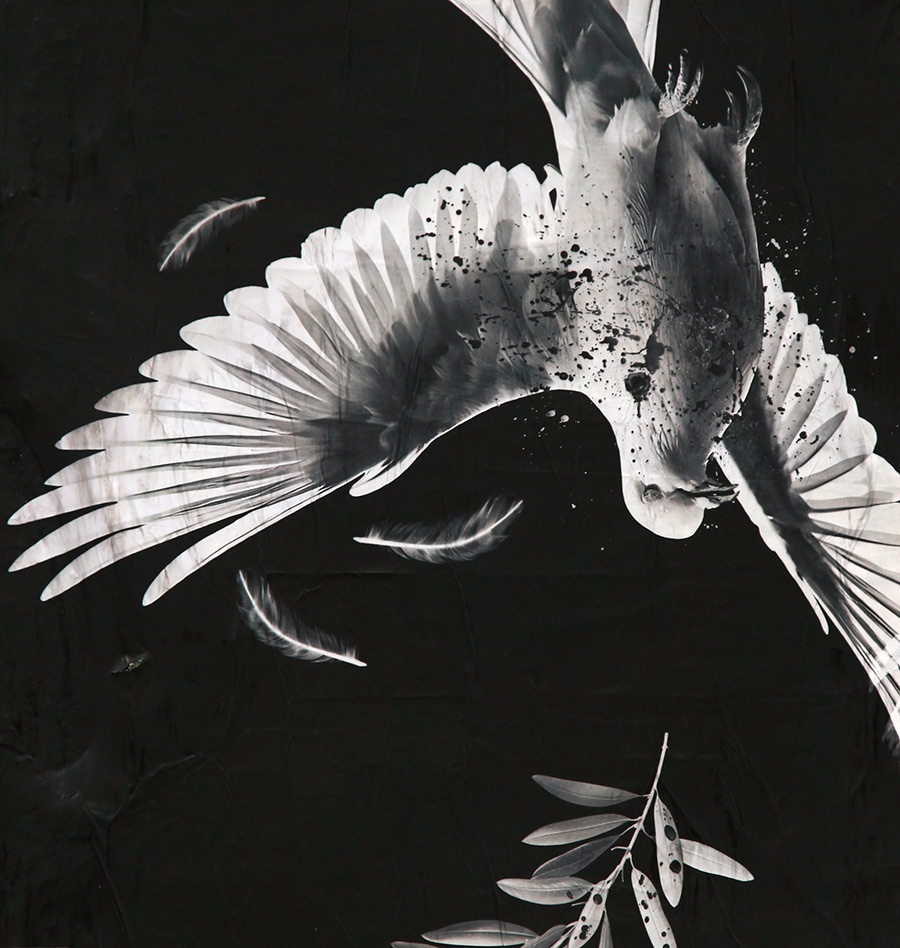
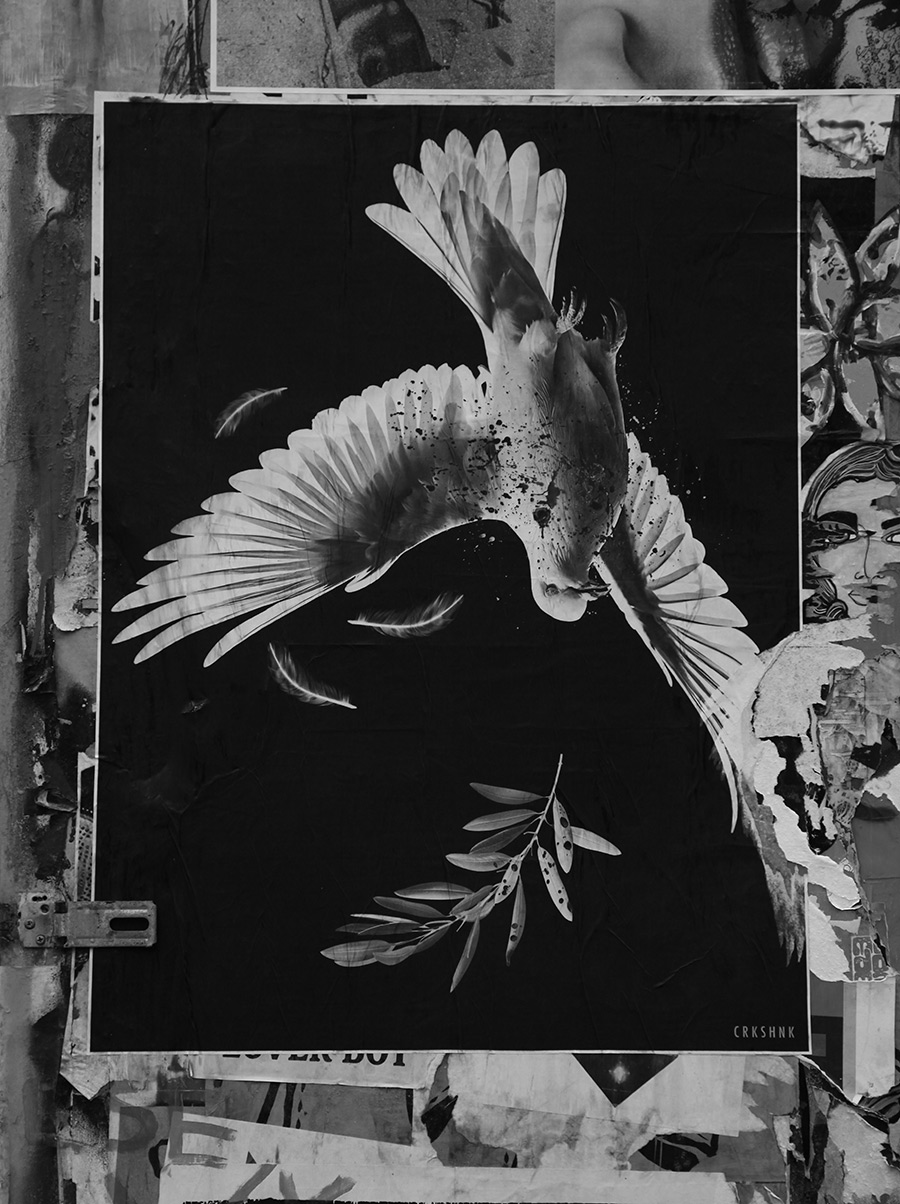
CRKSHNK (photo © Jaime Rojo)
Salami Doggy (photo © Jaime Rojo)
RAE. Detail. (photo © Jaime Rojo)
QZAR. RAE. LOVE. DZEL. (photo © Jaime Rojo)
ACE (photo © Jaime Rojo)
Caryn Cast. Detail. (photo © Jaime Rojo)
Caryn Cast (photo © Jaime Rojo)
Garrett Wasserman (photo © Jaime Rojo)
HOMESICK. DELUDE. (photo © Jaime Rojo)
Jim Power aka Mosaic Man. City Lore. (photo © Jaime Rojo)
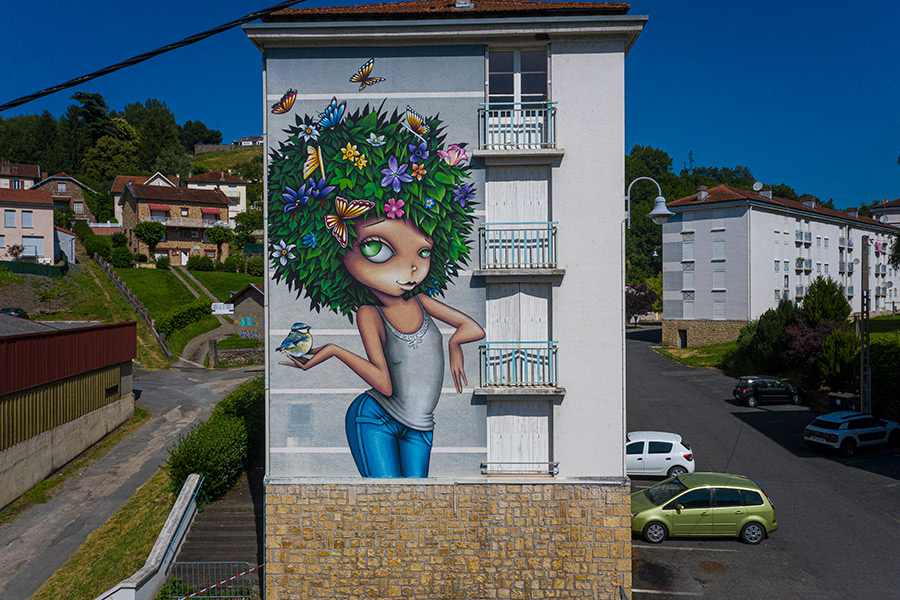
JIBZ (photo © Jaime Rojo)
Welinoo (photo © Jaime Rojo)
Fundraising for an engagement ring under frigid temps in NYC. The weather registered 32 Farenheight but felt like 22 on Friday. (photo © Jaime Rojo)

BSA: What are you doing?

DUDE: It’s performance art.

BSA: Are you fundraising?

DUDE: Yeah, for a ring for my girlfriend.
BSA: (We couldn’t hear his answer clearly) Why does your girlfriend need money?
DUDE: Sorry?

BSA: Your girlfriend needs money?

DUDE: No, it’s just to buy an engagement ring for her.

BSA: OK. How much money are you planning to raise?

DUDE: Whatever I raise with the project goes towards the ring.

BSA: Do you want a diamond?

DUDE: Yeah.

BSA: A lab one, or a real one?

DUDE: A real one.

BSA: OK. Good luck.

DUDE: (Shivering)Thank you very much, have a good day.

Update: A commenter on the BSA Insta post wrote that he’s been fundraising for this project for over six months.

Fundraising for an engagement ring under frigid temps in NYC. The weather registered 32 Farenheight but felt like 22 on Friday. (photo © Jaime Rojo)
NAIER (photo © Jaime Rojo)
Chair with snow falling on a terrace. Brooklyn, NYC. January 17, 2026. (photo © Jaime Rojo)

Read more