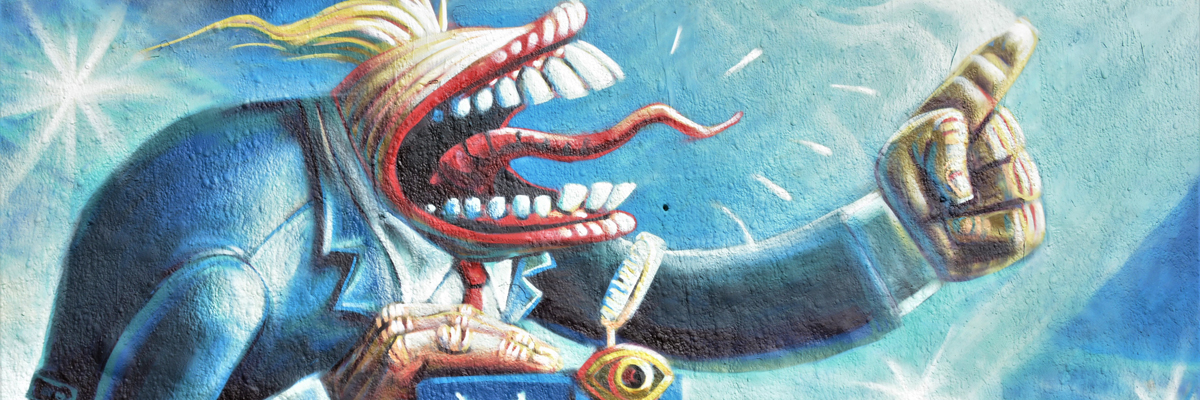
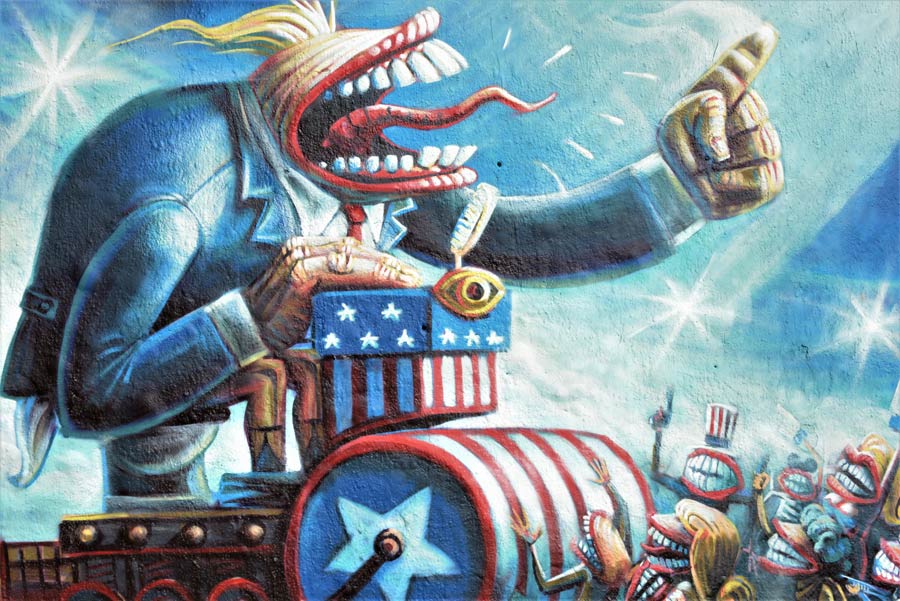
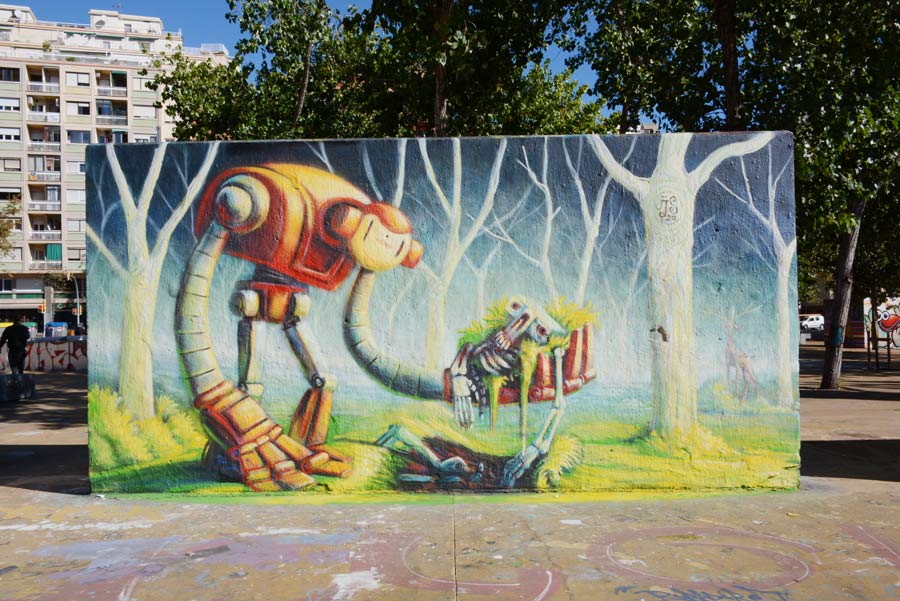
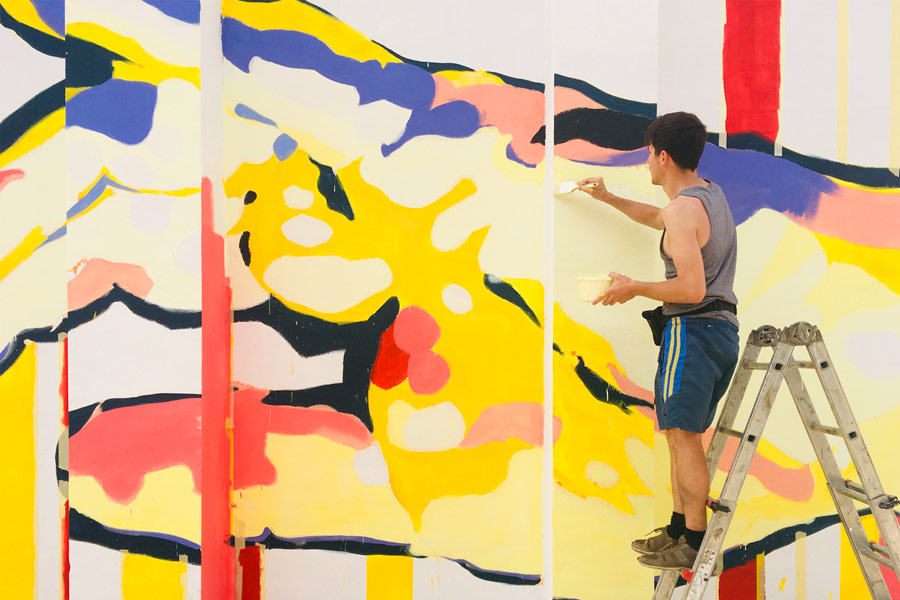
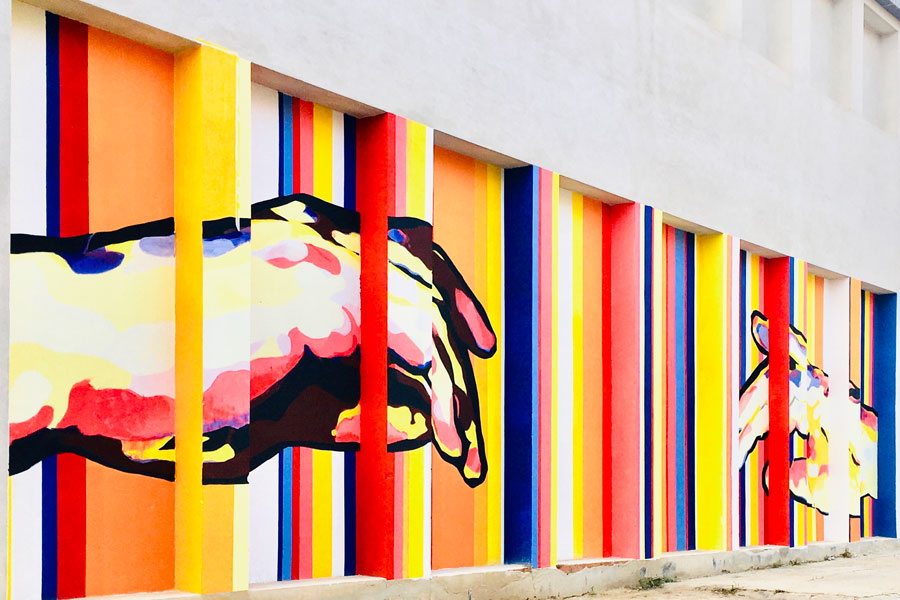
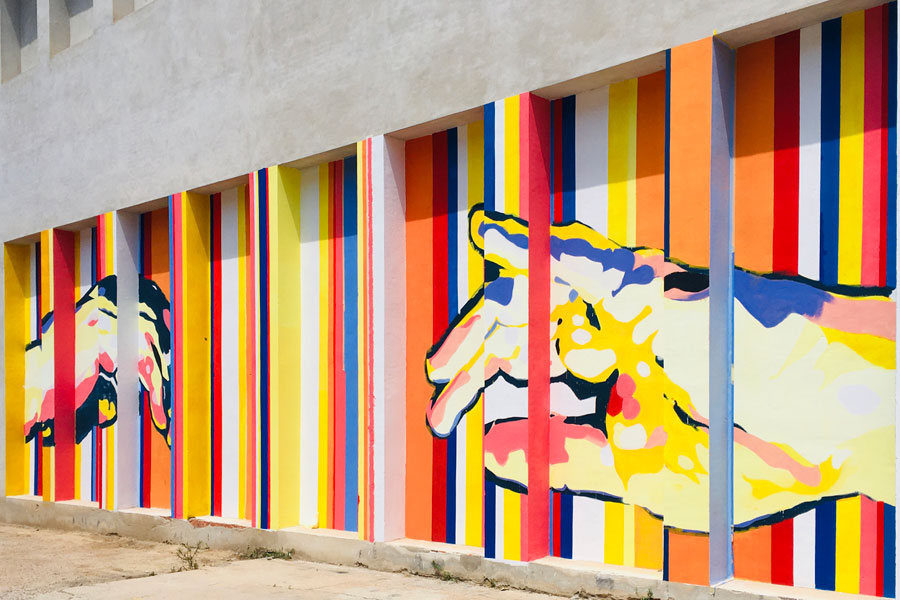
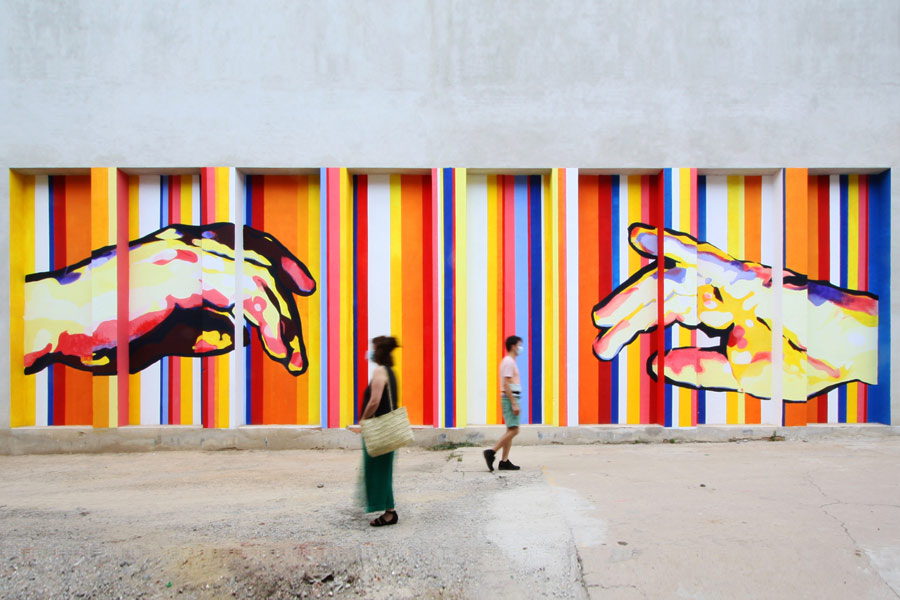
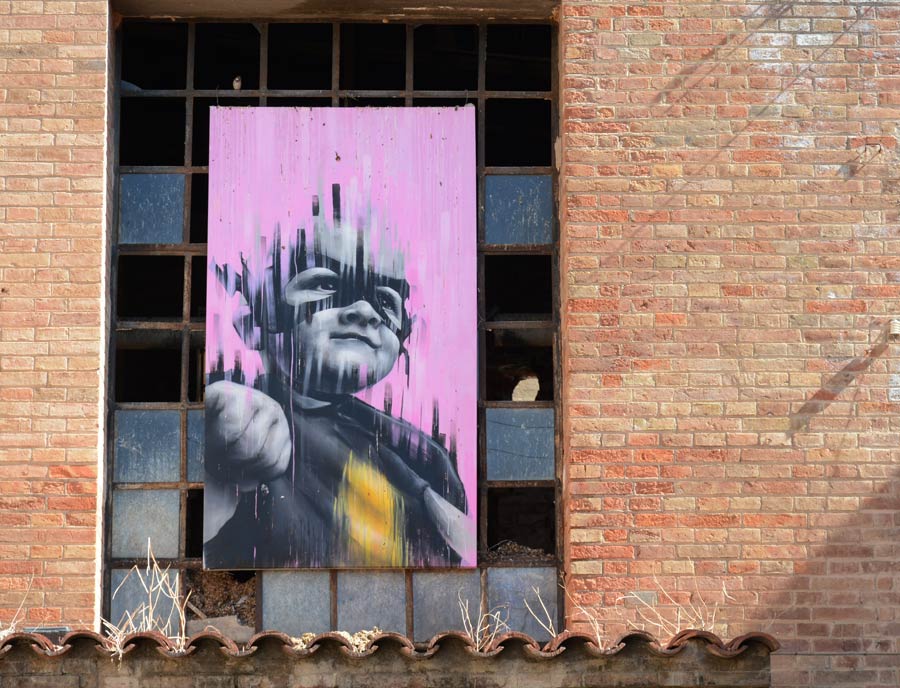
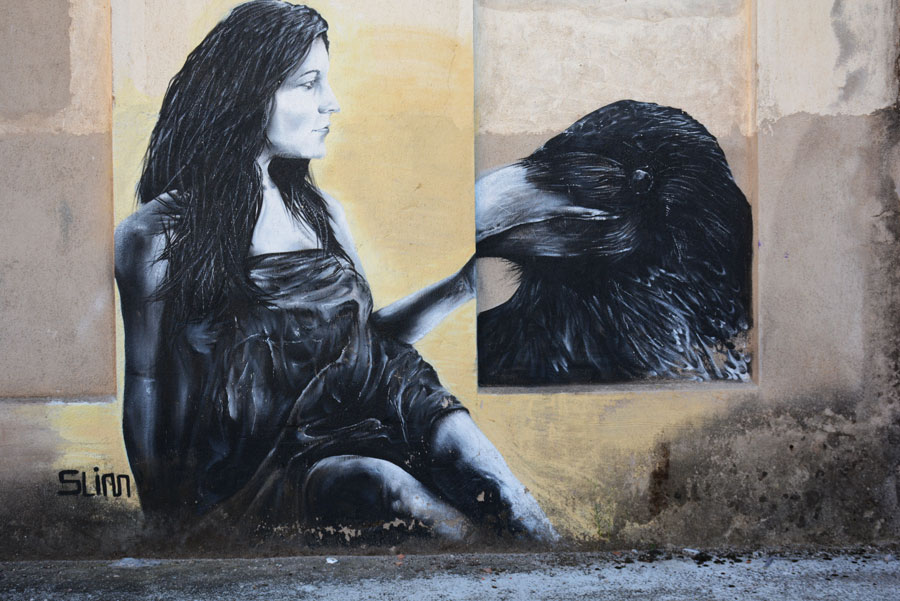
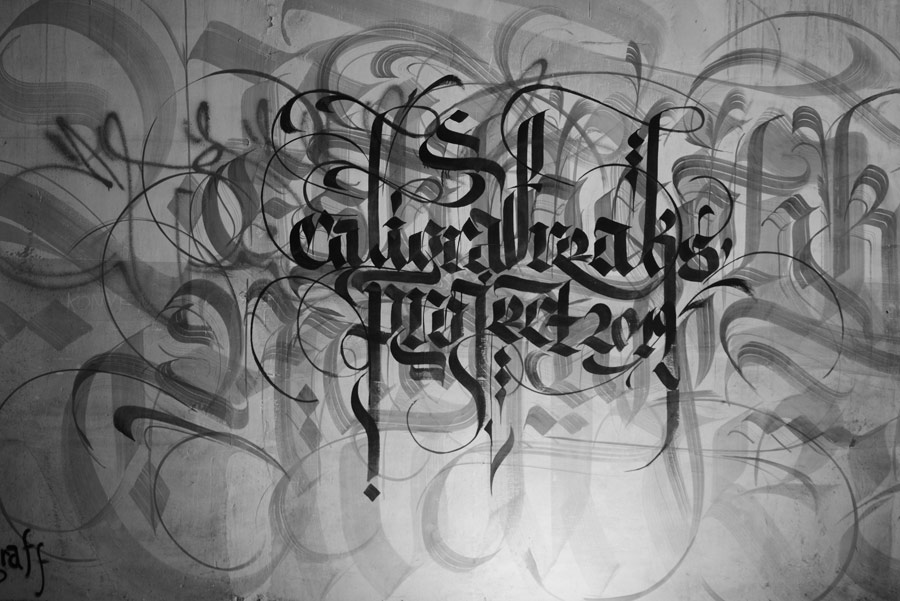
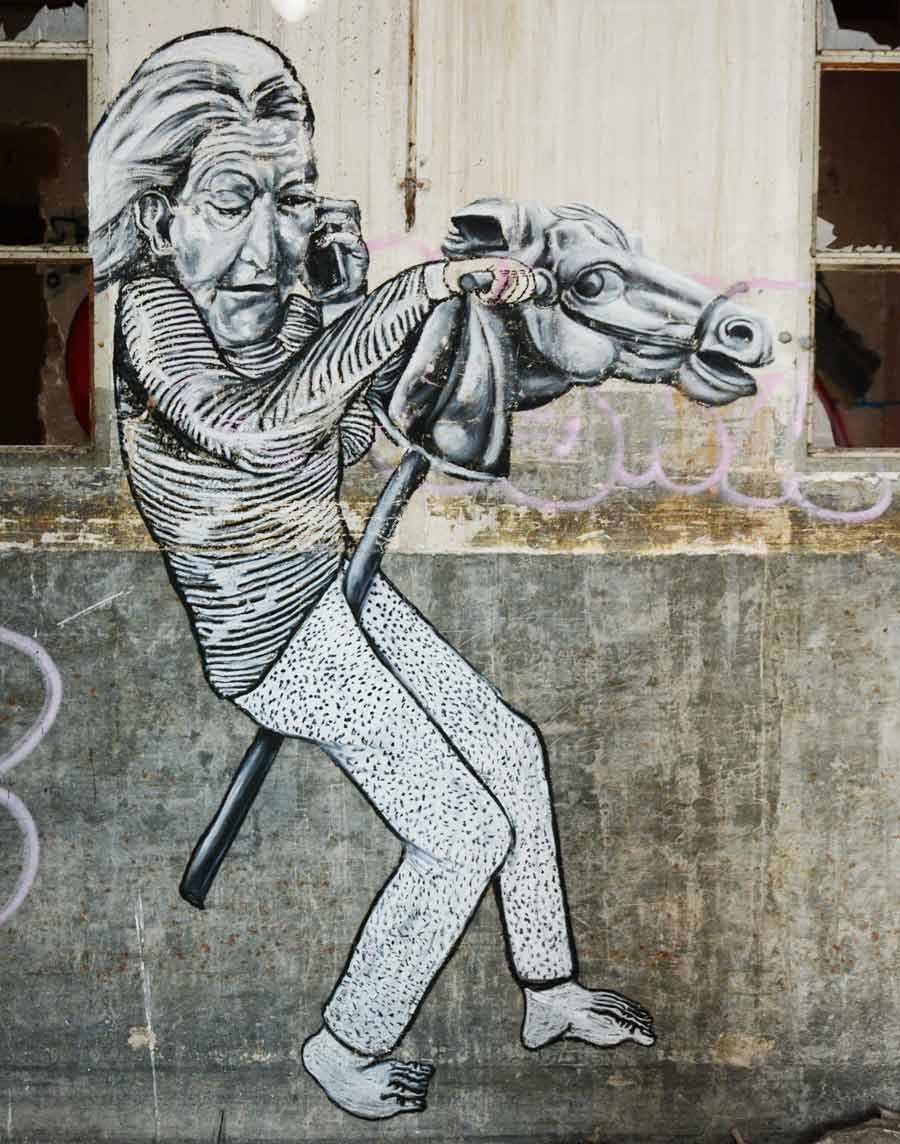
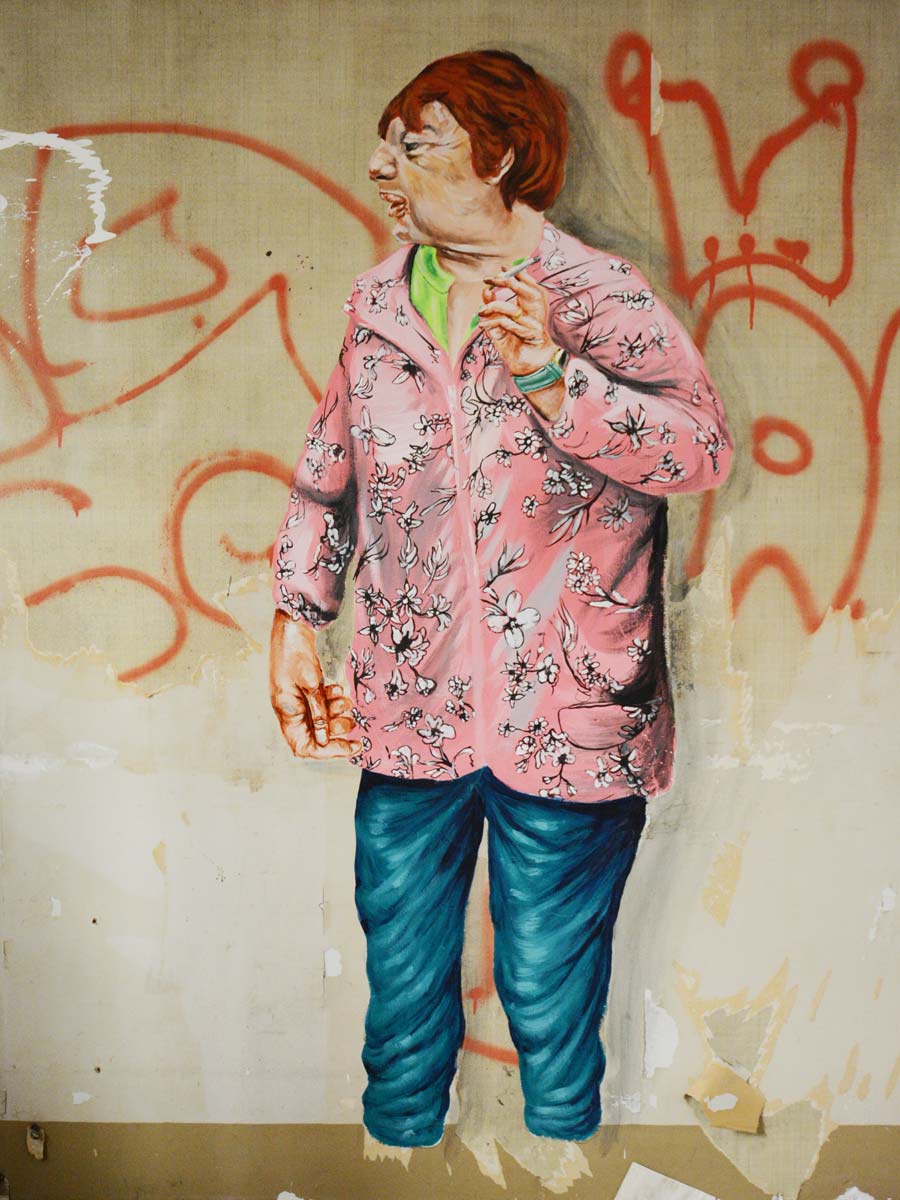
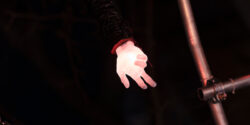
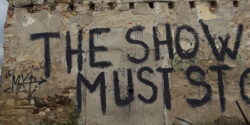
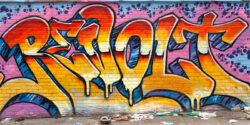
Political cartoons and murals sometimes overlap but rarely as impressively and with such frightening a warning as this new one from Juanjo Surace in Barcelona.
The skill and quality and powerful depiction all come together here from across the Atlantic Ocean, perhaps a clarion summation of how those outside the U.S. now see us and the current occupant of the White House.
The artist is professionally a painter, sculptor, and animation professor. He says he is self taught and that his deepest love for his craft is expressed when spray it on the street.
We continue to see a dissolving of previous tensions between the worlds of graffiti writing and mural artists and other disciplines of art-making as we travel around cities around the world. Artificial divisions have persisted, and indeed the lived experience of graff and street art and mural making are distinctly different in certain respects, but the piece is the piece, regardless of style, and each creator can be an ambassador with a message.
Our own philosophy is if art is going to have the transformative power that we believe it can have on all of our societies, families, and institutions we need to dissolve artificial divisions in the creative community as well – as they serve little constructive purpose. As art in the street usually reflects society at large, we have our own challenges with classism, sexism, and racism as well.
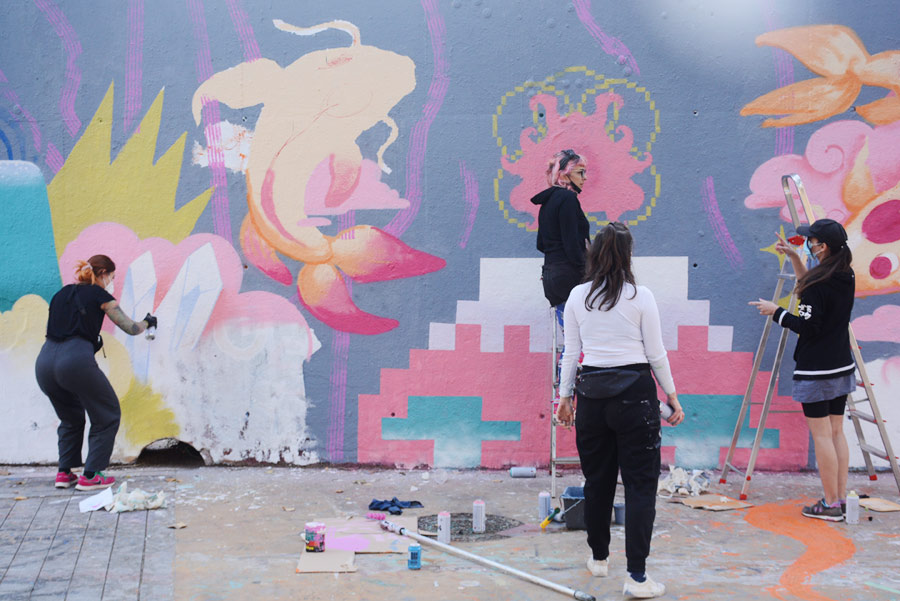
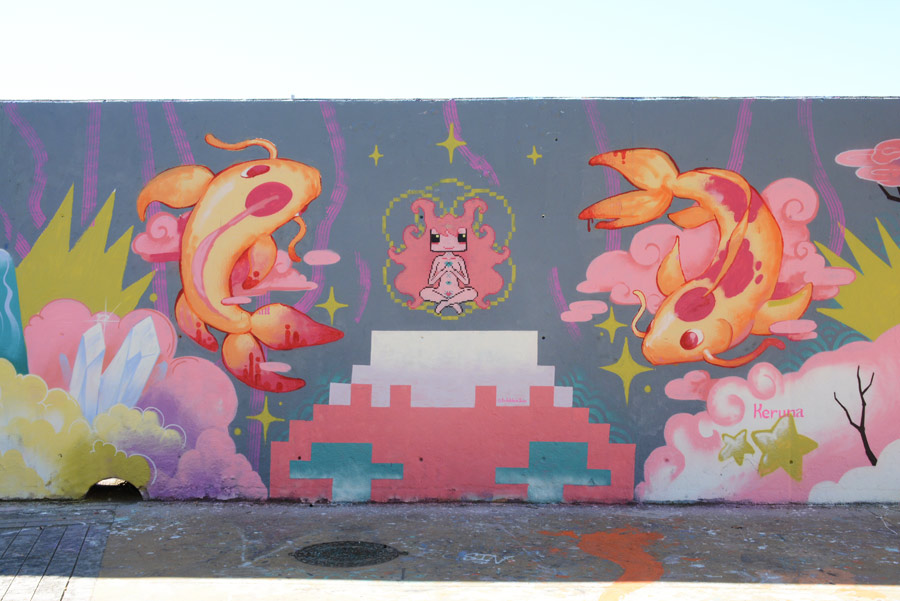
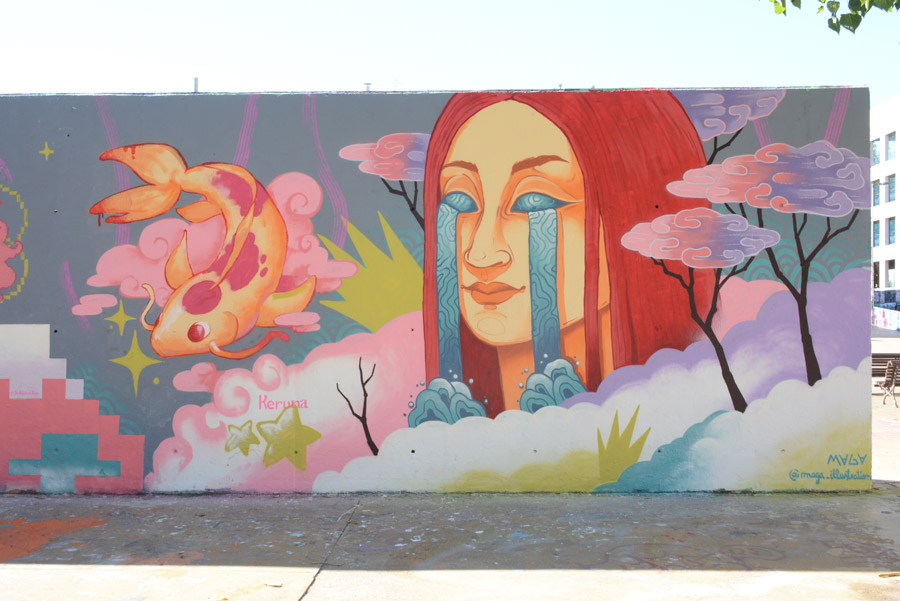
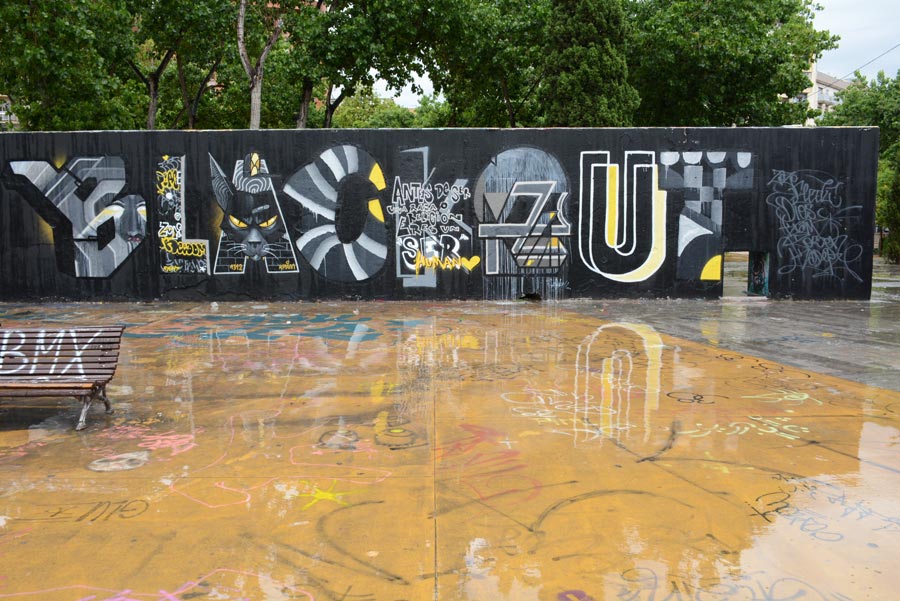
So it’s great to see the continuance of brotherhood and sisterhood at small neighborhood festivals like the 3rd Edition of the Kronos Art and Arts Santa Mònica here in an area of Barcelona during the third week of October. One core philosophy at this festival this year was to re-consider the future of art and its role by actively consulting kids in defining what art is, and what it could be.
“Be aware of the role of ARTIST and his work in our PRESENT, without
judging, without imposing criteria, with the sole conviction that what we are
creating is the prologue of the FUTURE in the ART”
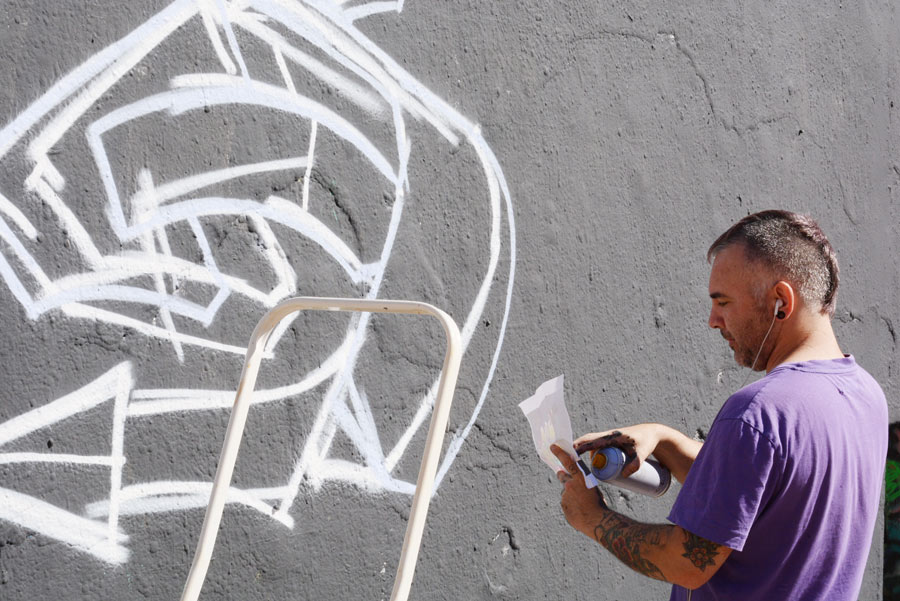
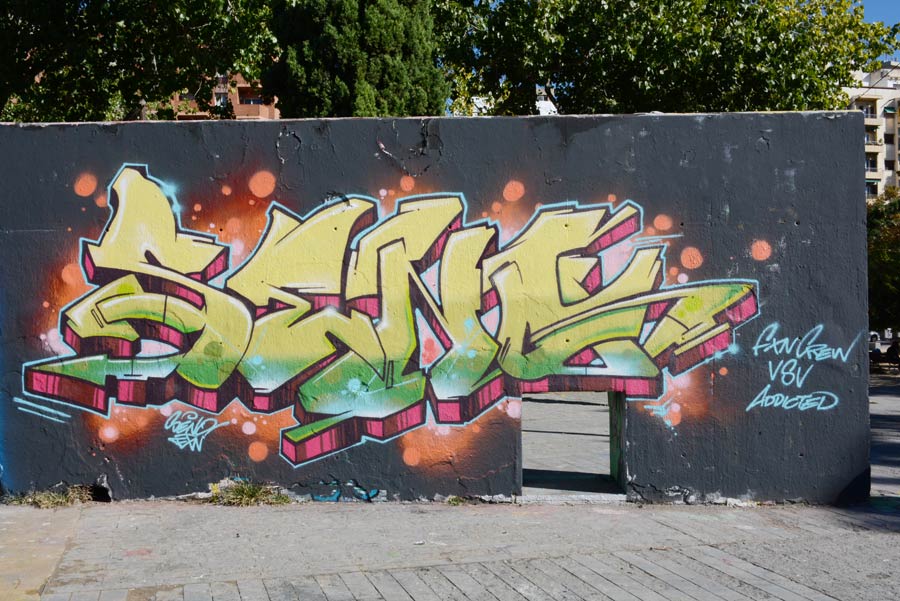
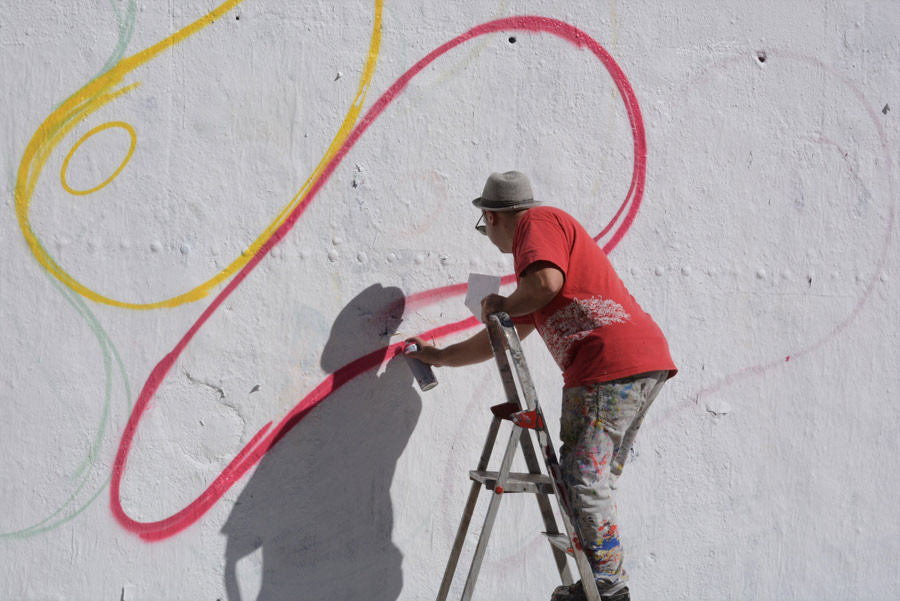
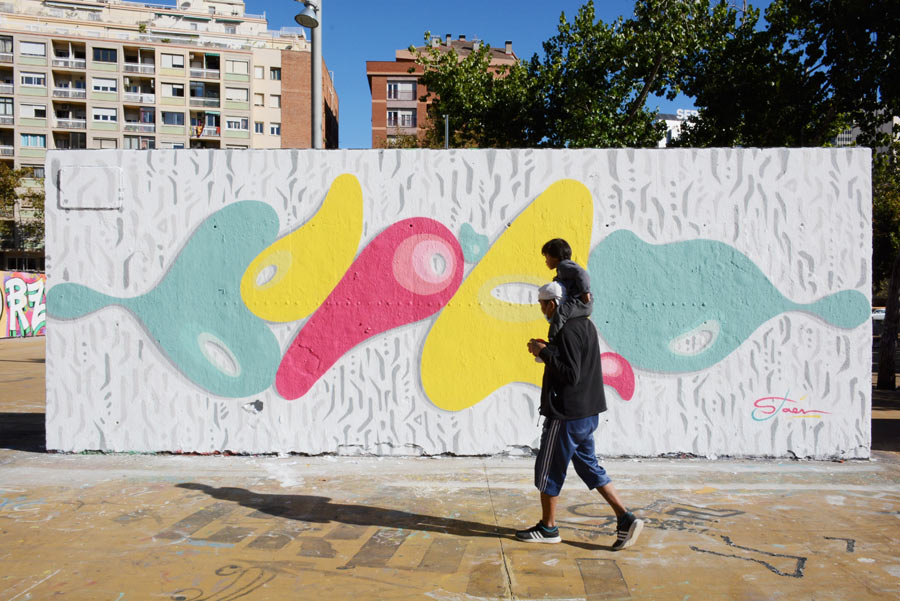
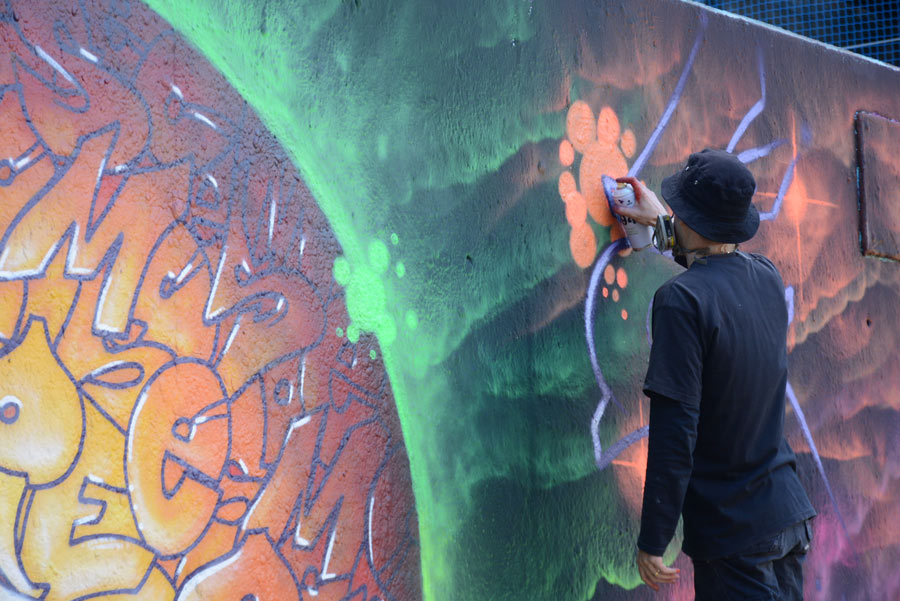
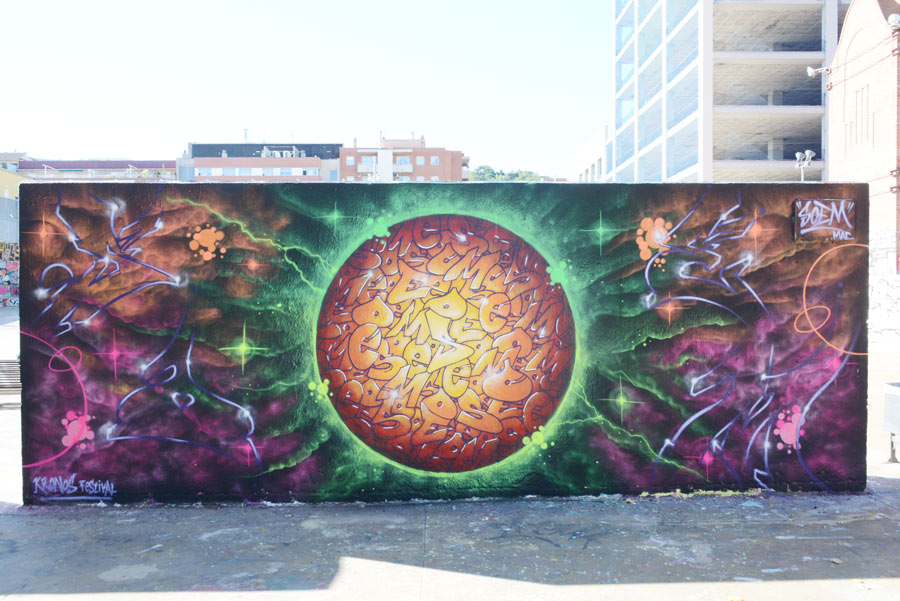
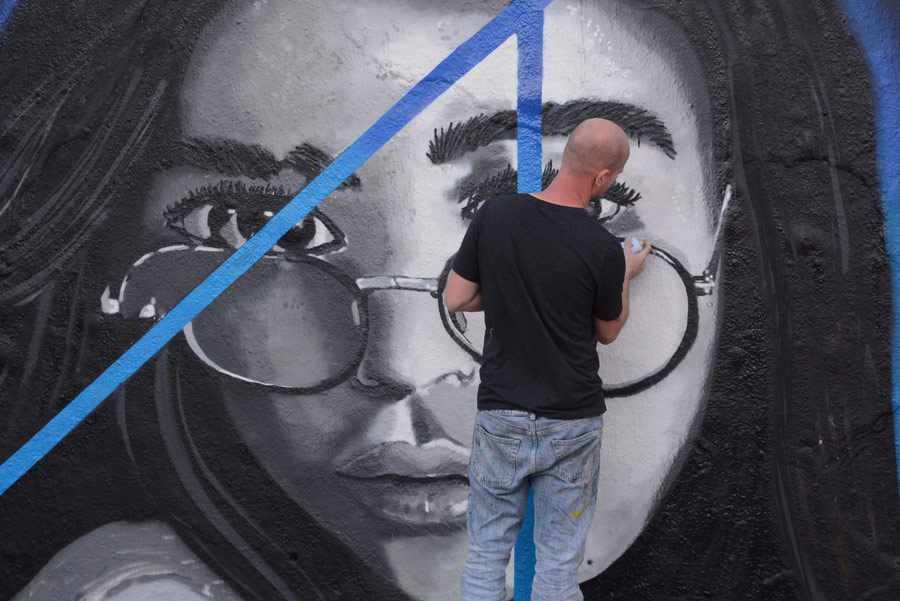
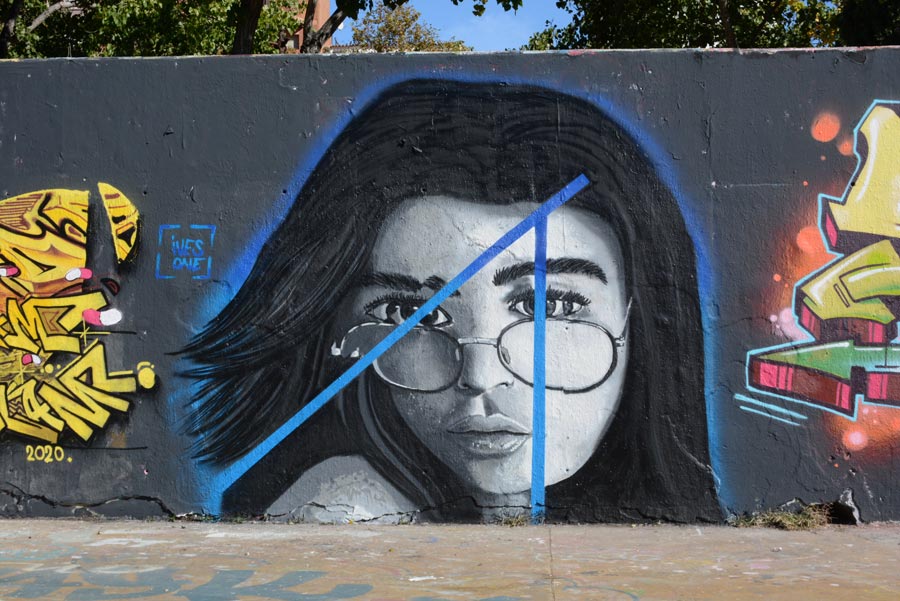
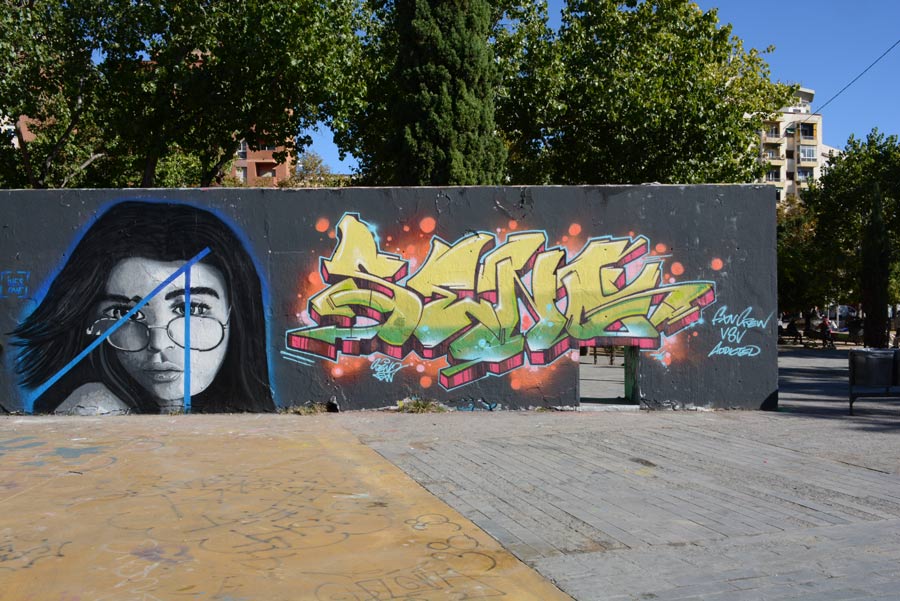
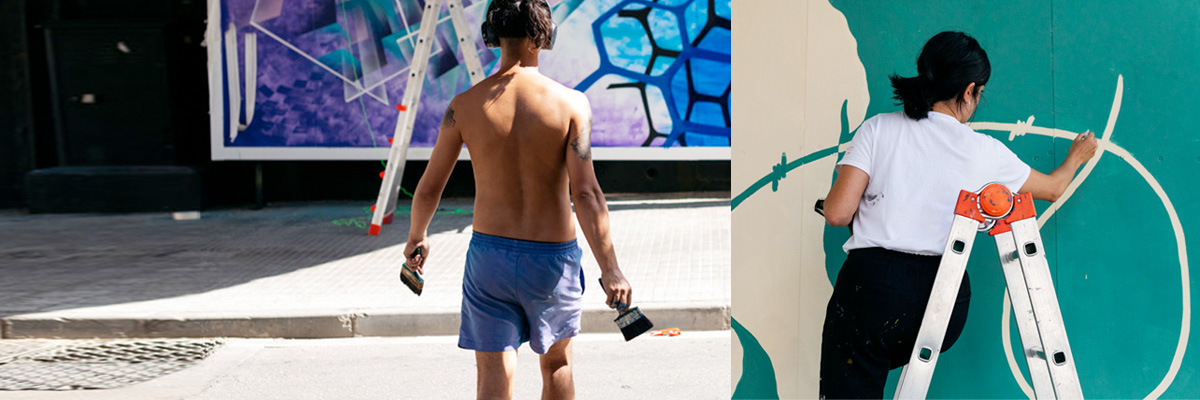
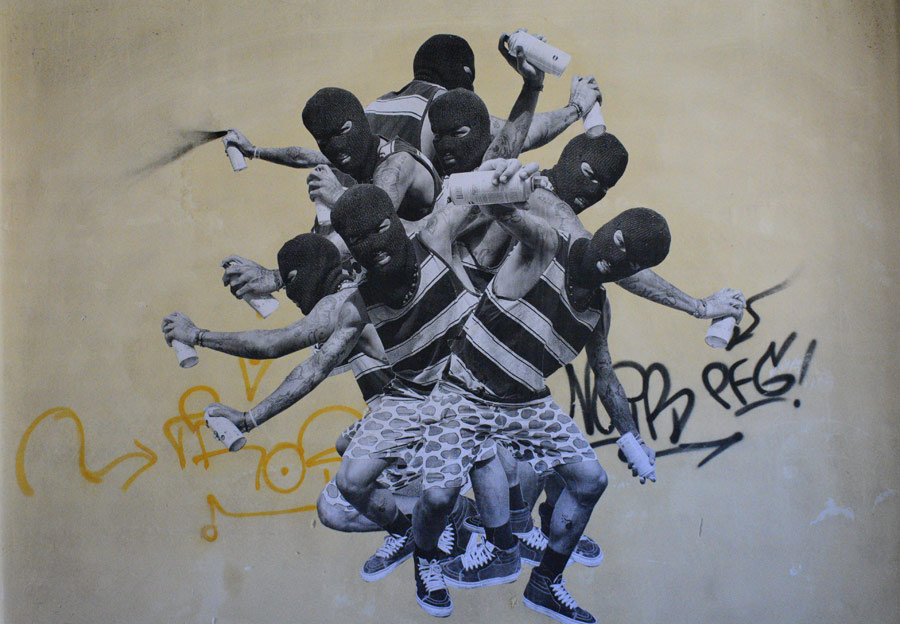
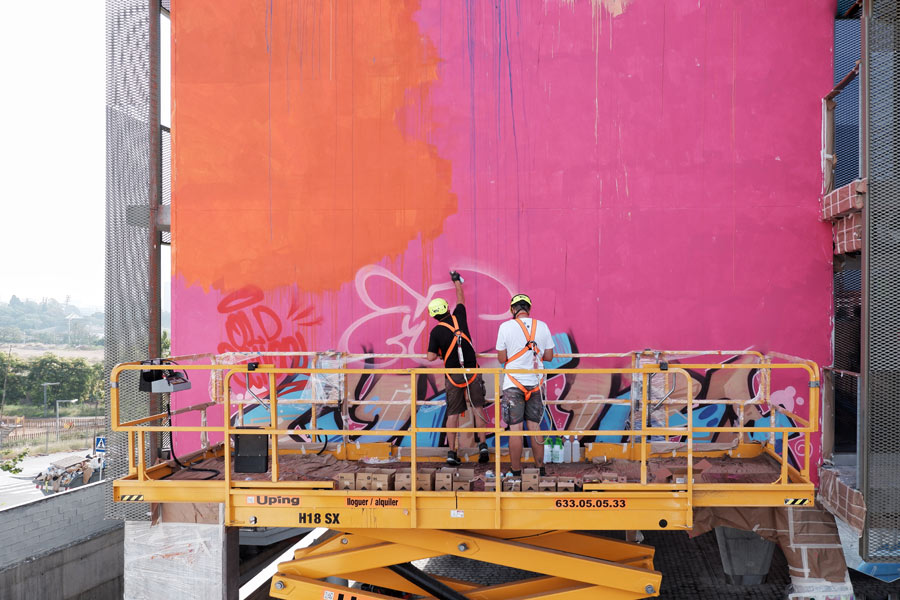
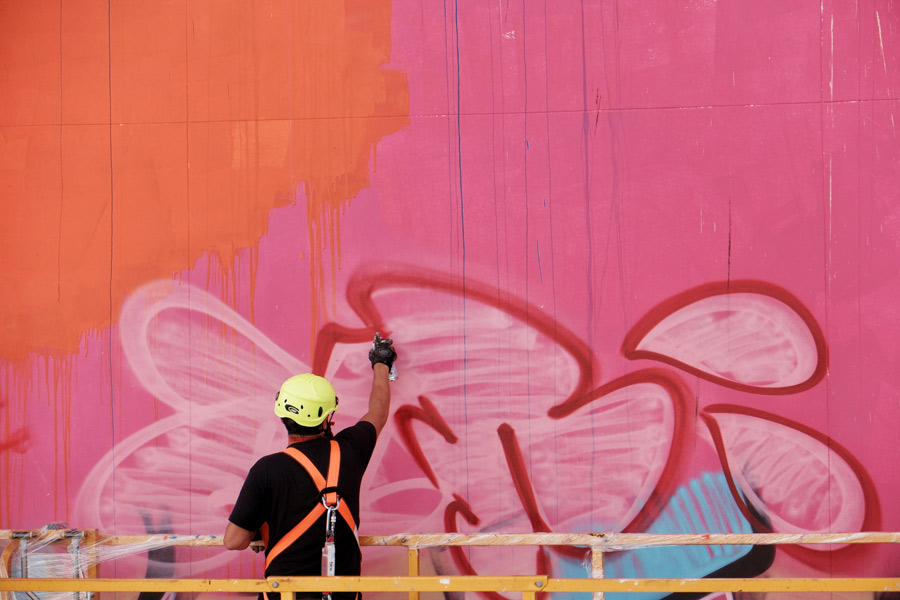
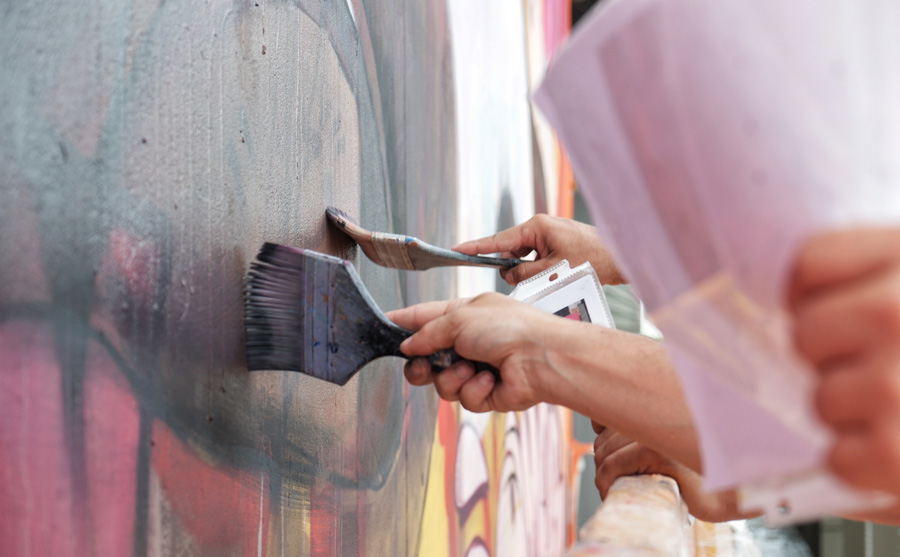
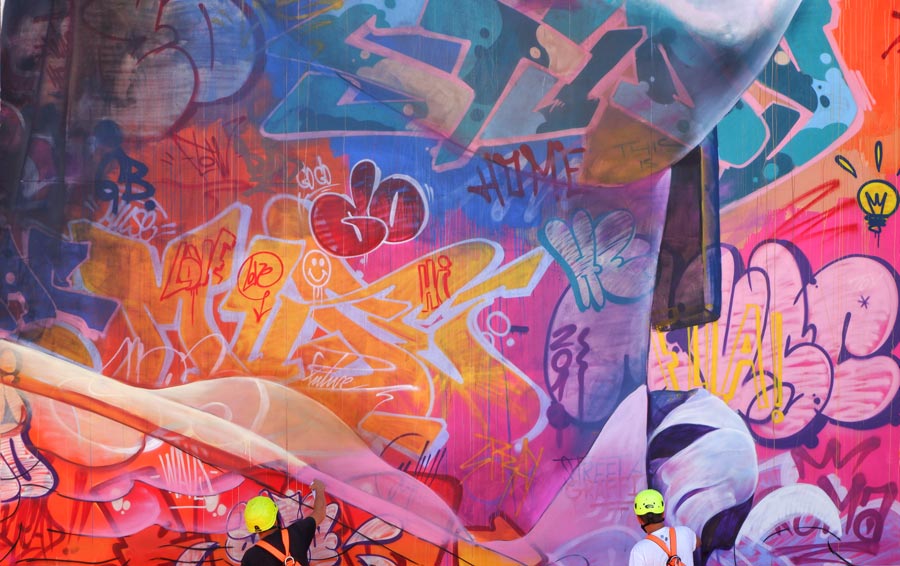
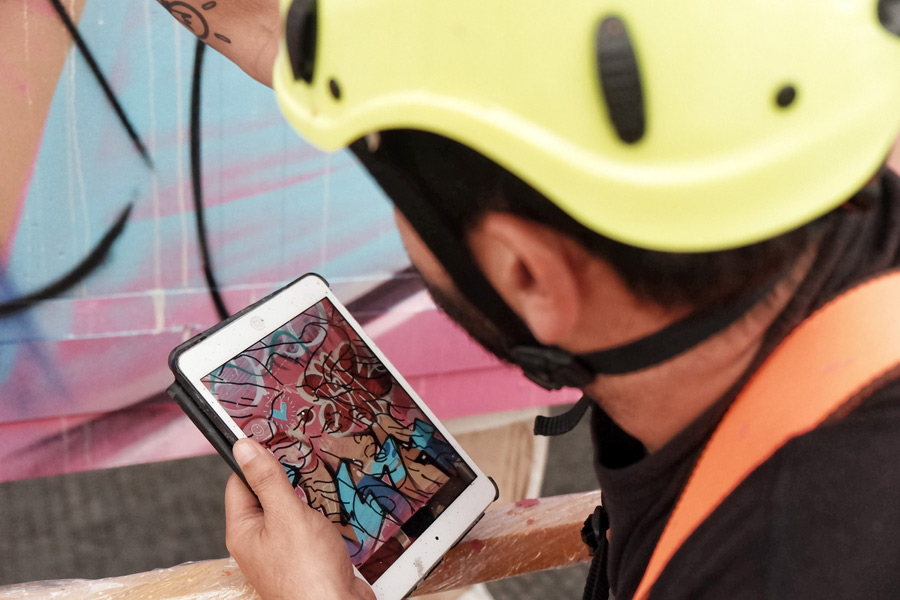
During their ‘live painting’ events at 3 Chimney Plaza (Plaza de las 3
Xemeneies) it was the men and women, graffiti writers and street artists – all working
side by side. Part of a much larger group of events that included 70+ artists,
photography, sculpture, performance, music, video art, cinema, talks, and workshops,
these painters just did their thing and had a good time.
“Becoming cultural activists, taking the reins of how to express ourselves and about what to express ourselves through art; and by doing so becoming key pieces for the freedom of creation, we become aware as spectators, as thinkers, as artists, as a species. KRONOS ART BCN 2020 is a wager to the freedom of society through the freedom of the artist; free to catch everything that interests and surrounds them, without fear of being judged and without judging the protagonists of their artwork. Free to BE in all the aspects that make us human, thus turning the PRESENT into the prologue of a FUTURE world full of diversity.”
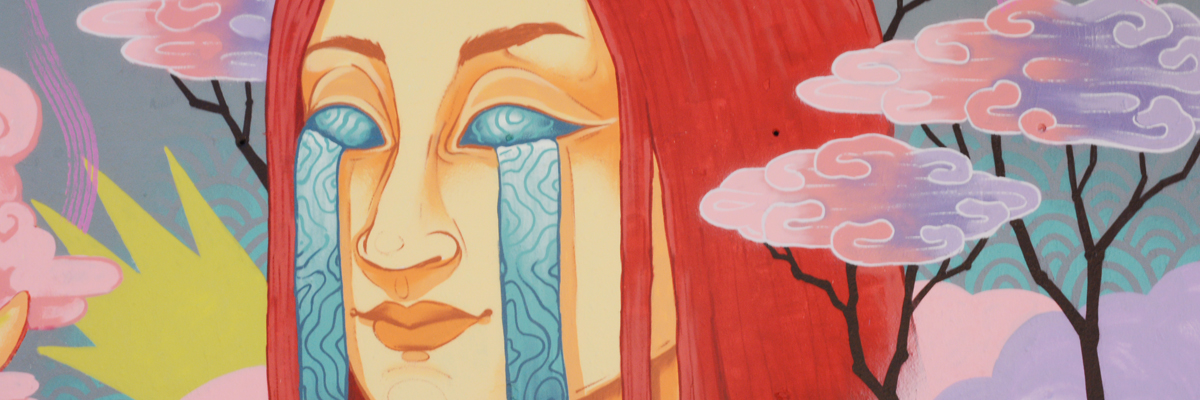
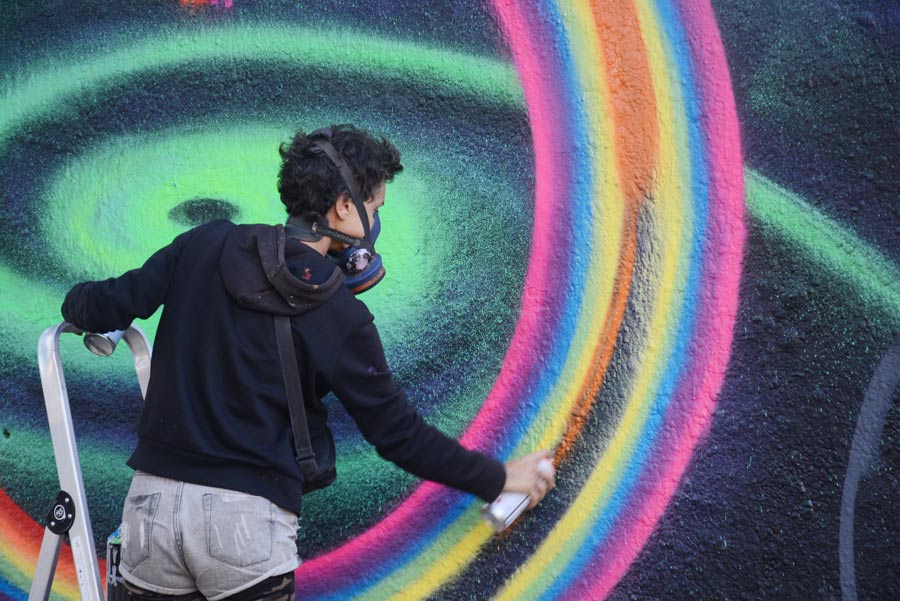
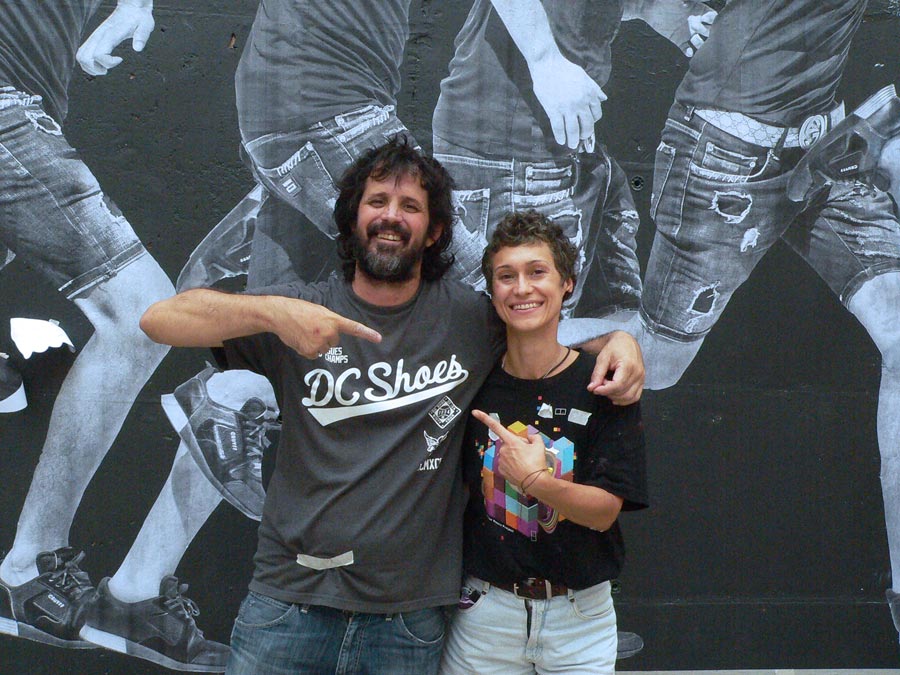
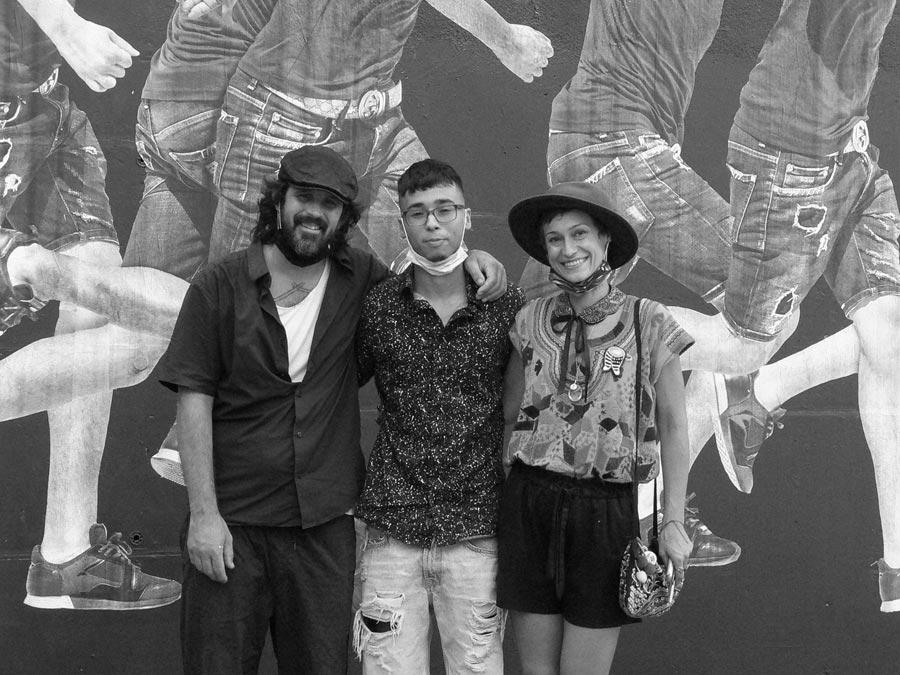
Our thanks to photographer Lluis Olive Bulbena for capturing a few of the artists at work at the plaza.
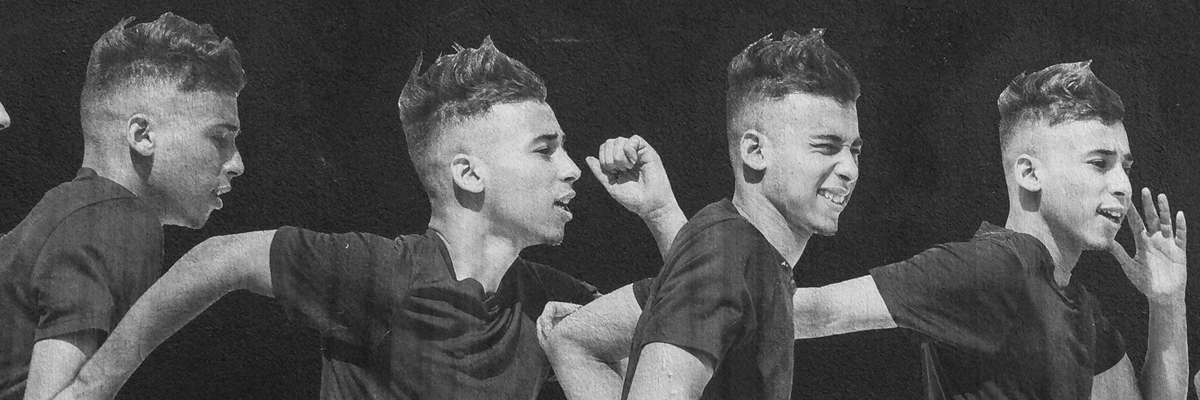
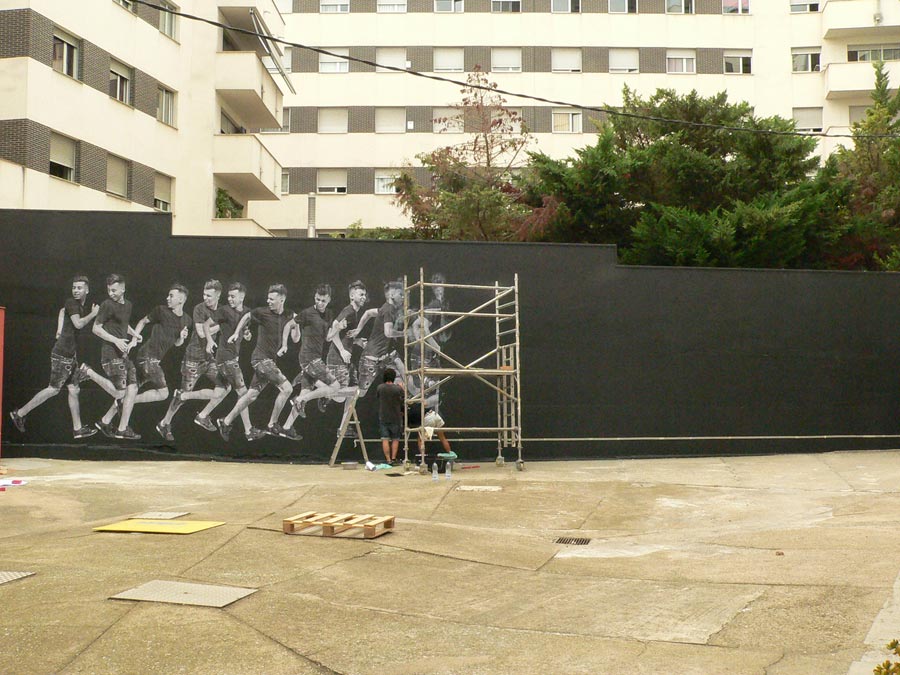
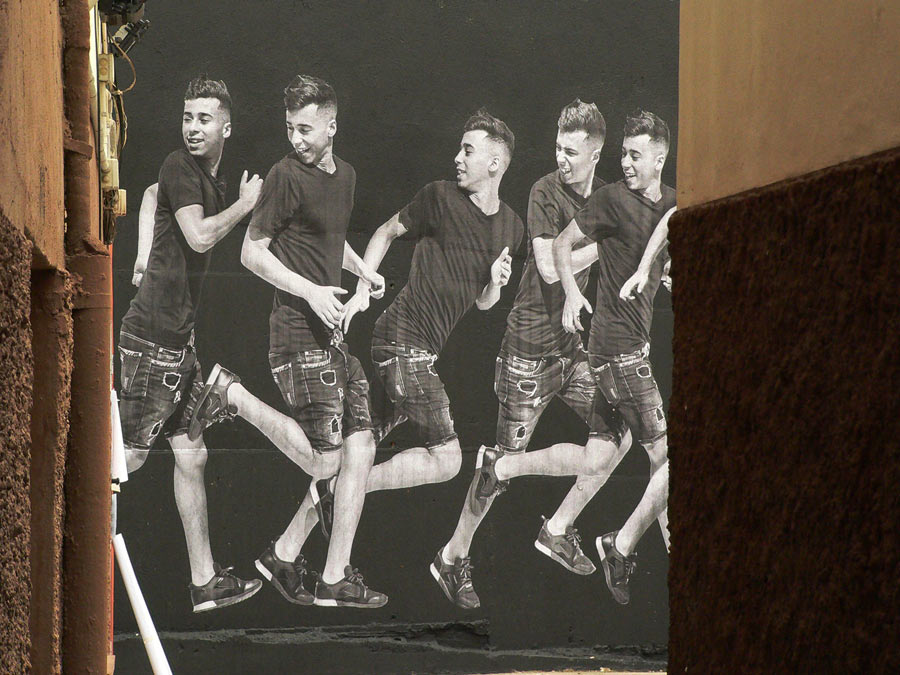
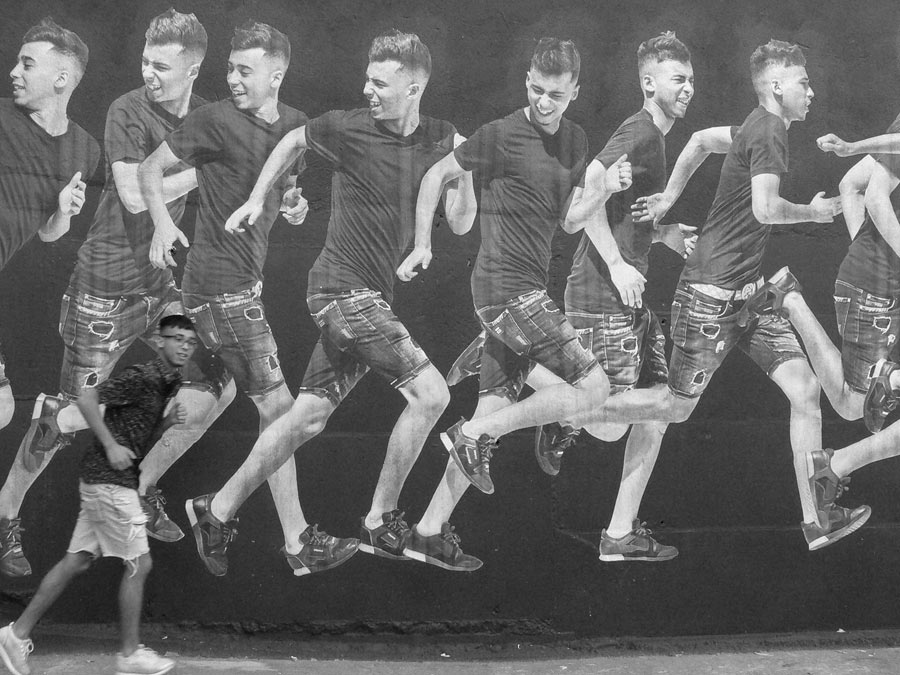
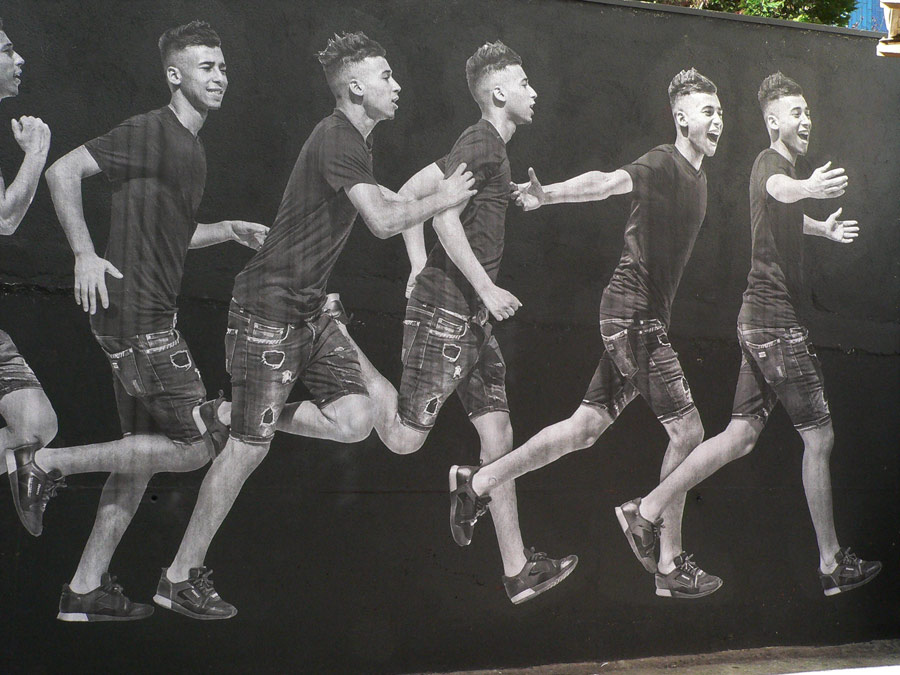
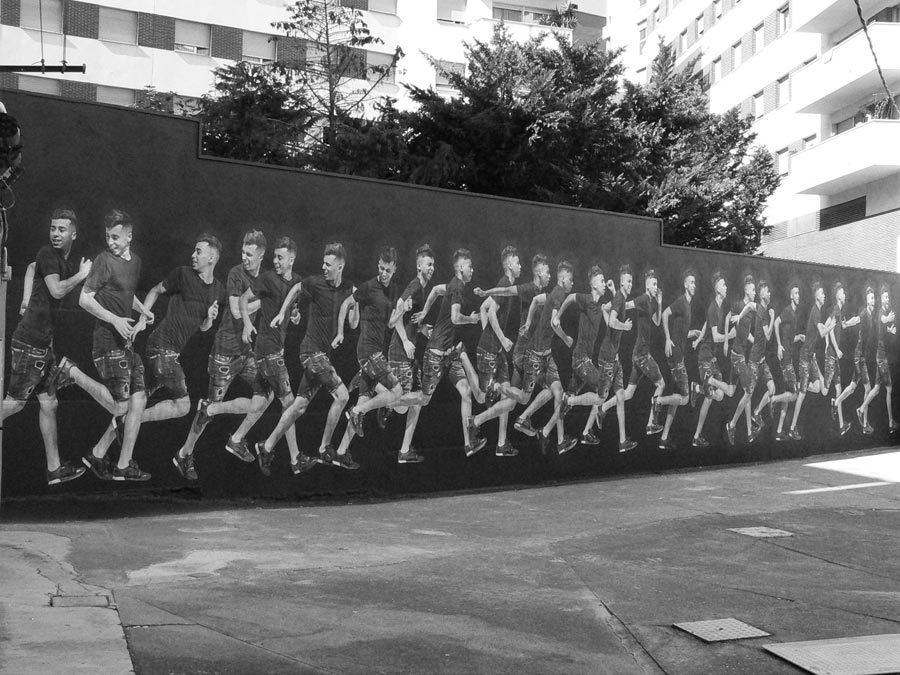
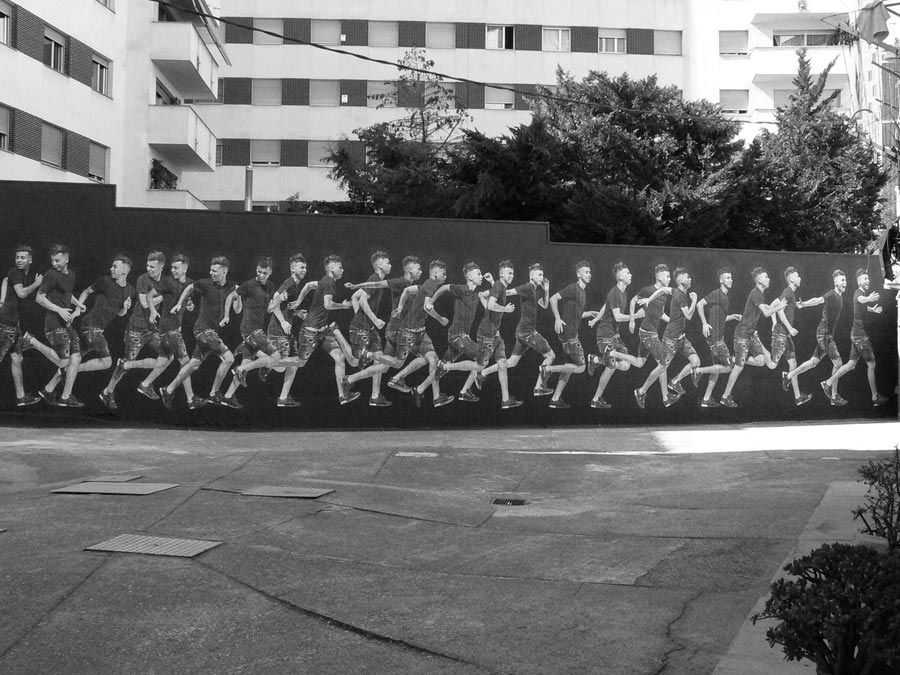
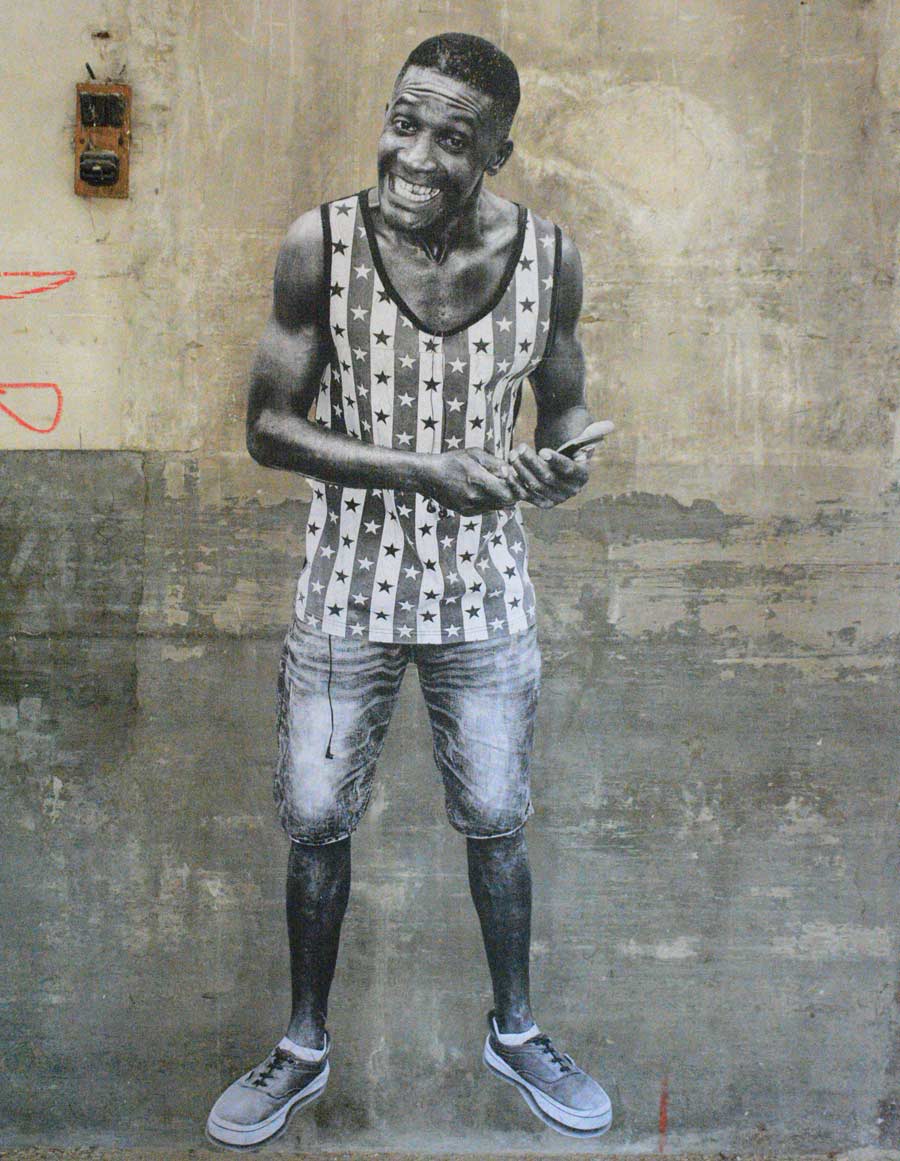
Mourad is
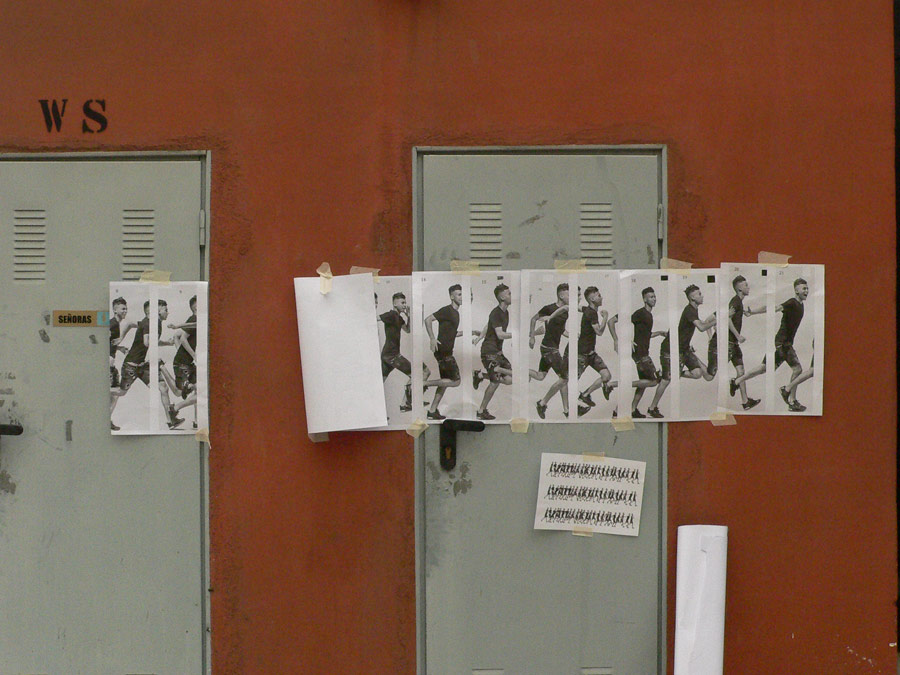
running! It’s 20 meters along this wall on the inner courtyard of
the Bac de Roda Housing Cooperative in Poblenou, a neighborhood of Barcelona,
Spain.
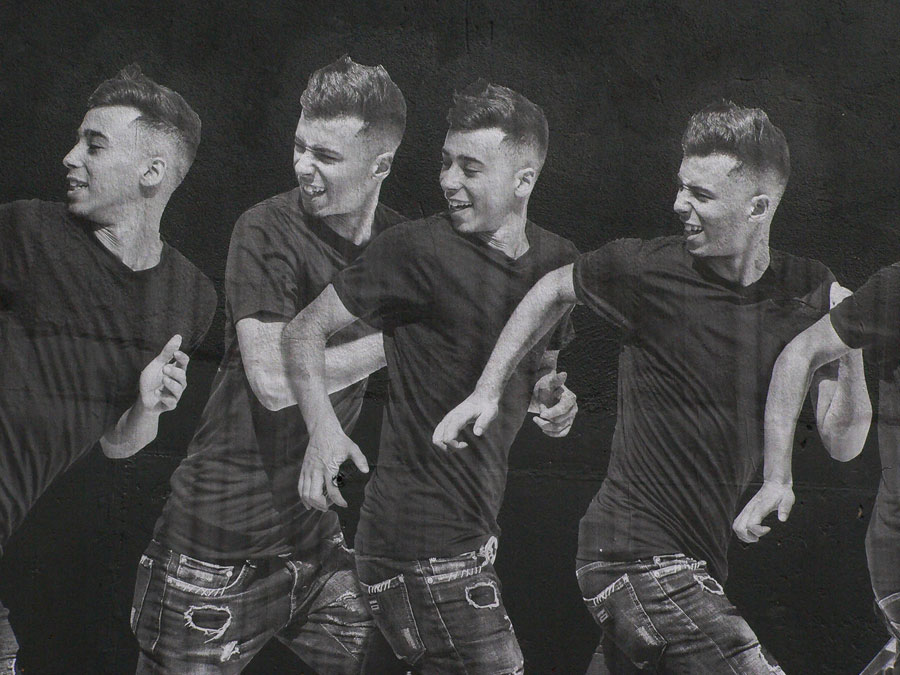
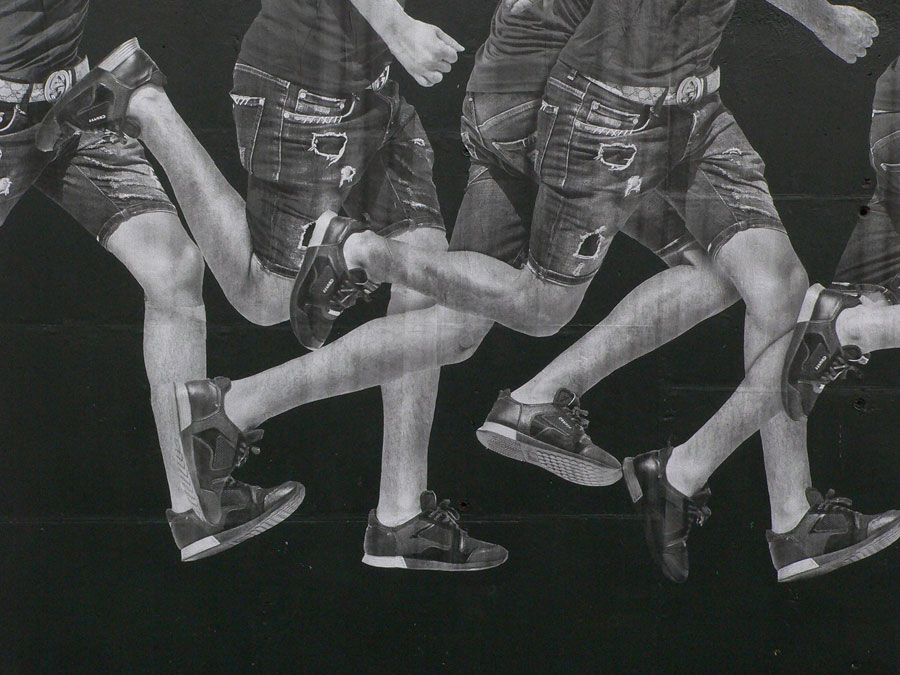
The new stop-action installation is meant to freeze for a moment the emotions and sensations that can occur during migration – which many people are forced today to do all over the world, whether they are escaping from hardship, fear, war, environmental extremes, or decimated economies.
Artist Teo
Vázquez wants us to think about the distance that people run, and how crossing
a simple national boundary can be the difference between life and death. If you
studied Western art history, these figures may also call to mind warriors and
heroes of so-called classical antiquity.
Here Vázquez
says he has captured “through a sequence of movements, different snapshots
which reflect a mosaic of unique expressions.” This, he says, is “a figure who
symbolically represents all who they have made a migratory journey risking
their lives.”
Born in
Cadiz, now living in Barcelona, Vázquez is participating in the fourth edition
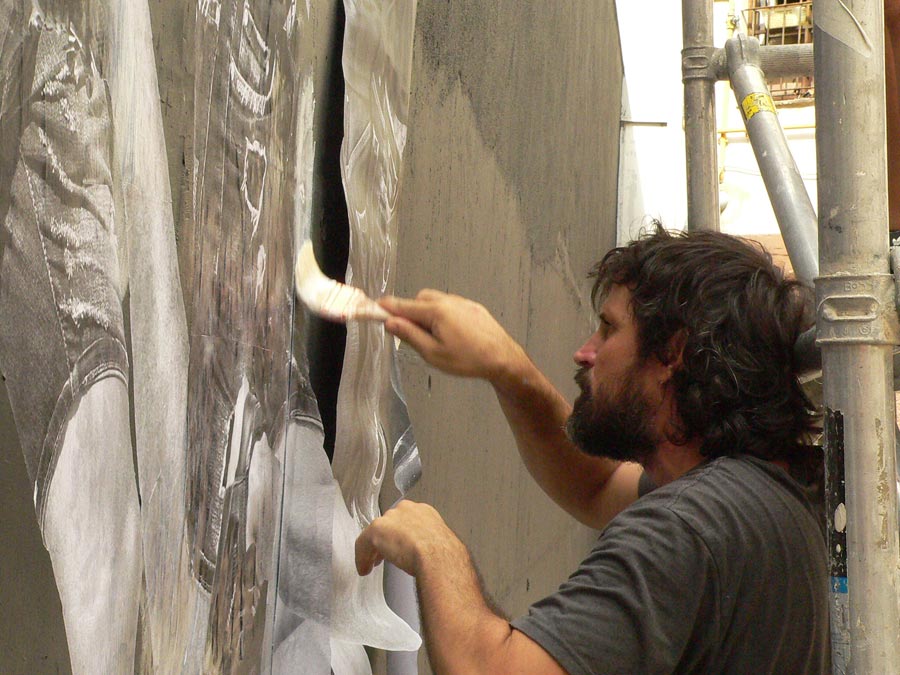
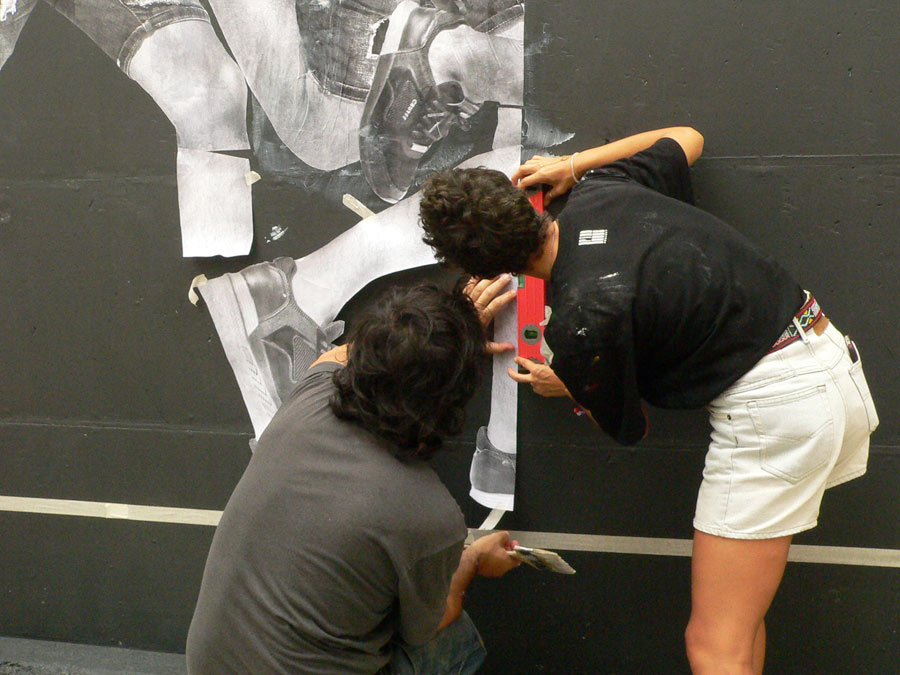
of MURAL / LOCAL, an artistic action that annually renews this wall. He would
like to thank his subject Mourad as well as his fellow artist Magda Cwik, who
assisted him in hanging the new installation. Our thanks go to photographer Lluis
Olive Bulbena, who shares his photos of this new work with BSA readers.
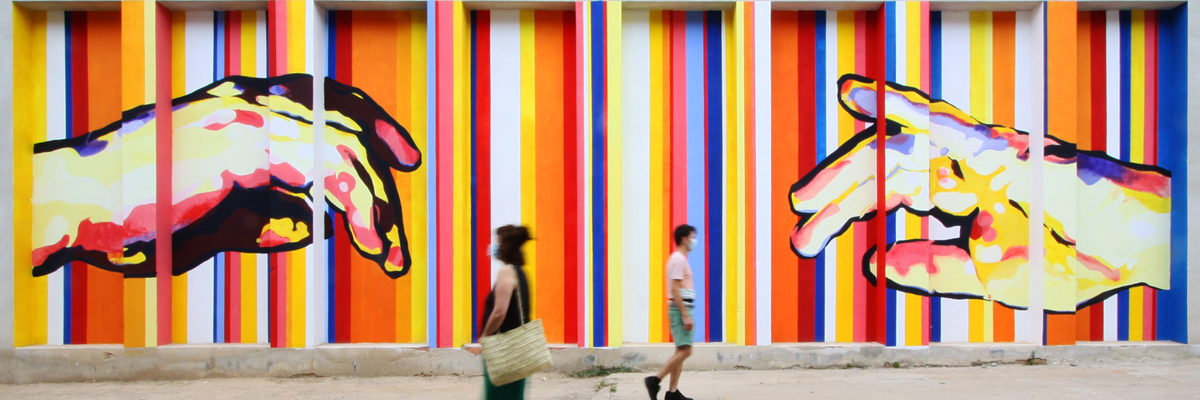
Today we go
to Barcelona in Spain, where the country held a memorial ceremony July 16 to
honor more than 28,000 people who have died there from COVID-19. This new mural
contemplates what it means to be connected, and considers what it takes to have
hope.
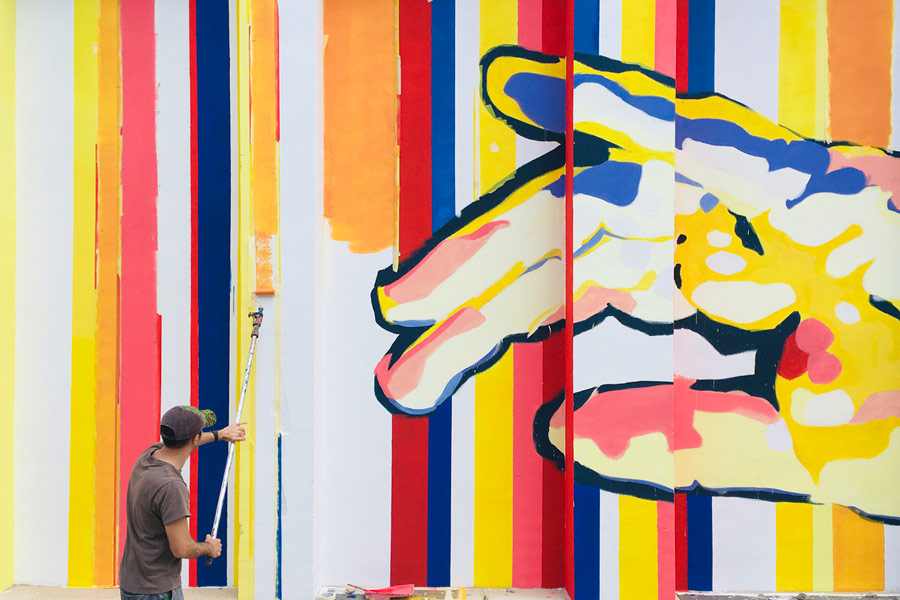
Utilizing
the architectural barriers as metaphor for the obstacles to connection, artists
Josep Fernandez Margalef and Rice created ‘Esperança’ (Hope) in the Granollers area of Barcelona.
“Even at a distance, hope
acts as a power that can bring us closer to each other, helping us to reach tomorrow. We honor connections, longing,
and a feeling greater than ourselves when we are alone; love, friendship, and
care all belong in this realm of being,” say the artists.
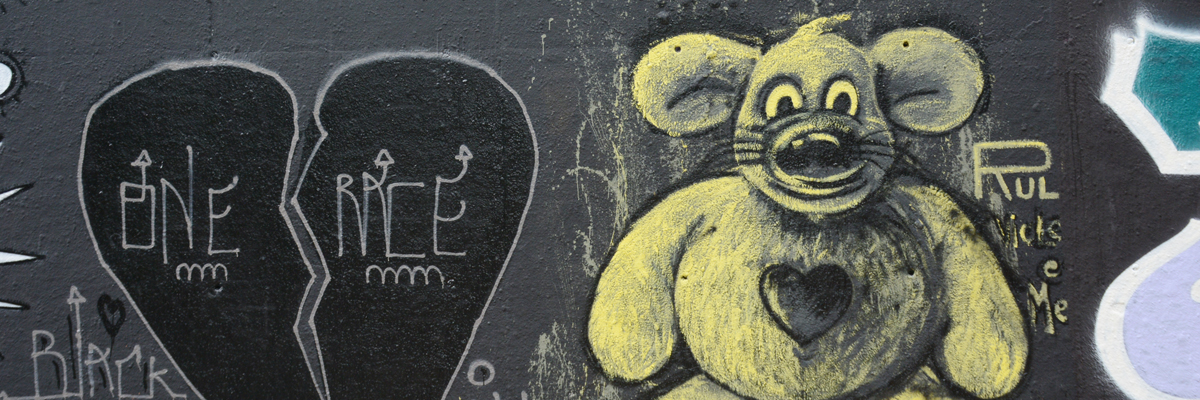
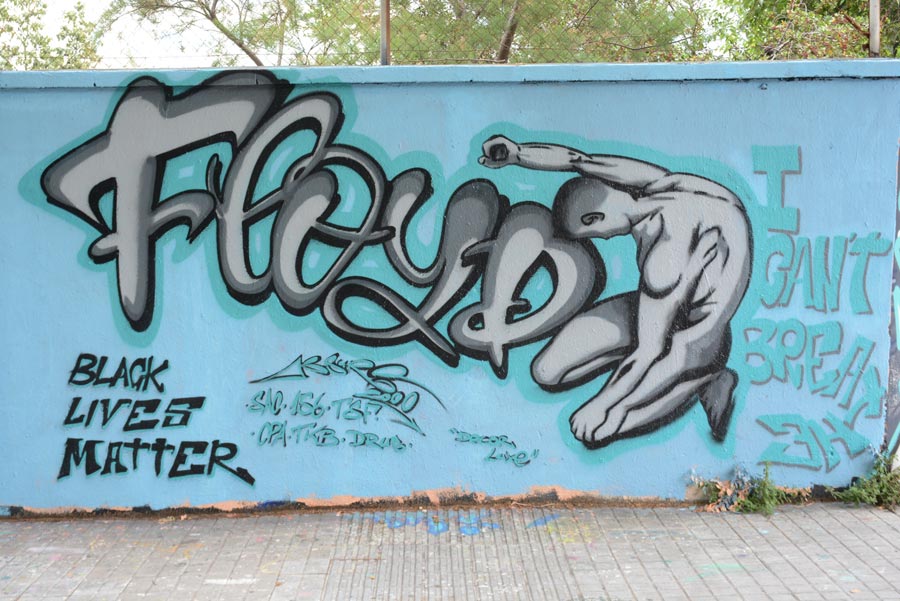
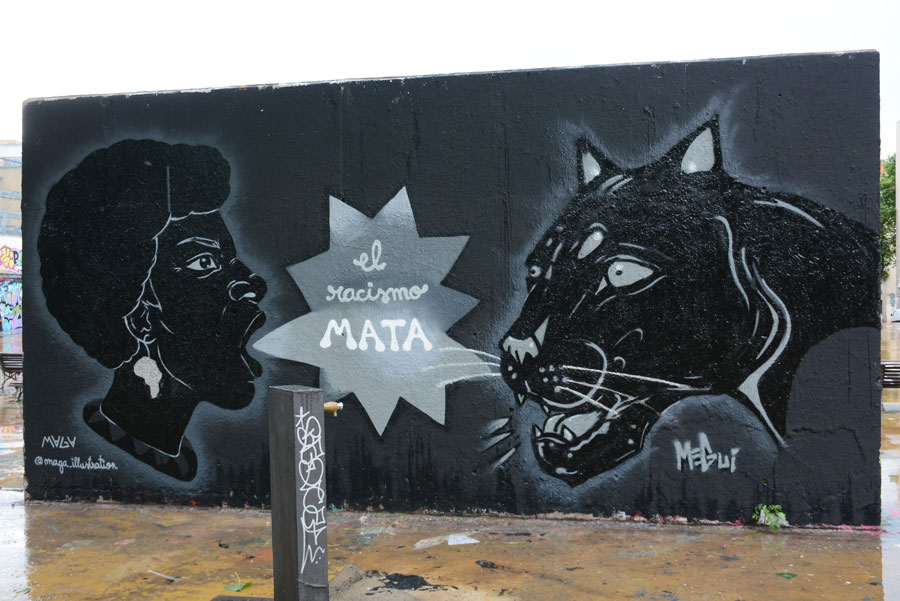
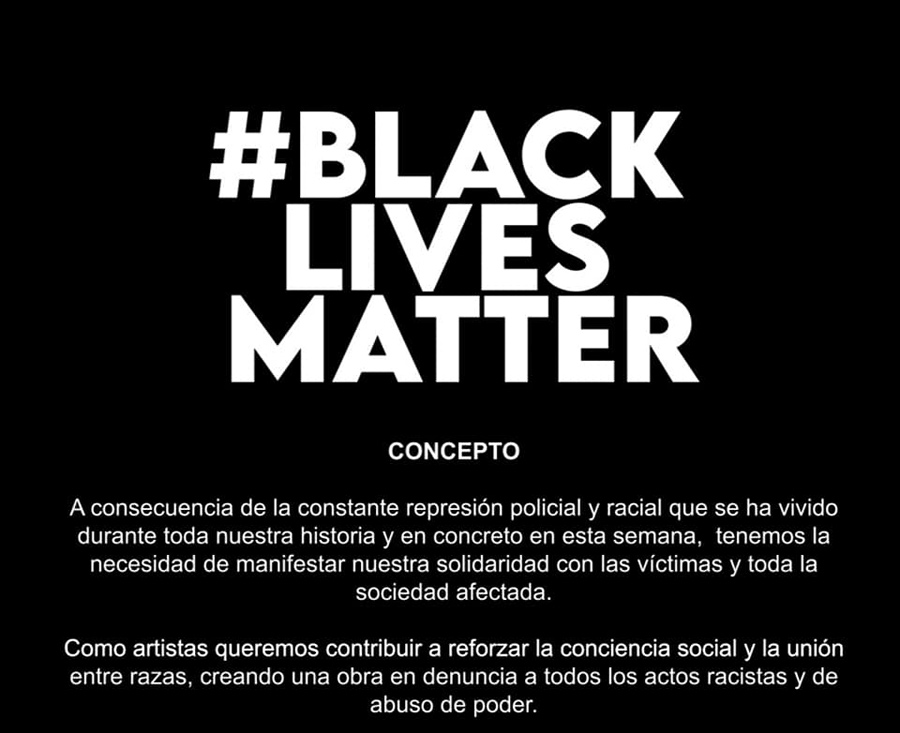
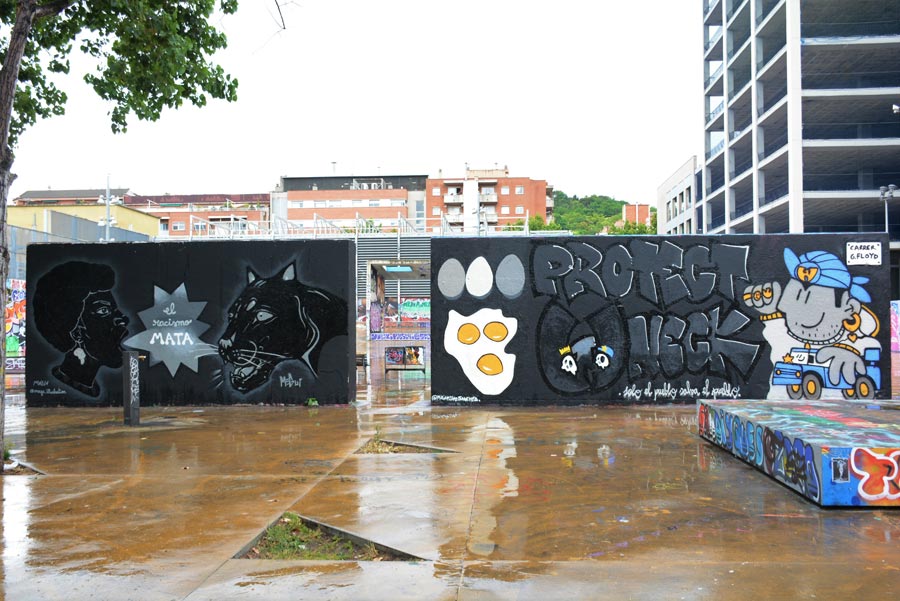
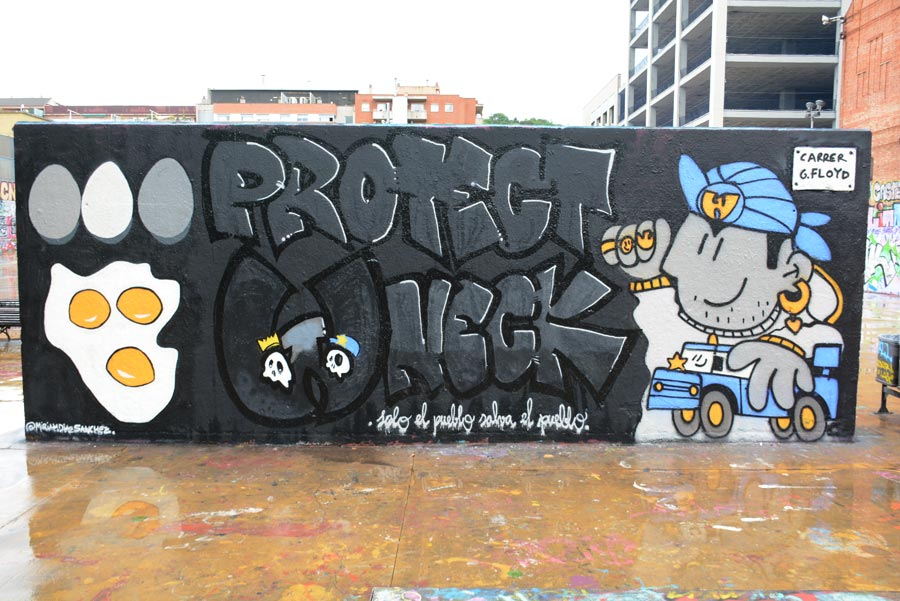
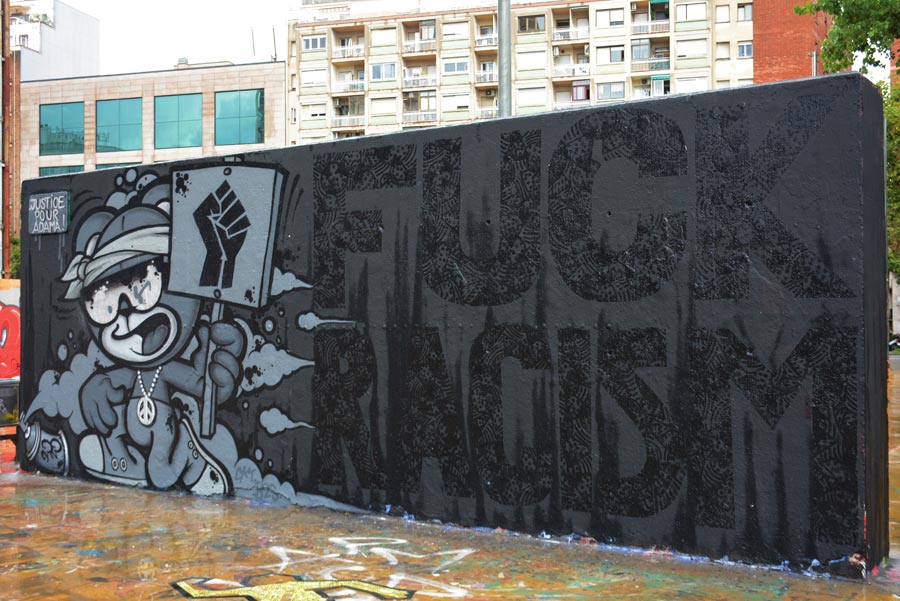
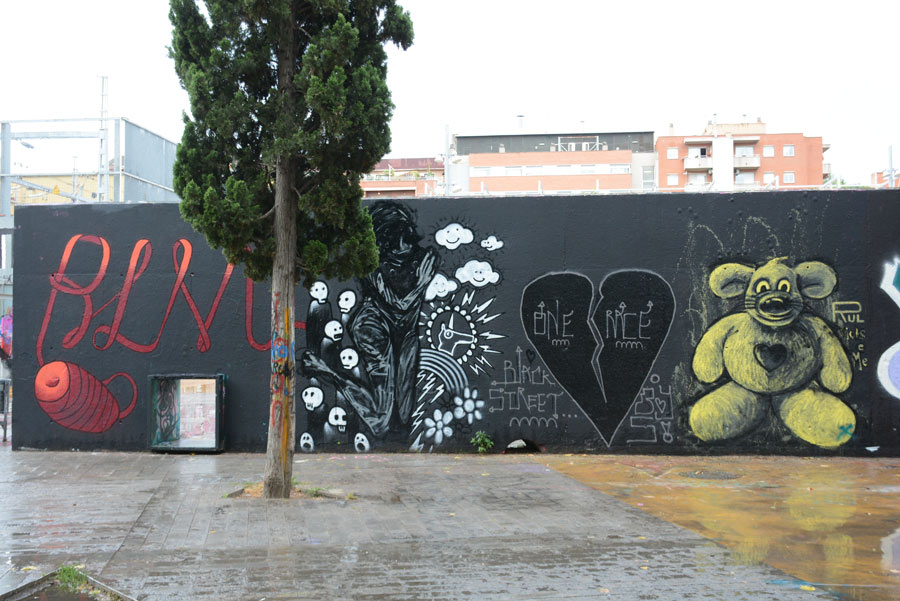
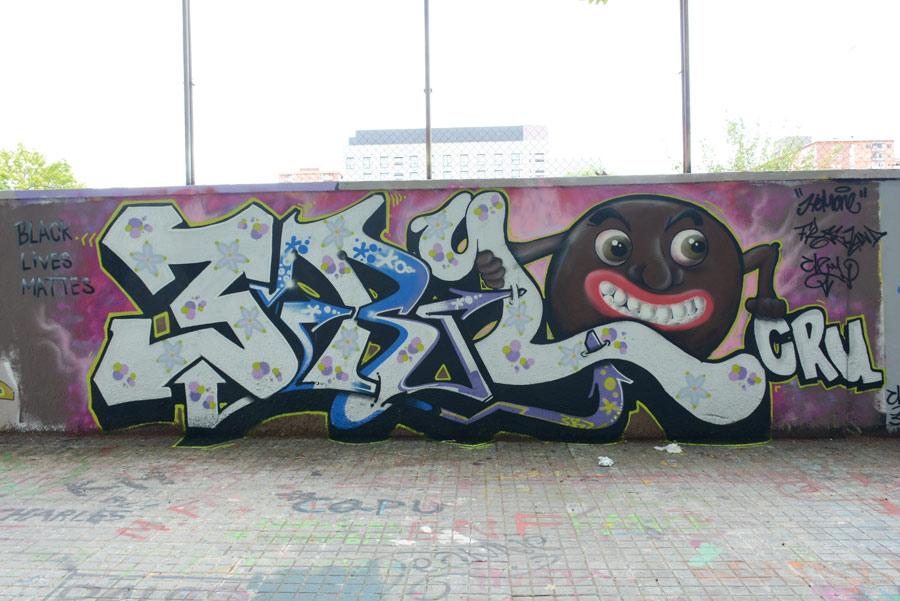
Under the initiative of Barcelona based street artist, Xupet Negre, around 15 artists responded to an invitation to participate in the project #theblackwallmovement at Parc De 3 Xemeneies in Barcelona.
Police brutality is not a foreign concept in Barcelona and the images coming out from the United States have hit a nerve within the creative community of this Catalan Metropolis, we are told, and the artists here decided to show their support for the protest against racism in Barcelona by painting these walls.
Photographer and frequent BSA contributor Lluis Olive shared his photos of the project with us.
The anonymous artist(s) who painted the mural above, titled “Here the police also kill” decided to paint the names of a number of the immigrants killed by the police in Barcelona since the ’90s. An individual who happened to be on the scene where the mural was painted and wishes to remain anonymous related the what unfolded once the police got wind of the mural:
“Here the police also kill…and censor!
Yesterday I visited Parc De 3 Xemeneies in Barcelona to support #theblackwallsmovement event organized by Xupete Negre. I wasn’t there as an artist, but rather in support of my fellow artists who were participating and painting in the event.
What caught my attention was a mural where a crew of anonymous artists decided that rather than paint images on the wall they wrote a list of the names of immigrants assassinated by the police in Barcelona from the ’90s to the present time. Shortly after the mural was completed a police squad arrived. The officers wanted to know the name of the artist(s) who painted the mural so they could charge the artist(s) of defamation and demanded that the mural be painted over.
The artists who were present at the time refused to name names and refused to paint over the mural. The following day the portion of the mural that reads: “Here the police also kills” was painted over. I find it abhorrent that crimes that took place are being censured and that the collective memory of said crimes is being erased.
Never mind that the event in question was to fight racism and police brutality and to denounce the murder of George Floyd in The United States.
“This is the end of pretty pictures,” wrote the artists at the end of the mural. “-by anonymous.
Today we visit the newest installations by Spanish artists who are participating in the community mural project that invites many disciplines and approaches to the public sphere, the “12+1 Project” in Sant Vicenç dels Horts, a neighborhood of Barcelona. In its third year, Contorno Urbano occupies a unique position in the public art world that stays clear of commercialism – as well as Street Art and graffiti – although it borrows from both. Today we see two of the newest participants and their walls.
Marking a decade as a muralist, Gonzalo Martin (1992) aka Taquen is a Spanish visual artist and illustrator with a clean linear style that may remind you of embroidery or stained glass design. His new wall for the Contorno Urbano 2020 program features a pigeon gently cradled in two hands. It calls to mind the fragility of life, and of nature.
He says that much of his work reflects a dialogue between our natural environment and our social behaviors. It’s a delicate balance, this organic relationship between us and our earth – and Taquen subtly appears to remind us that the balance is in our hands.
“Equilibrium
is where I find the best way to integrate ourselves,” he says.
“Without
shocks, without exaggeration, leaving a camouflaged footprint that will become
part of that environment naturally, without destabilizing it.”
His creative partner on this outing is Barcelona born Sonja Ben, who is creating a brash and athletic counterpoint to this world of Taquen, popping with color. Performance comes to mind, seeing these animated figures punching forward like characters in a video game, avatars of aspiration and adventure.
Using symbols as actors, her work is representing the real world – in a child’s language; processing the travelogue of the inner explorer as seen through anime and saturated digital colorways.
A duo of wall painters show us their very different approaches to graphic design, illustration, and sign painting in these two new pieces completed last week in Sant Vicenç des Horts, Spain.
Joan Tarragó paints his “Fight Plastic Portal” with
his “fusion of graphic language, ancient symbolism and surf influences,” he
says. The wrapping line-work its pulsating natural energy washes over you in
waves of turquoise and curving black lines. If these patterns look familiar you
may have seen his work on facades and skating courts in places like Miami, New
York, Japan, and Bali.
Ángel Toren elevates the “tag” of traditional graffiti writers as interpreted by theater posters and cinemas by employing optical play, geometric sharpness, crisp layers of color and dimension. The skills are so focused that you forget this is by hand, by can, by brush.
Toren says his work “focuses on the tri-dimensionality of space, depth and perspective as a dance in the composition.” His 2 and 3-D color plays have appeared as abstract and pop-informed graffiti stays true to his roots while pushing the boundaries of the accepted idea of a piece that was first defined by train writers.
The walls are part of an initiative from Contorno Urbano, a
community based public art effort which is beginning a new edition of their 12
+ 1 project in Sant Vinceç del Horts, featuring interventions on Rafael
Casanova’s street walls. The temporary installations ride two months, to be
replaced by a new duo.
Community murals today from two artists last month in Barcelona working with the Contorno Urbano program that brings artists of many disciplines to a series of walls in the public space.
Today we have Claudio Drë and Minuskila, who each take different approaches to themes, his abstractly wildstyle, hers simply symbolic, graphic and possibly painful.
Chilean born, Barcelona-based former graffiti writer Dr. Drë began on the streets in 1996 with aerosol and eventually experimented with oil, acrylic, and canvas. His murals and fine art have been exhibited in Chile, Latin American and Europe. He has an affinity for the technical, the fine line, volume, and perspective. His new mural draws upon his original fascination for graffiti, geometry, psychedelia and the letterform, bringing each to a more futuristic dimension.
A member of the artistic collective Reskate Arts & Crafts , graphic artist Minuskula (María López) is original from the Basque Country in Donostia-San Sebastián and has dedicated much of her work to illustration and letter-styling, with some experience in muralism as well. Here she translates an illustrated metaphor large scale, calling the piece “Limits”.
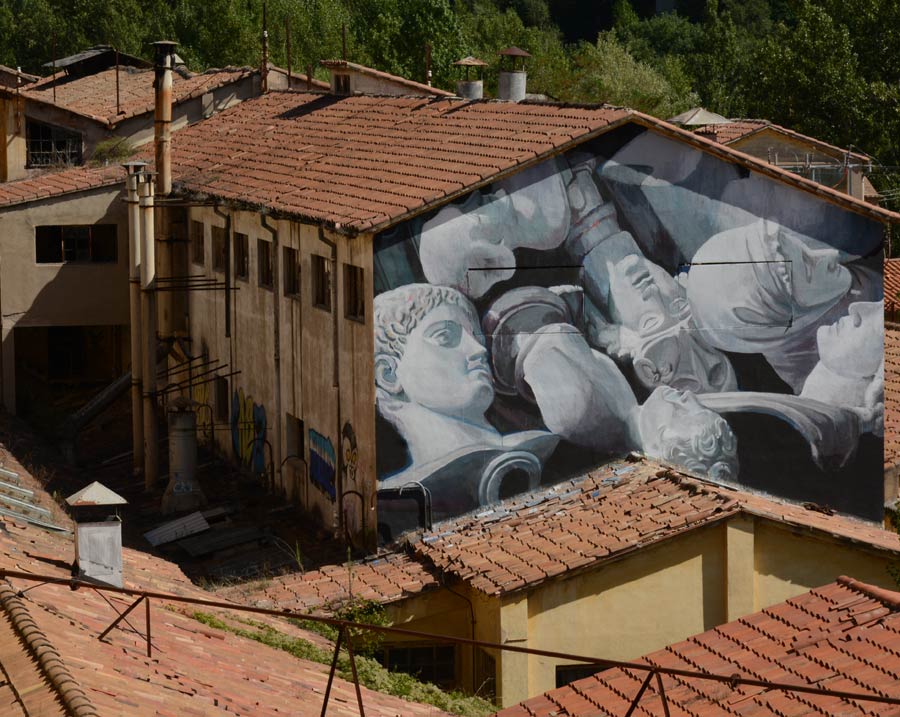
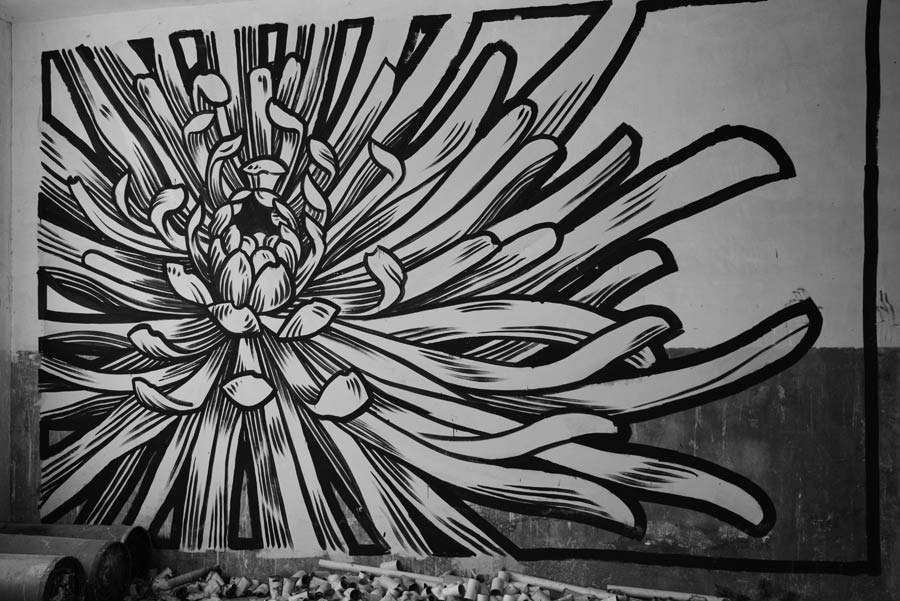
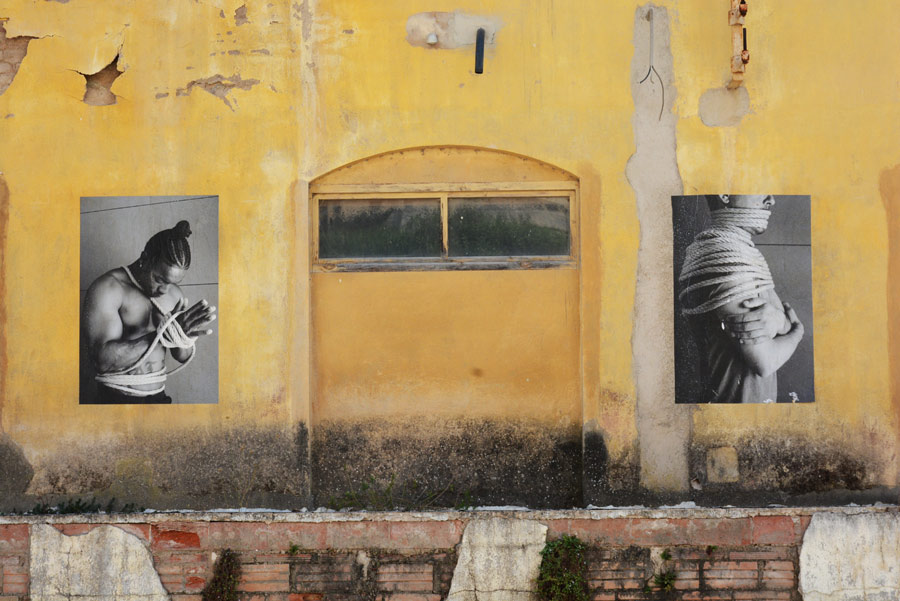
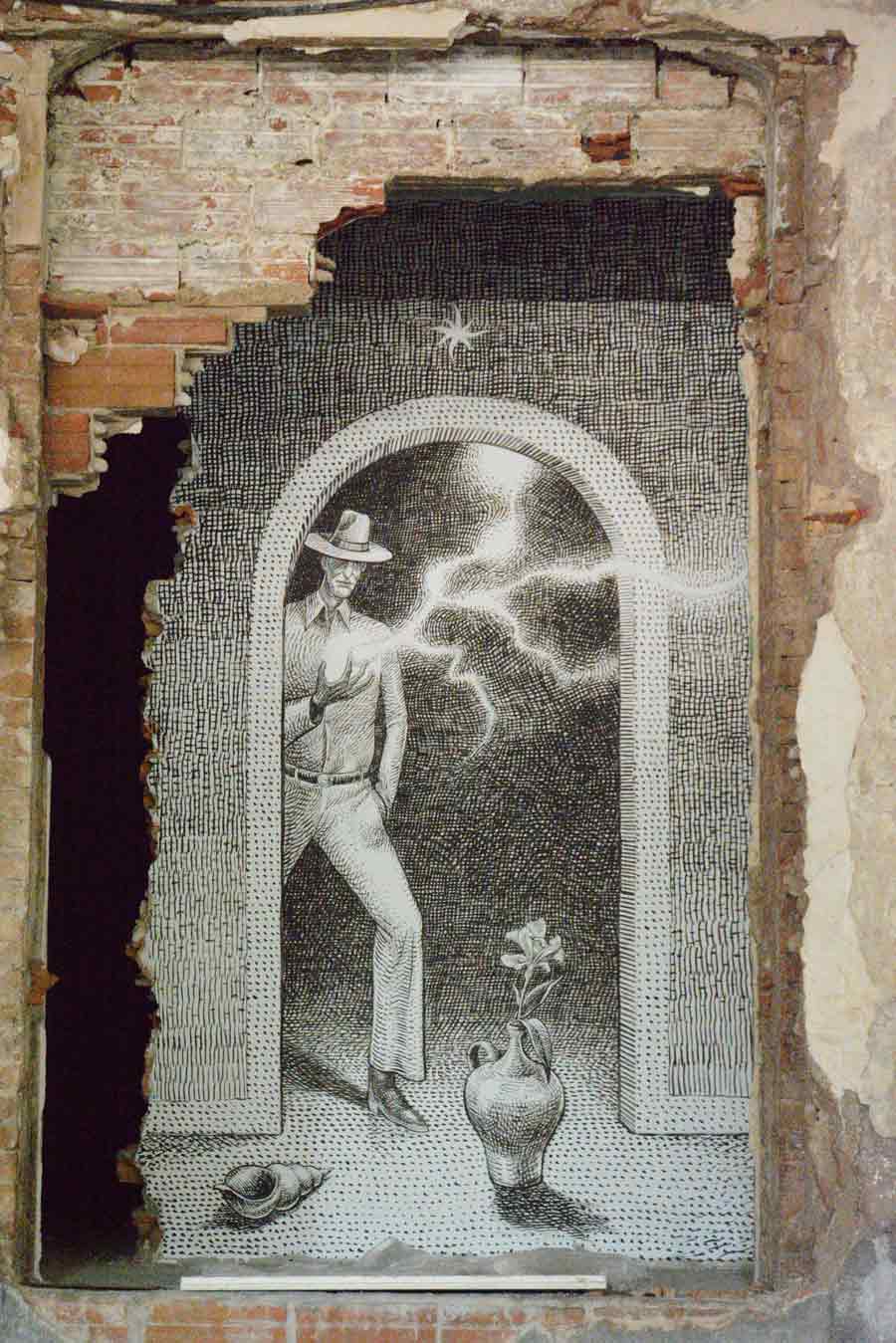
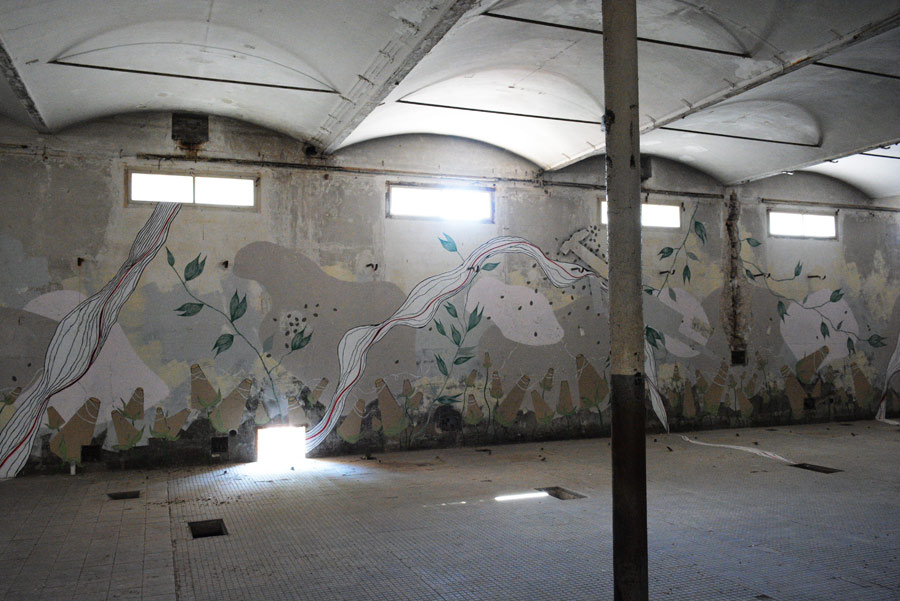
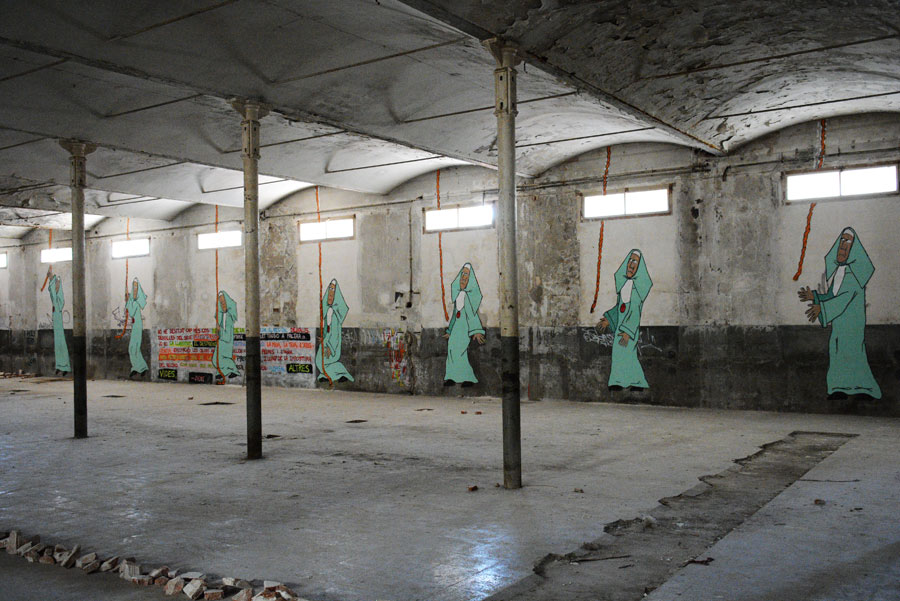
Typically you may expect to be praying the novena and asking God for absolution of your dastardly sins here in this sprawling compound called The Konvent near Barcelona. While no one would stop you today, you may also wish to check out a number of new installations throughout the many buildings by Street Artists.
The Roman Catholic former convent hosted 50 or so artists over the last couple of years to transform the space, perhaps to reinterpret its original charge in a modern light, perhaps just to ready the compound for commercial, cultural, and community pursuits of the owners.
Certainly the decaying spaces and austere aesthetic is inviting, calming, possibly frightening, depending on your associations. Now they are home for music, dance, theatre, film festivals, and artist residencies – often offered only in Catalan but some also in European Spanish.
As you walk through the spaces you are welcomed by these works by artists, many of them at one time or another categorized as Street Artists, whose voices now usher in a new era of contemplation and perhaps internal exploration.
Our thanks to photogapher and BSA contributor Lluis Olive Bulbena for sharing these images from El Konvent.
For more information about El Konvent please Click HERE
As illegal Street Art morphed into legal murals we began to witness the entry of formally trained artists and professionals who not only abandoned the politically charged or socially challenging themes in favor of pleasant topics and commercial aesthetics but accidentally launched an arms race for the biggest, tallest, widest walls possible.
Soon the descriptions we received about new artist works shifted from discussions on themes and messages to statistics about square meters covered, the number of stories high the building was, and how many cans or gallons of paint were required to finish it.
Spanish
artist, designer, and photographer Octavi Serra would like a larger wall
please. The one that Contorno Urbano gave him for their 11th mural
this year in Barcelona seems dreadfully small, and he has really big ideas. He
calls this mural “Insufficient”.
Serra
says his work often “focuses on capturing the irony, truisms and frustrations
of modern life,” and while this piece is evidently meant to be tongue in cheek,
he is tapping into a general sense of dissatisfaction that is part of a
materialistic culture, and part of the human condition.
By
letting the typography bleed off the edges, you also sense the claustrophobic
feelings that are playing with the artists mind. “There is this feeling of
never being completely satisfied even though reason argues that we should be,”
he says. “There is this desire to always have more, which make the road
impossible to enjoy.”
The
mural is part of the 12 + 1 public mural project of Barcelona – at the Civic
Center Cotxeres Borrell. Before the end of the year they are planning a
collective exhibition where works by all the artists who have participated in
the edition of the 12 + 1 2019 Barcelona project will be on display. The show
will feature artists Jay Visual, Ivan Floro, Margalef, Anna Taratiel, Nuria
Toll, Flavita Banana, Cristina Lina, Degon, Mr. Sis, Cristina Daura, Laia and
Octavi Serra.
The community-based Contorno Urbano continues to provide opportunities to local and visiting artists to access public space for their explorations on walls in a suburb of Barcelona. Not necessarily from the graffiti or Street Art world, they none the less are examining the practice of putting your stuff up to a general audience of passersby. Today we bring you some shots of their textile-influenced Midsomer walls with Alessia Innocenti from Chile and Mariadela Araujo who is originally from Caracas.
Ms. Araujo studied fine arts and painting and spent much of her early career teaching children and adults. Here she’s still working collaboratively to install a grouping of geometric shapes of yarns that take their influence from fractals and studies of symmetry.
Ms. Innocenti presents a study for a new textile pattern she has created- a repeating pattern of subtle shading that has similarities to sixties optic art. Having completed projects of embroidery on a large scale in Caracas, Rome and Helsinki, here she presents a piece of embroidery in large format as a mural, in all of its chromatic variations.
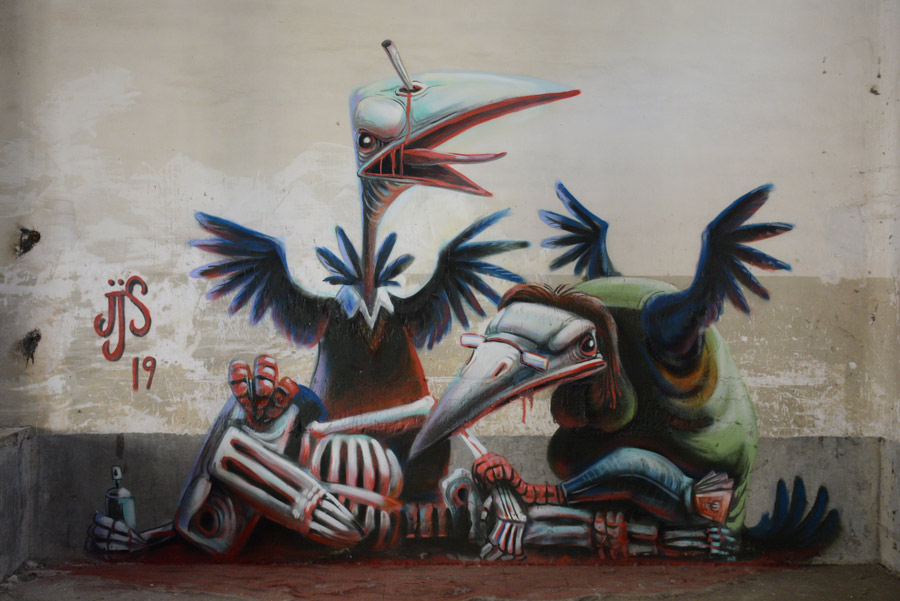
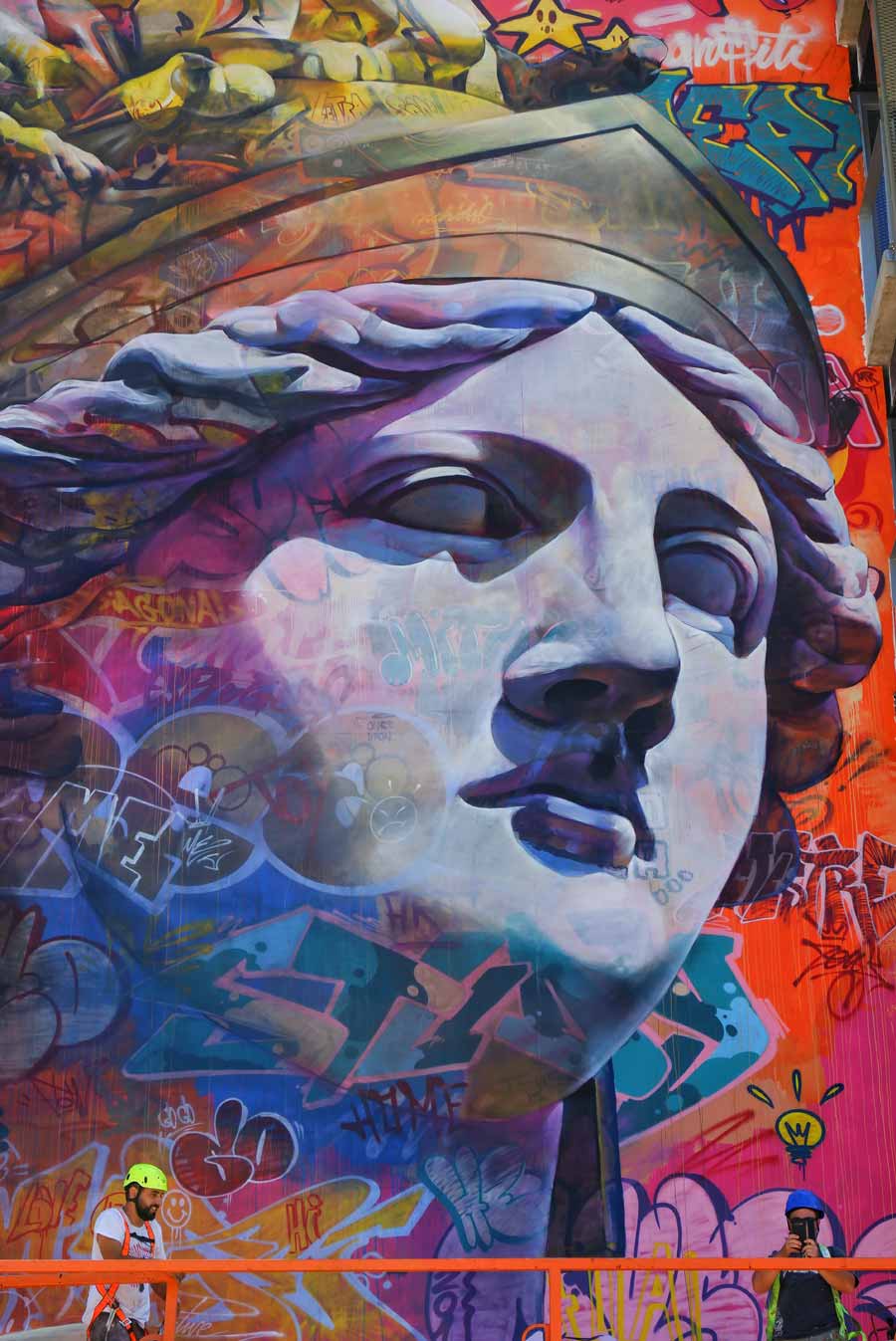
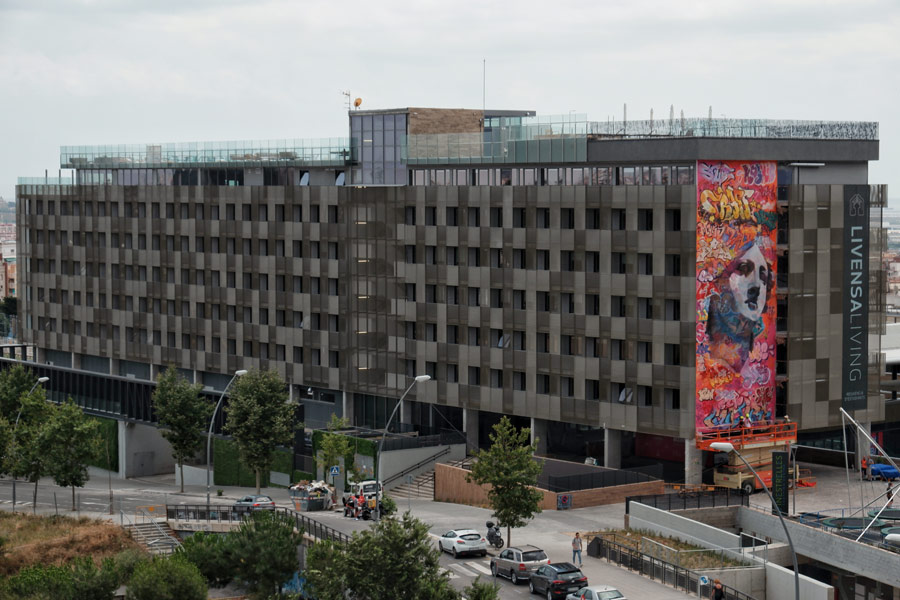
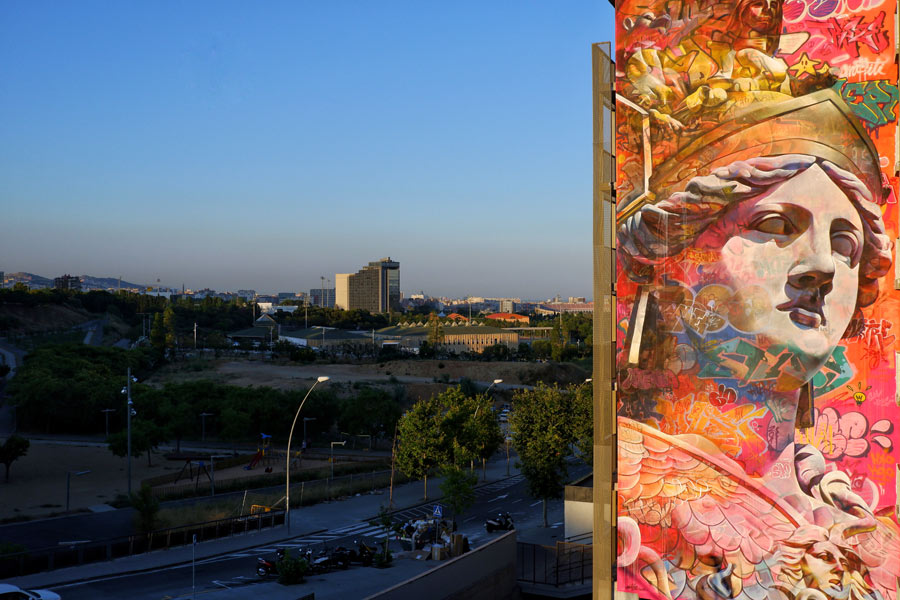
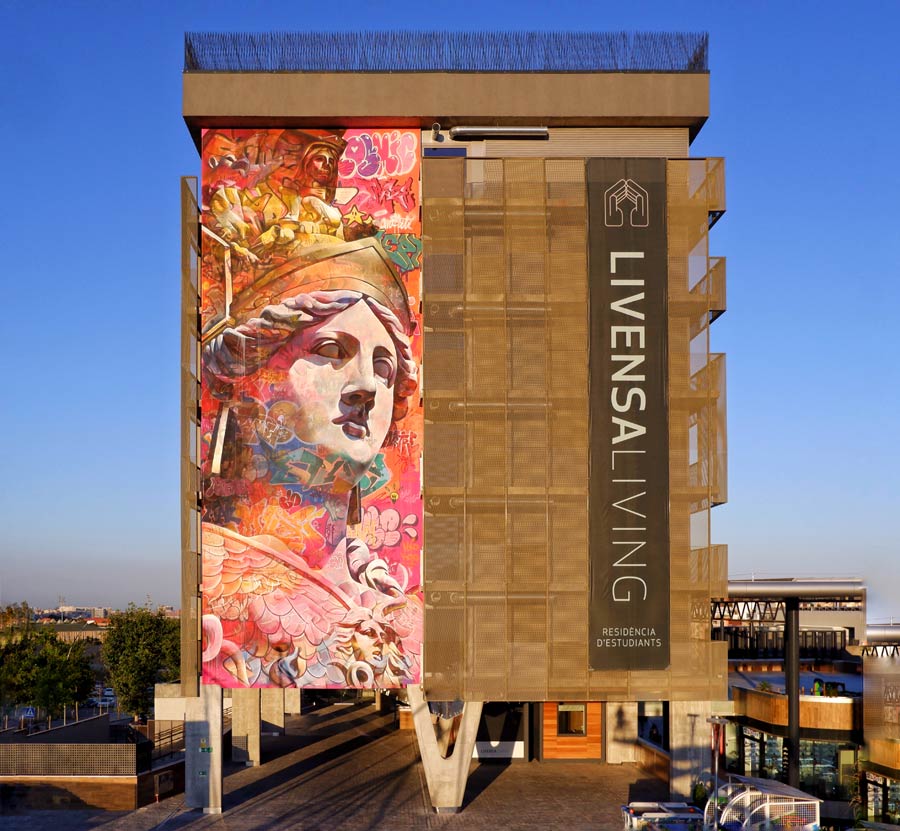
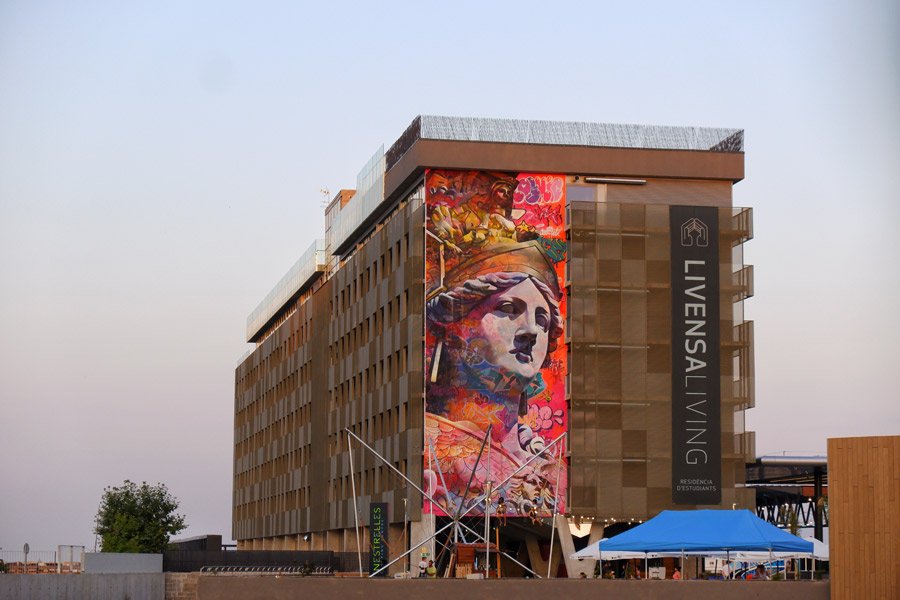
Bringing their unique blend of old-world European white classical sculpture and the bright side of modern urban vandalism to Barcelona, the artistic duo PichiAvo paints the Greek goddess Athena engulfed in bubble tags. Freshly finished this week across 125 square meters, the mural depicts a particular version of the Pallas Athena’s sculpture in the Austrian Parliament that is in Vienna.
The Great Mother Goddess of wisdom, useful arts, and prudent warfare here emerges from a layered cloud of tags drawn from the artists’ friends and peers, local tributes, and a wide range of styles from modern graffiti practice. Here in Esplugues de Llobregat the multi-story mural graces a student residence designed by the Portuguese architect José Quintela da Fonseca.
Spanish artist Gonzalo Borondo, from Valladolid, arrives at LuzMadrid Festival with Redentora, a site-specific installation that continues his steady movement …Read More »
 BROOKLYN STREET ART LOVES YOU MORE EVERY DAY