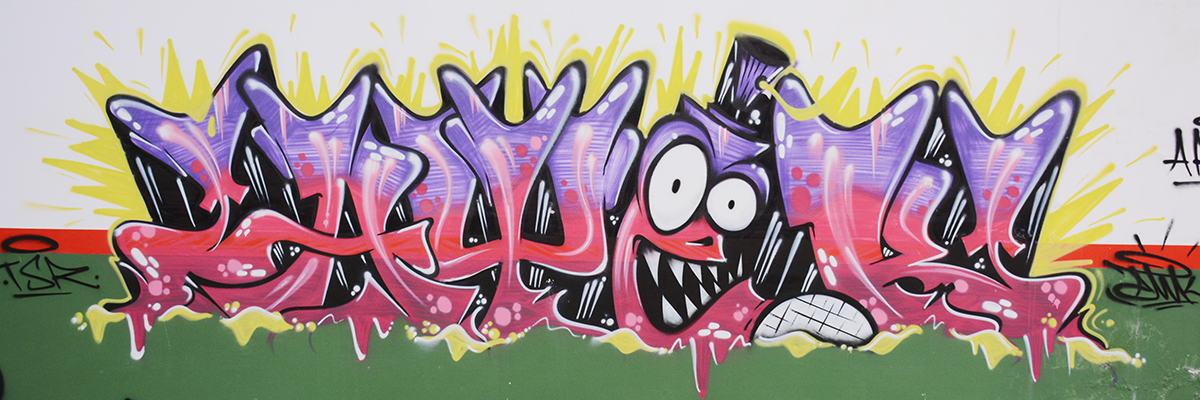
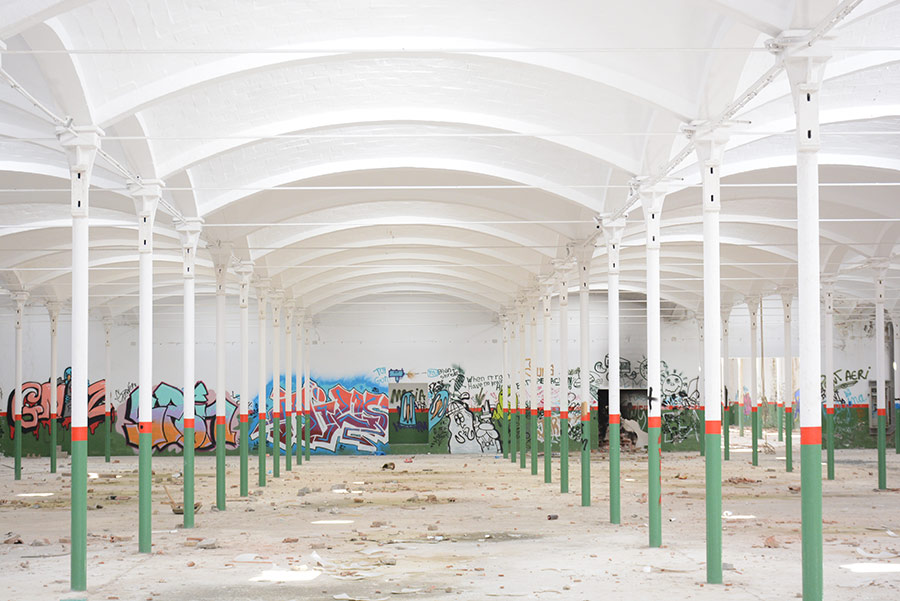
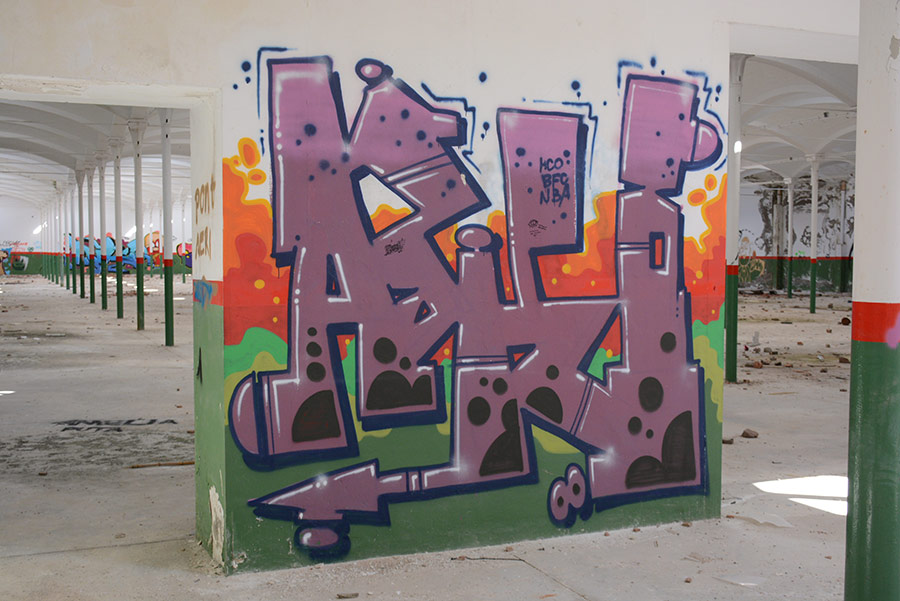
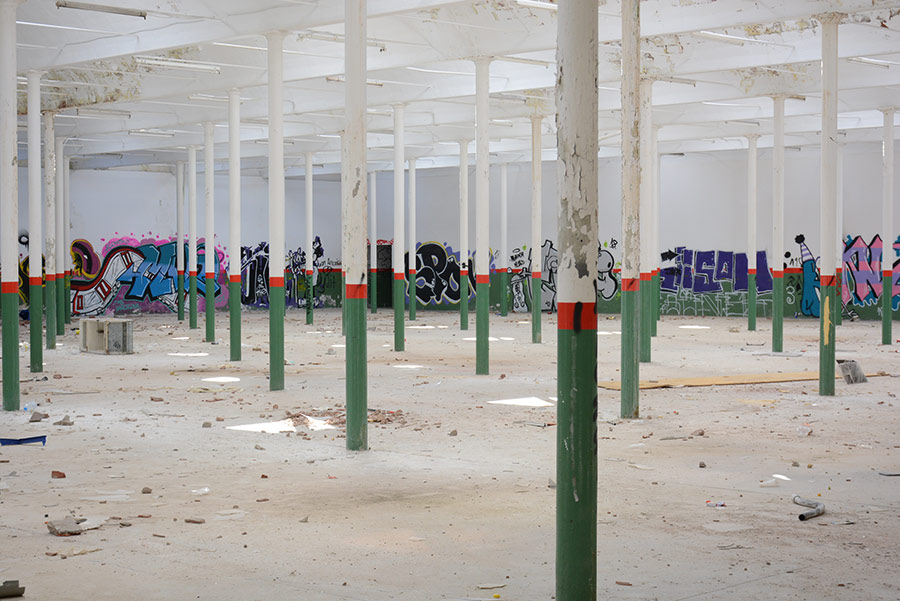
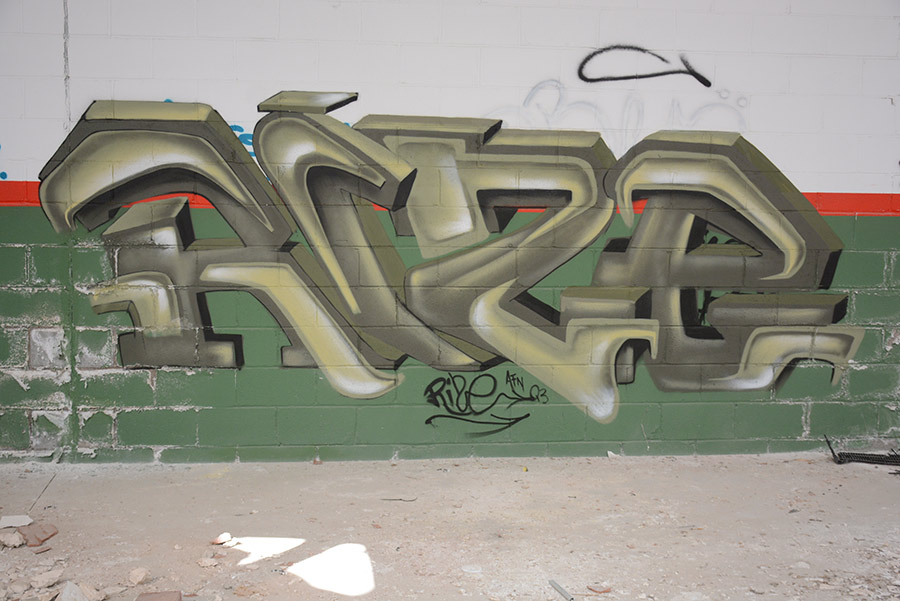
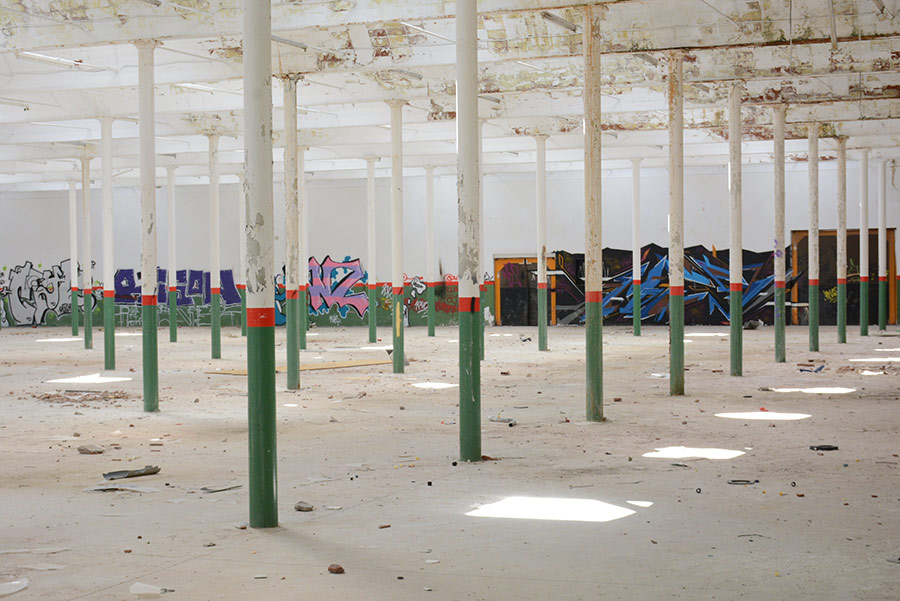
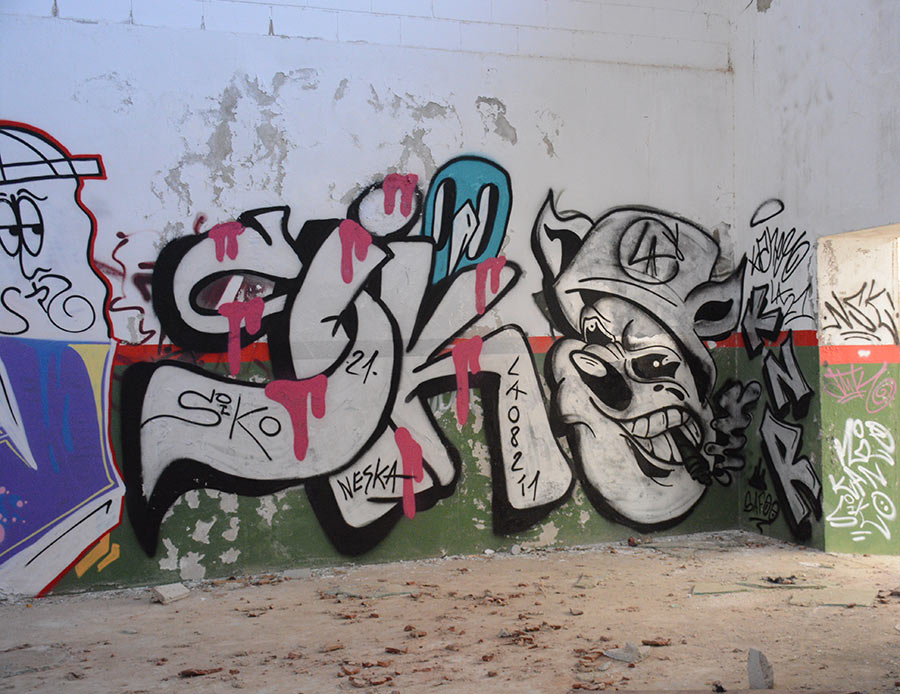
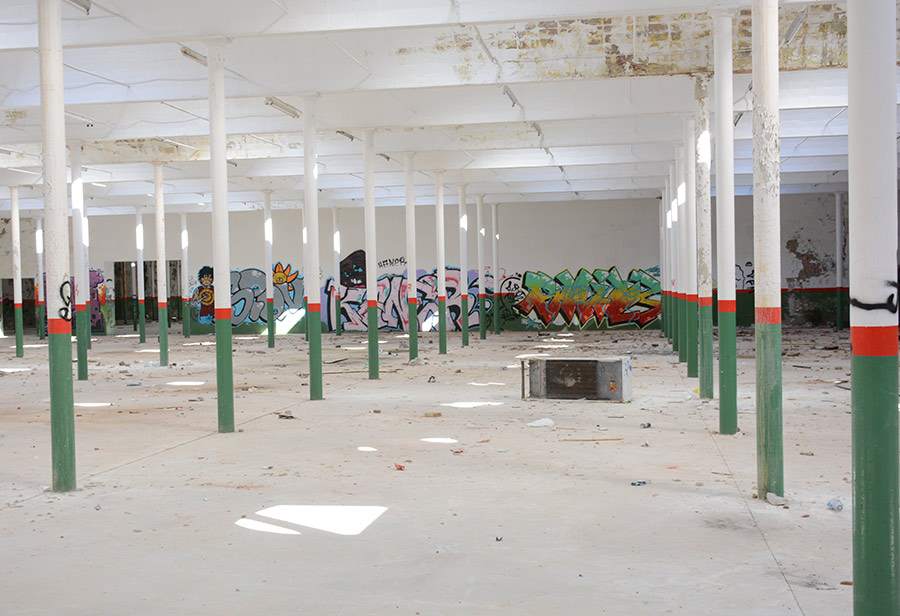
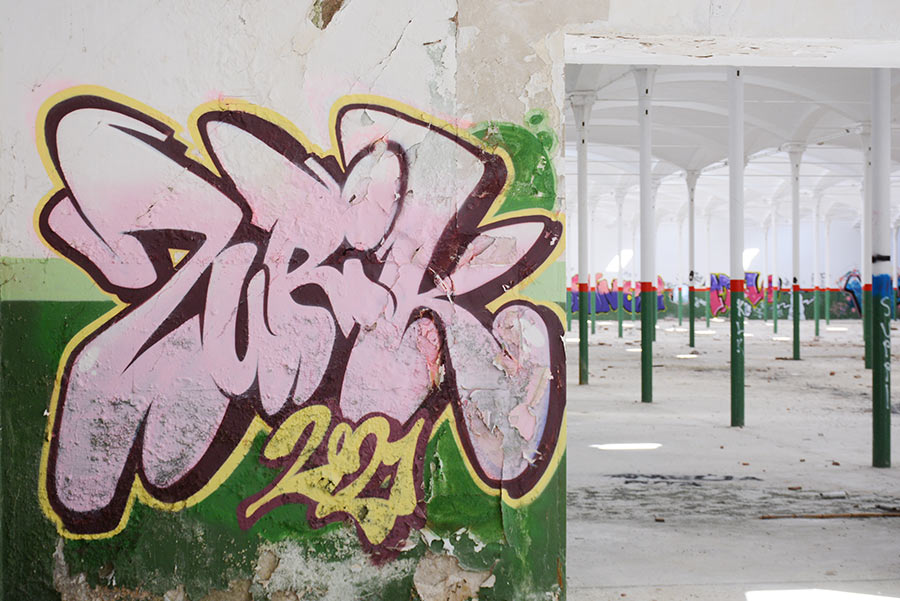
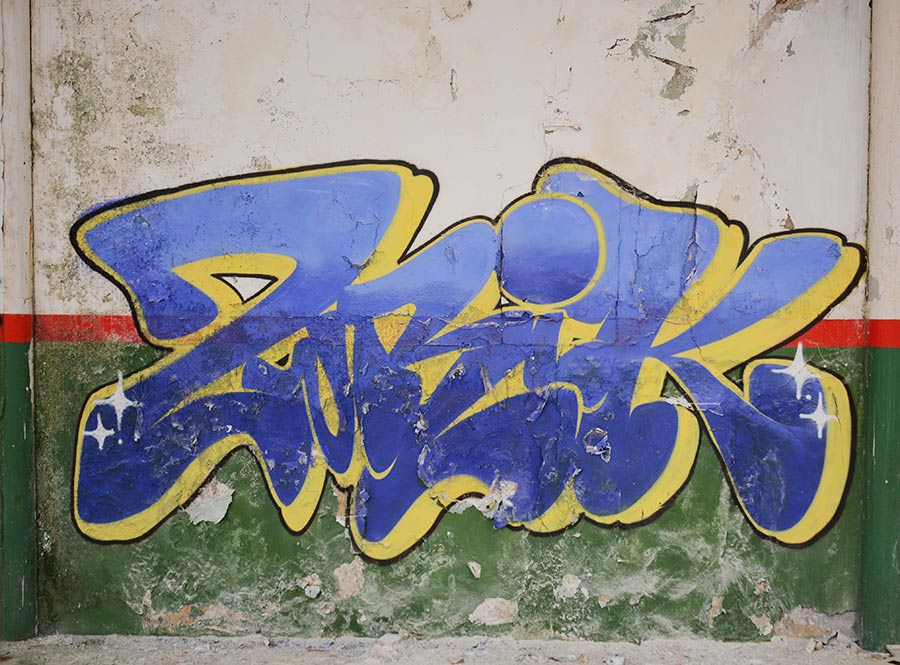
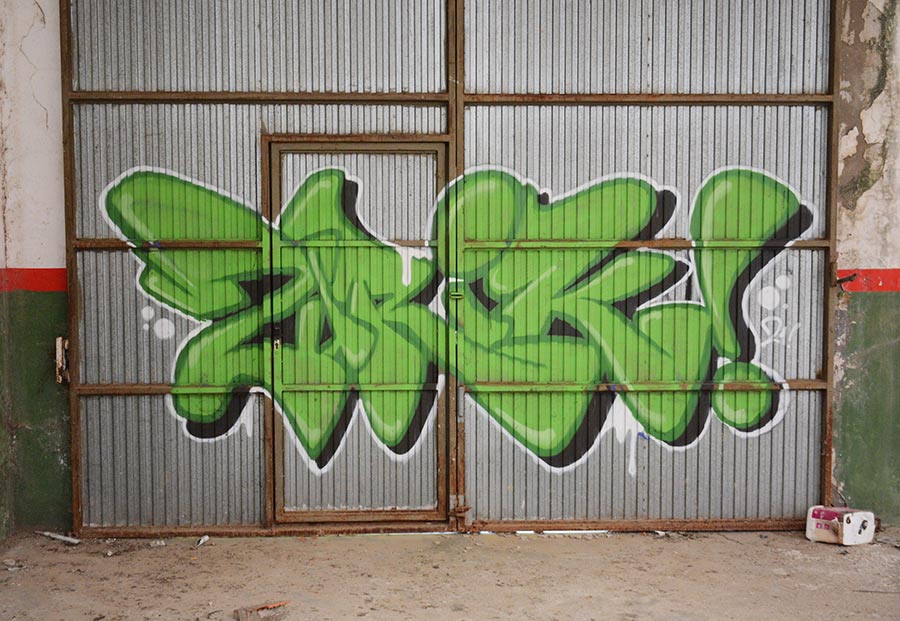
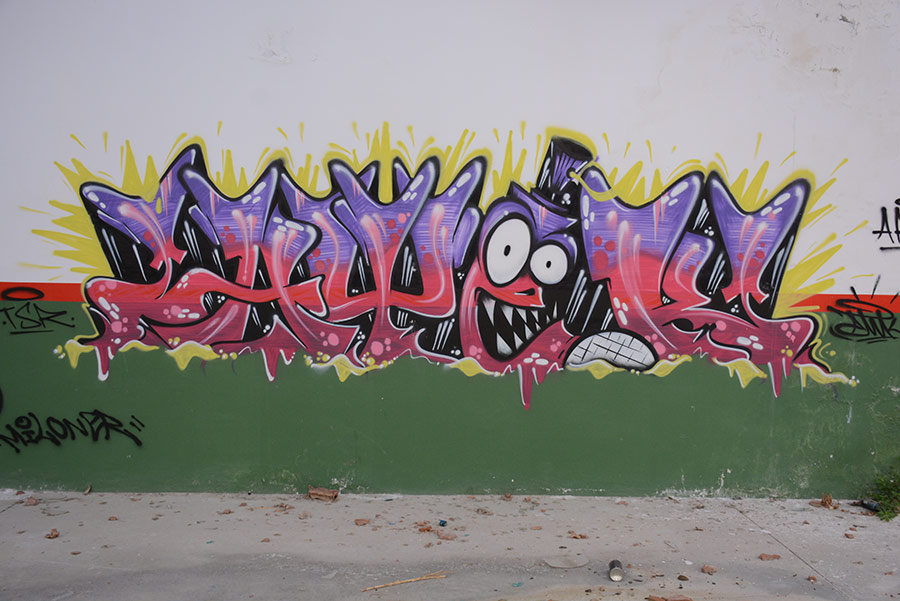
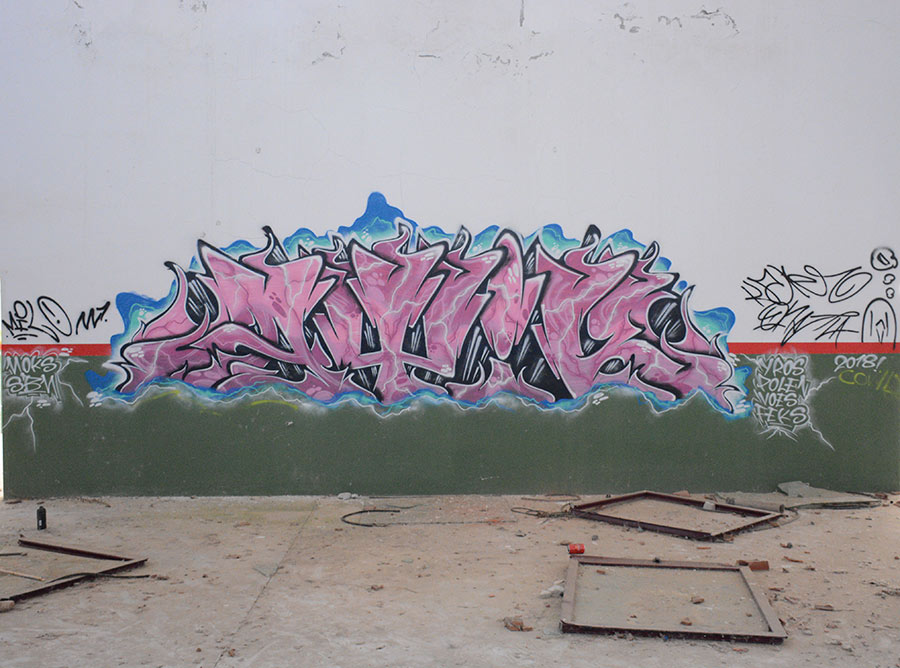
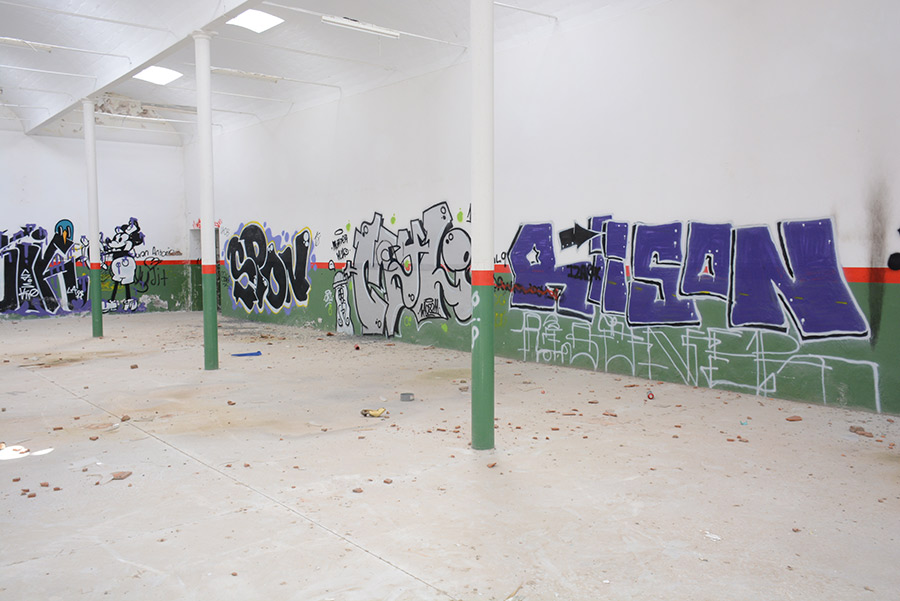
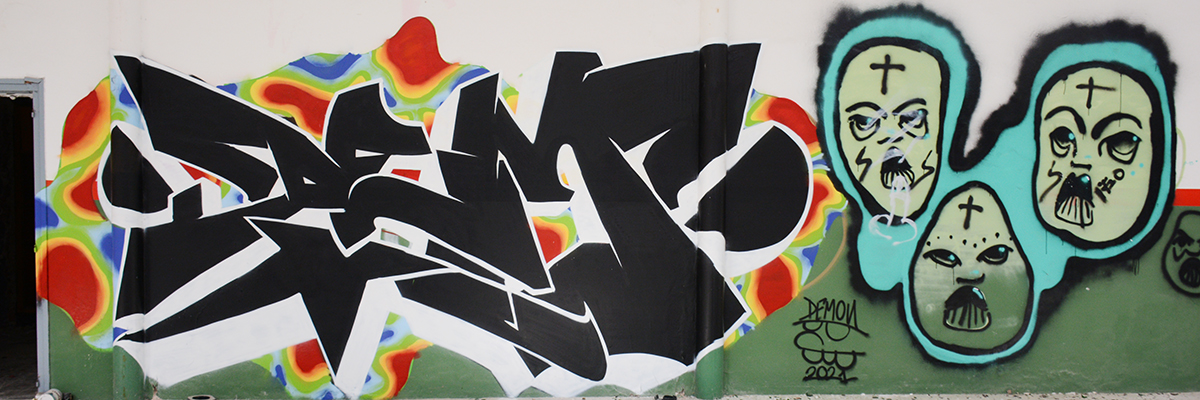
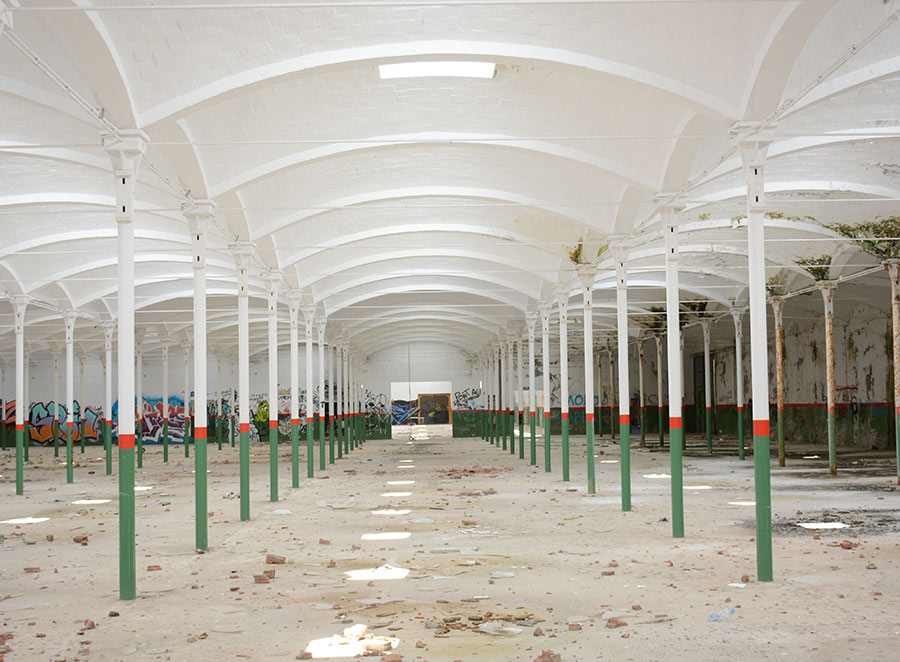
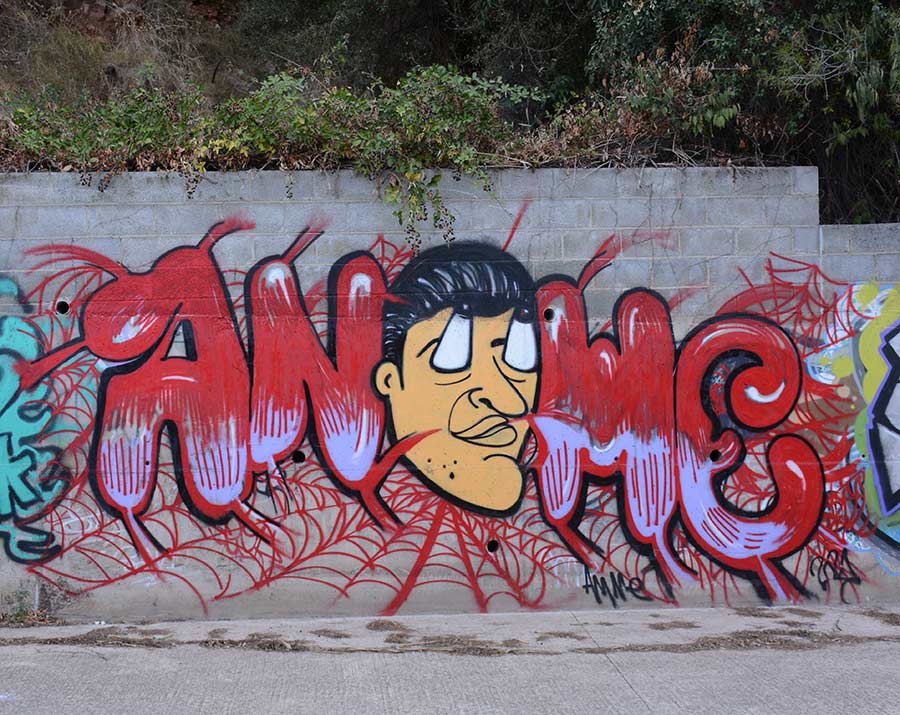
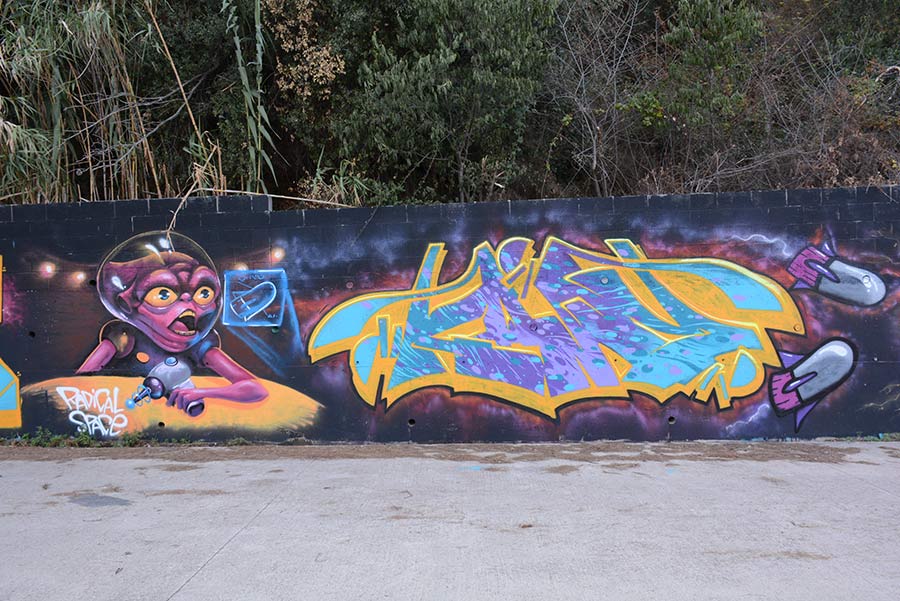
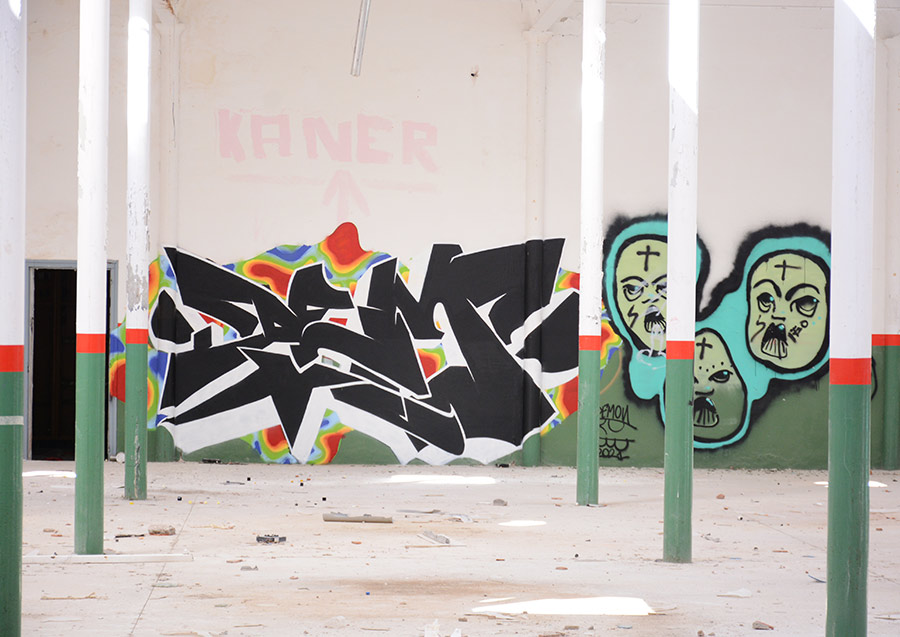
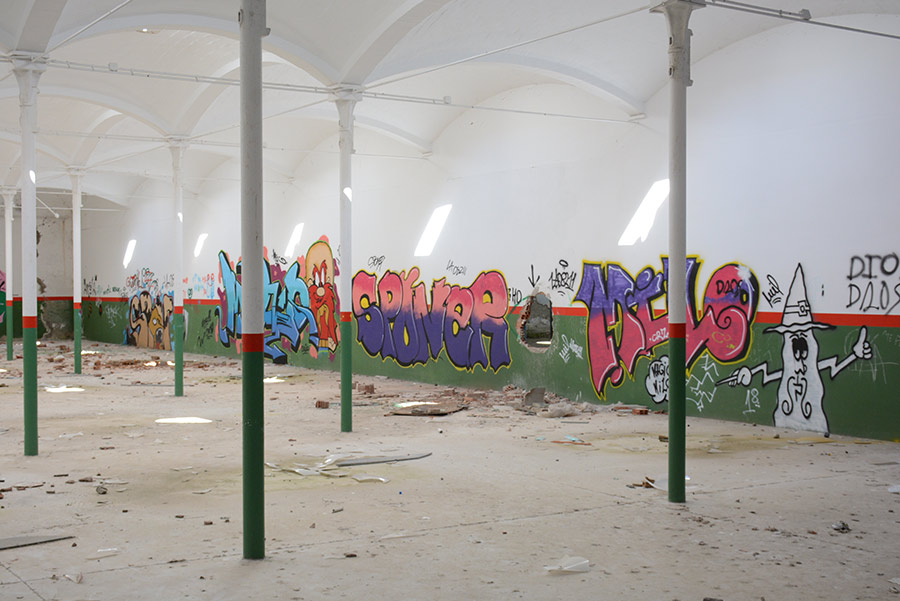
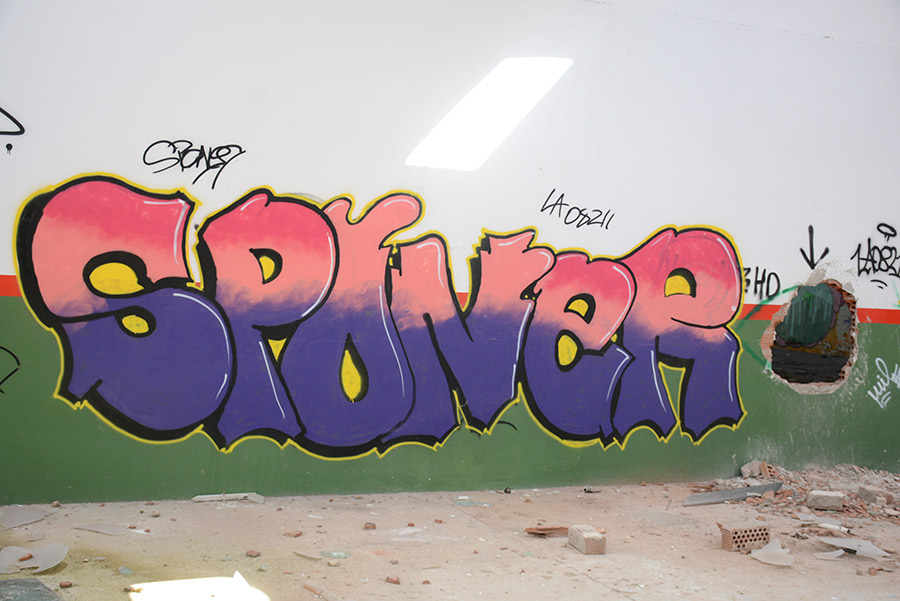
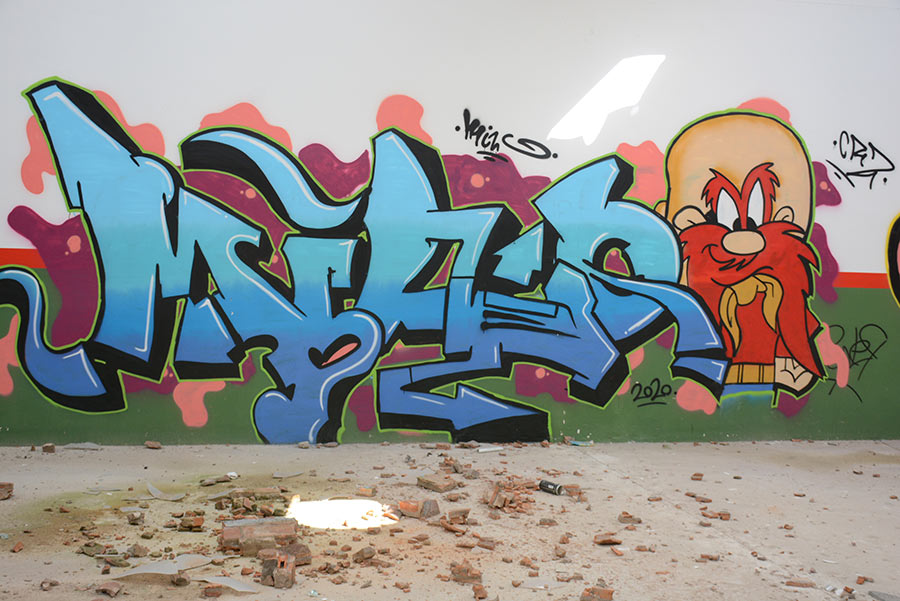
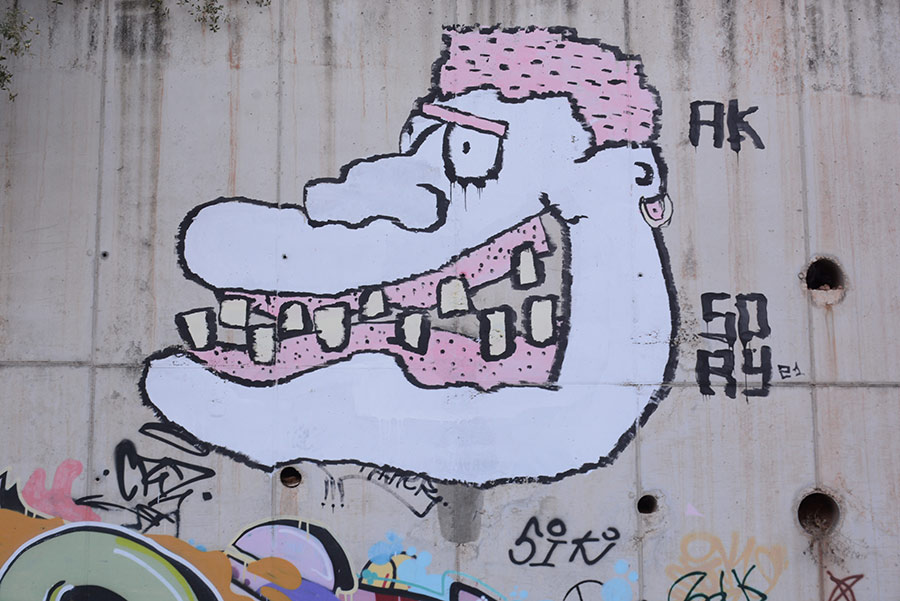
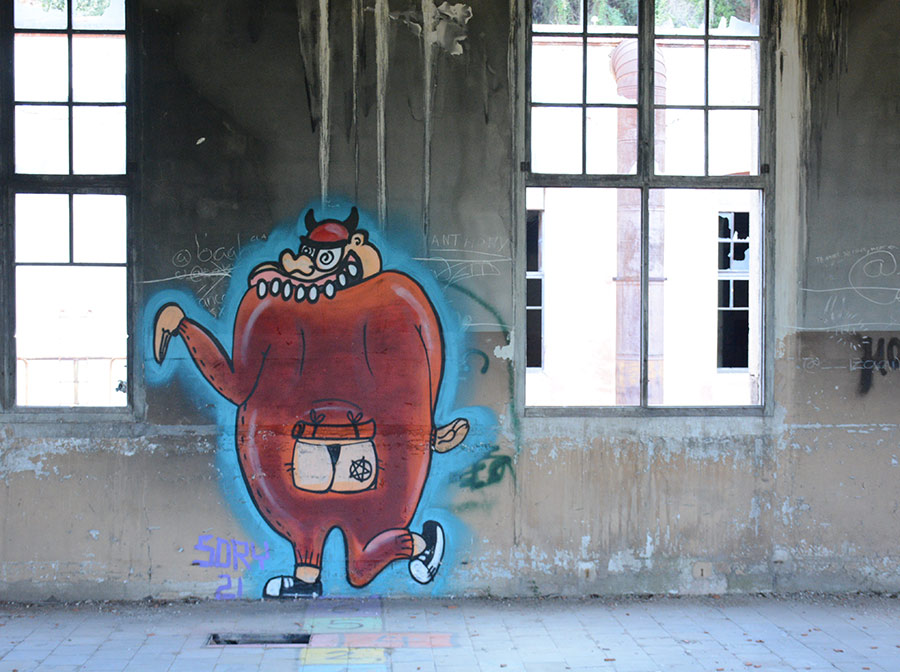
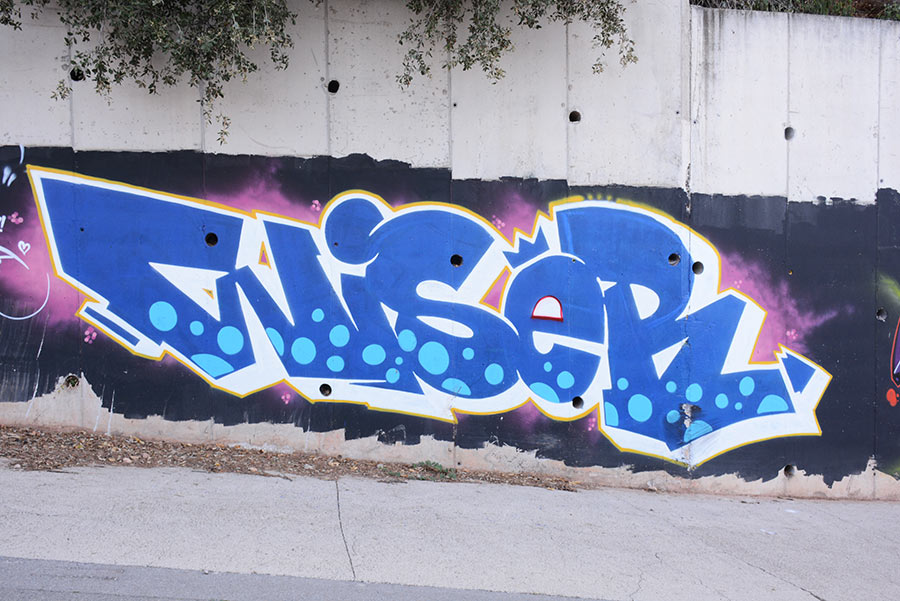
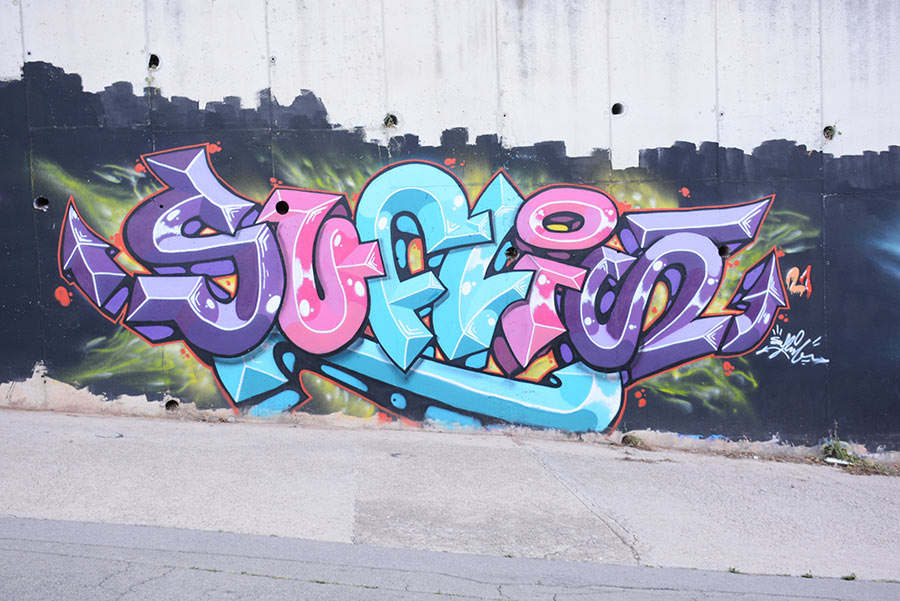
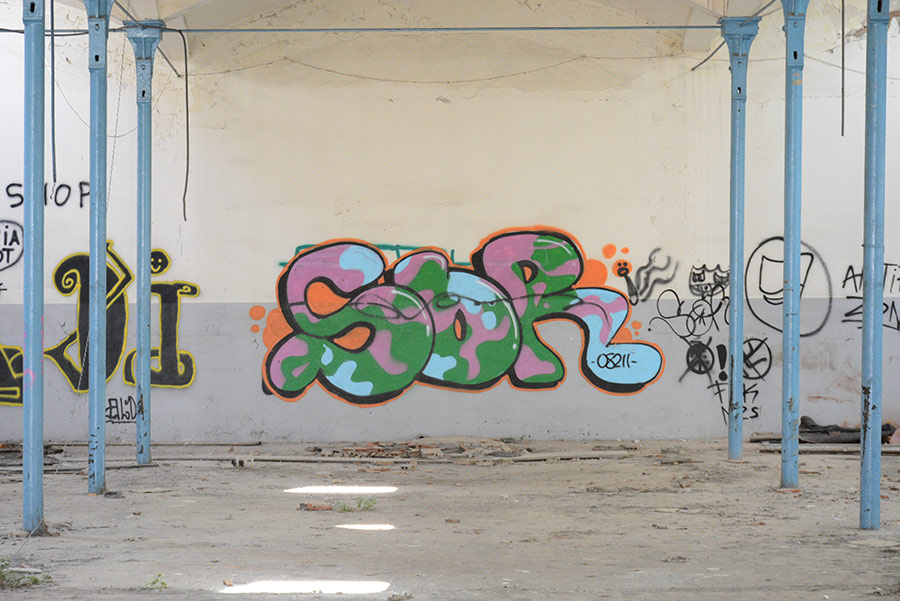
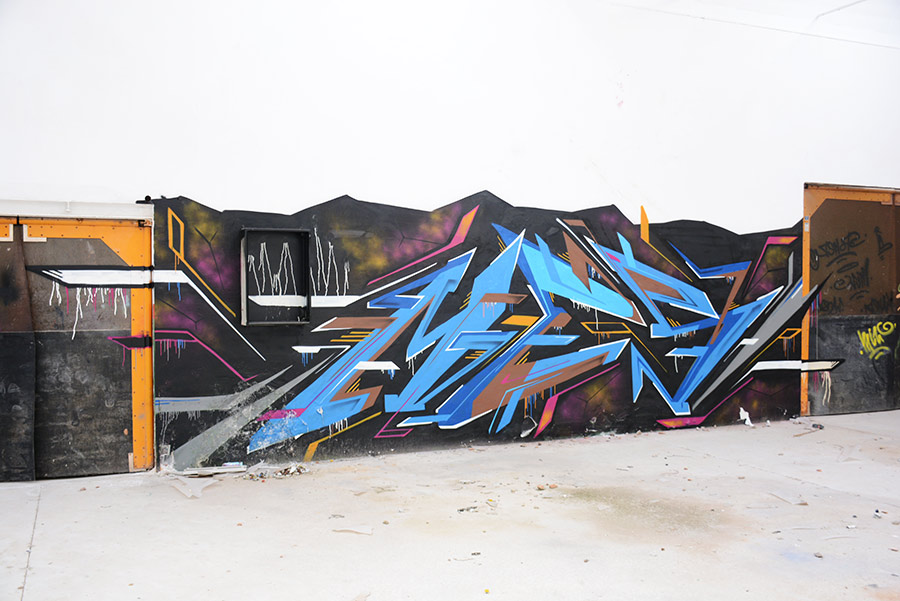
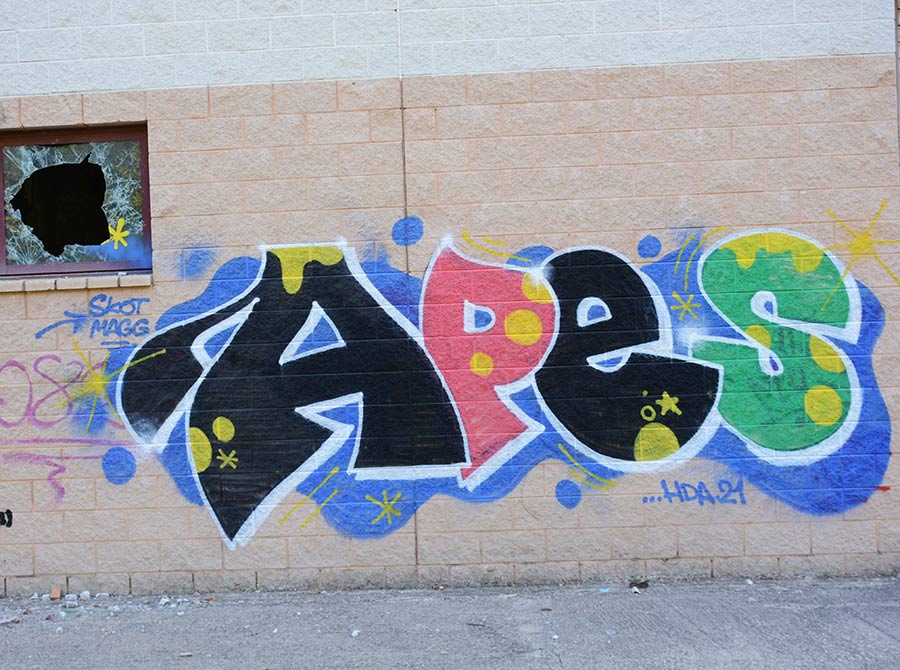
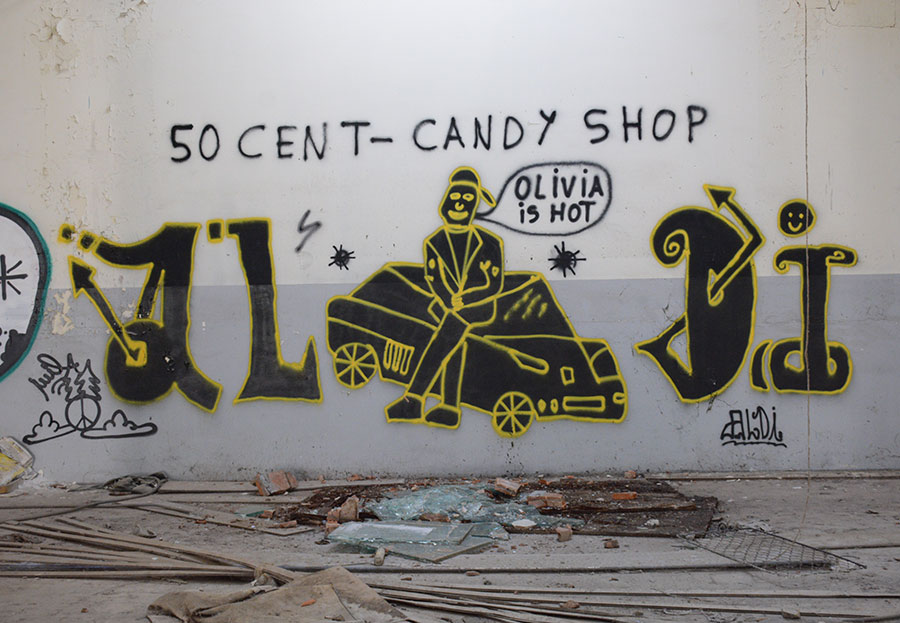
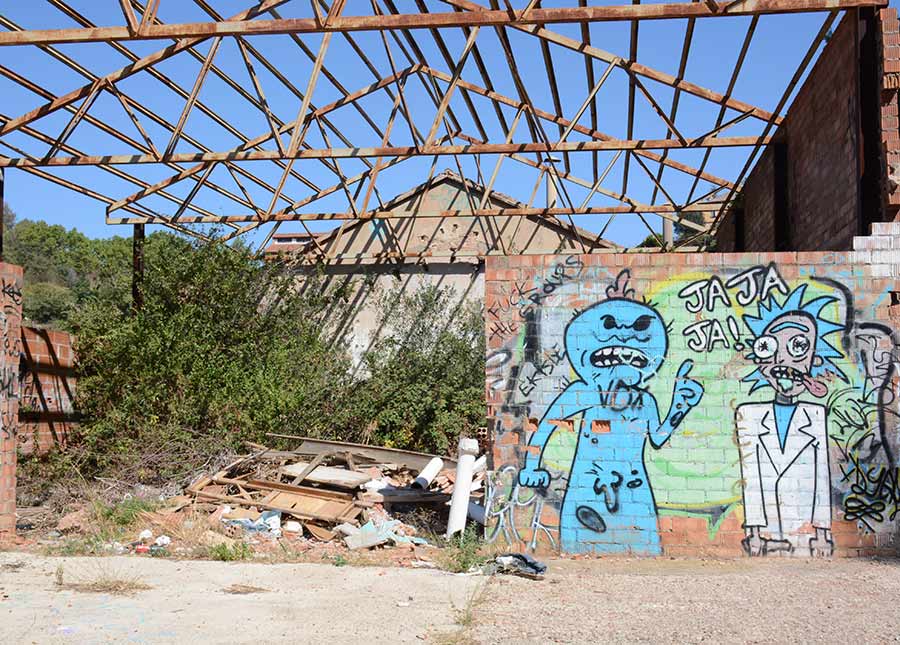
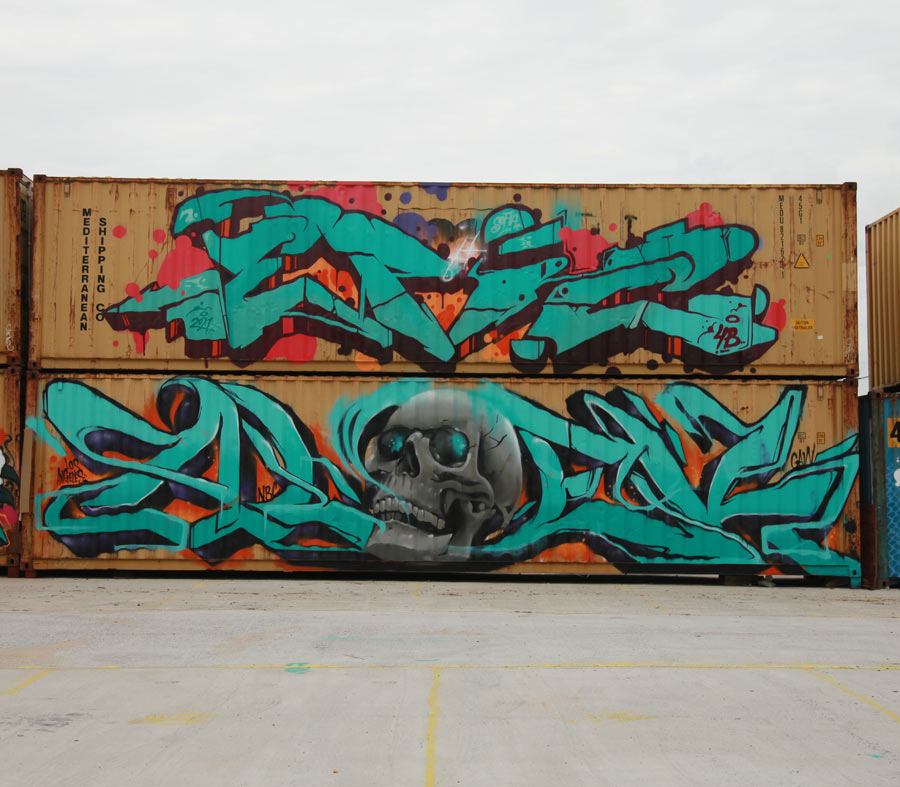
We return for Part 2 of this nearly incandescent display space in the northern woods of Catalonia discovered this month by photographer Lluis Olive Bulbena.
Such an idyllic light and quiet sanctuary for aerosol paintings are on offer for anyone making the effort to investigate. Here you can see the latest trends alongside classic styles of writing for this part of Europe, where lo-fi is as welcome as high-gloss and wild styling.
During a recent graffiti shooting outing the Spanish photographer and BSA contributor Lluis Olive Bulbena ventured into the woods of a remote region in the North of Catalonia.
When he finally found the site, he felt like he was rewarded for his efforts.
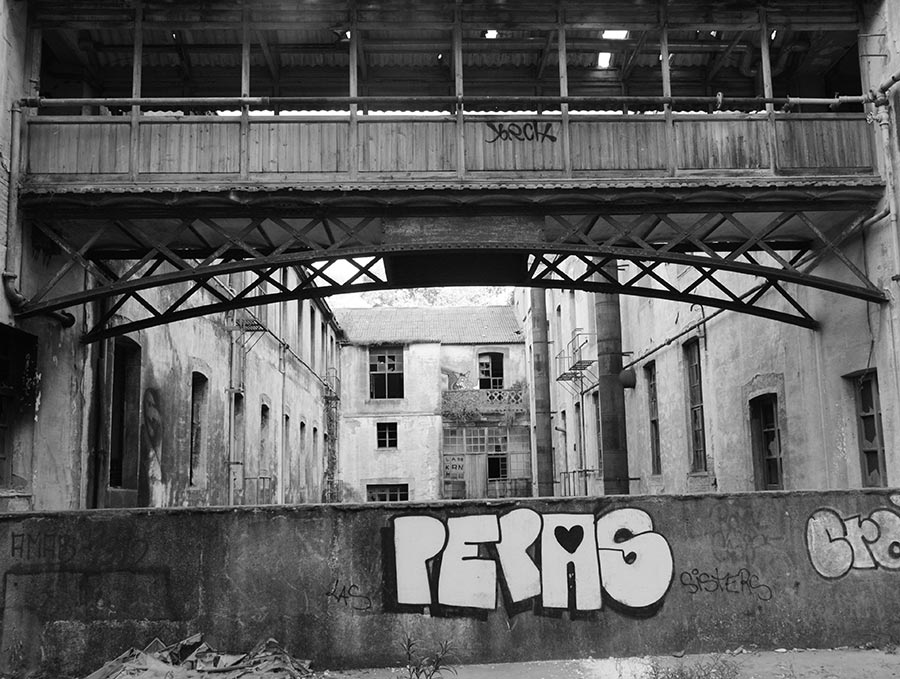
Graffiti writers are known to seek out of the way, abandoned and neglected buildings to practice their skills and otherwise “get up”. This complex of buildings once housed a textile factory in a region famous for its textile industry – an industry that was later decimated by floods.
While the architectural details of the buildings date to the beginning of the XIX century, existing documentation tracks this site as far back as the XVII century where the factories were employed in the manufacture of gunpowder. The following century, the records show that it was processing cotton. Now this not-so-secret site is an open gallery for the curious, hidden from the general public – but open to those who know where to look.
Enjoy our first installment of two – new images from a very old place:
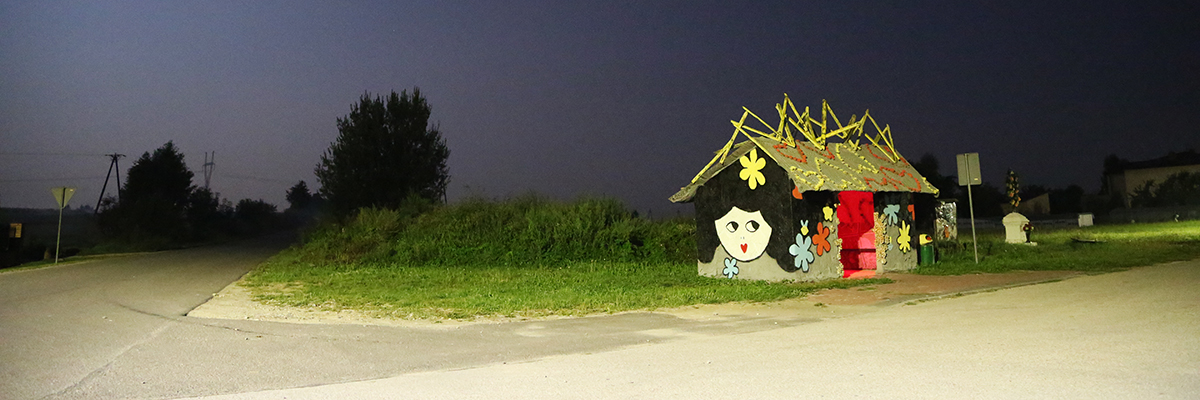
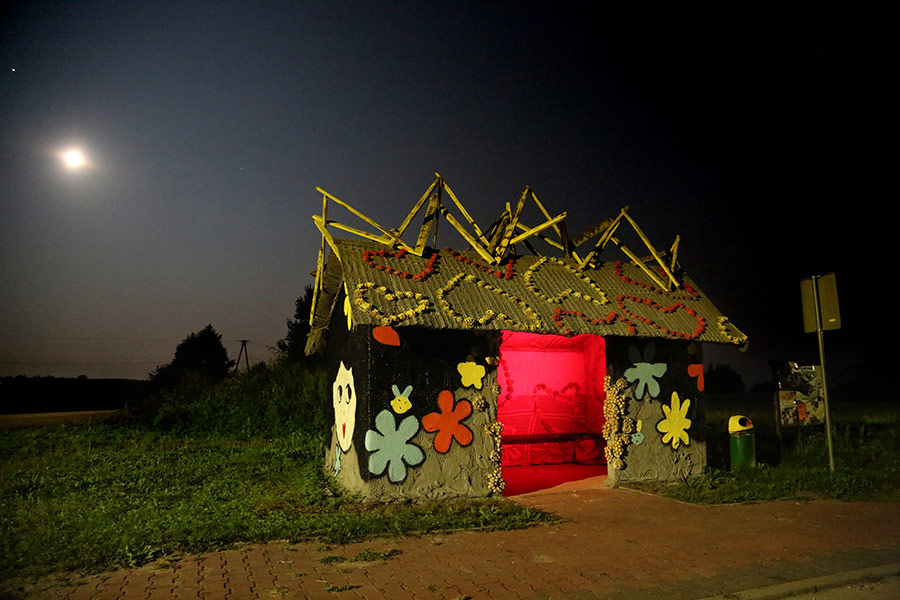
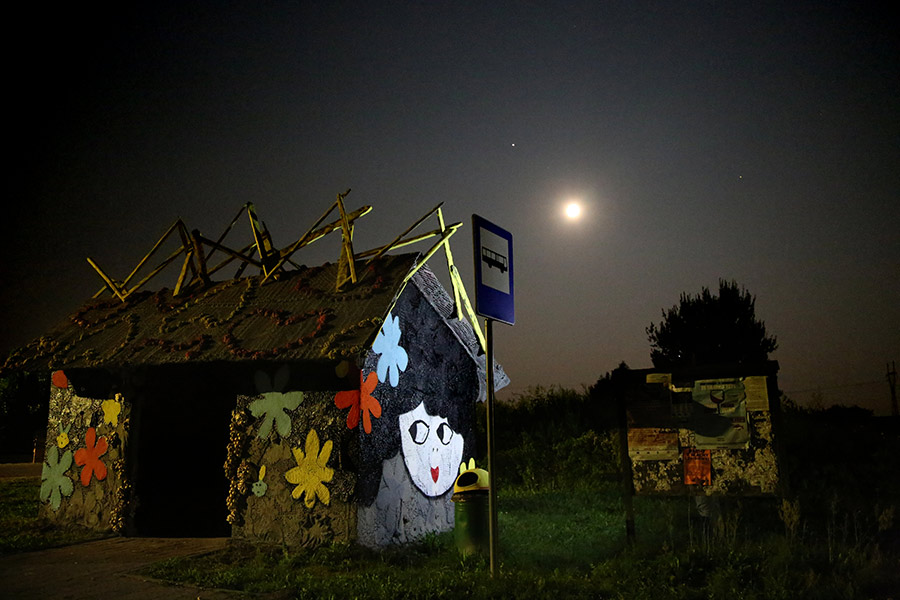
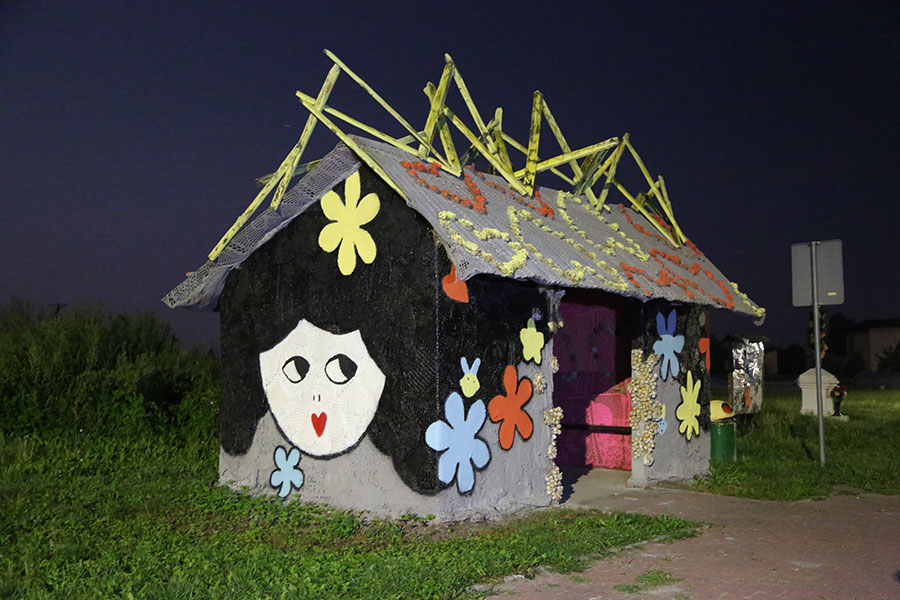
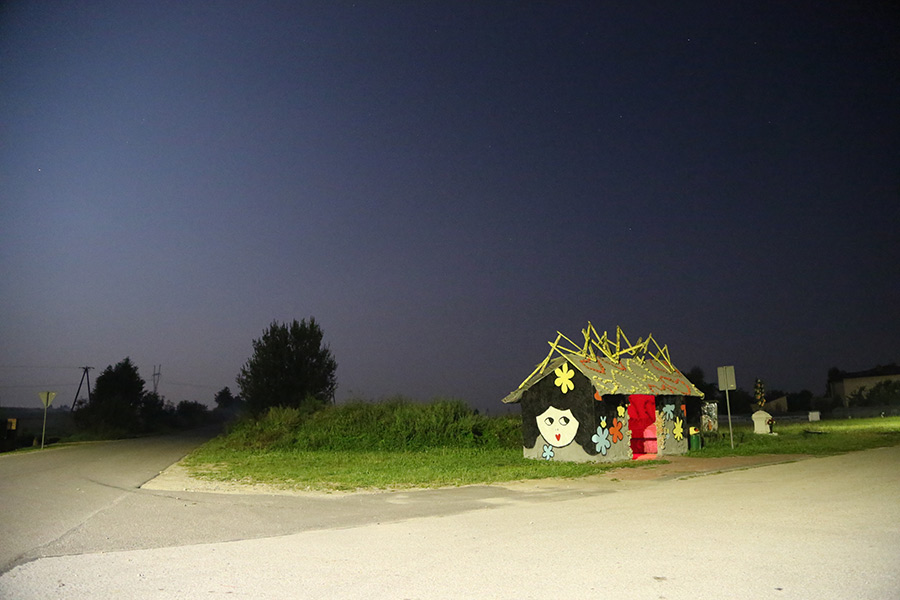
Typically a bus stop is not a place where you would discover someone of interest, but in Święcica Poland you could find the Queen of the Night following you out of the corner of her eye.
Olek in collaboration with Roksana Kularska- Krol and Sebastian Kularski. “A Community of Women”. Residency Przystanek. Swiecica, Poland. Summer 2021. (photo courtesy of Olek)
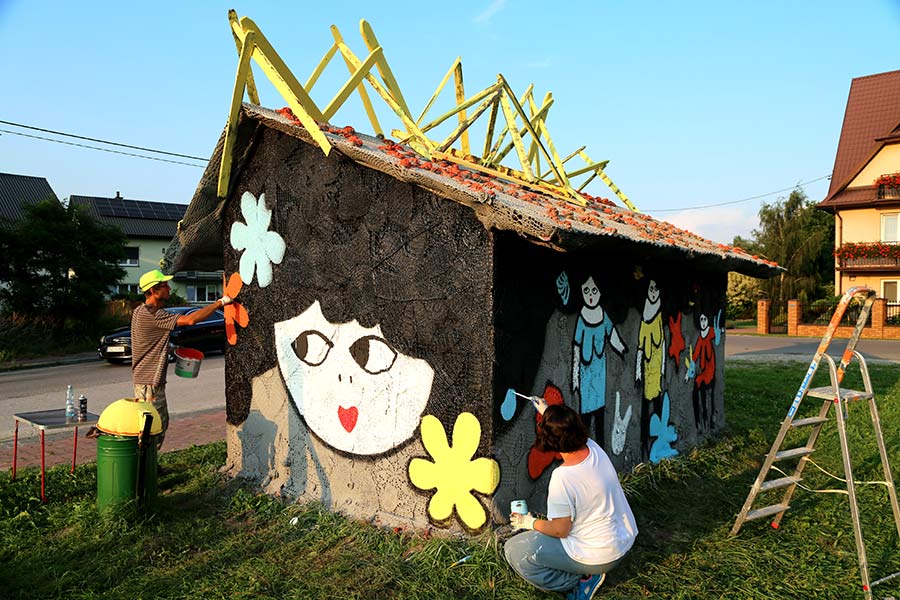
“Przystanek” is the Polish word for “bus stop” and street artist Olek has been curating this one for a few years, inviting new people to give their interpretation a proper place in the public square. This month artist Roksana Kularska- Krol (Roxi) paints Queens of the Night.
“These heroines are the embodiments of the archetype of the Great Mother (the Great Goddess, Queen of the Universe),” Olek tells us, “and by painting them, the artist shows that the seemingly distant world of myths and symbols is still alive, even when we are not aware of it.”
Olek in collaboration with Roksana Kularska- Krol and Sebastian Kularski. “A Community of Women”. Residency Przystanek. Swiecica, Poland. Summer 2021. (photo courtesy of Olek)
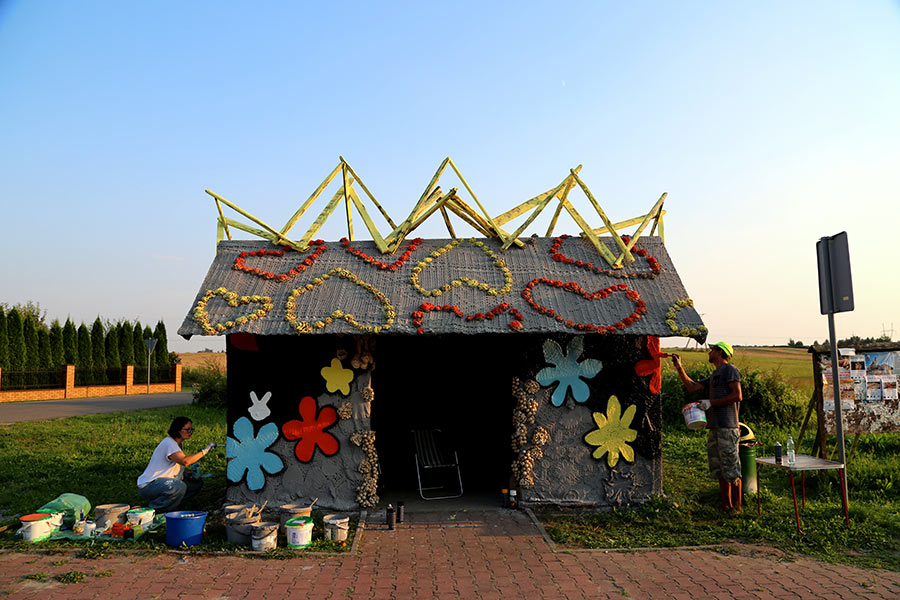
Painting for a little over a decade, Roxi completed this installation with the participation of Olek and with The Common Good of Our Village Association from Święcica. The roof treatment, “The Crown’, is provided by artist Sebastian Kularski.
Olek in collaboration with Roksana Kularska- Krol and Sebastian Kularski. “A Community of Women”. Residency Przystanek. Swiecica, Poland. Summer 2021. (photo courtesy of Olek)Olek in collaboration with Roksana Kularska- Krol and Sebastian Kularski. “A Community of Women”. Residency Przystanek. Swiecica, Poland. Summer 2021. (photo courtesy of Olek)
Olek tells us that the new painting is inspired by the strong, entrepreneurial women of Swiecica. What is a “Przystanek” (bus stop) really? Olek elucidates here, singing its many praises:
Przystanek means: The sound of the full moon Light of the dancing river Smell of vibration around purring kittens Expanding space To be touched by forest Sound of sunset resting on the forest Everything with the forest about the forest in the forest with the forest Drumming with the fire by the fire Thunderstorm Silence before and after Pierogies Singing happy chickens delivering your breakfast Rhythm of slow walk Smell of the cracking wood under your feet The weight of a kitten on your lap when you are creating Vibration of a candlelight That dances with a thunderbolt opening the sky The colors of a thought under a pen Vibrant stillness Radiant darkness Movement of drying wildflowers The sharp eye of the Hawk circling above you Transformation comes like death in its own time They take you from one dimension into another We Are The Grandchildren Of The Witches You Weren’t Able To Burn. My Crown is in my Heart, not on my Head. Many are invited, but few are chosen. My Universe is Paradise.
~ Olek
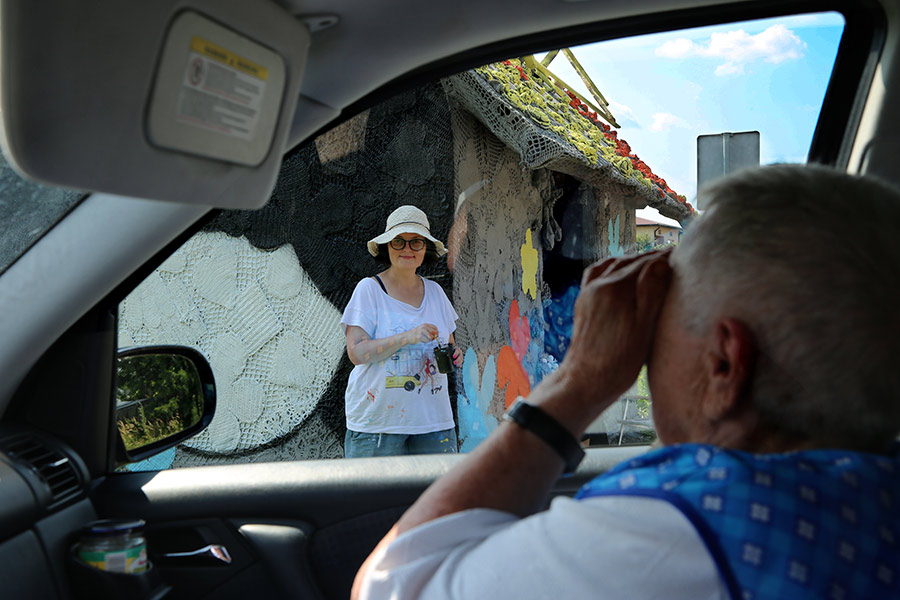
Olek in collaboration with Roksana Kularska- Krol and Sebastian Kularski. “A Community of Women”. Residency Przystanek. Swiecica, Poland. Summer 2021. (photo courtesy of Olek)Olek in collaboration with Roksana Kularska- Krol and Sebastian Kularski. “A Community of Women”. Residency Przystanek. Swiecica, Poland. Summer 2021. (photo courtesy of Olek)Olek in collaboration with Roksana Kularska- Krol and Sebastian Kularski. “A Community of Women”. Residency Przystanek. Swiecica, Poland. Summer 2021. (photo courtesy of Olek)
Developing a library of personal alphabets, coded symbols, muscle memory and intended meanings.
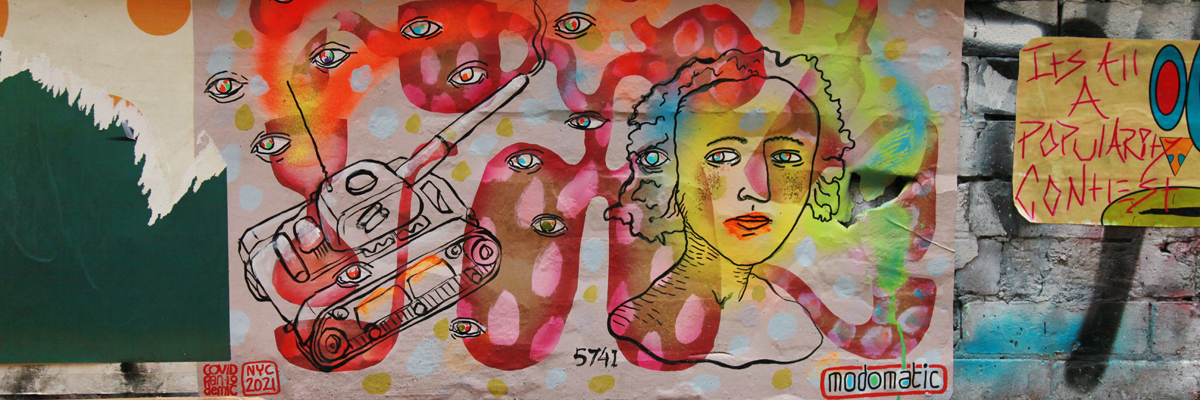
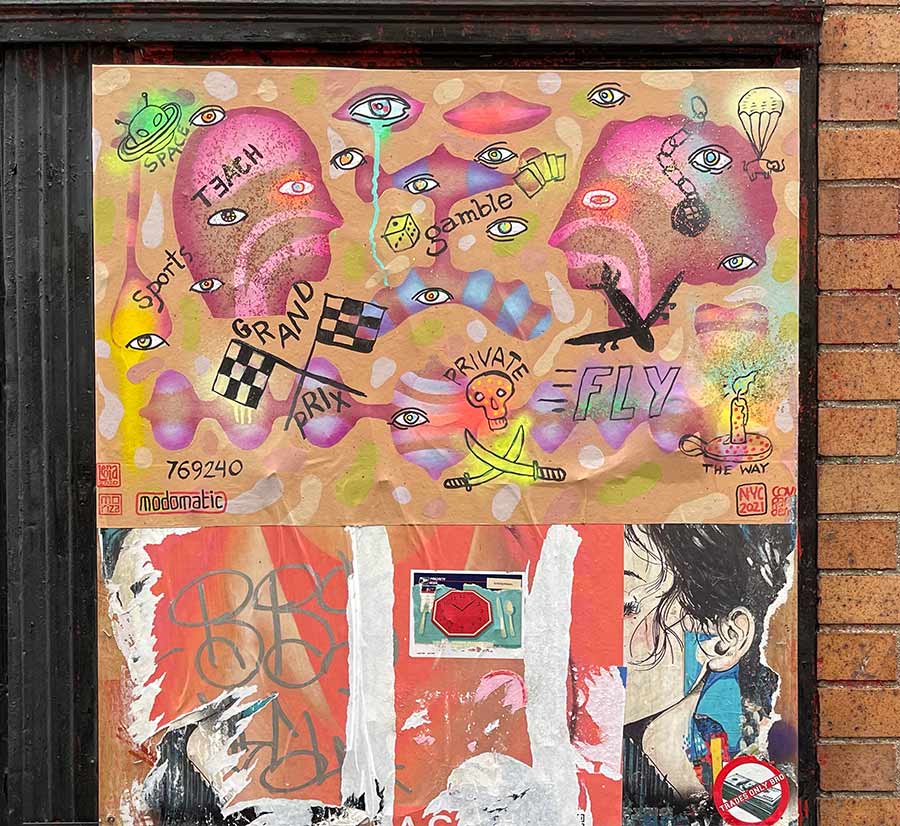
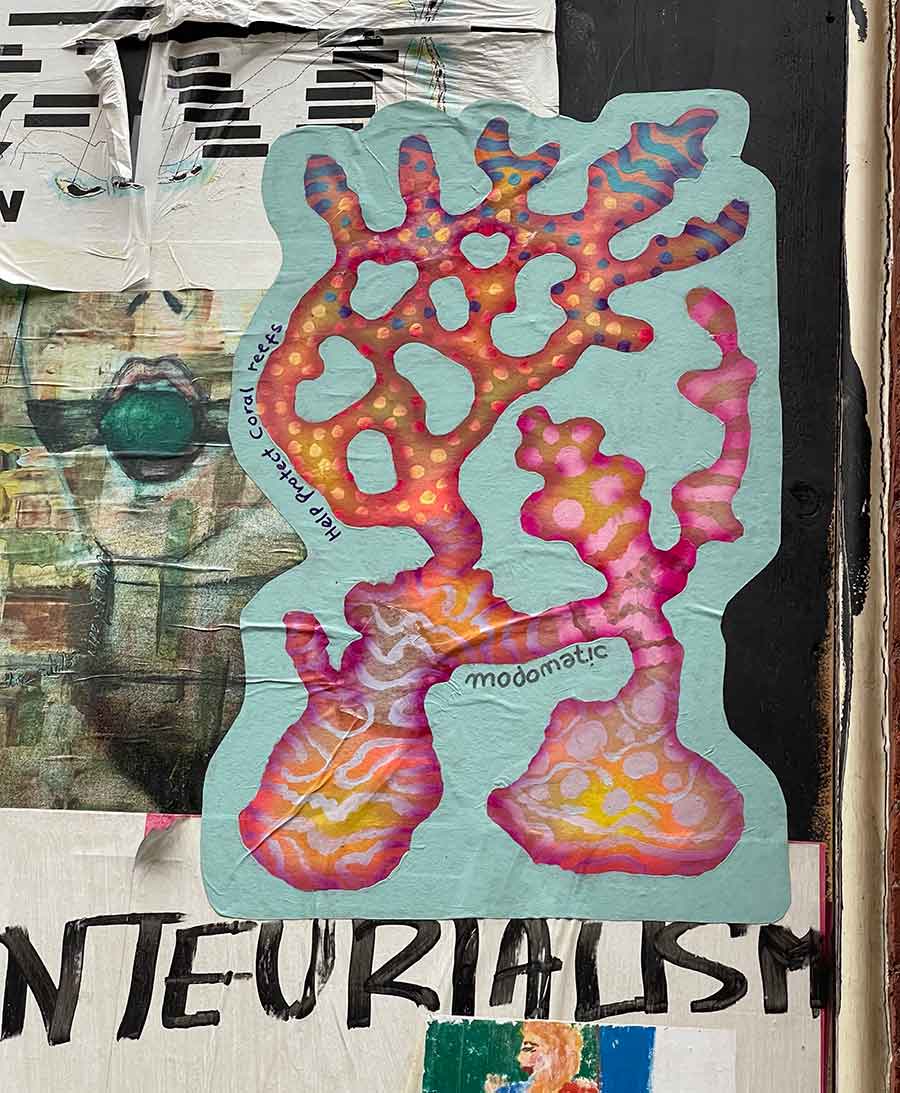
New York street artist Modomatic is finding his way among a crowded field of new additions to the conversation on the streets. His stylistic leanings are being road-tested, as it were, and he is developing his vocabulary before your eyes. We are pleased to have the opportunity to ask him about his sculptural works, his illustrative/diagrammatic works, and how he finds the space in between worlds that he inhabits to be a street artist in New York today.
BSA: The output on the streets is varied. You have what we think are 3D sculptures, wheat pastes with abstract forms, and a take on the pre-Hispanic codices, etc… Are you one artist with a busy mind or are you a collective of artists?
Modomatic: I’m one artist, with a busy mind and ways to extend working time. I constantly explore different ways of expressing myself and along the way created various forms of art, but basically, they’re all coming out of my imagination and started in my sketchbook. I produced a lot of kinds of work during the pandemic, and now using the street to distribute them, because I can’t keep them all. I used a lot of my existing art. I adjust them for the streets, enhancing them so that they can be viewed a little bit further away. Also, for example, the use of brighter and fluorescent colors. I’m still learning about street art, learning about the culture, the type of artwork, the artists, and the way people are installing their art and where they’re installing it. That actually informs, in a way, how to evolve my art to fit more into the environment and the street culture.
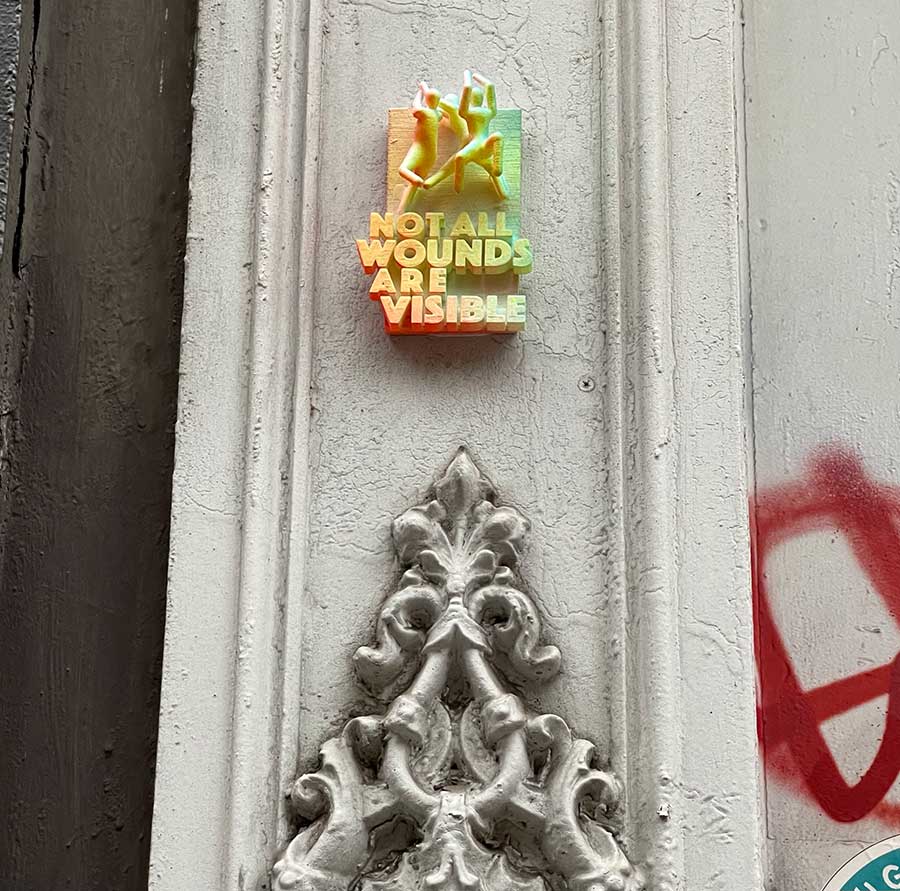
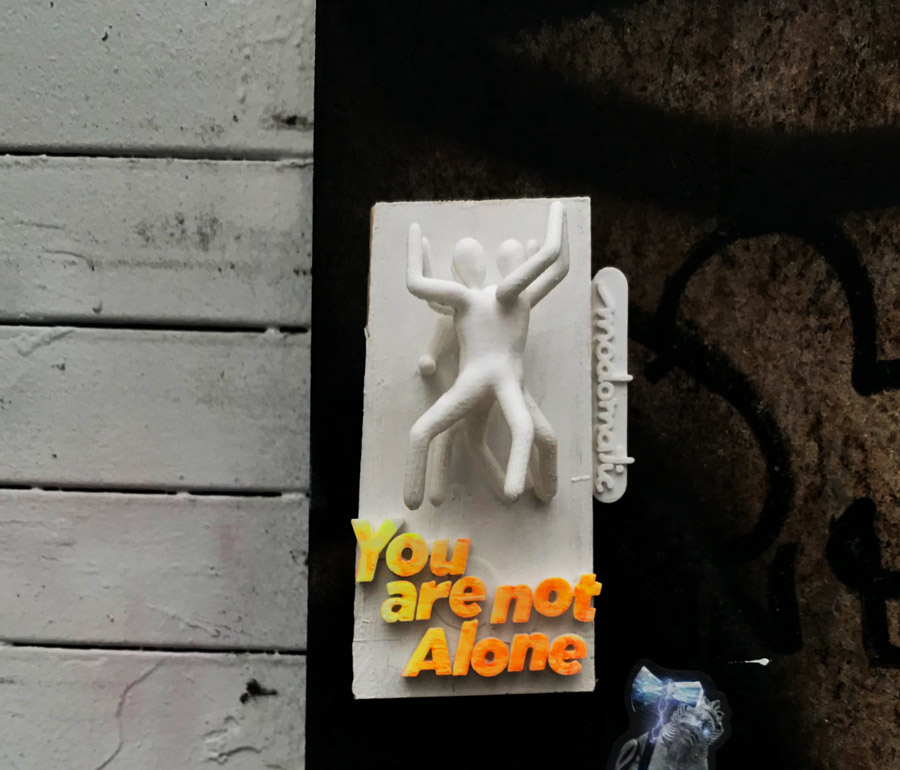
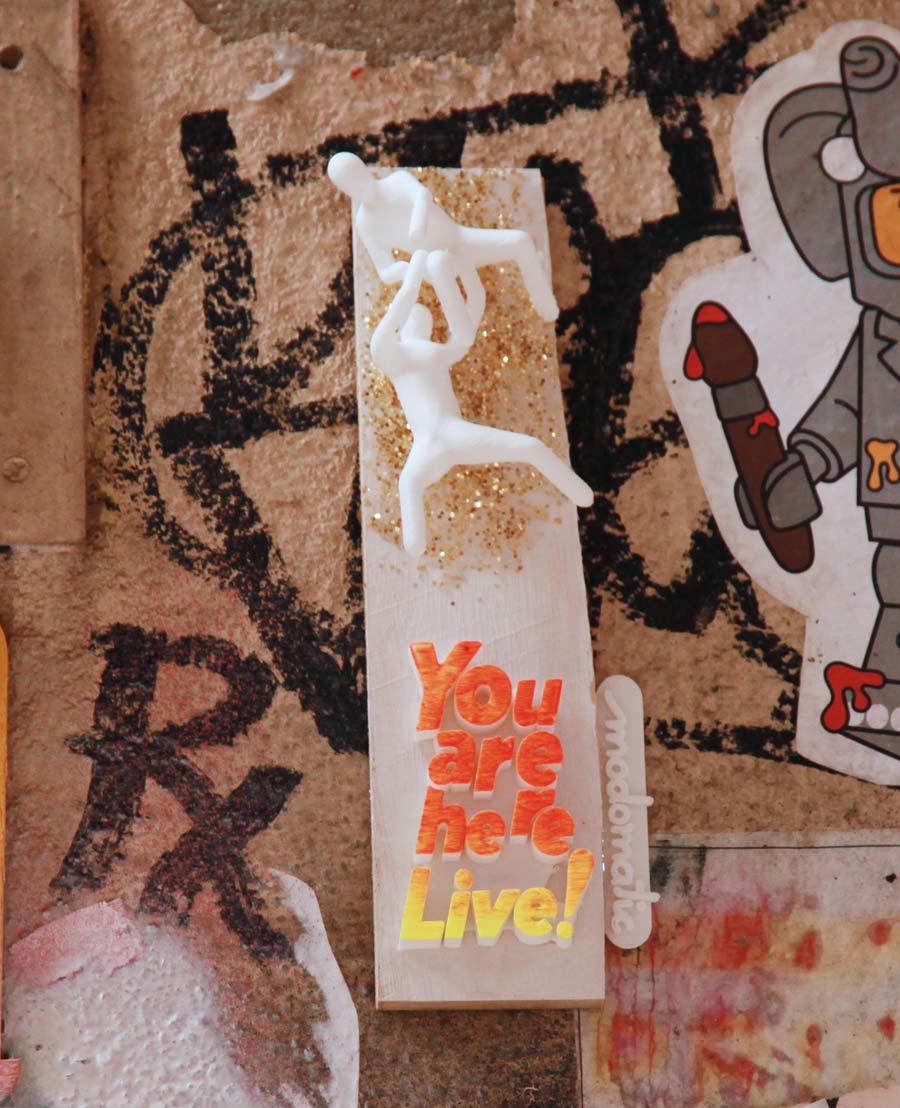
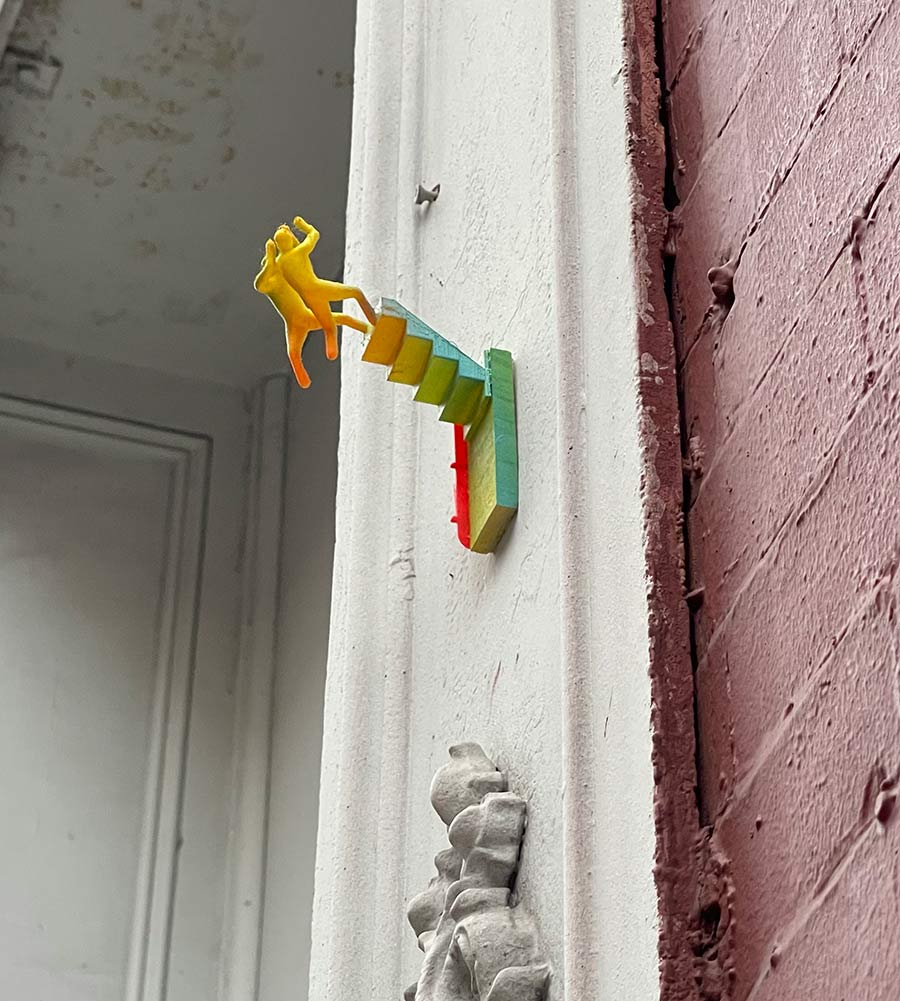
BSA:The 3D sculptures are usually human figures interconnected in dance-like movement. The pieces have words as well and sometimes they feature a staircase. Are the figures dancing? Or preventing each other from falling off the staircase? How do you select the text? Does the text follow the image or is it the opposite?
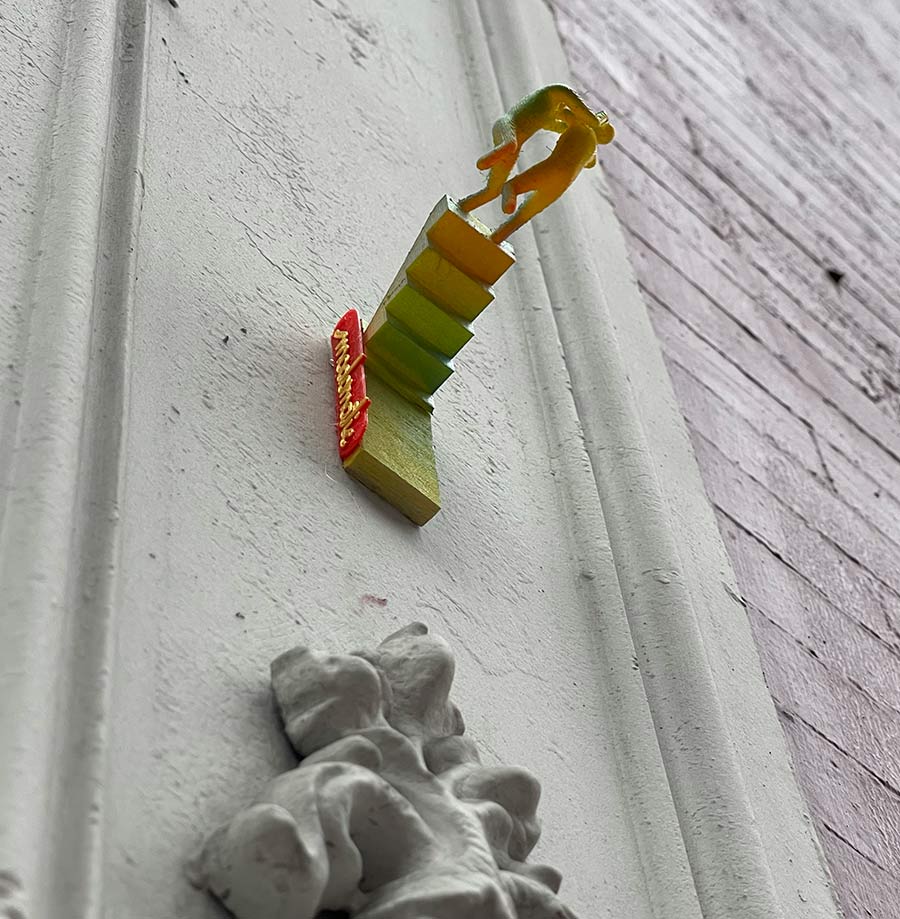
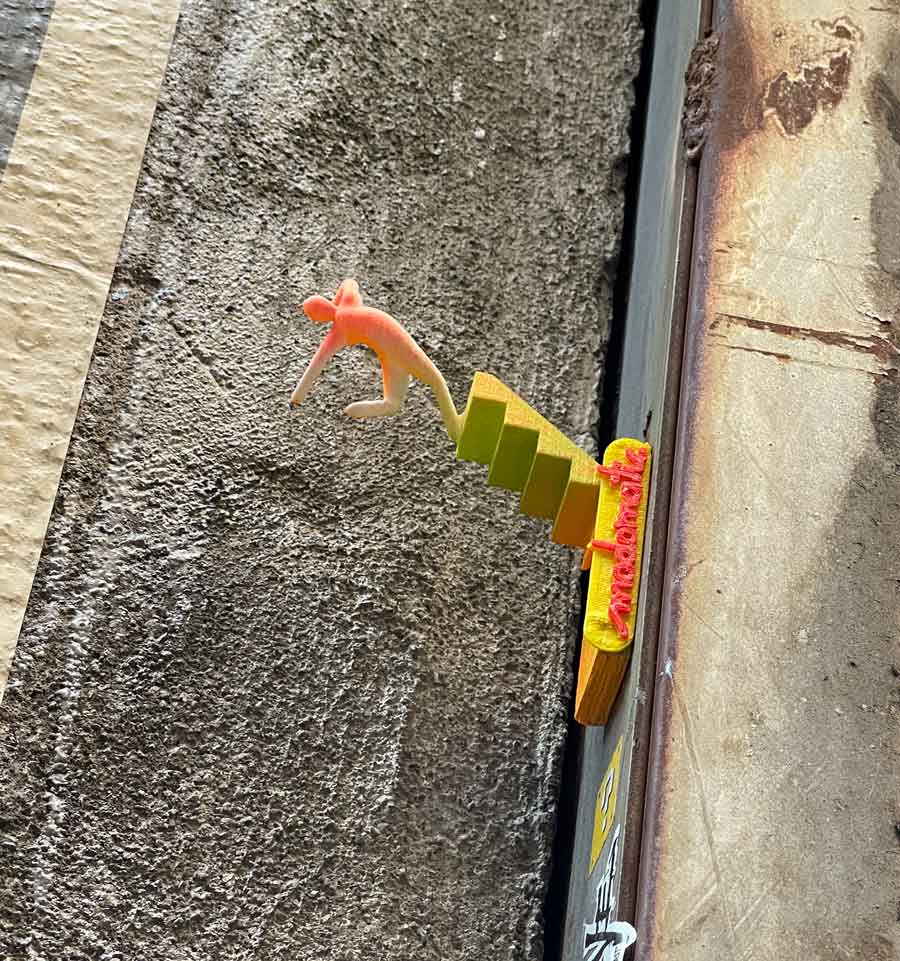
Modomatic: There are two different series of works on this 3D sculpture. One I called “Chasing the Unicorn.” This one has the stairs with a person (mostly a single person) climbing onto the end of the stairs. Chasing a unicorn for me is almost like you are climbing all the way up to the top at full speed, without knowing really, how far the stairs will go, so reaching the top could also mean reaching the end. I styled it to looked like the person is about to jump or about to, you know, desperately stop from falling.
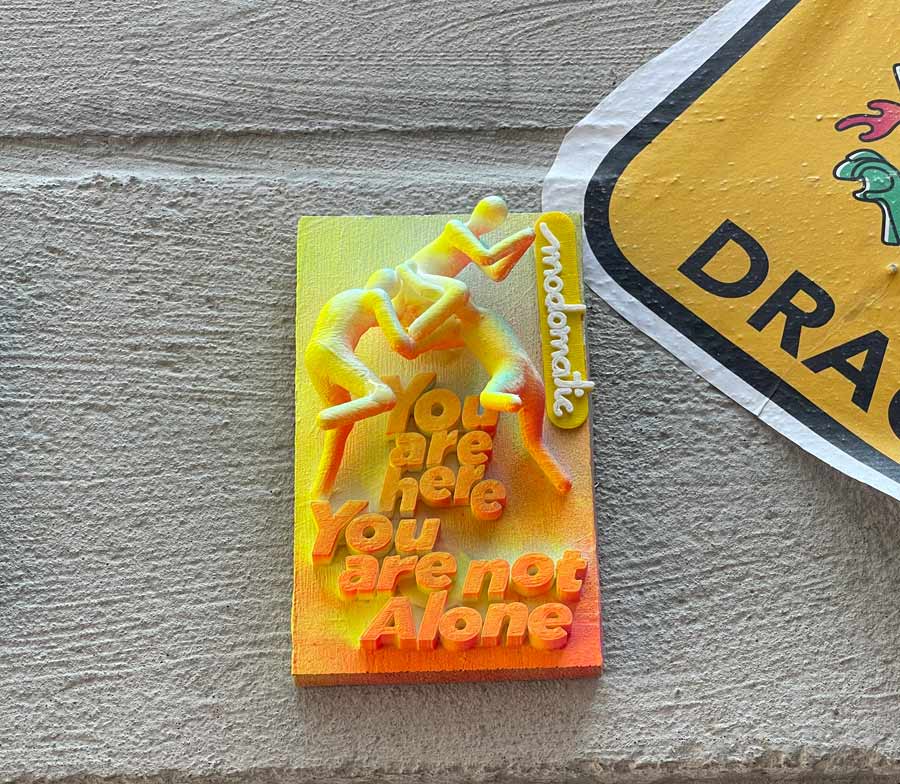
The second series of 3d sculptures are showing a small crowd of people supporting each other. They are holding each other in a group hug or propping up someone. The messages are positive and supportive of mental health. I am saying that we are not alone and they are aware of the problem and show that there is a willingness of others to help. The 3D people are not originally created for the piece – but they are being used to convey the message. I created the sculpture element for some other projects. As I said before, I have a body of work that I created during the last lockdown and these are the result of one of the experimentations I did with figures. So I created this series.
BSA:The inclusion of the staircase, in particular, is interesting to us. Do you care to elaborate a bit on its symbolism?
Modomatic: For me, the stairs are representing the effort that we take to get somewhere, to reach our goals, whether they are being successful, healthy, wealthy, or just getting out of the holes we are in. Usually, you know exactly the height that you’re going to climb, and what is at the end of it. But sometimes, as depicted in this series, when chasing the unicorn, you just go as fast as you can to climb to the top – not knowing where it ends.
Not knowing how far do you have to go also may mean risking overshooting the stairs. This could happen to us who are trying to get as much as possible, as fast as possible, by any means necessary.
In some pieces, I placed the stairs, upside down. For that moment in time when one is at the end of the stairs, going back down takes as much effort as it was going up.
Positioning yourself in between those times is kind of being invisible. People are going about ending their day, and starting their evening and you are somewhere in between.
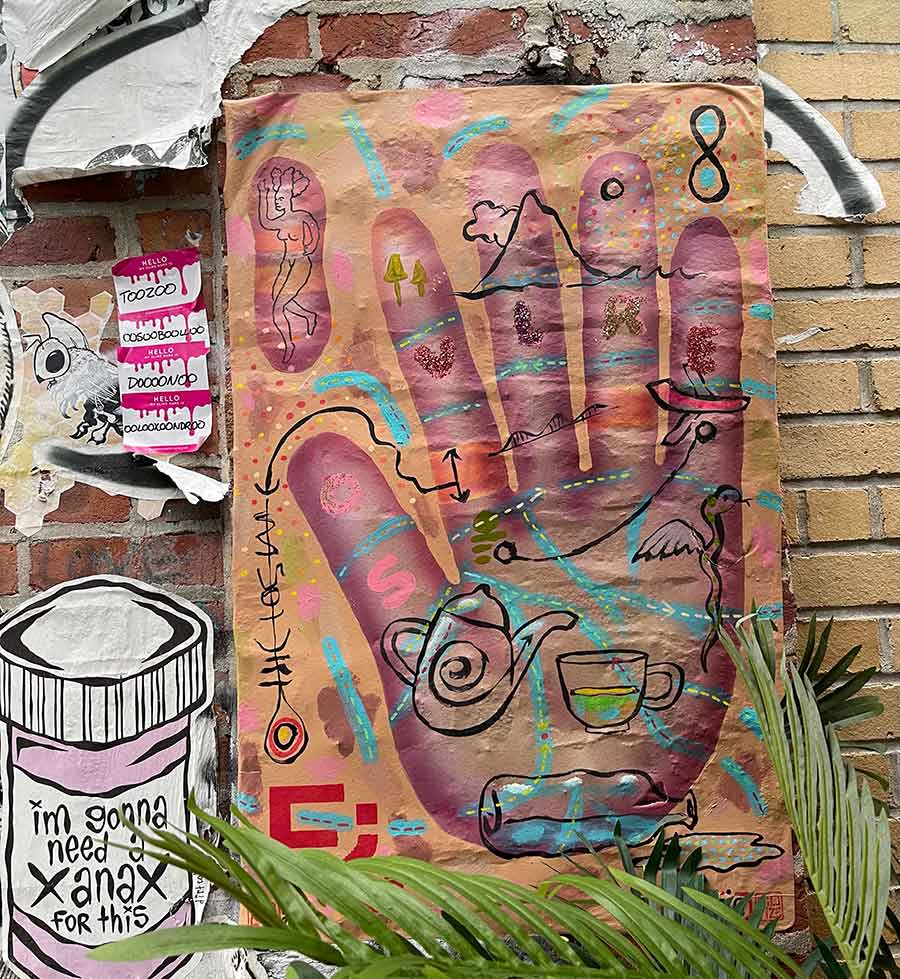
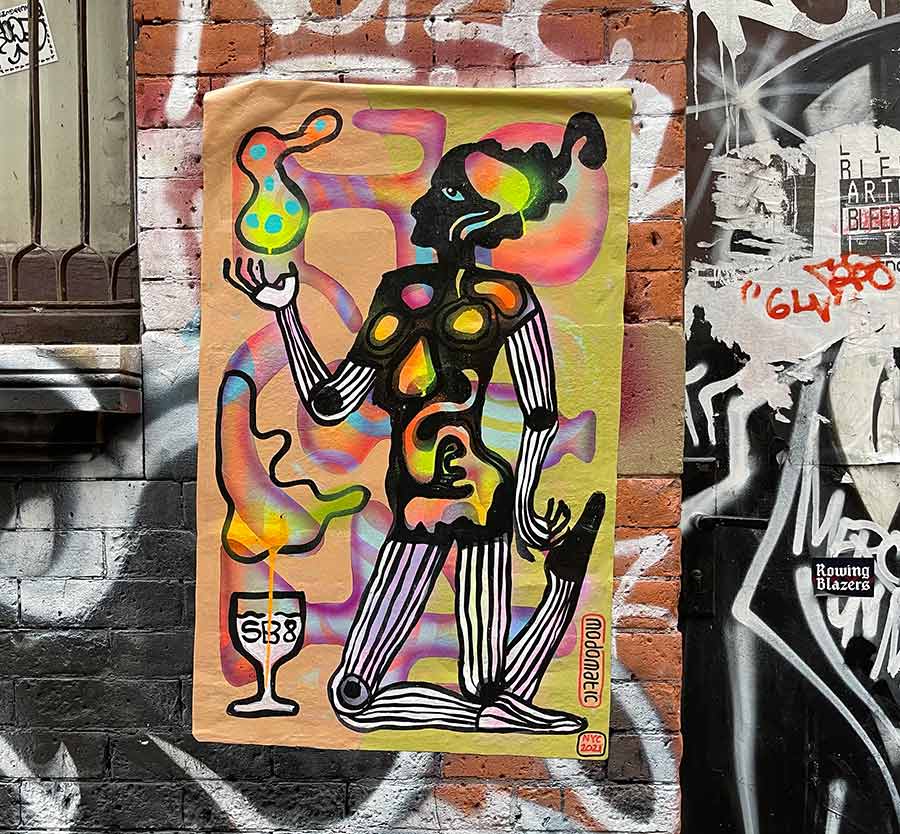
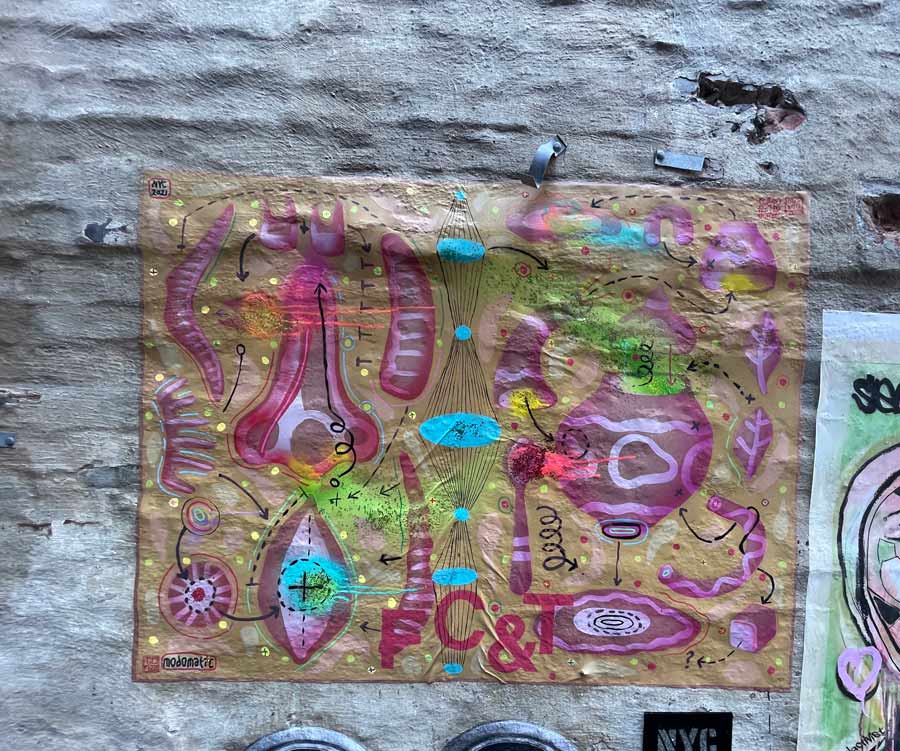
BSA: Your wheat-pasted posters have an abstract/mystic aesthetic; with figures, numbers, and words. Is there a secret code to the message?
Modomatic: When I do the sketches, the original drawings, yes. There is some form of messaging that I wanted to get across with the symbols. In the sketchbook, I pretended to create a series of personal alphabets, coded symbols, or simple marks, each with the intended meaning. Then the collection becomes a library, like an icon library. The icons either stay imprinted in my mind, in my sketchbooks or are preserved for my digital work. As I started to produce artwork like posters and other different forms, in 3D or 2D, large or small, I started to use those elements and just basically created the composition.
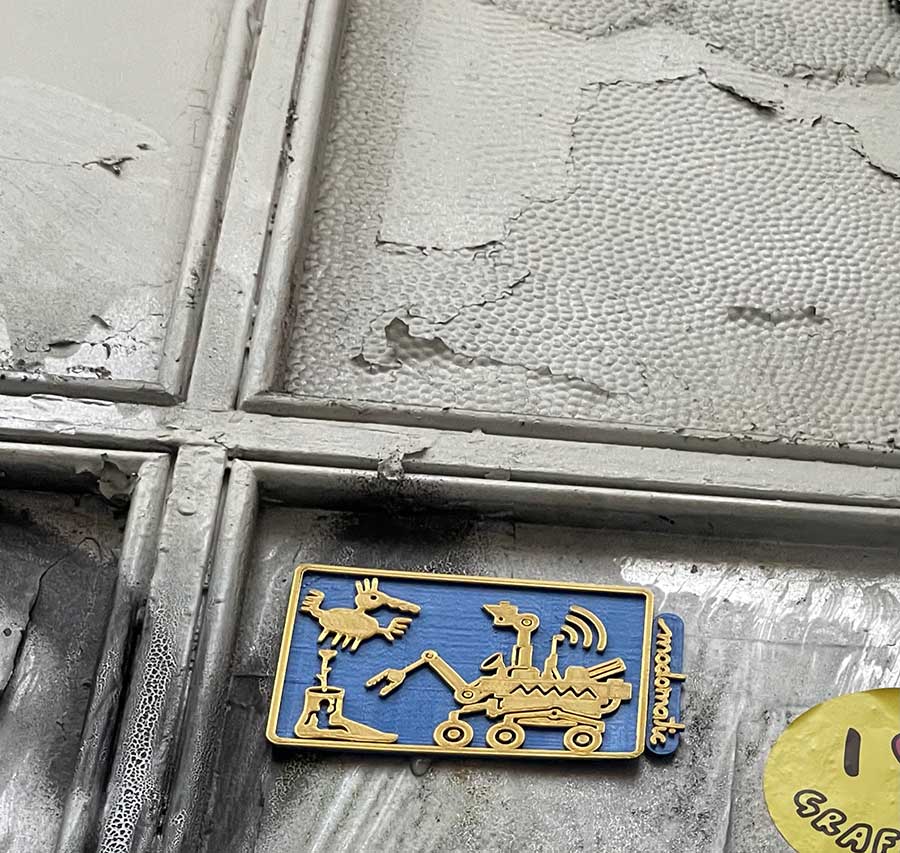
BSA:We do see an influence from what appear to be Aztec Codex symbols in your work, sometimes mixed with modern war machines. What’s the genesis for this “fusion”?
Modomatic: I’d like to consider myself a collector. I take great pleasure in mixing things I collect to create something new. In creating some of my symbols I used scripts like Hindi, Arabic, Chinese characters, Japanese Hiragana and Katakana, and other ancient scripts. I practice my hand on them, and then at one point, they become just muscle memories. The fusion happens in the process of creation.
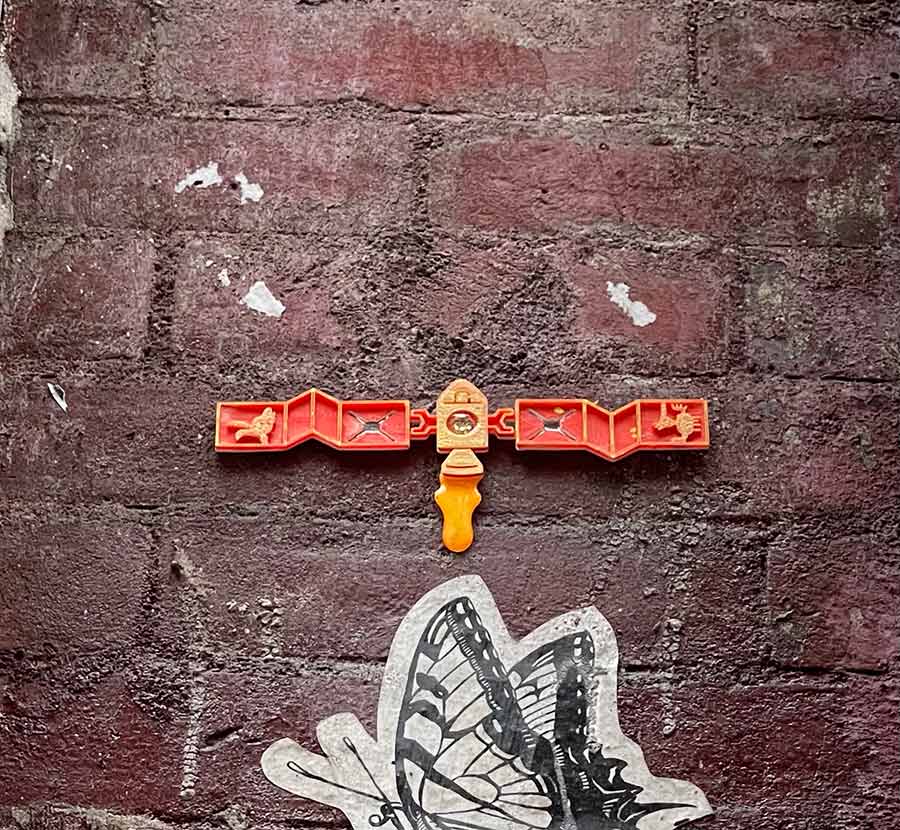
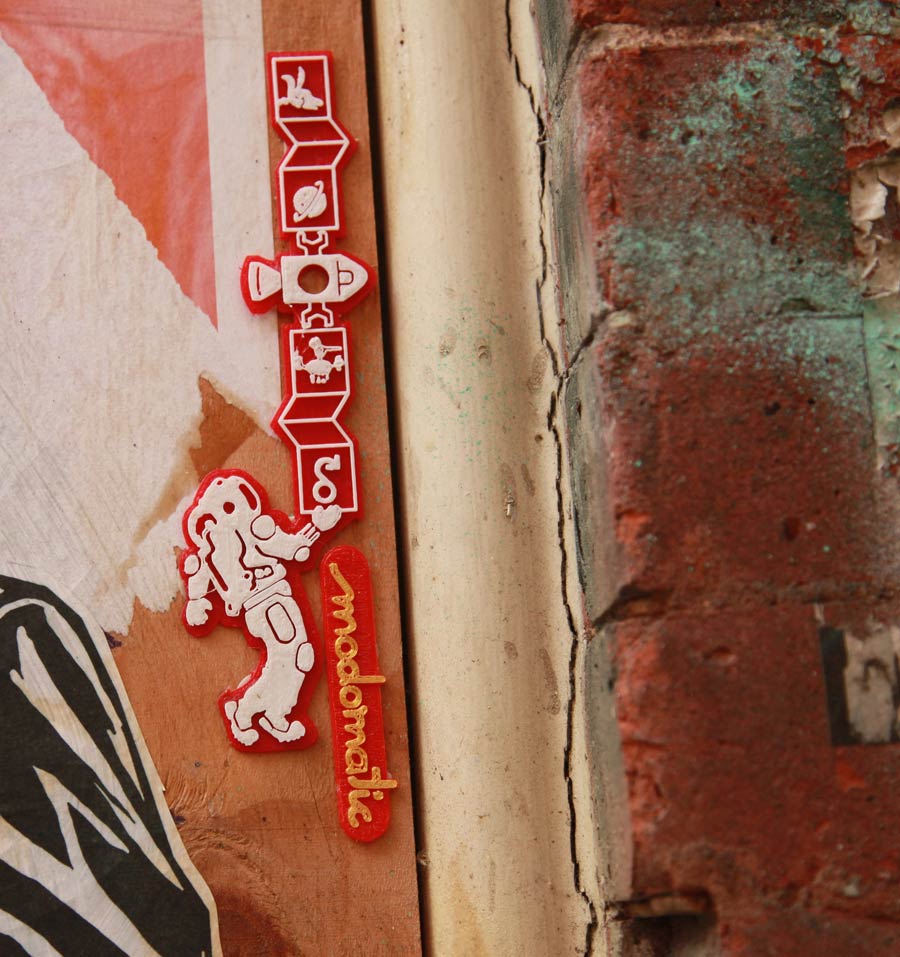
BSA:One piece, in particular, resembles the international space station to us, or perhaps a satellite. It also brings to mind Legos. Were you obsessed with Legos? Or maybe still are?
Modomatic: I think you are referring to my series AstroSnout. My kids and I love to play with Legos and other construction toys and their modularity is perhaps carried to these artworks. And recently we’ve been paying a lot of attention to the commercial space industries, with Space X and that sparks our imaginations. I do a lot of my art with my kids, and this is one of our fascinations. You can see that this group of works are more playful.
BSA:Did you like getting up in the streets of NYC during the initial Covid lockdowns when the streets were empty and nobody was around? What pushes you to share your work in the streets?
Modomatic: I get up in the street either early in the evening in the dusk, or early in the morning (5 am) where people are just coming out. I like that it is quiet but it’s not dead quiet. The early evening is when there’s just the confusion of time, between the receding of busy work and the starting of the nightlife. Positioning yourself in between those times is kind of being invisible. People are going about ending their day, and starting their evening and you are somewhere in between.
I share my art on the street because I think that it’s like the best gallery in the city.
You are the artist, you are also the curator, the gallery owner – well not really – but the gallery director and art installer. There’s a lot to figure out; where to put your art, how to position it with other art. I use proximity, as a form of admiration, so sometimes I put my art close to the other artists or work that I admire. I considered light and shadow, especially for the 3D art pieces. I also have to consider the fact that it might be taken down, or covered-up.
I love to find my 3D art has been painted over, finding it become part of the fixtures is my goal. I also love to see it emerging later on when the art covering it has decayed or been removed, and my piece started to reveal itself again.
I don’t hate that sometimes my art is taken away. I’d like to think that somebody liked them, not because they hate them.
I learned that’s the street, and I love that. I appreciate it.
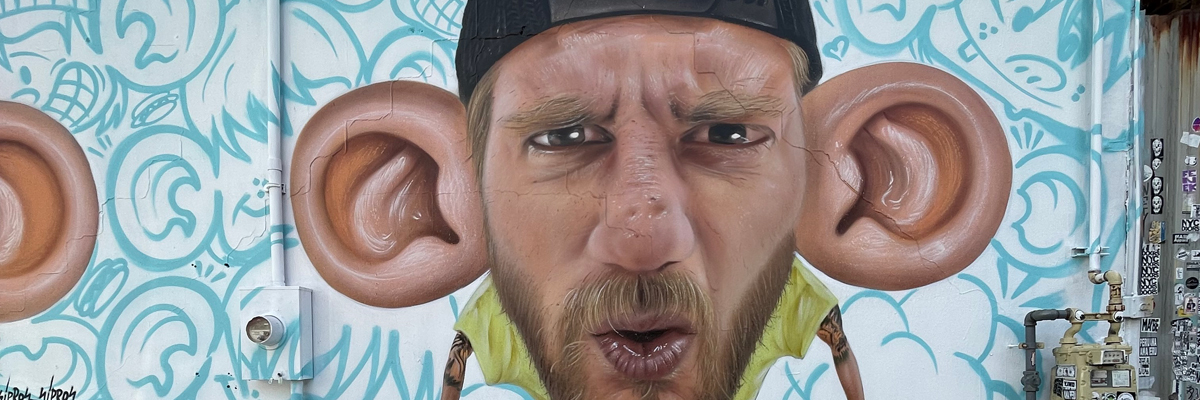
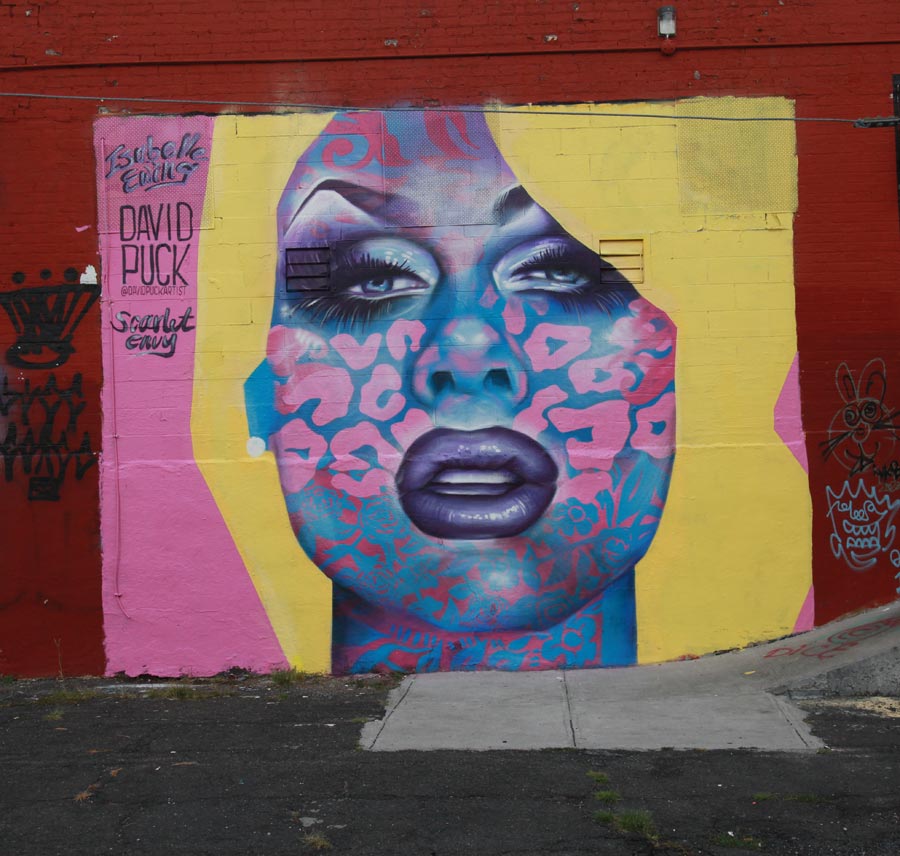
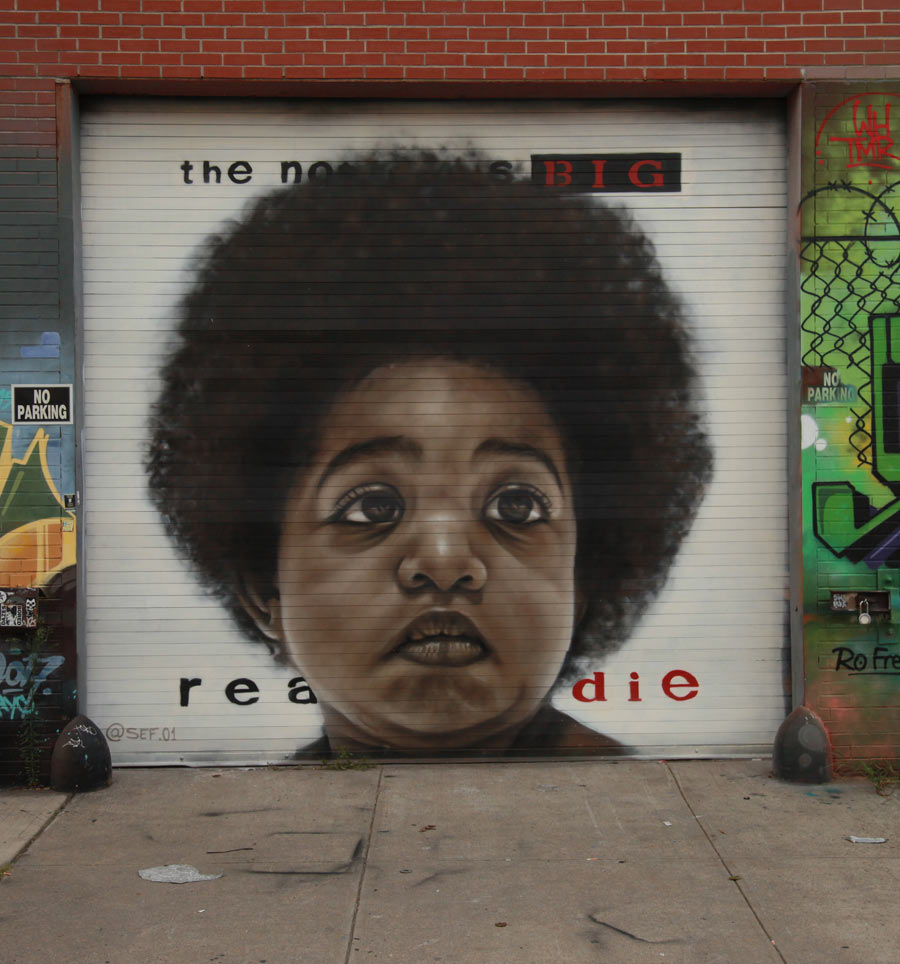
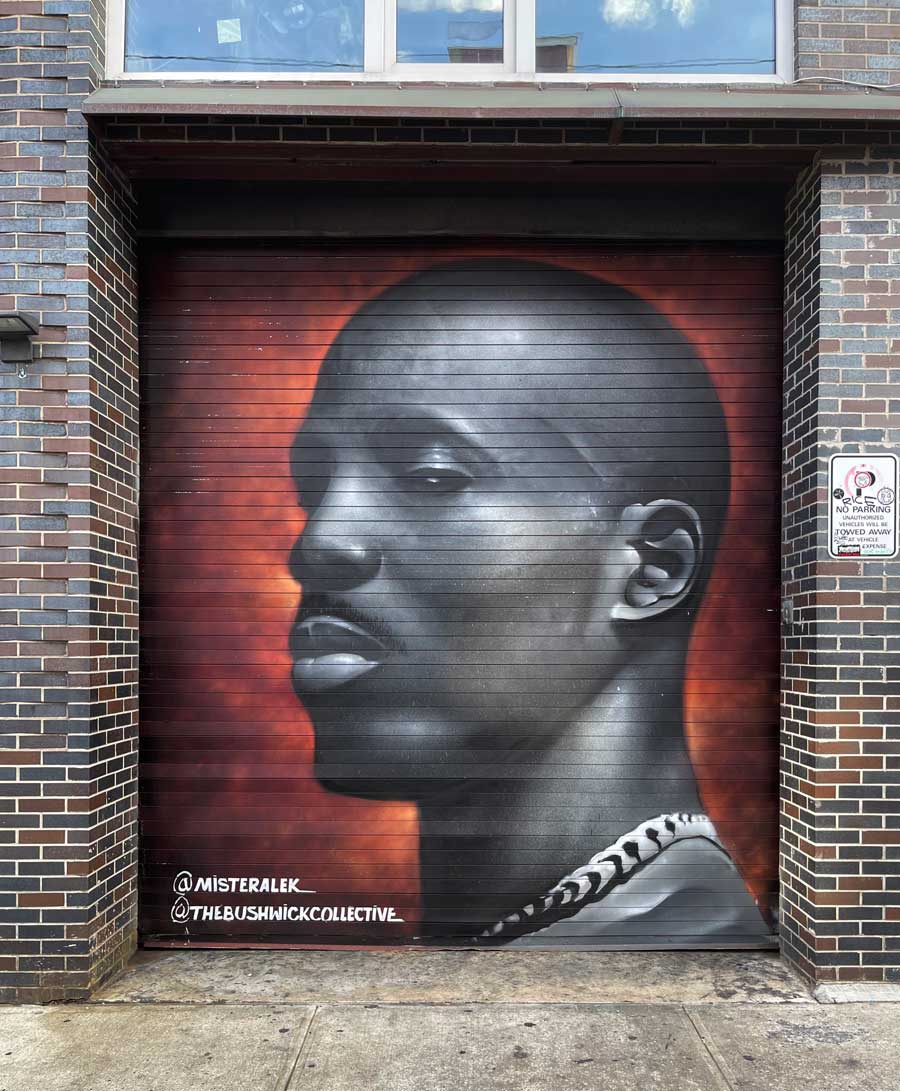
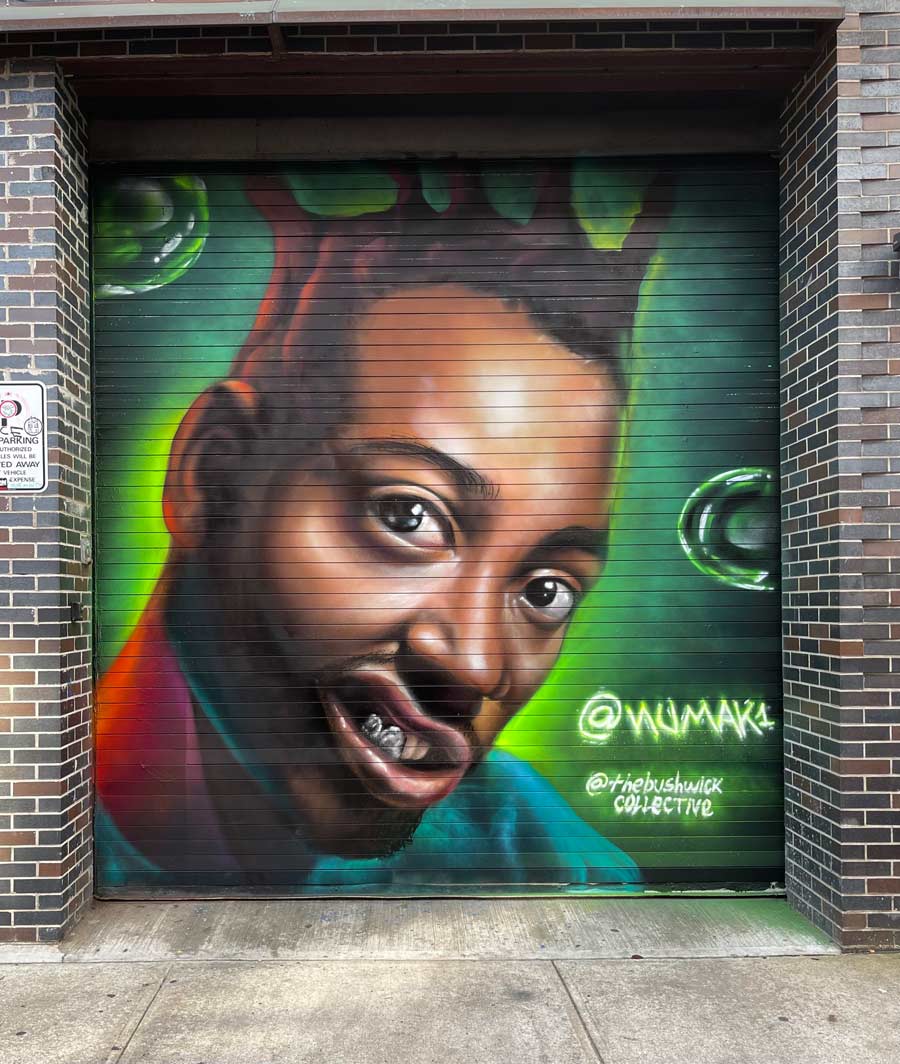
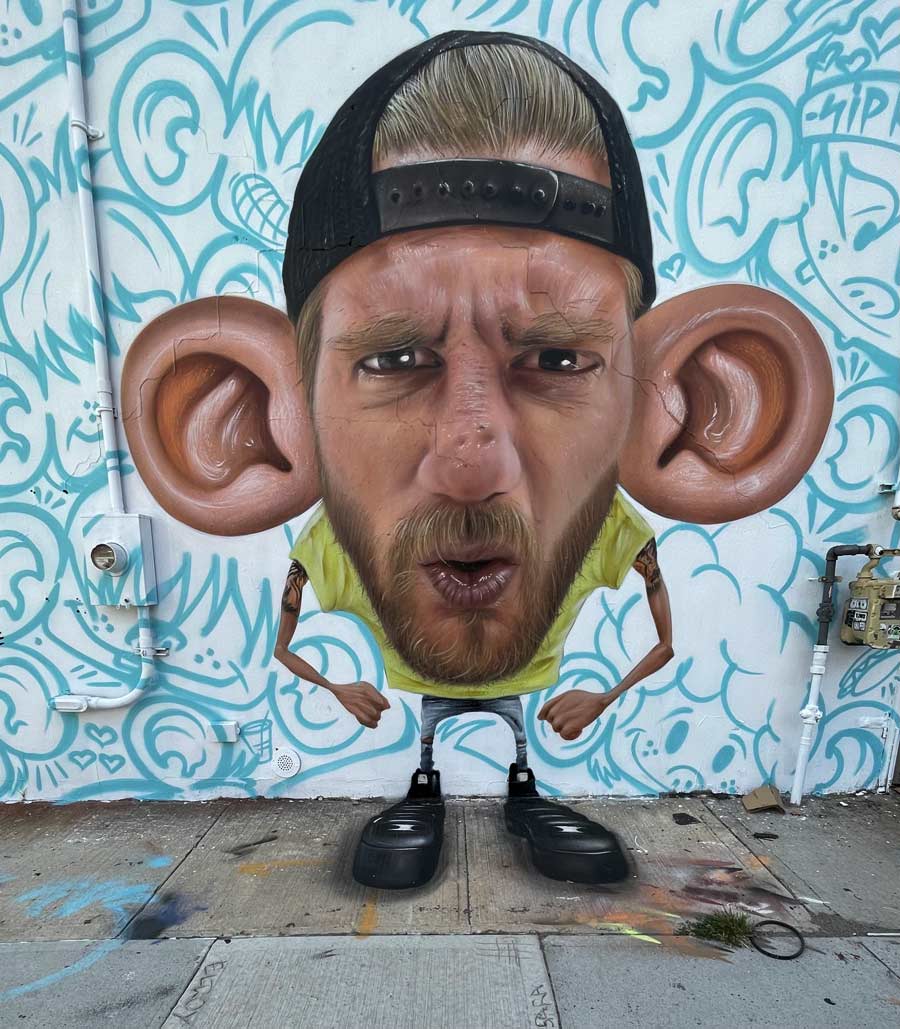
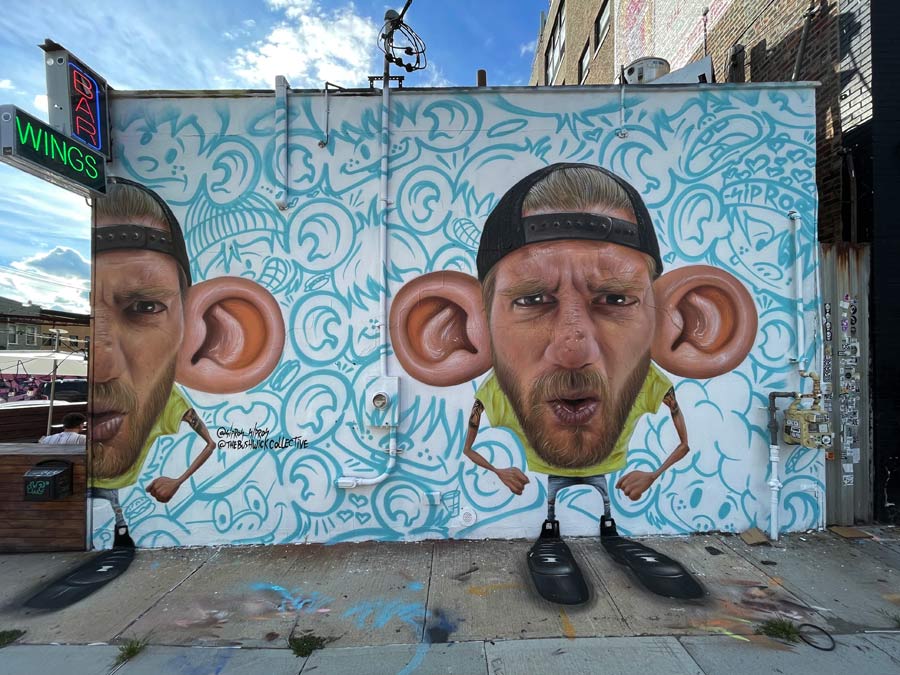
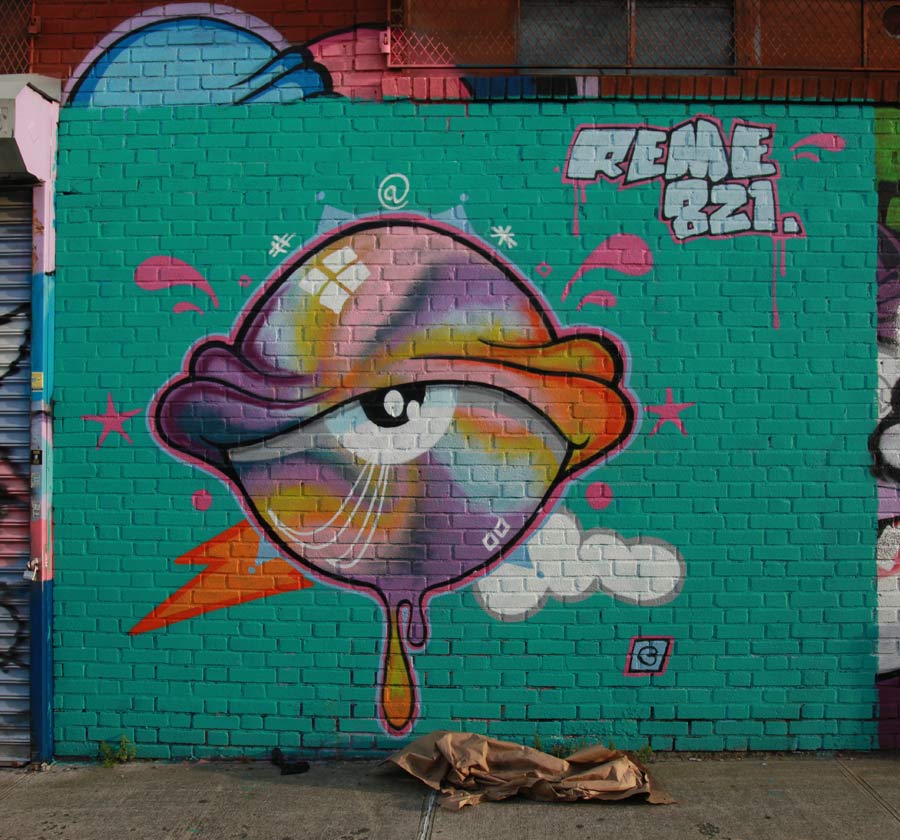
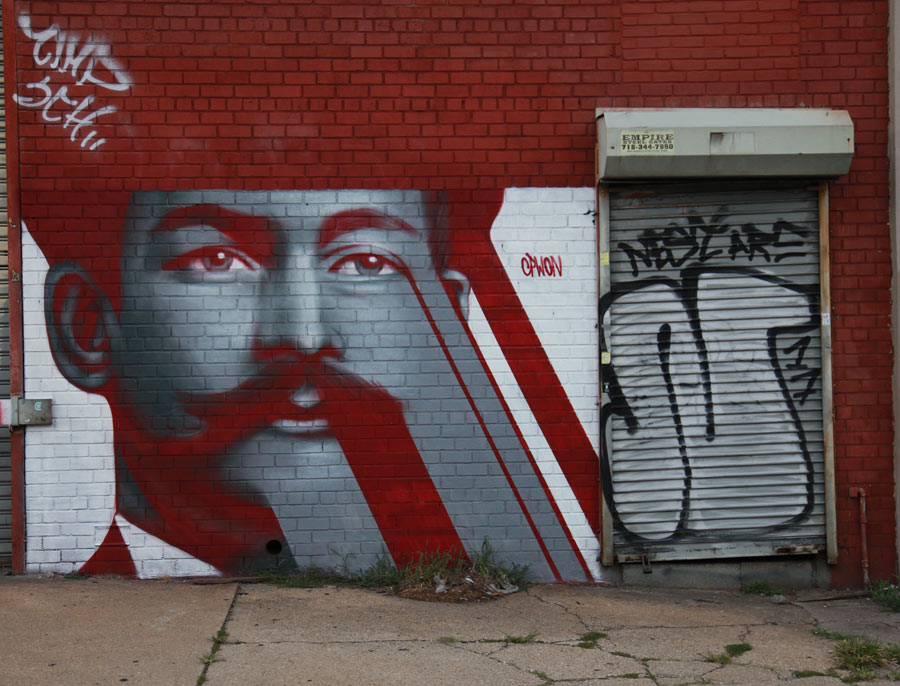
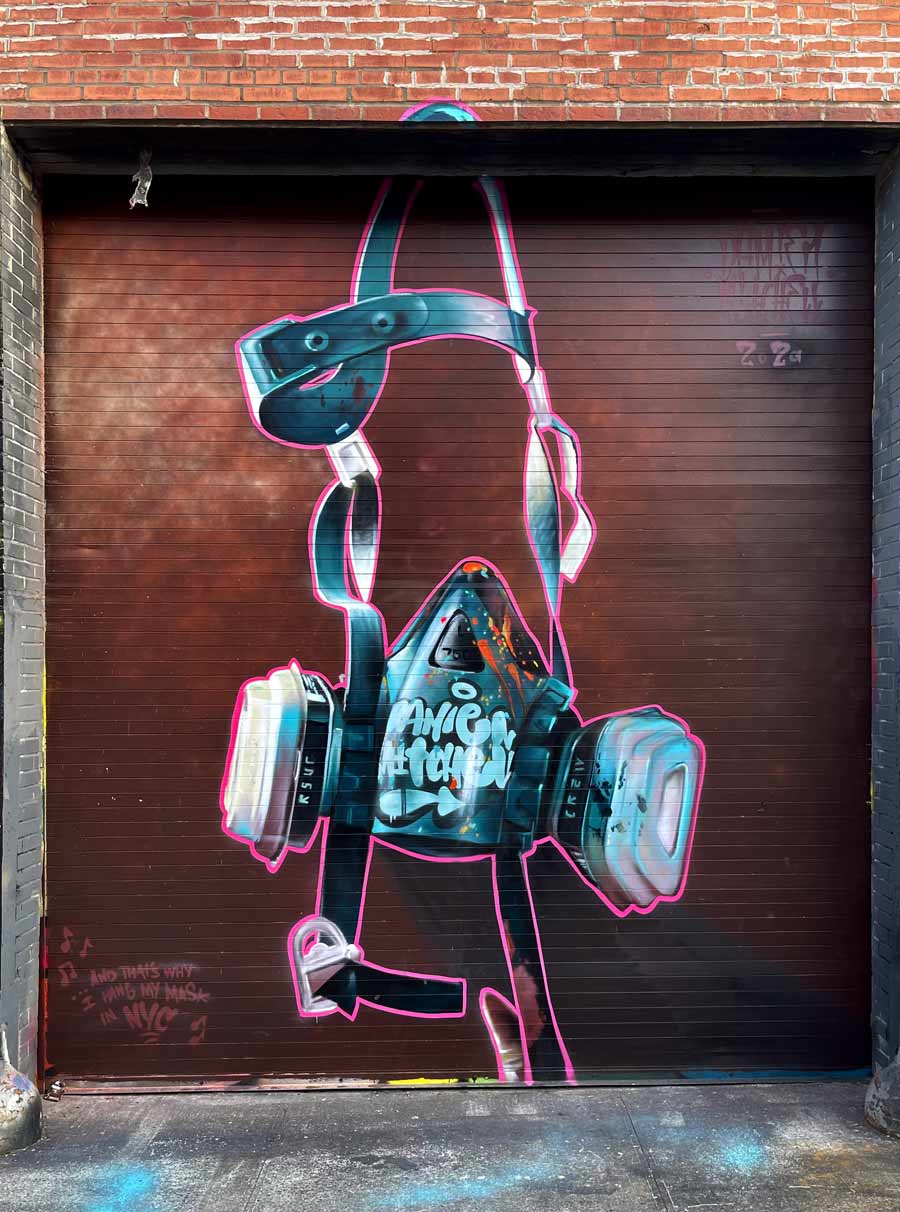
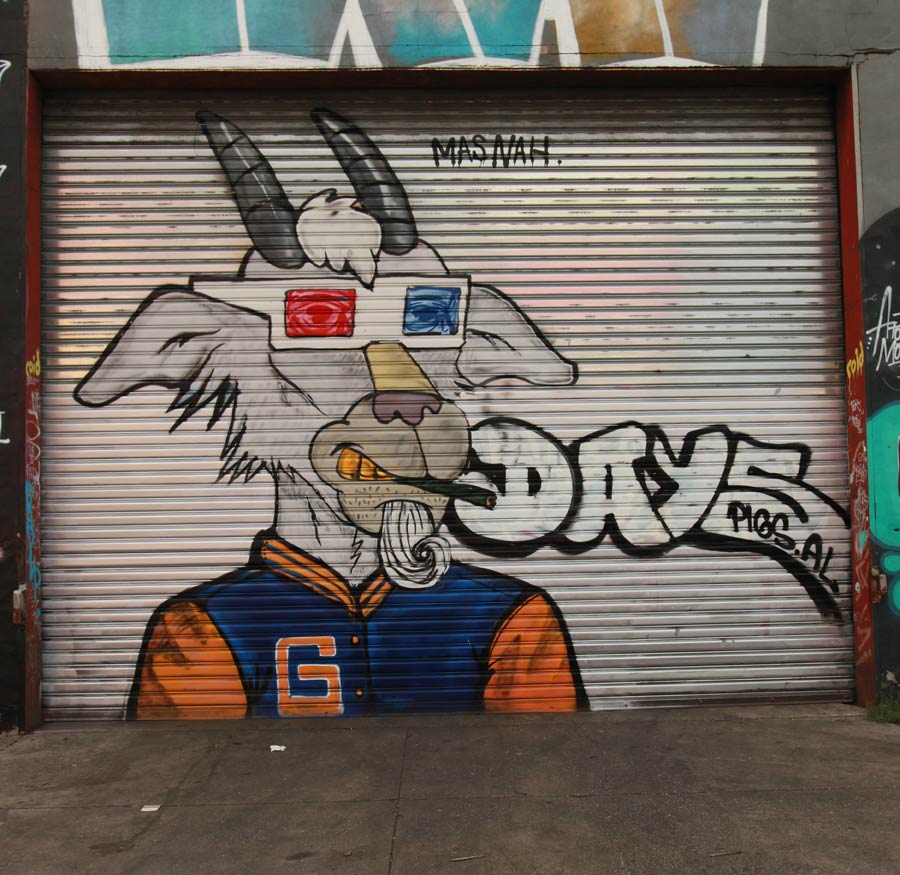
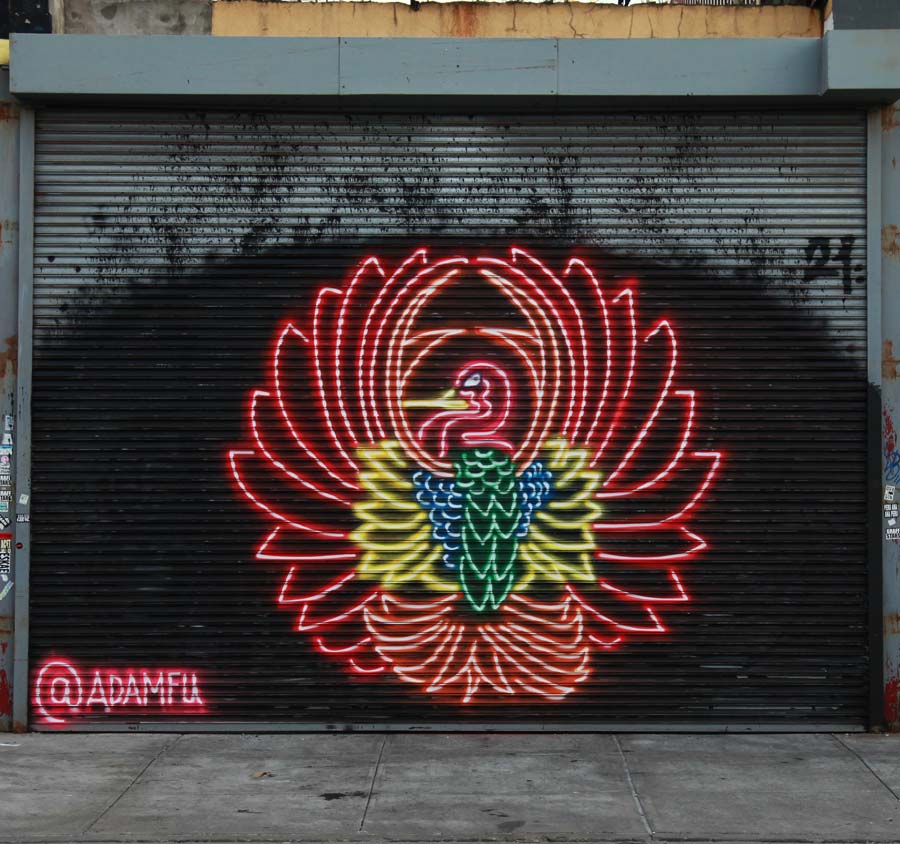
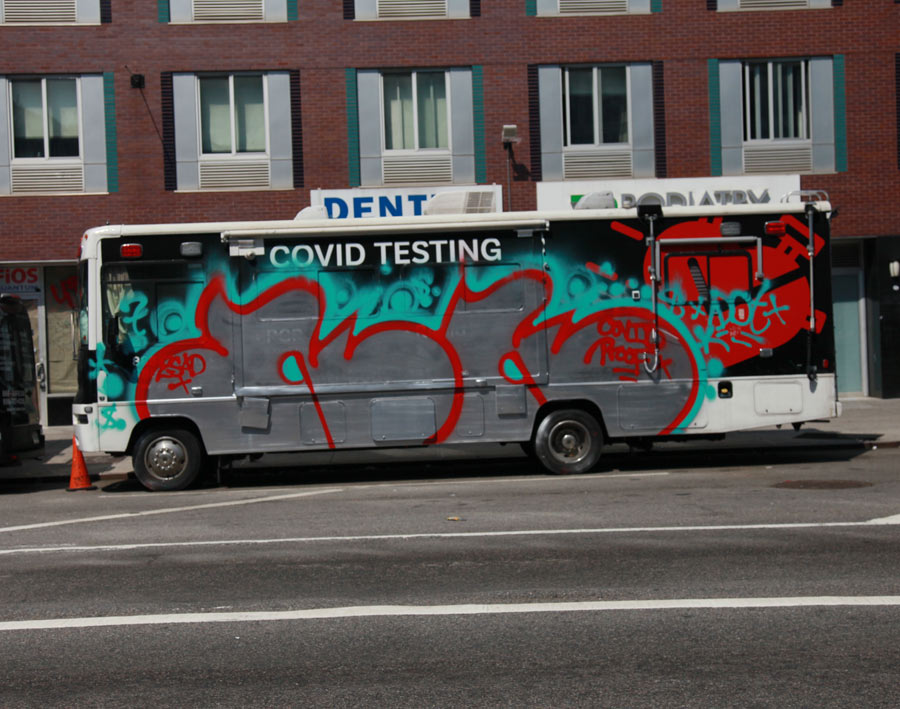
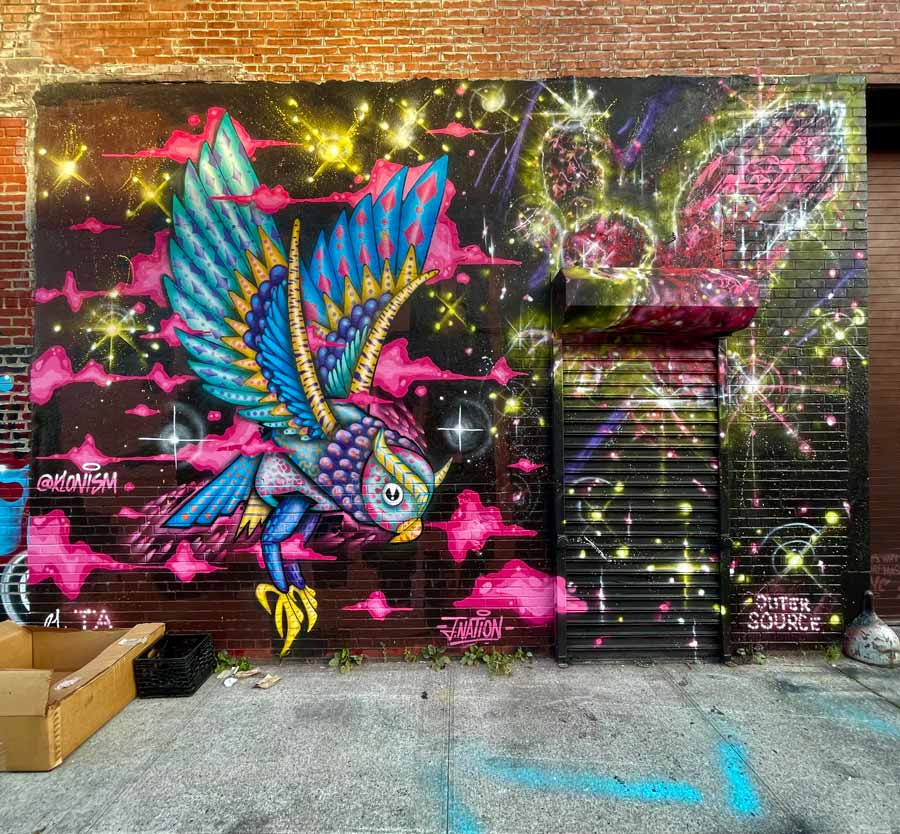
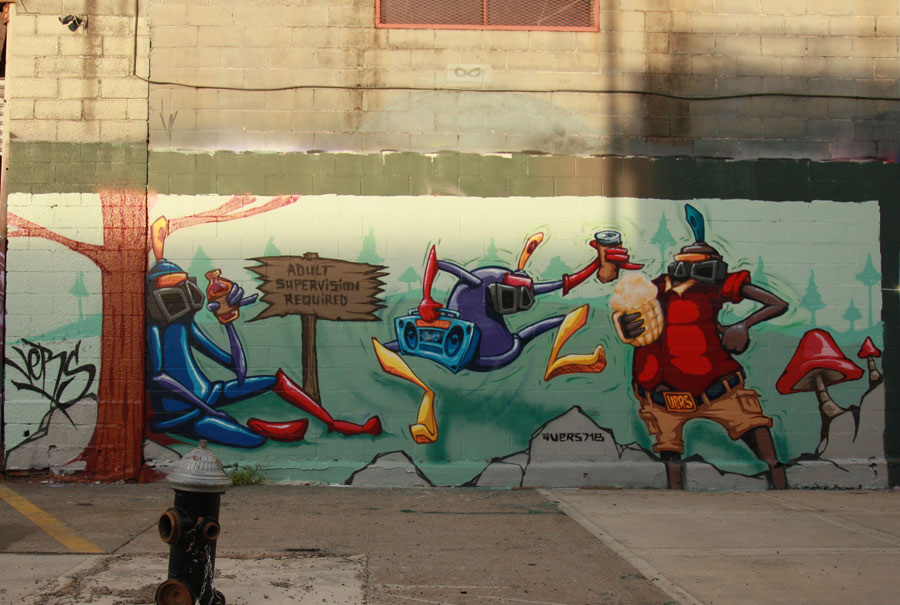
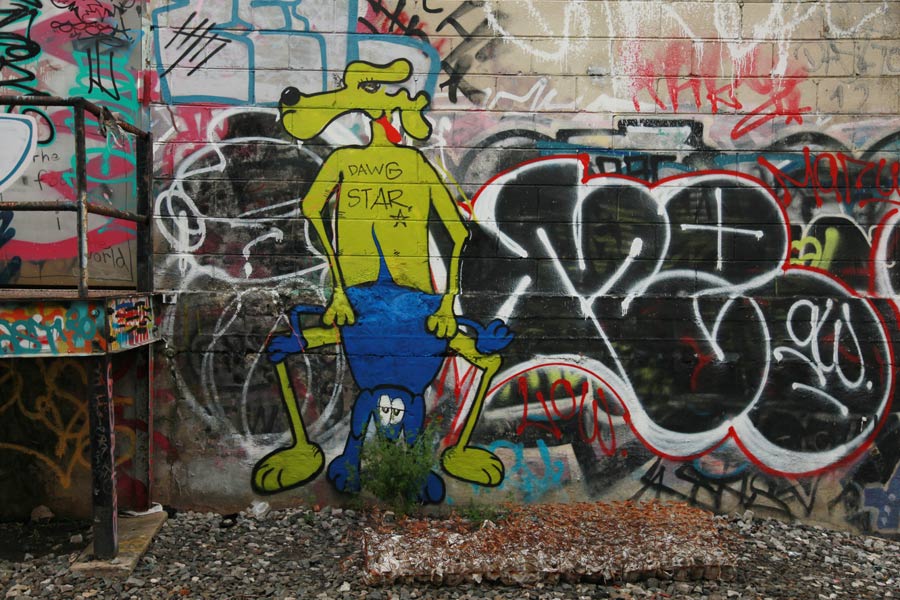
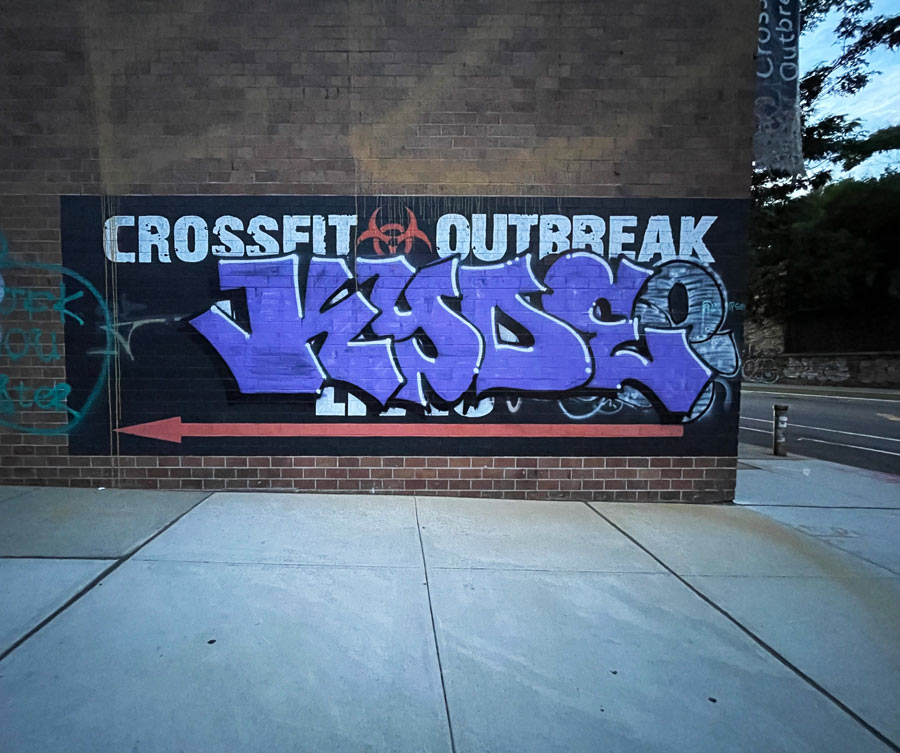
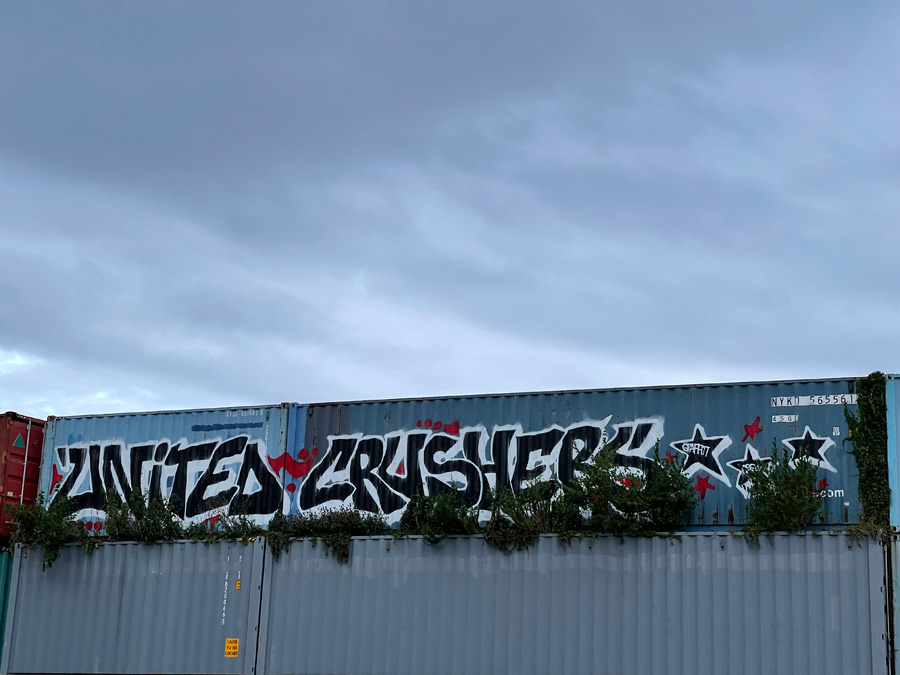
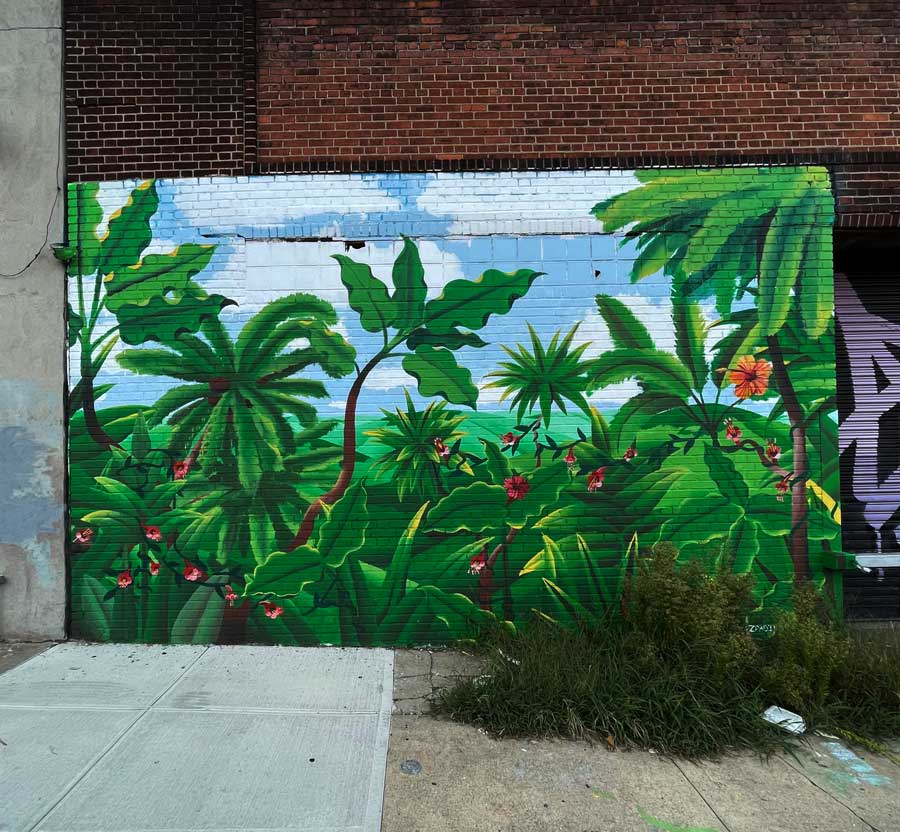
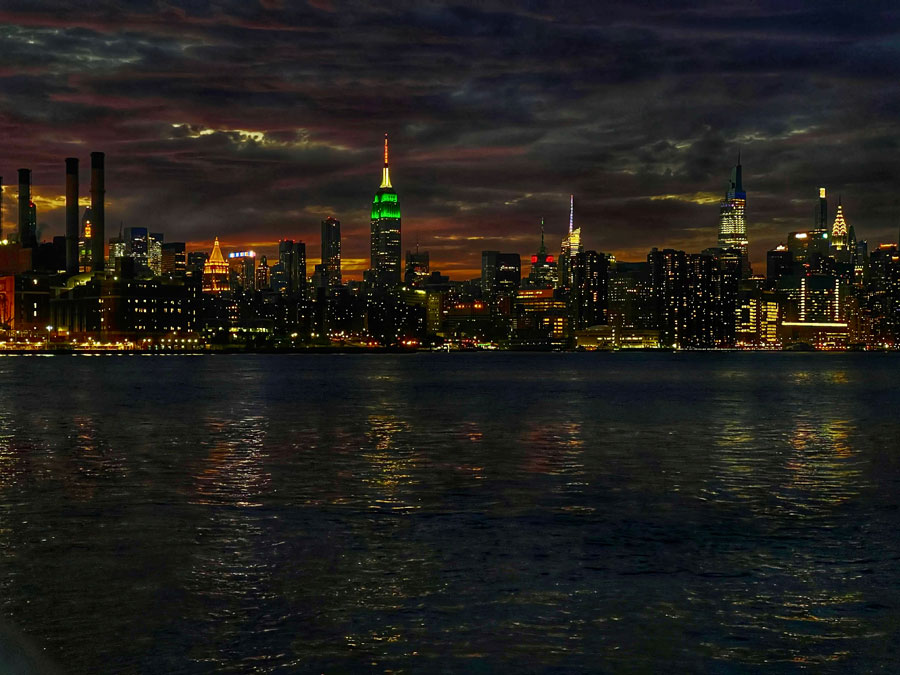
Did you catch the celebrities singing in Central Park last night before the rains of Hurricane Henri reached New York? Talk about electricity in the air! New York is a magnet for a pretty face, it would appear, and a grizzly or wild one too; and our street art proves it. Just a quick survey of murals in Brooklyn this week turns up many a fun face.
Here’s our weekly interview with the street, this week featuring Adam Fujita, Anthony Zpadilla, CP Won, Damien Mitchell, David Puck, Dwag Star, Jeyde, Lorenzo Masnah, Mister Alek, NotBanksy, Numak1, Outer Source, Outer Source, Reme821, Sef01, Sipros, United Crushers, and Vers718.
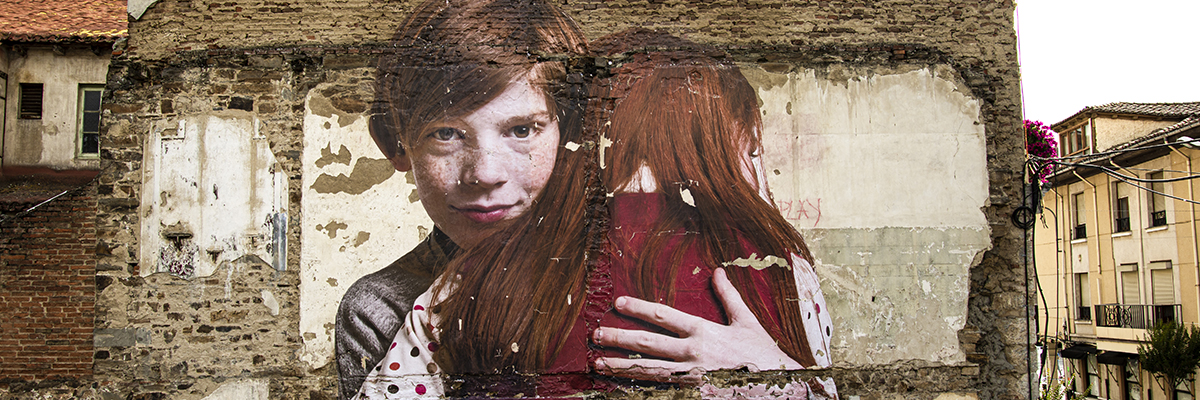
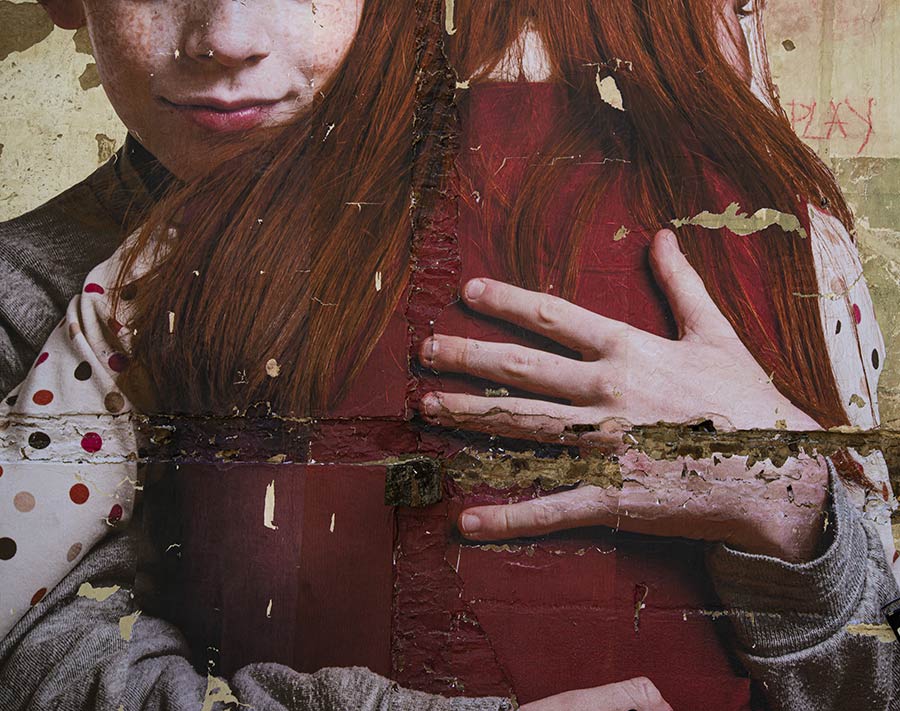
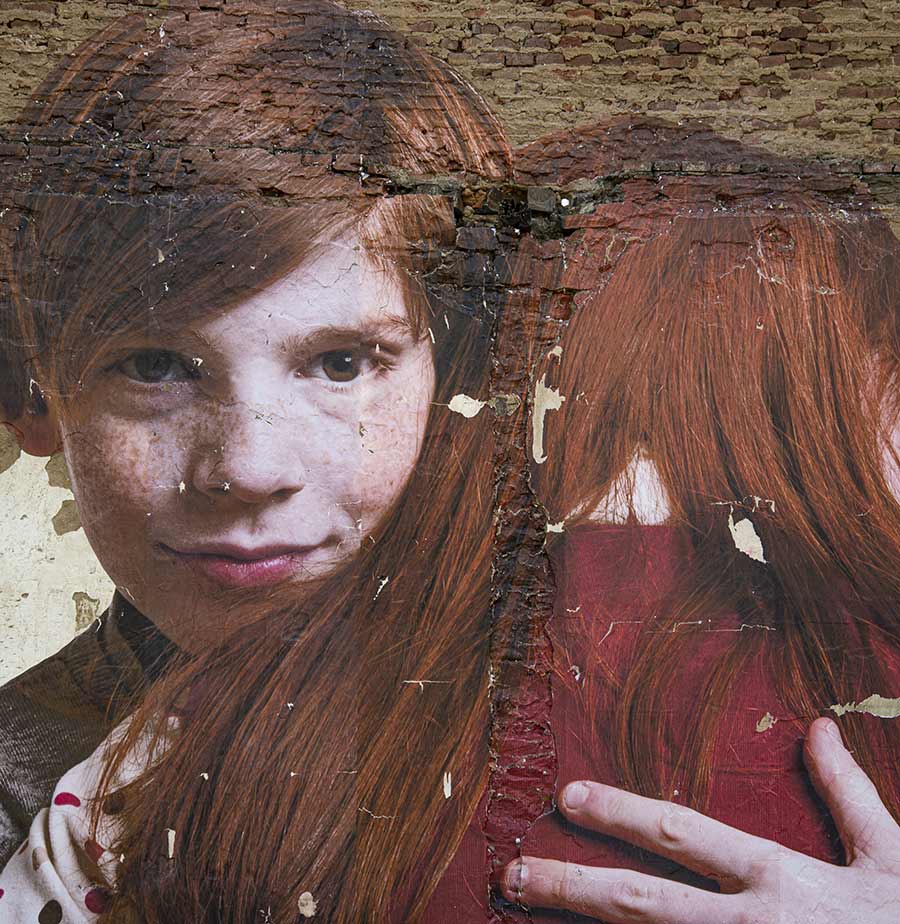
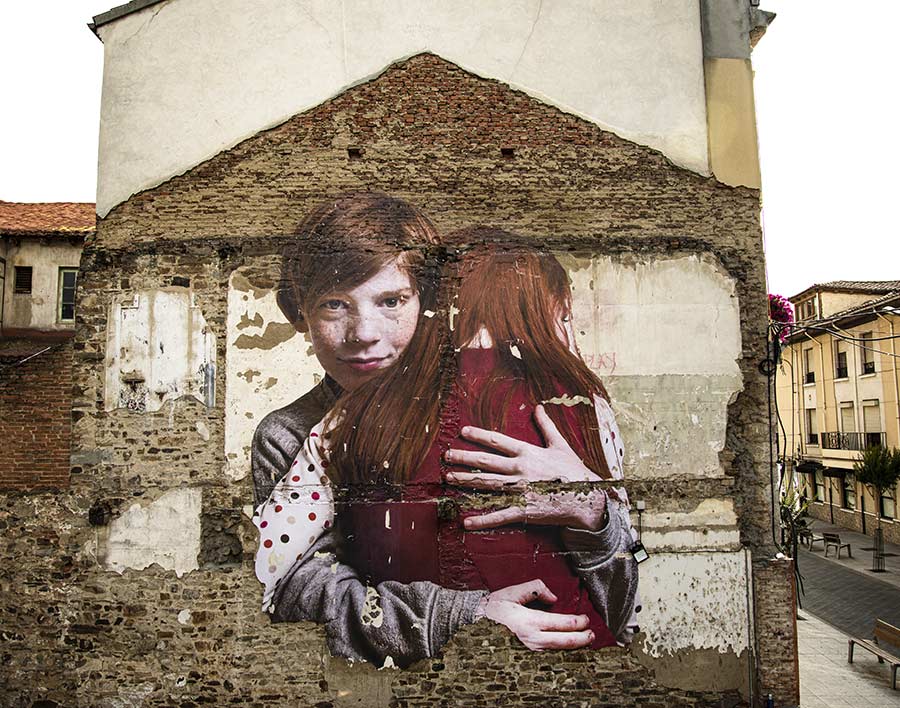
Italian street artist Bifido finishes this rough wall with the sweetest of sentiments here as summer draws ever nearer to its end. Quoting Keats, as romantics are wont to do, Bifido tells us his latest staged photo wheatpaste is transparent in its sentiment, opaque in his specific meaning.
“It is a hug, so it is something that can be shared,” he offers. “For this time I have nothing to say about this piece.” Enough said.
“You turned a wall of dust into an artwork,” says an organizer of the ArtAeroRap, the International Urban Arts Festival sponsored by a digital services firm with municipal and city partners. The current “2021 Vaccine Edition” features music and art installations and performances here in La Bañeza, a municipality located in León, Spain.
Mounted on a grizzled façade that fell apart while he was installation his new artwork on it, Bifido’s photographic mural is on one of the most decrepit walls we’ve seen in a while.
“I’m super proud of this piece because I chose a really, really bad wall.,” he tells us. “Full of dust, shitty things, holes, different materials and levels. I had a really good time there.”
“Stanotte, riesco ad immaginarti… So che indosserai la tua bellezza, un sorriso di tale gioia, così brillante e luminoso, come quando con occhi rapiti e doloranti, perso in una dolce meraviglia, io ti guardai, io ti guardai!”
Our weekly focus on the moving image and art in the streets. And other oddities.
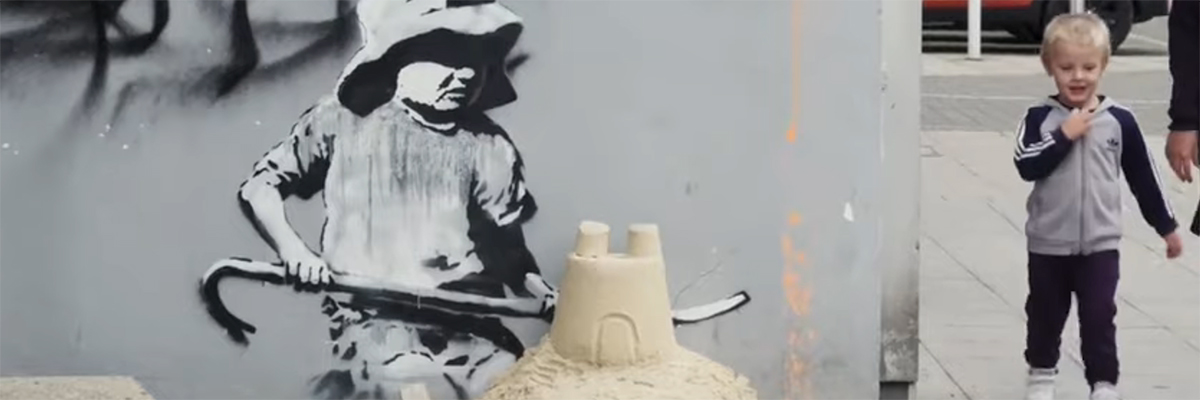
Now screening: 1. Banksy: Great British Spraycation 2. NYC! Sound (Back) On 3. Sofles in Brisbane featuring Gamo & Kitsa
BSA Special Feature: Banksy : Great British Spraycation
The summer days begin to wane and you’ve played all the games with your siblings and cousins three times or more. Before heading back to school, time to rummage around Uncle Bob’s garage and find a can of spray paint he used to fix a kitchen chair for Aunt Keisha. You wonder to yourself, “What could we do with this?”
BANKSY: Great British-Spraycation
NYC! Sound (Back) On
Been waiting for Covid to give us a break so New York could get back to our version of normal. This summer it’s still been hard but New York is definitely back in all its many ways. Makes us wanna dance!
Sofles in Brisbane with Feat. Gamo&Kitsa
You been getting up lately? Just released here’s a Brisbane, Australia wall jam with Sofles in collaboration with honored guests Gamo and Kitsa from Marseille, France.
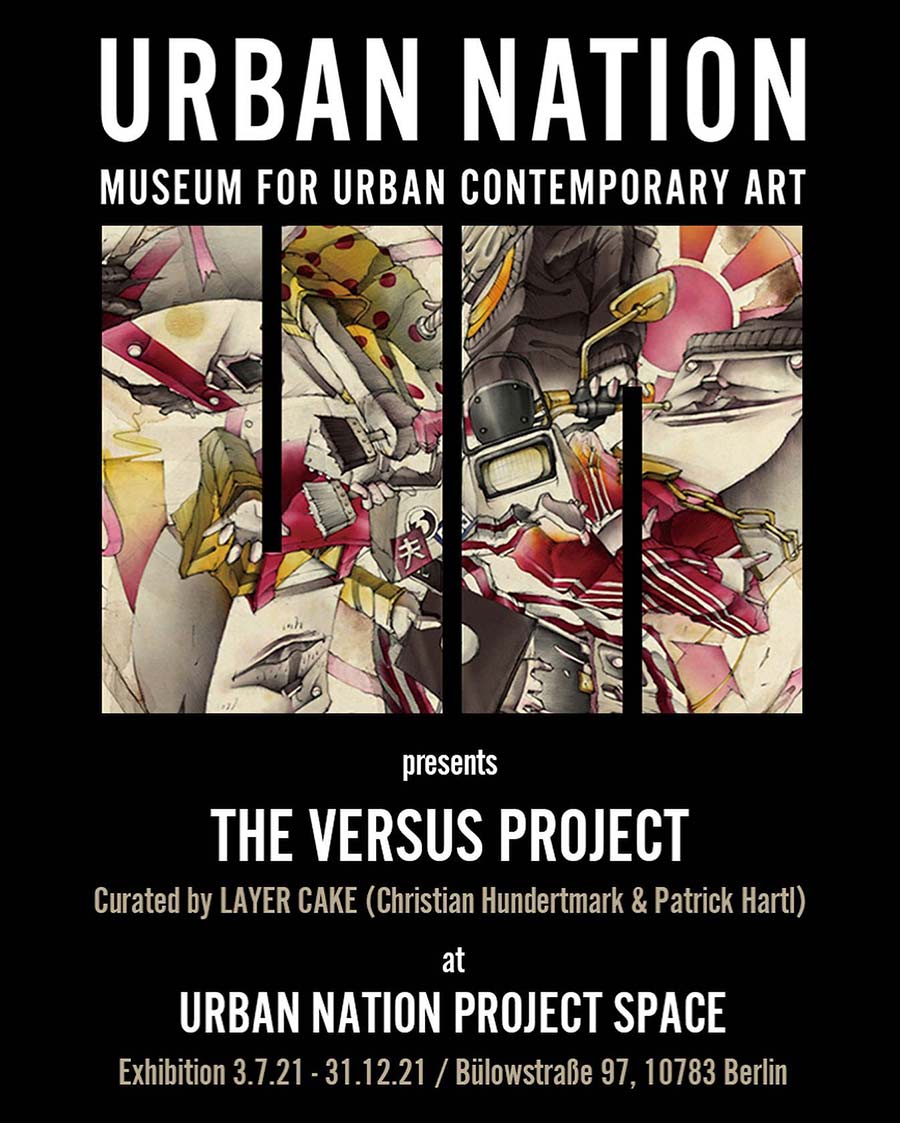
The brilliant Patrick Hartl & Christian Hundertmark (C100) have been at the graffiti/street art/contemporary art nexus for much of the last decade, delineating the boundaries, and then artfully shifting them.
A multi-year project now welcoming guests at Urban Nation’s Special Projects space in Berlin reveals the imprecision of terminologies and commonly-used nomenclature in this period of hyper-hybridization.
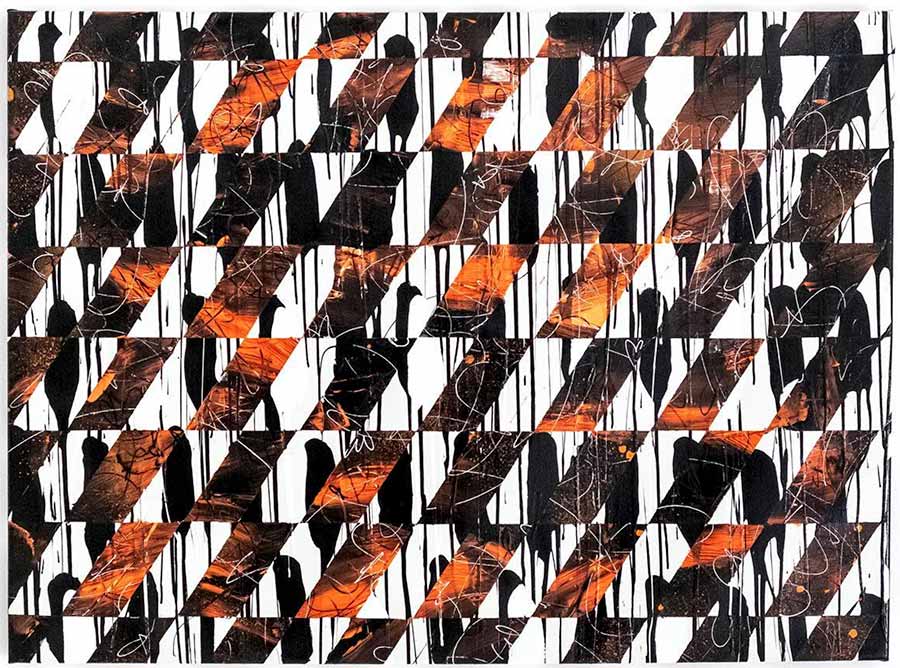
Mick La Rock/Aileen Middel VERSUS Layer Cake. Versus Project. Urban Nation Berlin. (photo courtesy of UN/layer Cake)
When you consider the volley of influences that bounce and collide on metro cars and street walls and digital screens these days, it makes sense to describe the experimentation now afoot as a dialogue. As the Munich-based duo called Layer Cake, the two artists have been doing exactly that with one another’s art for a half dozen years.
“One begins to paint, the other reacts,” say Hartl and Hundertmark in their recent interview for the UN website. “Thus (we) conduct an artistic dialogue. The marker asks a question, the paint can answers, the brush completes or provokes,” they say, “until both artists agree that the mural is finished.”
It is not an automatic process for graffiti writers to create work this way; as one of the basic tenets of the street, you don’t go over someone else’s work unless you mean to show disrespect or provoke a battle.
Drawing upon an eclectic selection of participants with experience on the street, the two act as curators of the new show called ‘Versus’. The rules are similar to their personal practice – produce a collaborative piece with another artist whose style and references may not match yours directly – with each contributor agreeing when the piece is complete.
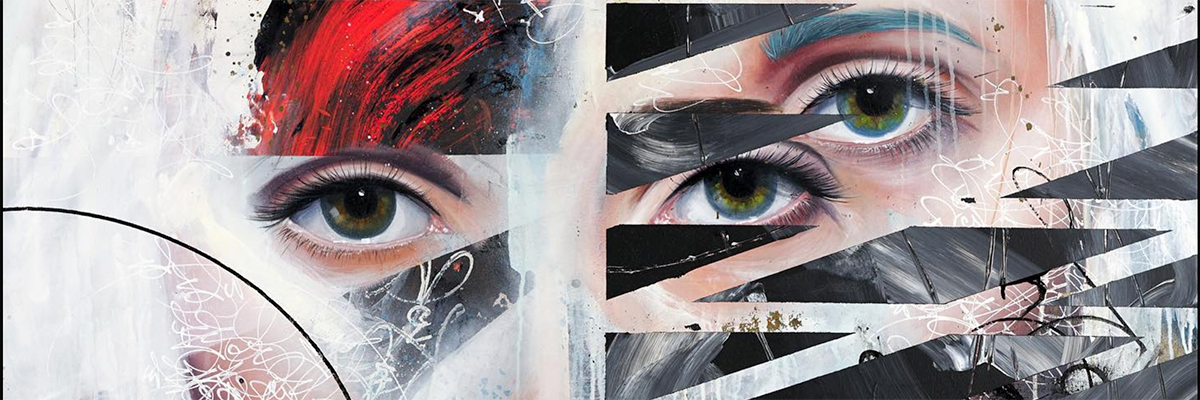
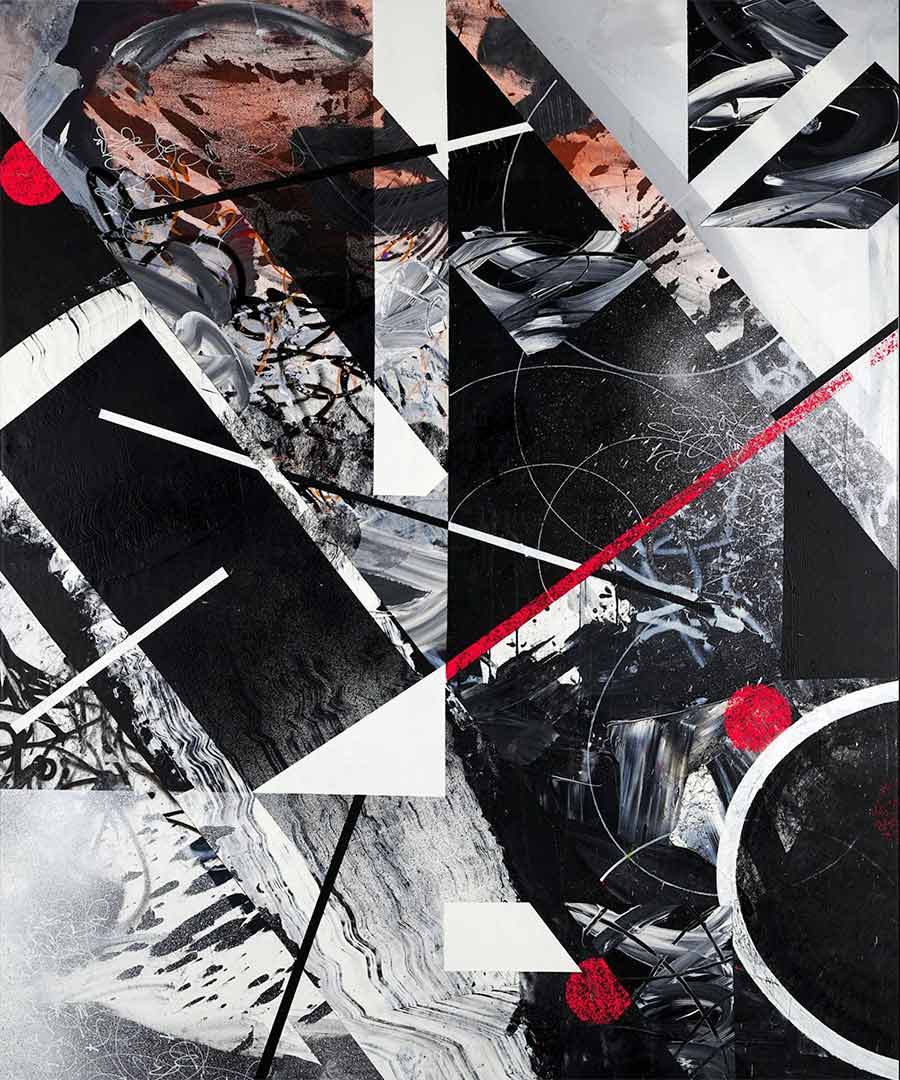
The clashing and crashing can be seen on the canvass as each new addition rebalances the abstraction, and not everyone was sure it would work.
Bisco Smith VERSUS Layer Cake. Versus Project. Urban Nation Berlin. (photo courtesy of UN/layer Cake)
Artist Flavien Demarigny hesitated to participate versus Layer Cake because he wasn’t sure if he could work with their style that often incorporates calligraffiti techniques, he says. “As it is a major ingredient of Layer Cake‘s visual language I wasn’t sure if I was the right fit for it,” he says in a Facebook post.
“Then I remembered this is precisely what collaborations are about: pushing your limits, opening your perception, and create together new horizons. As a result, we started three collaborative pieces and one came out fantastic, which we decided to present in this show. Their choice of sticking to the repetitive pattern of my style was the wise one, so the two vocabularies can interact, as accidents make it unexpected and create the poetry of it.”
Dave The Chimp VERSUS Layer Cake. Versus Project. Urban Nation Berlin. (photo courtesy of UN/layer Cake)
With 13 different artists passing canvasses back and forth – each adding and subtracting, obliterating and augmenting, they say that at the root of the process was a rule not to consult, but rather, react.
The results fairly wrestle under the constraints, each cutting forward, marking and gesturing and claiming space on the canvass. These works illustrate the tension you may associate with the harshly pounding street in cities, sometimes still glittering insistently despite the struggle.
Usugrow VERSUS Layer Cake. Versus Project. Urban Nation Berlin. (photo courtesy of UN/layer Cake)
“It is not easy to make an intervention in someone else’s painting,” says graffiti style-writing veteran Mick La Rock of her ingrained hesitancy during the art-making process. “You want to avoid taking the painting over and make it your own style. Every part I added to the painting was thought over at least ten times before painting it,” she says in an interview for the show.
On view in the Special Projects room near the museum, “Versus” is a sharp reminder of the community that joins together on walls and surfaces all over the world. Each style challenges the one next to it, sometimes holds it accountable, other times revealing its true nature. The curators say “The Versus Project is an artistic experiment in communication, challenging dialogue, the struggle for a final form.”
Chaz Bojorquez VERSUS Layer Cake. Versus Project. Urban Nation Berlin. (photo courtesy of UN/layer Cake)Wandal VERSUS Layer Cake. Versus Project. Urban Nation Berlin. (photo courtesy of UN/layer Cake)Flavien VERSUS Layer Cake. Versus Project. Urban Nation Berlin. (photo courtesy of UN/layer Cake)Layer Cake. Versus Project. Urban Nation Berlin. (photo courtesy of UN/layer Cake)
PARTICIPATING ARTISTS:
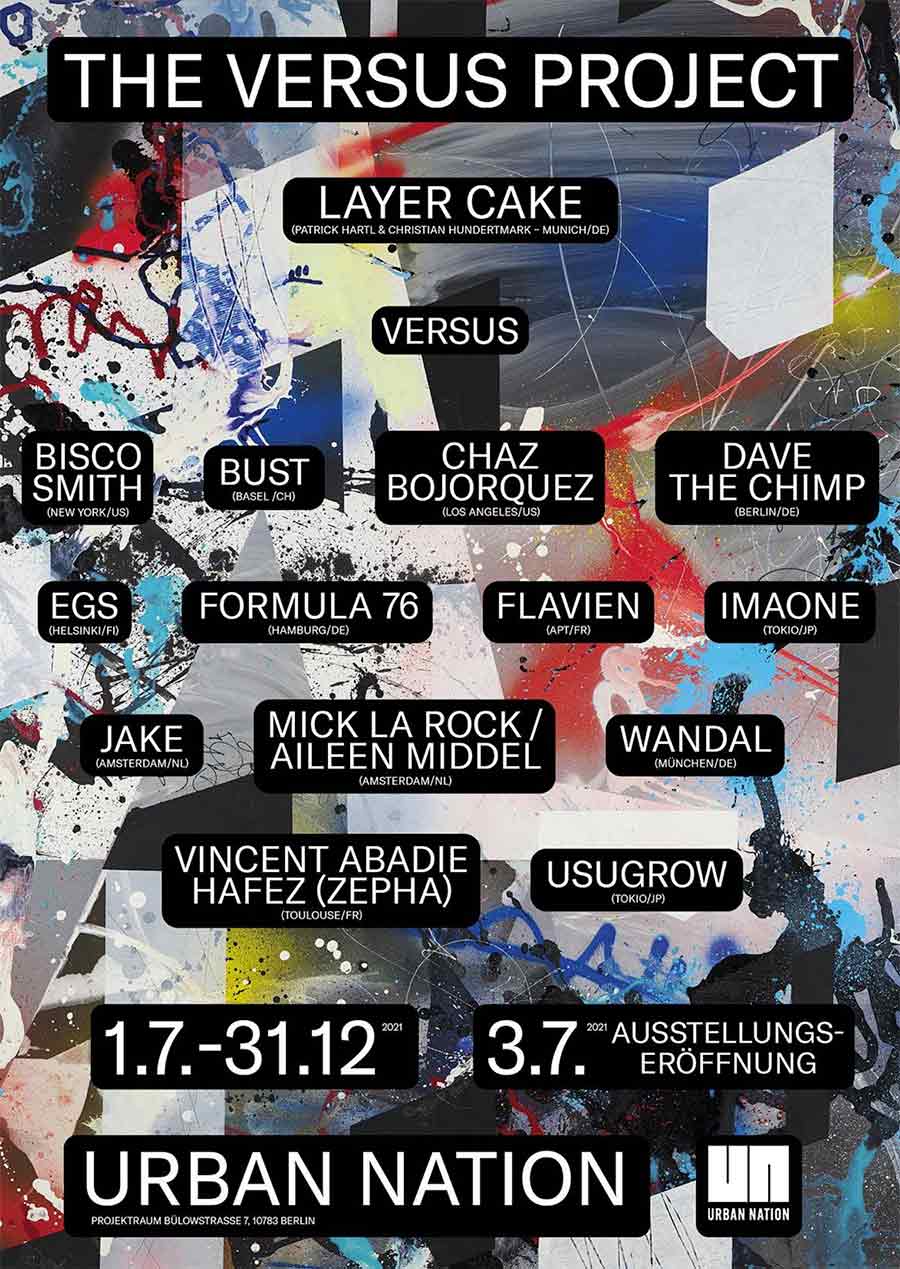
Layer Cake (Patrick Hartl und Christian Hundertmark aka C100), Chaz Bojorquez (Los Angeles / US), Mick La Rock / Aileen Middel (Amsterdam / NL), Sebastian Wandl (München / DE), Dave the Chimp (Berlin / DE), Bisco Smith (New York / US), Vincent Abadie Hafez (Zepha) (Toulouse / FR), Formula 76 (Hamburg / DE), Usugrow (Tokio / JP), Bust (Basel / CH), Jake (Amsterdam / NL), Egs (Helsinki / FI), Imaone (Tokio / JP) und Flavien (Apt / FR).
“The Versus Project” curated by Layer Cake is currently open to the general public at the Urban Nation Project Space. The exhibition will be on view until December 31, 2021. Click HERE to find more information about the exhibition, Covid protocols, and schedule.
Project space of the URBAN NATION Museum, Bülowstrasse 97, 10783 Berlin
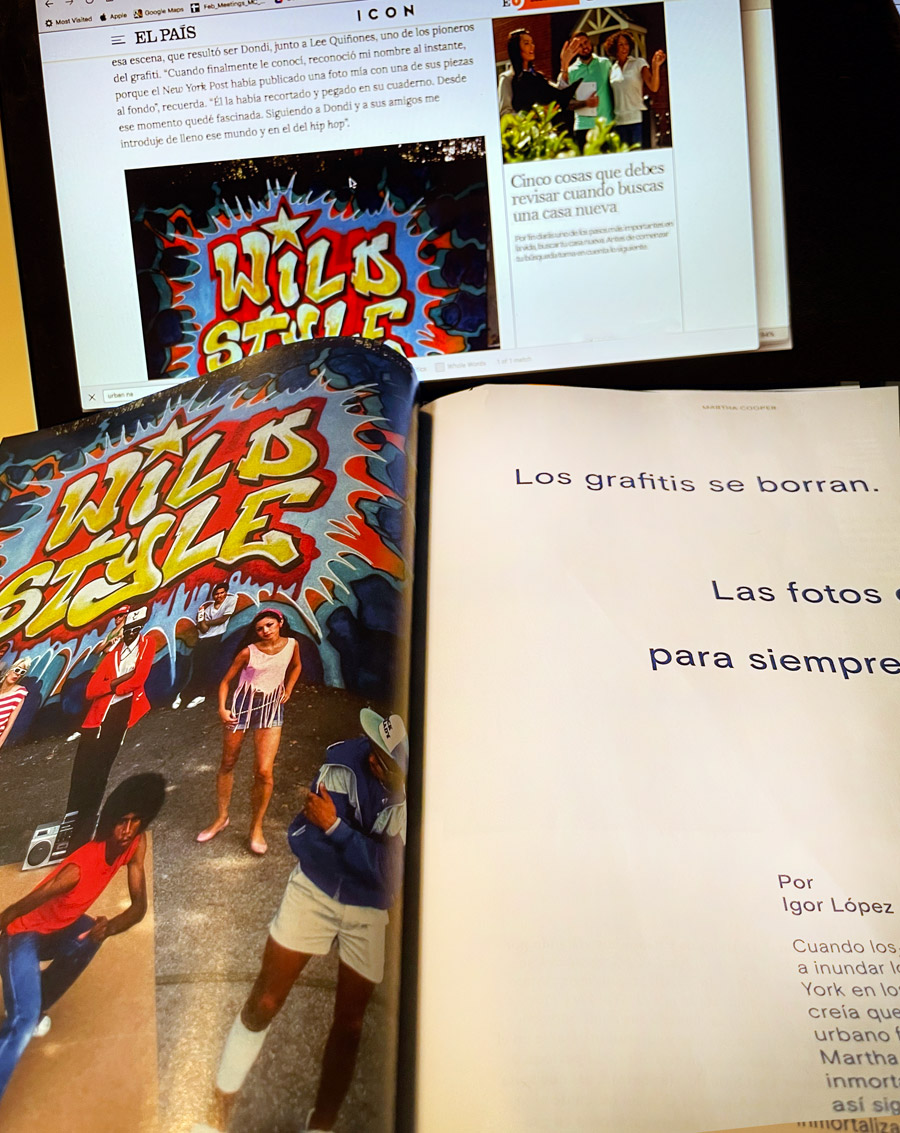
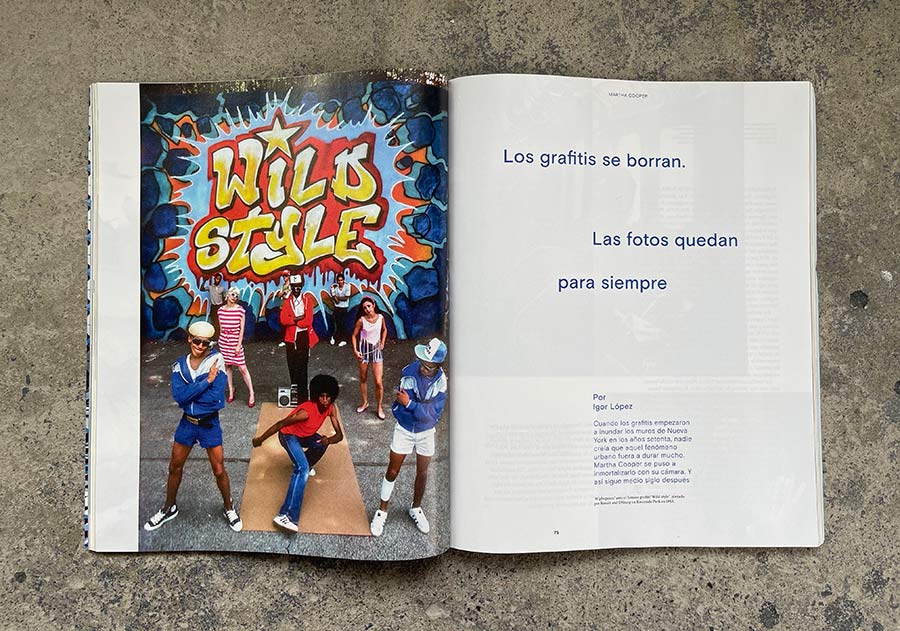
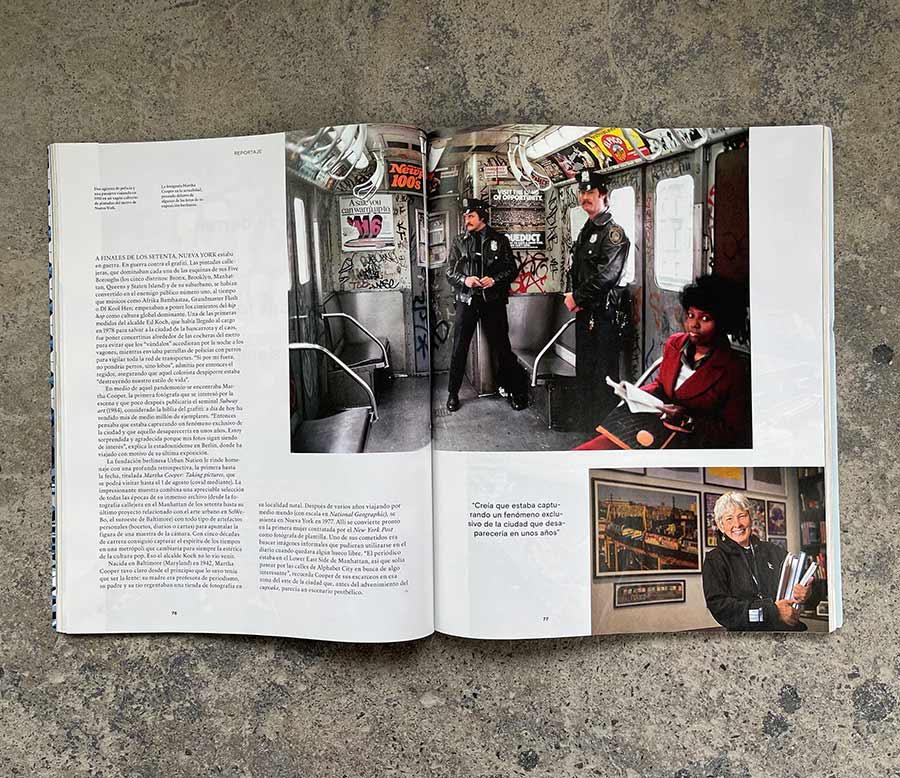
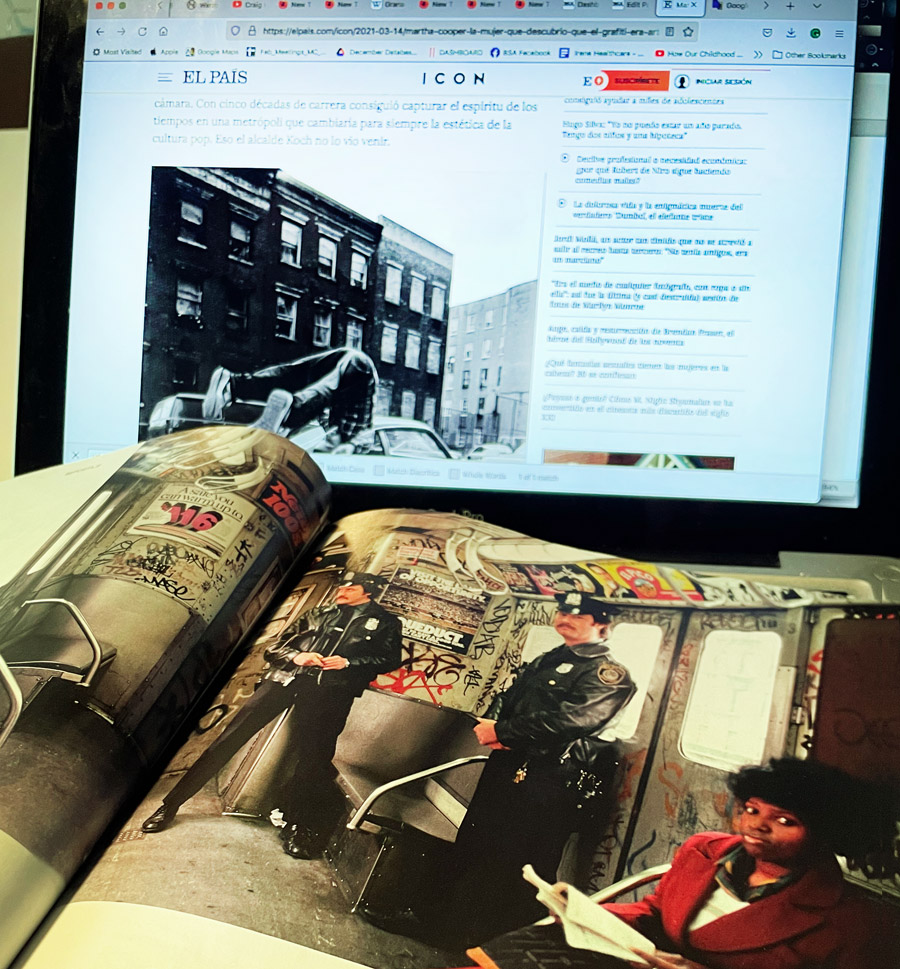
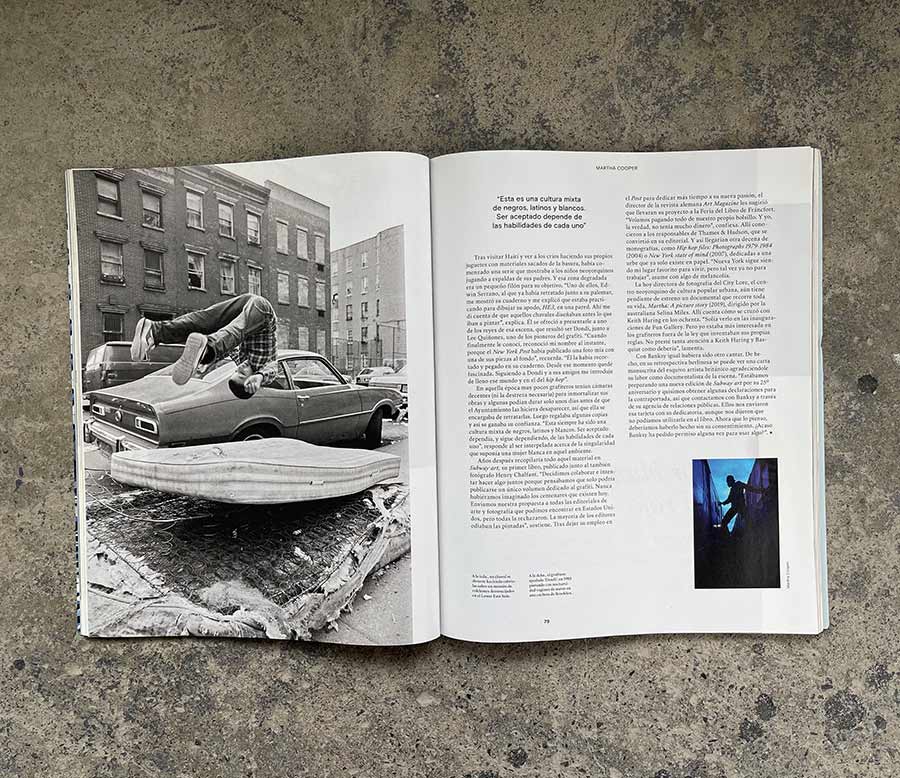
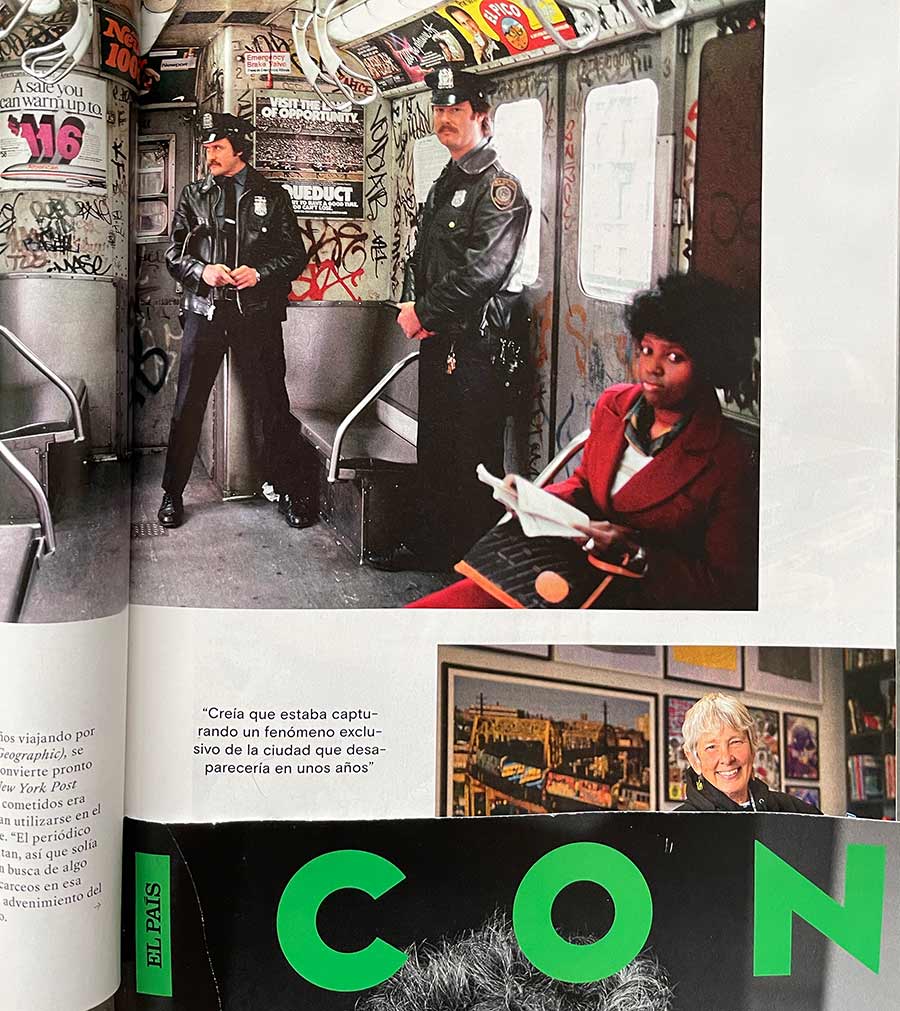
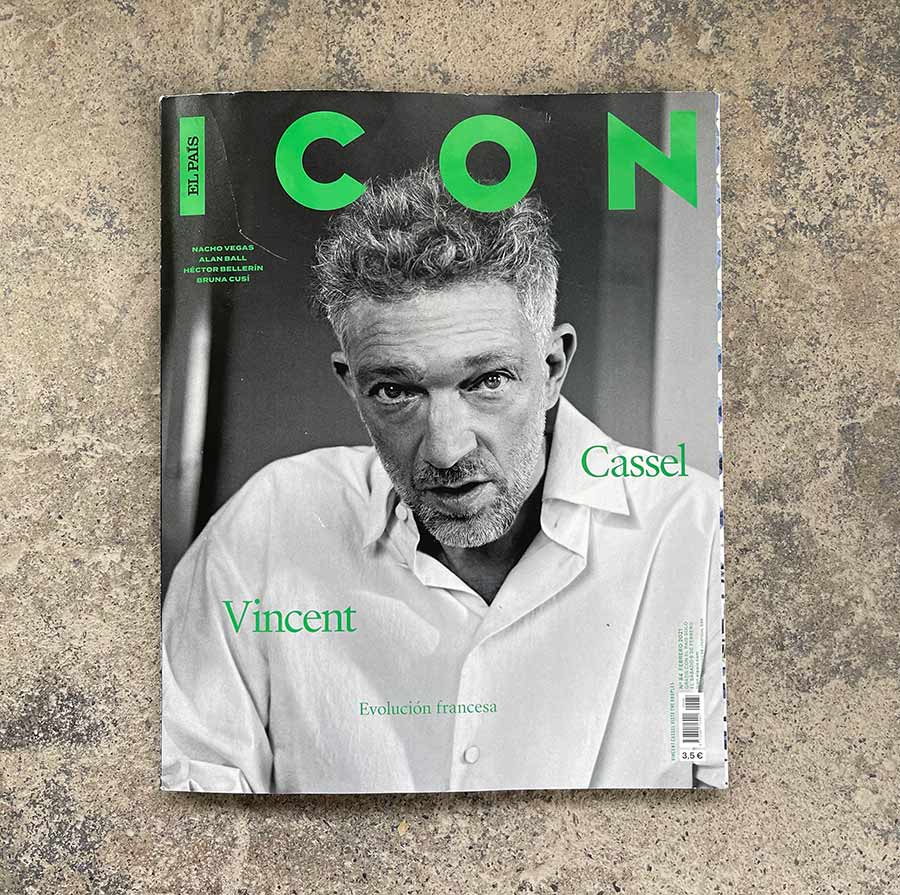
Our thanks to writer Igor López at El Pais for his article about Martha Cooper and our exhibition running right now in Berlin until Spring 2022. Appearing in the Spanish newspaper’s magazine called ICON, Lopez describes the New York social matrix of the 1970s with pithy acuity; one where the city seemed at war on many fronts while various important cultural scenes were germinating alongside graffiti writing and musicians like Afrika Bambaataa, Grandmaster Flash or DJ Kool Herc who were laying the foundations of hip hop as the dominant global culture.
“One of the first measures of Mayor Ed Koch, who had taken office in 1978 to save the city from bankruptcy and chaos, was to put concertina wire around the subway garages to prevent “vandals” from accessing the city at night,” he writes.
Martha Cooper: Taking Pictures. Urban Nation Museum Berlin. El Pais ICON Magazine Madrid
Enter the documentarians who capture the quickly shifting winds of change, like Martha Cooper, and forty years later we have solid evidence of multi-cultures in motion.
“I thought I was capturing a phenomenon unique to the city and that it would disappear in a few years,” recalls Cooper of her now seminal body of photography that captured the birth of many movements. Dryly modest, Cooper doesn’t brag much. “I am surprised and grateful that my photos continue to be of interest.”
Check out this article in print and online, and please feel welcome to Urban Nation on our behalf this fall, winter, and spring!
Martha Cooper: Taking Pictures. Urban Nation Museum Berlin. El Pais ICON Magazine MadridMartha Cooper: Taking Pictures. Urban Nation Museum Berlin. El Pais ICON Magazine MadridMartha Cooper: Taking Pictures. Urban Nation Museum Berlin. El Pais ICON Magazine Madrid
The exhibition, Martha Cooper: Taking Pictures at Urban Nation Museum for Urban and Contemporary Art in Berlin is currently open to the general public. To learn more about the exhibition’s details and schedules click HERE
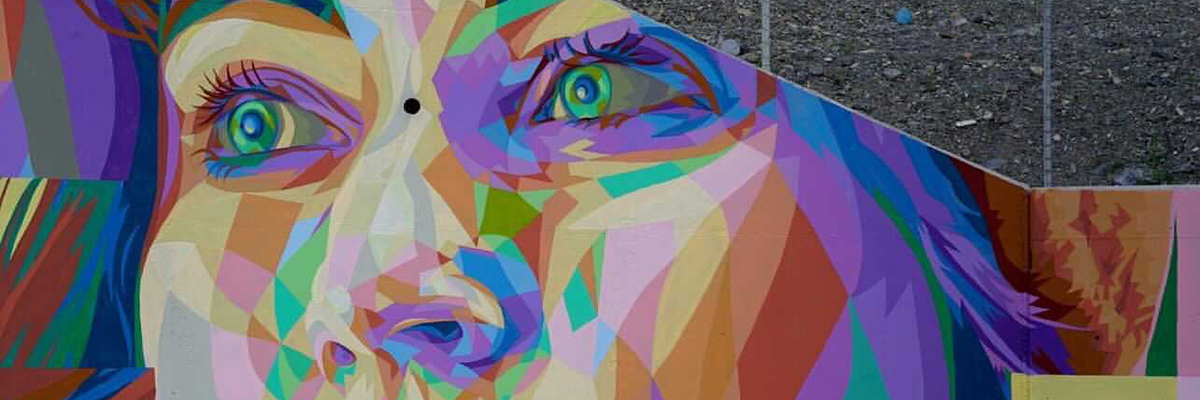
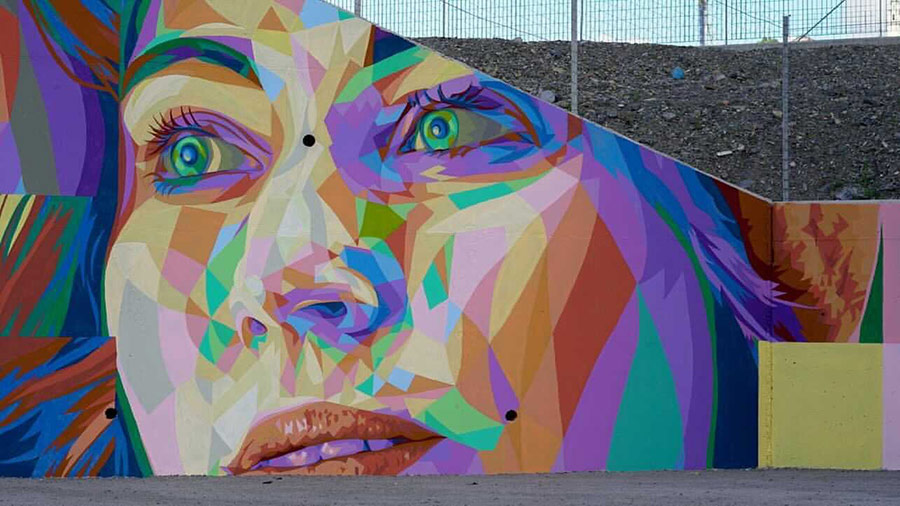
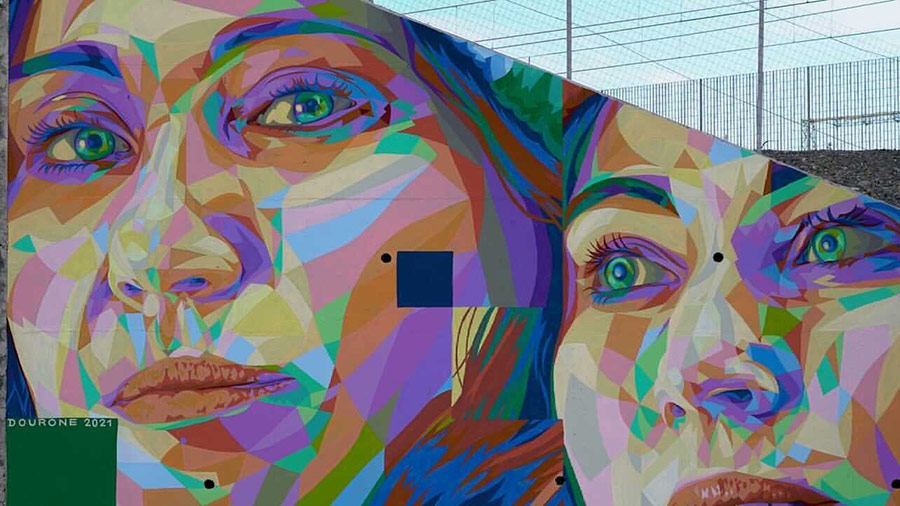
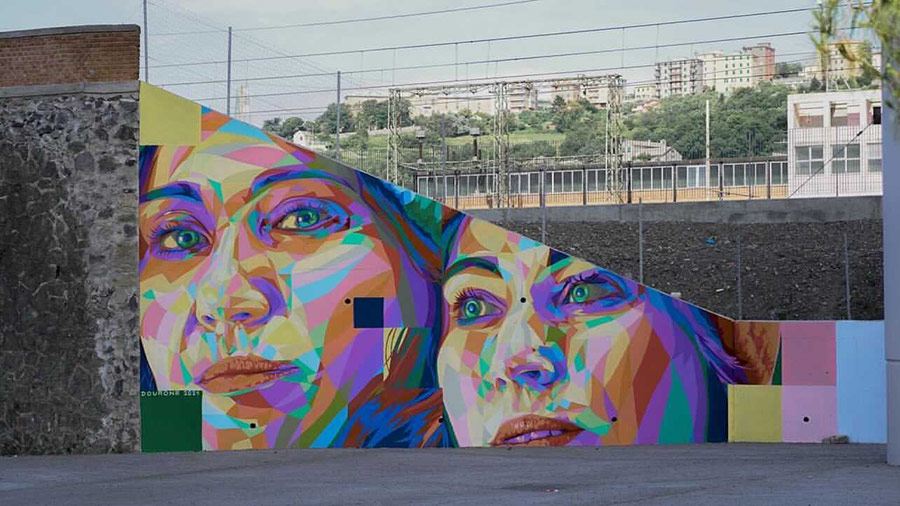
To commemorate the third anniversary of the collapse of a 210 meter section of the Ponte Morandi on August 14, 2018, today we share Dourone’s newest mural in Genoa, Italy. The bridge collapsed during a torrential rainstorm, crossing the Polcevera river and an industrial area of Sampierdarena. The bridge was gradually replaced, but for many in the city, the events of that day are still very fresh.
“The mural is an homage to the 43 victims of the tragedy,” the mural duo says, “which is why we have used 43 colors for these portraits.”
Dourone. Morandi Bridge. Genoa, Italy. (photo courtesy of Dourone)Dourone. Morandi Bridge. Genoa, Italy. (photo courtesy of Dourone)Dourone. Morandi Bridge. Genoa, Italy. (photo courtesy of Dourone)
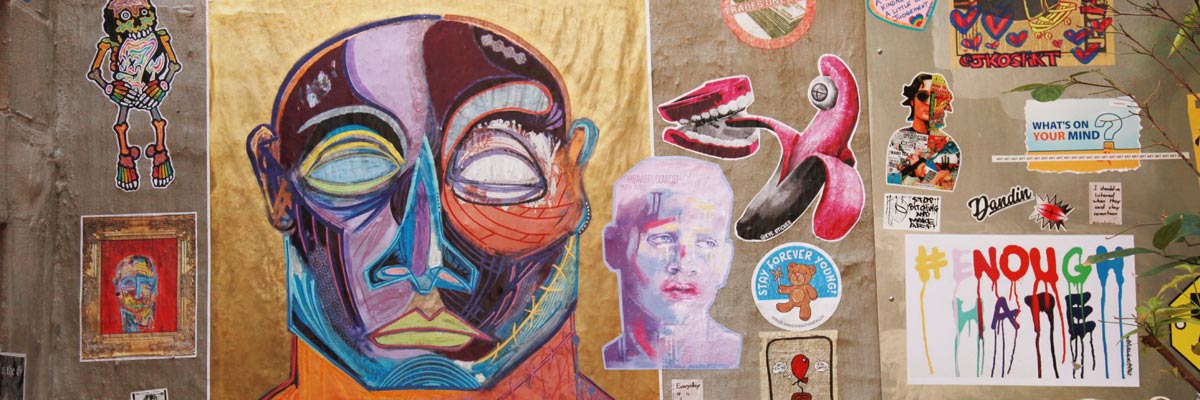
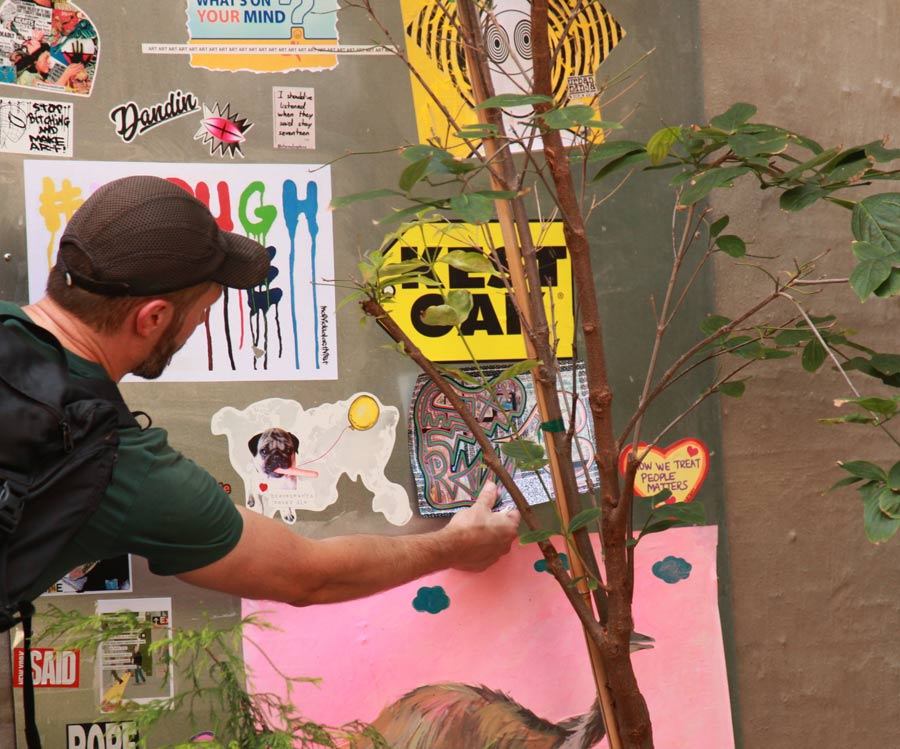
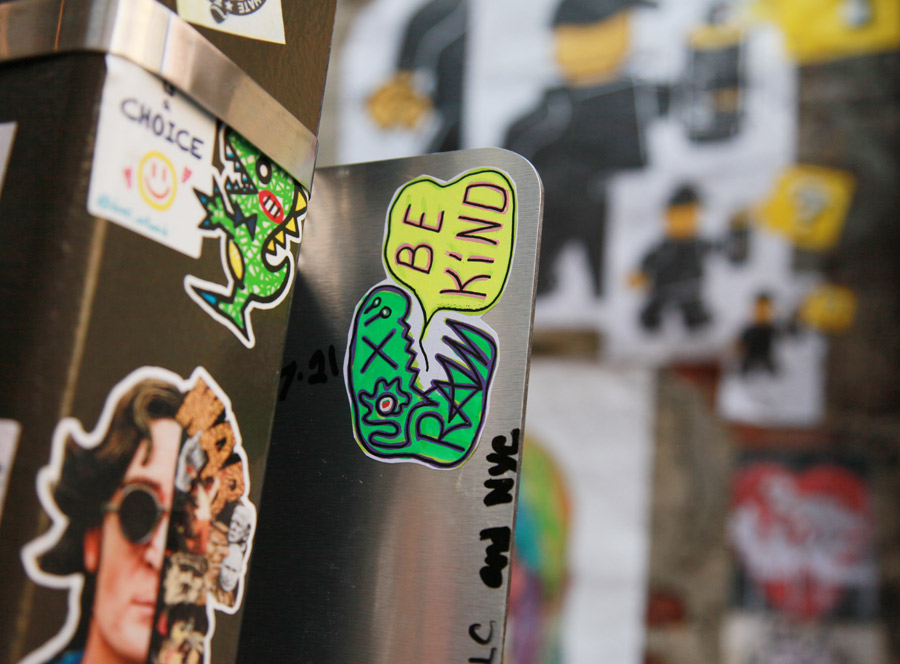
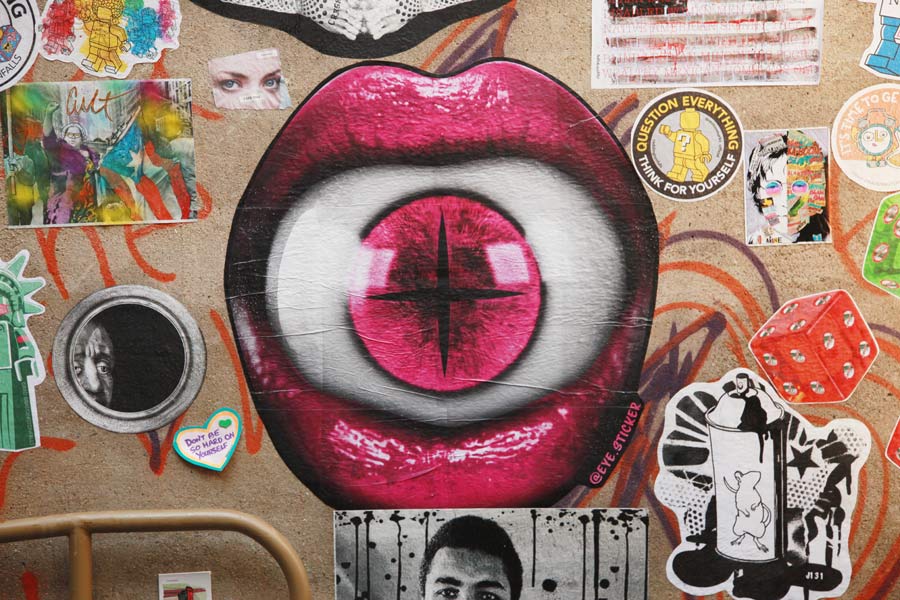
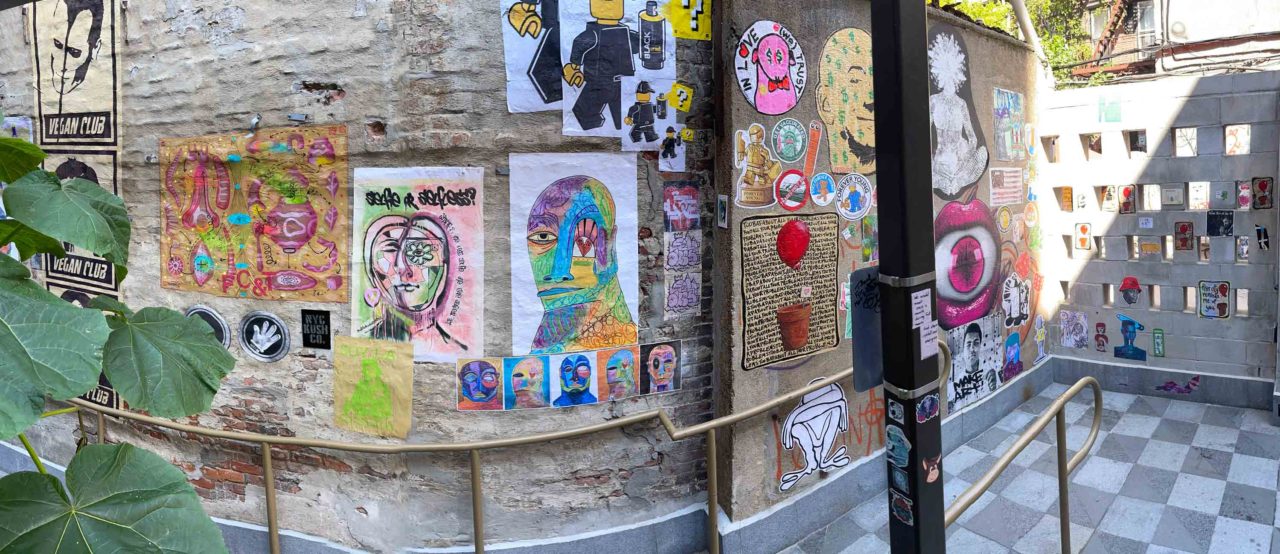
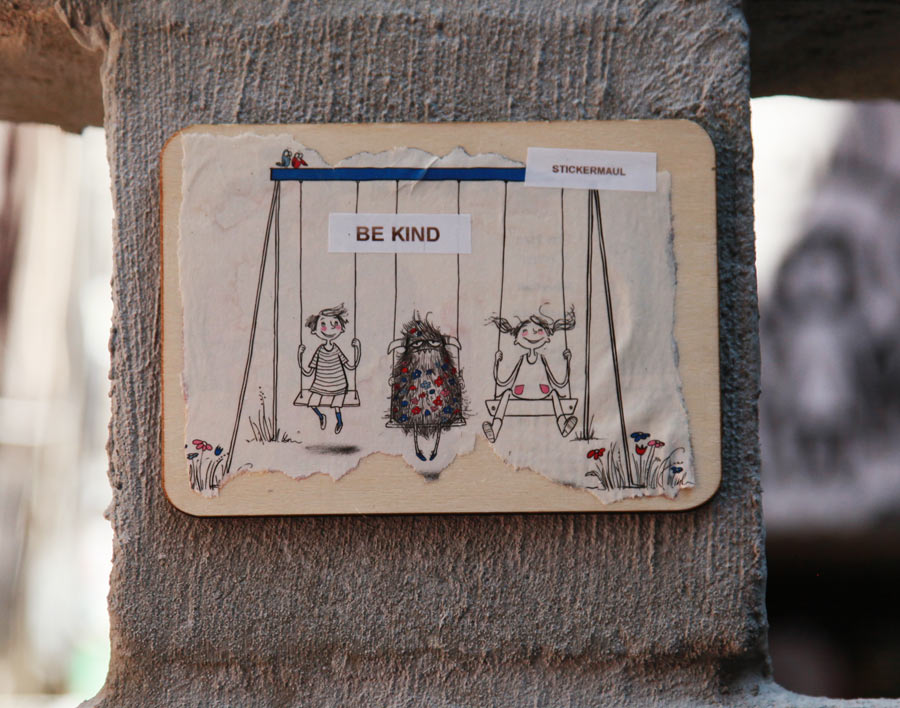
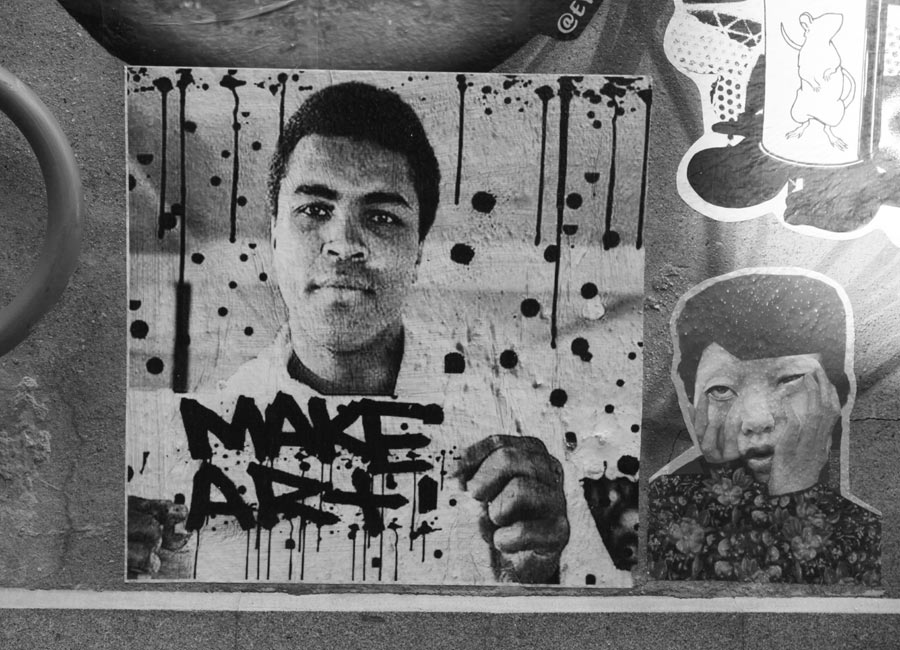
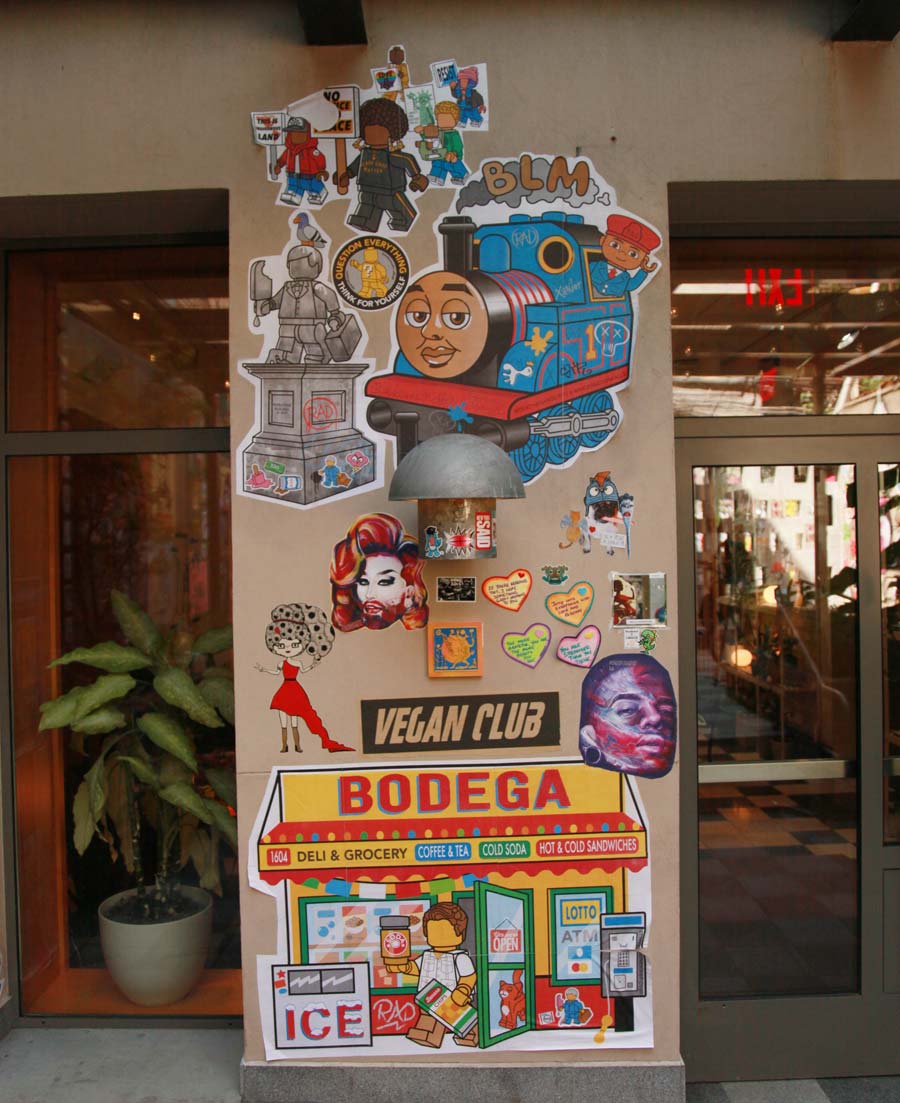
We like findings spots that feature walls slammed with street art in a most organic way, the aesthetic signature of a current ecosystem mid-evolution. These spots are often a magnet for street artists to get up in NYC, L.A., Berlin, Lisbon, Madrid, Paris, Barcelona, Mexico City, Miami, Boston, London, and beyond. Usually illegal, they allow the artists a quick way to safely leave their imprint on the chaos of the city, a welcome to international artists on their spraycation as well as locals who relish the feeling of standing among peers. The art is usually limited to small original pieces, stickers, and posters, wheat pastes.
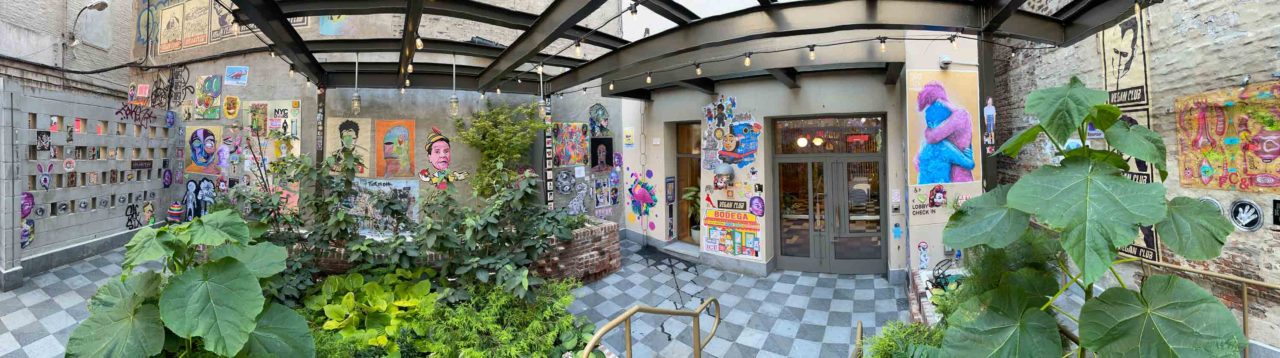
We call them “magnet walls” – and NYC has had its share of them. Now, however, they are increasingly endangered because of Gentrification and the voracious real estate market in the city with its apparent never-ending appetite for building new soaring soul-free glass towers. One spot is still welcoming artists to its walls: Freeman Alley. This favorite enclave, composed of two long walls along a narrow corridor in the Lower East Side, is constantly updated in an organic way with contributions by local and international artists. We have surveyed it for years, often publishing our findings in the popular “BSA Images Of The Week.”
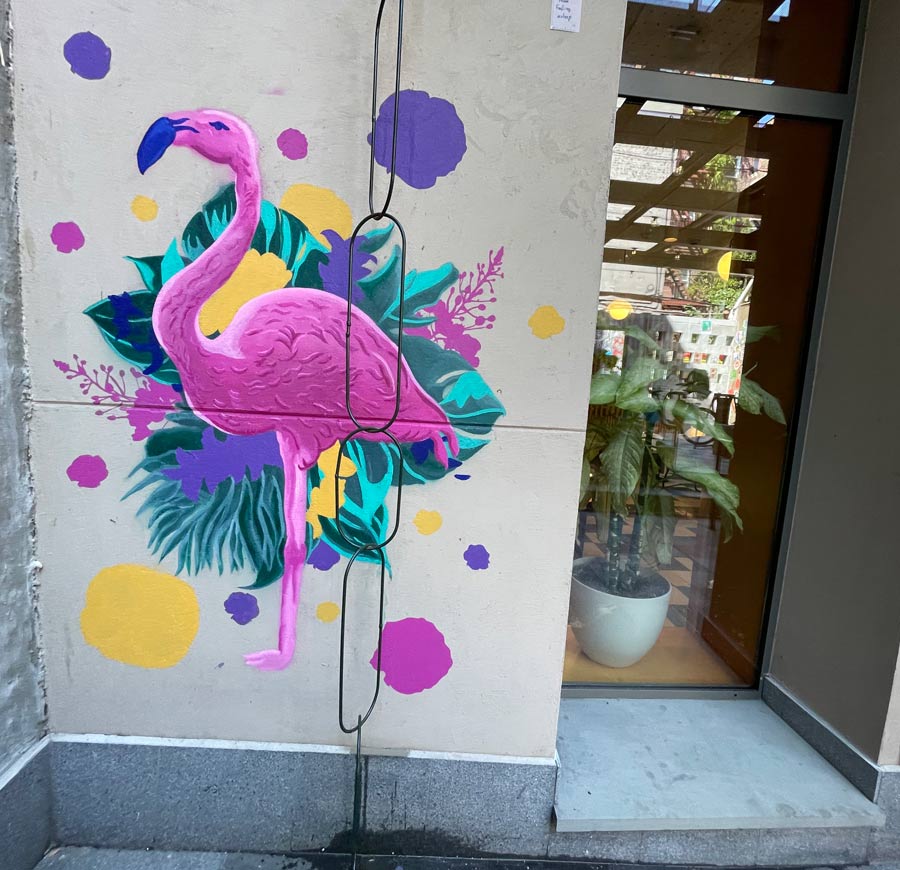
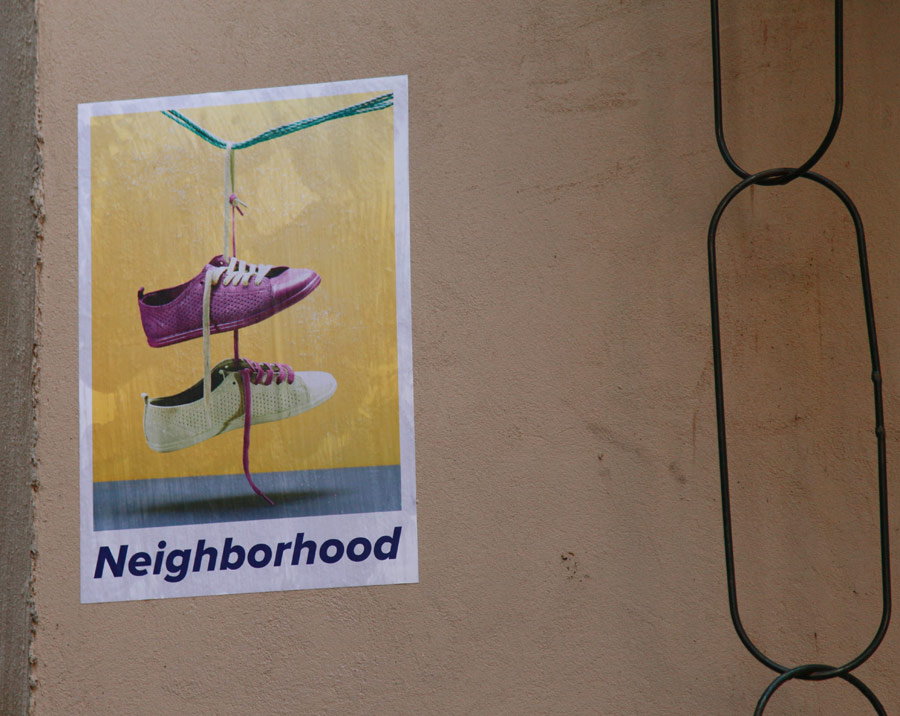
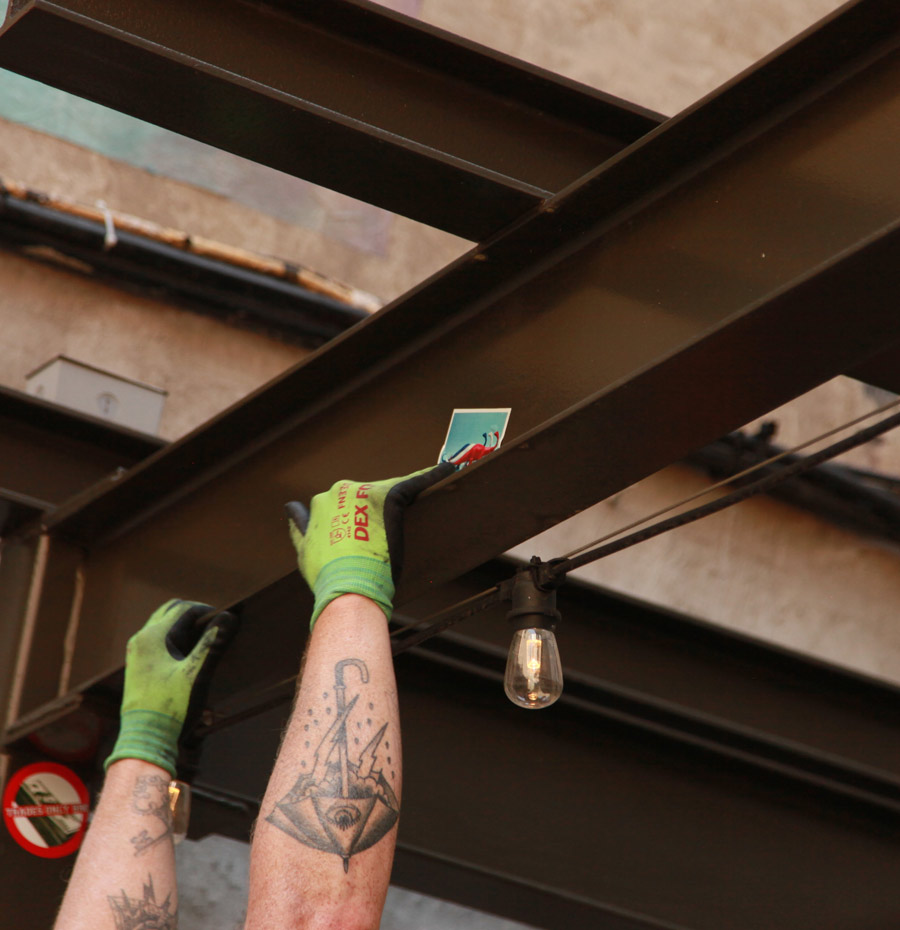
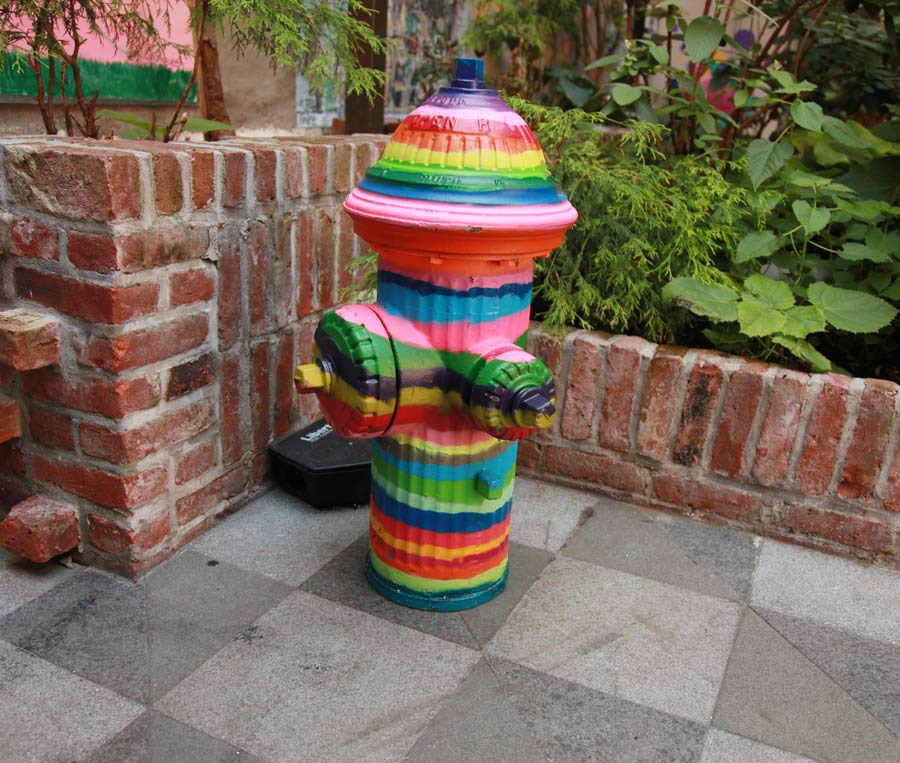
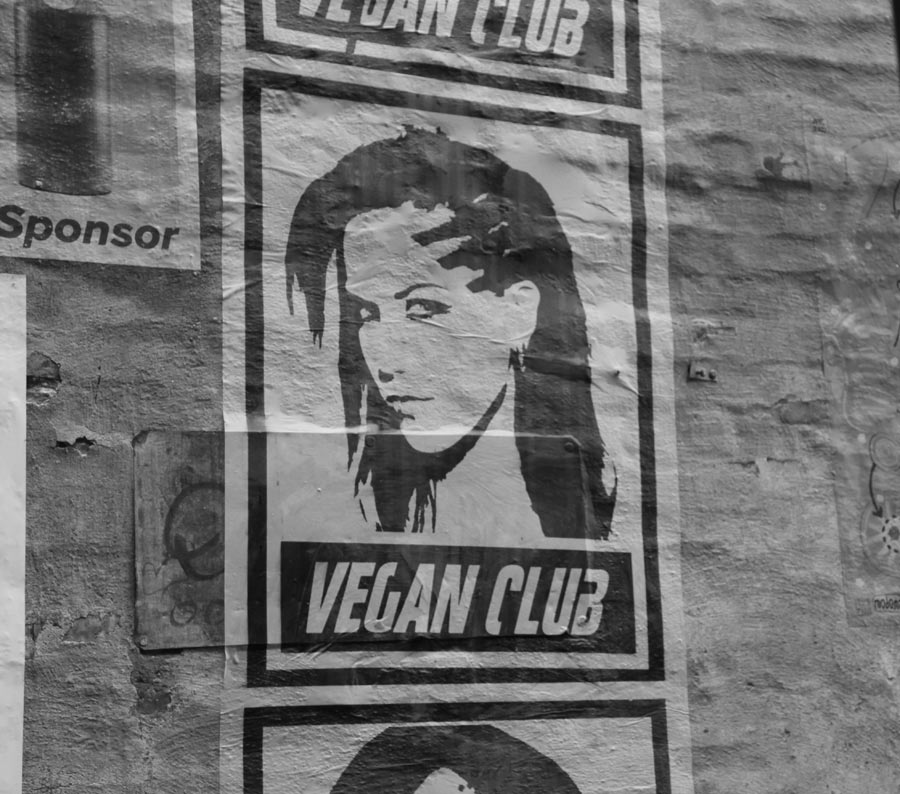
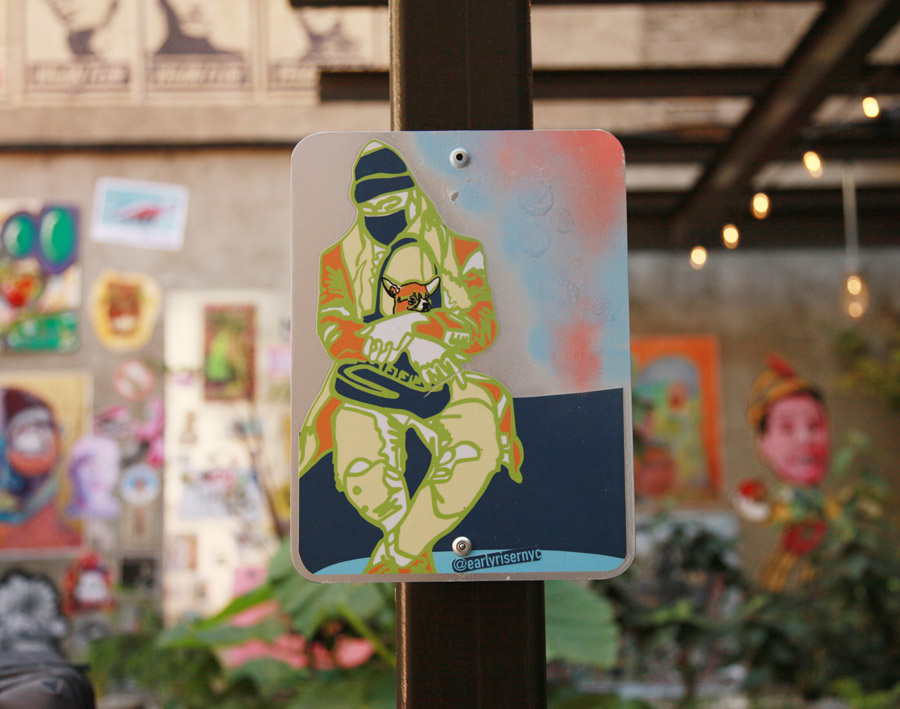
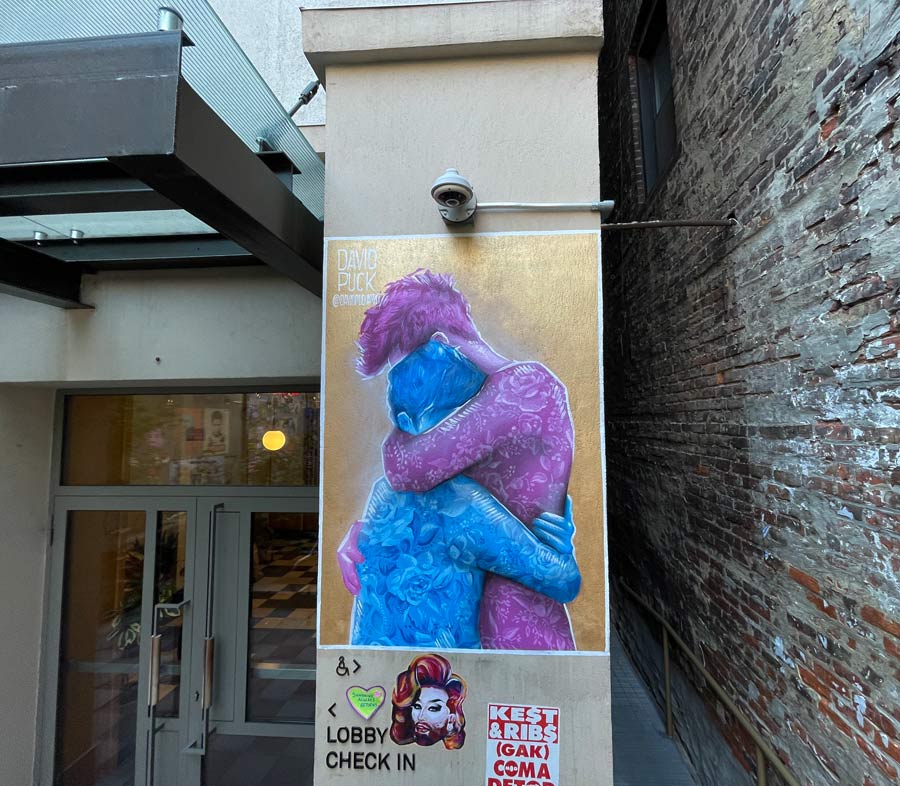
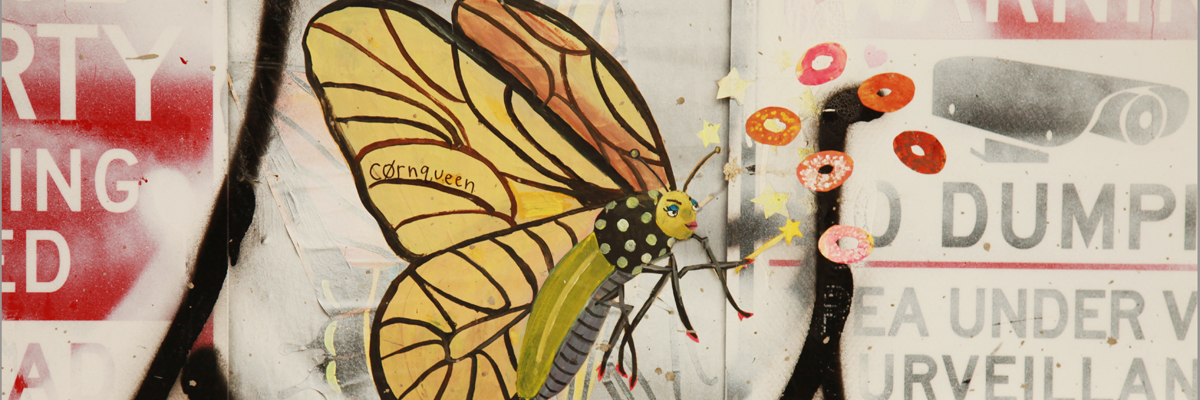
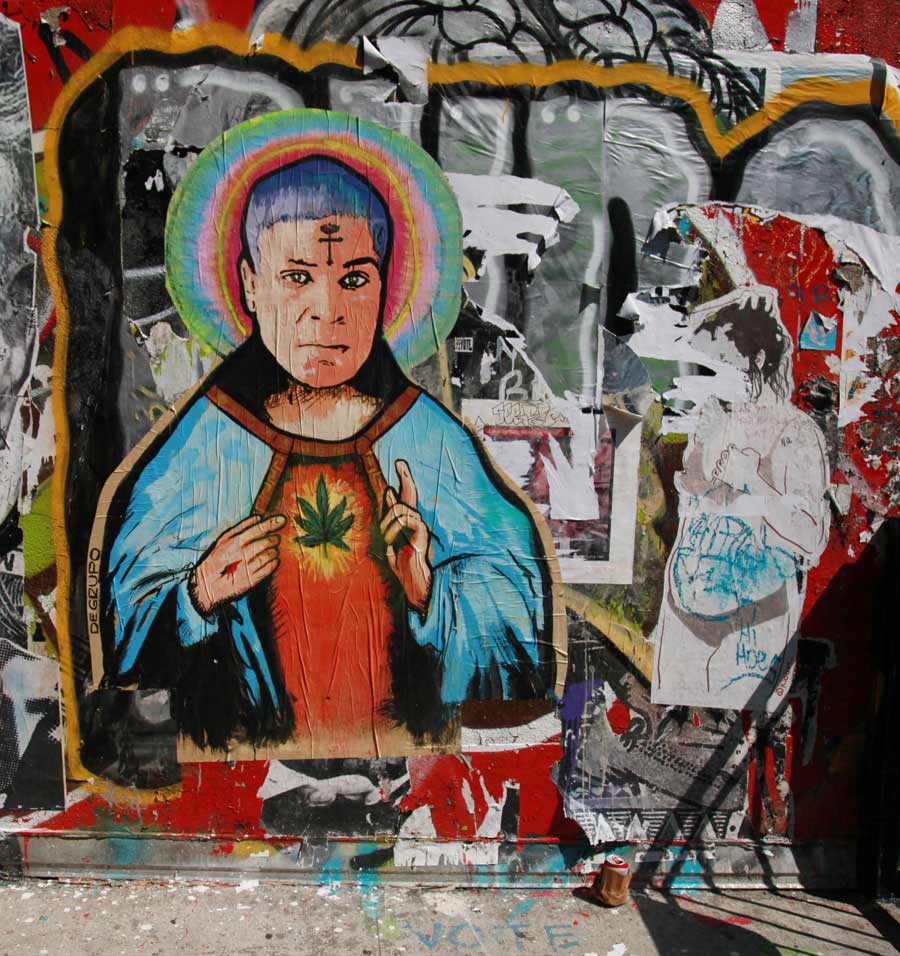
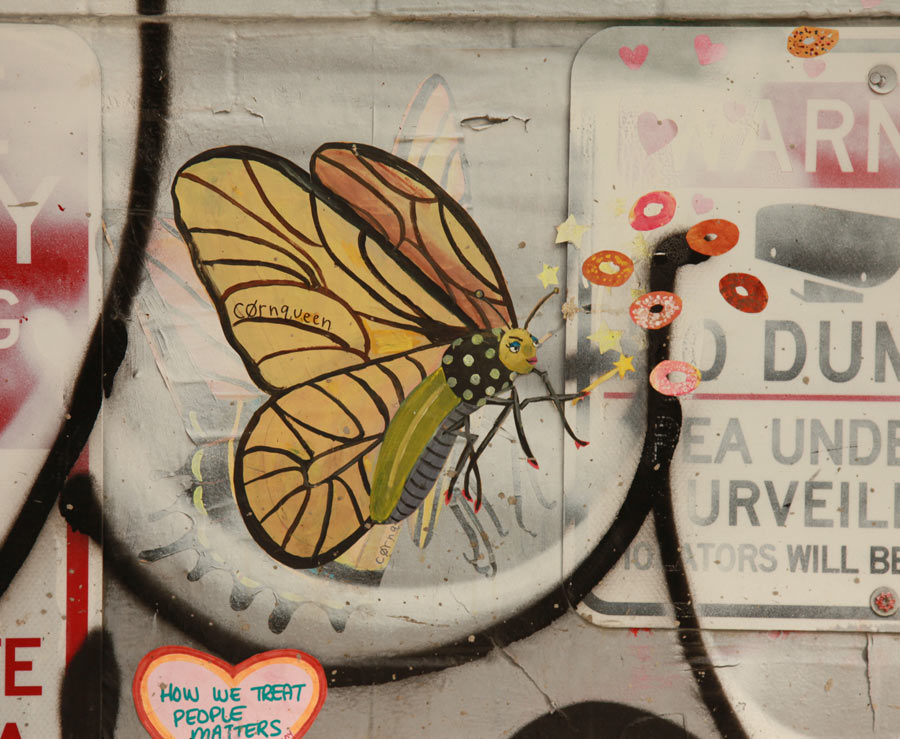
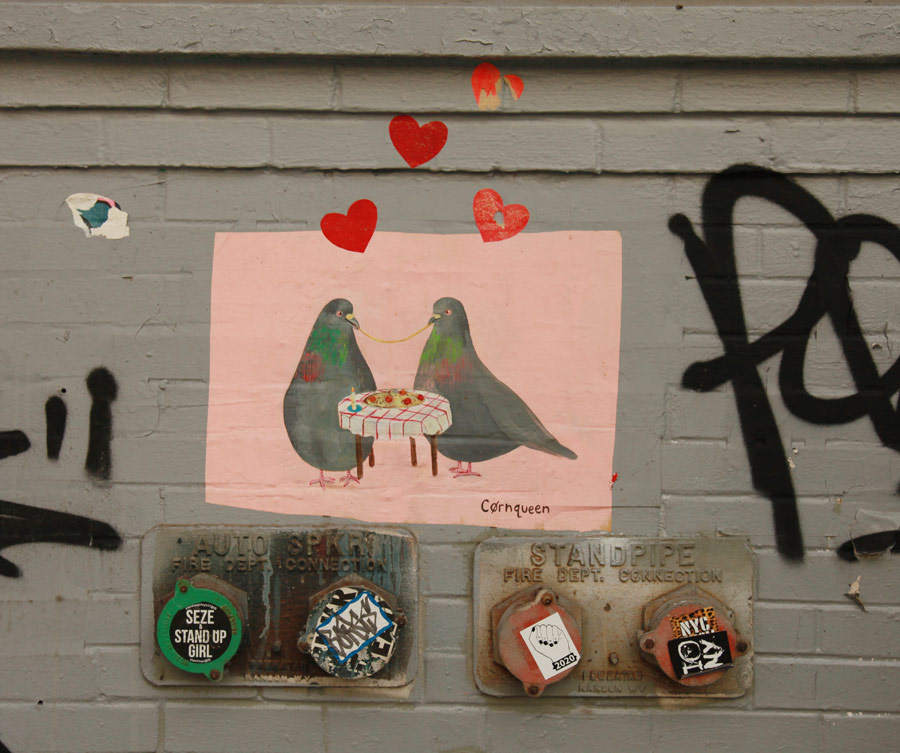
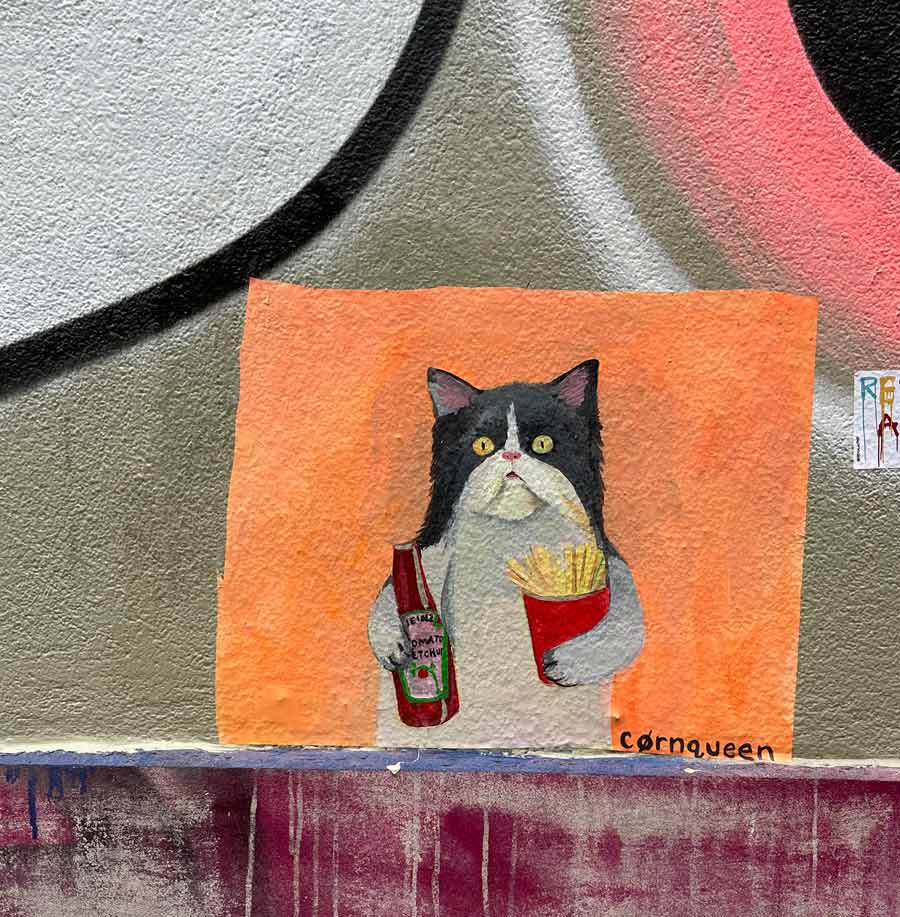
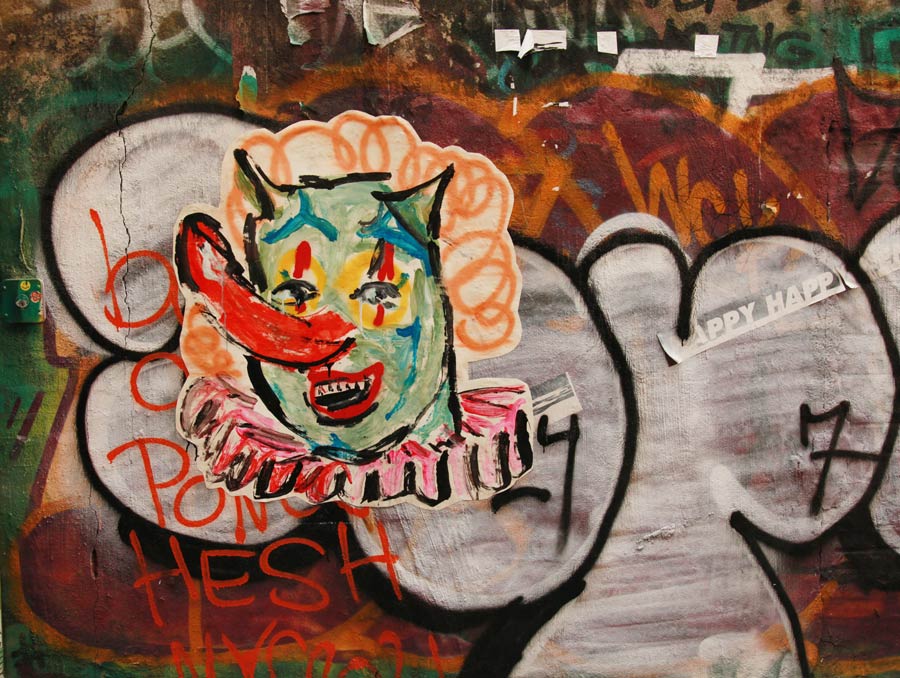
Last week we rolled by the alley again and to our surprise, we discovered a gate ajar; one that leads the lobby of a relatively new hotel. Usually locked with a code, this secret Bowery spot instructs guests to enter through the alley. Once inside, they’re greeted with a nicely landscaped, small-scale courtyard leading to a lobby. Surprisingly, it is now bursting with new stickers, posters, stencils, paintings, collages, wild imaginings. Technically, this is a legal magnet wall – but most of the artists whose work is on display here can also be found illegally on the walls of the alley. Here’s a fresh selection just for you:
Ah, never mind, there’s gold in these here streets.
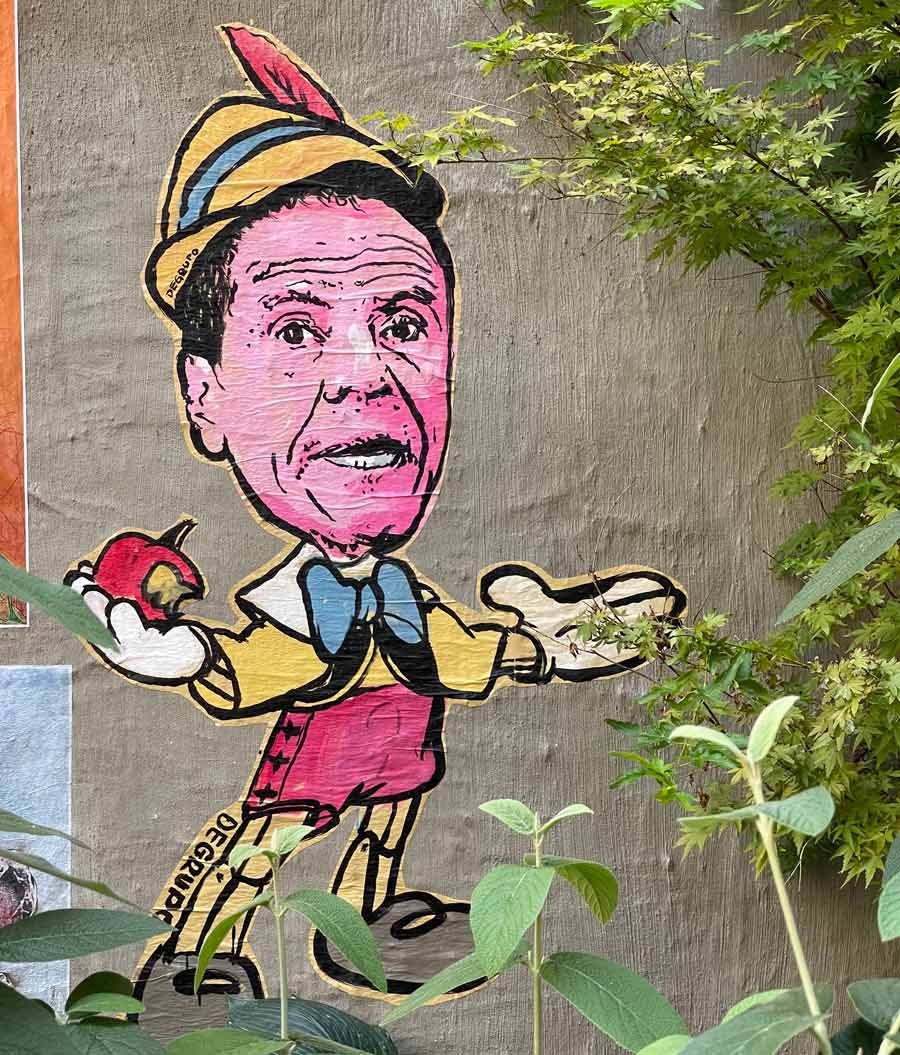
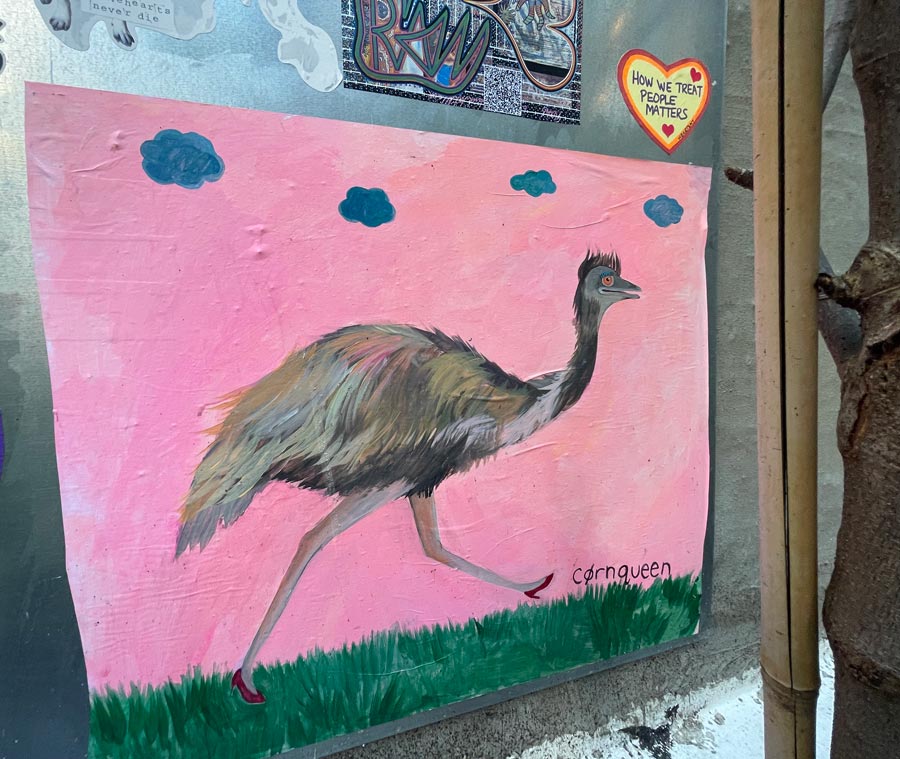
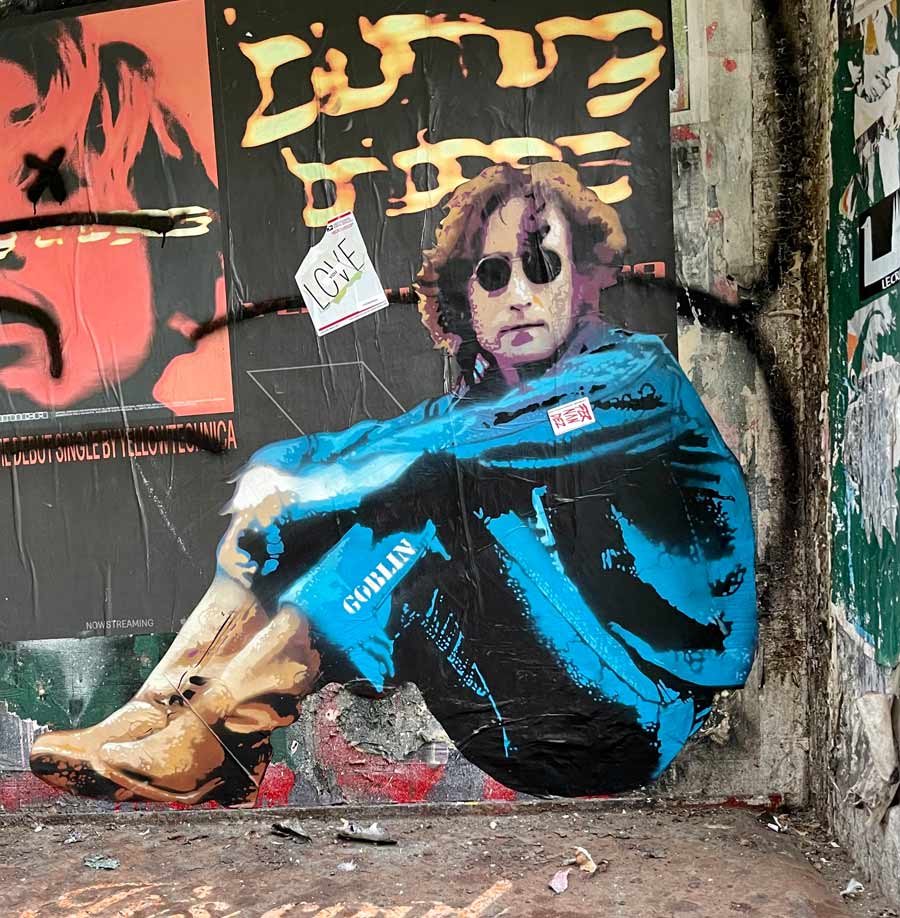
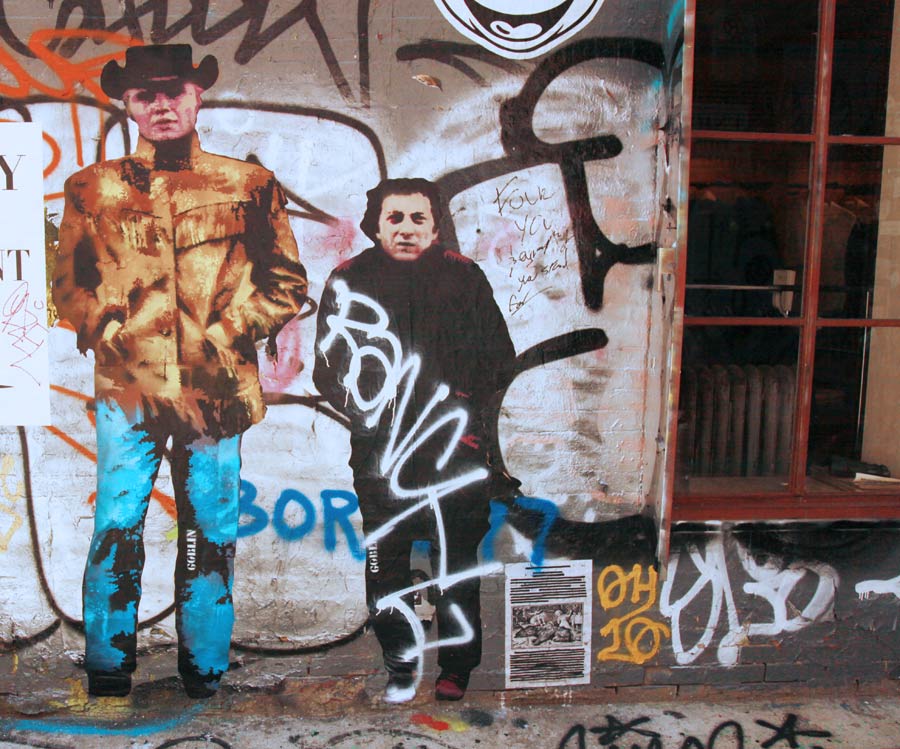
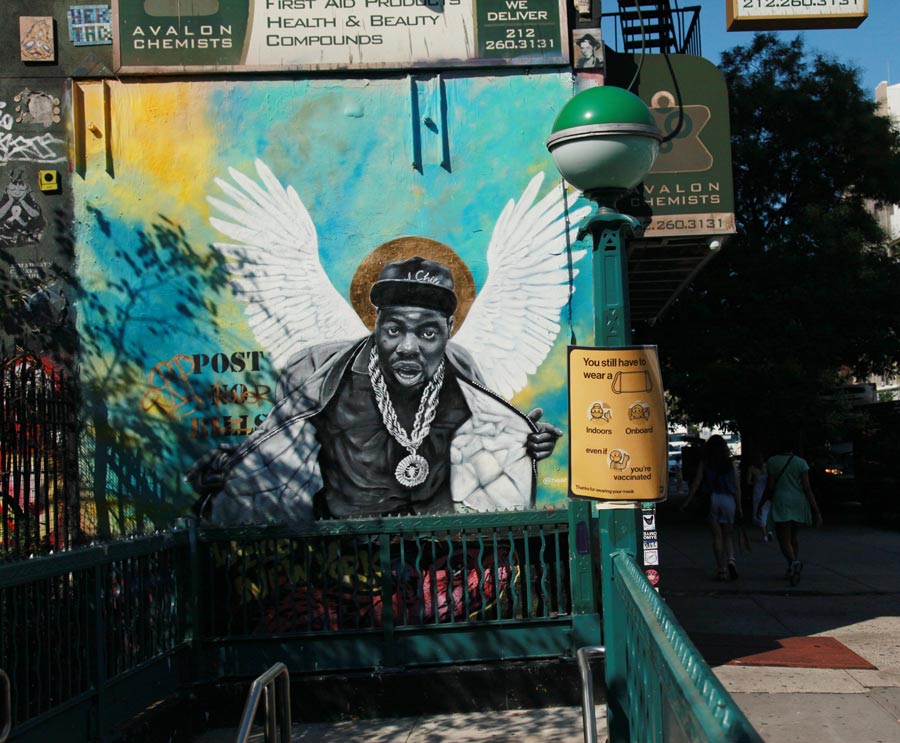
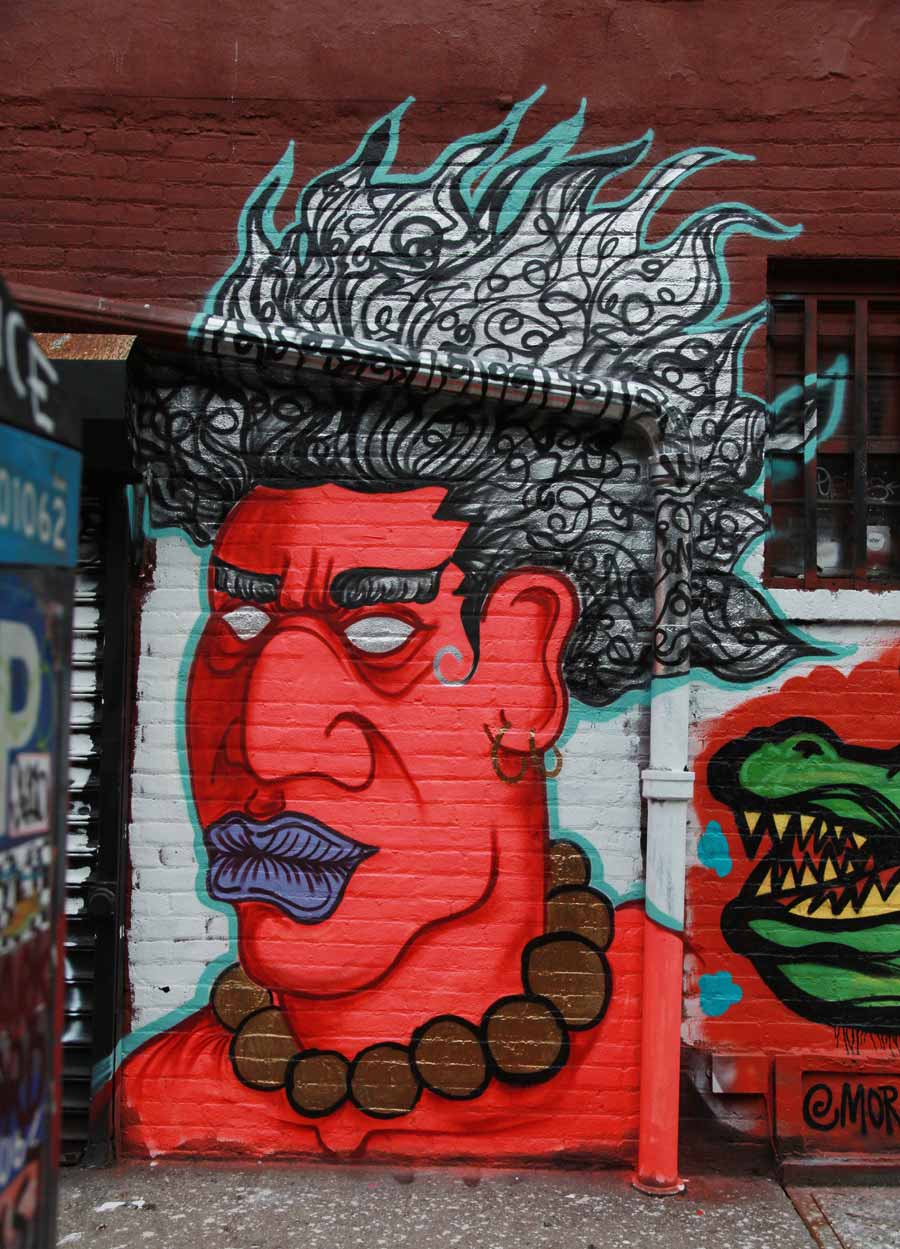
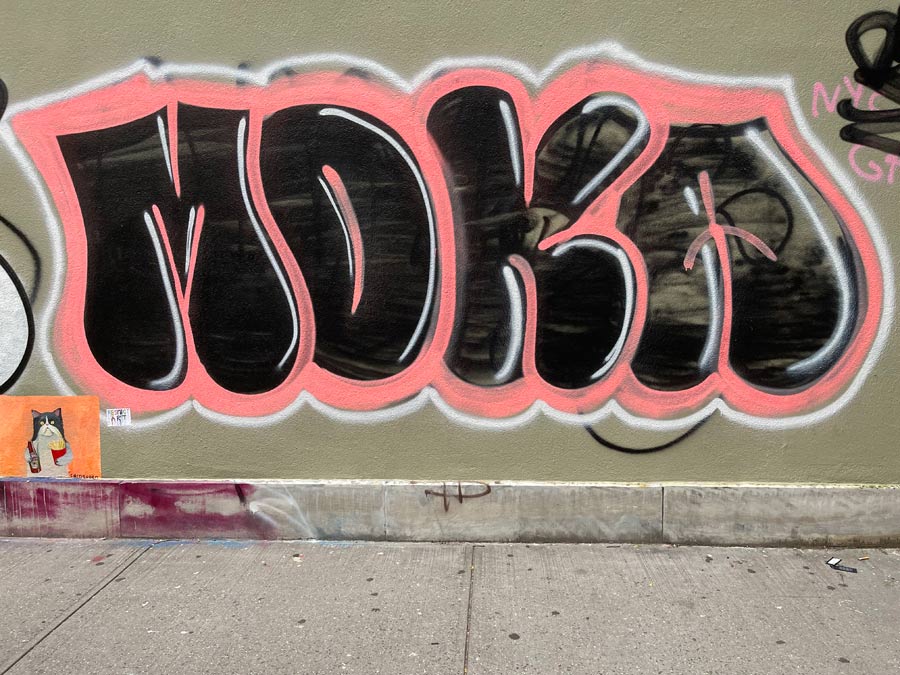
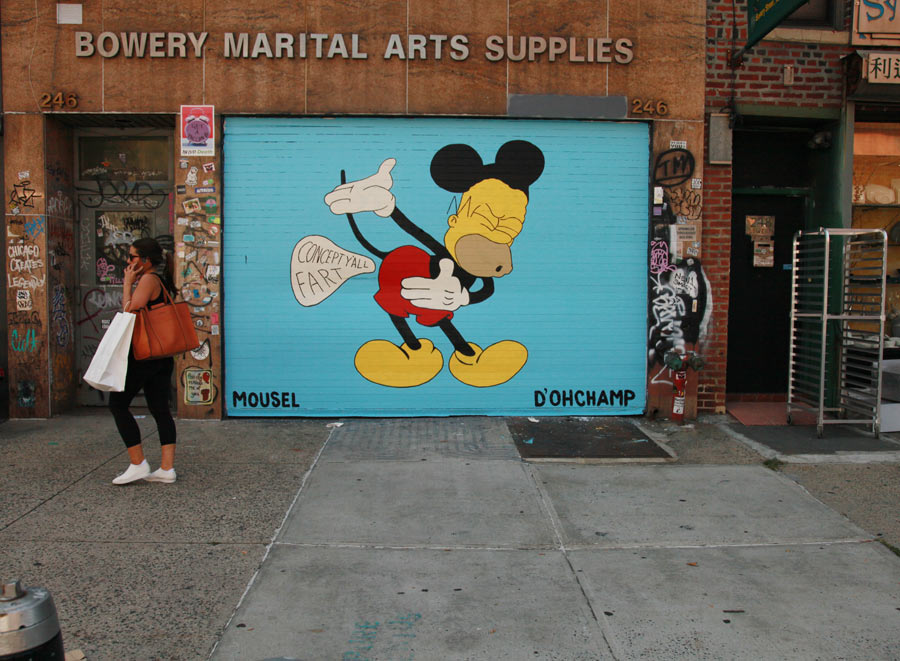
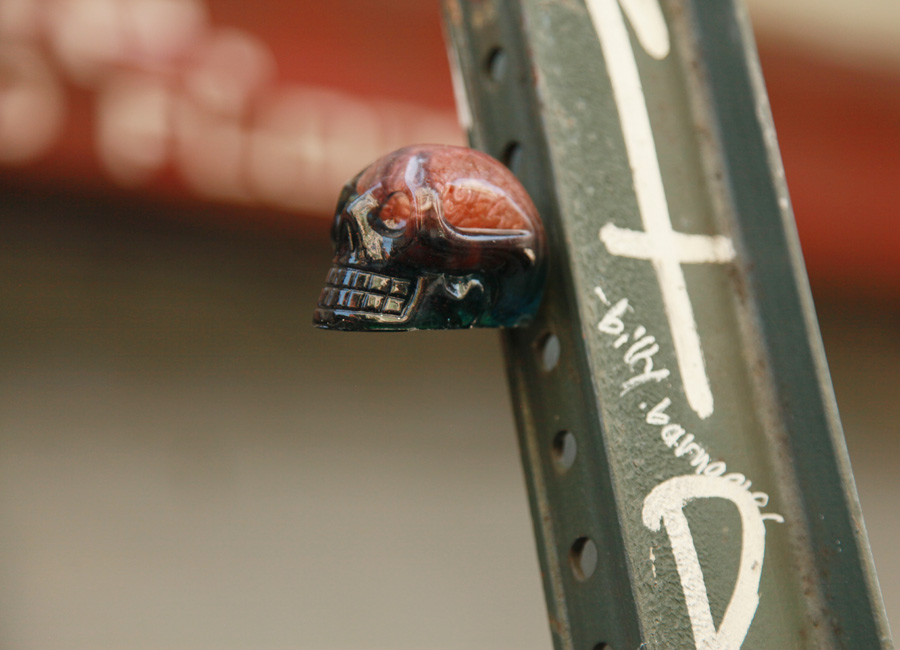
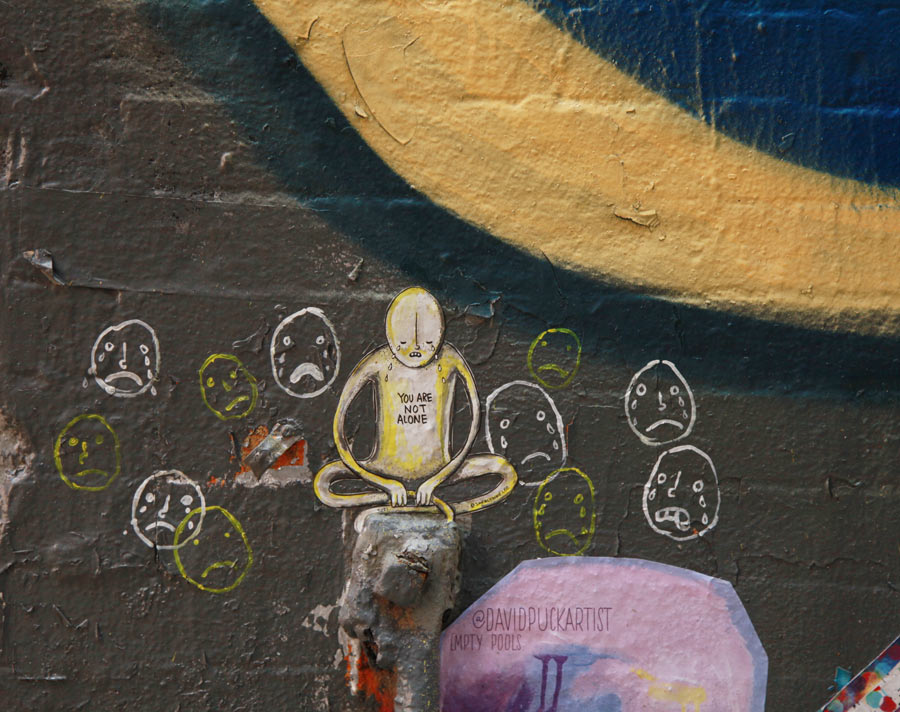
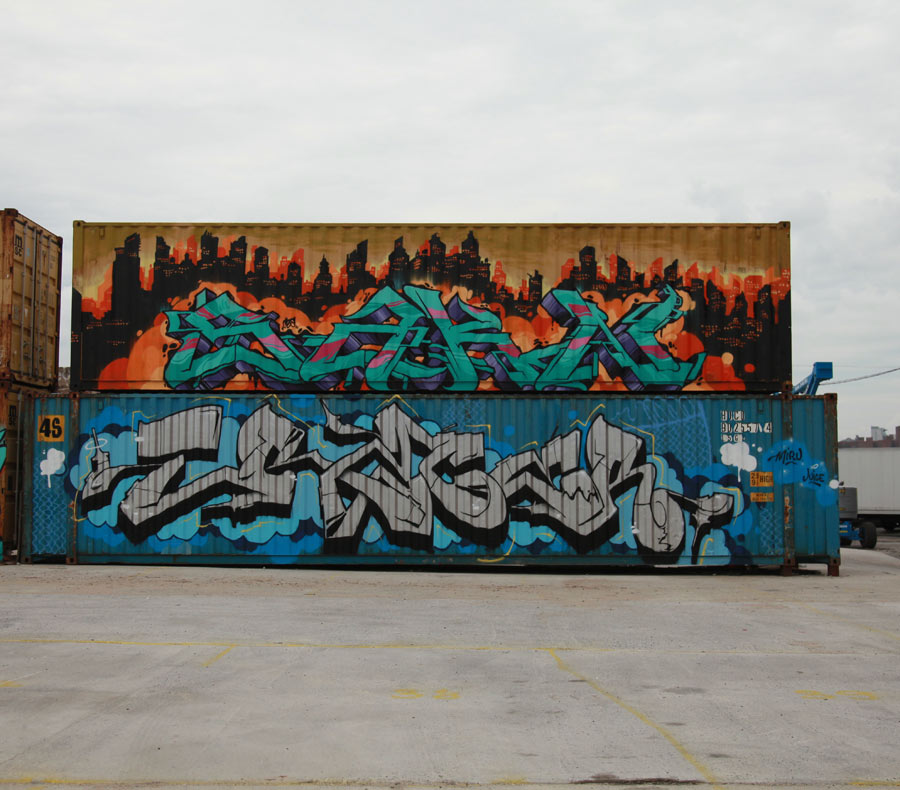
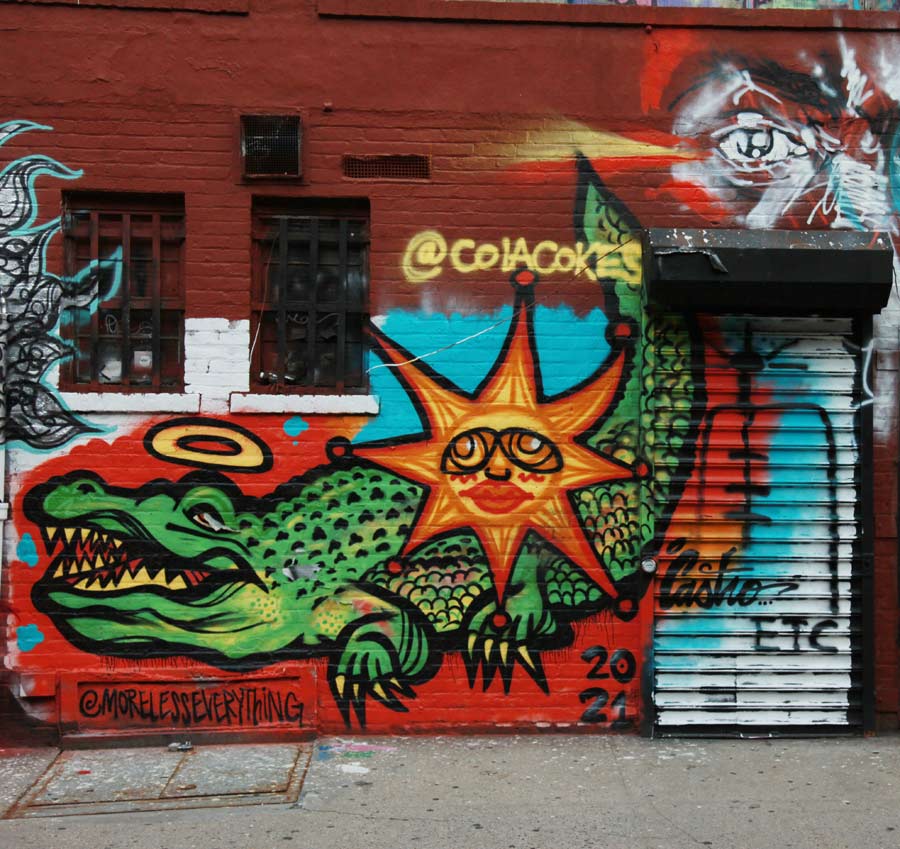
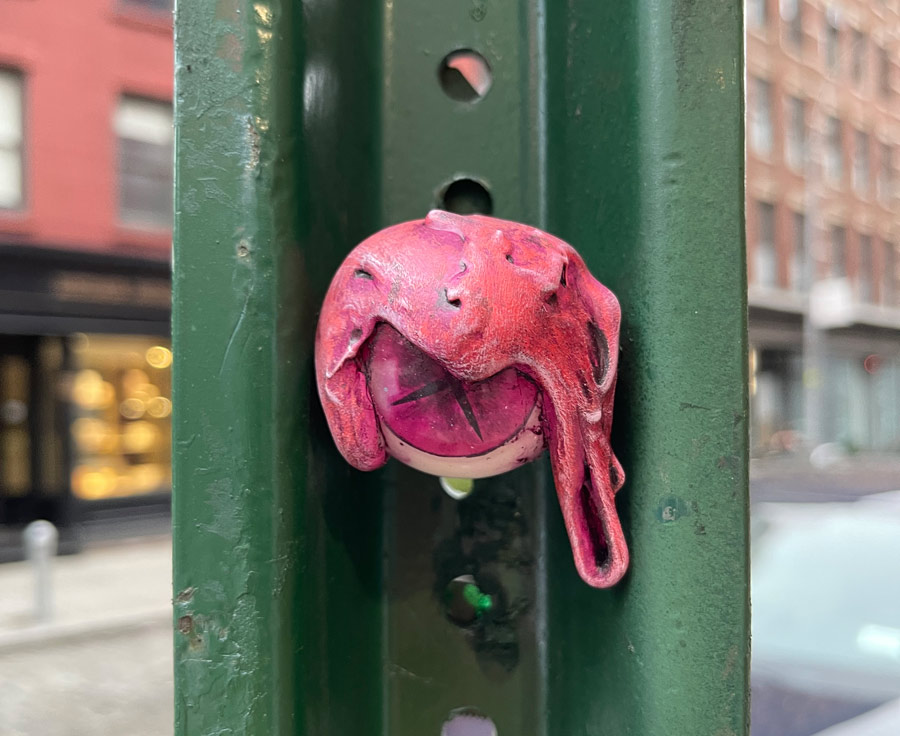
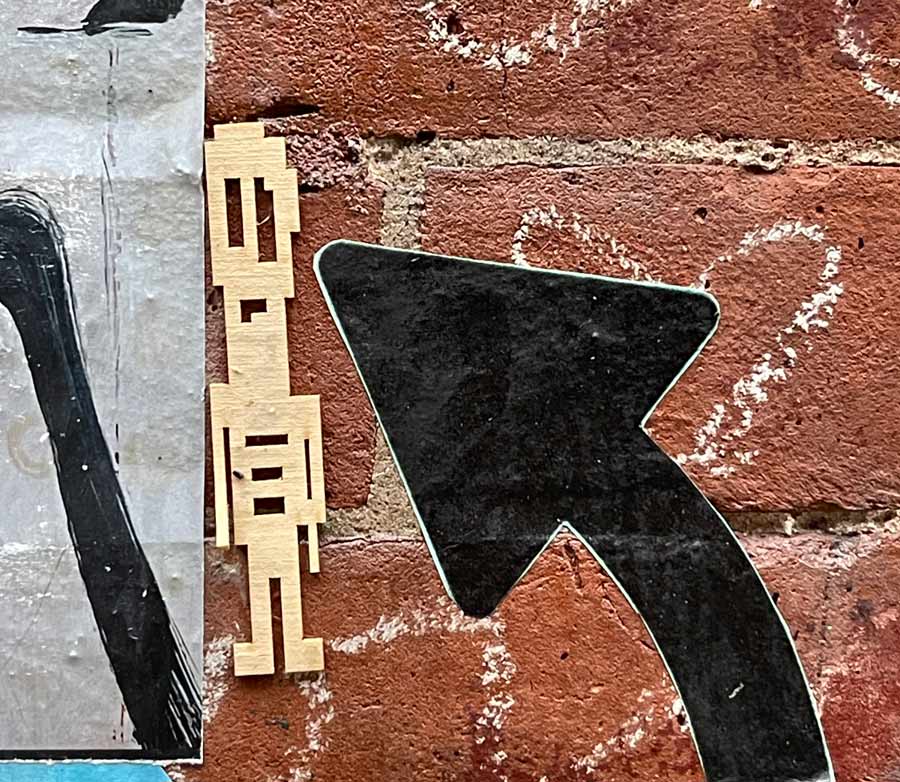
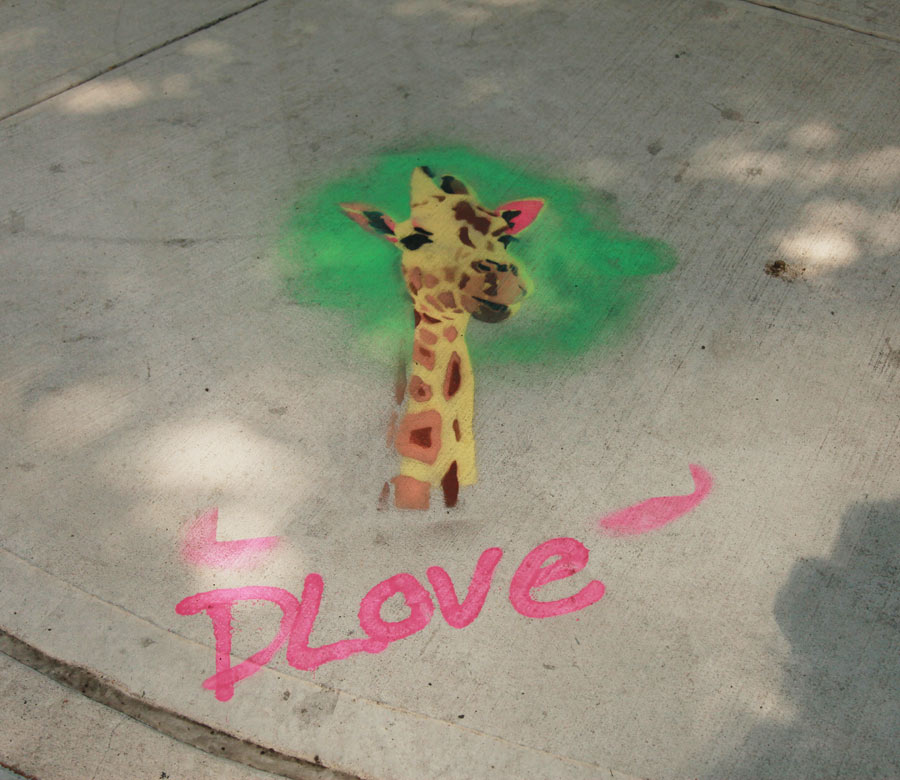
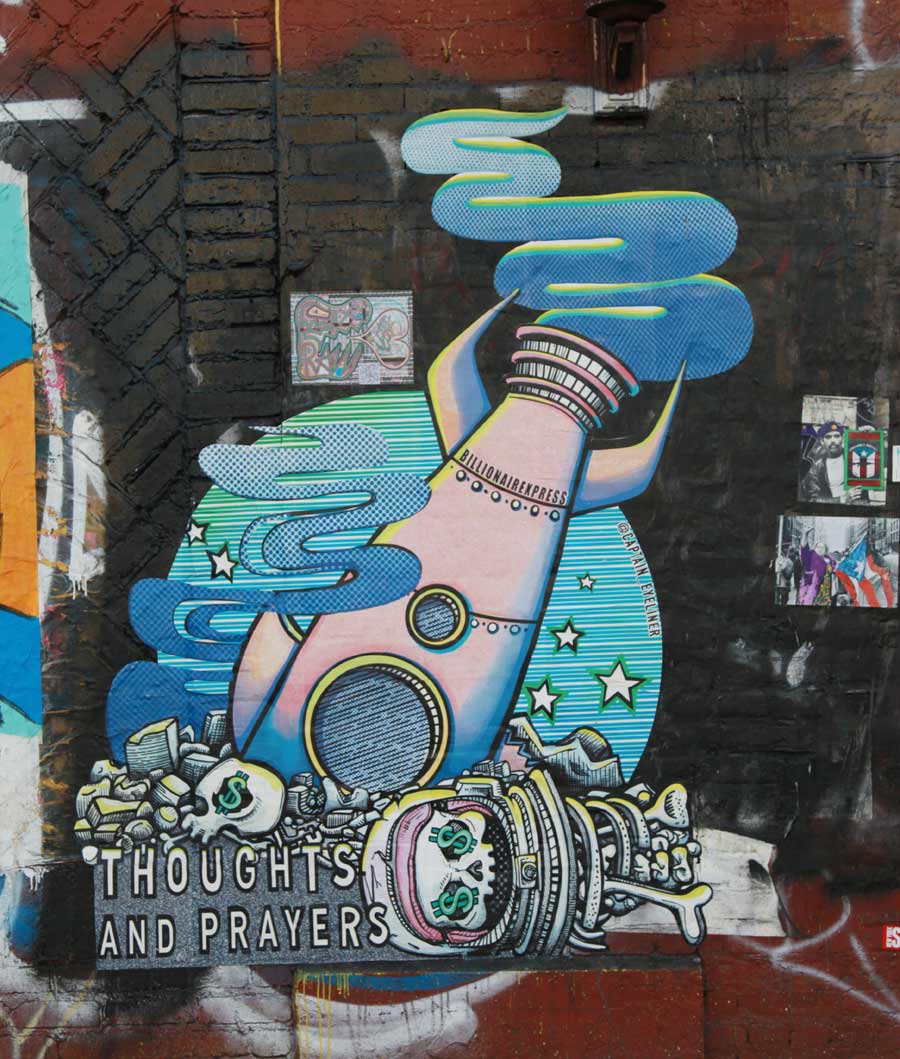
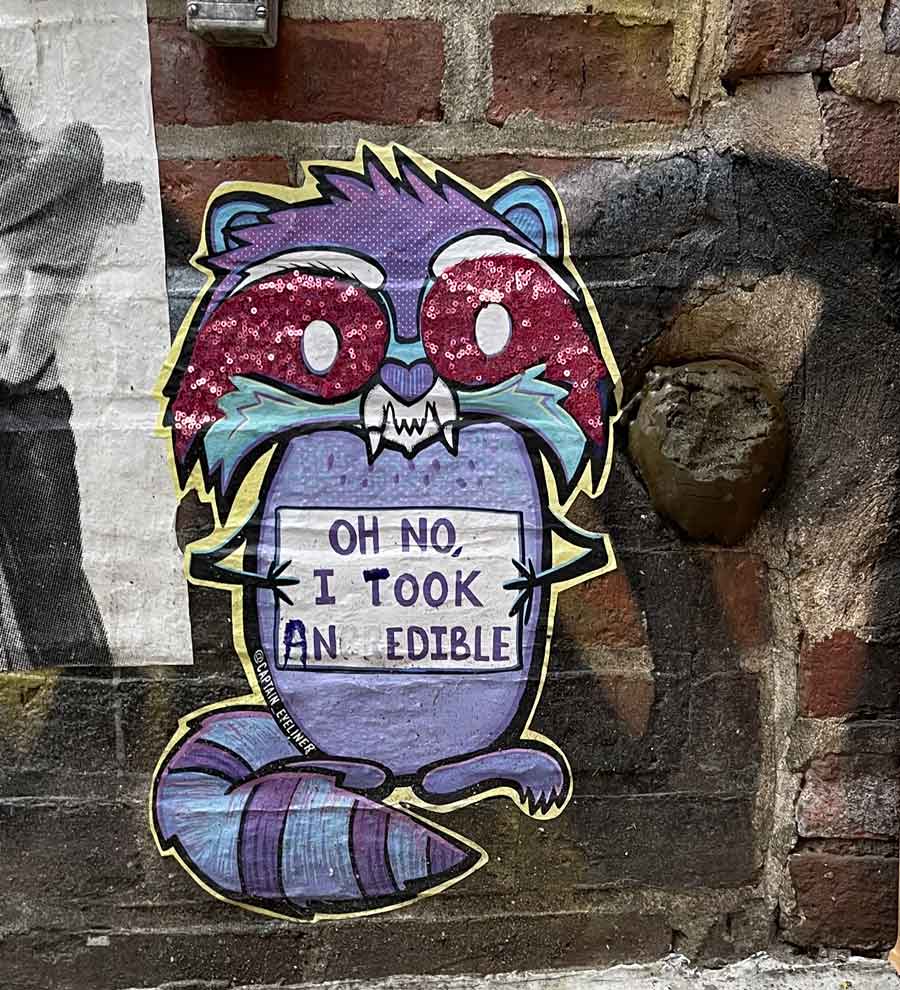
Here’s our weekly interview with the street, this week featuring 4sakn, Adrian Wilson, Against Dgrams, Billy Barnacles, Captain Eyeliner, Corn Queen, De Grupo, DLove, Eye Sticker, Goblin, Mister Alek, Moka, More Less Eveything, Plannedalism, Sara Lynne Leo, Stikman, Sule, The Art of Will Power, Trace1, Werd Smoker, and Winston Tseng .
 BROOKLYN STREET ART LOVES YOU MORE EVERY DAY